"... And while I am not as focused on the poverty ve wealth dynamic. this century has revealed something very disappointing that you address. That the elites have done a very poor job of leading the ship of state, while still remaining in leadership belies such a bold hypocrisy in accountability, it's jarring. The article could actually be titled: "The Myth of the Best and the Brightest." ..."
"... They are teaching the elite how to drain all value from American companies, as the rich plan their move to China, the new land of opportunity. When 1% of the population controls such a huge portion of the wealth, patriotism becomes a loadstone to them. The elite are global. Places like Harvard cater to them, help train them to rule the world .but first they must remake it. ..."
"... In my high school, there were roughly 15 of us who had been advanced two years ahead in math. Of those, 10 were Jewish; only two of them had a 'Jewish' last name. In my graduate school class, half (7) are Jewish. None has a 'Jewish' last name. So I'm pretty dubious of the counting method that you use. ..."
"... Regarding the declining Jewish achievement, it looks like it can be primarily explained through demographics: "Intermarriage rates have risen from roughly 6% in 1950 to approximately 40–50% in the year 2000.[56][57] This, in combination with the comparatively low birthrate in the Jewish community, has led to a 5% decline in the Jewish population of the United States in the 1990s." ..."
"... Jewish surnames don't mean what they used to. And intermarriage rates are lowest among the low-performing and highly prolific Orthodox. ..."
"... A potentially bigger issue completely ignored by your article is how do colleges differentiate between 'foreign' students (overwhelmingly Asian) and American students. Many students being counted as "Asian American" are in reality wealthy and elite foreign "parachute kids" (an Asian term), dropped onto the generous American education system or into boarding schools to study for US entrance exams, qualify for resident tuition rates and scholarships, and to compete for "American" admissions slots, not for the usually limited 'foreign' admission slots. ..."
"... As some who is Jewish from the former Soviet Union, and who was denied even to take an entrance exam to a Moscow college, I am saddened to see that American educational admission process looks more and more "Soviet" nowadays. Kids are denied opportunities because of their ethnic or social background, in a supposedly free and fair country! ..."
"... Actually, Richard Feynman famously rejected genetic explanations of Jewish achievement (whether he was right or wrong to do so is another story), and aggressively resisted any attempts to list him as a "Jewish scientist" or "Jewish Nobel Prize winner." I am sure he would not cared in the slightest bit how many Jews were participating in the Physics Olympiad, as long as the quality of the students' work continued to be excellent. Here is a letter he wrote to a woman seeking to include him in a book about Jewish achievement in the sciences. ..."
"... It would be interesting to know how well "true WASPS" do in admissions. This could perhaps be estimated by counting Slavic and Italian names, or Puritan New England last names. I would expect this group to do almost as well as Jews (not quite as well, because their ability would be in the lower end of the Legacy group). ..."
"... The missing variable in this analysis is income/class. While Unz states that many elite colleges have the resources to fund every student's education, and in fact practice need-blind admissions, the student bodies are skewed towards the very highest percentile of the income and wealth distribution. SAT scores may also scale with parents' income as well. ..."
"... Having worked with folks from all manner of "elite" and not so elite schools in a technical field, the main conclusion I was able to draw was folks who went to "elite" colleges had a greater degree of entitlement. And that's it. ..."
"... My own position has always been strongly in the former camp, supporting meritocracy over diversity in elite admissions. ..."
"... The Reality of American Mediocrity ..."
"... The central test of fairness in any admissions system is to ask this simple question. Was there anyone admitted under that system admitted over someone else who was denied admission and with better grades and SAT scores and poorer ? If the answer is in the affirmative, then that system is unfair , if it is in the negative then the system is fair. ..."
"... Harvard ranks only 8th after Penn State in the production of undergrads who eventually get Doctorates in Science and Engineering. Of course Berkeley has the bragging rights for that kind of attribute. ..."
"... There is an excellent analysis of this article at The Occidental Observer by Kevin MacDonald, "Ron Unz on the Illusory American Meritocracy". The MSM is ignoring Unz's article for obvious reasons. ..."
"... Could it be that the goal of financial, rather than academic, achievement, makes many young people uninterested in competing in the science and math competitions sought out by the Asian students? I ..."
"... America never promised success through merit or equality. That is the American "dream." ..."
"... Anyone famliar with sociology and the research on social stratification knows that meritocracy is a myth; for example, if one's parents are in the bottom decile of the the income scale, the child has only a 3% chance to reach the top decile in his or her lifetime. In fact, in contrast to the Horatio Alger ideology, the U.S. has lower rates of upward mobility than almost any other developed country. Social classses exist and they tend to reproduce themselves. ..."
"... The rigid class structure of the the U.S. is one of the reasons I support progressive taxation; wealth may not always be inherited, but life outcomes are largely determined by the class position of one's parents. In this manner, it is also a myth to believe that wealth is an individual creation;most financially successful individuals have enjoyed the benefits of class privilege: good and safe schools, two-parent families, tutors, and perhaps most important of all, high expecatations and positive peer socialization (Unz never mentions the importants of peeer groups, which data show exert a strong causal unfluence on academic performance). ..."
"... And I would challenge Unz's assertion that many high-performing Asians come from impovershed backgrounds: many of them may undereport their income as small business owners. I believe that Asian success derives not only from their class background but their culture in which the parents have authority and the success of the child is crucual to the honor of the family. As they assimilate to the more individualist American ethos, I predict that their academic success will level off just as it has with Jews. ..."
"... All I can say is see a book: "Ivy League Fools and Felons"' by Mack Roth. Lots of them are kids of corrupt people in all fields. ..."
Just before the Labor Day weekend, a front page New York Times story broke the news of the largest cheating scandal in Harvard University
history, in which nearly half the students taking a Government course on the role of Congress had plagiarized or otherwise illegally
collaborated on their final exam.
[1] Each year, Harvard admits just 1600 freshmen while almost 125 Harvard students now face possible suspension over this single
incident. A Harvard dean described the situation as "unprecedented."
But should we really be so surprised at this behavior among the students at America's most prestigious academic institution? In
the last generation or two, the funnel of opportunity in American society has drastically narrowed, with a greater and greater proportion
of our financial, media, business, and political elites being drawn from a relatively small number of our leading universities, together
with their professional schools. The rise of a Henry Ford, from farm boy mechanic to world business tycoon, seems virtually impossible
today, as even America's most successful college dropouts such as Bill Gates and Mark Zuckerberg often turn out to be extremely well-connected
former Harvard students. Indeed, the early success of Facebook was largely due to the powerful imprimatur it enjoyed from its exclusive
availability first only at Harvard and later restricted to just the Ivy League.
During
this period, we have witnessed a huge national decline in well-paid middle class jobs in the manufacturing sector and other sources
of employment for those lacking college degrees, with median American wages having been stagnant or declining for the last forty
years. Meanwhile, there has been an astonishing concentration of wealth at the top, with America's richest 1 percent now possessing
nearly as much net wealth as the bottom 95 percent.
[2]
This situation, sometimes described as a "winner take all society," leaves families desperate to maximize the chances that their
children will reach the winners' circle, rather than risk failure and poverty or even merely a spot in the rapidly deteriorating
middle class. And the best single means of becoming such an economic winner is to gain admission to a top university, which provides
an easy ticket to the wealth of Wall Street or similar venues, whose leading firms increasingly restrict their hiring to graduates
of the Ivy League or a tiny handful of other top colleges.
[3] On the other side, finance remains the favored employment choice for Harvard, Yale or Princeton students after the diplomas
are handed out. [4]
As a direct consequence, the war over college admissions has become astonishingly fierce, with many middle- or upper-middle class
families investing quantities of time and money that would have seemed unimaginable a generation or more ago, leading to an all-against-all
arms race that immiserates the student and exhausts the parents. The absurd parental efforts of an Amy Chua, as recounted in her
2010 bestseller Battle Hymn of the Tiger Mother , were simply a much more extreme version of widespread behavior among her
peer-group, which is why her story resonated so deeply among our educated elites. Over the last thirty years, America's test-prep
companies have grown from almost nothing into a $5 billion annual industry, allowing the affluent to provide an admissions edge to
their less able children. Similarly, the enormous annual tuition of $35,000 charged by elite private schools such as Dalton or Exeter
is less for a superior high school education than for the hope of a greatly increased chance to enter the Ivy League.
[5]
Many New York City parents even go to enormous efforts to enroll their children in the best possible pre-Kindergarten program,
seeking early placement on the educational conveyer belt which eventually leads to Harvard.
[6] Others cut corners in a more
direct fashion, as revealed in the huge SAT cheating rings recently uncovered in affluent New York suburbs, in which students were
paid thousands of dollars to take SAT exams for their wealthier but dimmer classmates.
[7]
But given such massive social and economic value now concentrated in a Harvard or Yale degree, the tiny handful of elite admissions
gatekeepers enjoy enormous, almost unprecedented power to shape the leadership of our society by allocating their supply of thick
envelopes. Even billionaires, media barons, and U.S. Senators may weigh their words and actions more carefully as their children
approach college age. And if such power is used to select our future elites in a corrupt manner, perhaps the inevitable result is
the selection of corrupt elites, with terrible consequences for America. Thus, the huge Harvard cheating scandal, and perhaps also
the endless series of financial, business, and political scandals which have rocked our country over the last decade or more, even
while our national economy has stagnated.
Just a few years ago Pulitzer Prize-winning former Wall Street Journal reporter Daniel Golden published The Price
of Admission , a devastating account of the corrupt admissions practices at so many of our leading universities, in which every
sort of non-academic or financial factor plays a role in privileging the privileged and thereby squeezing out those high-ability,
hard-working students who lack any special hook.
In one particularly egregious case, a wealthy New Jersey real estate developer, later sent to Federal prison on political corruption
charges, paid Harvard $2.5 million to help ensure admission of his completely under-qualified son.
[8] When we consider that Harvard's
existing endowment was then at $15 billion and earning almost $7 million each day in investment earnings, we see that a culture of
financial corruption has developed an absurd illogic of its own, in which senior Harvard administrators sell their university's honor
for just a few hours worth of its regular annual income, the equivalent of a Harvard instructor raising a grade for a hundred dollars
in cash.
An admissions system based on non-academic factors often amounting to institutionalized venality would seem strange or even unthinkable
among the top universities of most other advanced nations in Europe or Asia, though such practices are widespread in much of the
corrupt Third World. The notion of a wealthy family buying their son his entrance into the Grandes Ecoles of France or the top Japanese
universities would be an absurdity, and the academic rectitude of Europe's Nordic or Germanic nations is even more severe, with those
far more egalitarian societies anyway tending to deemphasize university rankings.
Well, legacy programs are alive and well. According to the read, here's the problem:
"The research certainly supports the widespread perception that non-academic factors play a major role in the process,
including athletic ability and "legacy" status. But as we saw earlier, even more significant are racial factors, with black
ancestry being worth the equivalent of 310 points, Hispanics gaining 130 points, and Asian students being penalized by 140
points, all relative to white applicants on the 1600 point Math and Reading SAT scale."
These arbitrary point systems while well intended are not a reflection of AA design. School lawyers in a race not be penalized
for past practices, implemented their own versions of AA programs. The numbers are easy to challenge because they aren't based
on tangible or narrow principles. It's weakneses are almost laughable. Because there redal goal was to thwart any real challenge
that institutions were idle in addressing past acts of discrimination. To boost their diversity issues, asians were heavily recruited.
Since AA has been in place a lot of faulty measures were egaged in: Quotas for quotas sake. Good for PR, lousy for AA and issues
it was designed to address.
I think the statistical data hides a very important factor and practice. Most jews in this country are white as such , and
as such only needed to change their names and hide behaviors as a strategy of surviving the entrance gauntlet. That segregation
created a black collegiate system with it's own set of elite qualifiers demonstrates that this model isn't limited to the Ivy
league.
That an elite system is devised and practiced in members of a certain club networks so as to maintain their elite status, networks
and control, this is a human practice. And it once served as something to achieve. It was thought that the avenues of becoming
an elite were there if one wanted to strive for it. Hard work, honesty, persistence, results . . . should yield X.
And while I am not as focused on the poverty ve wealth dynamic. this century has revealed something very disappointing
that you address. That the elites have done a very poor job of leading the ship of state, while still remaining in leadership
belies such a bold hypocrisy in accountability, it's jarring. The article could actually be titled: "The Myth of the Best and
the Brightest."
I don't think it's just some vindictive intent. and while Americans have always known and to an extent accepted that for upper
income citizens, normal was not the same as normal on the street. Fairness, was not the same jn practice nor sentiment. What may
becoming increasing intolerant has been the obvious lack of accountability among elites. TARP looked like the elites looking out
for each other as opposed the ship of state. I have read three books on the financials and they do not paint a pretty portrait
of Ivy League leadership as to ethics, cheating, lying, covering up, and shamelessly passing the buck. I will be reading this
again I am sure.
It's sad to think that we may be seeing te passing of an era. in which one aspired to be an elite not soley for their wealth,
but the model they provided od leadership real or imagined. Perhaps, it passed long ago, and we are all not just noticing.
I appreciated you conclusions, not sure that I am comfortable with some of the solutions.
Since I still hanker to be an elite in some manner, It is interesting to note my rather subdued response to the cheating. Sadly,
this too may be an open secret of standard fair - and that is very very sad. And disappointing. Angering even.
The shifting social demography of deans, house masters and admissions committees may be a more important metric than the composition
of the student body, as it determines the shape of the curriculum, and the underlying culture of the university as a legacy in
itself.
If Ron harrows the literary journals of the Jackson era with equal diligence. he may well turn up an essay or two expressing
deep shock at Unitarians admitting too many of the Lord's preterite sheep to Harvard, or lamenting the rise of Methodism at Yale
and the College of New Jersey.
Harvard is a university, much like Princeton and Yale, that continues based on its reputation, something that was earned in
the past. When the present catches up to them people will regard them as nepotistic cauldrons of corruption.
Look at the financial disaster that befell the USA and much of the globe back in 2008. Its genesis can be found in the clever
minds of those coming out of their business schools (and, oddly enough, their Physics programs as well).
They are teaching the elite how to drain all value from American companies, as the rich plan their move to China, the new
land of opportunity. When 1% of the population controls such a huge portion of the wealth, patriotism becomes a loadstone to them.
The elite are global. Places like Harvard cater to them, help train them to rule the world .but first they must remake it.
• Replies: @Part White, Part
Native I agree, common people would never think of derivatives , nor make loans based on speculation
First, I appreciated the length and depth of your article.
Having said that, to boil it down to its essence:
Subconcious bias/groupthink + affirmative action/diversity focus + corruption + innumeracy = student bodies at elite institutions
that are wildly skewed vis-a-vis both: 1) the ethnic makeup of the general population; and 2) the makeup of our top-performing
students.
Since these institutions are pipelines to power, this matters.
I rather doubt that wage stagnation (which appears to have begun in ~1970) can be pinned on this – that part stuck out, because
there are far more plausible causes. To the extent you're merely arguing that our elite failed to counter the trend, ok, but I'm
not sure a "better" elite would have either. The trend, after all, favored the elite.
Anyway, I find your case is plausible.
Your inner/outer circle hybrid option is interesting. One (perhaps minor) thing jumps out at me: kids talk. The innies are
going to figure out who they are and who the outies are. The outies might have their arrogance tempered, but the innies? I suspect
they'd be even *more* arrogant than such folks are now (all the more so because they'd have better justification for their arrogance),
but I could be wrong.
Perhaps more significantly, this:
But if it were explicitly known that the vast majority of Harvard students had merely been winners in the application
lottery, top businesses would begin to cast a much wider net in their employment outreach, and while the average Harvard student
would probably be academically stronger than the average graduate of a state college, the gap would no longer be seen as so
enormous, with individuals being judged more on their own merits and actual achievements
Is a very good reason for Harvard, et al. to resist the idea. I think you're right that this would be a good thing for the
country, but it would be bad for Harvard. I think the odds of convincing Harvard to do it out of the goodness of their administrators
hearts is unlikely. You are basically asking them to purposefully damage their brand.
All in all, I think you're on to something here. I have my quibbles (the wage stagnation thing, and the graph with Chinese
vs USA per capita growth come on, apples and oranges there!), but overall I think I agree that your proposal is likely superior
to the status quo.
Don't forget the mess one finds after they ARE admitted to these schools. I dropped out of Columbia University in 2010.
You can "make it" on an Ivy-league campus if you are a conservative-Republican-type with all the rich country-club connections
that liberals use to stereotype.
Or you can succeed if you are a poor or working-class type who is willing to toe the Affirmative Action party line and be a
good "progressive" Democrat (Obama stickers, "Gay Pride" celebrations, etc.)
If you come from a poor or working-class background and are religious, or culturally conservative or libertarian in any way,
you might as well save your time and money. You're not welcome, period. And if you're a military veteran you WILL be actively
persecuted, no matter what the news reports claim.
It sucks. Getting accepted to Columbia was a dream come true for me. The reality broke my heart.
Regarding the overrepresentation of Jewish students compared to their actual academic merit, I think the author overstates
the role bias (subjective, or otherwise) plays in this:
1) , a likely explanation is that Jewish applicants are a step ahead in knowing how to "play the admissions game." They therefore
constitute a good percentage of applicants that admission committees view as "the total package." (at least a higher percentage
than scores alone would yield). Obviously money and connections plays a role in them knowing to say precisely what adcoms want
to hear, but in any case, at the end of the day, if adcoms are looking for applicants with >1400 SATs, "meaningful" life experiences/accomplishments,
and a personal statement that can weave it all together into a compelling narrative, the middle-upper-class east coast Jewish
applicant probably constitutes a good percentage of such "total package" applicants. I will concede however that this explanation
only works in explaining the prevalence of jews vs. whites in general. With respect to Asians, however, since they are likely
being actively and purposefully discriminated against by adcoms, having the "complete package" would be less helpful to them.
2) Another factor is that, regardless of ethnicity, alumni children get a boost and since in the previous generation Jewish
applicants were the highest achieving academic group, many of these lesser qualified jews admitted are children of alumni.
3) That ivy colleges care more about strong verbal scores than mathematics (i.e., they prefer 800V 700M over 700V 800M), and
Jewish applicants make up a higher proportion of the high verbal score breakdowns.
4) Last, and perhaps more importantly we do not really know the extent of Jewish representation compared to their academic
merit. Unlike admitted Asian applicants, who we know, on average, score higher than white applicants, we have no similar numbers
of Jewish applicants. The PSAT numbers are helpful, but hardly dispositive considering those aren't the scores colleges use in
making their decision information.
@Bryan– Getting accepted to Columbia was a dream come true for me. The reality broke my heart.
I'm touched by this. I've spent tons of time at Columbia, a generation ago -- and my background fit fine -- the kind of WASP
background Jews found exotic and interesting. But I can see your point, sad to say. There are other great schools -- Fordham,
where my wife went to law school at night, has incredible esprit de corps - and probably, person for person, has as many lawyers
doing good and interesting work as Columbia.
"There are other great schools–Fordham, where my wife went to law school at night, has incredible esprit de corps - and
probably, person for person, has as many lawyers doing good and interesting work as Columbia."
"Tiffany was also rejected by all her other prestigious college choices, including Yale, Penn, Duke, and Wellsley, an outcome
which greatly surprised and disappointed her immigrant father.88″
In the fall of 1990, my parents had me apply to 10 colleges. I had the profile of many Indian kids at the time – ranked in
the top 10 of the class, editor of school paper, Boy Scouts. SAT scores could have been better, but still strong. Over 700 in
all achievement tests save Bio, which was 670.
Rejected by 5 schools, waitlisted by 3, accepted into 2 – one of them the state univ.
One of my classmates, whose family was from Thailand, wound up in the same predicament as me. His response, "Basketball was
designed to keep the Asian man down."
The one black kid in our group – got into MIT, dropped out after one year because he could not hack it. The kid from our school
who should have gone, from an Italian-American family, and among the few who did not embrace the guido culture, went to Rennsealer
instead, and had professional success after.
As a University of Chicago alum, I infer that by avoiding the label "elite" on such a nifty chart we can be accurately categorized
as "meritocratic" by The American Conservative.
Then again, this article doesn't even purport to ask why elite universities might be in the business of EDUCATING a wider population
of students, or how that education takes place.
Perhaps, by ensuring that "the best" students are not concentrated in only 8 universities is why the depth and quality of America's
education system remains the envy of the world.
In my high school, there were roughly 15 of us who had been advanced two years ahead in math. Of those, 10 were Jewish;
only two of them had a 'Jewish' last name. In my graduate school class, half (7) are Jewish. None has a 'Jewish' last name.
So I'm pretty dubious of the counting method that you use.
Also, it's clear that there are Asian quotas at these schools, but it's not clear that Intel Science Fairs, etc, are the best
way to estimate what level of talent Asians have relative to other groups.
I was curious so I google High School Poetry Competition, High School Constitution Competition, High School Debating Competition.
None of the winners here seem to have an especially high Asian quotient. So maybe a non-technical (liberal arts) university would
settle on ~25-30% instead of ~40% asian? And perhaps a (small) part of the problem is a preponderance of Asian applicants excelling
in technical fields, leading to competition against each other rather than the general population? Just wonderin'
Regarding the declining Jewish achievement, it looks like it can be primarily explained through demographics: "Intermarriage
rates have risen from roughly 6% in 1950 to approximately 40–50% in the year 2000.[56][57] This, in combination with the comparatively
low birthrate in the Jewish community, has led to a 5% decline in the Jewish population of the United States in the 1990s."
Jewish surnames don't mean what they used to. And intermarriage rates are lowest among the low-performing and highly prolific
Orthodox.
Jewish birth rates have been falling faster than the white population, especially for the non-Orthodox:
"In contrast to the ongoing trends of assimilation, some communities within American Jewry, such as Orthodox Jews, have significantly
higher birth rates and lower intermarriage rates, and are growing rapidly. The proportion of Jewish synagogue members who were
Orthodox rose from 11% in 1971 to 21% in 2000, while the overall Jewish community declined in number. [60] In 2000, there were
360,000 so-called "ultra-orthodox" (Haredi) Jews in USA (7.2%).[61] The figure for 2006 is estimated at 468,000 (9.4%).[61]"
"As against the overall average of 1.86 children per Jewish woman, an informed estimate gives figures ranging upward from 3.3
children in "modern Orthodox" families to 6.6 in Haredi or "ultra-Orthodox" families to a whopping 7.9 in families of Hasidim."
These statistics would suggest that half or more of Jewish children are being born into these lower-performing groups. Given
their very low intermarriage rates, a huge portion of the secular, Reform, and Conservative Jews must be intermarrying (more than
half if the aggregate 43% intermarriage figure is right). And the high-performing groups may now be around 1 child per woman or
lower, and worse for the youngest generation.
So a collapse in Jewish representation in youth science prizes can be mostly explained by the collapse of the distinct non-Orthodox
Jewish youth.
Incidentally, intermarriage also produces people with Jewish ancestry who get classified as gentiles using last names or self-identification,
reducing Jewish-gentile gaps by bringing up nominal gentile scores at the same time as nominal-Jewish scores are lowered.
The center of power in this country being located in the Northeast is nothing new. Whether it be in it's Ivy League schools
or the ownership of natural resources located in other regions, particularly the South, the Northeast has always had a disproportionate
share of influence in the power structures, particularly political and financial, of this nation. This is one of the reasons the
definition of "white" when reviewing ethnicity is so laughably inaccurate. There is a huge difference in opportunity between WASP
or Jewish in the Northeast, for instance, and those of Scots Irish ancestory in the mountain south. Hopefully statistical analysis
such as this can break open that stranglehold, especially as it is directly impacting a minority group in a negative fashion.
Doing this exercise using say, white Baptists compared to other white subgroups, while maybe equally valid in the results, would
be seen as racist by the very Ivy League system that is essentially practicing a form of racism.
Yeah, my ultimate goal was to attend law school, and a big part of the heartbreak for me–or heartburn, the more cynical would
call it–was seeing how skewed and absurd the admissions process to law school is.
I have no doubt that I could have eventually entered into a "top tier" law school, and that was a dream of mine also. I met
with admissions officers from Duke, Harvard, Stanford, Fordham, etc. I was encouraged. I had the grades and background for it.
But–and I'm really not trying to sound corny 0r self-important here–what does it profit a man to gain the world and lose his
soul? I really don't feel that I'm exaggerating when I say that that's exactly how it felt to me.
The best experience I had while In New York was working as an after-school programs administrator for P.S. 136, but that was
only because of the kids. They'll be old and bitter and cynical soon enough.
At one point it occurred to me that I should have just started claiming "Black" as my ethnicity when I first started attending
college as an adult. I never attended high-school so it couldn't have been disproved. I'm part Sicilian so I could pass for 1/4
African-American. Then I would have received the preference toward admission that, say, Michael Jordan's kids or Barack Obama's
kids will receive when they claim their Ivy-league diplomas. I should have hid the "white privilege" I've enjoyed as the son of
a fisherman and a waitress from one of the most economically-depressed states in America.
The bottom line is that those colleges are political brainwashing centers for a country I no longer believe in. I arrived on
campus in 2009 and I'm not joking at all when I say I was actively persecuted for being a veteran and a conservative who was not
drinking the Obama Kool-aid. Some big fat African-American lady, a back-room "administrator" for Columbia, straight-up threw my
VA benefits certification in the garbage, so my money got delayed by almost two months. I had no idea what was going on. I had
a wife and children to support.
The fact that technology has enabled us to sit here in real-time and correspond back-and-forth about the state of things doesn't
really change the state of things. They are irredeemable. This country is broke and broken.
If Abraham Lincoln were born today in America he would wind up like "Uncle Teardrop" from Winter's Bone. Back then, in order
to be an attorney, you simply studied law and starting trying cases. If you were good at it then you were accepted and became
a lawyer. Today, something has been lost. There is no fixing it. I don't want to waste my time trying to help by being "productive"
to the new tower of Babel or pretending to contribute.
Perhaps only one thing you left out, which is especially important with regard to Jewish enrollment and applications at Ivy
leagues, and other schools as well.
Jewish high school graduates actively look out for campuses with large Jewish populations, where they feel more comfortable.
I don't know the figures, but I believe Dartmouth, for example, has a much smaller Jewish population than Columbia, and it will
stay that way because of a positive feedback loop. (i.e. Jews would rather be at Columbia than Dartmouth, or sometimes even rather
be at NYU than Dartmouth). This explains some of the difference among different schools (and not solely better admission standards).
This is also especially relevant to your random lottery idea, which will inevitably lead to certain schools being overwhelmingly
Asian, others being overwhelmingly Jewish, etc., because the percentage of applicants from every ethnicity is different in every
school. This will necessarily eliminate any diversity which may or may not have existed until now.
I like the lottery admissions idea a lot but the real remedy for the US education system would be to abandon the absurd elite
cult altogether. There is not a shred of evidence that graduates of so-called elite institutions make good leaders. Many of them
are responsible for the economic crash and some of them have brought us the disaster of the Bush presidency.
Many better functioning countries – Germany, the Scandinavians – do not have elite higher education systems. When I enrolled
to University in Germany, I showed up at the enrollment office the summer before the academic year started, filled out a form
(1), and provided a certified copy of my Abitur certificate proving that I was academically competent to attend University. I
never wasted a minute on any of the admissions games that American middle class teenagers and their parents are subjected to.
It would surely have hurt my sense of dignity to be forced to jump through all these absurd and arbitrary hoops.
Americans, due to their ignorance of everything happening outside their borders, have no clue that a system in which a person
is judged by what "school" they attended is everything but normal. It is part of the reason for American dysfunction.
Since they are the pool from which tomorrow's governing elites will be chosen, I'd much rather see Ivy League student bodies
which reflected the full ethnic and geographic diversity of the US. Right now rural and small town Americans and those of Catholic
and Protestant descent who live in the South and Mid-West - roughly half the population - are woefully under-represented, which
explains why their economic interests have been neglected over the last forty years. We live in a multi-cultural, multi-ethnic
representative democracy and our policy-making elites must reflect that diversity. Else the country will come apart.
Thus I recommend 'affirmative action for all' in our elite liberal arts colleges and universities (though not our technical
schools). Student bodies should be represent 'the best and the brightest' of every ethnic group and geographical area of the country.
Then the old school ties will truly knit our society together in a way that is simply not happening today.
A side benefit - and I mean this seriously - is that our second and third tier colleges and universities would be improved
by an influx of Asian and Ashkenazi students (even though the very best would still go to Harvard).
I believe that this article raises – and then inappropriately immediately dismisses – the simplest and most likely reason for
the over-representation of Jewish students at Ivy League Schools in the face of their declining bulk academic performance:
They apply to those schools in vastly disproportionate numbers.
Without actual data on the ethnicity of the applicants to these and other schools, we simply cannot rule out this simple and
likely explanation.
It is quite clear that a large current of Jewish American culture places a great emphasis on elite college attendance, and
among elite colleges, specifically values the Ivy League and its particular cache as opposed to other elite institutions such
as MIT. Also, elite Jewish American culture, moreso than elite Asian American culture, encourages children to go far away from
home for college, considering such a thing almost a right of passage, while other ethnic groups tend to encourage children to
remain closer. A high performing Asian student from, say, California, is much more likely to face familial pressure to stay close
to home for undergrad (Berkeley, UCLA, etc) than a high performing Jewish student from the same high school, who will likely be
encouraged by his or her family to apply to many universities "back east".
Without being able to systematically compare – with real data – the ethnicities of the applicants to those offered admission,
these conclusions simply cannot be accepted.
Different expectations for different races should worry traditional Americans.
If we become comfortable with different academic standards for Asians will we soon be expected to apply different laws to them
also? Will we apply different laws or at least different interpretations of the same laws to blacks?
The association of East Asians with CalTech is now as strong as the association of blacks with violent crime. Can not race
conscious jurisprudence be far behind?
Around a millenium ago in England it mattered to the court if you were a commoner or a noble. Nobles could exercise 'high justice'
with impunity. They were held to different standards. Their testimony counted for more in court. The law was class concious.
Then we had centuries of reform. We had 'Common Law'. By the time of our revolution the idea that all were equal before the
law was a very American kind of idea. We were proud that unlike England we did not have a class system.
Today we seem to be on the threshold of a similar sytem of privileges and rights based on race. Let me give an example. If
there were a domestic riot of somekind and a breakdown of public order, the authorities might very well impose a cufew. That makes
good sense for black male teens but makes little or no sense for elderly Chinese women. I can envision a time when we have race
specific policies for curfews and similar measures.
It seems to be starting in schools. It could be that the idea of equality before the law was an idea that only flourished between
the fifteenth century and the twenty first.
"But filling out a few very simple forms and having their test scores and grades scores automatically forwarded to a list of
possible universities would give them at least the same chance in the lottery as any other applicant whose academic skills were
adequate."
They get a lot of applications. I am guessing they chuck about 1/2 or more due to the application being incomplete, the applicant
did not follow instructions, the application was sloppy, or just obviously poor grades/test scores. The interview and perhaps
the essay and recommendations are necessary to chuck weirdos and psychopaths you do not want sitting next to King Fahd Jr. So
the "byzantine" application process is actually necessary to reduce the number of applicants to be evaluated.
I have a friend who went to Stanford with me in the early 80s. She has two sons who recently applied to Stanford. The older
son had slightly better grades and test scores. The younger son is gay. Guess which one got in?
If you were in Columbia's GS school, (or even if you were CC/SEAS/Barnard) you ought to reach out to some of on-campus and
alumni veteran's groups. They can help you maneuver through the school. (I know there's one that meets at a cafe on 122 and Broadway)
CU can be a lonely and forbidding place for anyone and that goes double for GSers and quadruple for veterans.
You ought to give it another go. Especially if you aren't going somewhere else that's better. Reach out to your deans and make
a fuss. No one in the bureaucracy wants to help but you can force them to their job.
Mr. Unz, the issues of jewish/gentile intermarriage and the significance of jewish-looking names do indeed merit more consideration
than they were given in this otherwise very enlightening article.
What would the percentage of jews in Ivy-League universities look like if the methodology used to determine the percentage
of jewish NMS semifinalists were applied to the list of Ivy League students (or some available approximation of it)?
For background: I'm an Asian-American who worked briefly in legacy admissions at an Ivy and another non-Ivy top-tier, both
while in school (work-study) and as an alum on related committees.
Mendy Finkel's observations are spot on. Re: her 1st point, personal "presentation" or "branding" is often overlooked by Asian
applicants. An admission officer at another Ivy joked they drew straws to assign "Night of a 1000 Lee's", so accomplished-but-indistinguishable
was that group.
A few points on the Asian analysis:
1. I think this analysis would benefit from expanding beyond HYP/Ivies when considering the broader meritocracy issue. Many
Asians esteem technical-leaning schools over academically-comparable liberal arts ones, even if the student isn't a science major.
When I was in college in the 90′s, most Asian parents would favor a Carnegie Mellon or Hopkins over Brown, Columbia or Dartmouth
(though HYP, of course, had its magnetic appeal). The enrollment percentages reflect this, and while some of this is changing,
this is a fairly persistent pattern.
2. Fundraising is crucial. The Harvard Class of '77 example isn't the most telling kind of number. In my experience, Jewish
alumni provide a critical mass in both the day-to-day fundraising and the resultant dollars. And they play a key role, both as
givers and getters, in the signature capital campaign commitments (univ hospitals, research centers, etc.). This isn't unique
to Jewish Ivy alumni; Catholic alumni of ND or Georgetown provide similar support. But it isn't clear what the future overall
Asian commitment to the Ivy "culture of fundraising" will be, which will continue to be a net negative in admissions.
Sidenote: While Asians greatly value the particular civic good, they are uneasy with it being so hinged to an opaque private
sector, in this case, philanthropy. That distinction, blown out a bit, speaks to some of the Republican "Asian gap".
3. I would not place too much weight on NMS comparisons between Asians and Jews. In my experience, most Asians treat the PSAT
seriously, but many established Jews do not – the potential scholarship money isn't a factor, "NMS semifinalist" isn't an admissions
distinction, and as Mendy highlighted, colleges don't see the scores.
On a different note, while the "weight" of an Ivy degree is significant, it's prestige is largely concentrated in the Northeast
and among some overseas. In terms of facilitating access and mobility, a USC degree might serve you better in SoCal, as would
an SMU one in TX.
And like J Harlan, I also hope the recent monopoly of Harvard and Yale grads in the presidency will end. No doubt, places like
Whittier College, Southwest Texas State Teachers' College, and Eureka College gave earlier presidents valuable perspectives and
experience that informed their governing.
But thank you, Ron, for a great provocative piece. Very well worth the read.
Hey Ron, your next article should be on the military academies, and all those legacies that go back to the Revolutionary War.
How do you get into the French military academy, and do the cadets trace their family history back to the soldiers of Napoleon
or Charles Martel or whatever?
"Thus, there appears to be no evidence for racial bias against Asians, even excluding the race-neutral impact of athletic recruitment,
legacy admissions, and geographical diversity."
Yes, at UCLA, at least up to 2004, Asian and white admits had nearly identical SATs and GPAs.
Further, it just isn't the case that Asians are so spectacular as people seem to think. Their average on the SAT Verbal is
slightly less than whites, their average on SAT Writing is slightly more. Only in math do they have a significant advantage, 59
points or .59 standard deviation. Total advantage is about .2 over the three tests. Assuming that Harvard or Yale admit students
at +3 standard deviations overall, and plugging the relative group quantiles +(3, 2.8) into a normal distribution, we get that
.14% of white kids would get admitted, versus .26% of Asian kids. Or, 1.85 Asian kids for every one white kid.
But, last year 4.25 times as many whites as Asians took the SAT, so there still should be about 2.28 times as many white kids
being admitted as Asians (4.25/1.85).
On GPA, whites and Asians are also pretty similar on average, 3.52 for Asians who took the SAT, 3.45 for whites who took the
SAT. So that shouldn't be much of a factor.
I am a Cadet at the US Military Academy at West Point and generally pretty familiar with trans-national Academy admissions
processes. There's an excellent comparative study of worldwide military academy admissions that was done in the late '90′s you
might find interesting (IIRC it was done by a group in the NATO Defence College) and I think you will find that although soldiers
are often proud of their family histories to a fault, it is not what controls entrance to the officer corps in most countries.
"Legacy" is definitely meaningless in US Military Academy admissions, although can be very helpful in the separate process
of securing a political appointment to attend the Academy once accepted for admission and in an Army career. West Point is not
comparable to the Ivy League schools in the country, because (ironically) the admissions department that makes those comparisons
lets in an inordinate number of unqualified candidates and ensures our student body includes a wide range of candidates, from
people who are unquestionably "Ivy League material" to those who don't have the intellect to hack it at any "elite" institution.
Prior the changes in admissions policies and JFK ordering an doubling of the size of the Corps of Cadets in the '60′s, we didn't
have this problem. But, I digress. My point is, the Academy admissions system is very meritocratic.
I am a Jewish alum of UPenn, and graduated in the late 90s. That puts me almost a generation ago, which may be before the supposed
Jewish decline you write about. I was in an 80%+ Jewish fraternity, and at least 2/3 of my overall network of friends at Penn
was also Jewish. As was mentioned earlier, I have serious qualms with your methods for counting Jews based upon last name.
Based upon my admittedly non-scientific sample, the percentage of us who had traditionally Jewish last names was well under
half and closer to 25%. My own last name is German, and you would never know I am Jewish based solely upon my name (nor would
you based upon the surname of 3/4 of my grandparents, despite my family being 100% Jewish with no intermarriages until my sister).
By contrast, Asians are much easier to identify based upon name. You may overcount certain names like Lee that are also Caucasian,
but it is highly unlikely that you will miss any Asian students when your criterion is last name.
Admittedly I skimmed parts of the article, but were other criterion used to more accurately identify the groups?
The Jewish presence is definitely understated by just looking at surnames. As is the American Indian.
My maternal grandfather was Ashkenazi and his wife was 1/2 Ashkenazi and 1/4 Apache. He changed his name to a Scots surname
that matched his red hair so as to get ahead as a business man in 20s due to KKK and anti-German feelings at the time. Their kids
had two PHDs and a Masters between them despite their parents running a very blue collar firm.
My surname comes from my dad and its a Scottish surname although he was 1/4 Cherokee. On that side we are members of the FF
of Virignia. Altogether I am more Jewish and American Indian than anything else yet would be classified as white. I could easily
claim to be
Jewish or Indian on admissions forms. I always selected white. I was NMSF.
Both my sister and I have kids. Her husband is a full blood Indian with a common English surname. One of my nieces made NMSF
and another might. My sisters kids do not think of themselves as any race and check other.
My wife is 1/4 Indian and 3/4 English. My kids are young yet one has tested to an IQ in the 150s.
Once you get West of the Appalachians, there are a lot of mutts in the non-gentile whites. A lot of Jews and American Indians
Anglicized themselves a generation or two ago and they are lumped into that group – as well as occupy the top percentile academically.
Interesting article with parts I would agree with but also tinged with bias and conclusions that I would argue are not fully
supported by the data.
I think more analysis is needed to confirm your conclusions. As others have mentioned there may be problems with your analysis
of NMS scores. I think graduate admissions and achievements especially in the math and sciences would be a better measure of intellectual
performance.
Now, I didn't attend an Ivy League school, instead a public university, mainly because I couldn't afford it or so I thought.
I was also a NMS finalist.
But I always was of the opinion that except for the most exceptional students admission to the Ivies was based on the wealth
of your family and as you mentioned there are quite a few affluent Jews so I imagine they do have a leg up. Harvard's endowment
isn't as large as it is by accident.
It is interesting that you didn't discuss the stats for Stanford.
Lastly, I think your solution is wrong. The pure meritocracy is the only fair solution. Admissions should be based upon the
entrance exams like in Asia and Europe.
There are plenty of options for those who don't want to compete and if the Asians dominate admissions at the top schools so
be it.
Hopefully, all of this will be mute point n a few years as online education options become more popular with Universities specializing
in graduate education and research.
Ron Unz on Asians (ie Asian Americans): "many of them impoverished immigrant families"
Why do you twice repeat this assertion. Asians are the wealthiest race and most of the wealthiest ethnic groups tracked by
the Census Bureau, which includes immigrants.
A potentially bigger issue completely ignored by your article is how do colleges differentiate between 'foreign' students
(overwhelmingly Asian) and American students. Many students being counted as "Asian American" are in reality wealthy and elite
foreign "parachute kids" (an Asian term), dropped onto the generous American education system or into boarding schools to study
for US entrance exams, qualify for resident tuition rates and scholarships, and to compete for "American" admissions slots, not
for the usually limited 'foreign' admission slots.
Probably people from non-Asian countries are pulling the same stunt, but it seems likely dominated by Asians. And expect many
more with the passage of the various "Dream Acts"
So American kids must compete with the offspring of all the worlds corrupt elite for what should be opportunities for US Americans.
Am I the only one that finds the comparison of Asians (a race) to Jews (a religion) as basis for a case of discrimination completely
flawed? I got in at Harvard and don't remember them even asking me what my religion was.
The value of diversity is absolutely key. I have a bunch of very good Asian friends and I love them dearly, but I don't believe
a place like CalTech with its 40% demographics cannot truly claim to be a diverse place any more.
Regarding the SAT, we do know more than just differences of averages between whites and Asians. We have some years of
score distributions . As recently
as 1992, 1.2% of whites and 5.1% of Asians scored between 750 and 800 on the math subtest. As recently as 1985, 0.20% of whites
and 0.26% of Asians scored in that range on the verbal/critical reading subtest.
On a different form of the writing subtest than is currently used, 5.0% of whites and 3.0% of Asians scored greater than 60
in 1985. We also know that, as the white-Asian average verbal/critical reading gap shrank to almost nothing and the average math
gap grew in Asians' favor, the standard deviations on both for Asians have been much higher than every other group but have stayed
relatively unchanged and have become, in fact, slightly lower than in 1985.
Therefore, Asians probably greatly increased their share of top performers.
@Milton F.: "Perhaps, by ensuring that "the best" students are not concentrated in only 8 universities is why the depth and
quality of America's education system remains the envy of the world."
Hardly. America's education system is "the envy" because of the ability for minorities to get placement into better schools,
not solely for the education they receive. Only a very select few institutions are envied for their education primarily, 90% of
the colleges and universities across the country are sub-standard education providers, same with high schools.
I would imagine you're an educator at some level, more than likely, at one of the sub-standard colleges or even perhaps a high
school teacher. You're attempting to be defensive of the American education system, when in reality, you're looking at the world
through rose colored glasses. Working from within the system, rather than from the private sector looking back, gives you extreme
tunnel vision. That, coupled with the average "closed mindedness" of educators in America is a dangerous approach to advancing
the structure of the American education system. You and those like you ARE the problem and should be taken out of the equation
as quickly as possible. Please retire ASAP or find another career.
Aside from the complete lack of actual ivy league admission data on jewish applicants, a big problem with unz's "jewish affirmative
action" claim is how difficult such a policy would be to carry out in complete secrecy.
Now, it would be one thing if Unz was claiming that jews are being admitted with similar numbers to non-jewish whites, but
in close cases, admissions staff tend to favor jewish applicants. But he goes much further than that. Unz is claiming that jews,
as a group, are being admitted with lower SAT scores than non-jewish whites. Not only that, but this policy is being carried out
by virtually every single ivy league college and it has been going on for years. Moreover, this preference is so pervasive, that
it allows jews to gain admissions at many times the rate that merit alone would yield, ultimately resulting in entering classes
that are over 20% Jewish.
If a preference this deep, consistent and widespread indeed exists, there is no way it could be the result of subjective bias
or intentional tribal favoritism on the part of individual decision makers. It would have to be an official, yet unstated, admissions
policy in every ivy league school. Over the years, dozens (if not hundreds) of admission staff across the various ivy league colleges
would be engaging in this policy, without a single peep ever leaking through about Jewish applicants getting in with subpar SAT
scores. We hear insider reports all the time about one group is favored or discriminated against (we even have such an insider
account in this comment thread), but we hear nothing about the largest admission preference of them all.
Remember, admissions staffs usually include other ethnic minorities. I couldn't imagine them not wondering why jews need to
be given such a big boost so that they make up almost a quarter of the entering class. Even if every member of every admissions
committee were Jewish liberals, it would still be almost impossible to keep this under wraps.
Obviously, I have never seen actual admission numbers for Jewish applicants, so I could be wrong, and there could in fact be
an unbreakable wall of secrecy regarding the largest and most pervasive affirmative action practice in the country. Or, perhaps,
the ivy league application pool contains a disproportionate amount of high scoring jewish applicants.
As some who is Jewish from the former Soviet Union, and who was denied even to take an entrance exam to a Moscow college,
I am saddened to see that American educational admission process looks more and more "Soviet" nowadays. Kids are denied opportunities
because of their ethnic or social background, in a supposedly free and fair country!
But this is just a tip of the iceberg. The American groupthink of political correctness, lowest common denominator, and political
posturing toward various political/ethnic/religious/sexual orientation groups is rotting this country inside out.
"Similarly, Jews were over one-quarter of the top students in the Physics Olympiad from 1986 to 1997, but have fallen to just
5 percent over the last decade, a result which must surely send Richard Feynman spinning in his grave."
Actually, Richard Feynman famously rejected genetic explanations of Jewish achievement (whether he was right or wrong to
do so is another story), and aggressively resisted any attempts to list him as a "Jewish scientist" or "Jewish Nobel Prize winner."
I am sure he would not cared in the slightest bit how many Jews were participating in the Physics Olympiad, as long as the quality
of the students' work continued to be excellent. Here is a letter he wrote to a woman seeking to include him in a book about Jewish
achievement in the sciences.
Dear Miss Levitan:
In your letter you express the theory that people of Jewish origin have inherited their valuable hereditary elements from their
people. It is quite certain that many things are inherited but it is evil and dangerous to maintain, in these days of little knowledge
of these matters, that there is a true Jewish race or specific Jewish hereditary character. Many races as well as cultural influences
of men of all kinds have mixed into any man. To select, for approbation the peculiar elements that come from some supposedly Jewish
heredity is to open the door to all kinds of nonsense on racial theory.
Such theoretical views were used by Hitler. Surely you cannot maintain on the one hand that certain valuable elements can be
inherited from the "Jewish people," and deny that other elements which other people may find annoying or worse are not inherited
by these same "people." Nor could you then deny that elements that others would consider valuable could be the main virtue of
an "Aryan" inheritance.
It is the lesson of the last war not to think of people as having special inherited attributes simply because they are born
from particular parents, but to try to teach these "valuable" elements to all men because all men can learn, no matter what their
race.
It is the combination of characteristics of the culture of any father and his father plus the learning and ideas and influences
of people of all races and backgrounds which make me what I am, good or bad. I appreciate the valuable (and the negative) elements
of my background but I feel it to be bad taste and an insult to other peoples to call attention in any direct way to that one
element in my composition.
At almost thirteen I dropped out of Sunday school just before confirmation because of differences in religious views but mainly
because I suddenly saw that the picture of Jewish history that we were learning, of a marvelous and talented people surrounded
by dull and evil strangers was far from the truth. The error of anti-Semitism is not that the Jews are not really bad after all,
but that evil, stupidity and grossness is not a monopoly of the Jewish people but a universal characteristic of mankind in general.
Most non-Jewish people in America today have understood that. The error of pro-Semitism is not that the Jewish people or Jewish
heritage is not really good, but rather the error is that intelligence, good will, and kindness is not, thank God, a monopoly
of the Jewish people but a universal characteristic of mankind in general.
Therefore you see at thirteen I was not only converted to other religious views but I also stopped believing that the Jewish
people are in any way "the chosen people." This is my other reason for requesting not to be included in your work.
@Rob Schacter – your last point is basically spot-on. The Ivies are fairly unique in the high proportion of Jewish applicants.
History, geographical bias, and self-selection all play a role. I think the overall preference distortion is probably not as wide
as Unz claims, but you will see similar tilts at Stanford, Northwestern, etc. that reflect different preference distortions.
@Leon, two quick points.
1st – the census tracks by household, which generally overestimates Asian wealth. Many families have three generations and
extended members living in one household (this reflects that many of them work together in a small family business).
2nd – most of the time, it's clear in the application (the HS, personal info, other residency info, etc.) which Asian applicants
are Asian-American and which are "Parachute Kids". But the numbers are much smaller than one might think, and the implication
depends on the school.
At Ivies, parachute kids (both Asian and not) tend to compete with each other in the application pool, and aren't substantially
informing the broader admissions thesis in this article. I'm not saying that's right, just saying it's less material than we might
think.
They more likely skew the admissions equation in great-but-not-rich liberal arts colleges (like Grinnell) and top public universities
(like UCLA), which are both having budget crises and need full fare students, parachute or not. And for the publics, this includes
adding more higher-tuition, out-of-state students, which further complicates assertions of just whose opportunities are being
lost.
I will bring this back to fundraising and finances again, because the broader point is about who is stewarding and creating
access: so long as top universities are essentially run as self-invested feedback loops, and position and resource themselves
accordingly (and other universities have to compete with them), we will continue to see large, persistent discrepancies in who
can participate.
When I applied to Harvard College back in 1976, I was proud of my application essay. In it, I proposed that the US used the
Israeli army as a proxy, just as the Russians were using the Cuban army at the time.
Alas, I wasn't admitted (I did get into Yale, which didn't require free-form essay like that).
This, of course, illustrates the point that coming from an Application Hell instead of from central Illinois helps a student
know how to write applications. It also illustrates what might help explain the mystery of high Jewish admissions: political bias.
Jews are savvier about knowing what admissions officers like to hear (including the black and Latino ones, who as a previous commentor
said aren't likely to be pro-semite). They are also politically more liberal, and so don't have to fake it. And their families
are more likely to read the New York Times and thus have the right "social graces" as we might call them, of this age.
It would be interesting to know how well "true WASPS" do in admissions. This could perhaps be estimated by counting Slavic
and Italian names, or Puritan New England last names. I would expect this group to do almost as well as Jews (not quite as well,
because their ability would be in the lower end of the Legacy group).
The missing variable in this analysis is income/class. While Unz states that many elite colleges have the resources to
fund every student's education, and in fact practice need-blind admissions, the student bodies are skewed towards the very highest
percentile of the income and wealth distribution. SAT scores may also scale with parents' income as well.
Tuition and fees at these schools have nearly doubled relative to inflation in the last 25-30 years, and with home prices in
desirable neighborhoods showing their own hyper-inflationary behavior over the past couple of decades (~15 yrs, especially), the
income necessary to pay for these schools without burdening either the student or parents with a lot of debt has been pushed towards
the top decile of earners. A big chunk of the upper middle class has been priced out. This could hit Asian professionals who may
be self made harder than other groups like Jews who may be the second or third generation of relative affluence, and would thus
have advantages in having less debt when starting their families and careers and be less burdened in financing their homes. Would
be curious to see the same analysis if $$ could be controlled.
I would also like to add that I am a late '80′s graduate of Wesleyan who ceased his modest but annual financial contribution to
the school after reading The Gatekeepers.
If I had a penny for every Jewish American I met (including myself) whose first and last name gave no indication of his religion
or ethnicity, I'd be rich. Oh–and my brother and I have four Ivy League degrees between us.
I almost clicked on a different link the instance I came across the word "elite" , but curiosity forced my hand.
Just yesterday my mom was remarking how my cousin had gotten into MIT with an SAT score far below what I scored, and she finished
by adding that I should have applied to an ivy-league college after high school. I as always, reminded her, I'm too "black for
ivy games".
I always worked hard in school, participated in olympiads and symposiums, and was a star athlete. When it came to applying
for college I found myself startled when forced to "quantify" my achievements in an "application package". I did not do or engage
in these activities solely to boost my chances of gaining admission into some elite college over similarly-hardworking Henry Wang
or Jess Steinberg. I did these things because I loved doing them.
Sports after class was almost a relaxation activity for me. Participating in math olympiads was a way for me to get a scoop
on advanced mathematics. Participating in science symposiums was a chance for me to start applying my theoretical education to
solve practical problems.
The moment I realized I would have to kneel down before some admissions officer and "present my case", outlining my "blackness",
athleticism, hard work, curiosity, and academic ability, in that specific order I should point, in order to have a fighting chance
at getting admitted; is the moment all my "black rage" came out in an internal explosion of rebellion and disapproval of "elite
colleges".
I instead applied to a college that was blind to all of the above factors. I am a firm believer that hard work and demonstrated
ability always win out in the end. I've come across, come up against is a better way to put it, Ivy-league competition in college
competitions and applications for co-ops and internships, and despite my lack of "eliteness" I am confident that my sheer ability
and track record will put me in the "interview candidate" pool.
Finally, my opinion is: let elite schools keep doing what they are doing. It isn't a problem at all, the "elite" tag has long
lost its meaning.
The difficulty with using Jewish sounding last names to identify Jewish students works poorly in two ways today. Not only,
as others have pointed out, do many Jews not have Jewish sounding last names, but there are those, my grandson for example, who
have identifiably Jewish last names and not much in the way of Jewish background.
Interesting reading. The article opens a deceptively simple statistical window into a poorly understood process - a window
which I would guess even the key participants have never looked through. I especially appreciated the insights provided by the
author's examination of Asian surname-frequencies and their over-representation in NMS databases.
Though this is a long and meticulously argued piece, it would have benefited from a more thorough discussion of the statistical
share of legacies and athletic scholarships in elite admissions.
Perhaps, though, it would be better to focus on increasing meritocracy in the broader society, which would inevitably lead
to some discounting of the value of educational credentials issued by these less than meritocratic private institutions.
It is precisely because the broader society is also in many key respects non-meritocratic that the non-meritocratic admissions
practices of elite institutions are sustainable.
Despite the very long and detailed argument, the writer's interpretation of a pro-Jewish admissions bias at Ivy-league schools
is worryingly flawed.
First, he uses two very different methods of counting Jews: name recognition for counting various "objective" measures such
as NMS semifinalists and Hillel stats for those admitted to Harvard. The first is most likely an underestimate while the latter
very possibly inflated (in both cases especially due to the very large numbers of partially-Jewish students, in the many interpretations
that has). I wonder how much of his argument would just go away if he simply counted the number of Jews in Harvard using the same
method he used to count their numbers in the other cases. Would that really be hard to do?
Second, he overlooks the obvious two sources that can lead to such Asian/Jewish relative gaps in admissions. The first is the
different groups' different focus on Science/Math vs. on Writing/Culture. It is very possible that in recent years most Asians
emphasize the former while Jews the latter, which would be the natural explanation to the Caltech vs Harvard racial composition
(as well as to the other stats). The second is related but different and it is the different group's bias in applications: the
same cultural anecdotes would explain why Asians would favor applying to Caltech and Jews to Harvard. A natural interpretation
of the data would be that Jews have learned to optimize for whatever criteria the Ivy leagues are using and the Asians are doing
so for the Caltech criteria.
Most strange is the author's interpretation of how a pro-Jewish bias in admissions is actually put into effect: the application
packets do not have the data of whether the applicant is Jewish or not, and I doubt that most admission officers figure it out
in most cases. While it could be possible for admissions officers to have a bias for or against various types of characteristics
that they see in the data in front of them (say Asian/Black/White or political activity), a systematic bias on unobserved data
is a much more difficult proposition to make. Indeed the author becomes rather confused here combining the low education level
of admissions officers, that they are "liberal arts or ethnic-studies majors" (really?), that they are "progressive", and that
there sometimes is corruption, all together presumably leading to a bias in favor of Jews?
Finally, the author's suggestion for changing admittance criteria is down-right bizarre for a conservative: The proposal is
a centralized solution that he aims to force upon the various private universities, each who can only loose from implementing
it.
Despite the long detailed (but extremely flawed) article, I am afraid that it is more a reflection of the author's biases than
of admissions biases.
Both the article and the comments are illuminating. My takeaways:
1) Affirmative action in favor of blacks and Hispanics is acknowledged.
2) Admissions officers in the Ivy League appear to limit Asian admissions somewhat relative to the numbers of qualified applicants.
3) They may also admit somewhat more Jewish applicants than would be warranted relative to their comparative academic qualifications.
The degree to which this is true is muddled by the difficulty of identifying Jews by surnames, by extensive intermarriage, by
changing demographics within the Jewish population, by geographic factors, and by the propensity to apply in the first place.
4) (My major takeaway.) White Protestants and Catholics are almost certainly the sole groups that are greatly under-represented
relative to their qualifications as well as to raw population percentages.
5) This is due partly to subtle or open discrimination.
6) I would hypothesize that a great many of the white Protestants and Catholics who are admitted are legacies, star athletes,
and the progeny of celebrities in entertainment, media, politics, and high finance. White Protestant or Catholic applicants, especially
from the hinterlands, who don't fit one of these special categories–though they must be a very large component of Mr Unz's pool
of top talent–are out of luck.
7) And everyone seems to think this is just fine.
The inner and outer ring idea seems to me an excellent one, though the likelihood of it happening is next to nil, both because
some groups would lose disproportionate access and because the schools' imprimatur would be diminished in
value.
The larger point, made by several respondents, is that far too many institutions place far too much weight on the credentials
conferred by a small group of screening institutions. The great advantage of the American system is not that it is meritocratic,
either objectively or subjectively. It is that it is–or was–Protean in its flexibility. One could rise through luck or effort
or brains, with credentials or without them, early in life or after false starts and setbacks. And there were regional elites
or local elites rather than, as we increasingly see, a single, homogenized national elite. Success or its equivalent wasn't something
institutionally conferred.
The result of the meritocratic process is that we are making a race of arrogant, entitled overlords, extremely skilled at the
aggressive and assertive arts required to gain admission to, and to succeed in, a few similar and ideologically skewed universities
and colleges; and who spend the remainder of their lives congratulating each other, bestowing themselves on the populace, and
destroying the country.
This article is the product of careful and thoughtful research, and it identifies a problem hiding in plain sight. As a society,
we have invested great trust in higher education as a transformative institution. It is clear that we have been too trusting.
That the admissions policies of elite universities are meritocratic is hardly the only wrong idea that Americans have about
higher education. Blind faith in higher education has left too many people with largely worthless degrees and crushing student-loan
debt.
Of course, the problems don't end with undergraduate education. The "100 reasons NOT to go to grad school" blog offers some
depressing reading:
The higher education establishment has failed to address so many longstanding internal structural problems that it's hard to
imagine that much will change anytime soon.
"I believe that this article raises – and then inappropriately immediately dismisses – the simplest and most likely reason
for the over-representation of Jewish students at Ivy League Schools in the face of their declining bulk academic performance:
They apply to those schools in vastly disproportionate numbers."
Here's the problem with that point. What Ron Unz demonstrates, quite effectively, is that today's Jews simply don't measure
up to either their Asian or their White Gentile counterparts in terms of actual performance when they get into, say, Harvard.
The quite massive difference in the proportions of those groups who get into Phi Beta Kappa renders this quite undeniable. What
is almost certain is that policies that favored Asians and White Gentiles over the current crop of Jewish students would create
a class of higher caliber in terms of academic performance.
If indeed it's true that Jews apply to Harvard in greater numbers, then, if the desire is to produce a class with the greatest
academic potential, some appropriate way of correcting for the consequent distortion should be introduced. Certainly when it comes
to Asians, college admissions committees have found their ways of reducing the numbers of Asians admitted, despite their intense
interest in the Ivies.
One way of understanding Unz's results here might be not so much that today's Jewish student is far less inclined to hard academic
work than those of yesteryear, but rather that others - White Gentiles and Asians - have simply caught up in terms of motivation
to get into elite schools and perform to the best of their abilities.
Certainly among members of the upper middle class, there has been great, and likely increasing, emphasis in recent years on
the importance of an elite education and strong academic performance for ultimate success. This might well produce a much stronger
class of students at the upper end applying to the Ivies.
It may be that not only the Asians, but upper middle class White Gentiles, are "The New Jews".
I don't always agree with, Mr. Unz, but his expositions are always provocative and informative. As far as the criticisms of
his data set go, he openly admits that they are less than ideal. However, the variances are so large that the margin of error
can be excused. Jews are 40 TIMES more likely to be admitted to Harvard than Gentile whites. Asians are 10 times more likely.
Of course, it could be possible that Jews, because of higher average IQs, actually produce 40 times as many members in the upper
reaches of the cognitive elite.
Given Richard Lynn's various IQ studies of Jews and the relative preponderance of non-Jewish and Jewish whites in the population,
however, whites ought to have a 7 to 1 representation vis-a-vis Jews in Ivy League institutions, assuming the IQ cutoff is 130.
Their numbers are roughly equivalent instead.
Because Ivy League admissions have been a hotbed of ethnic nepotism in the past, it seems that special care should be taken
to avoid these improprieties (or the appearance thereof) in the future. But no such safeguards have been put in place. David Brooks
has also struck the alarm about the tendency of elites to shut down meritocratic institutions once they have gained a foothold:
http://www.nytimes.com/2012/07/13/opinion/brooks-why-our-elites-stink.html?_r=1&ref=global-home
Clannish as the WASPs may have been, they were dedicated enough to ideals of fairness and equality that they opened the doors
for their own dispossession. I predict that a new Asian elite will eventually eclipse our Jewish elite. Discrimination and repression
can restrain a vigorously ascendant people but for so long. When they do, it will be interesting to see if this Asian cohort clings
to its longstanding Confucian meritocratic traditions, embodied in the Chinese gaokao or if it too will succumb to the temptation,
ever present in a multiethnic polity, of preferring ethnic kinsmen over others.
Does anyone know how a minority such as the Uighurs fares in terms of elite Chinese university admissions?
This may sound like special-pleading, but it's not clear that full-scale IQ measures are meaningful when assessing and predicting
Jewish performance. Jewish deficits on g-loaded spatial reasoning task may reflect specific visuo-spatial deficits and not deficits
in g. As far as I know, no one doubts that the average Jewish VIQ is at least 112 (and possibly over 120). This score may explain
jewish representation which seems to exceed what would be projected by their full-scale iq scores. Despite PIQ's correllation
to mathematical ability in most populations, we ought also remember that, at least on the WAIS, it is the VIQ scale that includes
the only directly mathematical subtest. We should also note that Jewish mathematicians seem to use little visualization in their
reasoning (cf. Seligman
That said, I basically agree that Jews are, by and large, coasting. American Jews want their children to play hockey and join
'greek life' and stuff, not sit in libraries . It's sad for those of us who value the ivory tower, but understandable given their
stigmatiziation as a nerdish people.
I wonder if it would be at all possible to assess the political biases of admissions counselors at these schools by assessing
the rates at which applicants from red states are admitted to the elite universities. I suppose you would have to know how many
applied, and those data aren't likely to exist in the public domain.
One major flaw with this article's method of determining Jewish representation: distinctive Jewish surnames in no way make
up all Jewish surnames. Distinctive Jewish surnames happen to be held by only 10-12% of all American Jews. In fact, the third
most common American Jewish surname after Cohen and Levy is Miller. Mr. Unz' methodology does not speak well for itself, given
that he's comparing a limited set of last names against a far more carefully scrutinized estimate.
I'm not suggesting his estimate of national merit scholars and the like is off by a full 90%, but he's still ending up with
a significant undercount, possibly close to half. That would still mean Jews may be "wrongfully" over-represented are many top
colleges and universities, but the disproportion is nowhere near as nefarious as he would suggest.
@Nick – the "red state" application and admission rates isn't useful data.
Short answer: There are many reasons for this, but basically, historical momentum and comfort play a much bigger role in where
kids apply than we think. I assure you, far more top Nebraska HS seniors want to be a Cornhusker than a Crimson, even though many
would find a very receptive consideration and financial aid package.
Long answer: 1st, although this article and discussion have been framed in broad racial/cultural terms, the mechanics of college
admissions are mostly local and a bit like athletic recruiting – coverage (and cultivation) of specific regions and districts,
"X" high school historically deliver "X" kinds of candidates, etc. So to the degree we may see broader trends noted in the article
and discussion, some of that is rooted at the HS level and lower.
2nd, in "red states", most Ivy applicants come from the few blue or neutral districts. E.g.: the only 2 Utah HS's that consistently
have applicants to my Ivy alma mater are in areas that largely mirror other high-income, Dem-leaning areas nationwide rather than
the rest of Utah.
3rd, but, with some variation among the schools, the Ivy student body is more politically balanced than usually assumed. Remember,
most students are upper-income, Northeastern suburban and those counties' Dem/Rep ratio is often closer to 55/45 than 80/20.
But to wrap up, ideology plays a negligible role in admissions generally (there's always an exception); they have other fish
to fry (see below).
"Quota against Asians" is not entirely wrong, but it's too strong because it implies the forward intent is about limiting their
numbers.
Put another way, Unz believes the Ivies are failing their meritocractic mission by over-admitting a group that is neither disadvantaged
nor has highest technical credentials; and this comes at the expense of a group that is more often disadvantaged and with higher
technical credentials. The Ivies would likely reply, "well, we define 'meritocractic mission' differently".
That may be a legitimate counter, but it's also what needs more expansion and sunlight.
But Unz' analysis has a broader causation vs correlation gap. Just because admissions is essentially zero-sum doesn't mean
every large discrepancy in it is, even after allowing for soft biases. I've mentioned these earlier in passing, but here are just
a couple other factors of note:
Admissions is accountable for selection AND marketing and matriculation – these are not always complementary forces. Essentially,
you want to maximize both the number and distribution (racial, geographic, types of accomplishment, etc.) of qualified applicants,
but also the number you can safely turn down but without discouraging future applications, upsetting certain stakeholders (specific
schools, admissions counselors/consultants, etc.) or "harming" any data in the US News rankings. And you have a very finite time
to do this, and – not just your competition, but the entire sector – is essentially doing this at the same time. You can see how
an admissions process would develop certain biases over time to limit risks in an unpredictable, high volume market, even if rarely
intended to target a specific group. Ivy fixation (but especially around HYP) is particularly concentrated in the Northeast –
a sample from several top HS' across America (public and private) would show much larger application and matriculation variations
among their top students than would be assumed from Unz's thesis. Different Ivies have different competitors/peers, which influences
their diversity breakdowns – to some degree, they all co-compete, but just as often don't. E.g.: Princeton often overlaps with
Georgetown and Duke, Columbia with NYU and Cooper Union, Cornell with SUNY honors programs because it has some "in state" public
colleges, etc.
There's much more, of course, but returning to Unz's ethnographic thesis, I have this anecdote: we have two friends in finance,
whose families think much of their success. The 1st is Asian, went to Carnegie Mellon, and is a big bank's trading CTO; the 2nd
is Jewish, went to Wharton, and is in private equity.
Put another way, while both families shared a pretty specific vision of success, they differed a lot in the execution. The
upper echelon of universities, and the kinds of elite-level mobility they offer, are much more varied than even 25 years ago.
While the relative role of HYP in our country, and their soft biases in admission, are "true enough" to merit discussion, it's
probably not the discussion that was in this article.
While you may have a point as to the difficulty in some cases of identifying a Jewish surname, the most important thing methodologically
is that the criteria be performed uniformly if one is comparing Jewish representation today vs. that of other periods. I can't
think, for example, of any reason that Cohens or Levys or Golds should be any less well represented today as opposed to many years
ago if indeed there has not been an underlying shift in numbers of Jews in the relevant categories. (Nor, for that matter, should
issues like intermarriage affect the numbers much here - for every mother whose maiden name is Cohen who marries a non-Jew with
a non-Jewish surname, and whose half Jewish child will be counted as non-Jewish, there is, on average, going to be a man named
Cohen who will marry a non-Jew, and whose half Jewish child will be counted as Jewish.)
One might suppose that all this "inequity" and "discrimination" matters if we're keeping score. However, seems to me that too
much emphasis is typically placed on equality whereas real criteria in productive and satisfying lives are neglected. Kind'a like
some people wanting bragging rights as much, if not more, than wanting positive reality.
I guess I just went about my way and lived a pretty god life (so far). Who knows?; maybe those "bragging rights" are meaningful.
Ditto to many comments about the "last name problem", even if its correction weakens but doesn't invalidate the argument. (One
imagines, chillingly, a new sub-field: "Jewish last name theory", seeking to determine proportionalities of classic names validated
against member/donor lists of synagogues and other Jewish organizations.)
Regarding the 20% inner ring suggestion, it suffers from its harsh transition. Consider a randomized derating scheme: a random
number between some lower bound (say 0.90) and 1.00 is applied to each score on the ranked applicant list.
The added noise provides warmth to a cold test scores list. Such an approach nicely captures the directive: "study hard, but
it's not all about the grades".
By adjusting the lower bound, you can get whatever degree of representativeness relative to the application base you want.
That it's a "just a number" (rather than a complex subjectivity-laden labyrinth incessantly hacked at by consultants) could
allow interesting conversations about how it could relate to the "top 1% / bottom 50%" wealth ratio. The feedback loop wants closure.
You missed my point, candid. A relatively small proportion of Jews, intermarried or otherwise, have distinctive Jewish names.
I didn't make that 10-12% figure up. It's been cited in numerous local Jewish population studies and is used in part (but certainly
far from whole) to help estimate those populations. It's also been significantly dragged down over the years as the Jewish population
(and hence the surname pool) has diversified, not just from intermarriage, but in-migration from groups who often lack "distinctive
Jewish surnames" such as Jews from the former Soviet Union. Consider also that for obvious reasons, Hillel, which maintains Jewish
centers on most campus, has an incentive to over-report by a bit. Jewish populations on college campuses in the distant past were
easier to gather, given that it was far less un-PC to simply point blank inquire what religious background applicants came from.
Again, I'm not saying there isn't a downward trend in Jewish representation among high achievers (which, even if one were to
accept Unz's figures, Jews would still be triple relative to were they "should" be). But Unz has made a pretty significant oversight
in doing his calculations. That may happen to further suit his personal agenda, but it's not reality.
This is interesting, but I suspect mostly bogus, based on your not having a decent algorithm for discovering if someone's Jewish.
I'm not sure what exact mechanism you're using to decide if a name is Jewish, but I'm certain it wouldn't have caught anyone,
including myself, in my father's side of the family (Sephardic Jews from Turkey with Turkish surnames), nor my wife's family,
an Ellis Island Anglo name. Or probably most of the people in her family. And certainly watching for "Levi, Cohen and Gold*" isn't
going to do anything.
Isn't the point about Jewish over representation in the Ivy League about absolute numbers?
Yes the Jewish demographic has a higher IQ at 115 to the Goyishe Kop 100 but Jewish people are only 2% of the population so
you have 6 million Jewish people vying with 200 million white Goys for admission to the Ivy League and future control of the levers
of power. That is a 33 times larger Bell curve so the right tail of the Goys' Bell curve is still much larger than the Jewish
Bell curve at IQ levels of 130 and 145, supposedly there are seven times more Goys with IQs of 130 and over 4 times more Goys
with IQs of 145. So why the equality of representation, one to one, Jewish to white Goy in the Ivy Leagues?
Russell K. Nieli on study by Thomas Espenshade and Alexandria Radford (mentioned by Unz):
"When lower-class whites are matched with lower-class blacks and other non-whites the degree of the non-white advantage becomes
astronomical: lower-class Asian applicants are seven times as likely to be accepted to the competitive private institutions as
similarly qualified whites, lower-class Hispanic applicants eight times as likely, and lower-class blacks ten times as likely.
These are enormous differences and reflect the fact that lower-class whites were rarely accepted to the private institutions Espenshade
and Radford surveyed. Their diversity-enhancement value was obviously rated very low."
Having worked with folks from all manner of "elite" and not so elite schools in a technical field, the main conclusion I was
able to draw was folks who went to "elite" colleges had a greater degree of entitlement. And that's it.
If all of the author's suspicions are correct, the most noteworthy takeaway would be that Jewish applicants have absolutely
no idea that they are being given preferential treatment when applying to Ivys.
Not that they think they are being discriminated against or anything, but no Jewish high school student or their parents think
they have any kind of advantage, let alone such a huge one. Someone should tell all these Jews that they don't need to be so anxious!
Also, I know this is purely anecdotal but having gone to an ivy and knowing the numbers of dozens of other Jews who have also
gone, I don't think I have ever witnessed a "surprise" acceptance, where someone got in with a score under the median.
I don't doubt for a minute that it's increasingly difficult for Asian students to get into so-called "elite" universities.
Having grown up in that community, I know a lot of people who were pressured into applying at Harvard and Yale but ended up *gasp*
going to a very good local school. My sarcasm aside, we can't really deny that having Harvard on your CV can virtually guarantee
a ticket to success, regardless of whether or not you were just a C student. It happens.
But what worries me about that is the fact that I know very well how hard Asian families tend to push their children. They
do, after all, have one of the highest suicide rates and that's here in the US. If by some means the Asian population at elite
universities is being controlled, as I suspect it is, that's only going to make tiger mothers push their children even harder.
That's not necessarily a good thing for the child's psyche, so instead of writing a novel here, I'll simply give you this link.
Since the author brought up the subject of Amy Chua and her book, I think it's a pretty fitting explanation of the fears I have
for my friends and their children if this trend is allowed to continue.
As a former admissions staff person at Princeton, I always sigh when I read articles on elite college admissions processes
which build cases on data analysis but which fail to consult with admissions experts on the interpretation of that data.
I am neither an expert in sociology, nor am I a statistician, but I have sat in that chair, reading thousands of essays, and
I have a few observations:
The most selective part of any college's admissions process is the part where students themselves decides whether or not to apply.
Without data on the actual applicant sets, it is, at the least, misleading to attribute incongruities between the overall population's
racial/ethnic/income/what-have-you characteristics and the student bodies' make-ups entirely to the admission decisions. The reality
is that there is always a struggle in the admission offices to compensate for the inequities that the applicant pool itself delivers
to their doorsteps. An experienced admission officer can tell you that applicants from cultures where academics and education
are highly valued, and where the emphasis on a single test is quite high, will generally present with very high SAT scores. Race
does not seem to be correlated, but immigrant status from such a culture is highly correlated. (This may partially explain Unz's
observation of a "decline" in Jewish scores, although I also do not believe that the surname tool for determining which scores
are "Jewish" holds much water.) One of the reasons that such students often fare less well in holistic application processes is
that the same culture that produces the work ethic and study skills which benefit SAT performance and GPA can also suppress activities
and achievement outside of the academic arena. Therefore, to say that these students are being discriminated against because of
race is a huge assumption. The true questions is whether the students with higher test scores are presenting activity, leadership
and community contributions comparable to other parts of the applicant pool which are "overrepresented". All of these articles
seem to miss the point that a freshman class is a fixed size pie chart. Any piece that shrinks or grows will impact the other
slices. My first thought upon reading Unz' argument that the Asian slice shrank was, "What other pieces were forced to grow?"
Forced growth in another slice of the class is the more likely culprit for this effect, much more likely than the idea that all
of the Ivies are systematically discriminating against the latest victim. I could go on and on, but will spare you! My last note
is to educate Mr. Unz on what an "Assistant Director" is in college admissions. Generally that position is equivalent to a Senior
Admission Officer (one step up from entry level Admission Officer), while the head of the office might be the Dean and the next
step down from that would be Associate Deans (not Assistant Directors). So while Michelle Hernandez was an Assistant Director,
she was not the second in charge of Admissions, as your article implies. A minor distinction, but one which is important to point
out so that her expertise and experience, as well as my own, as AN Assistant Director of Admission at Princeton, are not overstated.
A last personal note: During Princeton's four month reading season, I worked 7 days a week, usually for about 14 hours a day,
in order to give the fullest, most human and considerate reading of each and every applicant that I could give. I am sure that
the admission profession has its share of incompetents, corruptible people and just plain jerks, and apparently some of us are
not intelligent enough to judge the superior applicants . . . . But most of us did it for love of the kids at that age (they are
all superstars!), for love of our alma maters and what they did for us, and because we believed in the fairness of our process
and the dignity with which we tried to do it.
The sheer numbers of applicants and the fatigue of the long winters lend themselves to making poor jokes such as the "Night
of 1000 Lee's", but a good dean of admission will police such disrespect, and encourage the staff, as mine did, to read the last
applicant of the day with the same effort, energy and attention paid to the first. We admission folk have our honor, despite being
underpaid and playing in a no-win game with regard to media coverage of our activities. I am happy to be able to speak up for
the integrity of my former colleagues and the rest of the profession.
My own position has always been strongly in the former camp, supporting meritocracy over diversity in elite admissions.
When these Ivy League institutions were first begun in the colonial period, they were not strictly speaking meritocratic. The
prevailing idea was that Christocentric education is the right way to go, both from an eschatological and a temporal perspective,
and the central focus was on building and strengthening family ties. The Catholic institutions of higher learning took on the
vital role of preserving Church tradition from apostolic times and were thus more egalitarian and universalist. The results went
far beyond all expectations.
Nothing lasts forever. Your premise misses the essential point that the economy is for man and not vice-versa.
Many of the statements in this article relating to Jews are rather misleading: for while the Hillel data regarding percentage
of students who self-identify as Jews may be fairly accurate, the numbers the author cites based upon "likely Jewish names" are
a gross under-count of the real numbers, leading to the appearance of a large disparity between the two which, in reality, does
not exist. The reason for the under-count is that a large percentage of American Jews have either Anglicized their family name
or intermarried, resulting in their being mistaken for non-Hispanic whites. Thus, one ends up with incorrect statements such as
"since 2000, the percentage (of Jewish Putnam Fellows) has dropped to under 10 percent, without a single likely Jewish name in
the last seven years". The reality is that Jews, by Hillel's definition of self-identified students, have continued to be prominent
among the Putnam Fellows, US IMO team members, and high scorers in the USA Mathematical Olympiad. I have published a careful analysis
of the true ethnic/racial composition of the very top-performing students in these math competitions from recent years (see, Andreescu
et al. Notices of the AMS 2008; http://www.ams.org/notices/200810/fea-gallian.pdf
). For example, Daniel Kane, a Putnam Fellow in 2002-2006, is 100% of Jewish ancestry; his family name had been Cohen before
it was changed. Brian Lawrence was a Putnam Fellow in 2007, 2008, 2010, and 2011; his mother is Jewish. Furthermore, many of the
non-Jewish Putnam Fellows in recent years are Eastern European or East-Asian foreigners who matriculated to college in the US;
they were not US citizen non-Jewish whites or Asian-Americans, respectively. Rather, my data indicate that in recent years both
Jews and Asians have been 10- to 20-over-represented in proportion to their percentage of the US population among the students
who excel at the highest level in these math competitions. The authors conclusions based upon data from other types of competitions
is likely similarly flawed.
The title of this piece captured me to read what it was all about. What was discussed was admissions into elite colleges as
the only focus on "meritocracy" in America. That leaves the tail of the distribution of high IQ people in America, minus those
that make it into elite colleges, to be ignored, especially those that managed to be admitted to Cal Tech, or MIT, or a number
of other universities where significant intellectual power is admitted and fostered. this seems to further the meme that only
the elite graduates run the nation. They may have an early advantage through connections, but I believe that the Fortune 400 CEO's
are fairly evenly spread across the university world.
(1) Jews are better at verbal IQ, Asians at math. Your measures are all math. That woudl be OK if all else were equal across
time, but especially because Jews care a lot about admissions to Ivies, what we'd expect is that with growing Asian competition
in math/science, Jews would give up and focus their energy on drama/writing/service. I wonder if Jewish kids are doing worse in
music competitions too? Or rather- not even entering any more.
(2) For college numbers, adjustment for US/foreign is essential. How many Asians at Yale are foreign? It could well be that
Asian-Americans are far more under-represented than it seems, because they face quota competition from a billion Chinese and a
billion Indians. Cal Tech might show the same result as the Ivies.
(3) A separate but interesting study would be of humanities and science PhD programs. Different things are going on there,
and the contrast with undergrads and with each other might be interseting.
I also learned that Jews are no longer as prominent in math and science achievement, and that's not surprising to me at
all, because everyone in the elite knows that STEM is for Asians and middle-class kids. Jewish parents have learned that colleges
value sports and "leadership" activities more than raw academic achievement and nerdy activities like math olympiads, and that
the most prestigious careers are value transference activities which don't require science or high-level math.
The higher representation of Jews in the Ivies compared to Asians who have better average academic records compared to Jews
(applicants that is ) in the Ivies is due to the greater eligibility of Jews for preferences of every kind in the Ivies. In a
typical Ivy school like Harvard, at least 60% of the freshman class will disappear because of the vast system of preferences that
exists. There is no doubt that there is racial animus involved despite the denials of the Ivies and other private universities
despite the constant denials involved like that of Rosovsky who happens to be a historian by training. Jews are classified as
white in this country, hence there would presumably greater affinity for them among the white Board of Trustees and the adcom
staff. This is in contrast to Asians who do not share the same culture or body physiogonomy as whites do.
I had read the Unz article and the Andrew Goldman response to it. I just do not agree with Unz with his solutions to this problem.
First of all private schools are not going to give legacy preferences and other kinds of preferences for the simple reason that
it provides a revenue stream. Harvard is nothing but a business just like your Starbucks or Mcdonald's on the corner.
Around the world private universities regarded as nothing but the dumping ground of the children of the wealthy, the famous
and those with connections who cannot compete with others with regards to their talent and ability regardless of what anyone will
say from abroad about the private universities in their own country. Bottomline is in other countries , the privates simply do
not get the top students in the country, the top public school does. People in other countries will simply look askance at the
nonsensical admissions process of the Ivies and other private schools, the system that the Ivies use for admission does not produce
more creative people contrary to its claims.
The Goldman response has more to do with the humanities versus math . My simple response to Andrew Goldman would be this :
a grade of A in Korean history is different from a grade of A in Jewish history, it is like comparing kiwis and bananas. The fast
and decisive way of dealing with this problem is simply to deprive private schools of every single cent of tax money that practices
legacy preferences and other kinds repugnant preferences be it for student aid or for research and I had been saying that for
a long time. I would like to comment on the many points that had been raised here but I have no time.
The solution to a lot of problems would be transparency. I'd love to see the admissions and grade data of even one major university.
Public universities should be required to post publicly the names, SAT scores, and transcripts of every student. Allowing such
posting should be a requirement for admission.
The public could then investigate further if, for example, it turned out that children of state senators had lower SAT scores.
Scholars could then analyze the effect of diversity on student performance.
Of course, already many public universities (including my own, Indiana), post the salaries of their professors on the web,
and I haven't seen much analysis or muckraking come out of that.
One factor hinted at in the article, but really needing to be addressed is the "school" that is being attended.
By this, I mean, you need philosophy students to keep the philosophy department going. When I was in college 20 years ago,
I was a humanities major. I took 1 class in 4 years with an Asian American student. 1 class. When I walked through the business
building, it was about 50% Asian.
Could Asian-American students only wanting to go to Harvard to go into business, science, or math be skewing those numbers?
I don't know, but it's just a thought to put out there.
You are preaching to the choir! I blog on this extensively on my Asian Blog: JadeLuckClub. This has been going on for the last
30 years or more! All my posts are here under Don't ID as Asian When Applying to College:
All private schools basically practice legacy prefrences and other kinds of preferences and this practice has been going on
in the Ivies since time immemorial. The income revenue from these gallery of preferences will certainly not encourage the Ivies
to give them up.
In many countries around the world, private universiites are basically the dumping ground for the children of the wealthy ,
the famous and the well connected who could not get into the top public university of their choice in their own country. This
no different from the Ivies in this country where these Ivies and other private universities are just a corral or holding pen
for the children of the wealthy, the famous and the well connected and the famous who could not compete with others based on their
won talent or ability.
Abroad you have basically 3 choices if you could not get into the top public university of that country , they are:
Go to a less competetive public university
Go to a private university
or go abroad to schools like the Ivies or in other countries where the entrance requirements to a public or private university
are less competetive compared to the top public universities in your own home country.
You can easily tell a top student from another country, he is the guy who is studying in this country under a government scholarship
( unless of course it was wrangled through corruption ). the one who is studying here through his own funds or through private
means is likely to be the one who is a reject from the top public university in his own country. That is how life works.
I am generally satisfied with the data that Ron provided about Jews compared to Asians where Jews are lagging behind Asians
at least in grades and SAT scores in the high school level, from the data I had seen posted by specialized schools in NY like
Stuy , Bronx Sci, Brook Tech, Lowell (Frisco ) etc.
Ron is correct in asserting that the Ivies little represents the top students in this country. Compare UCLA and for example.
For the fall 2011 entering freshman class at UCLA , there were 2391 domestic students at UCLA compared to 1148 at Harvard who
scored above 700 in the Math portion of the SAT and there were 439 domestic students who scored a perfect 800 in the Math portion
of the SAT at UCLA, more than Harvard or MIT certainly. For the fall 2012 freshman classs at UCLA the figure was 2409 and 447
respectively.
We can devise a freshman class that will use only income, SATS,grades as a basis of admissions that will have many top students
like UCLA has using only algorithms.
The central test of fairness in any admissions system is to ask this simple question. Was there anyone admitted under that
system admitted over someone else who was denied admission and with better grades and SAT scores and poorer ? If the answer is
in the affirmative, then that system is unfair , if it is in the negative then the system is fair.
I like the comments from Chales Hale. (Nov. 30, 2012) He says: "Welcome to China". It said all in three words. All of these
have been experienced in China. They said there is no new things under the sun. History are nothing but repeated, China with its
5000 years experienced them all.
I meant that there were 439 domestic students in the fall 2011 freshman class at UCLA and 447 domestic students in the fall
2012 freshman class at UCLA who scored a perfect score of 800 in the Math portion of the SAT. In either case it is bigger than
what Harvard or MIT has got.
In fact for the fall 2011 of the entire UC system there were more students in the the freshman class of the entire UC system
who scored above 700 in the Math portion of the SAT than the entire fall 2011 freshman of the Ivy League (Cornell not included
since it is both a public and a private school )'
As I mentioned earlier there were 2409 domestic students in the fall 2012 UCLA freshman class who scored above 700 in the Math
portion of the SAT. We know that Harvard had only 1148 domestic students in its fall 2011 freshman class who scored above 700
in the Math portion of the SAT, why would Harvard ever want to have that many top students like Berkeley or UCLA have ? The answer
to that is simple , it has to do with money. For every additional student that Harvard will enroll it would mean money being taken
out of the endowment .
Since the endowment needs constant replenishment. Where would these replenishment funds come from ? From legacies,from the
children of the wealthy and the famous etc. of course . It would mean more legacy admits, more children of the wealthy admitted
etc.
That would mean that the admission rate at Harvard will rise, the mean SAT score of the entering class will be no different from
the mean SAT scores of the entering freshman classes of Boston University and Boston College
down the road. With rising admission rates and lower mean SAT scores for the entering freshman class that prospect will not prove
appetizing or appealing to the applicant pool.
Harvard ranks only 8th after Penn State in the production of undergrads who eventually get Doctorates in Science and Engineering.
Of course Berkeley has the bragging rights for that kind of attribute.
In the scenario I had outlined above, it would mean that the mean SAT score of the Harvard freshman class will actually go
down if it tried to increase the size of its freshman class and that kind of prospect ia unpalatable to Harvard and that is the
reason as to why it wants to maintain its current " air of exclusivity ".
There is another way of looking at the quality of the Harvard student body. The ACM ICPC computer programming competition is
regarded as the best known college competition among students around the world , it is a grueling programming marathon for 2 or
3 days presumably. Teams from universities around the world vie to win the contest that is dubbed the "Battle of the Brains "
What is arguably sad is that Ivy schools, Stanford and other private schools teams fielded in the finals of the competition are
basically composed of foreign students or foreign born students and foreign born coaches.
The University of Southern California team in this competition in its finals section was made up of nothing but foreign Chinese
students and a Chinese coach. The USC team won the Southern California competition to win a slot in the finals. Apparently they
could not find a domestic student who could fill the bill. However the USC team was roundly beaten by teams from China and Asia,Russia
and Eastern Europe. The last time a US team won this competition was in 1999 by Harvey Mudd, ever since the US had gone downhill
in the competition with the competition being dominated by China and Asia and by countries from Eastern Europe and Russia. Well
I guess USC's strategy was trying to fight fire with fire (Chinese students studying in the US versus Chinese students from the
Mainland ), and it failed.
Thank you Mr. Unz for scratching the surface of the various forms of corruption surrounding elite college admissions. I hope
that your next article further discusses the Harvard Price (and Yale Price and Brown Price etc). The recent press surrounding
the Hong Kong couple suing the person they had retained to pave their children's way into Harvard indicates the extent of the
problem. This Hong Kong couple just were not savvy enough to lay their money down where it would produce results.
Additionally, a discussion of how at least some North Eastern private schools facilitate the corrupt process would be illuminating.
Finally, a more thorough discussion of whether the Asian students being admitted are US residents or nationals or whether they
are foreign citizens would also be worth while and reveal. I suspect, an even lower admit percentage for US resident citizens
of Asian ethnicity.
For these schools to state that their acceptances are need blind is patently untrue and further complicates the admissions process
for students who are naive enough to believe that. These schools should come clean and just say that after the development admits
and the wealthy legacy admits spots are purchased, the remaining few admits are handed out in a need blind fashion remembering
that many of admit pools will already be filled by the development and wealthy legacy admits resulting in extraordinarily low
rates for certain non-URM type candidates (I estimate in the 1% range).
"By contrast, a similarly overwhelming domination by a tiny segment of America's current population, one which is completely
misaligned in all these respects, seems far less inherently stable, especially when the institutional roots of such domination
have continually increased despite the collapse of the supposedly meritocratic justification. This does not seem like a recipe
for a healthy and successful society, nor one which will even long survive in anything like its current form."
I completely agree that it is not healthy for one tiny segment of our population to basically hold all the key positions in
every major industry in this country. If Asians or Blacks (who look foreign) all of a sudden ran education, media, government,
and finance in this country, there would be uproar and resistance. But because Jewish people look like the majority (whites),
they've risen to the top without the masses noticing.
But Jewish people consider themselves a minority just like blacks and Asians. They have a tribal mentality that causes stronger
ethnic nepotism than most other minority groups. And they can get away with it because no one can say anything to them lest they
be branded "jew-hunters" or "anti-semists."
The question is, "where do we go from here?" True race-blind meritocracy will never be instituted on a grand scale in this
country both in education and in the work force. One group currently controls most industries and the only way this country will
see more balance is if other groups take more control. But if one group already controls them all and controls succession plans,
how will there ever be more balance?
If Jews become presidents or regents of universities, that's a credit to their ability. Nothing sinister there.
But when Jews (or anyone) buy into an institution to create the 'Goldman School of Business', or when they give large donations,
that is not a credit to anyone's ability and there may well be something sinister there.
It is no secret that corporations and individuals look for influence, if not control, in return for cash. The same thinking
can easily affect admissions policy.
It's always the same. In spite of all the jingoism about "democracy" and "freedoms" and the "free market capitalist system",
the trail of money obfuscates and corrupts. It is still very true that whoever pays the piper, calls the tune. And naive to believe
otherwise.
How recent was it that Princeton cancelled its anti-Semitism classes for lack of participation, and at least one Jewish organisation
was screaming that Princeton would never get another penny from any Jew, ever.
That is close to absolute control of a curriculum. I give you money, and you teach what I want you to teach.
How far is that from I give you money and you admit whom I want you to admit? Or from I give you money and you hire whom I
want?
A university that is properly funded by the government – "the people" – doesn't have these issues because there is nothing
you can buy.
Operating educational institutions as a business, just like charities and health care, will always produce this kind of corruption.
Two other points:
1. It occurred to me that the lowly-paid underachiever admissions officers might well have been mostly Jewish, and hired for
that reason, and that in itself could skew the results in a desired manner.
2. I think this is a serious criticism of the othewise excellent article:
At the end, Ron Unz wants us to believe that a $30-billion institution, the finest of its kind in the world, the envy of the
known universe and beyond, the prime educator of the world's most prime elites, completely abandons its entire admissions procedures,
without oversight or supervision, to a bunch of dim-witted losers of "poor human quality" who will now choose the entire next
generation of the nation's elites. And may even take cash payments to do so.
Come on. Who are you kidding? Even McDonald's is smarter than this.
Some of the comments suggest major problems with estimating who is Jewish. But the authors information is underpinned by data
collected by Jewish pressure groups for the purpose of ensuring the gravy train keeps flowing. It's either their numbers, or the
numbers are consistent with their numbers.
This article, to me, is shocking and groundbreaking. I don't think anyone has gone this in-depth into this biased and un-meritocratic
system. This is real analysis based on real numbers.
Why is this not getting more coverage in the media? Why are people so afraid to talk about this?
There is an excellent analysis of this article at The Occidental Observer by Kevin MacDonald, "Ron Unz on the Illusory
American Meritocracy". The MSM is ignoring Unz's article for obvious reasons.
I don't know if there's any truth behind the idea that Japanese Americans have become lazy relative to their Korean and Chinese
counterparts. I've grew up in Southern California, a part of the country with a relatively high percentage of Japanese Americans,
yet I've know very few other Japanese Americans in my life. I can recall one Japanese American classmate in jr. high, and one
Japanese classmate in my high school (who returned to Japan upon graduating). Even at the UC school I attended for undergrad,
I was always the only Japanese person in the every class, and the Japanese Student Association, already meager in numbers, was
almost entirely made up of Japanese International students who were only here for school.
If, in fact, 1% of California is made up of Japanese Americans, I suspect they are an aging population. I also think many 2nd
and 3rd generation Japanese Americans are only partially Japanese, since, out of necessity, Japanese Americans have a very high
rate of out marriage.
The carefully researched article makes a strong case that there is some discrimination against Asian-Americans at the Ivy League
schools.
On the other hand, I don't see how a percentage of 40-60% Asian-Americans at the selective UC schools, even given the higher
percentage of Asian-Americans in California, does not perhaps reflect reverse discrimation, or at least affirmative action on
their behalf. To be sure one way or the other, we would have to see their test scores AND GPA, apparently the criteria that the
UC schools use for admission, considered as well in the normalization of this statistical data.
The replies to date make some good points but also reflect precisely the biases pointed out in the article as likely causing
the discussed distortions.
1) use of name data in achievement vs use of Hillel data for Ivy admits: definitely an issue but is this only one of the measures
used in this study. Focusing only on this obscures the fact that Jewish enrollment as measured over time by Hillel numbers (apples
to apples) increased significantly over the past decade while the percent of Jewish high school age students relative to other
groups declined. One explanation for this surge could be that Jewish students became even more academically successful than they
have been in the past. The achievement data using Jewish surnames is used to assess this thesis in the absence of other better
data. Rejecting the surname achievement data still leaves a huge enrollment surge over time in Jewish attendance at the Ivies
relative to their percentage of the population.
2) many comments accept that the numbers show disproportionate acceptance and enrollment growth but simply then go on to assert
that Jewish students really are smarter (absolutely or in gaming the system) relying on anecdotal evidence that is not at all
compelling. All definitions of "smarter" contain value judgments". Back in the '20s the argument was that the Ivies should rely
more on objective testing to remove bias against the then high testing Jewish students; now the writers argue conveniently wthat
the new subjective tests that are applied to disproportionately admit Jewish students over higher scoring Asians and non-Jewish
Caucasians are better measures. In both cases, there is still an issue of using a set of factors that disproportionately favors
one group. In all such cases of significant disproportionate admits, the choice of the factors used to definemmerit and their
application should be carefully evaluated for bias. The burden of proof should shift to those defending the status quo in this
situation. In any event, it is clear that given the large applicant pool, there is no shortage of non-Jewish caucasians and Asians
who are fully qualified, so if the desire was there for a balanced entering class, the students are available to make it happen
3) the numbers don't break down admissions between men and women. When my child was an athletic recruit to Harvard, we received
an ethnic breakdown of the prior year's entering class. I was surprised to discover that the Caucasian population skewed heavily
male and the non-white/Asian population skewed heavily female. It seemed that Harvard achieved most of its ethnic diversity that
year by admitting female URMs, which made being a Caucasian female the single most underrepresented group relative to its percentage
in the school age population. I'm curious if this was an anomaly or another element of bias in the admissions process.
I will note that there is one flaw in this whole argument, and that flaw is thus:
Harvard and Yale aren't the best universities in the country. As someone who went to Vanderbilt, I knew people who had been
to those universities, and their evaluation was that they were no better – and perhaps actually worse – than Vanderbilt, which
is "merely" a top 25 university.
While there is a great deal of, shall we say, "insider trading" amongst graduates of those universities, in actuality they
aren't actually the best universities in the country today. That honor probably goes to MIT and Caltech, which you note are far
more meritocratic. But most of the other best universities are probably very close in overall level, and some of them might have
a lot of advantages over those top flight universities.
Or to put it simply, the Ivy League ain't what it used to be. Yeah, it includes some of the best universities in the country,
but there are numerous non-Ivy League universities that are probably on par with them. This may indeed be in part a consequence
of some of what you have described in the article, as well as a sense of complacency.
I suspect that in twenty or thirty years a lot of Ivy League graduates are going to feel a lot less entitled simply because
there has been an expansion of the top while they weren't paying attention.
I'm against the Ivies going up to 30-50% Asian but I'm also against the over-representation of a tiny minority group. This
country is going to go downhill if we continue to let one group skirt a fair application process just because they possess money
and influence. Who will stand up for fairness and equality?
Many of those commenting above don't seem to be picking up on Unz's evidence of bias against white Gentiles, which by meritocratic
measures is far worse than the bias against Asian Americans.
A drop of 70 PERCENT??? What's going on? Why is so much of the discussion that this article has spawned focused only on Asian
Americans and (secondarily) Jews?
National Merit Scholarship semifinalists are chosen based on per-state percentiles.
What this means is that NMS semifinalist numbers would be skewed _against_ a high-performing demographic group to the extent
that group's demographics concentrate geographically. Mr. Unz acknowledges that geographical skewing of Jewish populations is
huge. However, he ignores its effect on the NMS semifinalist numbers he uses as a proxy for academic performance on a _national_
level to predict equitable distributions at _national_ universities.
Please somebody explain to me how this oversight isn't fatal to his arguments
Surely the author must be aware that approximately half the children with "Jewish" names are not fully Jewish. Over half of
the marriages west of the Mississippi are reportedly mixed. Many non-Jews have last names that start with "Gold". Just these two
facts make the entire analysis ridiculous. Hillel does not keep statistics on how Jewish a student is, while many of Levys and
Cohens are not actually Jewish. What would we call Amy Chua's daughters? Jewish or Asian? It is therefore impossible to tease
out in a multi-racial society who is who.
I am an elementary school teacher at a Title One school in northern California. I supported your "English for the Children"
initiative when it was introduced.
However, the law of unintended consequences has kicked in, and what exists now is not at all what you (or anyone else, for that
matter) had intended.
The school day was not lengthened to create a time slot for English language instruction. Instead, history and science classes
were elbowed aside to make way for mediocre English language instruction. These usually worthless classes have crowded out valuable
core academic instruction for English language learners.
To make matters worse, while English language learners are in ESL classes, no academic instruction in science or history can
be given to "regular" students because that would lead to issues of "academic inequity." In other words, if the Hispanic kids
are missing out on history, the black kids have to miss out on it, too.
As a teacher, I hope you will once again consider bringing your considerable talents to focus on the education of low-income
minority children in California.
Could it be that the goal of financial, rather than academic, achievement, makes many young people uninterested in
competing in the science and math competitions sought out by the Asian students? I wonder about the different percentages
of applicants to medical school versus law or business.
I must also add that I am surprised that the author used the word "data" as singular, rather than plural. Shouldn't he be stating
that the data ARE, not IS; or SHOW, not SHOWS.
The author perhaps pays an incredible amount of attention to those with strengths in STEM fields (Science, technology, engineering,
and math), even though the proportion of all native-born white students majoring in these fields has plummetted in recent decades.
That means that he overlooks a shift in what kinds of training is considered "prestigious," and that this might be reflected in
the pursuits of students in high school. Perhaps there is a movement away from Jewish students' focus on Math Olympiad because
they are in no way interested in majoring in math or engineering fields, instead preferring economics or business. Is that the
fault of the students, or of the rewards system that corporate America has set up?
Jobs in STEM fields pay considerably less than do jobs in numerous professions - investment banking and law. So that is why
~ 40% of the Harvard graduating class - including many of its Jewish students - pursue that route. But to rely on various assessments
of math/science/computing as the measure of intelligence fails to incorporate how the rewards structure in our society has changed
over time.
I teach at an Ivy League university, and believe that many of the authors' arguments have merit, but there are also many weaknesses
in his argument. He sneers at Steinberg and the other sociologists he cites for not quite getting how society has changed - but
he clearly doesn' tunderstand how other aspects of our society have changed. Many of our most talented undergrads have no desire
to pursue careers in STEM fields. Entrance into STEM jobs even among those who majored in those fields is low, and there is very
high attrition from those fields, among both men and women. Young adults and young professionals are voting with their feet. While
our society might be better off with more Caltech grads and students interested in creating our way to a better future rather
than pursuing riches on wall street, one cannot fault students for seeking to maximize their returns on their expensive education.
That's the system we have presented them with, at considerable cost to the students and their families.
Personally, what I found profoundly disturbing is not the overrepresentation of Jewish students or the large presence of Asians
who feel they are discriminated against, but the fact that Ivy League schools have not managed to increase their representation
of Blacks for the last 3 decades. We all compete for the same talent pool. And until the K-12 system is improved, Black representation
won't increase without others screaming favoritism. The other groups - high performing Asians, middle class Jews - will do fine,
even if they don't get into Ivy League schools but have to "settle" for elite private schools. But if the Ivy Leagues are the
pathway to prestige and power, than we're not broadening our power base enough to adequately reprewsent the demographic shifts
reshaping our nation. more focus on that, please.
I've been an SAT tutor for a long time in West Los Angeles (a heavily Asian city), and I feel that at least some of Asians'
over-representation in SAT scores and NMS finalists is due to Asian parents putting massive time and money into driving their
children's success in those very statistics.
In my experience, Asian parents are more likely than other parents to attempt to ramrod their kids through test prep in order
to increase their scores. For example, the few students I've ever had preparing for the PSAT - most students prepare only for
the SAT - were all Asian.
Naturally, because it's so strange to be preparing for what is supposed to be a practice test, I asked these parents why their
9th or 10th grade child was in this class, and the answer was that they wanted to do well on the PSAT because of its use in the
NMS! Similarly, many Asian immigrants send their children to "cram school" every day after regular school lets out (and I myself
have taught SAT at one of these institutions), essentially having their students tutored in every academic subject year-round
from early in elementary school.
Because whites are unlikely to do this, it would seem to me that the resulting Asian academic achievement is analogous to baseball
players who use steroids having better stats than baseball players who do not.
It seems reasonable that the "merit" in "meritocracy" need not be based solely on test scores and grades, and that therefore
a race-based quota system is not the only conclusion that one can draw from a decrease in the attendance rate of hard-driving
test-preppers. Maybe the university didn't want to fill its dorms with grade-grubbers who are never seen because they're holed
up in the library 20 hours a day, and grade-grubbers just happen to be over-represented in the Asian population?
Unz's piece analyzes only the data that lead up to college - when the Asian parents' academic influence over their children
is absolute - whereas the Ivy League schools he criticizes are most concerned with what their students do during and after college.
Is the kid who went to cram school his entire life as likely to join student organizations? To continue practicing his four instruments
once his mom isn't forcing him to take lessons 4 days a week? To start companies and give money to his university? Or did he just
peak early because his parents were working him so hard in order to get him into that college?
However, the remedies considered are not. It is silly to believe that all abilities can be distilled into a small set of numbers,
and anyway, no one knows what abilities will succeed in marketplaces. The source of the problem is the lack of competition in
education, including higher education, a situation written in stone by current accreditation procedures. The solution to the problem
is entry. Remember Brandeis U? With sufficient competition, colleges could take whomever they pleased, on whatever grounds, and
everyone would get a chance.
Concerning the drop in non-Jewish white enrollment:
I am a recent graduate of a top public high school, where I was a NMS, individual state champion in Academic Decathlon, perfect
ACT score, National AP Scholar, etc. etc. Many of my friends – almost exclusively white and Asian – had similar backgrounds and
were eminently qualified for Ivy. None of us even applied Ivy, let alone considered going there. Why? At $60,000/yr, the cost
is simply not worth it, since none of us would have been offered anything close to substantial financial aid and our parents were
unable/unwilling to fully fund our educations. Meanwhile, my Asian friends applied to as many Ivies as they could because it was
understood that (a) their parents would foot the bill if they got in or (b) they would take on a large debt load in order to do
it.
This article discounts financial self-selection, which (at least based on my own, anecdotal evidence) is more prevalent than
we tend to think.
The author ignores the role that class plays in setting kids up for success. At one point he notes, "Given that Asians
accounted for just 1.5 percent of the population in 1980 and often lived in relatively impoverished immigrant families. . ."
When I was at Harvard in the mid-1980s, there were two distinct groups of Asian students: children of doctors, academics, scientists
and businesspeople who came from educated families in China, Korea and Vietnam, and therefore grew up with both strong educational
values and parental resources to push them; and a much smaller group of kids from Chinatown and Southeast Asian communities,
whose parents were usually working class and uneducated. The second group were at a severe disadvantage to the first, who were
able to claim "diversity" without really having to suffer for it.
I would expect you'd see the same difference among higher-caste educated South Asian Brahmins and Indians from middle and
lower castes or from places like Guyana. It is ridiculous to put South Asians and East Asians in the same category as "Asian."
They have different cultural traditions and immigration histories. Ask any Indian parent what race they are and they'll answer
"Caucasian." Grouping them without any kind of assessment of how they might be different undermines the credibility of the
author.
The takeaway is not that affirmative action is damaging opportunities for whites, but that whites are losing against Asians.
The percentage of Hispanic and Black students at leading schools is still tiny. Hence, if invisible quotas for Asians are lifted,
there will be far fewer white students at these schools. This isn't because of any conspiracy, but because white students are
scoring lower than the competition on the relevant entry requirements. I would love to see an article in this publication titled,
"Why White Students Are Deficient." How about some more writing about "The White Student Achievement Gap?"
As parents of 2 HYP grads, We can tell you from experience that Asian students are not under-represented in the Ivies today.
(In fact, I think they are slightly over represented, for the same reasons and stats the author cited).
True, if one looks at stats, such as SAT, scientific competition awards etc, it seems to imply that a +35% enrollment of Asian
students is warranted. However, these indicators are just a small part of a "holistc" approach in predicting the success of a
candidate not only in the next 4 years, but the individual's success in life and be able to impact and contribute to society later.
I have seen candidates of Asian background, who score almost full mark in SAT but was less than satisfactory in all other aspects
of being a potential achiever in life.
Granted, if one wants to be an achiever in science and technology, by all means go with Caltech and MIT. But if one wants an
real "education" and be a leader later on in life, one has to have other qualities as well (skin color is NOT one of them). Of
course, history, and current cultural and political climate may influence the assessment of such qualities because it is highly
subjective. (Is is unfair to pick a pleasant looking candidate over a lesser one, if the rest are the same?)
That is why an interview with the candidates is a good way to assess a potential applicant. I always encourage my children
to conduct interviews locally for their alma mater.
I just hope that the Ivies do not use this holistic approach to practice quota policies.
Here's a quote from a friend just today about this related topic: "Just like the Catholic church in the middle ages recruited
the smartest peasants in order to forestall revolutionary potential, and to learn mind bending religious dogma to befuddle the
remaining peasants, current practice is much the same. To twist Billy Clinton's mantra, "its the economy stupid", No ,"its the
co opted brains"! "
We can substitute economics dogma to the befuddlement mix. The bottom line is every ruling elite has co-opted the top 1%-5%
of high wage earners, to make the pyramid work. Sociology writing is all over this. Veblen, Weber, etc. We can see this little
group created everywhere minerals or natural resources are coveted by private empires.
The universities are doing exactly what they are supposed to do to protect the interests of the Trustees and Donors who run
them for a reason. They are a tool of, not a cause of, the inequality and over-concentration. It is interesting how the story
goes into hairsplitting and comparing Asians to others, etc. But, the real story is a well understood sociology story. This article
explains why Napoleon established free public education after the French Revolution.
This is a fascinating article. So much data. So many inferences. It's hardly surprising to any parent of high school students
that college admissions are only marginally meritocratic. Whether that's a good a thing or a bad thing is an open question. I
think meritocracy has a place in college admissions. But not the only place. Consider athletics, which are themselves almost exclusively
meritocratic. Only the best among the best are offered Division I scholarships. The same, I think, applies to engineering schools,
the physical sciences, and (to a lesser degree), elite law schools. It also applies to auto-mechanics, plumbers, and electricians.
Regarding the humanities (a field in which I hold a PhD), not so much. I think Unz's beef is less with admissions policies per
se (which I agree are mind-bogglingly opaque) than with the status of elite institutions. I also think, and I may be wrong, that
Unz appears heading down the Bobby Fisher highway, intimating that those pesky Jews are
America never promised success through merit or equality. That is the American "dream." America promises freedom of
religious belief and the right to carry a gun.
This is a fascinating and extremely important article which I am very eager to discuss privately with the author, having spent
my whole life in higher education, albeit with a unique perspective. I was flabbergasted the findings about Jewish and non-Jewish
white representation, and intrigued, all the more so since my own ancestry is evenly divided between those two groups. I do want
to make one criticism, however of something the author said about the 1950s which I do not think is correct.
At one point in the article the author makes the claim that the breakdown of Ivy League Jewish quotas in the 1950s reflected
the power of Jews in the media and Hollywood. The statistics he gives about their representation there may be correct, but the
inference, I believe, is unsustainable. The Proquest historical database includes the Washington Post, New York Times, and many
other major newspapers. I did a search for "Harvard AND Jewish AND quota" for the whole period 1945-65 and it turned up only 20
articles, not one of which specifically addressed the issue of Jewish quotas at Harvard and other Ivy League schools. The powerful
Jews of that era had reached their positions by downplaying their origins–often including changes in their last names–and they
were not about to use their positions overtly on behalf of their ethnic group. (This could be, incidentally, another parallel
with today's Asians.) Those quotas were broken down, in my opinion, because of a general emphasis on real equality among Americans
in those decades, which also produced the civil rights movement. The Second World War had been fought on those principles.
I could not agree more that the admissions policies of the last 30 years have produced a pathetic and self-centered elite that
has done little if any good for the country as a whole.
It is really refreshing to see in print what we all know by experience, but I have to wonder out loud, what is our higher purpose?
Surely, you have a largely goal than merely exposing corruption in the academy. Lastly, I have to wonder out loud, how would the
predicament of the working class fit into your analysis? I thank you for this scathing indictment of higher ed that has the potential
to offer us a chillingly sobering assessment.
This is why we need to reinstate a robust estate tax or "death tax" as conservatives derisively call it. To break the aristocracy
described in this article. No less than Alexis de Tocqueville said that the estate tax is what made America great and created
a meritocracy (which now is weaker and riddled with loopholes, thus the decline of America). Aristocracies dominated Europe for
centuries because they did not tax the inheritance.
The day when I learned so many Chinese ruling class' offspring are either alumni or current students of Harvard (the latest
example being Bo GuaGua), it was clear to me Harvard's admission process is corrupt. How would any ivy college determine "leadership"
quality? Does growing up in a leader's family give you more innate leadership skills? Harvard obviously thinks so.
Therefore, it's not surprising that Ron said the following on this subject. " so many sons and daughters of top Chinese leaders
attend college in the West ..while our own corrupt admissions practices get them an easy spot at Harvard or Stanford, sitting
side by side with the children of Bill Clinton, Al Gore, and George W. Bush." I hope world peace will be obtained within reach
in this approach.
The chilling factor is a hardworking Chinese immigrant's child in the U.S. would have less chance of getting into ivies than
these children of privileged.
It was also very disappointing to see another Asian parent whose children are HYP alumni saying too many Asians in ivies, despite
the overwhelming evidence showing otherwise.
Perhaps it's to be expected given the length of the article (over 22,000 words), but so many of the objections and "oversights"
raised in the comments are in fact dealt with – in detail and with a great deal of respect – by Unz in the article itself.
For example, this:
National Merit Scholarship semifinalists are chosen based on per-state percentiles.
What this means is that NMS semifinalist numbers would be skewed _against_ a high-performing demographic group to the extent
that group's demographics concentrate geographically. Mr. Unz acknowledges that geographical skewing of Jewish populations
is huge. However, he ignores its effect on the NMS semifinalist numbers he uses as a proxy for academic performance on a _national_
level to predict equitable distributions at _national_ universities.
Please somebody explain to me how this oversight isn't fatal to his argument
because geographical skewing of Asian populations is also huge, yet we don't witness the same patterning in admissions data
pertaining to Asian students. As the article states: "Geographical diversity would certainly hurt Asian chances since nearly half
their population lives in just the three states of California, New York, and Texas."
Unz goes on to note: "Both groups [Jews and Asians] are highly urbanized, generally affluent, and geographically concentrated
within a few states, so the 'diversity' factors considered above would hardly seem to apply; yet Jews seem to fare much better
at the admissions office."
So there's your answer.
And aside from the fact that your "basic question" has a very simple answer, it's just ludicrous in any case to suggest that
the validity of the entire article rests on a single data point.
There is no doubt this is more of a political issue than the academic one. If only merit is considered then asian american
would constitute as much as 50% of the student population in elite universities. Politically and socially this is not a desired
outcome. Rationale for affirmative action for the african americans and hispanics is same – leaving a large population is in elite
institution is not desired, it smacks of segregation.
But the core issue remains unsolved. Affirmative action resulted in higher representation but not the competitiveness of the
blacks. I am afraid whites are going the similar path.
Anyone famliar with sociology and the research on social stratification knows that meritocracy is a myth; for example,
if one's parents are in the bottom decile of the the income scale, the child has only a 3% chance to reach the top decile in his
or her lifetime. In fact, in contrast to the Horatio Alger ideology, the U.S. has lower rates of upward mobility than almost any
other developed country. Social classses exist and they tend to reproduce themselves.
The rigid class structure of the the U.S. is one of the reasons I support progressive taxation; wealth may not always be
inherited, but life outcomes are largely determined by the class position of one's parents. In this manner, it is also a myth
to believe that wealth is an individual creation;most financially successful individuals have enjoyed the benefits of class privilege:
good and safe schools, two-parent families, tutors, and perhaps most important of all, high expecatations and positive peer socialization
(Unz never mentions the importants of peeer groups, which data show exert a strong causal unfluence on academic performance).
And I would challenge Unz's assertion that many high-performing Asians come from impovershed backgrounds: many of them
may undereport their income as small business owners. I believe that Asian success derives not only from their class background
but their culture in which the parents have authority and the success of the child is crucual to the honor of the family. As they
assimilate to the more individualist American ethos, I predict that their academic success will level off just as it has with
Jews.
1. HYP are private universities: the success of their alumni verifies the astuteness of their admissions policies.
2. Mr. Unz equates "merit" with "academic". I wonder how many CalTech undergrads would be, or were, admitted, to HYP (and vice-versa).
3. I would like ethnic or racial stats on, for several examples, class officers, first chair musicians*, job holders, actors^,
team captains, and other equally valuable (in the sense of contributing to an entering freshman class) high-school pursuits.*By
17, I had been a union trombonist for three years; at Princeton, I played in the concert band, the marching band, the concert
orchestra, several jazz ensembles, and the Triangle Club orchestra.^A high school classmate was John Lithgow, the superb Hollywood
character actor. Harvard gave him a full scholarship – and they should have.
What if we were one homogeneous ethnic group? What dynamic would we set up then?
I suggest taking the top 20% on straight merit, based on SAT scores, whether they crammed for them or not, and take the next
50% from the economically poorest of the qualified applicants (1500 – 1600 on the SAT?) by straight ethnicity percentages to directly
reflect population diversity, and 30% at random to promote some humility, and try that for 20 years and see what effects are produced
in the quality of our economic and political leadership. And of course, keep them all in the dark as to how they actually got
admitted.
Maybe one effect is that more non-ivy league schools will be tapped by the top recruiters.
"Surely the author must be aware that approximately half the children with "Jewish" names are not fully Jewish. Over
half of the marriages west of the Mississippi are reportedly mixed. Many non-Jews have last names that start with "Gold". Just
these two facts make the entire analysis ridiculous. Hillel does not keep statistics on how Jewish a student is, while many
of Levys and Cohens are not actually Jewish. What would we call Amy Chua's daughters? Jewish or Asian? It is therefore impossible
to tease out in a multi-racial society who is who."
Well, there are several arguments to be made. First, unless you are advocating that there has been a mass adoption of words
like "Gold" in non-Jewish last names these past 10, 15 years, that argument sinks like a stone. Second, by selecting for specifically
Jewish last names, intermarriage can be minimized but not eliminated. How many kids with the lastname "Goldstein" was a non-Jew
in the last NMS? Not likely a lot of them.
Intermarriage can account for some fog, but not all, not by a longshot. Your entire argument reeks of bitter defensiveness.
You have to come to grips that Jews have become like the old WASPs, rich, not too clever anymore, and blocking the path forward
for brighter, underrepresented groups.
With all due respect, I was worried that I would get an answer that lazily points to the part of the essay that glosses over
this point (which mind you I had combed through carefully before posting my question). However, I was hoping that in response
someone might respond who had thought a little more carefully about the statistical fallacy in Unz's essay: that far-reaching
statements about nation-wide academic performance can be drawn directly from per-state-percentiles.
Yes, Asian Americans, like Jews, have concentrations. But their geographical distributions differ. Yes, it might be possible
that upon careful analysis of relative distributions of populations and NMS semifinalists in each state Unz might be able to draw
a robust comparison: he might even come up with the same answer. The point that I made is that he doesn't even try.
Given the lengths Unz goes to calculate and re-calculate figures _based_on_ the assumption of _equal_ geographic distributions
among Asians and Jews, it is - and I stand by this - a disservice to the reader that no effort (beyond hand-waving) is made to
quantitatively show the assumption is at all justified.
The statistical analysis used in this article is flawed. The author uses last names to identify the religion (or birth heritage)
of NMS semifinalists? Are you serious? My son was a (recent) National Merit Finalist and graduated from an ivy league university.
His mother is Jewish; his father is not, thus he has a decidedly WASP surname and according to the author's methods he would have
been classified as WASP. With the growing numbers of interfaith and mixed-race children how can anyone draw conclusions about
race and religion in the meritocracy or even "IQ" argument? Anecdotally, my son reported that nearly half his classmates at his
ivy league were at least one-quarter Jewish (one or more parents or one grandparent). To use last names (in lieu of actual demographic
data) to make the conclusion that Jews are being admitted to ivies at higher rates than similarly qualified Asians is irresponsible.
Essentially, the leftist forces in this country are trying to put the squeeze on white gentiles from both directions.
Affirmative action for underachieving minorities to take the place of white applicants.
Meritocracy for highly achieving Asians to push down white applicants, while never mentioning that full meritocracy would push
out other minorities as well (that's not politically correct).
The whole thing has become more about political narrative than actual concern for justice. I want you to know that as an Asian
man who graduated from Brown, I sympathize with you.
Very interesting article. The case that East Asian students are significantly underrepresented and Jewish students overrepresented
at Ivy League schools is persuasive, although not dispositive. The most glaring flaw in the analysis is the heavy reliance on
performance on the PSAT (the discussion of the winners of the various Olympiad and Putnam contests has little informational value
relevant to admissions, since those winners are the outliers on the tail of the distribution), which is a test that can be prepped
for quite easily. Another flaw is the reliance on last names to determine ethnicity, which I doubt works well for Jews, although
it probably works reasonably well for East Asians.
Unfortunately, the article is also peppered with (very) thinly supported (and implausible) claims like Asians are better at
visuospatial skills, worse at verbal skills, and that the situation is reversed for Jews. This kind of claim strikes me as racial
gobbledygook, and at least anecdotally belied if one considers the overrepresentation of Jews among elite chess players, both
in the US and worldwide.
In any event, the fundamental point is that the PSAT (as is the case with all standardized tests) is a fixed target that can
be studied for. Whether one chooses to put in 100s of hours studying for the PSAT is not, and should not be, the only criterion
used for admissions.
I find the relative percentage of East Asians and Jews at schools like MIT (and also Caltech and Berkeley, although obviously
those are in part distorted by the heavy concentration of East Asians in California) as compared to HYP as strong evidence that
the admissions process at HYP advantages Jews and disadvantages East Asians.
I suspect, though, that the advantages Jews enjoy in the admissions process are unconscious and unintentional, whereas the
disadvantages suffered by East Asians are quite conscious and intentional.
The graph entitled "Asians Age 18-21 and Elite College Enrollment Trends, 1990-2011″ is misleading. It contrasts percentage
of enrolled Asian students vs. the total number of the eligible Asian applicants. Therefore, it led to a flawed argument
when comfusing number vs. percentage . For proof, if a similar graph of Hispanic student percentage vs. eligible applicants
were drawn, it would appear that they were discriminated against as well. So would be the Black!
well, even a fair and objective admission criteria can have devastating consequences. here at IIT, we admit about 1 in 100.
this has the same effect on student ethics, career options and so on. in fact, even worse, since IIT is an engineering college,
the very definition of engineering in India has now distorted as serving international finance or distant masters in a globalized
world. our own development problems remain unattended.
also, the above is a part of the current trend of knowledge concentration, i.e., a belief that only a few universities can
impart us "true" knowledge or conduct "true" research.
see http://www.cse.iitb.ac.in/~sohoni/kpidc.pdf
This is a very valuable article. It deals with a subject that has received too little attention. I believe that cultural bias
in many cases outweighs the racial bias in the selection program. Time and again, I have seen young people with great potential
being selected against because they are culturally different from what the selectors are looking for (often people who are like
them culturally). The article's mentioning that students who participated in R.O.T.C., F.F.A. and/or 4H are often passed over
is a good illustration.
It was interesting to note that the girl who wrote an essay on how she dealt with being caught in a drug violation found acceptance.
I suspect that a student with similar academic qualifications who wrote an essay on the negative aspects of drug use would not
be so lucky.
comes news that Yale President Levin's successor will be Peter Salovey, tending to confirm Unz's observations regarding the
grossly disproportionate number of Jewish presidents at Ivy League schools.
All very interesting but I am among the National Merit Scholars from California who has a not obviously Jewish name despite
having two Jewish parents. It was changed in the 1950s due to anti-Semitism and an urge to assimilate. A lot of other names can
be German or Jewish for example. I suspect in light of that and intermarriage cases where the mom is Jewish and the dad is not,
not to mention a lot of Russian names, you may be undercounting Jews among other things. Although to be fair, you are probably
also undercounting some half-Asians given most of those marriages have a white husband and Asian wife.
I'm an Asian HYP grad. I applaud this article for being so extremely well researched and insightful. It's an excellent indictment
of the arbitrariness and cultural favoritism concentrated in the hands of a very small group of unqualified and ideologically
driven admissions officers. And I hasten to add that I am a liberal Democratic, an avid Obama supporter, and a strong proponent
of correcting income inequality and combating discrimination in the workplace.
To me, the most compelling exhibit was the one towards the end which showed the % relative representation of enrolled students
to highly-qualified students (I wish the article labeled the exhibits). This chart shows that in the Ivies, which administer highly
subjective admission criteria, Jews are overrepresented by 3-4x, but in the California schools and MIT, which administer more
objective criteria, Jews are overrepresented by only 0-50%, a range that can easily be explained by methodology or randomness.
This single exhibit is unequivocal evidence to me of systematic bias in the Ivy League selection process, with Jews as the
primary beneficiary. I tend to agree with the author this this bias is unlikely to be explicit, but likely the result of cultural
favoritism, with a decision-making body that is heavily Jewish tending to favor the activities, accomplishments, personalities,
etc. of Jewish applicants.
The author has effectively endorsed one of the core tenets of modern liberalism – that human beings tend to favor people who
look and act like themselves. It's why institutions dominated by white males tend to have pro-white male biases. The only twist
here is that the decision-making body in this instance (Ivy League admissions committees) is white-Jewish, not white-Gentile.
So if you're a liberal like me, let's acknowledge that everyone is racist and sexist toward their own group, and what we have
here is Jews favoring Jews. We can say that without being anti-semitic, just like we can say that men favor men without being
anti-male, or whites favor whites without being anti-white.
Just some puzzling statistics: In p. 32, second paragraph, it is mentioned "The Asian ratio is 63% slightly above the white
ratio of 61 percent", then in the third paragraph "However, if we separate out the Jewish students, their
ratio turns out to be 435 percent, while the residual ratio for non-Jewish whites drops to just 28 percent, less than half of
even the Asian figure", leading to the conclusion that "As a consequence, Asians appear under-represented relative to Jews by
a factor of seven, while non-Jewish whites are by far the most under-represented group of all". Not very clear on the analysis!
Let me try to make a guess on the calculation of this statistics ratio: Assume that all groups in NMS will apply, with mA=Asians,
mJ=Jews, mW=Whites be the respective numbers in NMS. Suppose that nA, nJ, and nW are those Asians, Jews, and Whites finally admitted.
Then if the statistics ratio for G means ((nG)/(mG))/(mG/mNMS), where mNMS is the total number in the NMS, then the ratio will
amplify the admission rate (nG/mG) by (mNMS/mG) times and becomes very large or very small for small group size. For example,
for a single person group, being admitted will give a ratio as large as mNMS, and a zero for not being admitted. Why can this
ratio be used for comparing under-representation between different groups?
Very well. Loved the fact that the author put a lot into reseaching this piece. But i would like to know how many asians who
manage to attend this ivy schools end up as nobel leaurets and professors?? This demonstrates the driving force behind the testscore
prowess of the asians-financial motivation. The author talks about asians being under-represented in the ivies but even though
they manage to attend then what?? do they eventually become eintiens and great nobel leurets or great cheese players. Also what
is the stats like for asian poets, novelist, actors.etc Pls focus should be given on improving other non-ivy schools since we
have a lots of high SAT test scores than high running universities.
Look at Nobel prizes, field medals and all kind of prizes and awards that recognize lifetime original academic contributions.
Not many asians there yet. Perfect grades or SAT scores does not guarantee creativity, original thinking, intelectual curiosity
or leadership. The problem is that those things are hard to measure and very easy to fake in an application.
Loved all the research in the article and I am on board with the idea that moving in the tiger mother direction will kill creativity
in young people. And I agree with the observation that our country's top leadership since 1970 or so has been underwhelming and
dishonest especially in the financial services industry which draws almost entirely from the Ivies.
However, I am not so convinced that the over representation of Jewish students in the Ivy league is created by intentional
bias on the part of Jewish professors or administrators at these institutions. Is it possible that admissions officers select
Jewish applicants at such a high rate because they are more likely to actually attend? Once a family of four's income exceeds
$160k the net price calculation for a year at Harvard jumps up pretty quickly. By the time you hit annual income of $200k you
are looking at $43k/yr or $172k for 4 years. And at the lower income levels, even if a family has to pay just $15k a year, how
will they do that if they are struggling to make it as it is? Do they want/does their student want to graduate with $60k worth
of debt? Why not choose a great scholarship offer from a state university to pay nothing at all or go to community college for
2 years and then on to the state public institution?
There are many options for top students who can compete at the Ivy level. If I am an admissions officer looking to fill slots
left over after minority admissions (ones poor enough to get the education for free and thus to say yes), legacies, athletic recruits,
and the few super special candidates, wouldn't I choose those most likely to take me up on the admissions offer and protect my
yield number? Might an easy way to get this done be to consult a demographic tool showing net worth by zip code? And to stack
the yield odds a little more in my favor might I also choose families with Jewish appearing last names knowing they would be extremely
likely to accept my offer since I obviously have recent history to show me that these families say yes to our prices? I think
this is a much more plausible explanation then assuming some secret quota in force at these schools.
I am a conservative but I cannot believe Jewish liberals would go that far just to ensure more Jewish liberals attend their
institutions or to keep conservative white non Jewish middle income students out. Dollars and cents and the perception a yield
number conveys about the desirability of a school are what is at work here in my humble opinion.
There is a very simple solution. There is no legal definition of race. Simply check the "Negro" (or "African-American" or whatever
it is called today) box on the application form. You don't look it? Neither do many others, because your ancestry is really mixed.
This may get you in. It won't hurt your chances, which are essentially zero before you check that box. At the very least, it will
make it harder for the bigots in the admissions office to exercise their bigotry.
"Look at Nobel prizes, field medals and all kind of prizes and awards that recognize lifetime original academic contributions.
Not many asians there yet. Perfect grades or SAT scores does not guarantee creativity, original thinking, intelectual curiosity
or leadership. The problem is that those things are hard to measure and very easy to fake in an application."
Last year, 75% of Ph.D candidates where foreign born, most of which were either Indian or Chinese. You should rely on statistics
that are more current and relevant.
Wow, another article on how corrupt higher eduation is.
Folks, open your eyes a bit. Online education is growing massively; sharing this growth are websites that write academic papers
(even Ph.D. theses) on demands .these websites in toto have nearly as many customers as there are online students.
Harvard is unusual in that they actually banned students for cheating. Every investigation of cheating on campus shows it exists
on a massive scale, and reports of half or more of a class cheating are quite common in the news.
The reason for this is simple: administrators care about retention, nothing else. Faculty have long since gotten the message.
I've taught in higher education for nearly 25 years now, and I've seen many faculty punished for catching cheaters; not once has
there been any reward.
Over 90% of remedial students fail to get a 2-year degree in three years, yet administration sees no issue with talking them
into loans that will keep them in debt forever. Admin sees no issue with exploiting the vulnerable for personal gain, of course.
Here's what higher education is today: desperate people take out loans to go to college. They use the money to pay the tuition,
and they use the money to buy academic papers because they really aren't there for college, they're there for the checks. Their
courses are graded by poorly paid faculty (mostly adjuncts), again paid by those checks. The facutly are watched over by administrators
to make sure there is no integrity to the system and again, admin is paid by those checks (in fact, most of the tuition money
goes to administrators).
Hmm, what part of this could be changed that would put integrity back into the system?
I think your sources who claim to be familiar with China are very wrong concerning entrance into Chinese universities, especially
those so-called upper tier unis. It is well known amongst most Chinese students who take the gaokao, the all-or-nothing university
entrance examination, bribes, guanxi (connections) and just being local, are often better indicators of who will be accepted.
• Replies: @KA Same and
some more in India.
In India it is politics of the gutter. Someone can get to medical school and engineering school even if he or she did not qualify,if
scored say 3 points out of 1000 points as long as he or she belonged to lower caste of Hindu. The minimum requirements they have
to fulfill is to pass the school leaving examinations with science subjects .A passing level is all that matters . The process
then continues (in further education -master , training, post doctoral, and in job and in promotion)
While upper caste Hindu or Christian or Muslim may not be allowed despite scoring 999 out of 1000. It is possible and has happened.
Unfortunately the lower caste has not progressed much. Upper caste Hindus have misused this on many occasions and continue to
do do by selling themselves as lower caste with legal loopholes .Muslim or Christians can't do that for they can't claim to be
Hindu
Ron Unz is a brilliant man. He created software that made him rich, and has written articles on all kinds of subjects. But
apparently, Ron shares a problem with a very tiny number of humanity. Ron is one of those oddball characters, that, no matter
where the truth leads him, he simply has to express it, regardless of political correctness. He did this in California with the
debate on English,etc.
Compared to the administrators of these Ivy League Institutions, Ron is a mental giant, not even near being in the same class
as these supposedly important but in reality, worthless beurocrats.
If ten million Gentile whites and Asians changed their surname to Kaplan, Levy, Golden, Goldstein, Goldman, it obviously would
throw a monkey wrench into the process of ethnic favoritism.
To paraphrase Unz - the "shared group biases" of Ivy League college admission officers that have "extreme flexibility and subjectivity",
does harm white Gentiles and Asians, but only because the process lacks objective, meritocratic decision making, and in its place
is a vile form of corrupt cronyism and favoritism.
An Asian speaking here, I agree that America isn't a meritocracy, but has it ever been? It seems like this article's falling
for the oldest trick in the book - looking back at the "good old days". I'd argue that now more than ever, the barrier to entry
is lower than ever, and that every individual can rise to the occasion and innovate for the better. Places like Exeter (my alma
mater) aren't just playgrounds for the rich - I'm not extremely wealthy, and neither were my classmates. Most of us were even
on financial aid. Don't just point fingers at institutions to account for shortcomings - if you had the stroke of fortune to be
born in a nation with such opportunity, with hard work and CREATIVITY and INNOVATION, anything is possible.
Has anyone thought about why the test-prep business has expanded so much? It's to feed into the very same system that you're
complaining about. Be the change you wish to see in the world, not a victim of it. To many of the Asians out there, I'd say get
over your 4.0 GPA and 2400 SAT score and be unique for once.
To put Unz's findings in social and historical perspective, it is important to understand where Jewish academics come from.
The Eastern European Jews who immigrated to Northeast US in the Twentieth Century ran into an immigrant world dominated by Catholics
and particularly Irish Catholics. The Irish, who were as "hungry" as the Jews got control over government and its ancillary economic
benefits. I wasn't there at the time, but I imagine we Irish did not do much to help Jewish immigrants compared with Catholic
immigrants.
One area abandoned by the Catholic Church was public and secular education. The Church formed its own educational Catholic
ghetto. Jewish immigrants adopted the public-secular educational world as their own and became strong adherents of education as
the key to Americanization. Education became their small piece of turf. The only memorable political conflict between Jews and
AfricanAmericans in New York City was over control of the public schools.
Just as the Irish react against affirmative action for non-Irish in government jobs, the descendants of these Jewish immigrants
react to the plagiarism of their assimilation plan by the Chinese/Koreans. When you have de facto Irish affirmative action you
don't want de jure African American affirmative action. When you have Jewish "meritocracy" you don't want Asian meritocracy.
The result is what you see today. The Irish still have a stranglehold on government related jobs in the Northeast with a smattering
of minorities ("New Irish") and the Jews try to protect their secular education turf from the "New Jews". It's just business.
Don't take it personally.
All I can say is see a book: "Ivy League Fools and Felons"' by Mack Roth. Lots of them are kids of corrupt people in all
fields.
But I disagree that opportunity is being closed off to most Americans. Here in North Dakota I work for a high school graduate,
self made trucking millionaire. Five years ago she was a secretary in Iowa. But she got off her butt and went to where the money
is circulating. Just my 2 cents
Sorry, but quick correction regarding rankings (and I only have to say this because I go to MIT). Technically, MIT and Caltech
are *both* ranked the same. The only reason why Caltech appears on the list before MIT is because it come before it alphabetically
to suggest otherwise would be untrue. When you look at individual departments, you'll find that MIT consistently ranks higher
than that of Caltech in all engineering disciplines and most scientific disciplines. Also, personally speaking, MIT has a far
better humanities program that Caltech (especially in the fields of economics, political science, philosophy, and linguisitics).
We do have a number of Pulitizer Prize winners who teach here.
Also generally, in academic circle, MIT is usually viewed with higher regard than Caltech, although that isn't to say Caltech
isn't a fantastic school (it really and truly is–I loved it there and I wish more people knew more about it)
One observation about methodology that struck me while reading this:
The Jewish population of universities is being evaluated based on Hillel statistics, with the "Non-Jewish white" population
being based on the white population minus the Jewish population.
This can be problematic when you consider that these population are merging at a pretty high rate. (I don't have much information
here, but this is from the header of the wikipedia article: "The 1990 National Jewish Population Survey reported an intermarriage
rate of 52 percent among American Jews.")
What percentage of partially Jewish students identify as "Jewish" or does Hillel identify as Jewish? If you're taking a population
that would have once identified as "white" and now identifying them as Jewish, obviously you'll see some Jewish inflation, and
white deflation. And when a large percentage of this population bears the names "Smith", "Jones", "Roberts" etc., you're obviously
not going to see a corresponding increase in NMS scores evaluated on the basis of last names.
Of course, I have no idea what methodology Hillel is using, but I wouldn't be surprised to learn that it's an inflated one.
Thank you Mr. Unz for this provocative article. It isn't the author's first one on Jewish & Asian enrollment at Ivy League
colleges. I remember another one, in the 1990s I believe.
According to what I read, less and less American Jews apply for medical school nationwide, and Jewish women are very educated,
but it comes also with a low birthrate and high median age. It makes the recent spike in Jewish admissions at Harvard College
all the more curious, intriguing.
This month, the NY Times published a list of the highest earners in the hedge fund industry in 2012, and 8 out of 10 were Jewish.
Are certain universities aggressively seeking donations from this super rich demographic since the 2000s?
The young American Jew is not like his grandparents. They are just as fun loving and lazy as any other. This is the result
of a lack of perceived persecution that use to keep the group together. In the major cities, half of the young people leave the
tribe through intermarriage. This is human nature. The Rabbis changed the rules some time ago to define a Jew as coming from the
mother, so the Jewish man would marry a Jewish woman, instead of a woman outside of the tribe. Read the Bible. In David's time,
the men had an eye for good looking women outside of the tribe(like all men). Now days, the young people just laugh at the Rabbi's
words.
Instead of the old folks liberal ideas of race and ethnic divisions, let us change it to go by economic class. According to
liberal thought, intelligence is equally distributed throughout all economic classes, so higher education admissions should be
by economic class, and not the old divisive ideas of race and ethnic background. After all, affirmative action programs are institutionalized
racism and racial profiling.
• Replies: @KA Yes . You
have points . This is one of the fears that drove the Zionist to plan of Israel in 1880 . It was the fear of secular life free
from religious persecution and freedom to enjoy life to its fullest in the post industrial non religious Europe guided by enlightenment
that drove them embrace the religious ethnic mix concept of statehood.
These and many other ills would be alleviated if government would stop: (a) banning aptitude tests or even outright discrimination
as determinants of employment; (b) subsidizing private institutions such as Harvard; and (c) close down all government schools,
starting with state institutions of "higher learning."
I know, pie in the sky. But the author's suggestions by comparison are mere Band-Aids.
Great analysis, but pie-in-the-sky prescription, which was presumably just intended to be thought provoking. If you want to
know why Harvard would never adopt the author's recommendation, just read what he wrote:
"But if it were explicitly known that the vast majority of Harvard students had merely been winners in the application lottery,
top businesses would begin to cast a much wider net in their employment outreach, and while the average Harvard student would
probably be academically stronger than the average graduate of a state college, the gap would no longer be seen as so enormous,
with individuals being judged more on their own merits and actual achievements. A Harvard student who graduated magna cum laude
would surely have many doors open before him, but not one who graduated in the bottom half of his class."
I wonder why Harvard officials would desire this outcome?
So a lot of ivy league presidents with Jewish-sounding names somehow influence admissions staff who may not have Jewish-sounding
names to favor undeserving applicants because they also have Jewish-sounding names? And this is because of some secret ethnic
pride thing going on? And nobody's leaked this conspiracy to the outside world until our whistle blowing author? The guy's a nut
job.
All of your statistics are highly suspect due to the enormous, and rapid annual increase in Jewish intermarriage. I do not
have the statistics, but over many years, it certainly appears that Jewish men are far more likely to intermarry than Jewish women
(the lure of the antithesis to their Jewish mother??) and to complicate matters further, Jewish men seem to have a predilection
for Asian women, at least in the greater NY Metro Area. But that still does not represent the majority of Jewish men marrying
Christians. QED. More Jewish last names, for children who are DNA wise only half Jewish than non Jewish names for the intermarried.
And if one wanted to get really specific, the rapidly rising intermarriage is diluting the "Jewish" genetic pool's previously
demonstrable intelligence superiority., strengthened by the fact that most couples use the Jewish fathers last name.
These observations are in no way associated with how the various Jewish denominations define 'Jewish"
In short: Unz substantially overestimated the percentage of Jews at Harvard while grossly underestimating the percentage of
Jews among high academic achievers, when, in fact, there is no discrepancy.
In addition, Unz's arguments have proven to be untenable in light of a recent survey of incoming Harvard freshmen conducted
by The Harvard Crimson, which found that students who identified as Jewish reported a mean SAT score of 2289, 56 points higher
than the average SAT score of white respondents.
First. I was thrilled to see your advocacy of admissions by lottery. I have advocated such a plan on various websites that
I participate in, but you have written the first major article advocating it that I have seen. Congratulations.
Just a small quibble with your plan, I would not allow the schools any running room for any alternatives to the lottery. They
have not demonstrated any willingness to administer such a system fairly. After a few years of pure lottery it would be time to
evaluate it and see if they should be allowed any leeway, but I wouldn't allow any variation before that.
I would hypothesize that one effect of a lottery admissions plan would be a return to more stringent grading in the class rooms.
It would be useful to the faculty to weed out the poor performers more quickly, and the students might have less of an attitude
of entitlement.
Second, I am glad that you raised the issue of corruption of the admissions staffs. It would be a new chapter in human history
if there was no straight out bribe taking of by functionaries in their positions. My guess is that the bag men are the "high priced
consultants". Pay them a years worth of tuition money and a sufficient amount will flow to the right places to get your kid in
to wherever you want him to go.
Third, three observations about Jewish Students.
First, Jews are subject to mean reversion just like everybody else.
Second, the kids in the millennial generation were, for the most part, born into comfortable middle class and upper class homes.
The simply do not have the drive that their immigrant grandparents and great-grandparents had. I see this in my own family. My
wife and I had immigrant parents, and we were pretty driven academically (6 degrees between us). Our kids, who are just as bright
as we were, did not show that same edge, and it was quite frustrating to us. None of them have gone to a graduate or professional
school. They are all working and are happy, but driven they aren't.
Third, Hillel's numbers of Jewish students on their website should be taken cum grano salis. All three of our kids went to
Northwestern U. (Evanston, IL) which Hillel claimed was 20% Jewish. Based on our personal observations of kids in their dorms
and among their friends, I think the number is probably 10% or less.
Finally, the side bar on Paying Tuition to a Hedge Fund. I too am frustrated with the current situation among the wealthy institutions.
I think that it deserves a lot more attention from policy makers than it has received. The Universities have received massive
benefits from the government (Federal and state) - not just tax exemptions, but grants for research and to students, subsidized
loans, tax deductions for contributions, and on, and on. They have responded to this largess by raising salaries, hiring more
administrators, spending billions on construction, and continually raising tuitions far faster than the rate of inflation. I really
do not think the tax payers should be carrying this much of a burden at a time when deficits are mounting without limit.
Henry VIII solved a similar problem by confiscating assets. We have constitutional limits on that sort of activity, but I think
there a lot of constitutional steps that should be considered. Here a few:
1. There is ample reason to tax the the investment gains of the endowments as "unrelated business taxable income" (UBTI, see
IRS Pub 598 and IRC §§ 511-515) defined as income from a business conducted by an exempt organization that is not substantially
related to the performance of its exempt purpose. If they do not want to pay tax on their investments, they should purchase treasuries
and municipals, and hold them to maturity.
2. The definition of an exempt organization could be narrowed to exclude schools that charge tuition. Charging $50,000/yr and
sitting on 30G$ of assets looks a lot more like a business than a charity.
3. Donations to overly rich institutions should be non deductible to the donors. Overly rich should be defined in terms of
working capital needs and reserves for depreciation of physical assets.
Is the proposed mechanism that Jewish university presidents create a bias in the admissions department?
That could be tested by comparing Jewish student percentages between schools with Christian and Jewish presidents. If Christian
presidents produce student bodies with a high proportion of Jews, then Jewish ethnocentrism is not the cause. (We'd have to find
a way to control for presidents' politics.)
If admissions departments are discriminating in favor of liberals, that will boost the proportion of all liberals, including
many Jews, but it will be political discrimination, not ethnic discrimination. (Both are bad, but we should be accurate.)
Liberals see a discrepancy in ethnic outcomes and consider it proof of ethnic discrimination. Are we doing the same thing?
After Russian emancipation, the Jews from Pale settlement spread out and took up jobs in government services, secured admissions
in technical and medical schools, and established positions in trade in just two decades. Then they started interconnecting and
networking more aggressively to eliminate competition and deny the non-Jews the opportunities that the non Jews rightfully claimed.
This pattern was also evident in Germany after 1880 and in Poland between interwars .
The anti-Jewish sentiment seen in pre revolutionary Russia was the product of this ethnic exclusivisity and of the tremendous
in-group behaviors .
@Ira The young American
Jew is not like his grandparents. They are just as fun loving and lazy as any other. This is the result of a lack of perceived
persecution that use to keep the group together. In the major cities, half of the young people leave the tribe through intermarriage.
This is human nature. The Rabbis changed the rules some time ago to define a Jew as coming from the mother, so the Jewish man
would marry a Jewish woman, instead of a woman outside of the tribe. Read the Bible. In David's time, the men had an eye for good
looking women outside of the tribe(like all men). Now days, the young people just laugh at the Rabbi's words.
Instead of the old folks liberal ideas of race and ethnic divisions, let us change it to go by economic class. According to
liberal thought, intelligence is equally distributed throughout all economic classes, so higher education admissions should be
by economic class, and not the old divisive ideas of race and ethnic background. After all, affirmative action programs are institutionalized
racism and racial profiling.
Yes . You have points . This is one of the fears that drove the Zionist to plan of Israel in 1880 . It was the fear of secular
life free from religious persecution and freedom to enjoy life to its fullest in the post industrial non religious Europe guided
by enlightenment that drove them embrace the religious ethnic mix concept of statehood.
@Anonymous I think your
sources who claim to be familiar with China are very wrong concerning entrance into Chinese universities, especially those so-called
upper tier unis. It is well known amongst most Chinese students who take the gaokao, the all-or-nothing university entrance examination,
bribes, guanxi (connections) and just being local, are often better indicators of who will be accepted.
Same and some more in India. In India it is politics of the gutter. Someone can get to medical school and engineering school
even if he or she did not qualify, if scored say 3 points out of 1000 points as long as he or she belonged to lower caste of Hindu.
The minimum requirements they have to fulfill is to pass the school leaving examinations with science subjects .A passing level
is all that matters . The process then continues (in further education -master , training, post doctoral, and in job and in promotion)
While upper caste Hindu or Christian or Muslim may not be allowed despite scoring 999 out of 1000. It is possible and has happened.
Unfortunately the lower caste has not progressed much. Upper caste Hindus have misused this on many occasions and continue to
do do by selling themselves as lower caste with legal loopholes .Muslim or Christians can't do that for they can't claim to be
Hindu
Takeaways:
Jews are really good at networking and in-group activity. They have centuries of practice, and lived a meritocratic existence
of self-sorting in the Pale and elsewhere.
That is evident to all who look.
Other groups have different approaches, and different organizational or affiliation bonds, based on their history, culture
and other factors.
NE Asians share some traits, and both value education as a way to improve themselves and to some extent their groups.
S Asians will demonstrate their own approach, focusing heavily on STEM.
Expect demographics to win out, given 2.5B Asians versus a smaller NAM or NE European-base populace.
Thanks for the informative article. Your proposal sounds reasonable. Another option would be to attempt to vastly decrease
the significance of these elite private schools. Why should we allow undemocratic little fiefdoms to largely control entry into
our country's ruling class? It would probably be considerably more fair, more transparent and more efficient to pour a lot of
resources into our public universities. If Berkeley, Michigan, UVA, UMass, etc. were completely free, for instance–or if they
provided students with living expenses as well as free tuition, the quality of their students would conceivably surpass that of
the Ivy League's, and over time the importance and prestige of Harvard, Stanford, etc. would diminish. Instead, we are subsidizing
students at elite private colleges more than those at public colleges–an absurd state of affairs (see this article, whose author
is a bit of an ideologue but who is right on this issue:
http://www.csmonitor.com/Business/Robert-Reich/2014/1014/How-the-government-spends-more-per-student-at-elite-private-universities-than-public
).
Mr. Unz; thank you for the long, informational and scholarly article. I read the whole thing, and from Sailer I am familiar
with your reputation as a certified genius. I must admit however, after the 5-10,000 words you had written, I was a bit shocked
that your answer to how to improve elite University enrollment, was to FLIP A FIGURATIVE COIN.
I expected some chart with differential equations that I would have to consult my much more intelligent brother, the electrical
engineer to explain to me. Not that it does not make a lot of sense.
The issue with your solution is that you go from a three class university:
1) Legacy Admits
2) Non athletic, black admits
3) everyone else
to a much-more rigid, two class university:
1) academic admits
2) coin-flip admits
One tier being one of the smartest 15-18 year olds in the world, the other being "somewhat better than good student at Kansas
State."
My brother works at a little ivy league school. Well endowed because the parents Dun and Bradstreet reports are at the top
of the selection sheets with parents jobs also. Extra points for finance and government jobs at executive levels.
This article was excellent and reinforced everything he has told me over the years. One thing he did mention i would like to
add. Asians, which for years were their choice for filling minority quotas, are horrible when it comes to supporting the alma
mater financially during the fund drives. This information was confirmed by several other schools in the area when they tried
a multi-school drive in the far east and south east asia to canvas funds and returned with a pitiful sum.
Diversity is a scheme that is the opposite of a meritocracy. Diversity is a national victim cult that generally demonizes gentiles,
and more specifically demonizes people that conform to a jewish concocted profile of a nazi.
Why would anyone use the word diversity in the same sentence as the word meritocracy?
"Are elite university admissions based on meritocracy and diversity as claimed?" Why would anybody claiming to be intelligent
include meritocracy and diversity in the same sentence?
@Sean Gillhoolley Harvard
is a university, much like Princeton and Yale, that continues based on its reputation, something that was earned in the past.
When the present catches up to them people will regard them as nepotistic cauldrons of corruption.
Look at the financial disaster that befell the USA and much of the globe back in 2008. Its genesis can be found in the clever
minds of those coming out of their business schools (and, oddly enough, their Physics programs as well). They are teaching the
elite how to drain all value from American companies, as the rich plan their move to China, the new land of opportunity. When
1% of the population controls such a huge portion of the wealth, patriotism becomes a loadstone to them. The elite are global.
Places like Harvard cater to them, help train them to rule the world....but first they must remake it.
I agree, common people would never think of derivatives , nor make loans based on speculation .
"Tiffany Wang['s] SAT scores were over 100 points above the Wesleyan average, and she ranked as a National Merit Scholarship
semifinalist "
"Julianna Bentes her SAT scores were somewhat higher than Tiffany's "
Did Ms. Wang underperform on her SATs? NMS semifinalist status depends purely on the score on a very SAT-like test being at
a 99.5 percentile level, as I understand it (and I was one, albeit a very long time ago) and I gather from the above that her
SAT scores did not correspond to the PSAT one. That is, merely " 100 points above the Wesleyan average" doesn't seem all that
exceptional. Or am I wrong?
Mr. Unz several times conflates NMS semifinalist status with being a top student. Which I most definitely was not. It's rather
an IQ test. As was the SAT.
"... Politics must not be subject to the economy, nor should the economy be subject to the dictates of an efficiency-driven paradigm of technocracy. Today, in view of the common good, there is urgent need for politics and economics to enter into a frank dialogue in the service of life, especially human life. ..."
"... Production is not always rational, and is usually tied to economic variables which assign to products a value that does not necessarily correspond to their real worth. This frequently leads to an overproduction of some commodities, with unnecessary impact on the environment and with negative results on regional economies.[133] The financial bubble also tends to be a productive bubble. The problem of the real economy is not confronted with vigour, yet it is the real economy which makes diversification and improvement in production possible, helps companies to function well, and enables small and medium businesses to develop and create employment. ..."
"... Whenever these questions are raised, some react by accusing others of irrationally attempting to stand in the way of progress and human development. But we need to grow in the conviction that a decrease in the pace of production and consumption can at times give rise to another form of progress and development. ..."
"... The principle of the maximization of profits, frequently isolated from other considerations, reflects a misunderstanding of the very concept of the economy. As long as production is increased, little concern is given to whether it is at the cost of future resources or the health of the environment; as long as the clearing of a forest increases production, no one calculates the losses entailed in the desertification of the land, the harm done to biodiversity or the increased pollution. In a word, businesses profit by calculating and paying only a fraction of the costs involved. Yet only when "the economic and social costs of using up shared environmental resources are recognized with transparency and fully borne by those who incur them, not by other peoples or future generations",[138] can those actions be considered ethical. An instrumental way of reasoning, which provides a purely static analysis of realities in the service of present needs, is at work whether resources are allocated by the market or by state central planning. ..."
I'm an environmental scientist, not an economist, but it seems to me that Pope Francis has some
sensible things to say, as in the following from Laudato si:
IV. POLITICS AND ECONOMY IN DIALOGUE FOR HUMAN FULFILMENT
189. Politics must not be subject to the economy, nor should the economy be subject to
the dictates of an efficiency-driven paradigm of technocracy. Today, in view of the common good,
there is urgent need for politics and economics to enter into a frank dialogue in the service
of life, especially human life. Saving banks at any cost, making the public pay the price,
foregoing a firm commitment to reviewing and reforming the entire system, only reaffirms the absolute
power of a financial system, a power which has no future and will only give rise to new crises
after a slow, costly and only apparent recovery. The financial crisis of 2007-08 provided an opportunity
to develop a new economy, more attentive to ethical principles, and new ways of regulating speculative
financial practices and virtual wealth. But the response to the crisis did not include rethinking
the outdated criteria which continue to rule the world. Production is not always rational,
and is usually tied to economic variables which assign to products a value that does not necessarily
correspond to their real worth. This frequently leads to an overproduction of some commodities,
with unnecessary impact on the environment and with negative results on regional economies.[133]
The financial bubble also tends to be a productive bubble. The problem of the real economy is
not confronted with vigour, yet it is the real economy which makes diversification and improvement
in production possible, helps companies to function well, and enables small and medium businesses
to develop and create employment.
190. Here too, it should always be kept in mind that "environmental protection cannot be assured
solely on the basis of financial calculations of costs and benefits. The environment is one of
those goods that cannot be adequately safeguarded or promoted by market forces".[134] Once more,
we need to reject a magical conception of the market, which would suggest that problems can be
solved simply by an increase in the profits of companies or individuals. Is it realistic to hope
that those who are obsessed with maximizing profits will stop to reflect on the environmental
damage which they will leave behind for future generations? Where profits alone count, there can
be no thinking about the rhythms of nature, its phases of decay and regeneration, or the complexity
of ecosystems which may be gravely upset by human intervention. Moreover, biodiversity is considered
at most a deposit of economic resources available for exploitation, with no serious thought for
the real value of things, their significance for persons and cultures, or the concerns and needs
of the poor.
191. Whenever these questions are raised, some react by accusing others of irrationally
attempting to stand in the way of progress and human development. But we need to grow in the conviction
that a decrease in the pace of production and consumption can at times give rise to another form
of progress and development. Efforts to promote a sustainable use of natural resources are
not a waste of money, but rather an investment capable of providing other economic benefits in
the medium term. If we look at the larger picture, we can see that more diversified and innovative
forms of production which impact less on the environment can prove very profitable. It is a matter
of openness to different possibilities which do not involve stifling human creativity and its
ideals of progress, but rather directing that energy along new channels.
192. For example, a path of productive development, which is more creative and better directed,
could correct the present disparity between excessive technological investment in consumption
and insufficient investment in resolving urgent problems facing the human family. It could generate
intelligent and profitable ways of reusing, revamping and recycling, and it could also improve
the energy efficiency of cities. Productive diversification offers the fullest possibilities to
human ingenuity to create and innovate, while at the same time protecting the environment and
creating more sources of employment. Such creativity would be a worthy expression of our most
noble human qualities, for we would be striving intelligently, boldly and responsibly to promote
a sustainable and equitable development within the context of a broader concept of quality of
life. On the other hand, to find ever new ways of despoiling nature, purely for the sake of new
consumer items and quick profit, would be, in human terms, less worthy and creative, and more
superficial.
193. In any event, if in some cases sustainable development were to involve new forms of growth,
then in other cases, given the insatiable and irresponsible growth produced over many decades,
we need also to think of containing growth by setting some reasonable limits and even retracing
our steps before it is too late. We know how unsustainable is the behaviour of those who constantly
consume and destroy, while others are not yet able to live in a way worthy of their human dignity.
That is why the time has come to accept decreased growth in some parts of the world, in order
to provide resources for other places to experience healthy growth. Benedict XVI has said that
"technologically advanced societies must be prepared to encourage more sober lifestyles, while
reducing their energy consumption and improving its efficiency".[135]
194. For new models of progress to arise, there is a need to change "models of global development";[136]
this will entail a responsible reflection on "the meaning of the economy and its goals with an
eye to correcting its malfunctions and misapplications".[137] It is not enough to balance, in
the medium term, the protection of nature with financial gain, or the preservation of the environment
with progress. Halfway measures simply delay the inevitable disaster. Put simply, it is a matter
of redefining our notion of progress. A technological and economic development which does not
leave in its wake a better world and an integrally higher quality of life cannot be considered
progress. Frequently, in fact, people's quality of life actually diminishes – by the deterioration
of the environment, the low quality of food or the depletion of resources – in the midst of economic
growth. In this context, talk of sustainable growth usually becomes a way of distracting attention
and offering excuses. It absorbs the language and values of ecology into the categories of finance
and technocracy, and the social and environmental responsibility of businesses often gets reduced
to a series of marketing and image-enhancing measures.
195. The principle of the maximization of profits, frequently isolated from other considerations,
reflects a misunderstanding of the very concept of the economy. As long as production is increased,
little concern is given to whether it is at the cost of future resources or the health of the
environment; as long as the clearing of a forest increases production, no one calculates the losses
entailed in the desertification of the land, the harm done to biodiversity or the increased pollution.
In a word, businesses profit by calculating and paying only a fraction of the costs involved.
Yet only when "the economic and social costs of using up shared environmental resources are recognized
with transparency and fully borne by those who incur them, not by other peoples or future generations",[138]
can those actions be considered ethical. An instrumental way of reasoning, which provides a purely
static analysis of realities in the service of present needs, is at work whether resources are
allocated by the market or by state central planning.
196. What happens with politics? Let us keep in mind the principle of subsidiarity, which grants
freedom to develop the capabilities present at every level of society, while also demanding a
greater sense of responsibility for the common good from those who wield greater power. Today,
it is the case that some economic sectors exercise more power than states themselves. But economics
without politics cannot be justified, since this would make it impossible to favour other ways
of handling the various aspects of the present crisis. The mindset which leaves no room for sincere
concern for the environment is the same mindset which lacks concern for the inclusion of the most
vulnerable members of society. For "the current model, with its emphasis on success and self-reliance,
does not appear to favour an investment in efforts to help the slow, the weak or the less talented
to find opportunities in life".[139]
197. What is needed is a politics which is far-sighted and capable of a new, integral and interdisciplinary
approach to handling the different aspects of the crisis. Often, politics itself is responsible
for the disrepute in which it is held, on account of corruption and the failure to enact sound
public policies. If in a given region the state does not carry out its responsibilities, some
business groups can come forward in the guise of benefactors, wield real power, and consider themselves
exempt from certain rules, to the point of tolerating different forms of organized crime, human
trafficking, the drug trade and violence, all of which become very difficult to eradicate. If
politics shows itself incapable of breaking such a perverse logic, and remains caught up in inconsequential
discussions, we will continue to avoid facing the major problems of humanity. A strategy for real
change calls for rethinking processes in their entirety, for it is not enough to include a few
superficial ecological considerations while failing to question the logic which underlies present-day
culture. A healthy politics needs to be able to take up this challenge.
198. Politics and the economy tend to blame each other when it comes to poverty and environmental
degradation. It is to be hoped that they can acknowledge their own mistakes and find forms of
interaction directed to the common good. While some are concerned only with financial gain, and
others with holding on to or increasing their power, what we are left with are conflicts or spurious
agreements where the last thing either party is concerned about is caring for the environment
and protecting those who are most vulnerable. Here too, we see how true it is that "unity is greater
than conflict".[140]
"... The technocratic paradigm also tends to dominate economic and political life. The economy accepts every advance in technology with a view to profit, without concern for its potentially negative impact on human beings. Finance overwhelms the real economy. The lessons of the global financial crisis have not been assimilated, and we are learning all too slowly the lessons of environmental deterioration. Some circles maintain that current economics and technology will solve all environmental problems, and argue, in popular and non-technical terms, that the problems of global hunger and poverty will be resolved simply by market growth. ..."
From Encyclical Letter Laudato Si' of the Holy Father Francis, On Care For Our Common Home:
The basic problem goes even deeper: it is the way that humanity has taken up technology and its development according to an undifferentiated
and one-dimensional paradigm. This paradigm exalts the concept of a subject who, using logical and rational procedures, progressively
approaches and gains control over an external object. This subject makes every effort to establish the scientific and experimental
method, which in itself is already a technique of possession, mastery and transformation. It is as if the subject were to find
itself in the presence of something formless, completely open to manipulation. Men and women have constantly intervened in nature,
but for a long time this meant being in tune with and respecting the possibilities offered by the things themselves. It was a
matter of receiving what nature itself allowed, as if from its own hand. Now, by contrast, we are the ones to lay our hands on
things, attempting to extract everything possible from them while frequently ignoring or forgetting the reality in front of us.
Human beings and material objects no longer extend a friendly hand to one another; the relationship has become confrontational.
This has made it easy to accept the idea of infinite or unlimited growth, which proves so attractive to economists, financiers
and experts in technology. It is based on the lie that there is an infinite supply of the earth's goods, and this leads to the
planet being squeezed dry beyond every limit. It is the false notion that "an infinite quantity of energy and resources are available,
that it is possible to renew them quickly, and that the negative effects of the exploitation of the natural order can be easily
absorbed"
"The technocratic paradigm also tends to dominate economic and political life. The economy accepts every advance
in technology with a view to profit, without concern for its potentially negative impact on human beings. Finance overwhelms the
real economy. The lessons of the global financial crisis have not been assimilated, and we are learning all too slowly the lessons
of environmental deterioration. Some circles maintain that current economics and technology will solve all environmental problems,
and argue, in popular and non-technical terms, that the problems of global hunger and poverty will be resolved simply by market
growth.
They are less concerned with certain economic theories which today scarcely anybody dares defend, than with their actual
operation in the functioning of the economy. They may not affirm such theories with words, but nonetheless support them with their
deeds by showing no interest in more balanced levels of production, a better distribution of wealth, concern for the environment
and the rights of future generations. Their behavior shows that for them maximizing profits is enough. Yet by itself the market
cannot guarantee integral human development and social inclusion. At the same time, we have "a sort of 'superdevelopment' of a
wasteful and consumerist kind which forms an unacceptable contrast with the ongoing situations of dehumanizing deprivation", while
we are all too slow in developing economic institutions and social initiatives which can give the poor regular access to basic
resources. We fail to see the deepest roots of our present failures, which have to do with the direction, goals, meaning and social
implications of technological and economic growth."
"... The "Obama Doctrine" a continuation of the previous false government doctrines in my lifetime, is less doctrine than the disease,
as David Swanson points out . But in the article he critiques, the neoconservative warmongering global planning freak perspective (truly,
we must recognize this view as freakish, sociopathic, death-cultish, control-obsessed, narcissist, take your pick or get a combo, it's
all good). Disease, as a way of understanding the deep state action on the body politic, is abnormal. It can and should be cured. ..."
"... The deep state seems to have grown, strengthened and tightened its grip. Can a lack of real money restrain or starve it? I
once thought so, and maybe I still do. But it doesn't use real money, but rather debt and creative financing to get that next new car,
er, war and intervention and domestic spending program. Ultimately it's not sustainable, and just as unaffordable cars are junked, stripped,
repossessed, and crunched up, so will go the way of the physical assets of the warfare–welfare state. ..."
"... Because inflated salaries , inflated stock prices and inflated ruling-class personalities are month to month, these should
evaporate more quickly, over a debris field once known as some of richest counties in the United States. Can I imagine the shabbiest
of trailer parks in the dismal swamp, where high rises and government basilicas and abbeys once stood? I'd certainly like to. But I'll
settle for well-kept, privately owned house trailers, filled with people actually producing some small value for society, and minding
their own business. ..."
"... Finally, what of those pinpricks of light, the honest assessments of the real death trail and consumption pit that the deep
state has delivered? Well, it is growing and broadening. Wikileaks and Snowden are considered assets now to any and all competitors
to the US deep state, from within and from abroad – the Pandora's box, assisted by technology, can't be closed now. The independent
media has matured to the point of criticizing and debating itself/each other, as well as focusing harsh light on the establishment media.
Instead of left and right mainstream media, we increasingly recognize state media, and delightedly observe its own struggle to survive
in the face of a growing nervousness of the deep state it assists on command. ..."
"... Watch an old program like"Yes, Minister" to understand how it works. Politicians come and go, but the permanent state apparatchiks
doesn't. ..."
"... The "deep state" programs, whether conceived and directed by Soros' handlers, or others, risks unintended consequences. The
social division intended by BLM, for example could easily morph beyond the goals. The lack of law due to corruption is equally susceptible
to a spontaneous reaction of "the mob," not under the control of the Tavistock handlers. There's an old saying on Wall St; pigs get
fat, hogs get slaughtered. ..."
So, after getting up late, groggy, and feeling overworked even before I started, I read
this article . Just
after, I had to feed a dozen cats and dogs, each dog in a separate room out of respect for their territorialism and aggressive desire
to consume more than they should (hmm, where have I seen this before), and in the process, forgot where I put my coffee cup. Retracing
steps, I finally find it and sit back down to my 19-inch window on the ugly (and perhaps remote) world of the state, and the endless
pinpricks of the independent media on its vast overwhelmingly evil existence. I suspect I share this distractibility and daily estrangement
from the actions of our government with most Americans .
We are newly bombing Libya and still messing with the Middle East? I thought that the wars the deep state wanted and started were
now limited and constrained! What happened to lack of funds, lack of popular support, public transparency that revealed the stupidity
and abject failure of these wars?
Deep state. Something systemic, difficult to detect, hard to remove, hidden. It is a spirit as much as nerves and organ.
How do your starve it, excise it, or just make it go away? We want to know. I think this explains the popularity of infotainment
about haunted houses, ghosts and alien beings among us. They live and we are curious
and scared.
The "Obama Doctrine" a continuation of the previous false government doctrines in my lifetime, is less doctrine than the
disease, as David Swanson points out . But in the article he critiques, the neoconservative warmongering global planning freak
perspective (truly, we must recognize this view as freakish, sociopathic, death-cultish, control-obsessed, narcissist, take your
pick or get a combo, it's all good). Disease, as a way of understanding the deep state action on the body politic, is abnormal. It
can and should be cured.
My summary of the long Jeffrey Goldberg piece is basically that Obama has become more fatalistic (did he mean to say fatal?) since
he won that Nobel
Peace Prize back in 2009 . By the way, the "Nobel prize" article contains this gem, sure to get a chuckle:
"Obama's drone program is regularly criticized for a lack of transparency and accountability, especially considering incomplete
intelligence means officials are often unsure about who will die. "
[M]ost individuals killed are not on a kill list, and the government does not know their names," Micah Zenko, a scholar at
the Council on Foreign Relations told the New York Times."
This is about all the fun I can handle in one day. But back to what I was trying to say.
The deep state seems to have grown, strengthened and tightened its grip. Can a lack of real money restrain or starve it? I
once thought so, and maybe I still do. But it doesn't use real money, but rather debt and creative financing to get that next new
car, er, war and intervention and domestic spending program. Ultimately it's not sustainable, and just as unaffordable cars are junked,
stripped, repossessed, and crunched up, so will go the way of the physical assets of the warfare–welfare state.
Because
inflated salaries ,
inflated
stock prices and inflated ruling-class personalities
are month to month, these should evaporate more quickly, over a debris field
once known as some of richest
counties in the United States. Can I imagine the shabbiest of trailer parks in the dismal swamp, where high rises and government
basilicas and abbeys once stood? I'd certainly like to. But I'll settle for well-kept, privately owned house trailers, filled with
people actually producing some small value for society, and minding their own business.
Can a lack of public support reduce the deep state, or impact it? Well, it would seem that this is a non-factor, except for the
strange history we have had and are witnessing again today, with the odd successful popular and populist-leaning politician and their
related movements. In my lifetime, only popular figures and their movements get assassinated mysteriously, with odd polka dot dresses,
MKULTRA suggestions, threats against their family by their competitors (I'm thinking Perot, but one mustn't be limited to that case),
and always with concordant pressures on the sociopolitical seams in the country, i.e riots and police/military activations. The
bad dealings toward, and genuine fear
of, Bernie Sanders within the Democratic Party's wing of the deep state is matched or exceeded only by the genuine terror of
Trump among the Republican deep state wing. This reaction to something or some person that so many in the country find engaging and
appealing - an outsider who speaks to the growing political and economic dissatisfaction of a poorer, more indebted, and
more regulated population – is
heart-warming, to be sure. It is a sign that whether or not we do, the deep state thinks things might change. Thank you, Bernie and
especially Donald, for revealing this much! And the "republicanization" of the Libertarian Party is also a bright indicator blinking
out the potential of deep state movement and compromise in the pursuit of "stability."
Finally, what of those pinpricks of light, the honest assessments of the real death trail and consumption pit that the deep
state has delivered? Well, it is growing and broadening. Wikileaks and Snowden are considered assets now to any and all competitors
to the US deep state, from within and from abroad – the Pandora's box, assisted by technology, can't be closed now. The independent
media has matured to the point of criticizing and debating itself/each other, as well as focusing harsh light on the establishment
media. Instead of left and right mainstream media, we increasingly recognize state media, and delightedly observe its own struggle
to survive in the face of a growing nervousness of the deep state it assists on command.
Maybe we will one day soon be able to debate how deep the deep state really is, or whether it was all just a dressed up, meth'ed
up, and eff'ed up a sector of society that deserves a bit of jail time, some counseling, and a new start . Maybe some job training
that goes beyond the printing of license plates. But given the destruction and mass murder committed daily in the name of this state,
and the environmental disasters it has created around the world for the future generations, perhaps we will be no more merciful to
these proprietors of the American empire as they have been to their victims. The ruling class deeply fears our judgment, and in this
dynamic lies the cure.
LIST OF DEMANDS TO PROTECT THE PEOPLE OF THE UNITED STATES OF AMERICA FROM FINANCIAL CATASTROPHE
I.CURB CORRUPTION AND EXCESSIVE POWER IN THE FINANCIAL ARMS OF THE US GOVERNMENT
A. FEDERAL RESERVE
1. Benjaman Bernanke to be removed as Chairman immediately
2. New York Federal Reserve Bank and all New York City offices of the Federal Reserve system will be closed for at least 3
years
3. Salaries will be reduced and capped at $150,000/year, adjusted for official inflation
4. Staffing count to be reduced to 1980 levels
5. Interest rate manipulation to be prohibited for at least five years
6. Balance sheet manipulation to be prohibited for at least five years
7. Financial asset purchases prohibited for at least five years
B. TREASURY DEPARTMENT
1. Timothy Geithner to be removed as Secretary immediately
2. All New York City offices of the Department will be closed for at least 3 years
3. Salaries will be reduced and capped at $150,000/year, adjusted for official inflation
4. Staffing count to be reduced to 1980 levels
5. Market manipulation/intervention to be prohibited for at least five years
7. Financial asset purchases prohibited for at least five years
II. END THE CORRUPTING INFLUENCE OF GIANT BANKS AND PROTECT AMERICANS FROM FURTHER EXPOSURE TO THEIR COLLAPSE
A. END CORRUPT INFLUENCE
1. Lifetime ban on government employment for TARP recipient employees and corporate officers, specifically including Goldman
Sachs and JP Morgan Chase
2. Ten year ban on government work for consulting firms, law firms, and individual consultants and lawyers who have accepted
cash from these entities
3. All contacts by any method with federal agencies and employees prohibited for at least five years, with civil and criminal
penalties for violation
B. PROTECT THE AMERICAN PEOPLE FROM FURTHER HARM AT THE HANDS OF GIANT BANKS
1. No financial institution with assets of more than $10billion will receive federal assistance or any 'arm's-length' bailouts
2. TARP recipients are prohibited from purchasing other TARP recipient corporate units, or merging with other TARP recipients
3. No foreign interest shall be allowed to acquire any portion of TARP recipients in the US or abroad
III. PREVENT CORPORATE ACCOUNTING AND PENSION FUND ABUSES RELATED TO THE GLOBAL FINANCIAL CRISIS
A. CORPORATE ACCOUNTING
1. Immediately implement mark-to-market accounting rules which were improperly suspended, allowing six months for implementation.
2. Companies must reserve against impaired assets under mark-to-market rules
3. Any health or life insurance company with more than$100 million in assets must report on their holdings and risk factors,
specifically including exposure to real estate, mortgage-backed securities, derivatives, and other exotic financial instruments.
These reports will be to state insurance commissions and the federal government, and will also be made available to the public
on the Internet.
B. PENSION FUNDS
1. All private and public pension funds must disclose their funding status and establish a plan to fully fund accounts under
the assumption that net real returns across all asset classes remain at zero for at least ten years.
Sir Humphrey Appleby: You know what happens when politicians get into Number 10; they want to take their place on the
world stage.
Sir Richard Wharton: People on stages are called actors. All they are required to do is look plausible, stay sober,
and say the lines they're given in the right order.
Sir Humphrey Appleby: Some of them try to make up their own lines.
The "deep state" programs, whether conceived and directed by Soros' handlers, or others, risks unintended consequences.
The social division intended by BLM, for example could easily morph beyond the goals. The lack of law due to corruption is equally
susceptible to a spontaneous reaction of "the mob," not under the control of the Tavistock handlers. There's an old saying on
Wall St; pigs get fat, hogs get slaughtered.
The failed coup in Turkey is a significant indication of institutional weakness and also vulnerability. The inability to exercise
force of will in Syria is another. The list of failures is getting too long.
An interesting article on John McCain. I disagree with the contention that McCain hid knowledge that many American POWs were left
behind (undoubtedly some voluntarily choose to remain behind but not hundreds ). However, the article touched on some ideas that
rang true:
Today when we consider the major countries of the world we see that in many cases the official leaders are also the leaders
in actuality: Vladimir Putin calls the shots in Russia, Xi Jinping and his top Politburo colleagues do the same in China, and
so forth. However, in America and in some other Western countries, this seems to be less and less the case, with top national
figures merely being attractive front-men selected for their popular appeal and their political malleability, a development that
may eventually have dire consequences for the nations they lead. As an extreme example, a drunken Boris Yeltsin freely allowed
the looting of Russia's entire national wealth by the handful of oligarchs who pulled his strings, and the result was the total
impoverishment of the Russian people and a demographic collapse almost unprecedented in modern peacetime history.
An obvious problem with installing puppet rulers is the risk that they will attempt to cut their strings, much like Putin
soon outmaneuvered and exiled his oligarch patron Boris Berezovsky.
One means of minimizing such risk is to select puppets who
are so deeply compromised that they can never break free, knowing that the political self-destruct charges buried deep within
their pasts could easily be triggered if they sought independence. I have sometimes joked with my friends that perhaps the best
career move for an ambitious young politician would be to secretly commit some monstrous crime and then make sure that the hard
evidence of his guilt ended up in the hands of certain powerful people, thereby assuring his rapid political rise.
The gist is that elite need a kill switch on their front men (and women).
Seems to be a series of pieces dealing with Vietnam POWs: the following linked item was interesting and provided a plausible explanation:
that the US failed to pay up agreed on reparations…
Remarkable and shocking. Wheels within wheels – this is the first time I have ever seen McCain's father connected with the infamous
Board of Inquiry which cleared Israel in that state's attack on USS LIBERTY during Israel's seizure of the Golan Heights.
Another stunning article in which the author makes reference to his recent acquisition of what he considers to be a reliably authentic
audio file of POW McCain's broadcasts from captivity. Dynamite stuff. The conclusion regarding aspiring untenured historians is
quite downbeat:
Also remarkable; fantastic. It's hard to believe, and a testament to the boldness of Washington dog-and-pony shows, because this
must have been well-known in insider circles in Washington – anything so damning which was not ruthlessly and professionally suppressed
and simply never allowed to become part of a national discussion would surely have been stumbled upon before now. Land of the
Cover-Up.
So when you cut through all the steam and the boilerplate, how do they plan to do it so it's
fairer to poor Ukrainians, but the state spends less?
Ah. They plan to
raise the age at which you
qualify for a pension
, doubtless among other money-savers. If the state plays its cards
right, the target demographic wil work all its adult life and then die before reaching
pensionable age. But as usual, we must be subjected to the usual western sermonizing about
how the whole initiative is all about helping people and doing good.
This is borne out in one of the other 'critical reforms' the IMF insisted upon before
releasing its next tranche of 'aid' – a land reform act which would allow Ukraine to
sell off its agricultural land
in the interests of 'creating a market'. Sure: as if.
Land-hungry western agricultural giants like Monsanto are drooling at the thought of
getting their hands on Ukraine's rich black earth
plus a chink in Europe's armor against
GMO crops. Another possible weapon to use against Russia would be the growing of huge volumes
of GMO grain so as to weaken the market for Russian grains.
Another element of the plan to reduce pension obligations is the dismantling of whatever
health care system that remain in the Ukraine. That is a twofer – save money on
providing medical services and shortening the life span. This would be another optimization
of wealth generation for the oligarchs and for those holding Ukraine debt.
I can just see Ukrainian health authorities giving away free cigarettes to patients and their
families next!
That remark was partly facetious and partly serious: life these days in the Ukraine sounds
so surreal that I wouldn't put it past the Ministry of Healthcare of Ukraine to come up with
the most hare-brained "reform" initiatives.
I recall a news story about the adverse effects of a reduction in smoking on the US Social
Security Trust Fund. Those actuaries make those calculations for a living. The trouble with
shortening life spans via cancer is that end-of-life treatment tends to be very expensive
unless
people do not have or have very basic health insurance, then there is a likely
net gain. Alcohol, murder and suicides are generally much more efficient economically. I just
depressed myself.
Something does not add up. Any government expenditure is an economic stimulus. The only
potentially negative aspect is taxation. Since taxation is not excessive and in fact too
small on key layers (e.g. companies and the rich), there is no negative aspect to government
spending on pensions. So we have here narrow-definition accounting BS.
Agree that in a world where the people, represented by their governments, are in charge of
money creation and governments ran their financial systems independently of Wall Street and
Washington, any government spending would be welcomed as stimulating economic production and
development. The money later recirculates back to the government when the people who have
jobs created by government spending pay the money back through purchases of various other
government goods and services or through their taxes.
But in capitalist societies where increasingly banks are becoming the sole creators and
suppliers of money, government spending incurs debts that have to be paid back with interest.
In the past governments also raised money for major public projects by issuing treasury bonds
and securities but that doesn't seem to happen much these days.
Unfortunately also Ukraine is surviving mainly on IMF loans and the IMF certainly doesn't
want the money to go towards social welfare spending.
In fact, the IMF specifically intervenes to prevent spending loan money on social welfare, as
a condition of extending the loan. That might have been true since time out of mind for all I
know, but it certainly was true after the first Greek bailout, when leaders blew the whole
wad on pensions and social spending so as to ensure their re-election. They then went
sheepishly back to the IMF for a second bailout. So there are good and substantial reasons
for insisting the loan money not be wasted in this fashion, as that kind of spending
customarily does not generate any meaningful follow-on spending by the recipients, and is
usually absorbed by the cost of living.
But as we are all aware, such IMF interventions have a definite political agenda as well.
In Ukraine's case, the IMF with all its political inveigling is matched against a crafty
oligarch who will lift the whole lot if he is not watched. Alternatively, he might well blow
it all on social spending to ensure his re-election, thus presenting the IMF with a dilemma
in which it must either continue to support him, or cause him to fall.
"... So, if the period when he was a good econometrician exists it is limited to pre-war and war years. As he was born in 1912, he was just 33 in 1945. His "A Theory of the Consumption Function" was published in 1957. And "A Monetary History of the United States, 1867–1960" in 1963, when he was already completely crooked. ..."
"... Mont Pelerin Society was founded in 1947 with the explicit political goal of being hatching place for neoliberal ideology as alternative to communist ideology. He served as a President of this Society from 1970 to 1972. ..."
"... So what Krugnam is saying is a myth. And he is not an impartial observer. He is a neoliberal himself. I still remember Krugman despicable attacks on John Kenneth Galbraith and his unhealthy fascination with the usage of differential equations in economic modeling, the epitome of mathiness. ..."
Ironic isn't it? "Why didn't ... exhibit the same restraint in his role as a public intellectual?
The answer, I suspect, is that he got caught up in an essentially political role. Milton Friedman the great economist could
and did acknowledge ambiguity. But Milton Friedman the great champion of free markets was expected to preach the true faith, not
give voice to doubts. And he ended up playing the role his followers expected. As a result, over time the refreshing iconoclasm
of his early career hardened into a rigid defense of what had become the new orthodoxy."
Krugman should have stuck to economics...
likbez -> JohnH...
Yes, this is pretty nasty verdict for Krugman too.
But, in reality, Milton Friedman was an intellectual prostitute of financial oligarchy most of his long life, starting from
his days in Mont Pelerin Society ( https://en.wikipedia.org/wiki/Mont_Pelerin_Society)
, where he was one of the founders.
So, if the period when he was a good econometrician exists it is limited to pre-war and war years. As he was born in 1912,
he was just 33 in 1945. His "A Theory of the Consumption Function" was published in 1957. And "A Monetary History of the United
States, 1867–1960" in 1963, when he was already completely crooked.
Mont Pelerin Society was founded in 1947 with the explicit political goal of being hatching place for neoliberal ideology
as alternative to communist ideology. He served as a President of this Society from 1970 to 1972.
Capitalism and Freedom that many consider to be neoliberal manifesto similar to Marx and Engels "Manifesto of the Communist
Party" was published in 1962.
So what Krugnam is saying is a myth. And he is not an impartial observer. He is a neoliberal himself. I still remember
Krugman despicable attacks on John Kenneth Galbraith and his unhealthy fascination with the usage of differential equations in
economic modeling, the epitome of mathiness.
This was written in 2011 but it summarizes Obama presidency pretty nicely, even today. Betrayer
in chief, the master of bait and switch. That is the essence of Obama legacy. On "Great Democratic betrayal"...
Obama always was a closet neoliberal and neocon. A stooge of neoliberal financial oligarchy, a puppet,
if you want politically incorrect term. He just masked it well during hist first election campaigning
as a progressive democrat... And he faced Romney in his second campaign, who was even worse, so after
betraying American people once, he was reelected and did it twice. Much like Bush II. He like
another former cocaine addict -- George W Bush has never any intention of helping American people, only
oligarchy.
Notable quotes:
"... IN contrast, when faced with the greatest economic crisis, the greatest levels of economic inequality, and the greatest levels of corporate influence on politics since the Depression, Barack Obama stared into the eyes of history and chose to avert his gaze. ..."
"... We (yes, we) recognise that capitalism is the most efficient way to maximise overall prosperity and quality of life. But we also recognise that unfettered, it will ravage the environment, abuse labor, and expand income disparity until violence or tragedy (or both) ensues. ..."
"... These are the lessons we've learned since the industrial revolution, and they're the ones that we should be drawing from the past decade. We recognise that we need a strong federal government to check these tendencies, and to strike a stable, sustainable balance between prosperity, community, opportunity, wealth, justice, freedom. We need a voice to fill the moral vacuum that has allowed the Koch/Tea/Fox Party to emerge and grab power. ..."
"... Americans know this---including, of course, President Obama (see his April 13 speech at GW University). But as this article by Dr. Westen so effectively shows, Obama is incompetent to lead us back ..."
"... he is not competent to lead us back to a state of American morality, where government is the protector of those who work hard, and the provider of opportunity to all Americans. ..."
"... I've heard him called a mediator, a conciliator, a compromiser, etc. Those terms indicate someone who is bringing divergent views together and moving us along. That's part of what a leader does, though not all. Yet I don't think he's even lived up to his reputation as a mediator. ..."
"... Almost three years after I voted for Obama, I still don't know what he's doing other than trying to help the financial industry: the wealthy who benefit most from it and the technocrats who run it for them. But average working people, people like myself and my daughter and my grandson, have not been helped. We are worse off than before. And millions of unemployed and underemployed are even worse off than my family is. ..."
"... So whatever else he is (and that still remains a mystery to me), President Obama is not the leader I thought I was voting for. ..."
"... I knew that Obama was a charade early on when giving a speech about the banking failures to the nation, instead of giving the narrative Mr. Westen accurately recommended on the origins of the orgy of greed that just crippled our economy and caused suffering for millions of Americans ..."
"... He should have been condemning the craven, wanton, greed of nihilistic financial gangsters who hijacked our economy. Instead he seemed to be calling for all Americans not to hate rich people. That was not the point. Americans don't hate rich people, but they should hate rich people who acquire their wealth at the expense of the well being of an entire nation through irresponsible, avaricious, and in some instances illegal practices, and legally bribe politicians to enact laws which allow them to run amok over our economy without supervision or regulation. ..."
"... I knew then that Obama was either a political lemon, in over his head, an extremely conflict averse neurotic individual with a compulsive need for some delusional ideal of neutrality in political and social relations, or a political phony beholden to the same forces that almost destroyed the country as Republicans are. ..."
When Barack Obama rose to the lectern on Inauguration Day, the nation was in tatters. Americans
were scared and angry. The economy was spinning in reverse. Three-quarters of a million people lost
their jobs that month. Many had lost their homes, and with them the only nest eggs they had. Even
the usually impervious upper middle class had seen a decade of stagnant or declining investment,
with the stock market dropping in value with no end in sight. Hope was as scarce as credit.
In that context, Americans needed their president to tell them a story that made sense of what
they had just been through, what caused it, and how it was going to end. They needed to hear that
he understood what they were feeling, that he would track down those responsible for their pain and
suffering, and that he would restore order and safety. What they were waiting for, in broad strokes,
was a story something like this:
"I know you're scared and angry. Many of you have lost your jobs, your homes, your hope. This
was a disaster, but it was not a natural disaster. It was made by Wall Street gamblers who speculated
with your lives and futures. It was made by conservative extremists who told us that if we just eliminated
regulations and rewarded greed and recklessness, it would all work out. But it didn't work out. And
it didn't work out 80 years ago, when the same people sold our grandparents the same bill of goods,
with the same results. But we learned something from our grandparents about how to fix it, and we
will draw on their wisdom. We will restore business confidence the old-fashioned way: by putting
money back in the pockets of working Americans by putting them back to work, and by restoring integrity
to our financial markets and demanding it of those who want to run them. I can't promise that we
won't make mistakes along the way. But I can promise you that they will be honest mistakes, and that
your government has your back again." A story isn't a policy. But that simple narrative - and the
policies that would naturally have flowed from it - would have inoculated against much of what was
to come in the intervening two and a half years of failed government, idled factories and idled hands.
That story would have made clear that the president understood that the American people had given
Democrats the presidency and majorities in both houses of Congress to fix the mess the Republicans
and Wall Street had made of the country, and that this would not be a power-sharing arrangement.
It would have made clear that the problem wasn't tax-and-spend liberalism or the deficit - a deficit
that didn't exist until George W. Bush gave nearly $2 trillion in tax breaks largely to the wealthiest
Americans and squandered $1 trillion in two wars.
And perhaps most important, it would have offered a clear, compelling alternative to the dominant
narrative of the right, that our problem is not due to spending on things like the pensions of firefighters,
but to the fact that those who can afford to buy influence are rewriting the rules so they can cut
themselves progressively larger slices of the American pie while paying less of their fair share
for it.
But there was no story - and there has been none since.
In similar circumstances, Franklin D. Roosevelt offered Americans a promise to use the power of
his office to make their lives better and to keep trying until he got it right. Beginning in his
first inaugural address, and in the fireside chats that followed, he explained how the crash had
happened, and he minced no words about those who had caused it. He promised to do something no president
had done before: to use the resources of the United States to put Americans directly to work, building
the infrastructure we still rely on today. He swore to keep the people who had caused the crisis
out of the halls of power, and he made good on that promise. In a 1936 speech at Madison Square Garden,
he thundered, "Never before in all our history have these forces been so united against one candidate
as they stand today. They are unanimous in their hate for me - and I welcome their hatred."
When Barack Obama stepped into the Oval Office, he stepped into a cycle of American history, best
exemplified by F.D.R. and his distant cousin, Teddy. After a great technological revolution or a
major economic transition, as when America changed from a nation of farmers to an urban industrial
one, there is often a period of great concentration of wealth, and with it, a concentration of power
in the wealthy. That's what we saw in 1928, and that's what we see today. At some point that power
is exercised so injudiciously, and the lives of so many become so unbearable, that a period of reform
ensues - and a charismatic reformer emerges to lead that renewal. In that sense, Teddy Roosevelt
started the cycle of reform his cousin picked up 30 years later, as he began efforts to bust the
trusts and regulate the railroads, exercise federal power over the banks and the nation's food supply,
and protect America's land and wildlife, creating the modern environmental movement.
Those were the shoes - that was the historic role - that Americans elected Barack Obama to fill.
The president is fond of referring to "the arc of history," paraphrasing the Rev. Dr. Martin Luther
King Jr.'s famous statement that "the arc of the moral universe is long, but it bends toward justice."
But with his deep-seated aversion to conflict and his profound failure to understand bully dynamics
- in which conciliation is always the wrong course of action, because bullies perceive it as weakness
and just punch harder the next time - he has broken that arc and has likely bent it backward for
at least a generation.
When Dr. King spoke of the great arc bending toward justice, he did not mean that we should wait
for it to bend. He exhorted others to put their full weight behind it, and he gave his life speaking
with a voice that cut through the blistering force of water cannons and the gnashing teeth of police
dogs. He preached the gospel of nonviolence, but he knew that whether a bully hid behind a club or
a poll tax, the only effective response was to face the bully down, and to make the bully show his
true and repugnant face in public.
IN contrast, when faced with the greatest economic crisis, the greatest levels of economic
inequality, and the greatest levels of corporate influence on politics since the Depression, Barack
Obama stared into the eyes of history and chose to avert his gaze. Instead of indicting the
people whose recklessness wrecked the economy, he put them in charge of it. He never explained that
decision to the public - a failure in storytelling as extraordinary as the failure in judgment behind
it. Had the president chosen to bend the arc of history, he would have told the public the story
of the destruction wrought by the dismantling of the New Deal regulations that had protected them
for more than half a century. He would have offered them a counternarrative of how to fix the problem
other than the politics of appeasement, one that emphasized creating economic demand and consumer
confidence by putting consumers back to work. He would have had to stare down those who had wrecked
the economy, and he would have had to tolerate their hatred if not welcome it. But the arc of his
temperament just didn't bend that far.
Michael August 7, 2011
Eloquently expressed and horrifically accurate, this excellent analysis articulates the frustration
that so many of us have felt watching Mr...
Bill Levine August 7, 2011
Very well put. I know that I have been going through Kübler-Ross's stages of grief ever since
the foxes (a.k.a. Geithner and Summers) were...
AnAverageAmerican August 7, 2011
"In that context, Americans needed their president to tell them a story that made sense of
what they had just been through, what caused it,...
Unfortunately, the Democratic Congress of 2008-2010, did not have the will to make the economic
and social program decisions that would have improved the economic situation for the middle-class;
and it is becoming more obvious that President Obama does not have the temperament to publicly
push for programs and policies that he wants the congress to enact.
The American people have a problem: we reelect Obama and hope for the best; or we elect a Republican
and expect the worst. There is no question that the Health Care law that was just passed would
be reversed; Medicare and Medicare would be gutted; and who knows what would happen to Social
Security. You can be sure, though, that business taxes and regulation reforms would not be in
the cards and those regulations that have been enacted would be reversed. We have traveled this
road before and we should be wise enough not to travel it again!
Brilliant analysis - and I suspect that a very large number of those who voted for President
Obama will recognize in this the thoughts that they have been trying to ignore, or have been trying
not to say out loud. Later historians can complete this analysis and attempt to explain exactly
why Mr. Obama has turned out the way he has - but right now, it may be time to ask a more relevant
and urgent question.
If it is not too late, will a challenger emerge in time before the 2012 elections, or will
we be doomed to hold our noses and endure another four years of this?
Very eloquent and exactly to the point. Like many others, I was enthralled by the rhetoric
of his story, making the leap of faith (or hope) that because he could tell his story so well,
he could tell, as you put it, "the story the American people were waiting to hear."
Disappointment has darkened into disillusion, disillusion into a species of despair. Will I
vote for Barack Obama again? What are the options?
This is the most brilliant and tragic story I have read in a long time---in fact, precisely
since I read when Ill Fares the Land by Tony Judt. When will a leader emerge with a true moral
vision for the federal government and for our country? Someone who sees government as a balance
to capitalism, and a means to achieve the social and economic justice that we (yes, we) believe
in? Will that leadership arrive before parts of America come to look like the dystopia of Johannesburg?
We (yes, we) recognise that capitalism is the most efficient way to maximise overall prosperity
and quality of life. But we also recognise that unfettered, it will ravage the environment, abuse
labor, and expand income disparity until violence or tragedy (or both) ensues.
These are the lessons we've learned since the industrial revolution, and they're the ones
that we should be drawing from the past decade. We recognise that we need a strong federal government
to check these tendencies, and to strike a stable, sustainable balance between prosperity, community,
opportunity, wealth, justice, freedom. We need a voice to fill the moral vacuum that has allowed
the Koch/Tea/Fox Party to emerge and grab power.
Americans know this---including, of course, President Obama (see his April 13 speech at
GW University). But as this article by Dr. Westen so effectively shows, Obama is incompetent to
lead us back to America's traditional position on the global economic/political spectrum.
He's brilliant and eloquent. He's achieved personal success that is inspirational. He's done some
good things as president. But he is not competent to lead us back to a state of American morality,
where government is the protector of those who work hard, and the provider of opportunity to all
Americans.
Taxes, subsidies, entitlements, laws... these are the tools we have available to achieve our
national moral vision. But the vision has been muddled (hijacked?) and that is our biggest problem.
-->
I voted for Obama. I thought then, and still think, he's a decent person, a smart person, a
person who wants to do the best he can for others. When I voted for him, I was thinking he's a
centrist who will find a way to unite our increasingly polarized and ugly politics in the USA.
Or if not unite us, at least forge a way to get some important things done despite the ugly polarization.
And I must confess, I have been disappointed. Deeply so. He has not united us. He has not forged
a way to accomplish what needs to be done. He has not been a leader.
I've heard him called a mediator, a conciliator, a compromiser, etc. Those terms indicate
someone who is bringing divergent views together and moving us along. That's part of what a leader
does, though not all. Yet I don't think he's even lived up to his reputation as a mediator.
Almost three years after I voted for Obama, I still don't know what he's doing other than
trying to help the financial industry: the wealthy who benefit most from it and the technocrats
who run it for them. But average working people, people like myself and my daughter and my grandson,
have not been helped. We are worse off than before. And millions of unemployed and underemployed
are even worse off than my family is.
So whatever else he is (and that still remains a mystery to me), President Obama is not
the leader I thought I was voting for. Which leaves me feeling confused and close to apathetic
about what to do as a voter in 2012. More of the same isn't worth voting for. Yet I don't see
anyone out there who offers the possibility of doing better.
This was an extraordinarily well written, eloquent and comprehensive indictment of the failure
of the Obama presidency.
If a credible primary challenger to Obama ever could arise, the positions and analysis in this
column would be all he or she would need to justify the Democratic party's need to seek new leadership.
I knew that Obama was a charade early on when giving a speech about the banking failures
to the nation, instead of giving the narrative Mr. Westen accurately recommended on the origins
of the orgy of greed that just crippled our economy and caused suffering for millions of Americans,
he said "we don't disparage wealth in America." I was dumbfounded.
He should have been condemning the craven, wanton, greed of nihilistic financial gangsters
who hijacked our economy. Instead he seemed to be calling for all Americans not to hate rich people.
That was not the point. Americans don't hate rich people, but they should hate rich people who
acquire their wealth at the expense of the well being of an entire nation through irresponsible,
avaricious, and in some instances illegal practices, and legally bribe politicians to enact laws
which allow them to run amok over our economy without supervision or regulation.
I knew then that Obama was either a political lemon, in over his head, an extremely conflict
averse neurotic individual with a compulsive need for some delusional ideal of neutrality in political
and social relations, or a political phony beholden to the same forces that almost destroyed the
country as Republicans are.
Ironic isn't it? "Why didn't ... exhibit the same restraint in his role as a public intellectual?
The answer, I suspect, is that he got caught up in an essentially political role. Milton Friedman the great economist could
and did acknowledge ambiguity. But Milton Friedman the great champion of free markets was expected to preach the true faith, not
give voice to doubts. And he ended up playing the role his followers expected. As a result, over time the refreshing iconoclasm
of his early career hardened into a rigid defense of what had become the new orthodoxy."
Krugman should have stuck to economics...
likbez -> JohnH...
Yes, this is pretty nasty verdict for Krugman too.
But, in reality, Milton Friedman was an intellectual prostitute of financial oligarchy most of his long life, starting from
his days in Mont Pelerin Society ( https://en.wikipedia.org/wiki/Mont_Pelerin_Society)
, where he was one of the founders.
So, if the period when he was a good econometrician exists it is limited to pre-war and war years. As he was born in 1912,
he was just 33 in 1945. His "A Theory of the Consumption Function" was published in 1957. And "A Monetary History of the United
States, 1867–1960" in 1963, when he was already completely crooked.
Mont Pelerin Society was founded in 1947 with the explicit political goal of being hatching place for neoliberal ideology
as alternative to communist ideology. He served as a President of this Society from 1970 to 1972.
Capitalism and Freedom that many consider to be neoliberal manifesto similar to Marx and Engels "Manifesto of the Communist
Party" was published in 1962.
So what Krugnam is saying is a myth. And he is not an impartial observer. He is a neoliberal himself. I still remember
Krugman despicable attacks on John Kenneth Galbraith and his unhealthy fascination with the usage of differential equations in
economic modeling, the epitome of mathiness.
"... My criticism of Krugman is far more fundamental. I do not believe the profit motive is superior to the mutual benefit motive
when it comes to organizing economies. ..."
1. His refusal to acknowledge the central role of consumption in our economy. As Keynes said, ""Consumption - to repeat
the obvious - is the sole end and object of all economic activity." The General Theory, p. 104.
And Adam Smith agreed: "Consumption is the sole end and purpose of all production." The Wealth of Nations, Book IV Chapter
VIII, v. ii, p. 660, para. 49.
2. Krugman's refusal to endorse fiscal stimulus unless the economy is at ZLB. That is not only anti-Keynesian, it plays
directly into the hands of the debt fear mongers. (Krugman is also worried about the debt.)
"Krugman's refusal to endorse fiscal stimulus unless the economy is at ZLB."
That is a strawman, and a bad one.
PS: My criticism of Krugman is far more fundamental. I do not believe the profit motive is superior to the mutual benefit
motive when it comes to organizing economies.
An Inquiry into the Nature and Causes of The Wealth of Nations
By Adam Smith
On Systems of Political Economy
Conclusion of the Mercantile System
Consumption is the sole end and purpose of all production; and the interest of the producer ought to be attended to only so
far as it may be necessary for promoting that of the consumer. The maxim is so perfectly self evident that it would be absurd
to attempt to prove it. But in the mercantile system the interest of the consumer is almost constantly sacrificed to that of the
producer; and it seems to consider production, and not consumption, as the ultimate end and object of all industry and commerce.
The General Theory of Employment, Interest and Money
By John Maynard Keynes
The Propensity to Consume: The Objective Factors
Consumption - to repeat the obvious - is the sole end and object of all economic activity. Opportunities for employment are
necessarily limited by the extent of aggregate demand. Aggregate demand can be derived only from present consumption or from present
provision for future consumption. The consumption for which we can profitably provide in advance cannot be pushed indefinitely
into the future. We cannot, as a community, provide for future consumption by financial expedients but only by current physical
output. In so far as our social and business organisation separates financial provision for the future from physical provision
for the future so that efforts to secure the former do not necessarily carry the latter with them, financial prudence will be
liable to diminish aggregate demand and thus impair well-being, as there are many examples to testify. The greater, moreover,
the consumption for which we have provided in advance, the more difficult it is to find something further to provide for in advance,
and the greater our dependence on present consumption as a source of demand. Yet the larger our incomes, the greater, unfortunately,
is the margin between our incomes and our consumption. So, failing some novel expedient, there is, as we shall see, no answer
to the riddle, except that there must be sufficient unemployment to keep us so poor that our consumption falls short of our income
by no more than the equivalent of the physical provision for future consumption which it pays to produce to-day.
anne -> Paul Mathis... , -1
Krugman's refusal to endorse fiscal stimulus unless the economy is at zero lower bound. That is not only anti-Keynesian, it plays
directly into the hands of the debt fear mongers. (Krugman is also worried about the debt.)
[ Only correct to a degree, economic weakness is recognized. ]
"What's odd about Friedman's absolutism on the virtues of markets and the vices of government is that in his work as an economist's
economist he was actually a model of restraint. As I pointed out earlier, he made great contributions to economic theory by emphasizing
the role of individual rationality-but unlike some of his colleagues, he knew where to stop. Why didn't he exhibit the same restraint
in his role as a public intellectual?
The answer, I suspect, is that he got caught up in an essentially political role. Milton Friedman the great economist could
and did acknowledge ambiguity. But Milton Friedman the great champion of free markets was expected to preach the true faith, not
give voice to doubts. And he ended up playing the role his followers expected. As a result, over time the refreshing iconoclasm
of his early career hardened into a rigid defense of what had become the new orthodoxy.
In the long run, great men are remembered for their strengths, not their weaknesses, and Milton Friedman was a very great man
indeed-a man of intellectual courage who was one of the most important economic thinkers of all time, and possibly the most brilliant
communicator of economic ideas to the general public that ever lived. But there's a good case for arguing that Friedmanism, in
the end, went too far, both as a doctrine and in its practical applications. When Friedman was beginning his career as a public
intellectual, the times were ripe for a counterreformation against Keynesianism and all that went with it. But what the world
needs now, I'd argue, is a counter-counterreformation."
In an interview with Public Broadcasting System on Oct. 1, 2000, Dr. Milton Friedman said, "Let me emphasize [that] I think
Keynes was a great economist. I think his particular theory in The General Theory of Employment, Interest, and Money is a fascinating
theory. It's a right kind of a theory. It's one which says a lot by using only a little. So it's a theory that has great potentiality."
Brilliant economist? Not exactly. For monetarists who believe as Dr. Friedman did that "inflation is always and everywhere
a monetary phenomenon," the nearly $4 trillion added to the money supply by the Fed since 2008 should have produced raging hyper-inflation.
For Friedman, the answer was not debatable: "A steady rate of monetary growth at a moderate level can provide a framework under
which a country can have little inflation and much growth." The Counter-Revolution in Monetary Theory (1970).
this graph, which should have been labelled but was not, depicts the monetary base from October 2012 to December 2015 for reasons
that are a mystery to me.
So Friedman has vanished from the policy scene - so much so that I suspect that a few decades from now, historians of economic
thought will regard him as little more than an extended footnote.
Who Was Milton Friedman?
By Paul Krugman - New York Review of Books
1.
The history of economic thought in the twentieth century is a bit like the history of Christianity in the sixteenth century.
Until John Maynard Keynes published The General Theory of Employment, Interest, and Money in 1936, economics-at least in the English-speaking
world-was completely dominated by free-market orthodoxy. Heresies would occasionally pop up, but they were always suppressed.
Classical economics, wrote Keynes in 1936, "conquered England as completely as the Holy Inquisition conquered Spain." And classical
economics said that the answer to almost all problems was to let the forces of supply and demand do their job.
But classical economics offered neither explanations nor solutions for the Great Depression. By the middle of the 1930s, the
challenges to orthodoxy could no longer be contained. Keynes played the role of Martin Luther, providing the intellectual rigor
needed to make heresy respectable. Although Keynes was by no means a leftist-he came to save capitalism, not to bury it-his theory
said that free markets could not be counted on to provide full employment, creating a new rationale for large-scale government
intervention in the economy.
Keynesianism was a great reformation of economic thought. It was followed, inevitably, by a counter-reformation. A number of
economists played important roles in the great revival of classical economics between 1950 and 2000, but none was as influential
as Milton Friedman. If Keynes was Luther, Friedman was Ignatius of Loyola, founder of the Jesuits. And like the Jesuits, Friedman's
followers have acted as a sort of disciplined army of the faithful, spearheading a broad, but incomplete, rollback of Keynesian
heresy. By the century's end, classical economics had regained much though by no means all of its former dominion, and Friedman
deserves much of the credit.
I don't want to push the religious analogy too far. Economic theory at least aspires to be science, not theology; it is concerned
with earth, not heaven. Keynesian theory initially prevailed because it did a far better job than classical orthodoxy of making
sense of the world around us, and Friedman's critique of Keynes became so influential largely because he correctly identified
Keynesianism's weak points. And just to be clear: although this essay argues that Friedman was wrong on some issues, and sometimes
seemed less than honest with his readers, I regard him as a great economist and a great man....
It's one of Ben Bernanke's most memorable quotes: at a conference honoring Milton Friedman on his 90th birthday, he said: *
"Let me end my talk by abusing slightly my status as an official representative of the Federal Reserve. I would like to say
to Milton and Anna: Regarding the Great Depression. You're right, we did it. We're very sorry. But thanks to you, we won't do
it again."
He was referring to the Friedman-Schwartz argument that the Fed could have prevented the Great Depression if only it has been
more aggressive in countering the fall in the money supply. This argument later mutated into the claim that the Fed caused the
Depression, but its original version still packed a strong punch. Basically, it implied that no fundamental reforms of the economy
were necessary; all it takes to avoid depressions is for central banks to do their job.
But can we say that recent events appear to disprove that claim? (So did Japan's experience in the 1990s, but that lesson failed
to sink in.) What we have now is a Fed that is determined not to "do it again." It has been very aggressive about monetary expansion.
Here's one measure of that aggressiveness, banks' excess reserves:
[Bank excess reserves, 1990-2009]
And yet the world economy is still falling off a cliff.
Preventing depressions, it turns out, is a lot harder than we were taught.
"... Therefore, the neoliberal project, considered under the aspect of justice, was destined to implode, and known to be so destined from the very beginning, since ultimately for popular acceptance it depends on redistribution, but "winners seldom, if ever, compensate the losers." So why throw good money after bad? ..."
"... Second, neoliberalism puts markets first . Always. So there's no reason to think that losers will ever be compensated, because there's no market in doing that. In any case, how do you put a price on a destroyed Main Street or a child dead from opiates? ..."
"... The neoliberal project has finally failed. It cannot secure a popular mandate, and by its nature cannot ever secure one. Therefore, anyone dedicated to an open society should not fund it. One might argue that alternatives to that project should be funded, but I think (see above) that only small-d democratic projects can create such alternatives, and they should be self-funded. ..."
"... Everything Lambert states he is correct, but as much as Soros's money is amplified by and mirrors NED and USAID money, it might be his job to invest in Democrat, Neoliberal, and Regime Change projects. He seems to function as a front/shell company like Chaz T. MAIN (Confessions of an Economic Hitman, John Perkins) or Business International Corp. ( http://johnpilger.com/articles/power-illusion-and-americas-last-taboo ) ..."
"... Soros and the State Department (or the dominant faction thereof) have roughly the same prescription for Russia and Eastern Europe. So no need at all to hypothesize one as a front for the other. ..."
"... It's not inconceivable. Think of Pierre Omidyar and USAID in Ukraine ..."
"... Agreed. Just a dumb excuse to persuade people we can't have nice things. Obama may have campaigned on "Yes We Can" in 2008 but Hillary in 2016 was the soaring voice of "No, You Can't." ..."
"... Pretty clear from the rich people and a few very rich people I have encountered, professionally and personally (once shared a secretary with Bill Gates Sr.) that the empathy and comity and decency drivers never got installed with the original programming. ..."
"... Everything Soros does is to line his own pockets I'm afraid. This will fall on deaf ears. For them, it's never enough money. That is what this is really about. Behind the curtains, you are dealing with a bunch of people who care nothing about the collective good and everything about their own net worth. Nothing else matters to them. ..."
I find the current moment in history very painful. Open societies are
in crisis, and various forms of closed societies – from fascist
dictatorships to mafia states – are on the rise. How could this happen?
The only explanation I can find is that
elected leaders failed to
meet voters' legitimate expectations and aspirations
and that this
failure led electorates to become disenchanted with the prevailing
versions of democracy and capitalism. Quite simply, many people felt that
the elites had stolen their democracy.
Not to mention their money, as the foreclosure crisis showed.
After the collapse of the Soviet Union, the US emerged as the sole
remaining superpower, equally committed to the principles of democracy
and free markets. The major development since then has been the
globalization of financial markets, spearheaded by advocates who argued
that globalization increases total wealth. After all, if the winners
compensated the losers, they would still have something left over.
The argument was misleading, because it ignored the fact that the
winners seldom, if ever, compensate the losers
. But the potential
winners spent enough money promoting the argument that it prevailed .
Globalization has had far-reaching economic and political
consequences. It has brought about some economic convergence between poor
and rich countries; but it increased inequality within both poor and rich
countries. In the developed world,
the benefits accrued mainly to
large owners of financial capital
, who constitute less than 1% of
the population. The
lack of redistributive policies is the main
source of the dissatisfaction
that democracy's opponents have
exploited. But there were other contributing factors as well,
particularly in Europe.
Therefore, the neoliberal project, considered under the aspect of
justice, was destined to implode, and known to be so destined from the very
beginning, since ultimately for popular acceptance it depends on
redistribution, but "winners seldom, if ever, compensate the losers." So why
throw good money after bad?
Now, to be fair, some more fair-minded mainstream academics are trying to
improve neoliberalism by bringing redistribution forward. First, why - after
forty years of neoliberalism - would anyone trust them? For example, a
current popular topic is the replacement of all wage work by robots. And
sometimes the topic "How to help all those poor
losers
workers"
is vaguely discussed. Are we really to believe any help will be forthcoming?
Or that, if it comes, it won't be gate-keepered and means-tested to death?
History says no. Experience says no.
Second,
neoliberalism puts markets first
. Always. So there's no reason to think
that losers will ever be compensated, because there's no market in doing
that. In any case, how do you put a price on a destroyed Main Street or a
child dead from opiates?
The neoliberal project has finally failed. It cannot secure a popular
mandate, and by its nature cannot ever secure one. Therefore, anyone
dedicated to an open society should not fund it. One might argue that
alternatives to that project should be funded, but I think (see above) that
only small-d democratic projects can create such alternatives, and they
should be self-funded.
Conclusion
I think philanthropy even on the Nineteenth Century Robber Baron model -
Carnegie Libraries, the Frick Museum, or genuine scholarship[1] - would be
preferable to continuing to fund Democrats, or neoliberal projects
generally. Soros should consider those alternatives. Short neoliberalism.[2]
Lambert Strether has been blogging, managing online communities, and
doing system administration 24/7 since 2003, in Drupal and WordPress.
Besides political economy and the political scene, he blogs about
rhetoric, software engineering, permaculture, history, literature, local
politics, international travel, food, and fixing stuff around the house.
The nom de plume "Lambert Strether" comes from Henry James's The
Ambassadors: "Live all you can. It's a mistake not to." You can follow
him on Twitter at @lambertstrether. http://www.correntewire.com
mothyGeithner
,
December 30, 2016 at 1:26 pm
I'm reminded of Dan Snyder, the owner of the football team from
Landover, Maryland.
Snyder is a guy who sold three business ventures for crazy valuations
for companies that didn't exist in any capacity a few years later or
didn't have anything beyond pizzazz. Yet, Snyder is a billionaire. Why?
What good is he? Why shouldn't the government say, "hey, we will leave
you with $25 million, but we are taking the rest."? There is no rationale
reason for billionaires to exist, so billionaires have to come up with a
reason for why their billions are justified without giving the money
away. Dan Snyder runs a football team into the ground. George Soros tries
to fight villains of his youth, Nazis and Communists under the bed before
people realize they should just get rid of billionaires.
Snyder has to run the football team because he has to prove he's worth
it and not the by product of inane Fed and tax policies that turned two
bit operations into over night IPO bonanzas. Why isn't the guy who
invented synthetic diamonds a billionaire or even a millionaire?
Wallace
: [while eating some Chicken McNuggets]
Man, these s****s is right, yo.
Malik 'Poot' Carr
: [with his mouth full] Mm-hmm.
Wallace
: Good with the hot sauce too, yo.
Malik 'Poot' Carr
: Most definitely.
Wallace
: Yo, D, you want some nuggets?
D'Angelo Barksdale
: Nah, go ahead, man.
Wallace
: Man, whoever invented these, yo, he off the
hook.
Malik 'Poot' Carr
: What?
Wallace
: Mm. M********* got the bone all the way out
the damn chicken. 'Til he came along, n****s been chewin' on
drumsticks and s***, gettin' they fingers all greasy. He said, " Later
for the bone. Let's nugget that meat up and make some real money."
Malik 'Poot' Carr
: You think the man got paid?
Wallace
: Who?
Malik 'Poot' Carr
: Man who invented these.
Wallace
: S***, he richer than a m*********.
D'Angelo Barksdale
: Why? You think he get a
percentage?
Wallace
: Why not?
D'Angelo Barksdale
: N****, please. The man who
invented them things? Just some sad-ass down at the basement at
McDonald's, thinkin' up some s*** to make some money for the real
players.
Malik 'Poot' Carr
: Naw, man, that ain't right.
D'Angelo Barksdale
: F*** "right." It ain't about
right, it's about money. Now you think Ronald McDonald gonna go down
in that basement and say, "Hey, Mista Nugget, you the bomb. We sellin'
chicken faster than you can tear the bone out. So I'm gonna write my
clowny-ass name on this fat-ass check for you"?
Wallace
: S***.
D'Angelo Barksdale
: Man, the n**** who invented them
things still workin' in the basement for regular wage, thinkin' up
some s*** to make the fries taste better or some s*** like that.
Believe.
[pause]
Wallace
: Still had the idea, though.
Everything Lambert states he is correct, but as much as Soros's money
is amplified by and mirrors NED and USAID money, it might be his job to
invest in Democrat, Neoliberal, and Regime Change projects. He seems to
function as a front/shell company like Chaz T. MAIN (Confessions of an
Economic Hitman, John Perkins) or Business International Corp. (
http://johnpilger.com/articles/power-illusion-and-americas-last-taboo
)
Soros and the State Department (or the dominant faction
thereof) have roughly the same prescription for Russia and
Eastern Europe. So no need at all to hypothesize one as a front
for the other.
Isn't he a frontman for the pretense of democracy? and the pretense
that billionaires are concerned with the working class in general
rather than a resource to be exploited and discarded?
I see Soros useful in that he feeds the myth that there are two
parties and is a pr funder marketing the myth of choice to the voters.
His words are counter to the vast majority of what he funds. I try to
focus on what people are doing not what they say.
He could personally build vast swaths of manufacturing plants and
hand them over to the workers. He could leave his wealth to a
volunteer co-op board that only grants funds to employee owned
start-ups. He could build vast swaths of non-profit public housing and
hand them over to the communities.
Also, this is not a criticism, but it looks like your argument
is for lesser evilism. Your first proposal that he stop investing
in D elections as they are losers seems merely to be a capitalist
argument that he isn't getting a return on his investment.
I'm not to sure what your second proposal of supporting small d
institions refers to maybe think tanks and media? but supporting
lower level elections is again back to the 'more and better Ds'.
I get your strategy is to take over the D party but it seems
that 'more and better Ds' that just failed to get traction with the
2016 election. Promoting that billionaires could fine tune their
influence looks like an amelioration strategy of conservatism
rather than an affirmative policy platform in opposition to the Rs.
The problem for Soros and all billionaires interested in the politics
game is that they cannot fathom voting against their own interests and they
must pick credentialed and vetted candidates. Somebody like Hillary is great
for them. For example, when she stated during the primary against Bernie
that we can't just have outright free public higher education because rich
people would benefit unfairly. That is coding to say that we won't
redistribute ill gotten gains for the purposes of building a stable and
functioning society.
> we can't just have outright free public higher education becuase
rich people would benefit unfairly
Agreed. Just a dumb excuse to persuade people we can't have nice
things. Obama may have campaigned on "Yes We Can" in 2008 but Hillary in
2016 was the soaring voice of "No, You Can't."
Especially since, in the not too distant past, we actually
had
"nice things" like tuition-free state universities but we
allowed them to be taken away from us.
Pretty clear from the rich people and a few very rich people I have
encountered, professionally and personally (once shared a secretary with
Bill Gates Sr.) that the empathy and comity and decency drivers never got
installed with the original programming.
And I "follow" Gates Jr. on Twitter, when I can stand to look in, and
what a piece of work he, or his Twavatar, is. Always on his book and on his
game. And it seems like just a game to him, from the way he plays his
position.
Now Trumpunist stars are in the ascendant. And the planet gets more heat
load, every moment of every day Too bad the looters are on the way to
"conquering death" for themselves, while "dealing death" to the rest of us
> Too bad the looters are on the way to "conquering death" for
themselves, while "dealing death" to the rest of us
I wonder what they'll do once they realize they've been had by a bunch
of grifting con artists, hardly different from themselves. When the
billionaires realize Mars is a death trap worse than Earth, will they
feel any remorse about destroying the planet? Or has the "market"
whittled that away, along with the rest of the human emotions like shame,
guilt, and compassion for their fellow man? When they realize eternal
youth and immortality isn't ever going to happen, partly because they've
hollowed out their own civilization and corrupted its science, will they
regret forcing so many others into destitution and an early grave? Maybe
for about 30 seconds, I reckon. The rest cower in self-protective
ignorance.
It's fun to look to pop culture for illustrative myths and
potentially illuminating analogies. I like "Wall-e" and "Elysium" and
"Terminator" and "Robocop" and for dessert, a big helping of "Soylent
Green "
The dillusionati always drown in their own vomit it has been that way
for the last 2 million sunsets all the technology in the world wont
change that if one can not find peace and happiness with a few million
dollars, chasing billions to spend more money 4 monets on the wall in the
hall is a losing proposition
As to georgi sore-ohs redirecting his money the klown princes will
soon be abandoning their givings with the coming removal of the estate
tax putting many non profits out of business
"non profit" hospitals will now be able to convert to for profit
dividend paying entities instead of consultant skim capital kiting
enterprises
The rober baron era existed before income taxes so I expect sow-oats
to slowly melt away now that he can hand out his remaining assets
directly and enjoy the rest of his youth with his robobabe .
Despite the best efforts of the dillusionati these past 5 – 10
thousand years once they run out of people to prey with they turn on each
other
these are weak creatures, power hungry and control crazy based on
their own fears and limitations
The bernaze sauce isnt spicy enough anymore
the rewind button on vcrs killed the soviet union and youtube and the
capacity of the average shmoe to cut, paste, edit and freeze frame has
reduced the mesmerization to a near stand still
The game is up and there is no more room left to squeeze more gold
tips on a chip no matter how much cooling one throws into the mix
The iPhone is just newton with the security state release of tech that
has been aroud for over 20 years
The programs still have bugs/features that can not be fixed based on a
unix/linux platform from over 50 years ago designed to exist in a closed
loop circuit decades of patch and pray can not be fixed by decree
one of the funders of one of the fake news "overseers"(u of penn/annanb)
runs an outfit in nyc that prices out derivatives out over 150 years from
now but all the tech can't tell me if it is going to rain or snow in 72
hours
The dillusionati are running on fumes
What is amusing is watching the panic as they fear resistance and
revolution that will never develop people just want to eat, breath and
live a reasonable life these weak dillusionati contemplate and imagine
how "they" in their weakness and fears would react but many parts of
america have already seen and lived thru an economic apocalypse
even manhattan was a dead zone on the west side when all their
shipping moved to LA and all the piers were left open and abandoned with
jokes about the only place to find nypd was at donut shops abounding
Living in the south bronx or coney island was living a real life
version of madmax
Anyhoot methinx, in respects to the original posting sore-oats just
does his freedom and democracy funding to tip the scales on his out of
the money tail risk currency options investing he just games the system
with a smile
Onto a wondrous and pleasant 2017
The fun has just begun
Less fences and more dances let 2017 be the year we talk past our
differences with our neighbors and get on with the being of being
(Damn that was long winded I thought I gave that up )
Everything Soros does is to line his own pockets I'm afraid. This
will fall on deaf ears. For them, it's never enough money. That is what this
is really about. Behind the curtains, you are dealing with a bunch of people
who care nothing about the collective good and everything about their own
net worth. Nothing else matters to them.
They'd rather watch the world burn than lose money.
Hope this isn't dinged as an
ad hominem,
but I recall that old
central European expression: "Anybody with a Hungarian for a friend doesn't
need an enemy."
Now that can be read in several ways - but always to the same end, some
allies you don't want. Soros may be a Dark Side conduit for neocon or neolib
instincts and pelf; or he may just be pissing away his own money,
a la
Snyder, just in a less benign enterprise. Neither scenario undercuts the
"bootstrap" metaphor for progressive funding. We should, therefore, be
prepared to see increased efforts to diminish "self-funding" mechanisms that
leave too much power in the hands of the little people. Not an
ad hom,
I'm not talking about Munchkins.
Soros need not be worried. Even without his money funding all these
projects, plenty of people will join him in hell afterwards. Once his Open
Ideas have been tested there, then he is welcomed to port those here, the
lesser hell.
The argument was misleading, because it ignored the fact that the
winners seldom, if ever, compensate the losers.
Yep, which is why sources of unjust wealth inequality – such as
government privileges for private credit creation – should be precluded at
their SOURCE.
In other words, ethical financing is needed to insure that increases in
productivity and wealth are justly shared.
One thing all Americans should believe in is "Thou shall not steal" –
even if by subtle means such as implicit privileges for a usury cartel.
I would argue that the U.S. hasn't been interested in democracy since, at
least, WWII. They have performed coups and assassinations and other
destabilizations in other countries (and, I would argue, here with JFK, RFK,
MLK, Jr., and who knows how many others in those "freak" small plan
accidents over the years) in favor of "friendly" dictators and tyrants.
Although Soros claims to hate Nazis and Communists, Allen Dulles was quite
partial to Nazis and made sure many of them did not face trial at Nuremberg
but instead were employed in the U.S., West Germany and other places.
If Soros wanted to put his money to good use, he could invest in getting
some transparency and cohesiveness to our election system. Had he done that
after 2000, John Kerry would have been president and probably Hillary also.
And many Dem senators, congress critters, etc. To pretend that the elections
are honest and represent the people's will has pretty much been discredited,
as far as I'm concerned.
My understanding is that Soros likes instability. It's good for his
market plays.
Call an annihilation an annihilation. Auschwitz was NOT a "resettlement
to the East". The 1931 Ukrainian Famine was NOT a "Collectivization". Using
our precious language to lie and obscure .
Despicable
There is a recording out today of Hillary Clinton talking to her
biggest donors, laying blame for her loss entirely on the shoulders
of Putin and Comey.
Let's break this down, shall we?
In the first place, she is talking to her "donors." There's your
first problem right there. Hers was always a campaign of the donors,
by the donors and for the donors. That's exactly what the American
people were turned off by. At no time did she actually talk to and
connect with them.
But more fundamentally, there was never a chance of her winning
unless she won the popular vote by MORE than 2 1/2 million. As we
have already pointed out, the last four presidential elections that
Democrats have won in the electoral college were associated with a
MINIMUM popular vote margin of about 5 million and an average of 7
million.
Let's take WI for example. The governor, lieutenant governor,
attorney general and state treasurer are all Republicans, as are 5 of
8 members of the US House, and the senators are split. By what
delusional political consultant standard is WI to be seen as an
inherently blue state? And she never set foot in WI to campaign after
the primaries.
What blue wall where?
If you win the popular vote by a minimum of 5 million, OK then
sure,
there's your blue wall, otherwise all you have is blue tissue paper.
So the day Clinton locked up the Democratic nomination, question
number one, two and three should have been, "How the hell can I, the
Democratic nominee with the highest negatives ever, win by at least 5
million in the popular vote count?"
She told her donors then that the general election was going to be
close. The general election was lost right there.
Where could all those extra votes have come from?
At that very moment we were pleading with you to rally behind an
initiative to tap Bernie Sanders for VP. The Clinton people shouted
us down. The Bernie people told us to shut up. Bernie can still win
it all they claimed, totally detached from the reality of even the
pledged delegate count.
But Bernie still got more than 13 million votes in the primaries.
There's your general election victory right there, including taking
back the Senate and bigger gains in the House.
Just as they are doing now, the Clinton's political genius dream
team
came up with the wrong answers last July. Not only have they learned
nothing, they are perversely determined to learn nothing.
Clinton had a 65% negative approval rating before Putin did a
thing.
If Comey was the big problem that should have been known on July 5th
when he called her out for being extremely careless. The "good news"
that she was not going to be indicted did not give her a big positive
bump. The tone deaf Kaine VP pick was more than 2 weeks later.
She had more than 2 weeks to come up with the answer to the
question,
"How the hell do we overcome all these negatives by a WIDE margin?"
And her answer was a corporate TPP supporter for VP?
Are you kidding us?
As unpopular as she was, Trump was only MARGINALLY more unpopular.
That was not a wide margin in her favor, and a wide margin was
mandatory. That was why she lost.
The blame list does not stop with Putin and Comey. Also this week
she
accused President Obama of not doing enough. If Obama actually
retained the power to substantially rally anyone, he would have
rallied people to demand confirmation of Merrick Garland for the
Supreme Court, and THAT would have positively impacted Hillary's
chances by highlighting Republican disrespect and obstructionism.
Some blame Bernie for not doing enough. Bernie never had the power
to
MAKE his supporters like her. By doing what . . . standing on stage
next to her more? We guarantee you she did not want him standing on
stage with her more times that he did.
But all his 13 million votes, not just a begrudging part, would
have
been hers if she had genuinely embraced him and his supporters by
putting him on the ticket too as VP in a display of unity. His
popularity, the highest of any candidate, would have rubbed off on
her big time.
The White House was hers and she threw it away to appease her
donors,
to raise an extra 100 million dollars to burn.
How are we so sure of this?
We did a private outreach to the Bernie or Bust people at the time.
What if she picks Bernie for VP, would you go for it? The answer was
not hell no. It was, we'll consider it.
That's called a yes.
And tomorrow we will talk about how to reconstruct the big tent
that
was lost by people too busy condemning people on the other side of
the tent to actually win an election.
Making money is a knack usually with some very modest intellectual input.
These guys know this and that's why once they have their big pile they start
meddling in politics using the clout ( read power ) that their billions
gives them. The politicians on the other hand know little, or nothing about
making money, but are enthralled by the billionaires . What they have in
common is that they all crave kudos to justify their position and its
maintenance. That they are a bunch of vain, self-aggrandising sociopaths is
beyond question; it's just that it took the Great Financial Crash of 2008
for most of us to realise this and that realisation has now spread to large
numbers of the populations in most of the West . So now they have a problem,
but how to deal with it they have no idea because there isn't a scintilla of
empathy in those minds of theirs. And so now we have Trump and Brexit etc.
From a Guardian article on insecure "smart Meters" put up by
Jerri-Lynn in the 12/31 Links, the humors line of the year: "The Power
[players] have to understand that with great power comes great
responsibility." Nyuk nyuk nyuk Should read, "with great power comes
great power "
democracy with a small d is a fine idea for your schools and other issues
that affect your local community. Alas, for everything else, you are living
in a complex post-agrarian society in which your very ability to eat depends
on the amorphous structure called "the economy". Which in turn depends on
central banks, trade, national policies, etc. One could deconstruct this
economy, but I somehow doubt that such deconstruction would lead to
exceptional prosperity for all. There are multiple examples of deconstructed
countries around the world, and they are not exactly an inspiration.
Soros is one of the few bright spots among billionaires, though I am sure
he is not perfect. He understands that, through generational forgetting, the
world is now facing a resurgence of fascism. He understands it better than
most, because he is one of the very few survivors of the holocaust that are
still alive. Fascism is so dangerous because, as a method of political
advancement, it works well. Appeal to emotion, particularly fear, works
better that appeal to reason. It has always been thus. You can second guess
him all you want, but you have to give this to him: he is one of the very
few left that are trying to do something to stop this wave before it plunges
the world into a sequence of wars with nukes on day one.
You would do well to join him, rather than dis him.
As far as neoliberalism goes, one should also be careful throwing this
label around indiscriminately. Human population more than doubled in my
lifetime, and all these new people are competing for resources. The US will
not escape unscathed. Governments can mitigate to some degree, but they
cannot fully stop some decline in the living standard until technologies
catch up and reduce pressures on resources. Furthermore, US relies on
imports for 50% of her oil, which also means US needs to trade and be
competitive on world markets. There are no free lunches and easy solutions
that will magically make everything better overnight. Thinking there are is
unrealistic in its own right.
Hillary Clinton, for all her faults, was a center left politician. She
was defeated by a con artist who was riding a wave of about 10-15 years
worth of fascist propaganda emanating from increasingly radicalized
Republican party. The greatest danger now is actually radicalization of the
left, as this will put the US on the path to become another South American
permanent disaster. So, when you attack those "Democratic elites", be
careful what you wish for, and be careful not to become part of the problem,
rather than part of the solution.
"Hillary Clinton, for all her faults, was a center-left politician."
Her record at State, not to mention most of the policy positions she has
supported throughout her career, is a vehement refutation of that
assertion.
We are living in the twilight of the ideologues. Whatever proves to be
practical will now prevail. Soros always had one wheel stuck in the ditch.
And Hillary, for all her experience, wound up knowing nothing. It was
amazing. Very wizard of oz. Capitalism can morph – but it can't go back. We
have all new, complex circumstances now and free marketeering in an open
society BS just hasn't got a chance of fixing things anymore. Soros should
try to understand this. So should Trump.
All I can say is, if Soros's Quantum Fund performed the way the Democrats
had the last 8 years, heads would definitely be rolling. Odd that he doesn't
demand the same accountability for his dollars when it comes to his Open
Society Foundation.
All I can say is that if Soros's fund, Quantum, delivered performance
comparable to what the Democrats had delivered over the last 8 years
electorally, heads would definitely roll and there would be no more dollars
forthcoming. Interesting that this accountability doesn't apply here.
This was written in 2011 but it summarizes Obama presidency pretty nicely, even today. Betrayer
in chief, the master of bait and switch. That is the essence of Obama legacy. On "Great Democratic betrayal"...
Obama always was a closet neoliberal and neocon. A stooge of neoliberal financial oligarchy, a puppet,
if you want politically incorrect term. He just masked it well during hist first election campaigning
as a progressive democrat... And he faced Romney in his second campaign, who was even worse, so after
betraying American people once, he was reelected and did it twice. Much like Bush II. He like
another former cocaine addict -- George W Bush has never any intention of helping American people, only
oligarchy.
Notable quotes:
"... IN contrast, when faced with the greatest economic crisis, the greatest levels of economic inequality, and the greatest levels of corporate influence on politics since the Depression, Barack Obama stared into the eyes of history and chose to avert his gaze. ..."
"... We (yes, we) recognise that capitalism is the most efficient way to maximise overall prosperity and quality of life. But we also recognise that unfettered, it will ravage the environment, abuse labor, and expand income disparity until violence or tragedy (or both) ensues. ..."
"... These are the lessons we've learned since the industrial revolution, and they're the ones that we should be drawing from the past decade. We recognise that we need a strong federal government to check these tendencies, and to strike a stable, sustainable balance between prosperity, community, opportunity, wealth, justice, freedom. We need a voice to fill the moral vacuum that has allowed the Koch/Tea/Fox Party to emerge and grab power. ..."
"... Americans know this---including, of course, President Obama (see his April 13 speech at GW University). But as this article by Dr. Westen so effectively shows, Obama is incompetent to lead us back ..."
"... he is not competent to lead us back to a state of American morality, where government is the protector of those who work hard, and the provider of opportunity to all Americans. ..."
"... I've heard him called a mediator, a conciliator, a compromiser, etc. Those terms indicate someone who is bringing divergent views together and moving us along. That's part of what a leader does, though not all. Yet I don't think he's even lived up to his reputation as a mediator. ..."
"... Almost three years after I voted for Obama, I still don't know what he's doing other than trying to help the financial industry: the wealthy who benefit most from it and the technocrats who run it for them. But average working people, people like myself and my daughter and my grandson, have not been helped. We are worse off than before. And millions of unemployed and underemployed are even worse off than my family is. ..."
"... So whatever else he is (and that still remains a mystery to me), President Obama is not the leader I thought I was voting for. ..."
"... I knew that Obama was a charade early on when giving a speech about the banking failures to the nation, instead of giving the narrative Mr. Westen accurately recommended on the origins of the orgy of greed that just crippled our economy and caused suffering for millions of Americans ..."
"... He should have been condemning the craven, wanton, greed of nihilistic financial gangsters who hijacked our economy. Instead he seemed to be calling for all Americans not to hate rich people. That was not the point. Americans don't hate rich people, but they should hate rich people who acquire their wealth at the expense of the well being of an entire nation through irresponsible, avaricious, and in some instances illegal practices, and legally bribe politicians to enact laws which allow them to run amok over our economy without supervision or regulation. ..."
"... I knew then that Obama was either a political lemon, in over his head, an extremely conflict averse neurotic individual with a compulsive need for some delusional ideal of neutrality in political and social relations, or a political phony beholden to the same forces that almost destroyed the country as Republicans are. ..."
When Barack Obama rose to the lectern on Inauguration Day, the nation was in tatters. Americans
were scared and angry. The economy was spinning in reverse. Three-quarters of a million people lost
their jobs that month. Many had lost their homes, and with them the only nest eggs they had. Even
the usually impervious upper middle class had seen a decade of stagnant or declining investment,
with the stock market dropping in value with no end in sight. Hope was as scarce as credit.
In that context, Americans needed their president to tell them a story that made sense of what
they had just been through, what caused it, and how it was going to end. They needed to hear that
he understood what they were feeling, that he would track down those responsible for their pain and
suffering, and that he would restore order and safety. What they were waiting for, in broad strokes,
was a story something like this:
"I know you're scared and angry. Many of you have lost your jobs, your homes, your hope. This
was a disaster, but it was not a natural disaster. It was made by Wall Street gamblers who speculated
with your lives and futures. It was made by conservative extremists who told us that if we just eliminated
regulations and rewarded greed and recklessness, it would all work out. But it didn't work out. And
it didn't work out 80 years ago, when the same people sold our grandparents the same bill of goods,
with the same results. But we learned something from our grandparents about how to fix it, and we
will draw on their wisdom. We will restore business confidence the old-fashioned way: by putting
money back in the pockets of working Americans by putting them back to work, and by restoring integrity
to our financial markets and demanding it of those who want to run them. I can't promise that we
won't make mistakes along the way. But I can promise you that they will be honest mistakes, and that
your government has your back again." A story isn't a policy. But that simple narrative - and the
policies that would naturally have flowed from it - would have inoculated against much of what was
to come in the intervening two and a half years of failed government, idled factories and idled hands.
That story would have made clear that the president understood that the American people had given
Democrats the presidency and majorities in both houses of Congress to fix the mess the Republicans
and Wall Street had made of the country, and that this would not be a power-sharing arrangement.
It would have made clear that the problem wasn't tax-and-spend liberalism or the deficit - a deficit
that didn't exist until George W. Bush gave nearly $2 trillion in tax breaks largely to the wealthiest
Americans and squandered $1 trillion in two wars.
And perhaps most important, it would have offered a clear, compelling alternative to the dominant
narrative of the right, that our problem is not due to spending on things like the pensions of firefighters,
but to the fact that those who can afford to buy influence are rewriting the rules so they can cut
themselves progressively larger slices of the American pie while paying less of their fair share
for it.
But there was no story - and there has been none since.
In similar circumstances, Franklin D. Roosevelt offered Americans a promise to use the power of
his office to make their lives better and to keep trying until he got it right. Beginning in his
first inaugural address, and in the fireside chats that followed, he explained how the crash had
happened, and he minced no words about those who had caused it. He promised to do something no president
had done before: to use the resources of the United States to put Americans directly to work, building
the infrastructure we still rely on today. He swore to keep the people who had caused the crisis
out of the halls of power, and he made good on that promise. In a 1936 speech at Madison Square Garden,
he thundered, "Never before in all our history have these forces been so united against one candidate
as they stand today. They are unanimous in their hate for me - and I welcome their hatred."
When Barack Obama stepped into the Oval Office, he stepped into a cycle of American history, best
exemplified by F.D.R. and his distant cousin, Teddy. After a great technological revolution or a
major economic transition, as when America changed from a nation of farmers to an urban industrial
one, there is often a period of great concentration of wealth, and with it, a concentration of power
in the wealthy. That's what we saw in 1928, and that's what we see today. At some point that power
is exercised so injudiciously, and the lives of so many become so unbearable, that a period of reform
ensues - and a charismatic reformer emerges to lead that renewal. In that sense, Teddy Roosevelt
started the cycle of reform his cousin picked up 30 years later, as he began efforts to bust the
trusts and regulate the railroads, exercise federal power over the banks and the nation's food supply,
and protect America's land and wildlife, creating the modern environmental movement.
Those were the shoes - that was the historic role - that Americans elected Barack Obama to fill.
The president is fond of referring to "the arc of history," paraphrasing the Rev. Dr. Martin Luther
King Jr.'s famous statement that "the arc of the moral universe is long, but it bends toward justice."
But with his deep-seated aversion to conflict and his profound failure to understand bully dynamics
- in which conciliation is always the wrong course of action, because bullies perceive it as weakness
and just punch harder the next time - he has broken that arc and has likely bent it backward for
at least a generation.
When Dr. King spoke of the great arc bending toward justice, he did not mean that we should wait
for it to bend. He exhorted others to put their full weight behind it, and he gave his life speaking
with a voice that cut through the blistering force of water cannons and the gnashing teeth of police
dogs. He preached the gospel of nonviolence, but he knew that whether a bully hid behind a club or
a poll tax, the only effective response was to face the bully down, and to make the bully show his
true and repugnant face in public.
IN contrast, when faced with the greatest economic crisis, the greatest levels of economic
inequality, and the greatest levels of corporate influence on politics since the Depression, Barack
Obama stared into the eyes of history and chose to avert his gaze. Instead of indicting the
people whose recklessness wrecked the economy, he put them in charge of it. He never explained that
decision to the public - a failure in storytelling as extraordinary as the failure in judgment behind
it. Had the president chosen to bend the arc of history, he would have told the public the story
of the destruction wrought by the dismantling of the New Deal regulations that had protected them
for more than half a century. He would have offered them a counternarrative of how to fix the problem
other than the politics of appeasement, one that emphasized creating economic demand and consumer
confidence by putting consumers back to work. He would have had to stare down those who had wrecked
the economy, and he would have had to tolerate their hatred if not welcome it. But the arc of his
temperament just didn't bend that far.
Michael August 7, 2011
Eloquently expressed and horrifically accurate, this excellent analysis articulates the frustration
that so many of us have felt watching Mr...
Bill Levine August 7, 2011
Very well put. I know that I have been going through Kübler-Ross's stages of grief ever since
the foxes (a.k.a. Geithner and Summers) were...
AnAverageAmerican August 7, 2011
"In that context, Americans needed their president to tell them a story that made sense of
what they had just been through, what caused it,...
Unfortunately, the Democratic Congress of 2008-2010, did not have the will to make the economic
and social program decisions that would have improved the economic situation for the middle-class;
and it is becoming more obvious that President Obama does not have the temperament to publicly
push for programs and policies that he wants the congress to enact.
The American people have a problem: we reelect Obama and hope for the best; or we elect a Republican
and expect the worst. There is no question that the Health Care law that was just passed would
be reversed; Medicare and Medicare would be gutted; and who knows what would happen to Social
Security. You can be sure, though, that business taxes and regulation reforms would not be in
the cards and those regulations that have been enacted would be reversed. We have traveled this
road before and we should be wise enough not to travel it again!
Brilliant analysis - and I suspect that a very large number of those who voted for President
Obama will recognize in this the thoughts that they have been trying to ignore, or have been trying
not to say out loud. Later historians can complete this analysis and attempt to explain exactly
why Mr. Obama has turned out the way he has - but right now, it may be time to ask a more relevant
and urgent question.
If it is not too late, will a challenger emerge in time before the 2012 elections, or will
we be doomed to hold our noses and endure another four years of this?
Very eloquent and exactly to the point. Like many others, I was enthralled by the rhetoric
of his story, making the leap of faith (or hope) that because he could tell his story so well,
he could tell, as you put it, "the story the American people were waiting to hear."
Disappointment has darkened into disillusion, disillusion into a species of despair. Will I
vote for Barack Obama again? What are the options?
This is the most brilliant and tragic story I have read in a long time---in fact, precisely
since I read when Ill Fares the Land by Tony Judt. When will a leader emerge with a true moral
vision for the federal government and for our country? Someone who sees government as a balance
to capitalism, and a means to achieve the social and economic justice that we (yes, we) believe
in? Will that leadership arrive before parts of America come to look like the dystopia of Johannesburg?
We (yes, we) recognise that capitalism is the most efficient way to maximise overall prosperity
and quality of life. But we also recognise that unfettered, it will ravage the environment, abuse
labor, and expand income disparity until violence or tragedy (or both) ensues.
These are the lessons we've learned since the industrial revolution, and they're the ones
that we should be drawing from the past decade. We recognise that we need a strong federal government
to check these tendencies, and to strike a stable, sustainable balance between prosperity, community,
opportunity, wealth, justice, freedom. We need a voice to fill the moral vacuum that has allowed
the Koch/Tea/Fox Party to emerge and grab power.
Americans know this---including, of course, President Obama (see his April 13 speech at
GW University). But as this article by Dr. Westen so effectively shows, Obama is incompetent to
lead us back to America's traditional position on the global economic/political spectrum.
He's brilliant and eloquent. He's achieved personal success that is inspirational. He's done some
good things as president. But he is not competent to lead us back to a state of American morality,
where government is the protector of those who work hard, and the provider of opportunity to all
Americans.
Taxes, subsidies, entitlements, laws... these are the tools we have available to achieve our
national moral vision. But the vision has been muddled (hijacked?) and that is our biggest problem.
-->
I voted for Obama. I thought then, and still think, he's a decent person, a smart person, a
person who wants to do the best he can for others. When I voted for him, I was thinking he's a
centrist who will find a way to unite our increasingly polarized and ugly politics in the USA.
Or if not unite us, at least forge a way to get some important things done despite the ugly polarization.
And I must confess, I have been disappointed. Deeply so. He has not united us. He has not forged
a way to accomplish what needs to be done. He has not been a leader.
I've heard him called a mediator, a conciliator, a compromiser, etc. Those terms indicate
someone who is bringing divergent views together and moving us along. That's part of what a leader
does, though not all. Yet I don't think he's even lived up to his reputation as a mediator.
Almost three years after I voted for Obama, I still don't know what he's doing other than
trying to help the financial industry: the wealthy who benefit most from it and the technocrats
who run it for them. But average working people, people like myself and my daughter and my grandson,
have not been helped. We are worse off than before. And millions of unemployed and underemployed
are even worse off than my family is.
So whatever else he is (and that still remains a mystery to me), President Obama is not
the leader I thought I was voting for. Which leaves me feeling confused and close to apathetic
about what to do as a voter in 2012. More of the same isn't worth voting for. Yet I don't see
anyone out there who offers the possibility of doing better.
This was an extraordinarily well written, eloquent and comprehensive indictment of the failure
of the Obama presidency.
If a credible primary challenger to Obama ever could arise, the positions and analysis in this
column would be all he or she would need to justify the Democratic party's need to seek new leadership.
I knew that Obama was a charade early on when giving a speech about the banking failures
to the nation, instead of giving the narrative Mr. Westen accurately recommended on the origins
of the orgy of greed that just crippled our economy and caused suffering for millions of Americans,
he said "we don't disparage wealth in America." I was dumbfounded.
He should have been condemning the craven, wanton, greed of nihilistic financial gangsters
who hijacked our economy. Instead he seemed to be calling for all Americans not to hate rich people.
That was not the point. Americans don't hate rich people, but they should hate rich people who
acquire their wealth at the expense of the well being of an entire nation through irresponsible,
avaricious, and in some instances illegal practices, and legally bribe politicians to enact laws
which allow them to run amok over our economy without supervision or regulation.
I knew then that Obama was either a political lemon, in over his head, an extremely conflict
averse neurotic individual with a compulsive need for some delusional ideal of neutrality in political
and social relations, or a political phony beholden to the same forces that almost destroyed the
country as Republicans are.
"... You can't go all Ayn Rand/Gordon Gekko on the importance of greed as a motivator while claiming that wealth insulates ... from
temptation. ... ..."
"... And this is telling us something significant: namely, that supply-side economic theory is and always was a sham. It was never
about the incentives; it was just another excuse to make the rich richer. ..."
"... "The modern conservative is engaged in one of man's oldest exercises in moral philosophy: that is, the search for a superior
moral justification for selfishness." ..."
"... choosing a cabinet of billionaires, because rich men are incorruptible"...kind of like showering ZIRP on the Wall Street banking
cartel and letting them how to ration credit to the rest of economy...mostly their wealthy clientele, who use it for stock buy-backs
and asset speculation. ..."
"... Of course, 'liberal' economists see nothing wrong with trickle down, supply side economics, as long as it's the Wall Street
banking cartel who's in charge of it... ..."
"... Stiglitz: "I've always said that current monetary policy is not going to work because quantitative easing is based on a variant
of trickle-down economics. The lower interest rates have led to a stock-market bubble – to increases in stock-market prices and huge
increases in wealth. But relatively little of that's been translated into increased and broad consumer spending." ..."
"... But pgl and many other '[neo[liberal' economists just can't get enough of the trickle down monetary policy...all the while
they vehemently condemn trickle down tax policy. ..."
"... You all think Trump can do worse than the sitting cabal adding $660B from Sep 2015 to the federal debt quietly keeping the
economy going for the incumbent party? ..."
"... The losers think the winners are as crooked as they! ..."
To belabor what should be obvious: either the wealthy care about having more money or they don't. If lower marginal tax rates
are an incentive to produce more, the prospect of personal gain is an incentive to engage in corrupt practices. You can't go
all Ayn Rand/Gordon Gekko on the importance of greed as a motivator while claiming that wealth insulates ... from temptation. ...
And this is telling us something significant: namely, that supply-side economic theory is and always was a sham. It was never
about the incentives; it was just another excuse to make the rich richer.
In one sentence, you still can't beat John Kenneth Galbraith's assessment: "The modern conservative is engaged in one of man's
oldest exercises in moral philosophy: that is, the search for a superior moral justification for selfishness."
Nothing is more admirable than the fortitude with which millionaires tolerate the disadvantages of their wealth. -- Nero
Wolfe
You need to know nothing else to understand the entirety of the conservative edifice.
JohnH :
"choosing a cabinet of billionaires, because rich men are incorruptible"...kind of like showering ZIRP on the Wall Street
banking cartel and letting them how to ration credit to the rest of economy...mostly their wealthy clientele, who use it for stock
buy-backs and asset speculation.
Of course, 'liberal' economists see nothing wrong with trickle down, supply side economics, as long as it's the Wall Street
banking cartel who's in charge of it...
But pgl and many other '[neo[liberal' economists just can't get enough of the trickle down monetary policy...all the while
they vehemently condemn trickle down tax policy.
yuan -> JohnH...
and few liberal economists have been more skeptical of QE's economic impact than Krugman.
You all think Trump can do worse than the sitting cabal adding $660B from Sep 2015 to the federal debt quietly keeping the
economy going for the incumbent party?
The losers think the winners are as crooked as they!
yuan -> ilsm...
when we can borrow over the long-term at 3% and have truly massive infrastructure and clean energy needs we should be borrowing
like military Keynesian republicans...
"... And this is telling us something significant: namely, that supply-side economic theory is and always was a sham. ..."
"... That it is and always a sham is irrelevant. It is THE NARRATIVE that matters! They had a compelling story and they stuck to
it. That's how you sell politics in this country. ..."
And this is telling us something significant: namely, that supply-side economic theory is and always was a sham.
Urgh. That it is and always a sham is irrelevant. It is THE NARRATIVE that matters! They had a compelling story and they
stuck to it. That's how you sell politics in this country.
Trump told a significant fraction of the population that he understood their problems and that he would fix them. He told
enough people what they wanted to hear - and did so with a convincing tone - that he got himself elected. That's how you win.
You sell people on your vision. If you tell a good story most people aren't going to reality-check it. Sad but true.
Krugman was clearly a neoliberal propagandist on payroll. He
should not be even discussed in this context because his
columns were so clearly partisan.
As for "Centrist Democrats" (aka Clinton wing of the
party) their power is that you have nowhere to go: they rule
the Democratic Party and the two party system guarantees that
any third party will be either squashed or assimilated.
In no way they need that you believe them: being nowhere
to go is enough.
Remember what happened with Sanders supporters during the
convention? They were silenced. And then eliminated. That's
how this system works.
Cal -> likbez...
, -1
Krugman is a polarizing agent here in RiverCity...to our
collective loss IMHO...as you know I don't have the Nobel.
But you might be giving him some hope with that "was"?
Clearly he does not need $.
He is writing for our....yes, American, maybe even Global
citizenship, which he thinks is in peril.
It is. Otherwise I'd be out fishing.
And you?
What's in it for you? Are you familiar with the history of
political party systems that transition in and out of 2
parties?
Is this little forum an example of the 2 party system:
pro/con Krugman?
Americans believe crazy things, yet they are outdone by
economists
Comment on Catherine Rampell on 'Americans - especially but
not exclusively Trump voters - believe crazy, wrong things'#1
Americans are NOT special. Since more than 5000 years people
believe things JUST BECAUSE they are absurd - in accordance
with Tertullian's famous dictum "credo quia absurdum".#2
As a matter of principle, almost everybody has the right
to his own opinion no matter how stupid, crazy, wrong, or
absurd; the only exception are scientists. The ancient Greeks
started science with the distinction between doxa (= opinion)
and episteme (= knowledge). Scientific knowledge is
well-defined by material and formal consistency. Knowledge is
established by proof, belief or opinion counts for nothing.
Opinion is the currency in the political sphere, knowledge
is the currency is the scientific sphere. It is extremely
important to keep both spheres separate. Since the founding
fathers, though, economists have not emancipated themselves
from politics. They claim to do science but they have never
risen above the level of opinion, belief, wish-wash,
storytelling, soap box propaganda, and sitcom gossip.
The orthodox majority still believes in these Walrasian
hard core absurdities: "HC1 economic agents have preferences
over outcomes; HC2 agents individually optimize subject to
constraints; HC3 agent choice is manifest in interrelated
markets; HC4 agents have full relevant knowledge; HC5
observable outcomes are coordinated, and must be discussed
with reference to equilibrium states." (Weintraub)
To be clear: HC2, HC4, HC5 are NONENTITIES like angels,
Spiderman, or the Easter Bunny.
The heterodox minority still believes in these ill-defined
Keynesian relationships: "Income = value of output =
consumption + investment. Saving = income - consumption.
Therefore saving = investment."
Until this day, Walrasians, Keynesians, Marxians,
Austrians hold to their provable false beliefs and claim to
do science. This is absurdity on stilts but it is swallowed
hook, line and sinker by every new generation of economics
students. Compared to the representative economist the
average political sucker is a genius.
Did not William Casey (CIA
Director) say, "We'll know
our disinformation program is
complete when everything the
American public believes is
false."?
Notable quotes:
"... The media should certainly shoulder some blame for parroting militarist propaganda but ordinary USAnians who continue to reward these scoundrels with their votes. And with Trump ordinary USAnians appear to have elected someone even more willing to shamelessly lie and loot than his predecessors. ..."
Americans are also led to believe a lot of crazy, wrong
things, such as Saddam had WMDs, or Iran had a nuclear
weapons program, to cite only the most outrageous lies
dutifully propagated by the mainstream media.
Before
Catherine Rampell criticizes ordinary Americans, she should
have the Washington Post engage in a little serious
introspection and self-criticism...
The media should certainly shoulder some blame for
parroting militarist propaganda but ordinary USAnians who
continue to reward these scoundrels with their votes. And
with Trump ordinary USAnians appear to have elected someone
even more willing to shamelessly lie and loot than his
predecessors.
It is time for ordinary USAnians to
engage in a lot of serious introspection and self-criticism.
I doubt this will happen until it's too late. (Very thankful
that I am not tied to this nation!)
>It is time for ordinary USAnians to engage in a lot of
serious introspection and self-criticism.
Don't hold your breath. Introspection and self-criticism
aren't our strong suits. They run counter to that whole
"American exceptionalism" thing.
> I doubt this will happen until it's too late.
I doubt that it will ever happen but, if it does, I have
no doubt that it will happen until after its too late to
salvage what currently passes for civilization in these
parts.
"There's a big difference between the task of trying to
sustain "civilisation" in its current form... and the task of
holding open a space for the things which make life worth
living. I'd suggest that it's this second task, in its many
forms, which remains, after we've given up on false hopes." (
http://dark-mountain.net/blog/what-do-you-do-after-you-stop-pretending/)
"... But there are other flavors too. For example Trump introduced another flavor which I called "bastard neoliberalism". Which is the neoliberalism without neoliberal globalization and without "Permanent revolution" mantra -- efforts for enlargement of the US led global neoliberal empire. Somewhat similar to Eduard Bernstein "revisionism" in Marxism. Or Putinism - which is also a flavor of neoliberalism with added "strong state" part and "resource nationalism" bent, which upset so much the US neoliberal establishment, as it complicates looting of the country by transnational corporations. ..."
"... Neoliberalism also can be viewed as a modern mutation of corporatism, favoring multinationals (under disguise of "free trade"), privatization of state assets, minimal government intervention in business (with financial oligarchy being like Soviet nomenklatura above the law), reduced public expenditures on social services, and decimation of New Deal, strong anti trade unionism stance and attempt to atomize work force (perma temps as preferred mode of employment giving employers "maximum flexibility") , neocolonialism and militarism in foreign relations (might makes right). ..."
"... The word "elite" in the context of neoliberalism has the same meaning as the Russian word nomenklatura. https://en.wikipedia.org/wiki/Nomenklatura, -- the political establishment holding or controlling both public and private power centers such as media, finance, academia, culture, trade, industry, state and international institutions. ..."
At this point, when I hear people use the words "neoliberal," "elites" and "the media" in unspecified
or highly generalized terms to make broad characterizations ... I know I'm dealing with an
unserious person.
It's a lot like when someone says "structural reform" without specification in an economic
discussion: An almost perfect indicator of vacuity.
likbez -> sanjait... , -1
Let's define the terms.
Neoliberals are those who adhere to the doctrine of Neoliberalism (the "prohibited" word
you should not ever see in the US MSM ;-)
In this sense the term is very similar to Marxists (with the replacement of the slogan of
"proletarians of all nations unite" with the "financial oligarchy of all countries unite").
Or more correctly they are the "latter day Trotskyites".
Neoliberalism consists of several eclectic parts such as neoclassic economics, mixture of
Nietzscheanism (often in the form of Ann Rand philosophy; with the replacement of concept of
Ubermench with "creative class" concept)) with corporatism. Like with Marxism there are different
flavors of neoliberalism and different factions like "soft neoliberalism" (Clinton third way)
which is the modern Democratic Party doctrine, and hard neoliberalism (Republican party version),
often hostile to each other.
But there are other flavors too. For example Trump introduced another flavor which I called
"bastard neoliberalism". Which is the neoliberalism without neoliberal globalization and without
"Permanent revolution" mantra -- efforts for enlargement of the US led global neoliberal empire.
Somewhat similar to Eduard Bernstein "revisionism" in Marxism. Or Putinism - which is also
a flavor of neoliberalism with added "strong state" part and "resource nationalism" bent, which
upset so much the US neoliberal establishment, as it complicates looting of the country by
transnational corporations.
Neoliberalism also can be viewed as a modern mutation of corporatism, favoring multinationals
(under disguise of "free trade"), privatization of state assets, minimal government intervention
in business (with financial oligarchy being like Soviet nomenklatura above the law), reduced
public expenditures on social services, and decimation of New Deal, strong anti trade unionism
stance and attempt to atomize work force (perma temps as preferred mode of employment giving
employers "maximum flexibility") , neocolonialism and militarism in foreign relations (might
makes right).
Like for any corporatist thinkers the real goals are often hidden under thick smoke screen
of propaganda.
The word "elite" in the context of neoliberalism has the same meaning as the Russian word
nomenklatura. https://en.wikipedia.org/wiki/Nomenklatura,
-- the political establishment holding or controlling both public and private power centers
such as media, finance, academia, culture, trade, industry, state and international institutions.
[As if] protectionist Japan is now backward and poverty stricken; free trade Africa is soaring
on the wings of giant trade deficits :
Economists lead the way in silly beliefs that defy empirical reality and common sense. The most glaring
example of this is the view that free trade is beneficial. All evidence points in the opposite direction,
but no matter - our fake economists are happy to say/believe whatever so long as their foreign government
paymasters and banks write the ten thousand dollar checks for "consulting" and "academic reports".
You are probably wrong. Free trade is a delicate instrument, much like tennis racket. If you hold
it too tightly you can't play well. If you hold it too loose you can't play well either.
Neoliberals promote "free trade" (note "free" not "fair") as the universal cure for all nations
problems in all circumstances. This is a typical neoliberal Three-card Monte.
The real effect in many cases is opening market for transnationals who dictate nations the
rules of the game and loot the country.
But isolationism has its own perils. So some middle ground should be fought against excessive
demands of neoliberal institutions like IMF and World Bank. For example, any country that take
loans from them (usually on pretty harsh conditions; with string attached), has a great danger
that money will be looted via local fifth column. And will return in no time back into Western Banks
leaving the country in the role of the debt slave.
The latter is the preferred role neoliberals want to see each and every third world country
(and not only third world countries -- see Greece and Cyprus). Essentially in their "secret" book
this is the role those counties should be driven into.
Recent looting of Ukraine is the textbook example of this process. The majority of population
now will live on less then $2 a day for many, many years.
At the same time, balancing free trade and isolationism is tricky process also. Because at some
point, the subversion starts and three letter agencies come into the play. You risk getting color
revolution as a free present for your refusal to play the game.
Neoliberals usually do not take NO for the answer.
That's when the word "neoliberal" becomes yet another dirty word.
Did William Casey (CIA
Director) really say, "We'll know
our disinformation program is
complete when everything the
American public believes is
false."?
Americans are also led to believe a lot of crazy, wrong
things, such as Saddam had WMDs, or Iran had a nuclear
weapons program, to cite only the most outrageous lies
dutifully propagated by the mainstream media.
Before
Catherine Rampell criticizes ordinary Americans, she should
have the Washington Post engage in a little serious
introspection and self-criticism...
The media should certainly shoulder some blame for parroting
militarist propaganda but ordinary USAnians who continue to
reward these scoundrels with their votes. And with Trump
ordinary USAnians appear to have elected someone even more
willing to shamelessly lie and loot than his predecessors.
It is time for ordinary USAnians to engage in a lot of
serious introspection and self-criticism. I doubt this will
happen until it's too late. (Very thankful that I am not tied
to this nation!)
"... "Fake news was a term specifically about people who purposely fabricated stories for clicks and revenue," said David Mikkelson, the founder of Snopes, the myth-busting website. "Now it includes bad reporting, slanted journalism and outright propaganda. And I think we're doing a disservice to lump all those things together." ..."
"... "What I think is so unsettling about the fake news cries now is that their audience has already sort of bought into this idea that journalism has no credibility or legitimacy," ..."
"... The market in these divided times is undeniably ripe. "We now live in this fragmented media world where you can block people you disagree with. You can only be exposed to stories that make you feel good about what you want to believe," Mr. Ziegler, the radio host, said. "Unfortunately, the truth is unpopular a lot. And a good fairy tale beats a harsh truth every time." ..."
.... As reporters were walking out of a Trump rally this month in Orlando, Fla., a man heckled them with shouts of "Fake news!"
Until now, that term had been widely understood to refer to fabricated news accounts that are meant to spread virally online.
But conservative cable and radio personalities, top Republicans and even Mr. Trump himself, incredulous about suggestions that fake
stories may have helped swing the election, have appropriated the term and turned it against any news they see as hostile to their
agenda.
In defining "fake news" so broadly and seeking to dilute its meaning, they are capitalizing on the declining credibility of all
purveyors of information, one product of the country's increasing political polarization. And conservatives, seeing an opening to
undermine the mainstream media, a longtime foe, are more than happy to dig the hole deeper.
"Over the years, we've effectively brainwashed the core of our audience to distrust anything that they disagree with. And now
it's gone too far," said John Ziegler, a conservative radio host, who has been critical of what he sees as excessive partisanship
by pundits. "Because the gatekeepers have lost all credibility in the minds of consumers, I don't see how you reverse it."
Journalists who work to separate fact from fiction see a dangerous conflation of stories that turn out to be wrong because of
a legitimate misunderstanding with those whose clear intention is to deceive. A report, shared more than a million times on social
media, that the pope had endorsed Mr. Trump was undeniably false. But was it "fake news" to report on data models that showed Hillary
Clinton with overwhelming odds of winning the presidency? Are opinion articles fake if they cherry-pick facts to draw disputable
conclusions?
"Fake news was a term specifically about people who purposely fabricated stories for clicks and revenue," said David Mikkelson,
the founder of Snopes, the myth-busting website. "Now it includes bad reporting, slanted journalism and outright propaganda. And
I think we're doing a disservice to lump all those things together."
The right's labeling of "fake news" evokes one of the most successful efforts by conservatives to reorient how Americans think
about news media objectivity: the move by Fox News to brand its conservative-slanted coverage as "fair and balanced." Traditionally,
mainstream media outlets had thought of their own approach in those terms, viewing their coverage as strictly down the middle. Republicans
often found that laughable. As with Fox's ubiquitous promotion of its slogan, conservatives' appropriation of the "fake news" label
is an effort to further erode the mainstream media's claim to be a reliable and accurate source.
"What I think is so unsettling about the fake news cries now is that their audience has already sort of bought into this idea
that journalism has no credibility or legitimacy," said Angelo Carusone, the president of Media Matters, a liberal group that
polices the news media for bias. "Therefore, by applying that term to credible outlets, it becomes much more believable."
.... ... ...
Mr. Trump has used the term to deny news reports, as he did on Twitter recently after various outlets said he would stay on as
the executive producer of "The New Celebrity Apprentice" after taking office in January. "Ridiculous & untrue - FAKE NEWS!" he wrote.
(He will be credited as executive producer, a spokesman for the show's creator, Mark Burnett, has said. But it is unclear what work,
if any, he will do on the show.)
Many conservatives are pushing back at the outrage over fake news because they believe that liberals, unwilling to accept Mr.
Trump's victory, are attributing his triumph to nefarious external factors.
"The left refuses to admit that the fundamental problem isn't the Russians or Jim Comey or 'fake news' or the Electoral College,"
said Laura Ingraham, the author and radio host. "'Fake news' is just another fake excuse for their failed agenda."
Others see a larger effort to slander the basic journalistic function of fact-checking. Nonpartisan websites like Snopes and Factcheck.org
have found themselves maligned when they have disproved stories that had been flattering to conservatives.
When Snopes wrote about a State Farm insurance agent in Louisiana who had posted a sign outside his office that likened taxpayers
who voted for President Obama to chickens supporting Colonel Sanders, Mr. Mikkelson, the site's founder, was smeared as a partisan
Democrat who had never bothered to reach out to the agent for comment. Neither is true.
"They're trying to float anything they can find out there to discredit fact-checking," he said.
There are already efforts by highly partisan conservatives to claim that their fact-checking efforts are the same as those of
independent outlets like Snopes, which employ research teams to dig into seemingly dubious claims.
Sean Hannity, the Fox News host, has aired "fact-checking" segments on his program. Michelle Malkin, the conservative columnist,
has a web program, "Michelle Malkin Investigates," in which she conducts her own investigative reporting.
The market in these divided times is undeniably ripe. "We now live in this fragmented media world where you can block people
you disagree with. You can only be exposed to stories that make you feel good about what you want to believe," Mr. Ziegler, the radio
host, said. "Unfortunately, the truth is unpopular a lot. And a good fairy tale beats a harsh truth every time."
(Does this have something to do
with Jon Stewart's retirement &
Stephen Colbert 'going legit'?)
Wielding Claims of 'Fake News,' Conservatives
Take Aim at Mainstream Media http://nyti.ms/2iuFxRx
NYT - JEREMY W. PETERS - December 25, 2016
WASHINGTON - The CIA, the F.B.I. and the White House may all agree that Russia was behind
the hacking that interfered with the election. But that was of no import to the website Breitbart
News, which dismissed reports on the intelligence assessment as "left-wing fake news."
Rush Limbaugh has diagnosed a more fundamental problem. "The fake news is the everyday news"
in the mainstream media, he said on his radio show recently. "They just make it up."
Some supporters of President-elect Donald J. Trump have also taken up the call. As reporters
were walking out of a Trump rally this month in Orlando, Fla., a man heckled them with shouts
of "Fake news!"
Until now, that term had been widely understood to refer to fabricated news accounts that are
meant to spread virally online. But conservative cable and radio personalities, top Republicans
and even Mr. Trump himself, incredulous about suggestions that fake stories may have helped swing
the election, have appropriated the term and turned it against any news they see as hostile to
their agenda.
In defining "fake news" so broadly and seeking to dilute its meaning, they are capitalizing
on the declining credibility of all purveyors of information, one product of the country's increasing
political polarization. And conservatives, seeing an opening to undermine the mainstream media,
a longtime foe, are more than happy to dig the hole deeper.
"Over the years, we've effectively brainwashed the core of our audience to distrust anything
that they disagree with. And now it's gone too far," said John Ziegler, a conservative radio host,
who has been critical of what he sees as excessive partisanship by pundits. "Because the gatekeepers
have lost all credibility in the minds of consumers, I don't see how you reverse it."
Journalists who work to separate fact from fiction see a dangerous conflation of stories that
turn out to be wrong because of a legitimate misunderstanding with those whose clear intention
is to deceive. A report, shared more than a million times on social media, that the pope had endorsed
Mr. Trump was undeniably false. But was it "fake news" to report on data models that showed Hillary
Clinton with overwhelming odds of winning the presidency? Are opinion articles fake if they cherry-pick
facts to draw disputable conclusions?
"Fake news was a term specifically about people who purposely fabricated stories for clicks
and revenue," said David Mikkelson, the founder of Snopes, the myth-busting website. "Now it includes
bad reporting, slanted journalism and outright propaganda. And I think we're doing a disservice
to lump all those things together."
The right's labeling of "fake news" evokes one of the most successful efforts by conservatives
to reorient how Americans think about news media objectivity: the move by Fox News to brand its
conservative-slanted coverage as "fair and balanced." Traditionally, mainstream media outlets
had thought of their own approach in those terms, viewing their coverage as strictly down the
middle. Republicans often found that laughable.
As with Fox's ubiquitous promotion of its slogan, conservatives' appropriation of the "fake
news" label is an effort to further erode the mainstream media's claim to be a reliable and accurate
source. ...
Martin Sklar's disaccumultion thesis * is a restatement and reinterpretation of passages in Marx's
Grundrisse that have come to be known as the "fragment on machines." Compare, for example, the following
two key excerpts.
Marx:
...to the degree that large industry develops, the creation of real wealth comes to depend
less on labour time and on the amount of labour employed than on the power of the agencies set
in motion during labour time, whose 'powerful effectiveness' is itself in turn out of all proportion
to the direct labour time spent on their production, but depends rather on the general state of
science and on the progress of technology, or the application of this science to production. ...
Labour no longer appears so much to be included within the production process; rather, the
human being comes to relate more as watchman and regulator to the production process itself. (What
holds for machinery holds likewise for the combination of human activities and the development
of human intercourse.)
Sklar:
In consequence [of the passage from the accumulation phase of capitalism to the "disaccumlation"
phase], and increasingly, human labor (i.e. the exercise of living labor-power) recedes from the
condition of serving as a 'factor' of goods production, and by the same token, the mode of goods-production
progressively undergoes reversion to a condition comparable to a gratuitous 'force of nature':
energy, harnessed and directed through technically sophisticated machinery, produces goods, as
trees produce fruit, without the involvement of, or need for, human labor-time in the immediate
production process itself. Living labor-power in goods-production devolves upon the quantitatively
declining role of watching, regulating, and superintending.
The main difference between the two arguments is that for Marx, the growing contradiction between
the forces of production and the social relations produce "the material conditions to blow this
foundation sky-high." For Sklar, with the benefit of another century of observation, disaccumulation
appears as simply another phase in the evolution of capitalism -- albeit with revolutionary potential.
But also with reactionary potential in that the reduced dependence on labor power also suggests
a reduced vulnerability to the withholding of labor power.
Carnival Corp. told about 200 IT employees that the company was transferring their work to Capgemini,
a large IT outsourcing firm
Notable quotes:
"... Senior IT engineer Matthew Culver told CBS that the requested "knowledge transfer activities" just meant training their own replacements , and "he isn't buying any of it," writes Slashdot reader dcblogs . ..."
"... Foreign workers are willing to do a job at a lower salary in most if not all cases b/c the cost of living in their respective countries is a fraction of ours. ..."
Posted by EditorDavid on Sunday December 25, 2016 @05:05PM from the Bob-Cratchit-vs-Scrooge dept.
ComputerWorld reports:
In early December, Carnival Corp.
told about 200 IT employees that the company was transferring their work to Capgemini, a large
IT outsourcing firm. The employees had a choice: Either agree to take a job with the contractor or
leave without severance. The employees had until the week before Christmas to make a decision about
their future with the cruise line.
By agreeing to a job with Paris-based Capgemini, employees are guaranteed employment for six
months, said Roger Frizzell, a Carnival spokesman.
"Our expectation is that many will continue to work on our account or placed into other open
positions within Capgemini" that go well beyond the six-month period, he said in an email.
Senior IT engineer Matthew Culver told CBS that the requested "knowledge transfer activities"
just meant training their own replacements , and "he isn't buying any of it," writes Slashdot
reader dcblogs . "After receiving
his offer letter from Capgemini, he sent a counteroffer.
It asked for $500,000...and apology letters to all the affected families," signed by the company's
CEO. In addition, the letter also demanded a $100,000 donation to any charity that provides services
to unemployed American workers. "I appreciate your time and attention to this matter, and I sincerely
hope that you can fulfill these terms."
Foreign workers are willing to do a job at a lower salary in most if not all cases b/c
the cost of living in their respective countries is a fraction of ours.
I would be willing to do my job at a fraction of what I am paid currently should that (that
being how expensive it is to live here) change. It is equally infuriating to me when American
companies use loopholes in our ridiculously complicated tax code to shelter revenues in foreign
tax shelters to avoid paying taxes while at the same time benefiting from our infrastructure,
emergency services, military, etc..
Its assholes like you that always spout off about free market this or that, about some companies
fiduciary responsibilities to it's shareholders blah blah blah... as justification for shitty
behavior.
It is equally infuriating to me when American companies use loopholes in our ridiculously
complicated tax code to shelter revenues in foreign tax shelters to avoid paying taxes
So who are you infuriated at? The companies that take advantage of those loopholes, or the
politicians that put them there? Fury doesn't help unless it is properly directed. Does your fury
influence who you vote for?
... while at the same time benefiting from our infrastructure, emergency services, military,
etc.
No. Taxes are only sheltered on income generated overseas, using overseas infrastructure, emergency
services, etc. I am baffled why Americans believe they have a "right" to tax the sale of a product
made in China and sold in France.
I suppose it's related to the idea that intellectual property "rights" granted by a country
of origin should still have the same benefits and drawbacks when transferred to another country.
Or at the very least should be treated as an export at such time a base of operations moves out
of country.
Except that calling, say iOS sales 'generated overseas' when the software was written in the
US, using US infrastructure, etc . And the company is making the bogus claim that their
Irish subsidiary owns the rights to that software. It's a scam - not a loophole.
They are the same thing. The only way to ensure that there are no tax dodges out there is to
simplify the tax code, and eliminate the words: "except", "but", "excluding", "omitting", "minus",
"exempt", "without", and any other words to those same effects.
Americans are too stupid to ever vote for a poltiician that states they will raise taxes. This
means that either politicians lie, or they actively undermine the tax base. Both of those situations
are bad for the majority of americans, but they vote for the same scumbags over and over, and
will soundly reject any politician who openly advocates tax increases. The result is a race to
the bottom. Welcome to reaping what you sow, brought to you by Democracy(tm).
Except that calling, say iOS sales 'generated overseas' when the software was written
in the US, using US infrastructure, etc .
That makes no sense. Plenty of non-American companies develop software in America. Yet only
if they are incorporated in America do they pay income tax on their overseas earnings, and it
is irrelevant where their engineering and development was done.
It has nothing whatsoever to do with "using infrastructure". It is just an extraterritorial
money grab that is almost certainly counterproductive since it incentivizes American companies
to invest and create jobs overseas.
Yes, taxes are based on profits. So Google, for instance, makes a bunch of money in the US.
Their Irish branch then charges about that much for "consulting" leaving the American part with
little to no profits to tax.
"I am baffled why Americans believe they have a "right" to tax the sale of a product made in
China and sold in France."
Because the manufacturing and sales are controlled by a US based company, as is the profit
benefit which results. If a US entity, which receives the benefits of US law, makes a profit by
any means, why should it not be taxed by the US?
"... Rich individuals (who are willing to be interviewed) also express concern about inequality but generally oppose using higher taxes on the rich to fight it. Scheiber is very willing to bluntly state his guess (and everyone's) that candidates are eager to please the rich, because they spend much of their time begging the rich for contributions. ..."
"... Of course another way to reduce inequality is to raise wages. Buried way down around paragraph 9 I found this gem: "Forty percent of the wealthy, versus 78 percent of the public, said the government should make the minimum wage "high enough so that no family with a full-time worker falls below the official poverty line." ..."
"... The current foundational rules embedded in tax law, intellectual property law, corporate construction law, and other elements of our legal and regulatory system result in distributions that favor those with capital or in a position to seek rents. This isn't a situation that calls for a Robin Hood who takes from the rich and gives to the poor. It is more a question of how elites have rigged the system to work primarily for them. ..."
"... the problem is incomes and demand, and the first and best answer for creating demand for workers and higher wages to compete for those workers is full employment. ..."
"... if you are proposing raising taxes on the rich SO THAT you can cut taxes on the non rich you are simply proposing theft. ..."
"... what we are looking at here is simple old fashioned greed just as stupid and ugly among the "non rich" as it is among the rich. ..."
"... you play into the hands of the Petersons who want to "cut taxes" and leave the poor elderly to die on the streets, and the poor non-elderly to spend their lives in anxiety and fear-driven greed trying to provide against desperate poverty in old age absent any reliable security for their savings.) ..."
"... made by the ayn rand faithful. it is wearisome. ..."
"... The only cure for organized greed is organized labor. ..."
"... A typical voice of American politics is the avoidance of saying anything real on real issues" ..."
The content should be familiar to AngryBear
readers. A majority of Americans are alarmed by high and increasing inequality and support government
action to reduce inequality. However, none of the important 2016 candidates has expressed any willingness
to raise taxes on the rich. The Republicans want to cut them and Clinton (and a spokesperson) dodge
the question.
Rich individuals (who are willing to be interviewed) also express concern about inequality but
generally oppose using higher taxes on the rich to fight it. Scheiber is very willing to bluntly
state his guess (and everyone's) that candidates are eager to please the rich, because they spend
much of their time begging the rich for contributions.
No suprise to anyone who has been paying attention except for the fact that it is on the front
page of www.nytimes.com and the article is printed in the business section not the opinion section.
Do click the link - it is brief, to the point, solid, alarming and a must read.
I clicked one of the links and found weaker evidence than I expected for Scheiber's view (which
of course I share
"By contrast, more than half of Americans and three-quarters of Democrats believe the "government
should redistribute wealth by heavy taxes on the rich," according to a
Gallup poll of about 1,000 adults in April 2013."
It is a small majority 52% favor and 47% oppose. This 52 % is noticeably smaller than the solid
majorities who have been telling Gallup that high income individuals pay less than their fair share
of taxes (click and search
for Gallup on the page).
I guess this isn't really surprising - the word "heavy" is heavy maaaan and "redistribute" evokes
the dreaded welfare (and conservatives have devoted gigantic effort to giving it pejorative connotations).
The 52% majority is remarkable given the phrasing of the question. But it isn't enough to win elections,
since it is 52% of adults which corresponds to well under 52% of actual voters.
My reading is that it is important for egalitarians to stress the tax cuts for the non rich and
that higher taxes on the rich are, unfortunately, necessary if we are to have lower taxes on the
non rich without huge budget deficits. This is exactly Obama's approach.
Comments (87)
Jerry Critter
March 29, 2015 10:40 pm
Get rid of tax breaks that only the wealthy can take advantage of and perhaps everyone will
pay their fair share. The same goes for corporations.
amateur socialist
March 30, 2015 11:42 am
Of course another way to reduce inequality is to raise wages. Buried way down around paragraph
9 I found this gem: "Forty percent of the wealthy, versus 78 percent of the public, said the government
should make the minimum wage "high enough so that no family with a full-time worker falls below
the official poverty line."
I'm fine with raising people's taxes by increasing their wages. A story I heard on NPR recently
indicated that a single person needs to make about $17-19 an hour to cover most basic necessities
nowadays (the story went on to say that most people in that situation are working 2 or more jobs
to get enough income, a "solution" that creates more problems with health/stress etc.). A full
time worker supporting kids needs more than $20.
You double the minimum wage and strengthen people's rights to organize union representation.
Tax revenues go up (including SS contributions btw) and we add significant growth to the economy
with the increased purchasing power of workers. People can go back to working 40-50 hours a week
and cut back on moonlighting which creates new job opportunities for the younger folks decimated
by this so called recovery.
Win Win Win Win. And the poor overburdened millionaires don't have to have their poor tax fee
fees hurt.
Mark Jamison, March 30, 2015 8:09 pm
How about if we get rid of the "re" and call it what it is "distribution". The current
foundational rules embedded in tax law, intellectual property law, corporate construction law,
and other elements of our legal and regulatory system result in distributions that favor those
with capital or in a position to seek rents.
This isn't a situation that calls for a Robin Hood who takes from the rich and gives to the
poor. It is more a question of how elites have rigged the system to work primarily for them.
Democrats cede the rhetoric to the Right when they allow the discussion to be about redistribution.
Even talk of inequality without reference to the basic legal constructs that are rigged to create
slanted outcomes tend to accepted premises that are in and of themselves false.
The issue shouldn't be rejiggering things after the the initial distribution but creating a
system with basic rules that level the opportunity playing field.
coberly, March 30, 2015 11:03 pm
Thank You Mark Jamison!
An elegant, informed writer who says it better than I can.
But here is how I would say it:
Addressing "inequality" by "tax the rich" is the wrong answer and a political loser.
Address inequality by re-criminalizing the criminal practices of the criminal rich. Address
inequality by creating well paying jobs with government jobs if necessary (and there is necessary
work to be done by the government), with government protection for unions, with government policies
that make it less profitable to off shore
etc. the direction to take is to make the economy more fair . actually more "free" though you'll
never get the free enterprise fundamentalists to admit that's what it is. You WILL get the honest
rich on your side. They don't like being robbed any more than you do.
But you will not, in America, get even poor people to vote to "take from the rich to give to
the poor." It has something to do with the "story" Americans have been telling themselves since
1776. A story heard round the world.
That said, there is nothing wrong with raising taxes on the rich to pay for the government
THEY need as well as you. But don't raise taxes to give the money to the poor. They won't do it,
and even the poor don't want it except as a last resort, which we hope we are not at yet.
urban legend, March 31, 2015 2:07 am
Coberly, you are dead-on. Right now, taxation is the least issue. Listen to Jared Bernstein
and Dean Baker: the problem is incomes and demand, and the first and best answer for creating
demand for workers and higher wages to compete for those workers is full employment. Minimum
wage will help at the margins to push incomes up, and it's the easiest initial legislative sell,
but the public will support policies - mainly big-big infrastructure modernization in a country
that has neglected its infrastructure for a generation - that signal a firm commitment to full
employment.
It's laying right there for the Democrats to pick it up. Will they? Having policies that are
traditional Democratic policies will not do the job. For believability - for convincing voters
they actually have a handle on what has been wrong and how to fix it - they need to have a story
for why we have seem unable to generate enough jobs for over a decade. The neglect of infrastructure
- the unfilled millions of jobs that should have gone to keeping it up to date and up to major-country
standards - should be a big part of that story. Trade and manufacturing, to be sure, is the other
big element that will connect with voters. Many Democrats (including you know who) are severely
compromised on trade, but they need to find a way to come own on the right side with the voters.
coberly, March 31, 2015 10:52 am
Robert
i wish you'd give some thought to the other comments on this post.
if you are proposing raising taxes on the rich SO THAT you can cut taxes on the non
rich you are simply proposing theft. if you were proposing raising taxes on the rich to provide
reasonable welfare to those who need it you would be asking the rich to contribute to the strength
of their own country and ultimately their own wealth.
i hope you can see the difference.
it is especially irritating to me because many of the "non rich" who want their taxes cut make
more than twice as much as i do. what we are looking at here is simple old fashioned greed
just as stupid and ugly among the "non rich" as it is among the rich.
"the poor" in this country do not pay a significant amount of taxes (Social Security and Medicare
are not "taxes," merely an efficient way for us to pay for our own direct needs . as long as you
call them taxes you play into the hands of the Petersons who want to "cut taxes" and leave
the poor elderly to die on the streets, and the poor non-elderly to spend their lives in anxiety
and fear-driven greed trying to provide against desperate poverty in old age absent any reliable
security for their savings.)
Kai-HK, April 4, 2015 12:23 am
coberly,
Thanks for your well-reasoned response.
You state, 'i personally am not much interested in the "poor capitalist will flee the country
if you tax him too much." in fact i'd say good riddance, and by the way watch out for that tarriff
when you try to sell your stuff here.'
(a) What happens after thy leave? Sure you can get one-time 'exit tax' but you lose all the
intellectual capital (think of Bill Gates, Warren Buffet, or Steve Jobs leaving and taking their
intellectual property and human capital with them). These guys are great jobs creators it will
not only be the 'bad capitalists' that leave but also many of the 'job creating' good ones.
(b) I am less worried about existing job creating capitalists in America; what about the future
ones? The ones that either flee overseas and make their wealth there or are already overseas and
then have a plethora of places they can invest but why bother investing in the US if all they
are going to do is call me a predator and then seize my assets and or penalise me for investing
there? Right? It is the future investment that gets impacted not current wealth per se.
You also make a great point, 'the poor are in the worst position with respect to shifting their
tax burden on to others. the rich do it as a matter of course. it would be simpler just to tax
the rich there are fewer of them, and they know what is at stake, and they can afford accountants.
the rest of us would pay our "taxes" in the form of higher prices for what we buy.'
Investment capital will go where it is best treated and to attract investment capital a market
must provide a competitive return (profit margin or return on investment). Those companies and
investment that stay will do so because they are able to maintain that margin .and they will do
so by either reducing wages or increasing prices. Where they can do neither, their will exit the
market.
That is why, according to research, a bulk of the corporate taxation falls on workers and consumers
as a pass-on effect. The optimum corporate tax is 0. This will be the case as taxation increases
on the owners of businesses and capital .workers, the middle class, and the poor pay it. The margins
stay competitive for the owners of capital since capital is highly mobile and fungible.Workers
and the poor less so.
But thanks again for the tone and content of your response. I often get attacked personally
for my views instead of people focusing on the issue. I appreciate the respite.
K
coberly, April 4, 2015 12:34 pm
kai
yes, but you missed the point.
i am sick of the whining about taxes. it takes so much money to run the country (including
the kind of pernicious poverty that will turn the US into sub-saharan africa. and then who will
buy their products.
i can't do much about the poor whining about taxes. they are just people with limited understanding,
except for their own pressing needs. the rich know what the taxes are needed for, they are just
stupid about paying them. of course they would pass the taxes through to their customers. the
customers would still buy what they need/want at the new price. leaving everyone pretty much where
they are today financially. but the rich would be forced to be grownup about "paying" the taxes,
and maybe the politics of "don't tax me tax the other guy" would go away.
as for the sainted bill gates. there are plenty of other people in this country as smart as
he is and would be happy to sell us computer operating systems and pay the taxes on their billion
dollars a year profits.
nothing breaks my heart more than a whining millionaire.
Kai-HK
April 4, 2015 11:32 pm
Sure I got YOUR point, it just didn't address MY points as put forth in MY original post. And
it still doesn't.
More importantly, you have failed to defend YOUR point against even a rudimentary challenge.
K
coberly, April 5, 2015 12:45 pm
kai,
rudimentary is right.
i have read your "points" about sixteen hundred times in the last year alone. made by the
ayn rand faithful. it is wearisome.
and i have learned there is no point in trying to talk to true believers.
William Ryan, May 13, 2015 4:43 pm
Thanks again Coberly for your and K's very thoughtful insight. You guys really made me think
hard today and I do see your points about perverted capitalism being a big problem in US. I still
do like the progressive tax structure and balanced trade agenda better.
I realize as you say that we cannot compare US to Hong Kong just on size and scale alone. Without
all the obfuscation going Lean by building cultures that makes people want to take ownership and
sharing learning and growing together is a big part of the solution Ford once said "you cannot
learn in school what the world is going to do next".
Also never argue with an idiot. They will bring you down to their level then beat you with
experience. The only cure for organized greed is organized labor. It's because no matter
what they do nothing get done about it. With all this manure around there must be a pony somewhere!
"
A typical voice of American politics is the avoidance of saying anything real on real
issues". FDR.
Rich people pay rich people to tell middle class people to blame poor people
Earth doesn't matter, people don't matter, even economy doesn't matter . The only thing
that matters is R.W. nut bar total ownership of everything.
I'm sorry I put profits ahead of people, greed above need and the rule of gold above God's
golden rules.
I try to stay away from negative people who have a problem for every solution
We need capitalism that is based on justice and greater corporate responsibility. I do
not speak nor do I comprehend assholian.
"If you don't change direction , you may end up where you are headed". Lao-Tzu.
"The true strength of our nation comes not from our arm or wealth but from our ideas".
Obama..
Last one.
"If the soul is left to darkness, sins will be committed. The guilty one is not the one
who commits the sins, but the one who caused the darkness". Victor Hugo.
coberly , May 16, 2015 9:57 pm
kai
as a matter of fact i disagree with the current "equality" fad at least insofar as it implies
taking from the rich and giving to the poor directly.
i don't believe people are "equal" in terms of their economic potential. i do beleive they
are equal in terms of being due the respect of human beings.
i also believe your simple view of "equality" is a closet way of guarantee that the rich can
prey upon the poor without interruption.
humans made their first big step in evolution when they learned to cooperate with each other
against the big predators.
Jerry Critter, May 17, 2015 12:10 am
it is mildly progressive up to about $75,000 per year where the rate hits 30%. But from there
up to $1.542 million the rate only increases to 33.3%.
I call that very flat!
Jerry Critter, May 17, 2015 11:20 am
"i assume there are people in this country who are truly poor. as far as i know they
don't pay taxes."
Read my reference and you will see that the "poor" indeed pay taxes, just not much income tax
because they don't have much income. You are fixated on income when we should be considering all
forms of taxation.
Jerry Critter, May 17, 2015 9:25 pm
Oh Kai, cut the crap. Paying taxes Is nothing like slavery. My oh my, how did we ever survive
with a top tax rate of around 90%, nearly 3 times the current rate? Some people would even say
that the economy then was pretty great and the middle class was doing terrific. So stop the deflection
and redirection. I think you just like to see how many words you can write. Sorry, but history
is not on your side.
Bottom line: Trump's Santa Rally could turn into a stock market bloodbath
unless he's able to deliver on his promises, which doesn't look very likely.
Check this out from Bloomberg:
"President-elect Donald Trump's race to enact the biggest tax cuts since
the 1980s went under a caution flag Monday as Senate Majority Leader Mitch
McConnell warned he considers current levels of U.S. debt "dangerous" and
said he wants any tax overhaul to avoid adding to the deficit.
"I think this level of national debt is dangerous and unacceptable,"
McConnell said, adding he hopes Congress doesn't lose sight of that when it
acts next year. "My preference on tax reform is that it be revenue neutral,"
he said
The Committee for a Responsible Federal Budget, a nonpartisan think tank,
has projected that Trump's plans would increase the debt by $5.3 trillion
over a decade, with deficits already over $600 billion a year and rising on
autopilot
What I hope we will clearly avoid, and I'm confident we will, is a
trillion-dollar stimulus," he said. "Take you back to 2009. We borrowed $1
trillion and nobody could find that it did much of anything. So we need to
do this carefully and correctly and the issue of how to pay for it needs to
be dealt with responsibly." (
McConnell,
Warning of 'Dangerous' Debt, Wants Tax Cut Offsets
, Bloomberg)
It doesn't sound like McConnell is a big fan of Trump's economic plan, does
it? So why has the Dow risen to within 26 points of the 20,000-mark if that's
the case?? Do investors think that Trump can simply issue an executive order
and force Congress to do what he wants?
Good luck with that. The deficit-crazed Republicans are just as committed to
austerity as ever, mainly because slashing government spending coupled with low
interest rates is a tried-and-true method of transferring obscene amounts of
money to the 1 percenters. Why would they tinker with a mechanism that works
perfectly already?
They won't, at least not to the extent that it'll have any meaningful impact
on the living standards of millions of working people across America. Congress
is going to prevent that at all cost. And so will the Fed. Just listen to what
Yellen had to say to a journalist from the Washington Post last week following
the FOMC meeting. She was asked point-blank whether she thought the economy
needed more fiscal stimulus or not. Her answer:
"Well I called for fiscal stimulus when the unemployment rate was
substantially higher than it is now. So with a 4.6 percent unemployment, and
a solid labor market, there may be some additional slack in labor markets,
but I would judge that the degree of slack has diminished, So I would say
at this point that fiscal policy is not obviously needed to help us get back
to full employment
But nevertheless, let me be careful that I am not
trying to provide advice to the new administration or to Congress as to what
is the appropriate stance of policy."
Nice, eh? Yellen threatens Trump with three more rate hikes in 2017,
torpedoes his $1 trillion infrastructure plan with a wave of the hand, and then
has the audacity to deny that she's dictating policy.
Of course she's dictating policy. What else would you call it?
Yellen is saying as clearly as possible, that if Trump launches his fiscal
spending plan, the Fed's going to slap him down by raising rates. If that's not
a threat, then what is??
Distributional National Accounts: Methods and Estimates for the United States
By Thomas Piketty, Emmanuel Saez, and Gabriel Zucman
Abstract
This paper combines tax, survey, and national accounts data to estimate the distribution of national
income in the United States since 1913. Our distributional national accounts capture 100% of national
income, allowing us to compute growth rates for each quantile of the income distribution consistent
with macroeconomic growth. We estimate the distribution of both pre-tax and post-tax income, making
it possible to provide a comprehensive view of how government redistribution affects inequality.
Average pre-tax national income per adult has increased 60% since 1980, but we find that it
has stagnated for the bottom 50% of the distribution at about $16,000 a year.
The pre-tax income of the middle class-adults between the median and the 90th percentile-has
grown 40% since 1980, faster than what tax and survey data suggest, due in particular to the rise
of tax-exempt fringe benefits.
Income has boomed at the top: in 1980, top 1% adults earned on average 27 times more than
bottom 50% adults, while they earn 81 times more today.
The upsurge of top incomes was first a labor income phenomenon but has mostly been a capital
income phenomenon since 2000.
The government has offset only a small fraction of the increase in inequality. The reduction of
the gender gap in earnings has mitigated the increase in inequality among adults. The share of women,
however, falls steeply as one moves up the labor income distribution, and is only 11% in the top
0.1% today.
Distributional National Accounts: Methods and Estimates for the United States
By Thomas Piketty, Emmanuel Saez, and Gabriel Zucman
Introduction Income inequality has increased in many developed countries over the last
several decades. This trend has attracted considerable interest among academics, policy-makers,
and the general public. In recent years, following up on Kuznets' (1953) pioneering attempt,
a number of authors have used administrative tax records to construct long-run series of
top income shares (Alvaredo et al., 2011-2016). Yet despite this endeavor, we still face
three important limitations when measuring income inequality. First and most important,
there is a large gap between national accounts-which focus on macro totals and growth-and
inequality studies-which focus on distributions using survey and tax data, usually without
trying to be fully consistent with macro totals. This gap makes it hard to address questions
such as: What fraction of economic growth accrues to the bottom 50%, the middle 40%, and
the top 10% of the distribution? How much of the rise in income inequality owes to changes
in the share of labor and capital in national income, and how much to changes in the dispersion
of labor earnings, capital ownership, and returns to capital? Second, about a third of U.S.
national income is redistributed through taxes, transfers, and public good spending. Yet
we do not have a good measure of how the distribution of pre-tax income differs from the
distribution of post-tax income, making it hard to assess how government redistribution
affects inequality. Third, existing income inequality statistics use the tax unit or the
household as unit of observation, adding up the income of men and women. As a result, we
do not have a clear view of how long-run trends in income concentration are shaped by the
major changes in women labor force participation-and gender inequality generally-that have
occurred over the last century.
This paper attempts to compute inequality statistics for the United States that overcome
the limits of existing series by creating distributional national accounts. We combine tax,
survey, and national accounts data to build new series on the distribution of national income
since 1913. In contrast to previous attempts that capture less than 60% of US national income-
such as Census bureau estimates (US Census Bureau 2016) and top income shares (Piketty and
Saez, 2003)-our estimates capture 100% of the national income recorded in the national accounts.
This enables us to provide decompositions of growth by income groups consistent with macroeconomic
growth. We compute the distribution of both pre-tax and post-tax income. Post-tax series
deduct all taxes and add back all transfers and public spending, so that both pre-tax and
post-tax incomes add up to national income. This allows us to provide the first comprehensive
view of how government redistribution affects inequality. Our benchmark series uses the
adult individual as the unit of observation and splits income equally among spouses. We
also report series in which each spouse is assigned her or his own labor income, enabling
us to study how long-run changes in gender inequality shape the distribution of income.
Distributional national accounts provide information on the dynamic of income across
the entire spectrum-from the bottom decile to the top 0.001%-that, we believe, is more accurate
than existing inequality data. Our estimates capture employee fringe benefits, a growing
source of income for the middle-class that is overlooked by both Census bureau estimates
and tax data. They capture all capital income, which is large-about 30% of total national
income- and concentrated, yet is very imperfectly covered by surveys-due to small sample
and top coding issues-and by tax data-as a large fraction of capital income goes to pension
funds and is retained in corporations. They make it possible to produce long-run inequality
statistics that control for socio-demographic changes-such as the rise in the fraction of
retired individuals and the decline in household size-contrary to the currently available
tax-based series.
Methodologically, our contribution is to construct micro-files of pre-tax and post-tax
income consistent with macro aggregates. These micro-files contain all the variables of
the national accounts and synthetic individual observations that we obtain by statistically
matching tax and survey data and making explicit assumptions about the distribution of income
categories for which there is no directly available source of information. By construction,
the totals in these micro-files add up to the national accounts totals, while the distributions
are consistent with those seen in tax and survey data. These files can be used to compute
a wide array of distributional statistics-labor and capital income earned, taxes paid, transfers
received, wealth owned, etc.-by age groups, gender, and marital status. Our objective, in
the years ahead, is to construct similar micro-files in as many countries as possible in
order to better compare inequality across countries. Just like we use GDP or national income
to compare the macroeconomic performances of countries today, so could distributional national
accounts be used to compare inequality across countries tomorrow.
We stress at the outset that there are numerous data issues involved in distributing
national income, discussed in the text and the online appendix. First, we take the national
accounts as a given starting point, although we are well aware that the national accounts
themselves are imperfect (e.g., Zucman 2013). They are, however, the most reasonable starting
point, because they aggregate all the available information from surveys, tax data, corporate
income statements, and balance sheets, etc., in an standardized, internationally-agreed-upon
and regularly improved upon accounting framework. Second, imputing all national income,
taxes, transfers, and public goods spending requires making assumptions on a number of complex
issues, such as the economic incidence of taxes and who benefits from government spending.
Our goal is not to provide definitive answers to these questions, but rather to be comprehensive,
consistent, and explicit about what assumptions we are making and why. We view our paper
as attempting to construct prototype distributional national accounts, a prototype that
could be improved upon as more data become available, new knowledge emerges on who pays
taxes and benefits from government spending, and refined estimation techniques are developed-just
as today's national accounts are regularly improved....
Low oil prices and an increasingly
costly war in Yemen have torn a yawning hole in the Saudi budget and created a crisis that has led
to cuts in public spending, reductions in take-home pay and benefits for government workers and a
host of new fees and fines. Huge subsidies for fuel, water and electricity that encourage
overconsumption are being curtailed. ...
I wonder what facts you have to label Trump's team "globalist shills".
Robert W. Merry in his National Interest article disagrees with you
http://nationalinterest.org/feature/trump-vs-hillary-nationalism-vs-globalism-2016-16041
=== start of the quote ===
Globalists captured much of American society long ago by capturing the bulk of the nation's elite
institutions -- the media, academia, big corporations, big finance, Hollywood, think tanks, NGOs,
charitable foundations. So powerful are these institutions -- in themselves and, even more so,
collectively -- that the elites running them thought that their political victories were complete
and final. That's why we have witnessed in recent years a quantum expansion of social and political
arrogance on the part of these high-flyers.
Then along comes Donald Trump and upends the whole thing. Just about every major issue that this
super-rich political neophyte has thrown at the elites turns out to be anti-globalist and pro-nationalist.
And that is the single most significant factor in his unprecedented and totally unanticipated
rise. Consider some examples:
Immigration: Nationalists believe that any true nation must have clearly delineated and protected
borders, otherwise it isn't really a nation. They also believe that their nation's cultural heritage
is sacred and needs to be protected, whereas mass immigration from far-flung lands could undermine
the national commitment to that heritage.
Globalists don't care about borders. They believe the nation-state is obsolete, a relic of
the 1648 Peace of Westphalia, which codified the recognition of co-existing nation states.
Globalists reject Westphalia in favor of an integrated world with information, money, goods
and people traversing the globe at accelerating speeds without much regard to traditional concepts
of nationhood or borders.
=== end of the quote ===
I wonder how "globalist shills" mantra correlates with the following Trump's statements:
=== start of quote ===
"Globalization has made the financial elite who donate to politicians very, very wealthy ... but
it has left millions of our workers with nothing but poverty and heartache," Trump told supporters
during a prepared speech targeting free trade in a nearly-shuttered former steel town in Pennsylvania.
In a speech devoted to what he called "How To Make America Wealthy Again," Trump offered a
series of familiar plans designed to deal with what he called [Obama] "failed trade policies"
- including rejection of the proposed Trans-Pacific Partnership (TPP) with Pacific Rim nations
and re-negotiation of the North American Free Trade Agreement (NAFTA) with Canada and Mexico,
withdrawing from it if necessary.
The presumptive Republican presidential nominee also said he would pursue bilateral trade agreements
rather than multi-national deals like TPP and NAFTA.
In addition to appointing better trade negotiators and stepping up punishment of countries
that violate trade rules, Trump's plans would also target one specific economic competitor: China.
He vowed to label China a currency manipulator, bring it before the World Trade Organization and
consider slapping tariffs on Chinese imports coming into the U.S.
Market capitalism has certainly had a rough five years. Remember the
Washington Consensus
? That was the to-do list of 10 economic policies designed to Americanize emerging markets back
in the 1990s. The U.S. government and international financial institutions urged countries to impose
fiscal discipline and reduce or eliminate budget deficits, broaden the tax base and lower tax rates,
allow the market to set interest and exchange rates, and liberalize trade and capital flows. When
Asian economies were hit by the 1997-1998 financial crisis, American critics were quick to bemoan
the defects of "crony capitalism" in the region, and they appeared to have economic history on their
side.
Yet today, in the aftermath of the biggest U.S. financial crisis since the Great Depression, the
world looks very different. Not only did the 2008-2009 meltdown of financial markets seem to expose
the fundamental fragility of the capitalist system, but China's apparent ability to withstand the
reverberations of Wall Street's implosion also suggested the possibility of a new "Beijing Consensus"
based on central planning and state control of volatile market forces.
In his book
The End of the Free Market , the Eurasia Group's Ian Bremmer
argues that authoritarian governments all over the world have "invented something new: state
capitalism":
In this system, governments use various kinds of state-owned companies to manage the exploitation
of resources that they consider the state's crown jewels and to create and maintain large numbers
of jobs.
They use select privately owned companies to dominate certain economic sectors.
They use
so-called sovereign wealth funds to invest their extra cash in ways that maximize the state's profits.
In all three cases, the state is using markets to create wealth that can be directed as political
officials see fit.
And in all three cases, the ultimate motive is not economic (maximizing growth)
but political (maximizing the state's power and the leadership's chances of survival). This
is a form of capitalism but one in which the state acts as the dominant economic player and uses
markets primarily for political gain.
For Bremmer, state capitalism poses a grave "threat" not only to the free market model, but also
to democracy in the developing world.
Although applicable to states all over the globe, at root this is an argument about China. Bremmer
himself writes that "China holds the key." But is it in fact correct to ascribe China's success to
the state rather than the market? The answer depends on where you go in China. In Shanghai or Chongqing,
for example, the central government does indeed loom very large. In Wenzhou, by comparison, the economy
is as vigorously entrepreneurial and market-driven as anywhere I have ever been.
True, China's economy continues to be managed on the basis of a five-year plan, an authoritarian
tradition that goes all the way back to Josef Stalin. As I write, however, the Chinese authorities
are grappling with a problem that owes more to market forces than to the plan: the aftermath of an
urban real estate bubble caused by the massive 2009-2010 credit expansion. Among China experts, the
hot topic of the moment is the new shadow banking system in cities such as Wenzhou, which last year
enabled developers and investors to carry on building and selling apartment blocks even as the People's
Bank of China sought to restrict lending by raising rates and bank reserve requirements.
Talk to some eminent Chinese economists, and you could be forgiven for concluding that the ultimate
aim of policy is to get rid of state capitalism altogether. "We need to privatize all the state-owned
enterprises," one leading economist told me over dinner in Beijing a year ago. "We even need to privatize
the Great Hall of the People." He also claimed to have said this to President Hu Jintao. "Hu couldn't
tell if I was serious or if I was joking," he told me proudly.
Ultimately, it is an unhelpful oversimplification to divide the world into "market capitalist"
and "state capitalist" camps. The reality is that most countries are arranged along a spectrum where
both the intent and the extent of state intervention in the economy vary. Only extreme libertarians
argue that the state has no role whatsoever to play in the economy. As a devotee of Adam Smith, I
accept without qualification his argument in
The Wealth of Nations that the benefits of free trade and the division of labor will be
enjoyed only in countries with rational laws and institutions. I also agree with Silicon Valley visionary
Peter Thiel that, under the right circumstances (e.g., in time of war), governments are capable of
forcing the direction and pace of technological change: Think the Manhattan Project.
But the question today is not whether the state or the market should be in charge. The real question
is which countries' laws and institutions are best, not only at achieving rapid economic growth but
also, equally importantly, at distributing the fruits of growth in a way that citizens deem to be
just.
Let us begin by asking a simple question that can be answered with empirical data: Where in the
world is the role of the state greatest in economic life, and where is it smallest? The answer lies
in data the IMF publishes
on "general government total expenditure" as a percentage of GDP. At one extreme are countries like
East Timor and Iraq, where government expenditure exceeds GDP; at the other end are countries like
Bangladesh, Guatemala, and Myanmar, where it is an absurdly low share of total output.
Beyond these outliers we have China, whose spending represents 23 percent of GDP, down from around
28 percent three decades ago. By this measure, China ranks 147th out of 183 countries for which data
are available. Germany ranks 24th, with government spending accounting for 48 percent of GDP. The
United States, meanwhile, is 44th with 44 percent of GDP. By this measure, state capitalism is a
European, not an Asian, phenomenon: Austria, Belgium, Denmark, Finland, France, Greece, Hungary,
Italy, the Netherlands, Portugal, and Sweden all have higher government spending relative to GDP
than Germany. The Danish figure is 58 percent, more than twice that of the Chinese.
The results are similar if one focuses on government consumption - the share of GDP accounted
for by government purchases of goods and services, as opposed to transfers or investment. Again,
ignoring the outliers, it is Europe whose states play the biggest role in the economy as buyers:
Denmark (27 percent) is far ahead of Germany (18 percent), while the United States is at 17 percent.
China? 13 percent. For Hong Kong, the figure is 8 percent. For Macao, 7 percent.
Where China does lead the West is in the enormous share of gross fixed capital formation (jargon
for investment in hard assets) accounted for by the public sector. According to
World Bank data,
this amounted to 21 percent of China's GDP in 2008, among the highest figures in the world, reflecting
the still-leading role that government plays in infrastructure investment. The equivalent figures
for developed Western countries are vanishingly small; in the West the state is a spendthrift, not
an investor, borrowing money to pay for goods and services. On the other hand, the public sector's
share of Chinese investment has been falling steeply during the past 10 years. Here too the Chinese
trend is away from state capitalism.
Of course, none of these quantitative measures of the state's role tells us how well government
is actually working. For that we must turn to very different kinds of data. Every year the World
Economic Forum (WEF) publishes a
Global Competitiveness
Index , which assesses countries from all kinds of different angles, including the economic efficiency
of their public-sector institutions. Since the current methodology was adopted in 2004, the United
States' average competitiveness score has fallen from 5.82 to 5.43, one of the steepest declines
among developed economies. China's score, meanwhile, has leapt from 4.29 to 4.90.
Even more fascinating is the WEF's
Executive
Opinion Survey , which produces a significant amount of the data that goes into the Global Competitiveness
Index. The table below selects 15 measures of government efficacy, focusing on aspects of the rule
of law ranging from the protection of private property rights to the policing of corruption and the
control of organized crime. These are appropriate things to measure because, regardless of whether
a state is nominally a market economy or a state-led economy, the quality of its legal institutions
will, in practice, have an impact on the ease with which business can be done.
"... In Bristol County, which includes Fall River, New Bedford, and Taunton, manufacturing employed nearly a quarter of the workforce in 2000; now it provides jobs for only one in 10 workers. ..."
"... Most of the manufacturing jobs lost since 2000 are unlikely to return, economists said. Automation has made manufacturing much more specialized, requiring more education and fewer workers, leaving parts of the country struggling to figure out how to reinvent their economies. ..."
"... "We will probably never have as many manufacturing jobs as we had in 1960," Dunn said. "The question is how do we train workers and provide them opportunities to feel productive. What's clear from the election is an increasing number of people don't have those opportunities or don't feel that those opportunities will be available." ..."
"... Characteristics of people dying by suicide after job loss, financial difficulties and other economic stressors during a period of recession (2010–2011): A review of coroners׳ records ..."
FALL RIVER - In this struggling industrial city, changes in trade policy are being measured
not only in jobs lost, but also in lives lost - to suicide.
The jobs went first, the result of trade deals that sent them overseas. Once-humming factories
that dressed office workers and soldiers, and made goods to furnish their homes, stand abandoned,
overtaken by weeds and graffiti.
And now there is research on how the US job exodus parallels an increase in suicides. A one percentage
point increase in unemployment correlated with an 11 percent increase in suicides, according to
Peter Schott, a Yale University economist who coauthored the report with Justin Pierce, a researcher
at the Federal Reserve Board.
The research doesn't prove a definitive link between lost jobs and suicide; it simply notes
that as jobs left, suicides rose. Workers who lost their jobs may have been pushed over the edge
and turned to suicide or drug addiction, lacking financial resources or community connections
to get help, the authors suggest.
The research contributes to a growing body of work that shows the dark side of global trade:
the dislocation, anger, and despair in some parts of the country that came with the United States'
easing of trade with China in 2000. The impact of job losses was greatest in places such as Fall
River and other cities in Bristol County, along with rural manufacturing counties in New Hampshire
and Maine, vast stretches of the South, and portions of the Rust Belt.
"There are winners and losers in trade," Schott said. "If you go to these communities, you can
see the disruptions."
The unemployment rate in Fall River remains persistently high and at 5.5 percent in September
was a good two points above the Massachusetts average. Nearly one in three households gets some
sort of public assistance.
Opposition to global trade policies became a rallying cry in Donald Trump's campaign, propelling
him into the White House with strategic wins in the industrial Midwest and the South. Trump has
threatened to impose tariffs on Chinese goods and has bashed recent US trade pacts. ...
... Previous trade deals, including the 1994 North American Free Trade Agreement with Canada and
Mexico, chipped away at US manufacturing towns. But economists say the decision to normalize relations
with China was far more disruptive. Some economists have estimated the United States may have
lost at least 1 million manufacturing jobs from 2000 to 2007 due to freer trade with China.
In Bristol County, which includes Fall River, New Bedford, and Taunton, manufacturing employed
nearly a quarter of the workforce in 2000; now it provides jobs for only one in 10 workers.
Most of the manufacturing jobs lost since 2000 are unlikely to return, economists said.
Automation has made manufacturing much more specialized, requiring more education and fewer workers,
leaving parts of the country struggling to figure out how to reinvent their economies.
"We will probably never have as many manufacturing jobs as we had in 1960," Dunn said.
"The question is how do we train workers and provide them opportunities to feel productive. What's
clear from the election is an increasing number of people don't have those opportunities or don't
feel that those opportunities will be available."
Officials in Fall River and Bristol County said they are trying to provide appropriate training,
including computer programming, a prerequisite for many manufacturing jobs.
They also point out there have been recent victories.
Amazon.com opened a distribution warehouse in Fall River and has been hiring in recent
months to fill 500 jobs.
Companies are eyeing Taunton for its cheaper land, access to highways, and state tax breaks.
Norwood-based Martignetti Cos., among the state's largest wine and spirits distributors,
last year agreed to move its headquarters to a Taunton industrial park.
Mayor Tom Hoye said Taunton has also been more active in recent years, holding community meetings
and expanding social services for residents facing distress and drug addiction.
Despite the hits the city and its residents have taken, there is reason to be optimistic about
the future, he said.
Jobs are returning, and the county's suicide rate dropped from 13 per 100,000 people in 2014
to 12 per 100,000 in 2015.
"We're reinventing ourselves," Hoye said on a recent morning as he sat in an old elementary
school classroom that has served as the temporary mayor's office for several years.
"It's tough to lift yourself out of the hole sometimes. But we're much better off than we were
10 years ago."
'The research doesn't prove a definitive
link between lost jobs and suicide; it
simply notes that as jobs left,
suicides rose.'
Pierce, Justin R., and Peter K. Schott (2016). "Trade Liberalization and Mortality:
Evidence from U.S. Counties," Finance and Economics Discussion Series
2016-094. Washington: Board of Governors of the Federal Reserve System
Characteristics of people dying by suicide after job loss, financial difficulties and other
economic stressors during a period of recession (2010–2011): A review of coroners׳ records
Caroline Coope, et al
Journal of Affective Disorders
Volume 183, 1 - September 2015
"... I would say both parties are for the rich and both do their best to distract their respective base with talk of abortion or race, while neither would like these red meat distractions disappear by being in any solved. ..."
"... Why do they like these particular distractions? Because the rich don't care about either. ..."
"... Trump broke the mold by talking about jobs in a meaningful way immigration and exporting factories both boost unemployment, suppressing wages while boosting profits; these topics have been forbidden since Ross Perot spoke of millions of jobs going south on account of Nafta, exactly what happened. ..."
"... 8mm official unemployment. 16mm reduced participation since 2005 in 25-54 age group. ..."
"... 24mm total, not counting part timers that want full time and 10mm fewer voted for dems in 2016 than 2008. ..."
"... Exactly the same number that voted for Romney voted for trump, so Hillary lost obamas third term not because of a wave of trump racists but because there was somehow dissatisfaction among former dem voters regarding the great jobs program, low cost healthcare, and prosecution of bankers and other elites that drove the economy off the cliff. Granted, nominating the second most unpopular person in America might not guarantee success ..."
Really? When did they do something that benefitted the poor?
I would say both parties are for the rich and both do their best to distract their respective
base with talk of abortion or race, while neither would like these red meat distractions disappear
by being in any solved.
Why do they like these particular distractions? Because the rich don't care about either.
Trump broke the mold by talking about jobs in a meaningful way immigration and exporting factories
both boost unemployment, suppressing wages while boosting profits; these topics have been forbidden
since Ross Perot spoke of millions of jobs going south on account of Nafta, exactly what happened.
8mm official unemployment. 16mm reduced participation since 2005 in 25-54 age group.
24mm total, not counting part timers that want full time and 10mm fewer voted for dems in 2016
than 2008.
Exactly the same number that voted for Romney voted for trump, so Hillary lost obamas
third term not because of a wave of trump racists but because there was somehow dissatisfaction
among former dem voters regarding the great jobs program, low cost healthcare, and prosecution
of bankers and other elites that drove the economy off the cliff. Granted, nominating the second
most unpopular person in America might not guarantee success
I mis spoke.
Nominating her had risks, but it assured Bernie would not be president, and Bernie was a far greater
risk to bankers and the other dem paymasters than trump. Remember, for them it was existential,
bernie would have jailed bankers. Trump is one of the oligarchs.
With her nom bankers let out a sigh of relief and could thankfully murmur, 'mission accomplished!'
If Sanders had won the Democratic nomination, and he had been "Bobby Kennedy'd", people besides
the conspiracy enthusiasts would have started to notice a pattern. Instead, there are millions
of people who actually believe that Sanders lost the primaries to Clinton fair and square. Some
of us know better. . . .
As for patterns, Trump's nominations for cabinet level offices are showing a pattern: billionaires,
hecto-millionaires, overt vassals of the ultra-rich, and at least one (alleged) criminal: Ryan
Zinke.
True. Because of estate recovery, I am doing without medical "insurance" of any kind. As I
tell Phyllis, if I get anything serious, just put me in my ragged old canvas chair in the back
yard and keep the beer coming until I stop complaining.
This entire Medicade story is curious. I had thought that any self respecting oligarchy would
want reasonably powerful clients to buttress the oligarch's power and influence. Instead, the
Medicade Oligarchy buys into a "power base" of the poor and disenfranchised. The funds for this
complex relationship are supplied, as best as I can discern, by the central government. What will
the Medicade Oligarchs do when the "X" Oligarchs cut off or even just restrict the flow of funds
from the central government?
Not just estate recovery. Loading Medicaid with more claimants, particularly poor, ethnic minority
claimants, was a great way to stress it's gonig to need a neo-liberal cure, if the neo-cons don't
use the opportunity Obama gave them to out right kill it. Medicaid isn't Medicare, and the retired
folks know it. They, the retires, would kill it in a second if they could get an extra $100 per
annum in free drugs.
I'm not too sure about the "Retired" "Poor" divide anymore. The two groups are converging and
merging. Any animus experienced here would be the result of restriction of total benefits available.
In other words, an artificially engineered conflict.
Once the "old folks" realize that they, as a class, are the poor, all bets will be off.
Nor is Medicare Medicare, in the sense of being a fully public program. Medicare Advantage,
Medicare supplemental insurance, and prescription drug insurance are all privatized.
Yes, I had a problem with that phrase, as well; especially as older people (read "retired")
are known to have the highest percentage of actual voters. Assuming that the 90% is an overstatement,
I don't believe it negates the point that all ages and all races can find common ground on certain
issues–Medicare for All being one of those issues. Seniors would definitely get behind an improved
Medicare, just as students, unemployed, working poor, and others would support such a sensible
universal health care program.
They old though – retired folks love them some voting. Work or have worked for wages, or had
vital domestic labor supported by a wage earning family member would surely get us over 90 IMO.
(sorry for quibbling Lambert. I think we all get the point. Thanks for the lovely essay)
In my opinion, probably not. The government's 20th century
"growth as a factory" underestimates service sector growth
and our continued share shrink in 20th century industrial
production means our "potential" growth is by this factory
methiod, in decline. If we grow 3% it is a gaudy number by
the government's own statistical backwardness.
To regenerate American factory growth is not possible
right now under a market system. I mean, it simply isn't.
If we tried, we would crater industrial growth as well
with consumption cuts.
likbez -> AngloSaxon...
, -1
Growth of the service sector is also under attack due to
increasing "robotization", replacing salaried workers with
"perma-temps" and underpaid contractors (Uber) as well as
offshoring of help desk and such.
Essentially this is very close to BofA Merrill Lynch price prediction. Does not
promise great profitability for shale ;-).
This price might increase the chance of Seneca Cliff.
And does not save KAS from its huge budget deficit (Platt thinks that they need
at least $85 to balance the budget). Russia probably can balance budget at this
price (anything about $55 average will suit)
In February of this year, when WTI was just over US$31, Brandon Blossman
at Tudor Pickering Holt & Co said he expected oil at US$70 by the end of the
year, and at US$90 by the end of next year, commenting on the Colliers International
Trends 2016 Commercial Real Estate Market Update, as quoted by Houston Agent
Magazine.
Raymond James forecast WTI at US$75 in the first quarter next year and at US$80
in the fourth quarter of 2017.
U.S. Energy Information Administration (EIA) expects Brent Crude prices to average
US$51.66 in 2017, with WTI Crude prices averaging US$50.66 next year.
BofA Merrill Lynch – one of the optimistic viewpoints among the investment banks
– said in its 2017 Market Outlook that its forecast for WTI Crude is US$59 and
Brent – at US$61. BofA Merrill Lynch also factors in a rebound of the U.S. shale
patch in its price projections.
Economist was always adamantly anti-Russian and, especially, anti-Putin. The use of people like
Sergey Guriev (recent emigrant to Paris, who excape to avoid the danger of criminal procecution for skolkovao machinations) is just an icing on the cake.
Notable quotes:
"... During the 2015-16 recession, GDP. fell by more than 4 percent and real incomes declined by 10 percent. That is significant, but much less serious than, say, the 40 percent drop in GDP that Russia experienced during the first half of the 1990s. Despite a dramatic decline in oil prices and the burden of sanctions imposed by Western governments after the Crimea crisis, the Putin administration has managed to avert economic disaster by pursuing competent macroeconomic policies. ..."
"... As the sanctions cut off Russia's access to global financial markets, the government set out to cover the budget deficit by undertaking major austerity measures and tapping its substantial sovereign funds. In early 2014, the Reserve Fund (created to mitigate fiscal shocks caused by drops in oil prices) and the National Welfare Fund (set up to address shortfalls in the pension system) together held the equivalent of 8 percent of GDP. ..."
LONDON - The Russian economy is in trouble - "in tatters," President Obama has said - so why
aren't Russians more upset with their leaders? The country underwent a major recession recently.
The ruble lost half of its value. And yet, according to a leading independent pollster in Russia,
President Vladimir V. Putin's approval ratings have consistently exceeded 80 percent during the
past couple of years.
One reason is that while the Russian economy is struggling, it is not falling apart, and many
Russians remember times when it was in a much worse state. Another, perhaps more important, explanation
is that Mr. Putin has convinced them that it's not the economy, stupid, anymore.
Thanks largely to the government's extensive control over information, Mr. Putin has rewritten
the social contract in Russia. Long based on economic performance, it is now about geopolitical
status. If economic pain is the price Russians have to pay so that Russia can stand up to the
West, so be it.
It wasn't like this in the 1990s and 2000s. Back then the approval ratings of Russian leaders
were closely correlated with economic performance, as the political scientist Daniel Treisman
has demonstrated. When the economy began to recover from the 1998 financial crisis, Mr. Putin's
popularity increased. It dipped when growth stalled. It climbed again in 2005, after the global
price of oil - Russia' main export commodity - rose, foreign investment flowed in and domestic
consumption boomed. And it fell substantially after growth rates slowed in 2012-13.
Russia's intervention in Crimea in early 2014 changed everything. Within two months, Mr. Putin's
popularity jumped back to more than 80 percent, where it has stayed until now, despite the recession.
One might argue that these figures are misleading: Given the pressures faced by the Kremlin's
political opponents, aren't respondents in polls too afraid to answer questions honestly? Hardly,
according to a recent study co-written by the political scientist Tim Frye, based on an innovative
method known as "list experiments." It found that, even after adjusting for respondents' reluctance
to openly acknowledge any misgivings about specific leaders, Mr. Putin's popularity really is
very high: around 70 percent.
During the 2015-16 recession, GDP. fell by more than 4 percent and real incomes declined
by 10 percent. That is significant, but much less serious than, say, the 40 percent drop in GDP
that Russia experienced during the first half of the 1990s. Despite a dramatic decline in oil
prices and the burden of sanctions imposed by Western governments after the Crimea crisis, the
Putin administration has managed to avert economic disaster by pursuing competent macroeconomic
policies.
As the sanctions cut off Russia's access to global financial markets, the government set
out to cover the budget deficit by undertaking major austerity measures and tapping its substantial
sovereign funds. In early 2014, the Reserve Fund (created to mitigate fiscal shocks caused by
drops in oil prices) and the National Welfare Fund (set up to address shortfalls in the pension
system) together held the equivalent of 8 percent of GDP.
The government also adopted sound monetary policy, including the decision to fully float the
ruble in 2014. Because of the decline in oil prices and large net capital outflows - caused by
the need to repay external corporate debt and limited foreign investment in Russia - the currency
depreciated by 50 percent within a year. Although a weaker ruble hurt the living standards of
ordinary Russians, it boosted the competitiveness of Russia's companies. The Russian economy is
now beginning to grow again, if very modestly - at a projected 1 to 1.5 percent per year over
the next few years.
This performance comes nowhere near meeting Mr. Putin's election-campaign promises of 2012,
when he projected GDP. growth at 6 percent per year for 2011-18. But it isn't catastrophic either,
and the government has managed to explain it away.
Thanks partly to its near-complete control of the press, television and the internet, the government
has developed a grand narrative about Russia's role in the world - essentially promoting the view
that Russians may need to tighten their belts for the good of the nation. The story has several
subplots. Russian speakers in Ukraine need to be defended against neo-Nazis. Russia supports President
Bashar al-Assad of Syria because he is a rampart against the Islamic State, and it has helped
liberate Aleppo from terrorists. Why would the Kremlin hack the Democratic Party in the United
States? And who believes what the CIA says anyway?
The Russian people seem to accept much of this or not to care one way or the other. This should
come as no surprise. In a recent paper based on data for 128 countries over 10 years, Professor
Treisman and I developed an econometric model to assess which factors affect a government's approval
ratings and by how much. We concluded that fully removing internet controls in a country like
Russia today would cause the government's popularity ratings to drop by about 35 percentage points.
...
"... We have a dollar democracy that protects the economic interest of the elite class while more than willing to let working class families lose their homes and jobs on the back end of wide scale mortgage fraud. Then the fraud was perpetuated in the mortgage default process just to add insult to injury. ..."
"... One thing that Trump certainly got wrong that no one ever points out is that there is a lot more murder than rape crossing the Mexican-American border in the drug cartel operations ..."
"... The technocrats lied about how globalization would be great for everyone. People's actual experience in their lives has been different. ..."
"... Centrist Democrat partisans with their increasinly ineffectual defenses of the establishment say it's only about racism and xenophobia, but it's more than that. ..."
Assaults on democracy are working because our current political elites have no idea how to
defend it.
[There are certainly good points to this article, but the basic assumption that our electorally
representative form of republican government is the ideal incarnation of the democratic value
set is obviously incorrect. We have a dollar democracy that protects the economic interest of
the elite class while more than willing to let working class families lose their homes and jobs
on the back end of wide scale mortgage fraud. Then the fraud was perpetuated in the mortgage default
process just to add insult to injury.
One thing that Trump certainly got wrong that no one ever points out is that there is a lot
more murder than rape crossing the Mexican-American border in the drug cartel operations:<) ]
The author fails to mention the Sanders campaign. An elderly socialist Jew from Brooklyn was able
to win 23 primaries and caucuses and approximately 43% of pledged delegates to Clinton's 55%.
This despite a nasty, hostile campaign against him and his supporters by the Clinton campaign
and corporate media.
There's also Jeremy Corbyn in the UK. Podemos, Syriza, etc.
Italy's 5 Star movement demonstrates a hostility to technocrats as well.
The author doesn't really focus on how the technocrats have failed.
The technocrats lied about how globalization would be great for everyone. People's actual experience
in their lives has been different.
Trump scapegoated immigrants and trade, as did Brexit, but what he really did was channel hostility
and hatred at the elites and technocrats running the country.
Centrist Democrat partisans with their increasinly ineffectual defenses of the establishment
say it's only about racism and xenophobia, but it's more than that.
RC AKA Darryl, Ron said in reply to Peter K.... , -1
"Globalization has made the financial elite who donate to politicians very, very wealthy ... but
it has left millions of our workers with nothing but poverty and heartache," Trump told supporters
during a prepared speech targeting free trade in a nearly-shuttered former steel town in Pennsylvania.
In a speech devoted to what he called "How To Make America Wealthy Again," Trump offered a series
of familiar plans designed to deal with what he called "failed trade policies" - including rejection
of the proposed Trans-Pacific Partnership (TPP) with Pacific Rim nations and re-negotiation of the
North American Free Trade Agreement (NAFTA) with Canada and Mexico, withdrawing from it if necessary.
The presumptive Republican presidential nominee also said he would pursue bilateral trade agreements
rather than multi-national deals like TPP and NAFTA.
In addition to appointing better trade negotiators and stepping up punishment of countries that violate
trade rules, Trump's plans would also target one specific economic competitor: China. He vowed to
label China a currency manipulator, bring it before the World Trade Organization and consider slapping
tariffs on Chinese imports coming into the U.S.
This Russian hacking thing is being discussed entirely out of realistic context.
Cyber security
is a serious risk management operation that firms and governments spend outrageous sums of money
on because hacking attempts, especially from sources in China and Russia, occur in vast numbers
against every remotely desirable target corporate or government each and every day. At my former
employer, the State of Virginia, the data center repelled over two million hacking attempts from
sources in China each day. Northrop Grumman, the infrastructure management outsourcer for the
State of Virginia's IT infrastructure, has had no known intrusions into any Commonwealth of Virginia
servers that had been migrated to their standard security infrastructure thus far since the inception
of their contract in July 2006. That is almost the one good thing that I have to say about NG.
Some state servers, notably the Virginia Department of Health Professions, not under protection
of the NG standard network security were hacked and had private information such as client SSNs
stolen. Retail store servers are hacked almost routinely, but large banks and similarly well protected
corporations are not. Security costs and it costs a lot.
Even working in a data center with an excellent intrusion protection program as part of that
program I had to take an annual "securing the human" computer based training class. Despite all
of the technical precautions we were retrained each year to among other things NEVER put anything
in an E-Mail that we did not want to be available for everyone to read; i.e., to never assume
privacy is protected in an E-Mail. Embarrassing E-Mails need a source. We should assume that there
will always be a hacker to take advantage of our mistakes.
The reality is that all the major world powers (and some minor ones), including us, do this routinely
and always have. While it is entirely appropriate to be outraged that it may have materially determined
the election (which I think is impossible to know, though it did have some impact), we should
not be shocked or surprised by this.
"...I would suggest attacks on Putin's personal business holdings all over the world..."
[My guess is that has been being done a long time ago considering the direction of US/Russian
foreign relations over NATO expansion, the Ukraine, and Syria.
Long before TCP/IP the best way to prevent dirty secrets from getting out was not to have dirty
secrets. It still works.
The jabbering heads will not have much effect on the political opinions of ordinary citizens
because 40 million or more US adults had their credit information compromised by the Target hackers
three years ago. Target had been saving credit card numbers instead of deleting them as soon as
they obtained authorizations for transfers, so that the 40 million were certainly exposed while
more than twice that were probably exposed. Establishment politicians having their embarrassing
E-mails hacked is more like good fun family entertainment than something to get all riled up about.]
Voting machines are public and for Federal elections then tampering with them is elevated to a
Federal crime. Political parties are private. The Federal government did not protect Target or
Northrop Grumman's managed infrastructure for the Commonwealth of Virginia although either one
can take forensic information to the FBI that will obtain warrants for prosecution. Foreign criminal
operations go beyond the immediate domestic reach of the FBI. Not even Interpol interdicts foreign
leaders unless they are guilty of genocide, crimes against humanity or war crimes.
The Federal government can do what it will as there are not hard guidelines for such clandestine
operations and responses. Moreover, there are none to realistically enforce against them, which
inevitably leads to war given sufficient cycles of escalation. Certainly our own government has
done worse (political assassinations and supporting coups with money and guns) with impunity merely
because of its size, reach, and power.
BTW, "the burglar that just ransacked your house" can be arrested and prosecuted by a established
regulated legal system with absolutely zero concerns of escalating into a nuclear war, trade war,
or any other global hostility. So, not the same thing at all. Odds are good though that the burglar
will get away without any of that because when he does finally get caught it will be an accident
and probably only after dozen if not hundreds of B&E's.
There is a line. The US has crossed that line, but always in less developed countries that
had no recourse against us. Putin knows where the line is with the US. He will dance around it
and lean over it, but not cross it. We have him outgunned and he knows it. Putin did not tamper
with an election, a government function. Putin tampered with private data exposing incriminating
information against a political party, which is a private entity rather than government entity.
Whatever we do should probably stay within the rule of law as it gets messy fast once outside
those boundaries.
As far as burglars go I live in a particular working class zip code that has very few burglaries.
It is a bad risk/reward deal unless you are just out to steal guns and then you better make sure
that no one is home. Most people with children still living at home also have a gun safe. Most
people have dogs.
There are plenty burglaries in a lower income zip code nearby and lots more in higher income
zip codes further away, the former being targets of opportunity with less security and possible
drug stashes, which has a faster turnover than fencing big screen TV's. High income neighborhoods
are natural targets with jewelry, cash, credit cards, and high end electronics, but far better
security systems. I don't know much about their actual crime stats because they are on the opposite
side of the City of Richmond VA from me, but I used to know a couple of burglars when I lived
in the inner city. They liked the upscale homes near the University of Richmond on River Road.
"They kept telling us the e-mail didn't reveal anything and now they say the e-mail determined
the election"
And those two statement are not in conflict unless you are a brain dead Fox bot. Big nothing-burgers
like Bhengazi or trivial emails can easily be blown up and affect a few hundred thousand voters.
When the heck are you going to grow up and get past your 5 stages of Sanders grief?
I know - and there used to be some signs of a functional brain. Now it is all "they are all the
same" ism and Hillary derangement syndrome on steroids. Someone who cares need to do an intervention
before it becomes he get gobbled up by "ilsm" ism.
ABC video interview by Martha Raddatz of Donna Brazile 2:43
Adding the following FACTS, not opinion, to the Russian Hacking debate at the DNC
Russian hacks of the DNC began at least as early as April, the FBI informed the DNC in May
of the hacks, NO ONE in the FedGovt offered to HELP the DNC at anytime (allowed it to continue),
and Russia's Putin DID NOT stop after President Obama told Putin in September to "Cut it Out",
despite Obama's belief otherwise
"DNC Chair Says Russian Hackers Attacked The Committee Through Election Day"
'That goes against Obama's statement that the attacks ended after he spoke to Putin in September'
by Dave Jamieson Labor Reporter...The Huffington Post...12/18/2016...10:59 am ET
"The chair of the Democratic National Committee said Sunday that the DNC was under constant
cyber attack by Russian hackers right through the election in November. Her claim contradicts
President Barack Obama's statement Friday that the attacks ended in September after he issued
a personal warning to Russian President Vladimir Putin.
"No, they did not stop," Donna Brazile told Martha Raddatz on ABC's "This Week." "They came
after us absolutely every day until the end of the election. They tried to hack into our system
repeatedly. We put up the very best cyber security but they constantly [attacked]."
Brazile said the DNC was outgunned in its efforts to fend off the hacks, and suggested the
committee received insufficient protection from U.S. intelligence agencies. The CIA and FBI have
reportedly concluded that Russians carried out the attacks in an effort to help Donald Trump defeat
Hillary Clinton.
"I think the Obama administration ― the FBI, the various other federal agencies ― they informed
us, they told us what was happening. We knew as of May," Brazile said. "But in terms of helping
us to fight, we were fighting a foreign adversary in the cyberspace. The Democratic National Committee,
we were not a match. And yet we fought constantly."
In a surprising analogy, Brazile compared the FBI's help to the DNC to that of the Geek Squad,
the tech service provided at retailer Best Buy ― which is to say well-meaning, but limited.
"They reached out ― it's like going to Best Buy," Brazile said. "You get the Geek Squad, and
they're great people, by the way. They reached out to our IT vendors. But they reached us, meaning
senior Democratic officials, by then it was, you know, the Russians had been involved for a long
time."..."
This new perspective and set of facts is more than distressing it details a clear pattern of Executive
Branch incompetence, malfeasance, and ineptitude (perhaps worse if you are conspiratorially inclined)
im1dc -> im1dc... , -1
The information above puts in bold relief President Obama's denial of an Electoral College briefing
on the Russian Hacks
There is now no reason not to brief the Electors to the extent and degree of Putin's help for
demagogue Donald
Fred C. Dobbs -> Peter K....
December 26, 2016 at 07:15 AM neopopulism: A cultural and political movement, mainly in Latin
American countries, distinct from twentieth-century populism in radically combining classically opposed
left-wing and right-wing attitudes and using electronic media as a means of dissemination. (Wiktionary)
How Americans Spent Their Money In The Last 75 Years (In 1 Simple Chart)
Tyler Durden
Dec 25, 2016 11:55 PM
0
SHARES
Consumer spending makes up 70% of the United States economy.
We all have
bills to pay and mouths to feed, but where do Americans spend their money?
Here is a
breakdown
of how Americans spent their money in the last 75 years...
In the chart above, spending is broken into 12 categories:
Reading, alcohol, tobacco, education, personal care, miscellaneous, recreation &
entertainment, healthcare, clothing, food, transportation and housing. Each category is
further broken down into spending by year, from 1941 to 2014, and each category is given
a unique color. The
data were
collected from the Bureau of Labor Statistics
. The data is adjusted for inflation
and measures median spending of all Americans.
Unsurprisingly, housing expenses have almost always been the largest area
of spending in America for over 70 years.
The only exception is 1941, when
spending on food averaged $8,311, whereas spending on housing came to $7,537.
However, in 1941 the government included alcohol in the food spending category, which
inflates the food spending data for that year. In the other years, alcohol was given its
own category. In every other year measured, spending on housing outpaced every other
category.
Another interesting trend is the downward slope of spending on
clothing.
Americans spent the most on clothing in 1961 for an average of
$4,157. In every year measured since 1961, spending on clothing fell, even when
accounting for inflation.
At the same time, Americans began spending more on education,
transportation and healthcare.
Spending on education has increased far more
than any other category, jumping from $242 in 1941 to $1,236 in 2014. Education spending
increased at a particularly fast rate between 1984 and 1994 and onward. While spending
on healthcare increased between 1941 and 2014, overall spending dipped between 1973 and
1984, but then began rising rapidly thereafter.
Between 1941 and 2014 Americans spent money on most of the same
things, with a few changes.
Housing has persisted as a large area of spending
for Americans, as has the food category. However, spending on food and clothing has
fallen when adjusting for inflation while spending on education and healthcare has risen
quickly.
"... "was the most traded contract on Tuesday across the whole ICE Brent market." ..."
"... "That's a relatively cheap lottery ticket," ..."
"... "It's clearly not the consensus in the market that we're going to see a return to those prices any time soon, so it's more likely a hedge against unforeseen geopolitical events during that time." ..."
Oil prices are rising and speculators are already staking out bullish positions on futures for the
next few months, but some traders are rolling the dice on a much bigger price spike in the next two
years.
Some contracts that pay off big time if oil prices hit $100 per barrel by December 2018 just saw
a spike in interest, according to
Bloomberg
. The $100 December 2018 call option, Bloomberg says,
"was the most traded contract
on Tuesday across the whole ICE Brent market."
That contract gives the owner the right to buy
Dec. 2018 futures at $100 per barrel.
Few oil analysts expect oil prices to rise that high within the next two years. The oil market is
still oversupplied, and even with the OPEC deal – which will take 1.8 million barrels per day off
the market if fully fulfilled – the world is still flush with oil sitting in storage. It will take
time to work through those inventories, providing a cushion to a tightening market. However, the
sudden interest in such a remote possibility of a large price spike suggests that investors are growing
more confident that the market is on the upswing.
"That's a relatively cheap lottery ticket,"
Ole Hansen, head of commodity strategy at Saxo
Bank A/S, said in an interview with Bloomberg.
"It's clearly not the consensus in the market
that we're going to see a return to those prices any time soon, so it's more likely a hedge against
unforeseen geopolitical events during that time."
Purchasing these options may not be such a huge risk – Bloomberg says they could cost a bit more
than $1 million while the payoff would be multiples of that if prices happened to go that high. It
is similar to going to Vegas and playing roulette, putting some money on a single number or a few
numbers, which have long odds but huge payouts. On the other hand, the spike in interest in the $100
options could also just be a small part of a broader hedging program from some companies, cropping
up now since the contracts are two years out.
With oil back above $50 per barrel, money managers have become much more bullish on crude. In fact,
collectively, hedge funds and other investors have sold off short bets and purchased long positions,
building up the
most bullish net-long position
in more than two years. OPEC has not yet cut back by a single
barrel, but its Nov. 30 deal in Vienna has succeeded in sparking a bull run for oil.
"... Excellent critique. Establishment Democrats are tone-deaf right now; the state of denial they live in is stunning. I'd like to think they can learn after the shock of defeat is over, but identity politics for non-white, non-male, non-heterosexual is what the Democratic party is about today and has been the last decade or so. ..."
"... That's the effect of incessant Dem propaganda pitting races and sexes against each other. ..."
"... And Democrats' labeling of every Republican president/candidate as a Nazi - including Trump - is desensitizing the public to the real danger created by discriminatory policies that punish [white] children and young adults, particularly boys. ..."
"... So, to make up for the alleged screw job that women and minorities have supposedly received, the plan will be screwing white/hetro/males for the forseeable future. My former employer is doing this very plan, as we speak. Passed over 100 plus males, who have been turning wrenches on airplanes for years, and installed a female shop manager who doesn't know jack-$##t about fixing airplanes. No experience, no certificate......but she has a management degree. But I guess you don't know how to do the job to manage it. ..."
"... Bernie Sanders was that standard bearer, but Krugman and the Neoliberal establishment Democrats (ie. Super Delegates) decided that they wanted to coronate Clinton. ..."
"... Evolution of political parties happens organically, through evolution (punctuated equilibrium - like species and technology - parties have periods of stability with some sudden jumps in differentiation). ..."
"... If Nancy Pelosi is re-elected (highly likely), it will be the best thing to happen to Republicans since Lincoln. They will lose even more seats. ..."
"... The Coastal Pelosi/Schumer wing is still in power, and it will take decimation at the ballot box to change the party. The same way the "Tea Party" revolution decimated the Republicans and led to Trump. Natural selection at work. ..."
"... The central fact of the election is that Hillary has always been extraordinarily unlikable, and it turned out that she was Nixonianly corrupt ..."
"... I'm from Dallas. Three of my closest friends growing up (and to this day), as well as my brother in law, are hispanic. They, and their families, all vote Republican, even for Trump. Generally speaking, the longer hispanics are in the US, the more likely they tend to vote Republican. ..."
"... The Democratic Establishment and their acolytes are caught in a credibility trap. ..."
"... I also think many Trump voters know they are voting against their own economic interest. The New York Times interviewed a number who acknowledge that they rely on insurance subsidies from Obamacare and that Trump has vowed to repeal it. I know one such person myself. She doesn't know what she will do if Obamacare is repealed but is quite happy with her vote. ..."
"... Krugman won his Nobel for arcane economic theory. So it isn't terribly surprising that he spectacularly fails whenever he applies his brain to anything remotely dealing with mainstream thought. He is the poster boy for condescending, smarter by half, elite liberals. In other words, he is an over educated, political hack who has yet to learn to keep his overtly bias opinions to himself. ..."
"... Funny how there's all this concern for the people whose jobs and security and money have vanished, leaving them at the mercy of faceless banks and turning to drugs and crime. Sad. Well, let's bash some more on those lazy, shiftless urban poors who lack moral strength and good, Protestant work ethic, shall we? ..."
"... Clinton slammed half the Trump supporters as deplorables, not half the public. She was correct; about half of them are various sorts of supremacists. The other half (she said this, too) made common cause with the deplorables for economic reasons even though it was a devil's bargain. ..."
"... I have never commented here but I will now because of the number of absurd statements. I happen to work with black and Hispanic youth and have also worked with undocumented immigrants. To pretend that trump and the Republican Party has their interest in mind is completely absurd. As for the white working class, please tell me what programs either trump or the republican have put forward to benefit them? I have lost a lot of respect for Duy ..."
"... The keys of the election were race, immigration and trade. Trump won on these points. What dems can do is to de-emphasize multiculturalism, racial equality, political correctness etc. Instead, emphasize economic equality and security, for all working class. ..."
"... Krugman more or less blames media, FBI, Russia entirely for Hillary's loss, which I think is wrong. As Tim said, Dems have long ceased to be the party of the working class, at least in public opinion, for legitimate reasons. ..."
"... All Mr. Krugman and the Democratic establishment need to do is to listen, with open ears and mind, to what Thomas Frank has been saying, and they will know where they went wrong and most likely what to do about it, if they can release themselves from their fatal embrace with Big Money covered up by identity politics. ..."
"... Pretty sad commentary by neoliberal left screaming at neoliberal right and vice versa. ..."
"... The neoliberals with their multi-culti/love them all front men have had it good for a while, now there's a reaction. Deal with it. ..."
Excellent critique. Establishment Democrats are tone-deaf right now; the state of denial they
live in is stunning. I'd like to think they can learn after the shock of defeat is over, but identity
politics for non-white, non-male, non-heterosexual is what the Democratic party is about today
and has been the last decade or so.
The only way Dems can make any headway by the midterms is if Trump really screws up,
which is a tall order even for him. He will pick the low-hanging fruit (e.g., tax reform, Obamacare
reform, etc), the economy will continue to recover (which will be attributed to Trump), and Dems
will lose even more seats in Congress. And why? Because they refuse to recognize that whites from
the middle-class and below are just as disadvantaged as minorities from the same social class.
If white privilege exists at all (its about as silly as the "Jews control the banks and media"
conspiracy theories), it exists for the upper classes. Poor whites need help too. And young men
in/out of college today are being displaced by women - not because the women have superior academic
qualification, but because they are women. I've seen it multiple times firsthand in some of the
country's largest companies and universities (as a lawyer, when an investigation or litigation
takes place, I get to see everyone's emails, all the way to CEO/board). There is a concerted effort
to hire only women and minorities, especially for executive/managerial positions. That's not equality.
That's the effect of incessant Dem propaganda pitting races and sexes against each other.
This election exposed the media's role, but its not over. Fortunately, Krugman et al. are
showing the Dems are too dumb to figure out why they lost. Hopefully they keep up their stupidity
so identity politics can fade into history and we can get back to pursuing equality.
"There is a concerted effort to hire only women and minorities, especially for executive/managerial
positions."
Goooooolllllllllllllly, gee. Now why would that be? I hope you're not saying there shouldn't
be such an effort. This is a good thing. It exactly and precisely IS equality. It may be a bit
harsh, but if certain folks continually find ways to crap of women and minorities, then public
policies would seem warranted.
Are you seriously telling us that pursuing public policies to curb racial and sexual discrimination
are a waste of time?
How, exactly, does your vision of "pursuit of equality" ameliorate the historical fact of discrimination?
You don't make up for past discrimination with discrimination. You make up for it by equal application
of the law. Today's young white men are not the cause of discrimination of the 20th century, or
of slavery. If you discriminate against them because of the harm caused by other people, you're
sowing the seeds of a REAL white nationalist movement. And Democrats' labeling of every Republican
president/candidate as a Nazi - including Trump - is desensitizing the public to the real danger
created by discriminatory policies that punish [white] children and young adults, particularly
boys.
Displacement of white men by lesser-qualified women and minorities is NOT equality.
So, to make up for the alleged screw job that women and minorities have supposedly received,
the plan will be screwing white/hetro/males for the forseeable future. My former employer is doing
this very plan, as we speak. Passed over 100 plus males, who have been turning wrenches on airplanes
for years, and installed a female shop manager who doesn't know jack-$##t about fixing airplanes.
No experience, no certificate......but she has a management degree. But I guess you don't know
how to do the job to manage it.
God forbid somebody have to "pay some dues" before setting them loose as suit trash.
Back when cultural conservatives ruled the roost (not that long ago), they didn't pursue equality
either. Rather, they favored (hetero Christian) white men. So hoping for Dem stupidity isn't going
to lead to equality. Most likely it would go back to favoring hetero Christian white men.
"...should they find a new standard bearer that can win the Sunbelt states and bridge the divide
with the white working class? I tend to think the latter strategy has the higher likelihood of
success."
Easy to say. What would that standard bearer or that strategy look like?
Bernie Sanders was that standard bearer, but Krugman and the Neoliberal establishment Democrats
(ie. Super Delegates) decided that they wanted to coronate Clinton. Big mistake that we are
now paying for...
Basic political math - Sanders would have been eaten alive with his tax proposals by the GOP anti-tax
propaganda machine on Trump steroids.
His call to raise the payroll tax to send more White working class hard-earn money to Washington
would have made election night completely different - Trump would have still won, it just wouldn't
have been a surprise but rather a known certainty weeks ahead.
Evolution of political parties happens organically, through evolution (punctuated equilibrium
- like species and technology - parties have periods of stability with some sudden jumps in differentiation).
Old politicians are defeated, new ones take over. The old guard, having been successful in
the past in their own niche rarely change.
If Nancy Pelosi is re-elected (highly likely), it will be the best thing to happen to Republicans
since Lincoln. They will lose even more seats.
The Coastal Pelosi/Schumer wing is still in power, and it will take decimation at the ballot
box to change the party. The same way the "Tea Party" revolution decimated the Republicans and
led to Trump. Natural selection at work.
In 1991, Republicans thought they would always win, Democrats thought the country was relegated
to Republican Presidents forever. Then along came a new genotype- Clinton. In 2012, Democrats
thought that they would always win, and Republicans were thought to be locked out of the electoral
college. Then along came a new genotype, Trump.
A new genotype of Democrat will have to emerge, but it will start with someone who can win
in flyover country and Texas. Hint: They will have to drop their hubris, disdain and lecturing,
some of their anti-growth energy policies, hate for the 2nd amendment, and become more fiscally
conservative. They have to realize that *no one* will vote for an increase in the labor supply
(aka immigration) when wages are stagnant and growth is anemic. And they also have to appreciate
people would rather be free to choose than have decisions made for them. Freedom means nothing
unless you are free to make mistakes.
But it won't happen until coastal elites like Krugman and Pelosi have retired.
My vote for the Democratic Tiktaalik is the extraordinarily Honorable John Bel Edwards, governor
of Louisiana. The central fact of the election is that Hillary has always been extraordinarily
unlikable, and it turned out that she was Nixonianly corrupt (i.e., deleted E-mails on her
illegal private server) as well - and she still only lost by 1% in the tipping point state (i.e.,
according to the current count, which could very well change).
You know what will win Texas? Demographic change. Economic growth. And it is looking pretty inevitable
on both counts.
I'm also pretty damned tired of being dismissed as "elitist", "smug" and condescending. I grew
up in a red state. I know their hate. I know their condescension (they're going to heaven, libruls
are not).
It cuts both ways. The Dems are going into a fetal crouch about this defeat. Did the GOP do
that after 2008? Nope. They dug in deeper.
Ahh yes, all Texas needs is demographic change, because all [Hispanics, Blacks, insert minority
here] will always and forever vote Democrat. Even though the Democrats take their votes for granted
and Chicago/Baltimore etc. are crappy places to live with no school choice, high taxes, fleeing
jobs, and crime. Even though Trump outperformed Romney among minorities.
Clinton was supposed to be swept up in the winds of demographics and the Democrats were supposed
to win the White House until 2083.
Funny things happen when you take votes for granted. Many urban areas are being crushed by
structural deficits and need some Detroit type relief. I predict that some time in the next 30
years, poles reverse, and urban areas are run by Republicans.
If you are tired of being dismissed as "elitist", "smug" and condescending, don't be those
things. Don't assume people will vote for your party because they have always voted that way,
or they are a certain color. Respect the voters and work to earn it.
The notion that hispanic=democrat that liberals like bob have is hopelessly ignorrant.
I'm from Dallas. Three of my closest friends growing up (and to this day), as well as my
brother in law, are hispanic. They, and their families, all vote Republican, even for Trump. Generally
speaking, the longer hispanics are in the US, the more likely they tend to vote Republican.
The Democratic Party's plan to wait out the Republicans and let demographics take over is ignorant,
racist and shortsighted, cooked up by coastal liberals that haven't got a clue, and will ultimately
fail.
In addition to losing hispanics, Democrats will also start losing the African American vote
they've been taking for granted the last several decades. Good riddance to the Democratic party,
they are simply unwilling to listen to what the people want.
This is a really shoddy piece that repeats the medias pulling of Clintons quote out of context.
She also said "that other basket of people are people who feel that the government has let them
down, the economy has let them down, nobody cares about them, nobody worries about what happens
to their lives and their futures, and they're just desperate for change. It doesn't really even
matter where it comes from. They don't buy everything he says, but he seems to hold out some hope
that their lives will be different. They won't wake up and see their jobs disappear, lose a kid
to heroin, feel like they're in a dead-end. Those are people we have to understand and empathize
with as well."
Now maybe it is okay to make gnore this part of the quote because you think calling racism
"deplorable" is patently offensive. But when the ignored context makes the same points that Duy
says she should have been making, that is shoddy.
There are zero electoral college votes in the State of Denial. Hopefully you understand a)the
difference between calling people deplorable and calling *behavior* deplorable; b) Godwin's Law:
when you resort to comparing people to Hitler you've lost the argument. Trump supporters were
not racist, homophobic, xenophobic, or any other phobic. As a moderate, educated, female Trump
supporter counseled: He was an a-hole, but I liked his policies.
Even my uber liberal friends cannot tell me what Clinton's economic plan was. Only that they
are anti-Trump.
Trump flanked Clinton on the most popular policies (the left used to be the anti-trade party
of union Democrats): Lower regulation, lower taxes, pro-2nd amendment, trade deals more weighted
in favor of US workers, and lower foreign labor supply. Turn's out, those policies are sufficiently
popular that people will vote for them, even when packaged into an a-hole. Trump's anti-trade
platform was preached for decades by rust belt unions.
The coastal Democrats have become hostages to pro-big-government municipal unions crushing
cities under structural deficits, high taxes, poorly run schools, and overbearing regulations.
The best thing that can happen for the Democrats is for the Republicans to push for reforms of
public pensions, school choice, and break municipal unions. Many areas see the disaster in Chicago
and Baltimore, run by Democrats for decades, and say no thank you. Freed of the need to cater
to urban municipal unions, Democrats may be able to appeal to people elsewhere.
Tim, I believe you've missed the point: by straightforward measures, Democratic voters in USA
are substantially under-represented. The problem is likely to get much worse, as the party whose
policies abet minority rule now controls all three branches of the federal government and a substantial
majority of state governments.
This is an outstanding takedown on what has been a never-ending series of garbage from Krugman.
I used to hang on every post he'd made for years after the 2008 crisis hit. But once the Clinton
coronation arose this year, the arrogant, condescending screed hit 11 - and has not slowed down
since. Threads of circular and illogical arguments have woven together pathetic - and often non-liberal
- editorials that have driven me away permanently.
Since he's chosen to ride it all on political commentary, Krugman's credibility is right there
with luminaries such as Nial Ferguson and Greg Mankiw.
Seems that everyone who chooses to hitch their wagon to the Clintons ends up covered in bilge.....
funny thing about that persistent coincidence...
"And it is an especially difficult pill given that the decline was forced upon the white working
class.... The tsunami of globalization washed over them....in many ways it was inevitable, just
as was the march of technology that had been eating away at manufacturing jobs for decades. But
the damage was intensified by trade deals.... Then came the housing crash and the ensuing humiliation
of the foreclosure crisis."
All the more amazing then that Trump pulled out such a squeaker of an election beating Clinton
by less than 2% in swing states and losing the popular vote overall. In the shine of Duy's lights
above, I would have imagined a true landslide for Trump... Just amazing.
"I don't know that the white working class voted against their economic interest".
I think you're pushing too hard here. Democrats have been for, and Republicans against many
policies that benefit the white working class: expansionary monetary policy, Obamacare, housing
refinance, higher minimum wage, tighter worker safety regulation, stricter tax collection, and
a host of others.
I also think many Trump voters know they are voting against their own economic interest.
The New York Times interviewed a number who acknowledge that they rely on insurance subsidies
from Obamacare and that Trump has vowed to repeal it. I know one such person myself. She doesn't
know what she will do if Obamacare is repealed but is quite happy with her vote.
There is zero evidence for this theory. It ignores the fact that Trump lied his way to the White
House with the help of a media unwilling to confront and expose his mendacity. And there was the
media's obsession with Clinton's Emails and the WikiLeaks daily release of stolen DNC documents.
And finally the Comey letter which came in the middle of early voting keeping the nation in suspense
for 11 days and which was probably a violation of the hatch act. Comey was advised against his
unjustified action by higher up DOJ officials but did it anyway. All of these factors loomed much
larger than the deplorables comment. Besides, the strong dollar fostered by the FOMC's obsession
with "normalization" helped Trump win because the strong dollar hurts exporters like farmers who
make up much of the rural vote as well as hurting US manufacturing located in the midwest states.
The FOMC was objectively pro Trump.
I was surrounded by Trump voters this past election. Trust me, an awful lot of them are deplorable.
My father is extremely anti semetic and once warned me not to go to Minneapolis because of there
being "too many Muslims." One of our neighbors thinks all Muslims are terrorists and want to do
horrible things to all Christians.
I know, its not a scientific study. But I've had enough one on one conversations with Trump
supporters (not just GOP voters, Trump supporters) to say that yes, as a group they have some
pretty horrible views.
Yep. I've got plenty of stories myself. From the fact that there are snooty liberals it does NOT
follow that the resentment fueling Trump's support is justified.
One should note that the "The racist, sexist, homophobic, xenophobic, Islamaphobic - you name
it ... " voted for Obama last time around.
When the blue collar voter (for lack of a better class) figures out that the Republicans (Trump)
are not going to help them anymore than the Dems did -- it will be time for them to understand
they can only rely on themselves, namely: through rebuilding labor union density, which can be
done AT THE STATE BY PROGRESSIVE STATE LEVEL.
To keep it simple states may add to federal protections like the minimum wage or safety regs
-- just not subtract. At present the NLRB has zero (no) enforcement power to prevent union busting
(see Trump in Vegas) -- so illegal labor market muscling, firing of organizers and union joiners
go completely undeterred and unrecoursed.
Recourse, once we get Congress back might include mandating certification elections on finding
of union busting. Nothing too alien: Wisconsin, for instance, mandates RE-certification of all
public employee unions annually.
Progressive states first step should be making union busting a felony -- taking the power playing
in our most important and politically impacting market as seriously as taking a movie in the movies
(get you a couple of winters). For a more expansive look (including a look at the First Amendment
and the fed cannot preempt something with nothing, click here):
http://ontodayspage.blogspot.com/2016/11/first-100-days-progressive-states-agenda.html
Labor unions -- returned to high density -- can act as the economic cop on every corner --
our everywhere advocates squelching such a variety of unhealthy practices as financialization,
big pharam gouging, for profit college fraud (Trump U. -- that's where we came into this movie).
6% private union density is like 20/10 bp; it starves every other healthy process (listening blue
collar?).
Don't panic if today's Repub Congress passes national right-to-work legislation. Germany, which
has the platinum standard labor institutions, does not have one majority union (mostly freeloaders!),
but is almost universally union or covered by union contracts (centralized bargaining -- look
it up) and that's what counts.
Trump took both sides of every issue. He wants high and low interest rates. He wants a depression
first, (Bannonomics) and inflation first, (Trumponomics), he wants people to make more and make
less. He is nasty and so he projected that his opponent was nasty.
Now he has to act instead of just talk out of both sides of his mouth. That should not be as
easy to do.
Hi Tim, nice post, and I particularly liked your last paragraph. The relevant question today if
you have accepted where we are is effectively: 'What would you prefer - a Trump victory now? Or
a Trump type election victory in a decade or so? (with todays corresponding social/economic/political
trends continuing).
I'm a Brit so I was just an observer to the US election but the same point is relevant here in
the UK - Would I rather leave the EU now with a (half sensible) Tory government? Or would I rather
leave later on with many more years of upheaval and a (probably by then quite nutty) UKIP government?
I know which one I prefer - recognise the protest vote sooner, rather than later.
Sure they're angry, and their plight makes that anger valid.
However, not so much their belief as to who and what caused their plight, and more importantly,
who can and how their plight would be successfully reversed.
Most people have had enough personal experiences to know that it is when we are most angry
that we do the stupidest of things.
Krugman won his Nobel for arcane economic theory. So it isn't terribly surprising that he
spectacularly fails whenever he applies his brain to anything remotely dealing with mainstream
thought. He is the poster boy for condescending, smarter by half, elite liberals. In other words,
he is an over educated, political hack who has yet to learn to keep his overtly bias opinions
to himself.
Tim's narrative felt like a cold shower. I was apprehensive that I found it too agreeable on one
level but were the building blocks stable and accurate?
Somewhat like finding a meal that is satisfying, but wondering later about the ingredients.
But, like Tim's posts on the Fed, they prompt that I move forward to ponder the presentation
and offer it to others for their comment. At this time, five-stars on a 1-5 system for bringing
a fresh approach to the discussion. Thanks, Professor Duy. This to me is Piketty-level pushing
us onto new ground.
Funny how there's all this concern for the people whose jobs and security and money have vanished,
leaving them at the mercy of faceless banks and turning to drugs and crime. Sad. Well, let's bash
some more on those lazy, shiftless urban poors who lack moral strength and good, Protestant work
ethic, shall we?
Clinton slammed half the Trump supporters as deplorables, not half the public. She was correct;
about half of them are various sorts of supremacists. The other half (she said this, too) made
common cause with the deplorables for economic reasons even though it was a devil's bargain.
Now, there's a problem with maternalism here; it's embarrassing to find out that the leader
of your political opponents knows you better than you know yourself, like your mother catching
you out in a lie. It was impolitic for Clinton to have said this But above all remember that when
push came to shove, the other basket made common cause with the Nazis, the Klan, and so on and
voted for a rapey fascist.
"Economic development" isn't (and can't) be the same thing as bringing back lost manufacturing
(or mining) jobs. We have had 30 years of shifting power between labor and capital. Restoring
labor market institutions (both unions and government regulation) and raising the floor through
higher minimum wages, single payer health care, fair wages for women and more support for child
and elder care, trade policies that care about working families, better safe retirement plans
and strengthened Social Security, etc. is key here, along with running a real full employment
economy, with a significant green component. See Bob Polllin's excellent program in
https://mitpress.mit.edu/books/back-full-employment
That program runs up against racism, sexism, division, and fear of government and taxation,
and those are powerful forces. But we don't need all Trump supporters. We do need a real, positive
economic program that can attract those who care about the economics more than the cultural stuff.
How about people of color drop the democrats and their hand wringing about white people when they
do nothing about voter suppression!! White fragility is nauseating and I'm planning to arm myself
and tell all the people of color I know to do the same. I expect nothing from the democrats going
forward.
I have never commented here but I will now because of the number of absurd statements. I happen
to work with black and Hispanic youth and have also worked with undocumented immigrants. To pretend
that trump and the Republican Party has their interest in mind is completely absurd. As for the
white working class, please tell me what programs either trump or the republican have put forward
to benefit them? I have lost a lot of respect for Duy
I think much of appeal of DJT was in his political incorrectness. PC marginalises. Very. Of white
working class specifically. it tells one, one cannot rely on one's ideas any more. In no uncertain
terms. My brother, who voted for Trump, lost his job to PC without offending on purpose, but the
woman in question felt free to accuse him of violating her, with no regard to his fate. He was
never close enough to do that. Is that not some kind of McCarthyism?
Just to be correct. Clinton was saying that half (and that was a terrible error-should have said
"some") were people that were unreachable, but that they had to communicate effectively with the
other part of his support. People who echo the media dumb-ing down of complex statements are part
of the problem.
Still, I believe that if enough younger people and african-americans had come out in the numbers
they did for Obama in some of those states, Clinton would have won. Certainly, the media managed
to paint her in more negative light than she objectively deserved-- even if she deserved some
negatives.
I am in no way a fan of HRC. Still, the nature of the choice was blurred to an egregious degree.
"The tough reality of economic development is that it will always be easier to move people to
jobs than the jobs to people."
This is indisputable, but I have never seen any discussion of the point that moving is not
cost-free. Back in the '90s I had a discussion with a very smart person, a systems analyst, who
insisted that poor people moved to wherever the welfare benefits were highest.
I tried to point out that moving from one town to another costs more than a bus ticket. You
have to pay to have your possessions transported. You have to have enough cash to pay at least
two months' rent and maybe an additional security deposit.
You have to have enough cash to pay for food for at least one month or however long it takes
for your first paycheck or welfare check to come in. There may be other costs like relocating
your kids to a new school system and maybe changing your health insurance provider.
There probably are other costs I'm not aware of, and the emotional cost of leaving your family
and your roots. The fact that some people succeed in moving is a great achievement. I'm amazed
it works at all in Europe where you also have the different languages to cope with.
I'm not sure the Hillary non-voters - which also include poor black neighborhoods - were voting
against their economic interests. Under Obama, they didn't do well. Many of them were foreclosed
on while Obama was giving the money to the banks. Jobs haven't improved, unless you want to work
at an Amazon warehouse or for Uber and still be broke. Obama tried to cut social security. He
made permanent Bush's tax cuts for the rich. Wars and more wars. Health premiums went up - right
before the election. The most Obama could say in campaigning for Hillary was "if you care about
my legacy, vote for Hillary." He's the only one that cares about his legacy. I don't know that
it's about resentment but about just having some hope for economic improvement - which Trump offered
(no matter how shallow and deceptive) and Hillary offered nothing but "Trump's an idiot and I'm
not."
I believe Bernie would have beat Trump's ass if 1) the DNC hadn't put their fingers on the
scale for Hillary and 2) same with the media for Hillary and Trump. The Dems need more than some
better campaign slogans. They really need a plan for serious economic equality. And the unions
need to get their shit together and stop thinking that supporting corrupt corporate Dems is working.
Or perhaps the rank and file need to get their shit together and get rid of union bosses.
The keys of the election were race, immigration and trade. Trump won on these points. What
dems can do is to de-emphasize multiculturalism, racial equality, political correctness etc. Instead,
emphasize economic equality and security, for all working class.
Lincoln billed the civil war as a war to preserve the union, to gain wide support, instead
of war to free slaves. Of course, the slaves were freed when the union won the war. Dems can benefit
from a similar strategy
Krugman more or less blames media, FBI, Russia entirely for Hillary's loss, which I think
is wrong. As Tim said, Dems have long ceased to be the party of the working class, at least in
public opinion, for legitimate reasons.
Besides, a lot voters are tired of stale faces and stale ideas. They yearn something new, especially
the voters in deep economic trouble.
Maybe it's time to try some old fashioned mercantilism, protectionism? America first is an
appealing idea, in this age of mindless globalization.
All Mr. Krugman and the Democratic establishment need to do is to listen, with open ears and
mind, to what Thomas Frank has been saying, and they will know where they went wrong and most
likely what to do about it, if they can release themselves from their fatal embrace with Big Money
covered up by identity politics.
But they cannot bring themselves to admit their error, and to give up their very personally
profitable current arrangement. And so they are caught up in a credibility trap which is painfully
obvious to the objective observer.
Pretty sad commentary by neoliberal left screaming at neoliberal right and vice versa.
It seems quite clear that the vast majority of commenters live as much in the ivory tower/bubble
as is claimed for their ideological opponent.
It is also quite interesting that most of these same commenters don't seem to get that the
voting public gets what the majority of it wants - not what every single group within the overall
population wants.
The neoliberals with their multi-culti/love them all front men have had it good for a while,
now there's a reaction. Deal with it.
"... The author missed the fact that pillage and plunder and rentier capitalism as defined by Reaganomics
has failed just as badly as communism for the same reason. ..."
"... If you want to be paid well, you must pay everyone else well. ..."
"Do unto Others " -might be an important Economic principle
The author missed the fact that pillage and plunder and rentier capitalism as defined by
Reaganomics has failed just as badly as communism for the same reason.
When you call for cost cuts which can only be done by cutting labor costs which means fewer
workers getting paid less, you are calling for your wages and income, or of your children and
grandchildren to be slashed as well.
Tax cuts mean paying fewer workers to provide public services whether roads, education, knowledge,
health, which means you will suffer losses of services AND eventual loss of income to your family.
Fewer paid workers forces wages and incomes lower for all workers.
If you want to be paid well, you must pay everyone else well.
Posted by BeauHD on Tuesday December
06, 2016 @07:05PM from the muscle-memory dept.
An anonymous reader quotes a report from Phys.Org:
Scientists have
developed a mind-controlled robotic hand
that allows people with certain types of spinal injuries
to perform everyday tasks such as using a fork or drinking from a cup. The low-cost device was tested
in Spain on six people with quadriplegia affecting their ability to grasp or manipulate objects.
By wearing a cap that measures electric brain activity and eye movement the users were able to send
signals to a tablet computer that controlled the glove-like device attached to their hand. Participants
in the small-scale study were able to perform daily activities better with the robotic hand than
without, according to results
published Tuesday in
the journal Science Robotics .
It took participants just 10 minutes to learn how to use the system
before they were able to carry out tasks such as picking up potato chips or signing a document. According
to Surjo R. Soekadar, a neuroscientist at the University Hospital Tuebingen in Germany and lead author
of the study, participants represented typical people with high spinal cord injuries, meaning they
were able to move their shoulders but not their fingers. There were some limitations to the system,
though. Users had to have sufficient function in their shoulder and arm to reach out with the robotic
hand. And mounting the system required another person's help.
An autonomous
shuttle from Auro Robotics is
picking up and dropping off students, faculty, and visitors
at the Santa Clara University Campus
seven days a week. It doesn't go fast, but it has to watch out for pedestrians, skateboarders, bicyclists,
and bold squirrels (engineers added a special squirrel lidar on the bumper). An Auro engineer rides
along at this point to keep the university happy, but soon will be replaced by a big red emergency
stop button (think Staples Easy button). If you want a test drive, just look for a "shuttle stop"
sign (there's one in front of the parking garage) and climb on, it doesn't ask for university ID.
More directly to the heart of American fast-food cuisine, Momentum Machines, a restaurant concept
with a robot that can supposedly
flip hundreds of burgers an hour
, applied for a building permit in San Francisco and started
listing job openings this January, reported Eater. Then there's Eatsa, the automat restaurant where
no human interaction is necessary, which has locations
popping up across California .
(businessinsider.co.id)
83 Posted by EditorDavid on Sunday December 11, 2016 @09:34PM from the damn-it-Jim-I'm-a-doctor-not-a-supercomputer
dept.
"Supercomputing has another use," writes Slashdot reader
rmdingler , sharing a story that
quotes David Kenny, the General Manager of IBM Watson:
"There's a 60-year-old woman in Tokyo. She was at the University of Tokyo. She had been diagnosed
with leukemia six years ago. She was living, but not healthy. So the University of Tokyo ran
her genomic sequence through Watson and
it was able to ascertain that they were off by one thing . Actually, she had two strains
of leukemia. They did treat her and she is healthy."
"That's one example. Statistically, we're seeing that about one third of the time, Watson is
proposing an additional diagnosis."
"... Skype Translator, available in nine languages, uses artificial intelligence (AI) techniques such as deep-learning to train artificial neural networks and convert spoken chats in almost real time. The company says the app improves as it listens to more conversations. ..."
Posted by msmash on Monday December 12, 2016 @11:05AM from the worthwhile dept.
Microsoft has added the ability to use Skype Translator on calls to mobiles and landlines to its
latest Skype Preview app. From a report on ZDNet: Up until now, Skype Translator was available
to individuals making Skype-to-Skype calls. The new announcement of the expansion of Skype Translator
to mobiles and landlines
makes Skype Translator more widely available .
To test drive this, users need to be members
of the Windows Insider Program. They need to install the latest version of Skype Preview on their
Windows 10 PCs and to have Skype Credits or a subscription.
Skype Translator, available in
nine languages, uses artificial intelligence (AI) techniques such as deep-learning to train artificial
neural networks and convert spoken chats in almost real time. The company says the app improves
as it listens to more conversations.
Fund
more research in robotics and artificial intelligence in order for the U.S. to
maintain its leadership in the global technology industry. The report calls on
the government to steer that research to support a diverse workforce and to
focus on combating algorithmic bias in AI.
Invest in and increase STEM education for youth and job retraining for
adults in technology-related fields. That means offering computer science
education for all K-12 students, as well as expanding national workforce
retraining by investing six times the current amount spent to keep American
workers competitive in a global economy.
Modernize and strengthen the federal social safety net, including public
health care, unemployment insurance, welfare and food stamps. The report also
calls for increasing the minimum wage, paying workers overtime and and
strengthening unions and worker bargaining power.
The report says the government, meaning the the incoming Trump administration,
will have to forge ahead with new policies and grapple with the complexities of
existing social services to protect the millions of Americans who face
displacement by advances in automation, robotics and artificial intelligence.
The report also calls on the government to keep a close eye on fostering
competition in the AI industry, since the companies with the most data will be
able to create the most advanced products, effectively preventing new startups
from having a chance to even compete.
Back in April, Stanford University professor
Oussama Khatib led
a team of researchers on an underwater archaeological expedition, 30 kilometers off the southern
coast of France, to La Lune , King Louis XIV's sunken 17th-century flagship. Rather than
dive to the site of the wreck 100 meters below the surface, which is a very bad idea for almost
everyone, Khatib's team
brought along a custom-made humanoid submarine robot called Ocean One . In this month's issue
of
IEEE Robotics and Automation Magazine , the Stanford researchers describe in detail
how they designed and built the robot , a hybrid between a humanoid and an underwater remotely
operated vehicle (ROV), and also how they managed to send it down to the resting place of
La Lune , where it used its three-fingered hands to retrieve a vase. Most ocean-ready ROVs
are boxy little submarines that might have an arm on them if you're lucky, but they're not really
designed for the kind of fine manipulation that underwater archaeology demands. You could send
down a human diver instead, but once you get past about 40 meters, things start to get both complicated
and dangerous. Ocean One's humanoid design means that it's easy and intuitive for a human to remotely
perform delicate archeological tasks through a telepresence interface.
schwit1 notes: "Ocean One is the best name they could come up with?"
Posted by msmash on Friday November 25, 2016 @12:10AM from the interesting-things dept.
BBC has a report today in which, citing several financial institutions and analysts, it claims that
in the not-too-distant future, our fields could be tilled, sown, tended and harvested entirely by
fleets of co-operating autonomous machines by land and air. An excerpt from the article:
Driverless
tractors that can follow pre-programmed routes are already being deployed at large farms around the
world. Drones are buzzing over fields assessing crop health and soil conditions. Ground sensors are
monitoring the amount of water and nutrients in the soil, triggering irrigation and fertilizer applications.
And in Japan, the world's first entirely automated lettuce farm is due for launch next year.
The future of farming is automated
. The World Bank says we'll need to produce 50% more food by 2050 if the global population continues
to rise at its current pace. But the effects of climate change could see crop yields falling by more
than a quarter. So autonomous tractors, ground-based sensors, flying drones and enclosed hydroponic
farms could all help farmers produce more food, more sustainably at lower cost.
The truck "will travel in regular traffic, and a driver in the truck will be positioned to
intervene should anything go awry, Department of Transportation spokesman Matt Bruning said Friday,
adding that 'safety is obviously No. 1.'"
Ohio sees this route as "a corridor where new technologies can be safely tested in real-life traffic,
aided by a fiber-optic cable network and sensor systems slated for installation next year" -- although
next week the truck will also start driving on the Ohio Turnpike.
Posted by BeauHD on Friday December 02,
2016 @05:00PM from the be-afraid-very-afraid dept.
An anonymous reader quotes a report from Business Insider:
In
a column in The Guardian , the world-famous physicist wrote that "the automation of factories
has already decimated jobs in traditional manufacturing, and the
rise of artificial intelligence is likely to extend this job destruction deep into the middle
classes , with only the most caring, creative or supervisory roles remaining." He adds his
voice to a growing chorus of experts concerned about the effects that technology will have on
workforce in the coming years and decades. The fear is that while artificial intelligence will
bring radical increases in efficiency in industry, for ordinary people this will translate into
unemployment and uncertainty, as their human jobs are replaced by machines.
Automation will, "in turn will accelerate the already widening economic inequality around the
world," Hawking wrote. "The internet and the platforms that it makes possible allow very small
groups of individuals to make enormous profits while employing very few people. This is inevitable,
it is progress, but it is also socially destructive." He frames this economic anxiety as a reason
for the rise in right-wing, populist politics in the West: "We are living in a world of widening,
not diminishing, financial inequality, in which many people can see not just their standard of
living, but their ability to earn a living at all, disappearing. It is no wonder then that they
are searching for a new deal, which Trump and Brexit might have appeared to represent." Combined
with other issues -- overpopulation, climate change, disease -- we are, Hawking warns ominously,
at "the most dangerous moment in the development of humanity." Humanity must come together if
we are to overcome these challenges, he says.
"... The firm says that 44 percent of the CEOs surveyed agreed that robotics, automation and AI would reshape the future of many work places by making people "largely irrelevant." ..."
Posted by msmash on Monday December 05, 2016 @02:20PM from the shape-of-things-to-come
dept.
An anonymous reader shares a report on BetaNews:
Although artificial intelligence (AI),
robotics and other emerging technologies may reshape the world as we know it, a new global study
has revealed that the
many
CEOs now value technology over people when it comes to the future of their businesses . The study
was conducted by the Los Angeles-based management consultant firm Korn Ferry that interviewed 800
business leaders across a variety of multi-million and multi-billion dollar global organizations.
The firm says that 44 percent of the CEOs surveyed agreed that robotics, automation and AI would
reshape the future of many work places by making people "largely irrelevant."
The global managing
director of solutions at Korn Ferry Jean-Marc Laouchez explains why many CEOs have adopted this controversial
mindset, saying:
"Leaders may be facing what experts call a tangibility bias. Facing uncertainty,
they are putting priority in their thinking, planning and execution on the tangible -- what they
can see, touch and measure, such as technology instruments."
Posted by BeauHD on Tuesday
December 06, 2016 @10:30PM from the what-to-expect dept.
An anonymous reader quotes a report from
The Verge:
Microsoft
polled 17 women working in its research organization about the technology advances they expect to
see in 2017 , as well as a decade later in 2027. The researchers' predictions touch on natural
language processing, machine learning, agricultural software, and virtual reality, among other topics.
For virtual reality,
Mar Gonzalez Franco
, a researcher in Microsoft's Redmond lab, believes body tracking will improve
next year, and then over the next decade we'll have "rich multi-sensorial experiences that will be
capable of producing hallucinations which blend or alter perceives reality."
Haptic devices will
simulate touch to further enhance the sensory experience. Meanwhile,
Susan Dumais
, a scientist and deputy managing director at the Redmond lab, believes deep learning
will help improve web search results next year.
In 2027, however, the search box will disappear,
she says.
It'll be replaced by search that's more "ubiquitous, embedded, and contextually sensitive."
She says we're already seeing some of this in voice-controlled searches through mobile and smart
home devices.
We might eventually be able to look things up with either sound, images, or video.
Plus, our searches will respond to "current location, content, entities, and activities" without
us explicitly mentioning them, she says.
Of course, it's worth noting that Microsoft has been losing
the search box war to Google, so it isn't surprising that the company thinks search will die. With
global warming as a looming threat,
Asta Roseway
, principal research designer, says by 2027 famers will use AI to maintain healthy
crop yields, even with "climate change, drought, and disaster."
Low-energy farming solutions, like
vertical farming and aquaponics, will also be essential to keeping the food supply high, she says. You can view all 17 predictions
here
"... Efforts which led to impoverishment of lower 80% the USA population with a large part of the US population living in a third world country. This "third world country" includes Wal-Mart and other retail employees, those who have McJobs in food sector, contractors, especially such as Uber "contractors", Amazon packers. This is a real third world country within the USA and probably 50% population living in it. ..."
"... While conversion of electricity supply from coal to wind and solar was more or less successful (much less then optimists claim, because it requires building of buffer gas powered plants and East-West high voltage transmission lines), the scarcity of oil is probably within the lifespan of boomers. Let's say within the next 20 years. That spells deep trouble to economic growth as we know it, even with all those machinations and number racket that now is called GDP (gambling now is a part of GDP). And in worst case might spell troubles to capitalism as social system, to say nothing about neoliberalism and neoliberal globalization. The latter (as well as dollar hegemony) is under considerable stress even now. But here "doomers" were wrong so often in the past, that there might be chance that this is not inevitable. ..."
"... Shale gas production in the USA is unsustainable even more then shale oil production. So the question is not if it declines, but when. The future decline (might be even Seneca Cliff decline) is beyond reasonable doubt. ..."
"What is good for wall st. is good for America". The remains of the late 19th century anti
trust/regulation momentum are democrat farmer labor wing in Minnesota, if it still exists. An
example: how farmers organized to keep railroads in their place. Today populists are called deplorable,
before they ever get going.
And US' "libruls" are corporatist war mongers.
Used to be the deplorable would be the libruls!
Division!
likbez -> pgl...
I browsed it and see more of less typical pro-neoliberal sentiments, despite some critique
of neoliberalism at the end.
This guy does not understand history and does not want to understand. He propagates or invents
historic myths. One thing that he really does not understand is how WWI and WWII propelled the
USA at the expense of Europe. He also does not understand why New Deal was adopted and why the
existence of the USSR was the key to "reasonable" (as in "not self-destructive" ) behaviour of
the US elite till late 70th. And how promptly the US elite changed to self-destructive habits
after 1991. In a way he is a preacher not a scientist. So is probably not second rate, but third
rate thinker in this area.
While Trump_vs_deep_state (aka "bastard neoliberalism") might not be an answer to challenges the USA is
facing, it is definitely a sign that "this time is different" and at least part of the US elite
realized that it is too dangerous to kick the can down the road. That's why Bush and Clinton political
clans were sidelined this time.
There are powerful factors that make the US economic position somewhat fragile and while Trump
is a very questionable answer to the challenges the USA society faces, unlike Hillary he might
be more reasonable in his foreign policy abandoning efforts to expand global neoliberal empire
led by the USA.
Efforts which led to impoverishment of lower 80% the USA population with a large part of
the US population living in a third world country. This "third world country" includes Wal-Mart
and other retail employees, those who have McJobs in food sector, contractors, especially such
as Uber "contractors", Amazon packers. This is a real third world country within the USA and probably
50% population living in it.
Add to this the decline of the US infrastructure due to overstretch of imperial building efforts
(which reminds British empire troubles).
I see several factors that IMHO make the current situation dangerous and unsustainable, Trump
or no Trump:
1. Rapid growth of population. The US population doubled in less them 70 years. Currently
at 318 million, the USA is the third most populous country on earth. That spells troubles for
democracy and ecology, to name just two. That might also catalyze separatists movements with two
already present (Alaska and Texas).
2. Plato oil. While conversion of electricity supply from coal to wind and solar
was more or less successful (much less then optimists claim, because it requires building of buffer
gas powered plants and East-West high voltage transmission lines), the scarcity of oil is probably
within the lifespan of boomers. Let's say within the next 20 years. That spells deep trouble to
economic growth as we know it, even with all those machinations and number racket that now is
called GDP (gambling now is a part of GDP). And in worst case might spell troubles to capitalism
as social system, to say nothing about neoliberalism and neoliberal globalization. The latter
(as well as dollar hegemony) is under considerable stress even now. But here "doomers" were wrong
so often in the past, that there might be chance that this is not inevitable.
3. Shale gas production in the USA is unsustainable even more then shale oil production.
So the question is not if it declines, but when. The future decline (might be even Seneca
Cliff decline) is beyond reasonable doubt.
4. Growth of automation endangers the remaining jobs, even jobs in service sector .
Cashiers and waiters are now on the firing line. Wall Mart, Shop Rite, etc, are already using
automatic cashiers machines in some stores. Wall-Mart also uses automatic machines in back office
eliminating staff in "cash office".
Waiters might be more difficult task but orders and checkouts are computerized in many restaurants.
So the function is reduced to bringing food. So much for the last refuge of recent college graduates.
The successes in speech recognition are such that Microsoft now provides on the fly translation
in Skype. There are also instances of successful use of computer in medical diagnostics.
https://en.wikipedia.org/wiki/Computer-aided_diagnosis
IT will continue to be outsourced as profits are way too big for anything to stop this trend.
"... Companies can now test self-driving cars on Michigan public roads without a driver or steering wheel under new laws that could push the state to the forefront of autonomous vehicle development. ..."
Posted by msmash on Friday December 09, 2016 @01:00PM from the it's-coming dept.
Companies
can now test self-driving cars on Michigan public roads without a driver or steering wheel under
new laws that could push the state to the forefront of autonomous vehicle development.
From a report
on ABC:
The package of bills signed into law Friday comes with few specific state regulations
and leaves many decisions up to automakers and companies like Google and Uber. It also allows automakers
and tech companies to run autonomous taxi services and
permits test parades of self-driving tractor-trailers as long as humans are in each truck
. And
they allow the sale of self-driving vehicles to the public once they are tested and certified, according
to the state. The bills allow testing without burdensome regulations so the industry can move forward
with potential life-saving technology, said Gov. Rick Snyder, who was to sign the bills. "It makes
Michigan a place where particularly for the auto industry it's a good place to do work," he said.
DeepMind, which was acquired by Google for $400 million in 2014, announced
on Monday that it is open-sourcing its "Lab" from this week onwards so that others can try and make
advances in the notoriously complex field of AI.
The company says that the DeepMind Lab, which it
has been using internally for some time, is a 3D game-like platform tailored for agent-based AI research.
[...]
The DeepMind Lab aims to combine several different AI research areas into one environment.
Researchers will be able to test their AI agent's abilities on navigation, memory, and 3D vision,
while determining how good they are at planning and strategy.
(nypost.com)
139
Posted by
BeauHD
on Friday December 09, 2016 @09:45PM
from the
hazmat-suit
dept.
An anonymous reader quotes a report from New York Post:
Radiation from
Japan's 2011 Fukushima nuclear disaster
has apparently traveled across the Pacific
. Researchers reported that
radioactive matter -- in the form of an isotope known as cesium-134 -- was
collected in seawater samples from Tillamook Bay and Gold Beach in Oregon. The
levels
were extremely low
, however, and don't pose a threat to humans or the
environment. In 2011, a 9.0-magnitude earthquake triggered a wave of tsunamis
that caused colossal damage to Japan's Fukushima Daiichi nuclear power plant.
The disaster released several radioactive isotopes -- including the dangerous
fission products of cesium-137 and iodine-131 -- that contaminated the air and
water. The ocean was later contaminated by the radiation. But cesium-134 is the
fingerprint of Fukushima due to its short half-life of two years, meaning the
level is cut in half every two years. Cesium-137 has a 30-year half-life.
Particles from Chernobyl, nuclear weapons tests, and discharge from other
nuclear power plants are still detectable -- in small, harmless amounts. While
this is the first time cesium-134 has been detected on US shores, Higley said
"really tiny quantities" have previously been found in albacore tuna. The
Oregon samples were collected by the Woods Hole Oceanographic Institution in
January and February. Each sample measured 0.3 becquerels, a unit of
radioactivity, per cubic meter of cesium-134 -- significantly lower than the 50
million becquerels per cubic meter measured in Japan after the disaster.
(bbc.com)
302
Posted by
BeauHD
on Monday November 28, 2016 @09:05PM
from the
unintended-consequences
dept.
An anonymous reader quotes a report from BBC:
Japan's government estimates
the cost of cleaning up radioactive contamination and compensating victims of
the 2011 Fukushima nuclear disaster
has more than doubled
,
reports say. The latest estimate from the trade ministry put the expected cost
at some 20 trillion yen ($180 billion). The original estimate was for $50
billion, which was increased to $100 billion three years later. The majority of
the money will go towards compensation, with decontamination taking the next
biggest slice. Storing the contaminated soil and decommissioning are the two
next greatest costs. The compensation pot has been increased by about 50% and
decontamination estimates have been almost doubled. The BBC's Japan
correspondent, Rupert Wingfield-Hayes, says it is still unclear who is going to
pay for the clean up. Japan's government has long promised that Tokyo Electric
Power, the company that owns the plant, will eventually pay the money back. But
on Monday it admitted that electricity consumers would be forced to pay a
portion of the clean up costs through higher electricity bills. Critics say
this is effectively a tax on the public to pay the debt of a private
electricity utility.
"... The matter with ATT was originally made public in 2014 and also involved two companies that actually applied the unauthorized charges, Tatto and Acquinity. ..."
"Through the FTC's refund program, nearly 2.5 million current ATT customers will receive
a credit on their bill within the next 75 days, and more than 300,000 former customers will receive
a check. The average refund amount is $31. [...] According to the FTC's complaint, ATT placed
unauthorized third-party charges on its customers' phone bills, usually in amounts of $9.99 per
month, for ringtones and text message subscriptions containing love tips, horoscopes, and 'fun
facts.' The FTC alleged that ATT kept at least 35 percent of the charges it imposed on its customers."
The matter with ATT was originally made public in 2014 and also involved two companies that
actually applied the unauthorized charges, Tatto and Acquinity.
"... The Democratic Party as a Party (Sanders was an outlier) has nothing to do with "fair and equal
play for all". This is a party of soft neoliberals and it adheres to Washington consensus no less then
Republicans. https://en.wikipedia.org/wiki/Washington_Consensus ..."
"... If you read the key postulates it is clear that that they essentially behaved like an occupier
in this country. In this sense "Occupy Wall street" movement should actually be called "Liberation from
Wall Street occupation" movement. ..."
"... Bill Clinton realized that he can betray working class with impunity as "they have nowhere
to go" and will vote for Democrat anyway. In this sense Bill Clinton is a godfather of the right wing
nationalism in the USA. He sowed the "Teeth's of Dragon" and now we have, what we have. ..."
You guys should wake up and smell what country you live in. Here is a good place to start.
"Campaigning for president in 1980, Ronald Reagan told stories of Cadillac-driving "welfare
queens" and "strapping young bucks" buying T-bone steaks with food stamps. In trumpeting these
tales of welfare run amok, Reagan never needed to mention race, because he was blowing a dog
whistle: sending a message about racial minorities inaudible on one level, but clearly heard
on another. In doing so, he tapped into a long political tradition that started with George
Wallace and Richard Nixon, and is more relevant than ever in the age of the Tea Party and the
first black president.
In Dog Whistle Politics, Ian Haney L?pez offers a sweeping account of how politicians and
plutocrats deploy veiled racial appeals to persuade white voters to support policies that favor
the extremely rich yet threaten their own interests. Dog whistle appeals generate middle-class
enthusiasm for political candidates who promise to crack down on crime, curb undocumented immigration,
and protect the heartland against Islamic infiltration, but ultimately vote to slash taxes
for the rich, give corporations regulatory control over industry and financial markets, and
aggressively curtail social services. White voters, convinced by powerful interests that minorities
are their true enemies, fail to see the connection between the political agendas they support
and the surging wealth inequality that takes an increasing toll on their lives. The tactic
continues at full force, with the Republican Party using racial provocations to drum up enthusiasm
for weakening unions and public pensions, defunding public schools, and opposing health care
reform.
Rejecting any simple story of malevolent and obvious racism, Haney L?pez links as never
before the two central themes that dominate American politics today: the decline of the middle
class and the Republican Party's increasing reliance on white voters. Dog Whistle Politics
will generate a lively and much-needed debate about how racial politics has destabilized the
American middle class -- white and nonwhite members alike."
Reading the above posts I am reminded that in November there was ONE Election with TWO Results:
Electoral Vote for Donald Trump by the margin of 3 formerly Democratic Voting states Michigan,
Ohio, and Pennsylvania
Popular Vote for Hillary Clinton by over 2.8 Million
The Democratic Party and its Candidates OBVIOUSLY need to get more votes in the Electoral States
that they lost in 2016, not change what they stand for, the principles of fair and equal play
for all.
And, in the 3 States that turned the Electoral Vote in Trump's favor and against Hillary, all
that is needed are 125,000 or more votes, probably fewer, and the DEMS win the Electoral vote
big too.
It is not any more complex than that.
So how does the Democratic Party get more votes in those States?
PANDER to their voters by delivering on KISS, not talking about it.
That is create living wage jobs and not taking them away as the Republican Party of 'Free Trade'
and the Clinton Democratic Party 'Free Trade' Elites did.
Understand this: It is not the responsibility of the USA, or in its best interests, to create
jobs in other nations (Mexico, Japan, China, Canada, Israel, etc.) that do not create jobs in
the USA equivalently, especially if the gain is offset by costly overseas confrontations and involvements
that would not otherwise exist.
"The Democratic Party and its Candidates OBVIOUSLY need to get more votes in the Electoral
States that they lost in 2016, not change what they stand for, the principles of fair and equal
play for all. "
The Democratic Party as a Party (Sanders was an outlier) has nothing to do with "fair and
equal play for all". This is a party of soft neoliberals and it adheres to Washington consensus
no less then Republicans.
https://en.wikipedia.org/wiki/Washington_Consensus
If you read the key postulates it is clear that that they essentially behaved like an occupier
in this country. In this sense "Occupy Wall street" movement should actually be called "Liberation
from Wall Street occupation" movement.
Bill Clinton realized that he can betray working class with impunity as "they have nowhere
to go" and will vote for Democrat anyway. In this sense Bill Clinton is a godfather of the right
wing nationalism in the USA. He sowed the "Teeth's of Dragon" and now we have, what we have.
Progressives have already homed in on Republican efforts to privatize Medicare as
one of the major domestic political battles of 2017. If Donald J. Trump decides
to gut the basic guarantee of Medicare and revamp its structure so that it hurts
older and sicker people, Democrats must and will
push back hard
. But if Democrats focus too much of their attention on
Medicare, they may inadvertently assist the quieter war on Medicaid - one that
could deny health benefits to millions of children, seniors, working families and
people with disabilities.
Of the two battles, the Republican effort to dismantle Medicaid is more certain.
Neither Mr. Trump nor Senate Republicans may have the stomach to fully own the
political risks of Medicare privatization. But not only have Speaker Paul D. Ryan
and Tom Price, Mr. Trump's choice for secretary of health and human services,
made proposals to deeply cut Medicaid through arbitrary block grants or "per
capita caps," during the campaign, Mr. Trump has also proposed block grants.
If Mr. Trump chooses to oppose his party's Medicare proposals while pushing
unprecedented cuts to older people and working families in other vital safety-net
programs, it would play into what seems to be an emerging strategy of his: to
publicly fight a few select or symbolic populist battles in order to mask an
overall economic and fiscal strategy that showers benefits on the most well-off
at the expense of tens of millions of Americans.
Without an intense focus by progressives on the widespread benefits of Medicaid
and its efficiency, it will be too easy for Mr. Trump to market the false notion
that Medicaid is a bloated, wasteful program and that such financing caps are
means simply to give states more flexibility while "slowing growth." Medicaid's
actual spending per beneficiary has, on average, grown about 3 percentage points
less each year than it has for those with private health insurance,
according to the Center on Budget and Policy Priorities
- a long-term trend
that is projected to continue. The arbitrary spending caps proposed by Mr. Price
and Mr. Ryan would cut Medicaid to the bone, leaving no alternative for states
but to impose harsh cuts in benefits and coverage.
Mr. Price's own proposal, which he presented as the chairman of the House budget
committee, would cut Medicaid by about $1 trillion over the next decade. This is on
top of the reduction that would result from the repeal of the Affordable Care Act,
which both Mr. Trump and Republican leaders have championed. Together, full repeal
and block granting would cut Medicaid and the Children's Health Insurance Program
funding by about $2.1 trillion over the next 10 years - a 40 percent cut.
Photo
Tom Price, President-elect Trump's choice for secretary of
health and human services, has made proposals to deeply cut Medicaid.
Credit
Joshua Roberts/Reuters
Even without counting the repeal of the A.C.A. coverage expansion, the Price plan
would cut remaining federal Medicaid spending by $169 billion - or one-third - by the
10th year of his proposal, with the reductions growing more severe thereafter. The
Henry J. Kaiser Family Foundation
estimated
that a similar Medicaid block grant proposed by Mr. Ryan in 2012 would
lead to 14 million to 21 million Americans' losing their Medicaid coverage by the
10th year, and that is on top of the 13 million who would lose Medicaid or children's
insurance program coverage under an A.C.A. repeal.
The emerging Republican plan to "repeal, delay and replace" the A.C.A. seeks to
further camouflage these harmful cuts. Current Republican plans to eliminate the
marketplace subsidies and A.C.A. Medicaid expansion in 2019 would create a health
care cliff where all of the Medicaid funds and subsidies for the A.C.A. expansion
would simply disappear and 30 million people would lose their health care.
In the face of such a manufactured crisis, the Trump administration could cynically
claim to be increasing Medicaid funding by offering governors a small fraction of the
existing A.C.A. expansion back as part of a block grant. No one should be deceived.
Maintaining a small fraction of the current Medicaid expansion within a tightly
constrained block grant is not an increase.
Some might whisper that these cuts would be harder to beat back because their impact
would fall on those with the least political power. Sweeping cuts to Medicaid would
hurt tens of millions of low-income and middle-income families who had a family
member with a disability or were in need of nursing home care. About 60 percent of
the costs of traditional Medicaid come from providing nursing home care and other
types of care for the elderly and those with disabilities.
While Republicans resist characterizations of their block grant or cap proposals as
tearing away health benefits from children, older people in nursing homes or
middle-class families heroically coping with children with serious disabilities, the
tyranny of the math does not allow for any other conclusion. If one tried to cut off
all 30 million poor kids now enrolled in Medicaid, it would save 19 percent of the
program's spending. Among the Medicaid programs at greatest risk would be those
optional state programs that seek to help middle-income families who become
"medically needy" because of the costs of having a child with a serious disability
like autism or Down syndrome.
Democrats at all levels of government must aggressively communicate the degree to
which these anodyne-sounding proposals would lead to an assault on health care for
those in nursing homes and for working families straining to deal with a serious
disability, as well as for the poorest Americans. With many Republican governors and
local hospitals also likely to be victimized by the proposals of Mr. Ryan and Mr.
Price, this fight can be both morally right and
politically powerful
. Republicans hold only a slight majority in the Senate. It
would take only three Republican senators thinking twice about the wisdom of block
grants and per capita caps to put a halt to the coming war on Medicaid.
Gene B. Sperling was director of the National Economic Council from 1996 to
2001 and from 2011 until 2014.
December U.S. light-vehicle sales are forecast to finish strong enough for
2016 to top 2015's record 17.396 million units. However, actual volume
largely will be determined by results in the final third of the month,
because a major portion of December's deliveries typically occur after
Christmas.
The forecast
17.7 million-unit seasonally adjusted annual rate
is
below November's 17.8 million, but above December 2015's 17.4 million.
...
Despite the drop in December's volume, total 2016 sales will end at 17.41
million units, barely edging out the all-time high set last year.
emphasis added
Here is a table (source: BEA) showing the 5 top years for light vehicle sales
through November, and the top 5 full years. 2016 will probably finish in the
top 3, and could be the best year ever - just beating last year.
Light Vehicle Sales, Top 5 Years and Through November
"You control the message, and the facts do not matter. "
Notable quotes:
"... That's funny. Neoliberals are closet Trotskyites and they will let you talk only is specially
designated reservations, which are irrelevant (or, more correctly, as long as they are irrelevant) for
swaying the public opinion. ..."
"... If you think they are for freedom of the press, you are simply delusional. They are for freedom
of the press for those who own it. ..."
"... Try to get dissenting views to MSM or academic magazines. Yes, they will not send you to GULAG,
but the problem is that ostracism works no less effectively. That the essence of "inverted totalitarism"
(another nickname for neoliberalism). You can substitute physical repression used in classic totalitarism
with indirect suppression of dissenting opinions with the same, or even better results. Note that even
the term "neoliberalism" is effectively censored and not used by MSM. ..."
"... And the resulting level of suppressing of opposition (which is the essence of censorship) is
on the level that would make the USSR censors blush. And if EconomistView gets too close to anti-neoliberal
platform it will instantly find itself in the lists like PropOrNot ..."
"Then of course, it is easy to attack the neoliberals, they'll actually let you talk."
That's funny. Neoliberals are closet Trotskyites and they will let you talk only is specially
designated reservations, which are irrelevant (or, more correctly, as long as they are irrelevant)
for swaying the public opinion.
They are all adamant neo-McCarthyists, if you wish and will label you Putin stooge in no time
[, if you try to escape the reservation].
If you think they are for freedom of the press, you are simply delusional. They are for
freedom of the press for those who own it.
Try to get dissenting views to MSM or academic magazines. Yes, they will not send you to
GULAG, but the problem is that ostracism works no less effectively. That the essence of "inverted
totalitarism" (another nickname for neoliberalism). You can substitute physical repression used
in classic totalitarism with indirect suppression of dissenting opinions with the same, or even
better results. Note that even the term "neoliberalism" is effectively censored and not used by
MSM.
See Sheldon Wolin writings about this.
And the resulting level of suppressing of opposition (which is the essence of censorship)
is on the level that would make the USSR censors blush. And if EconomistView gets too close to
anti-neoliberal platform it will instantly find itself in the lists like PropOrNot
"... Someone needs to buy Paul Krugman a one way ticket to Camden and have him hang around the devastated post-industrial hell scape his policies helped create. ..."
"... Krugman should be temporarily barred from public discourse until he apologizes for pushing NAFTA and all the rest. Hundreds of millions of people were thrust into dire poverty because of the horrible free trade policies he and 99.9% of US economists pushed. ..."
"... Extremes meet: extreme protectionism is close to extreme neoliberal globalization in the level of devastation, that can occur. ..."
"... But please do not forget that Krugman is a neoliberal stooge and this is much worse then being protectionist. This is close to betrayal of the nation you live it, people you live with, if you ask me. ..."
"... To me academic neoliberals after 2008 are real "deplorables". And should be treated as such, despite his intellect. There not much honor in being an intellectual prostitute of financial oligarchy that rules the country. ..."
Economists are still oblivious to the devastation created by 40 years of free trade.
Someone needs to buy Paul Krugman a one way ticket to Camden and have him hang around the
devastated post-industrial hell scape his policies helped create.
Krugman should be temporarily barred from public discourse until he apologizes for pushing
NAFTA and all the rest. Hundreds of millions of people were thrust into dire poverty because of
the horrible free trade policies he and 99.9% of US economists pushed.
They have learned nothing and they have forgotten much.
Oh yea - bring on the tariffs which will lead to a massive appreciation of the dollar. Which in
turn will lead to massive reductions in US exports. I guess our new troll is short selling Boeing.
likbez -> pgl, -1
I tend to agree with you. Extremes meet: extreme protectionism is close to extreme neoliberal
globalization in the level of devastation, that can occur.
But please do not forget that Krugman is a neoliberal stooge and this is much worse then
being protectionist. This is close to betrayal of the nation you live it, people you live with,
if you ask me.
To me academic neoliberals after 2008 are real "deplorables". And should be treated as
such, despite his intellect. There not much honor in being an intellectual prostitute of financial
oligarchy that rules the country.
(cnn.com)
255
Posted by EditorDavid
on Sunday December 18, 2016 @12:34PM
from the
eat-different
dept.
An anonymous reader writes:
Apple has been
ordered to cut a $2 million check
for denying some of its retail workers
meal breaks. The lawsuit was first filed in 2011 by four Apple employees in San
Diego. They alleged that the company failed to give them meal and rest breaks
[as required by California law], and didn't pay them in a timely manner, among
other complaints. In 2013, the case became a class action lawsuit that included
California employees who had worked at Apple between 2007 and 2012,
approximately 21,000 people...
The complaint says Apple's culture of secrecy keeps employees from talking
about the company's poor working conditions. "If [employees] so much as discuss
the various labor policies, they run the risk of being fired, sued or
disciplined."
Apple changed their break policy in 2012, according to CNN, which reports that
the second half of the case should conclude later this week. The employees that
had been affected by Apple's original break policy could get as much as $95
each from Friday's settlement, according to CNN, "but it's likely some of the
money will go toward attorney fees."
(washingtonpost.com)
497
Posted by
BeauHD
on Thursday December 08, 2016 @10:30PM
from the
live-long-and-prosper
dept.
An anonymous reader quotes a report from Washington Post:
For the first time
in more than two decades,
life expectancy for Americans declined last year
(Warning: may be paywalled;
alternate source
) -- a troubling development linked to a panoply of
worsening health problems in the United States.
In all, death rates
rose for eight of the top 10 leading causes of death. The new report raises the
possibility that major illnesses may be eroding prospects for an even wider
group of Americans. Its findings show increases in "virtually every cause of
death. It's all ages," said David Weir, director of the health and retirement
study at the Institute for Social Research at the University of Michigan. Over
the past five years, he noted, improvements in death rates were among the
smallest of the past four decades. "There's this just across-the-board
[phenomenon] of not doing very well in the United States." Overall, life
expectancy fell by one-tenth of a year, from 78.9 in 2014 to 78.8 in 2015,
according to the latest data. The last time U.S. life expectancy at birth
declined was in 1993, when it dropped from 75.6 to 75.4, according to World
Bank data. The overall death rate rose 1.2 percent in 2015, its first uptick
since 1999. More than 2.7 million people died, about 45 percent of them from
heart disease or cancer.
"At least three tents have been spotted in woodland beside the online retail
giant's base," reports a Scottish newspaper -- hidden behind trees, but within
sight of Amazon's warehouse, and right next to a busy highway.
An anonymous
reader writes:
Despite Scotland's "bitterly cold winter nights" -- with lows
in the 30s -- the tent "
was
easier and cheaper than commuting from his home
," one Amazon worker told
the
Courier
. (Though yesterday someone stole all of his camping
equipment.)
Amazon charges its employees for shuttle service to the fulfillment
center, which "swallows up a lot of the weekly wage," one political party
leader told the
Courier
, "forcing people to seek ever more desperate
ways of making work pay.
"Amazon should be ashamed that they pay their workers so little that they have
to camp out in the dead of winter to make ends meet..." he continued. "They pay
a small amount of tax and received millions of pounds from the Scottish
National Party Government, so the least they should do is pay the proper living
wage." Though the newspaper reports that holiday shopping has created 4,000
temporary jobs in the small town of Dunfermline,
The
Disney IT employees, said Sara Blackwell, a Florida labor attorney who is
representing this group, "lost their jobs when their jobs were outsourced to
contracting companies. And those companies brought in mostly, or virtually all,
non-American national origin workers," she said. The lawsuit alleges that
Disney terminated the employment of the plaintiffs "based solely on their
national origin and race, replacing them with Indian nationals." The people who
were laid off were multiple races, but the people who came in were mostly one
race, said Blackwell. The lawsuit alleges that Disney terminated the employment
of the plaintiffs "based solely on their national origin and race, replacing
them with Indian nationals."
"As companies tighten their purse strings, they're spreading out their hires --
this year, and for years to come," reports Backchannel, citing interviews with
executives and other workplace analysts.
mirandakatz
writes:
Once a
cost-cutting strategy,
remote offices are becoming the new normal
: from GitHub to Mozilla and
Wordpress, more and more companies are eschewing the physical office in favor
of systems that allow employees to live out their wanderlust. As workplaces
increasingly go remote, they're adopting tools to keep employees connected and
socially fulfilled -- as Mozilla Chief of Staff David Slater tells Backchannel,
"The wiki becomes the water cooler."
The article describes budget-conscious startups realizing they can cut their
overhead and choose from talent located anywhere in the world. And one group of
analysts calculated that the number of telecommuting workers
doubled
between 2005 and 2014
, reporting that now "75% of employees who work from
home earn over $65,000 per year, putting them in the upper 80th percentile of
all employees, home or office-based."
Are Slashdot's readers seeing a surge in
telecommuting? And does anybody have any good stories about the digital nomad
lifestyle?
Posted by msmash
on Tuesday November 29, 2016 @11:40AM
from the
fight-for-money
dept.
Uber drivers will join forces with fast food, home care and airport workers in
a nationwide protest on Tuesday.
Their demand: higher pay
.
From a report on CNET:
Calling it the "Day of
Disruption," drivers for the ride-hailing company in two dozen cities,
including Boston, Chicago, Los Angeles and San Francisco, will march at
airports and in shopping areas carrying signs that read, "Your Uber Driver is
Arriving Striking." The protest underscores the dilemma Uber faces as it
balances the needs of its drivers with its business. Valued at $68 billion,
Uber is the highest-valued venture-backed company worldwide. But as it has cut
the cost of rides to compete with traditional taxi services, Uber reportedly
has experienced trouble turning a profit.
Unlike many other workers involved in
Tuesday's protests, Uber drivers are not members of a union. In fact, Uber
doesn't even classify its drivers as employees. Instead the company considers
drivers independent contractors. This classification means the company isn't
responsible for many costs, including health insurance, paid sick days, gas,
car maintenance and much more.
However, Uber still sets drivers' rates and the
commission it pays itself, which ranges between 20 percent and 30 percent.
"I'd
like a fair day's pay for my hard work," Adam Shahim, a 40-year-old driver from
Pittsburgh, California, said in a statement.
"So I'm joining with the
fast-food, airport, home care, child care and higher education workers who are
leading the way and showing the country how to build an economy that works for
everyone, not just the few at the top."
"... Uber treats its drivers as Victorian-style "sweated labor", with some taking home less than the minimum wage, ..."
"... Drivers at the taxi-hailing app company reported feeling forced to work extremely long hours, sometimes more than 70 a week , just to make a basic living, said Frank Field, the Labor MP and chair of the work and pensions committee. ..."
"... Field received testimony from 83 drivers who said they often took home significantly less than the "national living wage" after paying their running costs. The report says they described conditions that matched the Victorian definition of sweated labor: "when earnings were barely sufficient to sustain existence, hours of labor were such as to make lives of workers periods of ceaseless toil; and conditions were injurious to the health of workers and dangerous to the public. ..."
"... Uber controls what the drivers charge, what they drive (minimum standards and all) and punishes them if they don't work when told to (by locking them out of the app for declining low paying rides). That's not a contract gig, that's employment. ..."
"... the math on the purchase of the car doesn't work out. ..."
"... That's the essence of modern American Slavery. Nobody's _ever_ forcing you. You're completely free to starve to death and die in the streets. It's why the South abandoned real slavery. Wage Slavery is ever so much more cost effective. ..."
"... The aristocrats of our age are as detached from reality as the French aristocrats were, and as unwilling to accept the responsibilities that come with vast accrual of wealth. ..."
"... The key is to run a business that is profitable enough to pay its workers a wage sufficient to cover food and medical and housing. Otherwise, my tax money does it and those dollars essentially make the business owner a welfare recipient by enabling him to be artificially enriched. ..."
Posted by msmash on Friday December 09, 2016 @05:40PM from the app-economy dept.
Uber treats its drivers as Victorian-style "sweated labor", with some taking home less than the minimum
wage, according to a report into its working conditions based on the testimony of dozens of drivers.
From a report on The Guardian:
Field received testimony from 83 drivers who said they often took home significantly less than
the "national living wage" after paying their running costs. The report says they described conditions
that matched the Victorian definition of sweated labor: "when earnings were barely sufficient to
sustain existence, hours of labor were such as to make lives of workers periods of ceaseless toil;
and conditions were injurious to the health of workers and dangerous to the public."
rsilvergun ( 571051 ) on Friday December 09, 2016 @06:13PM (#53456097)
Au contre mon cheri (Score:2)
they realized the exact opposite. Pity you didn't.
Uber controls what the drivers charge, what they drive (minimum standards and all) and
punishes them if they don't work when told to (by locking them out of the app for declining
low paying rides). That's not a contract gig, that's employment.
fluffernutter ( 1411889 ) on Friday December 09, 2016 @06:54PM (#53456365)
Re:Was never meant to be full time... (Score:2)
I think then the whole problem is that the math on the purchase of the car doesn't work
out. They have to work a lot of hours to make anything once the vehicle expenses are
taken care of.
MightyMartian ( 840721 ) on Friday December 09, 2016 @06:42PM (#53456283) Journal
Re:Tough shit (Score:3)
Even brilliant people can find themselves out of work, and become prey for pretty predatory
companies happy to take advantage of them. I've worked in the employment industry for many
years and see even some pretty highly skilled people stuck in shit-ass jobs because they can't
afford to move.
That is why most jurisdictions have it least some basic level of worker protection, and why no
one seriously contemplates turning the industrialized world into a Libertarian fantasy land.
Dorianny ( 1847922 ) on Friday December 09, 2016 @07:29PM (#53456597) Journal
Re:Mixed Metaphors (Score:2)
Antoinette's expression is in reference the tyranny of feudalism.
Pretty sure Uber drivers aren't indentured servants, much less serfs. Seeing as how, you
know, if you don't want to drive for Uber, you just don't load the app. The Gendarme isn't
going to break down your door and drag you to jail.
The expression "Let them eat cake" shows a complete lack of understanding that the absence
of basic food staples was due to poverty rather than a lack of supply. Serfdom was officially
abolished in France in 1789 by Antoinette's husband Louis XVI, although this was mostly a
formality as there were few if any actual Serfs left in France.
Most people were "free peasents" that were paid extremely low wages to work the lands of
the King and Nobility FYI: Even thou the expression "Let them eat cake" is commonly attributed
to Marie Antoinette there is no record of the phrase ever being said by her...
matbury ( 3458347 ) on Friday December 09, 2016 @06:55PM (#53456367) Homepage
Re:"Feel forced?" (Score:4, Insightful)
Taxi drivers also have regulated hours. Being tired is as impairing and dangerous as being
drunk. Would you hail a cab if you knew the driver was drunk? If he's been working double the
recommended hours a week, like an Uber driver, he's likely to be severely impaired and very
likely to have an accident.
rsilvergun ( 571051 ) on Friday December 09, 2016 @06:09PM (#53456055)
Says a man or woman (Score:4, Insightful)
who's never had a rent check bounce. Or never had to pay out of pocket to fix a kid's
broken arm. Or been born in a rust belt town when the last factory just left and/or automated.
That's the essence of modern American Slavery. Nobody's _ever_ forcing you. You're
completely free to starve to death and die in the streets. It's why the South abandoned real
slavery. Wage Slavery is ever so much more cost effective.
Solandri ( 704621 ) on Friday December 09, 2016 @07:31PM (#53456603)
Re:Says a man or woman (Score:4, Interesting)
Wage slavery is never cost effective except for the slave owner. That's what makes it an
unstable system which can only be perpetuated by government collusion, or lack of willpower by
the employees to break out of slavery. e.g. Detroit used to have slave-level wages.
Henry Ford decided to set up shop there and paid his factory workers much more than the
prevailing wage. He accidentally discovered that when he paid people a fair wage, not only did
their productivity increase, but they used those wages to buy the very product they were
helping build.
The resulting feedback loop multiplied his company's revenue and turned the Ford Motor
Company into the behemoth it is today. No longer were cars affordable only to the privileged
elite; the average middle class worker (by Ford factory standards) could afford to buy one.
If the only options you see are being a wage slave or starving to death, then you haven't
really tried. A location where the people are being paid slave wages or starving is ripe for a
new company to set up shop and hire willing employees for less than they'd have to pay at
well-established locations. As more of these people become employed and spend their wages on
local merchants, the economy picks up.
There are fewer unemployed, resulting in wages increasing. This is how the market equalizes
geographic wage inequality. If this isn't happening, then there are fundamental problems with
the region not caused by slave wages. Maybe the location is too far from markets, or the
highway/railroad access is poor, or people just don't want to live in that location. Unless
the government is intentionally keeping business out, low wages are a symptom not a cause.
And yes I've had a rent check bounce. A rent check a tenant gave me. I was stupid and
deposited it directly into our payroll bank account since it almost exactly topped off the
amount we needed to make payroll. Normally I transfer the payroll money from our primary
checking account, but I was lazy and decided to save a little work by depositing the checks
directly into payroll.
As a result I got charged a bounced check fee, but more importantly a bunch of my
employees' paychecks bounced, causing more bounced check fees for both them and myself. The
whole thing was a disaster. I called in each employee who was affected, apologized to them in
person, and told them to bring in their bank statement so I could reimburse their bounced
check fee (or fees if they then wrote checks which bounced).
The ones who needed the money immediately, I paid in cash out of my own pocket. All told it
was over $1300 in bank fees incurred because I was stupid/lazy, and because the person who
wrote the first check did so knowing he didn't have enough money to cover it but thought it
would be easier turning his problem into my problem.
It's cliche, but it's true. Your employees are your most valuable asset. A good business will
do everything it can to protect them and to retain them. A business which pays slave wages is
just ripe to be squeezed out by a business which will pay better (fair) wages. The only way a
slave wage business can stay in business is if the government is blocking competing
businesses, or if people like you have so discouraged others with your gloom and doom hopeless
corporate feudalism talk that they don't even bother trying to start up their own business to
compete.
serviscope_minor ( 664417 ) on Saturday December 10, 2016 @04:50AM (#53458279) Journal
Re:Says a man or woman (Score:5, Insightful)
or lack of willpower by the employees to break out of slavery
Ah, it's the slaves fault that they're slaves, then.
If the only options you see are being a wage slave or starving to death, then you haven't
really tried. A location where the people are being paid slave wages or starving is ripe for a
new company to set up shop and hire willing employees for less than they'd have to pay at
well-established locations.
Ah yes, it's so easy to set up a company when you're a wage slave and have no spare
resources with which to set up the company. If you don't you just lack the willpower to starve
to death for a few months or years before your company takes off.
Oh and if you don't have a head for business, you deserve to be a wage slave because fuck
you that's why.
A business which pays slave wages is just ripe to be squeezed out by a business which will
pay better (fair) wages.
Oh yes, that's precisely how things worked in Victorian England.
You know, or not. that they don't even bother trying to start up their own business to
compete.
Starting a business is the highest form of intellect and worth. If you can't, then die in
filth, scum. You deserve worse!
Jzanu ( 668651 ) on Friday December 09, 2016 @06:02PM (#53456007)
Re:"Feel forced?" (Score:4, Insightful)
Step 1: Create system where I make money doing nothing, we will call this being a
platform
Step 2: Force existing systems to work for me by under cutting prices and providing a
better way to interact
Step 3: Profit
Shit, Uber makes profit by undercutting cabs who already did not make much money... You can
tell people not to drive for them, but when you see the lease terms uber demands (weekly
payments, taken directly from your take, you dont pay we take the car) then you see that they
are required to drive, and drive long hours if riders are minimal.
This is a firm that has a master plan of shifting as much as it can on to other people so its
30% cut can be 90% profit. So far its working because people with no job will work any job in
a world where unskilled labor is not worth much (driving is definitely on the unskilled labor
side here) There are simply not many other jobs out there for a subset of people.
Uber's
real business [uber.com] (see bottom of page)
model [xchangeleasing.com] is incentivizing wage-slavery with poverty wages and binding
contract enforcement - it is just the vehicular version of the
company town [wikipedia.org].
MightyMartian ( 840721 ) on Friday December 09, 2016 @07:51PM (#53456707) Journal
Re:Don't worry (Score:5, Insightful)
It will certainly be screwed if it keeps allowing corporate interests to arguing away the
taxes they should be paying.
I'm genuinely concerned that events like Brexit and the Trump victory are the opening shots in
some sort of modern day French revolution. The aristocrats of our age are as detached from
reality as the French aristocrats were, and as unwilling to accept the responsibilities that
come with vast accrual of wealth.
They are creating a dangerously unstable situation, and when the Trumps of the world prove
as incapable or unwilling to rebalance economic and social issues, then we may be facing a far
less savory group of revolutionaries. And, as the French Revolution so ably demonstrated, even
wealth isn't an absolute shield.
jlowery ( 47102 ) on Friday December 09, 2016 @06:19PM (#53456129)
Re: Don't worry (Score:5, Insightful)
The key is to run a business that is profitable enough to pay its workers a wage
sufficient to cover food and medical and housing. Otherwise, my tax money does it and those
dollars essentially make the business owner a welfare recipient by enabling him to be
artificially enriched.
If your business doesn't sell a product people are willing to spend enough for you pay your
workers a living wage, then your business should go bankrupt. I'm not paying for your beach
house.
ghoul ( 157158 ) on Friday December 09, 2016 @06:20PM (#53456149)
Uber needs a recession (Score:5, Insightful)
The Uber business model only works for newly laid off workers who have a nice car with car
payments to make. Its not meant to be a fulltime job. The entire gig economy including iOS
apps only took off as in 2008 a lot of people lost their jobs but they still had cars,
computers and loads of time on their hand. As we closer to full employment people who have a
choice have moved away from gigs. Taxi companies are built upon the exploitation of illegal
immigrant drivers. Uber as a high visibility company cannot compete with Taxi companies as it
cant hire illegal immigrants and pay them sweat wages under the table. At the same time
driving a cab will not support a minimum wage so the best thing for Uber would be to go back
to being a gig company. Put a hard cap of 10 hours a week on driving for a driver - that will
remove the entire pool of drivers expecting to make a living from Uber, stop promoting Uber
driving as a full time job and stop giving leases to drivers to buy cars to drive for Uber.
Stop trying to grow for growth's sake. Stay at the size of a gig economy company like a temp
agency. They have some good software - license it to taxi companies and let them use it for
managing their own fleets in a mutli-tenant kind of model.
"... By Wolf Richter, a San Francisco based executive, entrepreneur, start up specialist, and author, with extensive international work experience. Originally published at Wolf Street ..."
"... should head down ..."
"... not ..."
"... A population of less than 100 million in 1945 became more than 200 million in 1976 and over 320 million in 2016! Tripling your population in 70 years is a really bad idea. At this rate over a billion US citizens will exist in 2086. ..."
"... 'Merika is the third most populous nation in the world followed by Indonesia, Brazil, Pakistan and Nigeria. ..."
By Wolf Richter, a San Francisco
based executive, entrepreneur, start up specialist, and author, with extensive
international work experience. Originally published at
Wolf Street
Hardly any improvement for individuals since the Great Recession.
When Donald Trump campaigned on how "terrible" the jobs situation was, while
the Obama Administration touted the jobs growth since the employment bottom of
the Great Recession in 2010, it sounded like they were talking about two
entirely different economies at different ends of the world. But they weren't.
Statistically speaking, they were both right.
Since 2011, the US economy created 14.6 million "nonfarm payrolls" as
defined by the Bureau of Labor Statistics – whether or not they're low-wage or
less than full-time jobs. But for individuals, this job market, statistically
speaking, looks almost as tough as it was during the Great Recession.
Obviously, a lot of people have found jobs, and some of them have found good
jobs since then, and there are a ton of "job openings." But the Census Bureau
just told us why the job market is still, to use Trump's term, "terrible" when
it released its
population estimates
for 2016, just before clocking out for the holidays.
According to this report: From the beginning of 2010 – in terms of jobs, the
darkest days of the Great Recession – through December 2016, the US "resident
population" (not counting overseas-stationed military personnel) grew by 16
million people.
But since the beginning of 2010 through November 2016, nonfarm payrolls grew
by only 13.8 million.
Note that in 2010, nonfarm payrolls declined by 900,000, after having
plunged by over 5 million in 2009. The first year with growth in nonfarm
payrolls was 2011.
The chart below shows this peculiar relationship between the "resident
population" of the US (top green line) and nonfarm payrolls (bottom blue line).
Both rose. But the bottom line (nonfarm payrolls) didn't rise nearly enough.
The difference between the two is the number of people that are
not
on nonfarm payrolls. They might be students, unemployed, retirees, or working
in a job that the "nonfarm payrolls" do not capture (more on that in a moment).
This is reflected by the red line, whose slope
should head down
in an
economy where jobs grow faster than the population:
For the first five years of this seven-year period, the number of people
not
occupying a job as captured by nonfarm payroll data, kept growing (red
numbers), even as the touted jobs growth was kicking in. Why? Because
population growth outpaced jobs growth over the five years from 2010 through
2014.
Only in 2015 and 2016 has growth in "nonfarm payrolls" edged past population
growth. Those were the only two years since the Great Recession when people on
an individual basis actually had improving chances of getting a job.
The nonfarm payrolls data is not a complete measure of the US jobs
situation. According to the
Bureau of Labor Statistics
, it excludes "proprietors, the unincorporated
self-employed, unpaid volunteer or family employees, farm employees, and
domestic employees. It also excludes military personnel, and employees of a big
part of the intelligence community, including the CIA, the NSA, the National
Imagery and Mapping Agency, and the Defense Intelligence Agency.
There are many folks who'd contend that this population growth is mostly
young people who are not yet in the work force and old people who refuse to
die, and that for working age people (say, 18 to 65), the jobs growth has been
phenomenal.
But that's not the case. According to the Census report, in 2016, the
percentage of people 18 and over grew to 249.5 million, making up 77.2% of the
total US population, up from 76.8% in 2015 (247.3 million), and up from 76.2%
in 2010! The millennials have moved into adulthood, elbowing each other while
scrambling for jobs.
And boomers are not retiring from the working life. Why should they. Many of
them are fit and don't want to sit around bored, and many of them
have to
work because they can't afford to quit working, even if they would like to. So
the number of workers 65+ has soared 45% since the end of 2009, from 6.2
million to 9.0 million. So now there are nearly 3 million more of them on
nonfarm payrolls than there had been in 2010:
The natural growth rate of the population (births minus deaths) has been
declining for years. In 2016, it dropped to 0.38%, a new low. The growth rate
from immigration, which fluctuates somewhat with the economy, edged down to
0.31%. So total population growth dropped to a new low of 0.69%. Of note: the
natural growth rate via births won't impact the labor force until the babies
are young adults. But the vast majority of new immigrants are of working age,
and they add to the labor force immediately.
So the number of jobs since 2010 has risen by 13.8 million – which the
economists are endlessly touting, along with the even better sounding 14.8
million since 2011. But the population has increased by 16 million since 2010.
Most of them are people of working age, jostling for position to grab one of
these jobs that would put them on the nonfarm payrolls. And this is why the job
market for many individuals is "terrible," as Trump said.
Lambert Strether has been blogging, managing online communities, and
doing system administration 24/7 since 2003, in Drupal and WordPress.
Besides political economy and the political scene, he blogs about rhetoric,
software engineering, permaculture, history, literature, local politics,
international travel, food, and fixing stuff around the house. The nom de
plume "Lambert Strether" comes from Henry James's The Ambassadors: "Live all
you can. It's a mistake not to." You can follow him on Twitter at @lambertstrether.
http://www.correntewire.com
KK
,
December 26, 2016 at 5:55 am
A population of less than 100 million in 1945 became more than 200
million in 1976 and over 320 million in 2016! Tripling your population in 70
years is a really bad idea. At this rate over a billion US citizens will exist
in 2086.
There are resource limits to growth. And a car, house, vacation,
pension, healthcare,and large family will cease to be possible for all or even
the majority. Study how the average Indian or Chinese family live and that
albeit with a few bits of technology is the future.
A lot of "pro-natalists" are religious fundamentalists who do actually
see the population/resource crunch coming for which they are trying to
stack the numbers on their team.
But I think most of the "pro-natalists" are rich people who, more
than anything else, want cheap labor. And there is no better way to
get cheap labor than to force population growth ever higher.
We are not importing foreign workers because the natives refuse to
breed 'enough' children. The natives (of all races) are limiting their
family sizes because they are worried about having more children than
they can support, just like they did in the great depression. Left to
themselves, that would start to tighten up the labor market and
produce powerful forces raising wages. But not if we keep forcing ever
more foreign workers into the labor pool. Which is of course the whole
idea.
'Merika is the third most populous nation in the
world followed by Indonesia, Brazil, Pakistan and Nigeria.
Seems to be a mind-jarring fat to most when I bring it up .
Alot of poorer countries in the "developing world" ensured they stayed
poorer by letting their population growth get out of control. A big, if not
the main, reason for China's economic success since 1975 was in getting its
population growth under control, that is a big reason for the contrast
between China and India.
Unlike, for example, Japan, the rulers of the United States decided to
emulate the developing countries that let their populations expand too much,
importing people from the developing world to get the job done.
The planet can take care of itself. I think you mean "the key to saving
ourselves." Also I think
consumption patterns
of the
"global North" are more of a problem than simply population.
That resident population number appears to include under-16-year-olds who
are in most cases not looking for employment. I have no idea how that number
has changed. Ditto, it includes the voluntarily retired.
This article appears to be another argument for immigration. I am very much
a progressive liberal, excepting the standard progressive immigration stance
that more is better and that illegal immigration is o.k.
What would our job market look like without immigrants, even just legal
immigrants?
Between 1970 and 2014, the percentage of foreign-born workers in the
civilian labor force more than tripled, from 5 percent to 17 percent. In 2014
immigrants accounted for 17% of the work force; 27.6 million out of 159.5
million. What is that number was cut in half?
The number of US unemployed peaked in 2009 at 15,352,000. Today its
7,400,000 (if you believe the official numbers).
That means if we had cut immigration by just 30% there would be 0
unemployment. Of course this is a simplistic analysis but it is interesting to
compare the two. And of course with near 0 unemployment wages would be pushed
up.
No wonder the powers that be keep yammering about immigration but never do
anything about it. More people in the country willing to work for less money
means increased profits for the rich.
Did you not read the article or simply fail to grasp it? Richter points
out that the population has grown faster than the number of jobs and also
that immigration is the largest part of that pop. growth (especially the
adult population). He nowhere makes an argument for more illegal (or legal)
immigration.
On immigration, how about we ask ourselves why it is that so many people
are immigrating here and what we might do to discourage them? For instance,
a kind of Marshall Plan for Central and South America would probably go a
long way, as most people prefer to stay where they are from, if they can
make a reasonable life there.
Call me crazy, but considering that the Clinton campaign had access to a
certain portion of this information, their inability to understand the appeal
of Sanders and Trump is clearly delusional.
Certainly the latest data just came out, but some of this about the period
until 2014 and even a little after had to be out there. They had to know that
until recently there really were not enough jobs to go around, and that there
was a good chance that any gains in the last year or so were not enough to
remotely cover the deficit up to that point. I get they might not have had the
information that beyond not being enough most of the jobs created were part
time and benefit free. That doesn't explain not seeing and getting that most
Americans have seen little or no recovery.
It appears the DLC Democratic Party must be similar to that narrative
driven NY Times environment, you only survive if you embrace the narrative even
as the success of the enterprise you are apart loses more and more.
"It is difficult to get a man to understand something, when his salary
depends on his not understanding it."
― Upton Sinclair
All career elected politicians on both sides of the aisle are paid to not
understand the jobs problem by donors with very large wallets who do not
want the jobs problem solved. Follow the money. Who wants cheap labor and
what's the best way to get it if you can't offshore operations?
We cannot rebuild the DLC or any leftist party until we figure out how to
fund campaigns without donor money that is interested in maintaining the
status quo.
I will comment elsewhere, but I keep on hearing arguments on the lines
that if only Hillary Clinton had understood the problems of the white
working class she would have won or something along these lines.
The Trump and Sanders campaigns were protest vehicles -- and there were
precursors in previous elections -- over how the country has been run for
the past several decades. Since 1981 either the Clintons or the Bushes have
either lived in the White House or held really high ranking positions in the
US government.
Members of neither family can credibly run against globalization (or
"invade the world/ invite the world" as Steve Sailer puts it) or really
other major policies pursued by the US government since the 1980s. They own
it.
They have to run on a globalization platform. Hillary Clinton in fact did
surprisingly well at the polls, considering this.
There can be types of verbal Marshall Plans, too. Some percentage of the US
transient population has self-deported already, although likely not enough to
upset the temporary Obama Rush of 1,500+ per day streaming in to claim amnesty
prior to January 20th. Announce that undocumented entrants will be turned back,
instead of throwing benefits at them, and that will help stem the human tide.
Supplement that with specific policies to aid and abet Mexico and Central
American governments in their internal and border control efforts to stop the
human tide further south. Publicize those efforts and stick to them.
Both policies would change the dynamic and would allow some degree of US
control over its own population growth. Then put in place specific, actionable
steps to identify and facilitate thoughtful population growth to meet US needs
and to allow for legitimate humanitarian relief instead of bleeding heart
efforts that externalized ill-considered policies.
(reuters.com)
241
Posted by
BeauHD
on Tuesday December 13, 2016 @10:30PM
from the
lick-and-a-promise
dept.
IBM Chief Executive Ginni Rometty has
pledged to
"hire about 25,000 professionals in the next four years in the United States
"
as she and other technology executives prepared to meet with President-elect
Donald Trump on Wednesday. Reuters reports:
IBM had nearly 378,000 employees
at the end of 2015, according to the company's annual report. While the firm
does not break out staff numbers by country, a review of government filings
suggests IBM's U.S. workforce declined in each of the five years through 2015.
When asked why IBM planned to increase its U.S. workforce after those job cuts,
company spokesman Ian Colley said in an email that Rometty had laid out the
reasons in her USA Today piece. Her article did not acknowledge that IBM had
cut its U.S. workforce, although it called on Congress to quickly update the
Perkins Career and Technical Education Act that governs federal support for
vocational education. "We are hiring because the nature of work is evolving,"
she said. "As industries from manufacturing to agriculture are reshaped by data
science and cloud computing, jobs are being created that demand new skills --
which in turn requires new approaches to education, training and recruiting."
She said IBM intended to invest $1 billion in the training and development of
U.S. employees over the next four years. Pratt declined to say if that
represented an increase over spending in the prior four years.
(bbc.com)
243
Posted by
BeauHD
on Friday December 02, 2016 @10:30PM
from the
cease-and-desist
dept.
The mayors of four major global cities -- Paris, Mexico City, Madrid and Athens
-- announced plans to
stop the use of
all diesel-powered cars and trucks by 2025
. The leaders made their
commitments in Mexico at a
biennial meeting of
city leaders
. BBC reports:
At the C40 meeting of urban leaders in
Mexico, the four mayors declared that they would ban all diesel vehicles by
2025 and "commit to doing everything in their power to incentivize the use of
electric, hydrogen and hybrid vehicles." "It is no secret that in Mexico City,
we grapple with the twin problems of air pollution and traffic," said the
city's mayor, Miguel Angel Mancera. "By expanding alternative transportation
options like our Bus Rapid Transport and subway systems, while also investing
in cycling infrastructure, we are working to ease congestion in our roadways
and our lungs." Paris has already taken a series of steps to cut the impact of
diesel cars and trucks. Vehicles registered before 1997 have already been
banned from entering the city
, with restrictions increasing each year until
2020. The use of diesel in transport has come under increasing scrutiny in
recent years, as concerns about its impact on air quality have grown.
The World Health Organization (WHO) says that around
three
million deaths every year are linked to exposure to outdoor air pollution
.
Diesel engines contribute to the problem in two key ways -- through the
production of particulate matter (PM) and nitrogen oxides (NOx). Very fine soot
PM can penetrate the lungs and can contribute to cardiovascular illness and
death. Nitrogen oxides can help form ground level ozone and this can exacerbate
breathing difficulties, even for people without a history of respiratory
problems. The diesel ban is hugely significant. Carmakers will look at this
decision and know it's just a matter of time before other city mayors follow
suit.
"... Popular pre-financial crisis versions of the model excluded banking and finance, taking as given that finance and asset prices were merely a by-product of the real economy. ..."
"... The centre-piece of Paul Romer's scathing attack on these models is on the 'pretence of knowledge' ..."
"... he is critical of the incredible identifying assumptions and 'pretence of knowledge' in both Bayesian estimation and the calibration of parameters in DSGE models. ..."
"... A further symptom of the 'pretence of knowledge' is the assumed 'knowledge' that these parameters are constant over time. A milder critique by Olivier Blanchard (2016) points to a number of failings of DSGE models and recommends greater openness to more eclectic approaches. ..."
"... The equation is based on the assumption of inter-temporal optimising by consumers and that every consumer faces the same linear period-to-period budget constraint, linking income, wealth, and consumption. ..."
"... In the basic form, consumption every period equals permanent non-property income plus permanent property income defined as the real interest rate times the stock of wealth held by consumers at the beginning of each period. Permanent non-property income converts the variable flow of labour and transfer incomes a consumer expects over a lifetime into an amount equally distributed over time. ..."
"... However, consumers actually face idiosyncratic (household-specific) and uninsurable income uncertainty, and uncertainty interacts with credit or liquidity constraints. ..."
"... The 2000 Commodity Futures Modernization Act (CFMA) made derivatives enforceable throughout the US with priority ahead of claims by others (e.g. workers) in bankruptcy. ..."
"... 2004 SEC decision to ease capital requirements on investment banks increased gearing to what turned out to be dangerous levels ..."
"... Similar measures to lower required capital on investment grade PMBS increased leverage at commercial banks. These changes occurred in the political context of pressure to extend credit to poor. ..."
"... The importance of debt was highlighted in the debt-deflation theory of the Great Depression of Fisher (1933). 5 Briefly summarised, his story is that when credit availability expands, it raises spending, debt, and asset prices; irrational exuberance raises prices to vulnerable levels, given leverage; negative shocks can then cause falls in asset prices, increased bad debt, a credit crunch, and a rise in unemployment. ..."
"... In the financial accelerator feedback loops that operated in the US sub-prime crisis, falls in house prices increased bad loans and impaired the ability of banks to extend credit. As a result, household spending and residential investment fell, increasing unemployment and reducing incomes, feeding back further into lower asset prices and credit supply. ..."
"... The transmission mechanism that operated via consumption was poorly represented by the Federal Reserve's FRB-US model and similar models elsewhere. ..."
"... Reminds me of a young poseur at engineering school, who exclaimed during a group study session, "I've got it all jocked out. Now I just need the equations!" ..."
"... I have been aware of that for a few years now, but I doubt that one person in a hundred (or a thousand) knows when they listen to some economist on a news program or a business channel that the person speaking thinks that how much debt people have does not substantively affect their spending. ..."
"... If I used or invented an econ model that left out the "consumer", and modeled it with a "consumption agent object" having a single independent input variable being the Fed zero term, zero risk interest rate, I'd be too embarrassed to admit it. I would probably just very quietly make a career change into one of the softer sciences. Maybe writing fictional romance novels, or some such thing. ..."
"... The worst thing about these types of mea culpas from the mainstream is the cited criticisms from other mainstream economists only. It can only be a valid criticism if it was published in a mainstream journal ..."
"... That 'political pressure' turned out to be the bait and switch for a system that shifted power via debt creation. ..."
"... What we have not yet come to terms with are the implications of David Graeber's anthropological insights: how does debt affect social relationships, alter social norms, and affect relationships among individuals? ..."
"... Debt is a form of power, but by failing to factor this into their equations, the Central Bankers are missing the social, political, and cultural consequences of the profound shifts in 'credit market architecture'. In many respects, this is not about 'money'; it's about power. ..."
"... The Central Bankers' models can include all the parameters they can dream up, but until someone starts thinking more clearly about the role and function of money, and the way that 'different kinds of money' create 'different kinds of social relationships', we are all in a world of hurt. ..."
"... Now, maybe it is just a coincidence, but it is hard for me not to notice that the explosion in consumer credit matches up nicely with the rise in inequality. ..."
"... " .. debt does not make society as a whole poorer: one person's debt is another person's asset. So total wealth is unaffected by the amount of debt out there. This is, strictly speaking true only for the world economy as a whole .. " Paul Krugman "End this Depression Now". ..."
By John Muellbauer, Professor of Economics, Oxford University. Originally published at
VoxEU
The failure of the New Keynesian dynamic stochastic general equilibrium models to capture interactions
of finance and the real economy has been widely recognised since the Global Crisis. This column argues
that the flaws in these models stem from unrealistic micro-foundations for household behaviour and
from wrongly assuming that aggregate behaviour mimics a fully informed 'representative agent'. Rather
than 'one-size-fits-all' monetary and macroprudential policy, institutional differences between countries
imply major differences for monetary policy transmission and policy.
The New Keynesian DSGE models that dominated the macroeconomic profession and central bank thinking
for the last two decades were based on several principles.
The first was formal derivation from micro-foundations, assuming optimising behaviour of consumers
and firms with rational or 'model-consistent' expectations of future conditions. For such derivation
to result in a tractable model, it was assumed that the behaviour of firms and of consumers corresponded
to that of a 'representative' firm and a 'representative' consumer. In turn, this entailed the
absence of necessarily heterogeneous credit or liquidity constraints. Another important assumption
to obtain tractable solutions was that of a stable long-run equilibrium trend path for the economy.
If the economy was never far from such a path, the role of uncertainty would necessarily be limited.
Popular pre-financial crisis versions of the model excluded banking and finance, taking as
given that finance and asset prices were merely a by-product of the real economy.
Second, a competitive economy was assumed but with a number of distortions, including nominal
rigidities – sluggish price adjustment – and monopolistic competition. This is what distinguished
New Keynesian DSGE models from the general equilibrium real business cycle (RBC) models that preceded
them. It extended the range of stochastic shocks that could disturb the economy from the productivity
or taste shocks of the RBC model. Finally, while some models calibrated (assumed) values of the
parameters, where the parameters were estimated, Bayesian system-wide estimation was used, imposing
substantial amounts of prior constraints on parameter values deemed 'reasonable'.
The 'Pretence of Knowledge'
The centre-piece of Paul Romer's scathing attack on these models is on the 'pretence of knowledge'
(Romer 2016); echoing Caballero (2010), he is critical of the incredible identifying assumptions
and 'pretence of knowledge' in both Bayesian estimation and the calibration of parameters in DSGE
models. 1
A further symptom of the 'pretence of knowledge' is the assumed 'knowledge' that these parameters
are constant over time. A milder critique by Olivier Blanchard (2016) points to a number of failings
of DSGE models and recommends greater openness to more eclectic approaches.
Unrealistic Micro-Foundations
As explained in Muellbauer (2016), an even deeper problem, not seriously addressed by Romer or
Blanchard, lies in the unrealistic micro-foundations for the behaviour of households embodied in
the 'rational expectations permanent income' model of consumption, an integral component of these
DSGE models. Consumption is fundamental to macroeconomics both in DSGE models and in the consumption
functions of general equilibrium macro-econometric models such as the Federal Reserve's FRB-US. At
the core of representative agent DSGE models is the Euler equation for consumption, popularised in
the highly influential paper by Hall (1978). It connects the present with the future, and is essential
to the iterative forward solutions of these models. The equation is based on the assumption of
inter-temporal optimising by consumers and that every consumer faces the same linear period-to-period
budget constraint, linking income, wealth, and consumption. Maximising expected life-time utility
subject to the constraint results in the optimality condition that links expected marginal utility
in the different periods. Under approximate 'certainty equivalence', this translates into a simple
relationship between consumption at time t and planned consumption at t +1 and in periods
further into the future.
Under these simplifying assumptions, the rational expectations permanent income consumption function
can be derived. In the basic form, consumption every period equals permanent non-property income
plus permanent property income defined as the real interest rate times the stock of wealth held by
consumers at the beginning of each period. Permanent non-property income converts the variable flow
of labour and transfer incomes a consumer expects over a lifetime into an amount equally distributed
over time.
However, consumers actually face idiosyncratic (household-specific) and uninsurable income
uncertainty, and uncertainty interacts with credit or liquidity constraints. The asymmetric
information revolution in economics in the 1970s for which Akerlof, Spence and Stiglitz shared the
Nobel prize explains this economic environment. Research by Deaton (1991,1992), 2 several
papers by Carroll (1992, 2000, 2001, 2014), Ayigari (1994), and a new generation of heterogeneous
agent models (e.g. Kaplan et al. 2016) imply that household horizons then tend to be both heterogeneous
and shorter – with 'hand-to-mouth' behaviour even by quite wealthy households, contradicting the
textbook permanent income model, and hence DSGE models. A second reason for the failure of these
DSGE models is that aggregate behaviour does not follow that of a 'representative agent'. Kaplan
et al. (2016) show that, with these better micro-foundations, quite different implications follow
for monetary policy than in the New Keynesian DSGE models. A third reason is that structural breaks,
as shown by Hendry and Mizon (2014), and radical uncertainty further invalidate DSGE models, illustrated
by the failure of the Bank of England's DSGE model both during and after the 2008-9 crisis (Fawcett
et al. 2015). The failure of the representative agent Euler equation to fit aggregate data 3
is further empirical evidence against the assumptions underlying the DSGE models, while evidence
on financial illiteracy (Lusardi 2016) is a problem for the assumption that all consumers optimise.
The Evolving Credit Market Architecture
Of the structural changes, the evolution and revolution of credit market architecture was the
single most important. In the US, credit card ownership and instalment credit spread between the
1960s and the 2000s; the government-sponsored enterprises – Fannie Mae and Freddie Mac – were recast
in the 1970s to underwrite mortgages; interest rate ceilings were lifted in the early 1980s; and
falling IT costs transformed payment and credit screening systems in the 1980s and 1990s. More revolutionary
was the expansion of sub-prime mortgages in the 2000s, driven by rise of private label securitisation
backed by credit default obligations (CDOs) and swaps.
The 2000 Commodity Futures Modernization Act (CFMA) made derivatives enforceable throughout
the US with priority ahead of claims by others (e.g. workers) in bankruptcy. This permitted
derivative enhancements for private label mortgage-backed securities (PMBS) so that they could be
sold on as highly rated investment grade securities. A second regulatory change was the deregulation
of banks and investment banks. In particular, the 2004 SEC decision to ease capital requirements
on investment banks increased gearing to what turned out to be dangerous levels and further
boosted PMBS, Duca et al (2016). Similar measures to lower required capital on investment grade
PMBS increased leverage at commercial banks. These changes occurred in the political context of pressure
to extend credit to poor.
The Importance of Debt
A fourth reason for the failure of the New Keynesian DSGE models, linking closely with the previous,
is the omission of debt and household balance sheets more generally, which are crucial for understanding
consumption and macroeconomic fluctuations. Some central banks did not abandon their large non-DSGE
econometric policy models, but these were also defective in that they too relied on the representative
agent permanent income hypothesis which ignored shifts in credit constraints and mistakenly lumped
all elements of household balance sheets, debt, liquid assets, illiquid financial assets (including
pension assets) and housing wealth into a single net worth measure of wealth. 4 Because
housing is a consumption good as well as an asset, consumption responds differently to a rise in
housing wealth than to an increase in financial wealth (see Aron et al. 2012). Second, different
assets have different degrees of 'spendability'. It is indisputable that cash is more spendable than
pension or stock market wealth, the latter being subject to asset price uncertainty and access restrictions
or trading costs. This suggests estimating separate marginal propensities to spend out of liquid
and illiquid financial assets. Third, the marginal effect of debt on spending is unlikely just to
be minus that of either illiquid financial or housing wealth. The reason is that debt is not subject
to price uncertainty and it has long-term servicing and default risk implications, with typically
highly adverse consequences.
The importance of debt was highlighted in the debt-deflation theory of the Great Depression
of Fisher (1933). 5 Briefly summarised, his story is that when credit availability expands,
it raises spending, debt, and asset prices; irrational exuberance raises prices to vulnerable levels,
given leverage; negative shocks can then cause falls in asset prices, increased bad debt, a credit
crunch, and a rise in unemployment.
In the 1980s and early 1990s, boom-busts in Norway, Finland, Sweden, and the UK followed this
pattern. In the financial accelerator feedback loops that operated in the US sub-prime crisis,
falls in house prices increased bad loans and impaired the ability of banks to extend credit. As
a result, household spending and residential investment fell, increasing unemployment and reducing
incomes, feeding back further into lower asset prices and credit supply.
The transmission mechanism that operated via consumption was poorly represented by the Federal
Reserve's FRB-US model and similar models elsewhere. A more relevant consumption function for
modelling the financial accelerator is needed, modifying the permanent income model with shorter
time horizons, 6 incorporating important shifts in credit lending conditions, and disaggregating
household balance sheets into liquid and illiquid elements, debt and housing wealth.
Implications for Macroeconomic Policy Models
To take into account all the feedbacks, a macroeconomic policy model needs to explain asset prices
and the main components of household balance sheets, including debt and liquid assets. This is best
done in a system of equations including consumption, in which shifts in credit conditions – which
have system-wide consequences, sometimes interacting with other variables such as housing wealth
– are extracted as a latent variable. 7 The availability of home equity loans, which varies
over time and between countries – hardly available in the US of the 1970s or in contemporary Germany,
France or Japan – and the also the variable size of down-payments needed to obtain a mortgage, determine
whether increases in house prices increase (US and UK) or reduce (Germany and Japan) aggregate consumer
spending. This is one of the findings of research I review in Muellbauer (2016). Another important
finding is that a rise in interest rates has different effects on aggregate consumer spending depending
on the nature of household balance sheets. Japan and Germany differ radically from the US and the
UK, with far higher bank and saving deposits and lower household debt levels so that lower interest
rates reduce consumer spending. A crucial implication of these two findings is that monetary policy
transmission via the household sector differs radically between countries – it is far more effective
in the US and UK, and even counterproductive in Japan (see Muellbauer and Murata 2011).
Such models, building in disaggregated balance sheets and the shifting, interactive role of credit
conditions, have many benefits: better interpretations of data on credit growth and asset prices
helpful for developing early warning indicators of financial crises; better understandings of long-run
trends in saving rates and asset prices; and insights into transmission for monetary and macro-prudential
policy. Approximate consistency with good theory following the information economics revolution of
the 1970s is better than the exact consistency of the New Keynesian DSGE model with bad theory that
makes incredible assumptions about agents' behaviour and the economy. Repairing central bank policy
models to make them more relevant and more consistent with the qualitative conclusions of the better
micro-foundations outlined above is now an urgent task.
Endnotes
[1] Part of the problem of identification is that the DSGE models throw away long-run information.
They do this by removing long-run trends with the Hodrick-Prescott filter, or linear time trends
specific to each variable. Identification, which rests on available information, then becomes more
difficult, and necessitates 'incredible assumptions'. Often, impulse response functions tracing out
the dynamic response of the modelled economy to shocks are highly sensitive to the way the data have
been pre-filtered.
[3] See Campbell and Mankiw (1989, 1990) and for even more powerful evidence from the UK, US and
Japan; Muellbauer (2010); and micro-evidence from Shea (1995).
[4] Net worth is defined as liquid assets minus mortgage and non-mortgage debt plus illiquid financial
assets plus housing assets, and this assumes that the coefficients are all the same.
[5] In recent years, several empirical contributions have recognised the importance of the mechanisms
described by Fisher (1933). Mian and Sufi (2014) have provided extensive micro-economic evidence
for the role of credit shifts in the US sub-prime crisis and the constraining effect of high household
debt levels. Focusing on macro-data, Turner (2015) has analysed the role of debt internationally
with more general mechanisms, as well as in explaining the poor recovery from the global financial
crisis. Jorda et al. (2016) have drawn attention to the increasing role of real estate collateral
in bank lending in most advanced countries and in financial crises.
[6] The FRB-US model does build in shorter average horizons than text-book permanent income. It
also has a commendable flexible treatment of expectations, Brayton et al (1997).
[7] The use of latent variables in macroeconomic modelling has a long vintage. Potential output,
and the "natural rate" of unemployment or of interest are often treated as latent variables, for
example in the FRB-US model and in Laubach and Williams (2003), and latent variables are often modelled
using state space methods. Flexible spline functions can achieve similar estimates. Interaction effects
of latent with other variables seem not to have been considered, however. We use the term 'latent
interactive variable equation system' (LIVES) to describe the resulting format.
'the omission of debt and household balance sheets more generally'
putting these eclownometric [sic] models at about the same level of technical sophistication
as the Newcomen steam engine of 1712, which achieved about one (1) percent thermodynamic efficiency.
'a macroeconomic policy model needs to explain asset prices and household balance sheets.
This is best done in a system of equations.'
Yes indeedy. Reminds me of a young poseur at engineering school, who exclaimed during a
group study session, "I've got it all jocked out. Now I just need the equations!"
' the omission of debt and household balance sheets more generally '
You beat me to it. I have been aware of that for a few years now, but I doubt that one
person in a hundred (or a thousand) knows when they listen to some economist on a news program
or a business channel that the person speaking thinks that how much debt people have does not
substantively affect their spending.
Really, 5 year olds describing how they get toys from Santa have a better grasp of economics
than most "economists"
If I used or invented an econ model that left out the "consumer", and modeled it with a
"consumption agent object" having a single independent input variable being the Fed zero term,
zero risk interest rate, I'd be too embarrassed to admit it. I would probably just very quietly
make a career change into one of the softer sciences. Maybe writing fictional romance novels,
or some such thing.
The worst thing about these types of mea culpas from the mainstream is the cited criticisms
from other mainstream economists only. It can only be a valid criticism if it was published in
a mainstream journal
Of the structural changes, the evolution and revolution of credit market architecture was
the single most important . In the US, credit card ownership and instalment credit spread between
the 1960s and the 2000s; the government-sponsored enterprises – Fannie Mae and Freddie Mac
– were recast in the 1970s to underwrite mortgages; interest rate ceilings were lifted in the
early 1980s; and falling IT costs transformed payment and credit screening systems in the 1980s
and 1990s. More revolutionary was the expansion of sub-prime mortgages in the 2000s, driven
by rise of private label securitisation backed by credit default obligations (CDOs) and swaps.
The 2000 Commodity Futures Modernization Act (CFMA) made derivatives enforceable throughout
the US with priority ahead of claims by others (e.g. workers) in bankruptcy. This permitted
derivative enhancements for private label mortgage-backed securities (PMBS) so that they could
be sold on as highly rated investment grade securities. A second regulatory change was the
deregulation of banks and investment banks . Similar measures to lower required capital on
investment grade PMBS increased leverage at commercial banks. These changes occurred in the
political context of pressure to extend credit to poor.
That 'political pressure' turned out to be the bait and switch for a system that shifted
power via debt creation.
What we have not yet come to terms with are the implications of David Graeber's anthropological
insights: how does debt affect social relationships, alter social norms, and affect relationships
among individuals?
Debt is a form of power, but by failing to factor this into their equations, the Central
Bankers are missing the social, political, and cultural consequences of the profound shifts in
'credit market architecture'. In many respects, this is not about 'money'; it's about power.
After Brexit, Trump, and the emerging upheaval in the EU, it's no longer enough to just 'build
better economic models'.
The Central Bankers' models can include all the parameters they can dream up, but until
someone starts thinking more clearly about the role and function of money, and the way that 'different
kinds of money' create 'different kinds of social relationships', we are all in a world of hurt.
At this point, Central Bankers should also ask themselves what happens - socially, personally
- when 'debt' (i.e., financialization) shifts from productivity to predation. That shift accelerated
from the 1970s, through the 1990s, into the 2000s.
Allowing anyone to charge interest that is usurious is the modern equivalent of turning a blind
eye to slavery.
By enabling outrageous interest, any government hands their hard working taxpayers over to
what is essentially unending servitude.
This destroys the political power of any government that engages in such blind stupidity.
Frankly, I'm astonished that it has taken so long for taxpayers to show signs of outrage and
revolt.
I think you have come up with a good insight – I very much agree its about power and not money.
Now, maybe it is just a coincidence, but it is hard for me not to notice that the explosion
in consumer credit matches up nicely with the rise in inequality.
And one other thing I would point out – it doesn't take usurious interest rates. If squillionaires
have access to unlimited, essentially cost free money in which the distributors of money are guaranteed
a profit, NO MATTER HOW MUCH THEY HAVE LOST, while the debts on non-squillionaires are collected
with fees, penalties, and to the last dime, than it doesn't matter if interest rates are essentially
zero.
Who gets bailed out is not due to logic or accounting that says that the banks' losses have
to be made whole, but not home owners – that is an ideology called economics .
I wouldn't downplay how cool the money part is, however. It's no fun making questionable, dodgy
loans unless you can charge fees up front and then sell the risk off to a large crowd of suckers.
Hence the importance of securitization and other "insurance" type derivatives. Then, if you run
out of willing suckers, you need a place to stuff it all, say pension plans and maybe even privatized
social security.
But if they allow this to happen in the real world, shouldn't the models have a piece reflecting
this behavior as well? Full circle of course, where the "consumer balance sheet" contains his
bad debt investment and savings assets* offsetting his liabilities. Then everyone would be more
like a bank?
* we still need to model bubble assets – like real estate and stocks. This sounds like it's
starting to get tricky!
"Another important finding is that a rise in interest rates has different effects on aggregate
consumer spending depending on the nature of household balance sheets".
This is a point that Warren Mosler and other MMTers have been making since the 1990s: depending
on circumstances, lower interest rates may well have contractionary effects and higher interest
rates may stimulate the economy.
The tool of choice to fight recessions and control inflation should thus be fiscal instead
of monetary policy.
Again, MMT had the analysis right long before mainstream theory started to admit there might
be serious problems with its favorite approaches (without ever giving appropriate credit to MMT,
of course!).
I think the Samarians knew that 5000 years ago. The Templars certainly knew it 1300 years ago.
And most definitely, "modern" European banking knew it 300 years ago.
of note to me is just how simplistic Keynesian statistics were/are, based on almost fantasy-assumptions.
And that was followed by Stiglitz et al's theory of asymmetric information models. And this above
does give us a dose of all the different variables involved in accurately analyzing an economy
– an economy that exploded with financialization, but nobody could keep up. As was proven in 2008.
It shouldn't be this confusing. "Repairing CB policies to make them more relevant is now an urgent
task." I think it is urgent enough to nationalize the banks and start over using a sovereign money
model.
Let's take an infinitely complex system (the economy) that is widely affected by human emotion,
then we'll leave out the mechanism by which money itself is created and distributed and then let's
"model" it.
We'll have two fans of Stalin's communist "command and control" economy (Keynes and Harry Dexter
White) pretend they could create a stable system based on Ph.Ds divining future economic and trade
flows and then "managing" them by price fixing the price of money. We'll set policy based on the
national conditions of the country with the global reserve currency despite the fact that 2/3
of that currency is outside that country. And with a system where trade never settles so massive
imbalances can persist indefinitely. Then let's put self-interested private institutions in charge
of all money creation and distribution .and we'll be sure their system operates in secret and
is never audited. When the system blows up we'll have these central overlords step in as uneconomic
buyers of assets with no consideration for asset quality or price, with no economic need to ever
sell, and with "unlimited" funds with which to buy more such assets. At the end we'll continue
to call the system "capitalism" and we'll continue to call the scrip "money" and hope nobody notices.
The money supply is flat in the recession of the early 1990s.
Then it really starts to take off as the dot.com boom gets going which rapidly morphs into
the US housing boom, courtesy of Alan Greenspan's loose monetary policy.
When M3 gets closer to the vertical, the black swan is coming and you have a credit bubble
on your hands (money = debt).
The mainstream are all trained in neoclassical economics which is spectacularly dismal.
Steve Keen sits outside the mainstream and saw the credit bubble forming in 2005, you can see
it in the
US money supply (money = debt).
In 2007, Ben Bernanke could see no problems ahead (dismal).
Irving Fisher looked at the debt inflated asset bubble after the 1929 crash when ideas that
markets reached stable equilibriums were beyond a joke.
Fisher developed a theory of economic crises called debt-deflation, which attributed the crises
to the bursting of a credit bubble.
Hyman Minsky came up with "financial instability hypothesis" in 1974 and Steve Keen carries
on with this work today. The theory is there outside the mainstream.
To understand the theory you have to understand money:
" .. debt does not make society as a whole poorer: one person's debt is another person's
asset. So total wealth is unaffected by the amount of debt out there. This is, strictly speaking
true only for the world economy as a whole .. " Paul Krugman "End this Depression Now".
This is the neoclassical economic view of money and it's totally wrong and will always leave
you blind to events like 2008, e.g.
1929 – US (margin lending into US stocks)
1989 – Japan (real estate)
2008 – US (real estate bubble leveraged up with derivatives for global contagion)
2010 – Ireland (real estate)
2012 – Spain (real estate)
2015 – China (margin lending into Chinese stocks)
Norway, Sweden, Canada and Australia have been letting their real estate bubbles inflate because
their mainstream economists and Central Bankers don't know what's coming.
Money and debt are opposite sides of the same coin.
If there is no debt there is no money.
Money is created by loans and destroyed by repayments of those loans.
Advanced:
"Where does money come from" available from Amazon
You need to understand how money works to understand why austerity doesn't work in balance
sheet recessions, the cause of the dire prediction from the IMF that I started with.
You can look at the money supply/debt levels (the same thing) to see how well the economy is
doing.
The money supply is contracting – the economy will be doing badly and the risk of this turning
into debt deflation is high, there is positive feedback tending to make the situation worse. Debt
repayments are larger than the new debt being taken out, the overall level of debt is decreasing.
The money supply is stable – this is stagnation, in the ideal world the money supply should
be growing at a steady pace.
The money supply is growing steadily – the ideal.
The money supply is growing very rapidly – you've got a credit bubble on your hands and the
"black swan" is near. The FED didn't understand money and debt before 2008 so they missed it.
Mario is still doing austerity now, no wonder those Italian banks are full of NPLs.
It's too late for Norway, Sweden, Canada and Australia's mainstream economists and Central
Bankers, but we need to get this dismal neoclassical economics updated before the whole world
descends into debt deflation.
It's almost here, there isn't much time.
Chuck another trillion in to keep this sinking ship afloat Central Bankers, we need to get
our technocrat elite up to speed.
Just look at the rate of change of the money supply/debt.
When it's rising rapidly you're in trouble as a credit bubble is forming.
A negative gradient is also a bad sign as it means your money supply is contracting, your economy
is in trouble and debt deflation could be on its way.
I am shocked, shocked I tell you, that a model with 'Equilibrium' right in the name fails to
predict crises. They could probably do better just aggregating results from a big multi-player
version of The Sims.
Better models should start from scratch, assuming non-linearity. They could take the Limits-to-Growth
system of nonlinear pde's as a starting point, for example, to get a good handle on long range
dynamics. Then add detailed submodels for money and debt, for different countries, for trade,
for different economic sectors, etc. Use realistic agent based models where standard models are
inadequate.
To do all, start by sending all those economics Ph.D.s back to school in other fields where
they know how to do modern applied mathematics.
"... That 'political pressure' turned out to be the bait and switch for a system that shifted power via debt creation. ..."
"... What we have not yet come to terms with are the implications of David Graeber's anthropological insights: how does debt affect social relationships, alter social norms, and affect relationships among individuals? ..."
"... Debt is a form of power, but by failing to factor this into their equations, the Central Bankers are missing the social, political, and cultural consequences of the profound shifts in 'credit market architecture'. In many respects, this is not about 'money'; it's about power. ..."
"... The Central Bankers' models can include all the parameters they can dream up, but until someone starts thinking more clearly about the role and function of money, and the way that 'different kinds of money' create 'different kinds of social relationships', we are all in a world of hurt. ..."
"... At this point, Central Bankers should also ask themselves what happens - socially, personally - when 'debt' (i.e., financialization) shifts from productivity to predation. That shift accelerated from the 1970s, through the 1990s, into the 2000s. ..."
"... Now, maybe it is just a coincidence, but it is hard for me not to notice that the explosion in consumer credit matches up nicely with the rise in inequality. ..."
Of the structural changes, the evolution and revolution of credit market architecture
was the single most important . In the US, credit card ownership and instalment credit spread
between the 1960s and the 2000s; the government-sponsored enterprises – Fannie Mae and Freddie
Mac – were recast in the 1970s to underwrite mortgages; interest rate ceilings were lifted
in the early 1980s; and falling IT costs transformed payment and credit screening systems in
the 1980s and 1990s. More revolutionary was the expansion of sub-prime mortgages in the 2000s,
driven by rise of private label securitisation backed by credit default obligations (CDOs)
and swaps. The 2000 Commodity Futures Modernization Act (CFMA) made derivatives enforceable
throughout the US with priority ahead of claims by others (e.g. workers) in bankruptcy. This
permitted derivative enhancements for private label mortgage-backed securities (PMBS) so that
they could be sold on as highly rated investment grade securities. A second regulatory change
was the deregulation of banks and investment banks . Similar measures to lower required capital
on investment grade PMBS increased leverage at commercial banks. These changes occurred in
the political context of pressure to extend credit to poor.
That 'political pressure' turned out to be the bait and switch for a system that shifted
power via debt creation.
What we have not yet come to terms with are the implications of David Graeber's anthropological
insights: how does debt affect social relationships, alter social norms, and affect relationships
among individuals?
Debt is a form of power, but by failing to factor this into their equations, the Central
Bankers are missing the social, political, and cultural consequences of the profound shifts in
'credit market architecture'. In many respects, this is not about 'money'; it's about power.
After Brexit, Trump, and the emerging upheaval in the EU, it's no longer enough to just 'build
better economic models'.
The Central Bankers' models can include all the parameters they can dream up, but until
someone starts thinking more clearly about the role and function of money, and the way that 'different
kinds of money' create 'different kinds of social relationships', we are all in a world of hurt.
At this point, Central Bankers should also ask themselves what happens - socially, personally
- when 'debt' (i.e., financialization) shifts from productivity to predation. That shift accelerated
from the 1970s, through the 1990s, into the 2000s.
Allowing anyone to charge interest that is usurious is the modern equivalent of turning a blind
eye to slavery.
By enabling outrageous interest, any government hands their hard working taxpayers over to
what is essentially unending servitude.
This destroys the political power of any government that engages in such blind stupidity.
Frankly, I'm astonished that it has taken so long for taxpayers to show signs of outrage and
revolt.
I think you have come up with a good insight – I very much agree its about power and not money.
Now, maybe it is just a coincidence, but it is hard for me not to notice that the explosion
in consumer credit matches up nicely with the rise in inequality.
And one other thing I would point out – it doesn't take usurious interest rates. If squillionaires
have access to unlimited, essentially cost free money in which the distributors of money are guaranteed
a profit, NO MATTER HOW MUCH THEY HAVE LOST, while the debts on non-squillionaires are collected
with fees, penalties, and to the last dime, than it doesn't matter if interest rates are essentially
zero.
Who gets bailed out is not due to logic or accounting that says that the banks' losses have
to be made whole, but not home owners – that is an ideology called economics .
The biggest political surprise of
2016 was that everyone was so surprised. I certainly had no excuse to be caught
unawares: soon after the 2008 crisis, I wrote a book suggesting that a collapse of
confidence in political institutions would follow the economic collapse, with a lag of
five years or so.
We've seen this sequence before. The
first breakdown of globalization, described by Karl Marx and Friedrich Engels in their
1848
The Communist Manifesto,
was followed by reform laws creating unprecedented
rights for the working class. The breakdown of British imperialism after World War I was
followed by the New Deal and the welfare state. And the breakdown of Keynesian economics
after 1968 was followed by the Thatcher-Reagan revolution. In my book
Capitalism 4.0
, I argued that comparable political upheavals would follow the
fourth systemic breakdown of global capitalism heralded by the 2008 crisis.
When a particular model of capitalism
is working successfully, material progress relieves political pressures. But when the
economy fails – and the failure is not just a transient phase but a symptom of deep
contradictions – capitalism's disruptive social side effects can turn politically toxic.
That is what happened after 2008.
Once the failure of free trade, deregulation, and monetarism came to be seen as leading
to a "new normal" of permanent austerity and diminished expectations, rather than just
to a temporary banking crisis, the inequalities, job losses, and cultural dislocations
of the pre-crisis period could no longer be legitimized – just as the extortionate taxes
of the 1950s and 1960s lost their legitimacy in the stagflation of the 1970s.
If we are witnessing this kind of
transformation, then piecemeal reformers who try to address specific grievances about
immigration, trade, or income inequality will lose out to radical politicians who
challenge the entire system. And, in some ways, the radicals will be right.
The disappearance of "good"
manufacturing jobs cannot be blamed on immigration, trade, or technology. But whereas
these vectors of economic competition increase total national income, they do not
necessarily distribute income gains in a socially acceptable way. To do that requires
deliberate political intervention on at least two fronts.
First, macroeconomic management must
ensure that demand always grows as strongly as the supply potential created by
technology and globalization. This is the fundamental Keynesian insight that was
temporarily rejected in the heyday of monetarism during the early 1980s, successfully
reinstated in the 1990s (at least in the US and Britain), but then forgotten again in
the deficit panic after 2009.
A return to Keynesian demand
management could be the main economic benefit of Donald Trump's incoming US
administration, as expansionary fiscal policies replace much less efficient efforts at
monetary stimulus. The US may now be ready to abandon the monetarist dogmas of
central-bank independence and inflation targeting, and to restore full employment as the
top priority of demand management. For Europe, however, this revolution in macroeconomic
thinking is still years away.
At the same time, a second, more
momentous, intellectual revolution will be needed regarding government intervention in
social outcomes and economic structures. Market fundamentalism conceals a profound
contradiction. Free trade, technological progress, and other forces that promote
economic "efficiency" are presented as beneficial to society, even if they harm
individual workers or businesses, because growing national incomes allow winners to
compensate losers, ensuring that nobody is left worse off.
This principle of so-called Pareto
optimality underlies all moral claims for free-market economics. Liberalizing policies
are justified in theory only by the assumption that political decisions will
redistribute some of the gains from winners to losers in socially acceptable ways. But
what happens if politicians do the opposite in practice?
By deregulating finance and trade,
intensifying competition, and weakening unions, governments created the theoretical
conditions that demanded redistribution from winners to losers. But advocates of market
fundamentalism did not just forget redistribution; they forbade it.
The pretext was that taxes, welfare
payments, and other government interventions impair incentives and distort competition,
reducing economic growth for society as a whole. But, as Margaret Thatcher famously
said, "[ ] there's no such thing as society. There are individual men and women and
there are families." By focusing on the social benefits of competition while ignoring
the costs to specific people, the market fundamentalists disregarded the principle of
individualism at the heart of their own ideology.
After this year's political
upheavals, the fatal contradiction between social benefits and individual losses can no
longer be ignored. If trade, competition, and technological progress are to power the
next phase of capitalism, they will have to be paired with government interventions to
redistribute the gains from growth in ways that Thatcher and Reagan declared taboo.
Breaking these taboos need not mean
returning to the high tax rates, inflation, and dependency culture of the 1970s. Just as
fiscal and monetary policy can be calibrated to minimize both unemployment and
inflatio n, redistribution can be designed not merely to recycle taxes into welfare, but
to help more directly when workers and communities suffer from globalization and
technological change.
Instead of providing cash handouts
that push people from work into long-term unemployment or retirement, governments can
redistribute the benefits of growth by supporting employment and incomes with regional
and industrial subsidies and minimum-wage laws. Among the most effective interventions
of this type, demonstrated in Germany and Scandinavia, is to spend money on high-quality
vocational education and re-training for workers and students outside universities,
creating non-academic routes to a middle-class standard of living.
These may all sound like obvious
nostrums, but governments have mostly done the opposite. They have made tax systems less
progressive and slashed spending on education, industrial policies and regional
subsidies, pouring money instead into health care, pensions, and cash hand-outs that
encourage early retirement and disability. The redistribution has been away from
low-paid young workers, whose jobs and wages are genuinely threatened by trade and
immigration, and toward the managerial and financial elites, who have gained the most
from globalization, and elderly retirees, whose guaranteed pensions protect them from
economic disruptions.
Yet this year's political upheavals
have been driven by elderly voters, while young voters mostly supported the
status
quo
. This paradox shows the post-crisis confusion and disillusionment is not yet
over. But the search for new economic models that I called "Capitalism 4.1" has clearly
started – for better or worse
Anatole Kaletsky is Chief Economist and Co-Chairman of Gavekal Dragonomics. A former columnist at
the Times of London, the International New York Times and the Financial Times, he is the author of
Capitalism 4.0, The Birth of a New Economy, which anticipated many of the post-crisis
transformations
"He stated, the culture in Silicon Valley is about social liberalism and environmentalism,
yet, the tech firms are full of the most ruthless free market capitalists he's ever seen."
Ha, Silicon Valley is full of the most anti-free market capitalists anywhere. They spend all
their time trying to figure out ways to eliminate competition through mergers and buyouts and
market domination.
The spend all their time suing each other to maintain their government enforced
anti-competitive patent monopolies. Silicon Valley hates free market competition. They spend inordinate
amounts of time and money to reduce free market competition.
"... Another thing: it will be clear how serious they take the allegations of Russian hacking, by how they address the problem of auditing electronic voting machines. ..."
"... If the 2018 elections aren't all with voter verified paper ballots, accompanied by random auditing and auditing all close elections, we know the accusations of Russian hacking were blatant lies. ..."
Another thing: it will be clear how serious they take the allegations of Russian hacking,
by how they address the problem of auditing electronic voting machines.
If the 2018 elections aren't all with voter verified paper ballots, accompanied by random auditing
and auditing all close elections, we know the accusations of Russian hacking were blatant lies.
"... Democratic party under Bill Clinton became yet another neoliberal party (soft neoliberals) and betrayed both organized labour and middle class in favour of financial oligarchy. ..."
"... The cynical calculation was that "they have nowhere to go" and will vote for Democrats anyway. And that was true up to and including election of "change we can believe in" guy. After this attempt of yet another Clinton-style "bait and switch" trick failed. ..."
"... Now it is clear that far right picked up large part of those votes. So in a way Bill Clinton is the godfather of the US far right renaissances. The same is true for Hillary: her "kick the can down the road" stance made victory of Trump possible (although it surprised me; I expected that neoliberals were still strong enough to push their candidate down the US people throat) ..."
"... Under "democrat" Obama the USA pursued imperial policy of creating global neoliberal empire. The foreign policy remained essentially unchanged. Neocons were partially replaced with "liberal interventionists" which is the same staff in a different bottle. This policy costs the US tremendous amount of money and it is probable that the US is going the way British empire went -- overextending itself. ..."
"... Regional currency blocks are now a reality and arrangements bypass the usage of US dollar if international trade are common. They are now in place between several large countries such as Russia and China and absolutely nothing can reverse this trend. So dollar became virtualized -- a kind of "conversion gauge" but without profits for real conversion national currency to dollars for major TBTF banks. ..."
This Washington Post article on Poland - where a right-wing, anti-intellectual, nativist party
now rules, and has garnered a lot of public support - is chilling for those of us who worry that
Trump_vs_deep_state may really be the end of the road for US democracy. The supporters of Law and Justice
clearly looked a lot like Trump's white working class enthusiasts; so are we headed down the same
path?
(In Poland, a window on what happens when
populists come to power http://wpo.st/aHJO2
Washington Post - Anthony Faiola - December 18)
Well, there's an important difference - a bit of American exceptionalism, if you like. Europe's
populist parties are actually populist; they pursue policies that really do help workers, as long
as those workers are the right color and ethnicity. As someone put it, they're selling a herrenvolk
welfare state. Law and Justice has raised minimum wages and reduced the retirement age; France's
National Front advocates the same things.
Trump, however, is different. He said lots of things on the campaign trail, but his personnel
choices indicate that in practice he's going to be a standard hard-line economic-right Republican.
His Congressional allies are revving up to dismantle Obamacare, privatize Medicare, and raise
the retirement age. His pick for Labor Secretary is a fast-food tycoon
who loathes minimum wage hikes. And his pick for top economic advisor is the king of trickle-down.
So in what sense is Trump a populist? Basically, he plays one on TV - he claims to stand for
the common man, disparages elites, trashes political correctness; but it's all for show. When
it comes to substance, he's pro-elite all the way.
It's infuriating and dismaying that he managed to get away with this in the election. But that
was all big talk. What happens when reality begins to hit? Repealing Obamacare will inflict huge
harm on precisely the people who were most enthusiastic Trump supporters - people who somehow
believed that their benefits would be left intact. What happens when they realize their mistake?
I wish I were confident in a coming moment of truth. I'm not. Given history, what we can count
on is a massive effort to spin the coming working-class devastation as somehow being the fault
of liberals, and for all I know it might work. (Think of how Britain's Tories managed to shift
blame for austerity onto Labour's mythical fiscal irresponsibility.) But there is certainly an
opportunity for Democrats coming.
And the indicated political strategy is clear: make Trump and company own all the hardship
they're about to inflict. No cooperation in devising an Obamacare replacement; no votes for Medicare
privatization and increasing the retirement age. No bipartisan cover for the end of the TV illusion
and the coming of plain old, ugly reality.
Democratic party under Bill Clinton became yet another neoliberal party (soft neoliberals)
and betrayed both organized labour and middle class in favour of financial oligarchy.
The cynical calculation was that "they have nowhere to go" and will vote for Democrats
anyway. And that was true up to and including election of "change we can believe in" guy. After
this attempt of yet another Clinton-style "bait and switch" trick failed.
Now it is clear that far right picked up large part of those votes. So in a way Bill Clinton
is the godfather of the US far right renaissances. The same is true for Hillary: her "kick the
can down the road" stance made victory of Trump possible (although it surprised me; I expected
that neoliberals were still strong enough to push their candidate down the US people throat)
Point 2:
Under "democrat" Obama the USA pursued imperial policy of creating global neoliberal empire.
The foreign policy remained essentially unchanged. Neocons were partially replaced with "liberal
interventionists" which is the same staff in a different bottle. This policy costs the US tremendous
amount of money and it is probable that the US is going the way British empire went -- overextending
itself.
Regional currency blocks are now a reality and arrangements bypass the usage of US dollar
if international trade are common. They are now in place between several large countries such
as Russia and China and absolutely nothing can reverse this trend. So dollar became virtualized
-- a kind of "conversion gauge" but without profits for real conversion national currency to dollars
for major TBTF banks.
So if we think about Iraq war as the way to prevent to use euro as alternative to dollar in
oil sales that goal was not achieved and all blood and treasure were wasted.
In this sense it would be difficult to Trump to continue with "bastard neoliberalism" both
in foreign policy and domestically and betray his election promises because they reflected real
problems facing the USA and are the cornerstone of his political support.
Also in this case neocons establishment will simply get rid of him one way or the other. I
hope that he understand this danger and will avoid trimming Social Security.
Returning to Democratic Party betrayal of interests of labour, Krugman hissy fit signifies
that he does not understand the current political situation. Neoliberal wing of Democratic Party
is now bankrupt both morally and politically. Trump election was the last nail into Bill Clinton
political legacy coffin.
Now we returned to essentially the same political process that took place after the Great Depression,
with much weaker political leaders, this time. So this is the time for stronger, more interventionist
in internal policy state and the suppression of financial oligarchy. If Trump does not understand
this he is probably doomed and will not last long.
That's why I think Trump inspired far right renaissance will continue and the political role
of military might dramatically increase. And politically Trump is the hostage of this renaissance.
Flint appointment in this sense is just the first swallow of increased role of military leaders
in government.
Growth in African Energy Demand – If you build it they will come: Top line energy consumption
on the continent is growing by about 2% per annum as infrastructure spending multiplies. A growing
middle class is buying wheels and appliances. We've seen this movie before. The billion people
living in the sub-Sahara are embracing joules generated by oil and gas in greater quantities than
any other primary source (Figure 1). Is Africa the new China-and-India?
Escalating Oilfield Service Costs – Oil producers have been smug about how they have cut
their costs by 20 to 30% over the past two years. But much of that has been accomplished by crippling
the margins of the oilfield service sector. Rising rig counts are already germinating the first
hints of oilfield inflation. If costs escalate again, $60/B may not be the new $90 (see past blog
"$60 is in Style For Now").
From "One neat trick to stop Social Security 'Reform'" http://angrybearblog.com/2016/12/one-neat-trick-to-stop-social-security-reform.html
=== quote === Republicans constantly try to bring Social Security into ongoing debates about 'Balanced Budgets'.
But they face a fundamental problem with their math. For a variety of reasons, some quite reasonable
and others nakedly political (seniors vote) nearly every 'Reform' proposal out there promises to
hold 55 and older harmless. Meaning you can't have any more than miniscule effects on Cost projections
until today's 54′s and younger start retiring. Except for a handful of early retirees that event
happens 11+ years in the future, which is to say outside the 10 year Budget Scoring window.
You can't have a fix to a problem scored over 10 years with a solution starting Year 11. Sure
the 'Reformers' will blather about "Infinite Future Horizons". But any proposal that spares current
seniors from cuts will score close to zero by CBO and JCT. You just have to count years on your fingers.
... ... ...
GOP plans to "reform" Social Security often take this form
1. Américas $20 trillion public debt is unsustainable
2. Current Budget Deficits add to that debt
So far so good
3. Social Security must be part of that discussion
4. 55 and orders must be shielded from changes that allow them no time to adjust
5. (The Bush/Krasting argument) Payrolll tax increases across the board are neither politically possible
nor econimically wise
All three of these are doubtful. This post points out that 2 and 3 +4 (2nd edit) are incompatible
within a structure that assumes 10 year budget scoring. Argue or acknowledge that specific point
and we can move on. ... ... .. GOP point one is interesting on several fronts. One it is debatable on its own terms. It it is not
clear that current Public Debt is unsustainable on a percentage of GDP basis, especially when you
take that in the form of Debt Service at current and projected 10 year rates. A $10 trillion debt
at 8% (roughly Bush era) is twice as expensive as a $20 trillion debt at 2% in debt service terms
and assuming principal rollover. Simply put Obama years have seen a massive refi of Public Debt.
Much credit for which belongs to the Feds QE1 and QE 2.
... ... ..
Jim A, December 15, 2016 11:31 am
Of course that 22% benefit cut is an illusion created by thinking that the SS trust fund is something
more substantial than your left pocket borrowing from your right pocket and giving it IOUs.
Assuming
that we were to simply run out the clock and make no changes to SS until the trust fund ran out.
On the day before the trust fund ran out we would have combined general revenues and government borrowing
sufficient to redeem the special, non-negotiable bonds held in the trust fund. On the day afterwards,
the general revenue and the ability to the US treasury to borrow money wouldn't have changed. Under
current law we would at that point be forced to cut benefits to all retirees by 22%.
Presumably that
22% of revenue that was NOT being spent to repay the trust fund would be applied as deficit reduction.
Or used for tax cuts or new discretionary spending. Of course those are all political impossibilities,
and would never happen.
It is important to the Republicans that want to reform SS that people never
realize that we can afford to pay the shortfall in SS revenues from the treasury. Because once people
realize that, they will be more comfortable with that than they will be with the alternatives.
Growing inequality. We are already at Gini coefficients normally only found in banana republics.
Notable quotes:
"... from 2005 to 2015, the proportion of Americans workers engaged in what they refer to as "alternative work" soared during the Obama era, from 10.7% in 2005 to 15.8% in 2015. Alternative, or "gig" work is defined as "temporary help agency workers, on-call workers, contract company workers, independent contractors or freelancers", and is generally unsteady, without a fixed paycheck and with virtually no benefits. ..."
"... The two economists also found that each of the common types of alternative work increased from 2005 to 2015-with the largest changes in the number of independent contractors and workers provided by contract firms, such as janitors that work full-time at a particular office, but are paid by a janitorial services firm. ..."
Just over six years ago, in December of 2010, we wrote "
Charting America's Transformation To A Part-Time Worker Society ", in which we predicted - and
showed - that in light of the underlying changes resulting from the second great depression, whose
full impacts remain masked by trillions in monetary stimulus and soon, perhaps fiscal, America is
shifting from a traditional work force, one where the majority of new employment is retained on a
full-time basis, to a "gig" economy, where workers are severely disenfranchised, and enjoy far less
employment leverage, job stability and perks than their pre-crash peers. It also explains why despite
the 4.5% unemployment rate, which the Fed has erroneously assumed is indicative of job market at
"capacity", wage growth not only refuses to materialize, but as we showed yesterday, the growth in
real disposable personal income was
the lowest since 2014 .
When we first penned our article, it was dubbed "fringe" tinfoil hattery, or in the latest vernacular,
"fake news."
Fast forward 6 years, when a
report by Harvard and Princeton economists Lawrence Katz and Alan Krueger , confirms exactly
what we warned. In their study, the duo show that from 2005 to 2015, the proportion of Americans
workers engaged in what they refer to as "alternative work" soared during the Obama era, from 10.7%
in 2005 to 15.8% in 2015. Alternative, or "gig" work is defined as "temporary help agency workers,
on-call workers, contract company workers, independent contractors or freelancers", and is generally
unsteady, without a fixed paycheck and with virtually no benefits.
The two economists also found that each of the common types of alternative work increased
from 2005 to 2015-with the largest changes in the number of independent contractors and workers provided
by contract firms, such as janitors that work full-time at a particular office, but are paid by a
janitorial services firm.
Krueger, who until 2013 was also the top White House economist serving as chairman of the Council
of Economic Advisers under Obama, was "surprised" by the finding.
Quoted by
quartz , he said " We find that 94% of net job growth in the past decade was in the alternative
work category ," said Krueger. "And over 60% was due to the [the rise] of independent contractors,
freelancers and contract company workers." In other words, nearly all of the 10 million jobs created
between 2005 and 2015 were not traditional nine-to-five employment.
While the finding is good news for some, such as graphic designers and lawyers who hate going
to an office, for whom new technology and Obamacare has made it more appealing to become an independent
contractor. But for those seeking a steady administrative assistant office job, the market is grim.
It also explains why despite an apparent recovery in the labor market, wage growth has been non-existant,
due to the lack of career advancement and salary increase options for this vast cohort which was
hired over the past decade.
The decline of conventional full-time work has impacted every demographic. Whether this change
is good or bad depends on what kinds of jobs people want. " Workers seeking full-time, steady work
have lost," said Krueger. He then added, perhaps sarcastically, that "while many of those who value
flexibility and have a spouse with a steady job have probably gained."
Yes, well, spousal support aside, it also confirms another troubling finding this website reported
first earlier this month, namely that the
number of multiple jobholders has recently hit the highest number this century.
In a
Reuters
poll of 29 analysts and economists carried out after the OPEC deal, Raymond James had the highest
2017 forecast for Brent price, at US$83 per barrel, while the poll saw Brent averaging US$57.01
next year.
...The market is likely to
move into deficit
in the first half next year by an estimated 600,000 bpd, said the
International Energy Agency (IEA), as long as OPEC and non-OPEC producers manage to (and are
willing to) stick to promised cuts.
... ... ...
At oil above US$55 next year, energy consultancy
Wood Mackenzie
sees the oil and gas
industry turning cash flow positive for the first time since the downturn, and expects 2017 will
be a year of "stability and opportunity" for the sector.
...(EIA) expects Brent Crude prices to average US$51.66 in 2017, with WTI Crude prices
averaging US$50.66 next year.
...BofA Merrill Lynch - one of the optimistic viewpoints among the investment banks – said in
its 2017 Market Outlook that its forecast for WTI Crude is US$59 and
"... If we go back to Bill Clinton, his "Putting People First" manifesto in '92 was quite left-of-center, but he didn't govern that way. If you look at things like NAFTA, Welfare reform, and cutting capital gains taxes - well, in many ways, Ronald Reagan would have been proud of him. ..."
"... Part of my view is that in the 1930s, we rejected the individuality of the '20s and before. After the crash and the Depression, we finally put the corporate class and bankers to the sidelines. Whether it was Keynesianism or the New Deal in the West, or state fascism or the advent of Stalinism, you saw more government control over the economy. This was good for workers and large governments. It was more nationalistic and led, obviously, to the next conflict. But the rise of government planning and government involvement was good for nominal GDPs. It was not good for the asset-holding classes - stocks and bonds did terribly over that period, right? You wanted to be a worker, you wanted to be labor, not capital. ..."
"... The period from the late 1970s to 1980 changed all that. You had Thatcher and the U.K. and Reagan in the U.S. Mao died in 1976, the Solidarity movement in Poland began in 1978, and the Soviet Union peaked in power in 1979. You saw that the pendulum had gone too far and now we're going to cut taxes on capital, we're going to be more globalistic, and trade was going to improve. Since then, capital has risen and assets have done better than labor. Taxes have been light on financial assets and heavy on labor. Everything was reversed on its head. ..."
"... If we look at the events of 2016 - Brexit, the Italian referendum, Trump, and the rise of nationalist China - are these the harbingers of something bigger? Or are they just a coincidence? The ground seems to be fertile for things to change globally. If so, does this give rise to a more nationalistic, protectionist, statist scenario? Are labor prices going to go up again? Are we going to tax capital and emphasize wages? ..."
You and I have
talked about how it has become a cost calculus for lots of corporations and financial
institutions to cheat. "If I get caught," they say, "I'm just going to pay a fine." How does this
change with new faces in Washington? You still have this very pro-corporate group on Capitol
Hill whose main bailiwick, in my opinion, is to protect the corporate class and the very wealthy.
You've got what ostensibly is a proto-populist in the White House with a cabinet that is a mélange
of different types, so who knows?
In my overall view, stuff happens to change people. If we go back to Bill Clinton, his "Putting
People First" manifesto in '92 was quite left-of-center, but he didn't govern that way. If you
look at things like NAFTA, Welfare reform, and cutting capital gains taxes - well, in many
ways, Ronald Reagan would have been proud of him.
Events conspire to derail our perceptions of presidents. When we look at their platforms, we
think we know where things are headed. But in modern times, the only two presidents that I can
think of who really got their ideas and platforms enacted wholesale were FDR and Reagan. Everybody
else has gotten compromised, or has had events overwhelm them.
... ... ...
JC:
Part of my view is that in the 1930s, we rejected the individuality of the '20s and before.
After the crash and the Depression, we finally put the corporate class and bankers to the sidelines.
Whether it was Keynesianism or the New Deal in the West, or state fascism or the advent of Stalinism,
you saw more government control over the economy. This was good for workers and large governments.
It was more nationalistic and led, obviously, to the next conflict. But the rise of government
planning and government involvement was good for nominal GDPs. It was not good for the asset-holding
classes - stocks and bonds did terribly over that period, right? You wanted to be a worker, you
wanted to be labor, not capital.
The period from the late 1970s to 1980 changed all that. You had Thatcher and the U.K. and Reagan
in the U.S. Mao died in 1976, the Solidarity movement in Poland began in 1978, and the Soviet
Union peaked in power in 1979. You saw that the pendulum had gone too far and now we're going
to cut taxes on capital, we're going to be more globalistic, and trade was going to improve. Since
then, capital has risen and assets have done better than labor. Taxes have been light on financial
assets and heavy on labor. Everything was reversed on its head.
If we look at the events of 2016 - Brexit, the Italian referendum, Trump, and the rise of nationalist
China - are these the harbingers of something bigger? Or are they just a coincidence? The ground
seems to be fertile for things to change globally. If so, does this give rise to a more nationalistic,
protectionist, statist scenario? Are labor prices going to go up again? Are we going to tax capital
and emphasize wages?
"... The fact remains, however, that every single developed country got there by using protectionist policies to nurture the develop local industries. Protectionism in developed countries does have strongly negative consequences, but it is beneficial for developing economies. ..."
"... You are exactly right about Japan and I lived through that period. Please name one advanced economy which did not rely on protectionist laws to support domestic industries. All of the European industrial countries did it. The US did it. Japan and Korea did it. China is currently doing it and India has done it. ..."
"... Nobody cared about US labor or about hollowing out the US economy. Krugman frequently noted that the benefits to investors and 'strategic' considerations for free trade were more important that job losses. ..."
"... This extra demand for dollars as a commodity is what drives the price of the dollar higher, leading to the strategic benefits and economic hollowing out that I noted above. ..."
"... There really is no "post-industrialization era", no matter what fantasies the FIRE sector wants to sell. To the extent there is, the existing global trade agreements (including the WTO, World Bank, IMF, and related organization) accomplish that as well by privileging the position of first world capital. ..."
"... "Over the long haul, clearly automation's been much more important - it's not even close," said Lawrence Katz, an economics professor at Harvard who studies labor and technological change. No candidate talked much about automation on the campaign trail. Technology is not as convenient a villain as China or Mexico, there is no clear way to stop it, and many of the technology companies are in the United States and benefit the country in many ways. ..."
"... Globalization is clearly responsible for some of the job losses, particularly trade with China during the 2000s, which led to the rapid loss of 2 million to 2.4 million net jobs, according to research by economists including Daron Acemoglu and David Autor of M.I.T. ..."
"... People who work in parts of the country most affected by imports generally have greater unemployment and reduced income for the rest of their lives, Mr. Autor found in a paper published in January. Still, over time, automation has had a far bigger effect than globalization, and would have eventually eliminated those jobs anyway, he said in an interview. "Some of it is globalization, but a lot of it is we require many fewer workers to do the same amount of work," he said. "Workers are basically supervisors of machines." ..."
"... Clarification of 3: that is, infant industry protection as traditionally done, i.e. "picking winners", won't help. What would help is structural changes that make things relatively easier for small enterprises and relatively harder for large ones. ..."
"... Making direct lobbying of state and federal politicians by industry groups and companies a crime punishable by 110% taxation of net income on all the participants would be a start. ..."
"... "Over time, automation has generally had a happy ending: As it has displaced jobs, it has created new ones. But some experts are beginning to worry that this time could be different. Even as the economy has improved, jobs and wages for a large segment of workers - particularly men without college degrees doing manual labor - have not recovered." ..."
"... So why have manufacturing jobs plummeted since 2000? One answer is that the current account deficit is the wrong figure, since it also includes our surplus in trade in services. If you just look at goods, the deficit is closer to 4.2% of GDP. ..."
"... trade interacts with automation. Not only do we lose jobs in manufacturing to automation, but trade leads us to re-orient our production toward goods that use relatively less labor (tech, aircraft, chemicals, farm produces, etc.), while we import goods like clothing, furniture and autos. ..."
"... There are industries that are closely connected with the sovereignty of the country. That's what neoliberals tend to ignore as they, being closet Trotskyites ("Financial oligarchy of all countries unite!" instead of "Proletarian of all countries unite!" ;-) do not value sovereignty and are hell bent on the Permanent Neoliberal Revolution to bring other countries into neoliberal fold (in the form of color revolutions, or for smaller countries, direct invasions like in Iraq and Libya ). ..."
"... Neoliberal commenters here demonstrate complete detachment from the fact that like war is an extension of politics, while politics is an extension of economics. For example, denying imports can and is often used for political pressure. ..."
"... Now Trump want to play this game selectively designating China as "evil empire" and providing a carrot for Russia. Will it works, or Russia can be wiser then donkeys, I do not know. ..."
"... The US propagandists usually call counties on which they impose sanction authoritarian dictatorships to make such actions more politically correct, but the fact remains: The USA as a global hegemon enjoys using economic pressure to crush dissidents and put vassals in line. ..."
"... Neoliberalism as a social system is past it pinnacle and that creates some problems for the USA as the central player in the neoliberal world. The triumphal march of neoliberalism over the globe ended almost a decade ago. ..."
The Case for Protecting Infant Industries : I must say, it's been almost breathtaking to see
how fast the acceptable terms of debate have shifted on the subject of trade. Thanks partly to
President-elect Donald Trump's populism and partly to academic
research
showing that the costs of free trade could be higher than anyone predicted, economics commentators
are now happy to lambast
the entire idea of trade. I don't want to do that -- I think a nuanced middle ground is best.
But I do think it's worth reevaluating one idea that the era of economic dogmatism had seemingly
consigned to the junk pile -- the notion of infant-industry protectionism. ...
DrDick -> pgl...
The fact remains, however, that every single developed country got there by using protectionist
policies to nurture the develop local industries. Protectionism in developed countries does have
strongly negative consequences, but it is beneficial for developing economies.
You are exactly right about Japan and I lived through that period. Please name one advanced
economy which did not rely on protectionist laws to support domestic industries. All of the European
industrial countries did it. The US did it. Japan and Korea did it. China is currently doing it
and India has done it.
JohnH -> pgl... , -1
Japan and other developed countries took advantage of the strong dollar/reserve currency, which
provided their industries de facto protection from US exports along with a price umbrella that
allowed them export by undercutting prices on US domestic products. The strong dollar was viewed
as a strategic benefit to the US, since it allowed former rivals to develop their economies while
making them dependent on the US consumer market, the largest in the world. The strong dollar also
allowed the US to establish bases and fight foreign wars on the cheap, while allowing Wall Street
to buy foreign economies' crown jewels on the cheap.
Nobody cared about US labor or about hollowing out the US economy. Krugman frequently noted
that the benefits to investors and 'strategic' considerations for free trade were more important
that job losses.
Even pgl's guy, Milton Friedman, recognized that "overseas demand for dollars allows the United
States to maintain persistent trade deficits without causing the value of the currency to depreciate
or the flow of trade to re-adjust." https://en.wikipedia.org/wiki/International_use_of_the_U.S._dollar
This extra demand for dollars as a commodity is what drives the price of the dollar higher,
leading to the strategic benefits and economic hollowing out that I noted above.
John San Vant -> JohnH... , -1
That is because you get a persistent trade surplus in services, which offsets the "Goods" trade
deficit. The currency depreciated in the 2000's because said surplus in services began to decline
creating a real trade deficit.
There really is no "post-industrialization era", no matter what fantasies the FIRE sector
wants to sell. To the extent there is, the existing global trade agreements (including the WTO,
World Bank, IMF, and related organization) accomplish that as well by privileging the position
of first world capital.
anne -> DrDick... , -1
There really is no "post-industrialization era", no matter what fantasies the Finance, Insurance,
and Real Estate sectors want to sell....
[ Interesting assertion. Do develop this further. ]
The Long-Term Jobs Killer Is Not China. It's Automation.
By Claire Cain Miller
The first job that Sherry Johnson, 56, lost to automation was at the local newspaper in Marietta,
Ga., where she fed paper into the printing machines and laid out pages. Later, she watched machines
learn to do her jobs on a factory floor making breathing machines, and in inventory and filing.
"It actually kind of ticked me off because it's like, How are we supposed to make a living?"
she said. She took a computer class at Goodwill, but it was too little too late. "The 20- and
30-year-olds are more up to date on that stuff than we are because we didn't have that when we
were growing up," said Ms. Johnson, who is now on disability and lives in a housing project in
Jefferson City, Tenn.
Donald J. Trump told workers like Ms. Johnson that he would bring back their jobs by clamping
down on trade, offshoring and immigration. But economists say the bigger threat to their jobs
has been something else: automation.
"Over the long haul, clearly automation's been much more important - it's not even close,"
said Lawrence Katz, an economics professor at Harvard who studies labor and technological change.
No candidate talked much about automation on the campaign trail. Technology is not as convenient
a villain as China or Mexico, there is no clear way to stop it, and many of the technology companies
are in the United States and benefit the country in many ways.
Mr. Trump told a group of tech company leaders last Wednesday: "We want you to keep going with
the incredible innovation. Anything we can do to help this go along, we're going to be there for
you."
Andrew F. Puzder, Mr. Trump's pick for labor secretary and chief executive of CKE Restaurants,
extolled the virtues of robot employees over the human kind in an interview with Business Insider
in March. "They're always polite, they always upsell, they never take a vacation, they never show
up late, there's never a slip-and-fall, or an age, sex or race discrimination case," he said.
Globalization is clearly responsible for some of the job losses, particularly trade with
China during the 2000s, which led to the rapid loss of 2 million to 2.4 million net jobs, according
to research by economists including Daron Acemoglu and David Autor of M.I.T.
People who work in parts of the country most affected by imports generally have greater
unemployment and reduced income for the rest of their lives, Mr. Autor found in a paper published
in January. Still, over time, automation has had a far bigger effect than globalization, and would
have eventually eliminated those jobs anyway, he said in an interview. "Some of it is globalization,
but a lot of it is we require many fewer workers to do the same amount of work," he said. "Workers
are basically supervisors of machines."
When Greg Hayes, the chief executive of United Technologies, agreed to invest $16 million in
one of its Carrier factories as part of a Trump deal to keep some jobs in Indiana instead of moving
them to Mexico, he said the money would go toward automation.
"What that ultimately means is there will be fewer jobs," he said on CNBC....
Clarification of 3: that is, infant industry protection as traditionally done, i.e. "picking winners",
won't help. What would help is structural changes that make things relatively easier for small
enterprises and relatively harder for large ones.
Making direct lobbying of state and federal politicians by industry groups and companies a
crime punishable by 110% taxation of net income on all the participants would be a start.
What's Different About Stagnating Wages for Workers Without College Degrees
There seems to be a great effort to convince people that the displacement due to the trade
deficit over the last fifteen years didn't really happen. The New York Times contributed to this
effort with a piece * telling readers that over the long-run job loss has been primarily due to
automation not trade.
While the impact of automation over a long enough period of time certainly swamps the impact
of trade, over the last 20 years there is little doubt that the impact of the exploding trade
deficit has had more of an impact on employment. To make this one as simple as possible, we currently
have a trade deficit of roughly $460 billion (@ 2.6 percent of GDP). Suppose we had balanced trade
instead, making up this gap with increased manufacturing output.
Does the NYT want to tell us that we could increase our output of manufactured goods by $460
billion, or just under 30 percent, without employing more workers in manufacturing? That would
be pretty impressive. We currently employ more than 12 million workers in manufacturing, if moving
to balanced trade increase employment by just 15 percent we would be talking about 1.8 million
jobs. That is not trivial.
But this is not the only part of the story that is strange. We are getting hyped up fears over
automation even at a time when productivity growth (i.e. automation) has slowed to a crawl, averaging
just 1.0 percent annually over the last decade. The NYT tells readers:
"Over time, automation has generally had a happy ending: As it has displaced jobs, it has
created new ones. But some experts are beginning to worry that this time could be different. Even
as the economy has improved, jobs and wages for a large segment of workers - particularly men
without college degrees doing manual labor - have not recovered."
Hmmm, this time could be different? How so? The average hourly wage of men with just a high
school degree was 13 percent less in 2000 than in 1973. ** For workers with some college it was
down by more than 2.0 percent. In fact, stagnating wages for men without college degrees is not
something new and different, it has been going on for more than forty years. Hasn't this news
gotten to the NYT yet?
Inequality, technology, globalization, and the false assumptions that sustain current inequities
by Jared Bernstein
December 22nd, 2016 at 3:24 pm
Here's a great interview* with inequality scholar Branko Milanovic wherein he brings a much-needed
historical and international perspective to the debate (h/t: C. Marr). Many of Branko's points
are familiar to my readers: yes, increased trade has upsides, for both advanced and emerging economies.
But it's not hard to find significant swaths hurt by globalization, particularly workers in rich
economies who've been placed into competition with those in poorer countries. The fact that little
has been done to help them is one reason for president-elect Trump.
As Milanovic puts it:
"The problems with globalization arise from the fact that gains from it are not (and can never
be) evenly distributed. There would be always those who gain less than some others, or those who
lose even in absolute terms. But to whom can they "appeal" for redress? Only to their national
governments because this is how the world is politically organized. Thus national governments
have to engage in "mop up" operations to fix the negative effects of globalization. And this they
have not done well, led as they were by the belief that the trickle-down economics will take care
of it. We know it did not."
But I'd like to focus on a related point from Branko's interview, one that gets less attention:
the question of whether it was really exposure to global trade or to labor-saving technology that
is most responsible for displacing workers. What's the real problem here: is it the trade deficit
or the robots?
Branko cogently argues that "both technological change and economic polices responded to globalization.
The nature of recent technological progress would have been different if you could not employ
labor 10,000 miles away from your home base." Their interaction makes their relative contributions
hard to pull apart.
I'd argue that the rise of trade with China, from the 1990s to the 2007 crash, played a significant
role in moving US manufacturing employment from its steady average of around 17 million factory
jobs from around 1970 to 2000, to an average today that's about 5 million less (see figure below;
of course, manufacturing employment was falling as a share of total jobs over this entire period).
Over at Econlog I have a post that suggests the answer is no, CA deficits do not cost jobs.
But suppose I'm wrong, and suppose they do cost jobs. In that case, trade has been a major
net contributor to American jobs during the 21st century, as our deficit was about 4% of GDP during
the 2000 tech boom, and as large as 6% of GDP during the 2006 housing boom. Today it is only 2.6%
of GDP. So if you really believe that rising trade deficits cost jobs, you'd be forced to believe
that the shrinking deficits since 2000 have created jobs.
So why have manufacturing jobs plummeted since 2000? One answer is that the current account
deficit is the wrong figure, since it also includes our surplus in trade in services. If you just
look at goods, the deficit is closer to 4.2% of GDP.
But even that doesn't really explain very much, because it's slightly lower than the 4.35%
of GDP trade deficit in goods back in 2000. So again, the big loss of manufacturing jobs is something
of a mystery. Yes, we import more goods than we used to, but exports of goods have risen at about
the same rate since 2000. So why does it seem like trade has devastated our manufacturing sector?
Perhaps because trade interacts with automation. Not only do we lose jobs in manufacturing
to automation, but trade leads us to re-orient our production toward goods that use relatively
less labor (tech, aircraft, chemicals, farm produces, etc.), while we import goods like clothing,
furniture and autos.
So trade and automation are both parts of a bigger trend, Schumpeterian creative destruction,
which is transforming big areas of our economy. It's especially painful as during the earlier
period of automation (say 1950-2000) the physical output of goods was still rising fast. So the
blow of automation was partly cushioned by a rise in output. (Although not in the coal and steel
industries!) Since 2000, however, we've seen slower growth in physical output for a number of
reasons, including slower workforce growth, a shift to a service economy, and a home building
recession (which normally absorbs manufactured goods like home appliances, carpet, etc.) We are
producing more goods than ever, but with dramatically fewer workers.
Update: Steve Cicala sent me a very interesting piece on coal that he had published in Forbes.
Ironically, environmental regulations actually helped West Virginia miners, by forcing utilities
to install scrubbers that cleaned up emissions from the dirtier West Virginia coal. (Wyoming coal
has less sulfur.) He also discusses the issue of competition from natural gas.
The historical record is totally unambiguous. Protectionism always leads to wealth and industrial
development. Free trade leads you to the third world. This was true four hundred years ago with
mercantilist England and the navigation acts; it was true with Lincoln's tariffs in the 1860's,
it was true of East Asia post 1945.
Economists better abandon silly free trade if they want to have any credibility and not be
seen as quacks.
Washington (CNN)President-elect Donald Trump's transition team is discussing a proposal to
impose tariffs as high as 10% on imports, according to multiple sources.
A senior Trump transition official said Thursday the team is mulling up to a 10% tariff aimed
at spurring US manufacturing, which could be implemented via executive action or as part of a
sweeping tax reform package they would push through Congress.
Incoming White House Chief of Staff Reince Priebus floated a 5% tariff on imports in meetings
with key Washington players last week, according to two sources who represent business interests
in Washington. But the senior transition official who spoke to CNN Thursday on the condition of
anonymity said the higher figure is now in play.
Such a move would deliver on Trump's "America First" campaign theme, but risks drawing the
US into a trade war with other countries and driving up the cost of consumer goods in the US.
And it's causing alarm among business interests and the pro-trade Republican establishment.
The senior transition official said the transition team is beginning to find "common ground"
with House Speaker Paul Ryan and Ways and Means Committee Chairman Kevin Brady, pointing in particular
to the border adjustment tax measure included in House Republicans' "Better Way" tax reform proposal,
which would disincentivize imports through tax policy.
Aides to Ryan and Brady declined to say they had "common ground" with Trump, but acknowledged
they are in deep discussions with transition staffers on the issue.
Curbing free trade was a central element of Trump's campaign. He promised to rip up the North
American Free Trade Agreement with Mexico and Canada. He also vowed to take a tougher line against
other international trading partners, almost always speaking harshly of China but often including
traditional US allies such as Japan in his complaint that American workers get the short end of
the stick under current trade practices.
Gulf with GOP establishment
It is an area where there is a huge gulf between Trump's stated positions and traditional GOP
orthodoxy. Business groups and GOP establishment figures -- including Ryan and Senate Majority
Leader Mitch McConnell -- have been hoping the transition from the campaign to governing would
bring a different approach.
Ryan did signal in a CNBC interview earlier this month that Trump's goals of spurring US manufacturing
could be accomplished through "comprehensive tax reform."
"I'll tell him what I've been saying all along, which is we can get at what he's trying to
get at better through comprehensive tax reform," Ryan said.
The pro-business GOP establishment says the new Trump administration could make clear it would
withdraw from NAFTA unless Canada and Mexico entered new talks to modernize the agreement to reflect
today's economy. That would allow Trump to say he kept a promise to make the agreement fairer
to American workers without starting a trade war and exacerbating tensions with America's neighbors
and vital economic partners.
But there remain establishment jitters that Trump, who views his tough trade message as critical
to his election victory, will look for ways to make an early statement that he is serious about
reshaping the trade playing field.
And when Priebus told key Washington players that the transition is mulling a 5% tariff on
imports, the reaction was one of fierce opposition, according to two sources who represent business
interests in Washington and spoke on condition of anonymity because the conversations with the
Trump team were confidential.
Priebus, the sources said, was warned such a move could start trade wars, anger allies, and
also hurt the new administration's effort to boost the rate of economic growth right out of the
gate.
Role of Wilbur Ross
One of the sources said he viewed the idea as a trial balloon when first raised, and considered
it dead on arrival given the strong reaction in the business community -- and the known opposition
to such protectionist ideas among the GOP congressional leadership.
But this source voiced new alarm Tuesday after being told by allies within the Trump transition
that defending new tariffs was part of the confirmation "murder board" practice of Wilbur Ross,
the President-elect's choice for commerce secretary.
At least one business community organization is worried enough about the prospect of the tariff
it already has prepared talking points, obtained by CNN Wednesday night.
"This $100 billion tax on American consumers and industry would impose heavy costs on the
US economy, particularly for the manufacturing sector and American workers, with highly negative
political repercussions," according to the talking points. "Rather than using a trade policy
sledgehammer that would inflict serious collateral damage, the Trump administration should
use the scalpel of US trade remedy law to achieve its goals."
The talking points also claim the tariffs would lead to American job loss and result in a tax
to consumers, both of which would harm the US economy.
Trump aides have signaled that Ross is likely to be a more influential player in trade negotiations
than recent Commerce secretaries. Given that, the aides know his confirmation hearings are likely
to include tough questioning -- from both Democrats and Republicans -- about Trump's trade-related
campaign promises.
"The way it was cast to me was that (Trump) and Ross are all over it," said one source. "It
is serious."
The second source was less certain about whether the tariff idea was serious or just part of
a vigorous debate about policy options. But this source said the unpredictability of Trump and
his team had the business interests nervous.
The business lobbying community is confident the GOP leadership would push back on any legislative
effort to impose tariffs, which organizations like the Chamber of Commerce, the Business Roundtable,
the National Association of Manufactures and others, including groups representing farmers, believe
would lead to retaliation against US industries heavily dependent on exports.
But the sources aligned with those interests told CNN the conversation within the Trump transition
includes using executive authority allowed under existing trade laws. Different trade laws enacted
over the course of the past century allow the president to impose tariffs if he issues a determination
the United States is being subjected to unfair trade practices or faces an economic or national
security threat because of trade practices.
There are industries that are closely connected with the sovereignty of the country. That's
what neoliberals tend to ignore as they, being closet Trotskyites ("Financial oligarchy of all
countries unite!" instead of "Proletarian of all countries unite!" ;-) do not value sovereignty
and are hell bent on the Permanent Neoliberal Revolution to bring other countries into neoliberal
fold (in the form of color revolutions, or for smaller countries, direct invasions like in Iraq
and Libya ).
For example, if you depends of chips produced outside the country for your military or space
exploration, then sabotage is possible (or just pure fraud -- selling regular ships instead of
special tolerant to cosmic radiation or harsh conditions variant; actually can be done with the
support of internal neoliberal fifth column).
The same is probably true for cars and auto engines. If you do not produce domestically a variety
at least some domestic brans of cars and trucks, your military trucks and engines will be foreign
and that will cost you tremendous amount of money and you might depend for spare parts on you
future adversary. Also such goods are overprices to the heaven. KAS is a clear example of this
as they burn their money in the war with Yemen as there is no tomorrow making the US MIC really
happy.
So large countries with say over 100 million people probably need to think twice before jumping
into neoliberal globalization bandwagon and relying in imports for strategically important industries.
Neoliberal commenters here demonstrate complete detachment from the fact that like war
is an extension of politics, while politics is an extension of economics. For example, denying
imports can and is often used for political pressure.
That was one of factors that doomed the USSR. Not that the system has any chance -- it was
doomed after 1945 as did not provide for higher productivity then advanced capitalist economies.
But this just demonstrates the power of the US sanctions mechanism. Economic sanctions works
and works really well. The target country is essentially put against the ropes and if you unprepared
you can be knocked down.
For example now there are sanctions against Russia that deny them advanced oil exploration
equipment. And oil is an important source of Russia export revenue. So the effect of those narrow
prohibitions multiples by factor of ten by denying Russia export revenue.
That's how an alliance between Russia and China was forged by Obama administration. because
China does produce some of this equipment now. And Russia paid dearly for that signing huge multi-year
deals with China on favorable for China terms.
Now Trump want to play this game selectively designating China as "evil empire" and providing
a carrot for Russia. Will it works, or Russia can be wiser then donkeys, I do not know.
And look what countries are on the USA economic sanctions list: many entries are countries
that are somewhat less excited about the creation of the global neoliberal empire led by the USA.
KAS and Gulf monarchies are not on the list. So much about "spreading democracy".
The US propagandists usually call counties on which they impose sanction authoritarian
dictatorships to make such actions more politically correct, but the fact remains: The USA as
a global hegemon enjoys using economic pressure to crush dissidents and put vassals in line.
The problem with tariffs on China is an interesting reversion of the trend: manufacturing is
already in China and to reverse this process now is an expensive proposition. So alienating Chinese
theoretically means that some of USA imports might became endangered, despite huge geopolitical
weight of the USA. They denied export of rare metals to Japan in the past. They can do this for
Apple and without batteries Apple can just fold.
Also it is very easy to prohibit Apple sales in China of national security grounds (any US
manufacturer by definition needs to cooperate with NSA and other agencies). I think some countries
already prohibit the use of the USA companies produced cell phones for government officials.
So if Trump administration does something really damaging, for Chinese there are multiple ways
to skin the cat. Neoliberalism as a social system is past it pinnacle and that creates some problems
for the USA as the central player in the neoliberal world. The triumphal march of neoliberalism
over the globe ended almost a decade ago.
It appears not everyone is convinced that "the 30 year bond bull is dead." A quick glance
across US equity options today shows TLT (the long-end Treasury Bond ETF) is the most active with
call volumes (bullish bonds, lower rates) more than double their average
, with
over $1.3 billion notional in February $126 Calls (which will
payoff if rates drop to
around 2.00% by then
).
"... [Afterall, I don't think she really believes that the national debt really matters; she knows better than that and if she doesn't she doesn't deserve to be in the Fed Reserve.] ..."
"... [The above said, I'm still not sure that the Fed Reserve controls the Fed Funds rate. For the last so many decades the Fed Funds rate has followed the 13 week treasury market. Even the rate hike this last week was consistent with this. Which begs the question. Is the 13 week treasury anticipating the Fed rate hike? If so, the 13 week treasury seems to know when the Fed will blink. The easier explanation is that the Fed Reserve is simply tacking on their profit margin on top of the 13 week treasury. In which case, Trump's enemy isn't the Fed Reserve. Rather it's bond vigilantes on the short-end of the curve. Still if bond vigilantes really are the controlling influence, they were certainly slow to respond during the last two bubbles.] ..."
Companies in the S&P 500 spent about $3 trillion since 2011 to buy back
their own shares, often with borrowed money. It's part of a noble magic
called financial engineering, the simplest way to goose the all-important
metric of earnings per share (by lowering the number of shares outstanding).
And it creates buying pressure in the stock market that drives up share
prices.
With buybacks, you don't need to sell one extra iPhone to boost
your earnings per share. So the amounts have grown and grown. With
ultra-cheap money available to borrow endlessly, companies take on debt and
hollow out shareholder equity. It has worked like a charm. Stock prices have
soared. Declining revenues and earnings, no problem. But something is
happening that hasn't happened since the Financial Crisis.
Share buybacks in the third quarter plunged 28% year-over-year, to $115.6
billion, the biggest year-over-year dive since Q3 2009, according to
FactSet
. It was the second quarter in a row of declines, from the
glorious Q1 this year, when buybacks had reached $168 billion, behind only
Q3 2007 before it all came apart.
From that great Q1 2016 to Q3, buybacks plunged 31%, or by $52 billion.
"Only" 362 of the S&P 500 companies bought back shares in Q3, the second
lowest number in three years, with Q2 having been the lowest number (blue
line in the chart below).
Steve
,
December 21, 2016 at 8:05 am
One of the advantages of reading Naked Capitalism: I finally understood
what stock buybacks are about. So when proxy seasons arrives, and I get to
vote my 12.5 shares in the old SEP and IRA, I vote against the proposals.
Not that I expect to have much influence.
I suspect Q4 2016 will show a resurgence in corporate share buybacks.
Having the corporations they control borrow money and expend the cash to buy
their shares back at high prices maximizes personal financial gains for CEOs
from their stock option grants, and many corporate board members who are in
a position to approve these buybacks also benefit. Very few of these
individuals founded the companies they lead or have significantly
contributed to the organic growth of their organizations. In fact, in many
cases the reverse is true.
This practice merely appears to be another form of control looting to me.
I find it particularly troublesome when the corporations engaged in this
practice enjoy large government contracts, large numbers of employees are
subsequently laid off during economic downturns as an inevitable result of
the decline in corporations' financial resilience, and corporations seek
various forms of government assistance, including tax forbearances at the
state and local level.
There are ways to address this damaging practice. One way is to
aggressively raise taxes on executive stock option income. Another way is to
simply outlaw the practice.
If rates on long term bonds go up, then all this corporate debt will
eventually have to be rolled into something that causes pain.
And that's what is beginning to happen. Presumably because of Trump being
in office and the fiscal spigots being turned on.
I'm beginning to wonder if this is why Yellen is jawboning against fiscal
stimulus by Trump. It's not that her target is fiscal spending per se.
[Afterall, I don't think she really believes that the national debt really
matters; she knows better than that and if she doesn't she doesn't deserve
to be in the Fed Reserve.]
Rather, I'm thinking her real target is long
term bonds and trying to keep the rates down. To protect the debt load taken
on by the corporations.
Which would make Yellen even more evil of course. Because when it comes
down to cash flow to people vs asset inflation to corporations and the
wealthy, it would mean she's landing squarely on the latter.
Anyways, in theory the only weapon she's got really is the Fed Funds
rate which drives the short end of the curve. However, she could invert
the yield curve, which is the normal tell to market participants to get
out of the market in anticipation of a significant down-turn. So her
weapon vis-a-vis Trump is that she can tank the market. My advice to
Trump would be to call her on this and to use his bully pulpit to let his
constituency know the lengths that the Fed Reserve is willing to go to
(tank the market) to fight him on infrastructure spending.
If Trump really wants to go Full Monty and amp it up a notch, declare
that the Fed Reserve's primary interest is to protect the "wealth
effect". Such that the common bloke must be thrown under the bus. "becuz
inflation don't you know". Man how I would love to see Trump play this
hand.
[The above said, I'm still not sure that the Fed Reserve controls
the Fed Funds rate. For the last so many decades the Fed Funds rate has
followed the 13 week treasury market. Even the rate hike this last week
was consistent with this. Which begs the question. Is the 13 week
treasury anticipating the Fed rate hike? If so, the 13 week treasury
seems to know when the Fed will blink. The easier explanation is that the
Fed Reserve is simply tacking on their profit margin on top of the 13
week treasury. In which case, Trump's enemy isn't the Fed Reserve. Rather
it's bond vigilantes on the short-end of the curve. Still if bond
vigilantes really are the controlling influence, they were certainly slow
to respond during the last two bubbles.]
"And much of it is funded with debt" – and that has been getting more
expensive. The Trump rally is likely due to an expectation of plus laissez
faire, whether it be intent or negligence, it matters not.
I'd like to see share buybacks on the same graph as relevant interest
rates, to get an idea of you much potential causation is there between
interest rates and share buybacks
Trump is not a fan of the stock market and will to nothing to protect it.
He has said repeatedly that the market is in a bubble. When it crashes,
he'll say he was right. This Trump rally is not his idea and investors will
be shocked when they finally realize stock prices mean absolutely nothing to
him. This is not the metric he will use to measure his success, unlike every
President before him for the last 20 years.
It's not regulation per se is deficient, it is regulation under neoliberal regime, were government
is captured by financial oligarchy ;-). But that understanding is foreign to WSJ with its neoliberal
agenda :-(.
Notable quotes:
"... Impressionable journalists finally meet George Stigler. ..."
"... The secret recordings were made by Carmen Segarra, who went to work as an examiner at the New York Fed in 2011 but was fired less than seven months later in 2012. She has filed a wrongful termination lawsuit against the regulator and says Fed officials sought to bury her claim that Goldman had no firm-wide policy on conflicts-of-interest. Goldman says it has had such policies for years, though on the same day Ms. Segarra's revelations were broadcast, the firm added new restrictions on employees trading for their own accounts. ..."
"... On the recordings, regulators can be heard doing what regulators do-revealing the limits of their knowledge and demonstrating their reluctance to challenge the firms they regulate. At one point Fed officials suspect a Goldman deal with Banco Santander may have been "legal but shady" in the words of one regulator, and should have required Fed approval. But the regulators basically accept Goldman's explanations without a fight. ..."
"... The journalists have also found evidence in Ms. Segarra's recordings that even after the financial crisis and the supposed reforms of the Dodd-Frank law, the New York Fed remained a bureaucratic agency resistant to new ideas and hostile to strong-willed, independent-minded employees. In government? ..."
"... "as a rule, regulation is acquired by the industry and is designed and operated primarily for its benefit." ..."
"... Once one understands the inevitability of regulatory capture, the logical policy response is to enact simple laws that can't be gamed by the biggest firms and their captive bureaucrats. ..."
"... And it means considering economist Charles Calomiris's plan to automatically convert a portion of a bank's debt into equity if the bank's market value falls below a healthy level. ..."
Impressionable journalists finally meet George Stigler.
The financial scandal du jour involves leaked audio recordings that purport to show that
regulators at the Federal Reserve Bank of New York were soft on
Goldman Sachs . Say it ain't so.
... ... ...
The secret recordings were made by Carmen Segarra, who went to work as an examiner at the
New York Fed in 2011 but was fired less than seven months later in 2012. She has filed a wrongful
termination lawsuit against the regulator and says Fed officials sought to bury her claim that Goldman
had no firm-wide policy on conflicts-of-interest. Goldman says it has had such policies for years,
though on the same day Ms. Segarra's revelations were broadcast, the firm added new restrictions
on employees trading for their own accounts.
The New York Fed won against Ms. Segarra in district court, though the case is on appeal. The
regulator also notes that Ms. Segarra "demanded $7 million to settle her complaint." And last week
New York Fed President
William Dudley said,
"We are going to keep striving to improve, but I don't think anyone should question our motives or
what we are trying to accomplish."
On the recordings, regulators can be heard doing what regulators do-revealing the limits of
their knowledge and demonstrating their reluctance to challenge the firms they regulate. At one point
Fed officials suspect a Goldman deal with Banco Santander may have been "legal but shady" in the
words of one regulator, and should have required Fed approval. But the regulators basically accept
Goldman's explanations without a fight.
The sleuths at the ProPublica website, working with a crack team of investigators from public
radio, also seem to think they have another smoking gun in one of Ms. Segarra's conversations that
was not recorded but was confirmed by another regulator. Ms. Seest means. For example, a company
offering securities is exempt from some registration requirements if it is only selling to accredited
investors, such as people with more than $1 million in net worth, excluding the value of primary
residences.
The journalists have also found evidence in Ms. Segarra's recordings that even after the financial
crisis and the supposed reforms of the Dodd-Frank law, the New York Fed remained a bureaucratic agency
resistant to new ideas and hostile to strong-willed, independent-minded employees. In government?
***
Enter George Stigler, who published his famous essay "The Theory of Economic Regulation" in the
spring 1971 issue of the Bell Journal of Economics and Management Science. The University of Chicago
economist reported empirical data from various markets and concluded that "as a rule, regulation
is acquired by the industry and is designed and operated primarily for its benefit."
Stigler knew he was fighting an uphill battle trying to persuade his fellow academics. "The idealistic
view of public regulation is deeply imbedded in professional economic thought," he wrote. But thanks
to Stigler, who would go on to win a Nobel prize, many economists have studied the operation and
effects of regulation and found similar results.
A classic example was the New York Fed's decision to let Citigroup stash $1.2 trillion
of assets-including more than $600 billion of mortgage-related securities-in off-balance-sheet vehicles
before the financial crisis. That's when Tim Geithner ran the New York Fed and Jack Lew was at Citigroup.
Once one understands the inevitability of regulatory capture, the logical policy response
is to enact simple laws that can't be gamed by the biggest firms and their captive bureaucrats.
This means repealing most of Dodd-Frank and the so-called Basel rules and replacing them with a simple
requirement for more bank capital-an equity-to-asset ratio of perhaps 15%. It means bringing back
bankruptcy for giant firms instead of resolution at the discretion of political appointees. And
it means considering economist Charles Calomiris's plan to automatically convert a portion of a bank's
debt into equity if the bank's market value falls below a healthy level.
"... ...in 2016, 96 percent of all new vehicle sales featured a combustion engine. IHS Markit estimates the average vehicle life globally to be about 15 years, which means that the impact of new vehicle technologies is expected to take time to materially affect the vehicle fleet and overall fuel demand. ..."
...in 2016, 96 percent of all new vehicle sales featured a combustion engine. IHS Markit
estimates the average vehicle life globally to be about 15 years, which means that the impact of
new vehicle technologies is expected to take time to materially affect the vehicle fleet and
overall fuel demand.
Proved reserves of crude oil in the U.S. declined by 4.7 billion barrels or 11.8 percent from
their year-end 2014 level to 35.2 BBbls at year-end 2015. Natural gas proved reserves decreased
64.5 Tcf to 324.3 Tcf, a 16.6 percent decline.
... ... ...
Proved reserves are volumes of oil and natural gas that geological and engineering data
demonstrate with reasonable certainty to be recoverable in future years from known reservoirs
under existing economic and operating conditions.
"... Only John F. Kennedy directly challenged it, firing CIA Director Allen Dulles after the Bay of Pigs disaster. He was assassinated, and whether or not CIA involvement is ever conclusively proven, the allegations have been useful to the agency, keeping politicians in line. The Deep State also co-opted the media, keeping it in line with a combination of fear and favor. ..."
"... Why has the US been involved in long, costly, bloody, and inconclusive wars in Afghanistan and Iraq? ..."
"... Why should the US get involved in similar conflicts in Syria, Libya, Somalia, Yemen, Iran, and other Middle Eastern and Northern African hotspots? ..."
"... Isn't such involvement responsible for blowback terrorism and refugee flows in both Europe and the US? ..."
"... Have "free trade" agreements and porous borders been a net benefit or detriment to the US? Why is the banking industry set up for periodic crises that inevitably require government bail-outs? ..."
"... How has encouraging debt and speculation at the expense of savings and investment helped the US economy? ..."
"... The shenanigans in the US after Trump's election-violent protests, hysterical outbursts, the vote recount effort, the proof-free Russian hacking allegations, "fake news," and the attempt to sway electoral college electors-are the desperate screams of those trapped inside. ..."
"... Regrettably, the building analogy is imperfect, because it implies that those inside are helpless and that the collapse will only harm them. In its desperation, incompetence, and corrupt nihilism, the Deep State can wreak all sorts of havoc, up to and including the destruction of humanity. Trump represents an opportunity to strike a blow against the Deep State, but the chances it will be lethal are minimal and the dangers obvious. ..."
The pathetic attempts to undo Donald Trump's victory are signs of desperation, not strength, in
the Deep State.
The post World War II consensus held that the USSR's long-term goal was world domination. That
assessment solidified after the Soviets detonated an atomic bomb in 1949. A nuclear arms race, a
space race, maintenance of a globe-spanning military, political, and economic confederation, and
a huge expansion of the size and power of the military and intelligence complex were justified by
the Soviet, and later, the Red Chinese threats. Countering those threats led the US to use many of
the same amoral tactics that it deplored when used by its enemies: espionage, subversion, bribery,
repression, assassination, regime change, and direct and proxy warfare.
Scorning principles of limited government, non-intervention in other nations' affairs, and individual
rights, the Deep State embraced the anti-freedom mindset of its purported enemies, not just towards
those enemies, but toward allies and the American people. The Deep State gradually assumed control
of the government and elected officials were expected to adhere to its policies and promote its propaganda.
Only John F. Kennedy directly challenged it, firing CIA Director Allen Dulles after the Bay of
Pigs disaster. He was assassinated, and whether or not CIA involvement is ever conclusively proven,
the allegations have been useful to the agency, keeping politicians in line. The Deep State also
co-opted the media, keeping it in line with a combination of fear and favor.
Since its ascension in the 1950s, the biggest threat to the Deep State has not been its many and
manifest failures, but rather what the naive would regard as its biggest success: the fall of the
Soviet Union in 1991. Much of the military-industrial complex was suddenly deprived of its reason
for existence-the threat was gone. However, a more subtle point was lost.
The Soviet Union has been the largest of statism's many failures to date. Because of the Deep
State's philosophical blinders, that outcome was generally unforeseen. The command and control philosophy
at the heart of Soviet communism was merely a variant on the same philosophy espoused and practiced
by the Deep State. Like the commissars, its members believe that "ordinary" people are unable to
handle freedom, and that their generalized superiority entitles them to wield the coercive power
of government.
With "irresponsible" elements talking of peace dividends and scaling back the military and the
intelligence agencies, the complex was sorely in need of a new enemy . Islam suffers the same critical
flaw as communism-command and control-and has numerous other deficiencies, including intolerance,
repression, and the legal subjugation of half its adherents. The Deep State had to focus on the world
conquest ideology of some Muslims to even conjure Islam as a plausible foe. However, unlike the USSR,
they couldn't claim that sect and faction-ridden Islam posed a monolithic threat, that the Islamic
nations were an empire or a federation united towards a common goal, or that their armaments (there
are under thirty nuclear weapons in the one Islamic nation, Pakistan, that has them) could destroy
the US or the entire planet.
There was too much money and power at stake for the complex to shrink. While on paper Islam appeared
far weaker than communism, the complex had one factor in their favor: terrorism is terrifying. In
the wake of the 9/11 attacks, Americans surrendered liberties and gave the Deep State carte blanche
to fight a war on terrorism that would span the globe, target all those whom the government identified
as terrorists, and never be conclusively won or lost. Funding for the complex ballooned, the military
was deployed on multiple fronts, and the surveillance state blossomed. Most of those who might have
objected were bought off with expanded welfare state funding and programs (e.g. George W. Bush's
prescription drug benefit, Obamacare).
What would prove to be the biggest challenge to the centralization and the power of the Deep State
came, unheralded, with the invention of the microchip in the late 1950s. The Deep State could not
have exercised the power it has without a powerful grip on information flow and popular perception.
The microchip led to widespread distribution of cheap computing power and dissemination of information
over the decentralized Internet. This dynamic, organically adaptive decentralization has been the
antithesis of the command-and-control Deep State, which now realizes the gravity of the threat. Fortunately,
countering these technologies has been like trying to eradicate hordes of locusts.
The gravest threat, however, to the Deep State is self-imposed: it's own incompetence. Even the
technologically illiterate can ask questions for which it has no answers.
Why has the US been involved in long, costly, bloody, and inconclusive wars in Afghanistan
and Iraq?
Why should the US get involved in similar conflicts in Syria, Libya, Somalia, Yemen, Iran,
and other Middle Eastern and Northern African hotspots?
Isn't such involvement responsible for blowback terrorism and refugee flows in both
Europe and the US?
Have "free trade" agreements and porous borders been a net benefit or detriment to the
US? Why is the banking industry set up for periodic crises that inevitably require government
bail-outs? (SLL claims no special insight into the nexus between the banking-financial sector
and the Deep State, other than to note that there is one.) Why does every debt crisis result in
more debt?
How has encouraging debt and speculation at the expense of savings and investment helped
the US economy?
The Deep State can't answer or even acknowledge these questions because they all touch on its
failures.
Brexit, Donald Trump, other populist, nationalist movements catching fire, and the rise of the
alternative media are wrecking balls aimed at an already structurally unsound and teetering building
that would eventually collapse on its own. The shenanigans in the US after Trump's election-violent
protests, hysterical outbursts, the vote recount effort, the proof-free Russian hacking allegations,
"fake news," and the attempt to sway electoral college electors-are the desperate screams of those
trapped inside.
Regrettably, the building analogy is imperfect, because it implies that those inside are helpless
and that the collapse will only harm them. In its desperation, incompetence, and corrupt nihilism,
the Deep State can wreak all sorts of havoc, up to and including the destruction of humanity. Trump
represents an opportunity to strike a blow against the Deep State, but the chances it will be lethal
are minimal and the dangers obvious.
The euphoria over his victory cannot obscure a potential consequence: it may hasten and amplify
the destruction and resultant chaos when the Deep State finally topples . Anyone who thinks Trump's
victory sounds an all clear is allowing hope to triumph over experience and what should have been
hard-won wisdom.
"War on Terror" + "Refugee Humanitarian Crisis" =European Clusterfuck
Or
"War on Drugs" + "Afghan Opium/Nicaraguan Cocaine" =Police State America
Both hands (Left/Right) to crush Liberty
Mano-A-Mano -> Cheka_Mate •Dec 22, 2016 8:54 PM
The DEEP STATE pretends they hate Trump, gets him in office, hoodwinks the sheeple into
believing they voted for him, while they still retain control.
Voila!
TeamDepends -> unrulian •Dec 22, 2016 8:55 PM
Remember the Maine! Remember the Lusitania! Remember the USS Liberty! Remember the Gulf of
Tonkin! Never forget.
Withdrawn Sanction •Dec 22, 2016 8:52 PM
"In the wake of the 9/11 attacks, Americans surrendered liberties and gave the Deep State
carte blanche..."
What a load of crap. The Deep State CAUSED 9/11 and then STOLE Americans' liberties.
StraightLineLogic: Linear thinker, indeed.
WTFUD •Dec 22, 2016 8:56 PM
Shakespeare would have had a field-day with this Material; Comic Tragedy!
BadDog •Dec 22, 2016 9:00 PM
Let justice be done, though the heavens fall.
red1chief •Dec 22, 2016 9:09 PM
Funny how a guy loading up his administration with Vampire Squids is thought to be disliked
by the Deep State. Deep State psy ops never ceases to amaze.
Krugman is a neoliberal stooge. Since when Social Security is an entitlement program. If you start
contributing at 25 and retire at 67 (40 years of monthly contributions), you actually get less then
you contribute, unless you live more then 80 years. It just protects you from "free market casino".
Notable quotes:
"... A "contribution" theory of what a proper distribution of income might be can only be made coherent if there are constant returns to scale in the scarce, priced, owned factors of production. Only then can you divide the pile of resources by giving to each the marginal societal product of their work and of the resources that they own. ..."
"... n a world--like the one we live in--of mammoth increasing returns to unowned knowledge and to networks, no individual and no community is especially valuable. Those who receive good livings are those who are lucky -- as Carrier's workers in Indiana have been lucky in living near Carrier's initial location. It's not that their contribution to society is large or that their luck is replicable: if it were, they would not care (much) about the departure of Carrier because there would be another productive network that they could fit into a slot in. ..."
"... If not about people, what is an economy about? ..."
"... I hadn't realized that Democrats now view Social Security and Medicare as "government handouts". ..."
"... Some Democrats like Krugman are Social Darwinists. ..."
"... PK is an ignorant vicious SOB. Many of those "dependent hillbillies" PK despises paid SS and Medicare taxes for many decades, most I know have never been on foos stamps, and if they are on disability it is because they did honest hard work, something PK knows nothing about. What an ignorant jerk. ..."
"... What is a very highly subsidized industry that benefits Delong and Krugman? Higher education. Damn welfare queens! :) ..."
"... No Krugman is echoing the tribalism of Johnny Bakho. These people won't move or educate themselves or "skill up" so they deserve what they get. Social darwinism. ..."
"... People like Bakho are probably anti-union as well. They're seen as relics of an earlier age and economically "uncompetitve." See Fred Dobbs below. That's the dog whistle about the "rust belt." ..."
"... Paul Krugman's reputation, formerly that of a a noted economic, succumbed after a brief struggle to Trump Derangement Syndrome. Friends said Mr Krugman's condition had been further aggravated by cognitive dissonance from a severely challenged worldview. ..."
"... He is survived by the New York Times, also said to be in failing health. ..."
"... For a long time DeLong was mocking the notion of "economic anxiety" amongst the voters. Does this blog post mean he's rethinking that idea? ..."
"... The GOP has a long history of benefitting from the disconnect where a lot of their voters are convinced that when government money goes to others (sometimes even within their own white congregations), then it is not deserved. ..."
Brad DeLong has an interesting meditation * on markets and political demands - inspired by
a note from Noah Smith ** - that offers food for thought. I wonder, however, if Brad's discussion
is too abstract; and I also wonder whether it fully recognizes the disconnect between what Trump
voters think they want and reality. So, an entry of my own.
What Brad is getting at is the widespread belief by, well, almost everyone that they are entitled
to - have earned - whatever good hand they have been dealt by the market economy. This is reflected
in the more or less universal belief of the affluent that they deserve what they have; you could
see this in the rage of rentiers at low interest rates, because it's the Federal Reserve's job
to reward savers, right? In this terrible political year, the story was in part one of people
in Appalachia angrily demanding a return of the good jobs they used to have mining coal - even
though the world doesn't want more coal given fracking, and it can get the coal it still wants
from strip mines and mountaintop removal, which don't employ many people.
And what Brad is saying, I think, is that what those longing for the return to coal want is
those jobs they deserve, where they earn their money - not government handouts, no sir.
A fact-constrained candidate wouldn't have been able to promise such people what they want;
Trump, of course, had no problem.
But is that really all there is? Working-class Trump voters do, in fact, receive a lot of government
handouts - they're almost totally dependent on Social Security for retirement, Medicare for health
care when old, are quite dependent on food stamps, and many have recently received coverage from
Obamacare. Quite a few receive disability payments too. They don't want those benefits to go away.
But they managed to convince themselves (with a lot of help from Fox News etc) that they aren't
really beneficiaries of government programs, or that they're not getting the "good welfare", which
only goes to Those People.
And you can really see this in the regional patterns. California is an affluent state, a heavy
net contributor to the federal budget; it went 2-1 Clinton. West Virginia is poor and a huge net
recipient of federal aid; it went 2 1/2-1 Trump.
I don't think any kind of economic analysis can explain this. It has to be about culture and,
as always, race.
Regional Policy and Distributional Policy in a World Where People Want to Ignore the Value
and Contribution of Knowledge- and Network-Based Increasing Returns
Pascal Lamy: "When the wise man points at the moon, the fool looks at the finger..."
Perhaps in the end the problem is that people want to pretend that they are filling a valuable
role in the societal division of labor, and are receiving no more than they earn--than they contribute.
But that is not the case. The value--the societal dividend--is in the accumulated knowledge
of humanity and in the painfully constructed networks that make up our value chains.
A "contribution" theory of what a proper distribution of income might be can only be made
coherent if there are constant returns to scale in the scarce, priced, owned factors of production.
Only then can you divide the pile of resources by giving to each the marginal societal product
of their work and of the resources that they own.
That, however, is not the world we live in.
In a world--like the one we live in--of mammoth increasing returns to unowned knowledge
and to networks, no individual and no community is especially valuable. Those who receive good
livings are those who are lucky -- as Carrier's workers in Indiana have been lucky in living near
Carrier's initial location. It's not that their contribution to society is large or that their
luck is replicable: if it were, they would not care (much) about the departure of Carrier because
there would be another productive network that they could fit into a slot in.
All of this "what you deserve" language is tied up with some vague idea that you deserve what
you contribute--that what your work adds to the pool of society's resources is what you deserve.
This illusion is punctured by any recognition that there is a large societal dividend to be
distributed, and that the government can distribute it by supplementing (inadequate) market wages
determined by your (low) societal marginal product, or by explicitly providing income support
or services unconnected with work via social insurance. Instead, the government is supposed to,
somehow, via clever redistribution, rearrange the pattern of market power in the economy so that
the increasing-returns knowledge- and network-based societal dividend is predistributed in a relatively
egalitarian way so that everybody can pretend that their income is just "to each according to
his work", and that they are not heirs and heiresses coupon clipping off of the societal capital
of our predecessors' accumulated knowledge and networks.
On top of this we add: Polanyian disruption of patterns of life--local communities, income
levels, industrial specialization--that you believed you had a right to obtain or maintain, and
a right to believe that you deserve. But in a market capitalist society, nobody has a right to
the preservation of their local communities, to their income levels, or to an occupation in their
industrial specialization. In a market capitalist society, those survive only if they pass a market
profitability test. And so the only rights that matter are those property rights that at the moment
carry with them market power--the combination of the (almost inevitably low) marginal societal
products of your skills and the resources you own, plus the (sometimes high) market power that
those resources grant to you.
This wish to believe that you are not a moocher is what keeps people from seeing issues of
distribution and allocation clearly--and generates hostility to social insurance and to wage supplement
policies, for they rip the veil off of the idea that you deserve to be highly paid because you
are worth it. You aren't.
And this ties itself up with regional issues: regional decline can come very quickly whenever
a region finds that its key industries have, for whatever reason, lost the market power that diverted
its previously substantial share of the knowledge- and network-based societal dividend into the
coffers of its firms. The resources cannot be simply redeployed in other industries unless those
two have market power to control the direction of a share of the knowledge- and network-based
societal dividend. And so communities decline and die. And the social contract--which was supposed
to have given you a right to a healthy community--is broken.
As I have said before, humans are, at a very deep and basic level, gift-exchange animals. We
create and reinforce our social bonds by establishing patterns of "owing" other people and by
"being owed". We want to enter into reciprocal gift-exchange relationships. We create and reinforce
social bonds by giving each other presents. We like to give. We like to receive. We like neither
to feel like cheaters nor to feel cheated. We like, instead, to feel embedded in networks of mutual
reciprocal obligation. We don't like being too much on the downside of the gift exchange: to have
received much more than we have given in return makes us feel very small. We don't like being
too much on the upside of the gift exchange either: to give and give and give and never receive
makes us feel like suckers.
PK is an ignorant vicious SOB. Many of those "dependent hillbillies" PK despises paid SS and
Medicare taxes for many decades, most I know have never been on foos stamps, and if they are on
disability it is because they did honest hard work, something PK knows nothing about. What an
ignorant jerk.
Exactly the same could be said about many of those inner city minorities that the "dependent hillbillies"
look down on as "welfare queens". That may be one of the reasons they take special issues with
"food stamps", because in contrast to the hillbillies, inner city poor people cannot grow their
own food. What Krugman is pointing out is the hypocrisy of their tribalism - and also the idiocy,
because the dismantling of society would ultimately hurt the morons that voted GOP into power
this round.
"What Krugman is pointing out is the hypocrisy of their tribalism "
No Krugman is echoing the tribalism of Johnny Bakho. These people won't move or educate
themselves or "skill up" so they deserve what they get. Social darwinism.
People like Bakho are probably anti-union as well. They're seen as relics of an earlier age
and economically "uncompetitve." See Fred Dobbs below. That's the dog whistle about the "rust
belt."
His tone is supercilious and offensive. But your argument is that they are not "dependent" because
they earned every benefit they get from the government. I think his point is that "dependent"
is not offensive -- the term jus reflects how we all depend on government services. DeLong makes
the point much better in the article quoted by anne above.
Paul Krugman's reputation, formerly that of a a noted economic, succumbed after a brief
struggle to Trump Derangement Syndrome. Friends said Mr Krugman's condition had been further aggravated
by cognitive dissonance from a severely challenged worldview.
He is survived by the New York Times, also said to be in failing health.
The New York Times is easily the finest newspaper in the world, is broadly recognized as such
and is of course flourishing. Such an institution will always have sections or editors and writers
of relative strength but these relative strengths change over time as the newspaper continually
changes.
NYT Co. to revamp HQ, vacate eight floors in consolidation
"In an SEC filing, New York Times Co. discloses a staff communication it provided today to
employees about a revamp of its headquarters -- including consolidating floors.
The company will vacate at least eight floors, consolidating workspaces and allowing for "significant"
rental income, the memo says."
The GOP has a long history of benefitting from the disconnect where a lot of their voters
are convinced that when government money goes to others (sometimes even within their own white
congregations), then it is not deserved. But if that same government money goes to themselves
(or their real close relatives), then it is a hard earned and well-deserved payback for their
sacrifices and tax payments. So the GOP leadership has always called it "saving social security"
and "cracking down on fraud" rather than admitting to their attempts to dismantle those programs.
The Dems better be on the ball and call it what it is. If you want to save those programs you
just have to prevent rich people from wiggling out of paying for them (don't repeal the Obamacare
medicare taxes on the rich).
On the Pk piece. I think it is really about human dignity, and the need for it. There were a lot
of factors in this horrific election, but just as urban blacks need to be spared police brutality,
rural whites need a dignified path in their lives. Everyone, united, deserves such a path.
This is a real challenge for economists; how do we rebuild the rust belt (which applies to
areas beyond the literal rust belt).
If we do not, we risk Trump 2.0, which could be very scary indeed.
I agree to a point, but what the piece is about is that in search of a solution to the problems
of the rustbelt (whatever the definition is),people voted for Trump who had absolutely no plan
to solve such a problem, other than going back to the future and redoing Nafta and getting rid
of regulations.
Meanwhile, that vote also meant that the safety net that helps all Americans in trouble was
being placed in severe risk.
Those voters were fixed on his rhetoric and right arm extended while his left hand was grabbing
them by the (in deference to Anne I will not say the words, but Trump himself has said one of
them and the other is the male version).
Really? You didn't seem to before. You'd say what Duy or Noah Smith or DeLong were mulling about was
off-limits. You'd ban them from the comment section if you could. "This is a real challenge for economists; how do we rebuild the rust belt (which applies to
areas beyond the literal rust belt).
If we do not, we risk Trump 2.0, which could be very scary indeed." I don't see why this is such a controversial point for centrist like Krugman. How do we appeal to the white working class without contradicting our principles?
By promoting policies that raise living standards. By delivering, which mean left-wing policies
not centrist tinkering. It's the Clinton vs. Sanders primary. Hillary could have nominated Elizabeth Warren as her VP candidate but her corporate masters
wouldn't let her.
"Meanwhile, that vote also meant that the safety net that helps all Americans in trouble was being
placed in severe risk."
That safety net is an improvement over 1930. But it's been fraying so badly over the last 20-30
years that it's almost lost all meaning. It's something people turn to before total destitution,
but for rebuilding a life? A sick joke, filled with petty hassles and frustrations.
And the fraying has been a solidly bipartisan project. Who can forget welfare "reform"?
So maybe the yokels you're blaming for the 10,000-th time might not buy your logic or your
intentions.
... At the height of their influence in the 1950s, labor unions could claim to represent about
1 of every 3 American workers. Today, it's 1 in 9 - and falling.
Some have seen the shrinking size and waning influence of labor unions as a sign that the US
economy is growing more flexible and dynamic, but there's mounting evidence that it is also contributing
to slow wage growth and the rise in inequality. ...
(Union membership) NY 24.7%, MA 12.4%, SC 2.1%
... Are unions faring any better here in Massachusetts?
While Massachusetts's unions are stronger than average, it's not among the most heavily unionized
states. That honor goes to New York, where 1 in every 4 workers belongs to a union. After New
York, there are 11 other states with higher union membership rates then Massachusetts.
Here too, though, the decline in union membership over time has been steep.
... In 2015, 30 states and the District of Columbia had union membership rates below
that of the U.S. average, 11.1 percent, and 20 states had rates above it. All states
in the East South Central and West South Central divisions had union membership rates
below the national average, and all states in the Middle Atlantic and Pacific divisions
had rates above it. Union membership rates increased over the year in 24 states and
the District of Columbia, declined in 23 states, and were unchanged in 3 states.
(See table 5.)
Five states had union membership rates below 5.0 percent in 2015: South Carolina
(2.1 percent), North Carolina (3.0 percent), Utah (3.9 percent), Georgia (4.0 percent),
and Texas (4.5 percent).
Two states had union membership rates over 20.0 percent in
2015: New York (24.7 percent) and Hawaii (20.4 percent).
State union membership levels depend on both the employment level and the union
membership rate. The largest numbers of union members lived in California (2.5 million)
and New York (2.0 million).
Roughly half of the 14.8 million union members in the
U.S. lived in just seven states (California, 2.5 million; New York, 2.0 million;
Illinois, 0.8 million; Pennsylvania, 0.7 million; and Michigan, Ohio, and New Jersey,
0.6 million each), though these states accounted for only about one-third of wage and
salary employment nationally.
(It appears that New England union participation
lags in the northeast, and also in the rest of
the US not in the Red Zone.)
I have noted before that New England
is doing better 'than average' (IMO)
because of high-tech industry & education.
Not necessarily because of a lack of
unionization, which is prevalent here
in public education & among service
workers. Note that in higher ed,
much here is private.
Private industry here traditionally
is not heavily unionized, although
that is probably not the case
among defense corps.
As to causation, I think the
implication is that 'Dems dealing
with unions' has not been working
all that well, recovery-wise,
particularly in the rust belt.
That must have as much to do with
industrial management as it does
with labor, and the ubiquitous
on-going industrial revolution.
Everybody needs, and desperately crave, self-confidence and dignity. In white rural culture that
has always been connected to the old settler mentality and values of personal "freedom" and "independence".
It is unfortunate that this freedom/independence mythology has been what attracted all the immigrants
from Europe over here. So it is as strongly engrained (both in culture and individual values)
as it is outdated and counterproductive in the world of the future. I am not sure that society
can help a community where people find themselves humiliated by being helped (especially by bad
government). Maybe somehow try to get them to think of the government help as an earned benefit?
"... The essence of voting the lesser of two evils: "To comfortable centrists like pgl, the Democrats should be graded on a curve. As long as they're better than the awful Republicans, then they're good enough and beyond criticism." ..."
"... These Wall Street Democrats can rest assured that Democrats will surely get their turn in power in 4-8 years...after Trump thoroughly screws things up. And then Democrats will proceed to screw things up themselves...as we learned from Obama and Hillary's love of austerity and total disinterest in the economic welfare of the vast majority. ..."
"... In case you didn't notice, Democrats did nothing about the minimum wage 2009-2010. ..."
"... Many Democratic candidates won't even endorse minimum wage increase in states where increases win via initiative. They preferred to lose elections to standing up for minimum wage increases. ..."
Peter K.... The essence of voting the lesser of two evils: "To comfortable centrists like pgl,
the Democrats should be graded on a curve. As long as they're better than the awful Republicans,
then they're good enough and beyond criticism."
These Wall Street Democrats can rest assured that Democrats will surely get their turn in power
in 4-8 years...after Trump thoroughly screws things up. And then Democrats will proceed to screw
things up themselves...as we learned from Obama and Hillary's love of austerity and total disinterest
in the economic welfare of the vast majority.
To pgl and his ilk, Obama was great as long as he said the right things...regardless of what
he actually did. Hillary didn't even have to say the right things...she only had to be a Wall
Street Democrat for pgl to be enthusiastic about her.
In case you didn't notice, Democrats did nothing about the minimum wage 2009-2010.
At a minimum,
they could have taken their dominance then to enact increases for 2010-2016 or to index increases
to inflation. Instead, Pelosi, Reid and Obama preferred to do nothing.
Many Democratic candidates won't even endorse minimum wage increase in states where increases
win via initiative. They preferred to lose elections to standing up for minimum wage increases.
"... At some point the GOP has to decide how much of Trump's populist agenda they can stuff in the toilet without inducing an uncontrollable backlash. ..."
"... The reason Trump won the GOP nomination was exactly because he claimed to reject traditional GOP policies and approaches. ..."
"... If the GOP just go ahead with a traditional "rule for the rich" policy (because they won) there could be serious fireworks ahead - provided the Dems can pull out a populist alternative policy by the the next election. ..."
"... I have no idea what's going to happen, but my guess is that Trump and the Republicans are going to completely sell out the "Trump voters." ..."
"... But they still tried to push through Social Security privatization even though everyone is against it. ..."
"... If recent history is any guide, incumbents get a second term regardless of how bad the economy is. Clinton, Bush, and Obama were all reelected despite a lousy economy. The only exception in recent memory was Bush 41. ..."
"... Upper class tax cuts were central to his policies. Anybody who believed he was anything other than an standard issue Republican would buy shares in Arizona swampland. ..."
"... trump did indeed state that he would give bigger tax cuts to the rich, repeatedly. the genius of trump's performance is that by never having a clear position his gullible followers were able to fill in the gaps using their own hopes and desires. ..."
"... That is correct, but also the weakness in his support. They will almost certainly be disappointed as the exact interpretations and choices between incompatible promises turns out to be different from the individuals hopes and desires. ..."
"... And consider how dysfunction from laissez faire healthcare policy readoption leads to rising prices/costs above current trend to limit disposable income even more, it will be amazing if we do not have stagnation and worse for the bulk of society. ..."
"... Bush implemented and expanded a community health clinic system, that reallnwoukd be a nice infrastructure play for the US, but this Congress is more likely to disinvest here. They certainly don't want these do-gooder nonprofits competing against the doctor establishment. ..."
"... The question is first of all whether Trump can bully the Fed away from their current and traditional course (which would not allow much of a stimulus, before they cancelled it out with rate hikes). ..."
"... Second whether the Fed itself having been traditionally prone to support GOP presidents (see inconsistencies in Greenspan's policies during Clinton vs. Bush) will change its policies and allow higher inflation and wage growth than they have under any Dem president. ..."
"... The little people go to the credit channels to help finance the purchase of durables and higher education too. The Fed's actions themselves will see these credit prices ratchet, so nit good fir basic demand. Veblen goods will see more price rises as the buyers will have lots of rentier/lobbying gathered money to burn. ..."
At some point the GOP has to decide how much of Trump's populist agenda they can stuff in
the toilet without inducing an uncontrollable backlash.
The reason Trump won the GOP nomination was exactly because he claimed to reject traditional
GOP policies and approaches. It was the old tea-partiers insisting that their anti-rich/Anti-Wall
street sentiments be inserted into the GOP.
If the GOP just go ahead with a traditional "rule for the rich" policy (because they won)
there could be serious fireworks ahead - provided the Dems can pull out a populist alternative
policy by the the next election.
I have no idea what's going to happen, but my guess is that Trump and the Republicans are
going to completely sell out the "Trump voters."
George W. Bush wasn't completely horrible (besides Iraq, John Roberts, tax cuts for the rich,
the Patriot act and the surveillance state, Katrina, etc. etc. etc.). He was good on immigration,
world AIDS prevention, expensive Medicare drug expansion, etc.
But they still tried to push through Social Security privatization even though everyone
is against it.
To some extent Bush demoralized the Republican base and they didn't turn out in 2008.
If recent history is any guide, incumbents get a second term regardless of how bad the economy
is. Clinton, Bush, and Obama were all reelected despite a lousy economy. The only exception in
recent memory was Bush 41.
About the only thing that can derail Trump is a big recession in 2019.
"The reason Trump won the GOP nomination was exactly because he claimed to reject traditional
GOP policies and approaches."
While generally enthusiastically embracing them. Upper class tax cuts were central to his
policies. Anybody who believed he was anything other than an standard issue Republican would buy
shares in Arizona swampland.
He never came out directly saying or tweeting that he would give bigger tax cuts to the rich than
anybody else - he said he would give bigger tax cuts. It is true that people with a college education
had an easy time figuring him out even before the election. But the populist messages he campaigned
on were anti-establishment including suggesting that the "hedge-fund guys" were making a killing
by being taxed at a lower rate.
trump did indeed state that he would give bigger tax cuts to the rich, repeatedly. the genius
of trump's performance is that by never having a clear position his gullible followers were able
to fill in the gaps using their own hopes and desires.
"his gullible followers were able to fill in the gaps using their own hopes and desires"
That is correct, but also the weakness in his support. They will almost certainly be disappointed
as the exact interpretations and choices between incompatible promises turns out to be different
from the individuals hopes and desires. The reason Trump was able to beat even a Tea party
darling, was the backlash against big money having taken over the Tea party. The backlash against
Trump_vs_deep_state being "taken over by big money" interest will be interesting to observe, especially if
the Dems find the right way to play it.
Following up on Johnny Bakho's comment below, let's assume that average wage growth YoY for nonsupervisory
workers never reaches 3% before the next recession hits. Wage growth rates always decline in recessions,
usually by over 2%.
If in the next recession, we see actual slight nominal wage decreases, is a debt-deflationary
wage-price spiral inevitable? Or could there be a small decline of less than -1% without triggering
such a spiral.
"is a debt-deflationary wage-price spiral inevitable?"
Good question. It all depends on the response of policy makers. If we continue with the stupid
fiscal austerity that began in 2011, it may be inevitable. Which is why doing public infrastructure
investment is a very good idea.
And consider how dysfunction from laissez faire healthcare policy readoption leads to rising
prices/costs above current trend to limit disposable income even more, it will be amazing if we
do not have stagnation and worse for the bulk of society.
Bush implemented and expanded a community health clinic system, that reallnwoukd be a nice
infrastructure play for the US, but this Congress is more likely to disinvest here. They certainly
don't want these do-gooder nonprofits competing against the doctor establishment.
For Clinton dems, the ones the wiki revealed are con artists, doing for the peeps [like Bernie
stood for] is too far ideologically for the faux centrists.
They are neoliberals market monetarists who keep the bankers green and everyone else takes
the back seats.
At this point in time pretty much anything the policy makers do will be countered by the Fed.
The question is first of all whether Trump can bully the Fed away from their current and traditional
course (which would not allow much of a stimulus, before they cancelled it out with rate hikes).
Second whether the Fed itself having been traditionally prone to support GOP presidents
(see inconsistencies in Greenspan's policies during Clinton vs. Bush) will change its policies
and allow higher inflation and wage growth than they have under any Dem president.
As long as the FED thinks the natural rate of the employment to population ratio is only 60% -
you'd be right. But then the FED is not thinking clearly.
like many of my fellow socialists, i fulminated about bernanke's coddling of banks and asset holders.
i was somewhat wrong. bernanke was a evidently a strong voice for banking regulation and an end
to the moral hazard of TBTF. it is a pity that obama did not listen to him.
The little people go to the credit channels to help finance the purchase of durables and higher
education too. The Fed's actions themselves will see these credit prices ratchet, so nit good
fir basic demand. Veblen goods will see more price rises as the buyers will have lots of rentier/lobbying
gathered money to burn.
Will the Fed use rulemaking to control bubbling in the financial asset marketplaces as they
wont want to rause rates too much. I hope they are paying attention
"... I always laugh when Newt Gingrich says we need "rational regulation". His crew has as its prime agenda getting rid of any regulation that is actually rational. ..."
"... the greater the information asymmetry, the easier it is to loot. ..."
"... Gramm pushed the next round of stupid deregulation which led to the latest crisis. And it seems Team Trump is about to relive the same mistake. Studying overly simplified models that have historically failed us over and over is the height of stupidity. ..."
Jeb Hensarling and the Allure of Economism : The
Wall Street Journal has a profile up on Mike Crapo and Jeb Hensarling, the key committee
chairs (likely in Crapo's case) who will repeal or rewrite the Dodd-Frank Wall Street Reform and
Consumer Protection Act. It's clear that both are planning to roll back or dilute many of the
provisions of Dodd-Frank, particularly those that protect consumers from toxic financial products
and those that impose restrictions on banks (which, together, make up most of the act).
Hensarling is about as clear a proponent of
economism -the belief that the world operates exactly as described in Economics 101 models-as
you're likely to find. He majored in economics at Texas A&M, where one of his professors was none
other than Phil Gramm. Hensarling described his college exposure to economics
this way :
"Even though I had grown up as a Republican, I didn't know why I was a Republican until
I studied economics. I suddenly saw how free-market economics provided the maximum good to
the maximum number, and I became convinced that if I had an opportunity, I'd like to serve
in public office and further the cause of the free market."
This is not a unique story...
Introductory economics, and particularly the competitive market model, can be seductive that
way. The models are so simple, logical, and compelling that they seem to unlock a whole new way
of seeing the world. And, arguably, they do: there are real insights you can gain from a working
understanding of supply and demand curves.
The problem, however, is that the people ... forget that the power of a theory in the abstract
bears no relationship to its accuracy in practice. ...
Hensarling, who likes to quote market principles in the abstract, doesn't appear to have moved
on much from Economics 101. ... This ritual invocation of markets ignores the fact that there
is no way to design a contemporary financial system that even remotely resembles the textbook
competitive market: perfect information, no barriers to entry, a large number of suppliers such
that no supplier can affect the market price, etc. ...
Regulatory policy that presumes well-functioning markets that don't exist is unlikely to work
well in the real world. Actually, Bill Clinton and George W. Bush tried that already, and we got
the financial crisis. But to people who believe in economism, theory can never be disproved by
experience. Hensarling is "always willing to compromise policies to advance principles," he actually
said to the Journal . That's a useful trait in an ideologue. It's frightening in the man
who will write the rules for our financial system.
I always laugh when Newt Gingrich says we need "rational regulation". His crew has as its prime
agenda getting rid of any regulation that is actually rational.
That is required to cover all the common law complexities from civil suits on labor issues being
legislated from the Federal bench.
Businesses have resorted to getting judges to legislate their way once their lobbying failed
to get Congress to legalize slavery by other names.
Labor is a part of econ 101 that businesses do not understand.
Businesses see labor as black holes sucking all the money it can out of the economy. Consumers,
on the other hand, are infinite sources of spending as long as government does not require consumers
repay debts. But government does need to put more money in consumer pockets with more and bigger
tax cuts.
When I learned econ 1 in secondary school social studies, the money spent at businesses came
100% from wages businesses paid.
A more advanced concept was economic profits were bad because that meant monopoly power restricting
supply to consumers to take too much of their money and also pay them less than in an efficient
economy.
"Hensarling is about as clear a proponent of economism -- the belief that the world operates exactly
as described in Economics 101 models-as you're likely to find. He majored in economics at Texas
A&M, where one of his professors was none other than Phil Gramm."
Gramm never really got the economics of financial institutions. Milton Friedman did as he studies
their failures during the Great Depression. We sort of relived this during the 1980's S&L crisis
but on a smaller scale. That crisis was driven by ill advised financial deregulation.
Gramm pushed
the next round of stupid deregulation which led to the latest crisis. And it seems Team Trump
is about to relive the same mistake. Studying overly simplified models that have historically
failed us over and over is the height of stupidity.
"The Gramm–Leach–Bliley Act (GLBA), also known as the Financial Services Modernization Act of
1999, (Pub.L. 106–102, 113 Stat. 1338, enacted November 12, 1999) is an act of the 106th United
States Congress (1999–2001). It repealed part of the Glass–Steagall Act of 1933, removing barriers
in the market among banking companies, securities companies and insurance companies that prohibited
any one institution from acting as any combination of an investment bank, a commercial bank, and
an insurance company. With the bipartisan passage of the Gramm–Leach–Bliley Act, commercial banks,
investment banks, securities firms, and insurance companies were allowed to consolidate. Furthermore,
it failed to give to the SEC or any other financial regulatory agency the authority to regulate
large investment bank holding companies.[1] The legislation was signed into law by President Bill
Clinton.[2]"
a good read but i disagree with their suggested approach:
"Consideration needs to be given to approaches such as those suggested by Bulow and Klemperer
(2015) and
King (2016) that give more weight to market prices as indicators of asset values and that bring
automaticity to the restoration of bank capital when it starts to decline."
imo, small enough to fail institutions pose less system risk and are less likely to speculate.
I suspect over time we will disagree slightly here and there on specifics but it is a joy to have
someone here that gets down to real analysis.
In my view Sarin-Summers took too tiny a step into something fundamental but often overlooked.
The return to equity is a mix of the equity/asset ratio (which needs to go up) aka leverage risk
and the issue of operational risk which you are hinting at.
I bet Anne will demand more on what I'm saying here. Tiem to think about how best to present
this over at Econospeak as this is a really big deal. Even if it is something Trump's new CEA
(Lawrence Kudlow) does not get. Neither does PeterK so maybe he can work for Kudlow - the stupidest
man alive (almost).
Small enough to fail institutions like ... Bear and Lehman?
Theory aside, in the real life crisis we had risk built up across the entire system, not just
big banks, and when a few midsized firms went under it broke the buck and everything went to hell.
Perhaps more importantly though, it was *consumers'* overleveraging that caused the prolonged
depression. The big banks participated in that but didn't have central roles.
"Milton Friedman did as he studies their failures during the Great Depression."
So, how is it that he promised money market funds would ever be at risk of insolvency and need
Fed bailout of credit, and that money market funds would never face bank runs because no one would
ever question their safety and solvency?
How is it that he failed to predict Primary Reserve breaking the buck and triggering bank runs
on the shadow banks?
I remember the debate over Regulation Q and retail money market funds. I agreed with the big
government liberals that it was going to end badly. That it took 37 years is not a surprise to
me, but October 2008 was no surprise at all to me. It was forecast by my kind of economists in
1970 based on what happened multiple times before 1935 when sane bankers and economists developed
the bank regulation that produced half a century of no bank crisis.
Friedman, on the other hand, argued for deregulation that delivered bank crisis in the late
80s, the 90s multiple times deftly handled by bailouts by both government and by forcing Wall
Street banks to do Morgan bailouts, eg LTCM, and the IMF, and then yet again, the bank crisis
of the 00s.
Three decades of bank crisis in four decades is hardly evidence Friedman understood banking.
For Free Market Ideologues the Great Depression Never Happened
Simple question for Jeb H: Why was there a Great Depression when we had budget surpluses every
year during the 1920s?
How could the Free Market have failed so completely from 1929 to 1933? We had gold money and
regulations were minimal. It was the ideal context for the Free Market and yet the Dow lost 90%
of its value. Why has the Dow nearly tripled in value now with Dodd-Frank in force?
I'm with yuan on this one. But this is a long story. For today - let me applaud you and yuan for
bringing something new and needed here. Debates over actual economic analysis.
We got a lot more than the financial crisis from r lying on markets more than government. Yes,
regs are necessary (externalities, monopolies, etc) but "the more the merrrier" is not the underlying
principle. Read that D/F has > 20k "rules" with >300 "major" rules yet to be written after 6 years
of work. The world changes way faster than government can. Regulators need to find much simpler,
more general approaches ("less leverage") if they're going to continue to add value.
This is a problem of the teaching of contemporary economics, not of Jed Hensarling. Economists
tout simplified classical models as fundamentally correct, teach them in freshman Economics 101,
and only admit that they don't approximate reality in Econ 401, for seniors. But most students
never take another econ course after 101. The damage is done. Not surprisingly, most young Republicans
discover that economic reality is...Free Market and Republican!
Think maybe it's time to show them that the classical model doesn't really work when they are
freshmen, and not complain after they're already in Congress.
Agency's '04 Rule Let Banks Pile Up New Debt
It was unanimous. The decision, changing what was known as the net capital rule, was completed
and published in The Federal Register a few months later.
With that, the five big independent investment firms were unleashed.
In loosening the capital rules, which are supposed to provide a buffer in turbulent times,
the agency also decided to rely on the firms' own computer models for determining the riskiness
of investments, essentially outsourcing the job of monitoring risk to the banks themselves.
At Bear Stearns, the leverage ratio - a measurement of how much the firm was borrowing compared
to its total assets - rose sharply, to 33 to 1.
Ah, Texas the home of fundamentalism. Texas basically lives by sticking a big straw in the ground
and selling what comes out. That is great until it (as it will) stops working. Texas is a caricature
of all that is wrong with mankind.
Another way to look at Texas is as the Saudi Arabia of North America. All that is missing is a
King. The rest of the USA should get together and give it back to Mexico. Both countries would
be better off.
"... Democracy is inevitably going to clash with the demands of Globalization as they are opposite. Globalization requires entrepreneurs to search cheaper means of production worldwide. ..."
"... In practice, this means moving capital out of the USA. ..."
"... To put it in Marxist terms the interests of American society to survive and prosper came into contradiction with the interests of capitalism as a system of production and with the capitalists as a class who has no homeland, and for whom homeland is where it is easier to make money. ..."
"... American capitalism from its very beginning was based on the assumption that what was good for business was good for America. Until 1929 it more or less worked. The robber barons were robbing other entrepreneurs and workers but at least they reinvested their ill gained profits in America. The crash of 1929 showed that the interests of Big Banks clashed with the interest of American society with devastating results. ..."
"... The decades after WWII have seen a slow and steady erosion of American superiority in technology and productivity and slow and steady flight of capital from the USA. Globalization has been undermining America. From the point of view of Global prosperity if it is cheaper to produce in China, production should relocate to China. From the point of view of American worker, this is treason, a policy destroying the United States as an industrial power, as a nation, and as a community of citizens. Donald Trump is the first top ranking politician who has realized this simple fact. The vote for Donald Trump has been a protest against Globalization, immigration, open borders, capital flight, multiculturalism, liberalism and all the values American Liberal establishment has been preaching for 60 years that are killing the USA. ..."
"... Donald Trump wants to arrest the assault of Globalization on America. He promised to reduce taxes, and to attract business back to the USA. However, reduced taxes are only one ingredient in incentives. For businesses to stay or come back to the US, companies must have educated labor force, steady supply of talented, well-educated young people, excellent schools, and safe neighborhoods, among other things. As of now most of these preconditions are missing. ..."
"... Dr. Brovkin is a historian, formerly a Harvard Professor of History. He has published several books and numerous articles on Russian History and Politics. Currently, Dr. Brovkin works and lives in Marrakech, Morocco. ..."
"... This is an interesting question: is it possible to contain neoliberal globalization by building walls, rejecting 'trade' agreement, and so on. I get the feeling that a direct attack may not work. Water will find a way, as they say. With a direct attack against globalization, what you're likely to face is major capital flight. ..."
In his election campaign Donald Trump has identified several key themes that defined American malaise.
He pointed to capital flight, bad trade deals, illegal immigration, and corruption of the government
and of the press. What is missing in Trump's diagnosis though is an explanation of this crisis. What
are the causes of American decline or as Ross Pero used to say: Let's look under the hood.
Most of the challenges America faces today have to do with two processes we call Globalization
and Sovietization. By Globalization we mean a process of externalizing American business thanks to
the doctrine of Free trade which has been up to now the Gospel of the establishment. By Sovietization
we mean a process of slow expansion of the role of the government in economy, education, business,
military, press, virtually any and every aspect of politics and society.
Let us start with Globalization.
Dani Rodrick (
The Globalization Paradox: Democracy and the Future of the World Economy) has argued that
it is impossible to have democracy and globalization at the same time. Democracy is inevitably
going to clash with the demands of Globalization as they are opposite. Globalization requires entrepreneurs
to search cheaper means of production worldwide.
In practice, this means moving capital out of the USA. For fifty years economists have
been preaching Free trade, meaning that free unimpeded, no tariffs trade is good for America. And
it was in the 1950s, 60s and 1970s that American products were cheaper or better than those overseas.
Beginning with the 1970s, the process reversed. Globalization enriched the capitalists and impoverished
the rest of Americans. To put it in Marxist terms the interests of American society to survive
and prosper came into contradiction with the interests of capitalism as a system of production and
with the capitalists as a class who has no homeland, and for whom homeland is where it is easier
to make money.
American capitalism from its very beginning was based on the assumption that what was good
for business was good for America. Until 1929 it more or less worked. The robber barons were robbing
other entrepreneurs and workers but at least they reinvested their ill gained profits in America.
The crash of 1929 showed that the interests of Big Banks clashed with the interest of American society
with devastating results.
The decades after WWII have seen a slow and steady erosion of American superiority in technology
and productivity and slow and steady flight of capital from the USA. Globalization has been undermining
America. From the point of view of Global prosperity if it is cheaper to produce in China, production
should relocate to China. From the point of view of American worker, this is treason, a policy destroying
the United States as an industrial power, as a nation, and as a community of citizens. Donald Trump
is the first top ranking politician who has realized this simple fact. The vote for Donald Trump
has been a protest against Globalization, immigration, open borders, capital flight, multiculturalism,
liberalism and all the values American Liberal establishment has been preaching for 60 years that
are killing the USA.
Donald Trump wants to arrest the assault of Globalization on America. He promised to reduce
taxes, and to attract business back to the USA. However, reduced taxes are only one ingredient in
incentives. For businesses to stay or come back to the US, companies must have educated labor force,
steady supply of talented, well-educated young people, excellent schools, and safe neighborhoods,
among other things. As of now most of these preconditions are missing.
To fight Globalization Donald Trump announced in his agenda to drop or renegotiate NAFTA and TPP.
That is a step in the right direction. However, this will not be easy. There are powerful vested
interests in making money overseas that will put up great resistance to America first policy. They
have powerful lobbies and votes in the Congress and it is by far not certain if Trump will succeed
in overcoming their opposition.
Another step along these lines of fighting Globalization is the proposed building of the Wall
on Mexican border. That too may or may not work. Powerful agricultural interests in California have
a vested interest in easy and cheap labor force made up of illegal migrants. If their supply is cut
off they are going to hike up the prices on agricultural goods that may lead to inflation or higher
consumer prices for the American workers.
... ... ...
The Military: Americans are told they have a best military in the world. In fact, it is not the
best but the most expensive one in the world. According to the National priorities Project, in fiscal
2015 the military spending amounted to 54% of the discretionary spending in the
amount of 598.5 billion dollars . Of those almost 200 billion dollars goes for operations and
maintenance, 135 billion for military personnel and 90 billion for procurement (see
Here is How the US Military Spends its Billions )
American military industrial complex spends more that the next seven runners up combined. It is
a Sovietized, bureaucratic structure that exists and thrives on internal deals behind closed doors,
procurement process closed to public scrutiny, wasted funds on consultants, kickbacks, and outrageous
prices for military hardware. Specific investigations of fraud do not surface too often. Yet for
example, DoD Inspector General reported:
Why is it that an F35 fighter jet should cost 135 million apiece and the Russian SU 35 that can
do similar things is sold for 35 million dollars and produced for 15 million? The answer is that
the Congress operates on a principle that any price the military asks is good enough. The entire
system of military procurement has to be scrapped. It is a source of billions of stolen and wasted
dollars. The Pentagon budget of half a trillion a year is a drain on the economy that is unsustainable,
and what you get is not worth the money. The military industrial complex in America does not deliver
the best equipment or security it is supposed to.(on this see:
http://nationalinterest.org/blog/the-skeptics/cutting-waste-isnt-enough-curb-pentagon-spending-18640
)
Donald Trump was the first to his credit who raised the issue: Do we need all these bases overseas?
Do they really enhance American security? Or are they a waste of money for the benefit of other countries
who take America for a free ride. Why indeed should the US pay for the defense of Japan? Is Japan
a poor country that cannot afford to defend itself? Defense commitments like those expose America
to unnecessary confrontations and risk of war over issues that have nothing to do with America's
interests. Is it worth it to fight China over some uninhabitable islands that Japan claims? (See
discussion:
http://nationalinterest.org/blog/the-skeptics/should-the-us-continue-guarantee-the-security-wealthy-states-17720
)
Similarly, Trump is the first one to raise the question: What is the purpose of NATO? ( see discussion
of NATO utility:
http://nationalinterest.org/blog/the-buzz/will-president-trump-renegotiate-the-nato-treaty-18647
) Yes the Liberal pro-Clinton media answer is: to defend Europe from Russian aggression. But
really what aggression? If the Russians wanted to they could have taken Kiev in a day two years ago.
Instead, they put up with the most virulently hostile regime in Kiev. Let us ask ourselves would
we have put up with a virulently anti-American regime in Mexico, a regime that would have announced
its intention to conclude a military alliance with China or Russia? Were we not ready to go to nuclear
war over Soviet missiles in Cuba? If we would not have accepted such a regime in Mexico, why do we
complain that the Russians took action against the new regime in Ukraine. Oh yes, they took Crimea.
But the population there is Russian, and until 1954 it was Russian territory and after Ukrainian
independence the Russians did not raise the issue of Crimea as Ukrainian territory and paid rent
for their naval base there The Russians took it over only when a hostile regime clamoring for NATO
membership settled in Kiev. Does that constitute Russian aggression or actually Russian limited response
to a hostile act? (see on this Steven Cohen:
http://eastwestaccord.com/podcast-stephen-f-cohen-talks-russia-israel-middle-east-diplomacy-steele-unger/
) As I have argued elsewhere Putin has been under tremendous pressure to act more decisively
against the neo-Nazis in Kiev. (see Vlad Brovkin: On Russian Assertiveness in Foreign Policy. (
http://eastwestaccord.com/?s=brovkin&submit=Search
)
With a little bit of patience and good will a compromise is possible on Ukraine through Minsk
accords. Moreover, Ukraine is not in NATO and as long as it is not admitted to NATO, a deal with
the Russians on Ukraine is feasible. Just like so many other pro-American governments, Ukraine wants
to milk Uncle Sam for what it is worth. They expect to be paid for being anti/Russian. (See discussion
on need of enemy:
http://nationalinterest.org/feature/does-america-need-enemy-18106
) Would it not be a better policy to let Ukraine know that they are on their own: no more subsidies,
no more payments? Mend your relations with Russia yourselves. Then peace would immediately prevail.
If we admit that there is no Russian aggression and that this myth was propagated by the Neo/Cons
with the specific purpose to return to the paradigm of the cold war, i.e. more money for the military
industrial complex, if we start thinking boldly as Trump has begun, we should say to the Europeans:
go ahead, build your own European army to allay your fears of the Russians. Europe is strong enough,
rich enough and united enough to take care of its defense without American assistance. (See discussion
of Trumps agenda:
http://nationalinterest.org/feature/course-correction-18062
)
So, if Trump restructures procurement mess, reduces the number of military bases overseas, and
invests in high tech research and development for the military on the basis of real competition,
hundreds of billions of dollars could be saved and the defense capability of the country would increase.
... ... ...
Dr. Brovkin is a historian, formerly a Harvard Professor of History. He has published several
books and numerous articles on Russian History and Politics. Currently, Dr. Brovkin works and lives
in Marrakech, Morocco.
This is a bit too much, Volodya. Maybe you should've taken one subject – globalization, for
example – and stop there.
This is an interesting question: is it possible to contain neoliberal globalization by
building walls, rejecting 'trade' agreement, and so on. I get the feeling that a direct attack
may not work. Water will find a way, as they say. With a direct attack against globalization,
what you're likely to face is major capital flight.
You might be able to make neoliberal globalization work for you (for your population, that
is), like Germany and the Scandinavians do, but that's a struggle, constant struggle. And it's
a competition; it will have to be done at the expense of other nations (see Greece, Portugal,
Central (eastern) Europe). And having an anti-neoliberal president is not enough; this would require
a major change, almost a U turn, in the whole governing philosophy. Forget the sanctity of 'free
market', start worshiping the new god: national interest
What an INTERESTING article -- So much that is right, so much that is wrong. An article you
can get your teeth into.
On globalisation: pretty spot-on (although I believe he exaggerates the US weakness in what he
calls "preconditions": there are still many well educated Americans, still good neighborhoods
(yes, sure it could be a lot better). He's against NAFTA & other neoliberal Trade self indulgences.
But then we come to his concept of "Sovietization" of the US. Perhaps it's mere semantics, but
I find the concept incoherent & suspiciously adapted to deliberately agitate US conservatives.
Example: "huge sectors of American economy are not private at all, that in fact they have been
slowly taken over by an ever growing state ownership and control"
This is nonsense on its face: the government spews out trillions to private actors to provide
goods & services. It does so, in part, because it has systematically privatized every government
function capable of returning a profit. The author can't see the actor behind the mask: how much
legislation is now written by & for the benefit of private interests ? (Obama care, Bush pharmaceutical
laws ?)
Of course, the author is correct on the US military-industrial complex: it is a sump of crime
& corruption. Yet he seems not to grasp that the problem is regulative capture. How is the Fiasco
of the F35 & MacDonald Douglas merely an issue for the Legislature alone & how does this circus
resemble the Soviet Union, beyond the fact that BOTH systems (like most systems) are capable of
gross negligence & corruption ?
I like what the author says about NATO, Japan, bases etc. Although he's a little naive if he
thinks NATO for instance is about "protecting" Europe. Yes, that's a part of it: but primarily
NATO etc exist as a tool/mask behind which the US can exert it's imperial ambitions against friend
& for alike.
The author does go off against welfare well that's to be expected: sadly I don't think he quite
gets the connection between globalisation & welfare .He also legitimately goes after tertiary
education, but seems to be (again) confused as to cause & effect.
The author is completely spot on with his sovietization analogy when he comes to the US security
state. Only difference between the Soviets & the US on security totalitarianism ? The US is much
better at it (of course the US has technological advantages unimaginable to the Soviets)
• Replies:
@Randal I agree with you that it's a fascinating piece, and I also agree with many of the points
you agree with.
But then we come to his concept of "Sovietization" of the US. Perhaps it's mere semantics, but
I find the concept incoherent & suspiciously adapted to deliberately agitate US conservatives.
Example: "huge sectors of American economy are not private at all, that in fact they
have been slowly taken over by an ever growing state ownership and control"
This is nonsense on its face: the government spews out trillions to private actors to provide
goods & services. It does so, in part, because it has systematically privatized every government
function capable of returning a profit. The author can't see the actor behind the mask: how much
legislation is now written by & for the benefit of private interests ? (Obama care, Bush pharmaceutical
laws ?)
I think part of the problem here might be a mistaken focus on "the government" as an independent
actor, when in reality it is just a mechanism whereby the rulers (whether they are a dictator,
a political party or an oligarchy or whatever), and those with sufficient clout to influence them,
get things done the way they want to see them done.
As such there is really not much difference between the government directly employing the people
who do things (state socialism), and the government paying money to companies to get the same
things done. Either way, those who use the government to get things done, get to say what gets
done and how. There are differences of nuance, in terms of organizational strengths and weaknesses,
degrees of corruption and of efficiency, but fundamentally it's all big government.
A more interesting question might be - how really different are these big government variants
from the small government systems, in which the rulers pay people directly to get things done
the way they want them to be done?
An excellent article. The points that resonated the most were:
For businesses to stay or come back to the US, companies must have educated labor force,
steady supply of talented, well-educated young people, excellent schools, and safe neighborhoods,
among other things. As of now most of these preconditions are missing.
This is an enormously difficult problem that will take years to resolve, and it will need a
rethink of education from the ground up + the political will to fight the heart of Cultural Bolshevism
and the inevitable 24/7 Media assault.
Drain the swamp in Washington: ban the lobbyists, make it a crime to lobby for private interest
in a public place, restructure procurement, introduce real competition, restore capitalism,
phase out any government subsidies to Universities, force them to compete for students, force
hospitals to compete for patients. Cut cut cut expenditure everywhere possible, including welfare.
Banning lobbyists should be possible but draining the rest of the swamp looks really complicated.
Each area would need to be examined from the ground up from a value for money – efficiency viewpoint.
It doesn't matter which philosophy each one is run on – good value healthcare is desirable whichever
system produces it.
Could we have ever imagined in our worst dreams that a system of mass surveillance would
be created and perfected in the USA. (see discussion on this in: Surveillance State, in
http://www.americamagazine.org/issue/surveillance-state
This one should be easy. The Constitution guarantees a right to privacy so just shut down the
NSA. Also shut down the vast CIA mafia (it didn't exist prior to 1947) and the expensive and useless
FED (controlling the money supply isn't the business of a group of private banks – an office in
the Treasury could easily match the money supply to economic activity).
This one should be easy. The Constitution guarantees a right to privacy so just shut down the
NSA. Also shut down the vast CIA mafia (it didn't exist prior to 1947) and the expensive and useless
FED (controlling the money supply isn't the business of a group of private banks – an office in
the Treasury could easily match the money supply to economic activity).
From Unz, I have learned that the US actually has a four-part government: the "Deep State"
part which has no clear oversight from any of the other three branches.
To put it in Marxist terms the interests of American society to survive and prosper came
into contradiction with the interests of capitalism as a system of production and with the
capitalists as a class who has no homeland, and for whom homeland is where it is easier to
make money.
Another add-on contradiction, comrade, is that the selfsame capitalist class expect their host
nation to defend their interests whenever threatened abroad. This entails using the resources
derived from the masses to enforce this protection including using the little people as cannon
fodder when deemed useful.
Donald Trump is the first top ranking politician who has realized this simple fact.
Come now, do you really believe that all these politicians who have gone to these world-class
schools don't know this? They simply don't care. They're working on behalf of the .1% who are
their benefactors and who will make them rich. They did not go into politics to take vows of poverty.
They just realize the need to placate the masses with speeches written by professional speechwriters,
that's all.
Insofar as Social Security/Medicare/Medicaid goes, those are the most democratic institutions
of all. It's money spent on ourselves, internally, with money being cycled in and out at the grassroots
level. Doctors, nurses, home-care providers, etc etc, all local people get a piece of the action
unlike military spending which siphons money upwards to the upper classes.
I'd rather be employed in a government job than unemployed in the private sector. That's not
the kind of "freedom" I'm searching for comrade.
@animalogic What an INTERESTING article -- So much that is right, so much that is wrong. An
article you can get your teeth into.
On globalisation: pretty spot-on (although I believe he exaggerates the US weakness in what
he calls "preconditions": there are still many well educated Americans, still good neighborhoods
(yes, sure it could be a lot better). He's against NAFTA & other neoliberal Trade self indulgences.
But then we come to his concept of "Sovietization" of the US. Perhaps it's mere semantics, but
I find the concept... incoherent...& suspiciously adapted to deliberately agitate US conservatives.
Example: "huge sectors of American economy are not private at all, that in fact they
have been slowly taken over by an ever growing state ownership and control"
This is nonsense on its face: the government spews out trillions to private actors to provide
goods & services. It does so, in part, because it has systematically privatized every government
function capable of returning a profit. The author can't see the actor behind the mask: how much
legislation is now written by & for the benefit of private interests ? (Obama care, Bush pharmaceutical
laws ?)
Of course, the author is correct on the US military-industrial complex: it is a sump of crime
& corruption. Yet he seems not to grasp that the problem is regulative capture. How is the Fiasco
of the F35 & MacDonald Douglas merely an issue for the Legislature alone...& how does this circus
resemble the Soviet Union, beyond the fact that BOTH systems (like most systems) are capable of
gross negligence & corruption ?
I like what the author says about NATO, Japan, bases etc. Although he's a little naive if he
thinks NATO for instance is about "protecting" Europe. Yes, that's a part of it: but primarily
NATO etc exist as a tool/mask behind which the US can exert it's imperial ambitions ...against
friend & for alike.
The author does go off against welfare...well that's to be expected: sadly I don't think he quite
gets the connection between globalisation & welfare....He also legitimately goes after tertiary
education, but seems to be (again) confused as to cause & effect.
The author is completely spot on with his sovietization analogy when he comes to the US security
state. Only difference between the Soviets & the US on security totalitarianism ? The US is much
better at it (of course the US has technological advantages unimaginable to the Soviets)
I agree with you that it's a fascinating piece, and I also agree with many of the points you
agree with.
But then we come to his concept of "Sovietization" of the US. Perhaps it's mere semantics,
but I find the concept incoherent & suspiciously adapted to deliberately agitate US conservatives.
Example: "huge sectors of American economy are not private at all, that in fact they have been
slowly taken over by an ever growing state ownership and control"
This is nonsense on its face: the government spews out trillions to private actors to provide
goods & services. It does so, in part, because it has systematically privatized every government
function capable of returning a profit. The author can't see the actor behind the mask: how
much legislation is now written by & for the benefit of private interests ? (Obama care, Bush
pharmaceutical laws ?)
I think part of the problem here might be a mistaken focus on "the government" as an independent
actor, when in reality it is just a mechanism whereby the rulers (whether they are a dictator,
a political party or an oligarchy or whatever), and those with sufficient clout to influence them,
get things done the way they want to see them done.
As such there is really not much difference between the government directly employing the people
who do things (state socialism), and the government paying money to companies to get the same
things done. Either way, those who use the government to get things done, get to say what gets
done and how. There are differences of nuance, in terms of organisational strengths and weaknesses,
degrees of corruption and of efficiency, but fundamentally it's all big government.
A more interesting question might be – how really different are these big government variants
from the small government systems, in which the rulers pay people directly to get things done
the way they want them to be done?
The Shiller 10-year price-earnings ratio is currently 28.08, so the inverse or the earnings rate
is 3.56%. The dividend yield is 1.98%. So an expected yearly return over the coming 10 years would
be 3.56 + 1.98 or 5.54% provided the price-earnings ratio stays the same and before investment costs.
Against the 5.54% yearly expected return on stock over the coming 10 years, the current 10-year
Treasury bond yield is 2.56%.
"Jack Bogle tells you the secret to becoming a winning investor"
By Chuck Jaffe, Columnist...Dec 20, 2016...11:40 a.m. ET
..."On smart beta investing in general:
Bogle: Smart beta is stupid.
So not one of these new index products is intriguing?
Bogle: No, no, no, no, no. Academics can find anything with these masses of data they
have on their computers. They can find something that works in the past, it's as easy as rolling
off a log. But it almost never works in the future – and not for very long - because they all
forget the most important single thing that happens in our markets reversion to the mean.
As the Good Book says, 'And the first shall be last and the last shall be first.'...
On what to expect from the market:
Bogle: The key to stock market investment returns is today's dividend yield [around 2%]
plus future earnings growth. Nobody knows what that earnings growth will be, but I am guessing
it will be maybe in the range of 4% to 5%. That seems like an informed reasonable expectation.
You compare that with history and we are looking at something very different. An average
dividend yield not of 2% but of maybe 4.5%, and earnings growth has averaged over 6% over the
last 50 years.
So we have lower earnings forecast and a much lower dividend yield built in. No one is going
to change that. It's like buying a bond, what is the interest rate when you buy in. So we're
talking about lower returns from investment side, from what corporations do.
The other side of total return on stocks is what we call speculative return, and that's
how bullish or bearish investors are, which is measured by the price/earnings multiple -- how
many times earnings your companies sell at or the total stock market sells at. Over the long-term
past, that number has been about 15 times earnings. Today, depending on who you are listening
to, it could be as high as 25 times earnings. ...I look backward at reported earnings after
all the bad stuff and I'm looking at a p/e of 25. So the market is at least fully valued and
I think it is reasonable to expect possibly negative returns but certainly no positive speculative
return.
So we're looking at future market returns, if we are lucky, of 4-5% before the costs of
investing are deducted."
Bad News for America's Workers
By JOSEPH E. STIGLITZ
NEW YORK – As US President-elect Donald Trump fills his
cabinet, what have we learned about the likely direction
and impact of his administration's economic policy?
To be sure, enormous uncertainties remain. As in many
other areas, Trump's promises and statements on economic
policy have been inconsistent. While he routinely accuses
others of lying, many of his economic assertions and
promises – indeed, his entire view of governance – seem
worthy of Nazi Germany's "big lie" propagandists.
Trump will take charge of an economy on a strongly
upward trend, with third-quarter GDP growing at an
impressive annual rate of 3.2% and unemployment at 4.6% in
November. By contrast, when President Barack Obama took
over in 2009, he inherited from George W. Bush an economy
sinking into a deep recession. And, like Bush, Trump is
yet another Republican president who will assume office
despite losing the popular vote, only to pretend that he
has a mandate to undertake extremist policies.
The only way Trump will square his promises of higher
infrastructure and defense spending with large tax cuts
and deficit reduction is a heavy dose of what used to be
called voodoo economics. Decades of "cutting the fat" in
government has left little to cut: federal government
employment as a percentage of the population is lower
today than it was in the era of small government under
President Ronald Reagan some 30 years ago.
With so many former military officers serving in
Trump's cabinet or as advisers, even as Trump cozies up to
Russian President Vladimir Putin and anchors an informal
alliance of dictators and authoritarians around the world,
it is likely that the US will spend more money on weapons
that don't work to use against enemies that don't exist.
If Trump's health secretary succeeds in undoing the
careful balancing act that underlies Obamacare, either
costs will rise or services will deteriorate – most likely
both.
During the campaign, Trump promised to get tough on
executives who outsource American jobs. He is now holding
up the news that the home heating and air conditioning
manufacturer Carrier will keep some 800 jobs in my home
state of Indiana as proof that his approach works. Yet the
deal will cost taxpayers $7 million, and still allow
Carrier to outsource 1,300 jobs to Mexico. This is not a
sound industrial or economic policy, and it will do
nothing to help raise wages or create good jobs across the
country. It is an open invitation for a shakedown of the
government by corporate executives seeking handouts.
Similarly, the increase in infrastructure spending is
likely to be accomplished through tax credits, which will
help hedge funds, but not America's balance sheet: such
programs' long track record shows that they deliver little
value for money. The cost to the public will be especially
high in an era when the government can borrow at near-zero
interest rates. If these private-public partnerships are
like those elsewhere, the government will assume the
risks, and the hedge funds will assume the profits.
The debate just eight years ago about "shovel-ready"
infrastructure seems to be a distant memory. If Trump
chooses shovel-ready projects, the long-term impact on
productivity will be minimal; if he chooses real
infrastructure, the short-term impact on economic growth
will be minimal. And back-loaded stimulus has its own
problems, unless it is managed extremely carefully.
If Trump's pick for US Treasury Secretary, the Goldman
Sachs and hedge-fund veteran Steven Mnuchin, is like
others from his industry, the expertise he will bring to
the job will be in tax avoidance, not constructing a
well-designed tax system. The "good" news is that tax
reform was inevitable, and was likely to be undertaken by
Speaker of the House Paul Ryan and his staff – giving the
rich the less progressive, more capital-friendly tax
system that Republicans have long sought. With the
abolition of the estate tax, the Republicans would finally
realize their long-held ambition of creating a dynastic
plutocracy – a far cry from the "equality of opportunity"
maxim the party once trumpeted....
What the US economy doesn't need from Donald Trump
The only way he can square higher infrastructure and
defence spending with tax cuts is voodoo economics
By Joseph Stiglitz - Guardian
As Donald Trump fills his cabinet, what have we learned
about the likely direction and impact of his
administration's economic policy?
To be sure, enormous uncertainties remain. As in many
other areas, Trump's promises and statements on economic
policy have been inconsistent. While he routinely accuses
others of lying, many of his economic assertions and
promises – indeed, his entire view of governance – seem
worthy of Nazi Germany's "big lie" propagandists.
Trump will take charge of an economy on a strongly
upward trend, with third-quarter GDP growing at an
impressive annual rate of 3.2% and unemployment at 4.6% in
November. By contrast, when Barack Obama took over in
2009, he inherited from George W Bush an economy sinking
into a deep recession. And, like Bush, Trump is yet
another Republican president who will assume office
despite losing the popular vote, only to pretend that he
has a mandate to undertake extremist policies.
The only way Trump will square his promises of higher
infrastructure and defence spending with large tax cuts
and deficit reduction is a heavy dose of what used to be
called voodoo economics. Decades of "cutting the fat" in
government has left little to cut: federal government
employment as a percentage of the population is lower
today than it was in the era of small government under
Ronald Reagan about 30 years ago.
With so many former military officers serving in
Trump's cabinet or as advisers, even as Trump cozies up to
the Russian president, Vladimir Putin, and anchors an
informal alliance of dictators and authoritarians around
the world, it is likely that the US will spend more money
on weapons that don't work to use against enemies that
don't exist. If Trump's health secretary succeeds in
undoing the careful balancing act that underlies
Obamacare, either costs will rise or services will
deteriorate – most likely both.
During the campaign, Trump promised to get tough on
executives who outsource American jobs. He is now holding
up the news that the home heating and air-conditioning
manufacturer Carrier will keep around 800 jobs in my home
state of Indiana as proof that his approach works. Yet the
deal will cost taxpayers $7m, and still allow Carrier to
outsource 1,300 jobs to Mexico. This is not a sound
industrial or economic policy, and it will do nothing to
help raise wages or create good jobs across the country.
It is an open invitation for a shakedown of the government
by corporate executives seeking handouts.
Similarly, the increase in infrastructure spending is
likely to be accomplished through tax credits, which will
help hedge funds, but not America's balance sheet: such
programmes' long track record shows that they deliver
little value for money. The cost to the public will be
especially high in an era when the government can borrow
at near-zero interest rates. If these private-public
partnerships are like those elsewhere, the government will
assume the risks, and the hedge funds will assume the
profits....
As soon as he awakes, Brian Porrell checks his e-mail,
sometimes firing off a message before he gets out of bed.
He makes calls during his commute to the Waltham staffing
firm WinterWyman, spends 10 to 12 hours at the office and
out visiting clients, and keeps his phone by his side at
night, checking work e-mails while he watches sports on
TV.
Like many workers today, Porrell, 30, is on the job
wherever he is - and he doesn't count out-of-office
exchanges in his 50-plus hour week.
The millennial generation, the first to grow up with
smartphones in their hands, is often stereotyped as lazy
and entitled. But workplace experts say workaholics are
common among 19-to-35-year-olds, perhaps more so than
among older members of Generation X and baby boomers.
In one online study, more than 4 in 10 millennials
consider themselves "work martyrs" - dedicated,
indispensable, and racked with guilt if they take time
off.
Get Talking Points in your inbox:
An afternoon recap of the day's most important business
news, delivered weekdays.
Sign Up
What's more, nearly half of millennials want to be seen
that way, according to the survey of 5,600 workers by
Project: Time Off, a Washington, D.C., coalition that
promotes vacation time.
So why are millennials bent on being workaholics? Even
though the economy has improved markedly in recent years,
young people in the workforce today have record levels of
student loan debt. They are also less likely than previous
generations to earn more than their parents, according to
a Stanford University report. The percentage of children
who are better off than their parents has dropped
dramatically - 50 percent of those born in the 1980s have
a higher standard of living than their parents, compared
with 90 percent of those born in the 1940s.
(December 8, 2016 - Today's children face tough
prospects of being better off than their parents,
Stanford researchers find
http://stanford.io/2ghwtmj
via @Stanford)
The way millennials were raised may play into their
always-on mindset, too, said Bob Kelleher, a Boston-based
employee engagement consultant and author. Many of them
were highly scheduled, he said, going to soccer camps,
enrolling in SAT prep courses, and competing on the debate
team in order to get into a good college.
And some have delayed several of the responsibilities of
adulthood, he noted, living with their parents and putting
off marriage and kids. That frees them up to work even
more.
"This is a driven generation," he said.
Jane Alexander, 26, a staffing manager at WinterWyman,
said she is often one of the first to arrive and the last
to leave the office but acknowledged she will probably
work less when she has kids. "That is part of why I want
to crank it now while I do have time," she said.
The concept of 24/7 work has become so prevalent that
workplace analysts are starting to talk about "work-life
blending" instead of "work-life balance."
The ability to work anytime, anywhere, helps propel
this blending of work and life, in part because answering
a work text at a coffee shop doesn't feel as much like
work as sitting in a cubicle. Indeed, nearly one in five
people said they don't consider after-hours texts from
clients or customers to be work, according to Workforce
Institute at Kronos Inc., a think tank set up by the
Chelmsford human resources software provider.
"If a friend texted me at the gym I would answer their
text. Answering a work e-mail is just a natural extension
of that," said Jessica Molson, a 24-year-old integration
manager at Beacon Communities, the Boston real estate
developer and property management firm. "I don't think of
it as working; it's just communicating."
Molson finds herself answering e-mails and jumping on
conference calls even when she's on vacation, once
distracting other participants with the sound of seagulls
in the background while she was in Florida with her
family. But going on a real vacation is a rarity for
Molson, who tends to take long weekends because she's
afraid of missing something at work - and also because she
loves what she does.
Like many millennials, Molson came of age when the
economy was reeling, and the uncertain job market had a
profound effect on her.
"I'm very anxious to rack up as much experience as
possible," she said.
Millennials are also more likely to forfeit paid days
off than older generations of workers, with a quarter of
18-to-25-year-olds reporting they weren't using any of
their paid vacation days this year, according to the
personal finance website Bankrate.com. The rise of
companies offering unlimited vacation time may contribute
to that, workplace consultants say, noting that when there
is no set bank of "use it or lose it" vacation time,
people are less likely to take days off than they
otherwise would be.
But not being able to truly get away from work can have
serious downsides. Employees who don't disconnect
experience more stress and anxiety, which leads to reduced
productivity and a higher rate of burnout, said Dan
Schawbel, research director at Future Workplace, an
executive development firm in New York.
"If all you're doing is trying to be the perfect
employee, it's actually not going to work out in your
favor because it's going to make you less happy," said
Schawbel, who describes working too much as "a weakness
disguised as a strength."
Seeing co-workers hunched over their desks late at
night can cause others to feel they should be doing the
same and increase guilt, or resentment, among employees
who strive to keep their work and home lives separate.
It can also lead people working around the clock to
hold it against their employer - "even if it's your own
fault," Schawbel noted. Indeed, people who see being a
"work martyr" as a good thing are more likely to be
unhappy with their jobs, and less likely to receive
bonuses, according to the Project: Time Off study.
That can lead to retention problems, particularly among
millennials, who aren't afraid to quit. Two out of three
young workers expect to leave their current job by 2020,
according to a recent study by Deloitte.
Still, workaholics aren't necessarily unhappy - many
are ambitious or simply enjoy their work. At Beacon
Communities, several employees work 60 to 70 hours a week
no matter what adjustments supervisors make. Adding more
people to an overachiever's team doesn't help, said chief
administrative officer Darlene Perrone: "They just find
another project." ...
I have enormous problems with generationism. Anything that
starts with {generation} is/are(n't) I know what is coming
is mostly nonsense. It is exactly the same as if you
replaced {generation} with {race} {gender} {nationality}
it is sure to be wrong for a significant (perhaps even a
majority) of the addressed category.
There does seem to be a fruitful direction to take in
"generational" analysis, though.
It may be that the mechanism by which increasing
inequality works is by reducing the prospects of new young
workers while generally maintaining the income of older
ones. Thus by age cohort, lifetime incomes follow a lower
and lower track as the young age compared to older
workers.
If that is what is happening, and someone with
sufficiently fine data may be able to show it, then it
would be trivial to forecast future inequality by
re-composing forecasts of lifetime income profiles for the
various cohorts and the inflow of new young cohorts.
The possibility is that there is a much more severe
inequality on the way that is embedded in the current age
cohorts, if we could display them.
I agree with this. I don't believe all the bullshit
categories come up with like Generation X, Millenials etc.
However, the ruling classes like to use age divisions to
divide and conquer so we will keep on hearing about how
unengaged, bored, lazy, vapid, greedy and irresponsible
young people are. And we have heard it going back at least
to Plato and Socrates!
Today's children face tough prospects
of being better off than their parents
http://stanford.io/2ghwtmj
via @Stanford - Dec 8
Parents often expect that their
kids will have a good shot at making more money than they
ever did.
But young people entering the workforce today are far
less likely to earn more than their parents when compared
to children born two generations before them, according to
a new study by Stanford researchers.
In a new study, Stanford economist Raj Chetty found
that the link between income and life expectancy varies
from one area to another within the United States.
The findings show that the fraction of kids earning
more than their parents has fallen dramatically – from 90
percent for kids born in the 1940s to 50 percent for kids
born in the 1980s.
"It's basically a coin flip as to whether you'll do
better than your parents," said economics Professor Raj
Chetty, a senior fellow at the Stanford Institute for
Economic Policy Research and one of the study's authors.
One of the most comprehensive studies of
intergenerational income mobility to date, the study used
a combination of Census data and anonymized Internal
Revenue Service records to measure the rate of "absolute
income mobility" – or the percentage of children who
earned more than their parents – for people born between
1940 and 1984.
What emerged from the empirical analysis was an
economic portrait of the fading American Dream, and
growing inequality appeared to be the main cause for the
steady decline.
"One of the defining features of the American Dream is
the ideal that children have a higher standard of living
than their parents," Chetty said. "We assessed whether the
U.S. is living up to this ideal, and found a steep decline
in absolute mobility that likely has a lot to do with the
anxiety and frustration many people are feeling, as
reflected in the election." ...
The paper was co-authored by David Grusky, a SIEPR
senior fellow, sociology professor and director of the
Stanford Center on Poverty and Inequality; Maximilian
Hell, a sociology doctoral student at Stanford; Professor
Nathaniel Hendren and doctoral student Robert Manduca,
both of Harvard; and Jimmy Narang, a former SIEPR
predoctoral fellow who is currently a doctoral student at
the University of California, Berkeley.
The study – and more information about the team's
research – can be found on The Equality of Opportunity
Project website run by Chetty and Hendren.
One of the basic themes
of Donald J. Trump's election campaign was that the United
States was being ripped off by foreign countries and that
his administration would reduce our trade deficit.
Yet the budget policies he is now proposing would be
sharply at odds with that goal. By advocating an expansive
budget through tax cuts and infrastructure spending, Mr.
Trump's plan would most likely lower national savings and
propel the United States dollar ever higher, creating the
very conditions to widen rather than to narrow the trade
deficit.
Mr. Trump seems to be overlooking a matter of basic
arithmetic. While a country's trade balance is the
difference between a country's exports and imports, it is
also the difference between the amount it saves and
invests, as can be derived from rearranging the components
of a country's aggregate demand equation. If a country
saves more than it invests, it will run a trade surplus.
Conversely, a country that saves less than it invests will
run a trade deficit.
Seemingly oblivious to this basic math, Mr. Trump is
proposing far-reaching and seemingly unfunded cuts in both
corporate and household tax rates. Worse yet, he is
simultaneously proposing large increases in both public
infrastructure and military spending.
He is doing so in the unrealistic hope that these
policies will cause the economy to accelerate from its
present 2 percent growth rate to between 3 and 4 percent.
And he is counting on such faster economic growth to
generate additional tax revenue.
Should a significant pickup in economic growth not
materialize, the net effect of these tax cuts and public
spending policies will almost certainly lead to a
significant widening of the budget deficit and to a
corresponding decline in public savings. That, in turn,
would in all probability lead to a significant widening of
the trade deficit as the country's overall savings rate
would decline.
A further basic weakness of Mr. Trump's budget proposal
is that it would add stimulus to the economy at the very
time that the economy is at or very close to full
employment. That policy is bound to raise concerns about
inflation and to push the Federal Reserve to raise
interest rates more than it is currently contemplating in
order to meet its inflation target.
One of the distinguishing characteristics of the global
economy right now is the divergence of monetary policy
stances among the world's major central banks. The United
States Federal Reserve is now embarked on a path of
raising interest rates at a time when the European Central
Bank and the Bank of Japan are still engaged in aggressive
rounds of quantitative easing in an effort to kick-start
their moribund economies.
Forcing the Federal Reserve to raise interest rates at
a faster pace than it is presently contemplating will only
serve to widen the difference between it and the other
major central banks. This would more than likely put
further upward pressure on the dollar.
Since the November election, the United States dollar
has already appreciated significantly, to its strongest
level in the past 14 years. The last thing that the
country needs if it is to reduce its trade deficit is a
further dollar appreciation. Such an appreciation would
make our exports across the board more expensive in
foreign markets and make our imports cheaper in United
States dollar terms. That would hardly seem to be the way
to reduce the country's trade deficit. ...
Much of President-elect Donald J. Trump's pledge to
be a job creator rests on his call for a $1 trillion in
infrastructure spending over 10 years. While few question
the need for such investment, many have questioned how he
would finance it and what it would fund. Can Trump's plan
effectively repair the nation's infrastructure?
"A further basic weakness of Mr. Trump's budget proposal
is that it would add stimulus to the economy at the very
time that the economy is at or very close to full
employment. That policy is bound to raise concerns about
inflation and to push the Federal Reserve to raise
interest rates more than it is currently contemplating in
order to meet its inflation target."
Centrist fail.
Krugman might be right that Trump's policies don't add
much actual stimulus.
(He's better on economics than on politics.)
And so Obama's Fed might actually raise rates too
quickly.
Combined with a strong dollar and weakening exports
this could bring on a recession.
(EMichael is horrified at the fact that Obama's Fed
might be considered anti-worker.)
Mohammed El-Erian talks about the international aspect
in today's links.
He says the same thing as Krugman and pgl (except adds
the Republican BS about tax cuts and deregulation being
pro-growth.)
"Mr. Trump seems to be overlooking a matter of basic
arithmetic. While a country's trade balance is the
difference between a country's exports and imports, it is
also the difference between the amount it saves and
invests,"
Exactly, his understanding of economics is at
the 5'th grade level. Furthermore, just as he thinks he
known "more than the generals", he also thinks he knows
more than the economists. We have elected a narcissistic
moron like Turkey's Ergodan and the Philippine's Duterte.
We will se the same erratic and destructive policies they
have seen, because he is equally incapable of leading a
nation. The hope is that our institutions checks and
balances will prevent us from slipping into the same type
of semi-democracy.
"If a country
saves more than it invests, it will run a trade surplus.
Conversely, a country that saves less than it invests will
run a trade deficit."
But:
GDP (Gross Domestic Product) is the value of all goods
and services sold within a country during one year. GDP
measures flows rather than stocks (example: the public
deficit is a flow, the government debt is a stock). Flows
are derived from the National Accounting relationship
between aggregate spending and income. Ergo:
(1) Y = C + I + G + (X – M)
where Y is GDP (expenditure), C is consumption spending, I
is private investment spending, G is government spending,
X is exports and M is imports (so X – M = net exports).
Another perspective on the national income accounting
is to note that households can use total income (Y) for
the following uses:
(2) Y = C + S + T
where S is total saving and T is total taxation (the other
variables are as previously defined).
You can then bring the two perspectives together
(because they are both just "views" of Y) to write:
(3) C + S + T = Y = C + I + G + (X – M)
You can then drop the C (common on both sides) and you
get:
(4) S + T = I + G + (X – M)
Then you can convert this into the following sectoral
balances accounting relations, which allow us to
understand the influence of fiscal policy over private
sector indebtedness. Hence, equation (4) can be rearranged
to get the accounting identity for the three sectoral
balances – private domestic, government budget and
external:
(S – I) = (G – T) + (X – M)
The sectoral balances equation says that total private
savings (S) minus private investment (I) has to equal the
public deficit (spending, G minus taxes, T) plus net
exports (exports (X) minus imports (M)), where net exports
represent the net savings of non-residents.
Thus, (S-I) can be positive if (G-T) ( the federal
deficit) is greater than (X-M) ( an assumed trade
deficit).
Also:
"Should a significant pickup in economic growth not
materialize, the net effect of these tax cuts and public
spending policies will almost certainly lead to a
significant widening of the budget deficit and to a
corresponding decline in public savings."
But (S – I) = (G – T) + (X – M), i.e., a federal
deficit increase that exceeds a trade deficit increase
means greater public savings.
"a federal deficit increase that exceeds a trade deficit
increase means greater public savings."
Or "export" of
treasuries, dollars and other pieces of paper that allow
the private sector and government to run deficits at the
same time. Nobody in the US need to save as long as we
either print more money or sell more paper assets to
savers in the non-US part of the world.
The New York Times had an interesting piece *
discussing the National Institutes of Health collaboration
with private companies in the development of new cancer
drugs. As the piece points out, this collaboration has
proven very profitable for the drug companies, but leads
to drugs that are very expensive because the drug
companies are allowed to have patent monopolies, with no
restriction on the price they charge.
It also suggests an alternative path. It shows,
contrary to conventional wisdom in right-wing circles,
everything the government funds is not worthless garbage.
If the tables were turned, and all the funding came from
the government (rather than relying on government imposed
patent monopolies), then the new drugs could be sold at
generic prices since everyone already would have been paid
for their research.
In many cases, the generic price would be less than one
percent of the patent protected price. New cancer drugs
that might sell for $100,000 for a year's treatment, might
sell for hundreds of dollars. ** Policy types who don't
work for the pharmaceutical industry should be looking
into more efficient alternatives for financing drug
research.
Harnessing the U.S. Taxpayer to Fight Cancer and Make
Profits
By MATT RICHTEL and ANDREW POLLACK
Enthusiasm for cancer immunotherapy is soaring, and so
is Arie Belldegrun's fortune.
Dr. Belldegrun, a physician, co-founded Kite Pharma, a
company that could be the first to market next year with a
highly anticipated new immunotherapy treatment. But even
without a product, Dr. Belldegrun has struck gold.
His stock in Kite is worth about $170 million.
Investors have profited along with him, as the company's
share price has soared to about $50 from an initial price
of $17 in 2014.
The results reflect widespread excitement over
immunotherapy, which harnesses the body's immune system to
attack cancer and has rescued some patients from
near-certain death. But they also speak volumes about the
value of Kite's main scientific partner: the United States
government.
Kite's treatment, a form of immunotherapy called CAR-T,
was initially developed by a team of researchers at the
National Cancer Institute, led by a longtime friend and
mentor of Dr. Belldegrun. Now Kite pays several million a
year to the government to support continuing research
dedicated to the company's efforts.
The relationship puts American taxpayers squarely in
the middle of one of the hottest new drug markets. It also
raises a question: Are taxpayers getting a good deal?
Defenders say that the partnership will likely bring a
lifesaving treatment to patients, something the government
cannot really do by itself, and that that is what matters
most.
Critics say that taxpayers will end up paying twice for
the same drug - once to support its development and a
second time to buy it - while the company reaps the
financial benefit.
"If this was not a government-funded cancer treatment -
if it was for a new solar technology, for example - it
would be scandalous to think that some private investors
are reaping massive profits off a taxpayer-funded
invention," said James Love, director of Knowledge Ecology
International, an advocacy group concerned with access to
medicines.
The debate goes squarely to one of the nation's most
vexing challenges: rising health care and drug prices.
Kite is one of a growing number of drug and biotech
companies relying on federal laboratories. Analysts expect
the company to charge at least $200,000 for the new
treatment, which is intended as a one-time therapy for
patients.
While the law allows the government to demand
drug-price concessions from its private-sector partners,
the government has declined to do so with Kite and
generally disdains the practice.
Insisting on lower prices, federal researchers say,
would drive away innovative partners that speed the
drug-development process and benefit patients. But with
the government doing so much pivotal research, others say
that the private sector cannot afford to walk away.
"The market is so reliant on the knowledge and know-how
that comes out of the government and academic labs," said
Dr. Aaron Kesselheim, director of the Program on
Regulation, Therapeutics and Law at Brigham & Women's
Hospital in Boston....
President-elect Donald Trump's transition team is close
to picking economic commentator Larry Kudlow to be
chairman of the White House Council of Economic Advisers,
according to a report in the Detroit News.
Kudlow, 69, has served as an informal adviser to the Trump
campaign, primarily focused on tax policy and teaming
primarily with Stephen Moore, a visiting fellow at the
Heritage Foundation and fellow alumnus of President Ronald
Reagan's economic team. Moore was cited by the newspaper
as saying Thursday the selection of Kudlow would be
announced in the next 48 hours.
Kudlow's appointment, which would require Senate
confirmation, marks another non-traditional pick by the
incoming administration. Kudlow doesn't hold a Ph.D. in
economics, unlike former heads of the CEA. For five years,
he hosted a show on CNBC on business and politics, and
he's worked at the Federal Reserve Bank of New York.
During Reagan's first term, Kudlow was associate director
for economics and planning in the White House's Office of
Management and Budget. ...
Kudlow & Cramer (was) a CNBC American business
and politics television program hosted by
conservatives Lawrence Kudlow and Jim Cramer, which aired
weekdays from 2002 to 2005. (Wikipedia)
Misrepresenting 24/7 we see. No - Krugman got this right.
And yes Jared was nicer to Kudlow than I could ever be.
But soft? A day without a PeterK lie is like a day without
sunshine.
You
candidate was to weak to win the semifinals, and he would
have been crushed in the finals. He didn't have what it
takes to win in little league, and he wouldn't have had
what it takes to win in the big league either. Maybe the
democrats could have found someone who would have won
against Trump; but it sure as hell wasn't any of the
losers of their primary contest.
Someone Has to Tell John Williams Inflation Is Not
Accelerating
The Federal Reserve Board raising interest rates last
and seem poised to do so again in the not distant future.
The rationale is that the economy is now near or at full
employment and that if job growth continues at its recent
pace it will lead to a harmful acceleration in the
inflation rate.
We have numerous pieces raising serious questions about
whether the labor market is really at full employment,
noting for example the sharp drop * in employment rates
(for all groups) from pre-recession levels and the high
rate of involuntary part-time ** employment. But the story
of accelerating inflation is also not right.
This is particularly important, since John Williams,
the president of the San Francisco Federal Reserve Bank,
cited accelerating inflation as a reason to support last
week's rate hike, and possibly future rate hikes, in an
interview in the New York Times this morning. Williams has
been a moderate on inflation, so there are many members of
the Fed's Open Market Committee who are more anxious to
raise rates than him.
A close look at the data does not provide much evidence
of accelerating inflation. The core personal consumption
expenditure deflator, the Fed's main measure of inflation,
has risen 1.7 percent over the last year, which is still
under the 2.0 percent target. This target is an average,
which means that the Fed should be prepared to allow the
inflation rate to rise somewhat above 2.0 percent, with
the idea that inflation will drop in the next recession.
Anyhow, the 1.7 percent rate is slightly higher than a
low of 1.3 percent reached in the third quarter of 2015,
but it is exactly the same as the rate we saw in the third
quarter of 2014. In other words, there has been zero
acceleration in the rate of inflation over the last two
years.
Furthermore, even this modest acceleration has been
entirely due to the more rapid increase in rent over the
last two years. The inflation rate in the core consumer
price index, stripped of its shelter component, actually
has been falling slightly over the last year. It now
stands at 1.1 percent over the last year.
[Consumer Price Index Minus Food, Energy and Shelter,
2006-2016]
It is reasonable to pull shelter out of the CPI because
rents do not follow the same dynamic as most goods and
services. In fact, higher interest rates, by reducing
construction, are likely to increase the pace of increase
in rents rather than reduce them.
This issue is hugely important, since if the Fed
prevents the labor market from tightening further it will
be preventing millions of people from getting jobs. These
people are disproportionately African American and
Hispanic and also less-educated workers. The decision to
tighten will also lessen the bargaining power of a much
larger group of workers, making it more difficult for them
to get pay increases.
The weak labor market of the Great Recession resulted
in a large redistribution from wages to profits. The
tightening of the labor market in the last two years has
reversed part of this shift. If the Fed raises interest
rates enough to prevent further tightening, then it will
be locking in place this redistribution to profits. That
would be bad news for tens of millions of workers,
especially if the decision was based on a misreading of
inflation data.
President-elect Donald Trump boasted about his wealth
during his campaign. Now he's surrounding himself with
people who have similarly unimaginable riches.
Collectively, the wealth of his Cabinet choices so far
is about five times greater than President Obama's Cabinet
and about 34 times greater than the one George W. Bush led
at the end of his presidency.
And Trump still has four more key advisory spots left
to fill.
The net worth of the Cabinet Trump had selected as of
Monday was at least $13.1 billion, based on available
estimates, or more than the annual gross domestic product
of about 70 small countries.
That included the $3.7 billion Trump is estimated to be
worth, according to Forbes. (Trump has claimed to be worth
much more - around $10 billion.)
It also included the $5.1 billion in net worth that
Forbes estimated belongs to the family of Betsy DeVos, the
former Michigan Republican Party chair and education
activist selected to be education secretary.
Investor Wilbur Ross, picked to become commerce
secretary, is estimated to be worth $2.5 billion,
according to Forbes.
Linda McMahon, a former WWE executive and U.S. Senate
candidate, has been picked to serve as small business
administrator. She and her husband Vincent McMahon are
worth at least an estimated $1.35 billion, according to
Bloomberg.
Exxon Mobile CEO Rex Tillerson, nominated to become
secretary of state, is estimated to be worth $365 million,
according to Bloomberg.
Steven Mnuchin, the former Goldman Sachs executive in
line to become Treasury secretary, is worth at least $46
million, according to Politico.
Retired neurosurgeon and former presidential candidate
Ben Carson, who is in line to become the housing and urban
development secretary, was worth $26 million, according to
a Forbes estimate from 2015.
The pick for transportation secretary, Elaine Chao, the
former labor secretary, was worth an estimated $16.9
million as of 2008, when she last held public office,
according to the Center for Responsive Politics, a
Washington-based nonprofit that tracks campaign finance
data.
Two other Cabinet picks - Alabama Senator Jeff Sessions
for attorney general and Georgia Representative Tom Price
for health and human services secretary - were estimated
to be worth about $7.5 million and $13.6 million,
respectively, as of 2014, according to the center.
Former Texas governor and presidential candidate Rick
Perry, selected to be energy secretary, is estimated to be
worth about $3 million, according to the Associated Press.
U.S. Representative from South Carolina Mick Mulvaney,
picked to become director of the Office of Management and
Budget, was worth an estimated $2.6 million as of 2014,
according to the center.
Fast-food executive Andrew Puzder, picked to fill the
role of labor secretary, is also a multi-millionaire,
according to Politico.
U.S. Representative from Montana Ryan Zinke, picked to
become interior secretary, was worth an estimated $675,000
as of 2014, according to the center. ...
(Andrew Mellon tops the
list. Treasury
secretary under Harding, Coolidge and
Hoover, worth $50 billion in current
dollars. No one else is even close.)
Mellon was the third-richest American of his time -
behind only John D. Rockefeller and Henry Ford - and has
been ranked the 14th richest American of all time, in
inflation-adjusted dollars.
'Collectively, the wealth of his Cabinet choices so far is
about five times greater than President Obama's Cabinet
and about 34 times greater than the one George W. Bush led
at the end of his presidency.'
So, the Obama cabinet is
worth $2.6B apparently.
That would largely be due to Penny Pritzker,
#3 on the MarketWatch list above,
who is said to be worth $1.85B.
And, believe it or not, the Bush Jr
cabinet was apparently only worth
$382M, a pittance.
When Yellen says there's no need for fiscal stimulus -
which should be blasphemous to all "real" progressives* -
what she's saying is that the Fed can just use
uncoventional monetary policy again the next time there is
a downturn.
They gave us the recovery they wanted this past time
after all.
* of course pgl refuses to discuss this episode. His
lies of omission are the biggest of all. Krugman too
refuses to address Yellen's blasphemy. Only DeLong was
brave enough and honest enough to disagree.
"Prostate cancer laser treatment 'truly
transformative'"
By James Gallagher, HEalth and science reporter...BBC
News...12-20-2016...7 hours ago
"The approach, tested across Europe, uses lasers and a
drug made from deep sea bacteria to eliminate tumours, but
without causing severe side effects.
Trials on 413 men - published in The Lancet Oncology -
showed nearly half of them had no remaining trace of
cancer.
Lifelong impotence and incontinence are often the price
of treating prostate cancer with surgery or radiotherapy.
Up to nine-in-10 patients develop erectile problems and
up to a fifth struggle to control their bladders.
That is why many men with an early stage tumour choose
to "wait and see" and have treatment only when it starts
growing aggressively.
"This changes everything," said Prof Mark Emberton, who
tested the technique at University College London.
Triggered to kill
The new treatment uses a drug, made from bacteria that
live in the almost total darkness of the seafloor and
which become toxic only when exposed to light.
Ten fibre optic lasers are inserted through the
perineum - the gap between the anus and the testes - and
into the cancerous prostate gland.
When the red laser is switched on, it activates the
drug to kill the cancer and leaves the healthy prostate
behind..."
"But I'm also hearing from Berniebros, insisting that
anything I say must be wrong, because I criticized their
hero. And this suggests to me that we may need a
clarification of the doctrine that facts have a well-known
liberal bias. More specifically, they seem to have a
center-left bias: conservatives are big on empirical
denial, but so is some of the U.S. left."
I'd say the center-left is big on empirical denial,
especially when it comes to the rise of populism and
globalization.
They'd rather focus on Putin's hackers.
But some are coming around or at least asking
questions. See Tim Duy, DeLong, and Noah Smith.
"he search has gained an extraordinary sense of urgency
as a wave of reactionary populism sweeps the globe,
casting the elite establishment as the main beneficiary of
economic forces that have hurt the working masses.
Americans' election of Donald J. Trump, who has vowed to
radically constrain trade, and the stunning vote in
Britain to abandon the European Union, have resounded as
emergency sirens for global leaders. They must either
update capitalism to share the spoils more equitably, or
risk watching angry mobs dismantle the institutions that
have underpinned economic policy since the end of World
War II."
The center-left, like Krugman, EMichael, pgl, Bakho,
etc. argue that's just racism. That's it.
There's been an upsurge in racism and tribalism
worldwide for some inexplicable reason. Fox News.
Or Obama.
Even the U.S you had Father Coughlin, the populist Huey
Long, and Charles Lindbergh's America First movement which
was isolationist just like Trump.
"Europe as a whole was
badly hit, in both rural and industrial areas. Democracy
was discredited and the left often tried a coalition
arrangement between Communists and Socialists, who
previously had been harsh enemies. Right wing movements
sprang up, often following Italy's fascist mode."
By Brian Wheeler...BBC News, Washington
DC...12-20-2016...6 hours ago
"Gun ownership has traditionally been associated with
the right wing in America but the election of Donald Trump
has prompted some left-wingers to join gun clubs - and
even start preparing for the collapse of society.
"I really didn't expect to be thinking about purchasing
a gun. It was something that my father did and I rolled my
eyes at him."
Clara, a 28-year-old nursing student, grew up in the
Mid-West, where "the folks that had guns were seen as
hicks" or were just "culturally different", she says.
But since the election of Donald Trump in November she
has started going to a gun range for the first time and is
shopping around for a semi-automatic pistol.
"It's been seeing the way that Trump's election has
mobilised a lot of the far right and given them hope," she
says, citing a rise in reports of hate crimes and neo-Nazi
activity.
As a transgender woman, she does not fear for her
personal safety in the Californian city where she now
lives but she says she knows people in rural areas "who
woke up and found a bunch of swastikas and words like
'faggot' and 'trannie' scrawled all over their building".
She foresees a wide-ranging struggle between the Trump
administration and the left over issues such as
immigration and racial politics.
But won't buying a gun just increase tensions?
"Things are already escalating and they will continue
to do so and me not engaging or being prepared to defend
my friends by force... isn't going to stop people from
being attacked or harassed," Clara says.
Gun sales in America hit record levels in October amid
fears a Hillary Clinton election victory would lead to
increased controls.
Many expected the election of Donald Trump, whose
candidacy was backed by the National Rifle Association, to
bring an end to the panic buying. Shares in gun
manufacturers dropped by as much as 18% following his
victory.
But instead FBI background checks for gun transactions
soared to a new record for a single day - 185,713 - during
the Black Friday sales on 25 November, according to gun
control news site The Trace.
Some of this has been put down to gun retailers selling
off stock at reduced prices, but there have also been
reports of more "non-traditional" buyers, such as African
Americans and other minorities, turning up at gun shops
and shooting ranges..."
"The Single Greatest Force in American Politics?
Partisanship"
by Chuck Todd, Mark Murray and Carrie Dann...Dec 20
2016...8:56 am ET
"Why partisanship is the single greatest force in
American politics"
Want to know why partisanship -- or party
identification -- is the single greatest force in American
politics today? Just check out these shifting attitudes
about the economy and nation's direction in the latest
NBC/WSJ poll:
... 68% of Republicans believe the economy will get
better in the next 12 months (versus just 14% of GOPers
who said this a year ago in the Dec. 2015 NBC/WSJ poll).
... By contrast, only 19% of Democrats said the economy
will improve next year (compared with 37% of them who said
this last December).
... Right now, 52% of Republicans say the country is
headed in the right direction (versus just 5% who said
this in December 2015).
... Conversely, only 18% of Democrats say the country
is headed in the right direction (compared with 37% of
them who said this a year ago).
Folks, the underlying dynamics of the U.S. economy have
remained pretty much the same over the past year. The only
thing that has changed is the party that will be in the
White House next year. It's all confirmation that so much
public opinion is shaped through Americans' partisan
lenses, and little else. Want another example of this from
our NBC/WSJ poll? A combined 86% of Democrats say they are
bothered a great deal/quite a bit by Russia's interference
in the 2016 presidential election, versus just 29% of
Republican respondents who say this..."
"Asymmetrical warfare: Democrats have knives,
Republicans have guns"
"But if partisanship is the greatest force in American
politics, there's maybe a more important dynamic at play
-- the asymmetrical warfare between the two parties. As
the New York Times' David Leonhardt writes in comparing
how Barack Obama is leaving the White House versus how
Republican Pat McCory is leaving power in North Carolina,
Democrats are wielding knives while Republicans have guns.
Think of the 2011 debt-ceiling standoff. Mitch McConnell
denying Obama's Supreme Court pick to even get a hearing.
And now what's playing out in North Carolina. Republicans
are playing a different game than Democrats are playing."
"Trump's popularity improves -- but he's still the most
unpopular president-elect in the history of our poll"
"Also from our NBC/WSJ poll: 40% of Americans now have
a positive view of Donald Trump, versus 46% who have a
negative view. That's up considerably from his 29%-62%
rating in the October NBC/WSJ poll. Still, Trump's 40%-46%
fav/unfav score is the WORST in the history of our poll
for a president-elect and the first time it's a
net-negative. Bill Clinton's was 60%-19% in Dec. 1992,
George W. Bush's was 48%-35% in Dec. 2000, and Barack
Obama's was 67%-16% in Dec. 2008.
My prescription and takeaway is for the next four years
for the Democratic Party especially those in D.C. is for
Hyper Partisanship, no holds barred bare knuckle
deliberate faithless drug out deliberations and
negotiations with the GOP, and the ceaseless cacaphonic
BLAME, BLAME, BLAME media game of imagined, fake, and real
failures of every Republican especially Donald Trump and
his family.
There you have it, your assignment for the
next next Presidential Election.
This is, of course, the opposite of the Democratic Party
Obama-way and the Clinton-way that reasonably expected the
American Electorate to see through and reject those same
tactics used on President Obama and Hillary Clinton when
they relied upon logic not lies, facts not falsehoods, and
intellectual and scientific critical thinking instead of
rants, ravings, and unhinged screeds to win the argument
and sway the Electorate.
IOW, time to stick it to Middle
America Fly Over country and make them see how wrong they
were to vote for Trump while aiding the BiCoastal States,
and the majority of voters in the last Election, survive
the next 4 years.
First and foremost start by insisting on cutting off or
at least severely reducing any and all AG support welfare
and corporate welfare for noncompetitive manufacturers
before any support for cutting Obamacare, SS, and
Medicare, which are the highest items on Ryan's and the
GOP's agenda.
Trump and his assembled Cabinet picks and Team are a full
month away from taking the Oath of Office and have loaded
the DEMS up with issues at the heart of every American
Worker, Blue and Middle Class: Class Warfare and Pay
Inequality
"Why Donald Trump Could Spell Doom for CEO Pay
Transparency"
by Martha C. White...Dec 20 2016...7:49 am ET
"Outsized CEO pay is an issue coming under increasing
scrutiny, and Donald Trump has already promised to do away
with legislation that would require companies to be more
transparent.
However, compensation experts say an executive branch
filled with corporate titans could benefit the relative
few atop the corporate ladder at the expense of everyone
else.
The implicit assumption is that these CEOs will look
out for their own.
Furthermore, because Trump is one of those CEOs
himself, it might very well "put a halo effect around the
whole issue [of executive pay] for a while," said John
Challenger, CEO of executive outplacement firm Challenger,
Gray & Christmas.
Repeal of Dodd-Frank?
"I think the first year will be a true measure of who
he is as a policy person," said Lawrence Mishel, president
of the Economic Policy Institute, a left-leaning think
tank...
...Starting next year, the Securities and Exchange
Commission planned to require companies to disclose how
much their CEO makes as a ratio of median employee pay,
giving shareholders - and ordinary Americans - a window
into how companies treat their CEO compared to the
rank-and-file workers, but the future of that rule is in
limbo.
Donald Trump, although he railed against fat CEO pay
packages during his campaign, calling them "disgraceful,"
also vowed to "dismantle" the Dodd-Frank Act, which
provided the mandate for the new SEC rule...
...For the future, many expect the SEC's push for
increased transparency to be scuttled, in keeping with
Donald Trump's promise to roll back regulations of all
types...
..."they believe now that it's likely to be pulled out
is when you look at the cabinet Trump is putting together,
there are a lot of billionaires, a lot of CEOs," Kropp
said.
"It seems to me that the pressure is going to abate.
There's going to be less scrutiny," Challenger
predicted..."
This doubling of the sub fleet was outlined in a defense
White Paper earlier this year. Basically, its due to
concerns about China. The article doesn't say, but I
assume these are AIP powered.
Australia, France sign submarine deal
"Australia and France on Tuesday signed the final
agreement for French naval contractor DCNS to build 12
submarines in what Prime Minister Malcolm Turnbull called
a "critically important step in the development of our
security."
The 34.9 billion euro ($36.3 billion) deal, including
separate agreements with US and Australian contractors, is
one of the world's largest defense contracts.
Turnbull described the deal as the "last foundation
stone needed to ensure Australia is able to develop a
cutting-edge sovereign submarine capability."
The submarines will be a conventionally-powered version
of France's 4,700-tonne nuclear-fuelled Barracuda complete
with stealth technology. France and Australia agreed in
April to the deal, for which Germany and Japan were also
contending.
Most of the submarine production will be in the
southern city of Adelaide and create 2,800 high-skilled
jobs, Turnbull said.
US defense giant Lockheed Martin will produce the
combat systems for the Barracudas."
A war of words has erupted between a group of prominent
Australian businessmen and seemingly the entire southern
state over the Federal Government's controversial French
submarines deal.
(Adelaide, South Australia, is to be
a recipient of much employment related
to this deal.)
The group, which includes entrepreneur Dick Smith, Gary
Johnston of Jaycar Electronics and adman John Singleton,
took out a full-page advertisement in
The Australian on Tuesday slamming the move to go with
French producer DCNS, suggesting buying off-the-shelf
nuclear subs would be a better option.
They warned the current deal, announced on April 28
this year, will "condemn our sailors to their graves". The
group says it can't understand the Federal Government's
decision to award a multi-billion deal to French supplier
DCNS, which will be required to deliver 12 diesel-powered
submarines for which there are no drawings and no plans.
They said under the deal, the navy's next fleet of
conventionally-powered subs would come into service at a
time when the rest of the world would be operating nuclear
fleets, which would be "like putting a propeller plane up
against a modern jet".
"We will be condemning our sailors to their graves,"
the advertisement said. It also questioned the economics
of the decision, saying it would be cheaper to subsidise
car industry jobs, if creating jobs was the desired
outcome. Mr Johnston said DCNS was being asked to build a
diesel-powered version of what is essentially a
nuclear-powered sub.
"It's a bit like trying to turn a cat into a dog. It's
crazy. Why would you do it?" he told Sky News. "They
haven't got a drawing, they haven't got a plan. Their
current nuclear submarine, the Barracuda, is sitting on a
slipway. It won't even be tested until next year."
DCNS declined to comment on the row, but the Federal
Government said the decision to award the contract to the
company came after a competitive evaluation process, which
involved the best experts available. It said the new subs
would be regionally superior and would allow Australia to
pursue its national and international interests. ...
The government estimates building the submarines in
Adelaide will create 2800 jobs.
That would be the equivalent of giving every single one
of those 2800 workers a cheque for $5.4 million - or
handing every single man, woman and child in South
Australia a cheque for nearly $9000.
Speaking on 2GB, Mr Johnston said "if we were smart" we
would simply buy the French or British nuclear sub, or
even the "ultimate" US Virginia class nuclear submarine,
which has 33 years of fuel.
"You don't have to have a nuclear industry in Australia
- you just simply buy the thing and 33 years later you
trade it in on a new one," he said.
"It's unbelievable how these things are just such an
order of magnitude better than a diesel sub. Every one of
the enemy we would hopefully not ever encounter, but if we
do, would have nuclear submarines which will blow diesel
submarines out of the water."
But the group was dismissed as "sad old men" by South
Australian Premier Jay Weatherill, who rubbished their
proposal to go nuclear. "[It] looked like it was scribbled
on the back of a serviette after a long lunch," Mr
Weatherill tweeted on Tuesday.
Defence Industry Minister Christopher Pyne, who holds
the South Australian seat of Sturt, described the
criticism as "misinformed, misguided" and "entirely
wrong". "We don't have nuclear energy in Australia and
therefore we can't have nuclear submarines," Mr Pyne told
ABC radio on Wednesday.
"The advice from defence was entirely clear and that
was that the French DCNS design was the best for what we
needed.
"Quite clearly we are not getting a Short Fin Barracuda
submarine, we are getting a unique design for Australian
conditions. We've chosen DCNS because we believe that they
have the best record and the best designs in terms of
large submarines both nuclear and non nuclear." ...
#- Richard Harold "Dick" Smith, AC (*) is an Australian
entrepreneur, businessman, aviator, philanthropist, and
political activist. He is the founder of Dick Smith
Electronics, Dick Smith Foods and Australian Geographic,
and was selected as the 1986 Australian of the Year. In
2010 he founded the media production company Smith&Nasht
with the intention of producing films about global issues.
In 2015 he was awarded the Companion of the Order of
Australia (*), and is a fellow of the Committee for
Skeptical Inquiry. (Wikipedia)
This should serve as a warning to those here that put
their faith in some Republican senators such as S. Lindsey
Graham and S. John McCain, they can not trusted, they are
straw men, sent out to make their Party look less extreme
than it is in fact.
Roman politics involved fierce competition among
ambitious men. But for centuries that competition was
constrained by some seemingly unbreakable rules. Here's
what Adrian Goldsworthy's "In the Name of Rome" says: *
"However important it was for an individual to win fame
and add to his own and his family's reputation, this
should always be subordinated to the good of the Republic.
The same belief in the superiority of Rome that made
senators by the second century BC hold themselves the
equals of any king ensured that no disappointed Roman
politician sought the aid of a foreign power."
In the Name of Rome: The Men Who Won the Roman Empire
By Adrian Goldsworthy
General in exile: Sertorius and the Civil War
Quintus Sertorius (c. 125–72 BC)
The Roman political élite was not unique in its
competitiveness and desire to excel. The aristocracies of
most Greek cities – and indeed of the overwhelming
majority of other communities in the Mediterranean world –
were just as eager to win personal dominance and often
unscrupulous in their methods of achieving this. Roman
senators were highly unusual in channelling their
ambitions within fairly narrow, and universally
recognized, boundaries. The internal disorder and
revolution which plagued the public lives of most city
states were absent from Rome until the last century of the
Republic. Even then, during civil wars of extreme savagery
when the severed heads of fellow citizens were displayed
in the Forum, the Roman aristocracy continued to place
some limits on what means were acceptable to overcome
their rivals. A common figure in the history of the
ancient world is the aristocratic exile – the deposed king
or tyrant, or the general forced out when he was perceived
to be becoming too powerful – at the court of a foreign
power, usually a king. Such men readily accepted foreign
troops to go back and seize power by force in their
homeland – as the tyrant Pisistratus had done at Athens –
or actively fought against their own city on their new
protector's behalf, like Alcibiades.
Rome's entire history contains only a tiny handful of
individuals whose careers in any way followed this
pattern. The fifth-century BC, and semi-mythical, Caius
Marcius Coriolanus probably comes closest, for when
banished from Rome he took service with the hostile
Volscians and led their army with great success. In the
story he came close to capturing Rome itself, and was only
stopped from completing his victory by the intervention of
his mother. The moral of the tale was quintessentially
Roman. However important it was for an individual to win
fame and add to his own and his family's reputation, this
should always be subordinated to the good of the Republic.
The same belief in the superiority of Rome that made
senators by the second century BC hold themselves the
equals of any king ensured that no disappointed Roman
politician sought the aid of a foreign power. Senators
wanted success, but that success only counted if it was
achieved at Rome. No senator defected to Pyrrhus or
Hannibal even when their final victory seemed imminent,
nor did Scipio Africanus' bitterness at the ingratitude of
the State cause him to take service with a foreign king.
The outbreak of civil war did not significantly change
this attitude, since both sides invariably claimed that
they were fighting to restore the true Republic. Use was
often made of non-Roman troops, but these were always
presented as auxiliaries or allies serving from their
obligations to Rome and never as independent powers
intervening for their own benefit. Yet the circumstances
of Roman fighting Roman did create many highly unorthodox
careers, none more so than that of Quintus Sertorius, who
demonstrated a talent for leading irregular forces and
waging a type of guerrilla warfare against conventional
Roman armies. Exiled from Sulla's Rome, he won his most
famous victories and lived out the last years of his life
in Spain, but never deviated from the attitudes of his
class or thought of himself as anything other than a Roman
senator and general....
Paul Krugman has drawn on the writing of Adrian
Goldsworthy to make sense of and point out what he
obviously considers to be a possible undermining of the
American republic. The complete Goldsworthy passage
strikes me as critical in understanding Krugman.
Though
Krugman has mentioned Goldsworthy before, I only began to
read "In the Name of Rome" yesterday.
"F-35 program is not 'out of control', JSF chief fires
back at Trump"
By Ryan Maass ... Dec. 20, 2016 ... 1:01 PM
"WASHINGTON, Dec. 20 (UPI) -- The F-35 program is not
"out of control" as President-elect Donald Trump suggests,
the head of the F-35 program office asserted.
F-35 executive director Lt. Gen. Christopher Bogdan
maintained the program was going as planned in response to
the incoming president's controversial tweet, which
appeared to threaten the plane's funding.
"The F-35 program and cost is out of control. Billions
of dollars can and will be saved on military (and other)
purchases after January 20th," Trump tweeted on Dec. 12.
The Lockheed Martin-led effort has been characterized
by numerous delays since its inception. Despite the
setbacks, however, Bogdan contends the program's leaders
have reined in the finances for the production of the
5th-generation fighter.
"I have no doubt, that given the controversy on the
F-35 program over the years, that there's a perception
that this program is out of control," Bogdan told
reporters. "That's in the past."
The program director went on to say industry partners
have made necessary adjustments and cut excessive
expenditures. However, he also conceded the development
phase of the program could face additional delays..."
A Reason writer returns to Appalachia to ask: Why
don't people who live in places with no opportunity just
leave?
...............
So why don't people just leave? That question is actually
surprisingly easy to answer: They did. After all, 80
percent of McDowell's population, including my
grandparents, cleared out of the county to seek
opportunities elsewhere during the last half-century.
......................
So why don't people just leave? That question is actually
surprisingly easy to answer: They did. After all, 80
percent of McDowell's population, including my
grandparents, cleared out of the county to seek
opportunities elsewhere during the last half-century.
[
This is critically important to understand. What has been
and is necessary in economically depressed areas where
development over several years time would be unlikely is
to assist migration. This is precisely what was done in
East Germany to pronounced benefit through Germany but is
little recognized or accepted by American analysts. ]
Simon Wren-Lewis: Understanding Free Trade: * "There
you have, in one calm and measured paragraph, the
contradiction at the heart of the argument...
...put forward by Liam Fox and others that leaving the
European Union will allow the UK to become a 'champion of
free trade'. You cannot be a champion of free trade, and
have sovereignty in the form of taking back control. It is
not a contradiction, of course, if you are happy to accept
the regulatory standards of the US, China or India. That
appears to be the position of Leave leaders like MP Jacob
Rees Mogg. Ellie Mae O'Hagan spells out what this may mean
in practice. Lead in toys--bring them in so we can sign a
trade agreement with China. And you can be sure that this
will be the nature of the discussion every time a trade
deal is signed. In each case we will be told that we have
to accept this drop in regulatory standards, because
British export jobs are on the line.
This is the point of Dani Rodrik's famous impossible
trilemma: ** you cannot have all three of the nation
state, democratic politics and deep economic integration
(aka free trade). His trilemma replaces sovereignty, by
which is meant in this context the nation state being able
to do what it likes, by democracy. In the past I have
always found this problematic. Surely a democracy can
decide to give away a bit of its sovereignty in return for
the benefits of international cooperation (in the form of
trade deals, or indeed any other kind of international
cooperation). After all, every adult in a relationship
knows that this relationship means certain restrictions on
doing just what they would like...
Having carefully read the essay by Simon Wren-Lewis, along
with this passage from Brad DeLong, the argument here
against leaving the European Union makes no sense. Though
I think the UK would fare better in the EU, the bitter
argument by Wren-Lewis leaves me indifferent. The idea
that the UK apart from the EU would suddenly be exploited
by the likes of India or China has no logic that I can
find.
I have not understood the bitterness of Wren-Lewis
to the Labour Party of Jeremy Corbyn since the Brexit
vote, especially so since Corbyn wanted the UK to remain
part of the EU.
"Trump meets with Carlos Slim as Mexican leaders seek
better relations"
By Philip Rucker, Robert Costa and Joshua
Partlow...December 19 at 7:29 PM
"In the closing days of his campaign, Donald Trump
vilified one of the world's richest men - Mexican
billionaire Carlos Slim - as part of a globalist cabal
conspiring to extinguish his populist candidacy.
Yet over the weekend, Slim journeyed to Mar-a-Lago,
Trump's estate in Palm Beach, Fla., for what the
president-elect described as "a lovely dinner with a
wonderful man."
The peacemaking gesture - the culmination of weeks of
back-channel negotiations that included a secret visit to
Mexico City by a Trump envoy - signals a possible thawing
between Trump and Mexico's business and political elite,
which he had used relentlessly as a foil throughout his
campaign.
The communications raised hopes in Mexico's business
community that Trump might reconsider his vow to tear up
the North American Free Trade Agreement and be persuaded
to adopt less hard-line immigration and economic policies,
which were cornerstones of his campaign..."
"Do not worry. We are going to build the wall,"
Trump said, reiterating his promise to erect a
wall along the U.S.-Mexico border to keep out
undocumented immigrants and to make Mexico pay for it.
Obama Administration Intends to Transfer 17 or 18
Guantánamo Detainees
http://nyti.ms/2i9aL0z
NYT - CHARLIE SAVAGE - December 19, 2016
WASHINGTON - When Prime Minister Matteo Renzi of Italy
visited the White House in October for a state dinner, he
made a commitment to President Obama: Italy, which
resettled a Yemeni detainee from Guantánamo Bay last
summer, would take one more person on the transfer list.
But before the deal was completed, Mr. Renzi resigned.
So a day after his successor, Paolo Gentiloni, formed a
government on Dec. 14, Secretary of State John Kerry
called to congratulate Mr. Gentiloni - and to urge him to
follow through on the commitment, according to an official
familiar with the negotiations. Mr. Gentiloni agreed,
leading a rush to finalize the details and paperwork.
The effort was part of a burst of urgent, high-level
diplomatic talks aimed at moving as many as possible of
Guantánamo's 22 prisoners who are recommended for
transfer. By law, the Pentagon must notify Congress 30
days before a transfer, so the deadline to set in motion
deals before the end of the Obama administration was
Monday.
By late in the day, officials said, the administration
had agreed to tell Congress that it intended to transfer
17 or 18 of the 59 remaining detainees at the prison; they
would go to Italy, Oman, Saudi Arabia and the United Arab
Emirates. If all goes as planned, that will leave 41 or 42
prisoners in Guantánamo for Donald J. Trump's
administration. Mr. Trump has vowed to keep the prison
operating and "load it up with some bad dudes." ...
The Shiller 10-year price-earnings ratio is currently
28.08, so the inverse or the earnings rate is 3.56%. The
dividend yield is 1.98%. So an expected yearly return over
the coming 10 years would be 3.56 + 1.98 or 5.54% provided
the price-earnings ratio stays the same and before
investment costs.
Against the 5.54% yearly expected return on stock over
the coming 10 years, the current 10-year Treasury bond
yield is 2.56%.
"The Subpoena That Rocked The Election Is Legal
Garbage, Experts Say"
'The warrant assumes that the mere existence of emails
from or to Hillary Clinton is probable cause that a crime
occurred'
by Matt Ferner, National Reporter, Ryan Grim,
Washington bureau chief & Nick Baumann, Senior Enterprise
Editor all of The Huffington Post...12/20/2016... 02:25 pm
ET...Updated 16 minutes ago
"The warrant connected to the FBI search that Hillary
Clinton says cost her the election shouldn't have been
granted, legal experts who reviewed the document released
on Tuesday told The Huffington Post.
FBI Director James Comey shook up the presidential race
11 days before the election by telling Congress the agency
had discovered new evidence in its previously closed
investigation into the email habits of Clinton, who was
significantly ahead in the polls at the time.
When Comey made the announcement, the bureau did not
have a warrant to search a laptop that agents believed
might contain evidence of criminal activity. The FBI set
out to rectify that two days later, on Oct. 30, when
agents applied for a warrant to search the laptop, which
was already in the FBI's possession. The FBI had seized
the computer as part of an investigation into former Rep.
Anthony Weiner, the estranged husband of Clinton aide Huma
Abedin.
The unsealed warrant "reveals Comey's intrusion on the
election was as utterly unjustified as we suspected at
time," Brian Fallon, a Clinton campaign spokesman, said on
Twitter Tuesday.
Clinton's lead in the polls shrank in the wake of
Comey's announcement. Then, just days ahead of election,
the FBI announced its search was complete, and it had
found no evidence of criminal activity. Clinton officials
believe that second announcement damaged her as much as,
or more than, the first, by enraging Trump supporters who
believed the fix was in.
The legal experts' argument against the validity of the
subpoena boils down to this: The FBI had already publicly
announced that it could not prove Clinton intended to
disclose classified information. Without that intent, and
without evidence of gross negligence, there was no case.
The warrant offers no suggestion that proving those
elements of the crime would be made easier by searching
new emails.
The essence of the warrant application is merely that
the FBI has discovered new emails sent between Clinton and
Abedin.
That's not enough. The idea that the mere existence of
emails involving Clinton may be evidence of a crime is
startling, said Ken Katkin, a professor at Salmon P. Chase
College of Law.
"The warrant application seems to reflect a belief that
any email sent by Hillary Clinton from a private email
server is probably evidence of a crime," Katkin said. "If
so, then it must be seen as a partisan political act,
rather than a legitimate law enforcement action."
The warrant never should have been granted, attorney
Randol Schoenberg argued. "I see nothing at all in the
search warrant application that would give rise to
probable cause, nothing that would make anyone suspect
that there was anything on the laptop beyond what the FBI
had already searched and determined not to be evidence of
a crime, nothing to suggest that there would be anything
other than routine correspondence between Secretary
Clinton and her longtime aide Huma Abedin," Schoenberg
wrote in an email.
"I am appalled," he added, noting that the name of the
agent in charge had been redacted in the copy of the
document publicly released.
Katkin agreed. "This search warrant application appears
to have been meritless. The FBI should not have sought it,
and the magistrate judge should not have granted it," he
:
...Federal Magistrate Judge Kevin Fox, who approved the
search warrant, didn't immediately respond to a request
for comment.
"The Fourth Amendment requires you to pretty much know
that what you're looking for is there ― not speculation.
This is just speculation," Cunningham said."
"Jack Bogle tells you the secret to becoming a winning
investor"
By Chuck Jaffe, Columnist...Dec 20, 2016...11:40 a.m.
ET
..."On smart beta investing in general:
Bogle: Smart beta is stupid.
So not one of these new index products is intriguing?
Bogle: No, no, no, no, no. Academics can find
anything with these masses of data they have on their
computers. They can find something that works in the past,
it's as easy as rolling off a log. But it almost never
works in the future – and not for very long - because they
all forget the most important single thing that happens in
our markets reversion to the mean. As the Good Book
says, 'And the first shall be last and the last shall be
first.'...
On what to expect from the market:
Bogle: The key to stock market investment returns is
today's dividend yield [around 2%] plus future earnings
growth. Nobody knows what that earnings growth will be,
but I am guessing it will be maybe in the range of 4% to
5%. That seems like an informed reasonable expectation.
You compare that with history and we are looking at
something very different. An average dividend yield not of
2% but of maybe 4.5%, and earnings growth has averaged
over 6% over the last 50 years.
So we have lower earnings forecast and a much lower
dividend yield built in. No one is going to change that.
It's like buying a bond, what is the interest rate when
you buy in. So we're talking about lower returns from
investment side, from what corporations do.
The other side of total return on stocks is what we
call speculative return, and that's how bullish or bearish
investors are, which is measured by the price/earnings
multiple -- how many times earnings your companies sell at
or the total stock market sells at. Over the long-term
past, that number has been about 15 times earnings. Today,
depending on who you are listening to, it could be as high
as 25 times earnings. ...I look backward at reported
earnings after all the bad stuff and I'm looking at a p/e
of 25. So the market is at least fully valued and I think
it is reasonable to expect possibly negative returns but
certainly no positive speculative return.
So we're looking at future market returns, if we are
lucky, of 4-5% before the costs of investing are
deducted."
I mean that I am suffering, physically, about the
ramifications of Donald Trump being officially elected as
the next President of the United States of America. I feel
despondent, looking through gloomy glass, looking for a
bright shiny object to deflect, even if only for a moment.
I mean if we immediately try to impeach him, we would have
Mike Pence (ak Tung) as president. Maybe we could embroil
him in a four year impeachment process.
As he slashes
his way, destroying Social Security and Medicare.
"U.S. Rig Count Up on Land, Flat Offshore
permian"
By MarEx...2016-12-16
"For the seventh week in a row, the benchmark Baker
Hughes Rig Count trended upwards, bringing the combined
count of active oil and gas rigs in the U.S. to 637.
However, only 22 of these were offshore rigs, essentially
unchanged from the same period last year.
The largest part of the onshore increase was in Texas,
where activity in the Permian Basin and Eagle Ford fields
has brought the state's count by 14 rigs in one week.
Taken together, the Permian and Eagle Ford accound for
nearly half of U.S. drilling activity, with 302 rigs
between them. Compared with offshore projects, onshore
shale drilling campaigns like those in the Eagle Ford are
remarkably inexpensive and brief; a shale well's breakeven
price point is typically in the range of $30-40, depending
on the field, and it is often a matter of weeks between
setting up a rig and pumping first oil.
West Texas Intermediate crude prices were at $52 per
barrel on Friday, well above the price point that would
induce shale producers to begin new drilling, analysts
say. In addition, Goldman Sachs raised its outlook for
crude oil prices for mid-2017, predicting WTI prices at
$57.50 by the second quarter. Goldman cited the recent
OPEC and non-OPEC agreements to cut production by 1.6
million barrels per day, and said that it expects
compliance with the cut agreement in excess of 80 percent.
However, assuming that the OPEC agreement holds and
that competitors do not raise output to offset it, a price
of $57.50 is still below the level at which many offshore
projects become competitive, says Wood Mackenzie. In July,
the firm found that only 20 percent of deep- and
ultra-deepwater projects at the pre-FID stage are
commercially viable at $60 per barrel – suggesting that
offshore activity may remain quiet until prices rise
further."
"...The autonomy technology being developed by ONR is
called Control Architecture for Robotic Agent Command and
Sensing, or CARACaS. The components that make up CARACaS
(some are commercial off-the-shelf) are inexpensive
compared to the costs of maintaining manned vessels..."
The Republican controlled House and Senate has been largely busy passing bills in the few days
left in 2016. This particular one caught my eye.
Michigan had put in place a new Unemployment System (Michigan Data Automated System or MiDAS)
to help in detecting unemployment fraud.
With the passage of Senate Bill 1008 by the Republican led House , $10 million is transferred
from the Unemployment Contingent Fund to the General Fund to be done with in the General Fund as
determined by the Republican held Legislature.
Just a little history;
MiDAS was put in place (2013) by Governor Rick Snyder of Flint, Michigan fame to automate the
system away from the manual process. The system sends out a series of questions, which the Unemployment
Applicant has to answer picking from listed answers. There is no room for explanation. The claimants
chosen answers from the list of answers are then loaded into the MiDAS data base and notification
is sent to the former employer who then confirms the answers the claimant has listed in the system.
If there is any discrepancy, MiDAS assumes the claimant has committed a potential fraud.
Another questionnaire is then sent to the claimant, which is also limited to listed responses.
If you do not respond in 10 days, it is assumed a fraud has been committed as determined by MiDAS.
A notice is "supposedly" sent out and the claimant has 30 days to answer. If no notice is sent out
and the claimant does not answer, MiDAS assumes fraud and the issue goes to collections where just
about anything can take place to collect the unemployment funds already given to the claimant. There
is little or no human interaction throughout the process and little can be done to explain circumstance
during the process.
"
The Michigan Unemployment Insurance Agency , partly at the request of the federal government
and partly on its own, reviewed 22,427 cases in which a computer determined a claimant had committed
civil fraud between October 2013 and October 2015 and found that 20,965 of those cases did not
involve fraud. Unemployment Insurance Agency spokesman Dave Murray said on Wednesday. That's an
error rate of more than 93%."
The $10 million will be transferred from the Unemployment Contingent Fund which had already grown
by 400%
after the MiDAS caused spike in fraud cases of which nearly all of them unfounded.
Senate Bill 1008 is balancing the state budget on the backs of innocent citizens wrongfully accused
of false unemployment claims.
Governor Rick Snyder spent $47 million of taxpayer funds to install MiDAS which has been shown
to be correct in determining fraud < 7% of the time. Rather than give the funds to those who were
unjustly denied Unemployment Compensation by MiDAS, the Republican led Michigan legislature and Republican
governor Rick Snyder are keeping much of it in the Unemployment Contingent (used to train workers
and for rainy days) and will also transfer $10 million of it to the General Fund to help balance
the budget. This is the same as using the additional Medicaid funding received from the expansion
to balance the budget rather than set it aside for later years which would have kept Michigan from
having to add to Medicaid funding till 2027. It too was used to balance the budget. By doing so in
both cases, the Republicans do not have to raise taxes on the rich in income.
Longtooth , December 18, 2016 8:14 pm
What? You mean to tell me that a conservative right wing republican controlled government is
trying to eliminate or grossly reduce a valued safety net feature provided by government (public
funds)?
What is the world coming to?
P.S. Did you perhaps think conservatives favor and support public funds use in safety nets
for labor (as opposed to capital owner's safety nets)? Whatever gave you that idea? Reagan's "welfare
queen" speech perhaps?
run75441 , December 18, 2016 10:24 pm
Actually, it is the failure of Snyder and the Repubs to acknowledge the error of "MiDAS" in
swindling all Michigan citizens in general and have chosen to keep the funds they have swindled
rather than acknowledge the error publically and give the funds to those hurt by "MiDAS." Mistakes
do happen and it would have been easy enough to fix by adding an area for explanation and in doing
two mailings of the questionnaire to the Unemployment applicant. The state is attempting to eliminate
people using a computer system which does not allow for applicant error and inturn is not 100%
fool-proof in mailing out notification.
The state has already acknowledged that 93% of the time it has made an error and yet they have
failed to reconcile it.
beene , December 19, 2016 7:26 am
Run, if you want to correct problems like this; where error is a feature. Make it a criminal
fraud to sell the state or federal government a program that the error rate is more than 4%.
Beverly Mann , December 19, 2016 9:13 am
The problem with that suggestion, Beene, is that fraud-criminal or civil-requires knowledge
of falsity, or intent to steal. The idea of declaring a particular error rate a criminal fraud
is a non sequitur; it's absurd.
But selling a system that so clearly had no ability to accomplish its supposed purpose, and
whose purpose seems to have actually been to simply kill the unemployment compensation program-and
whose method was accusing virtually everyone of fraud who applied for unemployment compensation-does
not appear to be mere incompetence. It does appear to be knowing-i.e., a fraud.
And I would think it is prosecutable. The Justice Dept. apparently hasn't pursued the matter,
and of course under Sessions it won't. But two years from now, there will be a Democrat about
to be inaugurated as governor and, hopefully also, a Dem as AG. Ingram County (Lansing, the state
capitol) is always Dem, I believe, and even now it's prosecutors probably could launch a criminal-fraud
inquiry-and it should. But the statute of limitations probably will not have run by, say, mid-2019,
so it will still be prosecutable then by a Dem AG's office. And presumably, this will be a big
campaign issue statewide in 2018.
Which brings me to this: In virtually every instance (the one exception is Romney during his
first two years as governor after running as a moderate, before starting to run as far-right presidential
primary candidate) of some rightwing successful businessperson winning a state governorship (and
now, president), on the claim that he's been such a success at business, and, well, shouldn't
the government be run like a business, that person has proved utterly incompetent. Snyder and
Illinois governor Bruce Rauner are exhibits A and B; Florida governor Rick Scott is Exhibit C.
As for people who were falsely accused of fraud under what itself was a fraudulent system,
they should file a class action lawsuit in state court against the folks who sold the state that
snake oil.
Warren , December 19, 2016 9:44 am
You seem to be assuming the problem is with the computer system. If the computer system is
simply implementing the law, then there is no fraud by the company that created it. Perhaps the
problem is in the law itself, or with the people who do not return the forms when they are supposed
to.
Bill White , December 19, 2016 1:44 pm
There is a very interesting book, written by the estimable Math Babe (www.mathbabe.org), Cathie
O'Neill about this phenomenon called Weapons of Math Destruction. I can't recommend it enough.
Combining the supposed lack of bias of statistics, conservative's ardent desire to treat the government
as just another tool for personal monetary profit and the right's natural desire to kick people
when they are down and steal their lunch money means these stories will just proliferate.
The headline in last Sunday's San Jose Mercury News was all about AI as the next wave of technological
profit making. The future is not likely to be comforting. Instead of asking where our jetpacks
are, we will be asking where all our stuff went.
"U.S. Rig Count Up on Land, Flat Offshore
permian"
By MarEx...2016-12-16
"For the seventh week in a row, the benchmark Baker Hughes Rig Count trended upwards, bringing
the combined count of active oil and gas rigs in the U.S. to 637. However, only 22 of these were
offshore rigs, essentially unchanged from the same period last year.
The largest part of the onshore increase was in Texas, where activity in the Permian Basin and
Eagle Ford fields has brought the state's count by 14 rigs in one week. Taken together, the
Permian and Eagle Ford accound for nearly half of U.S. drilling activity, with 302 rigs between
them. Compared with offshore projects, onshore shale drilling campaigns like those in the Eagle
Ford are remarkably inexpensive and brief; a shale well's breakeven price point is typically in
the range of $30-40, depending on the field, and it is often a matter of weeks between setting up
a rig and pumping first oil.
West Texas Intermediate crude prices were at $52 per barrel on Friday, well above the price
point that would induce shale producers to begin new drilling, analysts say. In addition, Goldman
Sachs raised its outlook for crude oil prices for mid-2017, predicting WTI prices at $57.50 by
the second quarter. Goldman cited the recent OPEC and non-OPEC agreements to cut production by
1.6 million barrels per day, and said that it expects compliance with the cut agreement in excess
of 80 percent.
However, assuming that the OPEC agreement holds and that competitors do not raise output to
offset it, a price of $57.50 is still below the level at which many offshore projects become
competitive, says Wood Mackenzie. In July, the firm found that only 20 percent of deep- and
ultra-deepwater projects at the pre-FID stage are commercially viable at $60 per barrel –
suggesting that offshore activity may remain quiet until prices rise further."
"... What's shocking about that chart AlexS is that even with the sharp price increases of oil between 2000 and 2014, the oil R/P ratio has still steadily declined. With investment having been crushed in the last few years, looks like we are facing a Seneca cliff. ..."
The situation with global natural gas is different.
1) There is significant spare capacity in a number of countries. For
example, Russia has reduced gas production in the past few years due to
falling demand from Europe, but can easily increase it if demand returns.
2) There are significant developed and undeveloped proven reserves.
Reserves/production ratio is much higher for natural gas (see the chart
below).
3) Natural gas resources are generally explored less than oil. Potential
for increase in proven reserves is much bigger for natural gas.
The countries and regions with significant resource potential and able to
sharply increase production include: Iran, U.S., Russia, East Mediteranean,
several countries in Asia (including China).
Several countries in Africa are not producing at full potential.
Global proven reserves / production ratio for oil and natural gas
source: BP Statistical Review of World Energy 2016
What's shocking about that chart AlexS is that even with the sharp price
increases of oil between 2000 and 2014, the oil R/P ratio has still
steadily declined. With investment having been crushed in the last few
years, looks like we are facing a Seneca cliff.
The chart is named "Annual conventional oil and gas volumes discovered".
Onshore Canada production is dominated by oil sands; US lower-48 onshore
– by tight oil.
Conventional output in both cases is from mature fields; and there were
no major conventional discoveries for many years.
US shallow-water GoM is also a mature province. New discoveries were
made in deepwater GoM.
"... But "bastard neoliberalism" that Trump represents in his internal economic policy probably is not a solution for the nations problems. It is too early to say what will be the level of his deviation from election promises, but judging for his appointments it probably will be considerable -- up to a complete reverse on certain promises. ..."
"... So I view his election as the next logical step (after the first two by Bush II and Obama) toward military dictatorship. Previous forms of "Inverted totalitarism" -- a neoliberal version of Bolshevism (or, more correctly, Trotskyism -- many neocons were actually former Trotskyites ) seems to stop working. Neoliberal ideology was discredited in 2008. All three: Bolshevism, Trotskyism and neoliberalism might also be viewed as just different flavors of Corporatism. ..."
"... After 2008 crisis, neoliberalism in the USA continues to exist in zombie state: as a non-dead dead, so it will be inevitably replaced by something else. Much like Bolshevism after 1945. How soon it will happen and what will be the actual trigger (the next oil crisis which turns into another round of Great Recession?) and what will be the successor is anybody guess. Bolshevism in the USSR lasted till 1991 or 46 years. The victory on neoliberalism in the Cold War was in 1991 so if we add 50 years then 2041 might be the date. ..."
I think the shift from New Deal Capitalism to neoliberalism proved to be fatal for the form
of democracy that used to exist in the USA (never perfect, and never for the plebs).
Neoliberalism as a strange combination of socialism for the rich and feudalism for the poor
is anathema for democracy even for the narrow strata of the US society who used to have a say
in the political process. Like Bolshevism was dictatorship of nomenklatura under the slogan of
"Proletarians of all countries, unite!", neoliberalism is more like dictatorship of financial
oligarchy under the slogan "The financial elite of all countries, unite!")
In this sense Trump is just the logical end of the process that started in 1980 with Reagan,
or even earlier with Carter.
And at the same time [he is] the symptom of the crisis of the system, as large swats of population
this time voted against status quo and that created the revolutionary situation when the elite
was unable to govern in the old fashion. That's why, I think, Hillary lost and Trump won.
But "bastard neoliberalism" that Trump represents in his internal economic policy probably
is not a solution for the nations problems. It is too early to say what will be the level of his
deviation from election promises, but judging for his appointments it probably will be considerable
-- up to a complete reverse on certain promises.
So I view his election as the next logical step (after the first two by Bush II and Obama)
toward military dictatorship. Previous forms of "Inverted totalitarism" -- a neoliberal version
of Bolshevism (or, more correctly, Trotskyism -- many neocons were actually former Trotskyites
) seems to stop working. Neoliberal ideology was discredited in 2008. All three: Bolshevism, Trotskyism
and neoliberalism might also be viewed as just different flavors of Corporatism.
After 2008 crisis, neoliberalism in the USA continues to exist in zombie state: as a non-dead
dead, so it will be inevitably replaced by something else. Much like Bolshevism after 1945. How
soon it will happen and what will be the actual trigger (the next oil crisis which turns into
another round of Great Recession?) and what will be the successor is anybody guess. Bolshevism
in the USSR lasted till 1991 or 46 years. The victory on neoliberalism in the Cold War was in
1991 so if we add 50 years then 2041 might be the date.
And the slide toward military dictatorship does not necessary need to take a form of junta,
which takes power via coup d'état. The control of the government by three letter agencies ("national
security state") seems to be sufficient, can be accomplished by stealth, and might well be viewed
as a form of military dictatorship too. So it can be a gradual slide: phase I, II, III, etc.
The problem here as with Brezhnev socialism in the USSR is the growing level of degeneration
of elite and the growth of influence of deep state, which includes at its core three letter agencies.
As Michail Gorbachev famously said about neoliberal revolution in the USSR "the process already
started in full force". He just did not understand at this point that he already completely lost
control over neoliberal "Perestroika" of the USSR. https://en.wikipedia.org/wiki/Perestroika
In a way, the US Presidents are now more and more ceremonial figures that help to maintain
the illusion of the legitimacy of the system. Obama is probably the current pinnacle of this process
(which is reflected in one of his nicknames -- "teleprompter" http://www.huffingtonpost.com/2012/08/22/obama-photo-caption-contest-teleprompter_n_1821154.html)
.
You probably could elect a dog instead of Trump and the US foreign policy will stay exactly
the same. This hissy fits about Russians that deep state gave Trump before December 19, might
be viewed as a warning as for any potential changes in foreign policy.
As we saw with foreign policy none of recent presidents really fully control it. They still
are important players, but the question is whether they are still dominant players. My impression
is that it is already by-and-large defined and implemented by the deep state. Sometimes dragging
the President forcefully into the desirable course of actions.
"... One bankruptcy attorney told the Detroit Metro Times he had as many as 30 cases in 2015 tied to debt from the UIA; before the automated system was implemented, he said he would typically have at most one per year with such claims. The newspaper also found claimants who were charged with fraud despite never having received a single dollar in unemployment insurance benefits. ..."
"... A pair of lawsuits were filed in 2015 against the UIA over Midas. According to a pending federal case, in which the state revealed it had discontinued using Midas for fraud determinations, the system "resulted in countless unemployment insurance claimants being accused of fraud even though they did nothing wrong". ..."
"... Blanchard told the Guardian in February that many unemployment applicants may not have realized they were even eligible to appeal against the fraud charge, due to the setup of Midas. Attorneys representing claimants have said that many refuse to ever apply for unemployment benefits again. ..."
"... Levin, who represents part of metropolitan Detroit, said in his statement that Michigan officials had to fully account for the money that has flowed into the unemployment agency's contingent fund. ..."
Michigan government
agency wrongly accused individuals in at least 20,000 cases of fraudulently seeking unemployment
payments, according to a review by the state.
The review released this week found that an automated system had erroneously accused claimants
in 93% of cases – a rate that stunned even lawyers suing the state over the computer system and faulty
fraud claims.
"It's literally balancing the books on the backs of Michigan's poorest and jobless," attorney
David Blanchard, who is pursuing a class action in federal court on behalf of several claimants,
told the Guardian on Friday.
The
Michigan unemployment insurance agency (UIA) reviewed 22,427 cases in which an automated computer
system determined a claimant had committed insurance fraud, after federal officials, including the
Michigan congressman Sander Levin, raised concerns with the system.
The review found that the overwhelming majority of claims over a two-year period between October
2013 and August 2015 were in error. In 2015, the state revised its policy and required fraud determinations
to be reviewed and issued by employees. But the new data is the first indication of just how widespread
the improper accusations were during that period .
The people accused lost access to unemployment payments, and reported facing fines as high as
$100,000. Those who appealed against the fines fought the claims in lengthy administrative hearings.
And some had their federal and state taxes garnished. Kevin Grifka, an electrician who lives
in metro Detroit, had his entire federal income tax garnished by the UIA, after it accused him of
fraudulently collecting $12,000 in unemployment benefits.
The notice came just weeks before Christmas in 2014.
"To be honest with you, it was really hard to see your wife in tears around Christmas time, when
all of this went on for me," Grifka said.
The computer system claimed that he had failed to accurately represent his income over a 13-week
period. But the system was wrong: Grifka, 39, had not committed insurance fraud.
In a statement issued on Friday, Levin called on state officials to review the remaining fraud
cases that were generated by the system before the policy revision.
"While I'm pleased that a small subset of the cases has been reviewed, the state has a responsibility
to look at the additional 30,000 fraud determinations made during this same time period," he said.
Figures released by the state show 2,571 individuals have been repaid a total of $5.4m. It's unclear
if multiple cases were filed against the same claimants.
The findings come as Michigan's Republican-led legislature passed a bill this week to use
$10m from the unemployment agency's contingent fund – which is composed mostly of fines generated
by fraud claims – to balance the state's budget. Since 2011, the balance of the contingent fund has
jumped from $3.1m to $155m, according to
a report from a Michigan house agency.
The system, known as the Michigan Integrated Data Automated System (Midas), caused an immediate
spike in claims of fraud when it was implemented in October 2013 under the state's Republican governor,
Rick Snyder, at a cost of $47m.
In the run-up to a scathing report on the system issued last year by Michigan's auditor general,
the UIA began requiring employees to review the fraud determinations before they were issued.
The fraud accusations can carry an emotional burden for claimants.
"These accusations [have] a pretty big burden on people," Grifka said. While he said the new findings
were validating and his own case had been resolved, he called for state accountability.
"There's no recourse from the state on what they're doing to people's lives. That's my biggest
problem with all of this."
Steve Gray, director of the University of Michigan law school's unemployment insurance clinic,
told the Guardian earlier this year that he routinely came across claimants facing a significant
emotional toll. As a result, he said, the clinic added the number for a suicide hotline to a referral
resource page on the program's website.
"We had just a number of clients who were so desperate, saying that they were going to lose their
house they've never been unemployed before, they didn't know," said Gray, who filed a complaint
with the US labor department in 2015 about the Midas system.
The fines can be enormous. Residents interviewed by local news outlets have highlighted fraud
penalties from the UIA
upwards of $100,000 . Bankruptcy petitions filed as a result of unemployment insurance fraud
also increased during the timeframe when Midas was in use.
One bankruptcy attorney
told the Detroit Metro Times he had as many as 30 cases in 2015 tied to debt from the UIA; before
the automated system was implemented, he said he would typically have at most one per year with such
claims. The newspaper also found claimants who were charged with fraud despite never having received
a single dollar in unemployment insurance benefits.
A pair of lawsuits were filed in 2015 against the UIA over Midas. According to a pending federal
case, in which the state revealed it had discontinued using Midas for fraud determinations, the system
"resulted in countless unemployment insurance claimants being accused of fraud even though they did
nothing wrong".
Blanchard told the Guardian in February that many unemployment applicants may not have realized
they were even eligible to appeal against the fraud charge, due to the setup of Midas. Attorneys
representing claimants have said that many refuse to ever apply for unemployment benefits again.
A spokesman for the unemployment insurance agency, Dave Murray, said it appreciated Levin's work
on the issue and said it was continuing "to study fraud determinations".
The agency had already made changes to the fraud determination process, he said, and "we appreciate
that the state legislature this week approved a bill that codifies the reforms we've set in place".
Levin, who represents part of metropolitan Detroit, said in his statement that Michigan officials
had to fully account for the money that has flowed into the unemployment agency's contingent fund.
"While I am pleased that $5m has been repaid, it strikes me as small compared to the amount of
money that was collected at the time," he said. "Only a full audit will ensure the public that the
problem has been fully rectified."
ManuSHeloma 12 Feb 2016 9:02
Another failure of Gov Snyder's administration: first Flint water, now this. What can the people
of Michigan expect next? The recall of Snyder should be automated.
stuinmichigan pepspotbib 12 Feb 2016 10:02
It's not just Snyder and his lackies. You should see the radically gerrymanderd Michigan legislature,
run by rightist extremists, directed by the Koch Brothers, the DeVos family and others, via the
ALEC program that provides them with the radical right legislation they have passed and continue
to pass. Snyder ran saying that sort of stuff was not really on his agenda, but continues to sign
it. He's either a liar, an unprincipled idiot, or both. It's bad here. And it's getting worse.
DarthPutinbot 12 Feb 2016 9:09
What the f*ck is wrong in Michigan? Split it up among the surrounding states and call it good.
Michigan destroyed Detroit and cutoff their water. Michigan deliberately poisoned the residents
of Flint. Too many Michigan lawyers are crooks or basically inept. The court system screws over
parents in divorce cases. And now, Michigan is wrongly trying to collect money from people on
trumped up fraud charges. Stop it. The federal government needs to take over the state or bust
it up.
Non de Plume 12 Feb 2016 9:23
Hell, when the system *works* it's ridiculous. Watching my Dad - who had worked continuously since
14 years old save a few months in the early 90s - sitting on hold for hours... At least once a
week, to 'prove' he still deserved money from a system he paid into. Hours is not an exaggeration.
And now this. Goddammit Lansing! How many other ways can you try to save/take money from the
poor and end up costing us so much more?!?
Bailey Wilkins stuinmichigan 12 Feb 2016 21:56
Nothing against The Guardian's reporting, but if you follow the links, you'll see FOX 17 has been
covering the story locally since last May. It's their investigation that got the attention of
all the other publications (including Detroit Metro Times.) Local papers could have done a better
job though, agreed on that.
talenttruth 12 Feb 2016 12:48
Leering, Entitled Republican bastards like Governor Snyder simply HATE poor people. And THAT is
because all such bullies are cowards, through-and-through, always selecting as their "victims"
those who can't fight back. And, since such Puritan Cretins as Snyder "Believe" that they are
rich because of their superior merit, it stands to reason (doesn't it) that "poor people" (actually,
all us Little Folk) have NO merit, because we didn't inherit a Trust Fund, Daddy's Business or
other anciently stolen wealth. These people deserve stunningly BAD Karma. Unfortunately, Karma
has its own timeline and doesn't do what seems just, on a timely basis (usually).
Jim Uicker 12 Feb 2016 13:29
With today's sophisticated algorithms, computers are used to flag insurance claims all the time.
The hit rate is usually much better than 8%. But how can they even consider automating the adjudication
of fraud? Fraud is a crime; there should be a presumption of innocence and a right to due process.
Without telling people they had a right to appeal, didn't this system violate the constitutional
rights of Michigan's most vulnerable citizens: those with no job and therefore no money to defend
themselves?
And what about the employers who paid unemployment insurance premiums month after month, expecting
the system to protect their employees from business conditions that would necessitate layoffs?
Michigan has defrauded them as well, by collecting premiums and not paying claims.
Jim Uicker 12 Feb 2016 13:51
Even if the problem with Midas can be entirely blamed on the tech workers who built and tested
the software, there is no excuse for the behavior of the Snyder administration when they became
aware of the problem. Just like the cases of legionnaires disease, where the state failed to alert
the public about the outbreak and four more people died, the Snyder administration is again trying
to sweep its mistakes under the rug.
Before taking Midas offline, the UIA refused to comment on the Metro Times investigation, and
Snyder himself artfully avoided reporters' questions after being made aware of the result of an
investigation by a local television station. Now the state only revealed that it shut down Midas
to a pending lawsuit.
The state spent $47 million dollars on a computer system and then took it offline because it
didn't work. The flaws in the system are now costing the state many millions more. This level
of secrecy is evidence of bad government. The state is supposed to be accountable to taxpayers
for that money! Even if the Snyder administration isn't responsible for all of these tragedies,
it is definitely responsible for covering them up.
Jefferson78759 12 Feb 2016 13:55
This is the GOP "governing"; treat the average person like a criminal, "save" money on essential
infrastructure like water treatment, regardless of the consequences.
I get why the 1% votes GOP but if you're an average person you're putting your financial and
physical well being on the line if you do. Crazy.
MaryLee Sutton Henry 12 Feb 2016 22:30
I was forced to plead guilty by a public defender to the UIA fraud charge & thrown in jail for
4 days without my Diabetic meds or diet in Allegan county. As it stands right now the State of
Michigan keeps sending me bills that are almost $1000 more then what the county says I own. I
have done community service, and between witholding tax refunds and payments I have paid over
$1200 on a $4300 total bill. I have literally spend hours on the phone with UIA and faxing judgements
trying to straighten this out, yet still get bills for the higher amount from UIA. Its a nightmare,
I have a misdominer, until its paid and refuse to pay no more then $50 per month until they straighten
this out. Maybe joining the class action law suit would help. Does anyone have any better ideas??
Teri Roy 13 Feb 2016 13:27
My son and I both got hit, I was able to dispute mine but he has autism and they would not dismiss
his, so at 24 yrs old he's paying back 20 grand in pentailies and interest. Just not right
Outragously Flawless 14 Feb 2016 9:42
I also received a letter stating I owe and hadn't file taxes since 2007. I had to find all of
my taxes from 2007 to 2013 my question is why did they wait over 5yrs to contact me, or is that
the set up H&R block does my taxes and they didn't have records that far back.#sneakyass government
"... The New Keynesian agenda is the child of the neoclassical synthesis and, like the IS-LM model before it, New Keynesian economics inherits the mistakes of the bastard Keynesians. It misses two key Keynesian concepts: (1) there are multiple equilibrium unemployment rates and (2) beliefs are fundamental. My work brings these concepts back to center stage and integrates the Keynes of the General Theory with the microeconomics of general equilibrium theory in a new way. " ..."
" To complete the reconciliation of Keynesian economics
with general equilibrium theory, Paul Samuelson introduced
the neoclassical synthesis in 1955...
... In this view of the world, high unemployment is a
temporary phenomenon caused by the slow adjustment of money
wages and money prices. In Samuelson's vision, the economy is
Keynesian in the short run, when some wages and prices are
sticky. It is classical in the long run when all wages and
prices have had time to adjust....
... Although Samuelson's neoclassical synthesis was tidy,
it did not have much to do with the vision of the General
Theory...
... In Keynes' vision, there is no tendency for the
economy to self-correct. Left to itself, a market economy may
never recover from a depression and the unemployment rate may
remain too high forever. In contrast, in Samuelson's
neoclassical synthesis, unemployment causes money wages and
prices to fall. As the money wage and the money price fall,
aggregate demand rises and full employment is restored, even
if government takes no corrective action. By slipping wage
and price adjustment into his theory, Samuelson reintroduced
classical ideas by the back door-a sleight of hand that did
not go unnoticed by Keynes' contemporaries in Cambridge,
England. Famously, Joan Robinson referred to Samuelson's
approach as 'bastard Keynesianism.'
The New Keynesian agenda is the child of the
neoclassical synthesis and, like the IS-LM model before it,
New Keynesian economics inherits the mistakes of the bastard
Keynesians. It misses two key Keynesian concepts: (1) there
are multiple equilibrium unemployment rates and (2) beliefs
are fundamental. My work brings these concepts back to
center stage and integrates the Keynes of the General Theory
with the microeconomics of general equilibrium theory in a
new way. "
You could meanwhile contemplate Farmer's point that Samuelson
and his MIT colleagues "bastardized" Keynes' views when they
introduced them to the US.
" By slipping wage and price
adjustment into his theory, Samuelson reintroduced classical
ideas by the back door-a sleight of hand that did not go
unnoticed by Keynes' contemporaries in Cambridge, England.
Famously, Joan Robinson referred to Samuelson's approach as
'bastard Keynesianism."
And then you might contemplate Samuelson's (and MIT
colleagues) influence on Krugman, Blanchard, Summers and all
the well-publicized mainstream economists.
By slipping wage and price adjustment into his theory,
Samuelson reintroduced classical ideas by the back door-a
sleight of hand that did not go unnoticed by Keynes'
contemporaries in Cambridge, England. Famously, Joan Robinson
referred to Samuelson's approach as 'bastard Keynesianism'.
-- Roger Farmer
[ A fine place to start thinking. I knew this before and
read this again today, but did not think about the argument.
You might also wonder how it could happen that those "bastard
Keynesians", the ones who distorted Keynes' message, came to
be the ones who are well publicized, rather than more
accurate interpreters.
I think that is a good discussion. I also think the major
weakness of both Keynes and Marx is that they underestimated
the power and resilience of finance. They both thought logic
dictated the "euthanasia of the rentier", while we are seeing
the rentier growing ever stronger.
It's always with great diffidence that I write about
macroeconomics. Although I'm in good company in being
sceptical about much of macro (see this roundup from Bruegel
and this view from Noah Smith, for instance), I'm all too
well aware of the limits of my knowledge. So with that
warning, here's what I made of Roger Farmer's very
interesting new book, Prosperity for All: How To Prevent
Financial Crises....
"... Republican leaders in Congress are already sending Trump a subtle but clear warning: accept our business-as-usual Chamber of Commerce agenda or we will join Democrats to impeach you. ..."
"... Impeachment has been the goal of Democrats since the day after Trump won the election, and the Republican establishment will use the veiled threat as leverage to win concession after concession from the Trump White House. ..."
"... There are at least four Trump campaign promises which, if not dropped or severely compromised, could generate Republican support for impeachment: Trump's Supreme Court appointments, abandoning the Trans Pacific Partnership, radical rollback of Obama regulatory projects, and real enforcement of our nation's immigration laws. ..."
"... On regulatory rollback, Congress can legitimately insist on negotiating the details with Trump. But on the other three, immigration, the TPP, and Supreme Court nominees, Trump's campaign promises were so specific - and so popular - that he need not accept congressional foot-dragging. ..."
"... Senate Republican leader Mitch McConnell announced this week he will oppose Trump's tax reforms. Senator Lindsey Graham is joining Democrats in sponsoring new legislation to protect the "Dreamers" from deportation after their unlawfully granted legal status and work permits expire. Senator Susan Collins will oppose any restrictions on Muslim refugees, no matter how weak and inadequate the vetting to weed out jihadists. Senator Lamar Alexander aims to protect major parts of Obamacare, despite five years of voluminous Republican promises to "repeal and replace" it if they ever had the power to do so. ..."
"... on the House side, we have the naysayer-in-chief, Speaker Paul Ryan, who refused to campaign with Donald Trump in Wisconsin, and who has vowed to obstruct Trump's most important and most popular campaign promise - an end to open borders and vigorous immigration law enforcement. ..."
"... Donald Trump won a electoral mandate to change direction and put American interests first, beginning with border security. If the congressional Republican establishment chooses to block the implementation of that electoral mandate, it would destroy not only Trump's agenda, it would destroy the Republican Party. ..."
Several months ago I was asked what advice I would give to the Trump campaign.
I said, only half joking, that he had better pick a vice presidential candidate the establishment
hates more than it hates him. That would be his only insurance against impeachment. Those drums have
already begun to beat, be it ever so subtly.
Is anyone surprised how quickly the establishment that Donald Trump campaigned against has announced
opposition to much of his policy agenda? No. But few understand that the passionate opposition includes
a willingness to impeach and remove President Trump if he does not come to heel on his America First
goals.
Ferocious opposition to Trump from the left was expected and thus surprises nobody. From the comical
demands for vote recounts to street protests by roving bands of leftist hate-mongers and condescending
satire on late-night television, hysterical leftist opposition to Trump is now part of the cultural
landscape.
But those are amusing sideshows to the main event, the Republican establishment's intransigent
opposition to key pillars of the Republican president's agenda.
Republican leaders in Congress are already sending Trump a subtle but clear warning: accept our
business-as-usual Chamber of Commerce agenda or we will join Democrats to impeach you.
If you think talk of impeachment is insane when the man has not even been sworn into office yet,
you have not been paying attention. Impeachment has been the goal of Democrats since the day after
Trump won the election, and the Republican establishment will use the veiled threat as leverage to
win concession after concession from the Trump White House.
What are the key policy differences that motivate congressional opposition to the Trump agenda?
There are at least four Trump campaign promises which, if not dropped or severely compromised, could
generate Republican support for impeachment: Trump's Supreme Court appointments, abandoning the Trans
Pacific Partnership, radical rollback of Obama regulatory projects, and real enforcement of our nation's
immigration laws.
On regulatory rollback, Congress can legitimately insist on negotiating the details with Trump.
But on the other three, immigration, the TPP, and Supreme Court nominees, Trump's campaign promises
were so specific - and so popular - that he need not accept congressional foot-dragging.
Yet, while the President-elect 's transition teams at the EPA, State Department and Education
Department are busy mapping ambitious changes in direction, Congress's Republican leadership is busy
doubling down on dissonance and disloyalty.
Senate Republican leader Mitch McConnell announced this week he will oppose Trump's tax reforms.
Senator Lindsey Graham is joining Democrats in sponsoring new legislation to protect the "Dreamers"
from deportation after their unlawfully granted legal status and work permits expire. Senator Susan
Collins will oppose any restrictions on Muslim refugees, no matter how weak and inadequate the vetting
to weed out jihadists. Senator Lamar Alexander aims to protect major parts of Obamacare, despite
five years of voluminous Republican promises to "repeal and replace" it if they ever had the power
to do so.
And then, on the House side, we have the naysayer-in-chief, Speaker Paul Ryan, who refused to
campaign with Donald Trump in Wisconsin, and who has vowed to obstruct Trump's most important and
most popular campaign promise - an end to open borders and vigorous immigration law enforcement.
It is no exaggeration to say that Trump's success or failure in overcoming the opposition to immigration
enforcement will determine the success or failure of his presidency. If he cannot deliver on his
most prominent and most popular campaign promise, nothing else will matter very much.
So, the bad news for President Trump is this: If he keeps faith with his campaign promises on
immigration, for example to limit Muslim immigration from terrorism afflicted regions, which is within
his legitimate constitutional powers as President, he will risk impeachment. However, his congressional
critics will face one enormous hurdle in bringing impeachment charges related to immigration enforcement:
about 90 percent of what Trump plans to do is within current law and would require no new legislation
in Congress. Obama disregarded immigration laws he did not like, so all Trump has to do is enforce
those laws.
Now, if you think talk of impeachment is ridiculous because Republicans control Congress, you
are underestimating the depth of Establishment Republican support for open borders.
The first effort in the 21st century at a general amnesty for all 20 million illegal aliens came
in January 2005 from newly re-elected President George Bush. The "Gang of Eight" amnesty bill passed
by the US Senate in 2013 did not have the support of the majority of Republican senators, and now
they are faced with a Republican president pledged to the exact opposite agenda, immigration enforcement.
And yet, do not doubt the establishment will sacrifice a Republican president to protect the globalist,
open borders status quo.
The leader and spokesman for that establishment open borders agenda is not some obscure backbencher,
it is the Republican Speaker of the House. Because the Speaker controls the rules and the legislative
calendar, if he chooses to play hardball against Trump on immigration he can block any of Trump's
other policy initiatives until Trump abandons his immigration enforcement goals.
What all this points to is a bloody civil war within the Republican Party fought on the battlefield
of congressional committee votes.
Donald Trump won a electoral mandate to change direction and put American interests first, beginning
with border security. If the congressional Republican establishment chooses to block the implementation
of that electoral mandate, it would destroy not only Trump's agenda, it would destroy the Republican
Party.
"... "Earlier this week, I met separately with FBI [Director] James Comey and DNI Jim Clapper, and there is strong consensus among us on the scope, nature, and intent of Russian interference in our presidential election," the message said, according to officials who have seen it. ..."
"... Comment: The FBI now flip-flops from its previous assessment: FBI rejects CIA assessment that Russia influenced presidential election ..."
FBI and National Intelligence chiefs both agree with the CIA assessment that Russia interfered with
the 2016 US presidential elections partly in an effort to help Donald Trump win the White House,
US media report.
FBI Director James B. Comey and Director of National Intelligence James R. Clapper are both convinced
that Russia was behind cyberattacks that targeted Democratic presidential candidate Hillary Clinton
and her campaign chairman, John Podesta,
The Washington Post and reported Friday, citing a message sent by CIA Director John Brennan
to his employees.
"Earlier this week, I met separately with FBI [Director] James Comey and DNI Jim Clapper,
and there is strong consensus among us on the scope, nature, and intent of Russian interference in
our presidential election," the message said, according to officials who have seen it.
"The three of us also agree that our organizations, along with others, need to focus on completing
the thorough review of this issue that has been directed by President Obama and which is being led
by the DNI," it continued.
"... Brother Feltner is right. Corporations are moving offshore to cut their wage bills. But they are not using that money to reinvest in their companies to improve the product and train the workforce. Instead, they are offshoring to gain cash flow to finance their fix. They want more stock buybacks which in turn enrich top executives and Wall Street investors. Automation and technology have nothing to do with this perilous addiction. ..."
"... emissions ..."
"... "The Anti-Corn Law League was a successful political movement in Great Britain aimed at the abolition of the unpopular Corn Laws, which protected landowners' interests by levying taxes on imported wheat, thus raising the price of bread at a time when factory-owners were trying to cut wages to be internationally competitive." ..."
"... Our backwards free fall from stable middle class growth and access and attainment to higher education has been precipitated and pushed by a broadcasting system and cyber platforms that have excluded the VOICE OF WORKERS ever since the first newspaper carried a BUSINESS section with no ..."
"... from being forced to compete against cheaper off-shore or south-of-the-border slave labor that formed the same COMPETITIVE ADVANTAGE now taken for granted when a subsidized start-up like NIKE decides to pursue a business model that relentlessly exploits North American running shoe and sports wear market needs by cheaply manufacturing such products off-shore via contracting agents exploiting captive Indonesian (substitute other Latin American, African or Asian ENTERPRISE aka FREE TRADE ZONES) slave laborers. ..."
"... If we aren't worth hiring at a sustainable SOCIALLY CONTRACTED WAGE aimed at developing our national resources, we should reject buying from such nationally suicidal business models and corporate LLC fictions even if they can pay-2-play legislation that removes the PROTECTIONS. We vow to never sacrifice NATIONAL SECURITY, so why have we allowed the PRIVATIZATION of our NATIONAL SECURITY STATE by corporate legal fictions? A revealing if not all-encompassing historical answer to that question is another corporate-captured and regulatory-captured Mass Media Taboo discussed one time to my knowledge on the PEOPLE'S AIRWAVES. Search Bill Moyers panel discussing the LEWIS POWELL MEMO TO THE NATIONAL CHAMBER OF COMMERCE and the Nixon appointment of LEWIS POWELL to the Supreme Court, despite his total lack of judicial experience. ..."
"... {Creative Commons Copyright} Mitch Ritter Paradigm Shifters Lay-Low Studios, Ore-Wa Media Discussion List ..."
American manufacturers have chosen a different path. Their CEOs grow wealthy by financially strip-mining
their own companies, aided and abetted by elite financiers who have only one goal: extracting as
much wealth as possible from the company while putting back as little as possible into production
and workers.
The heroin driving their addiction is stock buybacks-a company using its own profits (or borrowed
money) to buy back the company's own shares. This directly adds more wealth to the super-rich because
stock buybacks inevitably increase the value of the shares owned by top executives and rich investors.
Since top executives receive the vast majority of their income (often up to 95%) through stock incentives,
stock buybacks are pure gold. The stock price goes up and the CEOs get richer. In this they are in
harmony with top Wall Street private equity/hedge fund investors who incessantly clamor for more
stock buybacks, impatient for their next fix.
For the few, this addiction is the path to vast riches. It also is the path to annihilating the
manufacturing sector. (For a definitive yet accessible account see "
Profits without Prosperity
" by William Lazonick in the Harvard Business Review .)
Wait, wait, isn't this stock manipulation? Well, before the Reagan administration deregulated
them in 1982, stock buybacks indeed were considered stock manipulation and one of the causes of the
1929 crash. Now they are so ubiquitous that upwards of 75% of all corporate profits go to stock buybacks.
Over the last year, 37 companies in the S&P 500 actually spent more on buybacks than they generated
in profits, according to
Buyback
Quarterly .
Little wonder that stock buybacks are a major driver of
runaway inequality . In 1980 before the
stock buyback era, the ratio of compensation between the top 100 CEOs and the average worker was
45 to 1. Today it is a whopping 844 to 1. (The German CEO gap is closer to 150 to 1.)
Germany holds down its wage gap, in part, by discouraging stock buybacks. Through its system of
co-determination, workers and their unions have seats on the boards of directors and make sure profits
are used to invest in productive employment. As a result, in Germany stock buybacks account for a
much smaller percentage of corporate profits.
Between 2000 and 2015, 419 U.S. companies (on the S&P 500 index) spent a total of $4.7 trillion
on stock buybacks (annual average of $701 million per firm). During the same period, only 33 German
firms in the S&P350 Europe index conducted buybacks for a total of $111 billion (annual average of
$211 million per firm). (Many thanks to Mustafa Erdem Sakinç from the
Academic-Industry Research Network for
providing this excellent data.)
Let's do the math: U.S. firms as a whole spent 42 times more on stock buybacks than German firms!
Little wonder that our manufacturing sector is a withering appendage of Wall Street, while German
manufacturing leads the global economy.
So why does the media consistently use automation/technology to explain the loss of well-paying
manufacturing jobs?
To be fair, Poppy is not alone. Virtually every elite broadcaster, journalist, pundit and columnist
claims that the loss of good-paying, blue-collar jobs is somehow connected to new technologies. How
can they ignore the fact that in Germany advanced technologies and good-paying jobs go hand in hand?
Part of the answer is that it is reassuring for elites to believe that job loss stems from complex
"forces of production" that are far removed from human control. The inevitability of broad economic
trends makes a pundit sound more sophisticated than the unschooled factory worker who thinks the
company is moving to Mexico just because labor costs one-tenth as much.
Technological inevitability also fits neatly into the idea that runaway inequality in our economy
is akin to an act of God, that globalization and technology move forward and no one can stop the
process from anointing winners and losers. The winners-the richest of the rich-are those who have
the skills needed to succeed in the international technological race. The losers-most of the rest
of us without the new skills-see our jobs vaporized by technology and automation.
Too bad. Nothing to be done about it. Stop whining. Move on.
In other words, rising inequality can't be fundamentally altered.
Sinclair's Law of Human Nature
Or maybe there's another explanation suggested by Upton Sinclair's famous adage: "It is difficult
to get a man to understand something, when his salary depends on his not understanding it."
The newscasters, the pundits, the top columnists and recidivist TV commentators-nearly all of
them are doing very well. They may not be billionaires, but they live in a rarefied world far removed
form the worries felt by Mr. Feltner and his brothers and sisters at Rexnord. From their elite vantage
point, the status quo may have problems, but it is treating them remarkably well. So quite naturally
they are drawn to narratives that justify their elite positions; that altering runaway inequality
and its privileges would be futile at best and even harmful to society as a whole. How convenient.
Then again, American media firms are no strangers to stock buybacks. Time Warner, which owns CNN,
Poppy's employer, instituted a $5 billion stock buyback in 2016. That's $5 billion that, for example,
didn't go to news investigations about the perils of stock buybacks. We don't know if Poppy Harlow
receives stock incentives, but her top bosses certainly do.
What about NBC/MSNBC? Comcast is the parent company which also instituted a $5 billion stock buyback
in 2016.
Brother Feltner is right. Corporations are moving offshore to cut their wage bills. But they
are not using that money to reinvest in their companies to improve the product and train the workforce.
Instead, they are offshoring to gain cash flow to finance their fix. They want more stock buybacks
which in turn enrich top executives and Wall Street investors. Automation and technology have nothing
to do with this perilous addiction.
So, I'll stop yelling at Poppy, once she starts covering stock buybacks.
Lambert Strether has been blogging, managing online communities, and doing system administration
24/7 since 2003, in Drupal and WordPress. Besides political economy and the political scene, he blogs
about rhetoric, software engineering, permaculture, history, literature, local politics, international
travel, food, and fixing stuff around the house. The nom de plume "Lambert Strether" comes from Henry
James's The Ambassadors: "Live all you can. It's a mistake not to." You can follow him on Twitter
at @lambertstrether. http://www.correntewire.com
View all posts by
Lambert Strether → John ,
December 18, 2016 at 6:33 am
Now I understand. Companies off-shore their manufacturing because Mexico, as an example, has
the latest in automation and the highest of high technology. Another example of the "Move alone.
Nothing to see here." mantra.
Yes, does moving to Mexico, or China, somehow enable more automation? If you are going to automate,
why not automate in place and forget unnecessary long supply chains.
There's an endless supply of Mexicans that can work cheap, can be trained and who cost far
less than complicated machinery. They also have another utilitarian value: driving down wages
in America.
I'm glad I'm not the only one yelling at the TV ..
;)
"HARLOW: But you agree it won't save all of them, because of automation, because of technology."
SO .does it occur to this reported to ask how many jobs are moving from the US to Mexico? If
so many jobs are lost to automation at this factory, why is it worthwhile to move to Mexico. HOW
MANY jobs lost in the US and HOW MANY jobs gained in Mexico from this plant??? I wouldn't be surprised
that there is a gain in Mexico beyond the number directly moved from Carrier .(extra maintenance,
etc.)
And its a bizarre thing – 99% of "news" is in fact "analysis" – and they are remarkably wrong
– yet NONE of them are ever fired
What Mexico offers for some segments of the steel industry is the ability to bypass emissions
controls. This, much more than labour, is a primary attraction for process industries like
steel/petrochemical, where the goods are all most never touched by human hand.
While it also offers proximity to market that building a similar, high emissions plant further
south into Central/South America (or further west into Asia) can't compete, even with labour cheaper
than Mexico's. Because NAFTA does not require economic impact equivalents, industries with high
costs of compliance will go where there is nothing to comply too.
Environmental regulations in general are lower in the off-shore areas. Those countries are
where we were 50 years ago with polluted air, water, and land. However, as the citizens have better
and more stable lives. they will insist on improved conditions. We are already seeing some of
that start in China and other countries. We had to invent many of the technologies in the 70s-90s,
so those countries will be able to improve their lot much faster if they want to because they
will be able to buy off the shelf technologies.
Countries like China are moving forward with renewable energy, as much because it means clean
air and water, as it does reduced reliance on the cantankerous Middle East and greenhouse gas
emissions. It will be interesting to see what happens when US voters figure out that the goal
of the current Republican party is to return the US environmental condition to a Third World country.
Keep in mind that nearly all of the major environmental laws were signed by Republican presidents.
Every buyback returns cash to the investor – who then has to re-invest in something else to
continue getting returns, so to some extent equity buybacks of one company result in new investment
in some other company. To the extent that a company's growth prospects are dim, there are many
many situations in which buybacks make complete sense – as that company simply needs less and
less capital for a shrinking industry. So why should they be heavily capitalized with low growth
prospects?
It is still stock manipulation, plain and simple. And the decision to do it is made by the
executives who benefit the most from it. And it was illegal for a good reason, and it was made
legal for another good reason.
If the executives have so much retained earnings that they do not know how to invest them properly
then they are incompetent in their jobs and should be replaced. They should not be allowed to
use corporate funds to manipulate the stock price up to their own benefit.
Even worse, in some cases the company borrows money, at today's low interest rates, to buy back
stock.
When this occurs pervasively, as it has been for some time now in the US, it is a sign of stagnation
of the corporate sector.
@ dwayne, In which class were you "accidentally" born into. Not hard to make a guess is it.
Don't bother with your already anticipated tesponse. Since I know fairwell the answer. The child
of a poor substistance farmer who was made to walk five miles in knee deep snow to learn all that
you now do.
Buy backs are not manipulation any more than increasing the dividend is. In both cases, the
corporation is saying it has more money than it needs, and that that money should be returned
to the company's stockholders, allowing them to choose how that money will be invested instead
of having corporate management do it for them.
The concern over stock buy backs is simply people focusing on part of a larger transaction
instead of seeing the whole thing. It is the difference between micro thinking and macro thinking,
otherwise known as failing to see the bigger picture.
Benedict – you are spot on. Sounds like a lot of the other responders are either bitter shorts
that have been burned by buybacks just generally shallow thinkers. They will be giving their same
economically baseless arguments for the rest of their lives unless they learn to open their minds.
Those who are arguing for a dividend instead of a buyback are making a foolish argument – as
if a significant dividend increase wouldn't see a significant rise in the stock and hence a similar
effect as a buyback. Of course a dividend increase would see a significant rise in the stock price
just like the buyback.
As to those whining about workers at-risk and executives with pay tied to the stock price –
they mention nothing about the fact that workers risked no capital and can head for the door whenever
they like, and that executives risked having part of their pay go to $0 in the event of an industry
or economic downturn, and locked them into staying at that company for a period of time (if they
leave, their options get taken away). The risk profile of a salaried worker and an executive are
far different – and hence their economic outcomes are rightfully different depending on the financial
performance of a company.
. . . Of course a dividend increase would see a significant rise in the stock price just
like the buyback.
Why is that almost never the option taken?
As to those whining about workers at-risk and executives with pay tied to the stock price
– they mention nothing about the fact that workers risked no capital and can head for the door
whenever they like, and that executives risked having part of their pay go to $0 in the event
of an industry or economic downturn . . .
In the event of an industry or economic downturn those workers risk all of their pay going
to $0
Your argument reminds me that a rich person has just as much right to sleep under the bridge
on a freezing night as the poor person.
Executives of publicly traded companies are not the owners, but act with impunity as if they
are, and they risked no capital either.
Do you guys live in the real world? The company hires (from among their friends) a CEO, COO,
whatever. These people are "granted stock options" ok, those stocks don't even exist so basically
they just dilute the holdings of everybody who was working there. After a few years they "cash
out" where money comes from basically the worker's pockets.
How's that for "shallow thinking"?
> that executives risked having part of their pay go to $0 in the event of an industry or economic
downturn, and locked them into staying at that company for a period of time (if they leave, their
options get taken away).
Sigh. How many links can NakCap readers come up with that shows that this is exactly what *doesn't*
happen. Lemme guess, Dwayne, economic major?
Why do share buy backs if growth prospects are dim?
Why not return the money as a special dividend or pay down debt?
I'd like to see share buyback proposal prefaced with a statement such as:
"We scoured the world looking for a suitable investment for our excess cash, there was no additional
business enhancing technology we could justify purchasing, no additional R&D into product development
we could justify, no additional investment in plant or equipment upgrades we could justify, no
additional training for our employees we could justify, no prepayment of debt we could justify,
no funding of university research we could justify."
"We don't see a way to use our excess cash to grow/improve our business".
"Surprisingly, from the global list of corporate securities we could find no financial security
that is at a more attractive price level than our own stock."
"So we are buying back our company's stock."
"Take our word for it, it will be a great investment for the future."
"Note: our senior executives will be exercising options but not holding onto their option purchased
stock."
"Personal financial diversification is important to them."
Excuse me, but isn't one of the main factors driving the buybacks contractual executive bonus
payouts?
As in, if the stock price increases by X%, the CEO gets a maximum bonus Y. The people in the
finance wing of these companies are simply solving for how many stocks they need to buyback in
order to achieve X. Because they can spend other people's money to meet that goal, there is no
technical or legal barrier to them doing this.
So, since we can't mandate more ethical and longer term thinking people become CEO's, can't
we put a rule into place that no one in the organization performing the buyback is allowed to
benefit from a buyback directly? That would make a buyback more like an option of last resort.
Which is what it should be, given how corrosive it is to future development of a company.
" Stock buybacks inevitably increase the value of the shares owned by top executives and
rich investors. "
While this is true as far as it goes, buybacks increase the value of ALL shares - including
the roughly one quarter of outstanding shares owned by pension plans.
Pension plans are an important asset of the middle class. Cut their investment returns, and
real people take a hit.
Jim's argument also applies to 401k and other defined-contribution plans, of course. You do
still have a point, though – a lot of people who are eligible for such plans can't contribute
to them because they don't have any surplus income to stash away – which is, of course, because
wages are too low .
It's called "talking one's book," and working whenever possible to keep the flow of discourse
going in the direction that supports one's wealth and interests
Goosing investment returns in the short term with buybacks to benefit stock-option insiders,
at the expense of underinvestment in productive measures like R&D and training, eventually leads
to corporate decline which does no favors for the few middle class people who still have pensions.
Buybacks increase the price of shares of stock, not the value. If a pension plan owns stock
which has been inflated by buy-backs, the dividends paid to the pension plan won't increase. The
only way that the pension plan can benefit is by selling the stock. Then the pension plan will
need to use the proceeds of the sale to buy something else. But if most companies are inflating
the price of their stocks with buy-backs, how does the pension plan find an appropriate stock
to buy? If they buy another inflated stock, the value of the pension plan is in the same place
as it was before it sold the previous stock.
It seems to me that buy-backs just cause a bubble. Short term "investors" such as executives
can benefit from the bubble, but long term investors such as pension plans aren't able to benefit
in that way.
It's a huge problem of principle agent. The other is that every dollar used to buy back for
the company is then one less available for capital costs, R&D, employee training, etc.
The overwhelming majority of the gains to investors will go to the wealthy as well. Workers
get nothing and often worse than nothing when their job security is under attack.
Things were a lot more straight forward in the 18th and 19th centuries and there was far less
complication to obscure the reality. In 18th and 19th century they had small state, raw capitalism
when there was little Government interference to cloud the issue.
The Corn Laws and Laissez-Faire, the requirements of free trade, a historical lesson:
"The Anti-Corn Law League was a successful political movement in Great Britain aimed at
the abolition of the unpopular Corn Laws, which protected landowners' interests by levying taxes
on imported wheat, thus raising the price of bread at a time when factory-owners were trying to
cut wages to be internationally competitive."
The landowners wanted to maintain their profit, charging a high price for corn, but this posed
a barrier to international free trade in making UK wage labour uncompetitive raising the cost
of living for workers and as a consequence, wages.
The anti-corn law league had to fight the vested interests of the landowners to get the UK
in a position where it could engage in free trade. They had to get the cost of living down to
a point where they could pay their workers internationally competitive wages.
Opposing national interests, productive industry and landowner rentiers.
It's always been that way, we just forgot.
Workers have been priced out of international markets by the high cost of living in the West
and now we try and tell them that is their fault. It is the elite who do not understand the first
thing about free trade unlike their 19th century predecessors.
The US has probably been the most successful in making its labour force internationally uncompetitive
with soaring costs of housing, healthcare and student loan repayments. These all have to be covered
by wages and US businesses are now squealing about the high minimum wage.
US investors and companies have little interest in investing in the US due to its high labour
costs caused by its own national rentier interests. There are opposing national interests within
the US just as there were in the UK in the 19th Century.
Most of the UK now dreams of giving up work and living off the "unearned" income from a BTL
portfolio, extracting the "earned" income of generation rent. The UK dream is to be like the idle
rich, rentier, living off "unearned" income and doing nothing productive.
The UK is itself atrocious and has encouraged rentier interests which oppose the interests
of those who want free trade. The UK is now ramping up student loans to make things worse. High
housing costs and student loan repayments will have to be covered by wages pricing UK labour out
of international markets.
Things were a lot more straight forward in the 18th and 19th centuries and there was far less
complication to obscure the reality. In 18th and 19th century they had small state, raw capitalism
when there was little Government interference to cloud the issue.
The Classical Economists observed the situation which was a lot more clear cut in those days.
The Classical Economists thought the cost of living must be kept low with free or subsidised housing,
education and healthcare funded through taxes on "unearned" income. "Earned" income shouldn't
be taxed as this raises the cost of doing business, real productive business that earns real wealth.
Imaginary wealth can be produced by inflating the value of a nations housing stock until the
bubble bursts and all the imaginary wealth disappears (e.g. US 2008, Japan 1989, Ireland, Spain,
etc ..).
Ditto all other financial assets.
The Classical Economists realised capitalism has two sides, the productive side where "earned"
income is generated the unproductive, parasitic side where "unearned" income is generated. The
vested interests of the two sides are opposed to each other.
If you forget you can made fundamental mistakes, like today's ideas on free trade.
Real wealth comes from the real economy where real products and services are traded. This involves
hard work which is something the financial sector is not interested in.
The financial sector is interested in imaginary wealth – the wealth effect.
They look for some existing asset they can inflate the price of, like the national housing
stock. They then pour money into this asset to create imaginary wealth, the bubble bursts and
all the imaginary wealth disappears.
1929 – US (margin lending into US stocks)
1989 – Japan (real estate)
2008 – US (real estate bubble leveraged up with derivatives for global contagion)
2010 – Ireland (real estate)
2012 – Spain (real estate)
2015 – China (margin lending into Chinese stocks)
Central Banks have now got in on the act with QE and have gone for an "inflate all financial
asset prices" strategy to generate a wealth effect (imaginary wealth). The bubble bursts and all
the imaginary wealth disappears.
The wealth effect – it's like real wealth but it's only temporary.
The markets are high but there is a lot of imaginary wealth there after all that QE. Get ready
for when the imaginary wealth starts to evaporate, its only temporary. Refer to the "fundamentals"
to gauge the imaginary wealth in the markets; it's what "fundamentals" are for.
Canadian, Australian, Swedish and Norwegian housing markets are full of imaginary wealth. Get
ready for when the imaginary wealth starts to evaporate, its only temporary. Refer to the "fundamentals"
to gauge the imaginary wealth in these housing markets; it's what "fundamentals" are for.
Remember when we were panicking about the Chinese stock markets falling last year?
Have a look at it on any web-site with the scale set to max. you can see the ridiculous bubble
as clear as day.
The Chinese stock markets were artificially inflated creating imaginary wealth in Chinese stocks,
it was only temporary and it evaporated.
Did the Chinese who used the "money" they got from inflation of stock prices to buy real estate
and other tangible assets, with that "money," continue to have legal ownership of said assets
after the market collapsed?
If they did, it's amazing how "wealth" gets created
I gave up TV 6 years ago and I am old. TV is awful for so many reasons. One of them is the
fact that it dictates lifestyle and values. I hate it for children.
Harlow is just using what I call the 3-legged stool approach which is to blunt any argument
by introducing rotating facets. You see it in arguments about the West Bank. If you mention Zionist,
they rebut with Israeli. If you say Israeli, they introduce Jewish. Round and round you go until
the point is lost.
Aside: I'd pay money to see Lambert yelling at a TV. The way he carves some people up on this
site makes my toes curl. No matter how much they deserve it, I feel really sorry for them.
Silver lining time. Without TV to emote to, my blood pressure is lower overall. This trade
off is very beneficial to me.
Also germane is that a hundred years ago, the cheap labour was pouring into America from offshore.
Now that population has stabilized, the labour is no longer as cheap, (it is still too cheap,
but,) in America. Companies are generally about the "bottom line." Socially conscious corporate
management is feted and lionized for a reason; it's rare.
Regulation and enforcement is the key. Buy local, shop local, govern local.
Yup. Unfortunately that can't be applied to the environment, where everybody is downstream
and downwind of everybody else. I don't believe in God, but if you do then you can claim that's
why he made planets spherical. :)
While I do have a tv I don't get CNN. Thank gawd. In fact the indignity of paying for CNN with
its inane announcers and endless commercial interruptions was a big motivator for "cutting the
cord."
Count me as another who doesn't have tv. The Jimmy Dore Show and various online videos make
up our viewing. In fact, it's difficult to read NC and other sites and then see the drivel that
passes for tv news. But just keep it up, guys (MSM); you're one of the main reasons we have a
huge alienated population of have-nots, and the unwashed masses are becoming restive.
The automation=job loss meme has been picked up in other places.
On the Saturday before the election, I visited the local Democratic headquarters in my Northern
California town to get a Clinton-Kaine bumper sticker for my collection.
As they wanted $1, I wanted to get some entertainment value from the purchase, so I asked one
of the elderly women "What has Hillary ever done?".
She responded with "Financial reform", apparently confusing HRC with Elizabeth Warren.
I mentioned that Hillary supported the TPP, until well into her campaign, and that trade bills
had cost jobs.
Her immediate response was "More jobs have been lost to automation than trade bills".
I was surprised she had this explanation at the ready, perhaps it was given to HRC campaign
workers as a talking point in case someone questioned HRC's commitment to stopping the TPP.
There is a meme being told from the people at the top, to the peasants.
Part of the answer is that it is reassuring for elites to believe that job loss stems from
complex "forces of production" that are far removed from human control. The inevitability of broad
economic trends makes a pundit sound more sophisticated than the unschooled factory worker who
thinks the company is moving to Mexico just because labor costs one-tenth as much.
The other day someone left a link to an article by an economist named Scott Sumner, where at
the end of his article the same meme is put forth, with a twist.
So what's all this really about? Perhaps the "feminization" of America. When farm work was
wiped out by automation, uneducated farmers generally found factory jobs in the city. Now factory
workers are being asked to transition to service sector jobs that have been traditionally seen
as "women's work". Even worse, the culture is pushing back against a lot of traditionally masculine
character traits (especially on campuses). The alt-right is overtly anti-feminist, and Trump ran
a consciously macho themed campaign. This all may seem to be about trade , but it's actually about
automation and low-skilled men who feel emasculated .
Unschooled and low skilled are code words for stupid, and the meme is, men that make stuff
are stupid.
Within his article is an interview of the CEO of United Technologies by Jim Cramer in Business
Insider that he quotes as confirming his reasoning that automation is solely responsible for all
the job loss and that offshoring and globalization caused zero manufacturing jobs to be lost in
the US.
The result of keeping the plant in Indiana open is a $16 million investment to drive down
the cost of production, so as to reduce the cost gap with operating in Mexico.
What does that mean? Automation. What does that mean? Fewer jobs, Hayes acknowledged.
From the transcript (emphasis added):
GREG HAYES: Right. Well, and again, if you think about what we talked about last week, we're
going to make a $16 million investment in that factory in Indianapolis to automate to drive the
cost down so that we can continue to be competitive. Now is it as cheap as moving to Mexico with
lower cost of labor? No. But we will make that plant competitive just because we'll make the capital
investments there.
JIM CRAMER: Right.
GREG HAYES: But what that ultimately means is there will be fewer jobs .
The general theme here is something we've been writing about a lot at Business Insider. Yes,
low-skilled jobs are being lost to other countries, but they're also being lost to technology.
Everyone from liberal, Nobel-winning economist Paul Krugman to Republican Sen. Ben Sasse
has noted that technological developments are a bigger threat to American workers than trade.
Viktor Shvets, a strategist at Macquarie, has called it the "third industrial revolution."
Economists can't add. $16 million in investment, of real goods to improve productivity to the
point where air conditioner production in Indianapolis can compete with Mexican production cost
using existing technologies that are ripped off the shop floor and trucked to Mexico, itself creates
jobs, and the improved more highly automated plant still retains jobs here, along with the technology.
That $16 million investment happened only because Donald Trump either threatened or promised
something for United Technologies, but the number of jobs lost now are not solely due to moving
all production to Mexico, which would have been what happened had he not used his power of persuasion
to pry some money for investment out of the United Technologies bank account.
I wonder what Scott Sumner and the rest of the economists think of the women that work in manufacturing?
Are they stupid too?
In 1980 before the stock buyback era, the ratio of compensation between the top 100 CEOs
and the average worker was 45 to 1. Today it is a whopping 844 to 1. (The German CEO gap is
closer to 150 to 1.)
45 to 1, 150 to 1, 844 to 1 .it's all ridiculous. Just because you wear a suit and have your
own office to work in does not somehow entitle you to make as much in a year (or a month or a
week) as much as someone else does in a lifetime.
Stock buybacks are a problem of such proportions, that it is a subject all by itself. To connect
it to Germany's Industrial policy is a perfect example of ahistorical, faulty, unempirical analysis
at its worst leading to the politics of simpletons. The stock buybacks reference here are recent,
21st Century. The de-industrialization of the US goes back to the immediate post WWII policies
of corporate America as well as the US Government.
Germany's industrial policy has complex contributing factors which has a more important contributing
factor in its military expenditures. This of course is directly related to Germany's history.
It lost WWII and was an occupied territory, eventually split into an East And West Germany. For
many years, even as a NATO member, West Germany spent almost ZERO on military expenditures. This
comes with being an occupied nation that lost a war. Even today, the US Marine Corps alone has
a budget that exceeds all of the re-united Germany's military budget. Germany, for obvious historical
reasons has been deliberately suppressed as a military power, even in meager self defense, back
when a Soviet doppleganger was on its border. Of course, when the US Government stations on your
soil, almost 100,000 or more military personnel, armored tank divisions and US Air Force bases
for decades, you can avoid the cost of national defense.
----------
"German Chancellor Angela Merkel said on Saturday that Europe's largest economy would significantly
boost defense spending in the coming years to move towards the NATO target for member states to
spend 2 percent of their economic output on defense.
But Merkel, addressing a conference of the youth wing of her conservatives, did not specify
by how much defense spending would rise.
Merkel said U.S. President Barack Obama had told her it could no longer be the case that the
U.S. spends 3.4 percent of its gross domestic product (GDP) on security while Germany – its close
NATO ally – only spends 1.2 percent of GDP on that.
"To get from 1.2 percent to 2 percent, we need to increase it by a huge amount," Merkel said.
In 2016 Germany's budget for defense spending stands at 34.3 billion euros so it would need
to be increased by more than 20 billion euros to reach the 2 percent target."
And for decades, avoid the burden of military expenses it did, to the direct contribution to
its industrial manufacturing center. Chalmers Johnson reviews this critical aspect of America's
Hegemony since WWII in the course of several books. He was a CIA analyst as well academic economist
expert on Japan and China. The US economy suffered disinvestment in its tool and die and metal
working sector to the tune of over $7Trillion while building up the Pentagon into the Global Military
Hegemon that it is today. The platform of the manufacturing center dependent on tool and die to
make the parts of the machinery of factories and weapons of wars was in decline and overtaken
by the Japanese and the Germans. We outspent the Soviet Union and now the rest of the world by
staggering margins. But, to make and maintain the machinery of war, the Great American Killing
Machine, global bases and global industrial skills and equipment replaced the domestic. The US
Naval bases from Boston, Brooklyn, Philadelphia-founding locale of the US Navy and US Marine Corps,
Baltimore, and on and on, all gone. Replacing the base closures, Guam, Okinawa, Rota, Spain, Naples,
Italy Ramstein, Germany, and on and on. And Germany and Japan, played their roles to keep up American
military might in exchange for our nuclear umbrella and military protection. This to the detriment
of jobs in the US.
--------------------------
"After World War II, the US reduced defense spending to 7.2 percent of GDP by 1948, boosting it
to nearly 15 percent during the Korean War. During the height of the Cold War with the Soviet
Union US defense spending fluctuated at around 10 percent of GDP.
At the height of the Vietnam War in 1968 defense spending was 10 percent of GDP. But then it began
a rapid decline to 6 percent of GDP in the mid 1970s and hit a low of 5.5 percent of GDP in 1979
before beginning a large increase to 6.8 percent in 1986.
Starting in 1986 defense spending resumed its decline, bottoming out at 3.5 percent of GDP in
2001. After 2001, the US increased defense spending to a peak of 5.7 percent of GDP in 2010. It
is expected to reduce to 4.5 percent of GDP in 2015 and 3.8 percent by 2020."
For 20 years from the end of WWII, military expenses soaked up about 10% of the annual GNP.
Those amounts dwarf stock buy backs. As you can see from the excerpt above, the military bill
to the US is enormous and as a global military, much of this money is spent outside of the US,
employing people outside of the US, many who are not US citizens. As bad and as large as financialized
capitalism is, the jobs are lost more to wasteful military "Keynesianism". The 10s of $Trillions$
for most of the 2nd half of the 20th Century explains more than stock buybacks, which of course
are more than statistically significant, just not in the same league as Imperial America.
Automation, deindustrialization and run away factories together formed the basis for weakening
organized labor and reducing the amount of good paying working class jobs with their good benefits
and security. Job security comes in the form of unemployment benefits due to the boom/bust business
cycle that has factories operating on 2 or more shifts and then cut back due to saturation and
or slack demand. Mexicans thrown out of work are easier to deal with than unemployed Americans,
not only due to costs but also political fallout. Unemployed Americans can still vote congressmen
out of office every 24 months if they are that unhappy with the economy. You don't need a job
to vote. But alas, that is also another large scale problem, all by itself that deserves focused
analysis and comments.
Soooo it's back to blame the gub'ment and give Capital a pass, eh? I see what you did there
nice work. I particularly enjoyed your fantasy that unhappy workers can vote their congressperson
out every two years ' cause that's empirically true of the US political system.
All this stuff about 'automation' killing jobs is just a distraction. It's not happening, not
overall. That's why productivity figures are going down – they should be skyrocketing if automation
was to blame. The number of janitors and maids that have lost their jobs to a Roomba robotic vacuum
cleaner is zero. The number of truck drivers that have lost their jobs to robotic trucks is zero.
Shrimp are still flown to Malaysia, peeled by hand using slave labor, and then flown back, because
it's cheaper than developing and building and maintaining automated shrimp peeling machines. And
so on.
Why are the elites still so set on moving jobs to low wage countries? Why are they still so
set on an open-borders immigration policy? Because they know what they aren't telling us: right
now general robotics is still in its infancy, it's all about cheap labor.
So many otherwise rational and skeptical people have been distracted by the false 'robots are
now making human workers obsolete' meme. Congrats again on such a clearly reasoned piece.
The difference between German and US industrial manufacturing is social, not technological.
It only demonstrates that in the face of the displacement of labor with machines, social measures
are required to address the fact that a smaller percentage of total available labor is required
to produce the necessities of life. One way Germany has addressed this is by targeting high value-added
manufactures. In addition, historically manufacturing exports have always played a more important
part for Germany than for the US, never a big manufacturing exporter unlike (in the 19th C) Britain,
Germany, Japan and now China. US manufacturing was always primarily oriented towards the home
market, beginning with the Midwestern farmers and their McCormick reapers and Montgomery Wards
catalogs in the 19th C. The US has always been a primary products (oil, agri, timber, minerals)
exporter. Plus weapons. Kinda like Russia. Its two biggest trading partners are its continental
neighbors, Mexico and Canada.
The debate over whether job loss is due to automation or offshoring tends to be short on facts.
One almost never see a statistical breakdown that might tell us how much job losses are due to
one factor or another. That includes John Smith's "Imperialism in the Twenty-First Century: Globalization,
Super-exploitation and Capitalism's Final Crisis" (2016), quite big on off-shoring, but never
giving a concrete measure of the relative importance of one or the other.
However I put up a BLS-based chart that shows the decline in manufacturing jobs in the US in
a pretty diagonal straight line down beginning well before off-shoring became a thing, well before
NAFTA. Basically the manufacturing workforce peaked in the 50's. So there is always some pressure
through competition to displace labor with automation. Offshoring is merely a dependent alternative
to automation – reduce the labor bill with cheaper labor, not displacement. It's not "one or the
other".
Technological determinism aside, a fetish is made of automation in the media because they know
there is no answer that doesn't conclude with the elimination of capitalism, and that answer is
out of bounds. Hence it is deployed literally as a deus ex machina that ends social debate. But
clearly the question of a living income has become separated from that of productive labor.
One might say that manufacturing employment started declining, when we allowed non-reciprocal
"free-trade"; access to our markets, in order to enable some other geopolitical goal.
Going something like : "Sure, go ahead and let the Japanese and Germans export their cars to
our market. It will help their economies, and we'll never notice the difference. Besides, even
if they didn't have various ways of restricting our exports, the size of their markets aren't
worth exporting to "
Then in the 70-80s, it was "Sure, lets help all of our Allies develop an aerospace industry,
and build their own F-16s. "Offsets"? No problem. No sacrifice by US workers is too much in order
to fight the "Red Menace", and promote "Free Markets" "Democracy", and improve the standard of
living over there.."
Millions of jobs go to Mexico and millions of Mexicans come to usa and send their millions
in wages home to support their families. Meanwhile Politicians continue with Rectal Crainial Inversion
while drawing huge salaries. When will the revolution begin?
Class-hatred has been simmering in the U.S. throughout its entire history, and it manifests
itself today in the anti-Americanism of our greedy elites, who would prefer to profit from the
exploitation of foreign labor over living in a just and equitable society. Germany and Japan benefitted
from losing the War, from Cold War trade policies that allowed them to rebuild on exports to the
U.S. (subsidized in many cases, such as by container ships returning from Vietnam via Yokohama),
and the creation of a manufacturing culture that continued to value workers even as their wages
rose. Americans in the credentialed classes became obsessed with rock-star lifestyles, epitomized
by Slick Willie bragging that his first date with Hill in 1971 involved crossing a union picket
line to scab at the Yale Art Museum in order to gaze at a bunch of vacuous Rothkos. But watch
out - class-hatred is a two-way street
Chicken and egg, Lambert. Stock manipulation increases the power of the 1%. I also yell at
the TV "news" - probably because I didn't have one either between the critical developmental ages
of 18 and 23 - so "news" broadcasts are not allowed in my house.
It's not all roses and unicorns either in Germany. There is outsourcing going on as well –
for example both BMW and VW manufacture cars for the US market in the Southeastern US (IIRC both
in Spartanburg, SC).
Yes, Germany does have a better education system for apprentices etc plus it is still socially
acceptable to become an apprentice in a trade and not go to college. BMW is trying to establish
something similar around Spartanburg, but apparently with mixed success. Dan Rather did a segment
on this effort a few years back and interviewed a bunch of parents who said something along the
lines of "nice idea, but it's for other people's kids – ours have to go to college".
Another thing to keep in mind is that large German manufacturing companies still tend to have
pretty strong union representation, which of course is sorely missing in the US.
Two words missing from Union Reps and Wage Slaves ourselves as we flail away while falling
backwards, "SOCIAL CONTRACT." Our backwards free fall from stable middle class growth and
access and attainment to higher education has been precipitated and pushed by a broadcasting system
and cyber platforms that have excluded the VOICE OF WORKERS ever since the first newspaper carried
a BUSINESS section with no LABOR section.
Through the various historical attempts to insulate some small sliver of broadcast spectrum
from advertiser pressures and market forces. Those various historical attempts now the strictest
taboo on content, even stricter than sexual predation and violent aberration which comprise much
of the broadcast content. Yet when or where can we find a broadcaster in the U.S. addressing issues
of structural media reform to insulate some national resources from the POLITICAL E-CON-o-my that
grants them to the the highest bidder.
As media scholars Robert McChesney and John Nichols have pointed out in a number of their book-length
studies on this taboo U.S. history of mass media: One of the first national radio networks was
designated for LABOR, there were multiple EDUCATIONAL networks and this has nothing to do with
IDENTITY LABELS used to divide U.S. like Conservative or Liberal, however these shifty terms are
defined. A well-rounded human has both aspects and more within them depending on circumstance,
context and situation being addressed.
Another designated non-commercial broadcaster was the CATHOLIC CHURCH whose leaders were actively
concerned with the use of public airwaves by Advertising Agencies using sales tactics to habituate
dangerous past-times (like alcohol and tobacco) and were driven by seasonal fashions rather than
values and verities such as the bible and catechism's preponderant calls to address the needs
of society's most disadvantaged. Or to beat weapons into plowshares and sit under a fig tree and
reason together (Isaiah) rather than to use fear to keep subsidizing the worlds largest distributor
of weapons and its stealthy and steely profiteers.
Sad day when the few token representatives of U.S. Wage Slaves cannot even be counted on to
voice a DEMAND much less to insert the concept of SOCIAL CONTRACT that extended humane and practical
DEMAND-DRIVEN\SUPPLY LINE insights into our materialistic society's wealthiest distributors of
hate and divisiveness such as Henry Ford, who while stoking anti-Semitism and disparaging independently
organized labor for his MASS PRODUCTION facilities, eventually realized that if his impoverished
work-force was ever to constitute the potential internal markets that became the Post WW II envy
of the world, those workers would have to be paid more than slave wages, be granted access to
long-term capital to purchase big-ticket items and our growing internal markets within the lower
48 states would require careful regulation and controls like tariffs and capital-flight restrictions
that would protect our enviable internal markets. Nowadays whenever PROTECTIONISM is demonized
by both Fair & Balanced Journalists and their Golden Rolodex of E-CON and Bid-Net experts there
is nobody to note how our own late-developing working middle classes grew from the Age of the
Robber Barons in which the U.S. was as feudal a society as Europe's with simple substitution of
the Captains of Industry for the monopolistic and conservative royal Anglo and Euro monarchs whose
crown-chartered legal anti-trust fictions dba EAST INDIA TRADING COMPANY or HUDSON BAY TRADING
CORPORATION.
Our founders rebelled against these Conservative Royal Feudal Monarchs and their Royally Chartered
monopolistic Corporate Legal Fictions by dumping such product into every available cartel-controlled
mercantile harbor. PROTECTIONISM was what allowed our states to form that most enviable of internal
national markets and prevented our SOCIALLY CONTRACTED WORK FORCE from being forced to compete
against cheaper off-shore or south-of-the-border slave labor that formed the same COMPETITIVE
ADVANTAGE now taken for granted when a subsidized start-up like NIKE decides to pursue a business
model that relentlessly exploits North American running shoe and sports wear market needs by cheaply
manufacturing such products off-shore via contracting agents exploiting captive Indonesian (substitute
other Latin American, African or Asian ENTERPRISE aka FREE TRADE ZONES) slave laborers.
If we aren't worth hiring at a sustainable SOCIALLY CONTRACTED WAGE aimed at developing our
national resources, we should reject buying from such nationally suicidal business models and
corporate LLC fictions even if they can pay-2-play legislation that removes the PROTECTIONS. We
vow to never sacrifice NATIONAL SECURITY, so why have we allowed the PRIVATIZATION of our NATIONAL
SECURITY STATE by corporate legal fictions? A revealing if not all-encompassing historical answer
to that question is another corporate-captured and regulatory-captured Mass Media Taboo discussed
one time to my knowledge on the PEOPLE'S AIRWAVES. Search Bill Moyers panel discussing the LEWIS
POWELL MEMO TO THE NATIONAL CHAMBER OF COMMERCE and the Nixon appointment of LEWIS POWELL to the
Supreme Court, despite his total lack of judicial experience.
{Creative Commons Copyright}
Mitch Ritter Paradigm Shifters
Lay-Low Studios, Ore-Wa
Media Discussion List
FELTNER: These companies are leaving to exploit cheap labor. That's plain and simple. If
he can change those trade policies to keep those jobs here in America, that's what we need.
We need American jobs, not just union jobs.
And thus we circle back to finding a way to keep manufacturing jobs in the USA. The comment
by Feltner is correct, but the solution of keep jobs in the USA using more expensive labor simply
means more expensive products. That is fine if you are in the top 10% and can pay anything for
your purchases, but I am on a fixed income and cannot afford to pay more for anything without
a 1:1 drop in my living standards.
The real macroeconomic problem is all, I repeat – ALL – new income after inflation generated
by the macro economy since Bush II took office has gone to the top 10% of households by wealth.
Why does NOBODY else seem to understand that you cannot run an economy without money? And the
Main Street economy is strapped with 10's of millions having fallen out of the middle class even
as their paper assets like home equity were stolen by the financialization of the USA and the
stockholders that own the Wall Street economy.
The data coming out of the government/fed is a work of total fiction, inflation has been galloping
(at least here in Oregon) at double digits since Jan 2014, rents alone are up 75% since then.
Food at least 40%, both auto and healthcare insurance at least 40%, just to name three items,
even a sandwich at a fast food join is nearly 100% higher than start of 2014 here. Del Taco raised
it's menu prices in July by over 100%. Companies do not do that in disinflationary eras such as
we are assured have existed since 2010. My veteran's disability/SS had it's first COLA increase
in a while for 2017, social security disability went up $3, that is not a typo, my rent has gone
up from 725 in December 2013 to $1,250 in Jan 2017 while my benefit has risen for next year by
THREE dollars.
I considered myself middle class, just barely but above working class/poor, as recently as
2014. Now I am leaving for Australia on a one way ticket in 3 weeks, if I had not been invited
there by a friend I would have had to give notice at this place anyway in order to live in my
vehicle. Inflation is so wildly out of control that anyone taking home less than 40k a year here
now needs a roommate. Is this metro Portland? No, it is far southern semi rural Jackson county
hundreds of miles from the nearest major hub.
So any analysis of economic conditions in the USA have got to start with recognition that the
cost of living has risen OVERALL by as much as 40-50% just in the last very few years.
WHY DO YOU THINK POPULISM RAISED IT'S VIRULENT HEAD THIS ELECTION CYCLE?
People are angry, they are broke, living paycheck to paycheck, using payday loans to feed their
kids, and the entire media and government refuse to recognize price increases because those increases
do not fit the Feds or government's economic models that allowed for negative real interest rates
and the historic borrowing by the congress. Inflation is as bad as it ever was in the 1970's but
we are told there is no inflation and so if we are not making ends meet it simply has to be a
personal failing, bad habits, or profligate spending when I know for my part I have cut back on
absolutely every thing I can including heat. It is not a personal failing, it is being lied to
by the powers that be.
Seriously, until the contributors at Naked Capitalism finally recognize the house on fire inflation
for every item you must purchase (except gasoline and flat screens) there really is nothing here
worth reading.
The answer is that the very rich are waging class warfare and are looking for anything to absolve
them of responsibility.
If automation were responsible for unemployment, then productivity figures would be soaring.
Dean Baker notes that productivity has been rising at half the rate over the past decade at just
1.5% per year, compared to 3% between 1947 and 1973.
http://cepr.net/publications/op-eds-columns/the-job-killing-robot-myth
People need a restitution for the outright looting of society from the rich. That's about it.
You missed some. German companies, but also those of other European countries, generally have
a seat on the board for unions. The adversarial model of management versus unions is not so common.
China has stolen a great deal of technology from Germany because it has (had?) the most advanced
industrial technology in the world. Read the below articles from Der Spiegel and you will understand.
Essentially, Germany is what the U.S. was in the 1980s before the various presidents, both left
and right, starting with Nixon, sold us down the river.
– "Product Piracy Goes High-Tech: Nabbing Know-How in China"
– "Harmony and Ambition: China's Cut-Throat Railway Revolution"
– "Beijing's High-Tech Ambitions: The Dangers of Germany's Dependence on China"
And the following is from CNN/Money, "How to save U.S. manufacturing jobs": "High wages can't
be the culprit, because wages in U.S. manufacturing are not especially high by international standards.
As of 2009, 12 European countries plus Australia had higher average manufacturing wages than the
United States. Norway topped the list with an average manufacturing wage of $53.89 per hour, 60
percent above the U.S. average of $33.53 Moreover, the United States lost manufacturing jobs
at a faster rate since 2000 than several countries that paid manufacturing workers even more.
Among the 10 countries for which the Bureau of Labor Statistics tracks manufacturing employment,
Australia, France, Germany, Italy, the Netherlands and Sweden both had higher manufacturing wages
and lost smaller shares of their manufacturing employment than the United States between 2000
and 2010."
Not to mention Germany's apprentice system, which works really well.
"... Cahal Moran is a member of Rethinking Economics, the worldwide student movement to reform the teaching of economics. He is the co-author, with Joe Earle and Zach Ward-Perkins of the book ..."
"... The Econocracy: The Perils of Leaving Economics to the Experts ..."
"... the authors can be followed on their Twitter account ..."
"... @TheEconocracy ..."
"... . Interview conducted by Philip Pilkington, a macroeconomist working in asset management and author of the new book ..."
"... The Reformation in Economics: A Deconstruction and Reconstruction of Economic Theory ..."
"... . The views expressed in this interview are not those of his employer. ..."
"... In the book we give a formal definition of econocracy as "a society in which political goals are defined in terms of their effect on the economy, which is believed to be a distinct system with its own logic that requires experts to manage it. " ..."
"... Economists are wheeled out to comment on all sorts of public policy issues: in the news, on the TV, online and so forth. The deference to economic expertise is something that permeates our politics and, through the use of jargon, maths and statistics, serves to exclude non-expert citizens from conversations about issues that often have a direct impact on their lives. As you imply, it is something like an ancient priesthood. In fact, in an earlier draft of the book we made a comparison to ancient medical texts, which were only written in Latin and so created a huge asymmetry between experts and non-experts, which could have awful consequences for the latter. In some senses economics in modern times goes even further than this, because it affects policy on everything from incomes and jobs to healthcare and the environment. ..."
"... I suppose that leads us pretty tidily to the title of the second chapter of your book: 'Economics as Indoctrination'. Given that you have this view of economic language – one which I concur with in that I have concluded that maybe 60-80% of formal economic language is ideology – it pretty naturally follows that there will be some attempt to indoctrinate those who wish to speak the language. I guess the natural place to start is to ask you for a flavour of what this indoctrination looks like and then maybe we will move on to what its purposes are and what ends it serves. ..."
"... We call economics education indoctrination in the book not just because students are presented with only one set of ideas – neoclassical economics – but because they are taught to accept it in an uncritical manner, as if it is all there is to economics. ..."
"... Keynes said that the real challenge lies in escaping old ways of thinking, and this is something we've all noticed in ourselves after studying economics. ..."
"... This process is indeed the main way that the econocracy reproduces itself: as the economic experts of the present train the economic experts of the future, this shapes the way the latter approach economic problems when they go on to work at powerful institutions. Broadly speaking, this education shapes the perception of economic experts in two ways. Firstly, they tend to have mechanical view of the world, thinking of economic and social problems as clearly defined technical questions. This allows them to produce clear predictions when addressing even complex political issues. Secondly, they see economics as a separate, value-free sphere which does not require ethical and political debate. Their answers to policy questions have the air of objectivity about them. ..."
"... Economists predict disaster where none occurs. They deny the possibility of events that then happen. They oppose the most basic, decent, and sensible reforms, while offering placebos instead. They are always surprised when something untoward (like a recession) actually occurs. And when finally they sense that some position cannot be sustained, they do not re-examine their ideas. Instead, they simply change the subject. ..."
"... Making central banks independent from the political process, staffing them with economists and tasking them with using interest rates to manage inflation and growth, along with a fairly hands-off approach to the financial sector (which itself used economic models such as Black-Scholes) seemed to be working. That was, until the theoretical blind spots economists had in the housing market and financial sector was revealed by the near-collapse of both of them. ..."
"... I suppose this is a variant on the classic 'who governs the governors': who teaches the teachers. ..."
"... substantive ..."
"... If economics is to function as the medium of power than its students must be made to follow blindly. Critical thinking would allow them to undermine it or manipulate it to their own ends. ..."
"... The students must be made into strict adherents before being granted access to the highest levels of information. By erecting barriers at each level (be it specialized language that must be mastered or learning contigent on prior learning) we can separate the weak from the true adherents. ..."
"... Following Adler, economics is not a science, it's a philosophy. At least economics doesn't burn its heretics, it just ignores them. Science is neither immune. Gerald Pollack has written that he was advised to avoid water as a subject of inquiry, or it could kill his career. ..."
"... File under "the creative class" writers à la Toynbee ..."
"... When you think about it economics doesn't really exist. Society does. And when economics is talked about like society doesn't exist it gets pointless. Just like some stupid software language that does basically nothing. What we need is the courage of our human convictions. I think it was Blyth in an early clip who said more or less, "Just do it." Deficit spend as necessary and the solutions will appear. That's very Zen and I love it. I mean, here's the question, What is the worst that can happen? If there is sufficient money. Great interviewer and interviewee. Thanks NC for this post. ..."
"... "Economics doesn't really exist, society does": a super obvious statement that stands in starkest distinction to NeoLib ideology that insists we are all atomistic, isolated individuals. Math and language are epiphenomena to human being that have perverted our self perception nearly to oblivion. ..."
"... Interesting thing I heard the other day, Professor Richard Wolff says he studied economics at three elite universities (Yale, Harvard, and another notable I cannot remember) and never had a course in Karl Marx. Tunnel vision for sure in the field. ..."
"... Answer to question no 2: The jargon that is being used these days by presidents, economists, talk show hosts is beyond my understanding. I have a masters degree. ..."
"... An argot (English pronunciation: /ˈɑːrɡoʊ/; from French argot [aʁˈɡo] 'slang') is a secret language used by various groups-e.g., schoolmates, outlaws, colleagues, among many others-to prevent outsiders from understanding their conversations. The term argot is also used to refer to the informal specialized vocabulary from a particular field of study, occupation, or hobby, in which sense it overlaps with jargon. ..."
"... Is the economics profession simply following the "He who has the gold, makes the rules"? Many other professions service retail customers, such as attorneys and doctors. But how many ordinary citizens ever deal with an economist on any level? ..."
"... If paycheck dependent economists know that powerful politicians, wealthy corporate leaders and wealthy donors in academia are looking over their shoulders, one could expect economists' message to be justify what their "employers" want to do. ..."
"... "Keen was formerly an associate professor of economics at University of Western Sydney, until he applied for voluntary redundancy in 2013, due to the closure of the economics program at the university. ..."
"... You will eat, by and by, when you learn how to bake and how to fry. Chop some wood, It'll do ya good. And you'll eat in that sweet by and by. ..."
"... This interview articulates an extremely important insight when it states that the economy " is believed to be a distinct system with its own logic that requires experts to manage it." ..."
"... This seeming independence of the economic and political systems has largely deceived most of modern social science. This seeming independence is not real, and in fact these spheres are deeply intertwined. ..."
"... As people llike Karl Polyani and Philip Mirowski have maintained, markets are always organized through politics and institutions and one key to understanding this reality is to keep a focus on the promulgation of the rules and regulations of a powerful state that helps to create movements for both regulation and deregulation. ..."
"... It was notable that Cathal failed to mention Marx. I don't think he realizes yet quite how fully indoctrinated he's been – as that humdinger of an analogy (gay marriage – actually a redefinition to normalize surrogacy, a eugenics-by-stealth agenda, hence it's enormous funding by the plutocracy) indicates. The economic can never be separated from the socio-political. ..."
"... Mirowski describes how the "Neoliberal Economic thought collective" captured and now dominates economic doctrine by controlling what and who can publish in the major economic journals. As a result those aspects of Neoclassical Economics remaining are being re-shaped into a Neoliberal mold. I noticed the word "neoliberal" doesn't show up anywhere in this post yet Neoliberal economic policies and rationales dominate policy in the real world. ..."
"... Mirowski points out that Neoliberal economics designs policy to apply market models to every problem based on the doctrine that markets are the most powerful information processing system available to man - a strong form of the Efficient Markets Hypothesis. The Market is the ultimate epistemological device. If the market solution doesn't satisfy the needs of the common man then satisfying those needs is simply contrary to the wisdom of the market. For other problems like externalities they just need to be properly incorporated into the market model to obtain an optimal solution to whatever problem they present. ..."
"... . Putting fins and flashy hubcaps on Neoclassical economics as it morphs into Neoliberal economics is not the answer. ..."
"... The role of Economics is simple: it should inform people of the consequences of certain decisions we make about who gets what. ..."
"... You are right, that is what it should be, unfortunately neoclassical has failed horribly in that regard. It is based on assumptions that are demonstrably false and they are never revisited to see the effect of relaxing them. You might as well be counting angels on a pin. See Roamer's take down of it for starters. ..."
PP: Your book starts with a quote from Albert Camus that is, in some ways, rather pessimistic.
In it he says that most generations seek to reform the world but that his generation only sought
to ensure that the world does not destroy itself. You and I are both of the same generation broadly
speaking and I do not think it unfair that our generation is subject to some abuse and often portrayed
as narcissistic, video-game obsessed, layabouts. I have always felt that the 'problem generation'
are, in fact, the Baby Boomers who tag us with these clichés. It is this generation that rules the
world today and this generation that gave birth to The Econocracy. Before we get too much into what
The Econocracy is and how it operates, maybe you could briefly talk about this generational issue.
Is it something that you have given much thought to and do you identify more so with Camus' generation?
CM: We do not focus on the generational issue too much, but it is really at the heart of the book
and of the student movement more generally. Unlike the boomers, we have grown up in a world of economic
and political uncertainty, with the financial crisis being the most extreme example of this (yet).
The disconnect between this uncertainty and at times chaos and what we saw in the classroom really
sowed the seeds for societies like Post-Crash Economics. If the boom had simply continued, perhaps
we would have just shrugged our shoulders and got on with it. But we could not ignore what was going
on outside the lecture theatre. In this sense, Camus' feeling of a call of duty resonated with us
and that's why we chose that quote. However, we try to use this initial pessimism to build a positive
vision later on.
PP: Yeah, I know the feeling. It was very hard for me to not think that something was really,
really wrong with economics as I took undergraduate classes against the backdrop of the 2007-08 crisis.
For me there was a lot of cognitive dissonance. I found it really weird because it seemed to me pretty
obvious that economics was the language of power – the language through which our leaders communicated
their plans and goals to the rest of us. But what I was learning in class did not seem up to this
in any way, shape or form. I think that this is a theme in your book too. Could you explain what
you mean by 'The Econocracy' and how it functions?
CM: In the book we give a formal definition of econocracy as "a society in which political goals
are defined in terms of their effect on the economy, which is believed to be a distinct system with
its own logic that requires experts to manage it. " In other words, the idea of 'the
economy' as a separate sphere of life is dominant in politics, and this separate sphere has technical
properties which can only be understood through economic expertise. The results are twofold. First,
public debates about the economy are conducted in a language that most people simply do not speak
– we've tried to look at this this through undertaking polling with Yougov and one of the things
we found is that only 12% of respondents said they thought politicians and the media talk about economics
in an accessible language.
Second, many key areas of decision making – central banks, international institutions like the
IMF & World Bank, competition authorities – are delegated to people with economic expertise on the
grounds that they can find what is in some sense a technically 'right' answer to economic problems
in their respective domains. The rise of this idea of the economy is reflected in the increase in
mentions of 'the economy' in the winning UK political party's manifestos: it was only mentioned once,
for the first time, by the Conservatives in 1950, but 5 years later this rose to 10 and in the most
recent Conservative party manifesto 'the economy' was mentioned 59 times.
PP: I'm getting the sense that this goes beyond a simple criticism of technocracy and bureaucracy,
right? I mean a lot of aspects of society are run based on expertise of some sort or another. But
you seem to be getting at something else. Is this related to the fact that, like the Scholastics
of the Middle Ages, they have concocted an elite language?
CM: That's absolutely right. One could probably write a book critiquing the technocratic and bureaucratic
tendencies of say, lawyers or accountants, but where economics goes one step further is the place
it has in public debate. Economists are wheeled out to comment on all sorts of public policy issues:
in the news, on the TV, online and so forth. The deference to economic expertise is something that
permeates our politics and, through the use of jargon, maths and statistics, serves to exclude non-expert
citizens from conversations about issues that often have a direct impact on their lives. As you imply,
it is something like an ancient priesthood. In fact, in an earlier draft of the book we made a comparison
to ancient medical texts, which were only written in Latin and so created a huge asymmetry between
experts and non-experts, which could have awful consequences for the latter. In some senses economics
in modern times goes even further than this, because it affects policy on everything from incomes
and jobs to healthcare and the environment.
PP: Yes. I've also long thought this. My book is actually about trying to figure out what is pure
ideology and mysticism and what is not within the jargon. I suppose that leads us pretty tidily to
the title of the second chapter of your book: 'Economics as Indoctrination'. Given that you have
this view of economic language – one which I concur with in that I have concluded that maybe 60-80%
of formal economic language is ideology – it pretty naturally follows that there will be some attempt
to indoctrinate those who wish to speak the language. I guess the natural place to start is to ask
you for a flavour of what this indoctrination looks like and then maybe we will move on to what its
purposes are and what ends it serves.
CM: It sounds like there's some crossover between our books, and this is something I've noticed
with people across the movement. It's great that so many people are independently coming to similar
ideas and, I think, a sign that we may just have a point.
We call economics education indoctrination in the book not just because students are presented
with only one set of ideas – neoclassical economics – but because they are taught to accept it in
an uncritical manner, as if it is all there is to economics. The idea that there might be criticisms
of neoclassical economics, other schools of thought, and even the real world are evicted to such
an extent that after a while students may find it difficult to think any other way. Keynes
said that the real challenge lies in escaping old ways of thinking, and this is something we've all
noticed in ourselves after studying economics.
PP: I'd tend to agree. But what I found very interesting about the book was that you looked at
how economics education is structured. You paint the picture of a very odd discipline that does not
appear to be taught like other disciplines, whether natural or social science. Do you think that
there is something distinctly different in this regard and could you describe it briefly?
CM: Economics is definitely a law unto itself. In natural sciences, the culture is very much focused
on the empirics: theory has empirical motivations, and you always come back to falsifiable predictions
before too long. In other social sciences, the culture is instead focused on debate and the contested
nature of knowledge. You learn not to take any of your beliefs for granted. But entering an economics
degree feels a bit like being transported to another universe. Students are introduced to a fixed
body of knowledge that is presented as if – in the words of one student – it "fell from heaven in
an ever-true form". The focus is very much on learning this body of knowledge by rote, building up
the neoclassical world from abstract axioms and solving mathematical problems with at best vague
and stylised references to the real world they are supposed to represent. The commonly used phrase
'thinking like an economist' really captures the effort to indoctrinate students into this framework.
We did a curriculum review of the final exams and course outlines of 174 modules at 7 Russell
Group universities (considered the 'elite' of the UK) to look systematically into how economics students
are educated. Our main aim was to look for evidence of critical thinking, pluralism and real world
application, all of which we would consider vital to educating the experts of the future. The results
were deeply worrying: 76% of final exam questions showed no evidence of critical thinking – that
is, formulating an independent, reasoned argument. When only compulsory modules (namely micro and
macroeconomics) were included, this figure increased to a staggering 92%. Instead, the majority of
marks are given for what we call 'operate a model' questions: working through a model mathematically
without asking questions about its applicability. Of those questions which ask students to operate
a model, only 3% even attempted a link to the real world. The remainder of the marks were given for
simple description questions ('what is the Friedman k% rule?') or multiple choice questions, again
neither of which require any critical thinking. All of this is very worrying when you consider the
place economic expertise has in society.
PP: It is really very concerning. Although I would imagine that anyone who has actually taken
an economics class – as many of the educated public have at some time or other – will not be surprised
at what you have found. If you are correct then it seems to logically follow that the experts of
the future are being trained to think in a highly abstract manner but that these abstractions need
no link to the real world as it exists. What is more, if they are only being given one perspective
and are told that this perspective is as true and infallible as the most rigorous of the sciences
you are going to get a very high level of confidence in these abstractions by these experts. Have
you thought about what this means when these people flow into the elite institutions that control
important aspects of our societies? How do you think that it informs and shapes their judgements
and what implications do you think this has for the rest of us?
CM: This process is indeed the main way that the econocracy reproduces itself: as the economic
experts of the present train the economic experts of the future, this shapes the way the latter approach
economic problems when they go on to work at powerful institutions. Broadly speaking, this education
shapes the perception of economic experts in two ways. Firstly, they tend to have mechanical view
of the world, thinking of economic and social problems as clearly defined technical questions. This
allows them to produce clear predictions when addressing even complex political issues. Secondly,
they see economics as a separate, value-free sphere which does not require ethical and political
debate. Their answers to policy questions have the air of objectivity about them.
To make things more concrete consider cost-benefit analysis, an idea with its roots in economics
that's used extensively by major institutions like the Government Economic Service in the UK. This
calculates the 'costs' and 'benefits' of different policies by assigning a monetary value to each
of them, then provides a clear decision rule: if the benefits outweigh the costs, the policy is a
good one. Cost-benefit analysis is used even when the effects of a policy are not obviously monetary,
such as the number of trees in an area, or mortality rates, transforming what was a multifaceted
problem into a simple, seemingly objective mathematical problem. The result of this is that decisions
which could concern a large range of stakeholders are made in a centralised manner behind closed
doors, often without the consultation of these stakeholders (except in order to retrieve money values
from them, which raises problems in itself).
PP: Right. I see what you mean. So this goes far beyond, say, the blindnesses in the theories
that led to, say, economists largely missing the crisis and thinking, to quote Blanchard, that
the "state of macro was good" even in the face of such problems. Have you given any consideration
to these facts in the book? James Galbraith has a great quote where he says that:
Economists predict disaster where none occurs. They deny the possibility of events that then
happen. They oppose the most basic, decent, and sensible reforms, while offering placebos instead.
They are always surprised when something untoward (like a recession) actually occurs. And when
finally they sense that some position cannot be sustained, they do not re-examine their ideas.
Instead, they simply change the subject.
That seems to be another angle by which you might criticise the profession: namely, that they're
not actually very good at what they claim to be specialists in. Do you and your co-authors have anything
to say about that?
CM: Exactly – economics permeates our political process, from seemingly small examples like cost-benefit
analysis to catastrophic events such as the financial crisis. We open the book with the former but
later on we move on to several case studies of the latter, including the financial crisis but also
broadening our argument to other areas where we think neoclassical economics falls short, like the
environment and inequality. The kind of hubris illustrated by economists like Blanchard – as well
as Robert Lucas when he claimed "the central problem of depression prevention had been solved" in
2003 – seems quite remarkable to us now, but economists really had convinced themselves that they'd
found a simple, technical solution to the business cycle. Making central banks independent from the
political process, staffing them with economists and tasking them with using interest rates to manage
inflation and growth, along with a fairly hands-off approach to the financial sector (which itself
used economic models such as Black-Scholes) seemed to be working. That was, until the theoretical
blind spots economists had in the housing market and financial sector was revealed by the near-collapse
of both of them.
Quite clearly, the profession has yet to find definitive answers to major economic questions like
'what causes financial crises?' This is completely understandable in itself, as these are difficult
questions. But the fact that the profession also has the capacity to convince not only itself but
policymakers and politicians that it has solved these problems, and therefore
that its ideas should guide public policy, is extremely worrying when it can have such terrible consequences
for so many people. And it is worth mentioning those non-neoclassical economists – like Hyman Minsky,
Wynne Godley, and Steve Keen – who put the financial sector front and centre of their analysis and
made sometimes prescient warnings about crises like the one we've just experienced. Given these examples,
it actually puzzles and saddens me that the profession is not willing to accept more intellectual
diversity. Galbraith's quote touches on this intellectual inertia, and one of the things we discuss
in the book is macroeconomists' attempts to reassert themselves since the financial crisis, some
of which have involved some impressive mental gymnastics. One example is Tom Sargent denying altogether
that macroeconomists failed to foresee the crisis, which is ironic because he wrote a paper just
before the crisis arguing that investors weren't taking enough risk due to their memories of the
Great Depression. This kind of retrospective rewriting of history has to be fought if economics is
not to slip back into old habits.
PP: The mental contortions are absolutely fascinating. I've noticed three key trends in the profession
since the crisis. The first is to talk more about a phenomenon that mainstream economists call 'rational
bubbles'. I mean RATIONAL bubbles. That is manifestly a doublethink word, not unlike Orwell's blackwhite.
The second is to add Bayesian agents into economics models and saying that this will ensure that
these models are robust in future (an absurd claim given the backward-looking nature of Bayesian
agents). Bayesian agents, of course, update their beliefs in line with past events - not a bad allegory
for the how the modellers see themselves! The final, and most pronounced, is to try to sweep under
the carpet the fact that the Efficient Markets Hypothesis makes falsifiable (and falsified!) claims
that markets integrate all relevant information and instead try to draw attention to the fact that
it also states that no one can beat the markets. The idea seems to be to maintain the theory by saying
that it doesn't say what it in fact says and drawing attention to a secondary prediction that it
makes. What do you make of this sorry, but I have to say it dishonesty? And do you think that the
next generation are by and large swallowing it?
CM: I think the issue is that many economists are stuck in their ways. It's clear these economists
have been doing economics a certain way, using a certain framework, for their entire lives, so it's
perhaps unsurprising that they can't think any other way. Max Planck said that science advances one
funeral at a time, but the especially worrying thing given the research we've done for the book is
that the next generation of economic experts are being trained to think in the exact same way. In
fact, evidence we present suggests that economics education has actually become more, not less narrow
over the past few decades, so if things don't change the situation could get even worse in the future.
And as I mentioned earlier, that's nothing against economics students themselves – they have exams
to pass, and aren't really given much opportunity to read around and question what they're taught.
The positive thing is that we are seeing these student groups spring up across the world who are
all recognising the limitations of their education: the lack of pluralism, critical thinking and
empiricism come up again and again in students' complaints. What's more is that we have support from
big institutions like the Bank of England, Trade Union Congress and Government Economic Service,
who have voiced similar concerns. If you look at things like the movement for gay marriage in the
United States, it's clear the politicians were the last to change – when every other sector of civil
society had been convinced and they had no choice. Perhaps if change comes to economics, academia
will be the last to change – when everyone else demands it.
PP: But surely this is somewhat different from a political issue like gay marriage. Political
issues have to do with changing peoples' opinions on some matter or other. That just means putting
forward a persuasive argument and then waiting for it to get accepted. What we are dealing with seems
like something rather different. Sure, you could convince many that some change needs to come about
in the way economics is taught. But that does not produce the means by which to teach it. I think
that we saw what happens there with Wendy Carlin's CORE program (an INET-funded attempt at curriculum
reform). This was the economists' response to demands for a more integrated and pluralistic course
but I saw it - and I think the student movement saw it - as more of the same. Yet I have no doubt
that Carlin really did her best to put together something that she thought would address the concerns
being raised. The problem is that Carlin et al cannot actually put together something that meets
the concerns. I suppose this is a variant on the classic 'who governs the governors': who teaches
the teachers.
CM: You are absolutely right about that and the example of CORE is a good one, as it demonstrates
perfectly the type of limited reform which can serve as a safety valve against more radical opposition.
Carlin and CORE's other proponents view the problem as one with economics education, but not economics
itself – she has previously stated that "economics explains our world, economics degrees don't".
Interestingly, this rhetoric is similar to the response to calls for reform in economics graduate
programs in the US in the 1980s, where the need for more real world application was accepted but
it was argued that programs should retain the "core [which] should be regarded as the basic unit
in which those things common to all economists should be taught". We repeatedly see this disconnect
between the critic's idea of reform and the mainstream's, cemented by the fact that many neoclassical
economists simply do not know enough about non-neoclassical ideas to teach them. It is a vicious
circle which is inevitably going to reproduce a fundamentally similar education, even if some internal
attempts at reform are made along the way.
Thus in CORE the calls for history, real world applications and interdisciplinarity are all, to
some degree accepted (even if they are not pursued adequately), while the calls for pluralism and
critical thinking are not. The resulting education is perhaps an improvement, but the outcome is
similar: instead of saying 'here is neoclassical economics, learn and then (maybe) apply it', the
message of CORE is 'here is the real world, here is how neoclassical economics applies to it'. Once
more, the idea that the theory and even the history itself might be contested is thrown out of the
window and the result is still a narrow education. In fact, we reviewed the University College London
exams for the CORE course and found that they showed a slight increase in critical thinking, but
were still primarily about regurgitating models and theories. The need for pluralism is made especially
apparent here, as learning about alternative ideas immediately makes students re-evaluate what they
have already been taught. Students need to know more than one set of ideas if they are to judge which
ideas are best suited to explaining a particular situation.
PP: My impression from the book – and please, correct me if I'm wrong – is that you want to bypass
this structural constraint by making economics more democratically accessible. Personally, I think
that there is a lot of merit to this idea. In my book, as I said, I try to present an ideology-neutral
economics – which I think can be done to some limited extent – and what you find with such an economics
is that many different worlds are possible. Economics in this regard can be a helpful guide but it
cannot tell you much about where you want to go. For this reason I would much prefer to see more
democratic input on economic decision-making and much less pontifications from an over-heavy technocracy.
That said, however, economics is still a relatively difficult subject. It cannot be picked up without
some commitment to study it. How do you square this circle – by which I mean, how do you try to increase
the accessibility of economics without watering it down so much that it becomes analytically dysfunctional?
And a cheeky, but related question: in the book you rightly draw attention to the fact that economics
jargon is over represented in political discourse – how do you ensure that you are not increasing
the volume and weight of this jargon through attempts at popularisation?
CM: We definitely view the democratisation of economics as a necessary part of the renewal of
the discipline and indeed of politics, but your conception of it as a strategic way to bypass the
inertia of the discipline is an interesting idea and something I hadn't thought of explicitly. I
suppose this goes back to what I was saying about bottom-up approaches to reform and the value of
demanding change from different angles. Unfortunately and as we've seen, one of the main response
to Brexit and Trump by elites has simply been to view those who vote for it as ignorant or bigoted.
The simple fact is that many peoples' lived experience of 'the economy' is completely different to
the top-down, statistical and theoretical views of economists and pundits. Many have experienced
huge shifts and declines in their circumstances for decades, neither of which are obvious if you
only look at GDP and inflation statistics, or (worse) if you are completely lost in theory.
In the book we introduce the idea of the public interest economist, who has socially aware research
topics, a commitment to public engagement and education, and who looks to hold powerful public and
private institutions to account. Reconnecting economic experts with the public in this way would
be a great way to temper the former's technocratic, top-down tendencies and encourage the experts
to understand that people may have different, valid views to them – and this is a gateway to appreciating
other approaches more generally. Of course, this doesn't eliminate the need for expertise altogether:
our intuition can only go so far, and some things can only be revealed by systematic and empirical
study. Economics is difficult, as you point out. But a world in which economic experts are in touch
with and can be questioned by the public is one where economic expertise will naturally be more responsive
to the needs of said public. We sum it up by saying that we want experts to inform our decisions,
but not necessarily to make them for us.
Illustrating the magnitude of the challenge you raise about teaching economics without jargon,
I'm going to have to introduce some jargon. In the book we distinguish between formal
literacy, where people are taught a fixed body of knowledge; and substantive
literacy, where people are encouraged to question the subject matter and form their own independent
views. This is the basis for the other pillar of our proposals: citizen economists, non-experts who
nevertheless have some baseline level of substantive literacy and are able to engage in economic
debates. The starting point for citizen economics is to make connections between peoples' own lives
and broader economic problems, encouraging their own input from the start. And an important part
of being a citizen economist is not to accept the seeming authority bestowed by the use of jargon
and to ask experts to say what they mean in plain language. As a student movement we have already
started to put this into practice with citizens' crash courses (evening classes for adults), schools
workshops, the public education website ecnmy.org and by supporting the RSA's
Citizens' Economic Council, which is seeking to establish more democratic input into economic policy.
PP: Yeah, I think I see what you're saying. Anyway, I suppose we should wrap this up as it's pretty
long already. Where do you see this whole thing going from here? Are you optimistic about the future,
both in terms of opening up the discipline and in terms of fixing the incredibly serious economic
problems that have emerged in the past 30 years?
CM: I am cautiously optimistic about the future, as I think in many ways the debate has been won
over whether economics should change – the question is now what form this change should take. On
top of changes we have already discussed such as CORE and the position of the Bank of England, we
have seen the ESRC put aside a large pot of money for research in new ideas in macroeconomics (the
question is whether this money will be used to support CORE type research or more diverse and radical
ideas); Manchester council involving citizens more in the decision-making process; the director of
the IFS, Paul Johnson, admitting economists' failure to communicate during Brexit; and many more
emerging examples that the message is getting across to various sections of civil society. More must
certainly be done and it is up to everyone to make sure that the changes are fundamental rather than
incremental, but in my eyes it is starting to look possible that economics will evolve from an insular
and esoteric discipline into a vibrant, pluralistic public dialogue – and we think that can only
be a good thing
"In other social sciences, the culture is instead focused on debate and the contested nature
of knowledge. You learn not to take any of your beliefs for granted. But entering an economics
degree feels a bit like being transported to another universe. Students are introduced to a
fixed body of knowledge that is presented as if – in the words of one student – it "fell from
heaven in an ever-true form"."
How on earth did this happen?? Was the teaching of economics always this way? Or did something
happen at some point along the way (say, the influence of a particular school of thought, etc.)
to create a static curriculum where critical thinking is so undervalued?
"The deference to economic expertise is something that permeates our politics and, through
the use of jargon, maths and statistics, serves to exclude non-expert citizens from conversations
about issues that often have a direct impact on their lives."
Doesn't this sound exactly like the Clinton campaign? Technocrats all, who say to people like
me, "Trust us. We're the EXPERTS. Don't even try to stretch your silly little brains. We know
what's best."
If economics is to function as the medium of power than its students must be made to follow
blindly. Critical thinking would allow them to undermine it or manipulate it to their own ends.
The students must be made into strict adherents before being granted access to the highest
levels of information. By erecting barriers at each level (be it specialized language that must
be mastered or learning contigent on prior learning) we can separate the weak from the true adherents.
Following Adler, economics is not a science, it's a philosophy. At least economics doesn't burn its heretics, it just ignores them. Science is neither immune.
Gerald Pollack has written that he was advised to avoid water as a subject of inquiry, or it could
kill his career.
This article highlights why I take what positions Naked Capitalism assert seriously. For instance
getting input from Clive about the difficulty of the mechanics of Greece leaving the Euro. Or
Yves, having knowledge from her father's work about solving problems in the real world. This problem
is not just limited to economics. To get a Phd one must basically agree to what you have been
taught. To get published one must undergo peer review by people who almost always believe the
current mainstream ideas in that field. Remember how the nutrition experts told you margarine
was good for you – butter and eggs were bad. Climate science is a good example. Reliance on models
that can never be complete. In almost every conversation I have had as a climate skeptic, the
strongest believers in the alarmist position rely not on their own understanding but that of experts.
And those experts who are alarmist rely almost entirely on computer modeling results to buttress
their position. In fact, as a skeptic I could almost rewrite the above article using climate science.
In your own mind, try that. As a generalist (non climate scientist) I can read and understand
most climate papers if I take the time to learn and understand the jargon as every subfield has
its own. it does take a good while with considerable effort. Climate science proclaims to know
with certainty what the climate future holds so they should be the experts on public policy that
will affect the lives of everyone in the world. "The totally convinced and the totally stupid
have too much in common for the resemblance to be accidental." Robert Anton Wilson
Economists writing about climate change purport to define the optimal reduction in greenhouse
gases by tallying up the avoided damage, or the benefit in the cost-benefit analysis, then saying
that costs of emission reduction should go no higher than this benefit. Not sure if they are still
doing this, but in the past they used the ethically questionable and benefit-lessening assumption
that lives in poor countries, where most people would die, should be valued much less than lives
in rich countries. Worse, the entire exercise is absurd because the result of the calculation
is an emissions reduction that could have no effect on the climate, because emissions don't have
a simple effect as with traditional air pollutants for which the analysis was initially developed.
As a generalist who works for and with a climate scientist who is at the forefront of his field
I am not able to understand essential details of most of his papers because he and his co-authors
are in fact physicists and their analyses involve substantially more than modest calculus. Furthermore
neither he nor any other of his colleagues whose work I am exposed to have proclaimed that they
"know" what the future holds.
At the UI and when I was at Michigan, they simply don't. Anything remotely like that would
be taught in the History department, and then mostly for History grad students.
At Cambridge University it was a compulsory course representing 25% of the first year curriculum
(this was 1991-92). No idea if it has been downsized since then but given the "new blood" I remember
entering the faculty I am pessimistic.
I have to agree that when I studied economics, it was theory and barely any practical exercises.
Lots of maximization and other But I never took this as gospel. I understood that all these economic models were a product
of their time. A framework that would be adapted by those in power to fit their needs.
When my son was born with a disability, I had to turn many 15 minute errands into 2 hour adventures.
It became even more evident that efficiency is relative What are we really maximizing anyway?
THAT is the key question.
I guess many graduate without any critical thinking. But I tend to think that many graduates
of economics like the way the world is set and feel no compulsion to change it.
yes, absolutely. If it is good public policy do it. When you think about it economics doesn't
really exist. Society does. And when economics is talked about like society doesn't exist it gets
pointless. Just like some stupid software language that does basically nothing. What we need is
the courage of our human convictions. I think it was Blyth in an early clip who said more or less,
"Just do it." Deficit spend as necessary and the solutions will appear. That's very Zen and I
love it. I mean, here's the question, What is the worst that can happen? If there is sufficient
money. Great interviewer and interviewee. Thanks NC for this post.
"Economics doesn't really exist, society does": a super obvious statement that stands in starkest
distinction to NeoLib ideology that insists we are all atomistic, isolated individuals. Math and
language are epiphenomena to human being that have perverted our self perception nearly to oblivion.
Bayes allows an entry to qualifying bias and uncertainty in conditional probabilities (tree
diagrams). It allows an indication that the source is b.s., which is currently relevant.
It's unnecessary in terms of fudging models, we've been quite capable of that without Bayesian
modifiers.
The most important bias his theorem clarifies concerns false positives, for example if a drug
test is 95% accurate it can still be wrong more than half the time on a positive response.
Economics wil never progress until it has a clearer grasp on the phenomenon of money. Until
they do it's the same old GIGO using Newtonian metaphors prettied up with math (or let us say
"arithmetic", since it's just basic calculus, linear algebra or probability/statistics).
Not to be demeaning toward Eigenvectors and matrix theory. It's amazing how recent that was
in the history of math - I mean all the way back to the Greeks, Pythagoras, Archimedes, etc. It's
like it's still brand new!
However, you could say a drawing by Rembrandt is just "basic pen and ink". Indeed on one level
it is. On another level it's an entire self-consistent and revelatory conceptualization of infinite
physical reality. That's the kind of holistic and syntheticistic ideation that economics sorely
lacks.
Not only does it lack this, but the economists don't even know it's there!
whoa you guys rock! that was faster than a New Yoarke minite. Whoa Yves would be proud. I hope
you get a bonus! maybe a few million dollars.
They're not this fast in Denver. That's for sure. All those TV people and all that money they
have and they fkk something up so bad they have to apologize. Wow. that really is screwing up.
Not only that, They're stilll pointing a camera straight at a scene and failing to use cinematic
story telling techniques invented , oh, 80 or 90 years ago!
There should be awards for excellence in fake news. The best fake news is news that's true
in the most profound and highest sense of reality. it's news that captures a truth reality only
approximates. It's hard to avoid Plato even when you try. I didn't mention him, OK? he's just
there. He's usually there, but if you mention him every time it gets boring.
The WaPo is an example of largely fake news written and published by individuals who don't
realize what's true and what's fake. You'd like to think they qualify for a fake news award, given
the fakeiness of what they write (except Redskins coverage which is very good, they have some
good spowtswriters for sure), but they don't because they think they're writing real news. That
should be embarrasing.
Well then, how would somebody advise them to better distinguish fake news from real news? Well,
how does a hawk know what to do to hunt rodents? There's no hawk scientist or hawk school or hawk
instruction manual. they can't even read! But they know exactly what to do. It's like that. Everybody
knows but they pretend to themselves they don't know. That's when the faking starts,
[T]he irony is that for many upper-middle-class white gay men, the argument became that
legal and economic (yes, economic) privileges of marriage were being denied. Fortunately, many
people were able to keep the focus on equality and equal protection of the law, which is political
argument.
On the one hand, yes, absolutely, and it remains a point of contention to this day in the gay
community that the one major victory in recent memory was perfectly amenable to a patriarchal,
capitalist order. People like David Brock and what have you, who saw gay liberation not as a means
to transform society, which is the purpose for which the GLF was created, but rather as a means
to help people like themselves become elites like anyone else.
On the other hand, and perhaps it's just the vulgar Marxist in me, but I recoil at the notion
of separating economics from politics. This is why the phrase political economy even exists, to
represent the notion that all decisions regarding distribution of resources are inherently political.
I find it symptomatic of how entirely defanged class rhetoric is in the US (though the interviewee
is British, I presume) that even the well meaning and critical thinking among us can get away
with pretending that "economics" can somehow be sequestered from political decisions.
I realize that's not the point you're making, but there are moments in the interview when the
subject moves in that direction. As for statistics, Mark Twain reminds us there are three kinds
of lies: lies, damned lies, and statistics–or, as my spouse is fond of saying, "70% of all statistics
are made up."
One place where social needs interfere with monetary policy, aka economics, is deficit spending
wherein the underlying economy is not keeping up (because of economic malpractice usually). So
that's a conflict against the oligarchy because they prevented the necessary jobs and so makes
their money worth less. So, depending which side you are on, politics should have a say (force
the government not to devalue the currency by inflation/deficit spending without a proper economy)
or politics should serve the chronically neglected needs of the general public regardless of preliminary
"inflation" – the inflation here is the most dreaded form of inflation for the rich, of course,
wage inflation. I think the term 'wage inflation' qualifies as an oxymoron, but that's just me.
probably an apocryphal story;
so a guy is playing regularly in a rigged poker game. a friend asked him, "why do you play, you
know they're cheating you"? the guy shrugs, and replies "i don't have a choice, it's the only
game in town".
Interesting thing I heard the other day, Professor Richard Wolff says he studied economics
at three elite universities (Yale, Harvard, and another notable I cannot remember) and never had
a course in Karl Marx. Tunnel vision for sure in the field.
Yikes. I remember being taught Marx in the early 90s . But that was Cambridge ;-) and it was
clearly a dying course as they were struggling to find faculty members.
As one who is well past university age, I am excited to hear that those in the Millenial generation
are organizing this movement. The (intentional?) failure of K-12 education to develop critical
thinking skills and focus solely on standardized testing of fact knowledge has been deeply upsetting
to me as a parent. To see that others have made it through our education system with a well developed
BS detector and are not afraid to use it is welcome news.
I look forward to reading your books!
Answer to question no 2: The jargon that is being used these days by presidents, economists,
talk show hosts is beyond my understanding. I have a masters degree.
I believe Trump gained some
supporters who were angry about the disconnect with the way they talk and the way they needed
to be talked to. Simple language has its own good. That is what Trump did. Trump is just not a
person. There is more to Trump that what it is. He proved so many of these experts wrong and bought
back the simple language and easy straight talk to the forefront. Saying wrong things is attractive
to me. More people relate to Trump in ways that he can say bad things. I relate to him because
we say bad things in our every day life. We go about having a conversation after to correct them.
Its that simple.
After all we are all human beings with little better instincts and rational than animals. Just
because few people can speak politically correct, few can dress like they are supposed to doesn't
mean that every one has to conform. I am excited to read this book.
An argot
(English pronunciation: /ˈɑːrɡoʊ/; from French argot [aʁˈɡo] 'slang') is a secret language used
by various groups-e.g., schoolmates, outlaws, colleagues, among many others-to prevent outsiders
from understanding their conversations. The term argot is also used to refer to the informal specialized
vocabulary from a particular field of study, occupation, or hobby, in which sense it overlaps
with jargon.
Is the economics profession simply following the "He who has the gold, makes the rules"?
Many other professions service retail customers, such as attorneys and doctors. But how many ordinary citizens ever deal with an economist on any level?
While there may be some economists attached to labor unions, for the most part economists are
employed by government, the financial industry, academia or the media.
If paycheck dependent economists know that powerful politicians, wealthy corporate leaders
and wealthy donors in academia are looking over their shoulders, one could expect economists'
message to be justify what their "employers" want to do.
"Keen was formerly an associate professor of economics at University of Western Sydney, until
he applied for voluntary redundancy in 2013, due to the closure of the economics program at the
university.
But he did find another job. "In autumn 2014 he became a professor and Head of the School of Economics, History and Politics
at Kingston University in London." Is there a large job market for skeptical economists?
Nothing's changed in 100 + years. American Yale Professor Irving Fisher "financial transactions
aren't random": Yale Professor Irving Fisher – 1920 2nd edition: "The Purchasing Power of Money"
"If the principles here advocated are correct, the purchasing power of money - or its reciprocal,
the level of prices - depends exclusively on five definite factors:
(1)the volume of money in circulation;
(2) its velocity of circulation;
(3) the volume of bank deposits subject to check;
(4) its velocity; and
(5) the volume of trade.
"Each of these five magnitudes is extremely definite, and their relation to the purchasing
power of money is definitely expressed by an "equation of exchange."
"In my opinion, the branch of economics which treats of these five regulators of purchasing
power ought to be recognized and ultimately will be recognized as an EXACT SCIENCE, capable of
precise formulation, demonstration, and statistical verification."
And the Fed already validated the Fisherian theory: In 1931 a commission was established on
member bank reserve requirements. The commission completed their recommendations after a 7 year
inquiry on Feb. 5, 1938. The study was entitled "Member Bank Reserve Requirements - Analysis of
Committee Proposal"
It's 2nd proposal: "Requirements against debits to deposits"
After a 45 year hiatus, this research paper was "declassified" on March 23, 1983. By the time
this paper was "declassified", required reserves had become a "tax" [sic].
Monetary flows, our means-of-payment money times its transactions velocity of circulation:
Here's my suggestion for educating economists about the fallacy of their assumption that it
is in any way acceptable or even meaningful to put a monetary price on a human life.
Step 1: we ask the economist to place a monetary value on his or her own life in the same way
that they feel so comfortable doing for people who are not them.
Step 2: crowdfund that amount of money.
Step 3: give said money to their next of kin and ask them to kindly follow us out to the woodshed
Ok, so let's call it a thought experiment .but I think that should make clear one
of the many, many things wrong with monetizing the value of everything in existence, as is the
common practice.
Step 1: we ask the economist to place a monetary value on his or her own life . . .
Priceless, or in economist's terms, infinity.
Step 2: crowdfund that amount of money.
Borrow from the Fed. It's fantasy money.
Step 3: give said money to their next of kin and ask them to kindly follow us out to the
woodshed
That would be cruel. They always claim they are the smartest guys in the room, while also claiming
men in manufacturing are low skill or put bluntly, stupid. Can we put them all on an uninhabited
island with a few shovels so they can live the civilized life and dig their own latrine, after
which they can bootstrap themselves to imagined wealth by inventing their own can opener? They
can get there by recycling the shovels, but they would need fire for that.
This interview articulates an extremely important insight when it states that the economy " is
believed to be a distinct system with its own logic that requires experts to manage it."
This seeming independence of the economic and political systems has largely deceived most of
modern social science. This seeming independence is not real, and in fact these spheres are deeply
intertwined.
As people llike Karl Polyani and Philip Mirowski have maintained, markets are always organized
through politics and institutions and one key to understanding this reality is to keep a focus
on the promulgation of the rules and regulations of a powerful state that helps to create movements
for both regulation and deregulation.
It is now imperative that an alternative political movement finally take the time to carefully
examine the nature and role of the State in political and economic life.
As a pre-med student of the mid 1970s, I never took an economics course. Professionally, I
tried to fight the same kind of jargon that baffles the lay public in medicine. And I watched
in horror how my profession became captured.
I struggle to read NC when reading jargon-filled posts. For example, I read about economic
cycles and wonder why that is an acceptable concept.
But I do so because I know that ignorance is not bliss. I know the economy is rigged. Orwellian
economics-speak allows the elite to configure human and social capital in their favor.
Is it time to throw this baby out with the bath water? If so, how do we conceive a baby that
doesn't eventually suckle at the wrong teat?
It was notable that Cathal failed to mention Marx. I don't think he realizes yet quite how fully indoctrinated he's been – as that humdinger of
an analogy (gay marriage – actually a redefinition to normalize surrogacy, a eugenics-by-stealth
agenda, hence it's enormous funding by the plutocracy) indicates. The economic can never be separated from the socio-political.
I think its more general than that. Those that have been airbrushed out of the history of economic
thought are those who never thought of economics as a separate, largely technocratic, discipline
but always as political economy. Marx was just one of these following the tradition of Smith,
Ricardo, Mill etc. Veblen and, to a large extent, Keynes were also following this tradition.
So sad that they lost and Walrasian physics envy ended up splitting economics from its political
context.
."how do you try to increase the accessibility of economics without watering it down so much
that it becomes analytically dysfunctional?"
This question makes no sense in the context of this discussion around the fact that modern
"economics" (theory, courses and practice) is an ideological construct. The suggestion being the
discipline as currently manifested would only become "analytically dysfunctional" if it were "watered
down" ??????
This simplistic, patently failed dogma has become an almost totalitarian "pensee unique" simply
because in coincided perfectly with the interests of the rich and powerful (and therefore those
of their lackeys)
It`s politics stupid!!!!!
Sorry, I realise the (exceptional!) core NC community knows all this as well as anyone
Another quibble. ?technocrats? At the height of the crisis, Italy, for example, had a govt
of "technocrats" foisted on the it. Monti, connections with Goldman?. Technocratic indeed!!!
The last couple of days I've been listening to a series of lectures by Philip Mirowski available
on youtube. When I place Mirowski's ideas in opposition to the ideas expressed in this interview
- the result is very different from the trend I see in the other comments here.
Mirowski describes how the "Neoliberal Economic thought collective" captured and now dominates
economic doctrine by controlling what and who can publish in the major economic journals. As a
result those aspects of Neoclassical Economics remaining are being re-shaped into a Neoliberal
mold. I noticed the word "neoliberal" doesn't show up anywhere in this post yet Neoliberal economic
policies and rationales dominate policy in the real world.
The discussion in the post makes several statements about how economics fails to make predictions
about the real world and fails in designing economic policies to help the common man. Mirowski
points out that Neoliberal economics designs policy to apply market models to every problem based
on the doctrine that markets are the most powerful information processing system available to
man - a strong form of the Efficient Markets Hypothesis. The Market is the ultimate epistemological
device. If the market solution doesn't satisfy the needs of the common man then satisfying those
needs is simply contrary to the wisdom of the market. For other problems like externalities they
just need to be properly incorporated into the market model to obtain an optimal solution to whatever
problem they present.
I don't see how "democratization" of economics teaching or eliminating jargon or deprecating
experts or more emphasis on critical thinking or pointing out the abject failure of economics
in solving economic problems will do much to counter the Neoliberal attack on the economics discipline.
Putting fins and flashy hubcaps on Neoclassical economics as it morphs into Neoliberal economics
is not the answer.
Its a hair ball that needs untangling and not a blowtorch thingy . If you are familiar with Philips past contributions to NC, his blog, social democracy blog
and other media portals you would have a better understanding of the perspective forwarded.
Disheveled . Mirowski does do service here wrt the fundamental methodology and how that frames
the topic, wrt base assumptions [human descriptors] and the extension of them.
The role of Economics is simple: it should inform people of the consequences of certain decisions
we make about who gets what. So if you have a problem with classical economics, you really have
a more fundamental problem. Economics provides many good answers; but don't expect it to also
provide the right questions. A comment above asked 'maximising what?'. Good question, but not
an economics question.
You are right, that is what it should be, unfortunately neoclassical has failed horribly in
that regard. It is based on assumptions that are demonstrably false and they are never revisited
to see the effect of relaxing them. You might as well be counting angels on a pin. See Roamer's
take down of it for starters. https://paulromer.net/wp-content/uploads/2016/09/WP-Trouble.pdf
First Bush II bankrupted the country by cutting taxes for rich and unleashing Iraq war. Then
Republicans want to cut Social Securty to pay for it
Notable quotes:
"... His nominee to run the Department of Health and Human Services, Tom Price, a Republican congressman from Georgia, has been a champion of cuts to all three of the nation's large social programs - Medicare, Medicaid and Social Security. When discussing reforms to Social Security, he has ignored ways to bring new revenue into the system while emphasizing possible benefit cuts through means-testing, private accounts and raising the retirement age. ..."
"... But Mr. Price, who currently heads the House Budget Committee, has found a way to cut Social Security deeply without Congress and the president ever having to enact specific benefit cuts, like raising the retirement age. ..."
"... Mr. Trump's hands-off approach to Social Security during the campaign was partly a strategic gesture to separate him from other Republican contenders who stuck to the party line on cutting Social Security. But he also noted the basic fairness of a system in which people who dutifully contribute while they are working receive promised benefits when they retire. Unfortunately, he has not surrounded himself with people who will help him follow those instincts. ..."
Donald Trump campaigned on a promise not to cut Social Security, which puts him at odds with the
Republican Party's historical antipathy to the program and the aims of today's Republican leadership.
So it should come as no surprise that congressional Republicans are already testing Mr. Trump's hands-off
pledge.
... ... ...
As Congress drew to a close this month, Sam Johnson, the chairman of the House Social Security
subcommittee, introduced a bill that would slash Social Security benefits for all but the very poorest
beneficiaries. To name just two of the bill's benefit cuts, it would raise the retirement age to
69 and reduce the annual cost-of-living adjustment, while asking nothing in the way of higher taxes
to bolster the program; on the contrary, it would cut taxes that high earners now pay on a portion
of their benefits. Last week, Mark Meadows, the Republican chairman of the conservative House Freedom
Caucus, said the group would push for an overhaul of Social Security and Medicare in the early days
of the next Congress.
... ... ...
Another sensible reform would be to bring more tax revenue into the system by raising the level
of wages subject to Social Security taxes, currently $118,500. In recent decades, the wage cap has
not kept pace with the income gains of high earners; if it had, it would be about $250,000 today.
The next move on Social Security is Mr. Trump's. He can remind Republicans in Congress that his
pledge would lead him to veto benefit cuts to Social Security if such legislation ever reached his
desk. When he nominates the next commissioner of Social Security, he can choose a competent manager,
rather than someone who has taken sides in political and ideological debates over the program.
What Mr. Trump actually will do is unknown, but his actions so far don't inspire confidence. By law,
the secretaries of labor, the Treasury and health and human services are trustees of Social Security.
Mr. Trump's nominees to head two of these departments, Labor and Treasury - Andrew Puzder, a fast-food
executive, and Steve Mnuchin, a Wall Street trader and hedge fund manager turned Hollywood producer
- have no government experience and no known expertise on Social Security.
His nominee to run the Department of Health and Human Services, Tom Price, a Republican congressman
from Georgia, has been a champion of cuts to all three of the nation's large social programs - Medicare,
Medicaid and Social Security. When discussing reforms to Social Security, he has ignored ways to
bring new revenue into the system while emphasizing possible benefit cuts through means-testing,
private accounts and raising the retirement age.
There is no way to mesh those ideas with Mr. Trump's pledge. But Mr. Price, who currently
heads the House Budget Committee, has found a way to cut Social Security deeply without Congress
and the president ever having to enact specific benefit cuts, like raising the retirement age.
Recently, he put forth a proposal to reform the budget process by imposing automatic spending
cuts on most federal programs if the national debt exceeds specified levels in a given year. If Congress
passed Mr. Trump's proposed tax cut, for example, the ensuing rise in debt would trigger automatic
spending cuts that would slash Social Security by $1.7 trillion over 10 years, according to an analysis
by the Center for American Progress, a liberal think tank. This works out to a cut of $168 a month
on the average monthly benefit of $1,240. If other Trump priorities were enacted, including tax credits
for private real estate development and increases in military spending, the program cuts would be
even deeper.
Mr. Trump's hands-off approach to Social Security during the campaign was partly a strategic
gesture to separate him from other Republican contenders who stuck to the party line on cutting Social
Security. But he also noted the basic fairness of a system in which people who dutifully contribute
while they are working receive promised benefits when they retire. Unfortunately, he has not surrounded
himself with people who will help him follow those instincts.
Susan Anderson is a trusted commenter Boston 1 hour ago
There is a simple solution to Social Security.
Remove the cap, so it is not a regressive tax. After all, Republicans appear to be all for
a "flat" tax. Then lower the rate for everyone.
There is no reason why it should only be charged on the part of income that is needed to pay
for necessary expenses should as housing, food, medical care, transportation, school, communications,
and such. Anyone making more than the current "cap" is actually able to afford all this.
There is no reason the costs should be born only by those at the bottom of the income pyramid.
As for Republican looting, that's just despicable, and we'll hope they are wise enough to realize
that they shouldn't let government mess with people's Social Security!
Thomas Zaslavsky is a trusted commenter Binghamton, N.Y. 1 hour ago
The idea hinted in the editorial that Trump has any principle or instinct that would lead him
to protect benefits for people who are not himself or his ultra-wealthy class is not worthy of
consideration. No, Trump has none such and he will act accordingly. (Test my prediction at the
end of 2017 or even sooner; it seems the Republicans are champing at the bit to loot the government
and the country fro their backers.)
Christine McM is a trusted commenter Massachusetts 2 hours ago
I wouldn't hold Trump to any of his campaign promises, given how often he changes positions, backtracks,
changes subjects, or whatever. His biggest promise of all was to "drain the swamp" and we know
how that turned out.
He might have a cabinet of outsiders, but they are still creatures from outside swamps. That
said, if there is even the barest of hints that this is on the agenda, I can pretty much bet that
in two years, Congress will completely change parties.
Imagine: cutting benefits for people who worked all their lives and depend on that money in
older age, all in order to give the wealthiest Americans another huge tax cut. For a fake populist
like Trump, that might sound like a great idea (he has no fixed beliefs or principles) but to
his most ardent supporters, that might be the moment they finally get it: they fell for one of
the biggest cons in the universe.
Rita is a trusted commenter California 2 hours ago
Given the Republican desire to shut down Medicare and Social Security, it is not hard to predict
that they will do so a little at a time so that people will not notice until its too late.
But since the Republicans have been very upfront with hostility towards the social safety net,
one can conclude that their supporters want to eliminate social safety net.
Mary Ann Donahue is a trusted commenter NYS 2 hours ago
RE: "To name just two of the bill's benefit cuts, it would raise the retirement age to 69 and
reduce the annual cost-of-living adjustment..."
The COLA for 2017 is .03% a paltry average increase of $5 per month. There was no increase in
2016.
The formula for how the COLA is calculated needs to be changed to allow for fair increases
not reductions.
Mary Scott is a trusted commenter NY 4 hours ago
Republicans have been promising to "fix" Social Security for years and now we are seeing exactly
what they mean. We can see how low they're willing to stoop by their plan to cut the taxes that
high earners now pay on a portion of their benefits and decimate the program for everybody else.
I wouldn't be surprised if they raised SS taxes on low and middle income earners.
There has been an easy fix for Social Security for years. Simply raise the tax on income to
$250,000 thousand and retirees both present and future would be on much firmer footing. Many future
retirees will be moving on to Social Security without the benefit of defined pension plans and
will need a more robust SS benefit in the future, not a weaker one.
Don't count on Donald Trump to come to the rescue. He seems to hate any tax more than even
the most fervent anti-tax freak like Paul Ryan. Mr. Trump admitted throughout the campaign that
he avoids paying any tax at all.
The Times seems to want to give Mr. Trump limitless chances to do the right thing. "Will Donald
Trump Cave on Social Security" it asks. Of course he will. One has only to look at his cabinet
choices and his embrace of the Ryan budget to know the answer to that question. Better to ask,
"How Long Will It Take Trump To Destroy Social Security?"
At least it would be an honest question and one that would put Mr. Trump in the center of a
question that will affect the economic security of millions of Americans.
serban is a trusted commenter Miller Place 4 hours ago
Cutting benefits for upper income solves nothing since by definition upper incomes are a small
percentage of the population. The obvious way to solve any problem with SS is to raise taxes on
upper incomes, the present cap is preposterous. People so wealthy that SS is a pittance can show
their concern by simply donating the money they get from SS to charities.
david is a trusted commenter ny 4 hours ago
We can get some perspective on what Social Security privatization schemes would mean to the
average SSS recipient from Roger Lowenstein' analysis of Bush's privatization scheme.
Roger Lowenstein's Times article discusses the CBO's analysis of how the Bush privatization
scheme for Social Security would reduce benefits.
"The C.B.O. assumes that the typical worker would invest half of his allocation in stocks
and the rest in bonds. The C.B.O. projects the average return, after inflation and expenses,
at 4.9 percent. This compares with the 6 percent rate (about 3.5 percent after inflation) that
the trust fund is earning now.
The second feature of the plan would link future benefit increases
to inflation rather than to wages. Because wages typically grow faster, this would mean a rather
substantial benefit cut. In other words, absent a sustained roaring bull market, the private
accounts would not fully make up for the benefit cuts. According to the C.B.O.'s analysis,
which, like all projections of this sort should be regarded as a best guess, a low-income retiree
in 2035 would receive annual benefits (including the annuity from his private account) of $9,100,
down from the $9,500 forecast under the present program. A median retiree would be cut severely,
from $17,700 to $13,600. "
"... Shorter Paul Krugman: nobody acted more irresponsibly in the last election than the New York Times. ..."
"... Looks like Putin recruited the NYT, the FBI and the DNC. ..."
"... Dr. Krugman is feeding this "shoot first, ask questions later" mentality. He comes across as increasingly shrill and even unhinged - it's a slide he's been taking for years IMO, which is a big shame. ..."
"... It is downright irresponsible and dangerous for a major public intellectual with so little information to cast the shadow of legitimacy on a president ("And it means not acting as if this was a normal election whose result gives the winner any kind of a mandate, or indeed any legitimacy beyond the bare legal requirements.") This kind of behavior is EXACTLY what TRUMP and other authoritarians exhibit - using pieces of information to discredit institutions and individuals. Since foreign governments have and will continue to try to influence U.S. policy through increasingly sophisticated means, this opens the door for anyone to declare our elections and policies as illegitimate in the future. ..."
"... Any influence Russian hacking had was entirely a consequence of U.S. media obsession with celebrity, gotcha and horse race trivia and two-party red state/blue state tribalism. ..."
"... Without the preceding, neither Trump nor Clinton would have been contenders in the first place. Putin didn't invent super delegates, Citizens United, Fox News, talk radio, Goldman-Sachs, etc. etc. etc. If Putin exploited vulnerabilities, it is because preserving those vulnerabilities was more important to the elites than fostering a democratic political culture. ..."
"... It's not a "coup". It's an election result that didn't go the way a lot of people want. That's it. It's probably not optimal, but I'm pretty sure that democracy isn't supposed to produce optimal results. ..."
"... All this talk about "coups" and "illegitimacy" is nuts, and -- true to Dem practice -- incredibly short-sighted. For many, voting for Trump was an available way to say to those people, "We don't believe you any more. At all." Seen in that light, it is a profoundly democratic (small 'd') response to elites that have most consistently served only themselves. ..."
"... Post Truth is Pre-Fascism. The party that thinks your loyalty is suspect unless you wear a flag pin fuels itself on Post Truth. Isnt't this absurdity the gist of Obama's Russia comments today!?! ..."
"... Unless the Russians or someone else hacked the ballot box machines, it is our own damn fault. ..."
"... The ship of neo-liberal trade sailed in the mid-2000's. That you don't get that is sad. You can only milk that so far the cow had been milked. ..."
"... The people of the United States did not have much to choose between: Either a servant of the Plutocrats or a member of the Plutocratic class. The Dems brought this on us when they refused to play fair with Bernie. (Hillary would almost certainly have won the nomination anyway.) ..."
"... The Repubs brought this on, by refusing to govern. The media brought this on: I seem to remember Hillary's misfeasances, once nominated, festering in the media, while Trump's were mentioned, and then disappeared. (Correct me if I'm wrong in this.) Also, the media downplayed Bernie until he had no real chance. ..."
"... The government brought this on, by failing to pursue justice against the bankers, and failing to represent the people, especially the majority who have been screwed by trade and the plutocratic elite and their apologists. ..."
"... The educational system brought this on, by failing to educate the people to critical thought. For instance: 1) The wealthy run the country. 2) The wealthy have been doing very well. 3) Everybody else has not. It seems most people cannot draw the obvious conclusion. ..."
"... Krugman is himself one of those most useful idiots. I do not recall his clarion call to Democrats last spring that "FBI investigation" and "party Presidential nominee" was bound to be an ugly combination. Some did; right here as I recall. Or his part in the official "don't vote for third party" week in the Clinton media machine....thanks, hundreds of thousands of Trump votes got the message. ..."
"... It's too rich to complain about Russia and Wikileaks as if those elements in anyway justified Clinton becoming President. Leaks mess with our democracy? Then for darn sure do not vote for a former Sec. of State willing to use a home server for her official business. Russia is menacing? Just who has been managing US-Russia relations the past 8 years? I voted for her anyway, but the heck if I think some tragic fate has befell the nation here. Republicans picked a better candidate to win this thing than we Democrats did. ..."
"... The truth of the matter is that Clinton was a very weak candidate with nothing to offer but narcissism ("I'm with her"). It's notable that Clinton has still not accepted responsibility for her campaign, preferring to throw the blame for the loss anywhere but herself. Sociopathy much? ..."
[ I find it terrifying, simply terrifying, to refer to people as "useful idiots" after all
the personal destruction that has followed when the expression was specifically used in the past.
To me, using such an expression is an honored economist intent on becoming Joseph McCarthy.
]
To demean a person as though the person were a communist or a fool of communists or the like,
with all the personal harm that has historically brought in this country, is cruel beyond my understanding
or imagining.
Well, not really. For example he referred to "the close relationship between Wikileaks and Russian
intelligence." But Wikileaks is a channel. They don't seek out material. They rely on people to
bring material to them. They supposedly make an effort to verify that the material is not a forgery,
but aside from that what they release is what people bring to them. Incidentally, like so many
people you seem to not care whether the material is accurate or not -- Podesta and the DNC have
not claimed that any of the emails are different from what they sent.
ZURICH - If Putin the Thug gets away with crushing Ukraine's new democratic experiment and
unilaterally redrawing the borders of Europe, every pro-Western country around Russia will be
in danger....
Yup, like the other elections, the bases stayed solvent and current events factored into the turnout
and voting patterns which spurred the independent vote.
When people were claiming Clinton was going to win big, I thought no Republican and Democratic
voters are going to pull the lever like a trained monkey as usual. Only difference in this election
was Hillary's huge negatives due entirely by her and Bill Clinton's support for moving manufacturing
jobs to Mexico and China in the 90s.
To Understand Trump, Learn Russian http://nyti.ms/2hLcrB1
NYT - Andrew Rosenthal - December 15
The Russian language has two words for truth - a linguistic quirk that seems relevant to our
current political climate, especially because of all the disturbing ties between the newly elected
president and the Kremlin.
The word for truth in Russian that most Americans know is "pravda" - the truth that seems evident
on the surface. It's subjective and infinitely malleable, which is why the Soviet Communists called
their party newspaper "Pravda." Despots, autocrats and other cynical politicians are adept at
manipulating pravda to their own ends.
But the real truth, the underlying, cosmic, unshakable truth of things is called "istina" in
Russian. You can fiddle with the pravda all you want, but you can't change the istina.
For the Trump team, the pravda of the 2016 election is that not all Trump voters are explicitly
racist. But the istina of the 2016 campaign is that Trump's base was heavily dependent on racists
and xenophobes, Trump basked in and stoked their anger and hatred, and all those who voted for
him cast a ballot for a man they knew to be a racist, sexist xenophobe. That was an act of racism.
Trump's team took to Twitter with lightning speed recently to sneer at the conclusion by all
17 intelligence agencies that the Kremlin hacked Democratic Party emails for the specific purpose
of helping Trump and hurting Hillary Clinton. Trump said the intelligence agencies got it wrong
about Iraq, and that someone else could have been responsible for the hack and that the Democrats
were just finding another excuse for losing.
The istina of this mess is that powerful evidence suggests that the Russians set out to interfere
in American politics, and that Trump, with his rejection of Western European alliances and embrace
of Russia's invasion of Ukraine, was their chosen candidate.
The pravda of Trump's selection of Rex Tillerson, head of Exxon Mobil, as secretary of state
is that by choosing an oil baron who has made billions for his company by collaborating with Russia,
Trump will make American foreign policy beholden to American corporate interests.
That's bad enough, but the istina is far worse. For one thing, American foreign policy has
been in thrall to American corporate interests since, well, since there were American corporations.
Just look at the mess this country created in Latin America, the Caribbean, Southeast Asia and
the Middle East to serve American companies.
Yes, Tillerson has ignored American interests repeatedly, including in Russia and Iraq, and
has been trying to remove sanctions imposed after Russia's seizure of Crimea because they interfered
with one of his many business deals. But take him out of the equation in the Trump cabinet and
nothing changes. Trump has made it plain, with every action he takes, that he is going to put
every facet of policy, domestic and foreign, at the service of corporate America. The istina here
is that Tillerson is just a symptom of a much bigger problem.
The pravda is that Trump was right in saying that the intelligence agencies got it wrong about
Saddam Hussein and weapons of mass destruction.
But the istina is that Trump's contempt for the intelligence services is profound and dangerous.
He's not getting daily intelligence briefings anymore, apparently because they are just too dull
to hold his attention.
And now we know that Condoleezza Rice was instrumental in bringing Tillerson to Trump's attention.
As national security adviser and then secretary of state for president George W. Bush, Rice was
not just wrong about Iraq, she helped fabricate the story that Hussein had nuclear weapons.
Trump and Tillerson clearly think they are a match for the wily and infinitely dangerous Putin,
but as they move foward with their plan to collaborate with Russia instead of opposing its imperialist
tendencies, they might keep in mind another Russian saying, this one from Lenin.
"There are no morals in politics; there is only expedience," he wrote. "A scoundrel may be
of use to us just because he is a scoundrel."
Putin has that philosophy hard-wired into his political soul. When it comes to using scoundrels
to get what he wants, he is a professional, and Trump is only an amateur. That is the istina of
the matter.
If nothing else, Russia - with a notably un-free press - has shrewdly used our own 'free press'
against US.
RUSSIA'S UNFREE PRESS
The Boston Globe - Marshall Goldman - January 29, 2001
AS THE BUSH ADMINISTRATION DEBATES ITS POLICY TOWARD RUSSIA, FREEDOM OF THE PRESS SHOULD BE
ONE OF ITS MAJOR CONCERNS. UNDER PRESIDENT VLADIMIR PUTIN THE PRESS IS FREE ONLY AS LONG AS IT
DOES NOT CRITICIZE PUTIN OR HIS POLICIES. WHEN NTV, THE TELEVISION NETWORK OF THE MEDIA GIANT
MEDIA MOST, REFUSED TO PULL ITS PUNCHES, MEDIA MOST'S OWNER, VLADIMIR GUSINSKY, FOUND HIMSELF
IN JAIL, AND GAZPROM, A COMPANY DOMINATED BY THE STATE, BEGAN TO CALL IN LOANS TO MEDIA MOST.
Unfortunately, Putin's actions are applauded by more than 70 percent of the Russian people. They
crave a strong and forceful leader; his KGB past and conditioned KGB responses are just what they
seem to want after what many regard as the social, political, and economic chaos of the last decade.
But what to the Russians is law and order (the "dictatorship of the law," as Putin has so accurately
put it) looks more and more like an old Soviet clampdown to many Western observers.
There is no complaint about Putin's promises. He tells everyone he wants freedom of the press.
But in the context of his KGB heritage, his notion of freedom of the press is something very different.
In an interview with the Toronto Globe and Mail, he said that that press freedom excludes the
"hooliganism" or "uncivilized" reporting he has to deal with in Moscow. By that he means criticism,
especially of his conduct of the war in Chechnya, his belated response to the sinking of the Kursk,
and the heavy-handed way in which he has pushed aside candidates for governor in regional elections
if they are not to Putin's liking.
He does not take well to criticism. When asked by the relatives of those lost in the Kursk
why he seemed so unresponsive, Putin tried to shift the blame for the disaster onto the media
barons, or at least those who had criticized him. They were the ones, he insisted, who had pressed
for reduced funding for the Navy while they were building villas in Spain and France. As for their
criticism of his behavior, They lie! They lie! They lie!
Our Western press has provided good coverage of the dogged way Putin and his aides have tried
to muscle Gusinsky out of the Media Most press conglomerate he created. But those on the Putin
enemies list now include even Boris Berezovsky, originally one of Putin's most enthusiastic promoters
who after the sinking of the Kursk also became a critic and thus an opponent.
Gusinsky would have a hard time winning a merit badge for trustworthiness (Berezovsky shouldn't
even apply), but in the late Yeltsin and Putin years, Gusinsky has earned enormous credit for
his consistently objective news coverage, including a spotlight on malfeasance at the very top.
More than that, he has supported his programmers when they have subjected Yeltsin and now Putin
to bitter satire on Kukly, his Sunday evening prime-time puppet show.
What we hear less of, though, is what is happening to individual reporters, especially those
engaged in investigative work. Almost monthly now there are cases of violence and intimidation.
Among those brutalized since Putin assumed power are a reporter for Radio Liberty who dared to
write negative reports about the Russian Army's role in Chechnia and four reporters for Novaya
Gazeta. Two of them were investigating misdeeds by the FSB (today's equivalent of the KGB), including
the possibility that it rather than Chechins had blown up a series of apartment buildings. Another
was pursuing reports of money-laundering by Yeltsin family members and senior staff in Switzerland.
Although these journalists were very much in the public eye, they were all physically assaulted.
Those working for provincial papers labor under even more pressure with less visibility. There
are numerous instances where regional bosses such as the governor of Vladivostok operate as little
dictators, and as a growing number of journalists have discovered, challenges are met with threats,
physical intimidation, and, if need be, murder.
True, freedom of the press in Russia is still less than 15 years old, and not all the country's
journalists or their bosses have always used that freedom responsibly. During the 1996 election
campaign, for example, the media owners, including Gusinsky conspired to denigrate or ignore every
viable candidate other than Yeltsin. But attempts to muffle if not silence criticism have multiplied
since Putin and his fellow KGB veterans have come to power. Criticism from any source, be it an
individual journalist or a corporate entity, invites retaliation.
When Media Most persisted in its criticism, Putin sat by approvingly as his subordinates sent
in masked and armed tax police and prosecutors. When that didn't work, they jailed Gusinsky on
charges that were later dropped, although they are seeking to extradite and jail him again. along
with his treasurer, on a new set of charges. Yesterday the prosecutor general summoned Tatyana
Mitkova, the anchor of NTV's evening news program, for questioning. Putin's aides are also doing
all they can to prevent Gusinsky from refinancing his debt-ridden operation with Ted Turner or
anyone else in or outside of the country.
According to one report, Putin told one official, You deal with the shares, debts, and management
and I will deal with the journalists. His goal simply is to end to independent TV coverage in
Russia. ...
"Unfortunately, Putin's actions are applauded by more than 70 percent of the Russian people"
Exactly; the majority of people are so stupid and/or lazy that they cannot be bothered understanding
what is going on; and how their hard won democracy is being subjugated. But thank God that is
in Russia not here in the US - right?
"Pravda" is etymologically derived from "prav-" which means "right" (as opposed to "left", other
connotations are "proper", "correct", "rightful", also legal right). It designates the social-construct
aspect of "righteousness/truthfulness/correctness" as opposed to "objective reality" (conceptually
independent of social standards, in reality anything but). In formal logic, "istina" is used to
designate truth. Logical falsity is designated a "lie".
It is a feature common to most European languages that rightfulness, righteousness, correctness,
and legal rights are identified with the designation for the right side. "Sinister" is Latin for
"left".
If you believe 911 was a Zionist conspiracy, so where the Paris attacks of November 2015, when
Trump was failing in the polls as the race was moving toward as you would expect, toward other
candidates. After the Paris attacks, his numbers reaccelerated.
If "ZOG" created the "false flag" of the Paris attacks to start a anti-Muslim fervor, they
succeeded, much like 911. Bastille day attacks were likewise, a false flag. This is not new, this
goes back to when the aristocracy merged with the merchant caste, creating the "bourgeois". They
have been running a parallel government in the shadows to effect what is seen.
There used to be something called Usenet News, where at the protocol level reader software could
fetch meta data (headers containing author, (stated) origin, title, etc.) independently from comment
bodies. This was largely owed to limited download bandwidth. Basically all readers had "kill files"
i.e. filters where one could configure that comments with certain header parameters should not
be downloaded, or even hidden.
The main application was that the reader would download comments in the background when headers
were already shown, or on demand when you open a comment.
Now you get the whole thing (or in units of 100) by the megabyte.
A major problem is signal extraction out of the massive amounts of noise generated by the media,
social media, parties, and pundits.
It's easy enough to highlight this thread of information here, but in real time people are
being bombarded by so many other stories.
In particular, the Clinton Foundation was also regularly being highlighted for its questionable
ties to foreign influence. And HRC's extravagant ties to Wall St. And so much more.
The media's job was to sell Trump and denounce Clinton. The mistake a lot of people make is thinking
the global elite are the "status quo". They are not. They are generally the ones that break the
status quo more often than not.
The bulk of them wanted Trump/Republican President and made damn sure it was President. Buffering
the campaign against criticism while overly focusing on Clinton's "crap". It took away from the
issues which of course would have low key'd the election.
Not much bullying has to be applied when there are "economic incentives". The media attention
economy and ratings system thrive on controversy and emotional engagement. This was known a century
ago as "only bad news is good news". As long as I have lived, the non-commercial media not subject
(or not as much) to these dynamics have always been perceived as dry and boring.
I heard from a number of people that they followed the campaign "coverage" (in particular Trump)
as gossip/entertainment, and those were people who had no sympathies for him. And even media coverage
by outlets generally critical of Trump's unbelievable scandals and outrageous performances catered
to this sentiment.
First, let me disclose that I detest TRUMP and that the Russian meddling has me deeply concerned.
Yet...
We only have assertions that the Russian hacking had some influence. We do not know whether
it likely had *material* influence that could have reasonably led to a swing state(s) going to
TRUMP that otherwise would have gone to HRC.
Dr. Krugman is feeding this "shoot first, ask questions later" mentality. He comes across
as increasingly shrill and even unhinged - it's a slide he's been taking for years IMO, which
is a big shame.
It is downright irresponsible and dangerous for a major public intellectual with so little
information to cast the shadow of legitimacy on a president ("And it means not acting as if this
was a normal election whose result gives the winner any kind of a mandate, or indeed any legitimacy
beyond the bare legal requirements.") This kind of behavior is EXACTLY what TRUMP and other authoritarians
exhibit - using pieces of information to discredit institutions and individuals. Since foreign
governments have and will continue to try to influence U.S. policy through increasingly sophisticated
means, this opens the door for anyone to declare our elections and policies as illegitimate in
the future.
It is quite clear that the Russians intervened on Trump's behalf and that this intervention had
an impact. The problem is that we cannot actually quantify that impact.
"We only have assertions that the Russian hacking had some influence."
Any influence Russian hacking had was entirely a consequence of U.S. media obsession with
celebrity, gotcha and horse race trivia and two-party red state/blue state tribalism.
Without the preceding, neither Trump nor Clinton would have been contenders in the first
place. Putin didn't invent super delegates, Citizens United, Fox News, talk radio, Goldman-Sachs,
etc. etc. etc. If Putin exploited vulnerabilities, it is because preserving those vulnerabilities
was more important to the elites than fostering a democratic political culture.
But this is how influence is exerted - by using the dynamics of the adversary's/targets organization
as an amplifier. Hierarchical organizations are approached through their management or oversight
bodies, social networks through key influencers, etc.
I see this so much and it's so right wing cheap: I hate Trump, but assertions that Russia intervened
are unproven.
First, Trump openly invited Russia to hack DNC emails. That is on its face treason and sedition.
It's freaking on video. If HRC did that there would be calls of the right for her execution.
Second, a NYT story showed that the FBI knew about the hacking but did not alert the DNC properly
- they didn't even show up, they sent a note to a help desk.
This was a serious national security breach that was not addressed properly. This is criminal
negligence.
This was a hacked election by collusion of the FBI and the Russian hackers and it totally discredits
the FBI as it throwed out chum and then denied at the last minute. Now the CIA comes in and says
PUTIN, Trump's bff, was directly involved in manipulating the timetable that the hacked emails
were released in drip drip form to cater to the media - creating story after story about emails.
It was a perfect storm for a coup. Putin played us. And he will play Trump. And God knows how
it ends. But it doesn't matter b/c we're all screwed with climate change anyway.
"It was a perfect storm for a coup. Putin played us. And he will play Trump. And God knows how
it ends. But it doesn't matter b/c we're all screwed with climate change anyway."
It's not a "coup". It's an election result that didn't go the way a lot of people want.
That's it. It's probably not optimal, but I'm pretty sure that democracy isn't supposed to produce
optimal results.
All this talk about "coups" and "illegitimacy" is nuts, and -- true to Dem practice --
incredibly short-sighted. For many, voting for Trump was an available way to say to those people,
"We don't believe you any more. At all." Seen in that light, it is a profoundly democratic (small
'd') response to elites that have most consistently served only themselves.
Trump and his gang will be deeply grateful if the left follows Krugman's "wisdom", and clings
to his ever-changing excuses. (I thought it was the evil Greens who deprived Clinton of her due?)
Post Truth is Pre-Fascism. The party that thinks your loyalty is suspect unless you wear a
flag pin fuels itself on Post Truth. Isnt't this absurdity the gist of Obama's Russia comments
today!?!
"On Wednesday an editorial in The Times described Donald Trump as a "useful idiot" serving Russian
interests." I think that is beyond the pale. Yes, I realize that Adolph Hitler was democratically
elected. I agree that Trump seems like a scary monster under the bed. That doesn't mean we have
too pee our pants, Paul. He's a bully, tough guy, maybe, the kind of kid that tortured you before
you kicked the shit out of them with your brilliance. That's not what is needed now.
What really is needed, is a watchdog, like Dean Baker, that alerts we dolts of pending bills and
their ramifications. The ship of neo-liberal trade bullshit has sailed. Hell, you don't believe
it yourself, you've said as much. Be gracious, and tell the truth. We can handle it.
The experience of voting for the Hill was painful, vs Donald Trump.
The Hill seemed like the least likely aristocrat, given two choices, to finish off all government
focus on the folks that actually built this society. Two Titans of Hubris, Hillary vs Donald,
each ridiculous in the concept of representing the interests of the common man.
At the end of the day. the American people decided that the struggle with the unknown monster
Donald was worth deposing the great deplorable, Clinton.
The real argument is whether the correct plan of action is the way of FDR, or the way of the industrialists,
the Waltons, the Kochs, the Trumps, the Bushes and the outright cowards like the Cheneys and the
Clintons, people that never spent a day defending this country in combat. What do they call it,
the Commander in Chief.
My father was awarded a silver and a bronze star for his efforts in battle during WW2. He was
shot in the face while driving a tank destroyer by a German sniper in a place called Schmitten
Germany.
He told me once, that he looked over at the guy next to him on the plane to the hospital in
England, and his intestines were splayed on his chest. It was awful.
What was he fighting for ? Freedom, America. Then the Republicans, Ronald Reagan, who spent the
war stateside began the real war, garnering the wealth of the nation to the entitled like him.
Ronald Reagan was a life guard.
Anthony Weiner
Podesta
Biden (for not running)
Tim Kaine (for accepting the nomination instead of deferring to a latino)
CNN and other TV news media (for giving trump so much coverage- even an empty podium)
Donna Brazile
etc.
The people of the United States did not have much to choose between: Either a servant of the
Plutocrats or a member of the Plutocratic class. The Dems brought this on us when they refused
to play fair with Bernie. (Hillary would almost certainly have won the nomination anyway.)
The Repubs brought this on, by refusing to govern. The media brought this on: I seem to
remember Hillary's misfeasances, once nominated, festering in the media, while Trump's were mentioned,
and then disappeared. (Correct me if I'm wrong in this.) Also, the media downplayed Bernie until
he had no real chance.
The government brought this on, by failing to pursue justice against the bankers, and failing
to represent the people, especially the majority who have been screwed by trade and the plutocratic
elite and their apologists.
The educational system brought this on, by failing to educate the people to critical thought.
For instance: 1) The wealthy run the country. 2) The wealthy have been doing very well. 3) Everybody
else has not. It seems most people cannot draw the obvious conclusion.
The wealthy brought this on. For 230 years they have, essentially run this country. They are
too stupid to be satisfied with enough, but always want more.
The economics profession brought this on, by excusing treasonous behavior as efficient, and
failing to understand the underlying principles of their profession, and the limits of their understanding.
(They don't even know what money is, or how a trade deficit destroys productive capacity, and
thus the very ability of a nation to pay back the debts it incurs.)
The people brought this on, by neglecting their duty to be informed, to be educated, and to
be thoughtful.
Anybody else care for their share of blame? I myself deserve some, but for reasons I cannot
say.
What amazes me now is, the bird having shown its feathers, there is no howl of outrage from
the people who voted for him. Do they imagine that the Plutocrats who will soon monopolize the
White House will take their interests to heart?
As far as I can tell, not one person of 'the people' has been appointed to his cabinet. Not
one. But the oppressed masses who turned to Mr Trump seem to be OK with this.
I can only wonder, how much crap will have to be rubbed in their faces, before they awaken to
the taste of what it is?
Eric377 : , -1
Krugman is himself one of those most useful idiots. I do not recall his clarion call to Democrats
last spring that "FBI investigation" and "party Presidential nominee" was bound to be an ugly
combination. Some did; right here as I recall. Or his part in the official "don't vote for third
party" week in the Clinton media machine....thanks, hundreds of thousands of Trump votes got the
message.
It's too rich to complain about Russia and Wikileaks as if those elements in anyway justified
Clinton becoming President. Leaks mess with our democracy? Then for darn sure do not vote for
a former Sec. of State willing to use a home server for her official business. Russia is menacing?
Just who has been managing US-Russia relations the past 8 years? I voted for her anyway, but the
heck if I think some tragic fate has befell the nation here. Republicans picked a better candidate
to win this thing than we Democrats did.
The truth of the matter is that Clinton was a very weak candidate with nothing to offer
but narcissism ("I'm with her"). It's notable that Clinton has still not accepted responsibility
for her campaign, preferring to throw the blame for the loss anywhere but herself. Sociopathy
much?
This has made me cynical. I used to think that at least *some* members of the US political
elite had the best interests of ordinary households in mind, but now I see that it's just ego
vs. ego, whatever the party.
As for democracy being on the edge: I believe Adam Smith over Krugman: "there is a lot of ruin
in a nation". It takes more than this to overturn an entrenched institution.
I think American democracy will survive a decade of authoritarianism, and if it does not, then
H. L. Mencken said it best: "The American people know what they want, and they deserve to get
it -- good and hard."
Donald Trump won the electoral college at least in part by promising to bring coal jobs
back to Appalachia and manufacturing jobs back to the Rust Belt. Neither promise can be honored
– for the most part we're talking about jobs lost, not to unfair foreign competition, but to
technological change. But a funny thing happens when people like me try to point that out:
we get enraged responses from economists who feel an affinity for the working people of the
afflicted regions – responses that assume that trying to do the numbers must reflect contempt
for regional cultures, or something.
Is this the right narrative? I am no longer comfortable with this line:
for the most part we're talking about jobs lost, not to unfair foreign competition, but
to technological change.
Try to place that line in context with this from
Noah Smith:
Then, in the 1990s and 2000s, the U.S opened its markets to Chinese goods, first with Most
Favored Nation trading status, and then by supporting China's accession to the WTO. The resulting
competition from cheap Chinese goods contributed to vast inequality in the United States, reversing
many of the employment gains of the 1990s and holding down U.S. wages. But this sacrifice on
the part of 90% of the American populace enabled China to lift its enormous population out
of abject poverty and become a middle-income country.
Was this "fair" trade? I think not. Let me suggest this narrative: Sometime during the
Clinton Administration, it was decided that an economically strong China was good for both the
globe and the U.S. Fair enough. To enable that outcome, U.S. policy deliberately sacrificed manufacturing
workers on the theory that a.) the marginal global benefit from the job gain to a Chinese worker
exceeded the marginal global cost from a lost US manufacturing job, b.) the U.S. was shifting
toward a service sector economy anyway and needed to reposition its workforce accordingly and
c.) the transition costs of shifting workers across sectors in the U.S. were minimal.
As a consequence – and through a succession of administrations – the US tolerated implicit
subsidies of Chinese industries, including national industrial policy designed to strip production
from the US.
And then there was the currency manipulation. I am always shocked when international economists
claim "fair trade," pretending that the financial side of the international accounts is irrelevant.
As if that wasn't a big, fat thumb on the scale. Sure, "currency manipulation" is running the
other way these days. After, of course, a portion of manufacturing was absorbed overseas. After
the damage is done.
Yes, technological change is happening. But the impact, and the costs, were certainly accelerated
by U.S. policy.
It was a great plan. On paper, at least. And I would argue that in fact points a and b above
were correct.
But point c. Point c was a bad call. Point c was a disastrous call. Point c helped deliver
Donald Trump to the Oval Office. To be sure, the FBI played its role, as did the Russians. But
even allowing for the poor choice of Hilary Clinton as the Democratic nominee (the lack of contact
with rural and semi-rural voters blinded the Democrats to the deep animosity toward their candidate),
it should never have come to this.
As the opioid epidemic sweeps through rural America, an ever-greater number of drug-dependent
newborns are straining hospital neonatal units and draining precious medical resources.
The problem has grown more quickly than realized and shows no signs of abating, researchers
reported on Monday. Their study, published in JAMA Pediatrics, concludes for the first time
that the increase in drug-dependent newborns has been disproportionately larger in rural areas.
The latest causalities in the opioid epidemic are newborns.
The transition costs were not minimal.
My take is that "fair trade" as practiced since the late 1990s created another disenfranchised
class of citizens. As if we hadn't done enough of that already. Then we weaponized those newly
disenfranchised citizens with the rhetoric of identity politics. That's coming back to bite us.
We didn't really need a white nationalist movement, did we?
Now comes the big challenge: What can we do to make amends? Can we change the narrative? And
here is where I agree with Paul Krugman:
Now, if we want to have a discussion of regional policies – an argument to the effect that
my pessimism is unwarranted – fine. As someone who is generally a supporter of government activism,
I'd actually like to be convinced that a judicious program of subsidies, relocating government
departments, whatever, really can sustain communities whose traditional industry has eroded.
The damage done is largely irreversible. In medium-size regions, lower relative housing
costs may help attract overflow from the east and west coast urban areas. And maybe a program
of guaranteed jobs for small- to medium-size regions combined with relocation subsidies for very
small-size regions could help. But it won't happen overnight, if ever. And even if you could reverse
the patterns of trade – which wouldn't be easy given the intertwining of global supply chains
– the winners wouldn't be the same current losers. Tough nut to crack.
Bottom Line: I don't know how to fix this either. But I don't absolve the policy community
from their role in this disaster. I think you can easily tell a story that this was one big policy
experiment gone terribly wrong.
Basic point is that when interest rates are rising, longer-term bonds
suffer capital losses. Duration (a weighted average of when the coupon
payments and the final principal payment are received) allows comparing
the interest rate sensitivity of different bonds.
An example of "shedding duration" would be selling 10-year Treasuries
and buying 2-year Treasuries. For a graphic example of how much harder
the 10-year has been hit than the 2-year, check the charts for IEF (7-10
year Treasuries) and SHY (1-3 year Treasuries).
IEF has lost about 9 percent since last July, while SHY fell a little
over 1 percent. Both funds pay monthly dividends, which added about 0.7%
to IEF's total return over the period, while SHY's dividends added about
0.35% to its total return.
IEF's capital loss since July represents 4-1/2 years of interest
earnings.
Well, it's a new month. And Treasuries are getting their daily
ritual beating, as the 10-year T-note - at 2.46% - seems pulled
upward toward the 2.50% round number strange attractor. Ten-year
yield chart:
Despite having an instinctive feeling that this bond bashing is
overdone, my bond model says "Take shelter in the short end"
(meaning T-bills and the like).
Well here's the problem, now regulatory issues prevent The Street from
warehousing any large inventories, so how is a poor asset manager going to
shed their duration?
Not a complete story in my professional experience. Most of the really
long stuff is held by institutions (pensions, supranationals, and insurance
companies) with the capability to hedge and interest rate hedges are
generally cheap and efficient. These players don't have hair triggers on
their underlying holdings, particularly corporates that have value if the
economy is expected to pick up. And lots of institutions and retail
investors stayed short because the rise in rates has been telegraphed. Now,
after rates have risen, some of those investors are extending and buying
longer bonds with higher yields; so there is a two way market in that longer
paper. All this said, it is likely that the Street would struggle mightily
to digest real institutional selling, particularly in the event of a genuine
credit event ala World Com. A symptom of indigestion would be some degree of
divergence between ETF trading prices and NAV's.
Staying short compared to duration bogeys is one thing, actually being
short bonds or UST is perhaps a little different.
You allocate benefit of the doubt to retail investors more than i
might. Waitll they get their year end reports, paying on distributions
whilst the fund lost NAV.
Instead of switch to
hybrids and smaller cars as well as using nat gas for local city tranport they are trying to comsume
as much as possible. Without high tax of SUVs and opther "oil waisting" personal tranporation
veiches it is impossible to sustain the US economy. the only question is when it falls from the
cliff.
I've never understood the urgency of using up US oil so quickly. Better to buy someone else's at
a cheap price and save ours for a time when it is depleted elsewhere.
Its' not only the USA. KAS, Iran and Russia are doing
the same. There are a lot of short termism obsessed
politicians besides Obama administration
Especially KAS in 2014-2016. Who were instrumental
in the current oil price crash.
But behavior of the Iran and Russia was also
deplorable. Iran decided to get back its former market
share at all costs. But they like KAS are governed by
religious fanatics, so what we can expect?
At the same time Russia, which theoretically should
be a rational player and have enough space and steel to
build huge national oil reserves, using it as
alternative currency reserves, did nothing. Instead
Russia also increased oil production selling its
national treasure left and right, while prices were
hovering below $50.
Another bunch of short termism obsessed suckers. So
much about Putin as a great statesman. And what he got
in return for his stupidity - only additional sanctions
and allegations that he fixed elections for Trump. Such
a huge payoff.
IMHO of big oil producing nations only China behaved
rationally.
Oil is not renewable resource and burning it in
large SUVs and small trucks carrying one person to
commute to work is a suicide. That's what the USA is
doing on the national scale. Add to this all those wars
for the expansion of the US neoliberal empire, the USA
is fighting, which also consume large amount of oil and
it looks even worse. See
http://www.ucsusa.org/clean_vehicles/smart-transportation-solutions/us-military-oil-use.html
The U.S. military is the largest institutional
consumer of oil in the world. Every year, our armed
forces consume more than 100 million barrels of oil
to power ships, vehicles, aircraft, and ground
operations-enough for over 4 million trips around
the Earth, assuming 25 mpg.
So out of the total US oil consumption (let's say 20
MB/day) around 0.3 MB/day is consumed by military. I
think that the figure in reality might be twice larger
that cited as it is not clear how consumption of planes
operating in Iran, Syria, Libya, Yemen (and generally
outside the USA) is counted. But even 0.3 Mb/day is
approximately the same amount that Greece, or Sweden,
or Philippines are consuming. The latter is a country
with over 100 million people.
In twenty-forty years this period would probably be
viewed as really crazy.
"... Social Security has succeeded because Roosevelt insisted it be paid for by the workers who would get the benefits, "so no damn politician can take it away from them." ..."
"... "These who pant after the very dust of the earth on the head of the helpless also turn aside the way of the humble; " ..."
The trouble with Sneed's article is that she does not appear to know what she is talking about.
She just wrote down what some "experts" told her with no idea what the words mean.
For example, she says,
"A 65 year-old at the top of the scale, a $118,500 average earner, would see his benefits cut
by 25% when he retired, compared to the current law, and that reduction would grow to 55 percent
compared to current law by the time the retiree was 85 years old."
Well, which is he, "at the top of the scale" or an "average earner"?
The point is probably trivial but I point it out so you will be on your guard if you read her
article.
Additionally she quotes Paul Van de Water, who is someone who actually knows that Social
Security can be fixed entirely and forever by simply raising the payrolll tax one tenth of one percent
per year until the balance between wage growth and growth in the cost of retirement is restored.
But somehow she doesn't bother to mention this, or maybe Van De Water forgot to mention it
because he favors a "tax the rich" solution without understanding that that will turn Social
Security into welfare as we knew it, and lead to its ultimate destruction by those rich who would
then be paying for it.
Social Security has succeeded because Roosevelt insisted it be paid for by the workers who would
get the benefits, "so no damn politician can take it away from them."
But the damn politicians keep lying and journalists keep repeating the lies without spending ten
minutes thinking about them. The basic "facts" about the Republican proposal, introduced by Texas Congressman Sam Johnson appear
to be :
gradually raise the retirement age from 67 to 69.
This amounts to a benefit cut of about 10%, but that's not the worst of it. Raising
the retirement age is simply a death sentence for people whose health is not up to working another
two years, or won't live to collect benefits for more than a few years after they retire.
change the cost of living adjustment to reduce real benefits as the retiree gets older .
This is called a "technical adjustment." They can pretend that the CPI is too generous and
know that most people won't understand the scam.
the size of initial benefits will be cut for most workers by catastrophic amounts .
This turns Social Security into a straight welfare plan. Most people will be paying for
benefits they will never get. The very poorest are promised a larger benefit for awhile until
the bogus cost of living adjustment, and increased retirement age do their work. Moreover it
is not clear what happens to "the rich" who lose their "side income" as they get older.
And of course there is always the fun of going to the welfare office every month to prove that
you don't have any hidden assets.
Meanwhile, the CRFB (Committee for a Responsible Federal Budget). an organization dedicated
to the destruction of Social Security by misrepresenting the facts, is playing cute games like "use
our calculator to find out how old you will be when SS runs out of funds."
But SS will never run out of funds as long as the workers are allowed to pay in advance for their
own benefits. With no change at all in SS, SS will pay 80% of "scheduled benefits," but this
is 80% of scheduled benefits which meanwhile have grown 25% in real value. So the GOP "plan
to save SS" is out and out theft.
CRFB has another cute game: "use our calculator to design your own plan to save social security."
But when I used their calculator it did not allow "increase the payroll contribution by one
tenth percent (for each the worker and the employer) per year for twenty years.
There are other ways to accomplish the same end, but this seemed to be the simplest way to fit
the CRFB "calculator." Someone with more time and a newer browser might want to try seeing
what they get. But look at small per year increases in payroll contribution. For example,
I think a 0.4% increase (combined), about two dollars per week for each the worker and the employer,
should solve the problem in ten years, but I haven't done the numbers on that myself.
Meanwhile, something that calls itself "the Bipartisan Policy Center, says "Ultimately, we are
going to need something that's a little more balanced between benefits saving and revenue changes
in order to get a proposal that could pass Congress and get approved by the president," said Shai
Akabas, director fiscal policy at the Bipartisan Policy Center."
It's hard to see how much cuts ("benefit savings") make sense to balance a dollar a week increase
in the payroll tax (revenue changes), but that's the kind of thinking that "Bipartisan" gets
you. "Hey folks, we can save you a dollar a week just by gutting Social Security so it
becomes meaningless as insurance so workers can retire at a reasonable age."
I am getting too discouraged. As long as no one is working to tell the people how this will
work for them, we are just going to stand around like sheep and watch them cut our throats.
As someone who grew up with the promise of Social Security as a minimal income support system
for my old age I can attest to the fact that when the "average" retiree, who has almost no individual
savings accrued, steps in the pile of Social Security "reforms," there will be not just a wailing
and gnashing of teeth.
Modern age old people no longer can rely on extended families for support. Those extended families
have been fragmented by the pressures of "modern" socio-economics. This is prime territory for
a demagogue.
The Twentieth Century had World War 1.0 and a subsequent "Lost Generation." It's increasingly
looking like the Twentyfirst Century will have the GFC, Social Support 'Reforms' and a subsequent
"Euthanized Generation."
Remember, this process will not affect just oldsters. It will suck in those closest to said
oldsters as emergency support resources. It won't be only oldesters who will be watching elites
"over iron sights."
Perhaps someone will enlighten me, but this is one thing that really puzzles me about the Republican
determination over many years to gut social security. I can understand their ideological fixation
with it – what I can't understand is why they are so willing to play electoral fire with it. Surely
this directly attacks millions of core Republican voters?
They may be able to fool many of them with deceptive slogans, but surely when the prospect
of finding their pensions slashed faces them, even the most supine and gullible middle American
Republican voter in their middle to late years is going to realise they've been had. The backlash
could be enormous. I find it hard to see how any rational politician would want to go near it.
They will find a way to blame it on the Democrats, and more importantly, on Blacks, Hispanics
and other minorities. They will sell the cuts and privatizations as the only way to save the system
that has been so badly damage by the fore mentioned, and as long as their base gets their beliefs
from Faux News, Bretbart, etc; it's quite probably the Republicans will succeed in getting what
they want while screwing down the ever hapless Democratic party.
I've met more than a few who'd almost be pleased to suffer as long as they thought blacks were
being made to suffer even more. There's no logic when hate gets this strong.
Exactly, the same way they have mortally wounded our once stellar public education system,
(a system once good enough to educate our "Greatest Generation) – is now a shell, death by a thousand
cuts
Also, if you think income disparity is bad now? – hang on to your wallet, because after 4 years
of Trump and his prospective cabinet picks, it will hit the stratosphere.
"There's no logic when hate gets this strong" – so true.
Smart to point at the educational system.
I have not found many youths who can tell me what they want to do. I find this really weird.
It is true that if you know what you want to do the library will do.
Thanks to Ben Franklin, inventors, engineers had a place to hang out and collect information they
could use.
Maybe you had to live in NYC to have a NYCity library card, but it is a big city.
Meantime Charter schools, which sounded great to us when at Kenwood on the Southside, are gaining
ground and collecting tax money regardless of results.
They are said now in Not Conscious to be handing out diplomas same as Public Schools did to get
some bodies out the door.
I was a graduate, but denied attendance at the diploma hand out thing, cause I refused to pay,
for my public school diploma. Public education, supposed to be free to citizens.
People think I didn't graduate.
The Union believed in Trump. I get sick about lots of things. It will be worse than they think.
Education & Defense are what the government is for.
Twelve years ago the Republicans needed the Democrats to actually plunge the knife on the back.
Democrats like Joe Lieberman dearly wanted to lend a bipartisan hand but Pelosi and Reid actually
rallied to prevent it. Talking Points Memo was all over it then. Now they're on top of Paul Ryan's
machinations to privatize Medicare and this Social Security scam. Kind of raised some old feelings
for TPM, but they're also heavily flogging the CIA Russian hacking dembot campaign.
About the only thing I knew about Hillary's agenda is that she wanted to means test Social
Security and Medicare and start new wars. Obama wanted to do many of the cuts in Sam Johnson's
bill but was foiled by Tea Partiers who couldn't take yes for an answer or were smarter than they
seemed.
Both Schumer and Pelosi said the Democrats would oppose any of these current plans. We'll see.
I would hope they would realize that Social Security and Medicare are issues where the only
winning move is to expand them. IOW, they need to realize this is an area where the campaign donors
need to be told to pound sand, shut up and expect to pony up – as in you ARE going to be paying
more into the system.
But these are people who thought there was no way that Clinton could lose, that this Russia nonsense
is a winning strategy and that ACA was going to be good for Democrats once people got to know
it. IOW, their grasp of reality outside their bubble might as well not exist it is so broken.
So while my fingers are crossed they still want their jobs AND aren't completely delusional, I
also know we better put the fear of the voters into every member of Congress about grannies and
wannabe grannies with canes beating them to a pulp any time they leave their house.
And by grannies I mean anyone on SS, and wanna be grannies everyone who someday might be able
to retire or at least only work part time after retirement age because of SS.
IF they cannot win an election they will not have any donors, and they are rapidly getting
to the point where a Democrat getting elected to a national office is the exception. Not to mention
there are a large number of states where that is pretty much the case. There is no reason to try
to bribe people so you can have them in your pocket if they are powerless.
They are terrible at strategy, but eventually they may figure out they need voters. You do
NOT alienate seniors as seniors are the most reliable voters around. Oh, and most of those seniors
have grandchildren they think deserve Social Security and Medicare as well. The only winning strategy
is to protect and expand.
I forgot to mention the consultant class. Absent a hostile takeover the Democrats may not be
fixable. Their disdain for and disconnect from the voters will do them in.
Would love to see this repeated and repeated, because although it's hard, we need to grasp
this fact:
their grasp of reality outside their bubble might as well not exist it is so broken.
their grasp of reality outside their bubble might as well not exist it is so broken.
their grasp of reality outside their bubble might as well not exist it is so broken.
their grasp of reality outside their bubble might as well not exist it is so broken.
their grasp of reality outside their bubble might as well not exist it is so broken.
Sam Johnson the same Sam Johnson who wrote "I spent seven years in the Hanoy Hilton. The Hanoy
Hilton is no Trump hotel." back in July ? Who milks his Vietnam tour of duty like a rabid milkmaid Who
says "I do not feel like a hero, and I do not call myself one" in the tones of one who thinks
the exact opposite? Who is constant cahoots with McCain (who is currently trying to sink a Trump
presidency) why am I not surprised that a neoliberal faction of the senatorial republican party
in seeking to weaken a populist president-elect is reaching for the third rail with both hands
and smearing all republicans with the same brush. I doubt very much Trump will weaken social security
since he knows it is the only thing his rebellious base of Deplorables can depend on call me simple
but Trump won this election against practically everyone and he knows his base is the only sure
recourse he has.
I don't count on that (Trump knowing not to touch Social Security). I wouldn't be surprised
if he went for privatization. HE will never ever need Social Security so why concern himself over
it? He's already throwing his electoral base under the bus with his cabinet picks. Every single
one of them is a direct violation of his pre-election promises.
I think Hillary also wanted to increase the payroll tax by 3% (an enormous amount of money)
and use it to privatize 3% of the SS funds to make up for shortfalls, ostensibly. They better
have a good insurance policy so that'll be another 3%. All this nonsense because we refuse to
admit we need social policies and social funding of the basic things. We are committing suicide
24/7 these days. Why don't we just call it all insurance?
The financial (rentier) crowd want to get their claws on the SS funds. They'll achieve their
goal unless we kick their puppets out of Congress.
They already have their teeth into your IRA funds, student loans, home mortgages and your bank
funds, It won't be too long before a Trojan Horse Prez signs away your SS. Beware!
We'll see if the Dems stand firm and fight back OR go for the old "bipartisanship!" bullcrap
and instead agree to a lessor CUT. They would then promote it as the two sides working together.
Typical neoliberal Dem establishment move.
Or are the progressive forces ascendant and ready to fight absolutely?
We'll see. In any case, the House will pass it, no question. The test is in the senate where
the Dems still have some teeth available (whether they USE those teeth is another thing altogether).
The Democratic Party must be made to defend Social Security as they rallied
against Bush's privatization plan. They will do so for political advantage, but they
too have attacked Social Security. Obama attacked it on three occasions–the Deficit Commission,
the chained CPI added to a budget proposal, and the timing of married couples claiming benefits–and,
were it not for Monica Lewinsky distracting
Bill Clinton, Bill Clinton would have been attempting to privatize Social Security, not Bush.
Now it the time to contact your senators and representatives: NO CUTS.
As things stand, what you recommend is the best action to take as of right now. It is not enough,
but when letters come in to Dems and Repubs stating the senders will NEVER vote for anyone who
votes to mess with Social Security, Medicare, Medicaid, there might be some reactions.
BUT it needs to be many, many, many people writing, calling, and meaning it when stating "Representative/Senator
XXX, you mess with this and you will never, ever get a vote from me."
Humm, if you are depending on Bernie or any one politician to save you, then you've lost the
point of Democracy. It's all of you forcing them to do the right thing.
Bernie Sanders has said it himself, even FDR said to Black Activist asking for an anti-discrimination
executive order to the defense industry: "I agree with you, I want to do it, now make me do it."
They did do it, by threatening a strike during WWII, for which some were sent to jail. That's
what it's going to take, because voting once every 2 or 4 years isn't going to cut it.
They will never attack current beneficiaries. This is a lesson they have learnt over the years.
This is why they changed tack in the 1980s and keep raising the eligibility age which is a very
soft target. One thing the GOPers understand really well is, GOPer Seniors ALWAYS vote and some
Dem Seniors vote sometimes. So they will leave current beneficiaries alone. GOPer Seniors – almost
all of them are driven by the conviction (Tea Party types) that Social Security and Medicare are
under jeopardy because of illegal immigration and because Social Security funds are being raided
and handed over to other beneficiaries like those on Disability etc. They have plenty of traction
on this because if you go ask the average 25 year old or even a 40 year old today whether they
can count on Social Security, most of them being morons and having swallowed the MSM propaganda
will tell you, 'I don't think it will be around when I get to 65'. I am fairly certain there are
polls to back this up. This is what the Greenspan Blue Ribbon Commission cleverly did under Reagan.
The people who are in their 50s today were in their late 20s in the 1980s and clueless about what
exactly Greenspan did to the eligibility age. So telling current beneficiaries that its good to
cut benefits for future beneficiaries makes a lot of sense to current beneficiaries. In any case
SS is toast. I think we will have to wait for the entire cycle of Old Age poverty to take root
again in another 50-60 years and for the tide to turn. It was wide spread old age poverty that
prompted FDR and also Trueman into action for SS and Medicare respectively.
Sewer species like Pete Peterson and the Hedge Funders target SS because it is a very productive
way to create mass unemployment and lower wages. They don't want people removed from the labor
market by SS when they become 65. Their secret longing is to drive down wages to the point where
the per hour rate will equal the human mules you see pulling overloaded hand carts in Mumbai,
India or Shangai, China. This is really the agenda. This is basically the psychology of monopoly
thinking. When you have captured markets up to a 95% level then you start looking like an idiot
because you have closed off growth altogether. Monopolies do not grow because there are no more
markets left. So the next thing to do is increase profits via driving labor costs down – standard
Michael Porter Harvard Business School trick. This is what they have been doing in the last 40
years.
It's how they are selling every sort of deregulation. it destroys the future, but who gives
a damn about their children and grand-kids, the ungrateful snots. Shipping the old folks off to
the retirement home has divorced them from both the care and of caring about their descendants.
Your comment about the old folks home is right on target. The better class of senior housing
establishments are often the most fortified of bubble worlds, and the Seniors there spend hours
ranting to each other about how the younger generation has screwed them over somehow. I've witnessed
it first hand. They've been carefully taught not to give a crap about future generations, including
their own kids and grandkids. It's all about MEEEEEEEEEEE .
Thank you, I think a lot of us have noticed the veracity of this, especially over the last
four decades. Show of hands who else out there is sufficiently paranoid, to consider signing-up
a year early & simply absorbing the hit, with some silly fantasy of being grandfathered-in?
Thanks! I was dizzy from a bad head cold, working in very bagger-ridden environs (a quite literally
Dikensian hell-hole in Pennsyltucky), applying for Medicare and fishing through obfuscatory pleonasm,
picking Plan D & N insurers the 2nd or 3rd page in, they ask you if you're applying for "benefits"
at this time! Jesus Anybody ANYBODY??? I have some meager equity (at least, last time I looked?)
sufficient for a decade or so. But with Republicans dying young?
Increasing the retirement age while the average life expectancy is decreasing seams especially
crewel. Combine that with that piece from the times that showed people like me, born in the 80's
only have a 50% chance of earning more than our parents and that we are already drowning in student
debt and that is a full on assault on the youth of this country. Screw the national debt burdening
future generations, this will actually burden us. This really is the worst country in the world.
Fuck Patriotism.
Anyone who has a chance of affecting the behavior of AARP when it comes to SS and Medicare
needs to step up and apply whatever pressure they can to get that thing to return to its origins
and "work the issue" for their members, present and future. I know, it's mostly just another front
for insurance and other sales pitches and scams and "cruise packages" and other lifestyle crap,
but at least there has to be some skeletal remains of the original bones of the organization in
there somewhere.
Or failing that, is there another entity that might be worth supporting and joining with, to
go on the offensive and fight back? I would hate to think it's all futility and "47%" from here
on out.
AARP's origins? It was founded by an insurance salesman as a slick way to sell, yep you guessed
it, the industry's interests to a powerful bank of less than bright voters.
Some of us question if there won't be mass human extinction before then. Maybe there will be
no old age for many people alive today including yours truly. But nonetheless, if by some miracle
the worst doesn't happen then Social Security is important.
Prez Hope and Change's support for chained-CPI will certainly complicate the fight against
this. If Obama and his Rubinite stable of bean-counting butt-boys were for it then it must be
okay?
They're banking on getting some Democratic support, to make it bipartisan. With weasels like
Mark Warner in the Senate, they might get some Democrats to sign on to this.
Eh? Democrats will line up with their Republican BFFs to screw over the proles. Given how Democrats
are now a very Rump party in this nation, what have they got to lose? Why take of their alleged
"constituents" in the 99% What a laugh. The constituents of the Dem pols are, have always been,
and will continue to be the .01%. So the Dems will happily oblige their real constituents by screwing
over the proles. Anyone who expects a different outcome is not living in reality.
Perhaps it's because "the banks own this place." Also the Republicans, like the Dems, are running
on the fumes of past ideological obsessions and Social Security was always seen as a prime Dem
vote getter and flagship of the hated New Deal. Remember Karl Rove wanted to take the country
back to the McKinley administration. But mostly it's probably because people like Paul Ryan are
creatures of their funders.
Plenty are stupid, but the Democrats are in complete disarray. The GOP will face push back
from their voters, but the Democrats as they are now are not a threat to win any time soon. AARP
recognizing the interests of its members can shake Washington, but right now, the GOP sees no
threat to its rule.
Many of the not so weathy Repubs are 'rich wannabes'. So they'll gladly toe the line on cut
social security cuts and free market memes. They think that they have noting to worry about because
they'll be wealthy before they retire and they won't need SS. Boy, do I have a few bridges and
lots of swamp land to sell them!
One can note the Social Security "reform" is usually pushed by wealthy individuals who feign
concern about saving a system for the future of less well off Americans.
Also, Social Security is a system that is of little import to the wealthy as they will not
be depending on it for basic living expenses.
The wealthy's real fears are of a raising of the income cap that will hit them directly or
of an effort to support higher wages for the citizens currently paying into Social Security, hitting
their business profits.
While it may seem unexpected they can get help from Democrats in this effort (Obama, Bill Clinton )
but I suspect this is so because wealthy donors support the effort and the Democrats can pitch
the "saving" aspect while collecting campaign cash.
If a politician is not re-elected as a result, they might have a more lucrative career at a
think tank or as a lobbyist.
Of course, if the wealthy are so concerned about the alleged Social Security problem that is
looming in the future, where were far sighted wealthy Americans when it came to questioning the
Iraq War, the drug war, the lack of financial reform, and all the USA military/covert actions
that have done great harm to public finances?
Strangely, Social Security "reform" is a big concern of theirs, and the other USA efforts that
have caused much harm, are not.
Then there is climate change, again, wealthy individuals are more concerned about "saving social
security" than saving the planet.
Also the "reform minded" politicians do not appear to allow that current social security benefits
probably are used by many entire low income families. So cutting grandma's benefits also could
immediately hit her kids/grandkids financially.
A secondary effect is that lowering SS benefits means the wages of current workers can be lowered
in concert as their SS payments, which flow to current recipients, can be lowered, perhaps even
allowing another Social Security reform effort to be promoted.
The ability of TPTB to sell this to the American public should not be underestimated as the
advertising/public relations/MSM has been successful in promoting/maintaining many bad ideas.
The wealthy are not concerned about saving anything unless they can make money off it. They
are already getting richer from the endless wars on terror and drugs, and taking planetary resources
for themselves. The only reason they talk about "reforming" Social Security and Medicare is to
get their hands on that money as well. And please do not expect the corporate media to explain
any of this to the dumbed-down masses.
The Republicans can afford to play with potential policial backlash for two reasons: First,
they relentlessly beat out false narratives about the demise of SS and its inadequacies so that
their flase story becomes a part of the consciousness of citizens. (This is the same thing done
to attack teachers, unions, the post office, government, etc. You put out the lie long enough,
it becomes the truth.) Second, they have been engaged in not one knife to the heart of the program
but an attempt to promote its demise by a thousand cuts, little by little, until the program is
no longer viable. I know for a fact that young people have bought into the lies put forth by them
and do not think the program will be there for them because they too have bought the lie. Those
pushing to kill the most effective program in US history, one that has kept the elderly from complete
poverty, are nothing more than evil. They want no public programs, and all revenue funnelled into
corporate models that enrich the 1%.
Conservatives love destruction for its own sake. Smashing the Alaska Wildlife Refuge, smashing
the ancient city of Baghdad, spilling oil all over North Dakota, wrecking Social Security, all
these things have a political component, but it is the destruction itself that makes them absolutely
adorable to Conservatives. Bear in mind this pervasive love of destruction, and many Conservative
initiatives will become more clear.
And the "base" goes along with it, because many of them have been inculcated with the theory
that it is more pleasurable to do someone else harm than to do one's self good. Given a choice
to make, they will always pick the former. Hope this helps.
Me, I find NC's alarm and amazement at the Republican plans to wreck Social Security ingenuous.
What did you think would happen? God knows you were warned.
Who warned us? Not the media. Not Obama. Who? I'm thinking naked capitalism.com, best Paul
Revere substitute I can come up with at the moment.
Nobody here needed warning. Nobody is alarmed or amazed. And nobody stuck their heads in the
sand and figured everything is going to be peachy. What we did need was a well written reminder.
People drunk a whole lot of Koolaid like "it takes a Democrat to cut social security". Koolaid
was spilled all over in drunken Koolaid orgies at one point toward the end of election silly season.
But the party is over and all that is left is the wreckage. Of course Hillary may have done the
same thing as we weren't exactly getting any encouragement from her that she wouldn't and rather
in fact got hints that she might (support for Peterson committee, her retirement plans for private
investment etc. – to supplement Social Security of course). None of which were absolute certainty
that she would cut it of course, but they aren't always honest about that are they, so not encouraging
either.
It's best seen as an all out effort to wreck any good that the government does for common people
so that they can beat the war drum of government failure. This then serves as the smoke screen
to hide just how much ultra rich directly benefit from government support through bailouts, privatization,
tax cuts, subsidies, and out right theft and fraud. And just how much more they will get when
Social Security and Medicare are privatized and benefits are shrunk. Those are large streams of
government controlled funds, and they want it.
Social Security and Medicare work extremely well, and should be expanded. But don't delude
yourself into thinking this is obvious to most people. Both political parties are dedicated to
killing Social Security and Medicare and are extremely adept at spouting the " we must kill it
to save it" BS.
Ds movement to the right and their continuation of R policies, no matter how vile, actually
redeems the R party for the next election. If they take turns governing only on behalf of the
.9, .09 and .01% they take turns redeeming the other branch of the money party. The colluding
media will propagandize every bit of corruption and sleazebaggery as 'no other option' trot out
imaginary deficits.
The voted out politicians will enthusiastically do it because they enter office looking for
the big sellout as they will receive the only objective they ever had in achieving elected office .
lucrative appointments and sinecures at parasitizing corporations, think tanks, scam foundations
and presidential libraries.
Exactly. But not everyone has a reflex sight or scope. And a lot of people who do have such
a very wrong notion of who the targets ought to be, the ones that actually pose the greater=st
immediate threat
Though 4,000 veterans appearing at Cannon Ball with the #NoDAPL presence probably have or are
developing a correct "sight picture" and target designation
Oh H-! Where is my 3-9X40 when I need it?
The late lamented science fiction writer Mack Reynolds penned a screed along these line a ways
back about a pissed off ageing Lord Greystoke and the fate of the old in America called "Relic."
The plan will be structured to only hurt future retirees. The solution to this political problem
is to have anyone who will be affected demand that they be allowed to opt out from now on and
to receive a refund, with interest, of all of their previous contributions to the system because
the "earned benefits" have been taken away. Ownership in America is a sure winner politically.
I don't expect Democrats to have the balls to actually propose this, but it would leave the
plans in tatters because without the tax stream and the already contributed taxes it won't be
able to pay current retirees. Now that would get the current retirees attention!
Not only can old people no longer depend on their extended families for support I'm afraid
many young people in that extended family have had to rely on the older people for support. My
young adult children are not doing terribly well in the new economy and I don't see things improving
for them any time soon - if at all. I've had to step in and help a little here and little there
more and more as the costs for those unplanned surprise expenses keep blindsiding my children.
And maybe that is what the author thought, but it doesn't work. Wages above the SS max don't
get taxed and don't add to the final benefit, so people who have an average salary equal to the
max have a benefit that is below the max. The difference would depend on how much the salary fluctuates,
year by year.
Perhaps a serious attack on welfare for the rich would persuade the enemies of Social Security
that those who live in glass houses should not throw stones?
To make such an attack, one needs must take over the "reins of power." In short, your suggestion
is revolutionary. (I'm not averse to such, just observing.)
I mean an ideological attack since much welfare for the rich is not yet recognized as such
(e.g. government provided deposit insurance instead of a Postal Checking Service or equivalent,
e.g. interest on reserves, e.g. other positive yeilding sovereign debt).
Yes it is. It is part of the means by which the poor, the least so-called creditworthy, are
forced to loan to depository institutions to lower the borrowing costs of the rich, the most so-called
credit worthy.
The ethical alternative is an inherently risk-free Postal Checking Service or equivalent for
all citizens, their businesses, etc. Then the poor need no longer lend (a deposit is legally a
loan) to banks, credit unions, etc or else be limited to unsafe, inconvenient physical fiat, aka
"cash."
Interesting that maybe 4,000 veterans showed up and formed up at Cannonball/DAPL, to stand
against the thugs and "government" and with the Native Americans who seem to have found a set
of honest and attractive memes to present to the rest of us. The Bonus Marchers got the MacArthur
Fist way back when, but I'm wondering how all those troops trained in maneuver-and-fire would
take to further (planned) assaults on their livelihoods and families, while they are ever more
being "deployed" to protect the as-s-ets and post-national "interests" of the Few
Not to worry. Organization is taking place. In New York State the Bernie delegates have kept
in touch since the convention. They have organized into 25 affiliates state wide. We have had
a conference already. The Lower Hudson Valley affiliate may be able to defeat the Trump agenda
all by itself. We tuned into the Our Revolution call and decided to do our own thing.
https://twitter.com/NYPANetwork
Any similar initiative in Massachusetts? The last time the Republicans tried to gut SS under
Bush, the Democrats came out in force and held meetings on weekends around Rhode Island (where
I was living at the time) to fire up opposition to the plan. I'm anticipating Elizabeth Warren
and other MA democrats will oppose this, but want to be ahead of that by looking for other avenues
of opposition like Bernie's coalition, such that it is.
I seriously doubt anyone would be enthused by a Democrat party still headed by that Super Frisco
Water Carrier Pelosi. I know I would not for one. The bell tolls for Bernie but the man has been
struck dumb.
If you already have an OR local or state group and you want to be affiliated with national,
or at least talk to national DM me on twitter and I can get you in touch, I have a friend who
works for them. https://twitter.com/UserFrIENDlyyy
Social security has already been cut over the last several years without a peep out of anyone.
No cost of living adjustments in 3 of the last 8 years. Actual inflation is at least 2 points
higher than the reported figures. Social security has been cut 15-20% since the financial crisis.
Yep. And I have elderly friends who are suffering bc of it. But everyone is very passive having
bought into the propaganda that this is "just the way it is," and "there's just not enough money"
to provide anymore via SS. So we have a very passive population, who've mostly all bought the
propaganda about how "broke" Soc Sec is we proles, yet again, have to suck it up bc the wealthy
certainly cannot be expected to have the income cap raised heave forfend.
Just got my Soc Security statement. My net gain, for 2017, after an increased deduction for
MediCare, is .nothing. See, there's no inflation (except my car insurance, home insurance, health
insurance, food, etc have all gone up). And to add insult to injury, our benefits (derived from
involuntary deductions from our paychecks) are called "entitlements."
As our elected "representatives" are so adamantly opposed to these programs, and would like to
reduce them to table scraps, I am eagerly awaiting the announcement that Congressional pensions
and healthcare benefits are going to be discontinued.
Same here. Any small gain was offset by increase in deduction for Medicare. In addition to
the rising costs you cite, I find I am paying increased local taxes, among other things. So, like
most people, we must contend with stagnant income to pay rising cost of living (and I mean the
necessities).
I started paying into the system in 1965. Medicare used to be no cost and cover all medical expenses,
so that is a cut in itself. I knew that I could not rely on SS in my old age, and I live modestly.
I agree with your last comment. I have never seen why our representatives in Congress should receive
any different coverage than the citizens they are elected to represent. As individuals, they can
supplement it, just as we have to.
I was notified yesterday via letter that my SS benefits will increase 4.00 / mo next year.
This will be a great help because my rent went up 7.00 / mo to 1600.00 for my studio apt.
Current law says that in approximately 13 years all benefits will be cut – across the board
– by 20-25%.
That is an unacceptable outcome.
What to do with this reality? The answer is "Something" must get done. The wrong answer is,
"Don't do anything, wait 13 years, and then fall off a cliff".
The proposal that in the author's words "Guts" SS actually increases benefits by 9% for the
bottom 20% of beneficiaries. The cost of the proposal falls on those who have high incomes before
AND after reaching age 65. The proposal stabilizes SS for the next 75 years, and there are no
new taxes required. Exactly what is wrong with that?
In the post pension plan age, I think the 20%-90% bracket needs it. Maybe up to the 99% bracket
once our current 401K bubble bursts and Housing Bubble II bursts.
So the only option are things that actually punish today's working class and weaken the system
by eliminating the all in/all the same position? No, it isn't. The problem is that the answer
is to slowly raise the payroll tax AND eliminate the cap – something that should have been done
decades ago once it became clear that the people who lived the longest on SS were largely those
who stopped paying payroll taxes at some point throughout the year. But we cannot consider those.
Nope we have to talk about raising the retirement age when life expectancy for most is dropping
and we have to go with things that mean that you need to start living like you have to choose
between drugs and eating cat food from day one because your benefit will never increase regardless
of how much more your food, housing or medicare premium increase, or there even if they allow
cost of living they write off things because you can give up steak for chicken over and over.
Instead of a expanding to a more universal program, you support turning SS farther into a program
that categorizes individuals, assigns a hierarchy and then ranks them according to some random
definition of human and who is most deserving.
There's nothing wrong at all with having nothing but contempt for others and hiding behind
some made up term of 'cost'. It's perfectly reasonable to deny the means to the dignity of housing
and food to others.
The fact the last two Dim-o-crat presidents (Clinton and Obama) and not a few Dim-o-crat Senators
and Congressmen are in agreement about "saving" Social Security doesn't help either. Clinton's
plan was derailed by the Lewinski thing and Obama's because the Republicans wouldn't take yes
for an answer (didn't want him to get credit for it but don't mind doing it themselves)
In case anyone has not noticed, they are already cutting SS benefits by stealth means. There
have been no cost of living increases in 3 of the last 5 years, and for my personal SS benefits,
the measly .3% increase next year goes away entirely with the increase in medicare payments. I
suspect many folks, like my sister who is 78 and still working full time, do not realize that
the increases they are receiving are due entirely to their still being in the work force. In addition,
with the cutbacks that have been forced on the administrative side of SS, more mistakes are being
made. A friend of mine was declared "dead" by SS (something that also happened to me with my tiny
pension plan). When she attempted to correct the error, the SS employee discovered that "thousands"
of people had been similarly affected. This happened last summer and my friend is finally receiving
her benefits, but a month late and for some reason the agency cannot issue that catch-up check.
She is still working and so not completely bereft, but what in the world are the folks doing who
have no other income??? I suppose our overlords will be most pleased that the constant annoyances
they are causing us will result in our passing away from sheer anger and frustration.
That's interesting. I have a friend, who is still in her 50s, who was working on her will,
etc, and discovered that she was no longer "alive" as far as Soc Sec was concerned. She got it
rectified, and it didn't have a negative impact on her (she's still comparatively young and working).
But it's decidedly odd about how all these citizens are suddenly dead as far as Soc Sec is concerned.
And yes, it takes some effort to get back on the database of the living. For those who are really
elderly, this could be a very difficult thing to do.
It boggles my mind why any one would ever want to gut social security. Companies already push
people out at 55 and then you have a good 8 to 12 years of somehow managing until social security
comes to your rescue. Younger people do think social security will not be in place when they are
in their 60s which makes them angry. And who can ultimately rely on the stock market etc. to give
them the money they will need when older – shivers. Is the economy that sound? Plus many people
cannot manage to work so long due to health reasons which do start creeping up on people in their
late 50s or the work they do is too labor intensive for them to imagine keeping at it until 69
or even 67. Bodies give out at some point. That is reality. Everyone wants to work until 70 but
the companies don't want older workers – they want young, fresh, vital. If anything, social security
should start at 60.
Two reasons come to my mind, a desire to reduce or eliminate the employer half of payroll taxes
AND the pool of money that the financial industry thinks should be theirs to rape and pillage.
But I'm sure there are others.
Recent posts and comments have noted both more billionaires and a rapid concentration of wealth
amongst them. But it's mo' po', too, what Turchin calls 'popular immiseration'. To decrease the
effects of 'interelite competition' the wealthiest cannot just bestow unto their favorites, they
must tend to the rich on the downslope. Those are the ones with resources to engage in attrition.
So there is a long history of shoving the costs onto those who can't fight back, and the unlanded
are easier to slap down.
A personal case: Pearl was a delightful very elderly lady a few doors down. Her house was in
trust until she died, and she had a daughter and a grandaughter living with her. When she died,
one of her (all over-55) children had medical debt needing paid and so he vetoed keeping the house.
It sold, the land was lost to the family, and daughter and grandaughter were homeless.
That interelite competition was apparent in the election. Our choice of two New York billionaires
was a choice over which aspect of the FIRE sector would dominate, Finance or Real Estate. But
those differences seem to get averaged out below a scale of 10^8 or so dollars.
Re Companies that push people out at 55 and don't want older workers and prefer younger ones,
this leaves a lot of people in that 55-70 age bracket in a difficult (and in some cases, a terrible)
situation if they're not in the minority of those who have a secure gig until they retire (usually
people that I know that have government gigs w/ pensions.) The Presidency nor the Congress have
no solution for older workers who get pushed out and face discrimination due to their age when
they seek employment. They would prefer to not hear about it and if they're sleeping in cars or
in tents under bridges, that's their problem.
continuing what's been going on for the past 8 years, ever heard of quantitative easing, the
ACA, or chained CPI? Foam the runway with HAMP, maybe, or endless war as the only jobs guarantee
available. Sorry, but trump is just more of the same, only a little more forthright. You should
be used to it by now.
No argument here. Put the Dems in control and they will find all kinds of excuses for doing
the same thing, all bight more subtlety. Clinton was going to privatize Social Security and Obama
proposed chained CPI. Not to mention the effects of TPP.
Another columnist whose "answers" are predicated on the assumption that taxes provision government
programs. Just one question: Where do tax payers get the dollars to pay taxes with if government
doesn't spend them out into the economy first?
If that's too much thinking: Where was all this "we're out of money" talk when the Fed, according
to its own audit, pushed $16 – $29 trillion out the door to save the financial sector from its
own frauds? Yet government routinely denies it makes the money when the orders-of-magnitude demands
of safety net programs appear. Taxes make the money valuable; they do not, and obviously cannot,
provision government.
As long as this isn't common knowledge, we're all condemned to austerity. Even public policy
makers sympathetic to workers (e.g. Dilma Rousseff) are in peril if they adopt the "inevitable
austerity" routine.
Unfortunate that I had to scroll this far down to find the first person with a correct understanding
of government finance. I've explained MMT point blank to people multiple times and they still
cannot grasp it. Until people start caring and get a general understanding of how this thing works
we are in a lot of trouble. I am hoping that Trump will be godawful enough to bring about such
a conviction for revolution to the average American
As the Henry Ford saying goes (oft-quoted by Ellen Brown):
"It is well enough that people of the nation do not understand our banking and monetary system,
for if they did, I believe there would be a revolution before tomorrow morning."
Exactly right and if the powers that be were really concerned about funding SS from those who
will receive it all they have to do is raise the income cap to cover total income for everyone
- not just middle income workers. Problem solved and no need to worry about the fact that the
government can't run out of dollars.
I see the Trust Fund as having been accumulated over the decades by my generation - by paying
higher FICA tax to purchase fed bonds with. TF running out now supposed to be the big to do? Wasn't
it supposed to run out? Aren't we supposed to use what we saved?
I like to say: have an SS retirement shortfall today? Do it all over again: hike FICA, lower
income tax and accumulate bonds. Mmm.
But, just yesterday I had a brainstorm. If Repubs want to cut benefits so FICA shortfall doesn't
have to made up by income tax cashing bonds (covering about 25% of outgo just before our bonds
run out, then, Repubs want to steal our savings that we forgave immediate gratification to accumulate
all those long years.
Always suspected income tax payers who are hit for as much as 39% would balk at cashing the
bonds when the time came - but on the basis of the usual world run for the haves idea. Never thought
of it in terms of outright theft - before yesterday.
PS. Really shouldn't use up all bonds. Right now there are about four years of full replacement
in the TF. Legal solvency is defined as one year - needed to cover temporary shortfall while Congress
moves to fill in - happened couple of times.
No. Defined benefit plans are supposed to be funded so that the assets earn enough to pay promised
benefits. If the assets run out, the plan is not only mismanaged, it's bankrupt.
Seriously, if your checking account were emptied by a hacker, would you ask "Wasn't it supposed
to run out?" You are a crime victim.
Educate, Agitate, Organize, yup, expanding on cry shop's comment above, it's more than breitbart
and Fox these days. The mainstream media may be (usually) more polite and more subtle, but they
will not report the basic info accurately like Yves and Lambert do here. Our Revolution is a good
start. There need to be alternative sources of information such that education can happen. That
is why the "fake news" attacks on alternative media are such a big deal. The founders of the US
understood the importance of information too, one reason the postal service was established with
low rates for all periodicals. "Knowledge will forever govern ignorance; and a people who mean
to be their own governors must arm themselves with the power which knowledge gives", wrote Madison.
We really are sheep without knowledge. Some like it that way .
Donald Trump, at his rallies, consistently lied to his fervent fans that he was going to save
Soc Sec & Medicare. What a laugh.
I've been blogging and telling people throughout the election process that Trump made a very
public DEAL with Paul Ryan that he, Trump, was totally behind cutting and gutting SS & Medicare.
That is the main (possibly only) reason why Ryan gave Trump his very tepid "endorsement." But
this was very public knowledge and not hidden.
But of course, Trump lies constantly, so his fans were mainly enthralled with what a bully
he is and believed what they wanted to believe. Made up fantasies. Some of his fans are waking
up to the fact that they've been screwed over royally. Of course the M$M will happily oblige by
somehow finding a way to blame it all on Obama, Clinton, the Democrats, whatever (not that the
Dems aren't equally happy to cut and gut SS & Medicare, as well) and the proles will buy it.
Although various states have now passed laws to legalize what's called "assisted suicide,"
there's still a lot of resistance to it, esp from those of various religious persuasions. Also
assisted death in these cases is only available for those already in the latter stages of terminal
illnesses, and generally extreme poverty doesn't fall under that definition. So sucks to be you.
I guess dying from hunger and exposure, due to extreme poverty, is our just deserts. No rest
for the wicked. When you die, you have to die as painfully and slowly as possible just to impress
upon you how worthless and awful you truly are. The punishments will continue until morale improves.
This was posted hours ago. How many readers have taken the time to email their congressmen?
Please do! You don't have to be lengthy or learned. You can simply state a couple of talking points
you all know and intimate that tampering with benefits is not going to be accepted. This is definitely
one of those "if you're not with us you're against us" issues, and the sooner your elected representatives
understand you mean that the better.
"I think a 0.4% increase (combined), about two dollars per week for each the worker and
the employer, should solve the problem in ten years, but I haven't done the numbers on that
myself. "
WHUT? Why are space cadets like this even allowed on the internet?
Trying to patch Soc Sec's $10 trillion hole with an 0.4% FICA tax hike is like trying to empty
the Atlantic Ocean with a teaspoon.
Net present value, Dale - I'm afraid you cut class that day. Now it's too late.
The attempt by the right to "fix" Social Security is nothing more than an attempt to make the
trust fund disappear, and to mark all the obligations that fund was supposed to have met null
and void.
If this sounds like they are trying to steal the trust fund, that is not the case. They have
already stolen it. Now they just have to fix the accounting to say they didn't, which they will
do by setting the system to never need to cash a bond from the trust fund.
Tin foil hat, you say? Fine, but do me a favor. Whenever a bill is introduced to "fix" Social
Security, do the accounting for how it will play out. The trust fund will no longer be needed?
Something about this strikes me as a hilarious farce of unintended consequences. People worried
about "government debt" and demanding its reduction are getting exactly what they wished
for.
I'm not quite sure of your meaning here. It sounds like you are mocking people for not being
able to get out from under a propagandist educational/media system and a corrupt government. Then
again, it also seems to be gloating and that people deserve to be immiserated.
This is called a "technical adjustment." They can pretend that the CPI is too generous and
know that most people won't understand the scam.
I am a 100% disabled veteran and several years back they tied our COLA to the SS COLA.
The result is that since mid 2013 in this region we have lost about 40% of our purchasing power.
Our standards of living have dropped by that much.
Of course there is NO INFLATION, the letters I have been getting actually claimed that because
of this DISINFALTIONARY economic environment . That is no inflation so no raise this year.
Now, I am going to be 59 this spring, I worked at a lot of things between 1973 and 2005 when
a judge ruled in my favor regarding my disability and awarded me SSD. But, because I spent so
many years fighting SS and did not have the quarters of income recent enough my SSD amounts to
$1,013 per month.
Now for all the republicans out there who think SS is too generous, I would ask you to stick
your filthy little brains, or rather pull them out of your exhaust holes. You can claim it is
too generous when you have spent a lifetime paying in and then someone tells you that 12 grand
a year is too generous.
MY RENT IS MORE THAN THAT and this place s a hovel in the sticks. The only way I can have a
roof over my head for less is to live in my vehicle.
Fortunately I also have a bit in VA disability and between the two I thought of myself as middle
class if just barely only 36 months ago, now I would consider myself in dire poverty at 20k a
year, anything less and we are talking eating at the mission and sleeping in shelters. Vehicle?
Right. The fact that they refuse to acknowledge inflation and use quite literally half a dozen
tricks to disappear it from the headlines does NOT mean it does not exist. If you can eat gasoline
and flat screen TV's you are certainly doing great, otherwise you are experiencing something never
known in the USA, structural downward mobility for 90% of us.
And it is these facts that drove the angry and the stupid to vote for Trump, they were not
the majority of voters, but between them and antiquated laws giving voters in small states far
more power than in urban areas (where people actually live) that Orange Hitler dude got in, and
so did the GOP majority of fascists who have as a holy mission class warfare and getting rid of
diversity of any kind, racial, sexual, or gender.
They are going to gut every bit of progress since Teddy Roosevelt. They are going to bring
back segregation, this time though via school vouchers. They are not going to FORCE non white
non middle class kids into slum condition schools, so they will plausibly claim HEY it is NOT
segregation and those parents have an equal right to move their kids to private schools also.
No, instead these kids will be abandoned in schools that the government will slash funding to
as white upper and middle class people are partially paid the tuition to send their kids to private
schools which are exempt from federal discrimination laws. I am NOT holding my breath for this,
I have a one way ticket to Australia for the first week of January.
THAT is going to be the story of all government for a while, social security is just one of
MANY functions of government they are going to kill off. If you think people were angry in 2016
just you wait till 2020.
It is already so bad that unless the GOP grows a conscience and a heart in the next 2-4 years
the USA will break up the way the Soviet Union did. The nation now has what so many married couples
cite in divorce proceedings, IRRECONCILABLE differences.
And the worst of it is that no matter if you like it or hate it the USA is the rock of stability
that has keep civilization working since the end of WWII. You break up the USA and bingo there
is no uni in the unipolar geopolitical world. What we will have is chaos and war and humanity
will fail. USA FAIL=Humanity FAIL.
Thank you. Thank you. Thank you. For your plainspoken honesty. This should be copied and posted
everywhere, starting with senators and representatives.
They should have an option for an opt out of social security, medicare/Medicaid, Affordable
Health Care. Not having that kind of freedom to me is not worth it. I am not buying any other
excuses such as I am not shrewd to invest my money. Taking money is the easy part. Getting back
is always laborious if you are lucky to get.
right. many people opt out of "mandantory" auto insurance by just not
getting it. it's been estimated that in FL at different times as many as
one third of the drivers on the road are not insured. and really, if they
get injured, they get treated in an emergency room until they are stabilized
(the law) and if they were sued for damages, what could be recovered?
but, let's remember, while they are on their "ride" they are "free." Yep.
a lot of people think like that.
Social Security, let's lay it to rest once and for all Social security has nothing to do
with the deficit. Social Security is totally funded by the payroll tax leviedon employer and
employee. If you reduce the outgo of Social Security, that money would not go into the general
fund or reduce the deficit. It would go into to the Social Security Trust Fund. So Social Security
has nothing to do with balancing a budget or lowering the deficit.
would someone explain why the greenspan changes , which were supposed to keep social security
solvent, did not, I've googled the history and the only answers seem to be that the trust had
trillions in surplus that were used to pay off other obligations, , which I do know that the funds
were used to lower the deficits in previous years, but wouldn't the surplus still be there? Explanation
please by someone knowledgeable about the history and why the problems now
"Well, which is he, "at the top of the scale" or an "average earner"?"
Oops. Even I understand that one. It means he earned an AVERAGE of $118,500, the maximum that
SS taxes.
Next question: what kind of idiot actually introduces a bill to cut Social Security? One who
plans on a lucrative retirement from politics, that's what kind.
Protesting the proposed policies of President who owns real properties of value in media-drenched
major cities that require the labor of lower income workers on a daily basis might be more effective
than protesting a President whose wealth is almost entirely stored in secret, offshore bank accounts.
"The trouble with Sneed's article is that she does not appear to know what she is talking about.
She just wrote down what some "experts" told her with no idea what the words mean."
You missed the question, is it the writer or the policy of the site?
The IEA's estimate from its Oil Market Report shows an even bigger growth: by 300 kb/d to 34.20 mb/d,
led by increases from Angola along with Libya and Saudi Arabia. The group's output stood 1.4 mb/d
higher than a year ago.
https://www.iea.org/oilmarketreport/omrpublic/
China's crude oil production increased 3.6% in November from the previous month to about 3,915
kb/d, the highest since July.
Output was down 382 kb/d (8.9%) from the same month last year.
Crude production has fallen 294 kb/d (6.9%) in the first 11 months of 2016 to 3,984 kb/d.
Comment
from Bloomberg:
"China's output has declined this year as state-owned firms shut wells at mature fields that
are too expensive to operate at current prices. The country needs oil above $50 a barrel to stabilize
production, according to analysts at Sanford C. Bernstein, as well asFu Chengyu, the former chairman
of both Cnooc Ltd. and China Petroleum & Chemical Corp. Production is forecast to drop 335,000
barrels a day this year, followed by a further slide next year of 240,000 barrel a day, the International
Energy Agency said Tuesday.
"November's output pickup is probably just a blip, which won't likely persist," said Gao Jian,
an analyst with Shandong-based industry consultant SCI International. "For the next six months,
unless oil prices stay above $50 a barrel, we we won't see solid recovery."
The rise in production last month was in anticipation of higher crude prices amid OPEC meetings,
said Amy Sun, an analyst with Shanghai-based commodities researcher ICIS-China.
China's annual crude output is seen falling to 200 million tons this year (about 4 million
barrels a day), down roughly 7 percent from nearly 215 million tons last year, according to estimates
from SCI International and ICIS-China."
Yes, the US clearly needs some kind of energy policy, and I think one thing that highlights
how badly this is needed is the ability of anyone who can raise the money to be able
to drill 96 horizontal wells in one section of land (two if the laterals are the two
mile variety).
But, I guess any mention of conservation in the US industry these days
is heresy.
I would not be too critical of Chinese production falling. Seems to me they are buying
up all the cheap oil they can from overproducing nations, and storing it. Makes sense
to me.
Vladimir Putin's Valdai Speech at the XIII Meeting (Final Plenary Session) of the Valdai International
Discussion Club (Sochi, 27 October 2016)
As is his usual custom, Russian President Vladimir Putin delivered a speech at the final session
of the annual Valdai International Discussion Club's 13th meeting, held this year in Sochi, before
an audience that included the President of Finland Tarja Halonen and former President of South Africa
Thabo Mbeki. The theme for the 2016 meeting and its discussion forums was "The Future in Progress:
Shaping the World of Tomorrow" which as Putin noted was very topical and relevant to current developments
and trends in global politics, economic and social affairs.
Putin noted that the previous year's Valdai Club discussions centred on global problems and crises,
in particular the ongoing wars in the Middle East; this fact gave him the opportunity to summarise
global political developments over the past half-century, beginning with the United States' presumption
of having won the Cold War and subsequently reshaping the international political, economic and social
order to conform to its expectations based on neoliberal capitalist assumptions. To that end, the
US and its allies across western Europe, North America and the western Pacific have co-operated in
pressing economic and political restructuring including regime change in many parts of the world:
in eastern Europe and the Balkans, in western Asia (particularly Afghanistan and Iraq) and in northern
Africa (Libya). In achieving these goals, the West has either ignored at best or at worst exploited
international political, military and economic structures, agencies and alliances to the detriment
of these institutions' reputations and credibility around the world. The West also has not hesitated
to dredge and drum up imaginary threats to the security of the world, most notably the threat of
Russian aggression and desire to recreate the Soviet Union on former Soviet territories and beyond,
the supposed Russian meddling in the US Presidential elections, and apparent Russian hacking and
leaking of emails related to failed US Presidential candidate Hillary Rodham Clinton's conduct as
US Secretary of State from 2008 to 2012.
After his observation of current world trends as they have developed since 1991, Putin queries
what kind of future we face if political elites in Washington and elsewhere focus on non-existent
problems and threats, or on problems of their own making, and ignore the very real issues and problems
affecting ordinary people everywhere: issues of stability, security and sustainable economic development.
The US alone has problems of police violence against minority groups, high levels of public and private
debt measured in trillions of dollars, failing transport infrastructure across most states, massive
unemployment that either goes undocumented or is deliberately under-reported, high prison incarceration
rates and other problems and issues indicative of a highly dysfunctional society. In societies that
are ostensibly liberal democracies where the public enjoys political freedoms, there is an ever-growing
and vast gap between what people perceive as major problems needing solutions and the political establishment's
perceptions of what the problems are, and all too often the public view and the elite view are at
polar opposites. The result is that when referenda and elections are held, predictions and assurances
of victory one way or another are smashed by actual results showing public preference for the other
way, and polling organisations, corporate media with their self-styled "pundits" and "analysts" and
governments are caught scrambling to make sense of what just happened.
Putin points out that the only way forward is for all countries to acknowledge and work together
on the problems that challenge all humans today, the resolution of which should make the world more
stable, more secure and more sustaining of human existence. Globalisation should not just benefit
a small plutocratic elite but should be demonstrated in concrete ways to benefit all. Only by adhering
to international law and legal arrangements, through the charter of the United Nations and its agencies,
can all countries hope to achieve security and stability and achieve a better future for their peoples.
To this end, the sovereignty of Middle Eastern countries like Iraq, Syria and Yemen should be
respected and the wars in those countries should be brought to an end, replaced by long-term plans
and programs of economic and social reconstruction and development. Global economic development and
progress that will reduce disparities between First World and Third World countries, eliminate notions
of "winning" and "losing", and end grinding poverty and the problems that go with it should be a
major priority. Economic co-operation should be mutually beneficial for all parties that engage in
it.
Putin also briefly mentioned in passing the development of human potential and creativity, environmental
protection and climate change, and global healthcare as important goals that all countries should
strive for.
While there's not much in Putin's speech that he hasn't said before, what he says is typical of
his worldview, the breadth and depth of his understanding of current world events (which very, very
few Western politicians can match), and his preferred approach of nations working together on common
problems and coming to solutions that benefit all and which don't advantage one party's interests
to the detriment of others and their needs. Putin's approach is a typically pragmatic and cautious
one, neutral with regards to political or economic ideology, but one focused on goals and results,
and the best way and methods to achieve those goals.
One interesting aspect of Putin's speech comes near the end where he says that only a world with
opportunities for everyone, with access to knowledge to all and many ways to realise creative potential,
can be considered truly free. Putin's understanding of freedom would appear to be very different
from what the West (and Americans in particular) understand to be "freedom", that is, being free
of restraints on one's behaviour. Putin's understanding of freedom would be closer to what 20th-century
Russian-born British philosopher Isaiah Berlin would consider to be "positive freedom", the freedom
that comes with self-mastery, being able to think and behave freely and being able to choose the
government of the society in which one lives.
The most outstanding point in Putin's speech, which unfortunately he does not elaborate on further,
given the context of the venue, is the disconnect between the political establishment and the public
in most developed countries, the role of the mass media industry in reducing or widening it, and
the dangers that this disconnect poses to societies if it continues. If elites continue to pursue
their own fantasies and lies, and neglect the needs of the public on whom they rely for support (yet
abuse by diminishing their security through offshoring jobs, weakening and eliminating worker protection,
privatising education, health and energy, and encouraging housing and other debt bubbles), the invisible
bonds of society – what might collectively be called "the social contract" between the ruler and
the ruled – will disintegrate and people may turn to violence or other extreme activities to get
what they want.
An English-language transcript of the speech can be found at
this link .
The OPEC production agreement, which we called correctly, has already helped hoist the profitable
oil stocks we held, but what about 2017? One way I've looked at oil and oil stocks is by looking at
the crude curve – the differentials between monthly contract prices. And a recent big move in the
curve makes 2017 look very positive indeed.
I've seen all kinds of futures curves in my 30+ years of trading oil, and many analysts believe that
the crude curve is really predictive of the future –but more often than not, it is merely an outline
of what traders and hedgers are thinking.
here's a look at Thursday's curve:
... ... ...
These numbers represent an enormous change from the numbers we saw even two weeks ago, before the
big OPEC deal in Vienna. Since 2014, we had been seeing a deep contango market, where oil prices in
the future were a lot higher than where they were trading in the front (present) months. But what
does a contango market mean?
Many like to look at contango markets as a signal of crude storage, and that has merit – but I like
to look at the curve through the eyes of its participants: when the oil market is collapsing, as it
has been since 2014, players in the futures markets know that the costs of oil recovery fall well
above the trading price, and will buy future oil contracts banking on a recovery. This drives buying
interest away from the present and into the future and creates our contango. This kind of market is
dominated by the speculators, who are willing to buy (bet) on higher prices later on.
In contrast, the hedging players are in retreat in busting markets, dropping capex and working wells
and trying merely to survive to see the next boom. It's when prices begin to recover and they gain
confidence in future prices that they try to hedge and plan for the coming up-cycle. This is when
speculators, if they are buying, are likely to move closer to the front months if they're buying
while producers (commercials) are looking to sell futures 12-24 months out. Suddenly, you have a
curve that is being more dominated by commercial players, selling back months and creating the
backwardation we're starting to see right now.
You may remember that I was able to nearly predict this year's bottom in oil prices by looking
for that flattening move of the crude curve in February. This latest move from a discount to a
premium curve has moved more than two dollars in the last week alone. This gives me added confidence
in oil prices for 2017:
Let's look, as a practical matter, why a premium (backwardated) market is absolutely REQUIRED to
see a long-term recovery in oil.
Imagine you're a shale producer and you've seen prices move from $45 to $52. You've been waiting for
a move like this to restart some non-core acreage that you could have working by the middle of 2017.
With a deep contango market, you might have gotten $55 or even more for a hedged barrel of crude in
June of 2017.
But you're not alone in looking to come out of your bunker, hedge some forward production and
restart some idle wells – every other producer is trying to do the same thing. If all of you could
depend on a future premium, every producer would hedge out new production and ultimately add to the
gluts that have been already slow to disappear.
Related: The OPEC Effect? U.S. Rig Count Spikes Most In 31 Months
If you think about it, a premium market works to DISCOURAGE fast restarts and quick restoration of
gluts that a two-year rebalancing process has only slowly managed to fix – and this is a good thing.
Producers have to be wary of adding wells so quickly, even in a market that is clearly ready to
again rise in price. In a truly backwardated market, the futures work to keep the rebalancing
process on track and production increases slow. That governor on production is the key to keeping a
rallying market strong, and the frantic addition of wells at a minimum.
The proof of all this is in the type of curves we see depending on how the markets are trading.
Now, take another look at the December-December spread chart I put up and you'll see that a Contango
market was a critical component to the bull markets we saw in oil prior to 2014. Unless something
very strange is happening, a Contango curve is indicative of a strong market, while a backwardated
one indicates a market under pressure. It's something I've watched closely for more than 30 years to
help me find major trends.
And convinces me today that oil will have a constructive 2017.
"... its amazing to me, given how many times we have caught the shale oil industry lying thru its teeth, how many people (EIA and the NDIC) still believe everything it says about itself: http://www.worldoil.com/news/2016/9/22/analyst-touts-industry-s-cost-reductions-in-us-shale-plays ..."
"... "Technically" recoverable reserves is a wild ass guess based on volumetric calculations of shale OOIP over a hypothetical homogeneous area in all the producing basins throughout the country that has absolutely nothing to do with reality. Reality is that only about 5-6% of that oil is recoverable thru primary means, not 74%. ..."
"... as we have seen in the past, poor economics did not deter sharp growth in LTO production. It seems that financial markets are ready to resume funding of the shale sector, although more cautiously than in 2011-14. And shale companies are already announcing their growth plans for next year. ..."
"... I expect growth in LTO production to resume next year and accelerate in 2018. This growth will be much slower than during the years of the shale boom, but the U.S. LTO production may reach a new peak in the beginning of the next decade. ..."
"... When the EIA states we can recover 70 plus percent of TRR shale oil in America that is a grave disservice to the public. As is "undiscovered TRR," whatever the hell that is. ..."
"... If you were to poll most Americans I believe the vast majority would say we no longer have a hydrocarbon problem in America, that we have 150 years of shale oil and more than that in natural gas and that we should, and can, isolate ourselves from the rest of the energy world and become energy independent. That is a mistake. ..."
"... The shale industry, and its "groupies," has deceived many people over the past 14 years and that pisses me off, big time. ..."
Alex S is mostly talking about the short term forecast. I agree that the long term forecast
in the EIA's AEO for LTO is much too optimistic and that Hughes' estimates are quite good.
Note that one mistake Hughes makes is confusing the undiscovered TRR with TRR, he needs to
account for 2P reserves and add those to UTRR for the Bakken/Three Forks. His estimates for Bakken/Three
Forks are a bit low. Maybe a couple of Gb.
Dennis, what in the hell is the difference in undiscovered TRR and TRR? What shale oil resources
are out there left to be discovered, do you reckon? "Technically" recoverable reserves is a wild
ass guess based on volumetric calculations of shale OOIP over a hypothetical homogeneous area
in all the producing basins throughout the country that has absolutely nothing to do with reality.
Reality is that only about 5-6% of that oil is recoverable thru primary means, not 74%. Lordy.
As Dennis says, I was talking about the EIA's short-term forecasts, which are the initial topic
of this thread. The fact is that the EIA was generally too conservative in its forecasts for U.S. C+C production,
which my charts above show. I think their forecast for 2017 is still too low and will be revised
upwards, especially as oil prices will likely be higher than the EIA was assuming in December
STEO ($51 average).
Long-term forecasts in the Annual Energy Outlook are a different story.
AEO-2012, 2013 and 2014 had too conservative projections.
AEO-2015 was more realistic, in my view, although it failed to predict the extent of the 2015-16
oil price slump and its impact on LTO production. Finally, projections in the AEO-2016 indeed look speculative, especially as they did not provide
detailed assumptions.
Note, that I totally agree with your view on shale economics. But as we have seen in the
past, poor economics did not deter sharp growth in LTO production. It seems that financial markets
are ready to resume funding of the shale sector, although more cautiously than in 2011-14. And
shale companies are already announcing their growth plans for next year.
I expect growth in LTO production to resume next year and accelerate in 2018. This growth
will be much slower than during the years of the shale boom, but the U.S. LTO production may reach
a new peak in the beginning of the next decade.
Thank you, Alex; I am aware of the title of the post and the fact that it contains information
on IEA export data for Iran, JODI data on the KSA, the Marcellus gas "miracle" a discussion of
Russian politics, the usual sprinkling of ant-oil, EV stuff, Donald Trump and Obamacare. You will
of course forgive me for not fully understanding this statement: " the EIA's projections tend
to underestimate U.S. oil production in general, and LTO output, in particular."
My interest in LTO economics is multi-faceted and because shale oil extraction is extremely
expensive, and woefully unprofitable, unlike yourself, perhaps, I do not believe it will have
a significant role in our energy future until we sort out how to pay for it. Hoping for higher
oil prices, and "predicting" higher oil prices is not a plan, therefore stating it will grow in
the future, without stating how, is dangerous, in my opinion. I don't believe it can be funded
as it has been; that WILL stop, eventually. At best, whether we believe people like David Hughes,
or the EIA, we only have 6-8 years of shale oil to provide to the US's total annual crude oil
needs. When the EIA states we can recover 70 plus percent of TRR shale oil in America that is
a grave disservice to the public. As is "undiscovered TRR," whatever the hell that is.
If you were to poll most Americans I believe the vast majority would say we no longer have
a hydrocarbon problem in America, that we have 150 years of shale oil and more than that in natural
gas and that we should, and can, isolate ourselves from the rest of the energy world and become
energy independent. That is a mistake.
The shale industry, and its "groupies," has deceived many
people over the past 14 years and that pisses me off, big time. MY industry should tell the truth
about the oil and gas future. It doesn't. We will likely have to explain to our children someday
why we pissed off all of our remaining resources and did not leave them anything.
IEA also upped its forecast for global oil demand for this year and next year due
to revised estimates for Russian and Chinese demand. It saw growth of 1.4 mb/d for 2016,
120,000 barrels a day above the previous forecast. Growth in 2017 is now seen at 1.3
mb/d, an increase of 110,000 barrels a day from its previous estimate.
likbez, 12/13/2016 at 11:40 am
Realistically the only country that can substantially increase its oil production in 2017 in
Libya. But that requires the end of the civil war in the country which is unlikely. Iran card was
already played.
Iraq is producing without proper maintenance. At some point they might have substantial
difficulties.
"... The IEA also upped its forecast for global oil demand for this year and next year due to revised estimates for Russian and Chinese demand. It saw growth of 1.4 mb/d for 2016, 120,000 barrels a day above the previous forecast. Growth in 2017 is now seen at 1.3 mb/d, an increase of 110,000 barrels a day from its previous estimate. ..."
...OPEC ... crude output in November was 34.2 million barrels per day (mb/d) - a record high -
and 300,000 barrels a day higher than in October.
The IEA also upped its forecast for global oil demand for this year and next year due to
revised estimates for Russian and Chinese demand. It saw growth of 1.4 mb/d for 2016, 120,000
barrels a day above the previous forecast. Growth in 2017 is now seen at 1.3 mb/d, an increase of
110,000 barrels a day from its previous estimate.
"... Peak oil is not just about cars. Oil is the reason why our civilization exists in its current form. Oil is why we have 7 billion people on this planet. Oil is about agriculture and food supply, it is about distribution of everything we buy and not least it is about the raw materials for many if not most of our goods. It is about almost every economic and social transaction that takes place. ..."
"... It is unbelievable what misinformation has been spread by the media. I attended a public forum of the Australian Energy Council and one participant thought that OPEC had increased oil production. My presentation on the need to replace oil by natural gas as transport fuel (instead of exporting it as LNG) was met with silence and did not spark a debate. Another participant was running away when he heard the word peak oil. ..."
"... Further re climate, most agree CO2 is a greenhouse gas but estimates of the temperature change caused by a doubling of its concentration have been coming down over the last 15 years. In other words, it may not warrant the type of policy response that is being promoted at present. ..."
"... Meanwhile the IPCC projections continue with climate sensitivity estimates of 3 to 6 degrees when the more recent estimates of ECS and TRC are consistently under 2 degrees. So contrary to what is alleged above, there is lots of doubt about the IPCC models. ..."
"... I agree with author. If you look at 2 previous OPEC meetings, the players claim disorder and inability to control output only to find resolution the day after the meeting. I believe OPEC is setting up for a freeze as we are only 1% oversupplied now. If the OPEC big wigs need to fatten the bank accounts, what better way than to set up your own long call on the cheap? ..."
"... Balance this with Iran and Iraq incapable of proper well maintenance and we will soon see inadequate supply not later than 2qtr 17′. ..."
is out with crude only production numbers for October 2016. All charts are in thousand barrels
per day.
OPEC crude only production reached 33,643,000 barrels per day in October. This includes Gabon.
Since May, OPEC production has increased 1.05 million barrels per day.
Algeria is in slow decline.
There was a sudden drop in Angola oil production in October, down 200,000 barrels per day
since August. I have no idea what the problem was. There is nothing in the news to indicate any
problem.
Ecuador was sharply down in August but seems to be holding steady for the last two years.
Gabon was added to OPEC a few months ago but their production is so low it will have little
effect one way or the other.
Indonesia will also not affect OPEC production in a big way one way or the other.
Iran's increase since sanctions were lifted has slowed to a crawl. There are other problems
on the horizon for Iran. They are talking about changing all their oil field contracts to "buy
back" contracts. That is they want the option to nationalize all everything. This will likely
cause a mass exodus of foreign oil companies from Iran and hit their production considerably.
Iraq's production was up 97,000 bpd in September and another 89,000 bpd in October. Iraq,
like everyone else in OPEC, is positioning themselves for an OPEC "freeze" in oil production.
So they are producing every barrel possible in order to freeze at the very highest level possible.
Kuwait has recovered from the problems they had in April. I expect their production to flatten
out soon with a slight decline over the next few years.
Libya's oil production was up 168,000 bpd in October. Is peace breaking out in Libya? I doubt
it but only time will tell.
Nigeria increased production 170,000 bpd in October. It is likely erratic increases and declines
in production will continue.
The decline in Qatar's oil production seems to have slowed since late 2014.
Saudi saw a slight decline in October.
The United Arab Emirates had some problems earlier this year but they seem to have recovered.
I think they will hold production steady for a while now. I really don't think they can increase
production much above 3 million barrels per day.
Venezuela's oil production is still dropping but the decline seems to be slowing. Venezuela has
very serious economic problems. They are nearing the "failed state" status.
World oil supply is very near its November 2015 peak.
All this oil tens of billions of barrels all of it non-renewable, never to be seen- or made
use of again for a hundred million or more years, for all practical purpose, ever!
the greatest bulk of it put into cars where it is wasted, by people driving aimlessly in
circles from gas station to gas station for entertainment purposes only By way of this idiocy
we destroy ourselves and our futures. We aren't doomed, we are damned.
The big mistake most energy illiterates make is to talk about their cars when the peak oil subject
comes up. Most hope or assume that another form of fuel or energy will power their ride post oil.
Peak oil is not just about cars. Oil is the reason why our civilization exists in its current
form. Oil is why we have 7 billion people on this planet. Oil is about agriculture and food supply,
it is about distribution of everything we buy and not least it is about the raw materials for
many if not most of our goods. It is about almost every economic and social transaction that takes
place.
When oil becomes expensive our economies and societies will implode, jobs and goods imported
from far away will disappear. This will apply worldwide. The citizens of Addis Ababa are just
as dependent as the ones in Amsterdam or Atlanta.
We have exhausted most of our soils and lost the skill to eke out a living from Mother Nature
without fertilizers and machines. Could it be that the least "developed" countries will lead post
oil because our "developed" nations are the least able to cope without oil?
Mike, that's exactly what I have been trying to tell folks for years. Most just don't want to
believe it. They see solar, wind and other such things as keeping BAU going for awhile.
Why don't you post over on the post section. We get a lot more traffic over there.
Big mistake thinking that this crisis will not arrive with plenty of time to avoid it. Oil prices
will rise slowly over time. However we create energy, we will find a way to pay for locomotion
or create food.
Oil is down 50% This is because of new sources of supply combined with continuing energy efficiency
improvement. Doomed or damned, don't hold your breath. I am sure you will find something else
-- perhaps global warming, now climate change, to scare people with.
Argh. Your comment suggests that you are a militantly ignorant troll. 97% of the competent climatologists
fully support the IPCC global warming summary model. There is no reasonable doubt about this science.
In my opinion there has been a revolution in drilling technology over recent years. However,
the measured rate of additional improvement is now very modest as measured by the US EIA.
Most of the recent improvement is explained by the discovery and exploitation of sweet
spots which are being rapidly drained. For an objective look at prospects going forward for oil
and gas you should read David Hughes' Drilling Deeper report.
This is an exhaustive analysis based on a data base of all existing US oil and gas wells. It
impressively documents a future of peak oil and gas based on fully exploiting fracking technology.
I don't see any magical technology that will get the projected fossil fuel resources required
for business as usual. It is just not there.
Oil is the reason why our civilization exists in its current form.
Not really. There's nothing magical about oil. 100 years ago civilization was pretty recognizable,
and it didn't require oil.
Oil is about agriculture and food supply
For the moment. Batteries and synthetic fuel can move tractors. Electricity (from many sources)
can create fertilizer.
it is about distribution of everything we buy
Rail works awfully well.
is about the raw materials for many if not most of our goods.
Meh. It produces some of our raw materials. But plastic can be produced from a lot of different
hydrocarbons, and it's production doesn' necessarilly create CO2, so we could produce plastic
from coal for centuries. That's plenty of time for a smooth transition.
"Not really. There's nothing magical about oil. 100 years ago civilization was pretty recognizable,
and it didn't require oil." You missed his point entirely. The reason there is 7 billion people
now is because of oil and what it has done for industrial, agriculture ect ect ect.
There was 1.7 billion people 100 years ago. How many people do you think would be here if not
for oil and all it has done?
">For the moment. Batteries and synthetic fuel can move tractors. Electricity (from many sources)
can create fertilizer<".
This is lack of a better word retarded for you to even consider that a battery will be used
even in the distant future to power agricultural machinery on a mass scale. Maybe the little ride
on mower you cut grass with, but that is it.
" Rail works awfully well."
Ya it does, but when it gets to a terminal, it will have to be unloaded and transported
then. Which basically happens now, so what is your point? And your last comment I wont even pick
apart because you obviously know little to very little about the uses of oil and the advantages
it has brought humanity.
@ Steve from Vaginia: Did you ever consider that some People have to drive to *work* and *produce*
so that you can sit around and swing your testicles and so that your mommy can prepare your lunch
and dinner?
So when you sit around the whole day you can think what happens in 300 years, when most of the
oil and gas has been used up. We don't have time for that, but we are sure that People will find
a solution.
One or the solution will be not driving to work and wasting time in gridlock so we can
have more time to swing our balls be 'productive' on our own and our real community's
terms. Real community that includes momma
Oil will get more expensive, some day slowly. Right now the cost is down (50%!!!) because of new
sources and efficiency improvements. I think that those who predict doom will be disappointed.
The falling EROI destroys your lousy assumption in spades. Your time might be better spent burning books or working on one of the dozen worthless Presidential
campaigns.
Oil is very precious raw material, our demand for oil increases day after day, year after year
and century after another. The search and use other sources such as atomic, wind, tide, solar,
geothermal and others will continue but the prospects / trend to keep on using oil as a main source
of energy still quite high and will continue with time due to the following reasons:
– Worldwide population trend is going up drastically. (Main factor).
– Oil as a source of energy still quite cheap in comparison with other sources.
– It may be easy to apply the new technology in certain fields but not for all fields.
– Oil proofs to be available all over the world and at different levels, hence oil production
cost will suit all the times and condition worldwide but not for all the countries.
– Oil is quite important as a raw material for petrochemical products, and our needs for plastic,
paints and other products increases day after day drastically.
– Oil civilization will continue for a few centuries to come if not for ever and playing with
its prices is subject to market condition, political matters, and other technical issues.
Thanks for the graphs. Saudi Arabia may be ramping up production ahead of the air-conditioning
season. Around 600 kb/d are needed in the hottest month.
It is unbelievable what misinformation has been spread by the media. I attended a public
forum of the Australian Energy Council and one participant thought that OPEC had increased oil
production. My presentation on the need to replace oil by natural gas as transport fuel (instead
of exporting it as LNG) was met with silence and did not spark a debate. Another participant was
running away when he heard the word peak oil.
Im lost by ur comments. 1st of all the graphs clearly show that Opec has increased production
by 2+m/d in the last year.
2ndly, Saudi's oil output charts above are for just Oil not NG. Ive never been there, are you
suggesting they run generators from oil for electricity and subsequent air conditioning. Why
wouldn't
they run thier power plants on Natural Gas? Please educate me.
No doubt that investor sentiment and market makers are playing a significant role in price
decline, as opposed to actual supply/demand issues. How do you find out how much the Opec nations
have sold oil short in the various markets. Not a bad deal for them, if they can lay rigs down
World wide and make the money in the commodity markets while doing so. But prices can only slide
so far and for so long before that game is up. It seems like if short selling or hedging slows,
buyers will outweigh sellers and the price should rise soon
Greg, Saudi Arabia is very short of natural gas and have been for several years now. They would
love to run all their power plants and desal plants on natural gas if they just had enough of
it. They don't. They do burn a lot of natural gas but their supply is far short of what they need.
...Saudi is producing flat out right now just like every other OPEC country except Iran. Sanctions
are holding Iran back. Political violence is holding Libya back, but they are still producing every
barrel they can. It's just that violence keeps them from producing any more.
Re Saudi, yes their domestic usage of oil is around 3 M bopd (they produced 10.5 M in June
but exported around 7 M bopd). Their refinery capacity is increasing but a large amount is burnt
for electricity generation. They have delays in the development of some large gas fields, and
so gas supply is behind the demand curve. Various service companies such as Baker Hughes, Halliburton
and Schlumberger have been demonstrating unconventional gas production in Saudi as a response.
Meanwhile the IPCC projections continue with climate sensitivity estimates of 3 to 6 degrees
when the more recent estimates of ECS and TRC are consistently under 2 degrees. So contrary to
what is alleged above, there is lots of doubt about the IPCC models. The latter point comes from
peer reviewed science, by, among others, Nic Lewis.
Another point of interest is the relative steadiness of Venezuelan production. Allegedly various
of the empresas mixtas (Joint Ventures between PDVSA and International Oil Co.'s) are not proportionally
funded by PDVSA as they should be. As a result production is down or is not reaching targets.
Apparently contractor companies will not accept new contracts from PDVSA unless they set up an
escrow account or other arrangement that guarantees payment in foreign currency. It is surprising
therefore that Venezuelan production shows a slight rise since December.
Yes one day we will be without oil that is pumped from the earth. This is not going to happen
for 100's of years. Our intellect will probably find chemical or biological solution to this problem
long before we run out. If not humanity will survive. Global warming, yes its real and one day
the Sun will double in size and engulf the earth. I am not worried about either. I hate winter
anyway.
The problem humanity will face and not discussed near enough is the lack of clean drinking
water. Everyday it becomes harder to deliver enough clean water to all areas in need. States fight
over the rights to what little water pass through their terrain every year. Many times it has
to be pumped from other states at a premium. The worlds population grows larger every second.
crops demand more and more. Ethanol was forced on us without thought as usual by the oil fear
mongers. You do not grow food to solve a commodity problem.
The land resources, water resources, and corrosive properties that Ethanol introduced far out
weigh any benefit accomplished but still its forced down our throats destroying everything its
poured into. So please build those oil pipelines all across the country and pump that oil at rates
that keep our prices low so I can drive in circles any time I feel like it. I am not going to
worry about it because about the time we run out of oil we will need those pipelines to pump clean
water to all that need it.
I agree with author. If you look at 2 previous OPEC meetings, the players claim disorder and inability
to control output only to find resolution the day after the meeting.
I believe OPEC is setting up for a freeze as we are only 1% oversupplied now. If the OPEC big
wigs need to fatten the bank accounts, what better way than to set up your own long call on the
cheap?
OPEC will shut in wells before the Fed adjusts interest rates resulting in magnified downward
pressure on oil.
Balance this with Iran and Iraq incapable of proper well maintenance and we will soon see inadequate
supply not later than 2qtr 17′.
Shallow,
If we look just at numbers the biggest "cut" (non-volunteer) actually
come from Shale in the last year and half. Without that non-volunteer
"cut" price would not be where it is today. I suspect that the discussion
within/between OPEC and non-OPEC was aimed just to keep price between
$50-60 in the first half 2017. We really can't say at this point if they
are going to do that by just "talking about it" or doing some actual
"cuts". It seems at this point that it would be combination of both.
I wouldn't characterize an increase of 4% to be soaring.
Oil prices soar on global producer deal to cut crude output | Reuters :
"Oil prices shot up by 4 percent to their highest level since 2015 early on
Monday after OPEC and other producers over the weekend reached their first
deal since 2001 to jointly reduce output in order to rein in oversupply and
prop up the market."
Info like this makes me wonder what the pro-gas and oil Trump appointees
plan to do. Why do we need more production?
OPEC Skeptics Flee as Production Cut Rockets Oil Past $50 – Bloomberg :
"U.S. crude inventories at 485.8 million barrels are at the highest seasonal
level in at least 30 years, EIA data show. Total fuel demand slipped 1.4
percent to an average 19.6 million barrels a day in the four weeks ended
Dec. 2, the lowest since April.
'This tells me that a lot of U.S. output is going to be coming on line
early next year because they've sold forward production,' Stephen Schork,
president of the Schork Group Inc., a consulting company in Villanova,
Pennsylvania, said by telephone. 'The market still faces big, strong
headwinds. Inventories are still very high, demand is suspect.'"
Some OPEC countries increasing output ahead of the projected cut.
from
Reuters:
Saudi Arabia pumped record-high amounts of oil in November, amid talks
over a global deal to cut production, defying market expectations of lower
output on slower domestic demand and refinery maintenance.
The world's top oil exporter told the Organization of the Petroleum
Exporting Countries it pumped 10.72 million barrels per day last month, an
OPEC source said, up from 10.625 million bpd in October.
In July, the kingdom's production was 10.67 million bpd, the previous high.
Iraq said its November output was 4.8 million bpd, up from 4.776 million bpd
in October, another OPEC source said, as oil exports reached a record high
of 4.051 million bpd.
Gulf OPEC member Kuwait reported output at 2.9 million bpd in November,
lower than its 3 million bpd in October, while the United Arab Emirates kept
its output virtually steady at 3.195 million bpd, according to official
figures reported to OPEC.
"... An evaluation of giant fields by date of peak shows that new technologies applied to those fields has kept their production higher for longer only to lead to more rapid declines later. ..."
"... Land-based and offshore giants that went into decline in the last decade showed annual production declines on average above 10 percent. ..."
Some OPEC countries increasing output ahead of the projected cut.
from Reuters:
Saudi Arabia pumped record-high amounts of oil in November, amid talks over a global deal to cut
production, defying market expectations of lower output on slower domestic demand and refinery maintenance.
The world's top oil exporter told the Organization of the Petroleum Exporting Countries it pumped
10.72 million barrels per day last month, an OPEC source said, up from 10.625 million bpd in October.
In July, the kingdom's production was 10.67 million bpd, the previous high.
Iraq said its November output was 4.8 million bpd, up from 4.776 million bpd in October, another
OPEC source said, as oil exports reached a record high of 4.051 million bpd.
Gulf OPEC member Kuwait reported output at 2.9 million bpd in November, lower than its 3 million
bpd in October, while the United Arab Emirates kept its output virtually steady at 3.195 million
bpd, according to official figures reported to OPEC.
What is the estimate of global depletion of
operating oil wells for 2017? In other words
what part of OPEC and non-OPEC oil production
cut can be attributed to the natural decline
due to well depletion and malinvestment during
the last two years? And would happen anyway.
If you reread posts from this blog from
early 2015 (which is a pretty educational and
sobering read, I can tell) it is interesting
how slow things change as for oil production
decline in comparison with our expectations
(of cause Iran played the role of a Trojan
horse here, no question about it; it looks
like lifting sanctions was, at least
partially, designed to get this particular
effect).
Like inertia of a huge tanker, the inertia
of this giant global oil producing machine is
simply tremendous, as most oil producing
countries have state budgets linked to oil
price and oil prices crush created for them
classic "chess-style" Zugzwang situation in
which cutting oil production was as bad option
as continuing to sell oil at dumping prices
dictated by KSA and the wolf packs of global
"paper oil" speculators.
But, anyway, this sobering two year
experience suggests that like in software
development all forecasts of oil production
decline should be always multiplied by the
factor two, or even three
Still judging from hysterical reaction from
US MSM on OPEC cut (and instant publishing of
tons of stories about cheating as inevitable
outcome, size of inventories alarms, revival
of US shale fairy tales, etc ), 2017 might be
the time when supposed (illusive) neoclassical
"balance" of production and consumption is
achieved.
Although I never managed to understand how
realistic this simplistic concept of oil
"overproduction" works, and how much it was
trifecta of "Iran is back news" + "wolf packs
of oil speculators" + "KSA dumping the oil
(with the cheerful help from Iran ayatollahs)"
It is interesting how eagerly ayatollahs
were ready to waist their national treasure
selling it at really low prices after enduring
years of sanctions which supposedly should
teach them not to trust West (and undermining
Russia in the process).
BTW one interesting side effect of this oil
crush was a rapid raise of refining facilities
on oil producing nations, which makes export
of raw oil shrink in addition to well decline
as refined products almost always have better
margins then raw oil.
An interesting side question is what price
level EIA meant, when it forecasted really
rapid increase of shale production in the US
in the second half of 2017. It is over $80? Or
like Shallow Sand suggested shale oil will
again rely on loans from "investors" (who are
expected to be so greedy that they somehow
managed to forget the lesson or 2014-2016) to
get things rolling again.
"What is the estimate of global depletion of operating oil wells for
2017?"
There is no specific estimate for 2017.
Most estimates are for production declines in the fields that are post
peak.
Decline rates are very different for onshore and offshore fields, big and
small fields,
conventional, LTO and oil sands operations, etc.
There are estimates for natural declines; for declines with applied
secondary and tertiary recovery, etc.
Production in mature fields can be supported by drilling of new wells.
"In other words what part of OPEC and non-OPEC oil production cut can
be attributed to the natural decline due to well depletion and
malinvestment during the last two years? And would happen anyway."
Of course, some of the decline can be attributed to the natural
decline due to well depletion and lower investment during the last two
years. And would happen anyway.
But I cannot say exactly which portion of the projected declines is due
to these factors.
This question should be analyzed country-by-country.
> This question should be analyzed country-by-country.
You probably can limit yourself to giant fields, as in general
only they matter.
Here are the data for 2009: which suggest around 6% annual
decline, which is around 6 Mb/d a year.
I wonder, if three years of absence of new investments will get
us closer to this figure. But even half of that (3%) is more then
OPEC plans to cut. So IMHO they essentially do not need to do
anything to achieve the cut - the natural decline will cover the
bases and limited access to new investments might prevent "waive
dead chicken" tactic used in shale oil.
1.The world's 507 giant oil fields comprise a little over one
percent of all oil fields, but produce 60 percent of current
world supply (2005). (A giant field is defined as having more
than 500 million barrels of ultimately recoverable resources of
conventional crude. Heavy oil deposits are not included in the
study.)
2."[A] majority of the largest giant fields are over 50 years
old, and fewer and fewer new giants have been discovered since
the decade of the 1960s." The top 10 fields with their location
and the year production began are: Ghawar (Saudi Arabia) 1951,
Burgan (Kuwait) 1945, Safaniya (Saudi Arabia) 1957, Rumaila
(Iraq) 1955, Bolivar Coastal (Venezuela) 1917, Samotlor (Russia)
1964, Kirkuk (Iraq) 1934, Berri (Saudi Arabia) 1964, Manifa
(Saudi Arabia) 1964, and Shaybah (Saudi Arabia) 1998 (discovered
1968). (This list was taken from Fredrik Robelius's "Giant Oil
Fields -The Highway to Oil.")
3.The 2009 study focused on 331 giant oil fields from a
database previously created for the groundbreaking work of
Robelius mentioned above. Of those, 261 or 79 percent are
considered past their peak and in decline.
4.The average annual production decline for those 261 fields
has been 6.5 percent. That means, of course, that the number of
barrels coming from these fields on average is 6.5 percent less
EACH YEAR.
5. Now, here's the key insight from the study.
An
evaluation of giant fields by date of peak shows that new
technologies applied to those fields has kept their production
higher for longer only to lead to more rapid declines later.
As the world's giant fields continue to age and more start
to decline, we can therefore expect the annual decline in their
rate of production to worsen.
Land-based and offshore giants
that went into decline in the last decade showed annual
production declines on average above 10 percent.
6.What this means is that it will become progressively more
difficult for new discoveries to replace declining production
from existing giants. And, though I may sound like a broken
record, it is important to remind readers that the world remains
on a bumpy production plateau for crude oil including lease
condensate (which is counted as oil), a plateau which began in
2005.
The question to you - do any newer data for such fields exist,
as new technologies to extend the life of the field were developed
since 2010. Also infill drilling is now used extremely aggressively
by all major players, as if there is no tomorrow
Supream1
1
hour ago
Oil prices are about 10 to 20 below price
[needed for profitable shale and deep see
oil extraction]. Need to go up about to 63
this will be good for US oil. To low a
price will do no one any good high a price
hurt all
Just think of oil as you would think of the
USD. To high is bad to low is also way to
bad need a mid level ( Only few people will
understand this )
The one who wont are the people who want us
to go back to gold standard
"... I had always thought Hayek made some good critical points about the illusions of socialists/utopians and then chose to ignore the fact that his criticism also applied to his ..."
"... So maybe Hayek didn't overlook the fact that his critique also applied to his utopia. Maybe he knew full well he was misrepresenting what he was selling, engaging in exactly the same propaganda techniques that he attributed to others. ..."
"... A Rovian strategy - conceal your weakness by attacking others on precisely that issue. ..."
"... The Road to Serfdom put out in the US after WWII, which was full of this inflammatory sort of thing that doing anything to ameliorate the harder edges of capitalism put one inexorably on the road to serfdom. ..."
"... In the actual RtS one finds Hayek himself supporting quite a few such amiliorations, most notably social insurance, especially national health insurance well beyond what we even have in the US now with ACA. ..."
"... The problem for lovers of Hayek, and arguably Hayek himself, is that he simply never repudiated this comic book version of his work, even as he and many of his followers got all worked up when people, such as Samuelson, would criticize Hayek for this comic book version of the RtS, pointing out his support for these ameliorations in the original non-comic book version. ..."
"... However, Samuelson in his last remarks on Hayek, which I published in JEBO some years ago, effectively said that Hayek had only himself to blame for this confusion. ..."
"... I have been thinking that maybe both "sides" in our mostly brainwashed America today could agree with the meme of "DRAIN-THE-SWAMP" and hope to see it carried proudly on protest signs by the non-zombies of both sides in the ongoing social upheaval. ..."
"... I agree that "accuse the other side of doing what you are doing" is a familiar ploy of the right. ..."
Sandwichman | December 10, 2016 12:51 am
In his neo-Confederate "Mein Kampf," Whither Solid South ,
Charles Wallace Collins quoted a full paragraph from Hayek's The Road to Serfdom
regarding the emptying out of the meaning of words. My instinct would be not to condemn Hayek
for the politics of those who quote him. Even the Devil quotes Shakespeare.
But after taking another look at the Look magazine
comic book edition of Hayek's tome, I realized that Collins's depiction of full employment
as a sinister Stalinist plot was, after all, remarkably faithful to the
comic-book version of Hayek's argument. With only a little digging, one can readily
infer that what the comic book refers to as "The Plan" is a policy also known as full employment
(or, if you want to get specific, William Beveridge's Full Employment in a Free Society
). "Planners" translates as cartoon Hayek's alias for Keynesian economists and their political
acolytes.
To be sure, Hayek's sole reference to full employment in the book is unobjectionable
- even estimable almost:
That no single purpose must be allowed in peace to have absolute preference over all others
applies even to the one aim which everybody now agrees comes in the front rank: the conquest of
unemployment. There can be no doubt that this must be the goal of our greatest endeavour; even
so, it does not mean that such an aim should be allowed to dominate us to the exclusion of everything
else, that, as the glib phrase runs, it must be accomplished "at any price". It is, in fact, in
this field that the fascination of vague but popular phrases like "full employment" may well lead
to extremely short-sighted measures, and where the categorical and irresponsible "it must be done
at all cost" of the single-minded idealist is likely to do the greatest harm.
Yes, single-minded pursuit at all costs of any
nebulous objective will no doubt be short-sighted and possibly harmful. But is that really
what "the planners" were advocating?
Hayek elaborated his views on full employment policy in a 1945 review of Beveridge's
Full Employment in a Free Society, in which he glibly characterized Keynes's theory of
employment as "all that was needed to maintain employment permanently at a maximum was to secure
an adequate volume of spending of some kind."
Beveridge, Hayek confided, was "an out-and-out planner" who proposed to deal with the difficulty
of fluctuating private investment "by abolishing private investment as we knew it." You see, single-minded
pursuit of any nebulous objective will likely be short-sighted and even harmful unless that
objective is the preservation of the accustomed liberties of the owners of private property, in
which case it must be done at all cost!
Further insight into Hayek's objection to Keynesian full-employment policy can be found in
The Constitution of Liberty . The problem with full employment is those damn unions. On this
matter, he quoted Jacob Viner with approval:
The sixty-four dollar question with respect to the relations between unemployment and full
employment policy is what to do if a policy to guarantee full employment leads to chronic upward
pressure on money wages through the operation of collective bargaining .
and
it is a matter of serious concern whether under modern conditions, even in a socialist country
if it adheres to democratic political procedures, employment can always be maintained at a high
level without recourse to inflation, overt or disguised, or if maintained whether it will not
itself induce an inflationary wage spiral through the operation of collective bargaining
Sharing Viner's anxiety about those damn unions inducing an inflationary wage spiral "through
the operation of collective bargaining" was Professor W, H, Hutt, author of the Theory of
Collective Bargaining, who "[s]hortly after the General Theory appeared
argued that it was a specific for inflation."
Hutt, whose earlier book on collective bargaining "analysed [and heralded] the position of the
Classical economists on the relation between unions and wage determination," had his own
plan for full employment . It appeared in The South African Journal
of Economics in September, 1945 under the title "Full Employment and the Future of Industry."
I am posting a large excerpt from Hutt's eccentric full employment "plan"
here because it makes explicit principles that are tacit in the neo-liberal pursuit of
"non-inflationary growth":
Full employment and a prosperous industry might yet be achieved if what I propose
to call the three "basic principles of employment" determine our planning .
The first basic principle is as follows. Productive resources of all kinds, including
labour, can be fully employed when the prices of the services they render are sufficiently
low to enable the people's existing purchasing power to absorb the full flow of the
product.
To this must be added the second basic principle of employment. When the prices of
productive service have been thus adjusted to permit full employment, the flow of purchasing power,
in the form of wages and the return to property is maximised .
The assertion that unemployment is "voluntary" and can be cured by reducing wages is the classical
assumption that Keynes challenged in the theory of unemployment. Hutt's second principle, that full
employment, achieved by wage cuts, will maximize the total of wages, profit and rent thus would be
not be likely to command "more or less universal assent," as Hutt claimed. But even if it did, Hutt's
stress on maximizing a total , regardless of distribution of that total between wages
and profits, is peculiar. Why would workers be eager to work more hours for
less pay just to generate higher profits? Hutt's principles could only gain "more or
less universal assent" if they were sufficiently opaque that no one could figure out what he was
getting at, which Hutt's subsequent exposition makes highly unlikely.
Hutt's proposed full employment plan consisted of extending the hours of work, postponing retirement
and encouraging married women to stay in the work force. He advertised his idea as a reverse lump-of-labor
strategy. Instead of insisting - as contemporary economists do - that immigrants (older workers,
automation or imports) don't take jobs, Hutt boasted they create jobs, specifically because they
keep wages sufficiently low and thus maximize total returns to property and wages
combined. He may have been wrong but he was consistent. Nor did he conceal his antagonism toward
trade unions and collective bargaining behind hollow platitudes about
inclusive growth .
The U.S. has been following Hutt-like policies for decades now and the
results are in :
For the 117 million U.S. adults in the bottom half of the income distribution, growth has been
non-existent for a generation while at the top of the ladder it has been extraordinarily strong.
Or perhaps Hutt was right and what has held back those at the bottom of the income distribution
is that wages have not been sufficiently low to insure full employment and thus
to maximize total returns to labor and capital. The incontestable thing about Hutt's theory is that
no matter how low wages go, it will always be possible to claim that they didn't go sufficiently
low enough to enable people's purchasing power to absorb the full flow of their services.
coberly , December 10, 2016 11:52 am
I can't claim to know all of what Hayek meant. but I did read one of his books and it was clear
he did not mean what the right has taken him to not only mean, but to have proved.
In any case it is dangerous (and a bit stupid) to base policy on what someone said or is alleged
to have said. Especially economists who claim to have "proved" some "law" of economics.
That said, i wonder if some of what is said here is the result of over-reading what someone
(else) as said: to be concerned with policies "to the exclusion of all else" is not the same as
rejecting the policies while keeping other things in mind. and to recognize the potential of labor
unions to force inflationary levels of wages is not the same as opposing labor unions.
neither the advocates in favor of or those opposed to the extreme understanding of these cautions
–including the authors of them if that is the case - are contributing much to the development
of sane and humane policy.
I had always thought Hayek made some good critical points about the illusions of socialists/utopians
and then chose to ignore the fact that his criticism also applied to his neo-liberal
utopia. But I followed up the passage quoted by Collins and it turns out that Hayek was discussing
a statement made by Karl Mannheim, which he quoted out of context and egregiously misrepresented
-- a classic right-wing propaganda slander technique. So here is Hayek talking about emptying out
the meaning from words and filling them with new content and he is doing just that to the words
of another author.
So maybe Hayek didn't overlook the fact that his critique also applied to his utopia. Maybe
he knew full well he was misrepresenting what he was selling, engaging in exactly the same propaganda
techniques that he attributed to others. By accusing others first of doing what he was doing,
it made it awkward for anyone to point out that he was doing it, too. A Rovian strategy - conceal
your weakness by attacking others on precisely that issue.
One of the problems with Hayek is that there was always this conflict between the "comic book
Hayek" and the more scholarly and careful Hayek. In fact, there really was a comic book version
of The Road to Serfdom put out in the US after WWII, which was full of this inflammatory sort
of thing that doing anything to ameliorate the harder edges of capitalism put one inexorably on
the road to serfdom.
In the actual RtS one finds Hayek himself supporting quite a few such amiliorations,
most notably social insurance, especially national health insurance well beyond what we even have
in the US now with ACA.
The problem for lovers of Hayek, and arguably Hayek himself, is that he simply never repudiated
this comic book version of his work, even as he and many of his followers got all worked up when
people, such as Samuelson, would criticize Hayek for this comic book version of the RtS, pointing
out his support for these ameliorations in the original non-comic book version.
However, Samuelson
in his last remarks on Hayek, which I published in JEBO some years ago, effectively said that
Hayek had only himself to blame for this confusion.
To me it comes down to whether government is structured to serve all or some obfuscated minority
of all. With that as the divider it is easy to decipher Hayek's work and others.
I have been thinking that maybe both "sides" in our mostly brainwashed America today could
agree with the meme of "DRAIN-THE-SWAMP" and hope to see it carried proudly on protest signs by
the non-zombies of both sides in the ongoing social upheaval.
coberly , December 10, 2016 6:41 pm
Sammich
I agree that "accuse the other side of doing what you are doing" is a familiar ploy of the
right.
I don't know what Hayek was really saying, or if he let the comic book version stand because
he was so flattered to have his child receive such adulation, or just because he was in his dotage
and didn't really understand how he was being misrepresented if he was.
but the fun thing to do with Hayek is to point out what he "really" said to those who have
only heard the comic book version
if anyone is still talking about him at all. seems there was a big rush of talk about Hyak
a few years ago and now it has faded.
Sandwichman
:
December 07, 2016 at 12:06 PM
Terence Hutchison concluded his appendix on "Some postulates
of economic liberalism" in Significance and Basic Postulates
of Economic Theory with the admonition, "It is high time to
put these theories [laissez faire and equilibrium doctrines]
firmly back in their place as Utopian constructions." He
cited S. Bauer's 1931 article, "Origine utopique et
métaphorique de la théorie du "laissez faire" et de
l'équilibre naturel."
Prominent in Bauer's discussion is
the role of Baltasar Gracian's Oráculo Manual, which was
translated into French by Amelot de la Houssaie in 1684, in
popularizing both the notion and the term, laissez faire.
Pierre le Pesant Boisguilbert is credited with introducing
the term into political economic thought in a book published
in 1707. It is conceivable that Keynes knew of the Gracian
maxim because he used the image Gracian had used of
tempestuous seas in his famous rejoinder about "the long run"
being "a misleading guide to current affairs."
In his book Hutchinson noted that "several writers have
argued that some such postulate as 'perfect expectations' is
necessary for equilibrium theory." This observation lends a
special note of irony to Gracian's coinage of laissez faire.
In his discussion of Gracian's Oráculo, Jeremy Robbins
highlighted the observation that:
"Gracián's prudence rests firmly on a belief that human
nature is constant... In Gracián's case, human nature is
viewed as a constant in so far as he believes it to act
consistently contrary to reason."
In fact, Robbin's chapter on Gracian is titled "The
Exploitation of Ignorance." Gracian's maxims establish "a
sharp distinction between the elite and the necios [that is,
fools]." Assuming that most people are fools who act contrary
to reason is obviously something quite different from
assuming perfect expectations. For that matter, the prudence
of a courtier seeking to gain power over others is something
quite distinct the foresight required of a policy
professional acting ostensively on behalf of the public
welfare.
That metaphorical and Utopian notions of laissez faire and
natural equilibrium have managed to persist and even prevail
in economics -- impervious to Hutchinson's warning (or
Keynes's) -- is testimony to the perceptiveness of Gracian's
estimate of human nature.
"Let's stop pretending unemployment is voluntary" is the
title for chapter four of Roger Farmer's book,"Prosperity for
All: How to Prevent Financial Crises."
That is not good
enough.
No. Let's stop pretending that the "pretending" is
innocent. Let's stop pretending that it isn't a deliberate
fraud that has been aided and abetted by most of the
economics profession.
If you want to access the dynamical systems literature you
should know the terminology that self-equilibrating systems
have at least one stable equilibrium point with a non-empty
domain of attraction (think downward pointing pendulum). Any
state (set of variables describing the system configuration)
that starts in this domain will end up at the stable
equilibrium point. Non-linear systems can have several
equilibria and some may be unstable as well, in that starting
any small distance from those equilibria results in movement
away from that equilibrium (e.g. an upside down pendulum). It
is not enough to determine if a point is an equilibrium
point, you must also check its stability.
The trouble with this approach is that economics is
describing a system that is not an equilibrium system in the
first place. Economics is describing a system that is
1. Evolutionary
2. Dynamic. (In fact all the measurements are not
measurements of a static state but of movements. Even
apparently static things like asset values or the discounting
sum of flow over time.)
Just in case you don't see the relevance, just think about
what happens if it is not the position that is moving but the
equilibrium point (and worse the equilibrium point is not
known, and perhaps unknowable).
" If the expectations of agents are incompatible or
inconsistent with the equilibrium of the model, then, since
the actions taken or plans made by agents are based on those
expectations, the model cannot have an equilibrium solution.
..."
There is clearly one very important word missing in
this sentence.
Let me try again:
"" If the expectations of ANY agents are incompatible or
inconsistent with the equilibrium of the model, then, since
the actions taken or plans made by agents are based on those
expectations, the model cannot have an equilibrium solution.
..."
Now what at first look seems merely far fetched, just
became laughable.
I'm sorry, but this is very, very important. General
equilibrium is the original sin of economics (especially
Macro-economics). It is where it all went wrong. They should
just drop it, and try to model the dynamic response of agents
and the system to disequilibrium, which inevitably arises
faster than equilibrating forces can possibly work. A more
fundamental way of thinking about this is to realize that
economics deals with transactions and all transactions are
the result of a disequilibrium (at equilibrium all the trades
are already made).
Where did the disequilibrium come from? When you
understand the answer to that, you can understand what drives
the economy. Not before.
"... "We propose the creation of a harmonious economic community stretching from Lisbon to Vladivostok," Putin writes. "In the future, we could even consider a free trade zone or even more advanced forms of economic integration. The result would be a unified continental market with a capacity worth trillions of euros." ..."
"... "The proposal comes as Putin travels to Germany on Thursday for a two-day visit, including a Friday meeting with German Chancellor Angela Merkel. On Wednesday, Russia and the EU reached an important agreement on the elimination of tariffs on raw materials such as wood. The deal was an important prerequisite for the EU dropping its opposition to Russian membership in the World Trade Organization. Moscow is hoping to become a member in 2011." http://www.spiegel.de/international/europe/from-lisbon-to-vladivostok-putin-envisions-a-russia-eu-free-trade-zone-a-731109.html ..."
Causes more polarization, between those who believe it & those who don't.
More importantly, it's in support of "fake news" (censorship) which is a serious move.
Also, the reason for such an unconvincing accusation is in Russia & Putin:
November of 2010, Putin wrote an editorial for Suddeutsche Zeitung. He urged No more tariffs.
No more visas. Vastly more economic cooperation between Russia and the European Union.
"We propose the creation of a harmonious economic community stretching from Lisbon to
Vladivostok," Putin writes. "In the future, we could even consider a free trade zone or even
more advanced forms of economic integration. The result would be a unified continental market
with a capacity worth trillions of euros."
"The proposal comes as Putin travels to Germany on Thursday for a two-day visit, including
a Friday meeting with German Chancellor Angela Merkel. On Wednesday, Russia and the EU reached
an important agreement on the elimination of tariffs on raw materials such as wood. The deal
was an important prerequisite for the EU dropping its opposition to Russian membership in the
World Trade Organization. Moscow is hoping to become a member in 2011."
http://www.spiegel.de/international/europe/from-lisbon-to-vladivostok-putin-envisions-a-russia-eu-free-trade-zone-a-731109.html
While we applaud the breakup of the EU, recognizing it as a force which eats the liberty and
economic prosperity of Europeans, Putin wants Russia to join it., and NATO as well.
Putin at Valdai in 2015
"I am certain that if there is a will, we can restore the effectiveness of the international
and regional institutions system. We do not even need to build anything anew, from the scratch;
this is not a "greenfield," especially since the institutions created after World War II are
quite universal and can be given modern substance, adequate to manage the current situation.
"We need a new global consensus of responsible forces. It's not about some local deals or
a division of spheres of influence in the spirit of classic diplomacy, or somebody's complete
global domination. I think that we need a new version of interdependence. We should not be
afraid of it. On the contrary, this is a good instrument for harmonising positions"
Putin supports the Rule of Law-- thru the Rockefeller-controlled UN. He's for national sovereignty
but never speaks of the desirability for nations to regain trade sovereignty, let alone economic,
immigration or currency sovereignty.
An opposition must have an opposing vision. Otherwise, what is it opposing? Is it enough that
it opposes US aggression as a means to bring about the shared vision of a regionally-administered
global oligarchy? Is it enough that Russia's 1% have to fight the West's 1% to keep 74% of the
wealth of Russia?
The hacking accusation is not meant to persuade us that it's true-- but only to reinforce our
feeling that there is opposition between Russia and the West: That Russia opposes the global tyranny
which is progressing to completion. That we need do nothing but have faith in our minds in Putin
and Russia.
I hope I'm wrong guys. Can anybody find any words of Putin's which speak of the desirability
of reversing any part of global governance?
Barron's investment weekly has published a "Get Ready for Dow 20,000" cover today. Is
that a problem for stocks, from a contrarian point of view?
Not necessarily. Paul Macrae Montgomery, who first articulated the concept of fading the always-wrong
MSM, stipulated that it's widely-circulated, general-interest publications that are the best mirrors
of popular sentiment.
So far, they are largely silent on the twin asset bubbles - stocks and house prices - rising
ominously beneath our feet. Looks like it's gonna be awhile before we reach the supreme silliness
of Time magazine's fatuous June 2005 cover "Home $weet Home: Why We're Going Gaga Over
Real Estate."
That one actually scored double points, for the MSM's presumptuous habit of invoking the cozy
"we" formulation to tell readers what they think. (That's why "we" hate the MSM.)
With Time reportedly on the block, maybe a sensational "Dow 36,000" cover could goose
the sale price up to five dollars instead of one. It's worth a try, lads!
Jim, odd snippet from something I heard last night struck me as being right up your alley.
The guy who founded Princeton Review is now some kind of investment guru. He was talking about
last years announced rate hikes, and that he told his clients they weren't going up but might
reach record lows. He based that on metals traders (gold, silver etc). He says they have never
been wrong about the direction of rates. (I got interrupted so if he explained the signals he
was seeing from them I missed it). It should be part of a pod cast from Tim Ferriss if you want
to check it out, but I really did think it was one of those things you would have in your arsenal
for market prediction.
His other big advice was treat investing like a poker game, don't bet on the cards bet on the
players – look for their tells. And he hasn't figured out that Uber has some real issues to deal
with before its 'profits' are real, so take everything with a grain of salt.
TIPS didn't exist before 1997. But real Treasury yields (proxied by subtracting the trailing
12-month CPI change from nominal Treasury yields) went negative in 1974 and 1979 too, during the
epic gold spikes of that era.
So this seems to be an enduring anticorrelation. However, I use the yield curve in my bond
model rather than gold. The pronounced serial correlation in Fed-controlled short rates is highly
non-random, signaling what the cockeyed commissars are up to.
"... I'd like to see a lot more about steady-state economics on here; that means I and you should dig up articles and sources and send them to "blogger" or to Lambert for the Watercooler. They don't take assignments and they're infernally busy, but they do appreciate suggestions. ..."
"Every species that finds a large amount of free energy reacts the same way: proliferation.
The unconscious drive is to use up the energy as fast as possible. If only we could understand
that. But understanding it would get in the way of the principle itself. The only thing we
can do to stop the extinction is for all of us to use a lot less energy. But because energy
consumption provides wealth and -more importantly- political power, we will not do that. We
instead tell ourselves all we need to do is use different forms of energy."
In the wake of the election, I have heard many on here (including the curators) talking about
how the election was all about jobs - read economic growth. As Herman Daly has pointed out, perpetual
growth is an oxymoron when constrained by a finite number of energy resources. So please, can
someone on here offer an explanation for the obvious cognitive dissonance? In general, I'm convinced
most of the people that interact on this page would call themselves environmentalists.
So how, out of the other side of our mouth, can we talk about focusing on economic growth as
a panacea to our political problems? This goes to the root of what I think my most important mission
is moving forward. Namely, finding a way to bring labor and environmentalism together. Thoughts
anyone?
To avoid death, for many people, it means having a job (or more).
When one is not facing death, one can elevate oneself to think about high ideals when one is
exceptional, perhaps one can do that while looking at the Grim Reaper.
I believe we can happier with a smaller GDP. That's not growth. That's opposite of growth.
As it turns out, the destination is easy to understand. Perhaps because its too late to avoid
arriving there, as more a few have commented, the game now is about taking control during the
journey with many climate renaissance sweet spots to live comfortable around the globe. That game
is tied to wealth and power inequality.
It's not about cutting down overall carbon emissions, but who should cut more. It's not that
there will be droughts, but securing water sources huge underground aquifers, for example.
And so on and so forth.
To the extent the deplorables are visible now, it gives hope that the journey will not be one
where they're simply jettisoned along the way.
Growth means an increase in wealth. Wealth and energy do not have a one-to-t-one relation,
it seems to me. A low-energy appliance can be more valuable than a high-energy one, for example.
So sustainable growth means doing more with less. Recycle old inefficient wealth into new, more
efficient wealth.
Wealth can also mean services, and many services can be performed without much use of energy or
resources.
You're not alone. In fact, there's NC slang for the concept: "groaf."
The contradiction is built into liberal economics, including MMT. The political motive is that
reality turns economics into a zero-sum game: the "grim science." As far as I know, Daly and his
movement are the only ones to really address the problem.
The solution is to substitute redistribution for growth. A refinement is to redefine "standard
of living," so it isn't just "standard of consumption" but measures quality of life. Of course,
redistribution is a big political challenge; furthermore, it tends to encourage growth – poor
people spend all they get.
I'd like to see a lot more about steady-state economics on here; that means I and you should
dig up articles and sources and send them to "blogger" or to Lambert for the Watercooler. They
don't take assignments and they're infernally busy, but they do appreciate suggestions.
Pretty easy really. I'll wing it and create a new offshoot of economics.
I'll call it Refrigerator Economics. Growth for the consumer would be if it could purchase
the good old refrigerator that lasted 25 years and pay 10% more to include energy saving technology.
More insulation and more efficient motor/compressor. Even if this doesn't sound very innovative.
Growth for the industry is when they crappify and sell 9 year refrigerators for the same money.
Then the consumer has to buy a new one and have the old one hauled to a landfill. Industry is
busy digging holes to obtain resources to make the new crappy refrigerator. In spite of industry
being known for it's beady eyed efficiency, typically these are not even the same hole in the
ground. Buying furniture works the same way.
Conventional economic theory tells us the second way is better. One more reason to hate economics.
I believe in the growth of knowledge as contributing to the GNP. We could invest in basic research.
The H1-B problem could be eliminated with major research efforts employing the brightest and best
from around the world. We used to do that kind of thing - the space race provides a pale example.
There are problems to solve - major problems - and we are on the cusp of great discoveries in
many fields. I am most bullish on chemistry and biochemistry.
If unused or under-utilized labor really is available to be employed through the machinations
of fiat currency I can't think of a better application of excess capacity than putting the many
researchers we've trained to work doing research.
I skimmed it the other day. Found it too long and whiny I'm afraid, but then I'm technically
minded and long familiar with the issues.
It seems unlikely to me that we can prevent the collapse of technological civilisation worldwide
due to our exhaustion, pollution and destruction of the ecosphere. We would need to reduce our
population quite quickly, keep (or put) most of it in poverty and only allow a small elite to
live like Americans. This seems to be the current gameplan.
A more ethically acceptable, but less certain, approach would be to try to quickly bring everyone
up to a level of prosperity and security where population falls naturally, whilst minimising resource
use and pollution. The latter will require technological improvements and is a race against time
and energy depletion. It will also require some kind of defeat of the current elite.
20% of US GDP was created from thin air via QE of well over
4 Trillion dollars. That doesn't even count whimsical creation over the
same time period elsewhere. The ECB just yesterday extended their QE
program so that it will add up to about 2 Trillion Euros - which will
have taken place over about 18 – 24 months.
There is no economy. That has all gone away, and there is no way in
hell these bond and bond packages on central bank balance sheets are
going to be retired (thereby extracting that money from the system
overall) and so It's Not Coming Back. Probably Ever.
This is critical to oil because we do micro-economic evaluations of
what wells are profitable and which are not, and our analysis and
conclusions make less and less sense as we've seen from the non
profitable activity going on. That's symptomatic of the disease.
Nothing was "fixed" from 2008 onward, and that's not a swipe at Obama.
It's not a swipe at anything. It's just reality. When you create 20% of
your GDP by whimsy, the measure can't possibly mean anything. And that's
global.
We all have to live in the world using money in our own microscopic
bubbles of economy, but from the macro perspective, that's pretense, and
it's pretense everything depends on. Just keep in mind Fed Governors
themselves have been quoted saying "we're in completely uncharted
territory. No one knows what is going to happen, and that includes us,
despite the superb people we have on staff trying to figure it out."
Trump is the wildcard inserted into a world of wildcards. I can assure
you if the administration strongly doesn't want Ford building cars in
Mexico, they probably won't.
"... Most shale oil companies are looking down the barrel of loans coming due beginning 2017 and continue to do stupid things with borrowed money because they have no choice. In spite of lower costs and higher EUR's brain washing campaign, they are all still losing money hand over fist. Even mighty EOG. ..."
I won't deny there is an uptick in drilling coming, it is just that I perceive
a different rationale for it, than assuming they are jumping at $50 oil to plan
to go all out for that reason. Some companies are completing wells that would
only be profitable at $100 a barrel. No rationale for those, other than they
are simply trying to hold on to the lease, and hope. I follow EOG fairly
closely, and from my own lease, I know they are trying to hold on to fairly
good leases, but only drill what they have to. I think that is the reason your
seeing an uptick. They are planning on what will hold the leases for 2017. They
are balancing those permits for "marginal" wells at $50, with permits in the
sweet spots. From a planning perspective, it makes sense on getting that over
with first. Then you can concentrate on what is going to keep you alive. It is
interesting to note that the Austin Chalk (Sugarcane) has become their new
sweet spot in Karnes County. They have 5 or 6 now producing, and 9 more planned
so far for next year. All are doing very well, and two had first month
production in excess of 100k barrels a month. Less decline than the Eagle Ford,
so far. Other companies are now jumping on it, too.
Mr. Minton do you have continuous drilling provisions in your lease and if
so may I ask, what year did you lease to EOG?
I contend that at these oil prices the speculation about "drilling to
hold leases" is vastly overblown, that most leases made in the Eagle Ford
and Bakken before 2012-2013 had no continuous drilling provisions in them,
and that most of the drilling still being done in those two plays, at these
oil prices, are actually related to loan covenants regarding booking PDP
reserves, SEC 5 year rules regarding PDNP reserves and to reduce taxable
income thru IDC deductions.
Most shale oil companies are looking down
the barrel of loans coming due beginning 2017 and continue to do stupid
things with borrowed money because they have no choice. In spite of lower
costs and higher EUR's brain washing campaign, they are all still losing
money hand over fist. Even mighty EOG.
HZ Austin Chalk wells cost considerably less that shale wells because
they don't typically require frac'ing. Some of the initial IP's and IP90's
in the Chalk have been spectacular, especially for EOG who is well know for
gutting wells to create big EUR's; take it from me, an old Chalk hand,
however, the decline on Chalk wells after 12-18 months will suck the hardhat
over the top of your head and I am quite certain 95% of those wells will NOT
payout either. They did not in 1981, 1991, 2001 nor will they this time
around the block either.
Yes it has continuous drilling clause.
Austin chalk wells by EOG are frac'ed. Who cares what happens to the
decline in 12 to 18, if you recover over 300k the first year?
If EOG frac's those Chalk wells then they cost essentially what an EF
well costs. If a Chalk well makes 300,000 BO in the first year, which
they don't, then declines 80% annually after the first 12 months and
every year thereafter, they'll never reach payout. If your only
interest in any of that is from the standpoint of a royalty owner,
then I am sure you don't care about profitability. I do.
I contend that most mineral leases made before 2013 did not contain
"drill and earn provisions" in them (drilling commitments) and that
one well could hold the entire lease. I can confirm that in S. Texas
and I suspect less knowledgeable mineral owners in the Bakken that
leased early in the play had no drilling commitment provisions in them
either. Leases made later in both plays involved more sophisticated
mineral owners who required drilling commitments. In W. Texas, for
instance, all that now being drilled is subject to drilling
commitments.
SEC rules are very clear regarding 'proven but not producing'
reserves that were "booked" and made into assets they must be drilled
within 5 years or lost. DUC wells are PDNP reserves and they too must
be completed within 5 years.
I am familiar with two new loan covenants, particularly relative to
recent credit swaps, etc. that if a company gets more money in the
equity swap, they must develop PDNP reserves or suffer penalties.
None of this precludes the fact that 95% of the shale oil wells
being drilled in America and these oil price levels will not payout
unless prices rise dramatically. Those wells ARE drilled at a sure
loss. The shale oil industry is penned up now like a heard of goats;
they voluntarily drill unprofitable wells with borrowed money because
they need cash flow and they need to book more assets to be able to
borrow more money. They are also forced to drill and complete wells
that are unprofitable for reasons I have explained. The ONLY way out
for them, even the biggest of them, is if oil prices rise into the
80's and 90's and that is not going to happen for a long time, short
of some big chicken fight somewhere in the world that would have an
affect on supply.
Not really. There is not a lot of interest in drilling for $50 to $60 oil in
the shale. Go back and look at what happened in 2009 when oil dropped to
$60. Most places are profitable to drill at $80 to $100. Very few are
profitable at $50. The press can hype all they want. It won't change
reality.
I think the press helps – if enough people buy it, silly money will give
free loans to these companies to continue drilling. You can loose as much
money as you like, as long as you have creative bookkeeping and a
neverending roll in of money.
We had this here in Germany in the wild
2000s – film making fonds have been the red hot burner, people lost
millions but continues investing until alle these companies where
history. Hollywood was laughing about Germany "silly money".
It's
little surprise that Credit Suisse recently stated:
"With service prices, particularly pressure pumping expected to rise in
2017 on the back of increased activity, a Permian operator commented that it is
already seeing greater than a 20% increase in completion costs. The biggest
concern for Permian management teams has been a potential scramble for
equipment and services that higher commodity pricing could introduce, and the
OPEC move has the potential to drive faster service cost inflation than we
would have otherwise seen, muting the impact of the oil spike on returns for US
shale operators."
In other words, the cost of drilling is likely to go up just as fast as the
price of oil goes up if there is a cut in production by OPEC.
Most of the new "drilling efficieny" is a result of depressed
costs and drilling in primarily "sweet spots". Easy financing
is a thing of the past. Can't see a big enough resurgence in
shale drilling to overcome drops in production in the short
term. A 20% increase is a killer, but that is only the
beginning. The way I see it, because the new drills won't
keep up wit the decline rates of the old wells; they have to
recoup all their drilling costs the first year, to enable
them to keep drilling. That leaves only a few areas to drill
in. The only reasons it surged in the past, were easy money
and oil at $100 a barrel. Both are no longer available, now.
Crude prices could rise to $60 to $70 a barrel if the Organization of Petroleum Exporting
Countries succeeds in bring inventories back to a normal level, Venezuelan Oil Minister Eulogio
del Pino said last week, echoing a widely held view within the group, from Saudi Arabia to Iran.
... ... ...
The International Energy Agency expects the re-balancing will happen early next year, while
consultants at Rystad Energy expect a 1.26 million barrels-a-day deficit in the first quarter of
next year if Russia is the only non-OPEC country to join the effort.
Also, my google news feed is packed with articles touting peak demand not
peak production. Is this some sort of distraction effort? I know the topic
of peak demand has been discussed before, but I am having severe memory
issues.
Ezrydermike, did you not read the article that you, yourself, posted?
"Peak oil by any other name is still peak oil."
Peak oil is peak oil
is peak oil.
Peak demand and peak supply are the same thing. That is,
when the production of crude oil peaks, regardless of the cause, that
will be peak oil. I don't know how I could make it any simpler than that.
When there is peak supply, including
all hand waving about storage tapping and what's in pipelines and
assorted gobbledygook, there will be demand for more than that supply,
with lines at gas stations and requests for more than the ration
allowed, but the gas station guy will say no and the customer's
consumption will be limited to whatever rationing is available - if
his license plate is an even number and it's an even day - if an odd
numbered day, he gets to consume none, regardless of how much he
demands of gas station dood.
yes Ron I get that. I was more remarking on how my Google news feed is
presenting the articles as peak demand not peak oil. Many of these
seem to be trying to replace the terminology and pointing that some
oil can be left in situ for future production. For example, this
article from the CSM.
"The threat of the world facing a declining
supply of oil, so-called peak oil, has given way to a forecast that is
calling forth its much more benign cousin: peak demand."
"... The chain of announcements signal that Saudi Arabia is trying to push oil prices above $60 a barrel -- and perhaps closer to $70 a barrel -- as it attempts to fill a fiscal hole and prepares a partial flotation of its crown jewel, state-owned oil company Saudi Aramco, in 2018... ..."
Russia among non-OPEC nations pledging to cut 558,000 barrels
Saudi minister says he'll go beyond commitment at OPEC meeting
Saudi Arabia signaled it's ready to cut oil production more than expected, a surprise
announcement made minutes after Russia and several non-other OPEC countries pledged to
curb output next year.
... ... ...
"This is shock and awe by Saudi Arabia," said Amrita Sen, chief oil analyst at Energy
Aspects Ltd. in London. "It shows the commitment of Riyadh to rebalance the market and
should end concerns about OPEC delivering the deal."
.... ... ...
The chain of announcements signal that Saudi Arabia is trying to push oil prices above $60
a barrel -- and perhaps closer to $70 a barrel -- as it attempts to fill a fiscal hole and
prepares a partial flotation of its crown jewel, state-owned oil company Saudi Aramco, in 2018...
BP's numbers for oil exports (available from 1980) and production less
consumption (available from 1965) are slightly different, which may reflect
changes in inventories and other balancing items.
According to BP, Middle
East oil exports in 2015 was 20.6 mb/d, the record for the period from 1980.
Production less consumption was 20.5 mb/d vs. all-time high of 20.8 mb/d in
1976-1977.
But 2016 should see a new record due to ramp-up in production and exports
from Saudi Arabia, Iran and Iraq.
Middle East oil exports (mb/d)
Source: BP Statistical Review of World Energy
Short-termism is a real problem for the US politicians. It is only now the "teeth of dragon"
sowed during domination of neoliberalism since 80th start to show up in unexpected places. And reaction
is pretty predictable. As one commenter said: "Looks like the CIA's latest candidate for regime change
is the USA."
Notable quotes:
"... Divide and Control is being brilliantly employed once again against 'us'. The same tactics used against foreign countries are being used here at home on 'us'. ..."
"... Divide and Conquer, yes indeed, watch McCain and Graham push this Russian hacking angle hard. ..."
"... i regard this 'secret' CIA report, following on from the 'fake news' meme, to be another of what will become a never-ending series of attempts to deligitemize Trump, so that later on this year the coming economic collapse (and shootings, street violence, markets etc) can be more successfully blamed not only on Trump and his policies, but by extension, on the Russians. (a two-fer for the globalist statists) ..."
"... Nevermind that many states voting machines are on private networks and are not even connected to the internet. ..."
"... The Russians 'might' have influenced the election..... The American Government DID subvert and remove a democratically elected leader (Ukraine).Anyone see the difference there? ..."
"... Voted for Trump, but the Oligarcy picked him too. Check the connection between Ross and Trump and Wilburs former employer. TPTB laughs at all of us ..."
"... The sad facts are the CIA itself and it's massive propaganda arm has its gummy fingers all over this election and elections all over the planet. ..."
"... The Russians, my ass. ................. The CIA are famous for doing nefarious crap and blaming their handy work on someone else. Crap that usually causes thousands of deaths. ... Even in the KGB days the CIA was the king of causing chaos. ..... the KGB would kill a dissident or spy or two and the CIA in the same time frame would start a couple of wars killing thousands or millions. ..."
"... What makes people think the Post is believable? The truth has been hijacked by their self annihilating ideology. Honestly one would have to be dumb as a fence 'Post' (pun intended) to believe ANYTHING coming from this rag and the rest of these 'Fake News' MSM propaganda machines, good lord! ..."
"... As for the CIA, it was reported at the time to be largely purged under the Dubya administration, of consitutionalists and other dissidents to the 9-11 -->> total-war program. Stacked to the brim with with neocon cadres. ..."
"... Out of the 3,153 counties in this country, Hillary Clinton won only 480. A dismal and pathetic 15% of this country. The worst showing EVER for a presidential candidate. ..."
"... The much vaunted 2 million vote lead in the popular vote can be attributed to exactly 4 boroughs in NYC; Bronx, Queens, Manhattan, & Brooklyn ..."
"... 96 MILLION Americans were either too disgusted, too lazy, or too apathetic to even bother to go out and cast a vote for ANYONE in this election. ..."
"... Looks like the CIA's latest candidate for regime change is the USA. ..."
"... Clapper sat in front of congress and perjured himself. When confronted with his perjury he defended himself saying he told them the "least untruthful thing" he could - admitting he had not problem whatsoever about lying to Congress. ..."
"... There certainly is foreign meddling in US government policy but it is not coming from Russia. The countries that have much greater influence than Russia on 'our' government are the Sunni-dominated Persian Gulf oil states including the UAE, Bahrain, Qatar, Oman, Kuwait and, of course, that bastion of human rights, Saudi Arabia. ..."
"... Oil money from these states has found its way into influentual think tanks including the Brookings Institution, the Atlantic Council, the Middle East Institute and the Georgetown Center for Strategic and International Studies and others. ..."
"... And also, there are arms sales. Arm sales to Saudi/Gulf States come with training. With training comes military ties, foreign policy ties and even intelligence ties. Saudi Arabia, with other Gulf oil states as partners, practically owns the CIA now. ..."
"... Reverse Blockade: emphatically insisting upon something which is the opposite of the truth blocks the average person's mind from perceiving the truth. In accordance with the dictates of healthy common sense, he starts searching for meaning in the "golden mean" between truth and its opposite, winding up with some satisfactory counterfeit. People who think like this do not realize that this effect is precisely the intent of the person who subjects them to this method. ..."
"... I recall lots of "consensus views" that were outright lies, bullshit and/or stupidity: "The Sun circles the Earth. The Earth is flat. Global cooling / next ice age (1970s). Global warming (no polar ice) 1990s-00's. Weapons of mass destruction." You can keep your doctor. ..."
"... The CIA, Pentagon and "intelligence" agencies need both a cleaning and culling ..."
"... Blacklist Promoted by the Washington Post Has Apparent Ties to Ukrainian Fascism and CIA Spying. ..."
"... This whopper of a story from the CIA makes the one fabricated about WMD's in Iraq that fooled Bush Jr. and convinced him to almost take this country down by violating the sage advice on war strategy from Sun-Tzu and Clausewitz and opening up a second front in Iraq almost child's play. ..."
"... At least with the WMD story they had false witnesses and some made up evidence! With this story, there is no "HUMINT (human intelligence) sources" and no physical evidence, just some alleged traces that could have been actually produced from the ether or if they knew ahead of time of Trump's possible win sent someone to Russia and had them actually run the IP routes for show. ..."
"... Bush was misled because the CIA management was scared of some of his budgetary saber rattles and his chasing after some CIA management. In this case, someone is really scared of what the people will find when the swam gets drained, if ever it gets done. This includes so-called "false flag conservatives" like Lindsey Graham and top Democrats "Cambridge 5 Admirers" salted in over the years into the CIA ..."
"... Trump has already signaled he is going hand them nearly unlimited power by appointing Pompeo in the first place. I would think they would be very happy to welcome the incoming administration with open arms. ..."
"... I could see it if they were really that pissed about Trumps proposed Russian re-set and maybe they are but even that has to be in doubt because of the rate at which Trump is militarizing his cabinet. ..."
"... In all reality Trump is a MIC, intelligence cabal dream come true, so why would they even consider biting the hand that feeds so well? Perhaps their is more going on here under the surface, maybe all the various agencies and bureaucracies are not playing nice, or together for that matter. ..."
"... after all the CIA and the Pentagon's proxy armies are already killing each other in Syria so one has to wonder in what other arenas are they clashing? ..."
"... The neocons are desperate. Their war monger Hitlery lost by a landslide now they fabricate all sorts of irrational BS. ..."
"... 'CIA Team B' ..."
"... 'Committee on the Present Danger' ..."
"... 'Office of Special Plans' ..."
"... Trump is a curious fellow. I've thought about this quite a bit and tried to put myself in his shoes. He has no friends in .gov, no real close "mates" he can depend on, especially in his own party, so he had to start from scratch to put his cabinet together. ..."
"... It could very well be that this was Trump & the establishment plan to con the American public from the start of course. I kind of doubt it, since the efforts of the establishment to destroy Trump was genuinely full retard from the outset and still continues. ..."
"... He would have done better to ignore the political divide to choose those who have spent their lives challenging the Deep State. My ignorance of US politics does not supply me with a complete picture, but Ron Paul, David Kucinich, Trey Gowdy, Tulsi Gabard and even turncoat Bernie Sanders would have been better to drain the swamp than the neocon zionists he has installed in power. ..."
It is worse than "shiny object." Human brains have a latency issue - the first time they hear
something, it sticks. To unstick something, takes a lot of counter evidence.
So, a Goebbels-like big lie, or shiny object can be told, and then it can take on a life of
its own. False flags operate under this premise. There is an action (false flag), and then false
narrative is issued into press mouthpieces immediately. This then plants a shiny object in sheeple
brains. It then takes too much mental effort for average sheeple to undo this narrative, so "crowds"
can be herded.
Six million dead is a good example of this technique.
Fortunately, with the internet, "supposed fake news sites like ZH" are spreading truth so fast
- that shiny stories issued by our Oligarch overlords are being shot down quickly.
Bezo's, who owns Washington Post, is taking rents by avoiding sales taxes; not that I'm a fan
of sales taxes. But, ultimately, Bezos is taking rental thefts, and he is afraid of Trump - who
may change the law, hence collapse the profit scheme of Amazon.
Cognitive Dissonance -> Oldwood •Dec 10, 2016 10:49 AM
Oldwood. I have a great deal of respect for you and your intelligent opinions.
My only concern is our constant and directed attention towards the 'liberals' and 'progressives'.
When we do so we are thinking it is 'them' that are the problem.
In fact it is the force behind 'them' that is the problem. If we oppose 'them', we are wasting
our energy upon ghosts and boogeymen.
Divide and Control is being brilliantly employed once again against 'us'. The same tactics
used against foreign countries are being used here at home on 'us'.
chunga -> Cognitive Dissonance •Dec 10, 2016 11:33 AM
I've been reading what the blue-teamers are saying over on the "Democratic Underground" site
and for a while they've been expressing it's their "duty" to disrupt this thing. They are now
calling Trump a "Puppet Regime".
Divide and Conquer, yes indeed, watch McCain and Graham push this Russian hacking angle
hard. Also watch for moar of the Suprun elector frauds pop out of the woodwork. The Russian
people must be absolutely galvanized by what's happening, USSA...torn into many opposing directions.
dark pools of soros -> chunga •Dec 10, 2016 1:38 PM
First tell them to change their name to the Progressive Party of Globalists. Then remind them
that many democrats left them and voted for Trump.. Remind them again and again that if they really
want to see blue states again, they have to actually act like democrats again
I assure you that you'll be banned within an hour from any of their sites
American Gorbachev -> Oldwood •Dec 10, 2016 10:12 AM
not an argument to the contrary, but one of elongating the timing
i regard this 'secret' CIA report, following on from the 'fake news' meme, to be another
of what will become a never-ending series of attempts to deligitemize Trump, so that later on
this year the coming economic collapse (and shootings, street violence, markets etc) can be more
successfully blamed not only on Trump and his policies, but by extension, on the Russians. (a
two-fer for the globalist statists)
with a political timetable operative as well, whereby some (pardon the pun :) trumped up excuse
for impeachment investigations/proceedings can consume the daily news during the run-up to the
mid-term elections (with the intent of flipping the Senate and possibly House)
these are very powerful, patient, and deliberate bastards (globalist statists) who may very
well have engineered Trump's election for the very purpose of marginalizing, near the point of
eliminating, the rural, christian, middle-class, nationalist voices from subsequent public debate
Oldwood -> American Gorbachev •Dec 10, 2016 10:21 AM
The problem is that once Trump becomes president, he will have much more power to direct the
message as well as the many factions of government agencies that would otherwise be used to substantiate
so called Trump failures. This is a calculated risk scenario for them, but to deny Trump the presidency
by far produces more positives for them than any other.
They will have control of the message and will likely shut down much of alternate media news.
It is imperative that Trump be stopped BEFORE taking the presidency.
sleigher -> overbet •Dec 10, 2016 10:00 AM
"I read one morons comment that the IP address was traced back to a Russian IP. Are people
really that dumb? I can post this comment from dozens of country IPs right now."
Nevermind that many states voting machines are on private networks and are not even connected
to the internet. IP addresses from Russia mean nothing.
kellys_eye -> Nemontel •Dec 10, 2016 9:40 AM
The Russians 'might' have influenced the election..... The American Government DID subvert
and remove a democratically elected leader (Ukraine).Anyone see the difference there?
Paul Kersey -> Nemontel •Dec 10, 2016 9:40 AM
"Most of our politicians are chosen by the Oligarchy."
And most of our politicians choose the Oligarchy. Trump's choices:
Anthony Scaramucci, Goldman Sachs
Gary Cohn, Goldman Sachs
Steven Mnuchin. Goldman Sachs
Steve Bannon, Goldman Sachs
Jared Kushner, Goldman Sachs
Wilbur Ross, Rothschild, Inc
The working man's choices.....very limited.
Paul Kersey -> Paul Kersey •Dec 10, 2016 10:27 AM
"Barack Obama received more money from Goldman Sachs employees than any other corporation.
Tim Geithner, Obama's first treasury secretary, was the protege of one-time Goldman CEO Robert
Rubin. "
"The more things change, the more they stay the same."
Nameshavebeench... -> Nemontel •Dec 10, 2016 11:53 AM
If Trump gets hit, the 'official story' of who did it will be a lie.
There needs to be a lot of online discussion about this ahead of time in preparation. If/when
the incident happens, there needs to be a successful counter-offensive that puts an end to the
Deep State. (take from that what you will)
We've seen the MO many times now;
Pearl Harbor
Iran in the 50's
Congo
Vietnam
Most of Latin America many times over
JFK
911
Sandy Hook
Boston Marathon 'Bombings'
Numerous 'mass shootings'
The patterns are well established & if Trump gets hit it should be no surprise, now the 'jackals'
need to be exterminated.
Also, keep in mind that everything we're hearing in all media just might be psyops/counter-intel/planted
'news' etc.
sgt_doom -> Nemontel •Dec 10, 2016 1:25 PM
Although I have little hope for this happening, ideally Trump should initiate full forensic
audits of the CIA, NSA, DIA and FBI. The last time a sitting president undertook an actual audit
of the CIA, he had his brains blown out (President John F. Kennedy) and the Fake News (CBS, NBC,
ABC, etc.) reported that a fellow who couldn't even qualify as marksman, the lowest category (he
was pencilled in) was the sniper.
Then, on the 50th anniversary of that horrible coup d'etat, another Fake News show (NPR) claimed
that a woman in the military who worked at the rifle range at Atsuga saw Oswald practicing weekly
- - absurd on the fact of it, since women weren't allowed at military rifle ranges until the late
1970s or 1980s (and I doublechecked and there was never a woman assigned there in the late 1950s).
Just be sure he has trustworthy bodyguards, unlike the last batch of phony Secret Service agents
(and never employ anyone named Elmer Moore).
2rigged2fail -> Nemontel •Dec 10, 2016 4:04 PM
Voted for Trump, but the Oligarcy picked him too. Check the connection between Ross and
Trump and Wilburs former employer. TPTB laughs at all of us
All these Russian interference claims require one to believe that the MSM and democrat machine
got out played and out cheated by a bunch of ruskies. This is the level of desperation the democrats
have fallen too. To pretend to be so incompetent that the Russians outplayed and overpowered their
machine. But I guess they have to fall on that narrative vs the fact that a "crazy" real estate
billionaire with a twitter account whipped their asses.
Democrats, you are morally and credulously bankrupt. all your schemes, agenda's and machinations
cannot put humpty dumpty back together again. So now it is another period of scorched earth. The
Federal Bureaucracy will fight Trump tooth and nail, joined by the democrats in the judiciary,
and probably not a few rino's too.
It is going to get ugly, like a machete fight. W. got a taste of it with his Plame affair,
the brouhaha over the AGA firings, the regime of Porter Goss as DCI
https://en.wikipedia.org/wiki/Porter_Goss
DuneCreature -> cherry picker •Dec 10, 2016 10:30 AM
The sad facts are the CIA itself and it's massive propaganda arm has its gummy fingers
all over this election and elections all over the planet.
The Russians, my ass. ................. The CIA are famous for doing nefarious crap and
blaming their handy work on someone else. Crap that usually causes thousands of deaths. ... Even
in the KGB days the CIA was the king of causing chaos. ..... the KGB would kill a dissident or
spy or two and the CIA in the same time frame would start a couple of wars killing thousands or
millions.
You said a mouth full, cherry picker. ..... Until the US Intel community goes 'bye bye' the
world will HATE the US. ... People aren't stupid. They know who is behind the evil shit.
... ... ..
G-R-U-N-T •Dec 10, 2016 9:39 AM
What makes people think the Post is believable? The truth has been hijacked by their self
annihilating ideology. Honestly one would have to be dumb as a fence 'Post' (pun intended) to
believe ANYTHING coming from this rag and the rest of these 'Fake News' MSM propaganda machines,
good lord!
Colborne •Dec 10, 2016 9:37 AM
As for the CIA, it was reported at the time to be largely purged under the Dubya administration,
of consitutionalists and other dissidents to the 9-11 -->> total-war program. Stacked to the brim
with with neocon cadres. So, that's the lay of the terrain there now, that's who's running
the place. And they aren't going without a fight apparently.
Interesting times , more and more so.
66Mustanggirl •Dec 10, 2016 9:40 AM
For those of us who still have a grip on reality, here are the facts of this election:
Out of the 3,153 counties in this country, Hillary Clinton won only 480. A dismal and
pathetic 15% of this country. The worst showing EVER for a presidential candidate. Are
they really trying to blame the Russians and "fake" news for THAT?? Really??
The much vaunted 2 million vote lead in the popular vote can be attributed to exactly
4 boroughs in NYC; Bronx, Queens, Manhattan, & Brooklyn, where Hillary racked up 2 million
more votes than Trump. Should we give credit to the Russians and "fake" news for that, too?
96 MILLION Americans were either too disgusted, too lazy, or too apathetic to even
bother to go out and cast a vote for ANYONE in this election. On average 100 Million Americans
don't bother to vote.The Russians and "fake" news surely aren't responsible for THAT!
But given this is a story from WaPo, I think will just give a few days until it is thoroughly
discredited.
max2205 -> 66Mustanggirl •Dec 10, 2016 11:04 AM
And she won CA by 4 million. She hates she only gets a limited amount of electoral votes..
tough shit rules are rules bitch. Suck it
HalEPeno •Dec 10, 2016 9:43 AM
Looks like the CIA's latest candidate for regime change is the USA.
Clara Tardis •Dec 10, 2016 9:45 AM
This is a vid from the 1950's, "How to spot a Communist" all you have to do is swap out commie
for: liberal, neocon, SJW and democrat and figure out they've about won....
This is the same CIA that let Pakistan build up the Taliban in Afganistan during the 1990s
and gave Pakistan ISI (Pakistan spy agency) hundreds of millions of USD which the ISI channeled
to the Taliban and Arab freedom fighters including a very charming chap named Usama Bin Laden.
The CIA is as worthless as HRC.
Fuck them and their failed intelligence. I hope Trump guts the CIA like a fish. They need a
reboot.
Yes We Can. But... -> venturen •Dec 10, 2016 10:08 AM
Why might the Russians want Trump? If there is anything to the stuff I've been reading about
the Clintons, they are like cornered animals. Putin just may think the world is a safer, more
stable place w/o the Clintons in power.
TRM -> atthelake •Dec 10, 2016 10:44 AM
If it is "on" then those doing the "collections" should be aware that a lot of people they
will be "collecting" have read Solzhenitsyn.
"And how we burned in the camps later, thinking: What would things have been like if every
Security operative, when he went out at night to make an arrest, had been uncertain whether he
would return alive and had to say good-bye to his family?"
Those doing the "collections" will have to choose and choose wisely the side they are on. How
much easier would it be for them to report back "Sorry, couldn't find them" than to face the wrath
of a well armed population?
Abaco •Dec 10, 2016 9:53 AM
The clowns running the intelligence agencies for the US have ZERO credibility. Clapper
sat in front of congress and perjured himself. When confronted with his perjury he defended himself
saying he told them the "least untruthful thing" he could - admitting he had not problem whatsoever
about lying to Congress. He was not fired or reprimanded in any way. He retired with a generous
pension. He is a treasonous basrtard who should be swinging from a lamppost. These people serve
their political masters - not the people - and deserve nothing but mockery and and a noose.
mendigo •Dec 10, 2016 9:56 AM
As reported on infowars:
On Dec 9 0bomber issued executive order providing exemption to Arms Export Control Act to permit
supplying weapons (ie sams etc) to rebel groups in Syria as a matter "essential to national security
"interests"".
Be careful in viewing this report as is posted from RT - perhaps best to wait for corraboaration
on front page of rededicated nyt to be sure and avoid fratrenizing with Vlad.
Separately Gabard has introduced bill : Stop Arming Terrorists Act.
David Wooten •Dec 10, 2016 9:56 AM
There certainly is foreign meddling in US government policy but it is not coming from Russia.
The countries that have much greater influence than Russia on 'our' government are the Sunni-dominated
Persian Gulf oil states including the UAE, Bahrain, Qatar, Oman, Kuwait and, of course, that bastion
of human rights, Saudi Arabia.
Oil money from these states has found its way into influentual think tanks including the
Brookings Institution, the Atlantic Council, the Middle East Institute and the Georgetown Center
for Strategic and International Studies and others. All of these institutions should be registered
as foriegn agents and any cleared US citizen should have his or her clearance revoked if they
do any work for these organizations, either as a contractor or employee. And these Gulf states
have all been donating oil money to UK and US universities so lets include the foreign studies
branches of universities in the registry of foreign agents, too.
And also, there are arms sales. Arm sales to Saudi/Gulf States come with training. With
training comes military ties, foreign policy ties and even intelligence ties. Saudi Arabia, with
other Gulf oil states as partners, practically owns the CIA now. Arms companies who sell
deadly weapons to the Gulf States, in turn, donate money to Congressmen and now own politicians
such as Senators Graham and McCain. It's no wonder Graham wants to help his pals - er owners.
So what we have here ('our' government) is institutionalized influence, if not outright control,
of US foreign policy by some of the most vicious states on the planet,
especially Saudi Arabia - whose religious police have been known to beat school girls fleeing
from burning buildings because they didn't have their headscarves on.
As Hillary's 2014 emails have revealed, Qatar and Saudi Arabia support ISIS and were doing
so about the same time as ISIS was sweeping through Syria and Iraq, cutting off the heads of Christians,
non-Sunnis and just about anyone else they thought was in the way. The Saudi/Gulf States are the
driving force to get rid of Assad and that is dangerous as nuclear-armed Russia protects him.
If something isn't done about this, the Gulf oil states may get US into a nuclear war with Russia
- and won't care in the least.
Richard Whitney •Dec 10, 2016 10:10 AM
So...somehow, Putin was able to affect the election one way, and the endorsements for HRC and
the slander of Trump by and from Washington Post, New York Times, Philadelphia Inquirer, practically
every big-city newspaper, practically every newspaper in Europe, every EU mandarin, B Streisand,
Keith Olberman, Comedy Central, MSNBC, CNN, Lady Gaga, Lena Dunham and a wad of other media outlets
and PR-driven-celebs couldn't affect that election the other way.
Sounds unlikely on the face of it, but hats off to Vlad. U.S. print and broadcast media, Hollywood,
Europe...you lost.
seataka •Dec 10, 2016 10:11 AM
The Reverse Blockade
"Reverse Blockade: emphatically insisting upon something which is the opposite of the truth
blocks the average person's mind from perceiving the truth. In accordance with the dictates of
healthy common sense, he starts searching for meaning in the "golden mean" between truth and its
opposite, winding up with some satisfactory counterfeit. People who think like this do not realize
that this effect is precisely the intent of the person who subjects them to this method.
" page 104, Political Ponerology by Andrew M. Lobaczewski
more
just the tip -> northern vigor •Dec 10, 2016 11:51 AM
that car ride for the WH to the capital is going to be fun.
Arnold -> just the tip •Dec 10, 2016 12:12 PM
Your comment ticked one of my remaining Brain Cells.
I recall lots of "consensus views" that were outright lies, bullshit and/or stupidity:
"The Sun circles the Earth. The Earth is flat. Global cooling / next ice age (1970s). Global warming
(no polar ice) 1990s-00's. Weapons of mass destruction." You can keep your doctor.
The CIA, Pentagon and "intelligence" agencies need both a cleaning and culling. 50%
of the Federal govt needs to go.....now.
What is BEYOND my comprehension is how anyone would think that in Putin's mind, Trump would
be preferable to Hillary. She and her cronies are so corrupt, he would either be able to blackmail
or destroy her (through espionage and REAL leaks) any time he wanted to during her presidency.
Do TPTB think we are this fucking stupid?
madashellron •Dec 10, 2016 10:31 AM
Blacklist Promoted by the Washington Post Has Apparent Ties to Ukrainian Fascism and CIA
Spying.
I love this. Trump is not eager to "drain the swamp" and to collide with the establishment,
anyway he has no viable economic plan and promised way too much. However if they want to lead
a coup for Hilary with the full backing of most republican and democrat politicians just to get
their war against Russia, something tells me that the swamp will be drained for real when the
country falls apart in chaos.
northern vigor •Dec 10, 2016 10:36 AM
Fuckin' Obama interfered in the Canadian election last year by sending advisers up north to
corrupt our laws. He has a lot of nerve pointing fingers at the Russians.
I notice liberals love to point fingers at others, when they are the guilty ones. It must be
in the Alinsky handbook.
Pigeon -> northern vigor •Dec 10, 2016 10:38 AM
Called "projection". Everything they accuse others of doing badly, illegally, immorally, etc.
- means that is EXACTLY what they are up to.
just the tip -> northern vigor •Dec 10, 2016 11:35 AM
Trump should not only 'defund' them but should end all other 'programs' that are providing
funds to them. Drug trade, bribery, embezzelment, etc. End the CIA terror organization.
Skiprrrdog •Dec 10, 2016 10:49 AM
Putin for Secretary of State... :-)
brianshell •Dec 10, 2016 10:50 AM
Section 8, The congress shall have the power to...declare war...raise armies...navies...militia.
The National Security Act charged the CIA with coordinating the nation's intelligence activities
and correlating, evaluating and disseminating intelligence affecting national security.
Rogue members of the executive branch have overstepped their authority by ordering the CIA
to make war without congressional approval or oversight.
A good deal of the problems created by the United States, including repercussions such as terrorism
have been initiated by the CIA
Under "make America great", include demanding congress assume their responsibility regarding
war.
Rein in the executive and the CIA
DarthVaderMentor •Dec 10, 2016 10:59 AM
This whopper of a story from the CIA makes the one fabricated about WMD's in Iraq that
fooled Bush Jr. and convinced him to almost take this country down by violating the sage advice
on war strategy from Sun-Tzu and Clausewitz and opening up a second front in Iraq almost child's
play.
At least with the WMD story they had false witnesses and some made up evidence! With this
story, there is no "HUMINT (human intelligence) sources" and no physical evidence, just some alleged
traces that could have been actually produced from the ether or if they knew ahead of time of
Trump's possible win sent someone to Russia and had them actually run the IP routes for show.
Bush was misled because the CIA management was scared of some of his budgetary saber rattles
and his chasing after some CIA management. In this case, someone is really scared of what the
people will find when the swam gets drained, if ever it gets done. This includes so-called "false
flag conservatives" like Lindsey Graham and top Democrats "Cambridge 5 Admirers" salted in over
the years into the CIA
The fact that's forgotten about this is that if the story was even slightly true, it shows
how incompetent the Democrats are in running a country, how Barak Obama was an intentional incompetent
trying to drive the country into the ground and hurting its people, how even with top technologies,
coerced corrupted vendors and trillions in funding the NSA, CIA and FBI they were outflanked by
the FSB and others and why Hillary's server was more incompetent and dangerous a decision than
we think.
Maybe Hillary and Bill had their server not to hide information from the people, but maybe
to actually promote the Russian hacking?
Why should Trump believe the CIA? What kind of record and leadership do they have that anyone
other than a fool should listen to them?
small axe •Dec 10, 2016 10:55 AM
At some point Americans will need to wake up to the fact that the CIA has and does interfere
in domestic affairs, just as it has long sought to counter "subversion" overseas. The agency is
very likely completely outside the control of any administration at this point and is probably
best seen as the enforcement arm of the Deep State.
As the US loses its empire and gains Third World status, it is (sadly) fitting that the CIA
war to maintain docile populations becomes more apparent domestically.
Welcome to Zimbabwe USA.
marcusfenix •Dec 10, 2016 11:10 AM
what I don't understand is why the CIA is even getting tangled up in this three ring circus
freak show.
Trump has already signaled he is going hand them nearly unlimited power by appointing Pompeo
in the first place. I would think they would be very happy to welcome the incoming administration
with open arms.
I could see it if they were really that pissed about Trumps proposed Russian re-set and
maybe they are but even that has to be in doubt because of the rate at which Trump is militarizing
his cabinet. All these stars are not exactly going to support their president going belly
up to the bar with Putin. and since Trump has no military or civilian leadership experience (which
is why I believe he has loaded up on so much brass in the first place, to compensate) I have no
doubt they will have tremendous influence on policy.
In all reality Trump is a MIC, intelligence cabal dream come true, so why would they even
consider biting the hand that feeds so well? Perhaps their is more going on here under the surface,
maybe all the various agencies and bureaucracies are not playing nice, or together for that matter.
perhaps some have grown so large and so powerful that they have their own agendas? it's not as
if our federal government has ever really been one big happy family there have been many times
when the right hand did not know what the left hand was doing. and congress is week so oversight
of this monolithic military and intelligence entities may not be as extensive as we would like
to think.
after all the CIA and the Pentagon's proxy armies are already killing each other in Syria
so one has to wonder in what other arenas are they clashing?
and is this really all just a small glimpse of some secret war within, which every once in
a while bubbles up to the surface?
CheapBastard •Dec 10, 2016 11:34 AM
The neocons are desperate. Their war monger Hitlery lost by a landslide now they fabricate
all sorts of irrational BS.
However, there is no doubt the Russians stole my TV remote last week.
The Intel agencies have been politicized since the late 1970's; look up 'CIA Team B'
and the 'Committee on the Present Danger' and their BS 'minority report' used by the
original NeoCons to sway public opinion in favor of Ronald Reagan and the arms buildup of the
1980's, which led to the first sky-high deficits. It also led to a confrontational stance against
the Soviet Union which almost led to nuclear war in 1983: The 1983 War Scare Declassified
and For Real
http://nsarchive.gwu.edu/nukevault/ebb533-The-Able-Archer-War-Scare-Decl...
The honest spook analysts were forced out, then as now, in favor of NeoCons with political
agendas that were dangerously myopic to say the least. The 'Office of Special Plans'
in the Pentagon cherry-picked or outright fabricated intel in order to justify the NeoCon/Israeli
wet-dream of total control of oil and the 'Securing the (Israeli) Realm' courtesy of invading
parts of the Middle East and destabilizing the rest, with the present mess as the wholly predictable
outcome. The honest analysts told them it would happen, and now they're gone.
This kind of organizational warping caused by agency politicization is producing the piss-poor
intel leading to asinine decisions creating untold tragedy; that the WaPo is depending upon this
intel from historically-proven tainted sources is just one more example of the incestuous nature
of the relations between Traditional Media and its handlers in the intel community.
YHC-FTSE •Dec 10, 2016 11:54 AM
This isn't a "Soft Coup". It's the groundwork necessary for a rock hard, go-for-broke, above
the barricade, tanks in the street coup d'etat. You do not get such a blatant accusation from
the CIA and establishment echo vendor, unless they are ready to back it up to the hilt with action.
The accusations are serious - treason and election fraud.
Trump is a curious fellow. I've thought about this quite a bit and tried to put myself
in his shoes. He has no friends in .gov, no real close "mates" he can depend on, especially in
his own party, so he had to start from scratch to put his cabinet together. His natural "Mistake"
is seeking people at his level of business acumen - his version of real, ordinary people - when
billionaires/multimillionaires are actually Type A personalities, usually predatory and addicted
to money. In his world, and in America in general, money equates to good social standing more
than any other facet of personal achievements. It is natural for an American to equate "Good"
with money. I'm a Brit and foreigners like me (I have American cousins I've visited since I was
a kid) who visit the States are often surprised by the shallow materialism that equates to culture.
So we have a bunch of dubious Alpha types addicted to money in transition to take charge of
government who know little or nothing about the principle of public service. Put them in a room
together and without projects they can focus on, they are going to turn on each other for supremacy.
I would not be surprised if Trump's own cabinet destroys him or uses leverage from their own power
bases to manipulate him.
Mike Pompeo, for example, is the most fucked up pick as CIA director I could have envisaged.
He is establishment to his core, a neocon torture advocate who will defend the worst excesses
of the intelligence arm of the MIC no matter what. One word from his mouth could have stopped
this bullshit about Russia helping Trump win the election. Nobody in the CIA was going to argue
with the new boss. Yet here we are, on the cusp of another attack on mulitple fronts. This is
how you manipulate an incumbent president to dial up his paranoia to the max and failing that,
launch a coup d'etat.
It could very well be that this was Trump & the establishment plan to con the American
public from the start of course. I kind of doubt it, since the efforts of the establishment to
destroy Trump was genuinely full retard from the outset and still continues. I think he was
his own man until paranoia and the enormity of his position got the better of him and he chose
his cabinet from the establishment swamp dwellers to best protect him from his enemies. Wrong
choices, granted, but understandable.
He would have done better to ignore the political divide to choose those who have spent
their lives challenging the Deep State. My ignorance of US politics does not supply me with a
complete picture, but Ron Paul, David Kucinich, Trey Gowdy, Tulsi Gabard and even turncoat Bernie
Sanders would have been better to drain the swamp than the neocon zionists he has installed in
power.
flaminratzazz ->YHC-FTSE •Dec 10, 2016 12:03 PM
I think he was his own man until paranoia and the enormity of his position got the better of
him,,
+1 I think he was just dickin around with throwin his hat in the ring, was going to go have fun
calling everyone names with outlandish attacks and lo and behold he won.. NOW he is shitting himself
on the enormity of his GREATEST fvkup in his life.
jomama ->YHC-FTSE •Dec 10, 2016 12:16 PM
Unless you can show how Trump's close ties to Wall St. (owes banks there around 350M currently
YHC-FTSE ->jomama •Dec 10, 2016 12:59 PM
My post is conjecture, obviously. The basis of my musings, as stated above, is the fact that the
establishment has tried to destroy Trump from the outset using all of their assets in his own
party, the msm, Hollyweird, intelligence and politics. A full retard attack is being perpetrated
against him as I type.
There is some merit to dividing the establishment, the Deep State, into two opposing sides.
One that lost power, priestige and funds backing Hillary and one that did not, which would make
Trump an alternative establishment candidate. But there is no proof that any establishment (MIC+Banking)
entity even likes Trump, let alone supports him. As for Israel, Hillary was their candidate of
choice, but their MO is they will always infiltrate and back both sides to ensure compliance.
blindfaith ->YHC-FTSE •Dec 10, 2016 12:36 PM
Do not underestimate Trump. I will grant that some of these picks are concerning. However, think
in terms of business, AND government is a business from top to bottom. It has been run as a dog
and pony show for years and look where we are. To me, I think his picks are strating to look like
a very efficient team to get the government efficient again. That alone must make D.C. shake in
thier boots.
YHC-FTSE ->blindfaith •Dec 10, 2016 1:08 PM
Underestimating Trump is the last thing I would do. I'm just trying to understand his motives
in my own clumsy way. Besides, he promised to "Drain the swamp", not run the swamp more efficiently.
ducksinarow •Dec 10, 2016 12:04 PM
From a non political angle, this is a divorce in the making. Then democrats have been rejected
in totallity but instead of blaming themselves for not being good enough, they are blaming a third
party which is the Russians. They are now engaging the Republican Party in a custody battle for
the "children". There are lies flying around and the older children know exactly what is going
on and sadly the younger children are confused, bewildered, angry and getting angrier by the minute.
Soon Papa(Obama) will be leaving which is symbolic of the male father figure in the African American
community. The new Papa is a white guy who is going to change the narrative, the rules of engagement
and the financial picture. The ones who were the heroes in the Obama narrative are not going to
be heroes anymore. New heroes will be formed and revered and during this process some will die
for their beliefs.
Back to reality, Trump needs to cleanse the CIA of the ones who would sell our nation to the
highest bidder. If the CIA is not on the side of America the CIA should be abolished. In a world
where mercenaries are employed all over the world, bringing together a culturally mixed agency
does not make for a very honest agency. It makes for a bunch of self involved countries trying
to influence the power of individuals. The reason Castro was never taken down is because it was
not in the interest of the CIA to do so. That is why there were some pretty hilarious non-attempts
on Castro's life over the years. It is not in the best interest of the CIA that Trump be president.
It is in the best interest of America that Trump is our President.
brane pilot •Dec 10, 2016 12:22 PM
Even the idea that people would rely on foreign governments for critical information during
an election indicates the bankruptcy of the corrupt US media establishment. So now they resort
to open sedition and defamation in the absence of factual information. The mainstream media in
the USA has become a Fifth Column against America, no different than the so-called 'social science'
departments on college campuses. Trump was America's last chance and we took it and no one is
going to take it away.
"... existing official models do not sufficiently explain the Minsky period, the runup, how things got so fragile that they could collapse so badly. ..."
"... in effect Minsky provided a model and discussion of all three stages, although his model of the Keynes stage is not really all that distinctive and is really just Keynes. ..."
"... he probably did a better job of discussing the Bagehot stage than did Bagehot, and more detailed, if less formal, than Diamond and Dybvig. ..."
"... But the essentials of what go on in a panic and crash were well understood and discussed prior to 1873, with Minsky, and Kindlegerger drawing on Minsky in his 1978 Manias, Panics, and Crashes, quoting in particular a completely modern discussion from 1848 by John Stuart Mill ..."
"... Keep in mind, there are an infinite number of models that fit the data. Science requires more that a fit. It requires that the model correspond with reality in a way that it can fill in observable data before it is observed. ..."
"... Here's a theory (not a model): the true and revolutionary insights of Veblen, Keynes, and Minsky have all failed to significantly alter the trajectory of economic thought because the discipline expects "the truth" to do the impossible. ..."
Yes, we miss the late Hy Minsky, especially those of us who knew him, although I cannot claim
to be one who knew him very well. But I knew him well enough to have experienced his wry wit and
unique perspective. Quite aside from that, it would have been great to have had him around these
last few years to comment on what has gone on, with so many invoking his name, even as they have
in the end largely ended up studiously ignoring him and relegating him back into an intellectual
dustbin of history, or tried to.
So, Paul Krugman has a post entitled "The Case of the Missing Minsky," which in turn comments
on comments by Mark Thoma on comments by Gavyn Davis on discussions at a recent IMF conference on
macroeconomic policy in light of the events of recent years, with Mark link
http://economistsview.typepad.com/economistsview/2015/06/the-case-of-the-missing-minsky.htmling
to Krugman's post.
He notes that there seem to be three periods of note:
a Minsky period of increasing vulnerability of the financial system to crash before the crash,
a Bagehot period during the crash,
a Keynes period after the crash.
Krugman argues that, despite a lot of floundering by the IMF economists, we supposedly understand
the second two, with his preferred neo-ISLM approach properly explaining the final Keynes period
of insufficiently strong recovery due to insufficiently strong aggregate demand stimulus, especially
relying on fiscal policy (and while I do not fully buy his neo-ISLM approach, I think he is mostly
right about the policy bottom line on this, as would the missing Minsky, I think).
He also says that looking at 1960s Diamond-Dybvig models of bank panics sufficiently explain the
Bagehot period, and they probably do, given the application to the shadow banking system. However,
he grants that existing official models do not sufficiently explain the Minsky period, the runup,
how things got so fragile that they could collapse so badly.
Now I do not strongly disagree with most of this, but I shall make a few further points. The first
is that in effect Minsky provided a model and discussion of all three stages, although his model
of the Keynes stage is not really all that distinctive and is really just Keynes.
But he probably did a better job of discussing the Bagehot stage than did Bagehot, and more
detailed, if less formal, than Diamond and Dybvig. I suspect that Bagehot got dragged in by
the IMF people because he is so respectable and influential regarding central bank policymaking,
given his important 1873 Lombard Street, and I am certainly not going to dismiss the importance
of that work.
But the essentials of what go on in a panic and crash were well understood and discussed prior
to 1873, with Minsky, and Kindlegerger drawing on Minsky in his 1978 Manias, Panics, and Crashes,
quoting in particular a completely modern discussion from 1848 by John Stuart Mill (I am tempted
to produce the quotation here, but it is rather long; I do so on p. 59 of my 1991 From Catastrophe
to Chaos: A General Theory of Economic Discontinuities), which clearly delineates the mechanics
and patterns of the crash, using the colorful language of "panic" and "revulsion" along the way.
Others preceding Bagehot include the inimitable MacKay in 1852 in his Madness of Crowds book
and Marx in Vol. III of Capital, although admittedly that was not published until well after
Bagehot's book.
One can even find such discussions in Cantillon early in the 1700s discussing what went on in
the Mississippi and South Sea bubbles, from which he made a lot of money, and then, good old Adam
Smith in 1776 in WoN (pp. 703-704), who in regard to the South Sea bubble and the managers of the
South Sea company declared, "They had an immense capital dividend among an immense number of proprietors.
It was naturally to be expected, therefore, that folly, negligence, and profusion should prevail
in the whole management of their affairs. The knavery and extravagance of their stock-jobbing operations
are sufficiently known [as are] the negligence, profusion and malversation of the servants of the
company."
It must be admitted that this quote from Smith does not have the sort of detailed analysis of
the crash itself that one finds in Mill or Bagehot, much less Minsky or Diamond and Dybvig. But there
is another reason of interest now to note these inflammatory remarks by Smith. David Warsh in his
Economic Principals has posted in the last few days on "Just before the lights went up," also linked
to by the
inimitable
Mark Thoma. Warsh discusses recent work on Smith's role in the bailout of the Ayr Bank of Scotland,
whose crash in 1772 created macroeconomic instability and layoffs, with Smith apparently playing
a role in getting the British parliament to bail out the bank, with its main owners, Lord Buccleuch
and the Duke of Queensbury, paying Smith off with a job as Commissioner of Customs afterwards. I
had always thought that it was ironic that free trader Smith ended his career in this position, but
had not previously known how he got it. As it is, Warsh points out that the debate over bubbles and
what the role of government should be in dealing with them was a difference between Smith and his
fellow Scottish rival, Sir James Steuart, whose earlier book provided an alternative overview of
political economy, now largely forgotten by most (An Inquiry into the Principles of Political
Oeconomy, 1767).
I conclude this by noting that part of the problem for Krugman and also the IMF crowd with Minsky
is that it is indeed hard to fit his view into a nice formal model, with various folks (including
Mark Thoma) wishing it were to be done and noting that it probably involves invoking the dread behavioral
economics that does not provide nice neat models. I also suspect that some of these folks, including
Krugman, do not like some of the purveyors of formal models based on Minsky, notably Steve Keen,
who has been very noisy in his criticism of these folks, leading even such observers as Noah Smith,
who might be open to such things, to denounce Keen for his general naughtiness and to dismiss his
work while slapping his hands. But, aside from what Keen has done, I note that there are other ways
to model the missing Minsky more formally, including using agent-based models, if one really wants
to, these do not involve putting financial frictions into DSGE models, which indeed do not successfully
model the missing Minsky.
Barkley Rosser
Update: Correction from comments is that the Ayr Bank was not bailed out. It failed. However,
the two dukes who were its main owners were effectively bailed out, see comments or the original
Warsh piece for details. It remains the case that Adam Smith helped out with that and was rewarded
with the post of Commissioner of Customs in Scotland.
What, exactly, is the value added of formal (or even informal) "models" in all this? That is to
say, if a historian were to describe the events and responses outlined above, what would he leave
out that an economist would put in?
Keep in mind, there are an infinite number of models
that fit the data. Science requires more that a fit. It requires that the model correspond with
reality in a way that it can fill in observable data before it is observed.
Meanwhile, Simon Wren-Lewis dismisses the policy-maker who listens to the historian as using
mere "intelligent guess work", strongly suggesting that economists clearly do better. But if trying
to figure out whether the current moments is Minsky, Keynes or even Keen, isn't "guesswork" then
I don't know what is. Put "intelligent guess work" policy next to model guided policy in your
history above. Where's the value added from modeling? It has to be useful AND the policy maker
must have a scientific reason for knowing it will be useful IN REAL TIME.
Krugman frequently defends "textbook" modeling with a "nobody else has come up with anything
better" response. But that's a classic "when did you stop beating your wife".
What if the economy can't be modeled? Claiming to do the impossible is deluded, even if you
can correctly say: "no one has ever improved upon my method of doing the impossible."
"But we have learned so much!" People say that, but what, exactly, are they talking about?
Here's a theory (not a model): the true and revolutionary insights of Veblen, Keynes, and
Minsky have all failed to significantly alter the trajectory of economic thought because the discipline
expects "the truth" to do the impossible.
Newton faced this when his theory of universal
Gravity was criticized for failing to explain the distance of the planets from the sun. The Aristotelian
tradition said that a proper theory of the heavens would do this.
And so Keynes has his Aristotelian interpreter Hicks and Minsky has his Keen. Requiring the
revolution to succeed in doing the impossible means that the truth gets misinterpreted or ignored.
Either way, no revolution despite every generation producing a revolutionary that sees the truth.
What is the value of this theory? If true, it explains how economics can be filled with smart
people seeking the truth and yet make zero progress in more than a century.
I get the impression that mainstream economists are generally resistant to any kind of boom-and-bust
models (at least while getting a BA in econ I was never taught any). Is this the case? It's too
bad, because models like Lotka–Volterra are not that hard. Just from messing around with agent-based
models it seems like anything with a lag or learning generates cycles. Is it because economists
are fixated on optimization and equilibrium? Are they worried about models that are too sensitive
to initial conditions?
Maybe they should not be, but the discussion among IMF economists, Davis, Thoma, and
Krugman has involved models, and in particular, conventional models. So, Krugman declares that
there are conventional models as noted above to cover two of the stages, the latter two, but not
the first one identified with Minsky. I think there are better models for all this, but they are
not the conventional ones.
chrismealy,
The DSGE and other conventional models are able to model booms and busts, although they generally
do not use the Lotka-Volterra models that such people as the late Richard Goodwin (and even Paul
Samuelson) have used for modeling business cycle dynamics. The big difference is that the conventional
models involve exogenous shocks to set off their busts, with cyclical reverberations that decay
then following the exogenous shock, with some of the lag mechanisms operating for that.
It is not really surprising that this sort of thing does not model Minsky or the Minsky moment,
which involve endogenous dynamics, the very success of the boom as during the Great Moderation
itself undermining the stability and even resilience of the system as essentially endogenous psychological
(and hence behavioral) factors operate to loosen requirements for lending and to use Minksy language,
lending and borrowing increasingly involves highly leveraged Ponzi schemes (and I note that some
more conventional economists have emphasized leverage cycles, notably John Geanakoplis, although
avoiding Minsky per se in doing so).
This is a good post and discussion so far. So here's my $.02:
1. Maybe the behaviorists like
Thaler have already explored this, but it seems to me that economists still need to learn learning
theory from psychologists. Most importantly, "bservational learning," { http://psychology.about.com/od/oindex/fl/What-Is-Observational-Learning.htm
), or more simply "monkey see, monkey do." We constantly learn by observing behavior in others:
our parents, our older siblings, the cool kids at school, our favorite pop icons, our professors,
our business mentors, and so on. As to which,
2. Some people are better at learning than others (duh!). Some learn right away, some more
slowly, some never at all. And further,
3. Some people are more persceptive than others, recognizing the importance of something earlier
or later. If you recognized how important the trend change was when Volcker broke the back of
inflation in the early 1980s, and simply bought 30 year treasuries and held them to maturity,
you made a killing. If you discovered that in the early 1990s, you made less. And so on.
All we need, to pick up on chrismealy's comment, are time periods and learning. Incorporate
variations in skill and persceptiveness into the population, and you can get a nice boom and bust
model. As more and more people, with various levels of skill, learn an economic behavior (flipping
houses, using leverage), they will "push the edge of the envelope" more and more -- does 2x leverage
work? Yes, then how about 4x? Yes, then how about 20x? -- until the system is overwhelmed.
4. But if you don't want to incorporate imitative learning models from psychology, how about
just using appraisals of short term vs. long term risk and reward. Suppose it is the 1980s, and
I think treasury yields are on a securlar downtrend. But this book called "Bankruptcy 1995" just
came out, based on a blue ribbon panel Reagan created to look at budget deficits. That best selling
book forecasts a "hockey stick" of exploding interest rates by the mid-1990s due to ever increasing
US debt. So let's say I am 50% sure of my belief that treasury yields will continue to decline
for another 20 years, and I can make 10% a year if I am right. But if I am wrong .....
Meanwhile, I calculate that there is an 80% chance I can make 10% a year for the next few years
by investing in this new publicly traded company named "Microsoft."
Even leaving aside behavioral finance theories about loss aversion, it's pretty clear that
most investors will plump for Microsoft over treasuries, given their relative confidence in short
term outcomes.
Historically, once interest rates went close to zero at the outset of the Great Depression,
they stayed there for 20 years, and then gradually rose for another 30. How confident are investors
that the same scenario will play out this time?
Either or both of the learning theory or the short term-long term risk reward scenario are
good explanations for why backwards induction ad absurdum isn't an accurate description of behavior.
----
BTW, a nice example of a failed "backwards induction" is the "taper tantrum" of 2013. Since
investors knew that the Fed was going to be raising interest rates sooner or later, they piled
on and raised interest rates immediately -- and made a nice intermediate term top at 3%.
I think New Deal Democrat has it here. This surely, can be covered with a simple model
of asynchronous adaptive expectations with stochastic (Taleb type - big tail) risks. I wouldn't
think you would even need a sophisticated agent based model. There must be plenty of ratchet type
models out there to chose from.
"...the true and revolutionary insights of Veblen, Keynes, and Minsky have all failed to significantly
alter the trajectory of economic thought because the discipline..." sacrifices to the God, Equilibrium.
New Deal Democrat,
WRT "monkey see, monkey do" see Andred Orlean's The Empire of Value which articulates
his mimetic theory of value.
Sorry, I am not on board with this at all. Sure, I am all for incorporating
learning and lags. No problem. This is good old adaptive expectations, which I have no problem
with.
The problem is back to what I said earlier, that Minsky's apparatus operates endogenously without
any need for exogenous shocks, although it can certainly operate within those, as his quoting
of Mill shows, although I did not provide that quote, but Mill starts his story of how bubbles
happen with some exogenous initial supply/demand shock in a market.
Why is what you guys talk about an exogenous shock model? Look at the example: Volcker does
something and then different people figure it out at different rates. But Volcker is the exogenous
shocker. If he does nothing, nothing happens.
In Minsky world, there does not need to be an exogenous shock. The system may be in a total
anf full equilibrium,, but that equilibrium will disequilibrate itself as psychological attitudes
and expectations endogenously change due to it. This is what the standard modelers have sush a
problem with and do not like. They have no problem wiht adaptive expectations models. This is
all old hat stuff for them, with only the fact that one does not know for sure what all those
lags are being the problem, and what opened the door to the victory of ratex because it said there
are no lags and thus no problem. Agents now what will be on average.
Warsh's history of the Ayr Bank has errors. The Bank of England offered it a "bailout" in 1772
but required the personal guarantees of the two Dukes which were not forthcoming. The Ayr Bank
struggled on without lender of last resort support until August 1773, when it closed for good.
(This is all in Clapham's history of the Bank of England.)
What Warsh is calling a "bailout" was not a bailout of the bank, but of its proprietors who
had unlimited liability and were facing the possibility of putting their estates on the market
(which would have affected land prices in Scotland).
As I understand Warsh's description, Parliament granted the two Dukes a charter for a limited
liability company that would sell annuities. It is entirely possible that contemporary sources
would describe such an action as "indemnifying" the promoters of the company. But what is meant
by this use of the term is only that Parliament authorized the formation of corporation. The actual
indemnity is provided in the event the corporation fails by the members of the public who are
creditors of the corporation.
In short, it is an error to claim that there was a "bailout" of the Ayr Bank.
I still don't understand what information is added by "models". Krugman has a job he has created
for himself where everything he does is with an eye toward policy.
So I'm a policy maker. Explain why I need a model. in the 1930s austerity caused recessions
and WWII ended the Depression. A little history of Japan's lost decade and some thinking about
the implications of fiat currency, and, voilia, Krugman's policy suggestions, with no models and
therefore no need to listen to economists like Mankiw or the Germans currently destroying Europe
(third times a charm).
By the by, I have thought this thru. The head of Duke's Philosophy Department agrees: Krugman's
method for using models is empty hand-waving. However he comes to his conclusions, it is not logically
possible that ISLM, or any other model, has anything to do with it.
http://thorntonhalldesign.com/philosophy/2014/7/1/credentialed-person-repeats-my-critique-of-krugman
Since Adam Smith economists have told rather enthralling stories about speculations, manias,
follies, frauds, and breakdowns. The audience likes this kind of stuff. However, when it comes
to how all this fits into economic theory things become a bit awkward. Of course, we have some
modls -- Minsky, Diamond-Dybvig, Keynes come to mind -- but we could also think of other modls
-- more agent-based or equilibrium with friction perhaps. On closer inspection, though, economists
have no clue at all.
Keynes messed up the basics of macro with this faulty syllogism: "Income = value of output
= consumption + investment. Saving = income - consumption. Therefore saving = investment." (1973,
p. 63)
From I=S all variants of IS-LM models are derived including Krugman's neo-ISLM which allegedly
explains the post-crash Keynes period. Let there be no ambiguity, all these models have always
been conceptually and formally defective (2011).
Minsky built upon Keynes but not on I=S.
"The simple equation 'profit equals investment' is the fundamental relation for a macroeconomics
that aims to determine the behavior through time of a capitalist economy with a sophisticated,
complex financial structure." (Minsky, 2008, p. 161)
Here profit comes in but neither Minsky, nor Keynes, nor Krugmann, nor Keen, nor the rest of
the profession can tell the fundamental difference between income and profit (2014).
The fact of the matter is that the representative economist fails to capture the essence of
the market economy. This does not matter much as long as he has models and stories about crashing
Ponzi schemes and bank panics. Yes, eventually we will miss them all -- these inimitable proto-scientific
storytellers.
To have any number of incoherent models is not such a good thing as most economists tend to
think. What is needed is the true theory.
"In order to tell the politicians and practitioners something about causes and best means,
the economist needs the true theory or else he has not much more to offer than educated common
sense or his personal opinion." (Stigum, 1991, p. 30)
The true theory of financial crises presupposes the correct profit theory which is missing
since Adam Smith. After this disqualifying performance nobody should expect that some Walrasian
or Keynesian bearer of hope will come up with the correct modl any time soon.
Egmont Kakarot-Handtke
References
Kakarot-Handtke, E. (2011). Why Post Keynesianism is Not Yet a Science. SSRN Working Paper
Series, 1966438: 1–20. URL http://ssrn.com/abstract=1966438.
Keynes, J. M. (1973). The General Theory of Employment Interest and Money. The Collected
Writings of John Maynard Keynes Vol. VII. London, Basingstoke: Macmillan.
Minsky, H. P. (2008). Stabilizing an Unstable Economy. New York, NY, Chicago, IL, San Francisco,
CA: McGraw Hill, 2nd edition.
Stigum, B. P. (1991). Toward a Formal Science of Economics: The Axiomatic Method in Economics
and Econometrics. Cambridge, MA: MIT Press.
In addition to my hypo re Volcker and interest rates, I also mention flipping
houses and leverage.
Person A flips a house, makes $100k. Person B learns of it, figures s/he can do just as well,
and flips a house. Eventually enough people are doing it that news stories are written about it.
By now 1000s of people are figuring, "if they can do it, I can do it.":
So long as the trend continues, the person using financial leverage to flip houses makes even
more profit. Person B uses more leverage, and so on. And since 2x leverage worked, why not 4x
leverage. And if that works, why not 10x leverage?
Both the number of people engaging in the behavior, and the financial leveraging of the behavior,
are endogenous, unless you are going to hang your hat on existing trend (note, not necessarily
a shock - of rising house prices0.
All you need is more and more people of various skill sets at various entry points of time
engaging in the behavior, and testing increasing leverage the more the behavior works.
Secondly, as to stability breeding instability, stability itself is the existing trend. Increasingly
over time, more and more leverage will be used to profit off the existing trend. All it takes
is learning + risk-takers successfully testing the existing limits. The more stable the system,
the more risk-takers can apply leverage without rupturing it -- for a while.
Let me try to express my position as a series of axioms:
1. Assume that no system, no matter how stable, can withstand infinite leverage.
2. Assume that there is a certain non-zero percentage of risk-taking individuals.
3. Assume that risk-takers will use some amount of leverage to attempt to profit within a stable
system.
4. Assume that risk-takers will use increasing leverage once any given lesser percentage of leverage
succeeds in rendering a profit, in order to increase profits.
5. Assume that others will learn, over various time periods, at varying levels of skill, to imitate
the successful behavior of risk-takers.
Under those circumstances, it is certain that any system,
no matter how stable, will ultimately succumb to leverage. And the more stable, the more leverage
will have been applied to reach that breaking point. I.e., stability breeds instability.
Even using history as an analogy is implicitly introducing a model. You're saying, here's my model
of this history and I crank my little model to show the behavior of the model simulates the historical
record, then I adapt the model to present circumstances, and crank again arguing, again by analogy.
What I would object to is the reliance on "analytic models" as opposed to operational
models of the actual institutions. Economists love their analytic models, particularly axiomatic
deductive "nomological machines", DSGE being the current orthodox approach. Not that there is
anything wrong about analysis. My objection would be to basing policy advice on a study of analytic
models to the exclusion of all else -- Krugman's approach -- rather than an empirical study of
institutions in operation (which would still involve models, because that's how people think,
but they might be, for example, simulation models calibrated to observed operational mechanisms).
There are reasons why economists prefer analytic models, but few of those reasons are sound.
In the end, it is a matter of bad judgment fostered by a defective education and corruption or
weakmindedness. Among other things, reliance on analytic models give economics an esoteric quality
that privileges its elite practitioners. Ordinary people can barely understand what Krugman is
talking about in the referenced piece, and that's by design. He does his bit to protect the reputations
of folks like Bernanke and Blanchard, obscuring their viewpoints and the consequences of their
policies.
I am not sure what can be done about it. Economists like Krugman are as arrogant as they are
ignorant -- there's not enough intellectual integrity to even acknowledge fundamental errors,
and that lack of integrity keeps the "orthodoxy" going in the face of manifest failures. For the
conservatives on some payroll, the problem is even worse.
I am not confident that shooing economists from the policy room and encouraging politicians
to discuss these matters among themselves improves the situation. In doubt, people fall back on
a moral fundamentalism of the kind that gets us to "austerity" and "sacrifice" and blames the
victims -- pretty much what we have now.
Re-doing Minsky as an analytic model is an impossible task almost by definition. Minsky's approach
was fundamentally about abstracting from careful observation of what financial firms did, operationally.
It made him a hero with many financial sector denizens, who recognized themselves in his narratives,
even when he cast them in the role of bad guys. (No one is ever going to recognize himself as
a representative agent in a DSGE model.)
Perhaps the hardest thing to digest from Minsky is the insight that business cycles can not
be entirely mastered. The economy is fundamentally a set of disequilibrium phenomena, the instability
built-in (endogenous, as they say). The New Keynesian idea is that the economy is fundamentally
an equilibrium phenomenon, that occasionally needs a helping hand to recover from exogenous disturbance.
These are antagonistic world views, which cannot be reconciled with each other, and the New Keynesian
view can be reconciled only minimally with the observable facts of the world, by a lot of ad hoc
fuzzy thinking ("frictions").
Bruce, I disagree with your view of politicians. The current GOP crop are essentially following
the moral philosophy that, in the end, is the only content generated by economics. But it was
not always thus.
I once watched Senator Kit Bond of Missouri (very-R) try to round up a quorum in the Small
Business Committee. It was quite clear that the man enjoyed people. He liked the company of just
about everybody. Without the strong interference from economists, that's who ends up in politics.
People like that are pragmatic. They try things. They aren't there for the purpose (contra Ted
Cruz) of breaking things.
You're right, my problem really is with analytic "models" which aren't really models but rather
metaphors or analogies. But I don't think that's the only way reasoning from history can work.
There are lots of areas of policy, some of which continue to resist conversion to economic
religion. In education policy we try interventions and see what happens. It's inductive and mostly
correlation, but thru trial and error we do progress toward better policy (although schools of
education are only slowly moving away from their notoriously anti-scientific past).
Politicians don't have to think about the budget like a household and tighten belts. They know
that business borrow money all the time. It's actually the language of the academy that leads
to "tightening belts" instead of investing in the future. Economics is the science of claiming
that if you need something, and you can afford that something, you still must consider "multipliers"
or "the philosophers stone" or some other nonsense before you can decide to buy what you need.
What I mean to say about history: don't confuse theories with models. I have a theory about what
caused what in the Great Depression. But I don't model the economy.
I think I should clarify, I think endogenous and exogenous are a little bit besides the point
here. I think the exact trigger that starts a "state change" in the system has a stochastic component.
But the increasing vulnerability of the system is endogenous, in a very Minsky sense. What I am
saying is that increasing vulnerability could be modelled without using agent based modelling
(a bit like modelling landslides or earthquakes if you like). I'm not saying that the model is
just being driven by exogenous shocks.
Bruce,
I think there is a bit of tendency to mischaracterise what Paul Krugman is saying. He is the last
person you should be accusing of mistaking the map for the territory. He is saying that EVEN relatively
simple models can make sensible suggestions about policy in some circumstances.
Yes, though I tend to agree with you that general equilibrium is the original sin in macro-economic
modelling and that the system is in fact a disequilibrium system. But that doesn't imply to me
at all that you can't use analytical approaches.
Why Trade Deficits Matter, The Atlantic
: However one feels about
Donald Trump, it's fair to say he has usefully elevated a
long-simmering issue in American political economy: the hardship faced
by the families and communities who have lost out as jobs have shifted
overseas. For decades, many politicians from both parties ignored the
plight of these workers, offering them bromides about the benefits of
free trade and yet another trade deal, this time with some "adjustment
assistance."
One of Trump's economic goals is to lower the U.S.'s trade
deficit-which is to say, shrink the discrepancy between the value of
the country's imports and the value of its exports. Right now, the
U.S. currently imports $460 billion more than it exports, meaning it
has a trade deficit that works out to about 2.5 percent of GDP. Given
that the job market is still not back to full strength and the U.S.
has been losing manufacturing jobs-there are 60,000 fewer now than at
the beginning of this year,
according to the Bureau
of Labor Statistics
-economists would be wise to question their
assumption that such a deficit is harmless. ...
Is the U.S. trade deficit a problem whose solution would help American
workers? ...
Looks to me like "global power" comes from a lot more than
military spending, and if its jobs we want, then military
spending is a decent short run stimulus but long run waste in
terms of productive expenditure.
The
Great Illusion is a book by Norman Angell, first published in
the United Kingdom in 1909 under the title Europe's Optical
Illusion and republished in 1910 and subsequently in various
enlarged and revised editions under the title The Great
Illusion.
Angell argued that war between industrial countries was
futile because conquest did not pay. J.D.B. Miller writes:
"The 'Great Illusion' was that nations gained by armed
confrontation, militarism, war, or conquest." The economic
interdependence between industrial countries meant that war
would be economically harmful to all the countries involved.
Moreover, if a conquering power confiscated property in the
territory it seized, "the incentive to produce [of the local
population] would be sapped and the conquered area be
rendered worthless. Thus, the conquering power had to leave
property in the hands of the local population while incurring
the costs of conquest and occupation."
Angell said that arms build-up, for example the naval race
that was happening as he wrote the book in the early 1910s,
was not going to secure peace. Instead, it would lead to
increased insecurity and thus increase the likelihood of war.
Only respect for international law, a world court, in which
issues would be dealt with logically and peaceably would be
the route for peace.
A new edition of The Great Illusion was published in 1933;
it added "the theme of collective defence." Angell was
awarded the Nobel Peace Prize in 1933. He added his belief
that if France, Britain, Poland, Czechoslovakia, etc. had
bound themselves together to oppose all military aggression,
including that of Hitler's, and to appeal to world justice
for solution to countries' grievances, then the great mass of
reasonable Germans would have stepped up and stopped Hitler
from leading their country into an unwinnable war, and World
War II would have been avoided.
In 1909 a book was published
saying that free trade would make the world prosperous
forever. In the U.S. It was called "the Grand Illusion."
Unfortunately Kaiser Wilhelm appeared not to get the message.
If China didn't have those $$$$trillions, they wouldn't
feel empowered to change boundary lines by force. We wouldn't
be worried about a new arms race.
As for solutions, a trade weighted tariff that kicked in
after a certain period/percentage would work just fine,
probably similar to the wage equalization tariff I suggested
the other day. A VAT might accomplish a similar result.
But seriously, you and everyone who thinks like you can go
screw yourselves. Your myopic elitism has gotten us here. I
wish you nothing but pain.
"then military spending is a decent short run stimulus"
No
it is not. It is very ineffective and wasteful. You would get
much better return on your investment by spending on
repairing and upgrading civic infrastructure.
Bull. What we need is enforceable labor and environmental
standards and protections so that the corporate greed heads
will have less incentive to outsource their production to
places lacking any of those things. This is all about
maximizing rents by ruthlessly exploiting vulnerable labor in
the developing world and by being able to poison and
devastate their countries at will.
U.S. currently imports $460 billion more than it exports,
meaning
"
~J B & D B~~
... meaning that We the People print up
t-bonds valued at $460 then trade these bonds for Federal
Reserve Notes printed up by FG-s worth $460 then use same
notes to buy same amount of running shoes, shot glasses, etc.
We print up genuine t-bonds for their counterfeit products
that look like the real thing. Huh! The question is :
How can we do more of this without those foreigner suckers
catching on, getting wise to the scam?
For one, we can make sure that we don't print up more of
our genuine paper than their demand for it. Get it? So long
as their demand continues to be great enough to raise the
price of our tiny slips of paper, we are cool.
When we are printing too much, the price of our paper
falls, buys less, has less buying power. Less buying power is
what we call inflation. More buying power is what we call
deflation. Got it?
Print less thus keep popularity of our printed numbers up.
Tell me something!
What happens when our workers lose jobs to foreigner
suckers who dig our printed numbers?
Job loss to foreigners slows down the domestic development
of robotics, artificial intelligence, and the singularity
that will inevitably detonate all jobs globally. What will
that detonation do to our life style of excessive
overpopulation.
Don't ask, but don't
tell --
Donald A. Coffin :
, -1
The usual response to a trade deficit is that the country
running the deficit sees its currency decline in value. This
lowers the effective price of its exports and raises the
effective price of its imports. Assuming nothing peculiar
about the price elasticities of demand for exports and
import, this should lead to a shrinking trade deficit. From
1973 to 1998, the dollar appreciated steadily, and the
(nominal) trade deficit expanded only slightly. From 1998 to
2005, the dollar continued to appreciate--but the (nominal)
trade deficit exploded, increasing by a factor of (roughly)
10 by 2006. Then, as the dollar began depreciating (in 2002),
the trade deficit began to shrink. Since about 2008, the
dollar has been appreciating again.
What needs most to be
explained is the explosion of the trade deficit between 1998
and 2006; about half of the increase in the trade deficit was
between 1998 and 2002; the other half between 2002 and 2006.
"... The real danger is that the media, as well as the general public, has been sold the idea that peak oil has now been discredited because of shale oil. It has not. And that only increases the dramatic shock effect it will have when it finally becomes obvious that peak oil has arrived. ..."
"... Of course some will agree but say that "No big deal, renewables will make peak oil a non event!" And these folks are in for an even bigger shock than the peak oil deniers . Well, in my opinion anyway. ..."
"... To me, that is like a farmer saying I estimate next year and beyond that the cost of seed, chemicals, fertilizer, fuel, labor, real estate taxes, etc, will fall by 60%. I am not familiar with any commodity based business where that is reality. Yet almost ALL US LTO did the same thing, 30-60% reduction. ..."
"... The point is, had they not done that, they would have basically lost ALL of their proved reserves at 2015 prices. My point is, how can a company that is losing large amounts, pre-reserve write downs, have any economic reserves? If the costs cannot all be recovered for the well at SEC prices, there are no reserves for that well. ..."
"... 2016 SEC prices are about $10 lower. We shall see what they come up with. ..."
"... I also agree peak oil will be obvious before long, I think eventually (by 2020 at least unless a big recession intervenes) oil prices will rise, maybe to $100/b. Most will expect a big surge in output, but any surge will be small (1 Mb/d at most) and likely short lived (if it happens at all). ..."
Hi Ron. Thanks for your awesome website. The word blog doesn't do it justice.. It is truly the
best, and attracts a great group of commenters. May I ask how you might see 'serious depletion'
playing out, roughly speaking? Do you have any predictions or wild ass guesses on the slope of
the production decline or perhaps where world crude plus condensate production might be by 2020
and/or 2025? Given your wisdom and insight into human nature what are your feelings about the
human response to these future conditions?
Do you have any predictions or wild ass guesses on the slope of the production decline or perhaps
where world crude plus condensate production might be by 2020 and/or 2025?
Not really. We all had a pretty good idea where things were heading until shale oil raised
its ugly head. No one that I know of predicted that. But now it looks like shale oil is a USA
phenomenon with no appreciable production anywhere else in the world.
My strong feeling right now is that the shale oil phenomenon has given the entire world the
idea that peak oil is, or was, an illusion or an idea that had no valid support in the real world.
But peak oil is as real as it ever was. The amount of recoverable oil in the ground is finite.
We may have had the numbers wrong in our personifications because of shale oil. But that does
not change the big picture. The peak oil phenomenon is as real as it ever was.
The real danger is that the media, as well as the general public, has been sold the idea that
peak oil has now been discredited because of shale oil. It has not. And that only increases the
dramatic shock effect it will have when it finally becomes obvious that peak oil has arrived.
Of course some will agree but say that "No big deal, renewables will make peak oil a non event!" And these folks are in for an even bigger shock than the peak oil deniers . Well, in my opinion
anyway.
2016 10K will be out in late February-early March for US LTO producers.
It will be interesting to compare 2014, 2015 and 2016. In particular I am waiting to see the
estimates of future cash flows to see how much more the engineering firms let them slash future
estimated production costs and estimated future development costs.
In my opinion, there was a lot of hocus pocus in those particular numbers, which, of course
provide the basis for proved reserves and PV10.
The amounts slashed from 2014 to 2015 were incredible, for example Mr. Hamm's CLR dropped its
estimate of future production costs by 60%.
To me, that is like a farmer saying I estimate next year and beyond that the cost of seed,
chemicals, fertilizer, fuel, labor, real estate taxes, etc, will fall by 60%. I am not familiar
with any commodity based business where that is reality. Yet almost ALL US LTO did the same thing,
30-60% reduction.
The point is, had they not done that, they would have basically lost ALL of their proved reserves
at 2015 prices. My point is, how can a company that is losing large amounts, pre-reserve write
downs, have any economic reserves? If the costs cannot all be recovered for the well at SEC prices,
there are no reserves for that well.
2016 SEC prices are about $10 lower. We shall see what they come up with.
"And these folks are in for an even bigger shock than the peak oil deniers . Well, in my opinion
anyway."
I think the odds are pretty good that Ron is right. We can hope that Dennis C and the others
who think production will stay on a plateau for a while and then gradually decline rather slowly
are right.
If they are, and the electric car industry does as well as hoped, then the economy national
and world wide can probably adapt fast enough to avoid catastrophic economic depression brought
on specifically by scarce and expensive oil.
If for some reason, any reason, oil production declines sharply and suddenly, for a long period
or permanently, we are going to be in a world of hurt.
People need not starve, at least in richer and economically advanced countries, but millions
of people could lose their jobs and a lot of businesses dependent on cheap travel would fail.
The effects of these lost jobs would expand outward thru the economy doing Sky Daddy alone knows
how much damage.
In poor countries, starvation is a real possibility.
The time frame I have in mind in making this comment is out to twenty or thirty years. After
that, it's anybody's guess what the population will be, and what the economy will be like.Hell,
it's anybody's guess as far as next week is concerned, so far as that goes.
Plateau until 2019 or 2020 then some decline slow at first and gradually accelerating. Unless
a recession hits in that case acceleration is more rapid.
I also agree peak oil will be obvious before long, I think eventually (by 2020 at least unless
a big recession intervenes) oil prices will rise, maybe to $100/b. Most will expect a big surge
in output, but any surge will be small (1 Mb/d at most) and likely short lived (if it happens
at all).
Whether oil prices spike and this leads to either Great Depression(GD) 2 or a lot of EV and
plugin sales is unknown, it might be the latter at first with GD2 following between 2025 and 2030.
It will depend on how quickly oil output falls, I think it might be 1% or less until 2030 if oil
prices are high with faster decline rates once the depression hits.
As usual big WAGs by me. Of course nobody knows, but your insights on how things might play
out would be interesting.
Hi Dennis,
If I am not mistaken, you have moved up your estimate of global petroleum peak, and perhaps the
pace of the decline.
Just months ago, your opinion was that it would not occur until 2025. Are you moved by any specifics
that you would like to share?
Thank you, and as a follower of your good work, I appreciate your insight.
Steve at SRS Rocco report has a new, very informative post up showing that Middle East oil exports
are lower today than 40 years ago!
"According to the 2016 BP Statistical Review, the Middle East produced 30.10 mbd of oil in
2015 compared to 22.35 mbd in 1976. This was a growth of 7.75 mbd. However, Middle East domestic
oil consumption increased from 1.51 mbd in 1976 to 9.57 mbd in 2015. Thus, the Middle Eastern
economies devoured an additional 8.06 mbd of oil during that 40 year time-period."
Would be great to see an update on the global export land model that Jeff Brown (westexas)
used to update us on. How much C+C is available on the global markets as of today after domestic
consumption?
I´m not Jeff B. but if I remember last version of BP stats. correctly, the net export market has
been on a bumpy plateau between 2005-2015. It has varied between 41-44 Mb/day (approx.). 2015
set a record which was just slightly higher than 2005. It´s possible that 2016 will be slightly
higher.
World exports have been bumpy flat for 10 years or so.
Ecuador might be an importer soon'ish.
I like this site as I take an interest in observing the changes as exporters become importers.
The country charts provide some rough idea of those timings.
2015 was indeed a net export record. The increase came mainly from Canada, Iraq and Russia. Iran
may boost net exports in 2016, Kazakhstan will also add some. At least to me it seems unlikely
that net-exports will grow substantially above the 2015/16-level. Increase from the mentioned
countries will be needed to compensate decline in Mexico, Colombia, etc (+problems in Venezuela).
Seems more likely it will continue on the plateau or decline. Nigeria and Libya are wildcards.
mazamascience also use BP-data but seems to give a much higher number, ~48Mb/day. Don't know
why.
How do you calculate world total net export numbers if total global exports = total global imports?
Meanwhile, BP statistics for world oil exports (not net exports) show a rising trend.
I expect further increase in 2016, due to rising exports from Saudi Arabia, Iran, Iraq and Russia.
The IEA Oil Market Report, November 2016 on Iran's oil production and exports:
"With gains of 810 kb/d so far this year, Iran has emerged as the world's fastest source of
supply growth. Crude oil output rose by 40 kb/d in October to reach a pre-sanctions rate of 3.72
mb/d and shipments of crude oil climbed well above 2.4 mb/d, a rate not seen in at least seven
years.
For six straight months, the National Iranian Oil Co (NIOC) has been exporting more than 2 mb/d
of crude – double the volume seen under sanctions."
But that's not what your chart says, in controvention to BP's data.
Your chart says KSA exports at 9. Production is known or thought to be 10.5. And since consumption
is all liquids, that chart's products level is the correct number.
I have spent the better
part of the last 10 years working diligently to investigate and relate information on
economics and geopolitical discourse for the liberty movement. However, long before I
delved into these subjects my primary interests of study were the human mind and the
human "soul" (yes, I'm using a spiritual term).
My fascination with economics and sociopolitical events has always been rooted in the
human element.
That is to say, while economics is often treated as a
mathematical and statistical field, it is also driven by psychology.
To know
the behavior of man is to know the future of all his endeavors, good or evil.
Evil is what we are specifically here to discuss.
I have touched on
the issue in various articles in the past including
Are Globalists Evil Or Just Misunderstood
, but with extreme tensions taking shape
this year in light of the U.S. election as well as the exploding online community
investigation of "Pizzagate," I am compelled to examine it once again.
I will not be grappling with this issue from a particularly religious perspective.
Evil applies to everyone regardless of their belief system, or even their lack of
belief. Evil is secular in its influence.
The first and most important thing to understand is this - evil is NOT simply
a social or religious construct, it is an inherent element of the human psyche.
Carl Gustav Jung was one of the few psychologists in history to dare write extensively
on the issue of evil from a scientific perspective as well as a metaphysical
perspective. I highly recommend a book of his collected works on this subject titled
'Jung On Evil', edited by Murray Stein, for those who are interested in a deeper view.
To summarize, Jung found that much of the foundations of human behavior are rooted in
inborn psychological contents or "archetypes." Contrary to the position of Sigmund
Freud, Jung argued that while our environment may affect our behavior to a certain
extent, it does not make us who we are. Rather, we are born with our own individual
personality and grow into our inherent characteristics over time. Jung also found that
there are universally present elements of human psychology. That is to say, almost every
human being on the planet shares certain truths and certain natural predilections.
The concepts of good and evil, moral and immoral, are present in us from birth and
are mostly the same regardless of where we are born, what time in history we are born
and to what culture we are born. Good and evil are shared subjective experiences. It is
this observable psychological fact (among others) that leads me to believe in the idea
of a creative design - a god. Again, though, elaborating on god is beyond the scope of
this article.
To me, this should be rather comforting to people, even atheists. For if there is
observable evidence of creative design, then it would follow that there may every well
be a reason for all the trials and horrors that we experience as a species. Our lives,
our failures and our accomplishments are not random and meaningless. We are striving
toward something, whether we recognize it or not. It may be beyond our comprehension at
this time, but it is there.
Evil does not exist in a vacuum; with evil there is always good, if one looks
for it in the right places.
Most people are readily equipped to recognize evil when they see it
directly. What they are not equipped for and must learn from environment is how to
recognize evil disguised as righteousness.
The most heinous acts in
history are almost always presented as a moral obligation - a path towards some "greater
good." Inherent conscience, though, IS the greater good, and any ideology that steps
away from the boundaries of conscience will inevitably lead to disaster.
The concept of globalism is one of these ideologies that crosses the line of
conscience and pontificates to us about a "superior method" of living.
It
relies on taboo, rather than moral compass, and there is a big difference between the
two.
When we pursue a "greater good" as individuals or as a society, the means are just as
vital as the ends. The ends NEVER
justify the means. Never. For if we
abandon our core principles and commit atrocities in the name of "peace," safety or
survival, then we have forsaken the very things which make us worthy of peace and safety
and survival. A monster that devours in the name of peace is still a monster.
Globalism tells us that the collective is more important than the individual,
that the individual owes society a debt and that fealty to society in every respect is
the payment for that debt.
But inherent archetypes and conscience tell us
differently. They tell us that society is only ever as healthy as the individuals
within it, that society is only as free and vibrant as the participants. As the
individual is demeaned and enslaved, the collective crumbles into mediocrity.
Globalism also tells us that humanity's greatest potential cannot be reached without
collectivism and centralization. The assertion is that the more single-minded a society
is in its pursuits the more likely it is to effectively achieve its goals. To this end,
globalism seeks to erase all sovereignty. For now its proponents claim they only wish to
remove nations and borders from the social equation, but such collectivism never stops
there. Eventually, they will tell us that individualism represents another nefarious
"border" that prevents the group from becoming fully realized.
At the heart of collectivism is the idea that human beings are "blank
slates;" that we are born empty and are completely dependent on our environment in order
to learn what is right and wrong and how to be good people or good citizens. The
environment becomes the arbiter of decency, rather than conscience, and whoever controls
the environment, by extension, becomes god.
If the masses are convinced of this narrative then moral relativity is only a short
step away. It is the abandonment of inborn conscience that ultimately results in evil.
In my view, this is exactly why the so called "elites" are pressing for globalism in the
first place. Their end game is not just centralization of all power into a one world
edifice, but the suppression and eradication of conscience, and thus, all that is good.
To see where this leads we must look at the behaviors of the elites
themselves, which brings us to "Pizzagate."
The exposure by Wikileaks during the election cycle of what appear to be coded emails
sent between John Podesta and friends has created a burning undercurrent in the
alternative media. The emails consistently use odd and out of context "pizza"
references, and independent investigations have discovered a wide array connections
between political elites like Hillary Clinton and John Podesta to James Alefantis, the
owner of a pizza parlor in Washington D.C. called Comet Ping Pong. Alefantis, for
reasons that make little sense to me, is listed as number 49 on GQ's
Most Powerful People In Washington list
.
The assertion according to circumstantial evidence including the disturbing child and
cannibalism artwork collections of the Podestas has been that Comet Ping Pong is somehow
at the center of a child pedophilia network serving the politically connected. Both
Comet Ping Pong and a pizza establishment two doors down called Besta Pizza use symbols
in their logos and menus that are listed on the
FBI's
unclassified documentation on pedophilia symbolism
, which does not help matters.
Some of the best documentation of the Pizzagate scandal that I have seen so far has
been done by David Seaman, a former mainstream journalist gone rogue.
Here is his
YouTube page
.
I do recommend everyone at least look at the evidence he and others present. I went
into the issue rather skeptical, but was surprised by the sheer amount of weirdness and
evidence regarding Comet Pizza. There is a problem with Pizzagate that is difficult to
overcome, however; namely the fact that to my knowledge no victims have come forward.
This is not to say there has been no crime, but anyone hoping to convince the general
public of wrong-doing in this kind of scenario is going to have a very hard time without
a victim to reference.
The problem is doubly difficult now that an armed man was arrested on the premises of
Comet Ping Pong while "researching" the claims of child trafficking. Undoubtedly, the
mainstream media will declare the very investigation "dangerous conspiracy theory."
Whether this will persuade the public to ignore it, or compel them to look into it,
remains to be seen.
I fully realize the amount of confusion surrounding Pizzagate and the assertions by
some that it is a "pysop" designed to undermine the alternative media. This is a
foolish notion, in my view. The mainstream media is dying, this is unavoidable. The
alternative media is a network of sources based on the power of choice and cemented in
the concept of investigative research. The reader participates in the alternative media
by learning all available information and positions and deciding for himself what is the
most valid conclusion, if there is any conclusion to be had. The mainstream media
simply tells its readers what to think and feel based on cherry picked data.
The elites will never be able to deconstruct that kind of movement with something
like a faked "pizzagate"; rather, they would be more inclined to try to co-opt and
direct the alternative media as they do most institutions. And, if elitists are using
Pizzagate as fodder to trick the alternative media into looking ridiculous, then why
allow elitist run social media outlets like Facebook and Reddit to shut down discussion
on the issue?
The reason I am more convinced than skeptical at this stage is because this has
happened before; and in past scandals of pedophilia in Washington and other political
hotbeds, some victims DID come forward.
I would first reference the events of the Franklin Scandal between 1988 and 1991. The
Discovery Channel even produced a documentary on it complete with interviews of alleged
child victims peddled to Washington elites for the purpose of favors and blackmail.
Meant to air in 1994, the documentary was quashed before it was ever shown to the
public. The only reason it can now be found is because an original copy was released
without permission by parties unknown.
I would also reference the highly evidenced
Westminster Pedophile Ring in the U.K.
, in which the U.K. government lost or
destroyed at least 114 related files related to the investigation.
Finally, it is disconcerting to me that the criminal enterprises of former Bear
Sterns financier and convicted pedophile Jeffrey Epstein and his "Lolita Express" are
mainstream knowledge, yet the public remains largely oblivious. Bill Clinton is
shown on flight logs
to have flown on Epstein's private jet at least a 26 times; the
same jet that he used to procure child victims as young as 12 to entertain celebrities
and billionaires on his 72 acre island called "Little Saint James". The fact that
Donald Trump was also close friends with Epstein should raise some eyebrows - funny how
the mainstream media attacked Trump on every cosmetic issue under the sun but for some
reason backed away from pursuing the Epstein angle.
Where is the vast federal investigation into the people who frequented Epstein's
wretched parties? There is none, and Epstein, though convicted of molesting a 14 year
old girl and selling her into prostitution, was only slapped on the wrist with a 13
month sentence.
Accusations of pedophilia seem to follow the globalists and elitist politicians
wherever they go. This does not surprise me. They often exhibit characteristics of
narcissism and psychopathy, but their ideology of moral relativity is what would lead to
such horrible crimes.
Evil often stems from people who are empty.
When one abandons
conscience, one also in many respects abandons empathy and love. Without these elements
of our psyche there is no happiness. Without them, there is nothing left but desire and
gluttony.
Narcissists in particular are prone to use other people as forms of
entertainment and fulfillment without concern for their humanity. They can be vicious
in nature, and when taken to the level of psychopathy, they are prone to target and
abuse the most helpless of victims in order to generate a feeling of personal power.
Add in sexual addiction and aggression and narcissists become predatory in the
extreme. Nothing ever truly satisfies them. When they grow tired of the normal, they
quickly turn to the abnormal and eventually the criminal. I would say that pedophilia
is a natural progression of the elitist mindset; for children are the easiest and most
innocent victim source, not to mention the most aberrant and forbidden, and thus the
most desirable for a psychopathic deviant embracing evil impulses.
Beyond this is the even more disturbing prospect of cultism.
It is
not that the globalists are simply evil as individuals; if that were the case then they
would present far less of a threat. The greater terror is that they are also organized.
When one confronts the problem of evil head on, one quickly realizes that evil is within
us all. There will always be an internal battle in every individual. Organized evil,
though, is in fact the ultimate danger, and it is organized evil that must be
eradicated.
For organized evil to be defeated, there must be organized good.
I believe the liberty movement in particular is that good; existing in early stages,
not yet complete, but good none the less. Our championing of the non-aggression
principle and individual liberty is conducive to respect for privacy, property and
life. Conscience is a core tenet of the liberty ideal, and the exact counter to
organized elitism based on moral relativity.
Recognize and take solace that though we live in dark times, and evil men
roam free, we are also here. We are the proper response to evil, and we have been placed
here at this time for a reason. Call it fate, call it destiny, call it coincidence, call
it god, call it whatever you want, but the answer to evil is us.
"Out of the temporary evil we are now compelled to commit will emerge the
good of an unshakable rule, which will restore the regular course of the
machinery of the national life, brought to naught by liberalism. The result
justifies the means. Let us, however, in our plans, direct our attention not
so much to what is good and moral as to what is necessary and useful."
I should also point out those alledgedly behind The Protocols
are not the people the article is referring ie: those people are
typically found in any liberal establishment.
A good article, but it fails to deliver on these key aspects of
the matter:
Everyone knows from the Godfather and its genre
that there is a connection between loyalty, criminality and
power: Once you witness someone engaging in a criminal act, you
have leverage over them and that ensures their loyalty. But what
follows from that - which healthy sane minds have trouble
contemplating - is that the greater the criminality the greater
the leverage, and that because murderous paedophilia places a
person utterly beyond any prospect of redemption in decent
society, there in NO GREATER LOYALTY than those desperate to
avoid being outed. These must be the three corners of the
triangle - Power:Loyalty:Depravity through which the evil eys
views the world.
I always beleived in an Illuminati of sorts, however they
care to self identify. Until Pizzagate, I never understood that
murderous paedophilia, luciferian in style to accentuate their
own depravity, is THE KEY TO RULING THE EARTH
And another thing. If pizzagate is 'fake news' then it it
inconceivably elaborate - they'd have had to fake Epstein 2008,
Silsby 2010, Breitbart 2011, the 2013 portugese release of
podestaesque mccann suspects, as well as the current run of
wikileaks and Alefantis' instagram account - which had an avatar
photo of the 13 yr old lover of a roman emperor.
Is that much fake news a possibility? Or has this smoke been
blowing for years and we've all been too distracted to stop and
look for fire?
What floors me about the whole pizzagate thing is the evil staring us
right in the face. And then to realize that the libtards don't even
believe in evil at all, only "mental illness"!
Lesson #1: Do not waste your time figuring some things out. Things like evil
people are probably beyond a decent persons ability to understand and let's be
honest I don't want to feel any sympathy for them anyway.
Read a book years ago by Dr. Karl Menninger, a psychiatrist, titled
'Whatever happened to Sin?'
In it he talks of murder and that it is not a natural thing for man to
do,. However, when the burden of guilt is spread over many shoulders and
government condones the action, it becomes easier to bear.
When observing the results, such as soldiers returning from war, unstable
mentally, it is evident that evil has occured. It has been decades since I
read the book, so the words I wrote may not be verbatim.
Lurked ZH for years, just started reading the comments. This is worse than
Reddit's echo chamber. Bible quotes? 3 guys 1 hammer on liveleak has more
productive comments. Why not mention methods you've used to help people reach
their own conclusion about Pizzagate?
I had two slices of pizza for dinner. I had to try not to think of the poor
children walking innocently about the store who may at any moment fall victim
to a pedo. My gf said pizza places all over now need to keep a keen eye out for
the Posdesta Brothers and their Gang after all the stuff that has come out from
WikiLeaks and other sources about them.
The bible says God created evil and loosed it on us. The correct reading of
Genesis 4;1 is from the dead sea scrolls stating :
"And Adam knew his
wife Eve,
who was pregnant by Sammael [Satan]
, and she conceived and
bare Cain,
and he was like the heavenly beings, and not like earthly
beings,
and
she
said, I have gotten a man from
the angel of
the Lord."
So in Isaiah 45:7 we have this:
I form the light, and create darkness: I make peace, and create evil: I the
LORD do all these
things
.
So my research shows evil was "grafted" into humans through
the unholy alliance and 2 seedline of people resulted.
Good article but an exception: evil doesn't reside in all of us, sin does.
Evil is the expression of wanton and intentional deception, injury,
degradation, and destruction and rarely self-recognizes or admits to God as
supreme. It may be DNA encoded. Sociopathy certainly is.
But you're so
right about the organized nature of it all, and for thousands of years. The
newly formed EU didn't advertise itself as the New Babylonia for nothing on
publicty posters, heralding the coming age of one tongue out of many and
fashioning its parliament building after the Tower of Bablyon:
Secret societies are cannibalizing us, and themselves, but members won't
know till it's too late that they'll also be eaten fairly early on. Of all
"people", they should know those in the pyramid capstone won't have enough
elbow room if they let in every Tom, Dick and Harry Mason.
I am sympatico with Brandon. I have always had similar interests, about the
soul, about ethics, about human behavior.
The reality is that evil is extant
in other human beings. The thought that your property manager is going to piss
in your OJ or fuck their BFF in your bed is abhorrent to most people, but not
all. There was an article this week about a married couple that had concerns
about their rental unit manager. And what did they find? He was fucking his BFF
(yes, of course it was another dude) in their bed. The good news is they got it
on video and moved. The bad news? This kind of attitude is rampant. People
don't give a shit about other people. They think the rules don't apply to them.
That they are special. The result is renting from some asshat that fucks in
your bed or pisses in your OJ. Or parents that wonder why little Johnny or
little Janie never move out of the house and are stoned and play video games
all day.
Evil exists, in varying forms. Sadly too many people continue to make
excuses for not only bad behavior but evil behavior. I don't think that way and
I don't live my life that way but I am fully aware of all the morons stumbling
through the world that do.
I think people are misunderstanding the setup theory. Nobody believes, at
least I hope not, that all of this art and bizarre behavior on the part of
these freaks was staged for the purposes of taking down the last of our free
media, but rather, they just took advantage of a situation where they knew
people were making accusations that couldn't be sufficiently backed up or even
prosecuted, and yet caused proven or contrived damages to people. If this is
the case, their intention,
with the help of intelligence agencies
, is
to frame alt-media for starting vigilante violence and the destruction of
innocent people's lives through promoting defamation against others.
I have
no doubt that our entire system is riddled with pedophilia and likely much
worse. They have also been getting away with this forever, so when we go for
the takedown we better have our ducks in a row. To do otherwise will just give
these sickos complete immunity and more decades will pass with them continuing
to prey on our children. Not only is this at stake but the fate of all the
children of this nation is at stake if we lose our media. We are in very
dangerous and treacherous times. When you go toe to toe with the professional
trade crafters you have to play smart or they will have you every time.
Once people have had enough exposure to NPDs or psychopaths you will vibe
them after a while. I imagine this is likely the case for anyone who has
worked as a trader, finance, politics, big commodity booms are bad, etc. We
have all encountered them somewhere. People should pay attention to how they
feel (yeah I know, people hate that word) when they are around people. I have
to pretend that I don't notice them because it is so apparent to me and
immediately.
The last time I picked one out at work, a few months later the creepy
bastard walked past me at night during a -20 blizzard, with next to no
visibility, knowing that I had an hour drive, and told me in super spooky
whisper.. "Don't hit a deer on your way home now." I found out later that a
bunch of horses had mysteriously died in his care and a bunch of other things
that confirmed my suspicions. I had a long battle with him so I eventually got
to understand him pretty well. I didn't have to hear the guy state a single
sentence or watch any body language, I just knew immediately because I could
feel his malevolence and threat in my stomach where we have a large nerve
cluster. Pay attention and you will know. Also their eye contact is all wrong
and too intense.
Globalism, is designed to make you poorer slowly over decades by allowing wages
and conditions to be for ever slowly reduced under the guise of free market
competition to funnel wealth ever upwards to the 1%.
""The trouble is not so much that macroeconomists say things that are inconsistent with the facts."
-- that's a clear sign of a cult.
Notable quotes:
"... "The trouble is not so much that macroeconomists say things that are inconsistent with the facts. The real trouble is that other economists do not care that the macroeconomists do not care about the facts. An indifferent tolerance of obvious error is even more corrosive to science than committed advocacy of error." ..."
"... The obvious explanation is ideological. While Simon Wren Lewis cannot prove it was ideological, it is difficult to understand why one would choose to develop theories that ignore some of the existing evidence, in an area that lacks data. There is a reluctance among the majority of economists to admit that some among them may not be following the scientific method but may instead be making choices on ideological grounds. This is the essence of Romer's critique. ..."
"... ...it is all but indistinguishable from Milton Friedman's ideologically-driven description of the macroeconomy. In particular, Milton Friedman's prohibition of fiscal policy is retained with a caveat about the zero-lower bound in recent years. To argue otherwise is to deny Keynes' dictum that 'the ideas of economists and political philosophers, both when they are right and when they are wrong are more powerful than is commonly understood.' ..."
"... What I find most egregous in Neo-classicism, is it's failure to accept that people invented government to perform tasks they individually could not. ..."
"... Economics is a foul and pestilent ghetto, an intellectual dead-end akin to Ptolemaic astronomy. The priests will continue adding epicycles to epicycles until they are dragged screaming to the asylum. ..."
"... There is always some revered academic economist readily available to support virtually any political narrative imaginable, even if it's total rubbish. It is truly a "science" for all seasons fostered by reverend figures with authority earned by many years diligent practice in translating gibberish into runes of mathematical formulae. That's more dainty than poking about in sheep guts with a sharp stick, but of little more use in the real world which lies outside the ivied towers. ..."
"... Diligence blesses them with tenure followed by offers to serve private or public patrons perpetually engaged in rent-seeking. These made men (and women) are essentially set for life, regardless of whatever nonsense they may forever promote thereafter. A few are blessed by the good luck of a Nobel which guarantees a prosperous sinecure and unlimited opportunity to promote their own vacuous political narratives masqueraded as "science". ..."
"... This cult enjoys perpetual protection within public and private safe spaces created by their well-heeled paymasters. It is one of a number of deeply attached parasites which cannot be safely excised from the corrupt body of the host without killing it. ..."
"... I should add that neoclassical economics has damaged economics by excluding explicitly the government sector in their models. As a result, the impact of government on the macroeconomy has not been properly understood ..."
"... Do the economists he names really not understand the computer stat model they are using? Are they admitting to making up the fudge factors to make their 'data' fit their (wrong headed) totem pole, supply and demand? I mean, there it is in black and white, by the economists' own words, that their math is just flat out wrong. ..."
"... The economics I learned in the early 1960's seems to work as well now as it did back then. I was lucky enough to be so busy at work in the decades that followed, that I did not have a chance to keep up on the mis-education of the time. When I had the time to start paying more attention to the subject again, I couldn't understand what had happened to the knowledge that I had learned that seemed to explain all that was happening in the economy. ..."
"... The Neolib-Globalist Ministry Of Truth erased it. You must not have got the memo. ..."
"... It's 2016 and some Dismal Scientists are still debating whether "involuntary unemployment" exists. ..."
"... If anything, Philip Mirowski has persuasively argued that neoliberalism requires a powerful State. ..."
"... He has shown that the neoliberal thought collective theorized an elaborate political mobilization, and recognized early on that the creation of a new market is a political process requiring the intervention of organized power. The political will to impose a market required a strong state and elaborate regulation and also that the State would need to expand its economic and political power over time. ..."
"... The neoliberal market had to be imposed it did not just happen. A key issue for the future is defining the nature of the state–whether under neoliberalism or MMT or under Trump or Sanders, or left populist or right populist. ..."
"... Mankiw belongs in the non-ideological camp? I don't see how anybody with a brain could read any of his work past the first page and still hold that view. ..."
"... agreed, Mankiw is an intellectual clown and he has been mis-educating students for decades now. ..."
Romer
kicked off the debate in an essay, stating that for more than three decades, macroeconomics has
gone backwards. He finds that the treatment of identification now is no more credible than in the
early 1970s, but escapes challenge because it is so much more opaque. Macroeconomic theorists dismiss
mere facts by feigning an obtuse ignorance about such simple assertions as "tight monetary policy
can cause a recession." For Romer, the Nobel Prize-winning crop of macroeconomic theorists who transformed
the field in the late 1970s and 1980s - Robert Lucas, Edward Prescott and Thomas Sargent –
are the main people to be held responsible for this this development. Their models attribute fluctuations
in aggregate variables to imaginary causal forces that are not influenced by actions that any
person takes. Especially when it comes to monetary policy, the belief that it has no or little effect
on the economy is disturbing, or as Romer puts it:
"The trouble is not so much that macroeconomists say things that are inconsistent with the
facts. The real trouble is that other economists do not care that the macroeconomists do not care
about the facts. An indifferent tolerance of obvious error is even more corrosive to science than
committed advocacy of error."
... ... ...
Simon Wren-Lewis identifies yet another factor which lies at the heart of macroeconomic criticism:
ideology. As an example he quotes Real Business Cycle (RBC) research from a few decades ago. That
was only made possible because economists chose to ignore evidence about the nature of unemployment
in recessions. There is overwhelming evidence that employment declines in a recession because workers
are fired rather than choosing not to work, and that the resulting increase in unemployment is involuntary
(those fired would have rather retained their job at their previous wage). Both facts are incompatible
with the RBC model. Why would researchers try to build models of business cycles where these cycles
require no policy intervention, and ignore key evidence in doing so? The obvious explanation
is ideological. While Simon Wren Lewis cannot prove it was ideological, it is difficult to understand
why one would choose to develop theories that ignore some of the existing evidence, in an area that
lacks data. There is a reluctance among the majority of economists to admit that some among them
may not be following the scientific method but may instead be making choices on ideological grounds.
This is the essence of Romer's critique.
...it is all but indistinguishable from Milton Friedman's ideologically-driven description
of the macroeconomy. In particular, Milton Friedman's prohibition of fiscal policy is retained with
a caveat about the zero-lower bound in recent years. To argue otherwise is to deny Keynes' dictum
that 'the ideas of economists and political philosophers, both when they are right and when they
are wrong are more powerful than is commonly understood.'
PlutoniumKun, December 6, 2016 at 4:18 am
I can recall my very first lecture in Macroeconomics back in the mid 1980's when the Prof.
freely admitted that macro had very little real world validity as the models simply didn't match
the real world data. He advised us to focus on economic history if we wanted to understand how
the real world worked. That was the only useful thing I learned from three years studying the
subject.
Dr. George W. Oprisko, December 6, 2016 at 7:21 am
I cut y teeth on computer models of rainfall – streamflow relationships. We always started
with constants derived from experimental or theoretical bases
Recently I was asked to critique a paper written by a colleague which reported results of a
numeric model of plankton distribution in the Arabian Sea. In this paper his original constants
based on known relationships gave results which did not agree with reality, so instead of looking
for mistakes in his fundamentals, he massaged the constants until he got agreement. When I pointed
out that he neglected the Somali Current, he was livid. That is, instead of thanking me for pointing
out a glaring deficiency in his methodology, he chose to obfuscate.
I see the same thing prevalent in macro-economics, with the sole exception of Modern Monetary
Theory. I find MMT to be the only variant which concretely explains the real economy.
What I find most egregous in Neo-classicism, is it's failure to accept that people invented
government to perform tasks they individually could not.
iNDY
Jake, December 6, 2016 at 5:24 am
..and none of the economists were held responsible, refused tenure, tried in court or had
their nobel prizes taken away. They continued serving their pay masters or their ideologies and
nothing changed. Life went on, gradually becoming shittier, full of anxiety and ultimately meaningless.
But hey atleast the great information processor is satisfying your utility!
PlutoniumKun,
December 6, 2016 at 6:23 am
One Irish macro professor did quite well after the Irish economic crash (2008) informing everyone
about the correct policy approaches on various public media. His university department had one
of his peer reviewed papers online dating from 2005 which advocated the adoption of US style sub-prime
mortgages as a 'solution' to rising housing costs. Around 2010 the paper was quietly removed from
all servers. I regret not saving a copy so it could be linked to every time he popped up in public.
look for the doi and plug that in here (site does not work in Chrome) http://gen.lib.rus.ec/scimag/index.php
or here http://sci-hub.cc/
The 1st has an author search too, but it isn't as good, but it might work.
I Have Strange Dreams, December 6, 2016 at 5:43 am
Kill it with fire!
Economics is a foul and pestilent ghetto, an intellectual dead-end akin to Ptolemaic astronomy.
The priests will continue adding epicycles to epicycles until they are dragged screaming to the
asylum.
Burn the whole subject to the ground and sow the razed economics departments with salt. Require
economists to ring a bell when approaching the uninfected and cry "unclean! unclean!"
actually belly-laughed – 1st ever belly-laugh from an interweb comment – Bravisimmo!
H/e, can't agree with you re: economics. As a historical and social area of study, it is valid
in my book – even a necessity. Still, my eyes cross lately when I read the latest in economic
"theory" on any scale. Such a dreary and detached subject these days. Rootless and toothless.
Too bad.
Every time a bell rings, an angel gets his wings. That is a called a positive externality in
macroeconomics, and can therefore be defined in an equation. Which makes it thus so.
There is no chance of killing off this mystery cult as long as politicians rely on its ruminations
and incantations to help perpetuate them in office.
There is always some revered academic economist readily available to support virtually
any political narrative imaginable, even if it's total rubbish. It is truly a "science" for all
seasons fostered by reverend figures with authority earned by many years diligent practice in
translating gibberish into runes of mathematical formulae. That's more dainty than poking about
in sheep guts with a sharp stick, but of little more use in the real world which lies outside
the ivied towers.
Economists, like carny balloon sellers, are paid based on volume, not weight. Diligence
blesses them with tenure followed by offers to serve private or public patrons perpetually engaged
in rent-seeking. These made men (and women) are essentially set for life, regardless of whatever
nonsense they may forever promote thereafter. A few are blessed by the good luck of a Nobel which
guarantees a prosperous sinecure and unlimited opportunity to promote their own vacuous political
narratives masqueraded as "science".
This cult enjoys perpetual protection within public and private safe spaces created by
their well-heeled paymasters. It is one of a number of deeply attached parasites which cannot
be safely excised from the corrupt body of the host without killing it.
We live in a post-truth or post-fact world, where truth and fact do not matter.
But the fact is: Keynes has never gone away in the sense that governments have always been
trying to manage the economy with fiscal and monetary policies – which (to me) is the essence
of Keynes and macroeconomics. Most governments run budget deficits to stimulate demand. It is
merely cognitive dissonance of academics to think neoclassical economics only is mainstream and
solely responsible for the GFC, just because to them there is an apparent bias in research funding
at universities.
First, government is such a huge portion of the economy that its actions have huge influence
and therefore the impact has to be managed. Pretending you can have some type of neutral autopilot
is a false idea, but that is the bedrock of economic thinking, that economies have a natural propensity
to equilibrium and that equilibrium is full employment.
Second, it's not done much these days, but the best forms of intervention are ones that are
naturally countercyclical so you don't have politicians wrangling and have pork and election timing
and results and inertia get in the way.
I'm not defending neoclassical economics. In economics, the alternative to a wrong is another
wrong. Governments are politically compelled to intervene. But with the Keynesian economic fallacy,
their interventions make things worse in the long-run. Please visit my blog:
"The Battle of Bretton Woods" is very instructive. Start with two intellectuals (Keynes and
Harry Dexter White) who were big fans of Stalinist Russia's command economy ("I've seen the future and
it works!"). Last time I checked this kind of tomfoolery ("we will raise X number of cows because
we think we'll need leather for Y number of shoes") has been utterly discredited. Implement for
the global currency and trade systems. Fast forward to today where there are massive imbalances,
global currency wars, and a race to zero and beyond that has sucked all demand from the future
to the present and now the past. And the shining answer, the clarion rallying cry, is "we just
need more debt, and we need some new rugs to sweep all the bad debt under".
All while "macro-economists" propagate models that completely misunderstand how money is actually
created and distributed. All I can say is "Forward Soviet!".
Indeed. Gov't is the biggest business in town in every economy, everything else, even giant
corporations, are minuscule players in comparison. This is a large source of dynamical behavior,
the swings and re-balancing as the State throw its weight around in the marketplace.
I should add that neoclassical economics has damaged economics by excluding explicitly
the government sector in their models. As a result, the impact of government on the macroeconomy
has not been properly understood. The empirical facts, without theories or equilibrium assumptions
etc., show the failure of government policy of demand stimulation:
http://www.asepp.com/fiscal-stimulus-of-consumption/
It seems to me that for something to be called "keynesian", it should also mean that the aim
of those policies was to help create robust private demand (though I doubt Keynes was as emotionally
handicapped as today's mainstream bean-counting theorists are, if only because gdp figures didn't
yet dominate macro thinking in the manner they do today, thanks to everyone having received "economics
education" in school); if not, it wolud more fairly be called Marxist, because he was the one
from whom Keynes (indirectly, as he refused to read Marx personally) pilfered his insights. What
matters is whether we've got 'socialism for the rich / incumbents / industrial complexes', or
"socialism" (well, social-democrat, liberal new-dealerism) for the "masses".
Well, I have to say this article reminds me too much of the DNC sole searching over why Hillary
didn't win. Just another room full of wantonly clueless people.
Does start out on a high note where Romer states the problem is economists don't care if they
are winging and slinging BS from their arses same as chimpanzees.
I guess the article coulda ended there. But no.
Noah Smith laments a shortage of macro data – so the who knows how many gigs at FRED are found
wanting and I guess the BLS, etc aren't up to snuff either. Or maybe Noah means they are fabricating
phoney data? Then Noah doubles down on the efficacy of interest rate policy – after 9 years in
the liquidity trap.
[Caution: The following is allegory – we are speaking of the high priestess here.]
We then are treated to JYell and her discovery of the buggy whip. She states there is current
research being done on buggy whips, and more research is necessary. She is able to use big words
to speak of these buggy whips. Some of these words are borrowed from real science – making this
more scientific. Like hysteresis – and even an example for lay-off people. It's possible you may
never work again and add to the long term employment rate! Yikes. Worse yet, their definition
of "long term" is longer than 6 months. After that, 7 months or retire at 30 is all the same to
them. "Heterogeneity" is another good one. For use in polite company. Has an Evil Twin named inequality
and a macro version called crony capitalism. JYell can keep the hits coming!
I'm tired of typing someone else can take up the rest of it.
The complaint about not enough data struck me too; actually economist have vasts amounts of
data to gain insights from and test hypothesis against because economies are well recorded human
endeavours, recorded in actual painful detail thanks to the inexhaustible efforts of statemen
and statewomen to know everything about the populations they control and harvest. Probably more
data-oriented lines of research would lead to progress in macro-economy as a scholarly discipline?
@Ruben – They want more data because the data that exists cannot be explained by their eloquent
mathematical theories, which are based on assumptions that are ridiculous on their face e.g.,
rational expectations and utility maximization. The hope is that additional data will fit the
theories better allowing them to remain comfortably ensconced in their fantasy world of regressions
and p values.
Which is how we get adjustments to CPI based on the premise that CPI is overstating inflation.
Now the hip thing is that productivity is undermeasured because economists don't like what the
numbers are saying, so we can expect an upwards adjustment there as well.
Read Romer's article, twice. Will need a third try to fully get it, but as someone with a modest
background in engineering and engineering mathematics, I still can't quite believe what Romer
is saying. Do the economists he names really not understand the computer stat model they are
using? Are they admitting to making up the fudge factors to make their 'data' fit their (wrong
headed) totem pole, supply and demand? I mean, there it is in black and white, by the economists'
own words, that their math is just flat out wrong.
Now Romer is writing for the inside crowd, as an long time, connected insider himself, so don't
expect an easy read. But he writes quite clearly what is the problem with economics so the main
idea, that macro economics, in rejecting an early model of macro economics (Keynesian) because
said model was based on a few openly stated fudge factors, have spent the last 40 years building
models that are 1. full with even more fudge factors, 2. these fudge factors are never openly
stated, and 3. the new models have given truly disastrous results in the real world (also known
as the US economy, amoung others). Along the way, he names names and steps on some toes. Then
he finishes up with a full charge of how the 'dismal science' is a lying religion, nothing at
all like truth seeking science.
Okay, I'll quit here before I hurt myself. Let someone else slam the keys. (haha)
The economics I learned in the early 1960's seems to work as well now as it did back then.
I was lucky enough to be so busy at work in the decades that followed, that I did not have a chance
to keep up on the mis-education of the time. When I had the time to start paying more attention
to the subject again, I couldn't understand what had happened to the knowledge that I had learned
that seemed to explain all that was happening in the economy.
I was surprised to learn that Yellen had expressed any interest in the people permanently out
of the labor market. I thought all the discussions of interest rates focused almost exclusively
on what in my mind is the unemployment pseudo-rate, which completely ignores those people.
Regardless of which rate is considered, I have never been able to comprehend the mind that
can talk about acceptable levels of unemployment. Acceptable to whom? The people who lose their
homes, and sometimes their neighborhood networks when they have to move, and may with just a little
bad luck slide into still worse conditions? The communities that see more people becoming burglars,
muggers, bank robbers, drug dealers, and prostitutes because only the illegal economy has any
place for them? I have never seen a sustained or general effort to look at the economic consequences
of those events, much less an admission of the immorality of causing so much trouble. It seems
to me that a macroeconomics that divorces itself from those possibly micro concerns will be forever
irrelevant to good policy.
Way back prior to the great Permian-Triassic Extinction, I was fortunate enough to wander around
an Economics Department where I could encounter intellectual dead-ends like Keynes, Marx, Polanyi,
Kalecki, Veblen – all of whom prepared me to pump-gas at the local filling station oh wait!
Having somehow successfully survived the subsequent big-brain epoch, I settled comfortably into
making a modest annual donation to a scholarship fund for budding economists at the olde U. Then
it came to my attention that not only could one still obtain a BA in Economics, but the olde school
was also awarding two different Bachelor on Science degrees in Economics. Breathtaking! Economics,
an actual science! Like for example physics!
I am now in the reduced circumstance of donating only to my old high school in the doubtless vain
hope that the youngsters will study enough science to be able to shoot these aspiring BS cone-heads
to the moon.
It's 2016 and some Dismal Scientists are still debating whether "involuntary unemployment"
exists.
#FacePalm
Perhaps we should deploy them to that Carrier plant to investigate. So thankful for heterodox
voices:
Abba Lerner – Functional Finance
Hyman Minsky – Financial Instability
Wynne Godley – Sectoral Balances
Entire MMT School – Mosler, Wray, Kelton, Tcherneva et al
#ThereIsHope
Gee, why attack the one healthy sector of the economy, the Wealth Defence Industry?
(Why did so much of 'the social-democratic left' go along all this? I think John Rawls gave
them the excuse. He said inequality is great if the worse off are better off under this economic
system than they would be under a more equal one. The poor can therefore protest if they can show
that if we did things more equally they would be better off. The task of the economist today is
to ward this possibility off by ensuring that economic thought is utterly subservient to oligarchic
extraction. It does this by lying – Trickle Down! Rising Tide Lifts all Boats! This has worn out.
So next it does There Is No Alternative! – 'Those Jobs are Never Coming Back', 'Robots!' And finally,
to make really certain, it turns the whole discipline into toadying intellectual fantasy. Romer
homed in on the last.)
"Too much market and too little state invites a backlash."
If anything, Philip Mirowski has persuasively argued that neoliberalism requires a powerful
State.
He has shown that the neoliberal thought collective theorized an elaborate political mobilization,
and recognized early on that the creation of a new market is a political process requiring the
intervention of organized power. The political will to impose a market required a strong state
and elaborate regulation and also that the State would need to expand its economic and political
power over time.
The neoliberal market had to be imposed it did not just happen. A key issue for the future
is defining the nature of the state–whether under neoliberalism or MMT or under Trump or Sanders,
or left populist or right populist.
Mankiw belongs in the non-ideological camp? I don't see how anybody with a brain could
read any of his work past the first page and still hold that view.
I'm imagining them all as engineers on the deck of a half-submerged Titanic, debating about
whether the hull integrity model might perhaps not have been 100% accurate.
Ann Pettifor. give me ann pettifor always. she never puts the cart before the horse, only the
ideological neoliberals try to do that while keeping a straight face – they are quintessential
con artists if there ever were.
Excellent article, except it failed to point out that there are realistic and successful modeling
techniques, in addition to historical studies. These techniques are based on the nonlinear nature
of real world economies. Just use complexity and evolutionary techniques like agent based models
and nonlinear dynamical systems. Nothing new here – I still think that the limits-to-growth models
("system dynamics" = nonlinear dynamical systems) of the early 1970s represent the best mathematical
economics ever done. And the economists' agent based models are just a variation on cellular automata,
which have been used with notable success in other fields for many decades.
The problem is that economists either maintained a deliberate ignorance of such methods, or
have outright rejected them, like Nordhaus with system dynamics. In part this is because these
techniques involve a different mind set: they trade off simplistic models that are easy to understand,
but whose assumptions are demonstrably false, with complexity results that give much better real
world results but have more nuanced narratives.
Ann Pettifor is right about Brexit imo. The belief and the fact is that government is trying
a fast one on the people without being straightforward in its motives or intentions and a major
cause of the discontent and disillusionment seems to stem from the macro-economic error she highlights.
People don't want this mumbo-jumbo any more. The old professions – medicine, accountancy, law
– created jargons of specialist words and phrases (usually Latin) to make their speech and writings
incomprehensible to the hoi polloi. Then in recent decades all sorts of trades have adopted the
same jargon approach to mystifying their work. Enough already! Say what you mean, mean what you
say.
"Nick Bunker points out that in a recent speech, the Federal Reserve Chair Janet Yellen raised
important questions about macroeconomic research in the wake of the Great Recession."
Hint: Citing an ivory-tower twit like J-Yel as "raising important questions" is a huge bullshit
tell. While she was at it, did Janet raise any important questions as to why virtually every highly
credentialed macroeconomist on planet earth completely fail to foresee the global financial crisis
and the massive distortions, in very large part caused by the machinations of the high priests
of those "believers in the power of monetary policy", which portended its coming? But, on to the
bullshit:
"The first area of interest is the influence of aggregate demand on aggregate supply. Yellen
points to research that increasingly finds so-called hysteresis effects in the macroeconomy.
Hysteresis, a term borrowed from physics, is the idea that short-run shocks to the economy
can alter its long-term trend. One example of hysteresis is workers who lose jobs in recessions
and then are not drawn back into the labuor [sic] market but rather permanently locked out,
therefore increasing the long-term unemployment rate."
That's irreversibility, not hysteresis. The latter is a special case of the former, which the
chosen example does not illustrate. An example of hysteresis from my shower's temperature control:
I find the temp is a tad too high, and turn the control a bit toward the cold setting. But I overshoot
my target, and now it's too cold. Nudge back toward hot, but the somewhat-sticky mechanism again
overshoots and lands more or less on the starting "too hot" position. But the water is still too
cold, and I find I have to nudge even further toward hot to fix that. That's hysteresis. In the
context of the recession example, hysteresis would be e.g. if once the E/P ratio had recovered
to its pre-recession level but growth and its correlates remained weaker than expected, say due
to the "recovery jobs" being on average of poorer quality than those which were lost. Kinda like
the current 8-year-long "recovery", come to think of it! But I will admit that glossing over such
messy real-world details like "widespread worker immiseration" with hifalutin terminology-borrowed-form-actual-science
like "hysteresis:" is a great way to make oneself sound important, cloistered there in one's ivory
tower.
"Another open research question that Yellen raises is the influence of "heterogeneity" on aggregate
demand. Ignoring this heterogeneity in the housing market and its effects on economic inequality
seems like something modern macroeconomics needs to resolve."
Ah yes, "needs to resolve" - that implies lots of high-powered academic conferences and PhD
theses. And it's so wonderfully wishy-washy compared to "is something only a joke pretend-scientific
discipline would even need to consider stopping doing, because no self-respecting discipline would
have abandoned assumptions of homogeneity in roughly Year 2 of said discipline's evolutionary
history."
"Yellen raises other areas of inquiry in her speech, including better understanding how the
financial system is linked to the real economy and how the dynamics of inflation are determined.
Hey, when y'all finally "better understand" how this whole "financial system" thingy is linked
to the real economy, by all means do let us know, because it seems like such a linkage might have,
like, "important ramifications", or something. As to inflation, you mean actual inflation, or
the fake measures thereof the folks at the world's central banks make their stock in trade? You
know, for example, "in determining house price inflation we studiously ignore actual house prices
and instead use an artificial metric called Owner's Equivalent Rent, which itself studiously ignores
actual prices renters pay. Ain't it cool?"
Sorry if I sound grumpy, but this article is rather reminiscent of reading US Dem-party insiders
pretending to "soul search" in re. Election 2016. Let's see:
"Another open research question that Team HRC raises is the influence of "heterogeneity" on
voting preference. Ignoring this heterogeneity in the electoral trends and its effects on election
outcomes seems like something modern macroelectorodynamics needs to resolve."
...Well, solving the "Orange Is Not Free" dilemma may take time just as the solution to a global debt
crisis (now seven years running) may take even longer. It helps though to understand what the plan
is in order to invest accordingly.
While I and others have been critical of its destructive,
as opposed to constructive elements, it is the current global establishment's (including Trump's)
overall plan, and the establishment's emphatic "whatever it takes" monetary policies are the law
of our financial markets
.
It pays to not fight the tiger until it becomes obvious
that another plan will by necessity replace it.
That time is not now, but growing populism
and the increasing ineffectiveness of monetary policy suggest an eventual transition. But back to
the beginning which was sometime around 2009/2010:
How policymakers plan to solve a long-term global debt crisis
:
As in Japan, the Eurozone, the U.S., and the UK,
central banks bought/buy increasing
amounts of government debt (QE), then rebate all interest to their Treasuries and eventually extend
bond maturities
. Someday they might even "forgive" the debt.
Poof! It's gone.
Keep interest rates artificially low to
raise asset prices and bail out over-indebted
zombie corporations and individuals
. Extend and pretend.
Talk about "normalization" to maintain as steep a yield curve as possible to help
financial institutions with long-term liabilities
, but normalize very, very slowly using
financial repression.
Liberalize accounting rules to
make some potentially "bankrupt" insurance companies
and pension funds appear solvent
. Puerto Rico, anyone?
Downgrade or never mention the low interest rate burden on household savers.
Suggest
it is a problem that eventually will be resolved by the "market".
Begin to emphasize "fiscal" as opposed to "monetary" policy,
but never mention Keynes
or significant increases in government deficit spending.
Use the buzzwords of "infrastructure"
spending and "lower taxes".
Everyone wants those potholes fixed, don't they? Everyone
wants lower taxes too!
Promote capitalism – even though government controlled, near zero percent interest rates distort
markets and ultimately corrupt capitalism as we once understood it. Reintroduce Laffer Curve logic
to significantly lower corporate taxes. Foster hope.
Discourage acknowledgement of abysmal
productivity trends which are a critical test of an economic system's effectiveness.
If you are a policymaker or politician,
plan to eventually retire from the Fed/Congress/
Executive Wing and claim it'll be up to the Millennials now.
If you are an active as
opposed to passive investment manager, fight the developing trend of low fee ETFs and index funds.
But expect to retire with a nest egg.
That's the plan dear reader, and President-elect Trump's policies fit neatly into numbers
6, 7 and 8.
There's no doubt that many aspects of Trump's agenda are good for stocks and
bad for bonds near term – tax cuts, deregulation, fiscal stimulus, etc. But longer term, investors
must consider the negatives of Trump's anti-globalization ideas which may restrict trade and negatively
affect corporate profits.
In addition, the strong dollar weighs heavily on globalized corporations, especially tech stocks.
Unconstrained strategies should increase cash and cash alternatives (such as high probability equity
buy-out proposals). Bond durations and risk assets should be below benchmark targets.
On TV, "Orange Is the New Black" yet, in the markets, "
Red" (in some cases) may be the
new "Green" when applied to future investment returns. Be careful – stay out of jail.
Bill of Rights •Dec 6, 2016 9:50 AM
As in Japan, the Eurozone, the U.S., and the UK, central banks bought/buy increasing amounts of
government debt (QE), then rebate all interest to their Treasuries and eventually extend bond
maturities. Someday they might even "forgive" the debt. Poof! It's gone.
Load up folks its not gonna be paid back anyway...
While ordinary people fret about austerity and jobs, the eurozone's corridors of power have
been undergoing a remarkable transformation
The ascension of Mario Monti to the Italian prime ministership is remarkable for more
reasons than it is possible to count. By replacing the scandal-surfing Silvio Berlusconi,
Italy has dislodged the undislodgeable. By imposing rule by unelected technocrats, it has
suspended the normal rules of democracy, and maybe democracy itself. And by putting a senior
adviser at Goldman Sachs in charge of a Western nation, it has taken to new heights the
political power of an investment bank that you might have thought was prohibitively
politically toxic.
This is the most remarkable thing of all: a giant leap forward for, or perhaps even the
successful culmination of, the Goldman Sachs Project.
It is not just Mr Monti. The European Central Bank, another crucial player in the sovereign
debt drama, is under ex-Goldman management, and the investment bank's alumni hold sway in the
corridors of power in almost every European nation, as they have done in the US throughout the
financial crisis. Until Wednesday, the International Monetary Fund's European division was
also run by a Goldman man, Antonio Borges, who just resigned for personal reasons.
Even before the upheaval in Italy, there was no sign of Goldman Sachs living down its nickname
as "the Vampire Squid", and now that its tentacles reach to the top of the eurozone, sceptical
voices are raising questions over its influence. The political decisions taken in the coming
weeks will determine if the eurozone can and will pay its debts – and Goldman's interests are
intricately tied up with the answer to that question.
Simon Johnson, the former International Monetary Fund economist, in his book 13 Bankers,
argued that Goldman Sachs and the other large banks had become so close to government in the
run-up to the financial crisis that the US was effectively an oligarchy. At least European
politicians aren't "bought and paid for" by corporations, as in the US, he says. "Instead what
you have in Europe is a shared world-view among the policy elite and the bankers, a shared set
of goals and mutual reinforcement of illusions."
This is The Goldman Sachs Project. Put simply, it is to hug governments close. Every business
wants to advance its interests with the regulators that can stymie them and the politicians
who can give them a tax break, but this is no mere lobbying effort. Goldman is there to
provide advice for governments and to provide financing, to send its people into public
service and to dangle lucrative jobs in front of people coming out of government. The Project
is to create such a deep exchange of people and ideas and money that it is impossible to tell
the difference between the public interest and the Goldman Sachs interest.
Mr Monti is one of Italy's most eminent economists, and he spent most of his career in
academia and thinktankery, but it was when Mr Berlusconi appointed him to the European
Commission in 1995 that Goldman Sachs started to get interested in him. First as commissioner
for the internal market, and then especially as commissioner for competition, he has made
decisions that could make or break the takeover and merger deals that Goldman's bankers were
working on or providing the funding for. Mr Monti also later chaired the Italian Treasury's
committee on the banking and financial system, which set the country's financial policies.
With these connections, it was natural for Goldman to invite him to join its board of
international advisers. The bank's two dozen-strong international advisers act as informal
lobbyists for its interests with the politicians that regulate its work. Other advisers
include Otmar Issing who, as a board member of the German Bundesbank and then the European
Central Bank, was one of the architects of the euro.
Perhaps the most prominent ex-politician inside the bank is Peter Sutherland, Attorney General
of Ireland in the 1980s and another former EU Competition Commissioner. He is now
non-executive chairman of Goldman's UK-based broker-dealer arm, Goldman Sachs International,
and until its collapse and nationalisation he was also a non-executive director of Royal Bank
of Scotland. He has been a prominent voice within Ireland on its bailout by the EU, arguing
that the terms of emergency loans should be eased, so as not to exacerbate the country's
financial woes. The EU agreed to cut Ireland's interest rate this summer.
Picking up well-connected policymakers on their way out of government is only one half of the
Project, sending Goldman alumni into government is the other half. Like Mr Monti, Mario Draghi,
who took over as President of the ECB on 1 November, has been in and out of government and in
and out of Goldman. He was a member of the World Bank and managing director of the Italian
Treasury before spending three years as managing director of Goldman Sachs International
between 2002 and 2005 – only to return to government as president of the Italian central bank.
Mr Draghi has been dogged by controversy over the accounting tricks conducted by Italy and
other nations on the eurozone periphery as they tried to squeeze into the single currency a
decade ago. By using complex derivatives, Italy and Greece were able to slim down the apparent
size of their government debt, which euro rules mandated shouldn't be above 60 per cent of the
size of the economy. And the brains behind several of those derivatives were the men and women
of Goldman Sachs.
The bank's traders created a number of financial deals that allowed Greece to raise money to
cut its budget deficit immediately, in return for repayments over time. In one deal, Goldman
channelled $1bn of funding to the Greek government in 2002 in a transaction called a
cross-currency swap. On the other side of the deal, working in the National Bank of Greece,
was Petros Christodoulou, who had begun his career at Goldman, and who has been promoted now
to head the office managing government Greek debt. Lucas Papademos, now installed as Prime
Minister in Greece's unity government, was a technocrat running the Central Bank of Greece at
the time.
Goldman says that the debt reduction achieved by the swaps was negligible in relation to euro
rules, but it expressed some regrets over the deals. Gerald Corrigan, a Goldman partner who
came to the bank after running the New York branch of the US Federal Reserve, told a UK
parliamentary hearing last year: "It is clear with hindsight that the standards of
transparency could have been and probably should have been higher."
When the issue was raised at confirmation hearings in the European Parliament for his job at
the ECB, Mr Draghi says he wasn't involved in the swaps deals either at the Treasury or at
Goldman.
It has proved impossible to hold the line on Greece, which under the latest EU proposals is
effectively going to default on its debt by asking creditors to take a "voluntary" haircut of
50 per cent on its bonds, but the current consensus in the eurozone is that the creditors of
bigger nations like Italy and Spain must be paid in full. These creditors, of course, are the
continent's big banks, and it is their health that is the primary concern of policymakers. The
combination of austerity measures imposed by the new technocratic governments in Athens and
Rome and the leaders of other eurozone countries, such as Ireland, and rescue funds from the
IMF and the largely German-backed European Financial Stability Facility, can all be traced to
this consensus.
"My former colleagues at the IMF are running around trying to justify bailouts of
€1.5trn-€4trn, but what does that mean?" says Simon Johnson. "It means bailing out the
creditors 100 per cent. It is another bank bailout, like in 2008: The mechanism is different,
in that this is happening at the sovereign level not the bank level, but the rationale is the
same."
So certain is the financial elite that the banks will be bailed out, that some are placing
bet-the-company wagers on just such an outcome. Jon Corzine, a former chief executive of
Goldman Sachs, returned to Wall Street last year after almost a decade in politics and took
control of a historic firm called MF Global. He placed a $6bn bet with the firm's money that
Italian government bonds will not default.
When the bet was revealed last month, clients and trading partners decided it was too risky to
do business with MF Global and the firm collapsed within days. It was one of the ten biggest
bankruptcies in US history.
The grave danger is that, if Italy stops paying its debts, creditor banks could be made
insolvent. Goldman Sachs, which has written over $2trn of insurance, including an undisclosed
amount on eurozone countries' debt, would not escape unharmed, especially if some of the $2trn
of insurance it has purchased on that insurance turns out to be with a bank that has gone
under. No bank – and especially not the Vampire Squid – can easily untangle its tentacles from
the tentacles of its peers. This is the rationale for the bailouts and the austerity, the
reason we are getting more Goldman, not less. The alternative is a second financial crisis, a
second economic collapse.
Shared illusions, perhaps? Who would dare test it?
News outta Italy is also good Matteo Renzi's attempt to amend the constitution to make the
government rather than the entire legislature (both houses) powerful enough to change laws has
gone down in a screaming prang. Matteo Renzi has to resign since that is what he promised, and
just for a change the populist replacement doesn't appear to be an islamophonic fascist.
This is a very weak article from a prominent paleoconservative, but it is instructive what a mess he has in his head as for the
nature of Trump phenomenon. We should probably consider the tern "New Class" that neocons invented as synonym for "neoliberals". If
so, why the author is afraid to use the term? Does he really so poorly educated not to understand the nature of this neoliberal revolution
and its implications? Looks like he never read "Quite coup"
That probably reflects the crisis of pealeoconservatism itself.
Notable quotes:
"... What do these insurgents have in common? All have called into question the interventionist consensus in foreign policy. All have opposed large-scale free-trade agreements. ..."
"... the establishment in both parties almost uniformly favors one approach to war, trade, and immigration, while outsider candidates as dissimilar as Buchanan, Nader, Paul, and Trump, and to a lesser extent Sanders, depart from the consensus. ..."
"... The insurgents clearly do not represent a single class: they appeal to eclectic interests and groups. The foe they have all faced down, however-the bipartisan establishment-does resemble a class in its striking unity of outlook and interest. So what is this class, effectively the ruling class of the country? ..."
"... The archetypal model of class conflict, the one associated with Karl Marx, pits capitalists against workers-or, at an earlier stage, capitalists against the landed nobility. The capitalists' victory over the nobility was inevitable, and so too, Marx believed, was the coming triumph of the workers over the capitalists. ..."
"... The Soviet Union had never been a workers' state at all, they argued, but was run by a class of apparatchiks such as Marx had never imagined. ..."
"... Burnham recognized affinities between the Soviet mode of organization-in which much real power lay in the hands of the commissars who controlled industry and the bureaucratic organs of the state-and the corporatism that characterized fascist states. Even the U.S., under the New Deal and with ongoing changes to the balance between ownership and management in the private sector, seemed to be moving in the same direction. ..."
"... concept popularized by neoconservatives in the following decade: the "New Class." ..."
"... It consists of a goodly proportion of those college-educated people whose skills and vocations proliferate in a 'post-industrial society' (to use Daniel Bell's convenient term). We are talking about scientists, teachers, and educational administrators, journalists and others in the communication industries, psychologists, social workers, those lawyers and doctors who make their careers in the expanding public sector, city planners, the staffs of the larger foundations, the upper levels of the government bureaucracy, and so on. ..."
"... I have felt that this 'new class' is, so far, rather thin gruel. Intellectuals, verbalists, media types, etc. are conspicuous actors these days, certainly; they make a lot of noise, get a lot of attention, and some of them make a lot of money. But, after all, they are a harum-scarum crowd, and deflate even more quickly than they puff up. On TV they can out-talk any of the managers of ITT, GM, or IBM, or the administration-managers of the great government bureaus and agencies, but, honestly, you're not going to take that as a power test. Who hires and fires whom? ..."
"... Burnham had observed that the New Class did not have the means-either money or manpower-to wield power the way the managers or the capitalists of old did. It had to borrow power from other classes. Discovering where the New Class gets it is as easy as following the money, which leads straight to the finance sector-practically to the doorstep of Goldman Sachs. Jerry Rubin's journey from Yippie to yuppie was the paradigm of a generation. ..."
"... Yet the New Class as a whole is less like Carl Oglesby or Karl Hess than like Hillary Clinton, who arguably embodies it as perfectly as McNamara did the managerial class. ..."
"... Even the New Class's support for deregulation-to the advantage of its allies on Wall Street-was no sign of consistent commitment to free-market principles ..."
"... The individual-mandate feature of Obamacare and Romneycare is a prime example of New Class cronyism: government compels individuals to buy a supposedly private product or service. ..."
"... America's class war, like many others, is not in the end a contest between up and down. It's a fight between rival elites: in this case, between the declining managerial elite and the triumphant (for now) New Class and financial elites. ..."
"... Donald Trump is not of the managerial class himself. But by embracing managerial interests-industrial protection and, yes, "big government"-and combining them with nationalistic identity politics, he has built a force that has potential to threaten the bipartisan establishment, even if he goes down to defeat in November. ..."
"... The New Class, after all, lacks a popular base as well as money of its own, and just as it relies on Wall Street to underwrite its power, it depends on its competing brands of identity politics to co-opt popular support. ..."
"... Marx taught that you identify classes by their structural role in the system of production. I'm at a loss to see how either of the 'classes' you mention here relate to the system of production. ..."
"... [New] Class better describes the Never Trumpers. Mostly I have found them to be those involved in knowledge occupations (conservative think tanks, hedge fund managers, etc.) who have a pecuniary interest in maintaining the Global Economy as opposed to the Virtuous Intergenerational Economy that preceded. Many are dependent on funding sources for their livelihoods that are connected to the Globalized Economy and financial markets. ..."
"... "mobilize working-class voters against the establishment in both parties. " = workers of the world unite. ..."
"... Where the class conflict between the Working and Knowledge Classes begins is where the Knowledge Class almost unilaterally decided to shift to a global economy, at the expense of the Working Class, and to the self-benefit of the Knowledge Class. Those who designed the Global Economy like Larry Summers of Harvard did not invite private or public labor to help design the new Globalist Economy. The Working Class lost out big time in job losses and getting stuck with subprime home loans that busted their marriages and created bankruptcies and foreclosures. The Knowledge Class was mostly unscathed by this class-based economic divide. ..."
"... Trump's distinguishing ideology, which separates him from the current elite, is something he has summed up many times – nationalism vs. Globalism. ..."
"... The financial industry, the new tech giants, the health insurance industry are now almost indistinguishable from the government ruling elite. The old left–represented by Sanders–rails against this as big money coopting government, even while conservatives are exasperated by the unholy cabal of big business and big government in cohoots in the "progressive" remake of America. Both are right in a sense. ..."
"... The hyperconcentration of power in Washington and a few tributary locations like Wall Street and Silicon Valley, elite academia and the media–call that the New Class if you like–means that most of America–Main Street, the flyover country has been left behind. Trump instinctively – brilliantly in some ways – tapped into the resentment that this hyperconcentration of wealth and government power has led to. That is why it cuts across right and left. The elites want to characterize this resentment as backwards and "racist," but there is also something very American from Jefferson to Jackson to Teddy Roosevelt that revolts against being lectured to and controlled by their would-be "betters." ..."
"... The alienation of those left out is real and based on real erosion of the middle class and American dream under both parties' elites. The potentially revolutionary capabilities of a political movement that could unite right and left in restoring some equilibrium and opportunities to those left out is tremendous, but yet to be realized by either major party. The party that can harness these folks – who are after all the majority of Americans – will have a ruling coalition for decades. If neither party can productively harness this budding movement, we are headed for disarray, civil unrest, and potentially the dissolution of the USA. ..."
"... . And blacks who cleave to the democrats despite being sold down the tubes on issues, well, for whatever reason, they just have thinner skin and the mistaken idea that the democrats deliver – thanks to Pres. Johnson. But what Pres. Johnson delivered democrats made a mockery of immediately as they stripped it of its intent and used for their own liberal ends. ..."
"... Let's see if I can help Dreher clear up some confusion in his article. James Burnham's "Managerial Class" and the "New Class" are overlapping and not exclusive. By the Managerial Class Burnham meant both the executive and managers in the private sector and the Bureaucrats and functionaries in the public sector. ..."
"... The rise of managers was a "revolution" because of the rise of modernization which meant the increasing mechanization, industrialization, formalization and rationalization (efficiency) of society. Burnham's concern about the rise of the managerial revolution was misplaced; what he should have focused on was modernization. ..."
"... The old left–represented by Sanders–rails against this as big money coopting government, even while conservatives are exasperated by the unholy cabal of big business and big government in cohoots in the "progressive" remake of America ..."
"... . Some 3 – 5% of the population facing no real opposition has decided that that their private lives needed public endorsement and have proceeded to upend the entire social order - the game has shifted in ways I am not sure most of the public fully grasps or desires ..."
"... There has always been and will always be class conflict, even if it falls short of a war. Simply examining recent past circumstances, the wealthy class has been whooping up on all other classes. This is not to suggest any sort of remedy, but simply to observe that income disparity over the past 30 years has substantially benefitted on sector of class and political power remains in their hands today. To think that there will never be class conflict is to side with a Marxian fantasy of egalitarianism, which will never come to pass. Winners and losers may change positions, but the underlying conflict will always remain. ..."
"... State governments have been kowtowing to big business interests for a good long while. Nothing new under the sun there. Back in the 80s when GM was deciding where to site their factory for the new Saturn car line, they issued an edict stating they would only consider states that had mandatory seat belt use laws, and the states in the running fell all over each to enact those. ..."
"... People don't really care for the actions of the elite but they care for the consequences of these actions. During the 1960's, per capita GDP growth was around 3.5%. Today it stands at 0,49%. If you take into account inflation, it's negative. Add to this the skewed repartition of said growth and it's intuitive that many people feel the pain; whom doesn't move forward, goes backwards. ..."
"... People couldn't care for mass immigration, nation building or the emergence of China if their personal situation was not impacted. But now, they begin to feel the results of these actions. ..."
"... I have a simple philosophy regarding American politics that shows who is made of what, and we don't have to go through all the philosophizing in this article: Anyone who believes in same sex marriage has been brainwashed and is un-American and unreliable. Anyone who puts Israeli interests above America's is un-American. ..."
"... Re: Anyone who believes in same sex marriage has been brainwashed and is un-American and unreliable. Anyone who puts Israeli interests above America's is un-American. ..."
"... The first has nothing whatsoever to do with American citizenship. It's just a political issue– on which, yes, reasonable people can differ. However no American citizen should put the interests of any other country ahead of our own, except in a situation where the US was itself up to no good and deserved its comeuppance. And then the interest is not that of any particular nation, but of justice being done period. ..."
"... A lot of this "New Class" stuff is just confusing mis-mash of this and that theory. Basically, America changed when the US dollar replace gold as the medium of exchange in the world economy. Remember when we called it the PETRO-DOLLAR. As long as the Saudis only accepted the US dollar as the medium of exchange for oil, then the American government could export it's inflation and deficit spending. Budget deficits and trade deficits are intrinsically related. It allowed America to become a nation of consumers instead of a nation of producers. ..."
"... It's really a form of classic IMPERIALISM. To maintain this system, we've got the US military and we prop up the corrupt dictatorships in Saudi Arabia, Iraq, Libya ..."
"... Yeah, you can talk about the "new class", the corruption of the banking system by the idiotic "libertarian" or "free market utopianism" of the Gingrich Congress, the transformation of American corporations to international corporations, and on and on. But it's the US dollar as reserve currency that has allowed it all to happen. God help us, if it ends, we'll be crippled. ..."
"... The Clinton Class mocks The Country Class: Bill Clinton, "We all know how her opponent's done real well down in West Virginia and eastern Kentucky. Because the coal people don't like any of us anymore." "They blame the president when the sun doesn't come up in the morning now," ..."
"... That doesn't mean they actually support Hillary's policies and position. What do they really know about either? These demographics simply vote overwhelmingly Democrat no matter who is on the ticket. If Alfred E. Newman were the candidate, this particular data point would look just the same. ..."
"... "On the contrary, the New Class favors new kinds of crony finance capitalism, even as it opposes the protectionism that would benefit hard industry and managerial interests." This doesn't ring true. Hard industry, and the managers that run it had no problem with moving jobs and factories overseas in pursuit of cheaper labor. Plus, it solved their Union issues. I feel like the divide is between large corporations, with dilute ownership and professional managers who nominally serve the interests of stock fund managers, while greatly enriching themselves versus a multitude of smaller, locally owned businesses whose owners were also concerned with the health of the local communities in which they lived. ..."
"... The financial elites are a consequence of consolidation in the banking and finance industry, where we now have 4 or 5 large institutions versus a multitude of local and regional banks that were locally focused. ..."
Since the Cold War ended, U.S. politics has seen a series of insurgent candidacies. Pat Buchanan prefigured Trump in the Republican
contests of 1992 and 1996. Ralph Nader challenged the Clinton wing of the Democratic Party from the outside in 2000. Ron Paul vexed
establishment Republicans John McCain and Mitt Romney in 2008 and 2012. And this year, Trump was not the only candidate to confound
his party's elite: Bernie Sanders harried Hillary Clinton right up to the Democratic convention.
What do these insurgents have in common? All have called into question the interventionist consensus in foreign policy. All
have opposed large-scale free-trade agreements. (The libertarian Paul favors unilateral free trade: by his lights, treaties
like NAFTA and the Trans-Pacific Partnership are not free trade at all but international regulatory pacts.) And while no one would
mistake Ralph Nader's or Ron Paul's views on immigration for Pat Buchanan's or Donald Trump's, Nader and Paul have registered their
own dissents from the approach to immigration that prevails in Washington.
Sanders has been more in line with his party's orthodoxy on that issue. But that didn't save him from being attacked by Clinton
backers for having an insufficiently nonwhite base of support. Once again, what might have appeared to be a class conflict-in this
case between a democratic socialist and an elite liberal with ties to high finance-could be explained away as really about race.
Race, like religion, is a real factor in how people vote. Its relevance to elite politics, however, is less clear. Something else
has to account for why the establishment in both parties almost uniformly favors one approach to war, trade, and immigration,
while outsider candidates as dissimilar as Buchanan, Nader, Paul, and Trump, and to a lesser extent Sanders, depart from the consensus.
The insurgents clearly do not represent a single class: they appeal to eclectic interests and groups. The foe they have all
faced down, however-the bipartisan establishment-does resemble a class in its striking unity of outlook and interest. So what is
this class, effectively the ruling class of the country?
Some critics on the right have identified it with the "managerial" class described by James Burnham in his 1941 book The Managerial
Revolution . But it bears a stronger resemblance to what what others have called "the New Class." In fact, the interests of this
New Class of college-educated "verbalists" are antithetical to those of the industrial managers that Burnham described. Understanding
the relationship between these two often conflated concepts provides insight into politics today, which can be seen as a clash between
managerial and New Class elites.
♦♦♦
The archetypal model of class conflict, the one associated with Karl Marx, pits capitalists against workers-or, at an earlier
stage, capitalists against the landed nobility. The capitalists' victory over the nobility was inevitable, and so too, Marx believed,
was the coming triumph of the workers over the capitalists.
Over the next century, however, history did not follow the script. By 1992, the Soviet Union was gone, Communist China had embarked
on market reforms, and Western Europe was turning away from democratic socialism. There was no need to predict the future; mankind
had achieved its destiny, a universal order of [neo]liberal democracy. Marx had it backwards: capitalism was the end of history.
But was the truth as simple as that? Long before the collapse of the USSR, many former communists -- some of whom remained socialists,
while others joined the right-thought not. The Soviet Union had never been a workers' state at all, they argued, but was run
by a class of apparatchiks such as Marx had never imagined.
Among the first to advance this argument was James Burnham, a professor of philosophy at New York University who became a leading
Trotskyist thinker. As he broke with Trotsky and began moving toward the right, Burnham recognized affinities between the Soviet
mode of organization-in which much real power lay in the hands of the commissars who controlled industry and the bureaucratic organs
of the state-and the corporatism that characterized fascist states. Even the U.S., under the New Deal and with ongoing changes to
the balance between ownership and management in the private sector, seemed to be moving in the same direction.
Burnham called this the "managerial revolution." The managers of industry and technically trained government officials did not
own the means of production, like the capitalists of old. But they did control the means of production, thanks to their expertise
and administrative prowess.
The rise of this managerial class would have far-reaching consequences, he predicted. Burnham wrote in his 1943 book, The Machiavellians
: "that the managers may function, the economic and political structure must be modified, as it is now being modified, so as
to rest no longer on private ownership and small-scale nationalist sovereignty, but primarily upon state control of the economy,
and continental or vast regional world political organization." Burnham pointed to Nazi Germany, imperial Japan-which became a "continental"
power by annexing Korea and Manchuria-and the Soviet Union as examples.
The defeat of the Axis powers did not halt the progress of the managerial revolution. Far from it: not only did the Soviets retain
their form of managerialism, but the West increasingly adopted a managerial corporatism of its own, marked by cooperation between
big business and big government: high-tech industrial crony capitalism, of the sort that characterizes the military-industrial complex
to this day. (Not for nothing was Burnham a great advocate of America's developing a supersonic transport of its own to compete with
the French-British Concorde.)
America's managerial class was personified by Robert S. McNamara, the former Ford Motor Company executive who was secretary of
defense under John F. Kennedy and Lyndon Johnson. In a 1966 story for National Review , "Why Do They Hate Robert Strange McNamara?"
Burnham answered the question in class terms: "McNamara is attacked by the Left because the Left has a blanket hatred of the system
of business enterprise; he is criticized by the Right because the Right harks back, in nostalgia if not in practice, to outmoded
forms of business enterprise."
McNamara the managerial technocrat was too business-oriented for a left that still dreamed of bringing the workers to power. But
the modern form of industrial organization he represented was not traditionally capitalist enough for conservatives who were at heart
19th-century classical liberals.
National Review readers responded to Burnham's paean to McNamara with a mixture of incomprehension and indignation. It
was a sign that even readers familiar with Burnham-he appeared in every issue of the magazine-did not always follow what he was saying.
The popular right wanted concepts that were helpful in labeling enemies, and Burnham was confusing matters by talking about changes
in the organization of government and industry that did not line up with anyone's value judgements.
More polemically useful was a different concept popularized by neoconservatives in the following decade: the "New Class."
"This 'new class' is not easily defined but may be vaguely described," Irving Kristol wrote in a 1975 essay for the Wall
Street Journal :
It consists of a goodly proportion of those college-educated people whose skills and vocations proliferate in a 'post-industrial
society' (to use Daniel Bell's convenient term). We are talking about scientists, teachers, and educational administrators, journalists
and others in the communication industries, psychologists, social workers, those lawyers and doctors who make their careers in
the expanding public sector, city planners, the staffs of the larger foundations, the upper levels of the government bureaucracy,
and so on.
"Members of the new class do not 'control' the media," he continued, "they are the media-just as they are our educational
system, our public health and welfare system, and much else."
Burnham, writing in National Review in 1978, drew a sharp contrast between this concept and his own ideas:
I have felt that this 'new class' is, so far, rather thin gruel. Intellectuals, verbalists, media types, etc. are conspicuous
actors these days, certainly; they make a lot of noise, get a lot of attention, and some of them make a lot of money. But, after
all, they are a harum-scarum crowd, and deflate even more quickly than they puff up. On TV they can out-talk any of the managers
of ITT, GM, or IBM, or the administration-managers of the great government bureaus and agencies, but, honestly, you're not going
to take that as a power test. Who hires and fires whom?
Burnham suffered a stroke later that year. Although he lived until 1987, his career as a writer was over. His last years coincided
with another great transformation of business and government. It began in the Carter administration, with moves to deregulate transportation
and telecommunications. This partial unwinding of the managerial revolution accelerated under Ronald Reagan. Regulatory and welfare-state
reforms, even privatization of formerly nationalized industries, also took off in the UK and Western Europe. All this did not, however,
amount to a restoration of the old capitalism or anything resembling laissez-faire.
The "[neo]liberal democracy" that triumphed at "the end of history"-to use Francis Fukuyama's words-was not the managerial capitalism
of the mid-20th century, either. It was instead the New Class's form of capitalism, one that could be embraced by Bill Clinton and
Tony Blair as readily as by any Republican or Thatcherite.
Irving Kristol had already noted in the 1970s that "this new class is not merely liberal but truly 'libertarian' in its approach
to all areas of life-except economics. It celebrates individual liberty of speech and expression and action to an unprecedented degree,
so that at times it seems almost anarchistic in its conception of the good life."
He was right about the New Class's "anything goes" mentality, but he was only partly correct about its attitude toward economics.
The young elite tended to scorn the bourgeois character of the old capitalism, and to them managerial figures like McNamara were
evil incarnate. But they had to get by-and they aspired to rule.
Burnham had observed that the New Class did not have the means-either money or manpower-to wield power the way the managers
or the capitalists of old did. It had to borrow power from other classes. Discovering where the New Class gets it is as easy as following
the money, which leads straight to the finance sector-practically to the doorstep of Goldman Sachs. Jerry Rubin's journey from Yippie
to yuppie was the paradigm of a generation.
Part of the tale can be told in a favorable light. New Left activists like Carl Oglesby fought the spiritual aridity and murderous
militarism of what they called "corporate liberalism"-Burnham's managerialism-while sincere young libertarians attacked the regulatory
state and seeded technological entrepreneurship. Yet the New Class as a whole is less like Carl Oglesby or Karl Hess than like
Hillary Clinton, who arguably embodies it as perfectly as McNamara did the managerial class.
Even the New Class's support for deregulation-to the advantage of its allies on Wall Street-was no sign of consistent commitment
to free-market principles. On the contrary, the New Class favors new kinds of crony finance capitalism, even as it opposes the
protectionism that would benefit hard industry and managerial interests. The individual-mandate feature of Obamacare and Romneycare
is a prime example of New Class cronyism: government compels individuals to buy a supposedly private product or service.
The alliance between finance and the New Class accounts for the disposition of power in America today. The New Class has also
enlisted another invaluable ally: the managerial classes of East Asia. Trade with China-the modern managerial state par excellence-helps
keep American industry weak relative to finance and the service economy's verbalist-dominated sectors. America's class war, like
many others, is not in the end a contest between up and down. It's a fight between rival elites: in this case, between the declining
managerial elite and the triumphant (for now) New Class and financial elites.
The New Class plays a priestly role in its alliance with finance, absolving Wall Street for the sin of making money in exchange
for plenty of that money to keep the New Class in power. In command of foreign policy, the New Class gets to pursue humanitarian
ideological projects-to experiment on the world. It gets to evangelize by the sword. And with trade policy, it gets to suppress its
class rival, the managerial elite, at home. Through trade pacts and mass immigration the financial elite, meanwhile, gets to maximize
its returns without regard for borders or citizenship. The erosion of other nations' sovereignty that accompanies American hegemony
helps toward that end too-though our wars are more ideological than interest-driven.
♦♦♦
So we come to an historic moment. Instead of an election pitting another Bush against another Clinton, we have a race that poses
stark alternatives: a choice not only between candidates but between classes-not only between administrations but between regimes.
Donald Trump is not of the managerial class himself. But by embracing managerial interests-industrial protection and, yes,
"big government"-and combining them with nationalistic identity politics, he has built a force that has potential to threaten the
bipartisan establishment, even if he goes down to defeat in November.
The New Class, after all, lacks a popular base as well as money of its own, and just as it relies on Wall Street to underwrite
its power, it depends on its competing brands of identity politics to co-opt popular support. For the center-left establishment,
minority voters supply the electoral muscle. Religion and the culture war have served the same purpose for the establishment's center-right
faction. Trump showed that at least one of these sides could be beaten on its own turf-and it seems conceivable that if Bernie Sanders
had been black, he might have similarly beaten Clinton, without having to make concessions to New Class tastes.
The New Class establishment of both parties may be seriously misjudging what is happening here. Far from being the last gasp of
the demographically doomed-old, racially isolated white people, as Gallup's analysis says-Trump's insurgency may be the prototype
of an aggressive new politics, of either left or right, that could restore the managerial elite to power.
This is not something that conservatives-or libertarians who admire the old capitalism rather than New Class's simulacrum-might
welcome. But the only way that some entrenched policies may change is with a change of the class in power.
Daniel McCarthy is the editor of The American Conservative .
Excellent analysis. What is important about the Trump phenomenon is not every individual issue, it's the potentially revolutionary
nature of the phenomenon. The opposition gets this. That's why they are hysterical about Trump. The conservative box checkers
do not.
"Donald Trump is not of the managerial class himself. But by embracing managerial interests-industrial protection and, yes, "big
government"-and combining them with nationalistic identity politics, he has built a force that has potential to threaten the bipartisan
establishment, even if he goes down to defeat in November."
My question is, if Trump is not himself of the managerial class, in fact, could be considered one of the original new class
members, how would he govern? What explains his conversion from the new class to the managerial class; is he merely taking advantage
of an opportunity or is there some other explanation?
I'm genuinely confused by the role you ascribe to the 'managerial class' here. Going back to Berle and Means ('The Modern Corporation
and Private Property') the managerial class emerged when management was split from ownership in mid C20th capitalism. Managers
focused on growth, not profits for shareholders. The Shareholder revolution of the 1980s destroyed the managerial class, and destroyed
their unwieldy corporations.
You seem to be identifying the managerial class with a kind of cultural opposition to the values of [neo]liberal capitalism. And
instead of identifying the 'new class' with the new owner-managers of shareholder-driven firms, you identify them by their superficial
cultural effects.
This raises a deeper problem in how you talk about class in this piece. Marx taught that you identify classes by their
structural role in the system of production. I'm at a loss to see how either of the 'classes' you mention here relate to the system
of production. Does the 'new class' of journalists, academics, etc. actually own anything? If not, what is the point of ascribing
to them immense economic power?
I would agree that there is a new class of capitalists in America. But they are well known people like Sheldon Adelson, the Kochs,
Linda McMahon, the Waltons, Rick Scott the pharmaceutical entrepreneur, Mitt Romney, Mark Zuckerberg, and many many hedge fund
gazillionaires. These people represent the resurgence of a family-based, dynastic capitalism that is utterly different from the
managerial variety that prevailed in mid-century.
If there is a current competitor to international corporate capitalism, it is old-fashioned dynastic family capitalism. Not
Managerialism.
There is no "new class". That's simply a derogatory trope of the Right. The [neo]liberal elite– educated, cosmopolitan and possessed
of sufficient wealth to be influential in political affairs and claims to power grounded in moral stances– have a long pedigree
in both Western and non-Western lands. They were the Scribal Class in the ancient world, the Mandarins of China, and the Clergy
in the Middle Ages. This class for a time was eclipsed in the early modern period as first royal authority became dominant, followed
by the power of the Capitalist class (the latter has never really faded of course). But their reemergence in the late 20th century
is not a new or unique phenomenon.
In a year in which "trash Trump" and "trash Trump's supporters" are tricks-to-be-turned for more than 90% of mainstream journalists
and other media hacks, it's good to see Daniel McCarthy buck the "trash trend" and write a serious, honest analysis of the class
forces that are colliding during this election cycle.
Two thumbs way up for McCarthy, although his fine effort cannot save the reputation of those establishment whores who call
themselves journalists. Nothing can save them. They have earned the universality with which Americans hold them in contempt.
In 1976 when Gallup began asking about "the honesty and ethical standards" of various professions only 33% of Americans rated
journalists "very high or high."
By last December that "high or very high" rating for journalists had fallen to just 27%.
It is certain that by Election Day 2016 the American public's opinion of journalists will have fallen even further.
Most of your argument is confusing. The change I see is from a production economy to a finance economy. Wall Street rules, really.
Basically the stock market used to be a place where working folk invested their money for retirement, mostly through pensions
from unions and corporations. Now it's become a gambling casino, with the "house"-or the big banks-putting it's finger on the
roulette wheel. They changed the compensation package of CEO's, so they can rake in huge executive compensation–mostly through
stock options-to basically close down everything from manufacturing to customer service, and ship it off to contract manufacturers
and outside services in oligarchical countries like mainland China and India.
I don't know what exactly you mean about the "new class", basically its the finance industry against everyone else.
One thing you right-wingers always get wrong, is on Karl Marx he was really attacking the money-changers, the finance speculators,
the banks. Back in the day, so-called "capitalists" like Henry Ford or George Eastman or Thomas Edison always complained about
the access to financing through the big money finance capitalists.
Don't overlook the economic value of intellectual property rights (patents, in particular) in the economic equation.
A big chunk of the 21st century economy is generated due to the intellectual property developed and owned by the New Class
and its business enterprises.
The economic value of ideas and intellectual property rights is somewhat implied in McCarthy's explanation of the New Class,
but I didn't see an explicit mention (perhaps I overlooked it).
I think the consideration of intellectual property rights and the value generated by IP might help to clarify the economic
power of the New Class for those who feel the analysis isn't quite complete or on target.
I'm not saying that IP only provides value to the New Class. We can find examples of IP throughout the economy, at all levels.
It's just that the tech and financial sectors seem to focus more on (and benefit from) IP ownership, licensing, and the information
captured through use of digital technology.
"What do these insurgents have in common? All have called into question the interventionist consensus in foreign policy."
But today we have this: Trump pledges big US military
expansion . Trump doesn't appear to have any coherent policy, he just says whatever seems to be useful at that particular
moment.
[New] Class better describes the Never Trumpers. Mostly I have found them to be those involved in knowledge occupations (conservative
think tanks, hedge fund managers, etc.) who have a pecuniary interest in maintaining the Global Economy as opposed to the Virtuous
Intergenerational Economy that preceded. Many are dependent on funding sources for their livelihoods that are connected to the
Globalized Economy and financial markets.
Being white is not the defining characteristic of Trumpers because it if was then how come there are many white working class
voters for Hillary? The divide in the working class comes from being a member of a union or a member of the private non-unionized
working class.
Where the real class divide shows up is in those who are members of the Knowledge Class that made their living based on the
old Virtuous Economy where the elderly saved money in banks and the banks, in turn, lent that money out to young families to buy
houses, cars, and start businesses. The Virtuous Economy has been replaced by the Global Economy based on diverting money to the
stock market to fund global enterprises and prop up government pension funds.
The local bankers, realtors, private contractors, small savers and small business persons and others that depended on the Virtuous
Economy lost out to the global bankers, stock investors, pension fund managers, union contractors and intellectuals that propounded
rationales for the global economy as superior to the Virtuous Economy.
Where the class conflict between the Working and Knowledge Classes begins is where the Knowledge Class almost unilaterally
decided to shift to a global economy, at the expense of the Working Class, and to the self-benefit of the Knowledge Class. Those
who designed the Global Economy like Larry Summers of Harvard did not invite private or public labor to help design the new Globalist
Economy. The Working Class lost out big time in job losses and getting stuck with subprime home loans that busted their marriages
and created bankruptcies and foreclosures. The Knowledge Class was mostly unscathed by this class-based economic divide.
Beginning in the 50's and 60's, baby boomers were warned in school and cultural media that "a college diploma would become what
a high school diploma is today." An extraordinary cohort of Americans took this advice seriously, creating the smartest and most
successful generation in history. But millions did not heed that advice, cynically buoyed by Republicans who – knowing that college
educated people vote largely Democrat – launched a financial and cultural war on college education. The result is what you see
now: millions of people unprepared for modern employment; meanwhile we have to import millions of college-educated Asians and
Indians to do the work there aren't enough Americans to do.
Have to say, this seems like an attempt to put things into boxes that don't quite fit.
Trump's distinguishing ideology, which separates him from the current elite, is something he has summed up many times –
nationalism vs. Globalism.
The core of it is that the government no longer serves the people. In the United States, that is kind of a bad thing, you know?
Like the EU in the UK, the people, who fought very hard for self-government, are seeing it undermined by the erosion of the nation
state in favor of international beaurocracy run by elites and the well connected.
Both this article and many comments on it show considerable confusion, and ideological opinion all over the map. What is happening
I think is that the world is changing –due to globalism, technology, and the sheer huge numbers of people on the planet. As a
result some of the rigid trenches of thought as well as class alignments are breaking down.
In America we no longer have capitalism, of either the 19th century industrial or 20th century managerial varieties. Money
and big money is still important of course, but it is increasingly both aligned with and in turn controlled by the government.
The financial industry, the new tech giants, the health insurance industry are now almost indistinguishable from the government
ruling elite. The old left–represented by Sanders–rails against this as big money coopting government, even while conservatives
are exasperated by the unholy cabal of big business and big government in cohoots in the "progressive" remake of America. Both
are right in a sense.
The hyperconcentration of power in Washington and a few tributary locations like Wall Street and Silicon Valley, elite
academia and the media–call that the New Class if you like–means that most of America–Main Street, the flyover country has been
left behind. Trump instinctively – brilliantly in some ways – tapped into the resentment that this hyperconcentration of wealth
and government power has led to. That is why it cuts across right and left. The elites want to characterize this resentment as
backwards and "racist," but there is also something very American from Jefferson to Jackson to Teddy Roosevelt that revolts against
being lectured to and controlled by their would-be "betters."
The alienation of those left out is real and based on real erosion of the middle class and American dream under both parties'
elites. The potentially revolutionary capabilities of a political movement that could unite right and left in restoring some equilibrium
and opportunities to those left out is tremendous, but yet to be realized by either major party. The party that can harness these
folks – who are after all the majority of Americans – will have a ruling coalition for decades. If neither party can productively
harness this budding movement, we are headed for disarray, civil unrest, and potentially the dissolution of the USA.
I have one condition about which, Mr. Trump would lose my support - if he flinches on immigration, I will have to bow out.
I just don't buy the contentions about color here. He has made definitive moves to ensure that he intends to fight for US citizens
regardless of color. This nonsense about white racism, more bigotry in reality, doesn't pan out. The Republican party has been
comprised of mostly whites since forever and nearly all white sine the late 1960's. Anyone attempting to make hay out of what
has been the reality for than 40 years is really making the reverse pander. Of course most of those who have issues with blacks
and tend to be more expressive about it, are in the Republican party. But so what. Black Republicans would look at you askance,
should you attempt this FYI.
It's a so what. The reason you joining a party is not because the people in it like you, that is really beside the point. Both
Sec Rice and General Powell, are keenly aware of who's what it and that is the supposed educated elite. They are not members of
the party because it is composed of some pure untainted membership. But because they and many blacks align themselves with the
ideas of the party, or what the party used to believe, anyway.
It's the issues not their skin color that matters. And blacks who cleave to the democrats despite being sold down the tubes
on issues, well, for whatever reason, they just have thinner skin and the mistaken idea that the democrats deliver – thanks to
Pres. Johnson. But what Pres. Johnson delivered democrats made a mockery of immediately as they stripped it of its intent and
used for their own liberal ends.
I remain convinced that if blacks wanted progress all they need do is swamp the Republican party as constituents and confront
whatever they thought was nonsense as constituents as they move on policy issues. Goodness democrats have embraced the lighter
tones despite having most black support. That is why the democrats are importing so many from other state run countries. They
could ignore blacks altogether. Sen Barbara Jordan and her deep voiced rebuke would do them all some good.
Let's face it - we are not going to remove the deeply rooted impact of skin color, once part of the legal frame of the country
for a quarter of the nations populous. What Republicans should stop doing is pretending, that everything concerning skin color
is the figment of black imagination. I am not budging an inch on the Daughters of the American Revolution, a perfect example of
the kind of peculiar treatment of the majority, even to those who fought for Independence and their descendants.
________________
I think that there are thousands and thousands of educated (degreed)people who now realize what a mess the educational and
social services system has become because of our immigration policy. The impact on social services here in Ca is no joke. In the
face of mounting deficits, the laxity of Ca has now come back to haunt them. The pressure to increase taxes weighed against the
loss of manual or hard labor to immigrants legal and otherwise is unmistakable here. There's debate about rsstroom etiquette in
the midst of serious financial issues - that's a joke. So this idea of dismissing people with degrees as being opposed to Mr.
Trump is deeply overplayed and misunderstood. If there is a class war, it's not because of Mr. Trump, those decks were stacked
in his favor long before the election cycle.
--------
"But millions did not heed that advice, cynically buoyed by Republicans who–knowing that college educated people vote largely
Democrat–launched a financial and cultural war on college education. The result is what . . . employment; meanwhile we have to
import millions of college-educated Asians and Indians to do the work there aren't enough Americans to do."
Hmmmm,
Nope. Republicans are notorious for pushing education on everything and everybody. It's a signature of hard work, self reliance,
self motivation and responsibility. The shift that has been tragic is that conservatives and Republicans either by a shove or
by choice abandoned the fields by which we turn out most future generations - elementary, HS and college education. Especially
in HS, millions of students are fed a daily diet of liberal though unchecked by any opposing ideas. And that is become the staple
for college education - as it cannot be stated just how tragic this has become for the nation. There are lots of issues to moan
about concerning the Us, but there is far more to embrace or at the very least keep the moaning in its proper context. No, conservatives
and Republicans did engage in discouraging an education.
And there will always be a need for more people without degrees than with them. even people with degrees are now getting hit
even in the elite walls of WS finance. I think I posted an article by John Maulden about the growing tensions resulting fro the
shift in the way trading is conducting. I can build a computer from scratch, that's a technical skill, but the days of building
computers by hand went as fast it came. The accusation that the population should all be trained accountants, book keepers, managers,
data processors, programmers etc. Is nice, but hardly very realistic (despite my taking liberties with your exact phrasing). A
degree is not going to stop a company from selling and moving its production to China, Mexico or Vietnam - would that were true.
In fact, even high end degree positions are being outsourced, medicine, law, data processing, programming . . .
How about the changes in economy that have forced businesses to completely disappear. We will never know how many businesses
were lost in the 2007/2008 financial mess. Recovery doesn't exist until the country's growth is robust enough to put people back
to work full time in a manner that enables them to sustain themselves and family.
That income gap is real and its telling.
___________________
even if I bought the Karl Marx assessment. His solutions were anything but a limited assault on financial sector oligarchs
and wizards. And in practice it has been an unmitigated disaster with virtually not a single long term national benefit. It's
very nature has been destructive, not only to infrastructure, but literally the lifeblood of the people it was intended to rescue.
Let's see if I can help Dreher clear up some confusion in his article. James Burnham's "Managerial Class" and the "New Class"
are overlapping and not exclusive. By the Managerial Class Burnham meant both the executive and managers in the private sector
and the Bureaucrats and functionaries in the public sector.
There are two middle classes in the US: the old Business Class and the New Knowledge Class. A manager would be in the Business
Class and a Bureaucrat in the New Class.
The rise of managers was a "revolution" because of the rise of modernization which meant the increasing mechanization,
industrialization, formalization and rationalization (efficiency) of society. Burnham's concern about the rise of the managerial
revolution was misplaced; what he should have focused on was modernization.
The New Class were those in the mostly government and nonprofit sectors that depended on knowledge for their livelihood without
it being coupled to any physical labor: teachers, intellectuals, social workers and psychiatrists, lawyers, media types, hedge
fund managers, real estate appraisers, financial advisors, architects, engineers, etc. The New Knowledge Class has only risen
since the New Deal created a permanent white collar, non-business class.
The Working Class are those who are employed for wages in manual work in an industry producing something tangible (houses,
cars, computers, etc.). The Working Class can also have managers, sometimes called supervisors. And the Working Class is comprised
mainly of two groups: unionized workers and private sector non-unionized workers. When we talk about the Working Class we typically
are referring to the latter.
The Trumpsters should not be distinguished as being a racial group or class (white) because there are many white people who
support Clinton. About 95% of Blacks vote Democratic in the US. Nowhere near that ratio of Whites are supporting Trump. So Trumps'
support should not be stereotyped as White.
The number one concern to Trumpsters is that they reflect the previous intergenerational economy where the elderly lent money
to the young to buy homes, cars and start small businesses. The Global bankers have shifted money into the stock market because
0.25% per year interest rates in a bank isn't making any money at all when money inflation runs at 1% to 2% (theft). This has
been replaced by a Global Economy that depends on financial bubbles and arbitraging of funds.
"The old left–represented by Sanders–rails against this as big money coopting government, even while conservatives are exasperated
by the unholy cabal of big business and big government in cohoots in the "progressive" remake of America. Both are right
in a sense."
Why other couching this. Ten years ago if some Hollywood exec had said, no same sex marriage, no production company in your
town, the town would have shrugged. Today before shrugging, the city clerk is checking the account balance. When the governors
of Michigan, and Arizona bent down in me culpa's on related issue, because business interests piped in, it was an indication that
the game had seriously changed. Some 3 – 5% of the population facing no real opposition has decided that that their private
lives needed public endorsement and have proceeded to upend the entire social order - the game has shifted in ways I am not sure
most of the public fully grasps or desires.
Same sex weddings in US military chapels - the concept still turns my stomach. Advocates control the megaphones, I don't think
they control the minds of the public, despite having convinced a good many people that those who have chosen this expression are
under some manner of assault – that demands a legal change - intelligent well educated, supposedly astute minded people actually
believe it. Even the Republican nominee believes it.
I love Barbara Streisand, but if the election means she moves to Canada, well, so be it. Take your "drag queens" impersonators
wit you. I enjoy Mr. and Mrs Pitt, I think have a social moral core but really? with millions of kids future at stake, endorsing
a terminal dynamic as if it will save society's ills - Hollywood doesn't even pretend to behave royally much less embody the sensitivities
of the same.
There is a lot to challenge about supporting Mr. Trump. He did support killing children in the womb and that is tragic. Unless
he has stood before his maker and made this right, he will have to answer for that. But no more than a trove of Republicans who
supported killing children in the womb and then came to their senses. I guess of there is one thing he and I agree on, it's not
drinking.
As for big budget military, it seems a waste, but if we are going to waste money, better it be for our own citizens. His Achilles
heel here is his intentions as to ISIS/ISIL. I think it's the big drain getting ready to suck him into the abyss of intervention
creep.
Missile defense just doesn't work. The tests are rigged and as Israel discovered, it's a hit and miss game with low probability
of success, but it makes for great propaganda.
I am supposed to be outraged by a football player stance on abusive government. While the democratic nominee is turning over
every deck chair she find, leaving hundreds of thousands of children homeless - let me guess, on the bright side, George Clooney
cheers the prospect of more democratic voters.
If Mr. Trumps only achievements are building a wall, over hauling immigration policy and expanding the size of the military.
He will be well on his way to getting ranked one of the US most successful presidents.
I never understood why an analysis needs to lard in every conceivable historical reference and simply assume its relevance, when
there are so many non constant facts and circumstances. There has always been and will always be class conflict, even if it
falls short of a war. Simply examining recent past circumstances, the wealthy class has been whooping up on all other classes.
This is not to suggest any sort of remedy, but simply to observe that income disparity over the past 30 years has substantially
benefitted on sector of class and political power remains in their hands today. To think that there will never be class conflict
is to side with a Marxian fantasy of egalitarianism, which will never come to pass. Winners and losers may change positions, but
the underlying conflict will always remain.
State governments have been kowtowing to big business interests for a good long while. Nothing new under the sun there.
Back in the 80s when GM was deciding where to site their factory for the new Saturn car line, they issued an edict stating they
would only consider states that had mandatory seat belt use laws, and the states in the running fell all over each to enact those.
The split on Trump is first by race (obviously), then be gender (also somewhat obviously), and then by education. Even among
self-declared conservatives it's the college educated who tend to oppose him. This is a lot broader than simply losing some "new"
Knowledge Class, unless all college educated people are put in that grouping. In fact he is on track to lose among college educated
whites, something no GOP candidate has suffered since the days of FDR and WWII.
People don't really care for the actions of the elite but they care for the consequences of these actions. During the 1960's,
per capita GDP growth was around 3.5%. Today it stands at 0,49%. If you take into account inflation, it's negative. Add to this
the skewed repartition of said growth and it's intuitive that many people feel the pain; whom doesn't move forward, goes backwards.
People couldn't care for mass immigration, nation building or the emergence of China if their personal situation was not
impacted. But now, they begin to feel the results of these actions.
I have a simple philosophy regarding American politics that shows who is made of what, and we don't have to go through all
the philosophizing in this article: Anyone who believes in same sex marriage has been brainwashed and is un-American and unreliable.
Anyone who puts Israeli interests above America's is un-American.
EliteComic beat me to the punch. I was disappointed that Ross Perot, who won over 20% of the popular vote twice, and was briefly
in the lead in early 1992, wasn't mentioned in this article.
Re: Anyone who believes in same sex marriage has been brainwashed and is un-American and unreliable. Anyone who puts Israeli
interests above America's is un-American.
The first has nothing whatsoever to do with American citizenship. It's just a political issue– on which, yes, reasonable
people can differ. However no American citizen should put the interests of any other country ahead of our own, except in a situation
where the US was itself up to no good and deserved its comeuppance. And then the interest is not that of any particular nation,
but of justice being done period.
A lot of this "New Class" stuff is just confusing mis-mash of this and that theory. Basically, America changed when the US
dollar replace gold as the medium of exchange in the world economy. Remember when we called it the PETRO-DOLLAR. As long as the
Saudis only accepted the US dollar as the medium of exchange for oil, then the American government could export it's inflation
and deficit spending. Budget deficits and trade deficits are intrinsically related. It allowed America to become a nation of consumers
instead of a nation of producers.
Who really cares about the federal debt. REally? We can print dollars, exchange these worthless dollars with China for hard
goods, and then China lends the dollars back to us, to pay for our government. Get it?
It's really a form of classic IMPERIALISM. To maintain this system, we've got the US military and we prop up the corrupt
dictatorships in Saudi Arabia, Iraq, Libya
Yeah, you can talk about the "new class", the corruption of the banking system by the idiotic "libertarian" or "free market
utopianism" of the Gingrich Congress, the transformation of American corporations to international corporations, and on and on.
But it's the US dollar as reserve currency that has allowed it all to happen. God help us, if it ends, we'll be crippled.
And damn the utopianism of you "libertarians" you're worse then Marxists when it comes to ideology over reality.
"State governments have been kowtowing to big business interests for a good long while. Nothing new under the sun there. Back
in the 80s when GM was deciding where to site their factory for the new Saturn car line, they issued an edict stating they would
only consider states that had mandatory seat belt use laws, and the states in the running fell all over each to enact those."
Ah, not it's policy on some measure able effect. The seatbelt law was debate across the country. The data indicated that it
did in fact save lives. And it's impact was universal applicable to every man women or child that got into a vehicle.
That was not a private bedroom issue. Of course businesses have advocated policy. K street is not a K-street minus that reality.
But GM did not demand having relations in parked cars be legalized or else.
You are taking my apples and and calling them seatbelts - false comparison on multiple levels, all to get me to acknowledge
that businesses have influence. It what they have chosen to have influence on -
I do not think the issue of class is relevant here – whether it be new classes or old classes. There are essentially two classes
– those who win given whatever the current economic arrangements are or those who lose given those same arrangements. People who
think they are losing support Trump versus people who think they are winning support Clinton. The polls demonstrates this – Trump
supporters feel a great deal more anxiety about the future and are more inclined to think everything is falling apart whereas
Clinton supporters tend to see things as being okay and are optimistic about the future. The Vox work also shows this pervasive
sense that life will not be good for their children and grandchildren as a characteristic of Trump supporters.
The real shift I think is in the actual coalitions that are political parties. Both the GOP and the Dems have been coalitions
– political parties usually are. Primary areas of agreement with secondary areas of disagreement. Those coalitions no longer work.
The Dems can be seen as a coalition of the liberal knowledge types – who are winners in this economy and the worker types who
are often losers now in this economy. The GOP also is a coalition of globalist corporatist business types (winners) with workers
(losers) who they attracted in part because of culture wars and the Dixiecrats becoming GOPers. The needs of these two groups
in both parties no longer overlap. The crisis is more apparent in the GOP because well – Trump. If Sanders had won the nomination
for the Dems (and he got close) then their same crisis would be more apparent. The Dems can hold their creaky coalition together
because Trump went into the fevered swamps of the alt. right.
I think this is even more obvious in the UK where you have a Labor Party that allegedly represents the interests of working
people but includes the cosmopolitan knowledge types. The cosmopolitans are big on the usual identity politics, unlimited immigration
and staying in the EU. They benefit from the current economic arrangement. But the workers in the Labor party have been hammered
by the current economic arrangements and voted in droves to get out of the EU and limit immigration. It seems pretty obvious that
there is no longer a coalition to sustain the Labor Party. Same with Tories – some in the party love the EU,immigration, globalization
while others voted out of the EU, want immigration restricted and support localism. The crisis is about the inability of either
party to sustain its coalitions. Those in the Tory party who are leavers should be in a political party with the old Labor working
class while the Tory cosmopolitans should be in a party with the Labor cosmopolitans. The current coalitions not being in synch
is the political problem – not new classes etc.
Here in the US the southern Dixiecrats who went to the GOP and are losers in this economy might find a better coalition with
the black, Latino and white workers who are still in the Dem party. But as in the UK ideological culture wars have become more
prominent and hence the coalitions are no longer economically based. If people recognized that politics can only address the economic
issues and they aligned themselves accordingly – the membership of the parties would radically change.
The Clinton Class mocks The Country Class: Bill Clinton, "We all know how her opponent's done real well down in West Virginia
and eastern Kentucky. Because the coal people don't like any of us anymore." "They blame the president when the sun doesn't come
up in the morning now,"
"Trump's voters were most strongly characterized by their "racial isolation": they live in places with little ethnic diversity.
"
During the primaries whites in more diverse areas voted Trump. The only real exception was West Virginia. Utah, Wyoming, Iowa?
All voted for Cruz and "muh values".
In white enclaves like Paul Ryans district, which is 91%, whites are able to signal against white identity without having to
face the consequences.
"All three major African, Hispanic, & Asian-American overwhelming support HRC in the election."
That doesn't mean they actually support Hillary's policies and position. What do they really know about either? These demographics
simply vote overwhelmingly Democrat no matter who is on the ticket. If Alfred E. Newman were the candidate, this particular data
point would look just the same.
"On the contrary, the New Class favors new kinds of crony finance capitalism, even as it opposes the protectionism that would
benefit hard industry and managerial interests."
This doesn't ring true. Hard industry, and the managers that run it had no problem with moving jobs and factories overseas
in pursuit of cheaper labor. Plus, it solved their Union issues. I feel like the divide is between large corporations, with dilute
ownership and professional managers who nominally serve the interests of stock fund managers, while greatly enriching themselves
versus a multitude of smaller, locally owned businesses whose owners were also concerned with the health of the local communities
in which they lived.
The financial elites are a consequence of consolidation in the banking and finance industry, where we now have 4 or 5 large
institutions versus a multitude of local and regional banks that were locally focused.
"... By Jayati Ghosh, Professor of Economics and Chairperson at the Centre for Economic Studies and Planning, Jawaharlal Nehru University, New Delhi. Originally published at The Frontline ..."
"... President Obama has been a fervent supporter of both these deals, with the explicit aim of enhancing and securing US power. "We have to make sure America writes the rules of the global economy. We should do it today while our economy is in the position of global strength. We've got to harness it on our terms. If we don't write the rules for trade around the world – guess what? China will!", he famously said in a speech to workers in a Nike factory in Oregon, USA in May 2015. But even though he has made the case for the TPP plainly enough, his only chance of pushing even the TPP through is in the "lame duck" session of Congress just before the November Presidential election in the US. ..."
"... The official US version, expressed on the website of the US Trade Representative, is that the TPP "writes the rules for global trade-rules that will help increase Made-in-America exports, grow the American economy, support well-paying American jobs, and strengthen the American middle class." This is mainly supposed to occur because of the tariff cuts over 18,000 items that have been written into the agreement, which in turn are supposed to lead to significant expansion of trade volumes and values. ..."
"... But this is accepted by fewer and fewer people in the US. Across the country, workers view such trade deals with great suspicion as causing shifts in employment to lower paid workers, mostly in the Global South. ..."
"... But in fact the TPP and the TTIP are not really about trade liberalisation so much as other regulatory changes, so in any case it is hardly surprising that the positive effects on trade are likely to be so limited. What is more surprising is how the entire discussion around these agreements is still framed around the issues relating to trade liberalisation, when these are in fact the less important parts of these agreements, and it is the other elements that are likely to have more negative and even devastating effects on people living in the countries that sign up to them. ..."
"... Three aspects of these agreements are particularly worrying: the intellectual property provisions, the restrictions on regulatory practices and the investor-state dispute settlement provisions ..."
"... All of these would result in significant strengthening of the bargaining power of corporations vis-à-vis workers and citizens, would reduce the power of governments to bring in policies and regulations that affect the profits or curb the power of such corporations ..."
"... So if such features of US-led globalisation are indeed under threat, that is probably a good thing for the people of the US and for people in their trading partners who had signed up for such deals. ..."
"... The question arises: is Trump evil? Or merely awful? If Trump is merely awful, then we are not faced with voting for the Lesser Evil or otherwise voting Third Party in protest. If we are faced with a choice between Evil and Awful, perhaps a vote for Awful is a vote against Evil just by itself. ..."
"... Trump has backpedaled and frontpedaled on virtually everything, but on trade, he's got Sanders-level consistency. He's been preaching the same sanity since the 90s. https://www.youtube.com/watch?v=GZpMJeynBeg ..."
"... While I do not disagree with your comments, they must be placed in proper context: there is no substantive difference between Mike Pence and Tim Kaine, and the people who staff the campaigns of Trump and Clinton are essentially the same. (Fundamentally a replay of the 2000 election: Cheney/Bush vs. Lieberman/Gore.) ..."
"... Great Comment. Important to knock down the meme that "this is the most significant or important election of our time" - this is a carbon copy of what we have seen half a dozen times since WW2 alone and that's exactly how our elite handlers want it. Limit the choices, stoke fear, win by dividing the plebes. ..."
"... Let's face it, trade without the iron fist of capitalism will benefit us schlobs greatly and not the 1%. I'm all for being against it (TPP etc) and will vote that way. ..."
"... We'd also have put in enough puppet dictators in resource rich countries that we'd be able to get raw materials cheaply. The low labor/raw material cost will provide a significant advantage for exports but alas, our 99% won't be able to afford our own products. ..."
"... the TPP will completely outlaw any possibility of a "Buy America" clause in the future! ..."
"... The cynic in me wonders if under say NAFTA it would be possible for a multinational to sue for lost profits via isds if TPP fails to pass. That the failure to enact trade "liberalizing" legislation could be construed as an active step against trade. the way these things are so ambiguously worded, I wonder. ..."
"... Here's Obama's actual speech at the Nike headquarters (not factory). http://www.americanrhetoric.com/speeches/barackobama/barackobamatradenike.htm ..."
"... It should be noted that the Oregon Democrats who were free traitors and supported fast track authority were called out that day: Bonamici, Blumenauer, Schrader and Wyden. The only Oregon Ds that opposed: Sen. Merkley and Congressman DeFazio. ..."
"... The Market Realist is far more realistic about Oregon's free traitors' votes. http://marketrealist.com/2015/05/trans-pacific-partnership-affects-footwear-firms/ "US tariffs on footwear imported from Vietnam can range from 5% to 40%, according to OTEXA (Office of Textiles and Apparel). Ratification of the TPP will likely result in lower tariffs and higher profitability for Nike." ..."
"... So what's the incentive for Oregon's free traitors to support the TPP now? ..."
"... Perhaps they still need to show loyalty to their corporate owners and to the principle of "free trade". ..."
"... Obama: "We have to make sure America writes the rules of the global economy." ..."
"... Thank you, Mr. President, for resolving any doubts that the American project is an imperialist project! ..."
"... Yes, and I would add a jingoistic one as well. Manifest destiny, the Monroe doctrine, etc. are not just history lessons but are alive and well in the neoliberal mindset. The empire must keep expanding into every nook and cranny of the world, turning them into good consumerist slaves. ..."
"... Funny how little things change over the centuries. ..."
"... The West Is The Best, Subhuman Are All The Rest. The perpetual mantra of the Uebermensch since Columbus first made landfall. Hitler merely sought to apply the same to some Europeans. ..."
"... "How the West Came to Rule: The Geopolitical Origins of Capitalism", 2015, Alexander Anievas and Kerem Nisancioglu. ..."
"... The Dem candidate's husband made it appallingly clear what the purpose of the TPP is: "It's to make sure the future of the Asia-Pacific region is not dominated by China". ..."
"... Bill Clinton doesn't even care about "the rise of China". That's just a red herring he sets up to accuse opponents of TPP of soft-on-China treasonism. It's just fabricating a stick to beat the TPP-opponents with. Clinton's support for MFN for China shows what he really thinks about the "rise of China". ..."
"... Clinton's real motivation is the same as the TPP's real reason, to reduce America to colonial possession status of the anti-national corporations and the Global OverClass natural persons who shelter behind and within them. ..."
"... Obama. Liar or stupid? When Elizabeth Warren spoke out about the secrecy of the TPP, Obama, uncharacteristically, ran to the cameras to state that the TPP was not secret and that the charge being leveled by Warren was false. Obama's statement was that Warren had access to a copy so how dare she say it was secret. ..."
"... Obama (and Holder) effectively immunized every financial criminal involved in the great fraud and recession without bothering to run for a camera, and to this day has refused and avoided any elaboration on the subject, but he wasted no time trying to bury Warren publicly. The TPP is a continuation of Obama's give-away to corporations, or more specifically, the very important men who run them who Obama works for. And he is going to pull out all stops to deliver to the men he respects. ..."
"... It's a virtual "black market" of "money laundering" (sterilization). In foreign trade, IMPORTS decrease (-) the money stock of the importing country (and are a subtraction to domestic gDp figures), while EXPORTS increase (+) the money stock and domestic gDp (earnings repatriated to the U.S), and the potential money supply, of the exporting country. ..."
"... I don't WANT the US writing the rules of trade any longer. We know what US-written rules do: plunge worker wages into slave labor territory, guts all advanced country's manufacturing capability, sends all high tech manufacturing to 3rd world nations ..."
"... Time to toss the rules and re-write them for the greatest benefit of the greatest number of NON-wealthy and for the benefit of the planet/ecosystems, NOT for benefit of Wall St. ..."
By Jayati Ghosh, Professor of Economics and Chairperson at the Centre for Economic Studies and Planning, Jawaharlal Nehru
University, New Delhi. Originally published at
The Frontline
There is much angst in the Northern financial media about how the era of globalisation led actively by the United States may well
be coming to an end. This is said to be exemplified in the changed political attitudes to mega regional trade deals like the Trans
Pacific Partnership Agreement (TPP) that was signed (but has not yet been ratified) by the US and 11 other countries in Latin America,
Asia and Oceania; and the Trans-Atlantic Trade and Investment Partnership Agreement (TTIP) still being negotiated by the US and the
European Union.
President Obama has been a fervent supporter of both these deals, with the explicit aim of enhancing and securing US power.
"We have to make sure America writes the rules of the global economy. We should do it today while our economy is in the position
of global strength. We've got to harness it on our terms. If we don't write the rules for trade around the world – guess what? China
will!", he famously said in a speech to workers in a Nike factory in Oregon, USA in May 2015. But even though he has made the case
for the TPP plainly enough, his only chance of pushing even the TPP through is in the "lame duck" session of Congress just before
the November Presidential election in the US.
However, the changing political currents in the US are making that ever more unlikely. Hardly anyone who is a candidate in the
coming elections, whether for the Presidency, the Senate or the House of Representatives, is willing to stick their necks out to
back the deal.
Both Presidential candidates in the US (Donald Trump and Hillary Clinton) have openly come out against the TPP. In Clinton's case
this is a complete reversal of her earlier position when she had referred to the TPP as "the gold standard of trade deals" – and
it has clearly been forced upon her by the insurgent movement in the Democratic Party led by Bernie Sanders. She is already being
pushed by her rival candidate for not coming out more clearly in terms of a complete rejection of this deal. Given the significant
trust deficit that she still has to deal with across a large swathe of US voters, it will be hard if not impossible for her to backtrack
on this once again (as her husband did earlier with NAFTA) even if she does achieve the Presidency.
The official US version, expressed on the website of the US Trade Representative, is that the TPP "writes the rules for global
trade-rules that will help increase Made-in-America exports, grow the American economy, support well-paying American jobs, and strengthen
the American middle class." This is mainly supposed to occur because of the tariff cuts over 18,000 items that have been written
into the agreement, which in turn are supposed to lead to significant expansion of trade volumes and values.
But this is accepted by fewer and fewer people in the US. Across the country, workers view such trade deals with great suspicion
as causing shifts in employment to lower paid workers, mostly in the Global South. Even the only US government study of the
TPP's likely impacts, by the International Trade Commission, could project at best only 1 per cent increase in exports due to the
agreement up to 2032. A study by Jeronim Capaldo and Alex Izurieta with Jomo Kwame Sundaram ("Trading down: Unemployment, inequality
and other risks of the Trans Pacific Partnership Agreement", Working Paper 16-01, Global Development and Environment Institute, January
2016) was even less optimistic, even for the US. It found that the benefits to exports and economic growth were likely to be relatively
small for all member countries, and would be negative in the US and Japan because of losses to employment and increases in inequality.
Wage shares of national income would decline in all the member countries.
But in fact the TPP and the TTIP are not really about trade liberalisation so much as other regulatory changes, so in any
case it is hardly surprising that the positive effects on trade are likely to be so limited. What is more surprising is how the entire
discussion around these agreements is still framed around the issues relating to trade liberalisation, when these are in fact the
less important parts of these agreements, and it is the other elements that are likely to have more negative and even devastating
effects on people living in the countries that sign up to them.
Three aspects of these agreements are particularly worrying:
the intellectual property provisions,
the restrictions on regulatory practices
the investor-state dispute settlement provisions.
Three aspects of these agreements are particularly worrying: the intellectual property provisions, the restrictions
on regulatory practices and the investor-state dispute settlement provisions.
All of these would result in significant strengthening of the bargaining power of corporations vis-à-vis workers and citizens,
would reduce the power of governments to bring in policies and regulations that affect the profits or curb the power of such corporations
For example, the TPP (and the TTIP) require more stringent enforcement requirements of intellectual property rights: reducing
exemptions (e.g. allowing compulsory licensing only for emergencies); preventing parallel imports; extending IPRs to areas like life
forms, counterfeiting and piracy; extending exclusive rights to test data (e.g. in pharmaceuticals); making IPR provisions more detailed
and prescriptive. The scope of drug patents is extended to include minor changes to existing medications (a practice commonly employed
by drug companies, known as "evergreening"). Patent linkages would make it more difficult for many generic drugs to enter markets.
This would strengthen, lengthen and broaden pharmaceutical monopolies on cancer, heart disease and HIV/AIDS drugs, and in general
make even life-saving drugs more expensive and inaccessible in all the member countries. It would require further transformation
of countries' laws on patents and medical test data. It would reduce the scope of exemption in use of medical formulations through
public procurement for public purposes. All this is likely to lead to reductions in access to drugs and medical procedures because
of rising prices, and also impede innovation rather than encouraging it, across member countries.
There are also very restrictive copyright protection rules, that would also affect internet usage as Internet Service Providers
are to be forced to adhere to them. There are further restrictions on branding that would reinforce the market power of established
players.
The TPP and TTIP also contain restrictions on regulatory practices that greatly increase the power of corporations relative to
states and can even prevent states from engaging in countercyclical measures designed to boost domestic demand. It has been pointed
out by consumer groups in the USA that the powers of the Food and Drug Administration to regulate products that affect health of
citizens could be constrained and curtailed by this agreement. Similarly, macroeconomic stimulus packages that focus on boosting
domestic demand for local production would be explicitly prohibited by such agreements.
All these are matters for concern because these agreements enable corporations to litigate against governments that are perceived
to be flouting these provisions because of their own policy goals or to protect the rights of their citizens. The Investor-State
Dispute Settlement mechanism enabled by these agreements is seen to be one of their most deadly features. Such litigation is then
subject to supranational tribunals to which sovereign national courts are expected to defer, but which have no human rights safeguards
and which do not see the rights of citizen as in any way superior to the "rights" of corporations to their profits. These courts
can conduct closed and secret hearings with secret evidence. They do not just interpret the rules but contribute to them through
case law because of the relatively vague wording of the text, which can then be subject to different interpretations, and therefore
are settled by case law. The experience thus far with such tribunals has been problematic. Since they are legally based on "equal"
treatment of legal persons with no primacy for human rights, they have become known for their pro-investor bias, partly due to the
incentive structure for arbitrators, and partly because the system is designed to provide supplementary guarantees to investors,
rather than making them respect host countries laws and regulations.
If all these features of the TPP and the TTIP were more widely known, it is likely that there would be even greater public resistance
to them in the US and in other countries. Even as it is, there is growing antagonism to the trade liberalisation that is seen to
bring benefits to corporations rather than to workers, at a period in history when secure employment is seen to be the biggest prize
of all.
So if such features of US-led globalisation are indeed under threat, that is probably a good thing for the people of the US
and for people in their trading partners who had signed up for such deals.
I was watching a speech Premier Li gave at the Economic Club of NY last night, and it was interesting to see how all his (vetted,
pre-selected) questions revolved around anxieties having to do with resistance to global trade deals. Li made a few pandering
comments about how much the Chinese love American beef (stop it! you're killing me! har har) meant to diffuse those anxieties,
but it became clear that the fear among TPTB of people's dissatisfaction with the current economic is palpable. Let's keep it
up!
A federal appeals court on Tuesday threw out a $147 million civil price fixing judgment against Chinese manufacturers of
vitamin C, ruling the companies weren't liable in U.S. courts because they were acting under the direction of Chinese authorities.
The case raised thorny questions of how courts should treat foreign companies accused of violating U.S. antitrust law when
they are following mandates of a foreign government.
"I was only following orders" might not have worked in Nuremberg, but it's a-ok in international trade.
The question arises: is Trump evil? Or merely awful? If Trump is merely awful, then we are not faced with voting for the
Lesser Evil or otherwise voting Third Party in protest. If we are faced with a choice between Evil and Awful, perhaps a vote for
Awful is a vote against Evil just by itself.
Trump has already back peddaled on his TPP stance. He now says he wants to renegotiate the TTP and other trade deals. Whatever
that means. Besides, Trump is a distraction, its Mike Pence you should be keeping your eye on. He's American Taliban pure and
simple.
This is simply false. Trump has backpedaled and frontpedaled on virtually everything, but on trade, he's got Sanders-level
consistency. He's been preaching the same sanity since the 90s.
https://www.youtube.com/watch?v=GZpMJeynBeg
Hillary wants to start a war with Russia and pass the trade trifecta of TPP/TTIP/TiSA.
While I do not disagree with your comments, they must be placed in proper context: there is no substantive difference between
Mike Pence and Tim Kaine, and the people who staff the campaigns of Trump and Clinton are essentially the same. (Fundamentally
a replay of the 2000 election: Cheney/Bush vs. Lieberman/Gore.)
Trump was run to make Hillary look good, but that has turned out to be Mission Real Impossible!
We are seeing the absolute specious political theater at its worst, attempting to differentiate between Hillary Rodham Clinton
and the Trumpster – – – the only major difference is that Clinton has far more real blood on her and Bill's hands.
Nope, there is no lesser of evils this time around . . .
Great Comment. Important to knock down the meme that "this is the most significant or important election of our time" -
this is a carbon copy of what we have seen half a dozen times since WW2 alone and that's exactly how our elite handlers want it.
Limit the choices, stoke fear, win by dividing the plebes.
Let's face it, trade without the iron fist of capitalism will benefit us schlobs greatly and not the 1%. I'm all for being
against it (TPP etc) and will vote that way.
>only 1 per cent increase in exports due to the agreement up to 2032.
At that point American's wages will have dropped near enough to Chinese levels that we can compete in selling to First World
countries . assuming there are any left.
We'd also have put in enough puppet dictators in resource rich countries that we'd be able to get raw materials cheaply.
The low labor/raw material cost will provide a significant advantage for exports but alas, our 99% won't be able to afford our
own products.
Naaah, never been about competition, since nobody is actually vetted when they offshore those jobs or replace American workers
with foreign visa workers.
But to sum it up as succinctly as possible: the TPP is about the destruction of workers' rights; the destruction of local and
small businesses; and the loss of sovereignty. Few Americans are cognizant of just how many businesses are foreign owned today
in America; their local energy utility or state energy utility, their traffic enforcement company which was privatized, their
insurance company (GEICO, etc.).
I remember when a political action group back in the '00s thought they had stumbled on a big deal when someone had hacked into
the system of the Bretton Woods Committee (the lobbyist group for the international super-rich which ONLY communicates with the
Speaker of the House and the Senate Majority Leader, and who shares the same lobbyist and D.C. office space as the Group of Thirty,
the lobbyist group for the central bankers [Larry Summers, Timothy Geithner, Mario Draghi, Ernesto Zedillo, Bill Dudley, etc.,
etc.]) and placed online their demand of the senate and the congress to kill the "Buy America" clause in the federal stimulus
program of a few years back (it was watered down greatly, and many exemptions were signed by then Commerce Secretary Gary Locke),
but such information went completely unnoticed or ignored, and of course, the TPP will completely outlaw any possibility of
a "Buy America" clause in the future!
The cynic in me wonders if under say NAFTA it would be possible for a multinational to sue for lost profits via isds if
TPP fails to pass. That the failure to enact trade "liberalizing" legislation could be construed as an active step against trade.
the way these things are so ambiguously worded, I wonder.
In June 2016, "[TransCanada] filed an arbitration claim under the North American Free Trade Agreement (NAFTA) over President
Obama's rejection of the pipeline, making good on its January threat to take legal action against the US decision.
According to the official request for arbitration, the $15 billion tab is supposed to help the company recover costs and damages
that it suffered "as a result of the US administration's breach of its NAFTA obligations." NAFTA is a comprehensive trade agreement
between the United States, Canada, and Mexico that went into effect in January 1, 1994. Under the agreement, businesses can challenge
governments over investment disputes.
In addition, the company filed a suit in US Federal Court in Houston, Texas in January asserting that the Obama Administration
exceeded the power granted by the US Constitution in denying the project."
It should be noted that the Oregon Democrats who were free traitors and supported fast track authority were called out
that day: Bonamici, Blumenauer, Schrader and Wyden. The only Oregon Ds that opposed: Sen. Merkley and Congressman DeFazio.
Obama's rhetoric May 5, 2015 at the Nike campus was all about how small businesses would prosper. Congresswoman Bonamici clings
to this rationale in her refusal to tell angry constituents at town halls whether she supports the TPP.
The Market Realist is far more realistic about Oregon's free traitors' votes.
http://marketrealist.com/2015/05/trans-pacific-partnership-affects-footwear-firms/
"US tariffs on footwear imported from Vietnam can range from 5% to 40%, according to OTEXA (Office of Textiles and Apparel). Ratification
of the TPP will likely result in lower tariffs and higher profitability for Nike."
That appeals to the other big athletic corporations that cluster in the Portland metro: Columbia Sportswear and Under Armour.
Yes, and I would add a jingoistic one as well. Manifest destiny, the Monroe doctrine, etc. are not just history lessons
but are alive and well in the neoliberal mindset. The empire must keep expanding into every nook and cranny of the world, turning
them into good consumerist slaves.
Funny how little things change over the centuries.
The West Is The Best, Subhuman Are All The Rest. The perpetual mantra of the Uebermensch since Columbus first made landfall.
Hitler merely sought to apply the same to some Europeans.
"How the West Came to Rule: The Geopolitical Origins of Capitalism", 2015, Alexander Anievas and Kerem Nisancioglu.
The Dem candidate's husband made it appallingly clear what the purpose of the TPP is: "It's to make sure the future of
the Asia-Pacific region is not dominated by China".
Would be nice if they had even a passing thought for those people in a certain North American region located in between Canada
and Mexico.
Bill Clinton doesn't even care about "the rise of China". That's just a red herring he sets up to accuse opponents of TPP
of soft-on-China treasonism. It's just fabricating a stick to beat the TPP-opponents with. Clinton's support for MFN for China
shows what he really thinks about the "rise of China".
Clinton's real motivation is the same as the TPP's real reason, to reduce America to colonial possession status of the
anti-national corporations and the Global OverClass natural persons who shelter behind and within them.
If calling the International Free Trade Conspiracy "American" is enough to get it killed and destroyed, then I don't mind having
a bunch of foreigners calling the Free Trade Conspiracy "American". Just as long as they are really against it, and can really
get Free Trade killed and destroyed.
Excellent post. Thank you. Should these so called "trade agreements" be approved, perhaps Investor-State Dispute Settlement
(ISDS arbitration) futures can be created by Wall Street and made the next speculative "Play-of-the-day" so that everyone has
a chance to participate in the looting. Btw, can you loot your own house?
Obama. Liar or stupid? When Elizabeth Warren spoke out about the secrecy of the TPP, Obama, uncharacteristically, ran to
the cameras to state that the TPP was not secret and that the charge being leveled by Warren was false. Obama's statement was
that Warren had access to a copy so how dare she say it was secret.
At the time he made that statement Warren could go to an offsite location to read the TPP in the presence of a member of the
Trade Commission, could not have staff with her, could not take notes, and could not discuss anything she read with anyone else
after she left. Or face criminal charges.
Yeah. Nothing secret about that.
Obama (and Holder) effectively immunized every financial criminal involved in the great fraud and recession without bothering
to run for a camera, and to this day has refused and avoided any elaboration on the subject, but he wasted no time trying to bury
Warren publicly. The TPP is a continuation of Obama's give-away to corporations, or more specifically, the very important men
who run them who Obama works for. And he is going to pull out all stops to deliver to the men he respects.
And add to that everything from David Dayen's book (" Chain of Title ") on Covington & Burling and Eric Holder and President
Obama, and Thomas Frank's book ("Listen, Liberals") and people will have the full picture!
It's a virtual "black market" of "money laundering" (sterilization). In foreign trade, IMPORTS decrease (-) the money stock
of the importing country (and are a subtraction to domestic gDp figures), while EXPORTS increase (+) the money stock and domestic
gDp (earnings repatriated to the U.S), and the potential money supply, of the exporting country.
So, there's a financial incentive (to maximize profits), not to repatriate foreign income (pushes up our exchange rate, currency
conversion costs, if domestic re-investment alternatives are considered more circumscribed, plus taxes, etc.).
In spite of the surfeit of $s, and E-$ credits, and unlike the days in which world-trade required a Marshall Plan jump start,
trade surpluses increasingly depend on the Asian Tiger's convertibility issues.
I don't WANT the US writing the rules of trade any longer. We know what US-written rules do: plunge worker wages into slave
labor territory, guts all advanced country's manufacturing capability, sends all high tech manufacturing to 3rd world nations
or even (potential) unfriendlies like China (who can easily put trojan spyware hard code or other vulnerabilities into critical
microchips the way WE were told the US could/would when it was leading on this tech when I was serving in the 90s). We already
know that US-written rules is simply a way for mega corporations to extend patents into the ever-more-distant future, a set of
rules that hands more control of arts over to the MPAA, rules that gut environmental laws, etc. Who needs the US-written agreements
when this is the result?
Time to toss the rules and re-write them for the greatest benefit of the greatest number of NON-wealthy and for the benefit
of the planet/ecosystems, NOT for benefit of Wall St.
"... When societies take the restraints off competition and free markets, inequality follows in its wake. It happened in the Gilded Age and it happened in the Neoliberal Era. the picture of competition leading to leveling is a jejune textbook fantasy. ..."
"To some extent that's correct, but competitive capitalism is not divisive. In fact, it is just
the opposite. Competition is a great leveling force. For example, when a firm discovers something
new, other firms, if they can, will copy it and duplicate the innovation. If a firm finds a highly
profitable strategy, other firms will mimic it and take some of those profits for themselves.
A firm might temporarily separate itself from other firms in an industry, but competition will
bring them back together. Sometimes there are impediments to this leveling process such as patents,
monopoly power, and talent that is difficult to duplicate, but competition is always there, waiting
and watching."
Nice defense of the market place with the appropriate caveat about how monopoly
power can interfere with it to the benefit of the few. We should note there is monopsony power
which at times impedes wages from rising. In such cases, unions and minimum wages can help not
hurt. Which is a shout out to Seattle for letting Uber driving unionize.
That really gets to my critique of capitalism. While Mark is certainly correct about emerging
markets, mature capitalism inevitably trends toward monopoly/oligopoly where all the benefits
disappear and we get the mess we are in today.
When societies take the restraints off competition and free markets, inequality follows in
its wake. It happened in the Gilded Age and it happened in the Neoliberal Era. the picture of
competition leading to leveling is a jejune textbook fantasy.
Societies have sometimes
succeeded in building broad prosperity and a fairly level distribution of income. They have done
it by creating strong socializing institutions and laws that place restraints on individual economic
liberty and accept the necessity of some degree of intelligent planning.
pgl ->Dan Kervick...
Yawn! Do define the "Neoliberal Era"? Is that the one where we passed anti-trust legislation or
the one where it was gutted? No scratch that - we have had enough of your bloviating for one day.
Also see Wendy Brown interview What Exactly Is Neoliberalism to Dissent Magazine (Nov 03, 2015)
== some quotes ===
"... I treat neoliberalism as a governing rationality through which everything is "economized"
and in a very specific way: human beings become market actors and nothing but, every field
of activity is seen as a market, and every entity (whether public or private, whether person,
business, or state) is governed as a firm. Importantly, this is not simply a matter of extending
commodification and monetization everywhere-that's the old Marxist depiction of capital's transformation
of everyday life. Neoliberalism construes even non-wealth generating spheres-such as learning,
dating, or exercising-in market terms, submits them to market metrics, and governs them with
market techniques and practices. Above all, it casts people as human capital who must constantly
tend to their own present and future value. ..."
"... The most common criticisms of neoliberalism, regarded solely as economic policy rather
than as the broader phenomenon of a governing rationality, are that it generates and legitimates
extreme inequalities of wealth and life conditions; that it leads to increasingly precarious
and disposable populations; that it produces an unprecedented intimacy between capital (especially
finance capital) and states, and thus permits domination of political life by capital; that
it generates crass and even unethical commercialization of things rightly protected from markets,
for example, babies, human organs, or endangered species or wilderness; that it privatizes
public goods and thus eliminates shared and egalitarian access to them; and that it subjects
states, societies, and individuals to the volatility and havoc of unregulated financial markets.
..."
"... with the neoliberal revolution that homo politicus is finally vanquished as a fundamental
feature of being human and of democracy. Democracy requires that citizens be modestly oriented
toward self-rule, not simply value enhancement, and that we understand our freedom as resting
in such self-rule, not simply in market conduct. When this dimension of being human is extinguished,
it takes with it the necessary energies, practices, and culture of democracy, as well as its
very intelligibility. ..."
"... For most Marxists, neoliberalism emerges in the 1970s in response to capitalism's falling
rate of profit; the shift of global economic gravity to OPEC, Asia, and other sites outside
the West; and the dilution of class power generated by unions, redistributive welfare states,
large and lazy corporations, and the expectations generated by educated democracies. From this
perspective, neoliberalism is simply capitalism on steroids: a state and IMF-backed consolidation
of class power aimed at releasing capital from regulatory and national constraints, and defanging
all forms of popular solidarities, especially labor. ..."
"... The grains of truth in this analysis don't get at the fundamental transformation of
social, cultural, and individual life brought about by neoliberal reason. They don't get at
the ways that public institutions and services have not merely been outsourced but thoroughly
recast as private goods for individual investment or consumption. And they don't get at the
wholesale remaking of workplaces, schools, social life, and individuals. For that story, one
has to track the dissemination of neoliberal economization through neoliberalism as a governing
form of reason, not just a power grab by capital. There are many vehicles of this dissemination
-- law, culture, and above all, the novel political-administrative form we have come to call
governance. It is through governance practices that business models and metrics come to irrigate
every crevice of society, circulating from investment banks to schools, from corporations to
universities, from public agencies to the individual. It is through the replacement of democratic
terms of law, participation, and justice with idioms of benchmarks, objectives, and buy-ins
that governance dismantles democratic life while appearing only to instill it with "best practices."
..."
"... Progressives generally disparage Citizens United for having flooded the American electoral
process with corporate money on the basis of tortured First Amendment reasoning that treats
corporations as persons. However, a careful reading of the majority decision also reveals precisely
the thoroughgoing economization of the terms and practices of democracy we have been talking
about. In the majority opinion, electoral campaigns are cast as "political marketplaces," just
as ideas are cast as freely circulating in a market where the only potential interference arises
from restrictions on producers and consumers of ideas-who may speak and who may listen or judge.
Thus, Justice Kennedy's insistence on the fundamental neoliberal principle that these marketplaces
should be unregulated paves the way for overturning a century of campaign finance law aimed
at modestly restricting the power of money in politics. Moreover, in the decision, political
speech itself is rendered as a kind of capital right, functioning largely to advance the position
of its bearer, whether that bearer is human capital, corporate capital, or finance capital.
This understanding of political speech replaces the idea of democratic political speech as
a vital (if potentially monopolizable and corruptible) medium for public deliberation and persuasion.
..."
"... My point was that democracy is really reduced to a whisper in the Euro-Atlantic nations
today. Even Alan Greenspan says that elections don't much matter much because, "thanks to globalization
. . . the world is governed by market forces," not elected representatives. ..."
Syaloch ->Dan Kervick...
I like where you're going, but your narrative here has a few problems:
"When societies take the restraints off competition and free markets, inequality follows
in its wake."
Free markets have restraints? Then they're not really "free", are they? And isn't that the
point?
"They have done it by creating strong socializing institutions and laws that place restraints
on individual economic liberty..."
I think Mark is defining economic liberty as the opposite of what you have in mind:
"The system works best when people have the freedom to enter a new business (if they have the
means and are willing to take the risk). It works best when people compete for jobs on equal footing,
have access to the same opportunities, when there are no artificial barriers in society that prevent
people from reaching their full potential."
Why not just say that strong socializing institutions and laws *increase* economic freedom?
DrDick ->Syaloch...
More to the point, "free markets" (largely unregulated) do not, have never, and cannot exist as
a viable system. Strong government regulation is essential to their viability.
Dan Kervick ->Syaloch...
Jeff Bezos had the freedom to create and enter a new business, and now he's a multi-gazillionaire
who uses his monopoly power to dictate terms. Mark Zuckerberg and the Koch brothers have used
their economic freedom to make themselves spectacularly wealthy and then move to buy control over
political processes.
The textbook picture of competition doesn't match reality. In that picture
the competitive economy is like an eternal game between equals. The players come and go, but no
one ever wins. The game goes on and on and on and on, and the conditions of the players is always
parity.
I don't know where economists came by this picture, but that's not what happens in most instances
in the real world. Generally, if you start out with a bunch of even competitors on a competitive
economic field, they will compete until one player defeats all of the others and rules the field.
Along the way, tacit coalitions will be built to gang up on the largest competitor and drive out
all of the small fry. The system tends with certainty toward oligopoly, if not always to monopoly.
The only way you can approximate enduring conditions of perfect competition is by rigging the
game with a bunch of highly restrictive rules designed to prevent human nature from taking its
course. For example, the ancient Greeks had a rule which allowed them to ostracize citizens who
had gotten too big.
I'm by no means arguing to get rid of private enterprise. But other countries have managed
to make intelligent use of restrained capitalist mechanisms within a more civilized and enlightened
social order. The United States has become an insane country: fanatically violent, aggressive,
uncivilized, nasty and anti-social. Conflict, competition and individual liberty are not effectively
balanced by moral, religious and political institutions that inhibit the vicious and narcissistic
tendencies of human beings. The popular image of the meaning of life perpetuated my the mass media
is crass and nihilistic.
Dan Kervick ->Syaloch...
"Why not just say that strong socializing institutions and laws *increase* economic freedom?"
I agree there are different kinds of freedom. Some restrictions on the economic freedom of capitalists
are enhancements of the workers' freedom not to live in fear of getting canned or impoverished.
But I really want to resist the doctrinal pressure in the US ideological system to cast everything
in the language of freedom. There are other important human valuesin addition to freedom. And
not every case in which people are given more choices makes them, or the people around them, happier.
likbez ->Syaloch...
The whole idea of "free markets" is an important neoliberal myth. Free for whom?
Only for multinationals.
The first for opening markets for multinationals under the banner of "free markets" is the cornerstone
of neoliberal ideology.
Free from what?
Free from regulation.
What about "fair markets" for a change?
ilsm ->DrDick...
US capitalism is not capitalism, it is exploitive greed and bankster plundering.
DrDick ->ilsm...
I agree with your characterization, but US capitalism is the only kind of actual capitalism that
has ever actually existed. Everywhere else has tempered its excesses with a healthy dose of socialism.
pgl ->DrDick...
19th century UK was far more laissez faire than our current set of rules. No socialism there.
Which was what Marx complained about.
DrDick ->pgl...
Which really makes my point, actually. You see the same basic patterns everywhere in the 19th
century that you do in the US today. We have only mildly reined it in compared to most of the
developed world.
"... It has been an absolute failure. Brexit has torpedoed TTIP and TPP has limited value - the largest economy in the partnership, Japan, has been largely integrated in to the US for the past 70 years. ..."
"... IMO the biggest failure of the US has been hating Russia too much. The Russians have just as much reason to be afraid of China ..."
"... It's old Cold War thinking that has seen America lose its hegemony -- similar to how the British were so focused on stopping German ascendancy they didn't see the Americans coming with the knife. ..."
The US grand strategy post-Bush was to reposition itself at the heart of a liberal economic system
excluding China through TTIP with the EU and TPP with Asia-Pac ex. China and Russia. The idea
was that this would enable the US to sustain its hegemony.
It has been an absolute failure. Brexit has torpedoed TTIP and TPP has limited value -
the largest economy in the partnership, Japan, has been largely integrated in to the US for the
past 70 years.
IMO the biggest failure of the US has been hating Russia too much. The Russians have just
as much reason to be afraid of China as the US do and have a pretty capable army.
If the US patched things up with the Russians, firstly it could redeploy forces and military
effort away from the Middle East towards Asia Pac and secondly it would give the US effective
leverage over China -- with the majority of the oil producing nations aligned with the US, China
would have difficulty in conducted a sustained conflict.
It's old Cold War thinking that has seen America lose its hegemony -- similar to how the
British were so focused on stopping German ascendancy they didn't see the Americans coming with
the knife.
"... The real problem is the Chinese do not believe in economic profits, just market rates of return on invested capital which to be honest is only about 2-5% depending on risk. ..."
No one disputes the need for more official infrastructure funding
:
What we find the most interesting is that the AIIB founders didn't ask
member countries to approve an expansion of either the World Bank or the
ADB. Instead, they opted for a new organization altogether.
Why? The problem is institutional legitimacy arising from issues of power
and governance :
-- Cecchetti & Schoenholtz
[ Why? Because when all is said and done the United States wants to be
able to control the Asian Development Bank, the IMF and World Bank and use
them to in turn "control" countries that it wishes to be subject to the
US but especially to control China as the New York Times editorial board
made clear today in supporting Japanese militarism. *
No one disputes the need for more official infrastructure funding
:
-- Cecchetti & Schoenholtz
[ Unless the word "official" suffices as an excuse, of course United
States and British policy makers in particular dispute the need for more
government supported infrastructure funding. Amartya Sen and Vijay Prashad
have made this entirely clear for India. *
The real problem is the Chinese do not believe in economic profits, just
market rates of return on invested capital which to be honest is only about
2-5% depending on risk.
Americans demand monopoly profits and ROIC so high that the price of
capital assets rapidly inflates.
Thus China's high speed rail plans are evil because China is advocating
high volumes of HSR construction that costs decline by economies of scale
leading to the replacement cost of any existing rail line being lower than
original cost so the result is capital depreciation lower the price of assets,
tangible and intangible, and the frantic pace of creating jobs and building
more capital - more rail - eliminates any monopoly power of any rail system,
thereby forcing revenues down to costs with the recovery of investment cost
stretched to decades, and ROIC forced toward zero.
And it's that policy of investing to eliminate profits that drives conservatives
insane. They scream, "it is bankrupt because those hundred year lifetime
assets are not paying for themselves and generating stock market gains in
seven years!"
Its like banking was from circa 1930 to 1980! It is like utility regulation
was from 1930 to 1980! How can wealth be created when monopoly power is
thwarted?!?
Just imagine how devastating if China uses the AIIB to build a rail network
speeding goods between China and the tip of Africa and every place in between!
Highly destructive of wealth.
Though I want to smooth the writing and terminology, I completely agree.
Again, a terrific thoroughly enlightening comment. ]
anne :
And :after failing to stop the AIIB, and refusing to participate as a
founding member, the United States should join the institution as soon as it
can, participating actively in holding it to the highest 21st century standards
:.
-- Cecchetti & Schoenholtz
[ Surely the IMF and the like are responsible for the "explosive" 38 year
growth in real per capita Gross Domestic Product and 35 year growth in total
factor productivity from Mexico, neighbor to the United States, to the Philippines,
to Kenya : ]
Total Factor Productivity at Constant National Prices for China, India, Brazil
and South Africa, 1976-2011
(Indexed to 1976)
anne -> anne :
Even supposing analysts short of an Amartya Sen wish to be judicious in actually
looking to the data of the last 38 years, as even Sen has found there is a price
for arguing about the obvious importance of soft (social welfare spending) and
hard institutional infrastructure spending in China:
Real per capita Gross Domestic Product for China and Kenya, 1976-2014
(Indexed to 1976)
anne :
And :after failing to stop the AIIB, and refusing to participate
as a founding member, the United States should join the institution as soon
as it can, participating actively in holding it to the highest 21st century
standards :.
Total Factor Productivity at Constant National Prices for China,
United States and United Kingdom, 1976-2011
(Indexed to 1976)
anne :
No one disputes the need for more official infrastructure funding :
And :after failing to stop the AIIB, and refusing to participate as a
founding member, the United States should join the institution as soon as it
can, participating actively in holding it to the highest 21st century standards
:.
Total Factor Productivity at Constant National Prices for United States, United Kingdom, France, Netherlands, Germany and China,
1976-2011
(Indexed to 1976)
anne :
No one disputes the need for more official infrastructure funding :
What we find the most interesting is that the AIIB founders didn't ask member
countries to approve an expansion of either the World Bank or the ADB. Instead,
they opted for a new organization altogether.
Why? The problem is institutional legitimacy arising from issues of power
and governance :
Total Factor Productivity at Constant National Prices for China, Korea, Hong Kong and Singapore, 1976-2011
(Indexed to 1976)
anne :
No one disputes the need for more official infrastructure funding
:
And :after failing to stop the AIIB, and refusing to participate
as a founding member, the United States should join the institution as soon
as it can, participating actively in holding it to the highest 21st century
standards :.
Total Factor Productivity at Constant National Prices for Sweden,
Denmark, Norway, Finland and China, 1976-2011
(Indexed to 1976)
anne :
No one disputes the need for more official infrastructure funding
:
And :after failing to stop the AIIB, and refusing to participate
as a founding member, the United States should join the institution as soon
as it can, participating actively in holding it to the highest 21st century
standards :.
Total Factor Productivity at Constant National Prices for Ireland,
Portugal, Spain, Italy, Greece and China, 1976-2011
(Indexed to 1976)
anne :
No one disputes the need for more official infrastructure funding
:
And :after failing to stop the AIIB, and refusing to participate
as a founding member, the United States should join the institution as soon
as it can, participating actively in holding it to the highest 21st century
standards :.
Total Factor Productivity at Constant National Prices for China, Japan
and Korea, 1976-2011
(Indexed to 1976)
kthomas :
yawn
anne :
Yawn
[ When did the United States experience 38 years of 8.6% real per capita
GDP growth yearly? How about the United Kingdom? How about any other country?
I have just begun, go ahead choose another country to go with China. I am
waiting. Go ahead. I will include the astonishing total factor productivity
growth as well. ]
anne :
While most of the G20 nations, including the big European states, Australia,
and South Korea, are among the founding members, the United States, Japan,
and Canada are noticeably not :
-- Cecchetti & Schoenholtz
[ I found it startling and discouraging that Greece virtually alone in
Europe did not apply to be a founding member of the AIIB. ]
anne :
No one disputes the need for more official infrastructure funding
:
And :after failing to stop the AIIB, and refusing to participate
as a founding member, the United States should join the institution as soon
as it can, participating actively in holding it to the highest 21st century
standards :.
Total Factor Productivity at Constant National Prices for China,
United Kingdom, Australia and Canada, 1976-2011
(Indexed to 1976)
anne -> anne :
Yawn
[ I am still waiting, choose a country to go with China. ]
anne -> anne :
No one disputes the need for more official infrastructure funding
:
And :after failing to stop the AIIB, and refusing to participate
as a founding member, the United States should join the institution as soon
as it can, participating actively in holding it to the highest 21st century
standards :.
Total Factor Productivity at Constant National Prices for Indonesia,
Philippines, Thailand and China, 1976-2011
(Indexed to 1976)
anne -> anne :
Yawn
[ Still waiting, choose a country to go with China. ]
Bruce Webb :
As to why the AIIB decided to go alone (at least without the US) it may
have something to do with a fact that I stumbled on in relation to the Greece
crisis. I am sure that most people here knew the basic fact and perhaps
appreciate the irony but I didn't know whether to weep or laugh outright.
The U.S. only controls 17% of voting powers of the IMF. Why barely a
sixth! Yet any positive decision requires an 85% vote. Meaning that in operational
terms the U.S. might as well hold 51%.
You see similar things with NATO. It's a partnership that has high officers
rotating in from here or there. But which requires that the overall NATO
Commander be an American.
Nothing undemocratic or hegemonic here! Nope! Moving right along!
anne -> Bruce Webb :
The U.S. only controls 17% of voting powers of the IMF. Why barely a
sixth! Yet any positive decision requires an 85% vote. Meaning that in operational
terms the U.S. might as well hold 51%.
You see similar things with NATO. It's a partnership that has high officers
rotating in from here or there. But which requires that the overall NATO
Commander be an American.
Nothing undemocratic or hegemonic here! Nope! Moving right along!
[ Perfect and important. ]
anne -> Bruce Webb :
I am sure that most people here knew the basic fact and perhaps appreciate
the irony but I didn't know whether to weep or laugh outright :.
[ No, in continually whining about the need for Asian Infrastructure
Investment Bank to be transparent and democratic the United States was making
sure never ever to explain the historic lack of transparency and anti-democratic
nature of the IMF and World Bank and Asian Development Bank. ]
"... Bill Clinton: "The geopolitical reasons for [TPP], from America's point of view, are pretty clear. It's designed to make sure that the future of the Asia-Pacific region, economically, is not totally dominated by China" ..."
"... " The full 40-page paper (PDF) [from the Global Development And Environment Institute at Tufts University] goes into the details [of projected economic gains from trade deals]. Along the way, it provides a highly critical analysis of the underlying econometric model used for almost all of the official studies of CETA, TPP and TTIP - the so-called "computable general equilibrium" (CGE) approach. In particular, the authors find that using the CGE model to analyze a potential trade deal effectively guarantees that there will be a positive outcome ("net welfare gains") because of its unrealistic assumptions" [ TechDirt ]. ..."
Bill Clinton: "The geopolitical reasons for [TPP], from America's point of view, are pretty
clear. It's designed to make sure that the future of the Asia-Pacific region, economically, is not
totally dominated by China" [
CNBC ].
"However, he stopped short [by about an inch, right?] of supporting the TPP. He added that his
wife [who is running for President' has said provisions on currency manipulation must be enforced
and measures put in place in the United States to address any labor market dislocations that result
from trade deals." Oh. "Provisions enforced" sounds like executive authority, to me. And "measures
put in place" sounds like a side deal. In other words, Bill Clinton just floated Hillary's trial
balloon for passing TPP, if Obama can't get it done in the lame duck. Of course, if you parsed her
words, you knew she wasn't lying , exactly .
" The full 40-page
paper (PDF) [from the Global Development And Environment Institute at Tufts University] goes
into the details [of projected economic gains from trade deals]. Along the way, it provides a highly
critical analysis of the underlying econometric model used for almost all of the official studies
of CETA, TPP and TTIP - the so-called "computable general equilibrium" (CGE) approach. In particular,
the authors find that using the CGE model to analyze a potential trade deal effectively guarantees
that there will be a positive outcome ("net welfare gains") because of its unrealistic assumptions"
[
TechDirt ].
"Conservative lawmakers looking for a way to buck Donald Trump's populist message on trade may
have gotten a little more cover with more than 30 conservative and libertarian groups sending a letter
today to Congress expressing strong support for free trade" [
Politico ]. National
Taxpayers Union, Club for Growth, FreedomWorks
"France is set to arrive at the meeting with a proposal to suspend TTIP negotiations, our Pro
Trade colleagues in Brussels report. But for the deal's supporters, there's hop'e: 'France will not
win the day,' Alberto Mucci, Christian Oliver and Hans von der Burchard write. 'Britain [???], Italy,
Spain, Poland, the Nordic countries and the Baltics will thwart any attempt to end the Transatlantic
Trade and Investment Partnership in Bratislava'" [
Politico ].
"... Expressing his overall objections to the TPP, Stiglitz said "corporate interests... were at the table" when it was being crafted. He also condemned "the provisions on intellectual property that will drive up drug prices" and "the 'investment provisions' which will make it more difficult to regulate and actually harm trade." ..."
"... The Democratic candidate, for her part, supported the deal before coming out against it , but for TPP foes, uncertainty about her position remains, especially since she recently named former Colorado Senator and Interior Secretary-and " vehement advocate for the TPP "-Ken Salazar to be chair of her presidential transition team. ..."
"... Rep. Debbie Dingell (D-Mich.) said , "We have to make sure that bill never sees the light of day after this election," while Rep. Alan Grayson (D-Fla.) said at the American Postal Workers Union convention in Walt Disney World, "If this goes through, it's curtains for the middle class in this country." ..."
Nobel Prize-winning economist Joseph Stiglitz has reiterated his opposition
to the Trans Pacific
Partnership (TPP), saying on Tuesday that President Barack Obama's push
to get the trade deal passed during the upcoming lame-duck session of Congress
is "outrageous" and "absolutely wrong."
Stiglitz, an economics professor at
Columbia University and chief economist of the Roosevelt Institute,
made the comments on CNN's "Quest Means Business."
His criticism comes as Obama aggressively
campaigns to get lawmakers to pass the TPP in the Nov. 9 to Jan. 3 window-even
as
resistance mounts against the 12-nation deal.
Echoing an
argument made by Center for Economic
and Policy Research co-director Mark Weisbrot, Stiglitz said, "At the lame-duck
session you have congressmen voting who know that they're not accountable anymore."
Lawmakers "who are not politically accountable because they're leaving may,
in response to promises of jobs or just subtle understandings, do things that
are not in the national interest," he said.
Expressing his overall objections to the TPP, Stiglitz said "corporate
interests... were at the table" when it was being crafted. He also condemned
"the provisions on intellectual property that will drive up drug prices" and
"the 'investment provisions' which will make it more difficult to regulate and
actually harm trade."
"The advocates of trade said it was going to benefit everyone,"
he added. "The evidence is it's benefited a few and left a lot behind."
Stiglitz has also been advising the
Hillary
Clinton presidential campaign. The Democratic candidate, for her part,
supported the deal before coming out
against it, but for TPP foes, uncertainty about her position remains, especially
since she recently
named former Colorado Senator and Interior Secretary-and "vehement
advocate for the TPP"-Ken Salazar to be chair of her presidential transition
team.
Opposition to the TPP also appeared Tuesday in Michigan and Florida, where
union members and lawmakers criticized what they foresee as the deal's impacts
on working families.
Rep. Debbie Dingell (D-Mich.)
said, "We have to make sure that bill never sees the light of day after
this election," while Rep. Alan Grayson (D-Fla.)
said at the American Postal Workers Union convention in Walt Disney World,
"If this goes through, it's curtains for the middle class in this country."
We cannot allow this agreement to forsake the American middle class, while foreign governments
are allowed to devalue their currency and artificially prop-up their industries.
The Trans-Pacific Partnership trade deal is a bad deal for the American people. This historically
massive trade deal -- accounting for 40 percent of global trade -- would reduce restrictions on foreign
corporations operating within the U.S., limit our ability to protect our environment, and create
more incentives for U.S. businesses to outsource investments and jobs overseas to countries with
lower labor costs and standards.
Over and over we hear from TPP proponents how the TPP will boost our economy, help American workers,
and set the standards for global trade. The International Trade Commission report released last May
(https://www.usitc.gov/publications/332/pub4607.pdf)
confirms that the opposite is true. In exchange for just 0.15 percent boost in GDP by 2032, the TPP
would decimate American manufacturing capacity, increase our trade deficit, ship American jobs overseas,
and result in losses to 16 of the 25 U.S. economic sectors. These estimates don't even account for
the damaging effects of currency manipulation, environmental impacts, and the agreement's deeply
flawed Investor State Dispute Settlement (ISDS) process.
There's no reason to believe the provisions of this deal relating to labor standards, preserving
American jobs, or protecting our environment, will be enforceable. Every trade agreement negotiated
in the past claimed to have strong enforceable provisions to protect American jobs -- yet no such
enforcement has occurred, and agreements like the North American Free Trade Agreement (NAFTA) have
resulted in the loss of hundreds of thousands of American jobs. Former Secretary of Labor Robert
Reich has called TPP "NAFTA on steroids." The loss of U.S. jobs under the TPP would likely be unprecedented.
"... Existing "trade" agreements like NAFTA allow corporations to sue governments for passing laws and regulations that limit their profits. They set up special " corporate courts " in which corporate attorneys decide the cases. These corporate "super courts" sit above governments and their own court systems, and countries and their citizens cannot even appeal the rulings. ..."
"... Now, corporations are pushing two new "trade" agreements - one covering Pacific-are countries and one covering Atlantic-area countries - that expand these corporate rights and move governments out of their way. The Pacific agreement is called the Trans-Pacific Partnership (TPP) and the Atlantic one is called the Trans-Atlantic Trade and Investment Partnership (TTIP). ..."
"... International corporations that want to intimidate countries have access to a private legal system designed just for them. And to unlock its power, sometimes all it takes is a threat. ..."
"... ISDS is so tilted and unpredictable, and the fines the arbitrators can impose are so catastrophically large, that bowing to a company's demands, however extreme they may be, can look like the prudent choice. ..."
BuzzFeed is running a very important investigative series called
"Secrets
of a Global Super Court." It describes what they call "a parallel legal
universe, open only to corporations and largely invisible to everyone else."
Existing "trade" agreements like NAFTA allow corporations to sue governments
for passing laws and regulations that limit their profits. They set up special
"corporate
courts" in which corporate attorneys decide the cases. These corporate "super
courts" sit above governments and their own court systems, and countries
and their citizens cannot even appeal the rulings.
Picture a poor "banana republic" country ruled by a dictator and his
cronies. A company might want to invest in a factory or railroad - things
that would help the people of that country as well as deliver a return to
the company. But the company worries that the dictator might decide to just
seize the factory and give it to his brother-in-law. Agreements to protect
investors, and allowing a tribunal not based in such countries (courts where
the judges are cronies of the dictator), make sense in such situations.
Here's the thing: Corporate investors see themselves as legitimate "makers"
and see citizens and voters and their governments - always demanding taxes and
fair pay and public safety - to be illegitimate "takers." Corporations are all
about "one-dollar-one-vote" top-down systems of governance. They consider "one-person-one-vote"
democracy to be an illegitimate, non-functional system that meddles with their
more-important profit interests. They consider any governmental legal or regulatory
system to be "burdensome." They consider taxes as "theft" of the money they
have "earned."
To them, any government anywhere is just another "banana republic"
from which they need special protection.
"Trade" Deals Bypass Borders
Investors and their corporations have set up a way to get around the borders
of these meddling governments, called "trade" deals. The trade deals elevate
global corporate interests above any national interest. When a country signs
a "trade" deal, that country is agreeing not to do things that protect the country's
own national interest - like impose tariffs to protect key industries or national
strategies, or pass laws and regulations - when those things interfere with
the larger, more important global corporate "trade" interests.
Now, corporations are pushing two new "trade" agreements - one covering
Pacific-are countries and one covering Atlantic-area countries - that expand
these corporate rights and move governments out of their way. The Pacific agreement
is called the Trans-Pacific Partnership (TPP) and the Atlantic one is called
the Trans-Atlantic Trade and Investment Partnership (TTIP).
Secrets of a Global Super Court
BuzzFeed's series on these corporate courts,
"Secrets
of a Global Super Court," explains the investor-state dispute settlement
(ISDS) provisions in the "trade" deals that have come to dominate the world
economy. These provisions set up "corporate
courts" that place corporate profits above the interests of governments
and set up a court system that sits above the court systems of the countries
in the "trade" deals.
In a little-noticed 2014 dissent, US Chief Justice John Roberts warned
that ISDS arbitration panels hold the alarming power to review a nation's
laws and "effectively annul the authoritative acts of its legislature, executive,
and judiciary." ISDS arbitrators, he continued, "can meet literally anywhere
in the world" and "sit in judgment" on a nation's "sovereign acts."
[. . .]
Reviewing publicly available information for about 300 claims filed during
the past five years, BuzzFeed News found more than 35 cases in which the
company or executive seeking protection in ISDS was accused of criminal
activity, including money laundering, embezzlement, stock manipulation,
bribery, war profiteering, and fraud.
Among them: a bank in Cyprus that the US government accused of
financing terrorism and organized crime, an oil company executive accused
of embezzling millions from the impoverished African nation of Burundi,
and the Russian oligarch known as "the
Kremlin's banker."
One lawyer who regularly represents governments said he's seen evidence
of corporate criminality that he "couldn't believe." Speaking on the condition
that he not be named because he's currently handling ISDS cases, he said,
"You have a lot of scuzzy sort-of thieves for whom this is a way to hit
the jackpot."
Part Two,
"The Billion-Dollar Ultimatum," looks at how "International corporations
that want to intimidate countries have access to a private legal system designed
just for them. And to unlock its power, sometimes all it takes is a threat."
Of all the ways in which ISDS is used, the most deeply hidden are the
threats, uttered in private meetings or ominous letters, that invoke those
courts. The threats are so powerful they often eliminate the need to actually
bring a lawsuit. Just the knowledge that it could happen is enough.
[. . .] ISDS is so tilted and unpredictable, and the fines the arbitrators
can impose are so catastrophically large, that bowing to a company's demands,
however extreme they may be, can look like the prudent choice. Especially
for nations struggling to emerge from corrupt dictatorships or to lift their
people from decades of poverty, the mere threat of an ISDS claim triggers
alarm. A single decision by a panel of three unaccountable, private lawyers,
meeting in a conference room on some other continent, could gut national
budgets and shake economies to the core.
Indeed, financiers and ISDS lawyers have created a whole new business:
prowling for ways to sue nations in ISDS and make their taxpayers fork over
huge sums, sometimes in retribution for enforcing basic laws or regulations.
The financial industry is pushing novel ISDS claims that countries
never could have anticipated - claims that, in some instances,
would be barred in US courts and those of other developed nations, or
that strike at emergency decisions nations make to cope with crises.
ISDS gives particular leverage to traders and speculators who chase
outsize profits in the developing world. They can buy into local disputes
that they have no connection to, then turn the disputes into costly international
showdowns. Standard Chartered, for example, bought the debt of a Tanzanian
company that was in dire financial straits and racked by scandal; now, the
bank has filed an ISDS claim demanding that the nation's taxpayers hand
over the full amount that the private company owed - more than $100 million.
Asked to comment, Standard Chartered said its claim is "valid."
But instead of helping companies resolve legitimate disputes over seized
assets, ISDS has increasingly become a way for rich investors to make money
by speculating on lawsuits, winning huge awards and forcing taxpayers to
foot the bill.
Here's how it works: Wealthy financiers with idle cash have purchased
companies that are well placed to bring an ISDS claim, seemingly for the
sole purpose of using that claim to make a buck. Sometimes, they set up
shell corporations to create the plaintiffs to bring ISDS cases.
And some hedge funds and private equity firms bankroll ISDS cases as third
parties - just like billionaire Peter Thiel bankrolled Hulk Hogan in his
lawsuit against Gawker Media.
The Progressive Change Campaign Committee (PCCC) released this statement
on the ISDS provisions in TPP:
"Under the Trans-Pacific Partnership, Wall Street would be allowed to
sue the government in extrajudicial, corporate-run tribunals over any regulation
and American taxpayers would be on the hook for damages. This is an outrage.
We need more accountability and fairness in our economy – not less. And
we need to preserve our ability to make our own rules.
"It's time for Obama to take notice of the widespread, bipartisan opposition
to the TPP and take this agreement off the table before he causes lasting
political harm to Democrats with voters."
"... "No TPP - a certainty in case Donald Trump is elected in November - means the end of US economic hegemony over Asia. Hillary Clinton knows it; and it's no accident President Obama is desperate to have TPP approved during a short window of opportunity, the lame-duck session of Congress from November 9 to January 3." ..."
"... To me, the key to our economic hegemony lies in our reserve currency hegemony. They will have to continue to supply us to get the currency. Unless we have injected too much already (no scholars have come forth to say how much trade deficits are necessary for the reserve currency to function as the reserve currency, and so, we have just kept buying – and I am wondering if we have bought too much and there is a need to starting running trade surpluses to soak up the excess money – just asking, I don't know the answer). ..."
A response to Hillary Clinton's America Exceptionalist Speech:
1. America Exceptionalist vs. the World..
2. Brezinski is extremely dejected.
3. Russia-China on the march.
4. "There will be blood. Hillary Clinton smells it already ."
"No TPP - a certainty in case Donald Trump is elected in November
- means the end of US economic hegemony over Asia. Hillary Clinton knows
it; and it's no accident President Obama is desperate to have TPP approved
during a short window of opportunity, the lame-duck session of Congress
from November 9 to January 3."
To me, the key to our economic hegemony lies in our reserve currency
hegemony. They will have to continue to supply us to get the currency. Unless
we have injected too much already (no scholars have come forth to say how
much trade deficits are necessary for the reserve currency to function as
the reserve currency, and so, we have just kept buying – and I am wondering
if we have bought too much and there is a need to starting running trade
surpluses to soak up the excess money – just asking, I don't know the answer).
Regarding the push to pass the TPP and TISA I've been needing to get
this off my chest and this seems to be as good a time as any:
In the face of public opposition to the TPP and TISA proponents have
trotted out a new argument: "we have come too far", "our national credibility
would be damaged if we stop now." The premise of which is that negotiations
have been going on so long, and have involved such effort that if the
U.S. were to back away now we would look bad and would lose significant
political capital.
On one level this argument is true. The negotiations have been long,
and many promises were made by the negotiators to secure to to this
point. Stepping back now would expose those promises as false and would
make that decade of effort a loss. It would also expose the politicians
who pushed for it in the face of public oppoosition to further loss
of status and to further opposition.
However, all of that is voided by one simple fact. The negotiations
were secret. All of that effort, all of the horse trading and the promise
making was done by a self-selected body of elites, for that same body,
and was hidden behind a wall of secrecy stronger than that afforded
to new weapons. The deals were hidden not just from the general public,
not from trade unions or environmental groups, but from the U.S. Congress
itself.
Therefore it has no public legitimacy. The promises made are not
"our" promises but Michael Froman's promises. They are not backed by
the full faith and credit of the U.S. government but only by the words
of a small body of appointees and the multinational corporations that
they serve. The corporations were invited to the table, Congress was
not.
What "elites" really mean when they say "America's credibility is
on the line" is that their credibility is on the line. If these deals
fail what will be lost is not America's stature but the premise that
a handful of appointees can cut deals in private and that the rest of
us will make good.
When that minor loss is laid against the far greater fact that the
terms of these deals are bad, that prior deals of this type have harmed
our real economies, and that the rules will further erode our national
sovreignity, there is no contest.
Michael Froman's reputation has no value. Our sovreignity, our economy,
our nation, does.
"What "elites" really mean when they say "America's credibility is on
the line" is that their credibility is on the line. If these deals fail
what will be lost is not America's stature but the premise that a handful
of appointees can cut deals in private and that the rest of us will make
good."
Yes! And the victory will taste so sweet when we bury this filthy, rotten,
piece of garbage. Obama's years of effort down the drain, his legacy tarnished
and unfinished.
I want TPP's defeat to send a clear message that the elites can't count
on their politicians to deliver for them. Let's make this thing their Stalingrad!
Leave deep scars so that they give up on TISA and stop trying to concoct
these absurd schemes like ISDS.
sorry but i don't see it that way at all. 'they' got a propaganda machine
to beat all 'they' make n break reps all the time. i do see a desperation
on a monetary/profit scale. widening the 'playing field' offers more profits
with less risk. for instance, our Pharams won't have to slash their prices
at the risk of sunshine laws, wish-washy politicians, competition, nor a
pissed off public. jmo tho')
LOL "America's credibility" LOL, these people need to get out more. In
the 60's you could hike high up into the Andes and the sheep herder had
two pics on the wall of his hut: Jesus and JFK. America retains its cachet
as a place to make money and be entertained, but as some kind of beacon
of morality and fair play in the world? Dead, buried, and long gone, the
hype-fest of slogans and taglines can only cover up so many massive, atrocious
and hypocritical actions and serial offenses.
Clinton Inc was mostly Bill helping Epstein get laid until after Kerry
lost. If this was the reelection of John Edwards, Kerry's running mate,
and a referendum on 12 years of Kerronomics, Bill and Hill would be opening
night speakers at the DNC and answers to trivia questions.
My guess is Obama is dropped swiftly and unceremoniously especially since
he doesn't have much of a presence in Washington.
"It looks as if we'll be firing Tomahawk cruise missiles at Syria in
the coming days, and critics are raising legitimate concerns:"
"Yet there is value in bolstering international norms against egregious
behavior like genocide or the use of chemical weapons. Since President Obama
established a "red line" about chemical weapons use, his credibility has
been at stake: he can't just whimper and back down."
Obama did back down.
NIcholas Kristof, vigilant protector of American credibility through
bombing Syria.
Ah yes the credibility of our élites. With their sterling record on Nafta's
benefits, Iraq's liberation, Greece's rebound, the IMF's rehabilitation
of countries
We must pass TPP or Tom Friedman will lose credibility, what?
"... pro-TPPers "consciously seek to weaken the national defense," that's exactly what's going on. Neoliberalism, through offshoring, weakens the national defense, because it puts our weaponry at the mercy of fragile and corruptible supply chains. ..."
"... Now, when we think about how corrupt the political class has become, it's not hard to see why Obama is confident that he will win. ..."
"... I think raising the ante rhetorically by framing a pro-TPP vote as treason could help sway a close vote; and if readers try that frame out, I'd like to hear the results ..."
There are two reasons: First, they consciously seek to weaken the national
defense. And second, the Investor-State Dispute Settlement (ISDS) system is
a
surrender of national sovereignty .
National Defense
This might be labeled the "Ghost Fleet" argument, since we're informed that
Paul Singer and Augustus Cole's techno-thriller has really caught the attention
of the national security class below the political appointee level, and that
this is a death blow for neoliberalism. Why? "The multi-billion dollar, next
generation F-35 aircraft, for instance, is rendered powerless after it is revealed
that Chinese microprocessor manufacturers had implanted malicious code into
products intended for the jet" (
Foreign Policy ). Clearly, we need, well, industrial policy, and we need
to bring a lot of manufacturing home.
From Brigadier General (Retired) John Adams :
In 2013, the Pentagon's Defense Science Board put forward a remarkable
report describing one of the most significant but little-recognized threats
to US security: deindustrialization. The report argued that the loss of
domestic U.S. manufacturing facilities has not only reduced U.S. living
standards but also compromised U.S. technology leadership "by enabling new
players to learn a technology and then gain the capability to improve on
it." The report explained that the offshoring of U.S. manufacturing presents
a particularly dangerous threat to U.S. military readiness through the "compromise
of the supply chain for key weapons systems components."
Our military is now shockingly vulnerable to major disruptions in the
supply chain, including from substandard manufacturing practices, natural
disasters, and price gouging by foreign nations. Poor manufacturing practices
in offshore factories lead to problem-plagued products, and foreign producers-acting
on the basis of their own military or economic interests-can sharply raise
prices or reduce or stop sales to the United States.
The link between TPP and this kind of offshoring has been well-established.
And, one might say, the link between neo-liberal economic policy "and this
kind of offshoring has been well-established" as well.
So, when I framed the issue as one where pro-TPPers "consciously seek
to weaken the national defense," that's exactly what's going on. Neoliberalism,
through offshoring, weakens the national defense, because it puts our weaponry
at the mercy of fragile and corruptible supply chains. Note that re-industrializing
America has positive appeal, too: For the right, on national security grounds;
and for the left, on labor's behalf (and maybe helping out the Rust Belt that
neoliberal policies of the last forty years did so much to destroy. Of course,
this framing would make Clinton a traitor, but you can't make an omelette without
breaking eggs. (Probably best to to let the right, in its refreshingly direct
fashion, use the actual "traitor" word, and the left, shocked, call for the
restoration of civility, using verbiage like "No, I wouldn't say she's a traitor.
She's certainly 'extremely careless' with our nation's security.")
ISDS
The Investor-State Dispute Settlement system is a hot mess (unless you represent
a corporation, or are one of tiny fraternity of international corporate lawyers
who can plead and/or judge ISDS cases).
Yves wrote :
What may have torched the latest Administration salvo is a well-timed
joint publication by Wikileaks and the New York Times of a recent version
of the so-called investment chapter. That section sets forth one of the
worst features of the agreement, the investor-state dispute settlement process
(ISDS). As we've described at length in earlier posts, the ISDS mechanism
strengthens the existing ISDS process. It allows for secret arbitration
panels to effectively overrule national regulations by allowing foreign
investors to sue governments over lost potential future profits in secret
arbitration panels. Those panels have been proved to be conflict-ridden
and arbitrary. And the grounds for appeal are limited and technical.
Here again we have a frame that appeals to both right and left. The very
thought of surrendering national sovereignty to an international organization
makes any good conservative's back teeth itch. And the left sees the "lost profits"
doctrine as a club to prevent future government programs they would like to
put in place (single payer, for example). And in both cases, the neoliberal
doctrine of putting markets before anything else makes pro-TPP-ers traitors.
To the right, because nationalism trumps internationalism; to the left, because
TPP prevents the State from looiking after the welfare of its people.
The Political State of Play
All I know is what I read in the papers, so what follows can only be speculation.
That said, there are two ways TPP could be passed: In the lame duck session,
by Obama, or after a new President is inaugurated, by Clinton (or possibly by
Trump[1]).
[OBAMA:] And hopefully, after the election is over and the dust settles,
there will be more attention to the actual facts behind the deal and it
won't just be a political symbol or a political football. And I will actually
sit down with people on both sides, on the right and on the left. I'll sit
down publicly with them and we'll go through the whole provisions. I would
enjoy that, because there's a lot of misinformation.
I'm really confident I can make the case this is good for American workers
and the American people. And people said we weren't going to be able to
get the trade authority to even present this before Congress, and somehow
we muddled through and got it done. And I intend to do the same with respect
to the actual agreement.
So it is looking like a very close vote. (For procedural and political
reasons, Obama will not bring it to a vote unless he is sure he has the
necessary votes). Now let's look at one special group of Representatives
who can swing this vote: the actual lame-ducks, i.e., those who will be
in office only until Jan. 3. It depends partly on how many lose their election
on Nov. 8, but the average number of representatives who left after the
last three elections was about 80.
Most of these people will be looking for a job, preferably one that can
pay them more than $1 million a year. From the data provided by OpenSecrets.org,
we can estimate that about a quarter of these people will become lobbyists.
(An additional number will work for firms that are clients of lobbyists).
So there you have it: It is all about corruption, and this is about as
unadulterated as corruption gets in our hallowed democracy, other than literal
cash under a literal table. These are the people whom Obama needs to pass
this agreement, and the window between Nov. 9 and Jan. 3 is the only time
that they are available to sell their votes to future employers without
any personal political consequences whatsoever. The only time that the electorate
can be rendered so completely irrelevant, if Obama can pull this off.
(The article doesn't talk about the Senate, but Fast Track passed the Senate
with a filibuster-proof super-majority, so the battle is in the House anyhow.
And although the text of TPP cannot be amended - that's what fast track means!
- there are still ways to affect the interpretation and enforcement of the text,
so Obama and his corporate allies have bargaining chips beyond Beltway sinecures.[2])
Now, when we think about how corrupt the political class has become,
it's not hard to see why Obama is confident that he will win. (
Remember , "[T]he preferences of economic elites have far more independent
impact upon policy change than the preferences of average citizens do.") However,
if the anti-TPP-ers raise the rhetorical stakes from policy disagreement to
treason, maybe a few of those 80 representatives will do the right thing (or,
if you prefer, decide that the reputational damage to their future career makes
a pro-TPP vote not worth it. Who wants to play golf with a traitor?)
Passing TPP after the Inaugural
After the coronation inaugural, Clinton will have to use more
complicated tactics than dangling goodies before the snouts of representatives
leaving for K Street. (We've seen that Clinton's putative opposition to TPP
is based on lawyerly parsing; and her base supports it. So I assume a Clinton
administration would go full speed ahead with it.) My own thought has been that
she'd set up a "conversation" on trade, and then buy off the national unions
with "jobs for the boys," so that they sell their locals down the river. Conservative
Jennifer Rubin has a better proposal , which meets Clinton's supposed criterion
of not hurting workers even better:
Depending on the election results and how many pro-free-trade Republicans
lose, it still might not be sufficient. Here's a further suggestion: Couple
it with a substantial infrastructure project that Clinton wants, but with
substantial safeguards to make sure that the money is wisely spent. Clinton
gets a big jobs bill - popular with both sides - and a revised TPP gets
through.
What Clinton needs is a significant revision to TPP that she can tout
as a real reform to trade agreements, one that satisfies some of the TPP's
critics on the left. A minor tweak is unlikely to assuage anyone; this change
needs to be a major one. Fortunately, there is a TPP provision that fits
the bill perfectly: investor state dispute settlement (ISDS), the procedure
that allows foreign investors to sue governments in an international tribunal.
Removing ISDS could triangulate the TPP debate, allowing for enough support
to get it through Congress.
Obama can't have a conversation on trade, or propose a jobs program, let
alone jettison ISDS; all he's got going for him is corruption.[3] So, interestingly,
although Clinton can't take the simple road of bribing the 80 represenatives,
she does have more to bargain with on policy. Rubin's jobs bill could at least
be framed as a riposte to the "Ghost Fleet" argument, since both are about "jawbs,"
even if infrastructure programs and reindustrialization aren't identical in
intent. And while I don't think Clinton would allow ISDS to be removed (
her corporate donors love it ), at least somebody's thinking about how to
pander to the left. Nevertheless, what does a jobs program matter if the new
jobs leave the country anyhow? And suppose ISDS is removed, but the removal
of the precautionary principle remains? We'd still get corporate-friendly decisions,
bilaterally. And people would end up balancing the inevitable Clinton complexity
and mush against the simplicity of the message that a vote for TPP is a vote
against the United States.
Conclusion
I hope I've persuaded you that TPP is still very much alive, and that both
Obama in the lame duck, and Clinton (or even Trump) when inaugurated have reasonable
hopes of passing it. However, I think raising the ante rhetorically by framing
a pro-TPP vote as treason could help sway a close vote; and if readers try that
frame out, I'd like to hear the results (especially when the result comes
from a letter to your Congress critter). Interestingly, Buzzfeed just published
tonight the first in a four-part series, devoted to the idea that ISDS is what
we have said it is all along: A surrender of national sovereignty.
Here's
a great slab of it :
Imagine a private, global super court that empowers corporations to bend
countries to their will.
Say a nation tries to prosecute a corrupt CEO or ban dangerous pollution.
Imagine that a company could turn to this super court and sue the whole
country for daring to interfere with its profits, demanding hundreds of
millions or even billions of dollars as retribution.
Imagine that this court is so powerful that nations often must heed its
rulings as if they came from their own supreme courts, with no meaningful
way to appeal. That it operates unconstrained by precedent or any significant
public oversight, often keeping its proceedings and sometimes even its decisions
secret. That the people who decide its cases are largely elite Western corporate
attorneys who have a vested interest in expanding the court's authority
because they profit from it directly, arguing cases one day and then sitting
in judgment another. That some of them half-jokingly refer to themselves
as "The Club" or "The Mafia."
And imagine that the penalties this court has imposed have been so crushing
- and its decisions so unpredictable - that some nations dare not risk a
trial, responding to the mere threat of a lawsuit by offering vast concessions,
such as rolling back their own laws or even wiping away the punishments
of convicted criminals.
This system is already in place, operating behind closed doors in office
buildings and conference rooms in cities around the world. Known as investor-state
dispute settlement, or ISDS, it is written into a vast network of treaties
that govern international trade and investment, including NAFTA and the
Trans-Pacific Partnership, which Congress must soon decide whether to ratify.
That's the stuff to give the troops!
NOTE
[1] Trump:
"I pledge to never sign any trade agreement that hurts our workers." Lotta
wiggle room there, and the lawyerly parsing is just like Clinton's. I don't
think it's useful to discuss what Trump might do on TPP, because until there
are other parties to the deal, there's no deal to be had. Right now, we're just
looking at
Trump doing A-B testing - not that there's anything wrong with that - which
the press confuses with policy proposals. So I'm not considering Trump because
I don't think we have any data to go on.
To pacify [those to whom he will corrupt appeal], Obama will
have to convince them that what they want will anyway be achieved, even
if these are not legally part of the TPP because the TPP text cannot be
amended.
He can try to achieve this through bilateral side agreements on specific
issues. Or he can insist that some countries take on extra obligations beyond
what is required by the TPP as a condition for obtaining a U.S. certification
that they have fulfilled their TPP obligations.
This certification is required for the U.S. to provide the TPP's benefits
to its partners, and the U.S. has previously made use of this process to
get countries to take on additional obligations, which can then be shown
to Congress members that their objectives have been met.
In other words, side deals.
[3] This should not be taken to imply that Clinton does not have corruption
going for her, too. She can also make all the side deals Obama can.
"... One of the main concerns with TTIP is that it could allow multinational corporations to effectively "sue" governments for taking actions that might damage their businesses. Critics claim American companies might be able to avoid having to meet various EU health, safety and environment regulations by challenging them in a quasi-court set up to resolve disputes between investors and states. ..."
"... These developments take place against the background of another major free trade agreement - the Trans Pacific Partnership ( TPP ) - hitting snags on the way to being pushed through Congress. ..."
"... "US Faces Major Setback" Well, actually, US corporations face a major setback. Average US citizens face a reprieve. ..."
TTIP negotiations have been ongoing since 2013 in an effort to establish a massive
free trade zone that would eliminate many tariffs. After 14 rounds of talks
that have lasted three years not a single common item out of
the 27 chapters being discussed has been agreed on. The United States has
refused to agree on an equal playing field between European and American companies
in the sphere of public procurement sticking to the principle of "buy American".
The opponents of the deal believe that in its current guise the TTIP is too
friendly to US businesses. One of the main concerns with TTIP is that it
could allow multinational corporations to effectively "sue" governments for
taking actions that might damage their businesses. Critics claim American companies
might be able to avoid having to meet various EU health, safety and environment
regulations by challenging them in a quasi-court set up to resolve disputes
between investors and states.
In Europe thousands of people supported by society groups, trade unions and
activists take to the streets expressing protest against the deal. Three million
people have signed a petition calling for it to be scrapped. For instance, various
trade unions and other groups have called for protests against the TTIP across
Germany to take place on September 17. A trade agreement with Canada has also
come under attack.
These developments take place against the background of another major
free trade agreement - the Trans Pacific Partnership (TPP)
- hitting snags on the way to being pushed through Congress. The chances
are really slim.
silverer •Sep 5, 2016 9:51 AM
"US Faces Major Setback" Well, actually, US corporations face a major
setback. Average US citizens face a reprieve.
"... Speaking to a local radio station before the joint rally, Farage urged Americans to "go out and fight" against Hillary Clinton. ..."
"... "I am going to say to people in this country that the circumstances, the similarities, the parallels between the people who voted Brexit and the people who could beat Clinton in a few weeks time here in America are uncanny," Farage told Super Talk Mississippi. "If they want things to change they have get up out of their chairs and go out and fight for it. It can happen. We've just proved it." ..."
"... It's not for me as a foreign politician to say who you should vote for ... All I will say is that if you vote for Hillary Clinton, then nothing will change. She represents the very politics that we've just broken through the Brexit vote in the United Kingdom. ..."
...the British politician, who was invited by Mississippi governor Phil Bryant, will draw parallels
between what he sees as the inspirational story of Brexit and Trump's campaign. Farage will describe
the Republican's campaign as a similar crusade by grassroots activists against "big banks and global
political insiders" and how those who feel disaffected and disenfranchised can become involved in
populist, rightwing politics. With Trump lagging in the polls, just as Brexit did prior to the vote
on the referendum, Farage will also hearten supporters by insisting that they can prove pundits and
oddsmakers wrong as well.
This message resonates with the Trump campaign's efforts to reach out to blue collar voters who
have become disillusioned with American politics, while also adding a unique flair to Trump's never
staid campaign rallies.
The event will mark the first meeting between Farage and Trump.
Arron Banks, the businessman who backed Leave.EU, the Brexit campaign group associated with the
UK Independence party (Ukip), tweeted that he would be meeting Trump over dinner and was looking
forward to Farage's speech.
The appointment last week of Stephen Bannon, former chairman of the Breitbart website, as
"CEO" of Trump's campaign has seen the example of the Brexit vote, which Breitbart enthusiastically
advocated, rise to the fore in Trump's campaign narrative.
Speaking to a local radio station before the joint rally, Farage urged Americans to "go out
and fight" against Hillary Clinton.
"I am going to say to people in this country that the circumstances, the similarities, the
parallels between the people who voted Brexit and the people who could beat Clinton in a few weeks
time here in America are uncanny," Farage told Super Talk Mississippi. "If they want things to change
they have get up out of their chairs and go out and fight for it. It can happen. We've just proved
it."
"I am being careful," he added when asked if he supported the controversial Republican nominee.
"It's not for me as a foreign politician to say who you should vote for ... All I will say is
that if you vote for Hillary Clinton, then nothing will change. She represents the very politics
that we've just broken through the Brexit vote in the United Kingdom."
"... As Mr. Buffet so keenly said it, There is a war going on, and we are winning. ..."
"... Just type `TPP editorial' into news.google.com and watch a toxic sludge of straw men, misdirection, and historical revisionism flow across your screen. And the `objective' straight news reporting is no better. ..."
"... "Why is it afraid of us?" Because we the people are perceived to be the enemy of America the Corporation. Whistleblowers have already stated that the NSA info is used to blackmail politicians and military leaders, provide corporate espionage to the highest payers and more devious machinations than the mind can grasp from behind a single computer. 9/11 was a coup – I say that because looking around the results tell me that. ..."
"... The fourth estate (the media) has been purchased outright by the second estate (the nobility). I guess you could call this an 'estate sale'. All power to the markets! ..."
Free Trade," the banner of Globalization, has not only wrecked the world's economy, it has left Western
Democracy in shambles. Europe edges ever closer to deflation. The Fed dare not increase interest
rates, now poised at barely above zero. As China's stock market threatened collapse, China poured
billions to prop it up. It's export machine is collapsing. Not once, but twice, it recently manipulated
its currency to makes its goods cheaper on the world market. What is happening?
The following two
graphs tell most of the story. First, an overview of Free Trade.
Capital fled from developed countries to undeveloped countries with slave-cheap labor, countries
with no environmental standards, countries with no support for collective bargaining. Corporations,
like Apple, set up shop in China and other undeveloped countries. Some, like China, manipulated its
currency to make exported goods to the West even cheaper. Some, like China, gave preferential tax
treatment to Western firm over indigenous firms. Economists cheered as corporate efficiency unsurprisingly
rose. U.S. citizens became mere consumers.
Thanks to Bill Clinton and the Financial Modernization Act, banks, now unconstrained, could peddle
rigged financial services, offer insurance on its own investment products–in short, banks were free
to play with everyone's money–and simply too big to fail. Credit was easy and breezy. If nasty Arabs
bombed the Trade Center, why the solution was simple: Go to the shopping mall–and buy. That remarkable
piece of advice is just what freedom has been all about.
Next: China's export machine sputters.
China's problem is that there are not enough orders to keep the export machine going. There comes
a time when industrialized nations simply run out of cash–I mean the little people run out of cash.
CEOs and those just below them–along with slick Wall Street gauchos–made bundles on Free Trade, corporate
capital that could set up shop in any impoverished nation in the world.. No worries about labor–dirt
cheap–or environmental regulations–just bring your gas masks. At some point the Western consumer
well was bound to run dry. Credit was exhausted; the little guy could not buy anymore. Free trade
was on its last legs.
So what did China do then? As its markets crashed, it tried to revive its export model, a model
based on foreign firms exporting cheap goods to the West. China lowered its exchange rates, not once
but twice. Then China tried to rescue the markets with cash infusion of billions. Still its market
continued to crash. Manufacturing plants had closed–thousands of them. Free Trade and Globalization
had run its course.
And what has the Fed been doing? Why quantitative easy–increase the money supply and lower short
term interest rates. Like China's latest currency manipulation, both were merely stop-gap measures.
No one, least of all Obama and his corporate advisors, was ready to address corporate outsourcing
that has cost millions of jobs. Prime the pump a little, but never address the real problem.
The WTO sets the groundwork for trade among its member states. That groundwork is deeply flawed.
Trade between impoverished third world countries and sophisticated first world economies is not merely
a matter of regulating "dumping"-not allowing one country to flood the market with cheap goods-nor
is it a matter of insuring that the each country does not favor its indigenous firms over foreign
firms. Comparable labor and environmental standards are necessary. Does anyone think that a first
world worker can compete with virtual slave labor? Does anyone think that a first world nation with
excellent environmental regulations can compete with a third world nation that refuses to protect
its environment?
Only lately has Apple even mentioned that it might clean up its mess in China. The Apple miracle
has been on the backs of the Chinese poor and abysmal environmental wreckage that is China.
The WTO allows three forms of inequities-all of which encourage outsourcing: labor arbitrage,
tax arbitrage, and environmental arbitrage. For a fuller explanation of these inequities and the
"race to the bottom," see
here.
Of course now we have the mother of all Free Trade deals –the Trans-Pacific Partnership (TPP)–
carefully wrapped in a black box so that none of us can see what finally is in store for us. Nothing
is ever "Free"–even trade. I suspect that China is becoming a bit too noxious and poisonous. It simply
has to deal with its massive environmental problems. Time to move the game to less despoiled and
maybe more impoverished countries. Meanwhile, newscasters are always careful to tout TPP.
Fast Tracking is a con man's game. Do it so fast that the marks never have a chance to watch their
wallets. In hiding negotiations from prying, public eyes, Obama, has given the con men a bigger edge:
A screen to hide the corporations making deals. Their interest is in profits, not in public good.
Consider the media. Our only defense is a strong independent media. At one time,
newsrooms were not required to be profitable. Reporting the news was considered a community service.
Corporate ownership provided the necessary funding for its newsrooms–and did not interfere.
But the 70′s and 80′s corporate ownership required its newsrooms to be profitable. Slowly but
surely, newsrooms focused on personality, entertainment, and wedge issues–always careful not to rock
the corporate boat, always careful not to tread on governmental policy. Whoever thought that one
major news service–Fox–would become a breeding ground for one particular party.
But consider CNN: It organizes endless GOP debates; then spends hours dissecting them. Create
the news; then sell it–and be sure to spin it in the direction you want.
Are matters of substance ever discussed? When has a serious foreign policy debate ever been allowed
occurred–without editorial interference from the media itself. When has trade and outsourcing been
seriously discussed–other than by peripheral news media?
Meanwhile, news media becomes more and more centralized. Murdoch now owns National Geographic!
Now, thanks to Bush and Obama, we have the chilling effect of the NSA. Just whom does the NSA
serve when it collects all of our digital information? Is it being used to ferret out the plans of
those exercising their right of dissent? Is it being used to increase the profits of favored corporations?
Why does it need all of your and my personal information–from bank accounts, to credit cards, to
travel plans, to friends with whom we chat .Why is it afraid of us?
jefemt, October 23, 2015 at 9:43 am
As Mr. Buffet so keenly said it, There is a war going on, and we are winning.
If 'they' are failing, I'd hate to see success!
Isn't it the un-collective WE who are failing?
failing to organize,
failing to come up with plausible, 90 degrees off present Lemming-to-Brink path alternative plans
and policies,
failing to agree on any of many plausible alternatives that might work
Divided- for now- hopefully not conquered ..
I gotta scoot and get back to Dancing with the Master Chefs
allan, October 23, 2015 at 10:03 am
Just type `TPP editorial' into news.google.com and watch a toxic sludge of straw men, misdirection,
and historical revisionism flow across your screen. And the `objective' straight news reporting
is no better.
Vatch, October 23, 2015 at 10:36 am
Don't just watch the toxic sludge; respond to it with a letter to the editor (LTE) of the offending
publication! For some of those toxic editorials, and contact information for LTEs, see:
A few of the editorials may now be obscured by paywalls or registration requirements, but most
should still be visible. Let them know that we see through their nonsense!
TedWa, October 23, 2015 at 10:38 am
"Why is it afraid of us?" Because we the people are perceived to be the enemy of America
the Corporation. Whistleblowers have already stated that the NSA info is used to blackmail politicians
and military leaders, provide corporate espionage to the highest payers and more devious machinations
than the mind can grasp from behind a single computer. 9/11 was a coup – I say that because looking
around the results tell me that.
TG, October 23, 2015 at 3:27 pm
The fourth estate (the media) has been purchased outright by the second estate (the nobility).
I guess you could call this an 'estate sale'. All power to the markets!
Pelham, October 23, 2015 at 8:32 pm
Even when newsrooms were more independent they probably would not, in general, have reported
on free trade with any degree of skepticism. The recent disappearance of the old firewall between
the news and corporate sides has made things worse, but at least since the "professionalization"
of newsrooms that began to really take hold in the '60s, journalists have tended to identify far
more with their sources in power than with their readers.
There have, of course, been notable exceptions. But even these sometimes serve more to obscure
the real day-to-day nature of journalism's fealty to the corporate world than to bring about any
significant change.
CHRIS HEDGES: We're going to be discussing a great Ponzi scheme that not only defines not only
the U.S. but the global economy, how we got there and where we're going. And with me to discuss this
issue is the economist Michael Hudson, author of
Killing
the Host: How Financial Parasites and Debt Destroy the Global Economy. A professor of economics
who worked for many years on Wall Street, where you don't succeed if you don't grasp Marx's dictum
that capitalism is about exploitation. And he is also, I should mention, the godson of Leon Trotsky.
I want to open this discussion by reading a passage from your book, which I admire very much,
which I think gets to the core of what you discuss. You write,
"Adam Smith long ago remarked that profits often are highest in nations going fastest to
ruin. There are many ways to create economic suicide on a national level. The major way through
history has been through indebting the economy. Debt always expands to reach a point where it
cannot be paid by a large swathe of the economy. This is the point where austerity is imposed
and ownership of wealth polarizes between the One Percent and the 99 Percent. Today is not the
first time this has occurred in history. But it is the first time that running into debt has occurred
deliberately." Applauded. "As if most debtors can get rich by borrowing, not reduced to a condition
of debt peonage."
So let's start with the classical economists, who certainly understood this. They were reacting
of course to feudalism. And what happened to the study of economics so that it became gamed by ideologues?
HUDSON: The essence of classical economics was to reform industrial capitalism, to streamline
it, and to free the European economies from the legacy of feudalism. The legacy of feudalism was
landlords extracting land-rent, and living as a class that took income without producing anything.
Also, banks that were not funding industry. The leading industrialists from James Watt, with his
steam engine, to the railroads
HEDGES: From your book you make the point that banks almost never funded industry.
HUDSON: That's the point: They never have. By the time you got to Marx later in the 19th century,
you had a discussion, largely in Germany, over how to make banks do something they did not do under
feudalism. Right now we're having the economic surplus being drained not by the landlords
but also by banks and bondholders.
Adam Smith was very much against colonialism because that lead to wars, and wars led to public
debt. He said the solution to prevent this financial class of bondholders burdening the economy by
imposing more and more taxes on consumer goods every time they went to war was to finance wars on
a pay-as-you-go basis. Instead of borrowing, you'd tax the people. Then, he thought, if everybody
felt the burden of war in the form of paying taxes, they'd be against it. Well, it took all of the
19th century to fight for democracy and to extend the vote so that instead of landlords controlling
Parliament and its law-making and tax system through the House of Lords, you'd extend the vote to
labor, to women and everybody. The theory was that society as a whole would vote in its self-interest.
It would vote for the 99 Percent, not for the One Percent.
By the time Marx wrote in the 1870s, he could see what was happening in Germany. German banks
were trying to make money in conjunction with the government, by lending to heavy industry, largely
to the military-industrial complex.
HEDGES: This was Bismarck's kind of social – I don't know what we'd call it. It was a form
of capitalist socialism
HUDSON: They called it State Capitalism. There was a long discussion by Engels, saying, wait a
minute. We're for Socialism. State Capitalism isn't what we mean by socialism. There are two kinds
of state-oriented–.
HEDGES: I'm going to interject that there was a kind of brilliance behind Bismarck's policy
because he created state pensions, he provided health benefits, and he directed banking toward industry,
toward the industrialization of Germany which, as you point out, was very different in Britain and
the United States.
HUDSON: German banking was so successful that by the time World War I broke out, there were discussions
in English economic journals worrying that Germany and the Axis powers were going to win because
their banks were more suited to fund industry. Without industry you can't have really a military.
But British banks only lent for foreign trade and for speculation. Their stock market was a hit-and-run
operation. They wanted quick in-and-out profits, while German banks didn't insist that their clients
pay as much in dividends. German banks owned stocks as well as bonds, and there was much more of
a mutual partnership.
That's what most of the 19th century imagined was going to happen – that the world
was on the way to socializing banking. And toward moving capitalism beyond the feudal level, getting
rid of the landlord class, getting rid of the rent, getting rid of interest. It was going to be labor
and capital, profits and wages, with profits being reinvested in more capital. You'd have an expansion
of technology. By the early twentieth century most futurists imagined that we'd be living in a leisure
economy by now.
HEDGES: Including Karl Marx.
HUDSON: That's right. A ten-hour workweek. To Marx, socialism was to be an outgrowth of the reformed
state of capitalism, as seemed likely at the time – if labor organized in its self-interest.
HEDGES: Isn't what happened in large part because of the defeat of Germany in World War I?
But also, because we took the understanding of economists like Adam Smith and maybe Keynes. I don't
know who you would blame for this, whether Ricardo or others, but we created a fictitious economic
theory to praise a rentier or rent-derived, interest-derived capitalism that countered productive
forces within the economy. Perhaps you can address that.
HUDSON: Here's what happened. Marx traumatized classical economics by taking the concepts of Adam
Smith and John Stuart Mill and others, and pushing them to their logical conclusion.
Progressive
capitalist advocates – Ricardian socialists such as John Stuart Mill – wanted to tax away the land
or nationalize it. Marx wanted governments to take over heavy industry and build infrastructure to
provide low-cost and ultimately free basic services. This was traumatizing the landlord class and
the One Percent. And they fought back. They wanted to make everything part of "the market," which
functioned on credit supplied by them and paid rent to them.
None of the classical economists imagined how the feudal interests – these great vested interests
that had all the land and money – actually would fight back and succeed. They thought that the future
was going to belong to capital and labor. But by the late 19th century, certainly in America,
people like John Bates Clark came out with a completely different theory, rejecting the classical
economics of Adam Smith, the Physiocrats and John Stuart Mill.
HEDGES: Physiocrats are, you've tried to explain, the enlightened French economists.
HUDSON: The common denominator among all these classical economists was the distinction between
earned income and unearned income. Unearned income was rent and interest. Earned incomes were wages
and profits. But John Bates Clark came and said that there's no such thing as unearned income. He
said that the landlord actually earns his rent by taking the effort to provide a house and
land to renters, while banks provide credit to earn their interest. Every kind of income is thus
"earned," and everybody earns their income. So everybody who accumulates wealth, by definition, according
to his formulas, get rich by adding to what is now called Gross Domestic Product (GDP).
HEDGES: One of the points you make in
Killing
the Host which I liked was that in almost all cases, those who had the capacity to make money
parasitically off interest and rent had either – if you go back to the origins – looted and seized
the land by force, or inherited it.
HUDSON: That's correct. In other words, their income is unearned. The result of this anti-classical
revolution you had just before World War I was that today, almost all the economic growth in the
last decade has gone to the One Percent. It's gone to Wall Street, to real estate
HEDGES: But you blame this on what you call Junk Economics.
HUDSON: Junk Economics is the anti-classical reaction.
HEDGES: Explain a little bit how, in essence, it's a fictitious form of measuring the economy.
HUDSON: Well, some time ago I went to a bank, a block away from here – a Chase Manhattan bank
– and I took out money from the teller. As I turned around and took a few steps, there were two pickpockets.
One pushed me over and the other grabbed the money and ran out. The guard stood there and saw it.
So I asked for the money back. I said, look, I was robbed in your bank, right inside. And they said,
"Well, we don't arm our guards because if they shot someone, the thief could sue us and we don't
want that." They gave me an equivalent amount of money back.
Well, imagine if you count all this crime, all the money that's taken, as an addition to GDP.
Because now the crook has provided the service of not stabbing me. Or suppose somebody's held up
at an ATM machine and the robber says, "Your money or your life." You say, "Okay, here's my money."
The crook has given you the choice of your life. In a way that's how the Gross National Product accounts
are put up. It's not so different from how Wall Street extracts money from the economy. Then also
you have landlords extracting
HEDGES: Let's go back. They're extracting money from the economy by debt peonage. By raising
HUDSON: By not playing a productive role, basically.
HEDGES: Right. So it's credit card interest, mortgage interest, car loans, student loans. That's
how they make their funds.
HUDSON: That's right. Money is not a factor of production. But in order to have access to credit,
in order to get money, in order to get an education, you have to pay the banks. At New York University
here, for instance, they have Citibank. I think Citibank people were on the board of directors at
NYU. You get the students, when they come here, to start at the local bank. And once you are in a
bank and have monthly funds taken out of your account for electric utilities, or whatever, it's very
cumbersome to change.
So basically you have what the classical economists called the rentier class. The class
that lives on economic rents. Landlords, monopolists charging more, and the banks. If you have a
pharmaceutical company that raises the price of a drug from $12 a shot to $200 all of a sudden, their
profits go up. Their increased price for the drug is counted in the national income accounts as if
the economy is producing more. So all this presumed economic growth that has all been taken by the
One Percent in the last ten years, and people say the economy is growing. But the economy isn't growing
HEDGES: Because it's not reinvested.
HUDSON: That's right. It's not production, it's not consumption. The wealth of the One Percent
is obtained essentially by lending money to the 99 Percent and then charging interest on it, and
recycling this interest at an exponentially growing rate.
HEDGES: And why is it important, as I think you point out in your book, that economic theory
counts this rentier income as productive income? Explain why that's important.
HUDSON: If you're a rentier, you want to say that you earned your income by
HEDGES: We're talking about Goldman Sachs, by the way.
HUDSON: Yes, Goldman Sachs. The head of Goldman Sachs came out and said that Goldman Sachs workers
are the most productive in the world. That's why they're paid what they are. The concept of productivity
in America is income divided by labor. So if you're Goldman Sachs and you pay yourself $20 million
a year in salary and bonuses, you're considered to have added $20 million to GDP, and that's enormously
productive. So we're talking in a tautology. We're talking with circular reasoning here.
So the issue is whether Goldman Sachs, Wall Street and predatory pharmaceutical firms, actually
add "product" or whether they're just exploiting other people. That's why I used the word parasitism
in my book's title. People think of a parasite as simply taking money, taking blood out of a host
or taking money out of the economy. But in nature it's much more complicated. The parasite can't
simply come in and take something. First of all, it needs to numb the host. It has an enzyme so that
the host doesn't realize the parasite's there. And then the parasites have another enzyme that takes
over the host's brain. It makes the host imagine that the parasite is part of its own body, actually
part of itself and hence to be protected.
That's basically what Wall Street has done. It depicts itself as part of the economy. Not as a
wrapping around it, not as external to it, but actually the part that's helping the body grow, and
that actually is responsible for most of the growth. But in fact it's the parasite that is taking
over the growth.
The result is an inversion of classical economics. It turns Adam Smith upside down. It says what
the classical economists said was unproductive – parasitism – actually is the real economy. And that
the parasites are labor and industry that get in the way of what the parasite wants – which is to
reproduce itself, not help the host, that is, labor and capital.
HEDGES: And then the classical economists like Adam Smith were quite clear that unless that
rentier income, you know, the money made by things like hedge funds, was heavily taxed and put back
into the economy, the economy would ultimately go into a kind of tailspin. And I think the example
of that, which you point out in your book, is what's happened in terms of large corporations with
stock dividends and buybacks. And maybe you can explain that.
HUDSON: There's an idea in superficial textbooks and the public media that if companies make a
large profit, they make it by being productive. And with
HEDGES: Which is still in textbooks, isn't it?
HUDSON: Yes. And also that if a stock price goes up, you're just capitalizing the profits – and
the stock price reflects the productive role of the company. But that's not what's been happening
in the last ten years. Just in the last two years, 92 percent of corporate profits in America have
been spent either on buying back their own stock, or paid out as dividends to raise the price of
the stock.
HEDGES: Explain why they do this.
HUDSON: About 15 years ago at Harvard, Professor Jensen said that the way to ensure that corporations
are run most efficiently is to make the managers increase the price of the stock. So if you give
the managers stock options, and you pay them not according to how much they're producing or making
the company bigger, or expanding production, but the price of the stock, then you'll have the corporation
run efficiently, financial style.
So the corporate managers find there are two ways that they can increase the price of the stock.
The first thing is to cut back long-term investment, and use the money instead to buy back their
own stock. But when you buy your own stock, that means you're not putting the money into capital
formation. You're not building new factories. You're not hiring more labor. You can actually increase
the stock price by firing labor.
HEDGES: That strategy only works temporarily.
HUDSON: Temporarily. By using the income from past investments just to buy back stock, fire the
labor force if you can, and work it more intensively. Pay it out as dividends. That basically is
the corporate raider's model. You use the money to pay off the junk bond holders at high interest.
And of course, this gets the company in trouble after a while, because there is no new investment.
So markets shrink. You then go to the labor unions and say, gee, this company's near bankruptcy,
and we don't want to have to fire you. The way that you can keep your job is if we downgrade your
pensions. Instead of giving you what we promised, the defined benefit pension, we'll turn it into
a defined contribution plan. You know what you pay every month, but you don't know what's going to
come out. Or, you wipe out the pension fund, push it on to the government's Pension Benefit Guarantee
Corporation, and use the money that you were going to pay for pensions to pay stock dividends. By
then the whole economy is turning down. It's hollowed out. It shrinks and collapses. But by that
time the managers will have left the company. They will have taken their bonuses and salaries and
run.
HEDGES: I want to read this quote from your book, written by David Harvey, in
A Brief
History of Neoliberalism, and have you comment on it.
"The main substantive achievement of neoliberalism has been to redistribute rather than
to generate wealth and income. [By] 'accumulation by dispossession' I mean the commodification
and privatization of land, and the forceful expulsion of peasant populations; conversion of various
forms of property rights (common collective state, etc.) into exclusive private property rights;
suppression of rights to the commons; colonial, neocolonial, and the imperial processes of appropriation
of assets (including natural resources); and usury, the national debt and, most devastating
at all, the use of the credit system as a radical means of accumulation by dispossession. To
this list of mechanisms, we may now add a raft of techniques such as the extraction of rents from
patents, and intellectual property rights (such as the diminution or erasure of various forms
of common property rights, such as state pensions, paid vacations, and access to education, health
care) one through a generation or more of class struggle. The proposal to privatize all state
pension rights, pioneered in Chile under the dictatorship is, for example, one of the cherished
objectives of the Republicans in the US."
This explains the denouement. The final end result you speak about in your book is, in essence,
allowing what you call the rentier or the speculative class to cannibalize the entire society until
it collapses.
HUDSON: A property right is not a factor of production. Look at what happened in Chicago, the
city where I grew up. Chicago didn't want to raise taxes on real estate, especially on its expensive
commercial real estate. So its budget ran a deficit. They needed money to pay the bondholders, so
they sold off the parking rights to have meters – you know, along the curbs. The result is that they
sold to Goldman Sachs 75 years of the right to put up parking meters. So now the cost of living and
doing business in Chicago is raised by having to pay the parking meters. If Chicago is going to have
a parade and block off traffic, it has to pay Goldman Sachs what the firm would have made
if the streets wouldn't have been closed off for a parade. All of a sudden it's much more expensive
to live in Chicago because of this.
But this added expense of having to pay parking rights to Goldman Sachs – to pay out interest
to its bondholders – is counted as an increase in GDP, because you've created more product simply
by charging more. If you sell off a road, a government or local road, and you put up a toll booth
and make it into a toll road, all of a sudden GDP goes up.
If you go to war abroad, and you spend more money on the military-industrial complex, all this
is counted as increased production. None of this is really part of the production system of the capital
and labor building more factories and producing more things that people need to live and do business.
All of this is overhead. But there's no distinction between wealth and overhead.
Failing to draw that distinction means that the host doesn't realize that there is a parasite
there. The host economy, the industrial economy, doesn't realize what the industrialists realized
in the 19th century: If you want to be an efficient economy and be low-priced and under-sell
competitors, you have to cut your prices by having the public sector provide roads freely. Medical
care freely. Education freely.
If you charge for all of these, you get to the point that the U.S. economy is in today. What if
American factory workers were to get all of their consumer goods for nothing. All their food,
transportation, clothing, furniture, everything for nothing. They still couldn't compete with
Asians or other producers, because they have to pay up to 43% of their income for rent or mortgage
interest, 10% or more of their income for student loans, credit card debt. 15% of their paycheck
is automatic withholding to pay Social Security, to cut taxes on the rich or to pay for medical care.
So Americans built into the economy all this overhead. There's no distinction between growth and
overhead. It's all made America so high-priced that we're priced out of the market, regardless of
what trade policy we have.
HEDGES: We should add that under this predatory form of economics, you game the system. So
you privatize pension funds, you force them into the stock market, an overinflated stock market.
But because of the way companies go public, it's the hedge fund managers who profit. And it's those
citizens whose retirement savings are tied to the stock market who lose. Maybe we can just conclude
by talking about how the system is fixed, not only in terms of burdening the citizen with debt peonage,
but by forcing them into the market to fleece them again.
HUDSON: Well, we talk about an innovation economy as if that makes money. Suppose you have an
innovation and a company goes public. They go to Goldman Sachs and other Wall Street investment banks
to underwrite the stock to issue it at $40 a share. What's considered a successful float is when,
immediately, Goldman and the others will go to their insiders and tell them to buy this stock and
make a quick killing. A "successful" flotation doubles the price in one day, so that at the end of
the day the stock's selling for $80.
HEDGES: They have the option to buy it before anyone else, knowing that by the end of the day
it'll be inflated, and then they sell it off.
HUDSON: That's exactly right.
HEDGES: So the pension funds come in and buy it at an inflated price, and then it goes back
down.
HUDSON: It may go back down, or it may be that the company just was shortchanged from the very
beginning. The important thing is that the Wall Street underwriting firm, and the speculators it
rounds up, get more in a single day than all the years it took to put the company together. The company
gets $40. And the banks and their crony speculators also get $40.
So basically you have the financial sector ending up with much more of the gains. The name of
the game if you're on Wall Street isn't profits. It's capital gains. And that's something that wasn't
even part of classical economics. They didn't anticipate that the price of assets would go up for
any other reason than earning more money and capitalizing on income. But what you have had in the
last 50 years – really since World War II – has been asset-price inflation. Most middle-class families
have gotten the wealth that they've got since 1945 not really by saving what they've earned by working,
but by the price of their house going up. They've benefited by the price of the house. And they think
that that's made them rich and the whole economy rich.
The reason the price of housing has gone up is that a house is worth whatever a bank is going
to lend against it. If banks made easier and easier credit, lower down payments, then you're going
to have a financial bubble. And now, you have real estate having gone up as high as it can. I don't
think it can take more than 43% of somebody's income to buy it. But now, imagine if you're joining
the labor force. You're not going to be able to buy a house at today's prices, putting down a little
bit of your money, and then somehow end up getting rich just on the house investment. All of this
money you pay the bank is now going to be subtracted from the amount of money that you have available
to spend on goods and services.
So we've turned the post-war economy that made America prosperous and rich inside out. Somehow
most people believed they could get rich by going into debt to borrow assets that were going to rise
in price. But you can't get rich, ultimately, by going into debt. In the end the creditors always
win. That's why every society since Sumer and Babylonia have had to either cancel the debts, or you
come to a society like Rome that didn't cancel the debts, and then you have a dark age. Everything
collapses.
"... Furthermore, as Mark Kleiman sagely observes , the conventional case for trade liberalization relies on the assertion that the government could redistribute income to ensure that everyone wins - but we now have an ideology utterly opposed to such redistribution in full control of one party, and with blocking power against anything but a minor move in that direction by the other. ..."
A Protectionist Moment? : ... if Sanders were to make it to the White House, he would find
it very hard to do anything much about globalization - not because it's technically or economically
impossible, but because the moment he looked into actually tearing up existing trade agreements
the diplomatic, foreign-policy costs would be overwhelmingly obvious. ...
But it's also true
that much of the elite defense of globalization is basically dishonest: false claims of inevitability,
scare tactics (
protectionism causes depressions !), vastly exaggerated claims for the benefits of trade liberalization
and the costs of protection, hand-waving away the large distributional effects that are what standard
models actually predict. I hope, by the way, that I haven't done any of that...
Furthermore, as Mark Kleiman
sagely observes , the conventional case for trade liberalization relies on the assertion that
the government could redistribute income to ensure that everyone wins - but we now have an ideology
utterly opposed to such redistribution in full control of one party, and with blocking power against
anything but a minor move in that direction by the other.
So the elite case for ever-freer trade is largely a scam, which voters probably sense even
if they don't know exactly what form it's taking.
Ripping up the trade agreements we already have would, again, be a mess, and I would say that
Sanders is engaged in a bit of a scam himself in even hinting that he could do such a thing. Trump
might actually do it, but only as part of a reign of destruction on many fronts.
But it is fair to say that the case for more trade agreements - including TPP, which hasn't
happened yet - is very, very weak. And if a progressive makes it to the White House, she should
devote no political capital whatsoever to such things.
Again, just because automation has been a major factor in job loss doesn't mean "off shoring"
(using the term broadly and perhaps somewhat inaccurately) is not a factor.
The "free" trade deals suck. They are correctly diagnosed as part of the problem.
What would you propose to fix the problems caused by automation?
Automation frees labor to do more productive and less onerous tasks. We should expand our solar
production and our mass transit. We need to start re-engineering our urban areas. This will not
bring back the number of jobs it would take to make cities like Flint thrive once again.
Flint and Detroit have severe economic problems because they were mismanaged by road building
and suburbanization in the 1950s and 1960s. Money that should have been spent on maintaining and
improving urban infrastructure was instead plowed into suburban development that is not dense
enough to sustain the infrastructure required to support it. People moved to the suburbs, abandoned
the built infrastructure of the cities and kissed them goodbye.
Big roads polluted the cities with lead, noise, diesel particles and ozone and smog. Stroads
created pedestrian kill zones making urban areas, unwalkable, unpleasant- an urban blights to
drive through rather than destinations to drive to.
Government subsidized the white flight to the suburbs that has left both the suburbs and the
urban cores with too low revenue to infrastructure ratio. The inner suburbs have aged into net
losers, their infrastructure must be subsidized. Big Roads were built on the Big Idea that people
would drive to the city to work and play and then drive home. That Big idea has a big problem.
Urban areas are only sustainable when they have a high resident density. The future of cities
like Flint and Detroit will be tearing out the roads and replacing them with streets and houses
and renewing the housing stock that has been abandoned. It needs to be done by infill, revitalizing
inner neighborhoods and working outward. Cities like Portland have managed to protect much of
their core, but even they are challenged by demands for suburban sprawl.
Slash and burn development, creating new suburbs and abandoning the old is not a sustainable
model. Not only should we put people to work replacing the Flint lead pipes, but much of the city
should be rebuilt from the inside out. Flint is the leading edge of this problem that requires
fundamental changes in our built environment to fix. I recommend studying Flint as an object lesson
of what bad development policy could do to all of our cities.
An Interview with Frank Popper about Shrinking Cities, Buffalo Commons, and the Future of Flint
How does America's approach shrinking cities compare to the rest of the world?
I think the American way is to do nothing until it's too late, then throw everything at it
and improvise and hope everything works. And somehow, insofar as the country's still here, it
has worked. But the European or the Japanese way would involve much more thought, much more foresight,
much more central planning, and much less improvising. They would implement a more, shall we say,
sustained effort. The American way is different. Europeans have wondered for years and years why
cities like Detroit or Cleveland are left to rot on the vine. There's a lot of this French hauteur
when they ask "How'd you let this happen?"
Do shrinking cities have any advantages over agricultural regions as they face declining populations?
The urban areas have this huge advantage over all these larger American regions that are going
through this. They have actual governments with real jurisdiction. Corrupt as Detroit or Philadelphia
or Camden may be, they have actual governments that are supposed to be in charge of them. Who's
in charge of western Kansas? Who's in charge of the Great Plains? Who is in charge of the lower
Mississippi Delta or central Appalachia? All they've got are these distant federal agencies whose
past performance is not exactly encouraging.
Why wasn't there a greater outcry as the agricultural economy and the industrial economy collapsed?
One reason for the rest of the country not to care is that there's no shortage of the consumer
goods that these places once produced. All this decline of agriculture doesn't mean we're running
out of food. We've got food coming out of our ears. Likewise, Flint has suffered through all this,
but it's not like it's hard to buy a car in this country. It's not as if Flint can behave like
a child and say "I'm going to hold my nose and stop you from getting cars until you do the right
thing." Flint died and you can get zero A.P.R. financing. Western Kansas is on its last legs and,
gee, cereal is cheaper than ever.
In some sense that's the genius of capitalism - it's heartless. But if you look at the local
results and the cultural results and the environmental results you shake your head. But I don't
see America getting away from what I would call a little sarcastically the "wisdom" of the market.
I don't think it's going to change.
So is there any large-scale economic fallout from these monumental changes?
Probably not, and it hurts to say so. And the only way I can feel good about saying that is
to immediately point to the non-economic losses, the cultural losses. The losses of ways of life.
The notion of the factory worker working for his or her children. The notion of the farmer working
to build up the country and supply the rest of the world with food. We're losing distinctive ways
of life. When we lose that we lose something important, but it's not like The Wall Street Journal
cares. And I feel uncomfortable saying that. From a purely economic point of view, it's just the
price of getting more efficient. It's a classic example of Schumpeter's theory of creative destruction,
which is no fun if you're on the destruction end.
Does the decline of cities like Flint mirror the death of the middle class in the United States?
I think it's more the decline of the lower-middle class in the United States. Even when those
jobs in the auto factories paid very high wages they were still for socially lower-middle-class
people. I think there was always the notion in immigrant families and working-class families who
worked in those situations that the current generation would work hard so that the children could
go off and not have to do those kind of jobs. And when those jobs paid well that was a perfectly
reasonable ambition. It's the cutting off of that ambition that really hurts now. The same thing
has been true on farms and ranches in rural parts of the united states.
It is a much different thing to be small minded about trade than it is to be large minded about
everything else. The short story that it is all about automation and not trade will always get
a bad reception because it is small minded. When you add in the large minded story about everything
else then it becomes something entirely different from the short story. We all agree with you
about everything else. You are wrong about globalization though. Both financialization and globalization
suck and even if we paper over them with tax and transfer then they will still suck. One must
forget what it is to be a created equal human to miss that. Have you never felt the job of accomplishment?
Does not pride and self-confidence matter in your life?
While automation is part of the story, offshoring is just as important. Even when there is not
net loss in the numbers of jobs in aggregate, there is significant loss in better paying jobs
in manufacturing. It is important to look at the distributional effects within countries, as well
as between them
It would probably be cheaper and easier to just fix them. We don't need to withdraw from trade.
We just need to fix the terms of trade that cause large trade deficits and cross border capital
flows and also fix the FOREX system rigging.
What would it take to ignore trade agreements? They shouldn't be any more difficult to ignore
than the Geneva Conventions, which the US routinely flaunts.
In order to import we must export and in order to export we must import. The two are tied together.
Suppressing imports means we export less.
What free trade does is lower the price level relative to wages. It doesn't uniformly lower
the price level but rather lowers the cost of goods that are capable of being traded internationally.
It lowers the price on those goods that are disproportionately purchased by those with low incomes.
Free trade causes a progressive decline in the price level while protectionism causes a regressive
increase in the price level.
Funny rebuttal! Bhagwati probably has a model that says the opposite! But then he grew up in India
and should one day get a Nobel Prize for his contributions to international economics.
Our media needs to copy France 24, ... and have real debates about real issues. What we get is
along the lines of ignoring the problem then attacking any effort to correct. for example, the
media stayed away from the healthcare crisis, too complicated, but damn they are good at criticizing.
A seriously shameful article. Krugman has been a booster of trade & globalization for 30 years:
marginally more nuanced than the establishment, but still a booster.
Now, the establishment has what it wanted and the effects have been disastrous for those not
in the top 20 percent of the income distribution.
At this stage, comes insult to injury. Establishment economists (like Mr. Krugman) can reinvent
themselves with "brilliant new studies" showing the costs and damage of globalization. They pay
no professional costs for the grievous injuries inflicted; there is no mention of the fact that
critical outsider economists have been predicting and writing about these injuries and were right;
and they blithely say we must stay the course because we are locked-in and have few options.
Krugman is not Greg Mankiw. Most people who actually get international economics (Mankiw does
not) are not of the free trade benefits all types. Paul Samuelson certainly does not buy into
Mankiw's spin. Funny thing - Mankiw recently cited an excellent piece from Samuelson only to dishonestly
suggest Samuelson did not believe in what he wrote.
Why are you mischaracterizing what Krugman has written? That's my point. Oh wait - you misrepresent
what people write so you can "win" a "debate". Never mind. Please proceed with the serial dishonesty.
"The truth is that if Sanders were to make it to the White House, he would find it very hard to
do anything much about globalization - not because it's technically or economically impossible,
but because the moment he looked into actually tearing up existing trade agreements the diplomatic,
foreign-policy costs would be overwhelmingly obvious. In this, as in many other things, Sanders
currently benefits from the luxury of irresponsibility: he's never been anywhere close to the
levers of power, so he could take principled-sounding but arguably feckless stances in a way that
Clinton couldn't and can't."
As Dean Baker says, we need to confront Walmart and Goldman Sachs at home, who like these policies,
more than the Chinese.
The Chinese want access to our consumer market. They'd also like if we did't invade countries
like Iraq.
"so he could take principled-sounding but arguably feckless stances in a way that Clinton couldn't"
And what is that? Tear up trade deals? It is Krugman who is engaging in straw man arguments.
Krugman does indeed misrepresent Sanders' positions on trade. Sander is not against trade, he
merely insists on *Fair Trade*, which incorporates human rights and environmental protections.
His opposition is to the kinds of deals, like NAFTA and TPP, which effectively gut those (a central
element in Kruman's own critique of the latter).
Krugman has definitely backed off his (much) earlier boosterism and publicly said so. This is
an excellent piece by him, though it does rather downplay his earlier stances a bit. This is one
of the things I especially like about him.
I can get the idea that some people win, some people lose from liberalized trade. But what really
bugs me about the neoliberal trade agenda is that it has been part of a larger set of economically
conservative, laissez faire policies that have exacerbated the damages from trade rather than
offsetting them.
At the same time they were exposing US workers to greater competition from abroad and destroying
and offshoring working class jobs via both trade and liberalized capital flows, the neoliberals
were also doing things like "reinventing government" - that is, shrinking structural government
spending and public investment - and ending welfare. They have done nothing serious about steering
capital and job development efforts toward the communities devastated by the liberalization.
The neoliberal position has seem to come down to "We can't make bourgeois progress without
breaking a few working class eggs."
Agreed! "Krugman has been a booster of trade & globalization for 30 years: marginally more nuanced
than the establishment, but still a booster.'
Now he claims that he saw the light all along! "much of the elite defense of globalization
is basically dishonest: false claims of inevitability, scare tactics (protectionism causes depressions!),
vastly exaggerated claims for the benefits of trade liberalization and the costs of protection,
hand-waving away the large distributional effects that are what standard models actually predict.
I hope, by the way, that I haven't done any of that..."
You would be hard pressed to find any Krugman clips that cited any of those problems in the
past. Far from being an impartial economist, he was always an avid booster of free trade, overlooking
those very downsides that he suddenly decides to confess.
As far as I know, Sanders has not proposed ripping up the existing trade deals. His information
page on trade emphasizes (i) his opposition to these deals when they were first negotiated and
enacted, and (ii) the principles he will apply to the consideration of future trade deals. Much
of his argumentation concerning past deals is put forward to motivate his present opposition to
TPP.
Note also that Sanders connects his discussion of the harms of past trade policy to the Rebuild
America Act. That is, his approach is forward facing. We can't undo most of the past damage by
recreating the old working class economy we wrecked, but we can be aggressive about using government-directed
national investment programs to create new, high-paying jobs in the US.
You could have said the same about the 1920s
We can't undo most of the past damage by recreating the old agrarian class economy we wrecked,
but we can be aggressive about using government-directed national investment programs to create
new, high-paying jobs in the US.
The march of progress:
Mechanization of agriculture with displacement of large numbers of Ag workers.
The rise of factory work and large numbers employed in manufacturing.
Automation of Manufacturing with large displacement of workers engaged in manufacturing.
What do we want our workers to do? This question must be answered at the highest level of society
and requires much government facilitation. The absence of government facilitation is THE problem.
Memo to Paul Krugman - lead with the economics and stay with the economics. His need to get into
the dirty business of politics dilutes what he ends up sensibly writes later on.
""The truth is that if Sanders were to make it to the White House, he would find it very hard
to do anything much about globalization - not because it's technically or economically impossible,
but because the moment he looked into actually tearing up existing trade agreements the diplomatic,
foreign-policy costs would be overwhelmingly obvious. In this, as in many other things, Sanders
currently benefits from the luxury of irresponsibility: he's never been anywhere close to the
levers of power, so he could take principled-sounding but arguably feckless stances in a way that
Clinton couldn't and can't."
Yeah, it's pretty dishonest for Krugman to pretend that Sanders' position is "ripping up the trade
agreements we already have" and then say Sanders is "engaged in a bit of a scam" because he can't
do that. Sanders actual position (trying to stop new trade deals like the TPP) is something the
president has a lot of influence over (they can veto the deal). Hard to tell what Krugman is doing
here other than deliberately spreading misinformation.
Also worth noting that he decides to compare Sanders' opposition to trade deals with Trump,
and ignore the fact that Clinton has come out against the TPP as well .
Busy with real life, but yes, I know what happened in the primaries yesterday. Triumph for
Trump, and big upset for Sanders - although it's still very hard to see how he can catch Clinton.
Anyway, a few thoughts, not about the horserace but about some deeper currents.
The Sanders win defied all the polls, and nobody really knows why. But a widespread guess is
that his attacks on trade agreements resonated with a broader audience than his attacks on Wall
Street; and this message was especially powerful in Michigan, the former auto superpower. And
while I hate attempts to claim symmetry between the parties - Trump is trying to become America's
Mussolini, Sanders at worst America's Michael Foot * - Trump has been tilling some of the same
ground. So here's the question: is the backlash against globalization finally getting real political
traction?
You do want to be careful about announcing a political moment, given how many such proclamations
turn out to be ludicrous. Remember the libertarian moment? The reformocon moment? Still, a protectionist
backlash, like an immigration backlash, is one of those things where the puzzle has been how long
it was in coming. And maybe the time is now.
The truth is that if Sanders were to make it to the White House, he would find it very hard
to do anything much about globalization - not because it's technically or economically impossible,
but because the moment he looked into actually tearing up existing trade agreements the diplomatic,
foreign-policy costs would be overwhelmingly obvious. In this, as in many other things, Sanders
currently benefits from the luxury of irresponsibility: he's never been anywhere close to the
levers of power, so he could take principled-sounding but arguably feckless stances in a way that
Clinton couldn't and can't.
But it's also true that much of the elite defense of globalization is basically dishonest:
false claims of inevitability, scare tactics (protectionism causes depressions! ** ), vastly exaggerated
claims for the benefits of trade liberalization and the costs of protection, hand-waving away
the large distributional effects that are what standard models actually predict. I hope, by the
way, that I haven't done any of that; I think I've always been clear that the gains from globalization
aren't all that (here's a back-of-the-envelope on the gains from hyperglobalization *** - only
part of which can be attributed to policy - that is less than 5 percent of world GDP over a generation);
and I think I've never assumed away the income distribution effects.
Furthermore, as Mark Kleiman sagely observes, **** the conventional case for trade liberalization
relies on the assertion that the government could redistribute income to ensure that everyone
wins - but we now have an ideology utterly opposed to such redistribution in full control of one
party, and with blocking power against anything but a minor move in that direction by the other.
So the elite case for ever-freer trade is largely a scam, which voters probably sense even
if they don't know exactly what form it's taking.
Ripping up the trade agreements we already have would, again, be a mess, and I would say that
Sanders is engaged in a bit of a scam himself in even hinting that he could do such a thing. Trump
might actually do it, but only as part of a reign of destruction on many fronts.
But it is fair to say that the case for more trade agreements - including Trans-Pacific Partnership,
which hasn't happened yet - is very, very weak. And if a progressive makes it to the White House,
she should devote no political capital whatsoever to such things.
Michael Mackintosh Foot (1913 – 2010) was a British Labour Party politician and man of letters
who was a Member of Parliament (MP) from 1945 to 1955 and from 1960 until 1992. He was Deputy
Leader of the Labour Party from 1976 to 1980, and later the Leader of the Labour Party and Leader
of the Opposition from 1980 to 1983.
Associated with the left of the Labour Party for most of his career, Foot was an ardent supporter
of the Campaign for Nuclear Disarmament and British withdrawal from the European Economic Community.
He was appointed to the Cabinet as Secretary of State for Employment under Harold Wilson in 1974,
and he later served as Leader of the House of Commons under James Callaghan. A passionate orator,
he led Labour through the 1983 general election, when the party obtained its lowest share of the
vote at a general election since 1918 and the fewest parliamentary seats it had had at any time
since before 1945.
There was so much wrong with Mitt Romney's Trump-is-a-disaster-whom-I-will-support-in-the-general
* speech that it may seem odd to call him out for bad international macroeconomics. But this is
a pet peeve of mine, in an area where I really, truly know what I'm talking about. So here goes.
In warning about Trumponomics, Romney declared:
"If Donald Trump's plans were ever implemented, the country would sink into prolonged recession.
A few examples. His proposed 35 percent tariff-like penalties would instigate a trade war and
that would raise prices for consumers, kill our export jobs and lead entrepreneurs and businesses
of all stripes to flee America."
After all, doesn't everyone know that protectionism causes recessions? Actually, no. There
are reasons to be against protectionism, but that's not one of them.
Think about the arithmetic (which has a well-known liberal bias). Total final spending on domestically
produced goods and services is
Total domestic spending + Exports – Imports = GDP
Now suppose we have a trade war. This will cut exports, which other things equal depresses
the economy. But it will also cut imports, which other things equal is expansionary. For the world
as a whole, the cuts in exports and imports will by definition be equal, so as far as world demand
is concerned, trade wars are a wash.
OK, I'm sure some people will start shouting "Krugman says protectionism does no harm." But
no: protectionism in general should reduce efficiency, and hence the economy's potential output.
But that's not at all the same as saying that it causes recessions.
But didn't the Smoot-Hawley tariff cause the Great Depression? No. There's no evidence at all
that it did. Yes, trade fell a lot between 1929 and 1933, but that was almost entirely a consequence
of the Depression, not a cause. (Trade actually fell faster ** during the early stages of the
2008 Great Recession than it did after 1929.) And while trade barriers were higher in the 1930s
than before, this was partly a response to the Depression, partly a consequence of deflation,
which made specific tariffs (i.e. tariffs that are stated in dollars per unit, not as a percentage
of value) loom larger.
Again, not the thing most people will remember about Romney's speech. But, you know, protectionism
was the only reason he gave for believing that Trump would cause a recession, which I think is
kind of telling: the GOP's supposedly well-informed, responsible adult, trying to save the party,
can't get basic economics right at the one place where economics is central to his argument.
The Gains From Hyperglobalization (Wonkish)
By Paul Krugman
Still taking kind of an emotional vacation from current political madness. Following up on
my skeptical post on worries about slowing trade growth, * I wondered what a state-of-the-art
model would say.
The natural model to use, at least for me, is Eaton-Kortum, ** which is a very ingenious approach
to thinking about multilateral trade flows. The basic model is Ricardian - wine and cloth and
labor productivity and all that - except that there are many goods and many countries, transportation
costs, and countries are assumed to gain productivity in any particular industry through a random
process. They make some funny assumptions about distributions - hey, that's kind of the price
of entry for this kind of work - and in return get a tractable model that yields gravity-type
equations for international trade flows. This is a good thing, because gravity models *** of trade
- purely empirical exercises, with no real theory behind them - are known to work pretty well.
Their model also yields a simple expression for the welfare gains from trade:
Real income = A*(1-import share)^(-1/theta)
where A is national productivity and theta is a parameter of their assumed random process (don't
ask); they suggest that theta=4 provides the best match to available data.
Now, what I wanted to do was apply this to the rapid growth of trade that has taken place since
around 1990, what Subramanian **** calls "hyperglobalization". According to Subramanian's estimates,
overall trade in goods and services has risen from about 19 percent of world GDP in the early
1990s to 33 percent now, bringing us to a level of integration that really is historically unprecedented.
There are some conceptual difficulties with using this rise directly in the Eaton-Kortum framework,
because much of it has taken the form of trade in intermediate goods, and the framework isn't
designed to handle that. Still, let me ignore that, and plug Subramanian's numbers into the equation
above; I get a 4.9 percent rise in real incomes due to increased globalization.
That's by no means small change, but it's only a fairly small fraction of global growth. The
Maddison database ***** gives us a 45 percent rise in global GDP per capita over the same period,
so this calculation suggests that rising trade was responsible for around 10 percent of overall
global growth. My guess is that most people who imagine themselves well-informed would give a
bigger number.
By the way, for those critical of globalization, let me hasten to concede that by its nature
the Eaton-Kortum model doesn't let us talk about income distribution, and it also makes no room
for the possible role of globalization in causing secular stagnation. ******
Still, I thought this was an interesting calculation to make - which may show more about my
warped sense of what's interesting than it does about anything else.
General Equilibrium Analysis of the Eaton-Kortum Model of International Trade
By Fernando Alvarez and Robert E. Lucas
We study a variation of the Eaton-Kortum model, a competitive, constant-returns-to-scale multicountry
Ricardian model of trade. We establish existence and uniqueness of an equilibrium with balanced
trade where each country imposes an import tariff. We analyze the determinants of the cross-country
distribution of trade volumes, such as size, tariffs and distance, and compare a calibrated version
of the model with data for the largest 60 economies. We use the calibrated model to estimate the
gains of a world-wide trade elimination of tariffs, using the theory to explain the magnitude
of the gains as well as the differential effect arising from cross-country differences in pre-liberalization
of tariffs levels and country size.
The gravity model of international trade in international economics, similar to other gravity
models in social science, predicts bilateral trade flows based on the economic sizes (often using
GDP measurements) and distance between two units. The model was first used by Jan Tinbergen in
1962.
The Hyperglobalization of Trade and Its Future
By Arvind Subramanian and Martin Kessler
Abstract
The open, rules-based trading system has delivered immense benefits-for the world, for individual
countries, and for average citizens in these countries. It can continue to do so, helping today's
low-income countries make the transition to middle-income status. Three challenges must be met
to preserve this system. Rich countries must sustain the social consensus in favor of open markets
and globalization at a time of considerable economic uncertainty and weakness; China and other
middle-income countries must remain open; and mega-regionalism must be prevented from leading
to discrimination and trade conflicts. Collective action should help strengthen the institutional
underpinnings of globalization. The world should move beyond the Doha Round dead to more meaningful
multilateral negotiations to address emerging challenges, including possible threats from new
mega-regional agreements. The rising powers, especially China, will have a key role to play in
resuscitating multilateralism.
"Furthermore, as Mark Kleiman sagely observes, the conventional case for trade liberalization
relies on the assertion that the government could redistribute income to ensure that everyone
wins"
That was never the conventional case for trade. Plus it's kind of odd that you have to add
"plus have the government redistribute" to the case your making.
Tom Pally above is correct. Krugman has been on the wrong side of this issue. He's gotten better,
but the timing is he's gotten better as the Democratic Party has moved to the left and pushed
back against corporate trade deals. Even Hillary came out late against Obama's TPP.
Sanders has nothing about ripping up trade deals. He has said he won't do any more.
As cawley predicted, once Sanders won Michigan, Krugman started hitting him again at his blog.
With cheap shots I might add. He's ruining his brand.
Tell Morning Edition: It's Not "Free Trade" Folks
by Dean Baker
Published: 10 March 2016
Hey, can an experienced doctor from Germany show up and start practicing in New York next week?
Since the answer is no, we can say that we don't have free trade. It's not an immigration issue,
if the doctor wants to work in a restaurant kitchen, she would probably get away with it. We have
protectionist measures that limit the number of foreign doctors in order to keep their pay high.
These protectionist measures have actually been strengthened in the last two decades.
We also have strengthened patent and copyright protections, making drugs and other affected
items far more expensive. These protections are also forms of protectionism.
This is why Morning Edition seriously misled its listeners in an interview with ice cream barons
Ben Cohen and Jerry Greenfield over their support of Senator Bernie Sanders. The interviewer repeatedly
referred to "free trade" agreements and Sanders' opposition to them. While these deals are all
called "free trade" deals to make them sound more palatable ("selective protectionism to redistribute
income upward" doesn't sound very appealing), that doesn't mean they are actually about free trade.
Morning Edition should not have used the term employed by promoters to push their trade agenda.
This has been Dean Baker's excellent theme for a very long time. And if you actually paid attention
to what Krugman said about TPP - he agreed with Dean's excellent points. But do continue to set
up straw man arguments so you can dishonestly attack Krugman.
No. That is not a sign of a faulty memory, quite the contrary.
Krugman writes column after column praising trade pacts and criticizing (rightly, I might add)
the yahoos who object for the wrong reasons.
But he omits a few salient facts like
- the gains are small,
- the government MUST intervene with redistribution for this to work socially,
- there are no (or minimal) provisions for that requirement in the pacts.
I would say his omissions speak volumes and are worth remembering.
Krugman initially wrote a confused column about the TPP, treating it as a simple free trade deal
which he said would have little impact because tariffs were already so low. But he did eventually
look into the matter further and wound up agreeing with Baker's take.
"That was never the conventional case for trade". Actually it was. Of course Greg Mankiw never
got the memo so his free trade benefits all BS confuses a lot of people. Mankiw sucks at international
trade.
David Glasner attacks Krugman from the right, but he doesn't whitewash the past as you do.
He remembers Gore versus Perot:
"Indeed, Romney didn't even mention the Smoot-Hawley tariff, but Krugman evidently forgot the
classic exchange between Al Gore and the previous incarnation of protectionist populist outrage
in an anti-establishment billionaire candidate for President:
GORE I've heard Mr. Perot say in the past that, as the carpenters says, measure twice and cut
once. We've measured twice on this. We have had a test of our theory and we've had a test of his
theory. Over the last five years, Mexico's tariffs have begun to come down because they've made
a unilateral decision to bring them down some, and as a result there has been a surge of exports
from the United States into Mexico, creating an additional 400,000 jobs, and we can create hundreds
of thousands of more if we continue this trend. We know this works. If it doesn't work, you know,
we give six months notice and we're out of it. But we've also had a test of his theory.
PEROT When?
GORE In 1930, when the proposal by Mr. Smoot and Mr. Hawley was to raise tariffs across the
board to protect our workers. And I brought some pictures, too.
[Larry] KING You're saying Ross is a protectionist?
GORE This is, this is a picture of Mr. Smoot and Mr. Hawley. They look like pretty good fellows.
They sounded reasonable at the time; a lot of people believed them. The Congress passed the Smoot-Hawley
Protection Bill. He wants to raise tariffs on Mexico. They raised tariffs, and it was one of the
principal causes, many economists say the principal cause, of the Great Depression in this country
and around the world. Now, I framed this so you can put it on your wall if you want to.
You obviously have not read Krugman. Here is from his 1997 Slate piece:
But putting Greenspan (or his successor) into the picture restores much of the classical vision
of the macroeconomy. Instead of an invisible hand pushing the economy toward full employment in
some unspecified long run, we have the visible hand of the Fed pushing us toward its estimate
of the noninflationary unemployment rate over the course of two or three years. To accomplish
this, the board must raise or lower interest rates to bring savings and investment at that target
unemployment rate in line with each other.
And so all the paradoxes of thrift, widow's cruses, and so on become irrelevant. In particular,
an increase in the savings rate will translate into higher investment after all, because the Fed
will make sure that it does.
To me, at least, the idea that changes in demand will normally be offset by Fed policy--so
that they will, on average, have no effect on employment--seems both simple and entirely reasonable.
Yet it is clear that very few people outside the world of academic economics think about things
that way. For example, the debate over the North American Free Trade Agreement was conducted almost
entirely in terms of supposed job creation or destruction. The obvious (to me) point that the
average unemployment rate over the next 10 years will be what the Fed wants it to be, regardless
of the U.S.-Mexico trade balance, never made it into the public consciousness. (In fact, when
I made that argument at one panel discussion in 1993, a fellow panelist--a NAFTA advocate, as
it happens--exploded in rage: "It's remarks like that that make people hate economists!")
Yes. But please do not interrupt PeterK with reality. He has important work do with his bash all
things Krugman agenda. BTW - it is a riot that he cites Ross Perot on NAFTA. Perot has a self
centered agenda there which Gore exposed. Never trust a corrupt business person whether it is
Perot or Trump.
Yes the model PeterK is using is unclear. He doesn't seem to have a grasp on the economics of
the issues. He seems to think that Sanders is a font of economic wisdom who is not to be questioned.
I would hate to see the left try to make a flawed candidate into the larger than life icon that
the GOP has made out of Reagan.
"Yes the model PeterK is using is unclear. He doesn't seem to have a grasp on the economics of
the issues."
Dean Baker and Jared Bernstein. Like you I want full employment and rising wages. And like
Krugman I am very much an internationalist. I want us to deal fairly with the rest of the world.
We need to cooperate especially in the face of global warming.
1. My first, best solution would be fiscal action. Like everyone else. I prefer Sanders's unicorn
plan of $1 trillion over five years rather than Hillary's plan which is one quarter of the size.
Her plan puts more pressure on the Fed and monetary policy.
a. My preference would be to pay for it with Pigouvian taxes on the rich, corporations, and
the financial sector.
b. if not a, then deficit spending like Trudeau in Canada
C. if the deficit hawks block that, then monetary-financing would be the way around them.
2. close the trade deficit. Dean Baker and Bernstein have written about this a lot. Write currency
agreements into trade deals. If we close the trade deficit and are at full employment, then we
can import more from the rest of the world.
3. If powerful interests block 1. and 2. then lean on monetary policy. Reduce the price of
credit to boost demand. It works as a last resort.
"I would hate to see the left try to make a flawed candidate into the larger than life icon
that the GOP has made out of Reagan.'
I haven't seen any evidence of this. It would be funny if the left made an old Jewish codger
from Brooklyn into an icon. Feel the Bern!!!
Sanders regularly points out it's not about him as President fixing everything, it's about
creating a movement. It's about getting people involved. He can't do it by himself. Obama would
say this too. Elizabeth Warren become popular by saying the same things Sanders is saying.
However to say that the conventional case for trade liberalization relies on the Compensation
Principle isn't quite accurate. The conventional case has traditionally relied on the assertion
that "we" are better off with trade since we could *theoretically* distribute the gains. However,
free trade boosters never seem to get around to worrying about distributing the gains *in practice*.
In practice, free trade is typically justified simply by the net aggregate gain, regardless of
how these gains are distributed or who is hurt in the process.
To my mind, before considering some trade liberalization deal we should FIRST agree to and
implement the redistribution mechanisms and only then reduce barriers. Implementing trade deals
in a backward, half-assed way as has typically been the case often makes "us" worse off than autarky.
"Krugman has at times advocated free markets in contexts where they are often viewed as controversial.
He has ... likened the opposition against free trade and globalization to the opposition against
evolution via natural selection (1996),[167]
(In fact, when I made that argument at one panel discussion in 1993, a fellow panelist--a NAFTA
advocate, as it happens--exploded in rage: "It's remarks like that that make people hate economists!")
[Thanks to electoral politics, we're all fellow panelists now.]
"To me, at least, the idea that changes in demand will normally be offset by Fed policy--so that
they will, on average, have no effect on employment--seems both simple and entirely reasonable.
Yet it is clear that very few people outside the world of academic economics think about things
that way."
As we've seen the Fed is overly fearful of inflation, so the Fed doesn't offset the trade deficit
as quickly as it should. Instead we suffer hysteresis and reduction of potential output.
"The truth is that if Sanders were to make it to the White House, he would find it very hard to
do anything much about globalization - not because it's technically or economically impossible,
but because the moment he looked into actually tearing up existing trade agreements the diplomatic,
foreign-policy costs would be overwhelmingly obvious."
Here Krugman is more honest. We're basically buying off the Chinese, etc. The cost for stopping
this would be less cooperation from the Chinese, etc.
This is new. He never used to say this kind of thing. Instead he'd go after "protectionists"
as luddites.
"This is new. He never used to say this kind of thing. Instead he'd go after "protectionists"
as luddites."
You have Krugman confused with Greg Mankiw. Most real international economics (Mankiw is not
one) recognize the distributional consequences of free trade v. protectionism. Then again - putting
forth the Mankiw uninformed spin is a prerequisite for being on Team Republican. Of course Republicans
will go protectionist whenever it is politically expedient as in that temporary set of steel tariffs.
Helped Bush-Cheney in 2004 and right after that - no tariffs. Funny how that worked.
Where is the "redistribution from government" in the TPP. There isn't any.
Even the NAFTA side agreements on labor and the environment are toothless. The point of these
corporate trade deals is to profit from the lower labor and environmental standards of poorer
countries.
The fact that you resort to calling me a professional Krugman hater means you're not interested
in an actual debate about actual ideas. You've lost the debate and I'm not participating.
One is not allowed to criticize Krugman lest one be labeled a professional Krugman hater?
Your resort to name calling just weakens the case you're making.
You of late have wasted so much space misrepresenting what Krugman has said. Maybe you don't hate
him - maybe you just want to get his attention. For a date maybe. Lord - the troll in you is truly
out of control.
Sandwichman may think Krugman changed his views but if one actually read what he has written over
the years (as opposed to your cherry picking quotes), you might have noticed otherwise. But of
course you want Krugman to look bad. It is what you do.
Sizeable numbers of Americans have seen wages decline in real terms for nearly 20 years. Many/most
parents in many communities do not see a better future before them, or for their children.
Notable quotes:
"... Democracy demands that ballot access rules be selected by referendum, not by the very legacy parties that maintain legislative control by effectively denying ballot access to parties that will pose a challenge to their continued rule. ..."
"... I think the U.S. Party system, in the political science sense, shifted to a new state during George W Bush's administration as, in Kevin Phillip's terms the Republican Party was taken over by Theocrats and Bad Money. ..."
"... My understanding is trumps support disproportionately comes from the small business owning classes, Ie a demographic similar to the petite bourgeoisie who have often been heavily involved in reactionary movements. This gets oversold as "working class" when class is defined by education level rather than income. ..."
"... Racism serves as an organizing principle. Politically, in an oppressive and stultifying hierarchy like the plantation South, racism not incidentally buys the loyalty of subalterns with ersatz status. ..."
"... For a time, the balkanization of American political communities by race, religion and ethnicity was an effective means to the dominance of an tiny elite with ties to an hegemonic community, but it backfired. Dismantling that balkanization has left the country with a very low level of social affiliation and thus a low capacity to organize resistance to elite depredations. ..."
"... Watching Clinton scoop up bankster money, welcome Republicans neocons to the ranks of her supporters does not fill me with hope. ..."
Legislators affiliated with the duopoly parties should not write the rules governing the ballot
access of third parties. This exclusionary rule making amounts to preserving a self-dealing duopoly.
Elections are the interest of the people who vote and those elected should not be able to subvert
the democratic process by acting as a cartel.
Democracy demands that ballot access rules be selected by referendum, not by the very legacy
parties that maintain legislative control by effectively denying ballot access to parties that
will pose a challenge to their continued rule.
Of course any meaningful change would require a voluntary diminishment of power of the duopoly
that now has dictatorial control over ballot access, and who will prevent any Constitutional Amendment
that would enhance the democratic nature of the process.
bruce wilder 08.02.16 at 8:02 pm
I think the U.S. Party system, in the political science sense, shifted to a new state during
George W Bush's administration as, in Kevin Phillip's terms the Republican Party was taken over
by Theocrats and Bad Money.
Ronan(rf) 08.04.16 at 10:35 pm
"I generally don't give a shit about polls so I have no "data" to evidence this claim,
but my guess is the majority of Trump's support comes from this broad middle"
My understanding is trumps support disproportionately comes from the small business owning
classes, Ie a demographic similar to the petite bourgeoisie who have often been heavily involved
in reactionary movements. This gets oversold as "working class" when class is defined by education
level rather than income.
This would make some sense as they are generally in economically unstable jobs, they tend to
be hostile to both big govt (regulations, freeloaders) and big business (unfair competition),
and while they (rhetorically at least) tend to value personal autonomy and self sufficiency ,
they generally sell into smaller, local markets, and so are particularly affected by local demographic
and cultural change , and decline. That's my speculation anyway.
bruce wilder 08.06.16 at 4:28 pm
I am somewhat suspicious of leaving dominating elites out of these stories of racism as an
organizing principle for political economy or (cultural) community.
Racism served the purposes of a slaveholding elite that organized political communities to
serve their own interests. (Or, vis a vis the Indians a land-grab or genocide.)
Racism serves as an organizing principle. Politically, in an oppressive and stultifying
hierarchy like the plantation South, racism not incidentally buys the loyalty of subalterns with
ersatz status. The ugly prejudices and resentful arrogance of working class whites is thus
a component of how racism works to organize a political community to serve a hegemonic master
class. The business end of racism, though, is the autarkic poverty imposed on the working communities:
slaves, sharecroppers, poor blacks, poor whites - bad schools, bad roads, politically disabled
communities, predatory institutions and authoritarian governments.
For a time, the balkanization of American political communities by race, religion and ethnicity
was an effective means to the dominance of an tiny elite with ties to an hegemonic community,
but it backfired. Dismantling that balkanization has left the country with a very low level of
social affiliation and thus a low capacity to organize resistance to elite depredations.
bruce wilder 08.06.16 at 4:31 pm
Watching Clinton scoop up bankster money, welcome Republicans neocons to the ranks of her
supporters does not fill me with hope.
Trump and the other illiberal populists have been benefiting from three overlapping backlashes.
The first is cultural. Movements for civil liberties have been remarkably successful over the
last 40 years. Women, ethnic and religious minorities, and the LGBTQ community have secured important
gains at a legal and cultural level. It is remarkable, for instance, how quickly same-sex marriage
has become legal in more than 20 countries when no country recognized it before 2001.
Resistance has always existed to these movements to expand the realm of civil liberties. But this
backlash increasingly has a political face. Thus the rise of parties that challenge multiculturalism
and immigration in Europe, the movements throughout Africa and Asia that support the majority over
the minorities, and the Trump/Tea Party takeover of the Republican Party with their appeals to primarily
white men.
The second backlash is economic. The globalization of the economy has created a class of enormously
wealthy individuals (in the financial, technology, and communications sectors). But globalization
has left behind huge numbers of low-wage workers and those who have watched their jobs relocate to
other countries.
Illiberal populists have directed all that anger on the part of people left behind by the world
economy at a series of targets: bankers who make billions, corporations that are constantly looking
for even lower-wage workers, immigrants who "take away our jobs," and sometimes ethnic minorities
who function as convenient scapegoats. The targets, in other words, include both the very powerful
and the very weak.
The third backlash, and perhaps the most consequential, is political. It's not just that people
living in democracies are disgusted with their leaders and the parties they represent. Rather, as
political scientists Roberto Stefan Foa and Yascha Mounk
write in the Journal of Democracy , "they have also become more cynical about the value
of democracy as a political system, less hopeful that anything they do might influence public policy,
and more willing to express support for authoritarian alternatives."
Foa and Mounk are using 20 years of data collected from surveys of citizens in Western Europe
and North America – the democracies with the greatest longevity. And they have found that support
for illiberal alternatives is greater among the younger generation than the older one. In other countries
outside Europe and North America, the disillusionment with democratic institutions often takes the
form of a preference for a powerful leader who can break the rules if necessary to preserve order
and stability – like Putin in Russia or Abdel Fattah el-Sisi in Egypt or Prayuth Chan-ocha in Thailand.
These three backlashes – cultural, economic, political – are also anti-internationalist because
international institutions have become associated with the promotion of civil liberties and human
rights, the greater globalization of the economy, and the constraint of the sovereignty of nations
(for instance, through the European Union or the UN's "responsibility to protect" doctrine).
... ... ....
The current political order is coming apart. If we don't come up with a fair, Green, and internationalist
alternative, the illiberal populists will keep winning. John Feffer is the director of Foreign
Policy In Focus.
"... if neo-liberalism is partly defined by the free flow of goods, labor and capital - and that has been the Republican agenda since at least Reagan - how is Trump a continuation of the same tradition?" ..."
"... Trump is a conservative (or right populist, or whatever), and draws on that tradition. He's not a neoliberal. ..."
"... Trump is too incoherent to really represent the populist view. He's consistent w/the trade and immigration views but (assuming you can actually figure him out) wrong on banks, taxes, etc. ..."
"... But the next populists we see might be more full bore. When that happens, you'll see much more overlap w/Sanders economic plans for the middle class. ..."
"... There's always tension along the lead running between the politician and his constituents. The thing that seems most salient to me at the present moment is the sense of betrayal pervading our politics. At least since the GFC of 2008, it has been hard to deny that the two Parties worked together to set up an economic betrayal. And, the long-running saga of the wars in Iraq and Afghanistan also speak to elite failure, as well as betrayal. ..."
"... Trump is a novelty act. He represents a chance for people who feel resentful without knowing much of anything about anything to cast a middle-finger vote. They wouldn't be willing to do that, if times were really bad, instead of just disappointing and distressing. ..."
"... There's also the fact Reagan tapped a fair number of Nixon people, as did W years later. Reagan went after Nixon in the sense of running against him, and taking the party in a much more hard-right direction, sure. But he was repudiated largely because he got caught doing dirty tricks with his pants down. ..."
"... From what I can tell - the 1972 election gave the centrists in the democratic party power to discredit and marginalize the anti-war left, and with it, the left in general. ..."
"... Ready even now to whine that she's a victim and that the whole community is at fault and that people are picking on her because she's a woman, rather than because she has a habit of making accusations like this every time she comments. ..."
"... That is a perfect example of predatory "solidarity". Val is looking for dupes to support her ..."
"Once again, if neo-liberalism is partly defined by the free flow of goods, labor and capital
- and that has been the Republican agenda since at least Reagan - how is Trump a continuation
of the same tradition?"
You have to be willing to see neoliberalism as something different
from conservatism to have the answer make any sense. John Quiggin has written a good deal here
about a model of U.S. politics as being divided into left, neoliberal, and conservative. Trump
is a conservative (or right populist, or whatever), and draws on that tradition. He's not a neoliberal.
... ... ...
T 08.12.16 at 5:52 pm
RP @683
That's a bit of my point. I think Corey has defined the Republican tradition solely
in response to the Southern Strategy that sees a line from Nixon (or Goldwater) to Trump. But
that gets the economics wrong and the foreign policy too - the repub foreign policy view has not
been consistent across administrations and Trump's economic pans (to the extent he has a plan)
are antithetical to the Nixon – W tradition. I have viewed post-80 Dem administrations as neoliberals
w/transfers and Repub as neoliberals w/o transfers.
Trump is too incoherent to really represent the populist view. He's consistent w/the trade
and immigration views but (assuming you can actually figure him out) wrong on banks, taxes, etc.
But the next populists we see might be more full bore. When that happens, you'll see much
more overlap w/Sanders economic plans for the middle class. Populists have nothing against
gov't programs like SS and Medicare and were always for things like the TVA and infrastructure
spending. Policies aimed at the poor and minorities not so much.
T @ 685: Trump is too incoherent to really represent the populist view.
There's always tension along the lead running between the politician and his constituents.
The thing that seems most salient to me at the present moment is the sense of betrayal pervading
our politics. At least since the GFC of 2008, it has been hard to deny that the two Parties worked
together to set up an economic betrayal. And, the long-running saga of the wars in Iraq and Afghanistan
also speak to elite failure, as well as betrayal.
These are the two most unpopular candidates in living memory. That is different.
I am not a believer in "the fire next time". Trump is a novelty act. He represents a chance
for people who feel resentful without knowing much of anything about anything to cast a middle-finger
vote. They wouldn't be willing to do that, if times were really bad, instead of just disappointing
and distressing.
Nor will Sanders be back. His was a last New Deal coda. There may be second acts in American
life, but there aren't 7th acts.
If there's a populist politics in our future, it will have to have a much sharper edge. It
can talk about growth, but it has to mean smashing the rich and taking their stuff. There's very
rapidly going to come a point where there's no other option, other than just accepting cramdown
by the authoritarian surveillance state built by the neoliberals. that's a much taller order than
Sanders or Trump have been offering.<
Corey, you write: "It's not just that the Dems went after Nixon, it's also that Nixon had so few
allies. People on the right were furious with him because they felt after this huge ratification
that the country had moved to the right, Nixon was still governing as if the New Deal were the
consensus. So when the time came, he had very few defenders, except for loyalists like Leonard
Garment and G. Gordon Liddy. And Al Haig, God bless him."
You've studied this more than I have,
but this is at least somewhat at odds with my memory. I recall some prominent attackers of Nixon
from the Republican party that were moderates, at least one of whom was essentially kicked out
of the party for being too liberal in later years. There's also the fact Reagan tapped a fair
number of Nixon people, as did W years later. Reagan went after Nixon in the sense of running
against him, and taking the party in a much more hard-right direction, sure. But he was repudiated
largely because he got caught doing dirty tricks with his pants down.
To think that something similar would happen to Clinton (watergate like scandal) that would
actually have a large portion of the left in support of impeachment, she would have to be as dirty
as Nixon was, *and* the evidence to really put the screws to her would have to be out, as it was
against Nixon during watergate.
OTOH, my actual *hope* would be that a similar left-liberal sea change comparable to 1980 from
the right would be plausible. I don't think a 1976-like interlude is plausible though, that would
require the existence of a moderate republican with enough support within their own party to win
the nomination. I suppose its possible that such a beast could come to exist if Trump loses a
landslide, but most of the plausible candidates have already left or been kicked out of the party.
From what I can tell - the 1972 election gave the centrists in the democratic party power
to discredit and marginalize the anti-war left, and with it, the left in general. A comparable
election from the other side would give republican centrists/moderates the ability to discredit
and marginalize the right wing base. But unlike Democrats in 1972, there aren't any moderates
left in the Republican party by my lights. I'm much more concerned that this will simply re-empower
the hard-core conservatives with plausbly-deniable dog-whistle racism who are now the "moderates",
and enable them to whitewash their history.
Unfortunately, unlike you, I'm not convinced that a landslide is possible without an appeal
to Reagan/Bush republicans. I don't think we're going to see a meaningful turn toward a real left
until Democrats can win a majority of statehouses and clean up the ridiculous gerrymandering.
Val: "Similarly with your comments on "identity politics" where you could almost be seen
by MRAs and white supremacists as an ally, from the tone of your rhetoric."
That is 100% perfect Val. Insinuates that BW is a sort-of-ally of white supremacists - an infuriating
insinuation. Does this insinuation based on a misreading of what he wrote. Completely resistant
to any sort of suggestion that what she dishes out so expansively to others had better be something
she should be willing to accept herself, or that she shouldn't do it. Ready even now to whine
that she's a victim and that the whole community is at fault and that people are picking on her
because she's a woman, rather than because she has a habit of making accusations like this every
time she comments.
That is a perfect example of predatory "solidarity". Val is looking for dupes to support
her - for people to jump in saying "Why are you being hostile to women?" in response to people's
response to her comment.
"... More than a dozen Republican rivals, described as the strongest GOP field since 1980, were sent packing. This was the year Americans rose up to pull down the establishment in a peaceful storming of the American Bastille. ..."
"... If 2016 taught us anything, it is that if the establishment's hegemony is imperiled, it will come together in ferocious solidarity - for the preservation of their perks, privileges and power. All the elements of that establishment - corporate, cultural, political, media - are today issuing an ultimatum to Middle America: Trump is unacceptable. Instructions are going out to Republican leaders that either they dump Trump, or they will cease to be seen as morally fit partners in power. ..."
"... Our CIA, NGOs and National Endowment for Democracy all beaver away for "regime change" in faraway lands whose rulers displease us. How do we effect "regime change" here at home? ..."
"... Donald Trump's success, despite the near-universal hostility of the media, even much of the conservative media, was due in large part to the public's response to the issues he raised. ..."
"I'm afraid the election is going to be rigged," Donald Trump told voters
in Ohio and Sean Hannity on Fox News. And that hit a nerve.
"Dangerous," "toxic," came the recoil from the media.
Trump is threatening to "delegitimize" the election results of 2016.
Well, if that is what Trump is trying to do, he has no small point. For consider
what 2016 promised and what it appears about to deliver.
This longest of election cycles has rightly been called the Year of the Outsider.
It was a year that saw a mighty surge of economic populism and patriotism, a
year when a 74-year-old Socialist senator set primaries ablaze with mammoth
crowds that dwarfed those of Hillary Clinton.
It was the year that a non-politician, Donald Trump, swept Republican primaries
in an historic turnout, with his nearest rival an ostracized maverick in his
own Republican caucus, Senator Ted Cruz.
More than a dozen Republican rivals, described as the strongest GOP field
since 1980, were sent packing. This was the year Americans rose up to pull down
the establishment in a peaceful storming of the American Bastille.
But if it ends with a Clintonite restoration and a ratification of the same
old Beltway policies, would that not suggest there is something fraudulent about
American democracy, something rotten in the state?
If 2016 taught us anything, it is that if the establishment's hegemony
is imperiled, it will come together in ferocious solidarity - for the preservation
of their perks, privileges and power. All the elements of that establishment
- corporate, cultural, political, media - are today issuing an ultimatum to
Middle America: Trump is unacceptable. Instructions are going out to Republican
leaders that either they dump Trump, or they will cease to be seen as morally
fit partners in power.
It testifies to the character of Republican elites that some are seeking
ways to carry out these instructions, though this would mean invalidating and
aborting the democratic process that produced Trump.
But what is a repudiated establishment doing issuing orders to anyone?
Why is it not Middle America issuing the demands, rather than the other way
around?
Specifically, the Republican electorate should tell its discredited and rejected
ruling class: If we cannot get rid of you at the ballot box, then tell us how,
peacefully and democratically, we can be rid of you?
You want Trump out? How do we get you out? The Czechs had their Prague Spring.
The Tunisians and Egyptians their Arab Spring. When do we have our American
Spring? The Brits had their "Brexit," and declared independence of an arrogant
superstate in Brussels. How do we liberate ourselves from a Beltway superstate
that is more powerful and resistant to democratic change?
Our CIA, NGOs and National Endowment for Democracy all beaver away for
"regime change" in faraway lands whose rulers displease us. How do we effect
"regime change" here at home?
Donald Trump's success, despite the near-universal hostility of the media,
even much of the conservative media, was due in large part to the public's response
to the issues he raised.
He called for sending illegal immigrants back home, for securing America's
borders, for no amnesty. He called for an America First foreign policy to
keep us out of wars that have done little but bleed and bankrupt us.
He called for an economic policy where the Americanism of the people
replaces the globalism of the transnational elites and their K Street lobbyists
and congressional water carriers.
He denounced NAFTA, and the trade deals and trade deficits with China,
and called for rejection of the Trans-Pacific Partnership.
By campaign's end, he had won the argument on trade, as Hillary Clinton was
agreeing on TPP and confessing to second thoughts on NAFTA.
But if TPP is revived at the insistence of the oligarchs of Wall Street,
the Business Roundtable, the U.S. Chamber of Commerce - backed by conscript
editorial writers for newspapers that rely on ad dollars - what do elections
really mean anymore?
And if, as the polls show we might, we get Clinton - and TPP, and amnesty,
and endless migrations of Third World peoples who consume more tax dollars than
they generate, and who will soon swamp the Republicans' coalition - what was
2016 all about?
Would this really be what a majority of Americans voted for in this most
exciting of presidential races?
"Those who make peaceful revolution impossible will make violent revolution
inevitable," said John F. Kennedy.
The 1960s and early 1970s were a time of social revolution in America, and
President Nixon, by ending the draft and ending the Vietnam war, presided over
what one columnist called the "cooling of America."
But if Hillary Clinton takes power, and continues America on her present
course, which a majority of Americans rejected in the primaries, there is going
to be a bad moon rising.
And the new protesters in the streets will not be overprivileged children
from Ivy League campuses.
"... the capitalist economy is more and more an asset driven one. This article does not even begin to address the issue of asset valuations, the explicit CB support for asset inflation and the effect on inequality, and especially generational plunder. ..."
"... the problem of living standards is obviously a Malthusian one. despite all the progress of social media tricks, we cannot fool nature. the rate of ecological degradation is alarming, and now irreversible. "the market" is now moving rapidly to real assets. This will eventually lead to war as all war is eventually for resources. ..."
No matter what central banks do, their actions will not be able to create the same level of
economic growth that we have become used to over the past seven decades.
Economic growth does not come from the central banks; if government sought to provide the basics
for all its citizens, including health care, education, a home, and proper food and all the infrastructure
needed to give people the basics, then you could have something akin to "growth" while at the
same time making life more pleasant for the less fortunate. There seems to be no definition of
economic growth that includes everyone.
This seems a very elaborate way of stating a simple problem, that can be summarised in three
points.
The living standards of most people have fallen over the last thirty years or so because of
the impact of neoliberal economic policies. Conventional politicians are promising only more
of the same. Therefore people are increasingly voting for non-conventional politicians.
Neoliberalism has only exacerbated falling living standards. Living standards would be falling
even without it, albeit more gradually.
Neoliberalism itself may even be nothing more than a standard type response of species that
have expanded beyond the capacity of their environment to support them. What we see as an evil
ideology is only the expression of a mechanism that apportions declining resources to the elites,
like shutting shutting down the periphery so the core can survive as in hypothermia.
I really don't have problem with this. Let the financial sector run the world into the ground
and get it over with.
In defference to a great many knowledgable commentors here that work in the FIRE sector, I
don't want to create a damning screed on the cost of servicing money, but at some point even the
most considered opinions have to acknowledge that that finance is flooded with *talent* which
creates a number of problems; one being a waste of intellect and education in a field that doesn't
offer much of a return when viewed in an egalitarian sense, secondly; as the field grows due to,
the technical advances, the rise in globilization, and the security a financial occuptaion offers
in an advanced first world country nowadays, it requires substantially more income to be devoted
to it's function.
This income has to be derived somewhere, and the required sacrifices on every facet of a global
economy to bolster positions and maintain asset prices has precipitated this decline in the well
being of peoples not plugged-in to the consumer capitalist regime and dogma.
Something has to give here, and I honestly couldn't care about your 401k or home resale value,
you did this to yourself as much as those day-traders who got clobbered in the dot-com crash.
the capitalist economy is more and more an asset driven one. This article does not even
begin to address the issue of asset valuations, the explicit CB support for asset inflation and
the effect on inequality, and especially generational plunder.
the problem of living standards is obviously a Malthusian one. despite all the progress
of social media tricks, we cannot fool nature. the rate of ecological degradation is alarming,
and now irreversible. "the market" is now moving rapidly to real assets. This will eventually
lead to war as all war is eventually for resources.
"... You can see what I mean when you visit Fall River, an old mill town 50 miles south of Boston. Median household income in that city is $33,000, among the lowest in the state; unemployment is among the highest, 15% in March 2014, nearly five years after the recession ended. Twenty-three percent of Fall River's inhabitants live in poverty. The city lost its many fabric-making concerns decades ago and with them it lost its reason for being. People have been deserting the place for decades. ..."
"... Many of the empty factories in which their ancestors worked are still standing, however. Solid nineteenth-century structures of granite or brick, these huge boxes dominate the city visually - there always seems to be one or two of them in the vista, contrasting painfully with whatever colorful plastic fast-food joint has been slapped up next door. ..."
"... The effect of all this is to remind you with every prospect that this is a place and a way of life from which the politicians have withdrawn their blessing. Like so many other American scenes, this one is the product of decades of deindustrialization, engineered by Republicans and rationalized by Democrats. This is a place where affluence never returns - not because affluence for Fall River is impossible or unimaginable, but because our country's leaders have blandly accepted a social order that constantly bids down the wages of people like these while bidding up the rewards for innovators, creatives, and professionals. ..."
"... Boston boasts a full-blown Innovation District, a disused industrial neighborhood that has actually been zoned creative - a projection of the post-industrial blue-state ideal onto the urban grid itself. ..."
"... Innovation liberalism is "a liberalism of the rich," to use the straightforward phrase of local labor leader Harris Gruman. This doctrine has no patience with the idea that everyone should share in society's wealth. What Massachusetts liberals pine for, by and large, is a more perfect meritocracy - a system where the essential thing is to ensure that the truly talented get into the right schools and then get to rise through the ranks of society. Unfortunately, however, as the blue-state model makes painfully clear, there is no solidarity in a meritocracy. The ideology of educational achievement conveniently negates any esteem we might feel for the poorly graduated. ..."
"... GE will move 800 jobs to Mass.with a tax incentive of $145,000,000. http://www.nytimes.com/2016/01/14/technology/ge-boston-headquarters.html?_r=0 This comes to over $181,000 per job. ..."
"... Attributed to Marx that capitalists will sell communists the ropes with which to hang them but probably should be updated that Dems will hang the poor to make the capitalists richer . ..."
"... Two parties (many of whose members genuinely hate each other). One system. ..."
"... The Clinton Bush Establishment Party is just about dividing the spoils. They don't need 320 million people – it will work with 30 million or less ..."
"... They hate each other because they compete for the same corporate money. ..."
"... As soon as you bring the social issues into that group, the group will start to fracture, losing strength until it no longer has that majority. This is how the elite's divide-and-conquer strategy works. ..."
"... This is Nader's two headed snake. The parties can differentiate on God, guns and gays as long as they both agree to corporate control of the economy. This is the Clinton Third Way legacy that left the Democrats kowtowing to the corporate elites. Hillary continues this tradition. ..."
"... Education and healthcare as rights are "unrealistic" in the richest nation the world has ever seen for Hillary. Even while every other advanced nation on the planet provides for it. Why is it unrealistic? Maybe because it will cut into corporate profits. ..."
"... I heard a self-identified "blue-collar conservative" express it this way: "the republicans always talking about Jesus, but they never try to help the people our Lord cared about. People who are sick, in jail, whatever." ..."
"... Deindustrialization has been occurring in all advanced OECD nations for the last 40 years, including before and after trade liberalization, before NAFTA, the WTO, Most-Favored Nation Status for China, in countries with strong interventionist industrial policy, and even in countries with strong labor unions. ..."
"... Robert Putnam, Our Kids: The American Dream in Crisis, writes that "Growing class segregation means that rich Americans and poor Americans are living, learning, and raising children in increasingly separate and unequal worlds, removing the stepping-stones to upward mobility." ..."
"... "Long ago it was said that "one half of the world does not know how the other half lives." That was true then. It did not know because it did not care. The half that was on top cared little for the struggles, and less for the fate of those who were underneath, so long as it was able to hold them there and keep its own seat. There came a time when the discomfort and consequent upheavals so violent, that it was no longer an easy thing to do, and then the upper half fell to inquiring what was the matter. Information on the subject has been accumulating rapidly since, and the whole world has had its hands full answering for its old ignorance." – Jacob A. Riis, How the Other Half Lives ..."
By Thomas Frank, author of the just-published
Listen,
Liberal, or What Ever Happened to the Party of the People? (Metropolitan Books) from which this
essay is adapted. He has also written Pity the Billionaire , The Wrecking Crew , and What's the Matter
With Kansas? among other works. He is the founding editor of The Baffler . Originally published at
TomDispatch
When you press Democrats on their uninspiring deeds - their lousy free trade deals, for example,
or their flaccid response to Wall Street misbehavior - when you press them on any of these things,
they automatically reply that this is the best anyone could have done. After all, they had to deal
with those awful Republicans, and those awful Republicans wouldn't let the really good stuff get
through. They filibustered in the Senate. They gerrymandered the congressional districts. And besides,
change takes a long time. Surely you don't think the tepid-to-lukewarm things Bill Clinton and Barack
Obama have done in Washington really represent the fiery Democratic soul.
So let's go to a place that does. Let's choose a locale where Democratic rule is virtually unopposed,
a place where Republican obstruction and sabotage can't taint the experiment.
Let's go to Boston, Massachusetts, the spiritual homeland of the professional class and a place
where the ideology of modern liberalism has been permitted to grow and flourish without challenge
or restraint. As the seat of American higher learning, it seems unsurprising that Boston should anchor
one of the most Democratic of states, a place where elected Republicans (like the new governor) are
highly unusual. This is the city that virtually invented the blue-state economic model, in which
prosperity arises from higher education and the knowledge-based industries that surround it.
The coming of post-industrial society has treated this most ancient of American cities extremely
well. Massachusetts routinely occupies the number one spot on the State New Economy Index, a measure
of how "knowledge-based, globalized, entrepreneurial, IT-driven, and innovation-based" a place happens
to be. Boston ranks high on many of Richard Florida's statistical indices of approbation - in 2003,
it was number one on the "creative class index," number three in innovation and in high tech - and
his many books marvel at the city's concentration of venture capital, its allure to young people,
or the time it enticed some firm away from some unenlightened locale in the hinterlands.
Boston's knowledge economy is the best, and it is the oldest. Boston's metro area encompasses
some 85 private colleges and universities, the greatest concentration of higher-ed institutions in
the country - probably in the world. The region has all the ancillary advantages to show for this:
a highly educated population, an unusually large number of patents, and more Nobel laureates than
any other city in the country.
The city's Route 128 corridor was the original model for a suburban tech district, lined ever
since it was built with defense contractors and computer manufacturers. The suburbs situated along
this golden thoroughfare are among the wealthiest municipalities in the nation, populated by engineers,
lawyers, and aerospace workers. Their public schools are excellent, their downtowns are cute, and
back in the seventies their socially enlightened residents were the prototype for the figure of the
"suburban liberal."
Another prototype: the Massachusetts Institute of Technology, situated in Cambridge, is where
our modern conception of the university as an incubator for business enterprises began. According
to a report on MIT's achievements in this category, the school's alumni have started nearly 26,000
companies over the years, including Intel, Hewlett Packard, and Qualcomm. If you were to take those
26,000 companies as a separate nation, the report tells us, its economy would be one of the most
productive in the world.
Then there are Boston's many biotech and pharmaceutical concerns, grouped together in what is
known as the "life sciences super cluster," which, properly understood, is part of an "ecosystem"
in which PhDs can "partner" with venture capitalists and in which big pharmaceutical firms can acquire
small ones. While other industries shrivel, the Boston super cluster grows, with the life-sciences
professionals of the world lighting out for the Athens of America and the massive new "innovation
centers" shoehorning themselves one after the other into the crowded academic suburb of Cambridge.
To think about it slightly more critically, Boston is the headquarters for two industries that
are steadily bankrupting middle America: big learning and big medicine, both of them imposing costs
that everyone else is basically required to pay and which increase at a far more rapid pace than
wages or inflation. A thousand dollars a pill, 30 grand a semester: the debts that are gradually
choking the life out of people where you live are what has made this city so very rich.
Perhaps it makes sense, then, that another category in which Massachusetts ranks highly
is inequality. Once the visitor leaves the brainy bustle of Boston, he discovers
that this state is filled with wreckage - with former manufacturing towns in which workers watch
their way of life draining away, and with cities that are little more than warehouses for people
on Medicare. According to one survey, Massachusetts has the eighth-worst rate of income inequality
among the states; by another metric it ranks fourth. However you choose to measure the diverging
fortunes of the country's top 10% and the rest, Massachusetts always seems to finish among the nation's
most unequal places.
Seething City on a Cliff
You can see what I mean when you visit Fall River, an old mill town 50 miles south of Boston.
Median household income in that city is $33,000, among the lowest in the state; unemployment is among
the highest, 15% in March 2014, nearly five years after the recession ended. Twenty-three percent
of Fall River's inhabitants live in poverty. The city lost its many fabric-making concerns decades
ago and with them it lost its reason for being. People have been deserting the place for decades.
Many of the empty factories in which their ancestors worked are still standing, however. Solid
nineteenth-century structures of granite or brick, these huge boxes dominate the city visually -
there always seems to be one or two of them in the vista, contrasting painfully with whatever colorful
plastic fast-food joint has been slapped up next door.
Most of the old factories are boarded up, unmistakable emblems of hopelessness right up to the
roof. But the ones that have been successfully repurposed are in some ways even worse, filled as
they often are with enterprises offering cheap suits or help with drug addiction. A clinic in the
hulk of one abandoned mill has a sign on the window reading simply "Cancer & Blood."
The effect of all this is to remind you with every prospect that this is a place and a way
of life from which the politicians have withdrawn their blessing. Like so many other American scenes,
this one is the product of decades of deindustrialization, engineered by Republicans and rationalized
by Democrats. This is a place where affluence never returns - not because affluence for Fall River
is impossible or unimaginable, but because our country's leaders have blandly accepted a social order
that constantly bids down the wages of people like these while bidding up the rewards for innovators,
creatives, and professionals.
Even the city's one real hope for new employment opportunities - an Amazon warehouse that
is now in the planning stages - will serve to lock in this relationship. If all goes according to
plan, and if Amazon sticks to the practices it has pioneered elsewhere, people from Fall River will
one day get to do exhausting work with few benefits while being electronically monitored for efficiency,
in order to save the affluent customers of nearby Boston a few pennies when they buy books or electronics.
But that is all in the future. These days, the local newspaper publishes an endless stream of
stories about drug arrests, shootings, drunk-driving crashes, the stupidity of local politicians,
and the lamentable surplus of "affordable housing." The town is up to its eyeballs in wrathful bitterness
against public workers. As in: Why do they deserve a decent life when the rest of us have no chance
at all? It's every man for himself here in a "competition for crumbs," as a Fall River friend puts
it.
The Great Entrepreneurial Awakening
If Fall River is pocked with empty mills, the streets of Boston are dotted with facilities intended
to make innovation and entrepreneurship easy and convenient. I was surprised to discover, during
the time I spent exploring the city's political landscape, that Boston boasts a full-blown Innovation
District, a disused industrial neighborhood that has actually been zoned creative - a projection
of the post-industrial blue-state ideal onto the urban grid itself. The heart of the neighborhood
is a building called "District Hall" - "Boston's New Home for Innovation" - which appeared to me
to be a glorified multipurpose room, enclosed in a sharply angular façade, and sharing a roof with
a restaurant that offers "inventive cuisine for innovative people." The Wi-Fi was free, the screens
on the walls displayed famous quotations about creativity, and the walls themselves were covered
with a high-gloss finish meant to be written on with dry-erase markers; but otherwise it was not
much different from an ordinary public library. Aside from not having anything to read, that is.
This was my introduction to the innovation infrastructure of the city, much of it built up by
entrepreneurs shrewdly angling to grab a piece of the entrepreneur craze. There are "co-working"
spaces, shared offices for startups that can't afford the real thing. There are startup "incubators"
and startup "accelerators," which aim to ease the innovator's eternal struggle with an uncaring public:
the Startup Institute, for example, and the famous MassChallenge, the "World's Largest Startup Accelerator,"
which runs an annual competition for new companies and hands out prizes at the end.
And then there are the innovation Democrats, led by former Governor Deval Patrick, who presided
over the Massachusetts government from 2007 to 2015. He is typical of liberal-class leaders; you
might even say he is their most successful exemplar. Everyone seems to like him, even his opponents.
He is a witty and affable public speaker as well as a man of competence, a highly educated technocrat
who is comfortable in corporate surroundings. Thanks to his upbringing in a Chicago housing project,
he also understands the plight of the poor, and (perhaps best of all) he is an honest politician
in a state accustomed to wide-open corruption. Patrick was also the first black governor of Massachusetts
and, in some ways, an ideal Democrat for the era of Barack Obama - who, as it happens, is one of
his closest political allies.
As governor, Patrick became a kind of missionary for the innovation cult. "The Massachusetts economy
is an innovation economy," he liked to declare, and he made similar comments countless times, slightly
varying the order of the optimistic keywords: "Innovation is a centerpiece of the Massachusetts economy,"
et cetera. The governor opened "innovation schools," a species of ramped-up charter school. He signed
the "Social Innovation Compact," which had something to do with meeting "the private sector's need
for skilled entry-level professional talent." In a 2009 speech called "The Innovation Economy," Patrick
elaborated the political theory of innovation in greater detail, telling an audience of corporate
types in Silicon Valley about Massachusetts's "high concentration of brainpower" and "world-class"
universities, and how "we in government are actively partnering with the private sector and the universities,
to strengthen our innovation industries."
What did all of this inno-talk mean? Much of the time, it was pure applesauce - standard-issue
platitudes to be rolled out every time some pharmaceutical company opened an office building somewhere
in the state.
On some occasions, Patrick's favorite buzzword came with a gigantic price tag, like the billion
dollars in subsidies and tax breaks that the governor authorized in 2008 to encourage pharmaceutical
and biotech companies to do business in Massachusetts. On still other occasions, favoring inno has
meant bulldozing the people in its path - for instance, the taxi drivers whose livelihoods are being
usurped by ridesharing apps like Uber. When these workers staged a variety of protests in the Boston
area, Patrick intervened decisively on the side of the distant software company. Apparently convenience
for the people who ride in taxis was more important than good pay for people who drive those taxis.
It probably didn't hurt that Uber had hired a former Patrick aide as a lobbyist, but the real point
was, of course, innovation: Uber was the future, the taxi drivers were the past, and the path for
Massachusetts was obvious.
A short while later, Patrick became something of an innovator himself. After his time as governor
came to an end last year, he won a job as a managing director of Bain Capital, the private equity
firm that was founded by his predecessor Mitt Romney - and that had been so powerfully denounced
by Democrats during the 2012 election. Patrick spoke about the job like it was just another startup:
"It was a happy and timely coincidence I was interested in building a business that Bain was also
interested in building," he told the Wall Street Journal . Romney reportedly phoned him with
congratulations.
Entrepreneurs First
At a 2014 celebration of Governor Patrick's innovation leadership, Google's Eric Schmidt announced
that "if you want to solve the economic problems of the U.S., create more entrepreneurs." That sort
of sums up the ideology in this corporate commonwealth: Entrepreneurs first. But how has such a doctrine
become holy writ in a party dedicated to the welfare of the common man? And how has all this come
to pass in the liberal state of Massachusetts?
The answer is that I've got the wrong liberalism. The kind of liberalism that has dominated Massachusetts
for the last few decades isn't the stuff of Franklin Roosevelt or the United Auto Workers; it's the
Route 128/suburban-professionals variety. (Senator Elizabeth Warren is the great exception to this
rule.) Professional-class liberals aren't really alarmed by oversized rewards for society's winners.
On the contrary, this seems natural to them - because they are society's winners. The liberalism
of professionals just does not extend to matters of inequality; this is the area where soft hearts
abruptly turn hard.
Innovation liberalism is "a liberalism of the rich," to use the straightforward phrase of
local labor leader Harris Gruman. This doctrine has no patience with the idea that everyone should
share in society's wealth. What Massachusetts liberals pine for, by and large, is a more perfect
meritocracy - a system where the essential thing is to ensure that the truly talented get into the
right schools and then get to rise through the ranks of society. Unfortunately, however, as the blue-state
model makes painfully clear, there is no solidarity in a meritocracy. The ideology of educational
achievement conveniently negates any esteem we might feel for the poorly graduated.
This is a curious phenomenon, is it not? A blue state where the Democrats maintain transparent
connections to high finance and big pharma; where they have deliberately chosen distant software
barons over working-class members of their own society; and where their chief economic proposals
have to do with promoting "innovation," a grand and promising idea that remains suspiciously vague.
Nor can these innovation Democrats claim that their hands were forced by Republicans. They came up
with this program all on their own.
When Massachusetts officials put on a luncheon feting General Electric CEO Jeffrey Immelt
last week, they were celebrating the company's decision to accept hundreds of millions of dollars
worth of taxpayer incentives and move to the state. At the same time, however, GE is not backing
off its refusal to fully remove the toxins it dumped in one of Massachusetts' largest waterways.
"What does GE's headquarters bring? There are the jobs, for sure. About 800 people work
at the Fairfield headquarters. Its new Boston office will include 200 corporate jobs and about
600 tech-oriented jobs: designers, programmers and the like."
"But GE is closing down a valve factory in Avon, eliminating roughly 300 local, largely
blue-collar jobs - and shifting the work that's done there to a new plant in Florida."
Sorry about multiple replies but decided to check out the valve plant move. GE got a $15,400,000
tax incentive from Florida and Jacksonville for making the move.
"I grew up in a family that struggled to get a job,"(Gov.)Scott said during his stop at
the JAX Chamber's office in downtown. "My parents struggled to get jobs. It's the most important
thing you can do for a family."
The race to the bottom is obvious. Middle class tax payers make up for tax losses due to these
incentives. Taking jobs away from middle class people in Massachusetts to give them to middle
class people in Florida just so a giant multinational can cut its tax load is nothing to be proud
of.
Thanks for the links Pookah, and of course, you bring up a great point – the lack of examination
of how much these jobs cost, and who the JOBS are FOR, and who is actually paying for them.
Attributed to Marx that capitalists will sell communists the ropes with which to hang them
but probably should be updated that Dems will hang the poor to make the capitalists richer .
I guess, the expression: "the D's are no better than the R's" can never be repeated enough.
And certainly the concrete evidence of Massachusetts, putting the lie to the nonsense of "the
Republicans made us do it" (sook-sook) is useful.
But, I feel sure, most NC readers are way beyond discussion of the character and differences
between the kabuki appearances of the one sorry, TWO institutional business parties.
I feel for people on the wrong side of our social issues, but the fact is that you're never
going to come up wit a governing majority unless you are talking about putting food on the dinner
table.
As soon as you bring the social issues into that group, the group will start to fracture,
losing strength until it no longer has that majority. This is how the elite's divide-and-conquer
strategy works.
This is Nader's two headed snake. The parties can differentiate on God, guns and gays as
long as they both agree to corporate control of the economy. This is the Clinton Third Way legacy
that left the Democrats kowtowing to the corporate elites. Hillary continues this tradition.
Education and healthcare as rights are "unrealistic" in the richest nation the world has
ever seen for Hillary. Even while every other advanced nation on the planet provides for it. Why
is it unrealistic? Maybe because it will cut into corporate profits.
"It shouldn't be an either/or proposition." Absolutely right! Yet I think many working class
people are beginning to realize how they have been played by identity politics.
I heard a self-identified "blue-collar conservative" express it this way: "the republicans
always talking about Jesus, but they never try to help the people our Lord cared about. People
who are sick, in jail, whatever."
Deindustrialization has been occurring in all advanced OECD nations for the last 40 years,
including before and after trade liberalization, before NAFTA, the WTO, Most-Favored Nation Status
for China, in countries with strong interventionist industrial policy, and even in countries with
strong labor unions.
De-industrialization, like De-agriculturalism that preceded it, in which 98% of the populace
moved from farming to factory jobs, seems to be a fundamental aspect of massive increases in productivity
, and advanced economies moving to services.
The forces that were responsible for this really can't be laid on the Democrats or Republicans,
since it's occurring everywhere at roughly the same rate. You can see a graph here:
http://s17.postimg.org/bha27d6xb/worldmfg.jpg
This can only get worse with the likes of self-driving cars and trucks, mobile e-commerce,
warehouse automation, AI based customer support, etc. Moving into the future, fewer people will
be needed to produce more with less, in addition to a demographic inversion from a low birth rate
producing countries where 30-40% of the population are 65 or older.
It's really time to stop playing with partisan politics and past models that imagine a return
to the Ozzie and Harriet days of large blue collar labor in manufacturing. Our populations are
getting older, and our technology is making work less relevant.
If anything, we should be looking at a move to universal living income model in which no one
needs to work to live, it becomes optional.
What you are describing is a non-authoritarian fulfillment of Marxist communism. Except unlike
Marx, you left out all the conflict that happens in a class society. Pray tell, you seem to be
expecting a classless society to appear out of the fulfillment of automation. Human beings aren't
classless creatures. We love division into classes, and the resulting conflict between them, if
we aren't loving ethnic, religious or national conflict.
What Disturbed Voter is trying to say, is that no major change ever goes unnopposed by those
who benefit from the existing system. Be prepared for the oligarchs and their quislings to fight
you tooth and nail. If you expect the Masters of the Universe who benefit from modern capitalism
to 'stop playing with partisan politics' then im afraid youre believing a fairy tale.
The assumption that increasing automation will continue in a world of diminishing natural and
energy resources is highly dubious. In societies which do not have privileged access to energy,
a lot of work is still performed with human muscle. If the energy resources the rich countries
rely upon become scarcer, the same is likely to be the case in what are now rich societies.
Agreed. That automation still requires energy – whether you want to account for the human (food,
shelter, etc.) or the machine (resources to produce the machine, resources to program the logic,
resources to power the computation, etc.) you can't escape the 2nd Law.
You are not correct that that US deindustrialization has been primarily a function of massive
increases in productivity. First of all, mfg productivity has decreased in the US since 2004.
(See recent Brookings paper). Second, the vast majority of the increase in overall mfg productivity
over recent decades is has been due to giant measured increases in one sector – computers – and
those giant measured increases (which are probably mismeasurements) have been accompanied by massive
offshoring of manufacturing jobs in this sector, not the elimination of work.
Also, deindustrialization is not like de-farming because farmers could move to higher productivity
work, where as laid off factory workers are having to move, when they can find work at all, from
high productivity work to low productivity work.
fewer people will be needed to produce more with less : this has been the case for the
last 100+ years at least yet has never led to the elimination of work. Indeed, average workdays
are longer now than they were 50 years ago and most families have more people working today than
families did 50 years ago.
Tony: Increasing automation will absolutely occur and increase, irrespective of current rates
of resource extraction from the ground. Here is why: as resource prices increase, capital will
begin to apply AI, etc. to the task of maximizing efficiency in recycling, etc – in order to continue
the march towards elimination of the variable price input they despise most (humans). As far as
energy goes, keep in mind that solar is rapidly increasing in efficiency too. Add to that, the
following: there are trillions of tons of scrap metal that, absent the need to pay humans to harvest
and handle them for recycling, can be reused to make more robots. If you are a 95% automated company,
you locate your factories in hellholes like Death Valley where solar is cheap. You make robots
whose task is to make more robots from scavenged metal, precious metals, rare-earths, etc.
The thing is, the holders of capital are now (or are all becoming) fundamentally sociopathic.
Ultimately, in order to stem the tide of automation (that, goshdarnit, they wish they wouldn't
have to resort to, but darn those pesky wages and benefits and so on), minimum wage laws will
be eliminated. I see this in comment sections all the time – if you allow people to compete on
price, the lowest will always win.
If, following a long period of rentier-extraction of all economic value (i.e. forced liquidiation
of any assets the workers hold, sales of personal belongings, you fill in the blanks), the final
answer is dystopian nightmare. Eventually, it will be accepted that people will be allowed to
indenture themselves again. Those agreements become currency – tradeable like bonds or other instruments.
Eventually, the rich, having used up everything else to buy/sell/crapify will resort to the outright
trading in human lives – it's easy to envision a world in which one obligates oneself at, say,
16, to 30 years of labor and your contract is then bought or sold by the rich depending on your
apparent worth.
All of this will be sanctioned and embraced by the collective sufferers of Stockholm Syndrome
that we are all becoming.
But why do those negotiating our trade deals do everything possible to protect agriculture
even though it employs few while telling us that manufacturing is gotta go because it's too productive?
Curious, other than things like Free Trade and voting rights for white men, what else does
it mean? Are there things Im forgetting? Because those are what come to mind.
What Thomas Frank writes is a measure of our civilization.
It is the best of times, it is the worst of times, it is the age of wisdom, it is the age of
foolishness, it is the epoch of belief, it is the epoch of incredulity, it is the season of light,
it is the season of darkness, it is the spring of hope, it is the winter of despair.
Everyone wants the American dream. But the dream isn't there anymore. Most fall more than they
climb.
Robert Putnam, Our Kids: The American Dream in Crisis, writes that "Growing class segregation
means that rich Americans and poor Americans are living, learning, and raising children in increasingly
separate and unequal worlds, removing the stepping-stones to upward mobility."
The politicians and the media tell us that we have to further tighten our belts and live on
hay, while the collapse of the middle class continues to accelerate, and promise us pie in the
sky. What a mockery!
The masses, having been deceived, are now agitated and in ferment.
"Long ago it was said that "one half of the world does not know how the other half lives."
That was true then. It did not know because it did not care. The half that was on top cared little
for the struggles, and less for the fate of those who were underneath, so long as it was able
to hold them there and keep its own seat. There came a time when the discomfort and consequent
upheavals so violent, that it was no longer an easy thing to do, and then the upper half fell
to inquiring what was the matter. Information on the subject has been accumulating rapidly since,
and the whole world has had its hands full answering for its old ignorance." – Jacob A. Riis,
How the Other Half Lives
Politicians ultimately serve their most important constituents, which across the country means
the wealthy. In traditional Democratic enclaves where getting out the vote meant giving out benefits
like housing and health care, the pressure from the masses is no longer there. Rather, whoever
raises the most money for campaign cash is able to win most elections. Scott Brown tapped into
the dissatisfied and down trodden of the state for his brief turn as our Republican representative
in the Senate, but he turned out to be nothing more than a barn jacket driving an F150. Moreover,
witness the massive rewards that are now possible for retired technocrats. Deval Patrick made
a fantastic wage as a lawyer prior to being governor and now waltzes into Bain Capital to continue
harvesting economic gains. Why would a politician do anything to bite the hand that feeds it?
Another fitting quote from "that" time:
"It is difficult to get a man to understand something when his salary depends upon his not understanding
it."
Upton Sinclair Jr.
The thing that gets lost in all of these discussions concerning inequality and the changing
nature of work and education is that all of these things are the result of policy changes.
Yes. We did it.
Willfully and purposefully.
And those who benefit the most and therefore are able to contribute the most to professional
associations and personal giving continue to demand that these policies not only continue on the
same track but that new wrinkles be added to aid the people giving the money to do even better
– whether it is regulatory, statute, or enforcement of existing laws; all of these can be enhanced
for the rich and successful.
At this point the working class person (whether by choice or necessity) has no champion. A
few years ago The Onion posted a faux news story detailing how the American People had hired lobbyists
to influence policy.
Like too much of the Onion's Stuff, the lampoon becomes the harpoon as it flies directly to
the heart of the matter.
Again what is missing is that these things are the result of policy not some organic sea-change
as the poster above delineates. (For the policies that are fomenting these changes are copied
around the world – "improved" – in come cases and sent back creating an endless loop of denigration
for working folks)
Who's this "we" you speak of, kemosabe? Those with the power to influence policy have designed
these outcomes. I have never been among them. Have you?
But you are correct in asserting that what we are seeing is the result purposeful action. The
policies are bad, but before we will be able to really change them, I think, we'll need to re-frame
the debate in such a way that every possible solution turns out to be a win for the elites. We
need to get back to basics. What is the economy for? Hint, not making money.
Are you an oligarch of some kind? If not, then saying that 'we did it' is wrong, because the
oligarchs bought all the politicians and had them enact these changes. To blame the electorate
when the majority of choices available to vote for were pre-selected to be answerable only to
the masters of capital seems to me to be disingenuous.
I'm glad Mr. Frank didn't mention "Boston Strong". There's a term that makes the hairs on the
back of my neck stand up. The Boston that was so strong that it was shut down and stilled for
a while by two brothers then one remaining brother, the teenager. A primer for how to apply Marshall
law to populous American cities during times of trouble. "Coming soon to a city near you", if
need be.
The attitudes were no different in Massachusetts fifty years ago, but you had to venture into
Southie or Roxbury or Fall River to see past the liberal rhetoric and observe the contempt the
gownies held for the townies. All that has changed is that now the manufacturing jobs are gone;
only the contempt remains.
Frank doesn't really mention though that de-industrialization in places like Fall River started
even before World War II. To be fair at this point it was textile mills and tanneries moving to
other places in the US with cheaper labor(i.e. the South). So Massachusetts historically was really
not hurt per say by free trade with other countries but free trade within the United States.
That's a reductionist argument, like saying that since you already had a cold the fact you've
now been diagnosed with cancer really isn't that big a deal. It's important to disaggregate different
trends and analyze their distinct contributions to changes in economic fortunes. Such an analysis
is likely to show that while the migration of some industries from the North to the South, largely
to exploit cheap labour, did have some non negligible regional impact the effect was completely
swamped by the subsequent shock of trade liberalization and globalization. The initial movement
involved labour intensive low skill light industries while the latter saw the decimation of the
heavy industries that were once the bedrock of the American economy. Moreover, fluctuations in
employment patterns within the US doesn't effect aggregate employment and output,
while the outsourcing of jobs overseas represents the dead loss of both, not to mention the negative
impact on the trade account of having to import all the things that were once produced domestically.
Thanks for your comparison article on MA, maybe you should look at Minnesota the only state
that has been mostly democrat for the longest period. Of course if you did you could not manage
your theme it just would not play-
The Nation has mostly the same excerpt of Frank's book and gives it a headline that is a
misdirect-"Why Have Democrats Failed in the State Where They're Most Likely to Succeed?" .The
Democrats didn't "fail", the leaders of the party were successful in their desired outcome.
In the UK we used to have three parties Labour, Conservative and Liberal. Now there is no room
between the slightly left and slightly right parties and the Liberals have been squeezed out of
existence.
Unfortunately the Neo-liberal ideology failed in 2008.
Everyone has now noticed the Neo-Liberal, Centrist main parties are not working in the interests
of the electorate.
Unconditional bailouts for bankers and austerity for the people.
How can there be any doubt?
New parties or leaders are required that aren't, Neo-Liberal centrists.
In Europe we have Podemos, Syriza and Five Star with a myriad of right wing parties including
Golden Dawn.
In the UK, UKIP and Corbyn.
In the US, Trump, Sanders and the Tea Party.
The elite haven't quite worked out how badly they have failed their electorate.
Get out of your ivory towers and discover the new reality.
It is important to establish the difference between Liberal and Labour/Socialist.
Where even the UK term Labour, and US term Socialist, are just versions of Capitalism that
lie on the Left, not true Socialism.
Liberals are left leaning elitists who are always using words like "populist" to show their
disdain for the masses.
They want those lower down to have reasonable lives but very much believe the elite should
run things, people like them.
New Labour were really Liberals, but the UK election system meant they had to hide under the
Labour banner to get into power. They lived in places like Hampstead where they never had to mix
with the hoi polloi and believed in private schools, so their children don't have to mix with
the great unwashed.
Labour/Socialists represent the people and identify with them.
With the technocrat elite messing things up globally it is time for real Labour and Socialists
to make their presence felt.
There is a world of difference between Liberals and the real Left and a three party system
makes sense.
The New Labour sympathisers need to get themselves under the correct banner, Liberal.
All those innovative new spin-off businesses will fail. Most of them. There are only so many
things an economy needs. A bubble of innovation isn't one of them. But it is good for the "consumer"
as Hillary tells us, because competition. Progress. So everyone can have more cheap crap. Who
says we have been deindustrialized? All this misbegotten innovation is going to bury us under
mountains of garbage. Just to keep the economy churning. We are not just wasting time and resources
for the sake of a bad idea, we are creating critical mass. It's almost as if policy makers think
that if we don't all run around in a frenzy of creativity the world will stop turning. Liberalism
is a silly, self indulgent thing.
I think you are largely right but let's give the devil his due: most of us would not like to
return to the world of 1760 before the first stuttering steps of industrial innovation. It was
a world even more unequal and authoritarian than our own. So when people talk about progress and
innovation, they have history and some powerful evidence from the past to call upon. The question
now is appropriateness, which I think is what you are driving at. We need to determine as a community
what is appropriate for our future well-being and how we want to use the technology we have, under
democratic control, to make a better future than the consumerist ecological disaster looming close
on our horizon.
"Innovation" is what limousine liberals propose to offer the masses in place of secure employment
and a decent standard of living. It's effectively old fashioned social Darwinism -innovate or
die- dressed up in fadish contemporary buisiness-speak that provides an ideological justification
for throwing the masses overboard while flattering their own prejudices about "meritocracy", "flexible
labour markets", and what have you.
As you said most of these businesses will fail, because the idea that innovation is an end
in itself is a conceit dreamed up by business school professors who have never spent a day running
the day to day operations (like meeting payroll) of an actual business. In reality innovation
is largely a serendipitous process that can't be taught in classrooms and is at best only slightly
responsive to external support ("incubation"). Very often it is largely dependent on dumb luck
– the proverbial being "in the right place at the right time". People like Deval Patrick are never
going to acknowledge that however because to do so would be to admit -first of all to themselves-
that having championed policies that stripped workers of security and a respectable livelihood
what they are offering them in its place amounts to a handful of beans.
For at least 30 years Democrats have run on a platform of 'Identity Politics' which pits gays
against straits, people of color against whites, skeptics against the religious, immigrants against
nativists, etc. In short, deviding the country against itself in almost every demographic category
except the one that really counts – labor against capital. The party once led by FDR who famously
welcomed the hatred and wrath of Wall Street is now led by the likes of Chuck Shumer and Steney
Hoyer who have their heads so far up the ass-end of Wall Street that it's amazing that either
one of them can still breathe.
$145M in tax breaks for 800 jobs that we stole from CT! Innovation!!!
I'm guessing employees aren't going to get paid the $181,250 a year that that comes out to?
Perhaps the state could have just hired 800 people and saved a bundle. But then we couldn't brag
about how we have so many world class businesses based right here!!!
"The city's education budget is $50 million short, despite a $13 million hike in school spending."
"Schools are facing the deficit due to rising costs and declining state and federal aid."
Oh right, that's where. Sometimes, it's like you can actually watch our wonderful leaders making
our society worse, more unequal right before your very eyes?!?!?!
I just got Thomas Frank's new book, and so far it seems to have gathered together in a coherent
narrative the journey of the leadership of the Democratic party to split off from the blue collar
workers who used to fill the factories. We no longer have the factories to occupy the time of
the least educated, and the dems have done precious little to confront this problem. I don't know
what else he has to say about his ideas towards the middle and end of his book, but I know the
real conclusion should be that the work week needs to continue to drop down another couple of
days. The level of automation and smart manufacturing design from the past 100 years has steady
improvements in productivity. The vast majority of our time is simply no longer required to sustain
the standard of living and increases in productivity. We may need to give over 3 Eight hour days
to work for the economy, the rest of the time should be left to own pursuit of happiness while
we live the short span allotted to us in the world.
The economic restructuring is a political decision making process that so far, no one party
as a whole has picked up as their primary unifying cause. While there are plenty of dems who have
a working class politics, they are in a minority within the dems.And while they understand the
value of supporting a tech based new economy, that doesn't mean we still don't needs tables and
chairs, refrigerators and stoves and other manufactured goods. It may mean we need fewer people
to make them, but the other alternatives for people without college or professional degrees needs
to be supported in numbers required to give everyone a decent paying job.
There is enough deferred maintenance of falling down buildings, homeless people that can be
housed in abandoned homes, potholes in roads, bad bridges, not to mention the enormous transition
to solar and wind power. The social order needs to change to allow people a quality standard of
living from our economic activity. And our economic activity can not just be based upon apps,
video games and 3-D printed birthday cakes. We still need to eat, so we did not abandon agriculture.
We still like to live in comfortable homes, so we do not have to abandon furniture making. And
we all benefit from being educated and healthy. All of our industrial base does not have to be
jettisoned for the sake of computers and the internet of everything. We still need something manufactured
if we are going to put the internet inside of it, whatever it maybe.
The best way to encourage innovation is to assure a strong safety net so that everyone can
innovate. The Scandinavian countries lead in measures of innovation (look it up). The US is also
a leader but only because of the large presence of government (read the book, "The Entrepreneurial
State).
Artisanal furniture, Artisanal coffee. Artisanal this and Artisanal that
but Artisanal Liberals, Artisanal Democrates, now that's where it's at!
~ a forgotten forklift driver who doesn't deserve a decent life because a decent life costs
more here than it does in Asia, with the difference going to those who don't need it for anything
more than cocktail party bragging rights
"... RBC Capital Markets' Global Head of Commodity Strategy Helima Croft outlined three potential scenarios for WTI crude on CNBC's "Fast Money" for the new year. The most bullish situation would be seeing more than a million barrels of oil pulled off the market and prices averaging in the $60 dollar range. ..."
"... "If you are thinking about sort of about a mid-$30s average for WTI, low-$40s, I think that's a bearish scenario," said Croft, who's also a CNBC contributor. ..."
"... "Our base case is this sort of middle range... $52 is our WTI call for next year," she said, implying that U.S. crude would be nearly one-third higher than its current trading levels. The fourth quarter "is really where you want to be looking for WTI to sort of take-off," she added. ..."
RBC Capital Markets' Global Head of Commodity Strategy Helima Croft outlined three potential
scenarios for WTI crude on CNBC's "Fast Money" for the new year. The most bullish situation would
be seeing more than a million barrels of oil pulled off the market and prices averaging in the
$60 dollar range.
The worst case scenario involves a tsunami of new production from OPEC, Saudi Arabia, Iran and
Libya hitting the market -- all but certain to drive prices even lower. On Thursday, the final day
of trading before the Christmas holiday, Brent and U.S. crude closed up by more than a percent,
but still well under $40 per barrel.
"If you are thinking about sort of about a mid-$30s average for WTI, low-$40s, I think that's
a bearish scenario," said Croft, who's also a CNBC contributor.
... ... ....
"Our base case is this sort of middle range... $52 is our WTI call for next year," she
said, implying that U.S. crude would be nearly one-third higher than its current trading levels.
The fourth quarter "is really where you want to be looking for WTI to sort of take-off," she
added.
But those politicians lucky enough to win discover -- if they did not know already -- that their
capacity to affect even their own domestic environment is constrained by forces beyond their control.
Notable quotes:
"... But those politicians lucky enough to win discover -- if they did not know already -- that their capacity to affect even their own domestic environment is constrained by forces beyond their control. ..."
"... In the case of Britain, the once-powerful centralized governments of that country are now multiply constrained. As the power of Britain in international affairs has declined, so has the British government's power within its own domain. Membership of the European Union constrains British governments' ability to determine everything from the quantities of fish British fishermen can legally catch to the amount in fees that British universities can charge students from other EU countries. ..."
"... Not least, the EU's insistence on the free movement of labor caused the Conservative-dominated coalition that came to power in 2010 to renege on the Tories' spectacularly ill-judged pledge to reduce to "tens of thousands a year" the number of migrants coming to Britain. The number admitted in 2014 alone was nearer 300,000. ..."
"... On top of all that, British governments -- even more than those of some other predominantly capitalist economies -- are open to being buffeted by market forces, whose winds can acquire gale force. In a world of substantially free trade, imports and exports of goods and services are largely beyond any government's control, and the Bank of England's influence over the external value of sterling is negligible. During the present election campaign, HSBC, one of the world's largest banks, indicated that it was contemplating shifting its headquarters from the City of London to Hong Kong. For good or ill, Britain's government was, and is, effectively helpless to intervene. ..."
"... That's why we need a federal Europe. Local governments for local issues and elected by the local people and a European government for European issues elected by all Europeans. ..."
Once upon a time, national elections were -- or seemed to be -- overwhelmingly domestic affairs,
affecting only the peoples of the countries taking part in them. If that was ever true, it is so
no longer. Angela Merkel negotiates with Greece's government with Germany's voters looming in the
background. David Cameron currently fights an election campaign in the UK holding fast to the belief
that a false move on his part regarding Britain's relationship with the EU could cost his Conservative
Party seats, votes and possibly the entire election.
Britain provides a good illustration of a general proposition. It used to be claimed, plausibly,
that "all politics is local." In 2015, electoral politics may still be mostly local, but the post-electoral
business of government is anything but local. There is a misfit between the two. Voters are mainly
swayed by domestic issues. Vote-seeking politicians campaign accordingly. But those politicians
lucky enough to win discover -- if they did not know already -- that their capacity to affect even
their own domestic environment is constrained by forces beyond their control.
Anyone viewing the UK election campaign from afar could be forgiven for thinking that British
voters and politicians alike imagined they were living on some kind of self-sufficient sea-girt island.
The opinion polls indicate that a large majority of voters are preoccupied -- politically as well
as in other ways -- with their own financial situation, tax rates, welfare spending and the future
of the National Health Service. Immigration is an issue for many voters, but mostly in domestic terms
(and often as a surrogate for generalized discontent with Britain's political class). The fact that
migrants from Eastern Europe and elsewhere make a positive net contribution to both the UK's economy
and its social services scarcely features in the campaign.
... ... ...
After polling day, all that will change -- probably to millions of voters' dismay. One American
presidential candidate famously said that politicians campaign in poetry, but govern in prose. Politicians
in democracies, not just in Britain, campaign as though they can move mountains, then find that most
mountains are hard or impossible to move.
In the case of Britain, the once-powerful centralized governments of that country are now
multiply constrained. As the power of Britain in international affairs has declined, so has the British
government's power within its own domain. Membership of the European Union constrains British governments'
ability to determine everything from the quantities of fish British fishermen can legally catch to
the amount in fees that British universities can charge students from other EU countries.
Not least, the EU's insistence on the free movement of labor caused the Conservative-dominated
coalition that came to power in 2010 to renege on the Tories' spectacularly ill-judged pledge to
reduce to "tens of thousands a year" the number of migrants coming to Britain. The number admitted
in 2014 alone was nearer 300,000.
The UK's courts are also far more active than they were. The British parliament in 1998 incorporated
the European Convention on Human Rights into British domestic law, and British judges have determinedly
enforced those rights. During the 1970s, they had already been handed responsibility for enforcing
the full range of EU law within the UK.
Also, Britain's judges have, on their own initiative, exercised increasingly frequently their
long-standing power of "judicial review," invalidating ministerial decisions that violated due process
or seemed to them to be wholly unreasonable. Devolution of substantial powers to semi-independent
governments in Scotland, Wales and Northern Ireland has also meant that the jurisdiction of many
so-called UK government ministers is effectively confined to the purely English component part.
On top of all that, British governments -- even more than those of some other predominantly
capitalist economies -- are open to being buffeted by market forces, whose winds can acquire gale
force. In a world of substantially free trade, imports and exports of goods and services are largely
beyond any government's control, and the Bank of England's influence over the external value of sterling
is negligible. During the present election campaign, HSBC, one of the world's largest banks, indicated
that it was contemplating shifting its headquarters from the City of London to Hong Kong. For good
or ill, Britain's government was, and is, effectively helpless to intervene.
The heirs of Gladstone, Disraeli, Lloyd George and Winston Churchill, Britain's political leaders
are understandably still tempted to talk big. But their effective real-world influence is small.
No wonder a lot of voters in Britain feel they are being conned.
ItsJustTim
That's globalization. And it won't go away, even if you vote nationalist. The issues are increasingly
international, while the voters still have a mostly local perspective. That's why we need
a federal Europe. Local governments for local issues and elected by the local people and a European
government for European issues elected by all Europeans.
"... it seems fair to say: Globalism isn't quite the Wave of the Future that most observers thought it was, even just a year ago. And so before we attempt to divide the true intentions of Clinton and Trump, we might first step back and consider how we got to this point. ..."
"... An Inquiry into the Nature and Causes of the Wealth of Nations . ..."
"... Clinton will say anything then she'll sell you out. I hope we never get a chance to see how she will sell us out on TPP ..."
"... What we would be headed for under Hillary Clinton is fascism--Mussolini's shorthand definition of fascism was the marriage of industry and commerce with the power of the State. That is what the plutocrats who run the big banks (to whom she owes her soul) aim to do. President, Thomas Jefferson knew the dangers of large European-style central banks. ..."
On the surface, it appears that Hillary Clinton and Donald Trump, for all their mutual antipathy,
are united on one big issue: opposition to new trade deals. Here's a recent headline in
The Guardian: "Trump and Clinton's free trade retreat: a pivotal moment for the world's
economic future."
And the subhead continues in that vein:
Never before have both main presidential candidates broken so completely with Washington orthodoxy
on globalization, even as the White House refuses to give up. The problem, however, goes much
deeper than trade deals.
In the above quote, we can note the deliberate use of the loaded word, "problem." As in, it's
a problem that free trade is unpopular-a problem, perhaps, that the MSM can fix. Yet in the
meantime, the newspaper sighed, the two biggest trade deals on the horizon, the well-known
Trans Pacific Partnership (TPP), and the lesser-known
Trans Atlantic Trade Investment
Partnership (TTIP), aimed at further linking the U.S. and European Union (EU), are both in jeopardy.
So now we must ask broader questions: What does this mean for trade treaties overall? And what
are the implications for globalism?
More specifically, we can ask: Are we sure that the two main White House hopefuls, Clinton and
Trump, are truly sincere in their opposition to those deals? After all, as has been
widely reported, President Obama still has plans to push TPP through to enactment in the "lame
duck" session of Congress after the November elections. Of course, Obama wouldn't seek to do that
if the president-elect opposed it-or would he?
Yet on August 30, Politico reminded its Beltway readership, "How
Trump or Clinton could kill Pacific trade deal." In other words, even if Obama were to move TPP
forward in his last two months in office, the 45th president could still block its implementation
in 2017 and beyond. If, that is, she or he really wanted to.
Indeed, as we think about Clinton and Trump, we realize that there's "opposition" that's for show
and there's opposition that's for real.
Still, given what's been said on the presidential campaign trail this year, it seems fair
to say: Globalism isn't quite the Wave of the Future that most observers thought it was, even just
a year ago. And so before we attempt to divide the true intentions of Clinton and Trump, we might
first step back and consider how we got to this point.
2. The Free Trade Orthodoxy
It's poignant that the headline, "Trump and Clinton's free trade retreat", lamenting the decay
of free trade, appeared in The Guardian. Until recently, the newspaper was known as The
Manchester Guardian, as in Manchester, England. And Manchester is not only a big city, population
2.5 million, it is also a city with a fabled past: You see, Manchester was the cradle of the Industrial
Revolution, which transformed England and the world. It was that city that helped create the free
trade orthodoxy that is now crumbling.
Yes, in the 18th and 19th centuries, Manchester was the leading manufacturing city in the world,
especially for textiles. It was known as "Cottonopolis."
Indeed, back then, Manchester was so much more efficient and effective at mass production that
it led the world in exports. That is, it could produce its goods at such low cost that it could send
them across vast oceans and still undercut local producers on price and quality.
Over time, this economic reality congealed into a school of thought: As Manchester grew rich from
exports, its business leaders easily found economists, journalists, and propagandists who would help
advance their cause in the press and among the intelligentsia.
The resulting school of thought became known, in the 19th century, as "Manchester
Liberalism." And so, to this day, long after Manchester has lost its economic preeminence to
rivals elsewhere in the world, the phrase "Manchester Liberalism" is a well-known in the history
of economics, bespeaking ardent support for free markets and free trade.
More recently, the hub for free-trade enthusiasm has been the United States. In particular, the
University of Chicago, home to the Nobel Prize-winning economist Milton Friedman, became free trade's
academic citadel; hence the "Chicago
School" has displaced Manchesterism.
And just as it made sense for Manchester Liberalism to exalt free trade and exports when Manchester
and England were on top, so, too, did the Chicago School exalt free trade when the U.S. was unquestionably
the top dog.
So back in the 40s and 50s, when the rest of the world was either bombed flat or still under the
yoke of colonialism, it made perfect sense that the U.S., as the only intact industrial power, would
celebrate industrial exports: We were Number One, and it was perfectly rational to make the most
of that first-place status. And if scribblers and scholars could help make the case for this new
status quo, well, bring 'em aboard. Thus the Chicago School gained ascendancy in the late 20th century.
And of course, the Chicagoans drew inspiration from a period even earlier than Manchesterism,
3. On the Origins of the Orthodoxy: Adam Smith and David Ricardo
One passage in that volume considers how individuals might optimize their own production and consumption:
It is the maxim of every prudent master of a family never to attempt to make at home what it
will cost him more to make than to buy.
Smith is right, of course; everyone should always be calculating, however informally, whether
or not it's cheaper to make it at home or buy it from someone else.
We can quickly see: If each family must make its own clothes and grow its own food, it's likely
to be worse off than if it can buy its necessities from a large-scale producer. Why? Because, to
be blunt about it, most of us don't really know how to make clothes and grow food, and it's expensive
and difficult-if not downright impossible-to learn how. So we can conclude that self-sufficiency,
however rustic and charming, is almost always a recipe for poverty.
Smith had a better idea: specialization. That is, people would specialize in one line of
work, gain skills, earn more money, and then use that money in the marketplace, buying what they
needed from other kinds of specialists.
Moreover, the even better news, in Smith's mind, was that this kind of specialization came naturally
to people-that is, if they were free to scheme out their own advancement. As Smith argued, the ideal
system would allow "every man to pursue his own interest his own way, upon the liberal plan of equality,
liberty and justice."
That is, men (and women) would do that which they did best, and then they would all come together
in the free marketplace-each person being inspired to do better, thanks to, as Smith so memorably
put it, the "invisible hand." Thus Smith articulated a key insight that undergirds the whole of modern
economics-and, of course, modern-day prosperity.
A few decades later, in the early 19th century, Smith's pioneering work was expanded upon by another
remarkable British economist, David Ricardo.
Ricardo's big idea built on Smithian specialization; Ricardo called it "comparative advantage."
That is, just as each individual should do what he or she does best, so should each country.
In Ricardo's well-known illustration, he explained that the warm and sunny climate of Portugal
made that country ideal for growing the grapes needed for wine, while the factories of England made
that country ideal for spinning the fibers needed for apparel and other finished fabrics.
Thus, in Ricardo's view, we could see the makings of a beautiful economic friendship: The Portuguese
would utilize their comparative advantage (climate) and export their surplus wine to England, while
the English would utilize their comparative advantage (manufacturing) and export apparel to Portugal.
Thus each would benefit from the exchange of efficiently-produced products, as each export paid for
the other.
Furthermore, in Ricardo's telling, if tariffs and other barriers were eliminated, then both countries,
Portugal and England, would enjoy the maximum free-trading win-win.
Actually, in point of fact-and Ricardo knew this-the relationship was much more of a win for England,
because manufacture is more lucrative than agriculture. That is, a factory in Manchester could crank
out garments a lot faster than a vineyard in Portugal could ferment wine.
And as we all know, the richer, stronger countries are industrial, not agricultural. Food is essential-and
alcohol is pleasurable-but the real money is made in making things. After all, crops can be grown
easily enough in many places, and so prices stay low. By contrast, manufacturing requires a lot of
know-how and a huge upfront investment. Yet with enough powerful manufacturing, a nation is always
guaranteed to be able to afford to import food. And also, it can make military weapons, and so, if
necessary, take foreign food and croplands by force.
We can also observe that Ricardo, smart fellow that he was, nevertheless was describing the economy
at a certain point in time-the era of horse-drawn carriages and sailing ships. Ricardo realized that
transportation was, in fact, a key business variable. He wrote that it was possible for a company
to seek economic advantage by moving a factory from one part of England to another. And yet in his
view, writing from the perspective of the year 1817, it was impossible to imagine
moving a factory from England to another country:
It would not follow that capital and population would necessarily move from England to Holland,
or Spain, or Russia.
Why this presumed immobility of capital and people? Because, from Ricardo's early 19th-century
perspective, transportation was inevitably slow and creaky; he didn't foresee steamships and airplanes.
In his day, relying on the technology of the time, it wasn't realistic to think that factories, and
their workers, could relocate from one country to another.
Moreover, in Ricardo's era, many countries were actively hostile to industrialization, because
change would upset the aristocratic rhythms of the old order. That is, industrialization could turn
docile or fatalistic peasants, spread out thinly across the countryside, into angry and self-aware
proletarians, concentrated in the big cities-and that was a formula for unrest, even revolution.
Indeed, it was not until the 20th century that every country-including China, a great civilization,
long asleep under decadent imperial misrule-figured out that it had no choice other than to industrialize.
So we can see that the ideas of Smith and Ricardo, enduringly powerful as they have been, were
nonetheless products of their time-that is, a time when England mostly had the advantages of industrialism
to itself. In particular, Ricardo's celebration of comparative advantage can be seen as an artifact
of his own era, when England enjoyed a massive first-mover advantage in the industrial-export game.
Smith died in 1790, and Ricardo died in 1823; a lot has changed since then. And yet the two economists
were so lucid in their writings that their work is studied and admired to this day.
Unfortunately, we can also observe that their ideas have been frozen in a kind of intellectual
amber; even in the 21st century, free trade and old-fashioned comparative advantage are unquestioningly
regarded as the keys to the wealth of nations-at least in the U.S.-even if they are so no longer.
4. Nationalist Alternatives to Free Trade Orthodoxy
As we have seen, Smith and Ricardo were pushing an idea, free trade, that was advantageous to
Britain.
So perhaps not surprisingly, rival countries-notably the United States and Germany-soon developed
different ideas. Leaders in Washington, D.C., and Berlin didn't want their respective nations to
be mere dependent receptacles for English goods; they wanted real independence. And so they wanted
factories of their own.
In the late 18th century, Alexander Hamilton, the visionary American patriot, could see that both
economic wealth and military power flowed from domestic industry. As the nation's first Treasury
Secretary, he persuaded President George Washington and the Congress to support a system of protective
tariffs and "internal improvements" (what today we would call infrastructure) to foster US manufacturing
and exporting.
And in the 19th century, Germany, under the much heavier-handed leadership of Otto von Bismarck,
had the same idea: Make a concerted effort to make the nation stronger.
In both countries, this industrial policymaking succeeded. So whereas at the beginning of the
19th century, England had led the world in steel production, by the beginning of the 20th century
century, the U.S. and Germany had moved well ahead. Yes, the "invisible hand" of individual self-interest
is always a powerful economic force, but sometimes, the "visible hand" of national purpose, animated
by patriotism, is even more powerful.
Thus by 1914, at the onset of World War One, we could see the results of the Smith/Ricardo model,
on the one hand, and the Hamilton/Bismarck model, on the other. All three countries-Britain, the
US, and Germany, were rich-but only the latter two had genuine industrial mojo. Indeed, during World
War One, English weakness became glaringly apparent in the 1915
shell crisis-as
in, artillery shells. It was only the massive importing of made-in-USA ammunition that saved Britain
from looming defeat.
Yet as always, times change, as do economic circumstances, as do prevailing ideas.
As we have seen, at the end of World War II, the U.S. was the only industrial power left standing.
And so it made sense for America to shift from a policy of Hamiltonian protection to a policy of
Smith-Ricardian export-minded free trade. Indeed, beginning in around 1945, both major political
parties, Democrats and Republicans, solidly embraced the new line: The U.S. would be the factory
for the world.
Yet if times, circumstances, and ideas change, they can always change again.
5. The Contemporary Crack-Up
As we have seen, in the 19th century, not every country wanted to be on the passive receiving
end of England's exports. And this was true, too, in the 20th century; Japan, notably, had its own
ideas.
If Japan had followed the Ricardian doctrine of comparative advantage, it would have focused on
exporting rice and tuna. Instead, by dint of hard work, ingenuity, and more than a little national
strategizing, Japan grew itself into a great and prosperous industrial power. Its exports, we might
note, were such high-value-adds as automobiles and electronics, not mere crops and fish.
Moreover, according to the same theory of comparative advantage, South Korea should have been
exporting parasols and kimchi, and China should have settled for exporting fortune cookies and pandas.
Yet as the South Korean economist
Ha-Joon Chang has chronicled,
these Asian nations resolved, in their no-nonsense neo-Confucian way, to launch state-guided private
industries-and the theory of comparative advantage be damned.
Yes, their efforts violated Western economic orthodoxy, but as the philosopher Kant once observed,
the actual proves the possible. Indeed, today, as we all know, the Asian tigers are among the richest
and fastest-growing economies in the world.
China is not only the world's largest economy in terms of purchasing power parity (PPP), but
also the world's largest manufacturing nation-producing 52 percent of color televisions, 75 percent
of mobile phones and 87 percent of the world's personal computers. The Chinese automobile industry
is the world's largest, twice the size of America's. China leads the world in foreign exchange
reserves. The United States is the main trading partner for seventy-six countries. China is the
main trading partner for 124.
In particular, we might pause over one item in that impressive litany: China makes 87 percent
of the world's personal computers.
Indeed, if it's true, as ZDNet reports, that
the Chinese have built "backdoors" into almost all the electronic equipment that they sell-that
is to say, the equipment that we buy-then we can assume that we face a serious military challenge,
as well as a serious economic challenge.
Yes, it's a safe bet that the People's Liberation Army has a good handle on our defense establishment,
especially now that the Pentagon has fully equipped itself with
Chinese-made iPhones and iPads.
Of course, we can safely predict that Defense Department bureaucrats will always say that there's
nothing to worry about, that they have the potential hacking/sabotage matter under control (although
just to be sure, the Pentagon might say, give us more money).
Yet we might note that this is the same defense establishment that couldn't keep track of lone
internal rogues such as Bradley Manning and Edward Snowden. Therefore, should we really believe that
this same DOD knows how to stop the determined efforts of a nation of 1.3 billion people, seeking
to hack machines-machines that they made in the first place?
Yes, the single strongest argument against the blind application of free- trade dogma is the doctrine
of self defense. That is, all the wealth in the world doesn't matter if you're conquered. Even Adam
Smith understood that; as he wrote, "Defense
. . . is of much more importance than opulence."
Yet today we can readily see: If we are grossly dependent on China for vital wares, then we can't
be truly independent of China. In fact, we should be downright fearful.
Still, despite these deep strategic threats, directly the result of careless importing, the Smith-Ricardo
orthodoxy remains powerful, even hegemonistic-at least in the English-speaking world.
Why is this so? Yes, economists are typically seen as cold and nerdy, even bloodless, and yet,
in fact, they are actual human beings. And as such, they are susceptible to the giddy-happy feeling
that comes from the hope of building a new utopia, the dream of ushering in an era of world harmony,
based on untrammeled international trade. Indeed, this woozy idealism among economists goes way back;
it was the British free trader Richard Cobden who declared in 1857,
Free trade is God's diplomacy. There is no other certain way of uniting people in the bonds
of peace.
And lo, so many wars later, many economists still believe that.
Indeed, economists today are still monolithically pro-fee trade; a
recent survey of economists found that 83 percent supported eliminating all tariffs and other
barriers; just 10 percent disagreed.
We might further note that others, too, in the financial and intellectual elite are fully on board
the free-trade train, including most corporate officers and their lobbyists, journalists, academics,
and, of course, the mostly for-hire think-tankers.
To be sure, there are always exceptions: As that Guardian article, the one lamenting the
sharp decrease in support for free trade as a "problem," noted, not all of corporate America is on
board, particularly those companies in the manufacturing sector:
Ford openly opposes TPP because it fears the deal does nothing to stop Japan manipulating its
currency at the expense of US rivals.
Indeed, we might note that the same Guardian story included an even more cautionary note,
asserting that support for free trade, overall, is remarkably rickety:
Some suggest a "bicycle theory" of trade deals: that the international bandwagon has to keep
rolling forward or else it all wobbles and falls down.
So what has happened? How could virtually the entire elite be united in enthusiasm for free trade,
and yet, even so, the free trade juggernaut is no steadier than a mere two-wheeled bike? Moreover,
free traders will ask: Why aren't the leaders leading? More to the point, why aren't the followers
following?
To answer those questions, we might start by noting the four-decade phenomenon of
wage stagnation-that's
taken a toll on support for free trade. But of course, it's in the heartland that wages have been
stagnating; by contrast,
incomes for
the bicoastal elites have been soaring.
We might also note that some expert predictions have been way off, thus undermining confidence
in their expertise. Remember, this spring, when all the experts were saying that the United Kingdom
would fall into recession, or worse, if it voted to leave the EU? Well, just the other day came this
New York Post headline: "Brexit
actually boosting the UK economy."
Thus from the Wall Street-ish perspective of the urban chattering classes, things are going well-so
what's the problem?
Yet the folks on Main Street have known a different story. They have seen, with their own eyes,
what has happened to them, and no fusillade of op-eds or think-tank monographs will persuade them
to change their mind.
However, because the two parties have been so united on the issues of trade and globalization-the
"Uniparty," it's sometimes called-the folks in the boonies have had no political alternative. And
as they say, the only power you have in this world is the power of an alternative. And so, lacking
an alternative, the working/middle class has just had to accept its fate.
Indeed, it has been a bitter fate, particularly bitter in the former industrial heartland. In
a 2013 paper, the
Economic Policy Institute (EPI) came to some startling conclusions:
Growing trade with less-developed countries lowered wages in 2011 by 5.5 percent-or by roughly
$1,800-for a full-time, full-year worker earning the average wage for workers without a four-year
college degree.
The paper added, "One-third of this total effect is due to growing trade with just China."
Continuing, EPI found that even as trade with low-wage countries caused a decrease in the incomes
for lower-end workers, it had caused an increase in the incomes of high-end workers-so no
wonder the high-end thinks globalism in great.
To be sure, some in the elite are bothered by what's been happening.
Peggy Noonan, writing earlier this year in The Wall Street Journal-a piece that must have
raised the hackles of her doctrinaire colleagues-put the matter succinctly: There's a wide, and widening,
gap between the "protected" and the "unprotected":
The protected make public policy. The unprotected live in it. The unprotected are starting
to push back, powerfully.
Of course, Noonan was alluding to the Trump candidacy-and also to the candidacy of Sen. Bernie
Sanders. Those two insurgents, in different parties, have been propelled by the pushing from all
the unprotected folks across America.
We might pause to note that free traders have arguments which undoubtedly deserve a fuller airing.
Okay. However, we can still see the limits. For example, the familiar gambit of outsourcing jobs
to China, or Mexico-or 50 other countries-and calling that "free trade" is now socially unacceptable,
and politically unsustainable.
Still, the broader vision of planetary freedom, including the free flow of peoples and their ideas,
is always enormously appealing. The United States, as well as the world, undoubtedly benefits from
competition, from social and economic mobility-and yes, from new blood.
As
Stuart Anderson, executive director of the National Foundation for American Policy, notes, "77
percent of the full-time graduate students in electrical engineering and 71 percent in computer science
at U.S. universities are international students." That's a statistic that should give every American
pause to ask: Why aren't we producing more engineers here at home?
We can say, with admiration, that Silicon Valley is the latest Manchester; as such, it's a powerful
magnet for the best and the brightest from overseas, and from a purely dollars-and-cents point of
view, there's a lot to be said for welcoming them.
So yes, it would be nice if we could retain this international mobility that benefits the U.S.-but
only if the economic benefits can be broadly shared, and patriotic assimilation of immigrants can
be truly achieved, such that all Americans can feel good about welcoming newcomers.
The further enrichment of Silicon Valley won't do much good for the country unless those riches
are somehow widely shared. In fact, amidst the ongoing outsourcing of mass-production jobs,
total employment in such boomtowns as San Francisco and San Jose has barely budged. That is,
new software billionaires are being minted every day, but their workforces tend to be tiny-or located
overseas. If that past pattern is the future pattern, well, something will have to give.
We can say: If America is to be
one nation-something Mitt "47 percent" Romney never worried about, although it cost him in the
end-then we will have to figure out a way to turn the genius of the few into good jobs for the many.
The goal isn't socialism, or anything like that; instead, the goal is the widespread distribution
of private property, facilitated, by conscious national economic development, as
I argued at the tail end of this piece.
If we can't, or won't, find a way to expand private ownership nationwide, then the populist upsurges
of the Trump and Sanders campaigns will be remembered as mere overtures to a starkly divergent future.
6. Clinton and Trump Say They Are Trade Hawks: But Are They Sincere?
So now we come to a mega-question for 2016: How should we judge the sincerity of the two major-party
candidates, Clinton or Trump, when they affirm their opposition to TPP? And how do we assess their
attitude toward globalization, including immigration, overall?
The future is, of course, unknown, but we can make a couple of points.
First, it is true that
many have questioned the sincerity of Hillary's new anti-TPP stance, especially given the presence
of such prominent free-traders as vice presidential nominee Tim Kaine and presidential transition-planning
chief Ken Salazar. Moreover, there's also Hillary's own decades-long association with open-borders
immigration policies, as well as past support for such trade bills as NAFTA, PNTR, and, of course,
TPP. And oh yes, there's the Clinton Foundation, that global laundromat for every overseas fortune;
most of those billionaires are globalists par excellence-would a President Hillary really
cross them?
Second, since there's still no way to see inside another person's mind, the best we can
do is look for external clues-by which we mean, external pressures. And so we might ask a basic question:
Would the 45th president, whoever she or he is, feel compelled by those external pressures to keep
their stated commitment to the voters? Or would they feel that they owe more to their elite friends,
allies, and benefactors?
As we have seen, Clinton has long chosen to surround herself with free traders and globalists.
Moreover, she has raised money from virtually every bicoastal billionaire in America.
So we must wonder: Will a new President Clinton really betray her own class-all those
Davos Men and Davos Women-for the sake of middle-class folks she has never met, except maybe
on a rope line? Would Clinton 45, who has spent her life courting the powerful, really stick her
neck out for unnamed strangers-who never gave a dime to the Clinton Foundation?
Okay, so what to make of Trump? He, too, is a fat-cat-even more of fat-cat, in fact, than Clinton.
And yet for more than a year now, he has based his campaign on opposition to globalism in all its
forms; it's been the basis of his campaign-indeed, the basis of his base. And his campaign policy
advisers are emphatic. According to Politico, as recently as August 30, Trump trade adviser
Peter Navarro reiterated Trump's opposition to TPP, declaring,
Any deal must increase the GDP growth rate, reduce the trade deficit, and strengthen the manufacturing
base.
So, were Trump to win the White House, he would come in with a much more solid anti-globalist
mandate.
Thus we can ask: Would a President Trump really cross his own populist-nationalist base by going
over to the other side-to the globalists who voted, and donated, against him? If he did-if he repudiated
his central platform plank-he would implode his presidency, the way that Bush 41 imploded his presidency
in 1990 when he went back on his "read my lips, no new taxes" pledge.
Surely Trump remembers that moment of political calamity well, and so surely, whatever mistakes
he might make, he won't make that one.
To be sure, the future is unknowable. However, as we have seen, the past, both recent and historical,
is rich with valuable clues.
Clinton will say anything then she'll sell you out. I hope we never get a chance to see
how she will sell us out on TPP
Ellen Bell -> HoosierMilitia
You really do not understand the primitive form of capitalism that the moneyed elites are trying
to impose on us. That system is mercantilism and two of its major tenets are to only give the
workers subsistence level wages (what they are doing to poor people abroad and attempting to do
here) and monopolistic control of everything that is possible to monopolize. The large multi-nationals
have already done that. What we would be headed for under Hillary Clinton is fascism--Mussolini's
shorthand definition of fascism was the marriage of industry and commerce with the power of the
State. That is what the plutocrats who run the big banks (to whom she owes her soul) aim to do.
President, Thomas Jefferson knew the dangers of large European-style central banks. He said:
"...The central bank is an institution of the most deadly hostility existing against the
Principles and form of our Constitution. I am an Enemy to all banks discounting bills or notes
for anything but Coin. If the American People allow private banks to control the issuance of
their currency, first by inflation and then by deflation, the banks and corporations that will
grow up around them will deprive the People of all their Property until their Children will
wake up homeless on the continent their Fathers conquered..."
The power to create money was given to the private banking system of the Federal Reserve in
1913. Nearly every bit of our enormous debt has been incurred since then. The American people
have become debt-slaves. In the Constitution, only Congress has the right to issue currency. That's
why the plutocrats want to do away with it--among other reasons.
"... Donald Trump is challenging the very fabric of the institutional elites in this country on both sides that have, quite frankly, just straight up screwed this country up and made the world a mess. ..."
Tom Coyne, a lifelong Democrat and the mayor of Brook Park, Ohio, spoke
about his endorsement of Republican presidential nominee Donald Trump with Breitbart
News Daily SiriusXM host Matt Boyle.
Coyne said:
The parties are blurred. What's the difference? They say the same things
in different tones. At the end of the day, they accomplish nothing.
Donald Trump is challenging the very fabric of the institutional elites
in this country on both sides that have, quite frankly, just straight up
screwed this country up and made the world a mess.
Regarding the GOP establishment's so-called Never Trumpers, Coyne stated,
"If it's their expertise that people are relying upon as to advice to vote,
people should go the opposite."
In an interview last week, Coyne said that Democrats and Republicans
have failed the city through inaction and bad trade policies, key themes
Trump often trumpets.
"He understands us," Coyne said of Trump. "He is saying what we feel,
and therefore, let him shake the bedevils out of everyone in the canyons
of Washington D.C. The American people are responding to him."
Breitbart News Daily airs on SiriusXM Patriot 125 weekdays from 6:00
a.m. to 9:00 a.m. Eastern.
"... Donald Trump isn't a politician -- he's a one-man wrecking ball against our dysfunctional and corrupt establishment. We're about to see the deluxe version of the left's favorite theme: Vote for us or we'll call you stupid. It's the working class against the smirking class. ..."
"... He understands that if we're ever going to get our economy back on its feet the wage-earning middle class will have to prosper along with investors ..."
"... Trump that really "gets" the idea that the economy is suffering because the middle class can't find employment at livable wages ..."
"... Ms. Coulter says it more eloquently: "The Republican establishment has no idea how much ordinary voters hate both parties." Like me, she's especially annoyed with Republicans, because we think of the Republican Party as being our political "family" that has turned against us: ..."
"... The RNC has been forcing Republican candidates to take suicidal positions forever They were happy to get 100 percent of the Business Roundtable vote and 20 percent of the regular vote. ..."
"... American companies used free trade with low-wage countries as an opportunity to close their American factories and relocate the jobs to lower-paying foreign workers. Instead of creating product and exporting it to other countries, our American companies EXPORTED American JOBS to other countries and IMPORTED foreign-made PRODUCTS into America! Our exports have actually DECLINED during the last five years with most of the 20 countries we signed free trade with. Even our exports to Canada, our oldest free trade partner, are less than what they were five years ago. ..."
"... Trade with Japan, China, and South Korea is even more imbalanced, because those countries actively restrict imports of American-made products. We run a 4x trade imbalance with China, which cost us $367 billion last year. We lost $69 billion to Japan and $28 billion to South Korea. Our exports to these countries are actually DECLINING, even while our imports soar! ..."
"... Why do Establishment Republicans join with Democrats in wanting to diminish the future with the WRONG kind of "free trade" that removes jobs and wealth from the USA? As Ms. Coulter reminds us, it is because Republican Establishment, like the Democrat establishment, is PAID by the money and jobs they receive from big corporations to believe it. ..."
"... The donor class doesn't care. The rich are like locusts: once they've picked America dry, they'll move on to the next country. A hedge fund executive quoted in The Atlantic a few years ago said, "If the transformation of the world economy lifts four people in China and India out of poverty and into the middle class, and meanwhile [that] means one American drops out of the middle class, that's not such a bad trade." ..."
"... The corporate 1% who believe that the global labor market should be tapped in order to beat American workers out of their jobs; and that corporations and the 1% who own them should be come tax-exempt organizations that profit by using cheap overseas labor to product product that is sold in the USA, and without paying taxes on the profit. Ms. Coulter calls this group of Republican Estblishmentarians "locusts: once they've picked America dry, they'll move on to the next country." ..."
"... Pretending to care about the interests of minorities. Of course, the Republican Establishment has even less appeal to minorities than to the White Middle Class (WMC) they abandoned. Minorities are no more interested in losing their jobs to foreigners or to suffer economic stagnation while the rich have their increasing wealth (most of which is earned at the expense of the middle class) tax-sheltered, than do the WMC. ..."
"... Trump has given Republicans a new lease on life. The Establishment doesn't like having to take a back seat to him, but perhaps they should understand that having a back seat in a popular production is so much better than standing outside alone in the cold. ..."
Donald Trump isn't a politician -- he's a one-man wrecking ball against our dysfunctional
and corrupt establishment. We're about to see the deluxe version of the left's favorite theme: Vote
for us or we'll call you stupid. It's the working class against the smirking class.
No pandering! The essence of Trump in personality and issues , August 23, 2016
Ms. Coulter explains the journey of myself and so many other voters into Trump's camp. It captures
the essence of Trump as a personality and Trump on the issues. If I had to sum Ms. Coulter's view
of the reason for Trump's success in two words, I'd say "No Pandering!" I've heard many people,
including a Liberal tell me, "Trump says what needs to be said."
I've voted Republican in every election going back to Reagan in 1980, except for 2012 when
I supported President Obama's re-election. I've either voted for, or financially supported many
"Establishment Republicans" like Mitt Romney and John McCain in 2008. I've also supported some
Conservative ones like Newt Gingrich and Rudy Giuliani. In this election I'd been planning to
vote for Jeb Bush, a superb governor when I lived in Florida.
Then Trump announced his candidacy. I had seen hints of that happening as far back as 2012.
In my Amazon reviews in 2012 I said that many voters weren't pleased with Obama or the Republican
Establishment. So the question became: "Who do you vote for if you don't favor the agendas of
either party's legacy candidates?" In November 2013 I commented on the book DOUBLE DOWN: GAME
CHANGE 2012 by Mark Halperin and John Heileman:
=====
Mr. Trump occupies an important place in the political spectrum --- that of being a Republican
Populist.
He understands that if we're ever going to get our economy back on its feet the wage-earning
middle class will have to prosper along with investors, who are recovering our fortunes in
the stock market.
IMO whichever party nominates a candidate like Trump that really "gets" the idea that the
economy is suffering because the middle class can't find employment at livable wages, will
be the party that rises to dominance.
Mr. Trump, despite his flakiness, at least understood that essential fact of American economic
life.
November 7, 2013
=====
Ms. Coulter says it more eloquently: "The Republican establishment has no idea how much
ordinary voters hate both parties." Like me, she's especially annoyed with Republicans, because
we think of the Republican Party as being our political "family" that has turned against us:
===== The RNC has been forcing Republican candidates to take suicidal positions forever They were
happy to get 100 percent of the Business Roundtable vote and 20 percent of the regular vote.
when the GOP wins an election, there is no corresponding "win" for the unemployed blue-collar
voter in North Carolina. He still loses his job to a foreign worker or a closed manufacturing
plant, his kids are still boxed out of college by affirmative action for immigrants, his community
is still plagued with high taxes and high crime brought in with all that cheap foreign labor.
There's no question but that the country is heading toward being Brazil. One doesn't have to
agree with the reason to see that the very rich have gotten much richer, placing them well beyond
the concerns of ordinary people, and the middle class is disappearing. America doesn't make anything
anymore, except Hollywood movies and Facebook. At the same time, we're importing a huge peasant
class, which is impoverishing what remains of the middle class, whose taxes support cheap labor
for the rich.
With Trump, Americans finally have the opportunity to vote for something that's popular.
=====
That explains how Trump won my vote --- and held on to it through a myriad of early blunders
and controversies that almost made me switch my support to other candidates.
I'm no "xenophobe isolationist" stereotype. My first employer was an immigrant from Eastern
Europe. What I learned working for him launched me on my successful career. I've developed and
sold computer systems to subsidiaries of American companies in Europe and Asia. My business partners
have been English and Canadian immigrants. My family are all foreign-born Hispanics. Three of
my college roommates were from Ecuador, Germany, and Syria.
BECAUSE of this international experience I agree with the issues of trade and immigration that
Ms. Coulter talks about that have prompted Trump's rising popularity.
First, there is the false promise that free trade with low-wage countries would "create millions
of high-paying jobs for American workers, who will be busy making high-value products for export."
NAFTA was signed in 1994. GATT with China was signed in 2001. Since then we've signed free trade
with 20 countries. It was said that besides creating jobs for Americans, that free trade would
prosper the global economy. In truth the opposite happened:
American companies used free trade with low-wage countries as an opportunity to close their
American factories and relocate the jobs to lower-paying foreign workers. Instead of creating
product and exporting it to other countries, our American companies EXPORTED American JOBS to
other countries and IMPORTED foreign-made PRODUCTS into America! Our exports have actually DECLINED
during the last five years with most of the 20 countries we signed free trade with. Even our exports
to Canada, our oldest free trade partner, are less than what they were five years ago.
We ran trade SURPLUSES with Mexico until 1994, when NAFTA was signed. The very next year the
surplus turned to deficit, now $60 billion a year. Given that each American worker produces an
average of $64,000 in value per year, that is a loss of 937,000 American jobs to Mexico alone.
The problem is A) that Mexicans are not wealthy enough to be able to afford much in the way of
American-made product and B) there isn't much in the way of American-made product left to buy,
since so much of former American-made product is now made in Mexico or China.
Trade with Japan, China, and South Korea is even more imbalanced, because those countries
actively restrict imports of American-made products. We run a 4x trade imbalance with China, which
cost us $367 billion last year. We lost $69 billion to Japan and $28 billion to South Korea. Our
exports to these countries are actually DECLINING, even while our imports soar!
Thus, free trade, except with a few fair-trading countries like Canada, Australia, and possibly
Britain, has been a losing proposition. Is it coincidence that our economy has weakened with each
trade deal we have signed? Our peak year of labor force participation was 1999. Then we had the
Y2K collapse and the Great Recession, followed by the weakest "recovery" since WWII? As Trump
would say, free trade has been a "disaster."
Why do Establishment Republicans join with Democrats in wanting to diminish the future
with the WRONG kind of "free trade" that removes jobs and wealth from the USA? As Ms. Coulter
reminds us, it is because Republican Establishment, like the Democrat establishment, is PAID by
the money and jobs they receive from big corporations to believe it. Ms. Coulter says:
===== The donor class doesn't care. The rich are like locusts: once they've picked America dry,
they'll move on to the next country. A hedge fund executive quoted in The Atlantic a few years
ago said, "If the transformation of the world economy lifts four people in China and India
out of poverty and into the middle class, and meanwhile [that] means one American drops out
of the middle class, that's not such a bad trade."
=====
Then there is immigration. My wife, son, and extended family legally immigrated to the USA
from Latin America. The first family members were recruited by our government during the labor
shortage of the Korean War. Some fought for the United States in Korea. Some of their children
fought for us in Vietnam, and some grandchildren are fighting in the Middle East. Most have
become successful professionals and business owners. They came here LEGALLY, some waiting in
queue for up to 12 years. They were supported by the family already in America until they were
on their feet.
Illegal immigration has been less happy. Illegals are here because the Democrats want new voters
and the Republicans want cheap labor. Contrary to business propaganda, illegals cost Americans
their jobs. A colleague just old me, "My son returned home from California after five years, because
he couldn't get construction work any longer. All those jobs are now done off the books by illegals."
It's the same in technology. Even while our high-tech companies are laying off 260,000 American
employees in 2016 alone, they are banging the drums to expand the importation of FOREIGN tech
workers from 85,000 to 195,000 to replace the Americans they let go. Although the H1-B program
is billed as bringing in only the most exceptional, high-value foreign engineers, in truth most
visas are issued to replace American workers with young foreigners of mediocre ability who'll
work for much less money than the American family bread-winners they replaced.
Both parties express their "reverse racism" against the White Middle Class. Democrats don't
like them because they tend to vote Republican. The Republican Establishment doesn't like them
because they cost more to employ than overseas workers and illegal aliens. According to them the
WMC is too technologically out of date and overpaid to allow our benighted business leaders to
"compete internationally."
Ms. Coulter says "Americans are homesick" for our country that is being lost to illegal immigration
and the removal of our livelihoods overseas. We are sick of Republican and Democrat Party hidden
agendas, reverse-racism, and economic genocide against the American people. That's why the Establishment
candidates who started out so theoretically strong, like Jeb Bush, collapsed like waterlogged
houses of cards when they met Donald Trump. As Ms. Coulter explains, Trump knows their hidden
agendas, and knows they are working against the best interests of the American Middle Class.
Coulter keeps coming back to Mr. Trump's "Alpha Male" personality that speaks to Americans
as nation without pandering to specific voter identity groups. She contrasts his style to the
self-serving "Republican (Establishment) Brain Trust that is mostly composed of comfortable, well-paid
mediocrities who, by getting a gig in politics, earn salaries higher than a capitalist system
would ever value their talents." She explains what she sees as the idiocy of those Republican
Establishment political consultants who wrecked the campaigns of Jeb Bush and Ted Cruz by micromanaging
with pandering.
She says the Republican Establishment lost because it served itself --- becoming wealthy by
serving the moneyed interests of Wall Street. Trump won because he is speaking to the disfranchised
American Middle Class who loves our country, is proud of our traditions, and believes that Americans
have as much right to feed our families through gainful employment as do overseas workers and
illegal aliens.
"I am YOUR voice," says Trump to the Middle Class that until now has been ignored and even
sneered at by both parties' establishments.
I've given an overview of the book here. The real delight is in the details, told as only Anne
Coulter can tell them. I've quoted a few snippets of her words, that relate most specifically
to my views on Trump and the issues. I wish there were space to quote many more. Alas, you'll
need to read the book to glean them all!
Bruce, I would also add that the Republican Establishment chose not to represent the interests
of the White Middle Class on trade, immigration, and other issues that matter to us. They chose
to represent the narrow interests of:
1. The corporate 1% who believe that the global labor market should be tapped in order
to beat American workers out of their jobs; and that corporations and the 1% who own them should
be come tax-exempt organizations that profit by using cheap overseas labor to product product
that is sold in the USA, and without paying taxes on the profit. Ms. Coulter calls this group
of Republican Estblishmentarians "locusts: once they've picked America dry, they'll move on to
the next country."
2. Pretending to care about the interests of minorities. Of course, the Republican Establishment
has even less appeal to minorities than to the White Middle Class (WMC) they abandoned. Minorities
are no more interested in losing their jobs to foreigners or to suffer economic stagnation while
the rich have their increasing wealth (most of which is earned at the expense of the middle class)
tax-sheltered, than do the WMC.
The Republican Establishment is in a snit because Trump beat them by picking up the WMC votes
that the Establishment abandoned. What would have happened if Trump had not come on the scene?
The probable result is that the Establishment would have nominated a ticket of Jeb Bush and John
Kasich. These candidates had much to recommend them as popular governors of key swing states.
But they would have gone into the election fighting the campaign with Republican Establishment
issues that only matter to the 1%. They would have lost much of the WMC vote that ultimately rallied
around Trump, while gaining no more than the usual 6% of minorities who vote Republican. It would
have resulted in a severe loss for the Republican Party, perhaps making it the minority party
for the rest of the century.
Trump has given Republicans a new lease on life. The Establishment doesn't like having
to take a back seat to him, but perhaps they should understand that having a back seat in a popular
production is so much better than standing outside alone in the cold.
It's funny how White Men are supposed to be angry. But I've never seen any White men:
1. Running amok, looting and burning down their neighborhood, shooting police and other "angry
White men." There were 50 people shot in Chicago last weekend alone. How many of those do you
think were "angry white men?" Hint: they were every color EXCEPT white.
2. Running around complaining that they aren't allowed into the other gender's bathroom, then
when they barge their way in there complain about being sexually assaulted. No, it's only "angry
females" (of any ethnicity) who barge their way into the men's room and then complain that somebody
in there offended them.
Those "angry white men" are as legendary as "Bigfoot." They are alleged to exist everywhere,
but are never seen. Maybe that's because they mostly hang out in the quiet neighborhoods of cookie-cutter
homes in suburbia, go to the lake or bar-be-que on weekends, and take their allotment of Viagra
in hopes of occassionally "getting lucky" with their wives. If they're "angry" then at least they
don't take their angry frustrations out on others, as so many other militant, "in-your-face" activist
groups do!
"... I've tuned out Warren-she has become the "red meat" surrogate for Clinton. Just because Taibbi was excellent on exposing Wall St. doesn't mean he really knows s**t about politics. I find the depiction of Trump as some kind of monster-buffoon to be simply boring and not very helpful. ..."
"... (might be the Trump Chaos bc Hillary will strategically turn our war machine on us can't believe this is as good as it gets, sighed out) ..."
"... Having the establishment, the military-industrial complex and Wall Street against him helps Trump a lot. ..."
"... You can fool part of the people all the time, and all people part of the time, but Brexit won, so will Trump, politician extraordinaire ..."
"... Given his family, a Trump presidency may look more like JFK's, where Bobby had more power than LBJ. Also, given Trump's negotiating expertise, I would certainly not believe any assertion of support he proclaims for the VP. I expect he had little choice in the matter, and that he also plans to send the VP to the hinterlands at the first opportunity. I'm unclear why so many appear to believe the VP has any influence whatsoever; I believe GWB was the only post-WW2 president who let the VP have any power. ..."
"... What is a populist? Somebody that tries to do what the majority want. Current examples: Less wars and military spending. More infrastructure spending. Less support for banks and corps (imagine how many votes trump would gain if he said 'as pres I will jail bankers that break the law' And how that repudiates Obama and both parties.) Gun control (but not possible from within the rep party) ..."
"... What is a fascist? Somebody that supports corporations, military, and military adventures. ..."
"... Actually, it sounds a whole lot like a different candidate from a different party, doesn't it? ..."
"... Neoliberal "Goodthink" flag. What this means when neoliberals say it is not let's build a better global society for all it means Corporations and our military should be able to run roughshod over the world and the people's of other countries. Exploit their citizens for cheap Labor, destroy their environment and move on. These are the exact policies of Hillary Clinton (see TPP, increase foreign wars etc.). Hillary globalism is not about global Brotherhood it's about global economic and military exploitation. Trump is nationalist non – interventionist, which leads to less global military destruction than hillary and less global exploitation. So who is a better for those outside the US, hillary the interventionist OR trump the non-interventionist? ..."
"... Look, the Clintons are criminals, and their affiliate entities, including the DNC, could be considered criminal enterprises or co-conspirators at this point. ..."
"... The very fact that Establishment, Wall St and Koch bros are behind HRC is evidence that the current 'status quo' will be continued! I cannot stand another 4 years of Hilabama. ..."
"... The striving for American empire has so totally confused the political order of the country that up is down and down is up. The idea of government for and by the people is a distant memory. Covering for lies and contradictions of beliefs has blurred any notion of principles informing public action. ..."
"... If there is any principle that matters today, it is the pursuit of money and profit reigns supreme. Trump is populist in the sense he is talking about bringing money and wealth back to the working classes. Not by giving it directly, but by forcing businesses to turn their sights back to the US proper and return to making their profits at home. In the end, it is all nostalgia and probably impossible, but working class people remember those days so it rings true. That is hope and change in action. People also could care less if he cheats on his taxes or is found out lying about how much he is worth. Once again, fudging your net worth is something working people care little about. Having their share of the pie is all that matters and Trump is tapping into that. ..."
"... The only crime Trump has committed so far is his language. Liberals like Clinton, Blair and Obama drip blood. ..."
"... The 2016 election cannot be looked at in isolation. The wars for profit are spreading from Nigeria through Syria to Ukraine. Turkey was just lost to the Islamists and is on the road to being a failed state. The EU is in an existential crisis due to Brexit, the refugee crisis and austerity. Western leadership is utterly incompetent and failing to protect its citizens. Globalization is failing. Its Losers are tipping over the apple cart. Humans are returning to their tribal roots for safety. The drums for war with Russia are beating. Clinton / Kaine are 100% Status Quo Globalists. Trump / Pence are candidates of change to who knows what. Currently I am planning on voting for the Green Party in the hope it becomes viable and praying that the chaos avoids Maryland. ..."
I've tuned out Warren-she has become the "red meat" surrogate for Clinton. Just because
Taibbi was excellent on exposing Wall St. doesn't mean he really knows s**t about politics. I
find the depiction of Trump as some kind of monster-buffoon to be simply boring and not very helpful.
for all the run around Hillary, Trump's chosen circle of allies are Wall Street and Austerity
enablers. actually, Trump chaos could boost the enablers as easily as Hillary's direct mongering.
War is Money low hanging fruit in this cash strapped era and either directly or indirectly neither
candidate will disappoint.
So I Ask Myself which candidate will the majority manage sustainability while assembling to create
different outcomes? (might be the Trump Chaos bc Hillary will strategically turn our war machine
on us can't believe this is as good as it gets, sighed out)
War is only good for the profiteers when it can be undertaken in another territory. Bringing
the chaos home cannot be good for business. Endless calls for confidence and stability in markets
must reflect the fact that disorder effects more business that the few corporations that benefit
directly from spreading chaos. A split in the business community seems to be underway or at least
a possible leverage point to bring about positive change.
Even the splits in the political class reflect this. Those that benefit from spreading chaos are
loosing strength because they have lost control of where that chaos takes place and who is directly
effected from its implementation. Blowback and collateral damage are finally registering.
Trump may be a disaster. Clinton will be a disaster. One of these two will win. I won't vote
for either, but if you put a gun to my head and forced me to choose, I'd take Trump. He's certainly
not a fascist (I think it was either Vice or Vox that had an article where they asked a bunch
of historians of fascism if he was, the answer was a resounding no), he's a populist in the Andrew
Jackson style. If nothing else Trump will (probably) not start WW3 with Russia.
And war with Russia doesn't depend just on Hillary, it depends on us in Western Europe agreeing
with it.
A laughable proposition. The official US policy, as you may recall, is
fuck the EU .
Where was Europe when we toppled the Ukrainian govt? Get back to me when you can actually spend
2% GDP on your military. At the moment you can't even control your illegal immigrants.
The political parties that survive display adaptability, and ideological consistency isn't
a requirement for that. Look at the party of Lincoln. Or look at the party of FDR.
If the Democrats decapitate the Republican party by bringing in the Kagans of this world and
Republican suburbanites in swing states, then the Republicans will go where the votes are; the
Iron Law of Institutions will drive them to do it, and the purge of the party after Trump will
open the positions in the party for people with that goal.
In a way, what we're seeing now is what should have happened to the Republicans in
2008. The Democrats had the Republicans down on the ground with Obama's boot on their neck. The
Republicans had organized and lost a disastrous war, they had lost the legislative and executive
branches, they were completely discredited ideologically, and they were thoroughly discredited
in the political class and in the press.
Instead, Obama, with his strategy of bipartisanship - good faith or not - gave them a hand
up, dusted them off, and let them right back in the game, by treating them as a legitimate opposition
party. So the Republican day of reckoning was postponed. We got various bids for power by factions
- the Tea Party, now the Liberty Caucus - but none of them came anywhere near taking real power,
despite (click-driven money-raising) Democrat hysteria.
And now the day of reckoning has arrived. Trump went through the hollow institutional shell
of the Republican Party like the German panzers through the French in 1939. And here we are!
(Needless to say, anybody - ***cough*** Ted Cruz ***cough*** - yammering about "conservative
principles" is part of the problem, dead weight, part of the dead past.) I don't know if the Republicans
can remake themselves after Trump; what he's doing is necessary for that, but may not be sufficient.
Republicans won Congress and the states because the Democrats handed them to them on a silver
platter. To Obama and his fan club meaningful power is a hot potato, to be discarded as soon as
plausible.
Having the establishment, the military-industrial complex and Wall Street against him helps
Trump a lot.
Pro-Sanders folks, blacks, and hispanics will mostly vote for Trump.
Having Gov. Pence on the ticket, core Republicans and the silent majority will vote for Trump.
Women deep inside know Trump will help their true interests better than the Clinton-Obama rinse
repeat
Young people, sick and tired of the current obviously rigged system, will vote for change.
You can fool part of the people all the time, and all people part of the time, but Brexit
won, so will Trump, politician extraordinaire
Even Michael Moore gets it
Trump has intimated that he is not going to deal with the nuts and bolts of government,
that will be Pence's job.
Given his family, a Trump presidency may look more like JFK's, where Bobby had more power
than LBJ.
Also, given Trump's negotiating expertise, I would certainly not believe any assertion of support
he proclaims for the VP. I expect he had little choice in the matter, and that he also plans to
send the VP to the hinterlands at the first opportunity. I'm unclear why so many appear to believe
the VP has any influence whatsoever; I believe GWB was the only post-WW2 president who let the
VP have any power.
Minorities will benefit at least as much as whites with infrastructure spending, which trump
says he wants to do It would make him popular, which he likes, why not believe him? And if pres
he would be able to get enough rep votes to get it passed. No chance with Hillary, who anyway
would rather spend on wars, which are mostly fought by minorities.
What is a populist? Somebody that tries to do what the majority want. Current examples:
Less wars and military spending. More infrastructure spending. Less support for banks and corps
(imagine how many votes trump would gain if he said 'as pres I will jail bankers that break the
law' And how that repudiates Obama and both parties.) Gun control (but not possible from within
the rep party)
What is a fascist? Somebody that supports corporations, military, and military adventures.
I'm saying you have a much better chance to pressure Clinton
Sorry, but this argues from facts not in evidence and closely resembles the Correct the Record
troll line (now substantiated through the Wikileaks dump) that Clinton "has to be elected" because
she is at least responsive to progressive concerns.
Except she isn't, and the degree to which the DNC clearly has been trying to pander to disillusioned
Republicans and the amount of bile they spew every time they lament how HRC has had to "veer left"
shows quite conclusively to my mind that, in fact, the opposite of what you say is true.
Also, when NAFTA was being debated in the '90s, the Clintons showed themselves to be remarkably
unresponsive both to the concerns of organized labor (who opposed it) as well as the majority
of the members of their own party, who voted against it. NAFTA was passed only with a majority
of Republican votes.
I have no way of knowing whether you're a troll or sincerely believe this, but either way,
it needs to be pointed out that the historical record actually contradicts your premise. If you
do really believe this, try not to be so easily taken in by crafty rhetoric.
BTW, I'll take Trump's record as a husband over HRC's record as a wife. He loves a woman, then
they break up, and he finds another one. This is not unusual in the US. Hillary, OTOH, "stood
by her man" through multiple publicly humiliating infidelities, including having to settle out
of court for more than $800,000, and rape charges. No problem with her if her husband was flying
many times on the "Lolita Express" with a child molester. Could be she had no idea where her "loved
one" was at the time. Do they in fact sleep in the same bed, or even live in the same house? I
don't know.
RE: calling Donald Trump a "sociopath"-this is another one of those words that is thrown around
carelessly, like "nazi" and "fascist". In the Psychology Today article "How to Spot a Sociopath",
they list 16 key behavioral characteristics. I can't see them in Trump-you could make a case for
a few of them, but not all. For example: "failure to follow any life plan", "sex life impersonal,
trivial, and poorly integrated", "poor judgment and failure to learn by experience", "incapacity
for love"-–you can't reasonably attach these characteristics to The Donald, who, indeed, has a
more impressive and loving progeny than any other prez candidate I can think of.
"I have a sense of international identity as well: we are all brothers and sisters."
Neoliberal "Goodthink" flag. What this means when neoliberals say it is not let's build
a better global society for all it means Corporations and our military should be able to run roughshod
over the world and the people's of other countries. Exploit their citizens for cheap Labor, destroy
their environment and move on. These are the exact policies of Hillary Clinton (see TPP, increase
foreign wars etc.). Hillary globalism is not about global Brotherhood it's about global economic
and military exploitation. Trump is nationalist non – interventionist, which leads to less global
military destruction than hillary and less global exploitation. So who is a better for those outside
the US, hillary the interventionist OR trump the non-interventionist?
"And not everyone feels the same way, but for most voters there is either a strong tribal loyalty
(Dem or Repub) or a weaker sense of "us" guiding the voter on that day.
Mad as I am about the Blue Dogs, I strongly identify with the Dems."
So you recognize you are a tribalist, and assume all the baggage and irrationality that tribalism
often fosters, but instead of addressing your tribalism you embrace it. What you seem to be saying
(to me)is that we should leave critical thinking at the door and become dem tribalists like you.
"But the Repubs and Dems see Wall Street issues through different cultural prisms. Republican
are more reflexively pro-business. It matters."
Hillary Clinton's biggest donors are Wallstreet and her dem. Husband destroyed glass-steagall.
Trump wants to reinstate glass-steagall, so who is more business friendly again?
"He is racist, and so he knows how to push ugly buttons."
This identity politics trope is getting so old. Both are racist just in different ways, Trump
says in your face racist things, which ensure the injustice cannot be ignored, where hillary has
and does support racist policies, that use stealth racism to incrementaly increase the misery
of minorities, while allowing the majority to pretend it's not happening.
"First, he will govern with the Republicans. Republican judges, TPP, military spending, environmental
rollbacks, etc. Trump will not overrule Repubs in Congress."
These are literally hillarys policies not trumps.
Trump: anti TPP, stop foreign interventions, close bases use money for infrastructure.
Hillary :Pro TPP, more interventions and military spending
"And no, no great Left populist party will ride to the rescue. The populist tradition (identity)
is mostly rightwing and racist in our society.
People do not change political identity like their clothes. The left tradition in the US, such
as it is, is in the Dem party."
So what you are saying is quit being stupid, populism is bad and you should vote for hillarys
neoliberalism. The democrats were once left so even if they are no longer left, we must continue
to support them if another party or candidate that is to the left isn't a democrat? Your logic
hurts my head.
Look, the Clintons are criminals, and their affiliate entities, including the DNC, could
be considered criminal enterprises or co-conspirators at this point. Those who haven't realized
that, or worse, who shill for them are willfully ignorant, amoral, or unethical. The fact that
that includes a large chunk of the population doesn't change that. I don't vote for criminals.
The very fact that Establishment, Wall St and Koch bros are behind HRC is evidence that
the current 'status quo' will be continued! I cannot stand another 4 years of Hilabama.
I hate Hillary more than Trump. I want to protest at the Establishment, which at this represented
by Hillary.
Populism (support for popular issues) is, well, popular.
Fascism (support for corps and military adventures) is, at least after our ME adventures, unpopular.
Commenters are expressing support for the person expressing popular views, such as infrastructure
spending, and expressing little support for the candidate they believe is most fascist.
Btw, Most on this site are liberals, few are reps, so to support him they have had to buck
some of their long held antipathy regarding reps.
Right, what is changing with Trump is the Republicans are going back to, say, the Eisenhower
era, when Ike started the interstate highway system, a socialist program if there ever was one.
It's a good article; this is a general observation. Sorry!
"Hate" seems to be a continuing Democrat meme, and heck, who can be for hate? So it makes sense
rhetorically, but in policy terms it's about as sensible as being against @ssh0les (since as the
good book says, ye have the @ssh0les always with you). So we're really looking at virtue signaling
as a mode of reinforcing tribalism, and to be taken seriously only for that reason. If you look
at the political class writing about the working class - modulo writers like Chris Arnade - the
hate is plain as day, though it's covered up with the rhetoric of meritocracy, taking care of
losers, etc.
Strategic hate management is a great concept. It's like hate can never be created or destroyed,
and is there as a resource to be mined or extracted. The Clinton campaign is doing a great job
of strategic hate management right now, by linking Putin and Trump, capitalizing on all the good
work done in the press over the last year or so.
For years we have been told that government should be run like a business. In truth that statement
was used as a cudgel to avoid having the government provide any kind of a safety net to its citizenry
because there was little or no profit in it for the people who think that government largess should
only be for them.
Here's the thing, if government had been run like a business, we the people would own huge
portions of Citigroup, Goldman Sachs and Chase today. We wouldn't have bailed them out without
an equity stake in them. Most cities would have a share of the gate for every stadium that was
built. And rather than paying nothing to the community Walmart would have been paying a share
of their profits (much as those have dropped over the years).
I do not like Trump's business, but he truly does approach his brand and his relationships
as a business. When he says he doesn't like the trade deals because they are bad business and
bad deals he is correct. IF the well being of the United states and his populace are what you
are interested in regarding trade deals, ours are failures. Now most of us here know that was
not the point of the trade deals. They have been a spectacular success for many of our largest
businesses and richest people, but for America as a whole they have increased our trade deficit
and devastated our job base. When he says he won't go there, this is one I believe him on.
I also believe him on NATO and on the whole Russian thing. Why, because of the same reasons
I believe him on Trade. They are not winners for America as a whole. They are bad deals. Europe
is NOT living up to their contractual agreement regarding NATO. For someone who is a believer
in getting the better of the deal that is downright disgusting. And he sees no benefit in getting
into a war with Russia. The whole reserve currency thing vs. nukes is not going to work for him
as a cost benefit analysis of doing it. He is not going to front this because it is a business
loser.
We truly have the worst choices from the main parties in my lifetime. There are many reasons
Trump is a bad candidate. But on these two, he is far more credible and on the better side of
things than the Democratic nominee. And on the few where she might reasonably considered to have
a better position, unfortunately I do not for a moment believe her to be doing more than giving
lip service based on both her record and her character.
Is it your opinion that to have globalisation we must marginalize russia to the extent that
they realize they can't have utopia and make the practical choice of allowing finance capitalism
to guide them to realistic incrementally achieved debt bondage?
The Democratic Party has been inching further and further to the right. Bernie tried to arrest
this drift, but his internal populist rebellion was successfully thwarted by party elite corruption.
The Democratic position is now so far to the right that the Republicans will marginalize themselves
if they try to keep to the right of the Democrats.
But, despite party loyalty or PC slogans, the Democrat's rightward position is now so obvious
that it can be longer disguised by spin. The Trump campaign has demonstrated, the best electoral
strategy for the Republican Party is to leapfrog leftward and campaign from a less corporate position.
This has given space for the re-evaluation of party positions that Trump is enunciating, and the
result is that the Trump is running to the
left of Hillary. How weird is this?
I meant to use right and left to refer generally to elite vs popular. The issue is too big
to discuss without some simplification, and I'm sorry it has distracted from the main issue. On
the face of it, judging from the primaries, the Republican candidates who represented continued
rightward drift were rejected. (Indications are that the same thing happened in the Democratic
Party, but party control was stronger there, and democratic primary numbers will never be known).
The main point I was trying to make is that the Democratic party has been stretching credulity
to the breaking point in claiming to be democratic in any sense, and finally the contradiction
between their statements and actions has outpaced the capabilities of their propaganda. Their
Orwellian program overextended itself. Popular recognition of the disparity has caused a kind
of political "snap" that's initiated a radical reorganization of what used to be the party of
the right (or corporations, or elites, or finance, or "your description here".)
Besides confusion between which issues are right or left for Republicans or Democrats on the
national level, internationally, the breakdown of popular trust in the elites, and the failure
of their propaganda on that scale, is leading to a related worldwide distrust and rejection of
elite policies. This distrust has been percolating in pockets for some time, but it seems it's
now become so widespread that it's practically become a movement.
I suspect, however, there's a Plan B for this situation to restore the proper order. Will be
interesting to see how this plays out.
The striving for American empire has so totally confused the political order of the country
that up is down and down is up. The idea of government for and by the people is a distant memory.
Covering for lies and contradictions of beliefs has blurred any notion of principles informing
public action.
If there is any principle that matters today, it is the pursuit of money and profit reigns
supreme. Trump is populist in the sense he is talking about bringing money and wealth back to
the working classes. Not by giving it directly, but by forcing businesses to turn their sights
back to the US proper and return to making their profits at home. In the end, it is all nostalgia
and probably impossible, but working class people remember those days so it rings true. That is
hope and change in action. People also could care less if he cheats on his taxes or is found out
lying about how much he is worth. Once again, fudging your net worth is something working people
care little about. Having their share of the pie is all that matters and Trump is tapping into
that.
Clintons arrogance is worse because the transcripts probably clearly show her secretly conspiring
with bankers to screw the working people of this country. Trumps misdeeds effect his relationship
to other elites while Clintons directly effect working people.
Such a sorry state of affairs. When all that matters is the pursuit of money and profit, moving
forward will be difficult and full of moral contradictions. Populism needs a new goal. The political
machinery that gives us two pro-business hacks and an ineffectual third party has fundamentally
failed.
The business of America must be redefined, not somehow brought back to a mythical past greatness.
Talk about insanity.
"Bill Clinton has been a disaster for the Democratic Party. Send him packing."
"There's not much the Democrats can do about Mrs. Clinton. She's got a Senate seat for six
years. But there is no need for the party to look to her for leadership. The Democrats need to
regroup, re-establish their strong links to middle-class and working-class Americans, and move
on."
"You can't lead a nation if you are ashamed of the leadership of your party. The Clintons are
a terminally unethical and vulgar couple, and they've betrayed everyone who has ever believed
in them."
"As neither Clinton has the grace to retire from the scene, the Democrats have no choice but
to turn their backs on them. It won't be easy, but the Democrats need to try. If they succeed
they'll deserve the compliment Bill Clinton offered Gennifer Flowers after she lied under oath:
"Good for you." "
Amazing how the New York Times has "evolved" from Herbert's editorial stance of 15 years ago
to their unified editorial/news support for HRC's candacy,
In my view, it is not as if HRC has done anything to redeem herself in the intervening years.
It takes liberals to create a refugee crisis.
What country are we going to bomb back into the stone age this week?
We are very squeamish about offensive language.
We don't mind dropping bombs and ripping people apart with red hot shrapnel.
We are liberals.
Liberal sensibilities were on display in the film "Apocalypse Now".
No writing four letter words on the side of aircraft.
Napalm, white phosphorous and agent orange – no problem.
Liberals are like the English upper class – outward sophistication hiding the psychopath underneath.
They were renowned for their brutality towards slaves, the colonies and the English working class
(men, women and children) but terribly sophisticated when with their own.
Are you a bad language sort of person – Trump
Or a liberal, psychopath, empire builder – Clinton
The only crime Trump has committed so far is his language. Liberals like Clinton, Blair
and Obama drip blood.
Lambert strether said: my view is that the democrat party cannot be saved, but it can be seized.
Absolutely correct.
That is why Trump must be elected. Only then through the broken remains of both Parties can the
frangible Democrat Party be seized and restored.
The 2016 election cannot be looked at in isolation. The wars for profit are spreading from
Nigeria through Syria to Ukraine. Turkey was just lost to the Islamists and is on the road to
being a failed state. The EU is in an existential crisis due to Brexit, the refugee crisis and
austerity. Western leadership is utterly incompetent and failing to protect its citizens. Globalization
is failing. Its Losers are tipping over the apple cart. Humans are returning to their tribal roots
for safety. The drums for war with Russia are beating. Clinton / Kaine are 100% Status Quo Globalists.
Trump / Pence are candidates of change to who knows what. Currently I am planning on voting for
the Green Party in the hope it becomes viable and praying that the chaos avoids Maryland.
"... Because we interpreted the end of the Cold War as the ultimate vindication of America's economic system, we intensified our push toward the next level of capitalism, called globalization. It was presented as a project that would benefit everyone. Instead it has turned out to be a nightmare for many working people. Thanks to "disruption" and the "global supply chain," many American workers who could once support families with secure, decent-paying jobs must now hope they can be hired as greeters at Walmart. Meanwhile, a handful of super-rich financiers manipulate our political system to cement their hold on the nation's wealth. ..."
"... Rather than shifting to a less assertive and more cooperative foreign policy, we continued to insist that America must reign supreme. When we declared that we would not tolerate the emergence of another "peer power," we expected that other countries would blithely obey. Instead they ignore us. We interpret this as defiance and seek to punish the offenders. That has greatly intensified tensions between the United States and the countries we are told to consider our chief adversaries, Russia and China. ..."
Because we interpreted the end of the Cold War as the ultimate vindication
of America's economic system, we intensified our push toward the next level
of capitalism, called globalization. It was presented as a project that
would benefit everyone. Instead it has turned out to be a nightmare for
many working people. Thanks to "disruption" and the "global supply chain,"
many American workers who could once support families with secure, decent-paying
jobs must now hope they can be hired as greeters at Walmart. Meanwhile,
a handful of super-rich financiers manipulate our political system to cement
their hold on the nation's wealth.
Enrique Ferro's insight:
Moments of change require adaptation, but the United States is not good
at adapting. We are used to being in charge. This blinded us to the reality
that as other countries began rising, our relative power would inevitably
decline. Rather than shifting to a less assertive and more cooperative
foreign policy, we continued to insist that America must reign supreme.
When we declared that we would not tolerate the emergence of another "peer
power," we expected that other countries would blithely obey. Instead they
ignore us. We interpret this as defiance and seek to punish the offenders.
That has greatly intensified tensions between the United States and the
countries we are told to consider our chief adversaries, Russia and China.
This is downright sickening and the people who are voting for Hillary will not even care what will
happen with the USA iif she is elected.
By attacking Trump using "Khan gambit" she risks a violent backlash (And not only via Wikileaks,
which already promised to release information about her before the elections)
People also start to understand that she is like Trump. He destroyed several hundred American lifes
by robbing them, exploiting their vanity (standard practice in the USA those days) via Trump University
scam. She destroyed the whole country -- Libya and is complicit in killing Khaddafi (who, while not
a nice guy, was keeping the country together and providing be highest standard of living in Africa for
his people).
In other words she is a monster and sociopath. He probably is a narcissist too. So there is no much
phychological difference between them. And we need tight proportions to judge this situation if we are
talking about Hillary vs Trump.
As for people voting for Trump -- yes they will. I think if Hillary goes aganst Trump, the female
neoliberal monster will be trumped. She has little chances even taking into account the level of brainwashing
in the USA (which actually is close to those that existed in the USSR).
Notable quotes:
"... The reason Trump and Sanders are doing well in the US while fascists are doing well in Europe is the same reason: neoliberalism has gutted, or is in the process of gutting, societies. Workers and other formerly "safe" white collar workers are seeing their job security, income security, retirement security all go up in smoke. Neoliberals are trying to snip and cut labor protections, healthcare, environmental regulations all for corporate profit. In Europe this is all in addition to a massive refugee crisis itself brought on by neoliberalism (neocon foreign policy is required for neoliberal social policy, they go hand-in-hand). The US and NATO destabilize countries with the intent of stealing their resources and protecting their markets, cause massive refugee flows which strain social structures in Europe (which falls right into the hands of the gutters and cutters of neoliberalism). Of course the people will lean fascist. ..."
"... U.S. Government Tried to Tackle Gun Violence in 1960s ..."
"... Another key feature of fascism is territorial expansionism. As far as I am aware, none of the nationalist parties advocate invading other countries or retaking former colonies. Once again, contemporary neoliberalism is far closer to fascism. But you are correct about both Israel and Turkey – our allies. They are much closer to the genuine article. But you won't hear those complaining about the rise of fascism in Europe complaining too much about them. ..."
"... The only way they have avoided complete revolt has been endless borrowing to fund entitlements, once that one-time fix plays out the consequences will be apparent. The funding mechanism itself (The Fed) has even morphed into a neo-liberal tool designed to enrich Capital while enslaving Labor with the consequences. ..."
"... "Every society chooses how resources are allocated between capital and labor." More specifically, isn't it a struggle between various political/economic/cultural movements within a society which chooses how resources are allocated between capital and labor. ..."
"... My objection to imprecise language here isn't merely pedantic. The leftist dismissal of right wing populists like Trump (or increasingly influential European movements like Ukip, AfD, and the Front national) as "fascist" is a reductionist rhetorical device intended to marginalize them by implying their politics are so far outside of the mainstream that they do not need to be taken seriously. ..."
"... " the gutters and cutters of neoliberalism" ..."
"... The neoliberals are all too aware that the clock is ticking. In this morning's NYT, yet more talk of ramming TPP through in the lame duck. ..."
"... The roads here are deteriorating FAST. In Price County, the road commissioner said last night that their budget allows for resurfacing all the roads on a 200 year basis. ..."
"... This Trump support seems like a form of political vandalism with Trump as the spray paint. People generally feel frustrated with government, utterly powerless and totally left out as the ranks of the precariat continue to grow. Trump appeals to the nihilistic tendencies of some people who, like frustrated teens, have decided to just smashed things up for the hell of it. They think a presidency mix of Caligula with Earl Scheib would be a funny hoot. ..."
"... Someone at American Conservative, when trying to get at why it's pointless to tell people Trump will wreck the place, described him as a "hand grenade" lobbed into the heart of government. You can't scare people with his crass-ness and destructive tendencies, because that's precisely what his voters are counting on when/if he gets into government. ..."
"... In other words, the MSM's fear is the clearest sign to these voters that their ..."
"... Your phrase "Trump is political vandalism" is great. I don't think I've seen a better description. NPR this morning was discussing Trump and his relationship with the press and the issues some GOP leaders have with him. When his followers were discussed, the speakers closely circled your vandalism point. Basically they said that his voters are angry with the power brokers and leaders in DC and regardless of whether they think Trump's statements are heartfelt or just rhetoric, they DO know he will stick it to those power brokers so that's good. Vandalism by a longer phrase. ..."
"... Meritocracy was ALWAYS a delusional fraud. What you invariably get, after a couple of generations, is a clique of elitists who define merit as themselves and reproduce it ad nauseam. Who still believes in such laughable kiddie stories? ..."
"... Campaign Finance Reform: If you can't walk into a voting booth you cannot contribute, or make all elections financed solely by government funds and make private contributions of any kind to any politician illegal. ..."
"... Re-institute Glass-Steagall but even more so. Limit the number of states a bank can operate in. Make the Fed publicly owned, not privately owned by banks. Completely revise corporate law, doing away with the legal person hood of corporations and limit of liability for corporate officers and shareholders. ..."
"... Single payer health care for everyone. Allow private health plans but do away with health insurance as a deductible for business. Remove the AMA's hold on licensing of medical schools which restricts the number of doctors. ..."
"... Do away with the cap on Social Security wages and make all income, wages, capital gains, interest, and dividends subject to taxation. Impose tariffs to compensate for lower labor costs overseas and revise industry. ..."
"... Cut the Defense budget by 50% and use that money for intensive infrastructure development. ..."
"... Raise the national minimum wage to $15 and hour. ..."
"... Severely curtail the revolving door from government to private industry with a 10 year restriction on working for an industry you dealt with in any way as a government official. ..."
"... Free public education including college (4 year degree). ..."
"... Obama and Holder, allowing the banks to be above the law have them demi-gods, many of whom are psychopaths and kleptocrats, and with their newly granted status, they are now re-shaping the world in their own image. Prosecute these demi-gods and restore sanity. Don't and their greed for our things will never end until nothings left. ..."
"... This is why Hillary is so much more dangerous than trump, because she and the demi gods are all on the same page. The TPP is their holy grail so I expect heaven and earth to be moved, especially if it looks like some trade traitors are going to get knocked off in the election, scoundrels like patty murray (dino, WA) will push to get it through then line up at the feed trough to gorge on k street dough. I plan to vote stein if it's not Bernie, but am reserving commitment until I see what kind of betrayals the dems have for me, if it's bad enough I'll go with the trump hand grenade. ..."
"... Totally agree tegnost, no more democratic neoliberals -- ..."
"... "they are now re-shaping the world in their own image" Isn't this intrinsic to bourgeois liberalism? ..."
"... Two things are driving our troubles: over-population and globalization. The plutocrats and kleptocrats have all the leverage over the rest of us laborers when the population of human beings has increased seven-fold in the last 70 years, from a little over a billion to seven billions (and growing) today. They are happy to let us freeze to death behind gas stations in order for them to compete with other oligarchs in excess consumption. ..."
"... Thank you for mentioning the third rail of overpopulation. Too often, this giant category of problems is ignored, because it makes people uncomfortable. The planet is finite, resources on the planet are finite, yet the number of people keeps growing. We need to strive for a higher quality of life, not a higher quantity of people. ..."
"... The issue goes beyond "current neoliberals up for election", it is most of our political establishment that has been corrupted by a system that provides for the best politicians money can buy. ..."
"... America has always been a country where a majority of the population has been poor. With the exception of a fifty five year(1950-2005) year period where access to large quantities of consumer debt by households was deployed to first to provide a wealth illusion to keep socialism at bay, followed by a mortgage debt boom to both keep the system afloat and strip the accumulated capital of the working class, i.e. home equity, the history of the US has been one of poverty for the masses. ..."
"... Further debt was foisted on the working class in the form of military Keynesianism, generating massive fiscal deficits which are to be paid for via austerity in a neo-feudal economy. ..."
The first comment gives a window into the hidden desperation in America that is showing up in statistics
like increasing opioid addiction and suicides, rather than in accounts of how and why so many people
are suffering. I hope readers will add their own observations in comments.
We recently took three months to travel the southern US from coast to coast. As an expat for
the past twenty years, beyond the eye opening experience it left us in a state of shock. From
a homeless man convulsing in the last throes of hypothermia (been there) behind a fuel station
in Houston (the couldn't care less attendant's only preoccupation getting our RV off his premises),
to the general squalor of near-homelessness such as the emergence of "American favelas" a block
away from gated communities or affluent ran areas, to transformation of RV parks into permanent
residencies for the foreclosed who have but their trailer or RV left, to social study one can
engage while queuing at the cash registers of a Walmart before beneficiaries of SNAP.
Stopping to take the time to talk and attempt to understand their predicament and their beliefs
as to the cause of their plight is a dizzying experience in and of itself. For a moment I felt
transposed to the times of the Cold War, when the Iron Curtain dialectics fuzzed the perception
of that other world to the west with a structured set of beliefs designed to blacken that horizon
as well as establish a righteous belief in their own existential paradigm.
What does that have to do with education? Everything if one considers the elitist trend that
is slowly setting the framework of tomorrow's society. For years I have felt there is a silent
"un-avowed conspiracy", why the seeming redundancy, because it is empirically driven as a by-product
of capitalism's surge and like a self-redeeming discount on a store shelf crystalizes a group
identity of think-alike know-little or nothing frustrated citizens easily corralled by a Fox or
Trump piper. We have re-rcreated the conditions or rather the reality of "Poverty In America"
barely half a century after its first diagnostic with one major difference : we are now feeding
the growth of the "underclass" by lifting ever higher and out of reach the upward mobility ladder,
once the banner of opportunity now fallen behind the supposedly sclerotic welfare states of Europe.
So Richard Cohen now fears American voters because of Trump. Well, on Diane Reem today (NPR)
was a discussion on why fascist parties are growing in Europe. Both Cohen and the clowns on NPR
missed the forest for the trees. The reason Trump and Sanders are doing well in the US while
fascists are doing well in Europe is the same reason: neoliberalism has gutted, or is in the process
of gutting, societies. Workers and other formerly "safe" white collar workers are seeing their
job security, income security, retirement security all go up in smoke. Neoliberals are trying
to snip and cut labor protections, healthcare, environmental regulations all for corporate profit.
In Europe this is all in addition to a massive refugee crisis itself brought on by neoliberalism
(neocon foreign policy is required for neoliberal social policy, they go hand-in-hand). The US
and NATO destabilize countries with the intent of stealing their resources and protecting their
markets, cause massive refugee flows which strain social structures in Europe (which falls right
into the hands of the gutters and cutters of neoliberalism). Of course the people will lean fascist.
In the US we don't have the refugees, but the neoliberalism is further along and more damaging.
There's no mystery here or in Europe, just the natural effects of governments failing to represent
real people in favor of useless eater rich.
Make the people into commodities, endanger their washes and job security, impose austerity,
and tale in floods of refugees. Of COURSE Europeans stay leaning fascist.
According to NPR's experts, many or most of those parties are "fascist". The fascist label
is getting tossed around a LOT right now. It is slung at Trump, at UKIP, or any others. Fascist
is what you call the opposition party to the right that you oppose. Now I don't call Trump a fascist.
A buffoon, yes, even a charlatan (I still rather doubt he really originally thought he would become
the GOP nominee. Perhaps I'm wrong but, like me, many seemed to think that he was pushing his
"brand" – a term usage of which I HATE because it IS like we are all commodities or businesses
rather than PEOPLE – and that he would drop by the wayside and profit from his publicity).
Be that as it may, NPR and Co were discussing the rise of fascist/neofascist parties and wondering
why there were doing so well. Easy answer: neoliberalism + refugee hoards = what you see in Europe.
I've also blamed a large part of today's gun violence in the USA on the fruits of neoliberalism.
Why? Same reason that ugly right-wing groups (fascist or not) are gaining ground around the Western
world. Neoliberalism destroys societies. It destroys the connections within societies (the USA
in this case). Because we have guns handy, the result is mass shootings and flashes of murder-suicides.
This didn't happen BEFORE neoliberalism got its hooks into American society. The guns were there,
always have been (when I was a teen I recall seeing gun mags advertising various "assault weapons"
for sale this was BEFORE Reagan and this was BEFORE mass shootings, etc). Machine guns were much
easier to come by BEFORE the 1980s yet we didn't have mass killings with machine guns, handguns,
or shotguns. ALL that stuff is a NEW disease. A disease rooted in neoliberalism. Neoliberalism
steals your job security, your healthcare security, your home, your retirement security, your
ability to provide for your family, your ability to send your kids to college, your ability to
BUY FOOD. Neoliberalism means you don't get to work for a company for 20 years and then see the
company pay you back for that long, good service with a pension. You'll be lucky to hold a job
at any company from month-to-month now and FORGET about benefits! Healthcare? Going by the wayside
too. Workers in the past felt a bond with each other, especially within a company. Neoliberalism
has turned all workers against each other because they have to fight to gain any of the scraps
being tossed out by the rich overlords. You can't work TOGETHER to gain mutual benefit, you need
to fight each other in a zero sum game. For ME to win you have to lose. You are a commodity. A
disposable and irrelevant widget. THAT combines with guns (that have always been available!) and
you get desperate acting out: mass shootings, murder suicides, etc.
There are actual fascist parties in Europe. To name a few in one country I've followed, Ukraine,
there's Right Sector, Svoboda, and others, and that's just one country. I don't think anyone calls
UKIP fascist.
@Praedor – Your comment that Yves posted and this one are excellent. One of the most succinct
statements of neoliberalism and its worst effects that I have seen.
As to the cause of recent mass gun violence, I think you have truly nailed it. If one thinks
at all about the ways in which the middle class and lower have been squeezed and abused, it's
no wonder that a few of them would turn to violence. It's the same despair and frustration that
leads to higher suicide rates, higher rates of opiate addiction and even decreased life expectancy.
"Machine guns were much easier to come by BEFORE the 1980s yet we didn't have mass killings
with machine guns, handguns, or shotguns. ALL that stuff is a NEW disease. A disease rooted in
neoliberalism."
Easy availability of guns was seen as a serious problem long before the advent of neoliberalism.
For one example of articles about this, see U.S. Government Tried to Tackle Gun Violence in
1960s . Other examples include 1920s and 1930s gangster and mob violence that were a consequence
of Prohibition (of alcohol). While gun violence per-capita might be increasing, the population
is far larger today, and the news media select incidents of violence to make them seem like they're
happening everywhere and that everyone needs to be afraid. That, of course, instills a sense of
insecurity and fear into the public mind; thus, a fearful public want a strong leader and are
willing to accept the inconvenience and dangers of a police state for protection.
America has plenty of refugees, from Latin America
Neo-liberal goes back to the Monroe Doctrine. We used to tame our native workers with immigrants,
and we still do, but we also tame them by globalism in trade. So many rationalizations for this,
based on political and economic propaganda. All problems caused by the same cause American predatory
behavior. And our great political choice iron fist with our without velvet glove.
Germany, Belgium, France, Poland, Hungary, Romania, Turkey, Israel, Australia come to mind
(if one is allowed to participate in a European song contest, one is supposed to be part of Europe
:) They all have more or less fascist governments.
Once you realize that the ECB creates something like 60 billion euros a month, and gives nothing
to its citizens nor its nation-states, that means the money goes to corporations, which means
that the ECB, and by extension the whole EU, is a fascist construct (fascism being defined as
a government running on behalf of the corporations).
That's a fallacy. Corporatism is a feature of fascism, not the other way around.
None of the governments you mention, with the possible exception of Israel and Turkey, can
be called fascist in any meaningful sense.
Even the anti-immigration parties in the Western European countries you mention – AfD, Front
National, Vlaams Belang – only share their nationalism with fascist movements. And they are decidedly
anti-corporatist.
The problem here is one of semantics, really. You're using "fascist" interchangeably with "authoritarian",
which is a misnomer for these groups. The EU is absolutely anti-democratic, authoritarian, and
technocratic in a lot of respects, but it's not fascist. Both have corporatist tendencies, but
fascist corporatism was much more radical, much more anti-capitalist (in the sense that the capitalist
class was expected to subordinate itself to the State as the embodiment of the will of the Nation
or People, as were the other classes/corporate units). EU technocratic corporatism has none of
the militarism, the active fiscal policy, the drive for government supported social cohesion,
the ethno-nationalism, or millenarianism of Fascism.
The emergent Right parties like UKIP, FNP, etc. share far more with the Fascists, thought I'd
say they generally aren't yet what Fascists would have recognized as other Fascists in the way
that the NSDAP and Italian Fascists recognized each other -perhaps they're more like fellow travelers.
True, I posted a few minutes ago saying roughly the same thing – but it seems to have gone
to moderation.
Another key feature of fascism is territorial expansionism. As far as I am aware, none
of the nationalist parties advocate invading other countries or retaking former colonies. Once
again, contemporary neoliberalism is far closer to fascism. But you are correct about both Israel
and Turkey – our allies. They are much closer to the genuine article. But you won't hear those
complaining about the rise of fascism in Europe complaining too much about them.
When I was young, there were 4 divisions:
* who owned the means of production (public or private entities)
* who decided what those means were used for.
If it is a 'public entity' (aka government or regime) that decides what is built, we have a totalitarian
state, which can be 'communist' (if the means also belong the public entities like the government
or regional fractions of it) or 'fascist' (if the factories are still in private hands).
If it is the private owner of the production capacity who decides what is built, you get capitalism.
I don't recall any examples of private entities deciding what to do with public means of production
(mafia perhaps).
Sheldon Wolin
introduced
us to inverted totalitarism. While it is no longer the government that decides what must be
done, the private 'owners' just buy the government, the judiciary, the press, or whatever is needed
to achieve their means.
When I cite Germany, it is not so much AfD, but the 2€/hour jobs I am worried about. When I cite
Belgium, it is not the fools of Vlaams Belang, but rather the un-taxing of corporations and the
tear-down of social justice that worries me.
But Jeff, is Wolin accurate in using the term "inverted totalitarianism" to try to capture
the nature of our modern extractive bureaucratic monolith that apparently functions in an environment
where "it is no longer the government that decides what must be done..simply.."private owners
just buy the government, the judiciary, the press, or whatever is needed to achieve their means."
Mirowski argues quite persuasively that the neoliberal ascendency does not represent the retreat
of the State but its remaking to strongly support a particular conception of a market society
that is imposed with the help of the State on our society.
For Mirowski, neoliberalism is definitely not politically libertarian or opposed to strong
state intervention in the economy and society.
Inverted totalitarianism is the mirror image of fascism, which is why so many are confused.
Fascism is just a easier term to use and more understandable by all. There is not a strict adherence
to fascism going on, but it's still totalitarian just the same.
Hi
I live in Europe as well, and what to think of Germany's AfD, Greece's Golden Dawn, the Wilder's
party in the Netherlands etc. Most of them subscribe to the freeloading, sorry free trading economic
policies of neoliberalism.
There's LePen in France and the far-right, fascist leaning party nearly won in Austria. The
far right in Greece as well. There's clearly a move to the far right in Europe. And then there's
the totalitarian mess that is Turkey. How much further this turn to a fascist leaning right goes
and how widespread remains to be seen, but it's clearly underway.
Searched 'current fascist movements europe' and got these active groups from wiki.
National Bolshevik Party-Belarus
Parti Communautaire National-Européen Belgium
Bulgarian National Alliance Bulgaria
Nova Hrvatska Desnica Croatia
Ustaše Croatia
National Socialist Movement of Denmark
La Cagoule France
National Democratic Party of Germany
Fascism and Freedom Movement – Italy
Fiamma Tricolore Italy
Forza Nuova Italy
Fronte Sociale Nazionale Italy
Movimento Fascismo e Libertà Italy
Pērkonkrusts Latvia
Norges Nasjonalsosialistiske Bevegelse Norway
National Radical Camp (ONR) Poland
National Revival of Poland (NOP)
Polish National Community-Polish National Party (PWN-PSN)
Noua Dreaptă Romania
Russian National Socialist Party(formerly Russian National Union)
Barkashov's Guards Russia
National Socialist Society Russia
Nacionalni stroj Serbia
Otačastveni pokret Obraz Serbia
Slovenska Pospolitost Slovakia
España 2000 Spain
Falange Española Spain
Nordic Realm Party Sweden
National Alliance Sweden
Swedish Resistance Movement Sweden
National Youth Sweden
Legion Wasa Sweden
SPAS Ukraine
Blood and Honour UK
British National Front UK
Combat 18 UK
League of St. George UK
National Socialist Movement UK
Nationalist Alliance UK
November 9th Society UK
Racial Volunteer Force UK
"Fascism" has become the prefered term of abuse applied indiscriminately by the right thinking
to any person or movement which they want to tar as inherently objectionable, and which can therefore
be dismissed without the tedium of actually engaging with them at the level of ideas.
Most of the people who like to throw this word around couldn't give you a coherant definition
of what exactly they understand it to signify, beyond "yuck!!"
In fairness even students of political ideology have trouble teasing out a cosistent system
of beliefs, to the point where some doubt fascism is even a coherent ideology. That hardly excuses
the intellectual vacuity of those who use it as a term of abuse, however.
Precisely 3,248 angels can fit on the head of a pin. Parsing the true definition of "fascism"
is a waste of time, broadly, fascism is an alliance of the state, the corporation, and the military,
anyone who doesn't see that today needs to go back to their textbooks.
As far as the definition "neo-liberalism" goes, yes it's a useful label. But let's keep it
simple: every society chooses how resources are allocated between Capital and Labor. The needle
has been pegged over on the Capital side for quite some time, my "start date" is when Reagan busted
the air traffic union. The hideous Republicans managed to sell their base that policies that were
designed to let companies be "competitive" were somehow good for them, not just for the owners
of the means of production.
The only way they have avoided complete revolt has been endless borrowing to fund entitlements,
once that one-time fix plays out the consequences will be apparent. The funding mechanism itself
(The Fed) has even morphed into a neo-liberal tool designed to enrich Capital while enslaving
Labor with the consequences.
"Every society chooses how resources are allocated between capital and labor." More specifically,
isn't it a struggle between various political/economic/cultural movements within a society which
chooses how resources are allocated between capital and labor.
Take, for example, the late 1880s-1890s in the U.S. During that time-frame there were powerful
agrarian populists movements and the beginnings of some labor/socialist movements from below,
while from above the property-production system was modified by a powerful political movement
advocating for more corporate administered markets over the competitive small-firm capitalism
of an earlier age.
It was this movement for corporate administered markets which won the battle and defeated/absorbed
the agrarian populists.
What are the array of such forces in 2016? What type of movement doe Trump represent? Sanders?
Clinton?
fascism is an alliance of the state, the corporation, and the military, anyone who doesn't
see that today needs to go back to their textbooks
Which textbooks specifically?
The article I cited above in Vox canvasses the opinion of five serious students of fascism,
and none of them believe Trump is a fascist. I'd be most interested in knowing what you
have been reading.
As for your definition of "fascism", it's obviously so vague and broad that it really doesn't
explain anything. To the extent it contains any insight it is that public institutions (the state),
private businesses (the corporation) and the armed forces all exert significant influence on public
policy. That and a buck and and a half will get you a cup of coffee. If anything it is merely
a very crude descriptive model of the political process. It doesn't define fascism as a particular
set of beliefs that make it a distinct political ideology that can be differentiated from other
ideologies (again, see the Vox article for a discussion of some of the beliefs that are arguably
characteristic of fascist movements). Indeed by your standard virtually every state that has ever
existed has to a greater or lesser extent been "fascist".
My objection to imprecise language here isn't merely pedantic. The leftist dismissal of
right wing populists like Trump (or increasingly influential European movements like Ukip, AfD,
and the Front national) as "fascist" is a reductionist rhetorical device intended to marginalize
them by implying their politics are so far outside of the mainstream that they do not need to
be taken seriously. Given that these movements are only growing in strength as faith in traditional
political movements and elites evaporate this is likely to produce exactly the opposite result.
Right wing populism isn't going to disappear just because the left keeps trying to wish it away.
Refusing to accept this basic political fact risks condemning the left rather than "the fascists"
to political irrelevance.
I moved to a small city/town in Iowa almost 20 years ago. Then, it still had something of a
Norman Rockwell quality to it, particularly in a sense of egalitarianism, and also some small
factory jobs which still paid something beyond a bare existence.
Since 2000, many of those jobs have left, and the population of the county has declined by
about 10%. Kmart, Penney's, and Sears have left as payday/title loan outfits, pawnshops, smoke
shops, and used car dealers have all proliferated.
Parts of the town now resemble a combination of Appalachia and Detroit. Sanders easily won
the caucuses here and, no, his supporters were hardly the latte sippers of someone's imagination,
but blue collar folks of all ages.
My tale is similar to yours. About 2 years ago, I accepted a transfer from Chicagoland to north
central Wisconsin. JC Penney left a year and a half ago, and Sears is leaving in about 3-4 months.
Kmart is long gone.
I was back at the old homestead over Memorial Day, and it's as if time has stood still. Home
prices still going up; people out for dinner like crazy; new & expensive automobiles everywhere.
But driving out of Chicagoland, and back through rural Wisconsin it is unmistakeable.
2 things that are new: The roads here are deteriorating FAST. In Price County, the road
commissioner said last night that their budget allows for resurfacing all the roads on a 200 year
basis. (Yes, that means there is only enough money to resurface all the county roads if spread
out over 200 years.) 2nd, there are dead deer everywhere on the side of the road. In years past,
they were promptly cleaned up by the highway department. Not any more. Gross, but somebody has
to do the dead animal clean up. (Or not. Don't tell Snotty Walker though.)
Anyway, not everything is gloom and doom. People seem outwardly happy. But if you're paying
attention, signs of stress and deterioration are certainly out there.
This Trump support seems like a form of political vandalism with Trump as the spray paint.
People generally feel frustrated with government, utterly powerless and totally left out as the
ranks of the precariat continue to grow. Trump appeals to the nihilistic tendencies of some people
who, like frustrated teens, have decided to just smashed things up for the hell of it. They think
a presidency mix of Caligula with Earl Scheib would be a funny hoot.
You also have the more gullible fundis who have actually deluded themselves into thinking the
man who is ultimate symbol of hedonism will deliver them from secularism because he says he will.
Authoritarians who seek solutions through strong leaders are usually the easiest to con because
they desperately want to believe in their eminent deliverance by a human deus ex machina. Plus
he is ostentatiously rich in a comfortably tacky way and a TV celebrity beats a Harvard law degree.
And why not the thinking goes the highly vaunted elite college Acela crowd has pretty much made
a pig's breakfast out of things. So much for meritocracy. Professor Harold Hill is going to give
River City a boys band.
Someone at American Conservative, when trying to get at why it's pointless to tell people
Trump will wreck the place, described him as a "hand grenade" lobbed into the heart of government.
You can't scare people with his crass-ness and destructive tendencies, because that's precisely
what his voters are counting on when/if he gets into government.
In other words, the MSM's fear is the clearest sign to these voters that their
political revolution is working. Since TPTB decided peaceful change (i.e. Sanders) was a non-starter,
then they get to reap the whirlwind.
Your phrase "Trump is political vandalism" is great. I don't think I've seen a better description.
NPR this morning was discussing Trump and his relationship with the press and the issues some
GOP leaders have with him. When his followers were discussed, the speakers closely circled your
vandalism point. Basically they said that his voters are angry with the power brokers and leaders
in DC and regardless of whether they think Trump's statements are heartfelt or just rhetoric,
they DO know he will stick it to those power brokers so that's good. Vandalism by a longer phrase.
Meritocracy was ALWAYS a delusional fraud. What you invariably get, after a couple of generations,
is a clique of elitists who define merit as themselves and reproduce it ad nauseam. Who still
believes in such laughable kiddie stories?
Besides, consumers need to learn to play the long game and suck up the "scurrilous attacks"
on their personal consumption habits for the next four years. The end of abortion for four years
is not important - lern2hand and lern2agency, and lern2cutyourrapist if it comes to that. What
is important is that the Democratic Party's bourgeois yuppie constituents are forced to defend
against GOP attacks on their personal and cultural interests with wherewithal that would have
been ordinarily spent to attend to their sister act with their captive constituencies.
If bourgeois Democrats hadn't herded us into a situation where individuals mean nothing outside
of their assigned identity groups and their corporate coalition duopoly, they wouldn't be reaping
the whirlwind today. Why, exactly, should I be sympathetic to exploitative parasites such as the
middle class?
There are all good ideas. However, population growth undermines almost all of them. Population
growth in America is immigrant based. Reverse immigration influxes and you are at least doing
something to reduce population growth.
How to "reverse immigration influxes"?
Stop accepting refugees. It's outrageous that refugees from for example, Somalia,
get small business loans, housing assistance, food stamps and lifetime SSI benefits while some
of our veterans are living on the street.
No more immigration amnesties of any kind.
Deport all illegal alien criminals.
Practice "immigrant family unification" in the country of origin. Even if you have
to pay them to leave. It's less expensive in the end.
Eliminate tax subsidies to American corn growers who then undercut Mexican farmers'
incomes through NAFTA, driving them into poverty and immigration north. Throw Hillary Clinton
out on her ass and practice political and economic justice to Central America.
I too am a lifetime registered Democrat and I will vote for Trump if Clinton gets the crown.
If the Democrats want my vote, my continuing party registration and my until recently sizeable
donations in local, state and national races, they will nominate Bernie. If not, then I'm an Independent
forevermore. They will just become the Demowhig Party.
Campaign Finance Reform: If you can't walk into a voting booth you cannot contribute,
or make all elections financed solely by government funds and make private contributions of
any kind to any politician illegal.
Re-institute Glass-Steagall but even more so. Limit the number of states a bank can
operate in. Make the Fed publicly owned, not privately owned by banks.
Completely revise corporate law, doing away with the legal person hood of corporations
and limit of liability for corporate officers and shareholders.
Single payer health care for everyone. Allow private health plans but do away with
health insurance as a deductible for business. Remove the AMA's hold on licensing of medical
schools which restricts the number of doctors.
Do away with the cap on Social Security wages and make all income, wages, capital gains,
interest, and dividends subject to taxation.
Impose tariffs to compensate for lower labor costs overseas and revise industry.
Cut the Defense budget by 50% and use that money for intensive infrastructure development.
Raise the national minimum wage to $15 and hour.
Severely curtail the revolving door from government to private industry with a 10 year
restriction on working for an industry you dealt with in any way as a government official.
Free public education including college (4 year degree).
Obama and Holder, allowing the banks to be above the law have them demi-gods, many of whom
are psychopaths and kleptocrats, and with their newly granted status, they are now re-shaping
the world in their own image. Prosecute these demi-gods and restore sanity. Don't and their greed
for our things will never end until nothings left.
This is why Hillary is so much more dangerous than trump, because she and the demi gods
are all on the same page. The TPP is their holy grail so I expect heaven and earth to be moved,
especially if it looks like some trade traitors are going to get knocked off in the election,
scoundrels like patty murray (dino, WA) will push to get it through then line up at the feed trough
to gorge on k street dough. I plan to vote stein if it's not Bernie, but am reserving commitment
until I see what kind of betrayals the dems have for me, if it's bad enough I'll go with the trump
hand grenade.
Totally agree tegnost, no more democratic neoliberals -- Patty Murray (up for re-election)
and Cantwell are both trade traitors and got fast track passed.
Two things are driving our troubles: over-population and globalization. The plutocrats
and kleptocrats have all the leverage over the rest of us laborers when the population of human
beings has increased seven-fold in the last 70 years, from a little over a billion to seven billions
(and growing) today. They are happy to let us freeze to death behind gas stations in order for
them to compete with other oligarchs in excess consumption.
This deserves a longer and more thoughtful comment, but I don't have the time this morning.
I have to fight commute traffic, because the population of my home state of California has doubled
from 19M in 1970 to an estimated 43M today (if you count the Latin American refugees and H1B's).
Thank you for mentioning the third rail of overpopulation. Too often, this giant category
of problems is ignored, because it makes people uncomfortable. The planet is finite, resources
on the planet are finite, yet the number of people keeps growing. We need to strive for a higher
quality of life, not a higher quantity of people.
The issue goes beyond "current neoliberals up for election", it is most of our political
establishment that has been corrupted by a system that provides for the best politicians money
can buy.
In the 1980's I worked inside the beltway witnessing the new cadre of apparatchiks that drove
into town on the Reagan coattails full of moral a righteousness that became deviant, parochial,
absolutist and for whom bi-partisan approaches to policy were scorned prodded on by new power
brokers promoting their gospels in early morning downtown power breakfasts. Sadly our politicians
no longer serve but seek a career path in our growing meritocratic plutocracy.
America has always been a country where a majority of the population has been poor. With
the exception of a fifty five year(1950-2005) year period where access to large quantities of
consumer debt by households was deployed to first to provide a wealth illusion to keep socialism
at bay, followed by a mortgage debt boom to both keep the system afloat and strip the accumulated
capital of the working class, i.e. home equity, the history of the US has been one of poverty
for the masses.
Further debt was foisted on the working class in the form of military Keynesianism, generating
massive fiscal deficits which are to be paid for via austerity in a neo-feudal economy.
"... Money, it seems to him, has somehow changed its role. It has "increased" (is that possible, he asks?) while at the same time it has become concentrated in fewer and fewer hands. It appears to seek to become an autonomous and dominating sector of economic life, functionally separated from production of real things, almost all of which seem to come from faraway places. "Real" actually begins to change its meaning, another topic more interesting still. This devotion to the world of money-making-money seems to have obsessed the lives of many of the most "important" Americans. Entire TV networks are devoted to it. They talk about esoteric financial instruments that to the ordinary citizen look more like exotically placed bets-on-credit in the casino than genuine ways to grow real-world business, jobs, wages, and family income. The few who are in position to master the game live material lives that were beyond what almost any formerly "wealthy" man or woman in Rip's prior life could even imagine ..."
"... children gone away and lost to either the relentless rootlessness of the trans-national economy or the virtual hell-world of meth and opioids and heroin and unending underemployed hopelessness. ..."
"... "If public life can suffer a metaphysical blow, the death of the labor question was that blow. For millions of working people, it amputated the will to resist." ..."
"... It's a Wonderful Life ..."
"... as educators ..."
"... OK, so I hear some of you saying, corporate America will never let this Civic Media get off the ground. My short answer to this is that corporations do what makes money for them, and in today's despairing political climate there's money to be made in sponsoring something truly positive, patriotic and constructive. ..."
"... I am paying an exorbitant subscription for the UK Financial Times at the moment. Anyway, the good news is that very regular articles are appearing where you can almost feel the panic at the populist uprisings. ..."
"... The kernel of Neoliberal Ideology: "There is no such a thing as society." (Margaret Thatcher). ..."
"... "In this postindustrial world not only is the labor question no longer asked, not only is proletarian revolution passé, but the proletariat itself seems passé. And the invisibles who nonetheless do indeed live there have internalized their nonexistence, grown demoralized, resentful, and hopeless; if they are noticed at all, it is as objects of public disdain. What were once called "blue-collar aristocrats"-skilled workers in the construction trades, for example-have long felt the contempt of the whole white-collar world. ..."
"... Or, we could replace Western liberal culture, with its tradition to consume and expand by force an unbroken chain from the Garden of Eden to Friedrich von Hayek, with the notion of maintenance and "enough". Bourgeois make-work holds no interest to me. ..."
"... My understanding of the data is that living standards increased around the world during the so-called golden age, not just in the U.S. (and Western Europe and Japan and Australia ). It could be that it was still imperialism at work, but the link between imperialism and the creation of the middle class is not straightforward. ..."
"... I thought neoliberalism was just the pogrom to make everyone – rational agents – as subscribed by our genetic / heraldic betters .. putting this orbs humans and resources in the correct "natural" order . ..."
"... Disheveled Marsupial for those thinking neoliberalism is not associated with libertarianism one only has to observe the decades of think tanks and their mouth organs roaming the planet . especially in the late 80s and 90s . bringing the might and wonders of the – market – to the great unwashed globally here libertarian priests rang in the good news to the great unwashed ..."
"... I would argue that neoliberalism is a program to define markets as primarily engaged in information processing and to make everyone into non-agents ( as not important at all to the proper functioning of markets). ..."
"... It also appears that neoliberals want to restrict democracy to the greatest extent possible and to view markets as the only foundation for truth without any need for input from the average individual. ..."
I am almost 70 years old, born and raised in New York City, still living in a near suburb.
Somehow, somewhere along the road to my 70th year I feel as if I have been gradually transported
to an almost entirely different country than the land of my younger years. I live painfully now
in an alien land, a place whose habits and sensibilities I sometimes hardly recognize, while unable
to escape from memories of a place that no longer exists. There are days I feel as I imagine a
Russian pensioner must feel, lost in an unrecognizable alien land of unimagined wealth, power,
privilege, and hyper-glitz in the middle of a country slipping further and further into hopelessness,
alienation, and despair.
I am not particularly nostalgic. Nor am I confusing recollection with sentimental yearnings
for a youth that is no more. But if I were a contemporary Rip Van Winkle, having just awakened
after, say, 30-40 years, I would not recognize my beloved New York City. It would be not just
the disappearance of the old buildings, Penn Station, of course, Madison Square Garden and its
incandescent bulb marquee on 50th and 8th announcing NYU vs. St. John's, and the WTC, although
I always thought of the latter as "new" until it went down. Nor would it be the disappearance
of all the factories, foundries, and manufacturing plants, the iconic Domino Sugar on the East
River, the Wonder Bread factory with its huge neon sign, the Swingline Staples building in Long
Island City that marked passage to and from the East River tunnel on the railroad, and my beloved
Schaeffer Beer plant in Williamsburg, that along with Rheingold, Knickerbocker, and a score of
others, made beer from New York taste a little bit different.
It wouldn't be the ubiquitous new buildings either, the Third Avenue ghostly glass erected
in the 70's and 80's replacing what once was the most concentrated collection of Irish gin mills
anywhere. Or the fortress-like castles built more recently, with elaborate high-ceilinged lobbies
decorated like a kind of gross, filthy-wealthy Versailles, an aesthetically repulsive style that
shrieks "power" in a way the neo-classical edifices of our Roman-loving founders never did. Nor
would it even be the 100-story residential sticks, those narrow ground-to-clouds skyscraper condominiums
proclaiming the triumph of globalized capitalism with prices as high as their penthouses, driven
ever upward by the foreign billionaires and their obsession with burying their wealth in Manhattan
real estate.
It is not just the presence of new buildings and the absence of the old ones that have this
contemporary Van Winkle feeling dyslexic and light-headed. The old neighborhoods have disintegrated
along with the factories, replaced by income segregated swatches of homogenous "real estate" that
have consumed space, air, and sunlight while sucking the distinctiveness out of the City. What
once was the multi-generational home turf for Jewish, Afro-American, Puerto Rican, Italian, Polak
and Bohunk families is now treated as simply another kind of investment, stocks and bonds in steel
and concrete. Mom's Sunday dinners, clothes lines hanging with newly bleached sheets after Monday
morning wash, stickball games played among parked cars, and evenings of sitting on the stoop with
friends and a transistor radio listening to Mel Allen call Mantle's home runs or Alan Freed and
Murray the K on WINS 1010 playing Elvis, Buddy Holly, and The Drifters, all gone like last night's
dreams.
Do you desire to see the new New York? Look no further than gentrifying Harlem for an almost
perfect microcosm of the city's metamorphosis, full of multi-million condos, luxury apartment
renovations, and Maclaren strollers pushed by white yuppie wife stay-at-homes in Marcus Garvey
Park. Or consider the "new" Lower East Side, once the refuge of those with little material means,
artists, musicians, bums, drug addicts, losers and the physically and spiritually broken - my
kind of people. Now its tenements are "retrofitted" and remodeled into $4000 a month apartments
and the new residents are Sunday brunching where we used to score some Mary Jane.
There is the "Brooklyn brand", synonymous with "hip", and old Brooklyn neighborhoods like Red
Hook and South Brooklyn (now absorbed into so desirable Park Slope), and Bushwick, another former
outpost of the poor and the last place I ever imagined would be gentrified, full of artists and
hipsters driving up the price of everything. Even large sections of my own Queens and the Bronx
are affected (infected?). Check out Astoria, for example, neighborhood of my father's family,
with more of the old ways than most but with rents beginning to skyrocket and starting to drive
out the remaining working class to who knows where.
Gone is almost every mom and pop store, candy stores with their egg creams and bubble gum cards
and the Woolworth's and McCrory's with their wooden floors and aisles containing ordinary blue
collar urgencies like thread and yarn, ironing boards and liquid bleach, stainless steel utensils
of every size and shape. Where are the locally owned toy and hobby stores like Jason's in Woodhaven
under the el, with Santa's surprises available for lay-away beginning in October? No more luncheonettes,
cheap eats like Nedicks with hot dogs and paper cones of orange drink, real Kosher delis with
vats of warm pastrami and corned beef cut by hand, and the sacred neighborhood "bar and grill",
that alas has been replaced by what the kids who don't know better call "dive bars", the detestable
simulacra of the real thing, slick rooms of long slick polished mahogany, a half-dozen wide screen
TV's blaring mindless sports contests from all over the world, over-priced micro-brews, and not
a single old rummy in sight?
Old Rip searches for these and many more remembered haunts, what Ray Oldenburg called the "great
good places" of his sleepy past, only to find store windows full of branded, high-priced, got-to-have
luxury-necessities (necessary if he/she is to be certified cool, hip, and successful), ridiculously
overpriced "food emporia", high and higher-end restaurants, and apparel boutiques featuring hardened
smiles and obsequious service reserved for those recognized by celebrity or status.
Rip notices too that the visible demographic has shifted, and walking the streets of Manhattan
and large parts of Brooklyn, he feels like what walking in Boston Back Bay always felt like, a
journey among an undifferentiated mass of privilege, preppy or 'metro-sexed' 20 and 30-somethings
jogging or riding bicycles like lean, buff gods and goddesses on expense accounts supplemented
by investments enriched by yearly holiday bonuses worth more than Rip earned in a lifetime.
Sitting alone on a park bench by the river, Rip reflects that more than all of these individual
things, however, he despairs of a city that seems to have been reimagined as a disneyfied playground
of the privileged, offering endless ways to self-gratify and philistinize in a clean, safe (safest
big city in U.S., he heard someone say), slick, smiley, center-of-the-world urban paradise, protected
by the new centurions (is it just his paranoia or do battle-ready police seem to be everywhere?).
Old ethnic neighborhoods are filled with apartment buildings that seem more like post-college
"dorms", tiny studios and junior twos packed with three or four "singles" roommates pooling their
entry level resources in order to pay for the right to live in "The City". Meanwhile the newer
immigrants find what place they can in Kingsbridge, Corona, Jamaica, and Cambria Heights, far
from the city center, even there paying far too much to the landlord for what they receive.
New York has become an unrecognizable place to Rip, who can't understand why the accent-less
youngsters keep asking him to repeat something in order to hear his quaint "Brooklyn" accent,
something like the King's English still spoken on remote Smith Island in the Chesapeake, he guesses
.
Rip suspects that this "great transformation" (apologies to Polanyi) has coincided, and is somehow
causally related, to the transformation of New York from a real living city into, as the former
Mayor proclaimed, the "World Capital" of financialized commerce and all that goes with it.
"Financialization", he thinks, is not the expression of an old man's disapproval but a way
of naming a transformed economic and social world. Rip is not an economist. He reads voraciously
but, as an erstwhile philosopher trained to think about the meaning of things, he often can't
get his head around the mathematical model-making explanations of the economists that seem to
dominate the more erudite political and social analyses these days. He has learned, however, that
the phenomenon of "capitalism" has changed along with his city and his life.
Money, it seems to him, has somehow changed its role. It has "increased" (is that possible,
he asks?) while at the same time it has become concentrated in fewer and fewer hands. It appears
to seek to become an autonomous and dominating sector of economic life, functionally separated
from production of real things, almost all of which seem to come from faraway places. "Real" actually
begins to change its meaning, another topic more interesting still. This devotion to the world
of money-making-money seems to have obsessed the lives of many of the most "important" Americans.
Entire TV networks are devoted to it. They talk about esoteric financial instruments that to the
ordinary citizen look more like exotically placed bets-on-credit in the casino than genuine ways
to grow real-world business, jobs, wages, and family income. The few who are in position to master
the game live material lives that were beyond what almost any formerly "wealthy" man or woman
in Rip's prior life could even imagine
.
Above all else is the astronomical rise in wealth and income inequality. Rip recalls that growing
up in the 1950's, the kids on his block included, along with firemen, cops, and insurance men
dads (these were virtually all one-parent income households), someone had a dad who worked as
a stock broker. Yea, living on the same block was a "Wall Streeter". Amazingly democratic, no?
Imagine, people of today, a finance guy drinking at the same corner bar with the sanitation guy.
Rip recalls that Aristotle had some wise and cautionary words in his Politics concerning the stability
of oligarchic regimes.
Last year I drove across America on blue highways mostly. I stayed in small towns and cities,
Zanesville, St. Charles, Wichita, Pratt, Dalhart, Clayton, El Paso, Abilene, Clarksdale, and many
more. I dined for the most part in local taverns, sitting at the bar so as to talk with the local
bartender and patrons who are almost always friendly and talkative in these spaces. Always and
everywhere I heard similar stories as my story of my home town. Not so much the specifics (there
are no "disneyfied" Lubbocks or Galaxes out there, although Oxford, MS comes close) but in the
sadness of men and women roughly my age as they recounted a place and time – a way of life – taken
out from under them, so that now their years are filled with decayed and dead downtowns, children
gone away and lost to either the relentless rootlessness of the trans-national economy or the
virtual hell-world of meth and opioids and heroin and unending underemployed hopelessness.
I am not a trained economist. My graduate degrees were in philosophy. My old friends call me
an "Eric Hoffer", who back in the day was known as the "longshoreman philosopher". I have been
trying for a long time now to understand the silent revolution that has been pulled off right
under my nose, the replacement of a world that certainly had its flaws (how could I forget the
civil rights struggle and the crime of Viet Nam; I was a part of these things) but was, let us
say, different. Among you or your informed readers, is there anyone who can suggest a book or
books or author(s) who can help me understand how all of this came about, with no public debate,
no argument, no protest, no nothing? I would be very much appreciative.
I'll just highlight this line for emphasis
"there are no "disneyfied" Lubbocks or Galaxes out there, although Oxford, MS comes close) but
in the sadness of men and women roughly my age as they recounted a place and time – a way of life
– taken out from under them, so that now their years are filled with decayed and dead downtowns,
children gone away and lost to either the relentless rootlessness of the trans-national economy
or the virtual hell-world of meth and opioids and heroin and unending underemployed hopelessness."
my best friend pretty much weeps every day.
I don't have a book to recommend. I do think you identify a really underemphasized central
fact of recent times: the joint processes by which real places have been converted into "real
estate" and real, messy lives replaced by safe, manufactured "experiences." This affects wealthy
and poor neighborhoods alike, in different ways but in neither case for the better.
I live in a very desirable neighborhood in one of those places that makes a lot of "Best of"
lists. I met a new neighbor last night who told me how he and his wife had plotted for years to
get out of the Chicago burbs, not only to our city but to this specific neighborhood, which they
had decided is "the one." (This sentiment is not atypical.) Unsurprisingly, property values in
the neighborhood have gone through the roof. Which, as far as I can tell, most everyone here sees
as an unmitigated good thing.
At the same time, several families I got to know because they moved into the neighborhood about
the same time we did 15-20 years ago, are cashing out and moving away, kids off to or out of college,
parents ready (and financed) to get on to the next phase and the next place. Of course, even though
our children are all Lake Woebegoners, there are no next generations staying in the neighborhood,
except of course the ones still living, or back, at "home." (Those families won't be going anywhere
for awhile!)
I can't argue that new money in the hood hasn't improved some things. Our formerly struggling
food co-op just finished a major expansion and upgrade. Good coffee is 5 minutes closer than it
used to be. But to my wife and me, the overwhelming feeling is that we are now outsiders here
in this neighborhood where we know all the houses and the old trees but not what motivates our
new neighbors. So I made up a word for it: unsettling (adj., verb, noun).
"If public life can suffer a metaphysical blow, the death of the labor question was that
blow. For millions of working people, it amputated the will to resist."
Christopher Lash in "Revolt of the Elites and the Betrayal of Democracy" mentions Ray Oldenburg's
"The Great Good Places: Cafes, Coffee Shops, Community Centers, Beauty Parlors, General Stores,
Bars, Hangouts and How they Got You through the Day."
He argued that the decline of democracy is directly related to the disappearance of what he
called third places:,
"As neighborhood hangouts give way to suburban shopping malls, or, on the other hand private
cocktail parties, the essentially political art of conversation is replaced by shoptalk or personal
gossip.
Increasingly, conversation literally has no place in American society. In its absence how–or
better, where–can political habits be acquired and polished?
Lasch finished he essay by noting that Oldenburg's book helps to identify what is missing from
our then newly emerging world (which you have concisely updated):
"urban amenities, conviviality, conversation, politics–almost everything in part that makes
life worth living."
The best explainer of our modern situation that I have read is Wendell Berry. I suggest that
you start with "The Unsettling of America," quoted below.
"Let me outline briefly as I can what seem to me the characteristics of these opposite kinds
of mind. I conceive a strip-miner to be a model exploiter, and as a model nurturer I take the
old-fashioned idea or ideal of a farmer. The exploiter is a specialist, an expert; the nurturer
is not. The standard of the exploiter is efficiency; the standard of the nurturer is care. The
exploiter's goal is money, profit; the nurturer's goal is health - his land's health, his own,
his family's, his community's, his country's. Whereas the exploiter asks of a piece of land only
how much and how quickly it can be made to produce, the nurturer asks a question that is much
more complex and difficult: What is its carrying capacity? (That is: How much can be taken from
it without diminishing it? What can it produce dependably for an indefinite time?) The exploiter
wishes to earn as much as possible by as little work as possible; the nurturer expects, certainly,
to have a decent living from his work, but his characteristic wish is to work as well as possible.
The competence of the exploiter is in organization; that of the nurturer is in order - a human
order, that is, that accommodates itself both to other order and to mystery. The exploiter typically
serves an institution or organization; the nurturer serves land, household, community, place.
The exploiter thinks in terms of numbers, quantities, "hard facts"; the nurturer in terms of character,
condition, quality, kind."
I also think Prof. Patrick Deneen works to explain the roots (and progression) of decline.
I'll quote him at length here describing the modern college student.
"[T]he one overarching lesson that students receive is the true end of education: the only
essential knowledge is that know ourselves to be radically autonomous selves within a comprehensive
global system with a common commitment to mutual indifference. Our commitment to mutual indifference
is what binds us together as a global people. Any remnant of a common culture would interfere
with this prime directive: a common culture would imply that we share something thicker, an inheritance
that we did not create, and a set of commitments that imply limits and particular devotions.
Ancient philosophy and practice praised as an excellent form of government a res publica –
a devotion to public things, things we share together. We have instead created the world's first
Res Idiotica – from the Greek word idiotes, meaning "private individual." Our education system
produces solipsistic, self-contained selves whose only public commitment is an absence of commitment
to a public, a common culture, a shared history. They are perfectly hollowed vessels, receptive
and obedient, without any real obligations or devotions.
They won't fight against anyone, because that's not seemly, but they won't fight for anyone
or anything either. They are living in a perpetual Truman Show, a world constructed yesterday
that is nothing more than a set for their solipsism, without any history or trajectory."
Wow. Did this hit a nerve. You have eloquently described what was the city of hope for several
generations of outsiders, for young gay men and women, and for real artists, not just from other
places in America, but from all over the world. In New York, once upon a time, bumping up against
the more than 50% of the population who were immigrants from other countries, you could learn
a thing or two about the world. You could, for a while, make a living there at a job that was
all about helping other people. You could find other folks, lots of them, who were honest, well-meaning,
curious about the world. Then something changed. As you said, you started to see it in those hideous
80's buildings. But New York always seemed somehow as close or closer to Europe than to the U.S.,
and thus out of the reach of mediocrity and dumbing down. New York would mold you into somebody
tough and smart, if you weren't already – if it didn't, you wouldn't make it there.
Now, it seems, this dream is dreamt. Poseurs are not artists, and the greedy and smug drive
out creativity, kindness, real humor, hope.
It ain't fair. I don't know where in this world an aspiring creative person should go now,
but it probably is not there.
Americans cannot begin to reasonably demand a living wage, benefits and job security when there
is an unending human ant-line of illegals and legal immigrants willing to under bid them.
Only when there is a parity or shortage of workers can wage demands succeed, along with other
factors.
From 1925 to 1965 this country accepted hardly any immigrants, legal or illegal. We had the
bracero program where Mexican males were brought in to pick crops and were then sent home to collect
paychecks in Mexico. American blacks were hired from the deep south to work defense plants in
the north and west.
Is it any coincidence that the 1965 Great Society program, initiated by Ted Kennedy to primarily
benefit the Irish immigrants, then co-opted by LBJ to include practically everyone, started this
process of Middle Class destruction?
1973 was the peak year of American Society as measured by energy use per capita, expansion
of jobs and unionization and other factors, such as an environment not yet destroyed, nicely measured
by the The Real Progress Indicator.
Solution? Stop importing uneducated people. That's real "immigration reform".
Now explain to me why voters shouldn't favor Trump's radical immigration stands?
Maybe, but OTOH, who is it, exactly, who is recruiting, importing, hiring and training undocumented
workers to downgrade pay scales??
Do some homework, please. If businesses didn't actively go to Central and South America to
recruit, pay to bring here, hire and employ undocumented workers, then the things you discuss
would be great.
When ICE comes a-knocking at some meat processing plant or mega-chicken farm, what happens?
The undocumented workers get shipped back to wherever, but the big business owner doesn't even
get a tap on the wrist. The undocumented worker – hired to work in unregulated unsafe unhealthy
conditions – often goes without their last paycheck.
It's the business owners who manage and support this system of undocumented workers because
it's CHEAP, and they don't get busted for it.
Come back when the USA actually enforces the laws that are on the books today and goes after
big and small business owners who knowingly recruit, import, hire, train and employee undocumented
workers you know, like Donald Trump has all across his career.
This is the mechanism by which the gov't has assisted biz in destroying the worker, competition
for thee, but none for me. For instance I can't go work in canada or mexico, they don't allow
it. Policy made it, policy can change it, go bernie. While I favor immigration, in it's current
form it is primarily conducted on these lines of destroying workers (H1b etc and illegals combined)
Lucky for the mexicans they can see the american dream is bs and can go home. I wonder who the
latinos that have gained citizenship will vote for. Unlikely it'll be trump, but they can be pretty
conservative, and the people they work for are pretty conservative so no guarantee there, hillary
is in san diego at the tony balboa park where her supporters will feel comfortable, not a huge
venue I think they must be hoping for a crowd, and if she can't get one in san diego while giving
a "if we don't rule the world someone else will" speech, she can't get one anywhere. Defense contractors
and military advisors and globalist biotech (who needs free money more than biotech? they are
desperate for hillary) are thick in san diego.
I live part-time in San Diego. It is very conservative. The military, who are constantly screwed
by the GOP, always vote Republican. They make up a big cohort of San Diego county.
Hillary may not get a big crowd at the speech, but that, in itself, doesn't mean that much
to me. There is a segment of San Diego that is somewhat more progressive-ish, but it's a pretty
conservative county with parts of eastern SD county having had active John Birch Society members
until recently or maybe even ongoing.
There's a big push in the Latino community to GOTV, and it's mostly not for Trump. It's possible
this cohort, esp the younger Latino/as, will vote for Sanders in the primary, but if Clinton gets
the nomination, they'll likely vote for her (v. Trump).
I was unlucky enough to be stuck for an hour in a commuter train last Friday after Trump's
rally there. Hate to sound rude, but Trump's fans were everything we've seen. Loud, rude, discourteous
and an incessant litany of rightwing talking points (same old, same old). All pretty ignorant.
Saying how Trump will "make us great again." I don't bother asking how. A lot of ugly comments
about Obama and how Obama has been "so racially divisive and polarizing." Well, No. No, Obama
has not been or done that, but the rightwing noise machine has sure ginned up your hatreds, angers
and fears. It was most unpleasant. The only instructive thing about it was confirming my worst
fears about this group. Sorry to say but pretty loutish and very uninformed. Sigh.
part timer in sd as well, family for hillary except for nephew and niece .I keep telling my
mom she should vote bernie for their sake but it never goes over very well
Re Methland, we live in rural US and we got a not-very-well hidden population of homeless children.
I don't mean homeless families with children, I mean homeless children. Sleeping in parks in good
weather, couch-surfing with friends, etc. I think related.
Fascism is a system of political and social order intended to reinforce the unity, energy and
purity of communities in which liberal democracy stand(s) accused of producing division and decline.
. . . George Orwell reminded us, clad in the mainstream patriotic dress of their own place and
time, . . . an authentically popular fascism in the United States would be pious and anti-Black;
in Western Europe, secular and antisemitic, or more probably, these days anti-Islamic; in Russia
and Eastern Europe, religious, antisemitic, and slavophile.
Robert O. Paxton
In The Five Stages of Faschism
" that eternal enemy: the conservative manipulators of privilege who damn as 'dangerous agitators'
any man who menaces their fortunes" (maybe 'power and celebrity' should be added to fortunes)
Sinclair Lewis
It Can't Happen Here page 141
On the Boots To Ribs Front: Anyone hereabouts notice that Captain America has just been revealed
to be a Nazi? Maybe this is what R. Cohen was alluding to but I doubt it.
The four horse men are, political , social, economic and environmental collapse . Any one remember
the original Mad Max movie. A book I recommend is the Crash Of 2016 By Thom Hartmann.
From the comment, I agree with the problems, not the cause. We've increased the size and scope
of the safety net over the last decade. We've increased government spending versus GDP. I'm not
blaming government but its not neoliberal/capitalist policy either.
1. Globalization clearly helps the poor in other countries at the expense of workers in the
U.S. But at the same time it brings down the cost of goods domestically. So jobs are not great
but Walmart/Amazon can sell cheap needs.
2. Inequality started rising the day after Bretton Woods – the rich got richer everyday after
"Nixon Shock"
Hi rfam : To point 1 : Why is there a need to bring down the cost of goods? Is it because of
past outsourcing and trade agreements and FR policies? I think there's a chicken and egg thing
going on, ie.. which came first. Globalization is a way to bring down wages while supplying Americans
with less and less quality goods supplied at the hand of global corporations like Walmart that
need welfare in the form of food stamps and the ACA for their workers for them to stay viable
(?). Viable in this case means ridiculously wealthy CEO's and the conglomerate growing bigger
constantly. Now they have to get rid of COOL's because the WTO says it violates trade agreements
so we can't trace where our food comes from in case of an epidemic. It's all downhill. Wages should
have risen with costs so we could afford high quality American goods, but haven't for a long,
long time.
Globalization helps the rich here way more than the poor there. The elites get more money for
nothing (see QE before you respond, if you do, that's where the money for globalization came from)
the workers get the husk. Also the elite gets to say "you made your choices" and other moralistic
crap. The funny(?) thing is they generally claim to be atheists, which I translate into "I am
God, there doesn't need to be any other" Amazon sells cheap stuff by cheating on taxes, and barely
makes money, mostly just driving people out of business. WalMart has cheap stuff because they
subsidise their workers with food stamps and medicaid. Bringing up bretton woods means you don't
know much about money creation, so google "randy wray/bananas/naked capitalism" and you'll find
a quick primer.
The Walmart loathsome spawn and Jeff Bezos are the biggest welfare drains in our nation – or
among the biggest. They woefully underpay their workers, all while training them on how to apply
for various welfare benefits. Just so that their slaves, uh, workers can manage to eat enough
to enable them to work.
It slays me when US citizens – and it happens across the voting spectrum these days; I hear
just as often from Democratic voters as I do from GOP voters – bitch, vetch, whine & cry about
welfare abuse. And if I start to point out the insane ABUSE of welfare by the Waltons and Jeff
Bezos, I'm immediately greeted with random TRUE stories about someone who knew someone who somehow
made out like a bandit on welfare.
Hey, I'm totally sure and in agreement that there are likely a small percentage of real welfare
cheats who manage to do well enough somehow. But seriously? That's like a drop in the bucket.
Get the eff over it!!!
Those cheats are not worth discussing. It's the big fraud cheats like Bezos & the Waltons and
their ilk, who don't need to underpay their workers, but they DO because the CAN and they get
away with it because those of us the rapidly dwindling middle/working classes are footing the
bill for it.
Citizens who INSIST on focusing on a teeny tiny minority of real welfare cheats, whilst studiously
ignoring the Waltons and the Bezos' of the corporate world, are enabling this behavior. It's one
of my bugabears bc it's so damn frustrating when citizens refuse to see how they are really being
ripped off by the 1%. Get a clue.
That doesn't even touch on all the other tax breaks, tax loopholes, tax incentives and just
general all-around tax cheating and off-shore money hiding that the Waltons and Bezos get/do.
Sheesh.
"I'm immediately greeted with random TRUE stories about someone who knew someone who somehow
made out like a bandit on welfare."
is the key and a v. long term result of the application of Bernays' to political life. Its
local and hits at the gut interpersonal level 'cos the "someones" form a kind of chain of trust
esp. if the the first one on the list is a friend or a credentialed media pundit. Utterly spurious
I know but countering this with a *merely* rational analysis of how Walmart, Amazon abuse the
welfare system to gouge profits from the rest of us just won't ever, for the large majority, get
through this kind emotional wall.
I don't know what any kind of solution might look like but, somehow, we need to find a way
of seriously demonising the corporate parasites that resonates at the same emotional level as
the "welfare cheat" meme that Bill Clinton and the rest of the DLC sanctified back in the '90s.
Something like "Walmart's stealing your taxes" might work but how to get it out there in a
viral way ??
What a comment from seanseamour. And the "hoisting" of it to high visibility at the site is
a testament to the worth of Naked Capitalism.
seanseamour asks "What does that have to do with education?" and answers "Everything if one
considers the elitist trend " This question & answer all but brings tears to my eyes. It is so
utterly on point. My own experience of it, if I may say so, comes from inside the belly of the
beast. As a child and a product of America's elite universities (I have degrees from Harvard and
Yale, and my dad, Richard B. Sewall, was a beloved English prof at Yale for 42 years), I could
spend all morning detailing the shameful roles played by America's torchbearing universities –
Harvard, Yale, Stanford etc – in utterly abandoning their historic responsibility as educators
to maintaining the health of the nation's public school system.*
And as I suspect seanseymour would agree, when a nation loses public education, it loses everything.
But I don't want to spend all morning doing that because I'm convinced that it's not too late
for America to rescue itself from maelstrom in which it finds itself today. (Poe's "Maelstrom"
story, cherished by Marshall McLuhan, is supremely relevant today.)
To turn America around, I don't look to education – that system is too far gone to save itself,
let alone the rest of the country – but rather to the nation's media: to the all-powerful public
communication system that certainly has the interactive technical capabilities to put citizens
and governments in touch with each other on the government decisions that shape the futures of
communities large and small.
For this to happen, however, people like the us – readers of Naked Capitalism – need to stop
moaning and groaning about the damage done by the neoliberals and start building an issue-centered,
citizen-participatory, non-partisan, prime-time Civic Media strong enough to give all Americans
an informed voice in the government decisions that affect their lives. This Civic media would
exist to make citizens and governments responsive and accountable to each other in shaping futures
of all three communities – local, state and national – of which every one of us is a member.
Pie in the sky? Not when you think hard about it. A huge majority of Americans would welcome
this Civic Media. Many yearn for it. This means that a market exists for it: a Market of the Whole
of all members of any community, local, state and national. This audience is large enough to rival
those generated by media coverage of pro sports teams, and believe it or not much of the growth
of this Civic media could be productively modeled on the growth of media coverage of pro sports
teams. This Civic Media would attract the interest of major advertisers, especially those who
see value in non-partisan programming dedicated to getting America moving forward again. Dynamic,
issue-centered, problem-solving public forums, some modeled on voter-driven reality TV contests
like The Voice or Dancing with the Stars, could be underwritten by a "rainbow" spectrum of funders,
commericial, public, personal and even government sources.
So people take hope! Be positive! Love is all we need, etc. The need for for a saving alternative
to the money-driven personality contests into which our politics has descended this election year
is literally staring us all in the face from our TV, cellphone and computer screens. This is no
time to sit back and complain, it's a time to start working to build a new way of connecting ourselves
so we can reverse America's rapid decline.
OK, so I hear some of you saying, corporate America will never let this Civic Media get
off the ground. My short answer to this is that corporations do what makes money for them, and
in today's despairing political climate there's money to be made in sponsoring something truly
positive, patriotic and constructive. And I hear a few others saying that Americans are too
dumbed down, too busy, too polarized or too just plain stupid to make intelligent, constructive
use of a non-partisan, problem-solving Civic Media. But I would not underestimate the intelligence
of Americans when they can give their considered input – by vote, by comment or by active participation
– in public forums that are as exciting and well managed as an NFL game or a Word Series final.
I am paying an exorbitant subscription for the UK Financial Times at the moment. Anyway,
the good news is that very regular articles are appearing where you can almost feel the panic
at the populist uprisings.
Whatever system is put in place the human race will find a way to undermine it. I believe in
capitalism because fair competition means the best and most efficient succeed.
I send my children to private schools and universities because I want my own children at the
top and not the best. Crony capitalism is inevitable, self-interest undermines any larger system
that we try and impose.
Can we design a system that can beat human self-interest? It's going to be tricky.
"If that's the system, how can I take advantage of it?" human nature at work. "If that's the
system, is it working for me or not?" those at the top.
If not, it's time to change the system.
If so, how can I tweak it to get more out of it?
Neo-Liberalism
Academics, who are not known for being street-wise, probably thought they had come up with
the ultimate system using markets and numeric performance measures to create a system free from
human self-interest.
They had already missed that markets don't just work for price discovery, but are frequently
used for capital gains by riding bubbles and hoping there is a "bigger fool" out there than you,
so you can cash out with a handsome profit.
(I am not sure if the Chinese realise markets are supposed to be for price discovery at all).
Hence, numerous bubbles during this time, with housing bubbles being the global favourite for
those looking for capital gains.
If we are being governed by the markets, how do we rig the markets?
A question successfully solved by the bankers.
Inflation figures, that were supposed to ensure the cost of living didn't rise too quickly,
were somehow manipulated to produce low inflation figures with roaring house price inflation raising
the cost of living.
What unemployment measure will best suit the story I am trying to tell?
U3 – everything great
U6 – it's not so good
Labour participation rate – it hasn't been this bad since the 1970s
Anything missing from the theory has been ruthlessly exploited, e.g. market bubbles ridden
for capital gains, money creation by private banks, the difference between "earned" and "unearned"
income and the fact that Capitalism trickles up through the following mechanism:
1) Those with excess capital collect rent and interest.
2) Those with insufficient capital pay rent and interest.
I just went on a rant last week. (Not only because the judge actually LIED in court)
I left the courthouse in downtown Seattle, to cross the street to find the vultures selling
more foreclosures on the steps of the King County Administration Building, while above them, there
were tents pitched on the building's perimeter. And people were walking by just like this scene
was normal.
Because the people at the entrance of the courthouse could view this, I went over there and
began to rant. I asked (loudly) "Do you guys see that over there? Vultures selling homes rendering
more people homeless and then the homeless encampment with tents pitched on the perimeter above
them? In what world is this normal?" One guy replied, "Ironic, isn't it?" After that comment,
the Marshall protecting the judicial crooks in the building came over and tried to calm me down.
He insisted that the scene across the street was "normal" and that none of his friends or neighbors
have been foreclosed on. I soon found out that that lying Marshall was from Pierce County, the
epicenter of Washington foreclosures.
"In this postindustrial world not only is the labor question no longer asked, not only
is proletarian revolution passé, but the proletariat itself seems passé. And the invisibles who
nonetheless do indeed live there have internalized their nonexistence, grown demoralized, resentful,
and hopeless; if they are noticed at all, it is as objects of public disdain. What were once called
"blue-collar aristocrats"-skilled workers in the construction trades, for example-have long felt
the contempt of the whole white-collar world.
For these people, already skeptical about who runs things and to what end, and who are now
undergoing their own eviction from the middle class, skepticism sours into a passive cynicism.
Or it rears up in a kind of vengeful chauvinism directed at alien others at home and abroad, emotional
compensation for the wounds that come with social decline If public life can suffer a metaphysical
blow, the death of the labor question was that blow. For millions of working people, it amputated
the will to resist."
One thing I don't think I have seen addressed on this site (apologies if I have missed it!)
in all the commentary about the destruction of the middle class is the role of US imperialism
in creating that middle class in the first place and what it is that we want to save from destruction
by neo-liberalism. The US is rich because we rob the rest of the world's resources and have been
doing so in a huge way since 1945, same as Britain before us. I don't think it's a coincidence
that the US post-war domination of the world economy and the middle class golden age happened
at the same time. Obviously there was enormous value created by US manufacturers, inventors, government
scientists, etc but imperialism is the basic starting point for all of this. The US sets the world
terms of trade to its own advantage. How do we save the middle class without this level of control?
Within the US elites are robbing everyone else but they are taking what we use our military power
to appropriate from the rest of the world.
Second, if Bernie or whoever saves the middle class, is that so that everyone can have a tract
house and two cars and continue with a massively wasteful and unsustainable lifestyle based on
consumption? Or are we talking about basic security like shelter, real health care, quality education
for all, etc? Most of the stories I see seem to be nostalgic for a time when lots of people could
afford to buy lots of stuff and don't 1) reflect on origin of that stuff (imperialism) and 2)
consider whether that lifestyle should be the goal in the first place.
I went to the electronics recycling facility in Seattle yesterday. The guy at customer service
told me that they receive 20 million pounds per month. PER MONTH. Just from Seattle. I went home
and threw up.
It doesn't have to be that way. You can replace military conquest (overt and covert) with space
exploration and science expansion. Also, instead of pushing consumerism, push contentment. Don't
setup and goose a system of "gotta keep up with the Joneses!"
In the 50s(!!!) there was a plan, proven in tests and studies, that would have had humans on
the mars by 1965, out to Saturn by 72. Project Orion. Later, the British Project Daedalus was
envisioned which WOULD have put space probes at the next star system within 20 years of launch.
It was born of the atomic age and, as originally envisioned, would have been an ecological disaster
BUT it was reworked to avoid this and would have worked. Spacecraft capable of comfortably holding
100 personnel, no need to build with paper-thin aluminum skin or skimp on amenities. A huge ship
built like a large sea vessel (heavy iron/steel) accelerated at 1g (or more or slightly less as
desired) so no prolonged weightlessness and concomitant loss of bone and muscle mass. It was all
in out hands but the Cold War got in the way, as did the many agreements and treaties of the Cold
War to avoid annihilation. It didn't need to be that way. Check it out:
https://en.wikipedia.org/wiki/Project_Orion_(nuclear_propulsion)
All that with 1950s and 60s era technology. It could be done better today and for less than
your wars in the Middle East. Encourage science, math, exploration instead of consumption, getting
mine before you can get yours, etc.
Or, we could replace Western liberal culture, with its tradition to consume and expand
by force an unbroken chain from the Garden of Eden to Friedrich von Hayek, with the notion of
maintenance and "enough". Bourgeois make-work holds no interest to me.
My understanding of the data is that living standards increased around the world during
the so-called golden age, not just in the U.S. (and Western Europe and Japan and Australia ).
It could be that it was still imperialism at work, but the link between imperialism and the creation
of the middle class is not straightforward.
Likewise, US elites are clearly NOT robbing the manufacturing firms that have set up in China
and other low-wage locations, so it is an oversimplification to say they are "robbing everyone
else."
Nostalgia is overrated but I don't sense the current malaise as a desire for more stuff. (I
grew up in the 60s and 70s and I don't remember it as a time where people had, or craved, a lot
of stuff. That period would be now, and I find it infects Sanders' supporters less than most.)
If anything, it is nostalgia for more (free) time and more community, for a time when (many but
not all) people had time to socialize and enjoy civic life.
those things would be nice as would just a tiny bit of hope for the future, our own and the
planet's and not an expectation of things getting more and more difficult and sometimes for entirely
unnecessary reasons like imposed austerity. But being we can't have "nice things" like free time,
community and hope for the future, we just "buy stuff".
I live on the south side, in the formerly affluent south shore neighborhood. A teenager was
killed, shot in the head in a drive by shooting, at 5 pm yesterday right around the corner from
my residence. A white coworker of mine who lives in a rich northwest side neighborhood once commented
to me how black people always say goodbye by saying "be safe". More easily said than done.
I thought neoliberalism was just the pogrom to make everyone – rational agents – as subscribed
by our genetic / heraldic betters .. putting this orbs humans and resources in the correct "natural"
order .
Disheveled Marsupial for those thinking neoliberalism is not associated with libertarianism
one only has to observe the decades of think tanks and their mouth organs roaming the planet .
especially in the late 80s and 90s . bringing the might and wonders of the – market – to the great
unwashed globally here libertarian priests rang in the good news to the great unwashed
I would argue that neoliberalism is a program to define markets as primarily engaged in
information processing and to make everyone into non-agents ( as not important at all to the proper
functioning of markets).
It also appears that neoliberals want to restrict democracy to the greatest extent possible
and to view markets as the only foundation for truth without any need for input from the average
individual.
But as Mirowski argues–carrying their analysis this far begins to undermine their own neoliberal
assumptions about markets always promoting social welfare.
When I mean – agents – I'm not referring to agency, like you say the market gawd/computer does
that. I was referencing the – rational agent – that 'ascribes' the markets the right at defining
facts or truth as neoliberalism defines rational thought/behavior.
Disheveled Marsupial yes democracy is a direct threat to Hayekian et al [MPS and Friends]
paranoia due to claims of irrationality vs rationally
I have trouble understanding the focus on an emergence of fascism in Europe, focus that seems
to dominate this entire thread when, put in perspective such splinter groups bear little weight
on the European political spectrum.
As an expat living in France, in my perception the Front National is a threat to the political
establishments that occupy the center left and right and whose historically broad constituencies
have been brutalized by the financial crisis borne of unbridled anglo-saxon runaway capitalism,
coined neoliberalism. The resulting disaffection has allowed the growth of the FN but it is also
fueled by a transfer of reactionary constituencies that have historically found identity in far
left parties (communist, anti-capitalist, anarchist ), political expressions the institutions
of the Republic allow and enable in the name of plurality, a healthy exultury in a democratic
society.
To consider that the FN in France, UKIP in the UK and others are a threat to democratic values
any more that the far left is non-sensical, and I dare say insignificant compared to the "anchluss"
our conservative right seeks to impose upon the executive, legislative and judicial branches of
government.
The reality in Europe as in America is economic. The post WWII era of reconstruction, investment
and growth is behind us, the French call these years the "Trente Glorieuses" (30 glorious years)
when prosperity was felt through all societal strats, consumerism for all became the panacea for
a just society, where injustice prevailed welfare formulas provided a new panacea.
As the perspective of an unravelling of this golden era began to emerge elites sought and conspired
to consolidate power and wealth, under the aegis of greed is good culture by further corrupting
government to serve the few, ensuring impunity for the ruling class, attempting societal cohesiveness
with brash hubristic dialectics (America, the greatest this or that) and adventurism (Irak, mission
accomplished), conspiring to co-opt and control institutions and the media (to understand the
depth of this deception a must read is Jane Mayer in The Dark Side and in Dark Money).
The difference between America and Europe is that latter bears of brunt of our excess.
The 2008 Wall St / City meltdown eviscerated much of America' middle class and de-facto stalled,
perhaps definitively, the vehicle of upward mobility in an increasingly wealth-ranked class structured
society – the Trump phenomena feeds off the fatalistic resilience and "good book" mythologies
remnant of the "go west" culture.
In Europe where to varying degrees managed capitalism prevails the welfare state(s) provided the
shock absorbers to offset the brunt of the crisis, but those who locked-in on neoliberal fiscal
conservatism have cut off their nose in spite leaving scant resources to spur growth. If social
mobility survives, more vibrantly than the US, unemployment and the cost thereof remains steadfast
and crippling.
The second crisis borne of American hubris is the human tidal wave resulting from the Irak adventure;
it has unleashed mayhem upon the Middle East, Sub Saharan Africa and beyond. The current migrational
wave Europe can not absorb is but the beginning of much deeper problem – as ISIS, Boko Haram and
so many others terrorist groups destabilize the nation-states of a continent whose population
is on the path to explode in the next half century.
The icing on the cake provided by a Trump election will be a world wave of climate change refugees
as the neoliberal establishment seeks to optimize wealth and power through continued climate change
denial.
Fascism is not the issue, nationalism resulting from a self serving bully culture will decimate
the multilateral infrastructure responsible nation-states need to address today's problems.
Broadly, Trump Presidency capping the neoliberal experience will likely signal the end of the
US' dominant role on the world scene (and of course the immense benefits derived for the US).
As he has articulated his intent to discard the art of diplomacy, from soft to institutional,
in favor of an agressive approach in which the President seeks to "rattle" allies (NATO, Japan
and S. Korea for example) as well as his opponents (in other words anyone who does not profess
blind allegiance), expect that such modus operandi will create a deep schism accompanied by a
loss of trust, already felt vis-a-vis our legislature' behavior over the last seven years.
The US's newfound respect among friends and foes generated by President Obama' presidency, has
already been undermined by the GOP primaries, if Trump is elected it will dissipate for good as
other nations and groups thereof focus upon new, no-longer necessarily aligned strategic relationships,
some will form as part as a means of taking distance, or protection from the US, others more opportunist
with the risk of opponents such as Putin filling the void – in Europe for example.
Neoliberalism isn't helping, but it's a population/resource ratio thing. Impacts on social
orders occur well before raw supply factors kick in (and there is more than food supply to basic
rations). The world population has more than doubled in the last 50 years, one doesn't get that
kind of accelerated growth without profound impacts to every aspect of societies. Some of the
most significant impacts are consequent to the acceleration of technological changes (skill expirations,
automations) that are driven in no small part by the needs of a vast + growing population.
I don't suggest population as a pat simplistic answer. And neoliberalism accelerates the declining
performance of institutions (as in the CUNY article and that's been going on for decades already,
neoliberalism just picked up where neoconservatism petered out), but we would be facing issues
like homelessness, service degradation, population displacements, etc regardless of poor policies.
One could argue (I do) that neoliberalism has undertaken to accelerate existing entropies for
profit.
Thanks for soliciting reader comments on socioeconomic desperation. It's encouraging to know
that I'm not the only failure to launch in this country.
I'm a seasonal farm worker with a liberal arts degree in geology and history. I barely held
on for six months as a junior environmental consultant at a dysfunctional firm that tacitly encouraged
unethical and incompetent behavior at all levels. From what I could gather, it was one of the
better-run firms in the industry. Even so, I was watching mid-level and senior staff wander into
extended mid-life crises while our entire service line was terrorized by a badly out-of-shape,
morbidly obese, erratic, vicious PG who had alienated almost the entire office but was untouchable
no matter how many firing offenses she committed. Meanwhile I was watching peers in other industries
(especially marketing and FIRE) sell their souls in real time. I'm still watching them do so a
decade later.
It's hard to exaggerate how atrociously I've been treated by bougie conformists for having
failed/dropped out of the rat race. A family friend who got into trouble with the state of Hawaii
for misclassifying direct employees of his timeshare boiler room as 1099's gave me a panic attack
after getting stoned and berating me for hours about how I'd wake up someday and wonder what the
fuck I'd done with my life. At the time, I had successfully completed a summer job as the de facto
lead on a vineyard maintenance crew and was about to get called back for the harvest, again as
the de facto lead picker.
Much of my social life is basically my humiliation at the hands of amoral sleazeballs who presume
themselves my superiors. No matter how strong an objective case I have for these people being
morally bankrupt, it's impossible to really dismiss their insults. Another big component is concern-trolling
from bourgeois supremacists who will do awfully little for me when I ask them for specific help.
I don't know what they're trying to accomplish, and they probably don't, either. A lot of it is
cognitive dissonance and incoherence.
Some of the worst aggression has come from a Type A social climber friend who sells life insurance.
He's a top producer in a company that's about a third normal, a third Willy Loman, and a third
Glengarry Glen Ross. This dude is clearly troubled, but in ways that neither of us can really
figure out, and a number of those around him are, too. He once admitted, unbidden, to having hazed
me for years.
The bigger problem is that he's surrounded by an entire social infrastructure that enables
and rewards noxious, predatory behavior. When college men feel like treating the struggling like
garbage, they have backup and social proof from their peers. It's disgusting. Many of these people
have no idea of how to relate appropriately to the poor or the unemployed and no interest in learning.
They want to lecture and humiliate us, not listen to us.
Dude recently told me that our alma mater, Dickinson College, is a "grad school preparatory
institution." I was floored that anyone would ever think to talk like that. In point of fact,
we're constantly lectured about how versatile our degrees are, with or without additional education.
I've apparently annoyed a number of Dickinsonians by bitterly complaining that Dickinson's nonacademic
operations are a sleazy racket and that President Emeritus Bill Durden is a shyster who brainwashed
my classmates with crude propaganda. If anything, I'm probably measured in my criticism, because
I don't think I know the full extent of the fraud and sleaze. What I have seen and heard is damning.
I believe that Dickinson is run by people with totalitarian impulses that are restrained only
by a handful of nonconformists who came for the academics and are fed up with the propaganda.
Meanwhile, I've been warm homeless for most of the past four years. It's absurd to get pledge
drive pitches from a well-endowed school on the premise that my degree is golden when I'm regularly
sleeping in my car and financially dependent on my parents. It's absurd to hear stories about
how Dickinson's alumni job placement network is top-notch when I've never gotten a viable lead
from anyone I know from school. It's absurd to explain my circumstances in detail to people who,
afterwards, still can't understand why I'm cynical.
While my classmates preen about their degrees, I'm dealing with stuff that would make them
vomit. A relative whose farm I've been tending has dozens of rats infesting his winery building,
causing such a stench that I'm just about the only person willing to set foot inside it. This
relative is a deadbeat presiding over a feudal slumlord manor, circumstances that he usually justifies
by saying that he's broke and just trying to make ends meet. He has rent-paying tenants living
on the property with nothing but a pit outhouse and a filthy, disused shower room for facilities.
He doesn't care that it's illegal. One of his tenants left behind a twenty-gallon trash can full
to the brim with his own feces. Another was seen throwing newspaper-wrapped turds out of her trailer
into the weeds. They probably found more dignity in this than in using the outhouse.
When I was staying in Rancho Cordova, a rough suburb of Sacramento, I saw my next-door neighbor
nearly come to blows with a man at the light rail station before apologizing profusely to me,
calling me "sir," "man," "boss," and "dog." He told me that he was angry at the other guy for
selling meth to his kid sister. Eureka is even worse: its west side is swarming with tweakers,
its low-end apartment stock is terrible, no one brings the slumlords to heel, and it has a string
of truly filthy residential motels along Broadway that should have been demolished years ago.
A colleague who lives in Sweet Home, Oregon, told me that his hometown is swarming with druggies
who try to extract opiates from local poppies and live for the next arriving shipment of garbage
drugs. The berry farm where we worked had ten- and twelve-year-olds working under the table to
supplement their families' incomes. A Canadian friend told me that he worked for a crackhead in
Lillooet who made his own supply at home using freebase that he bought from a meathead dealer
with ties to the Boston mob. Apparently all the failing mill towns in rural BC have a crack problem
because there's not much to do other than go on welfare and cocaine. An RCMP sergeant in Kamloops
was recently indicted for selling coke on the side.
Uahsenaa's comment about the invisible homeless is spot on. I think I blend in pretty well.
I've often stunned people by mentioning that I'm homeless. Some of them have been assholes about
it, but not all. There are several cars that I recognize as regular overnighters at my usual rest
area. Thank God we don't get hassled much. Oregon is about as safe a place as there is to be homeless.
Some of the rest areas in California, including the ones at Kingsburg and the Sacramento Airport,
end up at or beyond capacity overnight due to the homeless. CalTrans has signs reminding drivers
that it's rude to hog a space that someone else will need. This austerity does not, of course,
apply to stadium construction for the Kings.
Another thing that almost slipped my mind (and is relevant to Trump's popularity): I've encountered
entrenched, systemic discrimination against Americans when I've tried to find and hold menial
jobs, and I've talked to other Americans who have also encountered it. There is an extreme bias
in favor of Mexican peasants and against Americans in the fields and increasingly in off-farm
jobs. The top quintile will be lucky not to reap the whirlwind on account of this prejudice.
"... The number one issue fueling the leave vote was immigration – a lot like Trump's wall against Mexico. The number two issue was lack of accountability of government: Leavers believe that the EU government in Brussels is unaccountable to voters. For Trump supporters, resentment towards a distant and unaccountable Washington government ranks high as well. The Brexit constituency and the Trump constituency are both motivated by the same sense of loss and vulnerability. ..."
"... In both the U.S. and the U.K., a large and growing segment of voters has not prospered in today's complex, technology-driven global economy. Their wages have stagnated and in many cases fallen. Too few good-paying jobs exist for people lacking a college degree, or even people with a college degree, if the degree is not in the right field. These people are angry, frustrated, and afraid -- and with very good reason. Both countries' governments have done little to help them adapt, and little to soothe the sting of globalization. The voter's concerns in both places are mostly the same even though these concerns have coalesced around a policy issue ("leave") in the U.K. whereas here in the U.S. they have coalesced around a candidate (Trump). ..."
"... Similarly, the elite insiders of the Republican Party and their business allies badly underestimated Trump. Establishment candidates like former Florida Gov. Jeb Bush failed terribly. Now the Republican political insiders are trying to make sense of a presumptive nominee who trashes free trade, one of the fundamental principles of the party, and openly taunts one of most important emerging voting blocks. ..."
"... Perhaps the biggest reason for the impotence of today's political elites is that elites have trashed the very idea of competent and effective government for 35 years now, and the public has taken the message to heart. Ever since Reagan identified government as the problem, conservative elites have attacked the idea of government itself – rather than respecting the idea of government itself while criticizing the particular policies of a particular government. This is a crucial (and dangerous) distinction. In 1986, Reagan went on to say "the nine most terrifying words in the English language are 'I'm from the government and I'm here to help.'" ..."
In addition, the issues are similar between the two campaigns: The number
one issue fueling the leave vote was immigration – a lot like Trump's wall against
Mexico. The number two issue was lack of accountability of government: Leavers
believe that the EU government in Brussels is unaccountable to voters. For Trump
supporters, resentment towards a distant and unaccountable Washington government
ranks high as well. The Brexit constituency and the Trump constituency are both
motivated by the same sense of loss and vulnerability.
In both the U.S. and the U.K., a large and growing segment of voters
has not prospered in today's complex, technology-driven global economy. Their
wages have stagnated and in many cases fallen. Too few good-paying jobs exist
for people lacking a college degree, or even people with a college degree, if
the degree is not in the right field. These people are angry, frustrated, and
afraid -- and with very good reason. Both countries' governments have done little
to help them adapt, and little to soothe the sting of globalization. The voter's
concerns in both places are mostly the same even though these concerns have
coalesced around a policy issue ("leave") in the U.K. whereas here in the U.S.
they have coalesced around a candidate (Trump).
In both countries, political elites were caught flat-footed. Elites lost
control over the narrative and lost credibility and persuasiveness with angry,
frustrated and fearful voters. The British elites badly underestimated the intensity
of public frustration with immigration and with the EU. Most expected the vote
would end on the side of "remain," up to the very last moment. Now they are
trying to plot their way out of something they never expected would actually
happen, and never prepared for.
Similarly, the elite insiders of the Republican Party and their business
allies badly underestimated Trump. Establishment candidates like former Florida
Gov. Jeb Bush failed terribly. Now the Republican political insiders are trying
to make sense of a presumptive nominee who trashes free trade, one of the fundamental
principles of the party, and openly taunts one of most important emerging voting
blocks.
How did the elites lose control? There are many reasons: With social media
so pervasive, advertising dollars no longer controls what the public sees and
hears. With unrestricted campaign spending, the party can no longer "pinch the
air hose" of a candidate who strays from party orthodoxy.
Perhaps the biggest reason for the impotence of today's political elites
is that elites have trashed the very idea of competent and effective government
for 35 years now, and the public has taken the message to heart. Ever since
Reagan identified government as the problem, conservative elites have attacked
the idea of government itself – rather than respecting the idea
of government itself while criticizing the particular policies of a particular
government. This is a crucial (and dangerous) distinction. In 1986, Reagan went
on to say "the nine most terrifying words in the English language are 'I'm from
the government and I'm here to help.'"
Reagan booster Grover Norquist is known for saying, "I don't want to abolish
government. I simply want to reduce it to the size where I can drag it into
the bathroom and drown it in the bathtub." Countless candidates and elected
officials slam "Washington bureaucrats" even though these "bureaucrats" were
none other than themselves. It's not a great way to build respect. Then the
attack escalated, with the aim of destroying parts of government that were actually
mostly working. This was done to advance the narrative that government itself
is the problem, and pave the way for privatization. Take the Transportation
Security Administration for example. TSA has actually done its job. No terrorist
attacks have succeeded on U.S. airplanes since it was established. But by
systematically underfunding it , Congress has made the lines painfully long,
so people hate it. Take the Post Office. Here Congress manufactured a crisis
to force service cuts, making the public believe the institution is incompetent.
But the so-called "problem" is
due almost entirely to a requirement, imposed by Congress, forcing the Postal
Service to prepay retiree's health care to an absurd level, far beyond what
a similar private sector business would have to do. A similar dynamic now threatens
Social Security. Thirty-five years have passed since Reagan first mocked the
potential for competent and effective government. Years of unrelenting attack
have sunk in. Many Americans now distrust government leaders and think it's
pointless to demand or expect wisdom and statesmanship. Today's American voters
(and their British counterparts), well-schooled in skepticism, disdain and dismiss
leaders of all parties and they are ready to burn things down out of sheer frustration.
The moment of blowback has arrived.
PK has nearly lost all of his ability to see things objectively. Ambition got him, I suppose,
or maybe he has always longed to be popular. He was probably teased and ridiculed too much in
his youth. He is something of a whinny sniveler after-all.
Then too, I doubt if PK has ever used a public restroom in the Southwest, or taken his kids
to a public park in one of the thousands of small towns where non-English speaking throngs take
over all of the facilities and parking.Or had his children bullied at school by a gang of dark-skinned
kids whose parents believe that whites took their land, or abused or enslaved their distant ansestors.
It might be germane here too... to point out that some of this anti-white sentiment gets support
and validation from the very rhetoric that Democrats have made integral to their campaigns.
As for not knowing why crime rates have been falling, the incarceration rates rose in step,
so duh, if you lock up those with propensities for crime, well, how could crime rates not fall?
And while I'm on the subject of crime, the statistical analysis that is commonly used focuses
too much on violent crime and convictions. Thus, crimes of a less serious nature, that being the
type of crimes committed by poor folks, is routinely ignored. Then too, those who are here illegally
are often transient and using assumed names, and so they are, presumably, more difficult to catch.
So, statistics are all too often not as telling as claimed.
And, though I'm not a Trump supporter, I fully understand his appeal. As would PK if he were
more travelled and in touch with those who have seen their schools, parks, towns, and everything
else turn tawdry and dysfunctional. But of course the nation that most of us live in is much different
than the one that PK knows.
> And, though I'm not a Trump supporter, I fully understand his appeal
I wonder why everybody is thinking about this problem only in terms of identity politics.
This is a wrong, self-defeating framework to approach the problem. which is pushed by neoliberal
MSM and which we should resist in this forum as this translates the problems that the nation faces
into term of pure war-style propaganda ("us vs. them" mentality). To which many posters here already
succumbed
IMHO the November elections will be more of the referendum on neoliberal globalization (with
two key issues on the ballot -- jobs and immigration) than anything else.
If so, then the key question is whether the anger of population at neoliberal elite that stole
their jobs and well-being reached the boiling point or not. The level of this anger might decide
the result of elections, not all those petty slurs that neoliberal MSM so diligently use as a
smoke screen.
All those valiant efforts in outsourcing and replacing permanent jobs with temporary to increase
profit margin at the end have the propensity to produce some externalities. And not only in the
form "over 50 and unemployed" but also by a much more dangerous "globalization of indifference"
to human beings in general.
JK Galbraith once gave the following definition of neoliberal economics: "trickle down economics
is the idea that if you feed the horse enough oats eventually some will pass through to the road
for the sparrows." This is what neoliberalism is about. Lower 80% even in so-called rich countries
are forced to live in "fear and desperation", forced to work "with precious little dignity".
Human beings are now considered consumer goods in "job market" to be used and then discarded.
As a consequence, a lot of people find themselves excluded and marginalized: "without work, without
possibilities, without any means of escape" (pope Francis).
And that inevitably produces a reaction. Which in extreme forms we saw during French and Bolsheviks
revolutions. And in less extremist forms (not involving lampposts as the placeholders for the
"Masters of the Universe" (aka financial oligarchy) and the most obnoxious part of the "creative
class" aka intelligentsia
https://en.wikipedia.org/wiki/Intelligentsia
) in Brexit vote.
Hillary and Trump are just symbols here. The issue matters, not personalities.
...Neoliberalism is not a post-war version of capitalism. It's a post-war version of fascism.
Notable quotes:
"... drove CEO pay in large corporations up from 29 times that of the average worker in 1978 to 352 times as great in 2007. ..."
"... The unwillingness of our intellectual class generally, and academic economists in particular, to even describe, let alone confront, the totalitarian trajectory of public policy will be one of the most notable aspects historians describe when talking about our era. ..."
"... the most (in)famous members of the intellectual class – and that particularly includes academic economists – are really nothing more than employees of the creditor class paid to administer intellectual anesthetic to debt peasants who still have enough time to ask what's going wrong while they try to hold the Wolves of Wall Street at bay. ..."
"... The Neoliberal project has sought quite successfully to delegitimize republican federalist state power and legitimize corporate and wealth power in its place. ..."
"... Neoliberalism is not a post-war version of capitalism. It's a post-war version of fascism. ..."
"... What has been delegitimized are other groups or ideas to which state power has been subordinated in other times. ..."
"... This describes contemporary political economy in that the state's economic role tends to be largely confined to protection of private property and enforcement of contracts. Find a single bit of financial chicanery that isn't wrapped up in a shit contract or geared to protect the deeper pocketed side of a dispute, and I'll find a million that are. Hello protection of private property and enforcement of contracts. Enter Neoliberal State. ..."
"... Like the series chronicling the "Journey into a Libertarian Future," ..."
The most talked about economic development in the neoliberal era is rapidly rising inequality.
While Thomas Piketty's now-famous book, Capital in the 21st Century, documented the relentless rise
of the income share of the top 1%, he did not provide a convincing explanation of that development.
The neoliberal form of capitalism supplies a clear explanation. As neoliberal restructuring undermined
labor's bargaining power, the real wage stagnated while profits rose rapidly. Figure 1 shows the
big gap after 1979 between the growth rate of profit and of wages and salaries (which include managerial
salaries). That gap jumped sharply upward after 2000. Another feature of neoliberal capitalism, the
development of a market in corporate CEOs, drove CEO pay in large corporations up from 29 times
that of the average worker in 1978 to 352 times as great in 2007.
My new book The Rise and Fall of Neoliberal Capitalism explains in detail how the institutions
of neoliberal capitalism account for two other important economic developments since 1980. One was
the transformation of the financial sector from a stodgy provider of traditional loans to businesses
and households and the sale of conventional insurance into speculatively oriented companies that
developed a series of highly risky so-called "financial innovations" such as sub-prime mortgage backed
securities and credit default swaps. The most important cause of this change in the financial sector
was its deregulation, a key part of neoliberal restructuring, starting with the first bank deregulation
acts of 1980 and 1982 and culminating in the last such act in 2000. A contributing factor was the
intensifying competition of neoliberal capitalism, which drove financial institutions to more aggressively
seek the maximum possible profit, which for financial institutions always involves moving into speculative
and risky activities.
Second, a series of large asset bubbles emerged, one in each decade. The 1980s saw a bubble in
Southwestern commercial real estate, whose collapse sank a large part of the savings and loan industry.
In the second half of the 1990s a giant stock market bubble arose. And in the 2000s a still larger
bubble engulfed US real estate. The preceding period of regulated capitalism had no large asset bubbles.
The rapidly rising flow of income into corporate profit and rich households exceeded the available
productive investment opportunities, and some of that flow found its way into investment in assets,
tending to start the asset price rising. The eagerness of the deregulated financial institutions
to lend for speculative purposes enables incipient asset bubbles to grow larger and larger.
Neoliberalism and the Crisis of 2008
The three developments noted above – growing inequality, a speculative financial sector, and a
series of large asset bubbles – account for the long, if not very vigorous, economic expansions in
the US economy during 1982-90, 1991-2000, and 2001-07. The rising profits spurred economic expansion
while the risk-seeking financial institutions found ways to lend money to hard-pressed families whose
wages were stagnating or falling. The resulting debt-fueled consumer spending made long expansions
possible despite declining wages and slow growth of government spending. The big asset bubbles provided
the collateral enabling families to borrow to pay their bills.
However, this process brought trends that were unsustainable in the long-run. The debt of households
doubled relative to household income from 1980 to 2007. Financial institutions, finding limitless
profit opportunities in the wild financial markets of the period, borrowed heavily to pursue those
opportunities. As a result, financial sector debt increased from 21% of GDP in 1980 to 117% of GDP
in 2007. At the same time, financial institutions' holdings of the new high-risk securities grew
rapidly. In addition, excess productive capacity in the industrial sector gradually crept upward
over the period from 1979 to 2007, as consumer demand increasingly lagged behind the full-capacity
output level. All of these trends are documented in The Rise and Fall of Neoliberal Capitalism.
The above trends were sustainable only as long as a big asset bubble continued to inflate. However,
every asset bubble eventually must burst. When the biggest one – the real estate bubble – started
to deflate in 2007, the crash followed. As households lost the ability to borrow against their no
longer inflating home values, consumer spending dropped at the beginning 2008, driving the economy
into recession. Falling consumer demand meant more excess productive capacity, leading business to
reduce its investment in plant and equipment. The deflating housing bubble also worsened investor
expectations, further depressing investment. Finally, in the fall of 2008 the plummeting market value
of the new financial securities, which had been dependent on real estate prices, suddenly drove the
highly leveraged major commercial banks and investment banks into insolvency, bringing a financial
meltdown.
Thus, the big financial and broader economic crisis that began in 2008 can be explained based
on the way neoliberal capitalism has worked. The very same mechanisms produced by neoliberal capitalism
that brought 25 years of long expansions were bound to eventually give rise to a big bang crisis.
Triple Crisis welcomes your comments. Please share your thoughts below.
David Kotz is a professor of economics at the University of Massachusetts-Amherst and the
author of The Rise and Fall of Neoliberal Capitalism (Harvard University Press, 2015). This is the
first installment of a two-part series based on his book.
I highly recommend Kotz' "Russia's Path from Gorbachev to Putin." He shows how the collapse
of the Soviet economy resulted from the failure by Soviet elites to mobilize its considerable
industrial strengths within a "developmental state" model and instead to engage in looting, primarily
natural resource-based. (Yes, the familiar short-term vs. long-term mindsets.) Contrary to MSM
spew, the Soviet economy was still growing, albeit slowly, up to the point when central planning
institutions were dissolved in the late 80s. A political agenda geared to a "Never Again" destruction
of central planning capacities, a too rapid opening up of the Soviet economy to competition with
Western multinationals and simple venality has set up an lop-sided natural resource dependent
economy. His analysis is based on a collection of interviews with elite figures.
By what criteria does this describe our contemporary system of political economy? Neoliberalism
is the antithesis of capitalism. It does not believe in markets and rule of law and a limited
role for bureaucracy. It believes in limited markets and a predominant role for the bureaucracy
and a two-tiered justice system. I challenge the author to name an area of the American economy
where non-market institutions play a limited role.
The unwillingness of our intellectual class generally, and academic economists in particular,
to even describe, let alone confront, the totalitarian trajectory of public policy will be one
of the most notable aspects historians describe when talking about our era.
The "market" certainly no longer refers to competition as a dynamic in the production and distribution
goods and services. Instead, it means something more along the lines of international financial
monopolies protected by collusion between corporate captured local states, (including saturation
of executive, legislative, judicial, penal and enforcement branches of government), educational
institutions and media. I wonder if "trade deals" doesn't better describe the phenomenon that
has replaced "markets."
The unwillingness of our intellectual class generally, and academic economists in particular,
to even describe, let alone confront, the totalitarian trajectory of public policy will be
one of the most notable aspects historians describe when talking about our era.
Take a look at Michael Hudson's new book, "Killing the Host". This "unwillingness" becomes
understandable once you realize the most (in)famous members of the intellectual class – and
that particularly includes academic economists – are really nothing more than employees of the
creditor class paid to administer intellectual anesthetic to debt peasants who still have enough
time to ask what's going wrong while they try to hold the Wolves of Wall Street at bay.
The behavior of the intellectual class down through the ages is what – with notable exceptions
like Hudson, Veblen or Marx – gives intellectuals a bad reputation among the laboring cattle.
Their message is always the same – "Whatever is is right."
It's the difference between "we should use markets to efficiently allocate resources" and "Capitalists
should rule".
A nation's political system can be described by what types of power it legitimizes and delegitimizes,
and whose power it protects. No matter what we tell ourselves about our supposed political system
("constitutional federalism", "republican democracy") and economic system (Free Market Capitalism),
you can tell what we really have by looking at whose power the state protects. The Neoliberal
project has sought quite successfully to delegitimize republican federalist state power and legitimize
corporate and wealth power in its place.
If we really were in a capitalist system, the state would still actively intervene to make
sure that markets actually allocate resources efficiently. That is to say, the state would break
up monopolies and discourage rent extraction. If we really were in a representative democracy,
our elected officials' actions would hew more closely to the priorities that polls show the voters
to have.
delegitimize republican federalist state power and legitimize corporate and wealth power
in its place
I could see you going in a number of different directions, so I'm not sure whether I agree
or disagree.
From what I see, neoliberals love state power. They almost can't help themselves from
using government to interfere with citizens' lives. It is not a competition of wealth over the
state. It is a merger of state bureaucracy and private bureaucracy, a public-private partnership.
Neoliberalism is not a post-war version of capitalism. It's a post-war version of fascism.
Neoliberalism is not a post-war version of capitalism. It's a post-war version of fascism.
I think you really hit the nail on the head here. It's an important understanding to come to
before one can understand how the violence and criminality of it all play a part rather than are
some aberration.
Neoliberals do love state power, and have subordinated it to their purposes. What has been
delegitimized are other groups or ideas to which state power has been subordinated in other times.
Power does not reside in the hands of the people (thru the theoretical ability to drive out politicians
who fail to adequately safeguard our welfare). Regulatory agencies have power, but not to benefit
the interests of the people over the interests of the corporations they are supposed to regulate.
The state does not act to ensure the efficient allocation of resources, but it does act to protect
the interests of the Boardroom Class. It no longer acts to preserve checks and balances. Much
of this came through promoting the notion that the government is an illegitimate market actor
which is to blame for distorting markets (and that not distorting markets is more important than
mere values, ideals, or institutions).
The general term for the type of totalitarianism you are describing is fascism.
Until that last sentence, which does not follow from the rest. In what area of the economy
have neoliberals pushed to render government an illegitimate market actor?
It may be a leap for me to say the inroads neoliberals have made in securing state power is
built upon the premise (or propaganda) that the government is an illegitimate market actor. But
I feel the propaganda has been there for all to see for some time.
Since I was in college in the 80s, I've been bombarded with messages that when the government
seeks to help its citizens, it leads to worse results, because it distorts markets. (e.g. Reagan:
"The nine most terrifying words in the English language are: I'm from the Government, and I'm
here to help. "). The welfare state? Regulation? Environmental protection? Affirmative action?
I've heard or read every one of these blamed for causing or making worse the problems they are
intended to ameliorate; all because they interfere with the supposed effectiveness of untrammeled
free markets.
The net effect of all the changes to our nation while this rhetoric has been ascendant has
not been increased market efficiency, nor has it been smaller government. Instead, we have moved
to a system where protecting and promoting the interests of the Boardroom Class are the paramount
objectives of the state.
"Free markets" turns out to mean letting rich people do what they want, not promoting efficient
allocation of resources through competition and the price mechanism.
"Small government" turns out to means not allowing the government to help anyone the Boardroom
Class doesn't want helped.
"Free trade" turns out to mean subordinating government power to corporate power.
"Lower taxes" turns out to mean shifting the tax burden from corporations and the Boardroom
Class to the people the government is no longer allowed to help.
"Deregulation" means externalities are the law of the land, rather than a defect of capitalism
that could be ameliorated.
I don't disagree with the 'fascism' label. I just wanted to read out some of the ingredients.
"If we really were in a capitalist system, the state would still actively intervene " to deter
and punish financial fraud, not aid and abet it in the way that the legal and regulatory systems
do now. Campaign contributions from the biggest fraudsters, and cost-of-business fines and settlements,
have made the regulatory state the bought-off accessory after the fact and unindicted coconspirator
enabler of fraudulent financial schemes.
This describes contemporary political economy in that the state's economic role tends to
be largely confined to protection of private property and enforcement of contracts. Find a single
bit of financial chicanery that isn't wrapped up in a shit contract or geared to protect the deeper
pocketed side of a dispute, and I'll find a million that are. Hello protection of private property
and enforcement of contracts. Enter Neoliberal State.
It's all well and good to call bullshit on the bail-outs, robo-signings, illegitimate foreclosures,
HAMP runway foam, revolving doors and so on, but it's naive to suggest these practices are somehow
not really capitalist - that true Capitalism somehow doesn't do bureaucracy and that markets will
work fine if we can get the government off honest folks backs and on to policing fraud.
Today's markets aren't limited by the state so much as they are limited by monopoly power.
The state has recused itself from most everything outside of protecting those monopolies, which
makes it easy to see state intervention as bad in itself. So lift that protection - let the banks
fail; stop floating douche-bags like Elon Musk; stop foreclosures that lack a paper trail. Somehow
have a state that mostly just protects property and enforces contracts without corruption. Then
watch the rich get rich, the poor get poor, and the middle class disappear.
It takes money to make money. You can make money in a downturn. Buy low, sell high. Cash is
King. Free markets create, sustain, and grow inequality. Theory predicts it, and practice bears
it out.
it's naive to suggest these practices are somehow not really capitalist
What you're describing isn't what people who support market-based economics advocate. If we're
going to redefine capitalism so extremely, that's a perfectly fine semantics debate to have, but
then what's the point of talking about capitalism?
the state's economic role tends to be largely confined to protection of private property
and enforcement of contracts
But that's not at all descriptive of the state's role. First, the state does not protect private
property and enforcement of contracts. Rule of law has been almost completely replaced by rulers
of law. Some are more equal than others. We've been talking about a two-tiered justice system
for so long it is almost cliched at this point. Second, the state claims enormous powers beyond
the legal system. The role of government is so enormous that I am not sure you are thinking this
through. We have the largest prison system on the planet. We have the most aggressive national
security state on the planet. We have the most expensive healthcare system on the planet. We require
documents to go to work or cross the Canadian border or buy medicine. There are banking supports
and agribusiness and intellectual property and carried interest tax breaks and home mortgage interest
tax breaks and charitable contribution tax breaks and real estate development tax breaks and on
and on and on
Neoliberalism is not the antithesis of capitalism. It is yet another institutional setup that
has developed because relatively competitive capitalism is unworkable when it comes to large scale
industry. You're holding out for a form of market-based capitalism that has been completely superseded,
and not just by state-based mechanisms. There's a substantial literature – including work by Nomi
Prins, who's got a post here today, and Michael Perelman, also occasionally appearing here – on
how competition in late 19th century capitalism was regarded as too destructive by capitalists
themselves, leading to industry consolidations that were eventually bank-driven. Massive investment
commitments will not be undertaken if there's a chance they'll fail, and the logic of oligopoly
is not only straightforward but rational to some degree.
And, while we're at it, why not at least briefly consider the fate of communities of workers
who are supposed to cheerily migrate thither and yon to satisfy market-based criteria of efficiency
that equally cheerily ignore their externalized misery? Enter Polanyi and Marx.
I should add that Kotz also talks about the supersession of competitive capitalism in chapter
6 of the book Dayen extracted. Also recommended, a very succinct, useful history.
Did we read the same post? The author is talking about post-war developments, especially the
Reagan-Obama era. Government has become much more pervasive in all aspects of the economy, not
much less.
Today is 9/11. Are you aware that to this day we are still in a declared, official state of
emergency?
"the state's economic role tends to be largely confined to protection of private property and
enforcement of contracts"
if you interpret this broadly enough I suppose anything qualifies. But what we actually have
going on is not just something quaint like the "protection of private property", but of course
the massive expansion of private property (maybe it was ever thus, cue enclosure discussion).
But when they are attempting to patent things that have never been patented like medical procedures
as in the TPP, why use such unobjectionable (except to a serious socialist and even they don't
have much problem with personal property) terminology like "protection of private property" to
describe what is happening? I mean I could see people who support such things using such language
but that is all.
Ok only the essay wasn't about what is and is not "true capitalism" (which I'm not sure is
a productive line of thought, but who knows). The essay was making statements that it is very
hard to say are true in any sense like:
"Under neoliberalism, non-market institutions – such as the state, trade unions, and corporate
bureaucracies – play a limited role."
Would Katz support a radical decentralization and democratization of the modern state as well
a massive redistribution of property to private citizens giving everyone a chance to own the means
of production?
Or is he going to continue with the traditional lament of bankrupt socialist thinking that
since we are apparently unable politically to socialize the means of production we will continue
to wax nostalgic about the New Deal and be content with our serfdom–with Big Capital and Big State
running the show?
Do you think we will have massive redistribution of property short of revolution? Do you think
we need one? Sometimes a BIG does get it's foot in the door which would somewhat redistribute
money and power.
DOn't have time now, but the author mis-defines "neo-liberalism", making it out to be classical
liberalism, from which it is actually a stark depaarture. Neo-liberalism isn't about the state
withdrawing from market regulation and leaving it up to "market forces", but rather about using
the state to enforce and expand the dictates of Mr. Market, to the exclusion of any other function.
This can be seen in neo-liberalism's ignoring issues of monopoly and anti-trust, in contrast to
classical liberalism's concern with maintaining competition and suspicion of concentrated economic
power..
Things are not this complicated For example, the 2008 crisis did not happen in India because
the bank head (Rajan?) enforced a mandatory 20% cash down payment (among other things). No real
estate bubble in India.
Second, all of this starts with the ability of the banks and the state to create endless money,
so companies can make crazy investments. Solution is easy, make it expensive to make new money.
People should have a stake in the game involving real money when buying property (20% down).
The problem is wages may have stagnated so much compared to costs that it's hardly even possible
on the wages the vast majority are earning.
"Buying property" = Suburbia, "gentrification," "development?" These are all behaviors to be
credited and encouraged by "policy?" All involving assumption of large debt over long years, and
all kinds of externalities and consumptions? And "we" are to protect and foster such behaviors
as parts of the Rights of Man?
Always seemed strange to me that "growth in housing starts" is so happily cheered as a sign
of a Healthy Economy
"The most important cause of this change in the financial sector was its deregulation, a
key part of neoliberal restructuring, . A contributing factor was the intensifying competition
of neoliberal capitalism ."
Deregulation in a competitive endeavor. Yes. No one thinks taking the referees and umpires
off the playing field will result in teams self-regulating during play. Why do so many people
buy the nonsense that deregulating the financial competition field will be any different?
I think that if we consider the actual nature of capital, versus our perception of it and how
this relationship necessarily evolved over time, it would go a long way toward explaining the
economic dynamic of the last half century.
The reality is that capital functions as a glorified voucher system and as such, is a social
contract, but we think of and treat it as a commodity.
The divergence is that nothing is more detrimental to a voucher system than large numbers of
excess vouchers, but because we individually experience it as store of value, we think of it as
a form of commodity to be collected and saved.
Now there were sufficient means to maintain a fairly healthy circulation of capital, from savings
to productive investment, up to the 70's, but then this dynamic started to loosen and the excess
capital started seeping into the general economy and it caused inflation.
Presumably Volcker cured this by raising interest rates and thus reducing the flow of extra
capital into the economy, but that also further slowed the natural growth and so there was still
excess.
It wasn't until '82 that this process seemed to start working, but by that time Reaganomics
had ballooned the deficit to 200 billion and that was real money in those days. The concern voiced
publicly by economists at the time was this would crowd out private sector borrowing and further
slow the economy. Yet the reality was only Fed determined interest rates set the availability
of capital and the government was borrowing at high rates. So this served various purposes; For
one thing, it served to soak up excess capital. It created significant returns for investors and
the money was then spent on "Keynsian pump priming," which helped to get the economy going again.
The lesson apparently learned from this was not to let excess capital back into the larger
economy. For one, this required breaking up the labor movement and finding ways to store the surplus
within the investment community. Thus the explosion of the power and influence of the financial
community, as they were tasked with holding onto an ever growing percentage of the notational
wealth of the economy. Along with driving up asset prices and therefore the power of those holding
them. The momentum of this naturally knew no bounds and consequently the powers that be have run
amuck.
The lesson to learn from this is that wealth has to be stored in something other than notational
instruments and excess capital should be taxed back out of the economy, not borrowed back out.
This would definitely encourage people to develop all number of mediums of exchange and not rely
on banks to store their wealth.
For most people money is saved for very predictable reasons. Raising children, healthcare,
housing, retirement, vacations, entertainment, would be some of the most prominent reasons. So
rather than storing money in the banking system, communities could build up the infrastructure
to support these needs and consequently redevelop a public space. Which would amount to storing
wealth in a stronger community and a healthier environment.
So when this bubble does pop, it might prove to have set the stage for an advance in human
culture anyway.
"... The ideology, the fantasy of the market has penetrated so deeply into the culture that most people can imagine nothing else. ..."
"... The best insight of the change that started in 1980 that I've found is Emmanuel Todd's. "The United States itself, which was once a protector and is now a predator." Neo-liberalism is confusing. Predatory Capitalism is reality. ..."
By David Kotz, a professor of economics at the University of Massachusetts-Amherst and
the author of The Rise and Fall of Neoliberal Capitalism (Harvard University Press, 2015). This is
the second installment of a two-part series based on his book; see the first post
here. Originally published at
Triple
Crisis.
While it is widely agreed that capitalist economies underwent significant change after around
1980, there are different interpretations of the new form of capitalism that emerged. There is no
agreement about the best organizing concept for post-1980 capitalism. Some view it as financialized
capitalism, some as globalized capitalism, and some as neoliberal capitalism. These different conceptions
of contemporary capitalism have implications for our understanding of the problems it has produced,
including the financial and economic crisis that emerged from it in 2008. Focusing on the U.S. economy,
I presented a case in
part
1 that "neoliberal capitalism" is the best overall concept for understanding the form of capitalism
that arose around 1980. Here, I deal more specifically with the shortcomings of alternative interpretations
– focused on the concepts of "financialization" and "globalization," respectively.
Why Not "Financialization"?
Some economists view "financialization" as the best overall concept for understanding contemporary
capitalism. Financialization can best be understood, however, as an outgrowth of neoliberal capitalism.
The rise in financial profit, which gave the financial sector a place of growing importance in the
economy, came quite late in the neoliberal era. As figure 2 shows, only after 1989 did financial
profit begin a long and steep climb, interrupted by a fall in the mid 1990s, and then a sharp rise
to a remarkable 40% of total profit in the early 2000s. It was only in the 2000s that financialization
fully blossomed. At that time, commentators noted, Wall Street was beginning to draw a large percentage
of elite college graduates.
The "financialization" of the U.S. economy in recent decades, important though it is, was itself
driven by neoliberal restructuring. The neoliberal institutional structure, including financial deregulation,
enabled financial institutions to appropriate a growing share of profits. Furthermore, financialization
cannot account for many of the most important economic developments in contemporary capitalism. It
cannot explain the dramatic shift in capital-labor relations from acceptance of compromise by the
capitalists to a striving by capitalists to fully dominate labor.. It cannot explain the sharp rise
in inequality. And it cannot explain the deepening globalization of capitalism.
Why Not "Globalization"?
Like financialization, "globalization" has been presented by some analysts as the best framework
for understanding the contemporary form of capitalism. Capitalism has, indeed, become significantly
more integrated on a world scale in recent decades, including the emergence of global value chains
and a truly global production process in some sectors.
The degree of globalization of capitalism has gone through ups and downs in history. Capitalism
became increasingly globalized in the decades prior to World War I. Then the cataclysm of two world
wars and the Great Depression reversed the trend, and capitalism became less globally integrated
over that period. After World War II, the process of globalization resumed, gradually at first. Around
the late 1960s, globalization accelerated somewhat measured by world exports relative to world GDP,
as figure 3 shows. After 1986 the trend became more sharply upward. Thus, in contrast to financialization,
which emerged later than neoliberalism, the globalization process in this era began before neoliberalism
emerged, although globalization accelerated in the neoliberal era, particularly after 1990.
However, many of the most important features of capitalism since 1980 cannot be understood or
explained based on globalization any more than they can be on the basis of financialization. Globalization
cannot fully explain the rapidly rising inequality in the contemporary era, which has been quite
extreme in the United States yet milder even in some other countries, such as Germany, that are more
integrated into the global economy. Globalization cannot explain the financialization process and
the rise of a speculatively-oriented financial sector, nor can it explain the series of large asset
bubbles. Like financialization, globalization has been an important feature of neoliberal capitalism,
but it is not its defining feature.
Neoliberalism as the Key Concept
Both financialization and globalization are fundamental tendencies in capitalism. Financial institutions
have an ever-present tendency to move into speculative and risky activities to gain the high profits
of such pursuits. Even more so, globalization is a tendency present from the rise of capitalism,
since the capital accumulation drive always spurs expansion across national boundaries. Then why
do these phenomena characterize one era of capitalism more than another?
Both of these tendencies can be obstructed for long periods of time, or released, depending on
the prevailing institutional form of capitalism. Financialization was held in check from the mid
1930s to 1980 by financial regulation, and globalization was hindered from World War I until the
1960s by the world wars, the Great Depression, and then the state regulation of trade and international
investment allowed under the post-World War II Bretton Woods monetary system. The neoliberal restructuring
starting in the late 1970s can explain all of the key economic developments in contemporary capitalism,
with the processes of financialization and globalization-released by neoliberal capitalism-forming
a part of the account.
These differences in analysis are important, since they represent different views of the basic
characteristics of the current era of capitalism and different diagnoses of the origins of the current
crisis. Proposals to overcome the current crisis that focus only on reigning in financialization
or reconfiguring globalization would be insufficient unless part of a restructuring that replaces
neoliberalism with something new. craazyboy
September 17, 2015 at 10:28 am
I guess for people that don't have a concise idea of what "neoliberalism" is yet, I'll offer
the following formula:
Neoliberalism = Financialization + Globalization
Additionally, Neoliberals need Neocons to keep them safe in foreign lands.
must be why neoliberals focus on trade balances: capitalism = competition = consolidation =
monopoly = trade advantages = inequality or stg like that and financialism is just hastily put
together to grease the skids
I think that even more fundamental is "marketization" as discussed by Polyani. The idea that
all of human activity (and indeed nature) can be captured and cast in some sort of market paradigm.
Underlying all these discussions is the assumption that our current market system is ok. I
don't think it is, since markets are driving society not the other way around.
We even see the curious inversion of trying to apply something called competitive free markets
(whatever that may be) to nature and evolution. Then in a fabulous logical salto mortale, in a
circular argument based on our own projections we impute that since nature runs like a market
so does society,
The analysis needs to be much deeper, at least at the level of primary social organization,
its purpose and historical social anthropology. Elinor Ostrom and her analysis of organizations
and the commons is a good start.
I appreciate this post, Yves. To name something is to control it, to own it in some sense,
it is the Rumplestiltskin, If we don't have appropriate names, then we can't think of things as
they are.
Thure, I agree with you. The ideology, the fantasy of the market has penetrated so deeply
into the culture that most people can imagine nothing else.
I'm not sure how to phrase this elegantly, it's only when we can see clearly the ideology we're
embedded in that we'll be able to see how artificial it all is, and how easily we could end it
and build something better. We have to avoid the sort of false change with radical features of
contemporary Burschenschaften types.
I think of it as death cult capitalism. For it's dependence on war making, it's consumer insatiability
in a finite world, and its cannibalization of Institutions, public and private.
Very well put! The peace and prosperity model– that many of us grew up believing that some
capitalists actually believed in– has been entirely supplanted by disaster capitalism and the
shock doctrine. :(
re "death cult capitalism," the observation attributed to Fredric Jameson that it has become
easier to imagine an apocalypse than to imagine an end to capitalism seems very true. It becomes
even more sadly ironic, or maybe just terribly sad, if you consider the likelihood that for a
significant proportion of the population the fascination with end times in a distorted way represents
their hostility to this social order. Consider how willing Hollywood is to serve up techno-buffed
apocalypse instead of films depicting anything other than blatantly criminal antagonism to society.
But then you've got the Superheroes, acting on our behalf and making us feel all the more enfeebled
in the process.
More evidence that even many simpatico economists don't understand the construction and use
of ideal types. Also, he is scrambling his US and global perspectives. And reification of markets,
which are specific human-made institutions that don't all act the same.
There is a much more straightforward institutional analysis of US and global economic changes
over the last 40 years that doesn't require such squishy "global" concepts: Fear of a loss of
competitiveness among US business (which through the 1970s was not all that global) leaders and
politicians, and a desire to crush US labor (which despite all the post-WW2 "social contract"
mumbo-jumbo has never been far below the surface) drove a restructuring of the US economy beginning
in the mid-1970s in the interests and direction of the relative (to their competitors) strengths
of US firms – financial engineering, ease of corporate restructuring, etc. The same was true in
the UK, where the real economy was even more unbalanced than in the US.
It's OK to call this neoliberalism I guess, but the notion that neoliberalism is some kind
of unshackling of "the market" is dubious. Certain markets were unshackled, others weren't, and
some (drugs, patents, copyrights, etc.) become much more "shackled," all spelled out in various
laws and regulations blessed by the US (and UK) corporate and political class (and their economist
agents). During the 1970s-1990s at least, business leaders and politicians in other countries
(Germany, Japan, Korea, China to name the most obvious) pursued other strategies that differed
substantially from what American and British elites were up to. But it turned out that there was
a lot of easy money to be made through financial engineering (compared to the harder task of delivering
useful products and services at good value), and so elites all over the globe were drawn toward
what originally was a parochial American and British strategy. Also, having a large "advanced"
countries like the US and UK pursuing "labor immiseration" made it both easier and more necessary
for other "advanced" countries to reign in labor as well.
Patents and copyrights are state granted monopoly privileges absent the usual ( think Com Ed's
need to seek approval for rate hikes ) monopoly regulation.
The ( justly ) notorious Congressionally bestowed prohibition against Medicare's ability to bargain
for decreased drug costs is a perfect example of "reverse regulation".
What about just plain old capitalism? Capitalism seeks to accumulate profit, period. If it
can do this through accumulating financial income, by expanding globally, or crushing labor it
will do it. This is what I found refreshing about Piketty's book (and Arrighi's The Long Twentieth
Century too): he demonstrated that the 1930s-early 1970s was a historical anomaly.
These discussions can be useful, but only to a point. From someone working in academia, I see
word choices like these conforming not so much to what is the best overall term, but from what
you're focusing on. Some of us focus more on processes that are closer to "financialization,"
"globalization" etc. As someone else has said above, these are just good ideal types.
Hans and Franz wan to Pump You Up! so you're not a Girly Man economy. To get pumped up you
have to lose weight and sweat.
Neoperspiratory Capitalism for all you academics. You probably wouldn't want to get near sweat
if you can help it. hahahahahah. Layin around all day doing nothing. LOL
Possibly helpful here might be the late ecologist Garrett Hardin's concept of the Problem Of
The Commons- i.e. the degrading of a common resource by unregulated extractors. While it is in
the interest of the individual extractor that the common resource not be depleted, it is very
much in his interest to maximize his individual extraction. The collapse of ocean food fish populations
provide a good example.
Think of the U.S. economy as being like the Grand Banks of Newfoundland, rich source of fish (
profits to be made selling to an affluent consumer population ) , U.S. firms as being individually
owned fishing craft, and Globalization ( producing in very low wage, low safety, low environmental
protection areas while selling in the affluent USA ) and Financialization as rendering the "fishing
craft" much more efficient.
While the the individual fishing boat captains do not intend the destruction of the common resource,
they dare not slacken their extractive efforts. Depletion ( Deindustrialization, the collapse
of the Middle Class ) inevitably ensue.
Pace Adam Smith no Invisible Hand will save the Commons.
It is Deregulation, a key element of Neolibralism that is ultimately lethal- the Commons must
become everybody's property rather than no one's.
The Commons is an aspect that is being steadily wiped out by "enclosure" (restricting access
to what used to be shared resources).
David E. Martin has an interesting take on this as it relates to human creativity–something
that conventional capitalism encourages us to "enclose" for profit, with little understanding
of how this undervalues human creativity. There's a very good recent paper that mentions this
on the M-CAM website, called "Putting
It All Together".
Globalization is just the euphemism for Colonialism.
Low rate pseudo inflation regulation of Central Banks destroys interest rate relation to risk
so no lending that is meaningful in regime since Reagan.
Monopolies rule so no competition.
First World uses other world's slave labor and countries to avoid home base environmental regulations.
So what are you talking about calling any of this capitalism. Ridiculous and ignorant. A tool
of this evil
trade.
Great post. I have been baffled by the use of the term "neoliberalization."
What about the "neocon"? Is the neocon the neoliberal who takes advantage of the negative externalities
of perpetual war? (Are there Venn diagrams that can explain these neoeconomic terms?) Indeed,
how much of our economy is driven by negative externalities? Crises begets predatory behavior,
clothed by doublespeak like "opportunity" or "creative destruction."
Yet there's nothing stopping negative externalities because they are included in GDP metrics–the
measure of economic "wellness." After 9/11, Bush reminded that we must shop. Americans are valued
as consumers.
I hate how a patient has become a "consumer" of health care. In health care, "wellness" is
just another product to consume. With neoliberalism at the heart of American economics, I can't
imagine there will ever be any real attempt rein in health care costs. We depend on sickness (real
and imagined) to keep our economy humming. "Prevention" is the tail that wags the dog as doctors
chase more and more false positives and respond to lower thresholds for "abnormalities".
The globalization piece is the narrative of "free" trade. Import cheap goods that outsource
more jobs and keep prices down to artificially lower the cost of living. The plutocrats' narrative
is that when corporations move into poor countries with jobs this levels the playing field globally.
(Never mind their tendency to uproot when those pesky citizens demand better pay and work conditions!)
This, of course, takes a huge toll on the environment when we ship goods that could easily be
manufactured here.
It means we extract more resources to create more landfills. And "waterfills" and "airfills".
We use technology to engineer our way out of our big messes. More chemicals are dumped into our
land, water and air–with trade secrets obfuscating what these chemicals are and whether they are
harmful. Fracking, glyphosate for GMOs, etc.
Can neoliberalization die of natural causes?
Maybe we can we bring it to Oregon for death with indignity? (No capital punishment in Texas
for neoliberalization pun intended.)
You see, I'm getting really worried that we've passed the tipping point when economics collision
with natural ecosystems is irreversible And that makes this mama bear really mad!
That is the only thing that is going to kill this cancer. Extraction and exploitation, extend
and pretend (ecologically) will continue until it simply cannot. THAT will lead to a massive and
near-sudden collapse of the diseased, shambling zombie that is the modern neoliberal system, and
with it the entire setup that depends on it (and a LOT of humans). No, not enough will be done
to reign in climate change, no, there will be no techno fix (though some will be tried in ultimate
desperation to keep the band playing).
Welcome the coming collapse. The fisheries will return on their own after most humans are gone
and no longer sucking them dry. The forests will return after most humans are gone and no longer
mowing them down. As the late, great George Carlin prophetically and accurately stated, "The earth
isn't going anywhere. We are."
From where I sit, one of the most important developments of the last 35 years has been the
failure to prevent the increasing power of monopolies and cartels. The increasing share of income
taken in profits by said monopolies and cartels has of course strengthened the position of capital
relative to labour.
So my preferred term for current day arrangements is cartel capitalism. If you want to be more
pejorative there is of course crony capitalism and corrupt capitalism.
Glad you highlighted economic concentration. That used to be a deservedly emphasized part of
a critical analysis of capitalism but for some reason - did we just come to accept it? - fell
to second rank or backbench status. Perhaps it got folded into the idea of "multinational corporation,"
but that concept more immediately evokes globalization and the mobility of production rather than
concentration and the power that comes with it.
Monopolies that took decades to split away, over time gradually began to reemerge. I can't
place where I saw this, but there was an article about how "Ma Bell" was split into 10-12 regional
bells. Given enough time, we're somewhat nearly back where that started.
Plus in 1994, I think, the act passed to Congress eliminating / reducing restrictions on bank
consolidation over state lines. Just from my native state, that resulted in WachFirstOvia and
Bank of America. (Granted there have been smaller start up institutions using regional executives
and regional capital).
These posts are an interesting exercise which I find to be almost entirely lacking in critical
content. What difference does it make to quibble over the name of the current disaster (neoliberalism
it is) if no real attempt is made to explain what neoliberalism is and how it came to be? Professor
Kotz's book may be very good in this regard (I haven't yet had a chance to read it), but this
effort from my vantage point does not sufficiently explain neoliberalism to those not already
familiar with it; nor does it offer anything of particular interest to those who are.
The problem of dealing with neoliberalism is, in my opinion, coming to grips with the history
and philosophy behind it - and that is not simply accomplished. Neoliberalism is philosophy based
upon deceit and deliberate obfuscation of its goals and objectives. It is not simply capitalism.
It is an orchestrated effort to control the power and wealth of the world - and it is, by and
large succeeding. Without properly understanding the forces behind and within neoliberalism, I
don't believe that it is possible to formulate any real effort to stem the tide of its successes.
It is ultimately a self-destructive formulation, but the level of that destruction may well be
something none of us wish to experience.
Anyone truly interested in understanding neoliberalism should be reading the works of Philip
Mirowski, The Road From Mont Pelerin and Never Let A Serious Crisis Go To Waste. Professor Kotz's
book may well add to this, but this posting, I am sorry to day, does not. I in no way wish do
denigrate the work of those, including Professor Kotz, at the University of Massachusetts, Amherst
as they are among the best in the nation at standing up to neoliberalism and neoclassical economics.
I just wish this could have been a more useful post.
One of the interesting facets of globalization is its dependence on government subsidies. Some
are structural, such as social programs substituting for living wages, but many are direct transfers
of assets to corporations. Special currency exchange rates, forgivable loans, government gathering
of foreign intellectual property, free land, etc, all save the companies the expected business
expenses. This is on top of import barriers, local preference buying, and other help.
The justification is, of course, greater national economic activity/jobs. Americans call this
'smokestack chasing', but here its heyday's come and gone. Partly because states and cities have
figured out the math doesn't work. The government spends far more money than they could ever hope
for in taxes, even when the whole enterprise doesn't go bust. Today, any subsidy a corporation
wrings out of the locals is usually hedged with conditions that make it at least look like an
even deal. Before, it was a matter of faith.
Without government subsidies, would the foreign trade portion of globalization exist? Foreign
ownership, like any ownership, is protected by government. And that's a choice, too. But would
'cheap labor' or 'lack of environmental laws' really make up the difference? Seems global capitalism
depends on national boundaries.
I read Mirowski's "Never Let A Serious Crisis " two years ago, and as Paul Heideman's positive
review in "www.jacobinmag" concluded, it nonetheless left me wanting for an explanation of just
how a set of ideas enamating originally from the obscure Mont Pelerin Society (however influential)
could gain such worldwide traction, and seeking perhaps a social-anthropological or political
answer to that query. In "The Making of Global Capitalism" Panitch & Gindin point unequivocally
to the "pivitol role" of US state institutions (since WW2) in orchestrating (with other elites)
opportunities and overcoming difficulties in making the world free for – what Michael Hudson would
say – is primarily US "(fiat)-capital" (since the floating exchange rate regime with dollar as
key came into effect in 1971). Given the advantage to the US of the dollar as world reserve currency;
of the role US public & private institutions in maintaining that status and thwarting any challenges;
and the role of the US military in overall guardianship, (and the advantages Panitch & Gindin
point out that these factors have given real US industry in maintaining a lead in the more advanced
technologies & industries, (and how mutually supporting all these forces are of each other)) I
am inclined towards (the intemperate!-) Paul Craig Robert's assertion that NeoLiberalism is essentially
a US imperial project. Like many imperialisms of old, it relies on well rewarded local elites
playing their part in the outposts. But the loss of dollar and/or military hegemony would surely
lead to a significant retrenchment and a major realignment of world trade & development patterns,
not to mention financial flows? Hence the struggles we see today, to retain hegemonic status.
The amazing thing is, as playwright Harold Pinter said, how this "imperialism" is accepted as
representing "freedom", "democracy", "rule of law" – even just the very longterm natural evolution
of barter, in the form of modeern "markets"!
and the real dirty secret is, Americans love every second of it. they are consuming more than
ever.
Capitalism was global from the 19th century until the 1914 when WWI broke out. Before that
time, Europe was the modern America and America was modern BRIC. From a Babylon 5 pov, this was
the beginning of the transfer from the Brits to the US as the dominate global power. The Axis
were the "Shadows" while the Allies were the Vorlons. During this period of 1914-89, capitalism
receded back into nationalism and 'perceived' threats like communism. The first breakdown in this
was the global crisis in the mid-70's when the Soviet Union got hit by a crippling blow. Another
factor was the rising American living standards coupled with mass production still mostly inhabiting
the homeland. Capitalism does not do well with rising living standards. It can't make profit amid
dwindling supplies and high living standards. In Hitlerian talk, it needs breathing room. The
late 60's the results were coming in, inflation began to accelerate in the US, driving inflation
globally. The end result was the new global period and cheap sources of production to drive consumption
in the US via debt.
The best insight of the change that started in 1980 that I've found is Emmanuel Todd's.
"The United States itself, which was once a protector and is now a predator." Neo-liberalism is
confusing. Predatory Capitalism is reality.
"... The film compares the rise of the neoconservative movement in the United States and the radical Islamist movement, drawing comparisons between their origins, and remarking on similarities between the two groups. More controversially, it argues that radical Islamism as a massive, sinister organisation, specifically in the form of al-Qaeda, is a myth, or noble lie, perpetuated by leaders of many countries-and particularly neoconservatives in the U.S.-in a renewed attempt to unite and inspire their people after the ultimate failure of more utopian ideas. ..."
Here's a little something to rouse you from your post-Thanksgiving torpor; the first part of a
three-part 2004 series by Adam Curtis called "The Power of Nightmares." The title seems strangely
a propos, what?
Here's the WikiPedia
summary:
The film compares the rise of the neoconservative movement in the United States and the
radical Islamist movement, drawing comparisons between their origins, and remarking on similarities
between the two groups. More controversially, it argues that radical Islamism as a massive, sinister
organisation, specifically in the form of al-Qaeda, is a myth, or noble lie, perpetuated by leaders
of many countries-and particularly neoconservatives in the U.S.-in a renewed attempt to unite
and inspire their people after the ultimate failure of more utopian ideas.
I'm not going to attempt to tease out any systematic implications from listening to the series
right now, but well worth the listen it is. So many old friends from back in 2003, when those whackjobs
in the Bush administration were only starting to lose the wars in Iraq and Afghanistan! Random thoughts:
1)
Leo Strauss is a horrible human being, who has a lot to answer for.
3) The neocons make Henry Kissinger look like a Boy Scout.
4) Best quote: "The Soviets had developed systems that were so sophisticated that they were undetectable."
5) Sayyid Qutb, the Egyptian
Islamic theorist counterpoised by Curtis to Strauss, sees the United States "as obsessed with materialism,
violence, and sexual pleasures." What a nut job! To be fair, if the Egyptian government hadn't tortured
him, Qutb might never have come up with the
Jahiliyyah concept,
which, at least as I hear Curtis tell it, means that you're so corrupt that you can't even know you're
corrupt.
* * *
Nightmares is mostly archive footage plus a soundtrack, with Curtis narrating. So if
you want to listen to it with your morning coffee, the way one listened to NPR before it became evident
how horrid NPR is, that will work; you don't have to sit in front of the screen.
The Power of Nightmares 2: The Rise of the Politics of Fear (BBC-2004) Posted on
by
Yves Smith
"... In practice, however, neoliberalism has created a market state rather than a small state. Shrinking the state has proved politically impossible, so neoliberals have turned instead to using the state to reshape social institutions on the model of the market - a task that cannot be carried out by a small state. ..."
"... The Neoliberal State ..."
"... Neoliberals are not anarchists, who object to any kind of government, or libertarians, who want to limit the state to the provision of law and order and national defense. A neoliberal state can include a welfare state, but only of the most limited kind. Using the welfare state to realize an ideal of social justice is, for neoliberals, an abuse of power: social justice is a vague and contested idea, and when governments try to realize it they compromise the rule of law and undermine individual freedom. The role of the state should be limited to safeguarding the free market and providing a minimum level of security against poverty. ..."
"... Plant's central charge against neoliberalism is that, when stated clearly, it falls apart ..."
"... Neoliberalism and social democracy are not entirely separate political projects; they are dialectically related, the latter being a kind of synthesis of the contradictions of the former. ..."
"... But it is one thing to argue that the neoliberal state is conceptually unstable, another to suggest that social democracy is the only viable alternative. Neoconservatives have been among the sharpest critics of neoliberalism, arguing that the unfettered market is amoral and destroys social cohesion. ..."
"... Immanent criticism can show that the neoliberal theory of the state is internally contradictory. It cannot tell us how these contradictions are to be resolved - and in fact neoliberals who have become convinced that the minimal welfare state they favour is politically impossible do not usually become social democrats. Most opt for a conservative welfare state, which aims to prepare people for the labour market rather than promoting any idea of social justice. ..."
"... A more likely course of events is that social democracy will be eroded even further. ..."
"... The crisis is deep-rooted, and neoliberalism has no remedy for its own failure. ..."
"... Although the deregulated banking system may have imploded, capital remains highly mobile. Bailing out the banks has shifted the burden of toxic debt to the state, and there is a mounting risk of a sovereign debt crisis as a result. In these conditions, maintaining the high levels of public spending that social democracy requires will be next to impossible. ..."
John Gray Neoliberals
wanted to limit government, but the upshot of their policies has been a huge expansion in the power
of the state. Deregulating the financial system left banks free to speculate, and they did so with
reckless enthusiasm. The result was a build-up of toxic assets that threatened the entire banking
system. The government was forced to step in to save the system from self-destruction, but only at
the cost of becoming itself hugely indebted. As a result, the state has a greater stake in the financial
system than it did in the time of Clement Attlee. Yet the government is reluctant to use its power,
even to curb the gross bonuses that bankers are awarding themselves from public funds. The neoliberal
financial regime may have collapsed, but politicians continue to defer to the authority of the market.
Hardcore Thatcherites, and their fellow-travellers in New Labour, sometimes question whether there
was ever a time when neoliberal ideas shaped policy. Has public spending not continued to rise over
recent decades? Is the state not bigger than it has ever been? In practice, however, neoliberalism
has created a market state rather than a small state. Shrinking the state has proved politically
impossible, so neoliberals have turned instead to using the state to reshape social institutions
on the model of the market - a task that cannot be carried out by a small state.
An increase in state power has always been the inner logic of neoliberalism, because, in order
to inject markets into every corner of social life, a government needs to be highly invasive. Health,
education and the arts are now more controlled by the state than they were in the era of Labour collectivism.
Once-autonomous institutions are entangled in an apparatus of government targets and incentives.
The consequence of reshaping society on a market model has been to make the state omnipresent.
Raymond Plant is a rarity among academic political theorists, in that he has deep experience of
political life (before becoming a Labour peer he was a long-time adviser to Neil Kinnock). But he
remains a philosopher, and the central focus of The Neoliberal State is not on the ways
in which neoliberalism has self-destructed in practice. Instead, using a method of immanent criticism,
Plant aims to uncover contradictions in neoliberal ideology itself. Examining a wide variety of thinkers
- Michael Oakeshott, Friedrich Hayek, Robert Nozick, James Buchanan and others - he develops a rigorous
and compelling argument that neoliberal ideas are inherently unstable.
Neoliberals are not anarchists, who object to any kind of government, or libertarians, who
want to limit the state to the provision of law and order and national defense. A neoliberal state
can include a welfare state, but only of the most limited kind. Using the welfare state to realize
an ideal of social justice is, for neoliberals, an abuse of power: social justice is a vague and
contested idea, and when governments try to realize it they compromise the rule of law and undermine
individual freedom. The role of the state should be limited to safeguarding the free market and providing
a minimum level of security against poverty.
This is a reasonable summary of the neoliberal view of the state. Whether this view is underpinned
by any coherent theory is another matter. The thinkers who helped shape neoliberal ideas are a very
mixed bag, differing widely among themselves on many fundamental issues. Oakeshott's scepticism has
very little in common with Hayek's view of the market as the engine of human progress, for example,
or with Nozick's cult of individual rights.
It is a mistake to look for a systematic body of neoliberal theory, for none has ever existed.
In order to criticise neoliberal ideology, one must first reconstruct it, and this is exactly what
Plant does. The result is the most authoritative and comprehensive critique of neoliberal thinking
to date.
Plant's central charge against neoliberalism is that, when stated clearly, it falls apart
and is finally indistinguishable from a mild form of social democracy. Plant is a distinguished
scholar of Hegel, and his critique of neoliberalism has a strongly Hegelian flavour. The ethical
basis of the neoliberal state is a concern for negative freedom and the rule of law; but when these
ideals are examined closely, they prove either to be compatible with social democracy or actually
to require it. Neoliberalism and social democracy are not entirely separate political projects;
they are dialectically related, the latter being a kind of synthesis of the contradictions of the
former. Himself a social democrat, Plant believes that the neoliberal state is bound as a matter
of morality and logic to develop in a social-democratic direction.
But it is one thing to argue that the neoliberal state is conceptually unstable, another to
suggest that social democracy is the only viable alternative. Neoconservatives have been among the
sharpest critics of neoliberalism, arguing that the unfettered market is amoral and destroys social
cohesion. A similar view has recently surfaced in British politics in Phillip Blond's "Red Toryism".
Immanent criticism can show that the neoliberal theory of the state is internally contradictory.
It cannot tell us how these contradictions are to be resolved - and in fact neoliberals who have
become convinced that the minimal welfare state they favour is politically impossible do not usually
become social democrats. Most opt for a conservative welfare state, which aims to prepare people
for the labour market rather than promoting any idea of social justice.
If there is no reason in theory why the neoliberal state must develop in a social-democratic direction,
neither is there any reason in practice. A more likely course of events is that social democracy
will be eroded even further. The banking crisis rules out any prospect of a return to neoliberal
business-as-usual. As Plant writes towards the end of the book: "It has been argued that the central
cause of the banking crisis is a failure of regulation in relation to toxic assets . . . This, however,
completely neglects the systemic nature of the problems - a systemic structure that has itself been
developed as a result of liberalisation, that is, the creation of new assets without normal market
prices and their diffusion throughout the banking system." The crisis is deep-rooted, and neoliberalism
has no remedy for its own failure.
The upshot of the crisis is unlikely, however, to be a revival of social democracy. Although
the deregulated banking system may have imploded, capital remains highly mobile. Bailing out the
banks has shifted the burden of toxic debt to the state, and there is a mounting risk of a sovereign
debt crisis as a result. In these conditions, maintaining the high levels of public spending that
social democracy requires will be next to impossible. Neoliberalism and social democracy may
be dialectically related, but only in the sense that when the neoliberal state collapses it takes
down much of what remains of social democracy as well.
The Neoliberal State
Raymond Plant Oxford University Press, 304pp, £50
John Gray is the New Statesman's lead book reviewer. His book "False Dawn: the Delusions
of Global Capitalism", first published in 1998, has been reissued by Granta Books with a new introduction
(£8.99) His latest book is
The Soul of the Marionette: A Short Enquiry into Human Freedom .
"... Hillary Clinton and her lackeys will be taking a lot of heat for their shady actions in the primaries, get berned! ..."
"... How could Hillary be the best qualified candidate of all time??? She was a liar. Just being a woman does not automatically make you the best person ..."
"... A nice way of understanding this is the media, pollsters and pseudo liberal's use of the term popularist. This has been identified as the danger and a type of ignorance/stupidity if you just reflect for a moment it could be seen as a synonym for the majority. ..."
"... Trump' victory marks the profound failures of the political and economic system in America and across the West. It is a complete failure of the Clinton and the DNC establishment approach to politics ..."
"... The Guardian should have supported Bernie Sanders' campaign. There was a systemic failure to acknowledge and recognise the intense disillusionment and sweeping anti-establishment zeitgeist among huge numbers of the electorate both in America and Europe. ..."
How could Hillary be the
best qualified candidate of
all time??? She was a liar.
Just being a woman does not
automatically make you the
best person, there are other
honest and more competent
women.
Granted Trump isn't
ideal but Hilary was equally
divisive and assumed the
whole fiasco was about her
being the first woman to
make it into the white house
than the policy issues that
needed serious tackling.
This is a revolution against
the media and the pollsters
stuck in the washington/westminster
bubble. It was obvious to
any objective observer that
Trump was going to win.
The liberal media and the
pollsters just as in Brexit
have had an incredulous
bioptic view of what was
happening.
Not once in 18 months has
there been a serious attempt
to understand Trump's appeal
and what he was really
saying, not once.
A nice way of understanding
this is the media, pollsters
and pseudo liberal's use of
the term popularist. This
has been identified as the
danger and a type of
ignorance/stupidity if you
just reflect for a moment it
could be seen as a synonym
for the majority.
The people want change even
if it comes from Trump.
I wonder if Farage is
thinking of staying on as
leader?
Trump' victory marks the
profound failures of the
political and economic
system in America and across
the West. It is a complete
failure of the Clinton and
the DNC establishment
approach to politics.
The
Guardian should have
supported Bernie Sanders'
campaign. There was a
systemic failure to
acknowledge and recognise
the intense disillusionment
and sweeping
anti-establishment zeitgeist
among huge numbers of the
electorate both in America
and Europe.
"... I am not sure that any serious force is able to challenge American's oligarchy in a class war in modern conditions. There is no any really powerful countervailing force able to challenge status quo. ..."
"... But neoliberalism does it in its own way: humans are considered to be market actors and nothing but market actors. Every activity is viewed as a market. Everything whether person, business, or state is considered an entity that should be governed as a firm striving for market share. ..."
"... The USA foreign policy so far remains brutal expansionism, opening one country after another to large transnationals, which are the key political players under neoliberalism and definitely represent power that be in the USA along the lines of 'shadow state" thinking and inverted totalitarism model. ..."
"... While the next economic crisis is given, how the next stage of self-destruction of neoliberalism will look is fuzzy. Much depends on price and availability of oil which recently demonstrated a completely unexpected and dramatic drop. ..."
"... One thing is certain: with high oil prices neoliberal society inevitably enters "secular stagnation". But the threshold between "normal" and "high" oil prices itself is subject to revisions due to technology advances and our ability to find sustainable energy substitutes for oil. ..."
"... Electoral democracy places some limit on the excesses of plutocracy. ..."
"... You mean we can not express our will with our, or some else's money? Are we forced to borrow and spend by the plutocracy, and thus become enslaved to the rent seekers? ..."
"... Krugman quickly passes over the hypothesis that the growth in international trade was responsible for the growing the gap between the wages of college educated and non-college educated workers. But I'd like to see more empirical support for the dismissal. ..."
"... In a globalized system in which both capital and finished goods can move across borders, and in which industries have complex production chains, why couldn't it be the case the effect of this openness on developed economies is to disaggregate existing industries and then trade for, or offshore, only the lower skill components of those industries? ..."
"... Good to see these guys stumping to challenge the oligarchy. Where were they forty years ago? Oh, I forgot. We are just learning about hysteresis. Socio-political evolution is barely understood.] ..."
"... Starting in the mid-1930s, a handful of prominent American businessmen forged alliances with the aim of rescuing America--and their profit margins--from socialism and the "nanny state." Long before the "culture wars" usually associated with the rise of conservative politics, these driven individuals funded think tanks, fought labor unions, and formed organizations to market their views. These nearly unknown, larger-than-life, and sometimes eccentric personalities--such as GE's zealous, silver-tongued Lemuel Ricketts Boulware and the self-described "revolutionary" Jasper Crane of DuPont--make for a fascinating, behind-the-scenes view of American history. ..."
"... It is not just Fox. The mainstream media is just as much a part of the corporatocracy as GE or Goldman Sachs. Consolidated market power knows no bounds as long as people like you and me cannot organize ourselves into electoral solidarity. ..."
"... Fox speaks its lies to a certain set of willful fools. Fox does tell the only lies and the viewers of Fox are not the only willful fools. MULP tells a truer story when he is on his meds. ..."
"... Meanwhile, phony progressive liberals like pgl continue to champion trickle down monetary policies. With seven years of trickle down monetary policy, the results are obvious--the 1% won. As Saez found, the 1% got 58% of the gains of this 'recovery.' Meanwhile, real median household income has dropped to where it was 20 years ago. ..."
"... Yet phony liberals here continue to carry water for Wall Street, always holding out the myth that Fed policy is designed to raise workers' wages...even after seven years of evidence to the contrary. ..."
"... As always when there is conflict, there are plenty of people willing to serve as a fifth column, claiming to serve the interests of the many while actually helping the wealthy. ..."
These days, Reich offers a much darker vision, and what is in effect a call for class
war-or if you like, for an uprising of workers against the quiet class war that America's oligarchy
has been waging for decades. ...
=== end of quote ===
Looks like such calls are meaningless. I am not sure that any serious force is able to challenge
American's oligarchy in a class war in modern conditions. There is no any really powerful countervailing
force able to challenge status quo.
Neoliberal thinking still penetrates the society and even after 2008 neoliberalism remains
the dominant ideology all over the world. and the USA remain the citadel of neoliberalism and
still manages to invade smaller nations to open their markets. In a way neoliberalism is parody
on Marxism (Trotskyism for the rich) a governing rationality in which everything like In Marxism
is "economized".
But neoliberalism does it in its own way: humans are considered to be market actors and nothing
but market actors. Every activity is viewed as a market. Everything whether person, business,
or state is considered an entity that should be governed as a firm striving for market share.
Even such activities as education, dating, or exercising are viewed in market terms. The idea
is to submits them to market metrics, and governs them using market-based approaches and practices.
Humans are viewed as chunks of human capital who must constantly strive to increase their market
value or face consequences.
Unions are emasculated. Movements like Occupy are infiltrated and repressed pretty mercilessly
using all arsenal of method of police/national security state, which was preemptively created
after 9/11.
Minorities protests in impoverished cites (which often start as protests against police brutality)
are swiped under the carpet. And eventually suppressed.
The USA foreign policy so far remains brutal expansionism, opening one country after another
to large transnationals, which are the key political players under neoliberalism and definitely
represent power that be in the USA along the lines of 'shadow state" thinking and inverted totalitarism
model.
In other words like cancer transforms cells, neoliberalism transforms the whole societies into
profit making machines for top 1%.
Events of 2008 and this "Heil Mary pass" that was Bernanke monetary policy suggests that there
are already some serious cracks in the neoliberal economic model. But how and when the next stage
of self-destruction occurs is anybody guess. While the next economic crisis is given, how the
next stage of self-destruction of neoliberalism will look is fuzzy. Much depends on price and
availability of oil which recently demonstrated a completely unexpected and dramatic drop.
One thing is certain: with high oil prices neoliberal society inevitably enters "secular
stagnation". But the threshold between "normal" and "high" oil prices itself
is subject to revisions due to technology advances and our ability to find sustainable energy
substitutes for oil.
RC AKA Darryl, Ron -> likbez...
That was a poorly edited but still cogent summation of our current state of affairs.
Electoral democracy places some limit on the excesses of plutocracy. They must maintain some combination
of mystique behind the curtain or popular complacency towards the wizards hijinks in order for
there to be no electoral solidarity to overturn the status quo. We don't need pitchforks nor guillotines
if we stick together in the ballot box.
mulp -> RC AKA Darryl, Ron...
You mean we can not express our will with our, or some else's money? Are we forced to borrow and spend by the plutocracy, and thus become enslaved to the rent seekers?
Why can't we go on strike and not buy anything?
Doesn't anyone understand that high profits will not increase gdp?
Only spenders will increase gdp? And if profits are high, it will require borrow and spend to
increase gdp followed by enslavement to the rent seekers. If income inequality is high, it will
require borrow and spend to increase gdp, followed by enslavement to rent seekers.
Becoming homeless is the ultimate blow struck against the plutocrats. Living in a car board box
and eating from dumpsters drives down gdp and thus drives down profits destroying wealth.
RC AKA Darryl, Ron -> mulp...
You have your moments and then there are times like this.
Dan Kervick said...
Krugman quickly passes over the hypothesis that the growth in international trade was responsible
for the growing the gap between the wages of college educated and non-college educated workers.
But I'd like to see more empirical support for the dismissal. He says,
"Around 1990, trade with developing countries was still too small to explain the big
movements in relative wages of college and high school graduates that had already happened.
Furthermore, trade should have produced a shift in employment toward more skill-intensive industries;
it couldn't explain what we actually saw, which was a rise in the level of skills within industries,
extending across pretty much the entire economy."
On that second point, both older classical trade theory and "new" trade theory seem to operate
at the level of whole industries. But why? In a globalized system in which both capital and finished
goods can move across borders, and in which industries have complex production chains, why couldn't
it be the case the effect of this openness on developed economies is to disaggregate existing
industries and then trade for, or offshore, only the lower skill components of those industries?
Whether or not this impact was "too small", as Krugman says, to account for the entirety of
the big movements in relative wages, the point is not to identity a single monocausal explanation
for the changes, but to piece together a number of contributing factors that are part of the puzzle.
RC AKA Darryl, Ron said...
[When I advocate better public education the channel by which it would exert greater equality
is via political power, not just higher paying jobs.
Good to see these guys stumping to challenge the oligarchy. Where were they forty years ago?
Oh, I forgot. We are just learning about hysteresis. Socio-political evolution is barely understood.]
The Making of the Conservative Movement from the New Deal to Reagan
Kim Phillips-Fein (Author)
A narrative history of the influential businessmen who fought to roll back the New Deal.
Starting in the mid-1930s, a handful of prominent American businessmen forged alliances
with the aim of rescuing America--and their profit margins--from socialism and the "nanny
state." Long before the "culture wars" usually associated with the rise of conservative
politics, these driven individuals funded think tanks, fought labor unions, and formed
organizations to market their views. These nearly unknown, larger-than-life, and sometimes
eccentric personalities--such as GE's zealous, silver-tongued Lemuel Ricketts Boulware and
the self-described "revolutionary" Jasper Crane of DuPont--make for a fascinating,
behind-the-scenes view of American history.
The winner of a prestigious academic award for her original research on this book, Kim Phillips-Fein
is already being heralded as an important new young American historian. Her meticulous research
and narrative gifts reveal the dramatic story of a pragmatic, step-by-step, check-by-check campaign
to promote an ideological revolution--one that ultimately helped propel conservative ideas to
electoral triumph.
ilsm -> RC AKA Darryl, Ron...
Media is a problem!
Without the teachers' unions there is no education.
The battle of the educated mind is lost when the likes of Fox go undisputed and are sold as
news.
We have always been at war with Shiites for the Sunni oil masters.....
RC AKA Darryl, Ron -> ilsm...
It is not just Fox. The mainstream media is just as much a part of the corporatocracy as GE
or Goldman Sachs. Consolidated market power knows no bounds as long as people like you and me
cannot organize ourselves into electoral solidarity.
RC AKA Darryl, Ron -> RC AKA Darryl, Ron...
Fox speaks its lies to a certain set of willful fools. Fox does tell the only lies and the
viewers of Fox are not the only willful fools. MULP tells a truer story when he is on his meds.
JohnH said...
Meanwhile, phony progressive liberals like pgl continue to champion trickle down monetary policies.
With seven years of trickle down monetary policy, the results are obvious--the 1% won. As Saez
found, the 1% got 58% of the gains of this 'recovery.' Meanwhile, real median household income
has dropped to where it was 20 years ago.
Stiglitz said it well in his 'Price of Inequality:' a macroeconomic policy and a central bank
by and for the 1%.
Yet phony liberals here continue to carry water for Wall Street, always holding out the
myth that Fed policy is designed to raise workers' wages...even after seven years of evidence
to the contrary.
As always when there is conflict, there are plenty of people willing to serve as a fifth
column, claiming to serve the interests of the many while actually helping the wealthy.
JohnH -> RC AKA Darryl, Ron...
When someone champions policies that have overwhelmingly benefited the wealthy while claiming
that they benefit workers, what do you call them but phony?
Let's see how do pgl's policy prescriptions differ from those advocated by Wall Street banks?
- they both champion low interest rates
- they both hate taxing the wealthy to address inequality and fund stimulus
- they both have been cozy with Wall Street Democrats
- both hail from New York City.
Seem to me that pgl and Wall Street bankers have more in common than differences...
pgl -> JohnH...
"Let's see how do pgl's policy prescriptions differ from those advocated by Wall Street
banks?"
I'm for Dodd-Franks. I support higher capital ratios. I'm all in on what Liz Warren is supporting.
Now if you think the banksters agree with me on these fundamental reforms - then you are even
dumber than I give you credit for. Run along angry lying worthless stupid troll.
"... "Business must learn the lesson . . . that political power is necessary; that such power must be assiduously cultivated; and that when necessary, it must be used aggressively and with determination-without embarrassment and without the reluctance which has been so characteristic of American business." ..."
"... "Strength lies in organization, in careful long-range planning and implementation, in consistency of action over an indefinite period of years, in the scale of financing available only through joint effort, and in the political power available only through united action and national organizations." ..."
"... The number of corporate Political Action Committees soared from under 300 in 1976 to over 1,200 in 1980, and their spending on politics grew fivefold. In the early 1970s, businesses spent less on congressional races than did labor unions; by the mid-1970s, the two were at rough parity; by 1980, corporations accounted for three-quarters of PAC spending while unions accounted for less than a quarter. Then came Ronald Reagan's presidency, corporate control of the Republican Party, and a Republican-dominated Supreme Court and its "Citizens United" decision. ..."
Right-wing mega-donor Sheldon Adelson has just bought the biggest newspaper in Nevada, the Las Vegas
Review-Journal -- just in time for Nevada's becoming a key battleground for the presidency and for
the important Senate seat being vacated by Harry Reid. It's not quite like Rupert Murdoch's ownership
of Fox News and the Wall Street Journal, but Adelson's purchase marks another step toward oligarchic
control of America – and the relative decline of corporate power.
Future historians
will note that the era of corporate power extended for about 40 years, from 1980 to 2016 or 2020.
It began in the 1970s with a backlash against Lyndon Johnson's Great Society (Medicare, Medicaid,
the EPA and OSHA). In 1971, future Supreme Court justice Lewis Powell warned corporate leaders that
the "American economic system is under broad attack," and urging them to mobilize. "Business
must learn the lesson . . . that political power is necessary; that such power must be assiduously
cultivated; and that when necessary, it must be used aggressively and with determination-without
embarrassment and without the reluctance which has been so characteristic of American business."
He went on: "Strength lies in organization, in careful long-range planning
and implementation, in consistency of action over an indefinite period of years, in the scale of
financing available only through joint effort, and in the political power available only through
united action and national organizations."
Soon thereafter, corporations descended on Washington. In 1971, only 175 firms
had Washington lobbyists; by 1982, almost 2,500 did. Between 1974 and 1980 the U.S. Chamber of Commerce
doubled its membership and tripled its budget. In 1972, the National Association of Manufacturers
moved its office from New York to Washington, and the Business Roundtable was formed, whose membership
was restricted to top corporate CEOs.
The number of corporate Political Action Committees soared from under 300 in
1976 to over 1,200 in 1980, and their spending on politics grew fivefold. In the early 1970s, businesses
spent less on congressional races than did labor unions; by the mid-1970s, the two were at rough
parity; by 1980, corporations accounted for three-quarters of PAC spending while unions accounted
for less than a quarter. Then came Ronald Reagan's presidency, corporate control of the Republican
Party, and a Republican-dominated Supreme Court and its "Citizens United" decision.
"... Railroading Economics: The Creation of the Free Market Mythology ..."
"... The Wal-Mart Revolution ..."
"... Schnurr's speech was part of a yearlong campaign to oust Doty and thwart his efforts to implement rules that would increase auditors' accountability to investors and their independence from the companies they audit. ..."
"... Doty's efforts have floundered, in large part because Schnurr's office has used its oversight powers to block, weaken and delay them, according to a dozen current and former SEC and PCAOB officials. Schnurr's staff has also campaigned to have Doty removed from office, these people said. ..."
Continuing our series of
book reviews in time for the holiday gift-giving season, here's a quick look at Michael Perelman's
Railroading Economics, a title, and a subject, that intrigued me for two reasons. Trivially,
as readers know, I'm by way of being a
rail fan; more importantly, when I was a mere sprat, I read Matthew Josephson's Robber Barons.
Josephson's tales of
Jim Fisk watering
the stock of the Erie Railroad - "Gone where the woodbine twineth" was Fisk's answer to where the
money went - and his running buddy
Jay Gould - "I can hire one
half of the working class to kill the other half" (attributed) - trying to corner the gold market
would inoculate anyone from belief in the ideology of "perfect competition." They certainly did me.
Perelman begins (p.1):
The title of this book, Railroading Economics, has multiple meanings. The verb "railroading"
refers to the ideological straitjacket of modern economics, which teaches that the market is the
solution to all social and economic problems. The adjective "railroading" refers to the experience
of economists during the late nineteenth century when the largest industry in the country, railroading,
was experiencing terrible upheavals. Many of the leading eocnomists at the time came to grips
with the destructive nature of market forces. Competition, which according to conventional economics,
is supposed to guide business to make decisions that will benefit everybody, was driving business
into bankruptcy and common people into poverty.
That lesson was never allowed to take hold among economists. In fact, the same economists continue
to teach their students that markets work in perfect harmony, while they advised policy makers
to take quick action to put the brakes on competition. In effect, the railroad economists railroaded
economics into perpetuating a free market mythology.
This is a long and complicated story, and Perelman tells it well. Since Perelman is a radical
economist from a non-Ivy League School, reviews of his book are few and far between.
Here's one from an orthodox economist (latest book: The Wal-Mart Revolution) that to
my untutored eye seems to summarize Perelman's thesis fairly:
[Michael Perelman's new book] is a highly readable, lucidly written, and provocative account
of the evolving American economy. Moreover, readers of this site would be pleased that this is
a rare economist who draws very heavily on insights from economic history and even the history
of economic thought in reaching conclusions about the contemporary American economy. Also, the
book has lots of solid footnotes showing a serious appreciation of much of the relevant scholarly
literature of the past century or more .
According to Perelman, classical economics emerged out of an agrarian society where the presumption
of pure competition was fairly reasonable. Over time, however, massive capital-intensive businesses
evolved, notably the railroads, with very high fixed costs. The neoclassical notion that profit-maximizing
firms would produce where marginal costs equaled marginal revenue and price (in pure competition)
simply did not fit the reality of these new natural monopolies. Competition was destabilizing,
led to overinvestment, and paved the way for unscrupulous financiers like Jay Gould. In Perelman's
view, "the increasing relative importance of fixed costs means that competition would lead
to utter chaos" (p. 46). A group of "railroad economists" or corporatists understood all this,
but they were largely ignored by conventional economists who developed a "quasi-religious" and
"ideological" (p. 99) fervor towards their theoretical models, a fervor that persists today.
Perelman thinks that in pursuing competition, prices were forced so low that many railroads
were forced into bankruptcy, much as is happening in airlines today. This opens the door for the
"financial capitalists" who make money reducing competition (via mergers) and reorganizing bankrupt
companies, getting rich in the process and hurting workers of the involved companies. The Enron/WorldCom
problems of the early twenty-first century are not that different from those created by J.P. Morgan
organized mergers of a century earlier, best symbolized by the formation of U.S. Steel.
In Perelman's eyes, the instability arising from the lack of realization of the importance
of fixed costs, the machinations of financial interests, and so forth, have caused internal contradictions
in capitalism. He opines that "an economy built increasingly on finance is a disaster waiting
to happen" (p. 198), concluding "I look forward to the day when we no longer rely on competition
for monetary rewards when cooperation and social planning replace the haphazard world of the
market place" (p. 200).
Needless to say, the orthodox reviewer vehemently disagrees; readers can follow up at the link.
At this point, however, magpie-like, I want to pass on from assessing Perelman's thesis to display
a bright, shiny object I collected from the text. As the post title suggests, it's about accounting!
(Note the focus on fixed, long-lived capital; railroads have rather a lot of it.) From pp. 58-59:
What about accounting as an anchor for business rationality? Certainly, the widespread adoption
of seemingly solid accounting practices contributed to the illusion of a sound basis for business
action. Even as astute an observer as Max Weber associated accounting practices with rationality.
This attitude toward accounting is not surprising. Indeed, the erratic movements of markets disappear
in the accountant's ledgers, which exude a misleading image of straightforward calculations of
profit and loss.
First, accounts are necessarily backward-looking. Accountants must necessarily
base their calculations on historical costs, even though they can make allowances for changes
that have occurred since the original purchase. Since account books are based on historical
information, they will be better guides if the business is a relatively short-lived affair. After
all, tomorrow is more likely to resumble today than sometime in the far-off future will.
Second, the methods that accountants use to make these adjustments are necessarily based on
inexact conventions rather than precise measurements. Finally, as the dot com bubble proved [the
book was published in 2006] accountants can easily mislead even supposedly sophisticated investors.
Accounting firms even accommodated failing corporations by providing fraudulent information [of
which more below] rather than risk losing lucrative contracts.
So much for accounting. But wait! There's more!
The treatment of capital in conventional economic theory had its origins in the long-obsolete
accounting principles of early merchants. The economic environment of the early merchants' shops
conditioned later accounting practices, especially their treatment of fixed capital. Even as late
as the time of Adam Smith more than two centuries ago, fixed capital requirements were relatively
modest. Since accountants have never been able to discover a satisfactory method of handling
long-lived capital goods, accounting provides a frail foundation for business rationality in a
developed economy where long-lived fixed capital assumes great importance.
Ronald Coase once noted that an accountant would say that the cost of a machine is the depreciation
of the machine. The economist would say that "the cost of using the machine is the highest receipts
that could be obtained by the employment of the machine in some alternative use." If no alternative
exists, the cost of the machine is zero
Ideally, Coase is correct. Unfortunately, no economist can hope to calculate the highest receipts
that could be obtained. To do so would require knowledge of the future of all industries that
could possibly use the machine. As a result, economists generally either accept the accountant's
calculations in violation of their own principles or they assume away the problem of long-lived
capital goods.
Economists rarely consider this defect in economics because they avoid any serious consideration
of time in their models. Instead, in dealing with investment decisions, the models typically pretend
that investors are able to accurately foresee the future.
All that is solid melts into air. (Orthodox) economics assumes a soothsayer. And accounting provides
no basis for business rationality (at least if one is more than a shopkeeper). How does one even
begin to process that information? (Here let me welcome corrections and clarifications from readers
familiar with current accounting practice and theory.)
* * *
So what's accounting for, then? Perhaps the news flow will provide a clue. From
Reuters (but leaving out most of the detail on a sadly usual
flexian infestation):
Accounting industry and SEC hobble America's audit watchdog
The Public Company Accounting Oversight Board was set up [by Dodd-Frank] to oversee the auditing
profession after a rash of frauds. The industry got the upper hand, as the story of the board's
embattled chief shows.
James Schnurr, just two months into his job as chief accountant at the U.S. Securities and
Exchange Commission, stood before a packed ballroom in Washington last December and upbraided
a little-known regulator.
The Public Company Accounting Oversight Board, or PCAOB, oversees the big firms that sign off
on the books of America's listed companies. And the board was "moving too slowly," Schnurr said,
to address auditing failures that in recent years had shaken public confidence in those firms.
These were fighting words in the decorous auditing profession, and they hit their target. PCAOB
Chairman James Doty was among those attending the annual accounting-industry gala where Schnurr
spoke. And Schnurr was Doty's new supervisor.
"This is going to get ugly," Doty said to a colleague afterward.
In his new SEC job, Schnurr now had direct authority over the PCAOB – a regulator that just
a few years earlier had derailed his C-suite ambitions at Deloitte & Touche. As deputy managing
partner at the world's largest accounting firm, Schnurr had commanded an army of auditors – until
a string of damning PCAOB critiques of Deloitte's audits led to his demotion.
Then, in August 2014, SEC Chair Mary Jo White named Schnurr to his SEC post. It was a remarkable
instance of Washington's "revolving door" for professionals moving between government and industry
[sic] jobs.
Schnurr's speech was part of a yearlong campaign to oust Doty and thwart his efforts to
implement rules that would increase auditors' accountability to investors and their independence
from the companies they audit.
Deloitte, Ernst & Young, PricewaterhouseCoopers and KPMG audit companies that account for 98
percent of the value of U.S. stock markets. During the crisis, nine major financial institutions
collapsed or were rescued by the government within months of receiving clean bills of health from
one of the Big Four. While Schnurr was deputy managing partner at Deloitte, the firm signed off
on the books of Bear Stearns, Washington Mutual and Fannie Mae. Each went bust soon after, costing
investors over $115 billion in losses.
Doty's efforts have floundered, in large part because Schnurr's office has used its oversight
powers to block, weaken and delay them, according to a dozen current and former SEC and PCAOB
officials. Schnurr's staff has also campaigned to have Doty removed from office, these people
said.
Doty's term ended on Oct. 24. He continues to serve as PCAOB chairman day-to-day, waiting for
the SEC to decide whether or not to reappoint him.
The standoff is a test of who holds sway with regulators in Washington – investors large and
small who seek better disclosure of what really goes on inside companies, or the financial-services
establishment that's supposed to serve those investors.
Why, one might almost conclude that the accounting "industry" exists to enable
accounting control fraud, rather than to prevent it - especially given the limitations that Perelman
points out. Although, to be fair, perhaps fraud is what "business rationality" is all about these
days.
* * *
So, from Perelman, we learn that accounting has severe limitations that make it unsuitable as
a basis for business rationality. Moreover, it's not suitable (in its current form, at least) for
making decisions - any decision - about long-lived, fixed capital allocation - and isn't capitalism
supposed to be all about that? And finally, if we ask what accounting is good for, we find
that it's certainly useful for enabling fraud. It's very difficult to know how deep the rot goes.
Richard Parker coined the word "neglectorate" to describe the public's alienation from the current
dysfunctional political system. Now that economists have, for the most part relegated John Maynard
Keynes to the dustbin of history, the term Dickenysian seems to be appropriate for the present conditions,
which are becoming increasingly similar to Charles Dickens' portrayal of the world he lived in. The
power of the bond market in imposing its will on supposedly independent states, suggests that bondage
may be appropriate for expressing the power of capital.
Finally, we could describe the current economic system as Crapitalism, which treats ordinary people
as crap.
"... But if the Macri administration is a throwback to the neoliberal era of Menem, it is important to remember that the current historical context is very different. Back in the 1990s, the fall of the Berlin Wall and the collapse of the Soviet Union gave the neoliberal policies of the infamous Washington Consensus a status of unquestionable truth. Supposedly, ideology had vanished and history had come to an end. No alternative was politically possible. Since then, the 2008 global Great Recession has shown the world the perils of unfettered capitalism, and even if the "Keynesian moment" was brief and austerity policies have reasserted themselves, at least it is widely understood that the "free market" is no solution for the problems of development in a globalized economy. ..."
"... the phrase "Garbage in, Garbage out" sort of sums up the problem, I think. throughout the neoliberal world, similar events have transpired, supported importantly by a tame press. As well, if the objective of neoliberal policies is to roll back social safety nets and restore corporate or oligarchic control, then austerity like Mr. Dayan predicts has been a success. ..."
"... It is clearly not easy to dislodge the vultures, once their nests are well fortified, and the often bitter process can easily lead to the rise of an Argentine version of (God forbid) Donald Trump. ..."
"... If you're looking for an outright rejection of neoliberalism, you needn't look farther than Argentina in 2001. The people filled the streets shouting "Get Rid of Them All (leaders)" until the leading elite brought forth a leader (Néstor Kirchner) who finally got the message and reversed the Washington consensus. ..."
"... Kirchner, incidentally, had previously been a willing part of Menem's neoliberal policies in the 90s, so that just goes to show that it's not so important whom one elects, as it is the power of popular movements to get said person to do the right thing. ..."
"... Geopolitically too, the new administration seems quite happy to be a nice, well behaved member of the neoliberal club http://www.bbc.co.uk/news/uk-politics-34914413 and promises to not bump into the furniture or scoff too many of the hors d'oeuvres. If it is content to accept crumbs from the table, crumbs is what it - and the lucky people of Argentina - will get. ..."
"... Wikileaks reported that Macri went to the US embassy at least 5 times to seek support in winning the presidency. Now, scant days after the inauguration he has cancelled the Argentine memorandum of understanding with Iran in regards to Israel's allegations that Iran was behind two bombings against Israeli/Jewish targets in Argentina in the 90s. Very possibly quid pro quo. ..."
"... It seems to me that it is increasingly difficult for Leftist, i.e., non-neoliberal economies to survive, nevermind thrive, in the world today. As the neoliberal forces have coalesced globally they are now in position to punish any nation that refuses to follow the program. ..."
"... Until the U.S. reforms itself - or maybe Western Europe - it appears small Leftist nations will have to thread a needle just to survive. ..."
"... I would like to read the author's comments on the above in more detail. I cannot figure out why on earth the Roussef admin in brazil is doing what it is doing. They've destroyed their base who won't trust them again for a decade. Will lula ride to the rescue again? I'm not sure he can pull off the same act twice. ..."
"... What I'd always concede is that, for leftist political parties, this job will always be harder. No-one really expects neoliberal or corporatist state parties to be anything other than on the take, it simply goes with the territory. Voters are pretty cynical there, and rightly so, but the cynicism is realistic. The deal is, you put up with our pilfering in return for competent administration. It's more-or-less latter-day versions of "Say what you like about Mussolini, at least he made the trains run on time". ..."
"... The left, conversely, is expected to be both honest and competent. Rightly so, but harder. ..."
"... Oh great, another TBTF banker running a central bank. That should work to someone's advantage If they are telegraphing a devaluation, what does that mean for the FX market? Seems to me a move that large can make some fortunes if one had insider info. Here's a thought, wealthy right wing argentinians go to the us dollar in a similar way to us corps leaving money offshore, to create the impression of weakness, which justifies devaluation of the peso and deregulation, in swoop the buzzards (sorry, vulture is already taken in this case) to buy up pesos at 15 for a buck, plus no repatriations! ..."
"... The devaluation of the peso is a bit more tricky than this, since every political party pushed devaluation, just in different forms. The Kirchner's policy was a slow series of micro-devaluations that kept the peso steadily decreasing against the dollar to keep exports competitive. The bulwark against speculation was (sloppily applied) capital controls that did halt a lot of capital flight, but not all. ..."
"... The fact is very few people here save in pesos, they all save in dollars or property, mainly because there is no faith in the peso. A mega devaluation does not increase faith in the currency, but it does, as you say, work out dandy for speculators. ..."
"... Foreign "investment" (direct or via compradors) and foreign military occupation (direct or by proxy) are two sides of the same coin- of conquest, dominion, oppression and exploitation. Any semblance of, or aspiration to, autonomy, is limited by the perceived needs of imperial "manifest destiny", and thus must be "de"stabilized, then "re"stabilized as a heteronomy, that "better" serves the insatiable needs of the "masters of mankind" as far as "right" v. "left", from my pov comes down to the politics of "concentration" v. "distribution" and what defines "surplus" in the context of basic needs ..."
"... A crude parallel is the "shellacking" of Obama in 2010. Sure there were people that voted for the repubs, but it was by no means out of enthusiastic support for their policies. Likewise here, the enthusiasm was somewhat muted. ..."
By Matias Vernego, Associate Professor, Department of Economics, Bucknell University, and
author of the blog Naked Keynesianism.
Cross-posted from
Triple Crisis.
The election of businessman Mauricio Macri to the presidency in Argentina signals a rightward
turn in the country and, perhaps, in South America more generally. Macri, the candidate of the right-wing
Compromiso para el cambio (Commitment to Change) party, defeated Buenos Aires province governor
Daniel Scioli (the Peronist party candidate) in November's runoff election, by less than 3% of the
vote.
... ... ...
But if the Macri administration is a throwback to the neoliberal era of Menem, it is important
to remember that the current historical context is very different. Back in the 1990s, the fall of
the Berlin Wall and the collapse of the Soviet Union gave the neoliberal policies of the infamous
Washington Consensus a status of unquestionable truth. Supposedly, ideology had vanished and history
had come to an end. No alternative was politically possible. Since then, the 2008 global Great Recession
has shown the world the perils of unfettered capitalism, and even if the "Keynesian moment" was brief
and austerity policies have reasserted themselves, at least it is widely understood that the "free
market" is no solution for the problems of development in a globalized economy.
...The new government does not control congress, and the election was close, signaling
a divided country. In short, society is more organized and better prepared to face the onslaught
of neoliberal policies this time around.
First, a Succinct and well organized piece. A pleasure to read.
Thank you, David Dayan.
Sad but familiar pattern of political events. The key piece of the puzzle not yet known is
if the widespread failure of austerity policies to produce the claimed results will ever trigger
an effective rejection by the voters, and if so, how long will it take? It hasn't happened yet.
A stronger working class is fine, but what is the state of sources of information in Argentina?
in a democratic system, the phrase "Garbage in, Garbage out" sort of sums up the problem,
I think. throughout the neoliberal world, similar events have transpired, supported importantly
by a tame press. As well, if the objective of neoliberal policies is to roll back social safety
nets and restore corporate or oligarchic control, then austerity like Mr. Dayan predicts has been
a success.
It is clearly not easy to dislodge the vultures, once their nests are well fortified, and
the often bitter process can easily lead to the rise of an Argentine version of (God forbid) Donald
Trump. Been there, done that.
If you're looking for an outright rejection of neoliberalism, you needn't look farther
than Argentina in 2001. The people filled the streets shouting "Get Rid of Them All (leaders)"
until the leading elite brought forth a leader (Néstor Kirchner) who finally got the message and
reversed the Washington consensus.
Kirchner, incidentally, had previously been a willing part of Menem's neoliberal policies
in the 90s, so that just goes to show that it's not so important whom one elects, as it is the
power of popular movements to get said person to do the right thing.
Geopolitically too, the new administration seems quite happy to be a nice, well behaved
member of the neoliberal club
http://www.bbc.co.uk/news/uk-politics-34914413
and promises to not bump into the furniture or scoff too many of the hors d'oeuvres. If it is
content to accept crumbs from the table, crumbs is what it - and the lucky people of Argentina
- will get.
I don't suppose Jim Haygood will be mourning the political exit of the Black Widow, but I,
in my not so humble opinion, think this new lot of ex-financiers will be worse.
In addition to the Venezuela volte-face and a different tune on the Malvinas/Falklands issue,
there is a more substantive move in the works by the new regime.
Wikileaks reported that Macri went to the US embassy at least 5 times to seek support in
winning the presidency. Now, scant days after the inauguration he has cancelled the Argentine
memorandum of understanding with Iran in regards to Israel's allegations that Iran was behind
two bombings against Israeli/Jewish targets in Argentina in the 90s. Very possibly quid pro quo.
It seems to me that it is increasingly difficult for Leftist, i.e., non-neoliberal economies
to survive, nevermind thrive, in the world today. As the neoliberal forces have coalesced globally
they are now in position to punish any nation that refuses to follow the program.
Until the U.S. reforms itself - or maybe Western Europe - it appears small Leftist nations
will have to thread a needle just to survive. Maybe China will emerge, especially possible
as the failure of America's global leadership is underscored by political instability, global
warming, florid wealth disparities, and increasing radicalization.
Erm, I can't see The Middle Kingdom coming to anyone's rescue but their own. That will be good
only for those countries whose welfare coincides with China's. Which would be, ? Pro'ly not
Argentina?
The last government, in addition to selling huge quantities of grain to China, also conducted
2 currency swaps with Beijing– all to cries of "dealing with communists!" and "selling out our
patrimony to the enemies!" from the opposition. Now that the opposition is in power, they announced
a 3rd currency swap two days after coming into office.
In 2013, China South Railway(CSR) won a 1-billion U.S. dollar contract which provides 709
carriages to renew [Argentina's] commuter system.
By the end of July 2015, all the 709 carriages had been shipped to Argentina.
A large part of Argentina's national railway system has been in disrepair or underdeveloped.
Aging infrastructure has also led to a number of accidents in the country in recent years.
China of course is looking after its own mercantilist interests. But Argentina, after allowing
its British-built railroads to decay into shambles by a century of neglect and bizarro-world service
pricing, will benefit from upgraded rail infrastructure.
I got to ride the antiquated 99-year-old Belgian-built coaches, with manually-latched wooden
doors, on Line A of the Buenos Aires subte, before they were removed from service in 2013.
Photo:
The railroad system was built by the British, nationalised by Perón in his first term, and
then slowly privatised under successive dictatorships and their "democratic" front men. The coup
de grace was Menem in the 90s but the whole system was dead well before then, ditched in favour
of the more "advanced" US interstate system.
One of the last moves of the outgoing Kirchner government was to renationalise the system.
The new Chinese cars are a delight (and the old A line was indeed fun, but moved at a snail's
pace). Argentina does not yet have the native industry to produce trains, but that was definitely
a goal, that now looks farther away.
And just for comparison's sake, the top 2 Argentine presedencies in terms of infrastructure
built were Perón's 1&2 terms, and the Kirchners. Meanwhile, the record for least km of subway
built per year in Buenos Aires history belongs to Marucio Macri. All whilst going deeply into
debt.
Fiscal responsibility comrades: it's not a neoliberal priority.
"And if it is any consolation, at least the adjustment will be done by a right-wing party,
in contrast to Brazil, where the same program, essentially, is being pushed by the Workers' Party;
and yet the right-wing forces are also trying to bring the left of center government of Dilma
Rousseff down; more on that on another post]."
I would like to read the author's comments on the above in more detail. I cannot figure
out why on earth the Roussef admin in brazil is doing what it is doing. They've destroyed their
base who won't trust them again for a decade. Will lula ride to the rescue again? I'm not sure
he can pull off the same act twice.
Unfortunately nowhere is it written that the left is automatically able to walk (adopt and
implement progressive policies aiming to improve equality not just on social issues but also economic
and financial ones) and chew gum (govern competently and effectively) at the same time.
While Roussef's (and Christina Fernandez's) hearts may have been in the right place, for Roussef
not being whiter-than-white on campaign funding and employing accountants who would not only find
out any wrong-doing but tell the Workers' Party leadership something didn't smell right - and
also what seemed pretty blatant gerrymandering via the budget - were avoidable own-goals.
What I'd always concede is that, for leftist political parties, this job will always be
harder. No-one really expects neoliberal or corporatist state parties to be anything other than
on the take, it simply goes with the territory. Voters are pretty cynical there, and rightly so,
but the cynicism is realistic. The deal is, you put up with our pilfering in return for competent
administration. It's more-or-less latter-day versions of "Say what you like about Mussolini, at
least he made the trains run on time".
The left, conversely, is expected to be both honest and competent. Rightly so, but harder.
Agreeing with what Clive said, I would also add a couple points:
1. Syriza. 'Nuff said.
2. Here in LatAm (and elsewhere) the leftist leadership has a dismal record of not understanding
economics. In the example at hand, the Kirchners 'swooped in to rescue' Argentina from the clutches
of neoliberalism. But said neoliberalism had been imposed by their own ostensibly leftist, 'populist'
Justicialist (Peronist) party under Menem (and before under Perón himself). Néstor Kirchner and
Cristina Fernández were completely on board with this because they didnt really pay too much attention
to econ policy, and privatising everything seemed like a nice liberal thing to do. Only once the
street pushed back against the Washington Consensus in 2001 did they see the potential in riding
the wave, and did a reasonably good job at it, but it's not like socialism was in their DNA from
the get-go.
With Dilma, I'd say it's the same thing. She is leftist in that she is pro-human rights, pro-equal
marriage, etc. But she does not have a really leftist economic understanding, so to her austerity
seems to fit right in with her other leftist beliefs– just as it did with say Tony Blair or Bill
Clinton.
Oh great, another TBTF banker running a central bank. That should work to someone's advantage If
they are telegraphing a devaluation, what does that mean for the FX market? Seems to me a move
that large can make some fortunes if one had insider info. Here's a thought, wealthy right wing
argentinians go to the us dollar in a similar way to us corps leaving money offshore, to create
the impression of weakness, which justifies devaluation of the peso and deregulation, in swoop
the buzzards (sorry, vulture is already taken in this case) to buy up pesos at 15 for a buck,
plus no repatriations! It's just got win written all over it when you have a central banker
who's going to revalue the currency by selling off the commons in some form or another.
The devaluation of the peso is a bit more tricky than this, since every political party
pushed devaluation, just in different forms. The Kirchner's policy was a slow series of micro-devaluations
that kept the peso steadily decreasing against the dollar to keep exports competitive. The bulwark
against speculation was (sloppily applied) capital controls that did halt a lot of capital flight,
but not all.
In the election, both candidates campaigned on lifting the capital controls and 'floating'
the peso, with Macri's team saying it would lift all controls the day after the election. Didn't
happen. Incoming FinMin Prat Gay has now said they can't go 'free-market' just yet (i.e., release
ForEx restrictions and devalue the peso in one giant swoop), but the threat is hanging over the
economy like an executioner's knife. Last month after the election, prices shot up across the
board (up to 20% increases!) as merchants speculated on expectations. It was the highest inflation
recorded in over 20 years.
The fact is very few people here save in pesos, they all save in dollars or property, mainly
because there is no faith in the peso. A mega devaluation does not increase faith in the currency,
but it does, as you say, work out dandy for speculators.
Fifteen pesos for a buck is an 'informal' gray market that exists behind capital controls.
You can physically carry hundred-dollar bills into Argentina and exchange them at the ubiquitous
"compro oro" shops. But this trade can't be done from outside the country, in size.
Second issue is that a unified exchange rate might settle somewhere between 9 and 15 pesos,
since 15 pesos is an artificial 'dollar scarcity' value produced by capital controls. If the unified
exchange rate ends up at 13, speculators lose 13% in a hurry.
That's why speculators get paid to take risks. There is no obvious, guaranteed trade, equivalent
to picking up ten-dollar bills off the sidewalk.
The buzzards I refer to would actually be the insiders in the new gov who have info not available
to speculators as a whole, but I see your point that it's not as easy as it sounds in my pretty
tale
Foreign "investment" (direct or via compradors) and foreign military occupation (direct
or by proxy) are two sides of the same coin- of conquest, dominion, oppression and exploitation.
Any semblance of, or aspiration to, autonomy, is limited by the perceived needs of imperial "manifest
destiny", and thus must be "de"stabilized, then "re"stabilized as a heteronomy, that "better"
serves the insatiable needs of the "masters of mankind" as far as "right" v. "left", from my pov
comes down to the politics of "concentration" v. "distribution" and what defines "surplus" in
the context of basic needs
Excellent question, and one not answered in the article.
In the first round of voting Macri came in second place, but he had a close enough margin to
force a one-on-one runoff with the top voted candidate, Daniel Scioli, who was representing the
outgoing Kirchner government.
Macri and the far right have generally pulled about 20% of the population at most, but he made
an alliance with the two largest opposition parties (UCR and CC), who essentially sold their souls
just to ensure the Kirchner "successor" did not win. This put Macri over the top, giving him an
advantage of less than 2%– enough to win the runoff.
Furthermore, the Kirchnerist candidate was selected from the rightwing of the party, and ran
to the right. Macri meanwhile, well aware of the precariousness of his alliance, actually ran
to the left -– reversing his previous stances and saying he would not privatise anything or eliminate
social spending. By the time of the final election, the two candidates were practically indistinguishable.
A crude parallel is the "shellacking" of Obama in 2010. Sure there were people that voted
for the repubs, but it was by no means out of enthusiastic support for their policies. Likewise
here, the enthusiasm was somewhat muted.
"... Undoing the Demos: Neoliberalism's Stealth Revolution ..."
"... market values to all institutions and social actors ..."
"... Harperism: How Stephen Harper and his thank tank colleagues have transformed Canada ..."
"... Political Theory, ..."
"... Dr. Michael Welton is a professor at the University of Athabasca. He is the author of Designing the Just Learning Society: a Critical Inquiry. ..."
Deciphering the meaning of Neo-liberalism as a historical force and societal form requires the energies
and know-how of a sagacious sleuth like Hercule Poirot. Wendy Brown, a philosophy professor at UCLA
(Berkeley) and author of Undoing
the Demos: Neoliberalism's Stealth Revolution, has a Poirot intellectual sensibility and
acuity that sees what most of us cannot.
Those of us who have written on neo-conservative politics
and neo-liberalism as an economic form have illuminated many dimensions of "something new" that has
emerged out of the collapse of welfare state liberal democracy in the West over the last five decades.
But putting all the pieces of this intricate puzzle together and detecting not only particular
patterns but also the logic underlying neo-liberalism is a complex task.
What is the connection between the US Empire's contempt for law and truth-telling and neo-liberalism?
And how is it that citizens can be so passive in the face of evident government prevarication,
endless spinning of false narratives, the evisceration of democratic morality and countless corporate
and government scandals?
Most of us know that neo-liberalism as an economic form repudiates Keynesian welfare state economics
and was propounded by ideologues like Milton Friedman at the University of Chicago and in an earlier
day, by the dubious intellectual propagandist Friedrich von Hayek.
In popular usage, neo-liberalism conjures up a cluster of ideas adumbrated by Brown: a radically
free market, maximized competition and free trade achieved through economic de-regulation, elimination
of tariffs, a range of monetary and social policies favourable to business and indifferent toward
poverty, social deracination, cultural decimation and long-term resource depletion and environmental
destruction.
Something new and darker is at stake
But something new and darker seems to be at stake. The crux of Brown's sophisticated argument
is that the left fails to see the "political rationality that both organizes these policies
and reaches beyond the market" ("Neo-liberalism and the end of liberal democracy" [2003]). The left
analyses do not capture the "neo" of neo-liberalism because they "obscure the specifically political
register of neo-liberalism in the First World, that is, its powerful erosion of liberal democratic
institutions and practices in places like the US."
In other words, neo-liberalism agents systematically aim to radically de-democratize their societies.
The supreme triumph of corporate power in the world requires that liberal democracy be undermined.
This means that political autonomy is jettisoned. Formal rights, private property and voting are
retained, but civil liberties are re-cast as useful only for the enjoyment of private autonomy.
Social problems are de-politicized and converted into therapeutic, individualistic solutions (mostly
through consuming a special commodity). The political rationality of neo-liberalism interpellates
the governed self of the citizenry. Separated from the collectivity, this self is then absorbed into
a world of choice and need-satisfaction through consumption that is mistaken for freedom.
Aware that the mere restoration of some ragtag social welfare state spiced with a pinch of climate
change rhetoric is a dangerous delusion, Brown slices through the bramble bush of esoteric terminology
to enable us to see that "neo-liberalism carries a social analysis which, when deployed as a form
of governmentality, reaches from the soul of the citizen-subject to education policy to practices
of empire." Neo-liberal rationality "involves extending and disseminating market values to all
institutions and social actors, even as the market itself remains a distinctive player."
Neo-liberalism ruthlessly sets out to subvert democracy
Good god! This guy moved stealthily and incrementally according to a "master plan": to dismantle
Canadian democracy and free the society for total corporate domination without citizen recourse.
It was systematic! It was devilish! He did it behind closed doors and in the twilight under our noses!
Voter ignorance permits these bastards to blast the world back into the medieval era of serfdom and
anti-enlightenment beliefs and degrading practices.
This intention to subvert liberal democracy has not been fully grasped by those on the left. That's
Brown's wake-up call. And it is a salient one. It may provide us clues to understanding puzzling
elements of the contemporary world such as lying without consequences, total absence of moral principle
underpinning actions, abject inconsistency, utter hard-heartedness towards the vulnerable and contempt
for democratic deliberation and international diplomacy.
Specific characteristics of the neo-liberal political rationality
To help us sort these things out, Brown identifies the specific characteristics of this rationality.
Plunging in, Brown first points out that neo-liberal rationality configures human beings as homo
oeconomicus. All dimensions of human life are cast in terms of a market rationality. Actions
and policies are reduced to the bare question of profitability and the social production of "rational
entrepreneurial action." Our schools are re-figured to pump out little brown-shirted entrepreneurs
who know only calculation and competition.
Second, Brown states that neo-liberalism pedagogics intends to develop, disseminate, and institutionalize
such a rationality. "Far from flourishing when left alone," Brown asserts, "the economy must be directed,
buttressed, and protected by law and policy as well as by the dissemination of social norms designed
to facilitate competition, free trade, and rational economic action on the part of every member and
institution of society."
Neo-liberals only want to get the state out of providing for the security and well-being of its
citizens. They use the state apparatus to enable corporations to serve only their profit-making without
fear of legal regulation or moral demands. This means, then, that the market organizes and regulates
the state and society. Therefore:
(a) By openly responding to the needs of the market (through immigration policy or monetary and
fiscal policy), the state is released from the burden of a legitimation crisis (European critical
theorists like Claus Offe and Jurgen Habermas had raised this concern in the 1970s). The new form
of legitimation is simply economic success (it is also, I might add, the new, post-liberal democratic
morality). The old norms of crime and morality are expunged from the cultural ethos of neo-liberalism.
(b) Under neo-liberal conditions, the state itself must think and behave like a market actor.
The languages of cost-benefit analysis and calculation sweep in and consume public service and governmental
practices. Under the Harper dictatorship's thumb, gags were stuffed in the public service mouth.
(c) The health and growth of the economy is the "basis of state legitimacy both because the state
is forthrightly responsible for the health of the economy and because of the economic rationality
to which state practices have been submitted." The watchword of neo-liberalism is: "It's the economy,
stupid."
The third characteristic, then, of this depraved neo-liberal rationality (which wrenches itself
free of the constraints of the old liberal democratic paradigm) has to do with the "extension of
economic rationality to formerly non-economic domains and institutions extends to individual conduct,
or more precisely, prescribes citizen-subject conduct in a neo-liberal order." Famously, Habermas
termed this the "colonization of the lifeworld."
There is something disturbingly monstrous now before us. The classical liberal thinker Adam Smith
set out the necessity of tension between individual moral and economic actions. This crucial distinction
collapses, Brown maintains, because neo-liberalism has figured us as rational, calculating machines.
Thus, to be "morally autonomous" means that we take care of our own needs and fund our own self-projects.
Pedagogics (in schools and everyday life) orients its students to consider the costs, benefits,
and consequences of individual action. But this "responsibility for the self" gets carried to new
heights as support for the vulnerable and needy is withdrawn. They are on their own. Didn't Thatcher
say: "There is no such thing as society. There are individual men and women, and there are families"?
Grim news for the last defenders of deliberative democracy
For diehard defenders of active citizenship and liberal democracy, Brown's analysis is grim news.
Political citizenship is radically reduced within the neo-liberal frame to an "unprecedented degree
of passivity and political complacency."
In "American nightmare: neo-liberalism, neo-conservatism, and de-democratization," Political
Theory, 34 (6), December 2006)," Brown bemoans the "hollowing out of a democratic political
culture and the production of the undemocratic citizen. This is the citizen who loves and wants neither
freedom nor equality, even if of a liberal sort; the citizen who expects neither truth nor accountability
in governance and state action; the citizen who is not distressed by exorbitant concentrations of
political and economic power, routine abrogation of the rule of law, or distinctly undemocratic formulations
of national purpose at home and abroad." Bravo Ms. Brown!
Brown's most innovative analysis is the way she links neo-conservative religious thought and neo-liberal
economic and political rationality. She addresses the evident contradiction. "How does a project
that empties the world of meaning, that cheapens and deracinates life and openly exploits desire,
intersect with one centred on fixing and enforcing meanings, conserving certain ways of life, and
repressing and regulating desire?"
Neo-liberal political rationality and neo-conservative fundamentalist Christianity may diverge
on the level of ideas. But American Christianity (in its fundamentalist form) and neo-liberal rationality,
Brown contends, converge in the domain of political subjectivity. American fundamentalism contours
the spiritual sensibility of its adherents to submit to Divine Authority and a declarative form of
truth.
She states: "The combination of submissiveness toward a declared truth, legitimate inequality,
and fealty that seeps from religious and political rationality transforms the conditions of legitimacy
for political power; it produces subjects whose submission toward authority and loyalty are constitutive
of the theological configuration of state power sketched in Schmitt's juristic thought."
In post 9/11 America panicked and fearful citizens easily fall prey-so it sadly seems-to sacralising
the existing Neo-liberal regime. The founding myth of America as New Israel tips fundamentalists
(and others, too) toward fusing the US's malevolent actions in the world with America as instrument
of God's eternal purposes-"holy violence" to usher in the New Millennial Order.
Thus, apolitical preferences rule the day and citizens consume and idolize their families. Political
participation is not necessary; and political scientists write articles about "voter ignorance" and
weep. Critics of Habermas chide him for harbouring the illusion that voters know enough to deliberate
with each other. But this submission to the Natural Order (now God's order) of neo-liberal capitalism
is to bow down before the Golden Calf.
We appear to have entered Weber's "polar night of icy darkness" without morality, faith, heroism
and meaning. But for Brown both Weber and Marx's analyses are too teleological. Neither captures
the "discursive and practical integration" of formerly differentiated moral, economic and political
rationalities.
This perspective certainly is controversial and debateable stuff. But there is no denying that
neo-liberalism erodes "oppositional political, moral or subjective claims located outside capitalist
rationality but inside liberal democratic society, that is, the erosion of institutions, resources,
and values organized by non-market rationalities in democracies."
There is much at stake: the Left from Marx's day to ours assumed that liberal democratic societies
at least contained the formal principles of equality and freedom. This ethical gap between the norms
and social reality could elicit oppositional action to close the division and permit a form of "immanent
critique." Now Brown suggests provocatively, "Liberal democracy cannot be submitted to neo-liberal
political governmentality and survive." Indeed, "liberal democracy is going under in the present
moment, even as the flag of American 'democracy' is being placed everywhere it finds or creates soft
ground."
The Left humanist project for post-liberal democracy times
Thus, the Left Humanist movement world-wide confronts-if Brown's argument holds-a neo-liberal
rationality that in the post 9/11 period uses the idiom of liberal democracy while undermining it
in practice. The infamous cry from Paul Bremer in Iraq that it was "open for business" clearly signalled
that democratic institutions were secondary to "privatizing large portions of the economy and outsourcing
the business of policing a society in rubble, chaos, and terror occasioned by the combination of
organizing military skirmishes and armed local groups."
The only way we might fathom the post 9/11 American world of governmental deceit and a raw market
approach to political problem solving is to assume that moral principle has been banished because
the only criteria for action is whether the ends of success and profitability have been achieved.
That's all. That's it. And since morality is the foundation of legal systems, adhering to law is
abandoned as well.
There is, then, plenty of evidence for the argument of the assault on democracy. Civil liberties
have been undermined in the USA in the Homeland Security Act (and in Canada under the Harper regime),
aggressive imperial wars ventured into, the welfare state dismantled and progressive tax schemes
abolished and public education defunded.
Brown is reluctant to name this miserable concoction fascism (or neo-fascism). "Together these
phenomena suggest a transformation of American liberal democracy into a political and societal form
for which we do not yet have a name, a form organized by a combination of neo-liberal governmentality
and imperial world politics, contoured by the short run by conditions of global economics and global
security crisis."
Nonetheless, regardless of how we name this new world, the conditions we find ourselves inhabiting
at the moment must acknowledge that the "substance of many of the significant features of constitutional
and representative democracy have been gutted, jettisoned, or end-run, even as they continue to be
promulgated ideologically, serving as a foil and shield for their undoing and doing of death elsewhere."
Bitterly, Brown admits that this unprecedented nature of our time is that "basic principles and
institutions of democracy are becoming anything other than ideological shells for their opposite
as well as the extent to which these principles and institutions are being abandoned even as values
by large parts of the American people."
Thus, in order to avoid descent into acute melancholia on the part of the Left, Brown urges us
to reject the idea that we are in the "throes of a right-wing or conservative positioning with liberal
democracy but rather at the threshold of a different political formation, one that conducts and legitimizes
itself on different grounds from liberal democracy even as it does not immediately divest itself
of the name."
She maintains strongly that the Left must face the implications of losing democracy. We ought
not to run around in a frenzy raging into the polar night. We will have to dig in for the long haul
and offer an intelligent left counter-vision to the neo-liberal political and economic formation.
This will be an integral project of the reconstitution of the global left in post-liberal democracy
times.
The soft neoliberalism (or The Third Way) promoted by Clinton and Blair now is replaced with a splash
of far right nationalism. the level of anger in the bottom 99% and a refusal to accept the lies and
propaganda by the top 1% created a crisis of legitimacy for neoliberal elite. Moreover, right years
of king of "bait and switch" Obama with his typical for neoliberals unconditional love for financial
elites has revealed that change can be delivered only through radical means...
Notable quotes:
"... Of course in the age of inverted reality, spin and obfuscation, the true nature of [neo]iberals is quite the reverse. Just like the fabians they seek to divert attention from their real goals by describing themselves as mirror opposites. ..."
"... The [neo]liberal elite is nothing of the sort, they seek to control, manipulate and suppress everything which doesn't fit their hidden purpose, which is to promote the flat earth globalisation of the debt pyramid on behalf of the banking cartel and the likes of the Rothschild's. ..."
"... They are despicable creatures, full to the brim with breath-taking hypocrisy, happy to claim faux indignation over widening inequality and falling living standards while they promote the pyramid scheme of debts which causes it. They may dream of a world government with socialism for the masses and largesse for the elites, but as sure as the sun rises in the east, such concentration of power, wielded by those least suitable to hold it, would create an authoritarian tyranny like seen before. ..."
"... Essentially, Third Way liberalism as practised by Clinton and Blair, but even more so by those who followed them (Clinton and Blair were, let's not forget, populists of a sort), is predicated on the belief that you can fashion a winning mandate to govern by appealing to a consensus among middle class professionals, the liberal rich, and what they saw as a new, unideological class of 21st century workers - the socially liberal, politically apathetic, precariously situated masses who hover somewhere between traditional working class and educated middle. ..."
"... They did this by appealing to issues of social identity while reinforcing the economics of the right-wing neoliberal ushered in by Thatcher and Reagan. They were, at the same time, losing working class votes - but their analysis of the economics told them that the (in a Marxist sense) working class was an endangered species. ..."
"... 2008 exploded this fiction but its architects remain wedded to the cause. They personally enriched themselves by opening-up traditionally popular parties to the donations and interests of corporate capitalism. Look beyond Blair and the Clintons and you will see hundreds of centre-left politicians growing fat on an endless stream of corporate money: Cory Booker, Chuck Schumer, DWS, Howard Dean (in the US), Ben Bradshaw, Chris Byrne, Alastair Campbell, Jack Straw (in the UK) ..."
"... Deregulated capitalism tends to monopolies and the rise of a rentier class epitomised on Wall Street and property speculators like Donald Trump. ..."
"... Global capitalism pits workers against workers in an endless spiral of wage deflation and this fosters divisions between those whose class interests are, in fact, the same. The alienation that is an intimate part of capitalist production ..."
"... Marx also made a distinctive between productive and fictitious capital - share prices, derivatives and other financial instruments, arbitrage and all the other heinous arsenal of second-order exploitation. Neoliberalism has delivered productive capital into the arms of fictitious capital and ushered us into a world governed by nobody so much as orchestrated according to the graph-lines of the global stock markets. It has turned the spectacle from social relations mediates by images into the beating heart of how, where and why wealth moves the way that it does. The unreality has seeped into every aspect of lived experience. ..."
"... I am less despondent then I was under Obama and his smooth delivery of a hope and change always deferred. ..."
"... Or Hillary Clinton and her revolution of upper-class women with their own specific class interests. There is organising taking place right now and making demands that this system will not satisfy - because it is designed to do the exact opposite. ..."
"... I would rather speak with an alt-right troll than a liberal because one is searching for answers in the wrong place where the other glibly renders apologies for the system from which they seek to profit at the expense of those to whom they offer nothing but false sympathy. ..."
"... There is a mobilisation of anger and a refusal to accept the fictions spun by the ruling class that can potentially be harnessed for permanent change - and, moreover, 8 years of Obama and his pathological love for financial elites has revealed that radical change can be delivered only through radical means. ..."
"... But as others have said really we mean neoliberalism, not liberalism. Liberalism and capitalism are not the same thing and cant be used interchangeably, liberalism is a set of beliefs and capitalism is a set of practices which are sometimes at odds with one another. On the other hand, neoliberalism as a set of beliefs explicitly accepts the hegemony of capital and the expansion of the market economy into all areas of society and life. ..."
"... the reformist and incrementalist view of a progressive social democracy that balances state and market for the betterment of all is con. ..."
"... I don't think that Trump and Brexit mark an epochal shift; I think they are signs of disintegration. The more significant (though still not epochal!) moment was the 2008 financial crisis - and the complete failure of the political elites of Europe and America to address its fallout. This, by the way, was also far from the unforeseeable calamity that it was characterised as being in many sections of the media. Many economists and political analysts had discussed deregulation and unsustainable debt in terms of future crises; it wasn't prophesy, but a basic understanding of how unrestricted market capitalism (especially when reliant on the vicissitudes of shares/bonds/derivatives) operates. ..."
"... More broadly, I agree with you - history is not some untroubled march of the working class to freedom (alas!) It is contingent, messy and unexpected. We have agency - and we have to use it (another thing I believe has been reignited in the last 8 years). One of many ironies of the present situation is that neoliberal politicians believed that the educated precariat they were helping to create would be unideological, politically apathetic consumers - and yet it is the young who are returning the repressed in the form of unrest, economic demands, and the re-introduction of class into political discourse. ..."
"... Okay though, back to reality! That, I concede, is a very American and European perspective that does not take into account the global developments in Asia, Africa or Latin America. I actually lived in China for a while as a young man, and it struck me at the time that the society offered a possible, if bleak, template for the future - a technocratic, one-party state in which people trusted them to deliver the right decisions through a central bureaucracy but with consumer freedoms sufficient to forestall unrest. This is, perhaps, an alternative to the dissent and potentially unrest I have described - and what makes the latter imperative...? ..."
"... Oh, and what you wrote about waste is very interesting. I certainly agree that it, "efficiency" (usually code for cuts and/or transfer from public to private stewardship), are over-fetishised. In fact, ridiculously so. The waste of most governments is staggering and yet they attack only certain areas. What America squanders on its military is the most obvious of examples - or its increasingly repressive police. ..."
"... The point with Trump - and Brexit too - is not so much what it means to the man himself (or Brexit-profiteers like Boris Johnson) but how his victory gets brandished to confer legitimacy and political cover for a newly emboldened syndicate of zealously right-wing politicians and the corporate interests they represent (especially in America, where the majority of Congressional Republicans are little better than local union bosses who have been installed by the Mafia to carry their water and hold their places to exclude anyone else attaining any uncorrupted power or autonomous control). ..."
"... We are seeing this happen right now as Trump fashions his administration - there are a lot of lobbyists, reactionary financiers, neoconservative mavens, embittered figures from the intelligence community, and evangelical culture warriors suddenly footloose and demob happy after 8 years of Barack Obama and his patented brand of Fidel-loving, radical Chicago organising, spectacularly lukewarm but yet (according to Fox) apocalyptically awful, anti-American, Socialist Revolution. ..."
"... Much of the above will be familiar from Bush files - a man who was seldom happier than when sunk into his Lay-Z-Boy learning how to eat pretzels safely from Barney, his Scottish Terrier. His main role was to show up when required and gurn for the cameras, narrow his peepers and regurgitate what the teleprompter feeds him, before signing the executive orders dreamt up by his dream-team of vampyric, far-right champions of such American glories as the Vietnam War, Watergate, Iran/Contra, and more Latin American coup d'etats than even Henry Kissinger could shake his razor-studded cudgel at. ..."
"... The fact is that Trump cares about victory and basking in the light of his own self-proclaimed greatness – and now he's won. I doubt he cares nearly as much about mastering the levers of government or pursuing some overarching vision as he does about preening himself in his new role as the Winner of the World's Greatest Ever Reality TV Show. He may have thrown red meat to the crowds with the gun-toting, abortion-hating campaign rhetoric, but that is the base for every contemporary Republican's bill of fare. I don't believe he gives a tinker's cuss about those issues or any of the other poisons that constitute their arsenal of cultural pesticides. ..."
"... Like all rich people, he wants to pay as little tax as possible without breaking the law (or at least breaking it outrageously enough to attract the notice of the perennially over-worked, under-resourced IRS). ..."
"... And finally, like most rich people, he refuses to accept that governments can or should regulate transactions or industries in ways that may even slightly inhibit their unbound, irrepressible pursuit of their self-interests and unquenchable desire for more, more and yet again more. ..."
"... These basic right-wing tenets, of course, all easily translate into concrete policy - that's what the Republicans do best. ..."
"... But beyond that, there is the small matter of the world's most highly evolved and comprehensive system of state surveillance and repression - a confluence of agencies, technologies, paranoia and class war that was embraced and embellished by Obama from the moment he brought his glacial approach to change to the highest office in the land – indeed, he showed that he was quite comfortable signing off on historic erosions of constitutional freedoms provided it was endorsed by his ever-responsible friends in Langley and The Pentagon. ..."
"... So while Trump and his administration may in many ways resemble the familiar class warriors of Republican presidencies past, albeit with added evangelical vim, viciousness and vapidity courtesy of Mike Pence, let's not forget that his frequently displayed authoritarianism will have ample opportunity to be both stress-tested and to revenge itself on a plethora of opponents. ..."
"... The point, really, is to move beyond the office of the President, which is always absurdly fetishised in American politics to the detriment of scrutiny that should be directed elsewhere - at his team, his cabinet, his appointments, and his place in the web of Congressional Republicans, lobbyists and corporate money – the nexus of interests that really dictates policies and determined which political battles get fought aggressively, which cast aside. ..."
"... People will not see a new dawn, but the delirious rush to expand those chaotic, inhumane, amoral, and utterly unaccountable market forces that have already seeped far too deep into the already grotty political system. Trump is only a piece of this large and ugly tapestry – a figurehead for an army of cultural and social vandals serving alongside economic thieves and assassins. These are, moreover, the experts in how to instrumentalise economic inequality to serve the very politicians responsible for fostering the inequality in the first place and those most wedded to beliefs capable only of making matters worse for all but themselves and their donor-owners. ..."
"... But let's not be lulled by the familiarity of parts of this story. Familiar from Reagan and Bush Jnr, as well as Clinton and Obama (albeit with a more fulgent presentation and the skilled performance of sympathy to sugar the pill). ..."
"... [Neo]Liberalism is an ideology, it has many variations and even definitions for people. Arrogance, superiority, disdain, refusal to engage etc. A moral certainty more in line with doctrinal religion. ..."
"... The first question to ask is why these right wing commentators are attacking liberalism . Is it because they want a better society in which everyone gets a chance of a decent life ? Do they actually care about the people they claim to speak for - they people right at the bottom of the social scale ? ..."
"... The answer , of course, is no. They see attacking liberalism as a means of defending their own privileges which they believe liberalism and the gradual progress of recent years towards a more equal society have undermined. ..."
"... Since they are basically conning the underprivileged and cannot deliver what they promise the right will find itself driven to even more extremes of bigotry and deceit to maintain its position. The prospect is terrifying. ..."
Of course in the age of inverted reality, spin and obfuscation, the true nature of [neo]iberals
is quite the reverse. Just like the fabians they seek to divert attention from their real goals
by describing themselves as mirror opposites.
The [neo]liberal elite is nothing of the sort, they seek to control, manipulate and suppress
everything which doesn't fit their hidden purpose, which is to promote the flat earth globalisation
of the debt pyramid on behalf of the banking cartel and the likes of the Rothschild's.
They are despicable creatures, full to the brim with breath-taking hypocrisy, happy to
claim faux indignation over widening inequality and falling living standards while they promote
the pyramid scheme of debts which causes it. They may dream of a world government with socialism
for the masses and largesse for the elites, but as sure as the sun rises in the east, such concentration
of power, wielded by those least suitable to hold it, would create an authoritarian tyranny like
seen before. Power in all forms should be spread into as many hands as possible, monopolies
are always bad yet, once again, the illiberal's love a monopoly because they're not what they
seem.
tempestteacup 1d ago Guardian Pick
...You certainly have a point that the experiences in the UK and the US are different for lots
of reasons - historic alignments of the major parties, political corruption, and the different
points where class, race, gender and geographical location intersect - but the latter-day form
of liberalism tried - and failed - to do the same thing in both countries.
Essentially, Third Way liberalism as practised by Clinton and Blair, but even more so by
those who followed them (Clinton and Blair were, let's not forget, populists of a sort), is predicated
on the belief that you can fashion a winning mandate to govern by appealing to a consensus among
middle class professionals, the liberal rich, and what they saw as a new, unideological class
of 21st century workers - the socially liberal, politically apathetic, precariously situated masses
who hover somewhere between traditional working class and educated middle.
They did this by appealing to issues of social identity while reinforcing the economics
of the right-wing neoliberal ushered in by Thatcher and Reagan. They were, at the same time, losing
working class votes - but their analysis of the economics told them that the (in a Marxist sense)
working class was an endangered species. The Republicans in America willingly played into
this fantastical analysis by engaging in the culture wars - politically useful but also economically
necessary as a distraction from the growing cross-party consensus on how to enshrine, extend and
improve the means of capitalist exploitation through deregulation and debt.
2008 exploded this fiction but its architects remain wedded to the cause. They personally
enriched themselves by opening-up traditionally popular parties to the donations and interests
of corporate capitalism. Look beyond Blair and the Clintons and you will see hundreds of centre-left
politicians growing fat on an endless stream of corporate money: Cory Booker, Chuck Schumer, DWS,
Howard Dean (in the US), Ben Bradshaw, Chris Byrne, Alastair Campbell, Jack Straw (in the UK)
.
Evolutions and developments require always refreshed analysis but the basic principles by which
we subject those developments to our analysis remain fundamentally the same: capitalism is a system
by which wealth is transferred from the workers to those owning the means of production. Deregulated
capitalism tends to monopolies and the rise of a rentier class epitomised on Wall Street and property
speculators like Donald Trump.
Global capitalism pits workers against workers in an endless spiral of wage deflation and
this fosters divisions between those whose class interests are, in fact, the same. The alienation
that is an intimate part of capitalist production is carried over into the social relations
between workers and can only be short-circuited by acts of radical organising - revolution begins
with a question that the system cannot answer and ends with a demand that refuses to be denied.
Marx also made a distinctive between productive and fictitious capital - share prices,
derivatives and other financial instruments, arbitrage and all the other heinous arsenal of second-order
exploitation. Neoliberalism has delivered productive capital into the arms of fictitious capital
and ushered us into a world governed by nobody so much as orchestrated according to the graph-lines
of the global stock markets. It has turned the spectacle from social relations mediates by images
into the beating heart of how, where and why wealth moves the way that it does. The unreality
has seeped into every aspect of lived experience.
And yet, strangely, I am less despondent then I was under Obama and his smooth delivery
of a hope and change always deferred.
Or Hillary Clinton and her revolution of upper-class women with their own specific class
interests. There is organising taking place right now and making demands that this system will
not satisfy - because it is designed to do the exact opposite.
I would rather speak with an alt-right troll than a liberal because one is searching for
answers in the wrong place where the other glibly renders apologies for the system from which
they seek to profit at the expense of those to whom they offer nothing but false sympathy.
There is a mobilisation of anger and a refusal to accept the fictions spun by the ruling
class that can potentially be harnessed for permanent change - and, moreover, 8 years of Obama
and his pathological love for financial elites has revealed that radical change can be delivered
only through radical means.
joropofever -> tempestteacup 2d ago
I would agree about this idea of a vacuum being created by the political class but really I
think the political turmoil is a reflection of the economic inequality, economics shaping the
political. But as others have said really we mean neoliberalism, not liberalism. Liberalism
and capitalism are not the same thing and cant be used interchangeably, liberalism is a set of
beliefs and capitalism is a set of practices which are sometimes at odds with one another. On
the other hand, neoliberalism as a set of beliefs explicitly accepts the hegemony of capital and
the expansion of the market economy into all areas of society and life.
I think what you are saying (correct me if wrong) is that the reformist and incrementalist
view of a progressive social democracy that balances state and market for the betterment of all
is con. Marxists said this view would result in the state becoming a conduit for the accumulation
of power in the hands of capital and the gradual destruction of welfare and social institutions,
and they were right.
My question is then though is how do you achieve this transformation (though I don't know what
you would think best) without running the risk of a right-wing and nationalist hijack? History
is littered with cases where well intended left-wing revolutions and social movements helped sow
the seeds for later horrors. As you say, the prognosis and world view of the radical left and
the alt-right are not miles apart.
tempestteacup -> joropofever 2d ago
More excellent and pertinent questions!
I don't think that Trump and Brexit mark an epochal shift; I think they are signs of disintegration.
The more significant (though still not epochal!) moment was the 2008 financial crisis - and the
complete failure of the political elites of Europe and America to address its fallout. This, by
the way, was also far from the unforeseeable calamity that it was characterised as being in many
sections of the media. Many economists and political analysts had discussed deregulation and unsustainable
debt in terms of future crises; it wasn't prophesy, but a basic understanding of how unrestricted
market capitalism (especially when reliant on the vicissitudes of shares/bonds/derivatives) operates.
And I don't accept that this is an anglocentric point of view. There are crises across Europe,
although none have as yet had quite the before/after drama of the Brexit and presidential votes.
In France, the Front National are basically the second party. In Italy, the chaotic 5 Star Movement
are on the verge of toppling the prime minister and making gains elsewhere. In Hungary, Fidesz
and the borderline neo-fascist Jobbik dominate political discourse, as the Law and Justice party
have come to do in Poland. Even in Scandinavia, the Danish People's Party and True Finns have
made significant, even decisive, inroads on political discourse.
Commentators are fond of saying that the left-right divide has been scrambled. Doubtless they
would cite some of these as examples - many of the European nationalist parties I have mentioned
are in favour of strong welfare protections, and use race, country of origin, religion or ethnicity
as a dividing line. To me this does not signify the same thing - the Nazis were called National
Socialists for a reason, and while the purges of the 30s and the war brought the anti-semitic
mass murderers into the ascendancy, there were many founder-members like Strasser and Rohm who
were essentially socialists with a racial or nationalist element.
But look, you're right - the events of 2016 are, as we speak, being interpreted, exploited
and spun to the benefit of the prevailing conditions. One would expect no different - it's why
I was not surprised that the Tory bloodletting post-Brexit gave way to such a painless transition,
just as it appears to be doing in America under President-elect Trump. It's what the ruling class
do - protect their interests. What I believe has happened is that there is now a rupture within
the left (in its broadest sense) and that rupture is defined by those who believe economic change
will deliver social justice on the one hand and those who believe in cosmetic changes without
challenging the economic system.
More broadly, I agree with you - history is not some untroubled march of the working class
to freedom (alas!) It is contingent, messy and unexpected. We have agency - and we have to use
it (another thing I believe has been reignited in the last 8 years). One of many ironies of the
present situation is that neoliberal politicians believed that the educated precariat they were
helping to create would be unideological, politically apathetic consumers - and yet it is the
young who are returning the repressed in the form of unrest, economic demands, and the re-introduction
of class into political discourse.
If I may be allowed to spit-ball for a moment, this is, to my mind, a pivotal moment in history.
Those of us adults but under 40 are the last vestiges of the 20th century and its traditions of
dissent, revolt and counterculture. We are, so to speak, the children of the 1960s. And those
from the 1960s are still here - there is a living link, and in revolutionary terms, such things
matter. In a period where we could potentially prevent catastrophic, irreversible climate change,
there is no more time. It is imperative that we make our stand now, with those who lived through
the last revolutionary period in the west, to keep that flame of revolt alive - or, better yet,
to stoke it into a pyre. Because without those signal historical developments, those noble challenges,
the flame dies down and is covered in ashes....
Okay though, back to reality! That, I concede, is a very American and European perspective
that does not take into account the global developments in Asia, Africa or Latin America. I actually
lived in China for a while as a young man, and it struck me at the time that the society offered
a possible, if bleak, template for the future - a technocratic, one-party state in which people
trusted them to deliver the right decisions through a central bureaucracy but with consumer freedoms
sufficient to forestall unrest. This is, perhaps, an alternative to the dissent and potentially
unrest I have described - and what makes the latter imperative...?
tempestteacup -> joropofever 2d ago
Oh, and what you wrote about waste is very interesting. I certainly agree that it, "efficiency"
(usually code for cuts and/or transfer from public to private stewardship), are over-fetishised.
In fact, ridiculously so. The waste of most governments is staggering and yet they attack only
certain areas. What America squanders on its military is the most obvious of examples - or its
increasingly repressive police.
I was more concerned, though, with the general sustainability of a system where decisions are
made by criteria other than profit/loss, demand/supply. You're right about direct democracy (it's
been ages since I've read Raymond Williams so I'm glad you reminded me to do so again!) - but
how does that work when it comes to resources that have to be shared over large areas? Is it possible
to build, step by step, a democratic structure of shared ownership that is both responsive to
individual communities and responsible in its disposition of resources on the basis of needs rather
than profits?
tempestteacup -> ForgetThePolitics 1d ago
Sorry but I can't agree with that. Popular in terms of electoral success and populist in terms
of generating fervid support through direct, emotionally charged appeals to your audience's most
passionately held interests, fears or aspirations while adopting their language and mobilising
their energy, are two very different things. Obama was popular but not, it turned out, a populist
– despite the narrative of his early presidency, inflected as it still was with the delirious,
joyous cheers the followed his rhetorically rich but studiously vague Yes We Can barnburner (of
sorts).
The point with Trump - and Brexit too - is not so much what it means to the man himself
(or Brexit-profiteers like Boris Johnson) but how his victory gets brandished to confer legitimacy
and political cover for a newly emboldened syndicate of zealously right-wing politicians and the
corporate interests they represent (especially in America, where the majority of Congressional
Republicans are little better than local union bosses who have been installed by the Mafia to
carry their water and hold their places to exclude anyone else attaining any uncorrupted power
or autonomous control).
We are seeing this happen right now as Trump fashions his administration - there are a
lot of lobbyists, reactionary financiers, neoconservative mavens, embittered figures from the
intelligence community, and evangelical culture warriors suddenly footloose and demob happy after
8 years of Barack Obama and his patented brand of Fidel-loving, radical Chicago organising, spectacularly
lukewarm but yet (according to Fox) apocalyptically awful, anti-American, Socialist Revolution.
There are legions of pissed off, fired up kingpins from the fossil fuel industry already itching
to fire up the federal shredders fired up and set loose in the EPA. There are batallions of combat-ready,
obscenely wealthy people and dynasties for whom there is no such thing as too much, and who are
salivating just as they imagine the glorious bonfire of taxes that their Republican lackeys have
a chance to build and dance around in one of their pagan rituals of money worship and rapacity
as a fetish of a heavenly future. And they can build it on the floor of a Congress they also dominate,
before embarking on a mission to extend their current gains during the 2018 mid-terms, when several
precariously held Democratic Senate seats in otherwise Trump-friendly states will be up for re-election.
Much of the above will be familiar from Bush files - a man who was seldom happier than
when sunk into his Lay-Z-Boy learning how to eat pretzels safely from Barney, his Scottish Terrier.
His main role was to show up when required and gurn for the cameras, narrow his peepers and regurgitate
what the teleprompter feeds him, before signing the executive orders dreamt up by his dream-team
of vampyric, far-right champions of such American glories as the Vietnam War, Watergate, Iran/Contra,
and more Latin American coup d'etats than even Henry Kissinger could shake his razor-studded cudgel
at. It was their interests, energies, vendettas and connections that provided the real substance
for a presidency characterised above all by the elevation of anti-intellectualism to the level
of essential and authentic patriotic performance (preparing ground now bulldozed across by a Trump-shaped
figure reveling in the sheer winningness of it all).
The fact is that Trump cares about victory and basking in the light of his own self-proclaimed
greatness – and now he's won. I doubt he cares nearly as much about mastering the levers of government
or pursuing some overarching vision as he does about preening himself in his new role as the Winner
of the World's Greatest Ever Reality TV Show. He may have thrown red meat to the crowds with the
gun-toting, abortion-hating campaign rhetoric, but that is the base for every contemporary Republican's
bill of fare. I don't believe he gives a tinker's cuss about those issues or any of the other
poisons that constitute their arsenal of cultural pesticides.
Like all rich people, he wants to pay as little tax as possible without breaking the law
(or at least breaking it outrageously enough to attract the notice of the perennially over-worked,
under-resourced IRS). Like many rich people, he believes that his wealth is objective and
irrefutable proof of his personal excellence; that this proves how America is truly a land of
opportunity, where hard work, innovation and good old moxie can transform any Joe Schlubb on Main
Street into a millionaire princeling of the Upper West Side - thus demonstrating that social investment
in education or spending to address issues like systemic discrimination is just throwing money
at life's losers.
tempestteacup -> ForgetThePolitics 1d ago
And finally, like most rich people, he refuses to accept that governments can or should
regulate transactions or industries in ways that may even slightly inhibit their unbound, irrepressible
pursuit of their self-interests and unquenchable desire for more, more and yet again more.
These basic right-wing tenets, of course, all easily translate into concrete policy - that's
what the Republicans do best. It is what should be expected.
But beyond that, there is the small matter of the world's most highly evolved and comprehensive
system of state surveillance and repression - a confluence of agencies, technologies, paranoia
and class war that was embraced and embellished by Obama from the moment he brought his glacial
approach to change to the highest office in the land – indeed, he showed that he was quite comfortable
signing off on historic erosions of constitutional freedoms provided it was endorsed by his ever-responsible
friends in Langley and The Pentagon.
If, as would be unsurprising, public unrest spreads and civil disobedience intensifies while
Trump begin work on the familiar Republican transfer of wealth, with Black Lives Matter hardening
their resistance and resolve in the face of police brutalities now able to justify themselves
in terms of sympathetic views espoused by the incoming President himself; with white working class
voters realising that their interests have been, were always going to be, betrayed; with environmental
activists mobilised in deadly earnest and in a desperate effort to push back against potentially
catastrophic energy and industrial policies that imperil everyone's future; as young people schooled
in the Bernie campaign seek to organise and resist the excesses of a Trump presidency that few
accept as legitimately representative of them or their lives, and as the despair of the country
increases under a divisive, duplicitous and avaricious administration soaked in the very corruption
it was such a winning strategy to declaim - well, then Trump has at his fingers the shiniest forms
of repression that money and 21st century technology can provide: blanket surveillance online
and in the streets, habeas corpus perilously undermined by legislation like the NDAA, hyper-militarised
police forces trained in the use of obscenely excessive force, obscenely high sentences imposed
by one of the army of judges perversely satisfied by every extreme species of punitive justice
at their fingertips, along with prosecutors who consider the multi-year deprivation of freedom
in a brutalising prison system as a badge of professional honour, all the while dreaming up criminal
indictments that are so overzealous they look for felonies to charge the felonies with. Many warned
that the step-by-step construction of this multi-layered, barely controllable system (to complement
the steady erosion of civil liberties and constitutional rights) betrayed a potentially disastrous
lack of foresight. It would not always rest in the command of people unwilling to test its full
extent, and once you have created such possibilities in law, in storage rooms of equipment, in
training drills and operating manuals, it is only a matter of time before they will be invoked
in reality (and seldom in the exact ways they were originally intended or designed).
tempestteacup -> ForgetThePolitics 1d ago
So while Trump and his administration may in many ways resemble the familiar class warriors
of Republican presidencies past, albeit with added evangelical vim, viciousness and vapidity courtesy
of Mike Pence, let's not forget that his frequently displayed authoritarianism will have ample
opportunity to be both stress-tested and to revenge itself on a plethora of opponents. Add
in the fact that the Republicans have achieved an unexpected, clean sweep of Congress, as well
as holding an unprecedented number of governorships. They can act from a position of unparalleled
strength, and as a strength that came unexpectedly one should not be surprised if they start wielding
it recklessly. They can do so, also, after 8 years of stultification and political paralysis,
placed under restraints in order the more effectively to effectively perform their new definition
of Congressional work: obstruct everything the President attempts to do. They only receive the
occasional fun day-out to the Benghazi hearings or when they could play find the gavel during
the 2013 sequester.
So I would expect a lot of pent-up resentment, plenty of lunatic ideas and plenty of hubris
that sees no problem in airing them as if they were the wisdom of Solomon. Their opposition is
disastrously enfeebled after years of poor candidates being selected on the basis of their ability
to toe the corporate line rather than define and then achieve political goals. There is a chance
here, in other words and before demographic changes make future Republican presidential victories
more remote, to pursue their most cherished, most ideological, most shameless, lunatic, idiotic,
corrupt, destructive and irresponsible policies. Trump's bulbous slab of torso-meat, congenitally
bound to seek and fill every available limelight, can provide cover as they rip up every regulation
they see lying around or pretend to have read, slash taxes for themselves, their families, friends,
and all those fine citizens who fund their political cesspool, all the while having fun with whichever
civil liberty or egalitarian policy that catches their eye or makes them feel confused, perhaps
inadequate, with their nasty, un-American regard for systemic injustice and the imperative to
address historic wrongs.
Fresh from one of their favoured think-tanks, where charmed minds devote themselves to the
rigorous and sober analysis, the scholarly investigation of such pressing national issues as:
the best way to enjoy your money is to keep it, why the poor have only themselves to blame, and
freedom is whatever we say it is, vulpine Republican advisers can sink their teeth into racial
equality, voting rights, affirmative action, abortion rights, and whatever else Mike Pence and
friends have decided does not represent their crushingly reactionary, mind-numbingly mediocre
vision of an America without charm and sunk grotesquely in self-love, with anti-intellectualism
as a core principle and, in the end, frightened of anything that diverges from a template of respectability
designed by someone who seemingly loathes the entire human race.
None of this, however, justifies the orgy of visions competing to describe the most apocalyptic
America, commentators outdoing each other in op-ed after op-ed as they spin stories from the most
terrifying speculations or possible scenarios. I'm simply pointing out that it is not that difficult
to foresee the direction Trump's presidency will travel - or to point out where and how things
could become very nasty. The point, really, is to move beyond the office of the President,
which is always absurdly fetishised in American politics to the detriment of scrutiny that should
be directed elsewhere - at his team, his cabinet, his appointments, and his place in the web of
Congressional Republicans, lobbyists and corporate money – the nexus of interests that really
dictates policies and determined which political battles get fought aggressively, which cast aside.
The truth so far is about as desolate as one would expect – made that little bit worse by the
continued (maybe permanent?) state of delusion and the feeble platitudes dribbling out of the
by-now-almost-unsalvageable Congressional Democratic Wurlitzer of Wisdom, scarcely enough to drowned
the noise of meretricious minds whirring as they look for solutions to the only question that
really matters: how to continue mainlining the corporate donor money-dope while at the same time
presenting an appearance of interest in the left-wing changes championed by progressive Democrats
like Bernie sufficient to placate the latter along with their irritatingly rambunctious supporters.
tempestteacup -> ForgetThePolitics 1d ago
Ok, crazy - this is like a nightmare of my own making. So long! But must finished now I've
started........
Blimey, this got long - apologies. Let me offer the reader's digest, abbreviated version: Trump
and his court have thus far confirmed what was fairly obvious - that he and his new Congressional
play-mates are already pawing the ground in anticipation of the approaching adventure into their
favourite land: the magical kingdom of inexhaustible tax cuts, where every regulation can be tossed
on the fire, where protections come to you to be gutted and the public finances positively cry
out to be finagled in a giant cabaret that they can dedicate, as is their wont, to their feared
yet beloved corporate masters. They can demonstrate to their heart's content their enduring fealty
to the donor-class who bestride the nation like benevolent princes, they can lavish on them a
horn of plenty overflowing with gifts, endowments, contracts, pourboires, fortunes bilked from
the taxpayer and juggled into the pockets of these stalwart champions of American values, coy
little loopholes with diagrams for how to exploit them, and above all – first, last and always
– every asset they can think of stripping from public ownership they have been taught to believe
is merely a euphemism for Marxist-Leninism.
In the meantime, public resistance or acts of dissent, the faintest hint of mass organising
will be met with state forces of repression restrained now by little more than the frayed strands
of a mostly cut-through piece of rope. Divisions revealed, exploited and entrenched during the
election will, without serious and sustained will to extend solidarity beyond immediate interest-groups
and to learn from the experiences of others, become the permanent operative language of the entire
administration of American government. People will not see a new dawn, but the delirious rush
to expand those chaotic, inhumane, amoral, and utterly unaccountable market forces that have already
seeped far too deep into the already grotty political system. Trump is only a piece of this large
and ugly tapestry – a figurehead for an army of cultural and social vandals serving alongside
economic thieves and assassins. These are, moreover, the experts in how to instrumentalise economic
inequality to serve the very politicians responsible for fostering the inequality in the first
place and those most wedded to beliefs capable only of making matters worse for all but themselves
and their donor-owners.
But let's not be lulled by the familiarity of parts of this story. Familiar from Reagan
and Bush Jnr, as well as Clinton and Obama (albeit with a more fulgent presentation and the skilled
performance of sympathy to sugar the pill). Familiar from every interview with almost every
Republican and certainly the freshly minted, post Tea Party brand of prosperity Christian bullies
worthy of far greater anger and loathing than they often receive thanks to a perhaps deliberate
act involving a quasi-folksy clownishness – however many references, though, to the Republican
clown car cannot alter the fact that even the thickest among them is capable of being herded with
the others when it comes to voting for vicious legislation, insane tax cuts and budgets in which
each new one is more limited, more nihilistic than the one before in every respect but the military
and the ever-growing number of enormous flags that will soon follow Republican politicians around
the country to provide an immediately appropriate backdrop in case they feel the sudden need to
share their wisdom with the world or the nearest news anchor.
But while some parts are familiar, enough should be new or unknown to keep all of us looking
forward anxiously, preparing carefully, and planning intelligently for the potentially vicious
challenges ahead.
Danny Sheahan 3d ago
[Neo]Liberalism is an ideology, it has many variations and even definitions for people.
Arrogance, superiority, disdain, refusal to engage etc. A moral certainty more in line with doctrinal
religion.
These are big problems on the left/liberal platform.
Certainly not all but enough to damage it is a position.
Many, like me, who vote left are hoping that the penny will drop. It has to at some stage,
why not now?
It may not though, it would not surprise me.
tehanomander -> Danny Sheahan 3d ago
What Danny said
Supported Labour all my life probably will with reservations still ....but the disconnect is
palpable now (think Owen Smith to understand my meaning)
I voted Leave though .....so obviously now in here I'm a Trump supporter and racist xenophobe
(which always amuses my Jamaican wife when I tell her)
Keith Macdonald 3d ago \
The first question to ask is why these right wing commentators are attacking liberalism
. Is it because they want a better society in which everyone gets a chance of a decent life ?
Do they actually care about the people they claim to speak for - they people right at the bottom
of the social scale ?
Do they really want their own children to compete on equal terms with the rest of the population
for the inevitably limited number of top jobs ?
The answer , of course, is no. They see attacking liberalism as a means of defending their
own privileges which they believe liberalism and the gradual progress of recent years towards
a more equal society have undermined.
Since they are basically conning the underprivileged and cannot deliver what they promise
the right will find itself driven to even more extremes of bigotry and deceit to maintain its
position. The prospect is terrifying.
The next question is how liberals and progressives deal with this powerful onslaught. So far
we have done badly. For example Hillary Clinton clearly did not have a clue how Trump used the
constructed "reality" of shows like The Apprentice to mount a presidential campaign based on fiction
(although of course the underlying discontents are real). There is a massive amount of work to
do here.
Yes - there has been a failure to make globalisation work. I think Thomas Piketty began to
give some answers to this at
"... he changed American politics forever by demonstrating that style was more important than substance. In fact, he showed that style was everything and substance utterly unimportant. ..."
"... Conservatives used "bracket creep" to convince the middle class that reducing marginal rates on the top tax brackets along with their own would be a good idea, then with the assistance of Democrats replaced the revenue with a huge increase in FICA so that the Social Security Trust Fund could finance the deficit in the rest of the budget. The result was a huge boon to the richest, little difference for the middle class, and a far greater burden for the working poor. ..."
"... Any conversation about who the fantasy-projection "Reagan" was, misses an important reality: He was a hologram, fabricated by a kaleidoscope of various sorts of so-called "conservative" handlers and puppeteers. It was those "puppeteers" who ranged from heartlessly, stunningly "conservative" (destroya-tive), all the way further right to the kind of militaristic, macho, crackpots who have finally emerged from under their rocks at this year's "candidates." ..."
Do not contradict the memories of all the old teabaggers who desperately need the myth of Saint
Ronnie to justify their Greed is Good declining mentality and years.
When Reagan cut-and-ran on Lebanon he showed rare discretion. A lot of the puffery stuff was
B-Movie grade, but there was a lot of cross-the-aisle ventures, too.
He was a politician. The current GOP is just a bunch of white Fundie bullies, actually and
metaphorically (e.g., Carson).
Zepp -> thedono 19 Sep 2015 11:37
Well, compared to Cruz, or Santorum, or Huckabee, he's a moderate. Of course, compared to the
right people, you can describe Mussolini or Khruschev as moderates...
mastermisanthrope 19 Sep 2015 11:37
Lifelong shill
LostintheUS -> William J Rood 19 Sep 2015 11:36
Reagan underwent a political conversion when Nancy broke up his marriage with Jane Wyman and
married him.
The cold war ended while Reagan was president, but he did not win the cold war. His rhetoric
and strategy was wishful thinking - there's no way he could have had the definitive intelligence
about the entire military-political-economic that would have justified the confidence he projected.
He merely lucked out, significantly damaging the US economy by trying (and luckily succeeding)
to out-militarize the soviets.
pretzelattack -> kattw 19 Sep 2015 11:31
both clinton and obama have showed a willingness to "reform social security". try naked capitalism,
there are probably a number of articles in the archives.
LostintheUS -> piethein 19 Sep 2015 11:29
And that the emergency room federally funded program that saved his life was soon after defunded...by
him.
LostintheUS -> pretzelattack 19 Sep 2015 11:28
Many of us saw through him...I noted the senility during his speeches during his first campaign...as
did many people I knew.
Dementia masquerading as politics.
But you can't say anything negative about Saint Ronald!
Peter Davis -> Peter Davis 19 Sep 2015 11:22
I believe Reagan also is responsible for creating the Hollywood notion in American politics
and political thinking that life works just like a movie--with good guys and bad guys. And all
one needs is a gun and you can save the world. That sort of delusional thinking has been at the
heart of the modern GOP ever since.
loljahlol -> ID3732233 19 Sep 2015 11:21
Reagan did not end the Cold War. Brezhnev rule solidified the Soviet death. Their corrupt,
inefficient form of capitalism could not compete with the globalization of Western capitalism.
John78745 19 Sep 2015 11:21
There's not much nuance to Reagan. He was a coward, a bully and a loser. He got hundreds of
U.S. Marines killed then he ran from the terrorists in Beirut and on the Archille Lauro personally
creating the seeds of the morass of terrorists we now live with. He fostered the republican traditions
of sending U.S. jobs overseas at the expense of U.S. taxpayers and of invading helpless, hapless
nations, a tradition so adeptly followed by Bush I & II. He also promised that there would never
be a need for another amnesty.
I guess it's true that he talked mean to the Russians, broke unions, and helped make the military
industrial complex into the insatiable war machine that it is today. Remember murderous Iran-Contra
(a real) scandal where he and his minions worked in secret without congressional authorization
to overthrow a democratically elected government while conspiring to supply arms to the dastardly
Iranians!
We could also say that he bravely fought to save the U.S. from socialized medicine and to expunge
the tradition of free tuition for California students. Whatta hero!
thankgodimanatheist 19 Sep 2015 11:19
Reagan, the acting President, was the worst President since WWII until the Cheney/Bush debacle.
Most of the problems we face today can be directly traced to his voodoo economics, huge deficit
spending, deregulation, and in retrospect disastrous foreign policies.
LostintheUS 19 Sep 2015 11:17
"these days everyone seems to love Ronald."
Absolutely, not true. The farther along we go in time, the more Americans realize the damage
this man and his backers did to America and the world. The inversion of the tax tables, the undoing
of union laws, the polarization of Americans against each other so the plutocrats had no real
opposition and on and on. His camp stole the election in 1980 through making a back door deal
with the Iranian government to hold onto the American hostages until the election when Jimmy Carter
had negotiated an end to the hostage crisis, which was the undoing of Jimmy Carter's administration.
"Behind Carter's back, the Reagan campaign worked out a deal with the leader of Iran's radical
faction - Supreme Leader Ayatollah Khomeini - to keep the hostages in captivity until after the
1980 Presidential election." This is, unquestionably, treason. http://www.truth-out.org/opinion/item/20287-without-reagans-treason-iran-would-not-be-a-problem
No, Reagan marks the downward turn for our country and has resulted in the economic and social
mess we still have not clawed our way back out of. No, Reagan is no hero, he is an American nemesis
and a traitor. Reagan raised taxes three times while slashing the tax rate of the super rich...starting
the downward spiral of the middle-class and the funneling of money toward the 1%. Thus his reputation
as a "tax cutter", yeah, if you were a multi-millionaire.
Never thought of Reagan as the first Shrub but it fits. I wonder if future pundits will sing
the Dub's praises as well. I think I'm gonna be sick for a bit.
kattw -> namora 19 Sep 2015 11:10
Pretzel is maybe talking about the 'strengthen SS' bandwagon? Perhaps? Not entirely sure myself,
but yeah - one of the major democrat platform planks is that SS should NOT be privatized, and
that if people want to invest in stocks, they can do that on their own. The whole point of SS
is to be a mattress full of cash that is NOT vulnerable to the vagaries of the market, and will
always have some cash in it to be used as needed.
SS would be totally secure, too, if congress would stop robbing it for other projects, or pay
back all they've borrowed. As it is, I wish *I* was as broke as republicans claim SS is - I wouldn't
mind having a few billion in the bank.
William J Rood 19 Sep 2015 11:08
Reagan was former president of the Screen Actors' Guild. Obviously, he thought unions for highly
educated workers were great. Meatpackers? Not so much.
RealSoothsayer 19 Sep 2015 11:04
This article does not mention the fact that in his last couple of years as President at least,
his mental state had seriously deteriorated. He could not remember his own policies, names, etc.
CBS' Leslie Stahl should be prosecuted for not being honest with her everyone when she found out.
Peter Davis 19 Sep 2015 11:04
Reagan was a failed president who nonetheless managed to convince people that he was great.
He was a professional actor, after all. And he acted his way into the White House. Most importantly,
he changed American politics forever by demonstrating that style was more important than substance.
In fact, he showed that style was everything and substance utterly unimportant. He was the
figurehead while his handlers did the dirty work of Iran-Contra, ballooning deficits, and tanking
unemployment.
nishville 19 Sep 2015 11:03
For me, he was a pioneer. He was the first sock-puppet president, starting a noble tradition
that reached its climax with W.
mbidding -> hackerkat 19 Sep 2015 11:03
In addition to:
Treasonous traitor when, as a presidential candidate, he negotiated with Khomeini to hold the
hostages till after the election.
Subverter of the Constitution via the Iran-Contra scandal.
Destroyer of social cohesion by turning JFK's famous admonishment of "ask not what your country
can do for you, ask what you can do for your country" on its head with his meme that all evil
emanates from the government and taxation represents stealing rather than a social obligation
for any civilized society that wishes to continue to develop in a sound fashion that lifts all
boats.
Incarcerator in Chief through his tough on crime and war on drugs policies, not to mention
defunding mental health care.
Pisser in Chief through his successful efforts to imbed trickle down economics as the economic
thought du jour which even its original architects, notably Stockman, now confirm is a failed
theory that we nonetheless cling to to this day.
Ignoramus in Chief by gutting real federal financial aid for higher education leading to the
obscene amounts of student debt our college students now incur.
Terrorist creator extraordinaire not only with the creation of the Latin American death squads
you note, but the creation, support, trading, and funding of the mujahedin and Bin Laden himself,
now known as the Taliban, Al Qa'ida, and ISIS, only the most notable among others.
namora -> trholland1 19 Sep 2015 10:59
That is not taking into account his greatest role for which he was ignored for a much deserved
Oscar, Golden Globe or any of the other awards passed out by the entertainment industry, President
of The United States of America. He absolutely nailed that one.
William J Rood 19 Sep 2015 10:58
Conservatives used "bracket creep" to convince the middle class that reducing marginal
rates on the top tax brackets along with their own would be a good idea, then with the assistance
of Democrats replaced the revenue with a huge increase in FICA so that the Social Security Trust
Fund could finance the deficit in the rest of the budget. The result was a huge boon to the richest,
little difference for the middle class, and a far greater burden for the working poor.
Tax brackets could have been indexed to inflation, but that wouldn't have been so great for
Reagans real supporters.
Doueman 19 Sep 2015 10:55
What sad comments by these armchair experts.
They don't gel with my experiences in North America during this period at all. When Reagan
ran for the presidency he was generally ridiculed by much of the press in the US and just about
all of the press in the UK for being a right wing fanatic, a lightweight, too old, uninformed
and even worse an actor. I found this rather curious and watched him specifically on TV in unscripted
scenarios to form my own impression as to how such a person, with supposedly limited abilities,
could possibly run for President of the US. I get a bit suspicious when organisations and individuals
protest and ridicule too much.
My reaction was that he handled himself well and gradually concluded that the mainly Eastern
liberal press in the US couldn't really stomach a California actor since they themselves were
meant to know everything. He actually was pretty well read ( visitors were later astonished to
read his multiple annotations in heavy weight books in his library). He was a clever and astute
union negotiator dealing with some of the toughest Hollywood moguls who would eat most negotiators
for dinner. He had become Governor of California and had done a fine job. I thought it was unlikely
he was the simpleton many portrayed. He couldn't be easily categorised as he embraced many good
aspects of the Democrats and the Republicans. Life wasn't so polarised then.
The US had left leaning Republicans and right wing Democrats. A political party as Churchill
noted was simply a charger to ride into action.
In my view, his presidential record was pretty remarkable. A charming, fair minded charismatic
man without the advantage of a wealthy background or influential family. The world was lucky to
have him.
raffine -> particle 19 Sep 2015 10:50
Reagan's second term was a disaster. But as someone below mentioned, conservative pundits and
their financers engaged in a campaign to make Reagan into a right-wing FDR. The most effective,
albeit bogus, claim on Reagan's behalf was that he had ended the Cold War.
jpsartreny 19 Sep 2015 14:22
Reagan is the shadow governments greatest triumph. After the adolescent Kennedy, egomaniacs
Johnson and Nixon , they needed front guys who followed orders instead .
The experiment with the peanut farmer from Georgia provided disastrous to Zebrew Brzezinski
and the liberals. The conservatives had better luck with a B- movie actor with an great talent
to read of the teleprompter.
RealSoothsayer -> semper12 19 Sep 2015 14:19
How? By talking? Gobachev brought down the USSR with his 'Glasnost' and 'Perestroika' policies.
His vision was what communist China later on achieved: mixed economy that flies a red flag. Reagan
was just an observer, absolutely nothing more. Tito of Yugoslavia was even more instrumental.
Marc Herlands 19 Sep 2015 14:17
IMHO Reagan was the second most successful president, behind FDR and ahead of LBJ. Not that
I liked anything about him, but he moved this country to the right and set the play book. He lowered
taxes on the wealthy, the corporations, capital gains, and estate taxes. He reduced growth in
programs for the poor, and made it impossible to increase their funding after his presidency because
of he left huge federal deficits caused by lowering taxes and increasing outlays on the military.
This Republican playbook still is their way of making sure that the Democrats can't give the poor
more money after they lose power. Also, he enlarged the program for deregulating industries, doing
away with antitrust laws, hindering labor laws, encouraged anti-union behavior, and did nothing
for AIDS research. He was a scoundrel who did a deal with Iran to prevent Carter from being re-elected.
He directly disobeyed Congressional laws not to intervene in Nicaragua. He set the tone for US
interventions after him.
bloggod 19 Sep 2015 14:17
Obama, Clinton, and the Bushes all hope to be forgiven for their unpardonable crimes.
Popularity is created. It is not populism, or informed consent of the pubic as approval for
more of the same collusion.
It is a One Party hoe down.
bloggod -> SigmetSue 19 Sep 2015 14:12
"they"
the indicted Sec of Defense Weinberger; the indicted head of the CIA Casey who "died" as he
was due to testify: Mcfarlane, Abrams, Clair George, Oilyver North, Richard Secord, Albert Hakim
Reagan had no genius, he had Bush-CIA and the Jerry Falwell, Billy Graham, and the "immoral
majority" of anti-abortion war profiteers.
Marios Antoniou Lattimore 19 Sep 2015 13:52
I agree with everything you mentioned, and I intensely dislike Reagan YET the point of the
article wasn't that Reagan was good, it rather points to the fact that Republicans have shifted
so far to the right that Reagan would appear moderate compared to the current batch.
Rainer Jansohn pretzelattack 19 Sep 2015 13:52
Interesting had been his speeches during the Cold War.Scientists have subsumed it under "Social
Religion",a special form of political theology.Simple dialectical:UDSSR the incarnation of the
evil/hell on the other side USA :the country of God himself.A tradition in USA working until now.There
is no separation between government and church as in good old centuries sincetwo centuries resulting
from enlightening per Philosophie/Voltaire/Kant/Hume/Descartes and so on.Look at Obamas speeches/God
is always mixed in!
talenttruth 19 Sep 2015 13:49
Any conversation about who the fantasy-projection "Reagan" was, misses an important reality:
He was a hologram, fabricated by a kaleidoscope of various sorts of so-called "conservative" handlers
and puppeteers. It was those "puppeteers" who ranged from heartlessly, stunningly "conservative"
(destroya-tive), all the way further right to the kind of militaristic, macho, crackpots who have
finally emerged from under their rocks at this year's "candidates."
The fact that Reagan was going ga-ga – definitely in his second term, and likely for part of
the first – was entirely convenient for his Non-Human-Based-Crackpot-Right-Holographers, since
he had was not actually "driven" to vacuousness by a tragic mental condition (dementia) – THAT
change was merely a "short putt" – from his entire previous life.
Regarding his Great Achievement, the collapse of the Soviet Union? After decades of monstrous
over-spending by the USA's Military-Industrial-Complex, the bogus and equally insane USSR finally
bankrupted itself trying to "compete" and fell. Reagan (and his puppeteer handlers), always excellent
at Taking Credit for anything, showed up with exquisite cynical timing, and indeed Took Credit.
Lest anyone forget, Reagan got elected in 1980, via a totally illegal and stunningly immoral
"side deal" with the Iranians, in which they agreed to not release our hostages to make Carter
look like a feeble old man. Then we got Reagan who WAS a "feeble old man" (ESPECIALLY intellectually
and morally). Reagan "won," the hostages were "released" and he of course took credit for that
too.
So all these so-called "candidates" ARE the heirs of all the very worst of Ronald Reagan: they
are all simpleminded, they are totally beholden to Hidden Sociopathic Billionaires hiding behind
various curtains, and they all have NO CLUE what the word "ethics" means. Vacuous, anti-intellectual,
scheming, appealing only to morons, and puppets all. Perfect "Reaganites."
Bill Ehrhorn -> semper12 19 Sep 2015 13:32
It seems that the teabaggers and their ilk give only Reagan credit.
SigmetSue 19 Sep 2015 13:16
They called him the Teflon President because nothing ever stuck. It still doesn't. That was
his genius -- and I'm no fan.
Lattimore 19 Sep 2015 13:13
The article seems to present Reagan as an theatrical figure. I disagree. Reagan, President
of the United States, was a criminal; as such, he was among the most corrupt and anti democratic
person to hold the office POTUS. The fact that he tripled the national debt, raised taxes and
skewed the tax schedules to benifit the wealthy, are comparitively minor.
,,,
Reagan's crimes and anti democratic acts:
1. POTUS: CIA smuggling cocaine into the U.S., passing the drug to wholesalers, who then processed
the drug and distributed crack to Black communities. At the same time Reagan's "War on Crime"
insured that the Black youth who bought "Central Intelligenc Agencie's" cocaine were criminalized
and handed lengthy prison sentences.
2. POTUS supported SOUTH AMERICAN terrorist, and the genocidal atrocities commited by terrorist
in Chili, Guatamala, El Mazote, etc.
3. POTUS supported SOUTH AFRICAN apartheid, and the imprisonment of Nelson Mandela as well. Vetoing
a bill that would express condemnation of South Africa.
4. POTUS sold Arms to Iran.
5. POTUS used taxpayer dollars to influence election outcomes.
6. POTUS rigged government grants to enrich his cronies.
7. POTUS thew mental patients onto the streets.
8. POTUS supported McCarthyism, witch hunts, etc.
9. POTUS created and supported Islamic terrorist--fore runners of al Queada, ISIS, etc.
Niko2 LostintheUS 19 Sep 2015 13:12
I don't have much love for Nancy, but she did not break up this marriage, to be fair. And she
actually got rid off the extreme right wingers in Reagan's administration, like Haig and Regan,
whom she called "extra chromosome republicans". Surely she was a vain and greedy flotus with no
empathy whatsoever for people not in her Bel Air circles (I can easily imagine her, "Do I really
have to go and see these Aids-Babies, I'd rather shop at Rodeo Drive, lose the scheduler") but
she realized at an early stage that hubbies shtick-it-to-the-commies policies would do him no
favour. Maybe she's the unsung heroine of his presidency.
tommydog -> MtnClimber 19 Sep 2015 13:04
The principle subsidies to big oil are probably the strategic oil reserve and subsidies to
low income people for winter heating oil. You can choose which of those you'd like to cut. After
that you're arguing about whether exploration costs should be expensed in the year incurred or
capitalized and amortized over time.
WilliamK 19 Sep 2015 13:03
He was one of J Edgar Hoover's red baiting fascist admiring boys along with Richard Nixon and
Walt Disney used to destroy the labor unions, control the propaganda machine of Hollywood and
used to knuckle under the television networks and undermine as much as possible the New Deal polices
of Franklin Roosevelt. An actor groomed by the General Electric Corporation and their fellow travelers.
"Living better through electricity" was his mantra and he played the role of President to push
forward their right wing agenda. Now we are in new stage in our "political development" in America.
The era of the "reality television star" with Hollywood in bed with the military industrial complex,
selling guns, violence and sex to the fool hardy and their children and prime time television
ads push pharmaceutical drugs, children hear warnings of four hour erections, pop-stars flash
their tits and asses and a billionaire takes center stage as the media cashes in and goes along
for the ride. Yeah Ronnie was a second tier film star and with his little starlet Nancy by his
side become one of America's greatest salesman.
Backbutton 19 Sep 2015 12:57
LOL! Reagan was a walking script renderer, with lines written by others, and a phony because
he was just acting the part of POTUS. His speeches were all crafted, and he had good writers.
He was no Abraham Lincoln.
And now these morons running for office all want to rub off his "great communicator" fix.
Good help America!
Milwaukee Broad 19 Sep 2015 12:49
Ronald Reagan was an actor whom the depressingly overwhelming majority of American voters thought
was a messiah. They so believed in him that they re-elected him to a second term. Nothing positive
whatsoever became of his administration, yet he is still worshiped by millions of lost souls (conservatives).
Have a nice day.
Michael Williams 19 Sep 2015 12:48
The US was the world's leading creditor when Reagan took office. The US was the world's leading
debtor by the time Bush 1 was tossed out of office.
This is what Republicans cannot seem to remember.
All of the other scandals pale in comparison, even as we deal with the blowback from most of
these original, idiotic policies.
Reagan was an actor, mouthing words he barely understood, especially as his dementia progressed.
This is the exact reason the history is so poorly taught in the US.
People might make connections....
Jessica Roth 19 Sep 2015 12:46
Oh, he had holes in his brain long before the dementia. "Facts are stupid things", trees cause
pollution, and so on.
A pathetic turncoat who sold out his original party (the one that kept his dad in work throughout
the Great Depression via a series of WPA jobs) because Nancy allegedly "gave the best head in
Hollywood" and who believed that only 144,000 people were going to Heaven, presumably accounting
for his uncaring treatment of the less-well-off.
His administration was full of corruption, from Richard Allen's $1000 in an envelope (and three
wristwatches) that he claimed was an inappropriate gift for Mrs. Reagan he had "intercepted" and
then "forgotten" to report to William Casey trading over $3,000,000 worth of stocks while CIA
director. (Knowing about changes in the oil market ahead of time sure came in handy.) You had
an attorney general who took a $50,000 "severance payment" (never done before) from the board
of a corporation he resigned from to avoid conflict of interest charges and this was William French
Smith; his successor, Edwin Meese, was the one with real scandals (about the sale of his home).
Hell, Reagan himself put his ranch hand (Dennis LeBlanc) on the federal payroll as an "advisor"
to the Commerce Department. I didn't know the Commerce Dept needed "advice" on clearing wood from
St. Ronnie's ranch, but LeBlanc got a $58,500 salary out of the deal. (Roughly £98,000 at today's
prices.) Nice work if you can get it.
Meanwhile, RR "talked tough" at the Soviets (resulting in the world nearly ending in 1983 due
to a false alarm about a US nuclear attack) while propping up any rightwing dictator they could
find, from the South African racists to Ferdinand and Imelda Marcos (after they had Aquino assassinated
at the airport) to Roberto "Death Squad" D'Aubuisson in El Salvador (the man who masterminded
the assassination of Archbishop Romero while he was performing Mass).
Oh, and while Carter did a nice job of shooting himself in the foot, Reagan benefited in the
election not only from his treasonous dealings with the Iranian hostage-takers (shades of Nixon
making a deal with North Viet Nam to stall the peace talks until after the 1968 elections, promising
them better terms) but through more pedestrian means such as his campaign's stealing of Carter's
briefing book for the campaign's only debate, Reagan being coached for the debate by a supposedly
neutral journalist (George Will, of ABC and The Washington Post), who then went on television
afterwards (in the days when there were only three commercial channels) and "analysed" how successful
Reagan had been in executing his "game plan" and seeming "Presidential" without either Will or
ABC bothering to mention that Will had coached Reagan and designed the "game plan" in question.
The "liberal bias" in the media, no doubt.
Always a joke, only looking slightly better by the dross that has followed him. (Including
Bill "Third Way" Clinton and his over-£50,000,000 in post-Presidential "speaking fees" graft,
and Barack Obama, drone-murderer of children in over a dozen countries and serial-summary-executioner
of U.S. citizens. When Gordon-effing-Brown is the best that's held office on either side of the
Atlantic since 1979, you can see how this planet is in the state it's in.)
pretzelattack DukeofMelbourne 19 Sep 2015 12:45
his stand on russia was inconsistent, and he didn't cause it to collapse. his economic programs
were a failure. his foreign policy generally a disaster. he set the blueprint for the current
mess.
pretzelattack semper12 19 Sep 2015 12:38
a total crock. reagan let murdering thugs run rampant as long as they paid lip service to democracy,
the world over from africa to central america. the ussr watched this coward put 240 marines to
die in lebanon, and then cut and run, exactly the pattern he was so ready to condemn as treason
in others, and was so ready to portray as showing weakness, and you think the ussr was terrified
of him. he was a hollywood actor playing a role, and you bought it.
Tycho1961 19 Sep 2015 12:13
No President exists in a political vacuum. While he was in office, Reagan had a large Democrat
majority in the House of Representatives and a small Republican majority in the Senate. The Supreme
Court was firmly liberal. Whatever his political agenda Reagan knew he had to constructively engage
with people of both parties that were in opposition to him. If he didn't he would suffer the same
fate as Carter, marginalized by even his own party. His greatest strength was as a negotiator.
Reagan's greatest failures were when he tried to be clever and he and his advisors were found
to be rather ham handed about it.
RichardNYC 19 Sep 2015 11:57
The principal legacy of Ronald Reagan is the still prevalent view that corporate interests
supersede individual interests.
Harry Haff 19 Sep 2015 11:45
Reagan did many horrible things while in office, committed felonies and supported murderous
regimes in Central America that murdered tens of thousands of people with the blessing of the
US chief executive. he sold arms to Iran and despoiled the natural environment whenever possible.
But given those horrendous accomplishments, he could not now get a seat at the table with the
current GOP. He would be considered a RINO, that most stupid and inaccurate term, at best, and
a closet liberal somewhere down the line. The current GOP is more to the right than the politicians
in the South after the Civil War.
"... you will suffer metabolic injury so great that you will perish, as the cancer pumps out various toxins, like 'Free Market Fundamentalism', 'Western moral values' or 'Exceptionalism'. ..."
"... That is that the Rightwing Authoritarian Personality, or whatever other euphemism you care to use, suffer some or all of the well-known features of psychopathy ie the absence of human empathy and compassion, unbridled greed and narcissistic egomania, unscrupulousness and a preference for violence. ..."
"... From Obama down through Harper, Cameron, Abbott, Satanyahoo et al to the very dregs of politics and MSM propaganda, it is a vast field of human perfidy, differing only in the degree of their malevolence. ..."
Mulga Mumblebrain on September 17, 2015 · at 11:17 pm UTC
Erebus, that would be like trying to cage a cancer. If you do not then excise the cancer,
you will suffer metabolic injury so great that you will perish, as the cancer pumps out various
toxins, like 'Free Market Fundamentalism', 'Western moral values' or 'Exceptionalism'.
Cut the tumour out, plus the chemotherapy of somehow rescuing the non-malignant members of
the cancer societies from the inhuman habits inculcated in them from birth (ie gross materialism,
unbridled greed, cultural and racial superiority, addiction to crass 'tittietainment' etc) and
even a few escaping cancer cells can cause metastasis elsewhere.
What is really needed is a miracle, a 'spontaneous remission' where the individual cells in
the Western cancer suddenly transform themselves into non-malignant, human, organisms again. There
might be some good signs, such as the rise of Corbyn in the UK, the eclipse of Harper, the character
of Pope Francis, but there is a Hell of a way to go, and not much hope of success.
Mulga Mumblebrain on September 17, 2015 · at 11:07 pm UTC
David, I agree. The central problem facing humanity is that the planet has become dominated
by evil psychopaths. There is a mountain of literature that explains what one can see with one's
own eyes.
That is that the Rightwing Authoritarian Personality, or whatever other euphemism you care
to use, suffer some or all of the well-known features of psychopathy ie the absence of human empathy
and compassion, unbridled greed and narcissistic egomania, unscrupulousness and a preference for
violence.
The situation in the world today, geo-political, economic and ecological is a battle between
good and evil. Many people refuse to face that reality, because it is frightening, and presages
a dreadful global death struggle or the collapse of human civilization and probable species extinction.
But denying the hideous reality won't make it go away. What we have seen over recent decades in
Iraq, Libya, Syria, Congo etc is evil in action, and we had better acknowledge that reality.
From Obama down through Harper, Cameron, Abbott, Satanyahoo et al to the very dregs of
politics and MSM propaganda, it is a vast field of human perfidy, differing only in the degree
of their malevolence.
"... Nobody expected communism to fall apart in 1989, not a single person had any inkling what was coming, from within or without. For quite a long time previously it was wondered how it could keep on going, and it dutifully did until inertia had it's say. ..."
"... In many ways capitalism is the flipside of communism, and the latter kept us honest, but once we lost them as an arch-rival, what did we need honesty for anymore? ..."
"... The current diaspora ascending on Europe reminds me of when communism fell apart, the difference being that the bloc party then was thought of as a good thing. ..."
"... We've effectively taken over communism's role as being the dishonest player in terms of a rivalry, but there doesn't appear to be an honest rival anywhere, we're all the same now. ..."
Nobody expected communism to fall apart in 1989, not a single person had any inkling what
was coming, from within or without. For quite a long time previously it was wondered how it could
keep on going, and it dutifully did until inertia had it's say.
In many ways capitalism is the flipside of communism, and the latter kept us honest, but
once we lost them as an arch-rival, what did we need honesty for anymore?
lawyerliz wrote on Sat, 8/29/2015 - 5:45 am (in reply to...)
Yes we need an honorable enemy/rival. I don't think it will be China, but perhaps India could
make an honorable frenemy. I like Indians and we have Britain in common.
Jackdawracy wrote on Sat, 8/29/2015 - 5:47 am
The current diaspora ascending on Europe reminds me of when communism fell apart, the difference
being that the bloc party then was thought of as a good thing.
Jackdawracy wrote on Sat, 8/29/2015 - 5:49 am (in reply to...)
We've effectively taken over communism's role as being the dishonest player in terms of
a rivalry, but there doesn't appear to be an honest rival anywhere, we're all the same now.
Jackdawracy wrote on Sat, 8/29/2015 - 5:57 am (in reply to...)
Without a rivalry, the space race never gets off the ground. Liftoff would be a word with no
meaning whatsoever.
Folks in Florida right now would have an inkling of a hurricane coming from the Caribbean,
but have no idea the direction, speed, etc.
dilbert dogbert wrote on Sat, 8/29/2015 - 6:03 am (in reply to...)
Jackdawracy wrote:
In many ways capitalism is the flipside of communism, and the latter kept us honest,
but once we lost them as an arch-rival, what did we need honesty for anymore?
Been reading others making the same point. Unrestrained Capitalism, just like unrestrained
compound interest spirals out of control.
I for one welcome our new Unrestrained Capitalist Overlords!!! PS: Rents are still too damned
low!!! Impeach Now!!!
"... The buck is constantly and systematically passed to those least able to carry it – large-scale problems (e.g. national debts) are sent down the pipeline to smaller units; devolution without the resources to implement it, combined with competition for resources, choices without resources, responsibility without power, power without structure. ..."
"... "See-Judge-Act" ..."
"... resistance have happened over the last 5 years or so – views about how effective they have been vary. But as Christians, we are called to show solidarity with those who resist a dehumanising and very powerful status quo. ..."
"... And, above all, we should recognise that a very small space in which to act is not no space at all – challenging TINA – that neoliberalism is the only view on the block is itself action of a kind – sometimes opening up a space opens up new possibilities. What we shouldn‟t so, at least, is to close them down! ..."
Mar 07, 2015 | Diocese of Liverpool
Introduction: When is an economy not an economy? When it's a caravan park!
Sources – Chicago School of Economics (Friedman and Hayek) – also German „ordoliberalism‟.
First use of the word probably Freidman – 1951 essay Neoliberalism and its Prospects.
They DIFFERED but the development of their views has become the economic status quo since
the 1980s – „TINA‟ – „there is no alternative.‟
Ironic – from the 1930s to the 1950s, its theorists were dismissed by mainstream economic
thinking as cranks and mavericks
How did it get to be so influential? Interesting – one analysis - „rugby match‟ analysis –
„the think tanks passed to the journalists, who passed to the politicians, who with aid from the
think tanks run with it and score.‟
You won‟t see the term much – although the Guardian uses it! – you might see „free market,‟
or "competition" – but even if we don‟t know the term, neo-liberalism has become so much the norm
we don‟t even notice it – David Harvey: „Neo-liberalism has become incorporated into the common
sense way many of us live in, interpret and understand the world.‟ (A Brief History of Neo-Liberalism,
p 3)
But it isn‟t inevitable, natural or constructed – and many projects of practical compassion
in parishes are in response to its direct results.
So the first thing is to detach from it and NOTICE it – name the beast!
So What is It? Several key elements to what Neoliberalism is:
It affirms, above all else, the rule of the market1 - that means the unrestricted movement
of capital, goods and services.
The market is „self-regulating‟ in terms of the distribution of wealth– more wealth in the
system is supposed to equal more wealth for all – wealth distribution falls out of the system,
and in theory, there is a „trickle down‟ of wealth distribution.
The de-regulation of labour - e.g., de-unionization of labour forces, and end to wage controls.
The removal of any impediment to the moving of capital – such as regulations.
Reducing public expenditure – and in particular for utilities, common goods (water), and social
services, such as transport, health and education, by the government
Privatization of the above – of everything from water to the Internet
Increasing deregulation of the market, and allowing market forces to regulate themselves.
Changing perceptions of public and community good to individualism and individual responsibility.
Behind these features are a series of underlying assumed principles – an ideology of neo-liberalism:
2
Sustained economic growth is good in itself and the best way to human progress
Free markets would be the most efficient and socially optimal allocation of resources
Globalization is a good thing – beneficial to everyone
Privatization removes the inefficiencies of the public sector.
Governments‟ main functions should be to provide the infra structure to advance the rule of
law with respect to property rights and contracts and to ensure the market remains competitive.
So What's Wrong with it?
It is internally contradictory
There is no such thing as a free market
Even the original neoliberals recognise this – competition regulates the market – there
is no one view of what "competitive" is
The ordoliberals certainly recognise it – role of government to create the perfectly
competitive market
The view taken of competition based on price tends to monopolies, a "race to the bottom,"
and uniformity (Amazon, Sky, Apple )
Its effects are not as the theory predicted, and have often been damaging:
There has been no "trickle down" effect of wealth (in fact, wealth has redistributed upwards)
It has entailed much "creative destruction" of institutional frameworks and powers, divisions
of labour social relations, attachments to the land and habits of the heart.‟ (David Harvey,
Short History of Neo-Liberalism, p 3)
It has pushed, and is pushing, the reach of the market into ever more spheres of human
life, „the saturation of the state, political culture and the social with market rationality.‟
(Wendy Brown: American Nightmare: Neoliberalism, Neoconservatism and De-Democratization
(Political Theory 34 (2006), p 695)
It has a view of human beings as 'specks of human capital,' who can be 'plugged in'
to markets of various kinds, (or who plug themselves in)
the hero of neoliberalism is the entrepreneur – we are all becoming more and more required
to be „entrepreneurs of the self‟ – to invest in ourselves/make something of ourselves, „cultivate
and care for‟ ourselves and, increasingly – measure our performance.
The caravan park analogy –we are required to „plug ourselves in‟ – to pay the price of
doing so, and to accept the cost.
Our „belonging‟ becomes passive plugging in – rather than active participation.
Traditional forms of solidarity are wiped out.
Specks of human capital are eminently sacrificable, even if they have done all the „right
things‟ – there are no guarantees, and individuals are expected to bear the risk of their entrepreneurial
activity themselves (investing many hours in „training‟ and „upskilling,‟ often with no financial
or institutional support and with no guarantee of better employment practices – i.e. gain (more
skilled workforce) is privatized and risk is distributed downwards, labour is bound and capital
released.
Austerity politics is the natural outcome of this – people are told virtue is sacrifice
for the sake of a productive economy, but with no protection.
Despite opposition to „big government,‟ isolated and vulnerable individuals are eminently
governable, subject to new forms of power whilst having smaller and
smaller spaces in which to resist it. People are easily integrated into a project that
is quite prepared to sacrifice them.
So why is it bad for all of us?
It has redistributed wealth – upwards. Most extreme effects seen amongst the most vulnerable
– but many people are feeling the pinch in the middle. Cultural expression of neoliberalism encourages
those in the middle to „aspire‟ upwards – and demonises the most vulnerable. Not good for the
soul, even of those relatively comfortable!
An economy is not a caravan park that we plug into but a household (oeconomia) that we belong
to – with solidarities and mutuality built in – some of them unchosen. Neoliberalism cuts us off
from belonging in a way that allows us to flourish.
Its promotion of economic growth as the only good inevitably means economies built on debt
and austerity
To see people as sacrificeable specks of human capital means they are governable, isolated
and vulnerable – and the isolation and vulnerability is spreading upwards in society too (it takes
on average a year after graduation for a graduate from a "good" university to get a job)
The buck is constantly and systematically passed to those least able to carry it – large-scale
problems (e.g. national debts) are sent down the pipeline to smaller units; devolution without
the resources to implement it, combined with competition for resources, choices without resources,
responsibility without power, power without structure.
Dependency is denigrated and independence moralized – the most vulnerable are burdened morally
with failing to follow the correct processes of capital development
Lack of trust erodes community life and social relations
Physical and mental health are affected – and not just for those who are poorest, but for
those in the middle and even those at the top (see Richard Wilson and Kate Pickett:
The Spirit Level: Why Equality is Better for Everybody – London, Penguin 2009)
Education becomes narrow and instrumental
In some ways, those in the deepest peril are those who benefit from neoliberalism – „for what
will it profit them if they gain the whole world but forfeit their soul‟ (Matthew 16.26)
So what is to be done?
"See-Judge-Act"
SEE - We first need to SEE it – to name the beast - that the issues we confront daily
in parishes, in our everyday lives, and in the news do not arise by accident or as a result of
unfortunate circumstances, or the distorting lens of the media – but from the systematic application
of a particular, and very far-reaching economic theory.
JUDGE means unpicking the assumptions, watching how the ball curves; it means not just
coming up with concrete examples from our own circumstances, but relating them to the „macro‟
level – seeing how they result from larger structures and assumptions
JUDGE also means reflecting theologically on all this in the light of scripture and
tradition.
ACT – is harder – so what is to be done? It can seem impossible to do anything!
However – the very act of noticing is important. Neoliberalism‟s power derives partly from
its invisibility – we need to notice that it is happening. Various forms of
resistance have happened over the last 5 years or so – views about how effective they
have been vary. But as Christians, we are called to show solidarity with those who resist a dehumanising
and very powerful status quo.
We can – and should – continue to be involved in projects of practical compassion – and alongside
doing them, make connections with the bigger picture.
We can recognise our own complicity in neoliberalism – and disassociate from it, at least
with our heads.
We can ask critical questions whenever we have the opportunity to do so.
And, above all, we should recognise that a very small space in which to act is not no
space at all – challenging TINA – that neoliberalism is the only view on the block is itself action
of a kind – sometimes opening up a space opens up new possibilities. What we shouldn‟t so, at
least, is to close them down!
Justice will dwell in the wilderness, and righteousness abide in the fruitful field. The effect
of righteousness will be peace, and the result of righteousness quietness and trust forever. My people
will abide in a peaceful habitation, in secure dwellings, in quite resting places. (Isaiah 32.16-18)
Further Reading:
Zygmunt Bauman: Liquid Modernity (Cambridge, Polity Press 2000)
Ha-Joon Chang: 23 Things they don't tell you about capitalism (London, Penguin 2011)
"... the great schism inside the American labor force get wider. We are referring to the unprecedented divergence between the total number of high-paying manufacturing jobs, and minimum-wage food service and drinking places jobs, also known as waiters and bartenders. In October, according to the BLS, while the number of people employed by "food services and drinking places" rose by another 18,900, the US workforce lost another 4,000 manufacturing workers. ..."
"... National Restaurant Association's Restaurant performance activity index showed in October, overall industry sentiment is the worst since the financial crisis, due to declines in both same-store sales and customer traffic, suggesting that restaurant workers should now be in the line of fire for mass layoffs. ..."
"... Putting this divergence in a long context, since the official start of the last recession in December 2007, the US has gained 1.8 million waiters and bartenders, and lost 1.5 million manufacturing workers. Worse, while the latter series had been growing, if at a slower pace than historically, it has now clearly rolled over, and in 2016, some 60,000 manufacturing jobs have been lost. ..."
As another month passes, the great schism inside the American labor force get wider. We are
referring to the unprecedented divergence between the total number of high-paying manufacturing jobs,
and minimum-wage food service and drinking places jobs, also known as waiters and bartenders. In
October, according to the BLS, while the number of people employed by "food services and drinking
places" rose by another 18,900, the US workforce lost another 4,000 manufacturing workers.
This is the fourth consecutive month of declining manufacturing workers, and the 7th decline in
the past 10 months.
The chart below puts this in context: since 2014, the US had added 571,000 waiters and bartenders,
and has lost 34,000 manufacturing workers.
While we would be the first to congratulate the new American waiter and bartender class, something
does not smell quite right. On one hand, there has been a spike in recent restaurant bankruptcies
or mass closures (Logan's, Fox and Hound, Bob Evans), which has failed to reflect in the government
report. On the other hand, as the National Restaurant Association's Restaurant performance activity
index showed in October, overall industry sentiment is the worst since the financial crisis, due
to declines in both same-store sales and customer traffic, suggesting that restaurant workers should
now be in the line of fire for mass layoffs.
However, what we find more suspect, is that according to the BLS' seasonally adjusted "data",
starting in March of 2010 and continuing through September of 2016, there has been just one month
in which restaurant workers lost jobs, and alternatively, jobs for waiters and bartenders have increased
in 80 out of the past 81 months, with just one month of job losses, something unprecedented in this
series history.
Putting this divergence in a long context, since the official start of the last recession
in December 2007, the US has gained 1.8 million waiters and bartenders, and lost 1.5 million manufacturing
workers. Worse, while the latter series had been growing, if at a slower pace than historically,
it has now clearly rolled over, and in 2016, some 60,000 manufacturing jobs have been lost.
Like last month, we remain curious what this "data" series will look like after it is revised
by the BLS shortly after the NBER declares the official start of the next recession.
"... The incomes of the financial sector are mostly pure rents so there are fewer gains from trade possible here than there are for more productive sectors. Trade negotiations on this are therefore more 'win-lose' rather than potentially 'win-win'. ..."
T's right – the economic impact of Brexit on the UK will overwhelmingly depend on how the EU "passport"
entitlements for the banks are negotiated. And of course the Germans (with Frankfurt) and the
French (with Paris) have a strong incentive to make sure that a good slab of the City's business
goes to them.
The incomes of the financial sector are mostly pure rents so there are fewer gains from trade
possible here than there are for more productive sectors. Trade negotiations on this are therefore
more 'win-lose' rather than potentially 'win-win'.
I think the result will certainly be lower aggregate GDP for the UK but it might well be better
distributed (eg London property prices may be less absurd). The City has long made the rest of
the UK economy suffer from a form of Dutch disease through an overvalued pound sterling. So those
Sunderland Brexit voters might prove ultimately correct in their assessment of their economic
interests – just not in the way they think.
"... Neoliberalism marches on in the centre-left critique of Brexit: Brexit's political motivation is a racist nationalism, there is no good or practical alternative to the EU and its four freedoms of unmanaged movements of capital, people, goods. ..."
"... The essence of left neoliberalism was the collaboration of the educated, credentialed managerial classes in the plutocratic project and the abandonment of the cause of defending what used to be called the working classes and the poor from predatory capital. ..."
"... the neoliberal trap in which what passes for left politics ..."
"... Brexit may never happen or its management may be taken over by other hands in a further reversal of political fortune on one side or the other of the Channel. A Eurozone collapse can scarcely be ruled out as Italy crumbles and France chooses between a proud neoliberal unaware of that collapse thingee and a right-wing of the old school. That would create opportunities I can scarcely imagine; there might be an alternative after all. ..."
"... [I]inequality is deadly for democracy, and for the equal political status of citizens. Because the power and influence high earners derive from their income threatens such status equality, there is a strong public interest in constraining it, even if doing so raises no money at all ..."
"... "Chauvinism" is a good thought, but you can see the problem. You read all manner of implications into "tribalism" that I don't see at all, but want to read fifty years or so of usage out of "chauvinism". ..."
"... Well neo-liberalism worked for some. Guess you had to be in early enough. I wonder if Paris or Frankfurt will allow its banking jobs to be outsourced to India? ..."
I think there's a real risk of confusing two things: on the one hand, ideology, on the other a
mechanism for mobilizing political and electoral support.
Neoliberalism may be a smoking ruin intellectually, but it remains the default ideology today
across most of the political spectrum, for lack of an articulated alternative. But it's not a
good way to mobilize electoral support ("vote for me and I'll outsource your job to India"). Historically,
that mobilizing role was played by divisions of wealth and power, but with the end of class politics,
the only obvious alternative is tribalism, or whatever we want to call it, with it's message "I
represent your group interests, vote for me." On the "right" this manifests itself through the
tribalism of tradition, language, culture etc; on the "left" through the tribalism of identity
politics. You can't really construct functioning political parties around purely abstract ideas
(tolerance, for example) – you need voters. This was perfectly well demonstrated by the Clinton
election campaign, where the ideology was neoliberal, but the mobilizing device was tribalism
("you are X therefore you should vote for me").
Much of the confusion in contemporary politics, therefore, results from competitive attempts
to foist tribal identities on people, and the resistance of potential voters to this tactic. Now,
traditional mobilizing factors did have the virtue of clarity; you were objectively poor, unemployed,
property-owning, share-owning or whatever, and it was fairly obvious what the consequences of
voting for this or that party would be. In the new dispensation, the "right" is doing better at
this game at the moment than the "left" because its tribal markers (language, history, nation
etc.), whilst not uncontested or unproblematic, mean more to people than the race and gender-based
markers of the "left". Someone with black skin may not feel that that defines the way they should
vote, in preference to say, their economic interests. This is why in France, for example, the
Socialists have effectively lost an increasingly prosperous and predominantly socially conservative
immigrant vote to the Right.
"Brexit is just a symptom of growing resistance to neoliberalism, and the loss of power
of neoliberal propaganda."
Broadly agree. After all, neoliberalism (and its child, globalization) was created and is enforced
by nations, and its destruction, if that happens, must begin at the national level. My own, totally
unrealistic, hope is that if Brexit looks like happening and similar things follow elsewhere,
the EU will be frightened enough that some of the neoliberal poison will seep out, and Europe
will go back to being what it was, and always should have been. Some hope.
"Apparently, the conservative government has now abandoned its plans for further austerity
and a balanced budget. It is expected to spend an additional $187 billion over the next five years
(roughly 1.0 percent of GDP) to boost the economy and create jobs. According to the NYT, this
spending is a direct response to concerns over the plight of working class people who voted for
Brexit in large numbers.
This outcome is worth noting, because the boost to the economy from additional spending is
likely to be larger than any drag on growth as a result of leaving the European Union. This would
mean that the net effect of Brexit on growth would be positive. Of course the UK government could
have abandoned its austerity path without Brexit, but probably would not have done so. Given the
political context, working class voters who wanted to see more jobs and a stronger welfare state
likely made the right vote by supporting Brexit. This doesn't excuse the racist sentiments that
motivated many Brexit supporters, but it is important to recognize the economic story here.
There is a deeper lesson in this story. The elites that derided Brexit were largely content
with austerity policies that needlessly kept workers from getting jobs and also weakened the welfare
state. Many were willing to push nonsense economic projections of recession in order to advance
their political agenda. In this context, it is not surprising that large numbers of working class
people would reject their argument that Brexit would be bad for the UK."
Rather than rehash
my objections to "tribalism" as far as the racialized and imperialist connotations of the
term itself, drawing off of likbez @ 6 and the recent sociobiology/evopsych thread, here's another
objection: to the extent that it relies on a vague idea of modern far-right nationalism as just
a modern manifestation of some deeper general human tendency toward ingroup/outgroup moral reasoning,
it goes much too far in naturalizing far-right nationalism, making it out to be a core
aspect of immutable human nature instead of the historically contingent political and economic
phenomenon it is. (Cf.
Kevin Drum's misapprehension of the term "white supremacy" , which doesn't refer to any abstract
idea that white people are or should be superior, but the historical reality of their tangible
efforts to create and maintain a superior material position.) On a certain level fascists are
fascists because they perceive the subjugation of other races and nationalities to be in their
interest based on their understanding of how global capitalist society works, and in some sense
their understanding of the subjugation and domination necessary for capitalism to function is
much clearer than the understanding of a proverbial "bleeding-heart liberal".
Accordingly, the ideological implication of "tribalism" that the guards at Auschwitz were doing
fundamentally the same thing as the chimpanzees in 2001: A Space Odyssey , resembles what
some old bearded leftist once described as an effort "to present production as encased in eternal
natural laws independent of history, at which opportunity bourgeois relations are then quietly
smuggled in as the inviolable natural laws on which society in the abstract is founded". No, fascism
isn't inevitable, or at least it's only inevitable as long as capitalism is too.
JQ: "I don't know how I could have been clearer that the current upsurge of tribalism is
a historically contingent political and economic phenomenon arising from the collapse of neoliberalism."
Saying "the current upsurge of tribalism" isn't the same thing as saying "tribalism". The implication
of the former is that tribalism has been here all along under the surface and our modern historical
moment isn't creating it so much as uncovering it, with the "it" in question implied
to be something premodern and primitive to which we're returning or even regressing. At best it's
a vague and partial metaphor that needs to be closely monitored to avoid implying any deeper comparison,
and if it's intended in any way as a pejorative, it works via our perception of something inherently
wrong or even evil about "primitive" modes of social existence, something that demands a unilateral
civilizing intervention by the enlightened imperialists of the mind. If you're really searching
for a proper response to "tribalism", the ideology embedded in the term "tribalism" seems to itself
imply the very same kind of paternalist liberal response you otherwise seem to rightly abhor.
Here's a thought: why not "chauvinism"? Just because in recent years it's widely become shorthand
for "male chauvinism", don't forget it was originally coined for excessive and potentially bigoted
nationalism, after a (likely apocryphal) Napoleonic-era French soldier named Nicolas Chauvin.
As far as historical allusions for a tendency claimed to encompass everyone from Hitler to George
Wallace to Donald Trump, using a word derived from the dictatorial personality-cultish nationalist
reaction to the first true modern universalist revolution seems to be on solid ground, especially
compared to a word that implies continuity between racist oppression in modern nation-states and
the alleged backward savagery of the very populations being oppressed.
John Quiggin 11.29.16 at 7:41 pm
"Chauvinism" is a good thought, but you can see the problem. You read all manner of implications
into "tribalism" that I don't see at all, but want to read fifty years or so of usage out of "chauvinism".
Trying Google, I find that just about all the top hits for "tribalism" are in the sense I use,
and nearly all of the top hits for "chauvinism" are associated with male chauvinism, even in some
dictionary definitions.
Brexit has not been defined in any detail, so calling for speculation is inviting any and all
kinds of counterfactual speculative projection. That may be interesting, to the extent it reveals
worldview or even more theoretical presupposition. But, what I get from the OP and many of the
comments is that neoliberalism has not collapsed at all.
Neoliberalism marches on in the centre-left critique of Brexit: Brexit's political motivation
is a racist nationalism, there is no good or practical alternative to the EU and its four freedoms
of unmanaged movements of capital, people, goods.
The great difficulty of renegotiating the Gordian knot of regulation tying the EU together
looms large, as it would for the socio-economic class of people tasked with creating and recreating
these sorts of systems, systems of finance, administrative process and supply chain that loom
so large in our globalised economy - pay no attention to the sclerosis, please! How will we get
visas?!?
The deep and persistent poverty that scars England and the struggles of local displacement
that shadow the fantastic globalised wealth imported into the core of the Great Metropolis are
mentioned by a few commenters as a dissent (my interpretation, alternative welcome). There is
in this leftish discussion little skepticism expressed about how healthy it is that the UK is
so invested in global and European finance. What is engaged is scorn for the idea of a Tory social
conscience. (I have never seen one myself.) But what goes unmentioned is the absence of a Left
economic conscience.
Which brings me back around to question the ostensible premise of the OP, the alleged collapse
of neoliberalism. What has collapsed politically - as any reader of news headlines must surely
know - is the social democratic left. (USA, France, Italy at any moment)
The essence of left neoliberalism was the collaboration of the educated, credentialed managerial
classes in the plutocratic project and the abandonment of the cause of defending what used to
be called the working classes and the poor from predatory capital. I do not yet see the left
critique of Brexit departing from either the collaboration or the abandonment. In British politics,
the continuing civil war in the Labour Party between the old leftists and the new membership on
the one hand and the Blairite careerists in the PLP and their supporters among the cosmopolitans
would seem to furnish a stark illustration of how disabled the left is at this juncture, mere
spectators as a weak Tory Party bungles its way forward unimpeded.
Mumbling about "tribalism" says more about the neoliberal trap in which what passes for
left politics appears fatally trapped than it does about right populism.
Sure, we want to shout "fascism" but if this is the second coming of that incoherent political
tendency, it is even more farce than it was the first time around.
This very weak tea populism that is Trump or May's one nation conservatism redux is only possible,
imho, because there is no left populism to compete credibly for those "working class" constituencies,
whose political worldviews and attitudes are - shall we say, unsophisticated? Rather than compete
for the loyalty of those authoritarian followers (to use a term from political psychology), the
left organizes its own form of "tribal" identity politics around scorning them as a morally alien
out-group. And, the new (alt?) right leverages the evidence of class contempt and so on for their
own populist mobilization.
This right is not very credible as populists, but it is a matter of out running a bear in the
woods – the bear is the loss of elite legitimacy – and it has only been necessary to outrun the
left, which so far will not even tie its shoes.
Brexit may never happen or its management may be taken over by other hands in a further
reversal of political fortune on one side or the other of the Channel. A Eurozone collapse can
scarcely be ruled out as Italy crumbles and France chooses between a proud neoliberal unaware
of that collapse thingee and a right-wing of the old school. That would create opportunities I
can scarcely imagine; there might be an alternative after all.
SamChevre 11.29.16 at 9:42 pm
Discussions of Brexit, and its economic effects, continues to remind me of this Chris Bertram
post from 2014.
[I]inequality is deadly for democracy, and for the equal political status of citizens.
Because the power and influence high earners derive from their income threatens such status equality,
there is a strong public interest in constraining it, even if doing so raises no money at all .[W]e
need to shift the balance of voice in favour of the unemployed teenager and against the City trader.
Maybe not just the social democratic left. Maybe the whole left. This whole capitalist experiment
is so new, historically speaking (in its industrialised form only going back a few centuries)
we simply have no idea how it will play out long-term. Maybe what we have known as 'the left'
was simply a 'reactive formation' to initial stages of capitalism, facilitated by wars and the
early,' factory' model of capitalism. Maybe in our 'post-modern' era of capitalism (which might,
after all, last for centuries), with low unionisation, high unemployment/underemployment, massive
income inequality, slow growth, and a 'bread and circuses' media, the left simply no longer has
any political role.
After all, the collapse of the social democratic left follows in the wake of the collapse of
the radical left in the 1980s and 1990s, which (despite occasional 'dead cat bounces' as we have
seen in Greece and Spain) shows no sign of returning. And the centre (e.g. the LibDems in the
UK) died a long time ago.
As Owen Jones has been amongst the few to point out perhaps the future of Europe lies in Poland
where the left and centre have simply ceased to exist, and all of political life consists of neo-Thatcherites
fighting ethno-nationalists for a slice of the political pie.
Helen 11.29.16 at 10:07 pm
"Chauvinism" is a good thought, but you can see the problem. You read all manner of implications
into "tribalism" that I don't see at all, but want to read fifty years or so of usage out of "chauvinism".
Trying Google, I find that just about all the top hits for "tribalism" are in the sense I use,
and nearly all of the top hits for "chauvinism" are associated with male chauvinism, even in some
dictionary definitions.
Well neo-liberalism worked for some. Guess you had to be in early enough. I wonder if Paris
or Frankfurt will allow its banking jobs to be outsourced to India?
In the US, the pres-elect has just nominated a health secretary who is for killing Obamacare
while Trump's party is talking about privatizing (thereby killing) Medicare. So much for the complete
death of neo-liberlism JQ. There's always time for one final looting.
WLGR 11.29.16 at 10:30 pm
Point taken, although if we're taking our intellectual cues from mainstream definitions now,
someone should notify the laypeople confused about non-mainstream scholarly definitions of words
like "liberalism" and "racism" that they were actually right all along. From my understanding,
the typical scholarly view of "tribe" as a concept ranges from vague and essentialist on one end
(cf. "feudalism") to a racism-tinged pejorative on the other end (cf. "savage"), and in neither
case is it considered particularly respectable to deliberately orient a theory of human society
around the distinction between what is or isn't "tribal".
But if you're not necessarily convinced that the term "tribalism" is offensive in itself, another
line of attack might resemble
this :
The instinct to explain the seemingly inexplicable rise of Trump by blaming a foreign influence–or
likening it to something from non-white or Slavic countries–is as lazy as it is subtly racist.
Trump is Trump. Trump is American. His bigotry, his xenophobia, his sexism, his contempt for
the media, his desire to round up undesirables, all have American origins and American explanations.
They don't need to be "like" anything else. They are like us. While acknowledging this may
be uncomfortable, doing so would go a lot further in combating Trump than treating him as anomalous
or comparable only to those poor, backwards foreigners.
In other words, even if we assume there's nothing inherently problematic about calling groups
like the Sioux or the Igbo "tribes" (although tellingly enough it's more common for such groups
to self-identify with the term "nation") the very act of casting fascists/ethnonationalists/whatevers
in terms of a foreign type of social organization acts as a means of disavowal, intentionally
or unintentionally letting ourselves off the hook for the extent to which the evil they express
is entirely that of our own society. Which, I might add, at least somewhat resembles the ideological
maneuver of the fascists/ethnonationalists/whatevers themselves: casting the antagonism and instability
inherent to any capitalist society as the result of a foreign intruder, whose removal will render
the nation peaceful and harmonious once again. Obviously the two aren't comparable in many other
ways, but the end result in either case is to avoid facing the immanent contradictions of one's
own national identity too directly.
The number of subprime auto loans sinking into delinquency hit their highest level since
2010 in the third quarter, with roughly 6 million individuals at least 90 days late on their
payments.
It's behavior much like that seen in the months heading into the 2007-2009 recession,
according to data from Federal Reserve Bank of New York researchers.
"The worsening in the delinquency rate of subprime auto loans is pronounced, with a
notable increase during the past few years," the researchers, led by Andrew Haughwout, said
Wednesday in a
blog on their Liberty Street Economics site
.
There is no economics, only political economy. That means that financial oligarchy under liberalism
puts the political pressure and takes measures to have the final say as for who occupy top academic
positions.
Indirect negative selection under neoliberalism (much like in the USSR) occurs on multiple
fronts, but especially via academic schools and indoctrination of students. The proper term for
political pressure of science and creating an academic school that suppressed other is Lysenkoism.
So far this term was not mentioned even once here. But this what we have in the USA. Of course
there are some dissidents, some of them quite vocal, but in no way they can get to the level of
even a department chair.
In best traditions of Lysenkoism such people as Greg Mankiw, Krugman, DeLong and Summers after
getting to their lucrative positions can do tremendous, lasting decades damage. The same is true
for all other prominent neoliberal economists. It's not even about answers given, it is about
questions asked and framework and terminology used.
Fish rots from the head. It is important to understand that essentially the same game (with
minor variations, and far worse remuneration for sycophantism ) was played in the USSR -- the
Communist Party essentially dictated all top academic position assignments, so mostly despicable
sycophants had managed to raise to the top in this environment. Some people who can well mask
their views under the disguise of formal obedience also happened, but were extremely rare. Situation
in the past in the USA was better and such people as Hyman Minsky (who died in 1996) while not
promoted were not actively suppressed either. But He spend only the last decade of his career
under neoliberal regime.
What was really funny, is how quickly in late 80th prominent USSR economists switched to neoliberalism
when the wind (and money) start flowing in this direction.
I would suggest that there are non are trivial links between Soviet political and economic
science and neoclassical economics in the USA -- both are flavors of Lysenkoism.
"... mazamascience.com/oilexport and the BP bible says 2015 oil consumption growth in China was +5%. There is no continue to decline. And they have 21 million more cars this year burning oil. How can there be much decline, at all? ..."
"... Just checked EIA. No evidence of any significant fall in US consumption. It will probably rise. Indian consumption was +7% last year. No real evidence of a global drop in consumption. Population grows. So why is this surprising? ..."
Here is the sort of stuff going on. Some stuff profoundly right. Some stuff completely, factually
wrong. Final paras from a ZH article:
In sum, OPEC has so far managed to fool the market,
and send the price of oil surging off all time lows hit in early 2016 even as OPEC output has
reached record highs, and the just concluded deal may end up eliminating just a small fraction
of this excess supply.
All true.
There is also risk that demand – most notably out of China – will continue to decline, delaying
the so-called market equilibrium even assuming full OPEC and non-OPEC compliance.
mazamascience.com/oilexport and the BP bible says 2015 oil consumption growth in China was
+5%. There is no continue to decline. And they have 21 million more cars this year burning oil.
How can there be much decline, at all?
And, courtesy of Modi's ridiculous "demonetization" attempt, India's economic outlook is
suddenly in jeopardy: should Indian oil import demand decline as a result, OPEC will have to double
its daily production cuts just to catch up to the drop in global demand.
Just checked EIA. No evidence of any significant fall in US consumption. It will probably rise.
Indian consumption was +7% last year. No real evidence of a global drop in consumption. Population
grows. So why is this surprising?
Perhaps the best forecast at this point is that the price of oil will remain rangebound
between $45 and $55. Below that and more jawboning will emerge; above it and concerns about shale
output will dominate.
That's not best. They are all equally worthless.
Finally, it is safe to say that this is OPEC's final attempt to prove it is still relevant
in a shale-driven world after the "2014 Thanksgiving massacre" when Saudi Arabia essentially unilaterally
crushed the organization, and the price of oil. Should OPEC blow this, it will likely be game
over for any future attempts to artificially prop up the oil price by the world's oil exporters.
"It's not unreasonable for people who paid into a system for decades to expect to get their
money's worth - that's not an "entitlement," that's honoring a deal. We as a society must also
make an ironclad commitment to providing a safety net for those who can't make one for themselves."
This view is also not compatible with classic neoliberalism.
The reasons for the election of Donald Trump as President of the U.S. will be analyzed and argued
about for many years to come. Undoubtedly there are U.S.-specific factors that are relevant, such
as racial divisions in voting patterns. But the election took place after the British vote to withdraw
from the European Union and the rise to power of conservative politicians in continental Europe,
so it is reasonable to ask whether globalization bears any responsibility.
Have foreign workers taken the jobs of U.S. workers? Increased trade does lead to a reallocation
of resources, as a country increases its output in those sectors where it has an advantage while
cutting back production in other sectors. Resources should flow from the latter to the former, but
in reality it can be difficult to switch employment across sectors.
Daron Acemoglu and David Autor of MIT,
David Dorn of the University of Zurich, Gordon Hanson of UC-San Diego and Brendan Price of MIT
have found that import competition from China after 2000 contributed to reductions in U.S. manufacturing
employment and weak U.S. job growth. They estimated manufacturing job losses due to Chinese competition
of 2.0 – 2.4 million.
Other studies
find similar results for workers who do not have high school degrees.
Moreover, multinational firms do shift production across borders in response to lower wages, among
other factors.
Ann E. Harrison of UC-Berkeley and Margaret S. McMillan of Tufts University looked at the hiring
practices of the foreign affiliates of U.S. firms during the period of 1977 to 1999. They found that
lower wages in affiliate countries where the employees were substitutes for U.S. workers led to more
employment in those countries but reductions in employment in the U.S. However, when employment across
geographical locations is complementary for firms that do significantly different work at home and
abroad, domestic and foreign employment rise and fall together.
Imports and foreign production, therefore, have had an impact on manufacturing employment in the
U.S. But several caveats should be raised. First, as
Erik Brynjolfsson and Andrew McAfee of MIT and others have pointed out, technology has had a
much larger effect on jobs. The U.S. is the second largest global producer of manufactured goods,
but these products are being made in plants that employ fewer workers than they did in the past.
Many of the lost jobs simply do not exist any more. Second, the U.S. exports goods and services as
well as purchases them. Among the manufactured goods that account for significant shares of U.S.
exports are
machines
and engines, electronic equipment and aircraft . Third, there is inward FDI as well as outward,
and the foreign-based firms hire U.S. workers. A 2013
Congressional Research Service
study by James V. Jackson reported that by year-end 2011 foreign firms employed 6.1 million Americans,
and 37% of this employment-2.3 million jobs-was in the manufacturing sector.
More recent data
shows that employment by the U.S. affiliates of multinational companies rose to 6.4 million in
2014. Mr. Trump will find himself in a difficult position if he threatens to shut down trade and
investment with countries that both import from the U.S. and invest here.
The other form of globalization that drew Trump's derision was immigration. Most of his ire focused
on those who had entered the U.S. illegally. However, in a speech in Arizona he said that he would
set up a commission that would
roll back the number of legal migrants to "historic norms."
The
current number of immigrants (42 million) represents around 13% of the U.S. population, and 16%
of the labor force. An increase in the number of foreign-born workers depresses the wages of some
native-born workers, principally high-school dropouts, as well as other migrants who arrived earlier.
But there are other, more significant reasons for the
stagnation in
working-class wages . In addition, a reduction in the number of migrant laborers would raise
the ratio of young and retired people to workers-the dependency ratio-and endanger the financing
of Social Security and Medicare. And by increasing the size of the U.S. economy,
these workers induce expansions in investment expenditures and hiring in areas that are complementary.
The one form of globalization that Trump has not criticized, with the exception of outward FDI,
is financial. This is a curious omission, as the crisis of 2008-09 arose from the financial implosion
that followed the collapse of the housing bubble in the U.S. International financial flows exacerbated
the magnitude of the crisis. But
Trump has pledged
to dismantle the Dodd-Frank legislation, which was enacted to implement financial regulatory
reform and lower the probability of another crisis. While
Trump has criticized China for undervaluing its currency in order to increase its exports to
the U.S., most economists believe that the
Chinese currency is no longer undervalued vis-à-vis the U.S. dollar.
Did globalization produce Trump, or lead to the circumstances that resulted in
46.7% of the electorate voting
for him? A score sheet of the impact of globalization within the U.S. would record pluses and minuses.
Among those who have benefitted are consumers who purchase items made abroad at cheaper prices, workers
who produce export goods, and firms that hire migrants. Those who have been adversely affected include
workers who no longer have manufacturing jobs and domestic workers who compete with migrants for
low-paying jobs. Overall, most studies find evidence of
positive net benefits from trade . Similarly,
studies of the cost and benefits of immigration indicate that overall foreign workers make a
positive contribution to the U.S. economy.
Other trends have exerted equal or greater consequences for our economic welfare. First, as pointed
out above, advances in automation have had an enormous impact on the number and nature of jobs, and
advances in artificial intelligence wii further change the nature of work. The launch of driverless
cars and trucks, for example, will affect the economy in unforeseen ways, and more workers will lose
their livelihoods. Second, income inequality has been on the increase in the U.S. and elsewhere for
several decades. While those in the upper-income classes have benefitted most from increased trade
and finance, inequality reflects many factors besides globalization.
Why, then, is globalization the focus of so much discontent? Trump had the insight that demonizing
foreigners and U.S.-based multinationals would allow him to offer simple solutions-ripping up trade
deals, strong-arming CEOs to relocate facilities-to complex problems. Moreover, it allows him to
draw a line between his supporters and everyone else, with Trump as the one who will protect workers
against the crafty foreigners and corrupt elite who conspire to steal American jobs. Blaming the
foreign "other" is a well-trod route for those who aspire to power in times of economic and social
upheaval.
Globalization, therefore, should not be held responsible for the election of Donald Trump and
those in other countries who offer similar simplistic solutions to challenging trends. But globalization's
advocates did indirectly lead to his rise when they oversold the benefits of globalization and neglected
the downside. Lower prices at Wal-Mart are scarce consolation to those who have lost their jobs.
Moreover, the proponents of globalization failed to strengthen the safety networks and redistributive
mechanisms that allow those who had to compete with foreign goods and workers to share in the broader
benefits.
Dani Rodrik of Harvard's Kennedy School has described how the policy priorities were changed:
"The new model of globalization stood priorities on their head, effectively putting democracy to
work for the global economy, instead of the other way around. The elimination of barriers to trade
and finance became an end in itself, rather than a means toward more fundamental economic and social
goals."
The battle over globalization is not finished, and there will be future opportunities to adapt
it to benefit a wider section of society. The goal should be to place it within in a framework that
allows a more egalitarian distribution of the benefits and payment of the costs. This is not a new
task. After World War II, the Allied planners sought to revive international trade while allowing
national governments to use their policy tools to foster full employment. Political scientist
John
Ruggie of the Kennedy School called the hybrid system based on fixed exchange rates, regulated
capital accounts and government programs "
embedded liberalism
," and it prevailed until it was swept aside by the wave of neoliberal policies in the 1980s
and 1990s.
What would today's version of "embedded liberalism" look like? In the financial sector, the pendulum
has already swung back from unregulated capital flows and towards the use of capital control measures
as part of macroprudential policies designed to address systemic risk in the financial sector. In
addition,
Thomas Piketty of the École des hautes etudes en sciences (EHESS) and associate chair at the Paris
School of Economics , and author of Capital in the Twenty-first Century, has called
for a new focus in discussions over the next stage of globalization: " trade is a good thing, but
fair and sustainable development also demands public services, infrastructure, health and education
systems. In turn, these themselves demand fair taxation systems."
The current political environment is not conducive toward the expansion of public goods. But it
is unlikely that our new President's policies will deliver on their promise to return to a past when
U.S. workers could operate without concern for foreign competition or automation. We will certainly
revisit these issues, and we need to redefine what a successful globalization looks like. And if
we don't? Thomas Piketty warns of the consequences of not enacting the necessary domestic policies
and institutions: "If we fail to deliver these, Trump_vs_deep_state will prevail."
Since 1980, US manufacturing output has approximately doubled while manufacturing employment
fell by about a third.
Yes, globalization impacts the composition of output and it is a contributing factor in the
weaker growth of manufacturing output. but overall it has accounted for a very minor share of
the weakness in manufacturing employment since 1980. Productivity has been the dominant factor
driving manufacturing employment down.
JimH November 29, 2016 11:11 am
"Overall, most studies find evidence of positive net benefits from trade."
Of course they do! And in your world, studies always Trump real world experience.
Studies on trade can ignore the unemployed workers with a high school education or less. How
were they supposed to get an equivalent paying job? EDUCATION they say! A local public university
has a five year freshman graduation rate of 25%. Are those older students to eat dirt while attempting
to accumulate that education!
Studies on trade can ignore that illegal immigration increases competition for the those under
educated employees. Since 1990 there has been a rising demand that education must be improved!
That potential high school drop outs should be discouraged by draconian means if necessary. YET
we allow immigrants to enter this country and STAY with less than the equivalent of an American
high school education! Why are we spending so much on secondary education if it is not necessary!
"In Mexico, 34% of adults aged 25-64 have completed upper secondary education, much lower than
the OECD average of 76% the lowest rate amongst OECD countries."
See: http://www.oecdbetterlifeindex.org/countries/mexico/
Trade studies can ignore the fate of a small town when its major employer shuts down and leaves.
Trade studies can assume that we are one contiguous job market. They can assume that an unemployed
worker in Pennsylvania will learn of a good paying job in Washington state, submit an application,
and move within 2 weeks. Or assume that the Washington state employer will hold a factory job
open for a month! And they can assume that moving expenses are trivial for an unemployed person.
Our trade partners have not attempted anything remotely resembling balanced trade with us.
Here are the trade deficits since 1992.
Year__________US Trade Balance with the world
1992__________-39,212
1993__________-70,311
1994__________-98,493
1995__________-96,384
1996__________-104,065
1997__________-108,273
1998__________-166,140
1999__________-258,617
2000__________-372,517
2001__________-361,511
2002__________-418,955
2003__________-493,890
2004__________-609,883
2005__________-714,245
2006__________-761,716
2007__________-705,375
2008__________-708,726
2009__________-383,774
2010__________-494,658
2011__________-548,625
2012__________-536,773
2013__________-461,876
2014__________-490,176
2015__________-500,361
From:
https://www.census.gov/foreign-trade/statistics/historical/gands.pdf
AND there is the loss of the income from tariffs which had been going to the federal government!
How has that effected our national debt?
"However, when employment across geographical locations is complementary for firms that do
significantly different work at home and abroad, domestic and foreign employment rise and fall
together."
And exactly how do you think that the US government could guarantee that complementary work
at home and abroad. Corporations are profit seeking, amoral entities, which will seek profit any
way they can. (Legal or illegal)
The logical conclusion of your argument is that we could produce nothing and still have a thriving
economy. How would American consumers earn an income?
Indiana, Michigan, Ohio, Pennsylvania, and Wisconsin are RUST BELT states. Were the voters
there merely ignorant or demented? You should never ever run for elected office.
Beverly Mann November 29, 2016 12:30 pm
Meanwhile, Trump today chose non-swampy Elaine Chao, Mitch McConnell's current wife and GWBush's
former Labor Secretary, as Transportation Secretary, to privatize roads, bridges, etc.
JimH November 29, 2016 12:36 pm
The trade balances are in millions of dollars in the table in my last comment.
Global trade had a chance of success beginning in 1992. But that required a mechanism which
was very difficult to game. A mechanism like the one that the Obama administration advocated in
October 2010.
"At the meeting in South Korea's southern city of Gyeongju, U.S. officials sought to set a
cap for each country's deficit or surplus at 4% of its economic output by 2015.
The idea drew support from Britain, Australia, Canada and France, all of which are running trade
deficits, as well as South Korea, which is hosting the G-20 meetings and hoping for a compromise
among the parties.
But the proposal got a cool reception from export powerhouses such as China, which has a current
account surplus of 4.7% of its gross domestic product; Germany, with a surplus of 6.1%; and Russia,
with a surplus of 4.7%, according to IMF statistics."
See:
http://articles.latimes.com/2010/oct/24/business/la-fi-g20-summit-20101024
That cap was probably too high. But at least the Obama administration showed some realization
that global trade was exhibiting serious unpredicted problems. Too bad that Hillary Clinton could
not have internalized that realization enough to campaign on revamping problematic trade treaties.
(And persuaded a few more of the voters in the RUST BELT to vote for her.) Elections have consequences
and voters understand that, but what choice did they have?
In your world, while American corporations act out in ways that would be diagnosed as antisocial
personality disorder in a human being, American human beings are expected to wait patiently for
decades while global trade is slowly adjusted into some practical system. (As one shortcoming
after another is addressed.)
The article states almost exactly what you 'add' in your comment:
"Imports and foreign production, therefore, have had an impact on manufacturing employment
in the U.S. But several caveats should be raised. First, as Erik Brynjolfsson and Andrew McAfee
of MIT and others have pointed out, technology has had a much larger effect on jobs".
So, what gives? Is there an award today for who ever gets the biggest DUH??? If there is anything
worth adding, it would be a mention of the Ball St study that supports the author's claim but
is somehow overlooked. But your comment, well, DUH!!
=================================================
JimH,
Some good stuff there, your assessment of Economics and its penchant for ignoring variables,
and your insight which states that "studies can assume that we are one contiguous job market",
is all very true, and especially when it comes to immigration issues. I've lived most of my life
near the Southern border and when economists claim that undocumented workers are good for our
economy I can only chuckle and shake my head. I suppose I could also list all of the variables
which those economists ignore, and there are many to choose from, but, there is that quote by
Upton Sinclair: "You can't get a man to understand what his salary depends on his not understanding".
In all fairness though, The Dept. of Labor does of course have its JOLTS data, and so not all
such studies are based on broad assumptions, but Economics does have its blind spots, generally
speaking. And of course economists apply far too much effort and energy serving their political
and financial masters.
As for your comment in regards to the the trade deficit, you might want to read up a little
on the Triffin Dilemma. The essence of globalization has a lot to do with the US leadership choosing
to maintain the reserve-currency status and Triffin showed that an increasing amount of dollars
must supply the world's demand for dollars, or, global growth would falter. So, the trade deficit
since 1975 has been intentional, for that reason, and others. Of course the cost of labor in the
US was a factor too, and shipping and standards and so on. But, it is wise also, to remember that
these choices were made at time, during and just after the Viet Nam war, when military recruitment
was a very troubling issue for the leadership. And the option of good paying jobs for the working-class
was very probably seen as in conflict with military recruitment. Accordingly, the working-class
has been left with fewer options. This being accomplished in part with the historical anomaly
of high immigration quotas, (and by the tolerance for illegal immigration), during periods with
high unemployment, a falling participation-rate, inadequate infrastructure, and etc.
Ray LaPan-Love November 29, 2016 2:18 pm
JimH,
After posting my earlier comment it occurred to me that I should have recommended an article
by Tim Taylor that has some good info on the Triffin dilemma.
Also, it might be worth mentioning that you are making the common mistake of assigning blame
to an international undertaking that would be more accurately assigned to national shortcomings.
I'm referring here to what you quoted and said:
""Overall, most studies find evidence of positive net benefits from trade.""
"Of course they do! And in your world, studies always Trump real world experience".
My point being that "positive net benefits from trade" are based on just another half-baked
measurement as you suggest, but the problems which result from trade-related displacements are
not necessarily the fault of trade itself. There are in fact political options, for example, immigration
could have been curtailed about 40 years ago and we would now have about 40 million fewer citizens,
and thus there would almost certainly be more jobs available. Or, the laws pertaining to illegal
immigration could have been enforced, or the 'Employee Free Choice Act could have been passed,
or whatever, and then trade issues may have had much different impact.
Ray LaPan-Love November 29, 2016 3:12 pm
It seems worth mentioning here, that there are other more important goals that make globalization
valuable than just matters of money or employment or who is getting what. Let us not forget the
famous words of Immanuel Kant:
"the spirit of commerce . . . sooner or later takes hold of every nation, and is incompatible
with war."
coberly November 29, 2016 6:33 pm
Ray
the spirit of commerce did not prevent WW1 or WW2.
otherwise, thank you, and Jim H and Joseph Joyce for the first Post and Comments for grownups
we've had around here in some time.
Ray LaPan-Love November 29, 2016 7:03 pm
Hey Coberly, long time no see.
And yes, you are right, 'the spirit of commerce' theory has had some ups and downs. But, one
could easily and accurately argue that the effort which began with the League of Nations, and
loosely connects back to Kant's claim, has gained some ground since WW2. There has not, after-all,
been a major war since.
So, when discussing the pros and cons of globalization, that factor, as I said, is worthy of
mention. And it was a key consideration in the formation of the Bretton Woods institutions, and
in the globalization effort in general. This suggesting then that there are larger concerns than
the unemployment-rate, or the wage levels, of the working-class folks who may, or may not, have
been at the losing end of 'free-trade'.
I've been a 'labor-lefty' since the 1970s, but I am still capable of understanding that things
could have been much worse for the American working-class. Plus, if anyone must give up a job,
who better than those with a fairly well-constructed safety-net. History always has its winners
and losers, and progress rarely, if ever, comes in an even flow.
Meanwhile, those living in extreme poverty, worldwide, have dropped from 40% in 1981, to about
10% in 2015 (World Bank), so, progress is occurring. But of course much of that is now being ignored
by the din which has drowned out so many considerations that really do matter, and a great deal.
coberly November 29, 2016 8:25 pm
Ray
I am inclined to agree with you, but sometimes it's hard to see the forest for the trees. Especially
if one of those trees has fallen on you.
In general I am more interested in stopping predatory business models that really hurt people
than in creating cosmic justice.
as for the relative lack of big wars since WW2, I always thought that was because of mutual
assured destruction. I am sure Vietnam looked like a big enough war to the Vietnamese.
"... Each of these was based fundamentally upon the principle that language was the key to all power. That is, that language was not a tool that described reality but the power that created it, and s/he who controlled language controlled everything through the shaping of "discourse", as opposed to the objective existence of any truth at all ..."
"... When you globalise capital, you globalise labour. That meant jobs shifting from expensive markets to cheap. Before long the incomes of those swimming in the stream of global capital began to seriously outstrip the incomes of those trapped in old and withering Western labour markets. As a result, inflation in those markets also began to fall and so did interest rates. Thus asset prices took off as Western nation labour markets got hollowed out, and standard of living inequality widened much more quickly as a new landed aristocracy developed. ..."
"... With a Republican Party on its knees, Obama was positioned to restore the kind of New Deal rules that global capitalism enjoyed under Franklin D. Roosevelt. ..."
"... But instead he opted to patch up financialised capitalism. The banks were bailed out and the bonus culture returned. Yes, there were some new rules but they were weak. There was no seizing of the agenda. No imprisonments of the guilty. The US Department of Justice is still issuing $14bn fines to banks involved yet still today there is no justice. Think about that a minute. How can a crime be worthy of a $14bn fine but no prison time?!? ..."
"... Alas, for all of his efforts to restore Wall Street, Obama provided no reset for Main Street economics to restore the fortunes of the US lower classes. Sure Obama fought a hostile Capitol but, let's face it, he had other priorities. ..."
"... This comment is a perfect example of the author's (and Adolf Reed's) point: that the so-called "Left" is so bogged down in issues of language that it has completely lost sight of class politics. ..."
"... It's why Trump won. He was a Viking swinging an ax at nuanced hair-splitters. It was inelegant and ugly, but effective. We will find out if the hair-splitters win again in their inner circle with the Democratic Minority Leader vote. I suspect they missed the point of the election and will vote Pelosi back in, thereby missing the chance for significant gains in the mid-term elections. ..."
"... One of the great triumphs of Those Who Continue To Be Our Rulers has been the infiltration and cooptation of 'the left', hand in hand with the 'dumbing down' of the last 30+ years so few people really understand what is going on. ..."
"... That the Global Left appears to be intellectually weak regarding identity politics and "political correctness" vs. class politics, there is no doubt. But to skim over Global Corporate leverage of this attitude seems wrong to me. The right has also embraced identity politics in order to keep the 90% fully divided in order to justify it's continual economic rape of both human and physical ecology. ..."
"... Every "identity politics" charge starts here, with one group wanting a more equitable social order and the other group defending the existing power structure. Identity politics is adjusting the social order and rattling the power structure, which is why it is so effective. ..."
"... I think it can be effectively argued that Trump voters in PA, WI, OH, MI chose to rattle the power structure and you could think of that as identity politics as well. ..."
"... On the contrary, the (Neo-)Liberal establishment uses identity politics to co-opt and neutralise the left. It keeps them occupied without threatening the real power structure in the least. ..."
"... Hillary (Neoliberal establishment) has many supporters who think of themselves as 'left' or 'liberal'. The Democratic Party leadership is neither 'left' nor 'liberal'. It keeps the votes and the love of the 'liberals' by talking up harmless 'liberal' identity politics and soft peddling the Liberal power politics which they are really about. ..."
"... Just from historical perspective, the right wing had more money to forward its agenda and an OCD like affliction [biblical] to drive simple memes relentlessly via its increasing private ownership of education and media. Thereby creating an institutional network over time to gain dominate market share in crafting the social narrative. Bloodly hell anyone remember Bush Jr Christian crusade after politicizing religion to get elected and the ramifications – neocon – R2P thingy . ..."
"... Its not hard once neoliberalism became dominate in the 70s [wages and productivity diverged] the proceeds have gone to the top and everyone else got credit IOUs based mostly on asset inflation via the Casino or RE [home and IP]. ..."
"... Foucault in particular advanced a greatly expanded wariness regarding the use of power. It was not just that left politics could only lead to ossified Soviet Marxism or the dogmatic petty despotism of the left splinters. Institutions in general mapped out social practices and attendant identities to impose on the individual. His position tended to promote a distrust not only of "grand narratives" but of organizational bonds as such. As far as I can tell, the idea of people joining together to form an institution that would enhance their social power as well as allow them to become personally empowered/enhanced was something of a categorial impossibility. ..."
"... There is no global left. We have only global state capitalists and global social democrats – a pseudo left. The countries where Marxist class analysis was supposedly adopted were not industrial countries where "alienation" had brought the "proletariat" to an inevitable communal mentality. The largest of these countries killed millions in order to industrialize rapidly – pretending the goal was to get to that state. ..."
"... Bigotry. Identity centered thinking. Neither serves egalitarianism. But people cling to them. "I gotta look out for myself first." And so called left thinkers constantly pontificate about "benefits" and "privileges" that some class, sex, and race confer. Hmmm. The logic is that many of us struggling daily to keep our jobs and pay the bills must give up something in order to be fair, in order to build a better society. Given this thinking it is no surprise that so many have retreated into the illusion of safety offered by identity based thinking. ..."
"... "Simultaneously, capitalism did what it does best. It packaged and repackaged, branded and rebranded every emerging identity, cloaked in its own sub-cultural nomenclature, selling itself back to new emerging identities. Soon class was completely forgotten as the global Left dedicated itself instead to policing the commons as a kind of safe zone for a multitude of difference that capitalism turned into a cultural supermarket." ..."
"... But why does the Dem estab embrace the conservative neoliberal agenda? The Dem estab are smart people, can think on multiple levels, are not limited in scope, are not racist. So, why then does the Dem estab accept and promote the conservative GOP neoliberal economic agenda? ..."
"... Because the Dem estab isn't very smart. ..."
"... Conservative is: private property, capitalism, limited taxes and transfer payments plus national security and religion. ..."
"... Liberalism is not in opposition to any of that. Identity politics arose at the same time the Ds were purging the reds (socialists and communists) from their party. Liberalism/progressivism is an ameliorating position of conservatism (progressive support of labor unions to work within a private property/corporatist structure not to eliminate the system and replace it with public/employee ownership) Not too far, too fast, maybe toss out a few more crumbs. ..."
"... There is a foundation for identity politics on the liberal-left (see what I did there?) – it rests in the sense of moral superiority of just this liberal-left, which superiority is then patronisingly spread all over the social world – until it meets those who deny the moral superiority claim, whereupon it becomes murderous (in, of course, the name of humanity and humanitarianism). ..."
"... This is why the 1% continue to prevail over the 99%. If the 1% wasn't so incompetent this would continue forever. They know how to divide, conquer and rule the 99%, however they don't know how to run a society in a sustainable way. ..."
"... But I will say one thing for the Right over the Left: they have taken the initiative and are now the sole force for change. Granted, supporting a carnival barker for president is an act of desperation. Nevertheless he was the only option for change and the Right took it. Perhaps the Left offering little to nothing in the way of change reflects its lack of desperation. ..."
"... Excellent comment, EoinW! You just summed up years of content and commentary on this site. Obviously as the "Left" continues to defend the status quo as you describe it stops being "Left" in any meaningful way anymore. ..."
"... The Koch brothers are economically to the very right. They are socially to the left, perhaps even more socially liberal than many of your liberal friends. No joke. There's a point here, if I can figure out what it is. ..."
"... Trump isn't Right or Left. Trump is a can of gasoline and a match. His voters weren't voting for a Left or Right agenda. They were voting for a battering ram. That is why he got a pass on racist, misogynist, fascist statements that would have killed any other candidate. ..."
"... PC is a parody of the 20th Century reform movements. ..."
"... In the 70's the feminists worked against legal disabilities written into law. Since the Depression, the unions fought corporate management create a livable relationship between management and labor. Real struggles, real problems, real people. ..."
"... What's interesting is that in an article pushing class over identity. he never tried to set his class ethos in order to convince working class people or the bourgeoisie why they should listen to him. ..."
"... "This site, along with the MSM, has flown way off the handle since the election loss." ..."
"... "Our nation's problems can be remedied with one dramatic change" ..."
"... Bringing C level pay packages at major corporations in line with the real contributions of the recipients would be great. How would we do it? With laws or regulations or executive orders banning the federal government from doing business with any firm that failed to comply with some basic guidelines? ..."
"... It's an academic point right now in any event. The Trump administration – working together with the Ryan House – is not going to make legislation or sign executive orders to do anything remotely like this. Which is one of the many reasons why bashing Democrats has taken off here I suspect. This election was theirs to lose, and they did everything in their power to toss it. ..."
"... You do realize that the wealthy are both part of and connected to the legislative branch of every single country on this planet right? As long as that remains so (as it has since the dawn of humans) then good luck trying to cap any sort of hording behavior of the wealthy. ..."
"... The post-structural revolution transpired [in the U.S.] before and during the end of the Cold War just as the collapse of the Old Soviet Union denuded the global Left of its raison detre. ..."
"... Foucault was not entirely sympathetic to the Left, at least the unions, but he was trying to articulate a politics that was just as much about liberation from capitalism as classic Marxism. To that end, discourse analysis was the means to discovering those subtle articulations of power in human relations, not an end in itself as it was for, say, Barthes. ..."
"... Imagine inequality plotted on two axes. Inequality between genders, races and cultures is what liberals have been concentrating on. This is the x-axis and the focus of identity politics and the liberal left. ..."
"... On the y-axis we have inequality from top to bottom. 2014 – "85 richest people as wealthy as poorest half of the world" 2016– "Richest 62 people as wealthy as half of world's population" ..."
"... The neoliberal view L As long as everyone, from all genders, races and cultures, is visiting the same food bank this is equality. ..."
"... You can see why liberals love identity politics. ..."
"... labor is being co-opted by the right: the Republican Workers Party I think this rhymes with Fascist. But then, in a world soon to be literally scrambling for high ground and rebuilding housing for 50 million people the time honored "worker" might actually have a renaissance. ..."
"... But the simple act of writing checks cost me n-o-t-h-i-n-g in terms of time, energy, education, physical or mental exertion. ..."
"... A much more nuanced discussion of the primacy of identity politics on the Left in Britain and the US is http://www.counterpunch.org/2016/11/29/prospects-for-an-alt-left/ "Prospects for an Alt-Left," November 29, 2016, by Elliot Murphy, who teaches in the Division of Psychology and Language Sciences at University College, London. ..."
"... The electorate is angry (true liberals at the Dems, voters in select electoral states at "everything"). If democracy is messy, then that's what we've got; a mess. Unfortunately, it's coming at the absolutely wrong time (Climate Change, lethal policing, financial elite impunity). ..."
"... But certainly the fall of the USSR was the thing that forced capitalism's hand. At that point capitalism had no choice but to step up and prove that it could really bring a better life to the world. ..."
"... A Minsky event of biblical proportions soon followed (it only took about 10 years!) and now all is devastation and nobody has clue. But the 1990 effort could have been in earnest. Capitalists mean well but they are always in denial about the inequality they create which finally started a chain reaction in "identity politics" as reactions to the stress of economic competition bounced around in every society like a pinball machine. A tedious and insufferable game which seems to have culminated in Hillary the Relentless. I won't say capitalism is idiotic. But something is. ..."
"... Left and Right only really make sense in the context of the distribution of power and wealth, and only when there is a difference between them about that distribution. This was historically the case for more than 150 years after the French Revolution. By the mid-1960s, there was a sense that the Left was winning, and would continue to win. Progressive taxation, zero unemployment, little real poverty by today's standards, free education and healthcare . and many influential political figures (Tony Crosland for example) saw the major task of the future as deciding where the fruits of economic growth could be most justly applied. ..."
"... So until class-based politics and struggles over power and money re-start (if they ever do) I respectfully suggest that "Left" and "Right" be retired as terms that no longer have any meaning. ..."
"... powerlessness, of course, corrupts. There's always someone weaker than you, which is why identity politics is essentially a conservative, disciplining force, with a vested interest in the problems it has chosen to identify ..."
"... Identity politics is a disaster ongoing for the Democratic Party, for reasons they seem to have overlooked. First, the additional identity group is white. We already see this in the South, where 90% of the white population in many states votes Republican. ..."
"... When that spreads to the rest of the country, there will be a permanent Republican majority until the Republicans create a new major disaster. ..."
"... So soon we forget the Battle of Seattle. The Left has been opposed to globalization, deregulation, etc., all along. Partly he's talking about an academic pseudo-left, partly confusing the left with the Democrats and other "center-left," captured parties. ..."
"... I mean, Barack Obama was our first black president, but most blacks didn't do very well. George W. Bush was our first retard president, and most people with cognitive handicaps didn't do very well. ..."
"... But we can boil it all down to something even simpler and more primal: divide and conquer. ..."
Yves here. This piece gives a useful, real-world perspective on the issues discussed in
a seminal Adolph Reed article . Key section:
race politics is not an alternative to class politics; it is a class politics, the politics
of the left-wing of neoliberalism. It is the expression and active agency of a political order
and moral economy in which capitalist market forces are treated as unassailable nature. An integral
element of that moral economy is displacement of the critique of the invidious outcomes produced
by capitalist class power onto equally naturalized categories of ascriptive identity that sort
us into groups supposedly defined by what we essentially are rather than what we do. As I have
argued, following Walter Michaels and others, within that moral economy a society in which 1%
of the population controlled 90% of the resources could be just, provided that roughly 12% of
the 1% were black, 12% were Latino, 50% were women, and whatever the appropriate proportions were
LGBT people. It would be tough to imagine a normative ideal that expresses more unambiguously
the social position of people who consider themselves candidates for inclusion in, or at least
significant staff positions in service to, the ruling class.
This perspective may help explain why, the more aggressively and openly capitalist class power
destroys and marketizes every shred of social protection working people of all races, genders,
and sexual orientations have fought for and won over the last century, the louder and more insistent
are the demands from the identitarian left that we focus our attention on statistical disparities
and episodic outrages that "prove" that the crucial injustices in the society should be understood
in the language of ascriptive identity.
My take on this issue is that the neoliberal use of identity politics continue and extends the
cultural inculcation of individuals seeing themselves engaging with other in one-to-one transactions
(commerce, struggles over power and status) and has the effect of diverting their focus and energy
on seeing themselves as members of groups with common interests and operating that way, and in particular,
of seeing the role of money and property, which are social constructs, in power dynamics.
By David Llewellyn-Smith, founding publisher and former editor-in-chief of The Diplomat
magazine, now the Asia Pacific's leading geo-politics website. Originally posted at
MacroBusiness
Let's begin this little tale with a personal anecdote. Back in 1990 I met and fell in love with
a bisexual, African American ballerina. She was studying Liberal Arts at US Ivy League Smith College
at the time (which Aussies may recall was being run by our Jill Kerr Conway back then). So I moved
in with my dancing beauty and we lived happily on her old man's purse for a year.
I was fortunate to arrive at Smith during a period of intellectual tumult. It was the early years
of the US political correctness revolution when the academy was writhing through a post-structuralist
shift. Traditional dialectical history was being supplanted by a new suite of studies based around
truth as "discourse". Driven by the French post-modern thinkers of the 70s and 80s, the US academy
was adopting and adapting the ideas Foucault, Derrida and Barthe to a variety of civil rights movements
that spawned gender and racial studies.
Each of these was based fundamentally upon the principle that language was the key to all
power. That is, that language was not a tool that described reality but the power that created it,
and s/he who controlled language controlled everything through the shaping of "discourse", as opposed
to the objective existence of any truth at all .
... ... ...
The post-structural revolution transpired before and during the end of the Cold War just as the
collapse of the Old Soviet Union denuded the global Left of its raison detre. But its social justice
impulse didn't die, it turned inwards from a notion of the historic inevitability of the decline
of capitalism and the rise of oppressed classes, towards the liberation of oppressed minorities within
capitalism, empowered by control over the language that defined who they were.
Simultaneously, capitalism did what it does best. It packaged and repackaged, branded and rebranded
every emerging identity, cloaked in its own sub-cultural nomenclature, selling itself back to new
emerging identities. Soon class was completely forgotten as the global Left dedicated itself instead
to policing the commons as a kind of safe zone for a multitude of difference that capitalism turned
into a cultural supermarket.
As the Left turned inwards, capitalism turned outwards and went truly, madly global, lifting previously
isolated nations into a single planet-wide market, pretty much all of it revolving around Americana
replete with its identity-branded products.
But, of course, this came at a cost. When you globalise capital, you globalise labour. That
meant jobs shifting from expensive markets to cheap. Before long the incomes of those swimming in
the stream of global capital began to seriously outstrip the incomes of those trapped in old and
withering Western labour markets. As a result, inflation in those markets also began to fall and
so did interest rates. Thus asset prices took off as Western nation labour markets got hollowed out,
and standard of living inequality widened much more quickly as a new landed aristocracy developed.
Meanwhile the global Left looked on from its Ivory Tower of identity politics and was pleased.
Capitalism was spreading the wealth to oppressed brothers and sisters, and if there were some losers
in the West then that was only natural as others rose in prominence. Indeed, it went further. So
satisfied was it with human progress, and so satisfied with its own role in producing it, that it
turned the power of language that it held most dear back upon those that opposed the new order. Those
losers in Western labour markets that dared complain or fight back against the free movement of capital
and labour were labelled and marginalised as "racist", "xenophobic" and "sexist".
This great confluence of forces reached its apogee in the Global Financial Crisis when a ribaldly
treasonous Wall St destroyed the American financial system just as America's first ever African American
President, Barack Obama, was elected . One might have expected this convergence to result in a revival
of some class politics. Obama ran on a platform of "hope and change" very much cultured in the vein
of seventies art and inherited a global capitalism that had just openly ravaged its most celebrated
host nation.
But alas, it was just a bit of "retro". With a Republican Party on its knees, Obama was positioned
to restore the kind of New Deal rules that global capitalism enjoyed under Franklin D. Roosevelt.
A gobalisation like the one promised in the brochures, that benefited the majority via competition
and productivity gains, driven by trade and meritocracy, with counter-balanced private risk and public
equity.
But instead he opted to patch up financialised capitalism. The banks were bailed out and the
bonus culture returned. Yes, there were some new rules but they were weak. There was no seizing of
the agenda. No imprisonments of the guilty. The US Department of Justice is still issuing $14bn fines
to banks involved yet still today there is no justice. Think about that a minute. How can a crime
be worthy of a $14bn fine but no prison time?!?
Alas, for all of his efforts to restore Wall Street, Obama provided no reset for Main Street
economics to restore the fortunes of the US lower classes. Sure Obama fought a hostile Capitol but,
let's face it, he had other priorities. And so the US working and middle classes, as well as
those worldwide, were sold another pup. Now more than ever, if they said say so they were quickly
shut down as "racist", "xenophobic", or "sexist".
Thus it came to pass that the global Left somehow did a complete back-flip and positioned itself
directly behind the same unreconstructed global capitalism that was still sucking the life from the
lower classes that it always had. Only now it was doing so with explicit public backing and with
an abandon it had not enjoyed since the roaring twenties.
Which brings us back to today. And we wonder how it is that an abuse-spouting guy like Donald
Trump can succeed Barack Obama. Trump is a member of the very same "trickle down" capitalist class
that ripped the income from US households. But he is smart enough, smarter than the Left at least,
to know that the decades long rage of the middle and working classes is a formidable political force
and has tapped it spectacularly to rise to power.
And, he has done more. He has also recognised that the Left's obsession with post-structural identity
politics has totally paralysed it. It is so traumatised and pre-occupied by his mis-use of the language
of power – the "racist", "sexist" and "xenophobic" comments – that it is further wedging itself from
its natural constituents every day.
Don't get me wrong, I am very doubtful that Trump will succeed with his proposed policies but
he has at least mentioned the elephant in the room, making the American worker visible again.
Returning to that innocent Aussie boy and his wild romp at Smith College, I might ask what he
would have made of all of this. None of the above should be taken as a repudiation of the experience
of racism or sexism. Indeed, the one thing I took away from Smith College over my lifetime was an
understanding at just how scarred by slavery are the generations of African Americans that lived
it and today inherit its memory (as well as other persecuted). I felt terribly inadequate before
that pain then and I remain so today.
But, if the global Left is to have any meaning in the future of the world, and I would argue that
the global Right will destroy us all if it doesn't, then it must get beyond post-structural paralysis
and go back to the future of fighting not just for social justice issues but for equity based upon
class. Empowerment is not just about language, it's about capital, who's got it, who hasn't and what
role government plays between them.
This comment is a perfect example of the author's (and Adolf Reed's) point: that the so-called
"Left" is so bogged down in issues of language that it has completely lost sight of class politics.
Essentially, the comment vividly displays the exact methodology the author lambasts in the
piece - it hijacks the discussion about an economic issue, attempts to turn it into a mere distraction
about semantics, and in the end contributes absolutely nothing of substance to the "discourse".
It's why Trump won. He was a Viking swinging an ax at nuanced hair-splitters. It was inelegant
and ugly, but effective. We will find out if the hair-splitters win again in their inner circle with the Democratic
Minority Leader vote. I suspect they missed the point of the election and will vote Pelosi back
in, thereby missing the chance for significant gains in the mid-term elections.
One of the great triumphs of Those Who Continue To Be Our Rulers has been the infiltration
and cooptation of 'the left', hand in hand with the 'dumbing down' of the last 30+ years so few
people really understand what is going on.
Explained in more detail here if anyone interested in some truly 'out of the box' perspectives
– It's not 'the left' trying to take over the world and shut down free speech and all that other
bad stuff – it's 'the right'!! http://tinyurl.com/h4h2kay
.
Although I haven't yet read the article you posted, my "feeling" as I read this was that the
author inferred that the right was in the mix somehow, but it was primarily the fault of the left.
That the Global Left appears to be intellectually weak regarding identity politics and "political
correctness" vs. class politics, there is no doubt. But to skim over Global Corporate leverage
of this attitude seems wrong to me. The right has also embraced identity politics in order to
keep the 90% fully divided in order to justify it's continual economic rape of both human and
physical ecology.
Exactly. My guess is that this plays out somewhat like this:
Dems: This group _____ should be free to have _____ civil right.
Reps: NO. We are a society built on _____ tradition, no need to change that because it upends
our patriarchal, Christian, Caucasian power structure.
Every "identity politics" charge starts here, with one group wanting a more equitable social
order and the other group defending the existing power structure. Identity politics is adjusting
the social order and rattling the power structure, which is why it is so effective.
I think it can be effectively argued that Trump voters in PA, WI, OH, MI chose to rattle
the power structure and you could think of that as identity politics as well.
Identity politics is adjusting the social order and rattling the power structure, which
is why it is so effective.
On the contrary, the (Neo-)Liberal establishment uses identity politics to co-opt and neutralise
the left. It keeps them occupied without threatening the real power structure in the least.
When have they ever done any such thing? Vote for Hillary because she's a woman isn't even
any kind of politics it's more like marketing branding. It's the real thing. Taste great, less
filling. I'm loving it.
Hillary (Neoliberal establishment) has many supporters who think of themselves as 'left'
or 'liberal'. The Democratic Party leadership is neither 'left' nor 'liberal'. It keeps the votes
and the love of the 'liberals' by talking up harmless 'liberal' identity politics and soft peddling
the Liberal power politics which they are really about.
They exploit the happy historical accident of the coincidence of names. The Liberal ideology
was so called because it was slightly less right-wing than the Feudalism it displaced. In today's
terms however, it is not very liberal, and Neoliberalism is even less so.
If I was in charge of the DNC and wanted to commission a very cleverly written piece to exonerate
the DLC and the New Democrats from the 30 odd years of corruption and self-aggrandizement they
indulged in and laughed all the way to the Bank then I would definitely give this chap a call.
I mean, where do we start? No attempt at learning the history of neoliberalism, no attempt at
any serious research about how and why it fastened itself into the brains of people like Tony
Coelho and Al From, nothing, zilch. If someone who did not know the history of the DLC read this
piece, they would walk away thinking, 'wow, it was all happenstance, it all just happened, no
one deliberately set off this run away train'. Sometime in the 90s the 'Left' decided to just
pursue identity politics. Amazing. I would ask the Author to start with the Powell memo and then
make an investigation as to why the Democrats then and the DLC later decided to merely sit on
their hands when all the forces the Powell memo unleashed proceeded to wreak their havoc in every
established institution of the Left, principally the Universities which had always been the bastion
of the Progressives. That might be a good starting point.
Sigh . the left was marginalized and relentlessly hunted down by the right [grab bag of corporatists,
free marketers, neocons, evangelicals, and a whole cornucopia of wing nut ideologists (file under
creative class gig writers)].
Just from historical perspective, the right wing had more money to forward its agenda and
an OCD like affliction [biblical] to drive simple memes relentlessly via its increasing private
ownership of education and media. Thereby creating an institutional network over time to gain
dominate market share in crafting the social narrative. Bloodly hell anyone remember Bush Jr Christian
crusade after politicizing religion to get elected and the ramifications – neocon – R2P thingy .
Its not hard once neoliberalism became dominate in the 70s [wages and productivity diverged]
the proceeds have gone to the top and everyone else got credit IOUs based mostly on asset inflation
via the Casino or RE [home and IP].
Yes, it's interesting that the academic "left" (aka liberals), who so prize language to accurately,
and to the finest degree distinguish 'this' from 'that', have avoided addressing the difference
between 'left' and 'liberal' and are content to leave the two terms interchangable.
The reason for that is that when academic leftists attempted a more in depth critique, of one
sort or another, of the actually existing historical liberal welfare state, the liberals threw
the "New Deal-under-siege" attack at them and attempted to shut them down.
There is very little left perspective in public. All this whining about identity politics is
not left either. It is reactionary. I can think of plenty of old labor left academics who have
done a much better job of wrapping their minds around why sex, gender, and race matter with respect
to all matters economic than this incessant childish whine. The "let me make you feel more comfortable"
denialism of Uncle Tom Reed.
Right now, I would say that these reactionaries don't want to hear from the academic left any
more than New Deal liberals did. Not going to stop them from blaming them for all their problems
though.
Maybe people should shoulder their own failures for a change. As for the Trumpertantrums, I
am totally not having them.
Since the writer led off talking about an academic setting, it would be useful to flesh out
a bit more how trends in academic theoretical discussion in the 70s and 80s reflected and reinforced
what was going on politically. He refers to postructuralism, which was certainly involved, but
doesn't give enough emphasis to how deliberately poststructuralists - and here I'm lumping together
writers like Lyotard, Foucault, and Deleuze and Guattari - were all reacting to the failure of
French Maoism and Trotskyism to, as far as they were concerned, provide a satisfactory alternative
to Soviet Marxism.
As groups espousing those position flailed about in the 70s, the drive to maintain
hope in revolutionary prospects in the midst of macroeconomic stabilization and union reconciliation
to capitalism frequently brought out the worst sectarian tendencies. While writers like Andre Gorz bid adieu to the proletariat as an agent of change and tried to tread water as social democratic
reformists, the poststructuralists disjoined the critique of power from class analysis.
Foucault in particular advanced a greatly expanded wariness regarding the use of power. It
was not just that left politics could only lead to ossified Soviet Marxism or the dogmatic petty
despotism of the left splinters. Institutions in general mapped out social practices and attendant
identities to impose on the individual. His position tended to promote a distrust not only of
"grand narratives" but of organizational bonds as such. As far as I can tell, the idea of people
joining together to form an institution that would enhance their social power as well as allow
them to become personally empowered/enhanced was something of a categorial impossibility.
When imported to US academia, traditionally much more disengaged from organized politics than
their European counterparts, these tendencies flourished. Aside from being socially cut off from
increasingly anodyne political organizations, poststructuralists in the US often had backgrounds
with little orientation to history or social science research addressing class relations. To them
the experience of a much more immediate and palpable form of oppression through the use of language
offered an immediate critical target. This dovetailed perfectly with the legalistic use of state
power to end discrimination against various groups, A European disillusionment with class politics
helped to fortify an American evasion or ignorance of it.
There is no global left. We have only global state capitalists and global social democrats
– a pseudo left. The countries where Marxist class analysis was supposedly adopted were not industrial
countries where "alienation" had brought the "proletariat" to an inevitable communal mentality.
The largest of these countries killed millions in order to industrialize rapidly – pretending
the goal was to get to that state.
The terms left and right may not be adequate for those of us who want an egalitarian society
but also see many of the obstacles to egalitarianism as human failings that are independent of
and not caused by ruling elites – although they frequently serve the interests of those elites.
Bigotry. Identity centered thinking. Neither serves egalitarianism. But people cling to
them. "I gotta look out for myself first." And so called left thinkers constantly pontificate
about "benefits" and "privileges" that some class, sex, and race confer. Hmmm. The logic is that
many of us struggling daily to keep our jobs and pay the bills must give up something in order
to be fair, in order to build a better society. Given this thinking it is no surprise that so
many have retreated into the illusion of safety offered by identity based thinking.
Hopefully those of us who yearn for an egalitarian movement can develop and articulate an alternate
view of reality.
"Simultaneously, capitalism did what it does best. It packaged and repackaged, branded and
rebranded every emerging identity, cloaked in its own sub-cultural nomenclature, selling itself
back to new emerging identities. Soon class was completely forgotten as the global Left dedicated
itself instead to policing the commons as a kind of safe zone for a multitude of difference
that capitalism turned into a cultural supermarket."
"Meanwhile the global Left looked on from its Ivory Tower of identity politics and was pleased.
Capitalism was spreading the wealth to oppressed brothers and sisters, and if there were some
losers in the West then that was only natural as others rose in prominence. Indeed, it went
further. So satisfied was it with human progress, and so satisfied with its own role in producing
it, that it turned the power of language that it held most dear back upon those that opposed
the new order. Those losers in Western labour markets that dared complain or fight back against
the free movement of capital and labour were labelled and marginalised as "racist", "xenophobic"
and "sexist". "
That is not it at all. The real reason is the right wing played white identity politics starting
with the southern strategy, and those running into the waiting arms of Trump today, took the poisoned
bait. Enter Bill Clinton.
People need to start taking responsibility for their own actions, and stop blaming the academics
and the leftists and the wimmins and the N-ers.
But why does the Dem estab embrace the conservative neoliberal agenda? The Dem estab are
smart people, can think on multiple levels, are not limited in scope, are not racist. So, why
then does the Dem estab accept and promote the conservative GOP neoliberal economic agenda?
Because the Dem estab isn't very smart. I doubt more than half of them could define neoliberalism
much less describe how it has destroyed the country. They are mostly motivated by the identity
politics aspects.
Conservative is: private property, capitalism, limited taxes and transfer payments plus
national security and religion.
Liberalism is not in opposition to any of that. Identity politics arose at the same time
the Ds were purging the reds (socialists and communists) from their party. Liberalism/progressivism
is an ameliorating position of conservatism (progressive support of labor unions to work within
a private property/corporatist structure not to eliminate the system and replace it with public/employee
ownership) Not too far, too fast, maybe toss out a few more crumbs.
There is a foundation for identity politics on the liberal-left (see what I did there?)
– it rests in the sense of moral superiority of just this liberal-left, which superiority is then
patronisingly spread all over the social world – until it meets those who deny the moral superiority
claim, whereupon it becomes murderous (in, of course, the name of humanity and humanitarianism).
We live in a society where no one gets what they want. The Left sees the standard of living
fall and is powerless to stop it. The Right see the culture war lost 25 years ago and can't even
offer a public protest, let alone move things in a conservative direction. Instead we get the
agenda of the political Left to sell out at every opportunity. Plus we get the agenda of the political
Right of endless war and endless security state. Eventually the political Left and Right merge
and support the exact same things. Now when will the real Left and Right recognize their true
enemy and join forces against it? This is why the 1% continue to prevail over the 99%. If
the 1% wasn't so incompetent this would continue forever. They know how to divide, conquer and
rule the 99%, however they don't know how to run a society in a sustainable way.
But I will say one thing for the Right over the Left: they have taken the initiative and
are now the sole force for change. Granted, supporting a carnival barker for president is an act
of desperation. Nevertheless he was the only option for change and the Right took it. Perhaps
the Left offering little to nothing in the way of change reflects its lack of desperation.
After all, the Left won the culture war and continues to push its agenda to extremes(even though
such extremes will guarantee a back lash that will send people running back to their closets to
hide). The Left still has the MSM media on its side when it comes to cultural issues. Thus the
Left is satisfied with the status quo, with gorging themselves on the crumbs which fall from the
1% table. Consequently, you not only have a political Left that has sold out, you also have the
rest of the Left content to accept that sell out so long as they get their symbolic victories
over their ancient enemy – the Right.
Until the Left recognize its true enemy, the fight will only come from the Right. During that
process more people will filter from the Left to the Right as the latter will offer the only hope
for change.
I think left and right as political shorthand is too limited. Perhaps the NC commentariat could
define up and down versions of each of these political philosophies (ie. left and right) and start
to take control of the framing. Hence we would have up-left, down-left, up-right, and down-right.
I would suggest that up and down could relate to environmental viewpoints.
Just a thought that I haven't given much thought, but it would be funny (to me at least) to
be able to quantify one's political stance in terms of radians.
Excellent comment, EoinW! You just summed up years of content and commentary on this site.
Obviously as the "Left" continues to defend the status quo as you describe it stops being "Left"
in any meaningful way anymore.
This seems to assume that change is an intrinsic good, so that change produced by the right
will necessarily be improvement. Unfortunately, change for the worse is probably more likely than
change for the better under this regime. Equally unfortunately, we may have reached the point
where that is the only thing that will make people reconsider what constitutes a just society
and how to achieve it. In any case, this is where we are now.
The economic left sees its standard of living fall. The social right sees its
cultural verities fall.
The Koch brothers are economically to the very right. They are socially to the
left, perhaps even more socially liberal than many of your liberal friends. No joke. There's
a point here, if I can figure out what it is.
"He [Trump] was the only option for change and the Right took it."
You forget Bernie. The Left tried, and Bernie bowed out, not wanting to be another "Nader"
spoiler. Now, for 2020, the Left thinks it's the "their turn."
The problem is, the Left tends to blow it too (e.g. McGovern in 1972), in part because their
"language" also exudes power and tends to alienate other, more moderate, parts of the coalition
with arcane (and rather elitist) arguments from Derrida et. al.
Trump isn't Right or Left. Trump is a can of gasoline and a match. His voters weren't voting
for a Left or Right agenda. They were voting for a battering ram. That is why he got a pass on
racist, misogynist, fascist statements that would have killed any other candidate.
Trump is starting out with some rallies in the near-future. The Republicans in Congress think
they are going to play patty-cake on policy to push the Koch Brothers agenda. We are going to
see a populist who promised jobs duke it out publicly with small government austerity deficit
cutters. It will be interesting to see what happens when he calls out Republican Congressmen standing
in the way of his agenda by name.
PC is a parody of the 20th Century reform movements. I n the 60's the Black churches
and the labor unions fought Jim Crow laws and explicit institutional discrimination. In the 70's
the feminists worked against legal disabilities written into law. Since the Depression, the unions
fought corporate management create a livable relationship between management and labor. Real struggles,
real problems, real people.
[Tinfoil hat on)]
At the same time the reformist subset was losing themselves in style points, being 'nice',
and passive aggressive intimidation, the corporate community was promoting the anti-government
screech for the masses. That is, at the same time the people lost sight of government as their
counterweight to capital, the left elite was becoming the vile joke Limbaugh and the other talk
radio blowhards said they were. This may be coincidental timing, or their may be someone behind
the French connection and Hamilton Fish touring college campuses in the 80's promoting subjectivism.
It's true the question of 'how they feel' seems to loom large in discussions where social justice
used to be.
[Tinfoil hat off]
There are many words but no communication between the laboring masses and the specialist readers.
Fainting couch feminists have nothing to say to wives and mothers, the slippery redefinitions
out of non-white studies turn off people who work for a living, and the promotion of smaller and
more neurotic minorities are just more friction in a society growing steeper uphill.
"She was studying Liberal Arts at US Ivy League Smith College at the time (which Aussies may
recall was being run by our Jill Kerr Conway back then). So I moved in with my dancing beauty
and we lived happily on her old man's purse for a year."
I hate to be overly pedantic, but Smith College is one of the historically female colleges
known as the Seven Sisters: Barnard College, Bryn Mawr College, Mount Holyoke College, Radcliffe
College, Smith College, Vassar College, and Wellesley College. While Barnard is connected to Columbia,
and Radcliffe to Harvard, none of the other Sisters has ever been considered any part of the Ancient
Eight (Ivy League) schools: Brown, Columbia, Cornell, Dartmouth, Harvard, Pennsylvania, Princeton,
and Yale.
I find it highly doubtful that someone, unaware of this elementary fact, actually lived off
a beautiful bisexual black ballerina's (wonderful alliteration!) "old man's purse," for a full
year in Northampton, MA. He may well have dated briefly someone like this, but it strains credulity
that– after a full year in this environment– he would never have learned of the distinction between
the Seven Sisters and the Ivy League.
The truth of the matter is not so important. The black ballerina riff had two functions. First
it helped push an ethos for the author of openness and acceptance of various races and sexual
orientations. This is a highly charged subject and so accusations of racism, etc, are never far
away for someone pushing class over identity.
Second it served as a nice hook to get dawgs like me to read through the whole thing; which
was a very good article. Kind of like the opening paragraph of a Penthouse Forum entry, I was
hoping that the author would eventually elaborate on what happened when she pirouetted over him
What's interesting is that in an article pushing class over identity. he never tried to set
his class ethos in order to convince working class people or the bourgeoisie why they should listen
to him.
I have never, ever known Brits to claim an "Oxbridge education" if they haven't attended either
Oxford or Cambridge. Similarly, over several decades of knowing quite well many alumnae from Wellesley,
Smith, etc. I have never once heard them speak of their colleges as "Ivy League."
I do get your point, however. Perhaps Mr. Llewellyn-Smith was deliberately writing for a non-U.S.
audience, and chose to use "Ivy League" as synonymous with "prestigious." I have seen graduates
of Stanford, for example, described as "Ivy Leaguers" in the foreign press.
I think the gradual process whereby the left, or more specifically, the middle class left,
have been consumed by an intellectually vacant went hand in hand with what I found the bizarre
abandonment of interest by the left in economics and in public intellectualism. The manner in
which the left simply surrendered the intellectual arguments over issues like taxes and privatisation
and trade still puzzles me. I suspect it was related to a cleavage between middle class left wingers
and working class activists. They simple stopped talking the same language, so there was nobody
to shout 'stop' when the right simply colonised the most important areas of public policy and
shut down all discussion.*
A related issue is I think a strong authoritarianist strain which runs through some identity
politics. Its common to have liberals discuss how intolerant the religious or right wingers are
of intellectual discussion, but even try to question some of of the shibboleths of gender/race
discussions and you can immediately find yourself labelled a misogynist/homophobe/racist. Just
see some of the things you can get banned from the Guardian CIF for saying.
This site, along with the MSM, has flown way off the handle since the election loss. Democrat-bashing
is the new pastime.
Our nation's problems can be remedied with one dramatic change:
Caps on executive gains in terms of multiples in both public and private companies of a big
enough size. For example, the CEO at most can make 50 times the average salary. Something to that
effect. And any net income gains at the end of the year that are going to be dispersed as dividends,
must proportionally reach the internal laborers as well. Presto, a robust economy.
All employees must share in gains. You don't like it? Tough. The owner will still be rich.
Historically, executives topped out at 20-30 times average salary. Now it's normal for the
number to reach 500-2,000. It's absurd. As if a CEO is manufacturing products, marketing, and
selling them all by himself/herself. As if Tim Cook assembles iPhones and iMacs by hand and sells
them. As if Leslie Moonves writes, directs, acts in, and markets each show.
Put the redistributive mechanism in the private sphere as well as in government. Then America
will be great again.
Bringing C level pay packages at major corporations in line with the real contributions of
the recipients would be great. How would we do it? With laws or regulations or executive orders
banning the federal government from doing business with any firm that failed to comply with some
basic guidelines?
It's an academic point right now in any event. The Trump administration – working together
with the Ryan House – is not going to make legislation or sign executive orders to do anything
remotely like this. Which is one of the many reasons why bashing Democrats has taken off here
I suspect. This election was theirs to lose, and they did everything in their power to toss it.
You do realize that the wealthy are both part of and connected to the legislative branch
of every single country on this planet right? As long as that remains so (as it has since the
dawn of humans) then good luck trying to cap any sort of hording behavior of the wealthy.
As someone who grew up in and participated in those discussions:
1) It was "women's studies" back then. "Gender studies" is actually a major improvement in
how the issues are examined.
2) We'd already long since lost by then, and we were looking to make our own lives better.
Creating a space where we could have good sex and a minimum of violence was better. Reagan's election,
and his re-election, destroyed the Left.
I feel like this piece could use the yellow waders as well. Instead of simply repeating myself
every time these things come up, I proffer an annotation of a important paragraph, to give a sense
of what bothers me here.
The post-structural revolution transpired [in the U.S.] before and during the end of the
Cold War just as the collapse of the Old Soviet Union denuded the global Left of its raison
detre. But its social justice impulse didn't die, [a certain, largely liberal tendency in the
North American academy] turned inwards from a notion of the historic inevitability of the decline
of capitalism and the rise of oppressed classes, towards the liberation of oppressed minorities
within capitalism[, which, if you paid close attention to what was being called for, implied
and sometimes even outright demanded clear restraints be placed upon the power of capital in
order to meet those goals], empowered by control over the [images, public statements, and widespread
ideologies–i.e. discourse {which is about more than just language}] that defined who they were.
The post-structural turn was just as much about Derrida at Johns Hopkins as it was about Foucault
trying to demonstrate the subtle and not-so-subtle effects of power in the explicit context of
the May '68 events in France. The economy ground to a halt, and at one point de Gaulle was so
afraid of a violent revolution that he briefly left the country, leaving the government helpless
to do much of anything, until de Gaulle returned shortly thereafter.
Foucault was not entirely sympathetic to the Left, at least the unions, but he was trying to
articulate a politics that was just as much about liberation from capitalism as classic Marxism.
To that end, discourse analysis was the means to discovering those subtle articulations of power
in human relations, not an end in itself as it was for, say, Barthes.
A claim is being made here regarding the "global left" that clearly comes from a parochial,
North American perspective. Indian academics, for one, never abandoned political economy for identity
politics, especially since in India identity politics, religion, regionalism, castes, etc. were
always a concern and remain so. It seems rather odd to me that the other major current in academia
from the '90s on, namely postcolonialism, is entirely left out of this story, especially when
critiques of militarism and political economy were at the heart of it.
The saddest point of the events of '68 is that looking back society has never been so equal
as at that point in time. That was more or less the time of peak working class living standard
relative to the wealthy classes. It is no accident, at least in my book, that these mostly bourgeois
student activists have a tard at the end of their name in French: soixante-huitards.
In the Sixites the "Left" had control of the economic levers or power - and by Left I mean
those interested in smaller differences between the classes. There is no doubt the Cold War helped
the working classes as the wealthy knew it was in their interest to make capitalism a showcase
of rough egalitarianism. But during the 60's the RIght held cultural sway. It was Berkeley pushing
Free Speech and Lenny Bruce trying to break boundaries while the right tried to keep the Overton
Window as tight and squeaky clean as possible.
But now the "Right" in the sense of those who want to increase the difference between rich
and poor hold economic power while the Left police culture and speech. The provocateurs come from
the right nowadays as they run roughshod over the PC police and try to smash open the racial,
gender. and sexual orientation speech restrictions put in place as the left now control the Overton
Window.
The Left and Liberal are two different things entirely.
In the UK we have three parties:
Labour – the left
Liberal – middle/ liberal
Conservative – the right
Mapping this across to the US:
Labour – X
Liberal – Democrat
Conservative – Republican
The US has been conned from the start and has never had a real party of the Left.
At the end of the 19th and beginning of the 20th Century US ideas changed and the view of those
at the top was that it would be dangerous for the masses to get any real power, a liberal Democratic
party would suffice to listen to the wants of the masses and interpret them in a sensible way
in accordance with the interests of the wealthy.
We don't want the masses to vote for a clean slate redistribution of land and wealth for heaven's
sake.
In the UK the Liberals were descendents of the Whigs, an elitist Left (like the US Democrats).
Once everyone got the vote, a real Left Labour party appeared and the Whigs/Liberals faded
into insignificance.
It is much easier to see today's trends when you see liberals as an elitist Left.
They have just got so elitist they have lost touch with the working class.
The working class used to be their pet project, now it is other minorities like LGBT and immigration.
Liberals need a pet project to feel self-righteous and good about themselves but they come
from the elite and don't want any real distribution of wealth and privilege as they and their
children benefit from it themselves.
Liberals are the more caring side of the elite, but they care mainly about themselves rather
than wanting a really fair society.
They call themselves progressive, but they like progressing very slowly and never want to reach
their destination where there is real equality.
The US needs its version of the UK Labour party – a real Left – people who like Bernie Sanders
way of thinking should start one up, Bernie might even join up.
In the UK our three parties all went neo-liberal, we had three liberal parties!
No one really likes liberals and they take to hiding in the other two parties, you need to
be careful.
Jeremy Corbyn is taking the Labour party back where it belongs slowly.
Imagine inequality plotted on two axes. Inequality between genders, races and cultures is what liberals have been concentrating on.
This is the x-axis and the focus of identity politics and the liberal left.
On the y-axis we have inequality from top to bottom. 2014 – "85 richest people as wealthy as poorest half of the world"
2016– "Richest 62 people as wealthy as half of world's population"
Doing the maths and assuming a straight line .
5.4 years until one person is as wealthy as poorest half of the world.
This is what the traditional left normally concentrate on, but as they have switched to identity
politics this inequality has gone through the roof. They were over-run by liberals.
Some more attention to the y-axis please.
The neoliberal view L
As long as everyone, from all genders, races and cultures, is visiting the same food bank this
is equality.
left – traditional left – y-axis inequality
liberal – elitist left – x -axis inequality (this doesn't affect my background of wealth and privilege)
labor is being co-opted by the right: the Republican Workers Party I think this rhymes with
Fascist. But then, in a world soon to be literally scrambling for high ground and rebuilding housing
for 50 million people the time honored "worker" might actually have a renaissance.
Identity politics does make democrats lose. The message needs to be economic. It can have the
caveat that various sub groups will be paid special attention to, but if identity is the only
thing talked about then get used to right wing governments.
Empowerment is not just about language, it's about capital, who's got it, who hasn't
and what role government plays between them.
Empowerment is very much about capital, but the Left has never had the cajones to
stare down and take apart the Right's view of 'capital' as some kind of magical elixir that mysteriously
produces 'wealth'.
I ponder my own experiences, which many here probably share:
First: slogging through college(s), showing up to do a defined list of tasks (a 'job', if you
will) to be remunerated with some kind of payment/salary. That was actual 'work' in order to get
my hands on very small amounts of 'capital' (i.e., 'money').
Second: a few times, I just read up on science or looked at the stock pages and did a little
research, and then wrote checks that purchased stock shares in companies that seemed to be exploring
some intriguing technologies. In my case, I got lucky a few times, and presto! That simple act
of writing a few checks made me look like a smarty. Also, paid a few bills. But the simple
act of writing checks cost me n-o-t-h-i-n-g in terms of time, energy, education, physical or mental
exertion.
Third: I have also had the experience of working (start ups) in situations where - literally!!!
- I made less in a day in salary than I'd have made if I'd simply taken a couple thousand dollars
and bought stock in the place I was working.
To summarize:
- I've had capital that I worked long and hard to obtain.
- I've had capital that took me a little research, about one minute to write a check, and brought
me a handsome amount of 'capital'. (Magic!)
- I've worked in situations in which I created MORE capital for others than I created for myself.
And the value of that capital expanded exponentially.
If the Left had a spine and some guts, it would offer a better analysis about what 'capital'
is, the myriad forms it can take, and why any of this matters.
Currently, the Left cannot explain to a whole lot of people why their hard work ended up in
other people's bank accounts. If they had to actually explain that process by which people's hard
work turned into fortunes for others, they'd have a few epiphanies about how wealth is actually
created, and whether some forms of wealth creation are more sustainable than other forms.
IMVHO, I never saw Hillary Clinton as able to address this elemental question of the nature
of wealth creation. The Left has not traditionally given a shrewd analysis of this core problem,
so the Right has been able to control this issue. Which is tragic, because the Right is trapped
in the hedge fund mentality, in the tight grip of realtors and mortgage brokers; they obsess on
assets, and asset classes, and resource extraction. When your mind is trapped by that kind of
thinking, you obsess on the tax code, and on how to use it to generate wealth for yourself. Enter
Trump.
One small correction: Smith is not an Ivy League school, it is one of the "Seven Sisters:
Ivy League:
Brown
Columbia
Cornell
Dartmouth
Harvard
Penn
Princeton
Yale
Seven Sisters:
Barnard
Bryn Mawr
Mount Holyoke
Radcliffe
Smith
Vassar
Wellesley
A much more nuanced discussion of the primacy of identity politics on the Left in Britain and
the US is
http://www.counterpunch.org/2016/11/29/prospects-for-an-alt-left/
"Prospects for an Alt-Left," November 29, 2016, by Elliot Murphy, who teaches in the Division
of Psychology and Language Sciences at University College, London.
And let's not forget that identity politics arose in the first place because of genuine discrimination,
which still exists today. In forsaking identity politics in favor of one of class, we should not
forget the original reasons for the rise of the phenomena, however poorly employed by some of
its practitioners, and however mined by capitalism to give the semblance of tolerance and equality
while obscuring the reality of intolerance and inequality.
Trivially, I would think the last thing to do is adopt the "alt-" moniker, thereby cementing
the impression in the mind of the public that the two are in some sense similar.
The blogger Lord Keynes at Social Democracy for the 21st Century at blogspot suggests Realist
Left instead of alt-left. I think how people are using the term "identity politics" at the moment
isn't "actual anti-racism in policy and recruitment" but "pandering to various demographics to
get their loyalty and votes so that the party machine doesn't have to try and gain votes by doing
economic stuff that frightens donors, lobbyists and the media". Clinton improved the female vote
for Democratic president by 1 percentage point, and the black and Latino shares of the Republican
were unchanged from Romney in 2012. Thus, identity politics is not working when the economy needs
attention, even against the most offensive opponent.
So to repress class conflicts, the kleptocracy splintered them into opposition between racists
and POC, bigots and LGBTQ, patriarchal oppressors and women, etc., etc. The US state-authorized
parties used it for divide and rule. The left fell for it and neutered itself. Good. Fuck the
left.
Outside the Western bloc the left got supplanted with a more sensible opposition: between humans
and the overreaching state. That alternative view subsumes US-style identity politics in antidiscrimination
and cultural rights. It subsumes traditional class struggle in labor, migrant, and economic rights.
It reforms and improves discredited US constitutional rights, and integrates it all into the concepts
of peace and development. It's up and running with binding
law and authoritative
institutions
.
So good riddance to the old left and the new left.
Human rights have already replaced
them in the 80-plus per cent of the world represented by UNCTAD and the G-77. That's why the USA
fights tooth and nail to keep them out of your reach.
To All Commenters: thanks for the discussion. Many good, thoughtful ideas/perspectives.
Mine? Living in California (a minority white populace, broad economic engine, high living expenses
(and huge homeless population) and a leader in alternative energy: Trump is what happens when
you don't allow the "people" to vote for their preferred candidates (Bernie) and don't listen
to a select few voters in key electoral states (WI,MI,PA).
The electorate is angry (true liberals at the Dems, voters in select electoral states at "everything").
If democracy is messy, then that's what we've got; a mess. Unfortunately, it's coming at the absolutely
wrong time (Climate Change, lethal policing, financial elite impunity).
Hold this same election with different (multiple) candidates and the outcome is likely different.
In the end, we all need to work and demand a more fair and Just society. (Or California is likely
to secede.)
"Meanwhile the global Left looked on from its Ivory Tower of identity politics and was pleased.
Capitalism was spreading the wealth to oppressed brothers and sisters, and if there were some
losers in the West then that was only natural as others rose in prominence."
I can only imagine the glee of the wealthy feminists at Smith while they witnessed the white,
lunch pailed, working class American male thrown out of work and into the gutter of irrelevance
and despair. The perfect comeuppance for a demographic believed to be the arch-nemesis of women
and minorities. Nothing seems quite so fashionable at the moment as hating white male Republicans
that live outside of proper-thinking coastal enclaves of prosperity. Unfortunately I fail to see
how this attitude helps the country. Seems like more divide and conquer from our overlords on
high.
just more whining from the Weekly Standard. While men may have been disproportionately displaced
in jobs that require physical strength, many women (nurses?) likely lost their homes during the
Great Financial Scam and its fallout.
The enemy is a rigged political, financial, and judicial system.
Identity Politics gestated for a while before the 90s. Beginning with a backlash against Affirmative
Action in the 70s, the Left began to turn Liberal. East Coast intellectuals who were anxious they
would be precluded from entering the best schools may have been the catalyst (article from Jacobin
I think).
But certainly the fall of the USSR was the thing that forced capitalism's hand. At that
point capitalism had no choice but to step up and prove that it could really bring a better life
to the world.
A Minsky event of biblical proportions soon followed (it only took about 10 years!)
and now all is devastation and nobody has clue. But the 1990 effort could have been in earnest.
Capitalists mean well but they are always in denial about the inequality they create which finally
started a chain reaction in "identity politics" as reactions to the stress of economic competition
bounced around in every society like a pinball machine. A tedious and insufferable game which
seems to have culminated in Hillary the Relentless. I won't say capitalism is idiotic. But something
is.
"Perhaps the NC commentariat could define up and down versions of each of these political
philosophies (ie. left and right) and start to take control of the framing."
Well, I'll have a first go, since I was around at the time.
Left and Right only really make sense in the context of the distribution of power and wealth,
and only when there is a difference between them about that distribution. This was historically
the case for more than 150 years after the French Revolution. By the mid-1960s, there was a sense
that the Left was winning, and would continue to win. Progressive taxation, zero unemployment,
little real poverty by today's standards, free education and healthcare . and many influential
political figures (Tony Crosland for example) saw the major task of the future as deciding where
the fruits of economic growth could be most justly applied.
Three things happened that made the Left completely unprepared for the counter-attack in the 1970s.
First, simple complacency. When Thatcher appeared, most people thought she'd escaped from a Monty
Python sketch. The idea that she might actually take power and use it was incredible.
Secondly, the endless factionalism and struggles for power within the Left, usually over arcane
points of ideology, mixed with vicious personal rivalries. The Left loves defeats, and picks over
them obsessively, looking for someone else to blame.
Third, the influence of 1968 and the turning away from the real world, towards LSD and the New
Age, and the search for dark and hidden truths and structures of power in the world. Fueled by
careless and superficial readings of bad translations of Foucault and Derrida, leftists discovered
an entire new intellectual continent into which they could extend their wars and feuds, which
was much more congenial, since it involved eviscerating each other, rather than seriously taking
on the forces of capitalism and the state.
And that's the very short version. We've been living with the consequences ever since. The
Left has been essentially powerless, and powerlessness, of course, corrupts. There's always someone
weaker than you, which is why identity politics is essentially a conservative, disciplining force,
with a vested interest in the problems it has chosen to identify continuing, or it would have
no reason to exist.
So until class-based politics and struggles over power and money re-start (if they ever do) I
respectfully suggest that "Left" and "Right" be retired as terms that no longer have any meaning.
" powerlessness, of course, corrupts. There's always someone weaker than you, which is
why identity politics is essentially a conservative, disciplining force, with a vested interest
in the problems it has chosen to identify "
Yes. As long as the doyens of identity politics don't have any real fear of being homeless
they can happily indulge in internecine warfare. It's a lot more fun than working to get $20/hour
for a bunch of snaggle-toothed guys who kind of don't like you.
I read: "Traditional dialectical history was being supplanted by a new suite of studies based
around truth as "discourse". Driven by the French post-modern thinkers of the 70s and 80s, the
US academy was adopting and adapting the ideas Foucault, Derrida and Barthe to a variety of civil
rights movements that spawned gender and racial studies."
Of course, I have been a college professor since the late 1970s. On the other hand, I am a
physicist. The notion that truth is discourse is, in my opinion, daft, and says much about the
nature of the modern liberal arts, at least as understood by many undergraduates. I have actually
heard of the folks referenced in the above, and to my knowledge their influence in science, engineering,
technology, and mathematics–the academic fields that are in this century actually central*–is
negligible.
*Yes, I am in favor of a small number of students becoming professional historians, dramatists,
and composers, but the number of these is limited.
Identity politics is a disaster ongoing for the Democratic Party, for reasons they seem to
have overlooked. First, the additional identity group is white. We already see this in the South,
where 90% of the white population in many states votes Republican.
When that spreads to the rest
of the country, there will be a permanent Republican majority until the Republicans create a new
major disaster.
Second, some Democratic commentators appear to have assumed that if your forebearers
spoke Spanish, you can not be white. This belief is properly grouped with the belief that if your
forebearers spoke Gaelic or Italian, you were from one of the colored races of Europe (a phrase
that has faded into antiquity, but some of my friends specialize in American history of the relevant
period), and were therefore not White.
Identity politics is a losing strategy, as will it appears
be noticed by the losers only after it is too late.
An extremely important point, but overblown in a way that may reflect the author's background
and is certainly rhetorical.
So soon we forget the Battle of Seattle. The Left has been opposed to globalization, deregulation,
etc., all along. Partly he's talking about an academic pseudo-left, partly confusing the left
with the Democrats and other "center-left," captured parties.
That doesn't invalidate his point. If you want to see it in full-blown, unadorned action, try
Democrat sites like Salon and Raw Story. A factor he doesn't do justice to is the extreme self-righteousness
that accompanies it, supported, I suppose, by the very real injustices perpetrated against minorities
– and women, not a minority.
The whole thing is essentially a category error, so it would be nice to see a followup that
doesn't perpetuate the error. But it's valuable for stating the problem, which can be hard to
present, especially in the face of gales of self-righteousness.
Well said. An excellent attack on 'identity politics.'
I mean, Barack Obama was our first black president, but most blacks didn't do very well.
George W. Bush was our first retard president, and most people with cognitive handicaps didn't
do very well.
But we can boil it all down to something even simpler and more primal: divide and conquer.
I researched Dean's statements about austerity to try to understand why a man who opposed the
DLC would be so enthusiastic about inflicting austerity on the working class. I found part
of the answer. Dean was Vermont's governor. Dean explained to a conservative "
Squawk Box "
host why he supported austerity based on his experience as a governor.
There's a balance sheet that has to be met here and every Governor knows that, both Republicans
and Democrats. And you got to do that when you're the President.
The first sentence is correct. The second sentence is false. States do not have sovereign
currencies. The United States has a sovereign currency. A nation with a sovereign currency
is nothing like a state when it comes to fiscal policy – or a household. I cannot explain why
Dean does not understand the difference and has apparently never read an economic explanation of
the difference. But we can fill that gap. Again, I urge his supporters who have the ability
to bring serious policy matters to his attention to intervene. Dean is flat out wrong because
he does not understand sovereign currencies. The consequences of his error are terrible.
They would lock the Democratic Party into the continuing the long war on the working class through
austerity. That is a prescription for disaster for the Nation and the Democratic Party.
Progressive Democrats enlisted in the New Democrats' austerity wars because they seemed to be
politically attractive. The political narrative was as simple as it was false. The austerity
creation myth was told first by Bob Woodward in the course of writing his sycophantic ode to Greenspan
as the all-knowing "Maestro" of the economy. Bill Clinton, as President-Elect, was given an
economics lecture by Alan Greenspan. The economics lecture – from an Ayn Rand groupie – was
(shock) that austerity was good and New Deal stimulus was evil. Bill's genius was taking the
"Maestro's" words as revealed truth and turning his back on the New Deal. Bill embraced austerity.
The economy grew. Bill ran a budget surplus – the holy grail of austerity. Bill was followed
by Bush under whose administration economic growth slowed and the federal deficits reemerged.
There was a Great Recession.
The creation myth was clear. The newly virtuous New Democrats (after instruction in economics
by Saint Greenspan) embraced austerity and all was good. The vile Republicans, hypocrites all,
had renounced the true faith of austerity and they produced mountains of evil debt that caused poor
economic growth.
Dean pushed this narrative in his Squawk Talk appearance. When asked to explain the specific
Bush policies that he claimed were to blame for poor growth continuing under President Obama, Dean
went immediately and exclusively to Bush's increases in the federal "debt" to answer the question.
"The biggest ones are the deficits that were run up . The deficits were enormous."
The New Democrats' narrative, which Dean parroted, is false. One of the definitive refutations
of the Greenspan (and Robert Rubin) as Genius myth was by the economists
Michael
Meeropol and Carlos F. Liard-Muriente in 2007. Their refutation was inherently incomplete
because it was "too early" – the collapse of the housing bubble in 2007, the 2008 financial crisis
and the Great Recession were vital facts that helped reduce the myth to the level of farce.
These facts were unavailable to academic authors publishing in 2007. The authors discuss the
enormous role that the stock bubble played in the Clinton expansion, but they do not discuss the
housing bubble's contribution.
Any tale that begins with Alan Greenspan providing Bill Clinton with the secret to economic success
is justly laughable today. Clinton was our luckiest president when it came to economics.
His expansion was largely produced by the high tech stock bubble. When it collapsed, the housing
bubble, explicitly encouraged by Greenspan as a means of avoiding a severe recession, took up much
of the slack. Bush eventually inherited from Clinton a moderate recession that led inevitably
to moderately increased (not "enormous") federal deficits. The housing bubble then hyper-inflated,
bringing the economy rapidly out of the moderate recession. The hyper-inflation, of the housing
bubble, however, was driven by the three most destructive epidemics of financial fraud in history
and it caused a global financial crisis and the Great Recession. A great recession leads inevitably
to a very large increase in the federal budget deficit.
Greenspan, Bob Rubin, and Bill Clinton were lucky in their timing – for a time. The historical
record in the U.S. demonstrates that periods of material federal budget surpluses are followed with
only modest lags by depressions and, now, the Great Recession. Fortunately, such periods of
running material budget surpluses have been unusual in our history. As my colleagues have explained
in detail, the U.S., which is extremely likely to run balance of trade deficits, should typically
run budget deficits.
We all understand how attractive the myth of the virtuous and frugal Dems producing great economic
results under Clinton while the profligate Republicans produced federal deficits and poor economic
growth was to Democratic politicians. But the Dems should not spread myths no matter how politically
attractive they are. The catastrophic consequences of President Obama and Hillary Clinton coming
to believe such myths were shown when, as I have just described in several columns, they promised
to lead the long war against the working class that is austerity.
If people like Dean focused on the origins of the Clinton creation myth they would run from its
lies. The original actual creation myth is found in the book of Woodward. The brilliant
Greenspan converted the young Bill Clinton by exposing him to the one true faith (theoclassical economics)
and successfully calling on Clinton to renounce the devil (FDR) and all his work (the New Deal) and
to sit at the (far) right hand of Ayn Rand. The result was economic nirvana. Politically,
that's a terrible creation myth for Democrats to tell around the campfire – or to voters. Economically,
it's a lie, indeed, a farce.
By Bill Black, the author of The Best Way to Rob a Bank is to Own One and an associate
professor of economics and law at the University of Missouri-Kansas City. Jointly published at
New Economic Perspectives Soulipsis
November 28, 2016 at 6:30 am
This is one of the arguments, the making of which I've never understood. How could Dean not
know what he's doing by supporting austerity? How could the 0.001% not know? Of course they know!
Sometimes I think hyperacademics like who can be found trolling around this website are so involved
in the prestige of their discipline that they lose track of the world of wordless import that
makes up most of reality. This is why illiterate people are sometimes very wise, they have no
choice but to remain immersed in the wisdom of the Creation. I think Black and others are wasting
their breath on explanations and urgings such as this. And I think the brutality of Daesh and
the Saudis is the brutality of the 0.001%, and it's a delusion to think they don't have the social
model that is on display in Syria planned for the domestic U.S. market. What else is the 2012
NDAA for? NSPD 51, and the National Incident Management System. It's coming, and Dean is just
a little player. He probably got photographed doing something he shouldn't've and now he's stuck.
Whatever, how could he not know? He knows. Bill Clinton doesn't or didn't know? Please.
I am no economist, but it seems to me that this power of sovereign currency (to borrow increasing
amounts indefinitely) only works so long as people believe that they will be repaid. If one continues
to to rack up an exponentially growing debt, eventually that belief will be challenged. There
are numerous areas of expenses which could be trimmed, but they generally involve a relinquishing
of our empire.
One key to maintaining the appearance of sustainability for increasing debts is making sure
much of the deficit spending is going into productive infrastructure investments. In this case
the increasing debt will be accompanied by actual growth.
It puzzles me that private parties are allowed to buy sovereign debt. It changes the debt from
sovereign to private. Making it no longer an instrument of use but of exchange. Selling sovereign
debt destroys sovereignty. Much better to force the privateers to come up with their own investments
for which they bond and trade with each other and leave sovereign money out of it. The banksters
and their ilk like George Soros, King of the Vigilantes, should be detained until they pay back
everything they embezzled. and etc. It's just too easy for banksters to buy sovereign debt (with
a commodity they are legally allowed to create at the sovereign's expense) and then demand interest
on it. So clearly Howie Dean is a ditz.
I've read similar things in comments at NC and elsewhere about California Governor Jerry Brown,
whose left wing moonbeam reputation doesn't match his big business friendly actions.
Dean has his failings, but being the first Governor to sign a Civil Unions bill, implementing
a 99%+ child health care access law, and creating a systematic way for elementary school teachers
to get resources to families with kids that are in trouble is a pretty sound Progressive legacy.
It is not clear to me that Austerity is a long war against the working class. It might be that
Austerity turns out class neutral, or even pro-working class, depending on how gov't expenditures
shortages are applied across sectors? If Austerity is a war against the working class then the
opposite of Austerity, Stimulus, necessarily is pro-working class but we have seen that Stimulus
might be used to bail out non-working class sectors leaving working class wages and employment
opportunities depressed.
I suspect it is the way it is applied. The shocking hypocrisy of the current pro-austerity
people is what jars Black I guess. I mean these same austerity people were for tax cuts for the
rich, giving trillions to Wall Street, forgiving their (real) crimes, and spending trillions more
on wars whose result was to cause misery for millions of people and make the world an even less
safe place. And then they talk about keeping a tight budget? Hell needs to add a ninth circle
for these people.
Man, I love this site. I get more out of the comments than the articles sometimes. Your paragraph
does more to encapsulate reality than do ten long pages of learned professors.
Vatch, re "Moonbeam Brown", just google
"Something's not right about this California water deal, L.A. Times"
Austerity is primarily against the working class because it is deflationary. It benefits creditors
over debtors. And creditors are invariably the wealthy (i.e. the owners of capital). A moderately
inflationary fiscal/monetary policy with a focus on full employment puts power in the hand of
workers. An austerity policy (by which I mean one which puts an emphasis on balancing the books
over employment) gives power to the owners of capital.
> But the Dems should not spread myths no matter how politically attractive they are.
All myths are not created equal. I rue the day when "myth" became pejorative.
I dare say Prof. Black lives by one. If Jung was right, and I think he was, we all do, albeit
ignorantly, as in, we ignore their functioning (even my beloved science is mythological, but that
doesn't make it untrue). And his recasting of the myth of austerity in biblical terms is as potent
as it is funny. Our denigration of myths is complete enough that Prof. Black can say the above,
and yet do some very effective countermyth-making nonetheless.
Do the high priests of economics and politics really believe their public myth-making? Or is
their a private understanding that better fits the phenomena?
I know I must sound like a broken record, but due to its regrettable unfamiliarity, this bears
repeating.
1. The first function of mythology [is] to evoke in the individual a sense of grateful,
affirmative awe before the monstrous mystery that is existence
2. The second function of mythology is to present an image of the cosmos, an image of the
universe round about, that will maintain and elicit this experience of awe. [or] to present
an image of the cosmos that will maintain your sense of mystical awe and explain everything
that you come into contact with in the universe around you.
3. The third function of a mythological order is to validate and maintain a certain sociological
system: a shared set of rights and wrongs, proprieties or improprieties, on which your particular
social unit depends for its existence.
4. The fourth function of myth is psychological. That myth must carry the individual through
the stages of his life, from birth through maturity through senility to death. The mythology
must do so in accords with the social order of his group, the cosmos as understood by his group,
and the monstrous mystery.
As we all know so well. the myth of neoliberalism is as succinct as it is brutal. "Because
markets" and "Go die," though, don't fulfill all four functions. If I had the economic and financial
chops, I'd examine Saint Alan and the Church of Neoliberalism's mythology methodically and systematically
with the intent to creatively destroy it. But that wouldn't be enough. It'd be helpful to offer
an alternative, but I don't have that, either. Fat lot of good I am.
That's why I like Prof. Black's retelling so much. It puts the absurdity of the pseudo-mythology
of neoliberalism in terms familiar enough that that absurdity stands right out.
And I also dare say what we desperately need now is a fully functioning and genuine mythology
that leads us out of neoliberal hell and into a more perfect union of nature and society. First
party to do so wins the future.
Surprised that Black refers to Dean as a "progressive voice". That has never really been the
case and it's especially not true now. Also surprised that Black supports Ellison whose foreign
policy includes support for a no- fly zone in Libya- mirroring the position held by Clinton.
I sense a connection between this and the peak oil demand article. In the '80's and beyond,
financial services have sought and gained a control economy effect with student loans and more
recently the ACA, and feel that fracking, QE and the housing bubble all fit in there somewhere
as well. Basically it boils down to being easier to make money at the top when they choose where
the income stream comes from, i.e., in the New Deal citizens got money in some form of cash payment,
from SS to welfare, and could choose to spend the money on what they wanted to spend it on, which
in turn caused uncertainty in the finance arena, not so much that they couldn't survive, but the
financiers could envision a better world for themselves, enter student loans and now any kid without
wealthy parents has a lifetime of unpayable debt, a drag on their professional income, or no advanced
education with it's implicit restriction on income, or a combo of all three. This same dynamic
led us to the ACA which is, as opposed to a medicare style plan that could potentially curtail
costs, become little more than a payment stream, a class marker, and has nothing to do with healthcare
except in the sense that high costs make indebted heath industry workers able to pay their own
student loan, and a class warfare tool such that those wealthy healthcare industroids can separate
their offspring from the herd by being able to pay for their offspring's education, as it does
with the finance industry that manages the payment stream. I don't currently see this dynamic
changing, alas but maybe the newfound vigor of the purple dems could be mobilized in this direction
if they can ignore the payoffs for doing nothing.
As to the hyper inflation comment, I think any renter who has struggled with the disruptions caused
by increased rents would say yes, that's hyperinflation, and indeed feels a lot like needing a
wheelbarrow of cash to pay.
Let's talk about reality. For most folks, more austerity is going to kill us. We are so squeezed
now that we can barely pay our bills and save our homes. We have rampant price inflation, which
both the government and the media pretend does not exist. And the latest figures for Xmas shopping
show that although more people are buying stuff, they are spending less money. If the idiots running
the country think tax breaks for the rich will boost the economy, then they have learned nothing
from the last 30 years.
ISTR hearing that, if you want to grow your business, you need to get more people to buy more
of your goods or services more often. Having more people buying less? Doesn't sound like a recipe
for success.
I'm glad someone is saying that a correct understanding of the economy is where the Democrats
need to be. Imagine the impact if a candidate ran on payroll tax relief, expanded SS and a job
guranteee.
I like Keith Ellison as well, but I can't find anything about his economic policies. If Dean's
economics are disqualifying, and Ellison suggested as an alternative, shouldn't we know if he's
an improvement?
The Democrats are going to have to completely reinvent themselves if they ever want to get
a vote or a dollar from me again.
I went to a Democratic Party whine and cheese party the other day where the local "leadership"
tried to harness some kind of crowd energy against Trump based on the mere fact that they had
a D in front of their names.
The delicious moment came in the Q&A. I waited until after the usual regurgitations of racismphobiahatethreatsdisaster
about Trump to ask my question:
"You had a winner in Bernie and your party chose that corrupt disaster Hillary–now we're supposed
to trust you to lead us?" I thought the moderator was going to have a stroke. Her face turned
an appropriate shade of blue-purple.
An agreeing buzz of people around me. It was positively sadistic watching the scrambling of
the Democratic excusemakers shuffling their papers.
It is worse than you say for the Dems. Trump has once indicated that he understands the nature
of a sovereign currency. If he wasn't bullshitting, then the Dems are in for an economic shock,
at the very least.
Thanks for this post. Great final paragraph. The DLC neolib Dems' greatest achievement has
been in presenting this terrible destruction as virtuous. 'We have to destroy the 90%'s economy
in order to save it.'
1920s/2000s – high inequality, high banker pay, low regulation, low taxes for the wealthy,
robber barons (CEOs), reckless bankers, globalisation phase
1929/2008 – Wall Street crash
1930s/2010s – Global recession, currency wars, rising nationalism and extremism
Milton Freidman used the old 1920s economics, neoclassical economics, as his base but didn't
fix any of its problems.
Wall Street did exactly the same thing.
Jim Rickards ("Currency Wars" and "The Death of Money") has explained how the removal of Glass-Steagall
allowed Wall Street to repeat 1929.
In 1929, they carried out margin lending into the US stock market to artificially inflate its
value. They packaged up these loans in the investment side of the business to sell them on.
In 2008, they carried out mortgage lending into the US housing market to artificially inflate
its value. They packaged up these loans in the investment side of the business to sell them on.
The FED responded with monetary policy that didn't work again, the "New Deal" pulled the US
out in the end.
In 1929, the FED wasn't quite so quick with monetary policy and stocks were a much more liquid
asset and so the crash was so fast no one had a chance to deal with it as it was occurring.
Monetary policy did stop the initial crash in asset prices but didn't reflate the economy;
you need a "New Deal" for that.
The only real difference.
Why are multi-nationals hoarding cash and not investing?
Oh look it's Keynes's liquidity trap, its exactly the same.
Keynes studied the Great Depression and noted monetary stimulus lead to a "liquidity trap".
Businesses and investors will not invest without the demand there to ensure their investment
will be worthwhile.
The money gets horded by investors and on company balance sheets as they won't invest.
Cutting wages to increase profit just makes the demand side of the equation worse and leads
you into debt deflation.
Then there is the dutiful austerian Angela Merkel who stated that all members of the EU had
"shared sovereignty" – and so that was why they had to tighten their belts to the last notch
so the bond buyers could be paid back?
as Thomas Frank says:
"What our modernized liberal leaders offer is not confrontation [with corporate corruption] but
a kind of therapy for those flattened by the free-market hurricane: they counsel us to accept
the inevitability of the situation."
I'm sure this is explained elsewhere but I still am perplexed; states have to pay their debts
but sovereign money-printing governments print money. So why not shift state expenses (schools,
police, garbage pickup, pensions ) to the sovereign government which can print the money to cover
the expense?
That is what that great socialist Richard Nixon did with revenue sharing. The Federal government
gave states block funding, with anti-fraud oversight. Nixon figured that lower levels of governments
had a better sense of their needs than the Feds did.
If the "best of the best" Stephanie Kelton couldn't even get Sanders to break the cycle of
mainstream economic "myths", who you gonna call ? If a simpleton like me can understand and believe
basic MMT principles, I can not imagine the "brainiacs" running the country ( or vying to run
the country) are innocent of the crime (assault with a deadly myth).
Who knows, with some luck, and he seems to be having a ton lately, the presumptive POTUS could
be that accidental MMT'er. But I'm sure he would deny that luck had anything to do with it.
"... I do not understand the financial behavior of shale oil development, no. In the Bakken and the Eagle Ford it was indeed about reserve "growth," as Alex points out. Growth at the expense of profitability. That model failed (look at the debt, debt to asset ratios and losses for operators in those two shale oil plays) because the price of oil collapsed. ..."
"... Now, in spite of that, the Permian is using the same business model; growth at the expense of profitability. It is borrowing billions in the bottom of a price down cycle (it thinks) believing prices have no where to go but up. ..."
"... I think oil prices are a long way away from being high enough to save the shale oil industry. ..."
"... We may be overthinking all this and Alex is right again; it may be a simple matter of everyone taking advantage of a loosey goosey monetary policy in America. Money gets printed, Central Banks give it away, lenders are in desperate need of miniscule yields and CEO's and upper management borrow it, make millions personally on bonuses and incentives for growing reserves, then walk away from the whole shebang (Sheffield) before the loans come due. America looks the other way because they get cheap gasoline. ..."
I do not understand the financial behavior of shale oil development, no. In the Bakken and the
Eagle Ford it was indeed about reserve "growth," as Alex points out. Growth at the expense of profitability.
That model failed (look at the debt, debt to asset ratios and losses for operators in those two shale
oil plays) because the price of oil collapsed.
Now, in spite of that, the Permian is using
the same business model; growth at the expense of profitability. It is borrowing billions in the
bottom of a price down cycle (it thinks) believing prices have no where to go but up.
I would
say this particular shale play might work, except that from the data I see the UR's on those wells
are going to be pitiful at best, far less than the Bakken. Unless it is by the shear number of wells
those operators are not going to have a lot of reserves that will appreciate with rising prices.
It will therefore fail too, just like the others, perhaps for different reasons, I don't know.
I think oil prices are a long way away from being high enough to save the shale oil industry.
We may be overthinking all this and Alex is right again; it may be a simple matter of everyone
taking advantage of a loosey goosey monetary policy in America. Money gets printed, Central Banks
give it away, lenders are in desperate need of miniscule yields and CEO's and upper management borrow
it, make millions personally on bonuses and incentives for growing reserves, then walk away from
the whole shebang (Sheffield) before the loans come due. America looks the other way because they
get cheap gasoline.
Happy
Thanksgiving Mike! This article is for you! The RRC just refused to allow Pioneer to reclassify
oil wells in the Eagle Ford to .. wait for it .GAS WELLS.
I believe Pioneer just admitted the you, Shallow, Alex, and the others have been right all
along about the GOR going up, up and up.
It seems that Pioneer is trying to take advantage of the "high cost gas tax credit" designed
to encourage gas production in HIGH COST low permeable tight gas reservoirs.
Interestingly, this move by Pioneer has initiated a discussion about whether there should
be a new category for classifying wells. Hmmm sounds like the industry is about to hit the
new Texas Legislative session up for some new tax relief to encourage horizontal drilling in
its new favorite geological province the Permian Basin. But it will apply to the Barnett, Haynesville,
Eagle Ford, and all those other disasters.
Happy Thanksgiving to you too, John -- I had actually seen this before. Scoundrels they are,
one and all; Pioneer too, a Texas Company start to finish. The TRRC will roll over in another
year or so, watch.
Despite the CEOs not worrying about profits, I would think at some point the people
buying the bonds or stock of these companies would realize that the Emperor is naked.
Eventually when enough investors get burned, the money will stop flowing. Maybe not in 2016,
and perhaps not in 2017, but if oil prices remain low for the long term as experts in the field
seem to suggest is a likely event (though nobody really knows future oil prices), the money
will dry up. In that case these companies are done.
"... "Our analysis shows we are entering a period of greater oil price volatility (partly) as a result of three years in a row of global oil investments in decline: in 2015, 2016 and most likely 2017," IEA director general Fatih Birol said, speaking at an energy conference in Tokyo. ..."
"... Oil prices have risen to their highest in nearly a month, as expectations grow among traders and investors that OPEC will agree to cut production, but market watchers reckon a deal may pack less punch than Saudi Arabia and its partners want. ..."
"... BMI's outlook is more optimistic than groups like the International Energy Agency, which said last week that the industry might cut spending in 2017 for a third year in a row as companies continue to grapple with weaker finances. Oil prices still hover around $50 a barrel, less than half the level of the summer of 2014. ..."
"... The chart below shows Exxon's E&P capex in 2007-2015 (in US$bn). There was a sharp increase in US capex (both in absolute in relative terms) following the XTO deal. In 2015, the company cut spending both in the US and abroad ..."
Investment in new oil production is likely to fall for a third year in 2017
as a global supply glut persists, stoking volatility in crude markets, the head
of the International Energy Agency (IEA) said on Thursday.
"Our analysis shows we are entering a period of greater oil price
volatility (partly) as a result of three years in a row of global oil
investments in decline: in 2015, 2016 and most likely 2017," IEA director
general Fatih Birol said, speaking at an energy conference in Tokyo.
"This is the first time in the history of oil that investments are
declining three years in a row," he said, adding that this would cause
"difficulties" in global oil markets in a few years.
Oil prices have risen to their highest in nearly a month, as
expectations grow among traders and investors that OPEC will agree to cut
production, but market watchers reckon a deal may pack less punch than Saudi
Arabia and its partners want.
The Organization of the Petroleum Exporting Countries meets next week to try
to finalize to output curbs.
"Our analysis shows that when prices go to $60, we'll make a big chunk of
U.S. shale oil economical and within the nine months to 12 months of time, we
may see a response coming from the shale oil and other high-cost areas," Birol
told Reuters, speaking in an interview on the sidelines of the conference.
"And this may again put downward pressure on the prices."
Birol said that level would be enough for many U.S. shale companies to
restart stalled production, although it would take around nine months for the
new supply to reach the market.
The IEA director general said it is still early to speculate what Donald
Trump's presidency in the United States will have on energy policies.
"Having said that, both U.S. shale oil and U.S. shale gas have a very strong
economic momentum behind them," Birol said.
"Shale gas has significant economic competitiveness today, and we think it
will be so in the next years to come."
• Capital spending seen growing 2.5% in 2017 and 7%-14% in 2018
• U.S. independents, Asian giants seen spurring spending growth
The oil industry may be ready to open its wallet after two years of
slashing investments.
Companies will spend 2.5 percent more on capital expenditure next year
than they did this year, the first yearly growth in such spending since
2014, BMI Research said in a Sept. 22 report. Spending will increase by
another 7 percent to 14 percent in 2018. It will remain well below the $724
billion spent in 2014, before the worst oil crash in a generation caused
firms to cut back on drilling and exploration to conserve cash, the
researcher said.
North American independent producers, Asian state-run oil companies and
Russian firms are prepared to boost investments next year, outweighing
continued cuts from global oil majors such as Exxon Mobil Corp. and Total
SA, BMI said, based on company guidance and its own estimates. Spending will
increase to a total of $455 billion next year from $444 billion this year,
BMI said.
"North America is where we're really expecting things to turn around,"
Christopher Haines, BMI's head of oil and gas research, said by telephone.
"We've seen a push to really reduce costs, reduce spending and take out any
waste and inefficiency. These companies have gotten to the point where
they're all set up to react."
BMI's outlook is more optimistic than groups like the International
Energy Agency, which said last week that the industry might cut spending in
2017 for a third year in a row as companies continue to grapple with weaker
finances. Oil prices still hover around $50 a barrel, less than half the
level of the summer of 2014.
From what I am reading, Permian hz wells will be drilled in greater numbers in
2017, regardless of price.
These wells are generally less prolific than those in the Bakken and EFS.
However, the money has been raised and therefore it will spent.
To me, a good question is how much money is being diverted away from longer
term projects that will ultimately produce more oil, to drill these Permian
wells?
The Permain wells have no staying power. Under 50 bopd after 24 months is
the rule, not the exception. Under 200,000 cumulative in 60 months is the rule,
not the exception.
"To me, a good question is how much money is being diverted away from longer
term projects that will ultimately produce more oil, to drill these Permian
wells?"
shallow sand
The companies that are postponing longer term projects are not the same
companies that are planning to increase drilling in LTO plays.
"The companies that are postponing longer term projects are not the same
companies that are planning to increase drilling in LTO plays."
I
assumed he meant investment money. If investors want to be in gas and
oil, are they picking the companies with best chance of long-term success
(if there is such a thing anymore)?
ExxonMobil, Chevron, ConnocoPhillips, Hess, Marathon and Oxy all
have significant LTO production and all are, or were considered
international upstream producers.
I agree the supermajors are defensive stocks. But there were
many "growth" stock US companies which explored and produced
offshore/internationally or both, prior to the LTO boom.
Most of large US E&Ps and mid-sized integrateds have divested
their overseas assets during the years of shale boom.
I'm not sure that Exxon and Chevron are planning to increase
their shale exposure in the near term. For Exxon, US upstream
operations were hugely loss-making in 2015-16. And it has
recently made two relatively large discoveries outside US.
AlexS. Are those XOM international discoveries primarily oil
or gas?
Also, for the international assets you refer to
which US companies divested, do you know whether the buyers
are aggressively developing them? Just a guess, but I suspect
maybe not.
11/30 is a big day, hoping for a cut, hard to say if it
occurs whether it will be adhered to, other than by maybe the
Gulf States.
Interesting to
note Nexen is a partner in both ventures, while Hess
and Chevron are in one each.
I agree XOM has sustained significant losses in
North America, but they continue to spend money on new
wells. Had they not spent the money they have in North
America (both shale and tar sands) would the money have
been spent elsewhere. A tough one to know the answer
to.
I recall XOM was going to partner in Russia on
projects and those were halted for political reasons?
Did those projects go ahead without them?
I'm not saying that Exxon stopped
investing in U.S. upstream. My point is that oil
supermajors, like Exxon, Chevron, BP, Shell and Total are
not diverting investments from deep offshore, LNG and
other long-term projects to U.S. shale. They cut upstream
capex both in U.S. and in overseas projects.
The chart below shows Exxon's E&P capex in
2007-2015 (in US$bn). There was a sharp increase in US
capex (both in absolute in relative terms) following the
XTO deal. In 2015, the company cut spending both in the US
and abroad
"... In the second quarter of 2016, the companies reduced production by nearly 930,000 bpd, according to Morgan Stanley. ..."
"... Large oilfields, such as deepwater developments off the coasts of the United States, Brazil, Africa and Southeast Asia, typically take three to five years and billions in investment to develop. ..."
"... "Still, unless investment rebounds relatively soon, this steep downward trend is likely to resume in 2018 and beyond." ..."
"... We haven't even begun to see a "steep downward trend" yet. As to "softening" – there is less new production coming on next year, overall and for the IOCs, than this – highlighting Canada, Brazil etc. doesn't change that. ..."
"... Also when are they going to actually understand that the companies don't ever "slash" output, like its a choice – depletion does it for them. ..."
"... I don't know when peak decent reporting happened but it's well into decline now (another big internet age negative). ..."
"... Also, the author quotes a report by Morgan Stanley (that we haven't seen). Apparently, those "109 listed companies that produce more than a third of the world's oil" are covered by MS equity research team. And changes in their output may not fully reflect trends in overall global oil production. ..."
"... But I agree that articles in Reuters, Bloomberg and other MSM sources often misinterpret third party research. A recent example are numerous article about USGS assessment of TRR in the Wolfcamp formation ..."
The world's listed oil companies have slashed oil output by 2.4 percent so
far this year.
The aggregated production of 109 listed companies that produce more than a
third of the world's oil fell in the third quarter of 2016 by 838,000 barrels
per day from a year earlier to 33.88 million bpd, data provided by Morgan
Stanley showed.
In the second quarter of 2016, the companies reduced production by
nearly 930,000 bpd, according to Morgan Stanley.
The firms include national oil champions of China, Russia and Brazil,
international producers such as Exxon Mobil and Royal Dutch Shell, as well as
U.S. shale oil producers like EOG Resources and Occidental Petroleum.
The drop in oil companies' output is particularly compelling given the
increase in 2015, when third-quarter production rose by some 1.9 million bpd.
"Clearly, we have seen a large swing in the year-on-year trend in
production, from strong growth as recent as a year ago, now to steep decline.
This is the outcome of the strong cutbacks in investment," Morgan Stanley
equity analyst Martijn Rats said.
Capital expenditure for the companies combined more than halved from $136
billion in the third quarter of 2014 to $58 billion in the same period this
year, according to Rats.
Oil executives and the International Energy Agency have warned that a sharp
drop in global investment in oil and gas would result in a supply shortage by
the end of the decade.
Large oilfields, such as deepwater developments off the coasts of the
United States, Brazil, Africa and Southeast Asia, typically take three to five
years and billions in investment to develop.
Cost reductions and increased efficiencies have only partly offset the drop
in production as a result of the lower investment. Technological advancements
have also helped boost onshore U.S shale production.
"These declines should temporarily soften in 2017 as new fields are coming
on-stream in Canada, Brazil, the former Soviet Union and U.S. tight oil
probably stabilizes," Rats said.
"Still, unless investment rebounds relatively soon, this steep downward
trend is likely to resume in 2018 and beyond."
We haven't even begun to see a "steep downward trend" yet. As to
"softening" – there is less new production coming on next year, overall and
for the IOCs, than this – highlighting Canada, Brazil etc. doesn't change
that.
When is someone in Reuters or Bloomberg going to figure out that 2017 + 3
(or 5) + 1 (for FEED and FID approval at the beginning and ramp up at the
end) = 2021 (or 2023) so there is no way to cover drops "at the end of the
decade" now.
Also when are they going to actually understand that the
companies don't ever "slash" output, like its a choice – depletion does it
for them.
And how about this paragraph
"Cost reductions and increased efficiencies have only partly offset
the drop in production as a result of the lower investment. Technological
advancements have also helped boost onshore U.S shale production."
He/she has suddenly started to talk about company finances rather than
production, but without actually telling the reading public.
Cost reductions caused the drop for heavens sake. "Increased
efficiencies" and "technological advancements" – do you think the author has
the faintest idea what that actually means and how it is related to anything
else he says.
I don't know when peak decent reporting happened but it's well into
decline now (another big internet age negative).
"When is someone in Reuters or Bloomberg going to figure out that 2017 +
3 (or 5) + 1 (for FEED and FID approval at the beginning and ramp up at
the end) = 2021 (or 2023) so there is no way to cover drops "at the end
of the decade" now."
It should be actually 2015 + 3 (or 5), as pre-FID
projects have been posponed since end-2014 – early 2015.
Also, the author quotes a report by Morgan Stanley (that we
haven't seen). Apparently, those "109 listed companies that produce more
than a third of the world's oil" are covered by MS equity research team.
And changes in their output may not fully reflect trends in overall
global oil production.
But I agree that articles in Reuters, Bloomberg and other MSM
sources often misinterpret third party research. A recent example are
numerous article about USGS assessment of TRR in the Wolfcamp formation
Tsar Nicholas II: I know what will make them happy. They're children, and they
need a Tsar! They need tradition. Not this! They're the victims of agitators.
A Duma would make them bewildered and discontented. And don't tell me about London and Berlin.
God save us from the mess they're in!
Count Witte: I see. So they talk, pray, march, plead, petition and what do
they get? Cossacks, prison, flogging, police, spies, and now, after today, they will be shot.
Is this God's will? Are these His methods? Make war on your own people?
How long do you think they're going to stand there and let you shoot them? YOU ask ME who's
responsible? YOU ask?
Tsar Nicholas II: The English have a parliament. Our British cousins
gave their rights away. The Hapsburgs, and the Hoehenzollerns too. The Romanovs
will not. What I was given, I will give my son.
"People of privilege will always risk their complete destruction rather than surrender any material
part of their advantage. Intellectual myopia, often called stupidity, is no doubt a reason. But the
privileged also feel that their privileges, however egregious they may seem to others, are a solemn,
basic, God-given right. The sensitivity of the poor to injustice is a trivial thing compared with
that of the rich."
"... The continuing reaction of the liberal elite to the repudiation of the Democratic establishment
by their traditional constituencies of the young and working people is a wonder to behold. They thrash
back and forth between a denial of their failure, and disgust at everyone else they can blame for it.
..."
"... It is frustrating because they do not know how to extract themselves from it, admit their errors
and reform the system, without undermining the very assumptions that entitle them, in their own minds
at least, to rule as the highly honored insiders, the elect of professional accomplishment. ..."
"Listening to the leading figures of the Democratic party establishment, however, you'd never
know it. Cool contentment is the governing emotion in these circles. What they have in mind for
2016 is what we might call a campaign of militant complacency. They are dissociated from the mood
of the nation, and they do not care...
What our modernized liberal leaders offer is not confrontation [with corporate corruption]
but a kind of therapy for those flattened by the free-market hurricane: they counsel us to accept
the inevitability of the situation."
Thomas Frank
"Too many of America's elites-among the super-rich, the CEOs, and many of my colleagues in academia-have
abandoned a commitment to social responsibility. They chase wealth and power, the rest of society
be damned."
Jeffrey Sachs
"This elite-generated social control maintains the status quo because the status quo benefits
and validates those who created and sit atop it. People rise to prominence when they parrot the
orthodoxy rather than critically analyze it. Intellectual regurgitation is prized over independent
thought. Real change in politics or society cannot occur under the orthodoxy because if it did,
it would threaten the legitimacy of the professional class and all of the systems that helped
them achieve their status.
Kristine Mattis, The Cult of the Professional Class
The continuing reaction of the liberal elite to the repudiation of the Democratic establishment
by their traditional constituencies of the young and working people is a wonder to behold. They thrash
back and forth between a denial of their failure, and disgust at everyone else they can blame for
it.
It could not possibly be because of anything they might have done or failed to do. And so they
are caught in a credibility trap.
It is frustrating because they do not know how to extract themselves from it, admit their
errors and reform the system, without undermining the very assumptions that entitle them, in their
own minds at least, to rule as the highly honored insiders, the elect of professional accomplishment.
I am a Marxist economist (Professor of Economics, Mount Holyoke College) and I appreciate Branko
Milanovic's open-mindedness and his efforts in a recent post on his blog to educate economists who
often have a crude and superficial misunderstanding of Marx's labor theory of value.
For context for my comments on Milanovic, I will first say a few words about my interpretation
of Marx's labor theory of value (LTV). In my view, Marx's LTV is primarily a macro theory and
the main question addressed in Marx's macro LTV is the determination of the total profit (or surplus-value)
produced in the capitalist economy as a whole. Profit is the main goal of capitalist economies
and should be a key variable in any theory of capitalism. Marx's theory of the total profit
is that profit is the difference between the value produced by workers and the wages they are paid,
i.e. that profit is produced by the "surplus labor" of workers.
I argue that Marx's "surplus labor" theory of profit has very significant and wide-ranging explanatory
power. Marx's theory provides straight-forward and robust explanations of the following important
phenomena of capitalist economies: conflicts between capitalists and workers over wages, and
over the length of the working day, and over the intensity of labor (i.e. how hard workers work,
which determines in part how much value they produce); endogenous technological change (in order
to reduce necessary labor and increase surplus labor and surplus-value); increasing concentration
of capital and income(i.e. increasing inequality); the trend and fluctuations in the rate of profit
over time; and endogenous cycles due to fluctuations in the rate of profit rate of profit.
(A more complete discussion of the explanatory power of Marx's theory of profit is provided in my
" Marx's Economic Theory: True or False? A Marxian Response to Blaug's Appraisal, " in Moseley (ed.),
Heterodox Economic Theories: True or False?, Edward Elgar, 1995).
This wide-ranging explanatory power of Marx's surplus labor theory of profit is especially impressive
when compared to mainstream economics. In mainstream macroeconomics, there is no theory of
profit at all; profit (or the rate of profit) is not even a variable in the theory! I was shocked
when I realized in graduate school this absence of profit in mainstream macro, and am still shocked
that there is no effort to include profit. Indeed, DSGE models go in the opposite direction
and many models do not even have firms!
Mainsteam micro does have a theory of profit (or interest) – the marginal productivity theory
of distribution – but it is a weak and largely discredited theory. Marginal productivity theory
has been shown by the capital controversy and other criticisms to have insoluble logical problems
(the aggregation problem, reswitching, cannot integrate intermediate goods, etc.). And marginal
productivity theory has very meager explanatory power and explains none of the important phenomena
listed above that are explained by Marx's theory.
Milanovic agrees that Marx's LTV is primarily a macro theory, but he interprets it in this post
as only the assumption that "sum of values will be equal to sum of production prices". And
he continues: "The former is an unobservable quantity so Marx's contention is not falsifiable.
It is therefore an extra-scientific statement that we have to take on faith.
I argue, to the contrary, that Marx's macro LTV is primarily a theory of profit and my conclusion
that Marx's theory is the best theory of profit we have is not based on faith but is instead based
on the standard scientific criterion of empirical explanatory power. It is much more accurate
to say that marginal productivity theory is accepted by mainstream economists on faith, as Charles
Ferguson famously said in his conclusion to the capital controversy.
Now to my comments on Milanovic's three main points:
1. Milanovic's main point is that the LTV is often misinterpreted as a simple micro theory
that assumes that the prices of individual commodities are proportional to the labor-times required
to produce them. Milanovic argues that is not true in a capitalist economy because of the equalization
of the profit rate across industries with unequal ratios of capital to labor, so that according to
Marx's theory, long-run equilibrium prices are determined by the equation: w + d + rK, where
w is wages, d is depreciation and r is the economy-wide rate of profit (missing in this equation
is the cost of intermediate goods, but I will ignore this).
Milanovic emphasizes that Walras and Marshall had essentially the same equation for long-run equilibrium
prices. I agree that all three theories of long-run equilibrium prices have this same form,
but there is an important difference. Marx's theory provides a logically rigorous theory of
the rate of profit in this equation (based on his theory of the total profit discussed above) and
Walras and Marshall just take the rate of profit as given , disguised as an "opportunity cost", and
thus provides no theory of profit at all . Therefore, I think Marx's theory of long-run equilibrium
prices is superior to Walras' and Marshall's in this important sense.
2. Milanovic's second main point is that Marx's theory of long-run equilibrium prices are
"clearly very, very far from derisive statements that the labor theory of value means that people
are just paid for their labor input regardless of what is the 'socially necessary labor' required
to produce a good." I presume that this derisive statement means that workers produce more
value than they are paid and thus are exploited in capitalism. But Branko is mistaken about
this. Marx's theory of long-run equilibrium prices is based on his macro theory of profit according
to which the source of profit is the surplus labor of workers. This conclusion is indeed derisive
and that is the main (non-scientific) reason that Marx's theory of profit is rejected by mainstream
economists in spite of its superior explanatory power.
I know from previous correspondence that Milanovic understands well Marx's "exploitation" theory
of profit, but he seems to overlook the connection between Marx's micro theory of prices of production
and his macro theory of profit.
3. Milanovic's third point is that Marx's labor theory of value is most helpful in understanding
pre-capitalist economies and the relation between capitalism and non-capitalist economies today.
I argue, to the contrary, that Marx's labor theory of value and profit is the best theory we have
to understand the most important phenomena of capitalist economies, including 21 st century capitalism.
It would be one thing if mainstream economics had a robust theory of profit with significant explanation
power. But it has almost no theory of profit. Therefore it would seem to be appropriate
from a scientific point of view that Marx's surplus labor theory of profit should be given more serious
consideration.
Thanks again to Milanovic and I look forward to further discussion.
I used to respect Krugman during Bush II presidency. His columns at this time looked like on target
for me. No more.
Now I view him as yet another despicable neoliberal shill. I stopped reading his
columns long ago and kind of always suspect his views as insincere and unscientific.
In this particular
case the key question is about maintaining the standard of living which can be done only if manufacturing
even in robotic variant is onshored and profits from it re-distributed in New Deal fashion. Technology
is just a tool. There can be exception for it but generally attempts to produce everything outside
the US and then sell it in the USA lead to proliferation of McJobs and lower standard of living.
Creating robotic factories in the USA might not completely reverse the damage, but might be a step
in the right direction. The nations can't exist by just flipping hamburgers for each other.
Actually there is a term that explains well behavior of people like Krugman and it has certain
predictive value as for the set of behaviors we observe from them. It is called Lysenkoism and it
is about political control of science.
Yves in her book also touched this theme of political control of science. It might be a good time
to reread it. The key ideas of "ECONned: How Unenlightened Self Interest Undermined Democracy and
Corrupted Capitalism " are still current.
For them neocon/neoliberal propaganda 24/7 is OK, but anti-neoliberalism, anti-neoconservatism information, which sometimes is pro-Russian propaganda is not.
Viva to McCarthyism! The hint is that you do not have a choice -- Big Brother is watching you like
in the USSR. Anti-Russian propaganda money in action. It is interesting that Paul Craig Roberts who
served in Reagan administration is listed as "left-wing"... Tell me who is your ally (
Bellingcat) and I will tell who you are...
As Moon of Alabama noted "I wholeheartedly
recommend to use the list
that new anonymous censorship entity provides as your new or additional "Favorite Bookmarks" list. It
includes illustrious financial anti-fraud sites like Yves Smith's
Naked Capitalism ,
Wikileaks , well informed libertarian sites
like Ron Paul and
AntiWar.com and leftish old timers like
Counterpunch . Of general (non-mainstream)
news sites Consortiumnews , run by Robert
Parry who revealed the Iran-contra crimes, is included as well as
Truthdig and
Truth-out.org ."
Extended list is here
It a real horror to see how deep pro Russian propaganda penetrated the US society ;-) This newly minted
site lists as allies, and with such allies you can reliably tell who finance it
Look like some guys from Soviet Politburo propaganda department make it to the USA :-) The site
definitely smells with
McCarthyism -- the practice
of making accusations of subversion or treason without proper regard for evidence. Which
was the standard way of suppressing dissidents in the USSR. So this is really "Back in the
USSR" type of sites.
But the list definitely has value: the sites listed are mostly anti-establishment, anti status-quo, anti-neocon/neolib sites not so much pro-Russian.
After all Russia is just another neoliberal state, although they deviate from Washington consensus
and do not want to be a puppet of the USA, which is the key requirement for the full acceptable into
the club of "Good neoliberal states". Somehow this list can be called
the list of anti US Imperialism sites or anti--war sites. And this represents the value of the list as people may
not know about their existence.
The new derogatory label for the establishment for information they don't want you to see has become
"fake news." Conspiracy theories do nto work well anymore. That aqures some patina of respectability
with age :-). "Since the election's "surprise" outcome, the corporate media has railed against their
alternative competitors
labeling them as "fake" while their own frequently flawed, misleading, and false stories are touted
as "real" news. World leaders have now begun calling out "fake news" in a desperate attempt to lend
legitimacy to the corporate media, which continues to receive dismal approval ratings from the American
public. Out-going US president Barack Obama
was the first to speak out against the danger of "misinformation," though he failed to mention the
several instances where he himself
lied and spread misinformation to the American public."
The most crazy inclusion is probably Baltimore Gazette. Here how editors define its mission: "Baltimore Gazette is Baltimore's oldest
US news source and one of the longest running
daily newspapers published in the United States. With a focus on local content, the Gazette thrives
to maintain a non-partisan newsroom making their our content the most reliable source available in print and
across the web."
PropOrNot is an independent team of concerned American citizens (an
independent from whom? Concerned about what ? Looks like they are very dependent and so so
much concerned, Playing pro-establishment card is always safe game -- NNB) with a wide range of backgrounds
and expertise, including professional experience in computer science, statistics, public policy,
and national security affairs. We are currently volunteering time and skills to identify propaganda
- particularly Russian propaganda - targeting a U.S. audience. We collect public-record information
connecting propaganda outlets to each other and their coordinators abroad, analyze what we find,
act as a central repository and point of reference for related information, and organize efforts
to oppose it. 2 We formed PropOrNot as an effort to prevent propaganda from distorting U.S. political
and policy discussions (they want it to be distorted in their own
specific pro-neoliberal way --NNB).
We hope to strengthen our cultural immune systems against hostile influence (there is another
name for that -- it is usually called brainwashing --NNB) and improve public
discourse generally. However, our immediate aim at this point is to empower the American voter and
decrease the ability of Russia to influence the ensuing American election.
paulcraigroberts.org --
this is the fierce anti-establishment site which was created by former highly placed
official in Reagan administration Paul Craig Roberts.
ronpaulinstitute.org --
major libertarian anti-war site of former presidential candidate Ron Paul, who in the past was
the only candidate with realistic and anti-neocon foreign policy platorm. Highly recommended.
ZeroHedge is usually deceiving about oil production issues, being on a short side all the time,
and this exaggerating OPEC differences (Which proved to be substantial due to obstuctionalist
KAS and later Iran positions)... So you need to take everything they write with a grain of salt.
Notable quotes:
"... Finally, adding to the complexity, there are two more wildcards: one is Iran oil production and whether Trump will seek to undo the Iranian nuclear deal . Should that happen, and if sanctions are reintroduced, some 1 million barrels in daily oil exports from Iran may go offline, further pressuring the market. ..."
...Reuters countered that according to an OPEC source the group had yet to decide on the
final figures to be discussed on Nov. 28, when OPEC and non-OPEC experts meet in Vienna.
As previously reported, OPEC is expected to discuss production cuts of 4.0-4.5% among
its members at the Vienna meeting to comply with the roughly 1.2mmbpd reduction as set
forth in the Algiers meeting which expects total OPEC output of 32.5-33.0mmbpd, but Iran
and Iraq still have reservations about how much they want to contribute.
A cut of
880,000 bpd would represent less than 2% of current total non-OPEC output.
Shortly after the report came out, Russian energy minister Alexander Novak said
Russia was working with Kazakhstan and Mexico, though not the United States, on joint
output curbs, but reiterated Moscow preferred to freeze output over cuts.
...Novak also said that Russia's position "has remained unchanged and consistent"
(even if the algos may have misinterpreted it), and added that "as our president
said earlier, we are ready to freeze production at the current levels."
President Vladimir Putin on Monday reaffirmed the country is willing to freeze, adding
he sees no obstacles to an OPEC agreement this month after the group made major progress
in overcoming differences.
...Putting even a cut of 880,000 bpd in context, this would represent less than 2
percent of current total non-OPEC output.
... ... ...
* * *
Finally, adding to the complexity, there are two more wildcards: one is Iran oil
production and whether
Trump will seek to undo the Iranian nuclear deal. Should that happen, and if
sanctions are reintroduced, some 1 million barrels in daily oil exports from Iran may go
offline, further pressuring the market. The other is suddenly waning Chinese
demand, on what some analysts have speculated is the result of the Chinese Strategic
Petroleum Reserve approaching full status,
which could eliminate as much as 1.1 million bpd in demand from the market once
China stop filling up its extensive SPR.
"The Trump campaign, meanwhile, delved into message tailoring, sentiment manipulation and
machine learning." - Oh, please, this sounds like a stereotypical Google-centric view of things.
They of course left out the most important part of the campaign, the key to its inception, which
could be described in terms like "The Trump campaign, meanwhile, actually noticed the widespread
misery and non-recovery in the parts of the US outside the elite coastal bubbles and DC beltway,
and spotted a yuuuge political opportunity." In other words, not sentiment manipulation – that
was, after all, the Dem-establishment-MSM-wall-street-and-the-elite-technocrats' "America is already
great, and anyone who denies it is deplorable!" strategy of manufactured consent – so much as
actual *reading* of sentiment. Of course if one insisted on remaining inside a protective elite
echo chamber and didn't listen to anything Trump or the attendees actually said in those huge
flyover-country rallies that wasn't captured in suitably outrageous evening-news soundbites, it
was all too easy to believe one's own hype.
" former secretary of state Henry Kissinger, who has known Trump socially for decades and
is currently advising the president-elect on foreign policy issues " - I really, really hope this
is just Hammerin' Hank tooting his own horn, as he and his sycophants in the FP establishment
and MSM are wont to do.
"Trump dumps the TPP: conservatives rue strategic fillip to China" (Guardian)
Another wedge angle for Trumps new-found RINO "friends" to play. Trump will have as many problems
with Ayn Ryan Congress as Obama/Clinton on economic issues.
"The TPP excludes China, which declined to join, proposing its own rival version, the Regional
Comprehensive Economic Partnership (RCEP), which excludes the US." You see, it is all China's
fault. No info presented on why China "declined" to join.
And if Abe's Japan were really an independent country, they'd pick up the TPP baton and sell
it to China.
"... Why would Obama normally have been thrilled to "start bringing down the deficit?" A budget deficit by a nation with a sovereign currency such as the U.S. is normal statistically and typically desirable when we have a negative balance of trade. No, it is not a "fact" that stimulus "added another $1 trillion to our national debt." Had we not adopted a stimulus program the debt would have grown even larger as our economy fell even more deeply into the Great Recession. ..."
"... Obama admits that stimulus was desirable. He knows that his economists believed that if the stimulus had been larger and lasted longer it would have substantially speeded the recovery. One of the most important reasons why dramatically increased government fiscal spending (stimulus) is essential in response to a Great Recession for a depression is that the logical and typical consumer response to such a downturn is for "families across the country" to "tighten their belts" by reducing spending. That reduces already inadequate demand, which leads to prolonged downturns. Economists have long recognized that it is essential for the government to do the opposite when consumers "tighten their belts" by greatly increasing spending. To claim that it is "common sense" to "do the same" – exacerbate the inadequate demand – because it is a "tough decision" makes a mockery of logic and economics. It is a statement of economic illiteracy leading to a set of policy decisions sure to harm the economy and the Democratic Party. In particular, it guaranteed a nightmare for the working class. ..."
"... No, no, no. I can feel the pain of my colleagues that are scholars in modern monetary theory (MMT). The U.S. has a sovereign currency. We can "pay" a trillion dollar debt by issuing a trillion dollars via keystrokes by the Fed. What Obama meant was that he would propose (over time) to increase taxes and reduce federal spending by one trillion dollars. Such an austerity plan would harm the recovery and reduce important government services. Again, the working class were sure to be the primary victims of Obama's self-inflicted austerity. ..."
"... First, the metaphor is economically illiterate and harmful. A government with a sovereign currency is not a "cash-strapped family." It is not, in any meaningful way, "like" a "cash-strapped family." Indeed, the metaphor logically implies the opposite – that it is essential that because the government is not like a "cash-strapped family" only it can spend in a counter-cyclical fashion (stimulus) to counter the perverse effect of "cash-strapped famil[ies]" cutting back their spending due to the Great Recession. ..."
"... Let's take this slow. In a recession, consumer demand is grossly inadequate so firms fire workers and unemployment increases. We need to increase effective demand. As a recession hits and workers see their friends fired or reduced to part-time work, a common reaction is for workers to reduce their debts, which requires them to reduce consumption. Consumer consumption is the most important factor driving demand, so this effect, which economists call the paradox of thrift, can deepen the recession. Workers are indeed cash-strapped. Governments with sovereign currencies are, by definition, not cash-strapped. They can and should engage in extremely large stimulus in order to raise effective demand and prevent the recession from deepening. Workers will tend to reduce their spending in a pro-cyclical fashion that makes the recession more severe. Only the government can spend in a counter-cyclical fashion that will make the recession less severe and lengthy. ..."
"... The Democrats have to stop attacking Republicans for running federal budget deficits. I know it's political fun and that the Republicans are hypocritical about budget deficits. Deficits are going to be "massive" when an economy the size of the U.S. suffers a Great Recession. We have had plenty of "massive" deficits during our history under multiple political parties. None of this has ever led to a U.S. crisis. We have had some of our strongest growth while running "massive" deficits. Conversely, whenever we have adopted server austerity we have soon suffered a recession. In 1937, when FDR listened to his inept economists and inflicted austerity, the strong recovery from the Great Depression was destroyed and the economy was thrust back into an intense Great Depression. ..."
"... As to the debt "commission" to solve our "debt crisis," it was inevitable that such a commission would be dominated by Pete Peterson protégés and that they would demand austerity and an assault on the federal safety net. That would be a terrible response to the Great Recession and the primary victims of the commission's policies would be the working class. ..."
"... For a nation with a sovereign currency, there is nothing good about the "record surpluses in the 1990s." Such substantial surpluses have occurred roughly nine times in U.S. history and each has been followed shortly by a depression or the Great Recession. This does not prove causality, but it certainly recommends caution. Similarly, "pay-as-you-go" has been the bane of Democratic Party efforts to help the American people. Only a New Democrat like Obama would call for the return of the anti-working class "pay-as-you-go" rules. ..."
"... No. It wouldn't have damaged our markets, increased interest rates or jeopardized our recovery. We had just run an empirical experiment in contrast to the Eurozone. Stimulus greatly enhanced our recovery, while interest rates were at historical lows, and led to surging financial markets. Austerity had done the opposite in the eurozone. ..."
"... Let's try actual common sense instead of metaphors that are economically illiterate. Let's try real economics. Let's stop talking about "mountains of debt" as if they represented a crisis for the U.S. and stop ignoring the tens of millions of working class Americans and Europeans whose lives and families were treated as austerity's collateral damage and were not even worth discussing in Obama's ode to the economic malpractice of austerity. Austerity is the old tired battle that we repeat endlessly to the recurrent cost of the working class. ..."
By Bill Black, the author of The Best Way to Rob a Bank is to Own One and an associate professor
of economics and law at the University of Missouri-Kansas City. Jointly published at
New Economic Perspectives
I've come back recently from Kilkenny, Ireland where I participated in the seventh annual Kilkenomics
– a festival of economics and comedy. The festival is noted for people from a broad range of economic
perspectives presenting their economic views in plain, blunt English. Kilkenomics VII began two days
after the U.S. election, so we added some sessions on President-elect Trump's fiscal policy views.
Trump had no obvious supporters among this diverse group of economists, so the audience was surprised
to hear many economists from multiple nations take the view that his stated fiscal policies could
be desirable for the U.S. – and the global economy, particularly the EU. We all expressed the caution
that no one could know whether Trump would seek to implement the fiscal policies on which he campaigned.
Most of us, however, said that if he wished to implement those policies House Speaker Paul Ryan would
not be able to block him. I opined that congressional Republicans would rediscover their love of
pork and logrolling if Trump implemented his promised fiscal policies.
The audience was also surprised to hear two groups of economists explain that Hillary Clinton's
fiscal policies remained pure New Democrat (austerity forever) even as the economic illiteracy of
those policies became even clearer – and even as the political idiocy of her fiscal policies became
glaringly obvious. Austerity is one of the fundamental ways in which the system is rigged against
the working class. Austerity was the weapon of mass destruction unleashed in the New Democrats' and
Republicans' long war on the working class. The fact that she intensified and highlighted her intent
to inflict continuous austerity on the working class as the election neared represented an unforced
error of major proportions. As the polling data showed her losing the white working class by staggering
amounts, in the last month of the election, the big new idea that Hillary pushed
repeatedly was a promise that if she were elected she would inflict continuous austerity on the
economy. "I am not going to add a penny to the national debt."
The biggest losers of such continued austerity would as ever be the working class. She also famously
insulted the working class as "deplorables." It was a bizarre approach by a politician to the plight
of tens of millions of Americans who were victims of the New Democrats' and the Republicans' trade
and austerity policies. As we presented these facts to a European audience we realized that in attempting
to answer the question of what Trump's promised fiscal policies would mean if implemented we were
also explaining one of the most important reasons that Hillary Clinton lost the white working class
by such an enormous margin.
Readers of New Economic Perspectives understand why UMKC academics and non-academic supporters
have long shown that austerity is typically a self-destructive policy brought on by a failure to
understand how money works, particularly in a nation like the U.S. with a sovereign currency. We
have long argued that the working class is the primary victim of austerity and that austerity is
a leading cause of catastrophic levels of inequality. Understanding sovereign money is critical also
to understanding why the federal government can and should serve as a job guarantor of last resort.
People, particularly working class men, need jobs, not simply incomes to feel like successful adults.
The federal jobs guarantee program is not simply economically brilliant it is politically brilliant,
it would produce enormous political support from the working class for whatever political party implemented
it.
At Kilkenomics we also used Hillary's devotion to inflicting continuous austerity on the working
class to explain to a European audience how dysfunctional her enablers in the media and her campaign
became. The fact that Paul Krugman was so deeply in her pocket by the time she tripled down on austerity
that he did not call her out on why austerity was terrible economics and terrible policy shows us
the high cost of ceasing to speak truth to power. The fact that no Clinton economic adviser had the
clout and courage to take her aside and get her to abandon her threat to inflict further austerity
on the working class tells us how dysfunctional her campaign team became. I stress again that Tom
Frank has been warning the Democratic Party for over a decade that the policies and the anti-union
and anti-working class attitudes of the New Democrats were causing enormous harm to the working class
and enraging it. But anyone who listened to Tom Frank's warnings was persona non grata in
Hillary's campaign. In my second column in this series I explain that Krugman gave up trying to wean
Hillary Clinton from her embrace of austerity's war on the working class and show that he remains
infected by a failure to understand the nature of sovereign currencies.
What the economists were saying about Trump at Kilkenomics was that there were very few reliable
engines of global growth. China's statistics are a mess and its governing party's real views of the
state of the economy are opaque. Japan just had a good growth uptick, but it has been unable to sustain
strong growth for over two decades. Germany refuses, despite the obvious "win-win" option of spending
heavily on its infrastructure needs to do so. Instead, it persists in running trade and budget surpluses
that beggar its neighbors. England is too small and only Corbyn's branch of Labour and the SNP oppose
austerity. "New Labour" supporters, most of the leadership of the Labour party, like the U.S. "New
Democrats" that served as their ideological model, remain fierce austerity hawks.
That brings us to what would have happened if America's first family of "New Democrats" – the
Clintons – had won the election. The extent to which the New Democrats embraced the Republican doctrine
of austerity became painfully obvious under President Obama. Robert Rubin dominated economic policy
under President Clinton. The Clinton/Gore administration was absolutely dedicated toward austerity.
The administration was the lucky beneficiary of the two massive modern U.S. bubbles – tech stocks
and housing – that eventually produced high employment. Indeed, when the tech bubble popped the economy
was saved by the hyper-inflation of the housing bubble. The housing bubble collapsed on the next
administration's watch, allowing the Clintons and Rubinites to spread the false narrative that their
policies produced superb economic results.
When we think of the start of the Obama administration, we think of the stimulus package. In one
sense this is obvious. The only economically literate response to a Great Recession is massive fiscal
stimulus. When Republicans control the government and confront a recession they always respond with
fiscal stimulus in the modern era. Obama's stimulus plan was not massive, but it sounded like a large
number to the public. Two questions arise about the stimulus plan. Why was Obama willing to implement
it given his and Rubin's hostility to stimulus? Conversely, why, given the great success of the stimulus
plan, did Obama abandon stimulus within months?
Rubin and his protégés had a near monopoly on filling the role of President Obama's key economic
advisors. Larry Summers is a Rubinite, but he is infamous for his ego and he is a real economist
from an extended family of economists. Summers was certain in his (self-described) role as the President's
principal economic adviser to support a vigorous program of fiscal stimulus because the Obama administration
had inherited the Great Recession. Summers knew that any other policy constituted economics malpractice.
Christina Romer, as Chair of the President's Council of Economic Advisers and Jared Bernstein, Vice
President Biden's chief economist, were both real economists who strongly supported the need for
a powerful program of fiscal stimulus. Each of these economists warned President Obama that his stimulus
package was far too small relative to the massive depths of the Great Recession.
Rubin's training was as a lawyer, not as an economist, so Summers was not about to look to Rubin
for economic advice. In fairness to Rubin, he was rarely so stupid as to reject stimulus as the appropriate
initial response to a recession. He
supported President
Bush's 2001 stimulus package in response to a far milder recession and President Obama's 2009 stimulus
package. Rubin does not deserve much fairness. By early 2010, while Rubin admitted that stimulus
is typically the proper response to a recession and that the 2009 stimulus package was successful,
he opposed adding to the stimulus package in
2010 even though he knew that Obama's 2009 stimulus package was, for political reasons, far smaller
than the administration's economists knew was needed.
Here's ex-Treasury Secretary Robert Rubin–one of the chief architects of the global financial
crisis–articulating the position of his proteges at 1600 Pennsylvania Ave.
Robert Rubin: "Putting another major stimulus on top of already huge deficits and rising debt-to-GDP
ratios would have risks. And further expansion of the Federal Reserve Board's balance sheet could
create significant problems . Today's economic conditions would ordinarily be met with expansionary
policy, but our fiscal and monetary conditions are a serious constraint, and waiting too long
to address them could cause a new crisis .
In the spirit of Kilkenomics, we were blunt about the austerity assault that Rubin successfully
argued Obama should resume against America's working class beginning in early 2010. It was inevitable
that it would weaken and delay the recovery. Tens of millions of Americans would leave the labor
force or remain underemployed and even underemployed for a decade. The working class would bear the
great brunt of this loss. In modern America this kind of loss of working class jobs is associated
with mental depression, silent rage, meth, heroin, and the inability of working class males and females
to find a marriage partner, and marital problems. It is a prescription for inflicting agony – and
it is a toxic act of politics.
Prior to becoming a de facto surrogate for Hillary and ceasing to speak truth to her
and to America,
Paul Krugman captured the gap between the Obama administration's perspective and that of most
of the public.
According to the independent committee that officially determines such things, the so-called
Great Recession ended in June 2009, around the same time that the acute phase of the financial
crisis ended. Most Americans, however, disagree. In a March 2014 poll, for example, 57 percent
of respondents declared that the nation was still in recession.
The type of elite Democrats that the New Democrats idealized – the officers from big finance,
Hollywood, and high tech – recovered first and their recovery was a roaring success. Obama, and eventually
Hillary, adopted the mantra that America was already great. Our unemployment rates, relative to the
EU nations forced to inflict austerity on their economies, is much lower. But the Obama/Hillary mantra
was a lie for scores of millions of American workers, including virtually all of the working class
and much of the middle class. As Hillary repeated the mantra they concluded that she was clueless
about and indifferent to their suffering. As we emphasized in Kilkenny, Obama and Hillary were not
simply talking economic nonsense, they were committing political self-mutilation.
Krugman used to make this point forcefully.
[T]he American Recovery and Reinvestment Act, aka the Obama stimulus surely helped end the
economy's free fall. But the stimulus was too small and too short-lived given the depth of the
slump: stimulus spending peaked at 1.6 percent of GDP in early 2010 and dropped rapidly thereafter,
giving way to a regime of destructive fiscal austerity. And the administration's efforts to help
homeowners were so ineffectual as to be risible.
Timothy Geithner, a proponent of austerity, is famous for remarking that he only took only one
economics class – and did not understand it. In the same review of Geithner's book by Krugman that
I have been quoting, Krugman gives a concise summary of Geithner's repeated lies about his supposed
support for a larger stimulus. Jacob Lew, the Rubinite who Obama chose as Geithner's successor as
Treasury Secretary, was also trained as a lawyer and is equally fanatic in favoring austerity. In
2009, no one with any credibility in economics within the Obama administration could serve as an
effective spokesperson for austerity as the ideal response to the Great Recession.
But Romer, Summers, and Bernstein experienced the same frustration as 2009 proceeded. The problem
was not simply the Rubinites' fervor for the self-inflicted wound of austerity – the fundamental
problem was President Obama. Obama's administration was littered with Rubinites because Obama was
a New Democrat who believed that Rubin's love of austerity and trade deals was an excellent policy.
Of course, he had campaigned on the opposite policy positions, but that was simply political and
Obama promptly abandoned those campaign promises. Fiscal stimulus ceased to be an administration
priority as soon as the stimulus bill was enacted. Romer and Summers recognized the obvious and soon
made clear that they were leaving. Bernstein retained Biden's support, but he was frozen out of influence
on administration fiscal policies by the Rubinites.
By 2010, the fiscal stimulus package had begun to accelerate the U.S. recovery. Romer left the
administration in late summer 2010. Summers left at the end of 2010. Bill Daley (also trained as
a lawyer) became Obama's chief of staff in early 2011. Timothy Geithner, and finally Jacob Lew dominated
Obama administration fiscal policy from late 2010 to the end of the administration in alliance with
Daley and other Rubinite economists. It may be important to point out the obvious – Obama chose to
make each of these appointments and there is every reason to believe that he appointed them because
he generally shared their views on austerity. In the first 60 days of his presidency he went before
a Congressional group of New Democrats and told them "
I am a New Democrat ."
Obama began pushing for the fiscal "grand bargain" in 2010. The "grand bargain" would have pushed
towards austerity and begun unraveling the safety net. As such, it was actually the grand betrayal.
Obama's administration began telling the press that Obama viewed achieving such a deal with the Republicans
critical to his "legacy." There were two major ironies involving the grand bargain. Had it been adopted
it would have thrown the U.S. back into recession, made Obama a one-term president, and led to even
more severe losses for the Democratic Party in Congress and at the state level. The other irony was
that it was the Tea Party that saved Obama from Obama's grand betrayal by continually demanding that
Obama agree to inflict more severe assaults on the safety net.
Obama adopted Lew's famous, economically illiterate line and featured it is in his State of the
Union Address as early as January 2010. What follows is a lengthy quotation from that address. I
have put my critiques in italics after several paragraphs. Obama's switch from stimulus to austerity
was Obama's most important policy initiative in his January 2010
State of the Union Address .
The White House
Office of the Press Secretary
For Immediate Release
January 27, 2010
Remarks by the President in State of the Union Address
Now - just stating the facts. Now, if we had taken office in ordinary times, I would have liked
nothing more than to start bringing down the deficit. But we took office amid a crisis. And our
efforts to prevent a second depression have added another $1 trillion to our national debt. That,
too, is a fact.
Why would Obama normally have been thrilled to "start bringing down the deficit?" A budget
deficit by a nation with a sovereign currency such as the U.S. is normal statistically and typically
desirable when we have a negative balance of trade. No, it is not a "fact" that stimulus "added another
$1 trillion to our national debt." Had we not adopted a stimulus program the debt would have grown
even larger as our economy fell even more deeply into the Great Recession.
I'm absolutely convinced that was the right thing to do. But families across the country are
tightening their belts and making tough decisions. The federal government should do the same.
(Applause.) So tonight, I'm proposing specific steps to pay for the trillion dollars that it took
to rescue the economy last year.
Obama admits that stimulus was desirable. He knows that his economists believed that if the
stimulus had been larger and lasted longer it would have substantially speeded the recovery. One
of the most important reasons why dramatically increased government fiscal spending (stimulus) is
essential in response to a Great Recession for a depression is that the logical and typical consumer
response to such a downturn is for "families across the country" to "tighten their belts" by reducing
spending. That reduces already inadequate demand, which leads to prolonged downturns. Economists
have long recognized that it is essential for the government to do the opposite when consumers "tighten
their belts" by greatly increasing spending. To claim that it is "common sense" to "do the same"
– exacerbate the inadequate demand – because it is a "tough decision" makes a mockery of logic and
economics. It is a statement of economic illiteracy leading to a set of policy decisions sure to
harm the economy and the Democratic Party. In particular, it guaranteed a nightmare for the working
class.
No, no, no. I can feel the pain of my colleagues that are scholars in modern monetary theory
(MMT). The U.S. has a sovereign currency. We can "pay" a trillion dollar debt by issuing a trillion
dollars via keystrokes by the Fed. What Obama meant was that he would propose (over time) to increase
taxes and reduce federal spending by one trillion dollars. Such an austerity plan would harm the
recovery and reduce important government services. Again, the working class were sure to be the primary
victims of Obama's self-inflicted austerity.
Starting in 2011, we are prepared to freeze government spending for three years. (Applause.)
Spending related to our national security, Medicare, Medicaid, and Social Security will not be
affected. But all other discretionary government programs will. Like any cash-strapped family,
we will work within a budget to invest in what we need and sacrifice what we don't. And if I have
to enforce this discipline by veto, I will. (Applause.)
First, the metaphor is economically illiterate and harmful. A government with a sovereign
currency is not a "cash-strapped family." It is not, in any meaningful way, "like" a "cash-strapped
family." Indeed, the metaphor logically implies the opposite – that it is essential that because
the government is not like a "cash-strapped family" only it can spend in a counter-cyclical fashion
(stimulus) to counter the perverse effect of "cash-strapped famil[ies]" cutting back their spending
due to the Great Recession.
Let's take this slow. In a recession, consumer demand is grossly inadequate so firms fire
workers and unemployment increases. We need to increase effective demand. As a recession hits and
workers see their friends fired or reduced to part-time work, a common reaction is for workers to
reduce their debts, which requires them to reduce consumption. Consumer consumption is the most important
factor driving demand, so this effect, which economists call the paradox of thrift, can deepen the
recession. Workers are indeed cash-strapped. Governments with sovereign currencies are, by definition,
not cash-strapped. They can and should engage in extremely large stimulus in order to raise effective
demand and prevent the recession from deepening. Workers will tend to reduce their spending in a
pro-cyclical fashion that makes the recession more severe. Only the government can spend in a counter-cyclical
fashion that will make the recession less severe and lengthy.
We will continue to go through the budget, line by line, page by page, to eliminate programs
that we can't afford and don't work. We've already identified $20 billion in savings for next
year. To help working families, we'll extend our middle-class tax cuts. But at a time of record
deficits, we will not continue tax cuts for oil companies, for investment fund managers, and for
those making over $250,000 a year. We just can't afford it. (Applause.)
Now, even after paying for what we spent on my watch, we'll still face the massive deficit
we had when I took office. More importantly, the cost of Medicare, Medicaid, and Social Security
will continue to skyrocket. That's why I've called for a bipartisan fiscal commission, modeled
on a proposal by Republican Judd Gregg and Democrat Kent Conrad. (Applause.) This can't be one
of those Washington gimmicks that lets us pretend we solved a problem. The commission will have
to provide a specific set of solutions by a certain deadline.
The Democrats have to stop attacking Republicans for running federal budget deficits. I know
it's political fun and that the Republicans are hypocritical about budget deficits. Deficits are
going to be "massive" when an economy the size of the U.S. suffers a Great Recession. We have had
plenty of "massive" deficits during our history under multiple political parties. None of this has
ever led to a U.S. crisis. We have had some of our strongest growth while running "massive" deficits.
Conversely, whenever we have adopted server austerity we have soon suffered a recession. In 1937,
when FDR listened to his inept economists and inflicted austerity, the strong recovery from the Great
Depression was destroyed and the economy was thrust back into an intense Great Depression.
As to the debt "commission" to solve our "debt crisis," it was inevitable that such a commission
would be dominated by Pete Peterson protégés and that they would demand austerity and an assault
on the federal safety net. That would be a terrible response to the Great Recession and the primary
victims of the commission's policies would be the working class.
Now, yesterday, the Senate blocked a bill that would have created this commission. So I'll
issue an executive order that will allow us to go forward, because I refuse to pass this problem
on to another generation of Americans. (Applause.) And when the vote comes tomorrow, the Senate
should restore the pay-as-you-go law that was a big reason for why we had record surpluses in
the 1990s. (Applause.)
For a nation with a sovereign currency, there is nothing good about the "record surpluses
in the 1990s." Such substantial surpluses have occurred roughly nine times in U.S. history and each
has been followed shortly by a depression or the Great Recession. This does not prove causality,
but it certainly recommends caution. Similarly, "pay-as-you-go" has been the bane of Democratic Party
efforts to help the American people. Only a New Democrat like Obama would call for the return of
the anti-working class "pay-as-you-go" rules.
Now, I know that some in my own party will argue that we can't address the deficit or freeze
government spending when so many are still hurting. And I agree - which is why this freeze won't
take effect until next year - (laughter) - when the economy is stronger. That's how budgeting
works. (Laughter and applause.) But understand –- understand if we don't take meaningful steps
to rein in our debt, it could damage our markets, increase the cost of borrowing, and jeopardize
our recovery -– all of which would have an even worse effect on our job growth and family incomes.
No. It wouldn't have damaged our markets, increased interest rates or jeopardized our recovery.
We had just run an empirical experiment in contrast to the Eurozone. Stimulus greatly enhanced our
recovery, while interest rates were at historical lows, and led to surging financial markets. Austerity
had done the opposite in the eurozone.
From some on the right, I expect we'll hear a different argument -– that if we just make fewer
investments in our people, extend tax cuts including those for the wealthier Americans, eliminate
more regulations, maintain the status quo on health care, our deficits will go away. The problem
is that's what we did for eight years. (Applause.) That's what helped us into this crisis. It's
what helped lead to these deficits. We can't do it again.
Rather than fight the same tired battles that have dominated Washington for decades, it's time
to try something new. Let's invest in our people without leaving them a mountain of debt. Let's
meet our responsibility to the citizens who sent us here. Let's try common sense. (Laughter.)
A novel concept.
Let's try actual common sense instead of metaphors that are economically illiterate. Let's
try real economics. Let's stop talking about "mountains of debt" as if they represented a crisis
for the U.S. and stop ignoring the tens of millions of working class Americans and Europeans whose
lives and families were treated as austerity's collateral damage and were not even worth discussing
in Obama's ode to the economic malpractice of austerity. Austerity is the old tired battle that we
repeat endlessly to the recurrent cost of the working class.
Trump is Not Locked into Austerity
I note the same caution we gave in Ireland – we don't know whether President Trump will seek to
implement his economic proposals. Trump has proposed trillions of dollars in increased spending on
infrastructure and defense and large cuts in corporate taxation. In combination, this would produce
considerable fiscal stimulus for several years. The point we made in Ireland is that if he seeks
to implement his proposals (a) we believe he would succeed politically in enacting them and (b) they
would produce stimulus that would have a positive effect on the near and mid-term economy of the
U.S. Further, because the eurozone is locked into a political trap in which there seems no realistic
path to abandoning the self-inflicted wound of continuous austerity, Trump represents the eurozone's
most realistic hope for stimulus.
Final Cautions
Each of the economists speaking on these subjects in Kilkenny opposed Trumps election and believe
it will harm the public. Fiscal stimulus is critical, but it is only one element of macroeconomics
and no one was comfortable with Trump's long-term control of the economy. I opined, for example,
that Trump will create an exceptionally criminogenic environment that will produce epidemics of control
fraud. The challenge for progressive Democrats and independents is to break with the New Democrats'
dogmas. Neither America nor the Democratic Party can continue to bear the terrible cost of this unforced
error of economics, politics, and basic humanity. I fear that the professional Democrats assigned
the task of re-winning the support of the white working class do not even have ending the New Democrats'
addiction to austerity on their radar. They are probably still forbidden to read Tom Frank.
Seems to me that Ryan is not Trump's principal impediment, that Trump knows this, and that
the battle lines are already in the process of being drawn. Veiled threat?.. or, "Let's make a
deal"?
"In addition, with the debt-to-GDP ratio at around 77 percent there is not a lot of fiscal
space should a shock to the economy occur, an adverse shock that did require fiscal stimulus,"
she said.
Sovereign currency defense appears to be the primary job for the US both domestically and internationally.
There is a house of cards tenuous aspect to the US policies, with looming questions about
the ongoing stability of the domestic economy and society. Threats to that sovereign position
would seem to be present over the long term from China in particular. To what extent does currency
defense justify any manner of harmful policies, certainly given the perceived ends justify
the means tacit assumptions?
"... CNN is Paul's biggest alleged culprit, with nine entries, followed by the NY Times and MSNBC, with six each. The NY Times has recently come under fire from President-elect Donald Trump, who accuses them of being "totally wrong" on news regarding his transition team, while describing them as "failing." ..."
"... CNN's Wolf Blitzer is also amongst those named on the list. In an email from the Democratic National Committee (DNC) released by WikiLeaks, the DNC staff discusses sending questions to CNN for an interview with Donald Trump. ..."
"... So-called 'fake news' has been recently attacked by US President Barack Obama, who claimed that false news shared online may have played a role in Donald Trump's victory in the US presidential election. ..."
"This list contains the culprits who told us that Iraq had weapons of mass destruction and
lied us into multiple bogus wars,"according to a report on his website, Ron Paul Liberty Report.
Paul claims the list is sourced and "holds a lot more water" than a list previously released by
Melissa Zimdars, who is described on Paul's website as "a leftist feminist professor."
"These are the news sources that told us 'if you like your doctor, you can keep your doctor,'"
he said. "They told us that Hillary Clinton had a 98% of winning the election. They tell us in
a never-ending loop that 'The economy is in great shape!'"
Paul's list includes the full names of the "fake news" journalists as well as the publications
they write for, with what appears to be hyperlinks to where the allegations are sourced from.
In most cases, this is WikiLeaks, but none of the hyperlinks are working at present, leaving the
exact sources of the list unknown.
CNN is Paul's biggest alleged culprit, with nine entries, followed by the NY Times and MSNBC,
with six each. The NY Times has recently come under fire from President-elect Donald Trump, who
accuses them of being "totally wrong" on news regarding his transition team, while describing
them as "failing."
The publication hit back, however, saying their business has increased since his election,
with a surge in new subscriptions.
CNN's Wolf Blitzer is also amongst those named on the list. In an email from the Democratic
National Committee (DNC) released by WikiLeaks, the DNC staff discusses sending questions to CNN
for an interview with Donald Trump.
Also listed is NY Times journalist Maggie Haberman, whom leaked emails showed working closely
with Clinton's campaign to present the Democratic candidate in a favorable light.
So-called 'fake news' has been recently attacked by US President Barack Obama, who claimed
that false news shared online may have played a role in Donald Trump's victory in the US presidential
election.
Facebook head Mark Zuckerberg has now said that the social media site may begin entrusting
third parties with filtering the news.
"... For more than three decades, macroeconomics has gone backwards," the paper began. Romer closed out his argument, some 20 pages later, by accusing a cohort of economists of drifting away from science, more interested in preserving reputations than testing their theories against reality, "more committed to friends than facts." In between, he offers a wicked parody of a modern macro argument: "Assume A, assume B, blah blah blah and so we have proven that P is true ..."
"... The idea that consumers and businesses always make rational choices pervades mainstream economics. Romer thinks that's not only wrong, but may lead to the misleading conclusion that government action can't fix big problems. ..."
"... There is no better place to be writing this than from (nearly) Minneapolis, for the University of Minnesota's economics department is the most devoted coven worshipping the most extreme form of "rational expectations." The most famous cultists have now relocated, but the U. Minnesota economics department remains fanatical in its devotion to rational expectations theory. ..."
"... All of this means that Romer's denunciations were sure to hit home far harder with mainstream and theoclassical economists than anything a heterodox economist could write. ..."
"... What this paragraph reveals is the classic tactic of theoclassical economists – they simply ignore real criticism. Lucas, Prescott, and Sargent all care desperately about Romer's criticism – but they all refuse to engage substantively with his critique. One has to love the arrogance of Sargent in "responding" – without reading – to Romer's critique. Sargent cannot, of course, respond to a critique he has never read so he instead makes a crude attempt to insult Romer, asserting that Romer has not done any scientific work in three decades. ..."
"... The rational expectations purists have been unable to come up with a response to their predictive failures and their false model of human behavior for thirty years. The Bloomberg article does not understand a subtle point about their non-defense defense, as shown in these key passages. ..."
"... What the rational expectations devotees are actually saying is their standard line, which is a radical departure from the scientific method. Their mantra is "it takes a model to beat a model." That mantra violates the scientific method. Their models are designed to embody their rational expectations theory. Those models' predictive ability is pathetic, which means that their theory and models are both falsified and should be rejected. The academic proponents of modern macro models, however, assert that their models are incapable of falsification by testing and predictive failure. This is not science, but theology. ..."
"... V.V. Chari's criticism of Romer is revealing. He complains that Romer does not want to "build on [rational expectation theory's] foundations." Why would Romer want to commit such a pointless act? Romer's point is that rational expectations is a failed theory that needs to be rejected so macroeconomics can move on to useful endeavors. ..."
"... Rational expectations theory has no such empirical foundations. ..."
"... Further, the dynamic stochastic general equilibrium (DSGE) models routinely fail the predictive test and, as Romer details, fail despite the use of dozens of ways in which the models are "gamed" with arbitrary inputs and restrictions that have no theoretical or empirical basis. Chari is right to describe the modern macro model as an "edifice." I would add that it is a baroque edifice top heavy with ornamental features designed to hide its lack of a foundation. Modern macro collapsed as soon as its devotees tried to build without an empirical foundation. ..."
"... The rational expectation devotees respond that predictive failures – no matter how extreme or frequent – cannot falsify their models or their theories. The proponents claim that only a better model, with superior predictive ability can beat their model. ..."
"... Kocherlakota's summary description is appropriately terse. He later explains the dogmatic gloss that devotees place on each of these five points. The "budget constraint," for example, means that nations with sovereign currencies such as the U.S. cannot run deficits, even to fight severe recessions or depressions. Why? Because theoclassical economists are enormous believers in austerity. As Kocherlakota archly phrased the matter, "freshwater" DSGE models were so attractive to theoclassical macro types because their model perfectly tracked their ideology. ..."
"... Specifying household preferences and firm objectives is equally erroneous, as Akerlof and Romer's 1993 article on "Looting" demonstrated. "Firms" do not have "objectives." Employees have "objectives," and the controlling officers' "objectives" are the most powerful drivers of employee behavior. ..."
"... Kocherlakota unintentionally highlighted modern macros' inability to incorporate even massive frauds driving national scandals and banking crises, despite the efforts of Akerlof (1970) (a market for "lemons") and Akerlof and Romer 1993: ("looting") in this passage. ..."
"... If macroeconomics, outside the cult of modern macro, were a car, it would not be "broken." It would be episodically broken when the rational expectations devotees got hold of monetary or fiscal policy. The rational expectations model fails the most fundamental test of a financial model – people trying to make money by anticipating the macroeconomics consequences of changes in monetary and fiscal policy overwhelmingly do not use their models because they are known to have pathetic predictive ability. The alternative models that embrace Keynesian analysis and are not dependent on the fiction of rational expectations function pretty well. The real world macro car, when driven by real world drivers, works OK. Essentially, the rational expectations devotees say that we can never drive the macro "car" because the public will defeat any effort to drive the economy in any direction. Instead, the economy will lurch about n response to random technological "shocks" that cannot be predicted because they occur without any relationship to any public policy choices. ..."
"... I am completely confused about the prediction of "rational choices". Do they include going bankrupt on purpose and letting your investors take the hit, burning your building down for the insurance money, hostile takeover behavior where businesses are run into the ground on purpose, tax strategies, people going on unemployment when they want a vacation from work, and on and on? These are decisions that have a rationale for the people who make them, and they have not been uncommon. Perhaps "economists" are best off observing not predicting "human behavior". ..."
"... I majored in economics. as you go up higher up into the dismal science, the more deranged it gets. The reason they are vague is because they don't know what they are talking about. They don't consider the real world, and as Bill Black's so brilliantly points out, they are in no hurry to out themselves as frauds. ..."
"... thanks, Simon. there must be something in those mental masturbation models for some people. justification for something the 99 % are all paying for most likely ..."
"... In some natural sciences, abandoning equilibrium models and replacing them with dynamic models have led to great progress, and looking at the actual time evolution of economies, there is a great deal of dynamics, such as growth, recessions, demography, natural catastrophes, immigration/emigration, resource discovery and depletion, technological progress. ..."
"... Since our economy has been gradually going casino for so many years, it makes sense that the folks who hold the reigns would make every effort to assure that all their key players adhere to their singular perspectives. ..."
"... The Nobel Memorial Prize in economics promotes the illusion that economics is a science. It is better conceptualized as a literary genre, and economists should be forced to compete with other writers for the prize in literature. ..."
"... Bill Black has a fascinating opinion on unnecessary complexity and I agree with him 200 percent. ..."
"... interesting about Kocherlakota formerly being a rational expectations devotee just the phrase 'rational expectations' is mind boggling as if there were no reaction to any action anywhere. Jack Bogle was on the news this morning laughing about stock picking and saying that every stock picker that makes money is balanced out by another one who loses money and so the only thing that makes money net-net is the long term progress of the market, (or society I would say – and that requires planning). ..."
"... Not one mention of Chaos or Catastrophe Theory, which are theories of systems with non linear feedback (aka: Fear and Greed), which appear to me to be fundamental aspects of Economics, especially the humans who are the Economy. ..."
"... Two slogans I read somewhere recently seem appropriate for theoclassical economics: Ideology is easy, thinking is hard. Belief is belonging. ..."
"... One doesn't have to have read any Reformation theology, but only to have observed more or less casually that human being are scarcely rational even about their own self-interest, and then only self-deceptively. Thomas Frank has commented effectively on that point in the political arena in What's the Matter with Kansas. To wit: Republicans have, he points out, diverted voters attention to social/cultural issues while picking their pockets. Perhaps one might sense an intersection of politics and economics on the latter point. ..."
By Bill Black, the author of The Best Way to Rob a Bank is to Own One and an associate professor
of economics and law at the University of Missouri-Kansas City. Jointly published at
New Economic Perspectives
Bloomberg has written an article about the origins of Paul Romer's increasingly famous
critique of modern macroeconomics.
His intention actually had been to write a paper that would celebrate advances in the understanding
of what drives economic growth. But when he sat down to write it in the months before taking over
as the World Bank's chief economist, Romer quickly found his heart wasn't in it. The world economy
wasn't growing much anyway; and the math that many colleagues were using to model it seemed unrealistic.
He watched a documentary about the Church of Scientology, and was struck by how groupthink can
operate.
So, Romer said in an interview at the Bank's Washington headquarters, "I just thought, OK,
I'm going to say what I think. I don't know if I'm the right person, but no one else is going
to say it. So I said it."
The upshot was "The Trouble With Macroeconomics," a scathing critique that landed among Romer's
peers like a grenade.
A bit of background makes the first paragraph more understandable. Romer's specialty is developmental
economics.
There are many economists who have said for years that modern macroeconomics is an abject failure.
But all economists are not equal, and Romer is both an extremely distinguished economist and the
World Bank's chief economist. When he writes that macroeconomics is absurd his position gets vastly
more attention from the field.
The Bloomberg article humorously summarizes Romer's article.
"For more than three decades, macroeconomics has gone backwards," the paper began. Romer
closed out his argument, some 20 pages later, by accusing a cohort of economists of drifting away
from science, more interested in preserving reputations than testing their theories against reality,
"more committed to friends than facts." In between, he offers a wicked parody of a modern macro
argument: "Assume A, assume B, blah blah blah and so we have proven that P is true."
The idea that consumers and businesses always make rational choices pervades mainstream
economics. Romer thinks that's not only wrong, but may lead to the misleading conclusion that
government action can't fix big problems.
There is no better place to be writing this than from (nearly) Minneapolis, for the University
of Minnesota's economics department is the most devoted coven worshipping the most extreme form of
"rational expectations." The most famous cultists have now relocated, but the U. Minnesota economics
department remains fanatical in its devotion to rational expectations theory.
A belief that consumers and businesses always make rational choices does not "pervade mainstream
economics." Mainstream economics is increasingly influenced by reality, particularly in the form
of behavioral economics. Behavioral economics, which has led to multiple Nobel awards, has many currents,
but each of them agrees that consumers and business people typically do not make rational decisions
even in simpler tasks, much less demonstrate the ability to predict the future required by rational
expectations theory. Similarly, even the proponents of modern macroeconomics admit that its predictive
ability – and predictive ability is supposed to be their holy grail of legitimacy – is beyond pathetic.
What is true is that mainstream economics' most egregious errors have come from assuming contrary
to reality in a wide range of contexts that corporate officers, consumers, and investors make optimal
decisions that maximize the firm or the household's utility.
In any real scientific field modern macro would, decades ago, have been abandoned as an abject
failure. Romer, therefore, is not storming some impregnable bulwark of economics. He is calling an
obvious, abject failure an obvious, abject failure. Private sector finance participants typically
believe the academic proponents of rational expectations theory are delusional. Romer is calling
out elites in his profession who have ignored these failures and doubled and tripled-down on their
failed dogmas for decades. This makes the Bloomberg article's title deeply misleading: "The
Rebel Economist Who Blew Up Macroeconomics."
Romer is not a rebel. He did not blow up academic, mainstream macroeconomics – the academic proponents
of modern macroeconomics blew it up decades ago. Romer is mainstream, and he is sympathetic on personal
and ideological grounds to the theoclasscial economist most famous for developing rational expectations
theory. Romer has strongly libertarian views and did his doctoral work under Robert Lucas. Romer
has long been appreciative of Lucas. All of this means that Romer's denunciations were sure to
hit home far harder with mainstream and theoclassical economists than anything a heterodox economist
could write.
The same Bloomberg article made a key factual claim that is literally true but misleading.
What's at stake far exceeds hurt feelings in the ivory tower. Central banks and other policy
makers use the models that Romer says are flawed.
Central banks and private economic forecasters rarely use modern macro models, though they have
begun to use New Keynesian models that are hybrids. They do not do use "freshwater" models because
they are known to have terrible predictive ability and because alternative models not based on rational
expectations have far superior predictive ability. The private financial sector typically does not
rely on modern macro models, even the New Keynesian hybrids. Romer is not saying that the models
are "flawed" – he is explaining that they are inherently failed models. Worse, he is saying that
the designers of the models know they are failed and respond by gimmicking the models by littering
them with myriad assumptions that have no empirical or theoretical basis and are designed to try
to make the models produce less absurd results.
I explained that Romer was far from the first to call out modern academic macroeconomics as a
failure but that he is a prominent mainstream economist. The Bloomberg article's most interesting
reveal was the response by the troika of economists must associated with rational expectations theory
to Romer's article decrying their dogmas.
Lucas and Prescott didn't respond to requests for comments on Romer's paper. Sargent did. He
said he hadn't read it, but suggested that Romer may be out of touch with the ways that rational-expectations
economists have adapted their models to reflect how people and firms actually behave. Sargent
said in an e-mail that Romer himself drew heavily on the school's insights, back when he was "still
doing scientific work in economics 25 or 30 years ago."
What this paragraph reveals is the classic tactic of theoclassical economists – they simply
ignore real criticism. Lucas, Prescott, and Sargent all care desperately about Romer's criticism
– but they all refuse to engage substantively with his critique. One has to love the arrogance of
Sargent in "responding" – without reading – to Romer's critique. Sargent cannot, of course, respond
to a critique he has never read so he instead makes a crude attempt to insult Romer, asserting that
Romer has not done any scientific work in three decades.
The rational expectations purists have been unable to come up with a response to their predictive
failures and their false model of human behavior for thirty years. The Bloomberg article does
not understand a subtle point about their non-defense defense, as shown in these key passages.
Allies of the three Nobelists have been more outspoken, and many of them point out that Romer
- unlike Keynes in the 1930s - doesn't offer a new framework to replace the one he says has failed.
"Burning down the edifice, and saying we'll figure out what we'll build on its foundations
later, just does not seem like a constructive way to proceed," said V. V. Chari, an economics
professor at the University of Minnesota.
Romer's heard that line often, and bristles at it: "I'm saying, 'the car is broken.' And everyone's
saying, 'Romer's a terrible guy, because he couldn't fix the car'."
What the rational expectations devotees are actually saying is their standard line, which
is a radical departure from the scientific method. Their mantra is "it takes a model to beat a model."
That mantra violates the scientific method. Their models are designed to embody their rational expectations
theory. Those models' predictive ability is pathetic, which means that their theory and models are
both falsified and should be rejected. The academic proponents of modern macro models, however, assert
that their models are incapable of falsification by testing and predictive failure. This is not science,
but theology.
V.V. Chari's criticism of Romer is revealing. He complains that Romer does not want to "build
on [rational expectation theory's] foundations." Why would Romer want to commit such a pointless
act? Romer's point is that rational expectations is a failed theory that needs to be rejected so
macroeconomics can move on to useful endeavors.
A "foundation" in such a building metaphor is the deep, well-grounded stone or reinforced concrete
beneath the visible building that is attached to solid bedrock. Rational expectations theory
has no such empirical foundations. It was not based on testing that found that people behaved
in accordance with the theory. Behavioral economics and finance, by contrast, is based on a growing
empirical base – virtually all of which refutes the first three assumptions of the models. Similarly,
the work of Akerlof (1970), Akerlof & Romer (1993), and the work of white-collar criminologists has
falsified each of the first three assumptions of the models.
Further, the dynamic stochastic general equilibrium (DSGE) models routinely fail the predictive
test and, as Romer details, fail despite the use of dozens of ways in which the models are "gamed"
with arbitrary inputs and restrictions that have no theoretical or empirical basis. Chari is right
to describe the modern macro model as an "edifice." I would add that it is a baroque edifice top
heavy with ornamental features designed to hide its lack of a foundation. Modern macro collapsed
as soon as its devotees tried to build without an empirical foundation.
The rational expectation devotees respond that predictive failures – no matter how extreme
or frequent – cannot falsify their models or their theories. The proponents claim that only a better
model, with superior predictive ability can beat their model. That might sound acceptable to
some, but there is a critical unstated twist. The many rival models actually used by the private
sector and central banks that produce far superior predictive ability can never be treated as "better
models" to these devotees because the models with far superior predictive powers reject rational
expectations theory, rational decision-making, and the "budget constraint." To the devotees, only
DSGE models that accept this trio of market fictions are eligible to be acceptable "models." Dr.
Kocherlakota states that acceptable models "share five key features." These five characteristics
define DSGE models.
They specify budget constraints for households, technologies for firms, and resource constraints
for the overall economy. They specify household preferences and firm objectives. They assume forward-looking
behavior for firms and households. They include the shocks that firms and households face. They are
models of the entire macroeconomy.
Kocherlakota's summary description is appropriately terse. He later explains the dogmatic
gloss that devotees place on each of these five points. The "budget constraint," for example, means
that nations with sovereign currencies such as the U.S. cannot run deficits, even to fight severe
recessions or depressions. Why? Because theoclassical economists are enormous believers in austerity.
As Kocherlakota archly phrased the matter, "freshwater" DSGE models were so attractive to theoclassical
macro types because their model perfectly tracked their ideology.
[A]lmost coincidentally-in these models, all government interventions (including all forms
of stabilization policy) are undesirable.
Yes, "almost coincidentally."
Specifying household preferences and firm objectives is equally erroneous, as Akerlof and
Romer's 1993 article on "Looting" demonstrated. "Firms" do not have "objectives." Employees have
"objectives," and the controlling officers' "objectives" are the most powerful drivers of employee
behavior.
As Akerlof and Romer (and every modern crisis) demonstrated, this frequently leads to firm practices
that harm the firm, the consumer, and the shareholders. Such behavior, however, is impossible under
the second assumption, so any model (such as control fraud or "looting") that violates the assumption
is not eligible to be a rival model because it these superior models do not produce "general equilibrium."
The "GE" in a "DSGE" model is general equilibrium, so rival models from economics and criminology
that note that the economy is not a self-correcting apparatus that produces general equilibrium are
ruled out as superior models even though they are superior in that they have an empirical and theoretical
basis and demonstrate far superior predictive results.
Kocherlakota unintentionally highlighted modern macros' inability to incorporate even massive
frauds driving national scandals and banking crises, despite the efforts of Akerlof (1970) (a market
for "lemons") and Akerlof and Romer 1993: ("looting") in this passage.
In the macro models of the 1980s, all mutually beneficial trades occur without delay. This
assumption of frictionless exchange made solving these models easy. However, it also made
the models less compelling.
He then goes on to a delighted description of macro economists now sometimes building in (arbitrary)
lags ("frictions") in the time required to accomplish "all mutually beneficial trades." But what
of the three great fraud epidemics that produced the U.S. financial crisis and the Great Recession?
Sorry, that's not allowed into the "friction" canon. The market model is still one of perfection
(albeit slightly delayed). It does not matter how many massive financial scandals occur in which
the largest UK banks and Wells Fargo deliberately abuse their customers by encouraging them to engage
in transactions that will harm them and make the bankers rich. It doesn't not matter that over ten
million Americans were induced by bankers and their agents to pay excessive interest rates in return
for yield spread premiums (YSP) to the bankers and brokers. None of these things are allowed to happen
in these models. Your better model, which includes such frauds and abuses, is not allowed precisely
because it (a) is better and (b) falsifies the theoclassical ideology underlying "rational expectations"
theory.
The assumption of "forward looking behavior" produces "expectations," which are assumed to be
accurate and rational. Theoclassical proponents claim that we all have the ability to predict vast
aspects of the financial future. While we are not perfect, we are optimal in our forecasts given
the state of knowledge. If your rival model lacks rational expectations, it isn't a real model. Romer
rejects the rational expectations myth, so he is incapable of presenting a superior model to the
devotees of rational expectations.
If macroeconomics, outside the cult of modern macro, were a car, it would not be "broken."
It would be episodically broken when the rational expectations devotees got hold of monetary or fiscal
policy. The rational expectations model fails the most fundamental test of a financial model – people
trying to make money by anticipating the macroeconomics consequences of changes in monetary and fiscal
policy overwhelmingly do not use their models because they are known to have pathetic predictive
ability. The alternative models that embrace Keynesian analysis and are not dependent on the fiction
of rational expectations function pretty well. The real world macro car, when driven by real world
drivers, works OK. Essentially, the rational expectations devotees say that we can never drive the
macro "car" because the public will defeat any effort to drive the economy in any direction. Instead,
the economy will lurch about n response to random technological "shocks" that cannot be predicted
because they occur without any relationship to any public policy choices.
Romer takes particular delight in shredding the pretension to "science" in the model's abuse of
shocks. Again, however, the Bloomberg article seriously misleads in making it appear that
his critique of shocks is novel. Then Minneapolis Fed Chair Dr.
Kocherlakota (formerly chair of the U. Minnesota economics department, where he was a "rational
expectations" devotee) forcefully owned up to the egregious predictive failures of the models. He
acknowledged that "macro models are driven by patently unrealistic shocks."
It is unfortunate that Bloomberg article about Romer's article is weak. It is useful, however,
because its journalistic inquiry allows us to know how deep in their bunker Sargent, Lucas, and Prescott
remain. They still refuse to engage substantively with Romer's critique of not only their failures
but their intellectual dishonesty and cowardice. It is astonishing that multiple economists were
awarded Nobel prizes for creating the increasingly baroque failure of modern macro. In any other
field it would be a scandal that would shake the discipline to the core and cause it to reexamine
how it conducted research and trained faculty. In economics, however, a huge proportion of Nobel
awards have gone to theoclassical economists whose predictions have been routinely falsified and
whose policy recommendations have proven disastrous. Theoclassical economists, with only a handful
of exceptions, express no concern about these failures.
I am completely confused about the prediction of "rational choices". Do they include going
bankrupt on purpose and letting your investors take the hit, burning your building down for the
insurance money, hostile takeover behavior where businesses are run into the ground on purpose,
tax strategies, people going on unemployment when they want a vacation from work, and on and on?
These are decisions that have a rationale for the people who make them, and they have not been
uncommon. Perhaps "economists" are best off observing not predicting "human behavior".
I was fortunate enough to have an econ. prof. (mid 70's) who was also my student counselor
tell me that unless I intended to work for the gov't or teach the subject, a degree in econ. was
pointless. What's taught in class has very little to do with the real world.
Anyone who contends that econ is a "science" rather than philosophy is deluded or just trying
to protect their place in the hierarchy. Seems that "physics envy" is never going away.
I'll see your DSGE model & raise with with the IBGYBG* model; in theory, you should win that
hand but I'll be walking away with the actual money.
*(by the time this blows up) I'll Be Gone & You'll Be Gone
I majored in economics. as you go up higher up into the dismal science, the more deranged
it gets. The reason they are vague is because they don't know what they are talking about. They
don't consider the real world, and as Bill Black's so brilliantly points out, they are in no hurry
to out themselves as frauds.
thanks, Simon. there must be something in those mental masturbation models for some people.
justification for something the 99 % are all paying for most likely
I am not sure which is the greatest shortcoming of the macro-economy theory described by Black:
rational expectations or global equilibrium?
In some natural sciences, abandoning equilibrium models and replacing them with dynamic
models have led to great progress, and looking at the actual time evolution of economies, there
is a great deal of dynamics, such as growth, recessions, demography, natural catastrophes, immigration/emigration,
resource discovery and depletion, technological progress.
I sometimes like to use the analogy of the famous failure of the Tacoma Narrows bridge failure.
The engineers calculated the maximum force that the wind would have on the bridge, but didn't
calculate the dynamic aerodynamic effect as the bridge deck swayed in the wind. The result was
a spectacular failure.
Since our economy has been gradually going casino for so many years, it makes sense that
the folks who hold the reigns would make every effort to assure that all their key players adhere
to their singular perspectives.
The most important of these perspectives is that there is no higher human purpose than to make
a lot of money, in essence, that greed is good.
Thus the problem facing economists worshiping at the altar of "rational expectations" is that
the only rational expectation that is accepted as 'truly rational', is first and foremost, the
love of money.
This leads to problems for businesses, as truly selfish, and money-motivated people are actually
rare, as most people have a wide range of possible motivations working in their lives.
This is why business 'leaders' give prospective employees tests to find the people they can
'trust', which is to say find those who are motivated by money, which is the only motivating factor
our masters find useful.
Of course those who are motivated exclusively by the love of money are also those who believe
that austerity is the proper medicine for the rest of us.
There's one more thing about people who are motivated only by the need to accumulate money,
they also tend to steal anything that isn't tied down.
This doesn't bother FIRE sector employers since they are only concerned to ferret-out those
whose motivations might be polluted by inclinations other than greed.
Anyway, it seems to me that the importance of 'rational expectations' is in predicting the
behavior of FIRE sector employees, not the economy as a whole.
As far as the bulk of humanity goes, the only true 'rational expectation' is that people have
many and varied motivations that make it hard to predict their behavior.
Hey Econ. Prof. – I'll see your DSGE model & raise with my IBGYBG** model. In theory, you'll
win the hand but we'll see who actually walks away the money.
**(by the time this thing blows up) I'll Be Gone, You'll Be Gone
The Nobel Memorial Prize in economics promotes the illusion that economics is a science.
It is better conceptualized as a literary genre, and economists should be forced to compete with
other writers for the prize in literature.
We need to get back to basics, to the real economy of people and necessary supplies to support
people. Model a simple city, with a simple agricultural hinterland. You can know how many bushels
of grain equivalent are necessary for subsistence economy. You can know how many people you have
in the countryside and in the city. You can know how many bushels of grain equivalent are in storage.
You can estimate how much of the economy is barter and how much is cash purchase. You can know
how much money is in circulation, and from those determine what velocity the money needs to have,
to pay for all that bushels of grain equivalent. You don't need calculus, just arithmetic. End
the sophistry and obscurity thru unnecessary complexity.
interesting about Kocherlakota formerly being a rational expectations devotee just the
phrase 'rational expectations' is mind boggling as if there were no reaction to any action anywhere.
Jack Bogle was on the news this morning laughing about stock picking and saying that every stock
picker that makes money is balanced out by another one who loses money and so the only thing that
makes money net-net is the long term progress of the market, (or society I would say – and that
requires planning).
Not one mention of Chaos or Catastrophe Theory, which are theories of systems with non
linear feedback (aka: Fear and Greed), which appear to me to be fundamental aspects of Economics,
especially the humans who are the Economy.
Perhaps an approach to a solution for economists who are rightly disgusted with the continuing
failures of macroeconomics is to confess that economics is theology/philosophy and not science.
Economics lands on the "mammon" side of serving God or mammon.
One doesn't have to have read any Reformation theology, but only to have observed more
or less casually that human being are scarcely rational even about their own self-interest, and
then only self-deceptively. Thomas Frank has commented effectively on that point in the political
arena in What's the Matter with Kansas. To wit: Republicans have, he points out, diverted voters
attention to social/cultural issues while picking their pockets. Perhaps one might sense an intersection
of politics and economics on the latter point.
There is less need to moralize about "sin" than to see it as an heuristic. That is, one might
begin by assuming that businesses and individuals are not only guided by rationality, but to the
contrary are aided by economists, say, of the U of Minnesota ilk, to rely upon the myth of rationality
to cloak fundamental selfishness, which economists have neutered by casting it as "self-interest."
Selfishness is the root of continuing, destructive "irrationality," because it is part of what
defines a root of sin, i.e., missing the mark.
An economics of gratitude for shared abundance would be closer to the mark.
"... This suggests the sweetspot theory is also bogus, unless there are 9 years of them, meaning it's ALL been sweetspots so far. 9 yrs of sweetspots might as well be called just normal rather than sweet. ..."
"... It is pretty much all bogus, yes, Watcher. With any rudimentary understanding of volumetric calculations of OOIP in a dense shale like the Bakken, there is only X BO along the horizontal lateral that might be "obtained" from stimulation. More sand along a longer lateral does not necessarily translate into greater frac growth (an increase in the radius around the horizontal lateral). Novices in frac technology believe in halo effects, or that more sand equates to higher UR of OOIP per acre foot of exposed reservoir. That is not the case; longer laterals simply expose more acre feet of shale that can be recovered. Recovery factors in shale per acre foot will never exceed 5-6%, IMO, short of any breakthroughs in EOR technology. That will take much higher oil prices. ..."
"... Its very simple, actually bigger fracs (that cost lots more money!!) over longer laterals result in higher IP's and higher ensuing 90 day production results. That generates more cash flow (imperative at the moment) and allows for higher EUR's that translate into bigger booked reserve assets. More assets means the shale oil industry can borrow more money against those assets. Its a game, and a very obvious one at that. ..."
Here is the production graph. Not that much has happened. There was a big drop for 2011. 2009
on the other hand saw an increase. Up to the left, which is very hard to see, 2015 continues to
follow 2014 which follows 2013 which follows 2012. Will we see 2013 reach 2007 the next few months?
Its on purpose both because I wanted to zoom in and because the data for first 18 months or so
for the method I used above is not very usable. Bellow is the production profile which is better
for seeing differences the first 18 months. Above graph is roughly 6 months ahead of the production
profile graph.
And I guess we can all see no technological breakthru. 2014's green line looks superior to
first 3 mos 2015.
2016 looks like it declines to the same level about 2.5 mos later, but is clearly a steeper
decline at that point and is likely going to intersect 2014's line probably within the year.
There is zero evidence on that compilation of any technological breakthrough surging output
per well in the past 2-3 yrs.
In fact, they damn near all overlay within 2 yrs. No way in hell there is any spectacular EUR
improvement.
And . . . in the context of the moment, nope, no evidence of techno breakthrough. But also
no evidence of sweetspots first.
I suppose you could contort conclusions and say . . . Yes, the sweetspots were first - with
inferior technology, and then as they became less sweet the technological breakthroughs brought
output up to look the same.
clarifying, the techno breakthrus are bogus. They would show in that data if they were real.
And it would be far too much coincidence for techno breakthrus to just happen to increase flow
the exact amount lost from exhausting sweet spots.
This suggests the sweetspot theory is also bogus, unless there are 9 years of them, meaning
it's ALL been sweetspots so far. 9 yrs of sweetspots might as well be called just normal rather
than sweet.
It is pretty much all bogus, yes, Watcher. With any rudimentary understanding of volumetric
calculations of OOIP in a dense shale like the Bakken, there is only X BO along the horizontal
lateral that might be "obtained" from stimulation. More sand along a longer lateral does not necessarily
translate into greater frac growth (an increase in the radius around the horizontal lateral).
Novices in frac technology believe in halo effects, or that more sand equates to higher UR of
OOIP per acre foot of exposed reservoir. That is not the case; longer laterals simply expose more
acre feet of shale that can be recovered. Recovery factors in shale per acre foot will never exceed
5-6%, IMO, short of any breakthroughs in EOR technology. That will take much higher oil prices.
Its very simple, actually bigger fracs (that cost lots more money!!) over longer laterals
result in higher IP's and higher ensuing 90 day production results. That generates more cash flow
(imperative at the moment) and allows for higher EUR's that translate into bigger booked reserve
assets. More assets means the shale oil industry can borrow more money against those assets. Its
a game, and a very obvious one at that.
Nobody is breaking new ground or making big strides in greater UR. That's internet dribble.
Freddy is right; everyone in the shale biz is pounding their sweet spots, high grading as they
call it, and higher GOR's are a sure sign of depletion. Moving off those sweet spots into flank
areas will be even less economical (if that is possible) and will result in significantly less
UR per well. That is what is ridiculous about modeling the future based on X wells per month and
trying to determine how much unconventional shale oil can be produced in the US thru 2035. The
term, "past performance is not indicative of future results?" We invented that phrase 120 years
ago in the oil business.
That, sir, is pretty much the point. I see what looks like about 20% IP increase for the extra
stages post 2008/9/10. How could there not be going from 15 stages to 30+?
I see NO magic post peak. They all descend exactly the same way and by 18-20 months every drill
year is lined up. That's actually astounding - given 15 vs 30 stages. There should be more volume
draining on day 1 and year 2, but the flow is the same at month 20+ for all drill years. This
should kill the profitability on those later wells because 30 stages must cost more.
But profit is not required when you MUST have oil.
Freddy, is there something going on in the data? How can 30 stage long laterals flow the same
at production month 24 as the earlier dated wells at their production month 24 –whose lengths
of well were MUCH shorter?
I can only speculate why the curves look like they do. It could be that the newer wells would
have produced more than the older wells, but closer well spacing is causing the UR to go down.
Here is the updated yearly decline rate graph. 2010 has seen increased decline rates as I suspected.
The curves are currently gathering in the 15%-20% range.
2007 only has 161 wells. So it makes the production curve a bit noisy as you can see above. Current
yearly decline rate for 2007 is 7,2% and the average from month 98 to 117 would translate to a
10,3% yearly decline rate. The 2007 curve look quite different from the other curves, so thats
why I did not include it.
Thanks. The 2008 wells were probably refracked so that curve is messed up. If we ignore 2008,
2007 looks fairly similar to the other curves (if we consider the smoothed slope.) I guess one
way to do it would be to look at the natural log of monthly output vs month for each year and
see where the curve starts to become straight indicating exponential decline. The decline rates
of many of the curves look similar through about month 80 (2007, 2009, 2010, 2011) after 2011
(2012, 2013, 2014) decline rates look steeper, maybe poor well quality or super fracking (more
frack stages and more proppant) has changed the shape of the decline curve. The shape is definitely
different, I am speculating about the possible cause.
2007 had much lower initial production and the long late plateau gives it a low decline rate also.
But yes, initial decline rates look similar to the other curves. If you look at the individual
2007 wells then you can see that some of them have similar increases to production as the 2008
wells had during 2014. I have not investigated this in detail, but it could be that those increases
are fewer and distributed over a longer time span than 2008 and it is what has caused the plateau.
If that is the case, then 2007 may not be different from the others at and we will see increased
decline rates in the future.
Regarding natural log plots. Yes it could be good if you want to find a constant exponential
decline. But we are not there yet as you can see in above graph.
One good reason why decline rates are increasing is because of the GOR increase. When they
pump up the oil so fast that GOR is increasing, then it's expected that there are some production
increases first but higher decline rates later. Perhaps completion techniques have something to
do with it also. Well spacing is getting closer and closer also and is definitely close enough
in some areas to cause reductions in UR. But I would expect lower inital production rather than
higher decline rates from that. But maybe I´m wrong.
Ok Enno's data from NDIC shows 73 well completions in North Dakota in Sept 2016, 33 were confidential
wells, if we assume 98% of those were Bakken/TF wells that would be 72 ND Bakken/TF wells completed
in Sept 2016.
I have 75 in my data, so about the same. They have increased the number of new wells quite alot
the last two months. It looks like the addtional ones mainly comes from the DUC backlog as it
increased withouth the rig count going up. But I see that the rig count has gone up now too.
Ron you say " Bakken production continues to decline though I expect it to level off soon."
A few words of wisdom as to the main reasons why it would level off? Price rise?
Even though you asked Ron. He might think that the decline in the number of new wells per month
may have stabilized at around 71 new wells per month. If that rate of new completions per month
stays the same there will still be decline but the rate of decline will be slower. Scenario below
shows what would happen with 71 new wells per month from Sept 2016 to June 2017 and then a 1 well
per month increase from July 2017 to Dec 2018 (89 new wells per month in Dec 2018).
I am not so convinced that either Texas or the Bakken is finished declining at the current level
of completions. There was consistent completions of over 1000 wells in Texas until about October
of 2015. Then it dropped to less than half of that. The number of producing wells in Texas peaked
in June of this year. Since then, through October, it has decreased by roughly 1000 wells a month.
The Texas RRC reports are indicating that they are still plugging more than they are completing.
I remember reading one projection recently for what wells will be doing over time in the Eagle
Ford. They ran those projections for a well for over 22 years. Not sure which planet we are talking
about, but in Texas an Eagle Ford does well to survive 6 years. They keep referring to an Eagle
Ford producing half of what they will in the first two years. In most areas, I would say that
it is half in the first year.
The EIA, IEA, Opec, and most pundits have the US shale drilling turning on a dime when the oil
price reaches a certain level. If it was at a hundred now, it would still take about two years
to significantly increase production, if it ever happens. I am not a big believer that US shale
is the new spigot for supply.
The wells being shut in are not nearly as important as the number of wells completed because
the output volume is so different. So the average well in the Eagle Ford in its second month of
production produces about 370 b/d, but the average well at 68 months was producing 10 b/d. So
about 37 average wells need to be shut in to offset one average new well completion.
Point is that total well counts are not so important, it is well completions that drive output
higher.
Output is falling because fewer wells are being completed. When oil prices rise and profits
increase, completions per month will increase and slow the decline rate and eventually raise output
if completions are high enough. For the Bakken at an output level of 863 kb/d in Dec 2017 about
79 new wells per month is enough to cause a slight increase in output. My model slightly underestimates
Bakken output, for Sept 2016 my model has output at 890 kb/d, about 30 kb/d lower than actual
output (3% too low), my well profile may be slightly too low, but I expect eventually new well
EUR will start to decrease and my model will start to match actual output better by mid 2017 as
sweet spots run out of room for new wells.
Guess I will remember that for the future. The number of producing wells is not important. Kinda
like I got pooh poohed when I said the production would drop to over 1 million barrels back in
early 2015.
Do you agree that the shut in wells tend to be low output wells? So if I shut down 37 of those
but complete one well the net change in output is zero.
Likewise if I complete 1000 wells in a year, I could shut down 20,000 stripper wells and the
net change in output would be zero, but there would be 19,000 fewer producing wells, if we assume
the average output of the 1000 new wells completed was 200 b/d for the year and the stripper wells
produced 10 b/d on average.
How much do you expect output to fall in the US by Dec 2017?
Hindsight is 20/20 and lots of people can make lucky guesses. Output did indeed fall by about
1 million barrels per day from April 2015 to July 2016, can you point me to your comment where
you predicted this?
Tell us what it will be in August 2017.
I expected the fall in supply would lead to higher prices, I did not expect World output to
be as resilient as it has been and I also did not realize how oversupplied the market was in April
2015. In Jan 2015 I expected output would decrease and it increased by 250 kb/d from Jan to April,
so I was too pessimistic, from Jan 2015 (which is early 2015) to August 2016 US output has decreased
by 635 kb/d.
If you were suggesting World output would fall from Jan 2015 levels by 1 Mb/d, you would also
have been incorrect as World C+C output has increased from Feb 2015 to July 2016 by 400 kb/d.
If we consider 12 month average output of World C+C, the decline has been 340 kb/d from the 12
month average peak in August 2015 (centered 12 month average).
The dropping numbers are not as much from the wells that produce less than 10 barrels a day, but
from those producing greater than 10, but less than 100. The ones producing greater than 100 are
remaining at a consistent level over 9000 to 9500. The prediction on one million was as to the
US shale only. It is your site, you can search it better than I can,
But then don't take my word for it. You can find the same information under the Texas RRC site
under oil and gas/research and statistics/well distribution tables. Current production for Sep
can be found at online research queries/statewide. It is still dropping, and will long term at
the current activity level. Production drop for oil, only, is a little over 40k per day barrels,
and condensate is lower for September. Proofs in the pudding.
My guess is that you would see a lot more plugging reports, if it were not so expensive to plug
a well. At net income levels where they are, I expect they would put that off as long as they
could.
I trust the NDIC numbers much more than the EIA numbers which are based on a model. Enno Peters
data has 66 completions in August 2016, he has not put up his post for the Sept data yet so I
am using the Director's estimate for now. I agree his estimate is usually off a bit, Enno tends
to be spot on for the Bakken data, for Texas he relies on RRC data which is not very good.
Dennis. Someone pointed out Whiting's Twin Valley field wells being shut in for August.
It appears this was because another 13 wells in the field were recently completed.
It appears that when all 29 wells are returned to full production, this field will be very
prolific initially. Therefore, on this one field alone, we could see some impact for the entire
state.
Does anyone know if these wells are part of Whiting's JV? Telling if they had to do that on
these strong wells. Bakken just not close to economic.
I also note that average production days per well in for EOG in Parshall was 24. I haven't
looked at some of the other "older" large fields yet, but assume the numbers are similar.
I agree higher prices will be needed in the Bakken, probably $75/b or more. To be honest I
don't know why they continue to complete wells, but maybe it is a matter of ignoring the sunk
costs in wells drilled but not completed and running the numbers based on whether they can pay
back the completion costs. Everyone may be hoping the other guys fail and are just trying to pay
the bills as best they can, not sure if just stopping altogether is the best strategy.
There is the old adage that when your in a hole, more digging doesn't help much.
So my model just assumes continued completions at the August rate for about 12 months with
gradually rising prices as the market starts to balance, then a gradual increase in completions
as prices continue to rise from July 2017($78/b) to Dec 2018 (from 72 completions to about 90
completions per month 18 months later). At that point oil prices have risen to $97/b and LTO companies
are making money. Prices continue to rise to $130/b by Oct 2020 and then remain at that level
for 40 years (not likely, but the model is simplistic).
I could easily do a model with no wells completed, but I doubt that will be correct. Suggestions?
Dennis. As we have discussed before, tough to model when there is no way to be accurate regarding
the oil price.
I continue to contend that there will be no quick price recovery without an OPEC cut. Further,
the US dollar is very important too, as are interest rates.
At some point OPEC may not be able to increase output much more and overall World supply will
increase less than demand. My guess is that this will occur by mid 2017 and oil prices will rise.
OPEC output from Libya an Nigeria has recovered, but this can only go so far, maybe another 1
Mb/d at most. I don't expect any big increases from other OPEC nations in the near term.
A big guess as to oil prices has to be made to do a model.
I believe my guess is conservative, but maybe oil prices will remain where they are now beyond
mid 2017.
I expected World supply to have fallen much more quickly than has been the case at oil prices
of $50/b.
"EIA does this by using a relatively new dataset-FracFocus.org's national fracking chemical
registry-to identify the completion phase, marked by the first fracking. If a well shows up on
the registry, it's considered completed "
There is an unlikely peak oil related editorial writer hiding in the most unlikely place: a weekly
English business paper called Capital Ethiopia. The latest editorial is again putting an excellent
perspective on world events.
http://capitalethiopia.com/2016/11/15/system-failure/#.WC1ZCvl9600
For the record, I have no interest or connection to this publication other than that of a paying
reader.
Wouldn't it be nice if mainstream publications would sound a bit more like this.
Thanks all. I thought that the red queen concept meant that there had to be an increase in the
rate of completions. So that 71 year-on-year in north Dakota would only stabilise temporarily.
Perhaps the loss of sweet spots are being counteracted by the improvements in technology? I'm
assuming that even with difficulties of financing there will be a swift increase in completions
should the oil price take off, but not sure how sustainable this would be
Sometimes I think that once the price of oil is up enough that sellers can hedge the their
selling price for two or three years at a profitable level, it will hardly matter what the banks
have to say about financing new wells.
At five to ten million apiece, there will probably be plenty of money coming out of various
deep pockets to get the well drilling ball rolling again, if the profits look good.
Sometimes the folks who think the industry will not be able to raise money forget that it's
not a scratch job anymore. The land surveys, roads, a good bit of pipeline, housing, leases, etc
are already in place, meaning all it takes to get the oil started now is a drill and frack rig.
I don't know what the price will have to be, but considering that a lot of lease and other
money is a sunk cost that can't be recovered, and will have to be written off, along with the
mountain of debts accumulated so far, the price might be lower than a lot of people estimate.
Bankruptcy of old owners results in lowering the price at which an old business makes money
for its new owners.
The Red Queen effect is that more and more wells need to be completed to increase output.
As output decreases fewer wells are needed to maintain output. So at 1000 kb/d output it might
require 120 wells to be completed to maintain output (if new well EUR did not eventually decrease),
but at 850 kb/d it might require about 78 new wells per month to maintain output.
The FED oil production number for October came out yesterday. In below chart the production decline
(blue line) is the same as in the previous month, yet the trend is still a massive decline year
over year. In my view year over year comparison can show the dynamic of a trend. And it shows
clearly that in the current cycle the oil price recovery is – in contrast to the cycle in 2008/9
– very slow and tentative.
The year over year oil price (green line in below chart) actually decreased again year over
year and the risk of a double dip in the oil price is growing by the day. Drilling follows very
cautiously the oil price in a parallel line (red line in below chart). If there would be really
a technological advantage for shale, the red and the green line would not be paralell, but the
red line for drilling would rise much stronger. This is actually the case for Middle East drilling,
which barely fell during this cycle. This indicates that most Middle East producers still have
high margins at the current oil price. Middle East producers – and also Russia – can quite easily
cope with an oil price of 40 +/- 10 USD per barrel. This is why I think that the oil price will
bounce at the bottom of the barrel within above range for a few years.
There is also something interesting going on with the world economy. The shippers rose exponentionally
over the last few days (DRYS up over 1000%). Also the baltic Dry index is up 600% since the beginning
of this year. House prices here in London fell – mostly at the high end. Rents for expensives
homes are down by up to 36%. Donald Trump has clearly changed something already as it becomes
increasingly clear that the dollar hoarders are paying for the infrastructure spending. I am not
sure if he understands that he is doing a lot of harm to his own business empire as well.
I expect if that depressing old banker were here he would note that instability is dangerous,
and that all the moves in treasuries currency and possibly trade flow create changes of which
the results are difficult or impossible to predict
I can easily understand your assertion that Middle Eastern and Russian oil is profitable at
forty bucks.
But if the price is to stay around forty, then it follows that you think that between them,
the producers in the Middle East and Russia will be able to supply all the oil the world wants
for the next few years.
Am I correct in saying this?
Do you think western producers will continue to pump enough at a loss ( most of them are apparently
losing money at forty bucks ) to make up the difference?
If you are willing to venture a guess, when do you think the price will get back into the sixty
dollar and up range?
If you think it won't for a lot of years, is that because you believe the economy is will be
that anemic, or because electric cars will substantially reduce demand, or both ? Or maybe you
have other reasons ?
The US has thrown the gauntlet to OPEC by claiming to becoming an oil net exporter. This has
brought OPEC in a very difficult situation. If they cut – and oil gets to 70 USD per barrel –
shale will pick up the slack and produce the amount OPEC has cut within a short period of time.
So, OPEC is forced to cut again, until it has lost a lot of market share – and thus also a lot
of revenue.
In my view OPEC has no other choice than to produce come hell and water – until something breaks.
This could be that many shale companies give up or that for instance Iran is not allowed to export
as much as they do, or there is a major conflict in the Middle East, or Saudi Arabia is running
out of cash ..
He who has the market share now, will cash in when the oil price rises. And it will rise, yet
not until something breaks. This is how business works. This is how Microsoft crushed Apple in
the nineties in the PC market – and Apple then crushed Nokia in the smart phone market .
I do not think that Saudi Arabia has the freedom to compromise here – even if they want. If
they blink they will be crushed by shale producers. So, the stand-off will go on for a while,
at a loose-loose situation for both parties. However this is great luck for consumers as they
can enjoy low energy prices for 2 to 3 years.
I think your numbers reflect numbers reported from ND DMR but Bloomberg might be closer to
reality for wells that will actually ever be completed (just a guess by me though). How do Bloomberg
get their numbers (e.g. removing Tight Holes, or removing old wells, not counting non-completed
waivers etc.)?
Yes indeed. The difficulty with DUCs is always, which wells do you count. I don't filter old
wells for example, and already include those that were spud last month (even though maybe casing
has not been set). I don't do a lot of filtering, so the actual # wells that really can be completed
is likely quite a bit lower. I see my DUC numbers as the upper bound. I don't know Bloombergs
method exactly, so I can't comment on that.
Discussion of Venezuelan politics should be in the open thread, but politics are going to determine
how much oil is produced there for the next few years, and the situation looks iffy indeed.
Concerning Freddy's chart of production profile of wells drilled in various years.
They all line up by about month 18 of production. This should not be possible. The later wells
have many more stages of frack. They are longer, draining more volume of rock. But the chart says
what it says. At month about 18 the 2014 wells are flowing the same rate as 2008 wells. We know
stage count has risen over those 6 yrs. 2014 wells should flow a higher rate. The shape of the
curve can be the same, but it should be offset higher.
Explanation?
How about above ground issues . . . older wells get pipelines and can flow more oil . . . nah,
that's absurd.
There needs to be a physical explanation for this.
These new wells have higher IPs, but also higher decline rates.
Closer spacing (see Freddy's comment above) and depletion of the sweet spots may also impact production
curves and EURs.
That doesn't make sense. They are longer. By a factor of 2ish. How can a 6000 foot lateral flow
exactly the same amount 2 yrs into production as a 3000 foot lateral flows 2 yrs into production?
Look at the lines. At 18 months AND BEYOND, these longer laterals flow the same oil rate as
the shorter laterals did at the same month number of production. Higher IP and higher decline
rate will affect the shape, but There Is Twice The Length..
I don't think we have information on the length of the wells, since 2008 the length of the
lateral has not changed, just the number of frack stages and amount of proppant. This seems to
primarily affect the output in the first 12 to 18 months, and well spacing and room in the sweet
spots no doubt has some effect (offsetting the greater number of frack stages etc.).
The combination of longer lateral lengths and advancements in completion technology has allowed
operators to increase the number of frac stages during completions and space them closer together.
The result has been a higher completion cost per well but with increased production and more emphasis
on profitability.
In the past five years, DTC Energy Group completion supervisors in the Bakken have helped oversee
a dramatic increase from an average of 10 stages in 2008 to 32 stages in 2013. Even 40-stage fracs
have been achieved.
One of the main reasons for this is the longer lateral lengths – operators now have twice as
much space to work with (10,000 versus 5,000 feet along the lateral). Frac stages are also being
spaced closer together, roughly 300 feet apart as compared to spacing up to 800 feet in 2008,
as experienced by DTC supervisors.
By placing more fracture stages closer together, over a longer lateral length, operators have
successfully been able to improve initial production (IP) rates, as well as increase EURs over
the life of the well.
blah blah, but they make clear the years have increased length. Freddy was talking about well
spacing, this text is about stage spacing, but that is achieved because of lateral length.
Freddy can you revisit your graph code? It's just bizarre that different length wells have
the same flow rate 2 yrs out, and later.
Take a look at Enno´s graphs at https://shaleprofile.com/
. They look the same as my graphs and we have collected and processed the data independently
from each other.
If the wells have the same wellbore riser design irrespective of lateral length (i.e. same depth,
which is a given, same bore, same downhole pump) then that section might become the main bottleneck
later in life and not the reservoir rock. With a long fat tail that seems more likely somehow
compared to the faster falling Eagle Ford wells say (but that is just a guess really). But there
may be lots of other nuances, we just don't have enough data in enough detail especially on the
late life performance for all different well designs – it looks like the early ones are just reaching
shut off stage in numbers now. I doubt if the E&Ps concentrated on later life when the wells were
planned – they wanted early production, and still do, to pay their creditors and company officers
bonuses (not necessarily in that order).
Hmmm. I know it is speculation, but can you flesh that out?
If some bottleneck physically exists that defines a flow rate for all wells from all years
then that does indeed explain the graphs, but what such thing could exist that has a new number
each year past year 2?
We certainly have discussed chokes for reservoir/EUR management, but the same setting to define
flow regardless of length?
The flow depends on the available pressure drop, which is made up of friction through the rock
and up the well bore (plus maybe some through the choke but not much), plus the head of the well,
plus a negative number if there is a pump. The frictional and pump numbers depend on the flow
and all the numbers depend on gas-oil ratio. Initially there is a big pressure drop in the rock
because of the high flow, then not so much. Once the flow drops the pressure at base of the well
bore just falls as a result of depletion over time, the effect of the completion design is a lot
less and lost in the noise, so all the wells behave similarly. That's just a guess – I have never
seen a shale well and never run a well with 10 bpd production, conventional or anything else.
A question might be if the flow is the same why doesn't the longer well with the bigger volume
deplete more slowly, and I don't know the answer. It may be too small to notice and lost in the
noise, or to do with gas breakout dominating the pressure balance, or just the way the the physics
plays out as the fluids permeate through the rock, or we don't have long enough history to see
the differences yet.
The number of rail cars hauling petroleum is a constant in the range of 7,200 to 7,400 petroleum
cars hauled each week for a good six months now.
Seems as though petroleum by rail is more of a necessity than a choice.
The volume is down a good thirty percent since about 2013 when over 10,000 cars were hauled
per week.
Demand decreases, contracts expire, better modes of transport emerge and cost less. not as
much call for Bakken oil. Plenty of the stuff somewhere else in this world.
The trend is down, not up for petroleum hauled by rail.
If there were orders for Bakken oil for one million bpd, the production would be one million
bpd.
Over the whole rail system, petroleum and petroleum product rail car loadings were down to
10.5 thousand in September. That compares to a high point of 16.3 thousand railcars in Sept of
2014.
Coal car loadings are on the rise, from a low of 61,000 in April to 86,000 in Sept. Coal was
running a near steady 105,00 to 110,000 railcars every month in 2013 and 2014.
The chart below from RBN shows that Bakken pipeline capacity did not increase since early 2015.
But production dropped, and this primarily affected volumes of Bakken oil transported by rail.
Given the higher percentage of oil transported by pipelines, the average transporation cost
for Bakken crude should have decreased. Interesting, however, that the price differential between
the well-head Bakken sweet crude and WTI has remained within the $10-12/bbl range.
Bakken Crude Production and Takeaway Capacity
Source: RBN
Bakken Blend differentials at terminals close to North Dakota wellheads held their lowest assessment
since December Tuesday, closing at the calendar-month average of the NYMEX light sweet crude oil
contract (WTI CMA) minus $6.25/b.
While one factor dragging on Bakken differentials has clearly been a tight Brent/WTI spread -
trading around 42 cents/b Tuesday, well in from the steady $2/b seen this summer - the return
of Louisiana Light Sweet to the Midwest market may also be having an impact, according to traders.
One trader said there was an increase in volumes heading up the Capline pipeline, however, differentials
suggest LLS is still too expensive, at least compared to Bakken. Platts assessed LLS at WTI plus
$1.15/b Tuesday.
Considered by some to be the "champagne of crudes," it is unclear what appeal LLS still has for
a Midwest refiner as margins for LLS actually - and unusually - lag those for Bakken.
S&P Global Platts data shows LLS cracking margins in the Midwest closed at $3.30/b Monday, compared
to Bakken cracking margins of $6.37/b. In fact, the advantage of cracking Bakken has grown steadily
since August.
Platts margin data reflects the difference between a crude's netback and its spot price.
Netbacks are based on crude yields, which are calculated by applying Platts product price assessments
to yield formulas designed by Turner, Mason & Co.
What is clear however, is that the steeper discounts available for Bakken provide the biggest
incentive for a Midwest refiner.
The cost of getting Bakken to this market is around $3.48/b, according to Platts netback calculations,
compared to just $1.02/b for LLS.
These costs make up a significant portion of the Bakken discount.
Further, LLS moving up the Capline after many years of relative inactivity does not necessarily
suggest a new trend is in the making. However, recent pipeline reversals between Texas and Louisiana
mean more Permian crudes are capable of reaching Louisiana refineries, and thus, if priced accordingly,
could displace incremental volumes of LLS from its home market.
With current pipeline capacity out of North Dakota typically full, the marginal Bakken barrel
often gets to market via rail, and this cost has traditionally sets the floor to Bakken's discount
to WTI. And part of the recent downturn in Bakken could be chalked up to an increase in railed
volumes to the US Atlantic Coast, as Bakken cracking margins there are again in the black.
In fact, Association of American Railroad's latest monthly and weekly data shows crude and refined
product rail movements appear to have bottomed, having grown in September from August.
Weekly data bears this out as well, showing increases in three of the last four weeks.
It remains to be seen how long this will last, however, should Energy Transfer Partners Dakota
Access Pipeline go ahead as planned.
Linefill for the pipeline could boost Bakken differentials, potentially making the grade too expensive
to rail east. However, the devil is in the details.
Traders and analysts have pegged Dakota Access pipeline tariffs between $4.50-$5.50/b for uncommitted
shippers between North Dakota and Patoka, Illinois. A further $6.50/b would be needed to bring
the crude south from Patoka to Nederland, Texas, sources have said.
If this $11-$12/b combined pipeline estimated cost were to pan out, it would be more expensive
than the $10.20/b Platts assumes in its Bakken USAC rail-based netback calculation.
Oil rig count in the Permian is up 73.5% from this year's low – the biggest increase among
all US basins.
It is still only 41% of October 2014 peak, but this is much better than the Bakken and especially
the Eagle Ford where drilling activity remains depressed.
As of September 2016, 4 counties produced 90.1% of all the Bakken/Three Forks oil production
in North Dakota: McKenzie, Mountrail, Williams and Dunn. Relative to December 2014, North Dakota
Bakken/Three Forks oil production is off 243,098 b/d relative to December 2014 while the number
of producing wells is up 1861 based upon data from the state.
Based upon state data, the number of producing wells/square mile is 1.29 in Mountrail County,
1.22 in McKenzie County, 1.02 in Willams County, and 0.86 in Dunn County. How high can the number
of producing wells/square mile go?
Is there something more than reduced drilling to explain the drop in production?
This shows well density and production from last September. The distance is concentric from a
"production centre of gravity" – i.e. weighted average by production for all wells. The core area
("sweet spot") is a circle of about 50 to 60 kms only (it's squashed out a bit to the west and
missing a bite in the SW). Maximum well density (and with the best wells is 120 to 160 acres,
and falls off quickly outside the core. The core is getting saturated.
"U.S. drilling activity is increasingly concentrated in the Permian Basin . The Permian now
holds nearly as many active oil rigs as the rest of the United States combined, including both
onshore and offshore rigs, and it is the only region in EIA's Drilling Productivity Report where
crude oil production is expected to increase for the third consecutive month."
Permian Basin also dominates M&A activity in the US E&P sector.
From the same EIA report:
"Several of the larger M&A deals involved Permian Basin assets, where drilling and production
is beginning to increase.
Based on data through November 10, the second half of 2016 already has more M&A spending than
the first half of 2016, but on fewer deals. The 93 M&A announcements in the third quarter of 2016
totaled $16.6 billion, for an average of $179 million per deal, the largest per deal average since
the third quarter of 2014. Although only 11 of the 49 deals so far in the fourth quarter of 2016
are in the Permian Basin, they accounted for more than half of total deal value."
RRC Texas for September came out recently. As others will probably elaborate more on the data,
I just want to show if year over year changes in production could be use as a predictive tool
for future production (see below chart).
It is obvious that year over year changes (green line) beautifully predicted oil production
(red line) at a time lag of about 15 month. Even when production was still growing, the steep
decline of growth rate indicated already the current steep decline.
The interesting thing is that the year over year change is a summary indicator. It does not
tell why production declines or rises. It can be the oil price, interest rates or just depletion
– even seasonal factors are eliminated. It just shows the strength of a trend.
I am curious myself how this works out. The yoy% indicator predicts that Texas will have lost
another million bbl per day by end next year. That sounds quite like a big plunge. One explanation
could be the fact that we have now low oil prices and high interest rates. In all other cycles
it has been the other way around: low oil prices came hand in hand with low interest rates. This
could be now a major obstacle for companies to grow production.
This concept of following year over year changes works of course just for big trends, yet for
investment timing it seems exactly the right tool. Another huge wave is coming in electric vehicles
which are growing in China by 120% year over year. Here we have the same situation as for shale
7 years ago: Although current EV sales are barely 1 million per year worldwide, the growth rate
reveals already an huge wave coming. So as an investor it is always necessary to stay ahead of
the trend and I think this can be done by observing the year over year% change.
Strong, credible allegations of high-level criminal activity can bring down a government. When the
government lacks an effective, fact-based defense, other techniques must be employed. The success
of these techniques depends heavily upon a cooperative, controlled press and a mere token opposition
party.
1. Dummy up . If it's not reported, if it's not news, it didn't happen.
2. Wax indignant . This is also known as the "how dare you" gambit.
3. Characterize the charges as "rumors" or, better yet, "wild rumors." If, in spite of the news
blackout, the public is still able to learn about the suspicious facts, it can only be through "rumors."
4. Knock down straw men . Deal only with the weakest aspect of the weakest charges. Even better,
create your own straw men. Make up wild rumors and give them lead play when you appear to debunk
all the charges, real and fanciful alike.
5. Call the skeptics names like "conspiracy theorist," "nut," "ranter," "kook," "crackpot" and,
of course, "rumor monger." You must then carefully avoid fair and open debate with any of the people
you have thus maligned.
6. Impugn motives . Attempt to marginalize the critics by suggesting strongly that they are not
really interested in the truth but are simply pursuing a partisan political agenda or are out to
make money.
7. Invoke authority . Here the controlled press and the sham opposition can be very useful.
8. Dismiss the charges as "old news."
9. Come half-clean . This is also known as "confession and avoidance" or "taking the limited hang-out
route." This way, you create the impression of candor and honesty while you admit only to relatively
harmless, less-than-criminal "mistakes." This stratagem often requires the embrace of a fall-back
position quite different from the one originally taken.
10. Characterize the crimes as impossibly complex and the truth as ultimately unknowable.
11. Reason backward , using the deductive method with a vengeance. With thoroughly rigorous deduction,
troublesome evidence is irrelevant. For example: We have a completely free press. If they know of
evidence that the Bureau of Alcohol, Tobacco, and Firearms (BATF) had prior knowledge of the Oklahoma
City bombing they would have reported it. They haven't reported it, so there was no prior knowledge
by the BATF. Another variation on this theme involves the likelihood of a conspiracy leaker and a
press that would report it.
12. Require the skeptics to solve the crime completely.
13. Change the subject . This technique includes creating and/or reporting a distraction.
At least with Trump I expect him to talk crap but
Obama talks crap as well when he should know better:
The values that we talked about -- the values of democracy, and free speech, and international
norms, and rule of law, respecting the ability of other countries to determine their own destiny
and preserve their sovereignty and territorial integrity -- those things are not something
that we can set aside.
"... The Demon In Democracy: Totalitarian Temptations In Free Societies . ..."
"... Brave New World ..."
"... The Demon In Democracy ..."
"... he explains how Poland cast off the bonds of communism only to find that liberal democracy imposed similar interdictions on free thought and debate: ..."
"... Very quickly the world became hidden under a new ideological shell and the people became hostage to another version of the Newspeak but with similar ideological mystifications. Obligatory rituals of loyalty and condemnations were revived, this time with a different object of worship and a different enemy. ..."
"... The new commissars of the language appeared and were given powerful prerogatives, and just as before, mediocrities assumed their self-proclaimed authority to track down ideological apostasy and condemn the unorthodox - all, of course, for the glory of the new system and the good of the new man. ..."
"... Media - more refined than under communism - performed a similar function: standing at the forefront of the great transformation leading to a better world and spreading the corruption of the language to the entire social organism and all its cells. ..."
"... Trump's victory seems logical as a continuation of a more general process that has been unveiling in the Western World: Hungary, Poland, Brexit, possible political reshufflings in Germany, France, Austria, etc. ..."
"... More and more people say No ..."
"... What seems to be common in the developments in Europe and the US is a growing mistrust towards the political establishment that has been in power for a long time. People have a feeling that in many cases this is the same establishment despite the change of the governments. ..."
"... This establishment is characterized by two things: first, both in the US and in Europe (and in Europe even more so) its representatives unabashedly declare that there is no alternative to their platform, that there is practically one set of ideas - their own - every decent person may subscribe to, and that they themselves are the sole distributors of political respectability; second, the leaders of this establishment are evidently of the mediocre quality, and have been such long enough for the voters to notice. ..."
"... Because the ruling political elites believe themselves to steer the society in the only correct political course it should take, and to be the best quality products of the Western political culture, they try to present the current conflict as a revolt of the unenlightened, confused and manipulated masses against the enlightened elites. ..."
"... The new aristocrats are full of contempt for the riffraff, do not mince words to bully them, use foul language, break the rules of decency - and doing all this does not make them feel any less aristocratic. ..."
"... When eight years ago America elected as their president a completely unknown and inexperienced politician, and not exactly an exemplar of political virtue to boot, this choice was universally acclaimed as the triumph of political enlightenment, and the president was awarded the Nobel Prize in advance, before he could do anything (not that he did anything of value afterwards). The continuation of this politics by Hillary Clinton for another eight years would have elevated this establishment and their ideas to an even stronger position with all deplorable consequences. ..."
"... Many Christians are understandably relieved that the state's ongoing assault on the churches and on religious liberty in the name of sex-and-gender ideology, will probably be halted under the new president. ..."
"... Q: Trump is a politician of the nationalist Right, but he is not a conservative in any philosophical or cultural sense. ..."
"... Had the vote gone only a bit differently in some states, today we would be talking about the political demise of American conservatism. Instead, the Republican Party is going to be stronger in government than it has been in a very long time - but the party has been shaken to its core by Trump's destruction of its establishment. Is it credible to say that Trump destroyed conservatism - or is it more accurate to say that the Republican Party, through its own follies, destroyed conservatism as we have known it, and opened the door for the nationalist Trump? ..."
"... The new generations of the neocons gave up on big ideas while the theocons, old or new, never managed to have a noticeable impact on the Republican mainstream. ..."
"... The Demon in Democracy ..."
"... Today the phrase "more Europe" does not mean "more classical education, more Latin and Greek, more knowledge about classical philosophy and scholasticism", but it means giving more power to the European Commission. No wonder an increasing number of people when they hear about Europe associate it with the EU, and not with Plato, Thomas Aquinas or Johann Sebastian Bach. ..."
"... Considering that in every Western country education has been, for quite a long time, in a deep crisis and that no government has succeeded in overcoming this crisis, a mere idea of bringing back classical education into schools in which young people can hardly read and write in their own native language sounds somewhat surrealist. ..."
"... The results of the elections must have shaken the EU elites, and from that point of view Trump's victory was beneficial for those Europeans like myself who fear the federalization of the European Union and its growing ideological monopoly. There is more to happen in Europe in the coming years so the hope is that the EU hubris will suffer further blows and that the EU itself will become more self-restrained and more responsive to the aspirations of European peoples. ..."
Legutko is a Polish philosopher and politician who was active in the anti-communist resistance.
He is most recently the author of
The Demon In Democracy: Totalitarian Temptations In Free Societies . In this post from September,
I said that reading the book - which is clearly and punchily written - was like
taking a red pill - meaning that it's hard to see our own political culture the same way after
reading Legutko. His provocative thesis is that liberal democracy, as a modern political philosophy,
has a lot more in common with that other great modern political philosophy, communism, than we care
to think. He speaks as a philosopher who grew up under communism, who fought it as a member of Solidarity,
and who took part in the reconstruction of Poland as a liberal democracy. It has been said that the
two famous inhuman dystopias of 20th century English literature - Orwell's 1984 and Huxley's
Brave New World - correspond, respectively, to Soviet communism and mass hedonistic technocracy.
Reading Legutko, you understand the point very well.
In
this post , I quote several passages from The Demon In Democracy . Among them, these
paragraphs in which he explains how Poland cast off the bonds of communism only to find that
liberal democracy imposed similar interdictions on free thought and debate:
Very quickly the world became hidden under a new ideological shell and the people became
hostage to another version of the Newspeak but with similar ideological mystifications. Obligatory
rituals of loyalty and condemnations were revived, this time with a different object of worship
and a different enemy.
The new commissars of the language appeared and were given powerful prerogatives, and just
as before, mediocrities assumed their self-proclaimed authority to track down ideological apostasy
and condemn the unorthodox - all, of course, for the glory of the new system and the good of the
new man.
Media - more refined than under communism - performed a similar function: standing at the
forefront of the great transformation leading to a better world and spreading the corruption of
the language to the entire social organism and all its cells.
And:
If the old communists lived long enough to see the world of today, they would be devastated
by the contrast between how little they themselves had managed to achieve in their antireligious
war and how successful the liberal democrats have been. All the objectives the communists set
for themselves, and which they pursued with savage brutality, were achieved by the liberal democrats
who, almost without any effort and simply by allowing people to drift along with the flow of modernity,
succeeded in converting churches into museums, restaurants, and public buildings, secularizing
entire societies, making secularism the militant ideology, pushing religions to the sidelines,
pressing the clergy into docility, and inspiring powerful mass culture with a strong antireligious
bias in which a priest must be either a liberal challenging the Church of a disgusting villain.
After the US election, Prof. Legutko agreed to answer a few questions from me via e-mail. Here
is our correspondence:
RD:What do you think of Donald Trump's victory, especially in context of Brexit
and the changing currents of Western politics?
RL: In hindsight, Trump's victory seems logical as a continuation of a more general
process that has been unveiling in the Western World: Hungary, Poland, Brexit, possible political
reshufflings in Germany, France, Austria, etc. What this process, having many currents and
facets, boils down to is difficult to say as it appears more negative than positive. More
and more people say No , whereas it is not clear what exactly they are in favor of.
What seems to be common in the developments in Europe and the US is a growing mistrust
towards the political establishment that has been in power for a long time. People have a feeling
that in many cases this is the same establishment despite the change of the governments.
This establishment is characterized by two things: first, both in the US and in Europe
(and in Europe even more so) its representatives unabashedly declare that there is no alternative
to their platform, that there is practically one set of ideas - their own - every decent person
may subscribe to, and that they themselves are the sole distributors of political respectability;
second, the leaders of this establishment are evidently of the mediocre quality, and have been
such long enough for the voters to notice.
Because the ruling political elites believe themselves to steer the society in the only
correct political course it should take, and to be the best quality products of the Western political
culture, they try to present the current conflict as a revolt of the unenlightened, confused and
manipulated masses against the enlightened elites. In Europe it sometimes looks like an attempt
to build a new form of an aristocratic order, since a place in the hierarchy is allotted to individuals
and groups not according to their actual education, or by the power of their minds, or by the
strength of their arguments, but by a membership in this or that class. The new aristocrats
are full of contempt for the riffraff, do not mince words to bully them, use foul language, break
the rules of decency - and doing all this does not make them feel any less aristocratic.
It is, I think, this contrast between, on the one hand, arrogance with which the new aristocrats
preach their orthodoxy, and on the other, a leaping-to-the-eye low quality of their leadership
that ultimately pushed a lot of people in Europe and the US to look for alternatives in the world
that for too long was presented to them as having no alternative.
When eight years ago America elected as their president a completely unknown and inexperienced
politician, and not exactly an exemplar of political virtue to boot, this choice was universally
acclaimed as the triumph of political enlightenment, and the president was awarded the Nobel Prize
in advance, before he could do anything (not that he did anything of value afterwards). The continuation
of this politics by Hillary Clinton for another eight years would have elevated this establishment
and their ideas to an even stronger position with all deplorable consequences.
For an outside observer like myself, America after the election appears to be divided
but in a peculiar way. On the one side there is the Obama-Clinton America claiming to represent
what is best in the modern politics, more or less united by a clear left-wing agenda whose aim
is to continue the restructuring of the American society, family, schools, communities, morals.
This America is in tune with what is considered to be a general tendency of the modern world,
including Europe and non-European Western countries. But there seems to exist another America,
deeply dissatisfied with the first one, angry and determined, but at the same time confused and
chaotic, longing for action and energy, but unsure of itself, proud of their country's lost greatness,
but having no great leaders, full of hope but short of ideas, a strange mixture of groups and
ideologies, with no clear identity or political agenda. This other America, if personified, would
resemble somebody not very different from Donald Trump.
Q: Trump won 52 percent of the Catholic vote, and over 80 percent of the white Evangelical
Christian vote - this, despite the fact that he is in no way a serious Christian, and, on evidence
of his words and deeds, is barely a Christian at all. Many Christians are understandably
relieved that the state's ongoing assault on the churches and on religious liberty in the name
of sex-and-gender ideology, will probably be halted under the new president. From your
perspective, should US Christians be hopeful about their prospects under a Trump presidency, or
instead wary of being tempted by a false prophet?
A: Christians have been the largest persecuted religious group in the non-Western world, but
sadly they have also been the largest victimized religious group in those Western countries that
have contracted a disease of political correctness (which in practice means almost all of them).
Some Western Christians, including the clergy, abandoned any thought of resistance and not only
capitulated but joined the forces of the enemy and started disciplining their own flock. No wonder
that many Christians pray for better times hoping that at last there will appear a party or a
leader that could loosen the straitjacket of political correctness and blunt its anti-Christian
edge. It was then to be expected that having a choice between Trump and Clinton, they would turn
to the former. But is Trump such a leader?
Anti-Christian prejudices have taken an institutional and legal form of such magnitude that
no president, no matter how much committed to the cause, can change it quickly. Today in America
it is difficult even to articulate one's opposition to political correctness because the public
and private discourse has been profoundly corrupted by the left-wing ideology, and the American
people have weaned themselves from any alternative language (and so have the Europeans). Any movement
away from this discourse requires more awareness of the problem and more courage than Trump and
his people seem to have. What Trump could and should do, and it will be a test of his intentions,
are three things.
First, he should refrain from involving his administration in the anti-Christian actions, whether
direct or indirect, thus breaking off with the practice of his predecessor. Second, he should
nominate the right persons for the vacancies in the Supreme Court. Third, he should resist the
temptation to cajole the politically correct establishment, as some Republicans have been doing,
because not only will it be a bad signal, but also display naïvete: this establishment is never
satisfied with anything but an unconditional surrender of its opponents.
Whether these decisions will be sufficient for American Christians to launch a counteroffensive
and to reclaim the lost areas, I do not know. A lot will depend on what the Christians will do
and how outspoken they will be in making their case public.
Q: Trump is a politician of the nationalist Right, but he is not a conservative in any
philosophical or cultural sense.Had the vote gone only a bit differently in some states,
today we would be talking about the political demise of American conservatism. Instead, the Republican
Party is going to be stronger in government than it has been in a very long time - but the party
has been shaken to its core by Trump's destruction of its establishment. Is it credible to say
that Trump destroyed conservatism - or is it more accurate to say that the Republican Party, through
its own follies, destroyed conservatism as we have known it, and opened the door for the nationalist
Trump?
A: Conservatism has always been problematic in America, where the word itself has acquired
more meanings, some of them quite bizarre, than in Europe. A quite common habit, to give an example,
of mentioning libertarianism and conservatism in one breath, thereby suggesting that they are
somehow essentially related, is proof enough that a conservative agenda is difficult for the Americans
to swallow. If I am not mistaken, the Republican Party has long relinquished, with very few exceptions,
any closer link with conservatism. If conservatism, whatever the precise definition, has something
to do with a continuity of culture, Christian and Classical roots of this culture, classical metaphysics
and anthropology, beauty and virtue, a sense of decorum, liberal education, family, republican
paideia, and other related notions, these are not the elements that constitute an integral part
of an ideal type of an Republican identity in today's America. Whether it has been different before,
I am not competent to judge, but certainly there was a time when the intellectual institutions
somehow linked to the Republican Party debated these issues. The new generations of the neocons
gave up on big ideas while the theocons, old or new, never managed to have a noticeable impact
on the Republican mainstream.
Given that there is this essential philosophical weakness within the modern Republican identity,
Donald Trump does not look like an obvious person to change it by inspiring a resurgence of conservative
thinking. I do not exclude however, unlikely as it seems today, that the new administration will
need – solely for instrumental reasons – some big ideas to mobilize its electorate and to give
them a sense of direction, and that a possible candidate to perform this function will be some
kind of conservatism. Liberalism, libertarianism and saying 'no' to everything will certainly
not serve the purpose. Nationalism looks good and played its role during two or three months of
the campaign, but might be insufficient for the four (eight?) years that will follow.
Q: Though the Republicans will soon have their hands firmly on the levers of political power,
cultural institutions - especially academia and the news and entertainment media - are still thoroughly
progressive. In The Demon in Democracy , you write that "it is hard to imagine freedom
without classical philosophy and the heritage of antiquity, without Christianity and scholasticism
[and] many other components of the entire Western civilization." How can we hope to return to
the roots of Western civilization when the culture-forming institutions are so hostile to it?
A: It is true that we live at a time of practically one orthodoxy which the majority of intellectuals
and artists piously accept, and this orthodoxy - being some kind of liberal progressivism - has
less and less connection with the foundations of Western civilization. This is perhaps more visible
in Europe than in the US. In Europe, the very term "Europe" has been consistently applied to the
European Union. Today the phrase "more Europe" does not mean "more classical education, more
Latin and Greek, more knowledge about classical philosophy and scholasticism", but it means giving
more power to the European Commission. No wonder an increasing number of people when they hear
about Europe associate it with the EU, and not with Plato, Thomas Aquinas or Johann Sebastian
Bach.
It seems thus obvious that those who want to strengthen or, as is more often the case, reintroduce
classical culture in the modern world will not find allies among the liberal elites. For a liberal
it is natural to distance himself from the classical philosophy, from Christianity and scholasticism
rather than to advocate their indispensability for the cultivation of the Western mind. After
all, these philosophies – they would say - were created in a pre-modern non-democratic and non-liberal
world by men who despised women, kept slaves and took seriously religious superstitions. But it
is not only the liberal prejudices that are in the way. A break-up with the classical tradition
is not a recent phenomenon, and we have been for too long exposed to the world from which this
tradition was absent.
There is little chance that a change may be implemented through a democratic process. Considering
that in every Western country education has been, for quite a long time, in a deep crisis and
that no government has succeeded in overcoming this crisis, a mere idea of bringing back classical
education into schools in which young people can hardly read and write in their own native language
sounds somewhat surrealist. A rule that bad education drives out good education seems to
prevail in democratic societies. And yet I cannot accept the conclusion that we are doomed to
live in societies in which neo-barbarism is becoming a norm.
How can we reverse this process then? In countries where education is primarily the responsibility
of the state, it is the governments that may - hypothetically at least - have some role to play
by using the economic and political instruments to stimulate the desired changes in education.
In the US – I suspect - the government's role is substantially more reduced. So far however the
European governments, including the conservative ones, have not made much progress in reversing
the destructive trend.
The problem is a more fundamental one because it touches upon the controversy about what constitutes
the Western civilization. The liberal progressives have managed to impose on our minds a notion
that Christianity, classical metaphysics, etc., are no longer what defines our Western identity.
A lot of conservatives – intellectuals and politicians – have readily acquiesced to this notion.
Unless and until this changes and our position of what constitutes the West becomes an integral
part of the conservative agenda and a subject of public debate, there is not much hope things
can change. The election of Donald Trump has obviously as little to do with Scholasticism or Greek
philosophy as it has with quantum mechanics, but nevertheless it may provide an occasion to reopen
an old question about what makes the American identity and to reject a silly but popular answer
that this identity is procedural rather than substantive. And this might be a first step to talk
about the importance of the roots of the Western civilization.
You have written that "liberalism is more about struggle with non-liberal adversaries than
deliberation with them." Now even some on the left admit that its embrace of political correctness,
multiculturalism, and so-called "diversity," is partly responsible for Trump's victory. How do
Brexit and Trump change the terms of the political conversation, especially now that it has been
shown that there is no such thing as "the right side of history"?
Liberalism, despite its boastful declarations to the contrary, is not and has never been about
diversity, multiplicity or pluralism. It is about homogeneity and unanimity. [Neo]Liberalism wants
everyone and everything to be [neo]liberal, and does not tolerate anyone or anything that is not
liberal. This is the reason why the [neo]liberals have such a strong sense of the enemy. Whoever
disagrees with them is not just an opponent who may hold different views but a potential or actual
fascist, a Hitlerite, a xenophobe, a nationalist, or – as they often say in the EU – a populist.
Such a miserable person deserves to be condemned, derided, humiliated and abused.
The Brexit vote could have been looked at as an exercise in diversity and, as such, dear to
every pluralist, or empirical evidence that the EU in its present form failed to accommodate diversity.
But the reaction of the European elites was different and predictable – threats and condemnations.
Before Brexit the EU reacted in a similar way to the non-[neo][neo]liberals winning elections
in Hungary and then in Poland, the winners being immediately classified as fascists and the elections
as not quite legitimate. The [neo]liberal mindset is such that accepts only those elections and
choices in which the correct party wins.
I am afraid there will be a similar reaction to Donald Trump and his administration. As long
as the [neo]liberals set the tone of the public debate, they will continue to bully both those
who, they say, were wrongly elected and those who wrongly voted. This will not stop until it becomes
clear beyond any doubt that the changes in Europe and in the US are not temporary and ephemeral
and that there is a viable alternative which will not disappear with the next swing of the democratic
pendulum. But this alternative, as I said before, is still in the process of formation and we
are not sure what will be the final result.
There will be elections in several key European nations next year - Germany and France, in
particular. What effect do you expect Trump's victory to have on European voters? How do you,
as a Pole, view Trump's fondness for Vladimir Putin?
From a European perspective, Clinton's victory would have meant a tremendous boost to the EU
bureaucracy, its ideology and its "more Europe" strategy. The forces of the self-proclaimed Enlightenment
would have gone ecstatic and, consequently, would have made the world even more unbearable not
only for conservatives. The results of the elections must have shaken the EU elites, and from
that point of view Trump's victory was beneficial for those Europeans like myself who fear the
federalization of the European Union and its growing ideological monopoly. There is more to happen
in Europe in the coming years so the hope is that the EU hubris will suffer further blows and
that the EU itself will become more self-restrained and more responsive to the aspirations of
European peoples.
"The fact that he made some warm remarks about Putin during the campaign does not make me happy."
You would think an advocate against the Western liberal establishment would view Putin favorably,
as Pat Buchanan does. I guess old nationalist rivalries trump sticking it to the snooty elitists
in this case.
[NFR: Are you serious? Legutko's country was occupied and tyrannized by the Soviets for
nearly 50 years. Poland has had to worry about Russian imperialism for much longer than that,
as a matter of national survival. Any Pole that doesn't worry about Putin's ambitions is nuts.
- RD]
"it may provide an occasion to reopen an old question about what makes the American identity and
to reject a silly but popular answer that this identity is procedural rather than substantive"
That's a good assessment, from an outside observer.
However, his anti-Russian views appear to be driven by his own Polish nationalism and past
Warsaw Pact Soviet imperialism, the latter ideologically and practically as dead as Josef Stalin,
and objectivity thus distorted, are much less clear. Imagine, welcoming a foreign imperial occupation
– one tied to the very liberal order he critiques so effectively.
I think that anti-interventionists, cheered by those Trump campaign statements questioning
the NATO mission post-communism, and defense cost bearing so that clients become real allies instead,
or not, are far more objectively considerate of Americans' interests through a drawdown from aggressive
globalist/militarist hegemony, than his understandable but very subjective Polish parochial prejudices.
re education: Andrew Pudewa for Secretary of Education! (Seriously, he said on FB he has some
idea what he'd do if he could get that post.)
re Russia: Hillary's rhetoric must not have translated very well over there At any rate, if
the Poles are so scared of Russian attack, they can train their own sons to defend them. Or maybe
they should just learn to get along with their neighbors.
"The liberal progressives have managed to impose on our minds a notion that Christianity, classical
metaphysics, etc., are no longer what defines our Western identity."
I'm sorry, but this is a lunatic idea. Too bad it is the lynchpin of all "new right" thought.
You want to return to some imaginary West in which nothing happened in intellectual life after
about 1650.
It would take a book to properly refute Legutko and I am not inclined to do the work of writing
one but to put it simply, he has no knowledge of how Americans think. Americans are, at heart,
pragmatists. We don't care about ideology and most of the time we don't bother much with religion
either except to give polite lip service to it. It has no claim on the American soul.
Americans are at heart easy going people who have no use for either the loons of Liberalism
or Conservatism. Right now it is the Liberals, with their particular brand of silliness that are
out of favor. A few years ago it was Conservatives that no one wanted for next door neighbors.
The things Legutko writes of Americans could not care less about.
The American embrace of Putin is simply the result of American disgust with Europe, a continent
populated by a peculiar species of coward and ungrateful wretch, a museum that produces nothing
of any value any more and is governed by self-righteous morons who have nothing better to do with
their time than to lecture the infinitely more intelligent Americans. The American attitude towards
Europe is, "To Hell with it." In such an environment, of course we are willing to let Putin have
the damned place and the Devil give him good office. Trump, with his expressed contempt for the
opinions of foreign leaders, especially the Europeans, fits this perfectly.
I think an acceptable deal could be reached with Russia.
You have to think about it from their perspective: They have lost all power and influence not
only in the territories that Stalin seized, but also in many that were in the traditional sphere
of the Russian Empire. They view extension of Western influence and NATO into these territories
as an act of aggression and American aggrandizement. The loss of Ukraine is the cruelest cut of
all, because Kiev is the cradle of Russian Orthodox civilization.
Russian nationalists loathe Gorbachev, in part because he could easily have negotiated a deal
enforcing neutrality in formally Soviet-dominated territories as Soviet troops were withdrawn.
Instead, from their point of view, he gave it all away for nothing and left the Motherland open
to encirclement.
There is plainly space for a deal that would include security guarantees for Russia's neighbors
but also mandatory neutrality. Russia would take that deal. So far at least, we wouldn't, because
US policymakers want encirclement and domination in the region.
Let's see if Trump rethinks this. Russia is very imperfect, but we face much bigger and more
important threats. We'd be better off forging an alliance with Russia if we can.
Mr. Legutko is a member of PiS, the party which currently rules Poland. Immediately after coming
to power they turned all public TV Stations into Government mouthpieces, and practically shut
down the supreme court.
Communism is not a "political philosophy"; it's an economic theory. If they guy actually called
it a political theory (he may not have; those may be Rod's words, written in haste) then he's
no more worth listening to than a astronomer who asserts that the sun and planet revolve around
the Earth.
"this establishment is never satisfied with anything but an unconditional surrender of its opponents."
The Right should have learned this lesson with the Regan Amnesty. "A Deal is never a Deal"
with the left. For the Left, any comprise is just an opportunity to move sidelines yard markers.
Rod, do yourself a huge favor and if you don't have it already, pick up a copy of C. Lasch's
posthumous book The Revolt of the Elites and the Betrayal of Democracy. For some reason
I'd missed this one along the way, but I bought a copy recently and started it over the weekend.
He wrote it in the early 90's, but it's so on-target you'd think it was written yesterday. The
introduction alone is worth the price of the book - obviously he did not have Trump, or even a
Trump-like character in mind, but his observations on conservatism, liberalism, populism, etc.,
are head-shakingly accurate. Not to be missed.
"he explains how Poland cast off the bonds of communism only to find that liberal democracy imposed
similar interdictions on free thought and debate."
I am sorry, but I have travelled throughout Eastern Europe before and after the fall of communism.
Anyone who tells me that liberal democracy there (where it exists) imposes "similar interdictions
on free thought and debate" is just not to be taken seriously.
This is an article I would have posted on Facebook if the tag line were not so inflammatory that
it would go unread and in fact do more harm than good.
This makes perfect sense . . . or it's utter nonsense. The problem is Donald Trump is a wild card.
No one knows exactly how Trump will play or be played. If Trump accepts the role of Head of State,
leaving the details of governing to others (Pense, Ryan, McConnell, whomever) there might be some
consistency. A conservative agenda (as Americans have come to know it) will be possible.
But if the Donald Trump who has displayed zero substantive knowledge about anything decides
to actually govern (or worse yet, sporadically and whimsically govern) then in the immortal words
of Bette Davis: "Fasten your seat belts! It's going to be a bumpy night."
Legutko is going to be disappointed but, I suspect, not surprised when Trump simply throws open
the door. And then asks Putin if he can get the base construction contracts.
I'm reminded of the lyrics in a song by The Who: "Meet the new boss, Same as the old boss." The
song title is "We won't get fooled again." Good luck with that.
Maybe there is just something in the nature of humans which compels us to want to impose our
biases, beliefs, and visions of society and the future upon those around us. Maybe it just boils
down to eventual fatigue from constantly arguing with people who will never end up agreeing to
your point of view: the simple solution has always been to make your opponents shut up. Failing
that, we resort to locking them up, or driving them out, or ultimately killing them.
With regard to this quote:
"Whether these decisions will be sufficient for American Christians to launch a counteroffensive
and to reclaim the lost areas, I do not know. A lot will depend on what the Christians will do
and how outspoken they will be in making their case public."
I'm not sure how to take this. Is he merely hoping to carve out some space for Christians to
co-exist with a larger secular majority. Or does he still harbor hope of restoring Christianity
as a central element of Western Culture, against the resistance of the secularists? If the latter
is his dream, I would point out that using institutional and political power to re-impose Christianity
upon the masses is no different that what the Left is doing now impose its preferred set of beliefs.
He would just be looking for a new Boss, if you will.
With regard to the European Project: It is worth remembering that European Nationalism resulted
many centuries of warfare between contending powers on the continent. It culminated in two world
wars, the second of which left most of that area of the world in ruins. The original motivation
for the European Union was to end that cycle of warfare, by more tightly linking together the
economies of these nations.
Now we see a resurgence of Russian Nationalism, with that country seeking to expand its sphere
of influence again, and gleefully egging on the Nationalists in Western Europe, with the hope
of finishing off the NATO military alliance. As emotionally satisfying as it might be to stop
the drive toward further unification and uniformity, a return to something worse is clearly possible.
Now Legutko clearly believes that the European Union and NATO were failing at the task of restraining
Russian imperialism anyway. From a Eastern European perspective, that is probably true. But if
you look around the conservative blogosphere, it isn't hard to find self described conservatives
who see that as a pragmatic necessity. They say it was a mistake to expand NATO, that those countries
were always naturally in the Russian sphere of influence, and coping with that reality it their
problem, and not our problem. The irony is that the more nationalistic and less global we become
in our perspective, the less likely we are to help protect Legutko's homeland from its larger,
aggressive neighbor to the East.
This guy derides the neocons, but on Russia, he is as bad or worse than them. How is Russia an
imperial nation when they have stood by and let NATO expand to their doorstep when the US promised
it would go no further east than Berlin? How is it imperialist that they secured their military
foothold in Crimea (killing no one I might add) against a US backed, fascist coup against the
democratically elected government of Ukraine?
[NFR: I think you should consider
the history of Poland
in the 19th and 20th centuries - especially from 1945 through 1989 - if you want to understand
why Poles worry about Russian imperialism. - RD]
I loathe the election of Trump and what it will do here (so much so, that our family will likely
move to Switzerland, where my wife is from and in which my 3 daughters all have citizenship),
but one of the quite reasonable things that Trump has said is that "If we got along with Russia,
it wouldn't be a bad thing."
I don't think that means letting Putin do whatever he wants, and I have zero or sub-zero faith
that Trump will implement anything like a sensible approach to whatever Putin does, but trying
to get along with Russia is not crazy.
At any rate, if the Poles are so scared of Russian attack, they can train their own sons to
defend them. Or maybe they should just learn to get along with their neighbors.
These beastly Poles. Always provoking their Russian and German neighbors.
Legato embraces his own set of traumatic, reactionary 'isms' which, like most 'isms', are covered
with a patina of light philosophy to make them seem like the wisdom of the ages. I'm not sure
he's entirely comfortable with the outcomes of the Enlightenment
[NFR: Of course he's not! Neither am I. Where you been? - RD]
We've seen the make-shift "fake news" list created by a
leftist feminist professor. Well, another fake news list has been revealed
and this one holds a lot more water.
This list contains the culprits who told us that Iraq had weapons of mass destruction and lied
us into multiple bogus wars. These are the news sources that told us "if you like your doctor, you
can keep your doctor." They told us that Hillary Clinton had a 98% of winning the election. They
tell us in a never-ending loop that "The economy is in great shape!"
"... With Trump, exactly the same thing has happened as with my Five Star Movement, which was born of the Internet: the media were taken aback and asked us where we were before. We gathered millions of people in public squares and they marvelled. We became the biggest movement in Italy and journalists and philosophers continued to say that we were benefitting from people's dissatisfaction. ..."
"... the amateurs are the ones conquering the world and I'm rejoicing in it because the professionals are the ones who have reduced the world to this state. Hillary Clinton, Obama and all the rest have destroyed democracy and their international policies. ..."
"... If that's the case, it signifies that the experts, economists and intellectuals have completely misunderstood everything, especially if the situation is the way it is ..."
"... Brexit and Trump are signs of a huge change. If we manage to understand that, we'll also get to face it." ..."
"... Until now, these anti-establishment movements have come face-to-face with their own limits: as soon as they come to power they seem to lose their capabilities and reason for being. Alexis Tsipras, in Greece, for example ..."
"... President Juncker suggested modifying the code of ethics and lengthening the period of abstinence from any private work for former Commission members to three years. Is that enough? ..."
"... I have serious doubts about a potential change in the code of ethics being made by a former minister of a tax haven. ..."
"... We've always maintained this idea of total autonomy in decision-making, but we united over the common idea of a different Europe, a mosaic of autonomies and sovereignties. ..."
"... If he wants to hold a referendum on the euro, he'll have our support. If he wants to leave the Fiscal Stability Treaty – the so-called Fiscal Compact – which was one of our battles, we'll be there ..."
"... Renzi's negotiating power will also depend on the outcome of the constitutional referendum in December. We'll see whether he sinks or swims. ..."
"... Neoliberal Trojan Horse Obama has quite a global legacy. ..."
"... Maybe it's time for the Europeans to stop sucking American cock. Note that we barely follow your elections. It's time to spread your wings and fly. ..."
"... "The Experts* Destroyed The World" - Beppe Grillo. Never a truer word spoken, Beppe! YOU DA MAN!!! And these "Experts" - these self-described "ELITE" - did so - and are STILL doing so WITH MALICIOUS INTENT - and lining their pockets every fking step of the way! ..."
"... As the Jason Statham character says in that great Guy Richie movie "Revolver": "If there's ONE thing I've learnt about "Experts", it's that they're expert in FUCK ALL!" ..."
"... Apart from asset-stripping the economy & robbing the populace blind that is - and giving their countries away to the invader so indigenous populations cant fight back... or PURPOSELY angling for WW3 to hide their criminality behind the ULTIMATE & FINAL smokescreen. ..."
"... It NATO collapses so will the Euro project. The project was always American from the start. In recent years it has become a mechanism by which the Poles (and other assorted Eastern Europeans) can extract war guarantees out of the USA, UK and France. It is a total mess and people like Grillo add to the confusion by their flawed analysis. ..."
Whatever the reason, we agree with the next point he makes, namely the overthrow of "experts" by
amateurs.
euronews: "Do you think appealing to people's emotions is enough to get elected?
Is that a political project?"
Beppe Grillo: "This information never ceases to make the rounds: you don't
have a political project, you're not capable, you're imbeciles, amateurs And yet, the
amateurs are the ones conquering the world and I'm rejoicing in it because the professionals are
the ones who have reduced the world to this state. Hillary Clinton, Obama and all the rest have
destroyed democracy and their international policies. If that's the case, it signifies
that the experts, economists and intellectuals have completely misunderstood everything, especially
if the situation is the way it is. If the EU is what we have today, it means the European
dream has evaporated. Brexit and Trump are signs of a huge change. If we manage to understand
that, we'll also get to face it."
Bingo, or as Nassim Taleb put its, the "Intellectual-Yet-Idiot"
class. It is the elimination of these so-called "experts", most of whom have PhDs or other letters
next to their name to cover their insecurity, and who drown every possible medium with their endless,
hollow, and constantly wrong chatter, desperate to create a self-congratulatory echo
chamber in which their errors are diluted with the errors of their "expert" peers,
that will be the biggest challenge for the world as it seeks to break away from the legacy of a fake
"expert class" which has brought the entire world to its knees, and has unleashed the biggest political
tsunami in modern history.
One thing is certain: the "experts" won't go quietly as the "amateurs" try to retake what is rightfully
theirs.
... ... ...
Beppe Grillo, Leader of the Five Star Movement
"It's an extraordinary turning point. This corn cob – we can also call Trump that in a nice way –
doesn't have particularly outstanding qualities. He was such a target for the media, with such terrifying
accusations of sexism and racism, as well as being harassed by the establishment – such as the New
York Times – but, in the end, he won.
"That is a symbol of the tragedy and the apocalypse of traditional information. The television
and newspapers are always late and they relay old information. They no longer anticipate anything
and they're only just understanding that idiots, the disadvantaged, those who are marginalised –
and there are millions of them – use alternative media, such as the Internet, which passes under
the radar of television, a medium people no longer use.
"With Trump, exactly the same thing has happened as with my Five Star Movement, which was
born of the Internet: the media were taken aback and asked us where we were before. We gathered millions
of people in public squares and they marvelled. We became the biggest movement in Italy and journalists
and philosophers continued to say that we were benefitting from people's dissatisfaction. We'll
get into government and they'll ask themselves how we did it."
euronews
"There is a gap between giving populist speeches and governing a nation."
Beppe Grillo
"We want to govern, but we don't want to simply change the power by replacing it with our own. We
want a change within civilisation, a change of world vision.
"We're talking about dematerialised industry, an end to working for money, the start of working
for other payment, a universal citizens revenue. If our society is founded on work, what will happen
if work disappears? What will we do with millions of people in flux? We have to organise and manage
all that."
euronews
"Do you think appealing to people's emotions is enough to get elected? Is that a political project?"
Beppe Grillo
"This information never ceases to make the rounds: you don't have a political project, you're
not capable, you're imbeciles, amateurs
"And yet, the amateurs are the ones conquering the world and I'm rejoicing in it because the
professionals are the ones who have reduced the world to this state. Hillary Clinton, Obama and all
the rest have destroyed democracy and their international policies.
"If that's the case, it signifies that the experts, economists and intellectuals have completely
misunderstood everything, especially if the situation is the way it is. If the EU is what we
have today, it means the European dream has evaporated. Brexit and Trump are signs of a huge
change. If we manage to understand that, we'll also get to face it."
euronews
"Until now, these anti-establishment movements have come face-to-face with their own limits:
as soon as they come to power they seem to lose their capabilities and reason for being. Alexis Tsipras,
in Greece, for example "
Beppe Grillo
"Yes, I agree."
euronews
"Let's take the example of Podemos in Spain. They came within reach of power, then had to backtrack.
Why?"
Beppe Grillo
"Because there's an outdated way of thinking. Because they think power is managed by forming coalitions
or by making agreements with others.
"From our side, we want to give the tools to the citizens. We have an information system called
Rousseau, to which every Italian citizen can subscribe for free. There they can vote in regional
and local elections and check what their local MPs are proposing. Absolutely any citizen can even
suggest laws in their own name.
"This is something never before directly seen in democracy and neither Tsipras nor Podemos have
done it."
euronews
"You said that you're not interested in breaking up the European Union, but rather in profoundly
changing it. What can a small group of MEPs do to put into motion such great change?"
Beppe Grillo
"The little group of MEPs is making its voice heard, but there are complications In parliament,
there are lobby groups and commissions. Parliament decides, but at the same time doesn't decide.
"We do what we can, in line with our vision of a world based on a circular economy. We put forward
the idea of a circular economy as the energy of the future and the proposal has been adopted by the
European parliament."
euronews
"One hot topic at the Commission at the moment is the problem of the conflicts of interest concerning
certain politicians.
"President Juncker suggested modifying the code of ethics and lengthening the period of abstinence
from any private work for former Commission members to three years. Is that enough?"
Beppe Grillo
"I have serious doubts about a potential change in the code of ethics being made by a former
minister of a tax haven."
euronews
"You don't think the Commission is legitimate?"
Beppe Grillo
"Absolutely not. Particularly because it's a Commission that no one has actually elected. That's
what brought us closer to Nigel Farage: a democracy coming from the people."
euronews "You don't regret being allied with Farage?"
Beppe Grillo
"It was an alliance of convenience, made to give us enough support to enter parliament. We've
always maintained this idea of total autonomy in decision-making, but we united over the common idea
of a different Europe, a mosaic of autonomies and sovereignties.
"I'm not against Europe, but I am against the single currency. Conversely, I am for the idea of
a common currency. The words are important: 'common' and 'single' are two different concepts.
"In any case, the UK has demonstrated something that we in Italy couldn't even dream of: organising
a clear 'yes-no' referendum."
euronews
"That is 'clear' in terms of the result and not its consequences. In reality, the population is torn.
Many people's views have done u-turns."
Beppe Grillo
"Whatever happens, the responsibility returns entirely to the British. They made the decision."
euronews
"Doesn't it bother you that Italy's Prime Minister Matteo Renzi is playing the spoilsport in Europe?
Criticising European institutions was your battle horse and now he is flexing his muscles in Brussels."
Beppe Grillo
"Renzi has to do that. But he's just copying me and in doing so, strengthens the original."
euronews
"Whatever it may be, his position at the head of the government can get him results."
Beppe Grillo
"Very well. If he wants to hold a referendum on the euro, he'll have our support. If he wants
to leave the Fiscal Stability Treaty – the so-called Fiscal Compact – which was one of our battles,
we'll be there."
euronews
"In the quarrel over the flexibility of public accounts due to the earthquake and immigration, who
are you supporting?"
Beppe Grillo "On that, I share Renzi's position. I have nothing against projects and ideas. I have preconceptions
about him. For me, he is completely undeserving of confidence."
euronews
"Renzi's negotiating power will also depend on the outcome of the constitutional referendum in
December. We'll see whether he sinks or swims."
Beppe Grillo
"It's already lost for him."
euronews
"If he doesn't win, will you ask for early elections?"
Beppe Grillo
"Whatever happens, we want elections because the government as it stands is not legitimate and, as
a consequence, neither are we.
"From this point onwards, the government moves forward simply by approving laws based on how urgent
they are. And 90 percent of laws are approved using this method. So what good will it do to reform
the Senate to make the process quicker?"
euronews
"Can you see yourself at the head of the Italian government?"
Beppe Grillo
"No, no. I was never in the race. Never."
euronews
"So, Beppe Grillo is not even a candidate to become prime minister or to take on another official
role, if one day the Five Star Movement was to win the elections?"
Beppe Grillo
"The time is fast approaching."
euronews
"Really? A projection?"
Beppe Grillo
"People just need to go and vote. We're sure to win."
BabaLooey -> Nemontel •Nov 21, 2016 6:27 AM
euronews: "You don't think the Commission is legitimate?"
Beppe Grillo: "Absolutely not. Particularly because it's a Commission that no one has
actually elected. That's what brought us closer to Nigel Farage: a democracy coming from the people."
BOILED DOWN - THAT IS ALL THAT NEEDS TO BE SAID.
Blackhawks •Nov 21, 2016 3:15 AM
Neoliberal Trojan Horse Obama has quite a global legacy. People all over the world
are voting for conmen and clowns instead of his endorsed candidates and chosen successor. Having
previously exposed the "intellectual-yet-idiot" class, Nassim Taleb unleashes his acerbic
tone in 3 painfully "real news" tweets on President Obama's legacy...
Obama:
Protected banksters (largest bonus pool in 2010)
"Helped" Libya
Served AlQaeda/SaudiBarbaria(Syria & Yemen) https://t.co/bcNMhDgmuo
Maybe it's time for the Europeans to stop sucking American cock. Note that we barely follow
your elections. It's time to spread your wings and fly.
Yen Cross -> LetThemEatRand •Nov 21, 2016 3:27 AM
Amen~ The" European Toadies" should also institute " term limits" so those Jean Paul & Draghi][JUNKERS[]-
technocratic A-Holes can be done away with!
NuYawkFrankie •Nov 21, 2016 5:07 AM
"The Experts* Destroyed The World" - Beppe Grillo. Never a truer word spoken, Beppe! YOU
DA MAN!!! And these "Experts" - these self-described "ELITE" - did so - and are STILL doing so
WITH MALICIOUS INTENT - and lining their pockets every fking step of the way!
As the Jason Statham character says in that great Guy Richie movie "Revolver": "If there's
ONE thing I've learnt about "Experts", it's that they're expert in FUCK ALL!"
Apart from asset-stripping the economy & robbing the populace blind that is - and giving
their countries away to the invader so indigenous populations cant fight back... or PURPOSELY
angling for WW3 to hide their criminality behind the ULTIMATE & FINAL smokescreen.
Yep -THAT is how F'KING sick they are. These, my friends, are your "Experts", your self-decribed
"Elite" - and Soros is at the head of the parade.
lakecity55 -> NuYawkFrankie •Nov 21, 2016 6:18 AM
You know the old saying, "an expert's a guy from more than 20 miles outside of town."
tuetenueggel •Nov 21, 2016 5:17 AM
Which experts do you mean Beppe ?
All I Kow is that those "experts" are too stupid to piss a hole in the snow.
Oettinger ( not even speaking his mother tongue halfways correct )
Jean clown Juncker ( always drunk too is a kind of well structured day )
Schulz capo (who was too stupid as mayor of a german village so they fucked him out)
Hollande ( lefts are always of lower IQ then right wing people )
Blair ( war criminal )
and thousands more not to be named her ( due to little space availlable )
caesium •Nov 21, 2016 6:35 AM
It NATO collapses so will the Euro project. The project was always American from the start.
In recent years it has become a mechanism by which the Poles (and other assorted Eastern Europeans)
can extract war guarantees out of the USA, UK and France. It is a total mess and people like Grillo
add to the confusion by their flawed analysis.
The bedrock of Italy was always the Catholic faith which the country has abandoned. "The Faith
is Europe and Europe is the Faith" said Hilaire Belloc. A reality that Grillo is unable to grasp.
"... Put together, these two trends have served the purposes of the highly centralized State and the globalized market that has resulted in an unprecedented concentration of power and wealth. ..."
"... The liberal left and significant portions further left tend to celebrate a negative cultural and sexual liberty while the Liberal right tends to celebrate an economic and political negative liberty. ..."
"... It ends up bringing about exactly the kinds of intolerant [neo]liberalis m(blatantly on display these days) it ascribes to all non-liberal positions. ..."
"The Archdruid report is useful but Greer should read Thomas Frank. Then he will stop conflating
"Left" and "Liberal."
The "Left" as well as the center-left/center-right (Hillary/traditional conservative Republican
crowd) both are strong supporters of a social-cultural liberalism, that since the 1960s has
heavily promoted individual rights and an equality of opportunity for self-expression.
The "Right" since at least the early 1980s( along with the Hillary crowd) has supported
an economic political liberalism that champions "free markets" liberated from the bureaucratic
State.
Put together, these two trends have served the purposes of the highly centralized State
and the globalized market that has resulted in an unprecedented concentration of power and wealth.
The liberal left and significant portions further left tend to celebrate a negative cultural
and sexual liberty while the Liberal right tends to celebrate an economic and political negative
liberty.
The Left's defense of existing negative liberty (and not being willing to think beyond it)
ends up undermining all modes of freedom because it tends to shut down debate about substantive
ends.
It ends up bringing about exactly the kinds of intolerant [neo]liberalis m(blatantly on
display these days) it ascribes to all non-liberal positions.
Is there anyplace for a positive concept of liberty in 2016?
"... For one thing, many vested interests don't want the Democratic party to change. Most of the money it raises ends up in the pockets of political consultants, pollsters, strategists, lawyers, advertising consultants and advertisers themselves, many of whom have become rich off the current arrangement. They naturally want to keep it. ..."
"... For another, the Democratic party apparatus is ingrown and entrenched. Like any old bureaucracy, it only knows how to do what it has done for years. Its state and quadrennial national conventions are opportunities for insiders to meet old friends and for aspiring politicians to make contacts among the rich and powerful. Insiders and the rich aren't going to happily relinquish their power and perquisites, and hand them to outsiders and the non-rich. ..."
"... I have been a Democrat for 50 years – I have even served in two Democratic administrations in Washington, including a stint in the cabinet and have run for the Democratic nomination for governor in one state – yet I have never voted for the chair or vice-chair of my state Democratic party. That means I, too, have had absolutely no say over who the chair of the Democratic National Committee will be. To tell you the truth, I haven't cared. And that's part of the problem. ..."
"... Finally, the party chairmanship has become a part-time sinecure for politicians on their way up or down, not a full-time position for a professional organizer. In 2011, Tim Kaine (who subsequently became Hillary Clinton's running mate in the 2016 election) left the chairmanship to run, successfully, for the Senate from Virginia. ..."
"... The chair then went to Debbie Wasserman-Schultz, a Florida congresswoman who had co-chaired Clinton's bid for the Democratic nomination for president in 2008. This generated allegations in the 2016 race that the Democratic National Committee was siding with Clinton against Bernie Sanders – allegations substantiated by leaks of emails from the DNC. ..."
"... So what we now have is a Democratic party that has been repudiated at the polls, headed by a Democratic National Committee that has become irrelevant at best, run part-time by a series of insider politicians. It has no deep or broad-based grass-roots, no capacity for mobilizing vast numbers of people to take any action other than donate money, no visibility between elections, no ongoing activism. ..."
For one thing, many vested interests don't want the Democratic party to change. Most of the
money it raises ends up in the pockets of political consultants, pollsters, strategists, lawyers,
advertising consultants and advertisers themselves, many of whom have become rich off the current
arrangement. They naturally want to keep it.
For another, the Democratic party apparatus is ingrown and entrenched. Like any old bureaucracy,
it only knows how to do what it has done for years. Its state and quadrennial national conventions
are opportunities for insiders to meet old friends and for aspiring politicians to make contacts
among the rich and powerful. Insiders and the rich aren't going to happily relinquish their power
and perquisites, and hand them to outsiders and the non-rich.
Most Americans who call themselves Democrats never hear from the Democratic party except when
it asks for money, typically through mass mailings and recorded telephone calls in the months leading
up to an election. The vast majority of Democrats don't know the name of the chair of the Democratic
National Committee or of their state committee. Almost no registered
Democrats have any idea
how to go about electing their state Democratic chair or vice-chair, and, hence, almost none have
any influence over whom the next chair of the Democratic National Committee may be.
I have been a Democrat for 50 years – I have even served in two Democratic administrations
in Washington, including a stint in the cabinet and have run for the Democratic nomination for governor
in one state – yet I have never voted for the chair or vice-chair of my state Democratic party. That
means I, too, have had absolutely no say over who the chair of the Democratic National Committee
will be. To tell you the truth, I haven't cared. And that's part of the problem.
Nor, for that matter, has Barack Obama cared. He basically ignored the Democratic National Committee
during his presidency, starting his own organization called Organizing for America. It was originally
intended to marshal grass-roots support for the major initiatives he sought to achieve during his
presidency, but morphed into a fund-raising machine of its own.
Finally, the party chairmanship has become a part-time sinecure for politicians on their way
up or down, not a full-time position for a professional organizer. In 2011, Tim Kaine (who subsequently
became Hillary Clinton's running mate in the 2016 election) left the chairmanship to run, successfully,
for the Senate from Virginia.
The chair then went to Debbie Wasserman-Schultz, a Florida congresswoman who had co-chaired
Clinton's bid for the Democratic nomination for president in 2008. This generated allegations in
the 2016 race that the Democratic National Committee was siding with Clinton against Bernie Sanders
– allegations substantiated by leaks of emails from the DNC.
So what we now have is a Democratic party that has been repudiated at the polls, headed by
a Democratic National Committee that has become irrelevant at best, run part-time by a series of
insider politicians. It has no deep or broad-based grass-roots, no capacity for mobilizing vast numbers
of people to take any action other than donate money, no visibility between elections, no ongoing
activism.
The Republican brass degenerated into a bunch to neocon racketeers who want to impoverish regular Americans. That's why Trump won.
Notable quotes:
"... Indeed, in an October 1991 letter to Patrick J. Buchanan, Regnery claimed that Americans had been hornswoggled into supporting
the war by "the President and those who form public opinion." ..."
"... Everywhere he looked, the media-newspapers, network radio and television news, magazines, and journals-all seemed locked in
a [neo]liberal consensus. . . . If conservatives were going to claw their way back in from the outside, they were going to need to first
find a way to impair and offset liberals in the media. ..."
IN DECEMBER 1953, Henry Regnery convened a meeting in Room 2233 in New York City's Lincoln Building. Regnery, a former Democrat
and head of Regnery Publishing, had moved sharply to the Right after he became disillusioned with the New Deal. His guests included
William F. Buckley Jr.; Frank Hanighen, a cofounder of Human Events ; Raymond Moley, a former FDR adviser who wrote a book
called After Seven Years that denounced the New Deal; and John Chamberlain, a lapsed liberal and an editorial writer for the
Wall Street Journal . Regnery had not called these men together merely to discuss current events. He wanted to reshape them.
"The side we represent controls most of the wealth in this country," he said. "The ideas and traditions we believe in are those which
most Americans instinctively believe in also." So why was liberalism in the ascendant? Regnery explained that media bias was the
problem. Anywhere you looked, the Left controlled the commanding heights-television, newspapers and universities. It was imperative,
Regnery said, to establish a "counterintelligence unit" that could fight back.
In her superb Messengers of the Right , Nicole Hemmer examines the origins of conservative media. Hemmer, who is an assistant
professor at the University of Virginia, has performed extensive archival research to illuminate the furthest recesses of the Right,
complementing earlier works like Geoffrey Kabaservice's Rule and Ruin . She provides much new information and penetrating
observations about figures such as Clarence Manion, William Rusher and Henry Regnery. Above all, she shows that there has been a
remarkable consistency to the grievances and positions, which were often one and the same, of the conservative movement over the
decades.
According to Hemmer, the modern Right first took shape in the form of the America First Committee. A number of leading conservatives
saw little difference between Adolf Hitler and Franklin D. Roosevelt. Regnery recollected that "both Hitler and Roosevelt-each in
his own way -- were masters of the art of manipulating the masses."
Indeed, in an October 1991 letter to Patrick J. Buchanan, Regnery claimed that Americans had been hornswoggled into supporting
the war by "the President and those who form public opinion." Others such as the gifted orator Clarence Manion, a former FDR
acolyte, joined the America First Committee in 1941. After the war, Manion became the dean of the Notre Dame Law School and wrote
a book called The Key to Peace , which argued that limited government was the key to American greatness, not a quest to "take
off for the Mountains of the Moon in search of ways and means to pacify and unify mankind."
While serving in the Eisenhower administration, he also became a proponent of the Bricker Amendment, which would have subjected
treaties signed by the president to ratification by the states. Eisenhower demanded his resignation. An embittered Manion, Hemmer
writes, concluded that columnists such as James Reston, Marquis Childs, and Joseph and Stewart Alsop had effectively operated as
a united front to ruin him.
Everywhere he looked, the media-newspapers, network radio and television news, magazines, and journals-all seemed locked in
a [neo]liberal consensus. . . . If conservatives were going to claw their way back in from the outside, they were going to need to first
find a way to impair and offset liberals in the media.
In 1954, the Manion Forum of Opinion , which aired on several dozen radio stations, was born. It soon became a popular
venue that allowed Manion, who was cochair of a political party called For America, to inveigh against the depredations of liberalism
and preach the conservative gospel.
... ... ...
With the election of Ronald Reagan in 1980, the conservative media seemed to have arrived. But as Hemmer notes, a New Right generation
of activists that included figures such Terry Dolan of the National Conservative Political Action Committee and Jerry Falwell of
the Moral Majority had arrived that did not have much in common with the older conservative generation. She points out that leaders
of the New Right backed Republican congressman Phil Crane, then former Texas governor John Connally, only supporting Reagan during
the general election. Buckley and his cohort, Hemmer writes, saw the New Right paladins as "Johnnies-come-lately to the movement,
demanding rigorous fealty to social issues that had only recently become the drivers of politics." Hemmer might have noted that,
although Reagan has since become a conservative icon, George F. Will and Norman Podhoretz, among others, lamented what they viewed
as Reagan's concessive posture towards Mikhail Gorbachev.
Jacob Heilbrunn is editor of the National Interest.
The Republican brass degenerated into a bunch to neocon racketeers who want to impoverish regular Americans. That's why Trump won.
Notable quotes:
"... Indeed, in an October 1991 letter to Patrick J. Buchanan, Regnery claimed that Americans had been hornswoggled into supporting
the war by "the President and those who form public opinion." ..."
"... Everywhere he looked, the media-newspapers, network radio and television news, magazines, and journals-all seemed locked in
a [neo]liberal consensus. . . . If conservatives were going to claw their way back in from the outside, they were going to need to first
find a way to impair and offset liberals in the media. ..."
IN DECEMBER 1953, Henry Regnery convened a meeting in Room 2233 in New York City's Lincoln Building. Regnery, a former Democrat
and head of Regnery Publishing, had moved sharply to the Right after he became disillusioned with the New Deal. His guests included
William F. Buckley Jr.; Frank Hanighen, a cofounder of Human Events ; Raymond Moley, a former FDR adviser who wrote a book
called After Seven Years that denounced the New Deal; and John Chamberlain, a lapsed liberal and an editorial writer for the
Wall Street Journal . Regnery had not called these men together merely to discuss current events. He wanted to reshape them.
"The side we represent controls most of the wealth in this country," he said. "The ideas and traditions we believe in are those which
most Americans instinctively believe in also." So why was liberalism in the ascendant? Regnery explained that media bias was the
problem. Anywhere you looked, the Left controlled the commanding heights-television, newspapers and universities. It was imperative,
Regnery said, to establish a "counterintelligence unit" that could fight back.
In her superb Messengers of the Right , Nicole Hemmer examines the origins of conservative media. Hemmer, who is an assistant
professor at the University of Virginia, has performed extensive archival research to illuminate the furthest recesses of the Right,
complementing earlier works like Geoffrey Kabaservice's Rule and Ruin . She provides much new information and penetrating
observations about figures such as Clarence Manion, William Rusher and Henry Regnery. Above all, she shows that there has been a
remarkable consistency to the grievances and positions, which were often one and the same, of the conservative movement over the
decades.
According to Hemmer, the modern Right first took shape in the form of the America First Committee. A number of leading conservatives
saw little difference between Adolf Hitler and Franklin D. Roosevelt. Regnery recollected that "both Hitler and Roosevelt-each in
his own way -- were masters of the art of manipulating the masses."
Indeed, in an October 1991 letter to Patrick J. Buchanan, Regnery claimed that Americans had been hornswoggled into supporting
the war by "the President and those who form public opinion." Others such as the gifted orator Clarence Manion, a former FDR
acolyte, joined the America First Committee in 1941. After the war, Manion became the dean of the Notre Dame Law School and wrote
a book called The Key to Peace , which argued that limited government was the key to American greatness, not a quest to "take
off for the Mountains of the Moon in search of ways and means to pacify and unify mankind."
While serving in the Eisenhower administration, he also became a proponent of the Bricker Amendment, which would have subjected
treaties signed by the president to ratification by the states. Eisenhower demanded his resignation. An embittered Manion, Hemmer
writes, concluded that columnists such as James Reston, Marquis Childs, and Joseph and Stewart Alsop had effectively operated as
a united front to ruin him.
Everywhere he looked, the media-newspapers, network radio and television news, magazines, and journals-all seemed locked in
a [neo]liberal consensus. . . . If conservatives were going to claw their way back in from the outside, they were going to need to first
find a way to impair and offset liberals in the media.
In 1954, the Manion Forum of Opinion , which aired on several dozen radio stations, was born. It soon became a popular
venue that allowed Manion, who was cochair of a political party called For America, to inveigh against the depredations of liberalism
and preach the conservative gospel.
... ... ...
With the election of Ronald Reagan in 1980, the conservative media seemed to have arrived. But as Hemmer notes, a New Right generation
of activists that included figures such Terry Dolan of the National Conservative Political Action Committee and Jerry Falwell of
the Moral Majority had arrived that did not have much in common with the older conservative generation. She points out that leaders
of the New Right backed Republican congressman Phil Crane, then former Texas governor John Connally, only supporting Reagan during
the general election. Buckley and his cohort, Hemmer writes, saw the New Right paladins as "Johnnies-come-lately to the movement,
demanding rigorous fealty to social issues that had only recently become the drivers of politics." Hemmer might have noted that,
although Reagan has since become a conservative icon, George F. Will and Norman Podhoretz, among others, lamented what they viewed
as Reagan's concessive posture towards Mikhail Gorbachev.
Jacob Heilbrunn is editor of the National Interest.
It is the end of neoliberalism and the start of the era of authoritarian nationalism, and we all
need to come together to stamp out the authoritarian part.
Notable quotes:
"... Neoliberalism has been disastrous for the Rust Belt, and I think we need to envision a new future for what was once the country's industrial heartland, now little more than its wasteland ..."
"... The question of what the many millions of often-unionized factory workers, SMEs which supplied them, family farmers (now fully industrialized and owned by corporations), and all those in secondary production and services who once supported them are to actually do in future to earn a decent living is what I believe should really be the subject of debate. ..."
"... two factors (or three, I guess) have contributed to this state of despair: offshoring and outsourcing, and technology. ..."
"... Medicaid, the CHIP program, the SNAP program and others (including NGOs and private charitable giving) may alleviate some of the suffering, but there is currently no substitute for jobs that would enable men and women to live lives of dignity – a decent place to live, good educations for their children, and a reasonable, secure pension in old age. Near-, at-, and below-minimum wage jobs devoid of any benefits don't allow any of these – at most, they make possible a subsistence life, one which requires continued reliance on public assistance throughout one's lifetime. ..."
"... In the U.S. (a neoliberal pioneer), poverty is closely linked with inequality and thus, a high GINI coefficient (near that of Turkey); where there is both poverty and a very unequal distribution of resources, this inevitably affects women (and children) and racial (and ethnic) minorities disproportionately. The economic system, racism, sexism, and xenophobia are not separate, stand-alone issues; they are profoundly intertwined. ..."
"... But really, if you think about it, slavery was defined as ownership, ownership of human capital (which was convertible into cash), and women in many societies throughout history were acquired as part of a financial transaction (either through purchase or through sale), and control of their capital (land, property [farmland, herds], valuables and later, money) often entrusted to a spouse or male guardian. All of these practices were economically-driven, even if the driver wasn't 21st-century capitalism. ..."
"... Let it be said at once: Trump's victory is primarily due to the explosion in economic and geographic inequality in the United States over several decades and the inability of successive governments to deal with this. ..."
"... Both the Clinton and the Obama administrations frequently went along with the market liberalization launched under Reagan and both Bush presidencies. At times they even outdid them: the financial and commercial deregulation carried out under Clinton is an example. What sealed the deal, though, was the suspicion that the Democrats were too close to Wall Street – and the inability of the Democratic media elite to learn the lessons from the Sanders vote. ..."
"... Regional inequality and globalization are the principal drivers in Japanese politics, too, along with a number of social drivers. ..."
"... The tsunami/nuclear meltdown combined with the Japanese government's uneven response is an apt metaphor for the impact of neo-liberalism/globalization on Japan; and on the US. I then explained that the income inequality in the US was far more severe than that of Japan and that many Americans did not support the export of jobs to China/Mexico. ..."
"... I contend that in some hypothetical universe the DNC and corrupt Clinton machine could have been torn out, root and branch, within months. As I noted, however, the decision to run HRC effectively unopposed was made several years, at least, before the stark evidence of the consequences of such a decision appeared in sharp relief with Brexit. ..."
"... Just as the decline of Virginia coal is due to global forces and corporate stupidity, so the decline of the rust belt is due to long (30 year plus) global forces and corporate decisions that predate the emergence of identity politics. ..."
"... It's interesting that the clear headed thinkers of the Marxist left, who pride themselves on not being distracted by identity, don't want to talk about these factors when discussing the plight of their cherished white working class. ..."
"... The construction 'white working class' is a useful governing tool that splits poor people and possible coalitions against the violence of capital. Now, discussion focuses on how some of the least powerful, most vulnerable people in the United States are the perpetrators of a great injustice against racialised and minoritised groups. Such commentary colludes in the pathologisation of the working class, of poor people. Victims are inculpated as the vectors of noxious, atavistic vices while the perpetrators get off with impunity, showing off their multihued, cosmopolitan C-suites and even proposing that their free trade agreements are a form of anti-racist solidarity. Most crucially, such analysis ignores the continuities between a Trumpian dystopia and our satisfactory present. ..."
"... Race-thinking forecloses the possibility of the coalitions that you imagine, and reproduces ideas of difference in ways that always, always privilege 'whiteness'. ..."
"... Historical examples of ethnic groups becoming 'white', how it was legal and political decision-making that defined the present racial taxonomy, suggest that groups can also lose or have their 'whiteness' threatened. CB has written here about how, in the UK at least, Eastern and Southern Europeans are racialised, and so refused 'whiteness'. JQ has written about southern white minoritisation. Many commentators have pointed that the 'white working class' vote this year looked a lot like a minority vote. ..."
"... Given the subordination of groups presently defined as 'white working class', I wonder if we could think beyond ethnic and epidermal definition to consider that the impossibility of the American Dream refuses these groups whiteness; i.e the hoped for privileges of racial superiority, much in the same way that African Americans, Latin Americans and other racialised minorities are denied whiteness. Can a poor West Virginian living in a toxified drugged out impoverished landscape really be defined as a carrier of 'white privilege'? ..."
"... I was first pointed at this by the juxtapositions of racialised working class and immigrants in Imogen Tyler's Revolting Subjects – Social Abjection and Resistance in Neoliberal Britain but this below is a useful short article that takes a historical perspective. ..."
"... In a 1990 essay, the late Yale political scientist Juan Linz observed that "aside from the United States, only Chile has managed a century and a half of relatively undisturbed constitutional continuity under presidential government - but Chilean democracy broke down in the 1970s." ..."
"... Linz offered several reasons why presidential systems are so prone to crisis. One particularly important one is the nature of the checks and balances system. Since both the president and the Congress are directly elected by the people, they can both claim to speak for the people. When they have a serious disagreement, according to Linz, "there is no democratic principle on the basis of which it can be resolved." The constitution offers no help in these cases, he wrote: "the mechanisms the constitution might provide are likely to prove too complicated and aridly legalistic to be of much force in the eyes of the electorate." ..."
"... In a parliamentary system, deadlocks get resolved. A prime minister who lacks the backing of a parliamentary majority is replaced by a new one who has it. If no such majority can be found, a new election is held and the new parliament picks a leader. It can get a little messy for a period of weeks, but there's simply no possibility of a years-long spell in which the legislative and executive branches glare at each other unproductively.' ..."
"... In any case, as I pointed out before, given that the US is increasingly an urbanised country, and the Electoral College was created to protect rural (slave) states, the grotesque electoral result we have just seen is likely to recur, which means more and more Presidents with dubious democratic legitimacy. Thanks to Bush (and Obama) these Presidents will have, at the same time, more and more power. ..."
"... To return to my original question and answer it myself: I'm forced to conclude that the Democrats did not specifically address the revitalization – rebirth of the Rust Belt in their 2016 platform. Its failure to do so carried a heavy cost that (nearly) all of us will be forced to pay. ..."
"... This sub seems to have largely fallen into the psychologically comfortable trap of declaring that everyone who voted against their preferred candidate is racist. It's a view pushed by the neoliberals, who want to maintain he stranglehold of identity politics over the DNC, and it makes upper-class 'intellectuals' feel better about themselves and their betrayal of the filthy, subhuman white underclass (or so they see it). ..."
"... You can scream 'those jobs are never coming back!' all you want, but people are never going to accept it. So either you come up with a genuine solution (instead of simply complaining that your opponents solutions won't work; you're partisan and biased, most voters won't believe you), you may as well resign yourself to fascism. Because whining that you don't know what to do won't stop people from lining up behind someone who says that they do have one, whether it'll work or not. Nobody trusts the elite enough to believe them when they say that jobs are never coming back. Nobody trusts the elite at all. ..."
"... You sound just like the Wiemar elite. No will to solve the problem, but filled with terror at the inevitable result of failing to solve the problem. ..."
"... One brutal fact tells us everything we need to know about the Democratic party in 2016: the American Nazi party is running on a platform of free health care to working class people. This means that the American Nazi Party is now running to the left of the Democratic party. ..."
"... Back in the 1930s, when the economy collapsed, fascists appeared and took power. Racists also came out of the woodwork, ditto misogynists. Fast forward 80 years, and the same thing has happened all over again. The global economy melted down in 2008 and fascists appeared promising to fix the problems that the pols in power wouldn't because they were too closely tied to the existing (failed) system. Along with the fascists, racists gained power because they were able to scapegoat minorities as the alleged cause of everyone's misery. ..."
"... None of this is surprising. We have seen it before. Whenever you get a depression in a modern industrial economy, you get scapegoating, racism, and fascists. We know what to do. The problem is that the current Democratic party isn't doing it. ..."
"... . It is the end of neoliberalism and the start of the era of authoritarian nationalism, and we all need to come together to stamp out the authoritarian part. ..."
"... This hammered people on the bottom, disproportionately African Americans and especially single AA mothers in America. It crushed the blue collar workers. It is wiping out the savings and careers of college-educated white collar workers now, at least, the ones who didn't go to the Ivy League, which is 90% of them. ..."
"... Calling Hillary an "imperfect candidate" is like calling what happened to the Titanic a "boating accident." Trump was an imperfect candidate. Why did he win? ..."
"... "The neoliberal era in the United States ended with a neofascist bang. The political triumph of Donald Trump shattered the establishments in the Democratic and Republican parties – both wedded to the rule of Big Money and to the reign of meretricious politicians." ..."
"... "It is not an exaggeration to say that the Democratic Party is in shambles as a political force. Not only did it just lose the White House to a wildly unpopular farce of a candidate despite a virtually unified establishment behind it, and not only is it the minority party in both the Senate and the House, but it is getting crushed at historical record rates on the state and local levels as well. Surveying this wreckage last week, party stalwart Matthew Yglesias of Vox minced no words: `the Obama years have created a Democratic Party that's essentially a smoking pile of rubble.' ..."
"... "One would assume that the operatives and loyalists of such a weak, defeated and wrecked political party would be eager to engage in some introspection and self-critique, and to produce a frank accounting of what they did wrong so as to alter their plight. In the case of 2016 Democrats, one would be quite mistaken." ..."
"... Foreign Affairs ..."
"... "At the end of World War II, the United States and its allies decided that sustained mass unemployment was an existential threat to capitalism and had to be avoided at all costs. In response, governments everywhere targeted full employment as the master policy variable-trying to get to, and sustain, an unemployment rate of roughly four percent. The problem with doing so, over time, is that targeting any variable long enough undermines the value of the variable itself-a phenomenon known as Goodhart's law. (..) ..."
"... " what we see [today] is a reversal of power between creditors and debtors as the anti-inflationary regime of the past 30 years undermines itself-what we might call "Goodhart's revenge." In this world, yields compress and creditors fret about their earnings, demanding repayment of debt at all costs. Macro-economically, this makes the situation worse: the debtors can't pay-but politically, and this is crucial-it empowers debtors since they can't pay, won't pay, and still have the right to vote. ..."
"... "The traditional parties of the center-left and center-right, the builders of this anti-inflationary order, get clobbered in such a world, since they are correctly identified by these debtors as the political backers of those demanding repayment in an already unequal system, and all from those with the least assets. This produces anti-creditor, pro-debtor coalitions-in-waiting that are ripe for the picking by insurgents of the left and the right, which is exactly what has happened. ..."
"... "The global revolt against elites is not just driven by revulsion and loss and racism. It's also driven by the global economy itself. This is a global phenomenon that marks one thing above all. The era of neoliberalism is over. The era of neonationalism has just begun." ..."
"... They want what their families have had which is secure, paid, benefits rich, blue collar work. ..."
"... trump's campaign empathized with that feeling just by focusing on the factory jobs as jobs and not as anachronisms that are slowly fading away for whatever reason. Clinton might have been "correct", but these voters didn't want to hear "the truth". And as much as you can complain about how stupid they are for wanting to be lied to, that is the unfortunate reality you, and the Democratic party, have to accept. ..."
"... trump was offering a "bailout" writ large. Clinton had no (good) counteroffer. It was like the tables were turned. Romney was the one talking about "change" and "restructuring" while Obama was defending keeping what was already there. ..."
"... "Without that bailout, Detroit will need to drastically restructure itself. With it, the automakers will stay the course - the suicidal course of declining market shares, insurmountable labor and retiree burdens, technology atrophy, product inferiority and never-ending job losses. Detroit needs a turnaround, not a check." http://www.nytimes.com/2008/11/19/opinion/19romney.html ..."
"... Clinton toward the end offered tariffs. But the trump campaign hit back with what turned out to be a pretty strong counter attack – ""How's she going to get tough on China?" said Trump economic advisor Peter Navarro on CNN's Quest Means Business. He notes that some of Clinton's economic advisors have supported TPP or even worked on it. "" ..."
The question is no longer her neoliberalism, but yours. Keep it or throw it away?
I wish this issue was being seriously discussed. Neoliberalism has been disastrous for
the Rust Belt, and I think we need to envision a new future for what was once the country's industrial
heartland, now little more than its wasteland (cf. "flyover zone" – a pejorative term which
inhabitants of the zone are not too stupid to understand perfectly, btw).
The question of what the many millions of often-unionized factory workers, SMEs which supplied
them, family farmers (now fully industrialized and owned by corporations), and all those in secondary
production and services who once supported them are to actually do in future to earn a decent
living is what I believe should really be the subject of debate.
As noted upthread, two factors (or three, I guess) have contributed to this state of despair:
offshoring and outsourcing, and technology. The jobs that have been lost will not return,
and indeed will be lost in ever greater numbers – just consider what will happen to the trucking
sector when self-driving trucks hit the roads sometime in the next 10-20 years (3.5 million truckers;
8.7 in allied jobs).
Medicaid, the CHIP program, the SNAP program and others (including NGOs and private charitable
giving) may alleviate some of the suffering, but there is currently no substitute for jobs that
would enable men and women to live lives of dignity – a decent place to live, good educations
for their children, and a reasonable, secure pension in old age. Near-, at-, and below-minimum
wage jobs devoid of any benefits don't allow any of these – at most, they make possible a subsistence
life, one which requires continued reliance on public assistance throughout one's lifetime.
In the U.S. (a neoliberal pioneer), poverty is closely linked with inequality and thus,
a high GINI coefficient (near that of Turkey); where there is both poverty and a very unequal
distribution of resources, this inevitably affects women (and children) and racial (and ethnic)
minorities disproportionately. The economic system, racism, sexism, and xenophobia are not separate,
stand-alone issues; they are profoundly intertwined.
I appreciate and espouse the goals of identity politics in all their multiplicity, and also
understand that the institutions of slavery and sexism predated modern capitalist economies.
But really, if you think about it, slavery was defined as ownership, ownership of human capital
(which was convertible into cash), and women in many societies throughout history were acquired
as part of a financial transaction (either through purchase or through sale), and control of their
capital (land, property [farmland, herds], valuables and later, money) often entrusted to a spouse
or male guardian. All of these practices were economically-driven, even if the driver wasn't 21st-century
capitalism.
Also: Faustusnotes@100
For example Indiana took the ACA Medicaid expansion but did so with additional conditions that
make it worse than in neighboring states run by democratic governors.
And what states would those be? IL, IA, MI, OH, WI, KY, and TN have Republican governors. Were
you thinking pre-2014? pre-2012?
To conclude and return to my original point: what's to become of the Rust Belt in future? Did
the Democratic platform include a New New Deal for PA, OH, MI, WI, and IA (to name only the five
Rust Belt states Trump flipped)?
" Let it be said at once: Trump's victory is primarily due to the explosion in economic
and geographic inequality in the United States over several decades and the inability of successive
governments to deal with this.
Both the Clinton and the Obama administrations frequently went along with the market liberalization
launched under Reagan and both Bush presidencies. At times they even outdid them: the financial
and commercial deregulation carried out under Clinton is an example. What sealed the deal, though,
was the suspicion that the Democrats were too close to Wall Street – and the inability of the
Democratic media elite to learn the lessons from the Sanders vote. "
What should have been one comment came out as 4, so apologies on that front.
I spent the last week explaining the US election to my students in Japan in pretty much the
terms outlined by Lilla and PIketty, so I was delighted to discover these two articles.
Regional inequality and globalization are the principal drivers in Japanese politics, too,
along with a number of social drivers. It was therefore very easy to call for a show of hands
to identify students studying here in Tokyo who are trying to decide whether or not to return
to areas such as Tohoku to build their lives; or remain in Kanto/Tokyo – the NY/Washington/LA
of Japan put crudely.
I asked students from regions close to Tohoku how they might feel if the Japanese prime minister
decided not to visit the region following Fukushima after the disaster, or preceding an election.
The tsunami/nuclear meltdown combined with the Japanese government's uneven response is an
apt metaphor for the impact of neo-liberalism/globalization on Japan; and on the US. I then explained
that the income inequality in the US was far more severe than that of Japan and that many Americans
did not support the export of jobs to China/Mexico.
I then asked the students, particularly those from outlying regions whether they believe Japan
needed a leader who would 'bring back Japanese jobs' from Viet Nam and China, etc. Many/most agreed
wholeheartedly. I then asked whether they believed Tokyo people treated those outside Kanto as
'inferiors.' Many do.
Piketty may be right regarding Trump's long-term effects on income inequality. He is wrong,
I suggest, to argue that Democrats failed to respond to Sanders' support. I contend that in
some hypothetical universe the DNC and corrupt Clinton machine could have been torn out, root
and branch, within months. As I noted, however, the decision to run HRC effectively unopposed
was made several years, at least, before the stark evidence of the consequences of such a decision
appeared in sharp relief with Brexit.
Also worth noting is that the rust belts problems are as old as Reagan – even the term dates
from the 80s, the issue is so uncool that there is a dire straits song about it. Some portion
of the decline of manufacturing there is due to manufacturers shifting to the south, where the
anti Union states have an advantage. Also there has been new investment – there were no Japanese
car companies in the us in the 1980s, so they are new job creators, yet insufficient to make up
the losses. Just as the decline of Virginia coal is due to global forces and corporate stupidity,
so the decline of the rust belt is due to long (30 year plus) global forces and corporate decisions
that predate the emergence of identity politics.
It's interesting that the clear headed thinkers of the Marxist left, who pride themselves
on not being distracted by identity, don't want to talk about these factors when discussing the
plight of their cherished white working class. Suddenly it's not the forces of capital and
the objective facts of history, but a bunch of whiny black trannies demanding safe spaces and
protesting police violence, that drove those towns to ruin.
And what solutions do they think the dems should have proposed? It can't be welfare, since
we got the ACA (watered down by representatives of the rust belt states). Is it, seriously, tariffs?
Short of going to an election promising w revolution, what should the dems have done? Give us
a clear answer so we can see what the alternative to identity politics is.
basil 11.19.16 at 5:11 am
Did this go through?
Thinking with WLGR @15, Yan @81, engels variously above,
The construction 'white working class' is a useful governing tool that splits poor people
and possible coalitions against the violence of capital. Now, discussion focuses on how some of
the least powerful, most vulnerable people in the United States are the perpetrators of a great
injustice against racialised and minoritised groups. Such commentary colludes in the pathologisation
of the working class, of poor people. Victims are inculpated as the vectors of noxious, atavistic
vices while the perpetrators get off with impunity, showing off their multihued, cosmopolitan
C-suites and even proposing that their free trade agreements are a form of anti-racist solidarity.
Most crucially, such analysis ignores the continuities between a Trumpian dystopia and our satisfactory
present.
I get that the tropes around race are easy, and super-available. Privilege confessing is very
in vogue as a prophylactic against charges of racism. But does it threaten the structures that
produce this abjection – either as embittered, immiserated 'white working class' or as threatened
minority group? It is always *those* 'white' people, the South, the Working Class, and never the
accusers some of whom are themselves happy to vote for a party that drowns out anti-war protesters
with chants of USA! USA!
Race-thinking forecloses the possibility of the coalitions that you imagine, and reproduces
ideas of difference in ways that always, always privilege 'whiteness'.
--
Historical examples of ethnic groups becoming 'white', how it was legal and political decision-making
that defined the present racial taxonomy, suggest that groups can also lose or have their 'whiteness'
threatened. CB has written here about how, in the UK at least, Eastern and Southern Europeans
are racialised, and so refused 'whiteness'. JQ has written about southern white minoritisation.
Many commentators have pointed that the 'white working class' vote this year looked a lot like
a minority vote.
Given the subordination of groups presently defined as 'white working class', I wonder
if we could think beyond ethnic and epidermal definition to consider that the impossibility of
the American Dream refuses these groups whiteness; i.e the hoped for privileges of racial superiority,
much in the same way that African Americans, Latin Americans and other racialised minorities are
denied whiteness. Can a poor West Virginian living in a toxified drugged out impoverished landscape
really be defined as a carrier of 'white privilege'?
I was first pointed at this by the juxtapositions of racialised working class and immigrants
in Imogen Tyler's Revolting Subjects – Social Abjection and Resistance in Neoliberal Britain but
this below is a useful short article that takes a historical perspective.
The 'racialisation' of class in Britain has been a consequence of the weakening of 'class'
as a political idea since the 1970s – it is a new construction, not an historic one.
.
This is not to deny the existence of working-class racism, or to suggest that racism is
somehow acceptable if rooted in perceived socio-economic grievances. But it is to suggest that
the concept of a 'white working class' needs problematizing, as does the claim that the British
working-class was strongly committed to a post-war vision of 'White Britain' analogous to the
politics which sustained the idea of a 'White Australia' until the 1960s.
Yes, old, settled neighbourhoods could be profoundly distrustful of outsiders – all outsiders,
including the researchers seeking to study them – but, when it came to race, they were internally
divided. We certainly hear working-class racist voices – often echoing stock racist complaints
about over-crowding, welfare dependency or exploitative landlords and small businessmen, but
we don't hear the deep pathological racial fears laid bare in the letters sent to Enoch Powell
after his so-called 'Rivers of Blood' speech in 1968 (Whipple, 2009).
But more importantly, we also hear strong anti-racist voices loudly and clearly. At Wallsend
on Tyneside, where the researchers were gathering their data just as Powell shot to notoriety,
we find workers expressing casual racism, but we also find eloquent expressions of an internationalist,
solidaristic perspective in which, crucially, black and white are seen as sharing the same
working-class interests.
Racism is denounced as a deliberate capitalist strategy to divide workers against themselves,
weakening their ability to challenge those with power over their lives (shipbuilding had long
been a very fractious industry and its workers had plenty of experience of the dangers of internal
sectarian battles).
To be able to mobilize across across racialised divisions, to have race wither away entirely
would, for me, be the beginning of a politics that allowed humanity to deal with the inescapable
violence of climate change and corporate power.
*To add to the bibliography – David R. Roediger, Elizabeth D. Esch – The Production of Difference
– Race and the Management of Labour, and Denise Ferreira da Silva – Toward a Global Idea of Race.
And I have just been pointed at Ian Haney-López, White By Law – The Legal Construction of Race.
FWIW 'merica's constitutional democracy is going to collapse.
Some day - not tomorrow, not next year, but probably sometime before runaway climate change
forces us to seek a new life in outer-space colonies - there is going to be a collapse of the
legal and political order and its replacement by something else. If we're lucky, it won't be violent.
If we're very lucky, it will lead us to tackle the underlying problems and result in a better,
more robust, political system. If we're less lucky, well, then, something worse will happen .
In a 1990 essay, the late Yale political scientist Juan Linz observed that "aside from
the United States, only Chile has managed a century and a half of relatively undisturbed constitutional
continuity under presidential government - but Chilean democracy broke down in the 1970s."
Linz offered several reasons why presidential systems are so prone to crisis. One particularly
important one is the nature of the checks and balances system. Since both the president and the
Congress are directly elected by the people, they can both claim to speak for the people. When
they have a serious disagreement, according to Linz, "there is no democratic principle on the
basis of which it can be resolved." The constitution offers no help in these cases, he wrote:
"the mechanisms the constitution might provide are likely to prove too complicated and aridly
legalistic to be of much force in the eyes of the electorate."
In a parliamentary system, deadlocks get resolved. A prime minister who lacks the backing
of a parliamentary majority is replaced by a new one who has it. If no such majority can be found,
a new election is held and the new parliament picks a leader. It can get a little messy for a
period of weeks, but there's simply no possibility of a years-long spell in which the legislative
and executive branches glare at each other unproductively.'
Given that the basic point is polarisation (i.e. that both the President and Congress have
equally strong arguments to be the the 'voice of the people') and that under the US appalling
constitutional set up, there is no way to decide between them, one can easily imagine the so to
speak 'hyperpolarisation' of a Trump Presidency as being the straw (or anvil) that breaks the
camel's back.
In any case, as I pointed out before, given that the US is increasingly an urbanised country,
and the Electoral College was created to protect rural (slave) states, the grotesque electoral
result we have just seen is likely to recur, which means more and more Presidents with dubious
democratic legitimacy. Thanks to Bush (and Obama) these Presidents will have, at the same time,
more and more power.
nastywoman @ 150
Just study the program of the 'Sozialdemokratische Partei Deutschland' or the Program of 'Die
Grünen' in Germany (take it through google translate) and you get all the answers you are looking
for.
No need to run it through google translate, it's available in English on their site. [Or one
could refer to the Green Party of the U.S. site/platform, which is very similar in scope and overall
philosophy. (www.gp.org).]
I looked at several of their topic areas (Agricultural, Global, Health, Rural) and yes, these
are general theses I would support. But they're hardly policy/project proposals for specific regions
or communities – the Greens espouse "think global, act local", so programs and projects must be
tailored to individual communities and regions.
To return to my original question and answer it myself: I'm forced to conclude that the
Democrats did not specifically address the revitalization – rebirth of the Rust Belt in their
2016 platform. Its failure to do so carried a heavy cost that (nearly) all of us will be forced
to pay.
This sub seems to have largely fallen into the psychologically comfortable trap of declaring
that everyone who voted against their preferred candidate is racist. It's a view pushed by the
neoliberals, who want to maintain he stranglehold of identity politics over the DNC, and it makes
upper-class 'intellectuals' feel better about themselves and their betrayal of the filthy, subhuman
white underclass (or so they see it).
I expect at this point that Trump will be reelected comfortably. If not only the party itself,
but also most of its activists, refuse to actually change, it's more or less inevitable.
You can scream 'those jobs are never coming back!' all you want, but people are never going
to accept it. So either you come up with a genuine solution (instead of simply complaining that
your opponents solutions won't work; you're partisan and biased, most voters won't believe you),
you may as well resign yourself to fascism. Because whining that you don't know what to do won't
stop people from lining up behind someone who says that they do have one, whether it'll work or
not. Nobody trusts the elite enough to believe them when they say that jobs are never coming back.
Nobody trusts the elite at all.
You sound just like the Wiemar elite. No will to solve the problem, but filled with terror
at the inevitable result of failing to solve the problem.
One brutal fact tells us everything we need to know about the Democratic party in 2016:
the American Nazi party is running on a platform of free health care to working class people.
This means that the American Nazi Party is now running to the left of the Democratic party.
Folks, we have seen this before. Let's not descend in backbiting and recriminations, okay?
We've got some commenters charging that other commenters are "mansplaining," meanwhile we've got
other commenters claiming that it's economics and not racism/misogyny. It's all of the above.
Back in the 1930s, when the economy collapsed, fascists appeared and took power. Racists
also came out of the woodwork, ditto misogynists. Fast forward 80 years, and the same thing has
happened all over again. The global economy melted down in 2008 and fascists appeared promising
to fix the problems that the pols in power wouldn't because they were too closely tied to the
existing (failed) system. Along with the fascists, racists gained power because they were able
to scapegoat minorities as the alleged cause of everyone's misery.
None of this is surprising. We have seen it before. Whenever you get a depression in a
modern industrial economy, you get scapegoating, racism, and fascists. We know what to do. The
problem is that the current Democratic party isn't doing it.
Instead, what we're seeing is a whirlwind of finger-pointing from the Democratic leadership
that lost this election and probably let the entire New Deal get rolled back and wiped out. Putin
is to blame! Julian Assange is to blame! The biased media are to blame! Voter suppression is to
blame! Bernie Sanders is to blame! Jill Stein is to blame! Everyone and anyone except the current
out-of-touch influence-peddling elites who currently have run the Democratic party into the ground.
We need the feminists and the black lives matter groups and we also need the green party people
and the Bernie Sanders activists. But everyone has to understand that this is not an isolated
event. Trump did not just happen by accident. First there was Greece, then there was Brexit, then
there was Trump, next it'll be Renzi losing the referendum in Italy and a constitutional crisis
there, and after that, Marine Le Pen in France is going to win the first round of elections. (Probably
not the presidency, since all the other French parties will band together to stop her, but the
National Front is currently polling at 40% of all registered French voters.) And Marine LePen
is the real deal, a genuine full-on out-and-out fascist. Not a closet fascist like Steve Bannon,
LePen is the full monty with everything but a Hugo Boss suit and the death's heads on the cap.
Does anyone notice a pattern here?
This is an international movement. It is sweeping the world . It is the end of neoliberalism
and the start of the era of authoritarian nationalism, and we all need to come together to stamp
out the authoritarian part.
Feminists, BLM, black bloc anarchiest anti-globalists, Sandernistas, and, yes, the former Hillary
supporters. Because it not just a coincidence that all these things are happening in all these
countries at the same time. The bottom 90% of the population in the developed world has been ripped
off by a managerial and financial and political class for the last 30 years and they have all
noticed that while the world GDP was skyrocketing and international trade agreements were getting
signed with zero input from the average citizen, a few people were getting very very rich but
nobody else was getting anything.
This hammered people on the bottom, disproportionately African Americans and especially
single AA mothers in America. It crushed the blue collar workers. It is wiping out the savings
and careers of college-educated white collar workers now, at least, the ones who didn't go to
the Ivy League, which is 90% of them.
And the Democratic party is so helpless and so hopeless that it is letting the American Nazi
Party run to the left of them on health care, fer cripes sake! We are now in a situation
where the American Nazi Party is advocating single-payer nationalized health care, while the former
Democratic presidential nominee who just got defeated assured everyone that single-payer "will
never, ever happen."
C'mon! Is anyone surprised that Hillary lost? Let's cut the crap with the "Hillary
was a flawed candidate" arguments. The plain fact of the matter is that Hillary was running mainly
on getting rid of the problems she and her husband created 25 years ago. Hillary promised criminal
justice reform and Black Lives Matter-friendly policing policies - and guess who started the mass
incarceration trend and gave speeches calling black kids "superpredators" 20 years ago? Hillary
promised to fix the problems with the wretched mandate law forcing everyone to buy unaffordable
for-profit private insurance with no cost controls - and guess who originally ran for president
in 2008 on a policy of health care mandates with no cost controls? Yes, Hillary (ironically, Obama's
big surge in popularity as a candidate came when he ran against Hillary from the left, ridiculing
helath care mandates). Hillary promises to reform an out-of-control deregulated financial system
run amok - and guess who signed all those laws revoking Glass-Steagal and setting up the Securities
Trading Modernization Act? Yes, Bill Clinton, and Hillary was right there with him cheering the
whole process on.
So pardon me and lots of other folks for being less than impressed by Hillary's trustworthiness
and honesty. Run for president by promising to undo the damage you did to the country 25 years
ago is (let say) a suboptimal campaign strategy, and a distinctly suboptimal choice of presidential
candidate for a party in the same sense that the Hiroshima air defense was suboptimal in 1945.
Calling Hillary an "imperfect candidate" is like calling what happened to the Titanic a
"boating accident." Trump was an imperfect candidate. Why did he win?
Because we're back in the 1930s again, the economy has crashed hard and still hasn't recovered
(maybe because we still haven't convened a Pecora Commission and jailed a bunch of the thieves,
and we also haven't set up any alphabet government job programs like the CCC) so fascists and
racists and all kinds of other bottom-feeders are crawling out of the political woodwork to promise
to fix the problems that the Democratic party establishment won't.
Rule of thumb: any social or political or economic writer virulently hated by the current Democratic
party establishment is someone we should listen to closely right now.
Cornel West is at the top of the current Democratic establishment's hate list, and he has got
a great article in The Guardian that I think is spot-on:
"The neoliberal era in the United States ended with a neofascist bang. The political triumph
of Donald Trump shattered the establishments in the Democratic and Republican parties – both wedded
to the rule of Big Money and to the reign of meretricious politicians."
Glenn Greenwald is another writer who has been showered with more hate by the Democratic establishment
recently than even Trump or Steve Bannon, so you know Greenwald is saying something important.
He has a great piece in The Intercept on the head-in-the-ground attitude of Democratic
elites toward their recent loss:
"It is not an exaggeration to say that the Democratic Party is in shambles as a political
force. Not only did it just lose the White House to a wildly unpopular farce of a candidate despite
a virtually unified establishment behind it, and not only is it the minority party in both the
Senate and the House, but it is getting crushed at historical record rates on the state and local
levels as well. Surveying this wreckage last week, party stalwart Matthew Yglesias of Vox minced
no words: `the Obama years have created a Democratic Party that's essentially a smoking pile of
rubble.'
"One would assume that the operatives and loyalists of such a weak, defeated and wrecked
political party would be eager to engage in some introspection and self-critique, and to produce
a frank accounting of what they did wrong so as to alter their plight. In the case of 2016 Democrats,
one would be quite mistaken."
Last but far from least, Scottish economist Mark Blyth has what looks to me like the single
best analysis of the entire global Trump_vs_deep_state tidal wave in Foreign Affairs magazine:
"At the end of World War II, the United States and its allies decided that sustained mass
unemployment was an existential threat to capitalism and had to be avoided at all costs. In response,
governments everywhere targeted full employment as the master policy variable-trying to get to,
and sustain, an unemployment rate of roughly four percent. The problem with doing so, over time,
is that targeting any variable long enough undermines the value of the variable itself-a phenomenon
known as Goodhart's law. (..)
" what we see [today] is a reversal of power between creditors and debtors as the anti-inflationary
regime of the past 30 years undermines itself-what we might call "Goodhart's revenge." In this
world, yields compress and creditors fret about their earnings, demanding repayment of debt at
all costs. Macro-economically, this makes the situation worse: the debtors can't pay-but politically,
and this is crucial-it empowers debtors since they can't pay, won't pay, and still have the right
to vote.
"The traditional parties of the center-left and center-right, the builders of this anti-inflationary
order, get clobbered in such a world, since they are correctly identified by these debtors as
the political backers of those demanding repayment in an already unequal system, and all from
those with the least assets. This produces anti-creditor, pro-debtor coalitions-in-waiting that
are ripe for the picking by insurgents of the left and the right, which is exactly what has happened.
"In short, to understand the election of Donald Trump we need to listen to the trumpets blowing
everywhere in the highly indebted developed countries and the people who vote for them.
"The global revolt against elites is not just driven by revulsion and loss and racism.
It's also driven by the global economy itself. This is a global phenomenon that marks one thing
above all. The era of neoliberalism is over. The era of neonationalism has just begun."
You don't live here, do you? I'm really asking a genuine question because the way you are framing
the question ("SPECIFICS!!!!!!) suggests you don't. (Just to show my background, born and raised
in Australia (In the electoral division of Kooyong, home of Menzies) but I've lived in the US
since 2000 in the midwest (MO, OH) and currently in the south (GA))
If this election has taught us anything it's no one cared about "specifics". It was a mood,
a feeling which brought trump over the top (and I'm not talking about the "average" trump voter
because that is meaningless. The average trunp voter was a republican voter in the south who the
Dems will never get so examining their motivations is immaterial to future strategy. I'm talking
about the voters in the Upper Midwest from places which voted for Obama twice then switched to
trump this year to give him his margin of victory).
trump voters have been pretty clear they don't actually care about the way trump does (or even
doesn't) do what he said he would do during the campaign. It was important to them he showed he
was "with" people like them. They way he did that was partially racialized (law and order, islamophobia)
but also a particular emphasis on blue collar work that focused on the work. Unfortunately these
voters, however much you tell them they should suck it up and accept their generations of familial
experience as relatively highly paid industrial workers (even if it is something only their fathers
and grandfathers experienced because the factories were closing when the voters came of age in
the 80s and 90s) is never coming back and they should be happy to retrain as something else, don't
want it. They want what their families have had which is secure, paid, benefits rich, blue
collar work.
trump's campaign empathized with that feeling just by focusing on the factory jobs as jobs
and not as anachronisms that are slowly fading away for whatever reason. Clinton might have been
"correct", but these voters didn't want to hear "the truth". And as much as you can complain about
how stupid they are for wanting to be lied to, that is the unfortunate reality you, and the Democratic
party, have to accept.
The idea they don't want "government help" is ridiculous. They love the government. They just
want the government to do things for them and not for other people (which unfortunately includes
blah people but also "the coasts", "sillicon valley", etc.). Obama won in 2008 and 2012 in part
due to the auto bailout.
trump was offering a "bailout" writ large. Clinton had no (good) counteroffer. It was like
the tables were turned. Romney was the one talking about "change" and "restructuring" while Obama
was defending keeping what was already there.
"Without that bailout, Detroit will need to drastically restructure itself. With it, the
automakers will stay the course - the suicidal course of declining market shares, insurmountable
labor and retiree burdens, technology atrophy, product inferiority and never-ending job losses.
Detroit needs a turnaround, not a check." http://www.nytimes.com/2008/11/19/opinion/19romney.html
So yes. Clinton needed vague promises. She needed something more than retraining and "jobs
of the future" and "restructuring". She needed to show she was committed to their way of life,
however those voters saw it, and would do something, anything, to keep it alive. trump did that
even though his plan won't work. And maybe he'll be punished for it. In 4 years. But in the interim
the gop will destroy so many things we need and rely on as well as entrench their power for generations
through the Supreme Court.
But really, it was hard for Clinton to be trusted to act like she cared about these peoples'
way of life because she (through her husband fairly or unfairly) was associated with some of the
larger actions and choices which helped usher in the decline.
Clinton toward the end offered tariffs. But the trump campaign hit back with what turned
out to be a pretty strong counter attack – ""How's she going to get tough on China?" said Trump
economic advisor Peter Navarro on CNN's Quest Means Business. He notes that some of Clinton's
economic advisors have supported TPP or even worked on it. ""
"... I am a petroleum Geologist drilling wells in the Wolfcamp, the USGS report means nothing. They periodically review basins to assess how much petroleum is there, we have been drilling Horizontal wells in the Wolfcamp for almost a decade, and vertical wells for many decades. Right now there are as many rigs running drilling this rock formation as there are in the rest of the country combined, so it is already baked in to the US production data. This is not like a Saudi Arabia field with a low drill and complete and development cost, it will take many billions of drilling capital to get a small percentage of the oil in place. The big deal is that the area is fairly resilient to low oil prices and will cushion the drop in US production due to lack of investment in other basins. ..."
"... I think when seismic, land, surface and down hole equipment is included, the number is much higher. With $20-60K per acre being paid, land definitely has to be factored in. Depending on spacing, $1-5 million per well? ..."
"... In reading company reports, it seems they state a cost to drill and case the hole, another to complete the well, then add the two for well cost. This does not include costs incurred prior to the well being drilled, which are not insignificant. Nor does it include costs of down hole and surface equipment, which also are not insignificant. ..."
"... Land costs are all over the map, and I think Bakken land costs overall are the lowest, because much of the leasing occurred prior to US shale production boom. I think a lot of acreage early on cost in the hundreds per acre. Of course, there was quite a bit of trading around since, so we have to look project by project, unfortunately. For purposes of a model, I think $8 million is probably in the ballpark. ..."
"... I would not include equipment for the well, initially, as OPEX (LOE is what I prefer to stick with, being US based). The companies do not do that, those costs are included in depreciation, depletion and amortization expense. ..."
"... Once the well is in production, and failures occur, I include the cost of repairs, including replacement equipment, in LOE. I am not sure that the companies do that, however. ..."
"... I think the Permian is going to be much tougher to estimate, as there are different producing formations at different depths, whereas the Bakken primarily has two, and the Eagle Ford has 1 or 2. ..."
"... What most interests me are suggestions that there is so much available oil in Wolfcamp and what that will do to oil prices and national policy. Seems like any announcement of more oil will likely keep prices low. And if they stay low, there's little reason to open up more areas for oil drilling. ..."
"... The key question is what part of these estimated technically recoverable resources are economically viable at $50; $60; $70; $80; $90, $100, etc. ..."
"... In November 2015, the EIA estimated proven reserves of tight oil in Wolfcamp and Bone Spring formations as of end 2014 at just 722 million barrels. ..."
"... AlexS. Another key question, which is price dependent, is how many years will it take to fully develop the reserves? ..."
"... If oil prices go back to $100/b in 2018 as the IEA seems to be concerned about, it could ramp up at the speed of the Eagle Ford ..."
"... It's impossible for IEA to make statements like: "the end of low cost oil will negatively affect economic growth", "geology is about to beat human ingenuity" etc. ..."
I am a petroleum Geologist drilling wells in the Wolfcamp, the USGS report means nothing. They
periodically review basins to assess how much petroleum is there, we have been drilling Horizontal
wells in the Wolfcamp for almost a decade, and vertical wells for many decades. Right now there
are as many rigs running drilling this rock formation as there are in the rest of the country
combined, so it is already baked in to the US production data. This is not like a Saudi Arabia
field with a low drill and complete and development cost, it will take many billions of drilling
capital to get a small percentage of the oil in place. The big deal is that the area is fairly
resilient to low oil prices and will cushion the drop in US production due to lack of investment
in other basins.
Thank you, JG -- Straight from the horses mouth, respectfully. The USGS lost all credibility with
me as to estimating TRR in the Monterrey Shale in California. It baffles me, after five years
of publically discussing unconventional shale oil resources, that modelers, internet analysts
and predictors completely ignore economics, debt and finances. Extracting oil is a business; it
must make money to succeed. If it does not succeed, all bets are off regarding predictions.
The Monterrey shale estimate was by the EIA not the USGS. The EIA had a private consultant
do the analysis and it was mostly based on investor presentations, very little geological analysis.
It would be better if the USGS did an economic analysis as they do with coal for the Powder
River Basin. They could develop a supply curve based on current costs, but they don't.
Do you have any idea of the capital cost of the wells (ballpark guess) for a horizontal multifracked
well in the Wolfcamp? Would $7 million be about right (a WAG by me)?
On ignoring economics, I show my oil price assumptions. Other financial assumptions for the
Bakken are $8 million for capital cost of the well (2016$). OPEX=$9/b, other costs=$5/b, royalty
and taxes=29% of gross revenue, $10/b transport cost, and a real discount rate of 7% (10% nominal
discount rate assuming 3% inflation).
I do a DCF based on my assumed real oil price curve. Brent oil price rises to $77/b (2016$)
by June 2017 and continue to rise at 17% per year until Oct 2020 when the oil price reaches $130/b,
it is assumed that average oil prices remain at that level until Dec 2060. The last well is drilled
in Dec 2035 and stops producing 25 years later in Dec 2060.
EUR of wells today is assumed to be 321 kb and EUR falls to 160 kb by 2035. The last well drilled
only makes $243,000 over the 7% real rate of return, so the 9 Gb scenario is probably too optimistic,
it is assumed that any gas sales are used to offset OPEX and other costs, though no natural gas
price assumptions have been made to simplify the analysis.
This analysis is based on the analyses that Rune Likvern has done in the past, though his analyses
are far superior to my own.
I think when seismic, land, surface and down hole equipment is included, the number is much higher.
With $20-60K per acre being paid, land definitely has to be factored in. Depending on spacing,
$1-5 million per well?
I am doing the analysis for the Bakken. A lot of the leases are already held and I don't know
that those were the prices paid. Give me a number for total capital cost that makes sense, are
you suggesting $10.5 million per well, rather than $8 million? Not hard to do, but all the different
assumptions you would like to change would be good so I don't redo it 5 times.
Mostly I would like to clear up "the number".
I threw out more than one number, OPEX, other costs, transport costs, royalties and taxes,
real discount rate (adjusted for inflation), well cost.
I think you a re talking about well cost as "the number". I include down hole costs as part
of OPEX (think of it as OPEX plus maintenance maybe).
Dennis. The very high acreage numbers are for recent sales in the Permian Basin.
In reading company reports, it seems they state a cost to drill and case the hole, another
to complete the well, then add the two for well cost. This does not include costs incurred prior to the well being drilled, which are not insignificant.
Nor does it include costs of down hole and surface equipment, which also are not insignificant.
Land costs are all over the map, and I think Bakken land costs overall are the lowest, because
much of the leasing occurred prior to US shale production boom. I think a lot of acreage early
on cost in the hundreds per acre. Of course, there was quite a bit of trading around since, so
we have to look project by project, unfortunately. For purposes of a model, I think $8 million
is probably in the ballpark.
I would not include equipment for the well, initially, as OPEX (LOE is what I prefer to stick
with, being US based). The companies do not do that, those costs are included in depreciation,
depletion and amortization expense.
Once the well is in production, and failures occur, I include the cost of repairs, including
replacement equipment, in LOE. I am not sure that the companies do that, however.
I think the Permian is going to be much tougher to estimate, as there are different producing
formations at different depths, whereas the Bakken primarily has two, and the Eagle Ford has 1
or 2.
An example:
QEP paid roughly $60,000 per acre for land in Martin Co., TX. If we assume one drilling unit
is 1280 acres (two sections), how many two mile laterals will be drilled in the unit?
1280 acres x $60,000 = $76,800,000.
Assume 440′ spacing, 12 wells per unit.
$76,800,000/12 = $6,400,000 per well.
However, there are claims of up to 8 producing zones in the Permian.
So, 12 x 8 = 96 wells.
$76,800,000 / 96 = $800,000 per well.
Even assuming 96 wells, the cost per well is still significant.
If we assume 96 wells x $7 million to drill, complete and equip, total cost to develop is $.75
BILLION. That is a lot of money for one 1280 acre unit, need to recover a lot of oil and gas to
get that to payout.
I am neither an oil man nor an accountant, so regardless of what we call it I am assuming natural
gas sales (maybe about $3/barrel on average) are used to offset the ongoing costs to operate the
well (LOE, OPEX, financial costs, etc), we could add another million to the cost of the well for
surface and downhole equipment and land costs. Does an average operating cost over the life of
a well of about $17/b ($14/b plus natural gas sales of $3/b of oil produced)seem reasonable?
That
would be about $5.4 million spent on LOE etc. over the life of the well (assuming 320 kbo produced).
Also does the 10% nominal rate of return sound high enough, what number would you use as a cutoff?
You use a different method than a DCF and want the well to pay out in 60 months. This would correspond
to about a 14% nominal rate of return and an 11% real rate of return (assuming a 3% annual inflation
rate.)
"The Monterrey shale estimate was by the EIA not the USGS. The EIA had a private consultant do
the analysis and it was mostly based on investor presentations, very little geological analysis."
Exactly.
USGS' estimate as of October 2015 is very conservative:
"The Monterey Formation in the deepest parts of California's San Joaquin Basin contains an
estimated mean volumes of 21 million barrels of oil, 27 billion cubic feet of gas, and 1 million
barrels of natural gas liquids, according to the first USGS assessment of continuous (unconventional),
technically recoverable resources in the Monterey Formation."
"The volume estimated in the new study is small, compared to previous USGS estimates of conventionally
trapped recoverable oil in the Monterey Formation in the San Joaquin Basin. Those earlier estimates
were for oil that could come either from producing more Monterey oil from existing fields, or
from discovering new conventional resources in the Monterey Formation."
Previous USGS estimates were for conventional oil:
"In 2003, USGS conducted an assessment of conventional oil and gas in the San Joaquin Basin,
estimating a mean of 121 million barrels of oil recoverable from the Monterey. In addition, in
2012, USGS assessed the potential volume of oil that could be added to reserves in the San Joaquin
Basin from increasing recovery in existing fields. The results of that study suggested that a
mean of about 3 billion barrels of oil might eventually be added to reserves from Monterey reservoirs
in conventional traps, mostly from a type of rock in the Monterey called diatomite, which has
recently been producing over 20 million barrels of oil per year."
I am corrected, RE; USGS and Monterrey. I still don't believe there is 20G BO in the Wolfcamp.
Most increases in PB DUC's are not wells awaiting frac's but lower Wolfcamp wells that are TA
and awaiting re-drills; that should tell you something. With acreage, infrastructure and water
costs in W. Texas, wells cost $8.5-9.0M each. The shale industry won't admit that, but that's
what I think. What happens to EUR's and oil prices after April of 2017 is a guess and a waste
of time, sorry.
What most interests me are suggestions that there is so much available oil in Wolfcamp and what
that will do to oil prices and national policy. Seems like any announcement of more oil will likely keep prices low. And if they stay low,
there's little reason to open up more areas for oil drilling.
"Their assessment method for Bakken was pretty simple – pick a well EUR, pick a well spacing,
pick total acreage, pick a factor for dry holes – multiply a by c by d and divide by b."
USGS estimates for average well EUR in Wolfcamp shale look reasonable: 167,ooo barrels in the
core areas and much lower in other parts of the formation.
I do not know if the estimated potential production area is too big, or assumed well spacing
is too tight.
The key question is what part of these estimated technically recoverable resources are economically
viable at $50; $60; $70; $80; $90, $100, etc.
Significant part of resources may never be developed, even if they are technically recoverable.
Keep in mind these USGS estimates are for undiscovered TRR, one needs to add proved reserves times
1.5 to get 2 P reserves and that should be added to UTRR to get TRR. There are roughly 3 Gb of
2P reserves that have been added to Permian reserves since 2011, if we assume most of these are
from the Wolfcamp shale (not known) then the TRR would be about 23 Gb. Note that total proved
plus probable reserves at the end of 2014 in the Permian was 10.5 Gb (7 Gb proved plus 3.5 GB
probable with the assumption that probable=proved/2). I have assumed about 30% of total Permian
2P reserves is in the Wolfcamp shale. That is a WAG.
Note the median estimate is a UTRR of 19 Gb with F95=11.4 Gb and F5=31.4 Gb. So a conservative
guess would be a TRR of 13.4 Gb= proved reserves plus F95 estimate. If prices go to $85/b and
remain at that level the F95 estimate may become ERR, at $100/b maybe the median is potentially
ERR. It will depend how long prices can remain at $100/b before an economic crash, prices are
Brent Crude price in 2016$ with various crude spreads assumed to be about where they are now.
I just looked at Permian Basin crude reserves (Districts 7C, 8 and 8A) and assumed the change
in reserves from 2011 to 2014 was from the Wolfcamp. I didn't know about that page for reserves.
It is surprising it is that low.
In any case the difference is small relative to the UTRR, it will be interesting to see what
the reserves are for year end 2015.
Based on this I would revise my estimate to 20 Gb for URR with a conservative estimate of 12
Gb until we have the data for year end 2015 to be released later this month.
My guess is that the USGS probably already has the 2015 year end reserve data.
The EIA proved reserves estimate for 2015 will be issued this month. I think we will see a
significant increase in the number for the Permian basin LTO.
Also note that USGS TRR estimate is only for Wolfcamp.
I can only guess what could be their estimate for the whole Permian tight oil reserves.
But the share of Wolfcamp in the Permian LTO output is only 24% (according to the EIA/DrillingInfo
report).
That makes sense. I also imagine the USGS focused on the formation with the bulk of the remaining
resources. It is conceivable that the 30 Gb estimate is closer to the remaining oil in place and
that more like 90% of the TRR is in the Wolfcamp, considering that the F5 estimate is about 30
Gb. That older study from 2005 may be an under estimate of TRR for the Permian, likewise the USGS
might have overestimated the UTRR.
If oil prices go back to $100/b in 2018 as the IEA seems to be concerned about, it could ramp
up at the speed of the Eagle Ford (say 2 to 3 years). It will be oil price dependent and perhaps
they won't over do it like in 2011-2014, but who knows, some people don't learn from past mistakes.
If you or Mike were running things it would be done right, but the LTO guys, I don't know.
"This estimate is for continuous (unconventional) oil, and consists of undiscovered, technically
recoverable resources.
Undiscovered resources are those that are estimated to exist based on geologic knowledge and
theory, while technically recoverable resources are those that can be produced using currently
available technology and industry practices. Whether or not it is profitable to produce these
resources has not been evaluated."
If it requires slave labor at gunpoint to get the oil out, then that's what will happen because
you MUST have oil, and a day will soon come when that sort of thing is reqd.
This follows on from reserve post above (two a couple of comments). In terms of changes over the
last three years – there really weren't anything much dramatic. We'll see what 2016 brings, especially
for ExxonMobil, but it looks like they already knocked a big chunk off of their Bitumen numbers
already in 2015.
Note I went through a lot of 20-F and 10-K reports watching the rain fall this morning and
copied out the numbers, I'm not guaranteeing I got everything 100%, but I think the general trends
are shown.
Note the figures are totals for all nine companies I looked at.
IEA WEO is out:
http://www.iea.org/newsroom/news/2016/november/world-energy-outlook-2016.html presentation
slides, fact sheet and summary are available online (report can be purchased). IEA seems to be
_very_ concerned about underinvestment in upstream oil production. Several pages of the report
is devoted to this, the title of that section is "mind the gap". More or less all of the content
has been discussed on this website, including the issue with high levels of debt and that this
can affect suppliers' capacity to rebound, and how much demand can be reduced as a result of a
stringent carbon cap.
From the fact sheet (available free of charge):
"Another year of low upstream oil investment in 2017 would risk a shortfall in oil production
in a few years' time. The conventional crude oil resources (e.g. excluding tight oil and oil sands)
approved for development in 2015 sank to the lowest level since the 1950s, with no sign of a rebound
in 2016. If there is no pick-up in 2017, then it becomes increasingly unlikely that demand (as
projected in our main scenario) and supply can be matched in the early 2020s without the start
of a new boom/bust cycle for the industry"
Presentation 1:09 – Dr. Birol gives his view: "depletion never sleeps"
I wonder who that paragraph is aimed at. As I indicated above the companies that would be investing
in long term conventional projects don't have a very large inventory of undeveloped reserves (17
Gb as of end of 2015, some of this has gone already this year and more is in development and will
come on stream in 2017 and 2018 (and a small amount in later years for approved projects). I'd
guess there might only be less than 10 Gb (and this the most expensive to develop) that is currently
under appraisal among the major western IOCs and larger independents; allowing for their partnerships
with NOCs in a lot of the available projects that could represent 20 to 30 Gb total. That really
isn't very much new supply available, and a large proportion is in complex deep water projects
that wouldn't be ramped up fully until 6 to 7 years after FID (i.e. already too late for 2020).
Really the main players need to find new fields with easy developments, but they obviously aren't,
probably never will, and actually aren't looking very hard at the moment.
My interpretation is that this is IEAs way of saying that it does not look good. Those who can
read between the lines get the message. Also, a few years from they will be able to say "see we
told you so".
It's impossible for IEA to make statements like: "the end of low cost oil will negatively affect
economic growth", "geology is about to beat human ingenuity" etc.
WEO have become more and more bizarre over the years. On the one hand they contain quantitative
projections which tell the story politicians wants to hear. On the other hand, the text describes
all sorts of reason of why the assumptions are unlikely to hold. Normally, if you don't believe
in your own assumptions you would change them.
"... If we are to rethink capitalism, let's make sure to include as one key element the banishment of the phrase "human capital". ..."
"... "On both sides of the Atlantic, public companies are sitting on record piles of cash-around $2 trillion in the U.S. and a similar amount in Europe" ..."
"... The first function of unemployment (which has always existed in open or disguised forms) is that it maintains the authority of master over man. The master has normally been in a position to say: "If you don't want the job, there are plenty of others who do." When the man can say: "If you don't want to employ me, there are plenty of others who will," the situation is radically altered. ..."
"... Illiberal libertarians: Why libertarianism is not a liberal view ..."
"... "Sustained exponential growth is mathematically impossible." ..."
Where is the sustainable part? It is not in goals of growth. The goal should be sustainable
evolution.
Government enshrines process and practices. It doesn't evolve well. Government also has a devastating
track record on picking investments to incentivize - oil over ethyl alcohol back in the 1920's.
Promoting land development and farming practices in the western plains that created the dust bowl.
Government does do an amazing job of steam rolling contrary information, ideas, etc.
The rigorous and scientific economics profession just needs to decide
"Which way is up?"
40 years ago, most economists and almost everyone else believed the economy was demand driven
and the system naturally trickled up. Now most economists and almost everyone else believes the
economy is supply driven and the system naturally trickles down. Economics has been turned upside
down in the last 40 years.
For a supply side, trickle down world you need Neo-Keynesian stimulus, where money is fed into
the top of the economic pyramid, the banks, to be lent out, invested and trickle down.
For a demand driven, trickle up world you need traditional Keynesian stimulus, where money
is fed into the bottom of the economic pyramid through infrastructure spending, to create jobs
and wages which will be spent into the economy and trickle up.
The West has been doing Neo-Keynesian stimulus for the last eight years and asset prices have
been maintained but little has trickled down to the real economy.
Oh dear, today's economics is upside down, let's try some good old Keynesian fiscal stimulus.
Brexit and Trump are the result of not working out "which way is up?" a little sooner.
China did fiscal stimulus after 2008, how did that go? China was the engine of global growth
after 2008, its insatiable demand for raw materials made lots of other emerging economies boom
too. Keynes is the man; he's the right way up.
Let's form a global economy guided by ideas of economic liberalism where we put the economy
first over the interests of people.
1980s – boom
Early 1990s – bust
Late 1990s – boom
Early 2000s – bust
Mid 2000s – boom
Late 2000s – bust
2008 on – stagnation
Unfortunately, no one really understood how the economy worked.
2008 – "How did that happen?"
What more evidence do we need?
What is wrong with economics when science can successfully send space craft to the outer edges
of the solar system?
Science has been allowed to develop successfully as it cannot be modified to suit certain vested
interests to make them richer.
Economics is not like this.
There is something wrong with economics that was first spotted at the end of the 19th century
and pretending it is a real science today is little more than wishful thinking.
Thorstein Veblen wrote an essay in 1898 "Why is economics not an evolutionary science?". Real
sciences are evolutionary and old theory is replaced as new theory comes along and proves the
old ideas wrong. Economics jumps about like a cat on a hot tin roof and is not evolutionary, in
the late 1970s Keynesian ideas were ditched for the ideas of Milton Freidman. We threw out the
old Keynesian economics and bought in something new and untested just as we are about to embark
on globalisation, it was asking for trouble. Milton Freidman hadn't realised real science is evolutionary.
Looking back we can see other problems.
Malthus came up with an economics that worked for the vested interests of the land owning class.
Ricardo came up with an economics that worked for the vested interests of the financial class.
Marx came up with an economics that worked for the ideology he was trying to put forward.
It's complex, quite fuzzy and can be easily biased to suit vested interests.
Early on it became very apparent to the wealthy and powerful that economics needed to be biased
in the right direction for their interests.
As Classical Economics reached its zenith in the 19th Century it had come to some unfortunate
conclusions powerful, vested interests didn't like so they backed a new, neoclassical economics
that missed out the undesirable conclusions from Classical Economics like the differentiation
of "earned" and "unearned" income.
Most of the UK now dreams of giving up work and living off the "unearned" income from a BTL
portfolio, extracting the "earned" income of generation rent.
The UK dream is to be like the idle rich, rentier, living off "unearned" income and doing nothing
productive.
This distinction between "earned" and "unearned" income has been buried ever since, but was
hidden is later revealed by who this economics favours.
Neoclassical economics led to the Wall Street Crash of 1929 and the Great Depression, where
its ideas just made things worse.
Keynes came up with some new ideas that were incorporated into the "New Deal" and the recovery
began in the US.
Keynes ideas had some unpleasant conclusions as well and so economists moulded some of Keynes
ideas into neoclassical economics ready to use after the Second World War. Keynes had said that
capitalism was inherently unstable and recognised the dangers from financial asset investing,
not the sort of ideas that were desirable.
The Golden Age of the 1950s and 1960s followed.
The new hybrid Keynesian ideas went wrong in the 1970s and its ideas did not lead to recovery.
The powerful vested interests sought an opportunity to bring back their really biased pure
neoclassical economics and use it as the basis for a global economy.
It was improved, but still had all the old problems:
1920s/2000s – high inequality, high banker pay, low regulation, low taxes for the wealthy,
robber barons (CEOs), reckless bankers, globalisation phase 1929/2008 – Wall Street crash 1930s/2010s
– Global recession, currency wars, rising nationalism and extremism
Left to their own devices, powerful vested interests will develop an economics that is so biased
the economic system will collapse due to the polarisation of wealth at the personal and national
level (like now).
Lots of other inconvenient stuff is missing too, which has lead to many of the recent mistakes,
including 2008 and its aftermath:
1) The true nature of money and how it is created and destroyed on bank balance sheets.
2) The work of Irving Fischer, Hyman Minsky and Steve Keen on debt inflated asset bubbles.
Their inflation, bursting and the debt deflation that follows.
3) Richard Koo on balance sheet recessions.
You can bias economics to suit vested interests but you can't make that biased economics work.
Economics needs to be rebuilt form the bottom up in an evolutionary, scientific, manner not
missing out the bits that are inconvenient for wealthy and powerful vested interests.
You can't put the economy first without good economics.
"On both sides of the Atlantic, public companies are sitting on record piles of cash-around
$2 trillion in the U.S. and a similar amount in Europe"
Keynes called it the "liquidity trap". 1929 and 2008 were both debt inflated asset bubbles,
where securitising loans increased leverage. Keynes studied the Great Depression and noted monetary
stimulus lead to a "liquidity trap". Businesses and investors will not invest without the demand
there to ensure their investment will be worthwhile. The money gets horded by investors and on
company balance sheets as they won't invest. Cutting wages to increase profit just makes the demand
side of the equation worse and leads you into debt deflation. Central Banks today talk about the
"savings glut" not realising this is Keynes's "liquidity trap".
US firms engage in share buybacks as they don't want to invest in expansion.
Investors pour into negative yielding bonds and gold for safety.
Keynes realised wage income was just as important as profit as wage income looks after the
demand side of the equation.
This is why you need fiscal stimulus to create jobs and wage income to spur demand.
Say may have said "supply creates its own demand" but he was wrong.
As we can see businesses and investors don't believe Say either and this why they are hoarding.
>Stagnation is not caused by the deterministic forces of an ageing population, high savings,
and exhausted tech opportunities. Rather, it is a result of falling private and public investment
that has prevented the emergence of new investment opportunities.
So I expected an explanation of why "falling investment" isn't directly correlated to "exhausted
tech opportunities" and the like. Didn't get it.
The usual techno-libertarian babble with the libertarian part jammed into the closet so as
to appeal to the political classes.
I think the problem with your problem is that it's not clear where the next phase of growth
will come from, and as tech has reached a pinnacle, maybe the new thing will turn out to be surprisingly
luddite and the searching for it may be better done by collective action which then is picked
up by the private sector with the public part moving on to lead the thing that replaces that because
this old world keeps spinning around in spite of the fact that people are always haunted with
the notion that it might stop .think y2k, jan 1 2000 was going to and did happen regardless of
the perceived capacity for our systems to bear it. Like in the election where the private sector
thought it could lead us where they wanted us to go but it turns out they were wrong and they're
actually following
The secret is in how money works, which is why hardly any economists understand either the
problem or the solution.
Money and debt are opposite sides of the same coin. If there is no debt there is no money.
Money is created by loans and destroyed by repayments of those loans.
After the system has been flooded with lots of debt by encouraging bankers to maximise profit
with their debt products, you get to a point where everyone is paying down debt and few people
are taking on new loans. This makes the money supply contract, making it harder to pay down the
debt.
When the repayments are larger than the new debt being taken on, the money supply starts contracting.
The Government needs to step in as the borrower of last resort to keep the money supply stable,
otherwise you head into a deflationary spiral.
Central Banks are the lender of last resort and Governments are the borrowers of last resort.
Central Banks print money for banks (QE) and, as no one is borrowing, it stays in the financial
system blowing bubbles and doesn't get to the real economy as seen from the low inflation round
the world.
Central Banks printing money for the Government to engage in fiscal stimulus gets the money
directly into the economy.
What they have been trying to do all along, the intermediary has just changed.
Banks never got the money into the real economy.
Keynes studied a similar situation in the Great Depression where debt deflation had taken hold.
He realised businesses and investors won't invest in the real economy when there is no demand.
Today we see all the global businesses hoarding cash and engaging in share buybacks, they won't
invest because there is no demand to make this worthwhile.
Keynes realised wage income was just as important as profit, wage income creates demand.
Keynes understood money.
Today's businesses think they should maximise profit by cutting wages, reducing wage income
and demand and making the whole thing worse.
Today's economics is basically the same as that of the 1920s, its neoclassical economics and
its core remains unchanged.
Neoclassical economics believes supply creates its own demand "Say's Law". It didn't then and
it doesn't now.
Neoclassical economics believes capitalism naturally reaches stable equilibriums. It led to
a Wall Street Crash and Great Depression then and it led to a Wall Street Crash and global recession
now.
The FED engaged in QE then, it has engaged in QE now, it didn't really work either time.
It was the "New Deal" that bought the US out of the Great Depression, it's what the world needs
now.
Saturating an economy in debt will always lead to debt deflation and the only way out is fiscal
stimulus.
He explains the mistake Christina Romer made analysing data from the Great Depression leading
Central Banks to think they could get us over 2008 with monetary policy.
In the first 12 mins.
Austerity is the worst thing you can do as it accelerates the contraction of the money supply.
When the US was panicking about the fiscal cliff it was because Ben Bernanke had read Richard
Koo's book and knew cutting Government spending would drive the US economy into recession.
Richard Koo understands money, he has worked in a Central Bank (New York Federal Reserve).
The secrets of money are not included in the neoclassical economics studied by economists outside
the Central Banks. The consequences of the secrets of money are understood by very few who work
in the Central Banks, they often favour austerity when it is the worst thing you can do.
While I don't disagree with the this essay in the whole, I think it misses an important piece.
There must be something that drives government investment. In the 1950s the government's investment
in the highway system crowded in investment in the auto industry as well as investments in suburban
housing. Those were things that could drive generations of wealth creation.
Green energy investments might do some of that today, but nowhere near on that scale. Besides
that, what else is there?
Maybe a conversion to "single-payer" medicine expanded to include a geater range of services;
child-services, elder care, and the like. These are people intensive services that can be performed
by a wide range of skilled and semi-skilled people. It puts people to work at a job that is becoming
essential as boomers age.
I think that her idea of private public partnerships may be the opposite of that of Trump.
There is worry that Trump's idea of this is privatization of assets to benefit a few in line
with crony capitalism.
Mazzucato on the other hand wants the public to share profits and not just losses.
I think Trump does understand that fiscal stimulus is important and can outweigh the austerity
oriented goal of balancing a budget.
Government has the deep pockets that can get huge projects like energy alternatives and public
transportation off the ground. Mazzucato wants to do it in a way that benefits the public rather
than what we have been seeing with the profits of these projects funneled to the 1%.
>I think that her idea of private public partnerships may be the opposite of that of Trump.
Oh the Judean People's Front not those right b*stards in the People's Front of Judea. Got it.
>Government has the deep pockets that can get huge projects like energy alternatives and public
transportation off the ground.
Well then just do it. What does the private financial sector have to do with it? I'm pretty
sure Solyandra didn't cost anybody a single vote they would have gotten otherwise so why did
they even involve the private financial – again note the important word, here – sector?
I'm not opposed to a more socialistic type response and actually see this as a move in that
direction.
She wants though to work within a capitalist system. Recognizing that the government has a
lot of control even in so called 'free markets' this often leads to monopoly type activities.
The government gives away important work such as in drug research or technology to the private
sector and lets them run with it with little control.
She would like to see more control over this work. It can be given to pharmaceutical and tech
companies to improve and market but not without controls in the public interest such as limiting
excessive drug prices and not having all the tech gains of a product go to a few execs but be
distributed to the overall public which helped fund the research in the first place.
In infrastructure it would emphasize the overall good to the economy of good infrastructure
and not let a few companies benefit by control over tolls for example.
trying to better capitalism is the wrong path. the lack of investments is caused by the growing
impossibility to get profit out of it – which is the effect of capitalism itself (tendency of
falling profit rate).
Kalecki disagrees with you and later empirical work backs him up.
Capitalists choose to run the economy at less than full employment because they don't like
workers having the power they'd have (more say over work conditions, less of a pay gap with capitalists)
if they could quit their jobs and find another one readily. They seek a higher profit level than
is necessary and chronically underinvest as a result.
+1 YES! See also Joan Robinson (re: unemployment):
The first function of unemployment (which has always existed in open or disguised forms)
is that it maintains the authority of master over man. The master has normally been in a position
to say: "If you don't want the job, there are plenty of others who do." When the man can say:
"If you don't want to employ me, there are plenty of others who will," the situation is radically
altered.
Uh, one small problem. Capitalism isn't the problem. Unless we're simply using the word capitalism
to describe any fascist combination of imperialism abroad and corporate subsidies at home.
For example:
The failure by policy-makers to fully understand the dynamics of the capitalist system
This is the state of economic discourse on the left? Policy-makers understand the dynamics
quite well. That's why they have done everything possible to undermine the rule of law and individual
rights at the heart of market-based economics.
Concentration of wealth and power isn't a failure of public policy. It's the point.
Yas, No True Libertarian would allow erosion of the ruleoflaw and individualrights if only
those could be preserved, everythiing would fall into its preordained place Market-based economics
Accept Libertarians don't belive in rights, but rather in a batch of comodities they call "rights"
that exist for the soul purpous of being bartered away to the ownership class.
. . . What is striking about libertarians' conception of political power is
its resemblance to feudalism . By "feudalism" I mean a particular conception of political power,
not the manorial system or the economic system that relies on the institution of serfdom (as
in European medieval feudalism).
p.149
. . . Liberalism evolved in great part by rejecting the idea of privately
exercised political power, whether it stemmed from a network of private
contracts under feudalism or whether it was conceived as owned
and exercised by divine right under royal absolutism. Libertarianism
resembles feudalism in that it establishes political power in a web of
bilateral individual contracts. Consequently, it has no conception of
legitimate public political authority nor any place for political society,
a "body politic" that political authority represents in a fiduciary capacity.
Having no conception of public political authority, libertarians
have no place for the impartial administration of justice. People's
rights are selectively protected only to the extent they can afford protection
and depending on which services they pay for. Having no conception of a political society,
libertarians have no conception of the common good , those basic interests of each individual
that according to liberals are to be maintained for the sake of justice by the impartial exercise
of public political power.
Rethinking capitalism and rolling back the corporate coup d'etat will be difficult as most
citizens have no idea what has taken place. Trumps election is good in one sense, it will be no
longer possible to obfuscate corporate interests as somehow also in the best interests of the
citizenry. The are in fact opposites.
Rethinking capitalism leads to rethinking the legitimacy of power centers. The cyclical political
theatre between a sham duopoly hopefully is over, or will be over when Trump fails to deliver
in any meaningful way for the working class. The time is now for rediscovering the true power
in government lies with the people, not with some enthroned elite. It is somewhat ironic that
it took the Queen of England to point that out in her indirect way.
The author seems to have a hard time shaking certain conventional assumptions.
If future growth is to take a different path
If that path is negative then maybe they have a point but we can't have perpetual growth in
a closed system which is what this planet is.
And then this part:
As early as 1821, David Ricardo worried about the effect of mechanization on labor displacement.
What was important then, and should inform our thinking now, was that profits (from mechanization)
be reinvested into production, meaning that, in Ricardo's time, while some jobs fell away,
others were created.
This also seems a little shortsighted and somewhat vague. How much exactly do we need to produce?
Based on the amount of garbage floating around in the ocean and the rising global temperatures
it would seem we've probably already overdone it.
This is another author who seems to think that money really does grow on trees, ie it's a naturally
occurring phenomenon like the weather that we are subject to and can't change much rather than
a tool made by human beings that can be used any way we see fit.
Rather than factories running 24/7 producing mounds of cheap crap that breaks down and needs
to be replaced on a regular basis just to keep enough people marginally employed and constantly
buying stuff, would it really be so bad to have automation that produces enough of what we need
and then stops for a while until there's a new need, coupled with a job guarantee and BIG?
It boils down to, do you want a rip roaring economy for all or a habitable planet?
Perhaps we can escape this with a combination of jawb guarantee and BIG. You're hired and your
jawb is to do nothing. The problem is when you are off the jawb, spending the money earned by
doing nothing
What caused the economic collapse was hitting the obvious limits of economical resource extraction
and environmental limits to absorbing our industrial waste stream.
The global economy is 100% dependent on resource extraction, production, and disposal.
We have tried to deny this reality by jiggering around with economic, monetary, and financial
theories as if they, along with technolology can over come it. All that has done is increase inequality
and empower what I call the cannibalistic phase of capitalism.
What is needed is just about the opposite of capitalism. We need to figure out how to pay people
to do less way less, have less, consume less, procreate less .
We are facing a longer-term economic collapse if we don't restructure the economy to be vastly
less wasteful. But the crisis in 2008 was not the result of resource extraction. This was a financial
crisis and I (and many others) described at great length how it came about. My argument was that
it was the result of bad economic ideology, applied over a period of 50 years.
Sigh- another blind Economist wandering through the zoo, stumbling upon an elephant's trunk,
and conjuring up ideas to make it GROW longer.
Sustained exponential growth is mathematically impossible. At any rate of growth, the end result
is that humans and their things end up occupying every square inch of territory, using every joule
of energy, and consuming every natural resource until collapse intervenes.
Natural capital - the physical characteristics of the biosphere- is the foundation of all life
including that of homo sapiens. Any economic theory that fails to build from this fundamental
fact is mere econobabble.
Humans are a tribal species who have devoted much of their "human capital" to warfare since
the current genetic strain succeeded in exterminating the Neanderthals. Any discussion of contemporary
capitalism in the USA that fails to examine the pivotal role of the military-industrial state
is fatally flawed.
The goal of economic policy should be the maximization of quality of life for a population
level that can live in harmony with the billions of other inhalants of the biosphere- a goal diametrically
opposed to homo sapiens goal of growth in ability to dominate it.
You are wrong on both counts. If "growth" is just "compound intrest," than you have a pointless
economey, one that is not based in the real world,
Second, "human resourcs" is a "real resource" and thus havefundemental limits.
This is the origial point. You can not have an economey that violates the 2nd law of thermal
dynamics. Economist need to stop pretending physics dosn't apply.
the entropy that exists in our economies is a failure to organize at a much more complex and
complete level – they say that nuclear energy is an incomplete technology and we all know how
disastrous it can be – so is economics and it is because capitalism is a simplistic theory. Steve
Keen is so good on this subject. He almost makes me see in graphic form how we should reverse
our thinking from outward fractals of "productivity and profits" to something that goes deep instead.
We need to change the concept of vertical integration to deep integration – make productivity
be coherent all the way down the economic food chain from the profits to the bacteria in the ground.
Repair the environment at all levels of production and account for the costs of using even the
smallest thing – this would indeed put a cramp in capitalism.
"Economists need to stop pretending."
There, fixed it for you, the idea that an infinitely-complex system that is massively swayed by
human emotion is somehow "model-able" is silly. The queen called everybody's bluff, recall what
the august "economists" finally said after she asked what happened and why: "We don't know".
Second-order silly is the idea that a centrally-planned, command-and-control approach can work
on such a system. Keynes and the others that came up with this hoo-haw were admirers of Stalinist
Russia, at the time the Bloomsbury and other pink crowd were gushing "I have seen the future and
it works!". The idea is "let's raise X number cows because we project we will need leather for
Y number of shoes". After you're done falling off your chair laughing take a moment to realize
that's exactly what they try to do today with the price of money and the level of demand in the
economy.
There are too many unintended consequences, look at ZIRP for example, they thought free money
would make people borrow more but (being rational) people saw they would get no current income
so boosted their savings instead.
So:
Let bad debts clear, otherwise you're just suppressing brush fires on the forest floor and eventually
the whole thing burns to the ground. Mario Draghi buying CCC-rated junk is precisely what you
should not do.
And to Watt4 Bob below, the only "creative destruction" we have today is for people and households.
Zombie banks, oil companies, insurers, big pharma, military companies, the surveillance-industrial
complex are completely isolated from creative destruction by the big fat thumb of the gumment
on the scales.
Paul, Please step back and analyze the logical fallacy in your statement. Exponential growth
based upon human resources ("rather than real resources" means that at some point in the growth
cycle humans have to eat human resources rather than food.
Anyone who makes the (common) claim that you do simply does not understand the meaning of exponential
growth. Model growth at any rate and you eventually reach the point where the next increment of
growth fills the entirety of any finite universe. If production grows exponentially at the 3%
target often bandied about as desirable the entire world would be covered by the human capital
you hope will provide an escape from mathematical certainty. It only takes about 400 years of
3% exponential growth starting with only one Einstein or one bite of information to reach the
finite limit of our planet. And it matters not a whit whether the human capital walks around in
a physical body or is condensed into bits & bites and stored on a flash drive, the mathematics
are the same.
Because we live in a real world with real physical limits, sustained long term growth will
always be impossible and collapse of growth inevitable. Any theory of economics worth more than
toilet paper should recognize that fundamental fact.
Thor, with all due respect you've misunderstood what I wrote. Your response killed a bunch
of straw men.
The point about human resources was that the growth in consumption is some 20 times greater
than population growth. Take that for what it's worth, I think that is a big part of the problem.
The first point was purely arithmetic. An annuity of 1 at rate r for n periods fits the curve
of GDP growth (a proxy for growth) like a glove. Compound interest is calculated using the same
formula. Beyond that I don't know what you're arguing against.
You can do the same for growth in federal spending, growth in Investment, etc. They all fit
the annuity curve. Your "3% exponential growth" is an annuity of 1 at 3% compounded for n periods.
Which IS an exponential relationship, but it puts growth in perspective when you look at it
as analogous to compounding interest. For me at least.
Rethinking capitalism and rolling back the corporate coup d'etat will be difficult as most
citizens have no idea what has taken place.
It's worse than that.
Hysteresis, one of my favorite new vocabulary words, is the reason there's no easy fix for
the system that is currently circling the drain.
That being the damage done by neo-liberal, creative destruction was actually destructive
destruction.
It is impossible to simply turn-back the hands of time, the damage is done, the manufacturing
base that supported a healthy working-class has been destroyed, and there is no actual path for
revival of that reality.
This is the reason we are faced with the necessity of creating a new economy, TPTB have destroyed
any path to what we might call a 'normal' economy from our current condition.
Hysteresis, means "Nope, you can't get there from here."
That used to be a Yankee farmer joke, now it's a perfectly good explanation for our situation.
Assuming infinite growth on a finite planet is the fatal hubris of capitalism, which assumes
that economics exist apart from the laws of nature. We are experiencing inevitable contraction
because we have exceeded the limits of earth's ability to sustain our species' rapacious demands
and destructive lifestyles. We are already experiencing catastrophic effects from our destruction
of the planet's climate moderating system, which ultimately will destroy our habitat. We have
seen this coming for a long time, yet leaders, heads of state, and academicians (including this
author) continue to think in outmoded ways, particularly about our disregard of the ecosystem
which will result in near-term mass extinction. Human exceptionalism is the fatal flaw that will
wipe out most if not all life on this planet.
In the past, disaster was local, because hubris met its match locally. With a global civilization,
we dream of going to Mars to trash another planet from scratch. But when disaster is truly global,
the result will be truly apocalyptic. Humanity has had a good run; eat, drink and love while you
still can.
There is an ancient battle between Heraclitus and Parmenides. Either dynamics is reality, or
statics is reality. The reality is, both are real. Change is liberal, stasis is conservative.
Unfortunately neither is a panacea, because there is no panacea, it all depends on context. When
change is required, conservative-ism brings us the French Revolution as an unintended consequence.
When stasis is required, liberal-ism brings us the French Revolution as an intended consequence.
Sometimes change happens, sometimes things stay the same and either can be good or bad for you
individually. Generalizing beyond this is over-generalization.
While I acknowledge that this was written for an audience of economists, I do not think economists
should expect to have much influence on the development of new systems until they learn to express
themselves in language intelligible to an educated general audience. I can parse the clause, "Skills
have always been an endogenous function of investment." I know the meaning of every word in it.
I have no idea what it is supposed to communicate. It is not my problem, but the author's, that
she fails to state what she considers a key point in language that conveys meaning. In fact, the
sentence which follows the jargon appears to say what needed to be said; it is not at all clear
what purpose the jargon was intended to serve, other than to signal membership in a professional
club. Its primary effect is to break the flow of thought and annoy the non-specialist reader.
The point about companies hording profits is, I believe a key point. The money belongs to the
shareholders, and the individual shareholder have to place investments and not indulge in share
buybacks.
A second point not mentioned, after the great recession the chose solution was to preserve
as much debt and debt service as possible, ignoring the asserting "debt which cannot be repaid,
will not be repaid."
" shareholders have to place investments " in order for capitalism to progress. But oops,
we have come to the end of an era and altho there are trillions of dollars on the sidelines, there
is no place to invest. Like the guy in MASH said re Christianity: You guys haven't come up with
a new idea for 2000 years.
The fatal flaw of the current system is that it is not designed to benefit the majority of
people. It is a system of rent extraction, made to benefit a few people on top at the expense
of the general public.
It needs more than just a rethinking. It needs a ground up design. The problem is that the
rent seekers have control of business and government. Both institutions will not be used for public
benefit, but rather for the benefit of the extractive elite at the expense of the rest of society.
As for what has been learned – the elite do not "want" to learn the lessons that need to be
learned. That is the problem that we face.
"... The economic point is that globalisation has boosted trade and overall wealth, but it has also created a dog eat dog world where western workers compete with, and lose jobs to, people far away who will do the work for much less. ..."
"... But neither Trump nor Farage have shown any evidence of how realistically they can recreate those jobs in the west. And realistically god knows how you keep the wealth free trade and globalisation brings but avoid losing the good jobs? At least the current mess has focused attention on the question and has said that patience has run out. ..."
"... Compared to the real economic problems, the identity politics is minor, but it is still an irritant that explains why this revolution is coming from the right not from the left. ..."
"... And what "age" has that been Roy? The "age" of: climate change, gangster bankers, tax heavens, illegal wars, nuclear proliferation, grotesque inequality, the prison industrial complex to cite just a few. That "age"? ..."
"... the right wing press detest one kind of liberalism, social liberalism, they hate that, but they love economic liberalism, which has done much harm to the working class. ..."
"... Most of the right wing press support austerity measures, slashing of taxes and, smaller and smaller governments. Yet apparently, its being socially liberal that is the problem ..."
A crucial point "WWC men aren't interested in working at McDonald's for $15 per hour instead
of $9.50. What they want is... steady, stable, full-time jobs that deliver a solid middle-class
life."
The economic point is that globalisation has boosted trade and overall wealth, but it has
also created a dog eat dog world where western workers compete with, and lose jobs to, people
far away who will do the work for much less.
But neither Trump nor Farage have shown any evidence of how realistically they can recreate
those jobs in the west. And realistically god knows how you keep the wealth free trade and globalisation
brings but avoid losing the good jobs? At least the current mess has focused attention on the
question and has said that patience has run out.
Compared to the real economic problems, the identity politics is minor, but it is still
an irritant that explains why this revolution is coming from the right not from the left.
If you're white and male it's bad enough losing your hope of economic security, but then to
be repeatedly told by the left that you're misogynist, racist, sexist, Islamophobic, transgenderphobic
etc etc is just the icing on the cake. If the author wants to see just how crazy identity politics
has become go to the Suzanne Moore piece from yesterday accusing American women of being misogynist
for refusing to vote for Hillary. That kind of maniac 'agree with me on everything or you're a
racist, sexist, homophobe' identity politics has to be ditched.
Reply
Funny, I've been a white male my whole life and not once have I been accused of being a misogynist,
racist, sexist, Islamophobic, or transgenderphobic. I didn't think being a white male was so difficult
for some people...
Reply
"Are we turning our backs on the age of enlightenment?".
And what "age" has that been Roy? The "age" of: climate change, gangster bankers, tax heavens,
illegal wars, nuclear proliferation, grotesque inequality, the prison industrial complex to cite
just a few. That "age"?
I agree hardly an age of enlightenment. My opinion... the so called Liberal Elite are responsible
for many of the issues in the list. The poor and the old in this country are not being helped
by the benefits system. Yet the rich get richer beyond the dreams of the ordinary man.
I would
pay more tax if I thought it might be spent more wisely...but can you trust politicians who are
happy to spend 50 billion on a railway line that 98% of the population will never use.
No solutions from me ...an old hippy from the 60s "Love and peace man " ...didn't work did
it :)
I have come under the impression that the right wing press detest one kind of liberalism,
social liberalism, they hate that, but they love economic liberalism, which has done much harm
to the working class.
Most of the right wing press support austerity measures, slashing of taxes and, smaller
and smaller governments. Yet apparently, its being socially liberal that is the problem.
"... "And even though neoliberals and international banks would have you believe otherwise, a fall in these money movements is entirely a good thing. As Ken Rogoff and Carmen Reinhart found in their study of 800 years of financial crises, high levels of international capital flows are correlated with more frequent and severe financial crises. Similarly, a 2010 Bank of International Settlements study by Claudio Borio and Petit Disyatat ascertained that cross border capital flows were over 60 times trade flows, meaning they had almost nothing to do with them. " ..."
"... I think it is apparent that the entire edifice of finance has been jiggered to benefit, Davos man and NO ONE ELSE. ..."
"... hy shouldn't Davos man want it to continue – the aftermath was set right for the 0.1% remarkably fast in the aftermath of the Great Recession – by HUGE infusions of government money, guarantees, credit, forbearance, etcetera – which for some reason can NEVER be made available to the 90% ..."
"... This is probably the most salient reason Hillary lost, but it can never, ever be proffered as a reason for it would reveal that ALL our problems are due to the rich . ..."
"... I've often wondered how "The Multiplier Effect" of money, [not] circulating and recirculating in our local economies, at the consumer level, is affected by money sent out of the country by "immigrants"? ..."
"... Is this such a small amount as not to be considered part of "cross border capital flows"? How does it affect local economies that are more important to us than what happens on Wall Street? ..."
m'kay so kind of like robbing peter (emerging markets with growth potential) to pay paul (goldman
et.al.) until peter goes broke (asset bubble collapse) so paul can't be paid until he "natural"
growth potential of emerging markets recovers (peters growth potential recovers from the asset
bubble/debt overhang with best performance to those with more flexible currency) so that paying
paul (new grifts, oops financial innovations) can be foisted on them again leading to, in hindsight
only of course, and notably after paul has been paid, another collapse? rinse and repeat .is there
any sense to this postulation?
Why do you use the term 'capital' when referring to credit/lending that is not related to economically
real outputs. The rest of the article tells this story but the lead groups it all as 'capital'
flows.
This is an editorial suggestion really one that does not conflate or mislead when treating
credit creation used for financial asset trading as if it were the same general thing as FDI,
that is, direct investment.
We have seen the financial system react to the crisis by recognizing their own unhinged behavior,
and doing much less of it for good reasons. They know their credit creating behavior was nit coverting
Savings into Investment, they know it was not 'capital' – so editors, let us help our writers
to bring more clarity.
I agree. We need a separate word for 'financial capital'. I am thinking 'ante' or 'stake' or
some similar word from the world of gambling and confidence tricks.
"And even though neoliberals and international banks would have you believe otherwise, a fall
in these money movements is entirely a good thing. As Ken Rogoff and Carmen Reinhart found in
their study of 800 years of financial crises, high levels of international capital flows are correlated
with more frequent and severe financial crises. Similarly, a 2010 Bank of International Settlements
study by Claudio Borio and Petit Disyatat ascertained that cross border capital flows were over
60 times trade flows, meaning they had almost nothing to do with them. "
This is probably something that not one in 10,000 people understand (I don't really either) –
but I think it is apparent that the entire edifice of finance has been jiggered to benefit, Davos
man and NO ONE ELSE. And why shouldn't Davos man want it to continue – the aftermath was set right
for the 0.1% remarkably fast in the aftermath of the Great Recession – by HUGE infusions of government
money, guarantees, credit, forbearance, etcetera – which for some reason can NEVER be made available
to the 90%
This is probably the most salient reason Hillary lost, but it can never, ever be proffered
as a reason for it would reveal that ALL our problems are due to the rich .
I've often wondered how "The Multiplier Effect" of money, [not] circulating and recirculating
in our local economies, at the consumer level, is affected by money sent out of the country by
"immigrants"?
Is this such a small amount as not to be considered part of "cross border capital flows"?
How does it affect local economies that are more important to us than what happens on Wall Street?
"... As of September 2016, 4 counties produced 90.1% of all the Bakken/Three Forks oil production in North Dakota: McKenzie, Mountrail, Williams and Dunn. Relative to December 2014, North Dakota Bakken/Three Forks oil production is off 243,098 b/d relative to December 2014 while the number of producing wells is up 1861 based upon data from the state. ..."
"... This shows well density and production from last September. The distance is concentric from a "production centre of gravity" – i.e. weighted average by production for all wells. The core area ("sweet spot") is a circle of about 50 to 60 kms only (it's squashed out a bit to the west and missing a bite in the SW). Maximum well density (and with the best wells is 120 to 160 acres, and falls off quickly outside the core. The core is getting saturated. ..."
"... "U.S. drilling activity is increasingly concentrated in the Permian Basin . The Permian now holds nearly as many active oil rigs as the rest of the United States combined, including both onshore and offshore rigs, and it is the only region in EIA's Drilling Productivity Report where crude oil production is expected to increase for the third consecutive month." ..."
"... "Several of the larger M&A deals involved Permian Basin assets, where drilling and production is beginning to increase. Based on data through November 10, the second half of 2016 already has more M&A spending than the first half of 2016, but on fewer deals. The 93 M&A announcements in the third quarter of 2016 totaled $16.6 billion, for an average of $179 million per deal, the largest per deal average since the third quarter of 2014. Although only 11 of the 49 deals so far in the fourth quarter of 2016 are in the Permian Basin, they accounted for more than half of total deal value." ..."
The number of rail cars hauling petroleum is a constant in the range of 7,200 to 7,400
petroleum cars hauled each week for a good six months now.
Seems as though petroleum by rail is more of a necessity than a choice.
The volume is down a good thirty percent since about 2013 when over 10,000 cars were
hauled per week.
Demand decreases, contracts expire, better modes of transport emerge and cost less. not
as much call for Bakken oil. Plenty of the stuff somewhere else in this world.
The trend is down, not up for petroleum hauled by rail.
If there were orders for Bakken oil for one million bpd, the production would be one
million bpd. Bakken oil lost marketshare due to price drop. Buyers can buy oil from
anywhere.
More Bakken petroleum is being moved by pipeline. Over the whole rail system, petroleum
and petroleum product rail car loadings were down to 10.5 thousand in September. That
compares to a high point of 16.3 thousand railcars in Sept of 2014.
Coal car loadings are on the rise, from a low of 61,000 in April to 86,000 in Sept.
Coal was running a near steady 105,00 to 110,000 railcars every month in 2013 and 2014.
The chart below from RBN shows that Bakken pipeline capacity did not increase since
early 2015. But production dropped, and this primarily affected volumes of Bakken oil
transported by rail.
Given the higher percentage of oil transported by pipelines, the average
transportation cost for Bakken crude should have decreased. Interesting, however,
that the price differential between the well-head Bakken sweet crude and WTI has
remained within the $10-12/bbl range.
Bakken Crude Production and Takeaway Capacity
Source: RBN
Bakken Blend differentials at terminals close to North Dakota wellheads held their
lowest assessment since December Tuesday, closing at the calendar-month average of
the NYMEX light sweet crude oil contract (WTI CMA) minus $6.25/b.
While one factor dragging on Bakken differentials has clearly been a tight Brent/WTI
spread - trading around 42 cents/b Tuesday, well in from the steady $2/b seen this
summer - the return of Louisiana Light Sweet to the Midwest market may also be having
an impact, according to traders.
One trader said there was an increase in volumes heading up the Capline pipeline,
however, differentials suggest LLS is still too expensive, at least compared to
Bakken. Platts assessed LLS at WTI plus $1.15/b Tuesday.
Considered by some to be the "champagne of crudes," it is unclear what appeal LLS
still has for a Midwest refiner as margins for LLS actually - and unusually - lag
those for Bakken.
S&P Global Platts data shows LLS cracking margins in the Midwest closed at $3.30/b
Monday, compared to Bakken cracking margins of $6.37/b. In fact, the advantage of
cracking Bakken has grown steadily since August.
Platts margin data reflects the difference between a crude's netback and its spot
price.
Netbacks are based on crude yields, which are calculated by applying Platts
product price assessments to yield formulas designed by Turner, Mason & Co.
What is clear however, is that the steeper discounts available for Bakken provide
the biggest incentive for a Midwest refiner.
The cost of getting Bakken to this market is around $3.48/b, according to Platts
netback calculations, compared to just $1.02/b for LLS.
These costs make up a significant portion of the Bakken discount.
Further, LLS moving up the Capline after many years of relative inactivity does
not necessarily suggest a new trend is in the making. However, recent pipeline
reversals between Texas and Louisiana mean more Permian crudes are capable of
reaching Louisiana refineries, and thus, if priced accordingly, could displace
incremental volumes of LLS from its home market.
With current pipeline capacity out of North Dakota typically full, the marginal
Bakken barrel often gets to market via rail, and this cost has traditionally sets the
floor to Bakken's discount to WTI. And part of the recent downturn in Bakken could be
chalked up to an increase in railed volumes to the US Atlantic Coast, as Bakken
cracking margins there are again in the black.
In fact, Association of American Railroad's latest monthly and weekly data shows
crude and refined product rail movements appear to have bottomed, having grown in
September from August.
Weekly data bears this out as well, showing increases in three of the last four
weeks.
It remains to be seen how long this will last, however, should Energy Transfer
Partners Dakota Access Pipeline go ahead as planned.
Linefill for the pipeline could boost Bakken differentials, potentially making the
grade too expensive to rail east. However, the devil is in the details.
Traders and analysts have pegged Dakota Access pipeline tariffs between
$4.50-$5.50/b for uncommitted shippers between North Dakota and Patoka, Illinois. A
further $6.50/b would be needed to bring the crude south from Patoka to Nederland,
Texas, sources have said.
If this $11-$12/b combined pipeline estimated cost were to pan out, it would be
more expensive than the $10.20/b Platts assumes in its Bakken USAC rail-based netback
calculation.
Oil rig count in the Permian is up 73.5% from this year's low – the biggest increase
among all US basins.
It is still only 41% of October 2014 peak, but this is much better than the Bakken and
especially the Eagle Ford where drilling activity remains depressed.
As of September 2016, 4 counties produced 90.1% of all the Bakken/Three
Forks oil production in North Dakota: McKenzie, Mountrail, Williams and Dunn.
Relative to December 2014, North Dakota Bakken/Three Forks oil production is off
243,098 b/d relative to December 2014 while the number of producing wells is up 1861
based upon data from the state.
Based upon state data, the number of producing wells/square mile is 1.29 in
Mountrail County, 1.22 in McKenzie County, 1.02 in Willams County, and 0.86 in Dunn
County. How high can the number of producing wells/square mile go?
Is there something more than reduced drilling to explain the drop in production?
This shows well density and production from last September. The distance is
concentric from a "production centre of gravity" – i.e. weighted average by
production for all wells. The core area ("sweet spot") is a circle of about 50 to
60 kms only (it's squashed out a bit to the west and missing a bite in the SW).
Maximum well density (and with the best wells is 120 to 160 acres, and falls off
quickly outside the core. The core is getting saturated.
"U.S. drilling activity is increasingly concentrated in
the Permian Basin . The Permian now holds nearly as many active oil rigs as the rest of
the United States combined, including both onshore and offshore rigs, and it is the only
region in EIA's Drilling Productivity Report where crude oil production is expected to
increase for the third consecutive month."
Permian Basin also dominates M&A activity in the US E&P sector.
From the same EIA
report:
"Several of the larger M&A deals involved Permian Basin assets, where drilling
and production is beginning to increase.
Based on data through November 10, the second half of 2016 already has more M&A spending
than the first half of 2016, but on fewer deals. The 93 M&A announcements in the third
quarter of 2016 totaled $16.6 billion, for an average of $179 million per deal, the
largest per deal average since the third quarter of 2014. Although only 11 of the 49
deals so far in the fourth quarter of 2016 are in the Permian Basin, they accounted for
more than half of total deal value."
"... The FED oil production number for October came out yesterday. In below chart the production decline (blue line) is the same as in the previous month, yet the trend is still a massive decline year over year. In my view year over year comparison can show the dynamic of a trend. And it shows clearly that in the current cycle the oil price recovery is – in contrast to the cycle in 2008/9 – very slow and tentative. ..."
"... This indicates that most Middle East producers still have high margins at the current oil price. [-- produced may be by states no] ..."
"... Middle East producers – and also Russia – can quite easily cope with an oil price of 40 +/- 10 USD per barrel. This is why I think that the oil price will bounce at the bottom of the barrel within above range for a few years. ..."
"... He who has the market share now, will cash in when the oil price rises. And it will rise, yet not until something breaks. This is how business works. This is how Microsoft crushed Apple in the nineties in the PC market – and Apple then crushed Nokia in the smart phone market . ..."
"... I do not think that Saudi Arabia has the freedom to compromise here – even if they want. If they blink they will be crushed by shale producers. So, the stand-off will go on for a while, at a loose-loose situation for both parties. However this is great luck for consumers as they can enjoy low energy prices for 2 to 3 years. ..."
The FED oil production number for October came out yesterday. In below chart the production decline
(blue line) is the same as in the previous month, yet the trend is still a massive decline year over
year. In my view year over year comparison can show the dynamic of a trend. And it shows clearly
that in the current cycle the oil price recovery is – in contrast to the cycle in 2008/9 – very slow
and tentative.
The year over year oil price (green line in below chart) actually decreased again year over year
and the risk of a double dip in the oil price is growing by the day. Drilling follows very cautiously
the oil price in a parallel line (red line in below chart). If there would be really a technological
advantage for shale, the red and the green line would not be paralell, but the red line for drilling
would rise much stronger. This is actually the case for Middle East drilling, which barely fell during
this cycle.
This indicates that most Middle East producers still have high margins at the current
oil price. [-- produced may be by states no]
Middle East producers – and also Russia – can quite easily cope with an oil price of 40 +/-
10 USD per barrel. This is why I think that the oil price will bounce at the bottom of the barrel
within above range for a few years.
There is also something interesting going on with the world economy. The shippers rose exponentionally
over the last few days (DRYS up over 1000%). Also the baltic Dry index is up 600% since the beginning
of this year. House prices here in London fell – mostly at the high end. Rents for expensive homes
are down by up to 36%. Donald Trump has clearly changed something already as it becomes increasingly
clear that the dollar hoarders are paying for the infrastructure spending. I am not sure if he understands
that he is doing a lot of harm to his own business empire as well.
I expect if that depressing old banker were here he would note that instability is dangerous,
and that all the moves in treasuries currency and possibly trade flow create changes of which
the results are difficult or impossible to predict
I can easily understand your assertion that Middle Eastern and Russian oil is profitable
at forty bucks. But if the price is to stay around forty, then it follows that you think that
between them, the producers in the Middle East and Russia will be able to supply all the oil
the world wants for the next few years. Am I correct in saying this?
Do you think western producers will continue to pump enough at a loss ( most of them are
apparently losing money at forty bucks ) to make up the difference?
The US has thrown the gauntlet to OPEC by claiming to becoming an oil net
exporter. This has brought OPEC in a very difficult situation. If they cut – and oil gets
to 70 USD per barrel – shale will pick up the slack and produce the amount OPEC has cut
within a short period of time. So, OPEC is forced to cut again, until it has lost a lot
of market share – and thus also a lot of revenue.
In my view OPEC has no other choice than to produce come hell and water – until something
breaks. This could be that many shale companies give up or that for instance Iran is not
allowed to export as much as they do, or there is a major conflict in the Middle East, or
Saudi Arabia is running out of cash ..
He who has the market share now, will cash in when the oil price rises. And it will
rise, yet not until something breaks. This is how business works. This is how Microsoft
crushed Apple in the nineties in the PC market – and Apple then crushed Nokia in the smart
phone market .
I do not think that Saudi Arabia has the freedom to compromise here – even if they
want. If they blink they will be crushed by shale producers. So, the stand-off will go on
for a while, at a loose-loose situation for both parties. However this is great luck for
consumers as they can enjoy low energy prices for 2 to 3 years.
"... Right now there are as many rigs running drilling this rock formation as there are in the rest of the country combined, so it is already baked in to the US production data. This is not like a Saudi Arabia field with a low drill and complete and development cost, it will take many billions of drilling capital to get a small percentage of the oil in place. The big deal is that the area is fairly resilient to low oil prices and will cushion the drop in US production due to lack of investment in other basins. ..."
"... The USGS lost all credibility with me as to estimating TRR in the Monterrey Shale in California. It baffles me, after five years of publically discussing unconventional shale oil resources, that modelers, internet analysts and predictors completely ignore economics, debt and finances. Extracting oil is a business; it must make money to succeed. If it does not succeed, all bets are off regarding predictions. ..."
I am a petroleum Geologist drilling wells in the Wolfcamp, the USGS report means
nothing. They periodically review basins to assess how much petroleum is there, we have
been drilling Horizontal wells in the Wolfcamp for almost a decade, and vertical wells
for many decades.
Right now there are as many rigs running drilling this rock
formation as there are in the rest of the country combined, so it is already baked in to
the US production data. This is not like a Saudi Arabia field with a low drill and
complete and development cost, it will take many billions of drilling capital to get a
small percentage of the oil in place. The big deal is that the area is fairly resilient
to low oil prices and will cushion the drop in US production due to lack of investment
in other basins.
Thank you, JG -- Straight from the horses mouth, respectfully.
The USGS lost all
credibility with me as to estimating TRR in the Monterrey Shale in California. It
baffles me, after five years of publically discussing unconventional shale oil
resources, that modelers, internet analysts and predictors completely ignore
economics, debt and finances. Extracting oil is a business; it must make money to
succeed. If it does not succeed, all bets are off regarding predictions.
The Monterrey shale estimate was by the EIA not the USGS. The EIA had a private
consultant do the analysis and it was mostly based on investor presentations, very little
geological analysis.
It would be better if the USGS did an economic analysis as they do with coal for the
Powder River Basin. They could develop a supply curve based on current costs, but they
don't.
Do you have any idea of the capital cost of the wells (ballpark guess) for a horizontal
multifracked well in the Wolfcamp? Would $7 million be about right (a WAG by me)?
On ignoring economics, I show my oil price assumptions. Other financial assumptions for
the Bakken are $8 million for capital cost of the well (2016$). OPEX=$9/b, other
costs=$5/b, royalty and taxes=29% of gross revenue, $10/b transport cost, and a real
discount rate of 7% (10% nominal discount rate assuming 3% inflation).
I do a DCF based on my assumed real oil price curve. Brent oil price rises to $77/b
(2016$) by June 2017 and continue to rise at 17% per year until Oct 2020 when the oil price
reaches $130/b, it is assumed that average oil prices remain at that level until Dec 2060.
The last well is drilled in Dec 2035 and stops producing 25 years later in Dec 2060.
EUR of wells today is assumed to be 321 kb and EUR falls to 160 kb by 2035. The last
well drilled only makes $243,000 over the 7% real rate of return, so the 9 Gb scenario is
probably too optimistic, it is assumed that any gas sales are used to offset OPEX and other
costs, though no natural gas price assumptions have been made to simplify the analysis.
This analysis is based on the analyses that Rune Likvern has done in the past, though
his analyses are far superior to my own.
Rigged: How Globalization and the Rules of the Modern Economy Were Structured to Make
the Rich Richer
By Dean Baker
Introduction: Trading in Myths
In winter 2016, near the peak of Bernie Sanders' bid for the Democratic presidential
nomination, a new line became popular among the nation's policy elite: Bernie Sanders is
the enemy of the world's poor. Their argument was that Sanders, by pushing trade policies
to help U.S. workers, specifically manufacturing workers, risked undermining the well-being
of the world's poor because exporting manufactured goods to the United States and other
wealthy countries is their path out of poverty. The role model was China, which by
exporting has largely eliminated extreme poverty and drastically reduced poverty among its
population. Sanders and his supporters would block the rest of the developing world from
following the same course.
This line, in its Sanders-bashing permutation, appeared early on in Vox, the
millennial-oriented media upstart, and was quickly picked up elsewhere (Beauchamp 2016).
After all, it was pretty irresistible. The ally of the downtrodden and enemy of the rich
was pushing policies that would condemn much of the world to poverty.
The story made a nice contribution to preserving the status quo, but it was less
valuable if you respect honesty in public debate.
The problem in the logic of this argument should be apparent to anyone who has taken an
introductory economics course. It assumes that the basic problem of manufacturing workers
in the developing world is the need for someone who will buy their stuff. If people in the
United States don't buy it, then the workers will be out on the street and growth in the
developing world will grind to a halt. In this story, the problem is that we don't have
enough people in the world to buy stuff. In other words, there is a shortage of demand. But
is it really true that no one else in the world would buy the stuff produced by
manufacturing workers in the developing world if they couldn't sell it to consumers in the
United States? Suppose people in the developing world bought the stuff they produced
raising their living standards by raising their own consumption.
That is how the economics is supposed to work. In the standard theory, general shortages
of demand are not a problem. Economists have traditionally assumed that economies tended
toward full employment. The basic economic constraint was a lack of supply. The problem was
that we couldn't produce enough goods and services, not that we were producing too much and
couldn't find anyone to buy them. In fact, this is why all the standard models used to
analyze trade agreements like the Trans-Pacific Partnership assume trade doesn't affect
total employment. Economies adjust so that shortages of demand are not a problem.
In this standard story (and the Sanders critics are people who care about textbook
economics), capital flows from slow-growing rich countries, where it is relatively
plentiful and so gets a low rate of return, to fast-growing poor countries, where it is
scarce and gets a high rate of return.
[Figure 1-1] Theoretical and actual capital flows.
So the United States, Japan, and the European Union should be running large trade
surpluses, which is what an outflow of capital means. Rich countries like ours should be
lending money to developing countries, providing them with the means to build up their
capital stock and infrastructure while they use their own resources to meet their people's
basic needs.
This wasn't just theory. That story accurately described much of the developing world,
especially Asia, through the 1990s. Countries like Indonesia and Malaysia were experiencing
rapid annual growth of 7.8 percent and 9.6 percent, respectively, even as they ran large
trade deficits, just over 2 percent of GDP each year in Indonesia and almost 5 percent in
Malaysia.
These trade deficits probably were excessive, and a crisis of confidence hit East Asia
and much of the developing world in the summer of 1997. The inflow of capital from rich
countries slowed or reversed, making it impossible for the developing countries to sustain
the fixed exchange rates most had at the time. One after another, they were forced to
abandon their fixed exchange rates and turn to the International Monetary Fund (IMF) for
help.
Rather than promulgating policies that would allow developing countries to continue the
textbook development path of growth driven by importing capital and running trade deficits,
the IMF made debt repayment a top priority. The bailout, under the direction of the Clinton
administration Treasury Department, required developing countries to switch to large trade
surpluses (Radelet and Sachs 2000, O'Neil 1999).
The countries of East Asia would be far richer today had they been allowed to continue
on the growth path of the early and mid-1990s, when they had large trade deficits. Four of
the five would be more than twice as rich, and the fifth, Vietnam, would be almost 50
percent richer. South Korea and Malaysia would have higher per capita incomes today than
the United States.
[Figure 1-2] Per capita income of East Asian countries, actual vs. continuing on 1990s
growth path.
In the wake of the East Asia bailout, countries throughout the developing world decided
they had to build up reserves of foreign exchange, primarily dollars, in order to avoid
ever facing the same harsh bailout terms as the countries of East Asia. Building up
reserves meant running large trade surpluses, and it is no coincidence that the U.S. trade
deficit has exploded, rising from just over 1 percent of GDP in 1996 to almost 6 percent in
2005. The rise has coincided with the loss of more than 3 million manufacturing jobs,
roughly 20 percent of employment in the sector.
There was no reason the textbook growth pattern of the 1990s could not have continued.
It wasn't the laws of economics that forced developing countries to take a different path,
it was the failed bailout and the international financial system. It would seem that the
enemy of the world's poor is not Bernie Sanders but rather the engineers of our current
globalization policies.
There is a further point in this story that is generally missed: it is not only the
volume of trade flows that is determined by policy, but also the content. A major push in
recent trade deals has been to require stronger and longer patent and copyright protection.
Paying the fees imposed by these terms, especially for prescription drugs, is a huge burden
on the developing world. Bill Clinton would have much less need to fly around the world for
the Clinton Foundation had he not inserted the TRIPS (Trade Related Aspects of Intellectual
Property Rights) provisions in the World Trade Organization (WTO) that require developing
countries to adopt U.S.-style patent protections. Generic drugs are almost always cheap -
patent protection makes drugs expensive. The cancer and hepatitis drugs that sell for tens
or hundreds of thousands of dollars a year would sell for a few hundred dollars in a free
market. Cheap drugs would be more widely available had the developed world not forced TRIPS
on the developing world.
Of course, we have to pay for the research to develop new drugs or any innovation. We
also have to compensate creative workers who produce music, movies, and books. But there
are efficient alternatives to patents and copyrights, and the efforts by the elites in the
United States and other wealthy countries to impose these relics on the developing world is
just a mechanism for redistributing income from the world's poor to Pfizer, Microsoft, and
Disney. Stronger and longer patent and copyright protection is not a necessary feature of a
21st century economy.
In textbook trade theory, if a country has a larger trade surplus on payments for
royalties and patent licensing fees, it will have a larger trade deficit in manufactured
goods and other areas. The reason is that, in theory, the trade balance is fixed by
national savings and investment, not by the ability of a country to export in a particular
area. If the trade deficit is effectively fixed by these macroeconomic factors, then more
exports in one area mean fewer exports in other areas. Put another way, income gains for
Pfizer and Disney translate into lost jobs for workers in the steel and auto industries....
It includes this interesting piece on international trade:
"I'll start with my favorite, the complaint that the trade policy advocating by Warren
and Sanders would hurt the poor in the developing world, or to use their words:
"And their ostensible protection of American workers leaves no room to consider the welfare
of poor people elsewhere in the world."
I like this one because it turns standard economic theory on its head to advance the
interests of the rich and powerful. In the economic textbooks, rich countries like the
United States are supposed to be exporting capital to the developing world. This provides
them the means to build up their capital stock and infrastructure, while maintaining the
living standards of their populations. This is the standard economic story where the
problem is scarcity.
But to justify trade policies that have harmed tens of millions of U.S. workers, either
by costing them jobs or depressing their wages, the Post discards standard economics and
tells us the problem facing people in the developing world is that there is too much stuff.
If we didn't buy the goods produced in the developing world then there would just be a
massive glut of unsold products.
In the standard theory the people in the developing world buy their own stuff, with rich
countries like the U.S. providing the financing. It actually did work this way in the
1990s, up until the East Asian financial crisis in 1997. In that period, countries like
Malaysia, Vietnam, and Indonesia were growing very rapidly while running large trade
deficits. This pattern of growth was ended by the terms of the bailout imposed on these
countries by the U.S. Treasury Department through the International Monetary Fund.
The harsh terms of the bailout forced these and other developing countries to reverse
the standard textbook path and start running large trade surpluses. This post-bailout
period was associated with slower growth for these countries. In other words, the poor of
the developing world suffered from the pattern of trade the Post advocates. If they had
continued on the pre-bailout path they would be much richer today. In fact, South Korea and
Malaysia would be richer than the United States if they had maintained their pre-bailout
growth rate over the last two decades. (This is the topic of the introduction to my new
book, Rigged: How Globalization and the Rules of the Modern Economy Were Structured to Make
the Rich Richer, it's free.)"
Not sure that I fully agree with him, but I do agree that trade imbalances and
mercantilism is a large part of the problem.
The Washington Post editorial page decided to lecture readers * on the meaning of
progressivism. Okay, that is nowhere near as bad as a Trump presidency, but really, did we
need this?
The editorial gives us a potpourri of neo-liberal (yes, the term is appropriate here)
platitudes, all of which we have heard many times before and are best half true. For
framing, the villains are Bernie Sanders and Elizabeth Warren who it tells us "are
embracing principles that are not genuinely progressive."
I'll start with my favorite, the complaint that the trade policy advocating by Warren
and Sanders would hurt the poor in the developing world, or to use their words:
"And their ostensible protection of American workers leaves no room to consider the
welfare of poor people elsewhere in the world."
I like this one because it turns standard economic theory on its head to advance the
interests of the rich and powerful. In the economic textbooks, rich countries like the
United States are supposed to be exporting capital to the developing world. This provides
them the means to build up their capital stock and infrastructure, while maintaining the
living standards of their populations. This is the standard economic story where the
problem is scarcity.
But to justify trade policies that have harmed tens of millions of U.S. workers, either
by costing them jobs or depressing their wages, the Post discards standard economics and
tells us the problem facing people in the developing world is that there is too much stuff.
If we didn't buy the goods produced in the developing world then there would just be a
massive glut of unsold products.
In the standard theory the people in the developing world buy their own stuff, with rich
countries like the U.S. providing the financing. It actually did work this way in the
1990s, up until the East Asian financial crisis in 1997. In that period, countries like
Malaysia, Vietnam, and Indonesia were growing very rapidly while running large trade
deficits. This pattern of growth was ended by the terms of the bailout imposed on these
countries by the U.S. Treasury Department through the International Monetary Fund.
The harsh terms of the bailout forced these and other developing countries to reverse
the standard textbook path and start running large trade surpluses. This post-bailout
period was associated with slower growth for these countries. In other words, the poor of
the developing world suffered from the pattern of trade the Post advocates. If they had
continued on the pre-bailout path they would be much richer today. In fact, South Korea and
Malaysia would be richer than the United States if they had maintained their pre-bailout
growth rate over the last two decades. (This is the topic of the introduction to my new
book, "Rigged: How Globalization and the Rules of the Modern Economy Were Structured to
Make the Rich Richer," ** it's free.)
It is also important to note that the Post is only bothered by forms of protection that
might help working class people. The United States prohibits foreign doctors from
practicing in the United States unless they complete a U.S. residency program. (The total
number of slots are tightly restricted with only a small fraction open to foreign trained
doctors.) This is a classic protectionist measure. No serious person can believe that the
only way for a person to be a competent doctor is to complete a U.S. residency program. It
costs the United States around $100 billion a year ($700 per family) in higher medical
expenses. Yet, we never hear a word about this or other barriers that protect the most
highly paid professionals from the same sort of international competition faced by
steelworkers and textile workers.
Moving on, we get yet another Post tirade on Social Security.
"You can expand benefits for everyone, as Ms. Warren favors. Prosperous retirees who
live mostly off their well-padded 401(k)s will appreciate what to them will feel like a
small bonus, if they notice it. But spreading wealth that way will make it harder to find
the resources for the vulnerable elderly who truly depend on Social Security.
"But demographics - the aging of the population - cannot be wished away. In the 1960s,
about five taxpayers were helping to support each Social Security recipient, and the
economy was growing about 6 percent annually. Today there are fewer than three workers for
each pensioner, and the growth rate even following the 2008 recession has averaged about 2
percent . On current trends, 10 years from now the federal government will be spending
almost all its money on Medicare, Social Security and other entitlements and on interest
payments on the debt, leaving less and less for schools, housing and job training. There is
nothing progressive about that."
There are all sorts of misleading or wrong claims here. First, the economy did not grow
"about 6 percent annually" in the 1960s. There were three years in which growth did exceed
6.0 percent, and it was a very prosperous decade, but growth only averaged 4.6 percent from
1960 to 1970.
I suppose we should be happy that the Post is at least getting closer to the mark. A
2007 editorial *** praising The North American Free Trade Agreement told readers that
Mexico's GDP "has more than quadrupled since 1987." The International Monetary Fund data
**** put the gain at 83 percent. So by comparison, they are doing pretty good with the 6
percent growth number for the sixties.
But getting to the demographics, we did go from more than five workers for every retiree
to less than three today, and this number is projected to fall further to around 2.0
workers per retiree in the next fifteen years. This raises the obvious question, so what?
The economy did not collapse even as we saw the fall from 5 workers per retiree to less
than 3, so something really really bad happens when it falls further? We did raise taxes to
cover the additional cost and we will probably have to raise taxes in the future.
We get that the Post doesn't like tax increases (no one does), but this hardly seems
like the end of the world. The Social Security Trustees project ***** that real wages will
rise on average by more than 34 percent over the next two decades. Suppose we took back
5–10 percent of these projected wage gains through tax increases (still leaving workers
with wages that are more than 30 percent higher than they are today), what is the big
problem?
Of course most workers have not seen their wages rise in step with the economy's growth
over the last four decades. This is a huge issue which is the sort of thing that
progressives should be and are focusing on. But the Post would rather distract us with the
possibility that at some point in the future we may be paying a somewhat higher Social
Security tax.
The Post's route for savings is also classic misdirection. It tells how about
high-living seniors who get so much money from their 401(k)s they don't even notice their
Social Security checks. Only a bit more than 4.0 percent of the over 65 population has
non-Social Security income of more than $80,000 a year. If the point is to have substantial
savings from means-testing it would be necessary to hit people with incomes around $40,000
a year or even lower. That is not what most people consider wealthy.
We could have substantial savings on Medicare by pushing down the pay of doctors and
reducing the prices of drugs and medical equipment. The latter could be done by
substituting public financing for research and development for government granted patent
monopolies (also discussed in Rigged). These items would almost invariably be cheap in a
free market. But the Post seems uninterested in ways to save money that could affect the
incomes of the rich.
One can quibble with whether the current benefits for middle income people are right or
should be somewhat higher or lower, but it is ridiculous to argue that raising them $50 a
month, as proposed by Senator Warren, will break the bank.
Then we have the issue of free college. The Post raises the issue, pushed by Senator
Sanders in his presidential campaign, and then tells readers:
"Our answer - we would argue, the progressive answer - is that there are people in
society with far greater needs than that upper-middle-class family in Fairfax County that
would be relieved of its tuition burden at the College of William & Mary if Mr. Sanders got
his wish."
There are two points to be made here. First there is extensive research ****** showing
that many children from low- and moderate-income families hugely over-estimate the cost of
college, failing to realize that they would be eligible for financial aid that would make
it free or nearly free. This means that the current structure is preventing many relatively
disadvantaged children from attending college. Arguably better education on the
opportunities to get aid would solve this problem, but the problem has existed for a long
time and better education has not done much to change the picture thus far.
The second point is that the process of determining eligibility for aid is itself
costly. Many children have divorced parents, with a non-custodial parent often not anxious
to pay for their children's college. Perhaps it is appropriate that they should pay, but
forcing payment is not an easy task and it doesn't make sense to make the children in such
situations suffer.
In many ways, the free college solution is likely to be the easiest, with the tax coming
out of the income of higher earners, the vast majority of whom will be the beneficiaries of
this policy. There are ways to save on paying for college. My favorite is limiting the pay
of anyone at a public school to the salary of the president of the United States ($400,000
a year). We can also deny the privilege of tax exempt status to private universities or
other non-profits that don't accept a similar salary cap. These folks can pay their top
executives whatever they want, but they shouldn't ask the taxpayers to subsidize their
exorbitant pay packages.
There is one final issue in the column worth noting. At one point it makes a pitch for
the virtues of economic growth then tells readers:
"It's not in conflict with the goal of redistribution."
At least some of us progressive types are not particularly focused on "redistribution."
The focus of my book and much of my other writing is on the way that the market has been
structured to redistribute income upward, compared with the structures in place in the
quarter century after World War II. Is understandable that people who are basically very
satisfied with this upward redistribution of market income would not want this rigging of
the market even to be discussed, but serious progressives do.
Although I like much of what
Dean Baker, I don't like his term "loser liberalism", nor do I think his de-emphasis on
redistribution useful. Au contraire, I think talking about redistribution is absolutely
essential if we are to move to sustainable world. We can no longer be certain that per
person GDP growth will be sufficient to be able to ignore distribution or to rely on
"predistribution".
The End of Loser Liberalism: Making Markets Progressive
By Dean Baker
Upward Redistribution of Income: It Didn't Just Happen
Money does not fall up. Yet the United States has experienced a massive upward
redistribution of income over the last three decades, leaving the bulk of the workforce
with little to show from the economic growth since 1980. This upward redistribution was not
the result of the natural workings of the market. Rather, it was the result of deliberate
policy, most of which had the support of the leadership of both the Republican and
Democratic parties.
Unfortunately, the public and even experienced progressive political figures are not
well informed about the key policies responsible for this upward redistribution, even
though they are not exactly secrets. The policies are so well established as conventional
economic policy that we tend to think of them as incontrovertibly virtuous things, but each
has a dark side. An anti-inflation policy by the Federal Reserve Board, which relies on
high interest rates, slows growth and throws people out of work. Major trade deals hurt
manufacturing workers by putting them in direct competition with low-paid workers in the
developing world. A high dollar makes U.S. goods uncompetitive in world markets.
Almost any economist would acknowledge these facts, but few economists have explored
their implications and explained them to the general public. As a result, most of us have
little understanding of the economic policies that have the largest impact on our jobs, our
homes, and our lives. Instead, public debate and the most hotly contested legislation in
Congress tend to be about issues that will have relatively little impact.
This lack of focus on crucial economic issues is a serious problem from the standpoint
of advancing a progressive agenda....
Years of low interest rates and quantitative easing have not restored
growth to developed countries, and many observers lately have been calling on central banks to
inject stimulus into economies directly. But do the rewards of "helicopter money" outweigh the
risks?
ZURICH – The world has been on pins and needles since Donald Trump's upset victory over
Hillary Clinton in the United States' presidential election last week. No one – including,
perhaps, the president-elect himself – quite knows what shape the next US administration will
take, or what its policy priorities will be.
Compounding this uncertainty is the fact that, around the world, geopolitical tensions are
rising, with developed economies continuing to experience tepid growth, even after years of
record-low interest rates. For Trump to stimulate enough activity in the US economy to satisfy
his zealous base, he will have to find the right balance between fiscal measures and
monetary-policy tools.
Whether Trump continues the post-1945 US tradition of international leadership, or instead
chooses an "America first" approach, he will not be alone in his quest for growth: Japan and
eurozone countries are also struggling to bring about sustainable recoveries and meet central
banks' inflation targets. Project Syndicate commentators have been at the forefront of the
ongoing debate about what policymakers can do to achieve these goals. In particular, while Trump
and policymakers elsewhere are embracing fiscal activism, how far they are willing or able to go
remains uncertain, raising the question of what more central banks could do to stimulate demand
and boost growth.
Spinning in Circles
The recent shift toward fiscal expansion reflects widespread agreement that policymakers are
running out of stimulus options. Central banks can no longer rely on "forward guidance," such as
half-promises that interest rates will remain low indefinitely. And quantitative easing (QE) is
quickly losing its potency, perhaps because it is inherently more effective as a crisis-response
mechanism than as a long-term fix.
"... Apparently lax and/or incompetent regulation of systemically important banks by bureaucrats, central bankers, and politicians may not be just a recent American phenomenon. ..."
"... He related how he was not only ignored by his bank, the Irish regulator but also all the major political parties. He then pointed out that the Irish regulator claims that it always – and it is the law after all – informs the regulator of the home country of banks which have subsidiaries in Ireland, about any serious problems. ..."
"... Mr Sugarman suggested Mr Draghi should be asked point-blank of he did or if he did not know . If he did not then the Irish regulator was at least incompetent, and may have lied, misled and perhaps even broken Irish laws. If he was told and did know, then Mr Draghi has serious questions to answer regarding his own dereliction of duty. ..."
Apparently lax and/or incompetent regulation of systemically important banks by bureaucrats, central
bankers, and politicians may not be just a recent American phenomenon.
As we read this, it could imperil the soundness of the financial system in Europe as well, as
is still apparently the case with The Banks in the states, despite assurances to the contrary.
Golem XIV asks some very good questions in the article below, recently posted on his blog
here.
Yesterday a very high-powered panel of international banking whistleblowers met and told their
stories in the European parliament . The questions raised were important. Among them was the Irish
Whistleblower, Jonathan Sugarman, who when UniCredit Ireland was breaking the law in very serious
ways reported it to the Irish regulator.
He related how he was not only ignored by his bank, the Irish regulator but also all the major
political parties. He then pointed out that the Irish regulator claims that it always – and it
is the law after all – informs the regulator of the home country of banks which have subsidiaries
in Ireland, about any serious problems.
In the case of UniCredit that would mean the Italian Central bank would have been told that
Italy's largest Bank was in serious breach of Irish law in ways that could endanger the whole
banking system. The head of the Italian Central Bank at the time was a certain Mr Mario Draghi.
Mr Sugarman suggested Mr Draghi should be asked point-blank of he did or if he did not know
. If he did not then the Irish regulator was at least incompetent, and may have lied, misled
and perhaps even broken Irish laws. If he was told and did know, then Mr Draghi has serious questions to answer regarding his own
dereliction of duty.
Surely not I hear you say. Well perhaps someone might ask him? Or is he above the law?
What is the Democratic Party's former constituency of labor and progressive reformers to do?
Are they to stand by and let the party be captured in Hillary's wake by Robert Rubin's Goldman
Sachs-Citigroup gang that backed her and Obama?
The 2016 election sounded the death knell for the identity politics. Its aim was to persuade
voters not to think of their identity in economic terms, but to think of themselves as women or
as racial and ethnic groups first and foremost, not as having common economic interests. This
strategy to distract voters from economic policies has obviously failed...
This election showed that voters have a sense of when they're being lied to. After eight years of
Obama's demagogy, pretending to support the people but delivering his constituency to his
financial backers on Wall Street. 'Identity politics' has given way to the stronger force of
economic distress. Mobilizing identity politics behind a Wall Street program will no longer
work."
President Barack Obama said Wednesday that America's election of Donald Trump and the U.K.'s
vote to leave the European Union reflect a political uprising in the West over economic
inequities spawned by leaders' mishandling of globalization.
"... Already, motor-vehicle manufacturers ship an automotive transmission back and forth across the US-Mexican border several times in the course of production. At some point, unpacking that production process still further will reach the point of diminishing returns. ..."
"... The story for cross-border flows of financial capital is even more dramatic. Gross capital flows – the sum of inflows and outflows – are not just growing more slowly; they are down significantly in absolute terms from 2009 levels. ..."
"... ... cross-border bank lending and borrowing that have fallen. Foreign direct investment – financial flows to build foreign factories and acquire foreign companies – remains at pre-crisis levels. ..."
"... This difference reflects regulation. Having concluded, rightly, that cross-border bank lending is especially risky, regulators clamped down on banks' international operations. ..."
Does Donald Trump's election as United States president mean that globalization is dead, or are
reports of the process' demise greatly exaggerated? If globalization is only partly incapacitated,
not terminally ill, should we worry? How much will slower trade growth, now in the offing, matter
for the global economy?
World trade growth would be slowing down, even without Trump in office. Its growth was already
flat in the first quarter of 2016, and it fell
by nearly 1% in the second quarter. This continues a prior trend: since 2010, global trade has
grown at an annual rate of barely 2%. Together with the fact that worldwide production of goods and
services has been rising by more than 3%, this means that the trade-to-GDP ratio has been falling,
in contrast to its steady upward march in earlier years.
... the resurgent protectionism manifest in popular opposition to the Trans-Pacific Partnership
(TPP) and the Transatlantic Trade and Investment Partnership (TTIP),
Causality in economics may be elusive, but in this case it is clear. So far, slower trade growth
has been the result of slower GDP growth, not the other way around.
This is particularly evident in the case of investment spending, which has
fallen sharply since
the global financial crisis. Investment spending is trade-intensive, because countries rely disproportionately
on a relatively small handful of producers, like Germany, for technologically sophisticated capital
goods.
In addition, slower trade growth reflects China's economic deceleration. Until 2011 China was
growing at double-digit rates, and Chinese exports and imports were growing even faster. China's
growth has now slowed by a third, leading to slower growth of Chinese trade.
China's growth miracle, benefiting a fifth of the earth's population, is the most important economic
event of the last quarter-century. But it can happen only once. And now that the phase of catch-up
growth is over for China, this engine of global trade will slow.
The other engine of world trade has been global supply chains. Trade in parts and components has
benefited from falling transport costs, reflecting containerization and related advances in logistics.
But efficiency in shipping is unlikely to continue to improve faster than efficiency in the production
of what is being shipped. Already, motor-vehicle manufacturers ship an automotive transmission
back and forth across the US-Mexican border several times in the course of production. At some point,
unpacking that production process still further will reach the point of diminishing returns.
The story for cross-border flows of financial capital is even more dramatic. Gross capital
flows – the sum of inflows and outflows – are not just growing more slowly; they are down significantly
in absolute terms from 2009 levels.
... cross-border bank lending and borrowing that have fallen. Foreign direct investment –
financial flows to build foreign factories and acquire foreign companies – remains at pre-crisis
levels.
This difference reflects regulation. Having concluded, rightly, that cross-border bank lending
is especially risky, regulators clamped down on banks' international operations.
In response, many banks curtailed their cross-border business. But, rather than alarming anyone,
this should be seen as reassuring, because the riskiest forms of international finance have been
curtailed without disrupting more stable and productive forms of foreign investment.
We now face the prospect of the US government revoking the Dodd-Frank Act and rolling back the
financial reforms of recent years. Less stringent financial regulation may make for the recovery
of international capital flows. But we should be careful what we wish for.
"... "Nearly half of young Americans start their working lives with student debt, and 43 million Americans carry student loans. A new study by the Global Financial Literacy Excellence Center (GFLEC) at the George Washington University School of Business found that many borrowers are struggling to make student loan payments and regret their borrowing. ..."
"... GFLEC's newly published policy brief reports that most borrowers did not fully understand what they were taking on when they obtained student loans. Additionally, 54 percent of student loan holders did not try to figure out what their monthly payments would be before taking out loans. And 53 percent said that if they could go back and redo the process of taking out loans, they would do things differently. " ..."
Released earlier this week from George Washington University School of Business: "Study Finds
1 in 3 Student Loan Holders With Payments Due Are Late With Payments and More Than Half Regret
Their Borrowing"
"Nearly half of young Americans start their working lives with student debt, and 43 million
Americans carry student loans. A new study by the Global Financial Literacy Excellence Center
(GFLEC) at the George Washington University School of Business found that many borrowers are struggling
to make student loan payments and regret their borrowing.
GFLEC's newly published policy brief reports that most borrowers did not fully understand what
they were taking on when they obtained student loans. Additionally, 54 percent of student loan
holders did not try to figure out what their monthly payments would be before taking out loans.
And 53 percent said that if they could go back and redo the process of taking out loans, they
would do things differently. "
Odd. I was looking at the comment by Bannon about Spanish young adult unemployment (a serious
problem, as he says) and thinking, well, at least we don't have anything like that here.
No, our young adults aren't unemployed, are they? They are simply working to hand over major
parts of their future to their debt bosses.
And it really is so much better that way. After all, if ours were unemployed, they might take
to the streets like the Spaniards are doing.
"... For over a decade now, Chicago has been the epicenter of the fashionable trend of "privatization"-the transfer of the ownership or operation of resources that belong to all of us, like schools, roads and government services, to companies that use them to turn a profit. Chicago's privatization mania began during Mayor Richard M. Daley's administration, which ran from 1989 to 2011. Under his successor, Rahm Emanuel, the trend has continued apace. For Rahm's investment banker buddies, the trend has been a boon. For citizens? Not so much. ..."
"... the English word "privatization" derives from a coinage, Reprivatisierung, formulated in the 1930s to describe the Third Reich's policy of winning businessmen's loyalty by handing over state property to them. ..."
"... As president, Bill Clinton greatly expanded a privatization program begun under the first President Bush's Department of Housing and Urban Development. "Hope VI" aimed to replace public-housing high-rises with mixed-income houses, duplexes and row houses built and managed by private firms. ..."
"... The fan was Barack Obama, then a young state senator. Four years later, he cosponsored a bipartisan bill to increase subsidies for private developers and financiers to build or revamp low-income housing. ..."
"... However, the rush to outsource responsibility for housing the poor became a textbook example of one peril of privatization: Companies frequently get paid whether they deliver the goods or not (one of the reasons investors like privatization deals). For example, in 2004, city inspectors found more than 1,800 code violations at Lawndale Restoration, the largest privately owned, publicly subsidized apartment project in Chicago. Guaranteed a steady revenue stream whether they did right by the tenants or not-from 1997 to 2003, the project generated $4.4 million in management fees and $14.6 million in salaries and wages-the developers were apparently satisfied to just let the place rot. ..."
PGL on Chicago's parking meters. Yes Democratic Mayor Daley made a bad deal. If Trump does invest in infrastructure is this the kind of thing he'll be doing, selling off public
assets and leasing them back again, aka privatization?
Seems like two different things. Here's an In These Time article from January 2015 by the smart Rick Perlstein.
Welcome to Rahm Emanuel's Chicago, the privatized metropolis of the future.
BY RICK PERLSTEIN
In June of 2013, Chicago Mayor Rahm Emanuel made a new appointment to the city's seven-member
school board to replace billionaire heiress Penny Pritzker, who'd decamped to run President Barack
Obama's Department of Commerce. The appointee, Deborah H. Quazzo, is a founder of an investment firm
called GSV Advisors, a business whose goal-her cofounder has been paraphrased by Reuters as saying-is
to drum up venture capital for "an education revolution in which public schools outsource to private
vendors such critical tasks as teaching math, educating disabled students, even writing report cards."
GSV Advisors has a sister firm, GSV Capital, that holds ownership stakes in education technology
companies like "Knewton," which sells software that replaces the functions of flesh-and-blood teachers.
Since joining the school board, Quazzo has invested her own money in companies that sell curricular
materials to public schools in 11 states on a subscription basis.
In other words, a key decision-maker for Chicago's public schools makes money when school boards
decide to sell off the functions of public schools.
She's not alone. For over a decade now, Chicago has been the epicenter of the fashionable
trend of "privatization"-the transfer of the ownership or operation of resources that belong to all
of us, like schools, roads and government services, to companies that use them to turn a profit.
Chicago's privatization mania began during Mayor Richard M. Daley's administration, which ran from
1989 to 2011. Under his successor, Rahm Emanuel, the trend has continued apace. For Rahm's investment
banker buddies, the trend has been a boon. For citizens? Not so much.
They say that the first person in any political argument who stoops to invoking Nazi Germany automatically
loses. But you can look it up: According to a 2006 article in the Journal of Economic Perspectives,
the English word "privatization" derives from a coinage, Reprivatisierung, formulated in the
1930s to describe the Third Reich's policy of winning businessmen's loyalty by handing over state
property to them.
In the American context, the idea also began on the Right (to be fair, entirely independent of
the Nazis)-and promptly went nowhere for decades. In 1963, when Republican presidential candidate
Barry Goldwater mused "I think we ought to sell the TVA"-referring to the Tennessee Valley Authority,
the giant complex of New Deal dams that delivered electricity for the first time to vast swaths of
the rural Southeast-it helped seal his campaign's doom. Things only really took off after Prime Minister
Margaret Thatcher's sale of U.K. state assets like British Petroleum and Rolls Royce in the 1980s
made the idea fashionable among elites-including a rightward tending Democratic Party.
As president, Bill Clinton greatly expanded a privatization program begun under the first
President Bush's Department of Housing and Urban Development. "Hope VI" aimed to replace public-housing
high-rises with mixed-income houses, duplexes and row houses built and managed by private firms.
Chicago led the way. In 1999, Mayor Richard M. Daley, a Democrat, announced his intention to tear
down the public-housing high-rises his father, Mayor Richard J. Daley, had built in the 1950s and
1960s. For this "Plan for Transformation," Chicago received the largest Hope VI grant of any city
in the nation. There was a ration of idealism and intellectual energy behind it: Blighted neighborhoods
would be renewed and their "culture of poverty" would be broken, all vouchsafed by the honorable
desire of public-spirited entrepreneurs to make a profit. That is the promise of privatization in
a nutshell: that the profit motive can serve not just those making the profits, but society as a
whole, by bypassing inefficient government bureaucracies that thrive whether they deliver services
effectively or not, and empower grubby, corrupt politicians and their pals to dip their hands in
the pie of guaranteed government money.
As one of the movement's fans explained in 1997, his experience with nascent attempts to pay private
real estate developers to replace public housing was an "example of smart policy."
"The developers were thinking in market terms and operating under the rules of the marketplace,"
he said. "But at the same time, we had government supporting and subsidizing those efforts."
The fan was Barack Obama, then a young state senator. Four years later, he cosponsored a bipartisan
bill to increase subsidies for private developers and financiers to build or revamp low-income housing.
However, the rush to outsource responsibility for housing the poor became a textbook example
of one peril of privatization: Companies frequently get paid whether they deliver the goods or not
(one of the reasons investors like privatization deals). For example, in 2004, city inspectors found
more than 1,800 code violations at Lawndale Restoration, the largest privately owned, publicly subsidized
apartment project in Chicago. Guaranteed a steady revenue stream whether they did right by the tenants
or not-from 1997 to 2003, the project generated $4.4 million in management fees and $14.6 million
in salaries and wages-the developers were apparently satisfied to just let the place rot.
Meanwhile, the $1.6 billion Plan for Transformation drags on, six years past deadline and still
2,500 units from completion, while thousands of families languish on the Chicago Housing Authority's
waitlist.
Be that as it may, the Chicago experience looks like a laboratory for a new White House
pilot initiative, the Rental Assistance Demonstration Program (RAD), which is set to turn over some
60,000 units to private management next year. Lack of success never seems to be an impediment where
privatization is concerned.
"... It is frustrating that Piketty sticks to the "if only we gave the right incentives to this system" approach for combating both hyper-globalization and global warming. THIS DOES NOT WORK. The reason we are in this mess today is not because there weren't enough well-intentioned people running the system – it is that the system deliberately selects against ..."
"... But then again, he titled his book "Capital" without ever having read Marx. ..."
"... This is not to say that the movement to raise awareness about TPP and its ilk was not useful – the point is that there is no useful feedback mechanism between the political elite and the electorate... The link between the state and civil society is fundamentally broken. ..."
"... Sometimes you just need the right incentive. I propose this one: the opportunity to stay out of prison! ..."
It is frustrating that Piketty sticks to the "if only we gave the right incentives to this
system" approach for combating both hyper-globalization and global warming. THIS DOES NOT WORK.
The reason we are in this mess today is not because there weren't enough well-intentioned people
running the system – it is that the system deliberately selects against such people.
He laments the inefficacy of the Paris Accord and CETA and suggests instead to create more
institutions? More bureaucratic positions and trade clauses?
And who exactly will undertake such
a thing, the corporate lobbyists and billionaires? Or the civil society movements that had such
an impact on elites that it required a Trump victory to finally dump the TPP?*
But then again, he titled his book "Capital" without ever having read Marx.
*This is not to say that the movement to raise awareness about TPP and its ilk was not
useful – the point is that there is no useful feedback mechanism between the political elite
and the electorate... The link between the state and civil society is fundamentally
broken.
I hate/have to say this but it is very typical in the French spirit of things to propose a
new administrative entity to address any perceived problem instead of the Anglo-Saxon approach
of looking at which entity caused the problem and needs to be removed. Call it the negative liberty/positive
liberty dialectic if you like.
It's a culture issue. You fix culture by removing the bad apples (prosecution) and making the
incentives survivable for decent people (because it is more fun, at the end of the day, to be
a good person).
"... For over a decade now, Chicago has been the epicenter of the fashionable trend of "privatization"-the transfer of the ownership or operation of resources that belong to all of us, like schools, roads and government services, to companies that use them to turn a profit. Chicago's privatization mania began during Mayor Richard M. Daley's administration, which ran from 1989 to 2011. Under his successor, Rahm Emanuel, the trend has continued apace. For Rahm's investment banker buddies, the trend has been a boon. For citizens? Not so much. ..."
"... the English word "privatization" derives from a coinage, Reprivatisierung, formulated in the 1930s to describe the Third Reich's policy of winning businessmen's loyalty by handing over state property to them. ..."
"... As president, Bill Clinton greatly expanded a privatization program begun under the first President Bush's Department of Housing and Urban Development. "Hope VI" aimed to replace public-housing high-rises with mixed-income houses, duplexes and row houses built and managed by private firms. ..."
"... The fan was Barack Obama, then a young state senator. Four years later, he cosponsored a bipartisan bill to increase subsidies for private developers and financiers to build or revamp low-income housing. ..."
"... However, the rush to outsource responsibility for housing the poor became a textbook example of one peril of privatization: Companies frequently get paid whether they deliver the goods or not (one of the reasons investors like privatization deals). For example, in 2004, city inspectors found more than 1,800 code violations at Lawndale Restoration, the largest privately owned, publicly subsidized apartment project in Chicago. Guaranteed a steady revenue stream whether they did right by the tenants or not-from 1997 to 2003, the project generated $4.4 million in management fees and $14.6 million in salaries and wages-the developers were apparently satisfied to just let the place rot. ..."
PGL on Chicago's parking meters. Yes Democratic Mayor Daley made a bad deal. If Trump does invest in infrastructure is this the kind of thing he'll be doing, selling off public
assets and leasing them back again, aka privatization?
Seems like two different things. Here's an In These Time article from January 2015 by the smart Rick Perlstein.
Welcome to Rahm Emanuel's Chicago, the privatized metropolis of the future.
BY RICK PERLSTEIN
In June of 2013, Chicago Mayor Rahm Emanuel made a new appointment to the city's seven-member
school board to replace billionaire heiress Penny Pritzker, who'd decamped to run President Barack
Obama's Department of Commerce. The appointee, Deborah H. Quazzo, is a founder of an investment firm
called GSV Advisors, a business whose goal-her cofounder has been paraphrased by Reuters as saying-is
to drum up venture capital for "an education revolution in which public schools outsource to private
vendors such critical tasks as teaching math, educating disabled students, even writing report cards."
GSV Advisors has a sister firm, GSV Capital, that holds ownership stakes in education technology
companies like "Knewton," which sells software that replaces the functions of flesh-and-blood teachers.
Since joining the school board, Quazzo has invested her own money in companies that sell curricular
materials to public schools in 11 states on a subscription basis.
In other words, a key decision-maker for Chicago's public schools makes money when school boards
decide to sell off the functions of public schools.
She's not alone. For over a decade now, Chicago has been the epicenter of the fashionable
trend of "privatization"-the transfer of the ownership or operation of resources that belong to all
of us, like schools, roads and government services, to companies that use them to turn a profit.
Chicago's privatization mania began during Mayor Richard M. Daley's administration, which ran from
1989 to 2011. Under his successor, Rahm Emanuel, the trend has continued apace. For Rahm's investment
banker buddies, the trend has been a boon. For citizens? Not so much.
They say that the first person in any political argument who stoops to invoking Nazi Germany automatically
loses. But you can look it up: According to a 2006 article in the Journal of Economic Perspectives,
the English word "privatization" derives from a coinage, Reprivatisierung, formulated in the
1930s to describe the Third Reich's policy of winning businessmen's loyalty by handing over state
property to them.
In the American context, the idea also began on the Right (to be fair, entirely independent of
the Nazis)-and promptly went nowhere for decades. In 1963, when Republican presidential candidate
Barry Goldwater mused "I think we ought to sell the TVA"-referring to the Tennessee Valley Authority,
the giant complex of New Deal dams that delivered electricity for the first time to vast swaths of
the rural Southeast-it helped seal his campaign's doom. Things only really took off after Prime Minister
Margaret Thatcher's sale of U.K. state assets like British Petroleum and Rolls Royce in the 1980s
made the idea fashionable among elites-including a rightward tending Democratic Party.
As president, Bill Clinton greatly expanded a privatization program begun under the first
President Bush's Department of Housing and Urban Development. "Hope VI" aimed to replace public-housing
high-rises with mixed-income houses, duplexes and row houses built and managed by private firms.
Chicago led the way. In 1999, Mayor Richard M. Daley, a Democrat, announced his intention to tear
down the public-housing high-rises his father, Mayor Richard J. Daley, had built in the 1950s and
1960s. For this "Plan for Transformation," Chicago received the largest Hope VI grant of any city
in the nation. There was a ration of idealism and intellectual energy behind it: Blighted neighborhoods
would be renewed and their "culture of poverty" would be broken, all vouchsafed by the honorable
desire of public-spirited entrepreneurs to make a profit. That is the promise of privatization in
a nutshell: that the profit motive can serve not just those making the profits, but society as a
whole, by bypassing inefficient government bureaucracies that thrive whether they deliver services
effectively or not, and empower grubby, corrupt politicians and their pals to dip their hands in
the pie of guaranteed government money.
As one of the movement's fans explained in 1997, his experience with nascent attempts to pay private
real estate developers to replace public housing was an "example of smart policy."
"The developers were thinking in market terms and operating under the rules of the marketplace,"
he said. "But at the same time, we had government supporting and subsidizing those efforts."
The fan was Barack Obama, then a young state senator. Four years later, he cosponsored a bipartisan
bill to increase subsidies for private developers and financiers to build or revamp low-income housing.
However, the rush to outsource responsibility for housing the poor became a textbook example
of one peril of privatization: Companies frequently get paid whether they deliver the goods or not
(one of the reasons investors like privatization deals). For example, in 2004, city inspectors found
more than 1,800 code violations at Lawndale Restoration, the largest privately owned, publicly subsidized
apartment project in Chicago. Guaranteed a steady revenue stream whether they did right by the tenants
or not-from 1997 to 2003, the project generated $4.4 million in management fees and $14.6 million
in salaries and wages-the developers were apparently satisfied to just let the place rot.
Meanwhile, the $1.6 billion Plan for Transformation drags on, six years past deadline and still
2,500 units from completion, while thousands of families languish on the Chicago Housing Authority's
waitlist.
Be that as it may, the Chicago experience looks like a laboratory for a new White House
pilot initiative, the Rental Assistance Demonstration Program (RAD), which is set to turn over some
60,000 units to private management next year. Lack of success never seems to be an impediment where
privatization is concerned.
Does Finance care about bigotry?
Finance has a history of recognizing bigotry and promoting it if it makes loans more predictable.
Home values could drop if too many blacks moved to a neighborhood so finance created red-lining
to protect their investments while promoting bigotry.
Finance is all in favor of tearing down minority neighborhoods or funding polluters in those neighborhoods
to protect investments in gated communities and white sundown towns.
Finance is often part of the problem, not the solution.
All of what you say is true but I have some contrarian/devil's advocate thoughts.
Some finance people are smart and have an enlightened self-interest. Think of Robert Rubin,
George Soros or Warren Buffet. They often back Democrats. Think of Chuck Schumer. Think of Hillary
Clinton's speeches to the banks.
Finance often knocks down walls and will back whatever makes a profit. Often though as you
say it conforms to prejudice and past practices, like red-lining.
I think of the lines from the Communist Manifesto:
"The bourgeoisie, wherever it has got the upper hand, has put an end to all feudal, patriarchal,
idyllic relations. It has pitilessly torn asunder the motley feudal ties that bound man to his
"natural superiors", and has left remaining no other nexus between man and man than naked self-interest,
than callous "cash payment". It has drowned the most heavenly ecstasies of religious fervour,
of chivalrous enthusiasm, of philistine sentimentalism, in the icy water of egotistical calculation.
It has resolved personal worth into exchange value, and in place of the numberless indefeasible
chartered freedoms, has set up that single, unconscionable freedom - Free Trade. In one word,
for exploitation, veiled by religious and political illusions, it has substituted naked, shameless,
direct, brutal exploitation.
The bourgeoisie has stripped of its halo every occupation hitherto honoured and looked up to
with reverent awe. It has converted the physician, the lawyer, the priest, the poet, the man of
science, into its paid wage labourers."
But the cash nexus isn't enough spiritually or emotionally and when living standards stagnate
or decline, anxious people retreat into tribalism.
When I first glances at your question I immediately answered your query like you everyone here
did, 'no, finance does not care about bigotry except to the degree finance can profit from it.'
Then I realized there are too many assumptions contained in your question for me to respond
b/c I was thinking inside the box and not taking in all that impacts Finance and bigotry.
Your question assumes "Finance" is Private and for profit. But that is not true is it, since
there is Public, NGO, Charity, Socialistic, Communistic, et. al., Finance.
And, then there is the problem with the word "bigotry."
Your post makes clear to me that you are referring to American bigotry in housing, but that
means you ignore that "bigotry" exists largely from ones individual perspective, which we know
depends upon from where one sees it.
What I mean by that is Russia, China, Syria, Turkey, Iran, etc., all see and proclaim bigotry
in the USA but deny bigotry in their own countries.
If your point is simply that America Finance discriminates against people of color in Housing
or that such discrimination perpetuates bigotry then no one can disagree with you, imo, however,
your implication that that is done to perpetuate bigotry and racism is probably false since Finance
is amoral, looking to secure profit, and not out to discriminate against a particular group such
as people of color as long as they can profit.
"... "He spoke of the need to reform our trade deals so they aren't raw deals for the American people," she said. "He said he will not cut Social Security benefits. He talked about the need to address the rising cost of college and about helping working parents struggling with the high cost of child care. He spoke of the urgency of rebuilding our crumbling infrastructure and putting people back to work. He spoke to the very real sense of millions of Americans that their government and their economy has abandoned them. And he promised to rebuild our economy for working people." ..."
"... And economic populists really care about race gender etc, we just think that focusing on social justice as a priority over economic equality inevitably leads to Trump or someone like him. ..."
"... I don't know who Clinton might represent more than American feminists, and they, or at least the ones over thirty with power and wealth, certainly seemed to feel possessive and empowered by her campaign and possible election. ..."
"... And white American feminists could not even get 50% of white working class women nationwide, and I suspect the numbers are even worse in the Upper Midwest swing states. In comparison, African-Americans delivered as always, 90% of their vote, across all classes and educational levels. Latinos delivered somewhere around 60-70%. ..."
"... You seem to have just ignored what Val, small, Helen, faustusnotes have been saying and inserted a straw man into the conversation. No you don't have to be a Marxist to worry about social discrimination, but being sensitive to social discrimination does make you sensitive to injustice in general. Who exactly are these people you are talking about? ..."
"... Over the past decade, a small but growing movement has realized that the Rube Goldberg neoliberalism of Obamacare–and many other parts of modern Democratic policy–is not sustainable. I've come to that conclusion painfully and slowly. I've taught the law for six years, and each year I get better at explaining how its many parts work, and fit together." ..."
"... I offered in an earlier comment, that the left looks askance at identity politics because of the recuperation of these – gender emancipation, anti-racism and anti-colonial struggles – by capital and the state. engels, above has offered Nancy Fraser linked here. ..."
"... I have no argument with the notion that Clinton was an imperfect candidate. Almost all candidates are (even a top-notch one like Obama) ..."
The idea that people who are against capitalism (or neoliberalism, if you want) are also not
generally against patriarchy and racist colonialism ( as a system ) is obviously false.
On the contrary it's people who are 'into' identity politics who generally are not against
these things (again, as a system). People who are into identity politics are against racism and
sexism, sure, but seem to have little if any idea as to why these ideas came into being and what
social purposes they serve: they seem to think they are just arbitrary lifestyle choices, like
not liking people with red hair, or preferring The Beatles to the Rolling Stones or something.
And if this is true, all we have to do is 'persuade' people not to 'be racist' or 'be sexist'
and then the problem goes away. Hence dehistoricised (and, let's face it, depoliticised) 'political
correctness'. which seems to insist that as long as you don't, personally , call any African-American
the N word and don't use the C word when talking about women, all problems of racism and sexism
will be solved.
The inability to look at History, and social structures, and the history of social structures,
and the purpose of these structures as a pattern of domination, inevitably leads to Clintonism
(or, in the UK, Blairism), which, essentially, equals 'neoliberalism plus don't use the N word'.
I'm not going to argue directly with people because some people are obviously a bit angry about
this but the question is not whether or not sexism or homophobia are good things (they obviously
aren't): the question is whether or not fighting against these things are necessarily left-wing,
and the answer is: depends on how you do it. For example, in both cases we have seen right-wing
feminism ('spice girls feminism') and right wing gay rights (cf Peter Thiel, Milo Yiannopoulos)
which sees 'breaking the glass ceiling' for women and gays as being the key point of the struggle.
I know Americans got terribly excised about having the first American female President and that's
understandable for its symbolic value, but here in the UK we now have our second female Prime
Minister.
So what? Who gives a shit? What's changed (not least, what's changed for women?)?. Nothing.
Eventually you are going to get your first female President. You will probably even someday
get your first gay President. Both of them may be Republicans. Think about that.
What's wrong with -(from the NYT):
'Democrats, who lost the White House and made only nominal gains in the House and Senate, face
a profound decision after last week's stunning defeat: Make common cause where they can with Mr.
Trump to try to win back the white, working-class voters he took from them
– while always reminding the people that F face von Clownstick actually is a Fascistic Racist
Birther.
and at the same time (from E. Warren):
"He spoke of the need to reform our trade deals so they aren't raw deals for the American
people," she said. "He said he will not cut Social Security benefits. He talked about the need
to address the rising cost of college and about helping working parents struggling with the
high cost of child care. He spoke of the urgency of rebuilding our crumbling infrastructure
and putting people back to work. He spoke to the very real sense of millions of Americans that
their government and their economy has abandoned them. And he promised to rebuild our economy
for working people."
Straw man much, hidari? Just to pick a random example of someone who thinks these things are important,
Ursula le guin Sure she's never made any state,nets about systematic oppression, and economic
systems? The problem you have when you try to claim that these ideas "cameo to being" through
social and structural factors is that you're wrong.
Everyone knows rape is as old as sex, the idea it's a product of a distorted economic system
is a fiction produced by Beardy white dudes to shut the girls up until after the revolution.
Which is exactly what you "reformers" of liberalism, who think it has lost its way in the maze
of identity politics, want to do. Look at the response of people like rich puchalsky to BLM –
trying to pretend it's equivalent to the system of police violence directed against occupy, as
if violence against white people for protesting is the same as e murder of black people simply
for being in public.
It's facile, it's shallow and it's a desperate attempt to stop the Democratic Party being forced
to respond to issues outside the concerns of white rust belt men – it's no coincidence that this
uprising g of shallow complaints against identity politics from the hard left occurs at the same
time we see a rust belt reaction against the new left. And the reaction from the hard left will
be as destructive for the dems as the rust belt reaction is for the country.
nastywoman 11.17.16 at 8:04 am
– and what a 'feast' for historians this whole 'deal' must be?
– as there are all kind of fascinating thought experiment around this man who orders so loudly and
in fureign language a Pizza on you-tube.
And wasn't it time that our fellow Americans find out that Adolf Hitler not only ordered Pizza
or complained about his I-Phone – NO! – that he also is very upset that Trump also won the erection?
And there are endless possibilities for histerical conferences about who is the 'Cuter Fascist
– or what Neo Nazis in germany sometimes like to discuss: What if Hitler only would have done 'good'
fascistic things?
Wouldn't he be the role model for all of US?
Or – as there are so many other funny hypotheticals
1) And economic populists really care about race gender etc, we just think that focusing on social
justice as a priority over economic equality inevitably leads to Trump or someone like him.
2) I don't know who Clinton might represent more than American feminists, and they, or at least
the ones over thirty with power and wealth, certainly seemed to feel possessive and empowered
by her campaign and possible election.
And white American feminists could not even get 50% of white working class women nationwide,
and I suspect the numbers are even worse in the Upper Midwest swing states. In comparison, African-Americans
delivered as always, 90% of their vote, across all classes and educational levels. Latinos delivered
somewhere around 60-70%.
American feminism has catastrophically, an understatement, failed over the last couple
generations, and class had very much to do with it, upper middle class advanced degreed liberal
women largely followed Clinton's model, leaned in, and went for the bucks rather than reaching
ou to their non-college sisters in the Midwest. Kinda like Mao staying in Shanghai, or Lenin in
Zurich and expecting the Feminist Revolution to happen in the countryside while they profit.
Feminism, also playing to its base of upper middle class women, has also shifted its focus
from economic and labor force issues, to a range of social and sexuality issues that are of
less concern to most women. Personally, I feel betrayed. The male-female wage gap has not narrow
appreciably since the 1990s, glass ceilings are still in place and, for me most importantly,
horizontal sex segregation in the market for jobs that don't require a college degree, where
roughly 2/3 of American women compete, is unabated. I looked at the most recent BLS stats for
occupations by gender recently. Of the two aggregated categories of occupations that would
be characterized as 'blue collar' work, women represent a little over 2 and 3 percent respectively.
For specific occupations under those categories more than half (eyeballing) don't even include
a sufficient number of women to report.
Again, it isn't hard to see why. Upper middle class women can easily imagine themselves, or
their daughters, needing abortions. The possibility that that option would not be available is
a real fear. They do not worry that they or their daughters would be stuck for most of their adult
lives cashiering at Walmart, working in a call center, or doing any of the other boring, dead-end
pink-collar work which are the only options most women have. And they don't even think of blue-collar
work.
Which Marxists always have expected and why we strongly prefer that the UMC and bourgeois be
kept out of the Party. It's called opportunism and is connected to reformism, IOW, wanting to
keep the system, just replace the old bosses with your owm.
You backed the war-mongering plutocrat and handed the world to fascism. Can you show responsibility
and humility for even a week?
You seem to have just ignored what Val, small, Helen, faustusnotes have been saying and inserted
a straw man into the conversation. No you don't have to be a Marxist to worry about social discrimination,
but being sensitive to social discrimination does make you sensitive to injustice in general.
Who exactly are these people you are talking about?
reason 11.17.16 at 8:43 am
Of course Hidari might have had a point if he was making an argument
about campaign strategy and emphasis, but he seems to be saying more that that, or are I wrong?
Over the past decade, a small but growing movement has realized that the
Rube Goldberg neoliberalism of Obamacare–and many other parts of modern Democratic policy–is not
sustainable. I've come to that conclusion painfully and slowly. I've taught the law for six years,
and each year I get better at explaining how its many parts work, and fit together."
basil 11.17.16 at 9:09 am
I offered in an earlier comment, that the left looks askance at identity
politics because of the recuperation of these – gender emancipation, anti-racism and anti-colonial
struggles – by capital and the state.
engels, above has offered Nancy Fraser linked here.
CT's really weird on identity. Whose work are we thinking through? 'Gender'and 'Race' are political
constructions that are most explicitly economic in nature. There were no black people before racism
made certain bodies available for the inhumanity of enslavement, and thus the enrichment of the slaver
class. Commentators oughtn't, I don't think, write as if there are actually existing black and white
people. As Dorothy Roberts – Fatal Invention: How Science, Politics, and Big Business Re-Create Race
in the 21st Century (and Paul Gilroy – Against Race: Imagining Political Culture beyond the Color
Line, and Karen and Barbara Fields – Racecraft: The Soul of Inequality in American Life, etc put
it, it is racism that creates and naturalises race. Of course liberalism's logics of governance,
the necessity of making bodies available for control and exploitation constantly reproduce and entrench
race (and gender).
I offered that racialised people, particularly those gendered as women/queer, the ones who have
been refused whiteness, are also super suspicious of these deployments of identity politics, especially
by non-subjugated persons who've a political project for which they are weaponising subordinated
identities. It really is abusive and exploitative.
We must listen better. As the racialised and gendered are pointing out, it is incredible that
it has taken the threat of Trump, and now their ascension for liberals to tune in to the violence
waged against racialised, gendered, queer lives and bodies by White Supremacy. History will remember
that #BLM (like the record deportations, the Clintons' actual-existing-but-to-liberals invisible
border wall, the Obamacare farce in the OP, de Blasio's undocumented persons list, Rahm in Chicago,
the employment of David Brock, Melania's nudes, the crushing poverty of racialised women, the exploitation
of those violated by Trump, the re-invasion and desecration of Native American territory) happened
under a liberal presidency. That liberal presidency responded to BLM with a Blue Lives Matter law.
This is evidence of liberalism's inherently violent attitude towards those it pretends to care about.
All this preceded Trump.
If you are for gender emancipation or anti-race/racism, be against these all the time, not just
to tar your temporary electoral foes. Be feminist when dancing Yemenis gendered as women – some of
the poorest, most vulnerable humans – are droned at weddings. Be feminist when Mexico's farmers gendered
as women are dying at NAFTA's hand. Be feminist when poor racialised queer teens are dying in the
streets as you celebrate the right of wealthy gays to marry. Be feminist and reject people who've
got multiple sexual violence accusations against them and those who help them cover these up and
shame the victims. Be feminist and anti-racist and reject people who glory in making war on poor
defenceless people. Be feminist and anti-racist and reject white nationalists gendered female who
call racialised groups 'super-predators' to court racists. Reject people who say of public welfare
improvements – it will never, ever happen, this is not Denmark. The people who need those services
the most are vulnerable humans, racialised and gendered as women. Never say that politicians who
put poor migrants in cages on isolated islands are nice people. They absolutely aren't. Some of this
is really easy.
These puerile rhetorical gestures reveal the people for whom 2:30 a.m. on Wednesday was simply
a glass ceiling left unbroken by a woman who launched a massive Yemeni bombing campaign. Perhaps
as a mechanic of coping, it has become incredibly sexy for a certain class of liberals to dodge
any responsibility for the lives they, too, have compromised. They aren't the same ones who have
to worry about who will be the first person to call them a terrorist faggot ..For the rest of
us, the victory of this fascist is a confirmation of the biases we have known all along, no matter
public liberal consciousness's inabilities to wrangle them into submission."
– and just a suggestion I have learned from touring the rust belt – waaay before it was as 'fashionable'
as it is right now.
While we in some hotel room in Scranton fought our Ideological fights -(we had a French Camera
Assistant who insisted that America one day will elect 'a Fascist like Hitler') –
the mechanic we had scheduled to interview about his Camaro SS for the next day – had exchanged
all the spark plucks of his car.
bob mcmanus above, I really think social justice and economic justice are bound together, and that Universal Healthcare,
for example, as a fundamental right is a basic feminist and anti-racist goal. Most particularly because
the vulnerability of these groups, their economic hardship, their very capacity to live, to survive
is at stake in a marketised health care system.
Racialised outcomes for ACA.
Similarly with marketised higher education and skills training. How cynical that HRC used HBCUs
to argue that racialised people would suffer from free public tertiary education!
Dorothy Roberts' work for example has interesting perspectives on how race is created in part
through the differentiated access to healthcare. They discuss how this plays out for both maternal
and child mortality, and for breast cancer survival. 'Oh, the evidence shows that racialised women
are more vulnerable to x condition'. Exactly, because a racist and marketised system denies them
necessary healthcare.
A funny thing about the new comment moderation regime is that you can get two people posting in
rapid succession saying pretty much opposite things like me then Hidari. It seems as if (although
again it's not very clear) Hidari is suggesting capitalism created sexism and racism? Or something
like that? I'm definitely on better ground there though: patriarchy and sexism predate capitalism.
In fairness though, I think I understand what Hidari and engels are getting at. I know lots
of young people, women and people of colour, who probably fit their description in a way. They
are young, smart, probably a bit naive, and at least some of them probably from privileged backgrounds.
They appear driven by desire to succeed in a hierarchical academic system that still tends to
be dominated by white men at the upper levels, and they don't seem to question the system much,
at least not openly.
But can I just mention, some of our hosts here are actually fairly high up in that system.
Why aren't they being attacked as liberals or proponents of "identity politics"? Why is it only
when women or people of colour try to succeed in that very same academic system that it becomes
so wrong?
Another Nick, yes I can comment on that. I think it's fascinating that the old beardy leftists
and berniebros are fixated on Lena Dunham. Who else is fixated on Lena Dunham? The right bloggers,
who are inflamed with rage at everything she does. Who else is fixated on identity politics? The
right bloggers, who present it as everything wrong with the modern left, PC gone mad, censorship
etc. You guys should get together and have a party – you're made for each other.
Also, the Democrats don't have a "celebrity campaign mascot." So what are you actually talking
about?
basil @ 64
basil what in any conceivable world makes you think that feminists on CT don't know about the
issues you're talking about? I work in a school of public health and my entire work consists of
trying to address those sorts of issues, plus ecological sustainability.
Seriously this has all gone beyond straw-wo/manning. Some people here are talking to others
who exist only in their minds or something. The world's gone mad.
engels 11.17.16 at 12:06 pm
Umm Val and FaustusNoted, which part of-
identity politics isn't the same thing as feminism, anti-racism, LGBT politics, etc. They're
all needed now more than ever.
-was unclear to you?
I DON'T want to live in a world in which 'patriarchy and racism' are okay, I want to live in a
world in which America has a real Left, which represents the working class (black, white, gay, straight,
female, male-like other countries do to a greater lesser degree), and which is the only thing that
has a shot at stopping its descent into outright fascism.
it often gets thrown around as a kind of all-encompassing epithet
Point taken-but there's really nothing I can do to stop other people misusing terms (until
the Dictatorship of the Prolerariat anyway :) )
Cranky Observer 11.17.16 at 12:27 pm
= = = faustnotes @ 4:14 am The reason these conservative Dems come from those states is
that those states don't support radical welfare provisions – they don't want other people getting
a free lunch, and value personal responsibility over welfarism. = = =
As long as you don't count enormous agricultural, highway, postal service, and military base subsidies
as any form of "welfare", sure. And that's not even counting the colossal expenditures on military
force and bribes in the Middle East to keep the diesel-fuel-to-corn unroofed chemical factory (i.e.
farming) industry running profitably. Apparently the Republicans who hate the US Postal Service with
a vengeance, for example, are unaware that in 40% of the land area of the United States FedEx, UPS,
etc turn over the 'last hundred mile' delivery to the USPS.
Ps I'm kind of surprised this thread has been allowed to go on so long but I'm going to bow out
now-feel free to continue trying to smear me behind my back
bob mcmanus 11.17.16 at 12:35 pm
Would a real leftist let her daughter marry a hedge-fund trader?
I suppose they are a step above serial killers and child molesters, but c'mon. Quotes from Wiki,
rearranged in chronological order.
Beginning in the early 1990s, Mezvinsky used a wide variety of 419 scams. According to a federal
prosecutor, Mezvinsky conned using "just about every different kind of African-based scam we've ever
seen."[11] The scams promise that the victim will receive large profits, but first a small down payment
is required. To raise the funds needed to front the money for the fraudulent investment schemes he
was being offered, Mezvinsky tapped his network of former political contacts, dropping the name of
the Clinton family to convince unwitting marks to give him money.[12]
In March 2001, Mezvinsky was indicted and later pleaded guilty to 31 of 69 felony charges of bank
fraud, mail fraud, and wire fraud
"In July 2010, Mezvinsky married Chelsea Clinton in an interfaith ceremony in Rhinebeck, New York.[12]
The senior Clintons and Mezvinskys were friends in the 1990s ; their children met on a Renaissance
Weekend retreat in Hilton Head Island, South Carolina."
Subsequent to his graduations, he worked for eight years as an investment banker at Goldman Sachs
before leaving to join a private equity firm, but later quit. In 2011, he co-founded a Manhattan-based
hedge fund firm, Eaglevale Partners, with two longtime partners, Bennett Grau and Mark Mallon.[1][8]
In May 2016, The New York Times reported that the Eaglevale Hellenic Opportunity Fund is said to
have lost nearly 90 percent of its value, [which equated to a 90% loss to investors] and sources
say it will be shutting down.[9][10] Emails discovered as part of Wikileaks' release of the "Podesta
emails" seemed to indicate that Mezvinsky had used his ties to the Clinton family to obtain investors
for his hedge fund through Clinton Foundation events.
Marcotte, Sady Doyle, Valenti, the Clinton operatives knew this stuff.
Prioritizing women's liberation over economic populism, just a little bit, doesn't quite cover
it. Buying fully into the most rapacious aspects of predatory capitalism is more lie it.
If Clinton is your champion, and I am still seeing sads at Jezebel, you have zero credilibity
on economic issues. She's one of the worst crooks to ever run for President. And we will see how
Obama fares on his immediate switch from President to his ambition to be a venture capitalist for
Silicon Valley. I'll bet Obama gets very very lucky!
Val @49 &
"they (at some confused and probably not fully conscious level) do seem to assume that violence
and oppression of women and people of colour never used to happen when white men (including white
working class men) had 'good jobs' .. patriarchy and racism predate neoliberalism by centuries."
"patriarchy and sexism predate capitalism."
I think this framing is misleading, because you're historically comparing forms of oppression
with economic systems, rather than varieties of one or the other.
Wouldn't the more relevant comparison be something like: patriarchy and sexism are coeval with
classism and economic inequality?
What concretely are racism and sexism, after all, but ideologies dependent upon power inequalities,
and what are those but inequalities of social position (man, father) and wealth and ownership
that make possible that power difference? How could sexism or racism have existed without class
or inequality?
novakant 11.17.16 at 1:32 pm
I have no argument with the notion that Clinton was an imperfect candidate. Almost all
candidates are (even a top-notch one like Obama)
Strawman (I have heard a lot of times before):
nobody criticizes Clinton for being imperfect, people criticize her for being a terrible, terrible
candidate and the DNC establishment for supporting this terrible, terrible candidate: she lost
against TRUMP for goodness' sake.
bob mcmanus: "In March 2001, Mezvinsky was indicted and later pleaded guilty to 31 of 69 felony
charges of bank fraud, mail fraud, and wire fraud "
Well, either I'm shocked to discover that Clinton was involved in her daughter's husband's
father's crimes some 20 years ago, or you've demonstrated that Clinton's daughter married a man
whose father was a crook. I'm guessing the latter, though I'm left wondering WTF that has to do
with Clinton's character.
engels 11.17.16 at 2:03 pm
One more:
"we cannot ignore the fact that the vast majority of white men and a majority of white women,
across class lines, voted for a platform and a message of white supremacy, Islamophobia, misogyny,
xenophobia, homophobia, anti-Semitism, anti-science, anti-Earth, militarism, torture, and policies
that blatantly maintain income inequality. The vast majority of people of color voted against
Trump, with black women registering the highest voting percentage for Clinton of any other demographic
(93 percent). It is an astounding number when we consider that her husband's administration oversaw
the virtual destruction of the social safety net by turning welfare into workfare, cutting food
stamps, preventing undocumented workers from receiving benefits, and denying former drug felons
and users access to public housing; a dramatic expansion of the border patrol, immigrant detention
centers, and the fence on Mexico's border; a crime bill that escalated the war on drugs and accelerated
mass incarceration; as well as NAFTA and legislation deregulating financial institutions.
"Still, had Trump received only a third of the votes he did and been defeated, we still would
have had ample reason to worry about our future.
"I am not suggesting that white racism alone explains Trump's victory. Nor am I dismissing
the white working class's very real economic grievances. It is not a matter of disaffection versus
racism or sexism versus fear. Rather, racism, class anxieties, and prevailing gender ideologies
operate together, inseparably, or as Kimberlé Crenshaw would say, intersectionally."
https://bostonreview.net/forum/after-trump/robin-d-g-kelley-trump-says-go-back-we-say-fight-back
Bob, a real feminist would not tell her daughter who to marry.
You claim to be an intersectional feminist but you say things like this, and you blamed feminists
for white dudes voting for trump. Are you a parody account?
Michael Sullivan 11.17.16 at 2:41 pm
Mclaren @ 25 "As for 63.7% home ownership stats in 2016, vast numbers of those "owned" homes
were snapped up by giant banks and other financial entities like hedge funds which then rented
those homes out. So the home ownership stats in 2016 are extremely deceptive."
There may be ways in which the home ownership statistic is deceptive or fuzzy, but it's hard
for me to imagine this being one of them.
The definition you seem to imply for home ownership (somebody somewhere owns the home) would
result in by definition 100% home ownership every year.
I'm pretty sure that the measure is designed to look at whether one of the people who live
in a home actually owns it. Ok, let's stuff the pretty sure, etc. and use our friend google. So
turns out that the rate in question is the percentage of households where one of the people in
the household owns the apartment/house. If some banker or landlord buys a foreclosure and then
rents the house out, that will be captured in the homeownership rate.
Where that rate may understate issues is that it doesn't consider how many people are in a
household. So if lots of people are moving into their parent's basements, or renting rooms to/from
unrelated people in their houses, those people won't be counted as renters or homeowners, since
the rate tracks households, not people. Where that will be captured is in something called the
headship rate, and represents the ratio of households to adults. That number dropped by about
1.5% between the housing bust and the recession, and appears to be recovering or at worst near
bottom (mixed data from two different surveys) as of 2013. So, yes, the drop in home ownership
rate is probably understated (hence the headline of my source article below) somewhat, but not
enormously as you imply, and the difference is NOT foreclosures - unless they are purchased by
another owner occupier, they DO show up in the home ownership rate. The difference is larger average
households: more adults living with other adults.
engels @70, "I DON'T want to live in a world in which 'patriarchy and racism' are okay, I want
to live in a world in which America has a real Left, which represents the working class (black,
white, gay, straight, female, male-like other countries do to a greater lesser degree), and which
is the only thing that has a shot at stopping its descent into outright fascism."
So many prominent people and such a large majority of voters have be so completely wrong, so
many times, on everything, for a year that I really am not confident about making any strong political
claims anymore. However, it has opened me to possibilities I wouldn't have previously considered.
One is this: I'm beginning to wonder (not believe, wonder), if a lot of working class and lower-to-middle
middle class Americans, including a lot of the ones who didn't vote or who switched from Obama
to Trump (not including those who were always on the right) would already be on board, or in the
long run be able of getting on board, with the picture Engels paints at 70.
That possibility seems outrageous because we assume this general group are motivated *primarily*
by resentment against women and people of color. But the more I read news stories that directly
interview them–not the rally goers, but the others–the more it seems that they will side with
*almost anyone* who they think is on their side, and *against anyone* who they think has contempt
or indifference for them. Put another way: they are driven by equal opportunity resentment to
whatever prejudices serve their resentment, rather than by a deeply engrained, fixed, rigid, kind
of prejudice. (I have in mind a number of recent articles, but one thing that struck me is interviews
with racially diverse factory workers, with Latinos and women, who voted for Trump.)
I also begin to wonder if there is as much, if not more, resistance to wide solidarity among
the left than among this group of voters who aren't really committed to either party. I begin
to think that many on the left are strongly, deeply, viscerally opposed to the middle range working
class, period, and not *just* to the racism and sexism that are all too often found there. I worry
the Democrats' class contempt, their conservative disgust for their social, educational, professional,
and economic inferiors is growing–partly based in reasonable disgust at the horrendous excesses
of the right, but partly class-based, pathological, and subterranean, independent of that reasonable
side.
I say this not to justify Trump voters or non-voters or to vilify Democrats, but actually with
a bit of optimism. For a very long time even many on the far left has looked at the old Marxist
model of wide solidarity among the proletariat with skepticism. But I'm wondering if that skepticism
is still justified. I wonder if what stands in the way of a truly diverse working class movement
is not the right but the left. If they're ready, and we've not been paying attention.
Are we really faced with a working class that rejects diversity? Are we really opposing to
them a professional class that truly accepts diversity? Isn't there a kind of popular solidarity
appearing, in awkward and sometimes ugly ways, that is destroying the presumptions of that opposition?
engels 11.17.16 at 3:32 pm Cornel West:
In short, the abysmal failure of the Democratic party to speak to the arrested mobility and
escalating poverty of working people unleashed a hate-filled populism and protectionism that threaten
to tear apart the fragile fiber of what is left of US democracy. And since the most explosive
fault lines in present-day America are first and foremost racial, then gender, homophobic, ethnic
and religious, we gird ourselves for a frightening future. What is to be done? First we must try
to tell the truth and a condition of truth is to allow suffering to speak. For 40 years, neoliberals
lived in a world of denial and indifference to the suffering of poor and working people and obsessed
with the spectacle of success. Second we must bear witness to justice. We must ground our truth-telling
in a willingness to suffer and sacrifice as we resist domination. Third we must remember courageous
exemplars like Martin Luther King Jr, who provide moral and spiritual inspiration as we build
multiracial alliances to combat poverty and xenophobia, Wall Street crimes and war crimes, global
warming and police abuse – and to protect precious rights and liberties .
Val: "It seems as if (although again it's not very clear) Hidari is suggesting capitalism created
sexism and racism? Or something like that? I'm definitely on better ground there though, patriarchy
and sexism predate capitalism."
If Hidari is coming from a more-or-less mainline contemporary Marxist position, this is a misunderstanding
of their argument, which is no more a claim that capitalism "created sexism and racism" than it
would be a claim that capitalism created class antagonism. What's instead being suggested is that
just as capitalism has systematized a specific form of class antagonism (wage laborer vs.
capitalist) as a perceived default whose hegemony and expansion shapes our perception of all other
potential antagonisms as anachronistic exceptions, so it has done the same with specific forms
of sexism and racism, the forms we might call "patriarchy" and "white supremacy". In fact the
argument is typically that antagonisms like white vs. POC and man vs. woman function as normalized
exceptions to the normalized general antagonism of wage laborer vs. capitalist, a space where
the process known since Marx as "primitive accumulation" can take place through the dispossession
of women and POC (up to and including the dispossession of their very bodies) in what might otherwise
be considered flagrant violation of liberal norms.
As theorists like
Rosa Luxemburg and
Silvia Federici
have elaborated, this process of accumulation is absolutely essential to the continued functioning
of capitalism - the implication being that as much as capitalism and its ideologists pretend to
oppose oppressions like racism and sexism, it can never actually destroy these oppressions without
destroying its own social basis in the process. Hence neoliberal "identity politics", in which
changing the composition of the ruling elite (now the politician shaking hands with Netanyahu
on the latest multibillion-dollar arms deal can be a black guy with a Muslim-sounding name! now
the CEO of a company that employs teenaged girls to stitch T-shirts for 12 hours a day can be
a woman!) is ideologically akin to wholesale liberation, functions not as a way to destroy racism
and sexism but as a compromise gambit to preserve them.
Another Nick 11.17.16 at 4:01 pm f
austusnotes, I asked if you could comment on the "identity politics" behind the Dem choice
of Lena Dunham for celebrity campaign mascot. ie. their strategy. What they were planning and
thinking? And how you think it played out for them?
Not a list of your favourite boogeymen.
"So what are you actually talking about?"
I was attempting to discuss the role of identity politics in the Clinton campaign. I asked
about Dunham because she was the most prominent of the celebrities employed by the Clinton campaign
to deploy identity politics. ie. she appeared most frequently in the media on their behalf.
Not seeing much discussion about actual policies there, economic or otherwise. It's really
just an entire interview based on identity politics. With bonus meta-commentary on identity politics.
Lena blames "white women, so unable to see the unity of female identity, so unable to look
past their violent privilege, and so inoculated with hate for themselves," for the election loss.
Why didn't the majority of white women vote for Hillary? Because they "hate themselves".
"... The New Deal did not seek to overthrow the plutocracy, but it did seek to side-step and disable
their dominance. ..."
"... It seems to me that while neoliberalism on the right was much the same old same old, the neoliberal
turn on the left was marked by a measured abandonment of this struggle over the distribution of income
between the classes. In the U.S., the Democrats gradually abandoned their populist commitments. In Europe,
the labour and socialist parties gradually abandoned class struggle. ..."
"... When Obama came in, in 2008 amid the unfolding GFC, one of the most remarkable features of
his economic team was the extent to which it conceded control of policy entirely to the leading money
center banks. Geithner and Bernanke continued in power with Geithner moving from the New York Federal
Reserve (where he served as I recall under a Chair from Goldman Sachs) to Treasury in the Obama Administration,
but Geithner's Treasury was staffed from Goldman Sachs, JP Morgan Chase and Citibank. The crisis served
to concentrate banking assets in the hands of the top five banks, but it seemed also to transfer political
power entirely into their hands as well. Simon Johnson called it a coup. ..."
"... Here's the thing: the globalization and financialization of the economy from roughly 1980 drove
both increasingly extreme distribution of income and de-industrialization. ..."
"... It was characteristic of neoliberalism that the policy, policy intention and policy consequences
were hidden behind a rhetoric of markets and technological inevitability. Matt Stoller has identified
this as the statecraft of neoliberalism: the elimination of political agency and responsibility for
economic performance and outcomes. Globalization and financialization were just "forces" that just happened,
in a meteorological economics. ..."
"... This was not your grandfather's Democratic Party and it was a Democratic Party that could aid
the working class and the Rust Belt only within fairly severe and sometimes sharply conflicting constraints.
..."
"... No one in the Democratic Party had much institutional incentive to connect the dots, and draw
attention to the acute conflicts over the distribution of income and wealth involved in financialization
of the economy (including financialization as a driver of health care costs). And, that makes the political
problem that much harder, because there are no resources for rhetorical and informational clarity or
coherence. ..."
"... If Obama could not get a very big stimulus indeed thru a Democratic Congress long out of power,
Obama wasn't really trying. And, well-chosen spending on pork barrel projects is popular and gets Congressional
critters re-elected. So, again, if the stimulus is small and the Democratic Congress doesn't get re-elected,
Obama isn't really trying. ..."
"... Again, it comes down to: by 2008, the Democratic Party is not a fit vehicle for populism, because
it has become a neoliberal vehicle for giant banks. Turns out that makes a policy difference. ..."
At the center of Great Depression politics was a political struggle over the distribution of
income, a struggle that was only decisively resolved during the War, by the Great Compression.
It was at center of farm policy where policymakers struggled to find ways to support farm incomes.
It was at the center of industrial relations politics, where rapidly expanding unions were seeking
higher industrial wages. It was at the center of banking policy, where predatory financial practices
were under attack. It was at the center of efforts to regulate electric utility rates and establish
public power projects. And, everywhere, the clear subtext was a struggle between rich and poor,
the economic royalists as FDR once called them and everyone else.
FDR, an unmistakeable patrician in manner and pedigree, was leading a not-quite-revolutionary
politics, which was nevertheless hostile to and suspicious of business elites, as a source of
economic pathology. The New Deal did not seek to overthrow the plutocracy, but it did seek
to side-step and disable their dominance.
It seems to me that while neoliberalism on the right was much the same old same old, the
neoliberal turn on the left was marked by a measured abandonment of this struggle over the distribution
of income between the classes. In the U.S., the Democrats gradually abandoned their populist commitments.
In Europe, the labour and socialist parties gradually abandoned class struggle.
In retrospect, though the New Deal did use direct employment as a means of relief to good effect
economically and politically, it never undertook anything like a Keynesian stimulus on a Keynesian
scale - at least until the War.
Where the New Deal witnessed the institution of an elaborate system of financial repression,
accomplished in large part by imposing on the financial sector an explicitly mandated structure,
with types of firms and effective limits on firm size and scope, a series of regulatory reforms
and financial crises beginning with Carter and Reagan served to wipe this structure away.
When Obama came in, in 2008 amid the unfolding GFC, one of the most remarkable features
of his economic team was the extent to which it conceded control of policy entirely to the leading
money center banks. Geithner and Bernanke continued in power with Geithner moving from the New
York Federal Reserve (where he served as I recall under a Chair from Goldman Sachs) to Treasury
in the Obama Administration, but Geithner's Treasury was staffed from Goldman Sachs, JP Morgan
Chase and Citibank. The crisis served to concentrate banking assets in the hands of the top five
banks, but it seemed also to transfer political power entirely into their hands as well. Simon
Johnson called it a coup.
I don't know what considerations guided Obama in choosing the size of the stimulus or its composition
(as spending and tax cuts). Larry Summers was identified at the time as a voice of caution, not
"gambling", but not much is known about his detailed reasoning in severely trimming Christina
Romer's entirely conventional calculations. (One consideration might well have been worldwide
resource shortages, which had made themselves felt in 2007-8 as an inflationary spike in commodity
prices.) I do not see a case for connecting stimulus size policy to the health care reform. At
the time the stimulus was proposed, the Administration had also been considering whether various
big banks and other financial institutions should be nationalized, forced to insolvency or otherwise
restructured as part of a regulatory reform.
Here's the thing: the globalization and financialization of the economy from roughly 1980
drove both increasingly extreme distribution of income and de-industrialization. Accelerating
the financialization of the economy from 1999 on made New York and Washington rich, but the same
economic policies and process were devastating the Rust Belt as de-industrialization. They were
two aspects of the same complex of economic trends and policies. The rise of China as a manufacturing
center was, in critical respects, a financial operation within the context of globalized trade
that made investment in new manufacturing plant in China, as part of globalized supply chains
and global brand management, (arguably artificially) low-risk and high-profit, while reinvestment
in manufacturing in the American mid-west became unattractive, except as a game of extracting
tax subsidies or ripping off workers.
It was characteristic of neoliberalism that the policy, policy intention and policy consequences
were hidden behind a rhetoric of markets and technological inevitability. Matt Stoller has identified
this as the statecraft of neoliberalism: the elimination of political agency and responsibility
for economic performance and outcomes. Globalization and financialization were just "forces" that
just happened, in a meteorological economics.
It is conceding too many good intentions to the Obama Administration to tie an inadequate stimulus
to a Rube Goldberg health care reform as the origin story for the final debacle of Democratic
neoliberal politics. There was a delicate balancing act going on, but they were not balancing
the recovery of the economy in general so much as they were balancing the recovery from insolvency
of a highly inefficient and arguably predatory financial sector, which was also not incidentally
financing the institutional core of the Democratic Party and staffing many key positions in the
Administration and in the regulatory apparatus.
This was not your grandfather's Democratic Party and it was a Democratic Party that could
aid the working class and the Rust Belt only within fairly severe and sometimes sharply conflicting
constraints.
No one in the Democratic Party had much institutional incentive to connect the dots, and
draw attention to the acute conflicts over the distribution of income and wealth involved in financialization
of the economy (including financialization as a driver of health care costs). And, that makes
the political problem that much harder, because there are no resources for rhetorical and informational
clarity or coherence.
The short version of my thinking on the Obama stimulus is this: Keynesian stimulus spending is
a free lunch; it doesn't really matter what you spend money on up to a very generous point, so
it seems ready-made for legislative log-rolling. If Obama could not get a very big stimulus
indeed thru a Democratic Congress long out of power, Obama wasn't really trying. And, well-chosen
spending on pork barrel projects is popular and gets Congressional critters re-elected. So, again,
if the stimulus is small and the Democratic Congress doesn't get re-elected, Obama isn't really
trying.
Again, it comes down to: by 2008, the Democratic Party is not a fit vehicle for populism,
because it has become a neoliberal vehicle for giant banks. Turns out that makes a policy difference.
Great comment. Simply great. Hat tip to the author !
Notable quotes:
"… The New Deal did not seek to overthrow the plutocracy, but it did seek to side-step and
disable their dominance. …"
"… It seems to me that while neoliberalism on the right was much the same old same old, the
neoliberal turn on the left was marked by a measured abandonment of this struggle over the distribution
of income between the classes. In the U.S., the Democrats gradually abandoned their populist
commitments. In Europe, the labour and socialist parties gradually abandoned class struggle. …"
"… When Obama came in, in 2008 amid the unfolding GFC, one of the most remarkable features
of his economic team was the extent to which it conceded control of policy entirely to the leading
money center banks. Geithner and Bernanke continued in power with Geithner moving from the
New York Federal Reserve (where he served as I recall under a Chair from Goldman Sachs) to Treasury
in the Obama Administration, but Geithner's Treasury was staffed from Goldman Sachs, JP Morgan
Chase and Citibank. The crisis served to concentrate banking assets in the hands of the top
five banks, but it seemed also to transfer political power entirely into their hands as well.
Simon Johnson called it a coup. … "
"… Here's the thing: the globalization and financialization of the economy from roughly 1980
drove both increasingly extreme distribution of income and de-industrialization. …"
"… It was characteristic of neoliberalism that the policy, policy intention and policy consequences
were hidden behind a rhetoric of markets and technological inevitability. Matt Stoller has identified
this as the statecraft of neoliberalism: the elimination of political agency and responsibility
for economic performance and outcomes. Globalization and financialization were just "forces"
that just happened, in a meteorological economics. …"
"… This was not your grandfather's Democratic Party and it was a Democratic Party that could
aid the working class and the Rust Belt only within fairly severe and sometimes sharply conflicting
constraints. …"
"… No one in the Democratic Party had much institutional incentive to connect the dots, and
draw attention to the acute conflicts over the distribution of income and wealth involved in financialization
of the economy (including financialization as a driver of health care costs). And, that makes
the political problem that much harder, because there are no resources for rhetorical and informational
clarity or coherence. …"
"… If Obama could not get a very big stimulus indeed thru a Democratic Congress long out of
power, Obama wasn't really trying. And, well-chosen spending on pork barrel projects is popular
and gets Congressional critters re-elected. So, again, if the stimulus is small and the Democratic
Congress doesn't get re-elected, Obama isn't really trying. …"
"… Again, it comes down to: by 2008, the Democratic Party is not a fit vehicle for populism,
because it has become a neoliberal vehicle for giant banks. Turns out that makes a policy difference.
…"
"... "Welcome to the world of strategic analysis," Ivan Selin used to tell his team during the Sixties, "where we program weapons that don't work to meet threats that don't exist." Selin, who would spend the following decades as a powerful behind-the-scenes player in the Washington mandarinate, was then the director of the Strategic Forces Division in the Pentagon's Office of Systems Analysis. "I was a twenty-eight-year-old wiseass when I started saying that," he told me, reminiscing about those days. "I thought the issues we were dealing with were so serious, they could use a little levity." ..."
"Welcome to the world of strategic analysis," Ivan Selin used to tell his team during the
Sixties, "where we program weapons that don't work to meet threats that don't exist." Selin, who
would spend the following decades as a powerful behind-the-scenes player in the Washington mandarinate,
was then the director of the Strategic Forces Division in the Pentagon's Office of Systems Analysis.
"I was a twenty-eight-year-old wiseass when I started saying that," he told me, reminiscing about
those days. "I thought the issues we were dealing with were so serious, they could use a little
levity."
####
While I do have some quibbles with the piece (RuAF pilots are getting much more than 90 hours
a year flight time & equipment is overrated and unaffordable in any decent numbers), it is pretty
solid.
"... I know what it is like to have to juggle creditors to make it through a week. I know what it is like to have to swallow my pride and constantly dun people to pay me so that I can pay others. ..."
"... I know what it is like to dread going to the mailbox, because there will always be new bills to pay but seldom a check with which to pay them. I know what it is like to have to tell my daughter that I didn't know if I would be able to pay for her wedding; it all depended on whether something good happened. And I know what it is like to have to borrow money from my adult daughters because my wife and I ran out of heating oil ..."
"... Two-thirds of Americans would have difficulty coming up with the money to cover a $1,000 emergency, according to an exclusive poll released Thursday, a signal that despite years after the Great Recession, Americans' finances remain precarious as ever. ..."
"... These difficulties span all incomes, according to the poll conducted by The Associated Press-NORC Center for Public Affairs Research. Three-quarters of people in households making less than $50,000 a year and two-thirds of those making between $50,000 and $100,000 would have difficulty coming up with $1,000 to cover an unexpected bill. ..."
"... Even for the country's wealthiest 20 percent - households making more than $100,000 a year - 38 percent say they would have at least some difficulty coming up with $1,000 ..."
"... Chronicle for Higher Education: ..."
"... Meanwhile, 91% of all the profits generated by the U.S. economy from 2009 through 2012 went to the top 1%. As just one example, the annual bonuses (not salaries, just the bonuses) of all Wall Street financial traders last year amounted to 28 billion dollars while the total income of all minimum wage workers in America came to 14 billion dollars. ..."
"... "Between 2009 and 2012, according to updated data from Emmanuel Saez, overall income per family grew 6.9 percent. The gains weren't shared evenly, however. The top 1 percent saw their real income grow by 34.7 percent while the bottom 99 percent only saw a 0.8 percent gain, meaning that the 1 percent captured 91 percent of all real income. ..."
"... Adjusting for inflation and excluding anything made from capital gains investments like stocks, however, shows that even that small gains for all but the richest disappears. According to Justin Wolfers, adjusted average income for the 1 percent without capital gains rose from $871,100 to $968,000 in that time period. For everyone else, average income actually fell from $44,000 to $43,900. Calculated this way, the 1 percent has captured all of the income gains." ..."
"... There actually is a logic at work in the Rust Belt voters for voted for Trump. I don't think it's good logic, but it makes sense in its own warped way. The calculation the Trump voters seem to be making in the Rust Belt is that it's better to have a job and no health insurance and no medicare and no social security, than no job but the ACA (with $7,000 deductibles you can't afford to pay for anyway) plus medicare (since most of these voters are healthy, they figure they'll never get sick) plus social security (most of these voters are not 65 or older, and probably think they'll never age - or perhaps don't believe that social security will be solvent when they do need it). ..."
"... It's the same twisted logic that goes on with protectionism. Rust Belt workers figure that it's better to have a job and not be able to afford a Chinese-made laptop than not to have a job but plenty of cheap foreign-made widgets you could buy if you had any money (which you don't). That logic doesn't parse if you run through the economics (because protectionism will destroy the very jobs they think they're saving), but it can be sold as a tweet in a political campaign. ..."
"... The claim "Trump's coalition is composed of overt racists and people who are indifferent to overt racism" is incomplete. Trump's coalition actually consists of 3 parts and it's highly unstable: [1] racists, [2] plutocrats, [3] working class people slammed hard by globalization for whom Democrats have done little or nothing. ..."
"... The good news is that Trump's coalition is unstable. The plutocrats and Rust Belters are natural enemies. ..."
"... Listen to Steve Bannon, a classic stormfront type - he says he wants to blow up both the Democratic and the Republican party. He calls himself a "Leninist" in a recent interview and vows to wreck all elite U.S. institutions (universities, giant multinationals), not just the Democratic party. ..."
"... Again, it comes down to: by 2008, the Democratic Party is not a fit vehicle for populism, because it has become a neoliberal vehicle for giant banks. Turns out that makes a policy difference. ..."
Eric places the blame for this loss squarely on economics, which, it seems to me, gets the analysis
exactly right. And the statistics back up his analysis, I believe.
It's disturbing and saddening to watch other left-wing websites ignore those statistics and
charge off the cliff into the abyss, screaming that this election was all about racism/misogyny/homophobia/[fill
in the blank with identity politics demonology of your choice]. First, the "it's all racism" analysis
conveniently lets the current Democratic leadership off the hook. They didn't do anything wrong,
it was those "deplorables" (half the country!) who are to blame. Second, the identity politics
blame-shifting completely overlooks and short-circuits any real action to fix the economy by Democratic
policymakers or Democratic politicians or the Democratic party leadership. That's particularly
convenient for the Democratic leadership because these top-four-percenter professionals "promise
anything and change nothing" while jetting between Davos and Martha's Vineyard, ignoring the peons
who don't make $100,000 or more a year because the peons all live in flyover country.
"Trump supporters were on average affluent, but they are always Republican and aren't numerous
enough to deliver the presidency (538 has changed their view in the wake of the election result).
Some point out that looking at support by income doesn't show much distinctive support for Trump
among the "poor", but that's beside the point too, as it submerges a regional phenomenon in a
national average, just as exit polls do. (..)
"When commentators like Michael Moore and Thomas Frank pointed out that there was possibility
for Trump in the Rust Belt they were mostly ignored or, even more improbably, accused of being
apologists for racism and misogyny. But that is what Trump did, and he won. Moreover, he won with
an amateurish campaign against a well-funded and politically sophisticated opponent simply because
he planted his flag where others wouldn't.
"Because of the obsession with exit polls, post-election analysis has not come to grips with
the regional nature of the Trump phenomenon. Exit polls divide the general electorate based on
individual attributes: race, gender, income, education, and so on, making regional distinctions
invisible. Moreover, America doesn't decide the presidential election that way. It decides it
based on the electoral college, which potentially makes the characteristics of individual states
decisive. We should be looking at maps, not exit polls for the explanation. Low black turnout
in California or high Latino turnout in Texas do not matter in the slightest in determining the
election, but exit polls don't help us see that. Exit polls deliver a bunch of non-explanatory
facts, in this election more than other recent ones." http://blogs.lse.ac.uk/usappblog/2016/11/11/23174/
"Donald Trump performed best on Tuesday in places where the economy is in worse shape, and
especially in places where jobs are most at risk in the future.
"Trump, who in his campaign pledged to be a voice for `forgotten Americans,' beat Hillary Clinton
in counties with slower job growth and lower wages. And he far outperformed her in counties where
more jobs are threatened by automation or offshoring, a sign that he found support not just among
workers who are struggling now but among those concerned for their economic future."
Meanwhile, the neoliberal Democrats made claims about the economy that at best wildly oversold
the non-recovery from the 2009 global financial meltdown, and at worst flat-out misrepresented
the state of the U.S. economy. For example, president Obama in his June 1 2016 speech in Elkhart
Indiana, said:
"Now, one of the reasons we're told this has been an unusual election year is because people
are anxious and uncertain about the economy. And our politics are a natural place to channel
that frustration. So I wanted to come to the heartland, to the Midwest, back to close to my
hometown to talk about that anxiety, that economic anxiety, and what I think it means. (..)
America's economy is not just better than it was eight years ago - it is the strongest, most
durable economy in the world. (..) Unemployment in Elkhart has fallen to around 4 percent.
(Applause.) At the peak of the crisis, nearly one in 10 homeowners in the state of Indiana
were either behind on their mortgages or in foreclosure; today, it's one in 30. Back then,
only 75 percent of your kids graduated from high school; tomorrow, 90 percent of them will.
(Applause.) The auto industry just had its best year ever. (..) So that's progress.(..) We
decided to invest in job training so that folks who lost their jobs could retool. We decided
to invest in things like high-tech manufacturing and clean energy and infrastructure, so that
entrepreneurs wouldn't just bring back the jobs that we had lost, but create new and better
jobs By almost every economic measure, America is better off than when I came here at the
beginning of my presidency. That's the truth. That's true. (Applause.) It's true. (Applause.)
Over the past six years, our businesses have created more than 14 million new jobs - that's
the longest stretch of consecutive private sector job growth in our history. We've seen the
first sustained manufacturing growth since the 1990s."
None of this is true. Not is a substantive sense, not in the sense of being accurate, not in
the sense of reflecting the facts on the ground for real working people who don't fly their private
jets to Davos.
The claim that "America's economy is the strongest and most durable economy in the world" is
just plain false. China has a much higher growth rate, at 6.9% nearly triple the U.S.'s - and
America's GDP growth is trending to historic long-term lows, and still falling. Take a look at
this chart of the Federal Reserve board's projections of U.S. GDP growth since 2009 compared with
the real GDP growth rate:
"[In the survey] [t]he Fed asked respondents how they would pay for a $400 emergency. The answer:
47 percent of respondents said that either they would cover the expense by borrowing or selling
something, or they would not be able to come up with the $400 at all. Four hundred dollars! Who
knew?
"Well, I knew. I knew because I am in that 47 percent.
" I know what it is like to have to juggle creditors to make it through a week. I know
what it is like to have to swallow my pride and constantly dun people to pay me so that I can
pay others. I know what it is like to have liens slapped on me and to have my bank account
levied by creditors. I know what it is like to be down to my last $5-literally-while I wait for
a paycheck to arrive, and I know what it is like to subsist for days on a diet of eggs.
I know what it is like to dread going to the mailbox, because there will always be new
bills to pay but seldom a check with which to pay them. I know what it is like to have to tell
my daughter that I didn't know if I would be able to pay for her wedding; it all depended on whether
something good happened. And I know what it is like to have to borrow money from my adult daughters
because my wife and I ran out of heating oil ."
" Two-thirds of Americans would have difficulty coming up with the money to cover a $1,000
emergency, according to an exclusive poll released Thursday, a signal that despite years after
the Great Recession, Americans' finances remain precarious as ever.
" These difficulties span all incomes, according to the poll conducted by The Associated
Press-NORC Center for Public Affairs Research. Three-quarters of people in households making less
than $50,000 a year and two-thirds of those making between $50,000 and $100,000 would have difficulty
coming up with $1,000 to cover an unexpected bill.
" Even for the country's wealthiest 20 percent - households making more than $100,000 a
year - 38 percent say they would have at least some difficulty coming up with $1,000 .
"`The more we learn about the balance sheets of Americans, it becomes quite alarming,' said
Caroline Ratcliffe, a senior fellow at the Urban Institute focusing on poverty and emergency savings
issues."
The rest of Obama's statistics are deceptive to the point of being dissimulations - unemployment
has dropped to 4 percent because so many people have stopped looking for work and moved into their
parents' basements that the Bureau of Labor Statistics no longer counts them as unemployed. Meanwhile,
the fraction of working-age adults who are not in the workforce has skyrocketed to an all-time
high. Few homeowners are now being foreclosed in 2016 compared to 2009 because the people in 2009
who were in financial trouble all lost their homes. Only rich people and well-off professionals
were able to keep their homes through the 2009 financial collapse. Since 2009, businesses did
indeed create 14 million new jobs - mostly low-wage junk jobs, part-time minimum-wage jobs that
don't pay a living wage.
"The deep recession wiped out primarily high-wage and middle-wage jobs. Yet the strongest employment
growth during the sluggish recovery has been in low-wage work, at places like strip malls and
fast-food restaurants.
"In essence, the poor economy has replaced good jobs with bad ones."
And the jobs market isn't much better for highly-educated workers:
New research released Monday says nearly half of the nation's recent college graduates work
jobs that don't require a degree.
The report, from the Center for College Affordability and Productivity, concludes that while
college-educated Americans are less likely to collect unemployment, many of the jobs they do have
aren't worth the price of their diplomas.
The data calls into question a national education platform that says higher education is better
in an economy that favors college graduates.
Don't believe it? Then try this article, from the Chronicle for Higher Education:
Approximately 60 percent of the increase in the number of college graduates from 1992 to
2008 worked in jobs that the BLS considers relatively low skilled-occupations where many participants
have only high school diplomas and often even less. Only a minority of the increment in our
nation's stock of college graduates is filling jobs historically considered as requiring a
bachelor's degree or more.
As for manufacturing, U.S. manufacturing lost 35,000 jobs in 2016, and manufacturing employment
remains 2.2% below what it was when Obama took office.
Meanwhile, 91% of all the profits generated by the U.S. economy from 2009 through 2012
went to the top 1%. As just one example, the annual bonuses (not salaries, just the bonuses) of
all Wall Street financial traders last year amounted to 28 billion dollars while the total income
of all minimum wage workers in America came to 14 billion dollars.
"Between 2009 and 2012, according to updated data from Emmanuel Saez, overall income per
family grew 6.9 percent. The gains weren't shared evenly, however. The top 1 percent saw their
real income grow by 34.7 percent while the bottom 99 percent only saw a 0.8 percent gain, meaning
that the 1 percent captured 91 percent of all real income.
Adjusting for inflation and excluding anything made from capital gains investments like
stocks, however, shows that even that small gains for all but the richest disappears. According
to Justin Wolfers, adjusted average income for the 1 percent without capital gains rose from $871,100
to $968,000 in that time period. For everyone else, average income actually fell from $44,000
to $43,900. Calculated this way, the 1 percent has captured all of the income gains."
Does any of this sound like "the strongest, most durable economy in the world"? Does any of
this square with the claims by Hillary Clinton and Barack Obama that "By almost every economic
measure, America is better off "? The U.S. economy is only better off in 2016 by disingenuous
comparison with the stygian depths of the 2009 economic collapse.
Hillary Clinton tied herself to Barack Obama's economic legacy, and the brutal reality for
working class people remains that the economy today has barely improved for most workers to what
it was in 2009, and is in many ways worse. Since 2009, automation + outsourcing/offshoring has
destroyed whole classes of jobs, from taxi drivers (wiped out by Uber and Lyft) to warehoues stock
clerks (getting wiped out by robots) to paralegals and associates at law firms (replaced by databases
and legal search algorithms) to high-end programmers (wiped out by an ever-increasing flood of
H1B via workers from India and China).
Yet vox.com continues to run article after article proclaiming "the 2016 election was all about
racism." And we have a non-stop stream of this stuff from people like Anne Laurie over at balloon-juice.com:
"While the more-Leftist-than-thou "progressives" - including their latest high-profile figurehead
- are high-fiving each other in happy anticipation of potential public-outrage gigs over the next
four years, at least some people are beginning to push back on the BUT WHITE WORKING CLASS HAS
ALL THE SADS!!! meme so beloved of Very Serious Pundits."
That's the ticket, Democrats double down on the identity politics, keep telling the pulverized
middle class how great the economy is. Because that worked so well for you this election.
= = = mclaren@9:52 am: The rest of Obama's statistics are deceptive to the point of being
dissimulations -[ ] Only rich people and well-off professionals were able to keep their homes
through the 2009 financial collapse. = = =
Some food for thought in your post, but you don't help your argument with statements such as
this one. Rich people and well-off professionals make up at most 10% of the population. US homeownership
rate in 2005 was 68.8%, in 2015 is 63.7. That's a big drop and unquestionably represents a lot
of people losing their houses involuntarily. Still, even assuming no "well-off professionals"
lost their houses in the recession that still leaves the vast majority of the houses owned by
the middle class. Which is consistent with foreclosure and sales stats in middle class areas from
2008-2014. Remember that even with 20% unemployment 80% of the population still has a job.
Similarly, I agree that the recession and job situation was qualitatively worse than the quantitative
stats depicted. Once you start adding in hidden factors not captured by the official stats, though,
where do you stop? How do you know the underground economy isn't doing far better than it was
in the boom years of the oughts, thus reducing actual unemployment? Etc.
Finally, you need to address the fundamental question: assuming all you say is true (arguendo),
how does destroying the Affordable Care Act, Social Security, and Medicare help those in the economically
depressed areas? I got hit bad by the recession myself. Know what helped from 2010 forward? Knowing
that I could change jobs, keep my college-age children on my spouse's heath plan, not get hit
with pre-existing condition fraud, and that if worse came to worse in a couple years I would have
the plan exchange to fall back on. Kansas has tried the Ryan/Walker approach, seen it fail, doubled
down, and seen that fail 4x as badly. Now we're going to make it up on unit sales by trying the
Ryan plan nationally? How do you expect that to "work out for you"?
WLGR 11.16.16 at 4:11 pm
mclaren @ 7: "high-end programmers (wiped out by an ever-increasing flood of H1B via workers
from India and China)"
I'm on board with the general thrust of what you're saying, but this is way, way over
the line separating socialism from barbarism. The fact that
it's not even true is beside the point, as is the (quite frankly) fascist metaphor of "flood"
to describe human fucking beings traveling in search of economic security, at least as long as
you show some self-awareness and contrition about your language. Some awareness about the insidious
administrative structure of the H1-B program would also be nice - the way it works is, an individual's
visa status more or less completely depends on remaining in the good graces of their employer,
meaning that by design these employees have no conceivable leverage in any negotiation
over pay or working conditions, and a program of unconditional residency without USCIS as a de
facto strikebreaker would have much less downward pressure on wages - but anti-immigration rhetoric
remaining oblivious to actual immigration law is par for the course.
No, the real point of departure here from what deserves to be called "socialism" is in the
very act of blithely combining effects of automation (i.e. traditional capitalist competition
for productive efficiency at the expense of workers' economic security) and effects of offshoring/outsourcing/immigration
(i.e. racialized fragmentation of the global working class by accident of birth into those who
"deserve" greater economic security and those who don't) into one and the same depiction of developed-world
economic crisis. In so many words, you're walking right down neoliberal capitalism's ideological
garden path: the idea that it's not possible to be anticapitalist without being an economic nationalist,
and that every conceivable alternative to some form of Hillary Clinton is ultimately reducible
to some form of Donald Trump. On the contrary, those of us on the socialism side of "socialism
or barbarism" don't object to capitalism because it's exploiting American workers , we
object because it's exploiting workers , and insisting on this crucial point against all
chauvinist pressure ("workers of all lands , unite!") is what fundamentally separates our
anticapitalism from the pseudo-anticapitalism of fascists.
Maclaren: I'm with you. I well remember Obama and his "pivot to deficit reduction" and "green
shoots" while I was screaming at the TV 'No!! Not Now!"
And then he tried for a "grand bargain" with the Reps over chained CPI adjustment for SS, and
he became my active enemy. I was a Democrat. Where did my party go?
Just chiming in here: The implicit deal between the elites and the hoi polloi was that the economy
would be run with minimal competence. Throughout the west, those elites have broken faith with
the masses on that issue, and are being punished for it.
I'm less inclined to attach responsibility to Obama, Clinton or the Democratic Party than some.
If Democrats had their way, the economy would have been managed considerably more competently.
Always remember that the rejection of the elites wasn't just a rejection of Democrats. The
Republican elite also took it in the neck.
I'll also dissent from the view that race wasn't decisive in this election. Under different
circumstances, we might have had Bernie's revolution rather than Trump's, but Trump's coalition
is composed of overt racists and people who are indifferent to overt racism.
I find the discussions over identity politics so intensely frustrating. A lot of people
on the left have gone all-in on self-righteous anger
Identity politics (and to some extent probably the rhetorical style that goes with it) isn't
a 'left' thing, it's a liberal thing. It's a bête noire for many on the left-see eg. Nancy Fraser's
work.
The Anglo/online genus what you get when you subtract class, socialism and real-world organisation
from politics and add in a lot of bored students and professionals with internet connections in
the context of a political culture (America's) that already valorises individual aggression to
a unique degree.
As polticalfoorball @15 says. The Democrats just didn't have the political muscle to deliver on
those things. There really is a dynamic thats been playing out: Democrats don't get enough governing
capacity because they did poorly in the election, which means their projects to improve the economy
are neutered or allowed through only in a very weakened form. Then the next election cycle the
neuterers use that failure as a weapon to take even more governing capacity away. Its not a failure
of will, its a failure to get on top of the political feedback loop.
@15 politicalfootball 11.16.16 at 5:27 pm
"Throughout the west, those elites have broken faith with the masses on that issue, and are being
punished for it."
Could you specify some "elite" that has been punished?
'the economic theories and programs ascribed to John M. Keynes and his followers; specifically
: the advocacy of monetary and fiscal programs by government to increase employment and spending'
– and if it is done wisely – like in most European countries before 2000 it is one of the least
'braindead' things.
But with the introduction of the Euro – some governmental programs – lead (especially in Spain)
to horrendous self-destructive housing and building bubbles – which lead to the conclusion that
such programs – which allow 'gambling with houses' are pretty much 'braindead'.
Or shorter: The quality of Keynesianism depends on NOT doing it 'braindead'.
Cranky Observer in #11 makes some excellent points. Crucially, he asks: "Finally, you need to
address the fundamental question: assuming all you say is true (arguendo), how does destroying
the Affordable Care Act, Social Security, and Medicare help those in the economically depressed
areas?"
There actually is a logic at work in the Rust Belt voters for voted for Trump. I don't
think it's good logic, but it makes sense in its own warped way. The calculation the Trump voters
seem to be making in the Rust Belt is that it's better to have a job and no health insurance and
no medicare and no social security, than no job but the ACA (with $7,000 deductibles you can't
afford to pay for anyway) plus medicare (since most of these voters are healthy, they figure they'll
never get sick) plus social security (most of these voters are not 65 or older, and probably think
they'll never age - or perhaps don't believe that social security will be solvent when they do
need it).
It's the same twisted logic that goes on with protectionism. Rust Belt workers figure that
it's better to have a job and not be able to afford a Chinese-made laptop than not to have a job
but plenty of cheap foreign-made widgets you could buy if you had any money (which you don't).
That logic doesn't parse if you run through the economics (because protectionism will destroy
the very jobs they think they're saving), but it can be sold as a tweet in a political campaign.
As for 63.7% home ownership stats in 2016, vast numbers of those "owned" homes were snapped
up by giant banks and other financial entities like hedge funds which then rented those homes
out. So the home ownership stats in 2016 are extremely deceptive. Much of the home-buying since
the 2009 crash has been investment purchases. Foreclosure home purchases for rent is now a huge
thriving business, and it's fueling a second housing bubble. Particularly because in many ways
it repeats the financially frothy aspects of the early 2000s housing bubble - banks and investment
firms are issuing junks bonds based on rosy estimates of ever-escalating rents and housing prices,
they use those junk financial instruments (and others like CDOs) to buy houses which then get
rented out at inflated prices, the rental income gets used to fund more tranches of investment
which fuels more buy-to-rent home buying. Rents have already skyrocketed far beyond incomes on
the East and West Coast, so this can't continue. But home prices and rents keep rising. There
is no city in the United States today where a worker making minimum wage can afford to rent a
one-bedroom apartment and have money left over to eat and pay for a car, health insurance, etc.
If home ownership were really so robust, this couldn't possibly be the case. The fact that rents
keep skyrocketing even as undocumented hispanics return to Mexico in record numbers while post-9/11
ICE restrictions have hammered legal immigration numbers way, way down suggests that home ownership
is not nearly as robust as the deceptive numbers indicate.
Political football in #15 remarks: "I'll also dissent from the view that race wasn't decisive
in this election. Under different circumstances, we might have had Bernie's revolution rather
than Trump's, but Trump's coalition is composed of overt racists and people who are indifferent
to overt racism."
Race was important, but not the root cause of the Trump victory. How do we know this? Tump
himself is telling us. Look at Trump's first announced actions - deport 3 million undocumented
immigrants who have committed crimes, ram through vast tax cuts for the rich, and end the inheritance
tax.
If Trump's motivation (and his base's motivation) was pure racism, Trump's first announced
action would be something like passing laws that made it illegal to marry undocumented workers.
His first act would be to roll back the legalization of black/white marriage and re-instate segregation.
Trump isn't promising any of that.
Instead Trump's (bad) policies are based around enriching billionaires and shutting down immigration.
Bear in mind that 43% of all new jobs created since 2009 went to immigrants and you start to realize
that Trump's base is reacting to economic pressure by scapegoating immigrants, not racism by itself.
If it were pure racism we'd have Trump and Ryan proposing a bunch of new Nuremberg laws. Make
it illegal to have sex with muslims, federally fund segregated black schools and pass laws to
force black kids to get bussed to them, create apartheid-style zones where only blacks can live,
that sort of thing. Trump's first announced actions involve enriching the fantastically wealthy
and enacting dumb self-destructive protectionism via punitive immigration control. That's protectionism
+ class war of the rich against everyone else, not racism. The protectionist immigration-control
+ deportation part of Trump's program is sweet sweet music to the working class people in the
Rust Belt. They think the 43% of jobs taken by immigrants will come back. They don't realize that
those are mostly jobs no one wants to do anyway, and that most of those jobs are already in the
process of getting automated out of existence.
The claim "Trump's coalition is composed of overt racists and people who are indifferent
to overt racism" is incomplete. Trump's coalition actually consists of 3 parts and it's highly
unstable: [1] racists, [2] plutocrats, [3] working class people slammed hard by globalization
for whom Democrats have done little or nothing.
Here's an argument that may resonate: the first two groups in Trump's coalition are unreachable.
Liberal Democrats can't sweet-talk racists out of being racist and we certainly have nothing to
offer the plutocrats. So the only part of Trump's coalition that is really reachable by liberal
Democrats is the third group. Shouldn't we be concentrating on that third group, then?
The good news is that Trump's coalition is unstable. The plutocrats and Rust Belters are
natural enemies. Since the plutocrats are perceived as running giant corporations that import
large numbers of non-white immigrants to lower wages, the racists are not big fans of that group
either.
Listen to Steve Bannon, a classic stormfront type - he says he wants to blow up both the
Democratic and the Republican party. He calls himself a "Leninist" in a recent interview and vows
to wreck all elite U.S. institutions (universities, giant multinationals), not just the Democratic
party.
Why? Because the stormfront types consider elite U.S. institutions like CitiBank as equally
culpable with Democrats in supposedly destroying white people in the U.S. According to Bannon's
twisted skinhead logic, Democrats are allegedly race traitors for cultural reasons, but big U.S.
corporations and elite institutions are supposedly equally guilty of economic race treason by
importing vast numbers of non-white immigrants via H1B visas, by offshoring jobs from mostly caucasian-populated
red states to non-white countries like India, Africa, China, and by using elite U.S. universities
to trawl the world for the best (often non-white) students, etc. Bannon's "great day of the rope"
includes the plutocrats as well as people of color.
These natural fractures in the Trump coalition are real, and Democrats can exploit them to
weaken and destroy Republicans. But we have to get away from condemning all Republicans as racists
because if we go down that route, we won't realize how fractured and unstable the Trump coalition
really is.
The short version of my thinking on the Obama stimulus is this: Keynesian stimulus spending is
a free lunch; it doesn't really matter what you spend money on up to a very generous point, so
it seems ready-made for legislative log-rolling. If Obama could not get a very big stimulus indeed
thru a Democratic Congress long out of power, Obama wasn't really trying. And, well-chosen spending
on pork barrel projects is popular and gets Congressional critters re-elected. So, again, if the
stimulus is small and the Democratic Congress doesn't get re-elected, Obama isn't really trying.
Again, it comes down to: by 2008, the Democratic Party is not a fit vehicle for populism,
because it has become a neoliberal vehicle for giant banks. Turns out that makes a policy difference.
Ps. Should prob add that identity politics isn't the same thing as feminism, anti-racism, LGBT
politics, etc. They're all needed now more than ever.
What we don't need more of imo is a particular liberal/middle-class form of those things with
particular assumptions (meritocratic and individualist), epistemology (strongly subjectivist)
and rhetorical style (which often aims humiliating opponents from a position of relative knowledge/status
rather than verbal engagement).
I don't know why I'm even having to say this, as it's so obvious. The "leftists" (for want of
a better word) and feminists who I know are also against neoliberalism. They are against the selloff
of public assets to enterprises for private profit. They want to see a solution to the rapidly
shrinking job market as technology replaces jobs (no, it's not enough for the Heroic Workers to
Seize the Means of Production – the means of production are different now and the solution is
going to have to be more complex than just "bring back manufacturing" or "introduce tariffs".)
They want to roll back the tax cuts for the rich which have whittled down our revenue base this
century. They want corporations and the top 10% to pay their fair share, and concomitantly they
want pensioners, the unemployed and people caring for children to have a proper living wage.
They support a universal "single payer" health care system, which we social democratic squishy
types managed to actually introduce in the 1970s, but now we have to fight against right wing
governments trying to roll it back They support a better system of public education. They support
a science-based approach to climate change where it is taken seriously for the threat it is and
given priority in Government policy. They support spending less on the Military and getting out
of international disputes which we (Western nations) only seem to exacerbate.
This is not an exhaustive list.
Yet just because the same people say that the dominant Western countries (and my own) still
suffer from institutionalised racism and sexism, which is not some kind of cake icing but actually
ruin lives and kill people, we are "all about identity politics" and cannot possibly have enough
brain cells to think about the issues I described in para 1.
The slow recovery was only one factor. Wages have been stagnant since Reagan. And honestly,
if a white Republican president had stabilized the economy, killed Osama Bin Laden and got rid
of pre-existing condition issue with healthcare, the GOP would be BRAGGING all over it. Let's
remember that we have ONE party that has been devoted to racist appeals, lying and putting party
over country for decades.
Obama entered office as the economy crashed over a cliff. Instead of reforming the banks and
punishing the bankers who engaged in fraudulent activities, he waded into healthcare reform. Banks
are bigger today than they were in 2008. And tell me again, which bankers were punished for the
fraud? Not a one All that Repo 105 maneuvering, stuffing the retirement funds with toxic assets
– etc. and so on – all of that was perfectly legal? And if legal, all of that was totally bonusable?
Yes! In America, such failure is gifted with huge bonuses, thanks to the American taxpayer.
Meanwhile, homeowners saw huge drops the value of their homes. Some are still underwater with
the mortgage. It's a shame that politicians and reporters in DC don't get out much.
Concurrently, right before the election, ACA premiums skyrocketed. If you are self-insured,
ACA is NOT affordable. It doesn't matter that prior to ACA, premiums increased astronomically.
Obama promised AFFORDABLE healthcare. In my state, we have essentially a monopoly on health insurance,
and the costs are absurd. But that's in part because the state Republicans refused to expand Medicaid.
Don't underestimate HRC's serious issues. HRC had one speech for the bankers and another for
everyone else. Why didn't she release the GS transcripts? When did the Democrats become the party
of Wall Street?
She also made the same idiotic mistake that Romney did – disparage a large swathe of American
voters (basket of deplorables is this year's 47%.)
And then we had a nation of voters intent on the outsider. Bernie Sanders had an improbable
run at it – the Wikileaks emails showed that the DNC did what they could to get rid of him as
a threat.
Well America has done and gone elected themselves an outsider. Lucky us.
"... Each job offered under a federal employment assurance would be at a wage rate above the poverty threshold, and would include benefits like health insurance. A public sector job guarantee would establish a quality of work and the level of compensation offered for all jobs. The program would be great for the country: It could meet a wide range of the nation's physical and human infrastructure needs, ranging from the building and maintenance of roads, bridges and highways, to school upkeep and the provision of quality child care services"" ..."
""A lot of this has to do with the fact that Americans continue to be subjected to bad jobs
or unstable employment - and those who are employed often face stagnant or even declining wages.
The fragility of Americans' economic well-being is epitomized by the National Coalition for the
Homeless' estimate that 44 percent of homeless persons actually have jobs, albeit poorly paid
jobs.
The expansion of "flex work" arrangements, which make work hours uncertain, contribute significantly
to income volatility for workers in low-pay sectors of the economy. Around 50 percent of Americans
could not meet a $400 emergency expense by drawing upon their personal savings if they had to.
An alternative to these conditions is the adoption of a federal job guarantee, a policy that
would insure the option for anyone to work in a public sector program, similar to what the Works
Progress Administration established in the 1930s.
Each job offered under a federal employment assurance would be at a wage rate above the poverty
threshold, and would include benefits like health insurance. A public sector job guarantee would
establish a quality of work and the level of compensation offered for all jobs. The program would
be great for the country: It could meet a wide range of the nation's physical and human infrastructure
needs, ranging from the building and maintenance of roads, bridges and highways, to school upkeep
and the provision of quality child care services""
"... In February, this year, our basin's posted price went to $19 and change a couple different days, producers in the Bakken received in the teens many more days, and there was a negative posted price for North Dakota sour. ..."
"... Seems like Russian, OPEC and US producers have gone mad, trying to grow production in this price environment. Questionable senior management IMO, across all of them. ..."
"... Russian producers have been investing in new projects for the past several years and it simply does not make sense to postpone project start-ups with 90-100% readiness. This also applies to other large or relatively large conventional projects with long investment cycles (US GoM, Kashagan, Brazil, some projects in Norway, etc.). ..."
"... Iraq is more or less in the same situation, as its new projects have been developed for years. ..."
"... Iran is increasing production after embargo on its oil supplies was lifted, and it is keen to regain market share. ..."
"... Libya and Nigeria have increased production in October as they restarted capacity that was previously shut-in due to internal instability. ..."
"... My comments were somewhat in sarcasm. I do not know enough about the timelines or costs of projects outside of onshore US to make an intelligent comment. I hope that by the end of 2017, projects outside of the US will begin to slow. I have little hope the Permian will slow until the New York bankers leave Midland, TX. ..."
In February, this year, our basin's posted price went to $19 and change a couple different
days, producers in the Bakken received in the teens many more days, and there was a negative posted
price for North Dakota sour.
I thought that was nonsense too. So did Russia, as I recall, who began to talk to OPEC about
some production cuts around that time.
I don't agree w the Hills Group.
However, prices have been very low in 2016. Our average price thru 10 months has been $37,
and here we are today at $38.50. I think that likewise is nonsense.
Seems like Russian, OPEC and US producers have gone mad, trying to grow production in this
price environment. Questionable senior management IMO, across all of them.
I did not mean some specific cases of regional oil prices (like the Bakken crude), but international
benchmarks, Brent and WTI.
As regards Russian, OPEC and US producers, these are different cases.
Russian producers have been investing in new projects for the past several years and it simply
does not make sense to postpone project start-ups with 90-100% readiness. This also applies to
other large or relatively large conventional projects with long investment cycles (US GoM, Kashagan,
Brazil, some projects in Norway, etc.).
Iraq is more or less in the same situation, as its new projects have been developed for years.
Iran is increasing production after embargo on its oil supplies was lifted, and it is keen
to regain market share.
Libya and Nigeria have increased production in October as they restarted capacity that was
previously shut-in due to internal instability.
The U.S. LTO is a completely different case, as these are projects with a very short investment
cycle. And indeed it doesn't make sense for heavily indebted shale companies to increase capex
in the current market situation.
My comments were somewhat in sarcasm. I do not know enough about the timelines or costs of projects outside of onshore US to make
an intelligent comment. I hope that by the end of 2017, projects outside of the US will begin to slow. I have little
hope the Permian will slow until the New York bankers leave Midland, TX.
"... But it gets more apparent with each report they are concerned with a sudden drop in supply in the medium term (I think supply will decline gradually through 2017 but then accelerate in 2Q2018 and fall off a cliff in 2019 given current project planning. ..."
"... It is now becoming too late to do much that will impact supplies then and with the likelihood of low prices through next year and few attractive recent discoveries (and getting worse each quarter in that respect) there are unlikely to be many more FIDs next year than this – I think only 12 so far and more gas than oil – therefore that supply drought will probably extend through 2020. ..."
"... Decline rates could increase on existing fields at the same time as in-fill drilling marginal gains start to decline and the impact of reduced maintenance and brownfield spending during these low price years start to impact. ..."
"... People may point to US LTO fields to be able to quickly fill any gap, but I'd point out it took about 5 years for Bakken to ramp up to 1 mmbpd ..."
It looks like this month (Nov.) will probably be a new global oil supply record barring major
disruptions anywhere. But it gets more apparent with each report they are concerned with a sudden
drop in supply in the medium term (I think supply will decline gradually through 2017 but then
accelerate in 2Q2018 and fall off a cliff in 2019 given current project planning.
It is now becoming
too late to do much that will impact supplies then and with the likelihood of low prices through
next year and few attractive recent discoveries (and getting worse each quarter in that respect)
there are unlikely to be many more FIDs next year than this – I think only 12 so far and more
gas than oil – therefore that supply drought will probably extend through 2020.
Decline rates
could increase on existing fields at the same time as in-fill drilling marginal gains start to
decline and the impact of reduced maintenance and brownfield spending during these low price years
start to impact.
People may point to US LTO fields to be able to quickly fill any gap, but I'd point out it
took about 5 years for Bakken to ramp up to 1 mmbpd, and that was when the sweet spots were available
and with an industry not already loaded down with debt. That rate is not much better than a new
conventional basin with similar reserves would have achieved (as long as it wasn't in Kazahkstan
of course).
"It is not the role of the IEA to urge any oil industry player to take one course of
action rather than another, and we are not doing so now. Over time, market forces will do their
job and the oil price will respond to the signals provided by demand and supply. What the IEA
has argued for consistently is the need for investments necessary to meet rising oil demand.
Such investments ensure that the market remains close to balance and that prices are as stable
and as fair for both producers and consumers as can ever be possible in such a dynamic industry."
Related to ExxonMobil – they are the only major company so far this year to have had a couple
of good successes with exploration, that is a reverse previous history when they were known having
much more success "drilling on Wall Street" to boost their reserves – part of the reason for the
Mobil acquisition who always did pretty with with wildcatting.
It would be interesting to know how their reserves (and other companies as well) are broken
down between developed and undeveloped for oil and gas, before Liza in Guyana and the Owowo (Nigeria)
discovery this year they were pretty short of oil projects of any kind, irrespective of price,
except in support of some OPEC countries on buyback contracts, and I don't know how that oil is
counted against their reserves if at all.
Other majors might be in worse shape than them once
the current bubble of projects works through.
"... The approved projects coming on line are about 500 kbpd in 2019, 700 in 2020 and 200 in 2021. There will also be about 1 mmbpd still ramping up, but I think the supply will be slightly in deficit and any stock overhang will have largely gone by the end of 2018 (assuming demand stays as predicted). In terms of decline existing fields it is minimum 3.3% (based on Core labs) up to 5.5% by Rystad – but I think the cuts in maintenance and brownfield work, exhaustion of marginal in-fill drilling benefits and extended use of horizontal drilling over the last 15 years will mean this is likely to accelerate. ..."
"... I, like many, quote start-up date for end of project development but often it takes 12 to 18 months to ramp up to plateau, so all that lack of new supply in 2019 to 2021 can impact through to 2023. ..."
Price depends on supply and demand – I don't know what is going to happen in demand: it seems
to be predictable until suddenly it isn't. Recessions can have reasonably large impacts to demand
and these have proportionally larger impacts on price.
The approved projects coming on line are about 500 kbpd in 2019, 700 in 2020 and 200 in 2021.
There will also be about 1 mmbpd still ramping up, but I think the supply will be slightly in
deficit and any stock overhang will have largely gone by the end of 2018 (assuming demand stays
as predicted). In terms of decline existing fields it is minimum 3.3% (based on Core labs) up
to 5.5% by Rystad – but I think the cuts in maintenance and brownfield work, exhaustion of marginal
in-fill drilling benefits and extended use of horizontal drilling over the last 15 years will
mean this is likely to accelerate.
Note there will of course be other projects added, but another low price year in 2017 with
additional cuts (e.g. see CoP, Statoil, PetroBras, Pemex news over the last weeks) and there just
won't be enough time to get much online before 2021, especially as the service industries and
development groups in the E&Ps are still getting thinned out (see Weatherford, Heerema, Hess news
recently).
I, like many, quote start-up date for end of project development but often it takes
12 to 18 months to ramp up to plateau, so all that lack of new supply in 2019 to 2021 can impact
through to 2023.
"... It would appear that perhaps a lot of infill drilling is taking place in Saudi Arabia, Kuwait and UAE in order to achieve these recent oil production values. It'll be interesting to see how this infill drilling might one day impact the decline side of the curve. ..."
"... According to Bedford Hill and the oil engineers at the Hills Group, Saudi oil production will experience at SENECA CLIFF like decline. I agree. ..."
"... I'm no expert but from what I understand infill drilling causes what might have been a roughly Hubbert shaped production curve to flatten out at the top for a while and then in the future experience a steeper decline curve; basically representing future production on the Hubbert curve being brought forward to maintain a plateau at the peak. This does seem to move the curve profile from Hubbert to Seneca, so to speak. ..."
"... This image from Matt certainly represents a plateau at approx 72 million barrels a day taking place in all jurisdictions outside of Canada and USA. ..."
"... I'm very interested in the timing and the steepness of this impending decline. Figure 10 mentioned above shows the rig count in Kuwait, Saudi and UAE really taking of 'bigly' in 2010-2011 'ish. ..."
It would appear that perhaps a lot of infill drilling is taking place in Saudi Arabia,
Kuwait and UAE in order to achieve these recent oil production values. It'll be interesting to
see how this infill drilling might one day impact the decline side of the curve.
I'm no expert but from what I understand infill drilling causes what might have been a roughly
Hubbert shaped production curve to flatten out at the top for a while and then in the future experience
a steeper decline curve; basically representing future production on the Hubbert curve being brought
forward to maintain a plateau at the peak. This does seem to move the curve profile from Hubbert
to Seneca, so to speak.
This image from Matt certainly represents a plateau at approx 72 million barrels a day
taking place in all jurisdictions outside of Canada and USA.
I'm very interested in the timing and the steepness of this impending decline. Figure 10
mentioned above shows the rig count in Kuwait, Saudi and UAE really taking of 'bigly' in 2010-2011
'ish.
"... The "my way" or the highway rhetoric from Clinton supporters on the campaign was sickening. When Bush was called a warmonger for Iraq, that was fine. When Clinton was called a warmonger for Iraq and Libya, the Clintonites went on the offensive, often throwing around crap like "if she was a man, she wouldn't be a warmonger!" ..."
"... On racism: "what I can say, from personal experience, is that the racism of my youth was always one step removed. I never saw a family member, friend, or classmate be mean to the actual black people we had in town. We worked with them, played video games with them, waved to them when they passed. What I did hear was several million comments about how if you ever ventured into the city, winding up in the "wrong neighborhood" meant you'd get dragged from your car, raped, and burned alive. Looking back, I think the idea was that the local minorities were fine as long as they acted exactly like us." ..."
"... I'm telling you, the hopelessness eats you alive. And if you dare complain, some liberal elite will pull out their iPad and type up a rant about your racist white privilege. Already, someone has replied to this with a comment saying, "You should try living in a ghetto as a minority!" Exactly. To them, it seems like the plight of poor minorities is only used as a club to bat away white cries for help. Meanwhile, the rate of rural white suicides and overdoses skyrockets. Shit, at least politicians act like they care about the inner cities." ..."
"... And the rural folk are called a "basket of deplorables" and other names. If you want to fight racism, a battle that is Noble and Honorable, you have to understand the nuances between racism and hopelessness. The wizard-wannabe idiots are a tiny fringe. The "deplorables" are a huge part of rural America. If you alienate them, you're helping the idiots mentioned above. ..."
Erm, atheist groups are known to target smaller Christian groups with lawsuits. A baker was sued
for refusing to bake a cake for a Gay Wedding. She was perfectly willing to serve the couple,
just not at the wedding. In California we had a lawsuit over a cross in a park. Atheists threatened
a lawsuit over a seal. Look, I get that there are people with no life out there, but why are they
bringing the rest of us into their insanity, with constant lawsuits. There's actually a concept
known as "Freedom from Religion" – what the heck? Can you imagine someone arguing about "Freedom
from Speech" in America? But it's ok to do it to religious folk! And yes, that includes Muslims,
who had to fight to build a Mosque in New York. They should've just said it was a Scientology
Center
The "my way" or the highway rhetoric from Clinton supporters on the campaign was sickening.
When Bush was called a warmonger for Iraq, that was fine. When Clinton was called a warmonger
for Iraq and Libya, the Clintonites went on the offensive, often throwing around crap like "if
she was a man, she wouldn't be a warmonger!"
The problem with healthcare in the US deserves its own thread, but Obamacare did not fix it;
Obamacare made it worse, especially in the rural communities. The laws in schools are fundamentally
retarded. A kid was suspended for giving a friend Advil. Another kid suspended for bringing in
a paper gun. I could go on and on. A girl was expelled from college for trying to look gangsta
in a L'Oreal mask. How many examples do you need? Look at all of the new "child safety laws" which
force kids to leave in a bubble. And when they enter the Real World, they're fucked, so they pick
up the drugs. In cities it's crack, in farmvilles it's meth.
Hillary didn't win jack shit. She got a plurality of the popular vote. She didn't win it, since
winning implies getting the majority. How many Johnson votes would've gone to Trump if it was
based on popular vote, in a safe state? Of course the biggest issue is the attack on the way of
life, which is all too real. I encourage you to read this, in order to understand where they're
coming from:
http://www.cracked.com/blog/6-reasons-trumps-rise-that-no-one-talks-about/
"Nothing that happens outside the city matters!" they say at their cocktail parties, blissfully
unaware of where their food is grown. Hey, remember when Hurricane Katrina hit New Orleans? Kind
of weird that a big hurricane hundreds of miles across managed to snipe one specific city and
avoid everything else. To watch the news (or the multiple movies and TV shows about it), you'd
barely hear about how the storm utterly steamrolled rural Mississippi, killing 238 people and
doing an astounding $125 billion in damage. But who cares about those people, right? What's newsworthy
about a bunch of toothless hillbillies crying over a flattened trailer? New Orleans is culturally
important. It matters. To those ignored, suffering people, Donald Trump is a brick chucked through
the window of the elites. "Are you assholes listening now?"
On racism: "what I can say, from personal experience, is that the racism of my youth was always
one step removed. I never saw a family member, friend, or classmate be mean to the actual black
people we had in town. We worked with them, played video games with them, waved to them when they
passed. What I did hear was several million comments about how if you ever ventured into the city,
winding up in the "wrong neighborhood" meant you'd get dragged from your car, raped, and burned
alive. Looking back, I think the idea was that the local minorities were fine as long as they
acted exactly like us."
"They're getting the shit kicked out of them. I know, I was there. Step outside of the city,
and the suicide rate among young people fucking doubles. The recession pounded rural communities,
but all the recovery went to the cities. The rate of new businesses opening in rural areas has
utterly collapsed."
^ That, I'd say, is known as destroying their lives. Also this:
"In a city, you can plausibly aspire to start a band, or become an actor, or get a medical
degree. You can actually have dreams. In a small town, there may be no venues for performing arts
aside from country music bars and churches. There may only be two doctors in town - aspiring to
that job means waiting for one of them to retire or die. You open the classifieds and all of the
job listings will be for fast food or convenience stores. The "downtown" is just the corpses of
mom and pop stores left shattered in Walmart's blast crater, the "suburbs" are trailer parks.
There are parts of these towns that look post-apocalyptic.
I'm telling you, the hopelessness eats you alive. And if you dare complain, some liberal elite
will pull out their iPad and type up a rant about your racist white privilege. Already, someone
has replied to this with a comment saying, "You should try living in a ghetto as a minority!"
Exactly. To them, it seems like the plight of poor minorities is only used as a club to bat away
white cries for help. Meanwhile, the rate of rural white suicides and overdoses skyrockets. Shit,
at least politicians act like they care about the inner cities."
And the rural folk are called a "basket of deplorables" and other names. If you want to fight
racism, a battle that is Noble and Honorable, you have to understand the nuances between racism
and hopelessness. The wizard-wannabe idiots are a tiny fringe. The "deplorables" are a huge part
of rural America. If you alienate them, you're helping the idiots mentioned above.
"... What Is Lost by Burying the Trans-Pacific Partnership? – The New York Times : "The Americans will have to explain their failure on the trade agreement to foreign leaders gathered in Lima, Peru, while China's leader, Xi Jinping, is there seeking progress toward an emerging alternative to the Trans-Pacific Partnership - the Regional Comprehensive Economic Partnership, known as R.C.E.P., which includes China, Japan and 14 other Asian countries but excludes the United States. ..."
"... 'In the absence of T.P.P., countries have already made it clear that they will move forward in negotiating their own trade agreements that exclude the United States,' Mr. Obama's Council of Economic Advisers wrote days before the election. 'These agreements would improve market access and trading opportunities for member countries while U.S. businesses would continue to face existing trade barriers.'" ..."
"... Foreign leaders and foreign populations hated the TPP because it wasn't a trade deal; it was a giveaways-to-big-corporations deal full of stuff about extending copyrights for Mickey Mouse and so on. ..."
I don't know enough about the finer points of the TPP to be for or against it.
But this article suggests that there are plans to exclude the US if it doesn't choose to be
a factor in world affairs.
What Is Lost by Burying the Trans-Pacific Partnership? – The New York Times : "The Americans
will have to explain their failure on the trade agreement to foreign leaders gathered in Lima,
Peru, while China's leader, Xi Jinping, is there seeking progress toward an emerging alternative
to the Trans-Pacific Partnership - the Regional Comprehensive Economic Partnership, known as R.C.E.P.,
which includes China, Japan and 14 other Asian countries but excludes the United States.
'In the absence of T.P.P., countries have already made it clear that they will move forward
in negotiating their own trade agreements that exclude the United States,' Mr. Obama's Council
of Economic Advisers wrote days before the election. 'These agreements would improve market access
and trading opportunities for member countries while U.S. businesses would continue to face existing
trade barriers.'"
Foreign leaders and foreign populations hated the TPP because it wasn't a trade deal; it was a
giveaways-to-big-corporations deal full of stuff about extending copyrights for Mickey Mouse and
so on.
China's trade deal is an *actual* trade deal and as such much more popular. We could join *it*.
"... "Class first" amongst men of the left has always signaled "ME first." What else could it mean? ..."
"... So "Black Lives Matter" actually means "Black Lives Matter First". Got it. So damn tired of identity politics. ..."
"... Meanwhile, in the usual way of such things, #BlackLivesMatter hashtag activism became fashionable, as the usual suspects were elevated to celebrity status by elites. Nothing, of course, was changed in policy, and so in a year or so, matters began to bubble on the ground again. ..."
"... I'm not tired of identity politics. I'm just tired of some identity-groups accusing other identity-groups of "identity-politics". I speak in particular of the Identity Left. ..."
"... Identity politics, any identity, is going to automatically split voters into camps and force people to 'pick' a side. ..."
"... The Faux Feminism of Hillary Rodham Clinton, I and many other writers argued that the bourgeois feminism Clinton represents works against the interests of the vast majority of women. This has turned out to be even more true than we anticipated. That branding of feminism has delivered to us the most sexist and racist president in recent history: Donald Trump. ..."
"... Hillary spoke to the million-dollar feminists-of-privilege who identified with her multi-million dollar self and her efforts to break her own Tiffany Glass ceiling. And she worked to get many other women with nothing to gain to identify with Hillary's own breaking of Hillary's own Tiffany Glass ceiling. ..."
"... For me (at least) the essence of the "Left" is justice. When we speak of Class we are putting focus on issues of economic justice. Class is the material expression of economic (and therefore political) stratification. Class is the template for analysing the power dynamics at play in such stratification. ..."
"... in the absence of economic justice, it's very difficult to obtain ANY kind of justice - whether such justice be of race, gender, legal, religious or sexual orientation. ..."
"... I find it indicative that the 1% (now) simply don't care one way or another about race or gender etc, PROVIDED it benefits or, has no negative effects on their economic/political interests. ..."
"... "There's class warfare, all right, but it's my class, the rich class, that's making war, and we're winning." ..."
"... In ship sinking incidents, where a lot of people are dumped in the water, many adopt the strategy of trying to use others as flotation devices, pushing them under while the "rich class" tootle off in the lifeboats. Sounds like a winner, all right. ..."
"... The rich class has enlisted the white indentured servants as their Praetorian Guard. The same play as after Bacon's Rebellion. ..."
"... Is what is actually occurring another Kristallnacht, or the irreducible susurrus of meanness and idiocy that is part of every collection of humans? It would be nice not to get suckered into elevating the painful minima over the importance of getting ordinary people to agree on a real common enemy, and organizing to claim and protect. ..."
"... If even one single banker had gone to jail for the mess (fed by Bush I, Clinton, and Bush II) that blew up in 2008, we would be having a different conversation. We are in a huge legitimacy crisis, in part because justice was never served on those who made tens of millions via fraud. ..."
"... The Malignant Overlords - the King or Queen, the Financial Masters of the Universe,, the tribal witch doctor- live by grazing on the wealth of the natural world and the productivity of their underlings. There are only a few thousand of them but they control finance and the Money system, propaganda organizations (in the USA called the Media) land and agriculture, "educational" institutions and entire armies of Homeland Insecurity police. ..."
"... Under them there are the sycophants– generals and officers, war profiteers and corporate CEO's, the intelligentsia, journalists, fake economists, and entertainment and sports heroes who grow fat feasting on the morsels left over after the .0001% have fed. And far below the Overlords are the millions of professional Bureaucrats whose job security requires unquestioning servitude. ..."
"... Race, gender identity, religion, etc. are the false dichotomies by which the oligarchs divide us. Saudi princes, African American millionaires, gay millionaires etc. are generally treated the same by the oligarchs as wasp millionaires. The true dichotomy is class, that is the dichotomy which dare not speak its name. ..."
"... For Trump it was so easy. He just says something that could be thought of as racist and then his supporters watch as the media morphs his words, removes context, or just ignores any possible non-racist motivations for his words. ..."
"... Just read the actual Mexican- rapists quote. Completely different then reported by the media. Fifteen years ago my native born Mexican friend said almost exactlly the same thing. ..."
"... whilst his GOP colleagues publicly recoiled in horror, there is no question that Trump was merely making explicit what Republicans had been doing for decades – since the days of Nixon in 1968. The dog whistle was merely replaced by a bull horn. ..."
"... Yes, class identity can be a bond that unites. However, in the US the sense of class identity remains underdeveloped. In fact, it is only with the Sanders campaign that large swaths of the American public have had practical and sustained exposure to the concept of class as a political force. For most of the electorate, the language of class is still rather alien, particularly since the "equality of opportunity" narrative even now is not completely overthrown. ..."
"... It seems inevitable that populist sentiment, which both Sanders and Trump have used to electoral advantage, will spill over into a variety of economic nationalism. ..."
"... Obama was a perfect identity candidate, i.e., not only capable of getting the dem nomination, but the presidency and than not jailing banksters NO MATTER WHAT THEY DID, OR WILL DO… ..."
"... One truism about immigration, to pick a topical item, is that uncontrolled immigration leads to overwhelming an area whether city, state or country. Regardless of how one feels about the other aspects of immigration, there are some real, unacknowledged limits to the viability of the various systems that must accommodate arrivals, particularly in the short term. Too much of a perceived ..."
"... There is an entrenched royal court, not unlike Versailles in some respects, where the sinecures, access to the White House tennis court (remember Jimmy Carter and his forest for the trees issues) or to paid "lunches in Georgetown" or similar trappings. Inflow of populist or other foreign ideas behind the veil of media and class secrecy represents a threat to overwhelm, downgrade (Sayeth Yogi Berra: It is so popular that nobody goes there anymore) or remove those perks, and to cause some financial, psychic or other pain to the hangers-on. ..."
"... Pretty soon, word filters out through WikiLeaks, or just on the front page of a newspaper in the case of the real and present corruption (What do you mean nobody went to jail for the frauds?). In those instances, the tendency of a populace to remain aloof with their bread and circuses and reality shows and such gets strained. ..."
"... Some people began noticing and the cognitive dissonance became to great to ignore no matter how many times the messages were delivered from on high. That led to many apparent outbursts of rational behavior ..."
if poor whites were being shot by cops at the rate urban blacks are, they would be screaming
too. blm is not a corporate front to divide us, any more than acorn was a scam to help election
fraud.
It's lazy analysis to suggest Race was a contributing factor. On the fringes, Trump supporters
may have racial overtones, but this election was all about class. I applaud sites like NC in continually
educating me. What you do is a valuable service.
"We won't need a majority of the dying "white working class" in our present and future feminine,
multiracial American working class. Just a minority."
Indeed, this site has featured links to articles elaborating the demographic composition of
today's "working class". And yet we still have people insisting that appeals to the working class,
and policies directed thereof, must "transcend" race and gender.
And, of course this "class first" orientation became a bone of contention between some loud
mouthed "men of the left" during the D-Party primary and "everyone else" and that's why the "Bernie
Bro" label stuck. It didn't help the Sanders campaign either.
"Class first" amongst men of the left has always signaled "ME first." What else could it
mean?
This is, actually, complicated. It's a reasonable position that black lives don't
matter because they keep getting whacked by cops and the cops are never held accountable. Nobody
else did anything, so people on the ground stood up, asserted themselves, and as part
of that created #BlackLivesMatter as an online gathering point; all entirely reasonable. #AllLivesMatter
was created, mostly as deflection/distraction, by people who either didn't like the movement,
or supported cops, and of course if all lives did matter to this crowd, they would have
done something about all the police killings in the first place.
Meanwhile, in the usual way of such things, #BlackLivesMatter hashtag activism became fashionable,
as the usual suspects were elevated to celebrity status by elites. Nothing, of course, was changed
in policy, and so in a year or so, matters began to bubble on the ground again.
Activist time (we might say) is often slower than electoral time. But sometimes it's faster;
see today's Water Cooler on the #AllOfUs people who occupied Schumer's office (and high time,
too). To me, that's a very hopefully sign. Hopefully, not a bundle of groups still siloed by identity
(and if that's to happen, I bet that will happen by working together. Nothing abstract).
I'm not tired of identity politics. I'm just tired of some identity-groups accusing other
identity-groups of "identity-politics". I speak in particular of the Identity Left.
"We won't need a majority of the dying "white working class" in our present and future
feminine, multiracial American working class. Just a minority."
That statement is as myopic a vision as the current political class is today. The statement
offends another minority, or even a possible majority. Identity politics, any identity, is
going to automatically split voters into camps and force people to 'pick' a side.
In False Choices: The Faux Feminism of Hillary Rodham Clinton, I and many other writers
argued that the bourgeois feminism Clinton represents works against the interests of the vast
majority of women. This has turned out to be even more true than we anticipated. That branding
of feminism has delivered to us the most sexist and racist president in recent history: Donald
Trump.
I wonder if there is an even simpler more colorful way to say that. Hillary spoke to the
million-dollar feminists-of-privilege who identified with her multi-million dollar self and her
efforts to break her own Tiffany Glass ceiling. And she worked to get many other women with nothing
to gain to identify with Hillary's own breaking of Hillary's own Tiffany Glass ceiling.
If the phrase "Tiffany Glass ceiling" seems good enough to re-use, feel free to re-use it one
and all.
For me (at least) the essence of the "Left" is justice. When we speak of Class we are putting
focus on issues of economic justice. Class is the material expression of economic (and therefore
political) stratification. Class is the template for analysing the power dynamics at play in such
stratification.
Class is the primary political issue because it not only affects everyone, but in the absence
of economic justice, it's very difficult to obtain ANY kind of justice - whether such justice
be of race, gender, legal, religious or sexual orientation.
I find it indicative that the 1% (now) simply don't care one way or another about race or gender
etc, PROVIDED it benefits or, has no negative effects on their economic/political interests.
"Just how large a spike in hate crime there has been remains uncertain, however. Several reports
have been proven false, and Potok cautioned that most incidents reported to the Southern Poverty
Law Center did not amount to hate crime.
All us ordinary people are insecure. Planet is becoming less habitable, war everywhere, ISDS
whether we want it or not, group sentiments driving mass behaviors with extra weapons from our
masters, soil depletion, water becoming a Nestle subsidiary, all that. But let us focus on maintaining
our favored position as more insecure than others, with a "Yes, but" response to what seems to
me the fundamental strategic scene:
"There's class warfare, all right, but it's my class, the rich class, that's making war,
and we're winning."
Those mostly white guys, but a lot of women too, the "rich classs," are ORGANIZED, they have
a pretty simple organizing principle ("Everything belong us") that leads to straightforward strategies
and tactics to control all the levers and fulcrums of power. The senators in Oregon are "on the
right side" of a couple of social issues, but they both are all in for "trade deals" and other
big pieces of the "rich class's" ground game. In ship sinking incidents, where a lot of people
are dumped in the water, many adopt the strategy of trying to use others as flotation devices,
pushing them under while the "rich class" tootle off in the lifeboats. Sounds like a winner, all
right.
The comparison with 9/11 is instructive. That is not minimizing hate crimes. Within days after
9/11, my Sikh neighbor was assaulted and called a "terrorist". He finally decided to stop wearing
a turban, cut his hair, and dress "American". My neighborhood was not ethnically tense, but it is ethnically diverse, and my neighbor had
never seen his assailant before.
Yes, the rich classes are organized…organized to fleece us with unending wars. But don't minimize
other people's experience of what constitutes a hate crime.
In 1875, the first step toward the assassination of a black, "scalawag", or "carpetbagger"
public official in the South was a friendly visit from prominent people asking him to resign,
the second was night riders with torches, the third was night riders who killed the public official.
Jury nullification (surprise, surprise) made sure that no one was punished at the time. In 1876,
the restoration of "home rule' in Southern states elected in a bargain Rutherford B. Hayes, who
ended Reconstruction and the South entered a period that cleansed "Negroes, carpetbaggers, and
scalawags" from their state governments and put the Confederate generals and former plantation
owners back in charge. That was then called The Restoration. Coincidence that that is the name
of David Horowitz's conference where Donna Brazile was hobnobbing with James O'Keefe?
The rich class has enlisted the white indentured servants as their Praetorian Guard. The
same play as after Bacon's Rebellion.
Not minimizing - my very peaches-and-cream Scots-English daughter is married to a gentleman
from Ghana whose skin tones are about as dark as possible.
the have three beautiful children, and are fortunate to live in an area that is a hotbed of
"tolerance." I have many anecdotes too.
Do anecdotes = reality in all its complexity? Do anecdotes = policy? Is what is
actually occurring another Kristallnacht, or the irreducible susurrus of meanness and idiocy
that is part of every collection of humans? It would be nice not to get suckered into
elevating the painful minima over the importance of getting ordinary people to agree on a real
common enemy, and organizing to claim and protect.
If even one single banker had gone to jail for the mess (fed by Bush I, Clinton, and Bush
II) that blew up in 2008, we would be having a different conversation. We are in a huge legitimacy
crisis, in part because justice was never served on those who made tens of millions via fraud.
When there's no justice, its as if the society's immune system is not functioning.
Expect more strange things to appear, almost all of them aimed at sucking the remaining resources
out of the system with the knowledge that they'll never face consequences for looting. The fact
that they're killing the host does not bother them.
Corruption is both cause & effect of gross wealth inequities. Of course to the 1% it's not
corruption so much as merely what is owed as of a right to the privileged. (Thus, the most fundamental
basis of liberal democracy turns malignant: that ALL, even rulers & law makers are EQUALLY bound
by the Law).
The Malignant Overlords - the King or Queen, the Financial Masters of the Universe,, the
tribal witch doctor- live by grazing on the wealth of the natural world and the productivity of
their underlings. There are only a few thousand of them but they control finance and the Money
system, propaganda organizations (in the USA called the Media) land and agriculture, "educational"
institutions and entire armies of Homeland Insecurity police.
Under them there are the sycophants– generals and officers, war profiteers and corporate
CEO's, the intelligentsia, journalists, fake economists, and entertainment and sports heroes who
grow fat feasting on the morsels left over after the .0001% have fed. And far below the Overlords
are the millions of professional Bureaucrats whose job security requires unquestioning servitude.
Once upon a time there was what was known as the Middle Class who taught school or built things
in factories, made mortgage payments on a home, and bought a new Ford every other year. But they
now are renters, moving from one insecure job in one state to an insecure one across the country.
How else are they to maintain their sense of self-worth except by identifying a tribe that is
under them? If the members of the inferior tribe look just like you they might actually be more
successful and not a proper object of scorn. But if they have a black or brown skin and speak
differently they are the perfect target to make you feel that your life is not a total failure.
It's either that or go home and kick the dog or beat the wife. Or join the Army where you can
go kill a few foreigners and will always know your place in the hierarchy.
Class "trumps" race, but racial prejudice has its roots far back in human social history as
a tribal species where the "other" was always a threat to the tribe's existence.
Anyone who thinks it is only class and not also race is wearing some very strange blinders
No one with any sense is saying that, Katharine, and constantly bringing it up as some kind
of necessary argument (which, you may recall, was done as a way of trying to persuade people of
color Sanders wasn't working for them in the face of his entire history) perpetuates the falsehood
dichotomy that it has to be one or the other.
I can understand the desire to reduce the problems to a single issue that can then be subjected
to our total focus, but that's what's been done for the last fifty years; it doesn't work. Life
is too complex and messy to be fixed using magic pills, and Trump's success because those who've
given up hope of a cure are still enormously vulnerable to snake oil.
Race, gender identity, religion, etc. are the false dichotomies by which the oligarchs divide
us. Saudi princes, African American millionaires, gay millionaires etc. are generally treated
the same by the oligarchs as wasp millionaires. The true dichotomy is class, that is the dichotomy
which dare not speak its name.
yes, racism still exist, but the Democrats want to make it the primary issue of every election
because it is costs them nothing. I've never liked the idea of race based reparations because
they seem like another form of racism.
However, if the neolibs really believe racial disparity
and gender issues are the primary problems, why don't they ever support reparations or a large
tax on rich white people to pay the victims of racism and sexism and all the other isms?
Perhaps
its because that would actually cost them something. I think what bothers most of the Trumpets
out here in rural America is not race but the elevation of race to the top of the political todo
list.
For Trump it was so easy. He just says something that could be thought of as racist and
then his supporters watch as the media morphs his words, removes context, or just ignores any
possible non-racist motivations for his words.
Just read the actual Mexican- rapists quote. Completely
different then reported by the media. Fifteen years ago my native born Mexican friend said almost exactlly the same thing. Its a trap the media walks right into. I think most poor people of whiteness
do see racism as a sin, just not the only or most awful sin. As for Trump being a racist, I think
he would have to be human first.
… whilst his GOP colleagues publicly recoiled in horror, there is no question that Trump
was merely making explicit what Republicans had been doing for decades – since the days of Nixon
in 1968. The dog whistle was merely replaced by a bull horn.
Spot-on statement. Was watching Fareed Zakaria (yeah, I know, but he makes legit points from
time to time) and was pleasantly surprised that he called Bret Stephens, who was strongly opposed
to Trump, out on this. To see Stephens squirm like a worm on a hook was priceless.
"…what divides people rather than what unites people…"
Yes, class identity can be a bond that unites. However, in the US the sense of class identity
remains underdeveloped. In fact, it is only with the Sanders campaign that large swaths of the
American public have had practical and sustained exposure to the concept of class as a political
force. For most of the electorate, the language of class is still rather alien, particularly since
the "equality of opportunity" narrative even now is not completely overthrown.
Sanders and others on an ascendant left in the Democratic Party - and outside the Party - will
continue to do the important work of building a sense of class consciousness. But more is needed,
if the left wants to transform education into political power. Of course, organizing and electing
candidates at the local and state level is enormously important both to leverage control of local
institutions and - even more important - train and create leaders who can effectively use the
tools of political power. But besides this practical requirement, the left also needs to address
- or co-opt, if you will - the language of economic populism, which sounds a lot like economic
nationalism.
It seems inevitable that populist sentiment, which both Sanders and Trump have used to
electoral advantage, will spill over into a variety of economic nationalism. Nationalist
sentiment is the single most powerful unifying principle available, certainly more so than the
concept of class, at least in America. I don't see that changing anytime soon, and I do see the
Alt-Right using nationalism as a lever to try to coax the white working class into their brand
of identity politics. But America's assimilationist, "melting pot" narrative continues to be attractive
to most people, even if it is under assault in some quarters. So I think moving from nationalism
to white identity politics will not so easy for the Alt-Right. On the other hand, picking up the
thread of economic nationalism can provide the left with a powerful tool for bringing together
women, minorities and all who are struggling in this economy. This becomes particularly important
if it is the case that technology already makes the ideal of full (or nearly full) employment
nothing more than a chimera, thus forcing the question of a guaranteed annual income. Establishing
that kind of permanent safety net will only be possible in a polity where there are firm bonds
between citizens and a marked sense of responsibility for the welfare of all.
And if the Democratic Party is honest, it will have to concede that even the popular incumbent
President has played a huge role in contributing to the overall sense of despair that drove people
to seek a radical outlet such as Trump. The Obama Administration rapidly broke with its Hope and
"Change you can believe in" the minute he appointed some of the architects of the 2008 crisis
as his main economic advisors, who in turn and gave us a Wall Street friendly bank bailout that
effectively restored the status quo ante (and refused to jail one single banker, even though many
were engaged in explicitly criminal activity).
====================================================================
For those who think its just Hillary, its not. There is no way there will ever be any acknowledgement
of Obama;s real failures – he will no more be viewed honestly by dems than he could be viewed
honestly by repubs. Obama was a perfect identity candidate, i.e., not only capable of getting
the dem nomination, but the presidency and than not jailing banksters NO MATTER WHAT THEY DID,
OR WILL DO…
I imagine Trump will be one term, and I imagine we return in short order to our nominally different
parties squabbling but in lock step with regard to their wall street masters…
Democrats seem to be the more visible or clumsy in their attempts to govern themselves and
the populace, let alone understand their world. By way of illustration, consider the following.
One truism about immigration, to pick a topical item, is that uncontrolled immigration leads to
overwhelming an area whether city, state or country. Regardless of how one feels about the other
aspects of immigration, there are some real, unacknowledged limits to the viability of the various
systems that must accommodate arrivals, particularly in the short term. Too much of a perceived
good thing may be hazardous to one's health. Too much free stuff exhausts the producers,
infrastructure and support networks.
To extend and torture that concept further, just because, consider the immigration of populist
ideas to Washington. There is an entrenched royal court, not unlike Versailles in some respects,
where the sinecures, access to the White House tennis court (remember Jimmy Carter and his forest
for the trees issues) or to paid "lunches in Georgetown" or similar trappings. Inflow of populist
or other foreign ideas behind the veil of media and class secrecy represents a threat to overwhelm,
downgrade (Sayeth Yogi Berra: It is so popular that nobody goes there anymore) or remove those
perks, and to cause some financial, psychic or other pain to the hangers-on.
Pretty soon, word filters out through WikiLeaks, or just on the front page of a newspaper in
the case of the real and present corruption (What do you mean nobody went to jail for the frauds?).
In those instances, the tendency of a populace to remain aloof with their bread and circuses and
reality shows and such gets strained.
Some people began noticing and the cognitive dissonance
became to great to ignore no matter how many times the messages were delivered from on high. That
led to many apparent outbursts of rational behavior (What, you sold my family and me out and reduced
our prospects, so why should we vote for a party that takes us for granted, at best), which would
be counter-intuitive by some in our media.
"... ""This analysis raises a host of questions: If the unsecured credit lines that make the payments system function smoothly are liquidity, then are these credit lines also money? Should they be money? If these credit lines that are so important to the operation of the payments system are not money, then what is the point of defining money at all? I am still puzzling over these questions so I only ask them and don't pretend to answer them here."" ..."
"... Sissoko acknowledges the role that sovereign governments play in establishing money systems but I think gives too much credit :) to private bank credit creation. ..."
"... If money grew on trees it would be worth very little (Wray 2004) ..."
"... Money is the result of the struggle between debtors' demand for money and creditors' belief that the state can service its debt, which in turn depends on tax revenues. And it is the need to work for a taxable income that gives it value. (Ingham) ..."
"... Taxes don't finance spending but are necessary for money to have state backed value. They are also an important way for the state to transfer resources whether for bank bailouts, wars, social security, health care or whatever the state deems important. ..."
Carolyn Sissoko has an interesting new paper out,
Financial Stability
, in which she takes on the nature of money problem.
I think her concluding paragraph is interesting
""This analysis raises a host of questions: If the unsecured credit lines that make the payments
system function smoothly are liquidity, then are these credit lines also money? Should they be money?
If these credit lines that are so important to the operation of the payments system are not money, then
what is the point of defining money at all? I am still puzzling over these questions so I only ask them
and don't pretend to answer them here.""
As a derivatives expert she takes on the interesting question of how these complex sources of credit
function, they provide credit but are they really money.
I think Ingham makes a great point relevant to this, "all money is credit but not all credit is money"
Sissoko acknowledges the role that sovereign governments play in establishing money systems but I
think gives too much credit :) to private bank credit creation.
If money grew on trees it would be worth very little (Wray 2004)
Money is the result of the struggle between debtors' demand for money and creditors' belief that
the state can service its debt, which in turn depends on tax revenues. And it is the need to work for
a taxable income that gives it value. (Ingham)
Taxes don't finance spending but are necessary for money to have state backed value. They are also
an important way for the state to transfer resources whether for bank bailouts, wars, social security,
health care or whatever the state deems important.
If money grew on trees it would be worth very little (Wray 2004)
That would depend on the rate of growth and, assuming every citizen had an equal number and quality
of such trees, be an ethical means to create fiat apart from normal deficit spending for the general
welfare.
Of course there are no such trees but equal fiat distributions to all adult citizens could have
the same effect.
"... The funny thing is that they've so learned to love the smell of their own farts (or propaganda) that they internalized an image of enlightened progressivism for themselves. This Trump election was probably the first clue that their self image is faulty and not widely shared by others. They are not taking it well. ..."
NYTimes still blames race on Trump's winning over Obama supporters in Iowa:
Trump clearly sensed the fragility of the coalition that Obama put
together - that the president's support in heavily white areas was built not
on racial egalitarianism but on a feeling of self-interest. Many white
Americans were no longer feeling that belonging to this coalition benefited
them.
Racial egalitarianism wasn't the reason for white support for Obama in 2008
and 2012 in Iowa. It reflected racial egalitarianism, but that support had to
do with perceived economic self-interest, just as the switch to Trump in 2016
did.
And what on earth is wrong with self-interest as a reason for voting?
Right. These corporatists use identity politics as a stalking horse to
rob the public blind, and then they spew invectives about racism and
mysogony wherever the public stops buying the bullcrap.
The funny thing is that they've so learned to love the smell of their own
farts (or propaganda) that they internalized an image of enlightened
progressivism for themselves. This Trump election was probably the first
clue that their self image is faulty and not widely shared by others. They
are not taking it well.
"... Judging by the volume of complaints from Clinton sycophants insisting that people did not get behind Clinton or that it was purely her gender, they won't. Why would anyone get behind Clinton save the 1%? Her policies were pro-war, pro-Wall Street, and at odds with what the American people needed. Also, we should judge based on policy, not gender and Clinton comes way short of Sanders in that regard – in many regards, she is the antithesis of Sanders. ..."
"... "Establishment Democrats have nobody but themselves to blame for this one. The only question is whether or not they are willing to take responsibility" I disagree. In my view, it is not a question at all. They have never taken responsibility for anything, and they never will. ..."
"... What would make Democrats focus on the working class? Nothing. They have lost and brought about destruction of the the Unions, which was the Democratic Base, and have become beholden to the money. The have noting in common with the working class, and no sympathy for their situation, either. ..."
"... What does Bill Clinton, who drive much of the policy in the '90s, and spent his early years running away form the rural poor in Arkansas (Law School, Rhodes Scholarship), have in common with working class people anywhere? ..."
"... Iron law of institutions applies. Position in the D apparatus is more important than political power – because with power come blame. ..."
"... I notice Obama worked hard to lose majorities in the house and Senate so he could point to the Republicans and say "it was their fault" except when he actually wanted something, and made it happen (such as TPP). ..."
"... Agreed with the first but not the second. It's typical liberal identity politics guilt tripping. That won't get you too far on the "white side" of Youngstown Ohio. ..."
"... Also suspect that the working-class, Rust-Belt Trump supporters will soon be thrown under the bus by their Standard Bearer, if the Transition Team appointments are any indicator: e.g. Privateers at SSA. ..."
"... My wife teaches primary grades in an inner city school. She has made it clear to me over the years that the challenges her children are facing are related to poverty, not race. She sees a big correlation between the financial status of a family and its family structure (one or more parents not present or on drugs) and the kids' success in school. Race is a minor factor. ..."
"... The problem with running on a class based platform in America is, well, it's America; and in good ol' America, we are taught that anyone can become a successful squillionare – ya know, hard work, nose-to-the-grindstone, blah, blah, blah. ..."
"... The rags to riches American success fable is so ingrained that ideas like taxing the rich a bit more fall flat because everyone thinks "that could be me someday. Just a few house flips, a clever new app, that ten-bagger (or winning lottery ticket) and I'm there" ("there" being part of the 1%). ..."
"... The idea that anyone can be successful (i.e. rich) is constantly promoted. ..."
"... I think this fantasy is beginning to fade a bit but the "wealth = success" idea is so deeply rooted in the American psyche I don't think it will ever fade completely away. ..."
"... If you spend time in hardscrabble, white upstate New York, or eastern Kentucky, or my own native West Texas, and you take an honest look at the welfare dependency, the drug and alcohol addiction, the family anarchy - which is to say, the whelping of human children with all the respect and wisdom of a stray dog - you will come to an awful realization. It wasn't Beijing. It wasn't even Washington, as bad as Washington can be. It wasn't immigrants from Mexico, excessive and problematic as our current immigration levels are. It wasn't any of that. ..."
"... Nothing happened to them. There wasn't some awful disaster. There wasn't a war or a famine or a plague or a foreign occupation. Even the economic changes of the past few decades do very little to explain the dysfunction and negligence - and the incomprehensible malice - of poor white America. So the gypsum business in Garbutt ain't what it used to be. There is more to life in the 21st century than wallboard and cheap sentimentality about how the Man closed the factories down. ..."
"... The truth about these dysfunctional, downscale communities is that they deserve to die. Economically, they are negative assets. Morally, they are indefensible. Forget all your cheap theatrical Bruce Springsteen crap. Forget your sanctimony about struggling Rust Belt factory towns and your conspiracy theories about the wily Orientals stealing our jobs. Forget your goddamned gypsum, and, if he has a problem with that, forget Ed Burke, too. The white American underclass is in thrall to a vicious, selfish culture whose main products are misery and used heroin needles. Donald Trump's speeches make them feel good. So does OxyContin. ..."
"... White Trash: The 400-Year Untold History of Class in America ..."
"... Poor or Poorer whites have been demonised since the founding of the original Colonies, and were continuously pushed west to the frontiers by the ruling elites of New England and the South as a way of ridding themselves of "undesirables", who were then left to their own resources, and clung together for mutual assistance. ..."
"... White trash is a central, if disturbing, thread in our national narrative. The very existence of such people – both in their visibility and invisibility – is proof that American society obsesses over the mutable labels we give to the neighbors we wish not to notice. "They are not who we are". But they are who we are and have been a fundamental part of our history, whether we like it or not". ..."
"... "To be sure, Donald Trump did make a strong appeal to racists, homophobes, and misogynists " ..."
"... working class white women ..."
"... Obama is personally likeable ..."
"... History tells us the party establishment will move further right after election losses. And among the activist class there are identity purity battles going on. ..."
"... Watch as this happens yet again: "In most elections, U.S. politicians of both parties pretend to be concerned about their issues, then conveniently ignore them when they reach power and implement policies from the same Washington Consensus that has dominated the past 40 years." That is why we need a strong third party, a reformed election system with public support of campaigns and no private money, and free and fair media coverage. But it ain't gonna happen. ..."
"... Obviously, if the Democrats nominate yet another Clintonite Obamacrat all over again, I may have to vote for Trump all over again . . . to stop the next Clintonite before it kills again. ..."
Ultimately the Establishment Democrats have nobody but themselves to blame for this one. The
only question is whether or not they are willing to take responsibility for what happened.
Judging by the volume of complaints from Clinton sycophants insisting that people did not
get behind Clinton or that it was purely her gender, they won't. Why would anyone get behind Clinton
save the 1%? Her policies were pro-war, pro-Wall Street, and at odds with what the American people
needed. Also, we should judge based on policy, not gender and Clinton comes way short of Sanders
in that regard – in many regards, she is the antithesis of Sanders.
Class trumps race, to make a pun. If the left doesn't take the Democratic Party back and clean
house, I expect that there is a high probability that 2020's election will look at lot like the
2004 elections.
I'd recommend someone like Sanders to run. Amongst the current crop, maybe Tulsi Gabbard or
Nina Turner seem like the best candidates.
"Establishment Democrats have nobody but themselves to blame for this one. The only question
is whether or not they are willing to take responsibility" I disagree. In my view, it is not a
question at all. They have never taken responsibility for anything, and they never will.
What would make Democrats focus on the working class? Nothing. They have lost and brought
about destruction of the the Unions, which was the Democratic Base, and have become beholden to
the money. The have noting in common with the working class, and no sympathy for their situation,
either.
What does Bill Clinton, who drive much of the policy in the '90s, and spent his early years
running away form the rural poor in Arkansas (Law School, Rhodes Scholarship), have in common
with working class people anywhere?
The same question applies to Hillary, to Trump and the remainder of our "representatives" in
Congress.
Without Unions, how are US Representatives from the working class elected?
What we are seeing is a shift in the US for the Republicans to become the populist party. They
already have the churches, and with Trump they can gain the working class – although I do not
underestimate the contempt help by our elected leaders for the Working Class and poor.
The have forgotten, if they ever believed: "There, but for the grace of God, go I".
Iron law of institutions applies. Position in the D apparatus is more important than political
power – because with power come blame.
I notice Obama worked hard to lose majorities in the house and Senate so he could point
to the Republicans and say "it was their fault" except when he actually wanted something, and
made it happen (such as TPP).
We know that class and economic insecurity drove many white people to vote for Trump. That's
understandable. And now we are seeing a rise in hate incidents inspired by his victory. So obviously
there is a race component in his support as well. So, if you, white person, didn't vote for Trump
out of white supremacy, would you consider making a statement that disavows the acts of extremist
whites? Do you vow to stand up and help if you see people being victimized? Do you vow not to
stay silent when you encounter Trump supporters who ARE obviously in thrall to the white supremacist
siren call?
Agreed with the first but not the second. It's typical liberal identity politics guilt
tripping. That won't get you too far on the "white side" of Youngstown Ohio.
And I wouldn't worry about it. When I worked at the at the USX Fairless works in Levittown
PA in 1988, I was befriended by one steelworker who was a clear raving white supremacist racist.
(Actually rather nonchalant about about it). However he was the only one I encountered who was
like this, and eventually I figured out that he befriended a "newbie" like me because he had no
friends among the other workers, including the whites. He was not popular at all.
I've always thought that Class, not Race, was the Third Rail of American Politics, and that
the US was fast-tracking to a more shiny, happy feudalism.
Also suspect that the working-class, Rust-Belt Trump supporters will soon be thrown under
the bus by their Standard Bearer, if the Transition Team appointments are any indicator: e.g.
Privateers at SSA.
My wife teaches primary grades in an inner city school. She has made it clear to me over
the years that the challenges her children are facing are related to poverty, not race. She sees
a big correlation between the financial status of a family and its family structure (one or more
parents not present or on drugs) and the kids' success in school. Race is a minor factor.
She also makes it clear to me that the Somali/Syrian/Iraqi etc. immigrant kids are going to
do very well even though they come in without a word of English because they are working their
butts off and they have the full support of their parents and community. These people left bad
places and came to their future and they are determined to grab it with both hands. 40% of her
class this year is ENL (English as a non-native language). Since it is an inner city school, they
don't have teacher's aides in the class, so it is just one teacher in a class of 26-28 kids, of
which a dozen struggle to understand English. Surprisingly, the class typically falls short of
the "standards" that the state sets for the standardized exams. Yet many of the immigrant kids
end up going to university after high school through sheer effort.
Bullying and extreme misbehavior (teachers are actually getting injured by violent elementary
kids) is largely done by kids born in the US. The immigrant kids tend to be fairly well-behaved.
On a side note, the CSA at our local farmer's market said they couldn't find people to pick
the last of their fall crops (it is in a rural community so a car is needed to get there). So
the food bank was going out this week to pick produce like squash, onions etc. and we were told
we could come out and pick what we wanted. Full employment?
The problem with running on a class based platform in America is, well, it's America; and
in good ol' America, we are taught that anyone can become a successful squillionare – ya know,
hard work, nose-to-the-grindstone, blah, blah, blah.
The rags to riches American success fable is so ingrained that ideas like taxing the rich
a bit more fall flat because everyone thinks "that could be me someday. Just a few house flips,
a clever new app, that ten-bagger (or winning lottery ticket) and I'm there" ("there" being part
of the 1%).
The idea that anyone can be successful (i.e. rich) is constantly promoted.
I think this fantasy is beginning to fade a bit but the "wealth = success" idea is so deeply
rooted in the American psyche I don't think it will ever fade completely away.
I'm recalling (too lazy to find the link) a poll a couple years ago that showed the number
of American's identifying as "working class" increased, and the number as "middle class" decreased.
It is both. And it is a deliberate mechanism of class division to preserve power. Bill Cecil-Fronsman,
Common Whites: Class and Culture in Antebellum North Carolina identifies nine classes
in the class structure of a state that mixed modern capitalist practice (plantations), agrarian
YOYO independence (the non-slaveowning subsistence farms), town economies, and subsistence (farm
labor). Those classes were typed racially and had certain economic, power, and social relations
associated with them. For both credit and wages, few escaped the plantation economy and being
subservient to the planter capitalists locally.
Moreover, ethnic identity was embedded in the law as a class marker. This system was developed
independently or exported through imitation in various ways to the states outside North Carolina
and the slave-owning states. The abolition of slavery meant free labor in multiple senses and
the capitalist use of ethnic minorities and immigrants as scabs integrated them into an ethnic-class
system, where it was broad ethnicity and not just skin-color that defined classes. Other ethnic
groups, except Latinos and Muslim adherents, now have earned their "whiteness".
One suspects that every settler colonial society develops this combined ethnic-class structure
in which the indigenous ("Indians" in colonial law) occupy one group of classes and imported laborers
or slaves or intermixtures ("Indian", "Cape Colored" in South Africa) occupy another group of
classes available for employment in production. Once employed, the relationship is exactly that
of the slaveowner to the slave no matter how nicely the harsh labor management techniques of 17th
century Barbados and Jamaica have been made kinder and gentler. But outside the workplace (and
often still inside) the broader class structure applies even contrary to the laws trying to restrict
the relationship to boss and worker.
Blacks are not singling themselves out to police; police are shooting unarmed black people
without punishment. The race of the cop does not matter, but the institution of impunity makes
it open season on a certain class of victims.
It is complicated because every legal and often managerial attempt has been made to reduce
the class structure of previous economies to the pure capitalism demanded by current politics.
So when in a post Joe McCarthy, post-Cold War propaganda society, someone wants to protest
the domination of capitalism, attacking who they perceive as de facto scabs to their higher incomes
(true or not) is the chosen mode of political attack. Not standing up for the political rights
of the victims of ethnically-marked violence and discrimination allows the future depression of
wages and salaries by their selective use as a threat in firms. And at the individual firm and
interpersonal level even this gets complicated because in spite of the pressure to just be businesslike,
people do still care for each other.
This is a perennial mistake. In the 1930s Southern Textile Strike, some organizing was of both
black and white workers; the unions outside the South rarely stood in solidarity with those efforts
because they were excluding ethnic minorities from their unions; indeed, some locals were organized
by ethnicity. That attitude also carried over to solidarity with white workers in the textile
mills. And those white workers who went out on a limb to organize a union never forgot that failure
in their labor struggle. It is the former textile areas of the South that are most into Trump's
politics and not so much the now minority-majority plantation areas.
It still is race in the inner ring suburbs of ethnically diverse cities like St. Louis that
hold the political lock on a lot of states. Because Ferguson to them seems like an invasion of
the lower class. Class politics, of cultural status, based on ethnicity. Still called by that
19h century scientific racism terminology that now has been debunked - race - Caucasoid, Mongoloid,
Negroid. Indigenous, at least in the Americas, got stuck under Mongoloid.
You go organize the black, Latino, and white working class to form unions and gain power, and
it will happen. It is why Smithfield Foods in North Carolina had to negotiate a contract. Race
can be transcended in action.
Pretending the ethnic discrimination and even segregation does not exist and have its own problems
is political suicide in the emerging demographics. Might not be a majority, but it is an important
segment of the vote. Which is why the GOP suppressed minority voters through a variety of legal
and shady electoral techniques. Why Trump wants to deport up to 12 million potential US citizens
and some millions of already birthright minor citizens. And why we are likely to see the National
Labor Review Board gutted of what little power it retains from 70 years of attack. Interesting
what the now celebrated white working class was not offered in this election, likely because they
would vote it down quicker because, you know, socialism.
Your comment reminded me of an episode in Seattle's history.
Link . The
unions realized they were getting beat in their strikes, by scabs, who were black. The trick was
for the unions to bring the blacks into the union. This was a breakthrough, and it worked in Seattle,
in 1934. There is a cool mural the union commissioned by,
Pablo O'Higgins , to
celebrate the accomplishment.
Speaking of class, and class contempt , one must recall the infamous screed published
by National Review columnist Kevin Williamson early this year, writing about marginalised white
people here is a choice excerpt:
If you spend time in hardscrabble, white upstate New York, or eastern Kentucky, or my
own native West Texas, and you take an honest look at the welfare dependency, the drug and
alcohol addiction, the family anarchy - which is to say, the whelping of human children with
all the respect and wisdom of a stray dog - you will come to an awful realization. It wasn't
Beijing. It wasn't even Washington, as bad as Washington can be. It wasn't immigrants from
Mexico, excessive and problematic as our current immigration levels are. It wasn't any of that.
Nothing happened to them. There wasn't some awful disaster. There wasn't a war or a famine
or a plague or a foreign occupation. Even the economic changes of the past few decades do very
little to explain the dysfunction and negligence - and the incomprehensible malice - of poor
white America. So the gypsum business in Garbutt ain't what it used to be. There is more to
life in the 21st century than wallboard and cheap sentimentality about how the Man closed the
factories down.
The truth about these dysfunctional, downscale communities is that they deserve to die.
Economically, they are negative assets. Morally, they are indefensible. Forget all your cheap
theatrical Bruce Springsteen crap. Forget your sanctimony about struggling Rust Belt factory
towns and your conspiracy theories about the wily Orientals stealing our jobs. Forget your
goddamned gypsum, and, if he has a problem with that, forget Ed Burke, too. The white American
underclass is in thrall to a vicious, selfish culture whose main products are misery and used
heroin needles. Donald Trump's speeches make them feel good. So does OxyContin.
Now it's not too much of a stretch of the imagination to state that Williamson's animus can
be replicated amongst many of the moneyed elite currently pushing and shoving their way into a
position within the incoming Trump Administration. The Trump campaign has openly and cynically
courted and won the votes of white people similar to those mentioned in Williamson's article,
and who – doubtlessly – will be stiffed by policies vigourously opposed to their welfare that
will be enacted during the Trump years. The truly intriguing aspect of the Trump election is:
what will be the consequences of further degradation of the "lower orders' " quality of life by
such actions? Wholesale retreat from electoral politics? Further embitterment and anger NOT toward
those in Washington responsible for their lot but directed against ethnic and racial minorities
"stealing their jawbs" and "getting welfare while we scrounge for a living"? I sincerely doubt
whether the current or a reconstructed Democratic Party can at all rally this large chunk of white
America by posing as their "champions" the class divide in the US is as profound as the racial
chasm, and neither major party – because of internal contradictions – can offer a credible answer.
[In addition to the growing inequality and concomitant wage stagnation for the middle and working
classes, 9/11 and its aftermath has certainly has contributed to it as well, as, making PEOPLE
LONG FOR the the Golden Age of Managerial Capitalism of the post-WWII era,]
Oh yeah, I noticed a big ol' hankerin' for that from the electorate. What definition could
the author be using for Managerial Capitalism that could make it the opposite of inequality? The
fight for power between administration and shareholders does not lead to equality for workers.
[So this gave force to the idea that the government was nothing but a viper's nest full of
crony capitalist enablers,]
I don't think it's an 'idea' that the govt is crony capitalists and enablers. Ds need to get
away from emotive descriptions. Being under/unemployed, houseless, homeless, unable to pay for
rent, utilities, food . aren't feelings/ideas. When that type of language is used, it comes across
as hand waving. There needs to be a shift of talking to rather than talking about.
If crony capitalism is an idea, it's simply a matter for Ds to identify a group (workers),
create a hierarchy (elite!) and come up with a propaganda campaign (celebrities and musicians
spending time in flyover country-think hanging out in coffee shops in a flannel shirt) to get
votes. Promise to toss them a couple of crumbs with transfer payments (retraining!) or a couple
of regulations (mandatory 3 week severance!) and bring out the obligatory D fall back- it would
be better than the Rs would give them. On the other hand, if it's factual, the cronies need to
be stripped of power and kicked out or the nature of the capitalist structure needs to be changed.
It's laughable to imagine liberals or progressives would be open to changing the power and nature
of the corporate charter (it makes me smile to think of the gasps).
The author admits that politicians lie and continue the march to the right yet uses the ACA,
a march to the right, as a connection to Obama's (bombing, spying, shrinking middle class) likability.
[[But emphasizing class-based policies, rather than gender or race-based solutions, will achieve
more for the broad swathe of voters, who comprehensively rejected the "neo-liberal lite" identity
politics]
Oops. I got a little lost with the neo-liberal lite identity politics. Financialized identity
politics? Privatized identity politics?
I believe women and poc have lost ground (economic and rights) so I would like examples of
successful gender and race-based (liberal identity politics) solutions that would demonstrate
that identity politics targeting is going to work on the working class.
If workers have lost power, to balance that structure, you give workers more power (I predict
that will fail as unions fall under the generic definition of corporatist and the power does not
rest with the members but with the CEOs of the unions – an example is a union that block the members
from voting to endorse a candidate, go against the member preference and endorse the corporatist
candidate), or you remove power from the corporation. Libs/progs can't merely propose something
like vesting more power with shareholders to remove executives as an ameliorating maneuver which
fails to address the power imbalance.
[This is likely only to accelerate the disintegration of the political system and economic
system until the elephant in the room – class – is honestly and comprehensively addressed.]
For a thorough exposition of lower-class white America from the inception of the Republic to
today, a must-read is Nancy Isenberg's White Trash: The 400-Year Untold History of Class in
America . Poor or Poorer whites have been demonised since the founding of the original
Colonies, and were continuously pushed west to the frontiers by the ruling elites of New England
and the South as a way of ridding themselves of "undesirables", who were then left to their own
resources, and clung together for mutual assistance.
Thus became the economic and cultural subset of "crackers", "hillbillies", "rednecks", and
later, "Okies", a source of contempt and scorn by more economically and culturally endowed whites.
The anti-bellum white Southern aristocracy cynically used poor whites as cheap tenant farming,
all the while laying down race-based distinctions between them and black slaves – there is always
someone lower on the totem pole, and that distinction remains in place today. Post-Reconstruction,
the South maintained the cult of white superiority, all the while preserving the status of upper-class
whites, and, by race-based public policies, assured lower-class whites that such "superiority"
would be maintained by denying the black populations access to education, commerce, the vote,
etc. And today, "white trash", or "trailer trash", or poorer whites in general are ubiquitous
and as American as apple pie, in the North, the Midwest, and the West, not just the South. Let
me quote Isenberg's final paragraph of her book:
White trash is a central, if disturbing, thread in our national narrative. The very
existence of such people – both in their visibility and invisibility – is proof that American
society obsesses over the mutable labels we give to the neighbors we wish not to notice. "They
are not who we are". But they are who we are and have been a fundamental part of our history,
whether we like it or not".
Presenting a plan for the future, which has a chance to be supported by the electorate, must
start with scrupulous, unwavering honesty and a willingness to acknowledge inconvenient facts.
The missing topic from the 2016 campaigns was declining energy surpluses and their pervasive,
negative impact on the prosperity to which we feel entitled. Because of the energy cost of producing
oil, a barrel today represents a declining fraction of a barrel in terms of net energy. This is
the major factor in sluggish economic performance. Failing to make this case and, at the same
time, offering glib and vacuous promises of growth and economic revival, are just cynical exercises
in pandering.
Our only option is to mange the coming decline in a way that does not descend into chaos and
anarchy. This can only be done with a clear vision of causes and effects and the wisdom and courage
to accept facts. The alternative is yet more delusions and wishful thinking, whose shelf life
is getting shorter.
To be fair to the article, Marshall did in fact say:
"To be sure, Donald Trump did make a strong appeal to racists, homophobes, and misogynists
"
IMO the point Marshall is making that race was not the primary reason #DJT
won. And I concur.
This is borne out by the vote tallies which show that the number of R voters from 2012 to 2016
was pretty much on the level (final counts pending):
2016 R Vote: 60,925,616
2012 R Vote: 60,934,407
(Source:
US Election Atlas )
Stop and think about this for a minute. Every hard core racist had their guy this
time around; and yet, the R's could barely muster the same amount of votes as Mittens
in 2012. This is huge, and supports the case that other things contributed far more than just
race.
Class played in several ways:
Indifference/apathy/fatigue: Lambert posted some data from Carl Beijer on this yesterday in his
Clinton Myths piece yesterday.
Anger: #HRC could not convince many people who voted for Bernie that she was interested in his
outreach to the working class. More importantly, #HRC could not convince working class white
women that she had anything other than her gender and Trump's boorishness as a counterpoint
to offer.
Outsider v Insider: Working class people skeptical of political insiders rejected #HRC.
If black workers were losing ground and white workers were gaining, one could indeed claim
that racism is a problem. However, both black and white workers are losing ground – racism simply
cannot be the major issue here. It's not racism, it's class war.
The fixation on race, the corporate funding of screaming 'black lives matter' agitators, the
crude attempts to tie Donald Trump to the KKK (really? really?) are just divide and conquer, all
over again.
Whatever his other faults, Donald Trump has been vigorous in trying to reach out to working
class blacks, even though he knew he wouldn't get much of their vote and he knew that the media
mostly would not cover it. Last I heard, he was continuing to try and reach out, despite the black
'leadership' class demanding that he is a racist. Because as was so well pointed out here, the
one thing the super-rich fear is a united working class.
Divide and conquer. It's an old trick, but a powerful one.
Suggestion: if (and it's a big if) Trump really does enact policies that help working class
blacks, and the Republicans peel away a significant fraction of the black vote, that would set
the elites' hair on fire. Because it would mean that the black vote would be in play, and the
Neoliberal Democrats couldn't just take their votes for granted. And wouldn't that be a thing.
that was good for 2016. I will look to see if he has stats for other years. i certainly agree
that poor whites are more likely to be shot; executions of homeless people by police are one example.
the kind of system that was imposed on the people of ferguson has often been imposed on poor whites,
too. i do object to the characterization of black lives matter protestors as "screaming agitators";
that's all too reminiscent of the meme of "outside agitators" riling up the local peaceful black
people to stand up for their rights that was characteristically used to smear the civil rights
movement in the 60's.
I might not have much in common at all with certain minorities, but it's highly likely that
we share class status.
That's why the status quo allows identity politics and suppresses class politics.
Having been around for sometime, I often wonder what The Guardian is going on about in the
UK as it is supposed to be our left wing broadsheet.
It isn't a left I even recognised, what was it?
I do read it to try and find out what nonsense it is these people think.
Having been confused for many a year, I think I have just understood this identity based politics
as it is about to disappear.
I now think it was a cunning ploy to split the electorate in a different way, to leave the
UK working class with no political outlet.
Being more traditional left I often commented on our privately educated elite and private schools
but the Guardian readership were firmly in favour of them.
How is this left?
Thank god this is now failing, get back to the old left, the working class and those lower
down the scale.
It was clever while it lasted in enabling neoliberalism and a neglect of the working class,
but clever in a cunning, nasty and underhand way.
Thinking about it, so many of these recent elections have been nearly 50% / 50% splits, has
there been a careful analysis of who neoliberalism disadvantages and what minorities need to be
bought into the fold to make it work in a democracy.
Women are not a minority, but obviously that is a big chunk if you can get them under your
wing. The black vote is another big group when split away and so on.
Brexit nearly 50/50; Austria nearly 50/50; US election nearly 50/50.
So, 85% of Blacks vote Hillary against Sanders (left) and 92% vote Hillary against Trump (right),
but is no race. It's the class issue that sends them to the Clintons. Kindly explain how.
Funny think about likeability, likeable people can be real sh*ts. So I started looking into
hanging out with less likeable people. I found that they can be considerably more appreciative
of friendship and loyalty, maybe because they don't have such easy access to it.
Entertainment media has cautiously explored some aspect so fthis, but in politics, "nice" is
still disproportionately values, and not appreciated as a possible flag.
Watch out buddy. They are onto you. I have seen some comments on democratic party sites claiming
the use of class to explain Hillary's loss is racist. The democratic party is a goner. History
tells us the party establishment will move further right after election losses. And among the
activist class there are identity purity battles going on.
Watch as this happens yet again: "In most elections, U.S. politicians of both parties pretend
to be concerned about their issues, then conveniently ignore them when they reach power and implement
policies from the same Washington Consensus that has dominated the past 40 years." That is why
we need a strong third party, a reformed election system with public support of campaigns and
no private money, and free and fair media coverage. But it ain't gonna happen.
Well it certainly won't happen by itself. People are going to have to make it happen. Here
in Michigan we have a tiny new party called Working Class Party running 3 people here and there.
I voted for two of them. If the Democrats run somebody no worse than Trump next time, I will be
free to vote Working Class Party to see what happens.
Obviously, if the Democrats nominate yet another Clintonite Obamacrat all over again, I
may have to vote for Trump all over again . . . to stop the next Clintonite before it kills again.
"... when "capitalism" failed to remedy class inequity, in fact worked to cause it, propaganda took over and focused on all sorts of things that float around the edges of class like race, opportunity, civil rights, etc – but not a word about money. ..."
"... "There's class warfare, all right, but it's my class, the rich class, that's making war, and we're winning." ..."
"... "The reason the elites don't like class politics is that the class division that forms against their class, once organized, is large enough to take them on." ..."
"... Class divides the 99% from the small elite who lead both political parties. That makes it an explosive threat. I'm speaking of actual economic class, not the media BS of pork rinds and NASCAR versus brie and art museums. ..."
"... I've always maintained that Class is the real third rail of American politics, and the US is fast tracking to a shiny, prettified version of feudalism. ..."
"... There are two elephants in the room, class and technology. Both are distorted by those in power in order to ensure their continued rule. It seems to me the technology adopted by a society determines its class structure. ..."
"... Add to that HRC's neocon foreign policy instincts ..."
"... This goes beyond corruption. It is one thing to be selling public infrastructure construction contracts to crony capitalist contributors (in the Clintons' case do we call them philanthropists?) – entirely another to be selling guns and bombs used by Middle Eastern despots to grind down (IOW blow up, murder) opposition to their corrupt regimes. ..."
"... In fact, most of Western Civilization (sic?) seems to be happy with the status quo of a 'post-industrial' America as the "exceptional nation" whose only two functions are consuming the world's wealth and employing military Keynesianism to maintain a global social order based on money created ex nihilo by US and international bankers and financiers. ..."
"... What we are witnessing is a political crisis because the system is geared against the citizen. ..."
"... And journalists/media are complicit. Where is the cutting investigative journalism? There is none – the headlines should be screaming it. Thanks God (or whoever) for blogs like these. ..."
"... Sooo, they spent a generation telling the white worker that he was a racist, sexist bigot, mocking his religion, making his kids read "Heather Has Two Mommies" in school, and blaming him for economic woes caused in New York and DC. ..."
"... Tryng lately to get my terminology straight, and I think the policies you itemized should be labeled neoliberal, not liberal/progressive. Neoliberalism seems to be the one that combines the worst features of the private sector with the worst features of the public sector, without the good points of either one. ..."
when "capitalism" failed to remedy class inequity, in fact worked to cause
it, propaganda took over and focused on all sorts of things that float around
the edges of class like race, opportunity, civil rights, etc – but not a
word about money.
That's why Hillary was so irrelevant and boring. If class
itself (money) becomes a topic of discussion, the free-market orgy will be
seen as a last ditch effort to keep the elite in a class by themselves by
"trading" stuff that can just as easily be made domestically, and just not
worth the effort anymore.
Identity politics divides just as well as class politics. It simply divides
into smaller (less powerful) groups. The reason the elites don't like class politics is that the class division that forms against their
class, once organized, is large enough to take them on.
"The reason the elites don't like class politics is that the class
division that forms against their class, once organized, is large enough
to take them on."
I believe there is another aspect to the shift we are seeing, and it
is demographics.
Specifically deplorable demographics.
It should be noted that the deplorable generation, gen x, are very much a mixed racial cohort.
They have not participated in politics much because they have been under attack since they were
children. They have been ignored up to now.
Deplorable means wretched, poor.
This non participation is what has begun to change, and will accelerate for the next 20 years
and beyond.
Demographically speaking, with analysis of the numbers right now are approximately…
GEN GI and Silent Gen – 22,265,021
Baby Boomers 50,854,027
Gen X 90,010,283
Millenials 62,649,947 18 Years to 34
25,630,521 (12-17 Years old)
Total 88,280,468
Artist Gen 48,820,896 and growing…
* Using the Fourth Turning Cultural Demographic Measurement vs. the politically convenient,
MSM supported, propaganda demographics. They would NEVER do such a thing right? Sure.
Class divides the 99% from the small elite who lead both political parties.
That makes it an explosive threat. I'm speaking of actual economic class, not the media BS of pork rinds and NASCAR versus brie and
art museums.
Hi Yves – great post!
I've always maintained that Class is the real third rail
of American politics, and the US is fast tracking to a shiny, prettified version
of feudalism.
I suspect that the working-class Trump voters in the Rust Belt will eventually disappointed in their
standard bearer, Transition Team staffing is any indication: e.g. Privateers back at SSA.
In the post-Reconstruction South poor whites and blacks alike were the victims
of political and legal institutions designed to create a divided and disenfranchised
work force for the benefit of landlords, capitalists and corporations. Poor whites
as well as poor blacks were ensnared in a system of sharecropping and debt peonage.
Poll taxes, literacy tests and other voter restrictions disenfranchised blacks
and almost all poor whites creating an electorate dominated by a white southern
gentry class.
Martin Luther King, Jr. clarified this at the end of his address at the conclusion of the Selma March
on March 25, 1965.
…You see, it was a simple thing to keep the poor white masses working for near-starvation wages in
the years that followed the Civil War. Why, if the poor white plantation or mill worker became dissatisfied
with his low wages, the plantation or mill owner would merely threaten to fire him and hire former Negro
slaves and pay him even less. Thus, the southern wage level was kept almost unbearably low.
Toward the end of the Reconstruction era, something very significant happened. That is what was known
as the Populist Movement. The leaders of this movement began awakening the poor white masses and the
former Negro slaves to the fact that they were being fleeced by the emerging Bourbon interests. Not
only that, but they began uniting the Negro and white masses into a voting bloc that threatened to drive
the Bourbon interests from the command posts of political power in the South.
To meet this threat, the southern aristocracy began immediately to engineer this development of a segregated
society…. If it may be said of the slavery era that the white man took the world and gave the Negro
Jesus, then it may be said of the Reconstruction era that the southern aristocracy took the world and
gave the poor white man Jim Crow. He gave him Jim Crow. And when his wrinkled stomach cried out for
the food that his empty pockets could not provide, he ate Jim Crow, a psychological bird that told him
that no matter how bad off he was, at least he was a white man, better than the black man. And he ate
Jim Crow. And when his undernourished children cried out for the necessities that his low wages could
not provide, he showed them the Jim Crow signs on the buses and in the stores, on the streets and in
the public buildings. And his children, too, learned to feed upon Jim Crow, their last outpost of psychological
oblivion.
Thus, the threat of the free exercise of the ballot by the Negro and the white masses alike resulted
in the establishment of a segregated society. They segregated southern money from the poor whites; they
segregated southern mores from the rich whites; they segregated southern churches from Christianity;
they segregated southern minds from honest thinking; and they segregated the Negro from everything.
That's what happened when the Negro and white masses of the South threatened to unite and build a great
society: a society of justice where none would prey upon the weakness of others; a society of plenty
where greed and poverty would be done away; a society of brotherhood where every man would respect the
dignity and worth of human personality.
There are two elephants in the room, class and technology. Both are distorted
by those in power in order to ensure their continued rule. It seems to me the technology
adopted by a society determines its class structure.
So much of todays discussion revolves around justifying the inappropriate use of
technology, it seems inevitable that only a major breakdown of essential technological
systems will afford the necessary space to address growing social problems.
E.F. Schumacher addressed all this in the 70's with his work on appropriate technologies. Revisiting
the ideas of human scale systems offers a way to actively and effectively deal with todays needs while
simultaneously trying to change larger perspectives and understanding of the citizenry. While Schumacher's
work was directed at developing countries, the impoverishment of the working class makes it relevant
in the US today.
Addressing our technology question honestly will lead to more productive changes in class structure
than taking on the class issue directly. Direct class confrontation is violent. Adopting human scale
technology is peaceful. In the end what stands for a good life will win out. I'm working for human scale.
Thought experiment: If you opposed Clarence Thomas and Sarah Palin does that
make you a racist and a sexist?
Or, is it only when someone votes against a supposed liberal? And when Hillary
supported Cuomo over Teachout for NY Governor, none of her supporters labeled her
a Cuomobros.
Hillary received millions fewer votes than Obama because she was a seriously flawed candidate who
could not muster any excitement. The only reason she received 60 million is because she was running
against Trump. The play on identity politics was pure desperation.
"So this gave force to the idea that
the government was nothing but a viper's nest full
of crony capitalist enablers
, which in turn helped to unleash populism on the right (the
Left being marginalised or co-opted by their Wall Street/Silicon Valley donor class). And this
gave us Trump.
Add to that HRC's neocon foreign policy instincts
, which could have got
us in a war with Russia and maybe the American electorate wasn't so dumb after all."
I voted for Hillary, but it was not easy.
I agree that identity politics of the DNC variety have passed their pull date. Good riddance.
Here's another thought experiment: were voters who chose Obama over Hillary
in the 2008 primary sexists? Were Hillary's voters racists?
I don't think you give the Democratic establishment enough credit for obtuseness by characterizing
their identity politics play as "desperation". I have several sisters who were sucked in by Hillary's
"woman" card, and it made them less than receptive to hearing about her record of pay-for-play, proxy
warmongering, and baseless Russia-bashing.
And it turned people like me – who would choose a woman over a man, other things being equal –
into sexists for not backing Hillary (I voted for Stein).
Yes. If Hillary had been elected I felt like we would have been played by someone
who is corrupt and with no real interest in the working/middle class. We would
have slogged through another 4 years with someone who arrogantly had both a private
and public position and had no real interest in climate change (she was very pro
fracking), financial change (giving hour long $250,000 speeches to banks) or health
care (she laughed at the idea of single payer although that's what most people
want).
Sanders had opposite views on these 3 issues and would have been an advocate of real change which
is why he was so actively opposed by the establishment and very popular with the people as evidenced
by his huge rallies.
Trump was seen by many as the only real hope for some change. As mentioned previously we've already
seen 2 very beneficial outcomes of his being elected by things calming down with Syria and Russia and
with TPP apparently being dead in the water.
Another positive could be a change in the DOJ to go after white collar criminals of which we have
a lot.
Climate change is I think an important blind spot but he has shown the capacity to be flexible and
not as much of an ideologue as some. It's possible that as he sees some of his golf courses go under
water he could change his mind. It can be helpful if someone in power changes his mind on an important
issue as this can relate better to other doubters to come to the same conclusion.
Getting back to class I watched the 2003 movie Seabiscuit a few days ago. This film was set in the
depression period and had clips of FDR putting people back to work. It emphasized the dignity that this
restored to them. It's a tall order but I think that's what much of Trump's base is looking for.
Whilst I agree with the points made, there is a BIG miss for me.
Unless I missed it – where are the comments on corruption? This is not a partisan point of view,
but to make the issue entirely focussed on class misses the point that the game is rigged.
Holder, an Obama pick, unless I am mistaken, looked the other way when it came to investigating and
prosecuting miscreants on Wall Street. The next in line for that job was meeting Bill behind closed
so that Hillary could be kept safe. Outrageous.
The Democratic party's attempts to make this an issue about race is so obviously a crass attempt
at manipulation that only the hard of thinking could swallow it.
The vote for Trump was a vote against corrupt insiders. Maybe he will turn out to be the same.
To your point; dumbfounded that a country that proposes to be waging a "War on Drugs" pardons
home grown banking entities that laundered money for drug dealers.
If you or I attempted such foolishness – we'd be incarcerate in a heartbeat.
Monty Python (big fan), at it's most silly and sophomoric – could not write this stuff…
Yep – para 7. A bit of a passing reference to the embedded corruption
and payola for congress and the writing of laws by lobbyists.
And yes, war on drugs is pretty much a diversionary tactic to give the impression that the
rule of law is still in force. It is for you an me……. for the connected, corrupt, not so much!
This goes beyond corruption. It is one thing to be selling public infrastructure
construction contracts to crony capitalist contributors (in the Clintons' case
do we call them philanthropists?) – entirely another to be selling guns and
bombs used by Middle Eastern despots to grind down (IOW blow up, murder) opposition
to their corrupt regimes.
In fact, most of Western Civilization (sic?) seems
to be happy with the status quo of a 'post-industrial' America as the "exceptional
nation" whose only two functions are consuming the world's wealth and employing
military Keynesianism to maintain a global social order based on money created
ex nihilo by US and international bankers and financiers.
This conspiracy has emerged from the Podesta emails. It was Clinton conspiring with mainstream
media to elevate Trump and then tear him down. We have to now look at all the media who endorsed
Hillary as simply corrupt. Simultaneously, Hillary said that Bernie had to be ground down to the
pulp. Further leaked emails showed how the Democratic National Committee sabotaged Sanders' presidential
campaign. It was Hillary manipulating the entire media for her personal gain. She obviously did
not want a fair election because she was too corrupt.
What is very clear putting all the emails together, the rise of Donald Trump was orchestrated
by Hillary herself conspiring with mainstream media, and they they sought to burn him to the ground.
Their strategy backfired and now this is why she has not come out to to speak against the violence
she has manipulated and inspired.
It seems to be clear the Democratic Party needs to purge itself of the Clinton – Obama influence.
Is Sanders' suggestion for the DNC head a good start or do we need to look elsewhere?
What are are getting now are attempts by the Dems (and let me state here I am not fan of the
Repubs – the distinction is a false one) to point to anything other than the problem that is right
in front of them.
What we are witnessing is a political crisis because the system is geared against the citizen.
And journalists/media are complicit. Where is the cutting investigative journalism? There is
none – the headlines should be screaming it. Thanks God (or whoever) for blogs like these.
There has been a coup I believe. The cooperation and melding of corporate and political power,
and the interchange of power players between the two has left the ordinary person nowhere to go.
This is not a left vs right, Dem vs Repub argument. Those are distinctions are there to keep us
busy and to provide the illusion.
Chris Hedges likend politics to American Pro Wrestling – that is what we are watching!
The idea that a guy who ran casinos in New Jersey, and whose background was
too murky to get a casino license in Nevada, will be the one to clean up corruption
in DC is a level of gullibility beyond my comprehension.
a lot of people out there need 10 baggers. I sure do.
Why work? I mean really. It sucks but what's your choice? The free market solution is to kill yourself
- that's what slaves could have done. If you don't like slavery, then just kill yourself! Why complain?
You're your own boss of "You Incorporated" and you can choose who to work for! Even nobody.
the 10-bagger should be just for billionaires. Even a millionaire has a hard time because there's
only so much you can lose before you're not a millionaire. Then you might have to work!
If most jobs didn't suck work wouldn't be so bad. That's the main thing, make jobs that don't suck
so you don't drown yourself in tattoos and drugs. It's amazing how many people have tattoos. Drugs are
less "deplorable" haha. Some are good - like alcohol, Xanax, Tylenol, red wine, beer, caffeine, sugar,
donuts, cake, cookies, chocolate. Some are bad, like the shlt stringy haired meth freaks take. If they
had good jobs it might give them something better to do,
How do you get good jobs and not shlt jobs? That's not entirely self evident. In the meantime, the
10 bagger at least gets you some breathing room so you can think about it. Even if you think for free,
it's OK since you don't have to work. Working gets in the way of a lot of stuff that you'd rather be
doing. Like nothing,
The amazing thing is this: no matter how much we whinge, whine, bitch moan, complain, rant, rail,
fulminate, gripe, huarrange (that mght be speled wrong), incite, joculate, kriticize, lambaste, malign,
naysay, prevaricate, query, ridicule, syllogize, temporize, ululate (even Baudelaire did that I red
on the internet), yell and (what can "Z" be? I don't want to have to look something up I'm too lazy,
how about "zenophobiasize" hahahahahahahah,
The amazing thing is: million of fkkkers want to come here and - get this! - THEY WON'T COMPLAIN
ABOUT ANY OF THE SHT WE DO!
""By making him aware he has more in common with the black steel workers by
being a worker, than with the boss by being white."
Sooo, they spent a generation telling the white worker that he was a racist, sexist bigot, mocking
his religion, making his kids read "Heather Has Two Mommies" in school, and blaming him for economic
woes caused in New York and DC.
Actually, too many white workers are racist, sexist, and think everyone is
a rabid Christian just like them. I ought to know because I live in red rural
Pennsylvania. I'm not mocking you folks, but I am greatly pissed off that you
just don't mind your own damn business and stop trying to force your beliefs
on others. And I don't want to hear that liberals are forcing their beliefs
on others; we're just asking you follow our laws and our Constitution when it
comes to liberty and justice for all.
And for every school that might have copies of "Heather Has Two Mommies," I can give you a giant
list of schools that want to ban a ton of titles because some parent is offended. One example is
the classic "Brave New World" by Aldus Huxley. "Challenged in an Advanced Placement language composition
class at Cape Henlopen High School in Lewes, Del. (2014). Two school board members contend that while
the book has long been a staple in high school classrooms, students can now grasp the sexual and
drug-related references through a quick Internet search." Source: Newsletter on Intellectual Freedom,
May 2014, p. 80.
Quick internet search, my ass. Too many conservatives won't even use the internet to find real
facts because that would counter the right-wing meme.
And for every school that might have copies of "Heather Has Two Mommies,"
I can give you a giant list of schools that want to ban a ton of titles
because some parent is offended.
And for every liberal/progressive politician, I can give a you basket of shitty policies, such
as charter schools, shipping jobs overseas, cutting social security, austerity, the grand bargain,
Obamacare, drones, etc.
Great. So the library has a copy of "Heather Has Two Mommies." Or not. Who cares? The United
Colors of Benetton worldview doesn't matter a fig when I'm trying to pay for rising health care,
rent, College education, retirement costs, etc.
Tryng lately to get my terminology straight, and I think the policies
you itemized should be labeled neoliberal, not liberal/progressive. Neoliberalism
seems to be the one that combines the worst features of the private sector
with the worst features of the public sector, without the good points
of either one.
It seems to me that you're referencing a certain historical model
of "liberal" that doesn't, nay, cannot exist anymore. A No-True-Scotsman
fallacy, as I see it.
We can only deal with what we have in play, not some pure historical
abstraction.
But for the sake of argument, let's say that a distinction can be made between neoliberal
and "real" liberalism. Both entities, however you want to differentiate/describe them, serve
as managers to capital. In other words, they just want to manage things, to fiddle with
the levers at the margin.
We need a transfer of power, not a new set of smart managers.
The right has spent a generation supporting rabidly bigoted media like Rush
Limbaugh and Fox News making sure the white working class blame all their ills
on immigrants, minorities, feminists and stirring up a Foaming Outrage of the
Week at what some sociology professor said at a tiny college somewhere.
Kiss up, kick down authoritarianism. It's never the fault of the people with all the money and
all the power who control their economic lives.
"... If all those resources which some fear may be unleashed had been profitable to work, they would have been worked already. Regardless of what areas get released for exploitation, there has to be profit to be made, or it will not happen. ..."
"One thing is for sure: he will usher in one of the most deregulated eras for
oil and gas in recent memory. He will rescind regulations that affect methane emissions, hydraulic
fracturing, and greenhouse gas emissions. He will likely streamline or gut permitting requirements
for major infrastructure projects, clearing the way for pipelines. He will probably open up public
lands for expanded drilling opportunities, and in time, he could auction off drilling rights in the
Atlantic Ocean, Arctic Ocean, Alaskan wilderness, and even the Eastern Gulf of Mexico. He has also
promised to withdraw from the Paris Climate Accord. Some of that agenda will require acts of Congress,
but with Republican control of both the House and Senate, nearly all of that agenda is within reach.
It is hard to overstate what a revolution in energy policy this could be."
Why yes. Let's "drill, baby, drill." Have oil companies put more money into drilling, dump more
supplies on the market, and see what happens to prices.
Ah, commodity pricing. The best way to get higher prices is to increase supply, right?
Well, it's not the best way. It's just largely irrelevant.
But along these lines of Trump's
impact on oil - there is rather a lot of talk about a tsunami of money coming to fund his priorities,
which certainly include shale.
I say wait a minute. He's an independent who managed to get the GOP nomination. He isn't
afraid of borrowing money, but the tsunami to help shale and coal . . . the debt ceiling has
to be raised in the Feb time frame and Wall Street this week has conveniently forgotten this.
A totally GOP govt has to raise the debt ceiling.
The fiscal conservatives will RAGE. It will be a vicious fight. And when it's done and the
ceiling is raised, is it really rational to think that the very next thing that happens is
a tsunami of spending on infrastructure, coal and shale?
No way in hell. I smell budget neutral as the soon to be order of the day. Something will
get gutted to pay for something else.
If all those resources which some fear may be unleashed had been
profitable to work, they would have been worked already. Regardless of
what areas get released for exploitation, there has to be profit to be
made, or it will not happen.
So I think fears of an explosion of
exploitation, of solid and liquid fuel production and resulting carbon
emissions are founded on too narrow a view of what it takes to get those
resources up, out and into the market place.
There may be a few parts of those areas which may be viable in today's
economic climate, but I doubt that they will even make up the annual
decline rate.
At the same time tho, a few local companies may get to redeploy a few
unemployed workers from shale and tar sands work, and thus save a few
jobs for a while. Enough to look good on the books, without really
changing much either way.
Or they could buy all the bad investments and call it liquidity
support. Socializing the risks and privatizing the profits is
certainly a key feature of the American way. The true free market
is a kind of myth because it has never existed under industrial
capitalism. Governments, rather than markets, have always
determined the fortunes of corporations, through preferential
contracting, tax breaks and direct subsidies. Now we can add
bailouts and liquidity support to the list of measures. It's
interesting to note that USA is the only democracy without a left
wing party. The spectrum starts at centre right and then spans
further to the right where it eventually stops at approximately
crazy-insane right.
Direct subsidies and bailouts for the bankrupt frackers is going
to be one of the least popular policies *ever*. Also, Trump
doesn't owe those guys *anything*.
I would expect Trump to
funnel money to real estate developers, bluntly…
The group's 2016 World Oil Outlook released today estimates that crude demand will rise by a
further 16.4m barrels per day (b/d) to over 109m b/d by 2040, driven by economic booms in China,
India, and the emerging economies.
"... It would appear that perhaps a lot of infill drilling is taking place in Saudi Arabia, Kuwait and UAE in order to achieve these recent oil production values. It'll be interesting to see how this infill drilling might one day impact the decline side of the curve. ..."
It would appear that perhaps a lot of infill drilling is taking place
in Saudi Arabia, Kuwait and UAE in order to achieve these recent oil production
values. It'll be interesting to see how this infill drilling might one day
impact the decline side of the curve.
I'm no expert but from what I understand infill drilling causes what
might have been a roughly Hubbert shaped production curve to flatten
out at the top for a while and then in the future experience a steeper
decline curve; basically representing future production on the Hubbert
curve being brought forward to maintain a plateau at the peak. This
does seem to move the curve profile from Hubbert to Seneca, so to speak.
This image from Matt certainly represents a plateau at approx 72 million
barrels a day taking place in all jurisdictions outside of Canada and
USA.
I'm very interested in the timing and the steepness of this impending
decline. Figure 10 mentioned above shows the rig count in Kuwait, Saudi
and UAE really taking of 'bigly' in 2010-2011 'ish.
Nearly 60% (58.3%) of the population in Ukraine lives below the poverty line, according to data of
the M.V. Ptukha Institute of Demography and Social Surveys, the National Academy of Science of Ukraine.
In 2015, this indicator was half as much – 28.6%. "The poverty index has increased twofold along
with the actual cost of living," says Svetlana Polyakova , the leading research fellow at the Living
Standard Department at the Demography Institute. "In addition, within the past year, we saw a growth
of the poverty level defined by the UN criteria for estimation of internationally comparable poverty
line in Central and Eastern Europe."
The highest poverty line was registered among the families having at least one child – 38.6% and
pensioners – 23%. The situation may deteriorate this year. According to the State Service of Statistics,
savings of Ukrainians in April-June fell by 5.297billion hryvnias (more than $200 million at the
current exchange rate).
The cost of living in Ukraine in 2016 makes up 1,544 hryvnias (about $60).
Earlier, Prime Minister of Ukraine Volodymyr Groysman said the previous policy of populism and
"money printing and distribution to people" made the country weaker and the people poorer.
Nearly 60% (58.3%) of the population in Ukraine lives below the poverty line, according to data of
the M.V. Ptukha Institute of Demography and Social Surveys, the National Academy of Science of Ukraine.
In 2015, this indicator was half as much – 28.6%. "The poverty index has increased twofold along
with the actual cost of living," says Svetlana Polyakova , the leading research fellow at the Living
Standard Department at the Demography Institute. "In addition, within the past year, we saw a growth
of the poverty level defined by the UN criteria for estimation of internationally comparable poverty
line in Central and Eastern Europe."
The highest poverty line was registered among the families having at least one child – 38.6% and
pensioners – 23%. The situation may deteriorate this year. According to the State Service of Statistics,
savings of Ukrainians in April-June fell by 5.297billion hryvnias (more than $200 million at the
current exchange rate).
The cost of living in Ukraine in 2016 makes up 1,544 hryvnias (about $60).
Earlier, Prime Minister of Ukraine Volodymyr Groysman said the previous policy of populism and
"money printing and distribution to people" made the country weaker and the people poorer.
"... Earning your living in finance or the related co-dependent fields such as economics, business management, certain areas of law and, most especially, information technology, you quickly pick up on the cult mentality that pervades it. ..."
"... When, like so many of us, you're desperate to try to cling onto some semblance of middle class status, you're an easy and, although I'd strongly qualify this statement, understandable, target for buying into the group-think. ..."
"... " Markets " do not " demand " anything. ..."
"... But a "market" can - at the very most, through the use of pricing signals - induce actors to consider entering into a transaction. ..."
"... They provided credit to low income customers because it was insanely profitable. The reason it was insanely profitable was that the loans to the low income customers could be securitised and the commissions the banks earned on the sale of those securities paid for massive bonus pools which directly benefitted bank employees. ..."
"... Yes, I'd always be the first to agree with the proverb "In Heaven you get justice, here on Earth we have the law". The law and our legal systems are not perfect. But they are not that shabby either. ..."
"... If it is regulatory interventions, rather than criminal indictments, that the Streetwise Professor is referring to, the banks can and do leave no political stone unturned in their efforts to water down, delay and neuter regulatory bodies. Look , if you can do so without wincing, at what has happened to the SEC. ..."
"... It wasn't a " pre-crisis political bargain " that caused the Global Financial Crisis. It was financial innovation that was supposed to "free" the financial services industry to allow it to soar to ever greater heights, heights that couldn't be reached with cumbersome "legacy" thinking. If that sounds a lot like Mike Hearn's Blockchain justifications, it's because it is exactly the same thing. ..."
"... Innovation must never be viewed only through separate, disconnected lenses of "technology", "politics", "ethics", "economics", "power relationships" and "morality". Each specific innovation is subject to and either lives or dies by the interplay between these forces." ..."
"... I agree - however, "I don't mind people doing dangerous things" should require a little elucidation. What you likely meant to say was you don't mind people doing dangerous things, WITHIN REASON. ..."
"... Also, there is the rank unwillingness on the part of regulators to, you know, actually do their jobs. I can no longer count the number of times Yellen has sat in front of the Senate banking committee like a deer in headlights ..."
"... Excellent points, I thought that the Bush Wars were initiated to alleviate an oncoming recession as well as ensure W's reelection ..."
"... It did take them a while to get the pieces in place, the Banksters Real Estate Fraud Appraisals were identified as early as 2000, then the Banksters Fraudulent Loans peaked in 2006, and then we had the Banksters Fraudulent Reps and Warranties . ..."
"... Ah, the neo-liberals and the libertarians make their arguments by redefining terms and eliding facts. Once the audience agrees that up is down, why then their arguments are reasonable, dispassionate, and offered in dulcet tones of humble sincerity and objectivity. ..."
"... What a pleasure, then, to read your cold water smack-down of their confidence game. Perhaps they believed their own nonsense. Who knows. ..."
"... A third consequence of modern-day liberals' unquestioning, reflexive respect for expertise is their blindness to predatory behavior if it comes cloaked in the signifiers of professionalism. ..."
"... The difference in interpretation carries enormous consequences: Did Wall Street commit epic fraud, or are they highly advanced professionals who fell victim to epic misfortune? modern day liberals pretty much insist on the later view . Wall Street's veneer of professionalism is further buttressed by its technical jargon, which the financial industry uses to protect itself from the scrutiny of the public ..."
Earning your living in finance or the related co-dependent fields such as economics, business
management, certain areas of law and, most especially, information technology, you quickly pick up
on the cult mentality that pervades it.
When, like so many of us, you're desperate to try to cling onto some semblance of middle class
status, you're an easy and, although I'd strongly qualify this statement, understandable, target
for buying into the group-think. Or at least going along with it on the promise of continued
employment. While I'm letting myself off the hook in the process, I think that's forgivable. I and
others like me need the money. Besides, in our spare time, we might try to atone for our misdeeds
by using whatever means we have available, such as contributing to Naked Capitalism in whatever way
we can, to try to set the record straight.
Not quite so easily forgivable, though, are the members of an altogether different cadre who don't
give the impression of having to live paycheck to paycheck. What is it that motivates them? Why do
they willingly devise clever - and, I have to say it, some are exceptionally adept - ruses to defend
and further the causes of our élites?
... ... ...
As readers with not-so-long memories will recall, in the run-up to the Global Financial Crisis,
the TBTFs did indeed exercise the " FU Option ". As asset prices for the securities they held
fell precipitously, they held more and more of those assets on their balance sheets, refusing to
- or unable to - off-load them into a market that was shunning them. Eventually their capital cushions
were so depleted because of this, they became insolvent. Staring catastrophe in the face, governments
were put into a double-bind by the TBTFs: Rescue us through bail-outs or stand by and see our societies
suffer major collateral damage (bank runs, a collapse of world trade, ruining of perfectly good and
solvent businesses with the likelihood of mass unemployment and civil unrest).
In that situation, who was the " U " who was being " F "'ed? It was governments
and the public.
Faced with an asymmetry of power, in a reverse of the scenario painted by the Streetwise Professor
for OTC trading (where a notional seller tells a theoretical buyer they can go to Hell if they don't
want to pay the price the seller is asking), governments - and us - found themselves on the buy-side
of an " FU Option ". "F the-rest-of-us By Necessity" was a better description as we were
turned into forced buyers of what no other "market participant" would touch.
My dear Professor, allow me to give you , if I may risk the label of being impudent,
a lesson. If I am selling my prized Diana, Princess of Wales tea cups in a yard sale and you make
me a offer for them, that - I'm sure we'd agree on this point - is an OTC transaction. There's no
exchange (mercifully) for Diana, Princess of Wales tea cups. I put a price sticker on them. If you
want them, you pay the price I'm asking. Or else, you make me a different offer. If you don't pay
the price I want, or I don't accept the price you're offering, we do, indeed, have a genuine "
FU Option " scenario. But if instead my mother-in-law threatens to saw your face off with her
cheese grater if you don't buy my Diana, Princess of Wales tea cups at the price shown on the sticker,
then we no longer have an OTC transaction. We have extortion. See the difference?
That's not all. The piece discusses the differences between a proposed smart-contract based settlement
compared with a centralised counterparty which brings up some very valid points. But then it makes
a serious blunder which is introduced with some subtly but is all the more dangerous because of it.
I'll highlight the problem:
So the proposal does some of the same things as a CCP, but not all of them, and in fact omits
the most important bits that make central clearing central clearing. To the extent that these other
CCP services add value–or regulation compels market participants to utilize a CCP that offers these
services–market participants will choose to use a CCP, rather than this service. It is not a perfect
substitute for central clearing, and will not disintermediate central clearing in cases where the
services it does not offer and the functions it does not perform are demanded by market participants
, or by regulators.
Did you catch what is the most troubling thing in that paragraph? The technicalities of it are
fine, but the bigger framing is perilous. "Market participants" is given agency. And put on the same
level as actions taken by regulators. This is at best unintentionally misleading and at worse an
entirely deliberate falsehood.
The fallacious thinking which caused it is due to a traditional economist's mind-set. But this
mind-set is hopelessly wrong and every time we encounter it, we must challenge it. Regardless of
what other progressive goodies it is being bundled up with.
" Markets " do not " demand " anything.
A regulator or central bank can demand that a bank hold more capital and open its books
to check the underlying asset quality. The CFPB can demand that Wells Fargo stops opening fake accounts.
Even I can demand a pony. The power structures, laws, enforcement and levels of trust (to name the
main constraints) governing who is demanding what from whom determine how likely they will be to
have their demands met.
But a "market" can - at the very most, through the use of pricing signals - induce actors
to consider entering into a transaction. The pricing signal cannot make any potential
actor participate in that transaction. Not, probably, that it would have helped her much, but Hillary
Clinton could have created a market for left-wing bloggers to shill for Obamacare by offering Lambert
$1million to start churning out pro-ACA posts on his blog. But that market which Hillary could create
could not "demand" Lambert accept her offer. Lambert would not take that, or any other monetary amount,
and would never enter such a transaction. Markets have limits.
Whether unintentionally or by design, we have a nice example of bait and switch in the Streetwise
Professor's Blockchain article. If you run a critique of Blockchain, you'll likely attract an anti-libertarian
audience. It's a classic example of
nudge theory . If you can
lure readers in with the promise of taking a swipe at disruptive innovation nonsense but then lead
them to being suckered into a reinforcement of failed conventional free-market hogwash, that can
be a powerful propaganda tool.
But perhaps the Blockchain feature was an aberration, just a one-off? No.
Take, for example, this feature
on Deutsche Bank from earlier this month which I'll enter as Exhibit B - It's not the TBTFs Fault,
the Regulators / Governments / Some Guy / Made Us Do It
I'll leave the worst 'til last, but for now let's start with this little treasure:
the pre-crisis political bargain was that banks would facilitate income redistribution
policy by provide credit to low income individuals. This seeded the crisis (though like any complex
event, there were myriad other contributing causal factors), the political aftershocks of which
are being felt to this day. Banking became a pariah industry, as the very large legal settlements
extracted by governments indicate.
No, Streetwise Professor, banks did not provide credit to low income individuals as part of some
"political bargain". They provided credit to low income customers because it was insanely profitable.
The reason it was insanely profitable was that the loans to the low income customers could be securitised
and the commissions the banks earned on the sale of those securities paid for massive bonus pools
which directly benefitted bank employees.
Almost unimaginable wealth could be generated by individuals (the Naked Capitalism archive details
the full sordid story of the likes of Magnetar). The fact that this would all blow up eventually
was certainly predicable and even known by many actors in the prevailing milieu but they didn't care.
They knew they'd have already set themselves up for life financially even after just a few years
in that "game". Politics, for once, had nothing to do with it, save perhaps that regulators, which
are the politicians' responsibility, should have been better able to spot what was going on.
But the Streetwise Professor is only just getting started with the counterfactual misinformation:
It is definitely desirable to have mechanisms to hold financial malfeasors accountable,
but the Deutsche episode illustrates several difficulties. The first is that even the biggest
entities can be judgment proof, and imposing judgments on them can have disastrous economic externalities.
Another is that there is a considerable degree of arbitrariness in the process, and the results
of the process. There is little due process here, and the risks and costs of litigation mean that
the outcome of attempts to hold bankers accountable is the result of a negotiation between the
state and large financial institutions that is carried out in a highly politicized environment
in which emotions and narratives are likely to trump facts. There is room for serious doubt about
the quality of justice that results from this process.
A casual skim could leave the reader with the impression that the Streetwise Professor is lamenting,
rightly, the persistency of the TBTF model. But there's something really dastardly being concocted
here - the notion that in our societies, the rule of law is always and inevitably fallible and not
fit for the purpose of bringing errant TBTFs to justice. And that, if a case is brought against a
TBTF like Deutsche, then it can't help but become a political football.
Yes, I'd always be the first to agree with the proverb "In Heaven you get justice, here on
Earth we have the law". The law and our legal systems are not perfect. But they are not that shabby
either. Any quick parse through the judgments which the U.S. Supreme Court, the U.K. Supreme
Court or the European Court of Justice (to name only a few) hand down on complex cases - often running
to hundreds or even a thousand pages - demonstrates that courts can and do consider fairly and justly
the evidence that prosecutors present and make balanced rulings. And banks can utilize the same legal
safeguards that the law provides - they're not likely to be short of good legal advice options. Trying,
as the Steetwise Professor does, to claim that the TBTFs can't get justice is an insult to our judicial
systems and acceptance of this notion followed by any routine repetition serves to undermine faith
in the rule of law.
If it is regulatory interventions, rather than criminal indictments, that the Streetwise Professor
is referring to, the banks can and do leave no political stone unturned in their efforts to water
down, delay and neuter regulatory bodies.
Look , if you can do so without wincing, at
what has happened to the SEC.
It wasn't a " pre-crisis political bargain " that caused the Global Financial Crisis. It was
financial innovation that was supposed to "free" the financial services industry to allow it to soar
to ever greater heights, heights that couldn't be reached with cumbersome "legacy" thinking. If that
sounds a lot like Mike Hearn's Blockchain justifications, it's because it is exactly the same thing.
In summary, when you throw brickbats at a fellow blogger, it seems to me that you have a moral
obligation to put your cards on the table, to explain your motivations. I don't have to write for
a living ("just as well", I hear forbearing readers shout back). I don't take a penny from Naked
Capitalism's hard-wrung fundraisers, although Yves has generously offered a very modest stipend in
line with other contributors, I cannot conscientiously take anything for what I submit. I write in
the hope that I have some small insights that would help to undo some of the damage which big finance
has done to our cultures, our shared values and our aspirations for what we hope the future will
be for us and others.
That's what motivates me, anyway. After reading his output, I'm really still not at all sure what
is motivating the Streetwise Professor. Certainly there is nothing at all to suggest that he is interested
in rebuking or revising any of the traditional thought-forms which pass for the so-called science
of economics. Conventional economic theory is the ultimate in betrayal of the use of rational methodology
to provide air-cover for élite power grabs. It'll take more than a refutation of Blockchain spin
to convince me that the Streetwise Professor is ready to kick away the more odious ladders - like
being a professional economist - that have given him the leg-ups to the lofty perch he enjoys occupying.
About Clive
Survivor of nearly 30 years in a TBTF bank. Also had the privilege of working in Japan,
which was great, selling real estate, which was an experience bordering on the psychedelic.
View all posts by Clive →
I disagree on the first bit. Even at this blog, Yves mentiones not quite rarely the dangers
of tight coupling. The central exchanges create exactly that. Yes, the FU option of OTC is dangerous.
But then, everything is dangerous, and if I have to choose between tight coupling dangerous option
and loose coupling one, I'll chose the lose coupling one.
The problem is that the regulators refused to recognise that the institutions gamed the regulations
– moving stuff from trading to banking books. It is recognised now, under the new regulation,
although I still have some doubts about its effectivness.
To me all the para says is: markets demand services, and CCP don't offer them – and don't have
to. Regulators demand services (to be offered by CCP), and CCP deliver.
And sorry, I also disagree with your "markets participants demand". The text says "services
[ ] are demanded [by potential clients and by regulators]". I can't honestly see what's the problem
with that. Of course, regulatory demand, and a client demand are two different things – the former
you ignore at your peril, the second you can ignore to your heart's content.
But markets (or, I'd say agents that want to purchase – or sell) _always_ demand something,
and always offer something – otherwise there would not be any market or exchange of services (it
doesn't have to be there even with offer and demand, but in the absence of one it definitely won't
be there).
You could happily change the word to "require" "want" etc. and the meaning of the para would
remain unchanged.
The problem I had with the notion that OTC reduces tight coupling is that it gives the appearance
of reducing tight couple but doesn't actually do this. While "the market" is functioning within
its expected parameters, OTC is less tightly coupled than an Exchange. But as we saw first-hand
in the GFC, those markets function, right up until the point where they don't. By continuing to
function, or certainly giving the appearances of continuing to be functioning, they hide the stresses
which are building up within them but no-one can see. Unless you are deeply plumbed in to the
day-to-day operational activities of the OTC market and can spot signs - and that's all they are,
signs, you don't get to take a view of the whole edifice - you simply don't have a clue. There
were, at most, only a couple of dozen people in the organisation itself and outside it who knew
that my TBTF was a day away from being unable to open for business. That was entirely down to
information asymmetry and that asymmetry was 100% down to OTC prevalence.
And all the while TBTF isn't fixed, then as soon as the OTC market(s) fall off a cliff, the
public provision backstops can be forced to kick in. Yes, everything is dangerous. I don't mind
people doing dangerous things. But I do mind an awful lot being asked to pick up the pieces when
their dangerous things blow up in their faces and they expect me to sort the mess out. If that
is the dynamic, and to me, it most definitely is, then I want the actors who are engaged in the
dangerous things to be highly visible, I want them right where I can see them. Not hiding their
high-risk activities in an OTC venue that I'm not privy to.
And I stick by my objection to the - what I can't see how it isn't being deliberate - fuzziness
or obfuscation about who gets to "demand" and who is merely allowed "invite" parties to a transaction
to either perform or not perform of their own volition. This isn't an incidental semantic about
vocabulary. It goes to the heart of what's wrong with the Streetwise Professor's assessment of
innovation.
Innovation must never be viewed only through separate, disconnected lenses of "technology",
"politics", "ethics", "economics", "power relationships" and "morality". Each specific innovation
is subject to and either lives or dies by the interplay between these forces. My biggest lambaste
of the Streetwise Professor's commentaries is that he examines them only in terms of "technology"
and "economics". In doing so, he reaches partial and inaccurate conclusions.
A 10 year old child might "demand", "require", "ask for", "insist", "claim a right to have"
(use whatever word or phrase you like there) a gun and live ammunition. But they are not, and
should not be, permitted to enter into a transaction to obtain the said gun and ammo based only
on the availability of the technology and the economics that would allow them to satisfy the seller's
market clearing sale price if they saved their pocket money for a sufficient amount of time. The
other forces I listed in my above paragraph are also involved, and just as well.
"Innovation must never be viewed only through separate, disconnected lenses of "technology",
"politics", "ethics", "economics", "power relationships" and "morality". Each specific innovation
is subject to and either lives or dies by the interplay between these forces."
Very well said. I would argue further that "power relationships" structure how all the other
lenses actually operate. In the early sixteenth century the power relationship between the Church,
and Martin Luther, was such that the latter had an opening to redefine "morality"– in such a way
that the Pope's moral opinion was eventually no longer dispositive for Protestants.
In other words, the French invasion of Italy, late in the fifteenth century, weakened the papal
states enough to allow for defiance.
That last sentence, is of course a gross over-simplification! Anyone wishing to know the nitty-gritty
details of how foreign domination over the Italian peninsula was established by the middle of
the sixteenth century should read Machiavelli and Guicciardini.
The latter author's appeal to skepticism, when interpreting the actions and motivations of
powerful people, rings very true five centuries later:
" perché di accidenti tanto memorabili si intendino i consigli e i fondamenti; i quali spesso
sono occulti, e divulgati il più delle volte in modo molto lontano da quell che è vero."
"Yes, everything is dangerous. I don't mind people doing dangerous things. But I do mind an
awful lot being asked to pick up the pieces when their dangerous things blow up in their faces".
I agree - however, "I don't mind people doing dangerous things" should require a little
elucidation. What you likely meant to say was you don't mind people doing dangerous things, WITHIN
REASON.
And let's face it, much of the prior GFC behaviour was unreasonably dangerous. As it turned
out, not that dangerous to its perpetrators .
Danger, like risk, is a cost-benefit calculation. When that calculation ONLY includes benefits
for its originator & suppresses any (real & calculatable) cost for the community it's already
looking suspiciously like an unreasonable danger .
The problem is that the regulators refused to recognise that the institutions gamed the
regulations – moving stuff from trading to banking books. It is recognised now, under the new
regulation, although I still have some doubts about its effectivness.
Also, there is the rank unwillingness on the part of regulators to, you know, actually
do their jobs. I can no longer count the number of times Yellen has sat in front of the Senate
banking committee like a deer in headlights as Warren tries to get her to give anything like
a straight answer as to why, to this day, many if not most TBTFs have no rapid selloff/solvency
plan (which is required by the Dodd-Frank law) or why those banks that fail their stress tests
(again and again) suffer no consequences as a result.
How is any of this supposed to work when so many are clearly acting in bad faith?
Earning your living in finance or the related co-dependent fields such as economics, business
management, certain areas of law and, most especially, information technology, you quickly
pick up on the cult mentality that pervades it.
If you do not subscribe to the "cult mentality," although I'd prefer to call it a dogma, because
it is a unswerving belief in an unproven fact in the face of evidence the fact is not only unproven,
but wrong, one is "not a team player" and then penalized.
If these libertarian want "open markets" and innovation they have to shed the human response
to proof. In their behavior they are no better than the medieval pope, and his court, who did
not want to believe a the earth travels around the sun.
Medieval popes were probably more open to Pythagorean/Copernican cosmologies than early 17th
century Jesuits (i.e. Bellarmine); the opposition of the latter to Galileo had nothing to do with
science and everything to do with Protestantism and Protestant biblical interpretation. Bellarmine
was wrong and what happened to Galileo was shameful. But many of the best astronomers of the time
were in fact Jesuits, and the traditional way the story is told is inaccurate on almost every
level (and a product of late 19th century Italian nationalism).
this was very interesting stuff. Since a lot of things were coming together in the 90s and
2000s that were all connected in a mess too big to understand simply as immoral banking (freeing
up capital like that was crazy but there must have been a reason to try it besides windfall profiteering
and flat-out gambling), I imagine the following: Greenspan and the TBTFs knew returns were diminishing
and set out to do something about it. Because growth and expanding markets were the only thing
that could keep up with a demand by pension funds (and then little Bush's idiotic war) for a minimum
8% return. But growth was slowing down so the situation required clever manipulations and incomprehensible
things like financial derivatives. Makes sense to me. And if this is even partially true then
there was a political mandate all mixed up with the GFC. The banks really did crazy stuff, but
with the blessing of the Fed. Later when Bernanke said about QE and nirp: "now we are in uncharted
territory" he was fibbing – the Fed had been in uncharted territory, trying to make things work,
for almost 20 years. And failing.
Excellent points, I thought that the Bush Wars were initiated to alleviate an oncoming
recession as well as ensure W's reelection
It did take them a while to get the pieces in place, the Banksters Real Estate Fraud Appraisals
were identified as early as 2000, then the Banksters Fraudulent Loans peaked in 2006, and then
we had the Banksters Fraudulent Reps and Warranties .
WORSE then a bunch of Used Car Salesman, but what else would you expect from people who KEEP
the State Income taxes withheld from their employees checks
This bug can manifest itself for arrays whose length (in elements) is 230 or greater (roughly
a billion elements). This was inconceivable back in the '80s, when Programming Pearls was written,
but it is common these days at Google and other places. In Programming Pearls, Bentley says
"While the first binary search was published in 1946, the first binary search that works correctly
for all values of n did not appear until 1962." The truth is, very few correct versions have
ever been published, at least in mainstream programming languages.
Sorting is, or ought to be, basic blocking and tackling. Very smart, not corrupt people worked
on this. And yet, 2006 – 1946 = 60 years later, bugs are still being discovered.
The nice thing about putting your cash in a coffee can in the back yard is that it won't evaporate
because some hacker gets clever about big numbers.
Ah, the neo-liberals and the libertarians make their arguments by redefining terms and
eliding facts. Once the audience agrees that up is down, why then their arguments are reasonable,
dispassionate, and offered in dulcet tones of humble sincerity and objectivity.
What a pleasure, then, to read your cold water smack-down of their confidence game. Perhaps
they believed their own nonsense. Who knows.
What is the Streetwise Professor's (note the word "professor") real view? Has he thought much
about it or simply imbibed his "owners'" views, making him a useful tool. I don't know.
From the book "Listen, Liberal."
" A third consequence of modern-day liberals' unquestioning, reflexive respect for expertise
is their blindness to predatory behavior if it comes cloaked in the signifiers of professionalism.
Take the sort of complexity we saw in the financial instruments that drove the last financial
crisis. For old-school regulators, I am told, undue financial complexity was an indication of
likely fraud. But for the liberal class, it is the opposite: an indicator of sophistication. Complexity
is admirable in its own right. The difference in interpretation carries enormous consequences:
Did Wall Street commit epic fraud, or are they highly advanced professionals who fell victim to
epic misfortune? modern day liberals pretty much insist on the later view . Wall Street's veneer
of professionalism is further buttressed by its technical jargon, which the financial industry
uses to protect itself from the scrutiny of the public. "
-Thomas Frank
"... The angry and disaffected are victims of the neoliberal policies of the past generation, the policies described in congressional testimony by Fed chair Alan Greenspan ..."
"... As Greenspan explained during his glory days, his successes in economic management were based substantially on "growing worker insecurity." Intimidated working people would not ask for higher wages, benefits, and security but would be satisfied with the stagnating wages and reduced benefits that signal a healthy economy by neoliberal standards. ..."
"... in 2007, at the peak of the neoliberal miracle, real wages for non-supervisory workers were lower than they had been years earlier, or that real wages for male workers are about at 1960s levels while spectacular gains have gone to the pockets of a very few at the top, disproportionately a fraction of 1%. Not the result of market forces, achievement, or merit, but rather of definite policy decisions, matters reviewed carefully by economist Dean Baker in recently published work. ..."
According to current information, Trump broke all records in the support he received from white voters,
working class and lower middle class, particularly in the $50,000 to $90,000 income range, rural
and suburban, primarily those without college education. These groups share the anger throughout
the West at the centrist establishment, revealed as well in the unanticipated Brexit vote and the
collapse of centrist parties in continental Europe. The angry and disaffected are victims of the
neoliberal policies of the past generation, the policies described in congressional testimony by
Fed chair Alan Greenspan – St. Alan as he was called reverentially by the economics profession and
other admirers until the miraculous economy he was supervising crashed in 2007-8, threatening to
bring the whole world economy down with it. As Greenspan explained during his glory days, his successes
in economic management were based substantially on "growing worker insecurity." Intimidated working
people would not ask for higher wages, benefits, and security but would be satisfied with the stagnating
wages and reduced benefits that signal a healthy economy by neoliberal standards.
Working people who have been the subjects of these experiments in economic theory are, oddly,
not particularly happy about the outcome. They are not, for example, overjoyed at the fact that
in
2007, at the peak of the neoliberal miracle, real wages for non-supervisory workers were lower than
they had been years earlier, or that real wages for male workers are about at 1960s levels while
spectacular gains have gone to the pockets of a very few at the top, disproportionately a fraction
of 1%. Not the result of market forces, achievement, or merit, but rather of definite policy decisions,
matters reviewed carefully by economist Dean Baker in recently published work.
The fate of the minimum wage illustrates what has been happening. Through the periods of high
and egalitarian growth in the '50s and '60s, the minimum wage – which sets a floor for other wages
– tracked productivity. That ended with the onset of neoliberal doctrine. Since then the minimum
wage has stagnated (in real value). Had it continued as before, it would probably be close to $20
per hour. Today it is considered a political revolution to raise it to $15.
With all the talk of near-full employment today, labor force participation remains below the earlier
norm. And for a working man, there is a great difference between a steady job in manufacturing with
union wages and benefits, as in earlier years, and a temporary job with little security in some service
profession. Apart from wages, benefits, and security, there is a loss of dignity, of hope for the
future, of a sense that this is a world in which I belong and play a worthwhile role.
The impact is captured well in Arlie Hochschild's sensitive and illuminating portrayal of a Trump
stronghold in Louisiana, where she lived and worked for many years. She uses the image of a line
in which these people are standing, expecting to move forward steadily as they work hard and keep
to all the conventional values. But their position in the line has stalled. Ahead of them, they see
people leaping forward, but that does not cause much distress, because it is "the American way" for
(alleged) merit to be rewarded. What does cause real distress is what is happening behind them.
... ... ...
These are just samples of the real lives of Trump supporters, who are deluded to believe that
Trump will do something to remedy their plight, though the merest look at his fiscal and other proposals
demonstrates the opposite – posing a task for activists who hope to fend off the worst and to advance
desperately needed changes.
Exit polls reveal that the passionate support for Trump was inspired primarily by the belief that
he represented change, while Clinton was perceived as the candidate who would perpetuate their distress.
The "change" that Trump is likely to bring will be harmful or worse, but it is understandable that
the consequences are not clear to isolated people in an atomized society lacking the kinds of associations
(like unions) that can educate and organize. That is a crucial difference between today's despair
and the generally hopeful attitudes of many working people under much greater duress during the great
depression of the 1930s.
Liberal democracy has always depended on its relationships with an illiberal Other of one
sort or another, and all too often "liberal progressivism" merely means responding to such
relationships in one's own society, the capitalist exploitation of a domestic proletariat,
by "outsourcing" our illiberal tendencies to consist largely of the imperial domination
and subjugation of foreigners.
(Which can even happen inside one's own borders, as long as it remains suitably "illegal";
notice how much less ideologically problematic it is to document the presence and labor of
the most brutally exploited migrant workers in e.g. China or the Gulf Arab states than in more
liberal societies like the US or EU.)
It's the height of either hypocrisy or obliviousness for those who consider themselves
liberal progressives to then act surprised when the people charged with carrying out this domination
and subjugation on our behalf - our Colonel Jessups, if you will - demand that we stop hiding
our society's illiberal underbelly and acknowledge/celebrate it for what it is , a demand
that may be the single most authentic marker of the transition from liberalism to fascism.
In Pareto "elite rotation" terms, the election of Trump definitely means rotation of the US
neoliberal elite. "Status quo" faction of the elite was defeated due to backlash over globalization
and disappearance of meaningful well-paid jobs, with mass replacement of them by McJobs and temps/contractors.
Whether openness about domination and subjugation is an "authentic marker of the transition
from [neo]liberalism to fascism" remains to be seen, unless we assume that this transition (to
the National Security State) already happened long ego.
In a way illegal immigrants in the USA already represented stable and growing "new slaves"
class for decades. Their existence and contribution to the US economy was never denied or suppressed.
And even Greenspan acknowledged that Iraq war was about oil. So Trump put nothing new on the table
other then being slightly more blunt.
Neoliberalism and neo-imperialism show pretty much the contradictions of the older globalist
orders (late 19th c), they are just now distributed so as re-intensify the differences, the combined
etc, and concentrate the accumulation.
And elites are fighting over the spoils.
Yes, neoliberalism and neo-imperialism are much better and more precise terms, then fuzzy notions
like "liberal progressivism" . May be we should use Occam razor and discard the term "[neo]liberal
progressivism". The term "soft neoliberals" is IMHO good enough description of the same.
As for contradictions of the "older globalist orders (late 19th c)" the key difference is that
under neoliberalism armies play the role of "can opener" and after then the direct occupation were
by-and-large replaced with financial institutions and with indirect
"debt slavery". In many cases neoliberal subjugation is achieved via color revolution mechanism,
without direct military force involved.
Neo-colonialism creates higher level of concentration of risks due to the greed of financial
elite which was demonstrated in full glory in 2008. As such it looks less stable then old colonialism.
And it generates stronger backlash, which typically has elements of anti-Americanism, as we see in
Philippines now. Merkel days might also be numbered.
Also TBTF banks are now above the law as imposing judgments on them after the crisis can have
disastrous economic externalities. At the same time the corruption of regulators via revolving door
mechanisms blocks implementing meaningful preventive regulatory reforms.
In other words, like with Soviet nomenklatura, with the neoliberal elite we see the impossibility
of basic change, either toward taming the TBTF or toward modification of an aggressive
neocolonial foreign policy
with its rampant militarism.
"... The affluent and rich voted for Clinton by a much broader margin than they had voted for the Democratic candidate in 2012. Among those with incomes between $100,000 and $200,000, Clinton benefited from a 9-point Democratic swing. Voters with family incomes above $250,000 swung toward Clinton by 11 percentage points. The number of Democratic voters amongst the wealthiest voting block increased from 2.16 million in 2012 to 3.46 million in 2016-a jump of 60 percent. ..."
"... Clinton's electoral defeat is bound up with the nature of the Democratic Party, an alliance of Wall Street and the military-intelligence apparatus with privileged sections of the upper-middle class based on the politics of race, gender and sexual orientation ..."
"... Over the course of the last forty years, the Democratic Party has abandoned all pretenses of social reform, a process escalated under Obama. Working with the Republican Party and the trade unions, it is responsible for enacting social policies that have impoverished vast sections of the working class, regardless of race or gender. ..."
The elections saw a massive shift in party support among the poorest and wealthiest voters. The share
of votes for the Republicans amongst the most impoverished section of workers, those with family
incomes under $30,000, increased by 10 percentage points from 2012. In several key Midwestern states,
the swing of the poorest voters toward Trump was even larger: Wisconsin (17-point swing), Iowa (20
points), Indiana (19 points) and Pennsylvania (18 points).
The swing to Republicans among the $30,000 to $50,000 family income range was 6 percentage points.
Those with incomes between $50,000 and $100,000 swung away from the Republicans compared to 2012
by 2 points.
The affluent and rich voted for Clinton by a much broader margin than they had voted for the
Democratic candidate in 2012. Among those with incomes between $100,000 and $200,000, Clinton benefited
from a 9-point Democratic swing. Voters with family incomes above $250,000 swung toward Clinton by
11 percentage points. The number of Democratic voters amongst the wealthiest voting block increased
from 2.16 million in 2012 to 3.46 million in 2016-a jump of 60 percent.
Clinton was unable to make up for the vote decline among women (2.1 million), African Americans
(3.2 million), and youth (1.2 million), who came overwhelmingly from the poor and working class,
with the increase among the rich (1.3 million).
Clinton's electoral defeat is bound up with the nature of the Democratic Party, an alliance
of Wall Street and the military-intelligence apparatus with privileged sections of the upper-middle
class based on the politics of race, gender and sexual orientation.
Over the course of the last forty years, the Democratic Party has abandoned all pretenses
of social reform, a process escalated under Obama. Working with the Republican Party and the trade
unions, it is responsible for enacting social policies that have impoverished vast sections of the
working class, regardless of race or gender.
They are afraid to call neoliberalism with it proper name and inverted alternative label "liberal
progressivism" instead. The content makes more sense if you substitute a proper term, which is done below.
Notable quotes:
"... In Great Britain it's all the fault of the guys who sold Range Rover and Jaguar to some Indians – and the Mini, Bentley and even Rolls Royce to the Germans – and instead of keeping on building stuff we all became either Bankers or Real Estate Agents – with the exceptions of everybody who doesn't have a job – or has a job he no like or get's payed bad. ..."
"... And do you know that there is this old American Indian saying that you can't eat money? ..."
"... The strategy for the 40 year-period since the final gasps of formal imperialism has been to use the military only just enough to ensure a playing field on which the educated elite can press their advantage. And of course use the educated elite to develop better weapons. ..."
"... Trump_vs_deep_state increasingly sounds like a viable strategy; start more and bigger wars so that valor is favored over cleverness. Win those wars, and take tribute from the defeated, instead of paying to rebuild them. If you change a regime, change it to a dictatorship; only a dictator can pay tribute. ..."
"... this has been posted on other threads, but to get a sense of the scale of the problem, have a look at this: https://www.youtube.com/watch?v=VWMmBG3Z4DI ignoring of course everything that Wendy Schiller has to say ..."
"... What we are faced with here is a fundamental revolt against all 'neoliberal' trans-national organisations and entities: indeed against globalisation itself, which is why I suspect that in the long run Trump is simply waking up and smelling the coffee when he hints that the EU and Nato have no future (in the very long term the UN itself might be doomed). ..."
"... But apart from these outliers, as Owen Jones argued recently, for most European countries the future might be Poland, where the left has simply ceased to exist and all elected parties are right wing. ..."
"... The story isn't the 1% (well, it is, but not solely) but probably the top 10% (not only in income but educational attainment). ..."
"... I hope the [neo]liberal order survives and is improved, but, tbh, at this stage liberals (for a broad definition) need to start thinking seriously about how they're going to make it work for more people. And if they can't, but continue to get bogged down in the trivial nonsense that makes up so much of liberal politics these days (not personalising this to the OP or anyone here, but in general about contemporary politics) then they deserve to lose. ..."
"... Their reputations as liberals rests mostly on supporting social justice issues. I do not mean to minimize the importance of social justice but for these senators it carries no cost or risk. But when it comes to issues of income inequality, foreign policy (remember those defense contractors), substantive action on climate change or single-payer health care they are nowhere to be found. They will fight on trade issues, both being supporters of TPP, validating the view that they don't care about people working outside of liberal enclaves. ..."
"... The illiberal reality of periods of supposedly liberal governance are, then, quite beside the point. It is about "neoliberalism" (admittedly as wooly a term as they come) as a political narrative, project and agenda-this has fallen apart. ..."
"... [Neo]Liberal politics descended into moralism-smug condescension-instead of addressing people's fears at their root. ..."
The other day,
an article
by Chris Deerin , a writer for the Scottish Daily Mail, appeared on my twitter timeline, retweeted
and endorsed by several people I respect. The article argued Trump and Brexit mean that "neoliberalism"
have lost and that "the model that has more or less dominated Western politics for the past three
decades is defunct. It could not be more dead." "We" misused that hegemony and are responsible for
our own downfall:
We used our hegemony to take down barriers and borders, to connect and build, to (yes) line
our own pockets and smugly luxuriate in the goodness of our ideas and intentions. Meantime, we
forgot about those who weren't able to take part, who weren't benefiting, to whom free trade and
open borders meant greater hardship and uneasy cultural compromises. Or, let's be honest, we didn't
forget – we just chose to conveniently ignore. We stopped asking for their permission, ploughed
on through the warning signs, and fell off the end of the road.
Now "liberal" is a funny old word, mostly used as an insult these days by the Jacobin crowd on
the one hand and conservatives on the other. Still, I can't help but feel that my politics is being
condemned here as infeasible and dead whilst wondering whether it is in fact true that I've enjoyed
such "hegemony" for the past 30 years, because that certainly doesn't gel with my experience. To
get pedantic about it, 30 years takes us back to 1986. Mrs Thatcher was still in power in the UK
and her most illiberal single measure, Section 28 of the Local Government Act 1988 was still in the
future, outlawing British local authorities from "promoting" homosexuality. In the United States,
Ronald Reagan still had a few years to go, and would then be replaced by former CIA Director George
H.W. Bush. So whenever this neoliberal hegemony started, it was considerably more recently. Presumably,
in the US it starts with Bill Clinton - a man not without his illiberal side - but then gets interrupted
by George W. Bush, whose neoliberalism included Guantanamo and waterboarding, before "normal service'
got re-established by Barack Obama. In the UK, you could make a plausible case that some kind of
"neoliberalism" took power with Tony Blair in 1997 and then ran on all the way to 2010, though the
use of the word "liberal" to describe the attitudes and policies of successive Labour Home Secretaries
such as Straw, Blunkett, Clarke and Reid would be curious. In the United States, the past 30 years
has seen a massive expansion of the prison population, hardly the mark of neoliberalism
Since the article specifically identifies immigration as one of the areas of neoliberal triumph
during this period, it might be worth directing some attention there. Whilst the opening of the UK
to migration from new accession EU countries is a big element that supports the claim, pretty much
everything else in UK policy in the area does not. As the
Migration Observatory reported recently , British immigration law added 89 new types of immigration
offences from 1999 to 2016, compared with only 70 that were introduced between 1905 and 1998. There
was a massive increase in immigration detention in the UK over the same period and in recent years
a series of moral panics about "foreign criminals" that have led to a serious erosion of the rule
of law for some sections of society. Citizenship deprivation has become much more common, and is
now used to punish not only those taking up arms against the state but also some criminals. A tightening
of the spousal visa regime in the UK has separated tens of thousands of children from their parents
and prevented many British citizens from living on the territory with their partner of choice. Meanwhile
in the US, deportations of irregular migrants including people who entered the United States as small
children, disfigured the Obama administration. My Facebook is full of people up in arms about Donald
Trump saying he'll deport 2-3 million, but
where were they when Obama deported 2.5 million? neoliberalism, it would be nice to try some.
And from a social and economic justice perspective, the neoliberal agenda has gone backwards rather
than forwards over much of the period. The Rawlsian ideal of society as a system of co-operation
that both guarantees basic liberties but ensures that society works for the benefit of everyone,
and especially the least advantaged, looks further away now than it did in the 1970s. The "well ordered
society", in some respects recognizably the philosophical expression of the New Deal looks unimaginablly
distant from our present condition. Now political philosophers worry about the relevance of "ideal
theory", which can seem like a Byzantine discussion of the architecture of castles made of chocolate:
back then a fair society seemed almost close enough to touch.
(Not that there haven't been gains also over the past 30 years. Though Section 28 was a setback,
the cause of equality for women and LBGT people has advanced a lot, and in both the UK and the US
we now enjoy equal marriage, an idea unthinkable at the beginning of the period. Racial equality
presents a more mixed picture, notwithstanding the election of Obama.)
So what Deerin's article actually means by "neoliberalism" is a set of policies of free trade,
deregulation and privatization, pursued aggressively by governments of all stripes over the past
thirty years. These have indeed failed people, and policies of austerity coupled with bailouts for
the banks have enraged the voters, so that many people, nostalgic for a more equal and more functional
society but confused about who to blame, have channelled their resentments against immigrants and
minorities.
I wouldn't want to be misunderstood here. What is coming is far far worse than what we've had.
For all of their many faults, Blair, the Clintons, Obama, and even, occasionally, Bush and Cameron
paid lip-service to ideals of freedom and equality, to the rule of law, to the various international
treaties and obligations their countries were parties to, even as they often worked in practice to
evade them. Clinton practised interdiction of refugees on the high seas, but stayed committed to
the letter of the Refugee Convention. Cameron denied poor people access to justice and removed "foreign
criminals" to distant countries without due process, but he included the "rule of law" in the roster
of "British values". In the next period I expect a lot less of the shameful hypocrisy and a great
deal more shameless assertion of power against people who have the wrong skin colour or the wrong
class or live in the wrong country. But what has got us to where we are is not "liberalism"... it
is the systematic neglect of liberal respect for the rights of individuals coupled with the brutal
assertion of deregulation and privatization...
Obviously Mr. Deerin is, on its face, utilizing a very disputable definition of "liberal."
However, I think a stronger case could be made for something like Mr. Deerin's argument, although
it doesn't necessarily get to the same conclusion.
My observation is that the New Class (professionals, lobbyists, financiers, teachers, engineers,
etc.) have ruled the country in recent decades. For much of the twentieth century this class
was in some tension with corporations, and used their skills at influencing government policy
to help develop and protect the welfare state, since they needed the working class as a counterweight
to the natural influence of corporate money and power. However, somewhere around 1970 I think
this tension collapsed, since corporate managers and professionals realized that they shared the
same education, background and interests.
Vive la meritocracy. This "peace treaty" between former rivals allowed the whole newly enlarged
New Class to swing to the right, since they really didn't particularly need the working class
politically anymore. And since it is the hallmark of this class to seek prestige, power and money
while transferring risk away from themselves, the middle class and blue collar community has been
the natural recipient. Free trade (well, for non-professionals, anyway), neoliberalism, ruthless
private equity job cutting, etc., etc. all followed very naturally. The re-alignment of the Democratic
Party towards the right was a natural part of this evolution.
I think the 90% or so of the community who are not included in this class are confused and
bewildered and of course rather angry about it. They also sense that organized politics in
this country – being chiefly the province of the New Class – has left them with little leverage
to change any of this. Watching the bailouts and lack of prosecutions during the GFC made
them dimly realize that the New Class has very strong internal solidarity – and since somebody
has to pay for these little mistakes, everyone outside that class is "fair game."
So in that sense–to the extent that you define liberal as the ideology of the New Class
(neoliberal, financial-capitalistic, big corporate-friendly but opposed to non-meritocratic biases
like racism, sexism, etc.) is "liberalism", I think it is reasonable to say that it has bred resistance
and anger among the "losers." As far as having "failed", well, we'll see: the New Class still
controls almost all the levers of power. It has many strategies for channeling lower-class anger
and I think under Trump we'll see those rolled out.
Let me be clear, I'm not saying Donald Trump is leading an insurgency against the New Class
– but I think he tapped into something like one and is riding it for all he can, while not really
having the slightest idea what he's doing.
Perhaps some evolution in "the means of production" or in how governments are influenced
will ultimately develop to divide or downgrade the New Class, and break its lock on the corridors
of power, but I don't see it on the horizon just yet. If anyone else does, I'd love to hear more
about it.
nastywoman 11.13.16 at 9:48 pm ( )
It's not our fault I agree -(whatever these politics words are you used to call us)
In Great Britain it's all the fault of the guys who sold Range Rover and Jaguar to some
Indians – and the Mini, Bentley and even Rolls Royce to the Germans – and instead of keeping on
building stuff we all became either Bankers or Real Estate Agents – with the exceptions of everybody
who doesn't have a job – or has a job he no like or get's payed bad.
And in the United States of Trump it's even worst. There everything is either Made in China
or Made in Germany and Americans are just people who flip Hamburgers with Facebook and Google
and a few Bankers and a lot more people in Real Estate.
And do you know that there is this old American Indian saying that you can't eat money?
And now the people who got nothing to eat got so mad that all these Americans running around asking
each other whose fault it is.
And I think it's still the fault of the Germans because they now have our Rollses and Bentleys
and they sell them cars to the Americans and Trump for sure has some kind of Bently -(perhaps
even a Continental) and then the people say it's the fault of some political things.
If neoliberalism means political correctness, social constructivism (about gender, race,
etc), identity politics, and mass immigration then of course it has grown in influence over the
past 30 years. It is wilful blindness to say otherwise.
RichardM 11.13.16 at 10:21 pm
To give a view from somewhere up past low orbit, where the globe is the size of a boardgame,
it comes down to this. The US, or perhaps the 5 eyes countries, are a faction. That faction has
two assets that cause it it favor ceetain strategies. One asset is the most advanced military,
the other the best high-end educational system.
The strategy for the 40 year-period since the final gasps of formal imperialism has been
to use the military only just enough to ensure a playing field on which the educated elite can
press their advantage. And of course use the educated elite to develop better weapons.
This strategy is falling apart because the educated are no longer willing to volunteer effort
out of patriotism to develop better weapons; hence the F35. And because those who have plenty
of patriotism, but no particular globally-marketable skills, are offered no narrative that empowers
them, only insulting welfare.
Trump_vs_deep_state increasingly sounds like a viable strategy; start more and bigger wars so that
valor is favored over cleverness. Win those wars, and take tribute from the defeated, instead
of paying to rebuild them. If you change a regime, change it to a dictatorship; only a dictator
can pay tribute.
Arrest your domestic political opponents, or simply have them killed, and you don't need to
worry about meeting the demands of anyone outside your support base. So you have more money to
spend on weapons, even if they are not as high tech: F17s and A10s are enough to beat anyone without
nukes.
That change of strategy is what people mean when they say the end of 'liberal progressivism';
the end of the period where the educated were a key strategic resource.
The centre-left has done particularly bad in this new political situation. The centre
right has held up ok. The far right, is obviously doing fantastically. The far left continues
to trundle along, with some occasional successes (Greece, Nepal) although revolts are quickly
crushed, as they always are, with the remnants of the centre-left collaborating with the centre
and far right to crush it (cf also what's happening to Corbyn). (the 'pink tide' in South America
is also of course fast receding now that Venezuela has run into problems, what with the American
backed coups in Brazil and Honduras). And the centre ground per se has simply evaporated.
What we are faced with here is a fundamental revolt against all 'neoliberal' trans-national
organisations and entities: indeed against globalisation itself, which is why I suspect that in
the long run Trump is simply waking up and smelling the coffee when he hints that the EU and Nato
have no future (in the very long term the UN itself might be doomed). It's noticeable that
on the very very few occasions that the left has won power and actually prospered (e.g. Scotland)
it's very closely aligned, not to traditional internationalism, but to nationalism. CF also Plaid
Cymru which might yet become a force to be reckoned with.
But apart from these outliers, as Owen Jones argued recently, for most European countries
the future might be Poland, where the left has simply ceased to exist and all elected parties
are right wing.
The reasons for this trend are long and complicated (mainly economic, but also cultural), but
trends tend to keep on developing until something pretty harsh stops them: the trend towards totalitarianism
in the 1920s and 1930s was only stopped by WW2: can we really imagine such a cataclysm now, and
are we prepared to pay that price simply so that social democracy might yet again prosper afterwards?
We might not have a choice: WW3 might be upon us sooner than we think. As I pointed out in previous
threads the decline of Empires can be as dangerous as their rise and now that the American Empire
is now unarguably in decline sharks will start to circle: indeed they are already doing so.
Another point is this: 'Just consider a country like Bangladesh. It's a low-lying coastal plain;
it has hundreds of millions of people. As the sea level rises slightly, those people are going
to have to flee. New the chief environmental scientist of Bangladesh recently warned that tens
of millions of people are going to have to flee in the coming years, just from sea level rising.
And he made an interesting comment. He said that if we lived in a just world, these people would
be admitted into the rich countries, the United States, England, and others, because those are
the countries that are responsible for it, and have the capacity to absorb them.
If we think we have an immigrant crisis today, which is non-existent, what is it going to be
like when tens of millions of people are fleeing from rising sea levels? And that's just the beginning.
Just keep to South Asia. The water supply of South Asia comes mostly from glaciers in the Himalaya
Mountains. They are melting. What happens when they disappear? Thea are melting pretty fast. There
goes the water supply for South Asia. Couple of billion people. In India alone, right now, there
are already, about, estimated, 300 million people who barely have access to water. What's going
to happen to them? It's all over the place. Our coastal cities are going to disappear, and the
extreme weather events will increase'. (
http://www.jungundnaiv.de/2016/10/23/noam-chomsky-the-alien-perspective-episode-284-english/
)
Please note this is going to happen: it's now inevitable. Nothing can stop it. In 100 years
time there will be not millions but tens of millions, hundreds of millions of people in the Global
South who will be on the move to the North. And who, politically, will benefit from this? Not
the left.
I have noticed that people on the left don't like talking about this, because they have been
deluding themselves for decades that it won't happen.Well, it will, and it's time to start worrying
about how to keep the progressive flame alive in the increasingly bleak decades that lie ahead
(just to be clear, I don't mean, specifically the next 20 years time, when things will probably
hold together, I mean the 2nd half of the 21st century and beyond).
The other point is to look at the nature of the crisis. People look back to 1930 or even 1848.
Actually the left has not been in such a weak state since maybe the 1820s, and unlike then, there
is no clear path back to power, no clear way forward. I am not saying that I have any solutions,
but we should start by admitting the scale of the disaster and not comforting ourselves with false
hopes (of the 'if only Clinton had done this things would have been alright').
So we really need to rethink things from first principles and, to get back to topic of the
OP think about how to defend liberal values, when the entire trend of history seems to be turning
away form those values, and in a time of severe ecological crisis. We also need to think about
how to apply so to speak supranational values when the supranational entities which previously
instantiated those values no longer exist (or no longer exist in the shape they are in now).
bob mcmanus 11.13.16 at 10:40 pm
"Liberal progressive" is a redundancy. These words have histories: Richard Kline from Naked
Capitalism
Liberals, Progressives, and Radicals 2011, mostly America but some UK references
Posted without comment, wanting to reread both Kline and Bertram.
I am a very minor part of the Jacobin crowd, but today I think I will visit The New Inquiry
at the right and read what their crew of minority women have to say. And I want to mention race
in every comment.
I'm not sure if the distinction between various definitions of [neo]liberalism matters so much.
There's a lot I don't like about contemporary '[neo]liberalism' (in that I would favor a more
redistributionist and social democratic system), but I think I should be classified as someone
broadly in support of the current 'system' (which is to say pro EU, pro an open(ish) global economy,
sympathetic towards immigration etc) I don't get everything I want, but who does?
I get more
than most, and the current order works towards me and my ilk (younger, with access to third level,
ability to move for jobs so on and so forth).
I am not speaking for CB or his preferences here, but I think my profile could be generalised
from. We *are* catered towards. Look at the differences in labor market participation and unemployment
rates between people with differing levels of education. Look at whose values are represented
in the media. Look at whose policy preferences are represented in the political system. The
story isn't the 1% (well, it is, but not solely) but probably the top 10% (not only in income
but educational attainment).
I hope the [neo]liberal order survives and is improved, but, tbh, at this stage liberals
(for a broad definition) need to start thinking seriously about how they're going to make it work
for more people. And if they can't, but continue to get bogged down in the trivial nonsense that
makes up so much of liberal politics these days (not personalising this to the OP or anyone here,
but in general about contemporary politics) then they deserve to lose.
Dr. Hilarius 11.13.16 at 11:38 pm
Meyer at 4 says it well. In my own deep-blue state of Washington, we have two Democratic senators.
They have safe seats and don't face any realistic challenges from the right given voter demographics.
Yet I expect only the most tepid and symbolic action by them to resist Trump's likely policies.
They are already so tied to large corporate interests, including defense contractors, that they
will find ample opportunity for compromise, usually getting nothing of substance in return.
Their reputations as liberals rests mostly on supporting social justice issues. I do not
mean to minimize the importance of social justice but for these senators it carries no cost or
risk. But when it comes to issues of income inequality, foreign policy (remember those defense
contractors), substantive action on climate change or single-payer health care they are nowhere
to be found. They will fight on trade issues, both being supporters of TPP, validating the view
that they don't care about people working outside of liberal enclaves.
Too many liberal politicians sold out to lip service on identity politics while refusing to
antagonize their corporate supporters by pushing for economic changes which might have defused
some of the anger and alienation behind Trump's victory.
[Neo]Liberal politics has failed liberal principles-is that not the point?
The illiberal reality of periods of supposedly liberal governance are, then, quite beside
the point. It is about "neoliberalism" (admittedly as wooly a term as they come) as a political
narrative, project and agenda-this has fallen apart.
[Neo]Liberal politics descended into moralism-smug condescension-instead of addressing people's
fears at their root.
When it comes to countering extremism, [neo]liberal politicians and academics
alike are revealed as clueless and spent. Shaming the shameful just doesn't work. Not on
its own at least. But this is all that the establishmentarian [neo]liberal elite (for this is
not altogether imaginary) have to offer. Condemnation without persuasion, which can only follow
from an understanding of causation.
Hidari #9
"As I pointed out in previous threads the decline of Empires can be as dangerous as their rise
and now that the American Empire is now unarguably in decline sharks will start to circle: indeed
they are already doing so."
How is the American Empire in decline? And how do we measure its decline? Maybe the question
sounds naive, but I see lots of comments in threads here and there about purported U.S. decline
with no explanation for said conclusion.
British diplomat John Glubb wrote a book called "The Fate of Empires and Search For Survival."
Glubb noted that the average age of empires since the time of ancient Assyria (859-612 B.C.)
is 250 years. Only the Mameluke Empire in Egypt and the Levant (1250-1517) made it as far as
267 years. America is 238 years old and is exhibiting signs of decline. All empires begin,
writes Glubb, with the age of pioneers, followed by ages of conquest, commerce, affluence,
intellect and decadence. America appears to have reached the age of decadence, which Glubb
defines as marked by "defensiveness, pessimism, materialism, frivolity, an influx of foreigners,
the welfare state, [and] a weakening of religion."
The most important is probably the fact that the ideology of the current US empire -- neoliberalism
(called here "liberal progressivism") -- became discredited after 2008. What happened after the
collapse of the Marxist ideology with the USSR is well known. It took 46 years (if we assume that
the collapse started in 1945 as the result of victory in WWII, when the Soviet army has a chance
to see the standard of living in Western countries). Why the USA should be different ? Decline
of empires is very slow and can well take a half a century. Let's say it might take 50 years from
9/11 or October 2008.
One telling sign is the end of "American hegemony" in the global political sphere. One telling
sign is the end of "American hegemony" in the global political sphere. As Lupita hypothesized
here Trump might be the last desperate attempt to reverse this process.
Another, the deterioration of the standard of living of the USA population and declining infrastructure,
both typically are connected with the overextension of empire. In Fortune (
http://fortune.com/2015/07/20/united-states-decline-statistics-economic/
) Jill Coplan lists 12 signs of the decline.
Trump election is another sign of turmoil. The key message of his election is "The institutions
we once trusted deceived us" That includes the Democratic Party and all neoliberal MSM. Like was
the case with the USSR, the loss of influence of neoliberal propaganda machine is a definite sign
of the decline of empire.
Degeneration of the neoliberal political elite that is also clearly visible in the current set
of presidential candidates might be another sign. Hillary Clinton dragged to the car on 9/11 commemorative
event vividly reminds the state of health of a couple of members of Soviet Politburo .
"... Because the following talking points prevent a (vulgar) identity politics -dominated Democrat Party from owning its loss, debunking them is then important beyond winning your Twitter wars. I'm trying to spike the Blame Cannons! ..."
"... Remember, Trump won Wisconsin by a whisker. So for this talking point to be true, we have to believe that black voters stayed home because they were racist, costing Clinton Wisconsin. ..."
"... These former Obama strongholds sealed the election for Trump. Of the nearly 700 counties that twice sent Obama to the White House, a stunning one-third flipped to support Trump . ..."
"... The Obama-Trump counties were critical in delivering electoral victories for Trump. Many of them fall in states that supported Obama in 2012, but Trump in 2016. In all, these flipped states accounted for 83 electoral votes. (Michigan and New Hampshire could add to this total, but their results were not finalized as of 4 p.m. Wednesday.) ..."
"... And so, for this talking point to be true, we have to believe that counties who voted for the black man in 2012 were racist because they didn't vote for the white women in 2016. Bringing me, I suppose, to sexism. ..."
"... These are resilient women, often working two or three jobs, for whom boorish men are an occasional occupational hazard, not an existential threat. They rolled their eyes over Trump's unmitigated coarseness, but still bought into his spiel that he'd be the greatest job producer who ever lived. Oh, and they wondered why his behaviour was any worse than Bill's. ..."
"... pink slips have hit entire neighbourhoods, and towns. The angry white working class men who voted in such strength for Trump do not live in an emotional vacuum. They are loved by white working class women – their wives, daughters, sisters and mothers, who participate in their remaindered pain. I t is everywhere in the interviews. "My dad lost his business", "My husband hasn't been the same since his job at the factory went away" . ..."
"... So, for this talking point to be true, you have to believe that sexism simultaneously increased the male vote for Trump, yet did not increase the female vote for Clinton. Shouldn't they move in opposite directions? ..."
"... First, even assuming that the author's happy but unconscious conflation of credentials with education is correct, it wasn't the "dunces" who lost two wars, butchered the health care system, caused the financial system to collapse through accounting control fraud, or invented the neoliberal ideology that was kept real wages flat for forty years and turned the industrial heartland into a wasteland. That is solely, solely down to - only some , to be fair - college-educated voters. It is totally and 100% not down to the "dunces"; they didn't have the political or financial power to achieve debacles on the grand scale. ..."
"... Second, the "dunces" were an important part of Obama's victories ..."
"... Not only has polling repeatedly underplayed the importance of white voters without college degrees, it's underplayed their importance to the Obama coalition: They were one-third of Obama votes in 2012. They filled the gap between upper-class whites and working-class nonwhites. Trump gained roughly 15 percentage points with them compared to Romney in 2012. ..."
"... "No, you are ignorant! You threw away the vote and put Trump in charge." Please, it will be important to know what derogatory camp you belong in when the blame game swings into full gear. *snark ..."
"... 'Stupid' was the word I got very tired of in my social net. Two variant targets: ..."
"... 1) Blacks for not voting their interests. The responses included 'we know who our enemies are' and 'don't tell me what to think.' ..."
"... Mostly it was vs rural, non-college educated. iirc, it was the Secretary of Agriculture, pleading for funds, who said the rural areas were where military recruits came from. A young fella I know, elite football player on elite non-urban HS team, said most of his teammates had enlisted. So they are the ones getting shot at, having relatives and friends come back missing pieces of body and self. ..."
"... My guy in the Reserves said the consensus was that if HRC got elected, they were going to war with Russia. Not enthused. Infantry IQ is supposedly average-80, but they know who Yossarian says the enemy is, e'en if they hant read the book. ..."
This post is not an explainer about why and how Clinton lost (and Trump won). I think we're going
to be sorting that out for awhile. Rather, it's a simple debunking of common talking points by Clinton
loyalists and Democrat Establishment operatives; the sort of talking point you might hear on Twitter,
entirely shorn of caveats and context. For each of the three talking points, I'll present an especially
egregious version of the myth, followed by a rebuttals.
How Trump won the presidency with razor-thin margins in swing states
Of the more than 120 million votes cast in the 2016 election, 107,000 votes in three states
[Michigan, Wisconsin and Pennsylvania] effectively decided the election.
Of course, America's first-past-the-post system and the electoral college amplify small margins
into decisive results. And it was the job of the Clinton campaign to find those 107,000 votes and
win them;
the Clinton operation turned out to be weaker than anyone would have imagined when
it counted . However, because Trump has what might be called an institutional mandate - both
the executive and legislative branches and soon, perhaps, the judicial - the narrowness of his margin
means he doesn't have a popular mandate. Trump has captured the state, but by no means civil society;
therefore, the opposition that seeks to delegitimize him is in a stronger position than it may realize.
Hence the necessity for reflection; seeking truth from facts, as the saying goes. Because
the following talking points prevent a
(vulgar) identity politics -dominated Democrat Party from owning its loss, debunking them is
then important beyond winning your Twitter wars. I'm trying to spike the Blame Cannons!
Trump's win is a reminder of the incredible, unbeatable power of racism
The subtext here is usually that if you don't chime in with vehement agreement, you're a racist
yourself, and possibly a racist Trump supporter. There are two reasons this talking point is false.
First, voter caring levels dropped from 2012 to 2016, especially among black Democrats
.
Carl
Beijer :
From 2012 to 2016, both men and women went from caring about the outcome to not caring.
Among Democratic men and women, as well as Republican women, care levels dropped about 3-4
points; Republican men cared a little less too, but only by one point. Across the board, in
any case, the plurality of voters simply didn't care.
Beijer includes the following chart (based on Edison exit polling cross-referenced with total
population numbers from the US Census):
Beijer interprets:
White voters cared even less in 2016 then in 2012, when they also didn't care; most of that
apathy came from white Republicans compared to white Democrats, who dropped off a little less.
Voters of color, in contrast, continued to care – but their care levels dropped even more,
by 8 points (compared to the 6 point drop-off among white voters). Incredibly, that drop was
driven entirely by a 9 point drop among Democratic voters of color which left Democrats
with only slim majority 51% support; Republicans, meanwhile, actually gained support
among people of color.
Urban areas, where black and Hispanic voters are concentrated along with college-educated
voters, already leaned toward the Democrats, but Clinton did not get the turnout from these
groups that she needed. For instance, black voters did not show up in the same numbers they
did for Barack Obama, the first black president, in 2008 and 2012.
Remember, Trump won Wisconsin by a whisker. So for this talking point to be true, we have to
believe that black voters stayed home because they were racist, costing Clinton Wisconsin.
Second, counties that voted for Obama in 2012 voted for Trump in 2016 .
The Washington Post :
These former Obama strongholds sealed the election for Trump. Of the nearly 700 counties that twice sent Obama to the White House,
a stunning one-third flipped to support Trump
.
The Obama-Trump counties were critical in delivering electoral victories for Trump. Many
of them fall in states that supported Obama in 2012, but Trump in 2016. In all, these flipped
states accounted for 83 electoral votes. (Michigan and New Hampshire could add to this total,
but their results were not finalized as of 4 p.m. Wednesday.)
Here's the chart:
And so, for this talking point to be true, we have to believe that counties who voted for the
black man in 2012 were racist because they didn't vote for the white women in 2016. Bringing me,
I suppose, to sexism.
Talking Point: Clinton was Defeated by Sexism
Here's an article showing the talking point from
Newsweek :
This often vitriolic campaign was a national referendum on women and power.
(The subtext here is usually that if you don't join the consensus cluster, you're a sexist
yourself, and possibly a sexist Trump supporter). And if you only look at the averages this claim
might seem true :
On Election Day, women responded accordingly, as Clinton beat Trump among women 54 percent
to 42 percent. They were voting not so much for her as against him and what he brought to the
surface during his campaign: quotidian misogyny.
There are two reasons this talking point is not true. First, averages conceal, and what
they conceal is class . As you read further into the article, you can see it fall apart:
In fact, Trump beat Clinton among white women 53 percent to 43 percent, with
white women without college degrees going for [Trump]
two to one .
So, taking lack of a college degree as a proxy for being working class, for Newsweek's claim
to be true, you have to believe that working class women don't get a vote in their referendum,
and for the talking point to be true, you have to believe that working class women are sexist.
Which leads me to ask: Who died and left the bourgeois feminists in Clinton's base in charge of
the definition of sexism, or feminism? Class traitor
Tina Brown is worth repeating:
Here's my own beef. Liberal feminists, young and old, need to question the role they played
in Hillary's demise. The two weeks of media hyperventilation over grab-her-by-the-pussygate,
when the airwaves were saturated with aghast liberal women equating Trump's gross comments
with sexual assault, had the opposite effect on multiple women voters in the Heartland.
These are resilient women, often working two or three jobs, for whom boorish men are an
occasional occupational hazard, not an existential threat. They rolled their eyes over Trump's
unmitigated coarseness, but still bought into his spiel that he'd be the greatest job producer
who ever lived. Oh, and they wondered why his behaviour was any worse than Bill's.
Missing this pragmatic response by so many women was another mistake of Robbie Mook's campaign
data nerds. They computed that America's women would all be as outraged as the ones they came
home to at night. But pink slips have hit entire neighbourhoods, and towns. The angry white
working class men who voted in such strength for Trump do not live in an emotional vacuum.
They are loved by white working class women – their wives, daughters, sisters and mothers,
who participate in their remaindered pain. I t is
everywhere in the interviews. "My dad lost his business", "My husband hasn't been the same
since his job at the factory went away" .
Second, Clinton in 2016 did no better than Obama in 2008 with women (although she did
better than Obama in 2012). From
the New York Times analysis of the exit polls, this chart...
So, for this talking point to be true, you have to believe that sexism simultaneously increased
the male vote for Trump, yet did not increase the female vote for Clinton. Shouldn't they move
in opposite directions?
Talking Point: Clinton was Defeated by Stupidity
Here's an example of this talking point from
Foreign Policy , the heart of The Blob. The headline:
Trump Won Because Voters Are Ignorant, Literally
And the lead:
OK, so that just happened. Donald Trump always enjoyed massive support from uneducated,
low-information white people. As Bloomberg Politics reported back in August, Hillary Clinton
was enjoying a giant 25 percentage-point lead among college-educated voters going into the
election. (Whether that trend held up remains to be seen.) In contrast, in the 2012 election,
college-educated voters just barely favored Barack Obama over Mitt Romney. Last night we saw
something historic: the dance of the dunces. Never have educated voters so uniformly rejected
a candidate. But never before have the lesser-educated so uniformly supported a candidate.
The subtext here is usually that if you don't accept nod your head vigorously, you're stupid,
and possibly a stupid Trump supporter. There are two reasons this talking point is not true.
First, even assuming that the author's happy but unconscious conflation of credentials with
education is correct, it wasn't the "dunces" who lost two wars, butchered the health care
system, caused the financial system to collapse through accounting control fraud, or invented
the neoliberal ideology that was kept real wages flat for forty years and turned the industrial
heartland into a wasteland. That is solely, solely down to - only some , to be fair
- college-educated voters. It is totally and 100% not down to the "dunces"; they didn't have the
political or financial power to achieve debacles on the grand scale.
Second, the "dunces" were an important part of Obama's victories. From
The Week :
Not only has polling repeatedly underplayed the importance of white voters without college
degrees, it's underplayed their importance to the Obama coalition: They were one-third of Obama
votes in 2012. They filled the gap between upper-class whites and working-class nonwhites.
Trump gained roughly 15 percentage points with them compared to Romney in 2012.
So, to believe this talking point, you have to believe that voters who were smart when they
voted for Obama suddenly became stupid when it came time to vote for Clinton. You also have to
believe that credentialed policy makers have an unblemished record of success, and that only they
are worth paying attention to.
By just about every metric imaginable, Hillary Clinton led one of the worst presidential campaigns
in modern history. It was a profoundly reactionary campaign, built entirely on rolling back the
horizons of the politically possible, fracturing left solidarity, undermining longstanding left
priorities like universal healthcare, pandering to Wall Street oligarchs, fomenting nationalism
against Denmark and Russia, and rehabilitating some of history's greatest monsters – from Bush
I to Kissinger. It was a grossly unprincipled campaign that belligerently violated FEC Super PAC
coordination rules and conspired with party officials on everything from political attacks to
debate questions. It was an obscenely stupid campaign that all but ignored Wisconsin during the
general election, that pitched Clinton to Latino voters as their abuela, that centered an entire
high-profile speech over the national menace of a few thousand anime nazis on Twitter, and that
repeatedly deployed Lena Dunham as a media surrogate.
Which is rather like running a David Letterman ad in a Pennsylvania steel town. It must have seemed
like a good idea in Brooklyn. After all, they had so many celebrities to choose from.
* * *
All three talking points oversimplify. I'm not saying racism is not powerful; of course it is.
I'm not saying that sexism is not powerful; of course it is. But monocausal explanations in an election
this close - and in a country this vast - are foolish. And narratives that ignore economics and erase
class are worse than foolish; buying into them will cause us to make the same mistakes over and over
and over again.[1] The trick will be to integrate multiple causes, and that's down to the left; identity
politics liberals don't merely not want to do this; they actively oppose it. Ditto their opposite
numbers in America's neoliberal fun house mirror, the conservatives.
NOTES
[1] For some, that's not a bug. It's a feature.
NOTE
You will have noticed that I haven't covered economics (class), or election fraud at all. More
myths are coming.
Lambert Strether has been blogging, managing online communities, and doing system administration
24/7 since 2003, in Drupal and WordPress. Besides political economy and the political scene, he blogs
about rhetoric, software engineering, permaculture, history, literature, local politics, international
travel, food, and fixing stuff around the house. The nom de plume "Lambert Strether" comes from Henry
James's The Ambassadors: "Live all you can. It's a mistake not to." You can follow him on Twitter
at @lambertstrether. http://www.correntewire.com
"No, you are ignorant! You threw away the vote and put Trump in charge." Please, it will be
important to know what derogatory camp you belong in when the blame game swings into full gear.
*snark
'Stupid' was the word I got very tired of in my social net. Two variant targets:
1) Blacks
for not voting their interests. The responses included 'we know who our enemies are' and 'don't
tell me what to think.'
2) Mostly it was vs rural, non-college educated. iirc, it was the Secretary of Agriculture,
pleading for funds, who said the rural areas were where military recruits came from. A young fella
I know, elite football player on elite non-urban HS team, said most of his teammates had enlisted.
So they are the ones getting shot at, having relatives and friends come back missing pieces of
body and self.
My guy in the Reserves said the consensus was that if HRC got elected, they were going
to war with Russia. Not enthused. Infantry IQ is supposedly average-80, but they know who Yossarian
says the enemy is, e'en if they hant read the book.
"... There are some who believe the elites are actually splintered into numerous groups and that domestic US elites have positioned themselves against the banking elites in London's City. ..."
"... US elites are basically in the employ of a handful of families, individuals and institutions in our view. It is confusing because it is hard to tell if Hillary, for instance, is operating on her own accord or at the behest of higher and more powerful authorities. ..."
"... It is probably a combination of both but at root those who control central banks are managing the world's move towards globalism. ..."
"... The vote to propel Trump to the US presidency reflects a profound backlash against open markets and borders, and the simmering anger of millions of blue-collar white and working-class people who blame their economic woes on globalisation and multiculturalism. ..."
"... If indeed Trump's election has damped the progress of TPP, and TTIP, this is a huge event. As we've pointed out, both agreements effectively substituted technocratic corporatism for the current sociopolitical model of "democracy." ..."
"... one of the elite's most powerful, operative memes today is "populism vs. globalism" ..."
"... No matter what, the reality of these two events, the victories of both Trump and Brexit, stand as signal proof that elite stratagems have been defeated, at least temporarily. Though whether these defeats have been self-inflicted as part of a change in tactics remains to be seen. ..."
Was Trump's victory actually created by the very globalist elites that Trump is supposed to have
overcome? There are some who believe the elites are actually splintered into numerous groups and
that domestic US elites have positioned themselves against the banking elites in London's City.
We
see no fundamental evidence of this.
The world's real elites in our view may have substantive histories in the hundreds and
thousands of years. US elites are basically in the employ of a handful of families,
individuals and institutions in our view. It is confusing because it is hard to tell if Hillary,
for instance, is operating on her own accord or at the behest of higher and more powerful
authorities.
It is probably a combination
of both but at root those who control central banks are managing the world's move towards globalism.
History easily shows us who these groups are – and they are not located in America.
This is a cynical perspective to be sure, and certainly doesn't remove the impact of Trump's victory
or his courage in waging his election campaign despite what must surely be death threats to himself
and his family..
But if true, this perspective corresponds to predictions that we've been making for nearly a decade
now, suggesting that sooner or later elites – especially those in London's City – would have to "take
a step back."
More:
The vote to propel Trump to the US presidency reflects a profound backlash against open markets
and borders, and the simmering anger of millions of blue-collar white and working-class people
who blame their economic woes on globalisation and multiculturalism.
"There are a few parallels to Switzerland – that the losers of globalisation find somebody
who is listening to them," said Swiss professor and lawyer Wolf Linder, a former director of the
University of Bern's political science institute.
"Trump is doing his business with the losers of globalisation in the US, like the Swiss People's
Party is doing in Switzerland," he said. "It is a phenomenon which touches all European nations."
... ... ...
If indeed Trump's election has damped the progress of TPP, and TTIP, this is a huge event. As
we've pointed out, both agreements effectively substituted technocratic corporatism for the current
sociopolitical model of "democracy." The elites were trying to move toward a new
model of world control with these two agreements. ...
Additionally, one of the elite's most powerful, operative memes today is "populism vs. globalism"
that seeks to contrast the potentially freedom-oriented events of Trump and Brexit to the discarded
wisdom of globalism. See
here and
here.
No matter what, the reality of these two events, the victories of both Trump and Brexit, stand
as signal proof that elite stratagems have been defeated, at least temporarily. Though whether these
defeats have been self-inflicted as part of a change in tactics remains to be seen.
Conclusion: But the change has come. One way or another the Internet and tens of millions or people
talking, writing and acting has forced new trends. This can be hardly be emphasized enough. Globalism
has been at least temporarily redirected.
Editor's Note: The Daily Bell is giving away a silver coin and a silver "white paper" to subscribers.
If you enjoy DB's articles and want to stay up-to-date for free, please subscribe
here .
The analysis is flawed in that it fails to understand the context for power and influence in the
western alliance. The Crowns in contest are seeking coordinated domination through political proxy,
i.e. the force behind the EU and the UN. The problem is the most influential crown was not in
a mind to destroy the fabric of their civilization and more importantly to continue to bail-out
the "socialist" paradises in the continent and beyond. Britannia has its own socialism to support
much less that of the world.
Trump represents keeping the Colony in line with a growing interest in keeping traditions intact
and in more direct control of Anglo values. Europe has this insane multi-culturalism that is fundamentally
incompatible with a "free" and robust civilization. The whole goal of detente with China was to
convert them to our values via proxy institutions and that is working in the long-run. In the
short-run, the Empire must reunite and solidify its value bulwark against the coming storm from
China and to a lesser extend from the expanded EU states. Russia is playing out on its own.
Lost control of the Senate
Lost control of the House of Representatives
Lost control of dozens of state legislatures and Governorships.
The Republicans control 36 States of America - One more and they could in theory amend the Constitution.
In Wisconsin (notionally Democrat) the Legislature and Governor are both Republican controlled.
And Clinton didn't even campaign there when it was pretty obvious the State was not trending towards
her.
Most commenters do not realise that it is neoliberalism that caused the current suffering of
working people in the USA and elsewhere...
Notable quotes:
"... Working class wages destroyed. The wages of the low paid lowered. Ordinary people robbed of holiday and sickness pay. Working people priced out of ever owning their own home. Our city centers socially cleansed of the working class. Poor people forced to fight like rats in sacks with even poorer foreigners for jobs, housing, school places and social and health services. ..."
"... Keep going mate. Continue to pump out that snobbish attitude because every time you do you've bagged Mr Trump, Mr Farage and Ms LePen another few votes. ..."
"... I recall a time when any suggestion that immigration may be too high was silenced by cries of racism, eventually that label was misused so often that it lost its potency, one gets the sense that this trend for dubbing those who hold certain opinions as somehow unintelligent will go the same way. People are beginning to see through this most hateful tactic of the Modern Left. ..."
"... Which is why I think Mr D'Ancona and many others are wrong to say that Farage and Trump will face the whirlwind when voters realise that their promises were all unachievable. The promises were much less important than the chance to slap the political world in the face. Given another chance, a lot of voters will do the same again. ..."
"... I think the author completely misses the most salient point from the two events he cites: simply that the *vast* majority of people have become completely disenfranchised with the utter corruption that is mainstream politics today. ..."
"... It doesn't matter who is voted in, the status quo [big business and the super-rich get wealthier whilst the middle is squeezed and the poorest are destroyed] remains. ..."
"... The votes for Brexit and Trump are as much a rejection of "establishment" as anything else. Politicians in both countries heed these warnings at their peril... ..."
"... The majority of the people are sick and tired of PC ism and the zero hour, minimum wage economy that both Britain and America have suffered under "globalisation". And of the misguided "[neo]liberal" agenda of much of the media which simply does not speak to or for society. ..."
"... People in western democracies are rising up through the ballot box to defeat PC [neo]liberalism and globalisation that has done so much to impoverish Europe and America morally and economically. To the benefit of the tax haven corporates. ..."
"... Globalisation disembowelled American manufacturing so the likes of Blair and the Clintons could print money. The illimitable lives they destroyed never entered their calculus. ..."
"... I have stood in the blue lane in Atlanta waiting for my passport to be processed; in the adjoining lane was a young British female student (so she said to the official). The computer revealed she had overstayed her visa by 48 hours the last time she visited. She was marched out by two armed tunics to the next plane home. That's how Europeans get treated if they try to enter America illegally. Why the demented furor over returning illegal Hispanics or anyone else? ..."
Surely the people who voted for Trump and Farage are too stupid to realise the sheer,
criminal folly of their decision...
thoughtcatcher -> IanPitch 12h ago
Working class wages destroyed. The wages of the low paid lowered. Ordinary people
robbed of holiday and sickness pay. Working people priced out of ever owning their own home.
Our city centers socially cleansed of the working class. Poor people forced to fight like rats
in sacks with even poorer foreigners for jobs, housing, school places and social and health
services.
But yeah, they voted against the elite because they are "stupid".
attila9000 -> IanPitch 11h ago
I think at some point a lot of them will realize they have been had, but then they will
probably just blame immigrants, or the EU. Anything that means they don't have to take
responsibility for their own actions. It would appear there is a huge pool of people who can
be conned into acting against their own self interest.
jonnyoyster -> IanPitch 11h ago
Keep going mate. Continue to pump out that snobbish attitude because every time you do
you've bagged Mr Trump, Mr Farage and Ms LePen another few votes. Most people don't
appreciate being talked down to and this arrogant habit of calling those who hold views
contrary to your own 'stupid' is encouraging more and more voters to ditch the established
parties in favour of the new.
I recall a time when any suggestion that immigration may be too high was silenced by
cries of racism, eventually that label was misused so often that it lost its potency, one gets
the sense that this trend for dubbing those who hold certain opinions as somehow unintelligent
will go the same way. People are beginning to see through this most hateful tactic of the
Modern Left.
DilemmataDocta -> IanPitch 11h ago
A lot of the people who put their cross against Brexit or Trump weren't actually voting for
anything. They were just voting against this, that or the other thing about the world that
they disliked. It was voting as a gesture.
Which is why I think Mr D'Ancona and many others are wrong to say that Farage and Trump
will face the whirlwind when voters realise that their promises were all unachievable. The
promises were much less important than the chance to slap the political world in the face.
Given another chance, a lot of voters will do the same again.
Sproggit 12h ago
I think the author completely misses the most salient point from the two events he
cites: simply that the *vast* majority of people have become completely disenfranchised with
the utter corruption that is mainstream politics today.
It doesn't matter who is voted in, the status quo [big business and the super-rich get
wealthier whilst the middle is squeezed and the poorest are destroyed] remains.
The votes for Brexit and Trump are as much a rejection of "establishment" as anything
else. Politicians in both countries heed these warnings at their peril...
NotoBlair 11h ago
OMG, the lib left don't Geddit do they?
The majority of the people are sick and tired of PC ism and the zero hour, minimum wage
economy that both Britain and America have suffered under "globalisation". And of the
misguided "[neo]liberal" agenda of much of the media which simply does not speak to or for
society.
People in western democracies are rising up through the ballot box to defeat PC [neo]liberalism
and globalisation that has done so much to impoverish Europe and America morally and
economically. To the benefit of the tax haven corporates.
The sour grapes bleating of the lib left who refuse to accept the democratic will of the
people is a movement doomed failure.
Frankincensedabit 11h ago
Malign to whom? Wall Street and people who want us all dead?
Globalisation disembowelled American manufacturing so the likes of Blair and the Clintons
could print money. The illimitable lives they destroyed never entered their calculus.
I have stood in the blue lane in Atlanta waiting for my passport to be processed; in the
adjoining lane was a young British female student (so she said to the official). The computer
revealed she had overstayed her visa by 48 hours the last time she visited. She was marched
out by two armed tunics to the next plane home. That's how Europeans get treated if they try
to enter America illegally. Why the demented furor over returning illegal Hispanics or anyone
else?
I likely wouldn't have voted at all. But all my life the occupants of the White House
represented the interests of those nobody could ever identify. The owners of the media and the
numbered accounts who took away the life-chances of U.S. citizens by the million and called
any of them who objected a thick white-trash bigot. Whatever Trump is, he will be different.
by Lambert Strether
Lambert here: Apparently, then, Neoliberal U plans to build "trust-based relations" and offer
"personalised attention" by gutting tenured faculty, shifting the teaching load to contingent faculty,
redistributing salaries to administrators, and socking money into fancy facilities. Let me know how
that works out.
By Philip Oreopoulos, Professor of Economics and Public Policy, University of Toronto, and
Uros Petronijevic, Assistant Professor, Department of Economics, York University.
Originally published at VoxEU .
Questions over the value of a university education are underscored by negative student experiences.
Personalised coaching is a promising, but costly, tool to improve student experiences and performance.
This column presents the results from an experiment comparing coaching with lower cost 'nudge' interventions.
While coaching led to a significant increase in average course grades, online and text message interventions
had no effect. The benefits of coaching appear to derive from the trust-based nature of relationships
and personalised attention.
Policymakers and academics share growing concerns about stagnating college completion rates and
negative student experiences. Recent figures suggest that only 56% of students who pursue a bachelors'
degree complete it within six years (Symonds et al. 2011), and it is increasingly unclear whether
students who attain degrees acquire meaningful new skills along the way (Arum and Roska 2011). Students
enter college underprepared, with those who procrastinate, do not study enough, or have superficial
attitudes about success performing particularly poorly (Beattie et al 2016).
Personalised Coaching to Improve Outcomes
A promising tool for improving students' college outcomes and experiences is personalised coaching.
At both the high school and college levels, an emerging recent literature demonstrates the benefits
of helping students foster motivation, effort, good study habits, and time-management skills through
structured tutoring and coaching. Cook et al. (2014) find that cognitive behavioural therapy and
tutoring generate large improvements in maths scores and high school graduation rates for troubled
youth in Chicago, while Oreopoulos et al. (forthcoming) show that coaching, tutoring, and group activities
lead to large increases in high school graduation and college enrolment among youth in a Toronto
public housing project. At the college level, Scrivener and Weiss (2013) find that the Accelerated
Study in Associates Program – a bundle of coaching, tutoring, and student success workshops – in
CUNY community colleges nearly doubled graduation rates and Bettinger and Baker (2014) show that
telephone coaching by Inside Track professionals boosts two-year college retention by 15% across
several higher-education institutions.
While structured, one-on-one support can have large effects on student outcomes, it is often costly
to implement and difficult to scale up to the student population at large (Bloom 1984). Noting this
challenge, we set out to build on recent advances in social-psychology and behavioural economics,
investigating whether technology – specifically, online exercises, and text and email messaging –
can be used to generate comparable benefits to one-on-one coaching interventions but at lower costs
among first-year university students (Oreopoulos and Petronijevic 2016).
Several recent studies in social-psychology find that short, appropriately timed interventions
can have lasting effects on student outcomes (Yeager and Walton 2011, Cohen and Garcia 2014, Walton
2014). Relatively large improvements on academic performance have been documented from interventions
that help students define their long-run goals or purpose for learning (Morisano et al. 2010, Yeager
et al. 2014), teach the 'growth mindset' idea that intelligence is malleable (Yeager et al. 2016),
and help students keep negative events in perspective by self-affirming their values (Cohen and Sherman
2014). In contrast to these one-time interventions, other studies in education and behavioural economics
attempt to maintain constant, low-touch contact with students or their parents at a low cost by using
technology to provide consistent reminders aimed at improving outcomes. Providing text, email, and
phone call updates to parents about their students' progress in school has been shown to boost both
parental engagement and student performance (Kraft and Dougherty 2013, Bergman 2016, Kraft and Rogers
2014, Mayer et al. 2015), while direct text-message communication with college and university students
has been used in attempts to increase financial aid renewal (Castleman and Page 2014) and improve
academic outcomes (Castleman and Meyer 2016).
Can Lower-Cost Alternatives to One-On-One Coaching Be Effective?
We examine whether benefits comparable to those obtained from one-on-one coaching can be achieved
at lower cost by either of two specific interventions (Oreopoulos and Petronijevic 2016). We examine
a one-time online intervention designed to affirm students' goals and purpose for attending university,
and a full-year text and email messaging campaign that provides weekly reminders of academic advice
and motivation to students. We work with a sample of more than 4,000 undergraduate students who are
enrolled in introductory economics courses at a large representative college in Canada, randomly
assigning students to one of three treatment groups or a control group. The treatment groups consist
of:
A one-time, online exercise completed during the first two weeks of class in the autumn; The online
intervention plus text and email messaging throughout the full academic year; and The online intervention
plus one-on-one coaching in which students are assigned to upper-year undergraduate students who
act as coaches.
Students in the control group are given a personality test measuring the Big Five personality
traits.
Figure 1 summarises our main results on course grades. Overall, we find large positive effects
from the coaching programme, amounting to approximately a 4.92 percentage-point increase in average
course grades; we also find that coached students experience a 0.35 standard-deviation increase in
GPA. In contrast, we find no effects on academic outcomes from either the online exercise or the
text messaging campaign, even after investigating potentially heterogeneous treatment effects across
several student characteristics, including gender, age, incoming high school average, international-student
status, and whether students live on residence.
Figure 1 . Main effects of interventions
Our results suggest that the benefits of personal coaching are not easily replicated by low-cost
interventions using technology. Many successful coaching programmes involve regular student-coach
interaction facilitated either by mandatory meetings between coaches and students or proactive coaches
regularly initiating contact (Scrivener and Weiss 2013, Bettinger and Baker 2014, Cook et al. 2014,
Oreopoulos et al. forthcoming). Our coaches initiated contact and built trust with students over
time, in person and through text messaging. Through a series of gentle, open-ended questions, the
coaches could understand the problems students were facing and provide clear advice, ending most
conversations with students being able to take at least one specific action to help solve their current
problems.
Our text messaging campaign offered weekly academic advice, resource information, and motivation,
but did not initiate communication with individual students about specific issues (e.g. help with
writing or an upcoming mid-term). The text-messaging team often invited students to reply to messages
and share their concerns but was unable to do this with the same efficacy as a coach, nor were we
able to establish the same rapport with students. Our inability to reach out to all students and
softly guide the conversation likely prevented us from learning the important details of their specific
problems. Although we provided answers and advice to the questions we received, we did not have as
much information on the students' backgrounds as our coaches did, and thus could not tailor our responses
to each student's specific circumstances.
Our coaches were also able to build trust with students by fulfilling a support role. Figure 2
provides an example of how the coaching service was more effective than the text messaging campaign
in this respect. The text messages attempted to nudge students in the right direction, rather than
provide tailored support. The left panel of Figure 2 shows three consecutive text messages, in which
we provide a tip on stress management, an inspirational quote, and a time-management tip around the
exam period. As in this example, it was often the case that students would not respond to such messages.
In contrast, the student-coach interaction in the right panel shows our coaches offering more of
a supportive role rather than trying to simply nudge the student in a specific direction. The coach
starts by asking an open-ended question, to which the student responds, and the coach then guides
the conversation forward. In this example, the coach assures the student that they will be available
to help with a pending deadline and shows a genuine interest in the events in the student's life.
Figure 2 . Distinguishing the text-messaging campaign and the coaching programme
Coaches also kept records of their evolving conversations with students and could check in to
ask how previously discussed issues were being resolved. Although we kept a record of all text message
conversations, a lack of resources prevented us from conducting regular check-ups to see how previous
events had unfolded, which likely kept us from helping students effectively with their problem and
from establishing the trust required for students to share additional problems.
Concluding Remarks
In sum, the two key features that distinguish the coaching service from the texting campaign are
that coaches proactively initiated discussion with students about their problems and could establish
relationships based on trust in which students felt comfortable to openly discuss their issues. Future
work attempting to improve academic outcomes in higher education by using technology to maintain
constant contact with students may need to acknowledge that simply nudging students in the right
direction is not enough. A more personalised approach is likely required, in which coaches or mentors
initially guide students through a series of gentle conversations and subsequently show a proactive
interest in students' lives. These conversations need not necessarily occur during face-to-face meetings,
but the available evidence suggests that they should occur frequently and be initiated by the coaches.
While such an intervention is likely to be costlier than the text messaging campaign in our study,
it is also likely to be more effective but still less costly than the personalised coaching treatment.
"Personalised coaching is a promising, but costly, tool to improve student experiences …"
… that used to be called, in the long ago time before the App Store, office hours.
Back in the day when there were these non-administrative inefficiencies called tenure track faculty.
Surely Mechanical Turk can find a disruptive application in this space.
However also way back when few students bothered to go to faculty office hours. (early 1970s)
. In addition how many students go to the departmental seminars in their major field? Again undergraduate
attendance at them is low.
Or join clubs in their major field that invite faculty to come talk about their research (which
is easy to get a prof to do to talk about his research). (Today of course you could do seminars
and the like via podcasts etc).
However of course the mentoring also takes student time which may also be scarce.
Sulphurman
4d ago
18
19
As any macro economist will demonstrate, working
lower/blue-collar men, predominantly white, born from the
1960s to 1980s have experienced virtually no prosperity,
no 'American dream'. Their incomes have not kept up with
the cost of living, their job sectors have crumbled in the
face of outsourcing and technology efficiencies, they are
usually debt laden and increasingly angry. Trump captured
all of that vote. His team actively targeted that
demographic in their state visits.
These voters have been labelled 'off the grid' by the
idiotic pollsters, because they dont engage in social
media particularly.
The most useful statistic about this victory comes
from the Federal Reserve survey in 2013 that found an
astonishing 47% of respondents would struggle to pay for a
$400 emergency car or heating repair. That breeds
disillusion, and gave Trump his majority.
The sexism, racism, misogyny and dark behaviour of
Trump made no difference to the fact his winning votes
came from people on the wrong end of the distribution of
wealth, millions and millions of them. They'll let him
continue that behaviour if theres a financial improvement
in their lives.
Do Economists Promote Ideology as
Science?
: Which is more important in
determining the policy positions of
economists, ideology or evidence? Is
economics, as some assert, little more
than a means of dressing up ideological
arguments in scientific clothing?
This certainly happens, especially among
economists connected to politically
driven think tanks – places like the
Heritage Foundation come to mind.
Economists who work for businesses also
have a tendency to present evidence more
like a lawyer advocating a particular
position than a scientist trying to find
out how the economy really works. But
what about academic economists who are
supposed to be searching for the truth
no matter the political implications?
Can we detect the same degree of bias in
their research and policy positions? ...
rayward :
Thoma's assessment seems fair enough. I'd make the point that, for some
academic economists, no amount of evidence is sufficient to overcome their bias.
"Where's the proof" is the refrain one hears often. And then there's the
question: what is evidence? The availability of lots of data is often used to
"prove" this or that theory, even when the "proof" is contrary to the historical
evidence one can see with her own eyes. Data used as obfuscation rather than
clarification. I appreciate that one historical event following another
historical event does not prove causation, but what's better proof than history.
RogerFox :
, -1
"Shouldn't theory be a guide
when the empirical evidence
is unconvincing one way or
the other?"
No - we don't
allow MDs to prescribe or
treat on the basis of theory
alone. It's unethical for
any professional
practitioner to give advice
that is not supported by
compelling evidence
demonstrating that the
advise is both safe and
effective - 'First, do no
harm.'
To a man, professional
economists shill for the
view that they are morally
free to treat real economies
and real people as their
personal lab rats. As a
group, economists are an
ethically challenged bunch
in this respect, and
probably in other respects
too.
anne ->
RogerFox...
, -1
To a man, professional
economists shill...
[ This
phrase begins a
mean-spirited lie, no matter
how the sentence is
finished. The point of the
malicious post however is
only to be destructive. ]
Avraam Jack Dectis :
, -1
.
Economics is the most
interesting science because
it is not settled and has
great effect upon the
affairs of man.
One of the
things that make it
interesting is the number of
variables that exist in most
economic situations as well
as the strong psychological
and sociological component
to the science, due to its
attempts to predict the
actions of humans, a
hierarchical herd based
status insane animal.
Undoubtedly, the desire
to promote personally
attractive policies is
something everyone must
fight.
On a side note, having
seen this blog referenced
elsewhere and finally
starting to read it
regularly, truly a nice
thing, I notice that Dr.
Thoma and I are the same age
for about three months per
year. I suspect that is
about all we have in common
since I just spent the last
18+ years getting openly and
notoriously poisoned by a
stalker gang, have hit men
following me and am so
unpopular and poorly
connected that I seem
remarkably unable to engage
any law enforcement on the
issue.
Which leads into the next
point-> Is the dynamism of
an economy a function of
freedom of speech, riule of
law, security of the citizen
and so forth. For decades
the USA, as it fought two
opposing powerful systems,
made that case yet now that
no longer seems to be the
case in the USA and in fact
this is confirmed by the
fact that nobody makes that
case convincingly anymore.
Can this deterioration of
culture and embrace of
expediency have a stifling
economic effect?
DeDude :
, -1
Economics as a science is
mainly hurt by two things.
1. The rich plutocrats
have a major stake in
advocating very specific
narratives, so they will
throw large sums behind
those narratives (and the
fight against anything
conflicting with them).
2. Economics does not
have anything resembling the
double blind placebo
controlled trials that help
medicine fight off the
narratives of those with
money and power.
RGC :
, -1
What sort of opinions are
economists allowed to have
if they want tenure, want to
be published in the major
journals or want to make a
living?
Keynes concluded
that government direction
was necessary for a viable
economy. Keynes'
"interpreters" in the US
buried that idea, and thus
became very important
economists - guys like Paul
Samuelson. The first ( and
only) US book to faithfully
represent Keynes' ideas
faded away soon after
publication.
I did not know there was a
debate. Krugman summed it
all up in Peddling
Prosperity. Folks know who
pays the rent, and opine
accordingly.
Syaloch :
, -1
I think problems arise when
economists are called upon
by politicians or the media
to give expert advice.
Within the sciences, "We
don't know the answer to
that" is a perfectly
acceptable response, and in
scientific fields where the
stakes are low that response
is generally accepted by the
public as well. "What is
dark matter made of?" "We
don't know yet, but we're
working on it." But in
politics, where the stakes
are higher, not having a
definitive answer is viewed
as a sign of weakness. How
often do you hear a
politician responding to a
"gotcha" question admit that
they don't know the answer
rather than trying to BS
their way through?
Given the timeliness of
news coverage the media
prefer to consult experts
who offer definitive
answers, especially given
their preference for pro/con
type interviews which
require experts on both
sides of an issue.
Economists who are put on
the spot this way feel
pressured to ditch the error
bars and give unambiguous
answers, even answers based
purely on theory with little
to no empirical backing, and
the more often they do this
the more often they're
invited back.
It is impossible to talk
about economics without
making essentially
ideological distinctions.
Private property and wage
labor are not "natural"
categories. Their adequacy
as human practices therefore
needs to be either defended
or criticized. To simply
take them "as given" is an
ideological waffle that begs
THE question.
Economists thus SHOULD
have, acknowledge and fully
disclose their ideological
biases. When evaluating
evidence they should make
every effort to set aside
and overcome their biases.
And they need to stay humble
about how Sisyphean,
incongruous and incomplete
their attempts at
objectivity are.
Let's not forget that
"The End of Ideology" was a
polemical tract aimed at
designating the ideology of
the managers and symbol
manipulators "above" and
beyond ideology. Similarly,
Marx's brilliant critique of
ideology degenerated into
polemic as its practitioners
adopted the mantle of
"science."
The End of Ideology: On the
Exhaustion of Political
Ideas in the Fifties is a
collection of essays
published in 1960 by Daniel
Bell, who described himself
as a "socialist in
economics, a liberal in
politics, and a conservative
in culture". He suggests
that the older,
grand-humanistic ideologies
derived from the nineteenth
and early twentieth
centuries had been
exhausted, and that new,
more parochial ideologies
would soon arise. He argues
that political ideology has
become irrelevant among
"sensible" people, and that
the polity of the future
would be driven by piecemeal
technological adjustments of
the extant system.
A very big question! Like
"what is the meaning of
life?" At least a
semester-long upper division
seminar course. ;-)
In a
nutshell (to put it
crudely), Marx labelled as
ideologists a cohort of
German followers of Hegel's
philosophy who envisioned
historical progress as the
result of the progressive
refinement of intellectual
ideas. Marx argued instead
that historical change
resulted from struggle
between social classes over
the material conditions of
life, fundamental to which
was the transformation of
nature through human
intervention into means of
subsistence.
Marx labelled as ideologists
a cohort of German followers
of Hegel's philosophy who
envisioned historical
progress as the result of
the progressive refinement
of intellectual ideas. Marx
argued instead that
historical change resulted
from struggle between social
classes over the material
conditions of life,
fundamental to which was the
transformation of nature
through human intervention
into means of subsistence.
[ What a superb introductory
or summary explanation. I
could not be more impressed
or grateful. ]
"And so - though we proceed
slowly because of our
ideologies, we might not
proceed at all without
them."
- Joseph Schumpeter,
"Science and Ideology," The
American Economic Review
39:2 (March 1949), at 359
http://www.jstor.org/stable/1812737
Many guys are not driven by
ideology, rather than
evidence. The problem with
this article is that we
cannot compare with other
professions and say
"economists are more/less
prone to promote ideology
than the average".
All human endeavors are
shaped by "ideology" in many
different ways. What is
important is to be aware of
and explicit about their
influences on our thought
and action.
If there are two sides to an
argument that radically
disagree then it is possible
that both sides may be
ideology, but both sides
cannot be science. Only the
correct argument can be
science. Of course ideology
is a bit too kind of a word
since the incorrect argument
is actually just a con game
by people out to lay claim
on greater unearned wealth.
Economists seem content with
trying to figure out how to
make 'it' work. Far better,
I think, to try and figure
out how it should be.
It was philosophers such as
Hume, Locke, Marx, Smith,
Rawls, ... who asked the
right questions. Laws and
economics come down to us
according to how we think
about such things; they
change when we change the
way we think. Seems we're in
a bit of a philosophical dry
patch, here. Someday, we
will have to develop a
better economic system,
might be now. Likewise,
there are laws rooted in
antiquity that were wrong
then and are wrong still.
"Ideology certainly
influences which questions
academic researchers believe
are the most important, but
there is nothing wrong with
that."
No "experiment" in
economics comes with the
degree of control that
experiments in physical
sciences take for granted,
so there is tremendous room
for ideology to come into
the discussion of whether a
data set really represents
the conditions the model is
supposed to consider. Since
reviewing another
economist's study entails
asking questions those
questions...
DrDick ->
Arne...
, -1
Please describe the
"experimentation" which
takes place in astronomy and
geology. Ideologies also
play important roles in
experimental sciences, such
as biology (for which we
have a lot of evidence.
A sweeping Pacific trade pact meant to bind the U.S.and Asia effectively died Friday, as Republican
and Democratic leaders in Congress told the White House they won't advance it in the election's aftermath,
and Obama administration officials acknowledged it has no way forward now.
The failure to pass the 12-nation Trans-Pacific Partnership-by far the biggest trade agreement
in more than a decade-is a bitter defeat for President Barack Obama, whose belated but fervent support
for freer trade divided his party and complicated the campaign of Democratic nominee Hillary Clinton.
The White House had lobbied hard for months in the hope of moving forward on the pact if Mrs.
Clinton had won.
The deal's collapse, which comes amid a rising wave of antitrade sentiment in the U.S., also dents
American prestige in the region at a time when China is flexing its economic and military muscles.
Just over a year ago, Republicans were willing to vote overwhelmingly in support of Mr. Obama's
trade policy. But as the political season approached and voters registered their concerns by supporting
Donald J. Trump, the GOP reacted coolly to the deal Mr. Obama's team reached with Japan and 10 others
countries just over a year ago in Atlanta. ...
"... Uh, no. The Democratic party didn't demolish itself. It engaged willfully and knowingly in a radical makeover in the 90's. It wanted to be the political arm-candy of wall st. and global capital. Trump is one of the results. He is equally the result of a completely callow and hateful Republican party that never missed a chance to side with overweening wealth, power, and authority. ..."
"... And of course they didn't. The signs were there and have been perfectly transparent for some time now. Liberals, technocrats, and smart people might want to try on epistemic humility for a change to see how and why Brexit and Trump are deeply connected (besides or in addition to the blindingly shallow and obvious insight that "racists and sexists are racist and sexist"). From this they might begin to reevaluate what concrete coalitions are actually possible, whose interests they actually want to represent, and what problems they actually want to solve. ..."
"... There is a group dynamic when you try to use shaming as a main tool of control. Democrats failed to watch out for those who got hit hard by globalism–instead retreating into their increasingly expensive cities. ..."
The U.S. Democratic Party pretty much demolished itself. The process was in motion for a long time
and involved a lot of self-deception among its partisans about its declining credibility as the party
of the people and the devisive turn its rhetoric on racism and feminism had taken in covering for
its economic betrayals.
A tip of my hat to Kidneystones. I was wrong in my judgments about how the dynamics would add
up. He was right.
Uh, no. The Democratic party didn't demolish itself. It engaged willfully and knowingly
in a radical makeover in the 90's. It wanted to be the political arm-candy of wall st. and global
capital. Trump is one of the results. He is equally the result of a completely callow and hateful
Republican party that never missed a chance to side with overweening wealth, power, and authority.
BTW: I posted this in Bertram's thread on Brexit back in June (6/24/16 8.23 pm).
"And so it begins. First Brexit, the election of Trump is likely to be the next big 'shock.'
Who knows what else might happen in the intervening months. The global managers would do well
to start cramming for the test (standardized of course) in political theology that is coming–though
I have little doubt they won't."
And of course they didn't. The signs were there and have been perfectly transparent for
some time now. Liberals, technocrats, and smart people might want to try on epistemic humility
for a change to see how and why Brexit and Trump are deeply connected (besides or in addition
to the blindingly shallow and obvious insight that "racists and sexists are racist and sexist").
From this they might begin to reevaluate what concrete coalitions are actually possible, whose
interests they actually want to represent, and what problems they actually want to solve.
"I'm not sure why kidneystones should be thanked, or even congratulated. Before the new
comments policy here, his contributions were pretty consistently nasty, personally insulting,
and contemptuous of those with whom he disagreed. That his candidate won the election does
not seem a sufficient reason to forget his past behavior here."
This is an excellent example of a feature of [neo]liberal culture that is surely related to
this loss: [neo]liberals have become incapable of detaching evaluation generally from moral evaluation
specifically.
To complement Kidneystones on the accuracy of his predictions is not to complement his morals
or his rhetorical style or his political endorsements. To even complement him on his ability to
understand, even in a sympathetic way, the motivations of Trump supporters is not to complement
those supporters or endorse their motives.
We can complement Kidneystones for not having had his head in the sand about the reasons Trump
won, even if he has his head in the sand about what the consequences will be. And we'd do better
to try to get the rest of the democrats' heads out of the sand as soon as possible, so we can
stop using magical solutions against those oncoming consequences.
It is time for the left to become a reality based community again. And that begins by stopping
making excuses for what is at the end of the day a largely self incurred loss.
There is a group dynamic when you try to use shaming as a main tool of control. Democrats
failed to watch out for those who got hit hard by globalism–instead retreating into their increasingly
expensive cities.
Many of those people, but not all, are racist.
Clinton's general message was "more of the same" which wasn't going to help them.
The message of most of the elite media and political class was "more of the same, and if you
vote for him you're a racist".
Politics is tribal. Instead of trying to make them part of our tribe through inclusion and
signs that we were going to improve their lives, we tried to cleave them from the Republican tribe
by calling them racist.
That might have worked in concert with actively trying to get them in our tribe, but when you
are trying to call 50% of the population racist, the shame factor isn't likely to be successful.
The election was close. Winning over even a tiny portion of those people would have added up
to a win.
So go after those people.
You can choose to be sanctimonious about lumping them in with hardcore racists, or you can
try to woo them and win. You probably can't do both.
@ OP
> We should take seriously the risk of a Trump presidency ending in a large international conflict.
Actually, pretty much the only good thing about Trump's win is that it doesn't seem likely
to produce a large international conflict *quite* as soon as a HRC victory. An HRC presidency
appeared to entail a no-fly zone in Syria or an attack on the Syrian regime, meaning literally
an attack on the Russians, and certainly would have included an intensification of the existing
confrontation with Russia in the Middle East and Eastern Europe. Therefore, it already seemed
disquietingly likely to end in a 'large international conflict', and more specifically in a direct
military confrontation with a nuclear power. Impressively, many talking heads representing the
mainstream conventional wisdom have claimed that what is dangerous is, instead, *not antagonising
Russia enough*: war is peace and peace is war (of course, this has to do with the fact that in
their alternative reality, Russia is the side that initiated the conflicts in Georgia and Ukraine,
as well as being about to invade the Baltics and Poland any minute now).
It is a testament to the madness of the course taken by the FP establishment that in this respect,
even a profoundly stupid and narcissistic wannabe tough guy exhibiting open disregard for human
rights and lives actually appeared a little bit less immediately dangerous than said 'reasonable'
establishment. Trump is still very scary, of course, and may well do everything wrong that Clinton
possibly could have done and then some more (even just letting Mike Pence call the shots in FP
would probably be enough to produce that effect). Things being as they are, all my hope for the
next four years is that Trump is a conman, but not a madman, and that he is just playing a madman
on TV (Godwin calling: 'You know about whom else they said this?'). I'd like to believe that he
wouldn't have survived in business cheating people for so long if he didn't possess at least a
modicum of common sense and self-preservation instinct, which would help him to avoid completely
catastrophic or suicidal moves in his bravado. Or, perhaps, the FP equivalent of his bankruptcies
will be that he causes a catastrophic conflict and then scoots off and hides in a 'yuge' bunker,
while others pay the price of his idiocy. Well, I never claimed that the situation looked good.
>Trump wants jobs for everyone, which is a good thing – although he only mentioned jobs in
public infrastructure works, which sounds like predominantly jobs for men. But then we know how
much he cares about women's interests.
If he truly launches such a deeply non-Republican, FDR-style policy, that would be an incredible
and very positive precedent that should be welcomed, even if the gender distribution of the jobs
leaves something to be desired. I still suspect that whatever he is saying now, in practice, he
simply won't do anything that deviates from Republican orthodoxy, and that would be terrible enough.
That's the path of least resistance, and it will be especially tempting for someone who is, in
the end of the day, not really a politician by vocation.
the soi disant left proposed Sanders and Corbin who, with all their defects, seem reasonable
candidate for a party that would care about these matters.
It just happens that the "progressive" parties did not like those proposals, and preferred
to push for Clinton in USA and to commit suicide in UK.
President-elect Donald J. Trump, who campaigned against the corrupt power of special interests,
is filling his transition team with some of the very sort of people who he has complained have
too much clout in Washington: corporate consultants and lobbyists.
Jeffrey Eisenach, a consultant who has worked for years on behalf of Verizon and other telecommunications
clients, is the head of the team that is helping to pick staff members at the Federal Communications
Commission.
Michael Catanzaro, a lobbyist whose clients include Devon Energy and Encana Oil and Gas, holds
the "energy independence" portfolio.
Michael Torrey, a lobbyist who runs a firm that has earned millions of dollars helping food
industry players such as the American Beverage Association and the dairy giant Dean Foods, is
helping set up the new team at the Department of Agriculture.
What? No steelworker? No auto-plant worker? Not even a family farmer? Might y'all have been
had ?
Who'd a thunk?
Bernie and Elizabeth to the rescue.
Now, please . Now .
But, hey, white blue collar folks: You get what you vote for. The problem for me is that I
get what you vote for. I said roughly 540 times here at AB in the last year: Trump isn't conquering
the Republican Party; he's the Republican Party's Trojan Horse. What was that y'all were saying about
wanting change so badly? Here it is.
Welcome to the concept of
industry regulatory capture
. Perfected to a science, and jaw-droppingly brazen.
LOL . Funny, but Bernie talked about this. Some of you listened. Then. Elizabeth Warren has talked
about it, a lot. Some of you listened. Back then. But she wasn't running for president. Hillary Clinton
was, instead. And
she couldn't talk about it because she had needed all those speaking fees , all the way up to
about a minute before she announced her candidacy.
Aaaaand, here come the judges. And of course the justices. Industry regulatory capture of the
judicial-branch variety.
I called this one right, in the title of
this post yesterday . I mean, why even wait until the body is buried? No reason at all.
So he thinks. But what if he's wrong?
Anyway can't wait for the political cartoons showing Trump on Ryan's lap, with Ryan's arm showing
reaching up under Trump's suit jacket.
It's effing asinine . Everyone's entitled to their little personal delusions, but why the
obsessiveness about this patent silliness? What is exactly is the emotional hold that Hillary Clinton
holds on these people? It's climate-change-denial-like.
Elizabeth Warren would have beaten Donald Trump in a landslide. So would have Bernie Sanders.
And brought in a Democratic-controlled Senate and House. Because both would have run a remarkably
campaign, under normal standards, not a special low bar.
An
organizational chart of Trump's transition team shows it to be crawling with corporate lobbyists,
representing such clients as Altria, Visa, Coca-Cola, General Electric, Verizon, HSBC, Pfizer,
Dow Chemical, and Duke Energy. And K Street is
positively
salivating over all the new opportunities they'll have to deliver goodies to their clients
in the Trump era. Who could possibly have predicted such a thing?
The answer is, anyone who was paying attention. Look at the people Trump is
considering
for his cabinet, and you won't find any outside-the-box thinkers burning to work for the little
guy. It's a collection of Republican politicians and corporate plutocrats - not much different
from who you'd find in any Republican administration.
And from reader EMichael in the Comments thread to this post about 35 minutes ago:
OH, it will be worse than that, much worse.
Bank regulation will go back to the "glory days" of the housing bubble, and Warren's CFPB will
be toast.
Buddy of mine works HR for a large bank. He has been flooded with resumes from current employees
of the CFPB the last couple of days.
Yup. HSBC ain't in that list for nothing. But, not to worry. Trump's kids will pick up lots of
real estate on the (real) cheap, after the crash. Their dad will give them all the tips, from experience.
And the breaking news this afternoon is that Pence–uh-ha;
this Mike Pence –has
replaced Christie as transition team head. Wanna bet that Comey told Trump today that Christie is
likely to be indicted in Bridgegate?
Next up, although down the road a few months: rumors that a grand jury has been convened to try
to learn how, exactly, Giuliani got all that info from inside the FBI two weeks ago. Once the FBI
inspector general completes his investigation. Or once New York's attorney general, Eric Schneiderman,
begins looking into violations of NY state criminal law.
"... my equation of Neoliberalism (or Post-Capitalism) = Wall Street + Identity Politics generated by the dematerialization of Capital. CDO's are nothing but words on paper or bytes in the stream; and identity politics has much less to do with the Body than the culture and language. Trumpists were interpellated as White by the Democrats and became ideological. Capital is Language. ..."
"... "Sanders and Trump inflamed their audiences with searing critiques of Capitalism's unfairness. Then what? Then Trump's response to what he has genuinely seen is, analytically speaking, word salad. Trump is sound and fury and garble. Yet - and this is key - the noise in his message increases the apparent value of what's clear about it. The ways he's right seem more powerful, somehow, in relief against the ways he's blabbing." ..."
"... But Trump's people don't use suffering as a metric of virtue. They want fairness of a sort, but mainly they seek freedom from shame. Civil rights and feminism aren't just about the law after all, they are about manners, and emotions too: those "interest groups" get right in there and reject what feels like people's spontaneous, ingrained responses. People get shamed, or lose their jobs, for example, when they're just having a little fun making fun. Anti-PC means "I feel unfree. ..."
"... The Trump Emotion Machine is delivering feeling ok, acting free. Being ok with one's internal noise, and saying it, and demanding that it matter. Internal Noise Matters. " my emp ..."
I thought someone above talked about Trump's rhetoric
1) Tom Ferguson at Real News Network post at Naked Capitalism says (and said in 2014) that
the Democratic coalition of Wall Street (Silicon Valley) + Identity Politics is imploding, because
it can't deliver populist goodies without losing part of it's core base.
Noted no for that, but for my equation of Neoliberalism (or Post-Capitalism) = Wall Street
+ Identity Politics generated by the dematerialization of Capital. CDO's are nothing but words
on paper or bytes in the stream; and identity politics has much less to do with the Body than
the culture and language. Trumpists were interpellated as White by the Democrats and became ideological.
Capital is Language.
2) Consider the above an intro to
Lauren
Berlant at the New Inquiry "Trump or Political Emotions" which I think is smart. Just a phrase
cloud that stood out for me. All following from Berlant, except parenthetical
It is a scene where structural antagonisms - genuinely conflicting interests - are described
in rhetoric that intensifies fantasy.
People would like to feel free. They would like the world to have a generous cushion for all
their aggression and inclination. They would like there to be a general plane of okayness governing
social relations
( Safe Space defined as the site where being nasty to those not inside is admired and approved.
We all have them, we all want them, we create our communities and identities for this purpose.)
"Sanders and Trump inflamed their audiences with searing critiques of Capitalism's unfairness.
Then what? Then Trump's response to what he has genuinely seen is, analytically speaking, word
salad. Trump is sound and fury and garble. Yet - and this is key - the noise in his message
increases the apparent value of what's clear about it. The ways he's right seem more powerful,
somehow, in relief against the ways he's blabbing."
(Wonderful, and a comprehension of New Media I rarely see. Cybernetics? Does noise increase
the value of signal? The grammatically correct tight argument crowd will not get this. A problem
I have with CT's new policy)
"You watch him calculating, yet not seeming to care about the consequences of what he says,
and you listen to his supporters enjoying the feel of his freedom. "
(If "civil speech" is socially approved signal, then noise = freedom and feeling. Every two
year old and teenage guitarist understands)
"But Trump's people don't use suffering as a metric of virtue. They want fairness of a
sort, but mainly they seek freedom from shame. Civil rights and feminism aren't just about the
law after all, they are about manners, and emotions too: those "interest groups" get right in
there and reject what feels like people's spontaneous, ingrained responses. People get shamed,
or lose their jobs, for example, when they're just having a little fun making fun. Anti-PC means
"I feel unfree."
The Trump Emotion Machine is delivering feeling ok, acting free. Being ok with one's internal
noise, and saying it, and demanding that it matter. Internal Noise Matters. " my emp
Noise again. Berlant worth reading, and thinking about.
What's bought [sic] us to this stage is a policy – whether it's been intentional
or unintentional or a mixture of both – of divide and rule, where society is broken down into
neat little boxes and were told how to behave towards the contents of each one rather than,
say, just behaving well towards all of them.
And this right here is why neoliberalism = identity politics and why both ought to be crushed
ruthlessly.
With President-elect Trump's victory last night, the last hopes of the Obama administration passing
the Trans-Pacific Partnership (TPP) during the lame duck session of Congress have evaporated. The
passage of the TPP through Congress was dependent upon support from members of the Republican majority,
and there is no realistic prospect that they will now pass the deal given their elected President's
firmly expressed opposition to it. Even if they did so, the new President would presumably veto the
pact's implementing legislation.
President-elect Donald J. Trump, who campaigned against the corrupt power of special interests,
is filling his transition team with some of the very sort of people who he has complained have
too much clout in Washington: corporate consultants and lobbyists.
Jeffrey Eisenach, a consultant who has worked for years on behalf of Verizon and other telecommunications
clients, is the head of the team that is helping to pick staff members at the Federal Communications
Commission.
Michael Catanzaro, a lobbyist whose clients include Devon Energy and Encana Oil and Gas, holds
the "energy independence" portfolio.
Michael Torrey, a lobbyist who runs a firm that has earned millions of dollars helping food
industry players such as the American Beverage Association and the dairy giant Dean Foods, is
helping set up the new team at the Department of Agriculture.
What? No steelworker? No auto-plant worker? Not even a family farmer? Might y'all have been
had ?
Who'd a thunk?
Bernie and Elizabeth to the rescue.
Now, please . Now .
But, hey, white blue collar folks: You get what you vote for. The problem for me is that I
get what you vote for. I said roughly 540 times here at AB in the last year: Trump isn't conquering
the Republican Party; he's the Republican Party's Trojan Horse. What was that y'all were saying about
wanting change so badly? Here it is.
Welcome to the concept of
industry regulatory capture
. Perfected to a science, and jaw-droppingly brazen.
LOL . Funny, but Bernie talked about this. Some of you listened. Then. Elizabeth Warren has talked
about it, a lot. Some of you listened. Back then. But she wasn't running for president. Hillary Clinton
was, instead. And
she couldn't talk about it because she had needed all those speaking fees , all the way up to
about a minute before she announced her candidacy.
Aaaaand, here come the judges. And of course the justices. Industry regulatory capture of the
judicial-branch variety.
I called this one right, in the title of
this post yesterday . I mean, why even wait until the body is buried? No reason at all.
So he thinks. But what if he's wrong?
Anyway … can't wait for the political cartoons showing Trump on Ryan's lap, with Ryan's arm showing
reaching up under Trump's suit jacket.
It's effing asinine . Everyone's entitled to their little personal delusions, but why the
obsessiveness about this patent silliness? What is exactly is the emotional hold that Hillary Clinton
holds on these people? It's climate-change-denial-like.
Elizabeth Warren would have beaten Donald Trump in a landslide. So would have Bernie Sanders.
And brought in a Democratic-controlled Senate and House. Because both would have run a remarkably
campaign, under normal standards, not a special low bar.
An
organizational chart of Trump's transition team shows it to be crawling with corporate lobbyists,
representing such clients as Altria, Visa, Coca-Cola, General Electric, Verizon, HSBC, Pfizer,
Dow Chemical, and Duke Energy. And K Street is
positively
salivating over all the new opportunities they'll have to deliver goodies to their clients
in the Trump era. Who could possibly have predicted such a thing?
The answer is, anyone who was paying attention. Look at the people Trump is
considering
for his cabinet, and you won't find any outside-the-box thinkers burning to work for the little
guy. It's a collection of Republican politicians and corporate plutocrats - not much different
from who you'd find in any Republican administration.
And from reader EMichael in the Comments thread to this post about 35 minutes ago:
OH, it will be worse than that, much worse.
Bank regulation will go back to the "glory days" of the housing bubble, and Warren's CFPB will
be toast.
Buddy of mine works HR for a large bank. He has been flooded with resumes from current employees
of the CFPB the last couple of days.
Yup. HSBC ain't in that list for nothing. But, not to worry. Trump's kids will pick up lots of
real estate on the (real) cheap, after the crash. Their dad will give them all the tips, from experience.
And the breaking news this afternoon is that Pence–uh-ha;
this Mike Pence –has
replaced Christie as transition team head. Wanna bet that Comey told Trump today that Christie is
likely to be indicted in Bridgegate?
Next up, although down the road a few months: rumors that a grand jury has been convened to try
to learn how, exactly, Giuliani got all that info from inside the FBI two weeks ago. Once the FBI
inspector general completes his investigation. Or once New York's attorney general, Eric Schneiderman,
begins looking into violations of NY state criminal law.
"[Trump] has many tools to reverse the post World War II consensus on liberalizing U.S. trade
without needing congressional approval. For instance, he can withdraw from the North American Free
Trade Agreement, as he has threatened to do, by simply notifying the U.S.' Nafta partners, Mexico
and Canada, and waiting six months. Withdrawing from the World Trade Organization, which sets rules
for global trading and enforces tariffs, has a similar provision" [
Wall
Street Journal
, "Donald Trump Will Need to Leverage Size, Power of U.S. Economy to Remake Global
Trading System"]. "'Our major trading partners are far more likely to cooperate with an America resolute
about balancing its trade than they are likely to provoke a trade war,' wrote Trump economic advisers
Peter Navarro [
here
]
of the University of California-Irvine and investor Wilbur Ross in September. 'This is true for one
very simple reason: America's major trading partners are far more dependent on American markets than
America is on their markets.'"
TPP: "To take effect, TPP must be ratified by February 2018 by at least six countries that account
for 85 percent of the 12 members' aggregate economic output. This effectively means that the U.S.
and Japan, the world's third-largest economy and the second-largest that is a signatory nation, must
both be on board" [
DC
Velocity
].
TPP: "Mr. Trump's win also seals the fate of President Barack Obama's 12-nation trade agreement,
the Trans-Pacific Partnership, or TPP. The president-elect blamed the TPP on special interests who
want to "rape" the country" [
Wall
Street Journal
, "Donald Trump Win to Upend Trade Policy"]. "Mr. Obama had hoped to work with
Republican lawmakers to pass the TPP during the 'lame duck' session of Congress after the election,
where they faced an uphill battle even if Tuesday's vote had favored Hillary Clinton, who previously
backed the TPP negotiations. Now Republicans have little incentive to bring the TPP to a vote, since
Mr. Trump could easily threaten to unravel the deal when he takes office and block its implementation,
as well as punish lawmakers who vote for it."
TPP: "Donald Trump's historic victory Tuesday has killed any chance of Congress voting on President
Barack Obama's signature Asia-Pacific trade agreement while raising the odds of a damaging trade
confrontation with China - just two ways a Trump presidency could upend the global trading system
and usher in a new era of U.S. protectionism, analysts say" [
Politico
].
"'This is the end of globalization is we knew it … because what the U.S. is going to do is certainly
going to impact other countries' and their decisions on negotiations,' Gary Hufbauer, a senior fellow
at the Peterson Institute for International Economics, told Politico. 'TPP is now in the history
dustbin for sure,' Hufbauer said."
TPP: "House GOP election outcomes will be key as House Speaker Paul Ryan decides whether to bring
the TPP to a vote in the lame-duck session with GOP voters strongly against and the GOP 's high-donor
base demanding action. With an eye to conservative GOP threats to withhold support for his speakership
and a possible 2020 presidential run, Ryan's decision is complicated. Whether the TPP will get a
lame-duck vote is his call. Beyond whether he can muster the votes of representatives who weathered
the wrath of trade voters in this cycle and worry about the 2018 primaries lies the longer-term implications
of his even trying to do so with the GOP voter base so intensely against the pact" [Lori Wallach,
Eyes on Trade
].
That's why a British court has effectively overturned the results of the Brexit vote – in
a lawsuit brought by a hedge fund manager and former model – and thrown the fate of the country
into the hands of pro-EU Tories, and their Labor and Liberal Democrat collaborators.
This stunning reversal was baked in to the legislation that enabled the referendum to begin
with, and is par for the course as far as EU referenda are concerned: in 1992,
Danish voters rejected the EU, only to have the Euro-crats demand a rematch with a "modified"
EU treaty which won narrowly. There have been repeated attempts to modify the modifications,
which have all failed. Ireland voted against both the Lisbon Treaty and the Nice Treaty, only
to have the issue brought up again until the "right" result was achieved.
"... "Yet commentators who have been ready and willing to attribute Donald Trump's success to anger, authoritarianism, or racism rather than policy issues have taken little note of the extent to which Mr. Sanders's support is concentrated not among liberal ideologues but among disaffected white men." ... ..."
"... poor pk a leader of the Stalinist press ..."
"... the surprising success of Bernie Sanders -- a Brooklyn-born, Jewish socialist -- in the primaries is solid proof that the electorate was open to a coherent argument for genuine progressive change, and that a substantial portion of that electorate is not acting on purely racist and sexist impulses, as so many progressive commentators say. ..."
"... "I will live my life calmly and my children will be just fine. I will live my life calmly and my children will be just fine." That assumes you're about 85 years old...and don't have long to live! ..."
"... Laid out by whom? By the commercial "media" hype machine that has 12-16 hours of airtime to fill every day with the as sensationalized as possible gossip (to justify the price for the paid advertisements filling the remaining hours). ..."
"... Killary Clinton got no closer than Ann Arbor this weekend, a message! ..."
"... Mr. Krugman forgot to list the collusion of the DNC and the Clinton campaign to work against Sanders. ..."
"... putting crooked in the same sentence as Clinton or DNC is duplicative wording. This mortification is brought to US by the crooked and the stalinist press that calls crooked virtue. ..."
"... Krugman did so much to help create the mass of white working class discontent that is electing Trump. Krugman and co cheering on NAFTA/PNTR/WTO etc, US deindustrialization, collapse of middle class... ..."
"... Hopefully the working class masses will convince our rulers to abandon free trade before every last factory is sold off or dismantled and the US falls to the depths of a Chad or an Armenia. ..."
The Truth About the Sanders Movement
By Paul Krugman
In short, it's complicated – not all bad, by any means, but not the pure uprising of idealists
the more enthusiastic supporters imagine.
The political scientists Christopher Achen and Larry Bartels have an illuminating discussion
of Sanders support. The key graf that will probably have Berniebros boiling is this:
"Yet commentators who have been ready and willing to attribute Donald Trump's success to
anger, authoritarianism, or racism rather than policy issues have taken little note of the extent
to which Mr. Sanders's support is concentrated not among liberal ideologues but among disaffected
white men." ...
[ Yes, I do find defaming people by speculation or stereotype to be beyond saddening. ]
The fact that Obama either won, or did so much better than Hillary appears to be doing with, the
white working-class vote in so many key battleground states, as well as the surprising success
of Bernie Sanders -- a Brooklyn-born, Jewish socialist -- in the primaries is solid proof that
the electorate was open to a coherent argument for genuine progressive change, and that a substantial
portion of that electorate is not acting on purely racist and sexist impulses, as so many progressive
commentators say.
And her opponent was/is incapable of debating on substance, as there was/is neither coherence
nor consistency in any part of his platform -- nor that of his party....
Question is, will Krugman be able to move on after the election...and talk about something useful?
Like how to get Hillary to recognize and deal with inequality...
Barbara Ehrenreich: "Forget fear and loathing. The US election inspires projectile vomiting. The
most sordid side of our democracy has been laid out for all to see. But that's only the beginning:
whoever wins, the mutual revulsion will only intensify... With either Clinton or Trump, we will
be left to choke on our mutual revulsion."
"I will live my life calmly and my children will be just fine. I will live my life calmly
and my children will be just fine." That assumes you're about 85 years old...and don't have long
to live!
Laid out by whom? By the commercial "media" hype machine that has 12-16 hours of airtime to
fill every day with the as sensationalized as possible gossip (to justify the price for the paid
advertisements filling the remaining hours).
Something interesting today.... President Obama came to Michigan. I fully expected him to speak
in Detroit with a get out the vote message. Instead he is in Ann Arbor, speaking to an overwhelmingly
white and white-collar audience. On a related note, the Dems have apparently written off
the white blue collar vote in Michigan, even much of the union vote. the union leaders are pro
Clinton, but the workers not so much. Strange year.
The real danger of serious election-rigging: electronic voting machines. How do we know the machine
*really* recorded everyone's votes correctly? (Did any Florida county ever give Al Gore negative
something votes?)
That's a big subject but you are right, that is the biggest risk of significant fraud. Not just
the voting machines, but the automatic counting systems. Other forms of possible election fraud
are tiny by comparison.
Here is the transcript from 60 Minutes about the Luntz focus group rancor. Instructive to read
about the depth of feeling in case you didn't see the angry, disgusted faces of citizens.
putting crooked in the same sentence as Clinton or DNC is duplicative wording. This mortification
is brought to US by the crooked and the stalinist press that calls crooked virtue.
Before the 1970s the US was both rich and protectionist - no look at our horrible roads and hopeless
people - the miracle of free trade! : ,
November 07, 2016 at 07:13 PM
Krugman did so much to help create the mass of white working class discontent that is electing
Trump. Krugman and co cheering on NAFTA/PNTR/WTO etc, US deindustrialization, collapse of
middle class...
Hopefully the working class masses will convince our rulers to abandon free trade before
every last factory is sold off or dismantled and the US falls to the depths of a Chad or an Armenia.
"... What America objects to in Russia is that Americans couldn't buy control of their oil, couldn't buy control of their natural resources, couldn't buy control of their public utilities and charge economic rents and continue to make Russia the largest stock market boom in the world as it was from 1994 through 1998 when there was the crisis. ..."
"... So the conflict is not one of economic systems. It's simply that America wants to control other countries and keep other countries within the dollar orbit. And what that means is that if the whole world saves in the form of dollars, that means saving by buying Treasury bonds. ..."
"... And other countries are trying to withdraw from this and America says, "Well, we can smash you." ..."
"... There really is no alternative, and that's the objective of control: to create a society in which there is no choice. That's what a free market [myth] is really all about: preventing any choice by the people except what the government gives them. ..."
"... has the illusion of choice in choosing either between which is the lesser evil. They get to vote for the lesser evil when it's all really the same process. ..."
> Ashcroft: What sort of president then will Hillary Clinton be?
> Hudson: A dictator. She… a vindictive dictator, punishing her enemies, appointing neocons in the secretary
of state, in the defense department, appointing Wall Street people in the Treasury and the Federal Reserve,
and the class war will really break out very explicitly. And she'll-as Warren Buffet said, there is
a class war and we're winning it.
> Ashcroft: As in the one percent are winning it.
> Hudson: The one percent are winning it. And she will try to use the rhetoric to tell people: "Nothing
to see here folks. Keep on moving," while the economy goes down and down and she cashes in as she's
been doing all along, richer and richer, and if she's president, there will not be an investigator of
the criminal conflict of interest of the Bill Clinton Foundation, of pay-to-play. You'll have a presidency
in which corporations who pay the Clintons will be able to set policy. Whoever has the money to buy
the politicians will buy control of policy because elections have been privatized and made part of the
market economy in the United States. That's what the Citizens United Supreme Court case was all about.
> Hudson: Well, after 1991 when the Soviet Union broke up, it really went neoliberal. And Putin is basically
a neoliberal. So there's not a clash of economic systems as there was between capitalism and communism.
What America objects to in Russia is that Americans couldn't buy control of their oil, couldn't buy
control of their natural resources, couldn't buy control of their public utilities and charge economic
rents and continue to make Russia the largest stock market boom in the world as it was from 1994 through
1998 when there was the crisis.
So the conflict is not one of economic systems. It's simply that America
wants to control other countries and keep other countries within the dollar orbit. And what that means
is that if the whole world saves in the form of dollars, that means saving by buying Treasury bonds.
And that means lending all of the balance-of-payments surplus that Russia or China or other countries
look at, by lending it to the U.S. Treasury, which will use that money to militarily encircle these
countries and threaten to do to any country that seeks to withdraw from the dollar system exactly what
they did to Iraq or Libya or Afghanistan, or now Syria.
And other countries are trying to withdraw from
this and America says, "Well, we can smash you." No country's going to invade any other country. There's
not going to be a military draft in any country 'cause the students; the population would rise up. Nobody's
going to invade, and you can't control or occupy a country if you don't have an army. So the only thing
that America can do-or any country can do militarily-is drop bombs.
And that's sort of the equivalent
of, just like the European Central Bank told Greece, "We'll close down your banks and the ATM machines
will be empty," America will say, "Well, we'll bomb you, make you look like Syria and Libya if you don't
turn over your oil, your pipelines, your utilities to American buyers so we can charge rents; we can
be the absentee landlords. We can conquer the world financially instead of militarily. We don't need
an army; we can use finance. And the threat of military warfare and bombing you to achieve things."
Other countries are trying to stay free of the mad bomber, and it's all about who's going to control
the world's natural resources: water, real estate, utilities-not a question of economic systems so much
anymore.
> Well, President Obama, even though he's a tool of Wall Street, at least he says, "It's not worth blowing
up the world to fight in the near east." Hillary says, "It is worth pushing the world back to the Stone
Age if they don't let us and me, Hillary, tell the world how to behave." That's a danger of the world
and that's why the Europeans should be terrified of a Hillary presidency and terrified of the direction
that America is doing, saying, "We want to control the world." It's not control the world through a
different economic philosophy. It's to control the world through ownership of their land, natural resources
and essentially, governments and monetary systems. That's really what it's all about. And the popular
press is not doing a good job of explaining that context, but I can assure you, that's what they're
talking about in Russia, China and South America.
> There really is no alternative, and that's the objective of control: to create a society in which
there is no choice. That's what a free market [myth] is really all about: preventing any choice by the people
except what the government gives them. That's what the Austrian school was all about in the 1920s, waging
war and assassination against the labor leaders and the socialists in Vienna, and that's what the free
marketers in Chile were all about in the mass assassinations of labor leaders, university professors,
intellectuals, and that's exactly the situation in America today without the machine guns, because the
population doesn't really feel that it has any alternative, but has the illusion of choice in choosing
either between which is the lesser evil. They get to vote for the lesser evil when it's all really the
same process.
"... In our artificial economy real things do not matter so much, but politics and managing the
perceptions of the public are of paramount importance. And so the 'Goldilocks' Jobs Report, which is
how the business TV channels described that lukewarm piece of dreck, did little to rally the markets
except fleetingly intraday. ..."
"... The headline includes ALL employees, but if you take out the top 15-20% of managers, the average
hourly earning growth showed a pronounced downward divergence to a lower growth rate. The BLS switched
to this number including all employees a few years ago from the non-supervisory number. As a rule of
thumb, when someone shows you the 'average' number, find out the median number for the same sample.
Especially in these days of historically high inequality. ..."
"The wealth of another region excites their greed; and if it is weak, their lust for power
as well. Nothing from the rising to the setting of the sun is enough for them.
Among all others only they are compelled to attack the poor as well as the rich. Robbery, rape,
and slaughter they falsely call empire; and where they make a desert, they call it peace."
Tacitus
"He who makes a beast of himself gets rid of the pain of being a man."
Samuel Johnson
In our artificial economy real things do not matter so much, but politics and managing the
perceptions of the public are of paramount importance. And so the 'Goldilocks' Jobs Report, which
is how the business TV channels described that lukewarm piece of dreck, did little to rally the markets
except fleetingly intraday.
In the first chart below I take a look inside that 'average hourly earnings growth' number.
The headline includes ALL employees, but if you take out the top 15-20% of managers, the average
hourly earning growth showed a pronounced downward divergence to a lower growth rate. The BLS switched
to this number including all employees a few years ago from the non-supervisory number. As a rule
of thumb, when someone shows you the 'average' number, find out the median number for the same sample.
Especially in these days of historically high inequality.
Be that as it may, the markets overall were in a flight to safety as the financiers bowed to their
fears of the upcoming presidential election, that something might happen that will upset their status
quo.
"... it's easy to imagine a President Trump refusing to heed our own highest court, which, as President Andrew Jackson observed, has no way, other than respect of institutions, to enforce its decisions. ..."
"... It's easy to carp like this but the sclerotic elite in charge of the country has failed to address demographic concerns, and has stamped out any politically incorrect thoughts as being signs of baseness. ..."
"... Now they are so upset that a challenger has arisen. It's unfortunate that this particular challenger has no background in government and will probably harm our economic growth with his lack of skill, but the elites will have to eat the cake they baked. ..."
"... Economists told us that free trade deals and open borders would make us prosperous and yet that hasn't happens. ..."
"... The technicians running trade policy, monetary policy and fiscal policy haven't held up their end of the bargain. ..."
"... Wealth and power has been redistributed upwards. ..."
"... The union movement has been destroyed in outright class war. ..."
"... The corporate media spread lies and distraction. It induces both apathy and a rat race/dog-eat-dog mentality. ..."
"... Consider how far we've moved right, so that Nixon e.g. would be considered hopelessly and radically leftist today. Given that, moving left should be one of the first things you consider. ..."
"... Yes, we've seen right wing policies killing jobs and steering wealth to the wealthy, and that's bad policy. But unfortunately it seems it's always possible to do *worse*. ..."
"... Trump's policies would double down on wealth transfer, while he spouts the typical RW mantra of "(my dopey policy which would destroy jobs) would be good for jobs." ..."
"... Economic growth fueled by foreign oil is nice while it lasts but what will happen to the country when the oil runs out or we are forced to fight a war that disrupts the supply? ..."
More Jobs, a Strong Economy, and a Threat to Institutions : ...Institutions are significant
to economists, who have come to see that countries become prosperous not because they have bounteous
natural resources or an educated population or the most advanced technology but because they have
good institutions. Crucially, formal structures are supported by informal, often unstated, social
agreements. A nation not only needs courts; its people need to believe that those courts can be
fair. ...
Over most of history, a small élite confiscated wealth from the poor. Subsistence farmers lived
under rules designed to tax them so that the rulers could live in palaces and pay for soldiers
to maintain their power. Every now and then, though, a system appeared in which leaders were forced
to accommodate the needs of at least some of their citizens. ... The societies with the most robust
systems for forcing the powerful to accommodate some of the needs of the powerless became wealthier
and more peaceful. ... Most nations without institutions to check the worst impulses of the rich
and powerful stay stuck in poverty and dysfunction. ...
This year's Presidential election has alarmed economists for several reasons. No economist,
save one , supports Donald J. Trump's stated economic plans, but an even larger concern is
that, were he elected, Trump would attack the very institutions that have provided our economic
stability. In his campaign, Trump has shown outright contempt for courts, free speech, international
treaties, and many other pillars of the American way of life. There is little reason to think
that, if granted the Presidency, Trump would soften his stand. ...
...it's easy to imagine a President Trump refusing to heed our own highest court, which, as
President Andrew Jackson observed, has no way, other than respect of institutions, to enforce
its decisions. No one knows what Trump would do as President, but, based on his statements on
the campaign trail, it's possible to imagine a nation where people have less confidence in the
courts, the military, and their rights to free speech and assembly. When this happens, history
tells us, people stop dreaming about what they could have if they invest in education, new businesses,
and new ideas. They focus, instead, on taking from others and holding tightly to what they've
already amassed. Those societies, without the institutions that protect us from our worst impulses,
become poorer, uglier, more violent. That is how nations fail.
It's easy to carp like this but the sclerotic elite in charge of the country has failed to address
demographic concerns, and has stamped out any politically incorrect thoughts as being signs of
baseness.
Now they are so upset that a challenger has arisen. It's unfortunate that this particular
challenger has no background in government and will probably harm our economic growth with his
lack of skill, but the elites will have to eat the cake they baked.
"No one knows what Trump would do as President, but, based on his statements on the campaign trail,
it's possible to imagine a nation where people have less confidence in the courts, the military,
and their rights to free speech and assembly. When this happens, history tells us, people stop
dreaming about what they could have if they invest in education, new businesses, and new ideas.
They focus, instead, on taking from others and holding tightly to what they've already amassed.
Those societies, without the institutions that protect us from our worst impulses, become poorer,
uglier, more violent. That is how nations fail."
This is all true but let's provide a little more context than the totebaggers' paint-by-numbers
narrative.
Economists told us that free trade deals and open borders would make us prosperous and
yet that hasn't happens.
The technicians running trade policy, monetary policy and fiscal policy haven't held up
their end of the bargain.
Wealth and power has been redistributed upwards.
The union movement has been destroyed in outright class war.
The corporate media spread lies and distraction. It induces both apathy and a rat race/dog-eat-dog
mentality.
The Democratic Party has been moved to right as the middle class has struggled.
And more and more people become susceptible to demagogues like Trump as Democrats try to play
both sides of the fence, instead of standing foresquarely behind the job class.
Let's hope we don't find out what Trump does if elected. My guess is that he'd delegate foreign
and domestic policy to Mike Pence as Trump himself would be free to pursue his own personal grudges
via whatever means are available.
Alex S -> Peter K.... , -1
As we can see here, through leftist glasses, the only possible remedy for solving a problem is
moving left.
Consider how far we've moved right, so that Nixon e.g. would be considered hopelessly and radically
leftist today.
Given that, moving left should be one of the first things you consider.
Consider how far we've moved right, so that Nixon e.g. would be considered hopelessly and radically
leftist today.
Given that, moving left should be one of the first things you consider.
Yes, we've seen right wing policies killing jobs and steering wealth to the wealthy, and that's
bad policy. But unfortunately it seems it's always possible to do *worse*.
Trump's policies would
double down on wealth transfer, while he spouts the typical RW mantra of "(my dopey policy which
would destroy jobs) would be good for jobs."
Tim Harford made a good case for trust accounting
for 99% of the difference in per capita GNP between the US and Somalia.
""If you take a broad enough definition of trust, then it would explain basically all the difference
between the per capita income of the United States and Somalia," ventures Steve Knack, a senior
economist at the World Bank who has been studying the economics of trust for over a decade. That
suggests that trust is worth $12.4 trillion dollars a year to the U.S., which, in case you are
wondering, is 99.5% of this country's income (2006 figures). If you make $40,000 a year, then
$200 is down to hard work and $39,800 is down to trust.
How could that be? Trust operates in all sorts of ways, from saving money that would have to
be spent on security to improving the functioning of the political system. But above all, trust
enables people to do business with each other. Doing business is what creates wealth." goo.gl/t3OqHc
Presidents and the US Economy: An Econometric Exploration
By Alan S. Blinder and Mark W. Watson
Abstract
The US economy has performed better when the president of the United States is a Democrat rather
than a Republican, almost regardless of how one measures performance. For many measures, including
real GDP growth (our focus), the performance gap is large and significant. This paper asks why.
The answer is not found in technical time series matters nor in systematically more expansionary
monetary or fiscal policy under Democrats. Rather, it appears that the Democratic edge stems mainly
from more benign oil shocks, superior total factor productivity (TFP) performance, a more favorable
international environment, and perhaps more optimistic consumer expectations about the near-term
future.
Economic growth fueled by foreign oil is nice while it lasts but what will happen to the country
when the oil runs out or we are forced to fight a war that disrupts the supply?
I was in college in the mid 1970's and we asked this question a lot. Some think this worry has
gone away. I don't agree with those types. Which is why a green technology investment drive makes
a lot of sense for so many reasons.
Quote from the paper you linked to: "Arguably, oil shocks have more to do with US foreign policy
than with US economic policy-the two Gulf Wars being prominent examples. That said, several economists
have claimed that US monetary policy played an important role in bringing on the oil shocks. See,
for example, Barsky and Kilian (2002)."
Do We Really Know that Oil Caused the Great Stagflation? A Monetary Alternative
By Robert B. Barsky and Lutz Kilian
Abstract
This paper argues that major oil price increases were not nearly as essential a part of the
causal mechanism that generated the stagflation of the 1970s as is often thought. There is neither
a theoretical presumption that oil supply shocks are stagflationary nor robust empirical evidence
for this view. In contrast, we show that monetary expansions and contractions can generate stagflation
of realistic magnitude even in the absence of supply shocks. Furthermore, monetary fluctuations
help to explain the historical movements of the prices of oil and other commodities, including
the surge in the prices of industrial commodities that preceded the 1973/74 oil price increase.
Thus, they can account for the striking coincidence of major oil price increases and worsening
stagflation.
My quote dragged on too long. I should have ended it with the first sentence. Monetary policy
could play a role but foreign policy could still be the biggest factor.
"Former Fed Vice Chairman Alan Blinder said he's skeptical that fiscal policy will be loosened
a great deal if Clinton wins the election, as seems likely based on recent voter surveys.
"She is promising not to make budget deficits bigger by her programs," said Blinder, who is
now a professor at Princeton University. "Whatever fiscal stimulus there is ought to be small
enough for the Fed practically to ignore it."
PGL told us that Hillary's fiscal program would be YUGE.
Dean Baker in "Rigged" * reminds me of the lasting limits to growth that appear to follow the
sacrifice of growth, especially to the extent of allowing a recession, for the sake of budget
balancing during a time of surrounding economic weakness:
Rigged: How Globalization and the Rules of the Modern Economy Were Structured to Make the Rich
Richer
By Dean Baker
Introduction: Trading in Myths
In winter 2016, near the peak of Bernie Sanders' bid for the Democratic presidential nomination,
a new line became popular among the nation's policy elite: Bernie Sanders is the enemy of the
world's poor. Their argument was that Sanders, by pushing trade policies to help U.S. workers,
specifically manufacturing workers, risked undermining the well-being of the world's poor because
exporting manufactured goods to the United States and other wealthy countries is their path out
of poverty. The role model was China, which by exporting has largely eliminated extreme poverty
and drastically reduced poverty among its population. Sanders and his supporters would block the
rest of the developing world from following the same course.
This line, in its Sanders-bashing permutation, appeared early on in Vox, the millennial-oriented
media upstart, and was quickly picked up elsewhere (Beauchamp 2016). After all, it was pretty
irresistible. The ally of the downtrodden and enemy of the rich was pushing policies that would
condemn much of the world to poverty.
The story made a nice contribution to preserving the status quo, but it was less valuable if
you respect honesty in public debate.
The problem in the logic of this argument should be apparent to anyone who has taken an introductory
economics course. It assumes that the basic problem of manufacturing workers in the developing
world is the need for someone who will buy their stuff. If people in the United States don't buy
it, then the workers will be out on the street and growth in the developing world will grind to
a halt. In this story, the problem is that we don't have enough people in the world to buy stuff.
In other words, there is a shortage of demand. But is it really true that no one else in the world
would buy the stuff produced by manufacturing workers in the developing world if they couldn't
sell it to consumers in the United States? Suppose people in the developing world bought the stuff
they produced raising their living standards by raising their own consumption.
That is how the economics is supposed to work. In the standard theory, general shortages of
demand are not a problem. Economists have traditionally assumed that economies tended toward full
employment. The basic economic constraint was a lack of supply. The problem was that we couldn't
produce enough goods and services, not that we were producing too much and couldn't find anyone
to buy them. In fact, this is why all the standard models used to analyze trade agreements like
the Trans-Pacific Partnership assume trade doesn't affect total employment. Economies adjust so
that shortages of demand are not a problem.
In this standard story (and the Sanders critics are people who care about textbook economics),
capital flows from slow-growing rich countries, where it is relatively plentiful and so gets a
low rate of return, to fast-growing poor countries, where it is scarce and gets a high rate of
return....
It is yuuuuge - and no I did not say anything of the sort. Rather I noted it would be less than
1% of GDP. This is what I get for trying to get the facts right. It gets too complicated for you
even when we simplify things so you get angry and start screaming "liar". Grow up.
Per capta GDP grew from $51,100 to $51,400 between July 1 2015 and July 1 2016. This 0.6% growth
does not seem to me to be a statistic supporting claims of improving employment and improving
wage growth.
Dean has suggested in one of his commentaries that wage growth may be an artifact of a decline
in the quality of health insurance coverage. Wage growth is not figured net of increased outlays
for deductibles and copays related to changes in health insurance. PPACA discourages low deductible
and low copay health plans by placing a "Cadillac tax" on them, or at least threatening to do
so. The consequent rise in wage workers' outlays for copays and deductibles are not captured in
the statistics that claim to measure wage gains. This results in an income transfer from the well
to the sick, but can produce statistics that can be interpreted in politically convenient ways
by those so inclined
I get why the plans are taxed. I don't believe that the results of that policy have been beneficial
for the bulk of the population. Most of the good done by PPACA was done by the expansion of Medicaid
eligibility. I believe that requiring the working poor people to settle for high deductible high
copay policies has had the practical effect of requiring them to choose between adequate medical
and further impoverishment. I do not believe that the PPACA could not have been financed in a
way less injurious to the working poor. As the insurers have been unable to make money in this
deal, the hospital operators seem to have been the only winners in that their bad debt problems
have been ameliorated.
"people stop dreaming about what they could have if they invest in education, new businesses,
and new ideas"
And this is entirely rational, as in the situation described, the fruits of their efforts will
likely be siphoned from their pockets by the elites and generally rent-seekers with higher social
standing and leverage, or at best their efforts will amount to too little to be worth the risk
(including the risk of wasting one's time i.e. opportunity cost). It also becomes correspondingly
harder to convince and motivate others to join or fund any worthwhile efforts. What also happens
(and has happened in "communism") is that people take their interests private, i.e. hidden from
the view of those who would usurp or derail them.
"Those who witness extreme social collapse at first hand seldom describe any deep revelation about
the truths of human existence. What they do mention, if asked, is their surprise at how easy it
is to die.
The pattern of ordinary life, in which so much stays the same from one day to the next, disguises
the fragility of its fabric. How many of our activities are made possible by the impression of
stability that pattern gives? So long as it repeats, or varies steadily enough, we are able to
plan for tomorrow as if all the things we rely on and don't think about too carefully will still
be there. When the pattern is broken, by civil war or natural disaster or the smaller-scale tragedies
that tear at its fabric, many of those activities become impossible or meaningless, while simply
meeting needs we once took for granted may occupy much of our lives.
What war correspondents and relief workers report is not only the fragility of the fabric,
but the speed with which it can unravel. As we write this, no one can say with certainty where
the unraveling of the financial and commercial fabric of our economies will end. Meanwhile, beyond
the cities, unchecked industrial exploitation frays the material basis of life in many parts of
the world, and pulls at the ecological systems which sustain it.
Precarious as this moment may be, however, an awareness of the fragility of what we call civilisation
is nothing new.
'Few men realise,' wrote Joseph Conrad in 1896, 'that their life, the very essence of their
character, their capabilities and their audacities, are only the expression of their belief in
the safety of their surroundings.' Conrad's writings exposed the civilisation exported by European
imperialists to be little more than a comforting illusion, not only in the dark, unconquerable
heart of Africa, but in the whited sepulchres of their capital cities. The inhabitants of that
civilisation believed 'blindly in the irresistible force of its institutions and its morals, in
the power of its police and of its opinion,' but their confidence could be maintained only by
the seeming solidity of the crowd of like-minded believers surrounding them. Outside the walls,
the wild remained as close to the surface as blood under skin, though the city-dweller was no
longer equipped to face it directly.
Bertrand Russell caught this vein in Conrad's worldview, suggesting that the novelist 'thought
of civilised and morally tolerable human life as a dangerous walk on a thin crust of barely cooled
lava which at any moment might break and let the unwary sink into fiery depths.' What both Russell
and Conrad were getting at was a simple fact which any historian could confirm: human civilisation
is an intensely fragile construction. It is built on little more than belief: belief in the rightness
of its values; belief in the strength of its system of law and order; belief in its currency;
above all, perhaps, belief in its future.
Once that belief begins to crumble, the collapse of a civilisation may become unstoppable.
That civilisations fall, sooner or later, is as much a law of history as gravity is a law of physics.
What remains after the fall is a wild mixture of cultural debris, confused and angry people whose
certainties have betrayed them, and those forces which were always there, deeper than the foundations
of the city walls: the desire to survive and the desire for meaning."
Rigged: How Globalization and the Rules of the Modern Economy Were Structured to Make the Rich
Richer By Dean Baker
Introduction: Trading in Myths
In winter 2016, near the peak of Bernie Sanders' bid for the Democratic presidential nomination,
a new line became popular among the nation's policy elite: Bernie Sanders is the enemy of the
world's poor. Their argument was that Sanders, by pushing trade policies to help U.S. workers,
specifically manufacturing workers, risked undermining the well-being of the world's poor because
exporting manufactured goods to the United States and other wealthy countries is their path out
of poverty. The role model was China, which by exporting has largely eliminated extreme poverty
and drastically reduced poverty among its population. Sanders and his supporters would block the
rest of the developing world from following the same course.
This line, in its Sanders-bashing permutation, appeared early on in Vox, the millennial-oriented
media upstart, and was quickly picked up elsewhere (Beauchamp 2016). After all, it was pretty
irresistible. The ally of the downtrodden and enemy of the rich was pushing policies that would
condemn much of the world to poverty.
The story made a nice contribution to preserving the status quo, but it was less valuable if
you respect honesty in public debate.
The problem in the logic of this argument should be apparent to anyone who has taken an introductory
economics course. It assumes that the basic problem of manufacturing workers in the developing
world is the need for someone who will buy their stuff. If people in the United States don't buy
it, then the workers will be out on the street and growth in the developing world will grind to
a halt. In this story, the problem is that we don't have enough people in the world to buy stuff.
In other words, there is a shortage of demand. But is it really true that no one else in the world
would buy the stuff produced by manufacturing workers in the developing world if they couldn't
sell it to consumers in the United States? Suppose people in the developing world bought the stuff
they produced raising their living standards by raising their own consumption.
That is how the economics is supposed to work. In the standard theory, general shortages of
demand are not a problem. Economists have traditionally assumed that economies tended toward full
employment. The basic economic constraint was a lack of supply. The problem was that we couldn't
produce enough goods and services, not that we were producing too much and couldn't find anyone
to buy them. In fact, this is why all the standard models used to analyze trade agreements like
the Trans-Pacific Partnership assume trade doesn't affect total employment. Economies adjust so
that shortages of demand are not a problem.
In this standard story (and the Sanders critics are people who care about textbook economics),
capital flows from slow-growing rich countries, where it is relatively plentiful and so gets a
low rate of return, to fast-growing poor countries, where it is scarce and gets a high rate of
return....
More Jobs, a Strong Economy, and a Threat to Institutions : ...Institutions are significant
to economists, who have come to see that countries become prosperous not because they have bounteous
natural resources or an educated population or the most advanced technology but because they have
good institutions. Crucially, formal structures are supported by informal, often unstated, social
agreements. A nation not only needs courts; its people need to believe that those courts can be
fair. ...
Over most of history, a small élite confiscated wealth from the poor. Subsistence farmers lived
under rules designed to tax them so that the rulers could live in palaces and pay for soldiers
to maintain their power. Every now and then, though, a system appeared in which leaders were forced
to accommodate the needs of at least some of their citizens. ... The societies with the most robust
systems for forcing the powerful to accommodate some of the needs of the powerless became wealthier
and more peaceful. ... Most nations without institutions to check the worst impulses of the rich
and powerful stay stuck in poverty and dysfunction. ...
This year's Presidential election has alarmed economists for several reasons. No economist,
save one , supports Donald J. Trump's stated economic plans, but an even larger concern is
that, were he elected, Trump would attack the very institutions that have provided our economic
stability. In his campaign, Trump has shown outright contempt for courts, free speech, international
treaties, and many other pillars of the American way of life. There is little reason to think
that, if granted the Presidency, Trump would soften his stand. ...
...it's easy to imagine a President Trump refusing to heed our own highest court, which, as
President Andrew Jackson observed, has no way, other than respect of institutions, to enforce
its decisions. No one knows what Trump would do as President, but, based on his statements on
the campaign trail, it's possible to imagine a nation where people have less confidence in the
courts, the military, and their rights to free speech and assembly. When this happens, history
tells us, people stop dreaming about what they could have if they invest in education, new businesses,
and new ideas. They focus, instead, on taking from others and holding tightly to what they've
already amassed. Those societies, without the institutions that protect us from our worst impulses,
become poorer, uglier, more violent. That is how nations fail.
It's easy to carp like this but the sclerotic elite in charge of the country has failed to address
demographic concerns, and has stamped out any politically incorrect thoughts as being signs of
baseness. Now they are so upset that a challenger has arisen. It's unfortunate that this particular
challenger has no background in government and will probably harm our economic growth with his
lack of skill, but the elites will have to eat the cake they baked.
"No one knows what Trump would do as President, but, based on his statements on the campaign trail,
it's possible to imagine a nation where people have less confidence in the courts, the military,
and their rights to free speech and assembly. When this happens, history tells us, people stop
dreaming about what they could have if they invest in education, new businesses, and new ideas.
They focus, instead, on taking from others and holding tightly to what they've already amassed.
Those societies, without the institutions that protect us from our worst impulses, become poorer,
uglier, more violent. That is how nations fail."
This is all true but let's provide a little more context than the totebaggers' paint-by-numbers
narrative.
Economists told us that free trade deals and open borders would make us prosperous and
yet that hasn't happens.
The technicians running trade policy, monetary policy and fiscal policy haven't held up
their end of the bargain.
Wealth and power has been redistributed upwards.
The union movement has been destroyed in outright class war.
The corporate media spread lies and distraction. It induces both apathy and a rat race/dog-eat-dog
mentality.
The Democratic Party has been moved to right as the middle class has struggled.
And more and more people become susceptible to demagogues like Trump as Democrats try to play
both sides of the fence, instead of standing foresquarely behind the job class.
Let's hope we don't find out what Trump does if elected. My guess is that he'd delegate foreign
and domestic policy to Mike Pence as Trump himself would be free to pursue his own personal grudges
via whatever means are available.
As Bernie Sanders's campaign demonstrated, there is still hope. In fact hope is growing.
Lucky for us Sanders campaigned hard for Hillary, knowing what the stakes are.
Given the way people like PGL treated Sanders during the campaign and given what Wikileaks
showed, I doubt the reverse would have been true had Sanders won the primary.
The reverse would have been true, because we Democrats would have voted party above all else and
especially in this election year. Remember "party" the thing that Bernie supporters and Bernie
himself denigrated? I believe the term
"elites" was used more than once to describe the party faithful.
Alex S -> Peter K.... , -1
As we can see here, through leftist glasses, the only possible remedy for solving a problem is
moving left.
Consider how far we've moved right, so that Nixon e.g. would be considered hopelessly and radically
leftist today.
Given that, moving left should be one of the first things you consider.
Does the Right Hold the Economy Hostage to Advance Its Militarist Agenda?
That's one way to read Tyler Cowen's New York Times column * noting that wars have often been
associated with major economic advances which carries the headline "the lack of major wars may
be hurting economic growth." Tyler lays out his central argument:
"It may seem repugnant to find a positive side to war in this regard, but a look at American
history suggests we cannot dismiss the idea so easily. Fundamental innovations such as nuclear
power, the computer and the modern aircraft were all pushed along by an American government eager
to defeat the Axis powers or, later, to win the Cold War. The Internet was initially designed
to help this country withstand a nuclear exchange, and Silicon Valley had its origins with military
contracting, not today's entrepreneurial social media start-ups. The Soviet launch of the Sputnik
satellite spurred American interest in science and technology, to the benefit of later economic
growth."
This is all quite true, but a moment's reflection may give a bit different spin to the story.
There has always been substantial support among liberals for the sort of government sponsored
research that he describes here. The opposition has largely come from the right. However the right
has been willing to go along with such spending in the context of meeting national defense needs.
Its support made these accomplishments possible.
This brings up the suggestion Paul Krugman made a while back (jokingly) that maybe we need
to convince the public that we face a threat from an attack from Mars. Krugman suggested this
as a way to prompt traditional Keynesian stimulus, but perhaps we can also use the threat to promote
an ambitious public investment agenda to bring us the next major set of technological breakthroughs.
1. Baker's peaceful spending scenario is not likely because of human nature.
2. Even if Baker's scenario happened, a given dollar will be used more efficiently in a war.
If there is a threat of losing, you have an incentive to cut waste and spend on what produces
results.
3. The United States would not exist at all if we had not conquered the territory.
US Budgetary Costs of Wars through 2016: $4.79 Trillion and Counting
Summary of Costs of the US Wars in Iraq, Syria, Afghanistan and Pakistan and Homeland Security
By Neta C. Crawford
Summary
Wars cost money before, during and after they occur - as governments prepare for, wage, and
recover from them by replacing equipment, caring for the wounded and repairing the infrastructure
destroyed in the fighting. Although it is rare to have a precise accounting of the costs of war
- especially of long wars - one can get a sense of the rough scale of the costs by surveying the
major categories of spending.
As of August 2016, the US has already appropriated, spent, or taken on obligations to spend
more than $3.6 trillion in current dollars on the wars in Iraq, Afghanistan, Pakistan and Syria
and on Homeland Security (2001 through fiscal year 2016). To this total should be added the approximately
$65 billion in dedicated war spending the Department of Defense and State Department have requested
for the next fiscal year, 2017, along with an additional nearly $32 billion requested for the
Department of Homeland Security in 2017, and estimated spending on veterans in future years. When
those are included, the total US budgetary cost of the wars reaches $4.79 trillion.
But of course, a full accounting of any war's burdens cannot be placed in columns on a ledger....
Yes, we've seen right wing policies killing jobs and steering wealth to the wealthy, and that's
bad policy. But unfortunately it seems it's always possible to do *worse*. Trump's policies would
double down on wealth transfer, while he spouts the typical RW mantra of "(my dopey policy which
would destroy jobs) would be good for jobs." Tim Harford made a good case for trust accounting
for 99% of the difference in per capita GNP between the US and Somalia.
""If you take a broad enough definition of trust, then it would explain basically all the difference
between the per capita income of the United States and Somalia," ventures Steve Knack, a senior
economist at the World Bank who has been studying the economics of trust for over a decade. That
suggests that trust is worth $12.4 trillion dollars a year to the U.S., which, in case you are
wondering, is 99.5% of this country's income (2006 figures). If you make $40,000 a year, then
$200 is down to hard work and $39,800 is down to trust.
How could that be? Trust operates in all sorts of ways, from saving money that would have to
be spent on security to improving the functioning of the political system. But above all, trust
enables people to do business with each other. Doing business is what creates wealth." goo.gl/t3OqHc
Presidents and the US Economy: An Econometric Exploration
By Alan S. Blinder and Mark W. Watson
Abstract
The US economy has performed better when the president of the United States is a Democrat rather
than a Republican, almost regardless of how one measures performance. For many measures, including
real GDP growth (our focus), the performance gap is large and significant. This paper asks why.
The answer is not found in technical time series matters nor in systematically more expansionary
monetary or fiscal policy under Democrats. Rather, it appears that the Democratic edge stems mainly
from more benign oil shocks, superior total factor productivity (TFP) performance, a more favorable
international environment, and perhaps more optimistic consumer expectations about the near-term
future.
Economic growth fueled by foreign oil is nice while it lasts but what will happen to the country
when the oil runs out or we are forced to fight a war that disrupts the supply?
I was in college in the mid 1970's and we asked this question a lot. Some think this worry has
gone away. I don't agree with those types. Which is why a green technology investment drive makes
a lot of sense for so many reasons.
Economic growth fueled by foreign oil is nice while it lasts but what will happen to the country
when the oil runs out or we are forced to fight a war that disrupts the supply?
[ Having read and reread this question, I do not begin to understand what it means. There is
oil here, there is oil all about us, there is oil in Canada and Mexico and on and on, and the
supply of oil about us is not about to be disrupted by any conceivable war and an inconceivable
war is never going to be fought. ]
Economic growth fueled by foreign oil is nice while it lasts but what will happen to the country
when the oil runs out or we are forced to fight a war that disrupts the supply?
[ My guess is that this is a way of scarily pitching for fracking for oil right in my garden,
but I like my azealia bushes and mocking birds. ]
Quote from the paper you linked to: "Arguably, oil shocks have more to do with US foreign policy
than with US economic policy-the two Gulf Wars being prominent examples. That said, several economists
have claimed that US monetary policy played an important role in bringing on the oil shocks. See,
for example, Barsky and Kilian (2002)."
Do We Really Know that Oil Caused the Great Stagflation? A Monetary Alternative
By Robert B. Barsky and Lutz Kilian
Abstract
This paper argues that major oil price increases were not nearly as essential a part of the
causal mechanism that generated the stagflation of the 1970s as is often thought. There is neither
a theoretical presumption that oil supply shocks are stagflationary nor robust empirical evidence
for this view. In contrast, we show that monetary expansions and contractions can generate stagflation
of realistic magnitude even in the absence of supply shocks. Furthermore, monetary fluctuations
help to explain the historical movements of the prices of oil and other commodities, including
the surge in the prices of industrial commodities that preceded the 1973/74 oil price increase.
Thus, they can account for the striking coincidence of major oil price increases and worsening
stagflation.
My quote dragged on too long. I should have ended it with the first sentence. Monetary policy
could play a role but foreign policy could still be the biggest factor.
"Former Fed Vice Chairman Alan Blinder said he's skeptical that fiscal policy will be loosened
a great deal if Clinton wins the election, as seems likely based on recent voter surveys.
"She is promising not to make budget deficits bigger by her programs," said Blinder, who is
now a professor at Princeton University. "Whatever fiscal stimulus there is ought to be small
enough for the Fed practically to ignore it."
PGL told us that Hillary's fiscal program would be YUGE.
Dean Baker in "Rigged" * reminds me of the lasting limits to growth that appear to follow the
sacrifice of growth, especially to the extent of allowing a recession, for the sake of budget
balancing during a time of surrounding economic weakness:
Rigged: How Globalization and the Rules of the Modern Economy Were Structured to Make the Rich
Richer
By Dean Baker
Introduction: Trading in Myths
In winter 2016, near the peak of Bernie Sanders' bid for the Democratic presidential nomination,
a new line became popular among the nation's policy elite: Bernie Sanders is the enemy of the
world's poor. Their argument was that Sanders, by pushing trade policies to help U.S. workers,
specifically manufacturing workers, risked undermining the well-being of the world's poor because
exporting manufactured goods to the United States and other wealthy countries is their path out
of poverty. The role model was China, which by exporting has largely eliminated extreme poverty
and drastically reduced poverty among its population. Sanders and his supporters would block the
rest of the developing world from following the same course.
This line, in its Sanders-bashing permutation, appeared early on in Vox, the millennial-oriented
media upstart, and was quickly picked up elsewhere (Beauchamp 2016). After all, it was pretty
irresistible. The ally of the downtrodden and enemy of the rich was pushing policies that would
condemn much of the world to poverty.
The story made a nice contribution to preserving the status quo, but it was less valuable if
you respect honesty in public debate.
The problem in the logic of this argument should be apparent to anyone who has taken an introductory
economics course. It assumes that the basic problem of manufacturing workers in the developing
world is the need for someone who will buy their stuff. If people in the United States don't buy
it, then the workers will be out on the street and growth in the developing world will grind to
a halt. In this story, the problem is that we don't have enough people in the world to buy stuff.
In other words, there is a shortage of demand. But is it really true that no one else in the world
would buy the stuff produced by manufacturing workers in the developing world if they couldn't
sell it to consumers in the United States? Suppose people in the developing world bought the stuff
they produced raising their living standards by raising their own consumption.
That is how the economics is supposed to work. In the standard theory, general shortages of
demand are not a problem. Economists have traditionally assumed that economies tended toward full
employment. The basic economic constraint was a lack of supply. The problem was that we couldn't
produce enough goods and services, not that we were producing too much and couldn't find anyone
to buy them. In fact, this is why all the standard models used to analyze trade agreements like
the Trans-Pacific Partnership assume trade doesn't affect total employment. Economies adjust so
that shortages of demand are not a problem.
In this standard story (and the Sanders critics are people who care about textbook economics),
capital flows from slow-growing rich countries, where it is relatively plentiful and so gets a
low rate of return, to fast-growing poor countries, where it is scarce and gets a high rate of
return....
It is yuuuuge - and no I did not say anything of the sort. Rather I noted it would be less than
1% of GDP. This is what I get for trying to get the facts right. It gets too complicated for you
even when we simplify things so you get angry and start screaming "liar". Grow up.
Per capta GDP grew from $51,100 to $51,400 between July 1 2015 and July 1 2016. This 0.6% growth
does not seem to me to be a statistic supporting claims of improving employment and improving
wage growth.
Dean has suggested in one of his commentaries that wage growth may be an artifact of a decline
in the quality of health insurance coverage. Wage growth is not figured net of increased outlays
for deductibles and copays related to changes in health insurance. PPACA discourages low deductible
and low copay health plans by placing a "Cadillac tax" on them, or at least threatening to do
so. The consequent rise in wage workers' outlays for copays and deductibles are not captured in
the statistics that claim to measure wage gains. This results in an income transfer from the well
to the sick, but can produce statistics that can be interpreted in politically convenient ways
by those so inclined
I get why the plans are taxed. I don't believe that the results of that policy have been beneficial
for the bulk of the population. Most of the good done by PPACA was done by the expansion of Medicaid
eligibility. I believe that requiring the working poor people to settle for high deductible high
copay policies has had the practical effect of requiring them to choose between adequate medical
and further impoverishment. I do not believe that the PPACA could not have been financed in a
way less injurious to the working poor. As the insurers have been unable to make money in this
deal, the hospital operators seem to have been the only winners in that their bad debt problems
have been ameliorated.
"people stop dreaming about what they could have if they invest in education, new businesses,
and new ideas"
And this is entirely rational, as in the situation described, the fruits of their efforts will
likely be siphoned from their pockets by the elites and generally rent-seekers with higher social
standing and leverage, or at best their efforts will amount to too little to be worth the risk
(including the risk of wasting one's time i.e. opportunity cost). It also becomes correspondingly
harder to convince and motivate others to join or fund any worthwhile efforts. What also happens
(and has happened in "communism") is that people take their interests private, i.e. hidden from
the view of those who would usurp or derail them.
"Those who witness extreme social collapse at first hand seldom describe any deep revelation about
the truths of human existence. What they do mention, if asked, is their surprise at how easy it
is to die.
The pattern of ordinary life, in which so much stays the same from one day to the next, disguises
the fragility of its fabric. How many of our activities are made possible by the impression of
stability that pattern gives? So long as it repeats, or varies steadily enough, we are able to
plan for tomorrow as if all the things we rely on and don't think about too carefully will still
be there. When the pattern is broken, by civil war or natural disaster or the smaller-scale tragedies
that tear at its fabric, many of those activities become impossible or meaningless, while simply
meeting needs we once took for granted may occupy much of our lives.
What war correspondents and relief workers report is not only the fragility of the fabric,
but the speed with which it can unravel. As we write this, no one can say with certainty where
the unraveling of the financial and commercial fabric of our economies will end. Meanwhile, beyond
the cities, unchecked industrial exploitation frays the material basis of life in many parts of
the world, and pulls at the ecological systems which sustain it.
Precarious as this moment may be, however, an awareness of the fragility of what we call civilisation
is nothing new.
'Few men realise,' wrote Joseph Conrad in 1896, 'that their life, the very essence of their
character, their capabilities and their audacities, are only the expression of their belief in
the safety of their surroundings.' Conrad's writings exposed the civilisation exported by European
imperialists to be little more than a comforting illusion, not only in the dark, unconquerable
heart of Africa, but in the whited sepulchres of their capital cities. The inhabitants of that
civilisation believed 'blindly in the irresistible force of its institutions and its morals, in
the power of its police and of its opinion,' but their confidence could be maintained only by
the seeming solidity of the crowd of like-minded believers surrounding them. Outside the walls,
the wild remained as close to the surface as blood under skin, though the city-dweller was no
longer equipped to face it directly.
Bertrand Russell caught this vein in Conrad's worldview, suggesting that the novelist 'thought
of civilised and morally tolerable human life as a dangerous walk on a thin crust of barely cooled
lava which at any moment might break and let the unwary sink into fiery depths.' What both Russell
and Conrad were getting at was a simple fact which any historian could confirm: human civilisation
is an intensely fragile construction. It is built on little more than belief: belief in the rightness
of its values; belief in the strength of its system of law and order; belief in its currency;
above all, perhaps, belief in its future.
Once that belief begins to crumble, the collapse of a civilisation may become unstoppable.
That civilisations fall, sooner or later, is as much a law of history as gravity is a law of physics.
What remains after the fall is a wild mixture of cultural debris, confused and angry people whose
certainties have betrayed them, and those forces which were always there, deeper than the foundations
of the city walls: the desire to survive and the desire for meaning."
"... fundamentally antiracism and other identitarian programs are not only the left wing of neoliberalism
but active agencies in its imposition of a notion of the boundaries of the politically thinkable " ..."
"... Feminism…? gender discrimination….? racial equality ? …. racism ? Yes, OK, looks good, let's
see what works best for us…. ..."
"... There is still the issue that some professions are more prestigious or lucrative than others
and attract many individuals with a skill set that would better serve other functions. ..."
"... Valuing people for who they are and integrating them into the social order implies that they
have something to contribute and that they have a responsibility for making things better for others,
not just making themselves more comfortable in public. ..."
"... The idea that we have progressed past prior barbarisms … we have forgotten that "the past is
prologue" among other things. ..."
"... This label of progressivism is just so coy and unconvincing in the face of neoliberalism's
full spectrum dominance of all facets of society and culture. ..."
"... I know Reagan was no conservative and Thatcher lost all moorings as an enlightened Tory as
the "project" became all consuming to the detriment of all else. The Tory today isn't conservative –
far from it – a real ideolgical zealot for the promotion of "me, myself and (at most) my class" in most
cases. ..."
"... Is Progressivism just a balm for those who want to feel good about themselves but don't want
to do think about anything in particular? In fact, it is just a cover for I'm ok, screw you pal when
the chips are down? ..."
"These responses [show] how fundamentally antiracism and other identitarian programs
are not only the left wing of neoliberalism but active agencies in its imposition of a notion
of the boundaries of the politically thinkable "
Yes: there we have it.
Neoliberalism (unlike conservatism, often mistaken for each other) has NO social/cultural
values…or, perhaps, more precisely, it has ANY social/cultural values which directly/indirectly
advance the 0.1%'s Will to wealth & power. (Likely, "wealth" is redundant, as it's a manifestation
of power). Neoliberalism is powerful, like all great "evils" because it is completely protean.
( It makes the Nazi's look child-like & naive: after all, the Nazi's actually "believed"
in certain things… [ evil nonsense, but that's not the point at the moment].
Feminism…? gender discrimination….? racial equality ? …. racism ? Yes, OK, looks good,
let's see what works best for us….
I often wonder if liberalism goes hand in hand with the availability of energy and resources…
shrink these and witness a surge in all types of discrimination.
You will notice that genocides are closely tied to the availability and distribution of
resources… we humans seem to be masters at inventing all kinds of reasons to explain why we deserve
the loot and not others.
There is still the issue that some professions are more prestigious or lucrative than others
and attract many individuals with a skill set that would better serve other functions. And
we do this under the guise that we can do whatever we want if we try hard enough.
There is a difference between PC and truly valuing every individual in society no matter their
job or profession.
There is a difference between PC and truly valuing every individual in society no matter
their job or profession.
This.
Mere inclusiveness, while not in itself a bad thing–being aware of other people's circumstances
is simply polite–it doesn't really get you much further past where you already are and in large
part can be satisfied with better rhetoric (or better PR, if you insist on being cynical about
such things), all the while capitalism goes on its merry way, because no real pressure to change
has been applied. Valuing people for who they are and integrating them into the social order
implies that they have something to contribute and that they have a responsibility for making
things better for others, not just making themselves more comfortable in public.
What so often gets lost in these conversations about safe spaces and what have you is that
we should have a sense of shared responsibility, responding TO others' circumstances while also
being responsible FOR the conditions that oppress us all to greater and lesser degrees.
In other words, it's about checking your privilege AND seizing the means of production, because
without the second one, the first just ends up being mere window dressing.
EATF – I really like these. I'll be sad when they conclude!
The idea that we have progressed past prior barbarisms … we have forgotten that "the past
is prologue" among other things. Progressives think that if we completely forget the past,
then the memes that created the sins of the past will become unthinkable, that like interrupted
family violence, a chain will be broken and we can heal. Such people don't believe in the existence
of Evil.
As a socialist, what I miss is the conservative (small c) conversation in our daily affairs.
This label of progressivism is just so coy and unconvincing in the face of neoliberalism's
full spectrum dominance of all facets of society and culture. The conservative gave voice
and depth to our internal doubts about how the future was all brite and new – at least the few
conservatives I knew.
I wonder would a conservative voice (seemingly non-existent any more) have argued for a more
instructive change from industrialisation into what we've now become – might they have mitigated
the course and provided pointers to alternatives?
Maybe they did and I wasn't listening.
I know Reagan was no conservative and Thatcher lost all moorings as an enlightened Tory
as the "project" became all consuming to the detriment of all else. The Tory today isn't conservative
– far from it – a real ideolgical zealot for the promotion of "me, myself and (at most) my class"
in most cases.
Is Progressivism just a balm for those who want to feel good about themselves but don't
want to do think about anything in particular? In fact, it is just a cover for I'm ok, screw you
pal when the chips are down?
I never really liked Disney films as a kid and I certainly don't like them now – but each to
their own.
I'm glad you're making these points. The arc of the story mirrors a number of conversations
I've been having lately with people from poor, white, rural backgrounds. The insistence by good
liberals of making a show of their concern for, and outrage over, both major and minor affronts
to people of color, women, LGBTQI people, etc., while at the same time making jokes about toothless,
inbred trailer-trash, is starting to really piss some people off. These are not conservative people.
These are people to the left of Chomsky.
For some reason, you can slander and shame poor white folks all you want…oh yeah, it's because
they're deplorable racist, fundamentalist Christians who vote for evil Republicans and probably
don't even have a GED, much less a college degree…so f- 'em. The good liberals, on the other hand,
are highly-educated, fundamentalist secular humanists, who've been to college and vote for evil
Democrats…which makes them God's chosen people, apparently. The rest are blasphemers, barely even
human, and deserve whatever they get.
Until we make a real commitment to both listening to everyone's suffering and then to doing
practical things, now, to remedy that suffering, we'll be doomed to Dollary Clump elections and
divide-and-conquer tactics forever after. Let's not go down that road, how about? How's about
let's try treating each other with respect and compassion for once, just to see how it goes? Every
other way lies damnation, imho.
Sorry: I'm not buying this episode: For instance, maybe the reason for the stress on smartness
is plain old class warfare.
The U.S. slavishly follows English fashions, and one of the fashions in England (with which
we have that Special Relationship) is that the upper classes made sure that their kids got into
Eton, Cambridge, Oxford–the whole self-perpetuating educational system of the Pythonesque English
"smart" twit.
So the U S of A has imitated its betters in producing a lot of Tony Blairs. Exhibit A: Chelsea
Clinton.
This has little to do with smartness. It is all about class privilege. (Which has little
to do with postmodernism and its supposed piercing insights.)
The title- Neoliberalisms Boarder Guard" – and this quote:
"Looking now at the other two principles – postmodernism and suffering – Wendy Brown
foretold that, as foci, they would be unable to coexist. Since the time of her prediction,
the balance between the two has shifted dramatically, and it has become clear that Brown was
rooting for the losing side. "
combine to make me wonder. Does liberalism simply accommodate itself to the prevailing ruling
power structure, regardless of that structure's philosophy? Is liberalism today a philosophy or
a social emollient? Desirable social traits do not challenge the ruling neoliberal philosophy,
although they make create a nice space within neoliberalism.
Not buying this episode: "High profile instances of genocide and torture don't appear every
day, and commitment flags without regular stimulation. And so we have taken seriously at least
one idea from postmodernism, the fascination with slight conceptual nuances, and the faith or
fear that these nuances can produce enormously consequential effects."
Oh really?
This sentence is on the order of, Who speaks of the Armenians?
Guantanamo is high profile. Homan Square is high profile. Yemen is genocide. What are the Dakota
Pipeline protests about? Genocide. Your bourgeois eyeglasses just don't allow you to look. It
has nothing to do with micro-aggressions.
Here's something you probably never saw or heard about in the west. This is Putin answering questions
regarding ISIS from a US journalist at the Valdai International Discussion Club in late 2014.
from the U.S.. much love for you Putin. you really opened the eyes of many, even in our country.
this man is the definition of president and the u.s hasnt had one for over 40 years... smh.
As an American I can say that all of this is very confusing. However, one thing I believe is
true, Obama and Hillary are the worst thing to ever happen to my country !!!! Average Americans
don't want war with Russia. Why would we ?? The common people of both countries don't deserve
this !!!!
+Emanuil Penev Obama is a human puppet who chose to be controlled, He is therefore culpable
for his action of supporting Islamic terrorists. Right now Islamic invasion of western countries
is the real problem. The USA is now under the control of Obama the Muslim Trojan horse who wants
the world to be under the rule of an Islamic empire. USA's military action in the Middle East
is the result of USA being under occupation by a Muslim Trojan horse that wants to create tidal
waves of Muslim refugees harboring Muslim radicals and terrorists for invading Europe and the
USA. Watch video (copy and paste for search) *From Europe to America The Caliphate Muslim Trojan
Horse The USA is a victim, not a culprit, in the Muslim invasion of western counties. Obama and
his cohorts are the culprits.
basically Russia wants to be friends with America again and America ain't having it. they have
the capabilities to set up shop all around the world. it's like putting guard towers in everyone's
lawn just in case somebody wants commit crime. but you never see inside the towers or know who
is in them but they have giant guns mounted on them ready to kill. that's how Putin feels. I mean
I get it but every other country has nukes. get rid of the nukes and the missile defense will
go away. if the situation were reversed it would be out president voicing this frustration. but
Putin said it, America is a good example of success that's what Russia needs to do is be more
like America. they have been doing it in the last year or so. I think America will come around
and we will have good relations with Russia again. so wait... did we support isis as being generally
isis or support all Qaeda / Saddam's regime which lead to isis??
The US supported multiple Rebel Groups that fought against Syria, they armed them, gave them
money, and members of those groups split up and formed more Rebel groups or joined different ones.
ISIS (at the time, not as large) was supported by the rebel groups the US armed and they got weapons
and equipment from said Rebel Groups, even manpower as well.. That is how ISIS came to be the
threat it is today.
putin doesnt view the us as a threat to russia..?? he has said countless times that he considers
the us as a threat.. and that russian actions are a result of us aggression
US people are a threat for all the world because they are not interested in politics, they
don't want to know truth, they believe to their one-sided media and allow their government and
other warmongers in the US military industry to do whatever they wish all over the world. US politics
are dangerous and lead to a new big war where US territory won't stay away this time. It''s time
for Americans to understand it. If you allow your son to become a criminal, don't be surprised
that your house will be burned some day.
Obama and Clinton are progressive evil cunts funded by Soros. Their decision making is calculated
and they want these horrendous results because it weakens the US and benefits globalism. Putin
kicked the globalists the fuck out, and when Trump wins he will do the same! They are scared shitless.
TRUMP/PENCE 2016
With a stupid and warmongering opponent such as the USA, Russia do not need to construct a
narrative or think out some elaborate propaganda. Russia simply needs to speak the truth. And
this is why the US and its puppets hates Russia and Putin so much.
"... An awful lot of people out there think we live in a one-party state-that we're ruled by what is coming to be called the "Uniparty." ..."
"... There is a dawning realization, ever more widespread among ordinary Americans, that our national politics is not Left versus Right or Republican versus Democrat; it's we the people versus the politicians. ..."
"... Donald Trump is no nut. If he were a nut, he would not have amassed the fortune he has, nor nurtured the capable and affectionate family he has. ..."
"... To be conservative, then, is to prefer the familiar to the unknown, to prefer the tried to the untried, fact to mystery, the actual to the possible, the limited to the unbounded, the near to the distant, the sufficient to the superabundant, the convenient to the perfect, present laughter to utopian bliss. ..."
"... Trump has all the right instincts. And he's had the guts and courage-and, just as important, the money -to do a thing that has badly needed doing for twenty years: to smash the power of the real nuts in the GOP Establishment. ..."
A couple of remarks in
Professor Susan
McWillams' recent Modern Age piece celebrating the 25th anniversary of Christopher Lasch's
1991 book
The True and Only Heaven , which analyzed the cult of progress in its American manifestation,
have stuck in my mind. Here's the first one:
McWilliams adds a footnote to that: The 19 percent figure is from 2012, she says. Then she tells
us that in 1964, 64 percent of Americans agreed with the same statement.
Wow. You have to think that those two numbers, from 64 percent down to 19 percent in two generations,
tell us something important and disturbing about our political life.
Second McWilliams quote:
In 2016 if you type the words "Democrats and Republicans" or "Republicans and Democrats" into
Google, the algorithms predict your next words will be "are the same".
I just tried this, and she's right. These guesses are of course based on the frequency with which
complete sentences show up all over the internet. An awful lot of people out there think we live
in a one-party state-that we're ruled by what is
coming to be called the "Uniparty."
There is a dawning realization, ever more widespread among ordinary Americans, that our national
politics is not Left versus Right or Republican versus Democrat; it's we the people
versus the politicians.
Which leads me to a different lady commentator: Peggy Noonan, in her October 20th Wall Street
Journal column.
The title of Peggy's piece was:
Imagine
a Sane Donald Trump . [
Alternate link ]Its gravamen:
Donald Trump has shown up the Republican Party Establishment as totally out of touch with their base,
which is good; but that he's bat-poop crazy, which is bad. If a sane Donald Trump had done
the good thing, the showing-up, we'd be on course to a major beneficial correction in our national
politics.
It's a good clever piece. A couple of months ago on Radio Derb I offered up one and a half cheers
for Peggy, who gets a lot right in spite of being a longtime Establishment Insider. So it
was here. Sample of what she got right last week:
Mr. Trump's great historical role was to reveal to the Republican Party what half of its
own base really thinks about the big issues. The party's leaders didn't know! They were shocked,
so much that they indulged in sheer denial and made believe it wasn't happening.
The party's leaders accept more or less open borders and like big trade deals. Half the base
does not! It is longtime GOP doctrine to cut entitlement spending. Half the base doesn't want
to, not right now! Republican leaders have what might be called assertive foreign-policy impulses.
When Mr. Trump insulted George W. Bush and nation-building and said he'd opposed the Iraq invasion,
the crowds, taking him at his word, cheered. He was, as they say, declaring that he didn't want
to invade the world and invite the world. Not only did half the base cheer him, at least half
the remaining half joined in when the primaries ended.
End of pause. OK, so Peggy got some things right there. She got a lot wrong, though
Start with the notion that Trump is crazy. He's a nut, she says, five times. His brain is "a TV
funhouse."
Well, Trump has some colorful quirks of personality, to be sure, as we all do. But he's no nut.
A nut can't be as successful in business as Trump has been.
I spent 32 years as an employee or contractor, mostly in private businesses but for two years
in a government department. Private businesses are intensely rational, as human affairs go-much more
rational than government departments. The price of irrationality in business is immediate and plainly
financial. Sanity-wise, Trump is a better bet than most people in high government positions.
Sure, politicians talk a good rational game. They present as sober and thoughtful on the Sunday
morning shows.
Look at the stuff they believe, though. Was it rational to respond to the collapse of the U.S.S.R.
by moving NATO right up to Russia's borders? Was it rational to expect that post-Saddam Iraq would
turn into a constitutional democracy? Was it rational to order insurance companies to sell healthcare
policies to people who are already sick? Was the Vietnam War a rational enterprise? Was it rational
to respond to the 9/11 attacks by massively increasing Muslim immigration?
Make your own list.
Donald Trump displays good healthy patriotic instincts. I'll take that, with the personality quirks
and all, over some earnest, careful, sober-sided guy whose head contains fantasies of putting the
world to rights, or flooding our country with unassimilable foreigners.
I'd add the point, made by many commentators, that belongs under the general heading: "You don't
have to be crazy to work here, but it helps." If Donald Trump was not so very different from run-of-the-mill
politicians-which I suspect is a big part of what Peggy means by calling him a nut-would he have
entered into the political adventure he's on?
Thor Heyerdahl sailed across the Pacific on a hand-built wooden raft to prove a point, which
is not the kind of thing your average ethnographer would do. Was he crazy? No, he wasn't. It was
only that some feature of his personality drove him to use that way to prove the point he
hoped to prove.
And then there is Peggy's assertion that the Republican Party's leaders didn't know that half
the party's base were at odds with them.
Did they really not? Didn't they get a clue when the GOP lost in 2012, mainly because millions
of Republican voters didn't turn out for Mitt Romney? Didn't they, come to think of it, get the glimmering
of a clue back in 1996, when Pat Buchanan won the New Hampshire primary?
Pat Buchanan is in fact a living counter-argument to Peggy's thesis-the "sane Donald Trump" that
she claims would win the hearts of GOP managers. Pat is Trump without the personality quirks. How
has the Republican Party treated him ?
Our own
Brad Griffin , here at VDARE.com on October 24th, offered a couple more "sane Donald Trumps":
Ron Paul and Mike Huckabee. How did they fare with the GOP Establishment?
Donald Trump is no nut. If he were a nut, he would not have amassed the fortune he
has, nor nurtured the capable and affectionate family he has. Probably he's less well-informed
about the world than the average pol. I doubt he could tell you what
the capital of Burkina Faso is. That's secondary, though. A President has people to look up that
stuff for him. The question that's been asked more than any other about Donald Trump is not, pace
Peggy Noonan, "Is he nuts?" but, "
Is he conservative? "
I'm sure he is. But my definition of "conservative" is temperamental, not political. My touchstone
here is the sketch of the conservative temperament given to us by the English political philosopher
Michael Oakeshott :
To be conservative, then, is to prefer the familiar to the unknown, to prefer the tried
to the untried, fact to mystery, the actual to the possible, the limited to the unbounded, the
near to the distant, the sufficient to the superabundant, the convenient to the perfect, present
laughter to utopian bliss.
That fits Trump better than it fits any liberal you can think of-better also than many senior
Republicans.
For example, it was one of George W. Bush's senior associates-probably Karl Rove-who scoffed at opponents
of Bush's delusional foreign policy as "the reality-based community." It would be hard to think of
a more un -Oakeshottian turn of phrase.
Trump has all the right instincts. And he's had the guts and courage-and, just as important,
the money -to do a thing that has badly needed doing for twenty years: to smash the power
of the real nuts in the GOP Establishment.
I thank him for that, and look forward to his Presidency.
"... He opened his remarks by bashing Donald Trump on student loan debt, but then surprisingly turned to bashing Hillary Clinton from her own stage. "Unfortunately, Hillary doesn't really care about this issue either," Vanfosson said. "The only thing she cares about is pleasing her donors, the billionaires who fund her campaign. The only people that really trust Hillary are Goldman Sachs, CitiGroup can trust Hillary, the military industrial complex can trust Hillary. Her good friend Henry Kissinger can trust Hillary." ..."
"... "She is so trapped in the world of the elite that she has completely lost grip on what it's like to be an average person," Vanfosson continued. "She doesn't care. Voting for another lesser of two evils, there's no point." ..."
Just a few days before the general election, Democratic presidential nominee Hillary Rodham
Clinton and her running mate Sen. Tim Kaine (D-VA) still can't unite her party. Supporters of
Sen. Bernie Sanders of Vermont, her Democratic primary rival, are disrupting her campaign's
efforts to take on GOP nominee Donald J. Trump, and in Iowa on Saturday one prominent Sanders
backer was actually escorted out of a Clinton campaign event for urging those present not to vote
for Clinton-for which he was cheered by the crowd.
Kaleb Vanfosson, the president of Iowa State University's Students for Bernie chapter, bashed
Hillary Clinton and told rally-goers at her own campaign event not to vote for her. He was
cheered.
He opened his remarks by bashing Donald Trump on student loan debt, but then surprisingly
turned to bashing Hillary Clinton from her own stage. "Unfortunately, Hillary doesn't really care
about this issue either," Vanfosson said. "The only thing she cares about is pleasing her donors,
the billionaires who fund her campaign. The only people that really trust Hillary are Goldman
Sachs, CitiGroup can trust Hillary, the military industrial complex can trust Hillary. Her good
friend Henry Kissinger can trust Hillary."
The crowd at the Clinton-Kaine event erupted in applause.
"She is so trapped in the world of the elite that she has completely lost grip on what
it's like to be an average person," Vanfosson continued. "She doesn't care. Voting for another
lesser of two evils, there's no point."
At that point, a Clinton staffer rushed on stage and grabbed the young man by the arm to
escort him off the stage and out of the event.
"... In fact, I would posit that the Ivy League, especially Yale, Princeton, Harvard and MIT, are the principal crime factories in America today. ..."
"... Brownback is in Kansas; UMKC is in Missouri. There is a Kansas City in Kansas, and another Kansas City in Missouri. Missouri is not as red as KS, but it's still a red state. ..."
"... UMKC is part of the state system and most likely receives no funding from the city. It was home to New Letters, a respected literary magazine edited by poet John Ciardi. I hail from Kanasa City and always thought of UMKC as a decent commuter school, mostly catering to the educational needs of adult city dwellers. But the evolution of both the Econ and jazz studies departments lead me to suspect things have changed. Whether that's by design or through organic happenstance I don't know. ..."
"... Couldn't a Marxian analysis of capitalism as a whole also shed some light on this issue? I think Hudson is pretty much right but I think, like Sanders, he's offering a reformist option as opposed to a full on critique of the entire system. ..."
"... Not that a revolution is the option you necessarily want to go with, I just think that Marx's criticism of capitalism has useful information that could help with shaping the perspective here. ..."
Michael
Hudson spends a half hour with Meet the Renegades explaining his views on money, finance, economic
training, rentier capitalism, and how debt overhangs operate. Hudson fans will recognize his regular
themes. This is a good segment for introducing people you know to Hudson and to heterodox economic
ideas.
I've always found it interesting that both Hudson and Bill Black are on the faculty of UMKC,
which is a state university in a pretty conservative state. It's possible that some of the funding
for UMKC comes from the municipality of Kansas City, MO, but that town has never been known as
a hotbed of radical intellectuality either.
Joseph Campbell didn't teach at an Ivy League either. Conformity starts with the faculty in
your own department … and the Ivy League is as status quo and status conscious as it gets.
The Ivy League are not much different than privately held corporations when you consider who
their alma materi are, how much money the alma materi have, and where Ivy League endowments come
from.
In fact, I would posit that the Ivy League, especially Yale, Princeton, Harvard and MIT, are
the principal crime factories in America today.
Please recall that the dood who financed Liberty Lobby and other white supremacist nonsense
was Koch family patriarch, Fred Koch, who was a trustee at MIT. (Ever hear Noam Chomsky complain
about that????? Of course not!)
Ah but is it really an inherently conservative state fiscally, or just socially? That is, are
the people like Brownback appealing to one sort of conservatism and using that to do a "trust
me" on the other sort?
I would say it's not unreasonable for anybody to delegate something they are not so sure of
to somebody they trust for other reasons.
Brownback is in Kansas; UMKC is in Missouri. There is a Kansas City in Kansas, and another
Kansas City in Missouri. Missouri is not as red as KS, but it's still a red state.
UMKC is part of the state system and most likely receives no funding from the city. It was
home to New Letters, a respected literary magazine edited by poet John Ciardi. I hail from Kanasa
City and always thought of UMKC as a decent commuter school, mostly catering to the educational
needs of adult city dwellers. But the evolution of both the Econ and jazz studies departments
lead me to suspect things have changed. Whether that's by design or through organic happenstance
I don't know.
If you are not on the money makers' distribution list, it would make sense to find other ways
to get some of that loot if you can't the traditional way…
You can be conservative in your social values but want change, i.e. liberalism, in the way
the monetary system distributes the money.
The UMKC is also the home of the Kansas City School of Economics, more commonly known as the
MMT School. Neither Hudson nor Black are MMTers per se, but both have grown by their affiliation
with the school.
Thanks for sharing this excellent interview. Watching it I realized the people I actually admire
more than Hudson are his students. They must care more about learning the truth than securing
wealth and job prospects on wall street.
Couldn't a Marxian analysis of capitalism as a whole also shed some light on this issue? I
think Hudson is pretty much right but I think, like Sanders, he's offering a reformist option
as opposed to a full on critique of the entire system.
Not that a revolution is the option you necessarily want to go with, I just think that Marx's
criticism of capitalism has useful information that could help with shaping the perspective here.
I asked Yves Smith at the Dallas meetup last week (paraphrasing) "Do you meet with Michael
Hudson and Bill Black… is the independent media community, or any community, organizing around
Michael Hudson and Bill Black… to not only support and promote Hudson's and Black's perspectives
but to help develop their concepts and 'fine tune' their messaging?" I said to Yves "Hudson and
Black are clearly the leaders we desperately need to rally behind and push into Washington… they
clearly know what needs to be done… a PR machine needs to be developed… to get their messages
out to our families, friends, and acquaintances… unfortunately, the current messaging is not good
enough… I can't get my family, friends, and others to engage and echo the messaging to their family,
friends, etc."
Michael Hudson has been good at repeating his central message… 'by increasing land, monopoly,
and finance rent costs… the 1% are a highly organized mafia methodically looting our economy…
effectively raping, pillaging and consequently destroying every component of our social structures'.
Very unfortunately, Bill Blacks central message seems to have been lost for years now… he doesn't
repeat his central message… 'the crimes must be stopped… there is no alternative… looting criminals
MUST be publicly exposed, investigated, indicted, prosecuted, convicted, punished and their loot
returned to society… by letting cheaters prosper, organized white-collar crime, perpetrated by
the top-most leaders of our public and private institutions, has become an epidemic… the very
fabric of civil society is being destroyed… we have no choice… the criminals must be stopped…
and the only way to do that is to publicly expose, investigate, indict, prosecute, punish, and
take back what is ours'.
In 2008, when I tuned out of the mainstream media and tuned into the independent media, I thought
the messages from Michael Hudson ("they are organized criminals… this is what they're doing…")
and Bill Black ("the criminals must be stopped… here's how we stopped the Savings & Loan criminals…)
would resonate and become common knowledge. I quickly discovered that it didn't even resonate
with close family and friends. Why???
I will send out this video… Michael Hudson at his best, speaking-wise. I don't expect to get
any reaction… why?… very frustrated…
Amen. Once you start noticing, it becomes hard to stop. In looking hard for a silver lining
to the current election storm clouds, public awareness of the MSM seems to have nudged a few toward
slightly more objectivity, although I may just be wishing for that after media fatigue ;)
"... I'll be interested to see how much Hillary tries to "work with Republicans" when it comes to foreign or domestic policy, as she's promising on the campaign trail. ..."
"... In a recent interview Biden was talking about how his "friends" in the Senate like McCain, Lindsy Graham, etc. - the sane ones who hate Trump - have to come out in support of the Republican plan to block Clinton from nominating a Supreme Court judge, because of if they don't, the Koch brothers will primary them. ..."
"... While I agree that the Republican party has been interested in whatever argument will win elections and benefit their donor class, doesn't the Democratic Party also have a donor class? Haven't Bill Clinton, Barack Obama, and Hillary Clinton had a close relationship with some business interests? Did anyone go to jail after the asset bubble? Did welfare reform work or simply shift the problem out of view? How complicit are the Democrats in the great risk shift? ..."
"... I would think the scorched earth politics of the neoliberals required Democrats to shift to the right if they ever hoped to win an election, again. That is what it has looked like to me. The American equivalent of New Labor in Britain. So, we have a more moderate business-interest group of Democrats and a radical business-interest group of Republicans during the past 40 years. I think Kevin Phillips has made this argument. ..."
"... Our grand experimental shift back to classical theory involved supply side tax cuts, deregulation based on the magic of new finance theory, and monetarist pro-financial monetary policy. All of which gave us the masquerade of a great moderation that ended in the mother of all asset bubbles. While we shredded the safety net. ..."
"... Now the population is learning the arguments about free trade magically lifting all boats up into the capitalist paradise has blown up. We've shifted the risk onto the working population and they couldn't bear it. ..."
"... Economists lied to the American people about trade and continue to lie about the issue day in and day out. Brainwashing kids with a silly model called comparative advantage. ..."
This is all true but Krugman always fails to tell the other side of the story.
I'll be interested to see how much Hillary tries to "work with Republicans" when it comes
to foreign or domestic policy, as she's promising on the campaign trail.
The centrists always do this to push through centrist, neoliberal "solutions" which anger the
left.
In a recent interview Biden was talking about how his "friends" in the Senate like McCain,
Lindsy Graham, etc. - the sane ones who hate Trump - have to come out in support of the Republican
plan to block Clinton from nominating a Supreme Court judge, because of if they don't, the Koch
brothers will primary them.
Let's hope Hillary does something about campaign finance reform and Citizen United and takes
a harder line against obstructionist Republicans.
While I agree that the Republican party has been interested in whatever argument will win
elections and benefit their donor class, doesn't the Democratic Party also have a donor class?
Haven't Bill Clinton, Barack Obama, and Hillary Clinton had a close relationship with some business
interests? Did anyone go to jail after the asset bubble? Did welfare reform work or simply shift
the problem out of view? How complicit are the Democrats in the great risk shift?
I would think the scorched earth politics of the neoliberals required Democrats to shift
to the right if they ever hoped to win an election, again. That is what it has looked like to
me. The American equivalent of New Labor in Britain. So, we have a more moderate business-interest
group of Democrats and a radical business-interest group of Republicans during the past 40 years.
I think Kevin Phillips has made this argument.
Our grand experimental shift back to classical theory involved supply side tax cuts, deregulation
based on the magic of new finance theory, and monetarist pro-financial monetary policy. All of
which gave us the masquerade of a great moderation that ended in the mother of all asset bubbles.
While we shredded the safety net.
Now the population is learning the arguments about free trade magically lifting all boats
up into the capitalist paradise has blown up. We've shifted the risk onto the working population
and they couldn't bear it.
Perhaps the less partisan take-way would be - is it possible for any political candidate to
get elected in this environment without bowing to the proper interests? How close did Bernie get?
And, how do we fix it without first admitting that the policies of both political parties have
not really addressed the social adjustments necessary to capture the benefits of globalization?
We need an evolution of both political parties - not just the Republicans. If we don't get it,
we can expect the Trump argument to take even deeper root.
Economists lied to the American people about trade and continue to lie about the issue day
in and day out. Brainwashing kids with a silly model called comparative advantage. East Asian
economists including Ha Joon Chang among others debunked comparative advantage and Ricardianism
long ago.
Manufacturing is everything. It is all that matters. We needed tariffs yesterday. Without them
the country is lost.
"... In a sense Neoliberalism/Neoconservatism (neoconservatives are neoliberals with a gun) is recklessly revolutionary in old Marx's sense - it destroys the existing bonds that hold the society together. ..."
"the Left (or what passes for it in the US) is as much to blame as the Right
in that they haven't offered real substantive alternatives to the NeoLib/NeoCon
orthodoxy that seems to dominate US policymaking."
That's a very apt observation, especially in the part "the Left (or what
passes for it in the US) is as much to blame as the Right ".
The key question here" "Is neoliberalism a flavor of conservatism or not?".
Or it is some perversion of the left? I doubt that "Neolib/Neocon orthodoxy"
that is really completely dominant in the USA can be viewed as a flavor of
conservatism. IMHO it's actually more resembles Trotskyism with its idea of
"world revolution" and classic Marxist slogan "Working Men of All Countries,
Unite!"
The first slogan was replaced with "Permanent neoliberal revolution" and
"New American Militarism" that we saw in action in Iraq, Libya, Syria, Georgia,
Ukraine. They are eager to bring the neoliberal revolution into other countries
on the tips of bayonets.
The second was replaced by the slogan "Transnational corporate and financial
elites unite". Instead of Congresses of "Communist International" we have
similar congresses of financial oligarchy and neoliberal politicians like in
Davos.
In a sense Neoliberalism/Neoconservatism (neoconservatives are neoliberals
with a gun) is recklessly revolutionary in old Marx's sense - it destroys the
existing bonds that hold the society together.
Still in other sense it resembles " the ancien regime", especially in the
USA :
The opening chapters of Maistre's Considerations on France
are an unrelenting assault on the three pillars of the ancien regime:
the aristocracy, the church, and the monarchy. Maistre divides the
nobility into two categories: the treasonous and the clueless. The
clergy is corrupt, weakened by its wealth and lax morals. The monarchy is soft and lacks the will to punish. Maistre dismisses all three
with a line from Racine: "Now see the sad fruits your faults pro-duced, / Feel the blows you have yourselves induced."5
If we equate "ancien regime" with the neoliberalism, the quote suddenly
obtains quite modern significance. It does have a punch. Now we see Trump
supporters attacking neoliberalism with the same intensity. And we can
definitely divide the USA financial oligarchy into "the treasonous" and "the
clueless." While neoliberal MSM are as corrupt as "ancien regime" clergy, if
not more.
Like in the past there is a part of the USA conservatives that bitterly
oppose neoliberalism (paleoconservatives).
The key problem here is that as there is no real left (in European sense) in
the USA, the challenge to neoliberalism arose from the right. Trump with all
his warts is definitely anti-globalization candidate. That's why we see such a
hysteria in neoliberal MSM about his candidacy.
"... Among the more prominent exchanges released in the latest, 27th, Wikileaks release of Podesta emails is a thread from March 2016 which discusses a Politico article tilted " Clintonites: How we beat Bernie on trade ", and which reports that " Clinton faced internal pressure from her Brooklyn headquarters to oppose the Trans-Pacific Partnership trade deal she helped craft as secretary of State ." ..."
Among the more prominent exchanges released in the latest, 27th, Wikileaks release of Podesta
emails is a thread from
March 2016 which discusses a Politico article tilted "
Clintonites: How we beat Bernie on trade ", and which reports that " Clinton faced internal pressure
from her Brooklyn headquarters to oppose the Trans-Pacific Partnership trade deal she helped craft
as secretary of State ."
Senior Clinton strategist, Joel Benenson, is quoted in the piece as saying:
"Voters agree that we have to compete and win in a global economy and that means we have to
make things in the United States that we can sell to 95 percent of the world's consumers who happen
to live outside of the United States. What the data from the exit polls says is these voters were
more aligned with her fundamental view of trade ."
* * *
Clinton instead pushed back on Sanders' opposition to the Export-Import Bank, and doubled down
on the idea that America needs to compete and win in the global economy.
"We engaged with him on trade more forcefully," Benenson said. In the end, " I guess he came
off as an economic isolationist."
The article prompted Gene Sperling, former economic policy assistant to both Bill Clinton and
Obama to say:
" Do not get our spin here. Why we not hyping claw back, ROO, out front on steel, tough enforcement
on China?! Was this just her not talking to any of us and off on her own take?(But Joel is in
there ) please clarify."
To which, a clearly angry Tanden replies:
"Is Joel off reservation? Does he not get that this story makes Hillary seem politically craven
at best or a liar at worse? Or if this is campaign position, can I object ?"
She then adds: " Hard to say she believes what she says when Joel is spinning that she doesn't
mean what she is out there saying. Her language was pretty tough last week. "
Finally, she concludes that " Sanders or trump can move on this. "
Here's the Jared Bernstein response to John Taylor that Roger Farmer is referring to:
Taylor v. Summers on Secular Stagnation: ... In a recent speech I've featured here in numerous
posts, Larry Summers raised the possibility that the economy is growing below its potential,
with all the ancillary problems that engenders (e.g., weak job and income growth), and not just
in recession, but in recovery. Stagnation is by definition expected in recession, but not in
an expansion...
Taylor argues, however, that secular stagnation is "hokem." His argument rest on two points,
both of which seem obviously wrong.
First, he claims that the current recovery has been weak is not due to any underlying problems
in the private sector or lousy fiscal policy, but due to "policy uncertainty, increased regulation,
including through the Dodd Frank and Affordable Care Act." But the recovery began in the second
half of 2009, well before either of those measures took effect. And, in fact, since they've
done so, if anything, growth and jobs have accelerated. Financial markets have done particularly
well...
Taylor's antipathy toward fiscal stimulus leads him to completely omit the fact of austerity
in the form of fiscal drag as a factor in the weak recovery. ...
His second argument is that if secular stagnation were a real problem, we would have seen it
in the 2000s expansion, yet instead we saw "boom-like conditions, especially in residential
investment." ...
Yes, there was a lot-too much-residential investment, but employment growth was terribly weak...,the
share of the population employed actually declined. Real GDP grew almost a point more slowly
per year over the 2000s business cycle relative to the prior two cycles. Business investment
grew less than half as fast in the 2000s than it did in the 1990s. In fact, after rising pretty
steeply in the 1990s, CBO's estimate of potential GDP fell sharply in the 2000s..., a serious
cost of the problem Summers is raising and Taylor is wrongly debunking.
It's also worth noting that middle-class incomes and poverty rates did much better in the 1990s,
thanks to full employment conditions in the latter half of that cycle, than in the 2000s, when
slack labor markets led to a flattening trend in real median income and increasing poverty rates.
I doubt any of this will convince Taylor and others who simply want to go after the ACA, the
Fed, stimulus measures, et al. But those of us interested in blazing the path back to full employment
should recognize these arguments as politically motivated distractions. ...
If one has been reading Taylor's blog - ECONOMICS ONE - none of his latest partisan garbage
in this oped would have come as a surprise. In the olden days - we would have to turn to Lawrence
Kudlow and those Jerry Bowyer Fuzzcharts for such insanity. I wonder if Stanford is proud of
its most famous macroeconomist. Cough, cough.
DeDude :
The thing that holds back businesses from deploying their stash of cash, is not "policy uncertainty"
or "increased regulation". It is lack of demand.
If the demand is there then the product/service will be produced. When demand is not there
then the cash will sit idle or be used non-productively for things like stock buybacks or takeover
of competitors. Any individual business owner who fail to meet demand (because of policy uncertainty
or regulation) will simply give up market share to those of his/her competitors that chose not
to be held back by those things.
DeDude -> Matt Young...
I am actually not talking about GDP. The issue is why do businesses not hire more people.
The explanation that right wing fools and smart business people love to give is that it's because
of regulations and policies that they don't like. However, as pointed out over on "calculated
risk" they always complain about regulations and there is no correlation between their complaining
(or not) and their actual hire of new employees. The only thing that determine whether a business
will hire more people is whether the demand for its products/services is in excess of what can
be delivered by its current workforce. And they will respond to such demand regardless of cumbersome
regulations - or they will lose market share to competitors that are more than happy to fill
the demand.
Fred C. Dobbs:
(Found out on the web.)
Definition of the term secular stagnation theory is presented. It refers to the protracted economic
depression characterized by a falling population growth, low aggregate demand and a tendency
to save rather than invest.
Dictionary of Theories;2002, p478
David:
I don't think the right word for Taylor's erroneous claims as chiefly "political". It's moral
prejudice. The absolute belief in totally unregulated markets is based on the belief that
1. The wealthy are more virtuous than the poor.
2. Only the strong should survive (see Abba's song "The winnner takes it all").
So it goes from a.Moral Prejudice to b. Political ideology to c. Economic chicanery.
Moral prejudices are the most deeply rooted in human beings because they don't only dictate
how the world is, but how it should be.
pgl -> David...
Aren't your comments better directed towards Greg Mankiw? Oh wait - they are both toadies
for Mitt Romney. Sorry about my question!
bakho:
Taylor isn't right or wrong. Taylor is simply irrelevant to the largest social ill of 2014-
Unemployment.
If one of the basic assumptions of your model is "Assume Full Employment" then employment doesn't
become a goal but a constant.
Under the Assumption of Full Employment, is secular stagnation even possible?
Taylor's model does not even look at Unemployment, and reducing unemployment is not his priority.
If as a policy maker, your goal is to reduce unemployment as quickly as possible, you should
find another model that addresses unemployment directly. Once unemployment is fixed, other models
may be more useful as new problems pop up.
On Nov. 22, Hoover welcomed Roosevelt to the White House. Throughout the meeting, he treated
his successor as though he were a thickheaded schoolboy who needed drilling on intransitive
verbs. He sought to bully the president-elect into endorsing the administration's policies at
home and abroad, especially sustaining the gold standard at whatever cost. Alert to Hoover's
intent, Roosevelt smiled, nodded, smiled again, but made no commitment. A frustrated Hoover
later vowed, "I'll have my way with Roosevelt yet."
Hoover returned to the attack in February. He sent the president-elect a hectoring 10-page handwritten
letter that misspelled Roosevelt's name (as "Roosvelt"). As a consequence of the flight of gold
and runs on banks, Hoover wrote, there was "steadily degenerating confidence in the future."
His wise policies, he claimed, had brought an upturn in the summer of 1932. Since then, though,
he said, there had been a sharp decline because the country was unnerved by Roosevelt's election,
for it feared that the new president would embark on radical experiments. Hoover concluded by
asking Roosevelt to restore confidence by stating publicly that there would be "no tampering"
with the currency and that "the budget will be unquestionably balanced, even if further taxation
is necessary."
Three days after writing this letter, Hoover told an archconservative senator that "if these
declarations be made by the president-elect, he will have ratified the whole major program of
the Republican administration; that is, it means the abandonment of 90 percent of the so-called
new deal." To another Republican senator, he spelled out what he demanded that his successor
renounce: aid to homeowners burdened with mortgages, public works projects and plans for a Tennessee
Valley Authority. He also wanted Roosevelt to raise tariff barriers and impose a national sales
tax.
Roosevelt, who regarded the letter as "cheeky," let days go by without replying, fibbing that
his response had miscarried. He would not let himself be trammeled by being identified with
an unpopular dying administration, so he refused to issue any statement. He would not permit
Hoover to rob him of the fruits of victory. On March 4, unfettered, he announced to the nation
a new beginning....
William E. Leuchtenburg is the William Rand Kenan, Jr. professor emeritus at the University
of North Carolina at Chapel Hill.
sherparick:
I wonder if Tyler Cowen, James Hamilton, and Steve Williamson will take John Taylor to task
for saying that Larry Summers and Ben Bernanke are just putting out a bunch of hokum to protect
the Obama administration from its policy errors? No, I don't think so, civility and treating
those who disagree with you with respect and deference is only something economists with liberal
political leanings, who kind of care what happens to the rest of the American people, and not
just the 1%, owe to their conservative, "scientific," betters.
It should not be forgotten that Professor Taylor was the Deputy Undersecretary of Treasury
for Economics and Financial Issues from 2001-2004. That economic growth was anemic during this
time is well documented.
Has he ever explained his policy errors? As to hokum, I do acknowledge that Professor Taylor
has a lot of experience peddling that for his political masters.
How can Mark Thoma, Noah Smith, or Brue Bartlett have an honest argument with the likes of
John Taylor. I hope he finds his bubble comfortable in side the right wing machine. I am sure
he finds it lucrative.
P.S. Again, the evidence is that economic growth is picking up, just as both Dodd-Frank and
the Affordable Care Act are coming into full effect. Correlation or causation? Are more likely
just co-incidence?
kievite said...
This is an interesting topic which sadly attracted very few comments.
I think there are two issues not covered in comments:
That is politics, not economics and, clearly, as for Taylor, it comes down to the usual
question: "are Republicans more stupid or more evil" (see Robert Waldmann comment to the
post from Brad DeLong ).
The level of debt and the price of energy are two important variables that should probably
be taken into account in any discussion of secular stagnation.
As for Taylor personal legacy, I would suggest that the underlying assumption that there
is an exogenous NIARU (non-inflation-accelerating rate of unemployment) imposing an unavoidable
constraint on macroeconomic possibilities is wrong on both historical and analytical grounds.
From a historical standpoint, a NIARU, if it exists at all, must be regarded as highly variable
over time and place.
To me it smells with the desire to enlist the fear of inflation to justify the maintenance
of a "reserve army of the unemployed" in the society (which is a Marxist term, but probably
is applicable here). In a way high level of unemployment is a precondition to the fast redistribution
of wealth that we observed under the current neoliberal regime.
Which is another way to say that Taylor is a stooge of financial oligarchy. A Trojan
horse which plays the role of an academic economist.
The success of [civil rights and anti-apartheid] movements did not end racism, but drove
it underground, allowing neoliberals to exploit racist and tribalist political support while
pursuing the interests of wealth and capital, at the expense of the (disproportionately non-white)
poor.
That coalition has now been replaced by one in which the tribalists and racists are dominant.
For the moment at least, [hard] neoliberals continue to support the parties they formerly controlled,
with the result that the balance of political forces between the right and the opposing coalition
of soft neoliberals and the left has not changed significantly.
There's an ambiguity in this narrative and in the three-party analysis.
Do we acknowledge that the soft neoliberals in control of the coalition that includes the inchoate
left also "exploit racist and tribalist political support while pursuing the interests of wealth
and capital, at the expense of the (disproportionately non-white) poor."? They do it with a different
style and maybe with some concession to economic melioration, as well as supporting anti-racist
and feminist policy to keep the inchoate left on board, but . . .
The new politics of the right has lost faith in the hard neoliberalism that formerly furnished
its policy agenda of tax cuts for the rich, war in the Middle East and so on, leaving the impure
resentment ungoverned and unfocused, as you say.
The soft neoliberals, it seems to me, are using anti-racism to discredit economic populism
and its motivations, using the new politics of the right as a foil.
The problem of how to oppose racism and tribalism effectively is now entangled with soft neoliberal
control of the remaining party coalition, which is to say with the credibility of the left party
as a vehicle for economic populism and the credibility of economic populism as an antidote for
racism or sexism. (cf js. @ 1,2)
The form of tribalism used to mobilize the left entails denying that an agenda of economic
populism is relevant to the problems of sexism and racism, because the deplorables must be deplored
to get out the vote. And, because the (soft) neoliberals in charge must keep economic populism
under control to deliver the goods to their donor base.
"... Grenville regards understanding the opposition to globalization by the Trump constituency as essential. If we are discussing America, we do not need to look to illegal immigration, or undocumented workers to find hostility to out-group immigrants along religious and ethnic lines. ..."
"... These tendencies are thrown into sharper relief when this hostility is directed towards successfully assimilated immigrants of a different color who threaten the current occupants of a space – witness the open racism and hostility displayed towards Japanese immigrants on the west coast 1900-1924, or so. A similar level of hostility is sometimes/often displayed towards Koreans. The out-grouping in Japan is tiered and extends to ethnicity and language of groups within the larger Japanese community, as it does in the UK, although not as commonly along religious lines as it does elsewhere. ..."
"... European workers have done much better in the new global economy.(The problems in Europe center around mass migration of people who resist assimilation and adoption of a Humanistic world view.) The answer is simple and horrifying. ..."
"... A large percentage of American workers consistently vote against their own interest which has allowed the republican party in service to a powerful elite billionaire class ..."
"... The combination of these reliable cadre of deplorables , controlled by faux news and hate radio , and the lack of political engagement by the low income Americans , has essentially turned power over to the billionaire class. ..."
I read an interesting piece in the Nikkei, hardly an left-leaning publication citing Arlie
Hochschild's "Strangers in Their Own Land: Anger and Mourning on the American Right."
Doubtless some here would like to see more misery heaped upon those who do not look to the
Democratic party as saviors, but Hochschild is rarely regarded as a defender of the American right.
Few dispute that a significant subset of any given population is going to regard in-group/out-group
distinctions along the highly imprecise lines of 'race' and ethnicity, or religion. The question,
for some, is what percentage?
The Nikkei article by Stephen Grenville concludes: Over the longer term, the constituency for
globalization has to be rebuilt, the methodology for multilateral trade agreements has to be revived…"
Grenville regards understanding the opposition to globalization by the Trump constituency
as essential. If we are discussing America, we do not need to look to illegal immigration, or
undocumented workers to find hostility to out-group immigrants along religious and ethnic lines.
These tendencies are thrown into sharper relief when this hostility is directed towards
successfully assimilated immigrants of a different color who threaten the current occupants of
a space – witness the open racism and hostility displayed towards Japanese immigrants on the west
coast 1900-1924, or so. A similar level of hostility is sometimes/often displayed towards Koreans.
The out-grouping in Japan is tiered and extends to ethnicity and language of groups within
the larger Japanese community, as it does in the UK, although not as commonly along religious
lines as it does elsewhere.
Generally, I think John is right. The term 'racist' no longer carries any of the stigma
it once held in part because the term is deployed so cynically and freely as to render it practically
meaningless. HRC and Bill and their supporters (including me, at one time) are racists for as
long as its convenient and politically expedient to call them racists. Once that moment has passed,
the term 'racist' is withdrawn and replaced with something like Secretary of State, or some other
such title.
I've no clear 'solution' other than to support a more exact and thoughtful discussion of the
causes of fear and anxiety that compels people to bind together into in-groups and out-groups,
and to encourage the fearful to take a few risks now and again.
I've no clear 'solution' other than to support a more exact and thoughtful discussion of the causes
of fear and anxiety that compels people to bind together into in-groups and out-groups, and to
encourage the fearful to take a few risks now and again.
Here's my take on this. The question
to ask is why has this happened? European workers have done much better in the new global
economy.(The problems in Europe center around mass migration of people who resist assimilation
and adoption of a Humanistic world view.) The answer is simple and horrifying.
A large percentage of American workers consistently vote against their own interest which
has allowed the republican party in service to a powerful elite billionaire class form a
reliable cadre of highly visible and highly vocal deplorables which even though slightly less
than half the population of those who bother to vote have virtually shut down democratic safeguards
which could have mitigated what has happened due to globalization. The combination of these
reliable cadre of deplorables , controlled by faux news and hate radio , and the lack of political
engagement by the low income Americans , has essentially turned power over to the billionaire
class.
... ... ...
Alesis 10.30.16 at 12:13 pm
A strategy that doesn't work inside the tent is DOA outside it. As it stands many liberals (largely
white and this is an important distinction) share with the right a deep discomfort with acknowledging
the centrality of racism to American politics.
Race is the foundational organizing principle
of American life and it represents a considerable strain to keep it in focus. Donald Trump will
win the majority of white voters as the racial resentment coalition has since the 1930s. An effective
strategy for the long term is focused on breaking that near century long hold.
I'd suggest the direct approach. Call racism what it is and ask white voters directly what
good it has done for them lately. Did railing against Mexican rapists brings any jobs back?
I am working (on and off) on something on world crude oil supplies that may end up as a post
on Fractionalflow.
I agree with Rystad Energy (ref Caelan's post further up. Disclosure, I have never had anything
to do with Rystad) that global oil extraction will decline towards the end of this decade.
I look at this through the lenses of discoveries (and their sizes) not FID, expected changes
to the oil companies' balance sheets at end 2016 (financial leverage will by default come up,
assets/equity come down due to lower oil price and lower reserves [of which some will be rebooked
at a higher price]), CAPEX constraints, their Reserves Replacement Ratios (RRR), likely near term
(oil) price and cost developments to name the most important ones.
The chart below [note scaling on the right axis] is now my conceptual understanding of global
crude oil supplies towards the end of 2018. We are soon entering November 2016 which makes me
now expect the period with decline to last longer.
I expect capacity of about 5 Mb/d of global crude oil capacities to vanish by end 2018. That
will have some implications. It took years with a high oil price ($100/b) to grow supplies with
5 Mb/d.
During the next upturn in the price things will be different, most of the "easy" oil was developed
during the last high price cycle.
I do not expect the decline to accurately follow my suggested span. Depletion induced declines
never sleeps and some portion of world crude oil supplies is now from sources (like LTO, "small"
offshore discoveries) that depletes fast and other legacy sources are also in general decline.
The decline is already baked into the cake. It does not matter if oil prices moved above $80/bo
as of next week. This would stimulate more drilling for tight oil, but for other developments,
it would take anywhere between 2-4 years from these are FIDed (Final Investment Decision) until
they flow.
The oil companies drew down their portfolios of discoveries being profitable at $80/bo during
the high oil price period that ended during the summer of 2014, and still there are some developments
in the pipeline that will start up during the next few years, but this portfolio is shrinking
fast. The tight oil companies have drilled most of their sweet spots and are now cash flow constrained
wrt drilling.
Or the racism of the middle class. People are tribal and arguably it is baked into our DNA.
That doesn't excuse the mental laziness of trafficking in stereotypes but one could make a case
that racism is as much a matter of ignorance as of evil character.
Obama with his "bitter clingers" and HIllary with her "deplorables" are talking about people
about whom they probably know almost nothing.
One of the long ago arguments for school integration was that propinquity fosters mutual understanding.
This met with a lot of resistance. And for people like our Pres and would be Pres a broader view
of the electorate would be inconvenient.
Actually until recently (the oil price crash) the question in the US was why not pack up and
move to Willison, ND, or South of San Antonio (Eagle Ford) or the Permian Basin where during those
times a truck driver could make 100k a year.
But if you go back you find that there were 2 different mind sets of folks who came to the
US one group moved nearly every generation (In my family they started in Boston in 1620, moved
to Ct, got kicked out and moved to NJ in the late 1600, moved to Oh in 1816, Ia in 1846 to a different
town in Ia in 1885 or so and to In in 1916. Other ancestors came to an area and stayed in their
community for generations.
So the economist was using the myth of the western migration and the great get rich quick schemes
of 1849 and later (gold rush) as examples.
It would be interesting to try a poll to ask folks if it were 1849 and you had to wagon train
to Ca from the east would you do it. (One could include traveling by ship as that was no piece
of cake to go around Cape Horn)
It was interesting the number of folks forced out of New Orleans who had never been out of
La for example.
However it is the great American myth that folks picked up an moved in the 1800s easily (particularly
when back then it meant loosing contact with loved ones for good. Many may have had been capable
of one such journey across the Atlantic but that was all they could take.) Of course today moving
away does not mean a loss of contact with free long distance on cell phones, emails. etc,
Neoconservatism
The Autobiography of an Idea
By Irving Kristol
Irving Kristol has been a formidable presence in American intellectual life for over forty
years. After an early stint as an editor at Commentary, he helped to start three other influential
magazines -- Encounter, in 1953; The Public Interest, in 1965; and The National Interest, in 1985.
A Trotskyist in his student days, Kristol has moved in stages to the right, first becoming
a liberal anticommunist, then a conservative antiliberal. At one point in this evolution, in the
early 1970s, he embraced the label "neoconservative," which the socialist Michael Harrington had
introduced as a pejorative. Since then he has happily made himself so entirely synonymous with
neoconservatism that he now offers his latest collection of essays as its, not his, "autobiography."
But a label is not necessarily evidence of a coherent philosophy, or of a living one. As Kristol
himself acknowledges, neoconservatism has been swallowed by the larger conservative movement--[neoliberalism movement and ideology --NNB].
And his own views have evolved far beyond what he and others originally conceived as neoconservatism.
Several of his early collaborators at The Public Interest, notably Daniel Bell and Daniel Patrick
Moynihan, have long since parted ways. And well they might, considering the tone and substance
of Kristol's writing in recent years.
When neoconservatism first took shape in the late 1960s and '70s, it seemed to be different
from the older varieties of the American right. The Public Interest, and Kristol himself, accepted
the New Deal, but rejected the political and cultural currents of the '60s.
Yet even with
respect to the policies of that era, their stance was meliorism, not repudiation. They presented
themselves as defending the achievements of a capitalist civilization, often positively described
as liberal and secular, from the assaults of a radicalized liberalism. Nearly all were from New
York, most were Jewish, and they carried with them a sensibility that was urban and modern, even
when arguing on behalf of moral and cultural standards that were traditional or, to use Kristol's
preferred term, "bourgeois."
People who know neoconservatism only from that era might therefore be surprised to read
Kristol's recent fulminations against "secular humanism" and his praise of Christian fundamentalism.
Remembering the calm civility of his earlier essays, they might especially fasten on the following
passage from an article, written in 1993, with which Kristol concludes his new book: "So far from
having ended, my cold war has increased in intensity, as sector after sector of American life
has been ruthlessly corrupted by the liberal ethos.... Now that the other 'Cold War' is over,
the real cold war has begun." ...
The Myth of the Powell Memo
A secret note from a future Supreme Court justice did not give rise to today's conservative infrastructure.
Something more insidious did.
By Mark Schmitt
At one end of a block of Massachusetts Avenue in Washington, D.C., sometimes known as "Think
Tank Row"-the Carnegie Endowment for International Peace and the Brookings Institution are neighbors-a
monument to intellectual victory has been under reconstruction for a year. It will soon be the
home of the American Enterprise Institute, a 60,000-square-foot Beaux-Arts masterpiece where Andrew
Mellon lived when he was treasury secretary during the 1920s. AEI purchased the building with
a $20 million donation from one of the founders of the Carlyle Group, a private-equity firm.
Right Moves
The Conservative Think Tank in American Political Culture Since 1945
By Jason Stahl
In the story of the rise of the political right in America since the late 1970s, think tanks,
and sometimes the glorious edifices in which they are housed, have played an iconic role. The
Heritage Foundation, the American Enterprise Institute, and the libertarian Cato Institute, along
with their dozens of smaller but well-funded cousins, have seemed central to the "war of ideas"
that drove American policy in the 1980s, in the backlash of 1994, in the George W. Bush era, and
again after 2010.
For the center left, these institutions have become role models. While Brookings or the Urban
Institute once eschewed ideology in favor of mild policy analysis or dispassionate technical assessment
of social programs, AEI and Heritage seemed to build virtual war rooms for conservative ideas,
investing more in public relations than in scholarship or credibility, and nurturing young talent
(or, more often, the glib but not-very-talented). Their strategy seemed savvier. Conservative
think tanks nurtured supply-side economics, neoconservative foreign policy, and the entire agenda
of the Reagan administration, which took the form of a twenty-volume tome produced by Heritage
in 1980 called Mandate for Leadership.
In the last decade or so, much of the intellectual architecture of the conservative think tanks
has been credited to a single document known as the Powell Memo. This 1971 note from future Supreme
Court Justice Lewis Powell to a Virginia neighbor who worked at the U.S. Chamber of Commerce urged
business to do more to respond to the rising "New Left," countering forces such as Ralph Nader's
nascent consumer movement in the courts, in media, and in academia....
DeDude -> anne... , -1
The part where the neo-con-men get the scientific process wrong is where they begin with the conclusion,
before they even collect any facts. And then they whine that Universities are full of Liberals.
No they are full of scientists - and they are supposed to be.
"... "But last month, when the Census Bureau released its annual economic statistics, they showed that median household income had increased by 5.2 percent [$2,800] in 2015, the biggest rise on record. Furthermore, every part of the income distribution benefited, with the biggest percentage gains going to those in the bottom tier and the smallest gains going to those at the top. These are big changes and offer important confirmation that lower-income families are finally sharing in the economic recovery." ..."
"... "The flip side in this story is that because we have not been investing as much as we would in a fully employed economy, our potential level of output is lower today than if we had remained near full employment since the downturn in 2008. The Congressional Budget Office estimates that potential GDP in 2016 is down by 10.5 percent (almost $2.0 trillion) from the level it had projected for 2016 back in 2008, before the downturn. ..."
"... The Fed is overly afraid of inflation and tight labor markets. They did not provide the economy with enough help after the worst financial crisis since the Great Depression and with Congress forcing unprecedented austerity on the economy. ..."
"... Let's see...how much of the income gains since 2008 have the 1% captured? And how much of that has been due to the appreciation of stocks and other assets caused by low interest rates? Exactly in line with Bernanke's desire for a wealth effect. ..."
"... Problem is, the wealthy don't have a particularly high marginal propensity to consume, so it would have been better to tax them to fund stimulus and distribution to people who live hand to mouth and will spend the money. ..."
Jeffrey Frankel overestimates how good the recent recovery has been. No wonder, he was once on
Clinton's council of economics advisers.
"But last month, when the Census Bureau released its annual economic statistics,
they showed that median household income had increased by 5.2 percent [$2,800] in 2015, the
biggest rise on record. Furthermore, every part of the income distribution benefited, with
the biggest percentage gains going to those in the bottom tier and the smallest gains going
to those at the top. These are big changes and offer important confirmation that
lower-income families are finally sharing in the economic recovery."
Those numbers have been qualified.
"What about those who think that easy monetary policy is bad for income inequality? What are they
thinking? Not all of them are fringe populists. For example, British Prime Minister Theresa May said
earlier this month that low interest rates were hurting ordinary working class people while benefiting
the rich."
Yes and people like Senator Bob Corker or RGC and JohnH here.
As Dean Baker writes:
"The flip side in this story is that because we have not been investing as much as we would in
a fully employed economy, our potential level of output is lower today than if we had remained near
full employment since the downturn in 2008. The Congressional Budget Office estimates that potential
GDP in 2016 is down by 10.5 percent (almost $2.0 trillion) from the level it had projected for 2016
back in 2008, before the downturn.
This is real money, over $6,200 per person. But if we want to have a little fun, we can use a
tactic developed by the deficit hawks. We can calculate the cost of austerity over the infinite horizon.
This is a simple story. We just assume that we will never get back the potential GDP lost as a result
of the weak growth of the last eight years. Carrying this the lost 10.5 percent of GDP out to the
infinite future and using a 2.9 percent real discount rate gives us $172.94 trillion in lost output.
This is the size of the austerity tax for all future time. It comes to more than $500,000 for every
person in the country. "
The economy is not reaching it's potential b/c of bad macro (monetary + fiscal + trade) policy.
Frankel:
"In any case, the Fed and other central banks are not balancing rapid growth against equality,
but rather are balancing rapid growth against dangers of future overheating and financial instability."
The Fed is overly afraid of inflation and tight labor markets. They did not provide the economy
with enough help after the worst financial crisis since the Great Depression and with Congress forcing
unprecedented austerity on the economy.
"What about those who think that easy monetary policy is bad for income inequality?"
Let's see...how much of the income gains since 2008 have the 1% captured? And how much of that
has been due to the appreciation of stocks and other assets caused by low interest rates? Exactly
in line with Bernanke's desire for a wealth effect.
Problem is, the wealthy don't have a particularly high marginal propensity to consume, so it
would have been better to tax them to fund stimulus and distribution to people who live hand to
mouth and will spend the money.
"... In Huntsville Alabama, I was part of a group that visited prisoners in the county jail. I visited the women prisoners every Sat. There was a recession in Reagan's term, and Reagan didn't think the government should help the unemployed. Before the recession, there were usually only one or two women prisoners at a time. The most they had at one time was four. ..."
"... During the recession, the number of prisoners grew greatly. The number of women ballooned to at least a dozen. Because of the increase in the number of male prisoners, the women were all crowded into a single cell, with mattresses on the floor. Most of the women were in jail had children, and were in jail for passing bad checks. ..."
In Huntsville Alabama, I was part of a group that visited prisoners in the county jail. I visited
the women prisoners every Sat. There was a recession in Reagan's term, and Reagan didn't think the government
should help the unemployed. Before the recession, there were usually only one or two women prisoners
at a time. The most they had at one time was four.
During the recession, the number of prisoners grew greatly. The number of women ballooned to at least
a dozen. Because of the increase in the number of male prisoners, the women were all crowded into a
single cell, with mattresses on the floor. Most of the women were in jail had children, and were in
jail for passing bad checks.
When they were able to get jobs, they did not pass bad checks.
There was a national increase in crime at this time, and Reagan claimed that the high rate and long
duration of unemployment did not cause an increase in crime.
If you have ever been out of work so long that you were losing weight because you couldn't afford
enough food, and were in danger of having to live in your car, you would know how wrong Reagan was.
It would have to be much worse for parents. I guess if you are unemployed, you are expected to allow
yourself and your children to starve to death, so as not to inconvenience those more fortunate.
This is one of the reasons that if I believed in such things, I would consider Reagan to be a manifestation
of the anti-Christ.
"...That is, even central banks that follow some kind of Taylor rule in a flexible inflation-targeting
regime are susceptible to the knowledge problem...
The biggest information challenge comes from attempting to measure the output gap in real
time. The output gap is the difference between the economy's actual and potential level of output
and is subject to two big measurement problems.
First, real-time output data generally get revised and often on the same order of magnitude
as the estimated output gap itself.
Second, potential output estimates are based on trends that rely on ever-changing endpoints.
Orphanides finds the latter problem to be the biggest contributor to real-time misperceptions
of the output gap. This means that even if real-time data improved such that there were fewer
revisions, there would still be a sizable problem measuring the real-time output gap."
Conservative ideologues tell us government/central planners are inefficient because of the
"knowledge problem." Well so are private sector central planners. See the big banks and the housing
bubble/financial crisis. Or Samsung and its exploding Note 7. Or Volkswagon and its cheating on
benchmark tests.
This "output gap" is another rightwing diversion. It is useful to them precisely because it
is impossible to measure and therefore people can argue about it ad infinitum.
Meanwhile we have a lot of people who can't get a decent job at a living wage. That can
be easily measured and it could be easily remedied. And it is what average people actually care
about. So they want to make sure that isn't discussed. They want to discuss something with no
clear answer instead.
"Former Fed Vice Chairman Alan Blinder said he's skeptical that fiscal policy will be loosened
a great deal if Clinton wins the election, as seems likely based on recent voter surveys.
"She is promising not to make budget deficits bigger by her programs," said Blinder, who is
now a professor at Princeton University. "Whatever fiscal stimulus there is ought to be small
enough for the Fed practically to ignore it.""
Blinder is skeptical that Clinton will do enough to force the Fed to modulate their plans,
even though PGL and Sanjait tell us otherwise.
Clinton's infrastructure plans should be "substantially" larger as Krugman and Summers write.
This would help close the output gap. This would help with the job market and increasing incomes
and lowering personal debt loads.
But PGL can't admit this because he's a petulant child who thinks Germany still uses the Deutsche
Mark.
"The recent decision by the Fed to raise interest rates is the latest example of the rigged
economic system. Big bankers and their supporters in Congress have been telling us for years that
runaway inflation is just around the corner. They have been dead wrong each time. Raising interest
rates now is a disaster for small business owners who need loans to hire more workers and Americans
who need more jobs and higher wages. As a rule, the Fed should not raise interest rates until
unemployment is lower than 4 percent. Raising rates must be done only as a last resort - not to
fight phantom inflation."
"... Hello …According to Reuters , the European Union on Friday lifted limits on Gazprom's use of a link from its offshore Nord Stream pipeline to Germany, allowing Russia to pump more gas to Europe and bypass its usual routes via Ukraine. ..."
Hello …According to
Reuters , the European Union on Friday lifted limits on Gazprom's use of a link from its offshore
Nord Stream pipeline to Germany, allowing Russia to pump more gas to Europe and bypass its usual
routes via Ukraine.
"... The international community considers backroom corporate trade deals as one example of the general problem of fragmentation. The US government tries to end-run the UN Charter with NATO. It tries to end-run ILO conventions with the WTO. It tries to end-run economic and social rights with ISDS. It tries to end-run sovereign debt principles (e.g. A/69/L.84) with the Paris Club and the IMF. In response, the international community has been working to synthesize the different legal regimes in an objective way. ..."
"... Corporate special pleading gets subsumed in old-time diplomacy, finding common ground, so the pitched-battle narrative is absent, but when Zayas comes out and says ISDS cannot negate human rights, this is the context. They're trying to preserve a non-hierarchical regime in which the only absolute is the purposes and principles of the UN: peace and development, which comes down to human rights. ..."
The international community considers backroom corporate trade deals as one example of
the general problem of fragmentation. The US government tries to end-run the UN Charter with NATO.
It tries to end-run ILO conventions with the WTO. It tries to end-run economic and social rights
with ISDS. It tries to end-run sovereign debt principles (e.g. A/69/L.84) with the Paris Club
and the IMF. In response, the international community has been working to synthesize the different
legal regimes in an objective way.
Corporate special pleading gets subsumed in old-time diplomacy, finding common ground,
so the pitched-battle narrative is absent, but when Zayas comes out and says ISDS cannot negate
human rights, this is the context. They're trying to preserve a non-hierarchical regime in which
the only absolute is the purposes and principles of the UN: peace and development, which comes
down to human rights.
What I do not get is how one can call himself/herself a democrat and be jingoistic monster.
That's the problem with Democratic Party and its supporters. Such people for me are DINO ("Democrats
only in name"). Closet neocons, if you wish. The level of militarism in the current US society
and MSM is really staggering. anti-war forces are completely destroyed (with the abandonment of
draft) and are limited for libertarians (such as Ron Paul) and paleoconservatives. There is almost
completely empty space on the left. Dennis Kucinich is one of the few exceptions
(see
http://libertyblitzkrieg.com/2016/10/27/must-read-of-the-day-dennis-kucinich-issues-extraordinary-warning-on-d-c-s-think-tank-warmongers/
)
I think that people like Robert Kagan, Victoria Nuland and Dick Cheney can now proudly join
Democratic Party and feel themselves quite at home.
BTW Hillary is actually very pleasant with people of the same level. It's only subordinates,
close relatives and Security Service agents, who are on the receiving end of her wrath. A typical
"kiss up, kick down personality".
The right word probably would not "nasty", but "duplicitous".
Or "treacherous" as this involves breaking of previous agreements (with a smile) as the USA
diplomacy essentially involves positioning the country above the international law. As in "I am
the law".
Obama is not that different. I think he even more sleazy then Hillary and as such is more difficult
to deal with. He also is at his prime, while she is definitely past hers:
== quote ==
Russian President Vladimir Putin said on Thursday it was hard for him to work with the current
U.S. administration because it did not stick to any agreements, including on Syria.
Putin said he was ready to engage with a new president however, whoever the American people
chose, and to discuss any problem.
== end of quote ==
Syria is an "Obama-approved" adventure, is not it ? The same is true for Libya. So formally
he is no less jingoistic then Hillary, Nobel Peace price notwithstanding.
Other things equal, it might be easier for Putin to deal with Hillary then Obama, as she
has so many skeletons in the closet and might soon be impeached by House.
Identity politics provides cover for, and diversion from, class rule and from the deeper structures
of class, race, gender, empire, and eco-cide that haunt American and global life today – structures
that place children of liberal white North Side Chicago professionals in posh 40 th -story
apartments overlooking scenic Lake Michigan while consigning children of felony-branded Black custodians
and fast food workers to cramped apartments in crime-ridden South Side neighborhoods where nearly
half the kids are growing up at less than half the federal government's notoriously inadequate poverty
level. Most of the Black kids in deeply impoverished and hyper-segregated neighborhoods like Woodlawn
and Englewood (South Side) or North Lawndale and Garfield Park (West Side) can forget not only about
going to a World Series game but even about watching one on television. Their parents don't have
cable and the Fox Sports 1 channel. There's few if any local restaurants and taverns with big-screen
televisions in safe walking distance from their homes. Major League Baseball ticket prices being
what they are, few of the South Side kids have even seen the White Sox – Chicago's South Side American
League team, whose ballpark lacks the affluent white and gentrified surroundings of Wrigley Field.
(Thanks in no small part to the urban social geography of race and class in Chicago, the White Sox
winning the World Series in 2005 – thei
... ... ...
There is, yes, I know, the problem of Democrats in the White House functioning to stifle social movements
and especially peace activism (the antiwar movement has still yet to recover from the Obama experience).
But there's more good news here about a Hillary presidency. Not all Democratic presidents are equally
good at shutting progressive activism down. As the likely Green Party presidential candidate Jill
Stein (for whom I took five minutes to early vote in a "contested state" three weeks ago) noted in
an interview with me last April (when the White Sox still held first place in their division), Hillary
Clinton will have considerably less capacity to deceive and bamboozle progressive and young workers
and citizens than Barack Obama enjoyed in 2007-08 . "Obama," Stein noted, was fairly new on the
scene. Hillary," by contrast, "has been a warmonger who never found a war she didn't love forever!"
Hillary's corporatist track record – ably documented in Doug Henwood's book
My
Turn: Hillary Clinton Targets the Presidency (her imperial track record receives equally
impressive treatment in Diana Johnstone's volume
Queen of Chaos:
The Misadventures of Hillary Clinton ) – is also long and transparently bad. All that and
Mrs. Clinton's remarkable lacks of charisma and trustworthiness could be useful for left activism
and politics in coming years.
For what it's worth, the first and most urgent place to restore such activism and politics
is in the area where Barack Obama has been most deadening: foreign policy, also known (when conducted
by the U.S.) as imperialism. When it comes to prospects for World War III, it is by no means clear
that the saber-rattling, regime-changing, NATO-expanding, and Russia-baiting Hillary Clinton is the
"lesser evil" compared to the preposterous Trump. That's no small matter. During a friend's birthday
party the night the Cubs clinched the National League pennant, I asked fellow celebrants and inebriates
if they were prepared for the fundamental realignment of the space-time continuum that was coming
when the North Siders won the league championship. That was a joke, of course, but there's nothing
funny about the heightened chances of a real downward existential adjustment resulting from war between
nuclear superpowers when the "lying neoliberal warmonger" Hillary Clinton gets into office and insists
on recklessly imposing a so-called no-fly zone over Russia-allied Syria.
"... In two party politics, generally political parties are mediating institutions, which moderate the claims of the interest groups composing them. However, when it switches to immutable characteristics, political parties become the vehicles of extremism, as each party tries to the "outbid" the other party in claims for dominance for its members. Further, each victory by the rival party spurs fears and polarization by the losers. Generally, you see de-stablization and violence in its wake. Its a good way to destroy a democracy. ..."
Then comes the final punchline, "Lives That Matter." Obviously, the answer to the question
is "black." But Doug has "a lot to say about this." Which suggests that he doesn't think the answer
is that simple. Perhaps he thinks "all lives matter," or that "blue lives matter," the phrasing
used by those who defend the status quo of policing and criminal justice. Either way, this puts
him in direct conflict with the black people he's befriended. As viewers, we know that "Black
Lives Matter" is a movement against police violence, for the essential safety and security of
black Americans. It's a demand for fair and equal treatment as citizens, as opposed to a pervasive
assumption of criminality.
Thompson, Zamata, and Jones might see a lot to like in Doug, but if he can't sign on to the
fact that black Americans face unique challenges and dangers, then that's the end of the game.
Tucked into this six-minute sketch is a subtle and sophisticated analysis of American politics.
It's not that working blacks and working whites are unable to see the things they have in common;
it's that the material interests of the former-freedom from unfair scrutiny, unfair detention,
and unjust killings-are in direct tension with the identity politics of the latter (as represented
in the sketch by the Trump hat). And in fact, if Hanks' character is a Trump supporter, then all
the personal goodwill in the world doesn't change the fact that his political preferences are
a direct threat to the lives and livelihoods of his new friends, a fact they recognize.
What Bouie doesn't seem to get is that black identity politics and the preferences of those who
espouse them are a direct threat to the livelihoods and interests of many whites - and even, at times,
their lives (
hello, Brian Ogle! ).
Consider this insanity from Michigan State University, pointed out by a reader this morning. It's
the Facebook page of Which Side
Are You On? , radical student organization whose stated purpose is:
Michigan State University has chosen to remain silent on the issue of racial injustice and
police brutality. We demand that the administration release a statement in support of the Movement
for Black Lives; and, in doing so, affirms the value of the lives of its students, alumni, and
future Spartans of color while recognizing the alienation and oppression that they face on campus.
In the absence of open support, MSU is taking the side of the oppressor.
Got that? Either 100 percent agree with them, or you are a racist oppressor. It's fanatical, and
it's an example of bullying. But as we have seen over the past year, year and a half, Black Lives
Matter and related identity politics movements (Which Side Are You On? says it is not affiliated
with BLM) are by no means only about police brutality. If they were, this wouldn't be a hard call.
No decent person of any race supports police brutality. To use Bouie's terms, the material interests
of non-progressive white people are often in direct tension with the identity politics of many blacks
and their progressive non-black allies. This is true beyond racial identity politics. It's true of
LGBT identity politics also. But progressives can't see that, because to them, what they do is not
identity politics; it's just politics.
You cannot practice and extol identity politics for groups favored by progressives without
implicitly legitimizing identity politics for groups disfavored by progressives.
Some of my best friends are supporters of police brutality.
In all seriousness, if one's identity preference is for dominance by your group, then obviously,
a member of your group dominating the other group isn't going to bother you. Nor, on the other
side, will you be troubled if your group shoots perceived agents of the other side. But note,
the justification for racial primacy or racial supremacy is always rhetorically made by asserting
claims or the threat of racial primacy or racial supremacy by the Other. Further, racial tensions
are always caused by the behavior of the Other, and your groups actions are always "self defense".
Of course, your actions are always portrayed as "aggression" by the Other, and lead to ratcheting
up of anti-social behavior, but hey.
I sort of assume that is not how most whites feel, but the reality is whether it is or not,
if you turn the political question from legal equality for blacks to legal primacy or dominance,
then you will push whites into taking the adversary position.
In two party politics, generally political parties are mediating institutions, which moderate
the claims of the interest groups composing them. However, when it switches to immutable characteristics,
political parties become the vehicles of extremism, as each party tries to the "outbid" the other
party in claims for dominance for its members. Further, each victory by the rival party spurs
fears and polarization by the losers. Generally, you see de-stablization and violence in its wake.
Its a good way to destroy a democracy.
I love "Black Lives Matter" as a slogan, because it is ambiguous enough to be either a claim
for dominance or primacy. Obviously, whether a BLM will support the assertion "All Lives Matter"
is a litmus test for whether they are asserting racial supremacy or racial primacy. But plausible
deniability is baked in.
I don't mind identity politics, by which I assume you mean people appealing to voters to vote
for their pet interest because it will help people with a particular set of characteristics or
"identity". This is just people looking out for and lobbying the voting public on their interests,
which is what democracy is all about.
What I don't like is the stunning illogic and flawed reasoning behind some of the appeals,
such as the "you're either with BLM or against black people" arguments, the policing of miniscule
variations in speech (eg pronouns) as signs of haaaaaaaate, and the labeling of all white people
as "white supremacists" unless they self-flagellate and take personal blame for all the police
shootings. And, I think these people know that the reasoning is flawed. It's just that they also
know that if you repeat it long and loud enough and have enough leaders behind you willing to
fire or otherwise silence anyone who points out the flaws in your arguments, then you can convince
everyone that it all makes sense.
I think what is being lost is really the underlying logic of morality itself. Kids are being
taught that it doesn't matter what your intention is, it doesn't matter what your reasoning is,
it doesn't even matter whether an outcome is predictable from your action. What matters is how
the people in identity groups feel about your action. It's consequentialism run amok.
It's as if someone took Catholic reasoning on morality (grave matter, full knowledge, deliberate
consent, don't do wrong things in order to achieve good ends, principle of double effect), reversed
it, and then decided that this upside-down reasoning will be our new publicly mandated morality.
It's fascinating to watch but I feel a bit frightened for my children, because they will have
to deal with this new and deeply flawed public morality.
"Let me explain something to you. Are you sitting down? Because this is going to come as a shock.
Ready? We have been steadily moving away from white identity politics. A lot of people fought
and died to end white supremacy. Replacing it with a form of politics that treats blacks as some
sort of chosen people because of the color of their skin is regress, and puts that progress towards
equal justice for all, regardless of their skin color, in jeopardy."
For the most part, probably a fair observation. And it only took a couple of hundred years
(or more, depending on where you chose to say "white identity politics" started and when (or if)
you chose to say it ended).
Low long have black identity politics had any influence?
How long does it take, and at what "price" to atone for the past? Haven't we been grappling
with that since Lincoln's second inaugural address?
Will black identity politics be around longer than that? And when will white identity politics
end? Not to mention all of the other identity politics in society. But, identity politics always
takes at least two sides. You can never have identity politics without "the other." Black identity
politics wouldn't last without white identity politics, and vice versa. So too for feminism identity
politics, religious identity politics…and…so…on… Each has its counterpart on the other side.
In a perfect world, identity politics would not exist, but in the real world, they have existed
for as long as politics.
Not that I don't see some hope. By and large, the younger generation gives me every hope that,
some day, we might get over this, but probably not until a few score more generational replacements
happen. But that too, might be a source of reassurance. A few score generations isn't really that
long a time, after all.
How in the blue blazes do you possibly do you go from folks having confidence in the police
to them ALSO NOT being bothered by police brutality? How are those two things linked in your mind?
Can you not possibly fathom that another human being could have confidence in an institution (or
a group) while ALSO condemning the bad actors in that institution (or group)? Or in your mind
do a few bad actors condemn an entire group?
Here is your "logic" re-written in another way. Does it help you see my point?
61% of non-white people have either "very little" or a "no" of confidence in the police. I'm not
saying all 61% of those people are OK with attacking or murdering the police, but they seem not
to be that bothered by it.
Now possibly I am the only who finds your thought process disturbing and wonders how many other
folks make the same leap of absurdity.
In reply the religious liberty comments, I think almost everyone who supports BLM would say that
it is about giving African Americans basic human rights in the United States. You might not agree
with that, but that's how things stand from their point of view. To many liberals, religious liberty
seems like special pleading, even though to you it seems like the advancement of a universal principal.
"Political power, properly so called, is merely the organized power of one class for oppressing
another." Karl Marx
"All that is not race in this world is trash… All historical events… are only the expression
of the race's instinct of self-preservation." Adolf Hitler
"Politics is the art of looking for trouble, finding it everywhere, diagnosing it incorrectly
and applying the wrong remedies." Groucho Marx
I do not think that all politics is "identity" politics.
The Populists going after the gold standard, or the New Dealers attempting to deal with the
problems of labor and capital, where not primarily about identity politics.
Certainly, there was lots of identity politics on the state level, whether in the South, or
in states like NY, in the battle between upstate WASPs and ethnic political machines in NYC.
Today we are increasingly nationalizing identity politics. Moreover, we are mainstreaming a
slogan based on racial primacy /supremacy, e.g. "Black Lives Matter". You are seeing increasing
attacks on traditional American symbols and calls for their replacement with "diverse" symbols.
This is not just identity politics, it is ethnopolitics.
The reality is that the political symbol is in the heart of the people a promise that they'll
be treated preferentially. I think that is part of the racial tension post-Obama. We elected an
African-American, who appointed a lot of African-Americans, but on the street, he hasn't done
$#!+ to help Blacks.
Now, if I thought that whites would just lay down and not resist racial subjugation and discrimination,
I wouldn't be concerned. But I doubt whites are seriously going to go gracefully into that good
night as the bottom rung of a racial caste system.
"Virtue signaling" is very different from "virtue"–you can't tell a white nationalist from
a white liberal based on their housing or dating preferences.
If whites collectively grow to FEAR other groups politically, say due to demographic displacement
and claims by minorities for primacy/supremacy, they will change teams overnight. All this anti-racism
rhetoric presupposes white noblese oblige and security.
Any serious movement from equality to some claim of primacy or supremacy is likely to trigger
a counter-movement toward a claim of primacy or supremacy by the other group. Moreover, once you
polarize racially, the political process encourages extremism, not moderation.
One reason not to worship the U.S. Constitution is the limited understanding of factionalism
by Madison, who accounted for interest group factions (which can break up or wax and wane) but
failed to consider identity group factions based on immutable characteristics. It is these identity-based
factions which frequently destroy attempts to create liberal democracy the world over.
The reality is that representative democracy is only an effective system in ethnically homogeneous
societies with a strong ethic of individualism (rooted in Protestant ancestors). While Korea and
Japan get along politically, their political systems are "different" from a Western perspective,
mostly due to lower levels of individualism.
China is probably a better model for most countries than liberal democracy, because multiethnic
societies generally degenerate into authoritarianism anyway.
This is why, given multiculturalism and secularism, the likelihood of a serious institutional
transformation in America seems increasingly a certain bet.
Here's the brutal truth. We created Black Lives Matter.
We did it with 400 years of brutal policies, physical violence, economic apartheid and ill
conceived do gooder nonsense that could not even begin to counter the former impacts.
In the 1950's and 1960's you had one branch of the Federal Government - the Federal Housing
Authority– both building low income housing in the decaying neighborhoods that were the result
of FHA red-lining polices that were was causing the decay - total madness. The black community
has yet to recover from that by the way - trillions in lost equity in today's dollars.
We are incredibly lucky to JUST have Black Lives Matter. It's a miracle that the black community
hasn't amassed in force and burned large swaths of this country to the ground peppering us with
automatic weapons fire along the way for good measure.
It's a testament to their fortitude, generosity and patience as a people. That they have formed
this group is inevitable.
To lump BLM in with the white coddled SJW ignores their unique history and context. BLM has
no obligation whatsoever to be rational, or contrite, or forgiving, or magnanimous.
What has that ever gotten them in this country? Here's a hint, f%$k all. That's what it's gotten
them.
[NFR: Well, BLM can behave however it wants to, but don't be surprised if being irrational
and bullying gets you nowhere, except on campus run by noodle-spined administrators. - RD]
On the other hand, the notion of color-blind standards is a joke.
If you belong to a group that has an average IQ of 100 in economic competition with a group
that has an average IQ of 85, and you believe that hiring/firing be based on merit, you are promoting
a standard that benefits your group over the other guys.
Likewise, if you are from the second group, you are arguing for proportional representation
in the work force (and especially the elite), and you are promoting a standard that benefits your
group over the other guys.
If you look at Anglo-Saxons v. Blacks, Anglo-Saxons always want meritocracy.
However, if you look at elite admissions in the early 20th Century, when Anglo-Saxons were
competing against Jews, they implemented a quota system that benefited Anglo-Saxons. They also
generated a lot of Anti-Semitic conspiracy theories blaming their failures on Jewish nepotism,
rather than say Jews just being smarter.
The problem for America is someone will decide on a standard, and that decision will privilege
one group over another. Always.
The more groups, the more divisive and polarizing each decision becomes, until democracy stops
being capable of functioning, e.g. making decisions, even bad ones.
You can have "racial equality", but not "racial equality" in accordance with a definition that
all groups will ever agree upon. Further, many persons in all groups will secretly desire supremacy
no matter the rhetoric, so will work to undermine and limit nominal "equality" every political
chance they get.
" A lot of people fought and died to end white supremacy"
And what has it done? American social capital has been destroyed, our society is slowly turning
into an atomized hell, and our politics will increasingly resemble tribal warfare. The fiction
that we could make race irrelevant needs to die, group differences are real and ethnic tribalism
is hardwired into humans by our DNA. Our founders chose to limit citizenship to whites of good
character for a reason, just as Japan seeks to remain Japanese for a reason. Diversity + close
proximity = war
All politics is not identity politics. America has a rich tradition in positions of relative privilege
taking on the political cause of disenfranchised groups.
Given how many well off white people, including men, are Democrats, I really don't see why
progressives would even make that argument.
This article showed me how many people in the US live a completely different life than I do. Not
only did it change my understanding of race relations and prompt a great deal more study but it
made me more aware, generally, of how little I know of how the other 99.9% live.
Lots of hypocrites in this comment thread commenting that "identity politics is just politics,
period." Okay, white nationalism it is, then! Time to bring David Duke back out from whatever
rock he's been under and put him at the top of the ticket. Maybe Louis Farrakhan can run for something,
too. After all, why would anti-semitism ever go out of fashion, anyway! Isnt' that just identity
politics which is just regular politics, like marginal tax cuts and subsidies for electric cars?
-I don't think it's that difficult to understand the anger, stridency, and even vitriol coming
from SJW/BLM supporters. With BLM, it's a mostly righteous indignation over a long history of
abusive police tactics and laws, exploded by multiple recent captured instances of police abuse.
As for LGBTQ-issues, I think many advocates–especially those in the vanguard–view themselves
as participants in the Second Civil Rights Movement–that the laws and cultural attitudes they
are fighting against are analogous to Jim Crow and racism. There is some degree of truth to this.
The danger comes with the disturbingly common–or at least effective–practice of refusing to
grant their opponents *any* goodwill. Like racists, opponents of full legal and cultural inclusion–if
not acceptance–are deemed to be totally devoid of any redeeming features, and thus ought to be
opposed relentlessly and by any means necessary. The same goes for those who aren't indulgent
or repentant enough. We can partly thank the poisonous legacy of Marcuse's "tolerance" for this.
We can also thank old-fashioned lust for power–especially to take down "the elite" or to take
revenge–and the intoxicating feeling of being on the cutting edge of righteousness.
How do you deal with this? As KD suggested above, if one group sees itself as against others
and acts accordingly, then those others will fall into the "tribal struggle" mindset as well.
If extremist social justice advocates (SJAs) define themselves in opposition to other attitudes,
values, etc–and more importantly, if they refuse to engage in respectful dialogue and are not
willing to compromise–then those who endorse those attitudes, values, etc will inevitably see
themselves as being defined through opposition to SJAs. Thus the poison of identity politics–it
exacerbates, rather than seeks to contain Us vs Them antagonism.
The only ways I see out of it are direct, full-throated defenses of SJA's targets–such as last
year's "Coddling of the American Mind" and U Chicago's defense of free expression and respectful
challenging debate. Ignoring it–as many seem wont to do by dismissals of "oh, they're just stupid
college kids, they'll grow out of it"–isn't viable because though many will, some will pursue
positions of power and influence. Besides, the less challenged, the more the extreme views will
be seen as respectable if not correct.
-The debate over which groups are or are not practicing identity politics: In (academic) political
theory, "identity politics" narrowly refers to a style of politics based on the self-organization
of *oppressed* groups and pursuit of policy changes to their advantage. Identity comes to the
forefront of members of oppressed groups' consciousness because it is that defining characteristic
that puts them in an inferior position.
The way some have described it here suggests it's more like practicing politics in a way meant
to provide benefits for oneself–but that's just self-interest. A better broad view of identity
politics would focus on the deliberate and open advocacy of benefits for a particular group one
is a member of, when that group is defined by a specific and fundamental trait relevant to one's
sense of self. In other words, if the phrase "As a (adjective) (personal-characteristic noun),
I believe/support/oppose X" is central to your approach to politics, you're practicing identity
politics.
JWJ, you are missing the entire point of identity politics.
The morality inheres in the identity, not in the behavior.
If brutality occurs, it is not a behavior, it is an identity ("Police"). If you are confident
in "Police" you are thus confident in "brutality" because the behavior is not separable from the
identity. And for similar reasons, your confidence in brutes means that you, too are a brute (of
course this goes double if you are white, since all whites are brutes, for similar reasons).
Identity politics is the refusal to separate identity from acts. Whiteness *is* slaveowning,
blackness *is* victimhood, and so on, regardless of whether one has ever owned or been a slave;
these things are irrelevant; they inhere in the identity.
How long does it take, and at what "price" to atone for the past? Haven't we been grappling
with that since Lincoln's second inaugural address?
But here's the problem. It's not like the whites who are supporting Trump got fat, rich and
happy during their period of "white identity." Whatever privilege attaches to whiteness it hasn't
exactly trickled down (even in a Trumped-up fashion) to Trump voters. No doubt Mr. Bonner is either
upper middle class or high status (academic, journalist or government employee). But low status
whites see the world a bit differently. This is the real tragedy (or, if you're a fat cat, the
beauty) of the situation. The lower classes will always fight among themselves for scraps, the
high status (but often low pay) elites would scold the various parties for their various thoughtcrimes
and the fat cats will high five and do the truffle shuffle, bouncing their greased bellies against
each other. Thanks for doing your part.
"Now, you can try to make an argument that they are wrong, that they *are* getting equal treatment
from law enforcement and that this is all in their heads. You can try, but in all fairness, the
anecdotal and empirical evidence seem not to be on your side."
No, when correcting for crime rates, there is no racial discrepancy in police killings. In
fact, blacks are underrepresented and whites overrepresent, given the underlying proportion of
criminality in the communities.
"Replacing it with a form of politics that treats blacks as some sort of chosen people because
of the color of their skin is regress,
Who, exactly, is making this argument? Not BLM and not the mainstream liberal political establishment.
"
Uh, Hilary "whites must listen" Clinton. And lots more.
"However, if you look at elite admissions in the early 20th Century, when Anglo-Saxons were competing
against Jews, they implemented a quota system that benefited Anglo-Saxons. "
Why shouldn't the people who, you know, built the universities remain in charge of them? No
one asks Brandeis to become a WASP bastion.
"In the 1950's and 1960's you had one branch of the Federal Government - the Federal Housing Authority–
both building low income housing in the decaying neighborhoods that were the result of FHA red-lining
polices that were was causing the decay - total madness. The black community has yet to recover
from that by the way - trillions in lost equity in today's dollars"
LOL, someone's been drinking the TNC Kool-aid (purple, I imagine). It causes people to reverse
causality.
The neighborhoods were redlined because they were poor risk. They were poor risk because of
their demographic composition.
"It's a miracle that the black community hasn't amassed in force and burned large swaths of this
country to the ground peppering us with automatic weapons fire along the way for good measure."
There's not one word in the BLM guiding principles page about the police. Not one word. If you
go to their home pager and click on "what we believe" this is what you get.
If we would look into how much blacks have been killed by the police last year, the figure will
be about few hundred at maximum. If we would look into the same category for whites, the result
will be few thouthands, minimum. If we look into the statistics abut the main cause of death for
the same period, it will be black on black homicide for blacks and car accident for whites. Also,
blacks are about 13% of the American population or so, but make at least as much homicides as
whites do. And most homicides are comitted within offenders race group.
If anything, whites become targets of poluce brutality much more often. And yet, BLM are out
there preching, as if police is hunting them for no reason. That's everything you need to know
about BLM and their so called care about black lives.
That's the main problems with such groups. They don't really want to improve the lot of the
groups they are supposedly fighting for. They are just exaggerating the problem and imitating
fighting for something important, because they'll get money and recognition for it. Without real
risk to boot.
The BLM radical movement is built on a lie. Blacks are 12% of the population yet commit 53% of
murders and 70% of gun crime. In this era of cell phones, know the number of black people who
have dubious interactions with police, thanks to the scandalous behavior of the news media. We
can be sure police brutality is not an epidemic because the examples offered as evidence are,at
best , dubious. Each example given, eg Ferguson Missouri or Trayvon Martin, are at best arguably
due to the bad behavior by the black person. The real epidemic is black crime, black fatherlessness,
and too many people indulging this "I'm a victim" culture. Shame on you Mr. Dreher for delineation
this into a black and white cipher in this article. The entire country suffers from this epidemic
of black crime and the false narrative that black people are mistreated by society. This is just
another example of the madness on the political left the radical extreme hateful positions that
are exposed on that side it seems solely.
"What Bouie doesn't seem to get is that black identity politics and the preferences of those who
espouse them are a direct threat to the livelihoods and interests of many whites - and even, at
times, their lives (hello, Brian Ogle!)."
OK, livelihoods and interests I can understand even if there's the fact that if you're an average
white dude, an international student, a student with a soccer scholarship, an out of state student,
or a a legacy admission is just as likely to knock you out of your preferred school as a non-white
student is.
However, can you point me to the radio host, politician, TV commentator, or even popular Twitter
celebrity who says the people who killed Brian Ogle should go free?
Because on the other hand, there's plenty of politicians, TV commentators, writers, radio hosts,
etc. who think the police are doing a great job and that police brutality is just a liberal myth.
But in general, the whole paragraph is why for the most part, black Americans will never trust
white conservatives – you seem to imply that black Americans want carte blanche to kill white
people while in reality, black people just want to be treated as well as a confirmed mass murderer
was treated by police – to be fed some Burger King like Dylan Roof perhaps.
A moderate, peaceful, and democratic form of white identity politics that was widely representative
of the white population would be acceptable as far as I am concerned. The problem is that white
nationalists can't go two seconds without demonizing Jews, denying the holocaust, trying to justify
the Confederacy, attacking the basic assumptions of liberal democracy, and admiring various obscure
mid-20th century fascist/pseudo-fascist far right intellectuals. In that sense, white nationalists
are the equivalent of the New Black Panther Party and the Nation of Islam, as opposed to the NAACP
or BLM. That does not mean that BLM and the NAACP are not harmful to the interests of whites,
but they do not advocate a separate black ethnostate, antisemitism, or ethnic cleansing of whites.
Just watched the SNL skit. Best thing they have done all election season. It's important we understand
the motivations behind Trump's rise instead of pushing them under the surface where they fester.
I hate the term "identity politics." Identity politics are politics. Straight white people, even
liberals (hello Bernie bros), often try to exclude themselves from the definition by casting their
own thoughts as neutral while casting everyone with a marked "identity" as practicing identity
politics. People are always speaking from a point of view, and in politics they are usually advocating
to change things that negatively impact a group they are associated with.
How is the fight for "religious liberty" different from BLM? How is it not a form of identity
politics?
I agree that certain groups, especially at the university level, take into a totalitarian direction,
but casting some activism as "identity politics" while excluding other forms of special pleading
makes no sense to me.
I agree that *all* identity politics are a moral poison, white, black, Christian, Muslim, or anything
else. It is a sad fact of human nature that we are tribal and care more for people like ourselves.
This reminds me of the parable of the Good Samaritan. If we are to follow the parable, then
we are to treat others of different religions and different countries exactly as if they our neighbors,
meaning as if they are in our tribe. This is quite the opposite of identity politics.
"freedom from unfair scrutiny, unfair detention, and unjust killings" for blacks…. are a
direct threat to the livelihoods and interests of many whites.
I've moved things around a bit but in essence this is correct.
If I've got this wrong Rod, kindly let me know how.
Huh.
I didn't realize that oppressing blacks was such a huge industry for white people.
It seems somehow relevant in the context of this discussion.
I'm amazed. Truly and utterly amazed. The demand of blacks to be treated like citizens deserving
the respect and protection of the law and agents of the law like everyone else is "a direct threat
to the livelihoods and interests of many whites."
I mean, I know that white supremacy is a thing in the U.S., but is it really that ingrained
and tenacious? Really?
form of white identity politics that was widely representative of the white population
That's an oxymoron. No form of "white identity" politics would be or could be "widely representative
of the white population."
A lot of the black rhetoric we're getting lately is belated recognition that "black people"
don't really have enduring common interests that bind them all, and the defensive necessity to
provide safety for each other in the face of vicious and pervasive persecution just isn't really
strong enough to maintain a tenuous identity or unity much longer. As Jesse B. Semple remarked
when his "white boss" asked "What does The Negro want now?" … there are fifty eleven different
kinds of Negroes in the USA. That's even more true of "whites," always has been, and the hue an
cry that a bit of affirmative action is tantamount to creating a massive common race interest
is just nonsense.
How is the fight for "religious liberty" different from BLM? How is it not a form of identity
politics?
Because religion is a search for truth, and religious liberty affirms that there are lots of
different searches going on, which are neither binding upon nonbelievers, nor to be suppressed
by the skeptical or powerful?
It is nice to see America can laugh about things this year!
While we can be complain about SJWs and BLMs, doesn't the conservative movement need the same
exact lecture here? What was the speech that made Trump popular with Republicans? It was "Mexicans
are rapist" speech that originally made 35 – 40% of the party support him the summer of 2015.
(And Donald's speeches to African-Americans is not the way to win their votes either!)
I almost think the best thing for the Republican Party this year is for Trump to lose Texas
so the Party learns to better respect Hispanic-Americans. (Unlikely to happen though and Texas
is not turning blue long term.)
Jesse: "However, can you point me to the radio host, politician, TV commentator, or even popular
Twitter celebrity who says the people who killed Brian Ogle should go free?
Because on the other hand, there's plenty of politicians, TV commentators, writers, radio hosts,
etc. who think the police are doing a great job and that police brutality is just a liberal myth….
But in general, the whole paragraph is why for the most part, black Americans will never trust
white conservatives – you seem to imply that black Americans want carte blanche to kill white
people while in reality, black people just want to be treated as well as a confirmed mass murderer
was treated by police – to be fed some Burger King like Dylan Roof perhaps."
+1,000.
I'd add that there are commentators, politicians, writers, etc. who seem to think that police
brutality is justified because of crime rates, as though the Constitution, not to mention just
basic fairness and protection against needless violence, applies only to the law-abiding.
"That does not mean that BLM and the NAACP are not harmful to the interests of whites, but they
do not advocate a separate black ethnostate, "
If they did, they'd be working for the interests of whites.
[NFR: You longtime readers know that I reject M_Young's white identity politics. I want
to take this opportunity to remind you all that when you cheer on left-wing, racial and sexual
identity politics, you implicitly cheer on his. - RD]
There is a literature on the collective behavior of groups in cooperation/competition models.
Groups (even artificial ones created by randomly assigning college undergraduates) will compete
to maximize their relative power against other groups, even if it leads to collectively a lower
standard of living (in other words, they would rather be relatively richer in a poorer world than
than relatively poorer in a richer world).
In interest group politics, say labor v. capital, you have groups which, while fighting each
other for power, are permeable. People move from one group or the other, and even if they don't,
it is possible to move.
Identity groups are based on putatively immutable characteristics. In identity politics, identity
groups struggle against each other for dominance. Claims can be of three varieties: equality ("All
Lives Matter"), primacy ("Black Lives Matter"), and dominance ("Only Black Lives Matter").
When political parties are defined on identity grounds, elections become censuses rather than
"free" elections. You vote for the party that represents your group, because you are afraid of
dominance by the other group. Further, you justify claims for primacy or dominance based on fears
about the relative power of the other group.
Political systems that polarize on identity end up in a census election where the winning coalition
of groups dominates the other groups, and the group in the electoral minority has no possibility
of exercising power. Because elections are censuses, and you don't have the numbers. What typically
happens is that minorities turn to violence, and often racial unrest results in military rule.
It is pretty clear that multiculturalism is precipitating the resurgence of identity politics,
and if we believe the polls, that trend is about to accelerate. Further, ethnic polarization of
one political party always triggers ethnic polarization in other parties, even over elite objections,
as it becomes necessary to appeal to voters.
This is why some version the Alt-Right represents the future of Conservative politics, even
if the Conservative Establishment doesn't like the Alt-Right. It is structural, and you see the
same type of political dynamic in Nigeria, Sri Lanka, post-Independence India, as well as places
like the Ottoman Empire or Germany.
What is fueling the Alt-Right is the policies around immigration and non-assimilation/multiculturalism,
combined with demands for racial primacy and racial dominance by minorities (e.g. safe spaces
where others are forcibly excluded).
It could be halted today, but instead we are doubling down on the root causes of ethnic anxieties.
Further, I don't know what would be "Left-Wing" about pushing whites into a white ethnic voting
block intended to subordinate opponents, given their majority status for a few decades, and even
as a plurality, they would have the largest plurality.
Much as many people desire "racial equality", when one group argues for "primacy", politically,
you are never going to get "equality" unless a rival group claims primacy for itself. This is
basic bargaining theory. Hence, the inevitability of white with egalitarian preferences going
over toward white nationalism. Unfortunately, the most probable result will be greater polarization,
not compromise.
P.S. Yes, I understand "racial primacy" for certain racial groups means "racial equality",
just as "war is peace".
"I hate the term "identity politics." Identity politics are politics. Straight white people,
even liberals (hello Bernie bros), often try to exclude themselves from the definition by casting
their own thoughts as neutral while casting everyone with a marked "identity" as practicing identity
politics. People are always speaking from a point of view, and in politics they are usually advocating
to change things that negatively impact a group they are associated with.
How is the fight for "religious liberty" different from BLM? How is it not a form of identity
politics?"
Exactly.
The phrase "identity politics" is meant to render illegitimate the concerns of the person who
is accused of practicing them. Thus, people don't have to grapple with the actual issue and see
whether or not there's a legitimate problem that needs to be addressed. Rod spends a lot of time
here complaining about the failings of Black Lives Matter, and very little acknowledging that
they have a very legitimate issue that they are pushing to solve.
Religious liberty is not strictly identity politics, because religious affiliations in American
society are voluntary. However, religious preferences are pretty inelastic, so you have approximate
features of identity politics.
However, LGBT ideology claims "sexual orientation" is an immutable characteristic. So LGBT
is identity politics.
In some Islamic societies, apostacy is punished by death, so Islam is pretty immutable. So
in a strict Muslim society seeking to crack down on alcohol sales, the crack down would be an
exercise in identity politics, even if alcohol vendors weren't an identity group.
How is the fight for "religious liberty" different from BLM? How is it not a form of identity
politics?
Religious liberty is a universal freedom and it applies to all, including atheists and agnostics.
(and, contrary to the narrative, being itself a civic right, it doesn't impinge on other "civil
rights")
Identity politics, on the other hand, is the fostering of tribalism. It's a degrading thing: it
considers humans as dogs that have to bite at each other to get a greater share of the kibble
bowl.
If you look at politics post-independence in Trinidad and Guyana, or Sri Lanka, you see the emergence
of ethnic identity politics converting Communist and Socialist parties, and their leaders, from
universalist political programs to ethnic-based programs, depending on what ethnic groups they
derived more political support from.
Although, I suppose some people think that because America is majority white, the same kind
of political trends won't play out here. I think human nature is human nature, and identity politics
is identity politics, and the result is never good for someone.
"No decent person of any race supports police brutality"
I've known FAR too many "decent" middle and upper-middle class burb-dwellers who are perfectly
comfortable with police brutality. They believe that citizens get the policing they deserve. Rodney
King? "If you saw the entire tape, not just the excerpt on the evening news, you'd understand
why the officers acted that way". Black Lives Matter? "All they have to do is follow the law and
not disrespect the police". Unarmed, non-threatening, law-abiding minority killed by police? "There
must be more to the story".
moral blindness? all politics is identity politics. the fact that white, Christian, property-owning,
heterosexual, males looked out for their interests for the first 200+ years of the plutocracy
was identity politics in spades. the push-back from BLM, NOW, the LGBT community, and even Trump
supporters are as well. I had a very good History professor in the 80's. he taught politics is
merely a group or individual looking out for its vested, economic interests. the Karl Marx vs.
Adam Smith stuff (ideology) is merely a demographic extension of this. what you call identity
politics is more about the relationship between wealth and power, than left or right.
It is certainly a peculiar advance that in a country founded on identity color politics those
who have benefited and manipulated color politics to their advantage in every way --
are finding logical flaws in the very system they have created for themselves.
On its face - should raise serious doubts about the veracity of the complaint.
"No decent person of any race supports police brutality." Explain what you mean by "decent" person.
This is a term similar to the term "elites" be bandied about in this election without anyone saying
who they include in that group. All I get in response to my inquiries are quotations from dictionaries.
So, please explain what is meant by "decent person."
[NFR: If you believe it's okay for the police to brutalize people because of their race,
or to brutalize anyone, you are not a decent person, in my view. - RD]
This bit is much better than everything else SNL has commented on the 2016 election. I still think
SNL caters way too much to African American chauvinism though.
How much traction would BLM have if it were not funded by George Soros?, or any other identity
group if they had not been funded by billionaires with an interest in destabilizing the American
polity??
BTW, although it is not necessarily identity politics, the political principle that groups maximize
their relative power over say the welfare of the totality also explains the problem of elites.
All elites want to maximize their relative power over other groups, and so it is really competition
(e.g. fear of revolution or being conquered) that keeps them "honest", otherwise they will grind
the common man down to subsidence if they have the chance.
All of American history includes the strong presence of white identity politics.
Stop pretending otherwise. What else explains racialized chattel slavery and Jim crow and redlining
and so forth?
[NFR: Let me explain something to you. Are you sitting down? Because this is going to come
as a shock. Ready? We have been steadily moving away from white identity politics. A lot of
people fought and died to end white supremacy. Replacing it with a form of politics that treats
blacks as some sort of chosen people because of the color of their skin is regress, and puts that
progress towards equal justice for all, regardless of their skin color, in jeopardy. - RD]
…to be fed some Burger King like Dylan Roof perhaps.
You're either ignorant of the context of that situation, or you're deliberately taking it out
of context. Roof was arrested by a tiny police department and held until the FBI showed up. He
was arrested after 10pm and had not eaten for a while. The police department didn't even have
the facilities to prepare a meal. Instead of automatically being suspicious, maybe you should
consider that the police were making sure to not do something that could harm the prosecution
in such an important case.
But that's how it's done, huh? Exaggerate things to the extreme, and then wonder why white
people don't understand.
"Black Lives Matter and related identity politics movements (Which Side Are You On? says it is
not affiliated with BLM) are by no means only about police brutality."
Yep. It's also about Israeli "genocide" of Palestinians, if you haven't heard:
http://bit.ly/2eJeXDZ
I remember libertarians complaining in the aughts that it was almost impossible to partake
in antiwar demonstrations with the left because it was never about MERELY war. Environmental degradation,
environmental racism (yes, that's a thing), and all manner of other unrelated items were seen
as a mandatory part of what naive libertarians thought was the goal of simply extracting the US
military from the Middle East.
Ideology is a helluva thing. It's an all-encompassing worldview that looks bizarre to people
who aren't already steeped in one.
[NFR: Let me explain something to you. Are you sitting down? Because this is going to come as
a shock. Ready? We have been steadily moving away from white identity politics. A lot of people
fought and died to end white supremacy. Replacing it with a form of politics that treats blacks
as some sort of chosen people because of the color of their skin is regress, and puts that progress
towards equal justice for all, regardless of their skin color, in jeopardy. - RD]
Let me explain something to you too! I'd ask you to sit down, but you're probably already in
your fainting couch!
We have, sort of, in some parts of the country, in some ways moved away from white identity
politics! Just because white identity politics doesn't look like lynching doesn't mean it doesn't
exist.
All politics is identity politics! Why wouldn't it be? We create visions of the good and we
view it through our prism of identity. The fact that in our nation the axis about race doesn't
change that it does exist.
And no one is asking for 'blacks' to be treated as some chosen people – at even the most exaggerated,
most 'blacks' are asking for some acknowledgement that racial damage was done and it's going to
take racially conscious solutions (and some people like reparations!).
But also, here's the reality – the damage to large groups of people in this country was explicitly
because of who they were. Why would the solutions necessarily be universal?
If we both could have had 5, but then I was allowed to unfairly steal 4 from you, it wouldn't
then be fair if my solution to the problem was to give both of us 5 again.
Quote: Taken all in all, though, I am proud to call myself a philosemite, and even at low
points like the Spectator affair still, at the very least, an anti-antisemite. I recall the numberless
kindnesses I have received at the hands of Jews, friendships I treasure and lessons I have learnt.
I cherish those recollections.
"We have been steadily moving away from white identity politics."
The word 'steadily' is doing quite a lot of heavy lifting here. It seems the distance from
full on Jim Crow to 'young bucks eating T bone steaks' is vanishingly small in historical time.
If we could quantify and graph the prevalence of white identity politics, would that graph be
pointing up or down?
The comment made above is entirely correct: identity politics is just ordinary politics. Anyone
who tells you differently is selling something.
"Thompson, Zamata, and Jones might see a lot to like in Doug, but if he can't sign on to the fact
that black Americans face unique challenges and dangers,"
There's the BS right there. Doug might well admit that and accept it and still think that BLM
is full of crap. That's my position. Bouie doesn't get to own the conversation like that and neither
does BLM.
Just like the NRA doesn't get to claim that anyone who fails to bow to its agenda and policies
hates safety.
Just because I disagree with the Sierra Clubs position on zero-cut goals on public land do
they get to say I hate the earth?
"So the desire to be treated fairly is framed as identity politics?"
So black people want to be killed more often by police?
There's at least one famous study famously made famous in the NYT, by a really great black
economist from Harvard, indicating that black people are killed LESS often in interactions with
cops.
Yep. That data is limited and incomplete. But so is the data you prefer.
"We have been steadily moving away from white identity politics. A lot of people fought and died
to end white supremacy… RD"
In fact, the idea of a biologically-based white supremacy never held the political or social
field to itself during the last two centuries in either Europe or America.
This was because it was contested by important currents of both Christian and liberal thought
on human equality. These ideas of Christian and liberal equality were powerful enough to sustain
the successful 60 year international campaign of the world's leading 19th century Empire. the
British, to abolish slavery and were as well a significant factor behind the U.S. civil war.
Any serious reading of the history of the late 19th and early 20th century reveals how ethnic
and "racial" conflicts were created and manipulated by unscrupulous politicians of that time and
how these "identities" contributed to the radical destabilization and destruction of domestic
and international peace.
The 20th century Nazis represented the apogee of "white" supremacy and their European and American
opponents in World War II repudiated with extreme force their odious race "science."
Contemporary identity politics seeks to reassert and re-legitimize a supposed biological basis
for political conflict. The historical evidence is clear that this is not a story that can in
any way end well.
Replacing it with a form of politics that treats blacks as some sort of chosen people..
Chosen people that are still more likely to be the victims of police brutality. I'm pretty
sure they'd rather pass on being chosen and get on with being treated like everyone else.
You act as if "identity politics" only happens on the left. Small-o "orthodox Christians" are
a tribe who practice "identity politics." All politics is local, Tip O'Neill taught us. A corollary
of that is "all politics are tribal."
I (and other liberals) get dismissed as being nonsensical for wanting to be respected on the
basis of our identity, but the minute a Christian baker has to do business equally with a gay
person, it's tyranny.
What is the Benedict Option, if not Christian identity politics put into maximum effect?
The thing that infuriates me (and people like me) is the assumption that we are the "other"
and the view expressed here is the "default." As I see it, it's our tribe against yours. Your
right to lead is no more evident than mine. We fight for the right to lead. Someone wins, and
someone loses.
I realize this a conservative blog, but try approaching the other side as moral equals, instead
of with an a priori assumption that the left is tribal, and the right has the voice of G-d Himself
as their trumpeter of all that is good and true.
In any given society, the dominant majority defines the norm – in every area of life and culture
– by using themselves as the yardstick. They are normal, everybody different (and their different
stuff) is abnormal.
This is all perfectly natural. It's why there's pretty much no such thing as "white music"
or "white food" in America – whatever was traditional to whites was just called music and food.
If it comes from white culture, it doesn't get a special name, and it doesn't get widely recognized
as something specific to white people. It's just the norm.
This is why white identity politics isn't usually called white identity politics, yet any politics
arising out of a nonwhite experience is defined as abnormal and gets a special name.
Seen from any perspective other than the traditionally dominant one, it's rather clear that
the driving force on the American right has long been white identity politics. The Republican
Party didn't get over 90% white by accident. Some people may have the privilege of calling their
own politics the norm and assigning a name to the rest, but it's all identity politics whether
they want to see it or not.
Then comes the final punchline, "Lives That Matter." Obviously, the answer to the question
is "black." But Doug has "a lot to say about this."
The beautiful thing about the skit is that it left all this hanging… it didn't try to write
the final outcome, but left a range of variables and a variety of possible outcomes to the viewer's
imagination.
The problem with over-analysis is that it erases this well done ending, by trying to pin down
exactly what the outcome is or was or would have been or should have been. Of course, each analysis
erases many possibilities, which is a form of vandalism.
In a small way, this reminds me of when I heard a woman state during Bible study that she likes
the New International Version because it makes everything clear. This cemented my late in life
preference for the King James Version, because by trying to make "everything clear," many nuances
and layers of meaning are erased. The KJV is sufficiently poetic, and sufficiently archaic, that
sometimes there may be five or ten or twenty layers of meaning there, and perhaps that is exactly
what God intended.
(Dain, the term "identity politics" was "coined" as much by Nigel Farage, who openly espouses
it, as it was by "the campus left.")
Environmental degradation, environmental racism (yes, that's a thing), and all manner of
other unrelated items were seen as a mandatory part…
This is a mislocation coined by the campus left… more precisely, by 1970s would-be Marxists,
who latched onto the fuzzy notion that Marxism explains everything and that culture is all a "superstructure"
resting on an economic "base." They then promulgated, spontaneously, not with much thought, that
whatever your pet issue is, Marxism will deliver the desired result. And the Maoist slogan "unite
the many to defeat the few" was best served by including everyone's favorite issue in one big
happy family of agendas. There was even a short-lived "Lavender and Red League." It doesn't work,
Marx and Mao may both be turning in their graves over such petty horse manure, Lenin would certainly
call it an infantile disorder, but nobody every accused the post-1970 would-be leftists of professionalism,
or profound strategic thinking, or even ability to articulate a coherent working class demand.
Joe the Plutocrat: "moral blindness? all politics is identity politics."
No, it can and should be a contest of universal principles and ideas. The Marxian idea that
such is just "false consciousness" is bunk and commits the genetic fallacy.
I want to take this opportunity to remind you all that when you cheer on left-wing, racial
and sexual identity politics, you implicitly cheer on his.
Yeppers. Because if "people of color" can have their "safe spaces," off limits to white people,
then white people are utterly and completely justified in seeking "white spaces," off limits to
people of color.
The assertion is that since people of color have historically been oppressed, they now have
additional rights to request accommodations that would never be granted to their historic oppressors.
Nope. Don't work that way. What's good for the goose is indeed good for the gander – no matter
how many "microagressions' the geese detect.
"We have been steadily moving away from white identity politics."
Right… because both political parties in America are just so diverse. Oh wait, one's the white
people party and one is everyone else. In short, the everyone else party isn't the divisive one…
[NFR: It is in the nature of progressive protest movements that they portray all things
as having gotten no better, because if things *have* improved, it's harder for them to hold on
to power and raise money. That's what's happening here. Anybody who doesn't think white supremacy
and the identity politics that supported it is vastly weaker today than it was in 1960 is either
a fool, or willfully blind. - RD]
The original sin of conservatism is not giving "the other" equal rights and privileges. Whether
it is blacks getting shot by police, the war on drugs (that disproportionately affects the poor),
jim crow like immigration laws, not letting gays marry, not giving equal funding to poor school
districts or any of the other many inequalities conservatives want to perpetuate.
Nobody is "the chosen people" just because they gain some kind of right or privilege white
middle class straight people already have.
Thanks for the clarification. I had just assumed that the Narrative - the cops being buddy
buddy with Roof and getting him some BK in the middle of the day on the way back to Charleston
- was correct. I should have known better.
As an interesting comparison, look at the treatment of one Trenton Trenton (I kid you not)
Lovell, killer of LA Sheriff Deputy Steve Owen. Shot himself, he was patched up by paramedics,
sent to the hospital where he was treated at taxpayer expense, and when fit enough for trial,
arraigned.
Good luck getting anyone on the left to recognize the fallacy of special pleading when it's
right in front of their eyes.
This special pleading, I do not think it means what you think it does. BLM is not asking to
that African Americans be treated in a different fashion than anyone else. Rather, their argument
is that they are disproportionately burdened by the manner in which police interact with them
and that they are asking that they be just be treated the same as the majority of the country.
A basic argument for fairness and equality, in other words.
Now, you can try to make an argument that they are wrong, that they *are* getting equal treatment
from law enforcement and that this is all in their heads. You can try, but in all fairness, the
anecdotal and empirical evidence seem not to be on your side.
Replacing it with a form of politics that treats blacks as some sort of chosen people because
of the color of their skin is regress,
Who, exactly, is making this argument? Not BLM and not the mainstream liberal political establishment.
I'm sorry, but I appear to have missed the mainstreaming of black nationalism.
CenturyLink Inc. is in advanced talks to merge with Level 3 Communications Inc., a deal
that would give the telecommunications companies greater heft in a brutally competitive industry.
Terms of the deal couldn't be learned. As of Thursday afternoon before the Journal's report
of the talks, Level 3, based in Broomfield, Colo., had a market value of $16.8 billion. CenturyLink,
based in Monroe, La., was worth $15.2 billion.
CenturyLink is a former rural telephone exchange operator which bought former Baby Bell, Qwest
(U S West) in 2011.
CenturyLink is a miserable, crappy telco - so spectacularly bad it makes the cable company
look like a paragon of customer friendliness by comparison. CTL's share price has declined
by about a third since its acquisition of Qwest, reflecting CTL's braindead managerial incompetence.
If this merger goes through, we'll have a Big Three of dinosaur telcos: AT&T, Verizon, and
CenturyLink.
My experience has been just the opposite. I have had excellent, reliable DSL service from CenturyLink
and good technical support. Perhaps it's because I live somewhere there is still some competition
– a duopoly with Comcast. I do have to call them every 6 or 12 months and talk to a retention
service rep to keep the charges down.
CenturyLink does seem slow in getting fiber to the end of the block everywhere in my city.
I know lots of people who have been stuck for years down at 5Mbps, which is not enough these days.
The routers they provide for customers (which most people call modems even though they're not)
are crap. I tried getting a router from CenturyLink that supports 802.11n so I could use 5GHz
(2.4GHz is very crowded in my neighborhood) – that's when I found out that 5GHz support is OPTIONAL
under the 802.11n standard. Of course CenturyLink went with the cheaper model. Returning the router
was no problem and the refund appeared promptly and correctly on my bill.
The return of monopolization is traced by Barry C. Lynn in his 2010 book, Cornered: The
New Monopoly Capitalism and the Economics of Destruction . It goes back to the decision of the
Reagan administration to reinterpret antitrust regulation to emphasize efficiency over competition.
No previous 20th century administration would have allowed the A&P chain to become a behemoth
like Walmart.
"... By 2020, barrel prices will rise to an inflation-adjusted $68, which is $12 less than the agency's previous prediction. The government's 2040 projection fell by $17 from its January figure of $90. ..."
The Canadian National Energy Board
lowered its expectations for the oil price recovery on Wednesday due to the falling costs of
energy production and challenging environmental regulations.
By 2020, barrel prices will rise to an inflation-adjusted $68, which is $12 less than the agency's
previous prediction. The government's 2040 projection fell by $17 from its January figure of $90.
"A lot of it is the ability of oil production to be sustained at lower prices," Shelley
Milutinovic, chief economist of the energy board told The Star. "There's an expectation that somewhere
between 40 and 60 dollars a barrel, you can get a lot of oil production around the world."
Renewables are slated to increase their share of the Canadian energy market to 12 percent by 2040,
instead of the eight percent forecasted in the January edition of the report.
"Things are changing very, very quickly, particularly with respect to climate policy,"
Milutinovic said. "It's a very fast-moving target."
"... China and Mexico are in rapid decline at the moment but are supposed to have respectively, contingent 10 and 8 Gb and undiscovered 17 and 56 (!) – that has to be assuming a big shale resource for Mexico I'd guess. ..."
"... China has more rigs relative to its production than anywhere and this year is probably going to drill the most wells of any country. And yet they haven't found a new oil field for many years (quite a bit of gas though) and have only bought on a couple of small offshore fields recently. ..."
"... Norway and UK combined have developed a lot of their older contingent fields over the last few years, at very high cost and in some cases are now losing money on the investment. ..."
"... The biggest two confirmed finds are gas offshore Angola and Senegal (400+ and 800+ mmboe respectively), both probably need to be developed through LNG so might be years away given the current glut and normal schedules for such projects). ..."
"... In the North Sea reserves have been downgraded, not only because of price but also as some of the smaller finds no longer have options for tie backs because the possible hubs are coming to the end of their lives an new finds are in the 20 to 50 mmbbls range and heavy (also a number of dry wells there). I'd say it will likely be significantly worse than last year (which was the worst for 70 years) for both oil and gas discoveries. ..."
"... By coincidence, this morning: "BP dumps plans to drill for oil in the Great Australian Bight" ..."
"... I would imagine the reserve numbers by Rystad Energy are likely to be more FICTION than REALITY. I spent a few hours talking to Bedford Hill of the Hills Group on their "Thermodynamic Oil Collapse" model, and the more I find out about it, the more I am convinced the reserve numbers shown in the table above are completely out of touch with reality. ..."
"... According to the Hills Group Thermodynamic Oil Limit model, they took the total amount of energy in a barrel of oil and subtracted the waste heat. They then programmed into the software all the inputs from the oil industry. Bedford stated that according to the second law of Thermodynamics the amount of energy consumed in the production of oil continues to increase. Their model predicted the oil price collapse and forecasts that within a decade (+/- 4%) there will be no more net energy from a barrel of oil by the oil industry. ..."
"... There is this notion that SUPPLY & DEMAND or CREDIT & DEBT have distorted this thermodynamic oil limit. While these factors have changed the oil production graph, the Hills Group model suggests this has not changed the date. What has changed is that we have pulled future oil production forward which will make the Seneca Cliff much steeper. ..."
"... EROI is falling for new sources of oil but I don't know that it would count as "rapid" yet and it doesn't change much for already developed fields as they age – in fact if energy for the development stage is taken out then the EROI increases during operations. ..."
The numbers are even harder to understand looking at some of the other individual countries.
China and Mexico are in rapid decline at the moment but are supposed to have respectively,
contingent 10 and 8 Gb and undiscovered 17 and 56 (!) – that has to be assuming a big shale
resource for Mexico I'd guess.
China has more rigs relative to its production than anywhere
and this year is probably going to drill the most wells of any country. And yet they haven't
found a new oil field for many years (quite a bit of gas though) and have only bought on a
couple of small offshore fields recently. Mexico has decided they need help from outside IOCs
to find and develop all that resource.
Norway and UK combined have developed a lot of their older contingent fields over the last
few years, at very high cost and in some cases are now losing money on the investment.
Exploration
success is now very low, reserve are being downgraded and yet they are supposed to have 7 +
4 Gb contingent and 13 + 6 Gb undiscovered. The 13 Gb for Norway includes frontier territory
in the Barents Sea, but I think it's turning out that there is more gas there (TBC).
It will be interesting to see the final discovery number for this year from IHS, Richmond Energy
Partners, Rystad and Wood Mackenzie. I doubt if they will include the recent Alaska discovery
given that the test well wasn't flowed – the announcement looks to be more of a ploy to get
some tax break and/or outside money into the private company. The other supposed monster find
by Apache in Permian shale is 3 Gb equivalent oil in place, I'd expect it to be at the lower
end for shale recovery, say 3 to 5%, so that could be only around 75 to 125 mmbbbls oil.
In GoM Fort Sumter was 125 mmbbls (equivalent) but it cn only be developed through Appomatox
so might be many years away before there is processing capacity for it. Anadarko announced
Caisco, but with no numbers which is usually a bad sign. On the other hand Hopkins looks to
have been downgraded maybe 50%, so it is only a tie back option. Kaskida has gone quiet (HTHP
and high sand), Shenandoah/Coronado (very HTHP probably needing 20 ksi wellheads) looks like
it might be relatively smaller as a development than expected (or a series of smaller projects)
, Freeport MacMoran projects (such as Horn Mountain Deep) are all on hold while it tries to
sell up. Next year there is only Thunder Horse extension (27,000 bpd) and the year after Stampede
(75,000) and Big Foot (80,000) ramping up in late 2018 through 2019.
A couple of highly anticipated and expensive frontier wildcats have been dry (Total offshore
Uruguay and Shell offshore Nova Scotia – still drilling a second well there though). The Bight
Basin in Australia is delayed because of environmental concerns.
The biggest two confirmed finds are gas offshore Angola and Senegal (400+ and 800+ mmboe
respectively), both probably need to be developed through LNG so might be years away given
the current glut and normal schedules for such projects).
In the North Sea reserves have been downgraded, not only because of price but also as some
of the smaller finds no longer have options for tie backs because the possible hubs are coming
to the end of their lives an new finds are in the 20 to 50 mmbbls range and heavy (also a number
of dry wells there). I'd say it will likely be significantly worse than last year (which was
the worst for 70 years) for both oil and gas discoveries.
At some point soon there's surely going to be realisation, maybe starting with the investors,
that oil and gas industry BAU as it's been for the past 40 odd years is over and isn't going
to come back the same no matter what the oil price does. I don't know what comes in it's place
though.
Hi Matt, thanks for the interesting posts. I sent a comment to Art Berman to both his websites
(artberman.com and forbes.com) about the post dealing with the unaccounted oil storage and
I report it below (the comment is not yet visible there):
"Hi Art,
I agree with most of your article, but I would like to point out your attention to a possible
explanation which can account for part of the unaccounted oil storage.
In the last 4 years, I have developed a methodology to re-construct the "real" Texas oil
and gas production data using the data published by the Texas RRC: as it is well known, these
data are only preliminary and it may take up to 2 years to have the final estimates. My method
has proved to be reliable over time, providing estimates of Texas oil production very close
to the final data and much earlier than the latter are published. Moreover, these estimates
proved to be closer to the real data than the official EIA data for Texas: for example, on
the 31/08/2016, with more than a 1-year delay, the EIA revised its Texas data for 2014 and
2015 and aligned it to my corrected Texas RRC data.
Having said that, if we compare my corrected Texas RRC data with the EIA data, it is visible
that the EIA has started to increasingly underestimate Texas crudeoil production data since
July 2015, and the cumulative sum of this discrepancy is approximately 46 million barrels.
Of course, this does not explain all unaccounted oil storage, and I agree with you that
the real inventories are probably much lower than what is reported. However, one (minor) reason
is the underestimated EIA production data for Texas. Thanks"
I would imagine the reserve numbers by Rystad Energy are likely to be more FICTION than REALITY.
I spent a few hours talking to Bedford Hill of the Hills Group on their "Thermodynamic Oil
Collapse" model, and the more I find out about it, the more I am convinced the reserve numbers
shown in the table above are completely out of touch with reality.
The reason the Hills Group decided to design the software model to forecast the Thermodynamic
oil Limit was due to one of the members losing money when a shale oil company overstated reserves
by a wide margin. Thus, these engineers were tired of the crapola put out by either the EIA
or the companies themselves.
It took several years and about 10,000 hours to create this ETP Oil price model as well
as the Thermodynamic Oil Limit model. After they hit "ENTER", it took several hours before
the results came out. From what Bedford told me, the results were so shocking, that they decided
to sit on them for a few years before publishing.
From what I understand, a small team of oil engineers helped design the program. I asked
Bedford how many of the engineers DID NOT AGREE with the results. He replied by saying, "Not
one disagreed."
Furthermore, The Hills Group sent their report to dozens of professors in leading colleges
(mostly professors teaching Thermodynamics), and none of them disagreed with the results, even
though some had questions on the data or inputs used.
There is this notion that SUPPLY & DEMAND will continue to be the leading driver in controlling
the price of oil in the future. However, the rapidly falling EROI is destroying the remaining
net energy, thus leaving very little supply. Thus, Thermodynamics has been and will be the
leading economic driver of human economies, not supply and demand.
According to the Hills Group Thermodynamic Oil Limit model, they took the total amount of
energy in a barrel of oil and subtracted the waste heat. They then programmed into the software
all the inputs from the oil industry. Bedford stated that according to the second law of Thermodynamics the amount of energy consumed
in the production of oil continues to increase. Their model predicted the oil price collapse and forecasts that within a decade (+/- 4%)
there will be no more net energy from a barrel of oil by the oil industry.
There is this notion that SUPPLY & DEMAND or CREDIT & DEBT have distorted this thermodynamic
oil limit. While these factors have changed the oil production graph, the Hills Group model
suggests this has not changed the date. What has changed is that we have pulled future oil
production forward which will make the Seneca Cliff much steeper.
With Chevron, ConocoPhillips and ExxonMobil losing $18 billion in the first six months of
2016 after CAPEX and Dividends were paid reveals just how bad the situation has become in the
Major Oil Companies.
Furthermore, the U.S. Energy Sector interest on the debt consumed 86% of their operating
income in the first quarter of 2016. The situation is much worse than the market has realized.
Anyhow, I will be interviewing Bedford Hill and Louis Arnoux in a few weeks on their ETP
Oil Price Model and Thermodynamic Oil Collapse.
"According to the Hills Group Thermodynamic Oil Limit model, they took the total amount
of energy in a barrel of oil and subtracted the waste heat. They then programmed into the software
all the inputs from the oil industry."
And the explanation in English is? Burning oil will ultimately lead to some thermodynamic
losses.
Hint oil is about 30-33% the worlds total energy consumption.
"Their model predicted the oil price collapse and forecasts that within a decade (+/-
4%) there will be no more net energy from a barrel of oil by the oil industry."
Was the oil price collapse due to thermodynamic reasons?
If that is so [no net energy from a barrel of oil within a decade (2026)], then there should
already be several real world examples to support this with.
What portion of present global oil production (C+C) is consumed by the oil industry? Surely
the Hills Group must have the estimates for that as they have projected the development for
the next decade.
"With Chevron, ConocoPhillips and ExxonMobil losing $18 billion in the first six months
of 2016 after CAPEX and Dividends were paid reveals just how bad the situation has become in
the Major Oil Companies. "
Are you confusing losses/profits with cash flows? Using figures for only Q1 16 does not justify a trend and certainly not justify a conclusion
or projection.
Yes, I was referring to the companies Free Cash Flow minus Dividends. While one quarter
does not justify a trend, the Hills Group forecasts the price of oil to fall to $12 by 2020.
This is due to what a net barrel would be worth to the Global Industrialized World.
Rune, they have calculated the waste energy of a barrel of oil to be one-third. So, what
remains is net energy. However, the energy cost to produce this energy has continued to increase
since the world started producing oil.
The waste energy of a barrel of oil is missed by most economists or analysts when forecasting
price.
Rune, you are more than welcome to check out the Hills Group work at the site here:
http://thehillsgroup.org/
I am getting 40.7% for oil (in 2012?) and electricity is a secondary energy source, so I am
wondering if the 40.7% includes some oil for that.
Even so, how does that reflect the utility of oil, compared with the rest on that list? How
well can the projection of political/military power and control be run on them?
In any case, money/price, as a symbol, is a detachment from reality, along with too many
human detachments from reality to list, so whatever the price of oil is, once thermodynamic
reality and reality in general really start to kick in, the price of it, among a litany of
other human detachments, won't matter anymore. I guess that's when things will be considered
increasingly in the process of collapse or decline.
Steve, I am unsure about gold or silver by the way, since they are still mere symbols for
reality (that rely on some sort of 'trust' of some system that may be dubious). Maybe they
are more 'pegged' to it, but still symbols nonetheless, and so woefully-limited in their peg,
their 'visceral tangibility'.
Also, as gold and silver are hoardable, would those who have and hoard more of it, such
as governpimps and the elite, etc., be able to control it more, such as at the expense of those
who have less of it?
Electricity is NOT an energy source – it is an energy carrier like hydrogen.
BP SR 2016 has oil at about 33% of global energy consumption in 2015 which does not include
biofuels and biomass.
Electricity is considered a SECONDARY ENERGY SOURCE derived from whatever (nuclear power, wind,
etc.). Of course, strictly speaking, electricity is just an accumulation OR motion of electrons.
Therefore, a battery or a capacitor (accumulation of electrons) is a potential energy carrier.
I should have specified primary energy sources.
Lumping together primary and secondary sources confuses the issue.
Where in nature is there free electricity (apart from lightening)?
Follow the flow and all energy is solar.
:-)
To some degree costs acts as a proxy for EROI. The general trend is for costlier oil.
Low priced oil => Higher (composite) EROI (Unprofitable oil is shut down)
High priced oil => Lower (composite) EROI
This article by Ron is about stocks and flows.
Thermodynamics is about flows.
– If net energy from oil move towards zero during the next decade, this implies that
the oil companies would morph into giant heat engines and become bankrupt long before this
(net energy becomes zero) happens. Are there now any signs of this happening?
– If EROI declines at the rate referred and estimated by the Hills Group, net oil
(energy) would enter a steep decline and prices would move significantly and steadily up to
reflect this.
It could be useful to present estimates at what EROI (based on flow) a well or field becomes
shut in and later P&A ed.
'Cost', to me at least, is real and is different from 'price', which is symbolic, and 'Energy
Returned on Energy Invested' is different than 'Energy Return On Investment', but I suppose
it is treated the same to some.
Right now, from what has been read and understood at least, the 'money/finance/banking/BAU-cum-government-as-usual'
clusterfuck of 'establishments' are looking very strange/bizarre/weird/crazy/etc. to the clusterfuck
of many 'analysts/experts/pundits/etc.'. This seems indicative of an overlying symbolic/sociopolitical/socioeconomic
(denialistic/extend-and-pretend) 'formative' response to an underlying thermodynamic issue/problem
and maybe other problems as well, some as feedbacks/perturbations in/from the system.
Along with the ostensibly-increasing and increasingly perverted financial smoke-and-mirrors,
I wonder, in part, what the statistics are on company bankruptcies, takeovers and cannibalizations
these days, as well as investments in so-called alternative energies.
Where's this stuff going?
Steve apparently says 'gold and silver', yes?, but I don't buy it (pun intended too) from
a fundamental-problem-solving standpoint and neither should he.
Gold and silver seem just part of the same or similar scams, but just operate a little differently.
Steve, if you're reading this, I noticed, under one of your articles on Zero Hedge, you
arguing with some of the 'commentgentsia'…
Well, of coure, they know 'nothing', I know 'nothing', you know 'nothing' and Rune knows
'nothing'. Of course we know things, but we are all 'insignificant' cogs in this machined clusterfuck
with limited autonomy and spending too much of our industrially-derived/putrified food energy
and internet energy arguing about known unknowns and unknown knowns and what we and 'the others'
know, don't know, think they know and want everyone to know, even if it's not true– whatever
that means.
Alas, 'Leviathan', as Oldfarmermac has put it, will do what it has to to survive, come hell
or high water or the puny little humans that it squishes along the way– maybe in its death
throes. Why, there appear to be purveyors of Leviathan, or aspects thereof, right here on this
very blog.
I just wish that I was not on the same ship, as I really dislike being dragged along for the
ride.
This comment was brought to you this week by the word, clusterfuck .
"Where's this stuff going?"
That is something I observe a growing number of people wants to inform them about.
As we come to learn something we discover it is just a small piece of the BIG puzzle. We all
have blind spots and are delusional.
Sometime ago I watched some (BBC) documentaries about Keynes, Hayek and Marx and a very
interesting interview with Bank of England's former director Sir Mervyn King (this appears
to be a man of integrity and good moral compass).
There is one common message from all these;
"It is not possible to accurately predict human behavior."
Therein lies a very important bit of information.
I hear you, Rune.
(That BBC piece might be on You Tube.)
Alas, it is of course impossible to predict anything with 100% certainty. If we could, then
there would no consciousness, maybe no universe. And what fun would that be? 'u^
" … within a decade (+/- 4%) there will be no more net energy from a barrel of oil by the oil
industry."
EROI is falling for new sources of oil but I don't know that it would count as "rapid" yet
and it doesn't change much for already developed fields as they age – in fact if energy for
the development stage is taken out then the EROI increases during operations.
If no more wells were drilled starting today then world oil production would fall at around
5%. So in a decade there would be 60% of current supply. The EROI on that wouldn't have changed
much from today – there'd be proportionally a bit more water and gas to handle, but equally
it could all go to the most efficient refineries. Therefore for the overall net energy to be
zero would imply all new stuff bought on line is hugely negative. No such project would be
even considered at conceptual stage and it would stand out a mile. The closest anything gets
to that is Tar Sands where there is arbitrage from energy in natural gas converted to energy
in synthetic oil, but while energy in gas is cheap this still makes sense (or made sense rather
– as soon as the economics became bad, partly as a result of the net energy issues, the projects
were stopped). So if new projects are so bad don't do them – the world might be in a mess at
that point but the remaining oil would be a much sort after entity.
Also the shale reserve that initiated the study wasn't overstated because it's net energy
was incorrectly estimated, it was because someone in the E&P company lied, or rather let's
say 'dissimulated'.
The reason much of the damage of the rapidly falling EROI is not made its way into global
oil industry and the world financial-economic system is due to the massive amount of debt.
The Hills Group model calculates that the second law of Thermodynamics says that the amount
of energy to produce oil has continued to increase since we started producing the liquid over
150 years ago.
They have developed this model showing the average increase in energy cost in terms of a
barrel of oil. They remove the waste heat which is approximately one-third of the barrel. They
model shows that within a decade, the Thermodynamic limit for oil will be reached, thus no
net energy will be available.
Again, the massive amount of debt has distorted the global oil production curve, not the
ultimate date of the thermodynamic collapse. So, we experience a much higher on violent SENECA
CLIFF due to the massive amount of debt that has brought forward production.
"... Anybody notice the "stimulus" of low gasoline prices didn't improve GDP? ..."
"... Offset by the lack of oil field activity. The USA was becoming very tied into the oil field sector. ..."
"... Somewhat, but these things are global. A chart of global GDP has a similar look. No uptick, and QE globally has been about constant - with Japan and the EU taking over from the Fed. ..."
"... Expecting oil prices to affect overall GDP is a very US-centric point of view. And, in this case, Fernando is correct: the decline in oil spending was offset by the decline in oil-patch investment and employment. Of course, that's a short term effect. At some point after the oil patch stabilized at a lower level, continued low oil prices (admittedly, an unlikely thing) would help the US. ..."
Somewhat, but these things are global. A chart of global GDP has a similar look. No uptick, and
QE globally has been about constant - with Japan and the EU taking over from the Fed.
Which only makes sense for the whole world. Higher or lower prices: they just transfer income
from one country to another. If oil prices rise, oil exporters have more money, and importers
have less. If oil prices fall, then importers have more money, and exporters have less. It's a
zero sum game.
Expecting oil prices to affect overall GDP is a very US-centric point of view. And, in this
case, Fernando is correct: the decline in oil spending was offset by the decline in oil-patch
investment and employment. Of course, that's a short term effect. At some point after the oil
patch stabilized at a lower level, continued low oil prices (admittedly, an unlikely thing) would
help the US.
Oil and Gas costs are a smaller percentage of our budget and have been shrinking over the decades.
I am not surprised that shrinking prices have less impact.
Some are waking up to the Magnitude of the Challenge:
"At the same time, the engineer in me cannot be blinded by the physics of logistics underlying
the quintessential challenge posed by oil: how to replace the 560 exajoules of energy that is
required every year to keep the world turning.
That's 5.6 followed by 20 zeroes, whose magnitude was explored in my previous post hocus pocus.
80% of the world's energy requirements are supplied by hydrocarbon combustion."
"... A few comparisons are in order. In their fine review of French history since 1870, Alice L. Conklin, Sarah Fishman, and Robert Zaretsky point out that French leaders at Vichy had several bargaining chips they could use against Hitler, but decided not to play them "because they had other priorities on their mind, including a 'National Revolution' to remake France, politically, socially, and economically." ..."
"... Petain was accompanied by legions of experts, administrators, and technocrats, who shared Petain's disdain for ordinary people and democratic processes, and by strident French fascists who even welcomed their country's defeat. Indeed, although fascists hated democracy, they also believed that Petain's measures did not go far enough to remake the country's institutions. The main thing this menagerie of "minorities" -- to use Stanley Hoffmann's phrase -- had in common was the loathing they shared of their own country. ..."
"... France was saved from its Vichy insanities by a country that was proclaimed, in the words of Abraham Lincoln, as the "last best hope on earth" -- that is, by the United States. The question is: Who will save America from its own Vichy regime? ..."
For the French, revisiting the time period when the Vichy Regime ruled what was left of the
country after its humiliating defeat by the Germans in 1940 involves trauma. But the lessons
imparted by those dark years of Nazi occupation transcend historical era and nationality,
touching upon equivalent circumstances in the United States for the past few years. Equivalent,
not identical: clearly, phalanxes of Nazi troops aren't goose-stepping down Pennsylvania
Avenue....
A few comparisons are in order. In their fine review of French history since 1870, Alice L. Conklin,
Sarah Fishman, and Robert Zaretsky point out that French leaders at Vichy had several bargaining
chips they could use against Hitler, but decided not to play them "because they had other priorities
on their mind, including a 'National Revolution' to remake France, politically, socially, and economically."
France's new leader, the 84-year-old Marshall Petain, was a deeply reactionary veteran who loathed
the Third Republic crushed by the Germans and vowed to take advantage of France's crisis to obliterate
the past and install a centralized, authoritarian government. His rejection of liberalism, egalitarianism,
and democracy prompted measures designed to return France to its pre-revolutionary roots: cities,
industrial plants, and factories were rejected in favor of a return to nature, to villages and small
shops. On top of this heap of nouveau-peasantry loomed the Marshall himself, whose grandfatherly
physiognomy was plastered on buildings in public arenas all over the country to remind French subjects
of who was in charge.
Petain was accompanied by legions of experts, administrators, and technocrats, who shared Petain's
disdain for ordinary people and democratic processes, and by strident French fascists who even welcomed
their country's defeat. Indeed, although fascists hated democracy, they also believed that Petain's
measures did not go far enough to remake the country's institutions. The main thing this menagerie
of "minorities" -- to use Stanley Hoffmann's phrase -- had in common was the loathing they shared
of their own country.
... .. ..
Further, like his aged counterpart before him, President Obama took advantage of a crisis to
"transform" American institutions instead of grappling with the country's main problems --
national debt, unemployment, recession, and burgeoning entitlement costs, to name a few. He made
matters worse by augmenting entitlements, exploding federal deficits, exacerbating unemployment,
and blaming others for the inevitable mess that ensued...
... ... ...
France was saved from its Vichy insanities by a country that was proclaimed, in the words of Abraham
Lincoln, as the "last best hope on earth" -- that is, by the United States. The question is: Who
will save America from its own Vichy regime?
Dr. Marvin Folkertsma is a professor of political science and Fellow for American Studies with
The Center for Vision & Values
at Grove City College. The author of several books, his latest release is a high-energy
novel titled "The Thirteenth Commandment."
Jump in Inventories Leads to Stronger than Expected GDP
Growth
By Dean Baker
The economy grew at a 2.9 percent annual rate, the
strongest growth rate since the third quarter of 2014. Most
forecasts had put growth for the quarter at just over 2.0
percent. While this number is better than expected, a big
factor was an increase in inventory accumulation, which added
0.61 percentage points to growth. Accumulation was actually
negative in the second quarter, so the rate of accumulation
is likely to be even higher in the fourth quarter.
Most categories of final demand were relatively weak.
Consumption grew at a modest 2.1 percent annual rate.
Residential investment fell at a 6.2 percent annual rate, its
second consecutive decline. Non-residential fixed investment
grew at a 1.2 percent rate, roughly the same pace as in the
second quarter. This follows two quarters of decline. The
collapse of energy prices and the increase in the trade
deficit in manufacturing are the major factors behind the
weakness in this component.
Government expenditures increased at a 0.5 percent annual
rate, with a 2.5 percent increase in federal spending
offsetting a 0.7 percent decline at the state and local
level. This is the second consecutive quarter of decline at
the state and local level.
Exports were a source of strength in the quarter, rising
at a 10.0 percent annual rate, the strongest performance
since the fourth quarter of 2013. As a result of this
increase, net exports added 0.83 percentage points to growth
for the quarter.
One striking figure in this report is the slower pace of
inflation shown in the core personal consumption expenditure
deflator (PCE). This rose at just a 1.7 percent annual rate
in the third quarter. The rate of inflation shown in the core
PCE has been trailing off throughout the year, rising at a
2.1 percent annual pace in the first quarter and a 1.8
percent rate in the second quarter. While there are enough
erratic movements in the quarterly data to avoid treating
this as evidence of deceleration, it is certainly hard to
make a case for acceleration with these data.
You know that money that your bank lent you to
buy your new house? Well, I want to let you in on a little
secret: That wasn't the bank's money they lent you. And it
wasn't some billionaire's money either. It was some of your
own money, along with a little bit of mine and Tom's and
Susie's and everybody else in this country. Can you imagine
that?
It's a fact. It's why Henry Ford supposedly said that "if
people understood our banking and monetary system, I believe
there would be a revolution before tomorrow morning".(1)
When the bank lent you that money it took your promise to
pay them back (a promissory note and title to the house as
collateral) and in exchange it punched some numbers into a
computer, creating your deposit account and thereby creating
the money it lent to you.(2)
But how can that be, you say. How can the bank just invent
money like that? Well they do "just invent money" and they
can do it because our government agrees with them that they
can do it.
But don't they have to pay for that money, you say. No,
they don't. But they do have to be a depository institution (
a place you can keep your money on deposit) and there is some
expense for them to that.
But they are charging me interest on that money, you say.
Yes indeed, they are charging you interest on your own money,
and mine, and Tom's, and Susie's, etc.
But that bank is a private business, and banks make a lot
of profit, why should we pay them to loan us our own money,
you say. Good question.
"But don't they have to pay for that money, you say. No, they
don't. But they do have to be a depository institution ( a
place you can keep your money on deposit) and there is some
expense for them to that."
Again? Take a look at the income
statement of any bank. There is interest expense for them on
those deposits. OK, it is low but then there are those
subsidized services which is why noninterest expenses exceed
noninterest income. Again - no exactly a total expense of 5%
but mortgage rates today are not exactly 6% either.
We all do. But I see you waste no time doing actual financial
economics. If you did, you might realize how to capture
monopoly profits. Look at the average return to equity
compared to what you'd predict from a CAPM model. When I do
this for health insurance companies, their average return is
3 times what they would be from a competitive market. When I
do this for major banks, the average return to equity = the
CAPM prediction. Estimated monopoly profits = 0.
Of course
you have no idea what any of this means as all you know is
word salad.
Banks sell public
money as their product and they extract interest for doing
so. They thus act as a transfer agent of wealth from the real
economy to rentiers.
The return to equity for
banks is about what one would expect from a risk-adjusted
return perspective. Oh yes - the Capital Asset Pricing Model
properly applied would show what utter nonsense this is.
Banks will always exist. Of course proper regulation of
financial institutions can address this problem. But your
word salad has nothing to do with the real issues.
He does but what is the percentage of JPM's total assets? Do
you even know? You might need a microscope to see it. And no
- I am not defending banks. But your word salad is not
getting at the real issues. And yet you persist.
In finance, the capital asset pricing model (CAPM) is a model
used to determine a theoretically appropriate required rate
of return of an asset, to make decisions about adding assets
to a well-diversified portfolio.
Let's do this for a bank. Expected return to assets =
risk-free rate (1%) plus a 1% premium for bearing operational
risk. But then the equity to asset ratio for banks is only
10% so the expected return to equity includes a 10% premium
for bearing both operational risk and leverage risk. As such,
the expected return to equity = 11% for these highly levered
firms. And on average that is their actual return to equity.
For a great application of these thoughts - see that paper by
Sarin and Summers. You may not remember when I put it up
weeks ago but my internet stalker put up a link to it just
yesterday. Of course this was PeterK's childish way of
attacking someone who actually contributes to this blog. I
said he should read it. So should RGC. They might learn
something.
LOL! pgl assumes that banks' investors have a god-given right
to a risk premium of 10%.
Of course, risk premiums are more
in the range 4-5%, far below pgl's banker-coddling
assumption.
"Some economists argue that, although certain markets in
certain time periods may display a considerable equity risk
premium, it is not in fact a generalizable concept. They
argue that too much focus on specific cases – e.g. the U.S.
stock market in the last century – has made a statistical
peculiarity seem like an economic law."
http://www.investopedia.com/terms/e/equityriskpremium.asp#ixzz4OOLOzdqg
As for the economic concept of the time value of money,
whereby savers get rewarded for setting money aside...the
longer the time, the greater the reward, well, central banks
have pretty well destroyed that with negative interest rates.
Time value of money: RIP. Nonetheless investors are still
supposed to reap their extravagant risk premiums!!!
He can't figure out this aggregator thing. He cannot figure
out the investor thing. He certainly has no knowledge of the
secondary market.
He takes tiny little pieces of things,
ignores the rest and then comes to a conclusion. Of course
the conclusion is that MMT makes sense. Everyone knows it
doesn't make sense and cannot work world.
He ignores basic finance. But then so does PeterK as actual
thinking just gets him all angry. Which means you and I are
tagged "liar". This is the intellectual garbage that is
ruining this place.
RGC -> EMichael...
, -1
"Money creation in practice differs from some popular
misconceptions - banks do not act simply as intermediaries,
lending out deposits that savers place with them, and nor do
they 'multiply up' central bank money to create new loans and
deposits."
IMFDirect - "futures markets point to slight gains in oil
prices. But a glance at shifts in futures-price curves in the
past few months suggests that the prospects for higher prices
have been worsening (see Chart 3)."
Ten years ago, oil
prices were $60 a barrel. These charts are pointing at $60 a
barrel. Which would translate into $2.50 per gallon for
gasoline. Of course that assumes the current level of
gasoline taxes.
A carbon tax is sounding more and more like a good idea.
Greg Mankiw insist this should be "revenue neutral". Some of
his would spend some of the extra revenue on public
investments in green technology and infrastructure
investment.
Reply
Friday, October 28, 2016 at 01:44 AM
likbez -> pgl...
, -1
IMF is always predicting lower oil prices :-). That the
nature of the beast.
I am not a specialist, but I do see the picture
differently.
Outside the Middle East, there is not much oil left in the
world that can be extracted profitably for $60 a barrel. IMHO
spikes to $100 are now quite possible. Sustained oil price
over $100 per barrel means recession and reversal of
neoliberal globalization with its crazy and often useless
transport flows from one continent to another (salmon caught
in Europe processed in China, apples flown to NJ, etc).
The current period of low prices masks rapid depletion of
major oil reserves in non OPEC countries and decimation of
shale oil industry in the USA.
Capital investment is now slashed to the bone. And that
might have an outsize effect on oil production in non-OPEC
countries in 2018 - 2020 (such predictions always skip the
next year in a hope that people will forget about them, if
they do not materialize :-)
That means that while the crisis of supply is not
immediate it is looming on the horizon. And might well be
within less then a decade to reach.
Obama administration policy in this area was classic
"after me, the deluge". Low oil prices partially reversed the
replacement process for private transportation and made SUVs
the most popular class of personal cars in the USA. In other
words they reversed the trend to more economical cars in the
USA. So the USA might enter the crisis in worse shape then it
would be, if the energy saving policies were the focus of the
current administration. Obama focused on wars of neoliberal
expansion.
The USA pretty shrewdly used Saudis and Iran as two Trojan
horses able to keep prices low since late 2014. Saudi Arabia
is now issuing bonds left and right as they can't balance the
budget at prices below $100 or so. Iran in general behaves
pretty crazy in this respect as if it has unlimited reserves
and does not need to save them for future generations. They
are fighting for return of their pre-sanctions market share
in $40-$50 environment, as if this is the life and death
question for them. But if they managed to survive sanctions
for so long, why the rush ?
In any case my point is simple: if something can't run
forever it will eventually stop. That include both Saudis and
Iran. They have large reserves, but they are not unlimited
and the most profitable fields with high quality oil already
substantially depleted. Low quality high sulfur oil still is
more plentiful.
The problem is that high oil prices mean trouble for
Western economies. That's why Western MSM reacted so paranoid
on OPEC+Russia decision to freeze production starting Nov. 1.
Also it is not clear how the US oil stocks were/are kept
on such a high level (depressing oil prices): manipulation of
stats by EIA, hidden sale from the strategic reserve,
unaccounted by state oil production (black market oil ;-)
Art Bergman has an interesting article on the subject
"In late 2007, before the recession started, the prime-age
employment-to-population ratio in the U.S. was about the same
as in other Group of Seven developed nations (which also
include Canada, France, Germany, Italy, Japan and the U.K.).
The U.S., however, experienced a much larger decline during
the recession, and remains much farther from undoing the
damage. As of June, the G-7 as a whole had recovered almost
completely, while the U.S. was only 60 percent back from its
lowest point:"
"... An important essay indeed in that ideological influence is pervasive in writing by economists, which should be no problem as such, but economists should be aware of ideological influence in the work that they do. The problem is being unaware that work is ideological, so that the work is presented as simple truth allowing for no alternative presentation and argument. ..."
"... RBC economists are very well compensated for saying that no government intervention is needed in the economy, as are those saying that minimum wages harm employment. ..."
"... Actually a lot of academics are not exactly paid that well. This crowd does this sort as a religion. The problem is that those of us who never accepted perfect markets and instant market clearing were closed out of publications for 30 years. Now if RBC explained the real world - fine. But it had zero explanation for the last 9 years. ..."
"... Mankiw is paid well. ..."
"... Krugman is paid well. ..."
"... Speaking as an academic, in the university system with the lowest paid faculty in the nation, I am well aware of that. It is not the academic salaries, but the research grants and consulting contracts that matter here. ..."
"... Upton Sinclair is always right. ..."
"... "I suspect there is a reluctance among the majority of economists to admit that some among them may not be following the scientific method but may instead be making choices on ideological grounds." ..."
"... The RBC crowd is arrogant enough to argue that Keynes was practicing junk science. They knew his writings and just ignored it. ..."
"... That US economists are completely clueless is obvious to anyone who travels around the world. That free trade economies such as the US are complete basket cases is obvious to anyone who visits mercantilist economies such as Singapore, Japan, Israel etc. US trained economists only have prestige because the masses don't know how backward and poverty-stricken the US has become under the policies they relentlessly justify and apologize for. ..."
Being honest about ideological influence in economics : Noah Smith has an
article that talks about Paul Romer's recent
critique
of macroeconomics. ... He says the fundamental problem with macroeconomics is lack of data,
which is why disputes seem to take so long to resolve. That is not in my view the whole story.
If we look at the rise of Real Business Cycle (RBC) research a few decades ago, that was only
made possible because economists chose to ignore evidence about the nature of unemployment in
recessions. There is overwhelming evidence that in a recession employment declines because workers
are fired rather than choosing not to work, and that the resulting increase in unemployment is
involuntary (those fired would have rather retained their job at their previous wage). Both facts
are incompatible with the RBC model.
In the RBC model there is no problem with recessions, and no role for policy to attempt to
prevent them or bring them to an end. The business cycle fluctuations in employment they generate
are entirely voluntary. RBC researchers wanted to build models of business cycles that had nothing
to do with sticky prices. Yet here again the evidence was quite clear...
Why would researchers try to build models of business cycles where these cycles required no
policy intervention, and ignore key evidence in doing so? The obvious explanation is ideological.
I cannot prove it was ideological, but it is difficult to understand why - in an area which as
Noah says suffers from a lack of data - you would choose to develop theories that ignore some
of the evidence you have. The fact that, as I argue
here , this bias may have expressed itself in the insistence on following a particular methodology
at the expense of others does not negate the importance of that bias. ...
I suspect there is a reluctance among the majority of economists to admit that some among them
may not be following the scientific method but may instead be making choices on ideological grounds.
This is the essence of Romer's critique, first in his own area of growth economics and then for
business cycle analysis. Denying or marginalizing the problem simply invites critics to apply
to the whole profession a criticism that only applies to a minority.
An important essay indeed in that ideological influence is pervasive in writing by economists,
which should be no problem as such, but economists should be aware of ideological influence in
the work that they do. The problem is being unaware that work is ideological, so that the work
is presented as simple truth allowing for no alternative presentation and argument.
The point of Sophocles Oedipus cycle for Sophocles and for Freud was found in the Oracle at Delphi
with which the cycle begins. The inscription at Delphi read "Know Thyself."
Know your ideological bent or leaning. The tragedy of Oedipus was in not knowing himself.
Under Fidel Castro's rule Cuba bucked the historical trend--moving not toward but far away
from political democracy.
Under Fidel Castro it looks as though Cuba lost two generations of economic growth --
generations that other neighboring economies like Mexico, Costa Rica, and Puerto Rico made
very good use of. The only good thing you can say about Castro is that Cuba continued to have
the social indicators of a middle-income country even as it became a poor one.
It was always incomprehensible that an anti-Democratic dictator who managed to turn a
middle-income country into a poor one would have fans. Yet there are still people in the class
not of stooges looking for their Stalin, but fools who have found their Fidel.
-- Brad DeLong
[ Importantly, the economics here happen to be wildly wrong but is there any concern about
how Cuba actually fared in real per capita growth relative to Mexico, Costa Rica or Puerto
Rico since 1971 when record keeping begins?
Since 1971, real per capita GDP in Cuba has grown faster than real per capita GDP in Mexico, Guatemala,
El Salvador, Nicaragua, Costa Rica and Panama, faster than in Puerto Rico, Jamaica, Trinidad and
Bermuda, faster than in Colombia, Venezuela, Brazil and Argentina, faster than in Ecuador, Bolivia,
Uruguay and Paraguay, faster than in Spain and Portugal.
Real per capita growth in the Dominican Republic and Chile alone among Spanish or Portuguese
language countries has been faster than in Cuba.
Since 1971, real per capita GDP in Cuba has also grown faster than real per capita GDP in Peru...
Correcting:
Since 1971, real per capita GDP in Cuba has grown slightly slower than real per capita GDP
in Paraguay...
Completing:
Since 1971, real per capita GDP in Cuba has grown faster than real per capita GDP in Mexico,
Guatemala, El Salvador, Honduras, Nicaragua, Costa Rica and Panama, faster than in Puerto Rico,
Jamaica, Trinidad and Bermuda, faster than in Colombia, Venezuela, Peru, Brazil and Argentina,
faster than in Ecuador, Bolivia and Uruguay, faster than in Spain and Portugal.
Real per capita growth in the Dominican Republic, Chile and Paraguay alone among Spanish or
Portuguese language countries has been faster than in Cuba.
RBC economists are very well compensated for saying that no government intervention is needed
in the economy, as are those saying that minimum wages harm employment.
Actually a lot of academics are not exactly paid that well. This crowd does this sort as a religion.
The problem is that those of us who never accepted perfect markets and instant market clearing
were closed out of publications for 30 years. Now if RBC explained the real world - fine. But
it had zero explanation for the last 9 years.
I write "a lot" and you read "all". More evidence that my internet stalker flunked pre-K. BTW
- Mankiw is not part of the RBC crowd but PeterK is too stupid to know that. Geesh.
Lord - what a stupid comment. Krugman does make his believes against evidence. I see this is another
post you did not bother to read before posting one of your patented pointless rants.
Speaking as an academic, in the university system with the lowest paid faculty in the nation,
I am well aware of that. It is not the academic salaries, but the research grants and consulting
contracts that matter here.
Speaking as an academic, in the university system with the lowest paid faculty in the nation,
I am well aware of that. It is not the academic salaries, but the research grants and consulting
contracts that matter here.
RBC economists are very well compensated for saying that no government intervention is needed
in the economy, as are those saying that minimum wages harm employment.
Real business-cycle theory (RBC theory) are a class of New Classical macroeconomics models
in which business-cycle fluctuations to a large extent can be accounted for by real (in contrast
to nominal) shocks. Unlike other leading theories of the business cycle, RBC theory sees business
cycle fluctuations as the efficient response to exogenous changes in the real economic environment.
That is, the level of national output necessarily maximizes expected utility, and governments
should therefore concentrate on long-run structural policy changes and not intervene through discretionary
fiscal or monetary policy designed to actively smooth out economic short-term fluctuations.
According to RBC theory, business cycles are therefore "real" in that they do not represent
a failure of markets to clear but rather reflect the most efficient possible operation of the
economy, given the structure of the economy.
"I suspect there is a reluctance among the majority of economists to admit that some among them
may not be following the scientific method but may instead be making choices on ideological grounds."
How is the ridiculous RBC theory different from saying, as many prominent economists do, that
presidents do not significantly influence economic growth and job creation?
Thus, I have heard repeatedly that FDR, Reagan, Clinton and Obama should not get credit for
the economic recoveries and job creation that occurred during their presidencies. Likewise, Hoover,
Carter and the Bushes should not be blamed for the economic debacles that occurred during their
presidencies. Apparently, these were all just real business cycles that no president has responsibility
for.
Of course voters do not agree at all, re-electing all of the "lucky" presidents while throwing
out all of the "unlucky" ones. For example, Carter, who is now regarded as a good president, was
buried in a massive landslide: 489-49 by a second rate actor who was regarded as a fool by many.
(Trump will outperform Carter!)
Either RBC is correct or presidents and their policies do matter a lot. Economists have to
decide where they stand.
The RBC crowd never really got that much into politics. Of course assuming markets always clear
and are perfect in every other way is a silly way to model a real world economy.
"you would choose to develop theories that ignore some of the evidence you have". It first this
New Classical/RBC crowd put forth all sorts of fancy new econometrics thinking if you looked at
the data the right way, their model would be confirmed. Only problem is their model says aggregate
demand can have only very transitional effects but the data show persistent effects. Shocks in
other words have sustained real effects.
So when their model was shown to be faulty by the evidence, they gave up on econometrics and
turned to calibration which is just fancy math designed to hide the failure of their models.
SWL continues noting David Card's research on the effects of increases in minimum wages:
'As Card points out in the interview his research involved no advocacy, but was simply about
examining empirical evidence. So the friends that he lost objected not to the policy position
he was taking, but to him uncovering and publishing evidence. Suppressing or distorting evidence
because it does not give the answer you want is almost a definition of an illegitimate science.'
Greg Mankiw searches high and low for anything that goes along with his view that higher wage
floors lead to less employment demand. Of course this kind of bias favors people like Donald Trump
who built that DC hotel under budget by ignoring the minimum wage laws.
Much of the economic models debates hinge on "sticky wages" which are irrefutable from all empirics.
What I haven't seen yet though is a sound testable hypothesis that supports the empirical observation.
In other words, we know by empirics it's true, but we really don't yet know why its true or true
in most, but certainly not all cases -- e.g. Greece recently for example. Many suppositions have
been described but none have to my knowledge been put into the form of testable hypothesis to
suppot the suppositions with "scientific" methods..
How does the relate to RBC models and ideology embedded in models?
RBC ignores the empirics for what can be said to be ideological reasons. But models which include
those observations have no hypothesis proven to support the observations either, so then those
models are equally using unscientific methods in their construction, which just so happens to
support a different ideological position.
I don't disagree at all that models must use observations in their construction but it doesn't
put those models at any greater scientific method advantage.
"It appears, therefore, that we have a sort of asymmetry on the two sides of the critical level
above which true inflation sets in. For a contraction of effective demand below the critical level
will reduce its amount measured in cost-units; whereas an expansion of effective demand beyond
this level will not, in general, have the effect of increasing its amount in terms of cost-units.
"This result follows from the assumption that the factors of production, and in particular
the workers, are disposed to resist a reduction in their money-rewards, and that there is no corresponding
motive to resist an increase. This assumption is, however, obviously well founded in the facts,
due to the circumstance that a change, which is not an all-round change, is beneficial to the
special factors affected when it is upward and harmful when it is downward.
"If, on the contrary, money-wages were to fall without limit whenever there was a tendency
for less than full employment, the asymmetry would, indeed, disappear. But in that case there
would be no resting-place below full employment until either the rate of interest was incapable
of falling further or wages were zero.
"In fact we must have some factor, the value of which in terms of money is, if not fixed, at
least sticky, to give us any stability of values in a monetary system.
"The view that any increase in the quantity of money is inflationary (unless we mean by inflationary
merely that prices are rising) is bound up with the underlying assumption of the classical theory
that we are always in a condition where a reduction in the real rewards of the factors of production
will lead to a curtailment in their supply." The General Theory, pp. 303-304.
yes, Keynes supposition, among other was precisely what I was referring to by knowing the observation
is true but not why it is.
Everybody knows it is true by observation that the sun rises in the east and settles in the
west 1x in roughly 24 hours give or take a winter/summer trend change. But it took an awfully
long time before Copernicus figured out why that was the case... and from his theory testable
hypothesis were developed to show that the hypothesis were confirmed.
With sticky wages we don't know why. E.G.
Wages will not go below [this level] because [insert testable hypothesis]. A testable hypothesis
takes the form
Lower Bound of Wage = [insert independent measurable variables and their relationships here]
As I said, lower bounds to wages are empirically observed. Now show why in repeatable results
with the equations using the independent variables that apply under the conditions imposed by
he hypothesis.
Until that is the observation is used in models because it suits ones interest to do so...
i.e. they like the results of the models better. It isn't a scientifically founded model... the
assumption is no better than rational expectations.
"If, on the contrary, money-wages were to fall without limit whenever there was a tendency
for less than full employment, . . . there would be no resting-place below full employment until
either the rate of interest was incapable of falling further or wages were zero."
Absent sticky wages, at ZLB interest, wages would fall to zero whenever there was a tendency
for less than full employment and nobody works for zero wages.
RBC also ignores anything that would explain why we have recessions at all. Its assumption that
markets instantly clear is key to their model but we know that markets are not so perfect.
A few years ago I would have suggested otherwise. But recent research notes you are right. Obama's
CEA is noting this but he will not be President for long. Our next President needs to take this
head on. Trump won't. Will Clinton? We will see.
"There is overwhelming evidence that in a recession employment declines because workers are fired
rather than choosing not to work, and that the resulting increase in unemployment is involuntary"
see Keynes called it involuntary unemployment NOT cyclical unemployment
as all the politicians are saying now a days, words mean something
Simon-Wren Lewis is making a common mistake as I see it. The limitations and assumptions of a
model should not be conflated with evidence against the model. Not considering certain types of
data is a limitation of a model; not evidence against that model. If an RBC model does not include
certain types of data, then the best approach is to try and understand that data and attempt to
show how it fits into the existing model. Another model should be considered only when certain
limitations appear intractable. Because there are almost always lots of ways to model the same
problem, at least in the social sciences, if you create a new model every time you come across
a limitation, you'll end up running around in circles.
This makes no sense to me. So how about explaining what you meant with real world examples? I
choose the examples of involuntary unemployment and wage stickiness, and the effects of raising
the minimum wage.
"The limitations and assumptions of a model should not be conflated with evidence against the
model."
I don't think this is what SWL is saying and am fairly certain it is not what Romer is saying:
The problem is not limitation or contradiction, it is central variables assumed to confer verisimilitude
that cannot and assumptions considered true that are not.
The assumptions of the model are false and therefore should be construed as evidence against
using the model. I'm saying that's faulty reasoning.
The "my model is better than your model" argument is not a good way to approach problems at
a theoretical level. It's sometimes okay at an applied level. One thing that's hard to wrap one's
head around is that a model can still be useful even when its assumptions are false. When data
is sparse, all useful theories will have to rely on false or incomplete assumptions. Usually a
better approach is to extend rather than start over to keep people from running in too many different
directions.
"Not considering certain types of data is a limitation of a model; not evidence against that
model. If an RBC model does not include certain types of data, then the best approach is to try
and understand that data and attempt to show how it fits into the existing model"
Henry Carey - a real American economist, sadly forgotten to history : , -1
That US economists are completely clueless is obvious to anyone who travels around the world.
That free trade economies such as the US are complete basket cases is obvious to anyone who visits
mercantilist economies such as Singapore, Japan, Israel etc. US trained economists only have prestige
because the masses don't know how backward and poverty-stricken the US has become under the policies
they relentlessly justify and apologize for.
CETA: "EU's Canada free-trade CETA deal could be back on as Walloons agree to last-minute deal"
[
Telegraph
].
"Belgium's Prime Minister Charles Michel said that Wallonia was now in agreement, and the regional
parliaments may now agree to CETA by the end of Friday night, opening the door to the deal being
signed. Mr Tusk said that once the regional votes had taken place, he will inform Canadian Prime
Minister Justin Trudeau. Any extra concessions given to Wallonia may mean other countries will want
to look again at the deal, however." (The BBC's headline, then -
"EU-Canada trade deal: Belgians break Ceta deadlock"
- is quite irresponsible. As is–
CETA: "Belgium breaks Ceta deadlock" [
EUObserver
].
Not quite:
Belgium's political entities agreed to a declaration on Thursday (26 October), which gives
their government a green light to sign Ceta, the EU-Canada trade pact.
The agreement was promptly sent to EU ambassadors in Brussels, to be discussed later in the
afternoon.
After a week of marathon negotiations, Belgian prime minister Charles Michel said that Thursday's
talks had calmed "outstanding concerns".
As part of the trade-off, Belgium will ask the European Court of Justice to clarify the proposed
investment court system, which was one of the most controversial elements of the trade deal.
Ceta was due to be signed off by EU leaders and Canada's prime minister Justin Trudeau at a
summit in Brussels on Thursday. Trudeau cancelled the trip during the night as no agreement had
been reached in Brussels.
It's not known when the summit will take place, or whether the Belgian go-ahead was the last
hurdle.
The other 27 EU countries must first accept the Belgian deal.
At their meeting on Thursday, EU ambassadors will be accompanied by lawyers and representatives
of the EU institutions, who will examine the legality and consequences of the text.
The Walloon parliament will vote on the agreement on Friday.
Still, how do we slay these undead deals? The same thing happened with TPP.
CETA: "The great CETA swindle" [
Corporate
Europe Observatory
]. "The latest PR move is a "joint interpretative declaration" on the trade
deal hammered out by Ottawa and Brussels and published by investigative journalist collective Correctiv
last Friday. It is designed to alleviate public concerns but in fact does nothing to fix CETA's flaws.
In September, Canada's Trade Minister, Chrystia Freeland, and her German counterpart, Sigmar Gabriel,
had announced such a text to appease Social Democrats, trade unions and the wider public who fear
that CETA would threaten public services, labour and environmental standards and undermine governments'
right to regulate in the public interest. Several governments, notably Austria, had linked their
'yes' to CETA to the declaration. [But] According to environmental group Greenpeace, the declaration
therefore has the 'legal weight of a holiday brochure'."
Legal experts have also warned that the declaration "could be misleading for non-lawyers, who
might think that the Declaration will alter or override the CETA". But it does not change CETA's
legal terms – and it is these terms which have raised concerns. As Canadian law Professor Gus
van Harten explains: "Based on principles of treaty interpretation, the CETA will be interpreted
primarily according to the text of its relevant provisions…. The Declaration would play a subsidiary
role, if any, in this interpretative process." In other words, legally (and thus politically),
the CETA text is far more important than the declaration – and the former could prevail over the
latter in case of a conflictive interpretation.
The post then goes on to analyze the provisions of the declaration in detail, comparing them to
the text. (Readers may remember that
TPP advocates have made the same sort of claim for the TPP Preamble, which the text also over-rides
.
So, the Belgians are smart to get a court ruling on this. And we might also expect the adminsitration
to use similar tactics to (the toothless distraction of) the CETA "resolution" in the upcoming attempt
to pass the TPP.
"Belgian officials were discussing a working document aimed at addressing Wallonia's concerns
on the trade deal. The document, published by Belgian state media RTBF, shows that Belgium is moving
toward requesting additional safeguards for the agricultural sector 'in cases of market turbulence.'
It also puts forward a number of requests regarding the investor court system, including 'progressing
towards hiring judges on a permanent basis'" [
Politico
].
This seems to be a
different
document from the "declaration"; it was leaked by a different
source.
Here is is; it's in French
.
TPP: "Eight major financial services industry associations made an appeal to congressional leaders
to support passage of the TPP this year, arguing that the deal is 'vital to ensuring that the U.S.
financial services sector remains a vibrant engine for domestic and global growth'" [
Politico
].
What the heck is a "vibrant engine"? Maybe a screw loose or something? Needs a tightening to stop
the shaking and shimmying?
TPP: "Health, labor and consumer groups are warning President Barack Obama to refrain from including
a 12-year monopoly period for biological drugs in legislation to implement the TPP as a means for
addressing congressional concerns over the pact. The groups argue that such a move could undermine
future efforts to shorten that protection period under U.S. law" [
Politico
].
"The letter, signed by Doctors Without Borders, the AFL-CIO, AARP, Oxfam and Consumers Union, also
expresses concern over reports that the administration is prepared to negotiate side letters with
TPP countries to reinforce U.S. lawmaker demands that countries respect a 12-year protection period,
which reflects U.S. law."
"The case against free trade – Part 1" [
Bill
Mitchell
].
"... Geithner's comments about his sacrifices in public service did not elicit any outcry from the media at the time because his perspective was widely shared. The implicit assumption is that the sort of person who is working at a high level government job could easily be earning a paycheck that is many times higher if they were employed elsewhere. In fact, this is often true. When he left his job as Treasury Secretary, Geithner took a position with a private equity company where his salary is likely several million dollars a year. ..."
"... The CEOs who are paid tens of millions a year would like the public to think that the market is simply compensating them for their extraordinary skills. A more realistic story is that a broken corporate governance process gives corporate boards of directors - the people who largely determine CEO pay -little incentive to hold down pay. Directors are more closely tied to top management than to the shareholders they are supposed to represent, and their positions are lucrative, usually paying six figures for very part-time work. Directors are almost never voted out by shareholders for their lack of attention to the job or for incompetence. ..."
"... We also have done little to foster medical travel. This could lead to enormous benefits to patients and the economy, since many high cost medical procedures can be performed at a fifth or even one-tenth the U.S. price in top quality medical facilities elsewhere in the world. In this context, it is not surprising that the median pay of physicians is over $250,000 a year and some areas of specialization earn close to twice this amount. In the case of physicians alone, if pay were reduced to West European-levels the savings would be close to $100 billion a year (@ 0.6 percent of GDP). ..."
"... As a technical matter, the Federal Reserve Bank of New York is a private bank. It is owned by the banks that are members of the Federal Reserve System in the New York District. ..."
Yves here. We are delighted to feature an excerpt from Dean Baker's new book
Rigged , which you can find at
http://deanbaker.net/books/rigged.htm via either a free download
or in hard copy for the cost of printing and shipping. The book argues that policy in five areas, macroeconomics, the financial sector,
intellectual property, corporate governance, and protection for highly paid professionals, have all led to the upward distribution
of income. The implication is that the yawning gap between the 0.1% and the 1% versus everyone else is not the result of virtue ("meritocracy")
but preferential treatment, and inequality would be substantially reduced if these policies were reversed.
I urge you to read his book in full and encourage your friends, colleagues, and family to do so as well.
By Dean Baker, Co-Director, Center for Economic and Policy Research
Chapter 1: Introduction: Trading in myths
In winter 2016, near the peak of Bernie Sanders' bid for the Democratic presidential nomination, a new line became popular among
the nation's policy elite: Bernie Sanders is the enemy of the world's poor. Their argument was that Sanders, by pushing trade policies
to help U.S. workers, specifically manufacturing workers, risked undermining the well-being of the world's poor because exporting
manufactured goods to the United States and other wealthy countries is their path out of poverty. The role model was China, which
by exporting has largely eliminated extreme poverty and drastically reduced poverty among its population. Sanders and his supporters
would block the rest of the developing world from following the same course.
This line, in its Sanders-bashing permutation, appeared early on in Vox, the millennial-oriented media upstart, and was quickly
picked up elsewhere (Beauchamp 2016).
[1] After all, it was pretty irresistible. The ally of the downtrodden and enemy of the rich was pushing policies that would
condemn much of the world to poverty.
The story made a nice contribution to preserving the status quo, but it was less valuable if you respect honesty in public debate.
The problem in the logic of this argument should be apparent to anyone who has taken an introductory economics course. It assumes
that the basic problem of manufacturing workers in the developing world is the need for someone who will buy their stuff. If people
in the United States don't buy it, then the workers will be out on the street and growth in the developing world will grind to a
halt.
In this story, the problem is that we don't have enough people in the world to buy stuff. In other words, there is a shortage
of demand. But is it really true that no one else in the world would buy the stuff produced by manufacturing workers in the developing
world if they couldn't sell it to consumers in the United States? Suppose people in the developing world bought the stuff they produced
raising their living standards by raising their own consumption.
That is how the economics is supposed to work. In the standard theory, general shortages of demand are not a problem.
[2] Economists have traditionally assumed that economies tended toward full employment. The basic economic constraint was a lack
of supply. The problem was that we couldn't produce enough goods and services, not that we were producing too much and couldn't find
anyone to buy them. In fact, this is why all the standard models used to analyze trade agreements like the Trans-Pacific Partnership
assume trade doesn't affect total employment.
[3] Economies adjust so that shortages of demand are not a problem.
In this standard story (and the Sanders critics are people who care about textbook economics), capital flows from slow-growing
rich countries, where it is relatively plentiful and so gets a low rate of return, to fast-growing poor countries, where it is scarce
and gets a high rate of return (Figure 1-1).
So the United States, Japan, and the European Union should be running large trade surpluses, which is what an outflow of capital
means. Rich countries like ours should be lending money to developing countries, providing them with the means to build up their
capital stock and infrastructure while they use their own resources to meet their people's basic needs.
This wasn't just theory. That story accurately described much of the developing world, especially Asia, through the 1990s. Countries
like Indonesia and Malaysia were experiencing rapid annual growth of 7.8 percent and 9.6 percent, respectively, even as they ran
large trade deficits, just over 2 percent of GDP each year in Indonesia and almost 5 percent in Malaysia.
These trade deficits probably were excessive, and a crisis of confidence hit East Asia and much of the developing world in the
summer of 1997. The inflow of capital from rich countries slowed or reversed, making it impossible for the developing countries to
sustain the fixed exchange rates most had at the time. One after another, they were forced to abandon their fixed exchange rates
and turn to the International Monetary Fund (IMF) for help.
Rather than promulgating policies that would allow developing countries to continue the textbook development path of growth driven
by importing capital and running trade deficits, the IMF made debt repayment a top priority. The bailout, under the direction of
the Clinton administration Treasury Department, required developing countries to switch to large trade surpluses (Radelet and Sachs
2000, O'Neil 1999).
The countries of East Asia would be far richer today had they been allowed to continue on the growth path of the early and mid-1990s,
when they had large trade deficits (Figure 1-2). Four of the five would be more than twice as rich, and the fifth, Vietnam, would
be almost 50 percent richer. South Korea and Malaysia would have higher per capita incomes today than the United States.
In the wake of the East Asia bailout, countries throughout the developing world decided they had to build up reserves of foreign
exchange, primarily dollars, in order to avoid ever facing the same harsh bailout terms as the countries of East Asia. Building up
reserves meant running large trade surpluses, and it is no coincidence that the U.S. trade deficit has exploded, rising from just
over 1 percent of GDP in 1996 to almost 6 percent in 2005. The rise has coincided with the loss of more than 3 million manufacturing
jobs, roughly 20 percent of employment in the sector.
There was no reason the textbook growth pattern of the 1990s could not have continued. It wasn't the laws of economics that forced
developing countries to take a different path, it was the failed bailout and the international financial system. It would seem that
the enemy of the world's poor is not Bernie Sanders but rather the engineers of our current globalization policies.
There is a further point in this story that is generally missed: it is not only the volume of trade flows that is determined by
policy, but also the content. A major push in recent trade deals has been to require stronger and longer patent and copyright protection.
Paying the fees imposed by these terms, especially for prescription drugs, is a huge burden on the developing world. Bill Clinton
would have much less need to fly around the world for the Clinton Foundation had he not inserted the TRIPS (Trade Related Aspects
of Intellectual Property Rights ) provisions in the World Trade Organization (WTO) that require developing countries to adopt U.S.-style
patent protections. Generic drugs are almost always cheap -patent protection makes drugs expensive. The cancer and hepatitis drugs
that sell for tens or hundreds of thousands of dollars a year would sell for a few hundred dollars in a free market. Cheap drugs
would be more widely available had the developed world not forced TRIPS on the developing world.
Of course, we have to pay for the research to develop new drugs or any innovation. We also have to compensate creative workers
who produce music, movies, and books. But there are efficient alternatives to patents and copyrights, and the efforts by the elites
in the United States and other wealthy countries to impose these relics on the developing world is just a mechanism for redistributing
income from the world's poor to Pfizer, Microsoft, and Disney. Stronger and longer patent and copyright protection is not a necessary
feature of a 21 st century economy.
In textbook trade theory, if a country has a larger trade surplus on payments for royalties and patent licensing fees, it will
have a larger trade deficit in manufactured goods and other areas. The reason is that, in theory, the trade balance is fixed by national
savings and investment, not by the ability of a country to export in a particular area. If the trade deficit is effectively fixed
by these macroeconomic factors, then more exports in one area mean fewer exports in other areas. Put another way, income gains for
Pfizer and Disney translate into lost jobs for workers in the steel and auto industries.
The conventional story is that we lose manufacturing jobs to developing countries because they have hundreds of millions of people
willing to do factory work at a fraction of the pay of manufacturing workers in the United States. This is true, but developing countries
also have tens of millions of smart and ambitious people willing to work as doctors and lawyers in the United States at a fraction
of the pay of the ones we have now.
Gains from trade work the same with doctors and lawyers as they do with textiles and steel. Our consumers would save hundreds
of billions a year if we could hire professionals from developing countries and pay them salaries that are substantially less than
what we pay our professionals now. The reason we import manufactured goods and not doctors is that we have designed the rules of
trade that way. We deliberately write trade pacts to make it as easy as possible for U.S. companies to set up manufacturing operations
abroad and ship the products back to the United States, but we have done little or nothing to remove the obstacles that professionals
from other countries face in trying to work in the United States. The reason is simple: doctors and lawyers have more political power
than autoworkers.
[4]
In short, there is no truth to the story that the job loss and wage stagnation faced by manufacturing workers in the United States
and other wealthy countries was a necessary price for reducing poverty in the developing world.
[5] This is a fiction that is used to justify the upward redistribution of income in rich countries. After all, it is pretty
selfish for rich country autoworkers and textile workers to begrudge hungry people in Africa and Asia and the means to secure food,
clothing, and shelter.
The other aspect of this story that deserves mention is the nature of the jobs to which our supposedly selfish workers feel entitled.
The manufacturing jobs that are being lost to the developing world pay in the range of $15 to $30 an hour, with the vast majority
closer to the bottom figure than the top. The average hourly wage for production and nonsupervisory workers in manufacturing in 2015
was just under $20 an hour, or about $40,000 a year. While a person earning $40,000 is doing much better than a subsistence farmer
in Sub-Saharan Africa, it is difficult to see this worker as especially privileged.
By contrast, many of the people remarking on the narrow-mindedness and sense of entitlement of manufacturing workers earn comfortable
six-figure salaries. Senior writers and editors at network news shows or at the New York Times and Washington Post
feel entitled to their pay because they feel they have the education and skills to be successful in a rapidly changing global economy.
These are the sort of people who consider it a sacrifice to work at a high-level government job for $150,000 to $200,000 a year.
For example, Timothy Geithner, President Obama's first treasury secretary, often boasts about his choice to work for various government
agencies rather than earn big bucks in the private sector. His sacrifice included a stint as president of the Federal Reserve Bank
of New York that paid $415,000 a year.
[6] This level of pay put Geithner well into the top 1 percent of wage earners.
Geithner's comments about his sacrifices in public service did not elicit any outcry from the media at the time because his perspective
was widely shared. The implicit assumption is that the sort of person who is working at a high level government job could easily
be earning a paycheck that is many times higher if they were employed elsewhere. In fact, this is often true. When he left his job
as Treasury Secretary, Geithner took a position with a private equity company where his salary is likely several million dollars
a year.
Not everyone who was complaining about entitled manufacturing workers was earning as much as Timothy Geithner, but it is a safe
bet that the average critic was earning far more than the average manufacturing worker - and certainly far more than the average
displaced manufacturing worker.
Turning the Debate Right-Side Up: Markets Are Structured
The perverse nature of the debate over a trade policy that would have the audacity to benefit workers in rich countries is a great
example of how we accept as givens not just markets themselves but also the policies that structure markets. If we accept it as a
fact of nature that poor countries cannot borrow from rich countries to finance their development, and that they can only export
manufactured goods, then their growth will depend on displacing manufacturing workers in the United States and other rich countries.
It is absurd to narrow the policy choices in this way, yet the centrists and conservatives who support the upward redistribution
of the last four decades have been extremely successful in doing just that, and progressives have largely let them set the terms
of the debate.
Markets are never just given. Neither God nor nature hands us a worked-out set of rules determining the way property relations
are defined, contracts are enforced, or macroeconomic policy is implemented. These matters are determined by policy choices. The
elites have written these rules to redistribute income upward. Needless to say, they are not eager to have the rules rewritten which
means they have no interest in even having them discussed.
But for progressive change to succeed, these rules must be addressed. While modest tweaks to tax and transfer policies can ameliorate
the harm done by a regressive market structure, their effect will be limited. The complaint of conservatives - that tampering with
market outcomes leads to inefficiencies and unintended outcomes - is largely correct, even if they may exaggerate the size of the
distortions from policy interventions. Rather than tinker with badly designed rules, it is far more important to rewrite the rules
so that markets lead to progressive and productive outcomes in which the benefits of economic growth and improving technology are
broadly shared
This book examines five broad areas where the rules now in place tend to redistribute income upward and where alternative rules
can lead to more equitable outcomes and a more efficient market:
Macroeconomic policies determining levels of employment and output. Financial regulation and the structure of financial markets.
Patent and copyright monopolies and alternative mechanisms for financing innovation and creative work. Pay of chief executive
officers (CEOs) and corporate governance structures. Protections for highly paid professionals, such as doctors and lawyers.
In each of these areas, it is possible to identify policy choices that have engineered the upward redistribution of the last four
decades.
In the case of macroeconomic policy, the United States and other wealthy countries have explicitly adopted policies that focus
on maintaining low rates of inflation. Central banks are quick to raise interest rates at the first sign of rising inflation and
sometimes even before. Higher interest rates slow inflation by reducing demand, thereby reducing job growth, and reduced job growth
weakens workers' bargaining power and puts downward pressure on wages. In other words, the commitment to an anti-inflation policy
is a commitment by the government, acting through central banks, to keep wages down. It should not be surprising that this policy
has the effect of redistributing income upward.
The changing structure of financial regulation and financial markets has also been an important factor in redistributing income
upward. This is a case where an industry has undergone very rapid change as a result of technological innovation. Information technology
has hugely reduced the cost of financial transactions and allowed for the development of an array of derivative instruments that
would have been unimaginable four decades ago. Rather than modernizing regulation to ensure that these technologies allow the financial
sector to better serve the productive economy, the United States and other countries have largely structured regulations to allow
a tiny group of bankers and hedge fund and private equity fund managers to become incredibly rich.
This changed structure of regulation over the last four decades was not "deregulation," as is often claimed. Almost no proponent
of deregulation argued against the bailouts that saved Wall Street in the financial crisis or against the elimination of government
deposit insurance that is an essential part of a stable banking system. Rather, they advocated a system in which the rules restricting
their ability to profit were eliminated, while the insurance provided by the Federal Reserve Board, the Federal Deposit Insurance
Corporation, and other arms of the government were left in place. The position of "deregulators" effectively amounted to arguing
that they should not have to pay for the insurance they were receiving.
The third area in which the rules have been written to ensure an upward redistribution is patent and copyright protection. Over
the last four decades these protections have been made stronger and longer. In the case of both patent and copyright, the duration
of the monopoly period has been extended. In addition, these monopolies have been applied to new areas. Patents can now be applied
to life forms, business methods, and software. Copyrights have been extended to cover digitally produced material as well as the
internet. Penalties for infringement have been increased and the United States has vigorously pursued their application in other
countries through trade agreements and diplomatic pressure.
Government-granted monopolies are not facts of nature, and there are alternative mechanisms for financing innovation and creative
work. Direct government funding, as opposed to government granted monopolies, is one obvious alternative. For example, the government
spends more than $30 billion a year on biomedical research through the National Institutes of Health - money that all parties agree
is very well spent. There are also other possible mechanisms. It is likely that these alternatives are more efficient than the current
patent and copyright system, in large part because they would be more market-oriented. And, they would likely lead to less upward
redistribution than the current system.
The CEOs who are paid tens of millions a year would like the public to think that the market is simply compensating them for their
extraordinary skills. A more realistic story is that a broken corporate governance process gives corporate boards of directors -
the people who largely determine CEO pay -little incentive to hold down pay. Directors are more closely tied to top management than
to the shareholders they are supposed to represent, and their positions are lucrative, usually paying six figures for very part-time
work. Directors are almost never voted out by shareholders for their lack of attention to the job or for incompetence.
The market discipline that holds down the pay of ordinary workers does not apply to CEOs, since their friends determine their
pay. And a director has little incentive to pick a fight with fellow directors or top management by asking a simple question like,
"Can we get a CEO just as good for half the pay?" This privilege matters not just for CEOs; it has the spillover effect of raising
the pay of other top managers in the corporate sector and putting upward pressure on the salaries of top management in universities,
hospitals, private charities, and other nonprofits.
Reformed corporate governance structures could empower shareholders to contain the pay of their top-level employees. Suppose directors
could count on boosts in their own pay if they cut the pay of top management without hurting profitability, With this sort of policy
change, CEOs and top management might start to experience some of the downward wage pressure that existing policies have made routine
for typical workers.
This is very much not a story of the natural workings of the market. Corporations are a legal entity created by the government,
which also sets the rules of corporate governance. Current law includes a lengthy set of restrictions on corporate governance practices.
It is easy to envision rules which would make it less likely that CEOs earn such outlandish paychecks by making it easier for shareholders
to curb excessive pay.
Finally, government policies strongly promote the upward redistribution of income for highly paid professionals by protecting
them from competition. To protect physicians and specialists, we restrict the ability of nurse practitioners or physician assistants
to perform tasks for which they are entirely competent. We require lawyers for work that paralegals are capable of completing. While
trade agreements go far to remove any obstacle that might protect an autoworker in the United States from competition with a low-paid
factory worker in Mexico or China, they do little or nothing to reduce the barriers that protect doctors, dentists, and lawyers from
the same sort of competition. To practice medicine in the United States, it is still necessary to complete a residency program here,
as though there were no other way for a person to become a competent doctor.
We also have done little to foster medical travel. This could lead to enormous benefits to patients and the economy, since many
high cost medical procedures can be performed at a fifth or even one-tenth the U.S. price in top quality medical facilities elsewhere
in the world. In this context, it is not surprising that the median pay of physicians is over $250,000 a year and some areas of specialization
earn close to twice this amount. In the case of physicians alone, if pay were reduced to West European-levels the savings would be
close to $100 billion a year (@ 0.6 percent of GDP).
Changing the rules in these five areas could reduce much and possibly all of the upward redistribution of the last four decades.
But changing the rules does not mean using government intervention to curb the market. It means restructuring the market to produce
different outcomes. The purpose of this book is to show how.
[1] See also Weissman (2016), Iacono (2016), Worstall (2016), Lane (2016), and Zakaria (2016).
[2] As explained in the next chapter, this view is not exactly correct, but it's what you're supposed to believe if you adhere
to the mainstream economic view.
[3] There can be modest changes in employment through a supply-side effect. If the trade deal increases the efficiency of the
economy, then the marginal product of labor should rise, leading to a higher real wage, which in turn should induce some people to
choose work over leisure. So the trade deal results in more people choosing to work, not an increased demand for labor.
[4] For those worried about brain drain from developing countries, there is an easy fix. Economists like to talk about taxing
the winners, in this case developing country professionals and rich country consumers, to compensate the losers, which would be the
home countries of the migrating professionals. We could tax a portion of the professionals' pay to allow their home countries to
train two or three professionals for every one that came to the United States. This is a classic win-win from trade.
[5] The loss of manufacturing jobs also reduced the wages of less-educated workers (those without college degrees) more generally.
The displaced manufacturing workers crowded into retail and other service sectors, putting downward pressure on wages there.
[6] As a technical matter, the Federal Reserve Bank of New York is a private bank. It is owned by the banks that are members
of the Federal Reserve System in the New York District.
"Markets are never just given. Neither God nor nature hands us a worked-out set of rules determining the way property relations
are defined, contracts are enforced, or macroeconomic policy is implemented. These matters are determined by policy choices. The
elites have written these rules to redistribute income upward. Needless to say, they are not eager to have the rules rewritten
which means they have no interest in even having them discussed."
======================================================
It is one of those remarkable hypocrisies that free "unregulated" trade requires deals of thousands of pages .
but if these deals weren't so carefully structured to help the 1%, support would melt like snowmen in Fresno on a July day
Or check your local indy, or one of those that take orders (I refrain from naming my favorite co-op in Chicago, and anyway
I admit there are others). Nice to support those when you can.
Almost no proponent of deregulation argued against the bailouts that saved Wall Street in the financial crisis or against
the elimination of government deposit insurance that is an essential part of a stable banking system.
Actually I believe there were some Republicans who denounced the Wall Street bailout as a violation of capitalist principles.
My state's Mark Sanford comes to mind. It was the Dems at the urging of Pelosi who saved the bailout. On the other hand many of
my local politicians are big on "public/private" partnerships which would be a violation of laissez-faire that they approve. Perhaps
it was simply that there are no giant banks headquartered in SC.
The truth is there is no coherent intellectual basis to how the US economy is currently run. It's all about power and what
you can do with it. Which is to say it is our politics, above all, that is broken.
"That is how the economics is supposed to work. In the standard theory, general shortages of demand are not a problem.[2]
Economists have traditionally assumed that economies tended toward full employment. The basic economic constraint was a lack of
supply. The problem was that we couldn't produce enough goods and services, not that we were producing too much and couldn't find
anyone to buy them. In fact, this is why all the standard models used to analyze trade agreements like the Trans-Pacific Partnership
assume trade doesn't affect total employment.[3] Economies adjust so that shortages of demand are not a problem."
Unbelievable.
By the 1920s they realised the system produced so much stuff that extensive advertising was needed to shift it all.
One hundred year's later, we might take this on board.
What is the global advertising budget?
The amount necessary to shift all the crap the system produces today.
We need to move on from Milton Freidman's ideas and discover what trade in a globalized world is really about.
We are still under the influence of Milton Freidman's ideas of a globalised free trade world.
These ideas came from Milton Freidman's imagination where he saw the ideal as small state, raw capitalism and thought the public
sector should be sold off and entitlement programs whittled down until everything must be purchased through the private sector.
"You are free to spend your money as you choose"
Not mentioning its other meaning:
"No money, no freedom"
After Milton Freedman's "shock therapy" in Russia, people were left with so little money they couldn't afford to eat and starved
to death. In Greece people cannot afford even bread today.
But this is economic liberalism, the economy comes first.
Milton Freidman used his imagination to work out what small state, raw capitalism looked like whereas he could have looked
at it in reality through history books of the 18th and 19th centuries where it had already existed.
The Classical Economists studied it and were able to see its problems first hand and noted the detrimental effects of the rentier
class on the economy. They were constantly looking to get "unearned" income from doing nothing; sucking purchasing power out of
the economy and bleeding it dry.
Adam Smith observed:
"The Labour and time of the poor is in civilised countries sacrificed to the maintaining of the rich in ease and luxury.
The Landlord is maintained in idleness and luxury by the labour of his tenants. The moneyed man is supported by his extractions
from the industrious merchant and the needy who are obliged to support him in ease by a return for the use of his money. But every
savage has the full fruits of his own labours; there are no landlords, no usurers and no tax gatherers."
Adam Smith saw landlords, usurers (bankers) and Government taxes as equally parasitic, all raising the cost of doing business.
He sees the lazy people at the top living off "unearned" income from their land and capital.
He sees the trickle up of Capitalism:
1) Those with excess capital collect rent and interest.
2) Those with insufficient capital pay rent and interest.
He differentiates between "earned" and "unearned" income.
Today we encourage a new rentier class of BTL landlords who look to extract the "earned" income of generation rent for "unearned"
income. If you have a large BTL portfolio you can become a true rentier, do nothing productive at all and live off "unearned"
income extracted from generation rent, the true capitalist parasite. (UK)
The Classical Economists realised capitalism has two sides, the productive side where "earned" income is generated and the
unproductive, parasitic, rentier side where "unearned" income is generated.
You should tax "unearned" income to discourage the parasitic side of capitalism.
You shouldn't tax "earned" income to encourage the productive side of capitalism.
You should provide low cost housing, education and services to create a low cost of living, giving a low minimum wage making
you globally competitive. This is to be funded by taxes on "unearned" income.
The US has probably been the most successful in making its labour force internationally uncompetitive with soaring costs of
housing, healthcare and student loan repayments.
These all have to be covered by wages and US businesses are now squealing about the high minimum wage.
That's Milton Freidman's imagined small state, raw capitalism.
What he imagined bears little resemblance to the reality the Classical Economists saw firsthand.
We need to move on from Milton Freidman fantasy land.
Small state, raw capitalism as observed by Adam Smith:
"But the rate of profit does not, like rent and wages, rise with the prosperity and fall with the declension of the society.
On the contrary, it is naturally low in rich and high in poor countries, and it is always highest in the countries which are going
fastest to ruin."
When rates of profit are high, capitalism is cannibalising itself by:
1) Not engaging in long term investment for the future
2) Paying insufficient wages to maintain demand for its products and services
In the 18th Century they would have understood today's problems with growth and demand.
Luckily Jeff Bezos didn't inhabit Milton Freidman fantasy land.
He re-invested almost everything to turn Amazon onto the global behemoth it is today.
' The commitment to an anti-inflation policy is a commitment by the government, acting through central banks, to keep wages
down. '
This is strikingly silly. Insert the word 'nominal' before wages, and it's not a howler anymore.
Anti-inflation policy in fact has little influence on real wages (the variable of concern, not nominal wages). But it has a
lot to do with preventing the social chaos of constantly rising prices, strikes for higher wages, inability of first-time home
buyers to borrow at affordable rates, and so on.
Inflationism is greasy kid stuff not to mention a brazen fraud on the public.
As one who walked the corridors of power in a very modest capacity in my country in the early to mid 1990s, can I just say
that people with power or influence then were aware that globalisation would create winners and losers. I recall the consensus
of those I knew then was that steps would need to be taken to compensate the losers. The tragedy is that these steps were never
taken, or, if they were, only to a wholly inadequate degree.
The always elusive referents for cost, price and value the flip-side of social chaos would seem the entropic degradation of
wasted lives, excluded from participating {either-OR} abandoned as irredeemable
Higher interest rates slow inflation by reducing demand, thereby reducing job growth, and reduced job growth weakens workers'
bargaining power and puts downward pressure on wages.
Your assertion that anti-inflation policy has little influence on real wages does not address Baker's statement about the mechanism
by which he says it does. Given an argument between two people, one of whom cites a mechanism he is probably prepared to document
with numbers and one of whom merely declares his belief, which are people more likely to trust? Granted always, they should go
look for the numbers before they fully accept the statement, his credibility is currently higher than yours on this subject.
By contrast, since the 1970s real wages stalled, while interest rates round-tripped back to 2 percent.
Over nearly seven decades, the correlation is quite the opposite from that made up claimed by Dean Bonkers.
Namely, real wages soared under a regime of steadily rising nominal interest rates.
Since my original reply has disappeared in limbo, I will merely note that numbers are probably even crunchier when you don't
generalize across a span of decades: first there was A, then there was B, nothing else happened. It's a sure way to obscure patterns.
And Jim, please quit the ad hominem stuff! It's ugly and needless. If you really have an argument you don't need it, and if
you don't you don't gain by it. You know perfectly well he's not making things up and he's not bonkers. When you say stuff like
that, the obvious presumption is that you just don't want to consider his arguments because they lead somewhere you don't want
to go.
Perhaps I am missing the point being made, but if you are suggesting that increases in real wages in the 1945-1975 period caused
inflation, why not provide the data on inflation which would in fact show that inflation was essentially tame for 20 years in
this period (1952-1972, with a slight hiccup in 1969-1971), thereby contradicting your point? And if you are suggesting that Fed
increases in interest rate have not resulted in suppression of wages you will have to demonstrate that using analysis that takes
into account the lag in time between increase in rate and transmission to wages, and in that case would you not also use the Fed
Funds Rate itself as a variable?
Bulltwacky, they have been globalizing wages downwards while globalizing housing prices upwards!
Every time some stupid and moronic newsy floozy on one of the CorporateNonMedia outlets claims housing purchases may be going
down because consumer confidence is plummeting, they CHOOSE to ignore the foreign buyers of said houses!
Did I get this right? Full employment is an assumed boundary condition and so is fixed balance of trade? If the model is to
work as advertised then the boundary conditions must be hard wired to be true, right?
If the top 25 hedge fund managers saved around $5 billion per year in being taxed on their income at capital gains rate (carried
interest ruling in tax code - utterly corrupt), then think of the amount that is being robbed from the tax base when one considers
ALL the hedge fund people, and ALL the private equity types (who also do this), a conservative amount of tax revenues remitted
should be around $100 billion per year!
Paul Krugman's recent posts have been most peculiar. Several have looked uncomfortably like special
pleading for political figures he likes, notably Hillary Clinton. He has, in my judgement, stooped
rather far down in attacking people well below him in the public relations food chain
Perhaps the most egregious and clearest cut case is his refusal to address the substance of a
completely legitimate, well-documented article by David Dayen outing Krugman, and to a lesser degree,
his fellow traveler Mike Konczal, in abjectly misrepresenting Sanders' financial reform proposals
The Krugman that was early to stand up to the Iraq War, who was incisive before and during the
crisis has been very much in absence since Obama took office. It's hard to understand the loss of
intellectual independence. That may not make Krugman any worse than other Democratic party apparatchiks,
but he continues to believe he is other than that, and the lashing out at Dayen looks like a wounded
denial of his current role. Krugman and Konczal need to be seen as what they are: part of the Vichy
Left brand cover for the Democratic party messaging apparatus. Krugman, sadly, has chosen to diminish
himself for a not very worthy cause.
"The Austerity Tax " was instituted by the GOP as soon as the Brown Guy became president. 8 years
earlier, the same GOP pushed a huge Tax cut as Greenspan worried that the surplus was too big.
The GOP can always be counted on to put party before country. Good riddance.
By 2015, federal spending was 454% higher and the national debt was 20 times greater than
when Pres. Reagan took office in 1981. The result: Real GDP gained 153% and jobs increased
by more than 50 million from 1981.
In total, our debt is now 875 times greater than in 1933 at the bottom of the Great Depression.
Were we better off then?
And no, we are not like Greece because we print our money and all our debt is in U.S. dollars.
As former Fed chairman Alan Greenspan said: "The U.S. can pay any debt it has because we can
always print money to do that. So there is zero probability of default."
The real limit on printing money and increasing the debt/budget deficit is high inflation
which is well controlled by increasing interest rates as the Fed did in 1980 when it cut inflation
from 14.6% to 1.6% in 6 years. Interest on the debt is now 1.2% of GDP (national income) and
has never exceeded 2% during this century.
If Greece is in danger to go under - there are all these other nice Europeans - who save the
Country...
BUT if the almighty US of A is threatening to go under -(like in 2008) - the whole world is
in danger to go under with it too... so we desperately need this Greenspan dude - with his wonderful
printing machine - and if the American people don't trust him -(because the printing machine seemed
to have been not very effective in 2008) - let's tell the people there is always TRUMP - who will
put his name in Gold ON IT -
Oh ja!! - let's get the Greenspan dude out of retirement to print US... some!!
And especially for the people - who really need the dough - like all these depressed workers
-
Let's call up Greenspan and tell him to print RIGHT AWAY - and not waisting any time anymore -
or America will be called 'TRUMP' forever!!
The Fed and other central banks have been demonstrating that they do not have the ability to print
money. Massive QE and record low interest rates have not resulted in the lending by commercial
banks which actually expands the money supply. In practice inflation and expansion of the money
supply have been brought about in the US and other advanced countries in most cases (excluding
the commodity shocks of the 70's) by government spending, especially in wars (or after them as
in Germany in 1922). And when the government spends it obviously increases debt.
It's past time to be relying on the supposed ability of central banks to "print money". The
assumptions involved in the monetary "theory" about this are just wrong.
If the Fed can control inflation, why did it let inflation increase to 14.6% in the first place?
It raised rates continuously from 1977 to 1980 to historic record levels as inflation increased
to its peak. As Dean has pointed out before, inflation began to fall rapidly in early 1980 when
oil price stabilized, not when the Fed raised rates. The squabbling about the true value of NAIRU
is pointless since the Fed has never demonstrated an ability to control inflation.
Inflation increased due to an external shock - the quadrupling of oil and thus food prices. Once
they stopped rising, once prices had permeated through the economy, price rises would have tapered
off without the horrid recession the Fed imposed on the American people.
and seriously - let's raise interest rates 21 percent for everybody who invests her or his money
in speculative assets -(like stocks or downtown SF apartments) - and in exchange let's lower the
interest rates for every credit card holder down to -1 percent.
How does that sound?
-(should be a piece of cake for Dame Yellen!)
As long as you understand - that it would be really a great idea if the low interest rates
would really help 'the people' -(Credit Card holders) - and some high interest rates would help
'the people' too -(all these retirees who would love to get 21 percent from their savings accounts)
- that's OK.
It is nonsense to claim that shrinking national debt is harmful or that the economy only does
well when it is growing. The US debt shrank from its WWII peak in 1947 of 120% of GDP down to
31% in 1975 while the economy was doing very well. There was plenty of spending on things like
infrastructure and housing as well as the military. The British debt shrank from over 250% of
GDP at the end of the Napoleonic wars down to 30% at the start of WWI - this was the period of
British world economic domination.
The shrinkage of debt/GDP was not brought about by running surpluses, it was because of nominal
GDP growth. And that growth was not just inflation - inflation in Britain (and the US) during
the 19th century was generally low. Obviously tax rates were highly progressive during and after
WW II in the US (and in Britain also, whose debt also shrank).
The lesson is that debts can be controlled with appropriate tax rates (if it is important to
do so) and that such rates do not impair growth. There is an enormous amount of foolish economic
discourse which deliberately ignores the basic facts about taxes, debt and economic growth.
"It is nonsense to claim that shrinking national debt is harmful."
During the 1920s, we had a budget surplus every year and 4 separate recessions during that
decade with the last one causing the worst depression in a century.
We had our highest debt-to-GDP ratio after WW II then increased the federal debt 82% and spending
725% over the next quarter century from 1948, producing our greatest prosperity ever: a 168% gain
in Real GDP and a 70% increase in jobs.
It is nonsense to ignore the facts that are undeniable.
When I refer to "national debt" I mean debt/GDP. There is no need to run surpluses to shrink this,
but there is no reason to think that small surpluses are harmful. Spending can be high, as it
was in the post-WWII period, without running large deficits, provided tax rates are adequate.
Surpluses occur - or used to - when the economy is booming and revenues increase and also expenditures
for unemployment relief, etc. are low. It is a fact that booms tend to be followed by recessions
- they don't go on forever. So the correlation you refer to is an inevitable result of the cyclical
nature of economies.
The recessions of 1957, 1960, 1970 and 2001 were all immediately preceded by budget surpluses.
The Great Depression was preceded by a decade of record budget surpluses and the "Roosevelt Recession"
of 1937-38 was caused by FDR's virtual balancing of the federal budget (a deficit of 0.1% of GDP
in fiscal year 1938) while the economy was still very weak.
whitehouse.gov/omb/budget/hist...
Keynes analyzed this situation and his conclusion was unequivocal: "a change-over from a policy
of Government borrowing to the opposite policy of providing sinking funds (for paying off the
principal of a debt) is capable of causing a severe contraction of effective demand." The General
Theory of Employment, Interes, and Money p. 95.
"... The Russian-Turkish plan to pipe Russian gas through Turkey and then on to Macedonia and thence into southern Europe has long been opposed by the West, which is seeking to block the Russians at every turn. Now the Western powers have found an effective way to stop it: by overthrowing the pro-Russian government of Macedonian Prime Minister Nikola Gruevski . ..."
"... Speaking of which: the government of President Petro Poroshenko is leading the country into complete financial insolvency and veritable martial law. ..."
"... which makes it a crime to criticize the Organization of Ukrainian Nationalists and the Ukrainian Insurgent Army (UPA) that fought on the side of the Germans during World War II. ..."
The
Russian-Turkish plan to pipe Russian gas
through Turkey and then on to Macedonia and thence into southern Europe has long been opposed
by the West, which is
seeking
to block the Russians at every turn. Now the Western powers have found an effective way to stop
it: by overthrowing the pro-Russian government of Macedonian Prime Minister
Nikola Gruevski.
The original plan was for the pipeline to go through Bulgaria, but
Western pressure on the government there nixed that and so the
alternative was to pipe the gas through Macedonia and Greece. With the Greeks uninterested in
taking dictation from the EU – and relatively impervious, at the moment, to Western-sponsored regime
change – the Macedonians were deemed to be the weak link in the pro-Russian chain. That was the cue
for the perpetually aggrieved Albanians to play their historic role as the West's willing proxies.
After a long period of dormancy, suddenly the "National
Liberation Army" (NLA) of separatist Albanians rose up, commandeering police stations in Kumanovo
and a nearby village earlier this month. A 16-hour gun battle ensued, with 8 Macedonian police and
14 terrorists killed in the fighting. The NLA, which
reportedly received
vital assistance from Western powers during the 2001 insurgency, claimed responsibility for the
attacks.
Simultaneously, the opposition Social Democratic Union party (SDSM)
– formerly the ruling League of Communists under the Stalinist Tito regime – called for mass demonstrations
over a series of recent government scandals. SDSM has
lost the last three elections, deemed "fair" by the OCSE, with Gruevski's conservative VMRO-DPMNE
(Internal Macedonian Revolutionary Organization – Democratic Party for Macedonian National Unity)
enjoying a comfortable majority in parliament. But that doesn't matter to the "pro-democracy" regime-changers:
SDSM leader Zoran Zaev
declared "This will not be a protest where we gather, express discontent and go home. We will
stay until Gruevski quits."
Macedonia has a long history of manipulation at the hands of the NATO powers, who nurtured the
Muslim-Kosovar insurgency to impose their will on the components of the former Yugoslavia. As in
Kosovo, the Albanians of Macedonia were willing pawns of the West, carrying out terrorist attacks
on civilians in pursuit of their goal of a "Greater Albania."
During the 2001 Albanian insurgency, an outgrowth of the Kosovo war, the EU/US used the NLA as
a battering ram against the Slavic authorities. The NLA was never an authentic indigenous force,
but actually
an arm of the US-armed-and-trained "Kosovo Liberation Army," which now rules over the gangster
state of Kosovo, crime capital of Europe. A "peace accord," the Ohrid Agreement, was brokered by
the West, which kept the NLA essentially intact, albeit formally "dissolved," while the Macedonian
government was blackmailed into submission. I wrote about it at the time,
here
and here.
Follow that last link to read about the George Soros connection. Soros was originally a big booster
of Macedonia, handing them a
$25 million aid package and holding the country up as a model of multiculturalism. However, the
Macedonians soon turned against him when he sided with the Albanians in their demands for government-subsidized
Albanian-language universities and ethnic quotas for government jobs. When he told them to change
the name of the country to "Slavomakejonija," they told him to take a walk. Soros, a longtime promoter
of Albanian separatism – he played sugar daddy to a multitude of front groups that promoted the Kosovo
war – is now getting his revenge.
Prime Minister Gruevski, for his part, charges that the sudden uptick in ethnic violence and political
turmoil is the work of Western "NGOs" and intelligence agencies (or do I repeat myself?) with the
latter playing a key role in releasing
recordings of phone conversations incriminating several top government officials. A not-so-implausible
scenario, given what happened
in neighboring Ukraine.
Speaking of which: the government of President Petro Poroshenko is leading the country into
complete financial insolvency and veritable martial law. Aid money from the West is going into
the prosecution of the ongoing civil war, and the country has already
defaulted on its huge debt in all but the formal sense. Opposition politicians and journalists
are routinely murdered and their deaths reported as "suicides," while it is now illegal to describe
the ongoing conflict with the eastern provinces as anything but a "Russian invasion." Journalists
who contradict the official view are imprisoned: Ruslan Kotsaba, whose arrest I reported on in this
space, is still being held, his
"trial" a farce that no Western journalist has seen fit to report on. Kotsaba's "crime"? Making
a video in which he denounced the war and called on his fellow Ukrainians to resist being conscripted
into the military. Antiwar activists throughout the country have been rounded up and imprisoned.
Any journalist connected to a Russian media outlet has been arrested.
Yes, these are the "European values" Ukraine is now putting into practice. Adding ignominy to
outrage, a law was recently passed – in spite of
this Reuters piece urging Poroshenko to veto it – which makes it a crime to criticize the
Organization of Ukrainian Nationalists and the Ukrainian Insurgent Army (UPA) that fought on the
side of the Germans during World War II. As Ha'aretzreports, a group of 40 historians
from major Western academic institutions issued an open letter protesting this outrage:
"Not only would it be a crime to question the legitimacy of an organization (UPA) that slaughtered
tens of thousands of Poles in one of the most heinous acts of ethnic cleansing in the history
of Ukraine, but also it would exempt from criticism the OUN, one of the most extreme political
groups in Western Ukraine between the wars, and one which collaborated with Nazi Germany at the
outset of the Soviet invasion in 1941. It also took part in anti-Jewish pogroms in Ukraine and,
in the case of the Melnyk faction, remained allied with the occupation regime throughout the war."
Ukraine is showing its true colors, which I identified
last year, to the point where even the usually compliant Western media is forced to admit the
truth.
We continue to see a steady drumbeat of news stories and opinion pieces about the problem of men,
and especially less-educated men, in the modern economy. The pieces always start with the fact that
large numbers of prime-age men (ages 25–54) have dropped out of the labor force. The latest entry
is a New York Times column * by Susan Chira that highlighted recent research showing that
a large
percentage of men who are not in the labor force are in poor health and frequent users of pain medication.
... ... ...
Undoubtedly many are, although the extent to which these problems are the result of their unemployment
or a cause will often not be clear. Nonetheless, steps that can improve public health will be a good
thing, but the better place to look to solve the problem of unemployment is Washington.
Men Who Don't Work: When Did Economists Stop Being Wrong About the Economy?
By Cherrie Bucknor and Dean Baker
... ... ...
Since there is a drop in prime-age EPOPs for all groups, this would seem to suggest that
the main problem is a lack of demand and not some new difficulty that some relatively narrow
group of workers has in dealing with the labor market. Before going through these trends, it
is worth making an additional point; this decline in EPOPs was not expected before it happened.
For example, the Congressional Budget Office (CBO) in 2001 projected that EPOPs would continue
to rise from their 2000 peaks. It projected that the potential labor force would grow at an
average annual rate of 1.1 percent over the next decade, implying that it would be 11.6 percent
larger in 2010 than in 2000. This growth was driven in part by population growth, but also
by the expectation that the trend of rising EPOPs for women would continue.
In fact, the labor force in 2010 was just 7.9 percent larger than in 2000. This 3.7 percentage
point difference corresponds to a labor force that was 5 million smaller in 2010 than CBO had
projected for that year in 2001. (It is worth noting that the CBO projections were not an outlier.
CBO tries to ensure that its projections lie close to the middle of the pack for economic forecasters.)
If the argument that structural factors have led to a permanent lowering of prime-age EPOPs
is right, as opposed to just weakness in demand reducing employment, then the 2001 projections
for the growth of the potential labor force were clearly wrong. Of course official projections
have often proven wrong, but this should give us caution about our ability to accurately assess
the structural determinants of employment rates. After all, it's not obvious that our knowledge
of the economy is very much better in 2016 than it was in 2001.
The figure below shows the employment to population ratios for prime-age workers by gender
and education levels.
[Figure]
The ratios for 2000 are set at 100 to allow for a clear view of the drop off from this
peak. As noted, all groups see some drop from this peak, with the smallest drop for college-educated
women, followed by college-educated men. The drop for prime-age workers with some college is
considerably sharper, with the drop for women being somewhat larger than the drop for men.
The drop for workers with a high school degree or less is even greater, but here also the drop
is larger for women than for men.
The decline in EPOPs for prime-age men with a high school
degree or less is 7.8 percent, while the drop for women is 14.0 percent. Given the much sharper
drop in EPOPs for less-educated women, it is difficult to understand why the policy debate
has focused on men leaving the labor force.
The more fundamental issue is that it is difficult to explain a drop in EPOPS for all
workers, regardless of education levels, as being a problem of workers lacking skills or a
desire to work. This looks pretty clearly like a story of weak demand. In other words, the
problem is not them; it is us, where "us" is the people who make economic policy.
[1] This discussion focuses on EPOPs rather than labor force participation rates (LFPR)
because the latter has likely been affected by the tightening of rules for getting unemployment
insurance. It is widely recognized that many unemployed workers drop out of the labor force
when they are no longer eligible for unemployment benefits. With many states having instituted
stricter rules on benefits over this period, we would have expected a decline in LFPR even
with no changes in the workforce or the economy.
JohnH -> anne...
, -1
Economist should also be looking
at labor participation rates in other industrial growth which are experiencing the same economic
stagnation as the US. In the UK and Japan EPOPs are near record highs, while US rates are near
40 year lows. Why such a disparity?
My hunch is that economists are trying to find ways
to explain away the low EPOP rates in the US, because the crux of the problem goes back to
investor friendly/worker hostile policies that they have advocated for years--trade policy
and trickle down monetary policy.
[IMO, Noah muddles the message, but it is a important
topic that gets muddled by everyone else too. Economists with
a financial bent had no problem apparently with the bank
mergers that started in the seventies and everyone loved the
auto maker mergers of the first half of the 2oth century.
Efficiency itself is an amorphous term. Mergers can be an
efficient use of capital since they deliver lower competition
and higher profits. JP Morgan did not want to be in a
industry that he could not dominate. Efficiency is different
for a fish than a capital owner. Mergers are good for
regulatory capture and ineffishient for fish. Mergers are
inefficient for workers that want higher wages or the
unemployed that want jobs. Market power and regulatory
capture can be efficient vehicles for taking advantage of
trade agreements to offshore production and increase returns
to capital all while lowering both prices and quality as well
as reducing domestic wages. Efficiency is in the eyeballs of
the beholder especially if they make good soup.]
Reply
Tuesday,
reason
-> RC AKA Darryl, Ron...
,
October 25, 2016 at 06:58 AM
But Keynes was saying something quite different - he wasn't
actually talking about policy but about economics (the task
of economists). He was saying that understanding short term
fluctuations was as important as predicting the long term.
Still relevant in this age of irrelevant general equilibrium
models.
I always looked at Keynes as a fellow traveler, one who wrote
obtusely at times for the express purpose of couching his
meaning in sweetened platitudes that at a second glance were
drenched in cynicism and sarcasm, at least when it came to
his opinions of economists and politicians and the capital
owning class that they both served.
OK, "obtusely" was a poor choice of words, at least with
regards to Keynes. Keynes realized WWI was a big mistake, the
Treaty at Versailles was an abomination with regards to
German restitution, and he was accused of anti-Semitism just
for being honest about Jewish elites in the Weimar Republic.
It was not that Keynes was insensitive, unpatriotic, or
anti-Semitic, but that Keynes was just correct on all counts.
JohnH -> RC AKA Darryl, Ron...
, -1
This is a good example of economists working in lock step
with investors: "Economists with a financial bent had no
problem apparently with the bank mergers that started in the
seventies and everyone loved the auto maker mergers of the
first half of the 2oth century."
I think it has been
questioned for decades whether increased efficiency in
banking actually materialized in the wake of industry
consolidation. Local market oligopolies may well have
generated higher profits and the appearance of more
efficiency. And concentration certainly facilitated collusion
as we have seen in many markets, including LIBOR.
What concentration indisputably caused was a dramatic
increase in the political power of the Wall Street banking
cartel, which owns not only the Federal Reserve but also a
lot of powerful politicians...a subject on which 'liberal'
economists are generally agnostic, since politics is outside
their silo.
The article ignored the effect of mergers on supplier
relationships, often one of near monopsony (oligopsony?). DOJ
seems to be focused on unit pricing to consumers(though
perhaps not with cable) to the point that most managements
understand that they have free rein to squeeze suppliers. And
so they merge to do so.
It may be that more contribution to increasing margins is
from purchase prices than selling prices.
"... My impression is that Trump_vs_deep_state is more about dissatisfaction of the Republican base with the Republican brass (which fully endorsed neoliberal globalization), the phenomenon somewhat similar to Sanders. ..."
"... Working class and lower middle class essentially abandoned DemoRats (Clinton democrats) after so many years of betrayal and "they have nowhere to go" attitude. ..."
"... Now they try to forge the alliance of highly paid professionals who benefitted from globalization("creative class"), financial speculators and minorities. Which does not look like a stable coalition to me. ..."
"... In other words both Parties are now split and have two mini-parties inside. I am not sure that Sanders part of Democratic party would support Hillary. The wounds caused by DNC betrayal and double dealing are still too fresh. ..."
"... We have something like what Marxists call "revolutionary situation" when the elite loses control of "peons". And existence of Internet made MSM propaganda far less effective that it would be otherwise. That's why they resort to war propaganda tricks. ..."
"That's not untrue, but it seems to me to be getting worse."
Because of economic stagnation and anxiety among lower class Republicans. Trump blames immigration
and trade unlike traditional elite Republicans. These are economic issues.
Trump supporters no longer believe or trust the Republican elite who they see as corrupt
which is partly true. They've been backing Nixon, Reagan, Bush etc and things are just getting
worse. They've been played.
Granted it's complicated and partly they see their side as losing and so are doubling down
on the conservatism, racism, sexism etc. But Trump *brags* that he was against the Iraq war.
That's not an elite Republican opinion.
likbez -> DrDick... , -1
My impression is that Trump_vs_deep_state is more about dissatisfaction of the Republican base with the Republican
brass (which fully endorsed neoliberal globalization), the phenomenon somewhat similar to Sanders.
Working class and lower middle class essentially abandoned DemoRats (Clinton democrats) after
so many years of betrayal and "they have nowhere to go" attitude.
Looks like they have found were to go this election cycle and this loss of the base is probably
was the biggest surprise for neoliberal Democrats.
Now they try to forge the alliance of highly paid professionals who benefitted from globalization("creative
class"), financial speculators and minorities. Which does not look like a stable coalition to
me.
Some data suggest that among unions which endorsed Hillary 3 out of 4 members will vote against
her. And that are data from union brass. Lower middle class might also demonstrate the same pattern
this election cycle.
In other words both Parties are now split and have two mini-parties inside. I am not sure that
Sanders part of Democratic party would support Hillary. The wounds caused by DNC betrayal and
double dealing are still too fresh.
We have something like what Marxists call "revolutionary situation" when the elite loses control
of "peons". And existence of Internet made MSM propaganda far less effective that it would be
otherwise. That's why they resort to war propaganda tricks.
"... Second, it is important to note that the size of the projected shortfall in the Medicare Part A program (the portion funded by its own tax) has fallen sharply in the Obama years. The shortfall for the 75-year planning horizon was projected at 3.53 percentage points of payroll in 2009, the first year of the Obama presidency. It has now fallen by 80 percent to just 0.73 percent of payroll. This reduction is due to a sharp slowdown in the projected growth of health care costs. Some of this predates the Affordable Care Act (ACA), but some of the slowdown is undoubtedly attributable to the impact of the ACA. ..."
"... On Chris Wallace's question, we know now from Hillary Clinton's Wall Street speeches that her plan on debt and entitlements is to support the elitist Bowles-Simpson project, the centerpiece of which was raising the age for Medicare and Social Security. Who do you think Hillary is lying to about benefits - everyday Americans like you (who she deplores) or her Wall Street backers? ..."
"... Japan has been doing this deficit spending thing for 20+ years and borrowed an enormous amount of money. It has not solved anything. Growth continues to be elusive. Progressive economists keep whistling by the graveyard. And the conservatives just want to cut taxes. Both groups look like medieval doctors who prescribe bloodletting no matter what the illness is. Oh, the dismal science! ..."
"... She proudly proclaimed that her programs would not add to the national debt implying no increase in deficit spending. She ridiculed Trump because his tax plan would add significantly to the deficit and national debt. Clearly she wants to portray an image of fiscal responsibility and Wallace's question allowed her to go down that path. ..."
At the debate last night, moderator Chris Wallace challenged both candidates on the question of cutting
Social Security and Medicare. The implication is that the country is threatened by the prospect of
out of control government deficits. The question was misguided on several grounds.
First, as a matter of law the Social Security program can only spend money that is in the trust
fund. This means that, unless Congress changes the law, the program can never be a cause of runaway
deficits.
Second, it is important to note that the
size of the projected shortfall in the Medicare Part A program (the portion funded by its own
tax) has fallen sharply in the Obama years. The shortfall for the 75-year planning horizon was projected
at 3.53 percentage points of payroll in 2009, the first year of the Obama presidency. It has now
fallen by 80 percent to just 0.73 percent of payroll. This reduction is due to a sharp slowdown in
the projected growth of health care costs. Some of this predates the Affordable Care Act (ACA), but
some of the slowdown is undoubtedly attributable to the impact of the ACA.
Anyhow, the implication of Wallace's question, that these programs are somehow out of control
and require some near term fix, is not supported by the data. We will have to make changes to maintain
full funding for Social Security, but there is no urgency to this issue.
On the more general point of deficits, the country's problem since the crash in 2008 has been
deficits that are too small, not too large. The main factor holding back the economy has been a lack
of demand, not a lack of supply. Deficits create more demand, either directly through government
spending or indirectly through increased consumption. If we had larger deficits in recent years we
would have seen more GDP, more jobs, and, due to a tighter labor market, higher wages.
The problem of too small deficits is not just a short-term issue. A smaller economy means less
investment in new plant and equipment and research. This reduces the economy's capacity in the future.
In the same vein, high rates of unemployment cause people to permanently drop out of the labor force,
reducing our future labor supply if these people become unemployable. (Having unemployed parents
is also very bad news for the kids who will have worse life prospects.)
The Congressional Budget Office now puts potential GDP at about 10 percent lower for 2016 than
its projection from 2008, before the recession. Much of this drop is due the decision to run smaller
deficits and prevent the economy from reaching its potential level of output. We can think of this
loss of potential output as a "austerity tax." It currently is at close to $2 trillion a year or
more than $6,000 for every person in the country.
It is unfortunate that Wallace chose to devote valuable debate time to a non-problem while ignoring
the huge problem of needless unemployment and lost output due to government deficits that are too
small.
On Chris Wallace's question, we know now from Hillary Clinton's Wall Street speeches that her
plan on debt and entitlements is to support the elitist Bowles-Simpson project, the centerpiece
of which was raising the age for Medicare and Social Security. Who do you think Hillary is lying
to about benefits - everyday Americans like you (who she deplores) or her Wall Street backers?
and the nerve of this Wallace dude and the nerve of all these other... so called journalist on
this show?
Wallace even didn't notice - the whole time!! - that it was Alec Baldwin -(and not Trump) -
who answered his silly questions - and then the nerve of the so called 'media' to praise Wallace
- that he didn't notice that Alec Baldwin answered his questions.
I am perfectly fine with running deficits to get out of a recession and compensate for temporary
shortfall in private demand. Isn't this the original idea behind deficit spending? But we are
7 years out of a recession.
Japan has been doing this deficit spending thing for 20+ years and borrowed an enormous
amount of money. It has not solved anything. Growth continues to be elusive. Progressive economists
keep whistling by the graveyard. And the conservatives just want to cut taxes. Both groups look
like medieval doctors who prescribe bloodletting no matter what the illness is. Oh, the dismal
science!
The Japanese yen is severely overvalued and therefore Japan's exports no longer can sustain GDP
growth as they did in the past. Combined with Japan's anemic consumer demand, there is nothing
but government spending to spur growth. If Japan now cut its deficit spending, its economy would
collapse.
My point is that American health care is profit driven. The private health insurer companies drive
up the costs in all sectors of health care - whether that be for a simple phlebotomy test or a
urinary catheter or...., or for a visit to a cardiologist after initial treatment for angina in
an emergency dep't.
Health care should be considered a basic human right in any country and not one that is affected
by the amount a person can pay - or the quality of private insurance a person can afford. I worked
in the field for 33 years before retiring and what I saw was, in many cases, very sad and unfortunate.
Those who had money went on with their lives and those who did not often simply died. That is
no way to manage any society.
Dear Michael,I am in TOTALl agreement with you but, as a very satisfied Kaiser Permanente member,
I am a little defensive about maligning the term "HMO" which, I believe, is a beacon of hope for
"Best Practices" in our current profit driven health delivery mess. I am a retired RN who watched
first hand as the system became ruled by consolidation and greed. I remember in the 1980s being
told that consolidation would bring cost down. What a joke that was. So I am working for single
payer, Medicare for all. Carol
"It is unfortunate that Wallace chose to devote valuable debate time to a
non-problem while ignoring the huge problem of needless unemployment
and lost output due to government deficits that are too small." -D. Baker
We should have a Full Employment Fiscal Policy coupled with a Federal Job Guaranty would put an
end to this discussion. Funding the entitlements are not an issue - although the law may need
to be revised - as the government can issue its currency without a problem - inflation being the
constraint. (The increase in demand for apartments, cable subscriptions, and shuffleboards are
unlikely to trigger uncontrolled inflation.)
Dean thinks the debt is not a problem but the majority of voters Clinton was trying to reach probably
do think it is a problem. She proudly proclaimed that her programs would not add to the national
debt implying no increase in deficit spending. She ridiculed Trump because his tax plan would
add significantly to the deficit and national debt. Clearly she wants to portray an image of fiscal
responsibility and Wallace's question allowed her to go down that path.
I did not say that she did not propose to increase spending - just that she would not increase
the debt because everything is "paid for". If everything is paid for by tax increases then there
is no near term stimulus to the overall economy. There may be long term benefits if the projects
are worthwhile but that will take years to surface. She also declined to defend the benefits of
fiscal stimulus after the financial crisis. People hear what they want to hear from these debates.
I think you are wrong about the near term benefits of taxing wealthy people and then using that
money for public spending. The propensity of the wealthy for spending is low and therefore if
you take some of their money and spend it it will be stimulative.
I am aware of this ptc argument but find it weak. I know plenty of "wealthy" couples who save
very little. Anyhow, even if there is some merit to the argument why not borrow now at almost
zero cost and ensure the maximum stimulus.
Another factor - public spending may not find its way into the lowest income levels of our
society. Infrastructure projects, for example, will enrich contractors and materials industries
as much or more than the individual workers. Also, they take a long time to get started as there
really is no such thing as shovel ready. Couple the protracted startup with higher taxes and you
get very little near term benefit.
This whole discussion is of course mute since running deficits does not crowd out investing. And
increasing the debt has no negative implication other then the political effects. The government
can print money and spend money. If it runs deficits it can keep interest rates low by buying
securities.
We need to stimulate DEMAND Now to get the economy revved up and the money flowing. Best way is
the change Social Security such that it doesn't kick in until the earner has made $10,000 (i.e.)
and account for that by lifting the cap accordingly such that 90% of all earned income is taxed:
just as it used to be when Reagan/?? fixed it. Just think what all that money would do in the
economy. It would not be used to by back stock or inflate golden parachutes. It would be immediately
spent. It would be DEMAND.
The $173 Trillion Austerity Tax in the Infinite Horizon
By Lara Merling and Dean Baker
The Peter Peterson-Washington Post deficit hawk gang keep
trying * to scare us into cutting Social Security and
Medicare. If we don't cut these programs now, then at some
point in the future we might have to cut these program or
RAISE TAXES.
There are many good reasons not to take the advice of the
deficit hawks, but the most immediate one is that our economy
is suffering from a deficit that is too small, not too large.
The point is straightforward, the economy needs more demand,
which we could get from larger budget deficits. More demand
would lead to more output and employment. It would also cause
firms to invest more, which would make us richer in the
future.
The flip side in this story is that because we have not
been investing as much as we would in a fully employed
economy, our potential level of output is lower today than if
we had remained near full employment since the downturn in
2008. The Congressional Budget Office estimates that
potential GDP in 2016 is down by 10.5 percent (almost $2.0
trillion) from the level it had projected for 2016 back in
2008, before the downturn.
This is real money, over $6,200 per person. But if we want
to have a little fun, we can use a tactic developed by the
deficit hawks. We can calculate the cost of austerity over
the infinite horizon. This is a simple story. We just assume
that we will never get back the potential GDP lost as a
result of the weak growth of the last eight years. Carrying
this the lost 10.5 percent of GDP out to the infinite future
and using a 2.9 percent real discount rate gives us $172.94
trillion in lost output. This is the size of the austerity
tax for all future time. It comes to more than $500,000 for
every person in the country.
By comparison, we can look at the projected Social
Security shortfall for the infinite horizon. According to the
most recent Social Security Trustees Report, ** this comes to
$32.1 trillion. (Almost two thirds of this occurs after the
75-year projection period.) Undoubtedly many deficit hawks
hope that people would be scared by this number. But compared
to the austerity tax imposed by the deficit hawks, it doesn't
look like a big deal.
That's explains vicious campaign by neoliberal MSM against Trump and swiping under the carpet all
criminal deeds of Clinton family. They feel the threat...
Notable quotes:
"... It should be remembered that fascism does not succeed in the real world as a crusade by race-obsessed lumpen. It succeeds when fascists are co-opted by capitalists, as was unambiguously the case in Nazi Germany and Italy. And big business supported fascism because it feared the alternatives: socialism and communism. ..."
"... That's because there is no more effective counter to class consciousness than race consciousness. That's one reason why, in my opinion, socialism hasn't done a better job of catching on in the United States. The contradictions between black and white labor formed a ready-made wedge. ..."
It should be remembered that fascism does not succeed in the real world as a crusade by
race-obsessed lumpen. It succeeds when fascists are co-opted by capitalists, as was unambiguously
the case in Nazi Germany and Italy. And big business supported fascism because it feared the alternatives:
socialism and communism.
That's because there is no more effective counter to class consciousness than race consciousness.
That's one reason why, in my opinion, socialism hasn't done a better job of catching on in the
United States. The contradictions between black and white labor formed a ready-made wedge.
The North's abhorrence at the spread of slavery into the American West before the Civil War
had more to do a desire to preserve these new realms for "free" labor-"free" in one context, from
the competition of slave labor-than egalitarian principle.[…]
There is more to Clintonism, I think, than simply playing the "identity politics" card to
screw Bernie Sanders or discombobulate the Trump campaign. "Identity politics" is near the core
of the Clintonian agenda as a bulwark against any class/populist upheaval that might threaten
her brand of billionaire-friendly liberalism.
In other words it's all part of a grand plan when the Clintonoids aren't busy debating the finer
points of her marketing and "mark"–a term normally applied to the graphic logo on a commercial product.
"... Hillary Clinton's nomination and the euphoria in the press (one NPR female reporter said she has seen women weeping over the possibility of Hillary becoming president) eclipses any discussion about the real issues facing the country. ..."
"... Notice how the term "women's issues" is used by the media and certain politicians to suggest that there is only one acceptable position for females on any given topic. To the left, women's issues appear to mean abortion rights, same-sex marriage, higher taxes, bigger government and electing more women who favor such things. ..."
"... As the husband of a successful woman with a master's degree and accomplished daughters and granddaughters, that's how we feel about Hillary Clinton. We're all for a female president, just not this one. ..."
Have you heard that Hillary Clinton is the "first woman" ever to be nominated for president by a
major political party? Of course you have. The media have repeated the line so often it is broken
news.
Hillary Clinton's nomination and the euphoria in the press (one NPR female reporter said
she has seen women weeping over the possibility of Hillary becoming president) eclipses any discussion
about the real issues facing the country.
To quote Clinton in another context, "what difference does it make" that she is a woman? A liberal
is a liberal, regardless of gender, race or ethnicity.
Must we go through an entire list of "firsts" before we get to someone who can solve our collective
problems, instead of making them worse? Many of those cheering this supposed progress in American
culture, which follows the historic election of the "first African-American president," are insincere,
if not disingenuous. Otherwise, they would have applauded the advancement of African-Americans like
Gen. Colin Powell, Justice Clarence Thomas, former one-term Rep. Allen West (R-FL), Sen. Tim Scott
(R-SC) and conservative women like Sarah Palin, Rep. Marsha Blackburn (R-TN), former presidential
candidate Carly Fiorina, Rep. Mia Love (R-UT) and many others.
Immigrants who entered the country legally and became citizens are virtually ignored by the media.
They champion instead illegal immigrants and the liberals who support them.
The reason for this disparity in attitude and coverage is that conservative blacks, women and
Hispanics hold positions anathema to the left. Conservative African-Americans have been called all
kinds of derogatory names in an effort to get them to convert to liberal orthodoxy, and they're ostracized
if they don't convert. If conservative, a female is likely to be labeled a traitor to her gender,
or worse.
Notice how the term "women's issues" is used by the media and certain politicians to suggest
that there is only one acceptable position for females on any given topic. To the left, women's issues
appear to mean abortion rights, same-sex marriage, higher taxes, bigger government and electing more
women who favor such things.
When it comes to accomplished conservative female leaders, one of the greatest and smartest of
our time was the late Jeane Kirkpatrick, Ronald Reagan's consequential U.S. ambassador to the United
Nations. As Jay Nordlinger wrote in his review of Peter Collier's book "Political Woman" for National
Review, "In a saner world, Jeane Kirkpatrick would have been lionized by feminists. She had risen
from the oil patch to the commanding heights of U.S. foreign policy. But her views were 'wrong.'"
Collier writes that Kirkpatrick, who was a Democrat most of her life, recalled feminist icon Gloria
Steinem once referring to her as "a female impersonator." Author Naomi Wolf called her "a woman without
a uterus" and claimed that she had been "unaffected by the experiences of the female body." Kirkpatrick
responded, "I have three kids, while she, when she made this comment had none."
The left gets away with these kinds of smears because they largely control the media and the message.
No Republican could escape shunning, or worse, if such language were employed against a female Democrat.
Conservative columnist Michelle Malkin, born in Philadelphia to Philippine citizens, has written
about some of the printable things she's been called -- "race traitor," "white man's puppet," "Tokyo
Rose," "Aunt Tomasina."
As the cliche goes, if liberals didn't have a double standard, they would have no standards at
all.
There's an old joke about a woman with five children who was asked if she had it to do over again
would she have five kids. "Yes," she replied, "just not these five."
As the husband of a successful woman with a master's degree and accomplished daughters and
granddaughters, that's how we feel about Hillary Clinton. We're all for a female president, just
not this one.
"... I would agree that Trump is horrible candidate. The candidate who (like Hillary) suggests complete degeneration of the US neoliberal elite. ..."
"... But the problem is that Hillary is even worse. Much worse and more dangerous because in addition to being a closet Republican she is also a warmonger. In foreign policy area she is John McCain in pantsuit. And if you believe that after one hour in White House she does not abandon all her election promises and start behaving like a far-right republican in foreign policy and a moderate republican in domestic policy, it's you who drunk too much Cool Aid. ..."
"... In other words, the USA [workers and middle class] now is in the political position that in chess is called Zugzwang: we face a choice between the compulsive liar, unrepentant, extremely dangerous and unstable warmonger with failing health vs. a bombastic, completely unprepared to governance of such a huge country crook. ..."
The key problems with Democratic Party and Hillary is that they lost working class and middle
class voters, becoming another party of highly paid professionals and Wall Street speculators
(let's say top 10%, not just 1%), the party of neoliberal elite.
It will be interesting to see if yet another attempt to "bait and switch" working class and
lower middle class works this time. I think it will not. Even upper middle class is very resentful
of Democrats and Hillary. So many votes will be not "for" but "against". This is the scenario
Democratic strategists fear the most, but they can do nothing about it.
She overplayed "identity politics" card. Her "identity politics" and her fake feminism are
completely insincere. She is completely numb to human suffering and interests of females and minorities.
Looks like she has a total lack of empathy for other people.
"What scares me is my knowledge of her career-long investment in trying to convince the
generals and the admirals that she is a 'tough bitch', ala Margaret Thatcher, who will not
hesitate to pull the trigger. An illuminating article in the NY Times (
http://www.nytimes.com/2016/04/24/magazine/how-hillary-clinton-became-a-hawk.html ) revealed
that she always advocates the most muscular and reckless dispositions of U.S. military forces
whenever her opinion is solicited. "
Usually people are resentful about Party which betrayed them so many times. It would be interesting
to see how this will play this time.
Beverly Mann October 23, 2016 12:00 pm
It will be interesting to see if yet another attempt to "bait and switch" working class and
lower middle class works this time?
Yup. The Republicans definitely have the interests of the working class and lower middle class
at heart when they give, and propose, ever deeper tax cuts for the wealthy, the repeal of the
estate tax that by now applies only to estates of more than $5 million, complete deregulation
of the finance industry, industry capture of every federal regulatory agency and cabinet department
and commission or board, from the SEC, to the EPA, to the Interior Dept. (in order to hand over
to the oil, gas and timber industries vast parts of federal lands), the FDA, the FTC, the FCC,
the NLRB, the Consumer Product Safety Commission, and the Justice Dept. (including the Antitrust
Division)-to name only some.
And OF COURSE it's to serve the interests of the working class and lower middle class that
they concertedly appoint Supreme Court justices and lower federal court judges that are unabashed
proxies of big business.
And then there's the incessant push to privatize Social Security and Medicare. It ain't the
Dems that are pushing that.
You're drinking wayyy too much Kool Aid, likbez. Or maybe just reading too much Ayn Rand, at
Paul Ryan's recommendation.
beene October 23, 2016 10:31 am
I would suggest despite most of the elite in both parties supporting Hillary, and saying
she has the election in the bag is premature. In my opinion the fact that Trump rallies still
has large attendance; where Hillary's rallies would have trouble filling up a large room is a
better indication that Trump will win.
Even democrats are not voting democratic this time to be ignored till election again.
likbez October 23, 2016 12:56 pm
Beverly,
=== quote ===
Yup. The Republicans definitely have the interests of the working class and lower middle class
at heart when they give, and propose, ever deeper tax cuts for the wealthy, the repeal of the
estate tax that by now applies only to estates of more than $5 million, complete deregulation
of the finance industry, industry capture of every federal regulatory agency and cabinet department
and commission or board, from the SEC, to the EPA, to the Interior Dept. (in order to hand
over to the oil, gas and timber industries vast parts of federal lands), the FDA, the FTC,
the FCC, the NLRB, the Consumer Product Safety Commission, and the Justice Dept. (including
the Antitrust Division) -- to name only some.
And OF COURSE it's to serve the interests of the working class and lower middle class that
they concertedly appoint Supreme Court justices and lower federal court judges that are unabashed
proxies of big business.
=== end of quote ===
This is all true. But Trump essentially running not as a Republican but as an independent on
(mostly) populist platform (with elements of nativism). That's why a large part of Republican
brass explicitly abandoned him. That does not exclude that he easily will be co-opted after the
election, if he wins.
And I would not be surprised one bit if Dick Cheney, Victoria Nuland, Paul Wolfowitz and Perle
vote for Hillary. Robert Kagan and papa Bush already declared such an intention. She is a neocon.
A wolf in sheep clothing, if we are talking about real anti-war democrats, not the USA brand of
DemoRats. She is crazy warmonger, no question about it, trying to compensate a complete lack of
diplomatic skills with jingoism and saber rattling.
The problem here might be that you implicitly idealize Hillary and demonize Trump.
I would agree that Trump is horrible candidate. The candidate who (like Hillary) suggests
complete degeneration of the US neoliberal elite.
But the problem is that Hillary is even worse. Much worse and more dangerous because in
addition to being a closet Republican she is also a warmonger. In foreign policy area she is John
McCain in pantsuit. And if you believe that after one hour in White House she does not abandon
all her election promises and start behaving like a far-right republican in foreign policy and
a moderate republican in domestic policy, it's you who drunk too much Cool Aid.
That's what classic neoliberal DemoRats "bait and switch" maneuver (previously executed
by Obama two times) means. And that's why working class now abandoned Democratic Party. Even unions
members of unions which endorses Clinton are expected to vote 3:1 against her. Serial betrayal
of interests of working class (and lower middle class) after 25 years gets on nerve. Not that
their choice is wise, but they made a choice. This is "What's the matter with Kansas" all over
again.
It reminds me the situation when Stalin was asked whether right revisionism of Marxism (social
democrats) or left (Trotskyites with their dream of World revolution) is better. He answered "both
are worse" :-).
In other words, the USA [workers and middle class] now is in the political position that
in chess is called Zugzwang: we face a choice between the compulsive liar, unrepentant, extremely
dangerous and unstable warmonger with failing health vs. a bombastic, completely unprepared to
governance of such a huge country crook.
Of course, we need also remember about existence of "deep state" which make each of
them mostly a figurehead, but still the power of "deep state" is not absolute and this is a very
sad situation.
Beverly Mann, October 23, 2016 1:57 pm
Good grace.
Two points: First, you apparently are unaware of Trump's proposed tax plan, written by Heritage
Foundation economists and political-think-tank types. It's literally more regressively extreme
evn than Paul Ryan's. It gives tax cuts to the wealthy that are exponentially more generous percentage-wise
than G.W. Bush's two tax cuts together were, it eliminates the estate tax, and it gives massive
tax cuts to corporations, including yuge ones.
Two billionaire Hamptons-based hedge funders, Robert Mercer and his daughter Rebekah, have
been funding a super PAC for Trump and since late spring have met with Trump and handed him policy
proposals and suggestions for administrative agency heads and judicial appointments. Other yuge
funders are members of the Ricketts family, including Thomas Ricketts, CEO of TD Ameritrade and
a son of its founder.
Two other billionaires funding Trump: Forrest Lucas, founder of Lucas Oil and reportedly Trump's
choice for Interior Secretary if you and the working class and lower middle class folks whose
interests Trump has at heart get their way.
And then there's Texas oil billionaire Harold Hamm, Trump's very first billionaire mega-donor.
One of my recurring pet peeves about Clinton and her campaign is her failure to tell the public
that these billionaires are contributing mega-bucks to help fund Trump's campaign, and to tell
the public who exactly they are. As well as her failure to make a concerted effort to educate
the public about the the specifics of Trump's fiscal and deregulatory agenda as he has published
it.
As for your belief that I idealize Clinton, you obviously are very new to Angry Bear. I was
a virulent Sanders supporter throughout the primaries, to the very end. In 2008 I originally supported
John Edwards during the primaries and then, when it became clear that it was a two-candidate race,
supported Obama. My reason? I really, really, REALLY did not want to see another triangulation
Democratic administration. That's largely what we got during Obama's first term, though, and I
was not happy about it.
Bottom line: I'm not the gullible one here. You are.
likbez, October 23, 2016 2:37 pm
You demonstrate complete inability to weight the gravity of two dismal, but unequal in their
gravity options.
All your arguments about Supreme Court justices, taxes, inheritance and other similar things
make sense if and only if the country continues to exist.
Which is not given due to the craziness and the level of degeneration of neoliberal elite and
specifically Hillary ("no fly zone in Syria" is one example of her craziness). Playing chickens
with a nuclear power for the sake of proving imperial dominance in Middle East is a crazy policy.
Neocons rule the roost in both parties, which essentially became a single War Party with two
wings. Trump looks like the only chance somewhat to limit their influence and reach some détente
with Russia.
Looks like you organically unable to understand that your choice in this particular case is
between the decimation of the last remnants of the New Deal and a real chance of WWIII.
This is not "pick your poison" situation. Those are two events of completely difference magnitude:
one is reversible (and please note that Trump is bound by very controversial obligations to his
electorate and faces hostile Congress), the other is not.
We all should do our best to prevent the unleashing WWIII even if that means temporary decimation
of the remnants of New Deal.
Neoliberalism after 2008 entered zombie state, so while it is still strong, aggressive and
bloodthirsty it might not last for long. And in such case the defeat of democratic forces on domestic
front is temporary.
"... I'm increasingly interested in the metaphors around banking, which seem to still come out of early 19th c invention of engines, all of which used ' fuel ' as a central tenet: 'the money supply fuels the economy'. Economics seems drenched in outdated, antiquated metaphors where ' fuel ' is always and everywhere a good thing, with no polluting externalities, and no downside costs. ..."
"... Fuels don't lie, cheat, or steal - continuing to use fuel as a central metaphor enables banks, economists, and central bankers to put their fingers in their ears and howl "La! La! La! Using metaphors shaped by sail-powered whaling ships hunting for blubber is working just great for us!!" After all, calculus had been invented by the 1820s - so math + moneyAsEngineSpeak = economics. ..."
"... If money were more widely regarded as a social tool: recognized as a tool that requires communication, social networks, and flourishes within civil society, then Haldane's observations would be met with "Doh, you betcha!" ..."
"... Then, also, Bill Black's observations that crime actually does exist, and often looks exceptionally respectable, would be impossible to ignore. ..."
"... I interpreted Brexit as a 'tea leaf' that the banks could no longer be made fine-proof without triggering social unrest. ..."
"... The way that I read this, contemporary economics and finance leads to utter, unmanageable disaster from which there is absolutely no way out. The engine 'melts down', so to speak. I feel as if I have spent the past 8 years watching systems nearly implode, be saved by extraordinary (lunatic) measures, and in the end the systems of thinking that created these problems are precisely the mental pathways that keep people stuck in a labyrinth of dysfunction. ..."
"... It's hard to work out how "1. Implode, not too violently" could give rise to anything other than lethal shortages, especially in urban environments, and how this could lead to anything but "2. blow up, social unrest" anyway. ..."
"... Money is social relations, power relations, if Gold is law then the powerful will grab the gold. If not, they'll grab the money creating buttons in various spreadsheets, unless opposed by all. ..."
"... Maybe there is a way to make the vulnerability that the central banks and banksters and CorpoStates like GE and Cigna and Goldman Sux nd the rest impose on the vast rest of us into a mutual exposure? ..."
"... There is nothing wrong with interest, as long as the rate is reasonable. It is a service charge for someone handing you money now to buy what you want now instead of waiting to save up the money. Interest does not make an economic system unstable. It's the same as a massage or other service you buy. You just need enough income to cover it, and the principal payment of course. ..."
"... "As noted in the article [money is] a concept created by human beings and should be considered a very malleable tool that we can use to do pretty much whatever we as a society decide we want to with it. If we truly wanted to create a more equitable society there is nothing stopping us from doing so except the greed of the few." ..."
"... The Big Lie that the federal government needs tax revenue in order to operate, so we "can't afford" the social benefits that help the non-rich, must be constantly debunked and rejected. ..."
"... The terminology of finance is designed to hide predatory and extractive activities behind a curtain of beneficial-sounding words. These terms are deeply embedded, and serve both to put some friendly makeup on the business, and allow the "consumers" to feel better about their capitulation. The process is akin to the way politicians wrap themselves in the flag while they sell out the citizenry. We know deep down that they are lying, but we prefer the false patriotism because it serves the lies we prefer to tell ourselves. We bitch and moan, but we play our part, because not doing so leads to trouble. It is the way most of us live our lives. ..."
"... Most people go along the big lie because of hope. ..."
"... Money is nutrition, not a snack. It's food and fertilizer. It makes things grow. You have to share it with other life like bacteria and worms: without these organisms in your gut ecology, you get sick (autism, diabetes, obesity, M.S.). Idiots try to convince us these organisms are parasites instead of symbionts just like Monsanto thinks bees are disposable or Donald Trump likes to think of pregnant women as drags on business profits. ..."
"... If you think altruism is for suckers, your Ayn Rand economy collapses because you confuse parasites with symbionts and symbionts with parasites. You can't distinguish between compensation for earned and unearned income. What's a tax and what's theft? Try living without bacteria making butyrate in your gut. Wells Fargo can no more survive without little people like airport janitors to scrub out the TB and Ebola stains than our cells can breathe without mitochondria. Yet who gets their pay driven down in corporate America? ..."
Clive, FWIW, I'm increasingly interested in the metaphors around banking, which seem to still
come out of early 19th c invention of engines, all of which used ' fuel ' as a central tenet:
'the money supply fuels the economy'. Economics seems drenched in outdated, antiquated metaphors
where ' fuel ' is always and everywhere a good thing, with no polluting externalities, and
no downside costs.
Hence, what matters is 'efficiency': it's moneyAsEngineSpeak, so to speak.
Lordy, it's all petrochemical: from a time when chemical and mechanical engineering (and physics)
were in their relative infancies and whaling schooners were sailing out of Nantucket.
Fuels don't lie, cheat, or steal - continuing to use fuel as a central metaphor
enables banks, economists, and central bankers to put their fingers in their ears and howl "La! La!
La! Using metaphors shaped by sail-powered whaling ships hunting for blubber is working just great
for us!!" After all, calculus had been invented by the 1820s - so math + moneyAsEngineSpeak
= economics.
Egads.
In that paradigm, Bill Black is a mere scold, an oddball, a scruffy prophet in the wastelands,
so to speak.
If money were more widely regarded as a social tool: recognized as a tool that requires communication,
social networks, and flourishes within civil society, then Haldane's observations would be met with
"Doh, you betcha!"
Then, also, Bill Black's observations that crime actually does exist, and often looks exceptionally
respectable, would be impossible to ignore.
Timmy Geithner is probably not a fan of: (a) Bill Black or (b) the idea of money as inherently
social. Fuel is an emotionally sterile construct to work within; it enables one to avoid moral
qualms, or any sense of personal responsibility when ' engines blow up', or when they 'run
out of fuel '.
The fact that Haldane's observations and analysis are not more widely embraced suggests that somehow
the business schools, economics departments, and bankers all still use thought processes shaped in
the era of whalers seeking blubber for lanterns and lamps. Also, they probably still receive endowments
from the Kochs, Exxon, and other fuel obsessed interests.
Egads.
Until the metaphors move to biology, with a concomitant recognition that some kinds of ' fuel
' (aka Coke, Fritos, Doritos, donuts) work for short-term energy bursts, but carry extremely
negative longer term costs, I doubt that even the best attempts to muddle through will get us out
of this mess. Without amendment, this system is going to do one of two things: (1) implode (not too
violently) or else (2) blow up (social unrest).
I have no idea what the banker equivalent of 'chard, lettuce, and celery' would be, but some bright
mind ought to be thinking about it. (You distinguish yourself as such a mind; I hope that my metaphor
is not too offensive…)
I interpreted Brexit as a 'tea leaf' that the banks could no longer be made fine-proof without
triggering social unrest. Then I read your comment, esp:
the U.K. government is stuck with its vast holding in RBS. The only way it could ever be rid
of the RBS albatross is for RBS to have some vague hope of (eventually) earning its way back to
being something other than a complete basket case.
Apart from, ironically, the central banks' own ZIRP policy, the biggest threat to this is endless
redress for wrongdoing.
The way that I read this, contemporary economics and finance leads to utter, unmanageable
disaster from which there is absolutely no way out. The engine 'melts down', so to speak. I feel
as if I have spent the past 8 years watching systems nearly implode, be saved by extraordinary (lunatic)
measures, and in the end the systems of thinking that created these problems are precisely the mental
pathways that keep people stuck in a labyrinth of dysfunction.
Banking needs to be completely rethought, using the social sciences, which include the realities
of criminal conduct corroding the system to such a degree that it is threatening to implode. I'm
moving toward being agnostic as to whether this is a good thing, or not. Either way, the present
systems as I've read you describe them do not seem even remotely sustainable.
The metaphor I think applies is that we use money as both medium of exchange and store of value.
While the first is inherently dynamic, the second is static, so a good analogy is that in the
body, the medium is blood, while the store is fat. The trick has been how to store extreme amounts
of notional wealth and that is largely by having the government borrow it back out and spend in
ways which support the private sector, but don't compete with it in the hunt for profits. So are
all those pallets of money going to fund our wars really about war, or is it about keeping that
money flowing in one end and out the other? Consider all those super secure US savings bonds are
mostly just being poured down various rat holes, rather then building a sustainable society.
This probably goes back to Roosevelt, who borrowed a lot of unemployed capital to put a lot
of unemployed workers back to work.
Money is not a commodity to be mined or manufactured, whether gold or bitcoin, but a contract.
Every asset is the other side of an obligation. It allows a large economy to function, but it
also reduces community reciprocity, creating atomized societies.
Like blood, the economy needs very regulated amounts of money, as it functions as a voucher
system and storing lots of excess vouchers eventually causes the system to collapse, when everyone
tries to dump them at once. If government threatened to tax excess out, people would have to find
other ways to store value, like in stronger communities and healthier environments, aka the commons.
Most people save for the same general reasons, housing, healthcare, retirement, etc, which are
ultimately community functions anyway.
Finance as a public utility doesn't have to be subservient to government. Much as government
is analogous to the central nervous system, finance is to the circulatory system and the head
and heart are separate organs.
Government started out as a private business, institutionalized as monarchy, before becoming
a public utility. Now is the time to do the same with finance.
I'm leaning strongly to the idea that money is information . More specifically, it's
information about general claims on national commerce. That gold coin in your hand is a bidding
right . The obligation isn't to any one person, but your possession of it means that there's
one less gold coin's bidding power throughout the rest of the economy.
I'm still sorting out my thoughts on this, but Frederick Soddy, the Technocrats (a short-lived
1920s – 1930s US movement), and the ecological economists (Georgescu-Roegen, Daly, Boulding, etc.)
seem to make more sense to me.
The more I read of traditional / classical / neoclassical / post-Keynesian monetary theory
the more I suspect nobody has much of a clue.
Excellent and original points that make a tremendous amount of sense. Thank you.
One tiny quibble. It's hard to work out how "1. Implode, not too violently" could give
rise to anything other than lethal shortages, especially in urban environments, and how this could
lead to anything but "2. blow up, social unrest" anyway.
US Grant rode in a horse-drawn carriage from his inauguration to a White House lit with coal-gas,
while oil or candles. Medicine, sanitation, and agriculture was hardly different than it was in
Roman times. The railroad and the telegraph represented technological progress.
A little more than 30 years later McKinley rode in an automobile to a White House lit with
electric lamps, that had running water and sewage. Steel framed buildings could rise more the
3-4 stories off the ground. The causes of many diseases were known and somewhat preventable. The
first radio transmission was months away, and the first powered flight was 3 years away. The standard
of living of an average American doubled during that period. And it was all done under the gold
standard.
DGP per capita of the US peaked in 1973, the same time Bretton Woods formally ended. A dollar
today buys what 3 cents could buy when the Fed was formed. Do these FACTS escape the Krugmans
of the world or are they merely inconvenient and in conflict with what seems to be the true nature
of academic economics, to provide pseudo-science cover to political policy?
By all means let's go back to worshipping a dumb, shiny metal rather than, for instance, removing
all priviledges for the banks. And let's replace theft by inflation and deflation with theft by
deflation alone.
And let's confuse correlation with cause since the massive gold and silver strikes during that
period greatly increased the money supply and indeed, in some places, caused huge price inflation.
And let's forget that it is the government's authority to tax that gives value to fiat and give
gold owners a huge bonanza by making fiat needlessly expensive.
Setting aside your implied straw man, that it's a binary choice between unconstrained credit
creation, and "worshipping" gold, would you argue that today's society is better or worse than
that of 1970, just before the final (golden) constraint was broken?
Does the answer to this question answer the question? Money is social relations, power
relations, if Gold is law then the powerful will grab the gold. If not, they'll grab the money
creating buttons in various spreadsheets, unless opposed by all.
Or both. Hitler thought Chartalism (grandfather to MMT) was a great idea, then invaded France
and stole France's sizeable gold horde too! These greedy people want it all!
just before the final (golden) constraint was broken? Tinky
The central bank should not be allowed to create fiat for the private sector (e.g. Open Market
Purchases) AT ALL so no constraint is needed there other than absolute prohibition.
As for the monetary sovereign, price inflation is a restraint wrt fiat creation since the voters
hate it.
Also, please note that the demand for fiat is greatly reduced via other privileges for the
banks. Eliminate those and the demand for fiat shall greatly increase – greatly increasing the
amount of new fiat that can created without significant price inflation. This will be especially
the case when government provided deposit insurance is properly abolished since a huge amount
of new fiat should be required*.
*For the xfer of at least some currently insured deposits to inherently risk-free accounts
at a Postal Checking Service or equivalent.
Sounds good in theory, but how do you imagine that we might get to the point at which central
banks are prohibited from creating credit for the private sector?
How much of that fiat creation gets done via electronic means? Maybe there is a way to
make the vulnerability that the central banks and banksters and CorpoStates like GE and Cigna
and Goldman Sux nd the rest impose on the vast rest of us into a mutual exposure?
I mean, "they" can leverage and disappear and derivatize "capital" and ZIRP and NIRP with impunity,
and steal people's homes and garnish and change contract terms on personal accounts unilaterally.
Is there a turnabout, or are "we" so terrified of "instability" (where no "stability" really
exists, "disruption " and all that, not to act? As well demonstrated in many posts in this very
blog, it's not like the Fortress of FIRE's walls are any stronger than the foundations it is "coded"
on…
@scott 2 – "A dollar today buys what 3 cents could buy when the Fed was formed."
That something is true does not make it relevant; it can also be misleading. The real (domestic)
purchasing power of a dollar is determined by the amount of labor it takes to earn that dollar.
With the gains in labor productivity since 1913, it takes much less labor to earn today's dollar
than it took to earn that 3 cents 103 years ago. Comparing the nominal cost of a loaf of bread
in 1913 with its nominal cost today tells us nothing useful.
Yes isn't it awful when the prices of goods and services go down, I hate it when I have to
spend less money to eat and obtain shelter and all of the other necessaries of life.
Agricultural productivity rises so food costs less; industrial productivity rises so goods
cost less; and these are what is known as "progress". Increasing productivity is what raises our
standard of living.
But ah, there's a fly in the ointment, we have a debt-based money creation system. Problem
1.): Banks can print the principal but they can't print the interest. This leads to
Problem
2.): people borrow either because they think they can grow money faster than the debt service,
or because they are desperate and have no other choice.
Problem 2 (a) is that debt pulls demand from the future to the present, and when enough demand
is pulled forward people will no longer feel they should borrow for future growth because there
is none in sight. This leaves only desperate people borrowing to service existing outstanding
debt and that prophecy fulfills itself.
We are told this is somehow a "steady state" system but that is mathematically and obviously
incorrect. Even with unnatural acts like interest rates below zero (how can time preference be
below zero, and what does that say for the prospects for growth?) the system winds down and needs
to be completely reset.
The percentage of times that debt-based currency systems have failed in the past and gone to
zero = 100…leave it to alchemists economists to insist they can pull it off though.
Like the Soviet Union we now live in an era of centrally-planned price fixing for the most
important price of all in the economy: the price of money.
It's true that in eras where the price of money fluctuated wildly there were also wild fluctutaions
in the economy, booms and busts.
But someone made the statement: "The Fed makes the economy more stable. But I do not think
that word means what you think it does".
So no more busts…and no more booms, either. So put the periods of fastest economic growth and
fastest rises in the standard of living out of your mind, those are history. And given the mathematics
of "unlimited" debt creation, we'll get the bust anyway.
There is nothing wrong with interest, as long as the rate is reasonable. It is a service
charge for someone handing you money now to buy what you want now instead of waiting to save up
the money. Interest does not make an economic system unstable. It's the same as a massage or other
service you buy. You just need enough income to cover it, and the principal payment of course.
Some people seem to have this idea that x amount of money was created to buy a car, but none
was made to pay the interest. This causes the world to end. Not so. Money circulates and we know
that around a trillion or so in circulation seems to be enough to support our $18 T in annual
GDP. What is does mean is to pay off the 5 year car loan, you spent 4 years paying off the car
and another year paying the interest.
A benefit of interest is it may allow people to live past retirement age – but there there
is little economic focus on this phenomena.
There is nothing wrong with interest, as long as the rate is reasonable.
In principle this is true, but it leads to a paradox in an economy in which money is based
on debt. You start your second paragraph with an acknowledgement of this, but then you back down.
In such an economy, money is created when it is loaned - this money is the principal of the loan.
When the money is paid back, the money disappears.
But wait - the debtor must also pay back more than the principal of the loan; he or she must
also pay back the interest. How is the interest created? The same way as the principal, but it
is created by someone else's loan. So in a debt based economy, the amount of money in existence
is less than the total amount of people's debts.
If everyone is thrifty, and pays back their loans promptly, some people will never be able
to get the money to pay their interest. It's a game of musical chairs.
Pretty close, but consider this. The loan got paid back, the "money" disappeared, but the bank
gained it as new loan capacity. The bank makes a new loan. So far I think I'm repeating what you
stated. One minor problem is you say money is less than debt – it will be – debt is the contract
for the entire amount. But not everyone pays it all off at once – we just need the liquidity to
be there so the payor's personal bank account, or the one of their employer, doesn't run dry.
So at this point it's a matter of the banking system and the Fed managing liquidity. But the
size of the Fed balance sheet and reserves steadily increases over the years to account for growth
and any other liquidity needs the banks may have. It's either done directly with banks – buying
treasury bond assets or loans to banks, or they buy Treasuries in the market, the money goes somewhere,
then there is interbank lending to make it go where it's needed. (all in theory, of course. But
the theory seems sound, when uncorrupted.)
You make it sound like a steady state system, but it's not, debt is *always* issued in excess
of people's capacity to pay whether for political, psychological, or other reasons. The Fed knows
this. So they desperately want to reduce the total indebtedness by inflating it away, and this
puts everyone on a giant rat race treadmill, working two jobs trying to outrun the rise in prices.
Given the rise in productivity we're all supposed to be living like the Jetsons by now but Oh
No gatta keep running to stay in one place.
The Fed has forgotten that there is another way to reduce serial overindebtedness and that is
B-A-N-K-R-U-P-T-C-Y. It has the added advantage of being an actual capitalistic endeavor, and
not the inverted hyper-socialism we have today.The Fed keeps putting out brush fires so the dead
wood keeps building up, eventually there is an unholy crowning conflagration that takes the whole
forest with it.
Firstly, I said there is nothing wrong with interest . If you want to shift to "could
something go wrong with principal_plus_interest in a fractional reserve central banking system",
then, why yes! Plenty!
No, the system is by no means steady state – the economy has ups and downs and there are those
occasional "credit crunch" periods where banks get spooked over some such thing and stop lending
completely and then it seems like all the money disappeared. But that's why we have the Fed and
everyone furiously managing liquidity.
Since we're on a terminology thread (and my grandfather was a whaler), the whaling vessels
out of Nantucket tended to be square-rigged - barques, brigs, etc. Schooners were coastal vessels
used by fishermen more often than by whalers, who travelled long distances to launch their hunts.
Great post - I want to puke every time I hear Wall Street referred to as an "economic engine."
More like "social engineering" - of fraud schemes.
A couple of generations ago most people lived on farms. Many would trade grain to pay the miller.
In essence, hard cash was needed for goods at the general store.
Debt was used to finance big projects that were based on hard assets, land, commodities.
Fast forward to today…. banks still favour collateral based on hard assets yet services are
a much bigger part of our economy. I would venture to say that banks lend on soft collateral when
it is fed by sectors that have hard asset collateral or with a government guarantee.
IMO, get government out of everything and watch the economy drop to an economy of sustenance
based on hard asset collateral which will get increasingly constrained with world population going
from 7 to 9B. Exactly what rentiers LOVE!
Debt was used to finance increases in productivity. Unless you have a sweat shop in your basement,
a house is not a productive asset. It's a slowly appreciating consumer of capital, real and financial
(utilities, maintainance, and taxes). In distorted markets like California, it can make a lucky
few a lot of money while turning the area into a feudal system of land owners and serfs.
A side effect of financialization has been to turn the US economy into one that lives, temporarily,
on housing speculation. When people realize that spending $2 million on a bungalow that should
only cost $40K is the TRUE mis-allocation of capital, let's hope they don't realize that all at
once.
A couple generations ago land in many places was still relatively cheap. Asked my father once
how our family of dairy farmers managed to have as much land as we do and was told that my grandfather
often received land as payment. He'd give someone an animal or a side of beef and they'd give
him an acre they owned abutting his property that they weren't using for anything anyway. I've
seen some of the old ledgers found in his attic and as you noted, cash was not just in essence
but in fact used for goods at the general store. The barn itself was built with the help of the
community although I'm not sure how that was paid for but I'd wager that any financing was minimal.
The economy was a few steps above just sustenance but the population was a lot less and there
weren't nearly as many rich people from the city coming in looking for second (or 3rd or 4th)
homes in the country driving up the cost of real estate. Two generations later land is much more
dear to the point where our family likely wouldn't be able to afford to purchase property if they
needed extra acreage.
There are far too many economists who seem to think that money actually does grow on trees
in the sense that it's a naturally occurring resource that human beings can't control – it's all
determined by markets. In that sense I'd describe money not so much as a fuel but as a weapon.
I believe Jon Perkins had a similar description in his Confessions of an Economic Hitman. Weaponized
war is no longer the first option among advanced economies – first they'll try to bleed other
countries dry with economics. It's only when the victims won't cave that the bombs start dropping
now.
But money does not occur naturally and it should not be considered a fuel or a weapon. As noted
in the article it's a concept created by human beings and should be considered a very malleable
tool that we can use to do pretty much whatever we as a society decide we want to with it. If
we truly wanted to create a more equitable society there is nothing stopping us from doing so
except the greed of the few.
@lyman alpha bob – "As noted in the article [money is] a concept created by human beings
and should be considered a very malleable tool that we can use to do pretty much whatever we
as a society decide we want to with it. If we truly wanted to create a more equitable society
there is nothing stopping us from doing so except the greed of the few."
Adding: The Big Lie that the federal government needs tax revenue in order to operate,
so we "can't afford" the social benefits that help the non-rich, must be constantly debunked and
rejected.
Weaponizing money. That's a valuable concept. It reminds me of the end of David E. Martin's
(true-story-called-fiction-to-avoid-lawsuits) book "The Apostles of Power". And this was the reason
he wrote the book, actually–to fend off a major play to steal all the electronically-stored reserves
of the Fed into their own accounts, and destroy the evidence of their actions by triggering a
nuclear explosion of the precise nuclear power station that provided the power to the NYC/NJ computers
that stored the data. By telling enough about the plan in process (only the minor, human-created
fake "earthquake" at the Santa Ana reactor occurred, as the charges had been set before the book
was published; the book predicts the "earthquake"), a nuclear disaster and major financial theft
were averted.
Martin spoke about this, and the other real events described in the book, in a number of radio
interviews he gave in 2012, the year the book was published.
"Here's the [Machine] trick: Design the machine that will produce the result your analysis
indicates occurs routinely in the situation you have studied. Make sure you have included all
the parts – all the social gears, cranks, belts, buttons, and other widgets – and all the specifications
of materials and their qualities necessary to get the desired result."
Well, great! That part of the great discourse has been decoded and unpacked and all that, I
feel much better for the personal increase in awareness of how fokked things are.
Now, how are "we" going to get billions of other humans to the same state of awareness, to
stop talking about "fuel" when talking (using a gazillion other "terms of art" and memes and tropes
that are similarly opaque and whitewash and FUD-laden) about "the economy" and "economics" and
while generating ever more momentum for those same deadly (but profitable for the few) terms,
tropes, memes and shorthands? "Profitable" being one of them, "profit" being part of the disease
process, because after all, for the individual or the firm s/he belongs to, "profit" (ignoring
externalities, of course) is the summum bonum that lets you buy stuff and experiences galore?
Other Juggernaut words, just a very few: "bonus", "healthcare", "entitlement", "MArket", "free
trade," and a personal favorite, "donor" meaning very simply "BRIBER/corrupter" but hey, those
very few squillionaires who own everything including the "political process" are described millions
of times a DAY on the intertubes as "donors," "donors" to political candidates and PACs and "think
tanks" (??another fave). Giving a kidney to a person with terminal kidney failure, "donating"
one's corneas and body parts or those of deeply loved ones suddenly deceased, those are ""donations."
Not Koch or Adelman or Soros or Gates etc. billions to "Foundations" or operas or art museums.
"We," who are Aware, perceive some of this, often argue and debate and cavil over nitty bits
of those perceptions. That is so very effective, isn't it, the few hundreds or thousands of "us"
who participate in or observe the Flow in NCspace, in bringing about any kind of regression to
a mean that is hardly defined or maybe undefinable, a mean that might actually be "kind" and "decent"
and "fair" and "just" (whatever those terms are taken to mean)?
What is to be done about it? "We" ain't either powerful or certain enough to do something like
a "global search and replace" across the entire internet, with a burning of all the books and
papers, and a quarantine of all the GeithnerDimonGreenspanKrugmans and their myriad of citers
and followers and extenders, that carry the infection forward into the label minds of future "policy
makers" who like most humans who (I am assured by others) are wired to seek dominance and pleasure
and reproductive success? And who obviously are the dominant, successful vector and segment of
the "political economy?"
The plagues that Pandora was tricked into loosing on "humanity" have been out there probably
too long to be re-packaged. Nice effort for those who try, try and try again, but that effort
seems to me mostly pissing into the wind…
TINA. Sadly it's true, we appear somewhat stuck in this mode of what's working. I personally
appreciate the credit union / co-op model of accomplishing financial intermediation but that is
also a continuation of what we have.
Biggest problem in the US, no one competing with the FED.
"some of the recent coinages, like "sharing economy" are downright Orwellian". Yes, but that
phrase can be and is easily replaced in casual conversation with "the sharecropper economy".
(Be prepared to deliver a short explanation what a sharecropper is to the youg 'uns.)
Another valid word out of the past is "the man," as in the giver of overpriced credit to the
sharecropper who often ended up with zero profits and thus was kept in perpetual debt. Central
bankers?
Everybody talks about "thought leaders" but no one ever talks about "thought followers," much
less actually claims to be one. But without "thought followers" how can you have "thought leaders"?
I'm suspicious….
And anyway, wouldn't "thought leader" be applicable to anybody whose thinking ends up being
followed by others, for good or ill? Wouldn't Charles Manson be a "thought leader"? He certainly
was for the Manson Family….just a thought…
I always thought the exhortation to be thought leaders was a ruse for encouraging people to
speak up and try to act as thought leaders. That way those who worked us could identify the taller
daisies and thereby identify which flowers to top.
Seems like some combination of Frederick Soddy and Michael Hudson is called for here. Soddy
is apparently a tough slog even for otherwise intelligent people. So at the risk of over-simplification
here is my attempt to convey his ideas about money and wealth:
Money is not wealth. It is a claim on wealth, i.e. debt.
Wealth. Soddy provides both a practical and a more abstract definition of (the ingredients
of) wealth:
"But economics, in a national sense, is concerned with wealth as what is produced by human
beings to maintain their lives.
Discovery, Natural Energy and Diligence, the Three Ingredients of Wealth
For Discovery, think research and development (R&D) and of course education so R&D is even
possible. For Natural Energy, think, for most of the Industrial Revolution (IR), fossil fuels.
(Pretty obviously we need to do something different if we want to keep the machine the IR built
functioning, sustainably producing the wealth which sustains our civilization.)
One of my favorite passages from Soddy's "Wealth, Virtual Wealth and Debt" is:
"As Ruskin said, a logical definition of wealth is absolutely needed for the basis of economics
if it is to be a science."
But without a science-based definition of wealth, i.e. continuing to use profit and money as
a measure of 'productivity', just 'printing' more money (even Hudson's MMT) will solve nothing.
Put these observations together and you get an idea what should 'back' money – wealth not gold
or as Hudson puts it "Debts that can't be repaid (and) won't be."
Hudson's 'clean slate' provides the other part of the solution. As Hudson notes, the 'miracle
of compound interest' is not sustainable – particularly when the West's 'financial engineers'
are busy cranking out money (as debt) at rates well in excess of going interest rates. Just continuing
to use profit and money as a measure of 'productivity', 'printing' more money (even Hudson's MMT)
will solve nothing. Probably by the middle of the 20th century, the West had 'enough' wealth its
people could begin to find other purposes in life than creating ever more of it (to make ever
more money, i.e. acquire ever more debt to be paid by someone – the unborn?). Again from Soddy
/ Ruskin – real "Wealth rots." That's what's happening to the West's 'culture' as its ruling classes
mindlessly attempt to acquire ever more money.
It isn't just the 1% who are going to have to take their lumps, to stop playing games with
the world's future so they can, as candidate Trump put it, 'run up a bigger score' with money
for which they have no immediate need. It is those of us in the 99% who do not possess the skills
and aptitudes required for the genuine creation of wealth, wealth the world needs and can sustainably
afford. Those numbers are going to grow as the Industrial Revolution succeeds, with human labor
and rote intelligence replaced more and more by machines powered by "natural energy". But, even
if we can't find our niche, I take it as a given that we are all born with a right to life.
Wealth is hard to define because what we view as wealth might be a money pit that guarantees
our decline…
For example, instead of injecting money directly in the faculty of medicine, a university might
have decided to fund a football team to attract the capital and end up building a stadium… Instead
of just funding the faculty.
All these activities related to the sports team contribute to GDP. The bankers might have been
productive and efficient in raising capital, the coach might be productive and make a winning
team, the builders of the stadium might have been very productive building a fine structure but
all these activities sucked up resources and energy that could have been used by other sectors
to better serve the future of the country. Maybe these activities are totally unsustainable. They
might appear as wealth currently but will lead to poverty over time.
Since ou basic needs have been met, we have been investing in a forever greater number of non-essential
resource intensive activities which show how disconnected we have become from the earth supporting
us.
The terminology of finance is designed to hide predatory and extractive activities behind
a curtain of beneficial-sounding words. These terms are deeply embedded, and serve both to put
some friendly makeup on the business, and allow the "consumers" to feel better about their capitulation.
The process is akin to the way politicians wrap themselves in the flag while they sell out the
citizenry. We know deep down that they are lying, but we prefer the false patriotism because it
serves the lies we prefer to tell ourselves. We bitch and moan, but we play our part, because
not doing so leads to trouble. It is the way most of us live our lives.
One of the biggest problems people face in discussing matters financial, is that the very terminology
of the system undercuts the critiques. Just as criticizing the wars invokes in some the specter
of failing to support the troops and the specter of criticizing America, criticizing Wall Street's
predatory aspects invokes in many the specter of criticizing institutions we have been led to
believe represent the essence of American freedom. Doing so makes you at least a malcontent or
troublemaker, and maybe even some sort of subversive pinko. Either way, you're rocking a boat
many do not want rocked.
Using analogies and metaphors to discuss such matters can outflank the loaded-terminology question
to a significant degree. You can cut through a lot of the fog of jargon by describing the activities
in other terms. (E.g., Dave's "sharecropping" for "sharing economy.")
We are in an era in which the financial world is being downsized and consolidated, the giant
speculative bubble which dominated most of our lives is being deflated and wound down before our
eyes. There is still speculative activity, to be sure, but there is also a rise in the use of
rentier income. This downsizing process involves shifting losses wherever possible down the food
chain, including to institutions which previously were integral parts of the system. Insiders
are finding themselves outsiders, jettisoned by other insiders.
This reminds me of the situation of a pack of wolves, grown large in an era of plentiful food,
but now finding that food supply dwindling. The pack must shrink to survive, the excess members
culled in often brutal ways. The strongest eat the most, the rest are left with the scraps, or
nothing at all. The financial system is similar, a pack in which the herd is being culled. Individual
institutions, even important ones like Barings or Lehman, are ephemeral. They come and they go,
just like individual wolves in the pack. But the pack lives on, and so does the financial system.
To the wolves, the pecking order, who lives and who dies, is very important. But for the creatures
the pack eats, such concerns are irrelevant.
Either way, you're rocking a boat many do not want rocked.
Perhaps. Or perhaps the alternatives to our ruling narratives and power mechanisms have been
ruthlessly dismantled and extinguished. For example, I would love to join a union. But I live
in a right-to-work state.
I would love to have representation at my workplace and have some degree of bargaining power.
I guess there's always the complaint box. Or the "freedom" to hit the bricks.
Luckily, I went to school when it was affordable, so I don't have student loan debt. I rent,
and although rents continue to rise every year, I don't have a mortgage hanging over my head.
My younger colleagues are saddled with outrageous student loan debt that they will never likely
repay. Unfortunately many/most of them bought into the housing market. How likely are they to
even entertain the idea of speaking truth to power?
I'm past 50, and you know what that means to my prospects of finding another job. Young and
old, we just keep our mouths shut and do what we're told.
The US represents 5% of world population but consumes a much larger share of world energy and
resources. The 99% are concerned about fairness but if they truly cared, they'd understand that
the global economy needs to shrink their share of resources to 5%. And the leveling is getting
stronger by the day. Most people go along the big lie because of hope.
Question about your numbers - I think our share of resources needs to shrink but I'm not sure
5% is the right number. Are some of the resources in that 5% dedicated to our Industry? Is our
industry productive? and who gets the stuff? It may be we need to shrink our use of resources
to 4%. And what about the who uses how much of what resources? How do you count the resources
used to support our car, bus, and truck industries while deliberately stifling mass transit. I
only make these quibbles to avoid your logic of proportions. Clearly we must take/steal less from
the rest of the world and share what we have. I believe there is enough to go around - once a
few (quite a few) problems here and there are taken care of.
I'm not sure how much hope continues to hold up the big lie. I think the supports for the big
lie need a lot of maintenance to keep it from falling. Maybe we can simply stop using that road.
I don't know what the number is but from my vantage point , it looks like the western work
is heading for a world of pain. Americans want America to be great again but it's based on materialism.
To be great again would mean a different kind of greatness where the economy is based on a
reduction of it share of resources.
But the population is still very far away from the fact that its way of life depends on an
unfair distribution of world resources which will probably lead to a big world struggle meaning
a focus on the military.
This is not what I want by what I see in the horizon.
There's a reason money and fuel are in the same sentence. It's because the a nation's power
depends on energy.
It might seem trite, but if an American is patriotic, he or she will try to reduce the nation's
energy use by using energy efficiently. Whether it's transportation, home heating, home cooling,
or nighttime illumination, one should use the energy efficiently. Aside from the immorality of
using so much more than many other people in the world, it's a way to reduce pollution and to
avoid sending money to the Wahhabi nut jobs in Saudi Arabia. Plus, energy efficiency saves money!
Our country has the capacity to help the world get through the crises of Global Warming and
the end of oil. Our country has responsibility as one of the guilty parties - one of the most
most guilty in taking more than our share and sharing less than we are able or should share. The
meaning of riches is best enjoyed through the sharing of those riches. In ancient times - at least
in some places - that was the privilege and obligation of the rich.
I would feel deep shame for our country if it is to be remembered in the future for what it
has done so far.
Great comment, ROTL! Accords very well with my understanding of the power of metaphors, to
bring into being the world stage on which we strut our stuff.
Many here at NC often comment on the quasi-religious nature of economics. I'm always struck
by the conflation of the organic/natural world with mechanics. Wrongly conceiving of market forces
as natural forces and so on. I think you've struck a blow against this wrong-headed mythos at
its weakest point. If the metaphors that bring into being this world of pain we're living in themselves
are discredited, the whole edifice could come crashing down in no time.
If anyone's interested in a little exercise, trying paying attention to the metaphors one uses
for organic systems, and society at large. Even though I'm aware of their inappropriateness, it's
hard not to think in mechanistic terms. And not just mechanistic, but weaponized, at that. You
can't even listen to a baseball game without hearing metaphors of war all the damn time. Then
there are "Twitter wars" and "Facebook wars" ad nauseaum.
Money is nutrition, not a snack. It's food and fertilizer. It makes things grow. You have
to share it with other life like bacteria and worms: without these organisms in your gut ecology,
you get sick (autism, diabetes, obesity, M.S.). Idiots try to convince us these organisms are
parasites instead of symbionts just like Monsanto thinks bees are disposable or Donald Trump likes
to think of pregnant women as drags on business profits.
Where does he propose business find future workers if not in wombs? From where will his future
customers come?
Perhaps in sharing economy of future America, companies will have to share their dwindling
customers and make do with less?
If you think altruism is for suckers, your Ayn Rand economy collapses because you confuse
parasites with symbionts and symbionts with parasites. You can't distinguish between compensation
for earned and unearned income. What's a tax and what's theft? Try living without bacteria making
butyrate in your gut. Wells Fargo can no more survive without little people like airport janitors
to scrub out the TB and Ebola stains than our cells can breathe without mitochondria. Yet who
gets their pay driven down in corporate America?
Money weaves a supporting web of trust, a mutual network of obligations and payments – and
what happens biologically when that web inside us is broken and friends become enemies and we
treat enemies as friends? Is fraud any different than autoimmunity or cancer?
Well, I was gobsmacked to see this show up when I finally logged on to the Internet today.
Many heartfelt thanks to all who commented so thoughtfully and insightfully; and also to the remarkable
NC crew (Yves, Lambert, Jerri-Lynn, the IT folks), as well of course to Clive.
I think that we are all rooting for the time when Haldane's insights are met with 'Doh', and
when we celebrate Bill Black as a Nobel in Economics ;-)
In a lengthy speech on Saturday night in Manheim, Pennsylvania, Republican nominee for president
Donald J. Trump lambasted his opponent Democratic nominee Hillary Rodham Clinton for a secret tape
recording of her bashing supporters of Sen. Bernie Sanders of Vermont-and even called for Clinton
to be placed in prison and questioned as to whether she has been loyal to her husband former President
Bill Clinton.
Trump said in the speech on Saturday night:
A new audio tape that has surfaced just yesterday from another one of Hillary's high roller
fundraisers shows her demeaning and mocking Bernie Sanders and all of his supporters. You know,
and I'll tell you something we have a much bigger movement that Bernie Sanders ever had. We have
much bigger crowds than Sanders ever had. And we have a more important movement than Bernie Sanders
ever had because we're going to save our country, okay? We're going to save our country. But I
can tell you Bernie Sanders would have left a great, great legacy had he not made the deal with
the devil. He would have really left a great legacy. Now he shows up and 120 people come in to
hear him talk. Bernie Sanders would have left a great legacy had he not made the deal, had he
held his head high and walked away. Now he's on the other side perhaps from us and we want to
get along with everybody and we will-we're going to unite the country-but what Bernie Sanders
did to his supporters was very, very unfair. And they're really not his supporters any longer
and they're not going to support Hillary Clinton. I really believe a lot of those people are coming
over and largely because of trade, college education, lots of other things-but largely because
of trade, they're coming over to our side-you watch, you watch. Especially after Hillary mocks
him and mocks all of those people by attacking him and his supporters as 'living in their parents'
basements,' and trapped in dead-end careers. That's not what they are.
Also in his speech on Saturday night, Trump summed up exactly what came out in the latest Hillary
Clinton tapes in which she mocks Sanders supporters:
She describes many of them as ignorant, and [that] they want the United States to be more like
Scandinavia but that 'half the people don't know what that means' in a really sarcastic tone because
she's a sarcastic woman. To sum up, and I'll tell you the other thing-she's an incompetent woman.
She's an incompetent woman. I've seen it. Just take a look at what she touches. It never works
out, and you watch: her run for the presidency will never ever work out because we can't let it
work out. To sum up, Hillary Clinton thinks Bernie supporters are hopeless and ignorant basement
dwellers. Then, of course, she thinks people who vote for and follow us are deplorable and irredeemable.
I don't think so. I don't think so. We have the smartest people, we have the sharpest people,
we have the most amazing people, and you know in all of the years of this country they say, even
the pundits-most of them aren't worth the ground they're standing on, some of that ground could
be fairly wealthy but ground, but most of these people say they have never seen a phenomenon like
is going on. We have crowds like this wherever we go.
WATCH THE FULL SPEECH:
Later in the speech, Trump came back to the tape again and hammered her once more for it.
"Hillary Clinton all but said that most of the country is racist, including the men and women
of law enforcement," Trump said. "She said that the other night. Did anybody like Lester Holt? Did
anybody question her when she said that? No, she said it the other night. [If] you're not a die hard
Clinton fan-you're not a supporter-from Day One, Hillary Clinton thinks you are a defective person.
That's what she's going around saying."
In the speech, Trump questioned whether Clinton has the moral authority to lead when she considers
the majority of Americans-Trump supporters and Sanders supporters-to be "defective" people. And he
went so far as saying that Clinton "should be in prison." He went on:
How on earth can Hillary Clinton try to lead this country when she has nothing but contempt
for the people who live in this country? She's got contempt. First of all, she's got so many scandals
and she's been caught cheating so much. One of the worst things I've ever witnessed as a citizen
of the United States was last week when the FBI director was trying so hard to explain how she
away with what she got away with, because she should be in prison. Let me tell you. She should
be in prison. She's being totally protected by the New York Times and the Washington Post and
all of the media and CNN-Clinton News Network-which nobody is watching anyway so what difference
does it make? Don't even watch it. But she's being protected by many of these groups. It's not
like do you think she's guilty? They've actually admitted she's guilty. And then she lies and
lies, 33,000 emails deleted, bleached, acid-washed! And then they take their phones and they hammer
the hell out of them. How many people have acid washed or bleached a Tweet? How many?
He returned to the secret Clinton tape a little while later:
Hillary Clinton slanders and attacks anyone who wants to put America First, whether they
are Trump Voters or Bernie Voters. What she said about Bernie voters amazing. Like the European
Union, she wants to erase our borders and she wants to do it for her donors and she wants people
to pour into country without knowing who they are.
Trump later bashed the media as "dishonest as hell" when calling on the reporters at his event
to "turn your cameras" to show the crowd that came to see him.
"If they showed the kind of crowds we have-which people can hear, you know it's interesting: you
can hear the crowd when you hear the television but if they showed the crowd it would be better television,
but they don't know much about that. But it would actually be better television," Trump said.
Trump also questioned whether Hillary Clinton has been loyal to her husband, former President
Bill Clinton. Bill Clinton has been known to cheat on Hillary Clinton with a variety of mistresses
and has been accused of rape and sexual assault by some women.
"Hillary Clinton's only loyalty is to her financial contributors and to herself," Trump
said. "I don't even think she's loyal to Bill, if you want to know the truth. And really, folks,
really: Why should she be, right? Why should she be?"
Throughout the speech, Trump weaved together references to his new campaign theme about Clinton-"Follow
The Money"-with details about the Trans Pacific Partnership (TPP) trade deal. He said:
We're going to take on the corrupt media, the powerful lobbyists and the special interests
that have stolen your jobs, your factories, and your future-that's exactly what's happened. We're
going to stop Hillary Clinton from continuing to raid the industry from your state for her profit.
Hillary Clinton has collected millions of dollars from the same global corporations shipping
your jobs and your dreams to other countries. You know it and everybody else knows it. That's
why Clinton, if she ever got the chance, would 100 percent approve Trans Pacific Partnership-a
total disastrous trade deal. She called the deal the 'gold standard.' The TPP will bring economic
devastation to Pennsylvania and our campaign is the only chance to stop that and other bad things
that are happening to our country. She lied about the Gold Standard the other night at the debate.
She said she didn't say it-she said it. We want to stop the Trans Pacific Partnership and if we
don't-remember this, if we don't stop it, billions and billions [of dollars] in jobs and wealth
will be vacuumed right out of Pennsylvania and sent to these other countries. Just like NAFTA
was a disaster, this will be a disaster. Frankly I don't think it'll be as bad as NAFTA. It can't
get any worse than that-signed by Bill Clinton. All of us here in this massive room here tonight
can prevent this from happening. Together we can stop TPP and we can end the theft of American
jobs and prosperity.
Trump praised Sanders for being strongly opposed to the TPP:
I knew one man-I'm not a big fan-but one man who knew the dangers of the TPP was Bernie
Sanders. Crazy Bernie. He was right about one thing, only one thing, and that was trade. He was
right about it because he knew we were getting ripped off, but he wouldn't be able to do anything
about it . We're going to do a lot about it. We're going to have those highways running the
opposite direction. We're going to have a lot of trade, but it's going to come into our country.
We are going to start benefitting our country because right now it's one way road to trouble.
Our jobs leave us, our money leaves us. With Mexico, we get the drugs-they get the cash-it's that
simple.
Hillary Clinton, Trump noted, is "controlled by global special interests."
"She's on the opposite side of Bernie on the trade issue," Trump said. "She's totally on the opposite
side of Bernie."
He circled back to trade a bit later in the more-than-hour-long speech, hammering TPP and Clinton
cash connections. Trump continued:
Three TPP member countries gave between $6 and $15 million to Clinton. At least four lobbyists
who are actively lobbying for TPP passage have raised more than $800,000 for her campaign. I'm
just telling you Pennsylvania, we're going to make it. We're going to make it. We're going to
make it if we have Pennsylvania for sure. It'll be easy. But you cannot let this pass. NAFTA passed.
It's been the worst trade deal probably ever passed, not in this country but anywhere in the world.
It cleaned out New England. It cleaned out big portions of Pennsylvania. It cleaned out big portions
of Ohio and North Carolina and South Carolina-you can't let it happen.
Trump even called the politicians like Clinton "bloodsuckers" who have let America be drained
out of millions upon millions of jobs.
"These bloodsuckers want it to happen," Trump said. "They're politicians that are getting taken
care of by people that want it to happen. Other countries want it to happen because it's good for
them, but it's not good for us. So hopefully you're not going to let it happen. Whatever Hillary's
donors want, they get. They own her. On Nov. 8, we're going to end Clinton corruption. Hillary Clinton,
dishonest person, is an insider fighting for herself and for her friends. I'm an outsider fighting
for you. And by the way, just in case you're not aware, I used to be an insider but I thought this
was the right thing to do. This is the right thing to do, believe me."
"... I think race-specific programs are a dead end as they will create great resentment, but universal programs and ESPECIALLY a job guarantee would be tremendously helpful in improving the U.S. racial situation. ..."
"... And it prevents the constant attacks on recipients of benefits as being unworthy, criminal, drug-taking, undeserving folk who should be drug-tested, monitored, controlled, suspected. ..."
"... Privileges like the selection of judges or the creation of special loopholes in the tax law, or other privileges only a political donation of the right amount might purchase. And it should be plain that some of the privileges described are not privileges at all but basic rights of human kind borne within any notion of the just. ..."
"... I think race-specific programs are a dead end as they will create great resentment, but universal programs and ESPECIALLY a job guarantee would be tremendously helpful in improving the U.S. racial situation. ..."
"... When the BLM (I think) asked Bernie about reparations, he said he didn't think it was a good idea, that free college etc would help everyone. ..."
PlutoniumKun is 100% on-target. Moreover, non-universal benefits have tremendous overhead cost
in terms of paperwork, qualifications, etc., while a universal benefit can be minimally bureaucratic.
I think race-specific programs are a dead end as they will create great resentment, but
universal programs and ESPECIALLY a job guarantee would be tremendously helpful in improving the
U.S. racial situation.
On the baby bonds, it's foolish to have a "$50 endowment for a child of Bill Gates". Instead
it would be better to just provide $50,000 to ALL babies including Bill Gates' child, and tax
Bill Gates more.
As the saying goes, "programs for the poor are poor programs." Bill Gates' child should be
allowed to use the same public libraries, go to the same (free) public universities, etc. etc.
I doubt Bill Gates' child will need to take up the guaranteed job, but if he needs or wants to
(perhaps because of a quarrel with his parent) he should be able to.
And it prevents the constant attacks on recipients of benefits as being unworthy, criminal,
drug-taking, undeserving folk who should be drug-tested, monitored, controlled, suspected.
Universality removes many of the privileges the rich enjoy - $50K for all babies including
Bill Gates child - and as privileges are dismantled in this way the remaining privileges of the
rich will stand all the more glaring for their unfairness - to all. Privileges like the selection
of judges or the creation of special loopholes in the tax law, or other privileges only a political
donation of the right amount might purchase. And it should be plain that some of the privileges
described are not privileges at all but basic rights of human kind borne within any notion of
the just.
I think race-specific programs are a dead end as they will create great resentment,
but universal programs and ESPECIALLY a job guarantee would be tremendously helpful in improving
the U.S. racial situation.
I've been thinking about this bit a lot. When the BLM (I think) asked Bernie about reparations,
he said he didn't think it was a good idea, that free college etc would help everyone.
I don't recall any elaboration on his part, but I wondered at the time, how would they be allocated?
Full black, one-half black, one quarter, quadroon, octoroon, mulatto, 'yaller'? That's wholly
back to Jim Crow, or worse. I refer, of course to the
artificial division
of Huttus and Tutsis which, you may recall,
did not work out so well
. Barack Obama, would he qualify? None of his ancestors were slaves.
I am looking forward to the book by Darity and Muller, but they would have to do a lot of persuading
to get me to get comfy with reparations.
The country that gives every expecting mother a new baby package is Finland. They started the
practice in the 1930's when their infant mortality rate was at ten percent. Now they have one
of the lowest infant mortality rates in the world.
The Walloon mouse : ...Instead of decrying people's stupidity and ignorance in rejecting trade
deals, we should try to understand why such deals lost legitimacy in the first place. I'd put
a large part of the blame on mainstream elites and trade technocrats who pooh-poohed ordinary
people's concerns with earlier trade agreements.
The elites minimized distributional concerns, though they turned out to be significant for
the most directly affected communities. They oversold aggregate gains from trade deals, though
they have been smallish since at least NAFTA. They said sovereignty would not be diminished though
it clearly was in some instances. They claimed democratic principles would not be undermined,
though they are in places. They said there'd be no social dumping though there clearly is at times.
They advertised trade deals (and continue to do so) as "free trade" agreements, even though Adam
Smith and David Ricardo would turn over in their graves if they read, say, any of the TPP chapters.
And because they failed to provide those distinctions and caveats now trade gets tarred with
all kinds of ills even when it's not deserved. If the demagogues and nativists making nonsensical
claims about trade are getting a hearing, it is trade's cheerleaders that deserve some of the
blame.
One more thing. The opposition to trade deals is no longer solely about income losses. The
standard remedy of compensation won't be enough -- even if carried out. It's about fairness, loss
of control, and elites' loss of credibility. It hurts the cause of trade to pretend otherwise.
... ... ..
Trump would propose and/or enact, he listed the following six:
"A Constitutional Amendment to impose term limits on all members of Congress."
"A hiring freeze on all federal employees."
"A requirement that for every new federal regulation, 2 existing regulations must be eliminated."
"A 5-year ban on White House and Congressional officials becoming lobbyists after they leave government."
"A lifetime ban on White House officials lobbying on behalf of a foreign government."
"A complete ban on foreign lobbyists raising money for American elections."
"
~~WWW~
Lot of reform is needed but may be
The forgotten spirit of American protectionism : , -1
The free traders have human economic history precisely inverted. Countries that practice protectionism
almost uniformly become wealthy and technologically advanced. Countries that don't become or remain
terribly sad, poverty-stricken producers of worthless raw materials and desperate labor migrants.
This has been true at least going back to Byzantium and its economic conquest by Genoa and Venice.
That the US thrived pre-1970 free trade is no coincidence. There is no alternative to protectionism.
Free trade = no industry = no money = no future.
I think he is trying to talk about soft neoliberalism vs rejection of neoliberalism as discredited
economics dogma and ideology. I think like Marxism neoliberalism has religious elements in it (as in
"secular religion") so will not go away completely much like obscure religious cults does not dissapper
they on a given date second coming of Christ did not happen.
Notable quotes:
"... new research showing that policies like public housing , welfare and public education spending are more beneficial than conservatives have recognized in decades past. ..."
"... But there are not one, but two big trends in liberal economic thinking. One wants to modify the economic thinking of the past few decades, and the other wants to rip it up. I expect to see a lot of the economic debate in the coming years play out not between the left and right, but between these two strains of thought. ..."
"... The New Center-Left Consensus is attractive to academics and policy wonks. It draws on an eclectic mix of mainstream economic theory, empirical studies and historical experience. It refuses to assume, as many conservatives and libertarians do, that free markets are always the best unless there is a glaring case for government intervention. ..."
In 2015, Forbes writer Adam Ozimek
suggested that a "new liberal consensus" is forming in the economic-policy world. The data back
him up. Many economics professors now
tend to favor government intervention in the economy more than the general public. And the profession's
biggest public stars, from Paul Krugman to Thomas Piketty to Joseph Stiglitz, are now more likely
to lean
to the left than to the right. Meanwhile, I've tried to document the flood of new research
showing that policies like
public housing ,
welfare and public education
spending are more beneficial than conservatives have recognized in decades past.
But there are not one, but two big trends in liberal economic thinking. One wants to
modify the economic thinking of the past few decades, and the other wants to rip it up. I expect
to see a lot of the economic debate in the coming years play out not between the left and right,
but between these two strains of thought.
The research and people I've been writing about fit into what we might call the New Center-Left
Consensus. This strain of thought is based on data and empiricism. Support for higher minimum wages,
for example,
has grown among economists because a large amount of careful
empirical analysis has
shown that minimum wage hikes don't usually cause sizable immediate disruptions in local labor markets.
These economists aren't ignorant of the basic theory of labor supply and demand -- the kind that
every undergrad econ student is forced to learn. They just realize that
it might not be the right theory in this case.
The New Center-Left Consensus is attractive to academics and policy wonks. It draws on an
eclectic mix of mainstream economic theory, empirical studies and historical experience. It refuses
to assume, as many conservatives and libertarians do, that free markets are always the best unless
there is a glaring case for government intervention. It's more willing to entertain all kinds
of ways that government can improve the economy, from welfare to infrastructure spending to regulation,
but it also recognizes that these won't always work. It embraces a philosophy of careful experimentation.
Sometimes the new center-left is even in favor of deregulation -- for example, loosening
zoning restrictions and reducing
occupational licensing . It's not ideologically opposed to the free market.
The best evangelist of the New Center-Left Consensus might be President Barack Obama. In an amazingly
well-informed
editorial in the Economist, he recently laid out a comprehensive picture of the economy and policy.
I have little doubt that Obama's understanding was heavily informed by his chief economic adviser,
Jason Furman ,
who has become a titan of center-left policy advocacy. Obama mixes a healthy respect for capitalism
with a desire to use government to temper the market's excesses.
But there's a second strain of progressive economic thinking that is gaining attention and strength.
This alternative could be called the New Heterodox Explosion. It's basically a movement to purge
mainstream economics from progressive policy-making and thought.
The New Heterodox Explosion rose in large part out of strongly left-leaning intellectual circles,
particularly sociology, the humanities and other disciplines outside economics. It has also found
a home in some economics departments in other countries (most notably the U.K.). Recently, it has
started to permeate blogs and the media.
The new website Evonomics , for example, is
heavily devoted to strongly worded critiques of the entire edifice of modern [neoliberal] economics
and it's where the work of many of the most outspoken champions of the New Heterodox Explosion appears.
These include evolutionary biologist David Sloan Wilson, activist and venture capitalist Nick Hanauer,
speechwriter Eric Liu and Eric Beinhocker of the Institute for New Economic Thinking. In a spate
of recent blog posts and editorials, these thinkers have
advocated replacing mainstream economic theory with thinking based on evolution, and/or on complexity
theory.
Though it's difficult to boil down these critiques to a few sentences, one basic theme of Wilson,
Hanauer, et al.'s thinking is that modern economics is based on selfishness. Mainstream theories
model human beings as atomistic individuals pursuing their own wants. But, say these Evonomics writers,
people are social beings who care a lot about their fellow humans, and are also deeply embedded in
larger social structures and organizations like communities, nations and cultures.
I'm sympathetic to this point of view. I'm not at all sure that economies can be completely understood
by looking at individual decisions, any more than I'm certain the growth of a tree can be understood
simply by looking at the motions of the particles in the leaves and roots. And I do wish that economists
dedicated a lot more thought and attention to the phenomena they call "
externalities "
and "
social preferences ."
But I'm also very wary of applying the Evonomics ideas to policy-making without a lot more work.
First, the connection to evolution and complexity theory often seems less than solid. Nobody
really knows if economies evolve the way organisms do. And efforts to connect complexity theory
to economics, led by the Santa Fe Institute
, have been going on for quite some time without any dramatic breakthroughs.
So while the New Center-Left Consensus is fully formed and ready for application in the real world,
the New Heterodox Explosion is still in its infancy. Center-left ideas have tons of very careful
academic empirical work behind them, while those wishing to tear up economics and start over are
still working mostly with broad analogies. I hope that the New Heterodox Explosion -- which of course
extends far beyond the few writers and ideas I've cited in this post -- becomes a rich source of
new and innovative economic ideas. But it still has a long way to go to match the intellectual heft
of the center-left.
This column does not necessarily reflect the opinion of the editorial board or Bloomberg LP and
its owners.
Noah Smith is a Bloomberg View columnist. He was an assistant professor of finance at Stony
Brook University, and he blogs at Noahpinion.
"... Social mobility is the kind of equality professional and managerial elites support. ..."
"... High rates of social mobility are not inconsistent with systems of stratification that concentrate power and privilege in a ruling elite. Certainly the circulation of elites strengthens the idea of hierarchy furnishing it with fresh talent and legitimating their ascendancy as a function of merit rather than birth. ..."
"... Look at the root of the problem: capitalism is a profit seeking competition based social organization. This is not meant as a judgement, but it can be demonstrated that capitalism and any other form of social organization based on profit seeking, in principle, is unsustainable within a closed system, such as planet Earth, without periodic destruction of its material wealth and human population. ..."
Social mobility is the kind of equality professional and managerial elites support.
Our present society seems quite mobile and highly stratified.
Historically social mobility became an interpretation of opportunity only after more hopeful interpretations
of opportunity (yeoman idea– your own plot of land– rather than Horatio Alger) began to fade out of the
American experience (sometime after 1890 when social stratification could no longer be ignored).
High rates of social mobility are not inconsistent with systems of stratification that concentrate
power and privilege in a ruling elite. Certainly the circulation of elites strengthens the idea of hierarchy
furnishing it with fresh talent and legitimating their ascendancy as a function of merit rather than
birth.
Social policy that would support a wider distribution of land would give a significant support to
a parents' ability to bequeth property to their children–as seen, for example, in the Homstead Act.
Think tradition of Jefferson, Lincoln and Orestes Brownson.
I just listened to this podcast yesterday. It's Glenn Loury not William Darity,
Jr. unless they had practically the same life. But there are at least a dozen lines
that are verbatim from the podcast.
http://loveandradio.org/2016/10/the-enemy-within/
Look at the root of the problem: capitalism is a profit seeking competition
based social organization. This is not meant as a judgement, but it can be demonstrated
that capitalism and any other form of social organization based on profit seeking,
in principle, is unsustainable within a closed system, such as planet Earth, without
periodic destruction of its material wealth and human population. And this destruction
becomes increasingly severe and threatening to the existence of the entire system
as this social organization, such as capitalism, evolves.
As far as the fundamental premise 'that everyone can prosper in the individual race for wealth given
equal starting opportunities are provided' is not questioned all these studies calling for creation
of "truly equal opportunities" will only exacerbate the problem, which is being practically done (explicitly
or implicitly, knowingly or unknowingly) by many famous liberal economists, including Joseph Stiglitz,
Robert Reich, Bill Black, Michael Hudson, etc., who are trying to find the ways to fix and improve capitalism
without touching the fundamentals.
This is not to say that social economic reforms that practically improve the lives of millions poor
people are wrong or useless. Fighting cancer can be helpful, but only until and unless it kills the
host. So, all these studies, policies, proposals, etc. can be helpful and productive only if clear awareness
of the nature of the disease (capitalism) they are trying to treat exists.
Volcker and Peterson: Ignoring the Lack of Demand Problem
Former Federal Reserve Board Chair Paul Volcker and
private equity billionaire Peter Peterson had a New York
Times column * this morning complaining that not enough
attention is being paid to the national debt. The piece uses
wrong-headed economics and xenophobia to try to scare readers
into backing their austerity agenda.
On the economic side, it implies that the prospect of a
rising debt to GDP ratio implies an imminent crisis.
"Yes, this country can handle the nearly $600 billion
federal deficit estimated for 2016. But the deficit has grown
sharply this year, and will keep the national debt at about
75 percent of the gross domestic product, a ratio not seen
since 1950, after the budget ballooned during World War II.
"Long-term, that continued growth, driven by our tax and
spending policies, will create the most significant fiscal
challenge facing our country. The widely respected
Congressional Budget Office has estimated that by midcentury
our debt will rise to 140 percent of G.D.P., far above that
in any previous era, even in times of war."
There are several points to be made here. First the ratio
of debt service to GDP is currently just 0.8 percent. (This
is net of interest payments rebated by the Federal Reserve
Board.) This is near a post-war low. By comparison the ratio
was over 3.0 percent in the early and mid-1990s. In other
words, the reality is the exact opposite of what Volcker and
Peterson claim, the burden of the debt on the economy is
unusually low.
Second, if interest rates rise precipitously, which they
imply will happen for unexplained reasons, we can always buy
back the debt at large discounts, ** thereby reducing the
debt to GDP ratio. This would be an absolutely pointless
move, but if distinguished people who can get columns in the
NYT think the debt to GDP ratio is important, it can be done
to humor them.
Finally, the widely respected Congressional Budget Office
(CBO) has repeatedly been wrong in predicting that interest
rates will rise. (They also seriously over-estimated the cost
of the Affordable Care Act and health care more generally.)
Ever since 2010 CBO has projected that interest rates will
bounce back to pre-recession levels. Each time they have been
shown wrong as interest rates remained low. ***
The reason for the low rates is the weak level of demand
in the economy. In this context, the deficit is a good thing
and a bigger deficit would be better. It would generate more
demand, output, and employment. It would also make us richer
in the future since at higher levels of output firms invest
more. Also, many workers who are out of the workforce for
long periods of time can end up permanently unemployable.
As a result of the low deficits and weak demand in the
post-recession years the widely respected Congressional
Budget Office estimates that the economy's potential GDP in
2016 is almost 10 percent smaller **** (almost $2 trillion)
than the potential it had projected for 2016 before the crash
in 2008. This "austerity tax" is costing the country $6,200
per person in lost output. For some reason, Volcker and
Peterson would have us ignore this huge and growing burden
that the country now faces as a result of a sustained period
of weak demand and instead concern ourselves with the
improbable scenario they paint in their piece.
To push their Social Security and Medicare cutting agenda
(they seem to have not noticed that the rate of growth of
health care costs has slowed sharply) they then turn to
Trumpian xenophobia:
"The projected rise in federal deficits would compete for
funds in our capital markets and far outrun the private
sector's capacity to save, to finance industry and home
purchases, and to invest abroad. Instead, we'd be dependent
on foreign investors' acquiring most of our debt - making the
government dependent on the 'kindness of strangers' who may
not be so kind as the I.O.U.s mount up."
To make this evil foreigner case we have to turn economic
reality on its head. First, the country's problem for the
last decade and really for the whole century, has been a lack
of demand, not the lack of supply which they are implying.
While it might be nice to see the economy again operating
near its potential and be supply constrained, it is not a
situation we have seen for a long time.
Second, one of the reasons that we have a lack of demand
is that foreigners, and most importantly foreign central
banks, are buying our debt. (Yes, China is the biggest actor
here, but not the only one.) The large purchases of U.S.
government debt have driven up the value of the dollar
causing the trade deficit to explode. It was around 1.0 of
GDP in the mid-1990s. The run-up in the dollar following the
East Asian financial crisis pushed the trade deficit to
almost 4.0 percent of GDP by the end of 2000. It eventually
peaked at almost 6.0 percent of GDP in 2005 and 2006.
Since the recession the trade deficit has fallen back to
less than 3.0 percent of GDP (@ $500 billion in 2016), but
this trade deficit is creating the gap in demand that is
being in part filled by the budget deficit. If foreigners
would show less of the "kindness of strangers" we would have
a smaller trade deficit, more output, more jobs, and a
smaller budget deficit.
In other words, Volcker and Peterson have the story upside
down. We should not want foreigners to be buying our debt, at
least if the goal is a lower budget deficit.
There is one last point that is worth mentioning. Japan's
ratio of debt to GDP is close to 250 percent. Investors are
currently paying the Japanese government to borrow their
money. ***** In other words, the imminent debt crisis that
Volcker and Peterson want to scare us with exists only in
their heads.
CETA's collapse is equivalent to the Budapest COMECON council session of
28/6/91. Corporate central planning has flopped down dead alongside Soviet
central planning. The Western Bloc is finally breaking up.
The Walloons, part of a barely real country. The Walloons, who brought you
much of Belgian colonialism, which got a bad name even among colonialists. The
Walloons, who oppressed the Flemings. There were cases of Dutch speakers being
condemned to death in courts that were in French and refused to provide
translation.
And yet the Walloons, a singularly unsuccessful people, are derailing a bad
trade deal.
Enlightening times. And times in which we cannot assume that we know where
our allies will come from.
Liberation weighs in with an interesting analysis: La Vallonie considers
CETA to be a Trojan horse bearing the subsidiaries of U.S. companies into
Belgium:
Shipping: "China is to build a deepwater tanker port in Malaysia off the
Malacca Strait, a key gateway for Chinese oil imports.The $1.9bn port,
located on the coast of Malacca City, will be able to accommodate very large
crude carriers" [Lloyd's List].
But, if the point of the TPP is to hem in China by excluding them and
bringing Malaysia into our "orbit" then why would they do this?
Unless, of course they know that any deal will make Malaysia a key gateway
to the American market and thus allow them to use it to wash their goods
through the TPP for cheap market access in the exact same way that they do it
now via Mexico.
It appears Belgium's Wallonia has put a nail on the coffin
of the EU-Canada trade agreement (CETA) by vetoing it. The
reasons, The Economist puts it, "are hard to understand."
Well, yes and no. Canada is one of the most progressive
trade partners you could hope to have, and it is hard to
believe that Walloon incomes or values are really being
threatened. But clearly something larger than the specifics
of this agreement is at stake here.
Instead of decrying people's stupidity and ignorance in
rejecting trade deals, we should try to understand why such
deals lost legitimacy in the first place. I'd put a large
part of the blame on mainstream elites and trade technocrats
who pooh-poohed ordinary people's concerns with earlier trade
agreements.
The elites minimized distributional concerns, though they
turned out to be significant for the most directly affected
communities. They oversold aggregate gains from trade deals,
though they have been smallish since at least NAFTA. They
said sovereignty would not be diminished though it clearly
was in some instances. They claimed democratic principles
would not be undermined, though they are in places. They said
there'd be no social dumping though there clearly is at
times. They advertised trade deals (and continue to do so) as
"free trade" agreements, even though Adam Smith and David
Ricardo would turn over in their graves if they read, say,
any of the TPP chapters.
And because they failed to provide those distinctions and
caveats now trade gets tarred with all kinds of ills even
when it's not deserved. If the demagogues and nativists
making nonsensical claims about trade are getting a hearing,
it is trade's cheerleaders that deserve some of the blame.
One more thing. The opposition to trade deals is no longer
solely about income losses. The standard remedy of
compensation won't be enough -- even if carried out. It's
about fairness, loss of control, and elites' loss of
credibility. It hurts the cause of trade to pretend
otherwise.
Reply
Saturday, October 22, 2016 at 09:32 AM
Peter K. -> Peter K....
, -1
Wallonia is adamantly blocking the EU's trade deal with
Canada
"HEY Canada, f!@# you." Within hours this tweet (the
result of a hack) from the Belgian foreign minister's account
was replaced with a friendlier message: "keep calm and love
Canada". Yet his country's actions are closer to the
original. On October 14th the regional parliament of Wallonia
voted to block the Comprehensive Economic and Trade Agreement
(CETA), a trade deal between the European Union and Canada.
"... media largely went with the austerity narrative, can be partly explained by a neoliberal ethos.
Having spent years seeing the big banks lauded as wealth creating titans, it was difficult for many
to comprehend that their basic business model was fundamentally flawed and required a huge implicit
state subsidy. On the other hand they found it much easier to imagine that past minor indiscretions
by governments were the cause of a full blown debt crisis. ... ..."
"... Brexit is a major setback for neoliberalism ..."
"... Not only is it directly bad for business, it involves (for both trade and migration) a large
increase in bureaucratic interference in market processes. To the extent she wants to take us back to
the 1950s, Theresa May's brand of conservatism may be very different from Margaret Thatcher's neoliberal
philosophy. ..."
"... I think he misses the point here that much of the press coverage of these issues reflects the
economic interests of the media companies and the highly paid journamalists ..."
Neoliberalism and austerity : I
like
to treat neoliberalism not as some kind of coherent political philosophy, but more as a set
of interconnected ideas that have become commonplace in much of our discourse. That the private
sector entrepreneur is the wealth creator, and the state typically just gets in their way. That
what is good for business is good for the economy, even when it increases monopoly power or involves
rent seeking. Interference in business or the market, by governments or unions, is always bad.
And so on. ...
I do not think austerity could have happened on the scale that it did without this dominance
of this neoliberal ethos. Mark Blyth has
described
austerity as the biggest bait and switch in history. It took two forms. In one the financial crisis,
caused by an under regulated financial sector lending too much, led to bank bailouts that increased
public sector debt. This leads to an outcry about public debt, rather than the financial sector.
In the other the financial crisis causes a deep recession which - as it always does - creates
a large budget deficit. Spending like drunken sailors goes the cry, we must have austerity now.
In both cases the nature of what was going on was pretty obvious to anyone who bothered to
find out the facts. That so few did so, which meant that the media largely went with the austerity
narrative, can be partly explained by a neoliberal ethos. Having spent years seeing the big banks
lauded as wealth creating titans, it was difficult for many to comprehend that their basic business
model was fundamentally flawed and required a huge implicit state subsidy. On the other hand they
found it much easier to imagine that past minor indiscretions by governments were the cause of
a full blown debt crisis. ...
While in this sense austerity might have been a useful distraction from the problems with neoliberalism
made clear by the financial crisis, I think a more important political motive was that it appeared
to enable the more rapid accomplishment of a key neoliberal goal: shrinking the state. It is no
coincidence that austerity typically involved cuts in spending rather than higher taxes... In
that sense too austerity goes naturally with neoliberalism. ...
An interesting question is whether the same applies to right wing governments in the UK and
US that used immigration/race as a tactic for winning power. We now know for sure, with both Brexit
and Trump, how destructive and dangerous that tactic can be. As even the neoliberal fantasists
who voted Leave are finding out, Brexit is a major setback for neoliberalism.
Not only is it directly bad for business, it involves (for both trade and migration) a
large increase in bureaucratic interference in market processes. To the extent she wants to take
us
back to the 1950s, Theresa May's brand of conservatism may be very different from Margaret
Thatcher's neoliberal philosophy.
To the extent she wants to take us back * to the 1950s, Theresa May's brand of conservatism
may be very different from Margaret Thatcher's neoliberal philosophy.
[ When Teresa May became Prime Minister, I was puzzled for a time by the impression analysts
were leaving that May was moderate or even liberal in looking to a less class-structured or focused
Britain. The impression I had was that May would be comfortable with the British class structure
of a century back, and meant to turn Britain socially as far back as possible. Possibly my impression
was reasonable. ]
The Brexit vote takes us back not to the 1970s when we joined, but back to the 1950s. Britain
first tried to join the European Union in 1961, but was rebuffed by De Gaulle in 1963. Theresa
May's call for the return of Grammar schools * (selection into different schools at the age of
11) also takes us back to the 1950s. One of the major achievements of the Labour government of
the 1960s was to largely phase out selection at 11....
Good piece, but I think he misses the point here that much of the press coverage of these
issues reflects the economic interests of the media companies and the highly paid journamalists.
It also overlooks the concerted decades long attack of conservatives on the government.
Peter K. : , -1
Neoliberalism via Obama's Fed. Will Hillary's be any different?
Has Macroeconomic Policy Been Different Since the Crisis?
by David Beckworth
Brad DeLong wonders whether macroeconomic policy has been different in the post-2009 recovery.
If we assume the role of macroeconomic policy is to stabilize aggregate demand growth, then my
answer is an unequivocal yes. Macroeconomic policy was very different during the recovery than
in previous periods.
It was different in two key ways. First, aggregate demand growth was kept below its pre-crisis
trend growth rate. Since the recovery started in 2009Q3, NGDP growth has averaged 3.3 percent.
This is well below the 5.4 percent of 1990-2007 period (blue line in the figure below) or a 5.7
percent for the entire Great Moderation period of 1985-2007. Any way you slice it, macroeconomic
policy has dialed back the trend growth of nominal spending. This can be seen in the figure below.
[figure]
Second, aggregate demand growth was not allowed to bounce back at a higher growth rate during
the recovery like it has in past recessions. Put differently, macroeconomic policy in the past
allowed aggregate demand to run a bit hot after a recession before settling it back down to its
trend growth rate. This kept the growth path or level of NGDP stable. You can see this if the
figure above by noting how the growth rate (black line) would typically go above the trend (blue
line) temporarily after a recession.
Had macroeconomic policy allowed this NGDP growth to follow its typical bounce-back pattern
after a recession, we would have seen something like the red line in the figure. This line is
the dynamic forecast from a simple AR model based on the Great Moderation period. This naive forecast
shows one would have expected NGDP growth to have reached as much as 8 percent during the recovery
before settling back down. Instead we barely got over 3 percent growth.
So yes, macroeconomic policy has been different since the crisis. This policy choice, in my
view, is a key reason whey the recovery was so anemic.
P.S. Speaking of NGDP growth, Ambrose Evans-Pritchard NGDP has a sobering piece in the Telegraph
noting that nominal demand has been persistently falling since late 2014. This decline in nominal
economic activity, in my view, is tied to the Fed's implicit tightening of monetary policy via
the talking up of rate hikes since mid-2014.
As Europeans assess the fallout from the U.K.'s
Brexit referendum
, they face a series of elections that could equally shake the political establishment. In the
coming 12 months, four of Europe's five largest economies have votes that will almost certainly mean
serious gains for right-wing populists and nationalists. Once seen as fringe groups, France's National
Front, Italy's Five Star Movement, and the Freedom Party in the Netherlands have attracted legions
of followers by tapping discontent over immigration, terrorism, and feeble economic performance.
"The Netherlands should again become a country of and for the Dutch people," says Evert Davelaar,
a Freedom Party backer who says immigrants don't share "Western and Christian values."
... ... ....
The populists are deeply skeptical of European integration, and those in France and the Netherlands
want to follow Britain's lead and quit the European Union. "Political risk in Europe is now far more
significant than in the United States," says Ajay Rajadhyaksha, head of macro research at Barclays.
... ... ...
...the biggest risk of the nationalist groundswell: increasingly fragmented parliaments that will
be unable or unwilling to tackle the problems hobbling their economies. True, populist leaders might
not have enough clout to enact controversial measures such as the Dutch Freedom Party's call to close
mosques and deport Muslims. And while the Brexit vote in June helped energize Eurosceptics, it's
unlikely that any major European country will soon quit the EU, Morgan Stanley economists wrote in
a recent report. But they added that "the protest parties promise to turn back the clock" on free-market
reforms while leaving "sclerotic" labour and market regulations in place. France's National Front,
for example, wants to temporarily renationalise banks and increase tariffs while embracing cumbersome
labour rules widely blamed for chronic double-digit unemployment. Such policies could damp already
weak euro zone growth, forecast by the International Monetary Fund to drop from 2 percent in 2015
to 1.5 percent in 2017. "Politics introduces a downside skew to growth," the economists said.
Its from World Socialist Web Site by thier analysys
does contain some valid points. Especially about betrayal of nomenklatura, and, especially, KGB nomenklatura,which was wholesale bought
by the USA for cash.
Note that the author is unable or unwilling to use the tterm "neoliberalism". Looks like orthodox Marxism has problem with this
notion as it contradict Marxism dogma that capitalism as an economic doctrine is final stage before arrival of socialism. Looks like
it is not the final ;-)
Notable quotes:
"... Russia Since 1980 ..."
"... History reveals that the grandsons of the Bolshevik coup d'état didn't destroy the Soviet Union in a valiant effort to advance the cause of communist prosperity or even to return to their common European home; instead, it transformed Soviet managers and ministers into roving bandits (asset-grabbing privateers) with a tacit presidential charter to privatize the people's assets and revenues to themselves under the new Muscovite rule of men ..."
"... The scale of this plunder was astounding. It not only bankrupted the Soviet Union, forcing Russian President Boris Yeltsin to appeal to the G-7 for $6 billion of assistance on December 6, 1991, but triggered a free fall in aggregate production commencing in 1990, aptly known as catastroika. ..."
"... In retrospect, the Soviet economy didn't collapse because the liberalized command economy devised after 1953 was marked for death. The system was inefficient, corrupt and reprehensible in a myriad of ways, but sustainable, as the CIA and most Sovietologists maintained. It was destroyed by Gorbachev's tolerance and complicity in allowing privateers to misappropriate state revenues, pilfer materials, spontaneously privatize, and hotwire their ill-gotten gains abroad, all of which disorganized production. ..."
"... The rapid growth and increasing complexity of the Soviet economy required access to the resources of the world economy. ..."
"... For the Soviet bureaucracy, a parasitic social caste committed to the defense of its privileges and terrified of the working class, the revolutionary solution to the contradictions of the Soviet economy was absolutely unthinkable. The only course that it could contemplate was the second-capitulation to imperialism. ..."
"... In other words, the integration of the USSR into the structure of the world capitalist economy on a capitalist basis means not the slow development of a backward national economy, but the rapid destruction of one which has sustained living conditions which are, at least for the working class, far closer to those that exist in the advanced countries than in the third world. ..."
"... The Fourth International ..."
"... The End of the USSR, ..."
"... The report related the destruction of the USSR by the ruling bureaucracy to a broader international phenomenon. The smashing up of the USSR was mirrored in the United States by the destruction of the trade unions as even partial instruments of working-class defense. ..."
"... Millions of people are going to see imperialism for what it really is. The democratic mask is going to be torn off. The idea that imperialism is compatible with peace is going to be exposed. The very elements which drove masses into revolutionary struggle in the past are once again present. The workers of Russia and the Ukraine are going to be reminded why they made a revolution in the first place. The American workers are going to be reminded why they themselves in an earlier period engaged in the most massive struggles against the corporations. The workers of Europe are going to be reminded why their continent was the birthplace of socialism and Karl Marx. [p. 25] ..."
This analysis has been vindicated by scholarly investigations into the causes of the Soviet economic collapse that facilitated
the bureaucracy's dissolution of the USSR. In Russia Since 1980, published in 2008 by Cambridge University Press, Professors
Steven Rosefielde and Stefan Hedlund present evidence that Gorbachev introduced measures that appear, in retrospect, to have been
aimed at sabotaging the Soviet economy. "Gorbachev and his entourage," they write, "seem to have had a venal hidden agenda that caused
things to get out of hand quickly." [p. 38] In a devastating appraisal of Gorbachev's policies, Rosefielde and Hedlund state:
History reveals that the grandsons of the Bolshevik coup d'état didn't destroy the Soviet Union in a valiant effort to advance
the cause of communist prosperity or even to return to their common European home; instead, it transformed Soviet managers and ministers
into roving bandits (asset-grabbing privateers) with a tacit presidential charter to privatize the people's assets and revenues to
themselves under the new Muscovite rule of men. [p. 40]
Instead of displaying due diligence over personal use of state revenues, materials and property, inculcated in every Bolshevik
since 1917, Gorbachev winked at a counterrevolution from below opening Pandora's Box. He allowed enterprises and others not only
to profit maximize for the state in various ways, which was beneficial, but also to misappropriate state assets, and export the proceeds
abroad. In the process, red directors disregarded state contracts and obligations, disorganizing inter-industrial intermediate input
flows, and triggering a depression from which the Soviet Union never recovered and Russia has barely emerged. [p. 47]
Given all the heated debates that would later ensue about how Yeltsin and his shock therapy engendered mass plunder, it should
be noted that the looting began under Gorbachev's watch. It was his malign neglect that transformed the rhetoric of Market Communism
into the pillage of the nation's assets.
The scale of this plunder was astounding. It not only bankrupted the Soviet Union, forcing Russian President Boris Yeltsin
to appeal to the G-7 for $6 billion of assistance on December 6, 1991, but triggered a free fall in aggregate production commencing
in 1990, aptly known as catastroika.
In retrospect, the Soviet economy didn't collapse because the liberalized command economy devised after 1953 was marked for
death. The system was inefficient, corrupt and reprehensible in a myriad of ways, but sustainable, as the CIA and most Sovietologists
maintained. It was destroyed by Gorbachev's tolerance and complicity in allowing privateers to misappropriate state revenues, pilfer
materials, spontaneously privatize, and hotwire their ill-gotten gains abroad, all of which disorganized production. [p. 49]
The analysis of Rosefielde and Hedlund, while accurate in its assessment of Gorbachev's actions, is simplistic. Gorbachev's policies
can be understood only within the framework of more fundamental political and socioeconomic factors. First, and most important, the
real objective crisis of the Soviet economy (which existed and preceded by many decades the accession of Gorbachev to power) developed
out of the contradictions of the autarkic nationalist policies pursued by the Soviet regime since Stalin and Bukharin introduced
the program of "socialism in one country" in 1924. The rapid growth and increasing complexity of the Soviet economy required
access to the resources of the world economy. This access could be achieved only in one of two ways: either through the spread
of socialist revolution into the advanced capitalist countries, or through the counterrevolutionary integration of the USSR into
the economic structures of world capitalism.
For the Soviet bureaucracy, a parasitic social caste committed to the defense of its privileges and terrified of the working
class, the revolutionary solution to the contradictions of the Soviet economy was absolutely unthinkable. The only course that it
could contemplate was the second-capitulation to imperialism. This second course, moreover, opened for the leading sections
of the bureaucracy the possibility of permanently securing their privileges and vastly expanding their wealth. The privileged caste
would become a ruling class. The corruption of Gorbachev, Yeltsin and their associates was merely the necessary means employed by
the bureaucracy to achieve this utterly reactionary and immensely destructive outcome.
On October 3, 1991, less than three months before the dissolution of the USSR, I delivered a lecture in Kiev in which I challenged
the argument-which was widely propagated by the Stalinist regime-that the restoration of capitalism would bring immense benefits
to the people. I stated:
In this country, capitalist restoration can only take place on the basis of the widespread destruction of the already existing
productive forces and the social- cultural institutions that depended upon them. In other words, the integration of the USSR
into the structure of the world capitalist economy on a capitalist basis means not the slow development of a backward national economy,
but the rapid destruction of one which has sustained living conditions which are, at least for the working class, far closer to those
that exist in the advanced countries than in the third world. When one examines the various schemes hatched by proponents of
capitalist restoration, one cannot but conclude that they are no less ignorant than Stalin of the real workings of the world capitalist
economy. And they are preparing the ground for a social tragedy that will eclipse that produced by the pragmatic and nationalistic
policies of Stalin. ["Soviet Union at the Crossroads," published in The Fourth International (Fall- Winter 1992, Volume
19, No. 1, p. 109), Emphasis in the original.]
Almost exactly 20 years ago, on January 4, 1992, the Workers League held a party membership meeting in Detroit to consider the
historical, political and social implications of the dissolution of the USSR. Rereading this report so many years later, I believe
that it has stood the test of time. It stated that the dissolution of the USSR "represents the juridical liquidation of the workers'
state and its replacement with regimes that are openly and unequivocally devoted to the destruction of the remnants of the national
economy and the planning system that issued from the October Revolution. To define the CIS [Confederation of Independent States]
or its independent republics as workers states would be to completely separate the definition from the concrete content which it
expressed during the previous period." [David North, The End of the USSR, Labor Publications, 1992, p. 6]
The report continued:
"A revolutionary party must face reality and state what is. The Soviet working class has suffered a serious defeat. The bureaucracy
has devoured the workers state before the working class was able to clean out the bureaucracy. This fact, however unpleasant, does
not refute the perspective of the Fourth International. Since it was founded in 1938, our movement has repeatedly said that if the
working class was not able to destroy this bureaucracy, then the Soviet Union would suffer a shipwreck. Trotsky did not call for
political revolution as some sort of exaggerated response to this or that act of bureaucratic malfeasance. He said that a political
revolution was necessary because only in that way could the Soviet Union, as a workers state, be defended against imperialism." [p.
6]
I sought to explain why the Soviet working class had failed to rise up in opposition to the bureaucracy's liquidation of the Soviet
Union. How was it possible that the destruction of the Soviet Union-having survived the horrors of the Nazi invasion-could be carried
out "by a miserable group of petty gangsters, acting in the interests of the scum of Soviet society?" I offered the following answer:
We must reply to these questions by stressing the implications of the massive destruction of revolutionary cadre carried out within
the Soviet Union by the Stalinist regime. Virtually all the human representatives of the revolutionary tradition who consciously
prepared and led that revolution were wiped out. And along with the political leaders of the revolution, the most creative representatives
of the intelligentsia who had flourished in the early years of the Soviet state were also annihilated or terrorized into silence.
Furthermore, we must point to the deep-going alienation of the working class itself from state property. Property belonged to
the state, but the state "belonged" to the bureaucracy, as Trotsky noted. The fundamental distinction between state property and
bourgeois property-however important from a theoretical standpoint-became less and less relevant from a practical standpoint. It
is true that capitalist exploitation did not exist in the scientific sense of the term, but that did not alter the fact that the
day-to-day conditions of life in factories and mines and other workplaces were as miserable as are to be found in any of the advanced
capitalist countries, and, in many cases, far worse.
Finally, we must consider the consequences of the protracted decay of the international socialist movement...
Especially during the past decade, the collapse of effective working class resistance in any part of the world to the bourgeois
offensive had a demoralizing effect on Soviet workers. Capitalism assumed an aura of "invincibility," although this aura was merely
the illusory reflection of the spinelessness of the labor bureaucracies all over the world, which have on every occasion betrayed
the workers and capitulated to the bourgeoisie. What the Soviet workers saw was not the bitter resistance of sections of workers
to the international offensive of capital, but defeats and their consequences. [p. 13-14]
The report related the destruction of the USSR by the ruling bureaucracy to a broader international phenomenon. The smashing
up of the USSR was mirrored in the United States by the destruction of the trade unions as even partial instruments of working-class
defense.
In every part of the world, including the advanced countries, the workers are discovering that their own parties and their own
trade union organizations are engaged in the related task of systematically lowering and impoverishing the working class. [p. 22]
Finally, the report dismissed any notion that the dissolution of the USSR signified a new era of progressive capitalist development.
Millions of people are going to see imperialism for what it really is. The democratic mask is going to be torn off. The idea
that imperialism is compatible with peace is going to be exposed. The very elements which drove masses into revolutionary struggle
in the past are once again present. The workers of Russia and the Ukraine are going to be reminded why they made a revolution in
the first place. The American workers are going to be reminded why they themselves in an earlier period engaged in the most massive
struggles against the corporations. The workers of Europe are going to be reminded why their continent was the birthplace of socialism
and Karl Marx. [p. 25]
The aftermath of the dissolution of the USSR: 20 years of economic crisis, social decay, and political reaction
According to liberal theory, the dissolution of the Soviet Union ought to have produced a new flowering of democracy. Of course,
nothing of the sort occurred-not in the former USSR or, for that matter, in the United States. Moreover, the breakup of the Soviet
Union-the so-called defeat of communism-was not followed by a triumphant resurgence of its irreconcilable enemies in the international
workers' movement, the social democratic and reformist trade unions and political parties. The opposite occurred. All these organizations
experienced, in the aftermath of the breakup of the USSR, a devastating and even terminal crisis. In the United States, the trade
union movement-whose principal preoccupation during the entire Cold War had been the defeat of Communism-has all but collapsed. During
the two decades that followed the collapse of the Soviet Union, the AFL-CIO lost a substantial portion of its membership, was reduced
to a state of utter impotence, and ceased to exist as a workers' organization in any socially significant sense of the term. At the
same time, everywhere in the world, the social position of the working class-from the standpoint of its influence on the direction
of state policy and its ability to increase its share of the surplus value produced by its own labor-deteriorated dramatically.
Certain important conclusions flow from this fact. First, the breakup of the Soviet Union did not flow from the supposed failure
of Marxism and socialism. If that had been the case, the anti-Marxist and antisocialist labor organizations should have thrived in
the post-Soviet era. The fact that these organizations experienced ignominious failure compels one to uncover the common feature
in the program and orientation of all the so-called labor organizations, "communist" and anticommunist alike. What was the common
element in the political DNA of all these organization? The answer is that regardless of their names, conflicting political alignments
and superficial ideological differences, the large labor organizations of the post-World War II period pursued essentially nationalist
policies. They tied the fate of the working class to one or another nation-state. This left them incapable of responding to the increasing
integration of the world economy. The emergence of transnational corporations and the associated phenomena of capitalist globalization
shattered all labor organizations that based themselves on a nationalist program.
The second conclusion is that the improvement of conditions of the international working class was linked, to one degree or another,
to the existence of the Soviet Union. Despite the treachery and crimes of the Stalinist bureaucracy, the existence of the USSR, a
state that arose on the basis of a socialist revolution, imposed upon American and European imperialism certain political and social
restraints that would otherwise have been unacceptable. The political environment of the past two decades-characterized by unrestrained
imperialist militarism, the violations of international law, and the repudiation of essential principles of bourgeois democracy-is
the direct outcome of the dissolution of the Soviet Union.
The breakup of the USSR was, for the great masses of its former citizens, an unmitigated disaster. Twenty years after the October
Revolution, despite all the political crimes of the Stalinist regime, the new property relations established in the aftermath of
the October Revolution made possible an extraordinary social transformation of backward Russia. And even after suffering horrifying
losses during the four years of war with Nazi Germany, the Soviet Union experienced in the 20 years that followed the war a stupendous
growth of its economy, which was accompanied by advances in science and culture that astonished the entire world.
But what is the verdict on the post-Soviet experience of the Russian people? First and foremost, the dissolution of the USSR set
into motion a demographic catastrophe. Ten years after the breakup of the Soviet Union, the Russian population was shrinking at an
annual rate of 750,000. Between 1983 and 2001, the number of annual births dropped by one half. 75 percent of pregnant women in Russia
suffered some form of illness that endangered their unborn child. Only one quarter of infants were born healthy.
The overall health of the Russian people deteriorated dramatically after the restoration of capitalism. There was a staggering
rise in alcoholism, heart disease, cancer and sexually transmitted diseases. All this occurred against the backdrop of a catastrophic
breakdown of the economy of the former USSR and a dramatic rise in mass poverty.
As for democracy, the post-Soviet system was consolidated on the basis of mass murder. For more than 70 years, the Bolshevik regime's
dissolution of the Constituent Assembly in January 1918-an event that did not entail the loss of a single life-was trumpeted as an
unforgettable and unforgivable violation of democratic principles. But in October 1993, having lost a majority in the popularly elected
parliament, the Yeltsin regime ordered the bombardment of the White House-the seat of the Russian parliament-located in the middle
of Moscow. Estimates of the number of people who were killed in the military assault run as high as 2,000. On the basis of this carnage,
the Yeltsin regime was effectively transformed into a dictatorship, based on the military and security forces. The regime of Putin-Medvedev
continues along the same dictatorial lines. The assault on the White House was supported by the Clinton administration. Unlike the
dissolution of the Constituent Assembly, the bombardment of the Russian parliament is an event that has been all but forgotten.
What is there to be said of post-Soviet Russian culture? As always, there are talented people who do their best to produce serious
work. But the general picture is one of desolation. The words that have emerged from the breakup of the USSR and that define modern
Russian culture, or what is left of it, are "mafia," "biznessman" and "oligarch."
What has occurred in Russia is only an extreme expression of a social and cultural breakdown that is to be observed in all capitalist
countries. Can it even be said with certainty that the economic system devised in Russia is more corrupt that that which exists in
Britain or the United States? The Russian oligarchs are probably cruder and more vulgar in the methods they employ. However, the
argument could be plausibly made that their methods of plunder are less efficient than those employed by their counterparts in the
summits of American finance. After all, the American financial oligarchs, whose speculative operations brought about the near-collapse
of the US and global economy in the autumn of 2008, were able to orchestrate, within a matter of days, the transfer of the full burden
of their losses to the public.
It is undoubtedly true that the dissolution of the USSR at the end of 1991 opened up endless opportunities for the use of American
power-in the Balkans, the Middle East and Central Asia. But the eruption of American militarism was, in the final analysis, the expression
of a more profound and historically significant tendency-the long-term decline of the economic position of American capitalism. This
tendency was not reversed by the breakup of the USSR. The history of American capitalism during the past two decades has been one
of decay. The brief episodes of economic growth have been based on reckless and unsustainable speculation. The Clinton boom of the
1990s was fueled by the "irrational exuberance" of Wall Street speculation, the so-called dot.com bubble. The great corporate icons
of the decade-of which Enron was the shining symbol-were assigned staggering valuations on the basis of thoroughly criminal operations.
It all collapsed in 2000-2001. The subsequent revival was fueled by frenzied speculation in housing. And, finally, the collapse in
2008, from which there has been no recovery.
When historians begin to recover from their intellectual stupor, they will see the collapse of the USSR and the protracted decline
of American capitalism as interrelated episodes of a global crisis, arising from the inability to develop the massive productive
forces developed by mankind on the basis of private ownership of the means of production and within the framework of the nation-state
system.
"... Clinton says publically she believes that. Meanwhile supposedly smart economists like Tyler Cowen say they don't. Boston Fed President Rosengren says there are too many jobs. We need more unemployed. I'm Fed Up with regional Fed Presidents like him. ..."
"... Class issues are now a tough nut to crack, partly I think because the Democrats and some liberals take demands for economic fairness and try to give us identity politics instead, ..."
"... The meritocratic class who Krugman speaks for and centrist politicians like Clinton will slow-walk class issues like how Tim Geithner slow-walked financial reform. It's part of their job description and milieu. ..."
"... It's funny when neo-liberals/libertarians hate an activity engaged in by workers in what is clearly the product of a free market -- exercising the right of free association and organizing to do collective bargaining -- while think it is perfectly OK -- indeed, so "natural" that any question wouldn't even occur to them -- for owners of capital to organize themselves under the special protections of the state-created corporation. ..."
"... It's understandable, though, that they would consider the corporation to be ordained by natural law: the Founding Fathers, after all, were dedicated to the proposition that all men and corporations are endowed with certain unalienable rights by their Creator. (Never mind that the creator of the corporations is the state.) ..."
I liked how Hillary said in the third debate that she was for raising the minimum wage because
people who work full time shouldn't live in poverty. And "Donald" is against it. That's why people
are voting for her.
That's an ethical or moral notion, combined with "morally neutral" economics. People who work
hard full time, play by the rules and pay their dues shouldn't live in poverty.
Clinton says publically she believes that. Meanwhile supposedly smart economists like Tyler
Cowen say they don't. Boston Fed President Rosengren says there are too many jobs. We need more
unemployed. I'm Fed Up with regional Fed Presidents like him.
Think about the debate between the centrists and progressives over Trump supporters. The centrists
argue Trump supporters (nor anyone else besides a few) aren't suffering from economic anxiety
- that it's racism all of the way down. Matt Yglesias. Dylan Matthews. Krugman. Meyerson. Etc.
The progressives admit there's racism, but there's a wider context. The Nazis were racists,
but there was also the Treaty of Versailles and the Great Depression. And Germany got better in
the decades after the war just as the American South is better than it once was. Steve Randy Waldman
and James Kwak discussed in blog post how the wider context should be taken into consideration.
On some "non-economic issues" there has been progress even though the recent decades haven't
been as booming as the post-WWII decades were with rising living standards for all.
A black President. Legalized gay marriage. Legalized pot. I wouldn't have thought these things
as likely to happen when I was a teenager because of the bigoted authoritarian nature of many
voters and elites. During the Progressive era and when the New Deal was enacted, racism and sexism
and bigotry and anti-science thinking was virulent. Yet economic progress was made on the class
front.
Class issues are now a tough nut to crack, partly I think because the Democrats and some
liberals take demands for economic fairness and try to give us identity politics instead,
not that the latter isn't worthwhile. Partly b/c of what Mike Konczal discussed in his recent
Medium piece.
If we can just apply the morality and politics of electing a black President and legalizing
gay marriage and pot, to class issues. The meritocratic class who Krugman speaks for and centrist
politicians like Clinton will slow-walk class issues like how Tim Geithner slow-walked financial
reform. It's part of their job description and milieu.
But Clinton did talk to it during the third debate when she said she'd raise the minimum wage
because people who work full time shouldn't live in poverty. That is a morale issue as the new
Pope has been talking about.
Hillary should have joked last night about what God's Catholic representative here on Earth
had to say about Trump.
urban legend said...
It's funny when neo-liberals/libertarians hate an activity engaged in by workers in what is
clearly the product of a free market -- exercising the right of free association and organizing
to do collective bargaining -- while think it is perfectly OK -- indeed, so "natural" that any
question wouldn't even occur to them -- for owners of capital to organize themselves under the
special protections of the state-created corporation.
It's understandable, though, that they would consider the corporation to be ordained by
natural law: the Founding Fathers, after all, were dedicated to the proposition that all men and
corporations are endowed with certain unalienable rights by their Creator. (Never mind that the
creator of the corporations is the state.)
So: Hillary Clinton has already said that she will raise Social Security taxes on people who make
less than $118,500 per year, but Donald Trump has not indicated whether he will impose Social Security
taxes on income above $118,500 per year.
Other proposals that have been pushed in order to "replenish the Social Security Trust Fund" -
or to achieve the long-term stability of the Social Security system - mainly focus on three approaches:
One is privatizing Social Security, as Wall Street wants, and which proposal is based on private
gambles that the assets that are
purchased by the Wall
Street firm for the individual investor will continually increase in value, never plunge, and never
be reduced by annual charges to pay Wall Street's fees for management and for transactions, throughout
the worker's career until retirement.
Another approach is gradually reducing
the inflation-adjuster for benefits, the inflation-adjusted value of the benefits that Social
Security recipients will be receiving. President Obama had been trying to get congressional Republicans
to agree with him to do that (which some call "the boiling-frog approach" because it's applied so
gradually), but they continued to hold out for privatizing Social Security, and thus nothing was
done.
And the third option is to increase the retirement-age, as Obama also wanted to do (and which
is really just another form of "boiling-frog approach"), but also couldn't get congressional Republicans
to accept that. (Trump's comment to "Not increase the age and to leave it as it is" is a clear repudiation
by him of this approach. And his promise to not increase taxes would, if taken seriously, also prohibit
him from endorsing Hillary Clinton's approach.)
For-profit colleges may be playing defense in the public perception, but they have not given up their
offensive game, if their recent contributions to Congress are any indication.
For-profit education colleges and trade groups donated more than $1.4 million to federal candidates,
parties and elected officials during the first eight months of 2016, according to the most recent
tally by the Center for Responsive Politics. Lobbyists for the sector spent an additional $2.6 million.
(Nonprofit colleges are not permitted to donate to candidates.)
The top recipients in Congress are, or were, running for election, and all but one of the incumbents
have a leadership position on or are members of one of the powerful committees that help determine
the flow of federal money to for-profit colleges. The top three recipients can count for-profit sector
groups among their top campaign contributors.
For-profit colleges and advocates gave $657,531 to 139 incumbents and candidates running for the
House of Representatives. Click
HERE for list
of House members and candidates (by amount of contribution). There were 54 Senators and candidates
for the Senate who received contributions, for a total of $378,758 between January and August of
this year. Click
HERE for list
of Senators and candidates (by amount of contribution.)
More than a third of the money donated to sitting Senators has gone to members of the Armed Services
committee and most of that went to its powerful chairman, John McCain (R-AZ). Last year the Pentagon
banned the biggest for-profit college, the University of Phoenix, from recruiting on military bases
and receiving federal tuition, citing deceptive practices. But McCain lobbied loud and hard and succeeded
in reversing the ban in January.
Republicans running for Congress scooped up 72 percent of contributions from the for-profit education
sector during the first eight months of this year. That's a change from 2010, when they only received
39 percent of contributions. The Presidential race this year, however, has favored the Democrat,
Hillary Clinton.
Some of the biggest donors so far this year are for-profit institutions that have drawn scrutiny
from federal agencies for high student debt levels and low graduation rates. Bridgepoint, at the
top of the list, is under investigation by the Justice Department; it also must pay millions of dollars
in fines to resolve the Consumer Financial Protection Bureau's accusation that its private student
loan advertisements misled students. Corinthian Colleges filed for bankruptcy last year and this
year was forced to pay massive fines for defrauding students.
Meredith Kolodner
is a staff writer at The Hechinger Report. She previously covered schools for the
New York Daily News and was an editor at InsideSchools.org and for The Investigative Fund at the
Nation Institute. She's also covered housing, schools, and local government for the Press of Atlantic
City and The Chief-Leader newspaper and her work has appeared in the New York Times and the American
Prospect. Kolodner is a graduate of Brown University and Columbia University's Graduate School of
Journalism and an active New York City public school parent. She is grateful to her 11th grade English
teacher who persistently gave her Cs on essays until she finally stopped burying the lead.
"... As I have tirelessly explained, the U.S. economy is not just neoliberal (the code word for
maximizing private gain by any means available, including theft, fraud, embezzlement, political fixing,
price-fixing, and so on)--it is neofeudal , meaning that it is structurally an updated version of Medieval
feudalism in which a top layer of financial-political nobility owns the engines of wealth and governs
the marginalized debt-serfs who toil to pay student loans, auto loans, credit cards, mortgages and taxes--all
of which benefit the financiers and political grifters. ..."
"... The media is in a self-referential frenzy to convince us the decision of the century is between
unrivaled political grifter Hillary Clinton and financier-cowboy Donald Trump. Both belong to the privileged
ruling Elite: both have access to cheap credit, insider information ( information asymmetry ) and political
influence. ..."
"... If you exit the Pentagon, CIA, NSA, etc. at a cushy managerial rank with a fat pension and
lifetime benefits and are hired at a fat salary the next day by a private "defense" contractor--the
famous revolving door between a bloated state and a bloated defense industry--the system works great.
..."
Brimming with hubris and self-importance, the ruling Elite and mainstream media cannot believe
they have lost the consent of the governed.
Every ruling Elite needs the consent of the governed: even autocracies, dictatorships and corporatocracies
ultimately rule with the consent, however grudging, of the governed.
The American ruling Elite has lost the consent of the governed. This reality is being masked by
the mainstream media, mouthpiece of the ruling class, which is ceaselessly promoting two false narratives:
The "great divide" in American politics is between left and right, Democrat/Republican
The ruling Elite has delivered "prosperity" not just to the privileged few but to the unprivileged
many they govern.
Both of these assertions are false. The Great Divide in America is between the ruling Elite and
the governed that the Elite has stripmined. The ruling Elite is privileged and protected, the governed
are unprivileged and unprotected. That's the divide that counts and the divide that is finally becoming
visible to the marginalized, unprivileged class of debt-serfs.
The "prosperity" of the 21st century has flowed solely to the ruling Elite and its army of technocrat
toadies, factotums, flunkies, apparatchiks and apologists. The Elite's army of technocrats and its
media apologists have engineered and promoted an endless spew of ginned-up phony statistics (the
super-low unemployment rate, etc.) to create the illusion of "growth" and "prosperity" that benefit
everyone rather than just the top 5%. The media is 100% committed to promoting these two false narratives
because the jig is up once the bottom 95% wake up to the reality that the ruling Elite has been stripmining
them for decades.
As I have tirelessly explained, the U.S. economy is not just neoliberal (the code word
for maximizing private gain by any means available, including theft, fraud, embezzlement, political
fixing, price-fixing, and so on)--it is neofeudal , meaning that it is structurally an updated
version of Medieval feudalism in which a top layer of financial-political nobility owns the engines
of wealth and governs the marginalized debt-serfs who toil to pay student loans, auto loans, credit
cards, mortgages and taxes--all of which benefit the financiers and political grifters.
The media is in a self-referential frenzy to convince us the decision of the century is between
unrivaled political grifter Hillary Clinton and financier-cowboy Donald Trump. Both belong to the
privileged ruling Elite: both have access to cheap credit, insider information ( information asymmetry
) and political influence.
The cold truth is the ruling Elite has shredded the social contract by skimming the income/wealth
of the unprivileged. The fake-"progressive" pandering apologists of the ruling Elite--Robert Reich,
Paul Krugman and the rest of the Keynesian Cargo Cultists--turn a blind eye to the suppression of
dissent and the looting the bottom 95% because they have cushy, protected positions as tenured faculty
(or equivalent). They cheerlead for more state-funded bread and circuses for the marginalized
rather than demand an end to exploitive privileges of the sort they themselves enjoy.
Consider just three of the unsustainably costly broken systems that enrich the privileged Elite
by stripmining the unprivileged:
healthcare (a.k.a. sickcare because sickness is profitable, prevention is unprofitable),
higher education
Imperial over-reach (the National Security State and its partner the privately owned Military-Industrial
Complex).
While the unprivileged and unprotected watch their healthcare premiums and co-pays soar year after
year, the CEOs of various sickcare cartels skim off tens of millions of dollars annually in pay and
stock options. The system works great if you get a $20 million paycheck. If you get a 30% increase
in monthly premiums for fewer actual healthcare services--the system is broken.
If you're skimming $250,000 as under-assistant dean to the provost for student services (or equivalent)
plus gold-plated benefits, higher education is working great. If you're a student burdened with tens
of thousands of dollars in student loan debt who is receiving a low-quality, essentially worthless
"education" from poorly paid graduate students ("adjuncts") and a handful of online courses that
you could get for free or for a low cost outside the university cartel--the system is broken.
If you exit the Pentagon, CIA, NSA, etc. at a cushy managerial rank with a fat pension and
lifetime benefits and are hired at a fat salary the next day by a private "defense" contractor--the
famous revolving door between a bloated state and a bloated defense industry--the system works great.
If you joined the Armed Forces to escape rural poverty and served at the point of the spear somewhere
in the Imperial Project--your perspective may well be considerably different.
Unfortunately for the ruling Elite and their army of engorged enablers and apologists, they have
already lost the consent of the governed.
They have bamboozled, conned and misled the bottom 95% for decades, but their phony facade of
political legitimacy and "the rising tide raises all boats" has cracked wide open, and the machinery
of oppression, looting and propaganda is now visible to everyone who isn't being paid to cover their
eyes. Brimming with hubris and self-importance, the ruling Elite and mainstream media cannot believe
they have lost the consent of the governed. The disillusioned governed have not fully absorbed this
epochal shift of the tides yet, either. They are aware of their own disillusionment and their own
declining financial security, but they have yet to grasp that they have, beneath the surface of everyday
life, already withdrawn their consent from a self-serving, predatory, parasitic, greedy and ultimately
self-destructive ruling Elite.
"... At bottom, the success of despotic governments and Big Brother societies hinges upon a certain
number of political, financial, and cultural developments. The first of which is an unwillingness in
the general populace to secure and defend their own freedoms, making them completely reliant on corrupt
establishment leadership. For totalitarianism to take hold, the masses must not only neglect the plight
of their country, and the plight of others, but also be completely uninformed of the inherent indirect
threats to their personal safety. ..."
"... The prevalence of apathy and ignorance sets the stage for the slow and highly deliberate process
of centralization. ..."
"... People who are easily frightened are easily dominated. This is not just a law of political
will, but a law of nature. Many wrongly assume that a tyrant's power comes purely from the application
of force. In fact, despotic regimes that rely solely on extreme violence are often very unsuccessful,
and easily overthrown. ..."
"... They instill apprehension in the public; a fear of the unknown, or a fear of the possible consequences
for standing against the state. They let our imaginations run wild until we see death around every corner,
whether it's actually there or not. When the masses are so blinded by the fear of reprisal that they
forget their fear of slavery, and take no action whatsoever to undo it, then they have been sufficiently
culled. ..."
"... The bread and circus lifestyle of the average westerner alone is enough to distract us from
connecting with each other in any meaningful fashion, but people still sometimes find ways to seek out
organized forms of activism. ..."
"... In more advanced forms of despotism, even fake organizations are disbanded. Curfews are enforced.
Normal communications are diminished or monitored. Compulsory paperwork is required. Checkpoints are
instituted. Free speech is punished. Existing groups are influenced to distrust each other or to disintegrate
entirely out of dread of being discovered. All of these measures are taken by tyrants primarily to prevent
ANY citizens from gathering and finding mutual support. People who work together and organize of their
own volition are unpredictable, and therefore, a potential risk to the state. ..."
"... Destitution leads not just to hunger, but also to crime (private and government). Crime leads
to anger, hatred, and fear. Fear leads to desperation. Desperation leads to the acceptance of anything
resembling a solution, even despotism. ..."
"... Autocracies pretend to cut through the dilemmas of economic dysfunction (usually while demanding
liberties be relinquished), however, behind the scenes they actually seek to maintain a proscribed level
of indigence and deprivation. The constant peril of homelessness and starvation keeps the masses thoroughly
distracted from such things as protest or dissent, while simultaneously chaining them to the idea that
their only chance is to cling to the very government out to end them. ..."
"... When law enforcement officials are no longer servants of the people, but agents of a government
concerned only with its own supremacy, serious crises emerge. Checks and balances are removed. The guidelines
that once reigned in police disappear, and suddenly, a philosophy of superiority emerges; an arrogant
exclusivity that breeds separation between law enforcement and the rest of the public. Finally, police
no longer see themselves as protectors of citizens, but prison guards out to keep us subdued and docile.
..."
"... Tyrants are generally men who have squelched their own consciences. They have no reservations
in using any means at their disposal to wipe out opposition. But, in the early stages of their ascent
to power, they must give the populace a reason for their ruthlessness, or risk being exposed, and instigating
even more dissent. The propaganda machine thus goes into overdrive, and any person or group that dares
to question the authority or the validity of the state is demonized in the minds of the masses. ..."
"... Tyrannical power structures cannot function without scapegoats. There must always be an elusive
boogie man under the bed of every citizen, otherwise, those citizens may turn their attention, and their
anger, towards the real culprit behind their troubles. By scapegoating stewards of the truth, such governments
are able to kill two birds with one stone. ..."
"... Citizen spying is almost always branded as a civic duty; an act of heroism and bravery. Citizen
spies are offered accolades and awards, and showered with praise from the upper echelons of their communities.
..."
"... Tyrannies are less concerned with dominating how we live, so much as dominating how we think
..."
"... Lies become "necessary" in protecting the safety of the state. War becomes a tool for "peace".
Torture becomes an ugly but "useful" method for gleaning important information. Police brutality is
sold as a "natural reaction" to increased crime. Rendition becomes normal, but only for those labeled
as "terrorists". Assassination is justified as a means for "saving lives". Genocide is done discretely,
but most everyone knows it is taking place. They simply don't discuss it. ..."
As we look back on the horrors of the dictatorships and autocracies of the past, one particular
question consistently arises; how was it possible for the common men of these eras to NOT notice
what was happening around them? How could they have stood as statues unaware or uncaring as their
cultures were overrun by fascism, communism, collectivism, and elitism? Of course, we have the advantage
of hindsight, and are able to research and examine the misdeeds of the past at our leisure. Unfortunately,
such hindsight does not necessarily shield us from the long cast shadow of tyranny in our own day.
For that, the increasingly uncommon gift of foresight is required…
At bottom, the success of despotic governments and Big Brother societies hinges upon a certain
number of political, financial, and cultural developments. The first of which is an unwillingness
in the general populace to secure and defend their own freedoms, making them completely reliant on
corrupt establishment leadership. For totalitarianism to take hold, the masses must not only neglect
the plight of their country, and the plight of others, but also be completely uninformed of the inherent
indirect threats to their personal safety. They must abandon all responsibility for their destinies,
and lose all respect for their own humanity. They must, indeed, become domesticated and mindless
herd animals without regard for anything except their fleeting momentary desires for entertainment
and short term survival. For a lumbering bloodthirsty behemoth to actually sneak up on you, you have
to be pretty damnably oblivious.
The prevalence of apathy and ignorance sets the stage for the slow and highly deliberate process
of centralization. Once dishonest governments accomplish an atmosphere of inaction and condition
a sense of frailty within the citizenry, the sky is truly the limit. However, a murderous power-monger's
day is never quite done. In my recent article
'The
Essential Rules of Liberty' we explored the fundamentally unassailable actions and mental preparations
required to ensure the continuance of a free society. In this article, let's examine the frequently
wielded tools of tyrants in their invariably insane quests for total control…
People who are easily frightened are easily dominated. This is not just a law of political
will, but a law of nature. Many wrongly assume that a tyrant's power comes purely from the application
of force. In fact, despotic regimes that rely solely on extreme violence are often very unsuccessful,
and easily overthrown. Brute strength is calculable. It can be analyzed, and thus, eventually
confronted and defeated.
Thriving tyrants instead utilize not just harm, but the imminent THREAT of harm. They instill
apprehension in the public; a fear of the unknown, or a fear of the possible consequences for
standing against the state. They let our imaginations run wild until we see death around every
corner, whether it's actually there or not. When the masses are so blinded by the fear of reprisal
that they forget their fear of slavery, and take no action whatsoever to undo it, then they have
been sufficiently culled.
In other cases, our fear is evoked and directed towards engineered enemies. Another race, another
religion, another political ideology, a "hidden" and ominous villain created out of thin air.
Autocrats assert that we "need them" in order to remain safe and secure from these illusory monsters
bent on our destruction. As always, this development is followed by the claim that all steps taken,
even those that dissolve our freedoms, are "for the greater good". Frightened people tend to shirk
their sense of independence and run towards the comfort of the collective, even if that collective
is built on immoral and unconscionable foundations. Once a society takes on a hive-mind mentality
almost any evil can be rationalized, and any injustice against the individual is simply overlooked
for the sake of the group.
In the past, elitist governments would often legislate and enforce severe penalties for public
gatherings, because defusing the ability of the citizenry to organize or to communicate was paramount
to control. In our technological era, such isolation is still used, but in far more advanced forms.
The bread and circus lifestyle of the average westerner alone is enough to distract us from connecting
with each other in any meaningful fashion, but people still sometimes find ways to seek out organized
forms of activism.
Through co-option, modern day tyrant's can direct and manipulate opposition movements. By creating
and administrating groups which oppose each other, elites can then micromanage all aspects of
a nation on the verge of revolution. These "false paradigms" give us the illusion of proactive
organization, and the false hope of changing the system, while at the same time preventing us
from seeking understanding in one another. All our energies are then muted and dispersed into
meaningless battles over "left and right", or "Democrat versus Republican", for example. Only
movements that cast aside such empty labels and concern themselves with the ultimate truth of
their country, regardless of what that truth might reveal, are able to enact real solutions to
the disasters wrought by tyranny.
In more advanced forms of despotism, even fake organizations are disbanded. Curfews are
enforced. Normal communications are diminished or monitored. Compulsory paperwork is required.
Checkpoints are instituted. Free speech is punished. Existing groups are influenced to distrust
each other or to disintegrate entirely out of dread of being discovered. All of these measures
are taken by tyrants primarily to prevent ANY citizens from gathering and finding mutual support.
People who work together and organize of their own volition are unpredictable, and therefore,
a potential risk to the state.
You'll find in nearly every instance of cultural descent into autocracy, the offending government
gained favor after the onset of economic collapse. Make the necessities of root survival an uncertainty,
and people without knowledge of self sustainability and without solid core principles will gladly
hand over their freedom, even for mere scraps from the tables of the same men who unleashed famine
upon them. Financial calamities are not dangerous because of the poverty they leave in their wake;
they are dangerous because of the doors to malevolence that they leave open.
Destitution leads not just to hunger, but also to crime (private and government). Crime
leads to anger, hatred, and fear. Fear leads to desperation. Desperation leads to the acceptance
of anything resembling a solution, even despotism.
Autocracies pretend to cut through the dilemmas of economic dysfunction (usually while
demanding liberties be relinquished), however, behind the scenes they actually seek to maintain
a proscribed level of indigence and deprivation. The constant peril of homelessness and starvation
keeps the masses thoroughly distracted from such things as protest or dissent, while simultaneously
chaining them to the idea that their only chance is to cling to the very government out to end
them.
This is the main symptom often associated with totalitarianism. So much so that our preconceived
notions of what a fascist government looks like prevent us from seeing other forms of tyranny
right under our noses. Some Americans believe that if the jackbooted thugs are not knocking on
every door, then we MUST still live in a free country. Obviously, this is a rather naïve position.
Admittedly, though, goon squads and secret police do eventually become prominent in every failed
nation, usually while the public is mesmerized by visions of war, depression, hyperinflation,
terrorism, etc.
When law enforcement officials are no longer servants of the people, but agents of a government
concerned only with its own supremacy, serious crises emerge. Checks and balances are removed.
The guidelines that once reigned in police disappear, and suddenly, a philosophy of superiority
emerges; an arrogant exclusivity that breeds separation between law enforcement and the rest of
the public. Finally, police no longer see themselves as protectors of citizens, but prison guards
out to keep us subdued and docile.
As tyranny grows, this behavior is encouraged. Good men are filtered out of the system, and
small (minded and hearted) men are promoted.
At its pinnacle, a police state will hide the identities of most of its agents and officers,
behind masks or behind red tape, because their crimes in the name of the state become so numerous
and so sadistic that personal vengeance on the part of their victims will become a daily concern.
Tyrants are generally men who have squelched their own consciences. They have no reservations
in using any means at their disposal to wipe out opposition. But, in the early stages of their
ascent to power, they must give the populace a reason for their ruthlessness, or risk being exposed,
and instigating even more dissent. The propaganda machine thus goes into overdrive, and any person
or group that dares to question the authority or the validity of the state is demonized in the
minds of the masses.
All disasters, all violent crimes, all the ills of the world, are hoisted upon the shoulders
of activist groups and political rivals. They are falsely associated with fringe elements already
disliked by society (racists, terrorists, etc). A bogus consensus is created through puppet media
in an attempt to make the public believe that "everyone else" must have the same exact views,
and those who express contrary positions must be "crazy", or "extremist". Events are even engineered
by the corrupt system and pinned on those demanding transparency and liberty. The goal is to drive
anti-totalitarian organizations into self censorship. That is to say, instead of silencing them
directly, the state causes activists to silence themselves.
Tyrannical power structures cannot function without scapegoats. There must always be an
elusive boogie man under the bed of every citizen, otherwise, those citizens may turn their attention,
and their anger, towards the real culprit behind their troubles. By scapegoating stewards of the
truth, such governments are able to kill two birds with one stone.
Ultimately, the life of a totalitarian government is not prolonged by the government itself,
but by the very people it subjugates. Citizen spies are the glue of any police state, and our
propensity for sticking our noses into other peoples business is highly valued by Big Brother
bureaucracies around the globe.
There are a number of reasons why people participate in this repulsive activity. Some are addicted
to the feeling of being a part of the collective, and "service" to this collective, sadly, is
the only way they are able to give their pathetic lives meaning. Some are vindictive, cold, and
soulless, and actually get enjoyment from ruining others. And still, like elites, some long for
power, even petty power, and are willing to do anything to fulfill their vile need to dictate
the destinies of perfect strangers.
Citizen spying is almost always branded as a civic duty; an act of heroism and bravery.
Citizen spies are offered accolades and awards, and showered with praise from the upper echelons
of their communities. People who lean towards citizen spying are often outwardly and inwardly
unimpressive; physically and mentally inept. For the average moral and emotional weakling with
persistent feelings of inadequacy, the allure of finally being given fifteen minutes of fame and
a hero's status (even if that status is based on a lie) is simply too much to resist. They begin
to see "extremists" and "terrorists" everywhere. Soon, people afraid of open ears everywhere start
to watch what they say at the supermarket, in their own backyards, or even to family members.
Free speech is effectively neutralized.
In the end, it is not enough for a government fueled by the putrid sludge of iniquity to lord
over us. At some point, it must also influence us to forsake our most valued principles. Tyrannies
are less concerned with dominating how we live, so much as dominating how we think. If they
can mold our very morality, they can exist unopposed indefinitely. Of course, the elements of
conscience are inborn, and not subject to environmental duress as long as a man is self aware.
However, conscience can be manipulated if a person has no sense of identity, and has never put
in the effort to explore his own strengths and failings. There are many people like this in America
today.
Lies become "necessary" in protecting the safety of the state. War becomes a tool for "peace".
Torture becomes an ugly but "useful" method for gleaning important information. Police brutality
is sold as a "natural reaction" to increased crime. Rendition becomes normal, but only for those
labeled as "terrorists". Assassination is justified as a means for "saving lives". Genocide is
done discretely, but most everyone knows it is taking place. They simply don't discuss it.
All tyrannical systems depend on the apathy and moral relativism of the inhabitants within
their borders. Without the cooperation of the public, these systems cannot function. The real
question is, how many of the above steps will be taken before we finally refuse to conform? At
what point will each man and woman decide to break free from the dark path blazed before us and
take measures to ensure their independence? Who will have the courage to develop their own communities,
their own alternative economies, their own organizations for mutual defense outside of establishment
constructs, and who will break under the pressure to bow like cowards? How many will hold the
line, and how many will flee?
For every American, for every human being across the planet who chooses to stand immovable
in the face of the very worst in mankind, we come that much closer to breathing life once again
into the very best in us all.
"... In ['William Darity, Jr.'s] his view, the capacity of parents and grandparents to invest in their children is contingent on their wealth position" [ iNet ]. ..."
"... "What drives white-collar criminals? Often, these are successful people who possess great wealth, have impeccable education, and hold much influence within their respective industries, yet they risk it all by breaking the law" [ ProMarket ]. "Incentives specifically play a big role in fostering white-collar crime, according to Soltes, especially when financial managers are pressured to succeed and have to make rapid decisions one after the other, their potential victims far from view. 'I was doing exactly what I was incentivized to do. We wouldn't have gone through all this trouble if we just wanted to cheat,' says Enron CFO Andrew Fastow in the book.'" ..."
"In ['William Darity, Jr.'s] his view, the capacity of parents and grandparents to invest
in their children is contingent on their wealth position" [
iNet ].
"The real driver of inequality, then, is not an individual's level of education and productivity,
but the resources that parents and grandparents are able to transmit." Hence: "[S]tratification economics."
Might go down easier than "class warfare," I dunno.
"What drives white-collar criminals? Often, these are successful people who possess great
wealth, have impeccable education, and hold much influence within their respective industries, yet
they risk it all by breaking the law" [
ProMarket
]. "Incentives specifically play a big role in fostering white-collar crime, according to Soltes,
especially when financial managers are pressured to succeed and have to make rapid decisions one
after the other, their potential victims far from view. 'I was doing exactly what I was incentivized
to do. We wouldn't have gone through all this trouble if we just wanted to cheat,' says Enron CFO
Andrew Fastow in the book.'"
"Mike Konczal has an interesting piece on how the progressives are unlikely to win over Trump's
base of white, male, working class voters – even if they take their concerns to heart and propose
policies that will help them… Konczal might well be right, but I want to entertain the possibility
that he is wrong" [
Dani Rodrik ]. I will say that Konczal knows how to generate buzz. More:
"Konczal might well be right, but I want to entertain the possibility that he is wrong…. If
left-liberals take for granted that the white middle class is essentially racist, hate the federal
government, oppose progressive taxation, don't think big banks and dark money are a problem …
and so on, then indeed many of the remedies that progressives have to offer will fail to resonate
and there is little that can be done. But why should we assume that these are the givens of political
life?
A large literature in social psychology and political economy suggests that identities are
malleable as are voters' perceptions of how the world works and therefore which policies serve
their interests. A large part of the right's success derives from their having convinced lower
and middle class voters that the government is corrupt and inept. Can't progressives alter that
perception?
Note that Rodrik has exactly the same conflation of "progressive," "left," and "liberal" that
Konczal does. Je repete : Liberals (and conservatives) want to divide the working class, and
they use their distinctive flavors of identity politics to do so. The left wishes to unite them.
And both liberals and conservatives will deny that identity is malleable (Clinton's "irredeemables")
not only because to admit that would smash any number of rice bowls, but because it would smash their
social functions as factions. What should give the left hope in Rodrik's rejoinder - hope that Konczal
is, quite naturally, attempting to strangle in its cradle - is the notion that identity is malleable;
Occupy, with the 99% concept, proved that. Thomas Frank, with his 10%, takes the same approach. Of
course, 99 and 10 don't add to 100, so there's some analytical work to be done, but the way forward
beyond identity politics is clear.
For-profit colleges may be playing defense in the public perception, but they have not given up their
offensive game, if their recent contributions to Congress are any indication.
For-profit education colleges and trade groups donated more than $1.4 million to federal candidates,
parties and elected officials during the first eight months of 2016, according to the most recent
tally by the Center for Responsive Politics. Lobbyists for the sector spent an additional $2.6 million.
(Nonprofit colleges are not permitted to donate to candidates.)
The top recipients in Congress are, or were, running for election, and all but one of the incumbents
have a leadership position on or are members of one of the powerful committees that help determine
the flow of federal money to for-profit colleges. The top three recipients can count for-profit sector
groups among their top campaign contributors.
For-profit colleges and advocates gave $657,531 to 139 incumbents and candidates running for the
House of Representatives. Click
HERE for list
of House members and candidates (by amount of contribution). There were 54 Senators and candidates
for the Senate who received contributions, for a total of $378,758 between January and August of
this year. Click
HERE for list
of Senators and candidates (by amount of contribution.)
More than a third of the money donated to sitting Senators has gone to members of the Armed Services
committee and most of that went to its powerful chairman, John McCain (R-AZ). Last year the Pentagon
banned the biggest for-profit college, the University of Phoenix, from recruiting on military bases
and receiving federal tuition, citing deceptive practices. But McCain lobbied loud and hard and succeeded
in reversing the ban in January.
Republicans running for Congress scooped up 72 percent of contributions from the for-profit education
sector during the first eight months of this year. That's a change from 2010, when they only received
39 percent of contributions. The Presidential race this year, however, has favored the Democrat,
Hillary Clinton.
Some of the biggest donors so far this year are for-profit institutions that have drawn scrutiny
from federal agencies for high student debt levels and low graduation rates. Bridgepoint, at the
top of the list, is under investigation by the Justice Department; it also must pay millions of dollars
in fines to resolve the Consumer Financial Protection Bureau's accusation that its private student
loan advertisements misled students. Corinthian Colleges filed for bankruptcy last year and this
year was forced to pay massive fines for defrauding students.
Meredith Kolodner
is a staff writer at The Hechinger Report. She previously covered schools for the
New York Daily News and was an editor at InsideSchools.org and for The Investigative Fund at the
Nation Institute. She's also covered housing, schools, and local government for the Press of Atlantic
City and The Chief-Leader newspaper and her work has appeared in the New York Times and the American
Prospect. Kolodner is a graduate of Brown University and Columbia University's Graduate School of
Journalism and an active New York City public school parent. She is grateful to her 11th grade English
teacher who persistently gave her Cs on essays until she finally stopped burying the lead.
"... Mr. James recommended a proposal by Teresa Ghilarducci, director of the Schwartz Center for Economic Policy Analysis at The New School in New York, to create a retirement savings plan for everyone based on 3% annual salary contributions shared equally among employees and employers. The federal government would guarantee a 2% return, through a modest insurance premium on such accounts . "With corporate profits at an all-time high, this should be a manageable burden," he said, adding that the approach "is going to require us to look beyond the next election cycle." ..."
Blackstone Group's Tony James, likely to be Clinton's Sec of Treasury, advocates a hedgfund enriching
scheme involving MANDATORY government savings plan on all Amercans.
Tony James head of the crooked Blackstone Group, a giant hedge fund connected to many state pension
funds, is likely to be Clinton's Treasury Sec. Hedge funds have donated 125 million to Crooked Hillary,
20k to Trump. This is thievery on the grand, epic biblical scale with the usual bs about "helping"
people.
"We absolutely have to start now," Mr. James said at a Center for American Progress conference
in Washington on Wednesday. " It has to be mandated . Nothing short of a
mandate will provide future generations a secure retirement."
Mr. James recommended a proposal by Teresa Ghilarducci, director of the Schwartz Center for Economic
Policy Analysis at The New School in New York, to create a retirement savings plan for everyone
based on 3% annual salary contributions shared equally among employees and employers. The federal
government would guarantee a 2% return, through a modest insurance premium on such accounts . "With
corporate profits at an all-time high, this should be a manageable burden," he said, adding that
the approach "is going to require us to look beyond the next election cycle."
Mr. James also called for redirecting $120 billion in annual retirement tax deductions to give
every worker a $600 annual tax credit to save for retirement.
small search brings up deluge of corruption, payoffs etc.
TPP: "CLINTON ADVISERS WALK THE KNIFE'S EDGE ON TPP: The hand wringing over Clinton's stance on the
TPP was even more evident in another batch of hacked emails posted by WikiLeaks on Wednesday. The
exchange from Oct. 6, like other emails allegedly* from the account of Clinton campaign chairman
John Podesta, is focused on the Democratic candidate's statement following the conclusion of TPP
negotiations last October and how to balance the former secretary of State's previous support for
the deal with demands from her base. 'The goal here was to
minimize our vulnerability to the
authenticity attack
and not piss off the WH [White House] any more than necessary," wrote chief
speechwriter Dan Schwerin when sending out a draft of the statement" [
Politico
].
The secret of success is sincerity. Once you can fake that, you've got it made. * Politico, can we
can get an asterisk on that allegedly? Something like "* Bob from Legal made us put this 'allegedly'
in, after he got a call from John." What say?
TPP: "El Salvador Ruling Offers a Reminder of Why
the TPP Must Be Defeated" [
The
Nation
(Re Silc)]. "Last week, the tribunal at the center of the proposed TPP ruled against a
global mining firm that sued El Salvador, but only after seven years of deliberations and over $12
million spent by the government of El Salvador. Equally outrageous, legal shenanigans by the Australian-Canadian
firm OceanaGold around corporate ownership will likely prevent El Salvador from ever recouping a
cent…. [N]o one should be complacent about defeating the TPP. Despite Hillary Clinton's professed
opposition to the agreement, she is not picking up the phone to convince members of Congress to vote
no."
TPP: "The Case for the TPP: Responding to the Critics" [
United
States Chamber of Commerce
]. These guys are rolling in dough. Is this really the best they can
do? Claim: "The TPP Will Undermine Regulations Protecting Health, Safety and the Environment."The
COC's answer: "ISDS has been included in approximately 3,000 investment treaties and trade agreements
over the past five decades. These neutral arbitrators have no power to overturn laws or regulations;
they can only order compensation." In the billions, right? No chilling effect there!
TISA: "Meanwhile, news out of Europe cast doubt on whether negotiators will actually finish TISA
this year because the EU cannot agree on how to handle cross-border data flows. The European Commission's
trade and justice departments have been squabbling for months over the issue, which Froman acknowledged
is an important outstanding concern. EU trade officials want data flows included in the pact, opening
up new markets for Europe's data economy to expand, while data protection officials are more concerned
about strong safeguards for privacy" [
Politico
].
"... Headed by Lenin, Marx's followers discussed finance capital mainly in reference to the drives of imperialism. ..."
"... It was left to Veblen to deal with the rentiers' increasingly dominant yet corrosive role, extracting their wealth by imposing overhead charges on the rest of society. ..."
"... Veblen described how the rentier classes were on the ascendant rather than being reformed, taxed out of existence or socialized. His Theory of Business Enterprise (1904) emphasized the divergence between productive capacity, the book value of business assets and their stock-market price (what today is called the Q ratio of market price to book value). He saw the rising financial overhead as leading toward corporate bankruptcy and liquidation. Industry was becoming financialized, putting financial gains ahead of production. Today's financial managers use profits not to invest but to buy up their company's stock (thus raising the value of their stock options) and pay out as dividends, and even borrow to pay themselves. Hedge funds have become notorious for stripping assets and loading companies down with debt, leaving bankrupt shells in their wake in what George Ackerlof and Paul Romer have characterized as looting. ..."
"... In emphasizing how financial "predation" was hijacking the economy's technological potential, Veblen's vision was as materialist and culturally broad as that of Marxists ..."
Edited excerpt from Michael Hudson and Ahmet Oncu, eds.,
Absentee Ownership and its Discontents: Critical Essays on the legacy of Thorstein Veblen ....................
From Marx to Veblen
Early (and most non-Marxist) socialism aimed to achieve greater equality mainly by taxing away
unearned rentier income and keeping natural resources and monopolies in the public domain. The Marxist
focus on class conflict between industrial employers and workers relegated criticism of rentiers
to a secondary position, leaving that fight to more bourgeois reformers. Financial savings were treated
as an accumulation of industrial profits, not as the autonomous phenomenon that Marx himself emphasized
in Volume 3 of Capital.
Headed by Lenin, Marx's followers discussed finance capital mainly in reference to the drives
of imperialism. The ruin of Persia and Egypt was notorious, and creditors installed collectors in
the customs houses in Europe's former Latin American colonies. The major problem anticipated was
war spurred by commercial rivalries as the world was being carved up. It was left to Veblen to deal
with the rentiers' increasingly dominant yet corrosive role, extracting their wealth by imposing
overhead charges on the rest of society. The campaign for land taxation and even financial reform
faded from popular discussion as socialists and other reformers became increasingly Marxist and focused
on the industrial exploitation of labor.
Veblen described how the rentier classes were on the ascendant rather than being reformed, taxed
out of existence or socialized. His Theory of Business Enterprise (1904) emphasized the divergence
between productive capacity, the book value of business assets and their stock-market price (what
today is called the Q ratio of market price to book value). He saw the rising financial overhead
as leading toward corporate bankruptcy and liquidation. Industry was becoming financialized, putting
financial gains ahead of production. Today's financial managers use profits not to invest but to
buy up their company's stock (thus raising the value of their stock options) and pay out as dividends,
and even borrow to pay themselves. Hedge funds have become notorious for stripping assets and loading
companies down with debt, leaving bankrupt shells in their wake in what George Ackerlof and Paul
Romer have characterized as looting.
In emphasizing how financial "predation" was hijacking the economy's technological potential,
Veblen's vision was as materialist and culturally broad as that of Marxists, and as rejecting of
the status quo. Technological innovation was reducing costs but breeding monopolies as the Finance,
Insurance and Real Estate (FIRE) sectors joined forces to create a financial symbiosis cemented by
political insider dealings – and a trivialization of economic theory as it seeks to avoid dealing
with society's failure to achieve its technological potential. The fruits of rising productivity
were used to finance robber barons who had no better use of their wealth than to reduce great artworks
to the status of ownership trophies and achieve leisure class status by funding business schools
and colleges to promote a self-congratulatory but deceptive portrayal of their wealth-grabbing behavior.
Absentee Ownership and its Discontents: Critical Essays on the legacy of Thorstein Veblen By
Michael Hudson and Ahmet Oncu
From Marx to Veblen
Early (and most non-Marxist) socialism aimed to achieve greater equality mainly by taxing away
unearned rentier income and keeping natural resources and monopolies in the public domain. The
Marxist focus on class conflict between industrial employers and workers relegated criticism of
rentiers to a secondary position, leaving that fight to more bourgeois reformers. Financial savings
were treated as an accumulation of industrial profits, not as the autonomous phenomenon that Marx
himself emphasized in Volume 3 of Capital.
Headed by Lenin, Marx's followers discussed finance capital mainly in reference to the
drives of imperialism. The ruin of Persia and Egypt was notorious, and creditors installed
collectors in the customs houses in Europe's former Latin American colonies. The major problem
anticipated was war spurred by commercial rivalries as the world was being carved up.
It was left to Veblen to deal with the rentiers' increasingly dominant yet corrosive role,
extracting their wealth by imposing overhead charges on the rest of society. The campaign
for land taxation and even financial reform faded from popular discussion as socialists and other
reformers became increasingly Marxist and focused on the industrial exploitation of labor.
Veblen described how the rentier classes were on the ascendant rather than being reformed,
taxed out of existence or socialized. His Theory of Business Enterprise (1904) emphasized the
divergence between productive capacity, the book value of business assets and their stock-market
price (what today is called the Q ratio of market price to book value). He saw the rising financial
overhead as leading toward corporate bankruptcy and liquidation. Industry was becoming financialized,
putting financial gains ahead of production. Today's financial managers use profits not to invest
but to buy up their company's stock (thus raising the value of their stock options) and pay out
as dividends, and even borrow to pay themselves. Hedge funds have become notorious for stripping
assets and loading companies down with debt, leaving bankrupt shells in their wake in what George
Ackerlof and Paul Romer have characterized as looting.
In emphasizing how financial "predation" was hijacking the economy's technological potential,
Veblen's vision was as materialist and culturally broad as that of Marxists , and as rejecting
of the status quo. Technological innovation was reducing costs but breeding monopolies as the
Finance, Insurance and Real Estate (FIRE) sectors joined forces to create a financial symbiosis
cemented by political insider dealings – and a trivialization of economic theory as it seeks to
avoid dealing with society's failure to achieve its technological potential.
The fruits of rising productivity were used to finance robber barons who had no better use
of their wealth than to reduce great artworks to the status of ownership trophies and achieve
leisure class status by funding business schools and colleges to promote a self-congratulatory
but deceptive portrayal of their wealth-grabbing behavior.
This is the smoking gun behind the corruption of the Fed during the 2008 crisis. I want to
see how they tell the world that this was all legal.
END PRIVATE FINANCE! The folks that own private finance also own the US and many other governments.....with
or without vote rigging as one of their tools.
> If we don't get Trump's protectionism we will quickly become a country as poor as Armenia or
Moldova - stripped of industry and wealth, dependent on remittances from our migrant workers in Asia
and Europe.
While neoliberalism is clearly bad and Washington consensus needs to be reversed, that's a clear
exaggeration. The USA still the leader is some important areas of high technology as well as military
technology.
Moreover, while it is clear that neoliberalism is bad and tends to devour the society, what is
the most viable alternative to neoliberalism in very unclear.
The people who are afraid of the resurgence of national socialist sentiments are clearly wrong,
because combination of inverted totalitarism and national security state already (after 9/11)achieved
the same goals (for the US elite, not for the US people) as giving power to national socialists.
And with much less violence. I am not even sure that Trump is supported by military-industrial complex
is "sine qua non" for any national socialist leader. Looks like he is not.
Growth of nationalism (aka "American exceptionalism" as the USA flavor of the same) is given.
The uniqueness of the USA is that extreme nationalism is not persecuted and even is encouraged as
well as Russophobia, which by-and-large displaced anti-Semitism.
Barak Obama (aka Barry Soetoro) publicly claimed that he is big adherent of American exceptionalism;
and this it's official endorsement -- making him a sense a nationalistic leader. As strange as it
sounds for a "serial betrayer" and the king of "baiot and switch".
I suspect the USA might also see some resurgence of paleoconservatism as neoliberalism became more
and more moved into background as another failed ideology. But political forces behind it remains
very strong; so it can exists in zombie states for several years, if not decades. Much depends on
how acute will be "peak/plato oil" crisis that probably might hit the USA after 2020.
And the USA remains the center of the global neoliberal empire and global enforcer of neoliberal
consensus. As long as this is true the USA population might still be treated somewhat better then
population of other countries.
Althouth certain strata of the US population even now leave essentially in third world country
(those with McJobs and much of the retail (Walmart and friends) are two examples.
And this will continue because the elite now is scared of the strength of the wave of anti globalization
sentiment (that Trump supporters signifies) as hell.
Look what Summers and other prominent neoliberal shills (sorry, economists) have written recently.
They considerably shifted their positions away from "pure" neoliberalism. Especially "Rubin's
boy Larry".
This guy is die hard neoliberal. That's why he is fond of Washington consensus. He does not understand
that the time is over for Washington consensus in 2008. this is just a delayed reaction :-)
Notable quotes:
"... after years of unusually sluggish and strikingly non-inclusive growth, the consensus is breaking down. Advanced-country citizens are frustrated with an "establishment" – including economic "experts," mainstream political leaders, and dominant multinational companies – which they increasingly blame for their economic travails. ..."
"... Anti-establishment movements and figures have been quick to seize on this frustration, using inflammatory and even combative rhetoric to win support. They do not even have to win elections to disrupt the transmission mechanism between economics and politics. ..."
"... They also included attacks on "international elites" and criticism of Bank of England policies that were instrumental in stabilizing the British economy in the referendum's immediate aftermath – thus giving May's new government time to formulate a coherent Brexit strategy. ..."
"... The risk is that, as bad politics crowds out good economics, popular anger and frustration will rise, making politics even more toxic. ..."
"... At one time, the people's government served as a check on the excesses of economic interests -- now, it is simply owned by them. ..."
"... The defects of the maximalist-globalist view were known for years before the "consensus began to break down". ..."
"... In at least some of these cases, the "transmission" of the consensus involved more than a little coercion and undermining local interests, sovereignty, and democracy. This is an central feature of the "consensus", and it is hard to see how it can by anything but irredeemable. ..."
"... However it is not bad politics crowding out out good economics, for the simple reason that the economic "consensus" itself, in embracing destructive and destabilizing economic policy crowded out the ostensibly centrist politics... ..."
"... The Inclusive Growth has remained only a Slogan and Politicians never ventured into the theme. In the changed version of the World.] essential equal opportunity and World of Social media, perspective and social Political scene is changed. Its more like reverting to mean. ..."
In the 1990s and 2000s, for example, the so-called Washington Consensus dominated policymaking
in much of the world...
... ... ...
But after years of unusually sluggish and strikingly non-inclusive growth, the consensus is
breaking down. Advanced-country citizens are frustrated with an "establishment" – including economic
"experts," mainstream political leaders, and dominant multinational companies – which they increasingly
blame for their economic travails.
Anti-establishment movements and figures have been quick to seize on this frustration, using
inflammatory and even combative rhetoric to win support. They do not even have to win elections to
disrupt the transmission mechanism between economics and politics. The United Kingdom proved
that in June, with its Brexit vote – a decision that directly defied the broad economic consensus
that remaining within the European Union was in Britain's best interest.
... ... ...
... speeches by Prime Minister Theresa May and members of her cabinet revealed an intention to
pursue a "hard Brexit," thereby dismantling trading arrangements that have served the economy well.
They also included attacks on "international elites" and criticism of Bank of England policies
that were instrumental in stabilizing the British economy in the referendum's immediate aftermath
– thus giving May's new government time to formulate a coherent Brexit strategy.
Several other advanced economies are experiencing analogous political developments. In Germany,
a surprisingly strong showing by the far-right Alternative für Deutschland in recent state
elections already appears to be affecting the government's behavior.
In the US, even if Donald Trump's presidential campaign fails to put a Republican back in the
White House (as appears increasingly likely, given that, in the latest twist of this highly unusual
campaign, many Republican leaders have now renounced their party's nominee), his candidacy will likely
leave a lasting impact on American politics. If not managed well, Italy's constitutional referendum
in December – a risky bid by Prime Minister Matteo Renzi to consolidate support – could backfire,
just like Cameron's referendum did, causing political disruption and undermining effective action
to address the country's economic challenges.
... ... ...
The risk is that, as bad politics crowds out good economics, popular anger and frustration
will rise, making politics even more toxic. ...
Mr El-Erian, I know you are a good man, but it seems as though everyone believes we can synthetically
engineer a way out of this never ending hole that financial engineering dug us into in the first
place.
Instead why don't we let this game collapse, you are a good man and you will play a role in
the rebuilding of better system, one that nurtures and guides instead of manipulate and lie.
The moral suasion you mention can only appear by allowing for the self annihilation of this
financial system. This way we can learn from the autopsies and leave speculative theories to third
rate economists
It is sadly true that "the relationship between politics and economics is changing," at least
in the U.S.. At one time, the people's government served as a check on the excesses of economic
interests -- now, it is simply owned by them.
It seems to me that the best we can hope for now is some sort of modest correction in the relationship
after 2020 -- and that the TBTF banks won't deliver another economic disaster in the meantime.
Petey Bee OCT 15, 2016
1. The defects of the maximalist-globalist view were known for years before the "consensus
began to break down".
2. In at least some of these cases, the "transmission" of the consensus involved more than
a little coercion and undermining local interests, sovereignty, and democracy. This is an central
feature of the "consensus", and it is hard to see how it can by anything but irredeemable.
In the concluding paragraph, the author states that the reaction is going to be slow. That's absolutely
correct, the evidence has been pushed higher and higher above the icy water line since 2008.
However it is not bad politics crowding out out good economics, for the simple reason that
the economic "consensus" itself, in embracing destructive and destabilizing economic policy crowded
out the ostensibly centrist politics...
Paul Daley OCT 15, 2016
The Washington consensus collapsed during the Great Recession but the latest "consensus" among
economists regarding "good economics" deserves respect.
atul baride OCT 15, 2016
The Inclusive Growth has remained only a Slogan and Politicians never ventured into the theme.
In the changed version of the World.] essential equal opportunity and World of Social media, perspective
and social Political scene is changed. Its more like reverting to mean.
so when people criticize the big deflation in
computer/electronics hardware using baseless measures like
"if the computer has a processor twice as fast then it has
fallen by half in price" they are wackos. but now the real
growth that is artificially generated by this way (quality
improvements) to keep inflation down is being criticized by
Fox. Of course it is completely made up growth. the absurdity
of the economists deal with price inflation. now years later,
everyone realizes we have all taken a big fall in living
standards no matter how many gigahertz my stupid computer is.
Manufacturing hasn't boomed since the 60's. The FRED graphs
are garbage and useless in general. They are improperly
calculated and they have out right admitted they may have
"problems".
Manufacturing is dying out and becoming automated over the
decades. There is no such thing as artificial growth either.
Demand based on consumption is just as valid as industrial
production shipped to other countries.
"The FRED graphs are garbage and useless in general."
No -
your comments are garbage and useless. Actually READ the
post. He did not get his graphs or data from FRED. Seriously
- you need professional help.
poppycock. the garbage on their industrial production chart
in the 90's and 00's was stupid bad. The US hasn't had a
industrial boom since the 60's when our consumption was
surging while we still made most of our products. No wonder
inflation surged by the late 60's. The war against communism
was having a painful bad side effects to rentiers and
bankers, which spread to capital by the late 60's.
"the garbage on their industrial production chart in the 90's
and 00's was stupid bad."
Can we focus on the single word
"their". You think he used FRED. No jackass, he made his own
charts from the source data - BLS. But noooooooo - you are
too stupid to get even this simple point. So the rest of your
ramblings is nothing more than your usual intellectual
garbage.
Auto mfg dropped by half post 2008.
It is now back but has nowhere to grow.
Urbanization makes cars less necessary and less desirable
There is not enough room to park them all now.
People who earn MinWage cannot afford them
Interesting point but many will overinterpret this. Leave in
the expansion of computer and electronics manufacturing value
add, and we have manufacturing output slightly expanding.
Take it out entirely and we have manufacturing output
basically steady.
The difference isn't telling an important
macro story.
The important macro story is the major decline in
manufacturing employment, and that has two big and one
smaller causes.
The two big factors are the increased productivity of
manufacturing globally and the declining share of
manufactured products as a % of GDP globally. The smaller
factor is the US's declining share of global manufacturing
output, which itself is only fractionally attributable to
trade policy.
I don't know anyone who says US manufacturing is
"booming." It certainly isn't. It's treading water. It's
growing slowly as the economy grows, but we can predict with
high confidence that it will continue to contract as a share
of total output over time, because that has been the secular
trend for decades and there's no reason to expect that to
change.
The only big question is how we adapt to the world as it
actually is.
Also, I did not realize I was being presented
with an argument about Chinese growth and sustainability. I
foolishly stopped reading and I am entirely sorry. I have set
down data and begun to answer the argument below on Links:
What is significant though is how China insists on holding to
growth targets that are very likely not sustainable.
Stability is a worthy aim but when growth is achieved through
pushing bad private sector loans, that is ultimately the
enemy of stability.
[ For these 39 past years China has
been holding to and achieving growth targets that were
repeatedly considered unsustainable so I prefer to figure out
why Chinese growth targets have been and from my perspective
are now sustainable. ]
the forgotten spirit of American protectionism :
, -1
YES! Of course US manufacturing isn't booming - how could it?
We have horrible economic policies that are focused almost
entirely on destroying our industrial base. High overvalued
currency, combined with 0% tariffs and we have no VAT, so
foreign imports from countries with a VAT receive export
subsidies but are not taxed on the US side. That we have even
one factory left is amazing and testament to the quality of
American workers. Under Clinton, we'll lose what's left.
Trump is our only hope. If we don't get Trump's protectionism
we will quickly become a country as poor as Armenia or
Moldova - stripped of industry and wealth, dependent on
remittances from our migrant workers in Asia and Europe.
"... Of course it is completely made up growth. the absurdity of the economists deal with price inflation. now years later, everyone realizes we have all taken a big fall in living standards no matter how many gigahertz my stupid computer is. ..."
"... The important macro story is the major decline in manufacturing employment, and that has two big and one smaller causes. ..."
"... I don't know anyone who says US manufacturing is "booming." It certainly isn't. It's treading water. It's growing slowly as the economy grows, but we can predict with high confidence that it will continue to contract as a share of total output over time, because that has been the secular trend for decades and there's no reason to expect that to change. ..."
No, U.S. Manufacturing Isn't Really Booming :...[Is]American manufacturing .. in decline?
An answer frequently offered by wonky economics journalists is that, no, U.S. manufacturing output
has actually kept growing. ...
There's a catch, though. As economist Susan N. Houseman of the W.E. Upjohn Institute for Employment
Research ...
points out , about half of the growth in U.S. manufacturing output since 1997 has been in
just one sector: computer and electronics manufacturing.
If it weren't for computers and electronics (which includes semiconductors), manufacturing
output would still be well below its 2008 peak and only 21 percent higher than in 1997...
The ... way those computers-and-electronics numbers are arrived at is worthy of a closer look.
... Without adjusting for deflation, value added in computer and electronics manufacturing is
up 45 percent since 1997. With the adjustments, it's up 699 percent! What's happening here is
that the Bureau of Economic Analysis has been trying to account for vast improvements in ... quality...
Writes Houseman:
Such quality adjustment ... can make the numbers difficult to interpret..., figures that exclude
this industry ... arguably provide a clearer picture of trends in manufacturing output.
As it stands now, those trends don't look impressive. U.S. manufacturing output has held up
a lot better than manufacturing employment. But it definitely isn't booming.
so when people criticize the big deflation in computer/electronics hardware using baseless
measures like "if the computer has a processor twice as fast then it has fallen by half in price"
they are wackos. but now the real growth that is artificially generated by this way (quality improvements)
to keep inflation down is being criticized by Fox.
Of course it is completely made up growth. the absurdity of the economists deal with price
inflation. now years later, everyone realizes we have all taken a big fall in living standards
no matter how many gigahertz my stupid computer is.
Auto mfg dropped by half post 2008. It is now back but has nowhere to grow. Urbanization makes
cars less necessary and less desirable
There is not enough room to park them all now. People who earn MinWage cannot afford them
Interesting point but many will overinterpret this. Leave in the expansion of computer and electronics
manufacturing value add, and we have manufacturing output slightly expanding. Take it out entirely
and we have manufacturing output basically steady.
The difference isn't telling an important macro story.
The important macro story is the major decline in manufacturing employment, and that has
two big and one smaller causes.
The two big factors are the increased productivity of manufacturing globally and the declining
share of manufactured products as a % of GDP globally. The smaller factor is the US's declining
share of global manufacturing output, which itself is only fractionally attributable to trade
policy.
I don't know anyone who says US manufacturing is "booming." It certainly isn't. It's treading
water. It's growing slowly as the economy grows, but we can predict with high confidence that
it will continue to contract as a share of total output over time, because that has been the secular
trend for decades and there's no reason to expect that to change.
The only big question is how we adapt to the world as it actually is.
Also, I did not realize I was being presented with an argument about Chinese growth and sustainability.
I foolishly stopped reading and I am entirely sorry. I have set down data and begun to answer
the argument below on Links:
What is significant though is how China insists on holding to growth targets that are very likely
not sustainable. Stability is a worthy aim but when growth is achieved through pushing bad private
sector loans, that is ultimately the enemy of stability.
[ For these 39 past years China has been holding to and achieving growth targets that were
repeatedly considered unsustainable so I prefer to figure out why Chinese growth targets have
been and from my perspective are now sustainable. ]
the forgotten spirit of American protectionism : , -1
YES! Of course US manufacturing isn't booming - how could it? We have horrible economic policies
that are focused almost entirely on destroying our industrial base. High overvalued currency,
combined with 0% tariffs and we have no VAT, so foreign imports from countries with a VAT receive
export subsidies but are not taxed on the US side. That we have even one factory left is amazing
and testament to the quality of American workers. Under Clinton, we'll lose what's left. Trump
is our only hope. If we don't get Trump's protectionism we will quickly become a country as poor
as Armenia or Moldova - stripped of industry and wealth, dependent on remittances from our migrant
workers in Asia and Europe.
48% of Trump supporters "completely distrust the economic data reported by the federal government"
including unemployment, spending, jobs. https://t.co/5l9GhucBFI
- Justin Wolfers (@JustinWolfers)
October
15, 2016
That tweet and the
linked article got my attention (no trust of data by 25% of adults!) ... Still why reflect
on this? ... so much else to get stuck on these days. First, I use official statistics in my work
A LOT; second, I am always on the look out for new survey insights; and finally, I am a bit
obsessed lately with models
in which people are not acting on the same information. This level of distrust is troubling
... even though I doubt it's new or entirely about the data ... I want us to think about WHY.
I study consumer behavior as an economist, which in 2016 still means reading lots of research
with dynamic optimization and Euler equations. This is a typical
early morning
ritual for me, that quiet time before my kids wake up when I can still imagine a world in
which we know everything about everything, including ourselves, and we choose calmly and appropriately.
BUT I balance out my openness to such models with a determination to also understand what people
ACTUALLY do and think.
Nevertheless, I am picky about the survey insights that I absorb, pass on, and try to understand.
My cognate in grad school
was survey methodology and I still write survey questions in my research ... thus I understand
how much responses can be manipulated, or even carelessly biased by poor methods and human nature.
Also I want to know what people think, not what someone writing up the survey results wants me
as a reader to think. (I'm not a fan of the tweet, by the way.) So I googled and found the
survey's homepage
, a Marketplace-Edison Research poll designed to measure economic anxiety. And, I found a
description of the
methods AND the
full survey too (see page 30 for this question). It's not the micro data online, so I can't
replicate the statistic in the tweet, but I could see that the "data trust" question was asked
before voting intentions or political affiliation. I have learned from pollsters that
asking about politics conjures up an identity that can be hard to shake in the rest of the survey.
The main roadblock I see in interpreting the data distrust is this survey's short time series;
it only began last fall as a quarterly survey. My hunch is that distrust of economic data is nothing
new but I can't prove that here. Plus changes in attitudes are often more informative than a snapshot,
since subjective questions are tricky to interpret. What does it mean to "trust data" anyway?
Do you trust data?
To be clear, I am not justifying anyone's views, but I am also trying not to be judgmental.
A key principle of surveying is not to make people feel bad or shameful about their views. Because,
guess what, if you do, they are less likely to tell you what they think or did ... then you are
fighting blind and may miss the chance to learn why we sometimes see the world differently. I
am not in the 25% of adults who have "no trust at all" in economic statistics from the
government. In fact, I am in a rare set of adults who spends more time on the
Bureau of Economic Analysis ' website sorting
through spending data than on Amazon adding to it. So what's up with all this distrust? I have
a few hypotheses to take to the data.
Hypothesis 1: government economic data don't match people's life
Sometimes I think the Representative Agent is a frenemy of economists. (Oh, not the
Twitter persona , he's great, but
the concept.) How can a simplifying assumption ... a focus on the typical or aggregate household
... be an enemy in disguise? Well, sometimes it gives theoretical models the focus they need and
other times, especially in empirical work, it glosses over important details. Details, also known
as people . So maybe distrust of economic data comes from not seeing your life experience
in the numbers that roll across the screen. National aggregates get a lot of attention, so maybe
it is minorities that end of distrusting data more, data that doesn't tell their story as loudly.
Not so, at least in terms of data about the economy, minorities are more trusting
than whites. Only 15 percent of African-American have no trust at all in economic data almost
half the fraction of whites. And among Hispanics, only12 percent have complete distrust of data.
With whites comprising over 70 percent of all adults, they are well represented in both aggregate
statistics and the distrust of them. Of course, this is just one cut of the data and not seeing
your life experience in the data may raise other issues (more below). Government agencies have
made a push to improve regional statistics
and even make
neighborhood data more readily accessible and help improve local decision making. And of course,
lots of household level surveys exist too. Another reason to take distrust (or even disinterest)
in government economic data seriously is that the quality of the data we have depends on people's
participation in our surveys. Response rates on numerous surveys
have been falling and
research
suggests that non response could impact official statistics, making them a less accurate reflection
of life experiences.
Hypothesis 2: distrust stems from people being "hurt" by data
One the first Friday of the every month, my Twitter feed is overflowing with chatter about
the latest employment report from the Bureau of
Labor Statistics . That makes me weird. I firmly believe that few people absorb the government
statistics in the way that I and my fellow econos do. Why should they? People confront economic
data when it affects them. One example I can think of is the cost-of-living adjustment, such as
for Social Security benefits. That came to mind when I looked at data distrust by age.
no cost-of-living
adjustment to benefits had led some seniors to "distrust" government data, like the CPI-W?
Again, this hypothesis would be a lot better to test with a time series of data, comparing years
with benefit increases and without. But feeling shortchanged by the data may be understandable
given wide variation relative price changes , few of us exactly consume the representative
basket. Alternatively, as risk aversion appears to rise with age, maybe so too does distrust?
I wrote earlier that age is
more than just a number , the impact of demographic change deserves more study.
Hypothesis 3: it's not the data, it is the way we use them ... the spin
I don't trust data, I trust people. And even then, trust but verify, right? Perfectly measured
data (dream, dream), can be still be suspect. In fact, data can codify a lot of the biases and
mistakes we have made together in the past. Maybe we should also be concerned for the people who
"completely trust" government economic data? (Do read
Cathy O'Neil's book on
Big Data and algorithms.) Yet, I suspect the distrust in the survey is not about data construction
(I've never seen a protest at the ever-interesting
BEA advisory committee meetings
) ... or even about the government employees who construct the statistics in excruciating
detail, and in line with
international
standards . I bet the distrust is more about how the numbers are interpreted and how they
are used in policy making. Drawing conclusions from data is hard and reasonable disagreement is
to be expected. As just one example, the seasonally-adjusted unemployment rate for African Americans
was 8.3 in September
, which is below its average of 10.8 percent over the past 20 years but is almost double the
4.4 percent unemployment rate of whites. Should we call that 8.3 (or 4.4, for that matter) victory
or 'full employment'? And is the unemployment rate even the right statistic to assess? Relative
to the past it may well be but the past can be an imperfect guide for the future. Every data point
has its shortcoming, especially where there is no clear counterfactual or agreed upon target.
My "moderate" growth could easily be your "weaker-than-expected" growth. And, of course, on top
of honest disagreements about data, plenty of motivated reasoning is done with numbers. BUT when
we start with the same data, there are at least some bounds on the disagreement. In contrast,
when government data are wholesale rejected one quarter of adults, it's no surprise that we aren't
living in the same world. And we stop trying to understand each other. I would be lost (and bored
out of my mind) in my work on consumer behavior without data. You don't want me extrapolating
from my tiny circle of experience ... and frankly no one should make decisions with that little
information. We can learn a lot from the data, including these attitudinal surveys. And data adds
accountability, including in how its collected. Even so, no one likes to feel manipulated or,
worse, written off, especially with numbers.
Data can't solve problems but maybe it holds clues to a path forward ... to rebuild trust.
**Opinions here are mine and should not to be attributed to anyone with whom I work.**
Is it just not done to ask people why they distrust Government figures ?
2016-10-17, Stuart Gibson The same thing happened here in Italy with Silvio Berlusconi. He got
a lot of reforms but a lot of people ignored facts.
2016-10-17, pietro No one 'trusts' data. We all have confidence intervals.
This combined with your point number 3 is the main issue I suspect.
Point number 1 is also in play, I think point 2 is essentially irrelevant, it might be true for
some data, but not for data.
As far as economics goes, people intuitively understand that economics attempts to push the envelope
and use data to draw conclusions that are not really addressable with the data. Economists don't
even have agreement on how data is used - thinking mostly of macro. I see no reason to puzzle
on this until you can get economists to all agree. I don't mean this as a challenge, just a description
of the situation.
2016-10-17, Dan The headline unemployment number is obviously false, and this affects confidence
in the other numbers.
There is no particular mystery about what is going on.
2016-10-17, Dave Chapman Because your aggregated statistics does not reflect the experience of
the individuals:
"But several underlying factors also appear to have contributed to the closeness of the race.
For starters, many Americans are economically worse off than they were a quarter-century ago.
The median income of full-time male employees is lower than it was 42 years ago, and it is increasingly
difficult for those with limited education to get a full-time job that pays decent wages.
Indeed, real (inflation-adjusted) wages at the bottom of the income distribution are roughly where
they were 60 years ago. So it is no surprise that Trump finds a large, receptive audience when
he says the state of the economy is rotten. But Trump is wrong both about the diagnosis and the
prescription. The US economy as a whole has done well for the last six decades: GDP has increased
nearly six-fold. But the fruits of that growth have gone to a relatively few at the top – people
like Trump, owing partly to massive tax cuts that he would extend and deepen. "
https://www.project-syndicate.org/commentary/trump-candidacy-message-to-political-leaders-by-joseph-e--stiglitz-2016-10
2016-10-17, PSteele
"... If you insist on focusing on individuals, you may miss the connection, because the worst off
within communities - actual chronic discouraged workers, addicts - are likely to express no opinion
to the degree they can be polled at all. Trump primary voters are white Republicans who vote, automatically
a more affluent baseline* than the white voters generally. ..."
EMichael quotes Steve Randy Waldman and Dylan Matthews in today's links:
""Trump voters, FiveThirtyEight's Nate Silver found, had a median household income of $72,000,
a fair bit higher than the $62,000 median household income for non-Hispanic whites in America."
...
""But it is also obvious that, within the Republican Party, Trump's support comes disproportionately
from troubled communities, from places that have been left behind economically, that struggle
with unusual rates of opiate addiction, low educational achievement, and other social vices."
I followed the link and failed to find any numbers on the "troubled communities" thing. It
seems strange to me that the two comments above are in conflict with each other."
It seems like you are missing the point of Waldman's blog post (and Stiglitz and Shiller)
You didn't quote this part:
"... If you insist on focusing on individuals, you may miss the connection, because the
worst off within communities - actual chronic discouraged workers, addicts - are likely to express
no opinion to the degree they can be polled at all. Trump primary voters are white Republicans
who vote, automatically a more affluent baseline* than the white voters generally.
"Among Republicans, Trump supporters have slightly lower incomes. But what really differentiates
them?"]
"At the community level**, patterns are clear. (See this*** too.) Of course, it could still
all be racism, because within white communities, measures of social and economic dysfunction are
likely correlated with measures you could associate with racism."
Of course, it could still all be racism, because within white communities, measures of social
and economic dysfunction are likely correlated with measures you could associate with racism.
Social affairs are complicated and the real world does not hand us unique well-identified models.
We always have to choose our explanations,**** and we should think carefully about how and why
we do so. Explanations have consequences, not just for the people we are imposing them upon, but
for our polity as a whole. I don't get involved in these arguments to express some high-minded
empathy for Trump voters, but because I think that monocausally attributing a broad political
movement to racism when it has other plausible antecedents does real harm....
"... "deep state" - the Washington-Wall-Street-Silicon-Valley Establishment - is a far greater threat to liberty than you think ..."
"... Yes, there is another government concealed behind the one that is visible at either end of Pennsylvania Avenue, a hybrid entity of public and private institutions ruling the country according to consistent patterns in season and out, connected to, but only intermittently controlled by, the visible state whose leaders we choose. ..."
"... Cultural assimilation is partly a matter of what psychologist Irving L. Janis called "groupthink," the chameleon-like ability of people to adopt the views of their superiors and peers. This syndrome is endemic to Washington: The town is characterized by sudden fads, be it negotiating biennial budgeting, making grand bargains or invading countries. Then, after a while, all the town's cool kids drop those ideas as if they were radioactive. As in the military, everybody has to get on board with the mission, and questioning it is not a career-enhancing move. The universe of people who will critically examine the goings-on at the institutions they work for is always going to be a small one. As Upton Sinclair said, "It is difficult to get a man to understand something when his salary depends upon his not understanding it." ..."
Steve Sailer links to this
unsettling
essay by former career Congressional staffer Mike Lofgren, who says the "deep state" - the
Washington-Wall-Street-Silicon-Valley Establishment - is a far greater threat to liberty than you
think. The partisan rancor and gridlock in Washington conceals a more fundamental and pervasive
agreement.
Excerpts:
These are not isolated instances of a contradiction; they have been so pervasive that they
tend to be disregarded as background noise. During the time in 2011 when political warfare over
the debt ceiling was beginning to paralyze the business of governance in Washington, the United
States government somehow summoned the resources to overthrow Muammar Ghaddafi's regime in Libya,
and, when the instability created by that coup spilled over into Mali, provide overt and covert
assistance to French intervention there. At a time when there was heated debate about continuing
meat inspections and civilian air traffic control because of the budget crisis, our government
was somehow able to commit $115 millionto keeping a civil war going in Syria and to pay
at least
£100m to the United Kingdom's Government Communications Headquarters to buy influence over
and access to that country's intelligence. Since 2007, two bridges carrying interstate highways
have collapsed due to inadequate maintenance of infrastructure, one killing 13 people. During
that same period of time, the government spent
$1.7 billion constructing a building in Utah that is the size of 17 football fields. This
mammoth structure is intended to allow the National Security Agency to store a
yottabyte of information, the largest numerical designator computer scientists have coined.
A yottabyte is equal to 500 quintillion pages of text. They need that much storage to archive
every single trace of your electronic life.
Yes, there is another government concealed behind the one that is visible at either end
of Pennsylvania Avenue, a hybrid entity of public and private institutions ruling the country
according to consistent patterns in season and out, connected to, but only intermittently controlled
by, the visible state whose leaders we choose. My analysis of this phenomenon is not
an exposé of a secret, conspiratorial cabal; the state within a state is hiding mostly in plain
sight, and its operators mainly act in the light of day. Nor can this other government be accurately
termed an "establishment." All complex societies have an establishment, a social network committed
to its own enrichment and perpetuation. In terms of its scope, financial resources and sheer global
reach, the American hybrid state, the Deep State, is in a class by itself. That said, it is neither
omniscient nor invincible. The institution is not so much sinister (although it has highly sinister
aspects) as it is relentlessly well entrenched. Far from being invincible, its failures, such
as those in Iraq, Afghanistan and Libya, are routine enough that it is only the Deep State's protectiveness
towards its higher-ranking personnel that allows them to escape the consequences of their frequent
ineptitude.
More:
Washington is the most important node of the Deep State that has taken over America, but it
is not the only one. Invisible threads of money and ambition connect the town to other nodes.
One is Wall Street, which supplies the cash that keeps the political machine quiescent and operating
as a diversionary marionette theater. Should the politicians forget their lines and threaten the
status quo, Wall Street floods the town with cash and lawyers to help the hired hands remember
their own best interests. The executives of the financial giants even have de facto criminal immunity.
On March 6, 2013, testifying before the Senate Judiciary Committee,
Attorney General Eric Holder stated the following: "I am concerned that the size of some of
these institutions becomes so large that it does become difficult for us to prosecute them when
we are hit with indications that if you do prosecute, if you do bring a criminal charge, it will
have a negative impact on the national economy, perhaps even the world economy." This, from the
chief law enforcement officer of a justice system that has practically
abolished the constitutional right to
trial for poorer defendants charged with certain crimes. It is not too much to say that Wall
Street may be the ultimate owner of the Deep State and its strategies, if for no other reason
than that it has the money to reward government operatives with a second career that is lucrative
beyond the dreams of avarice - certainly beyond the dreams of a salaried government employee.
[3]
The corridor between Manhattan and Washington is a well trodden highway for the personalities
we have all gotten to know in the period since the massive deregulation of Wall Street: Robert
Rubin, Lawrence Summers, Henry Paulson, Timothy Geithner and many others. Not all the traffic
involves persons connected with the purely financial operations of the government: In 2013, General
David Petraeus
joined KKR (formerly Kohlberg Kravis Roberts) of 9 West 57th Street, New York, a private equity
firm with $62.3 billion in assets. KKR specializes in management buyouts and leveraged finance.
General Petraeus' expertise in these areas is unclear. His ability to peddle influence, however,
is a known and valued commodity. Unlike Cincinnatus, the military commanders of the Deep State
do not take up the plow once they lay down the sword. Petraeus also obtained a sinecure as a non-resident
senior fellow at theBelfer
Center for Science and International Affairs at Harvard. The Ivy League is, of course, the
preferred bleaching tub and charm school of the American oligarchy.
Lofgren goes on to say that Silicon Valley is a node of the Deep State too, and that despite the
protestations of its chieftains against NSA spying, it's a vital part of the Deep State's apparatus.
More:
The Deep State is the big story of our time. It is the red thread that runs through the war
on terrorism, the financialization and deindustrialization of the American economy, the rise of
a plutocratic social structure and political dysfunction. Washington is the headquarters of the
Deep State, and its time in the sun as a rival to Rome, Constantinople or London may be term-limited
by its overweening sense of self-importance and its habit, as Winwood Reade said of Rome, to "live
upon its principal till ruin stared it in the face."
... I would love to see a study comparing the press coverage from 9/11 leading up to the Iraq War
with press coverage of the gay marriage issue from about 2006 till today. Specifically, I'd be curious
to know about how thoroughly the media covered the cases against the policies that the Deep State
and the Shallow State decided should prevail. I'm not suggesting a conspiracy here, not at all. I'm
only thinking back to how it seemed so obvious to me in 2002 that we should go to war with Iraq,
so perfectly clear that the only people who opposed it were fools or villains. The same consensus
has emerged around same-sex marriage. I know how overwhelmingly the news media have believed this
for some time, such that many American journalists simply cannot conceive that anyone against same-sex
marriage is anything other than a fool or a villain. Again, this isn't a conspiracy; it's in the
nature of the thing. Lofgren:
Cultural assimilation is partly a matter of what psychologist
Irving L. Janis called
"groupthink," the chameleon-like ability of people to adopt the views of their superiors and peers.
This syndrome is endemic to Washington: The town is characterized by sudden fads, be it negotiating
biennial budgeting, making grand bargains or invading countries. Then, after a while, all the
town's cool kids drop those ideas as if they were radioactive. As in the military, everybody has
to get on board with the mission, and questioning it is not a career-enhancing move. The universe
of people who will critically examine the goings-on at the institutions they work for is always
going to be a small one. As Upton Sinclair said, "It is difficult to get a man to understand something
when his salary depends upon his not understanding it."
A more elusive aspect of cultural assimilation is the sheer dead weight of the ordinariness
of it all once you have planted yourself in your office chair for the 10,000th time. Government
life is typically not some vignette from an Allen Drury novel about intrigue under the
Capitol dome. Sitting and staring at the clock on the off-white office wall when it's 11:00 in
the evening and you are vowing never, ever to eat another piece of takeout pizza in your life
is not an experience that summons the higher literary instincts of a would-be memoirist. After
a while, a functionary of the state begins to hear things that, in another context, would be quite
remarkable, or at least noteworthy, and yet that simply bounce off one's consciousness like pebbles
off steel plate: "You mean the
number of terrorist groups we are fighting is classified?" No wonder so few people are whistle-blowers, quite apart from the vicious
retaliation whistle-blowing often provokes: Unless one is blessed with imagination and a fine
sense of irony, growing immune to the curiousness of one's surroundings is easy. To paraphrase
the inimitable Donald Rumsfeld, I didn't know all that I knew, at least until I had had a couple
of years away from the government to reflect upon it.
When all you know is the people who surround you in your professional class bubble and your social
circles, you can think the whole world agrees with you, or should. It's probably not a coincidence
that the American media elite live, work, and socialize in New York and Washington, the two cities
that were attacked on 9/11, and whose elites - political, military, financial - were so genuinely
traumatized by the events.
Anyway, that's just a small part of it, about how the elite media manufacture consent. Here's
a final quote, one from
the Moyers interview with Lofgren:
BILL MOYERS: If, as you write, the ideology of the Deep State is not democrat
or republican, not left or right, what is it?
MIKE LOFGREN: It's an ideology. I just don't think we've named it. It's a
kind of corporatism. Now, the actors in this drama tend to steer clear of social issues. They
pretend to be merrily neutral servants of the state, giving the best advice possible on national
security or financial matters. But they hold a very deep ideology of the Washington consensus
at home, which is deregulation, outsourcing, de-industrialization and financialization. And they
believe in American exceptionalism abroad, which is boots on the ground everywhere, it's our right
to meddle everywhere in the world. And the result of that is perpetual war.
This can't last. We'd better hope it can't last. And we'd better hope it unwinds peacefully.
"... The corridor between Manhattan and Washington is a well trodden highway for the personalities we have all gotten to know in the period since the massive deregulation of Wall Street: Robert Rubin, Lawrence Summers, Henry Paulson, Timothy Geithner and many others. ..."
"... General Petraeus' expertise in these areas is unclear. His ability to peddle influence, however, is a known and valued commodity. ..."
"... Petraeus also obtained a sinecure as a non-resident senior fellow at the Belfer Center for Science and International Affairs at Harvard. The Ivy League is, of course, the preferred bleaching tub and charm school of the American oligarchy. ..."
"... The Cathedral has no central administrator, but represents a consensus acting as a coherent group that condemns other ideologies as evil. ..."
"... "you believe that morality has been essentially solved, and all that's left is to work out the details." ..."
"... Cultural assimilation is partly a matter of what psychologist Irving L. Janis called "groupthink," the chameleon-like ability of people to adopt the views of their superiors and peers. This syndrome is endemic to Washington: The town is characterized by sudden fads, be it negotiating biennial budgeting, making grand bargains or invading countries. Then, after a while, all the town's cool kids drop those ideas as if they were radioactive. As in the military, everybody has to get on board with the mission, and questioning it is not a career-enhancing move. The universe of people who will critically examine the goings-on at the institutions they work for is always going to be a small one. As Upton Sinclair said, "It is difficult to get a man to understand something when his salary depends upon his not understanding it. ..."
"... A more elusive aspect of cultural assimilation is the sheer dead weight of the ordinariness of it all once you have planted yourself in your office chair for the 10,000th time. ..."
"... No wonder so few people are whistle-blowers, quite apart from the vicious retaliation whistle-blowing often provokes: Unless one is blessed with imagination and a fine sense of irony, growing immune to the curiousness of one's surroundings is easy. To paraphrase the inimitable Donald Rumsfeld, I didn't know all that I knew, at least until I had had a couple of years away from the government to reflect upon it. ..."
"... It's probably not a coincidence that the American media elite live, work, and socialize in New York and Washington, ..."
"... It's a kind of corporatism. ..."
"... They pretend to be merrily neutral servants of the state, giving the best advice possible on national security or financial matters. But they hold a very deep ideology of the Washington consensus at home, which is deregulation, outsourcing, de-industrialization and financialization. ..."
"... And they believe in American exceptionalism abroad, which is boots on the ground everywhere, it's our right to meddle everywhere in the world. And the result of that is perpetual war. ..."
The corridor between Manhattan and Washington is a well trodden highway for the personalities
we have all gotten to know in the period since the massive deregulation of Wall Street: Robert
Rubin, Lawrence Summers, Henry Paulson, Timothy Geithner and many others.
Not all the traffic involves persons connected with the purely financial operations of the
government: In 2013, General David Petraeus
joined KKR (formerly Kohlberg Kravis Roberts) of 9 West 57th Street, New York, a private equity
firm with $62.3 billion in assets. KKR specializes in management buyouts and leveraged finance.
General Petraeus' expertise in these areas is unclear. His ability to peddle influence, however,
is a known and valued commodity. Unlike Cincinnatus, the military commanders of the Deep
State do not take up the plow once they lay down the sword. Petraeus also obtained a sinecure
as a non-resident senior fellow at the
Belfer Center for Science and International Affairs at Harvard. The Ivy League is, of course,
the preferred bleaching tub and charm school of the American oligarchy.
Lofgren goes on to say that Silicon Valley is a node of the Deep State too, and that despite the
protestations of its chieftains against NSA spying, it's a vital part of the Deep State's apparatus.
More:
The Deep State is the big story of our time. It is the red thread that runs through the war
on terrorism, the financialization and deindustrialization of the American economy, the rise of
a plutocratic social structure and political dysfunction. Washington is the headquarters of the
Deep State, and its time in the sun as a rival to Rome, Constantinople or London may be term-limited
by its overweening sense of self-importance and its habit, as Winwood Reade said of Rome, to "live
upon its principal till ruin stared it in the face."
The Cathedral - The self-organizing consensus of Progressives and Progressive ideology
represented by the universities, the media, and the civil service. A term
coined by blogger Mencius Moldbug. The Cathedral has no central administrator, but represents
a consensus acting as a coherent group that condemns other ideologies as evil. Community
writers have enumerated the
platform of Progressivism as women's suffrage, prohibition, abolition, federal income tax,
democratic election of senators, labor laws, desegregation, popularization of drugs, destruction
of traditional sexual norms, ethnic studies courses in colleges, decolonization, and gay marriage.
A defining feature of Progressivism is that "you believe that morality has been essentially
solved, and all that's left is to work out the details." Reactionaries see Republicans as
Progressives, just lagging 10-20 years behind Democrats in their adoption of Progressive norms.
You don't have to agree with the Neoreactionaries on what they condemn - women's suffrage? desegregation?
labor laws? really?? - to acknowledge that they're onto something about the sacred consensus that
all Right-Thinking People share. I would love to see a study comparing the press coverage from 9/11
leading up to the Iraq War with press coverage of the gay marriage issue from about 2006 till today.
Specifically, I'd be curious to know about how thoroughly the media covered the cases against the
policies that the Deep State and the Shallow State decided should prevail. I'm not suggesting a conspiracy
here, not at all. I'm only thinking back to how it seemed so obvious to me in 2002 that we should
go to war with Iraq, so perfectly clear that the only people who opposed it were fools or villains.
The same consensus has emerged around same-sex marriage. I know how overwhelmingly the news media
have believed this for some time, such that many American journalists simply cannot conceive that
anyone against same-sex marriage is anything other than a fool or a villain. Again, this isn't a
conspiracy; it's in the nature of the thing. Lofgren:
Cultural assimilation is partly a matter of what psychologist
Irving L. Janis called
"groupthink," the chameleon-like ability of people to adopt the views of their superiors and peers.
This syndrome is endemic to Washington: The town is characterized by sudden fads, be it negotiating
biennial budgeting, making grand bargains or invading countries. Then, after a while, all the
town's cool kids drop those ideas as if they were radioactive. As in the military, everybody has
to get on board with the mission, and questioning it is not a career-enhancing move. The universe
of people who will critically examine the goings-on at the institutions they work for is always
going to be a small one. As Upton Sinclair said, "It is difficult to get a man to understand something
when his salary depends upon his not understanding it."
A more elusive aspect of cultural assimilation is the sheer dead weight of the ordinariness
of it all once you have planted yourself in your office chair for the 10,000th time. Government
life is typically not some vignette from an Allen Drury novel about intrigue under the
Capitol dome. Sitting and staring at the clock on the off-white office wall when it's 11:00 in
the evening and you are vowing never, ever to eat another piece of takeout pizza in your life
is not an experience that summons the higher literary instincts of a would-be memoirist.
After a while, a functionary of the state begins to hear things that, in another context, would
be quite remarkable, or at least noteworthy, and yet that simply bounce off one's consciousness
like pebbles off steel plate: "You mean the
number of terrorist groups we are fighting is classified?" No wonder so few people
are whistle-blowers, quite apart from the vicious retaliation whistle-blowing often provokes:
Unless one is blessed with imagination and a fine sense of irony, growing immune to the curiousness
of one's surroundings is easy. To paraphrase the inimitable Donald Rumsfeld, I didn't know all
that I knew, at least until I had had a couple of years away from the government to reflect upon
it.
When all you know is the people who surround you in your professional class bubble and your social
circles, you can think the whole world agrees with you, or should. It's probably not a coincidence
that the American media elite live, work, and socialize in New York and Washington, the two
cities that were attacked on 9/11, and whose elites - political, military, financial - were so genuinely
traumatized by the events.
Anyway, that's just a small part of it, about how the elite media manufacture consent. Here's
a final quote, one from
the Moyers interview with Lofgren:
BILL MOYERS: If, as you write, the ideology of the Deep State is not democrat or republican,
not left or right, what is it?
MIKE LOFGREN: It's an ideology. I just don't think we've named it. It's a kind of
corporatism. Now, the actors in this drama tend to steer clear of social issues. They
pretend to be merrily neutral servants of the state, giving the best advice possible on national
security or financial matters. But they hold a very deep ideology of the Washington consensus
at home, which is deregulation, outsourcing, de-industrialization and financialization.
And they believe in American exceptionalism abroad, which is boots on the ground everywhere,
it's our right to meddle everywhere in the world. And the result of that is perpetual war.
This can't last. We'd better hope it can't last. And we'd better hope it unwinds peacefully.
I, for one, remain glad that so many of us Americans are armed. When the Deep State collapses
- and it will one day - it's not going to be a happy time.
Questions to the room: Is a Gorbachev for the Deep State conceivable? That is, could you foresee
a political leader emerging who could unwind the ideology and apparatus of the Deep State, and not
only survive, but succeed? Or is it impossible for the Deep State to allow such a figure to thrive?
Or is the Deep State, like the Soviet system Gorbachev failed to reform, too entrenched and too far
gone to reform itself? If so, what then?
"... That the economic system is being cannibalized to generate the outsized economic claims on income for capital and their minions among the executive classes is worrying, as is the stagnation and the slow reaction to climate change and other similar issues. The 10% don't seem to be entirely ready to accept the parasitism in every detail. If you poison Flint's water or Well Fargo charges for fake accounts, there's some kind of reaction from at least some of the managerial / professional classes. We have Elizabeth Warren and she can be amazingly effective even if she seems like a lonely figure. ..."
"... But, mostly the parasitism of the financial sector affects the bottom 50%; the 10% get cash back on their credit cards. ..."
"... I personally know a guy who is an expert on the liver and therefore on the hazards posed by Tylenol (acetaminophen or paracetamol); it is quite revealing to hear about how he's attacked by interested corporations. ..."
"... The inverted totalitarianism that Bruce and Rich are referencing here is only apparently a successful marriage of the impulse to control complex processes and the technologies which promise the possibility of that control. ..."
"... Never mind how powerful their tools, managers who want to avoid catastrophic delusions will have to learn a little humility. My advice to them: feed that to your big data and your AI, right along with your fiat money, your global capital flows, and your commodified and devalued labor force. and see where you wind up. Where you're headed now is a dead end. ..."
"... it is not left neoliberalism versus right neoliberalism, but left neoliberalism versus something that is: a: worse b: a predictable consequence of neoliberalism. A being true makes B no less true, and vice versa. ..."
"... Trump is a dispicable human being but he has touched those who are desperate for a change. Unfortunately for them, Trump could never be the change they need – whilst Clinton is just more of the same sh*t as we've had for the last 40 years or more. Bernie was the best hope for change but the establishment made sure he could not win by the manipulation of the "super delegate vote"! ..."
But, isn't "boring" an argument too? A third way to
dissolve all the noisier contention, make it meaningless and then complain of
its meaninglessness?
I haven't quite recovered from merian challenging your argument from pattern
and precedent as decontextualized and ahistorical or then announcing that she
was not a supporter of Clinton after having previously justified her own
unqualified (though time-limited) support for Clinton.
I see the rhetorical power of Luttwak's "perfect non-sequitur", which Adam
Curtis explains as a basis for the propaganda of the inverted totalitarian
state in some detail. I've long argued that the dominating power of
neoliberalism - not just as the ideology of the managerial classes, but as the
one ideology to rule them all at the end of history - has to do with the way
(left) neoliberals argue almost exclusively with conservative libertarians
(right neoliberals). It is in that narrow, bounded dynamic of one completely
synthetic and artificial thesis with another closely related and also
completely synthetic and artificial antithesis that we got stuck in the
Groundhog Day, where history tails off after a few weeks and evidence consists
of counterfactuals projected a few weeks into the future.
It is not a highly contested election. It just looks like one and sounds
like one, but the noise (and it is all noise in the end) is drowning out
anyone's ability to figure out what is going on. And, really, nothing is going
on - or rather, nothing about which voters have a realistic choice to make.
That's the problem. (Left) neoliberalism was born* in the decision to abandon
the actual representation of a common interest (and most especially a working
class interest). Instead, it is all about combining an atomizing politics of
personal identity with Ezra Klein's wonkiness, where statistics are used to
filter out more information than revealed and esoteric jargon obscures the
rest. Paul Krugman, Reagan Administration veteran and Enron advisor, becomes
the authoritative voice of the moderate centre-Left.
*That's why the now ancient Charles Peters' Neoliberal Manifesto matters -
not because Peters was or is important, but because it was such a clear and
timely statement of the managerial / professional class Left abandoning
advocacy for the poor or labor interests against the interests of capital,
corporations and the wealthy. The basic antagonism of interests in politics was
to be abandoned and what was gained was financial support from capital and
business corporations. The Liberal Class, the institutional foundations of
which were eroding rapidly in the 1980s, with the decline of social
affiliation, mainline Protestant religions, public universities, organized
labor could no longer be relied upon to fund the chattering classes so the
chattering classes represented by Peters found a new gig and rationalized it,
and that is the (left) neoliberalism we know today as Vox speak.
The 10% gets free a completely artificial (because not rooted in class
interests or any interests) ideology bought and paid for by the 1/10th of 1%
and the executive class) ideology, but it gets it free and as long as the
system continues to lumber along, employing them (which makes them the 10%)
they remain complacent. They don't understand their world, but their world
seems to work anyway, so why worry? Any apparently alarming development can be
normalized by confusion and made boring.
More than 20 years after Luttwak / McMurtry, I would think inability of the
10% to understand how the world works might be the most worrying thing of all.
The 10% are the people who make the world work in a technical sense - that is
the responsibility of the professionals and professional managers, after all.
That the economic system is being cannibalized to generate the outsized
economic claims on income for capital and their minions among the executive
classes is worrying, as is the stagnation and the slow reaction to climate
change and other similar issues. The 10% don't seem to be entirely ready to
accept the parasitism in every detail. If you poison Flint's water or Well
Fargo charges for fake accounts, there's some kind of reaction from at least
some of the managerial / professional classes. We have Elizabeth Warren and she
can be amazingly effective even if she seems like a lonely figure.
But, mostly
the parasitism of the financial sector affects the bottom 50%; the 10% get cash
back on their credit cards.
I read with fascination articles about the travails
of that Virginia Tech guy who persisted in the Flint Water case; again, a
lonely figure.
I personally know a guy who is an expert on the liver and
therefore on the hazards posed by Tylenol (acetaminophen or paracetamol); it is
quite revealing to hear about how he's attacked by interested corporations.
And yet . In the more or less cobwebbed corners of the Internet, like CT, we
are in fact having this conversation, and others much like it - even when, as
inevitably happens, it leaves us vulnerable to accusations of leftist onanism
by self-appointed realists of the status quo. They may not be easy to ignore,
but knowing that their opinions can't possibly be as securely held as they
claim, and are in fact more vulnerable to events than they're capable of
imagining, we shouldn't feel obliged to pay their denunciations any more
attention than they deserve.
The inverted totalitarianism that Bruce and Rich
are referencing here is only apparently a successful marriage of the impulse to
control complex processes and the technologies which promise the possibility of
that control.
If we really want to foster a future in which institutions are
stable again, and can successfully design and implement effective protections
for the general welfare, we're going to have to get a lot more comfortable with
chaos, unintended consequences, the residual perversity, in short, of
large-scale human interactions.
Never mind how powerful their tools, managers
who want to avoid catastrophic delusions will have to learn a little humility.
My advice to them: feed
that
to your big data and your AI, right along
with your fiat money, your global capital flows, and your commodified and
devalued labor force. and see where you wind up. Where you're headed now is a
dead end.
> It is not a highly contested election. It just looks like one and sounds like
one, but the noise (and it is all noise in the end) is drowning out anyone's
ability to figure out what is going on.
Pretty sure it is. Precisely because
it is not left neoliberalism versus
right neoliberalism, but left neoliberalism versus something that is:
a: worse
b: a predictable consequence of neoliberalism.
A being true makes B no less true, and vice versa.
The 50-55 year old male, white, college-educated former exemplar of the
American Dream, still perhaps living in his lavishly-equipped suburban
house, with two or three cars in the driveway, one or two children in
$20,000 per annum higher education (tuition, board and lodging – all extras
are extra) and an ex-job 're-engineered' out of existence, who now exists on
savings, second and third mortgages and scant earnings as a self-described
'consultant', has become a familiar figure in the contemporary United
States.
It isn't liberal or conservative. It lives in a [neoliberal] fantasy
land where your station in life is merit based. If you are poor, it's a
personal failing. Rich, you earned every penny.
They incorrectly believe the American Dream is something more than a
fairytale rich people tell themselves to justify the misery they inflict
on the poor.
It's pro technocrat; "we have a perfect solution if it would just get
implemented . It won't rock the apple cart and will have minimum benefits
but it makes us look like we care."
boo321
, 14 Oct 2016 07:53
Neoliberalism has failed the poor, disadvantaged and disabled. Making
these people pay for the mistakes, corruption of our banks and major
institutions is indicative of the greedy rich and elite who don't give a
toss for their suffering.
Trump is a dispicable human being but he has touched those who are
desperate for a change. Unfortunately for them, Trump could never be the
change they need – whilst Clinton is just more of the same sh*t as we've
had for the last 40 years or more. Bernie was the best hope for
change but the establishment made sure he could not win by the
manipulation of the "super delegate vote"!
"... The email in question was even sent from Froman's Citibank email address (rookie!) and includes "A list of African American, Latino and Asian American candidates, broken down by Cabinet/Deputy and Under/Assistant/Deputy Assistant level, plus a list of Native American, Arab/Muslim American and Disabled American candidates. " ..."
"... It correctly identified Eric Holder for the Justice Department , Janet Napolitano for Homeland Security, Robert Gates for Defense, Rahm Emanuel for chief of staff , Peter Orszag for the Office of Management and Budget, Arne Duncan for Education, Eric Shinseki for Veterans Affairs, Kathleen Sebelius for Health and Human Services , Melody Barnes for the Domestic Policy Council, and more. For the Treasury, three possibilities were on the list: Robert Rubin, Larry Summers, and Timothy Geithner. ..."
"... This was October 6. The election was November 4. And yet Froman, an executive at Citigroup, which would ultimately become the recipient of the largest bailout from the federal government during the financial crisis, had mapped out virtually the entire Obama cabinet, a month before votes were counted. And according to the Froman/Podesta emails, lists were floating around even before that. ..."
"... Many already suspected that Froman, a longtime Obama consigliere, did the key economic policy hiring while part of the transition team. We didn't know he had so much influence that he could lock in key staff that early, without fanfare, while everyone was busy trying to get Obama elected. The WikiLeaks emails show even earlier planning; by September the transition was getting pre-clearance to assist nominees with financial disclosure forms. ..."
Perhaps the most startling discovery of the WikiLeaks dumps so far didn't come from the most recent
emails surrounding the various Hillary scandals, though there are many great ones, but from 2008
when John Podesta served as co-chair of President-elect Barack Obama's transition team. The email
came from Michael Froman, a former Citibank executive, who single-handedly built the entire cabinet
of what was supposed to be the "main street" President.
The email in question
was even sent from Froman's Citibank email address (rookie!) and includes "A list of African American,
Latino and Asian American candidates, broken down by Cabinet/Deputy and Under/Assistant/Deputy Assistant
level, plus a list of Native American, Arab/Muslim American and Disabled American candidates. "
Apparently Obama wasn't as worried about placing women in senior-level positions, but Froman decided
to offer up some suggestions anyway.
"While you did not ask for this, I prepared and attached a similar document on women."
Froman even went ahead and "scoped out" which people should be appointed to which cabinet positions.
"At the risk of being presumptuous, I also scoped out how the Cabinet-level appointments might
be put together, probability-weighting the likelihood of appointing a diverse candidate for each
position (given one view of the short list) and coming up with a straw man distribution."
As
New Republic points out, the Froman appointments ended up being almost entirely right.
The cabinet list ended up being almost entirely on the money . It correctly identified Eric
Holder for the Justice Department , Janet Napolitano for Homeland Security, Robert Gates for Defense, Rahm Emanuel for chief of staff , Peter Orszag for the Office of Management and Budget, Arne Duncan
for Education, Eric Shinseki for Veterans Affairs, Kathleen Sebelius for Health and Human Services
, Melody Barnes for the Domestic Policy Council, and more. For the Treasury, three possibilities
were on the list: Robert Rubin, Larry Summers, and Timothy Geithner.
This was October 6. The election was November 4. And yet Froman, an executive at Citigroup,
which would ultimately become the recipient of the largest bailout from the federal government
during the financial crisis, had mapped out virtually the entire Obama cabinet, a month before
votes were counted. And according to the Froman/Podesta emails, lists were floating around even
before that.
Many already suspected that Froman, a longtime Obama consigliere, did the key economic policy
hiring while part of the transition team. We didn't know he had so much influence that he could
lock in key staff that early, without fanfare, while everyone was busy trying to get Obama elected.
The WikiLeaks emails show even earlier planning; by September the transition was getting pre-clearance
to assist nominees with financial disclosure forms.
So if this history is any guide then the real power within a future Clinton administration is
being formed right now. In fact, another email from January 2015 reveals that Elizabeth Warren was
already "intently focused on personnel issues" almost two full years ago as evidenced by the
following recap of a
conversation that the Hillary campaign had with her Chief of Staff, Dan Geldon.
He was intently focused on personnel issues, laid out a detailed case against the Bob Rubin
school of Democratic policy makers, was very critical of the Obama administration's choices ,
and explained at length the opposition to Antonio Weiss. We then carefully went through a list
of people they do like, which EW sent over to HRC earlier.
We spent less time on specific policies, because he seemed less interested in that.
He spoke repeatedly about the need to have in place people with ambition and urgency who recognize
how much the middle class is hurting and are willing to challenge the financial industry.
To the extent there are any purists left, this should clear up any illusion of who controls the
political powers that be.
He missed the foreign policy aspect of Hillary vs Trump candidacy. A vote for Hillary is vote for
continuation of wars of expansion of neoliberal empire.
Notable quotes:
"... reforms that political leaders promised would ensure prosperity for all – such as trade and financial liberalization – have not delivered. Far from it. And those whose standard of living has stagnated or declined have reached a simple conclusion: America's political leaders either didn't know what they were talking about or were lying (or both). ..."
"... Thus, many Americans feel buffeted by forces outside their control, leading to outcomes that are distinctly unfair. Long-standing assumptions – that America is a land of opportunity and that each generation will be better off than the last – have been called into question. The global financial crisis may have represented a turning point for many voters: their government saved the rich bankers who had brought the US to the brink of ruin, while seemingly doing almost nothing for the millions of ordinary Americans who lost their jobs and homes. The system not only produced unfair results, but seemed rigged to do so. ..."
"... Support for Trump is based, at least partly, on the widespread anger stemming from that loss of trust in government. ..."
"... The simplistic neo-liberal market-fundamentalist theories that have shaped so much economic policy during the last four decades are badly misleading, with GDP growth coming at the price of soaring inequality. Trickle-down economics hasn't and won't work. Markets don't exist in a vacuum. The Thatcher-Reagan "revolution," which rewrote the rules and restructured markets for the benefit of those at the top, succeeded all too well in increasing inequality, but utterly failed in its mission to increase growth. ..."
But several underlying factors also appear to have contributed to the closeness of the race. For
starters, many Americans are economically worse off than they were a quarter-century ago. The median
income of full-time male employees is lower than it was 42 years ago, and it is increasingly difficult
for those with limited education to get a full-time job that pays decent wages.
Indeed, real (inflation-adjusted) wages at the bottom of the income distribution are roughly where
they were 60 years ago. So it is no surprise that Trump finds a large, receptive audience when he
says the state of the economy is rotten. But Trump is wrong both about the diagnosis and the prescription.
The US economy as a whole has done well for the last six decades: GDP has increased nearly six-fold.
But the fruits of that growth have gone to a relatively few at the top – people like Trump, owing
partly to massive tax cuts that he would extend and deepen.
At the same time, reforms that political leaders promised would ensure prosperity for all – such
as trade and financial liberalization – have not delivered. Far from it. And those whose standard
of living has stagnated or declined have reached a simple conclusion: America's political leaders
either didn't know what they were talking about or were lying (or both).
Trump wants to blame all of America's problems on trade and immigration. He's wrong. The US would
have faced deindustrialization even without freer trade: global employment in manufacturing has been
declining, with productivity gains exceeding demand growth.
Where the trade agreements failed, it was not because the US was outsmarted by its trading partners;
it was because the US trade agenda was shaped by corporate interests. America's companies have done
well, and it is the Republicans who have blocked efforts to ensure that Americans made worse off
by trade agreements would share the benefits.
Thus, many Americans feel buffeted by forces outside their control, leading to outcomes that are
distinctly unfair. Long-standing assumptions – that America is a land of opportunity and that each
generation will be better off than the last – have been called into question. The global financial
crisis may have represented a turning point for many voters: their government saved the rich bankers
who had brought the US to the brink of ruin, while seemingly doing almost nothing for the millions
of ordinary Americans who lost their jobs and homes. The system not only produced unfair results,
but seemed rigged to do so.
Support for Trump is based, at least partly, on the widespread anger stemming from that loss of
trust in government. But Trump's proposed policies would make a bad situation much worse. Surely,
another dose of trickle-down economics of the kind he promises, with tax cuts aimed almost entirely
at rich Americans and corporations, would produce results no better than the last time they were
tried.
In fact, launching a trade war with China, Mexico, and other US trading partners, as Trump promises,
would make all Americans poorer and create new impediments to the global cooperation needed to address
critical global problems like the Islamic State, global terrorism, and climate change. Using money
that could be invested in technology, education, or infrastructure to build a wall between the US
and Mexico is a twofer in terms of wasting resources.
There are two messages US political elites should be hearing. The simplistic neo-liberal market-fundamentalist
theories that have shaped so much economic policy during the last four decades are badly misleading,
with GDP growth coming at the price of soaring inequality. Trickle-down economics hasn't and won't
work. Markets don't exist in a vacuum. The Thatcher-Reagan "revolution," which rewrote the rules
and restructured markets for the benefit of those at the top, succeeded all too well in increasing
inequality, but utterly failed in its mission to increase growth.
This leads to the second message: we need to rewrite the rules of the economy once again, this
time to ensure that ordinary citizens benefit. Politicians in the US and elsewhere who ignore this
lesson will be held accountable. Change entails risk. But the Trump phenomenon – and more than a
few similar political developments in Europe – has revealed the far greater risks entailed by failing
to heed this message: societies divided, democracies undermined, and economies weakened.
The Hillary Clinton campaign says the hackers behind the leaked
email evidence of their collusion with the major media are from
Russia and linked to the Russian regime. If so, I want to publicly
thank those Russian hackers and their leader, Russian President
Vladimir Putin, for opening a window into the modern workings of
the United States government-corporate-media establishment.
We always knew that the major media were extensions of the
Democratic Party. But the email evidence of how figures like
Maggie
Haberman
of The New York Times,
Juliet
Eilperin
of The Washington Post, and
John
Harwood
of CNBC worked hand-in-glove with the Democrats is
important. The Daily Caller and Breitbart have led the way in
digging through the emails and exposing the nature of this
evidence. It is shocking even to those of us at Accuracy in Media
who always knew about, and had documented, such collusion through
analysis and observation.
The Clinton campaign and various intelligence officials insist
that the purpose of the Russian hacking is to weaken the confidence
of the American people in their system of government, and to
suggest that the American system is just as corrupt as the Russian
system is alleged to be. Perhaps our confidence in our system
should be shaken. The American people can see that our media are
not independent of the government or the political system and, in
fact, function as an arm of the political party in control of the
White House that wants to maintain that control after November 8.
In conjunction with other evidence, including the ability to
conduct vote fraud that benefits the Democrats, the results on
Election Day will be in question and will form the basis for Donald
J. Trump to continue to claim that the system is "rigged" against
outsiders like him.
The idea of an American system of free and fair elections that
includes an honest press has been terribly undermined by the
evidence that has come to light. We are not yet to the point of the
Russian system, where opposition outlets are run out of business
and dissidents killed in the streets. That means that the Russians
have not completely succeeded in destroying confidence in our
system. But we do know that federal agencies like the Federal
Election Commission (FEC) and Federal Communications Commission
(FCC) are poised to strike blows against free and independent
media. Earlier this year the three Democrats on the FEC
voted
to punish
filmmaker Joel Gilbert for distributing a film
critical of President Barack Obama during the 2012 campaign.
The New York Times is
reporting
that
Clinton campaign chairman John Podesta has been contacted by the
FBI about the alleged Russian hackers behind the leaks of his
emails. This is what Podesta and many in the media want to talk
about.
But the Russians, if they are responsible, have performed a
public service. And until there is a thorough house-cleaning of
those in the major media who have made a mockery of professional
journalism, the American people will continue to lack confidence in
their system. The media have been caught in the act of sabotaging
the public's right to know by taking sides in the presidential
contest. They have become a propaganda arm of the Democratic Party,
coordinating with the Hillary Clinton for president campaign, which
apparently was being run out of Georgetown University, where John
Podesta was based. Many emails carry the web address of
[email protected], a reference to the Georgetown
University position held by the chairman of the 2016 Hillary
Clinton presidential campaign. Podesta is a Visiting Professor at
Georgetown University Law Center. His other affiliations include
the George Soros-funded Center for American Progress and the United
Nations High Level Panel on the Post-2015 Development Agenda.
Podesta and the other members of this U.N. panel had proposed "
A
New Global Partnership for the World
," which advocated for a
"profound economic transformation" of the world's economic order
that would result in a new globalist system. Shouldn't the American
people be informed about what Podesta and his Democratic allies
have planned for the United States should they win on November 8?
That Podesta would serve the purposes of the U.N. is not a
surprise. But it is somewhat surprising that he would use his base
at Georgetown University to run the Hillary campaign. On the other
hand, Georgetown, the nation's oldest Catholic and Jesuit
university,
describes
itself
as preparing "the next generation of global citizens to lead and
make a difference in the world."
When a Catholic university serves as the base for the election
of a Democratic Party politician committed to taxpayer-funded
abortion on demand and transgender rights, you know America's
political system and academia are rotten to the core. The
disclosure from WikiLeaks that Podesta used his Georgetown email to
engage in party politics only confirms what we already knew.
If the Russians are ultimately responsible for the release of
these emails, some of which
show
an anti-Catholic animus
on the part of Clinton campaign
officials, we are grateful to them. The answer has to be to clean
out the American political system of those who corrupt it and
demonstrate to the world that we can achieve higher standards of
integrity and transparency.
For its part, Georgetown University should be stripped of its
Catholic affiliation and designated as an official arm of the
Democratic Party.
Paul Kersey
balolalo
Oct 14, 2016 12:02 PM
The well deserved hatred for Hillary and the globalists is so
great, that at least 40% of the males in this country would back
anyone who went up against the Clintons. That's just not the
same thing as "BUYING TRUMPS BULLSHIT HOOK, LINE, AND SINKER".
Trump is exposing the corruption and the hypocrisy of the
Clintons in a way that no one has ever had the guts to do in the
past. He's doing it on national TV with a large national
audience. With Trump we may get anarchy, but with the Clintons,
Deep State is guaranteed. It is Deep State that is working
overtime to finish building the expressway to neofeudalism.
Killary only can beg that voters hold their noses and vote for her. Guardian neoliberal presstitutes
still don't want to understand that Hillary is more dangerous then trump, Sge with her attempt that
she is more militant then male neocons can really provoke a confrontation with Russia or China.
Notable quotes:
"... War at home versus another foreign war, nothing will get through Congress, and either will get impeached...so third party all the way for me. ..."
"... Keep in mind, the election is not over and that drip, drip, drip of Hillary emails may push more people towards Trump. ..."
"... Shameless. Absolutely shameless, Guardian. This is not-even-disguised Clinton sycophancy... ..."
"... Clinton has everything going for her. The media, the banks, big business, the UN, foreign leaders, special interest lobbyists, silicon valley, establishment Republicans. How can she not win in an landslide?! ..."
"... We came, we saw, and he grabbed some pussy. ..."
"... It seems nobody wants to talk about what is really going on here - instead we are fed this bilge from both sides about 'sexual misconduct' and other fluff ..."
"... The stagnation of middle-class incomes in the West may last another five decades or more. ..."
"... This calls into question either the sustainability of democracy under such conditions or the sustainability of globalization. ..."
"... These classes of "globalization losers," particularly in the United States, have had little political voice or influence, and perhaps this is why the backlash against globalization has been so muted. They have had little voice because the rich have come to control the political process. The rich, as can be seen by looking at the income gains of the global top 5 percent in Figure 1, have benefited immensely from globalization and they have keen interest in its continuation. ..."
"... But while their use of political power has enabled the continuation of globalization, it has also hollowed out national democracies and moved many countries closer to becoming plutocracies. Thus, the choice would seem either plutocracy and globalization – or populism and a halt to globalization. ..."
The vast majority of her support comes from people that will be holding their noses as they vote
for her. Seems to me that convincing those same people that you have it in the bag will just cause
them to think voting isn't worth their time since they don't want to anyway.
I know Trump's supporters, the real ones, and the anyone-but-Hillary club will show up as well.
Funny if this backfires and he wins.
I won't be voting for either one and couldn't care less which one wins. War at home versus
another foreign war, nothing will get through Congress, and either will get impeached...so third
party all the way for me.
"Trump has to be the limit, and there has to be a re-alignment"
Trump has shown one must fight fire with fire. The days of the meek and mild GOP are over. Twice
they tried with nice guys and failed. Trump has clearly shown come out with both fists swinging
and you attract needed media and you make the conversation about you. Trump's mistake was not
seeking that bit of polish that leaves your opponent on the floor.
Keep in mind, the election is not over and that drip, drip, drip of Hillary emails may
push more people towards Trump.
Shameless. Absolutely shameless, Guardian. This is not-even-disguised Clinton sycophancy...
tugend49
For every woman that's been sexually harassed, bullied, raped, assaulted, catcalled, groped,
objectified, and treated lesser than, a landslide victory for Clinton would be an especially sweet
"Fuck You" to the Trumps of this world.
Clinton has everything going for her. The media, the banks, big business, the UN, foreign
leaders, special interest lobbyists, silicon valley, establishment Republicans. How can she not
win in an landslide?!
It might be a reaction against Trump, but it's also a depressing example of the power of the
establishment, and their desire for control in democracy. Just look at how they squealed at Brexit.
It seems nobody wants to talk about what is really going on here - instead we are fed this
bilge from both sides about 'sexual misconduct' and other fluff
There is a report from two years ago, July 2014, before the candidates had even been selected,
by the economist Branko Milanovic for Yale 'Global' about the impact of Globalisation on the Lower
Middle Classes in the West and how this was basically going to turn into exactly the choice the
American electorate is facing now
Why won't the media discuss these issues instead of pushing this pointless circus?
These are the penultimate paragraphs of the article on the report (there is a similar one for
the Harvard Business Review
here ):
The populists warn disgruntled voters that economic trends observed during the past three
decades are just the first wave of cheap labor from Asia pitted in direct competition with
workers in the rich world, and more waves are on the way from poorer lands in Asia and Africa.
The stagnation of middle-class incomes in the West may last another five decades or more.
This calls into question either the sustainability of democracy under such conditions
or the sustainability of globalization.
If globalization is derailed, the middle classes of the West may be relieved from the immediate
pressure of cheaper Asian competition. But the longer-term costs to themselves and their countries,
let alone to the poor in Asia and Africa, will be high. Thus, the interests and the political
power of the middle classes in the rich world put them in a direct conflict with the interests
of the worldwide poor.
These classes of "globalization losers," particularly in the United States, have had
little political voice or influence, and perhaps this is why the backlash against globalization
has been so muted. They have had little voice because the rich have come to control the political
process. The rich, as can be seen by looking at the income gains of the global top 5 percent
in Figure 1, have benefited immensely from globalization and they have keen interest in its
continuation.
But while their use of political power has enabled the continuation of globalization, it
has also hollowed out national democracies and moved many countries closer to becoming plutocracies.
Thus, the choice would seem either plutocracy and globalization – or populism and a halt to
globalization.
Globalisation will continue to happen. It has pulled a large part of the world population out
of poverty and grown the global economy.
Sure on the downside it has also hugely benefitted the 1%, while the western middle classes
have done relatively less well and blue collar workers have suffered as they seek to turn to other
types (less well paid) of work.
The issue is the speed of change, how to manage globalisation and spread the wealth more equitably.
Maybe it will require slowing but it cannot and should not be stopped.
on October 10, 2016 In August, I
blogged about
a New York Times story on a corruption investigation of City College President Lisa Coico.
On Friday, the Times
reported that Coico abruptly resigned. Today, the Times has a long
piece on the corruption and potential criminality that led to Coico's resignation (upon threat
of firing).
On the one hand, the piece paints a portrait of a college president so fantastically corrupt,
it's almost comical.
Ms. Coico, who had an annual salary of $400,000 at that point [2011], was using the college's
main fund-raising vehicle, the 21st Century Foundation, to pay tens of thousands of dollars for
housekeeping, furniture, seasonal fruits and organic maple-glazed nuts, among other items .By
August 2011, according to an email between two school officials, the college had begun to itemize
more than $155,000 of her spending in three categories - "college," "personal" and "iffy."
On the other hand, it's just one blood-boiling outrage after another, where the criminality flows,
like lava, from the mountain of largesse that Coico was legally allowed in the first place.
The Times also questioned whether Ms. Coico had repaid a $20,000 security deposit for
a rental home , or kept the money for herself .Ms. Coico had a housing allowance
of $5,000 per month when she was hired, which was increased to $7,500 per month in July
2010. We have adjuncts at CUNY who can't pay their rent. Mostly because the pay is so low, but
sometimes, as occurred at Brooklyn College last month, because CUNY can't be bothered to get its
act together so that people are paid on time. Yet a college president, who's already earning a
$400,000 salary (and remember that was in 2011; God knows what she was raking in upon her resignation)
plus a housing allowance of $7500, gets additional help to put down a $20,000 security deposit
on a rental home in Westchester?
On top of it all, the article makes plain that CUNY officials have been nervous about and watchful
of Coico's spending since her first year at the college:
Behind the scenes, there were also questions about her personal spending going back to the
middle of 2011, roughly a year after her appointment .Anxious about the amount she was spending,
especially given the fact that many of City College's students come from low-income families
and struggle to pay even its modest tuition, some began "questioning its appropriateness, since
the president had a substantial housing allowance meant for such things," said one longtime
official who spoke on the condition of anonymity to avoid being entangled in the investigation.
She was later ordered by Frederick P. Schaffer, CUNY 's general counsel, to repay the college
$51,000, or roughly one-third of the expenses in question, because she had not received prior
approval for moving and other expenses. She fulfilled that obligation by January 2016.
Ms. Coico was also informed that any furniture bought with foundation funds - including
$50,000 worth for a rental home in Larchmont, N.Y. - belonged to City College. Moreover, she
was asked to return a $20,000 security deposit at the end of her lease in Larchmont.
Ms. Coico and her husband bought another home in Westchester County in April 2013, property
records show. When asked if she repaid the $20,000 deposit, the college declined to comment.
But this summer, The Times took a closer look at her expenses, and
reported that CUNY 's Research Foundation , which manages research funds for the entire
system, had ultimately covered Ms. Coico's personal expenses from her early years as president.
Using Research Foundation funds that way raised concerns because they could include money from
federal grants, which are typically earmarked for research-related expenses, such as staff
and equipment, and have strict guidelines about how they are used.
Two weeks after the Times report was published, a subpoena was issued by the office of
Robert L. Capers, the United States attorney for the Eastern District of New York.
The memo in question is just one paragraph long and is bureaucratic in nature.
Addressed to an employee at the provost's office named Luisa Hassan, and dated Sept. 15,
2011, it begins, "As we have discussed," and is attributed to Ron Woodford, a manager at the
college's 21st Century Foundation. It goes on to say that some of Ms. Coico's expenses "were
inadvertently paid" by that foundation, when they should have been paid by CUNY 's Research
Foundation. The memo then asks Ms. Hassan to process an invoice for $155,176 to "rectify the
funding source," for what it calls "start-up expenses associated with the appointment of the
new president."
Were the memo proved to be backdated or manufactured, the responsible parties could be open
to charges such as obstruction of justice, legal experts said.
The whole story, in my experience, is CUNY , all too CUNY . Not just the opéra bouffe of corruption
but also the creaking machinery of self-correction.
Here you have a garden-variety miscreant, thieving one piece of the pie after another from
an institution that has so little to begin with. Even the things Coico did that weren't criminal
should have been enough to get her fired. On ethical grounds alone.
But what did CUNY do? Lots of whispering emails, lots of back and forth between cowed and ineffective
administrators, culminating each time, it seems, with a polite-and sometimes unheeded-request
to Coico that she correct the problem. As if it were all a simple misunderstanding or oversight.
Indeed, in the one instance when CUNY seemed more determined to take action, an extensive internal
investigation of just one of Coico's questionable moves led to her being
exonerated by the institution. Whether she was in that instance correct in her actions, surely
her track record might have raised enough red flags to lead to a much wider investigation rather
than a declaration, with much fanfare, of her innocence.
Not once, it seems, until the very last minute-the Times reported on Friday that it
was a smoking-gun email from the newspaper that led to the abrupt resignation of Coico, leaving
City College with no replacement, save the acting provost, who was herself replacing someone else;
all suggesting that Coico's being pushed out was unplanned, unrehearsed, and unprepared for-did
CUNY execute a plan to get rid of Coico. From what I can tell (and in my experience, as I said,
this is how CUNY often operates), the institution allowed this higher-ed hoodlum to happily continue
in her position, secure in the knowledge that if she ever did anything too egregious or got caught,
that she'd get a mild entreaty to fix the error.
If there is one potential bit of good news in this story, it's this:
And over the weekend, speculation intensified among staff and faculty members as to whether
people close to the president would also be implicated, and whether the federal investigation
would spread to other parts of CUNY , the largest public urban university in the country.
One can only hope that that speculation turns out to be true.
Dr. Hilarius 10.10.16 at 9:05 pm
A good example of the failure of university president as CEO model of governance. Model comes
complete with ineffectual trustees and administrators.
Brett 10.10.16 at 9:34 pm
Aren't there people above her who are supposed to be watch-dogs on this as well? Did they just
not care that she was stealing from the college, because they'd rather not go through the hassle
of hiring another college president? Was it okay as long as she was compliant and enthusiastic
in making budget cuts?
Tabasco 10.10.16 at 10:54 pm
It seems to be a failure on so many levels: a hiring failure (CEOs who lie, cheat and steal almost
always did so in previous jobs); a failure of auditing and accountability systems; a failure of
governance; and most of all, a failure of culture. Unless these are fixed, it will happen again.
From the other coast:
Robert Huttenback.
Thirty years ago, this was, but having witnessed the whole mess from far too close up for
comfort, I suppose I'm not all that surprised at the detailed similarities with the Coico case
you're reporting on here. The Wikipedia entry gives only the gist, but the details in all their
sleaziness are still available elsewhere on the Web for anyone who has the stomach to wade through
them. To quote from our swine of the hour, If you're a star, they let you do it. The depressing
thing is that we don't seem to have any institutions left where this casual breach of trust isn't
routine.
kidneystones 10.11.16 at 3:39 am
"That's what is done by tin-pot dictators spanning the globe from North Korea to Zimbabwe."
Excellent post, Corey. Yes, I'm aware that the quote is from Beauchamp, but I think it fits
just as well, if not better here.
I'm an adjunct with bona fides and a publication history to receive research funding from universities,
just not quite often enough. I reference the tin-pot dictators for two reasons.
Tabasco and Brett get to the nub. Ms. Coico and her husband are earning far more than almost
all faculty and certainly far more than I. There's an enormous gulf separating Ms.Coico and the
adjuncts who can't actually rely on being paid their pennies on time. Suffice to say that Ms.
Coico is likely blissfully aware of that gulf and our problems, and much more painfully aware
on the enormous gulf separating her and her husband from the world-class grifters she aspires
to join, which I suggest is her principal preoccupation.
As the CEO, a large part of her job is groveling for cash before the truly rich. This has to
wear on her. And as we've learned, only partisan imbeciles believe that candidate X is the only
wealthy person paying well to ensure he/she pays the absolute minimum in taxes, and who (occasionally)
moves into the 'grey' areas of compliance. See senior civil servants at both the state and national
level.
There are, like it or not, two sets of rules in America, whether that makes America a tin-pot
dictatorship or no. If one happens to be poor and a minority one can expect to face the full brunt
of the law for even the smallest infraction. And that's if you're not beaten, or shot by 'accident'
along the way. If you're wealthy and white, you can do whatever you like until and after, in many
cases, you get caught.
The reason, I suggest, that those charged with supervising Ms. Coico did not act earlier is
that they did not wish to attract any unwanted legal scrutiny into their own practices, those
of their peers, and especially of the donor class who fork over part of the class.
It's their world, we just live in it.
kidneystones 10.11.16 at 3:42 am
Part of class? Yes, why not that too.
William Timberman puts his finger right into the wound.
Sebastian H 10.11.16 at 5:01 am
The whole thing is crazy, but I can't get past the $20,000 security deposit for a rental home.
What kind of a house is that?
Louis Proyect 10.11.16 at 11:19 am
Interesting that she was hired to boost the science department based on her own scientific background.
Remind you of another college president out in Illinois?
As a non-native speaker of English, I am wondering not for the first time about how the term corrupt
is used in the English world. Is it not correct that corruption means taking money (or some other
form of payment) in exchange for doing somebody an undeserved favour, e.g. a professor accepting
money to pass a student who should really have been failed? I would have thought that what is
described here was embezzlement instead?
Sorry if this is not the most productive contribution, but I am wondering.
steve 10.11.16 at 7:12 pm
Corruption is a general term for premeditated unethical actions. Embezzlement would be a specific
criminal change.
J-D 10.11.16 at 8:58 pm
I think it's common for 'corruption' to be used to refer to the misuse of official authority for
private benefit; so if somebody has official authority to expend funds for stipulated purposes,
and misuses that authority to expend some of those funds for a private benefit unconnected with
those stipulated purposes, that could be described as corrupt conduct.
CCNY Drudge 10.12.16 at 12:50 am
What you don't mention but is how despicable it is that a high level administrator tried to set
up two low level employees with no decision authority with a faked document. Yes, CUNY administrators
should be held accountable for their non-action and sticking their heads in the sand, but don't
exonerate the CCNY faculty who closed their eyes for the ethical problems and remained silent,
just because of their comfortable teaching hours under this president or other perks, or just
because they didn't want to rock the boat, just grumble at the water cooler. They had the academic
freedom and union protection, and the majority of them did nothing. They were like the Republican
Party facing Trump.
Karl Kolchack 10.12.16 at 1:01 am
A professional colleague of mine was prosecuted and fired for falsifying a relocation voucher for
a grand total of around $2200. Of course, this was way back in 1991, when such garbage was far
less tolerated that it seems to be these days.
This demonstrates on so many levels how administrators within CUNY are so poorly managed to the
point where they create their own "Game of Thrones." It is no wonder why the current Governor
of New York has a negative opinion of CUNY and wants a deeper look at our administrative levels
across CUNY. You can bet your last dollar that what the former CCNY President has done, has also
infected many of the departments within CCNY and across CUNY. This was no anomaly. The seeds were
planted ions ago and watered by the City and State at the expense of our students CUNY was meant
to help.
Library Love 10.12.16 at 4:37 pm
This sickens me to no end. I'm a librarian at CCNY and I have taken money out of my own pocket
for office supplies etc. for my office and for students. This is just disgusting. I knew she was
up to something but I had no idea it was this bad.
"... Unfortunately, Ip's position is reflective of the cognitive capture of an entire class of professionals. This is not rocket science and, as we have repeatedly seen, senior bank managers are far from rocket scientists. These financial intermediaries should be broken up and the FDIC-insured portions formally converted to public utilities. The Glass-Steagall Act should be reinstated and the primary role of banks in the nation's payments system and depository institutions restored. ..."
Now in fairness to Ip, he's relying on a study by Natasha Sarin and Larry Summers that relies on
the market value of banks as the basis for his conclusion.
The key paragraph :
They discovered that markets think banks are much more likely now to lose half their market
value than before the crisis. They interpret this as a "decline in the franchise value of major
financial institutions, caused at least in part by new regulations." The counterintuitive implication:
The bevy of rules designed to make banking safer may, by endangering their long-term viability,
ultimately achieve the opposite.
This is a perverse interpretation. Since when should the status of banks, right before they would
have destroyed the global economy absent extreme interventions by central banks and governments around
the world, be considered a sound benchmark?
Moreover, Sarin and Summers, thanks to the strong bias in executive compensation for share price
growth, have fallen for the canard that it is desirable or necessary for the health of a business.
Normally, the logic of issuing common stock is to fund expansion (remember, I helped companies do
this in a former life at Goldman). And common stock is not the preferred way to fund growth. Retained
earning is first, and borrowing is second. So if the banking industry for broader societal reasons,
needs to shrink or at least not grow, there's no reason to be particularly worried about lackluster
stock prices.
... ... ...
Banks enjoy such extensive subsidies that they should not be regarded as private institutions
. Even though most banks are public, as we wrote in 2013, they are in fact not profitable
in the absence of government subsidies. That means they should not be regarded as private institutions.
Any returns to shareholders are in fact a stealth transfer from taxpayers. That means they should
be regulated as utilities.
As we wrote :
The point is that the banking industry has been profitable (at times, seemingly very profitable)
only at the result of long standing government intervention to assure its profitability. It is
no exaggeration to say that the banking industry enjoys so much public support that it can in
no way be considered to be a private enterprise. But we've put in place the worst of all possible
worlds: we've allowed an industry that couldn't figure out how to operate profitably on its own
to extract undeservedly large subsidies, with the result that financial services industry has
become extractive. Its pay is wildly out of line with the social benefits it provides (indeed,
many of its most predatory activities are also its best remunerated) and it has also grown disproportionately
large, sucking resources away from better uses (we'd clearly be better off if math and physics
grads were tackling real world problems rather than devising better HFT algorithms. And when you
have bank branches displacing liquor stores, you know something is out of whack).
The cost of periodic financial crises is so great that the banking industry is value-destoying
to society . Again, that means that measures that reduce the odds of a crisis are entirely
justified. From a 2010 paper by the Bank of England's Andrew Haldane calculated the cost of financial
train wrecks:
….these losses are multiples of the static costs, lying anywhere between one and five times
annual GDP. Put in money terms, that is an output loss equivalent to between $60 trillion and
$200 trillion for the world economy and between £1.8 trillion and £7.4 trillion for the UK. As
Nobel-prize winning physicist Richard Feynman observed, to call these numbers "astronomical" would
be to do astronomy a disservice: there are only hundreds of billions of stars in the galaxy. "Economical"
might be a better description.
It is clear that banks would not have deep enough pockets to foot this bill. Assuming that
a crisis occurs every 20 years, the systemic levy needed to recoup these crisis costs would be
in excess of $1.5 trillion per year. The total market capitalisation of the largest global banks
is currently only around $1.2 trillion. Fully internalising the output costs of financial crises
would risk putting banks on the same trajectory as the dinosaurs, with the levy playing the role
of the meteorite.
Yves here. Haldane's working estimate of costs of one times global GDP was criticized as high
at the time; it now looks spot on.
So a banking industry that creates global crises is negative value added from a societal standpoint.
It is purely extractive . Even though we have described its activities
as looting (as in paying themselves so much that they bankrupt the business), the wider consequences
are vastly worse than in textbook looting.
Ip's defense of the role of banks is inaccurate . From Ip:
When central banks ease the supply of credit, they rely on banks to transmit the benefits to
the broader economy by making loans, handling trades and moving money between people, companies
and countries. Shrinking, unprofitable banks hobble that transmission channel.
This is the debunked "loanable funds" theory: that when money is on sale, businesses will go out
and invest more. That theory was partially debunked by Keynes and dispatched by Kaldor, but zombie-like,
still haunts the halls of central banks.
Businessmen see the cost of money as a possible constraint on growth, not a spur to it. They decide
to invest in expansion if they see an opportunity in their market. The big exception? Businesses
where the cost of funding is one of the biggest costs. What businesses are like that? Financial speculation.
And we've seen the failure of this tidy tale in the wake of the crisis. Providing super cheap
money has not induced businessmen to run out and ramp up their operations. Instead, one of the biggest
outcomes has been corporate financial speculation: issuing debt to buy back their own shares.
That isn't to say that banks aren't important. Payment systems are extremely important. But depicting
banks as needing to have robust profits to play their role is not well founded. Japanese banks had
razor thin profits in the years when Japan was going from strength to strength. And, what led them
to ruin was rapid deregulation forced on them by the US in the 1980s (remember that Japan is a military
protectorate of the US), not their profit levels.
Ip underplays the role of ZIRP, QE, and negative interest rates in the fall in bank profits
. The measures that helped goose asset prices and forestalled a day of reckoning are now
haunting banks and central bankers. In fact, the fact that QE and ZIRP have killed low-risk sources
of profits like income from float and easy yield-curve profits likely has much more to do with the
stock market's dour take on banks than regulations. Mr. Market is well aware of the fact that central
banks don't seem to have the foggiest idea how to get themselves out of the super low interest rate
corner they've painted themselves into.
Ip hates market discipline . One of the biggest problems with public companies
is that shareholders seldom act as activists and force managements to address problems they see.
It's easier to sell your holdings and move on.
Yet here, we see the uncharacteristic outcome that investors really are worried that banks will
do Bad Things and are avoiding banks that might do that, which in turn is leading banks to get out
of dodgy businesses.
Per Ip :
Indeed, investors must now discount the possibility that any bank could be one scandal away
from indictment and a crippling, multibillion-dollar fine. Banks have responded by exiting or
downsizing businesses that carry the most reputational risk, such as international money transfers
and issuing mortgages to less creditworthy borrowers.
What Ip fails to mention is that investors also love institutions that can tell a tale, whether
it is real or not, that they've are a better, smarter actor in a sector that others have pulled out
of. In other words, the process at work looks like perfectly normal creative destruction. But the
message is that banks are so special that they deserve a free pass.
The worst of this is that Ip, being full time on the banking beat, no doubt has seen the same
studies I have, and more, that stress how hypertrophied banking systems are an economic negative.
To see someone who should know better instead reveal that he is cognitively captured is, sadly, far
from surprising.
Unfortunately, Ip's position is reflective of the cognitive capture of an entire class of professionals.
This is not rocket science and, as we have repeatedly seen, senior bank managers are far from
rocket scientists. These financial intermediaries should be broken up and the FDIC-insured portions
formally converted to public utilities. The Glass-Steagall Act should be reinstated and the primary
role of banks in the nation's payments system and depository institutions restored.
Speculation in derivatives and markets by or booked in FDIC-insured banks should be disallowed,
legislation passed to stop the recidivist looting and control frauds, and criminal prosecution
of criminal behavior required. If individuals at these institutions want to continue to speculate,
they can do so with their own money and that of their bondholders and shareholders; rather than
that of government (taxpayers), the central bank, and bank depositors.
"Everybody agrees that better education and improved skills, for as many people as
possible, is crucial to increasing productivity and living standards and to tackling rising
inequality. But what if everybody is wrong?… As for inequality, we may need to offset it through
overt redistribution, with higher minimum wages or income support unrelated to people's price in the
job market, and through generous provision of high-quality public goods." Of course, Clinton has
already foreclosed this possibility; after all, some of the redistribution would go to "irredeemables."
Jobless Claims, week of
October 8, 2016: "Unemployment claims remain at or near historic lows,
indicating a lack of layoffs and quick turnaround for those who do lose their
jobs" [
Econoday
].
Or that claims are harder to get. And: "Initial jobless claims continued to
surprise to the downside, plumbing depths not seen in a very long time"
[Amherst Pierpont,
Across the Curve
]. "Not that we should be shocked.
When the labor market gets very tight, firms do not want to lay off
anyone that they suspect they might want to re-hire at some point because
chances are, they will not be available when the firm tries to call them back….
here may be 3 or 4 doves on the FOMC who still believe that there is
substantial slack in the labor market, but the more compelling argument in my
view is that we are moving/have moved into clearly tight territory, which is
why wage hikes are (finally) accelerating to a pace in excess of what
productivity growth and cost-of-living adjustments would dictate." Time to
screw the workers? I mean, a better time than usual?
Import and Export Prices, September 2016: "Progress is the theme in
September's import & export price report where emerging pressures may be
appearing. Import prices rose 0.1 percent in the month with export prices up
0.3 percent. And year-on-year rates are finally coming up for air, at only
minus 1.1 percent for import prices which is the best showing since August
2014. The year-on-year rate for export prices is minus 1.5 percent for their
best showing since October 2014" [
Econoday
].
And: "The month-over-month figures given in the headlines only confuse. At the
current rate of moderation of deflation (trend line) – both imports and export
prices should start inflating by the end of the year" [
Econintersect
].
Bloomberg Consumer Comfort Index, week of October 9, 2016: "[A] tough month
for the consumer comfort index which drifted in the 41 range, well down from
the prior trend at 44" [
Econoday
].
Real Estate: "The U.S. industrial property market is on track for another
record year in 2016, and the market could expand well into 2018 despite the
possibility of higher interest rates that would increase the costs of carrying
inventory, according to a leading industrial real estate and logistics firm" [
DC
Velocity
]. "Richard H. Thompson, JLL's international director, supply chain
and logistics solutions, said demand will be powered by the dramatic growth of
e-commerce and the fulfillment networks developed and expanded to support it."
Can't we just turn the malls into warehouses?
Supply Chain: "The collapse of Hanjin Shipping has brought into sharp relief
the vulnerability of intercontinental supply chains, the spectre of further
bankruptcies among ocean shipping lines, and the likelihood of an acceleration
of nearshoring trends" [
Lloyd's
List
].
Shipping: "Bankrupt Hanjin Shipping has redelivered the majority of its
chartered-in vessels with more to follow, which is swelling the global fleet of
idled containerships, according to research by Alphaliner" [
Splash
247
]. "These redeliveries [of 67 vessels] have caused the fleet of idle
containerships of over 500 teu to surge to 371 vessels (1.33m teu total), as of
October 3, Alphaliner said in its latest weekly report."
Shipping: "For the fourth time in as many months, U.S. aviation safety
regulators have proposed a fine on Amazon.com Inc." [
Wall
Street Journal
, "Safety Regulators Fine Amazon Again Over Hazardous Air
Shipments"]. "According to the Federal Aviation Administration, in August 2015
FedEx Corp. workers at a sorting facility in Cary, Ill., discovered a leaking
package that held two 14-ounce bottles of a flammable, ethanol-based hair
tonic. The shipment, which was flown from Ruskin, Fla., to Algonquin, Ill.,
wasn't packaged or marked properly to show it contained hazardous material, the
FAA alleges, and shipping papers didn't provide required details, including
emergency response information." Amazon's response is priceless: "[Amazon] has
developed sophisticated technologies to detect potential shipping hazards and
use any defects as an opportunity for continuous improvement." I guess when a
plane falls out of the sky that will come under the heading of "continuous
improvement" too?
Shipping: "Amazon.com Inc. plans to hire 20% more seasonal workers for its
U.S. warehouses this holiday season as some competitors have kept hiring
steady." [
Wall
Street Journal
, "Amazon to Add 120,000 Workers for Holidays"]. "The company
said 14,000 seasonal employees were hired full time last year, and the company
plans to bring on more full-time workers this year."
Rail: "It does appear that the downward slide in the one year rolling
averages will pause shortly as the rate of increase in the rate of decline is
continuing to be smaller. But this movement is like watching snails race. Based
on the current trends – rail year-over-year rate of contraction should start
improving by year end" [
Econintersect
].
"Still I am grappling with what this contraction actually means as the USA
economy is not being pulled into a recession."
Rail: "[Railroad] tie production plunged 12.9 percent in July to 2.21
million units, while purchases dropped 11.8 percent to 2.2 million units from
June levels, according to [the
Railway Tie Association]. Compared with July 2015 data, production fell 7.6
percent, while purchases slipped 8.4 percent" [
Progressive
Railroading
].
Commodities: "One of the more eye-catching trends for tanker markets this
quarter is the slowing fuel demand in China, as indicated by multiple
indicators and analysts" [
Lloyd's
List
].
Political Risk: "Economists in The Wall Street Journal's latest monthly
survey of economists put the odds of the next downturn happening within the
next four years at nearly 60%" [
Wall
Street Journal
, "Economists Believe a Recession Is Likely Within Next Four
Years"]. Obama decreasing the deficit should leave Clinton II holding the bag,
exactly as Clinton I reducing the deficit left Bush holding the bag.
Political Risk: "Hard Brexit could turn EU to Ukraine for wheat, rather than
UK" [
Agrimoney
].
"For both wheat, of which the EU buyers accounted for 80% of UK exports last
season, and barley, for which the bloc took 63% of UK sales, the [import
levies] would represent more than half the value of supplies, at 2015 prices,
and would probably render such shipments 'uneconomic'."
Today's Fear & Greed Index: 32, Fear (previous close: 45, Neutral) [
CNN
].
One week ago: 53 (Neutral). (0 is Extreme Fear; 100 is Extreme Greed). Last
updated Oct 13 at 11:43am. Mr. Market finally decides he doesn't like Clinton
all that much after all? War is bad for business, after all.
Big oil companies are no longer able to replace all their
production through conventional exploration, the energy consulting company said in a report
published Tuesday.
We have been hearing a great deal about IMF concerns recently, after the release of its
October 2016 World Economic Outlook and its Annual Meeting October 7-9. The concerns mentioned
include the following:
Too much growth in debt, with China particularly mentioned as a problem
World economic growth seems to have slowed on a long-term basis
Central bank intervention required to produce artificially low interest rates, to produce even
this low growth
Global international trade is no longer growing rapidly
Economic stagnation could lead to protectionist calls
These issues are very much related to issues that I have been writing about:
It takes energy to make goods and services.
It takes an increasing amount of energy consumption to create a growing amount of goods and
services–in other words, growing GDP.
This energy must be inexpensive, if it is to operate in the historical way: the economy
produces good productivity growth; this productivity growth translates to wage growth; and debt
levels can stay within reasonable bounds as growth occurs.
We can't keep producing cheap energy because what "runs out" is cheap-to-extract energy. We
extract this cheap-to-extract energy first, forcing us to move on to expensive-to-extract energy.
Eventually, we run into the problem of energy prices falling below the cost of production
because of affordability issues. The wages of non-elite workers don't keep up with the rising
cost of extraction.
Governments can try to cover up the problem with more debt at ever-lower interest rates, but
eventually this doesn't work either.
Instead of producing higher commodity prices, the system tends to produce asset bubbles.
Eventually, the system must collapse due to growing inefficiencies of the system. The result
is likely to look much like a "Minsky Moment," with a collapse in asset prices.
The collapse in assets prices will lead to debt defaults, bank failures, and a lack of new
loans. With fewer new loans, there will be a further decrease in demand. As a result, energy and
other commodity prices can be expected to fall to new lows.
"Well the bankers called a meeting to the White House they went one day
They was going to call on the President in a quiet and a sociable way
And the afternoon was sunny and the weather it was fine
They counted out our money and no banker was left behind"
JOLTS, August 2016: "In downbeat indications on the labor market, job openings fell a sharp 7.3
percent in August to 5.443 million at the same time that hiring, instead of rising, slowed by 0.9
percent to 5.210 million" [Econoday].
"Though readings in this report remain healthy, the drop in openings and the lack of hiring are consistent
with slowing jobs growth, as seen in both the August and September employment reports." And: "The
BLS Job Openings and Labor Turnover Survey (JOLTS) can be used as a predictor of future jobs growth,
and the predictive elements show that the year-over-year growth rate of unadjusted private non-farm
job openings were insignificantly changed from last month. In addition, the growth rate trends declined
using the 3 month averages" [Econintersect].
But: " Even with the decline in Job Openings, this is another solid report" [Calculated
Risk]. And: "There was a significant decline in openings in the manufacturing and construction
sectors, while openings were little changed in the retail sector. There was an increase in the leisure
sector, while openings in government declined. More positively, there was an increase in hires in
the manufacturing and construction sectors: [Economic
Calendar]. "The number of hires for the month still exceeded separations by over 250,000, which
still indicates very solid employment growth for the month, and no underlying deterioration.:"
MBA Mortgage Applications, week of October 7, 2016: "Mortgage activity slowed in in the October
7 week, with seasonally adjusted purchase applications for home mortgages falling" [Econoday].
"Versus the comparable week a year ago, however, unadjusted purchase applications were 27 percent
higher, a sharp reversal of the 14 percent year-on-year decline seen in the prior week." But: " Don't
read too much into the year-over-year increase – remember last year there was a sharp increase in
applications the week prior to the TILA-RESPA regulatory change, and the following week applications
plunged 28%. Since this is a comparison to the week following the regulatory change, applications
are up year-over-year. This will smooth out soon" [Calculated
Risk].
Fodder for the Bulls: "Eurozone Industrial Production Rebounds 1.6% In August" [Economic
Calendar]. "There will certainly be caution over the data for August given the risks of faulty
seasonal adjustments as August is a peak holiday season. Any renewed downturn for September would
trigger fresh concerns, although the data overall should boost confidence in the outlook slightly."
Shipping: " Hanjin Shipping Co. is stepping in to help resolve the logistics mess created by the
carrier's thousands of empty containers" [Wall
Street Journal]. "The confusion over boxes is part of the supply-chain mess that's followed the
South Korean carrier's declaration of bankruptcy in August. Questions over shipping payments and
fees remain, however, and those may take longer to resolve than it will take to clear away Hanjin's
empty containers."
Shipping: "General Average is a legal principle of Maritime Law under which, all parties who are
involved in that voyage, shall be asked to proportionally share the losses resulting from such sacrifice"
[Shipping
and Freight Resource]. "Say for example the ship is a container ship and there are 100 containers
on board with 100 customers.. One of the containers caught fire on board which spread to 9 other
containers and all 10 containers had to be thrown overboard in order to save the balance 90 containers,
the ship and the crew. Since the ship, the cargo and the crew were saved due to this action, the
whole burden of the loss will be shared among the 100 customers and not just the 10 customers whose
cargo was thrown overboard." Interestingly,
the principle of "general average" was used to justify fraud in the case of the ship Zong, whose
captain and crew threw its slaves (cargo) overboard to collect on the insurance money.
"... Now we're in a situation in which superexploitation options are largely gone. Routine profit generation has become difficult due to global productive overcapacity, leading to behavioral sinkish behavior like the US cannibalizing its public sector to feed capital. ..."
"... Since the late 19th century US foreign policy has been organized around the open markets mantra. It may be possible for the Chinese, with their greater options for economy manipulation, to avoid the crashes the US feared from lack of market access. ..."
"... But the current situation on its face does not have anything like the colonial escape valve available in the 19th century. ..."
"... To the extent that colonialism or neocolonialism does not actually hold fixed boundary ground is irrelevant, since assets are more differential and flexible needing only corporate law to sustain strict boundaries on possession or instruments that convert to the same power over assets. No one, of course, wants to assess stocks and bonds as instruments of global oppression or exploitation that far exceeds 19th century's crude colonial rule. ..."
"... The TPP is a corporate power grab, a 5,544-page document that was negotiated in secret by big corporations while Congress, the public, and unions were locked out. ..."
"... Multinationals like Google, Exxon, Monsanto, Goldman Sachs, UPS, FedEx, Apple, and Walmart are lobbying hard for it. Virtually every union in the U.S. opposes it. So do major environmental, senior, health, and consumer organizations. ..."
"... The TPP will mean fewer jobs and lower wages, higher prices for prescription drugs, the loss of regulations that protect our drinking water and food supply, and the loss of Internet freedom. It encourages privatization, undermines democracy, and will forbid many of the policies we need to combat climate change ..."
"... "Though the Obama administration touts the pact's labor and environmental protections, the official Labor Advisory Committee on the TPP strongly opposes it, arguing that these protections are largely unenforceable window dressing." ..."
global scenario that the down-to-earth presidents of China and Russia seem to have in mind
resembles the sort of balance of power that existed in Europe.
The article floats away here. China and Russia might want to have something that "resembles"
that time, but the analogy overlooks the fact that the relatively calm state of affairs -
Franco-Prussian war? - on the European continent after Napoleon coexisted with savage colonial
expansion. The forms of superexploitation thereby obtained did much to help stabilize Europe,
even as competition for colonial lands became more and more destabilizing and were part of what
led to WW1.
Now we're in a situation in which superexploitation options are largely gone. Routine profit
generation has become difficult due to global productive overcapacity, leading to behavioral
sinkish behavior like the US cannibalizing its public sector to feed capital.
Since the late 19th century US foreign policy has been organized around the open markets
mantra. It may be possible for the Chinese, with their greater options for economy manipulation,
to avoid the crashes the US feared from lack of market access.
But the current situation on its face does not have anything like the colonial escape valve
available in the 19th century.
Of course, duplicitous political COPORATISM means systems over a systemic characterized by
marked or even intentional deception that is now sustained and even spearheaded by state
systems.
Many contemporary liberal idealists living in urban strongholds of market mediated comfort
zones will not agree to assigning such strong description to an Obama administration. It is
too distant and remote to assign accountability to global international finance and currency
wars that have hegemonic hedge funds pumping and dumping crisis driven anarchy over global
exploit (ruled by market capital fright / fight and flight).
To the extent that colonialism or neocolonialism does not actually hold fixed boundary
ground is irrelevant, since assets are more differential and flexible needing only corporate
law to sustain strict boundaries on possession or instruments that convert to the same power
over assets. No one, of course, wants to assess stocks and bonds as instruments of global
oppression or exploitation that far exceeds 19th century's crude colonial rule.
Recall, however, how "joint stock" corporations first opened chartered exploit at global
levels under East and West Trading power aggregates that were profit driven enter-prize. So in
reality the current cross border market system of neoliberal globalization is, in fact, a
stealth colonialism on steroids.
TPP is part of that process in all its stealthy dimensions.
"The TPP is a corporate power grab, a 5,544-page document that was negotiated in secret
by big corporations while Congress, the public, and unions were locked out.
Multinationals like Google, Exxon, Monsanto, Goldman Sachs, UPS, FedEx, Apple, and Walmart
are lobbying hard for it. Virtually every union in the U.S. opposes it. So do major
environmental, senior, health, and consumer organizations.
The TPP will mean fewer jobs and lower wages, higher prices for prescription drugs, the
loss of regulations that protect our drinking water and food supply, and the loss of
Internet freedom. It encourages privatization, undermines democracy, and will forbid many
of the policies we need to combat climate change."
This is very handy, thanks. However the conclusion stops short of what the SCO is saying and
doing. They have no interest in an old-time balance of power. They want rule of law, a very
different thing. Look at Putin's Syria strategy: he actually complies with the UN Charter's
requirement to pursue pacific dispute resolution. That's revolutionary. When CIA moles in Turkey
shot that Russian jet down, the outcome was not battles and state-sponsored terror, as CIA
expected. The outcome was support for Turkey's sovereignty and rapprochement. Now when CIA starts
fires you go to Russia to put them out.
While China maintains its purist line on the legal principle of non-interference, it is
increasingly vocal in urging the US to fulfill its human rights obligations. That will sound
paradoxical because of intense US vilification of Chinese authoritarianism, but when you push for
your economic and social rights here at home, China is in your corner. Here Russia is leading by
example. They comply with the Paris Principles for institutionalized human rights protection
under independent international oversight. The USA does not.
When the USA goes the way of the USSR, we'll be in good hands. The world will show us how
developed countries work.
"RULE OF LAW" up front and personal (again?)
Now why would the USA be worried about global rule of law?
An Interesting ideal. No country above the law.
"…US President Barack Obama has vetoed a bill that would have allowed the families of the
victims of the September 11, 2001, attacks to sue the government of Saudi Arabia.
In a statement accompanying his veto message, Obama said on Friday he had
"deep sympathy" for the 9/11 victims' families and their desire to seek justice for
their relatives.
The president said, however, that the bill would be "detrimental to US national interests"
and could lead to lawsuits against the US or American officials for actions taken by groups
armed, trained or supported by the US.
"If any of these litigants were to win judgements – based on foreign domestic laws as
applied by foreign courts – they would begin to look to the assets of the US government held
abroad to satisfy those judgments, with potentially serious financial consequences for the
United States," Obama said."
-----------------------
To the tune of "Moma said…" by The Shirelles –
….Oh don't you know…Obama said they be days like this,
…..they would be days like this Obama said…
One interesting irony is that in Obama's TPP "The worst part is an Investor-State
Dispute Settlement provision, which allows a multinational corporation to sue to override
any U.S. law, policy, or practice that it claims could limit its future profits."
"Though the Obama administration touts the pact's labor and environmental protections, the
official Labor Advisory Committee on the TPP strongly opposes
it, arguing that these protections are largely unenforceable window dressing."
Britain's Economy Was Resilient After 'Brexit.'
Its Leaders Learned the Wrong Lesson.
http://nyti.ms/2dOx0Is
via @UpshotNYT
NYT - Neil Irwin - OCT. 10, 2016
This article must begin with a mea culpa. When British
voters decided in June that they wanted to depart the
European Union, I agreed with the conventional wisdom that
the British economy would probably slow and that uncertainty
put it at risk of recession.
Advocates of "Brexit" argued that was hogwash, and the
early evidence suggests they were right. For example, surveys
of purchasing managers showed that both the British
manufacturing and service sectors plummeted after the vote in
July, yet were comfortably expanding in August and September.
But the events of the last couple of weeks suggest that
British leaders are drawing the wrong conclusions from the
fact that their predictions proved right. The British
currency is plummeting again, most immediately because of
comments from French and German leaders suggesting they will
take a tough line in negotiating Brexit. But the underlying
reason is that the British government is ignoring the lessons
from the relatively benign immediate aftermath of the vote.
The British pound fell to about $1.24 on Friday from $1.30
a week earlier and continued edging down Monday. Even if you
treat a "flash crash" in the pound on Asian markets Thursday
night as an aberration - it fell 6 percent, then recovered in
a short span - these types of aberrations seem to happen only
when a market is already under severe stress. (See, for
example, the May 2010 flash crash of American stocks, during
a flare-up of the eurozone crisis).
Sterling, as traders refer to the currency, is acting as
the global market's minute-to-minute referendum on how
significant the economic disruption from Brexit will end up
being. So what does the latest downswing represent? It's
worth understanding why British financial markets and the
country's economy stabilized quickly after the Brexit vote to
begin with.
The vote set off a chaotic time of political disruption,
especially the resignation of the prime minister, David
Cameron, who had advocated for the country's remaining part
of the E.U. Theresa May won the internal battle to become the
next prime minister, which was to markets and business
decision makers a relatively benign result.
Down, Down, Down for the Pound
The British currency plummeted after the country's vote to
leave the European Union, and again this week.
(graph at the link: £ at ~$1.45 Jan-June 30,
then down to $1.30-1.35 thru Sep 30,
then plunging to $1.24.)
Ms. May, the former home secretary, is temperamentally
pragmatic. She reluctantly supported remaining in the union.
And while she pledged to follow through on leaving it
("Brexit means Brexit," she said), she seemed like the kind
of leader who would ensure that some of the worst-case
possibilities of how Brexit might go wouldn't materialize.
Exporters would retain access to European markets. London
could remain the de facto banking capital of Europe. All
would be well.
Meanwhile, the Bank of England sprang into action to
cushion the economic blow of Brexit-related uncertainty.
Despite the inflationary pressures created by a falling
pound, the bank, projecting loss of jobs and economic output,
cut interest rates and started a new program of quantitative
easing to try to soften the blow.
All of that - the prospect of "soft Brexit" and easier
monetary policy - helped financial markets stabilize and then
rally, and kept the economic damage mild, as the purchasing
managers' surveys show.
But in the last couple of weeks, the tenor has shifted.
The May government has sent a range of signals indicating
it will take a hard line in negotiations with European
governments over the terms of Brexit. At a conservative party
conference, she pledged to begin the "Article 50" process of
formally unwinding Britain's E.U. membership by the end of
March, declaring that the government's negotiators would
insist that Britain would assert control of immigration and
not be subject to decisions of the European Court of Justice.
That sets up confrontational negotiations between the
British government and its E.U. counterparts. European
leaders will be reluctant to allow Britain continued free
access to its markets, which the May government wants,
without similarly free movement of people across borders.
And beyond the substance of the negotiations, the British
government has signaled in recent days that it is looking
inward, and will be hostile to those who are not British
citizens. ...
The much-hyped severe Brexit
recession does not, so far, seem to be materializing – which
really shouldn't be that much of a surprise, because as I
warned, the actual economic case for such a recession was
surprisingly weak. (Ouch! I just pulled a muscle while
patting myself on the back!) But we are seeing a large drop
in the pound, which has steepened as it becomes likely that
this will indeed be a very hard Brexit. How should we think
about this?
Originally, stories about a pound plunge were tied to that
recession prediction: domestic investment demand would
collapse, leading to sustained very low interest rates, hence
capital flight. But the demand collapse doesn't seem to be
happening. So what is the story?
For now, at least, I'm coming at it from the trade side –
especially trade in financial services. It seems to me that
one way to think about this is in terms of the "home market
effect," an old story in trade but one that only got
formalized in 1980.
Here's an informal version: imagine a good or service
subject to large economies of scale in production, sufficient
that if it's consumed in two countries, you want to produce
it in only one, and export to the other, even if there are
costs of shipping it. Where will this production be located?
Other things equal, you would choose the larger market, so as
to minimize total shipping costs. Other things may not, of
course, be equal, but this market-size effect will always be
a factor, depending on how high those shipping costs are.
In one of the models I laid out in that old paper, the way
this worked out was not that all production left the smaller
economy, but rather that the smaller economy paid lower wages
and therefore made up in competitiveness what it lacked in
market access. In effect, it used a weaker currency to make
up for its smaller market.
In Britain's case, I'd suggest that we think of financial
services as the industry in question. Such services are
subject to both internal and external economies of scale,
which tends to concentrate them in a handful of huge
financial centers around the world, one of which is, of
course, the City of London. But now we face the prospect of
seriously increased transaction costs between Britain and the
rest of Europe, which creates an incentive to move those
services away from the smaller economy (Britain) and into the
larger (Europe). Britain therefore needs a weaker currency to
offset this adverse impact.
Does this make Britain poorer? Yes. It's not just the
efficiency effect of barriers to trade, there's also a
terms-of-trade effect as the real exchange rate depreciates.
But it's important to be aware that not everyone in
Britain is equally affected. Pre-Brexit, Britain was
obviously experiencing a version of the so-called Dutch
disease. In its traditional form, this referred to the way
natural resource exports crowd out manufacturing by keeping
the currency strong. In the UK case, the City's financial
exports play the same role. So their weakening helps British
manufacturing – and, maybe, the incomes of people who live
far from the City and still depend directly or indirectly on
manufacturing for their incomes. It's not completely
incidental that these were the parts of England (not
Scotland!) that voted for Brexit.
Is there a policy moral here? Basically it is that a
weaker pound shouldn't be viewed as an additional cost from
Brexit, it's just part of the adjustment. And it would be a
big mistake to prop up the pound: old notions of an
equilibrium exchange rate no longer apply.
"... In the West, the priority accorded to the individualist self-regarding norms underlying the Washington Consensus created a nurturing environment for growth in corruption, inequality, and mistrust in governing elites – the unintended consequences of rational-choice, me-first premises. With the emergence in advanced economies of disorders previously associated with developing countries, Swedish political scientist Bo Rothstein has petitioned the Academy of Sciences (of which he is a member) to suspend the Nobel Prize in economics until such consequences are investigated." ..."
Interesting read on the history of the Nobel Prize in
Economics and its ideological tendency:
Avner Offer: "a
group of center-right economists captured the process of
selecting prizewinners...The prize kingmaker was Stockholm
University economist Assar Lindbeck, who had turned away from
social democracy. During the 1970s and 1980s, Lindbeck
intervened in Swedish elections, invoked microeconomic theory
against social democracy, and warned that high taxation and
full employment led to disaster. His interventions diverted
attention from the grave policy error being made at the time:
deregulation of credit, which led to a deep financial crisis
in the 1990s and anticipated the global crisis that erupted
in 2008.
Lindbeck's concerns were similar to those of the
International Monetary Fund, the World Bank, and the US
Treasury. These actors' insistence on privatization,
deregulation, and liberalization of capital markets and trade
– the so-called Washington Consensus – enriched business and
financial elites, led to acute crises, and undermined
emerging economies' growth.
In the West, the priority accorded to the individualist
self-regarding norms underlying the Washington Consensus
created a nurturing environment for growth in corruption,
inequality, and mistrust in governing elites – the unintended
consequences of rational-choice, me-first premises. With the
emergence in advanced economies of disorders previously
associated with developing countries, Swedish political
scientist Bo Rothstein has petitioned the Academy of Sciences
(of which he is a member) to suspend the Nobel Prize in
economics until such consequences are investigated."
Britain's Economy Was Resilient After 'Brexit.'
Its Leaders Learned the Wrong Lesson.
http://nyti.ms/2dOx0Is
via @UpshotNYT
NYT - Neil Irwin - OCT. 10, 2016
This article must begin with a mea culpa. When British
voters decided in June that they wanted to depart the
European Union, I agreed with the conventional wisdom that
the British economy would probably slow and that uncertainty
put it at risk of recession.
Advocates of "Brexit" argued that was hogwash, and the
early evidence suggests they were right. For example, surveys
of purchasing managers showed that both the British
manufacturing and service sectors plummeted after the vote in
July, yet were comfortably expanding in August and September.
But the events of the last couple of weeks suggest that
British leaders are drawing the wrong conclusions from the
fact that their predictions proved right. The British
currency is plummeting again, most immediately because of
comments from French and German leaders suggesting they will
take a tough line in negotiating Brexit. But the underlying
reason is that the British government is ignoring the lessons
from the relatively benign immediate aftermath of the vote.
The British pound fell to about $1.24 on Friday from $1.30
a week earlier and continued edging down Monday. Even if you
treat a "flash crash" in the pound on Asian markets Thursday
night as an aberration - it fell 6 percent, then recovered in
a short span - these types of aberrations seem to happen only
when a market is already under severe stress. (See, for
example, the May 2010 flash crash of American stocks, during
a flare-up of the eurozone crisis).
Sterling, as traders refer to the currency, is acting as
the global market's minute-to-minute referendum on how
significant the economic disruption from Brexit will end up
being. So what does the latest downswing represent? It's
worth understanding why British financial markets and the
country's economy stabilized quickly after the Brexit vote to
begin with.
The vote set off a chaotic time of political disruption,
especially the resignation of the prime minister, David
Cameron, who had advocated for the country's remaining part
of the E.U. Theresa May won the internal battle to become the
next prime minister, which was to markets and business
decision makers a relatively benign result.
Down, Down, Down for the Pound
The British currency plummeted after the country's vote to
leave the European Union, and again this week.
(graph at the link: £ at ~$1.45 Jan-June 30,
then down to $1.30-1.35 thru Sep 30,
then plunging to $1.24.)
Ms. May, the former home secretary, is temperamentally
pragmatic. She reluctantly supported remaining in the union.
And while she pledged to follow through on leaving it
("Brexit means Brexit," she said), she seemed like the kind
of leader who would ensure that some of the worst-case
possibilities of how Brexit might go wouldn't materialize.
Exporters would retain access to European markets. London
could remain the de facto banking capital of Europe. All
would be well.
Meanwhile, the Bank of England sprang into action to
cushion the economic blow of Brexit-related uncertainty.
Despite the inflationary pressures created by a falling
pound, the bank, projecting loss of jobs and economic output,
cut interest rates and started a new program of quantitative
easing to try to soften the blow.
All of that - the prospect of "soft Brexit" and easier
monetary policy - helped financial markets stabilize and then
rally, and kept the economic damage mild, as the purchasing
managers' surveys show.
But in the last couple of weeks, the tenor has shifted.
The May government has sent a range of signals indicating
it will take a hard line in negotiations with European
governments over the terms of Brexit. At a conservative party
conference, she pledged to begin the "Article 50" process of
formally unwinding Britain's E.U. membership by the end of
March, declaring that the government's negotiators would
insist that Britain would assert control of immigration and
not be subject to decisions of the European Court of Justice.
That sets up confrontational negotiations between the
British government and its E.U. counterparts. European
leaders will be reluctant to allow Britain continued free
access to its markets, which the May government wants,
without similarly free movement of people across borders.
And beyond the substance of the negotiations, the British
government has signaled in recent days that it is looking
inward, and will be hostile to those who are not British
citizens. ...
Reply
Tuesday,
Fred C. Dobbs -> Fred C. Dobbs...
,
Tuesday, October 11, 2016 at 07:17 AM
The much-hyped severe Brexit
recession does not, so far, seem to be materializing – which
really shouldn't be that much of a surprise, because as I
warned, the actual economic case for such a recession was
surprisingly weak. (Ouch! I just pulled a muscle while
patting myself on the back!) But we are seeing a large drop
in the pound, which has steepened as it becomes likely that
this will indeed be a very hard Brexit. How should we think
about this?
Originally, stories about a pound plunge were tied to that
recession prediction: domestic investment demand would
collapse, leading to sustained very low interest rates, hence
capital flight. But the demand collapse doesn't seem to be
happening. So what is the story?
For now, at least, I'm coming at it from the trade side –
especially trade in financial services. It seems to me that
one way to think about this is in terms of the "home market
effect," an old story in trade but one that only got
formalized in 1980.
Here's an informal version: imagine a good or service
subject to large economies of scale in production, sufficient
that if it's consumed in two countries, you want to produce
it in only one, and export to the other, even if there are
costs of shipping it. Where will this production be located?
Other things equal, you would choose the larger market, so as
to minimize total shipping costs. Other things may not, of
course, be equal, but this market-size effect will always be
a factor, depending on how high those shipping costs are.
In one of the models I laid out in that old paper, the way
this worked out was not that all production left the smaller
economy, but rather that the smaller economy paid lower wages
and therefore made up in competitiveness what it lacked in
market access. In effect, it used a weaker currency to make
up for its smaller market.
In Britain's case, I'd suggest that we think of financial
services as the industry in question. Such services are
subject to both internal and external economies of scale,
which tends to concentrate them in a handful of huge
financial centers around the world, one of which is, of
course, the City of London. But now we face the prospect of
seriously increased transaction costs between Britain and the
rest of Europe, which creates an incentive to move those
services away from the smaller economy (Britain) and into the
larger (Europe). Britain therefore needs a weaker currency to
offset this adverse impact.
Does this make Britain poorer? Yes. It's not just the
efficiency effect of barriers to trade, there's also a
terms-of-trade effect as the real exchange rate depreciates.
But it's important to be aware that not everyone in
Britain is equally affected. Pre-Brexit, Britain was
obviously experiencing a version of the so-called Dutch
disease. In its traditional form, this referred to the way
natural resource exports crowd out manufacturing by keeping
the currency strong. In the UK case, the City's financial
exports play the same role. So their weakening helps British
manufacturing – and, maybe, the incomes of people who live
far from the City and still depend directly or indirectly on
manufacturing for their incomes. It's not completely
incidental that these were the parts of England (not
Scotland!) that voted for Brexit.
Is there a policy moral here? Basically it is that a
weaker pound shouldn't be viewed as an additional cost from
Brexit, it's just part of the adjustment. And it would be a
big mistake to prop up the pound: old notions of an
equilibrium exchange rate no longer apply.
"... But if the third globalisation wave is mostly about taking advantage of cheap labour not commodities - whilst simultaneously reducing industrial capacity at home - today's global imbalances could result in a very different type of correction (something which may or may not be happening now). ..."
"... The immediate consequence may be the developed world's desire to engage in significant industrial on-shoring. ..."
"... I'm not convinced the end of globalization and the retrenchment of banking industry are the same thing. There are some things that can't be exp/imported. Maybe we just got to the point where it didn't make sense to order moules marinieres from Brussels!? ..."
"... You forget the third leg - reducing the price of labour for services via immigration of labour from poorer countries. On top of the supply-and-demand effects, it reduces social solidarity (see Robert Putnam) - of which trades union membership and activity is one indicator. It's a win-win for capital. ..."
According to strategists Bhanu Baweja, Manik Narain and Maximillian
Lin the elasticity of trade to GDP - a measure of wealth creating
globalisation - rose to as high as 2.2. in the so-called third wave
of globalisation which began in the 1980s. This compared to an
average of 1.5 since the 1950s. In the post-crisis era, however,
the elasticity of trade has fallen to 1.1, not far from the weak
average of the 1970s and early 1980s but well below the second and
third waves of globalisation.
... ... ...
The anti-globalist position has always been simple. Global trade isn't a net positive for anyone
if the terms of trade relationships aren't reciprocal or if the trade exists solely for the purpose
of taking advantage of undervalued local resources like labour or commodities whilst channeling
rents/profits to a single central beneficiary. That, they have always argued, makes it more akin to
an imperialistic relationship than a reciprocal one.
If the latest wave of "globalisation" is mostly an expression of
American imperialism, then it does seem logical it too will fade as
countries wake-up to the one-sided nature of the current global
value chains in place.
Back in the first wave of globalisation,
of course, much of the trade growth was driven by colonial empires
taking advantage of cheap commodity resources abroad in a bid to
add value to them domestically. When these supply chains unravelled,
that left Europe short of commodities but long industrial capacity
- a destabilising imbalance which coincided with two world wars.
Simplistically speaking, resource rich countries at this point
were faced with only two options: industrialising on their own
autonomous terms or be subjugated by even more oppressive
imperialist forces, which had even grander superiority agendas than
their old colonial foes. That left those empires boasting domestic
industrial capacity but lacking natural resources of their own,
with the option of fighting to defend the rights of their former
colonies in the hope that the promise of independence and friendly
future knowledge exchanges (alongside military protection) would be
enough to secure resource access from then on.
But if the third globalisation wave is mostly about taking
advantage of cheap labour not commodities - whilst simultaneously
reducing industrial capacity at home - today's global imbalances
could result in a very different type of correction (something
which may or may not be happening now).
The immediate consequence
may be the developed world's desire to engage in significant
industrial on-shoring.
But while reversing the off-shoring trend may boost productivity
in nations like the US or even in Europe, it's also likely to
reduce demand for mobile international capital as a whole. As UBS
notes, global cross border capital flows are already decelerating
significantly as a share of GDP post-crisis, and the peak-to-trough
swing in capital inflows to GDP over the past ten years has been
much more dramatic in developed markets than in emerging ones:
To note, in China trade as a % of GDP fell from
65% in 2006 to 42% in 2014. The relationship
between trade and GDP is in reality more variable
than is usually claimed.
I'm not convinced the end of globalization and
the retrenchment of banking industry are the same
thing. There are some things that can't be
exp/imported. Maybe we just got to the point
where it didn't make sense to order moules
marinieres from Brussels!?
"if the third globalisation wave is mostly about taking advantage of cheap labour not
commodities - whilst simultaneously reducing
industrial capacity at home"
You forget the third leg - reducing the
price of labour for services via immigration of
labour from poorer countries. On top of the
supply-and-demand effects, it reduces social
solidarity (see Robert Putnam) - of which trades
union membership and activity is one indicator.
It's a win-win for capital.
The simple problem with globalization is that it was based off economic views which looked
at things in aggregate - but people are
individuals, not aggregates. "On average, GDP
per person has gone up" doesn't do anything for
the person whose income has gone down. "Just
think about all the people in China who are so
much better off than they used to be" isn't going
to do much for an American or European whose
standard of living has slipped from middle class
to working class to government assistance.
"Redistribution" is routinely advertised as
the solution to all of this. I leave it as an
exercise to the reader to figure out how to
redistribute wealth from the areas that have
prospered the most (Asia, particularly China) to
the individuals (primarily in the West) who have
lost the most. In the absence of any viable
redistribution scheme, though, I suspect the most
likely outcome will be a pulling back on
globalization.
@
Terra_Desolata
The aggregates also do apply to countries -
i.e. the US on aggregate has benefited from
globalisation, but median wages have been
stagnant in real terms, meaning that the
benefits of globalisation have not been
well distributed across the country
(indeed, companies like Apple have
benefited hugely from reducing the costs of
production, while you could make the case
that much of the benefits of lower
production costs have been absorbed into
profit margins).
That suggests that redistribution can
occur at the country level, rather than
requiring a cross-border dimension.
@
Meh...
in the US, median male wages were
lower in 2014 than in 1973 - when a
far higher proportion of working-age
males were active in the labour
force.
Growing up in the 1970s, it would
have been unthinkable for wages to
have fallen since the 1930s.
Terra_Desolata
5pts
Featured
8 hours ago
@
Meh...
@
Terra_Desolata
Yes, there has been uneven
distribution of income within
countries as well as between them -
but as the Panama Papers revealed, in
a world of free movement of capital,
incomes can also move freely between
borders. (See: Apple.) While the
U.S. has lower tolerance than Europe
and Asia for such games, any attempts
at redistribution would necessarily
include an effort to keep incomes
from slipping across national
borders, which would have the same
effect: a net reduction in
globalization.
"... The banking and corporate elites certainly have a problem. The agenda for many decades has been to steal and rape enough from the 99% to maintain positive balance sheets and earnings per share. ..."
"... Fewer and fewer of the 99% can now afford to pay for the promoted goods and services. It has reached a tipping point. Name one major bank that could afford to mark-to-mark its balance sheet assets. Name one S&P corporation that has shown solid earnings growth absent stock buybacks. And from here on, it only gets worse. ..."
Global debt has now reached about a hundred and fifty-two trillion dollars
. This includes government debt, household debt, non-financial firms' debt. What does
all this debt mean for the global financial system and for everyday people here, Michael?
That works out to only USD $20,540 for every man, woman and child on the planet. I'm sure the
debt serfs can take double or triple that.
Yup, barely over 2 million dollars per 1 percenter. You can barely buy a passable vacation
mansion for that, let alone staff it with peons. C'mon, guys, work harder for (and borrow more
from) your betters!
The banking and corporate elites certainly have a problem. The agenda for many decades
has been to steal and rape enough from the 99% to maintain positive balance sheets and earnings
per share.
It has worked too well, but pure math has a way of biting the 1% in the ass.
Fewer and fewer of the 99% can now afford to pay for the promoted goods and services. It
has reached a tipping point. Name one major bank that could afford to mark-to-mark its balance
sheet assets. Name one S&P corporation that has shown solid earnings growth absent stock buybacks.
And from here on, it only gets worse.
"... The EU and IMF have not delivered on what they promised, in the same way that traditional parties have not, from the US to UK to basically all of Europe. They promised growth, and growth is gone. They may have delivered for their pay masters, but they lost the rest of the world. ..."
"... Anything else is just hot air. But that doesn't mean they will hesitate to use their control of the military and police to hold on to what they got. In fact, that's guaranteed. But it would only be viable in a dictatorial society, and even then. ..."
"... We are transcending into an entirely different stage of our lives, our economies, our societies. Growth is gone, it went out the window long ago only to be replaced with debt. And that's going to take a lot of getting used to. But there's nothing that says we couldn't see it coming. ..."
"... There is very little social conscience when all the wealth goes to the extreme rich elite. Not content with this, they want all the wealth. There is a middle ground, but can politicians get an agreement, when performance is always measured, but an ever increasing quarterly profits expectations? ..."
"... "The Governor of the Bank of England became a frequent visitor. . . we had to listen night after night to demands that there should be immediate cuts in Government expenditure.. . Not for the first time, I said we had now reached the situation where a newly elected government with a mandate from the people was being told, nor so much by the Governor of the Bank of England but by international speculators, that the policies on which we had fought the election could not be implemented." ..."
"... "The proposal of any new law or regulation of commerce which comes from this order ought always to be listened to with great precaution, and ought never to be adopted till after having been long and carefully examined, not only with the most scrupulous, but with the most suspicious attention. It comes from an order of men whose interest is never exactly the same with that of the public, who have generally an interest to deceive and even to oppress the public, and who accordingly have, upon many occasions, both deceived and oppressed it." ..."
"... "The interest of the dealers, however, in any particular branch of trade or manufactures, is always in some respects different from, and even opposite to, that of the public." ..."
"... "The interest of the dealers, however, in any particular branch of trade or manufactures, is always in some respects different from, and even opposite to, that of the public. ..."
"... "The value of markets is always in some respects different from, and even opposite to, that of the public." ..."
Because it's the people that bear the brunt of the failure, not the leadership; even Greece's politicians
still pay themselves a comparatively lush salary.
As for Britain, it's the textbook example of utter blindness. Those who were/are well provided
for, be they politically left or right, missed out on what was happening around them so much they
had no idea Brexit was a real option. And in the 15 weeks since the Brexit vote, all anyone has done
in the UK is seeking to blame someone, anyone but themselves for what they all failed to see coming.
Perhaps the biggest beneficiary of free trade over the past generation, China, still restricts
access to many of its key industries, with economists worried about increasingly mercantilist
policies. It's also seeking a larger role in the existing global framework, with entry of the
yuan into the IMF's basket of reserve currencies on Oct. 1 the most recent example. An all-out
trade war would be a disaster for China's economy, with Trump's threatened tariff potentially
wiping off almost 5% of its GDP, according to a calculation by Daiwa Capital Markets.
John Williamson, whose Washington Consensus of open trade and deregulation was effectively
the governing ethos for the IMF and World Bank for decades, said the 2008-09 financial meltdown
had undercut support for economic integration. "There was agreement on globalization before
the crisis and that's one thing that's been lost since the financial crisis," said Williamson,
a former senior fellow at Peterson Institute for International Economics who is now retired.
The growing opposition to economic integration has been fueled by a sub-par global recovery.
"Perhaps the most striking macroeconomic fact about advanced economies today is how anemic demand
remains in the face of zero interest rates," former IMF chief economist Olivier Blanchard wrote
last week in a policy brief for the Peterson Institute.
These 'experts' seem to have an idea there's something amiss, but they don't have the answers.
Which is impossible to come and say out loud if you're an expert. Experts must pretend to know it
all, or at least know why they don't know. "There was agreement on globalization before the crisis",
and now it's no longer there. That they see.
That they ain't coming back, neither the agreement on it nor globalization itself, is a step too
far for them. To publicly acknowledge, at least. That Blanchard expresses surprise about 'anemic
demand' at the same time that interest rates are equally anemic is something else.
That both are two sides of the same coin, or at least may be, is something he should at least
mention. That is to say, low rates induce deflation, though they are allegedly supposed to induce
the opposite. Economists are mostly very misguided people.
The world economy is getting some lift after rising at an annual rate just shy of 3% in
the first half of this year, according to David Hensley, director of global economics for JPMorgan.
But much of the boost will come from a lessening of drags rather than from a big burst of fresh
growth, said Peter Hooper at Deutsche Bank Securities, a former Federal Reserve official.
Recessions in Brazil and Russia are set to come to an end, while in the U.S. cutbacks in inventories
and in oil and gas drilling will wane.
Please allow me to chip in here. 'Lessening of drags' in a nonsense term. And so is the idea that
"..recessions in Brazil and Russia are set to come to an end". That's all goal-seeked day-dreaming.
Smoke or drink something nice with it and you'll feel good for a few hours, but that doesn't make
it real.
"I'm characterizing the global economy as something akin to a driverless car that's stuck
in the slow lane," said David Stockton, a former Fed official and now chief economist at consultants
LH Meyer. "Everybody feels like they're being taken for a ride but they're pretty nervous because
they can't see anybody in control."
I really like this one, because off the bat I thought Stockton had it all wrong. What I think
is the appropriate metaphor, is not "a driverless car that's stuck in the slow lane" , but
one of those cars in a car ousel at a car nival, a merry-go-round, where you
can sit in it forever and you always end up in the same spot. And the only one who's in control in
the boss who hollers that you need to pay another quarter if you want to keep on riding.
Or, alternatively, and to stay at the carnival, it's a bumper car, which allows you to hit other
cars and get hit, but never to leave the rink. That's the global economy. Not getting anywhere, and
running out of quarters fast.
Still, for the first time in the past few years, Stockton said he sees a real upside
risk to his forecast of continued global growth of around 3% next year. And that's coming
from the possibility of looser fiscal policy in the U.S. and Europe. In the U.S., both Clinton
and Trump have pledged to boost infrastructure spending on roads, bridges and the like. In
Europe, rising populism provides a powerful incentive for governments to abandon austerity
ahead of the elections next year – and perhaps beyond. Whether such a shift will be enough to
mollify those who have been on the losing side of globalization for decades is debatable, however.
"The consensus in policy-making circles was that more trade meant better economic growth,"
said Standard Chartered head of Greater China economic research Ding Shuang, who worked at the
IMF from 1997 to 2010. "But the benefits weren't shared equitably, so now we see a round of anti-globalization,
anti-free trade. "Globalization will stall for the moment, until we can find a way to share
those benefits," he added.
Globalization is done. And while we can discuss whether that's of necessity or not, and I continue
to contend that the end of growth equals the end of all centralization including globalization, fact
is that globalization was never designed to share anything at all, other than perhaps wealth among
elites, and low wages among everyone else.
The EU and IMF have not delivered on what they promised, in the same way that traditional
parties have not, from the US to UK to basically all of Europe. They promised growth, and growth
is gone. They may have delivered for their pay masters, but they lost the rest of the world.
Anything else is just hot air. But that doesn't mean they will hesitate to use their control
of the military and police to hold on to what they got. In fact, that's guaranteed. But it would
only be viable in a dictatorial society, and even then.
We are transcending into an entirely different stage of our lives, our economies, our societies.
Growth is gone, it went out the window long ago only to be replaced with debt. And that's going to
take a lot of getting used to. But there's nothing that says we couldn't see it coming.
Yves, people have, or are loosing faith in all things financial/political as the policies have
mostly enhanced the professional politicians, corporations, and the few. It's no longer generally
possible to work hard and do well in life, coupled with all forms of QE had boosted asset prices
and put even accommodation, either buying, or renting ever more expensive. The cost of living
via many measures is increasing and the CPI is no longer a realistic measure. Ok you might be
able to buy a cheap flat screen relatively, but many now can't even find a "full time job". The
bogus employment metrics help the sense of stability, but try living on a part time wage.
There is very little social conscience when all the wealth goes to the extreme rich elite.
Not content with this, they want all the wealth. There is a middle ground, but can politicians
get an agreement, when performance is always measured, but an ever increasing quarterly profits
expectations?
I don't know what the answer is, but you need people to earn if you want GDP growth, and AI/robots
don't consume, so don't the elite get it?? Finally, we have our youth with low job prospects,
looking at an uncertain future, and probably a very big student loan and how are they supposed
to contribute to the economy.
When Nelson Mandela walked out of prison the South African Rand fell 10% and the South African
stock market collapsed.
The prospect of the masses getting a better standard of living was going to be bad for profit.
Economic liberalism is an idea that was first tried in Chile in the 1970s, it bought wide spread
poverty and vast wealth for a few.
Everywhere it has been tried the effects have been pretty much the same, the more economically
liberal the economy, the more profound the inequality and poverty.
The West and its strong democratic institutions posed a problem.
How do you enforce it without IMF "conditionalities" for loans?
Margaret Thatcher got the ball rolling in the UK, but she didn't think she could go as far
as Milton Freidman wanted.
A softly, softly approach was taken to gradually roll back the welfare state, privatise previously
public companies, remove regulations and cut taxes on the wealthy, but that bothersome democracy
was always going to be a problem.
There is now mass migration from the more economically liberal nations to the Western nations
that still have a welfare state and where life looks altogether more pleasant.
The hope for Eastern Europe when the Berlin Wall fell has gone and they can't wait to get away
from their economically liberal nations and get into Western Europe with the style of capitalism
they had always wanted.
Economic liberalism has progressed far enough in the West to now provoke a backlash.
With the UK ignoring business and thinking of looking after the people, it must be punished
by the markets.
What Harold Wilson experienced in the 1960s has been perfected into a global system through
the free flow of capital and freely floating currencies.
From Harold Wilson's memoirs:
"The Governor of the Bank of England became a frequent visitor. . . we had to listen night
after night to demands that there should be immediate cuts in Government expenditure.. . Not for
the first time, I said we had now reached the situation where a newly elected government with
a mandate from the people was being told, nor so much by the Governor of the Bank of England but
by international speculators, that the policies on which we had fought the election could not
be implemented."
Nelson Mandela is free from jail and will want to look after the people – we must slam their
currency.
The UK is thinking about looking after the people – we must slam their currency.
Do they have some little buttons to push at the BIS when nations step out of line?
In the early days of small state, raw capitalism slavery was found to be the ideal for maximising
profit.
Then those medalling politicians abolished it against the wishes of the business community.
Those medalling politicians also abolished child labour against the wishes of the business
community.
Adam Smith observed:
"The proposal of any new law or regulation of commerce which comes from this order ought
always to be listened to with great precaution, and ought never to be adopted till after having
been long and carefully examined, not only with the most scrupulous, but with the most suspicious
attention. It comes from an order of men whose interest is never exactly the same with that of
the public, who have generally an interest to deceive and even to oppress the public, and who
accordingly have, upon many occasions, both deceived and oppressed it."
NAFTA is going to be great for the US and jobs.
They should have listened to Adam Smith.
Adam Smith observed:
"The interest of the dealers, however, in any particular branch of trade or manufactures,
is always in some respects different from, and even opposite to, that of the public."
When the ideal for maximum profit is slavery, the public are always going to be in trouble.
"Western workers are so much trouble, where can we set up a nice sweatshop where there are
almost no regulations?"
"The interest of the dealers, however, in any particular branch of trade or manufactures,
is always in some respects different from, and even opposite to, that of the public.
In the 21st Century we might observe:
"The value of markets is always in some respects different from, and even opposite to,
that of the public."
Markets just being an aggregate of business interests and in no way influenced by the general
well-being of the public.
Yves has given you a platform for your comments and you have said something worthwhile.
How about tidy it up in a brief article and see if she will publish it?
I totally agree with you that democracy seems to have had its day but its still being avoided
in subtle and concealed ways. Are we ready to debate a new system?
Deutsche Bank AG Chief Executive Officer John Cryan failed to reach an
agreement with the U.S. Justice Department to resolve a years-long
investigation into its mortgage bond dealings during a meeting in Washington
Friday, Germany's Bild newspaper reported.
Concerns about Deutsche Bank's ability to pay the $14 billion opening
settlement bid from the Justice Department sent the lender's stock to a
record low last month. The bank, which set aside 5.5 billion euros ($6.2
billion) for litigation at the end of June, may face additional penalties to
wrap up other outstanding investigations.
Cryan, a Briton who speaks fluent German, has sought for the last three
weeks to reassure investors that Deutsche Bank can weather the formidable
obstacles to its financial health.
Germany's Schaeuble says too much talk on Deutsche Bank – Reuters
The key word is
"talk"
. If you take this literally it makes
perfect sense and Hillary would know what to do as this quote of her in the
latest Wikileaks trove over at MoonofAlabama makes clear:
*CLINTON SAYS YOU NEED TO HAVE A PRIVATE AND PUBLIC POSITION ON
POLICY*
Clinton: "But if everybody's watching, you know, all of the back room
discussions and the deals, you know, then people get a little nervous, to say
the least. So, you need both a public and a private position."
Can't have the little people becoming nervous. Then they might start asking
questions and want to know what their government is doing and start paying
attention. Then they won't do their national duty and go shopping. Clinton will
know how to continue the ponzi scheme of higher debt Michael Hudson talks about
in the earlier link by saying one thing in public while doing another in
private.
German sources have him using the word
Gerede
, which is more
like "chitchat" or "tittle tattle," meaning not just talk but idle talk. The
headline of
this Frankfurter Rundschau article
also characterizes his comments a
little differently: Idle Talk About Deutsche Bank Worries [literally
"nerves"] Schäuble.
The Reuters article is paraphrasing him correctly, mind you, but the use
of
Gerede
/
gereden
casts the talk in a very particular
light.
"... "In my lifetime I cannot remember anything like the scepticism about these values that we see today," said Suma Chakrabarti, president of the European Bank for Reconstruction and Development. ..."
"... There was much discussion this week about the underlying causes of that scepticism - low growth, stagnant wages and other scars of the 2008 global financial crisis - together with calls for governments to do more to ensure the benefits of globalisation are distributed more widely. ..."
"... Lou Jiwei, China's finance minister, told reporters on Friday, the current "political risks" would in the immediate future lead only to "superficial changes" for the global economy. But underlying them was a deeper trend of "deglobalisation". ..."
The world's economic elite spent this week invoking fears of protectionism and the
existential
crisis facing globalisation
.... ... ...
Mr Trump has raised the possibility of trying to renegotiate the terms of the US sovereign debt
much as he did repeatedly with his own business debts as a property developer. He also has proposed
imposing punitive tariffs on imports from China and Mexico and ripping up existing US trade pacts.
... ... ...
"Once a tariff has been imposed on a country's exports, it is in that country's best interest
to retaliate, and when it does, both countries end up worse off," IMF economists wrote.
It is not just angst over Mr Trump. There are similar concerns over Brexit and the rise of populist
parties elsewhere in Europe. All present their own threats to the advance of the US-led path of economic
liberalisation pursued since Keynes and his peers gathered at Bretton Woods in 1944.
"In my lifetime I cannot remember anything like the scepticism about these values that we
see today," said Suma Chakrabarti, president of the European Bank for Reconstruction and Development.
There was much discussion this week about the underlying causes of that scepticism - low growth,
stagnant wages and other scars of the 2008 global financial crisis - together with calls for governments
to do more to ensure the benefits of globalisation are distributed more widely.
Lou Jiwei, China's finance minister, told reporters on Friday, the current "political risks" would
in the immediate future lead only to "superficial changes" for the global economy. But underlying
them was a deeper trend of "deglobalisation".
"... Weak global trade, fears that the U.K. is marching towards a hard Brexit , and polls indicating that the U.S. election remains a tighter call than markets are pricing in have led a bevy of analysts to redouble their warnings that a backlash over globalization is poised to roil global financial markets-with profound consequences for the real economy and investment strategies. ..."
"... From the economists and politicians at the annual IMF meeting in Washington to strategists on Wall Street trying to advise clients, everyone seems to be pondering a future in which cooperation and global trade may look much different than they do now. ..."
"... "The main risk with potentially tough negotiating tactics is that trade partners could panic, especially if global coordination evaporates." ..."
Weak global trade, fears that the U.K. is marching towards a
hard Brexit , and polls indicating that the U.S. election remains a
tighter call than markets are
pricing in have led a bevy of analysts to redouble their warnings that a backlash over globalization
is poised to roil global financial markets-with profound consequences for the real economy and investment
strategies.
From the economists and politicians at the annual
IMF meeting in Washington to strategists on Wall Street trying to advise clients, everyone seems
to be pondering a future in which cooperation and
global trade may look much different than they do now.
Brexit
Suggestions that the U.K. will prioritize control over its migration policy at the expense of
open access to Europe's single market in negotiations to leave the European Union-a strategy that's
being dubbed a "hard Brexit"-loomed large over global markets. The U.K. government is "strongly supportive
of open markets, free markets, open economies, free trade," said
Chancellor of the Exchequer Philip Hammond during a Bloomberg Television interview in New York
on Thursday. "But we have a problem-and it's not just a British problem, it's a developed-world problem-in
keeping our populations engaged and supportive of our market capitalism, our economic model."
Trade
Citing the rising anti-trade sentiment, analysts from Bank of America Merrill Lynch warned that
"events show nations are becoming less willing to cooperate, more willing to contest," and a
backlash against inequality is likely to trigger more activist fiscal policies. Looser government
spending in developed countries-combined with trade protectionism and wealth redistribution-could
reshape global investment strategies, unleashing a wave of inflation, the bank argued, amid a looming
war against inequality.
U.S. Treasury Secretary Jack Lew did his part to push for more openness. During an interview in
Washington on Thursday, he said that efforts to boost trade, combined with a more equitable distribution
of the fruits of economic growth, are key to ensuring
U.S. prosperity. Rolling back on globalization would be counterproductive to any attempt to boost
median incomes, he added.
Trump
Without mentioning him by name, Lew's comments appeared to nod to Donald Trump, who some believe
could take the U.S. down a more isolationist trading path should he be elected president in November.
"The emergence of Donald Trump as a political force reflects a mood of growing discontent about immigration,
globalization and the distribution of wealth," write analysts at Fathom Consulting, a London-based
research firm. Their central scenario is that a Trump administration might be benign for the U.S.
economy. "However, in our downside scenario, Donald Dark, global trade falls sharply and a global
recession looms. In this world, isolationism wins, not just in the U.S., but globally," they caution.
Analysts at Standard Chartered Plc agree that the tail risks of a Trump presidency could be significant.
"The main risk with potentially tough negotiating tactics is that trade partners could panic, especially
if global coordination evaporates." They add that business confidence could take a big hit in this
context. "The global trade system could descend into a spiral of trade tariffs, reminiscent of what
happened after the
Smoot-Hawley tariff of 1930 , and ultimately a trade war, possibly accompanied by foreign-exchange
devaluations; this would be a 'lose-lose' deal for all."
Market participants are also concerned that populism could take root under a Hillary Clinton administration.
"We believe the liberal base's demands on a Clinton Administration could lead to an overly expansive
federal government with aggressive regulators," write analysts at Barclays Plc. "If the GOP does
not unify, Clinton may expand President Obama's use of executive authority to accomplish her goals."
"The top trade negotiators involved in the Trade in
Services Agreement (TiSA) will meet in Washington later
this month to review their latest market access offers and
prepare the groundwork for a final deal in December" [
Bloomberg
].
"The high-level meeting follows a successful September
negotiating round and recent signals from Washington that
a TiSA deal could be forged before the end of the year."
Yikes! Dark horse coming up on the outside!
"TTIP AG TALKS SET TO DRIFT: The U.S. summarily
rejected a European Union request for three days of
agriculture talks at this week's Transatlantic Trade and
Investment Partnership round, further indicating that
political uncertainty has limited what either side is able
to discuss in the negotiations, sources close to the talks
say" [
Politico
].
"'I think we can get there,' Lew said, referring to a
vote on the Asia-Pacific pact. He argued that voting for
TPP should be easier than voting for last year's Trade
Promotion Authority bill because it has tangible benefits
that will grow the economy. He said current voter angst is
not due to TPP itself but rather to other domestic needs
that the government has not adequately addressed" [
Politico
].
"'If we were investing more in infrastructure, which I
believe we should, if we were investing more
smartly
in education and training and in child care, I'm not so
sure we'd be in the same place,' Lew said." I think
"hysteresis" is the word for the fact that you can't
reverse a 40-year screw job handwaving about a policy
pivot. And whenever you hear a liberal use the word
"smart," get your back against the nearest wall.
"The American Brexit Is Coming" [James Stavridis,
Foreign Policy
]. "The case for the TPP is economically
strong, but the geopolitical logic is even more
compelling. The deal is one that China will have great
difficulty accepting, as it would put Beijing outside a
virtuous circle of allies, partners, and friends on both
sides of the Pacific. Frankly, that is a good place to
keep China from the perspective of the United States….
Over 2,500 years ago, during the Zhou dynasty, the
philosopher-warrior Sun Tzu wrote the compelling study of
conflict The Art of War. There is much wisdom in that slim
volume, including this quote: "The supreme art of war is
to subdue the enemy without fighting." The United States
can avoid conflict best in East Asia by using a robust
combination of national tools - with the TPP at the top of
the list. Looking across the Atlantic to the Brexit
debacle, we must avoid repeating the mistake in the
Pacific." And we get?
"12 U.S. Senators Outline TPP's Fundamental Flaws, Tell
President Obama it Shouldn't Be Considered Until
Renegotiated" (PDF) [
Public
Citizen
]. Brown, Sanders, Blumenthal, Merkley,
Franken, Markey, Schatz, Casey, Warren, Whitehouse, Hirono,
and Baldwin call for renegotiation. "It is simply not
accurate to call an agreement progressive if it does not
require trading partners to ban trade in goods made with
forced labor or includes a special court for corporations
to challenge legitimate, democratically developed public
policies."
"The way ahead" [Barack Obama,
The Economist
]. "Lifting productivity and wages also
depends on creating a global race to the top in rules for
trade. While some communities have suffered from foreign
competition, trade has helped our economy much more than
it has hurt. Exports helped lead us out of the recession.
American firms that export pay their workers up to 18%
more on average than companies that do not, according to a
report by my Council of Economic Advisers. So, I will keep
pushing for Congress to pass the Trans-Pacific Partnership
and to conclude a Transatlantic Trade and Investment
Partnership with the EU. These agreements, and stepped-up
trade enforcement, will level the playing field for
workers and businesses alike." I should really get out my
Magic Marker's for this one.
Steve C
October 7, 2016 at 4:45 pm
"Global race to the top" is vintage Obama propaganda. A "smart" sounding
phrase meant to obscure the impact of TPP on the non-elite. The adoring
comments make it all the worse. He sure knows the lingo to appeal to educated
professionals.
This is a lot of patented, soaring Obama verbiage that boils down to
surrendering to global corporations and the big banks.
Yeah, no one is thinking through the analogy to note that there are very
few races where everyone wins. In point of fact, except for those where
finishing is considered an accomplishment like marathons, there is only one
winner and what's left are also ran and losers. So why are we involved in a
situation where most are going to lose?
"... During a panel discussion at the New York Historical Society back in May, the Doubleline Capital CEO revealed that one of his top three recession indicators is when the unemployment rate breaches its 12-month moving average. ..."
"... High-quality bonds perform better in recessions than in expansions. Treasuries love recessions. The 10-year T-note returned an eye-popping 17.7% in the crisis year of 2008, when Treasuries were the last safe harbor on planet Earth. ..."
Bond king Jeffrey Gundlach's recession indicator was triggered this morning:
During a panel discussion at the New York Historical Society back in May, the Doubleline Capital
CEO revealed that one of his top three recession indicators is when the unemployment rate breaches
its 12-month moving average.
September's non-farm payrolls report showed that the unemployment rate in the U.S. ticked up
to 5 percent, while the 12-month moving average held steady at 4.9 percent.
"This indicator is a necessary, but not sufficient, sign of a coming recession," wrote Gundlach
in an email to Bloomberg. "It is worth factoring into economic analysis but not a reason for sudden
alarm."
This indicator briefly gave false positives in 1976, 1985, 1986, 1995, 1996, and 1998. So as Gundlach
says, it's not definitive. No single indicator is.
Nevertheless, if the unemployment rate carries on rising above 5.0 percent this autumn, it would
get my attention.
High-quality bonds perform better in recessions than in expansions. Treasuries love recessions.
The 10-year T-note returned an eye-popping 17.7% in the crisis year of 2008, when Treasuries were
the last safe harbor on planet Earth.
Mankiw should be the lead negotiator for the administration, explaining to
the dining hall workers why they're paid what they're worth, and no more.
Maybe he could throw in e-access codes to his textbook as a sweetener.
When the great crime of this millennium happened and Jabba the Hut was in
charge of Harvaaaaard, Jabba was getting paid millions to lose billions. Too
bad he wasn't paid tens of millions to increase productivty and lose tens of
billions, wiping the fountainhead of corruption out.
This is absolutely deplorable! These folks had to strike for 35K/yr at
rich-ass Harvard? Unreal.
Why is it that White Collar types have such contempt for Blue Collar people?
I'm sick and tired of being looked down upon, made fun of, and laughed at
because I'm not an office drone. I can't stand how these jokers refer to
themselves as "professionals" all the damned time too, as if the rest of us are
a bunch of amateurs, blathering all the goddamned time about free market this,
free market that, this goodthink cause, that goodthink cause, union bad, gov't
bad, private sector good, yada yada.
Absolutely–an inferiority complex. It's why so many white collar types
drive pick-up trucks. Makes them look like they know how to do something
useful.
Yes, the perfectly unscratched pick-up truck more than a year
old. It's such an epic fail because it's "girly" and they were
going instead for "manly". Either is, no doubt, a fine thing, but
not when epically fail.
Soon the elite will have the race track option for their
supercars, an AV version of track lapping where they strap
themselves into the driver's seat and let the car scare the crap
out of them.
pgl :
October 08, 2016 at 02:49 AM
Noah Smith links to this paper:
http://www.federalreserve.gov/econresdata/feds/2016/files/2016080pap.pdf
Since the Great Recession, the U.S. economy has experienced
low real GDP growth and low real interest rates, including
for long maturities. We show that these developments were
largely predictable by calibrating an overlapping-generation
model with a rich demographic structure to observed and
projected changes in U.S. population, family composition,
life expectancy, and labor market activity. The model
accounts for a 1¼–percentage-point decline in both real GDP
growth and the equilibrium real interest rate since
1980-essentially all of the permanent declines in those
variables according to some estimates. The model also implies
that these declines were especially pronounced over the past
decade or so because of demographic factors most-directly
associated with the post-war baby boom and the passing of the
information technology boom. Our results further suggest that
real GDP growth and real interest rates will remain low in
coming decades, consistent with the U.S. economy having
reached a "new normal."
"... Krugman is such a deplorable hack. I know we are supposed to accept bribe-taking politicians and the economy run by looting robber barons. But can't we even have a goddamn fourth estate? ..."
"... The way Krugman murders journalism ethics by outright campaigning for one of the most corrupt politicians in American history is outrageous. Barfing up her disgusting campaign memes verbatim as if he's coordinating his columns with her war room. ..."
"... If you're a scientist you would know that economics does not remotely resemble a science. One familiar with the history of math and science will notice that their development (based on discovered facts) forms a tree-like structure. One discovery branches out to more discoveries. The growth is therefore exponential. ..."
Sure...Krugman will occasionally pay lip service to green energy.
The problem is that 'liberal' economists tend to keep separate silos for green energy and infrastructure.
Question is, why do they refuse to connect the dots between climate change mitigation, green
energy, fiscal stimulus, and lots of jobs? And why do they prioritize more road and bridges, which
will only make climate change worse?
Krugman is an abhorrent neoliberal hack (as well as Hillary stooge).
Who actually understand very little about climate change clearly being non-specialist without
any training of physics and geophysics. He is a second rate neoclassical economist with penchant
for mathiness (and a very talented writer).
The key question here is Clinton warmongering and the threat of nuclear war with Russia. Washington
neocon chichenhawks became recently realty crazy. Obama looks completely important and does not
control anything.
I think this is more immediate threat then climate change.
Oil depletion (which already started and will be in full force in a couple of decades) might
take care about climate change as period of "cheap oil" (aka "oil age") probably will last less
then 100 years and as such is just a blip in Earth history.
End of cheap oil also might lead to natural shrinking of human population -- another factor
in the global climate change and a threat to natural ecosystems.
Hillary is the fracking Queen. Claiming she's a champion of the environment is as ridiculous portraying
Donald Trump a feminist.
Obomba is another pretender on the environment. The Paris Agreement commits to absolutely nothing
but more talk at a future time. China signed on and is still keeping its commitment to do absolutely
nothing to reduce emissions until 2030. (By the time the West has exported the lion share of its
emissions to the country in a pointless GHG emissions shell game; emission per capita have skyrocketed
since 2002! a 25% increase!)
Krugman is such a deplorable hack. I know we are supposed to accept bribe-taking politicians
and the economy run by looting robber barons. But can't we even have a goddamn fourth estate?
The way Krugman murders journalism ethics by outright campaigning for one of the most corrupt
politicians in American history is outrageous. Barfing up her disgusting campaign memes verbatim
as if he's coordinating his columns with her war room.
So to all the pretend liberals out there who offer the people nothing more than more corruption,
lies, war-profiteering and public trust liquidation: you deserve Trump. And I pray that you get
him. (After him, a New Deal; and the 'me generation,' the Void.)
If you're a scientist you would know that economics does not remotely resemble a science.
One familiar with the history of math and science will notice that their development (based on
discovered facts) forms a tree-like structure. One discovery branches out to more discoveries.
The growth is therefore exponential.
Economic history does not follow this pattern.
With science there are paradigm shifts that occur with groundbreaking discoveries like the
theories of relativity and quantum mechanics. The Friedmanian paradigm shift was founded on jettisoning
all the enormously successful work Keynes accomplished and digging up failed 19th century ideology,
repeating disastrous history.
Even psychology follows the pattern. Although it began with a lot of unsubstantiated Aristotelian
philosophizing, it was a starting point from which a significant body of definite knowledge and
medical treatments developed. A real social science. (Not perfect. It was recently discovered
that about 50% of published psychological experiments were not reproducible.)
As an anthropologist you should know about cliques and group-think. Have an inkling of how
corruption could gradually develop and spread among upper-echelon cliques to the point where the
government, the economy, the courts and the news media become captured by the upper class. Understand
how cowards would rather look the other way than take a stand and deal with it: "see no evil,
hear no evil, speak no evil."
As an anthropologist, I can assert with confidence that you are babbling about things you do not
really understand at all. I have issues with a lot of economics, but you are completely incoherent.
Completely incoherent? Then it should be easy enough for you to tear apart what I wrote. It was
certainly easy enough for me to tear into Krugman's crass political pandering. But all you got
is lame generalizations. Stock insults that could be said about anything.
What issues do you have with "a lot of economics?" I bet you can't come up with anything. Come
on. Out with it! Say something intelligent about anything, if you are at all capable, Mr. Dick.
I have yet to read anything from you that indicates you have any knowledge about anything.
It is Dr. Dick, since I have a Ph.D. If you ever read the comments on this blog, you would know
full well what those issues are, since I have raised them here many times. For a start the assumption
of "rational actors" (only partially true), the assumption of economic maximization (people maximize
many different things which affect their economic choices), and the assumption of "rational markets"
(this ignores pervasive information assymetry and active deceit).
"... I got tired of lambasting macroeconomics a while ago, and the "macro wars" mostly died down in the blogosphere around when the recovery from the Great Recession kicked in. But recently, there have been a number of respected macroeconomists posting big, comprehensive criticisms of the way academic macro gets done. Some of these criticisms are more forceful than anything we bloggers blogged about back in the day! ..."
"... First, there's Paul Romer's latest, " The Trouble With Macroeconomics ". The title is an analogy to Lee Smolin's book " The Trouble With Physics ". Romer basically says that macro (meaning business-cycle theory) has become like the critics' harshest depictions of string theory - a community of believers, dogmatically following the ideas of revered elders and ignoring the data. The elders he singles out are Bob Lucas, Ed Prescott, and Tom Sargent. ..."
"... In response to the observation that the shocks [in DSGE models] are imaginary, a standard defense invokes Milton Friedman's (1953) methodological assertion from unnamed authority that "the more significant the theory, the more unrealistic the assumptions (p.14)." More recently, "all models are false" seems to have become the universal hand-wave for dismissing any fact that does not conform to the model that is the current favorite. ..."
"... We [macroeconomists] tend to view research as being the process of posing a question and delivering a pretty precise answer to that question...The research agenda that I believe we need is very different. It's hugely messy work. We need...to build a more evidence-based modeling of financial institutions. We need...to learn more about how people actually form expectations. We need [to use] firm-based information about residual demand functions to learn more about product market structure. At the same time, we need to be a lot more flexible in our thinking about models and theory, so that they can be firmly grounded in this improved empirical understanding. ..."
"... This is a somewhat misleading way of putting it, but it allows me to illustrate some important points about 'unrealistic' assumptions. In real world modelling in Physics 'unrealistic' assumptions are ubiquitous. What matters is not literal realism of assumptions but robustness.of conclusions. ..."
"... Simplifying assumptions are context specific, ie ad hoc, and never axiomatic.The ad hoc nature of simplifying assumptions is a feature, not a bug as the above example illustrates. ..."
"... Robustness is critical. As we move from our simplifying assumptions towards greater realism/precision, the conclusion should not change in any material way, and we use the simplifications because the gain in accuracy of the conclusions is not worth the added complexity and consequent loss of tractability in the model. ..."
"... This is indeed excellent. The three criteria for evaluating assumptions/simplifications, the precise definition of ad hoc, and the crystal-clear example of point mass for orbits vs rotation. ..."
"... So, we are witnessing a battle between a declining DSGE scam and ascending "Realistic assumptions" scam. ..."
"... Both approaches are worthless, but I guess it will give an excuse to macroeconomists why they are useless: we just used the wrong paradigm, now we are switching to the new one. Just many more years of research is needed and we will be ready. Science!, as they say. ..."
"... Science, IEHO, has three touchstones. Coherence - your model and its assumptions should not contradict each other or lead to contradictory conclusions. Consilience - a good theory has a broad reach for explaining reality. Consensus - a theory which is coherent and consilient should lead to a consensus among practicioners. It is only within a strong consensus that people can talk to each other and extend the field. ..."
"... It appears that macro misses out on a number of these. ..."
"... "Romer basically says that macro (meaning business-cycle theory)" ..."
"... In either case, I think this is another big problem with macro, its obsession with business cycles as opposed to long-term thriving and prosperity. eg, Gerald Friedman got tied in knots by this; he was trying to use "stimulus" thinking and arguments to talk about about multi-decadal possibilities. ..."
"... I'm fond of observing that in addition to "cargo cult science", macroeconomics has often been likened to a religion. What religions do when the mainstream becomes intolerable for one reason or another is schism. Then after a number of years what used to be the mainstream dies out and the former schismatics become the mainstream. ..."
"... Psychology went through this kind of crisis some years ago when the scientists split off from the clinicians, and created the Association for Psychological Science to contrast with the clinically-oriented American Psychological Association (the APA is the one that publishes the unscientific but influential Diagnostic and Statistical Manual). ..."
"... In order to be scientific, the standard method is to actually try predicting. Prediction is messy and provably fails to converge to any possible theory, but there are other authentic sciences that have this same theoretical limitation, like meteorology. This doesn't prevent meteorologists from constructing theories which make predictions that demonstrably get better and better year after year. ..."
"... For twenty years Romer has been implying (and recently saying) that economists who don't accept endogenous growth theory have abandoned the canons of science and are either blind or indifferent to the truth. Over the same twenty years he seems to have produced very little theoretical work, while his targets have remained working economists. (Why, after all, should anyone continue to do theory, since Romer has discovered the truth?) ..."
I got tired of lambasting macroeconomics a while ago, and the "macro wars" mostly died down in
the blogosphere around when the recovery from the Great Recession kicked in. But recently, there
have been a number of respected macroeconomists posting big, comprehensive criticisms of the way
academic macro gets done. Some of these criticisms are more forceful than anything we bloggers blogged
about back in the day! Anyway, I thought I'd link to a couple here.
First, there's Paul Romer's latest, "
The Trouble
With Macroeconomics ". The title is an analogy to Lee Smolin's book "
The Trouble With Physics ". Romer basically says that macro (meaning business-cycle theory) has
become like the critics' harshest depictions of string theory - a community of believers, dogmatically
following the ideas of revered elders and ignoring the data. The elders he singles out are Bob Lucas,
Ed Prescott, and Tom Sargent.
Romer says that it's obvious that monetary policy affects the real economy, because of the Volcker
recessions in the early 80s, but that macro theorists have largely ignored this fact and continued
to make models in which monetary policy is ineffectual. He says that modern DSGE models are no better
than old pre-Lucas Critique simultaneous-equation models, because they still take lots of assumptions
to identify the models, only now the assumptions are hidden instead of explicit. Romer points to
distributional assumptions, calibration, and tight Bayesian priors as ways of hiding assumptions
in modern DSGE models. He cites
an interesting
2009 paper by Canova and Sala that tries to take DSGE model estimation seriously and finds (unsurprisingly)
that identification is pretty difficult.
As a solution, Romer suggests chucking formal modeling entirely and going with more general, vague
but flexible ideas about policy and the macroeconomy, supported by simple natural experiments and
economic history.
Romer's harshest zinger (and we all love harsh zingers) is this:
In response to the observation that the shocks [in DSGE models] are imaginary, a standard
defense invokes Milton Friedman's (1953) methodological assertion from unnamed authority that
"the more significant the theory, the more unrealistic the assumptions (p.14)." More recently,
"all models are false" seems to have become the universal hand-wave for dismissing any fact that
does not conform to the model that is the current favorite.
The noncommittal relationship with the truth revealed by these methodological evasions...goes
so far beyond post-modern irony that it deserves its own label. I suggest "post-real."
Ouch. He also calls various typical DSGE model elements names like "phlogiston", "aether", and "caloric".
Fun stuff
. (Though I do think he's too harsh on string theory, which often is just a kind of math that
physicists do to keep themselves busy, and has no danger of hurting anyone, unlike macro theory.)
Meanwhile, a few weeks earlier, Narayana Kocherlakota wrote a post called "
On the Puzzling Prevalence of Puzzles ". The basic point was that since macro data is fairly
sparse, macroeconomists should have lots of competing models that all do an equally good job of matching
the data. But instead, macroeconomists pick a single model they like, and if data fails to fit the
model they call it a "puzzle". He writes:
To an outsider or newcomer, macroeconomics would seem like a field that is haunted by its lack
of data...In the absence of that data, it would seem like we would be hard put to distinguish
among a host of theories...[I]t would seem like macroeconomists should be plagued by underidentification...
But, in fact, expert macroeconomists know that the field is actually plagued by failures to fit
the data – that is, by overidentification.
Why is the novice so wrong? The answer is the role of a priori restrictions in macroeconomic theory...
The mistake that the novice made is to think that the macroeconomist would rely on data alone
to build up his/her theory or model. The expert knows how to build up theory from a priori restrictions
that are accepted by a large number of scholars...[I]t's a little disturbing how little empirical
work underlies some of those agreed-upon theory-driven restrictions – see p. 711 of Lucas (JMCB,
1980) for a highly influential example of what I mean.
In fact, Kocherlakota and Romer are complaining about much the same thing: the overuse of unrealistic
assumptions. Basically, they say that macroeconomists, as a group, have gotten into the habit of
assuming stuff that just isn't true. In fact, this is what the Canova and Sala
paper
says too, in a much more technical and polite way:
Observational equivalence, partial and weak identification problems are widespread and typically
produced by an ill-behaved mapping between the structural parameters and the coefficients of the
solution.
That just means that the model elements aren't actually real things.
(This critique resonates with me. From day 1, the thing that always annoyed me about macro was how
people made excuses for assumptions that were either unverifiable or just flatly contradictory to
micro data. The usual excuse was the "
pool player analogy " - the idea that the pieces of a model don't have to match micro data as
long as the resulting model matches macro data. I'm not sure that's how Milton Friedman wanted his
metaphor to be used, but that seems to be the way it does get used. And when the models didn't
match macro data either, the excuse was "all models are wrong," which really just seems to be a way
of saying "the modeler gets to choose which macro facts are used to validate his theory". It seemed
that to a large extent, macro modelers were just allowed to do whatever they wanted, as long as their
papers won some kind of behind-the-scenes popularity contest. But I digress.)
So what seems to unite the new heavyweight macro critics is an emphasis on realism . Basically,
these people are challenging the idea, very common in econ theory, that models shouldn't worry about
being realistic. (Paul Pfleiderer is another economist who has recently made
a similar complaint , though not in the context of macro.) They're not saying that economists
need 100% perfect realism - that's the kind of thing you only get in physics, if anywhere. As
Paul
Krugman and
Dani Rodrik have emphasized, even the people advocating for more realism acknowledge that there's
some ideal middle ground. But if Romer, Kocherlakota, etc. are to be believed, macroeconomists aren't
currently close to that optimal interior solution.
Updates
Olivier Blanchard is a bet less forceful, but he's definitely also
one of the new heavyweight
critics . Among his problems with DSGE models, at least as they're currently done, are 1. "unappealing"
assumptions that are "at odds with what we know about consumers and firms", and 2. "unconvincing"
estimation methods, including calibration and tight Bayesian priors. Sounds pretty similar to Romer.
Meanwhile,
Kocherlakota
responds to Romer . He agrees with Romer's criticism of unrealistic macro assumptions, but he
dismisses the idea that Lucas, Prescott, and Sargent are personally responsible for the problems.
Instead, he says it's about the incentives in the research community. He writes:
We [macroeconomists] tend to view research as being the process of posing a question and delivering
a pretty precise answer to that question...The research agenda that I believe we need is very
different. It's hugely messy work. We need...to build a more evidence-based modeling of financial
institutions. We need...to learn more about how people actually form expectations. We need [to
use] firm-based information about residual demand functions to learn more about product market
structure. At the same time, we need to be a lot more flexible in our thinking about models and
theory, so that they can be firmly grounded in this improved empirical understanding.
Kocherlakota says that this isn't a "sociological" issue, but I think most people would call it that.
Since journals and top researchers get to decide what constitutes "good" research, it seems to me
that to get the changes in focus Kocherlakota wants, a sociological change is exactly what would
be required.
Kocherlakota now has another post describing
how
he thinks macro ought to be done . Basically, he thinks researchers - as a whole, not just on
their own! - should start with toy models to facilitate thinking, then gather data based on what
the toy models say is important, then build formal "serious" models from the ground up to match that
data. He contrasts this with the current approach of tweaking existing models.
My question
is: Who is going to enforce this change? If a few established researchers start doing things
the way Kocherlakota wants, they'll certainly still get published (because they're famous old people),
but will the young folks follow? How likely is it that established researchers en masse are going
to switch to doing things this way, and demanding that young researchers do the same, and using their
leverage as reviewers, editors, and PhD advisers to make that happen? This doesn't seem like the
kind of change that can be brought about by a few young smart rebels forcing everyone else to recognize
the value of their approach - the existing approach, which Kocherlakota dislikes, already succeeds
in getting publication and prestige, so the rebels would simply coexist alongside the old approach,
rather than overthrowing it. How could this cultural change be put into effect?
Also: Romer
now has a follow-up
to his original post, defending his original post against the critics. This part stood out to
me as particularly persuasive:
The whine I hear regularly from the post-real crowd is that "it is really, really hard to do research
on macro so you shouldn't criticize any of our models unless you can produce one that is better."
This is just post-real Calvinball used as a shield from criticism. Imagine someone saying to a
mathematician who finds an error in a theorem that is false, "you can't criticize the proof until
you come up with valid proof." Or try this one on and see how it feels: "You can't criticize the
claim that vaccines cause autism unless you can come up with a better explanation for autism."
Sounds right to me. The old like that "it takes a theory to kill a theory" just seems wrong to me.
Sometimes all it takes is evidence.
I've already commented at lenght on Romer at
Mark Thoma's. So I'll just use something you wrote on physics to make a tangential comment
on unrealistic assumptions.
"They're not saying that economists need 100% perfect realism - that's the kind of thing
you only get in physics, if anywhere"
This is a somewhat misleading way of putting it, but it allows me to illustrate some important
points about 'unrealistic' assumptions. In real world modelling in Physics 'unrealistic' assumptions are ubiquitous. What matters is
not literal realism of assumptions but robustness.of conclusions.
Consider a point-mass. There is no such thing. Yet it is a perfectly legitimate simplifying
assumption about a planet if you are interested in studying its orbit around its sun. It is not
a legitimate assumption if you are interested in studying a planet's rotation about its axis
The most important points underlying such simplifying assumptions are:
1. Simplifying assumptions are context specific, ie ad hoc, and never axiomatic.The ad hoc
nature of simplifying assumptions is a feature, not a bug as the above example illustrates.
2. Robustness is critical. As we move from our simplifying assumptions towards greater realism/precision,
the conclusion should not change in any material way, and we use the simplifications because the
gain in accuracy of the conclusions is not worth the added complexity and consequent loss of tractability
in the model.
3. Out of sample performance of the model.
* Richard Feynman:
"...in order to understand physical laws you must understand that they are all some kind of
approximation.
The trick is the idealizations. To an excellent approximation of perhaps one part in 10^10,
the number of atoms in the chair does not change in a minute, and if we are not too precise we
may idealize the chair as a definite thing; in the same way we shall learn about the characteristics
of force, in an ideal fashion, if we are not too precise. One may be dissatisfied with the approximate
view of nature that physics tries to obtain (the attempt is always to increase the accuracy of
the approximation), and may prefer a mathematical definition; but mathematical definitions can
never work in the real world. A mathematical definition will be good for mathematics, in which
all the logic can be followed out completely, but the physical world is complex, as we have indicated
in a number of examples, such as those of the ocean waves and a glass of wine. When we try to
isolate pieces of it, to talk about one mass, the wine and the glass, how can we know which is
which, when one dissolves in the other? The forces on a single thing already involve approximation,
and if we have a system of discourse about the real world, then that system, at least for the
present day, must involve approximations of some kind.
This system is quite unlike the case of mathematics, in which everything can be defined, and
then we do not know what we are talking about. In fact, the glory of mathematics is that we do
not have to say what we are talking about. The glory is that the laws, the arguments, and the
logic are independent of what "it" is.
Indeed. That was part of the reason for redundantly using the phrase :) . The other reason
was that the usage is strictly accurate. ad hoc = for this particular purpose (Shorter OED)
It is difficult to see how simplifying assumptions underlying real world models can be anything
but ad hoc (context-specific)
For a mathematician to object to ad hoc statements would be understandable, but for someone
concerned with real world modelling to do so is mind-boggling.
It is worth pointing out that the economists who do so object have never in their life built
a model that works, for any definition of 'works' acceptable anywhere outside economics.
This is indeed excellent. The three criteria for evaluating assumptions/simplifications, the
precise definition of ad hoc, and the crystal-clear example of point mass for orbits vs rotation.
I'd like to bring in my pet bailiwick, accounting. Our (national) accounting systems are rife
with assumptions and simplifications - they are economic models. (Or in Feynman's excellent
term, "idealizations.") And those assumptions are effectively invisible to almost everyone. If
I had a nickel for every time I've heard "it's an accounting identity" as if that was somehow
synonymous with "truth"...
Just one example, relating to a rather important economic measure - income:
The national-accounting sages know that the appropriateness of this basic conceptual construct
is a very open question. But that fact is invisible to almost everyone. National accounts could
be depicted quite differently (yes, with everything still balancing).
Economists' thinking is completely owned by the conceptual constructs, the idealizations, embodied
in our national-accounting structures. And they frequently display zero understanding of the constructs
that they are (we are) using to think with.
I've been critical of you in the past, but that is a really good comment, 100% on the ball.
But I will add that the simplifying assumption you used to illustrate your point, may not be true,
but it is nearly true (without the scales being considered). And many simplifying assumptions
used in economics are not nearly true.
Informally we might - and sometimes do - say that the assumption (point-mass) is 'nearly true',
but it is not quite correct. It is an idealization that satisfies criterion (2): robustness, and
the resulting model satisfies criterion (3); out-of-sample performance.
Of course this is very different from the sort of assumptions common in economics which are
often patently false - and this is the critical point - making them more realistic materially
changes the conclusions ie the assumptions in the models fail to satisfy the robustness criterion.
And, at least in DSGE/RBC macro to talk of in-sample fit or out-of-sample performance of the resulting
model would imply a libelous misuse of the terms.
Actually, as Romer notes, the situation in economics is often even worse.with assumptions being
not merely false ( with non-robust conclusions) but entirely meaningless in terms of real world
observables. Assumptions of the sort that are deservedly derisively dismissed as not even wrong
in every scientific or engineering discipline.
It's not just an argument about having models with realistic assumptions. It is also an argument
about the extent to which mathematics and models can usefully provide the answers we need to know.
Basically we are going back to Keynes's (1937) arguments about the limitations of "pretty and
polite techniques". Edgeworth was also very much aware of the limitations of mathematics in economics.
And so have many others, for a long time.
I have been critical of Romer in the past. His growth theory for me does not answer the critical
questions that I think are the most important into understanding why certain countries get on
to a growth curve and others do not. But I now really have to admire his honesty.
It is not true that we do not have a lot of macro data. The National Accounts contain scores
of (largely stock-flow consistent) data. The point is: one of the big failures of DSGE economists
is their failureto establish a measurement system which produces data consistent with the DSGE
models. Keynes, who even established his own government statistical office, the present day ONS,
and, in a more indirect sense, Smith, Marshall as well and Veblen did establish systems of measurement
to measure data consistent with their models and ideas. Read Mitra Kahn http://openaccess.city.ac.uk/1276/
or my efforts
DSGE economists never bothered to do this. Weird (well, not that weird - taking account of
real life data would have meant taking unemployment and the government serious... Or the fact
that the National Accounts identities only hold for nominal variables, not for deflated real variables).
Anyway - as there is no system of DSGE consistent measurement of the macro-economy it can't be
called a valid science.There are however systems consistent with the ideas of Keynes and Veblen...
So, we are witnessing a battle between a declining DSGE scam and ascending "Realistic assumptions"
scam.
Both approaches are worthless, but I guess it will give an excuse to macroeconomists why
they are useless: we just used the wrong paradigm, now we are switching to the new one. Just many
more years of research is needed and we will be ready. Science!, as they say.
I'm curious how many economists are simply too blind to understand that this will lead nowhere
and how many are simply cynical beyond belief.
I just don't understand the mentality. Wouldn't you like to do something productive? Like produce
actual knowledge? Can you guys be satisfied with infinite curve fitting?
Science, IEHO, has three touchstones. Coherence - your model and its assumptions should not contradict each other or lead to contradictory
conclusions. Consilience - a good theory has a broad reach for explaining reality. Consensus - a theory which is coherent and consilient should lead to a consensus among practicioners.
It is only within a strong consensus that people can talk to each other and extend the field.
It appears that macro misses out on a number of these.
"Romer basically says that macro (meaning business-cycle theory)"
Are you equating macro with business-cycle theory, or are you saying that Romer does?
In either case, I think this is another big problem with macro, its obsession with business
cycles as opposed to long-term thriving and prosperity. eg, Gerald Friedman got tied in knots
by this; he was trying to use "stimulus" thinking and arguments to talk about about multi-decadal
possibilities.
" (Though I do think he's too harsh on string theory, which often is just a kind of math that
physicists do to keep themselves busy, and has no danger of hurting anyone, unlike macro theory.)"
I find it hard to believe Noah understands string theory well enough to justify such a strong
opinion of it only existing to keep theorists employed. As much as I like "The Trouble With Physics"
those reading should keep in mind that Lee Smolin acknowledges that maybe there is something to
string theory.
And again, the focus of string theory in theoretical physics is harmful to the expansion of
knowledge and economic growth if too many brains not only barked up the wrong tree - nothing wrong
with that - but *continued* to bark up the wrong tree for years, ignoring other paths of understanding
physics, which is Smolin's main point.
I'm fond of observing that in addition to "cargo cult science", macroeconomics has often
been likened to a religion. What religions do when the mainstream becomes intolerable for one
reason or another is schism. Then after a number of years what used to be the mainstream dies
out and the former schismatics become the mainstream.
Psychology went through this kind of crisis some years ago when the scientists split off
from the clinicians, and created the Association for Psychological Science to contrast with the
clinically-oriented American Psychological Association (the APA is the one that publishes the
unscientific but influential Diagnostic and Statistical Manual).
All that heterodox economists need to do is gain some self-confidence and stop calling themselves
derogatory names. That won't make them scientific, but it'll be a step in the right direction.
In order to be scientific, the standard method is to actually try predicting. Prediction is
messy and provably fails to converge to any possible theory, but there are other authentic sciences
that have this same theoretical limitation, like meteorology. This doesn't prevent meteorologists
from constructing theories which make predictions that demonstrably get better and better year
after year.
Why don't all these macro critics stop publishing in "unscientific" mainstream journals and
setup their own J.Econ.Sci. that has rigorous scientific standards? Many of them have tenure or
non-academic jobs (e.g. Roemer) and don't need to kowtow to committees who care only about established
impact factors. It's been done elsewhere. It wasn't so long ago that one of the most prestigious
biology journals Cell, was just an upstart new face on the block. All it takes is a strong editor
and a pool of like-minded peer reviewers.
I think Paul Romer's self-serving ad hominem attacks should be identified as just that. One
would hardly blame the older generation of Nobel laureates of conspiring to deny economic pre-eminence
to Romer - look at how he behaves! - but I think they probably have better things to do.
I admit I haven't completely digested Romer's latest thunderbolt - I'm basing my comments more
on Romer's "mathiness" series of a year ago. In that case, I went back and read the "mathy" papers
that Romer was attacking. Mathy they were, but the Lucas and Moll paper at least was very clear
about why it didn't see increasing returns-to-scale in growth models convincing: the intellectual
property-driven economic sector just isn't, in their view, big enough. (BTW, that's almost exactly
the same argument made by William Nordhaus against the AI "singularity" folks: it could happen,
but none of today's macroeconomic data suggest that it is happening.)
To come back to the current discussion, I have no particular sympathy with the Lucas-Prescott-Sargent
rational expectations / microfoundations / real business cycle approach - but the needed discussion
of the defects of RBC has been underway for some time. And note that Romer's opening distillation
of RBC makes its problems all about a supposed "exogenous" component, for which the subtext is
that RBC's authors don't accept Romer's "endogenous" growth theory.
For twenty years Romer has been implying (and recently saying) that economists who don't accept
endogenous growth theory have abandoned the canons of science and are either blind or indifferent
to the truth. Over the same twenty years he seems to have produced very little theoretical work,
while his targets have remained working economists. (Why, after all, should anyone continue to
do theory, since Romer has discovered the truth?)
I wish Romer well at the World Bank. There is no doubt that his ideas around urbanization,
for example, will bring an important and updated perspective to a development bank. But the very
move suggest to me that the World Bank has not failed to note Romer's ability to propagandize
an economic agenda - and that it values his political skills as much as his reputation as an economic
theorist.
It's easy to poke holes in existing methodology, but it's much more difficult to come up with
viable alternatives and solutions. Do those who knock DSGE models really think we should go back
to 1970's macro and reuse old-school Keynesian models? The empirical evidence against Keynesian
multipliers is overwhelming (See Ramey for an overview). Methodologically, Keynesian models make
just as many implausible, ad hoc assumptions as DSGE models, if not more. Their forecast accuracy
is no better; private forecasters are mostly selling stories and scenarios, not forecasts that
in any way will prove ex post to be accurate.
I think you are repeating - and it is a good reminder - the classic Mark Blaug argument that
economists should not abandon the "best available" theory (even if its deficiencies are manifest)
if there is no better replacement. I have no problem with that.
However, I think the discussion right now is about those manifest defects. And there are stirrings
about what comes next. Noah has blogged several times on the new "empirical turn". And the Keynesians,
who have never gone away, may yet stand up a rehabilitated theory. For a usable business cycle
theory, there are really three tests to satisfy:
1) Normal forecasting capability (as you mention);
2) Convincing comparative statics on the effects of monetary or fiscal intervention. (RBC omitted
this almost by definition.)
3) Some ability to detect pressures that are building toward a major shock. (I call this 'the
Cassandra feature', since the predictions are unlikely to be believed or heeded.) Whether any
model could really offer this is open to question, but it's a real question. The Fed always talks
about "risks to the economy", but is the perception of those risks coming from the model? How
did Warren Buffet know that the pile of financial derivatives would collapse, but bankers and
regulators and economists not know it? One answer, at least for economists, is that rational expectations
theory forces prediction of any kind of discontinuity completely out of the model. That part of
Paul Romer's complaint seems to me to be valid.
"... There is indeed a wing of heterodox economics that is anti-mathematical. Known as "Critical Realism" and centred on the work of Tony Lawson at Cambridge UK, it attributes the failings of economics to the use of mathematics itself... ..."
"... Steve also offers some useful criticism of Milton Friedman's ideas about how to evaluate a model's empirical success ( I agree ). ..."
"... The problem with 'heterodox economics' is that it is self-definition in terms of the other. It says 'we are not them' - but says nothing about what we are. This is because it includes everything outside of the mainstream, from reasonably well-defined and coherent schools of thought such as Post Keynesians, Marxists and Austrians, to much more nebulous and ill-defined discontents of all hues. To put it bluntly, a broad definition of 'people who disagree with mainstream economics' is going to include a lot of cranks. People will place the boundary between serious non-mainstream economists and cranks differently, depending on their perspective. ..."
"... Aside from rejecting standard neoclassical economics, the Marxists and the Austrians don't have a great deal in common. ..."
"... Noah seems to define heterodox economics as 'non-mathematical' economics. This is inaccurate. There is much formal modelling outside of the mainstream. ..."
"... Noah's post unfortunately seems to have elicited some rather defensive responses from the heterodox community, along the lines of " But we DO like mathematics! " or even, " Actually our mathematics is better than yours ". But this is to buy into Noah's core proposition. The heterodox economics community should - and, to be fair, in most cases does - reject it outright. Economics is not, and cannot be , exclusively mathematical...There is no need for the heterodox economic community to be defensive about vagueness. ..."
The other day I wrote
a Bloomberg View post arguing that heterodox macroeconomics is not in any better shape than mainstream
macroeconomics. As you might expect, this drew some lively responses.
One or two of the responses seemed to be arguing against the title of my post, rather than
the contents. That's understandable, since titles are important. In this case, though, it probably
detracted from the debate a great deal. The Bloomberg title people are good, and they usually get
things right, but once in a while the title they choose doesn't quite capture the point I'm trying
to make. This was one of those cases. The title they gave my post was "Economics Without Math Is
Trendy, But It Doesn't Add Up." But actually, this wasn't what I was arguing. My point about non-mathy
models wasn't that these are bad, useless, or inferior. It was that they're different from
mathy models, and so comparing non-mathy models with mathy ones is an apples-to-oranges comparison.
Both types of models have their uses, but you can't really compare one to the other. I make that
pretty clear in the text of
my post , but most of the people who responded tended to focus more on the title. Oh well. These
things happen.
Anyway, on to some of the responses. The numbering here is arbitrary, corresponding to the order
in which the tabs were open on my browser. (Note: The ordering has changed; see #4.)
Response 1: Steve Keen
First, we have
a
response by Steve Keen . Steve, unlike others, did get the point I was making about mathy vs.
non-mathy models (Thanks, Steve!), and had some good commentary on the subject:
There is indeed a wing of heterodox economics that is anti-mathematical. Known as "Critical
Realism" and centred on the work of Tony Lawson at Cambridge UK, it attributes the failings of
economics to the use of mathematics itself...
What Noah might not know is that many heterodox economists are critical of this approach as well.
In response to
a paper by Lawson that effectively defined "Neoclassical" economics as any economics that
made use of mathematics (which would define me as a Neoclassical!), Jamie Morgan edited a book
of replies to Lawson entitled
What is Neoclassical Economics? (including a chapter by me). While the authors agreed with
Lawson's primary point that economics has suffered from favouring apparent mathematical elegance
above realism, several of us asserted that mathematical analysis is needed in economics, if only
for the reason that Noah gave in his article[.]
Steve also offers some useful criticism of Milton Friedman's ideas about how to evaluate a model's
empirical success (
I agree ).
Steve also makes the useful point that linearization critically hampers many mainstream models
(
I agree ).
Steve points out that non-mathy models can make qualitative forecasts. That's true. However, my
point was that these are often a lot less actionable than quantitative forecasts. A non-mathy model
might tell you that private-sector debt is dangerous, but it might not tell you how much of
it is dangerous, or how dangerous. For that, you'd need some kind of mathy model. Steve definitely
seems to get this point too, though, so I'm not disagreeing.
Steve then discusses overfitting of data, and points out that many mainstream models do this too.
That's certainly true, although I think DSGE models tend to be a lot more parsimonious than SFC models
or stuff like FRB/US. Actually, overfitting is one of the big criticisms of the most popular DSGE
models in use at central banks.
Steve then addresses the idea that heterodox models are similar to mainstream ones. I never said
they were, although I said there are some similarities between the FRB/US model and Wynne Godley-type
SFC models. In fact, there are some similarities, though there are also differences. But in general,
most heterodox models are very different from most mainstream models.
Steve also discusses my (admittedly too brief) mention of agent-based models, and has some good
comments:
Largely speaking, this is true - if you want to use these models for macroeconomic forecasting.
But they are useful for illustrating an issue that the mainstream avoids: "emergent properties".
A population, even of very similar entities, can generate results that can't be extrapolated from
the properties of any one entity taken in isolation...Neoclassical economists unintentionally
proved this about isolated consumers as well, in what is known as the Sonnenschein-Mantel-Debreu
theorem. But they have sidestepped its results ever since...Multi-agent modelling may not lead
to a new policy-oriented theory of macroeconomics. But it acquaints those who do it with the phenomenon
of emergent properties - that an aggregate does not function as a scaled-up version of the entities
that comprise it. That's a lesson that Neoclassical economists still haven't absorbed.
I think this is right. Agent-based models have so far served as a demonstration of the fragility
of representative agent models. In the future, they might be much more than that.
So anyway, I'd say I pretty much agree with Steve's response. Good stuff. (Though
this person on Reddit had some problems with it.)
Response 2: Ari Andricopolous
Ari
has a response as well . His response comes in the form of a list of things that he thinks macro
models should not include. The list is:
Microfoundations
Neoliberal_rationality/
Loanable funds
Interest rate effects
The financial sector
It's pretty clear that the last item on this list is misplaced, since Ari thinks one should
include the financial sector in models.
Whether macro models should be microfounded is a big open question, but I'd like to note that
by saying they shouldn't be, Ari is saying that agent-based models are bad. Agent-based models are
as microfounded as they come.
As for rationality, I kind of disagree...humans observe and learn and adapt (OK, some more than
others, I'll grant). Even though perfect rationality is probably pretty unrealistic, to insist that
models totally ignore human observation, learning, and adaptation seems very dangerous for the realism
of any model.
As for the loanable funds thing...yeah, OK, sure.
Response 3: Jo Michell
Jo Michell's response might have been the first to go up, but it's later on this list because...the
numbering is arbitrary!
Jo, which I believe is short for "Jörmungandr", has a helpful diagram of the "schools" of macroeconomic
thought. He also pushes back on the notion that "heterodox" is a useful classification at all:
The problem with 'heterodox economics' is that it is self-definition in terms of the other.
It says 'we are not them' - but says nothing about what we are. This is because it includes everything
outside of the mainstream, from reasonably well-defined and coherent schools of thought such as
Post Keynesians, Marxists and Austrians, to much more nebulous and ill-defined discontents of
all hues. To put it bluntly, a broad definition of 'people who disagree with mainstream economics'
is going to include a lot of cranks. People will place the boundary between serious non-mainstream
economists and cranks differently, depending on their perspective.
Another problem is that these schools of thought have fundamental differences. Aside from
rejecting standard neoclassical economics, the Marxists and the Austrians don't have a great deal
in common.
This is a good and useful point. My Bloomberg post really did bite off more than it could chew. My
point was that there wasn't something better and more successful out there that by rights ought to
already have displaced the (unsuccessful) mainstream approach. But in making that point, I touched
on a number of different types of alternatives that aren't really closely connected. And I left out
others (for example, Steve Keen's own work, and the Austrians).
Jo, unfortunately, appears to have gotten tripped up by the title:
Noah seems to define heterodox economics as 'non-mathematical' economics. This is inaccurate.
There is much formal modelling outside of the mainstream.
Well, no, I don't define it that way, otherwise I wouldn't have discussed SFC models and agent-based
models in my post.
Jo goes on to make some good points about mainstream models, and some of the problems they encounter.
Response 4: Frances Coppola
Frances Coppola, whom I cited in my Bloomberg post,
also has
a response . I responded to this post earlier, but Frances changed it, so I moved my response
down to #4.
Frances still seems to misunderstand my post somewhat, and to have been tripped up by the title:
Noah's core proposition is that economics has no validity unless it is expressed in mathematical
terms. He says that economics without mathematics doesn't add up.
Actually, I didn't make such a claim. Nor do I believe it.
What I wrote was:
Broad idea-sketching is certainly a valuable activity. If theorists get lost in the specifics
of their models, they can blind themselves to truly new hypotheses and mechanisms that would let
them make big, radical changes. I do think this has happened to some degree in mainstream macro...But
that doesn't mean that broad idea-sketching is a replacement for formal models. It's not an apples-to-apples
comparison.
My point is that although non-mathematical econ is often valuable, it's not comparable to mathematical
econ. Both have their place. But to say that a non-quantitative theory was successful at predicting
the Great Recession, while a quantitative theory failed, is to hold the two theories to very different
standards, since "predict" means different things for quantitative theories than it does for non-quantitative
theories.
Frances goes on to discuss some of the limitations of purely quantitative models. She's broadly
right. She then criticizes some heterodox theorists who, in her opinion, focus too much on math:
Noah's post unfortunately seems to have elicited some rather defensive responses from the
heterodox community, along the lines of "
But we DO like mathematics! " or even, "
Actually our mathematics is better than yours ". But this is to buy into Noah's core proposition.
The heterodox economics community should - and, to be fair, in most cases does - reject it outright.
Economics is not,
and cannot be , exclusively mathematical...There is no need for the heterodox economic community
to be defensive about vagueness.
Again, Frances demonstrates a deep misunderstanding of my thesis. I never said that econ theory should
be exclusively mathematical, nor do I believe it. This confusion is partly the result of the title,
and partly the result of me just not explaining my thesis well enough.
Anyway, those are the responses I've seen. Thanks to everyone who took the time to respond!
"... Multinational firms may invest in tax havens to avoid taxation in non-haven countries, but other motives, such as business opportunities in these countries, may also drive such investment. ..."
"... Policies that raise the costs of reallocating profits maybe be effective in attenuating firms' use of tax havens ..."
"Multinational firms may invest in tax havens to avoid taxation in non-haven countries, but other
motives, such as business opportunities in these countries, may also drive such investment. This
column uses data on German firms to investigate the motives for tax haven investment. Tax avoidance
does appear to be a motive, particularly for manufacturing firms.
Policies that raise the costs
of reallocating profits maybe be effective in attenuating firms' use of tax havens."
VoxEU also notes that not every multinational uses tax havens to massively evade taxes. Rudy
G. would have their shareholders sue over this. Of course Rudy G. is an idiot. Of course multinationals
source production in regions with low costs as in "always low wages".
But I have a question - how many factories are located in the Cayman Islands?
"... Some combination of improved public infrastructure, better education, more encouragement for private investment, and more-effective regulation is likely to promote faster growth, which would increase the natural rate of interest and, thus, reduce the probability that we may find ourselves again struggling to avoid Keynes's infamous liquidity trap. If the natural rate can be lifted by appropriate policies, the economic near-stagnation that many countries have experienced in recent years may well turn out not to be that secular after all. ..."
"... A truly orthodox monetarist believes that monetary policy IS a panacea, that counter-cyclical fiscal policy is inflationary and debt expanding such that it should never be used. ..."
[If Vice Chairman Stanley Fischer is not a strictly orthodox monetarist then I cannot see any
reason for anyone else to be one. ]
...But, second, the virtues of sound monetary policy notwithstanding, we must not forget, as former
Fed Chairman Ben Bernanke reminded us on numerous occasions, that "monetary policy is not a panacea."17
For instance, as I mentioned recently elsewhere, policies to boost productivity growth and the
longer-run potential of the economy are more likely to be found in effective fiscal and regulatory
measures than in central bank actions.18
Some combination of improved public infrastructure, better
education, more encouragement for private investment, and more-effective regulation is likely
to promote faster growth, which would increase the natural rate of interest and, thus, reduce
the probability that we may find ourselves again struggling to avoid Keynes's infamous liquidity
trap. If the natural rate can be lifted by appropriate policies, the economic near-stagnation
that many countries have experienced in recent years may well turn out not to be that secular
after all.
[A truly orthodox monetarist believes that monetary policy IS a panacea, that counter-cyclical
fiscal policy is inflationary and debt expanding such that it should never be used.]
Notice that Fishers remedies do not include policy actions to support increased consumption/demand
apparently believing that Investment is done for what purpose? Could he not have said that people
might increase Investment in productive purposes if they felt they could sell their produced offerings
profitably. Then I would like him to say that the creation of credit is not productive as it comes
almost costlessly (a corporate bond, even a mortgage contract cost little to produce), the same
with a govt bond or govt currency, or the electronic registration of a stock, or the creation
of derived financial instruments defined by ink on paper.
Inputs like labor, equipment and supplies of materials produce offerings, but financial assets
need almost none of these inputs. We need much more flow going to getting real offerings marketed.
But why does investing-wherewithal take such risks in hoping to organize all these inputs and
marketing efforts when the huge volumes of high trading frequency lead to returns of added wherewithal
coming to comfortable offices anywhere, to be churned again in the trading of non-production based
financial things.
Have central banks (and others in the financial asset trading club) become so distanced from
the production economics of Wicksall and Keynes that they can no longer even talk about basic
demand for goods and services as a reason to Invest?
How about a set of remarks focused on aggregate demand for real offerings.
How about a set of remarks focused on how to redirect the economic wherewithal churning about
in the financial asset trading marketplaces and convert more and more of this wherewithal into
taking risks on real production and marketing businesses (more than ample supply of wherewithal
now). The central bank leaders could talk more about how they can serve in making this conversion
happen well, in coordination with other public policies such as those that help support more basic
demand and happier more dynamic animal spirits in society, so to speak.
Can we replace Fisher with a deputy who sees everything first via the lens of demand side thinking
followed by labor market considerations, long before they see solutions coming from "encouraging
private investment" in financial assets?
Vice Chairman Stanley Fischer is a very conventional orthodox establishment economist, just not
a strictly orthodox monetarist. I was in no way lauding Fischer other than by just spelling his
last name correctly. However he can serve as a benchmark that distinguishes orthodox establishment
economics from the even more narrow and rigid orthodox monetarism.
My misspelling was not intended as a passive aggressive disrespect. But of course I called for
his replacement, and I did this to bring attention to matters important to me, not just as an
ad hominem attack on Mr. Fischer.
I do not want more policies to encourage capital formation and husbandry, nor do I want managers
of capital to use public means or subsidues so they can get better educated workforces and eak
more out of them so their capital is further favored (of course there are public good reasons
for public effirts here, but its purposes are not just to encourage more investment because it
is further subsidized), and the same with public efforts to build better infrastructure if the
idea of 'better' is because it subsidizes investors (not perhaps because it makes society safer
to have a more reilient and efficient energy delivery system that also helps with climate change
concerns too), or better regulation of the financial system so its risks are spread better and
investors are encouraged to trade even more in them. So here I've taken each of Fischers recommendations
and addressed them, pointing out how these statements can be seen as supporting the investing
class nit the real economy of demand side considerations about economics.
Perhaps the Deputy Director didn't intend for these remarks to be read that way. After all
he talked about Wicksell, and I'm pretty sure his views were tied to the world of real production,
anf Fischer even talked about production. So maybe I'm too willing to read with suspicion, or
he is not cautious enough in his writing, or he needs to be replaced (because I read this the
way he meant it).
Conventional orthodox establishment economists worry about inflation even after they deliver 1.6
percent growth for 2016.
And they insist monetary policy doesn't work well which is somewhat of a contradiction as they're
worrying about inflation and monetary policy working too well.
If you read the Sept. 2008 minutes of the FOMC they are worrying about inflation 48 hours after
Lehman failed and the implosion of the financial system. Just 8 years ago and they don't seem
to have learned.
Noah Smith from yesterday: "Most of the profession does
believe in the power of monetary policy. The dominant form of
macroeconomic model for at least a decade has been so-called
New Keynesian models, which say that interest rates play a
very large role in stabilizing the economy. These are also
the dominant form of modern macro model in use at central
banks...
Now, the big question is whether faith in monetary policy
might have been misplaced. The seemingly small effects of
quantitative easing, and the difficulty of dealing with very
low interest rates, are causing some macroeconomists to cast
about for alternatives to the New Keynesian paradigm.
It sure seems like the economics profession is confused,
very confused. Sadly, that will not keep them from
demagoguing their favorite policy and insulting those who
dare to point out the obvious problems and mistakes.
"Morning Trade was let down - along with many on Twitter - that there was no mention of the TPP [in
the Vice-Presidential Debate], a deal that both vice presidential candidates initially supported until
they signed on as running-mates and flip-flopped" [
Politico
].
Especially given that in Trump's strong first half-hour, he hammered Clinton with it.
"In conference at Yale Law School, DeLauro pushes to stop controversial Trans Pacific Partnership"
[
New
Haven Register
]. Detailed report of speech. ".S. Rep. Rosa DeLauro, D-3, said the administration
will be "relentless" in its pursuit of a positive vote on the Trans Pacific Partnership in the lame
duck Congress, something she and a coalition in Congress are hoping to stop…. '(T)he agreement is undemocratic
in its drafting, undemocratic in its contents and it cannot be passed during an unaccountable lame duck
period,' she told Yale Law students and staff in attendance."
"Obama Hails Enforcement on Trade Deals to Win Support for T.P.P." [
New
York Times
]. "Such actions against other countries' subsidies, dumping and market barriers, however,
do not address two big concerns of trade skeptics: currency manipulation and workers' rights."
"The French decision follows Uruguay and Paraguay leaving the controversial US backed TISA negotiations
last year and the recent humiliating back down of the EU on Investor State Dispute Resolution. With
Germany and France so critical and Great Britain on the way out of the EU, it is hard to see how the
European Commission can continue the negotiations" [
Public
Services International
].
Now the predatory class claims to be aghast at what its
policies have enabled--Trump. But are Trumps policies really
the problem...or is the problem that doesn't use the
reassuring, coded language that the predatory class has
carefully crafted to cover its exploitation?
The other European referendum,
soon to be known as the Italian Job. Interesting the way the article touches on
the issue of
the elite against the people.
Olens defended Georgia's gay marriage ban and sued the federal government over the transgender
bathroom directive. That's why students organized Monday afternoon's protest and drafted a petition
that has more than 5,000 signatures.
In the petition, students ask the Georgia Board of Regents to not appoint Olens as KSU's next
president.One student, who wouldn't give 11Alive his name, said he's disappointed.
"The support groups would probably be disbanded and not to mention the scholarships that are
offered for people active in LGBT rights," he said
After the rally ended, he stayed around to continue the protest.
"I feel it's my duty. I'm a student here and I have to make sure the school is safe for me
and students. If this place becomes unsafe, I'd have to leave," he said.
Oh for pity's sake, this snowflake thinks hiring the Georgia AG as the school's president would
lead to anti-gay pogroms? I hate the way this Orwellian "safe space" concept has become the cudgel
with which campus progressives use to club the expression of opinions with which they disagree. Anyway,
the reader comments:
Okay, a couple things. First, KSU gives scholarships for "people active in LGBT rights"? I'd
love to know details on that. Second, note the alleged disqualification here: Olens defended the
laws of his state - laws that were created by a democratically elected legislature. In other words,
he did the job he is elected to do. But as you and I know, this now constitutes Thoughtcrime.
Leonard Witt, a KSU professor, wrote
a column
criticizing the choice in which he concludes: "Let's, this time, show the world that
Cobb County carries the torch for all its diverse communities." Yes, diverse communities - as
long as one of those communities isn't Christians or people fulfilling the duties of their elected
office.
Now, I should note that as a college professor myself I happen to agree with Witt's other point:
that a college president should be an academic, not someone plucked from business or politics.
If I taught at KSU, I would oppose Olens for that reason. But this is something different: opposition
to him because of something he believes, and because he did his job according to the constitution
of the state of Georgia.
Eventually we're going to have to call explanations like Witt's the "Eich Maneuver," as an
homage to Mozilla's preposterous explanation that they had to fire Eich because of how much they
value diversity of viewpoint.
The reader says to be sure to note this reasoning from KSU's Prof. Witt (what follows is a quote
from Witt's column):
Already the KSU LGBTQ community members are signing petitions. A headline in Project Q, a popular
Atlanta blog, screams out "Gay marriage bigot Sam Olens to become KSU president." Unfair? Perhaps,
but how do we know,since the selection process is coming from the darkest corners of state government.
As attorney general, Olens ardently opposed both gay marriage and now gender neutral bathrooms.
Hence, the headline.
Given Cobb County's history, try as the chancellor may argue otherwise, important national
constituencies are going to be outraged about the secret meetings aimed at appointing a candidate
who they know will infuriate the LGBTQ community and their allies at Kennesaw State, in Cobb County
and throughout the state and nation.
The nation's largest foundations that support higher education demand respecting diversity
in all its forms. An active foe of gay marriage or transgender neutral bathrooms for KSU president?
Cobb County again? We have better places to put our money. Google, Microsoft, Apple, Nike and
just about every other major corporation may well openly or silently boycott Kennesaw State University.
Plus, the tainted brand name will not exactly be a student resume builder.
Says the reader:
Echoes of Indiana and RFRA.
If we don't keep up with the LGBT agenda, no corporations will
want to do business with us!
And note the fear that we could "infuriate the LGBTQ community
and their allies." If I even mentioned to my academic colleagues that something could upset we
Christians and our allies, I'd probably hear laughter.
We should be hearing Republican politicians, churches, and civic leaders calling this stuff out
for what it is: diversity McCarthyism. Olens may or may not be qualified to run the university, but
what these SJWs are attempting is frightening - or should be. Where does it stop?
Bobby M. Wilson
(bio)
In the era of neoliberalism, human beings are made accountable for their
predicaments or circumstances according to the workings of the market as
opposed to finding faults in larger structural and institutional forces like
racism and economic inequality. The market exchange is an ethic in itself,
capable of acting as a guide for all of human action (
Harvey
2005
). In many ways, the discourse of neoliberalism represents a radical
inversion of the notion of "human agency," as conceived through the
prophetic politics of Martin Luther King. As originally conceived, human
agency focused on people's capability of doing things that can make a
difference, that is, to exercise some sort of power and self-reliance. As a
central concern among many in the social sciences, this concept sought to
expose the power of human beings. Reverend Martin Luther King's prophetic
politics were determinedly "this worldly" and social in their focus. He
encouraged people to direct their attention to matters of social justice
rather than concern for personal well-being or salvation. He believed in the
power of people to make a difference.
But the concept of "justice" has
been reconstructed to fit neoliberal political and economic objectives. This
reconstruction is part of a larger discourse to reconstitute liberalism to
include human conduct. The invisible hand of the market not only allocates
resources but also the conduct of citizens. Economie agency is no longer
just about the market allocation of resources, but the allocation of people
into cultural worlds. This represents a radical inversion of the economic
agent as conceived by the liberalism of Adam Smith. As agents, humans are
implicated as players and partners in the market game. The context in which
individuals define themselves is privatized rather than publicized; the
focus of concerns is on the self rather than the collective. Power operates
internally, not externally, by inducing people to aim for
"self-improvement." The effect has been to negate the "social" in issues of
"justice" or "injustice." Individual subjects are rendered responsible,
shifting the responsibility for social risk (unemployment, poverty, etc.) to
the individual.
Black inner city spaces compete freely within a deregulated global
market. Central cities of large metropolitan areas have become the epicenter
of segregation. In 1988, approximately 55% of black students in the South
attended schools that were 50% to 100% minorities. By 2000, almost 70%
attended such schools. Only 15% of intensely segregated white schools are
schools of concentrated poverty, whereas 88% of the intensely segregated
racial minority schools are schools of concentrated poverty. Fifty years
after the
Brown
decision, we continue to heap more disadvantages on
children in poor communities. The community where a student resides
[End Page 97]
and goes to school is now the best predictor of
whether that student will go to college and succeed after graduation. High
school graduation rates in the South were lowest in the most isolated
black-majority districts-those separated by both race and poverty. Across
the South, we have created public and private systems that encourage the
accumulation of wealth and privilege in mostly white and socially isolated
communities separated by ever greater distances from the increasingly
invisible working poor (
Orfield
and Mei 2004
).
The most fundamental difference between today's segregated black
communities and those of the past is the much higher level of joblessness (
Wilson
1997
). Black unemployment and poverty level consistently remains at
twice the level of the total population. Access to jobs, already
disproportionately tenuous for black workers, has become even more
constricted in the current era of global capital. Without meaningful work,
the impact of racially segregated communities is much more pervasive and
devastating. The vast majority of intensely racial and ethnic segregated
minority places face a growing surplus labor determined to survive by any
means necessary. Two-thirds of the people in prison are now racial and
ethnic minorities. The proportion of young black males who are incarcerated,
on parole, or on probation nationwide continues to reach record levels.
Blacks represent 12.3% of the total population but make up 43.7% of the
incarcerated population. The number of black men in prisons increased from
508,800 in...
"... the point that there's no ethical consumption under capitalism is a good one, repeated often but not often enough, even if in your case it comes in the stale clichéd context of "therefore First-World leftists need to shut up". ..."
"... in still-existing Communist Party regimes like the People's Republic of China, the party cadres are the neoliberal capitalist elites, no political transition required at all. ..."
"... It's George Orwell's final ironic revenge on those who would conscript his Animal Farm into service as a procapitalist propaganda tract: they forget that the final lines aren't just an indictment of the pigs (Communist nomenklatura) for being no better than the men (capitalists) but also of the men for being no better than the pigs. ..."
A side note: there was some conversation above about the interests of an aristocracy, which
of course prompted the idea that the aristocracy is long gone. But meritocracy is a kind of
aristocracy.
This is an interesting observation. BTW other aspect of the same is related to the "Iron law
of oligarchy". Also both aristocracy and meritocracy are just variants of oligarchy. The actual
literal translation from the Greek is the "rule of the few".
At the same time traditional aristocracy is not fixed either and always provided some "meritocratic"
mechanisms for entering its ranks. Look, for example, at British system where prominent scientists
always were awarded lordship. Similar mechanism was used in in many countries where low rank military
officers, who displayed bravery and talent in battles were promoted to nobility and allowed to
hold top military positions. Napoleonic France probably is one good example here.
Neoliberal elite like traditional aristocracy also enjoys the privilege of being above the
law. And like in case of traditional aristocracy the democratic governance is limited to members
of this particular strata. Only they can be viewed as political actors.
USSR nomenklatura is yet another example of the same. It was so close in spirit to neoliberal
elite, that the transition in 1991 was almost seamless.
In other words, vertical mobility can't be completely suppressed without system losing the
social stability and that's was true for classic aristocracy as well as modern neoliberal elite
(actually vertical mobility is somewhat higher in European countries then in the USA; IMHO it
is even higher in the former Eastern block).
Re Will G-R: Your constant references to "liberals" as if they are all hideous, foul, disgusting,
and evil, dripping in blood of the victims of global capitalism's exploitative ways (do you
have a smartphone by the way? [I don't]; do you know who mined its ingredients?) is getting
perhaps a bit, um, repetitive.
If by liberals we would understand neoliberals, this might not be an overstatement. Neoliberals
destroy the notion of social justice and pervert the notion of the "rule of the law". See, for
example, The Neo-Liberal State by Raymond Plant
social justice is incompatible with the rule of law because its demands cannot be embodied
in general and impartial rules; and rights have to be the rights to non-interference rather
than understood in terms of claims to resources because rules against interference can be understood
in general terms whereas rights to resources cannot. There is no such thing as a substantive
common good for the state to pursue and for the law to embody and thus the political pursuit
of something like social justice or a greater sense of solidarity and community lies outside
the rule of law.
But surely, it might be argued, a nomocratic state and its laws have to
acknowledge some set of goals. It cannot be impartial or indifferent to all goals.
Law cannot be pointless. It cannot be totally non-instrumental. It has to facilitate
the achievement of some goals. If this is recognized, it might be argued, it will
modify the sharpness of the distinction between a nomocratic and telocratic state,
between a civil association and an enterprise association.
IMHO for neoliberals social justice and the rule of law is applicable only to Untermensch.
For Ubermensch (aka "creative class") it undermines their individual freedom and thus they need
to be above the law.
To ensure their freedom and cut "unnecessary and undesirable interference" of the society in
their creative activities the role of the state should be limited to safeguarding the free market
as the playground for their "creativity" (note "free" as in "free ride", not "fair")
LFC, the point that there's no ethical consumption under capitalism is a good one, repeated
often but not often enough, even if in your case it comes in the stale clichéd context of "therefore
First-World leftists need to shut up". The point about repetition is particularly ironic,
though, coming in the midst of yet another repetitive liberal circlejerk about Donald Trump blowing
the Gabriel's trumpet of a civilization-destroying neo-Nazi apocalypse.
likbez: "USSR nomenklatura is yet another example of the same. It was so close in spirit to
neoliberal elite, that the transition in 1991 was almost seamless."
One doesn't even have to compare different types of government to grasp this point, when
in still-existing Communist Party regimes like the People's Republic of China, the party cadres
are the neoliberal capitalist elites, no political transition required at all.
It's George Orwell's final ironic revenge on those who would conscript his Animal Farm
into service as a procapitalist propaganda tract: they forget that the final lines aren't
just an indictment of the pigs (Communist nomenklatura) for being no better than the men (capitalists)
but also of the men for being no better than the pigs.
"It's George Orwell's final ironic revenge on those who would conscript his Animal Farm
into service as a procapitalist propaganda tract: they forget that the final lines aren't just
an indictment of the pigs (Communist nomenklatura) for being no better than the men (capitalists)
but also of the men for being no better than the pigs."
"... Smart young things joining the workforce soon discover that, although they have been selected for their intelligence, they are not expected to use it. They will be assigned routine tasks that they will consider stupid. If they happen to make the mistake of actually using their intelligence, they will be met with pained groans from colleagues and polite warnings from their bosses. After a few years of experience, they will find that the people who get ahead are the stellar practitioners of corporate mindlessness. ..."
"... The Stupidity Paradox ..."
"... they quickly found themselves working long hours on 'boring' and 'pointless' routine work. After a few years of dull tasks, they hoped that they'd move on to more interesting things. But this did not happen. As they rose through the ranks, these ambitious young consultants realised that what was most important was not coming up with a well-thought-through solution. It was keeping clients happy with impressive PowerPoint shows. Those who did insist on carefully thinking through their client's problems often found their ideas unwelcome. If they persisted in using their brains, they were often politely told that the office might not be the place for them. ..."
Each summer, thousands of the best and brightest graduates join the workforce. Their well-above-average
raw intelligence will have been carefully crafted through years at the world's best universities.
After emerging from their selective undergraduate programmes and competitive graduate schools,
these new recruits hope that their jobs will give them ample opportunity to put their intellectual
gifts to work. But they are in for an unpleasant surprise.
Smart young things joining the workforce soon discover that, although they have been selected
for their intelligence, they are not expected to use it. They will be assigned routine tasks that
they will consider stupid. If they happen to make the mistake of actually using their intelligence,
they will be met with pained groans from colleagues and polite warnings from their bosses. After
a few years of experience, they will find that the people who get ahead are the stellar practitioners
of corporate mindlessness.
One well-known firm that Mats Alvesson and I studied for our
book The
Stupidity Paradox (2016) said it employed only the best and the brightest. When these smart
new recruits arrived in the office, they expected great intellectual challenges. However,
they quickly found themselves working long hours on 'boring' and 'pointless' routine work. After
a few years of dull tasks, they hoped that they'd move on to more interesting things. But this
did not happen. As they rose through the ranks, these ambitious young consultants realised that
what was most important was not coming up with a well-thought-through solution. It was keeping
clients happy with impressive PowerPoint shows. Those who did insist on carefully thinking through
their client's problems often found their ideas unwelcome. If they persisted in using their brains,
they were often politely told that the office might not be the place for them.
... ... ...
Organisations hire smart people, but then positively encourage them not to use their intelligence.
Asking difficult questions or thinking in greater depth is seen as a dangerous waste. Talented
employees quickly learn to use their significant intellectual gifts only in the most narrow and
myopic ways.
Those who learn how to switch off their brains are rewarded. By avoiding thinking too much,
they are able to focus on getting things done. Escaping the kind of uncomfortable questions that
thinking brings to light also allows employees to side-step conflict with co-workers. By toeing
the corporate line, thoughtless employees get seen as 'leadership material' and promoted. Smart
people quickly learn that getting ahead means switching off their brains as soon as they step
into the office. ... ... ...
We found many ways that all kinds of organisations positively encouraged intelligent people
not to fully use their intelligence. There were rules and routines that prompted them to focus
energies on complying with bureaucracy instead of doing their jobs. There were
doctors who spent
more time 'playing the tick-box game' than actually caring for patients;
teachers who spent more time negotiating new bureaucratic procedures than teaching children.
We met Hans, a manager in a local government agency: after a visit from a regulator, his office
received a list of 25 issues in need of improvement. So Hans's agency developed 25 new policies
and procedures. The result: the regulator was happy, but there was no change in actual practice.
Such stories showed us how mindless compliance with rules and regulations can detract people from
actually doing their jobs. The doctors, teachers and government officials all knew that the rules
and regulations they spent their days complying with were pointless diversions. However, they
chose not to think about this too much. Instead, they just got on with ticking the boxes.
Another significant source of stupidity in firms we came across was a deep faith in leadership.
In most organisations today, senior executives are not content with just being managers. They
want to be leaders. They see their role as not just running their business but also transforming
their followers. They talk about 'vision', 'belief' and 'authenticity' with great verve. All this
sounds like our office buildings are brimming with would-be Nelson Mandelas. However, when you
take a closer look at what these self-declared leaders spend their days doing, the story is quite
different.
... ... ...
As Jan Wallander, the ex-chairman of Sweden's Handelsbanken, said: 'Business leaders are just
as fashion-conscious as teenage girls choosing jeans.' Many companies adopt the latest management
fads, no matter how unsuitable they are. If Google is doing it, then it's good enough reason to
introduce nearly any practice, from mindfulness to big-data analytics.
,,, ,,, ,,,
One last source of corporate stupidity we came across was company culture. Often, these cultures
imprison employees in narrow ways of viewing the world, such as the common obsession with constant
change.
... ... ...
What's more, people in corporations have short attention spans. Perpetrators of blunders will
likely have moved onwards (often upwards) before their mistakes becomes obvious. 'Always try to
outrun your mistakes' was one middle-manager's key career advice.
... ... ...
In a world where stupidity dominates, looking good is more important than being right. Advanced
practitioners of corporate stupidity often spend less time on the content of their work and more
on its presentation. They know that a decision-maker sees only the PowerPoint show and reads just
the executive summary (if they're lucky). They also realise that most stupid ideas are routinely
accepted when they're presented well. Decision-makers will likely forget much of the content by
the time they walk out the door. And when things go wrong, they can say: 'They didn't read the
fine-print.'
Negotiating corporate stupidity also requires assuming that the boss knows best. This means doing
what your boss wants, no matter how idiotic. What is even more important is that you should do
what your boss's boss wants. You will look like you are loyal and it will save time arguing for
your position. When things go wrong, you can blame your boss.
Working in a stupefied firm often means blinding others with bullshit. A very effective way
to get out of doing anything real is to rely on a flurry of management jargon. Develop strategies,
generate business models, engage in thought leadership. This will get you off the hook of doing
any actual work. It will also make you seem like you are at the cutting edge. When things go wrong,
you can blame the fashionable management idea.
Olens defended Georgia's gay marriage ban and sued the federal government over the transgender
bathroom directive. That's why students organized Monday afternoon's protest and drafted a petition
that has more than 5,000 signatures.
In the petition, students ask the Georgia Board of Regents to not appoint Olens as KSU's next
president.One student, who wouldn't give 11Alive his name, said he's disappointed.
"The support groups would probably be disbanded and not to mention the scholarships that are
offered for people active in LGBT rights," he said
After the rally ended, he stayed around to continue the protest.
"I feel it's my duty. I'm a student here and I have to make sure the school is safe for me
and students. If this place becomes unsafe, I'd have to leave," he said.
Oh for pity's sake, this snowflake thinks hiring the Georgia AG as the school's president would
lead to anti-gay pogroms? I hate the way this Orwellian "safe space" concept has become the cudgel
with which campus progressives use to club the expression of opinions with which they disagree. Anyway,
the reader comments:
Okay, a couple things. First, KSU gives scholarships for "people active in LGBT rights"? I'd
love to know details on that. Second, note the alleged disqualification here: Olens defended the
laws of his state - laws that were created by a democratically elected legislature. In other words,
he did the job he is elected to do. But as you and I know, this now constitutes Thoughtcrime.
Leonard Witt, a KSU professor, wrote
a column
criticizing the choice in which he concludes: "Let's, this time, show the world that
Cobb County carries the torch for all its diverse communities." Yes, diverse communities - as
long as one of those communities isn't Christians or people fulfilling the duties of their elected
office.
Now, I should note that as a college professor myself I happen to agree with Witt's other point:
that a college president should be an academic, not someone plucked from business or politics.
If I taught at KSU, I would oppose Olens for that reason. But this is something different: opposition
to him because of something he believes, and because he did his job according to the constitution
of the state of Georgia.
Eventually we're going to have to call explanations like Witt's the "Eich Maneuver," as an
homage to Mozilla's preposterous explanation that they had to fire Eich because of how much they
value diversity of viewpoint.
The reader says to be sure to note this reasoning from KSU's Prof. Witt (what follows is a quote
from Witt's column):
Already the KSU LGBTQ community members are signing petitions. A headline in Project Q, a popular
Atlanta blog, screams out "Gay marriage bigot Sam Olens to become KSU president." Unfair? Perhaps,
but how do we know,since the selection process is coming from the darkest corners of state government.
As attorney general, Olens ardently opposed both gay marriage and now gender neutral bathrooms.
Hence, the headline.
Given Cobb County's history, try as the chancellor may argue otherwise, important national
constituencies are going to be outraged about the secret meetings aimed at appointing a candidate
who they know will infuriate the LGBTQ community and their allies at Kennesaw State, in Cobb County
and throughout the state and nation.
The nation's largest foundations that support higher education demand respecting diversity
in all its forms. An active foe of gay marriage or transgender neutral bathrooms for KSU president?
Cobb County again? We have better places to put our money. Google, Microsoft, Apple, Nike and
just about every other major corporation may well openly or silently boycott Kennesaw State University.
Plus, the tainted brand name will not exactly be a student resume builder.
Says the reader:
Echoes of Indiana and RFRA.
If we don't keep up with the LGBT agenda, no corporations will
want to do business with us!
And note the fear that we could "infuriate the LGBTQ community
and their allies." If I even mentioned to my academic colleagues that something could upset we
Christians and our allies, I'd probably hear laughter.
We should be hearing Republican politicians, churches, and civic leaders calling this stuff out
for what it is: diversity McCarthyism. Olens may or may not be qualified to run the university, but
what these SJWs are attempting is frightening - or should be. Where does it stop?
Donald J. Deadbeat got rich working the system. I.e.
legally. The Clintons, on the other hand, got all their
riches from betraying the people, liquidating the public
trust and selling off American government to oligarchs
domestic and foreign. They made over $100-million in
speaking fees alone cashing in on promissory bribes.
For every criticism against Trump there exists one
worse against Hillary.
Whichever bottom-feeder ends up president it will be
bad news for the party they captured. Better for
progressives if Trump blows up the Republican party than
the Goldwater Girl destroying the Democratic party
(saddling it with a 12-year Great Recession by 2020.)
The former will produce a New Deal revolution led by
someone like Elizabeth Warren in 2020, which will usher in
a new era for civilization.
The latter will kick the New Deal can down the road to
2024 with something like a Ted Cruz presidency in 2020.
Given the state of the global economy, which is teetering
on the verge of collapse into fascist revolutions and
world war, that will probably mean just kicking the can.
"... Average US wages rose 350% in the 40 years between 1932 and 1972, but only 22% over the next 40 years. The pattern holds similar across the developed world. In other words, for all their hype, the computer and the internet have done less to lift economic growth than the flush toilet. ..."
"... ahem… the computer and the internet sped outsourcing to countries like China. Ask China or India how their economic growth has been since 1972. The author is mixing up several things at once. ..."
"... When so many of our jobs, technology and investment is offshored to China (and elsewhere), the future for innovation is certainly not bright, and this should be obvious to everyone, including the author. ..."
" Average US wages rose 350% in the 40 years between 1932 and 1972, but only 22% over the next
40 years. The pattern holds similar across the developed world. In other words, for all their hype,
the computer and the internet have done less to lift economic growth than the flush toilet."
ahem… the computer and the internet sped outsourcing to countries like China. Ask China or India
how their economic growth has been since 1972. The author is mixing up several things at once.
Great comments, and please allow me to piggyback off them:
When so many of our jobs, technology and investment is offshored to China (and elsewhere), the
future for innovation is certainly not bright, and this should be obvious to everyone, including
the author.
When so many have contributed so much, only to see their jobs and livelihoods offshored again
and again and again, that great jump the others have will then zero out OUR innovation!
Bobby M. Wilson
(bio)
In the era of neoliberalism, human beings are made accountable for their
predicaments or circumstances according to the workings of the market as
opposed to finding faults in larger structural and institutional forces like
racism and economic inequality. The market exchange is an ethic in itself,
capable of acting as a guide for all of human action (
Harvey
2005
). In many ways, the discourse of neoliberalism represents a radical
inversion of the notion of "human agency," as conceived through the
prophetic politics of Martin Luther King. As originally conceived, human
agency focused on people's capability of doing things that can make a
difference, that is, to exercise some sort of power and self-reliance. As a
central concern among many in the social sciences, this concept sought to
expose the power of human beings. Reverend Martin Luther King's prophetic
politics were determinedly "this worldly" and social in their focus. He
encouraged people to direct their attention to matters of social justice
rather than concern for personal well-being or salvation. He believed in the
power of people to make a difference.
But the concept of "justice" has
been reconstructed to fit neoliberal political and economic objectives. This
reconstruction is part of a larger discourse to reconstitute liberalism to
include human conduct. The invisible hand of the market not only allocates
resources but also the conduct of citizens. Economie agency is no longer
just about the market allocation of resources, but the allocation of people
into cultural worlds. This represents a radical inversion of the economic
agent as conceived by the liberalism of Adam Smith. As agents, humans are
implicated as players and partners in the market game. The context in which
individuals define themselves is privatized rather than publicized; the
focus of concerns is on the self rather than the collective. Power operates
internally, not externally, by inducing people to aim for
"self-improvement." The effect has been to negate the "social" in issues of
"justice" or "injustice." Individual subjects are rendered responsible,
shifting the responsibility for social risk (unemployment, poverty, etc.) to
the individual.
Black inner city spaces compete freely within a deregulated global
market. Central cities of large metropolitan areas have become the epicenter
of segregation. In 1988, approximately 55% of black students in the South
attended schools that were 50% to 100% minorities. By 2000, almost 70%
attended such schools. Only 15% of intensely segregated white schools are
schools of concentrated poverty, whereas 88% of the intensely segregated
racial minority schools are schools of concentrated poverty. Fifty years
after the
Brown
decision, we continue to heap more disadvantages on
children in poor communities. The community where a student resides
[End Page 97]
and goes to school is now the best predictor of
whether that student will go to college and succeed after graduation. High
school graduation rates in the South were lowest in the most isolated
black-majority districts-those separated by both race and poverty. Across
the South, we have created public and private systems that encourage the
accumulation of wealth and privilege in mostly white and socially isolated
communities separated by ever greater distances from the increasingly
invisible working poor (
Orfield
and Mei 2004
).
The most fundamental difference between today's segregated black
communities and those of the past is the much higher level of joblessness (
Wilson
1997
). Black unemployment and poverty level consistently remains at
twice the level of the total population. Access to jobs, already
disproportionately tenuous for black workers, has become even more
constricted in the current era of global capital. Without meaningful work,
the impact of racially segregated communities is much more pervasive and
devastating. The vast majority of intensely racial and ethnic segregated
minority places face a growing surplus labor determined to survive by any
means necessary. Two-thirds of the people in prison are now racial and
ethnic minorities. The proportion of young black males who are incarcerated,
on parole, or on probation nationwide continues to reach record levels.
Blacks represent 12.3% of the total population but make up 43.7% of the
incarcerated population. The number of black men in prisons increased from
508,800 in...
"... At the same time traditional aristocracy is not fixed either and always provided some "meritocratic" mechanisms for entering its ranks. Look, for example, at British system where prominent scientists always were awarded lordship. Similar mechanism was used in many countries where low rank military officers, who displayed bravery and talent in battles were promoted to nobility and allowed to hold top military positions. Napoleonic France probably is one good example here. ..."
"... Neoliberal elite like traditional aristocracy also enjoys the privilege of being above the law. And like in case of traditional aristocracy the democratic governance is limited to members of this particular strata. Only they can be viewed as political actors. ..."
"... The USSR nomenklatura is yet another example of the same. It was so close in spirit to neoliberal elite, that the transition in 1991 was almost seamless. ..."
"... vertical mobility can't be completely suppressed without system losing the social stability and that's was true for classic aristocracy as well as modern neoliberal elite ..."
A side note: there was some conversation above about the interests of an aristocracy, which
of course prompted the idea that the aristocracy is long gone. But meritocracy is a kind of
aristocracy.
This is an interesting observation. BTW other aspect of the same is related to the "Iron law
of oligarchy". Also both aristocracy and meritocracy are just variants of oligarchy. The actual
literal translation from the Greek is the "rule of the few".
At the same time traditional aristocracy is not fixed either and always provided some "meritocratic"
mechanisms for entering its ranks. Look, for example, at British system where prominent scientists
always were awarded lordship. Similar mechanism was used in many countries where low rank military
officers, who displayed bravery and talent in battles were promoted to nobility and allowed to
hold top military positions. Napoleonic France probably is one good example here.
Neoliberal elite like traditional aristocracy also enjoys the privilege of being above
the law. And like in case of traditional aristocracy the democratic governance is limited to members
of this particular strata. Only they can be viewed as political actors.
The USSR nomenklatura is yet another example of the same. It was so close in spirit to neoliberal
elite, that the transition in 1991 was almost seamless.
In other words, vertical mobility can't be completely suppressed without system losing the
social stability and that's was true for classic aristocracy as well as modern neoliberal elite
(actually vertical mobility is somewhat higher in European countries then in the USA; IMHO it
is even higher in former Eastern block).
"... Trump isn't attempting to appeal to neocons or neoliberals. (New Classical or New Keynesian.) That's Hillary's job. So losing this guy (neocon Bush economist) means nothing. ..."
"... Accusations of corruption against Hillary are ridiculous! Have you ever listened to Hillary's voice? Her speeches are like music to the ears! The only reason why corporations across various industrial complexes - financial, healthcare, private prison, military, Big Oil, etc. - pay Hillary $250k a speech is because they can afford to. The rest of society - the moochers - can only dream of being wealthy enough to enjoy a Hillary speech! ..."
"... I'm so tired of people hating on the rich and disparaging the Clintons' 'democratic innovation' techniques. They are clearly nothing more than envious ingrates and ignoramuses! ..."
"... All of the neoclassical tax cutting over the past 35 years has only provided a net benefit to the upper class. Only 30% of the US economy is related to international trade. So very little of the debt created with tax cuts has trickled down into trade deficits. ..."
"... But trade-liberalization/outsourcing policies, on the other hand, explain how a trade deficit has an accompanying budget deficit (according to the Twin Deficits hypothesis.) If a country is spending more on imports than it is earning in exports it will have to borrow the money to pay for them. ..."
"... Trump's absurd tax cuts would only benefit the top 20%. They would not increase demand for imports or increase the trade deficit. All of this money would be in the form of whopping budget deficits and growing government debt. It would be a spectacular failure. A better one than what Hillary would bring: because the Republicans would be on the hook for it. (If Hillary wins, the Democrats are on the hook for a 12 year Great Recession by 2020. That kicks the New Deal can down the road to 2024.) ..."
"... Sanders supporters dislike Republicans more than Hillary supporters do according to polls. They're not going to go for trickle-down economics. Sanders's message was that the problem with the economy and political system are people like Trump. That's why he proposed a significant financial transaction tax. Sanders supporters agree with Sanders, Dean Baker and Jared Bernstein that corporate trade deals could be made more fair. ..."
"... "Corporate" trade deals aren't the issue. It is capital markets. Republicans wants a total abolition of regulations on capital markets. Not only will Trumps deficits need more foreign finance, he will gut the economy to bring that foreign finance in or gut the economy if it doesn't come in if he trade saber rattles. The only other option is much such large government spending cuts, that creates a recession as well creating capital flight. ..."
"... Mankiw reveals like Krugman he's never been to East Asia, nor is he the least bit curious about why the US developed in the first place. If he had studied economic development or East Asia he would know that blistering high interest rates (+50%) were common in the East Asian countries during their periods of stunning growth. Rising interest rates from the reduced flow of capital would also be associated with - for the first time in 40 years -- positive incentives to invest in US tradable goods production. ..."
"... Watch Charles Ferguson's Inside Job for information on how morally and financially compromised US economists are. ..."
"... And Mankiw does this specifically in the context of offering support to idiotic Republican policies, to pander to the Republican mandarins who hire him every 4 years as economic adviser to their Presidential candidate (and to sell more textbooks at Red-state schools). ..."
"... Why does Mankiw think he deserves to sell his own ass like a two-bit prison whore, while Navarro and Ross can't? ..."
Trump isn't attempting to appeal to neocons or neoliberals. (New Classical or New Keynesian.)
That's Hillary's job. So losing this guy (neocon Bush economist) means nothing.
This argument against Trump's economic plan would appear to be nonsensical. Interest rates
are not marked to international markets. They are set by the central bank to manage demand and
inflation. (According to 'orthodox' economics, protectionism would negatively affect GDP and put
a downward pressure on demand, inflation and interest rates. So this argument is doubly senseless.)
I can't imagine that many economists understand international trade or they wouldn't be in
favor of the highly mercantlist global economy that free-trade globalization has produced.
The 35 years of trade deficits the US has run with undeveloped mercantilist countries is a
triple whammy: 1) jobs, production and investment flow out of the country reducing GDP, real incomes
and demand; 2) the trade deficit has an accompanying budget deficit (according to the Twin Deficits
hypothesis); this creates rising government debt; spending cuts further depress demand; 3) for
every dollar that flows out of the country from imported goods, a dollar must flow back into the
country in the form of foreign investment (i.e. debt owed to foreign countries.)
This process is certainly no Carnot engine. Simply a linear process of wealth being transferred
from one source to another (much of it in debt.) A process that is quickly running out of steam.
My impression is that only a return to the progressive Keynesian New Deal era (that began with
FDR and ended with Reagan) can prevent the global economy from collapsing into fascist revolutions
and world war. (Repeating the history of the 1930s; Trump would make a better Herbert Hoover than
Hillary, that's for sure.)
Accusations of corruption against Hillary are ridiculous! Have you ever listened to Hillary's
voice? Her speeches are like music to the ears! The only reason why corporations across various
industrial complexes - financial, healthcare, private prison, military, Big Oil, etc. - pay Hillary
$250k a speech is because they can afford to. The rest of society - the moochers - can only dream
of being wealthy enough to enjoy a Hillary speech!
I'm so tired of people hating on the rich and disparaging the Clintons' 'democratic innovation'
techniques. They are clearly nothing more than envious ingrates and ignoramuses!
All of the neoclassical tax cutting over the past 35 years has only provided a net benefit
to the upper class. Only 30% of the US economy is related to international trade. So very little
of the debt created with tax cuts has trickled down into trade deficits.
But trade-liberalization/outsourcing policies, on the other hand, explain how a trade deficit
has an accompanying budget deficit (according to the Twin Deficits hypothesis.) If a country is
spending more on imports than it is earning in exports it will have to borrow the money to pay
for them.
Clearly any form of non-regulated stimulus (tax cuts or income redistribution) that primes
anemic demand by putting more money in the hands of the bottom 80% will produce a bigger trade
deficit. The only way to eliminate a trade deficit with a mercantilist country is with tariffs.
If Trump's plan is to raise GDP by eliminating the trade deficit with some form of regulatory
measures, then clearly this could not raise the trade deficit.
Trump's absurd tax cuts would only benefit the top 20%. They would not increase demand
for imports or increase the trade deficit. All of this money would be in the form of whopping
budget deficits and growing government debt. It would be a spectacular failure. A better one than
what Hillary would bring: because the Republicans would be on the hook for it. (If Hillary wins,
the Democrats are on the hook for a 12 year Great Recession by 2020. That kicks the New Deal can
down the road to 2024.)
Sanders supporters dislike Republicans more than Hillary supporters do according to polls.
They're not going to go for trickle-down economics. Sanders's message was that the problem with
the economy and political system are people like Trump. That's why he proposed a significant financial
transaction tax. Sanders supporters agree with Sanders, Dean Baker and Jared Bernstein that corporate
trade deals could be made more fair.
Ben Groves -> Peter K.... , -1
"Corporate" trade deals aren't the issue. It is capital markets. Republicans wants a total
abolition of regulations on capital markets. Not only will Trumps deficits need more foreign finance,
he will gut the economy to bring that foreign finance in or gut the economy if it doesn't come
in if he trade saber rattles. The only other option is much such large government spending cuts,
that creates a recession as well creating capital flight.
Sanders doesn't support deregulated capital markets, he can swagger about 'trade'.
Saigo Takamori : , -1
Mankiw reveals like Krugman he's never been to East Asia, nor is he the least bit curious
about why the US developed in the first place. If he had studied economic development or East
Asia he would know that blistering high interest rates (+50%) were common in the East Asian countries
during their periods of stunning growth. Rising interest rates from the reduced flow of capital
would also be associated with - for the first time in 40 years -- positive incentives to invest
in US tradable goods production.
US economists are paid to confuse people and be confused. Watch Charles Ferguson's Inside
Job for information on how morally and financially compromised US economists are.
No wonder the US is an economic basket case on the cusp of becoming a third world country.
Thanks economists! You guys have the best advice! Free trade and comparative advantage are real
winners! Just ask Haiti, the second most open economy in the Americas after the US.
I've watched Mankiw, on video, on several occasions, make patently false claims about economic
policy based on first-year macro that's completely and utterly disproven at even a third-year
level.
And Mankiw does this specifically in the context of offering support to idiotic Republican
policies, to pander to the Republican mandarins who hire him every 4 years as economic adviser
to their Presidential candidate (and to sell more textbooks at Red-state schools).
Why does Mankiw think he deserves to sell his own ass like a two-bit prison whore, while
Navarro and Ross can't?
"... ...First of all, for all extents and purposes they *are* the governing class, and they aren't simply failing to be subversive, they are defending their class interest. I know that this will cue any number of remarks about how someone is a college professor and isn't governing anything - as if someone in corporate upper management somewhere is really governing anything either - but what holds the neoliberal order in place is that it serves the interests of the managerial class, which includes professionals and other symbolic-manipulation people as its lower tier. ..."
"... A side note: there was some conversation above about the interests of an aristocracy, which of course prompted the idea that the aristocracy is long gone. But meritocracy is a kind of aristocracy. ..."
"... I'll quote wiki: "One study […] found that of nine developed countries, the United States and United Kingdom had the lowest intergenerational vertical social mobility with about half of the advantages of having a parent with a high income passed on to the next generation." That's not perfect, but it's getting better. ..."
"... to the extent that the people parroting this line are professional-class hangers-on of the global financial elite and neoliberalism serves their class interests ( at least until academic/media sinecures are next in line for outsourcing ), their aversion to subversive radical politics makes perfect sense as a simple matter of vested interest. ..."
...First of all, for all extents and purposes they *are* the governing class, and they
aren't simply failing to be subversive, they are defending their class interest. I know that this
will cue any number of remarks about how someone is a college professor and isn't governing anything
- as if someone in corporate upper management somewhere is really governing anything either -
but what holds the neoliberal order in place is that it serves the interests of the managerial
class, which includes professionals and other symbolic-manipulation people as its lower tier.
Second, I'm not sure about the merits of the whole Manufacturing Consent line of critique,
but defending elite opinion as the only respectable opinion sort of is accomplishing something.
Sure, individual votes are meaningless, and any one person's contribution negligible. But there
is a recurring trope of people wondering whether someone is a paid troll because people are actually
paid - whether by David Brooks or by Putin - to do exactly this kind of thing. And they are paid
to do it because it works, or at any rate people think that it works. Even better if people do
it on a volunteer basis.
A side note: there was some conversation above about the interests of an aristocracy, which
of course prompted the idea that the aristocracy is long gone. But meritocracy is a kind of aristocracy.
Look at how much effort people put into ensuring that their children are high-status, degreed,
good job holders just like themselves, and how successful that generally is.
I'll quote wiki: "One study […] found that of nine developed countries, the United States
and United Kingdom had the lowest intergenerational vertical social mobility with about half of
the advantages of having a parent with a high income passed on to the next generation." That's
not perfect, but it's getting better.
Will G-R 10.03.16 at 9:33 pm
You're right, Rich: to the extent that the people parroting this line are professional-class
hangers-on of the global financial elite and neoliberalism serves their class interests (
at least
until academic/media sinecures are next in line for outsourcing ), their aversion to subversive
radical politics makes perfect sense as a simple matter of vested interest.
But I like to think of my point as less Chomskian and more Žižekian, in that while Chomsky's
manufactured consent is presented as a simple way to cover other people's interests with ideological
mystification, Žižek's fetishism (like Marx's before him) is presented as a way for people to
cover their own interests by imagining their mystification as itself a demystification.
It's not that professional-class liberals don't realize the truth that they should be fighting
against oppression - they do realize this, but it's false realization concealing from them the
deeper truth that they're actually fighting for oppression.
Tommy Breen, the low profile boss of support services group
DCC who earned
a relatively modest €737,000 in the year to March 2016, offered the best value for money, according
to rankings by consultants Mercer Kepler.
Alison Cooper, chief executive of consumer goods group Imperial Brands, who was paid £3.58m in
2015, and George Weston, boss of international food group
ABF, who
earned £3.05m in 2015, were in second and third place.
The total pay of all three is below the average pay of £5.5m for a FTSE 100 chief executive in
2015, according to the High Pay Centre.
In contrast, only two of the top 10 best paid FTSE 100 CEOs in 2015 made the top 30 in the value
for money rankings. This was
Shire chief
executive Flemming Ornskov, who earned £14.6m last year, and RELX boss Erik Engstrom, who was awarded
£10.9m.
None of the other top 10 best paid bosses last year, which included Sir Martin Sorrell, who earned
£70.4m at WPP
, Rakesh Kapoor, awarded £23.2m at
Reckitt Benckiser
, Jeremy Darroch, on £16.9m at Sky, or Bob Dudley, on £13.3m at
BP , made
the top 30 value for money list. The index only lists the top 30.
Full details of Mrs May's plans will not be laid out until later in the autumn when BIS, the business
department, launches a consultation. Some of the policies are already known: disclosure of pay ratios,
annual binding shareholder votes on pay and having worker and consumer representatives on boards.
Other investors and business groups have been critical of the planned government reforms, warning
that they may force up pay levels. An annual binding vote, they warn, could create uncertainty, which
in turn might prompt demands for extra compensation.
The Mercer survey looks at the relationship between value created and money earned by a chief
executive. The value is calculated by taking the company's total shareholder return relative to the
FTSE and its sector.
Money earned is the chief executive's three-year average realised pay figure, which is adjusted
for the size of the company. Chief executive pay correlates strongly with company size as well as
performance.
Gordon Clark, partner at Mercer Kepler, said: "Our research puts all companies on a level playing
field when comparing whether their executives offer value for money. It does this by controlling
for differences in sector, size and complexity.
"Executives who create the most value for shareholders relative to their peers, and relative to
their pay, offer the best value for money."
"... free-market ideology seems - to many Americans, and also incidentally to me - to have mostly hit a wall in terms of its ability to improve our lives, and so society will inevitably embrace an alternative, despite the protests of diehard free-marketers. ..."
"... I always think of free enterprise as being like fire. Fire is amazingly useful and powerful. It can do things that nothing else can, but you don't burn down your house to read after dark or burn yourself alive to cook dinner. ..."
"... Neoliberal economics seems to me at least, to be promoted for its political implications. Rather its a justification to keep power in the hands or peoples who currently have it. ..."
"... A very important place to look for the failure of free market ideology is where it doesn't even show up. Social security, WIC, and rural education in some areas are good examples. ..."
"... I dont know if Noah had this specifically in mind or not but a point I would make especially about the examples he chose would be that there is no other way to privatize the prisons. Privatization helps when the incentives for profit can actually help drive innovations or improve productivity. In the case of prisons that isn't possible. ..."
"... Privatizing prisons was one of the worst ideas in human history. Allowing some private investors to profit off misery is about as sick as can be. there have been no innovations to come form this experiment. All that happens is an income stream gets diverted, cuts are made to services and workforce to trim "fat" and then someone gets the bright idea that people who have committed a crime and are "paying" with their lack of freedom (supposedly the highest goal of theses Faux conservatives) should also start paying monetarily for things. People actually have to start paying for their own bondage. ..."
"... "Twenty years ago President Clinton signed the Personal Responsibility and Work Opportunity Reconciliation Act. The ending of legal entitlement to welfare has had a dramatic effect on low-income children. Welfare rolls fell rapidly and never recovered even as child poverty roared back in the wake of the Great Recession. Only 26 percent of potentially eligible families received aid by 2013, compared to 68 percent in 1996 when the the law was passed." ..."
"... I predict a coming split on the left between the reality-based, populist left and the more political, careerist center-left. And not just in the U.S. ..."
"... Private property, the bedrock of the "free market" system doesn't just happen. It requires the buy in of the entire society (or an extreme police state I suppose. Unfortunately I don't think that bothers a lot of the free market uber alles people). ..."
"... There is a simple way of making sure that our Hybrid health system costs as much as the European counterparts: mandate that no pharmaceutical or medical devices company can price discriminate. You can only sell here if you sell at the same prices across the world. The prices will drop very quickly. We will stop subsidizing the world for a change. ..."
"... The Free Marketeers just want to return us to a time when life was nasty, brutish and short. ..."
"... Free market failures are usually based on some company that has figured out a way to pass some of their costs on to society. The costs might be poverty, pollution, or excess risk, but in each case, the government is left to impose Pigovian Taxes in the form of regulation (or occasionally in the form of taxes). ..."
"... The term "free-market" clearly needs some fine-tuning. In Singapore, employers are required to comply with health and safety regulations, industrial relations guidance, and a variety of good employment practices and guidelines. ..."
"... So what gives? Easy. Instead of concentrating on bumper-stickers like "free trade", Singapore concentrated on education, and on weeding out corruption. As a result, Singapore has almost none of the problems mentioned in the article. ..."
I recently wrote
a Bloomberg View post about political-economic ideologies, and how society is quicker to change
than individual human beings. The upshot was that free-market ideology seems - to many Americans,
and also incidentally to me - to have mostly hit a wall in terms of its ability to improve our lives,
and so society will inevitably embrace an alternative, despite the protests of diehard free-marketers.
Bryan
Caplan is flabbergasted at the notion that free-market ideology (aka "neoliberalism") has actually
been tried in the U.S.:
The claim that "free-market dogma" is the "reigning economic policy" of the United States or any
major country seems so absurd, so contrary to big blatant facts (like government spending as a
share of GDP, for starters), that I'm dumb-founded.
This is pretty much exactly the attitude I described in my post! "Of course neoliberalism hasn't
failed; we just never really tried it."
David Henderson has
a longer
and more measured response . He challenges the idea that free-market ideology has demonstrated
any failures at all.
Now I could simply make a weak claim - i.e., that free-market ideology seems to have hit
a wall, and that in the end, that general perception is much more important than what I personally
think. But instead, I'll make the much stronger claim - I'll defend the idea that free-market ideology
has, in fact, really hit a wall in terms of its effectiveness.
Exhibit A: Tax cuts. Tax cuts, one of free-marketers' flagship policies, appear
to have given our economy a boost in the 1960s, and a smaller boost in the 1980s. But any economic
boost from the Bush tax cuts of 2001 and 2003 was so small as to be invisible to all but (possibly)
the most careful econometricians. Notably, a number of attempts to encourage savings - capital
gains tax cuts, estate tax cuts, and the like - have not halted the steady decline in personal
savings rates.
Exhibit B: Financial deregulation and light-touch regulation. It seems
clear to me that under-regulation of derivatives markets and mortgage lending played a big role
in the financial crisis. The counter-narrative, that government intervention caused the crisis,
has never held much water, and has been debunked by many papers. This was a private-sector blowup.
Exhibit C: Light-touch regulation of monopoly. The evidence is mounting
that industrial concentration is an increasing problem for the U.S. economy. Some of this might
be due to intellectual property, but much is simply due to naturally increasing returns to scale.
Exhibit D: The China shock. While most trade booms seem to lead to widely
shared gains, the China trade boom in the 2000s - which free marketers consistently championed
and hailed - probably did not. High transaction costs (retraining costs, moving costs, and others)
lead to a very large number of American workers being deeply and permanently hurt by the shock,
as evidenced by recent work by Autor, Dorn, and Hanson.
Exhibit E: Faux-privatization. True privatization is when the government halts
a nationalized industry and auctions off its assets. Faux-privatization is when the government
outsources an activity to contractors, often without even competitive bidding. Faux-privatization
has been a notable bust in the prison industry, and school voucher programs have also been extremely
underwhelming. Charter schools have fared a bit better, but even there the gains have been modest
at best.
Exhibit F: Welfare reform. Clinton's welfare reform saved the taxpayer
very little money, and appears to have had little if any effect on poverty in the U.S.
Exhibit G: Research funding cuts. The impact of these is hard to measure,
but cuts in government funding of research appear to have saved the taxpayer very little money,
while dramatically increasing the time that scientists have to devote to writing grant proposals,
and increasing risk aversion in scientists' choice of research topics.
Exhibit H: Health care. The U.S. health care system is a hybrid private-public
system, but includes a proportionally much larger private component than any other developed nation's
system. Free-marketers have fought doggedly to prevent the government from playing a larger role.
Our hybrid system delivers basically the same results as every other developed country's system,
at about twice the cost. Private health care cost growth has been much faster than cost growth
for Medicare and other government-provided programs, indicating that much of our excess cost has
been due to the private component of our system, not the public part.
I could go on, but these are the big ones I can think of. In some of these cases, free-market
policies seem to have produced some gains in the late 20th century, but by the 21st century all appeared
to be either having no effect, or actively harming the economy.
No, this is nowhere near as big a failure as that of communism (though in some ways, notably health
care and financial deregulation, we've done worse than the somewhat-socialist nations of Europe).
The analogy with communism was a way of illustrating a certain mindset, not to draw an equivalence
between the results of neoliberalism and communism.
Also, I personally think there is still scope for many neoliberal policies to improve our economy.
Reduced occupational licensing, urban land-use deregulation, simplification of the tax code, and
various other kinds of deregulation all seem to show promise. If free-market policies have hit a
wall, it's a porous wall - in real life, nothing is as cut-and-dry as in our ideological debates.
But overall, I think the last decade and a half have shown clearly diminishing returns, and sometimes
negative returns, from neoliberal reforms. So our society is right to be looking for alternative
policy packages. Though that doesn't necessarily mean we'll choose a good alternative - I
think Sanders-style socialism would probably be a mistake.
I always think of free enterprise as being like fire. Fire is amazingly useful and powerful.
It can do things that nothing else can, but you don't burn down your house to read after dark
or burn yourself alive to cook dinner.
Neoliberal economics seems to me at least, to be promoted for its political implications.
Rather its a justification to keep power in the hands or peoples who currently have it.
"Tax cuts, one of free-marketers' flagship policies, appear to have given our economy a boost
in the 1960s, and a smaller boost in the 1980s. But any economic boost from the Bush tax cuts
of 2001 and 2003 was so small as to be invisible to all but (possibly) the most careful econometricians."
Why would this be surprising to a neo-liberal/free marketer? The Kennedy and Reagan cuts both
reduced the top marginal income tax rate by 20 percentage points. The Bush cuts lowered the it
by 4.6 points and the top corporate rate was unchanged. It's also strange that you would lump
the 2001 and 2003 cuts together in this context. During the four years after the '03 rate cut
, GDP growth averaged a little over 3% annually. Perhaps that's not spectacular, but it's considerably
higher than anything we've seen during the current expansion, no?
Also like some other commenters, I don't understand your point on "faux privatization."
A very important place to look for the failure of free market ideology is where it doesn't
even show up. Social security, WIC, and rural education in some areas are good examples.
Also anything environmental, including global climate change as above (pro tip: Coase applies
to low transaction cost scenarios). Barry Bozeman of science policy econ fame has a schema of
public success/public failure/private success/private failure. (Tobacco regulation in the 1970s
is an example of public failure, for instance.) But even that doesn't capture the failure of a
no-show like elder poverty before social security: a non-diversifiable, irreversible, and widely
experienced risk of being old and poor, possibly as a result of a bad sector/geography/business
cycle/ genetics draw.
I dont know if Noah had this specifically in mind or not but a point I would make especially
about the examples he chose would be that there is no other way to privatize the prisons. Privatization
helps when the incentives for profit can actually help drive innovations or improve productivity.
In the case of prisons that isn't possible.
Privatization has simply meant taking an income stream from the govt and guaranteeing it to
some private contractor. You cant get the incentives to line up in prisons. The goal of society
is to keep people out of prison, we think it is a success (I would hope) if no one goes to jail
this month. That means no one has done anything jail worthy. But private prison systems need customers
so they will push for guaranteed quotas, which only the state can send them because only the state
gets to adjudicate what is a crime and what the punishment will be, not private parties.
Privatizing prisons was one of the worst ideas in human history. Allowing some private
investors to profit off misery is about as sick as can be. there have been no innovations to come
form this experiment. All that happens is an income stream gets diverted, cuts are made to services
and workforce to trim "fat" and then someone gets the bright idea that people who have committed
a crime and are "paying" with their lack of freedom (supposedly the highest goal of theses Faux
conservatives) should also start paying monetarily for things. People actually have to start paying
for their own bondage.
The school privatizations aren't nearly as grotesque as the prisons but they also get
the incentives badly skewed and should be scaled back.
I think your arguments are ridiculous. Profit can be achieved through efficiencies and expense
reductions too. And just because the private prison operators can "push for guaranteed quotas"
doesn't mean the customers (government) has to provide them.
Expense reductions....hah! Pay cuts to the workers and cheaper services (fewer meals etc) to
the inmates. There is nothing that private prisons can do BETTER than the public ones..... and
they have to pay stockholders.
Again... its sick to have a for profit prison system. Profit off of punishment!! Lets get more
punishment!!
Regulation is too broad a brush to paint with. Instead of writing about it monolithically,
you really have to dive into specifics. Some are helpful, many are not. I'm guessing absent some
regulation, we'd see very small improvements in the economy, but certainly that's still worthwhile
goal, no?
"Exhibit F: Welfare reform. Clinton's welfare reform saved the taxpayer very little money,
and appears to have had little if any effect on poverty in the U.S."
"Twenty years ago President Clinton signed the Personal Responsibility and Work Opportunity
Reconciliation Act. The ending of legal entitlement to welfare has had a dramatic effect on low-income
children. Welfare rolls fell rapidly and never recovered even as child poverty roared back in
the wake of the Great Recession. Only 26 percent of potentially eligible families received aid
by 2013, compared to 68 percent in 1996 when the the law was passed."
Little effect on poverty? The neoliberal "center-left" has become corrupt. You just can't make
up your own facts and own history just b/c suits Hillary Clinton. That's what the Republicans
have done for decades and it hasn't served them very well.
I predict a coming split on the left between the reality-based, populist left and the more
political, careerist center-left. And not just in the U.S.
I think this whole discussion is so blinkered because it doesn't consider the political elements
of political economy.
Private property, the bedrock of the "free market" system doesn't just happen. It requires
the buy in of the entire society (or an extreme police state I suppose. Unfortunately I don't
think that bothers a lot of the free market uber alles people).
Why would people who don't benefit from a society agree to its rules? I see a lot of people
here bemoaning the spending, etc. But the spending is some of what ameliorates the problems for
the losers of the capitalist system. Because there has to be losers, that's capitalism.
I suppose there could be market based distribution like basic income. But there we are always
going to have taxes and distribution because otherwise there are the guillotines.
Regarding regulations, they are also necessary to retain support for the system. One way is
it gives people a way to direct a counterbalance to the power of the big winners. Extreme deregulation
removes the ability for most people to have a say in the direction of their society. One dollar
one vote isn't the same as one person one vote. If government isn't allowed a say in the direction
of the economy then most people loose the ability to have their say in the direction of the economy.
There is a simple way of making sure that our Hybrid health system costs as much as the
European counterparts: mandate that no pharmaceutical or medical devices company can price discriminate.
You can only sell here if you sell at the same prices across the world. The prices will drop very
quickly. We will stop subsidizing the world for a change.
Free market advocated love to cite the rapid growth of the US before WW II when the US was
very close to a free market economy with very small government. But this more rapid growth was
essentially all due to more rapid population growth. From 1850 to 1960 the trend growth rate of
per capita real GDP was 0.14%. Since 1950 it has been 0.21%, or approximately double the earlier
trend when we did not have large government. Bu 1850 most of the essential elements of free market
capitalism eaw in place-- fractional ownership of firms, large and efficient stock and bond markets,
modern double entry bookkeeping, etc.--were in place. By making 1950 the end point the rapid growth
of the 1940s had offset the negative impact of the depression so it is not a bias comparison.
Both free market ideology and communist ideology are 19th century doctrines. Marxists are stuck
in a time loop dating from the 1840s to the 1860s when everyone was still debating whether slavery
was a good idea. Free Marketeers, similarly, have their clock stuck in the 1890s when Alfred Marshall
wrote his Principles of Economics. Of course, the Free Marketeers were big supporters of child
labor, and opponents of women's suffrage, workers compensation, and all forms of social insurance.
Isn't it about time for economists to move out of the 19th century and into the 21st century?
Both economic and social conditions are dramatically different now than 150 years ago. I, for
one, can't see why anyone would want to return to the 19th century! It was a ghastly period in
our history, finally culminating in the First World War. The Free Marketeers just want to
return us to a time when life was nasty, brutish and short.
Instead, we should realize the primary problem in economics has been solved. We are living
in a post scarcity society. When the biggest decisions we face are whether to get a 4tb harddrive
rather than a 2tb harddrive, or a 60 inch television rather than a 55 inch television, it can
safely be said that scarcity is no longer a problem.
Which leads to my questions -- If there is enough food for everyone, why should anyone starve?
If we are bulldozing houses because we overbuilt, why should anyone be homeless? If we have enough
doctors, hospitals and drugs, why should anyone remain untreated?
It strikes me that our society has imposed artificial restrictions that serve no purpose other
than to create the most misery for the greatest number of people.
Free market failures are usually based on some company that has figured out a way to pass
some of their costs on to society. The costs might be poverty, pollution, or excess risk, but
in each case, the government is left to impose Pigovian Taxes in the form of regulation (or occasionally
in the form of taxes).
The example of government-funded research is simply the same process in reverse (public benefits
instead of public costs.)
America has a free market, if you compare it to, for example, North Korea. But our freedom
pales in comparison to, say, Bangladesh (where the government can't even enforce basic property
rights, much less environmental regulations).
The term "free-market" clearly needs some fine-tuning. In Singapore, employers are required
to comply with health and safety regulations, industrial relations guidance, and a variety of
good employment practices and guidelines.
If you read the laws and guidelines (not to mention the price controls and state-linked
enterprises), you would assume that this was some Communist dystopia, yet Singapore is considered
the most pro-business country on Earth (by a wide margin).
So what gives? Easy. Instead of concentrating on bumper-stickers like "free trade", Singapore
concentrated on education, and on weeding out corruption. As a result, Singapore has almost none
of the problems mentioned in the article.
"... By Alejandro Reuss, a historian, economist, and co-editor of Triple Crisis blog and ..."
"... magazine. Originally published at Triple Crisis ..."
"... This is the first part of a three-part series on the historical trajectory of European social democracy towards the so-called "Third Way"-a turn away from class-struggle politics and a compromise with neoliberal capitalism-and its role in the shaping of the Economic and Monetary Union of the EU. It is a continuation of his earlier series "The Eurozone Crisis: Monetary Union and Fiscal Disunion" ( Part 1 and Part 2 ). His related article "An Historical Perspective on Brexit: Capitalist Internationalism, Reactionary Nationalism, and Socialist Internationalism" is available here . ..."
"... All of these governments were led by figures who had turned away from the traditional social-democratic politics of class struggle (in even the moderated form prevalent in the postwar period), while still promising to temper neoliberal capitalism. This approach became known as the "Third Way," a term especially associated with the "New Labour" program of Blair in the U.K., but also used to describe similar shifts in other countries. As Swedish political scientist Peo Hansen puts it, Blair expressed "unconditional espousal of capitalist globalization and … further liberalization of labour markets." ..."
"... "Wage dumping, tax dumping and welfare dumping," Lafontaine declared, "are not our [social democrats'] response to the globalization of markets!" That was too much for Schroeder and other social democratic leaders in Europe, and Lafontaine resigned under pressure in 1999. ..."
"... The Third way movements, so called, used the language of reform, the language of toned-down class struggle to gain power but have never worked toward any of the goals implicit in that language. The opposite is true. Politicians like The Clintons, and Obama in the US, and Blair in the UK, have worked steadily to erode the gains made by workers struggles in the 20th century, and have done far more to that end than any right wing ideologue could have. . There have a been a few bitter lesson for the working class in it 1. Like it or not, there is a class struggle 2. class struggle doesn't end when you gain a few concessions 3. You cant hire opportunistic politicians to carry on that struggle for you by voting for them once every few years. ..."
"... legitimation crisis of capital from the standpoint of capitalists themselves, ..."
"... "The Labour and time of the poor is in civilised countries sacrificed to the maintaining of the rich in ease and luxury. The Landlord is maintained in idleness and luxury by the labour of his tenants. The moneyed man is supported by his extractions from the industrious merchant and the needy who are obliged to support him in ease by a return for the use of his money. But every savage has the full fruits of his own labours; there are no landlords, no usurers and no tax gatherers." ..."
"... "But the rate of profit does not, like rent and wages, rise with the prosperity and fall with the declension of the society. On the contrary, it is naturally low in rich and high in poor countries, and it is always highest in the countries which are going fastest to ruin." ..."
Posted on
September 30, 2016
by
Yves Smith
By Alejandro Reuss, a historian, economist, and co-editor of Triple
Crisis blog and
Dollars & Sense
magazine. Originally published at
Triple Crisis
This is the first part of a three-part series on the historical
trajectory of European social democracy towards the so-called "Third Way"-a turn away from class-struggle
politics and a compromise with neoliberal capitalism-and its role in the shaping of the Economic
and Monetary Union of the EU. It is a continuation of his earlier series "The Eurozone Crisis: Monetary
Union and Fiscal Disunion" (
Part
1
and
Part 2
). His related article "An Historical Perspective on Brexit: Capitalist Internationalism,
Reactionary Nationalism, and Socialist Internationalism" is available
here
.
The idea of a united Europe was not unique to neoliberal politicians or financial capitalists,
even if their vision was the one that ended up winning out. Rather, this idea cut across the entire
political spectrum, from forces clearly associated with giant capitalist corporations and high finance
to those associated with the working-class movement. Just as there have been "anti-Europe" or "euroskeptic"
forces on the political left and right, there were also diverse forces in favor of European unification,
each with its own vision of what a united Europe could be.
Going back to the mid-20th century, leaders of the social democratic, reformist left envisioned
a future "Social Europe." The European Social Charter, adopted by the Council of Europe in 1961,
promulgated a broad vision of "social and economic rights," including objectives like full employment,
reduction of work hours, protection of workers' rights to organize and bargain collectively, rights
to social security and medical assistance, protection of the rights of migrants, and so on.
Figures on the revolutionary left, like the Belgian Marxist economist and Trotskyist leader Ernest
Mandel, advocated a "United Socialist States of Europe." This was an expression not only of revolutionary
internationalism, but also of Mandel's view that the working class could no longer confront increasingly
internationalized capital through political action confined to the national level.
In other words, the question was not just whether Europe would become united, but (if it did)
what form such unification would take.
Triumph of the "Modernizers"
The vision of social democracy on a grand scale did not come to pass, nor even was there significant
movement in that direction when social democratic parties led the governments of the largest and
most powerful countries in the EU. During overlapping periods in the late 1990s, the Labour Party's
Tony Blair was prime minister in the U.K., the Socialist Lionel Jospin was prime minister in France
(though in "cohabitation" with Conservative president Jacques Chriac), the L'Ulivo (Olive Tree) coalition's
Romano Prodi led the government in Italy, and the Social Democrat Gerhard Schroeder (leading the
so-called "Red-Green" coalition, with the Green Party as junior partner) was the chancellor of Germany.
All of these governments were led by figures who had turned away from the traditional social-democratic
politics of class struggle (in even the moderated form prevalent in the postwar period), while still
promising to temper neoliberal capitalism. This approach became known as the "Third Way," a term
especially associated with the "New Labour" program of Blair in the U.K., but also used to describe
similar shifts in other countries. As Swedish political scientist Peo Hansen puts it, Blair expressed
"unconditional espousal of capitalist globalization and … further liberalization of labour markets."
Jospin, who campaigned as a critic of neoliberalism, quickly shifted to "multiple privatization schemes
and policy reshufflings favourable to business." Prodi was "firmly in the camp of the 'modernisers'."
The case of Germany is especially instructive: The finance minister in the Social Democratic-Green
coalition government, Oskar Lafontaine, was notable for swimming against the neoliberal tide-criticizing
the EU's fiscal constraints and inflation-targeting monetary policy, and proposing the adoption of
common tax and social welfare policies. That is, he was arguing for EU-wide social democratic reforms
to end "race to the bottom" dynamics (on wages, taxes, etc.) emerging in the EU.
"Wage dumping, tax
dumping and welfare dumping," Lafontaine declared, "are not our [social democrats'] response to the
globalization of markets!" That was too much for Schroeder and other social democratic leaders in
Europe, and Lafontaine resigned under pressure in 1999.
Lafontaine would later become a founder and leader of Die Linke (The Left), which is certainly
to the left of the Social Democrats. He was not, however, a revolutionary who threatened to upset
the reformist apple cart. Rather, argues Hansen, Lafontaine was a "political liability among his
own for merely sticking with a set of very traditional social democratic policies and values."
The Third way movements, so called, used the language of reform, the language
of toned-down class struggle to gain power but have never worked toward any of
the goals implicit in that language. The opposite is true. Politicians like The
Clintons, and Obama in the US, and Blair in the UK, have worked steadily to erode
the gains made by workers struggles in the 20th century, and have done far more
to that end than any right wing ideologue could have. . There have a been a few
bitter lesson for the working class in it 1. Like it or not, there is a class struggle
2. class struggle doesn't end when you gain a few concessions 3. You cant hire
opportunistic politicians to carry on that struggle for you by voting for them
once every few years.
I'll once again jump in, hands waving, to recommend Wolfgang Streeck's "Buying
Time" and Peter Mair's "Ruling the Void" to anyone who wants a more developed take
on this subject. Streeck is particularly good on how Marxist theorists missed the
boat on the possibility of a
legitimation crisis of capital from the standpoint
of capitalists themselves,
as opposed to the standpoint of the working and
- I'll cautiously add - professional-managerial classes.
There's also a useful periodization of the changes in sources of state funding, accompanied by consideration
of the politics accompanying those changes. Mair is great on how "catch-all" parties
developed out of the more class struggle-oriented parties the article refers to.
(It's a real shame Mair died relatively young.).
@hemeantwell – And I'll add Bill Mitchell's recently published book "Eurozone
Dystopia – Groupthink and Denial on a Grand Scale". It traces the development
of the Eurozone from the early Franco-German rivalry going back to the 1940's.
Of course it emphasizes the economic mistakes in the creation of the Eurozone,
but also has a deep dive into the political issues and errors that led to those
mistakes.
"This, of course, has always been a fundamental contradiction when left-social democratic parties
have swept to power: the political consciousness of its working class base demands a direct attack
on the inequities and injustices of capitalism but not to the extent of overthrowing capitalism
itself. Social democracy is thus philosophically idealist about fundamentally altering the dynamics
of capitalism while ignoring that those reforms will never change capitalism's core dynamic of
class rule and exploitation, but it will cloak this under the rubric of pragmatism and the endless
possibility of voting in a bourgeois electoral system. In an era of expanding worldwide demand
and growth of industry in the core, the social democratic system of working class empowerment
could be tolerated as it tamed the wilder impulses of the working class while creating the consumers
now lauded as the "middle class" of 20th century capitalism's 30-year golden age in the post-WWII
era. Social democracy never won the working class political control, but the power wielded by
socialist parties allowed segments of the working class access an increasing share of capital's
immense accumulation in the post-war era.
Syriza has arrived on the scene decades after the last meaningful acts of social-democracy
could occur. Capitalism in the core has long since ceased to need to make deals with socialist
parties as representatives of an industrial proletariat; those jobs have been replaced by shifting
industrial work to the periphery as the capitalist world-system tends to do specifically as acounter
to the success of mid-century social-democracy, or by increasing mechanization in the core – again,
a tendency within capitalism well described by Marx. Straitjacketed by a capitalism that no longer
needs to tame a restless proletariat into a large consumer class, Syriza faces immense pressure
from "the institutions" to allow continued profiteering from privatization and bond repayment
– the very things that constitute super-profit in the financial era of this end of capitalism's
long-cycle. Add to this the European Union's structure itself, which was built to constrain any
national attempts at left-reformism, and Syriza's determination not to even bluff about a Grexit
– which might provide a modicum of control over at least the nation's currency and deficit spending
– and there is little room for a party like Syriza to deliver on its promises."
Neo-Liberalism is dying a natural death. It was all about the private sector and the successful pure capitalist model.
Have you heard a policy maker expect the private sector to do much in the last eight years
since 2008?
No, it's all been about national institutions.
Central Banks for monetary policy and Governments for fiscal policy.
The private sector is interested in easy profits and not the potential losses when the going get
tough.
The IMF and others now realise there is a problem with global aggregate demand (due to inequality).
The current suggestions are helicopter money, fiscal stimulus and redistribution through taxation.
Pure capitalism polarises personal wealth, destroying demand.
This week in the FT, Larry Summers was talking about the problems of the disappearing middle
class in the US (the polarisation of personal wealth).
Middle class consumption made a significant contribution to GDP and as it disappears GDP is affected.
Neo-Liberalism destroys itself. The expansion of globalisation is complete. The maintenance of consumption with debt has reached the end of the road.
The polarisation of personal wealth has impoverished the global consumer and is killing demand.
There is too much money at the top leading to negative yield on many investments.
With such subdued demand there is little to invest in.
Supply never did create its own demand – someone just made it up.
Central bankers have to throw in trillions to keep this failing system in the permanent stagnation
of the "New Normal".
What should come next: Collectivization. Workers uniting to form their own worker-owned
enterprises. Imagine an employee-owned Uber etc. Its the only way out for the masses.
To make automation work for us, end exclusion & stop this race to the bottom.
Neo-liberal capitalism is in crisis and no one seems to know how to move on
from today's "Secular Stagnation". Capitalism is in crisis for a very good reason.
Today's ideal is small state, raw capitalism, which is actually how capitalism started, and
we chose to ignore the work of the Classical Economists that studied it first hand in the past.
They realised capitalism has two sides the productive side, where "earned" income is generated
and the unproductive, parasitic, rentier side where "unearned" income is generated.
Today's neoclassical economics is missing this distinction and everyone is going for the easy
money in the unproductive side of capitalism.
The UK now dreams of giving up work and living off the "unearned" income from a BTL portfolio,
extracting the "earned" income of generation rent.
The UK dream is to be like the idle rich, rentier, living off "unearned" income and doing nothing
productive.
Adam Smith:
"The Labour and time of the poor is in civilised countries sacrificed to the maintaining
of the rich in ease and luxury. The Landlord is maintained in idleness and luxury by the labour
of his tenants. The moneyed man is supported by his extractions from the industrious merchant
and the needy who are obliged to support him in ease by a return for the use of his money. But
every savage has the full fruits of his own labours; there are no landlords, no usurers and no
tax gatherers."
Capitalism incorporates a welfare state for the idle rich and we can see our Aristocracy living
in luxury and leisure off the "unearned increment" today.
In our ignorance of the reality of small state, raw capitalism, we have been busy promoting
the unproductive side of capitalism to the masses by encouraging the BTL investor.
When you encourage too many people into the unproductive side of capitalism they are going
to bleed it dry.
Adam Smith would think we are on the road to ruin:
"But the rate of profit does not, like rent and wages, rise with the prosperity and fall
with the declension of the society. On the contrary, it is naturally low in rich and high in poor
countries, and it is always highest in the countries which are going fastest to ruin."
Exactly the opposite of today's thinking, what does he mean?
When rates of profit are high, capitalism is cannibalising itself by:
1) Not engaging in long term investment for the future
2) Paying insufficient wages to maintain demand for its products and services
In the 18th Century they would have understood today's problems with growth and demand.
Having forgotten the work of the Classical Economists, we set today's goal as maximising profit
which actually undermines and eventually destroys capitalism itself.
Amazon didn't pay out profits as dividends and re-invested them, look how big it's grown.
Just imagine if all companies were doing that.
We have undermined, and are destroying capitalism itself, because we didn't understand it.
Small state, raw capitalism existed before and we should have taken on board the lessons the
economists learnt at the time when they studied it.
The Classical Economists always expected the bankers to get behind the productive
side of capitalism. Everyone has now forgotten the two sides of capitalism and about 80% of lending goes into
real estate, inflating the cost of living with high mortgage payments and rent.
This in turn raises the cost of living and the minimum wage, making Western labour uncompetitive
in international markets. It also reduces the purchasing power within the economy, reducing
demand for products and services.
All known and seen over two hundred years ago in the first round of small state, raw capitalism.
(In those days it was just high rents, but the effect is the same).
Thank you for your posts. They are greatly appreciated. It
reminds me 2011 discussions about political sustainability of
neoliberalism in Crooked Timber (cited via Economist):
http://www.economist.com/blogs/democracyinamerica/2011/07/neoliberalism
== quote ==
OVER at the Crooked Timber blog, Henry Farrell comments on Doug
Henwood's response to Matthew Yglesias' argument for a higher,
employment-boosting inflation target, which I endorsed in my
last post. Mr Henwood dislikes Mr Yglesias' apparent
"neoliberal" preference for monetary over fiscal remedies to
high unemployment. He writes:
From an elite point of view, the primary problem with a
jobs program-and with employment-boosting infrastructure
projects-is that they would put a floor under employment,
making workers more confident and less likely to do what the
boss says, and less dependent on private employers for a
paycheck. It would increase the power of labor relative to
capital.
I think we're supposed to understand "elite" as roughly
synonymous with "neoliberal" here. "Neoliberalism" has become
something of a term of abuse on the left, though its denotation
remains vague. It is something of which Mr Yglesias and I,
despite our considerable ideological differences, are regularly
accused. This newspaper is even denounced from time to time as a
neoliberal rag. Anyway, as a sort of neoliberal (a neoclassical
liberal), let me say that from my point of view the problem with
jobs programmes, as compared to textbook monetary policy, is not
that they increase the power of labour relative to capital. It's
that they do little to sustainably increase demand for labour.
And nothing reduces the power of labour relative to capital more
than low demand for labour. But I digress.
Mr Farrell notes that Mr Yglesias is a better leftist than Mr
Henwood gives him credit for, but thinks Mr Henwood is "on to
something significant" in his complaints about Yglesian
left-leaning neoliberalism.
Neo-liberals tend to favor a combination of market mechanisms
and technocratic solutions to solve social problems. But these
kinds of solutions tend to discount politics – and in particular
political collective action, which requires strong collective
actors such as trade unions. This means that vaguely-leftish
versions of neo-liberalism often have weak theories of politics,
and in particular of the politics of collective action. I see
Doug and others as arguing that successful political change
requires large scale organized collective action, and that this
in turn requires the correction of major power imbalances (e.g.
between labor and capital).
They're also arguing that neo-liberal policies at best tend
not to help correct these imbalances, and they seem to me to
have a pretty good case. Even if left-leaning neo-liberals are
right to claim that technocratic solutions and market mechanisms
can work to relieve disparities etc, it's hard for me to see how
left-leaning neo-liberalism can generate any self-sustaining
politics.
The implied premise here seems to be that labour-union social
democracy is an ideology that generates self-sustaining
politics. But Mr Yglesias pops up in the comments to say:
[T]he self-assurance that there's some non-neoliberal
miracle formula for political sustainability seems refuted by
the fact that the pre-neoliberal paradigm in the United
States was not, in fact, politically sustainable.
== end of quote ==
My impression that neoliberalism can continue to exist in the
current zombie state (when ideology is completely discredited,
but power of multinationals is still in full swing and there are
no viable alternatives other then returning to a modernized
variant of the New Deal) until the real "peak/plato oil" crisis
hits the civilization. That might be several decades away.
Communism as an ideology was dead probably soon after WWII
but managed to survive in zombie state for another 40 years.
Trump and, especially, Sanders both signal that the backlash
against neoliberal globalization is mounting in the USA, but
whether Trump can outrun "status quo" candidate Hillary remains
to be seen. The power of neoliberal media and neoliberal
brainwashing might yet be way too strong for staging "another
Brexit".
One possibility is that neoliberal elite might resort to
unleashing another world war to solve the existing problems.
Hillary in this sense is a real unmitigated danger.
"... Isn't the title of his article backward? Shouldn't it be "The economic damage wrought by those in power (including me) is causing the decline of the middle class". Poor Larry doesn't appear to understand cause and effect. ..."
"... You better believe the man is not stupid and understands this very well. Cue Upton Sinclair's "it is difficulty to convince a man to understand something" quote. ..."
"... It is very common for former officials to come forward with critical accounts of current goings-on *including their own term in office* after they have retired from their post. While in office they can simply not let on this kind of thing. It is not polite, or inconsistent with what they are hired and paid to do. (Which is the second and here unstated part of the Sinclair quote.) ..."
"... Let me see. The rich run the country, and the government. and they have figured out how to suck $400 Billion per year out of the real economy and into their financial pockets. And Larry proposes that the government, controlled by these same rich, remember, adopt policies which will put an end to the feeding frenzy. ..."
"... Even that "reduction" is debate-able. Summers ignores the credit boom and the 98-06 spending orgy. Credit markets drive spending more than base income. Ig spending starts rising "above potential" in 2017-19, then his thesis will collapse along with another correction/recession in the early 20's. ..."
"... America ran a "soft" national socialist economy during and after WWII. ..."
"... Trump supports a complete deregulation of capital markets while the Clinton's a modest firming of them. This is what people don't understand. It isn't trade that determines national production and consumption. ..."
"... You simply can't bring back the Nazi/Soviet bubble back that created the late 20th century middle class. The Capitalists won't allow it. The system is going back to where it was in March of 1929. It always was. ..."
"... Yeah okay, except you might be able to explain it to the kleptocrats better if you use simple economics to show that there'll be more interest income for them if they just lift their jackboot off the throat of the working class, instead of trying to stripmine the West for dirt and dumping their trillions in tax haven accounts earning negative rates. ..."
"... The median household income is approximately $56,000, therefore the IMF study places the breakpoint between "middle" and "high" income at $84,000 (150% of median income). It strikes me that this is unrealistically low. The really meaningful divergence in lifestyles and consumption behavior certainly occurs at a significantly higher level than this. ..."
"... The other question this study raises is, what is the quantifiable extent to which economic growth in the mid-90's to the mid-aughts (prior to the meltdown) was the result of the debt bubble (more broadly than just housing bubble). It would be very interesting to see an estimate of the aggregate impact on the economy has been from the suppression of workers' wages over the past several decades. ..."
"... I don't follow the argument to be honest. The US has a chronic trade deficit. It doesn't actually suffer from inadequate domestic demand, but from an overvalued dollar. His argument might hold for other countries though. ..."
"... That doesn't mean that a "hollowed-out" middle class doesn't have a negative impact on the economy, but it means that you won't see the problem looking at the macro-data (apart from productivity growth statistics perhaps) but in the structure of the economy. It is very hard to find a new high value added niche in mass markets today, because of the lack of disposable income of the masses. ..."
"... Such an article can be viewed as a sign of the collapse of neoliberal model. ..."
This level of reduction in spending is huge. For example, it exceeds by a significant margin
the
impact in any year of the Obama stimulus program. Alone it would be enough to account for
a significant reduction in
neutral real
interest rates . If consumers were spending 3 percent more, there would be scope to maintain
full employment at interest rates much closer to normal. And there would be much less of a problem
of monetary policy's
inability to respond to the next recession.
What is the policy implication? Principally, it is the macroeconomic importance of supporting
middle class incomes. This can be done in a range of ways from promoting workers right to
collectively bargain to raising spending on infrastructure to making the tax system more progressive.
...
Isn't the title of his article backward? Shouldn't it be "The economic damage wrought by those
in power (including me) is causing the decline of the middle class". Poor Larry doesn't appear
to understand cause and effect.
cm -> David...
You better believe the man is not stupid and understands this very well. Cue Upton
Sinclair's "it is difficulty to convince a man to understand something" quote.
It is very common for former officials to come forward with critical accounts of current
goings-on *including their own term in office* after they have retired from their post. While
in office they can simply not let on this kind of thing. It is not polite, or inconsistent
with what they are hired and paid to do. (Which is the second and here unstated part of the
Sinclair quote.)
Let me see. The rich run the country, and the government. and they have figured out how
to suck $400 Billion per year out of the real economy and into their financial pockets. And Larry
proposes that the government, controlled by these same rich, remember, adopt policies which will
put an end to the feeding frenzy.
Ha, Ha, Ha. No. I think not. Any policy our- *their* government would adopt would be purely
cosmetic. If, after 40 years of depredations, they finally feel the need to put lipstick on this
particular pig.
To be sure, 3 % per year will probably be lethal to society, and sooner rather than later.
But, sustainability has never been a feature of capitalism.
Polarization has reduced "consumer spending" by more than 3 percent or about $400 billion annually.
Consumer spending. Not spending (investment). I'm not disagreeing with Summers, just pointing
out the qualification.
Even that "reduction" is debate-able. Summers ignores the credit boom and the 98-06 spending
orgy. Credit markets drive spending more than base income. Ig spending starts rising "above potential"
in 2017-19, then his thesis will collapse along with another correction/recession in the early
20's.
Most of the myth of the American middle class was a Nazi/Soviet driven illusion. America
ran a "soft" national socialist economy during and after WWII. It was about organic
cohesiveness between government, business and labor. It is part of the reason Hillary is getting
her own white nationalist support, even though they don't like her.
Most of Trumps are ex-neocons, other various "old" white nationalist like conman, gambler David
Duke (aka, I took my non-white mistress to France for a abortion) and other useless tools like
Stormfront, which only represent 25% of the total "white nationalist" vote, yet because of jewish
pact money, get the most noise in the media.
Trump supports a complete deregulation of capital markets while the Clinton's a modest
firming of them. This is what people don't understand. It isn't trade that determines national
production and consumption.
You simply can't bring back the Nazi/Soviet bubble back that created the late 20th century
middle class. The Capitalists won't allow it. The system is going back to where it was in March
of 1929. It always was.
ken melvin :
Well known, the housing prices in the Bay Area are insane. Along with goes the 'house poor'
syndrome. The 'middle class' spends all it's money on housing, leaving little or nothing for such
as dining out, skiing trips, triops o the beach, ...
As consequence, those restaurants that used to cater to the dining out of these folks are all
closed. So, the little resort town stops, motels, ... on the way to ski resorts, the beach, etc.
Dan Kervick said...
The decline of the middle class IS economic damage, not just a cause of economic damage. You
don't have to demonstrate that the decline of the middle class has had some negative impact on
some further economic aggregate, such as the aggregate purchased output of consumables, in order
to see it as a form of damage in itself.
pgl -> Dan Kervick...
I absolutely agree. So well said as this is a very important point. Regardless of all the other
issues that may be attributable to income inequality - we need to address income inequality period.
vic twente -> pgl...
Yeah okay, except you might be able to explain it to the kleptocrats better if you use
simple economics to show that there'll be more interest income for them if they just lift their
jackboot off the throat of the working class, instead of trying to stripmine the West for dirt
and dumping their trillions in tax haven accounts earning negative rates.
vic twente -> vic twente...
Point being it's the kleptocrat class who has to decide to let the working class gain some
income improvement and increased ability to consume. Unless of course you're all for just killing
the lot of them, in which case I merely find your position intriguing and may subscribe to your
newsletter.
Dan Kervick -> vic twente...
I agree that's probably part of what Summers is up to in this piece. His audience is the big
wheels, and he's probably aiming at convincing them that the problems of the middle class are
ultimately their problem as well.
reason -> Dan Kervick...
Yes, let me third that. A very good point. Another case of treating the "economy" as that it
is something that has a value independent of the people that it is supposed to be serving.
Who Ma Weeny said...
decline of the middle class is causing even more economic damage than we realized: I have just
come across an International Monetary Fund working paper on income polarization in the United
States that makes an important contribution to the secular stagnation
.....
policy implication? Principally, it is the macroeconomic importance of supporting middle class
incomes. This can be done in a range of ways from promoting workers right
"
By definition, income polarization is the divide between upper vs lower caste, not middle caste.
Forget middletons! We need less contrast between upper and lower caste. Even Keynesian-s admit
that it is the transfer of buying power from upper to lower caste that "stimulates", lower propensity
to upper propensity to consume. Hell! LS, don't stop off in the middle!
A Boy Named Sue said...
Lets remember, Larry Summers was one of the persons who drove Brooksley Born out of town for
sending up the red flag on toxic derivatives.
Summers was one of the free market crowd under Clinton, Rubin, and Greenspan who ignored the warnings
of toxic derivative tradings.
While Summers is able to have a change of heart, unlike many conservatives, he was a part of the
neo-liberal elite who helped crashed the economy.
Would I ever expect an apology out of him? No.
Tom aka Rusty -> A Boy Named Sue...
If I remember correctly Summers was a big advocate of "too big to prosecute" and had at least
one ugly conversation with Elizabeth Warren at the White House.
Tom aka Rusty -> Tom aka Rusty ...
More correctly he did not want to prosecute foreclosure fraud because it might slow market
clearing in the housing sector.
Chris Lowery said...
The median household income is approximately $56,000, therefore the IMF study places the
breakpoint between "middle" and "high" income at $84,000 (150% of median income). It strikes me
that this is unrealistically low. The really meaningful divergence in lifestyles and consumption
behavior certainly occurs at a significantly higher level than this.
And if the authors had performed their analyses using a higher breakpoint, they probably would
have seen much greater income stagnation and a greater divergence in the propensity to consume.
I haven't delved into the math, but I'd guess they might have seen an even greater impact -- as
if 3% weren't enough! -- on the economy from lower consumption.
The other question this study raises is, what is the quantifiable extent to which economic
growth in the mid-90's to the mid-aughts (prior to the meltdown) was the result of the debt bubble
(more broadly than just housing bubble). It would be very interesting to see an estimate of the
aggregate impact on the economy has been from the suppression of workers' wages over the past
several decades.
kaleberg said...
I don't have a lot of hope, but at least they are realizing that square wheels don't seem to
rotate all that well. All of this was rather obvious back in 1930. That's why the New Deal created
a US middle class, to get a sustainable economy. This is only non-obvious now thanks to a well
funded disinformation campaign that succeeded in the 1980s.
David said...
I totally argree that middle class income stagnation and income inequality decrease aggregate
demand and probably hurts consumer confidence. But it also creates political instability. For
40 years the Republican Party has resentment, tribalism, and increasingly less subtle racist tropes
to push for policies that increase inequality and Trump is doing that on steroids.
The Republican Party needs be called out on this bait and switch.
reason said...
I don't follow the argument to be honest. The US has a chronic trade deficit. It doesn't
actually suffer from inadequate domestic demand, but from an overvalued dollar. His argument might
hold for other countries though.
That doesn't mean that a "hollowed-out" middle class doesn't have a negative impact on
the economy, but it means that you won't see the problem looking at the macro-data (apart from
productivity growth statistics perhaps) but in the structure of the economy. It is very hard to
find a new high value added niche in mass markets today, because of the lack of disposable income
of the masses.
Again, I appeal, please let us concentrate on more on the dynamics of the economy (for instance
the life cycle of new products and new processes) and less on comparative static (equilibrium)
perspective. Far too much talk about "growth" or "productivity" sees these processes as governed
by magic, rather than by observable dynamics. I sincerely believe that this is the direction economics
needs to go.
likbez said...
Such an article can be viewed as a sign of the collapse of neoliberal model.
Summers was/is a staunch supporter of deregulation of financial sector. He also played a role
of a hired gun in killing Glass-Steagall.
Later with his fees for speaking (for example, $135K for a single speech from Goldman Sachs)
he became a walking illustration of the corruption of the academy by special interests. Essentially
he became an academic lobbyist for financial industry.
During his stint in the Clinton administration, Summers was successful in pushing for capital
gains tax cuts.
The crisis exposed some serious flaws in our economic thinking. It has highlighted the need to
look at economic policy with more critical, fresh approaches. It has also revealed the limitations
of existing tools for structural analysis in factoring in key linkages, feedbacks and trade-offs
– for example between growth, inequality and the environment.
We should seize the opportunity to develop a new understanding of the economy as a highly complex
system that, like any complex system, is constantly reconfiguring itself in response to multiple
inputs and influences, often with unforeseen or undesirable consequences. This has many implications.
It suggests policymakers should be constantly vigilant and more humble about their policy prescriptions,
act more like navigators than mechanics, and be open to systemic risks, spillovers, strengths, weaknesses,
and human sensitivities. This demands a change in our mind-sets, and in our textbooks. As John Kenneth
Galbraith once said, "the conventional view serves to protect us from the painful job of thinking."
This is why at the OECD we launched an initiative called New Approaches to Economic Challenges
(NAEC). With this initiative we want to understand better how the economy works, in all its complexity,
and design policies that reflect this understanding. Our aim is to consider and address the unintended
consequences of policies, while developing new approaches that foster more sustainable and inclusive
growth.
Complexity is a common feature of a growing number of policy issues in an increasingly globalised
world employing sophisticated technologies and running against resource constraints.
The report of the OECD Global Science Forum (2009) on Applications of Complexity Science for Public
Policy reminds us of the distinction between complicated and complex systems. Traditional science
(and technology) excels at the complicated, but is still at an early stage in its understanding of
complex phenomena like the climate.
For example, the complicated car can be well understood using normal engineering analyses. An
ensemble of cars travelling down a highway, by contrast, is a complex system. Drivers interact and
mutually adjust their behaviours based on diverse factors such as perceptions, expectations, habits,
even emotions. To understand traffic, and to build better highways, set speed limits, install automatic
radar systems, etc., it is helpful to have tools that can accommodate non-linear and collective patterns
of behaviour, and varieties of driver types or rules that might be imposed. The tools of complexity
science are needed in this case. And we need better rules of the road in a number of areas.
This is not an academic debate. The importance of complexity is not limited to the realm of academia.
It has some powerful advocates in the world of policy. Andy Haldane at the Bank of England has thought
of the global financial system as a complex system and focused on applying the lessons from other
network disciplines – such as ecology, epidemiology, and engineering – to the financial sphere. More
generally, it is clear that the language of complexity theory – tipping points, feedback, discontinuities,
fat tails – has entered the financial and regulatory lexicon. Haldane has shown the value of adopting
a complexity lens, providing insights on structural vulnerabilities that built up in the financial
system. This has led to policy suggestions for improving the robustness of the financial system.
Closer to home, Bill White, Chairman of our Economic and Development Review Committee (EDRC) has
been an ardent advocate of thinking about the economy as a complex system. He has spoken in numerous
OECD meetings – in part as an explanation and in part as a warning – that systems build up as a result
of cumulative processes, can have highly unpredictable dynamics and can demonstrate significant non-linearity.
As a result Bill has urged policymakers to accept more uncertainty and be more prudent. He also urged
economists to learn some exceedingly simple but important lessons from those that have studied or
work with complex systems such as biologists, botanists, anthropologists, traffic controllers, and
military strategists.
Perhaps the most important insight of complexity is that policymakers should stop pretending that
an economy can be controlled. Systems are prone to surprising, large-scale, seemingly uncontrollable,
behaviours. Rather, a greater emphasis should be placed on building resilience, strengthening policy
buffers and promoting adaptability by fostering a culture of policy experimentation.
At the OECD, we are starting to embrace complexity. For several years we have been mapping the
trade "genome" with our Trade in Value Added (TiVA) database to explain the commercial interconnections
between countries.
We have examined the possibilities for coupling economic and other systems models, for example
environmental (climate) and societal (inequalities). Our work on the Costs of Inaction and Resource
Constraints: Implications for Long-term Growth (CIRCLE) is a key example of linking bio-physical
models and economic models to gauge the impact of environmental degradation and climate change on
the economy.
We are also looking at governing complex systems in areas as diverse as education and international
trade policy. And we are looking at the potential for tapping big data – an indispensable element
of complexity modelling approaches. But there remains much to do to fully enrich our work with the
perspectives of complexity.
The OECD is delighted to work with strong partners – the Institute for New Economic Thinking (INET)
Oxford, and the European Commission to help policy-makers advance the use of complex systems thinking
to address some of the most difficult challenges.
An important question remains. How can the insights and methods of complexity science be applied
to assist policymakers as they tackle difficult problems in areas such as environmental protection,
financial regulation, sustainability or urban development?
At the Workshop on Complexity and Policy on 29-30 September at the OECD, we will help find the
answer – stimulate new thinking, new policy approaches and ultimately better policies for better
lives.
[Sometimes when it seems like you are just howling at the moon there really is a new day coming.]
I think it is both correct,
and entirely wrong-headed.
Firstly, we have not believed that the economy can be controlled (we were just trying
to steer it) - the guiding principle was that it didn't need to be controlled which is something
completely different. It also falls into the trap of talking about "the economy" as though
the economy was an organism that had its own purposes, rather than as a set of institutions
that ultimately exist to serve human beings (a job which it achieves with quite varying
degrees of success). I won't say this approach is necessarily bound to fail, I just doubt
that it will be alone sufficient.
The OECD is one of those institutions.
Yep, they have plenty of their own assumptions. Complexity has been mentioned here before.
Exactly what they mean is indeterminable from the general principles mentioned, but examples
are worthwhile. You might read them to mean be cautious about leaps of faith such as financial
deregulation because bad stuff CAN happen.
"...Perhaps the most important
insight of complexity is that policymakers should stop pretending that an economy can be
controlled. Systems are prone to surprising, large-scale, seemingly uncontrollable, behaviours.
Rather, a greater emphasis should be placed on building resilience, strengthening policy
buffers and promoting adaptability by fostering a culture of policy experimentation..."
[In context I took this more to mean that economic models are probabilistic at best rather
than deterministic rather than that it said policy makers in the OECD were performing central
planning of the economy, which everyone knows is not true.]
Firstly, we have not believed
that the economy can be controlled (we were just trying to steer it) - the guiding principle
was that it didn't need to be controlled which is something completely different. It also
falls into the trap of talking about "the economy" as though the economy was an organism
that had its own purposes, rather than as a set of institutions that ultimately exist to
serve human beings (a job which it achieves with quite varying degrees of success)....
Re: Stop pretending that an economy can be controlled -
OECD Insights
"The crisis exposed some serious flaws in
our economic thinking. It has highlighted the need to look
at economic policy with more critical, fresh approaches.
It has also revealed the limitations of existing tools for
structural analysis in factoring in key linkages,
feedbacks and trade-offs – for example between growth,
inequality and the environment.
We should seize the opportunity to develop a new
understanding of the economy as a highly complex system
that, like any complex system, is constantly reconfiguring
itself in response to multiple inputs and influences,
often with unforeseen or undesirable consequences. This
has many implications. It suggests policymakers should be
constantly vigilant and more humble about their policy
prescriptions, act more like navigators than mechanics,
and be open to systemic risks, spillovers, strengths,
weaknesses, and human sensitivities. This demands a change
in our mind-sets, and in our textbooks. As John Kenneth
Galbraith once said, "the conventional view serves to
protect us from the painful job of thinking."
..................................
Complex systems such as chemical processes are managed by
feedback control systems that specify a desired output and
then measure deviation from that control point (the error
signal) to adjust the inputs and thus return to the
desired setpoint.
I have promoted the use of control theory concepts in
economics before. From a previous post:
Auto-control:
Did you ever think about how you keep the temperature
in your house at a comfortable level even though the
weather is unpredictable and can change a lot?
Well, maybe the level of the economy could be controlled
on similar principles. Maybe economists could borrow from
the control theory that is employed in air conditioning
thermostats.
For example, if we wanted to maintain full employment we
could adjust inputs in a similar manner to the way heat
and cooling is adjusted in your house. Just as heat is
added when the temperature gets too low, government jobs
could be added when private employment falls short. When
the temperature starts to get too high ( full employment
is achieved), heat could be sucked out ( no more jobs
would be added and/or higher taxes could be imposed) to
cool things off.
This is an appealing analogy because, like the weather,
the economy is inherently unpredictable and, like the air
conditioning in your house, you could keep things
comfortable without the need of forecasting the
unknowable.
So maybe economists should forsake their DSGE models and
instead study control theory.
...................
In my view such approaches are not promoted because they
require central control by the state and our elite
establishment quashes such threats to their dominance.
That is why Keynes' conclusions were subverted:
"The context is as follows: in an interview with the
leftist British journalist Kingsley Martin (1897–1969) in
the New Statesman of January 1939, Keynes – commenting on
the need for a new interventionist economic system and at
the same time the need to avoid the authoritarianism of
the Fascist and communist states – said this:
"The question is whether we are prepared to move out of
the nineteenth-century laissez faire state into an era of
liberal socialism, by which I mean a system where we can
act as an organized community for common purposes and to
promote social and economic justice, whilst respecting and
protecting the individual-his freedom of choice, his
faith, his mind and its expression, his enterprise and his
property." (Moggridge 1982: 500 = Keynes and Martin 1939:
123).
............
Many people now accept that we have traveled the wrong
path since the 1950's. I would submit that economists
would do well to go back to the ideas of Keynes, Kalecki,
Lerner and perfect those concepts within a framework of
automatic stabilization. This would be greatly facilitated
if some prominent economists would have the guts to say
again what Keynes was saying in the 30's.
What would a recommended reading of or about Abba Lerner
be? Though Lerner is frequently mentioned, I still have no
idea where to begin reading. Would this do?
The Lerner symmetry theorem is a result used in
international trade theory, which states that, based on an
assumption of a zero balance of trade (that is, the value
of exported goods equals the value of imported goods for a
given country), an ad valorem import tariff (a percentage
of value or an amount per unit) will have the same effects
as an export tax. The theorem is based on the observation
that the effect on relative prices is the same regardless
of which policy (ad valorem tariffs or export taxes) is
applied.
The theorem was developed by economist Abba P. Lerner
in 1936.
Functional Finance and Full Employment: Lessons from
Lerner for Today?
By Mathew Forstater
The Asian Crisis, with the fallout in Latin America and
the transition economies; the Russian default; continuing
troubles in Japan; weaknesses in the structure of the new
European EMU; volatility on Wall Street; deflationary
pressures in the global economy: recent economic
developments invite a reconsideration of some of our most
deeply held beliefs concerning economic theory and public
policy. Even within the hallowed halls of mainstream
economics, voices of dissent can be heard. Paul Krugman,
Joseph Stiglitz, and Jeffrey Sachs are among those whose
recent proclamations indicate that we have entered a
period in which orthodox views are being openly
questioned, creating an atmosphere characterized by a
crisis of confidence.
Such periods of impending crisis and open expressions
of self-doubt, questioning our most deeply held beliefs
about the way the world works, creates a climate in which
the ideas of the great unorthodox thinkers of the past may
be revisited. The work of those who in the past dedicated
their lives to formulating solutions to the challenges of
modern capitalist economies may contain lessons applicable
to the contemporary situation. It is in this spirit that
this paper revisits the early works of Abba Lerner,
outlining fifteen such lessons regarding macroeconomic
theory and policy, as fresh in the context of the current
scene as they were some five decades ago when they were
first formulated.
Lesson #1: Full employment, price stability, and a
decent standard of living for all are fundamental
macroeconomic goals, and it is the responsibility of the
state to promote their attainment.
Lesson #2: Policies should be judged on their ability
to achieve the goals for which they are designed and not
on any notion of whether they are "sound" or otherwise
comply with the dogmas of traditional economics.
Lesson #3: "Money Is a Creature of the State"
Lesson #4: Taxing is not a funding operation.
Lesson #5: Government Borrowing is not a funding
operation.
Lesson #6: The primary purpose of taxation is to
influence the behavior of the public.
Lesson #7: The primary purpose of government bond sales
is to regulate the overnight interest rate.
Lesson #8: Bond sales logically follow from, rather
than precede, government spending....
Functional Finance: Monetary and Fiscal Policy for
Sovereign Currencies
By L. Randall Wray
Today we will lay out Abba Lerner's approach to policy.
In the 1940s he came up with what he called the functional
finance approach to policy.
Lerner's Functional Finance Approach. Lerner posed two
principles:
First Principle: if domestic income is too low,
government needs to spend more. Unemployment is sufficient
evidence of this condition, so if there is unemployment it
means government spending is too low.
Second Principle: if the domestic interest rate is too
high, it means government needs to provide more "money",
mostly in the form of bank reserves.
The idea is pretty simple. A government that issues its
own currency has the fiscal and monetary policy space to
spend enough to get the economy to full employment and to
set its interest rate target where it wants. (We will
address exchange rate regimes later; a fixed exchange rate
system requires a modification to this claim.) For a
sovereign nation, "affordability" is not an issue-it
spends by crediting bank accounts with its own IOUs,
something it can never run out of.If there is unemployed
labor, government can always afford to hire it-and by
definition, unemployed labor is willing to work for money.
Lerner realized that this does not mean government
should spend as if the "sky is the limit"-runaway spending
would be inflationary (and, as discussed many times, it
does not presume that government spending won't affect the
exchange rate). When Lerner first formulated the
functional finance approach (in the early 1940s),
inflation was not a major concern-the US had recently
lived through deflation in the Great Depression. However,
over time, inflation became a serious concern, and Lerner
proposed a form of wage and price controls to constrain
inflation that he believed would result as the economy
nears full employment. Whether or not that would be an
effective and desired way of attenuating inflation
pressures is not our concern here. The point is that
Lerner was only arguing that government should use its
spending power with a view to moving the economy toward
fullemployment-while recognizing that it might have to
adopt measures to fight inflation.
Lerner rejected the notion of "sound finance"-that is
the belief that government ought to run its finances as if
it were like a household or a firm. He could see no reason
for the government to try to balance its budget annually,
over the course of a business cycle, or ever. For Lerner,
"sound" finance (budget balancing) was not "functional"-it
did not help to achieve the public purpose (including, for
example, full employment). If the budget were occasionally
balanced, so be it; but if it never balanced, that would
be fine too. He also rejected any attempt to keep a budget
deficit below any specific ratio to GDP, as well as any
arbitrary debt to GDP ratio. The "correct" deficit would
be the one that achieves full employment.
Similarly the "correct" debt ratio would be the one
consistent with achieving the desired interest rate
target. This follows from his second principle: if
government issues too much debt, it has by the same token
issued too few bank reserves and cash. The solution is for
the treasury and central bank to stop selling bonds,and,
indeed, for the central bank to engage in open market
purchases (buying treasuries by crediting the selling
banks with reserves). That will allow the overnight rate
to fall as banks obtain more reserves and the public gets
more cash.
Essentially, the second principle just says that
government ought to let the banks,households, and firms
achieve the portfolio balance between "money" (reserves
and cash) and bonds desired. It follows that government
bond sales are not really a "borrowing" operation required
to let the government deficit spend. Rather, bond sales
are really part of monetary policy, designed to help the
central bank to hit its interest rate target. All of that
is consistent with the modern money view advanced
previously....
Doing what contemporary American economists
suggest: eliminate tariffs, don't worry about huge capital inflows or a ridiculously overvalued dollar,
has led the US from being the envy of the world to being a non-developed economy with worse roads
than Cuba or Ghana.
That US economists are still treated with any degree of credibility it totally
appalling. They are so obviously bought-and-paid for snake oil salesmen that people are finally tuning
them out.
TRUMP 2016: Return America to Protectionism - Screw globalism
[There is a pdf at the link. Olivier Blanchard has
surprised me again. As establishment economists go he is not
so bad. There is plenty that he still glosses over but
insofar as status quo establishment macroeconomics goes he is
thorough and coherent. One might hope that those that do not
understand either the debate for higher inflation targets or
the debate for fiscal policy to accomplish what monetary
policy cannot might learn from this article by Olivier
Blanchard, but I will not hold my breath waiting for that. In
any case the article is worth a read for anyone that can.]
RC AKA Darryl, Ron -> RC AKA Darryl, Ron...
,
Friday, September 30, 2016 at 07:07 AM
Get real! No alumni of the Peterson Institute and IMF is
going to go all mushy on the down sides of globalization and
wealth distribution.
The State of Advanced Economies and Related Policy
Debates: A Fall 2016 Assessment
By Olivier Blanchard
Perhaps the most striking macroeconomic fact about
advanced economies today is how anemic demand remains in the
face of zero interest rates.
In the wake of the global financial crisis, we had a
plausible explanation why demand was persistently weak:
Legacies of the crisis, from deleveraging by banks, to fiscal
austerity by governments, to lasting anxiety by consumers and
firms, could all explain why, despite low rates, demand
remained depressed.
This explanation is steadily becoming less convincing.
Banks have largely deleveraged, credit supply has loosened,
fiscal consolidation has been largely put on hold, and the
financial crisis is farther in the rearview mirror. Demand
should have steadily strengthened. Yet, demand growth has
remained low.
Why? The likely answer is that, as the legacies of the
past have faded, the future has looked steadily bleaker.
Forecasts of potential growth have been repeatedly revised
down. And consumers and firms-anticipating a gloomier
future-are cutting back spending, leading to unusually low
demand growth today....
Young people reject neoliberalism... And thus they reject Hillary. As simple as that...
Notable quotes:
"... Here is my own wild take on why millennials don't support Clinton "enough": Many younger American voters, perhaps a sufficient number of them to seriously imperil Clinton's chances, have significant ideological differences with the candidate. That's my theory ..."
"... I would like to suggest that the threat these young voters pose to technocratic [neo]liberalism is not the possibility of electing Donald Trump. Despite Clinton's flagging numbers, her chances of success remain high. Rather, the fear is that if younger voters really are committed to a host of ideological positions at odds with the mainstream of the Democratic Party, then that Party, without a Trump-sized cudgel, is doomed. ..."
"... So why have liberal pundits resisted such a move? Why are they intent on not just defeating but discrediting the ideological preferences of the young left, dismissing them not as a legitimate divergence but as mere ignorance and confusion? ..."
The given causes vary but the consensus is clear: Young voters are pathological and the cure is
to disabuse them of their ignorance.
Here is my own wild take on why millennials don't support Clinton "enough": Many younger American
voters, perhaps a sufficient number of them to seriously imperil Clinton's chances, have significant
ideological differences with the candidate. That's my theory. Many liberal pundits seem unimpressed
by this idea perhaps because it suggests that votes must be earned in a democracy, but it does have
the benefit of the evidence.
... ... ...
I would like to suggest that the threat these young voters pose to technocratic [neo]liberalism
is not the possibility of electing Donald Trump. Despite Clinton's flagging numbers, her chances
of success remain high. Rather, the fear is that if younger voters really are committed to a host
of ideological positions at odds with the mainstream of the Democratic Party, then that Party, without
a Trump-sized cudgel, is doomed. It should not escape anybody's notice that politics by negative
definition-the argument, at bottom, that "we're better than those guys"-has become the dominant electoral
strategy of the Democratic Party, and that despite the escalation of the "those guys" negatives,
the mere promise to be preferable has yielded diminishing returns. At some point, the Democratic
Party will either need to embrace a platform significantly to the left of their current orthodoxy,
or they will lose.
... ... ...
This might not seem such a bad thing. Positions shift. Parties evolve. A serious threat of millennial
desertion might lead to a natural compromise: support, in exchange for real policy concessions going
forward. So why have liberal pundits resisted such a move? Why are they intent on not just defeating
but discrediting the ideological preferences of the young left, dismissing them not as a legitimate
divergence but as mere ignorance and confusion?
Emmett Rensin is a writer based in Iowa City, Iowa. His previous work has appeared in Vox,The
New Republic, The Atlantic and The Los Angeles Review of Books (where he is a contributing editor).
Follow him on Twitter at @EmmettRensin.
"... Why all the bullshit jobs? And why are the most necessary and useful jobs, almost inevitably the lowest prestige and lowest paid? Capitalism. It's a nasty, nasty, nasty tangle of perverse incentives and evil. ..."
Why all the bullshit jobs? And why are the most necessary and useful jobs, almost inevitably
the lowest prestige and lowest paid? Capitalism. It's a nasty, nasty, nasty tangle of perverse
incentives and evil.
The answer clearly isn't economic: it's moral and political. The ruling class has figured
out that a happy and productive population with free time on their hands is a mortal danger (think
of what started to happen when this even began to be approximated in the '60s). And, on the other
hand, the feeling that work is a moral value in itself, and that anyone not willing to submit
themselves to some kind of intense work discipline for most of their waking hours deserves nothing,
is extraordinarily convenient for them. David Graeber from
http://evonomics.com/why-capitalism-creates-pointless-jobs-david-graeber/
Also, as several here have noted, one can work without a job if they have such resources as
land or a workshop and, dare I say it, an income.
"... Ridiculing the anachronism of Marxism is a pastime, but what are to do with neoclassical economics? Even if I believed that world leaders ceremonially signing agreements were willing to act in (corrupt) principle, there is still the small matter of technocratic palsy among the economists. I mean, did you read the 5th IPCC summary? Responding will cost growth. ..."
"... What I do get explicitly from Marxism which is mostly only implicit in neoclassical economics is that increasing inequality is bad news for managing resource limits and externalities. ..."
"... The demands of the masses can be crammed down, but at a cost to social discipline as well as poverty. The power of the rich to marshal resources to mitigate the effects and externalize and socialise costs will exacerbate the main drivers. ..."
Throwing around a Marxist accented capitalism label as all purpose explanator does not seem to
me to providing much insight independent of what is projected onto it, and calling for Monty Python
revolution proves as much, imho. That said, neoclassical economics is even less helpful.
Quite apart from the impulses of sociopathic or philanthropic financiers - are they the same
or different people? - the official doctrine of economic analysis, in which framework public policy
must be drawn, has been remarkably unhelpful in developing a common understanding of what needs
to be done, imho.
Ridiculing the anachronism of Marxism is a pastime, but what are to do with neoclassical
economics? Even if I believed that world leaders ceremonially signing agreements were willing
to act in (corrupt) principle, there is still the small matter of technocratic palsy among the
economists. I mean, did you read the 5th IPCC summary? Responding will cost growth.
But, not to worry, we will be able to extract carbon at scale real soon and reverse overshoot.
The optimistic reply seems to reject the need for an overarching framework of ideas to give
context and orientation: apparently, solar electricity will keep getting cheaper - here is a price
per kWh - problem solved. Which problem? . . .?
What I do get explicitly from Marxism which is mostly only implicit in neoclassical economics
is that increasing inequality is bad news for managing resource limits and externalities.
The demands of the masses can be crammed down, but at a cost to social discipline as well
as poverty. The power of the rich to marshal resources to mitigate the effects and externalize
and socialise costs will exacerbate the main drivers.
"... "Over the last 25 years, the number of people living in extreme poverty has been cut from nearly 40 percent of humanity to under 10 percent." This is roughly true, according to World Bank data, but the story of how it happened goes against his whole speech - which argues that this progress is a result of the "globalization" that Washington leads and supports wherever it has influence in the developing world. In fact, the majority of the reduction in extreme poverty during this period (more than 1.1 billion people worldwide) took place in China. But during this period China was really the counterexample to the "principles of open markets" with which Obama insists "we must go forward, not backward." ..."
"... If we go back a bit more and look at 1981–2012, China accounted for even more of the reduction of the world population in extreme poverty, about 70 percent. This would indicate that other parts of the developing world increased their economic and social progress during the 21st century, relative to China, and indeed many developing countries did (as compared to the last two decades of the 20th century). But China played an increasingly large role in reducing poverty in other countries during this period. ..."
"... It was so successful in its economic growth and development - by far the fastest in world history - that it became the largest economy in the world, and pulled up many developing countries through its imports. Chinese imports went from a negligible 0.1 percent of other developing countries' exports to 3 percent, from 1980–2010. China also provided hundreds of billions of dollars in investment, loans, and aid to low- and middle-income countries in the 21st century. (In the last few years, Chinese growth has slowed, along with that of most countries, and that has contributed - although perhaps not as much as Europe has - to the global slowdown since 2011.) ..."
"... the "principles of open markets" that Obama refers to is really code for "policies that Washington supports." ..."
"... In his defense of a world economic order ruled by Washington and its rich country allies, President Obama also asserted that "we have made international institutions like the World Bank and the International Monetary Fund more representative." But that is a gross exaggeration: the most recent reform of IMF voting shares left the US with an unchanged 16.7 percent share, enough to veto many important decisions (that require an 85 percent majority) by itself; and it left Washington and its traditional rich country allies with a solid majority of more than 60 percent of votes. Of course, it is the developing countries, especially poorer ones, that are most subject to IMF decisions. But the IMF is - by a gentleman's agreement among the rich country governments - headed by a European, and the World Bank by an American. It should not be surprising if these institutions do not look out for the interests of the developing world. ..."
President Obama Inadvertently Gives High Praise to China
in UN Speech
By Mark Weisbrot
President Obama's speech at the UN last week was mostly a
defense of the world's economic and political status quo,
especially that part of it that is led or held in place by
the US government and the global institutions that Washington
controls or dominates. In doing so, he said some things that
were exaggerated or wrong, or somewhat misleading. It is
worth looking at some of the things that media reports on
this speech missed.
"Over the last 25 years, the number of people living
in extreme poverty has been cut from nearly 40 percent of
humanity to under 10 percent." This is roughly true,
according to World Bank data, but the story of how it
happened goes against his whole speech - which argues that
this progress is a result of the "globalization" that
Washington leads and supports wherever it has influence in
the developing world. In fact, the majority of the reduction
in extreme poverty during this period (more than 1.1 billion
people worldwide) took place in China. But during this period
China was really the counterexample to the "principles of
open markets" with which Obama insists "we must go forward,
not backward."
China's historically unprecedented economic growth in the
past 25 years (or 35 years, or even more) was accomplished
with state-owned enterprises and banks dominating the
economy. State control over investment, technology transfer,
and foreign exchange was vastly greater than in other
developing countries. China rejected the neoliberal policies
of an "independent central bank," indiscriminate opening to
international trade and investment, and rapid privatization
of state companies. Instead, it chose a gradual transition,
over 35 years, from an overwhelmingly planned economy to a
mixed economy in which the state still plays a leading role.
Even today, China expanded the investment of state-owned
enterprises by 23.5 percent in the first six months of 2016
(as compared to the same period in 2015), to help boost the
economy.
If we go back a bit more and look at 1981–2012, China
accounted for even more of the reduction of the world
population in extreme poverty, about 70 percent. This would
indicate that other parts of the developing world increased
their economic and social progress during the 21st century,
relative to China, and indeed many developing countries did
(as compared to the last two decades of the 20th century).
But China played an increasingly large role in reducing
poverty in other countries during this period.
It was so
successful in its economic growth and development - by far
the fastest in world history - that it became the largest
economy in the world, and pulled up many developing countries
through its imports. Chinese imports went from a negligible
0.1 percent of other developing countries' exports to 3
percent, from 1980–2010. China also provided hundreds of
billions of dollars in investment, loans, and aid to low- and
middle-income countries in the 21st century. (In the last few
years, Chinese growth has slowed, along with that of most
countries, and that has contributed - although perhaps not as
much as Europe has - to the global slowdown since 2011.)
Of course, the "principles of open markets" that Obama
refers to is really code for "policies that Washington
supports." Some of them are the exact opposite of "open
markets," such as the lengthening and strengthening of patent
and copyright protection included in the Trans-Pacific
Partnership (TPP) agreement. President Obama also made a plug
for the TPP in his speech, asserting that "we've worked to
reach trade agreements that raise labor standards and raise
environmental standards, as we've done with the Trans-Pacific
Partnership, so that the benefits [of globalization] are more
broadly shared." But the labor and environmental standards in
the TPP, as with those in previous US-led commercial
agreements, are not enforceable; whereas if a government
approves laws or regulations that infringe on the future
profit potential of a multinational corporation - even if
such laws or regulations are to protect public health or
safety - that government can be hit with billions of dollars
in fines. And they must pay these fines, or be subject to
trade sanctions.
In his defense of a world economic order ruled by
Washington and its rich country allies, President Obama also
asserted that "we have made international institutions like
the World Bank and the International Monetary Fund more
representative." But that is a gross exaggeration: the most
recent reform of IMF voting shares left the US with an
unchanged 16.7 percent share, enough to veto many important
decisions (that require an 85 percent majority) by itself;
and it left Washington and its traditional rich country
allies with a solid majority of more than 60 percent of
votes. Of course, it is the developing countries, especially
poorer ones, that are most subject to IMF decisions. But the
IMF is - by a gentleman's agreement among the rich country
governments - headed by a European, and the World Bank by an
American. It should not be surprising if these institutions
do not look out for the interests of the developing world.
"We can choose to press forward with a better model of
cooperation and integration," President Obama told the world
at the UN General Assembly. "Or we can retreat into a world
sharply divided, and ultimately in conflict, along age-old
lines of nation and tribe and race and religion."
But the rich country governments led by Washington are not
offering the rest of the world any better model of
cooperation and integration than the failed model they have
been offering for the past 35 years. And that is a big part
of the problem....
China's historically unprecedented economic growth in the
past 25 years (or 35 years, or even more) was accomplished
with state-owned enterprises and banks dominating the
economy. State control over investment, technology transfer,
and foreign exchange was vastly greater than in other
developing countries. China rejected the neoliberal policies
of an "independent central bank," indiscriminate opening to
international trade and investment, and rapid privatization
of state companies. Instead, it chose a gradual transition,
over 35 years, from an overwhelmingly planned economy to a
mixed economy in which the state still plays a leading role.
Even today, China expanded the investment of state-owned
enterprises by 23.5 percent in the first six months of 2016
(as compared to the same period in 2015), to help boost the
economy....
Even today, China expanded the investment of state-owned
enterprises by 23.5 percent in the first six months of 2016
(as compared to the same period in 2015), to help boost the
economy....
Yale Professors Offer Economic Prescriptions
By Brenda Cronin - Wall Street Journal
Richard C. Levin, president of Yale - and also a professor
of economics - moderated the conversation among Professors
Judith Chevalier, John Geanakoplos, William D. Nordhaus,
Robert J. Shiller and Aleh Tsyvinski....
An early mistake during the recession, Mr. Levin said, was
not targeting more stimulus funds to job creation. He
contrasted America's meager pace of growth in gross domestic
product in the past few years with China's often double-digit
pace, noting that after the crisis hit, Washington allocated
roughly 2% of GDP to job creation while Beijing directed 15%
of GDP to that goal....
Repeatedly there are warnings from Western economists that
the Chinese economy is near collapse, nonetheless economic
growth through the first 2 quarters this year is running at
6.7% and the third quarter looks about the same. The point is
to ask and describe how after these last 39 remarkable years:
Before the crash, complacent Democrats, ... tended to agree
with them that the economy was largely self-correcting.
Who is a complacent Democrat? Obama ran as a fiscal
conservative and appointed a GOP as his SecTreas. Geithner
was a "banks need to be bailed out" and the economy self
corrects. Geithner was not in favor of cram down or mortgage
programs that would have bailed out the injured little folks.
Democrats like Romer and Summers were in favor a fiscal
stimulus, but not enough of it. I expect to see the Clinton
economic team include a lot more women and especially focus
on economic policies that help working women and families.
I have always thought that a big reason for the Bush
jobless recovery was his lack of true fiscal stimulus. Bush
had tax cuts for the wealthy, but the latest from Summers
shows why trickle down does not work.
Full employment may have been missing from the 1992
platform, but full employment was pursued aggressively by
Bill Clinton. He got AG to agree to allow unemployment to
drop to 4% in exchange for raising taxes and dropping the
middle class tax cuts. Bill Clinton used fiscal policy to tax
the economy and as a break so monetary policy could be
accommodating.
He should include raising the MinWage. Maybe that has not
changed but it is a lynchpin for putting money in the pockets
of the working poor.
"... Will the media ever stop the ridiculous charade of pretending that the path of globalization that we are on is somehow and natural and that it is the outcome of a "free" market? Are longer and stronger patent and copyright monopolies the results of a free market? ..."
"... The NYT should up its game in this respect. It had a good piece on the devastation to millions of working class people and their communities from the flood of imports of manufactured goods in the last decade, but then it turns to hand-wringing nonsense about how it was all a necessary part of globalization. Actually, none of it was a necessary part of a free trade. ..."
"... First, the huge trade deficits were the direct result of the decision of China and other developing countries to buy massive amounts of U.S. dollars to hold as reserves in this period. This raised the value of the dollar and made our goods and services less competitive internationally. This problem of a seriously over-valued dollar stems from the bungling of the East Asian bailout by the Clinton Treasury Department and the I.M.F. ..."
"... The second point is political leaders are constantly working to make patents and copyrights stronger and longer. This raises the price that ordinary workers have to pay for everything from drugs to computer games. The result is lower real wages for ordinary workers and higher incomes for the beneficiaries of these rents. It also slows economic growth since markets are not smart enough to distinguish between a 10,000 percent price increase due to a tariff and a 10,000 percent price increase due to a patent monopoly. (In other words, all the bad things that "free trade" economists say about tariffs also apply to patents and copyrights, except the impact is far larger in the later case.) ..."
Why are none of the "free trade" members of
Congress pushing to change the regulations that require
doctors go through a U.S. residency program to be able to
practice medicine in the United States? Obviously they are
all protectionist Neanderthals.
Will the media ever stop the ridiculous charade of
pretending that the path of globalization that we are on is
somehow and natural and that it is the outcome of a "free"
market? Are longer and stronger patent and copyright
monopolies the results of a free market?
The NYT should up its game in this respect. It had a good
piece on the devastation to millions of working class people
and their communities from the flood of imports of
manufactured goods in the last decade, but then it turns to
hand-wringing nonsense about how it was all a necessary part
of globalization. Actually, none of it was a necessary part
of a free trade.
First, the huge trade deficits were the direct result of
the decision of China and other developing countries to buy
massive amounts of U.S. dollars to hold as reserves in this
period. This raised the value of the dollar and made our
goods and services less competitive internationally. This
problem of a seriously over-valued dollar stems from the
bungling of the East Asian bailout by the Clinton Treasury
Department and the I.M.F.
If we had a more competent team in place, that didn't
botch the workings of the international financial system,
then we would have expected the dollar to drop as more
imports entered the U.S. market. This would have moved the
U.S. trade deficit toward balance and prevented the massive
loss of manufacturing jobs we saw in the last decade.
The second point is political leaders are constantly
working to make patents and copyrights stronger and longer.
This raises the price that ordinary workers have to pay for
everything from drugs to computer games. The result is lower
real wages for ordinary workers and higher incomes for the
beneficiaries of these rents. It also slows economic growth
since markets are not smart enough to distinguish between a
10,000 percent price increase due to a tariff and a 10,000
percent price increase due to a patent monopoly. (In other
words, all the bad things that "free trade" economists say
about tariffs also apply to patents and copyrights, except
the impact is far larger in the later case.)
Finally, the fact that trade has exposed manufacturing
workers to international competition, but not doctors and
lawyers, was a policy choice, not a natural development.
There are enormous potential gains from allowing smart and
ambitious young people in the developing world to come to the
United States to work in the highly paid professions. We have
not opened these doors because doctors and lawyers are far
more powerful than autoworkers and textile workers. And, we
rarely even hear the idea mentioned because doctors and
lawyers have brothers and sisters who are reporters and
economists.
Addendum:
Since some folks asked about the botched bailout from the
East Asian financial crisis, the point is actually quite
simple. Prior to 1997 developing countries were largely
following the textbook model, borrowing capital from the West
to finance development. This meant running large trade
deficits. This reversed following the crisis as the
conventional view in the developing world was that you needed
massive amounts of reserves to avoid being in the situation
of the East Asian countries and being forced to beg for help
from the I.M.F. This led to the situation where developing
countries, especially those in the region, began running very
large trade surpluses, exporting capital to the United
States. (I am quite sure China noticed how its fellow East
Asian countries were being treated in 1997.)
"... By Alejandro Reuss, a historian, economist, and co-editor of Triple Crisis blog and ..."
"... magazine. Originally published at Triple Crisis ..."
"... This is the first part of a three-part series on the historical trajectory of European social democracy towards the so-called "Third Way"-a turn away from class-struggle politics and a compromise with neoliberal capitalism-and its role in the shaping of the Economic and Monetary Union of the EU. It is a continuation of his earlier series "The Eurozone Crisis: Monetary Union and Fiscal Disunion" ( Part 1 and Part 2 ). His related article "An Historical Perspective on Brexit: Capitalist Internationalism, Reactionary Nationalism, and Socialist Internationalism" is available here . ..."
"... legitimation crisis of capital from the standpoint of capitalists themselves, ..."
"... "This, of course, has always been a fundamental contradiction when left-social democratic parties have swept to power: the political consciousness of its working class base demands a direct attack on the inequities and injustices of capitalism but not to the extent of overthrowing capitalism itself. Social democracy is thus philosophically idealist about fundamentally altering the dynamics of capitalism while ignoring that those reforms will never change capitalism's core dynamic of class rule and exploitation, but it will cloak this under the rubric of pragmatism and the endless possibility of voting in a bourgeois electoral system. In an era of expanding worldwide demand and growth of industry in the core, the social democratic system of working class empowerment could be tolerated as it tamed the wilder impulses of the working class while creating the consumers now lauded as the "middle class" of 20th century capitalism's 30-year golden age in the post-WWII era. Social democracy never won the working class political control, but the power wielded by socialist parties allowed segments of the working class access an increasing share of capital's immense accumulation in the post-war era. ..."
Posted on
September 30, 2016
by
Yves Smith
By Alejandro Reuss, a historian, economist, and co-editor of Triple
Crisis blog and
Dollars & Sense
magazine. Originally published at
Triple Crisis
This is the first part of a three-part
series on the historical trajectory of European social democracy towards the
so-called "Third Way"-a turn away from class-struggle politics and a compromise
with neoliberal capitalism-and its role in the shaping of the Economic and
Monetary Union of the EU. It is a continuation of his earlier series "The
Eurozone Crisis: Monetary Union and Fiscal Disunion" (
Part
1
and
Part 2
). His related article "An Historical Perspective on Brexit:
Capitalist Internationalism, Reactionary Nationalism, and Socialist
Internationalism" is available
here
.
The idea of a united Europe was not unique to neoliberal politicians or
financial capitalists, even if their vision was the one that ended up winning
out. Rather, this idea cut across the entire political spectrum, from forces
clearly associated with giant capitalist corporations and high finance to those
associated with the working-class movement. Just as there have been
"anti-Europe" or "euroskeptic" forces on the political left and right, there
were also diverse forces in favor of European unification, each with its own
vision of what a united Europe could be.
Going back to the mid-20th century, leaders of the social democratic,
reformist left envisioned a future "Social Europe." The European Social
Charter, adopted by the Council of Europe in 1961, promulgated a broad vision
of "social and economic rights," including objectives like full employment,
reduction of work hours, protection of workers' rights to organize and bargain
collectively, rights to social security and medical assistance, protection of
the rights of migrants, and so on.
Figures on the revolutionary left, like the Belgian Marxist economist and
Trotskyist leader Ernest Mandel, advocated a "United Socialist States of
Europe." This was an expression not only of revolutionary internationalism, but
also of Mandel's view that the working class could no longer confront
increasingly internationalized capital through political action confined to the
national level.
In other words, the question was not just whether Europe would become
united, but (if it did) what form such unification would take.
Triumph of the "Modernizers"
The vision of social democracy on a grand scale did not come to pass, nor
even was there significant movement in that direction when social democratic
parties led the governments of the largest and most powerful countries in the
EU. During overlapping periods in the late 1990s, the Labour Party's Tony Blair
was prime minister in the U.K., the Socialist Lionel Jospin was prime minister
in France (though in "cohabitation" with Conservative president Jacques
Chriac), the L'Ulivo (Olive Tree) coalition's Romano Prodi led the government
in Italy, and the Social Democrat Gerhard Schroeder (leading the so-called
"Red-Green" coalition, with the Green Party as junior partner) was the
chancellor of Germany.
All of these governments were led by figures who had turned away from the
traditional social-democratic politics of class struggle (in even the moderated
form prevalent in the postwar period), while still promising to temper
neoliberal capitalism. This approach became known as the "Third Way," a term
especially associated with the "New Labour" program of Blair in the U.K., but
also used to describe similar shifts in other countries. As Swedish political
scientist Peo Hansen puts it, Blair expressed "unconditional espousal of
capitalist globalization and … further liberalization of labour markets."
Jospin, who campaigned as a critic of neoliberalism, quickly shifted to
"multiple privatization schemes and policy reshufflings favourable to
business." Prodi was "firmly in the camp of the 'modernisers'."
The case of Germany is especially instructive: The finance minister in the
Social Democratic-Green coalition government, Oskar Lafontaine, was notable for
swimming against the neoliberal tide-criticizing the EU's fiscal constraints
and inflation-targeting monetary policy, and proposing the adoption of common
tax and social welfare policies. That is, he was arguing for EU-wide social
democratic reforms to end "race to the bottom" dynamics (on wages, taxes, etc.)
emerging in the EU. "Wage dumping, tax dumping and welfare dumping," Lafontaine
declared, "are not our [social democrats'] response to the globalization of
markets!" That was too much for Schroeder and other social democratic leaders
in Europe, and Lafontaine resigned under pressure in 1999.
Lafontaine would later become a founder and leader of Die Linke (The Left),
which is certainly to the left of the Social Democrats. He was not, however, a
revolutionary who threatened to upset the reformist apple cart. Rather, argues
Hansen, Lafontaine was a "political liability among his own for merely sticking
with a set of very traditional social democratic policies and values."
The Third way movements, so called, used the language of reform, the
language of toned-down class struggle to gain power but have never worked
toward any of the goals implicit in that language. The opposite is true.
Politicians like The Clintons, and Obama in the US, and Blair in the UK, have
worked steadily to erode the gains made by workers struggles in the 20th
century, and have done far more to that end than any right wing ideologue could
have. . There have a been a few bitter lesson for the working class in it 1.
Like it or not, there is a class struggle 2. class struggle doesn't end when
you gain a few concessions 3. You cant hire opportunistic politicians to carry
on that struggle for you by voting for them once every few years.
I'll once again jump in, hands waving, to recommend Wolfgang Streeck's
"Buying Time" and Peter Mair's "Ruling the Void" to anyone who wants a more
developed take on this subject. Streeck is particularly good on how Marxist
theorists missed the boat on the possibility of a
legitimation crisis of
capital from the standpoint of capitalists themselves,
as opposed to the
standpoint of the working and - I'll cautiously add - professional-managerial
classes. There's also a useful periodization of the changes in sources of state
funding, accompanied by consideration of the politics accompanying those
changes. Mair is great on how "catch-all" parties developed out of the more
class struggle-oriented parties the article refers to. (It's a real shame Mair
died relatively young.).
"This, of course, has always been a fundamental contradiction when
left-social democratic parties have swept to power: the political
consciousness of its working class base demands a direct attack on the
inequities and injustices of capitalism but not to the extent of
overthrowing capitalism itself. Social democracy is thus philosophically
idealist about fundamentally altering the dynamics of capitalism while
ignoring that those reforms will never change capitalism's core dynamic of
class rule and exploitation, but it will cloak this under the rubric of
pragmatism and the endless possibility of voting in a bourgeois electoral
system. In an era of expanding worldwide demand and growth of industry in
the core, the social democratic system of working class empowerment could be
tolerated as it tamed the wilder impulses of the working class while
creating the consumers now lauded as the "middle class" of 20th century
capitalism's 30-year golden age in the post-WWII era. Social democracy never
won the working class political control, but the power wielded by socialist
parties allowed segments of the working class access an increasing share of
capital's immense accumulation in the post-war era.
Syriza has arrived on the scene decades after the last meaningful acts of
social-democracy could occur. Capitalism in the core has long since ceased
to need to make deals with socialist parties as representatives of an
industrial proletariat; those jobs have been replaced by shifting industrial
work to the periphery as the capitalist world-system tends to do
specifically as acounter to the success of mid-century social-democracy, or
by increasing mechanization in the core – again, a tendency within
capitalism well described by Marx. Straitjacketed by a capitalism that no
longer needs to tame a restless proletariat into a large consumer class,
Syriza faces immense pressure from "the institutions" to allow continued
profiteering from privatization and bond repayment – the very things that
constitute super-profit in the financial era of this end of capitalism's
long-cycle. Add to this the European Union's structure itself, which was
built to constrain any national attempts at left-reformism, and Syriza's
determination not to even bluff about a Grexit – which might provide a
modicum of control over at least the nation's currency and deficit spending
– and there is little room for a party like Syriza to deliver on its
promises."
This level of reduction in spending is huge. For example, it exceeds
by a significant margin the
impact in any year
of the Obama stimulus program. Alone it would
be enough to account for a significant reduction in
neutral real interest rates
. If consumers were spending 3 percent
more, there would be scope to maintain full employment at interest
rates much closer to normal. And there would be much less of a problem
of monetary policy's
inability to respond
to the next recession.
What is the policy implication? Principally, it is the macroeconomic
importance of supporting middle class incomes. This can be done in a
range of ways from promoting workers right to
collectively bargain
to raising spending on infrastructure to
making the tax system more progressive. ...
The Guardian is, increasingly (if you'll pardon the phrase) getting on my tits at the moment. Is there anything worse in the
mainstream media than a Progressive In Name Only newspaper?
The BBC's fair and balanced news and current affairs departments (
driven
by its sinister business unit ) are perhaps worse because of its greater reach, but it's a tight race.
Clive, intemperate: The agony of the Guardian is indeed interesting. A while back, I read that its site was the most used among
English-language newspapers, particularly by U.S. readers looking for some balance.
With regard to the U.S. political coverage, and their rah-rah Clintonism, as evinced by the resurrection of the likes of Jill
Abramson, I tend to cut them some slack. I find that many English (in particular, the English) are somewhat tone-deaf about U.S.
culture and folkways. I imagine some Guardian Uxonian editors, who once spent a week in NYC with a side trip to LA, and who have
actually eaten corn on the cob, thinking that they understand the U.S. Constitution and U.S. politics. But they still don't know
how to pronounce Illinois and Arkansas.
The anti-Corbyn hysteria shows detachment from their roots. The Guardian editors should get in a car and head out for a field
trip to Manchester (do they recall Manchester?) to find out more about Brexit and Corbyn. A trip to the English nether-regions
would do them some good.
And yet I can't complain too much: How often do they present Douthat, Bruni, and Brooks as sages?
David Petraeus is clearly incompetent in this subject matter
Notable quotes:
"... This idiot is short oil.. Trying to save his investment... Go lay down warmonger... ..."
"... Petraeus escalates the war with Russia by announcing the Saudi's will not stop flooding the market. EVERY American should note that it is OUR government who attacks US Domestic energy, not Saudi's as has been claimed. It's not an attack on shale oil, it's an attack on Russia where American energy is a victim. ..."
"... Well, my 35 plus years in the industry, including 15 years in crude and natural gas trading, tell me that OPEC will say they will cut then cheat like crazy. Don't look for much in the way of real cuts. ..."
"... Huh? Petraeus is one of the worlds most astute analysts? I thought he was a General? ..."
"... Russia isn't a member of OPEC Rick - and another tip, you might mention that the OPEC countries are mostly welfare states, and can't keep prices this low forever. ..."
"... Obama out-maneuvered OPEC every step of the way. Pump prices don't lie. Thank you, Obama! ..."
"... He must be short on oil stocks. The common man is stuck in the middle having to pay more at the pumps no matter what all these greedy leeches say. ..."
This idiot is short oil.. Trying to save his investment... Go lay down warmonger...
Zero
Get ready for high prices at the pump AGAIN! Same thing every four years... prices shoot up after
a presidential election and stay there for two to three years. Like magic, or better yet clockwork,
the prices drop just before the primaries begin. It is OPEC'S way of manipulating US elections.
And when the public begins to grumble at $4 to $5/per gal of gas, the oil companies send out the
talking-heads to convince you the world is running out of oil and the prices are warranted.
Think about $5/gal gas... 10-12 gals to fill your car... $50 to $60 per fill-up, two, three,
four times a month. That cuts into peoples overall living expense and devastates house hold budgets.
Also the vendors at the stores increase prices and inflation soars! People are pushed into foreclosure
and even bankruptcies. And those promises from car companies for cars that run on electricity
and alternative fuels wax and wane with the price of gas... never amounting to any real accomplishment.
We are being lead around by the oil countries like pigs with someone's finger in your nose.
whosunw 6 minutes ago
everyone breaks the rules and pump more than their production allocation anyway. In a month, it
will be evident that this time is no different. If I were the Chinese, I'll slow down the filling
of their Strategic Oil Reserve for the next couple of months. Coupled with shallers coming back
some, oil should again move back to below $45.
whynotwrite 1 hour ago
Cutting production by 2% leads to a 4% increase in cost. They can pump less oil and make more
money. I'll bet if they cut production by 5% the price will go up 10%.
Ron 30 minutes ago
Petraeus escalates the war with Russia by announcing the Saudi's will not stop flooding the market.
EVERY American should note that it is OUR government who attacks US Domestic energy, not Saudi's
as has been claimed. It's not an attack on shale oil, it's an attack on Russia where American
energy is a victim.
BWINKLEJMOOSE 32 minutes ago
Well, my 35 plus years in the industry, including 15 years in crude and natural gas trading, tell
me that OPEC will say they will cut then cheat like crazy. Don't look for much in the way of real
cuts.
Joe 40 minutes ago
One of the world's most astute analysts of the Middle East doubts OPEC nations will cut oil production
as they pledged to do on Sept. 28.
Huh? Petraeus is one of the worlds most astute analysts? I thought he was a General?
Jabberwocky 47 minutes ago
--The Clintons and the Bushes are much closer than they let on. Why? Because they are all highly
paid operatives for the Sunni Muslim Leaders in the Middle East Oil Countries.
--Don't believe it? Our government knew all along that Sunnis are all radical Islamists. Our
national leaders are never without factual information, especially when it is that obvious. It's
public record, Hillary received 100 million dollars from those Sunni Leaders. She called for more
"Arab Spring" while constantly labeling the Sunni Killer Mobs as "democracy loving protestors".
And how many millions in his secret Swiss bank account, would it take for Bush, our standing president
at that time, holding hands and to kiss the Saudi leader? How can that happen with a US President?
There are pictures. Search---GW kisses Saudi image
--Now....think about how much this bunch of US presidents have done for rich Sunni Muslim Middle
East Leaders over these many years. All those secular dictators across the Middle East were enemies
of these rich Sunni Muslim Leaders. Now ALL those secular dictators have been challenged and many
were killed by millions of Sunni Muslim thugs during "Arab Spring". Trying to establish Sharia
Law like that which is law in their rich benefactor, the Holy Saudi Arabian Kingdom. Also in Qatar,
Kuwait, Oman, Bahrain, and The United Arab Emirates (Dubai). All are in the same oil-rich vicinity
and neighbors to one another. EACH AND EVERY ONE of these Sunni Nations, I have listed, have donated
many millions to the Clinton Foundation.
Funding Pro 1 hour ago
Russia isn't a member of OPEC Rick - and another tip, you might mention that the OPEC countries
are mostly welfare states, and can't keep prices this low forever. Oh, and that from a supply
perspective, the U.S. is now energy-independent.
BobbyD 2 hours ago
Wasn't Obama getting Iran into the game brilliant in getting the price of oil down! I pay $2.50
a gallon for gasoline.
Alex 2 hours ago
Obama out-maneuvered OPEC every step of the way. Pump prices don't lie. Thank you, Obama!
J 4 hours ago
He must be short on oil stocks. The common man is stuck in the middle having to pay more at
the pumps no matter what all these greedy leeches say.
"... The current US presidential election shows, perhaps better than anything else, just how far that decadence has gone. Hillary Clinton's campaign is floundering in the face of Trump's challenge because so few Americans still believe that the [neo]liberal shibboleths in her campaign rhetoric mean anything at all. ..."
"... Even among her supporters, enthusiasm is hard to find, and her campaign rallies have had embarrassingly sparse attendance. Increasingly frantic claims that only racists, fascists, and other deplorables support Trump convince no one but true believers, and make the concealment of interests behind shopworn values increasingly transparent. Clinton may still win the election by one means or another, but the broader currents in American political life have clearly changed course. ..."
"... Or one could take the idea that "Health" or "College" reform is merely funneling ever more resources to insurance companies and College administrations with precious little if any improvement in the real cost or quality to the users of the service. ..."
Ironies of this sort are anything but unusual in political history. It's astonishingly common
for a movement that starts off trying to overturn the status quo in the name of some idealistic
abstraction or other to check its ideals at the door once it becomes the status quo. If anything,
American liberalism held onto its ideals longer than most and accomplished a great deal more
than many, and I think that most of us-even those who, like me, are moderate Burkean conservatives-are
grateful to the liberal movement of the past for ending such obvious abuses as chattel slavery
and the denial of civil rights to women, and for championing the idea that values as well as
interests deserve a voice in the public sphere. It deserves the modern equivalent of a raised
hat and a moment of silence, if no more, as it finally sinks into the decadence that is the
ultimate fate of every successful political movement.
The current US presidential election shows, perhaps better than anything else, just
how far that decadence has gone. Hillary Clinton's campaign is floundering in the face of Trump's
challenge because so few Americans still believe that the [neo]liberal shibboleths in her campaign
rhetoric mean anything at all.
Even among her supporters, enthusiasm is hard to find, and her campaign rallies have
had embarrassingly sparse attendance. Increasingly frantic claims that only racists, fascists,
and other deplorables support Trump convince no one but true believers, and make the concealment
of interests behind shopworn values increasingly transparent. Clinton may still win the election
by one means or another, but the broader currents in American political life have clearly changed
course.
=====================================
Great article IMHO – I certainly agree about the portion concerning immigration.
And for an example of a contradiction – Police unions and big cities. Unions do much more than
raise wages and pensions – many of the protections of police by hamstringing complaint investigations
against the police are exposing a fissure that has reached the point of earthquake.
Or one could take the idea that "Health" or "College" reform is merely funneling ever more
resources to insurance companies and College administrations with precious little if any improvement
in the real cost or quality to the users of the service.
The Guardian is, increasingly (if you'll pardon the phrase) getting on my tits at the moment. Is there anything worse in the
mainstream media than a Progressive In Name Only newspaper?
The BBC's fair and balanced news and current affairs departments (
driven
by its sinister business unit ) are perhaps worse because of its greater reach, but it's a tight race.
Clive, intemperate: The agony of the Guardian is indeed interesting. A while back, I read that its site was the most used among
English-language newspapers, particularly by U.S. readers looking for some balance.
With regard to the U.S. political coverage, and their rah-rah Clintonism, as evinced by the resurrection of the likes of Jill
Abramson, I tend to cut them some slack. I find that many English (in particular, the English) are somewhat tone-deaf about U.S.
culture and folkways. I imagine some Guardian Uxonian editors, who once spent a week in NYC with a side trip to LA, and who have
actually eaten corn on the cob, thinking that they understand the U.S. Constitution and U.S. politics. But they still don't know
how to pronounce Illinois and Arkansas.
The anti-Corbyn hysteria shows detachment from their roots. The Guardian editors should get in a car and head out for a field
trip to Manchester (do they recall Manchester?) to find out more about Brexit and Corbyn. A trip to the English nether-regions
would do them some good.
And yet I can't complain too much: How often do they present Douthat, Bruni, and Brooks as sages?
To keep a little more of that tuition money, the college is considering slightly ratcheting
down financial aid.
They are also going to offer buyouts to a number of employees later
this fall.
"When you have a reduction in your enrollment, you're going to need a proportionate reduction
in faculty and staff,"
Robinson said. "We definitely need to get smaller."
Adding to the problem, there were fewer unrestricted donations - donations that are free to use
for whatever the college might need - than expected last year, but more donations overall.
Gifts that were received were earmarked for specific programs and buildings on campus, not necessarily
for the general fund.
(can't put your name on a general fund)
By next year the college won't be able to break even, but by 2018 Robinson and his team expects
to present a balanced budget to the Board of Trustees.
Despite the budget issues, the college is still on strong footing and is looking ahead, said Alex
Bertoni, spokesperson for the college.
"The college is doing well, and the students here are thriving," he said. "We're going
to continue to invest in the long-term.
" (that long-term does not look good for a lot of
students, to me)
bolding and comments in () mine. I am an eye-roller for sure, and they got a workout here.
The ghastly horror of competition roils the cozy academic cartel:
Georgia Tech's master's [sic] in computer science costs less than one-eighth as much as its
most expensive rival - if you learn online.
With one of the top 10 computer science departments in the nation, according to U.S. News &
World Report, Georgia Tech had a reputation to uphold. So it made the online program as much like
the residential program as possible.
Tuition for a 30-credit master's in computer science from the University of Southern California
runs $57,000. Syracuse, Johns Hopkins and Carnegie Mellon charge over $43,000 for the same degree.
Most prestigious colleges are currently sticking with the model that lets them offer degrees
for $57,000 instead of the roughly $7,000 that it costs at Georgia Tech.
Paying CEOs so much in stocks puts their focus on the share price instead of building for the
long run.
By
Joe Biden
Sept. 27, 2016 7:14 p.m. ET
135 COMMENTS
Short-termism-the notion that companies forgo long-run investment to boost near-term stock
price-is one of the greatest threats to America's enduring prosperity. Over the past eight years,
the U.S. economy has emerged from crisis and maintained an unprecedented recovery. We are now
on the cusp of a remarkable resurgence. But the country can't unlock its true potential without
encouraging businesses to build for the long-run.
Private investment-from new factories, to research, to worker training-is perhaps the greatest
driver of economic growth, paving the way for future prosperity for businesses, their supply chains
and the economy as a whole. Without it robust growth is nearly impossible. Yet all too often,
executives face pressure to prioritize today's share price over adding long-term value.
The origins of short-termism are rooted in policies and practices that have eroded the incentive
to create value: the dramatic growth in executive compensation tied to short-term share price;
inadequate regulations that allow share buybacks without limit; tax laws that designate an investment
as "long-term" after only one year; a subset of activist investors determined to steer companies
away from further investment; and a financial culture focused on quarterly earnings and short-run
metrics.
Consider the evolution in the structure of CEO compensation. In the 1980s, roughly three-fourths
of executive pay at S&P 500 companies was in the form of cash salary and bonuses, and the rest
in investment options and stock, according to an article in the Annual Review of Financial Economics.
The Omnibus Budget Reconciliation Act of 1993 included a provision to link executive pay to the
performance of the company. But it didn't work as intended. By the time I became vice president,
only 40% of executive pay was in cash, with the bulk being tied to investment options and stock.
Now more than ever, there is a direct link between share price and CEO pay.
Performance-based pay encourages executives to think in the short-term. Ever since the Securities
and Exchange Commission changed the buyback rules in 1982, there has been a proliferation in share
repurchases. Today buybacks are the norm. According to economist William Lazonick , from 2003-12,
companies on the S&P 500 spent 37% of their earnings on dividends and a full 54% on buybacks-leaving
less than 10% for reinvestment.
This emphasis on returning profits to shareholders has led to a significant decline in business
investment. Total investment as a share of the economy has fallen to about 11% today, down from
a high of about 15% in the early 1980s, according to the Bureau of Economic Analysis. With interest
rates at historically low levels, and business confidence in the U.S. far ahead of its economic
competitors, there should be more investment, not less.
I am not blaming CEOs. The business leaders I've met over the course of my career want to build
their firms and contribute to the economy, not simply send checks to investors or buy back their
own stock. Sometimes they succeed. Other times the pressures to lift the short-run share price
are simply too great.
As these short-term pressures mount, most of the harm is borne by workers. As any economist
will tell you, productivity is typically the most important driver of increasing wages. But productivity
will never flourish without businesses investing in endeavors like on-the-job training, new equipment,
and research and development. In short, business investment boosts productivity, which lifts wages.
A continued economic resurgence requires solving the short-termism puzzle. The federal government
can help foster private enterprise by providing worker training, building world-class infrastructure,
and supporting research and innovation. But government should also take a look at regulations
that promote share buybacks, tax laws that discourage long-term investment and corporate reporting
standards that fail to account for long-run growth. The future of the economy depends on it.
[You go, Joe! He even references William Lazonick.
Lazonick wrote about the new economy business model (NEBM) versus the old, but never really
pinned down what changed in the taxation on returns to capital that caused it. Also, Lazonick
seemed to believe that the rapid capital formation used in the NEBM justified the low taxation
on capital gains. That was a big mistake. Scarce capital has never been a obstacle in the US since
early in the 20th century except when a financial shock locked up capital allocation.
Dividends payouts are sometimes seen as short term payouts to shareholders, but if not for
the capital gains tax preference that would not be true. Paying dividends reduces a firms capital,
but increases the desirability of its shares both as a source of income and as a performer which
boost share price more than the underlying reduction of equity due to capital payout. So, dividends
versus capital gains is not an either or in the short term. Over the longer term accumulated dividends
from a firm that invests in itself are a better incentive for reinvestment than a capital gains
windfall at some point in that longer term. The capital gains preference makes selling shares
more desirable than holding shares and M&A more desirable than internal investment.
In 1954 the dividends tax credit was rescinded in that year's tax act. It had been in effect
since 1913 except for 1936-1939. I know that I should provide references, but since I started
writing about this five years ago most of the evidence has been taking off the WWW.
The dividends tax credit returned to the individual taxpayer the amount of their tax liability
on their dividends income that had been paid in corporate taxes by the issuing firms. This served
as an incentive to shareholders to prefer higher corporate tax rates with fewer loopholes. Higher
effective corporate tax rates encourage firms to increase their expenses in wages and exempt reinvestments
that lowers their taxable profits.
If we wanted even less short termism then we should have higher capital gains tax rates with
reductions per year of holding term along with the dividends tax credit. Rescinding the dividends
tax credit might be considered desirable because it was a tax increase on the wealthy, but in
1954 both Congress and POTUS were Republican which is worth considering. Democrats had done it
before in 1936, but reversed it in 1939. Joe Biden's article on short termism is probably a lot
more significant than it will ever been given credit for which goes a long ways to explain how
corporatism and globalization have had such devastating effects on jobs and wages. We not only
do not know what we are doing, but we don't know what we have done either.]
Sure huge executive stock options have a perverse effect on corporate financial decisions, but
"higher capital gains tax rates with reductions per year of holding term along with the dividends
tax credit" would go a long ways to changing the incentives created by stock options as well.
By higher capital gains tax rates I mean much higher, at least before holding term exclusions.
Also, an inflation adjustment to the basis for capital gains calculation for each year of holding
term equal to each year's SSA COLA would eliminate the pressure against SSA COLA that is exerted
by agents of the wealthy against the interest of retired wage class seniors.
The only way to limit executive pay is to tax it at very high levels. Reagan blew up the top tax
rate and set the stage for executive pay to skyrocket.
From that WaPo story: "According to a new paper from Temple University's Steven Balsam published
by the Economic Policy Institute, the big flaw in 162(m) was its broad exemption of "performance-based"
pay. The $1 million cap only applied to traditional salaries, bonuses and grants of company stock."
Sort of a silly way of measuring compensation it seems. I agree that a higher tax rate on income
would help but be careful to define income as total compensation.
Of course the other thing one might consider is to have a Board of Directors that answers to
shareholders and not upper management.
The tax incentives on dividends relative to capital gains work for executive pay, monopoly, investment,
and wage worker channels. Dividends can be used for just taking profits but they produce more
over the longer term from investment returns. Capital gains are never more than a one time windfall
although stable share price is useful for equities as collateral.
RC AKA Darryl, Ron -> RC AKA Darryl, Ron... , -1
Since CEOs are usually the shareholders with the most power then affecting their incentives as
shareholders can be very effective. Getting CEOs to not raise their own pay is futile. Changing
the game for everyone to favor internal investment over M&A as a use for retained earnings is
necessary. The downside of my recommendation is that IPOs will no longer make angel investors
insanely rich over night. Boohoo!
It seems to me this line from Wren-Lewis is the biggie as far
as the Great Recession/Longer Depression is concerned:
"A
recession initiated by a financial crisis is also likely to
see consumers reducing their own borrowing, and so
(erroneous) analogies between governments and households
resonate."
In 2008/9 the public was (rightly) convinced that the
collapse was due to deflation of a financial bubble blown up
by many years of excessive private borrowing and debt-fueled
over-consumption: too much credit card debt; too much
borrowing against (inflated) home values; two much
speculative gambling with, and ponzi profiting from, cutesy
and overvalued financial instruments. That correct,
instinctive evaluation of the situation was backed up by
numbers showing that the total private debt to GDP ratio had
reached a level unseen since 1928, and by the sudden
discovery of the many analyses of many experienced, sober,
but neglected financial observers who had been predicting
some kind of collapse for years.
Since the public was thus primed to believe that, going
forward, the private economy had to reduce its overall debt
load, it was very easy to convince them that governments,
being just another part of the overall economy, had to do the
same thing.
But what Wren-Lewis doesn't seem to mention is that the
public had already been primed by decades of Norquistian,
Petersonian and Rubinite deficit-hectors, debt-despairers and
entitlement-exterminators to believe that our deficits were a
very bad thing, that government was too big, and that we were
headed for a "fiscal train wreck" because of our
undisciplined budgets and government spending. They were thus
easily convinced that the financial crisis also had something
to to with the problems alleged by this bipartisan team of
budget Casandras all finally coming a-cropper.
We had endless cadres of Republican politicians promoting
hysteria over the public debt and also decrying the very size
of government, whether deficit-financed or not.
We had Bill Clinton running around bragging about his
"reinvention" (shrinking) of government and his dot-com
boom-assisted surprise surplus.
We had Joe Biden telling everyone that the financial
collapse was caused by "putting two wars on a credit card".
We had the Concord Coalition and the Peterson Institute
gearing up their zombies for the Fix the Debt onslaught that
eventually saddled us with an economic discourse driven by a
stupid budget-reduction commission in the middle a deep
recession!
Hatred of governments and their spending habits had
already given us years of gradually building stagnation due
to declining public investment and a consequent secular shift
from capital formation to consumption. But the voters saw
only that all of the Serious People in both parties were
strongly in favor of this "disciplined" decimation of
government. So why in the world wouldn't they end up
supporting its continuation?
"... Most workers suffer serious consequences when they mess up on their jobs. Custodians get fired
if the toilet is not clean. Dishwashers lose their job when they break too many dishes, but not all
workers are held accountable for the quality of their work. ..."
"... At the top of the list of people who need not be competent to keep their job are economists.
Unlike workers in most occupations, when large groups of economists mess up they can count on the media
covering up their mistakes and insisting it was just impossible to understand what was going on. ..."
Economists Keep Getting It Wrong Because the Media Coverup Their Mistakes
Most workers suffer serious consequences when they mess up on their jobs. Custodians get
fired if the toilet is not clean. Dishwashers lose their job when they break too many dishes,
but not all workers are held accountable for the quality of their work.
At the top of the list of people who need not be competent to keep their job are economists.
Unlike workers in most occupations, when large groups of economists mess up they can count on
the media covering up their mistakes and insisting it was just impossible to understand what was
going on.
This is first and foremost the story of the housing bubble. While it was easy * to recognize
that the United States and many other countries were seeing massive bubbles that were driving
their economies, which meant that their collapse would lead to major recessions, the vast majority
of economists insisted there was nothing to worry about.
The bubbles did burst, leading to a financial crisis, double-digit unemployment in many countries,
and costing the world tens of trillions of dollars of lost output. The media excused this extraordinary
failure by insisting that no one saw the bubble and that it was impossible to prevent this sort
of economic and human disaster. Almost no economists suffered any consequences to their career
as a result of this failure. The "experts" who determined policy in the years after the crash
were the same people who completely missed seeing the crash coming.
We are now seeing the same story with trade. The New York Times has a major magazine article
** on the impact of trade on the living standards of workers in the United States and other wealthy
countries. The subhead tells readers:
"Trade is under attack in much of the world, because economists failed to anticipate the accompanying
joblessness, and governments failed to help."
Of course many economists did not anticipate the negative impact of trade, but of course many
of us did. The negative impact was entirely predictable and predicted. (Here are a few from Center
for Economic and Policy Research, *** **** ***** there are many more books and papers from my
friends at the Economic Policy Institute.) The argument is straightforward: trade policy has been
designed to put manufacturing workers in direct competition with low paid workers in the developing
world. This costs jobs and puts downward pressure on the wages of these workers. It also puts
downward pressure on the wages of less-educated workers more generally, as displaced manufacturing
workers seek jobs in retail and other sectors. Stagnating wages and increasing inequality are
the predicted result of this pattern of trade, not a surprising outcome.
If economists were like custodians and dishwashers, the failure to recognize this obvious outcome
of trade policy would have put them out on the street. Instead, we get major news outlets like
the New York Times, telling us this is all a remarkable surprise. No one could have seen that
trade would have bad outcomes for large segments of the workforce. Rather than lose their jobs,
economists can still draw comfortable six figure salaries as they tell reporters how it was impossible
for them to understand the economy.
Economic theory tells us that if economists don't face consequences for completely messing
up on the job then they have no incentive to get things right. If the custodian never pays any
price for not cleaning the toilet, then they won't clean the toilet. In the same way, if the media
and the country always grant a "who could have known" amnesty to large chunks of the economics
profession when it gets things completely wrong, then there is no reason to expect that economists
will ever get things right. All they have to do is say the same things as other elite economists
say, and if it turns out to be wrong, the NYT will just run major news articles explaining that
no one could have known better.
There is one other important point that needs emphasis here. There was nothing inherent to
trade that required growing inequality, it was the structure of trade policy that gave us this
result. There are millions of very bright ambitious people in the developing world who would be
very happy to study to meet U.S. standards and work as doctors, dentists, lawyers and other professionals
in the United States. We could have designed trade agreements to facilitate this process.
The result would be massive economic gains in the form of lower cost health care, dental care,
legal services and other professionals services. In the case of physicians alone, if the increased
supply brought the pay of our doctors down to the levels of Western Europe and Canada, we would
save close to $100 billion a year. This comes to roughly $700 a year in savings for every family
in the United States. And, this would lead to a reduction in inequality.
Our elite economists have chosen not to discuss this sort of trade opening. (They also rarely
discuss reducing rather than increasing protectionist barriers like patents and copyrights.) These
issues are discussed in more depth in my forthcoming book, "Rigged: How Globalization and the
Rules of the Modern Economy Were Structured to Make the Rich Richer" (coming to a website near
year in October). But the key point here is that economists should know better, and if they were
doing their job, they did.
"The argument is straightforward: trade policy has been designed to put manufacturing workers
in direct competition with low paid workers in the developing world. This costs jobs and puts
downward pressure on the wages of these workers. It also puts downward pressure on the wages of
less-educated workers more generally, as displaced manufacturing workers seek jobs in retail and
other sectors. Stagnating wages and increasing inequality are the predicted result of this pattern
of trade, not a surprising outcome."
This is surprising to PGL and Krugman who argue the Fed will just adjust to keep full employment
or at least that's what the models tell them.
Dean is talking about protectionism for drug companies, doctors etc. and free trade for the rest
of us. On this score he is exactly right and I have said so many times. This is a very different
issue from the macroeconomic ones. I would accuse you of once again misrepresenting what I have
said. But to be fair - you are too stupid to get these distinctions so maybe you are not lying.
I do wish I had a smarter internet stalker.
Tom aka Rusty -> anne... , -1
Baker get the diagnosis correct.
Baker's standard solutions do very little for blue collar workers. Having a cheaper doctor
and lawyer don't help much for the unemployed and underemployed.
Simon Wren-Lewis has an excellent new paper * trying to
explain the widespread resort to austerity in the face of a
liquidity trap, which is exactly the moment when such
policies do the most harm. His bottom line is that
"austerity was the result of right-wing opportunism,
exploiting instinctive popular concern about rising
government debt in order to reduce the size of the state."
I think this is right; but I would emphasize more than he
does the extent to which both the general public and Very
Serious People always assume that reducing deficits is the
responsible thing to do. We have some polling from the 1930s,
showing a strong balanced-budget bias even then:
[Chart]
I think Simon would say that this is consistent with his
view that large deficits grease the rails for deficit phobia,
since Franklin Roosevelt's administration did run up deficits
and debt that were unprecedented for peacetime. But has there
ever been a time when the public favored bigger deficits?
Meanwhile, as someone who was in the trenches during the
US austerity fights, I was struck by how readily mainstream
figures who weren't especially right-wing in general got
sucked into the notion that debt reduction was THE central
issue. Ezra Klein documented this phenomenon ** with respect
to Bowles-Simpson: ***
"For reasons I've never quite understood, the rules of
reportorial neutrality don't apply when it comes to the
deficit. On this one issue, reporters are permitted to openly
cheer a particular set of highly controversial policy
solutions. At Tuesday's Playbook breakfast, for instance,
Mike Allen, as a straightforward and fair a reporter as
you'll find, asked Simpson and Bowles whether they believed
Obama would do 'the right thing' on entitlements - with 'the
right thing' clearly meaning 'cut entitlements.' "
Meanwhile, as Brad Setser points out, the International
Monetary Fund - whose research department has done heroic
work puncturing austerity theories and supporting a broadly
Keynesian view of macroeconomics - is, in practice, pushing
for fiscal contraction **** almost everywhere.
Again, this doesn't exactly contradict Simon's argument,
but maybe suggests that there is a bit more to it.
Austerity is defined as a fiscal contraction that causes a
significant increase in aggregate unemployment. For the
global economy, or an economy with a flexible exchange rate,
or a monetary union as a whole, an increase in unemployment
following a fiscal consolidation can and should be avoided
because monetary policy can normally offset the demand impact
of the consolidation. The tragedy of global austerity after
2010 was that fiscal consolidation was not delayed until
monetary policy was able to do this.
An individual member of a currency union that requires a
greater fiscal contraction than the union as a whole cannot
use its own monetary policy to offset the impact of fiscal
consolidation. Even in this case, however, a sharp and deep
fiscal contraction is unlikely to be optimal. Providing this
economy is in a union where the central bank acts as a
sovereign lender of last resort, a more gradual fiscal
adjustment is likely to minimise the unemployment cost.
As the theory behind these propositions is simple and
widely accepted, the interesting question is why global
austerity happened. Was austerity an unfortunate accident, or
is there a more general political economy explanation for why
it occurred? Answering this question is vital to avoid the
next global recession being followed by yet more austerity.
The answer is that politicians and pundits have a flawed
understanding of inflation and its relationship to
hyperinflation.
Some economists promoted a seriously flawed interpretation of
the 1970s stagflation that solidified myths about inflation.
As Max Planck said, "Science advances one funeral at a time."
We need the current generation of economists and their failed
models to be replaced by a new generation that does not
suffer from the same mythology.
Peter K. -> anne...
, -1
If one just read Krugman or Kevin Drum you wouldn't
understand how Bill Clinton declared "the era of Big
Government is over" or how after he was first elected he
listened to his top two economic advisers Robert Rubin and
Alan Greenspan and dropped his middle class spending campaign
promise in favor of deficit reduction.
Greenspan promised Clinton lower rates in exchange for
reducing government. Clinton ended "welfare as we knew it."
But Greenspan didn't regulate this increase in private
investment. It led to the tech-stock bubble and a shadow
banking system which was susceptible to a banking panic.
According to Hillary, Bush's tax cuts caused the housing
bubble and Great Recession. It's a little more complicated.
But this cuts against Krugman and Drum's narrative that the
Clinton years were nothing but awesome.
Summers told Brooksley Born that derivatives shouldn't be
regulated b/c the market is magic.
Obama reinforced the narrative that government should
tighten its belt during hard times like households do. This
is exactly wrong.
Maybe it's understandable for politicians to pander for
short-term political expediency but it's hurts the long-term
ideological conflict.
There's the right and there's the left and Obama and
Clinton tried to straddle the two ideologies which just
waters down the left's appeal and pull.
That's why the millennials and more progressive workers
aren't as excited for Hillary's candidacy. That's why Sanders
energized them.
Now I agree with Sanders that a Trump Presidency would be
a disaster, but this doesn't preclude me from correcting
Krugman's outlook as some center-leftists would insist in
their binary thinking.
It seems to me this line from Wren-Lewis is the biggie as far
as the Great Recession/Longer Depression is concerned:
"A
recession initiated by a financial crisis is also likely to
see consumers reducing their own borrowing, and so
(erroneous) analogies between governments and households
resonate."
In 2008/9 the public was (rightly) convinced that the
collapse was due to deflation of a financial bubble blown up
by many years of excessive private borrowing and debt-fueled
over-consumption: too much credit card debt; too much
borrowing against (inflated) home values; two much
speculative gambling with, and ponzi profiting from, cutesy
and overvalued financial instruments. That correct,
instinctive evaluation of the situation was backed up by
numbers showing that the total private debt to GDP ratio had
reached a level unseen since 1928, and by the sudden
discovery of the many analyses of many experienced, sober,
but neglected financial observers who had been predicting
some kind of collapse for years.
Since the public was thus primed to believe that, going
forward, the private economy had to reduce its overall debt
load, it was very easy to convince them that governments,
being just another part of the overall economy, had to do the
same thing.
But what Wren-Lewis doesn't seem to mention is that the
public had already been primed by decades of Norquistian,
Petersonian and Rubinite deficit-hectors, debt-despairers and
entitlement-exterminators to believe that our deficits were a
very bad thing, that government was too big, and that we were
headed for a "fiscal train wreck" because of our
undisciplined budgets and government spending. They were thus
easily convinced that the financial crisis also had something
to to with the problems alleged by this bipartisan team of
budget Casandras all finally coming a-cropper.
We had endless cadres of Republican politicians promoting
hysteria over the public debt and also decrying the very size
of government, whether deficit-financed or not.
We had Bill Clinton running around bragging about his
"reinvention" (shrinking) of government and his dot-com
boom-assisted surprise surplus.
We had Joe Biden telling everyone that the financial
collapse was caused by "putting two wars on a credit card".
We had the Concord Coalition and the Peterson Institute
gearing up their zombies for the Fix the Debt onslaught that
eventually saddled us with an economic discourse driven by a
stupid budget-reduction commission in the middle a deep
recession!
Hatred of governments and their spending habits had
already given us years of gradually building stagnation due
to declining public investment and a consequent secular shift
from capital formation to consumption. But the voters saw
only that all of the Serious People in both parties were
strongly in favor of this "disciplined" decimation of
government. So why in the world wouldn't they end up
supporting its continuation?
Exactly. This all having started with the 70s arrival of
monetarism, essentially a gold standard with no gold. While
no one really paid attention to gold standard (depressionary)
budgeting until Clinton I, the rhetoric was being put into
place such that, even today, the Democrats still hail
Clinton's "balanced budget" disaster as if it were God's
gift, when in reality it was the kickoff to consumers
cannibalizing the home equity just to keep pace, and the
ultimate reason the 2008 crash was so severe on household
spending. Hillary Clinton; be forewarned.
If governmental fat cats and billionaire lobbyists would
spend more time at fixing the obvious, they would have less
time for looting the public treasure. Do you see how they
could have prevented the HD, Hoboken disaster?
They could have removed the overpowered transformers that
oversupplied coulombs to the Catenary wire that supplied
current to the Pantograph of the Hoboken train that just now
crashed into the station full of passengers. All the
transformers at the end of the line should be scaled down to
prevent this sort of disaster, plus all the transformers near
a curves in the roadbed should be scaled back to prevent
excess power from speeding train up enough to jump the track.
No!
You can't always depend on the engineer's judgment to
prevent these disasters. Can't always depend on
high-tech-safety devices to prevent! Hell! High-tech can be
hacked by the North Koreans. You need to change the deep
infrastructure of power available.
Most people have a flawed understanding of inflation.
Sustainable inflation means BOTH wages and prices go up.
Most people think of inflation only in terms of price
increases so we get: Prices go up, wages stay the same: BAD.
A minimum level of inflation is necessary to allow relative
prices and wages to reset smoothly.
Prices and wages are sticky downward.
It is unsustainable for a business to deflate prices below
fixed costs.
A price can be reset downward by inflation (if inflation is
high enough) erosion and thus is less likely to be below
fixed costs.
Businesses don't cut wages of employees, they layoff
employees.
Businesses don't only cut prices, they cut production.
Workers with leverage and fixed payments cannot afford to
work for less.
Inflation allows relative wages to deflate without causing
issues with fixed payments.
Everyone agrees that deflation is bad because it is
associated with lower output and higher unemployment.
Inflation and deflation are a continuum. Inflation that is
too low is only marginally better than deflation.
Inflation must be high enough to absorb relative price resets
demanded by the majority of economic shocks or the process of
resetting wages and prices will be extended and be a
continued drag on an economy.
The evidence clearly suggests that US inflation in the 21st
Century has been much too low. A higher inflation target is
clearly necessary.
People misunderstand hyperinflation.
Hyperinflation is associated with an increased money supply.
The increased money supply is an effect of hyperinflation not
its cause.
Under hyperinflation, an economy needs increasingly larger
amounts of currency for transactions, so governments print
more money to meet demand.
Hyperinflation is caused by loss of confidence in a
currency.
Under hyperinflation, the risk of complete loss of buying
power of a currency factors into the price that vendors are
willing to accept for goods and services.
Example: In the 1865 US, Confederate currency hyper inflated,
not because too much was printed, but because the Confederate
government was facing elimination and the currency no longer
being honored. 90 percent of the currency could have been
eliminated and prices still would have hyperinflated.
Major Myths:
Printing money does not cause hyperinflation, loss of
confidence does.
A higher rate of inflation does not make hyperinflation more
likely.
A lower rate of inflation is NOT always better for an economy
than a higher rate.
Politicians and pundits need to unlearn these inflation
myths.
DrDick -> pgl...
, -1
Krugman makes some good points, adding to Wren Lewis's
excellent observations. I would point out, however, that
neither of them acknowledges that most of our media are
economic and policy illiterates and incapable of
understanding the issues, while the general public has been
sold on the idiocy that national budgets are just like
household budgets (mostly by that same illiterate media).
"... Reuters reports that an investigation conducted by it in 2013 found that around three-fourths of the 50 biggest U.S. technology companies use practices that are similar to Apple's to avoid paying tax. So Verstager has taken on not just one giant, but the worlds corporate elite. She should not lose. But even if she does this time, this is a battle well begun. ..."
"... Thus the power of the multinationals comes not just from their own size and reach, and from the support that their own governments afford them, but from their ability to divide desperate countries seeking the presence of global giants to make a small difference to their economic conditions ..."
"... Those who support globalisation support this power disparity. ..."
The case of Apple's Irish operations is an extreme example of such tax avoidance accounting. It relates
to two Apple subsidiaries Apple Sales International and Apple Operations Europe. Apple Inc US has
given the rights to Apple Sales International (ASI) to use its "intellectual property" to sell and
manufacture its products outside of North and South America, in return for which Apple Inc of the
US receives payments of more than $2 billion per year. The consequence of this arrangement is that
any Apple product sold outside the Americas is implicitly first bought by ASI, Ireland from different
manufacturers across the globe and sold along with the intellectual property to buyers everywhere
except the Americas. So all such sales are by ASI and all profits from those sales are recorded in
Ireland. Stage one is complete: incomes earned from sales in different jurisdictions outside the
Americas (including India) accrue in Ireland, where tax laws are investor-friendly. What is important
here that this was not a straight forward case of exercising the "transfer pricing" weapon. The profits
recorded in Ireland were large because the payment made to Apple Inc in the US for the right to use
intellectual property was a fraction of the net earnings of ASI.
Does this imply that Apple would
pay taxes on these profits in Ireland, however high or low the rate may be? The Commission found
it did not. In two rather curious rulings first made in 1991 and then reiterated in 2007 the Irish
tax authority allowed ASI to split it profits into two parts: one accruing to the Irish branch of
Apple and another to its "head office". That "head office" existed purely on paper, with no formal
location, actual offices, employees or activities. Interestingly, this made-of-nothing head office
got a lion's share of the profits that accrued to ASI, with only a small fraction going to the Irish
branch office. According to Verstager's Statement: "In 2011, Apple Sales International made profits
of 16 billion euros. Less than 50 million euros were allocated to the Irish branch. All the rest
was allocated to the 'head office', where they remained untaxed." As a result, across time, Apple
paid very little by way of taxes to the Irish government. The effective tax rate on its aggregate
profits was short of 1 per cent. The Commissioner saw this as illegal under the European Commission's
"state aid rules", and as amounting to aid that harms competition, since it diverts investment away
from other members who are unwilling to offer such special deals to companies.
In the books, however, taxes due on the "head office" profits of Apple are reportedly treated
as including a component of deferred taxes. The claim is that these profits will finally have to
be repatriated to the US parent, where they would be taxed as per US tax law. But it is well known
that US transnationals hold large volumes of surplus funds abroad to avoid US taxation and the evidence
is they take very little of it back to the home country. In fact, using the plea that it has "permanent
establishment" in Ireland and, therefore, is liable to be taxed there, and benefiting from the special
deal the Irish government has offered it, Apple has accumulated large surpluses. A study by two non-profit
groups published in 2015 has argued that Apple is holding as much as $181 billion of accumulated
profits outside the US, a record among US companies. Moreover, The Washington Post reports that Apple's
Chief Executive Tim Cook told its columnist Jena McGregor, "that the company won't bring its international
cash stockpile back to the United States to invest here until there's a 'fair rate' for corporate
taxation in America."
This has created a peculiar situation where the US is expressing concern about the EC decision
not because it disputes the conclusion about tax avoidance, but because it sees the tax revenues
as due to it rather than to Ireland or any other EU country. US Treasury Secretary Jack Lew criticised
the ruling saying, "I have been concerned that it reflected an attempt to reach into the U.S. tax
base to tax income that ought to be taxed in the United States." In Europe on the other hand, the
French Finance Minister and the German Economy Minister, among others, have come out in support of
Verstager, recognizing the implication this has for their own tax revenues. Governments other than
in Ireland are not with Apple, even if not always for reasons advanced by the EC.
... ... ...
Thus the power of the multinationals comes not just from their own size and reach, and from
the support that their own governments afford them, but from their ability to divide desperate
countries seeking the presence of global giants to make a small difference to their economic
conditions. The costs of garnering that difference are, therefore, often missed. Reuters
reports that an investigation conducted by it in 2013 found that around three-fourths of the 50
biggest U.S. technology companies use practices that are similar to Apple's to avoid paying tax.
So Verstager has taken on not just one giant, but the worlds corporate elite. She should not
lose. But even if she does this time, this is a battle well begun.
I think the common misconception that multinational corporations exist because "they are big
companies that happen to operate in more than one country" is one of the biggest lies ever told.
From the beginning (e.g. Standard Oil, United Fruit) it was clear that multinational status
was an exercise in political arbitrage.
" Thus the power of the multinationals comes not just from their own size and reach, and
from the support that their own governments afford them, but from their ability to divide desperate
countries seeking the presence of global giants to make a small difference to their economic conditions
"
Those who support globalisation support this power disparity.
"... It is not clear what the NYT thinks it is telling readers with this comment. The economy grows and creates jobs, sort of like the tree in my backyard grows every year. The issue is the rate of growth and job creation. While the economy has recovered from the lows of the recession, employment rates of prime age workers (ages 25-54) are still down by almost 2.0 percentage points from the pre-recession level and almost 4.0 percentage points from 2000 peaks. There is much research ** *** showing that trade has played a role in this drop in employment. ..."
"... It is not surprising that Ford's CEO would say that shifting production to Mexico would not cost U.S. jobs. It is likely he would make this claim whether or not it is true. Furthermore, his actual statement is that Ford is not cutting U.S. jobs. If the jobs being created in Mexico would otherwise be created in the United States, then the switch is costing U.S. jobs. The fact that Michigan and Ohio added 75,000 jobs last year has as much to do with this issue as the winner of last night's Yankees' game. ..."
"... The piece goes on to say that the North American Free Trade Agreement has "for more than two decades has been widely counted as a main achievement of [Bill Clinton]." It doesn't say who holds this view. The deal did not lead to a rise in the U.S. trade surplus with Mexico, which was a claim by its proponents before its passage. It also has not led to more rapid growth in Mexico which has actually fallen further behind the United States in the two decades since NAFTA. ..."
"... It is worth noting that none of the analyses that provide the basis for this assertion take into the account the impact of the increased protectionism, in the form of longer and stronger patent and copyright protections, which are a major part of the TPP. These forms of protection are equivalent to tariffs of several thousand percent on the protected items. As they apply to an ever growing share of the economy, the resulting economic losses will expand substantially in the next decade, especially if the TPP is approved. ..."
NYT Editorial In News Section for TPP Short on Substance
When the issue is trade deals, like the Trans-Pacific Partnership (TPP), the New York Times
throws out its usual journalistic standards to push its pro-trade deal agenda. Therefore it is
not surprising to see a story * in the news section that was essentially a misleading advertisement
for these trade deals.
The headline tells readers that Donald Trump's comments on trade in the Monday night debate
lacked accuracy. The second paragraph adds:
"His aggressiveness may have been offset somewhat by demerits on substance."
These comments could well describe this NYT piece.
For example, it ostensibly indicts Trump with the comment:
"His [Trump's] first words of the night were the claim that "our jobs are fleeing the country,"
though nearly 15 million new jobs have been created since the economic recovery began."
It is not clear what the NYT thinks it is telling readers with this comment. The economy
grows and creates jobs, sort of like the tree in my backyard grows every year. The issue is the
rate of growth and job creation. While the economy has recovered from the lows of the recession,
employment rates of prime age workers (ages 25-54) are still down by almost 2.0 percentage points
from the pre-recession level and almost 4.0 percentage points from 2000 peaks. There is much research
** *** showing that trade has played a role in this drop in employment.
The NYT piece continues:
"[Trump] singled out Ford for sending thousands of jobs to Mexico to build small cars and worsening
manufacturing job losses in Michigan and Ohio, but the company's chief executive has said 'zero'
American workers would be cut. Those states each gained more than 75,000 jobs in just the last
year."
It is not surprising that Ford's CEO would say that shifting production to Mexico would
not cost U.S. jobs. It is likely he would make this claim whether or not it is true. Furthermore,
his actual statement is that Ford is not cutting U.S. jobs. If the jobs being created in Mexico
would otherwise be created in the United States, then the switch is costing U.S. jobs. The fact
that Michigan and Ohio added 75,000 jobs last year has as much to do with this issue as the winner
of last night's Yankees' game.
The next sentence adds:
"Mr. Trump said China was devaluing its currency for unfair price advantages, yet it ended
that practice several years ago and is now propping up the value of its currency."
While China has recently been trying to keep up the value of its currency by selling reserves,
it still holds more than $4 trillion in foreign reserves, counting its sovereign wealth fund.
This is more than four times the holdings that would typically be expected of a country its side.
These holdings have the effect of keeping down the value of China's currency.
If this seems difficult to understand, the Federal Reserve now holds more than $3 trillion
in assets as a result of its quantitative easing programs of the last seven years. It raised its
short-term interest rate by a quarter point last December, nonetheless almost all economists would
agree the net effect of the Fed's actions is the keep interest rates lower than they would otherwise
be. The same is true of China and its foreign reserve position.
The piece goes on to say that the North American Free Trade Agreement has "for more than
two decades has been widely counted as a main achievement of [Bill Clinton]." It doesn't say who
holds this view. The deal did not lead to a rise in the U.S. trade surplus with Mexico, which
was a claim by its proponents before its passage. It also has not led to more rapid growth in
Mexico which has actually fallen further behind the United States in the two decades since NAFTA.
In later discussing the TPP the piece tells readers:
"Economists generally have said the Pacific nations agreement would increase incomes, exports
and growth in the United States, but not significantly."
It is worth noting that none of the analyses that provide the basis for this assertion
take into the account the impact of the increased protectionism, in the form of longer and stronger
patent and copyright protections, which are a major part of the TPP. These forms of protection
are equivalent to tariffs of several thousand percent on the protected items. As they apply to
an ever growing share of the economy, the resulting economic losses will expand substantially
in the next decade, especially if the TPP is approved.
Hillary Clinton's campaign manager Robby Mook and other top Democrats refused to answer whether
Clinton wants President Barack Obama to withdraw the Trans Pacific Partnership (TPP) from consideration
before Congress during interviews with Breitbart News in the spin room after the first presidential
debate here at Hofstra University on Monday night.
The fact that Mook, Clinton campaign
spokesman Brian Fallon, and Democratic National Committee (DNC) chairwoman Donna Brazile each refused
to answer the simple question that would prove Clinton is actually opposed to the Trans Pacific Partnership
now after praising it 40 times and calling it the "gold standard" is somewhat shocking.
After initially ignoring the question entirely four separate times, Mook finally replied to Breitbart
News. But when he did respond, he didn't answer the question:
BREITBART NEWS: "Robby, does Secretary Clinton believe that the president should withdraw the
TPP?"
ROBBY MOOK: "Secretary Clinton, as she said in the debate, evaluated the final TPP language
and came to the conclusion that she cannot support it."
BREITBART NEWS: "Does she think the president should withdraw it?"
ROBBY MOOK: "She has said the president should not support it."
Obama is attempting to ram TPP through Congress as his last act as president during a lame duck
session of Congress. Clinton previously supported the TPP, and called it the "Gold Standard" of trade
deals. That's something Brazile, the new chairwoman of the DNC who took over after Rep. Debbie Wasserman
Schultz (D-FL) was forced to resign after email leaks showed she and her staff at the DNC undermined
the presidential campaign of Sen. Bernie Sanders of Vermont and in an untoward way forced the nomination
into Clinton's hands, openly confirmed in her own interview with Breitbart News in the spin room
post debate. Brazile similarly refused to answer if Clinton should call on Obama to withdraw the
TPP from consideration before Congress.
"... If you're wondering why a large portion of American consumers are strung out and breathless and have trouble spending more and cranking up the economy, here's the New York Fed with an answer. And it's going to get worse. ..."
"... That the real median income of men has declined 4% since 1973 is an ugly tidbit that the Census Bureau hammered home in its Income and Poverty report two weeks ago, which I highlighted in this article – That 5.2% Jump in Household Income? Nope, People Aren't Suddenly Getting Big-Fat Paychecks – and it includes the interactive chart below that shows how the real median wage of women rose 36% from 1973 through 2015, while it fell 4% for men... ..."
"... Nominal wages are sticky downwards but not real wages. That is why the FED, the banks, the corporate sector and the economists support persistent inflation, i.e. it lowers real wages. The "study" correlating wage growth with aging is one of those empirical pieces by economists to obscure the role of inflation in lowering real wages. ..."
"... Real Wage Growth chart very interesting, crossing negative at about 55 for no college, and 43 for a Bachelor's degree. 43!! Not even halfway through a work-life, and none better since 2003 at best. ..."
By Wolf Richter, a San Francisco based executive, entrepreneur, start up specialist, and
author, with extensive international work experience. Originally published at
Wolf Street.
The New York Fed published an eye-opener of an article on its blog,
Liberty Street Economics , seemingly about the aging of the US labor force as one of the big
economic trends of our times with "implications for the behavior of real wage growth." Then it explained
why "negative growth" – the politically correct jargon for "decline" – in real wages is going to
be the new normal for an ever larger part of the labor force.
If you're wondering why a large portion of American consumers are strung out and breathless and
have trouble spending more and cranking up the economy, here's the New York Fed with an answer. And
it's going to get worse.
The authors looked at the wages of all employed people aged 16 and older in the Current Population
Survey (CPS), both monthly data from 1982 through May 2016 and annual data from 1969 through 1981.
They then restricted the sample to employed individuals with wages, which boiled it down to 7.6 million
statistical observations.
Then they adjusted the wages via the Consumer Price Index to 2014 dollars and divide the sample
into 140 different "demographic cohorts" by decade of birth, sex, race, and education. As an illustration
of the principles at work, they picked the cohort of white males born in the decade of the 1950s.
That the real median income of men has declined 4% since 1973 is an ugly tidbit that the Census
Bureau hammered home in its Income and Poverty report two weeks ago, which I highlighted in this
article –
That 5.2% Jump in Household Income? Nope, People Aren't Suddenly Getting Big-Fat Paychecks –
and it includes the interactive chart below that shows how the real median wage of women rose 36%
from 1973 through 2015, while it fell 4% for men...
The number of public companies have been cut in half in the last 20 years. Just for one metric.
So for those born in the 50's, reaching middle or senior management by the time they were in
their mid 40's (1999) was increasingly harder as the probability of getting squeezed out multiplied.
In the last ten years, the birth / death rate of startups / small business has reversed as well.
There is probably ten other examples of why age is not the mitigating criteria for the decline
in wages. It's not skill sets, not ambition, not flexibility. Pure number of chances for advancement
and therefore associated higher wages has declined precipitously.
Anti Trust Enforcement went out the window as Neo-Liberal policies converted to political donations
for promoting consolidation.
Now watch even those in their 20-30 age group will experience the same thing as H-1b unlimited
takes hold with the Obama / Clinton TTP burning those at younger demographics. Are you going to
say they are "too old" as well to write software?
Tell me where you want to go, and I will focus on selective facts and subjective interpretation
of those selective facts to yield the desired conclusions.
Barack Peddling Fiction Obama – BS at the B.L.S. – has a multiplicity of these metrics.
Nominal wages are sticky downwards but not real wages. That is why the FED, the banks, the
corporate sector and the economists support persistent inflation, i.e. it lowers real wages. The
"study" correlating wage growth with aging is one of those empirical pieces by economists to obscure
the role of inflation in lowering real wages.
Real Wage Growth chart very interesting, crossing negative at about 55 for no college, and
43 for a Bachelor's degree. 43!! Not even halfway through a work-life, and none better since 2003
at best.
Peter K. :
September 27, 2016 at 06:45 AM DeLong on helicopter money: "The swelling wave of argument and
discussion around "helicopter money" has two origins:
First, as Harvard's Robert Barro says: there has been no recovery since 2010.
The unemployment rate here in the U.S. has come down, yes. But the unemployment rate has come
down primarily because people who were unemployed have given up and dropped out of the labor force.
Shrinkage in the share of people unemployed has been a distinctly secondary factor. Moreover, the
small increase in the share of people with jobs has been neutralized, as far as its effects on how
prosperous we are, by much slower productivity growth since 2010 than America had previously seen,
had good reason to anticipate, and deserves.
The only bright spot is a relative one: things in other rich countries are even worse.
..."
I thought Krugman and Furman were bragging about Obama's tenure.
"Now note that back in 1936 [John Maynard Keynes had disagreed][]:
"The State will have to exercise a guiding influence... partly by fixing the rate of interest,
and partly, perhaps, in other ways.... It seems unlikely that the influence of banking policy on
the rate of interest will be sufficient by itself.... I conceive, therefore, that a somewhat comprehensive
socialisation of investment will prove the only means of securing an approximation to full employment;
though this need not exclude all manner of compromises and of devices by which public authority will
co-operate with private initiative..."
By the 1980s, however, for Keynes himself the long run had come, and he was dead. The Great Moderation
of the business cycle from 1984-2007 was a rich enough pudding to be proof, for the rough consensus
of mainstream economists at least, that Keynes had been wrong and Friedman had been right.
But in the aftermath of 2007 it became very clear that they-or, rather, we, for I am certainly
one of the mainstream economists in the roughly consensus-were very, tragically, dismally and grossly
wrong."
DeLong sounds very much left rather than center-left. His reasons for supporting Hillary over
Sanders eludes me.
Hillary's $275 billion over 5 years is substantially too small as center-leftist Krugman put it.
Now we face a choice:
Do we accept economic performance that all of our predecessors would have characterized as grossly
subpar-having assigned the Federal Reserve and other independent central banks a mission and then
kept from them the policy tools they need to successfully accomplish it?
Do we return the task of managing the business cycle to the political branches of government-so
that they don't just occasionally joggle the elbows of the technocratic professionals but actually
take on a co-leading or a leading role?
Or do we extend the Federal Reserve's toolkit in a structured way to give it the tools it needs?
Helicopter money is an attempt to choose door number (3). Our intellectual adversaries mostly
seek to choose door number (1)-and then to tell us that the "cold douche", as Schumpeter put it,
of unemployment will in the long run turn out to be good medicine, for some reason or other. And
our intellectual adversaries mostly seek to argue that in reality there is no door number (3)-that
attempts to go through it will rob central banks of their independence and wind up with us going
through door number (2), which we know ends badly..."
------------
Some commenters believe more fiscal policy via Congress is politically more realistic than helicopter
money.
I don't know, maybe they're right. I do know Hillary's proposals are too small. And her aversion
to government debt and deficit is wrong given the economic context and market demand for safe assets.
"Moreover, the small increase in the share of people with jobs has been neutralized, as far as
its effects on how prosperous we are, by much slower productivity growth since 2010 than America
had previously seen, had good reason to anticipate, and deserves."
?????? The rate of (measured) productivity growth is not all that important. What has happened
to real median income.
And why are quoting from Robert Barro who is basically a freshwater economist. Couldn't you
find somebody sensible?
Barro wants us to believe we have been at full employment all along. Of course that would mean
any increase in aggregate demand would only cause inflation. Of course many of us think Barro
lost it years ago.
These little distinctions are alas lost on PeterK.
[1] Do we accept economic performance that all of our predecessors would have characterized
as grossly subpar-having assigned the Federal Reserve and other independent central banks a mission
and then kept from them the policy tools they need to successfully accomplish it?
[2] Do we return the task of managing the business cycle to the political branches of government-so
that they don't just occasionally joggle the elbows of the technocratic professionals but actually
take on a co-leading or a leading role?
[3] Or do we extend the Federal Reserve's toolkit in a structured way to give it the tools
it needs?
Helicopter money is an attempt to choose door number (3). Our intellectual adversaries mostly
seek to choose door number (1)-and then to tell us that the "cold douche", as Schumpeter put it,
of unemployment will in the long run turn out to be good medicine, for some reason or other. And
our intellectual adversaries mostly seek to argue that in reality there is no door number (3)-that
attempts to go through it will rob central banks of their independence and wind up with us going
through door number (2), which we know ends badly...""
---------------------
Conservatives want 1 and 2 ends badly, so 3 is the only choice.
Contrary to What AP Tells You, Social Security Is NOT a Main Driver of the Country's Long-term
Budget Problem
The New York Times ran a short Associated Press piece * on Social Security and "why it matters."
The piece wrongly told readers that Social Security is "a main driver of the government's long-term
budget problems." This is not true. Under the law, Social Security can only spend money that is in
its trust fund. If the trust fund is depleted then full benefits cannot be paid. The law would have
to be changed to allow Social Security to spend money other than the funds designated for the program
and in that way contribute to the deficit.
The piece also plays the "really big number" game, telling readers:
"the program faces huge shortfalls that get bigger and bigger each year.In 2034, the program faces
a $500 billion shortfall, according to the Social Security Administration. In just five years, the
shortfalls add up to more than $3 trillion.
"Over the next 75 years, the shortfalls add up to a staggering $139 trillion. But why worry? When
that number is adjusted for inflation, it comes to only $40 trillion in 2016 dollars - a little more
than twice the national debt."
Since this is talking about shortfalls projected to be incurred over a long period of time, it
would be helpful to express the shortfall relative to the economy over this period of time, not debt
at a point in time. This is not hard to do, since there is a table ** right in the Social Security
trustees report that reports the projected shortfall as being equal to 0.95 percent of GDP over the
75-year forecasting horizon. By comparison, the costs of the war in Iraq and Afghanistan came to
around 1.6 percent of GDP at their peaks in the last decade.
The piece also gets the reason for the projected shortfall wrong. It tells readers:
"In short, because Americans aren't having as many babies as they used to. That leaves relatively
fewer workers to pay into the system. Immigration has helped Social Security's finances, but not
enough to fix the long-term problems.
"In 1960, there were 5.1 workers for each person getting benefits. Today, there are about 2.8
workers for each beneficiary. That ratio will drop to 2.1 workers by 2040."
Actually the drop in the birth rate and the declining ratio of workers to beneficiaries had long
been predicted. The reason that the program's finances look worse than when the Greenspan commission
put in place the last major changes in 1983 is the slowdown in wage growth and the upward redistribution
of wage income so that a larger share of wage income now goes untaxed.
In 1983, only 10 percent of wage income was above the payroll tax cap. Today it is close to 18
percent. This upward redistribution explains more than 40 percent *** of projected shortfall over
the next 75 years.
It is also worth noting that the loss in wage income for most workers to upward redistribution
swamps the size of any tax increases that could be needed to maintain full funding for the program.
While AP wants to get people very worried over possible tax increases in future years, it would rather
they ignore the policies (e.g. trade, Federal Reserve policy, Wall Street policy, patent policy)
that have taken money out of the pockets of ordinary workers and put it in the hands of the rich.
fewer workers to pay into the system. Immigration has helped Social Security's finances, but
not enough to fix the long-term
"
~~dB~
Fewer workers who on balance draw smaller pay-check-s within a World of rising prices.
Can you see the long trend of inflation? Do you see how the price of a t-bond has risen steady
on during the past 35 years? As the bond price rises the yield falls. Do you see how much?
This is a long term unstoppable inflation that raises the price of all ships. All nursing
homes and all ships!
That's 139 Trillion with a capital
"T", and that rhymes with "P", and that stands for pool!
And don't look at guys like me to
save Social Security. My unfunded liability for kids shoes alone is over $20,000, and that's
assuming they leave home at 18.
The country's major banks are like trouble-making adolescents. They constantly get involved
in some new and unimagined form of mischief. Back in the housing bubble years it was the pushing,
packaging and selling of fraudulent mortgages. Just a few years later we had JP Morgan, the
country's largest bank, incurring billions in losses from the gambling debts of its "London
Whale" subsidiary. And now we have the story of Wells Fargo, which fired 5,300 workers for
selling phony accounts to the bank's customers.
It is important to understand what is involved in this latest incident at Wells Fargo. The
bank didn't just discover last month that these employees had been ripping off its customers.
These firings date back to 2011. The company has known for years that low-level employees were
ripping off customers by assigning them accounts -- and charging for them -- which they did
not ask for. And this was not an isolated incident, 5,300 workers is a lot of people even for
a huge bank like Wells Fargo.
When so many workers break the rules, this suggests a problem with the system, not bad behavior
by a rogue employee. And, it is not hard to find the problem with the system. The bank gave
these low level employees stringent quotas for account sales. In order to make these quotas,
bank employees routinely made up phony accounts. This practice went on for five years.
As it became aware of widespread abuses, it's hard to understand why the bank would not
change its quota system for employees. One possibility is that they actually encouraged this
behavior, since the new accounts (even phony accounts) would be seen as good news on Wall Street
and drive up the bank's stock price.
Certainly Wells Fargo CEO John Stumpf, as a major share and options holder, stood to gain
from propping up the stock price, as pointed out by reporter David Dayan. In keeping with this
explanation, Carrie Tolsted, the executive most immediately responsible for overseeing account
sales, announced her resignation and took away $125 million in compensation. This is equal
to the annual pay of roughly 5,000 starting bank tellers at Wells Fargo. That is not ordinarily
the way employees are treated when they seriously mess up on the job.
Regardless of the exact motives, the real question is what will be the consequences for
Stumpf and other top executives. Thus far, he has been forced to stand before a Senate committee
and look contrite for four hours. Stumpf stands to make $19 million this year in compensation.
That's almost $5 million for each hour of contrition. Millions of trouble-making high school
students must be very jealous.
There is little reason for most of us to worry about Stumpf contrition, or lack thereof.
His bank broke the law repeatedly on a large scale. And, he was aware of these violations,
yet he nonetheless left in place the incentive structure that caused them. In the adult world
this should mean being held accountable.
This is not a question of being vindictive towards Stumpf, it's a matter of getting the
incentives right. If the only price for large-scale law breaking by the top executives of the
big banks is a few hours of public shaming, but the rewards are tens of millions or even hundreds
of millions in compensation, then we will continue to see bankers disregard the law, as they
did at Wells Fargo and they did on a larger scale during the run-up of housing bubble.
There is another aspect to the Wells Fargo scandal that is worth considering. Insofar as
the bank was booking revenue on accounts that didn't exist, it was also ripping off the banks'
shareholders. The shareholders' interests are supposed to be protected by the bank's board
of directors.
It doesn't seem the shareholders got much help there....
Cellino & Barnes? I hope these
plaintiffs have been attorneys than that. But yea - having a government agency make your case
is a good idea as I'm sure top Wells Fargo management has hired some nasty defense attorneys.
California has
some of the strongest whistle blower protections in the country.
I find it remarkable that(and I have tried but failed to find any evidence) not one of these
mistreated employees filed a lawsuit years ago. The firings started in 2011. Are you telling
me these employees sat around for 5 years without a single one of them taking action?
The other part that bothers me is this bonus level goal. Wells Fargo is not the only company
in the world that sets their bonus levels at points that are almost impossible to obtain.
Not talking whistle blower protections.
Firms like Cellino and Barnes only take cases where they know they can win. Then again - I
am talking about a dirt bag law firm. Why bring a case when the odds are stacked against you?
But I think what you are pointing out is they is a new sheriff in town with respect to gathering
the facts - which of course is always key in winning any law suit.
"not one of these mistreated
employees filed a lawsuit years ago".
A lot of women who have been raped don't bother to
prosecute the creep thinking they can't win anyway. This may have been the thinking of these
employees until now.
I am not saying the law firm is incompetent, I am saying it seems to me they are taking
a case where WF might not want to deal with more bad pr and settle.
The only people, from what I have seen of this case, that have a chance to win on the merits
are those who claimed they called the ethics department at Wells and were fired for that action.
Yes, the lawyers are circling
like vultures.
But it just shows that lawyers evaluate cases before taking them on, and that the cases' prospects
depend on public opinion.
In addition, it is much easier for people to feel empowered, talk
to lawyers, and fight back if they don't feel isolated and vulnerable to retaliation.
"the executive most immediately
responsible for overseeing account sales, announced her resignation and took away $125 million
in compensation. ... That is not ordinarily the way employees are treated when they seriously
mess up on the job."
Based on (public) evidence available to me, I have to inform you that
this *is* ordinarily the way how the higher executive ranks are treated when the have to leave
because of a serious blunder. In many cases, the termination package is written into their
contract, with exceptions mostly for criminal malfeasance, breach of contract, and that type
of thing, or if the management/board deems it is better for everybody else to "convince" the
undesired executive to leave without a big splash, then they will sweeten the deal.
As I have seen in tech, in many companies the rank-and-file are treated to similar arrangements,
only the amounts are several orders of magnitude lower. But it is not very common for somebody
to be outright fired without severance. There are commonly provisions like a few weeks of salary
continuation per year of service, or offering a small sum to get a quick exit instead of a
drawn out and arduous process of managing somebody out and "documenting" everything.
Here's the part that bothers
me about this.(and once again I will mention that I feel almost dirty defending bank execs).
" large-scale law breaking by the top executives of the big banks".
I don't get this at all. It seems that setting huge bonus numbers is somehow large scale
law breaking.
But let's look at the real numbers is some perspective here(which is usually Baker's thing).
The idea seems to be that Stumpf came up with this idea to open accounts that people did
not know they had. Those accounts would both generate revenue and allow him to talk about the
growth of accounts in the bank.
I have seen nothing that shows how many accounts were opened illegally(I would like to see
that) and nothing to show how many legal accounts were opened during this time frame. With
that info you could put this into perspective how Stumpf and other high level execs gained
from this action.
That being said I know one thing. People who had accounts opened illegally were returned
the fees that they paid. That total is $5 million. Not a lot of revenue but it kind of makes
sense. You cannot charge people a lot of fees with products they do not even know they have.
there is no way in the world that anyone can think there was going to be a lot of money made
on accounts that were, to all intents and purposes, dead.
Meanwhile, in the time period that this case covers, Wells Fargo had profits of almost $100
billion. To think the CEO is going to worry about such an insignificant amount of revenue by
"planning" an illegal action is absurd.
I am all in in the bank CEOs committing fraud during the bubble, there was a huge amount
of profit to be made. But to think this thing came from the top, or even five or six levels
down, is silly. There is no reason.
This was the case of front line people committing fraud to make money. It was also the case
of their managers to encourage and/or allow that fraud to make money.
Wells certainly deserves the punishment for allowing this fraud to happen, but thinking
it originated in the executive offices makes no sense from an standpoint.
I don't like the way this is written. Is low volatility in
measured GDP growth and inflation a good thing in and of
itself? I would think that this needs justification. I have
the feeling this is a clear case of proxy creep. We try to
control a proxy for something we care about, and in the end
we forget what it is that we actually care about and the
proxy becomes useless, misleading even. What if the decline
of the middle class that we are so concerned about is the
result precisely of the policies we are using to reduce
volatility?
Reply
Tuesday, September 27, 2016 at 01:58 AM
Paine said in reply to
reason
...
Excellent
Trade-induced increases in inequality of disposable income
erode about 20% of the gains from trade
reason
said...
http://www.nber.org/papers/w22676#fromrss
Didn't read the paper, but in the conclusions this was
important
"Our quantitative results suggest that both corrections are
nonnegligible: trade-induced increases in inequality of
disposable income erode about 20% of the gains from trade,
while the gains from trade would be about 15% larger if
redistribution was carried out via non-distortionary means. "
reason
said...
http://oecdinsights.org/2016/09/26/complexity-theory-and-evolutionary-economics/
"So where should we go with complexity? I believe that a core
component of complexity is and should be evolution. In an
evolutionary view, an economy is an "organism" that is
constantly developing new industries, technologies,
organizations, occupations, and capabilities while at the
same time shedding older ones that new technologies and other
evolutionary changes make redundant. This rate of
evolutionary change differs over time and space, depending on
a variety of factors, including technological advancement,
entrepreneurial effort, domestic policies, and the
international competitive environment. To the extent that
neoclassical models consider change, it is seen as growth
more than evolution. In other words, market transactions
maximize static efficiency and consumer welfare. As Alan
Blinder writes, "Can economic activities be rearranged so
that some people are made better off, but no one is made
worse off? If so we have uncovered an inefficiency. If not,
the system is efficient."
In complexity or evolutionary
economics, we should be focusing not on static allocative
efficiency, but on adaptive efficiency. Douglass North argues
that: "Adaptive efficiency…is concerned with the kinds of
rules that shape the way an economy evolves through time. It
is also concerned with the willingness of a society to
acquire knowledge and learning, to induce innovation, to
undertake risk and creative activity of all sorts, as well as
to resolve problems and bottlenecks of the society through
time." Likewise, Richard Nelson and Sidney G. Winter wrote in
their 1982 book An Evolutionary Theory of Economic Change,
"The broader connotations of 'evolutionary' include a concern
with processes of long-term and progressive change."
This provides a valuable direction. It means that a key
focus for economic policy should be to encourage adaptation,
experimentation and risk taking. It means supporting policies
to intentionally accelerate economic evolution, especially
from technological and institutional innovation. This means
not only rejecting neo-Ludditism in favor of techno-optimism,
it means the embrace of a proactive innovation policy. And it
means enabling new experiments in policy, recognizing that
many will fail, but that some will succeed and become
"dominant species." Policy and program experimentation will
better enable economic policy to support complex adaptive
systems.
"
Yes, I basically agree with this because it is
specifically directed towards policy thinking in the broadest
sense. I was suspicious of the article at first because of
this:
"However, despite what Larry Summers has written, economics
is not a science that applies for all times and places."
This seems to me wrong headed. Do we need a new biology every
time there is some genetic change or do we need a biology
that can cope with genetic change?
Reply
Tuesday, September 27, 2016 at 02:12 AM
RC AKA Darryl, Ron said in reply to
reason
...
We need a new biology that can rewrite the laws of science
whenever we want :<)
"... Global is gone as a main driving force, pan-European is gone, and whether the United States will stay united is far from a done deal. We are moving towards a mass movement of dozens of separate countries and states and societies looking inward. All of which are in some form of -impending- trouble or another. ..."
"... And of course it's confusing that the protests against the 'old regimes' and the growth and centralization -first- manifest in the rise of faces and voices who do not reject all of the above offhand. That is to say, the likes of Marine Le Pen, Donald Trump and Nigel Farage may be against more centralization, but none of them has a clue about growth being over. They don't get that part anymore than Hillary or Hollande or Merkel do. ..."
"... Dems in the US, Labour in the UK, and Hollande's 'Socialists' in France have all become part of the two-headed monster that is the political center, and that is (held) responsible for the deterioration in people's lives. ..."
But nobody seems to really know or understand. Which is odd, because it's not that hard. That
is, this all happens because growth is over. And if growth is over, so are expansion and centralization
in all the myriad of shapes and forms they come in.
Global is gone as a main driving force, pan-European is gone, and whether the United States
will stay united is far from a done deal. We are moving towards a mass movement of dozens of separate
countries and states and societies looking inward. All of which are in some form of -impending-
trouble or another.
What makes the entire situation so hard to grasp for everyone is that nobody wants to acknowledge
any of this. Even though tales of often bitter poverty emanate from all the exact same places
that Trump and Brexit and Le Pen come from too.
That the politico-econo-media machine churns out positive growth messages 24/7 goes some way
towards explaining the lack of acknowledgement and self-reflection, but only some way. The rest
is due to who we ourselves are. We think we deserve eternal growth.
And of course it's confusing that the protests against the 'old regimes' and the growth
and centralization -first- manifest in the rise of faces and voices who do not reject all of the
above offhand. That is to say, the likes of Marine Le Pen, Donald Trump and Nigel Farage may be
against more centralization, but none of them has a clue about growth being over. They don't get
that part anymore than Hillary or Hollande or Merkel do.
So why these people? Look closer and you see that in the US, UK and France, there is nobody
left who used to speak for the 'poor and poorer'. While at the same time, the numbers of poor
and poorer increase at a rapid clip. They just have nowhere left to turn to. There is literally
no left left.
Dems in the US, Labour in the UK, and Hollande's 'Socialists' in France have all become
part of the two-headed monster that is the political center, and that is (held) responsible for
the deterioration in people's lives. Moreover, at least for now, the actual left wing may
try to stand up in the form of Jeremy Corbyn or Bernie Sanders, but they are both being stangled
by the two-headed monster's fake left in their countries and their own parties.
================================================
This is from today's Links, but I didn't have a chance to post this snippet. https://fred.stlouisfed.org/series/A191RL1A225NBEA
Long time since we had 5% – if the whole system is financial scheme is premised on growth,
and there is less and less of it ever year, it doesn't look sustainable. How bad http://www.nakedcapitalism.com/2016/09/200pm-water-cooler-9272016.html#comment-2676054does
it have to get for how many before the model is chucked???
In the great depression, even the bankers were having a tough time. If the rich are exempt
from suffering, I think history has shown that a small elite can impose suffering on masses for
a long time…
'there is nobody left who used to speak for the 'poor and poorer'.
Actually, there are plenty who SPEAK for the poor, there just is NONE who ACT.
How would we measure this growth that is supposed to be over? Yes of course there are the conventional
measurements like GDP, but it's not zero. Yes of course if inflation is understated it would overstate
GDP, and yes GDP measurements may not measure much as many critics have said. But what about other
measures?
Is oil use down, are CO2 emissions down, is resource use in general down? If not it's growth
(or groath). This growth is at the cost of the planet but that's why GDP is flawed. And the benefit
of this groath goes entirely to the 1%ers, but that's distribution.
The left failed, I don't know all the reasons (and it's always hard to oppose the powers that
be, the field always tilts toward them, it's never a fair fight) but it failed. That's what we
see the results of.
Someone very smart said "the Fed makes the economy more stable".
He also quoted The Princess Bride: "You keep using that word, I do not think it means what you
think".
Definition of stable: firm; steady; not wavering or changeable.
As in: US GDP growth of a paltry 1.22% per year.
But hey it only took an additional trillion $ in debt per year to stay "stable".
there are plenty who SPEAK for the poor, there just is NONE who ACT.
========
That's why in 1992 Francis Futurama refirmed the end of history that was predicted by Hegel some
150 years earlier.
TPP is practically written by the lobbyists from the multi-international corporations that
exploit every possible tax laws, labor laws, environmental and public health regulations, legal
representations and consequences. It is imperialism 2.0 in the 21st century, exclusively serving
the interests of top point one percent while greatly depressing the wages of middle class;
it is overwhelmingly opposed by the public opinion, law makers of all sides and current president
candidates. There is zero chance Obama could make it through legislation before his exit; Clinton
will not even consider bringing it back if she wins the election because she already flip-flopped
once on the issue during her campaign; and it would seriously damage her chance of re-election
if she does. As for Trump, I leave it to anyone's imaginations.
"... Conventionally the US is being outplayed but it is possible that it is playing a different game in which it is complicit in the transition from nation state to corporate oligarchy. Isn't that the Neoliberal end game? ..."
"... The biggest mistake was to enact a policy shunning Russia, when Russia should be a key, partner of Europe and the US. ..."
"... And the USA invaded Vietnam, Panama, Nicaragua with the contras, Iraq, Afghanistan, are currently bombing the crap out of another dozen nations, has militarily occupied another 100 nations with their bases and you are worried about Russia with Georgia and The Ukraine? What in Hades is wrong with this picture? ..."
"... "Barack Obama's 'Asian pivot' failed. China is in the ascendancy" says the heading. So Obama's "Asian pivot" was meant to thwart China's development. ..."
"... And the big problem with Trump's approach is that good ol' American corporations are the ones who are profiting wildly from business in China. They wanted access to the Chinese labor force, e.g. Walmart and every other manufacturer who now peddles goods made in China in US stores. They are the entities that cost western workers millions of jobs, creating massive trade deficits. ..."
"... They are wealthy beyond measure and anyone who wants to alter this system whereby American corporations manufacture in China and ship products around the world, inc. to the US, would have to fight them. And if anyone believes that Trump would succeed in this battle, they are delusional. ..."
"... "These two juggernauts are on a collision course" is far too alarmist. Relying mainly on right-wing US thinktanks for analysis doesn't help. ..."
"... Now we are waking up to the realisation that we are the big loosers of globalisation. ..."
"... "The west has been long living under the illusion that the so called globalised world would be beneficial for all. " No, actually they thought it would be beneficial for the Western countries mostly. And it was, but whatever benefits developing countries received allowed them to rise to the level of a potential future threat to the unquestionable Western dominance. And now the US is looking for a way to destroy them preemptively. The US is paranoid. ..."
"... I think this "ascendancy" and nationalistic fervor is actually a sign of internal turmoil. ..."
"... The labor supply is assured because there are still multi millions in poverty and signing up as cheap labor is exactly what brings them out of poverty. I assume you've never been to China and therefore have never heard of Chunyun, the largest human migration in the world. This is partly the ruralites returning home from the cities with their years spoils. This year individual journeys totalled almost 3bn. ..."
"... By the way, China is reducing it's land army by a third over the next few years and has just concluded very constructive summits with all it's neighbours during last weeks ASEAN bunfight. ..."
"... a collapse of the chinese economy would collapse the American economy as well ..."
"... Fascinating & well structured article - except for one glaring omission - the LNP selling of the Port of Darwin to a Chinese Government business. Yeh, sure it's a '99 year lease' but for all effective purposes it's a sellout of a strategic port to the Chinese Government. ..."
"... America is in terminal decline, beset by economic and fiscal crises, sapped by imperial overstretch, a victim of a cosmopolitan ennui and fecklessness, divided politically and culturally, belligerent and militant to the extreme. An empire in decline is at its most dangerous. America today is a far greater threat to world peace than China. Simply witness America's accommodation of the Israeli occupation of Palestine, the odious Saudi theocracy, and how its insane policy in Libya, Syria, Iraq, and Afghanistan has led to hundreds of thousands of lives lost and millions displaced ..."
"... The US has no significantly greater percentage of debt than any of the other Western nations except Germany. If you think the Americas bankrupt then you'd have to think a whole lot of other nations including the UK is as well. ..."
"... "China has divided and conquered certain countries in SE Asia." These certain SE Asian countries would say that it's because they are not willing to be Uncle Sam's "yes man". ..."
"... The US is still so very powerful but the problem is they feel powerless from time to time with their hammer in hand against flying mosquitos. Why they always wanted to solve problems using force is beyond stupidity. ..."
"... It also destabilises the entire region. Something the Americans are masters of. ..."
"... Were the US to form a cooperative instead of confrontational relationship with China the world would be a better place. The same could be said for the US relationship with Russia. ..."
"... Of course the military-industrial-banking-congressional complex that governs Washington's behavior would not be happy. WIthout confrontation the arms industries can't sell their weapons of war, banks' profits take a hit and congress critters don't get their kickbacks, err, "donations". ..."
"... Given the way the US government has screwed the Philippines over steadily since 1898, it's not surprising that Pres. Dutarte has decided to be friendly with his neighbor. Obama of the Kill List lecturing other countries about human rights abuses! What hypocrisy. ..."
"... Is what China doing in the south china sea different from what the USA does in the gulf of Mexico or in Panama... not to mention that Chi a is litterally surounded by US bases that sit squarely across all its sea trading routes: Korea, Japan, Taiwan, Fillipines ..."
"... China has been accumulating debt at unprecedented rates to try to maintain faltering growth. In 2007 Chinese debt stood at $7 trillion. By 2014 it had quadrupled to $28 trillion. That's $60 billion of extra debt every week. It's still rising rapidly as the government desperately tries to keep momentum. ..."
"... TPP is practically written by the lobbyists from the multi-international corporations that exploit every possible tax laws, labor laws, environmental and public health regulations, legal representations and consequences. It is imperialism 2.0 in the 21st century, exclusively serving the interests of top point one percent while greatly depressing the wages of middle class; it is overwhelmingly opposed by the public opinion, law makers of all sides and current president candidates. There is zero chance Obama could make it through legislation before his exit; Clinton will not even consider bringing it back if she wins the election because she already flip-flopped once on the issue during her campaign; and it would seriously damage her chance of re-election if she does. As for Trump, I leave it to anyone's imaginations. ..."
"... Globalisation is another word for one world government and all that brings, one currency, one police force, taxation, dissolution of borders, an end to sovereignty and all of our hard won freedoms. Freedom is a thing of the past, with MSM owned by the globalist elites, enforcing a moratorium on truth, and a population that has no idea what is going on behind the scenes. ..."
"... Another brilliant thought from Rand; when in doubt, shoot from the hip .... ..."
"... They tell their employers what they want to hear. ..."
"... Do Americans not realize that Chinese and Russians read this too and plan accordingly? This is madness. I am fairly certain preemptive strikes are against international law. Why nobody has the guts to call the US out on this kind of illegal warmongering? ..."
"... The dilemma is clear: amid rising nationalism in both countries, China is not willing to have its ambitions curbed or contained and the US is not ready to accept the world number two spot. These two juggernauts are on a collision course. ..."
"... What does the criticism in USA get you? It is just blah blah blah. ONly criticism that matters is from the corporations and wealthy individuals like Koch bros and Sheldon Edelson and their ilk. Rest can watch football. ..."
"... Simon Tisdall and many Europeans as well as the US GOP party still thinks that US is an empire similar to what the British had in the 18th century. This assumption is completely wrong especially in the 21th century where Western Europe, Japan, Korea if they want can be spend their money and also become global military power. ..."
"... Being a large country surrounded by many other occasionally threatening powers, the governments' priority is and always has been defending its territorial integrity. China is happy enough to leave the command and conquer stuff, sorry "democratization" to the US. ..."
"... Why did Obama say that his greatest regret was Libya.? Because Obama's policy is/was to manage the decline of US power. To manage the end of US hegemony. I doubt that Obama believes that any pivot to any where can restore or maintain US dominance on planet earth. ..."
"... China wishes to expand trade and improve economic conditions for its people and for those with whom it trades. That is not aggression except when it interferes with US global economic hegemony. ..."
"... The most belligerent nation in the world the nation with its army in over 100 countries, the nation bombing and conducting perpetual war throughout the middle east, the country invading countries for "regime change" and creating only misery and death -- it is not China. ..."
"... The US and its Neoliberal capitalist system must expand to grow - plus they clearly want total global domination - the US and its Imperial agents have encircled both China and Russia with trillions of dollars of the most destructive weapons in the world including nuclear weapons - do you thin they have done that for "security" if so you simply ignore the aggression and hubris of an Imperial US. ..."
Before the pivot could even get underway the Saudis threw their rattle out of the pram and drew
US focus back to the Middle East and proxy war two steps removed with Russia. Empires don't get
to focus, they react to each event and seek to gain from the outcome so the whole pivot idea was
flawed.
Obama's foreign policy has been clumsy and amoral. It remains to be seen whether it will become
more so in an effort to double down. Under Clinton it definitely will, under Trump who knows but
random isn't a recommendation.
Conventionally the US is being outplayed but it is possible that it is playing a different
game in which it is complicit in the transition from nation state to corporate oligarchy. Isn't
that the Neoliberal end game?
So the Rand Think Tank would sooner have war now than later. Who wouldda guessed that.
The Chinese want to improve trade and business with the rest of the world. The US answer? destroy
China militarily. so who best to lead the world. I think the article answers that question unintentionally.
The rest of the world has had it up to the ears with American military invasions, regeime changes,
occupations and bombing of the world. They are ready for China´s approach to international relations.
it is about time the adults took over the leadership of the world. Europe and the USA and their
offspring have clearly failed.
China has been handed everything it needs to fly solo: money, factories, IP, etc. Fast forwarding
into the western civic model limits (traffic, pollution, etc.), its best bet is to offload US
"interests" and steer clear.
No clear sign India's learned/recovered from British occupation, as they let tech create more
future Kanpurs.
The biggest mistake was to enact a policy shunning Russia, when Russia should be a key, partner
of Europe and the US.
Was it really worth expanding NATO to Russia's borders instead of offering neutrality to former
Soviet States and thus retain Russia's confidence in global matters that far out weigh the interests
of the neo-cons?
neutrality? Russia invaded non-NATO members Georgie, Ukraine, and Moldavia, and created puppet-states
on their soil.
The Jremlin-rules are simple: the former Sovjet states should be ruled by a pro-Russian dictator
(Bella-Russia, Kazachstan, etc. etc...). Democracies face boycots, diplomatic and military support
of rebels, and in the end simply a military invasion.
The only reason why the baltic states are now thriving democracies, is that they are NATO members.
And the USA invaded Vietnam, Panama, Nicaragua with the contras, Iraq, Afghanistan, are currently
bombing the crap out of another dozen nations, has militarily occupied another 100 nations with
their bases and you are worried about Russia with Georgia and The Ukraine? What in Hades is wrong
with this picture?
When Obama took office his first major speech was in Cairo - where he said
"I have come here to seek a new beginning between the United States and Muslims around
the world," US President Barack Obama said to the sounds of loud applause which rocked not
only the hall, but the world. "One based upon mutual interest and mutual respect; and one based
upon the truth that America and Islam are not exclusive, and need not be in competition. Instead,
they overlap, and share common principles-principles of justice and progress; tolerance and
the dignity of all human beings."
He displayed a dangerous mix of innocence, foolishness, disregard for the truth and misunderstanding
of the nature of Islamic regimes - does the West have common values with Lebanon which practices
apartheid for Palestinians, Saudi, where women cannot drive a car, Syria, where over 17,000 have
died in Assad's torture chambers, we can go on and on.
And on China - Trump has it right - China has been manipulating its currency exchange rate
for years, costing western workers millions of jobs, creating massive trade deficits and something
needs to be done about it.
" America and Islam are not exclusive, and need not be in competition. Instead, they overlap,
and share common principles-principles of justice and progress; tolerance and the dignity of
all human beings. "
He spoke about the whole of Islam, not specific " Islamic regimes ". And he is correct
on it. All religions share a great deal of values with the USAmerican constition and even each
other .
The overwhelming majority of USAmerican muslims have accepted the melting pot with their whole
heart, second generation children have JOINED its fighting forces to protect the interest of the
USA all over the world. Normally this full an integration is reached with the third generation.
The west has won against those religious fanatics. How else to explain that exactly the people
those claim to speak turn up with us?
And the big problem with Trump's approach is that good ol' American corporations are the ones
who are profiting wildly from business in China. They wanted access to the Chinese labor force,
e.g. Walmart and every other manufacturer who now peddles goods made in China in US stores. They
are the entities that cost western workers millions of jobs, creating massive trade deficits.
They are wealthy beyond measure and anyone who wants to alter this system whereby American
corporations manufacture in China and ship products around the world, inc. to the US, would have
to fight them. And if anyone believes that Trump would succeed in this battle, they are delusional.
"These two juggernauts are on a collision course" is far too alarmist. Relying mainly on right-wing
US thinktanks for analysis doesn't help.
Interesting in particular to see RAND is still in its Cold War mindset. There's famous footage
of RAND analysts in the 60s (I think) discussing putative nuclear war with the USSR and concluding
that the US was certain of 'victory' following a missile exchange because its surviving population
(after hundreds of millions of deaths and the destruction of almost all urban centres) would be
somewhat larger.
China's island claims are all about a broader strategic aim- getting unencumbered access to
the Pacific for its growing blue water navy. It's not aimed at Taiwan or Japan in any sort of
specific sense and, save for the small possibility of escalation following an accident (ships
colliding or something), there's very little risk of conflict in at least the medium term.
It's crucial to remember just how much China and the US depend upon each other economically.
The US is by far China's largest single export market, powering its manufacturing economy. In
return, China uses the surplus to buy up US debt, which allows the Americans to borrow cheaply
and keep the lights on. Crash China and you crash the US- and vice versa.
For now, China is basically accepting an upgraded number 2 spot (along with the US acknowledging
them as part of a 'G2'), but supporting alternative governance structures when it doesn't like
the ones controlled by the US/Japan (so the Asian Infrastructure Investment Bank, the BRICS etc.).
This doesn't mean that the two don't see each other as long term strategic and economic rivals.
But the risks to both of rocking the boat are gigantic and not in the interest of either party
in the foreseeable future. Things that could change that:
a. a succession of Trump-like US presidents (checks and balances are probably sufficient to
withstand one, were it to come to that);
b. a revolution in China (possible if the economy goes South- and what comes next is probably
not liberal democracy but anti-Japanese or anti-US authoritarian nationalism);
c. an unpredictable chain of events arising from N Korean collapse or a regional nuclear race
(Japan-China is a more likely source of conflict than US-China).
"The west has been long living under the illusion that the so called globalised world would
be beneficial for all. " No, actually they thought it would be beneficial for the Western countries
mostly. And it was, but whatever benefits developing countries received allowed them to rise to
the level of a potential future threat to the unquestionable Western dominance. And now the US
is looking for a way to destroy them preemptively. The US is paranoid.
The writing is on the wall: the future is with China. All the US can do is make nice or reap the
dire consequences. If China can clean up its human rights record, I would be happy to see them
supplant or rival the US as a global hegemon. After all, looked at historically, haven't they
earned it? - An American, born and bred, but no nationalist
Well, that is naïve. Look at China and how the Chinese people are governed. Look at the US. And
please don't tell me you don't see a difference. I'll take a world with the US as the global hegemon
any day.
A regional counter balance is needed. Cooperation is hindered by Japan. They should be the center
point of a regional alliance strong enough to contain China with US help, but it doesn't work:
whilst everybody fears China, everybody hates Japan.
The reason is they failed miserably to rebuild trust after WWII, rather than going cap in hand,
acknowledging respondibility for atrocities and other crimes and injustice, and compensate victims,
they kept their pride and isolation. They are now paying the price - possibly together with the
rest of us.
Maybe a full scale change after 7 decades of to-little-to-late diplomacy can still achieve
sth.
The ass the US should kick sits in Tokyo - something they failed to do properly after WWII,
when they managed it well in West Germany (ok - they had help from the Brits there, who for all
their failings understand foreign nations far better), where it facilitated proper integration
into European cooperation.
I think this "ascendancy" and nationalistic fervor is actually a sign of internal turmoil.
Countries that do well don't need to crack down on dissidents to the point of kidnappings
or spend millions of stupid man made islands that pisses everyone off but have all the military
value of a threatening facial tattoo. The South China Sea tactics is partially Chinese "push until
something pushes back" diplomacy but also stems from the harsh realisation that their resources
can be easily choked of and even the CPC knows it can't hold down a billion plus Chinese people
once the hunger sets it.
China is facing the dilemna that as it brings people out of poverty it reduces the supply of
the very cheap labor that makes it rich. You can talk about Lenovo all you want, no one is buying
a Chinese car anytime soon. Nor is any airline outside of China going to buy one of their planes.
Copyright fraud is one thing the West can retaliate easily upon and will if they feel China has
gone too far. Any product found in a western court to be a blatant copy can effectively be banned.
The next step is to refuse to recognize Chinese copyright on the few genuine innovations that
come out of it.
Plus the deal Deng Xiaoping made with the urban classes is fraying. It was wealth in exchange
for subservience. The people in the cities stay out of direct politics but quality of life issues,
safety, petty corruption and pollution are angering them and scaring them hence the vast amount
of private Chinese money being sunk into global real estate.
The military growth and dubious technobabble is just typical Chinese mianzi gaining. If you
do have a brand new jet stealth jet fighter, you don't release pictures of it to the world press.
They got really rattled when Shinzo Abe decided the JSDF can go and deliver slappings abroad to
help their friends if needed. Because an army that spends a lot of time rigging up Michael Bayesque
set maneuvers for the telly is not what you want to pit against top notch technology handled by
obsessive perfectionists.
No one plays hardball with China because we all like cheap shit. But once that is over then
China is a very vulnerable country with not one neighbour they can call a friend. They know it.
Obama hasn't failed.. It's the histrionics that prove it not the other way round.
The labor supply is assured because there are still multi millions in poverty and signing
up as cheap labor is exactly what brings them out of poverty. I assume you've never been to China
and therefore have never heard of Chunyun, the largest human migration in the world. This is partly
the ruralites returning home from the cities with their years spoils. This year individual journeys
totalled almost 3bn.
No-one is buying a Chinese car? Check the sales for Wuling. They produce the small vans that
are the lifeblood of the small entrepreneur. BYD are already exporting electric buses to London.
The likes of VW, BMW, Land Rover, are all in partnership with Chinese auto-makers and China is
the largest car market in the world.
Corruption has been actively attacked and over a quarter of a million officials have been brought
to book in Xi's time in office. The pollution causing steel and coal industries are being rapidly
contracted and billions spent on re-training.
Plus the fact that while the Chinese are mianzi gazing, the last thing they think about is
politics. They simply don't want to know.
By the way, China is reducing it's land army by a third over the next few years and has
just concluded very constructive summits with all it's neighbours during last weeks ASEAN bunfight.
The conclusion is that bi-lateral talks, not US led pissing contests are the way forward.
"What has happened is the ICA has ruled against China in the SCS..." Nothing new. The UN Commission on the Limits of Continental Shelf had also ruled against the
UK and the International Court of Justice had ruled against the US.
Fascinating & well structured article - except for one glaring omission - the LNP selling
of the Port of Darwin to a Chinese Government business. Yeh, sure it's a '99 year lease' but for
all effective purposes it's a sellout of a strategic port to the Chinese Government.
Just look at how gobsmacked the US Military & President were over such a stupidly undertaken
sale by the LNP. This diplomatically lunatic sell off by the LNP of such a vital national asset
has effectively taken-out any influence or impact Australia may have, or exert, over critical
issues happening on our northern doorstep.
If there was ever a case for buying back a strategic national asset, this is definitely the
one. Oh, if folks are worried about the $Billions in penalties incurred, simple solution - just
stop the $Billions of Diesel Fuel Rebates gifted to Miners for, say, 10 years..... Done!
America is in terminal decline, beset by economic and fiscal crises, sapped by imperial overstretch,
a victim of a cosmopolitan ennui and fecklessness, divided politically and culturally, belligerent
and militant to the extreme. An empire in decline is at its most dangerous. America today is a
far greater threat to world peace than China. Simply witness America's accommodation of the Israeli
occupation of Palestine, the odious Saudi theocracy, and how its insane policy in Libya, Syria,
Iraq, and Afghanistan has led to hundreds of thousands of lives lost and millions displaced.
Europe
is under siege by endless tides of refugees that are the direct consequence of America's neo-Conservative
and militant foreign policy. Meanwhile, America's neo-liberal economic and trade policies have
not only decimated her own manufacturing base and led to gross inequality but also massive dislocations
in South America, Middle East, Europe, Africa, and Southeast Asia. Tired, irritated, frustrated,
exhausted, cynical, violent, moral-less, deeply corrupt, and rudderless, America is effectively
bankrupt and on the verge of becoming another Greece, if not for the saving grace of the petro-Dollar.
Europe would be well-advised to keep the Yanks at arm's length so as to escape as much as possible
the fallout from her complete collapse. As for Britain, soon to be divorced from the EU, time
draws nigh to end the humiliating, one-sided servitude that is the 'Special Relationship' and
forge an independent foreign policy. The tectonic plates of history is again shifting, and there
nothing America can do to stop it.
I don't know America probably occupies the most prime geographical spot on the planet, and buffered
by two oceans. It doesn't have to worry about refugees and the other problems and ultimately they
can produce enough food and meet all of its energy needs domestically. And it's the third most
populous nation on earth and could easily grow its population with immigration.
The US has no significantly greater percentage of debt than any of the other Western nations
except Germany. If you think the Americas bankrupt then you'd have to think a whole lot of other
nations including the UK is as well.
Given the facts it would be daft a write off America. Every European nation have lost their
number one spot in history and they seem to be doing just fine. Is there some reason why this
can't be America's destiny as well? Does it really have to end in flames?
"China has divided and conquered certain countries in SE Asia."
These certain SE Asian countries would say that it's because they are not willing to be Uncle
Sam's "yes man".
The US is still so very powerful but the problem is they feel powerless from time to time with
their hammer in hand against flying mosquitos. Why they always wanted to solve problems using
force is beyond stupidity.
Pivot to Asia is about one thing only, sending more war ships to encircle China. But for what
purpose exactly? It does one thing though, it united china by posing as a threat.
Those blaming Obama most stridently for not keeping China in its box are those most responsible
for China's rise. American and Western companies shafted their own people to make themselves more
profit. They didn't care what the consequences might be, as long as the lmighty "Shareholder Value"
continued to rise. Now they demand that the taxes from all those people whose jobs they let go
be used to contain the new superpower that they created. As usual, Coroporate America messes
things up then demands to know what someone else is going to do about it
Were the US to form a cooperative instead of confrontational relationship with China the world
would be a better place. The same could be said for the US relationship with Russia.
Of course the military-industrial-banking-congressional complex that governs Washington's behavior
would not be happy. WIthout confrontation the arms industries can't sell their weapons of war,
banks' profits take a hit and congress critters don't get their kickbacks, err, "donations".
Given the way the US government has screwed the Philippines over steadily since 1898, it's not
surprising that Pres. Dutarte has decided to be friendly with his neighbor. Obama of the Kill List lecturing other countries about human rights abuses! What hypocrisy.
fuck his pivot.....this ain't syria.....having destroyed the middle east it was our turn.....this
is americas exceptionalism........stay #1 by desabilising/destroying everyone else.....p.s. shove
the TPP also..........
The real question is why should not China be more dominant in Asia... i understands the USA tendency
especially since the fall of the soviet union at seing themselves as the only world superpower.
And i understand why China would like to balance tbat especially in her own neighborhood.
Is what China doing in the south china sea different from what the USA does in the gulf of Mexico
or in Panama... not to mention that Chi a is litterally surounded by US bases that sit squarely
across all its sea trading routes: Korea, Japan, Taiwan, Fillipines,... and considering that the
chinese have a long memory of werstern gunboat diplomacy and naval for e projection, if i was
them i would feel a little uncomfortable at how vulnerable my newfound trade is... especially
when some western politician so clearly think that china needs to be contained...
China has been accumulating debt at unprecedented rates to try to maintain faltering growth.
In 2007 Chinese debt stood at $7 trillion. By 2014 it had quadrupled to $28 trillion. That's
$60 billion of extra debt every week. It's still rising rapidly as the government desperately tries to keep momentum.
Much of this money has been funnelled into 'investments' that will never yield a return. The most almighty crash is coming. Which will be interesting to say the least.
Now that is interesting but odd. They are buying phuqing HUGE swathes of land in Africa, investing
everywhere they can on rest of the planet. All seemingly on domestic debt then.
Yes. The Japanese went on a spending spree abroad in the 1980s, while accumulating debt at home,
and when that popped the economy entered 20 years of stagnation, as bad debts hampered the financial
system.
The Chinese bubble is far larger, and made worse by the fact that much of the debt has been
taken on by inefficient state owned enterprises and local government, spending not because the
figures make sense but to meet centrally-dictated growth targets. Much of the rest has been funnelled
into real estate, which now makes up more than twice the share of the Chinese economy than is
the case in the UK. Property prices in some major Chinese cities have reached up to 30 times local
incomes, making London look cheap in comparison.
TPP is practically written by the lobbyists from the multi-international corporations that exploit
every possible tax laws, labor laws, environmental and public health regulations, legal representations
and consequences. It is imperialism 2.0 in the 21st century, exclusively serving the interests
of top point one percent while greatly depressing the wages of middle class; it is overwhelmingly
opposed by the public opinion, law makers of all sides and current president candidates. There
is zero chance Obama could make it through legislation before his exit; Clinton will not even
consider bringing it back if she wins the election because she already flip-flopped once on the
issue during her campaign; and it would seriously damage her chance of re-election if she does.
As for Trump, I leave it to anyone's imaginations.
Don't believe for a second Hillary won't ram through a version of the TPP/IP if she wins. What
she's actually said is that she's against it in its current form
Remember she is part of an owned by the 0.1% that stand to benefit from the agreement, she
will do their bidding and be well rewarded. A few cosmetic changes will be applied to the agreement
so she can claim that she wasn't lying pre-election and we'll have to live with the consequences.
Well done all you globalists for failing to spot the bleedin obvious...that millions of homes
worldwide full of 'Made In China' was ultimately going to pay for the People's Liberation
Army. Still think globalisation is wonderful ?
Quite. How can you believe in a liberal, global free market and then do business with the Socialist
Republic of China, that is the antithesis of free markets. The name is above the door, so there's
no use acting all surprised when it doesn't pan out the way you planned it.
Anything good can be made evil, including globalization. Imagine fair trade completely globalized
so very nation relies on every other nation for goods. That type of shared destiny is the only
way to maintain peace because humans are tribalist to a fault. We evolved in small groups, our
social dynamics are not well suited to large diverse groups. If nation has food but nation B does
not, nation B will go to war with nation A, so hopefully both nations trade and alleviate that
situation. Nations with high economic isolation are beset by famines and poverty. Germany usually
beats China in total exports and Germany is a wonderful place to live. It's not globalization
that is the problem, it's exploitation and failure of our leaders to follow and enforce the Golden
Rule.
Roll out the barrel.....
Well said and you are so right.
15 years ago, I had a conversation in an airport with an American. I remarked that, by outsourcing
manufacturing to China the US had sold its future to an entity that would prove to be their enemy
before too long. I was derided and ridiculed. I wonder where that man is and whether he remembers
our conversation.
Globalisation is another word for one world government and all that brings, one currency, one
police force, taxation, dissolution of borders, an end to sovereignty and all of our hard won
freedoms. Freedom is a thing of the past, with MSM owned by the globalist elites, enforcing a
moratorium on truth, and a population that has no idea what is going on behind the scenes.
I despair of "normalcy bias" and the insulting term "conspiracy theorist". People have lost
the ability to work things out for themselves and the majority knows nothing about Agenda 21 aka
Sustainable Development Goals 2030, until the land grabs start and private ownership is outlawed.
... the study also suggests that, if war cannot be avoided, the US might be best advised to
strike first, before China gets any stronger and the current US military advantage declines further
..
Another brilliant thought from Rand; when in doubt, shoot from the hip ....
Do Americans not realize that Chinese and Russians read this too and plan accordingly? This is
madness.
I am fairly certain preemptive strikes are against international law. Why nobody has the guts
to call the US out on this kind of illegal warmongering?
1. With respect, Mr Tidsall is badly off track in painting China as the one evil facing an innocent
world.
2. The fact is that US' belief in and repeated resort to force has created a huge mess in the
Middle East, brought true misery to millions, and truly thrown Europe in turmoil in the bargain.
3. Besides this Middle East mess, the US neoliberal economic policies have wreaked havoc, culminating
in an unprecedented financial and economic crisis that has left millions all over the world without
any hope for the future
4. Hence Mr Tidsall's pronouncement:
This dilemma – how to work constructively with a powerful, assertive China without compromising
or surrendering national interests – grows steadily more acute.
Ought to read:
This dilemma – how to work constructively with a powerful, assertive United States
without compromising or surrendering national interests – grows steadily more acute.
5. US would be better advised to focus on its growing social problems, evident in the growing
random killings, police picking on blacks, etc, and on its fast decaying infrastructure. We now
read that China has the fastest computer, the largest telescope, etc, whilst US just kills and
kills all over the world.
6. Mr Tidsall, may I request that you kindly focus on realities rather than come up with opinion
that approaches science fiction
I agree that Mr Tisdall's treatment of the US is somewhat naive and ignorant. However couldn't
it be that both countries are capable of aggression and assertiveness? The US's malign influence
is mainly focussed on the Middle East and North Africa region, while China's is on its neighbours.
China's attitude to Taiwan is pure imperialism, as is its treatment of dissenting voices on the
mainland and in Hong Kong. China's contempt for international law and the binding ruling by the
UNCLOS Arbitral Tribunal is also deeply harmful to peace and justice in the region and worldwide.
We now read that China has the fastest computer, the largest telescope, etc, whilst US just
kills and kills all over the world.
Very superficial indeed - compare, just as one example, the number of Nobel prizes won by American
scientists recently with those by Chinese. The US is still, in general, far ahead of China in
terms of scientific research (though China is making rapid progress). (That is not intended to
excuse US killing of course.)
The US follows the USSR path of increasingly ignoring the needs of its own population in order
to retain global dominance. It will end the same as the USSR. That which cannot continue will
not continue.
Xi is not looking for a fight. His first-choice agent of change is money, not munitions.
According to Xi's "One Belt, One Road" plan, his preferred path to 21st-century Chinese hegemony
is through expanded trade, business and economic partnerships extending from Asia to the Middle
East and Africa. China's massive Silk Road investments in central and west Asian oil and gas
pipelines, high-speed rail and ports, backed by new institutions such as the Asia Infrastructure
Investment Bank, are part of this strategy, which simultaneously encourages political and economic
dependencies. Deng Xiaoping once said to get rich is glorious. Xi might add it is also empowering.
The most realistic assessment on Xi and China.
The dilemma is clear: amid rising nationalism in both countries, China is not willing to
have its ambitions curbed or contained and the US is not ready to accept the world number two
spot. These two juggernauts are on a collision course.
A Grim and over-paranoid predicament: US is not in decline and need not worry about China's "ambition";
China is well aware it remains a poor nation compared to developed world and is decades behind
of US in military, GDP per capital and science, that is not including civil liberty, citizen participation,
Gov't transparency and so on. China is busy building a nation confident of its culture and history,
military hegemony plays no part of its dream.
US is not in decline and need not worry about China's "ambition"
Oh come on, $20 Trillion in debt and with Social Security running out of money, there will
be no more to lend the government.
China has forged an agreement with Russia for all its needs in oil ( Russia has more oil than
Saudi Arabia) and payment will not be in US dollars. Russia will not take US$ for trade and the
BRICS nations will squeeze the US$ out of its current situation as reserve currency. When the
dollars all find their way back to the USA hyperinflation will cause misery.
Before the Chinese or anyone else gets any ideas, they should reflect on the size of the US defence
budget, 600 billion dollars in 2015, and consider what that might imply in the event of conflict.
a third of that budget goes in profit for the private companies they employ to make duds like
the F35 - so you can immediately reduce that to 400 billion. The US have been fighting third world
countries for 50 years, and losing, their military is bloated, out of date and full of retrograde
gear that simply wont cut it against the Russians. Privately you would find that most top line
military agree with that statement. They also have around 800 bases scattered world wide, spread
way too thin. Its why theyve stalled in Ukraine and can't handle the middle east. The Russians
spend less than $50 billion but have small, highly mobile forces, cutting edge missile defence
systems (which will have full airspace coverage by 2017). The Chinese policy of A2D/AD or access
denial has got the US surface fleet marooned out in the oceans as any attempt to get close enough
to be effective would be met with a hail of multiple rocket shedding war heads. The only place
where it is probable (but my no means certain) that the US still has the edge is in submarine
warfare, although again if the Russians and Chinese have full coverage of their airspace nothing
(or little) would get through.
Two theorys are in current operation about the election and the waring factions in the NSA and
the CIA 1) HRC wins but is too much of a warmonger and would push america into more wars they
simply cannot win 2) there is a preference for Trump to win amongst the MIC because he would (temporarily)
seek 'peace' with the Russians thus giving the military the chance to catch up - say in 3 or 4
years - plus all the billions and billions of dollars that would mean for them.
Overwhelming fire power no longer wins wars, the US have proved that year in year out since
the end of the second world war, theyve lost every war theyve started/caused/joined in. Unless
you count that limited skirmish on British soil in Grenada - and I guess we could call Korea a
score draw. The yanks are bust and they know it, the neocons are all bluster and idiots like Breedlove,
Power and Nuland are impotent because they don't have right on their side or the might to back
it up. The US is mired in the middle east, locked out of asia and would grind to halt in Europe
against the Russians. (every NATO wargame simulation in the last 4 years has conclusively shown
this) Add to that the fact that the overwhelming majority of US citizens dont have the appetite
for a conventional war and in the event of a nuclear war the US would suffer at least as much
as Europe and youve got a better picture of where we are at.
Well it is just ABOUT money.Also during Vietnam and Iraq war US was biggest spender.
Nobody in US still thinks that Vietnam war was a good idea and the same applies to Iraq.Iraq war
will be even in history books for biggest amount spend to achieve NOTHING.
Chinese military spending is at least on a par with American. A huge part of American military
money goes to personnel salary while China does NOT pay to Chinese soldiers for their service
as China holds a compulsory military service system.
This article assumes China is evil and the US is the righteous protector of all nations in the
SE Asian region against the evil China which is obviously out to destroy the hapless SE Asian
nations. This assumption is obviously nonsense. The US itself is rife with racial problems. Everybody
has seen what it had done to Vietnam. Nobody believes that a racist US that cares nothing for
the welfare of its own black, Latino and Asian population will actually care for the welfare of
the same peoples outside of the US and especially in SE Asia.
The truth is China is not the evil destroyer of nations. The truth is the US is the evil destroyer
of nations. The US has brought nothing but bloodshed and destruction to the SE Asian regions for
the last 200 years. The US had killed millions of Filipinos during it colonial era. The US had
killed millions of Vietnamese during the Vietnam War. The US had incited pogroms against the ethnic
Chinese unceasingly. The May 13 massacre in Malaysia, the anti-Chinese massacres in the 1960's
and the 1990's in Indonesia, and many other discrimination and marginalization of ethnic Chinese
throughout the entire SE Asia are all the works of the US. It is the US that is the killer and
destroyer.
Therefore, it is a good thing that the evil intents of the US had failed. With the all but
inevitable rise of China, the influence of the Japanese and the americans will inevitably wane.
The only danger to China is the excessive xenocentrism of the Dengist faction who is selling out
China to these dangerous enemies. If the CPC government sold out China's domestic economy, then
China will become a colony of the Japanese and americans without firing a single shot. And the
Chinese economy will slide into depression as it had done in the Qing Dynasty and Chinese influence
in the SE Asian region will collapse.
Therefore, the task before the CPC government is to ban all foreign businesses out of China's
domestic economy, upgrade and expand China's education and R&D, urbanize the rural residents and
expand the Chinese military, etc. With such an independent economic, political and military policies,
China will at once make itself the richest and the most powerful nation in the world dwarfing
the Japanese and American economies and militaries. China can then bring economic prosperity and
stability to the SE Asian region by squeezing the evil Japanese and americans out of the region.
Lets be honest what has Obama achieved,he got the Nobel peace prize for simply not being George
Bush Jr he has diplayed a woeful lack of leadership with Russia over Syria Libya and the Chinese
Simply being the first African American president will not be a legacy
Do you know of one Leninist state that ever built a prosperous modern industrial nation? Therein
lies the advantage and the problem with China. China is totally export dependant and therefore
its customers can adversely affect its economy - put enough chinese out of work and surely political
instability will follow. A threatened dictatorship with a large army, however, is a danger to
its neighbors and the world.
China are now net consumers. You need to read up on whats happening, not from just the western
press. They are well on their way to becoming the most powerful nation on earth, they have access
(much like Russia) to over two thirds of the population of the worlds consumers and growing (this
is partially why sanctions against Russia have been in large part meaningless) China will never
want for buyers of their products (the iphone couldnt be made without the Chinese) with the vast
swaithes of unplumbed Russian resources becoming available to them its hard to see how the west
can combat the Eurasians. The wealth is passing from west to east, its a natural cycle the 'permanant
growth' monkies in the west have been blind to by their own greed and egotism. Above all the Chinese
are a trading nation, always seeking win/win trading links. The west would be better employed
trading and linking culturally with the Chinese rather than trying to dictate with military threats.
The west comprises only 18% of the global population and our growth and wealth is either exhausted
or locked away in vaults where it is doing no one any good. Tinme to wise up or get left behind.
Tisdall...absolute war-monger and neo-con "dog of war". Is this serious journalism? The rise of
China was as inevitable as the rise of the US in the last century..."no man can put a stop to
the march of a nation". It's Asias century and it's not the first time for China to be the No
1 economy in the world. They have been here before and have much more wisdom than the west...for
too long the tail has wagged the dog...suck it up Tisdall!
The US grand strategy post-Bush was to reposition itself at the heart of a liberal economic system
excluding China through TTIP with the EU and TPP with Asia-Pac ex. China and Russia. The idea
was that this would enable the US to sustain its hegemony.
It has been an absolute failure. Brexit has torpedoed TTIP and TPP has limited value- the largest
economy in the partnership, Japan, has been largely integrated in to the US for the past 70 years.
IMO the biggest failure of the US has been hating Russia too much. The Russians have just as
much reason to be afraid of China as the US do and have a pretty capable army. If the US patched
things up with the Russians, firstly it could redeploy forces and military effort away from the
Middle East towards Asia Pac and secondly it would give the US effective leverage over China-
with the majority of the oil producing nations aligned with the US, China would have difficulty
in conducted a sustained conflict. It's old Cold War thinking that has seen America lose its hegemony-
similar to how the British were so focused on stopping German ascendancy they didn't see the Americans
coming with the knife.
America is reaping the fruits of what they sowed during the time of Reagan. It was never a good
idea to outsource your entire manufacturing industry to a country that is a dictatorship and does
not embrace western liberal democratic values. Now the Americans are hopelessly dependent on China
- a country that does not play by the rules in any sphere - it censors free speech, it blatantly
violates intellectual property, it displays hostile intent towards nearly all South East Asian
countries, its friends include state sponsors of terror like Pakistan and North Korea, it is carefully
cultivating the enemies of America and the west in general.
In no way, shape or form does China fulfill the criteria for being a trustworthy partner of
the west. And yet today, China holds all the cards in its relationship with the west, with the
western consumerist economies completely dependent on China. Moral of the story - Trade and economics
cannot be conducted in isolation, separate from geopolitical realities. Doing so is a recipe for
disaster.
Mr Tisdall should declare his affiliation, if any, with the military-industrial complex.
It is surprising coming from a Briton which tried to contain Germany and fought two
wars destroying itself and the empire. War may be profitable for military-industrial complex
but disastrous for everyone else. In world war 2, USA benefited enormously by ramping
up war material production and creating millions of job which led to tremendous
prosperity turning the country around from a basket case in 1930s to a big prosperous power
which dominated the world till 2003.
US insistence on being top cat in a changing world will end up by dragging us all into a WW III.
Why can't the US leave the rest of the world alone? Americans do not need a military presence
to do business with the rest of the world and earn a lot of money with such trade. And they are
too ignorant, too unsophisticate and too weak to be able to impose their will on the rest of us.
The (very) ugly Americans are back and all we want is for them to go back home and forever remain
there... The sooner the better...
The world is going to look fantastically different in a hundred years time.
Points of world power will go back to where they was traditionally; Europe and Asia. America
is a falling power, it doesn't get the skilled European immigrants it use to after German revolution
and 2 world wars. And it's projected white population will be a minority by 2050. America's future
lies with south America.
Australia with such a massive country but with a tiny population of 20million will look very
attractive to China. It's future lies with a much stronger commonwealth, maybe a united military
and economic commonwealth between the UK, Canada, Australia and New Zealand.
Even without the EU, Europe is going to have to work together, including Russia to beat the
Chinese militarily and economically. America will not be the same power in another 30-50 years
and would struggle to beat them now.
China are expansionists, always have been. War is coming with them and North Korea sometime
in the future.
From the article above, it is clear who is the more dangerous power. While China is aiming to
be the hegemon through economic means like the neo silk road projects, the US is aiming to maintain
its hegemon status through military power. The US think thank even suggest to preemptive strike
against China to achieve that. This is also the problem with US pivot to Asia, it may fail to
contain China, but it didn't fail to poison the atmosphere in Asia. Asia has never been this dangerous
since the end of cold war, all thanks to the pivot.
Obama is trying to maintain the status quo. China and N. Korea are the ones pushing military intimidation.
The key to the US plan is to form an alliance between countries in the region that historically
distrust each other. The Chinese are helping that by threatening everybody at the same time. Tisdall
sees this conflict strictly as between the US and China. Obama's plan is to form a group of countries
to counter China. Japan will have a major role in this alliance but the problem is whether the
other victims of WW2 Japanese aggression will agree to it.
The US's disastrous foreign policy since 9/11 which has unleashed so much chaos in Afghanistan,
Iraq, Libya, Syria, etc etc... is not exactly a commendation for credibility these days.
A useful summary of the state of play in the Pacific and SCS. It is somewhat hawkish in analysis,
military fantasists will always be legion, they should be listened to with extra large doses of
salt, or discussion of arguments which favour peaceful cooperation and development, such as trade,
cultural relations, and natural stalemates. American anxiety at its own perception of decline,
is at least as dangerous for the world as the immature expression of rising Chinese confidence.
But the biggest problem it seems we face, is finding a way to accommodate and translate the aspirations
of rising global powers with the existing order established post-45, in incarnated in the UN and
other international bodies, in international maritime law as in our western notions of universal
human rights. Finding a way for China to express origination of these ideas compatible with its
own history, to be able to proclaim them as a satisfactory settlement for human relations, is
an ideal, but apparently unpromising task.
Perhaps Samuel P Huntingdon was broadly correct when he wrote "The Clash of Civilizations" in
the late 90's. He was criticized for his work by neo-liberals who believed that after the Cold
War the rest of the world would follow the west and US in particular.
The problem with the neo-liberal view is that only their opinions on issues are correct, and
all others therefore should be ridiculed. What has happened in Ukraine is a prime example. Huntingdon
called the Ukraine a "cleft" country split between Russia and Europe. The EU and the US decided
to stir up trouble in the Ukraine to get even with Putin over Syria. It was never about EU or
NATO membership for the Ukraine which is now further away than ever.
A Trump presidency is regarded with fear. The Obama presidency has been a failure with regard
to foreign policy and a major reason was because Clinton was Secretary of State in the 1st four
years. In many ways a Clinton presidency is every bit as dangerous as a Trump presidency.
Certainly relations with Russia will be worse under Clinton than under Trump, and for the rest
of the world that is not a good thing. To those that believe liek Clinton that Putin is the new
Hitler, then start cleaning out the nuclear bunkers. If he is then WW3 is coming like it or not
and Britain better start spending more on defence.
What does the criticism in USA get you? It is just blah blah blah.
ONly criticism that matters is from the corporations and wealthy individuals
like Koch bros and Sheldon Edelson and their ilk. Rest can watch football.
Never mind that a general, high-intensity war in Northern Asia would be disastrous for all involved,
whatever the outcome.
Never mind that much of the discussion about containing China is by warmongers urging such
a conflict.
Never mind that very little depth in fact lies behind the shell of American and Japanese military
strength, or that a competently-run Chinese government is well able to grossly outproduce "us"
all in war materiel.
Never mind that those same warmongers and neocons drove and drive a succession of Imperial
disasters; they remain much-praised centres of attention, just as the banksters and rentiers that
are sucking the life from Americans have never had it so good.
Never mind that abbott encouraged violence as the automatic reaction to problems, while his
Misgovernment was (while Turnbull to a lesser extent still is) working hard to destroy the economic
and social strengths we need to have any chance of surmounting those problems.
Yes, it is a proper precaution to have a military strength that can deny our approaches to
China. Unfortunately that rather disregards that "we" have long pursued a policy of globalisation
involving the destruction of our both own manufacturing and our own merchant navy. Taken together
with non-existent fuel reserves, "our" military preparations are pointless, because we would have
to surrender within a fortnight were China to mount even a partial maritime blockade of Australia.
What I don't quite understand is how all this comes as any surprise to those in the know. China
has been on target to be the #1 economic power in the world in this decade for at least 30 years.
And who made it so? Western capitalists. China is now not only the world's industrial heartbeat,
it also owns a large proportion of Western debt - despite the fact that its differences with the
West (not least being a one-party Communist state) couldn't be more obvious - and while I doubt
it's in its interests to destabilise its benefactorrs at the moment, that may not always be the
case.
It also has another problem: In fifty or sixty years time it is due to be overtaken by India,
which gives it very little time to develop ASEAN in its own image; but I suspect that it's current
"silk glove" policy is far smarter and more cost-effective than any American "iron fist".
The US is just worried about losing out on markets and further exploitation. They should have
no authority over China's interest in the South China Sea. If China do rise to the point were
they can affect foreign governments, they will unlikely be as brutal as the United States. [Indonesia
1964, Congo 1960s, Brazil 1964, Chile 1973, Central America 1980s, Egyptian military aid, Saudi
support, Iraq 2003, the Structural Adjustments of the IMF]
Simon Tisdall and many Europeans as well as the US GOP party still thinks that US is an empire
similar to what the British had in the 18th century. This assumption is completely wrong especially
in the 21th century where Western Europe, Japan, Korea if they want can be spend their money and
also become global military power.
While many Europeans and others including our current GOP party
thinks we are the global empire and we should stick our nose everywhere, our people doesn't we
are an empire or we should stick our nose in every trouble spot in the world spending our blood
and treasure to fight others battles and get blame when everything goes wrong. President Obama
doesn't think of himself as Julius Ceaser and America is not Rome.
He will be remembered as one
of our greatest president ever setting a course for this country's foreign policy towards trying
to solve the world's problems through alliances and cooperation with like minded countries as
the opposite of the war mongering brainless, trigger happy GOP presidents. However when lesser
powers who preach xenophobia and destabilize their neighborhood through annexation as the Hitler
like Putin has, he comes down with a hammer using tools other than military to punish the aggressor.
All you need to do is watch what is happening to the Russian economy since he imposed sanctions
to the Mafiso Putin.
This article is completely misleading and the author is constricting himself in his statement
that Obama's pivot to Asia is a failure. Since China tried to annex the Islands near the Philippines,
countries like Vietnam, Indonesia, Philippines, India, etc. has ask the US for more cooperation
both military and economically these countries were moving away from US under Bush and others
so I think this is a win for Obama not a loss. Unlike the idiotic Russians, China is a clever
country and is playing global chess in advancing her foreign policy goals. While the US cannot
do anything with China's annexation of these disputed Islands has costs her greatly because the
Asian countries effected by China's moves are running towards the US, this is a win for the US.
China's popularity around her neighborhood has taken a nose dive similar to Russian's popularity
around her neighborhood. These are long term strategic wins for the US, especially if Hillary
wins the white house and carry's on Obama's mantel of speaking softly but carry a big stick. Obama
will go down as our greatest foreign policy president by building alliances in Europe to try stop
Mafioso Putin and alliances in Asia to curtail China's foreign policy ambitions. This author's
thesis is pure bogus, because he doesn't indicate what Obama should have done to make him happy?
Threaten Chine military confertation?
All you have to do is go back 8 years ago and compare our last two presidents and you can see
where Obama is going.
For the allusion to Rome, I think they act like the old empire when they had to send their army
to keep the peace....and it is an empire of the 21 first century, not like the old ones (Assange).
China needs western consumerism to maintain its manufacturing base. If China's growth impacts
the ability of the West to maintain its standard of consumerism, then China will need a new source
of affluent purchaser. If China's own citizens become affluent, they will expect a standard of
living commensurate with that status, accordingly China will not be able to maintain its manufacturing
base.
So the options for China are:
a) Prop up western economies until developing nations in Africa and South America (themselves
heavily dependent on the West) reach a high standard of consumerism.
b) Divide China into a ruling class, and a worker class, in which the former is a parasite
on the latter.
The current tactic seems to be to follow option b, until option a becomes viable.
However, the longer option a takes to develop, and therefore the longer option b is in effect,
the greater the chances of counter-revolution (which at this stage is probably just revolution).
The long and the short of it, is that China is boned.
Being a large country surrounded by many other occasionally threatening powers, the governments'
priority is and always has been defending its territorial integrity. China is happy enough to
leave the command and conquer stuff, sorry "democratization" to the US.
It's got it's hands full
at home. As long as the West doesn't try to get involved in what China sees as its historical
territory (i.e. The big rooster shaped landmass plus Hainan and Hong Kong and various little islands)
there's absolutely nothing to worry about.
Why did Obama say that his greatest regret was Libya.? Because Obama's policy is/was to manage
the decline of US power. To manage the end of US hegemony. I doubt that Obama believes that any
pivot to any where can restore or maintain US dominance on planet earth. There is absolutely nothing
exceptional about a power not admitting publicly what is known to many,see the outpourings of
the British elites during the end of its empire.
As usual the Guardian is on its anti-China horse. Look through this article and every move China
has made is "aggressive" or when it tries to expand trade (and produce win win economic conditions)
it is "hegemonic" while the US is just trying to protect us all and is dealing with the "Chinese
threat" -- a threat to their economic interests and global imperial hegemony is what they mean.
The US still maintains a "one China" policy and the status quo is exactly that "one China"
It would be great for someone in the west to review the historical record instead of arming Taiwan
to the teeth. Additionally, before China ever started its island construction the US had already
begun the "pivot to Asia" which now is huge with nuclear submarines patrolling all around China,
nuclear weapons on the - two aircraft carrier fleets now threatening China - very rare for the
US to have two aircraft carrier fleets in the same waters - the B-1 long range nuclear bombers
now in Australia, and even more belligerent the US intends to deploy THAAD missals in South Korea
- using North Korea as an excuse to further seriously threaten China.
China wishes to expand trade and improve economic conditions for its people and for those with
whom it trades. That is not aggression except when it interferes with US global economic hegemony.
Just look around the world - where are the conflicts - the middle east and Africa - who is
there with military and arms sales and bombing seven countries -- is it China?
The most belligerent nation in the world the nation with its army in over 100 countries, the
nation bombing and conducting perpetual war throughout the middle east, the country invading countries
for "regime change" and creating only misery and death -- it is not China.
The US and its Neoliberal capitalist system must expand to grow - plus they clearly want total
global domination - the US and its Imperial agents have encircled both China and Russia with trillions
of dollars of the most destructive weapons in the world including nuclear weapons - do you thin
they have done that for "security" if so you simply ignore the aggression and hubris of an Imperial
US.
"... These are unsustainable trends that cannot be ignored and part of the reason I absolutely hate all the "green energy" (which isn't really green) miracle cures. Even if 100% renewable carbon free energy existed, it would not matter, we would still face environmental and ecological collapse due to the pressures of unsustainable populations. ..."
"... Population is the number one driver of global warming, in addition to decreasing arable topsoil at an unimaginably fast rate. Currently the world has between 60-200 years worth of topsoil left that will take 1000-2000 years to fully renew in "ideal" conditions. ..."
"... Yes better more sustainable methods are important. but you are saying by implementing these we can have infinite population growth which is insane. 9 billion no problem, 12 billion no problem, 20 billion no problem, Ad infinitum, right? Do you really believe that? ..."
Population is the number one driver of global warming, in addition to decreasing arable topsoil
at an unimaginably fast rate. Currently the world has between 60-200 years worth of topsoil left
that will take 1000-2000 years to fully renew in "ideal" conditions.
In addition to acidification from population driven climate change, the oceans have faced so
much demand as a food source that 85% of the world's oceans have been fully exploited as a food
source.
These are unsustainable trends that cannot be ignored and part of the reason I absolutely hate
all the "green energy" (which isn't really green) miracle cures. Even if 100% renewable carbon
free energy existed, it would not matter, we would still face environmental and ecological collapse
due to the pressures of unsustainable populations.
Honestly, (in a selfish sense) I am glad I was born when I was, it looks like nothing will
ever be done about population and population driven Global warming, soil collapse and empty oceans
will all likely make the perfect storm just after I kick it. That's not to say I don't practice
personal sustainability; no car, local shopping only, limited meat, no fish etc. But that doesn't
really matter on the macro level.
Population is the number one driver of global warming, in addition to decreasing arable topsoil
at an unimaginably fast rate. Currently the world has between 60-200 years worth of topsoil left
that will take 1000-2000 years to fully renew in "ideal" conditions.
In addition to acidification from population driven climate change, the oceans have faced so
much demand as a food source that 85% of the world's oceans have been fully exploited as a food
source.
These are unsustainable trends that cannot be ignored and part of the reason I absolutely hate
all the "green energy" (which isn't really green) miracle cures. Even if 100% renewable carbon
free energy existed, it would not matter, we would still face environmental and ecological collapse
due to the pressures of unsustainable populations.
Honestly, (in a selfish sense) I am glad I was born when I was, it looks like nothing will
ever be done about population and population driven Global warming, soil collapse and empty oceans
will all likely make the perfect storm just after I kick it. That's not to say I don't practice
personal sustainability; no car, local shopping only, limited meat, no fish etc. But that doesn't
really matter on the macro level.
The too-many-humans argument is nihilistic and a deflection. Increased CO2 into the atmosphere
and oceans is the number one driver. Poor farming methods, deforestation, over-consumption of
fossil fuels (and everything else) are to blame, not numbers of humans per se. It is perfectly
possible to feed the world and sequester carbon without destroying soil and destroying forests.
Soil can be maintained as long as there are rocks for soil life to dissolve. It is perfectly possible
for humanity to survive and prosper without turning insane amounts of energy into atmospheric
carbon and heat. The argument amounts to humans are too ignorant and/or stupid to live with nature,
so the amount of humans is the problem. No, it is human ignorance and/or stupidity that is the
problem. It's not the numbers, it's how those numbers behave, and Western humans behave the
worst and they are exporting their behavior all over the world. Yes, the negative behaviors
are amplified by more humans doing them, but reducing the numbers does nothing to solve the negative
behaviors. The economic system the west, and increasingly the world, lives under (exploitative
"Capitalism") was designed to ignore thermodynamics, biosphere services and externalities. So
is it any surprise that these negative behaviors have become accepted as normal and considered
a birthright? We won't be screwed because there are too many of us, we will be screwed because
we fail to challenge our assumptions and recognize and correct our mistakes.
Yes better more sustainable methods are important. but you are saying by implementing these
we can have infinite population growth which is insane. 9 billion no problem,
12 billion no problem,
20 billion no problem,
Ad infinitum, right? Do you really believe that?
Perusing
Palgrave's Dictionary of Political Economy from 1894 alerted me to the odd interaction
of a pair of distinctions. The first distinction was between the study of "what is" and "what ought
to be." The second distinction was between "economic science" (or "economics") and "political economy."
Economic science presumably distinguished itself from political economy by its strict focus on describing
"what is" rather than on prescribing "what ought to be."
Palgrave's explains the latter distinction to have been at least partly motivated by the confusion
that arose over just what kind of laws -- legal or natural -- so-called "laws of political economy"
were. Even after the attempt at rebranding, however:
"...even well-educated persons still occasionally speak of "laws of political economy" as being
"violated" by the practice of statesmen, trades-unions and other individuals and bodies.
You can't "break" scientific laws. They are simply generalized descriptions of fact. A flying airplane
doesn't break the law of gravity. It conforms to a more comprehensive complex of physical laws. The
law of gravity isn't the only law.
Palgrave's Dictionary further noted that the "great complexity and variety of circumstance
which surround every economic problem are such as to render the enunciation of general laws, on a
large scale, barely possible and if possible barely useful."
So the whole "positive" economics rigamarole wasn't just about methodological rigor. It was a
purification ritual to rid the political economist of the stigma of dogma. Economists
who invoke the violation of so-called laws aren't only forfeiting any legitimate claim to
economic science. They are contaminating their profession with atavistic hokum.
Speaking of atavistic hokum, I have been trying to track down ANY accessible published
record of a trade unionist or advocate of the reduction of the hours of labor EVER overtly
expressing the belief that there is a fixed amount of work to be done or a certain quantity of labor
to be performed or whatever synonymous equivalent. There is none.
There is a reasonable explanation for this absence of evidence. The alleged false belief is expressed
in abstract language that was not vernacular to the people accused of harbouring it. It's the wrong
answer to a question workers never asked themselves.
False belief requires two conditions to be fulfilled: 1. the idea is false and 2. it is believed
by someone to be true. The matrix below shows the possible states of belief and falsehood. An idea
does not have to be true to be "not false" and it doesn't have to be believed to be false to be "not
believed to be true." The fallacy claim asserts a simplistic (and false!) polarization in which the
beliefs of the "unenlightened" are "the opposite" of economic orthodoxy.
In an 1861 letter to the Times of London "A Master Builder" alleged that George Potter,
secretary of the carpenters' union, and his associates had "absurdly argued that there was only a
certain amount of work to be done" during a 1859 strike and lock-out of the London building trades.
There is a detailed report on the 1859 strike in an 1860 report on
Trades' Societies and Strikes published by the National Association for the Promotion of
Social Science. The 23-page account presents several items of correspondence from Potter outlining
the union's position with not a hint of a lump in the load. The "certain amount of work to be done"
was what Mr. Master Builder thought he heard when he mentally translated Potter's argument
into his own capitalistic patois .
There was something else interesting in the 685-page document -- an overarching controversy about
whether or not labor was a commodity just like any other and therefore whether or not unions violated the laws of political economy by trying to regulate wages and hours
of work. The employers who maintained this were pretty dogmatic about it. "Rates of wages cannot
be settled by mediation, but must be left to the free operation of supply and demand." It's the law!
This was not simply political economy It was vulgar political economy of the most self-serving
and disingenuous kind. One has no difficulty whatsoever finding multiple evocations by employers
of the so-called laws of political economy but the elusive lump remains "one of the most tenaciously
held and generally least articulated of trade union beliefs."
Least articulated? Least articulated is an understatement. Try NEVER articulated. There
is no there there. The alleged false belief is a pure projection by the laws-of-political-economy
crowd onto the unbeliever. The
eighth annual report of the New York Bureau of Labor Statistics for the year 1890 contains the
responses of over 600 labor union locals to the question of whether and why they support an eight-hour
day. Not one claims there is only a certain quantity of work to be done.
Below is an example of what an overt statement of the theory of the lump of labor looks like.
It is not from a trade union manifesto or a pamphlet of the eight-hour day movement. It is from a
propaganda tract put out by Nassau Senior's crew of Whig-Benthamites in defense of their New Poor
Laws, which abolished outdoor relief and established the workhouse test:
The fact is, there is a certain quantity of work to be done, and the question is who ought to
do it -- those who live by their labour, and their labour only, or those who have thrown themselves
on public charity.
Can anyone find such an unequivocal articulation of the false belief by a trade unionist? Of course
not. It's not the way that workers talk about their work. Work is not an abstract, disembodied
quantity to those who do it. It is part of a lived experience. "A certain quantity of work to
be done" is political economy speak, plain and simple. It's ceteris paribus and "all else
being equal."
Paradoxically, for old school vulgarians there both is and is not a certain quantity
of work to be done. There is a certain quantity of work to be done when it comes to disparaging
the idea that workers might increase wages their through collective action:
There is a certain quantity of work to be done, and a certain number of hands to do it; if there
be much work and comparatively few hands, wages will rise; if little work and an excess of hands,
wages will fall. It is self-evident that combinations and strikes cannot alter this law. They
can neither increase capital, nor diminish population; and, therefore, it is utterly impossible,
in the very nature of things, that they ever can procure a permanent rise of wages.
But there isn't a certain amount of work when it comes to explaining why such foolish action
isn't even necessary:
There is, say they, a certain quantity of labour to be performed. This used to be performed by
hands, without machines, or with very little help from them... The principle itself is false.
There is not a precise limited quantity of labour, beyond which there is no demand. Trade is not
hemmed in by great walls, beyond which it cannot go. By bringing our goods cheaper and better
to market, we open new markets, we get new customers, we encrease the quantity of labour necessary
to supply these, and thus we are encouraged to push on, in hope of still new advantages. A cheap
market will always be full of customers.
Five years ago I compiled a database of over 500 instances of the claim in books and journal articles
between 1890 and 2010 (
Excel file ). That's 500 claims without a single overt statement of the false belief from an
alleged believer. Six claimants (about one percent) named culprits whose argument "arguably depends
upon..." "makes an error equivalent to..." "indicates a belief..." "seems hopelessly involved in..."
"is an example of the strange conclusions to which one may be carried by clinging clinging firmly
to..." and "are driven by implicit assumptions." Each of those turns out to be a false alarm -- an
uncharitable, speculative inference. Five hundred boys crying "wolf" and not a single wolf to be
seen?
This is an astonishing performance. This compulsion to repeat is not "careless" or "dogmatic."
It's neurotic.
The patient cannot remember the whole of what is repressed in him, and what he cannot remember
may be precisely the essential part of it.. He is obliged to repeat the repressed material as
a contemporary experience instead of remembering it as something in the past.
The atavistic return of the repressed "laws of political economy" conforms faithfully to a description
toward the end of chapter 3 of Beyond the Pleasure Principle where Freud talks about the experiences
of "people with whom every human relationship ends in the same way" and gives as a "singularly affecting"
final example the events in a romantic epic, in which the hero, Tancred, repeatedly slays his beloved,
Clorinda, each time she reappears in a different guise. In this example, as Gavriel Reisner notes,
Freud reverses the compulsion to repeat, showing how we will sometimes injure others in order
to avoid injuring ourselves. Freud concludes that we often project the internal, masochistic drive
as the external, sadistic drive, victimizing others to redirect an intent toward self-victimization.
The utilitarian political economists styled themselves advocates for "the greatest good for the greatest
number" and viewed opponents as apologists for narrow special interests. The supposed laws they discovered,
which operated through isolated exchanges between individuals in the market, vindicated a system
of natural liberty and consequently freedom entailed obedience to those laws. Collective action and
collective bargaining violated the laws of individual exchange, resulting in sub-optimal outcomes.
Such perversity could only be motivated by false beliefs. The false beliefs of the adversary were
presumably the opposite of the true beliefs of the faithful: trade unions operated through tyranny
and their bizzaro-world political economy assumed that less output meant more income.
Reality discredited that polemic of political economy and calmer heads sought to rebrand the enterprise
as economics. The ersatz laws were scaled back to tendencies, which operated within the admittedly
abstract ceteris paribus pound of the economist's static model. Real life and the evolution
of economic relations operated outside the ceteris paribus pound but maybe the static model
could shed light on dynamic economic activity.
It was no longer fashionable to denounce "The Evils of Collective Bargaining in Trades' Unions"
(Thomas Cree, 1898) because it was increasingly understood that the so-called laws of supply and
demand operated quite differently with regard to the peculiar commodity of labor power (Richard Ely,
1886):
While those who sell other commodities are able to influence the price by a suitable regulation
of production, so as to bring about a satisfactory relation between supply and demand, the purchaser
of labor has it in his own power to determine the price of this commodity and the other conditions
of sale.
But even as old-guard political economy was being gradually displaced by rebranded economics in the
universities, employers' associations and business journalism emerged to propound and propagate the
old-time religion. The break with quasi-scientific, quasi-legalistic, quasi-religious pseudo-laws
was ambivalent, the reconciliation surreptitious. Employers' associations told the college teachers
what to teach. Textbooks served up a smorgasbord of the obsolescent and the innovative.
In this twilight of science and superstition, the fallacy claim offered uncertain economists a
distinctive advantage. It enabled them to continue to denounce violations of the laws of political
economy without actually having to specify which laws were being violated. That left them
exempt from any obligation to justify the validity of defunct laws. The burden of proof deftly shifted
and the providence of economic science affirmed, albeit by default.
Economic science thus gets to have its "what is" humility... and eat its "what ought to be" hubris
too! Evidence be damned.
That there was one particular offense singled out for condemnation by the self-appointed economic
police is suggested by the example given in Palgrave's Dictionary for the common confusion
between the legislative and scientific senses of law: "Thus it is often said that to regulate the
hours of labour, or to introduce differential import duties, is to break economic law." The anachronism
of such a view should require no explanation. The hours of labor are regulated.
Any proposal to repeal the Fair Labor Standards Act of 1938 on the grounds that it "breaks economic
law" would no doubt be laughed at by Paul Krugman, David Autor, Jonathan Portes or Alan Manning.
But, inadvertently, that is precisely the historical grammar of their lump-of-labor fallacy taunt.
Although there is no logical imperative that links the law-breaking claim to the fallacy claim, they
have been inseparably paired in usage from their inception. To invoke the latter is either to imply
the former or it is a non sequitur.
At long last, economists, have you no scientific self-respect ? On this labor day, 2016,
would you still insist that regulating of the hours of work breaks the laws of economics? Posted
by
Sandwichman at
12:00 AM
"Everybody except Joan Robinson agrees about capital theory." -- Robert Solow (as paraphrased
by Robinson)
An essential text in my researches on mercantilism, usury and bills of exchange is Raymond de Roover's
Gresham on Foreign Exchange, which just happens to be stored in part of SFU's library that
is under construction and thus inaccessible. The immediate unavailability of that book, however,
led to a fortuitous discovery.
I browsed in the call number section of the library's general collection where de Roover's book
would have been and Robert Leeson's Ideology and the International Economy caught my eye.
I flipped through the book and noticed on page 19 the delicious quote from Joan Robinson that, "the
free-trade doctrine is just a more subtle form of mercantilism."
The quote is from a 1966 lecture, "The New Mercantilism" that is included in a collection of essays,
Contributions to Modern Economics, which also contains "Capital Theory Up-to-Date," a 1970
review of C. E. Ferguson's The Neoclassical Theory of Production and Distribution, in which
Robinson reprises her parody of neo-Walrasian, neo-neoclassical capital "
leets. " Leets is steel spelled backward and
makes its debut in "Equilibrium Growth Models," Robinson's 1961 review of James Meade's Neo-Classical
Theory of Economic Growth. This allegedly ectoplasmic representation of capital is, in a nutshell, the crux of the "Cambridge
capital controversy," which Robinson launched with her 1952 challenge, "I leave it to those who draw
production functions to say what marginal productivity and the elasticity of substitution mean when
labour and capital are the factors of production." Looking back, in 1978, on her 1952 essays and
the "long struggle to escape... habitual modes of thought and expression," Robinson stressed that
"it was precisely from the concept of equilibrium that Keynes was struggling to escape..." Contrarily,
though:
"...textbook teaching in the department of so-called macro theory was an attempt to push Keynes
into short-term equilibrium. ... The grand neoclassical synthesis (now known as bastard Keynesianism)
was a more ambitious attempt to reduce the General Theory to a system of equilibrium."
In responding to Robinson's leets critique, Robert Solow began by acknowledging "much truth" to the
objection that "the usual production functions, allowing for more or less substitutability between
capital and labor, attribute to 'capital' a degree of malleability which contradicts common observation."
He then distinguished between the "econometrically-minded person" who would view the overly malleable
capital as a "specification error" and others -- presumably including Robinson -- who judge it to
be "a doctrinal error; and its consequence is a kind of Fall from Grace." Seven years later, Robinson
had this to say about "doctrinal disputes":
Many economists, nowadays, who are interested in practical questions are impatient of doctrinal
disputes. What does it matter, they are inclined to say, let him have his leets, what harm does
it do? But the harm that the neo-neoclassicals have done is, precisely, to block off economic
theory from any discussion of practical questions.
If one is concerned about actual unemployment in an actual economy, Robinson later
explained, one "has to discuss it in terms of processes taking place in actual history. The concept
of equilibrium is incompatible with history. It is a metaphor based on movements in space applied
to processes taking place in time." In other words, it is not just some kind of ethereal affectation
to object to the concept of equilibrium -- it is an argument with irrevocable real-world consequences.
The failure of what Robinson dismissed as "bastard Keynesianism" also had real-world doctrinal
consequences. "In the era of stagflation, this notion [that equilibrium growth can be achieved through
fiscal and monetary 'fine tuning'] has been discredited and the quantity theory of money is blossoming
afresh amongst its ruins." This 'blossoming,' incidentally, was not something Robinson welcomed.
Well, my interlibrary loan of de Roover's Gresham on Foreign Exchange has arrived, so I'm
off up the hill to pick it up.
To be continued...
"... I refuse to use self-checkouts at grocery stores, as well. I see that, and this new Sam's app, as doing nothing more than 'outsourcing' the job onto the customers themselves (but even better, as they have to pay no one), eliminating jobs, while increasing their profits by cutting the overhead for the company we're patronizing. ..."
"... IMO I think we, as the public, should refuse to use such apps, forcing companies such as these to keep employees rather than allowing them to eliminate jobs to increase their profits. The words 'customer service' are rare enough in businesses these days, already. ..."
As of 2014, nearly 30% of the US households no internet access. How do you think that maps onto WalMart
customers? Plue get outside the big cities, you see a big drop in smart phone use. Even in wealthy
Mountain Brook, Alabama (yes, believe it or not, it looks like the better parts of Westchester County),
you see a fraction of the device use in NYC. These analysts need to get out and see more of the heartland.
#1 I am happy that the news industry has found new sources of revenue, because that story read
like a Walmart advertisement. Don't they have to disclose if they are getting paid for it?
#2. They already have these prescan guns in supermarkets. I see a very small percentage of
people us them. I doubt that it saves you any time shopping because the register person can probably
scan the items faster than an amateur. If you wanted to save time at the store you would have
ordered online.
I certainly agree with you on #1. It did read like a Walmart ad.
The part that jumped out at me was: "If the item doesn't have a barcode, it could be easily
looked up."
Really? How is the barcode looked up? And by whom? The customer?
It didn't say how in that 'ad'. (poor reporting)
It all sounds like another way of eliminating employees and forcing the customer to do the
work. Obviously 'checking out' is one job that can't be outsourced, so now they've discovered
a way to still eliminate the employees by forcing the customer to do the work instead.
As Yves mentioned, many of us living rural don't have dumbphones because we don't have service.
I've never had a cell phone because there's never been coverage where I've lived out in the country,
but even if I did, I'd resent having to 'check myself out' to increase the profits of the company.
Oh, hell no!
I refuse to use self-checkouts at grocery stores, as well. I see that, and this new Sam's app,
as doing nothing more than 'outsourcing' the job onto the customers themselves (but even better,
as they have to pay no one), eliminating jobs, while increasing their profits by cutting the overhead
for the company we're patronizing.
SS recently required a cell phone to access your account online.
They quickly dialed that back when they realized that many of us don't have one. Duh? I agree with Yves that these analysts need to get out into the heartland more.
And I hope their vehicle breaks down while there, so reality smacks 'em hard.
To quote a comedian, "Here's your sign!"
Regarding #2, I have no experience with those. My nearest Walmart is hours away so what little
I do buy from them I order online and have it shipped to me.
IMO I think we, as the public, should refuse to use such apps, forcing companies such as these
to keep employees rather than allowing them to eliminate jobs to increase their profits.
The words 'customer service' are rare enough in businesses these days, already.
"... Female labor force participation in the U.S. is well below its pre-crisis level. Maybe video games are now marketed equally toward men and women. ..."
"... Cowen is an idiot. I think the man needs to get some serious first hand experience on how much "fun" unemployment is. ..."
Uneasy Money has a wonderful post on the "all models are false dodge". Nothing really to add
but I especially enjoyed this:
Romer's most effective rhetorical strategy is to point out that the RBC core of modern DSGE models
posit unobservable taste and technology shocks to account for fluctuations in the economic time
series, but that these taste and technology shocks are themselves simply inferred from the fluctuations
in the times-series data, so that the entire structure of modern macroeconometrics is little more
than an elaborate and sophisticated exercise in question-begging.
I used to ask the New Classical crowd what the great negative real shock was during the early 1980's.
The massive real appreciation of the dollar may have lowered net export demand but that was one of
those Keynesian things. One would think the rise in the relative price of domestically supplied goods
would have increased employment. Same with the alleged wonders of the Reagan tax cut. Oh but it was
paid for by reducing transfer payments – another one of those Keynesian things. If poor people got
less government assistance, then they should have gone all Jeb! and worked harder. And of course
we were enjoying the start of the computer and technology revolution. But here is where the list
gets hysterical – the line was that these new tools were being used to do less work in the office.
But before you fall in the floor laughing at this excuse consider a recent excuse ala
Tyler Cowen :
There are a few reasons, but the internet may be the biggest. It is easier to have fun while unemployed.
That's a social problem for some people.
Tyler was debating Noah Smith. Noah had just argued for more infrastructure investment on the Keynesian
notion that we were still below full employment. Tyler seems to think the low employment to population
ratio is still somehow consistent with full employment. Noah disagreed noting that real wage growth
is weak to which Tyler continues:
Maybe employers just aren't that keen to hire those males who prefer to live at home, watch porn
and not get married. Is that more of a personal failure on the part of the worker than a market
failure?
Oh my – boys will be boys! Noah had some good counters including:
Female labor force participation in the U.S. is well below its pre-crisis level. Maybe video games
are now marketed equally toward men and women.
Thankfully Tyler did not respond by suggesting the ladies in the office were going crazy over hot
dudes on Instragram. Posted by
ProGrowthLiberal
at
4:50 AM
Sweet spreadable Jeebus on a matzoh, Cowen is an idiot. I think the man needs to get some serious
first hand experience on how much "fun" unemployment is.
The Washington Post article noted this presentation:
"Leisure Luxuries and the Labor Supply of Young Men"
Presenter: Mark Bils, University of Rochester
Coauthors: Mark Aguiar, Kerwin Charles, and Erik Hurst
Discussant: John Kennan, University of Wisconsin
As it happens, Dean Baker was the only person who noted that "the drop in employment rates
among less-educated women over the last 15 years has been even sharper. Furthermore there has
been a decline in employment rates among all groups of prime age workers (25-54), even those
with college degrees."
This seems to put a pretty big whole in the idea from the get go, doesn't it?
Anon- Dean's point was pretty clear. We have seen a broad based drop in the employment to population
ratio which is better described by weak aggregate demand than some strange tale that the kids
stay home to watch video games. And the weakness in real wage growth is better explained by
demand rather than supply factors. The rest is details.
"... Originally published at Tax Justice Network ..."
"... Corporations used to contribute $1 out of every $3 in federal revenue. Today, despite very high corporate profitability, it is $1 out of every $9. ..."
"... As of 2015, U.S. corporations had $2.4 trillion in untaxed profits offshore. Another study, looking at S&P 500 companies, found they held $2.1 trillion as of 2014. This roughly five-fold increase from $434 billion in 2005 stems largely from anticipation of a tax holiday. ..."
Yves here. This short post extracts key findings from a new study by Americans for Tax Fairness and
the Economic Policy Institute. We liked the summary and include it immediately below. One thing to
keep in mind: taxes are a big element of economic policy by default, as in that they provide incentives
and disincentives. The fact that Big Pharma and tech companies lower their tax rates through the
use of clever structuring and tax havens and report higher profits is an economic privilege relative
to other industries.
While the statutory tax rate on corporate income is 35 percent, estimates of the rate corporations
actually pay put the effective rate at about half the statutory rate. Driving this divergence
between what corporations are supposed to pay and what they actually pay is a combination of offshore
profit shifting and tax avoidance. Multinational corporations pay taxes on between just 3.0 and
6.6 percent of the profits they book in tax havens.
And corporations have become increasingly adept at making their profits appear to be earned
in these tax havens; the share of offshore profits booked in tax havens rose to 55 percent in
2013. Almost half of offshore profits are held by health care companies (mostly pharmaceutical
companies) and information technology firms. Because of the inherent difficulty in assigning a
precise price to intellectual property rights, it is relatively easy for these companies to manipulate
the rules so that U.S. profits show up in tax havens.
The use of offshore profit-shifting hinges on a single corporate tax loophole: deferral. Multinational
companies are allowed to defer paying taxes on profits from an offshore subsidiary until they
pay them back to the U.S. parent as a dividend. Proponents of cutting the corporate tax rate refer
to profits held offshore as "trapped." This characterization is patently false. Nothing prevents
corporations from returning these profits to the United States except a desire to pay lower taxes.
In fact, corporations overall return about two-thirds of the profits they make offshore, and pay
the taxes they owe on them.
Further, there are numerous U.S. investments that these companies can undertake without triggering
the tax. In short, deferral provides a mammoth incentive for multinational corporations to disguise
their U.S. profits as profits earned in tax havens. And they have responded to this incentive:
82 percent of the U.S. tax revenue loss from income shifting is due to profit shifting to just
seven tax-haven countries.
Firms have also become increasingly adept at manipulating the rules here in the United States
to avoid taxation. Lower tax rates on "pass-through" business entities and poor regulatory responses
have given firms the chance to reorganize as "S-corporations" or opaque partnerships in order
to avoid paying any corporate income tax at all.
This intentional erosion of the U.S. corporate income tax base has real consequences. Rich
multinational corporations avoiding their fair share of U.S. taxes means that domestic firms and
American workers have to foot the bill. It also means that corporations are not paying their fair
share for our infrastructure, schools, public safety, and legal systems, despite depending on
all of these services for their profitability.
Corporate profits are way up, and corporate taxes are way down. In 1952, corporate
profits were 5.5 percent of the economy, and corporate taxes were 5.9 percent. Today, corporate
profits are 8.5 percent of the economy, and corporate taxes are just 1.9 percent of GDP.
And there are plenty more striking facts. Just for example:
Corporations used to contribute $1 out of every $3 in federal revenue. Today, despite very
high corporate profitability, it is $1 out of every $9.
As of 2015, U.S. corporations had $2.4 trillion in untaxed profits offshore. Another study,
looking at S&P 500 companies, found they held $2.1 trillion as of 2014. This roughly five-fold
increase from $434 billion in 2005 stems largely from anticipation of a tax holiday.
Just two industries-high-tech and pharmaceutical/health care-hold half the untaxed offshore profits.
And here's a picture pointing to the "big six" corporate tax havens, which we've noted before:
What about mergers. Do they not only facilitate monopolies but tax evasion?
The IP stuff, the inverted balance sheets of those companies and their opaque allocation of
revenues is the "dark matter" economists talk about euphemistically?
I presume these offshore profits are not held in cash but are moved into U.S. Treasury bonds
and other investments. What happens to the profits and losses from those? Are they eventually
returned to the U.S. and taxed?
Yves: Thanks for this. Still another area of bipartisan connivance and neglect. And there is
a real irony about the Netherlands, which has been doing a lot of virtual signaling with regard
to Greece (especially) and Italy, being a major tax haven. I guess that it is easy to balance
the budget with all of that funny money floating around.
Luxembourg? My solution is just to give it to France as a new département.
Robert Hahl: Don't count on profits not being held in cash. There are some indications, and
Yves has published posts about them, that companies indeed are hoarding cash.
You do not have to leave your backyard to find the same tax avoidance built into the capitalist
system. Here in Philadelphia, during a 2nd wave of large scale real estate investment in the 10s
of $Billions$, property is sold off for development parcels or after the development is completed,
fully rented and a juicy source of rental for years and years to come. You would think the city
government would reap some kind of windfall, that the school district funded by annual real estate
taxes based on market value, but of course, the crony capitalism assures that tax avoidance strategies,
all perfectly legal due to the laws written by the 1%, the self dealing loopholes will prevail.
Now, a very successful real estate developer got himself elected to city council, along with
a long suffering republican chamber of commerce guy. And THEY want to close some of the long standing
loopholes that may have cost the city as much as $24Mil last year alone. Plus the ongoing depressed
valuation used for the annual real estate tax bill.
Immanuel Wallerstein in his lectures has pointed the 3 main obstacles to profits that the Global
Capitalist System must control in order to sustain growth.
1. The cost of inputs
2. The costs of wages and ancillary benefits such as social insurances for health, unemployment,
and eventual retirement.
3. Taxes
This article speaks directly to #3, as does my local example. The ongoing war on tax avoidance
as a necessary standing policy by capitalists is on the local, national and international levels.
The universal rule of law begs the questions, who writes these laws, who interprets these laws,
who benefits from these laws and why do they never change in a way that gives meaning to the authority
of government as having authority to rule. The pretense that tax loopholes are perfectly legal
is critical to maintain the social order and belief in the rule of law. When tax laws are rendered
useless by legal mumbo jumbo, the authority of the state to govern must be called into question
as well!
When people out in the street riot, loot and vandalize to show political dissatisfaction, that
is criminal behavior, not legal, and has no loophole to excuse them. There is no question that
the state must step in with its full power and authority and enforce the law, which is crystal
clear in the case of rioting. There is no question that even local government must seek reinforcement
from the military. Imagine a lawyer saying: "Well, the rioters are adopting a perfectly legal
strategy of prosecution and jail avoidance by massing in numbers so large that they all can not
be arrested, tried and convicted.
This constitutes not a crime against society, but the legitimate right to self determination
in the face of a corrupt and meaningless system of democracy where the majority of the people
are permanently relegated into menial economic toil to sustain the oversized wealth and power
of the 1%. Clearly, this must considered protected political activity and freedom of speech, NOT
violence in the pedestrian sense of a lone gun man holding up a liquor store. The socially redeeming
value of large scale social change due to mob activity protects this crowd as political activists,
not mere petty criminals. They are making the world a better place, not just stealing to benefit
themselves as individuals. Just as people vote with their dollars, vote with their feet by moving
to where jobs are, people are voting by rioting to correct the abuse of power not regulated by
the meaningless ballot box which has been rendered useless and beyond reach."
On the one hand, Tax Justice Network is often fuzzy (as in wrong) on technical tax details.
Tax is fiendishly complex. But on the other hand, the general idea that there may be ways to structure
around this isn't crazy. As I recall, for instance, if I recall correctly, the publicly-traded
PE firms are legal entities that own (or own the cash flows) of general partnerships.
So the government is subsidizing corporate profits through tax breaks, loopholes, and non-enforcement.
This has the overall effect of re-distributing the wealth towards the upper end of the income
spectrum and sponsors the creation of millionaires and billionaires. Who would have a problem
with that?
That's not class warfare at all says this temporarily embarrassed trillionaire.
i bet if you had a "birds-eye" view of all the money in all the accounts, both her and overseas,
and ownership of shell companies stock, and on and on, you would find that that person exists
already.
Don't the mega-corporations write the thousands of pages of our corporate tax code? Congress
just rubber stamps it, right?
Can't remember where I read it, but it has been suggested that the supposedly high corporate
tax rate is there by design. The biggest players write in all the loopholes they need and more,
burdening the small fry with the nominal rate and thus squelching any competition that the big
guys might face from lesser competitors.
"... It's good to see articles criticizing financialization now and then. It would be great if our politicians would take this issue up, but alas, it would be suicide (certainly politically, and possibly literally). ..."
"... On the surface, the reasons behind Bridgeport's poverty and Greenwich's wealth do not seem related. Bridgeport is struggling because it is a one-time manufacturing hub whose jobs went overseas as factories moved away in the late 20th century. Greenwich became a home for New York City financiers who wanted to live somewhere a little more bucolic than New York, and later hedge-fund managers decided they could work closer to home and set up their companies there, too. ..."
"... Michael Parenti gets it: "The reason we have poor people is rich people." ..."
"... And because we have poor people who are told they should not envy the rich their advantages because they just might be one of them someday. So we lionize this era's robber barons from Bezos to Cook to Brin instead of roasting them over a slow fire until they agree to pay taxes in this country. Too bad we don't have a trust-busting politician of any stripe around, Teddy Roosevelt where are you when we need you. ..."
The Atlantic article (
Finance Is Ruining America Atlantic (Phil U)) would have been more effective if it had described
a typical hedge fund deal, like, say, Guitar Center, or one of Mitt Romney's "successes" (you
know, debt fueled special dividends). It's good to see articles criticizing financialization now
and then. It would be great if our politicians would take this issue up, but alas, it would be
suicide (certainly politically, and possibly literally).
On the surface, the reasons behind Bridgeport's poverty and Greenwich's wealth do not seem
related. Bridgeport is struggling because it is a one-time manufacturing hub whose jobs went overseas
as factories moved away in the late 20th century. Greenwich became a home for New York City financiers
who wanted to live somewhere a little more bucolic than New York, and later hedge-fund managers
decided they could work closer to home and set up their companies there, too.
These two towns have different fates in part because of two distinct dynamics in the American
economy. Yet there are economists who believe that there is a link between the improving prosperity
of the wealthy and the eroding bank accounts of everyone else. The reason? It's two-fold: First,
there is the rise of the financial industry, which has fueled extraordinary wealth for a very
few without creating good jobs down the line, and, second, a tax policy that not only fails to
mitigate these effects, but actually incentivizes them in the first place. It's probably not surprising,
then, that the 10 states with the biggest jumps in the top 1 percent share from 1979 to 2007 were
the states with the largest financial service sectors, according to the Economic Policy Institute
analysis.
=============================================
It is astounding that people still believe low interest rates mean some industrialist can get
a loan and start a factory and hire employees….where it seems pretty apparent that it means a
financier can move a company overseas….
As well as the fact it seems harder and harder to be able to say that the 1%'s getting richer
is NOT due to everybody else getting poorer.
It's the neoliberal Rube Goldberg machine. Why just give money where needed when you can give
it to someone on the assumption they'll give a portion to someone else, who will give it to someone
else, so that they can maybe pass some of it along to whoever needs it?
'Greenwich became a home for New York City financiers who wanted to live somewhere a little
more bucolic than New York'
Until 1991, Connecticut had no income tax. New Jersey had walked that plank in 1976, leaving
CT as the only quasi-tax haven within commuting distance of NYC.
But then former Gov. Lowell Weicker (who had run on a "no income tax" platform - he lied
) introduced one. Result : a stagnant, moribund Connecticut economy, with flat population.
General Electric saw the light and bailed for Boston with its HQ.
Jaren Dilliian, who grew up there, wrote of throwing a party in CT with a deejay. The DJ had
to be licensed, plus they needed a permit, plus union electricians had to set up and take down
the equipment. Hassle, cost, bureaucracy.
What value added does contemporary CT provide for its tax take, vs pre-1991 CT? Zero.
Maybe less than zero.
"But then former Gov. Lowell Weicker (who had run on a "no income tax" platform - he lied)
introduced one. Result: a stagnant, moribund Connecticut economy, with flat population."
Sequel, perhaps. Result, not proved, and I suspect questionable. The data here appear to undermine
your claim:
They show corporate income tax at <1% and personal income tax <5% for all but the top 5% of
incomes. I find it very hard to believe those rates are responsible for Connecticut's allegedly
moribund economy.
As for not providing value, consider another point of view:
And because we have poor people who are told they should not envy the rich their advantages
because they just might be one of them someday. So we lionize this era's robber barons from Bezos
to Cook to Brin instead of roasting them over a slow fire until they agree to pay taxes in this
country. Too bad we don't have a trust-busting politician of any stripe around, Teddy Roosevelt
where are you when we need you.
Get Rich or Die Tryin is the last gasp in the American Hunger Games. It's the same story as ever,
told down through the ages, the rich squeeze the poor, then they can't help but squeeze juuust
that little bit more, and we get Charlotte
It is astounding that people still believe low interest rates mean some industrialist can
get a loan and start a factory and hire employees….where it seems pretty apparent that it means
a financier can move a company overseas….
fresno dan [bold added]
Or automate jobs away with what is, in essence, the public's credit due to extensive government
privileges for depository institutions.
The implicit social contract whereby capitalists shall provide good jobs in exchange for the
public's credit is broken – if it ever existed – without hope of fixing due to automation alone.
good point and I agree.
And there are probably all sorts of examples. For instance, how long did low interest rates help
by stimulating home building, home buying, until shadow banking was able to super charge profits
by taking a rather straight forward, dull, simple to understand thing like home loans and turning
it into a giant scam? How was it that something that worked so well for so long got so totally
f*cked up?
Doesn't it feel nowadays that in every protection, advancement, or progress is advocated by a
Hillary talking clone, and that the only point of it is to weasel more money out of you???
and that the word "protection" defacto means "screw"
How was it that something that worked so well for so long got so totally f*cked up?
fresno dan
Well, point of fact, it did not work so well if one was red-lined. And philosophically, how
does one justify government privileges for depository institutions in the first place? Because
they work? Work for who? Not those who were redlined, for sure.
America is like an aging, punch drunk prize fighter, so much blood streaming into his eyes
he can't even see what he's doing any more. So we flail around with Iraq-style nation-building
wars despite being smashed squarely in the face with all our previous ones. Just put your hands
behind your back and stick your jaw way out. The Fed sprays free money around like its Skittles
despite the fact that the only takers for new debt are CEOs buying back their stocks and heading
for the islands. And precisely one candidate has the stones to mention it, and no I don't mean
the falling down, sickly grandmother who sold the business of our government for immense personal
gain through her Foundation.
Swapping standing in line at the check-out for the line at the exit. And when there is an issue
then the greeter calls in the check-out police thereby pissing off the customer. Brilliant.
While Apple fanboys are willing to work for their iPhone's company for free by doing their
own check-out I doubt that is likely for people going to Sam's Club. As well many customers, even
if they have a smartphone, will not enjoy using up their data plan as they try to check and process
the details online.
All these smartphone apps have one major goal, besides collecting credit fees. Reduce store
overhead by getting customers to do more of the work while eliminating employees. The winners
are not the customers or people looking for a way to make ends meet.
Another goal of course is to track even further every single purchase - what, and where, and
when. And then sell the consumption data to the insurers perhaps… a packet of cigs per day? Or
too many bottles of booze?
Of course they are already doing that with the store "fidelity cards", but the mobile apps
will be more precise and less optional.
Re the Oilprice link, here's an article that contradicts the notion that US policy in Syria
was about the Qatari pipeline as that claim–put forth in a Politico article by Robert Kennedy
Jr–was little more than a poorly sourced rumor.
That claim has no credibility for a very simple reason: there was no Qatari proposal for
Syria to reject in 2009. It was not until October 2009 that Qatar and Turkey even agreed to
form a working group to develop such a gas pipeline project.
Gareth Porter says that instead
The US decision to support Turkey, Qatar and Saudi Arabia in their ill-conceived plan to
overthrow the Assad regime was primarily a function of the primordial interest of the US permanent
war state in its regional alliances. The three Sunni allies control US access to the key US
military bases in the region, and the Pentagon, the CIA, the State Department and the Obama
White House were all concerned, above all, with protecting the existing arrangements for the
US military posture in the region[….]
The massive, direct and immediate power interests of the US war state – not the determination
to ensure that a pipeline would carry Qatar's natural gas to Europe – drove the US policy of
participation in the war against the Syrian regime. Only if activists focus on that reality
will they be able to unite effectively to oppose not only the Syrian adventure but the war
system itself.
In other words the MIC strikes again and seems to be directly challenging Obama policies with
"accidents" like the recent bombing of the Syrian army. Time for movie fans to dust off old copies
of Seven Days in May?
Porter may well be right about the pipeline. However, a piece that purports to account for
our Syria operations and the obsession with the removal of Assad that does not mention Israel
and the Israel Lobby cannot be the complete story. Breaking the 'Shia Crescent' is a major strategic
aim of the friends of Israel.
Without a doubt the Lobby keeps the liberals–the "progressives except for Palestine"–supporting
the fever dreams of the generals, but arguably it's this internal, and traditionally rather Waspy
pressure group that is the real menace. As the following quite accurately points out, we have
a WW2 military with nothing to do with itself unless they can invent a suitable enemy.
We live in a military world fundamentally different from that of the last century. All-out
wars between major powers, which is to say nuclear powers, are unlikely since they would last
about an hour after they became all-out, and everyone knows it. In WWII Germany could convince
itself, reasonably and almost correctly, that Russia would fall in a summer, or the Japanese
that a Depression-ridden, unarmed America might decide not to fight. Now, no. Threaten something
that a nuclear power regards as vital and you risk frying. So nobody does.
Or, to sum up
What is the relevance of the Pentagon? How do you bomb a trade agreement?
The generals and admirals need a Russian foe to justify their absurd budgets and their very
existence. It's ironic that our great victory in WW2–triumph of industrial America–may end up
doing us more long term harm than those European and Asian nations that were bombed into ashes.
You can rebuild cities but dismantling imperial hubris turns out to be harder.
Occam would probably just say that the Cold War never ended for our geniuses-in-chief, despite
dissolving away in 1989 our enemy is and always was and will be Russia uber alles. The simple
fact that they back Assad is all it took, yes add in a sprinkle of Tehran and Tel Aviv and goose
with a little juice from Riyadh but the overnight disappearance of our existential enemy was something
up with which we could not put.
San Fran Fed president calls for fiscal policy as automatic
stabilizer:
.......................
Turning to policies that can help stabilize the economy
during a downturn, countercyclical fiscal policy should be
our equivalent of a first responder to recessions, working
hand-in-hand with monetary policy. Instead, it has too often
been stuck in a stop-and-go cycle, at times complementing
monetary policy, at times working against it. This is not
unique to the United States; Japan, and Europe have also
fallen victim to fiscal consolidation in the midst of an
economic downturn or incomplete recovery.
One solution to this problem is to design stronger, more
predictable, systematic adjustments of fiscal policy that
support the economy during recessions and recoveries
(Williams 2009, Elmendorf 2011, 2016). These already exist in
the form of programs such as unemployment insurance but are
limited in size and scope. Some possible ideas for the United
States include Social Security and income tax rates that move
up or down in relation to the national unemployment rate, or
federal grants to states that operate in the same way. Such
approaches could be designed to be revenue-neutral over the
business cycle; they also could avoid past debates over
fiscal stimulus by separating decisions on countercyclical
policy from longer-run decisions about the appropriate role
of the government and tax system. Indeed, economists across
the political spectrum have championed these ideas (Elmendorf
and Furman 2008, Taylor 2000, 2009).
.......................
http://www.frbsf.org/economic-research/publications/economic-letter/2016/august/monetary-policy-and-low-r-star-natural-rate-of-interest/
Are some people waking up a little bit? Will they totally
wake up?
"Turning to policies that can help stabilize the economy
during a downturn, countercyclical fiscal policy should be
our equivalent of a first responder to recessions".
"... "In 2015, the work rate (or employment-to-population ratio) for American males ages 25 to 54 was slightly lower than it had been in 1940, at the tail end of the Great Depression. If we were back at 1965 levels today, nearly 10 million additional men would have paying jobs. The collapse of male work is due almost entirely to a flight out of the labor force-and that flight has on the whole been voluntary. The fact that only 1 in 7 prime-age men are not in the labor force points to a lack of jobs as the reason they are not working." ..."
"... "these unworking men are floated by other household members (wives, girlfriends, relatives) and by Uncle Sam. Government disability programs figure prominently in the calculus of support for unworking men-ever more prominently over time." ..."
"In 2015, the work rate (or employment-to-population
ratio) for American males ages 25 to 54 was slightly lower
than it had been in 1940, at the tail end of the Great
Depression. If we were back at 1965 levels today, nearly 10
million additional men would have paying jobs. The collapse
of male work is due almost entirely to a flight out of the
labor force-and that flight has on the whole been voluntary.
The fact that only 1 in 7 prime-age men are not in the labor
force points to a lack of jobs as the reason they are not
working."
Uh Nick – thanks for telling us what we already knew –
labor force participation is down. But do you realize how you
just contradicted yourself. Keynesians like myself would
agree that is due to a lack of jobs (aka low aggregate
demand). So is this a voluntary thing?
Let's read on:
"these unworking men are floated by other household
members (wives, girlfriends, relatives) and by Uncle Sam.
Government disability programs figure prominently in the
calculus of support for unworking men-ever more prominently
over time."
Since government provided benefits have not been scaled up
by our policy makers – he must think the hard working ladies
are cuddling young men for their good lucks or something. Uh
Nick – come to NYC and you will see that the ladies here
think this is so stupid. His next excuse is all those dudes
in prison. Seriously? Does this AEI clown not realize crime
is much lower than it was a generation ago? This piece was
dumb even by AEI "standards". But at least he did not dwell
on the Tyler Cowen porn thing.And at the risk of repeating
myself (and Noah Smith) if their thesis that young men had
suddenly decided to loaf, then the inward shift of the labor
supply curve would mean higher real wages than we are seeing.
Fortunately I will have very little spare time for idle or
addle minded leisure now until well after the election and
even well after the subsequent coronation save those days so
rainy that outdoor activity is entirely impractical.
"At the same time, outside the liberal tent, the feeling
of being suffocated by the left's cultural dominance is
turning voting Republican into an act of cultural rebellion -
which may be one reason the Obama years, so good for
liberalism in the culture, have seen sharp G.O.P. gains at
every level of the country's government. This spirit of
political-cultural rebellion is obviously crucial to Trump's
act."
Vote for a racist like Trump because liberals are
suffocating. Did I say I really do not like Ross Douhart?
Again we agree. (Signs of the apocalypse? I guess Trump is
going to win.)
Douchehat is the worst hypocrite. He wants
readers to believe he's an expert in morality and morale
rectitude and that's what conservative should be known for
when in reality Republicans chose Trump as their candidate,
one grand example of immorality and dishonesty.
And still Douthat turns on the liberals as behaving badly.
Suffocating? Howabout the insanity of the Republican
convention? That was suffocating.
He even quotes Internet Troll Steve Sailor!!!
*rubs eyes*
"(The alt-right-ish columnist Steve Sailer made the punk
rock analogy as well.)"
It's like Douthat writing about JohnH or BINY. Every one
of Sailor's Internet comments would be racist ones about
immigration. He's mentally unhinged.
"But it remains an advantage for the G.O.P., and a
liability for the Democratic Party, that the new cultural
orthodoxy is sufficiently stifling to leave many Americans
looking to the voting booth as a way to register dissent."
Clueless Douthat. The culture is getting better in certain
ways because the TV executives just want to sell advertising
and these performers are popular. It's capitalism at work.
Kudos to John Oliver for winning an Emmy.
"Among millennials, especially, there's a growing
constituency for whom right-wing ideas are so alien or
triggering, left-wing orthodoxy so pervasive and
unquestioned, that supporting a candidate like Hillary
Clinton looks like a needless form of compromise."
Note the disdain for millennials. "Triggering."
Conservative like Douthat and Bobo Brooks "trigger" the
hate and anger centers of my brain.
The fact is that Samantha Bee is right and NBC facilitated
the rise of Trump with the Apprentice and treating him well
on other shows like Jimmy Fallon and SNL.
The minor reason is they have a nice paper on the Dutch
Disease – something JohnH thinks he understands but he needs
to read up on this topic. But the main reason has to do with
a stupid comment from Paine on my Econospeak post, which goes
to show how very little Paine actually learned in graduate
school.
I was try to paint a picture of some Real Business Cycle
claim that Bruno and Sachs emphasized when I was in graduate
school. I never truly bought their story as I was (and still
am) a die hard Keynesian. But here is how it went as applied
to the early 1980's (the period I was talking about). If a
nation enjoys a massive real appreciation and if aggregate
demand does not matter (the New Classical view which we
Keynesians do not buy) then the real wages of its domestic
workers rise. These workers supply more labor driving down
wages relative to domestic prices. So domestic firms hire
more workers.
That is their story. I do not buy it as I was clearly
mocking it. Alas Paine never learned this. And so he mocks
someone who did. Just another day at the EV comment section.
Aals.
Debating Government's Role in Boosting Growth: Cowen and
Smith
By Tyler Cowen & Noah Smith
Smith: If that's true -- if we're seeing a greater
preference for leisure -- why are we not seeing wages go up
as a result? Is that market also broken?
Cowen: Maybe employers just aren't that keen to hire those
males who prefer to live at home, watch porn and not get
married. Is that more of a personal failure on the part of
the worker than a market failure?
Reply
Sunday,
DrDick -> djb...
,
Sunday, September 25, 2016 at 07:49 AM
Why seek truth from facts
When from scratch
story telling pays so much better
DrDick -> Paine ...
, -1
;-)
cm -> djb...
, -1
And I thought it was "video
games".
There will always be
water carriers "explaining" lack
of success by lack of virtue.
Likewise, before large scale
automation and "globalization", we
didn't need PISA studies to
highlight the failures of the
education systems and alleged lack
of student/graduate preparedness.
Sandwichman had multiple
expositions on the early lump of
labor fallacy debates where the
plight of laborers was ascribed to
their carrying their money to the
ale house.
pgl -> djb...
, -1
He lacks basic logic. If his story was valid, real wages
would have risen. Inward shift of the supply curve v.
movement along a supply curve? Hello? What do they teach the
kids at GMU?
Peter K. -> pgl...
, -1
This month's Time magazine - with Kaepernick on the cover -
has a column by an AEI hack, Eberstadt, who pushes the exact
same line Cowen is pushing. The lazy/entertained male meme.
His reasoning is that the decline in the labor force
participation rate is consistent through boom times and
recessions. (I'm not going to bother linking.)
"Consider: America's prime-male workforce participation
has been declining at a virtually linear rate for half a
century - a trajectory unaffected by good times or
recessions."
Again I suspect the conservatives are just lying. The Age
of Niallism.
Excellent Econospeak post by PGL. He can be quite good
when not trolling or mud-wrestling with trolls.
If Men Don't Work Because of Video Games, What Explains
Women Not Working?
by Dean Baker
Published: 24 September 2016
As is widely known the Washington Post never misses an
opportunity to blame the victims of policy for bad outcomes,
rather than rich and powerful folks who design policy. We are
treated to yet another example of this charade with the Post
running a major article that claims that video games are a
major reason that fewer young men are working today than 15
years ago.
The basic story is that many young men, particularly those
with less education, have dropped out of the labor force in
the last 15 years. According to survey data, they appear to
be spending much of their time playing video games. They also
report to be relatively happy. See, all you people who
thought it was a bad economy are mistaken, the problem is the
video games are just too much fun.
Okay, that's a great Trumpian level of analysis, but let's
get back to the real world. Less-educated young men are not
the only group with declines in employment rates. In fact,
the drop in employment rates among less-educated women over
the last 15 years has been even sharper. Furthermore there
has been a decline in employment rates among all groups of
prime age workers (25-54), even those with college degrees.
This general drop in employment rates might suggest that
the real problem is a lack of demand. In other words, young
men are not working for the same reason young women are not
working, the Washington Post and other advocates of austerity
have been successful in reducing demand in the economy by
reducing the government budget deficit. So the problem has
little to do with video games, the problem is the policy, but
hey, if the Post can use video games to distract attention
from what its favored policies are doing to people -- why
not?
What, is there a presumption that young women don't play
video games? (Or indulge in other online/"social media"
entertainment formats?)
Of course lack of employment is not
the consequence but the cause of filling one's day with any
available entertainment - and due to cheap offshore
manufacturing the hardware is overall a minor expenditure, as
well as due to the near zero marginal cost of software
replication, the games are quite affordable. For online games
there are data center expenses but they are distributed over
many players which fits the budget of involuntary or
semi-voluntary "Hotel Mama" residents.
Of course puritans cannot have it that the
un(der)employeds are not suffering every inconvenience there
is, particularly the soul crushing boredom of an absence of
any engaging activity. Hence the mindset that the welfare
state must provide exactly the measure of life support that
keeps the beneficiaries from death but in this particular
state of suffering. Being able to play games or having sexual
relations (with others or oneself) defeats the whole purpose.
You mean reducing Spending in the economy, and yes via
political controls that stop the govt from spending at levels
that might fill the gaps.
But the point is, to me, that
private spending is where it is and will not increase to fill
the gaps. Only the public acting as society's agent vua its
govt can increase spending to fill the gaps - uh, jusy as
Keynes and many ithers have said for quite some time.
I'm pretty sure you agree, but the point is about
spending, not about the fiscal math (a deficit is just 2nd
grade math, not a policy). The other party does not want to
fill gaps and does not want the public to understand its role
in governance - political control for infirm reasons, and
that is not a word containing a typo.
I will have to take a peek at this Eberstadt piece. Maybe he
will explain to us how a supposed inward shift of the labor
supply curve is consistent with weak real wage growth. Oh
wait - he writes for the AEI so maybe not.
Just posted a link to this really awful piece from this AEI
goofball. Thanks for the tip. Along with the link, I rip its
sheer stupidity. Tyler Cowen was really bad but this AEI guy
is incredibly incoherent.
I see standard aka Econ 101 theory - which is what the New
Classical crowd pushes - is lost on you. Do try to follow the
discussion before your usual babbling. Jesus H. Christ - even
JohnH is trying to grasp the economics of the Dutch disease.
OK - he is doing his usual terrible job but you do not even
try.
Real business-cycle theory (RBC theory) are a class of New
classical macroeconomics models in which business-cycle
fluctuations to a large extent can be accounted for by real
(in contrast to nominal) shocks. Unlike other leading
theories of the business cycle, RBC theory sees business
cycle fluctuations as the efficient response to exogenous
changes in the real economic environment. That is, the level
of national output necessarily maximizes expected utility,
and governments should therefore concentrate on long-run
structural policy changes and not intervene through
discretionary fiscal or monetary policy designed to actively
smooth out economic short-term fluctuations.
According to RBC theory, business cycles are therefore
"real" in that they do not represent a failure of markets to
clear but rather reflect the most efficient possible
operation of the economy, given the structure of the economy.
DrDick -> pgl...
, -1
Conservative economics, like RBC, cannot survive exposure to
reality. Your post in the list today quite nicely shreds that
kind of nonsense.
Peter K. :
September 25, 2016 at 07:01 AM
This is a large problem for the left. (and I see the prospect
of enacting "maximum wage laws" as pretty slim. Maybe I'm
wrong.)
You read progressive commenters like David and
EMichael here pondering the returns on their investments. Not
that there's anything fundamentally wrong with it. It's just
a problem needed to be solved by public policy so everyone is
facing the same rules.
You Voted to Pay Wells Fargo CEO John Stumpf $19.5 Million
by Dean Baker
Published: 24 September 2016
You don't remember casting that vote? Well, you didn't
actually cast it, but if you have a 401(k) someone like
Blackrock CEO Larry Fink cast the vote for you.
Most middle income people have 401(k)s for their
retirement and most of this money is in mutual funds. These
mutual funds have control over the proxy votes for the shares
they hold. This means that funds like Blackrock, which has
more than $5 trillion in assets, have enormous say over the
distribution of income in this country. And, as Gretchen
Morgenson points out in her NYT column this morning, these
folks almost always endorse outlandish pay packages for CEOs.
As they say in Wall Street circles, what's a few million
dollars between friends.
Folks need to keep their $$$$ out of mutual funds, keep their
$$$$ out of 401(k). Plus you will avoid the load. When stocks
fall your t-bonds will rise by virtue of their negative beta.
Is that why investment bankers are contributing more to
Clinton Dynasty Foundation? To Clinton election slush fund?
Than to Trump University? Because the strongly suspect that
stocks will collapse when the Donald moves into White House?
Do you know where your assets are? When was the last
I hate to remark on so obvious a matter. A TBTF bank CEO
bonus of $19.5million is a low bonus by industry standards.
Back in the 90s and oughties a $2million bonus for a managing
director was an insult or an indication that you were on your
way out. $10million was a good bonus, $5 million was OK. A
$20 million bonus was really good for an MD. CEOs and leaders
of successful business units could see 9 figure bonuses, like
Mr Blankfein's $130million 2010 bonus, and he was not the
highest paid GS exec that year. A bonus below $20million for
a current day CEO could be read as bad news and is probably
read as such by his friends. He is probably on his way out.
Bonuses today are not as sumptuous as they were in 2010
when the Obama bailout money was considered income and
bonuses were paid out in proportion to the income of the
business unit.
It seems Wells Fargo may have avoided the disasterous decline
in stock valuations that BofA and Citigroup experienced but
this is not exactly a large increase either:
Sad part, is that now pgl will tell us about the woes of one
or two of his favorite banks and try to project that to the
industry...or he'll put in a link showing declines in net
interest margins...because he's a dissembling sleazebag.
This dude is so confused that he doesn't even know the
difference between net INCOME margin (profit) and net
INTEREST margin!
"... After several years of deliberate fiscal austerity, designed to bring down budget deficits and stabilise public debt ratios, the fiscal stance in the developed economies became broadly neutral in 2015. There are now signs that it is turning slightly expansionary , with several major governments apparently heeding the calls from Keynesian economists to boost infrastructure expenditure. ..."
"... [1] Fiscal easing remains very conntentious in political circles throughout the western economies. At a recent meeting behind closed doors in Washington DC, I was surprised to hear a very senior, and generally intelligent, Republican politician declare that "Keynesian demand management has been shown to be useless by a bunch of Austrian academics". I am not sure what he had in mind, but he did make a more defensible point when he added that supply side policies might be more important for growth in the long run. ..."
Notice: Author Alerts
This service is moving to our
new website
. You will still be able to follow your
favourite authors via
myFT
. Following authors will create Instant Alerts, which
can also be created for any other topic.
Try it now
.
|
Sep 25 14:33
|
15 comments
|
Share
Fiscal policy activism is firmly back on the agenda.
After several years
of deliberate fiscal austerity, designed to bring down budget deficits and
stabilise public debt ratios, the fiscal stance in the developed economies
became broadly neutral in 2015. There are now signs that it is turning
slightly expansionary
, with several major governments apparently heeding
the calls from Keynesian economists to boost infrastructure expenditure.
This seems an obvious path at a time when governments can finance public
investment programmes at less than zero real rates of interest. Even those
who believe that government programmes tend to be inefficient and wasteful
would have a hard time arguing that the real returns on public transport,
housing, health and education are actually negative [1].
With monetary policy apparently reaching its limits in some countries,
and deflationary threats still not defeated in Japan and the Eurozone, we
are beginning to see the emergence of packages of fiscal stimulus with
supply side characteristics, notably in Japan and China.
Investors are asking whether this pivot towards fiscal activism is a
reason to become more bullish about equities and more bearish about bonds,
on the grounds that the new policy mix will be better for global GDP growth.
This is directionally right, but it is important not to exaggerate the
extent of the pivot.
The phase of fiscal austerity peaked in 2013, and ended last year, but
firm announcements of more stimulative budgetary policy have been fairly
minor up to now. In 2016, budgetary policy in the developed economies will
be slightly expansionary and the latest plans suggest that the same will be
true next year.
In Japan, there has been an overt decision to ease budgetary policy
by about 1.3 per cent of GDP in the next 12 months.
In China, fiscal policy has probably been eased by at least 1 per
cent of GDP this year, though much of this has been outside the official
government budget.
In the UK, Chancellor Hammond has suggested that he is rethinking his
predecessor's plan to balance the budget by 2020, though this change may
not be taken as far as a major easing in the policy stance.
In the US, both Hillary Clinton and Donald Trump have outlined
spending packages, amounting to 1.5 and 2.5 per cent of GDP respectively,
but it is far from clear how much of his would be offset by extra
taxation after negotiations with Congress.
In the Eurozone, budget deficit targets have been allowed to rise to
finance help for migrants and the Juncker infrastructure programme, and
even Germany is seriously thinking of tax reductions in 2017, but the
overall change in the fiscal thrust still seems rather minor.
J.P. Morgan has recently estimated that budgetary policy in the major
developed economies, measured by the structural budget balance, will be
eased by 0.2 per cent of GDP both this year and next. With feasible further
policy changes, it could turn out to be a little more than this, but only a
little:
What effect would that have on GDP growth? In part, that depends on the
monetary policy reaction.
In the US, the Federal Reserve could raise short rates slightly more
rapidly if fiscal policy is eased, curtailing the GDP benefits somewhat.
Elsewhere, monetary policy would not react at all, and central banks would
probably prevent any crowding out of private investment by keeping long bond
yields stable.
It is now well established that the fiscal multiplier is probably fairly
large when interest rates are at the zero lower bound. A recent
lecture by Paul Krugman
suggests, as a rule of thumb, that the
multiplier might be around 1.5, compared to standard estimates of 0.5 or
less in previous eras. That seems to be as good an estimate as any other,
and it would suggest that the fiscal easing in 2017 might raise GDP growth
by more than a quarter percentage point, compared to a GDP growth drag of
over 1.8 per cent in 2013.
That is useful, but scarcely ground breaking. Yet Keynesians seem
optimistic that the beneficial effects of a fiscal pivot might be much more
significant than this. How might this happen?
There are two possibilities. The first is that a fiscal stimulus might
shock the economies into a new equilibrium in which private sector
confidence is restored and the level of output settles permanently at a new,
higher level. Economists can show that almost anything is possible by using
multiple equilibrium models (and Keynes certainly had such mechanisms in
mind in the 1930s) but it surely strains credulity to suggest that the
modest fiscal changes currently planned would have a dramatic effect on
corporate or consumer confidence.
A second possibility is that easier fiscal policy would simultaneously
make the existing stance of monetary policy more stimulative.
Recent work
on R*, the equilibrium real rate of interest, suggests that
fiscal policy can shock R* upwards, by raising investment relative to
savings. This would have an effect opposite to the global savings glut,
which is sometimes held to have reduced R* in the past decade.
If that occurred, then the gap between current interest rates and R*
would be increased, making the monetary stance (in theory) more stimulative
without the central bank taking any action at all. But would a moderate and
temporary increase in the budget deficit have a large and permanent effect
on R*? It seems rather doubtful.
It is true that eventually there could be changes in fiscal strategy that
could be powerful enough to shock the global economy into a different path
for growth and inflation. Chris Sims' work on
fiscal dominance
suggests that a major regime change in which fiscal
policy is aimed at achieving a rise in inflation towards the 2 per cent
target could be very powerful.
But, in the real world, politicians (except possibly in Japan) are
nowhere near accepting the need to throw overboard everything they have
believed for decades. It would probably take another global recession to
change that.
----------------------------
Footnote
[1] Fiscal easing remains very conntentious in political circles
throughout the western economies. At a recent meeting behind closed doors in
Washington DC, I was surprised to hear a very senior, and generally
intelligent, Republican politician declare that "Keynesian demand management
has been shown to be useless by a bunch of Austrian academics". I am not
sure what he had in mind, but he did make a more defensible point when he
added that supply side policies might be more important for growth in the
long run.
Tags:
central banks
,
Fiscal policy
,
Monetary policy
Posted in
Central Banks
,
Macroeconomics
|
Permalink
Share
Share this on
This idea is not new nor has it ever worked. See Japan and China for recent examples, NZ
tried it in the 80's and almost went bust.
It maybe possible to get some short term uptick in
economic measurements following a big government spend
up, but it is well proven that when the fiscal spend up
slows so does the economy. There are many reason for this,
least not, that most often Government projects are wrecked
by politics, unions see them as an opportunity to leverage
political capital for the benefit of their members and
inevitably push up costs of the project. The private
sector see it for what it is, a temporary spend up on the
public purse and milk it for all they can get, much of the
spending goes off shore via profits and expenditure on raw
materials. Unless resources are sitting around idle
inflation will reduce the expected returns and ultimately
these types of projects reflect the under lying issue in
economies that try them, these are usually related to
declining productivity driven by regulation and monetary
driven asset inflation. If economic wealth creation was as
simple as spending more then we would not be talking about
it.
The economic philosophy/theory of Keynes and monetarism
as land us where we are today. Unfortunately it seems like
populist political outcomes will raise there ugly head
with who knows what outcome. The establishment will
blindly blame the populist politician and not reflect on
how we got here. The FT seems to be leading the charge in
that regard.
Brian Reading
5pts
Featured
1 hour ago
It is great to read sop-histicated articles not afraid to
mention the equilibrium real rate of interest and
structural budget balances. Perhaps the message is that
the combination of conventional fiscal policy with
unconventional monetary polcy is doing more harm than good
and has the makings of the next crisis. It is possibly now
time to try unconventional fiscal with conventional money.
Ye
olde sweetie shoppe
5pts
Featured
4 hours ago
Did you know that "Camels Fart Augments Menu" is an
anagram of Fulcrum Asset Management?
tobacco flat
5pts
Featured
6 hours ago
Even the simplest corporate treasurer would be issuing as
much paper as possible at negative interest rates but the
ECB geniuses are buying!
Down
under
5pts
Featured
10 hours ago
@duvinroude
I think that's been tried before, don't you?
seafoid
5pts
Featured
14 hours ago
Taxing the 1% is the only solution
slimfairview
5pts
Featured
14 hours ago
After almost 6 years of inveighing against Merkelism, an economic system based on the fear
that someone, somewhere is earning a living, and after
youngsters majoring in Economics tried running Ken
Rogoff's numbers through a computer and failed to
duplicate the results, the EuroCrats have--with their last
gasp--embraced austerity.
Nonetheless, that the EuroUnion may be unraveling is
indicated in part by Dr. Rogoff back-pedaling on austerity
in a recent interview, the hysterical rants by EuroCrats
against the impending Brexit Vote, the petulant and bitter
invective after the Brexit Vote, the "open and public and
effusive" support for the Chancellor by, among others,
Madame Lagarde; Draghi's rebuke to Merkel on her attempted
interference in the activities of the ECB.....
Perhaps the EuroCrats from the "EXIT" Nations:
Britain, Greece, Italy, Portugal, Spain, and now Ireland,
will consider the proposal in Brexit? Now What?
The SidestreetJournal is an unsupported, unfunded,
non-profit web log by the Blogger Slim Fairview.
Nicki
5pts
Featured
12 hours ago
@
slimfairview
Has
that rant got anything to do with the subject?
Neil
at home
5pts
Featured
15 hours ago
So the nice easy solution of lowering interest rates
hasn't stimulated growth and throwing a few trillion on
infrastructure wont help much either.
Ye olde sweetie shoppe
5pts
Featured
5 hours ago
@
Neil at home
I
respectfully disagree. Infrastructure spending
should at the very least stimulate wage growth,
increase employment and ultimately stoke inflation.
Zero interest rates have done none of this because
in a balance sheet recession corporations tend
rather perversely to pay down debt rather than issue
more of it. I recommend you watch one of Ricard
Koo's presentations on Youtube.
genauer
5pts
Featured
15 hours ago
Inflation targeting to less than 2% has been Bundesbank policy for a long time, and with
them most of mainland Europe.
Krugman claiming that "And my team won three out of
three. Goooaaal!" is his typical brand of strawmen
dishonesty.
Krugman trying to diparage "Academics like Niall
Ferguson and
John Cochrane
", that has
really something to it.
Still showing the discgraced garbage "analysis" solely
depending on one false data point Greece (Fig. 2) shows
that the disgraced Krugman and his Krugtron "team" are
intellectual and character garbage, specifically including
formerly IMF Olivier Blanchard.
Alex Barker in Brussels and Shawn Donnan in Washington
which had to wait 18 hours in pending .... : - )
Ralph Musgrave
5pts
Featured
16 hours ago
So after several years during which monetary policy has
proved less than brilliantly effective at giving us
stimulus, the "experts" are now going to try fiscal
policy. Have the "experts" yet caught up with the fact
that the Earth revolves round the Sun?
Andrew Baldwin
5pts
Featured
17 hours ago
I haven't read the paper by Chris Sims but there is no
reason that fiscal policy should set itself the task of
raising the inflation rate to two percent. The two percent
inflation target is a relic of the original inflation
control agreement of the Governor of the Bank of Canada
and the Minister of Finance in February 1991. The upward
bias in the Canadian CPI at that time was probably greater
by 25 basis points than it is today, and probably in
excess of 50 basis points as compared to the US target
inflation indicator, the PCEPI. In any case, two percent
was never intended to define price stability, which the
1991 agreement clearly stated would be some inflation rate
lower than two percent. The developed world should forget
about a two percent target. It is long past time to move
the target rate down.
duvinrouge
5pts
Featured
17 hours ago
Expansionary fiscal policy solution for those who think the problem is capitalists hoarding
money.
Expansionary fiscal policy, just like expansionary
monetary policy, will only further diverge aggregate
prices from aggregate values - a crisis of
'overproduction'. But, of course, economists today have no
comprehension of the difference between price & value,
even if some recognise an 'asset-price bubble'.
There is no way of avoiding a recession that destroys
fictitious capital, along with productive capital & with
all the mass unemployment & human suffering. Not because
boom-bust is an act of nature, rather it is part & parcel
of the capitalist system. Only a post-capitalist system
where the means of production are commonly
owned/controlled can we liberate humanity.
Hollow Man
5pts
Featured
7 hours ago
@
duvinrouge
Interesting! But you've teased us before with
comments that would suggest you have more up your
sleeve. Why not lay out a fuller explanation
--presumably it's some kind of modern variant of
Marxian theory -- so that we can judge for ourselves
what sort of alternative it really is to to Gavyn
Davies' stale, jargon-ridden analysis?
"... By Matthew Weinzierl, Assistant Professor of Business Administration, Harvard Business School. Originally published at VoxEU ..."
"... The trick or con being played by the elite is to convince enough of us that the game of life is being played fair. And when that fails, the con or lie becomes that its the fault of (insert target minority group). ..."
"... From two complementary sociological points of view -- conflict theory and symbolic interactionism -- this article is naive -or a red herring- in the ways you suggest. ..."
"... Indeed, the issue is about people accepting a "definition of the situation" that is in fact detrimental to their material interests (Pierre Bourdieu terms this "misrecognition"). Erving Goffman, who was trained as an interactionist, studied con artists to describe how they successfully created a definition of situation -- which means a version of social reality -- that their marks would internalize as reality itself. A sociologist would not begin a discussion of socioeconomic inequality with tax policy. ..."
"... Control over arguments regarding political economy in the public sphere have to be wrested from economists, so that we can start to talk about what actually matters. Sanders' popularity, despite his numerous problems, lay in how he took control of the argument and laid bare the absurdities of those who benefit from the status quo. ..."
"... I say we boycott economists. Sure some of them are not terrible, but in the main the discipline needs to be torn down and rebuilt from the ground up. ..."
"... Many economists function as members of the courtier class, justifying what the rich and powerful want to occur. Most citizens already boycott economists in that they don't use their services except when required to attend an Econ class at school. ..."
"... But economists do influence average citizens lives via their justification of tax policy, land use policy, labor policy, trade policy and law implementation. ..."
"... Economic education has been a failure of the left. Everyone needs to know how money and finance works. Only then can that power be put to various uses. It is not that you don't need economists, you need economists working in your interest. ..."
"... I could get behind this. And I would have to agree that harping against the evils of capitalism, which are very real, often comes from those who don't really understand how it works. ..."
"... The post indicates this guy is Assistant Professor of Business Administration - at Harvard Business School - so I'm not sure I would give him even so much regard as I might give an economist. I wonder how he and his will regard the fairness of luck while they wait in line to be serviced at the guillotine they're building - much as Scrooge crafted his chain and weights for his afterlife. ..."
"... Interesting reference to Scrooge -- the power of art to enlighten the human condition cannot be underestimated. As I get older, it seems to me that the capitalism system debases everything it touches. Anything of real value will be found outside this system. It has become the box that confines us all. ..."
"... It's also worth noting how his examples are still a function of the neoliberal canard that privilege is simply a boost on the ladder of meritocracy. The game is still implicitly understood to be fair. ..."
"... Yet, it's not clear to me what Alice Walton, for instance, has done to justify being a multi-billionaire. People who are born not just with spoons but entire silver foundries in their mouths could redistribute 90% of the wealth they acquired by virtue of being someone's baby and still be absurdly rich. ..."
"... Learning must be for its own sake. Like you, I spent many hours in the library. BUT it was to scratch an itch I have not been able to quell - even in these many years since I was in that library. ..."
"... "The putative "father of the Euro", economist Robert Mundell is reported to have explained to one of his university of Chicago students, Greg Palast: "the Euro is the easy way in which Congresses and Parliaments can be stripped of all power over monetary and fiscal policy. Bothersome democracy is removed from the economic system" Michael Hudson "Killing the Host" ..."
"... The neoclassical economists didn't have a clue as the Minsky Moment was approaching. ..."
Yves here. This article argues that people don't mind inequality due to "brute luck"…but is one man's
brute luck another man's rigged system?
By Matthew Weinzierl, Assistant Professor of Business Administration, Harvard Business
School. Originally published at
VoxEU
Tax policy to correct inequality assumes that nobody is entitled to advantages due to luck alone.
But the public largely rejects complete equalisation of 'brute luck' inequality. This column argues
that there is near universal public support for an alternative, benefit-based theory of taxation.
Treating optimal tax policy as an empirical matter may help us to close the gap between theory and
reality.
... .... ...
In this case, the optimal tax policy aggressively offsets inequality. Only the need to retain
incentives to work and the desire to reward extra effort justify allowing inequality to persist.
... ... ...
Brute Luck and Economic Inequality
What explains the gap between scholarly and popular views of the moral status of pre-tax income?
A clue might be our attitude to luck.
The view that individuals have no moral claim to their pre-tax incomes relies on the ethical assumption
that nobody is entitled to advantages due to factors outside his or her control. Philosophers such
as Cohen (2011) call this 'brute luck'. Given the importance of brute luck (for example, natural
ability, childhood home environment, and early schooling) to a person's economic status, this assumption
directly leads to a rejection of moral claims to pre-tax income.
... ... ...
The 2016 US presidential campaign's attention to inequality fits these findings. Some candidates
complain of a 'rigged system' and rich individuals and corporations who do not pay their 'fair' share.
Critically, gains due to a rigged system or tax avoidance are due to unjust actions, not brute luck.
They are due to the toss of a loaded coin, not a fair one.
... ... ...
These are early steps in developing a new approach to tax theory that I have called 'positive
optimal taxation'. This approach modifies the standard optimal tax analysis by treating the
objective for taxation as an empirical matter. It uses a variety of sources – including opinion
surveys, political rhetoric, and analysis of robust policy features – to highlight gaps between
the standard theory and prevailing reality of tax policy. It also identifies and incorporates
into the theory alternative goals – and the philosophical principles behind them – that better
describe the public's views on policy.
One piece of logic missing from the research analysis is accounting for the game itself. If
I agree to play a game of chance that is fairly played I am by default also agreeing that I accept
the possibility that the outcomes will not be equal, otherwise why would I play. It shouldn't
be a surprise that in the end people are willing to maintain that inequality because they originally
agreed to it by the fact that they agreed to play.
As Yves points out, if you change the scenario where one of the players was allowed to collude
with the person executing the game and the other player was informed of this you might get a very
different answer. You might even get a punishing answer.
The trick or con being played by the elite is to convince enough of us that the game of life
is being played fair. And when that fails, the con or lie becomes that its the fault of (insert
target minority group).
From two complementary sociological points of view -- conflict theory and symbolic interactionism
--
this article is naive -or a red herring- in the ways you suggest.
Indeed, the issue is about people
accepting a "definition of the situation" that is in fact detrimental to their material interests
(Pierre Bourdieu terms this "misrecognition"). Erving Goffman, who was trained as an interactionist,
studied con artists to describe how they successfully created a definition of situation -- which
means a version of social reality -- that their marks would internalize as reality itself. A sociologist
would not begin a discussion of socioeconomic inequality with tax policy.
A sociologist would not begin a discussion of socioeconomic inequality with tax policy.
But an economist would, and therein lies the problem. Control over arguments regarding political economy in the public sphere have to be wrested
from economists, so that we can start to talk about what actually matters. Sanders' popularity,
despite his numerous problems, lay in how he took control of the argument and laid bare the absurdities
of those who benefit from the status quo.
I say we boycott economists. Sure some of them are not terrible, but in the main the discipline
needs to be torn down and rebuilt from the ground up.
Many economists function as members of the courtier class, justifying what the rich and powerful
want to occur. Most citizens already boycott economists in that they don't use their services except when
required to attend an Econ class at school.
But economists do influence average citizens lives via their justification of tax policy, land
use policy, labor policy, trade policy and law implementation.
Even if we tore down the profession, it could likely regrow to provide the same functionality.
The profession provides a valuable service, as it is valued by the class with power and money
throughout the world.
Economic education has been a failure of the left. Everyone needs to know how money and finance
works. Only then can that power be put to various uses. It is not that you don't need economists,
you need economists working in your interest.
All knowledge and technology works this way. It is the purposeful use of information that matters,
not the information itself. The left wastes time, effort, and resources trying to convince people
to change their minds. Instead, they need to focus on building things in the real world, using
all the economic tools at their disposal.
I could get behind this. And I would have to agree that harping against the evils of capitalism,
which are very real, often comes from those who don't really understand how it works.
Maybe the solution is more co-ops and less rhetoric.
Using the power of the boycott is another. The powerless need to rediscover what power they
truly wield in this system. That was the other failure of the left. Yes, they were actively crushed
by corporate power, but the ideas live on. They can only be exterminated through lack of use.
A new ideology needs to be born of the ashes. If the predictions of climate disruption are
anywhere near accurate, a proactive, and positive direction can be undertaken. My experience is
that caring, healthy people are driven to help others in times of adversity. Well, those times
are coming. We are once again going to have to face the choice between choosing abject fear or
rolling up our sleeves and getting back to work making everyones lives better.
You don't need corporate sponsorship to do that. They need us more than we need them. In the
end, I have a feeling that the current system will come down very quickly. Being prepared for
that outcome is what should be driving the actions of those not vested in keeping the status quo
going.
The post indicates this guy is Assistant Professor of Business Administration - at Harvard
Business School - so I'm not sure I would give him even so much regard as I might give an economist.
I wonder how he and his will regard the fairness of luck while they wait in line to be serviced
at the guillotine they're building - much as Scrooge crafted his chain and weights for his afterlife.
For a historian, making connections between past and present situations is the root of their
insight. As in all walks of life, your efforts can gain value to your fellow citizens or they
can be used as a tool for your own self interest- whatever that might be. How interesting are
these repeating cycles in the human drama.
Interesting reference to Scrooge -- the power of art to enlighten the human condition cannot
be underestimated. As I get older, it seems to me that the capitalism system debases everything
it touches. Anything of real value will be found outside this system. It has become the box that
confines us all.
When your viewpoint of the world and your relationship to it shrink to only seeking profits,
the depravity of that situation is hidden from view unless shocked back to awareness.
As Peter Gabriel would say- Shock the Monkey
Shock the monkey to life
Shock the monkey to life
Cover me when I run
Cover me through the fire
Something knocked me out' the trees
Now I'm on my knees
Cover me darling please
Monkey, monkey, monkey
Don't you know you're going to shock the monkey
Fox the fox
Rat on the rat
You can ape the ape
I know about that
There is one thing you must be sure of
I can't take any more
Darling, don't you monkey with the monkey
Monkey, monkey, monkey
Don't you know you're going to shock the monkey
Wheels keep turning
Something's burning
Don't like it but I guess I'm learning
Shock! – watch the monkey get hurt, monkey
Cover me, when I sleep
Cover me, when I breathe
You throw your pearls before the swine
Make the monkey blind
Cover me, darling please
Monkey, monkey, monkey
Don't you know you're going to shock the monkey
Too much at stake
Ground beneath me shake
And the news is breaking
Shock! – watch the monkey get hurt, monkey
Shock the monkey
Shock the monkey
Shock the monkey to life
This is tangential to topic of this thread:
I was particularly struck by your comment about art: "the power of art to enlighten the human
condition cannot be underestimated." I recall a similar assertion made in one of Howard Zinn's
speeches - sorry I can't recall the exact phrasing of his statement or its context.
I'm retired and found a strange calling to make art - a calling I never listened to when I
had to worry about supporting a household. I find it difficult to make art that isn't political,
satirical or in some way didactic. Whether anyone else would regard my works as art I don't know
and in a way I don't care. Art has become a way in which I must express something inside me I
don't understand but whose direction I must follow. I suppose similar feeling drive many expressions
of art. Perhaps that explains something of the power of art you refer to.
For the erosion in income inequality to be fixed, economic policies need fixed. The disparity
between income quintiles will continue to widen. Social unrest will continue to proliferate. This
situation will simply never get corrected until the commercial banks are driven out of the savings
business (however bizarre one might think that solution is).
Vladimir Lenin, leader of the 1917 Russian Revolution said: "The best way to destroy the capitalist
system is to debauch the currency." Not so. The best way to destroy capitalists is the deregulation
of deposit caps for saver-holders' accounts in the commercial banking system. This policy error
simply increased the bank's costs with no increase in their income. Bottling up savings, is first
observed by the decline in money velocity, then by a decline in AD (secular stagnation), and when
the Fed attempts to offset this decline, by an increase in stagflation.
Vi is contrived. Vt is money actually exchanging counterparties. But since Ed Fry discontinued
the G.6 debit and demand deposit turnover release in Sept. 1996, the Fed has no rudder or anchor.
Required reserves are a surrogate, though the underweight Vt. But RRs are based on payments
(money turning over). And 95 percent of all demand drafts clear thru transaction based accounts.
The "code" you speak of relates to the volume of financial transactions consummated. Financial
transactions are not random. Financial speculation is a function of money flows. The volume of
bank debits during the housing crisis would have stood out like a sore thumb (as it captured both
new and existing real-estate transactions).
Only price increases generated by demand, irrespective of changes in supply, provide evidence
of inflation. There must be an increase in aggregate demand which can come about only as a consequence
of an increase in the volume and/or transactions velocity of money. The volume of domestic money
flows must expand sufficiently to push prices up, irrespective of the volume of financial transactions,
the exchange value of the U.S. dollar, and the flow of goods and services into the market economy.
The "administered" prices would not be the "asked" prices, were they not "validated" by (M*Vt),
i.e., "validated" by the world's Central Banks.
I'm not sure that what you just spewed even makes sense to you, or that you even bothered to
read the link provided…but the "code" is about concurrent monetary AND fiscal policy to serve
a purpose other than making the rich richer and the poor poorer…
If someone gets the waterfront property just because he/she was born first so got there first,
he better do something positive for the next generation… The next generation will understand the luck factor as not everyone can be standing in the
same spot at the same time, but it will not accept the scrooge.
If people are entitled, even in part, to their pre-tax incomes, the optimal tax policy would
no longer offset inequality as aggressively. Taxes would, instead, be focused on raising funds
for government activities in a way that tries to respect those entitlements.
which seems fair-ish, but also
Given the importance of brute luck (for example, natural ability, childhood home environment,
and early schooling)
Oh my! Childhood home environment and (gasp!) early schooling are matters of luck? Oh those
Haaahvaahd guys! No, professor, winning the lottery is a matter of luck, and can happen to anyone
at any point in their life. Being born in poverty, into a class 15% of whose male population is
incarcerated or having to go to a crappy school are *systemic* results of deliberate social structures,
the elites just prefer to call it "bad luck". Thus we see how the Ivies serve the elites.
Yes, HotFlash. And these 'deliberate social structures,' the 'red-lining' policies, the wildly
unequal sentences for crack versus cocaine, the casual brutality of the prison system (over 200,000
male rapes per year), the laws preventing people who have served their sentence for a felony from
voting, public housing, scholarship aid, welfare .. in other words, from living and improving
their lives .. are structural violence. And then we are 'surprised' when people who have lived
their lives under a regime of these subtle but unrelenting acts of economic, social and spiritual
violence, finally hit back.
It's also worth noting how his examples are still a function of the neoliberal canard that
privilege is simply a boost on the ladder of meritocracy. The game is still implicitly understood
to be fair.
Yet, it's not clear to me what Alice Walton, for instance, has done to justify being a multi-billionaire.
People who are born not just with spoons but entire silver foundries in their mouths could redistribute
90% of the wealth they acquired by virtue of being someone's baby and still be absurdly rich.
The paper seems totally oblivious to the fact that in the scenario presented, all the gains
enjoyed by both players are due to luck. Player B is getting a windfall either way, so
there's no sense of real unfairness. The perception would be quite different if it was only the
difference between A and B that was assigned randomly, while each had to earn some baseline.
And I think the "popular acceptance" part is given a huge boost when the young, black, nominally-Democrat
president keeps insisting everything is awesome and anyone who says otherwise is "peddling fiction".
I think this paper goes to great lengths to build a question around the ideas of the fairness
behind progressive taxation. This post hardly seems to pose a question worthy of study. Our tax
systems so much favor Corporations and the wealthy that considerations of "fairness" are at best
comical - and I'm not laughing.
Yes, the outcome of self awareness will always be Anarchism. I came be an advocate, not through
economics or politics, but thought Buddhism and Daoism. It is a story older than humanity that
we are just starting to remember.
So here I am sitting, watching, waiting for the rest of the world to catch up.
What kind of self-knowledge did Hitler find in his imprisonment? It didn't lead to anything
I would call peaceable. Was there some inner Hitler he didn't reach in his prison contemplations?
If I had only known it was luck, I would not have spent so many late nights in the library
during undergrad and grad schools. However, I enjoyed those nights and was enriched by them. Is
that taxable?
Learning must be for its own sake. Like you, I spent many hours in the library. BUT it was
to scratch an itch I have not been able to quell - even in these many years since I was in that
library.
Will future generations, if there are any, be able to look back and reflect," what were these
people thinking?"
There is no justification for the levels of inequality and environmental destruction we are
experiencing. Period. We can all consider ourselves fools, even for entertaining debating these
issues much longer. We need to be discussing concrete actions, not theoretical justifications.
Everyone must face the randomness of the universe every day. The only certainty know is the
one WE create as human beings- one and together. Why is it do you think that the elite never break
ranks. They are creating their own certainty in an uncertain world. Heads I win, tails you loose.
TBTF. Race to the bottom. The new normal. Political capture using the revolving door techniques.
Human evolution is racing toward a crisis point. Ending inequality and world conflict are at
the focal point of this outcome. Leaders that continue to use the outdated modes of social control
will either drive us over the cliff to destruction, or will loose the ability to control outcomes
as their numbers dwindle. The day the revelation is made that the elite are full of crap, is the
day change becomes possible.
It seems large social structures will always come crashing down. The weakness in human nature
and flaws in our social structures lead to eventual failure. Greed and selfish action is seldom
tolerated is smaller structures.
I think there will always be inequality between people on many many dimensions. I am constantly
humbled by how much I don't know that other people know, people less well educated and I suspect
less intelligent - whatever that means - than I am. I celebrate this inequality and sincerely
hope this larger knowledge shared with mine and the knowledge of many others will suffice to address
the great challenges we face in the all too near future.
HOWEVER - inequality as a matter of power relations - that is different matter. If I were my
great great grandson I could never forgive what I have allowed through my cowardice and intent
to have a surviving great great grandson - or granddaughter.
I am not sure I really understand the intention of this paper. The example used, that 20% of
$90,000 income must be paid in taxes, and then taking surveys of how that distribution should
work seems to ignore whether or not the respondents actually understand basic math.
Why do I say this?
The "easy" answer is that Person A pays $15,000 and person B pays $3,000 which is the equivalent
of a flat tax. And yet, that's not how most responded. Only 5% selected the easy answer. Which
makes me wonder if the targets of the survey even understand basic math.
Actually the easiest answer is for person A to pay the whole $18,000. He's the one who is getting
more money before taxes, and if he pays the $18,000, he's still getting $12,000 more than person
B. The "flat tax" is probably the second easiest answer. However, since neither person is doing
any tangible work to receive the money, the fairest result is for both to get the same after "taxes".
If person A pays $24,000, $18,000 will go to the "state", and $6,000 will go to person B, and
both A and B will each get $36,000. Person B can force person A to agree to this, because if they
don't agree, then person A only gets $600 and person B gets $300.
If we want to get complicated, then the result should be such that the difference between person
A's portion and person B's portion is $300, whether they agree or not. So if they agree, person
A would pay $23,850 ($18,000 to the "state" and $5,850 to person B), and person A would get $36,150.
In that case, person B would get $35,850. The difference between person A's income and person
B's income is $300, just as it would have been if they had not agreed.
In terms of the money and wealth of the people who run our government and economy, and control
and direct our lives and the lives of millions of others - $90K barely registers.
I have little faith in studies like these. My first question is always, "What's a respondent?"
Define Person, please.
Notice how they're treated as entirely substitutable standardized parts. That is, as if people
were molecules or atoms. But try as it might, social science ain't physics. You can't just grab
the nearest few people, sit them down at a keyboard to play your game (for credit? for fun? on
assignment?) and then substitute their behavior for the behavior of all people everywhere.
Which people, where, under what conditions, and how many? Was the sample representative? Did
the author go to prisons, ghettos, farm fields, etc. and ask them? Or was it proximity and ease
of access that defined it?
It's the old "college sophomores in the lab" problem. As an undergrad psych student, I saw
time and time again how people gamed the system, yet PhD candidates and professors took the data
as gospel. It's only too often more a demonstration of ability to work the method, to play the
academic game, than testing hypotheses.
Also you might ask what meaning to attribute to a questionable measure of human opinions about
a concept like "what is fair" in an environment completely dominated by promotion of ideas of
fairness which to my mind are quite unfair.
So I agree with you and wonder why you don't pres further.
This post frames inequality in terms of "fairness" and luck/pluck and treats money as some
form of prize in an economic "game". I suppose this way of looking at things works up to a point
as long as we look to those below us and congratulate our merit while accepting some greater luck
of those above us which help rationalize our merit. But any concepts of fairness or the justice
things rapidly fractures if we look past those in our own neighborhood. Riding a bubble through
the slums here and elsewhere in the world it becomes very difficult to rationalize justice and
merit. Looking in the other direction toward the high rises and gated estates and manifestations
of wealth I can't even imagine and the fragments of the fairness or justice of things evaporates
completely. The "findings" of this post do not scale - at all.
Aside from the living standard which money/wealth affords the notions of "fairness" "merit"
and "luck" this post contemplates there is no discussion of other aspects of money/wealth conveniently
passed over and ignored.
In our society our money-culture money/wealth is equated with merit. It packages demand for
automatic respect and deference. This pecuniary one-size-fits all measure for character, intellect,
excellence, creativity, leadership, even physical attractiveness undermines all these values reducing
them to commodities of the marketplace.
But the ability of money/wealth to control and command the lives of others and the collective
resources of society is far more pernicious. What concept of "fairness" or "justice" can justify
this aspect of inequality?
JG – Rogge covers this in his book: "World Poverty and Human Rights: Cosmopolitan Responsibilities
and Reforms" (
https://en.wikipedia.org/wiki/World_Poverty_and_Human_Rights
) using the perfect example of the acquisition and management of natural resources.
Your comment to mine leaves me quizzical. Though I value any comments to mine given my wondering
how far I am from what is reasonable - global poverty is far beyond the complexity of anything
I might address in my comments. I grant global poverty is not a problem beyond solution - but
first we need to address the problems of economic philosophy used to justify and enable the gross
inequalities of our world.
I have not read Rogge's book. There are far too many books I have not read and of the books
i have read there are far too many I have not really understood. I am also concerned by how little
this post seems to have stimulated our commentariat - an entity I have come to greatly respect.
Please elaborate on what you mean. I am concerned by this post's lack of consideration of the
political power money/wealth confers - something beyond and to some degree outside considerations
of poverty and the suffering inequality fosters - even celebrates.
My poor non-economist head reels at this article. OK, it's a mind exercise to determine attitudes
toward taxation. But it's completely made up – Fig. 1 Tossing a fair coin, doesn't scan for me,
it's like a crap game. At the random flip of a coin, A gets twice as much as B, but where did
the $18k penalty come from? Is it arbitrary? Why "could" one have to pay more, and who decides?
And where did the $24k figure come from? Seems obvious to me A got twice as much, and so should
pay 2 out of 3 parts of the penalty. So, re brute luck and tax policy, if inherited wealth or
investment income (i.e. rent) vs. wage income is really what's meant here, please say so.
I view this post - at least in part - as questioning the basis for a progressive tax rate based
on attitudes toward what is "fair" in turn based on a - sorry - hokey experiment to test attitudes
about what is fair. To me the problem is a problem of scale. If we're talking about my place opposed
to that of the fellow in the house on the hill or the house down the street - I might - on a good
day - buy-in to this post's notions about "fairness". Those notions do NOT scale and they don't
give any consideration to the powers of control and command which great wealth confers.
What I can accept in the way of inequality between myself and the guy on the hill does NOT
scale when the guy on the hill doesn't live on the hill and only owns the house on the hill as
a reminder of his lowly beginnings. He lives in a multi-million dollar 10,000 sq. ft. condominium
high in New York City and a similar flat in London, and in Tai Pei and Shanghai and Paris and
… and lives in none of them really. And I cannot accept the poverty and oppression found in Camden,
New Jersey, Southside Chicago, … in Brazilian favelas or the slums of Seoul.
Perhaps the failure to scale arises from the compounded flaws that, first, this post is all
about "I" and speaks not at all to "we"; and, second, as your comments point out, uses money in
typical fashion as the lowest common denominator determining utility and fairness when, 'we' demands
a focus on the highest not lowest common denominator (and that's not mathematically or logically
convenient).
Further, 'we' must be something more meaningful than a mere agglomeration of "I's". Those are
at best 'thin we's' easily seduced into theoretical constructs that, in fact, have nothing to
do with the actual experience of 'we' in any meaningful way.
Real, 'thick' we's comprised of actual people who persistently interact and truly know they
share some to a lot of their shared fates respond to questions of brute luck, fairness and inequality
together (whether democratically or otherwise or blends of ways). They don't determine their shared
fates with an eye on abstract individualism grounded in lowest common denominators of 'utility'.
They actually care about 'what makes most sense for us together' and balk at devices, questions
- indeed swindles - aimed at tearing apart the fabric of 'we'.
Milton Freidman, the man that wrecked the world with bad economics.
Milton Freidman's charm, energy and charisma seduced his students and global elites alike into
believing he had come up with an economics that could transform the world. His students loved the idea of transforming the world through economics as it made them feel
so important. Global elites loved his economics as it worked so well for them and gave a scientific backing
for a world that was one that they had always wanted.
Unfortunately, there were a lot of problems with his economics that are making themselves felt
today.
His economics was missing:
1) The work of the Classical Economists
2) The true nature of money and debt
3) The work of Irving Fischer in the 1930s
The Classical Economists were the first economists to look at and analyse the world
around them, a world of small state, raw capitalism.
They noted how the moneyed classes were always rent seeking and looking to maintain themselves
in luxury and leisure, through rent and interest. This sucked money out of the productive side
of the economy, reducing the purchasing power within the nation.
They noted how the cost of living must be kept low, to keep the basic minimum wage low, so
nations could be competitive in the international arena.
This knowledge is missing today.
The UK dream is to live like the idle, rich rentier, with a BTL portfolio extracting "unearned"
rental income from the "earned" income of generation rent.
In the US they removed all the things that kept the cost of living down, not realising these
costs would have to be covered by wages. The US now has a very high minimum wage due to soaring
costs of housing, healthcare and student loans and US businesses are squealing.
The true nature of money and debt were understood in the 1930s when the Chicago Plan
was put forward after a thorough investigation into the 1929 bust.
Money and debt are opposite sides of the same coin.
If there is no debt there is no money.
Money is created by loans and destroyed by repayments of those loans.
This knowledge is missing today.
Today's ubiquitous housing boom is like a printing press creating more and more money as the
new mortgage debt comes into existence.
The money supply expands and pours into the real economy making everything look really good.
The only thing that is really happening is the inflation of the price of things that exist
already, houses. All the debt being created is not productive investment.
The cost of living goes up and more and more money gets sucked into mortgage and rent payments
sucking purchasing power out of the economy. The increasing cost of living, raises the basic minimum
wage pricing labour out of international labour markets.
Irving Fisher also looked into the 1929 bust and developed a theory of economic crises
called debt-deflation, which attributed the crises to the bursting of a credit bubble.
Irving Fisher looked into debt inflated asset bubbles and realised the huge danger they pose
to the whole economy. This knowledge is missing today. The ubiquitous housing boom is a debt inflated asset bubble, with huge amounts of debt spread
through the whole economy, when it bursts there is hell to pay.
This was first seen in Japan in 1989, its economy has never recovered.
It was repeated in the US and leveraged up with derivatives leading to 2008.
Ireland and Spain have also wrecked their economies with housing bubbles.
There are housing bubbles around the world, ready to burst and pull that nation into debt deflation.
Milton Freidman, the man that wrecked the world with bad economics.
Milton Freidman worked at the Chicago School of Economics and was the global ambassador for
his dire economics. This dire economics and the University of Chicago were also behind the design of the Euro,
no wonder it doesn't work.
"The putative "father of the Euro", economist Robert Mundell is reported to have explained
to one of his university of Chicago students, Greg Palast: "the Euro is the easy way in which
Congresses and Parliaments can be stripped of all power over monetary and fiscal policy. Bothersome
democracy is removed from the economic system" Michael Hudson "Killing the Host"
Their dire economics predicts the Euro-zone economies will converge into a stable equilibrium.
The reality – the economies are diverging and the poorer nations are going under. It's bad. 2008 – How did that happen?
The neoclassical economists didn't have a clue as the Minsky Moment was approaching.
Two people who did see 2008 coming (there aren't many).
Steve Keen – A whole book "Debunking Economics" on this dire neoclassical economics and the
problems of not using realistic assumptions on money and debt.
Michael Hudson – Calls it "junk" economics and has written a whole book on the problems of
forgetting the world of Classical Economics – Killing the Host.
Naomi Klein "Shock Doctrine" goes into the brutality of the Chicago Boys and Berkeley Mafia
in implementing their economic vision. A right wing "Khmer Rouge" that descended on developing
nations to wipe away left wing thinking.
Marginalist economics tends to be characterised primarily by a couple of distinct axioms that
operate 'under the surface' to produce its key results. these are simplistically characterise
as: the axiom of methodological individualism; the axiom of methodological instrumentalism; and
the axiom of methodological equilibration, where models derived from them have ex-ante predictive
power.
This is historically Epicurean philosophy, example, Epicurus wrote,
"The magnitude of pleasure reaches its limit in the removal of all pain. When such pleasure
is present, so long as it is uninterrupted, there is no pain either of body or of mind or of both
together."
Which is a reflection of its materialistic atomism which is basically identical with the marginalist
focus on atomistic individuals and makes it an atomistic doctrine. Thorstein Veblen where he wrote
in his Why is Economics Not an Evolutionary Science?:
"The hedonistic conception of man is that of a lightning calculator of pleasure and pains,
who oscillates like a homogeneous globule of desire of happiness under the impulse of stimuli
that shift him about the area, but leave him intact. He has neither antecedent nor consequent.
He is an isolated definitive human datum."
Which in turn is just Epicurean ontology where everything becomes objects and not subjects
where Epicurean ethics involves individuals maximising pleasure and minimising pain - or, as the
marginalists would put it, maximising utility and minimising disutility - it simply follows from
the basic ontological position that is put forward.
Just to put a more modern perspective on it – see: Note that the patient suffering from schizophrenia
tends not to answer the questions directed at him but rather responds with complete non-sequiturs.
"In his book, King lays out how economists have tried to establish supposedly disaggregated
"microfoundations" with which to rest their macroeconomics upon. The idea here is that Keynesian
macroeconomics generally deals with large aggregates of individuals – usually entire national
economies – and draws conclusions from these while largely ignoring the actions of individual
agents. As King shows in the book, however, the idea that a macro-level analysis requires such
microfoundations is itself entirely without foundation. Unfortunately though, since mainstream
economists are committed to methodological individualism – that is, they try to explain the world
with reference to what they think to be the rules of individual behaviour – they tend to pursue
this quest across the board and those who proclaim scepticism about the need for microfoundations
can rarely articulate this scepticism as they too are generally wedded to the notion that aggregative
behaviour can only be explained with reference to supposedly disaggregated behaviour."
You might also like – Le Bon, Gustave. The Crowd: A Study of the Popular Mind, you can get
it free online.
Additionally – The Myth of the Rational Market: Wall Street's Impossible Quest for Predictable
Markets – by Justin Fox
Chronicling the rise and fall of the efficient market theory and the century-long making of
the modern financial industry, Justin Fox's "The Myth of the Rational Market" is as much an intellectual
whodunit as a cultural history of the perils and possibilities of risk. The book brings to life
the people and ideas that forged modern finance and investing, from the formative days of Wall
Street through the Great Depression and into the financial calamity of today. It's a tale that
features professors who made and lost fortunes, battled fiercely over ideas, beat the house in
blackjack, wrote bestselling books, and played major roles on the world stage. It's also a tale
of Wall Street's evolution, the power of the market to generate wealth and wreak havoc, and free
market capitalism's war with itself.
The efficient market hypothesis -- long part of academic folklore but codified in the 1960s at
the University of Chicago -- has evolved into a powerful myth. It has been the maker and loser of
fortunes, the driver of trillions of dollars, the inspiration for index funds and vast new derivatives
markets, and the guidepost for thousands of careers. The theory holds that the market is always
right, and that the decisions of millions of rational investors, all acting on information to
outsmart one another, always provide the best judge of a stock's value. That myth is crumbling.
Disheveled Marsupial…. Main stream econnomics is an extenuation of much deeper metaphysical
and resultant ideological beliefs….
"... By Miguel Niño-Zarazúa, Research Fellow, UNU-WIDE, Laurence Roope, Researcher, Health Economics Research Centre, University of Oxford, and Finn Tarp, Director, UNU-WIDER. Originally published at VoxEU ..."
"... See original post for references ..."
"... John Ross argues that the reduction in poverty has been pretty much all China. I'm also not convinced China is actually that much richer than before. A sweatshop worker has a higher income than a traditional farmer, but probably has a lower standard of living, and while the traditional farmer maintains the natural resource base, the industrial worker destroys it. ..."
"... Globalization is an economic and ecological disaster. We have outsourced wealth creation to China and they do it in the most polluting way possible, turning their country into a toxic waste dump in the process. ..."
"... The peasants slaving away in the cinder block hellholes of their factories churning out the crapola on Wal-Mart's shelves also get paid squat, while the leaders of the Chinese Criminal Party steal half of their effort for themselves and smuggle the loot out, to get away from the pollution. The other half gets stolen by the likes of Wal-Mart and Apple. ..."
"... The elites sold globalization as something that would generate such a munificent surplus that those in harms way would be helped. It ends up as a lie, where the elites the world over help themselves to the stolen sweat of the lowest people in society, with nothing left over, except for a polluted planet. ..."
"... Yes, those who "have seen their incomes stagnating in real terms for over 20 years" are indeed experiencing "considerable discontent." But this anodyne phrasing masks the reality of entire communities seeing their means of livelihood ripped out and shipped across the globe. This rhetoric makes it sound like, Oh those prosperous American workers can't buy as many luxuries now, boo hoo, when the standard practice from NAFTA on of globalization-as-corporate-welfare has meant real impoverishment for hundreds of thousands of individuals, entire cities and large chunks of whole states. As Lambert always says, Whose economy? ..."
...if you look at absolute inequality, as opposed to relative inequality, inequality has increased
around the world. This calls into question one of the big arguments made in favor of globalization:
that the cost to workers in advanced economies are offset by gains to workers in developing economies,
and is thus virtuous by lowering inequality more broadly measured.
By Miguel Niño-Zarazúa, Research Fellow, UNU-WIDE, Laurence Roope, Researcher, Health
Economics Research Centre, University of Oxford, and Finn Tarp, Director, UNU-WIDER. Originally published
at VoxEU
Since the turn of the century, inequality in the distribution of income, together with concerns
over the pace and nature of globalisation, have risen to be among the most prominent policy issues
of our time. These concerns took centre stage at the recent annual G20 summit in China. From President
Obama to President Xi, there was broad agreement that the global economy needs more inclusive and
sustainable growth, where the economic pie increases in size and is at the same time divided more
fairly. As President Obama emphasised, "[t]he international order is under strain." The consensus
is well founded, following as it does the recent Brexit vote, and the rise of populism (especially
on the right) in the US and Europe, with its hard stance against free trade agreements, capital flows
and migration.
... ... ...
The inclusivity aspect of growth is now more imperative than ever. Globalisation has not been
a zero sum game. Overall perhaps more have benefitted, especially in fast-growing economies in the
developing world. However, many others, for example among the working middle class in industrialised
nations, have seen their incomes stagnating in real terms for over 20 years. It is unsurprising that
this has bred considerable discontent, and it is an urgent priority that concrete steps are taken
to reduce the underlying sources of this discontent. Those who feel they have not benefitted, and
those who have even lost from globalisation, have legitimate reasons for their discontent. Appropriate
action will require not only the provision of social protection to the poorest and most vulnerable.
It is essential that the very nature of the ongoing processes of globalisation, growth, and economic
transformation are scrutinised, and that broad based investments are made in education, skills, and
health, particularly among relatively disadvantaged groups. Only in this way will the world experience
sustained – and sustainable – economic growth and the convergence of nations in the years to come.
John Ross argues that the reduction in poverty has been pretty much all China. I'm also
not convinced China is actually that much richer than before. A sweatshop worker has a higher
income than a traditional farmer, but probably has a lower standard of living, and while the traditional
farmer maintains the natural resource base, the industrial worker destroys it.
Only in this way will the world experience sustained – and sustainable
– economic growth and the convergence of nations in the years to come.
Globalization is an economic and ecological disaster. We have outsourced wealth creation
to China and they do it in the most polluting way possible, turning their country into a toxic
waste dump in the process.
The peasants slaving away in the cinder block hellholes of their factories churning out
the crapola on Wal-Mart's shelves also get paid squat, while the leaders of the Chinese Criminal
Party steal half of their effort for themselves and smuggle the loot out, to get away from the
pollution. The other half gets stolen by the likes of Wal-Mart and Apple.
The elites sold globalization as something that would generate such a munificent surplus
that those in harms way would be helped. It ends up as a lie, where the elites the world over
help themselves to the stolen sweat of the lowest people in society, with nothing left over, except
for a polluted planet.
The notable presence of public policies that exacerbate racial and economic inequality and
the lack of will by Washington to change the system mean that the ethnic/racial wealth gap is
becoming more firmly entrenched in society.
"broad based investments are made in education, skills, and health, particularly among relatively
disadvantaged groups. Only in this way will the world experience sustained – and sustainable
– economic growth and the convergence of nations in the years to come."
…I guess if the skills were sustainable low chemical and diverse farming in 5 acre lots or
in co-ops then I might have less complaint, however the skills people apparently are going to
need are supervising robots and going to non jobs in autonomous vehicles and being fed on chemical
mush shaped like things we used to eat, a grim dystopia.
Yesterday I had the unpleasant experience of reading the hard copy nyt wherein kristof opined
that hey it's not so bad, extreme poverty has eased (the same as in this article, but without
this article's Vietnamese example where 1 v. 8 becomes 8 v. 80),ignoring the relative difference
while on another lackluster page there was an article saying immigrants don't take jobs from citizens
which had to be one of the most thinly veiled press releases of some study made by some important
sounding acronym and and, of course a supposed "balance" between pro and anti immigration academics.
because in this case, they claim we're relatively better off.
So there you have it, it's all relative. Bi color bird cage liner, dedicated to the ever shrinking
population of affluent/wealthy who are relatively better off as opposed to the ever increasing
population of people who are actually worse off…There was also an article on the desert dwelling
uighur and their system of canals bringing glacier water to farm their arid land which showed
some people who were fine for thousands of years, but now thanks to fracking, industrial pollution
and less community involvement (kids used to clean the karatz, keeping it healthy) now these people
can be uplifted into the modern world(…so great…) that was reminiscent of the nyt of olde which
presented the conundrum but left out the policy prescription which now always seems to be "the
richer I get the less extreme poverty there is in the world so stop your whining and borrow a
few hundred thousand to buy a PhD "
Yes, those who "have seen their incomes stagnating in real terms for over 20 years" are
indeed experiencing "considerable discontent." But this anodyne phrasing masks the reality of
entire communities seeing their means of livelihood ripped out and shipped across the globe. This
rhetoric makes it sound like, Oh those prosperous American workers can't buy as many luxuries
now, boo hoo, when the standard practice from NAFTA on of globalization-as-corporate-welfare has
meant real impoverishment for hundreds of thousands of individuals, entire cities and large chunks
of whole states. As Lambert always says, Whose economy?
Three reading recommendations for anyone who doesn't grasp your sentiment, shared by millions:
Sold Out , by Michelle Malkin Outsourcing America , by Ron Hira America: Who
Stole the Dream? , by Donald L. Barlett
Reply ↓
"... the true rate of pay is often around the minimum wage. ..."
"... i was an adjunct professor of urban studies at new york university for 12 years. the entire academic department was staffed by adjuncts and part-time instructors except for the chairman, who was ironically a tenured professor of labor history. ..."
"... Having come up through the academic process and seeing the handwriting on the wall deciding to opt out of trying for an academic career, I think I can comment a bit. ..."
"... First, no one is forcing these folks to be adjuncts. It's their choice. ..."
"... The real issue is one of information and honesty or at least reality over hopeful expectations. When I was an undergrad my professors encouraged me to go to grad school and were pleased when I decided to pursue a Ph.D. They all implied, if not said, that I would be able to then get an academic job. I think they really believed this, but the reality was far different even at that time. By the time I graduated, unemployment in my field was at an all time high. The reality was that only 20-25% of graduates would get "potentially permanent" positions in either academia or research. So, when I finally graduated I posted a letter for the undergraduates informing them of the future in the field. Needless to say the faculty were taken aback, but when they checked they found that my data was correct. ..."
"... Yes, their choice. They can abandon the academic pursuit and choose another career. Most people with advanced degrees do just that. ..."
"... I agree that their are way too many grad students and they become the adjuncts that are desperate for full time jobs. But grad students serve an important purpose as cheap labor, particularly in research universities. ..."
"... What if the point of a review process was to improve teaching methods and get feedback from students about what works and what doesn't? ..."
"... We are looking at the decades long pursuit of making higher education "more like business". The mantra of privatization and that attitude that segments of our society which served the public: schools, universities, hospitals, departments of governments at all levels, etc., would all be better if they were run as businesses has been proven false a million times over. ..."
"... University Boards have, for decades, been stacked with advocates of market based systems which have been imposed on institutions which formerly served their students and the public. Students are no longer viewed as students but as revenue streams. Public funding for higher education has similarly declined as the cult of the marketplace including that institutions serving a public purpose needed to be more self funding. Because forcing them to have more skin in the game would force them to trim the fat and innovate. You know, like Walmart. ..."
"... This is a false hope–especially in higher education. The University, the large corporation, the particular governmental agency, are now beyond internal reform and we all know this in our bones. ..."
"... Somehow we must individually and collectively find the courage and creativity to move, maneuver and survive outside of these institutions–trading in the fear and anxiety of trying to succeed in dying institutions for the fear and anxiety which comes with creating new institutions. ..."
"The work is there," Wangerin tells me, "they just don't want to pay."
A one-time adjunct and contract lecturer myself, I decide to look into the
matter more deeply. Are Wangerin's contentions particular to her own experience
or are they more widely shared across the United States? And if they are, what
does this mean for higher education?
Information, as it turns out, isn't hard to come by. I write one message
to a long-time Twitter contact who also happens to be a contingent faculty member
and my inbox explodes. As I sort through my e-mails a picture of higher education
begins to emerge and, far removed from the conventional image of pipe-smoking
professors in book-lined studies, it is largely one of exploitation and control.
"I am currently teaching one class, and in all honesty, unemployment benefits
pay double that," a community college lecturer who wished to remain anonymous
told me, "I would be better off not teaching at all."
An art professor from Ohio writes in to tell me that she's just thrown in
the towel after more than a decade of work: "My class was canceled two weeks
before classes start and I decided to get my Alternative Educator License and
teach at the high school level."
I hear of a lecturer whose courses were allocated to someone else after he
spoke out about a contract clause that demanded access to his DNA; about an
adjunct who could not afford to pay property taxes on the family home after
20 years of teaching; and of someone who was fired after a student complaint
that he was a "black racist." "Whatever that means," the adjunct reporting the
incident grumbles.
... ... ...
"Education claims to ameliorate class stratification, but it actually reinforces
it," says Alex Kudera, who has taught college writing and literature off the
tenure track for over twenty years.
It's not hard to see what he means. The average adjunct lecturer receives
only
$2700 per course taught. While that amount is sometimes portrayed as easy
money, in addition to time spent in class lecturers must also prepare course
content, create exams and assignments, grade, advise students, and, of course,
travel from campus to campus. When academics are employed on a casual basis,
such activity is not compensated, meaning that the true rate of pay is often
around the minimum wage.
'Academics may enjoy more intellectual freedom than many workers,
but they also have a duty that does not generally fall on others: to research
and to publish the results of that research regardless of how unpopular
it may be.'
Proposal for a joint Econ/Law paper
Thesis : US academia is a Racketeer Influenced and Corrupt Organization
Synopsis : using de facto antitrust immunity garnered by its politically
connected administrators, academia relentlessly hikes tuitions as well as
its intake of governmental funding.
Via false and deceptive marketing, students are promised nonexistent
benefits from earning a degree, then subjected to a loan sharking racket
which indebts them for life, at inflated cartelized prices, without informing
them of the non-dischargeability of those debts.
Systemic marketing fraud is further enabled by glossy alumni magazines
touting the achievements of tenured faculty, without divulging that a majority
of classes are taught by adjuncts.
Recommendations : RICO the entire industry; consolidate it; convict
the managers; reopen it under new leadership (former politicians banned
for life), under new legislation prohibiting marketing fraud and loan sharking.
Seems like the logical solution and the only way to avoid actual collapse
of the institutions. This higher education scam can only continue until
parental funds are tapped out, which is this current generation of collage
age families. New entrants into the workforce, on whole, will not be able
to save enough, or have job security to even consider college for their
children.
The social contract that the elite are forging ahead with is the bond
and willingness to be scammed. It is amazing to see their disbelieving expressions
when any form of resistance is encountered. The rational response would
be to ease up on the exploitation, but doesn't seem to be happening. Other
forces will have to be brought to bear.
"non-tenure track teaching staff – commonly referred to as adjuncts and
contingent faculty – now make up approximately 70% of all teaching staff
in American higher education. This means that roughly three out of every
four courses a student takes are taught by someone without job security
who is working on minimal pay."
Is this actually true? If say some adjuncts are full-time other job &
teach only 1 course, some adjuncts are perma-temp FT & teach ~4 courses,
& tenure-track teach ~4 courses; then you could have a situation where say
1 portion of teachers that are adjuncts. The article mentioned 70% of ANY
teachers teaching at least 1 course in a given semester at Universities
are adjuncts
2 portion of courses taught that are taught by adjuncts: A lower number,
say 40% of the courses taught at Univs are taught by adjuncts, due to having
tenure-track Profs teaching ~4 courses & adjuncts teaching ~1 course each.
The author seems to make a logic error assuming that metric #2 is the
same as #1. It may happen to be, but doesn't necessarily need to be.
What actually is the metric #2 number?
I have empathy for the perma-temp FT adjuncts, IMHO it is no different
than perma-temp FT workers in other occupations, despite the prestige of
Unviersities perhaps somewhat masking its practice.
You're right that we don't have enough info to know #2 from the article,
but I also don't know that you've got it quite right.
If full time instructors are half-and-half tenure/tenure-track and adjunct
(for instance), that would mean that 30% of profs are tenure and 30% are
full time adjuncts. That would leave another 40% of the total that are less-than-full
time adjuncts. So you'd have a majority of classes being taught by adjuncts.
But, of course, we need more info to figure it out for sure, but it seems
more likely to me, based on my experience (~ half my classes were taught
by adjuncts during my college days, which were in the late nineties-early
aughties) that adjuncts represent a firm majority of both personnel and
classroom hours.
I'm not an adjunct but I'm a non-tenure track faculty member in the Electrical
and Computer Engineering department at a very large university. I teach
8 technical courses a year (3/3/2) while the tenured faculty teach 3 or
4 (2/1/0). We also have adjuncts who typically teach one course a semester.
I bring this up because it could be that, from the author's perspective,
I still fall into the adjunct category because my contract must be renewed
yearly and the administration can choose not to renew without cause. I would
say that non-tenure track faculty are responsible for about 50% of the courses
in this department but, being in engineering, our department is small relative
to something in the College of Liberal Arts.
This fits in, sort of, to this posting the dean of the B-school, with
a $500K salary, a supposed expert on "risk management" at Syracuse University,
busted in a prostitution sting:
More of a question here, as I see the author teaches in Ireland. If Dr.
Fuller comes below the line I'd be interested to hear her thoughts on whether
the same process is infecting Irish and other European universities. I know
if at least one college administrator in Itelamd who loudly proclaims the
superiority if the US system. One can only wonder why
Superior in what way? Science? Technical research? Economic research?
For the US undergad, adjunct instructors is the norm. (My local community
college has 70% adjunct instructors.). My local University has slightly
less, but uses more experienced gad students to guide less experienced grad
students. In any event, the product/experience has been cheapened.
Nearly half of the nation's undergraduates show almost no gains in
learning in their first two years of college, in large part because
colleges don't make academics a priority, a new report shows.
Morris Berman has pointed out that US college has become a social rather
than a learning experience. I suspect this cultural shift has made academics
themselves replaceable. Does it really matter who babysits these four-year
party retreats?
i was an adjunct professor of urban studies at new york university for
12 years. the entire academic department was staffed by adjuncts and part-time
instructors except for the chairman, who was ironically a tenured professor
of labor history.
my classes were always bursting to seams, we studied contemporary
issues and were focusing on the sub-prime crisis back in 1995. one class
toward the end of my lecture, i wrote the math for my salary on the blackboard.
it came down to twenty-five cents per student per class, a tiny fraction
of their per semester tuition. a student from the business school remarked
that i could probably make more panhandling the same hours outside in washington
square park. everyone laughed. by the time i got back to the department
less than 20 minutes later, the chair invited me into his office. "don't
talk about salary issues with your students. GOT IT!" someone had ratted
me out. guess i spoiled their day. easier to discuss poor people in the
outer boroughs than someone on your doorstep. in the following years i spent
my spare time organizing the first adjunct faculty union. door-to-door,
button-holing adjuncts on the sidewalk or in the hallways. the less experience
they had, the more reluctant they were to get involved for fear of ruining
their chances for a F/T tenure track position. they wouldn't listen, when
i explained, once an adjunct, always an adjunct. after five more years,
they began to see the light and wanted union. then the uaw swooped in, demanding
my lists and fealty. they knew nothing about activism on an urban campus
and didn't want to listen. when i tried to participate in meetings, i was
accused of disrespecting the regional organizer who commuted to the union
hqtrs. from her home in litchfield, ct. at one meeting they told us who
our "friends" were on campus. yep, heading the list was my dept chair, the
good-old red-diaper baby himself. finally, there was a vote, the union won
a shitty package that deliberately excluded any new hires. end of the semester
the dept chair sends me an email, you're fired! meet the new boss, same
as the old boss.
I do this with my students as well, noting that about 10% of their tuition
goes to me, while the rest goes to the University.
I also like to point out that they pay six six times the tuition compared
to what the people running the university did, and that's before you take
into consideration that they didn't have to pay an extra 1K in "fees."
If they simply cut me a check for the percentage of their tuition that
goes to the class, I'd make upwards of 300K a year.
Thanks for sharing your story. I am sorry to hear that you were fired,
apparently for exercising you human & Constitutional right to labor-organize.
The fact that your boss was "a labor history Prof" is worst-tier hypocrisy
& irony. Reminds me of Constitutional Law Prof 0bama, who continually defecates
on the Constitution with his assasination of US citizens overseas program,
NSA bulk spying, etc.
I hope you found an alternative job that had better working conditions
& a fairer boss.
"Tin soldiers and Nixon coming, We're finally on our own. This summer
I hear the drumming, Four dead in Ohio." CSNY
It seems the "social unrest" stemmed from the collective consciousness
permitted by
unrestrained objectivity. The master-client relationship was overwhelmed
by repeated
gestures that breached the ordained demeandor of prostrate obedience.
The balance between confusion and illumination (consciousness) must be
modified!
After all, successful marketing/propaganda begins where consciousness ends
I was fortunate enough (a long time ago) to attend an Ivy League university,
with my brother attending the same two class years ahead of me. I became
frustrated at one point, finding my courses to always be a number of degrees
more abstract in what they were teaching than I had anticipated, and sought
my brother's advice. "Brown," he said, "doesn't make engineers; they make
graduate students." As I would later come to say, we were not taught to
be mathematicians or chemists or historian; we were taught to think like
them. I can't tell you how valuable that approach to education has turn
out to be for me, both professionally and personally, as I've made my way
through life. These are things you don't unlearn.
I think about this whenever I read articles (like this one) about the
direction of education today, especially but not limited to the college
level. These experiences are being lost as we turn our schools into trade
schools and our students into mere mechanics; OK at any situation for which
they have been specifically trained, but kind of useless for those when
that has not been the case. Our elites tell us that this is what the market
wants, but I never see any of them actually asking the students, and when
I check back at the Ivy, I find that the elites still teach their own the
way I was taught. The answer is clear. we are deliberately being divided
by education into a world where the children of the elites, whether they
have earned it or not, will find no intellectual competition from the classes
below them. The Poors really will be stupid, but it will be intentional,
and built in to the Nature and Nurture the elites have allowed them to have.
Excellent comment, Benedict. The art of teaching people how to think
instead of what to think – the educator who can do this is invaluable, now
more than ever.
1. The shift needed to understand the modern University is to think of
it not as an institution of higher learning, but as a processing plant –
it produces "students" and "graduates, and adjuncts are the staff assigned
the role of processors. The model is industrial. Elite institutions of all
sorts have conspired with the University to require professional credentials
for more and more of the occupations they staff, in order to assure large
flows of people pass through. This also means that larger populations are
drawn into the debt system and thereby depoliticized.
2. The most important role an adjunct can play is to bring the issues
associated with the industrializing of the university into the classroom.
Make students aware of the labor situation, and what they're buying.
Explain to them that adjuncts, like nurses in hospitals, are expected to
overperform, and that their overperformance is what props up a diseased,
corrupt institution. It's very, very important for adjuncts not to get caught
up in the official institutional morality that guilts them into overperformance
(hospitals are probably the leader in this respect). How much overperformance
you indulge in is a personal decision, in my view, but it should never be
taken on uncritically.
My own individualized response to this system has been to take on as
many classes as I humanly can, so that a) my wages actually compare to those
of my tenured colleagues, and b) to demonstrate to students by so doing
that the University does not give a shit about their education. No one pays
attention to how many courses I teach or how prepared I am to teach them.
I've taught hundreds of courses (no exaggeration) and no one ever supervises
me or even checks in (It's happened twice in 25 years) .Fact is, I happen
to be prepared, but I stress that that is not at all a concern of the University.
I've been asked to teach courses in subjects where I have absolutely no
expertise, but since I'm teaching undergrads, know how to read, construct
a syllabus, and make compelling arguments, I get by, sometimes even comfortably.
Many get by this way. But it shouldn't be confused with providing student
a good education. And I'm getting too old to maintain the pace, as we all
do.
According to the evaluation numbers I'm somehow still providing students
with an above-average experience in their courses, but I do so full in the
knowledge that I WILL NOT overperform without making the students aware
that that is what unfairly is expected of me, even though I'm given none
of the resources tenured faculty are given. I cancel classes sometimes,
for the express purpose of the fact I need a break (I don;t get sabbaticals).
They almost invariably understand. They also are sometimes infuriated that
this state of affairs persists, though like adjuncts they fear making waves.
3. Tenured faculty are the enemy (unfortunately) or PT faculty. Eevn
the labor activists among them have different class interests than PT faculty
at most large universities. Full-time faculty are dominated by the administration
and feel themselves to be under siege, but one response to this is that
they dominate PT faculty as a means of freeing themselves as much as possible
from the industrial-style teaching of large University life. As a rule,
they are not willing to equitably share the burdens PT faculty face, and
there's no getting around that.
Having come up through the academic process and seeing the handwriting
on the wall deciding to opt out of trying for an academic career, I think
I can comment a bit.
First, no one is forcing these folks to be adjuncts. It's their choice.
The real issue is one of information and honesty or at least reality
over hopeful expectations. When I was an undergrad my professors encouraged
me to go to grad school and were pleased when I decided to pursue a Ph.D.
They all implied, if not said, that I would be able to then get an academic
job. I think they really believed this, but the reality was far different
even at that time. By the time I graduated, unemployment in my field was
at an all time high. The reality was that only 20-25% of graduates would
get "potentially permanent" positions in either academia or research. So,
when I finally graduated I posted a letter for the undergraduates informing
them of the future in the field. Needless to say the faculty were taken
aback, but when they checked they found that my data was correct.
Do these adjuncts believe that a "potentially permanent" position awaits
them if they keep going on their present path? Are they being told that
by the universities? If so, then they are being deceived. Or, is this just
a case of blind optimism and not wanting to give up their dream? In this
case, it goes back to being their choice. Or do they want a career as a
serial adjunct, and just want the job to be better? The this is just typical
employer/employee bargaining and back to their choice.
So, they can agitate for more money, security, authority, etc. which
is what they appear to be doing, or they can leave the field for one that
is more lucrative, which is what the vast majority of us have done.
It's their "choice" to be an adjunct. Really? If there was a true choice
wouldn't the vast majority "choose" to be full-time faculty with benefits
and equivalent pay? Free marketeers keep using the word "choice", but the
choice they offer is usually one where you get to "choose" between homelessness
and and marginal survival at $11 an hour. A mighty impressive choice!
Do they "believe" they're going to get a full-time position, because
realistic career expectations wouldn't help universities get cheap grad
student labor?
Or maybe they end up in grad school like a lot of people I know - because
the job market was so terrible that the idea of staying in school for another
couple of years was their best "choice" at that point in time? Since the
media constantly tells us education is always good, and those who don't
have it will fall behind, the idea that more education isn't always better
comes as a foreign idea to a lot of 22 year olds. An assembly line of cheap
grad student labor then gets funneled into adjunct teaching.
Yes, their choice. They can abandon the academic pursuit and choose another
career. Most people with advanced degrees do just that.
I agree that their are way too many grad students and they become the
adjuncts that are desperate for full time jobs. But grad students serve
an important purpose as cheap labor, particularly in research universities.
Why would they want to give that up? Again, this is an issue of information,
which is why I posted my letter. If undergrads knew the actual prospects
for grad students after they graduate perhaps they would choose a different
path. But, grad school and academia are extremely attractive pursuits for
many people so they readily put up with all the impediments in the hope
of making it as a professor. The reality is that academia has become an
avocation, a hobby, rather than a vocation for most people.
Here's a thought: maybe if our education system weren't built around
fear, we'd be able to present a more united front.
Consider: instructors are tasked with judging students and, if they grade
on the curve, punishing some of them regardless of their skill or effort and
often enough this sorting is accomplished through BS methods like high-stakes,
time-limited testing. So yeah, sometimes students get resentful of the instructors
who get seen as the enemy. And so, they take it out be leaving a bad review.
The reviews, just like the tests and grading systems, are being used
to sort and punish profs. Bad reviews from students can be devastating financially
and career-wise, as detailed in the article. So profs get scared and therefore
fail to ask much of the students, so as to come off as a "nice guy/gal."
The students live in fear and don't learn, and the teachers live in fear
and don't teach. But what if we did things differently?
What if the point of a review process was to improve teaching methods
and get feedback from students about what works and what doesn't? What if
reviews were done in a way aimed at supporting instructors, rather than
censuring them? And what if students were treated the same way. What if,
instead of a reprimand and a shaming, students were given support and encouragement
(more like Evergreen and Sarah Lawrence)?
Maybe then we'd stop being afraid of each other and be able to support
eachother as we demand an answer to the question of how it is that tuitions
keep going up while faculty pay keeps going down. Demand in no uncertain
terms that the top Admins take major pay cuts or step down so their secretary
can take over for them (with a hefty pay raise, of course, but something
reasonable ).
We are looking at the decades long pursuit of making higher education
"more like business". The mantra of privatization and that attitude that
segments of our society which served the public: schools, universities,
hospitals, departments of governments at all levels, etc., would all be
better if they were run as businesses has been proven false a million times
over.
University Boards have, for decades, been stacked with advocates of market
based systems which have been imposed on institutions which formerly served
their students and the public. Students are no longer viewed as students
but as revenue streams. Public funding for higher education has similarly
declined as the cult of the marketplace including that institutions serving
a public purpose needed to be more self funding. Because forcing them to
have more skin in the game would force them to trim the fat and innovate.
You know, like Walmart.
For decades, political contributions bought politicians who in turn mandated
that federal student loans had to be administered by banks, thereby siphoning
off billions, if not tens of billions, of dollars that could have otherwise
gone to students and universities. The politicians also permit these banks
to gouge students on interest rates, to pass laws making it harder or impossible
to discharge loan debt through bankruptcy, or to refinance their loans.
None of these abuses of students served a public interest. All of these
abuses exemplify our current model for how to apply business practices to
higher education.
In the business sense, the only concern a University has for its product
is its relationship to the revenue stream. A little like the charter school
model. Universities have a need for instructors, and in applying the methods
of successful business as it is defined today they will seek to fill that
labor need at the absolute lowest cost achievable. Those who long for the
past are out of luck; universities are never going back. Faculty pay will
keep going down as long there are new warm bodies to take the place of those
who don't like it, and adjuncts will be squeezed for all that can be wrung
from them.
Adjuncts are nameless, faceless, and entirely forgettable as far the
University administration is concerned. The administration will blow as
much smoke up adjunct's asses as needed to keep their slots filled. Adjuncts
are in an abusive relationship, whether they understand it or not. The abuse
is never going to end, as the obstacles are not just the administration
and the university Board, but the politicians, the big donors, and the attitudes
of our society at large.
What you have so precisely described is yet another Ponzi scheme. Of
course it is because that is what post capitalist Capitalism is .
Think
of it like this : there is approximately 7 billion of us living on planet
Earth and between us we can and do produce enough food, clothing and could
produce enough housing ( that's another matter ) for all 7 billion.
So the
problem for the capitalist is how do I create the illusion of scarcity upon
which Capitalism works. Answer : grab by any and every means possible –
legal and illegal , it's all the same thing – the lions share of what already
exists ; in other words steal it . That's the 1 % .
And then con the 99%
into believing resources are scarce etc, etc and bending to the will of
the 1 %.
Most of us continue to hope that we will eventually find a secure/meaningful
position somewhere in one of the major institutions that make-up our society.
This is a false hope–especially in higher education. The University, the large corporation, the particular governmental agency,
are now beyond internal reform and we all know this in our bones.
Somehow we must individually and collectively find the courage and creativity
to move, maneuver and survive outside of these institutions–trading in the
fear and anxiety of trying to succeed in dying institutions for the fear
and anxiety which comes with creating new institutions.
"... traditional ways of life are dissolving as a new class of entrepreneur-warriors are wielding unprecedented power - and changing the global landscape. ..."
"... It's a huge psychological dent in people's faith in the system. I think what's going to happen in the next few years is huge unemployment in the middle class in America because a lot of their jobs will be outsourced or automated. ..."
Novelist Rana Dasgupta recently turned to nonfiction to explore the explosive
social and economic changes in Delhi starting in 1991, when India launched a
series of transformative economic reforms. In
Capital: The Eruption of Delhi, he describes a city where the epic hopes
of globalization have dimmed in the face of a sterner, more elitist world. In
Part 1 of an interview with the
Institute for New Economic
Thinking, Dasgupta traces a turbulent time in which traditional ways
of life are dissolving as a new class of entrepreneur-warriors are wielding
unprecedented power - and changing the global landscape.
Lynn Parramore: Why did you decide to move from New York to Delhi
in 2000, and then to write a book about the city?
Rana Dasgupta: I moved to be with my partner who lived in Delhi, and soon
realized it was a great place to have landed. I was trying write a novel and
there were a lot of people doing creative things. There was a fascinating intellectual
climate, all linked to changes in society and the economy. It was 10 years since
liberalization and a lot of the impact of that was just being felt and widely
sensed.
There was a sense of opportunity, not any more just on the part of business
people, but everyone. People felt that things were really going to change in
a deep way - in every part of the political spectrum and every class of society.
Products and technology spread, affecting even very poor people. Coke made ads
about the rickshaw drivers with their mobile phones -people who had never had
access to a landline. A lot of people sensed a new possibility for their own
lives.
Amongst the artists and intellectuals that I found myself with, there were
very big hopes for what kind of society Delhi could become and they were very
interested in being part of creating that. They were setting up institutions,
publications, publishing houses, and businesses. They were thinking new ideas.
When I arrived, I felt, this is where stuff is happening. The scale of conversations,
the philosophy of change was just amazing.
LP: You've interviewed many of the young tycoons who emerged during
Delhi's transformation. How would you describe this new figure? How do they
do business?
RD: Many of their fathers and grandfathers had run significant provincial
businesses. They were frugal in their habits and didn't like to advertise themselves,
and anyway their wealth remained local both in its magnitude and its reach.
They had business and political associates that they drank with and whose weddings
they went to, and so it was a tight-knit kind of wealth.
But the sons, who would probably be now between 35 and 45, had an entirely
different experience. Their adult life happened after globalization. Because
their fathers often didn't have the skills or qualifications to tap into the
forces of globalization, the sons were sent abroad, probably to do an MBA, so
they could walk into a meeting with a management consultancy firm or a bank
and give a presentation. When they came back they operated not from the local
hubs where their fathers ruled but from Delhi, where they could plug into federal
politics and global capital.
So you have these very powerful combinations of father/son businesses. The
sons revere the fathers, these muscular, huge masculine figures who have often
done much more risky and difficult work building their businesses and have cultivated
relationships across the political spectrum. They are very savvy, charismatic
people. They know who to give gifts to, how to do favors.
The sons often don't have that set of skills, but they have corporate skills.
They can talk finance in a kind of international language. Neither skill set
is enough on its own by early 2000's: they need each other. And what's interesting
about this package is that it's very powerful elsewhere, too. It's kind of a
world-beating combination. The son fits into an American style world of business
and finance, but the thing about American-style business is that there are lots
of things in the world that are closed to it. It's very difficult for an American
real estate company or food company to go to the president of an African country
and do a deal. They don't have the skills for it. But even if they did, they
are legally prevented from all the kinds of practices involved, the bribes and
everything.
This Indian business combination can go into places like Africa and Central
Asia and do all the things required. If they need to go to market and raise
money, they can do that. But if they need to sit around and drink with some
government guys and figure out who are the players that need to be kept happy,
they can do that, too. They see a lot of the world open to themselves.
LP: How do these figures compare to American tycoons during, say,
the Gilded Age?
RD: When American observers see these people they think, well, we had these
guys between 1890 and 1920, but then they all kind of went under because there
was a massive escalation of state power and state wealth and basically the state
declared a kind of protracted war on them.
Americans think this is a stage of development that will pass. But I think
it's not going to pass in our case. The Indian state is never going to have
the same power over private interests as the U.S. state because lots of things
have to happen. The Depression and the Second World War were very important
in creating a U.S. state that was that powerful and a rationale for defeating
these private interests. I think those private interests saw much more benefit
in consenting to, collaborating in, and producing a stronger U.S. state.
Over time, American business allied itself with the government, which did
a lot to open up other markets for it. In India, I think these private interests
will not for many years see a benefit in operating differently, precisely because
continents like Africa, with their particular set of attributes, have such a
bright future. It's not just about what India's like, but what other places
are like, and how there aren't that many people in the world that can do what
they can do.
LP: What has been lost and gained in a place like Delhi under global
capitalism?
RD: Undeniably there has been immense material gain in the city since 1991,
including the very poorest people, who are richer and have more access to information.
What my book tracks is a kind of spiritual and moral crisis that affects rich
and poor alike.
One kind of malaise is political and economic. Even though the poorest are
richer, they have less political influence. In a socialist system, everything
is done in the name of the poor, for good or for bad, and the poor occupy center
stage in political discourse. But since 1991 the poor have become much less
prominent in political and economic ideology. As the proportion of wealth held
by the richest few families of India has grown massively larger, the situation
is very much like the break-up of the Soviet Union, which leads to a much more
hierarchical economy where people closest to power have the best information,
contacts, and access to capital. They can just expand massively.
Suddenly there's a state infrastructure that's been built for 70 years or
60 years which is transferred to the private domain and that is hugely valuable.
People gain access to telecommunication systems, mines, land, and forests for
almost nothing. So ordinary people say, yes, we are richer, and we have all
these products and things, but those making the decisions about our society
are not elected and hugely wealthy.
Imagine the upper-middle-class guy who has been to Harvard, works for a management
consultancy firm or for an ad agency, and enjoys a kind of international-style
middle-class life. He thinks he deserves to make decisions about how the country
is run and how resources are used. He feels himself to be a significant figure
in his society. Then he realizes that he's not. There's another, infinitely
wealthier class of people who are involved in all kinds of backroom deals that
dramatically alter the landscape of his life. New private highways and new private
townships are being built all around him. They're sucking the water out of the
ground. There's a very rapid and seemingly reckless transformation of the landscape
that's being wrought and he has no part in it.
If he did have a say, he might ask, is this really the way that we want this
landscape to look? Isn't there enormous ecological damage? Have we not just
kicked 10,000 farmers off their land?
All these conversations that democracies have are not being had. People think,
this exactly what the socialists told us that capitalism was - it's pillage
and it creates a very wealthy elite exploiting the poor majority. To some extent,
I think that explains a lot of why capitalism is so turbulent in places like
India and China. No one ever expected capitalism to be tranquil. They had been
told for the better part of a century that capitalism was the imperialist curse.
So when it comes, and it's very violent, and everyone thinks, well that's what
we expected. One of the reasons that it still has a lot of ideological consensus
is that people are prepared for that. They go into it as an act of war, not
as an act of peace, and all they know is that the rewards for the people at
the top are very high, so you'd better be on the top.
The other kind of malaise is one of culture. Basically, America and Britain
invented capitalism and they also invented the philosophical and cultural furniture
to make it acceptable. Places where capitalism is going in anew do not have
200 years of cultural readiness. It's just a huge shock. Of course, Indians
are prepared for some aspects of it because many of them are trading communities
and they understand money and deals. But a lot of those trading communities
are actually incredibly conservative about culture - about what kind of lifestyle
their daughters will have, what kinds of careers their sons will have. They
don't think that their son goes to Brown to become a professor of literature,
but to come back and run the family business.
LP: What is changing between men and women?
RD: A lot of the fallout is about families. Will women work? If so, will
they still cook and be the kind of wife they're supposed to be? Will they be
out on the street with their boyfriends dressed in Western clothes and going
to movies and clearly advertising the fact that they are economically independent,
sexually independent, socially independent? How will we deal with the backlash
of violent crimes that have everything to do with all these changes?
This capitalist system has produced a new figure, which is the economically
successful and independent middle-class woman. She's extremely globalized in
the sense of what she should be able to do in her life. It's also created a
set of lower-middle-class men who had a much greater sense of stability both
in their gender and professional situation 30 years ago, when they could rely
on a family member or fellow caste member to keep them employed even if they
didn't have any marketable attributes. They had a wife who made sure that the
culture of the family was intact - religion, cuisine, that kind of stuff.
Thirty years later, those guys are not going to get jobs because that whole
caste value thing has no place in the very fast-moving market economy. Without
a high school diploma, they just have nothing to offer. Those guys in the streets
are thinking, I don't have a claim on the economy, or on women anymore because
I can't earn anything. Women across the middle classes - and it's not just across
India, it's across Asia -are trying to opt out of marriage for as long as they
can because they see only a downside. Remaining single allows all kinds of benefits
– social, romantic, professional. So those guys are pretty bitter and there's
a backlash that can become quite violent. We also have an upswing of Hindu fundamentalism
as a way of trying to preserve things. It's very appealing to people who think
society is falling apart.
LP: You've described India's experience of global capitalism as traumatic.
How is the trauma distinct in Delhi, and in what ways is it universal?
RD: Delhi suffers specifically from the trauma of Partition, which has created
a distinct society. When India became independent, it was divided into India
and Pakistan. Pakistan was essentially a Muslim state, and Hindis and Sikhs
left. The border was about 400 kilometers from Delhi, which was a tiny, empty
city, a British administrative town. Most of those Hindis and Sikhs settled
in Delhi where they were allocated housing as refugees. Muslims went in the
other direction to Pakistan, and as we know, something between 1 and 2 million
were killed in that event.
The people who arrived in Delhi arrived traumatized, having lost their businesses,
properties, friends, and communities, and having seen their family members murdered,
raped and abducted. Like the Jewish Holocaust, everyone can tell the stories
and everyone has experienced loss. When they all arrive in Delhi, they have
a fairly homogeneous reaction: they're never going to let this happen to them
again. They become fiercely concerned with security, physical and financial.
They're not interested in having nice neighbors and the lighter things of life.
They say, it was our neighbors that killed us, so we're going to trust only
our blood and run businesses with our brother and our sons. We're going to build
high walls around our houses.
When the grandchildren of these people grow up, it's a problem because none
of this has been exorcised. The families have not talked about it. The state
has not dealt with it and wants to remember only that India became independent
and that was a glorious moment. So the catastrophe actually becomes focused
within families rather than the reverse. A lot of grandchildren are more fearful
and hateful of Muslims than the grandparents, who remembered a time before when
they actually had very deep friendships with Muslims.
Parents of my generation grew up with immense silence in their households
and they knew that in that silence was Islam - a terrifying thing. When you're
one year old, you don't even know yet what Islam is, you just know that it's
something which is the greatest horror in the universe.
The Punjabi businessman is a very distinct species. They have treated business
as warfare, and they are still doing it like that 70 years later and they are
very good at it. They enter the global economy at a time when it's becoming
much less civilized as well. In many cases they succeed not because they have
a good idea, but because they know how to seize global assets and resources.
Punjabi businessmen are not inventing Facebook. They are about mines and oil
and water and food -things that everyone understands and needs.
In this moment of globalization, the world will have to realize that events
like the Partition of India are not local history anymore but global history.
Especially in this moment when the West no longer controls the whole system,
these traumas explode onto the world and affect all of us, like the Holocaust.
They introduce levels of turbulence into businesses and practices that we didn't
expect necessarily.
Then there's the trauma of capitalism itself, and here I think it's important
for us to re-remember the West's own history. Capitalism achieved a level of
consensus in the second half of the 20th century very accidentally, and by a
number of enormous forces, not all of which were intended. There's no guarantee
that such consensus will be achieved everywhere in the emerging world. India
and China don't have an empire to ship people off to as a safety valve when
suffering become immense. They just have to absorb all that stuff.
For a century or so, people in power in Paris and London and Washington felt
that they had to save the capitalist system from socialist revolution, so they
gave enormous concessions to their populations. Very quickly, people in the
West forgot that there was that level of dissent. They thought that everyone
loved capitalism. I think as we come into the next period where the kind of
consensus has already been dealt a huge blow in the West, we're going to have
to deal with some of those forces again.
LP: When you say that the consensus on capitalism has been dealt
a blow, are you talking about the financial crisis?
RD: Yes, the sense that the nation-state - I'm talking about the U.S. context
- can no longer control global capital, global processes, or, indeed, it's own
financial elite.
It's a huge psychological dent in people's faith in the system. I think
what's going to happen in the next few years is huge unemployment in the middle
class in America because a lot of their jobs will be outsourced or automated.
Then, if you have 30-40 percent unemployment in America, which has always
been the ideological leader in capitalism, America will start to re-theorize
capitalism very profoundly (and maybe the Institute of New Economic Thinking
is part of that). Meanwhile, I think the middle class in India would not have
these kinds of problems. It's precisely because American technology and finance
are so advanced that they're going to hit a lot of those problems. I think in
places like India there's so much work to be done that no one needs to leap
to the next stage of making the middle class obsolete. They're still useful.
Lynn Parramore is contributing editor at AlterNet. She is cofounder of Recessionwire,
founding editor of New Deal 2.0, and author of "Reading the Sphinx: Ancient
Egypt in Nineteenth-Century Literary Culture." She received her Ph.D. in English
and cultural theory from NYU. Follow her on Twitter @LynnParramore.
This set of principles in the core of "Trump_vs_deep_state" probably can be
improved, but still are interesting: "... If you listen closely to Trump, you'll hear a direct repudiation of the
system of globalization and identity politics that has defined the world order since
the Cold War. There are, in fact, six specific ideas that he has either blurted
out or thinly buried in his rhetoric: (1) borders matter; (2) immigration policy
matters; (3) national interests, not so-called universal interests, matter; (4)
entrepreneurship matters; (5) decentralization matters; (6) PC speech-without which
identity politics is inconceivable-must be repudiated. ..."
Notable quotes:
"... If you listen closely to Trump, you'll hear a direct repudiation of the system of globalization and identity politics that has defined the world order since the Cold War. There are, in fact, six specific ideas that he has either blurted out or thinly buried in his rhetoric: (1) borders matter; (2) immigration policy matters; (3) national interests, not so-called universal interests, matter; (4) entrepreneurship matters; (5) decentralization matters; (6) PC speech-without which identity politics is inconceivable-must be repudiated. ..."
"... These six ideas together point to an end to the unstable experiment with supra- and sub-national sovereignty that many of our elites have guided us toward, siren-like, since 1989. ..."
"... if anti-Trumpers convince themselves that that's all ..."
"... What is going on is that "globalization-and-identity-politics-speak" is being boldly challenged. Inside the Beltway, along the Atlantic and Pacific coasts, there is scarcely any evidence of this challenge. There are people in those places who will vote for Trump, but they dare not say it, for fear of ostracism. ..."
"... Out beyond this hermetically sealed bicoastal consensus, there are Trump placards everywhere, not because citizens are racists or homophobes or some other vermin that needs to be eradicated, but because there is little evidence in their own lives that this vast post-1989 experiment with "globalization" and identity politics has done them much good. ..."
"... The most highly motivated voters in this election cycle seem to be insurgents pushing back against corrupt and incompetent elites and the Establishment. That does not bode well for Clinton. ..."
"... Another page in the annals of American elite incompetence, only five days after the ceasefire in Syria was negotiated, we broke it by bombing a well-known Syrian position. After Russia took us to the woodshed, Samantha Power responds by basically saying, "We messed up, but Russia is a moralistic hypocrite because they support Assad and he is, like, really bad and stuff." ..."
"... They seem to think that any attempt to stop mass 3rd world immigration, stop pc thought police, or up hold Christian-ish values are a direct threat to them. ..."
"... The enthusiasm for Bernie Sanders and Trump can only be understood as an overdue awakening of voters--finally recognizing that voting for more of the same tools of the plutocrats and oligarchs (which was represented by all candidates other than Trump and Sanders) will only serve the war profiteers, neocons, and other beltway bandits--at the expense of every other voter. ..."
"... Once the voters have awakened, they will not return to slumber or accept the establishment politics as usual. It is going to be a very interesting process to watch, and the political operatives who think we will return to the same old GOP and Democratic politics as usual should brace themselves for a rude awakening. ..."
"... Trump vs. Clinton = Nationalism vs. Globalism ..."
If you listen closely to Trump, you'll hear a direct repudiation
of the system of globalization and identity politics that has defined the
world order since the Cold War. There are, in fact, six specific ideas that
he has either blurted out or thinly buried in his rhetoric: (1) borders
matter; (2) immigration policy matters; (3) national interests, not so-called
universal interests, matter; (4) entrepreneurship matters; (5) decentralization
matters; (6) PC speech-without which identity politics is inconceivable-must
be repudiated.
These six ideas together point to an end to the unstable experiment
with supra- and sub-national sovereignty that many of our elites have guided
us toward, siren-like, since 1989.
That is what the Trump campaign, ghastly though it may at times be, leads
us toward: A future where states matter. A future where people are citizens,
working together toward (bourgeois) improvement of their lot. His ideas
do not yet fully cohere. They are a bit too much like mental dust that has
yet to come together. But they can come together. And Trump is the first
American candidate to bring some coherence to them, however raucous his
formulations have been.
Mitchell goes on to say that political elites call Trump "unprincipled,"
and perhaps they're right: that he only does what's good for Trump. On the other
hand, maybe Trump's principles are not ideological, but pragmatic. That is,
Trump might be a quintessential American political type: the leader who gets
into a situation and figures out how to muddle through. Or, as Mitchell puts
it:
This doesn't necessarily mean that he is unprincipled; it means rather
that he doesn't believe that yet another policy paper based on conservative
"principles" is going to save either America or the Republican Party.
Also, Mitchell says that there are no doubt voters in the Trump coalition
who are nothing but angry, provincial bigots. But if anti-Trumpers convince
themselves that that's all the Trump voters are, they will miss something
profoundly important about how Western politics are changing because of deep
instincts emerging from within the body politic:
What is going on is that "globalization-and-identity-politics-speak"
is being boldly challenged. Inside the Beltway, along the Atlantic
and Pacific coasts, there is scarcely any evidence of this challenge. There
are people in those places who will vote for Trump, but they dare not say
it, for fear of ostracism.
They think that identity politics has gone too
far, or that if it hasn't yet gone too far, there is no principled place
where it must stop. They believe that the state can't be our only large-scale
political unit, but they see that on the post-1989 model, there will, finally,
be no place for the state.
Out beyond this hermetically sealed bicoastal consensus, there are Trump
placards everywhere, not because citizens are racists or homophobes or some
other vermin that needs to be eradicated, but because there is little evidence
in their own lives that this vast post-1989 experiment with "globalization"
and identity politics has done them much good.
There's lots more here, including his prediction of what's going to happen
to the GOP.
Read the whole thing.
The most highly motivated voters in this election cycle seem to be
insurgents pushing back against corrupt and incompetent elites and the
Establishment. That does not bode well for Clinton.
Another page in the annals of American elite incompetence, only five
days after the ceasefire in Syria was negotiated, we broke it by
bombing a well-known Syrian position. After Russia took us to the woodshed,
Samantha Power responds by basically saying, "We messed up, but Russia is
a moralistic hypocrite because they support Assad and he is, like, really
bad and stuff."
Which not only makes it seem more likely that we were targeting
Assad's forces to anyone reasonably distrustful of American involvement
in the war, but also shows the moral reasoning ability of nothing greater
than a 6 year old.
Seriously, accusing Russia of moralism, and then moralistically trying
to hide responsibility by listing atrocities committed by Assad? It is self-parody.
Call it anti-Semitic if you want but all my Jewish cousins and the several
other Jewish business associates I know feel uncontrollable hate for Trump.
"thinly buried in his rhetoric:
borders matter;
immigration policy matters;
national interests, not so-called universal interests, matter;
entrepreneurship matters;
decentralization matters;
PC speech-without which identity politics is inconceivable-must
be repudiated."
They seem to think that any attempt to stop mass 3rd world immigration,
stop pc thought police, or up hold Christian-ish values are a direct threat
to them.
I cannot speak to what is best for conservative Christians, but change is
definitely in the air. Since the start of this election, I have had a clear
sense that we are seeing a beginning of a new political reality.
The enthusiasm for Bernie Sanders and Trump can only be understood
as an overdue awakening of voters--finally recognizing that voting for more
of the same tools of the plutocrats and oligarchs (which was represented
by all candidates other than Trump and Sanders) will only serve the war
profiteers, neocons, and other beltway bandits--at the expense of every
other voter.
Too many voters have finally come to recognize that neither party serves
them in any real way. This will forcibly result in a serious reform process
of one or both parties, a third party that actually represents working people,
or if neither reform or a new party is viable-–a new American revolution,
which I fear greatly.
Once the voters have awakened, they will not return to slumber or
accept the establishment politics as usual. It is going to be a very interesting
process to watch, and the political operatives who think we will return
to the same old GOP and Democratic politics as usual should brace themselves
for a rude awakening.
I'm certainly not
the first to say this, but perhaps the first to post it on this blog. RD,
perhaps rightfully, has steered this post toward the Benedict Option, but
what should be debated is the repudiation of globalization and identity
politics.
"Laws have to be backed up with resources and political will and
deep-seated cultural codes, religious beliefs and structural biases
have to be changed."
Uh Oh -- We Christians are in Hillary Clinton's Basket of Deplorables.
"... Moscow did indeed support secessionist pro-Russia rebels in East Ukraine. But did not the U.S. launch a 78-day bombing campaign on tiny Serbia to effect a secession of its cradle province of Kosovo? ..."
"... Russia is reportedly hacking into our political institutions. If so, it ought to stop. But have not our own CIA, National Endowment for Democracy, and NGOs meddled in Russia's internal affairs for years? ..."
"... Scores of the world's 190-odd nations are today ruled by autocrats. How does it advance our interests or diplomacy to have congressional leaders yapping "thug" at the ruler of a nation with hundreds of nuclear warheads? ..."
"... Very good article indeed. Knee-jerk reaction of american politicians and journalists looks extremely strange. As a matter of fact they look like idiots or puppets. ..."
"... Rubio and Graham are reflexively ready to push US influence everywhere, all the time, with military force always on the agenda, and McCain seems to be in a state of constant agitation ..."
"... Very sensible article. And as the EU falls further into disarray and possible disintegration, due to migration and other catastrophically mishandled problems, a working partnership with Russia will become even more important. Right now, we treat Russia as an enemy and Saudi Arabia as a friend. That makes no sense at all. ..."
"... As I've stated many times, Obama the narcissist hates Putin because Putin doesn't play the sycophantic lapdog yapping about how good it is to interact with the "smartest person in the room". ..."
"... I'm serious. Obama craves sources of narcissistic supply and has visceral contempt for sources of narcissistic injury. I.e., people who may reveal the mediocrity that he actually is. Obama considers Putin a threat in that context. ..."
"... The downside for the U.S. is that Obama has extended hating Putin to hating Russia. And yes, Washington is flooded with sources of sycophantic narcissistic supply for Obama including the MSM. And they are happy to massage his twisted ego by enthusiastically playing along with the Putin/Russia fear-monger bashing. ..."
"... P.S. too bad Hillary is saturated with her own psychopathology that portends more Global Cop wreckage. ..."
"... Anyway, what Buchanan is saying is, "We have to deal with him," not "favor him." The two terms should not be confused. ..."
"... There are a lot of "allies" of questionable usefulness that the US should stop "favoring," and a lot of competitors (and potential allies in the true sense) out there the US should begin "dealing" with. ..."
"... Everything the Western elite does is about dollar hegemony and control of energy. ..."
"... As long as Russia is not a puppet of the globalist banking cartel they will be presented as an "enemy". Standing in the way of energy imperialism was the last straw for the all out hybrid war being launched on Russia now. ..."
"... If the Western public wasn't so lazy and stupid we would remove the globalists controlling us. Instead people, especially liberals, get in bed with the globalists plans against Russia bc they can't stand Russia is Christian and supports the family. ..."
"... Every word about Russia allowed in the Western establishment are lies funded and molded by people like Soros and warmongers. This is the reality. Nobody who will speak honestly or positively about Russia is allowed any voice. And scumbag neoliberal globalists like Kasperov are presented as "Russians" while real Russian people are given zero voice. ..."
"... What the Western elite is doing right now in Ukraine and Syria is reprehensible and its all our fault for letting these people control us. ..."
...Arriving on Capitol Hill to repair ties between Trump and party elites,
Gov. Mike Pence was taken straight to the woodshed.
John McCain told Pence that Putin was a "thug and a butcher," and Trump's
embrace of him intolerable.
Said Lindsey Graham: "Vladimir Putin is a thug, a dictator … who has
his opposition killed in the streets," and Trump's views bring to mind Munich.
Putin is an "authoritarian thug," added "Little Marco" Rubio.
What causes the Republican Party to lose it whenever the name of Vladimir
Putin is raised?
Putin is no Stalin, whom FDR and Harry Truman called "Good old Joe" and "Uncle
Joe." Unlike Nikita Khrushchev, he never drowned a Hungarian Revolution in blood.
He did crush the Chechen secession. But what did he do there that General Sherman
did not do to Atlanta when Georgia seceded from Mr. Lincoln's Union?
Putin supported the U.S. in Afghanistan, backed our nuclear deal with Iran,
and signed on to John Kerry's plan have us ensure a cease fire in Syria and
go hunting together for ISIS and al-Qaida terrorists.
Still, Putin committed "aggression" in Ukraine, we are told. But was that
really aggression, or reflexive strategic reaction? We helped dump over a pro-Putin
democratically elected regime in Kiev, and Putin acted to secure his Black Sea
naval base by re-annexing Crimea, a peninsula that has belonged to Russia from
Catherine the Great to Khrushchev. Great powers do such things.
When the Castros pulled Cuba out of America's orbit, we decided to keep Guantanamo,
and dismiss Havana's protests?
Moscow did indeed support secessionist pro-Russia rebels in East Ukraine.
But did not the U.S. launch a 78-day bombing campaign on tiny Serbia to effect
a secession of its cradle province of Kosovo?
... ... ...
Russia is reportedly hacking into our political institutions. If so,
it ought to stop. But have not our own CIA, National Endowment for Democracy,
and NGOs meddled in Russia's internal affairs for years?
... ... ...
Is Putin's Russia more repressive than Xi Jinping's China? Yet, Republicans
rarely use "thug" when speaking about Xi. During the Cold War, we partnered
with such autocrats as the Shah of Iran and General Pinochet of Chile, Ferdinand
Marcos in Manila, and Park Chung-Hee of South Korea. Cold War necessity required
it.
Scores of the world's 190-odd nations are today ruled by autocrats. How
does it advance our interests or diplomacy to have congressional leaders yapping
"thug" at the ruler of a nation with hundreds of nuclear warheads?
>>During the Cold War, we partnered with such autocrats as the Shah
of Iran and General Pinochet of Chile, Ferdinand Marcos in Manila, and Park
Chung-Hee of South Korea
buttressed could be even more pertinent)
Very good article indeed. Knee-jerk reaction of american politicians
and journalists looks extremely strange. As a matter of fact they look like
idiots or puppets.
Rubio
and Graham are reflexively ready to push US influence everywhere, all the
time, with military force always on the agenda, and McCain seems to be in
a state of constant agitation whenever US forces are not actively engaged
in combat somewhere. They are loud voices, yes, but irrational voices, too.
Very sensible article. And as the EU falls further into disarray
and possible disintegration, due to migration and other catastrophically
mishandled problems, a working partnership with Russia will become even
more important. Right now, we treat Russia as an enemy and Saudi Arabia
as a friend. That makes no sense at all.
"Just" states the starvation of the Ukraine is a western lie. The Harvest
of Sorrow by Robert Conquest refutes this dangerous falsehood. Perhaps "Just"
believes The Great Leap Forward did not lead to starvation of tens of millions
in China. After all, this could be another "western lie". So to could be
the Armenian genocide in Turkey or slaughter of Communists in Indonesia.
As I've stated many times, Obama the narcissist hates Putin because
Putin doesn't play the sycophantic lapdog yapping about how good it is to
interact with the "smartest person in the room".
I'm serious. Obama craves sources of narcissistic supply and has
visceral contempt for sources of narcissistic injury. I.e., people who may
reveal the mediocrity that he actually is. Obama considers Putin a threat
in that context.
The downside for the U.S. is that Obama has extended hating Putin
to hating Russia. And yes, Washington is flooded with sources of sycophantic
narcissistic supply for Obama including the MSM. And they are happy to massage
his twisted ego by enthusiastically playing along with the Putin/Russia
fear-monger bashing.
And so the U.S. – Russia relationship is wrecked by the "smartest person
in the room".
P.S. too bad Hillary is saturated with her own psychopathology that
portends more Global Cop wreckage.
John asks, "We also have to deal with our current allies. Whom would
Mr. Buchanan like to favor?"
Well, we could redouble our commitment to our democracy and peace loving
friends in Saudi Arabia, we could deepen our ties to those gentle folk in
Egypt, and maybe for a change give some meaningful support to Israel. Oh,
and our defensive alliances will be becoming so much stronger with Montenegro
as a member, we will need to pour more resources into that country.
Anyway, what Buchanan is saying is, "We have to deal with him," not
"favor him." The two terms should not be confused.
There are a lot of "allies" of questionable usefulness that the US
should stop "favoring," and a lot of competitors (and potential allies in
the true sense) out there the US should begin "dealing" with.
"During the Cold War, we partnered with such autocrats as the Shah of
Iran and General Pinochet of Chile, Ferdinand Marcos in Manila, and Park
Chung-Hee of South Korea. Cold War necessity required it (funny, you failed
to mention Laos, South Vietnam, Nicaragua, Noriega/Panama, and everyone's
favorite 9/11 co-conspirator and WMD developer, Saddam Hussein). either
way how did these "alliances" work out for the US? really doesn't matter,
does it? it is early 21st century, not mid 20th century. there is a school
of thought in the worlds of counter-terrorism/intelligence operations, which
suggests if you want to be successful, you have to partner with some pretty
nasty folks. Trump is being "handled" by an experienced, ruthless (that's
a compliment), and focused "operator". unless, of course, Trump is actually
the superior operator, in which case, this would be the greatest black op
of all time.
"From Russia With Money - Hillary Clinton, the Russian Reset and Cronyism,"
"Of the 28 US, European and Russian companies that participated in Skolkovo,
17 of them were Clinton Foundation donors" or sponsored speeches by former
President Bill Clinton, Schweizer told The Post.
Everything the Western elite does is about dollar hegemony and control
of energy. Once you understand that then the (evil)actions of the Western
elite make sense. Anyone who stands in the way of those things is an "enemy".
This is how they determine an "enemy".
As long as Russia is not a puppet of the globalist banking cartel
they will be presented as an "enemy". Standing in the way of energy imperialism
was the last straw for the all out hybrid war being launched on Russia now.
If the Western public wasn't so lazy and stupid we would remove the
globalists controlling us. Instead people, especially liberals, get in bed
with the globalists plans against Russia bc they can't stand Russia is Christian
and supports the family.
Every word about Russia allowed in the Western establishment are
lies funded and molded by people like Soros and warmongers. This is the
reality. Nobody who will speak honestly or positively about Russia is allowed
any voice. And scumbag neoliberal globalists like Kasperov are presented
as "Russians" while real Russian people are given zero voice.
What the Western elite is doing right now in Ukraine and Syria is
reprehensible and its all our fault for letting these people control us.
You need to substitute PIC (a.k.a., The Elites or Political Class)) for
neoliberal elite for the article to make more sense.
Notable quotes:
"... Our nation is in the grip of such poisonous thinking. The DNC with its "Super Delegates" already has a way to control who will be their candidate. In an irony to beat all ironies, the DNC's Super Delegates were able to stop Bernie Sanders... ..."
"... The reason Trump is still rising (and I believe will win handily) is he clearly represents the original image of America: a self made success story based on capitalism and the free market. ..."
This election cycle is so amazing one cannot help but think it has been scripted
by some invisible, all-powerful, hand. I mean, how could we have two completely
opposite candidates, perfectly reflecting the forces at play in this day and
age? It truly is a clash between The Elites and The Masses!
Main Street vs Wall & K Street.
The Political Industrial Complex (PIC – a.k.a., The Elites or Political Class)
is all up arms over the outsider barging in on their big con. The PIC is beside
itself trying to stop Donald Trump from gaining the Presidency, where he will
be able to clean out the People's House and the bureaucratic cesspool that has
shackled Main Street with political correctness, propaganda, impossibly expensive
health care, ridiculous taxes and a national debt that will take generations
to pay off.
The PIC has run amok long enough – illustrated perfectly by the defect ridden
democrat candidate: Hillary Clinton. I mean, how could you frame America's choices
this cycle
any better than this --
Back in July, Democratic presidential nominee and former Secretary of
State Hillary Clinton said, "there is
absolutely no connection between anything that I did as secretary of
state and the Clinton Foundation."
On Monday of this week,
ABC's Liz Kreutzer reminded people of that statement, as a new batch
of emails reveal that there was a connection, and
it was cash .
…
The Abedin emails reveal that the longtime Clinton aide apparently served
as a conduit between Clinton Foundation donors and Hillary Clinton while
Clinton served as secretary of state. In more than a dozen email exchanges,
Abedin provided expedited, direct access to Clinton for donors who had contributed
from $25,000 to $10 million to the Clinton Foundation. In many instances,
Clinton Foundation top executive Doug Band, who worked with the Foundation
throughout Hillary Clinton's tenure at State, coordinated closely with Abedin.
In Abedin's June deposition to Judicial Watch, she conceded that part of
her job at the State Department was taking care of "
Clinton family matters ."
This is what has Main Street so fed up with Wall & K street (big business,
big government). The Clinton foundation is a cash cow for Clinton, Inc. So while
our taxes go up, our debt sky rockets and our health care becomes too expensive
to afford, Clan Clinton has made 100's of millions of dollars selling access
(and obviously doing favors, because no one spends that kind of money without
results).
The PIC is circling the wagons with its news media arm shrilly screaming
anything and everything about Trump as if they could fool Main Street with their
worn out propaganda. I seriously doubt it will work. The Internet has broken
the information monopoly that allowed the PIC in the not too distant past to
control what people knew and thought.
Massachusetts has a long history of using the power of incumbency to
cripple political opponents. In fact, it's a leading state for such partisan
gamesmanship. Dating back to 1812, when Gov. Elbridge Gerry signed into
law a redistricting plan for state Senate districts that favored his Democratic-Republican
Party, the era of Massachusetts rule rigging began. It has continued, unabated,
ever since.
Given the insider dealing and venality that epitomized the 2016 presidential
primary process, I'd hoped that politicians would think twice before abusing
the power of the state for political purposes. Galvin quickly diminished
any such prospect of moderation in the sketchy behavior of elected officials.
He hid his actions behind the thin veil of fiscal responsibility. He claimed
to be troubled by the additional $56,000 he was going to have to spend printing
ballots to accommodate Independent voters. He conveniently ignored the fact
that thousands of these UIP members have been paying taxes for decades to
support a primary process that excludes them.
…
In my home state of Kansas, where my 2014 candidacy threatened to take
a U.S. Senate seat from the Republicans, they responded predictably. Instead
of becoming more responsive to voters, our state's highly partisan secretary
of state, Kris Kobach, introduced legislation that would bring back one
of the great excesses of machine politics: straight party-line voting –
which is designed to discourage voters from considering an Independent candidacy
altogether. Kobach's rationale, like Galvin's, was laughable. He described
it as a "convenience" for voters.
The article goes on to note these acts by the PIC are an affront to the large
swath of the electorate who really choose who will win elections:
In a recent Gallup poll, 60 percent of Americans said they do not feel
well-represented by the Democrats and Republicans and believe a third major
party is needed. Fully 42 percent of Americans now describe themselves
as politically independent .
That means the two main parties are each smaller in size than the independents
(68% divided by 2 equals 34%), which is why independents pick which side will
win. If the PIC attacks this group – guess what the response will look like?
I recently had a discussion with someone from Washington State who is pretty
much my opposite policy-wise. She is a deep blue democrat voter, whereas I am
a deep purple independent who is more small-government Tea Party than conservative-GOP.
She was lamenting the fact that her state has caucuses, which is one method
to blunt Main Street voters from having a say. It was interesting that we quickly
and strongly agreed on one thing above all else: open primaries. We both knew
that if the voters had the only say in who are leaders
would be, all sides could abide that decision easily. It is when PIC intervenes
that things get ugly.
Open primaries make the political parties accountable to the voters. Open
primaries make it harder for the PIC to control who gets into office, and reduces
the leverage of big donors. Open primaries reflect the will of the states and
the nation – not the vested interests (read bank accounts) of the PIC.
Without doubt, one of the most troublesome aspects of the current system
is its gross inefficiency. Whereas generations ago selecting a nominee
took relatively little time and money , today's process has resulted
in a near-permanent campaign. Because would-be nominees have to
win primaries and open caucuses in several states, they must put
together vast campaign apparatuses that spread across the nation, beginning
years in advance and raising tens of millions of dollars.
The length of the campaign alone keeps many potential candidates on the
sidelines. In particular, those in positions of leadership at various
levels of our government cannot easily put aside their duties and
shift into full-time campaign mode for such an extended period.
It is amazing how this kind of thinking can be considered legitimate. Note
how independent voters are evil in the mind of the PIC, and only government
leaders need apply. Not surprising, their answer is to control access to the
ballot:
During the week of Lincoln's birthday (February 12), the Republican Party
would hold a Republican Nomination Convention that would borrow from the
process by which the Constitution was ratified. Delegates to the
convention would be selected by rank-and-file Republicans in their local
communities , and those chosen delegates would meet, deliberate,
and ultimately nominate five people who, if willing, would each
be named as one of the party's officially sanctioned finalists for its presidential
nomination. Those five would subsequently debate one another a half-dozen
times.
Brexit became a political force because the European Union was not accountable
to the voters. The EU members are also selected by members of the European PIC
– not citizens of the EU. Without direct accountability to all citizens (a.k.a.
– voters) there is no democracy –
just a variant
of communism:
During the Russian Civil War (1918–1922), the Bolsheviks nationalized
all productive property and imposed a policy named war communism,
which put factories and railroads under strict government control,
collected and rationed food, and introduced some bourgeois management of
industry . After three years of war and the 1921 Kronstadt rebellion,
Lenin declared the New Economic Policy (NEP) in 1921, which was to give
a "limited place for a limited time to capitalism." The NEP lasted until
1928, when Joseph Stalin achieved party leadership, and the introduction
of the Five Year Plans spelled the end of it. Following the Russian Civil
War, the Bolsheviks, in 1922, formed the Union of Soviet Socialist Republics
(USSR), or Soviet Union, from the former Russian Empire.
Following Lenin's democratic centralism, the Leninist parties
were organized on a hierarchical basis, with active cells of members as
the broad base; they were made up only of elite cadres approved by higher
members of the party as being reliable and completely subject to party discipline
.
Emphasis mine. Note how communism begins with government control of major
industries. The current con job about Global Warming is the cover-excuse for
a government grab of the energy sector. Obamacare is an attempt to grab the
healthcare sector. And Wall Street already controls the banking sector. See
a trend yet?
This is then followed by imposing a rigid hierarchy of "leaders" at all levels
of politics – so no opposing views can gain traction. Party discipline uber
alles!
Our nation is in the grip of such poisonous thinking. The DNC with its "Super
Delegates" already has a way to control who will be their candidate. In an irony
to beat all ironies, the DNC's Super Delegates were able to stop Bernie Sanders...
The reason Trump is still rising (and I believe will win handily) is he clearly
represents the original image of America: a self made success story based on
capitalism and the free market.
His opponent is the epitome of the Political Industrial Complex – a cancer
that has eaten away America's free market foundation and core strength. A person
who wants to impose government on the individual.
"... Reality always has this power to surprise. It surprises you with an answer that it gives to questions never asked - and which are most tempting. A great stimulus to life is there, in the capacity to divine possible unasked questions. ..."
"... - Eduardo Galeano ..."
"... Fred Jameson has argued that "that it is easier to imagine the end of the world than to imagine the end of capitalism." ..."
"... One way of understanding Jameson's comment is that within the ideological and affective spaces in which the neoliberal subject is produced and market-driven ideologies are normalized, there are new waves of resistance, especially among young people, who are insisting that casino capitalism is driven by a kind of mad violence and form of self-sabotage, and that if it does not come to an end, what we will experience, in all probability, is the destruction of human life and the planet itself. ..."
"... As the latest stage of predatory capitalism, neoliberalism is part of a broader economic and political project of restoring class power and consolidating the rapid concentration of capital, particularly financial capital ..."
"... As an ideology, it casts all dimensions of life in terms of market rationality, construes profit-making as the arbiter and essence of democracy ..."
"... Neoliberalism has put an enormous effort into creating a commanding cultural apparatus and public pedagogy in which individuals can only view themselves as consumers, embrace freedom as the right to participate in the market, and supplant issues of social responsibility for an unchecked embrace of individualism and the belief that all social relation be judged according to how they further one's individual needs and self-interests. ..."
"... The unemployment rate for young people in many countries such as Spain, Italy, Portugal, and Greece hovers between 40 and 50 per cent. To make matters worse, those with college degrees either cannot find work or are working at low-skill jobs that pay paltry wages. In the United States, young adjunct faculty constitute one of the fastest growing populations on food stamps. Suffering under huge debts, a jobs crisis, state violence, a growing surveillance state, and the prospect that they would inherit a standard of living far below that enjoyed by their parents, many young people have exhibited a rage that seems to deepen their resignation, despair, and withdrawal from the political arena. ..."
"... They now inhabit a neoliberal notion of temporality marked by a loss of faith in progress along with the emergence of apocalyptic narratives in which the future appears indeterminate, bleak, and insecure. Heightened expectations and progressive visions pale and are smashed next to the normalization of market-driven government policies that wipe out pensions, eliminate quality health care, raise college tuition, and produce a harsh world of joblessness, while giving millions to banks and the military. ..."
"... dispossessed youth continued to lose their dignity, bodies, and material goods to the machineries of disposability. ..."
"... Against the ravaging policies of austerity and disposability, "zones of abandonment appeared in which the domestic machinery of violence, suffering, cruelty, and punishment replaced the values of compassion, social responsibility, and civic courage" (Biehl 2005:2). ..."
"... In opposition to such conditions, a belief in the power of collective resistance and politics emerged once again in 2010, as global youth protests embraced the possibility of deepening and expanding democracy, rather than rejecting it. ..."
"... What is lacking here is any critical sense regarding the historical conditions and dismal lack of political and moral responsibility of an adult generation who shamefully bought into and reproduced, at least since the 1970s, governments and social orders wedded to war, greed, political corruption, xenophobia, and willing acceptance of the dictates of a ruthless form of neoliberal globalization. ..."
"... London Review of Books ..."
"... This is not a diary ..."
"... Vita: Life in a Zone of Social Abandonment ..."
"... Against the terror of neoliberalism ..."
"... Against the violence of organized forgetting: beyond America's disimagination machine ..."
"... Debt: The First 5,000 Years ..."
"... The democracy project: a history, a crisis, a movement ..."
"... 5th assessment report by the intergovernmental panel on climate change ..."
"... Unlearning With Hannah Arendt ..."
"... Agnonistics: thinking the world politically ..."
Reality always has this power to surprise. It surprises you with
an answer that it gives to questions never asked - and which are most tempting.
A great stimulus to life is there, in the capacity to divine possible unasked
questions.
- Eduardo Galeano
Neoliberalism's Assault on Democracy
Fred Jameson has argued that "that it is easier to imagine the end of
the world than to imagine the end of capitalism." He goes on to say that
"We can now revise that and witness the attempt to imagine capitalism by way
of imagining the end of the world" (Jameson 2003). One way of understanding
Jameson's comment is that within the ideological and affective spaces in which
the neoliberal subject is produced and market-driven ideologies are normalized,
there are new waves of resistance, especially among young people, who are insisting
that casino capitalism is driven by a kind of mad violence and form of self-sabotage,
and that if it does not come to an end, what we will experience, in all probability,
is the destruction of human life and the planet itself. Certainly, more
recent scientific reports on the threat of ecological disaster from researchers
at the University of Washington, NASA, and the Intergovernmental Panel on Climate
Change reinforce this dystopian possibility. [1]
To read more articles by Henry A. Giroux and other authors in the
Public Intellectual Project, click
here.
As the latest stage of predatory capitalism, neoliberalism is part of
a broader economic and political project of restoring class power and consolidating
the rapid concentration of capital, particularly financial capital (Giroux
2008; 2014). As a political project, it includes "the deregulation of finance,
privatization of public services, elimination and curtailment of social welfare
programs, open attacks on unions, and routine violations of labor laws" (Yates
2013). As an ideology, it casts all dimensions of life in terms of market
rationality, construes profit-making as the arbiter and essence of democracy,
consuming as the only operable form of citizenship, and upholds the irrational
belief that the market can both solve all problems and serve as a model for
structuring all social relations. As a mode of governance, it produces identities,
subjects, and ways of life driven by a survival-of-the fittest ethic, grounded
in the idea of the free, possessive individual, and committed to the right of
ruling groups and institutions to exercise power removed from matters of ethics
and social costs. As a policy and political project, it is wedded to the privatization
of public services, the dismantling of the connection of private issues and
public problems, the selling off of state functions, liberalization of trade
in goods and capital investment, the eradication of government regulation of
financial institutions and corporations, the destruction of the welfare state
and unions, and the endless marketization and commodification of society.
Neoliberalism has put an enormous effort into creating a commanding cultural
apparatus and public pedagogy in which individuals can only view themselves
as consumers, embrace freedom as the right to participate in the market, and
supplant issues of social responsibility for an unchecked embrace of individualism
and the belief that all social relation be judged according to how they further
one's individual needs and self-interests. Matters of mutual caring, respect,
and compassion for the other have given way to the limiting orbits of privatization
and unrestrained self-interest, just as it has become increasingly difficult
to translate private troubles into larger social, economic, and political considerations.
As the democratic public spheres of civil society have atrophied under the onslaught
of neoliberal regimes of austerity, the social contract has been either greatly
weakened or replaced by savage forms of casino capitalism, a culture of fear,
and the increasing use of state violence. One consequence is that it has become
more difficult for people to debate and question neoliberal hegemony and the
widespread misery it produces for young people, the poor, middle class, workers,
and other segments of society - now considered disposable under neoliberal regimes
which are governed by a survival-of-the fittest ethos, largely imposed by the
ruling economic and political elite.
That they are unable to make their voices
heard and lack any viable representation in the process makes clear the degree
to which young people and others are suffering under a democratic deficit, producing
what Chantal Mouffe calls "a profound dissatisfaction with a number of existing
societies" under the reign of neoliberal capitalism (Mouffe 2013:119). This
is one reason why so many youth, along with workers, the unemployed, and students,
have been taking to the streets in Greece, Mexico, Egypt, the United States,
and England.
The Rise of Disposable Youth
What is particularly distinctive about the current historical conjuncture
is the way in which young people, particularly low-income and poor minority
youth across the globe, have been increasingly denied any place in an already
weakened social order and the degree to which they are no longer seen as central
to how a number of countries across the globe define their future. The plight
of youth as disposable populations is evident in the fact that millions of them
in countries such as England, Greece, and the United States have been unemployed
and denied long term benefits. The unemployment rate for young people in many
countries such as Spain, Italy, Portugal, and Greece hovers between 40 and 50
per cent. To make matters worse, those with college degrees either cannot find
work or are working at low-skill jobs that pay paltry wages. In the United States,
young adjunct faculty constitute one of the fastest growing populations on food
stamps. Suffering under huge debts, a jobs crisis, state violence, a growing
surveillance state, and the prospect that they would inherit a standard of living
far below that enjoyed by their parents, many young people have exhibited a
rage that seems to deepen their resignation, despair, and withdrawal from the
political arena.
This is the first generation, as sociologist Zygmunt Bauman argues, in which
the "plight of the outcast may stretch to embrace a whole generation." (Bauman
2012a; 2012b; 2012c) He rightly insists that today's youth have been "cast in
a condition of liminal drift, with no way of knowing whether it is transitory
or permanent" (Bauman 2004:76). Youth no longer occupy the hope of a privileged
place that was offered to previous generations. They now inhabit a neoliberal
notion of temporality marked by a loss of faith in progress along with the emergence
of apocalyptic narratives in which the future appears indeterminate, bleak,
and insecure. Heightened expectations and progressive visions pale and are smashed
next to the normalization of market-driven government policies that wipe out
pensions, eliminate quality health care, raise college tuition, and produce
a harsh world of joblessness, while giving millions to banks and the military.
Students, in particular, found themselves in a world in which unrealized aspirations
have been replaced by dashed hopes and a world of onerous debt (Fraser 2013;
On the history of debt, see Graeber 2012).
The Revival of the Radical Imagination
Within the various regimes of neoliberalism that have emerged particularly
in North since the late 1970s, the ethical grammars that drew attention to the
violence and suffering withered or, as in the United States, seemed to disappear
altogether, while dispossessed youth continued to lose their dignity, bodies,
and material goods to the machineries of disposability. The fear of losing everything,
the horror of an engulfing and crippling precarity, the quest to merely survive,
the rise of the punishing state and police violence, along with the impending
reality of social and civil death, became a way of life for the 99 percent in
the United States and other countries. Under such circumstances, youth were
no longer the place where society reveals its dreams, but increasingly hid its
nightmares. Against the ravaging policies of austerity and disposability, "zones
of abandonment appeared in which the domestic machinery of violence, suffering,
cruelty, and punishment replaced the values of compassion, social responsibility,
and civic courage" (Biehl 2005:2).
In opposition to such conditions, a belief in the power of collective resistance
and politics emerged once again in 2010, as global youth protests embraced the
possibility of deepening and expanding democracy, rather than rejecting it.
Such movements produced a new understanding of politics based on horizontal
forms of collaboration and political participation. In doing so, they resurrected
revitalized and much needed questions about class power, inequality, financial
corruption, and the shredding of the democratic process. They also explored
as well as what it meant to create new communities of mutual support, democratic
modes of exchange and governance, and public spheres in which critical dialogue
and exchanges could take place (For an excellent analysis on neoliberal-induced
financial corruption, see Anderson 2004).
A wave of youth protests starting in 2010 in Tunisia, and spreading across
the globe to the United States and Europe, eventually posed a direct challenge
to neoliberal modes of domination and the corruption of politics, if not democracy
itself (Hardt & Negri 2012). The legitimating, debilitating, and depoliticizing
notion that politics could only be challenged within established methods of
reform and existing relations of power was rejected outright by students and
other young people across the globe. For a couple of years, young people transformed
basic assumptions about what politics is and how the radical imagination could
be mobilized to challenge the basic beliefs of neoliberalism and other modes
of authoritarianism. They also challenged dominant discourses ranging from deficit
reduction and taxing the poor to important issues that included poverty, joblessness,
the growing unmanageable levels of student debt, and the massive spread of corporate
corruption. As Jonathan Schell argued, youth across the globe were enormously
successfully in unleashing "a new spirit of action", an expression of outrage
fueled less by policy demands than by a cry of collective moral and political
indignation whose message was
'Enough!' to a corrupt political, economic and media establishment that
hijacked the world's wealth for itself… sabotaging the rule of law, waging
interminable savage and futile wars, plundering the world's finite resources,
and lying about all this to the public [while] threatening Earth's life
forms into the bargain. (Schell 2011)
Yet, some theorists have recently argued that little has changed since 2011,
in spite of this expression of collective rage and accompanying demonstrations
by youth groups across the globe.
The Collapse or Reconfiguration of Youthful Protests?
Costas Lapavitsas and Alex Politaki,
writing in The Guardian, argue that as the "economic and social
disaster unfolded in 2012 and 2013", youth in Greece, France, Portugal, and
Spain have largely been absent from "politics, social movements and even from
the spontaneous social networks that have dealt with the worst of the catastrophe"
(Lapavitsas & Politaki 2014). Yet, at the same time, they insist that more and
more young people have been "attracted to nihilistic ends of the political spectrum,
including varieties of anarchism and fascism" (Lapavitsas & Politaki 2014).
This indicates that young people have hardly been absent from politics. On the
contrary, those youth moving to the right are being mobilized around needs that
simply promise the swindle of fulfillment. This does not suggest youth are becoming
invisible. On the contrary, the move on the part of students and others to the
right implies that the economic crisis has not been matched by a crisis of ideas,
one that would propel young people towards left political parties or social
formations that effectively articulate a critical understanding of the present
economic and political crisis. Missing here is also a strategy to create
and sustain a radical democratic political movement that avoids cooptation of
the prevailing economic and political systems of oppression now dominating the
United States, Greece, Turkey, Portugal, France, and England, among other countries.
This critique of youthful protesters as a suspect generation is repeated
in greater detail by Andrew R. Myers in Student Pulse (Myers 2012).
He argues that deteriorating economic and educational conditions for youth all
over Europe have created not only a profound sense of political pessimism among
young people, but also a dangerous, if not cynical, distrust towards established
politics. Regrettably, Myers seems less concerned about the conditions that
have written young people out of jobs, a decent education, imposed a massive
debt on them, and offers up a future of despair and dashed hopes than the alleged
unfortunate willingness of young people to turn their back on traditional parties.
Myers argues rightly that globalization is the enemy of young people and is
undermining democracy, but he wrongly insists that traditional social democratic
parties are the only vehicles and hope left for real reform. As such, Myers
argues that youth who exhibit distrust towards established governments and call
for the construction of another world symbolize political defeat, if not cynicism
itself. Unfortunately, with his lament about how little youth are protesting
today and about their lack of engagement in the traditional forms of politics,
he endorses, in the end, a defense of those left/liberal parties that embrace
social democracy and the new labor policies of centrist-left coalitions. His
rebuke borders on bad faith, given his criticism of young people for not engaging
in electoral politics and joining with unions, both of which, for many youth,
rightfully represent elements of a reformist politics they reject.
It is ironic that both of these critiques of the alleged passivity of youth
and the failure of their politics have nothing to say about the generations
of adults that failed these young people - that is, what disappears in these
narratives is the fact that an older generation accepted the "realization that
one generation no longer holds out a hand to the next" (Knott 2011:ix). What
is lacking here is any critical sense regarding the historical conditions and
dismal lack of political and moral responsibility of an adult generation who
shamefully bought into and reproduced, at least since the 1970s, governments
and social orders wedded to war, greed, political corruption, xenophobia, and
willing acceptance of the dictates of a ruthless form of neoliberal globalization.
In fact, what was distinctive about the protesting youth across the globe
was their rejection to the injustices of neoliberalism and their attempts to
redefine the meaning of politics and democracy, while fashioning new forms of
revolt (Hardt & Negri 2012; Graeber 2013). Among their many criticisms, youthful
protesters argued vehemently that traditional social democratic, left, and liberal
parties suffered from an "extremism of the center" that made them complicitous
with the corporate and ruling political elites, resulting in their embrace of
the inequities of a form of casino capitalism which assumed that the market
should govern the entirety of social life, not just the economic realm (Hardt
& Negri 2012:88).
Henry A.
Giroux currently holds the McMaster University Chair for Scholarship
in the Public Interest in the English and Cultural Studies Department and a
Distinguished Visiting Professorship at Ryerson University. His most recent
books include: Youth in Revolt: Reclaiming a Democratic Future (Paradigm 2013),
America's Educational Deficit and the War on Youth (Monthly Review Press, 2013)
Neoliberalism's War on Higher Education (Haymarket Press, 2014), and The Violence
of Organized Forgetting: Thinking Beyond America's Disimagination Machine (City
Lights, 2014). The Toronto Star named Henry Giroux one of the twelve Canadians
changing the way we think! Giroux is also a member of Truthout's Board of Directors.
His web site is www.henryagiroux.com.
"... The "Benedict Option" refers to Christians in the contemporary West who cease to identify the continuation of civility and moral community with the maintenance of American empire, ..."
"... Benedict wrote his famous Rule , which became the guiding constitution of most monasteries in western Europe in the Middle Ages. The monasteries were incubators of Christian and classical culture, and outposts of evangelization in the barbarian kingdoms ..."
The "Benedict Option" refers to Christians in the contemporary West who
cease to identify the continuation of civility and moral community with the
maintenance of American empire,and who therefore are keen to construct
local forms of community as loci of Christian resistance against what the empire
represents.
Put less grandly, the Benedict Option - or "Ben Op" - is an umbrella term
for Christians who accept MacIntyre's critique of modernity, and who also recognize
that forming Christians who live out Christianity according to Great Tradition
requires embedding within communities and institutions dedicated to that formation.
... ... ...
For one, the it awakened many small-o orthodox Christians to something that
ought to have been clear to them a long, long time ago: the West is truly a
post-Christian civilization, and we had better come up with new ways of living
if we are going to hold on to the faith in this new dark age. The reason gay
rights were so quickly embraced by the American public is because the same public
had already jettisoned traditional Christian teaching on the meaning of sex,
of marriage, and even a Christian anthropology. Same-sex marriage is only the
fulfillment of a radical change that had already taken place in Western culture.
... ... ...
Benedict of Nursia (ca. 480-537) was an educated young Christian who left
Rome, the city of the recently fallen Empire, out of disgust with its decadence.
He went south, into the forest near Subiaco, to live as a hermit and to pray.
Eventually, he gathered around him some like-minded men, and formed monasteries.
Benedict wrote his famous
Rule , which
became the guiding constitution of most monasteries in western Europe in the
Middle Ages. The monasteries were incubators of Christian and classical culture,
and outposts of evangelization in the barbarian kingdoms. As Cardinal
Newman wrote:
St Benedict found the world, physical and social, in ruins, and his mission
was to restore it in the way not of science, but of nature, not as if setting
about to do it [the caveat], not professing to do it by any set time, or
by any rare specific, or by any series of strokes, but so quietly, patiently,
gradually, that often till the work was done, it was not known to be doing.
It was a restoration rather than a visitation, correction or conversion.
The new work which he helped to create was a growth rather than a
structure . Silent men were observed about the country, or discovered
in the forest, digging, clearing and building; and other silent men, not
seen, were sitting in the cold cloister, tiring their eyes and keeping their
attention on the stretch, while they painfully copied and recopied the manuscripts
which they had saved.
There was no one who contended or cried out, or drew attention to what
was going on, but by degrees the woody swamp became a hermitage, a religious
house, a farm, an abbey, a village, a seminary, a school of learning and
a city.
... ... ...
Here are some basic Benedictine principles that we might think of as tools
for living the Christian life:
1. Order. Benedict described the monastery as
a "school for the service of the Lord." The entire way of life of the monastic
community was ordered by this telos , or end. The primary purpose
of Christian community life is to form Christians. The Benedict Option must
teach us to make every other goal in our lives secondary to serving God.
Christianity is not simply a "worldview" or an add-on to our lives, as it
is in modernity; it must be our lives, or it is something less than
Christianity.
2. Prayer and work. Life as a Christian requires
both contemplation and action. Both depend on the other. There is a reason
Jesus retired to the desert after teaching the crowds. Work is as sacred
as prayer. Ordinary life can and should be hallowed.
3. Stability. The Rule ordinarily requires monks
to stay put in the monastery where they professed their vows. The idea is
that moving around constantly, following our own desires, prevents us from
becoming faithful to our calling. True, we must be prepared to follow God's
calling, even if He leads us away from home. But the far greater challenge
for us in the 21st century is learning how to stay put - literally and metaphorically
- and to bind ourselves to a place, a tradition, a people. Only within the
limits of stability can we find true freedom.
4. Community. It really does take a village to
raise a child. That is, we learn who we are and who we are called to be
in large part through our communities and their institutions. We Americans
have to unlearn some of the ways of individualism that we absorb uncritically,
and must relearn the craft of community living.
Not every community is equally capable of forming Christians. Communities
must have boundaries, and must build these metaphorical walls because, as
the New Monastic pioneer Jonathan Wilson-Hartgrove writes, "we cannot become
the gift to others we are called to be until we embrace the limits that
are necessary to our vocation." In other words, we must withdraw behind
some communal boundaries not for the sake of our own purity, but so we can
first become who God wants us to be, precisely for the sake of the
world. Beliefs and practices that are antithetical to achieving the community's
telos must be excluded.
5. Hospitality. That said, we must be open to
outsiders, and receive them "as Christ," according to the Rule. For Benedictine
monks, this had a specific meaning, with regard to welcoming visitors to
the monastery. For modern laypersons, this will likely have to do with their
relationship to people outside the community. The Benedictines are instructed
to welcome outsiders so long as they don't interrupt communal life. It should
be that way with us, too. We should always be open to others, in charity,
to share what we have with them, including our faith.
6. Balance. The Rule of St. Benedict is marked
by a sense of balance, of common sense. As Ben Oppers experiment with building
and/or reforming communities and institutions in a more intentional way,
we must be vigilant against the temptations to fall intorigid legalism,
cults of personality, and other distortions that have been the ruin of intentional
communities. There must be workable forms of accountability for leadership,
and the cultivation of an anti-utopian sensibility among the faithful. A
community that is too lax will dissolve, or at least be ineffective, but
one that is too strict will also produce disorder. A Benedict Option community
must be joyful and confident, not dour and fearful.
Can you point to any contemporary examples of Ben Op communities?
Yes. There is a Catholic agrarian community around
Our Lady of Clear
Creek Abbey in eastern Oklahoma. The lay community gathered around
St. John Orthodox cathedral
in Eagle River, Alaska, is another.
Trinity Presbyterian
Church in Charlottesville, Virginia , is working towards incorporating a
version of the Rule of St. Benedict within its congregational life. Rutba House,
a New Monastic community in Durham, North Carolina, and its
School for Conversion
, is still another. I recently met a couple in Waco, Texas - Baylor philosophy
professor
Scott Moore and his wife Andrea - who bought a property near Crawford, Texas,
and who are rehabilitating it into a family home and a Christian retreat called
Benedict Farm. There is the
Bruderhof.
I am certain that there is no such thing as a perfect Ben Op community, and
that each and every one of them will have struggled with similar problems. In
working on the Benedict Option book, I intend to visit as many of these communities
as I can, to find out what they are doing right, what they wish they did better,
and what we can all learn from them. The Benedict Option has to be something
that ordinary people can do in their own circumstances.
Do you really think you can just run away from the world and live off
in a compound somewhere? Get real!
No, I don't think that at all. While I wouldn't necessarily fault people
who sought geographical isolation, that will be neither possible nor desirable
for most of us. The early Church lived in cities, and formed its distinct life
there. Most of the Ben Op communities that come to mind today are not radically
isolated, in geography or otherwise, from the broader community. It's simply
nonsense to say that Ben Oppers want to hide from the world and live in some
sort of fundamentalist enclave. Some do, and it's not hard to find examples
of how this sort of thing has gone bad. But that is not what we should aim for.
In fact, I think it's all too easy for people to paint the Benedict Option as
utopian escapism so they can safely wall it off and not have to think about
it.
Isn't this a violation of the Great Commission? How can we preach the
Gospel to the nations when we're living in these neo-monastic communities?
Well, what is evangelizing? Is it merely dispersing information? Or is there
something more to it. The Benedict Option is about discipleship , which
is itself an indirect form of evangelism. Pagans converted to the early Church
not simply because of the words the first Christians spoke, but because of the
witness of the kinds of lives they lived. It has to be that way with us too.
Pope Benedict XVI said something important in this respect. He said that
the best apologetic arguments for the truth of the Christian faith are the art
that the Church has produced as a form of witness, and the lives of its saints:
Yet, the beauty of Christian life is even more effective than art and
imagery in the communication of the Gospel message. In the end, love alone
is worthy of faith, and proves credible. The lives of the saints and martyrs
demonstrate a singular beauty which fascinates and attracts, because a Christian
life lived in fullness speaks without words. We need men and women whose
lives are eloquent, and who know how to proclaim the Gospel with clarity
and courage, with transparency of action, and with the joyful passion of
charity.
The Benedict Option is about forming communities that teach us and help us
to live in such a way that our entire lives are witnesses to the transforming
power of the Gospel.
It sounds like you are simply asking for the Church to be the Church.
Why do you need to brand it "the Benedict Option"?
That's a great point, actually. If all the churches did what they were supposed
to do, we wouldn't need the Ben Op. Thing is, they don't. The term "Benedict
Option" symbolizes a historically conscious, antimodernist return to roots,
an undertaking that occurs with the awareness that Christians have to cultivate
a sense of separation, of living as what Stanley Hauerwas and Will Willimon
call "resident aliens" in a "Christian colony," in order to be faithful to our
calling. And, "Benedict Option" calls to mind monastic disciplines that we can
appropriate in our own time.
It also draws attention to the centrality of practices in
shaping our Christian lives. The Reformed theologian James K.A. Smith, in his
great books
Imagining the Kingdom and
Desiring the Kingdom , speaks of these things. A recent secular book
by Matthew B. Crawford,
The World Beyond Your Head , talks about the critical importance of
practice as a way of knowledge. Here is Crawford writing about tradition and
organ making:
When the sovereignty of the self requires that the inheritance of the
past be disqualified as a guide to action and meaning, we confine ourselves
in an eternal present. If subjectivism works against the coalescing of communities
and traditions in which genuine individuals can arise, does the opposite
follow? Do communities that look to established forms for the meanings of
things somehow cultivate individuality?
… [C]onsider that when you go deep into some particular skill or art,
it trains your powers of concentration and perception. You become more discerning
about the objects you are dealing with and, if all goes well, begin to care
viscerally about quality, because you have been initiated into an ethic
of caring about what you are doing. Usually this happens by the example
of some particular person, a mentor, who exemplifies that spirit of craftsmanship.
You hear disgust in his voice, or see pleasure on his face, in response
to some detail that would be literally invisible to someone not initiated.
In this way, judgment develops alongside emotional involvement, unified
in what Polanyi calls personal knowledge. Technical training in such a setting,
though narrow in its immediate application, may be understood as part of
education in the broadest sense: intellectual and moral formation.
… What emerged in my conversations at Taylor and Boody [a traditional
organ-making shop] is that the historical inheritance of a long tradition
of organ making seems not to burden these craftspeople, but rather to energize
their efforts in innovation. They intend for their organs still be be in
use four hundred years from now, and this orientation toward the future
requires a critical engagement with the designs and building methods of
the past. They learn from past masters, interrogate their wisdom, and push
the conversation further in an ongoing dialectic of reverence and rebellion.
Their own progress in skill and understanding is thus a contribution to
something larger; their earned independence of judgment represents a deepening
of the craft itself. This is a story about the progressive possibilities
of tradition, then.
The Benedict Option is about how to rightly order the practices in our Christian
lives, in light of tradition, for the sake of intellectual and moral formation
in the way of Christ. You might even say that it's a story about the progressive
possibilities of tradition, and a return to roots in defiance of a rootless
age.
"... cultural nationalism is the only ideology capable of being a legitimising ideology under the prevailing global and national political economy. ..."
"... Neoliberalism cannot perform this role since its simplicities make it harsh not just towards the lower orders, but give it the potential for damaging politically important interests amongst capitalist classes themselves. ..."
"... In this form, cultural nationalism provides national ruling classes a sense of their identity and purpose, as well as a form of legitimation among thelower orders. ..."
"... As Gramsci said, these are the main functions of every ruling ideology. Cultural nationalism masks, and to a degree resolves, the intense competition between capitals over access to the state for support domestically and in the international arena – in various bilateral and multilateral fora – where it bargainsfor the most favoured national capitalist interests within the global and imperial hierarchy. ..."
This is where cultural nationalism comes in. Only it can serve to mask, and
bridge, the divides within the 'cartel of anxiety' in a neoliberal context.
Cultural nationalism is a nationalism shorn of its civic-egalitarian and developmentalist
thrust, one reduced to its cultural core. It is structured around the culture
of thee conomically dominant classes in every country, with higher or lower
positions accorded to other groups within the nation relative to it. These positions
correspond, on the whole, to the groups' economic positions, and as such it
organises the dominant classes, and concentric circles of their allies, into
a collective national force. It also gives coherence to, and legitimises, the
activities of the nation-state on behalf of capital, or sections thereof, in
the international sphere.
Indeed, cultural nationalism is the only ideology capable of being a legitimising
ideology under the prevailing global and national political economy.
Neoliberalism
cannot perform this role since its simplicities make it harsh not just towards
the lower orders, but give it the potential for damaging politically important
interests amongst capitalist classes themselves. The activities of the state
on behalf of this or that capitalist interest necessarily exceed the Spartan
limits that neoliberalism sets. Such activities can only be legitimised as being
'in the national interest.'
Second, however, the nationalism that articulates
these interests is necessarily different from, but can easily (and given its
function as a legitimising ideology, it must be said, performatively) be mis-recognised
as, nationalism as widely understood: as being in some real sense in the interests
of all members of the nation. In this form, cultural nationalism provides national
ruling classes a sense of their identity and purpose, as well as a form of legitimation
among thelower orders.
As Gramsci said, these are the main functions of every
ruling ideology. Cultural nationalism masks, and to a degree resolves, the intense
competition between capitals over access to the state for support domestically
and in the international arena – in various bilateral and multilateral fora
– where it bargainsfor the most favoured national capitalist interests within
the global and imperial hierarchy.
Except for a commitment to neoliberal policies, the economic policy content
of this nationalism cannot be consistent: within the country, and inter-nationally,
the capitalist system is volatile and the positions of the various elements
of capital in the national and international hierarchies shift constantly as
does the economic policy of cultural nationalist governments. It is this volatility
that also increases the need for corruption – since that is how competitive
access of individual capitals to the state is today organised.
Whatever its utility to the capitalist classes, however, cultural nationalism
can never have a settled or secure hold on those who are marginalised or sub-ordinated
by it. In neoliberal regimes the scope for offering genuine economic gains to
the people at large, however measured they might be, is small.
This is a problem for right politics since even the broadest coalition of
the propertied can never be an electoral majority, even a viable plurality.
This is only in the nature of capitalist private property. While the left remains
in retreat or disarray, elec-toral apathy is a useful political resource but
even where, as in most countries, political choices are minimal, the electorate
as a whole is volatile. Despite, orperhaps because of, being reduced to a competition
between parties of capital, electoral politics in the age of the New Right entails
very large electoral costs, theextensive and often vain use of the media in
elections and in politics generally, and political compromises which may clash
with the high and shrilly ambitiou sdemands of the primary social base in the propertied
classes. Instability, uncertainty ...
"... What is "Globalization" and "Free Trade" really?… Does it encompass the slave trade, trading in narcotics, deforestation and export of a nation's tropical hardwood forests, environmentally damaging transnational oil pipelines or coal ports, fisheries depletion, laying off millions of workers and replacing them and the products they make with workers and products made in a foreign country, trading with an enemy, investing capital in a foreign country through a subsidiary or supplier that abuses its workers to the point that some commit suicide, no limits on or regulation of financial derivatives and transnational financial intermediaries?… the list is endless. ..."
"... As always, the questions are "Cui bono?"… "Who benefits"?… How and Why they benefit?… Who selects the short-term "Winners" and "Losers"? And WRT those questions, the final sentence of this post hints at its purpose. ..."
"... Yeah, how is European colonialism - starting in, what, like the 15th century, or something - not "globalisation"? What about the Roman and Persian and Selucid empires? Wasn't that globalisation? I think we've pretty much always lived in a globalised world, one way or another (if "globalised world" even makes sense). ..."
"... Bring back the broader, and more meaningful conception of Political Economy and some actual understanding can be gained. The study of economics cannot be separated from the political dimension of society. Politics being defined as who gets what in social interactions. ..."
"... The neoliberal experiment has run its course. Milton Friedman and his tribe had their alternative plan ready to go and implemented it when they could- to their great success. The best looting system developed-ever. This system only works with the availability of abundant resources and the mental justifications to support that gross exploitation. Both of which are reaching limits. ..."
"... If only the Milton Friedman tribe had interested itself in sports instead of economics. They could have argued that referees and umpires should be removed from the game for greater efficiency of play, and that sports teams would follow game rules by self-regulation. ..."
"... Wouldn't the whole thing just work out more efficiently if you leave traffic lights and rules out of it? Just let everyone figure it out at each light, survival of the fittest. ..."
"... With increasingly free movement of people as tourists whose spending impacts nations GDP, where does it fit in to discussions on globalization and trade? ..."
What is "Globalization" and "Free Trade" really?… Does it encompass
the slave trade, trading in narcotics, deforestation and export of a nation's
tropical hardwood forests, environmentally damaging transnational oil pipelines
or coal ports, fisheries depletion, laying off millions of workers and replacing
them and the products they make with workers and products made in a foreign
country, trading with an enemy, investing capital in a foreign country through
a subsidiary or supplier that abuses its workers to the point that some
commit suicide, no limits on or regulation of financial derivatives and
transnational financial intermediaries?… the list is endless.
As always, the questions are "Cui bono?"… "Who benefits"?… How and
Why they benefit?… Who selects the short-term "Winners" and "Losers"? And
WRT those questions, the final sentence of this post hints at its purpose.
diptherio
Yeah, how is European colonialism - starting in, what, like the 15th
century, or something - not "globalisation"? What about the Roman and Persian
and Selucid empires? Wasn't that globalisation? I think we've pretty much
always lived in a globalised world, one way or another (if "globalised world"
even makes sense).
Norb
Bring back the broader, and more meaningful conception of Political
Economy and some actual understanding can be gained. The study of economics
cannot be separated from the political dimension of society. Politics being
defined as who gets what in social interactions.
What folly. All this complexity and strident study of minutia to bring
about what end? Human history on this planet has been about how societies
form, develop, then recede form prominence. This flow being determined by
how well the society provided for its members or could support their worldview.
Talk about not seeing the forest for the trees.
The neoliberal experiment has run its course. Milton Friedman and
his tribe had their alternative plan ready to go and implemented it when
they could- to their great success. The best looting system developed-ever.
This system only works with the availability of abundant resources and the
mental justifications to support that gross exploitation. Both of which
are reaching limits.
Only by thinking, and communicating in the broader terms of political
economy can we hope to understand our current conditions. Until then, change
will be difficult to enact. Hard landings for all indeed.
flora
If only the Milton Friedman tribe had interested itself in sports
instead of economics. They could have argued that referees and umpires should
be removed from the game for greater efficiency of play, and that sports
teams would follow game rules by self-regulation.
LA Mike September 17, 2016 at 8:15 pm
While in traffic, I was thinking about that today. For some time now,
I've viewed the traffic intersection as being a good example of the social
contract. We all agree on its benefits. But today, I thought about it in
terms of the Friedman Neoliberals.
Why should they have to stop at red lights. Wouldn't the whole thing
just work out more efficiently if you leave traffic lights and rules out
of it? Just let everyone figure it out at each light, survival of the fittest.
sd
Something I have wondered for some time, how does tourism fit into trade?
With increasingly free movement of people as tourists whose spending
impacts nations GDP, where does it fit in to discussions on globalization
and trade?
I Have Strange Dreams
Other things to consider:
– negative effects of immigration (skilled workers leave developing countries
where they are most needed)
– environmental pollution
– destruction of cultures/habitats
– importation of western diet leading to decreased health
– spread of disease (black death, hiv, ebola, bird flu)
– resource wars
– drugs
– happiness
How are these "externalities" calculated?
"... Something along the lines of Sweden, or maybe Germany: the means of production is left in private hands and the owning class is welcome to get rich (there are the equivalent of billionaires in both countries) but there are strict limits as to how much they can screw their workers, cheat their customers or damage the environment. ..."
"... Also, basic social welfare matters (healthcare, child care etc.) are publicly provided, or at least publicly backstopped. The model may not be perfect but it appears to work quite well all in all. ..."
"... Sweden has no taxes on inheritance or residential property, and its 22 percent corporate income tax rate is far lower than America's 35 percent." ..."
"... I do not think that drag queens reading stories, Lionel Shriver's speech and backlash, or the latest Clinton scandal mean civilizational death. They are outliers, but serve to remind the vast majority of the country that there is plenty of room in America for eccentrics of every description to pursue life, liberty, and the pursuit of happiness. ..."
"... HRC is not really unthinkable. She is just not preferable. A vote for HRC is an acquiescence to the status quo of corrupt, big money politics. Voting for the status quo is unthinkable only if you think the apocalypse is around the next bend. Let's be serious. ..."
"... "we are at the mercy of systematic forces, difficult to name, which can be manipulated by the powerful but not governed by them, and that our problems are unsolvable" ..."
"... I would argue that the "system" is capitalism grown decadent and corrupt. It is a secular religion that we've given ourselves over to and is exactly as he describes: a massive systemic force that some can manipulate for their own gain, but as a society we've lost the will or ability to control it's macro forces which have the power grind up whole demographics, communities, or crash the whole economy. ..."
"... The reaction and fall out from the financial crisis amounted to everyone shrugging and declaring innocence and ignorance. They seemed to say, how could anyone see such a thing coming or do anything about it? How could anyone control such a huge system? ..."
"... I'm always struck by these posts detailing how everything is coming apart in America. I look around and frankly, life looks pretty good. Maybe it's because I'm a minority female, who grew up poor and now has a solidly middle class life. My mother, God rest her soul, was smarter and worked harder than I ever will but did not have one-quarter of the opportunities (education, housing) I've had. My sons have travelled the globe, and have decent jobs and good friends. I am grateful. ..."
"... I wouldn't say that [neo] Liberalism is "spent" as a force, rather that its credibility is. As a cultural force (covering both politics and the economy, among other things), its strength is and remains vast. It is Leviathan. For all intents and purposes, it defines the culture, and thus dictates the imperatives and methods, of our governing and economic elites. ..."
"... Bush proved that electing an imbecile to the Presidency has real consequences for our standing in the world. ..."
"... Trump starts speaking without knowing how his sentence will end, and then he will go to down fighting to defend whatever it was he said even though he never really meant it in the first place. That mix of arrogance and stupidity is more dangerous than Bush. ..."
"... Totally unconvincing. It couldn't be more obvious that Hillary stands for rule by globalists whereas Trump intends to return control of the federal government to We the People. ..."
"... Which candidate is traveling to Louisiana? Flint? Detroit? Mexico (on behalf of America)? Which candidate calls tens of millions of Americans irredeemable and thus it would be justified in exterminating them? ..."
"... What makes Mr. Cosimano so sure that what America is passing into is anything like a "civilization" at all? We could simple pass into barbarism. Can anyone name the leaders who hope to build any kind of civilization at all? ..."
"... For 70+ years, other than while working on a university degree in history, I never gave a thought to civilizational collapse, so I would have been a poor choice to ask for a definition of the term. But after a few years of reading TAC I think I have a handle on it. It's a situation in which someone or some group sees broad social change they don't like. So probably civilizational collapse is constant and ongoing. ..."
"... I would only point out that there is no clear path to economic safety for working Americans, whether they are white are black. Training and hard work will only take you so far in our demand-constrained economy. Whether black optimism or white pessimism turns out to be empirically justified is far from certain. We are constructing the future as we speak, and our actions will determine the answer to this question. ..."
"... As the WikiLeaks dox show, it wasn't "barrel bombs" or "chemical warfare against his own people" that made the elites hungry to overthrow the government there, it was the 2009 decision by Syria not to allow an oil pipeline through from Qatar to Turkey, whereupon the CIA was directed to start funding jihadists and regime change. ..."
"... I'd note that Popes going back to Leo XIII have written on the destructive effects of capitalism or rather the unmitigated pursuit of wealth. Both Benedict and Francis have eloquently expressed the need for a spiritual conversion to solve the world's problems. A conversion which recognizes our solidarity with one another as well as our obligation to the health of Creation. I rather doubt we will find the impetus for this conversion among our politicians. ..."
"... The problem is not civilization-level, Mr. Dreher. The problem is species -level. Humanity as a whole is discovering that it cannot handle too high a level of technology without losing its ability to get feedback from its environment. Without that feedback, its elite classes drift off into literal insanity. The rest of the society soon follows. ..."
"... James Parker in The Atlantic comes to a similar conclusion from a very different starting place ..."
"... "For Trump to be revealed as a salvational figure, the conditions around him must be dire. Trump_vs_deep_state-like fascism, like a certain kind of smash-it-up punk rock-begins in apprehensions of apocalypse." ..."
"... Classical [neo]liberalism presents itself not as a tentative theory of how society might be organized but as a theory of nature. It claims to lay out the forces of nature and to make these a model for social order. Thus free-market fundamentalism, letting the market function "as nature intended". It's an absurd position when applied dogmatically, and no more "natural" than other economic arrangements humans might come up with. ..."
"... Further, as I suggest, our two camps "left" and "right" are no longer distinctly left and right in any traditional sense. The market forces and self-marketing that lead to the fetishization of identity by the left are the same market forces championed by the capitalist right. In America today, both left and right are merely different bourgeois cults of Self. ..."
"... "Pope Francis (and to a slighly lesser degree, his two predecessors) has spoken frequently about unbridled capitalism as a source of the world ills. But his message hasn't been that well received among American conservatives." ..."
Re: we have yet to hear a cogent description of what "bridled" capitalism
is/looks like
Something along the lines of Sweden, or maybe Germany: the means
of production is left in private hands and the owning class is welcome
to get rich (there are the equivalent of billionaires in both countries)
but there are strict limits as to how much they can screw their workers,
cheat their customers or damage the environment.
Also, basic social welfare matters (healthcare, child care etc.)
are publicly provided, or at least publicly backstopped. The model may
not be perfect but it appears to work quite well all in all.
I think a lot of American capitalists would welcome those bridles.
As for Hanby's critique of the liberal order that (thankfully) prevails
in the West, it is only because of that liberal order that we are freely
discussing these matters here, that we can talk about a Benedict Option
in which we can create an economy within the economy, because in the
non-liberal orders that prevailed through most of history, and that
still prevail in a lot of places, we'd be under threat from the state
for free discussion, and we would have little or no choice of education
or jobs, because we'd be serfs or slaves or forced by government to
go into a certain line of work (like my husband's Mandarin teacher,
a scientist who was forced into the countryside during the Cultural
Revolution and then told that she had to become a language teacher.)
I'd be interested to know what kind of system Hanby would like to
see replace our liberal order. Presumably one where he would be in charge.
[neo]Liberalism is exhausted? What does that even mean, except as a
high-brow insult?
If there is one statistic that disproves this claim, it's that religious
attendance is plummeting and the number of people who are "nones" are
rising rapidly.
What's exhausted is religion as a necessary component of social life.
Since that is indisputably true, I guess the only thing that is left
is for the remaining stalwarts resisting the tide to project this idea
of exhaustion onto the other side.
[NFR: You don't understand his point. He's not talking about liberalism
as the philosophy of the Democratic Party. He's talking about liberalism
as the political culture and system of the West. - RD]
"There is nothing like a good shock of pain for dissolving certain
kinds of magic."
Could be that Trump is God's Hot Foot Angel With The Dirty Face waking
Americans up to the increasingly Godless Agenda of The Washington Establishment
and The Corporate Media.
Talk about cynical. There's a lot to take exception to here, but let's
start with this:
"In other words, the fact that we are in civilizational crisis is
becoming unavoidably apparent, though there is obviously little agreement
as to what this crisis consists in or what its causes are and little
interest from the omnipresent media beyond how perceptions of crisis
affect voter behavior."
Possibly because he's one of the relatively few people who think
we're in such a crisis. A lot of us – Republican and Democrat – still
believe ideas and ideals are important and we support them (and their
torchbearers, however flawed) with all the vigor we can muster.
I do not think that drag queens reading stories, Lionel Shriver's
speech and backlash, or the latest Clinton scandal mean civilizational
death. They are outliers, but serve to remind the vast majority of the
country that there is plenty of room in America for eccentrics of every
description to pursue life, liberty, and the pursuit of happiness. I
will admit to thinking this kind of thing much more important on college
campuses, where it can affect the quality of an education.
"We would not see it as a crisis of soul, but a crisis of management…"
Probably true: I'm not so sure that our founding principles really
envision our civilization as having a soul rather than virtues. And
the idea of a national government mucking around with the souls of the
people gives me the heebie-jeebies much as Putin's alliance with the
Orthodox church does you. And if there's anything we can take from the
current election, I think it's that Americans have had enough sociologists,
economists, lawyers, and other "experts" tell them what to do to last
a lifetime. It's part and parcel of the distrust you just posted about.
And I'm not at all sure that Americans are generally despairing,
though it's pretty clear they think our country is on the wrong track.
Hillary ought to be running away with this thing – why isn't she? Because
she's seen as more of the same. Sanders offered the hope of something
new, something transformative: the same thing people see in Trump. Their
hope MAY be misplaced but time will tell. This election cycle ought
to make people a little less confident in their predictions.
"Hope is hard, I admit. But my response is that it is not the pessimist
about liberalism who lacks hope, but the optimist who cannot see beyond
its horizons."
Hope is hard if you're investing in our institutions to carry us
through. They aren't designed to. Our hope is in Christ, Our Redeemer,
and that His will "be done on earth as it is in Heaven." And I will
gladly admit to not being able to see beyond liberalism's horizons –
again, the predictions of experts and philosophers haven't held up too
well over time.
I can say that blithely because my hope is not in liberalism, ultimately.
Do I think some semblance of liberalism can and will survive? Yes, but
the cultural struggles we are going through are part and parcel of the
system. Do I like that? No.
And as much as we need to reinforce communities (through the BenOp)
we also need to recognize that our job isn't always to understand and
prepare. As Christians, it is to obey. It means we repent, fast, and
pray. It means we take the Great Commission seriously even when it's
uncomfortable.
I'm sorry to rip your friend here, I just don't find his piece compelling
at all.
HRC is not really unthinkable. She is just not preferable. A vote for
HRC is an acquiescence to the status quo of corrupt, big money politics.
Voting for the status quo is unthinkable only if you think the apocalypse
is around the next bend. Let's be serious.
Voting for Trump is unthinkable because he is totally clueless about
seemingly he talks about. His arrogance is only surpassed by his ignorance.
Gary Johnson was excoriated because he did not know what Aleppo is.
I bet a paycheck Trump couldn't point to Syria on a map. Trump get's
no serious criticism for insistence that we steal Iraq's oil, his confusion
about why Iran wasn't buying our airplanes, his assertion that Iran
is North Koreas largest trading partner, that South Korea and Japan
ought to have nukes, his threats to extort our NATO allies. There are
dozens of gems like these, but you get the picture. One only needs to
read transcripts from his interviews to understand the limits of his
intellect. Voting for such a profound ignoramus is truly unthinkable.
Teenagers born after 2000 – the so-called 'Generation Z' – are
the most socially conservative generation since the Second World War,
a new study has found.
The youngsters surveyed had more conservative views on gay marriage,
transgender rights and drugs than Baby Boomers, Generation X or Millennials.
The questioned were more prudent than Millennials, Generation X and
Baby Boomers but not quite as cash-savvy as those born in 1945 or before.
…
Only 14 and 15-year-olds were surveyed, by brand consultancy The Gild,
as they were classed as being able to form credible opinions by that
age.
When asked to comment on same-sex marriage, transgender rights and
cannabis legislation, 59 per cent of Generation X teenagers said they
had conservative views.
Around 85 per cent of Millennials and those in Generation X had a
'quite' or 'very liberal' stance overall.
When asked for their specific view on each topic only the Silent
Generation was more conservative that Generation Z.
One in seven – 14% – of the 14 and 15-year-olds took a 'quite conservative'
approach, while only two per cent of Millennials and one per cent of
Generation X.
The Silent Generation had a 'quite conservative' rating of 34
per cent.
I think this was done in Britain but as we know, social trends in
the rest of the West tend to spill over into the States.
Are we looking at another Alex P. Keaton generation? Kids likely
to rebel against the liberalism of their parents?
I can never quite understand the tension between these two concepts:
enlightenment liberalism as a spent force, enervated, listless, barely
able to stir itself even in its own defense, and simultaneously weaponized
SJWism, modern day Jacobins, an army of clenched-jawed fanatics who
will stop at nothing to destroy its enemies.
It seems that one of these perspectives must be less true than the
other.
[NFR: SJWs are a betrayal of classical liberalism. - RD]
I realize that I only comment here when something sets me off, and not
when I agree with you (which is after all why I keep reading you).
So here I am agreeing with this post.
"we are at the mercy of systematic forces, difficult to name, which
can be manipulated by the powerful but not governed by them, and that
our problems are unsolvable"
I would argue that the "system" is capitalism grown decadent and
corrupt. It is a secular religion that we've given ourselves over to
and is exactly as he describes: a massive systemic force that some can
manipulate for their own gain, but as a society we've lost the will
or ability to control it's macro forces which have the power grind up
whole demographics, communities, or crash the whole economy.
The reaction and fall out from the financial crisis amounted to everyone
shrugging and declaring innocence and ignorance. They seemed to say,
how could anyone see such a thing coming or do anything about it? How
could anyone control such a huge system?
As your friend says, even if we want to exert more control over this
system (which we can with the will), this would end up being a technocratic
project, not a spiritual one. Sad because a spiritual argument against
the excesses of capitalism might actually gain more traction at this
point, than tired liberal arguments.
I'm always struck by these posts detailing how everything is coming
apart in America. I look around and frankly, life looks pretty good.
Maybe it's because I'm a minority female, who grew up poor and now has
a solidly middle class life. My mother, God rest her soul, was smarter
and worked harder than I ever will but did not have one-quarter of the
opportunities (education, housing) I've had. My sons have travelled
the globe, and have decent jobs and good friends. I am grateful.
My friends and I went out the other night in Austin, and there were
families, very diverse, walking in the outdoor mall, standing in line
to buy $5 scoops of ice cream for their children. Not hipsters, or God
forbid the elite, just regular middle class folk enjoying an evening
out. The truth is, life has improved immeasurably for many Americans.
Do we have serious problems? Of course, but can we have just a wee bit
of perspective?
You may be right about the problem, but not its nature. Capitalism
is not an impersonal force that can't be controlled, it's what people
do economically if they are left alone to do it. The problem comes when
people are not, simply put, virtuous. When people seek a return on investment
that is not simply reasonable, but rather the most they can possibly
get. We have had a capitalist system for long enough that some people
who are both good at manipulating it and, often, unethical enough to
not care what impact their choices have on others, have accumulated
vast amounts of wealth while others, over generations, have made choices
that have not been profitable, have lost wealth.
There used to be mechanisms for preventing these trends to continue
to their logical conclusion, as they are here. Judea had Jubilee. The
Byzantine Empire had an Emperor whose interests were served by a prosperous
landed middle class to populate the Thematic armies and who would occasionally
step in and return the land his part time soldiers had lost through
bad loans from aristocrats. We have no such mechanism for a farmer to
regain land lost due to foreclosure.
We should not redistribute wealth in such a way that a person has no
incentive to work, but we should never allow a person's means of earning
a livelihood to be taken from them.
I wouldn't say that [neo] Liberalism is "spent" as a force, rather that its
credibility is. As a cultural force (covering both politics and the
economy, among other things), its strength is and remains vast. It is
Leviathan. For all intents and purposes, it defines the culture, and
thus dictates the imperatives and methods, of our governing and economic
elites. The crisis of Western political legitimacy that is manifest
in the nomination of Trump, Brexit and numerous other movements and
incidents is a sign that the legitimacy of this order has been undermined
and is dissolving within the societies it effectively governs; in some
unspoken sense, the unwashed masses of the West (those not part of the
so-called "New Class") have come to understand that they have been betrayed
by the Liberal order, that it has not lived up to its promises, even
that it is becoming or has become a force destructive of their communities
and their ability to thrive as human beings.
The ever-increasing autonomy promised by the Liberal order has turned
out to be a poisoned chalice for many. As it has dissolved the bonds
of families and communities, it has atomized people into individuals
without traditional social supports in an increasingly cutthroat and
uncaring world. People cannot help but understand that they have lost
something or are missing something, even if they are not able to articulate
or identify that loss. It is a sickness of the soul, in the sense that
the ailment is somewhere close to the heart of what it means to be human.
We are what we are, and the Liberal order is pushing us into opposition
to our own natures, as if we can choose to be something other than what
we are.
This idea that Democrats hate Hillary in the same way Republicans despise
Trump is way off base in my opinion. This attempt at equivalency, like
so many others, is false. I voted for Sanders because I liked him better,
but I am not holding my nose to vote for Hillary Clinton. There are
several things I actually admire about her, including her attention
to detail and tenacity. I'll always remember how she sat before Congress
as First Lady, no paper or crib sheet in sight, and presented her detailed
and compelling case for national health care . I thought that was awesome
then, and still do.
Still, as I've noted many times, I never liked the Clintons that
much, mainly because I hated a lot of what Bill Clinton stood for and
what he did. Aside from his embarrassing sexual escapades, most of that
pertained to positions that seemed more Republican than Democratic (on
welfare mothers, mental patients, deregulation of the broadcast industry,
etc.) I also didn't like their position on abortion nor the way their
people treated Gov. Casey at the party convention, nor the dialing back
on Jimmy Carter's uncompromising stand for human rights in the third
world. Some of Hillary's hawkish positions are still a concern, but
what she stands for in general is far and away more humane and within
my understanding of what's good for the country and the world at large
than anything Republicans represent. Their ideas hurt people on too
many fronts to justify voting for them just because I may agree with
them on principle when it comes to matters such abortion. Trump just
adds insult to injury in every regard.
Very well said. What accounts for the relative optimism of minorities
vs. whites?
State of the economy, personal situation, optimism that your kids future
will be better than yours, etc. In all of these surveys, it is the pessimism
of whites, untethered from empirical reality, that stands out as the
outlier.
"Sad because a spiritual argument against the excesses of capitalism
might actually gain more traction at this point, than tired liberal
arguments."
It would gain more traction, and it would be better focused at what
is much larger cause of the current social, economic, and family problems
of the working classes.
But the argument won't be made, because the majority of those that
believe in a societal crisis have pinned the origin of this crisis on
feminism, the sexual revolution, and SJW, and have bought in full the
bootstraps language of the radical capitalism. Even the majority crunchy
cons, that would be sympathetic to the arguments against capitalism,
would rather try to solve the ills of the world via cultural instead
of economic ways.
Pope Francis (and to a slighly lesser degree, his two predecessors)
has spoken frequently about unbridled capitalism as a source of the
world ills. But his message hasn't been that well received among American
conservatives
[NFR: Pope St. John Paul II and Pope Benedict said the same thing.
- RD]
Bush proved that electing an imbecile to the Presidency has real
consequences for our standing in the world. Trump is just as stupid,
but he is far more dangerous. At least Bush wasn't a egomaniac.
Trump starts speaking without knowing how his sentence will end, and
then he will go to down fighting to defend whatever it was he said even
though he never really meant it in the first place. That mix of arrogance
and stupidity is more dangerous than Bush.
"In fact, I doubt we any longer possess enough of a 'civilization' to
understand what a 'civilizational crisis' would really mean."
I think someone has no idea what "civilization" means. None of his
definitions apply.
What we are seeing is the radical change in Western Civilization
from the old Graeco-Roman/Christian model to a yet undefined American
model. (Which is why Islam in Europe is not very important. Europe is
no longer very important.) No one guards the "glory that was Greece"
any more. We've moved out of that. The debate will be when did the transition
occur. Did it begin in the 19th Century with the Age of Invention? Did
it occur in the flash of gunpowder that was WW1? Was it the blasting
to rubble of Monte Cassino when the weapons of the new blew the symbol
of the old to ruin? Was it the moment men stood upon the Moon and nothing
the bronze age pilers of rocks had to say was of any value any more?
The key to understanding the change is that the old values are dead
and we are in the process of creating new ones. No one knows where that
is going to go. It is all too new.
Hanby is wrong. We have a civilization, but it is leaving his in
the dust.
Totally unconvincing. It couldn't be more obvious that Hillary stands
for rule by globalists whereas Trump intends to return control of the
federal government to We the People.
Which candidate is traveling to Louisiana? Flint? Detroit? Mexico
(on behalf of America)? Which candidate calls tens of millions of Americans
irredeemable and thus it would be justified in exterminating them?
Seriously, only one of these two appears interested in leading the
nation.
"What's exhausted is religion as a necessary component of social
life."
This is so hilariously untrue, but also very sad that the secular
Left cannot see its own idols or even read its own headlines.
What does he think is happening in the United States besides the
rise of a revolutionary moral order, ruled by fickle tastemakers who
believe that their own emotions and thoughts have creative power? How
else would history have a "side"? How else could "gender" be entirely
unmoored from sex and any other scientific fact? Progressivism even
has "climate change" as its chosen apocalypse which will visit destruction
if not enough fealty is granted to an ever-more-omnipotent and omniscient
central government? Does he not see how over and over again, this week's
progressive leaders attacks last week's? Amy Schumer, anyone?
Once a culture abolishes the One True God, as ours has, then that
culture begins to find other sources for the attributes of God and for
the definitions of virtues and vices.
What makes Mr. Cosimano so sure that what America is passing into
is anything like a "civilization" at all? We could simple pass into
barbarism. Can anyone name the leaders who hope to build any kind of
civilization at all?
Never forget that there is a real and clear choice before us.
Clinton will deliver amnesty to 40 million illegals. Continue the
1 million legal immigrants per yer all from the Third World. She will
radically upsize the Muslim refugee influx to hundreds of thousands
per year. All terrible things.
Trump will do the opposite. This will make a massive difference to
the future of the country - Trump, good…Clinton, bad - and is what this
election is about.
For 70+ years, other than while working on a university degree in history,
I never gave a thought to civilizational collapse, so I would have been
a poor choice to ask for a definition of the term. But after a few years
of reading TAC I think I have a handle on it. It's a situation in which
someone or some group sees broad social change they don't like. So probably
civilizational collapse is constant and ongoing.
As for me, I'm outside somewhere every day and so far not even a
tiny piece of the sky has fallen on me.
@xrdsmom
Empirical reality depends on where you stand. Younote that your prospects
have improved relative to your mom's. For the working class whites working
at low paying jobs, they have declined. Is their anger simply a response
to loss of white privilege? In the sense that this privilege consisted
of access to well-paying jobs out of high school, the answer is yes.
I would only point out that there is no clear path to economic safety
for working Americans, whether they are white are black. Training and
hard work will only take you so far in our demand-constrained economy.
Whether black optimism or white pessimism turns out to be empirically
justified is far from certain. We are constructing the future as we
speak, and our actions will determine the answer to this question.
It's true a lot of people couldn't point to Syria; because that's how
important it is to most people. So why are we now involved in a full
scale war there, when the American people clearly stated they didn't
want another war?
As the WikiLeaks dox show, it wasn't "barrel bombs" or "chemical
warfare against his own people" that made the elites hungry to overthrow
the government there, it was the 2009 decision by Syria not to allow
an oil pipeline through from Qatar to Turkey, whereupon the CIA was
directed to start funding jihadists and regime change.
Hillary is not as corrupt as some think nor is Trump likely to be able
to enact much of his agenda(most of which he has no commitment to –
it is all a performance). So I do not see either as end times candidates.
However – a civilization must assure certain things – order, cohesion,
safety from invasion and occupation. It also must assure that the resources
we secure from the earth are available – good soil, clean water, sustainable
management of energy sources etc. This is where our civilization is
failing – if you doubt this – spend a moment looking up soil erosion
on Google. Or dead zones Mississippi and Nile deltas. Depletion of fish
stocks. Loss of arable land and potable water all over the planet. Is
this calamitous failure a function of liberalism or capitalism run amok?
Perhaps the two go hand in hand?
I'd note that Popes going back to
Leo XIII have written on the destructive effects of capitalism or rather
the unmitigated pursuit of wealth. Both Benedict and Francis have eloquently
expressed the need for a spiritual conversion to solve the world's problems.
A conversion which recognizes our solidarity with one another as well
as our obligation to the health of Creation. I rather doubt we will
find the impetus for this conversion among our politicians.
But there are certainly all over the earth groups of people who have
experienced this conversion and are seeking to build civilizations which
are just and sustainable. Rod has written about some – his friends in
Italy as an example.
The problem is not civilization-level, Mr. Dreher. The problem is
species -level. Humanity as a whole is discovering that it cannot handle
too high a level of technology without losing its ability to get feedback
from its environment. Without that feedback, its elite classes drift
off into literal insanity. The rest of the society soon follows.
The trick is going to be recovering our connection with the Realities
of existence without bringing technological civilization down or re-engineering
Humanity into something we would not recognize.
Color me less than optimistic about our prospects.
"I really think there is a pervasive, but unarticulated sense that
liberalism is exhausted, that we are at the mercy of systematic forces,
difficult to name, which can be manipulated by the powerful but not
governed by them, and that our problems are unsolvable. The reasons
for this anxiety are manifold and cannot be reduced to politics or economics…"
"For Trump to be revealed as a salvational figure, the conditions
around him must be dire. Trump_vs_deep_state-like fascism, like a certain kind
of smash-it-up punk rock-begins in apprehensions of apocalypse."
Hanky's diagnosis is brilliant. Yes, thanks for posting, Rod.
One of our fundamental problems, along with the conceptual horizons
imposed by liberalism, is the obsolete language of "left" and "right"
that we continue to apply when weighing our options. This too is part
of why we can't construct a politics of hope, and in my reading it explains
the decline of the left into identity politics (our Democratic Party
is not any more "the left" in any meaningful way) and of the right into
"movement conservatism" or Trumpian nationalism.
Classical [neo]liberalism presents itself not as a tentative theory of
how society might be organized but as a theory of nature. It claims
to lay out the forces of nature and to make these a model for social
order. Thus free-market fundamentalism, letting the market function
"as nature intended". It's an absurd position when applied dogmatically,
and no more "natural" than other economic arrangements humans might
come up with.
The only truly rock solid aspect of classical liberalism in my mind
is its theory of individual dignity, the permanent and nonnegotiable
value of each individual in essence and before the law. The left has
taken this and run with it and turned it into a divination of individual
desire and self-definition, which is something different. The capitalist
right has taken it and turned it into a theory of individual responsibility
for one's economic fate, which is helpful in ways, but not decisive
or even fully explanatory as to why people end up where they are. And
a lot of people are not in a good place thanks to the free trade enthusiasts
who believe what they're up to somehow reflects the eternal forces of
nature.
Further, as I suggest, our two camps "left" and "right" are no
longer distinctly left and right in any traditional sense. The market
forces and self-marketing that lead to the fetishization of identity
by the left are the same market forces championed by the capitalist
right. In America today, both left and right are merely different bourgeois
cults of Self.
It should be no surprise that the inalienable dignity of the individual,
that rock solid core of liberal thinking, grew directly from the Christian
soil of Paul's assertion of the equality of all–men, women, Greek, Jew,
freed, slave–in Christ. (Galatians 3:28) The world's current thinking
on "human rights" is merely a universalized version of Paul's thought,
hatched in a Christian Europe by philosophes who didn't recognize
just how Christian they were.
After all the utopian dusts settle, whether the dust of Adam Smith
or the dust of PC Non-Discrimination, we must see that the one thing
holding us together is this recognition that the political order must
respect human rights. The core issue at present is thus that we legislate
in ways that reflect a realistic understanding of these rights. As for
"movement conservatism" or PC progressivism, they each represent pipe
dreams that don't address the economic or legal challenges in coherent
ways, and they each sacrifice true rights at one altar or another.
The obsolete language of "left" and "right" keeps us unwilling to
grapple with the real economic and legal challenges, if only because
we're too busy cheerleading either one version of the capitalist cult
or the other.
I'm looking forward to The Benedict Option mainly as providing
some answers as to how the remnant of faithful Christians in this mayhem
might both hold their faith intact while perhaps simultaneously developing
less utopian modes of thinking about community. The neoliberal order
may very well be shaping up to be for us something like the pagan Roman
Empire was to the early church. We finally have to face that, politically
speaking, we are in the world but not of it.
Re: Clinton will deliver amnesty to 40 million illegals.
Will she be inviting them in from parallel universes? Because we
do not have 40 million illegals. The number is closer to eleven million.
Also the president can't do this on his/her own. Congress has to
act. The House will remain GOP. The Senate may too, or will flip back
to GOP after 2018. As I mentioned Clinton's hands will be tied as much
as Obama's have been since 2010. That includes Supreme Court appointments.
Only the most boring of moderates will get through– sure, they won't
overturn Roe or Oberfell, but they won't rubber stamp much new either.
"Pope Francis (and to a slighly lesser degree, his two predecessors)
has spoken frequently about unbridled capitalism as a source of the world
ills. But his message hasn't been that well received among American conservatives."
[NFR: Pope St. John Paul II and Pope Benedict said the same thing. -
RD]"
It doesn't sit well for two reasons: (a) we have yet to hear a cogent
description of what "bridled" capitalism is/looks like and (b) capitalism
has its faults, but it has raised far more boats than it has swamped.
Until we hear an admission of (b) and an explanation of (a), their statements
will continue to fall on deaf ears. Particularly from Pope Francis, whose
grip on economic ideas seems tenuous at best.
(gizmodo.com)
419
Posted
by manishs
on Tuesday September 06, 2016 @12:40PM
from the
goodbye
dept.
Reader
Joe_Dragon
shares a Gizmodo report:
ITT
Technical Institute is officially closing all of its
campuses following federal sanctions imposed against
the company. The for-profit college announced the
changes in a statement: "It is with profound regret
that we must report that ITT Educational Services,
Inc. will discontinue academic operations at all of
its ITT Technical Institutes
permanently after approximately 50 years of
continuous service
. With what we believe is a
complete disregard by the U.S. Department of
Education for due process to the company, hundreds
of thousands of current students and alumni and more
than 8,000 employees will be negatively affected."
ITT Tech announced it was closing all of its
campuses just one week after it stopped enrolling
students following a federal crackdown on for-profit
colleges. ITT Tech and other higher education
companies like it have been widely criticized for
accepting billions of dollars in government grants
and loans while failing to provide adequate job
training for its students. Last year, ITT Tech
received an estimated $580 million in federal money
(aka taxpayer dollars), according to the Department
of Education.
Superficially, Hemingway was correct. But on a deeper level, he missed
the reality of the heightened sense of entitlement that the very rich possess,
as well as the deference that so many people automatically show to them.
The rich shouldn't be different in this way, but they are. In some other
societies, such entitlement and deference would accrue to senior party members,
senior clergymen, or hereditary nobility (who might not have much money
at all).
Without a doubt Hemingway had a rather catty attitude toward his literary
rival, but in this instance I think the debunking is merited. It's quite
possible that rich people act the way we would act if we were rich, and
that Fitzgerald's tiresome obsession with rich people didn't cut very deep.
Hemingway is saying: take away all that money and the behavior would change
as well. It's the money (or the power in your example) that makes the difference.
In my opinion, the fact that if they had less money would change the
way they think, does not change the fact that, while they have more money,
they think differently, and different rules apply to them.
Addendum: The fact that an Alpha Chimp would act differently if someone
else was the Alpha Chimp does not change the fact that an Alpha Chimp has
fundamentally different behavior than the rest of the group.
"Hemingway is responsible for a famous misquotation of Fitzgerald's.
According to Hemingway, a conversation between him and Fitzgerald went:
Fitzgerald: The rich are different than you and me.
Hemingway: Yes, they have more money.
This never actually happened; it is a retelling of an actual encounter between
Hemingway and Mary Colum, which went as follows:
Hemingway: I am getting to know the rich.
Colum: I think you'll find the only difference between the rich and other
people is that the rich have more money."
Just want to point out that that quote of Hemingways wasnt about Fitzgerald
and wasnt even by Hemingway. Anyway I was more attacking the "rich have
more money" thing than I was trying to defend Fitzgerald, but I feel Fitzgerald
got the basic idea right
Apparently Fitzgerald was referring specifically to the attitudes of
those who are born rich, attitudes that Fitzgerald thought remained unaltered
by events, including the loss of economic status.
"They think, deep in their hearts, that they are better than we
are because we had to discover the compensations and refuges of life
for ourselves. Even when they enter deep into our world or sink below
us, they still think that they are better than we are. They are different."
Hemingway suggested that Fitzgerald had once been especially enamored
of the rich, seeing them as a "special glamorous race" but ultimately became
disillusioned.
"He thought they were a special glamorous race and when he found
they weren't it wrecked him as much as any other thing that wrecked
him."
[Sep 16, 2016] There is no alternative to austerity under neoliberalism
likbez,
there is no alternative to austerity under neoliberalism. And thus
stagnation.
Ideology of neoliberalism does not permit state intervention and consider
it as a threat to neoliberal order.
In addition to that, in the USA military expenses prevent forming Reserve
fund during expansion that can be used during recessions.
As financial institutions are the "head" in neoliberal organism, warm
blood in the form of money should go to the head even if the other parts
of the organism are cold and freezing.
This is weak. The energy factor is completely missing from the discussion. Also
the crisis of neoliberalism due to redistribution of wealth up, which suppress the
growth is never mentioned. But what you can expect from a such a stalwart neoliberal
publication as Economist.
Notable quotes:
"... Either way, the trend is clear; nominal GDP growth has slowed below 4% a year, real GDP growth below 2% (in Italy, it is negative). ..."
"... Below are the numbers from the OECD for the old age support ratio, the number of workers aged 20-64 relative to those aged over 65. ..."
"... As you can see, things are going to get a lot worse, rather than better. Why is old age dependency a problem? After all, a lower birth rate means there are fewer dependent children. Yes, but the cost to society of old people is greater, once you factor in pensions, healthcare, nursing home care and increased longevity (a 65 year old can expect to live for 20 years or more). ..."
"... Crucially, the workforce is no longer growing; indeed it is expected to shrink in Italy, Germany and Japan. The EU is set to lose 40m workers over the next 40 years ; without immigration, that would be a 96m decline. ..."
"... Economic growth consists of having more workers and making them work more efficiently (productivity). Even if one is not as pessimistic as Robert Gordon about technological change, one can see that productivity will have to work very hard indeed to offset demography. ..."
"... Larry Summers noted that those periods which tended to have rapid economic growth were also marked by the build-up of debt and asset bubbles ..."
"... the record of industrial countries over the last 15 years is profoundly discouraging as to the prospect of maintaining substantial growth with financial stability ..."
"... Sometimes bubbles can have positive economic impacts; the railways and canals were built in a flurry of speculation in the 19th century. Many investors lost money but the economy gained from the increased capacity and lower transport costs. The economic benefits of property booms are not as great, especially if the effect is to create derelict apartments and houses (eg Ireland and Spain). ..."
here has been much talk in recent months of "secular stagnation" after the
former Treasury secretary Larry Summers
made a speech on the issue in February. As you can see the problem for the
developed world has not arisen overnight. The chart shows the rolling 10-year
growth rate for leading economies in both real and nominal terms. This smooths
out the effect of the economic cycle. Either way, the trend is clear; nominal
GDP growth has slowed below 4% a year, real GDP growth below 2% (in Italy, it
is negative).
There are many potential explanations for this shift, but the most plausible
relates to demography. Growth was rapid in the aftermath of the Second World
War, as Europe was reconstructed, and some of the benefits of pre-war technological
change filtered through to the economy; then from the mid-1960s onwards, the
baby boomers joined the workforce. But the birth rate fell and the baby boomers
are retiring. Below are the numbers from the OECD for the old age support ratio,
the number of workers aged 20-64 relative to those aged over 65.
1950 1980 2010 2050 (projected)
US 6.97 5.04 4.59 2.53
UK 5.58 3.74 3.59 2.14
Germany 6.26 3.68 2.91 1.54
France 5.13 3.96 3.50 2.04
Italy 6.99 4.21 3.00 1.46
Japan 9.98 6.67 2.57 1.27
As you can see, things are going to get a lot worse, rather than better.
Why is old age dependency a problem? After all, a lower birth rate means there
are fewer dependent children. Yes, but the cost to society of old people is
greater, once you factor in pensions, healthcare, nursing home care and increased
longevity (a 65 year old can expect to live for 20 years or more).
Crucially, the workforce is no longer growing; indeed it is expected to shrink
in Italy, Germany and Japan. The EU is
set to lose 40m workers over the next 40 years; without immigration, that
would be a 96m decline.
Economic growth consists of having more workers and making them work more
efficiently (productivity). Even if one is not as
pessimistic as Robert Gordon about technological change, one can see that
productivity will have to work very hard indeed to offset demography.
What about the other factors? Larry Summers noted that those periods which
tended to have rapid economic growth were also marked by the build-up of debt
and asset bubbles, or as he put it
the record of industrial countries over the last 15 years is profoundly
discouraging as to the prospect of maintaining substantial growth with financial
stability
Sometimes bubbles can have positive economic impacts; the railways and canals
were built in a flurry of speculation in the 19th century. Many investors lost
money but the economy gained from the increased capacity and lower transport
costs. The economic benefits of property booms are not as great, especially
if the effect is to create derelict apartments and houses (eg Ireland and Spain).
Why have so many bubbles built up recently? One key factor seems to be
the decline in the level of real interest rates (this is the focus of the Summers
essay); lower real rates have encouraged investment in financial assets for
all sorts of reasons.*
Summers argues that a number of factors have pushed down real rates: companies
have reduced demand for debt, in part because the new breed of tech companies
has less need for capital investment; slower population growth is associated
with lower real rates; wider inequality means more income in the hands of the
rich, who save more than the poor and central banks have also accumulated vast
reserves (a greater supply of savings means a lower real rate, other things
being equal).
(computerworld.com)
338
Posted
by manishs
on Friday September 09, 2016 @01:14PM
from the
big-questions
dept.
Earlier this week, University of California
hired India-based IT company HCL to outsource some
of its work offshore
. As part of the
announcement, it announced that it was laying off 17
percent of UCSF's total IT staff. The U.S. lawmaker,
Rep. Zoe Lofgren (D-Calif) and the IEEE-USA
find the outsourcing job "wrong."
dcblogs
writes:
A decision by the University of
California to lay off IT employees and send their
jobs overseas is under fire from U.S. Rep. Zoe
Lofgren (D-Calif) and the IEEE-USA. "How are they
[the university] going to tell students to go into
STEM fields when they are doing as much as they can
to do a number on the engineers in their
employment?" said U.S. Rep. Zoe Lofgren (D-Calif).
Peter Eckstein, the president of the IEEE-USA, said
what the university is doing "is just one more sad
example of corporations, a major university system
in this case, importing non-Americans to eliminate
American IT jobs." The university recently informed
about 80 IT workers at its San Francisco campus,
including contract employees and vendor contractors,
that it hired India-based HCL, under a $50 million
contract, to manage infrastructure and
networking-related services. The affected employees
will leave their jobs in February, after they train
their contractor replacements.
Posted
by
BeauHD
on Wednesday September 07, 2016 @11:30PM
from the
outsourced
dept.
dcblogs
writes from a report via Computerworld:
The
University of California is
laying off a group of IT workers at its San
Francisco campus
as part of a plan to move work
offshore. Laying off IT workers as part of a shift
to offshore is somewhere between rare and unheard-of
in the public sector. The layoffs will happen at the
end of February, but before the final day arrives
the IT employees expect to train foreign
replacements from India-based IT services firm HCL.
The firm is working under a university contract
valued at $50 million over five years. This layoff
affects 17% of UCSF's total IT staff, broken down
this way: 49 IT permanent employees will lose their
jobs, along with 12 contract employees and 18 vendor
contractors. This number also includes 18 vacant IT
positions that won't be filled, according to the
university. Governments and publicly supported
institutions, such as UC, have contracted with
offshore outsourcers, but usually it's for new IT
work or to supplement an existing project. The HCL
contract with UCSF can be used by other UC campuses,
which means the layoffs may expand across its 10
campuses. HCL is a top user of H-1B visa workers.
(gizmodo.com)
419
Posted
by manishs
on Tuesday September 06, 2016 @12:40PM
from the
goodbye
dept.
Reader
Joe_Dragon
shares a Gizmodo report:
ITT
Technical Institute is officially closing all of its
campuses following federal sanctions imposed against
the company. The for-profit college announced the
changes in a statement: "It is with profound regret
that we must report that ITT Educational Services,
Inc. will discontinue academic operations at all of
its ITT Technical Institutes
permanently after approximately 50 years of
continuous service
. With what we believe is a
complete disregard by the U.S. Department of
Education for due process to the company, hundreds
of thousands of current students and alumni and more
than 8,000 employees will be negatively affected."
ITT Tech announced it was closing all of its
campuses just one week after it stopped enrolling
students following a federal crackdown on for-profit
colleges. ITT Tech and other higher education
companies like it have been widely criticized for
accepting billions of dollars in government grants
and loans while failing to provide adequate job
training for its students. Last year, ITT Tech
received an estimated $580 million in federal money
(aka taxpayer dollars), according to the Department
of Education.
"... [Dave Elder-Vass accepted my invitation to write a response to my discussion of his recent
book, ..."
"... Profit and Gift in the Digital Economy ..."
"... ). Elder-Vass is Reader in sociology at Loughborough University and author as well of ..."
"... The Causal Power of Social Structures: Emergence, Structure and Agency ..."
"... The Reality of Social Construction ..."
"... , discussed ..."
"... . Dave has emerged as a leading voice in the philosophy of social science, especially in the
context of continuing developments in the theory of critical realism. Thanks, Dave!] ..."
"... Profit and Gift in the Digital Economy ..."
"... Financial Times ..."
"... the argument for Pareto optimality of real market systems is patently false, but it continues
to be trotted out constantly. ..."
We need to move on from existing theories of the economy
Let me begin by thanking Dan Little for his very perceptive review of my book
Profit and Gift in the Digital Economy . As he rightly says, it's more ambitious than
the title might suggest, proposing that we should see our economy not simply as a capitalist market
system but as a collection of "many distinct but interconnected practices". Neither the traditional
economist's focus on firms in markets nor the Marxist political economist's focus on exploitation
of wage labour by capital is a viable way of understanding the real economy, and the book takes
some steps towards an alternative view.
Both of those perspectives have come to narrow our view of the economy in multiple dimensions.
Our very concept of the economy has been derived from the tradition that began as political economy
with Ricardo and Smith then divided into the Marxist and neoclassical traditions (of course there
are also others, but they are less influential). Although these conflict radically in some respects
they also share some problematic assumptions, and in particular the assumption that the contemporary
economy is essentially a capitalist market economy, characterised by the production of commodities
for sale by businesses employing labour and capital. As Gibson-Graham argued brilliantly in their
book
The End Of Capitalism (As We Knew It): A Feminist Critique of Political Economy , ideas seep
into the ways in which we frame the world, and when the dominant ideas and the main challengers
agree on a particular framing of the world it is particularly difficult for us to think outside
of the resulting box. In this case, the consequence is that even critics find it difficult to
avoid thinking of the economy in market-saturated terms.
The most striking problem that results from this (and one that Gibson-Graham also identified)
is that we come to think that only this form of economy is really viable in our present circumstances.
Alternatives are pie in the sky, utopian fantasies, which could never work, and so we must be
content with some version of capitalism – until we become so disillusioned that we call for its
complete overthrow, and assume that some vague label for a better system can be made real and
worthwhile by whoever leads the charge on the Bastille. But we need not go down either of these
paths once we recognise that the dominant discourses are wrong about the economy we already have.
To see that, we need to start defining the economy in functional terms: economic practices
are those that produce and transfer things that people need, whether or not they are bought and
sold. As soon as we do that, it becomes apparent that we are surrounded by non-market economic
practices already. The book highlights digital gifts – all those web pages that we load without
payment, Wikipedia's free encyclopaedia pages, and open source software, for example. But in some
respects these pale into insignificance next to the household and family economy, in which we
constantly produce things for each other and transfer them without payment. Charities, volunteering
and in many jurisdictions the donation of blood and organs are other examples.
If we are already surrounded by such practices, and if they are proliferating in the most dynamic
new areas of our economy, the idea that they are unworkably utopian becomes rather ridiculous.
We can then start to ask questions about what forms of organising are more desirable ethically.
Here the dominant traditions are equally warped. Each has a standard argument that is trotted
out at every opportunity to answer ethical questions, but in reality both standard arguments operate
as means of suppressing ethical discussions about economic questions. And both are derived from
an extraordinarily narrow theory of how the economy works.
For the mainstream tradition, there is one central mechanism in the economy: price equilibration
in the markets, a process in which prices rise and fall to bring demand and supply into balance.
If we add on an enormous list of tenuous assumptions (which economists generally admit are unjustified,
and then continue to use anyway), this leads to the theory of Pareto optimality of market outcomes:
the argument that if we used some other system for allocating economic benefits some people would
necessarily be worse off. This in turn becomes the central justification for leaving allocation
to the market (and eliminating 'interference' with the market).
There are many reasons why this argument is flawed. Let me mention just one. If even one market
is not perfectly competitive, but instead is dominated by a monopolist or partial monopolist,
then even by the standards of economists a market system does not deliver Pareto optimality, and
an alternative system might be more efficient. And in practice capitalists constantly strive to
create monopolies, and frequently succeed! Even the Financial Times recognises this:
in today's issue (Sep 15 2016) Philip Stevens argues, "Once in a while capitalism has to be rescued
from the depredations of, well, capitalists. Unconstrained, enterprise curdles into monopoly,
innovation into rent-seeking. Today's swashbuckling "disrupters" set up tomorrow's cosy cartels.
Capitalism works when someone enforces competition; and successful capitalists do not much like
competition".
So the argument for Pareto optimality of real market systems is patently false, but it
continues to be trotted out constantly. It is presented as if it provides an ethical justification
for the market economy, but its real function is to suppress discussion of economic ethics: if
the market is inherently good for everyone then, it seems, we don't need to worry about the ethics
of who gets what any more.
The Marxist tradition likewise sees one central mechanism in the economy: the extraction of
surplus from wage labour by capitalists. Their analysis of this mechanism depends on the labour
theory of value, which is no more tenable that mainstream theories of Pareto optimality (for reasons
I discuss in the book). Marxists consistently argue as if any such extraction is ethically reprehensible.
Marx himself never provides an ethical justification for such a view. On the contrary, he claims
that this is a scientific argument and disowns any ethical intent. Yet it functions in just the
same way as the argument for Pareto optimality: instead of encouraging ethical debate about who
should get what in the economy, Marxists reduce economic ethics to the single question of the
need to prevent exploitation (narrowly conceived) of productive workers.
We need to sweep away both of these apologetics, and recognise that questions of who gets what
are ethical issues that are fundamental to justice, legitimacy, and political progress in contemporary
societies. And that they are questions that don't have easy 'one argument fits all' answers. To
make progress on them we will have to make arguments about what people need and deserve that recognise
the complexity of their social situations. But it doesn't take a great deal of ethical sophistication
to recognise that the 1% have too much when many in the lower deciles are seriously impoverished,
and that the forms of impoverishment extend well beyond underpaying for productive labour.
I'm afraid that I have written much more than I intended to, and still said very little about
the steps I've taken in the book towards a more open and plausible way of theorising how the economy
works. I hope that I've at least added some more depth to the reasons Dan picked out for attempting
that task.
"This in turn becomes the central justification for leaving allocation to the market (and eliminating
'interference' with the market)."
Krugman is a neoliberal, although a softer, kinder neoliberal much better than Mankiw, Cowen
or the Republicans.
"pgl -> Peter K....
Please find me a Krugman discussion where he says nothing can be done about income inequality.
This is so straw man that the winds have blown this stupid lie away.
Wisdom, Courage and the Economy
by Paul Krugman
AUG. 15, 2016
It's fantasy football time in political punditry, as commentators try to dismiss Hillary Clinton's
dominance in the polls - yes, Clinton Derangement Syndrome is alive and well - by insisting that
she would be losing badly if only the G.O.P. had nominated someone else. We will, of course, never
know. But one thing we do know is that none of Donald Trump's actual rivals for the nomination
bore any resemblance to their imaginary candidate, a sensible, moderate conservative with good
ideas.
Let's not forget, for example, what Marco Rubio was doing in the memorized sentence he famously
couldn't stop repeating: namely, insinuating that President Obama is deliberately undermining
America. It wasn't all that different from Donald Trump's claim that Mr. Obama founded ISIS. And
let's also not forget that Jeb Bush, the ultimate establishment candidate, began his campaign
with the ludicrous assertion that his policies would double the American economy's growth rate.
Which brings me to my main subject: Mrs. Clinton's economic vision, which she summarized last
week. It's very much a center-left vision: incremental but fairly large increases in high-income
tax rates, further tightening of financial regulation, further strengthening of the social safety
net.
It's also a vision notable for its lack of outlandish assumptions. Unlike just about everyone
on the Republican side, she isn't justifying her proposals with claims that they would cause a
radical quickening of the U.S. economy. As the nonpartisan Tax Policy Center put it, she's "a
politician who would pay for what she promises."
So here's my question: Is the modesty of the Clinton economic agenda too much of a good thing?
Should accelerating U.S. economic growth be a bigger priority?
For while the U.S. has done reasonably well at recovering from the 2007-2009 financial crisis,
longer-term economic growth is looking very disappointing. Some of this is just demography, as
baby boomers retire and growth in the working-age population slows down. But there has also been
a somewhat mysterious decline in labor force participation among prime-age adults and a sharp
drop in productivity growth.
The result, according to the Congressional Budget Office, is that the growth rate of potential
G.D.P. - what the economy could produce at full employment - has declined from around 3.5 percent
per year in the late 1990s to around 1.5 percent now. And some people I respect believe that trying
to get that rate back up should be a big goal of policy.
But as I was trying to think this through, I realized that I had Reinhold Niebuhr's famous
Serenity Prayer running through my head: "Grant me the serenity to accept the things I cannot
change, courage to change the things I can, and wisdom to know the difference." I know, it's somewhat
sacrilegious applied to economic policy, but still.
After all, what do we actually know how to do when it comes to economic policy? We do, in fact,
know how to provide essential health care to everyone; most advanced countries do it. We know
how to provide basic security in retirement. We know quite a lot about how to raise the incomes
of low-paid workers.
I'd also argue that we know how to fight financial crises and recessions, although political
gridlock and deficit obsession has gotten in the way of using that knowledge.
On the other hand, what do we know about accelerating long-run growth? According to the budget
office, potential growth was pretty stable from 1970 to 2000, with nothing either Ronald Reagan
or Bill Clinton did making much obvious difference. The subsequent slide began under George W.
Bush and continued under Mr. Obama. This history suggests no easy way to change the trend.
Now, I'm not saying that we shouldn't try. I'd argue, in particular, for substantially more
infrastructure spending than Mrs. Clinton is currently proposing, and more borrowing to pay for
it. This might significantly boost growth. But it would be unwise to count on it.
Meanwhile, I don't think enough people appreciate the courage involved in focusing on things
we actually know how to do, as opposed to happy talk about wondrous growth.
When conservatives promise fantastic growth if we give them another chance at Bushonomics,
one main reason is that they don't want to admit how much they would have to cut popular programs
to pay for their tax cuts. When centrists urge us to look away from questions of distribution
and fairness and focus on growth instead, all too often they're basically running away from the
real issues that divide us politically.
So it's actually quite brave to say: "Here are the things I want to do, and here is how I'll
pay for them. Sorry, some of you will have to pay higher taxes." Wouldn't it be great if that
kind of policy honesty became the norm?
"For while the U.S. has done reasonably well at recovering from the 2007-2009 financial crisis,"
Reasonably well?
"Now, I'm not saying that we shouldn't try. I'd argue, in particular, for substantially more
infrastructure spending than Mrs. Clinton is currently proposing, and more borrowing to pay for
it. "
Then why was he for Hillary over Bernie Sanders who did campaign on substantially more infrastructure
spending?
Instead Krugman argues that we need to lower our hopes and expectations.
"According to the budget office, potential growth was pretty stable from 1970 to 2000, with
nothing either Ronald Reagan or Bill Clinton did making much obvious difference. "
So the market price mechanism rules and we government can't do much?
"So here's my question: Is the modesty of the Clinton economic agenda too much of a good thing?
Should accelerating U.S. economic growth be a bigger priority?"
Her agenda is unambitious. It is "center-left" as Krugman puts it which is partly why her poll
numbers are in the dumps.
" It's very much a center-left vision: incremental but fairly large increases in high-income
tax rates, further tightening of financial regulation, further strengthening of the social safety
net."
Point me to a blog post where Krugman spells out exactly where he explains how Clinton proposes
to do things.
President Trump has proposed a $25000 standard deduction for each of us, but $50,000 for married
couples who prove that they have consummated. Hey! IRS Agents like to watch.
Can you see how this minimum federal standard-deduction is de-fang-ed by lower state-standard-deduction?
Tell me something!
When state minimum wage is $5 / hour but federal minimum wage is $9 / hour, does employer hiring
in same state have to pay $5 or $9? Do you see how that works?
State's rights are dissolved by the federal statute.
This dissolution of state's rights means that Congress could as easily pass a law to establish
minimum standard-deduction for all state's income tax collection. Tell me something else!
Would such a minimum standard deduction on all state income tax collection cause any unemployment?
Would it bankrupt any small businesses?
Of course not! By contrast, the federal minimum wage regulation does cause unemployment, does
close down some employers of entry level workers, a danger to employment and poverty.
Economics is all about opportunity costs. The opportunity cost of federal minimum wage is the
possibility of federal minimum standard deduction, a more harmless subsidy.
State's rights are dissolved by the federal statute.
This dissolution of state's rights means that Congress could as easily pass a law to establish
minimum standard-deduction for all state's income tax collection. Tell me something else!
Would such a minimum standard deduction on all state income tax collection cause any unemployment?
Would it bankrupt any small businesses?
Of course not! By contrast, the federal minimum wage regulation does cause unemployment, does
close down some employers of entry level workers, a danger to employment and poverty.
[ Ah, understood. A clever and important argument that I am thinking through. Like the rational
for the federal Earned Income Tax Credit. ]
The United States federal earned income tax credit or earned income credit (EITC) is a refundable
tax credit for low- to moderate-income working individuals and couples, particularly those with
children. The amount of EITC benefit depends on a recipient's income and number of children. For
a person or couple to claim one or more persons as their qualifying child, requirements such as
relationship, age, and shared residency must be met. In the 2013 tax year, working families, if
they have children, with annual incomes below $37,870 to $51,567 (depending on the number of dependent
children) may be eligible for the federal EITC. Childless workers who have incomes below about
$14,340 ($19,680 for a married couple) can receive a very small EITC benefit.
Growth is a fixed investment. The investments have been made. Especially older societies, consumption
and leisure become more important the nature of purchases change.
I see Space Exploration as the only thing that will change that narrative. That would probably
create another computer revolution, industrial revolution kind of change. People just aren't into
it thought. People are happy with the dopamine economy and just want to get high.
"Second, less relevant to Sims but very relevant to other helicopter people, a deficit ultimately
financed by inflation is just as much of a burden on households as one ultimately financed by
ordinary taxes, because inflation is a kind of tax on money holders. From a Ricardian point of
view, there's no difference.
So I'm trying to figure out exactly what Sims is saying. What, ahem, is his model?"
Inflation hits people with savings who don't have debt.
Inflation helps people with debt by eating away at the principle. Inflation signals tight job
markets with growing incomes as well. That's why you have price pressures. That's why low inflation
and loose job markets can be just as bad as deflation.
Who taxes hit depends on how the government has set up its tax system. Some people and corporations
like Apple, Mitt Romney and presumably Trump pay little in taxes.
Capitalism was invented by Sephardic Jews who immigrated to Iberia in the 15th and 16th century.
They eventually invented market based economy.
By 1600's they had a swirling business sector located in Amsterdam and William the Orange spread
it into England during the latter 17th century, creating the Bank of England in 1694 and became
the worlds central bank via commodity money.
There is nothing to see here people. It is ponzi scheme and nothing more. Capitalism has only
made it because of liberalism. You have to be open to market expansion and have the resources
to make it work. It is why "konservatism" is a farce. One, the konservatives were the ones that
pushed the decaying "feudal" aristocracy to merge with the merchant caste in the first place and
create the bourgeois, despite the aristocracy being the birth place of most of the technology
we have now. This morphed into what we call capitalism. Basically the Jews are the Parasites(Finance),
"Whites"(the capitalists, which has a abnormal % of homosexuals) the Host and the non-whites the
cattle(mass famines and genocide during the 19th and 20th century are what really powered the
manpower behind anti-capitalism. Aka the British Empire led to 150 million deaths globally. All
global fraternities and organizations like the Skull in Bones to the Council of Foreign relations
are a conservative institutions. Yet, those cons won't admit it. As Butler said about his Pacific
"campaigns" is is all about spreading capitalism. It is indeed a racket.
These same forces are what created "Protestantism" and "Mormanism", which were a global financed
movement. First led by Catholic turncoat Martin Luther, who was financed by the Jews, then run
by Jewish John Cohen(Calvin) who spread the judeo-christian revolution globally. This also led
to the farce of "sovereignty" nonsense Mormons have tried to use in the last 40 years to push
a plutocracy. Then the other bible thumpers caught on. Destroy the nation, bring on the market
totalitarianism. Dumb sheep.
This is what we have long been used to from Mr. Groves. Ramblings in this style pretty much comment
on their own merit and don't need to be graced with rebuttals, as that implies an acknowledgement
that at some level a sort of identifiable argument was made.
"America's economic performance peaked in the late 1990s, and erosion in crucial economic indicators
such as the rate of economic growth, productivity growth, job growth, and investment began well
before the Great Recession.
Workforce participation, the proportion of Americans in the productive workforce, peaked in
1997. With fewer working-age men and women in the workforce, per-capita income for the U.S. is
reduced.
Median real household income has declined since 1999, with incomes stagnating across virtually
all income levels. Despite a welcome jump in 2015, median household income remains below the peak
attained in 1999, 17 years ago. Moreover, stagnating income and limited job prospects have disproportionately
affected lower-income and lower-skilled Americans, leading inequality to rise."
and something I have been going hoarse saying:
"The U.S. lacks an economic strategy, especially at the federal level. The implicit strategy
has been to trust the Federal Reserve to solve our problems through monetary policy."
the charts alone are worth the effort to check out this excellent study.
" Neither the traditional economist's focus on firms in markets nor the Marxist political economist's
focus on exploitation of wage labour by capital is a viable way of understanding the real economy,
and the book takes some steps towards an alternative view. "
Why did East Asia become Star Trek instead of the US? Why didn't the hopeful visions of mid-1960's
America become reality for the Americans? Read Ha Joon Chang if you want to know why East Asia
is on track to be as rich as the US/USSR portrayed in 2001 Space Odyssey. Western provincialism,
or perhaps the corruption of economists by looting banks (as documented by Charles Ferguson) has
led Western economists to offer really, really terrible advice to their own governments: free
trade forever, don't worry about massive deindustrialization, there will be new jobs, there's
no chance the US ends up like Mali.
One of the big problems of economics is how little of our society it explains. Exactly how many
people of either sex actually sit down and decide to have children based on a return on investment
calculation? How many people spend time with their friends and families based on some kind of
maximization function? When you visit a dying friend or family member at the hospital is this
the result of some gift exchange calculus? What about the time one spends listening to music,
watching a baseball game or browsing Facebook?
It might help to start with anthropology and think about human societies and their organization.
Start with something like the Lynds' Middletown books to get away from the implicit exoticism
that the term anthropology invokes. Societies have certain basic functions: raising children,
caring for those who cannot care for themselves, earning a living, spending free time, recognizing
one's place in the universe, participating in civil society and so on. Economics only looks at
a tiny piece of this, just part of the earning a living section. It's as if chemists never studied
anything except hydrogen molecules.
Economics really does need some new thinking. Starting with Pareto optimality is simply the
argument that we live in the best of all possible worlds. It is so transparently bogus that it
is hard to believe that anyone ever took it seriously. Oil lamps were hard on torch makers and
the automobile destroyed the buggy whip business. We need an economic system to regulate the production
and allocation of goods and services, but we also need child custody laws and burial customs.
I'm a capitalist at heart, but I view capitalism as I view fire. There is nothing quite like
fire for cooking food, lighting the dark, scaring wild animals, firing pottery and so on, but
fire also needs to be carefully controlled, constantly monitored and subject to societal sanction.
Economics fashions itself (or is being fashioned) as a science, and as such has to restrict itself
to measurable, identifiable, and (in principle) predictable phenomena.
What you are describing is more in the realm of philosophy, psychology, and moral judgement.
The problem starts when the economics profession and related occupations (business media, etc.)
pretend to have identified "market mechanisms" as the unifying theory of society and world, including
"explaining" social dynamics in terms of "objective/rational" market transactions and motivations.
But the desire for grand unified theories and "whole truths" is ever strong, lending credence
and support to such efforts.
Now is the time to push for my leisure theory of value. All goods and services traded in the economy
are intermediate goods, and value is actually created during leisure time!
"... If those who have not lost to trade think Hillary might help them..... I just wasted* 2+ hours with a bunch of Hilbots.... all I heard is Trump is so evil and his supports are so dumb or racist or anti Planned Parenthood. Not a word to defend Killary except she could not be evil she is watched so much. And Obama called off the DoJ. ..."
"... It is not only disregard, but active mockery and defamation - accusing the "losers" of hedonism, entitlement thinking, irresposibility, lack of virtue, merit, striving, intelligence, etc. ..."
"... I.e. reverse puritanism of sorts - lack of success is always to be explained in terms of lack in virtue and striving. ..."
"... Yes. This include the bulk of the liberal merit class winners too Their support for the tax and transfer system Humanist noblesse " oblige". ..."
"... . "This include the bulk of the liberal merit class winners too" ..."
"... This is where the "limousine liberal" meme comes from (or more precisely gets it support and success from). ..."
"... Of course all the claimed demerits exist plenty among the people so accused (as well as among the winners) - though they always did, but I'm under the impression that before Globalization_blowback/technology supported loss of leverage and thus prestige, it wasn't a *public* narrative (in private circles there has always been "if you don't make an effort in school you will end up sweeping the streets", and looking down on the "unskilled", etc. - with the hindsight irony that even street sweeping has been automated). ..."
The disregard of the winners towards the losers helps to bring about the
popularity of people like Trump. I am not at all surprised at the level
of his popularity, even though I personally despise him.
If those who have not lost to trade think Hillary might help them.....
I just wasted* 2+ hours with a bunch of Hilbots.... all I heard is Trump
is so evil and his supports are so dumb or racist or anti Planned Parenthood.
Not a word to defend Killary except she could not be evil she is watched
so much. And Obama called off the DoJ.
A room full of cognitive dissonance and brainwashed.
It is not only disregard, but active mockery and defamation - accusing
the "losers" of hedonism, entitlement thinking, irresposibility, lack of
virtue, merit, striving, intelligence, etc.
Yes. This include the bulk of the liberal merit class winners too
Their support for the tax and transfer system Humanist noblesse " oblige".
In their opinion the system of merit rewards is largely firm but fair
cm said in reply to Paine...
"This include the bulk of the liberal merit class winners too"
This is where the "limousine liberal" meme comes from (or more precisely
gets it support and success from).
Of course all the claimed demerits exist plenty among the people
so accused (as well as among the winners) - though they always did, but
I'm under the impression that before Globalization_blowback/technology supported
loss of leverage and thus prestige, it wasn't a *public* narrative (in private
circles there has always been "if you don't make an effort in school you
will end up sweeping the streets", and looking down on the "unskilled",
etc. - with the hindsight irony that even street sweeping has been automated).
"... I think the key difference between successful politicians and business people is patience. When you look at the careers of successful politicians, you can often see many years of pure relentless grind going into a few years of glory in a senior position. Endless committee meetings, rubber chicken dinners, being nice to people you loath, the inevitable humiliation of losing elections. Most business leaders simply lose patience after a few years after they go into politics. ..."
"... "The proposal of any new law or regulation of commerce which comes from this order ought always to be listened to with great precaution, and ought never to be adopted till after having been long and carefully examined, not only with the most scrupulous, but with the most suspicious attention. It comes from an order of men whose interest is never exactly the same with that of the public, who have generally an interest to deceive and even to oppress the public, and who accordingly have, upon many occasions, both deceived and oppressed it." ..."
"... Neoclassical economics hid the work of the Classical Economists and the difference between "earned" and "unearned" income. ..."
"... Once you hide this it is easy to make it look as though the interests of business and the wealthy are the same. ..."
"... There should not really be any tax on "earned" income, all tax should fall on "unearned" income to subside the productive side of the economy with low cost housing and services. ..."
"... "The Labour and time of the poor is in civilised countries sacrificed to the maintaining of the rich in ease and luxury. The Landlord is maintained in idleness and luxury by the labour of his tenants. The moneyed man is supported by his extractions from the industrious merchant and the needy who are obliged to support him in ease by a return for the use of his money. But every savage has the full fruits of his own labours; there are no landlords, no usurers and no tax gatherers." ..."
"... Adam Smith saw landlords, usurers (bankers) and Government taxes as equally parasitic, all raising the cost of doing business. ..."
"... "…who have generally an interest to deceive and even to oppress the public, and who accordingly have, upon many occasions, both deceived and oppressed it." Adam Smith just described the modern Republican Party and movement Conservatives. ..."
"... The children of the US elite were the storm troopers of this ideology and they headed out from their elite US universities to bring this new ideology to developing nations. ..."
"... "The Chicago Boys" headed out from the University of Chicago to bring the new way to South American nations and "The Berkley Mafia" headed out from the University of Berkeley, California to bring the new way to Indonesia ..."
"... Any means were deemed acceptable to implement the one true solution and the new ideology, e.g. torture, terror, death squads, snatching people off the streets and making them disappear permanently. Any left wing resistance had to be quashed by whatever means necessary ..."
"... Their revolutions always massively increased inequality, a few at the top became fabulously wealthy and extreme and widespread poverty became prevalent at the bottom. Mixing with the people at the top, the elite US storm troopers deemed their revolutions a huge success. This ideology was ready to roll out across the world. ..."
"... Under this new ideology, the UK dream is to emulate the idle, rich rentier with a BTL portfolio, living off "unearned" income extracted from the "earned" income of generation rent, whilst doing as little as possible and enjoying a life of luxury and leisure. ..."
"... Obfuscating the relationship between free markets and the role of government is coming to an end. So much failure and misdirection cannot hide forever. The cognitive dissonance set up in society is unsustainable- people don't like to feel or experience crazy. ..."
"... Markets are stronger and healthier when backed by functioning government. Defining what good government is and demanding it is required today. That is the revolutionary force, finally turning back the negative campaign against government and demanding good government- fighting for it. ..."
"... "Enoch Powell…once remarked that all political lives end in failure. It is also true of most business leaders." But that is also what they say about love. No good end can come of it. ..."
"... This bit of convenient fiction caught my eye: "Political leaders must also manage for the entire population rather than the narrow interest of investors." ..."
"... Perhaps political leaders should do this but, as has been recently shown, there is no basis in reality that this is any kind of requirement (as in "must"). ..."
"... Perhaps his use of "must" in this case is talking about the intrinsic requirement. In other words, even if they are managing negatively for some and positively for others, they are managing for all. ..."
Electorates believe that business leaders are qualified for and likely to
be effective in politics. Yet, with some notable exceptions, business people
have rarely had successful political careers.
The assumption is that corporate vision, leadership skills, administrative
skills and a proven record of wealth creation will translate into political
success. It presupposes personal qualities such drive, ambition and ruthlessness.
The allure is also grounded in the romantic belief that outsiders can fix all
that is wrong with the political process. The faith is misplaced.
First, the required skills are different.
Successful business leaders generally serve a technical apprenticeship in
the business, industry or a related profession giving them familiarity with
the firm's activities. Political success requires party fealty, calculating
partisanship, managing coalitions and networking. It requires a capacity to
engage in the retail electoral process, such as inspirational public speaking
and an easy familiarity with voters in a wide variety of settings. It requires
formidable powers of fund raising to finance campaigns. Where individuals shift
from business to politics in mid or later life, he or she is at a significant
disadvantage to career political operatives who have had years to build the
necessary relationships and organisation to support political aspirations.
Second, the scope of the task is different. A nation is typically larger
than a business. The range of issues is broader, encompassing economics, finance,
welfare, health, social policy as well as defence and international relations.
Few chief executives will, during a single day, have to consider budgetary or
economic issues, health policy, gender matters, privacy concerns, manage involvement
in a foreign conflict in between meeting and greeting a range of visitors varying
from schoolchildren to foreign dignitaries as well as attending to party political
matters.
Political leaders must also manage for the entire population rather than
the narrow interest of investors. They must take into account the effect of
decisions on a wide range of constituencies including many implacably opposed
to their positions.
Third, business objectives, such as profit maximisation, are narrow, well
defined and constant. Political objectives are amorphous and ideological. The
emphasis is on living standards, security and social justice. Priorities between
conflicting objectives shift constantly. The benefits of decisions by governments
in infrastructure, education and welfare are frequently difficult to measure
and frequently will not emerge for a long time.
Business decisions rarely focus on the societal impact. Firms can reduce
workforce, shift production overseas, seek subsidies or legally minimise taxes.
Politicians must deal with the side effects of individual profit maximisation
decisions such as closed factories, reduced employment, welfare and retraining
costs, security implications as well as social breakdown and inequality or exclusion.
Fourth, the operating environment is different. Businesses usually operate
within relatively defined product-market structures. In contrast, governments
operate in a complex environment shaped by domestic and foreign factors, many
of which they do not control or influence. Government actions require co-operation
across different layers of government or countries. Businesses can withdraw
from certain activities, while government do not have the same option.
Fifth, within boundaries set by laws and regulations, business leaders enjoy
great freedom and power to implement their policies. Boards of directors and
shareholders exercise limited control, usually setting broad financial parameters.
They do not intervene in individual decisions. Most important government actions
require legislative or parliamentary support. Unlike commercial operations,
government face restrictions, such as separation of powers, restraints on executive
or governmental action and international obligations.
Business leaders have unrivalled authority over their organisation based
on threats (termination) or rewards (remuneration or promotion). Political leaders
cannot fire legislators. They face significant barriers in rewarding or replacing
public servants. Policy implementation requires negotiations and consensus.
It requires overcoming opposition from opposing politicians, factions within
one's own party, supporters, funders and the bureaucracy. It requires overcoming
passively resistance from legislators and public servants who can simply outlast
the current incumbent, whose tenure is likely to be shorter than their own.
The lack of clear goals, unrivalled authority and multiple and shifting power
centres means that political power is more limited than assumed Many Presidents
of the United States, regarded as the most powerful position on earth, have
found that they had little ability to implement their agendas.
Sixth, unless they choose to be, business leaders are rarely public figures
outside business circles. Politicians cannot avoid constant public attention.
Modern political debate and discourse has become increasingly tabloid in tone,
with unprecedented levels of invective and ridicule. There is no separation
of the public and the personal. Business leaders frequently find the focus on
personal matters as well as the tone of criticism discomforting.
There are commonalities. Both fields attract a particular type of individual.
In addition, paraphrasing John Ruskin, successful political and business leaders
not only know what must be done but actually do what must be done and do it
when it must be done. A further commonality is the ultimate fate of leaders
generally. Enoch Powell, himself a long-serving Member of the British Parliament,
once remarked that all political lives end in failure. It is also true of most
business leaders.
I think the key difference between successful politicians and business
people is patience. When you look at the careers of successful politicians,
you can often see many years of pure relentless grind going into a few years
of glory in a senior position. Endless committee meetings, rubber chicken
dinners, being nice to people you loath, the inevitable humiliation of losing
elections. Most business leaders simply lose patience after a few years
after they go into politics.
Much the same seems to apply to military leaders, although off the top
of my head I can think of more successful examples of the latter than of
business people (Eisenhower and De Gaulle come to mind). Berlusconi comes
to mind as a 'successful' politician and businessman, but then Italy does
seem to be an outlier in some respects.
One key difference I think between 'good' politicians and 'good' businesspeople
is in making decisions. Good businesspeople are decisive. Good politicians
never make a decision until they absolutely have to.
This is clearly a consequence of 'The government is like a household'
misinformation campaign, which I think is really conceptualized as 'government
is like a small business.' So why not get a businessman to run the thing?
Interesting point. It also comes out of 30+ years of demonization of
government as being less well run than business, when IMHO the problems
of government are 1. the result of scale (think of how well run GM and Citigroup
were in the mid 200s…and both are better now that they have downsized and
shaped up) and 2. inevitable given that you do not want government employees
making stuff as they go, i.e., overruling the legislature and courts. The
latter point is that some rigidity is part of how government works, and
it's necessary to protect citizens.
Adam Smith on the businessmen you shouldn't trust:
"The proposal of any new law or regulation of commerce which comes
from this order ought always to be listened to with great precaution, and
ought never to be adopted till after having been long and carefully examined,
not only with the most scrupulous, but with the most suspicious attention.
It comes from an order of men whose interest is never exactly the same with
that of the public, who have generally an interest to deceive and even to
oppress the public, and who accordingly have, upon many occasions, both
deceived and oppressed it."
What they knew in the 18th century, we have forgotten today, but nothing
has changed.
Neoclassical economics hid the work of the Classical Economists and the
difference between "earned" and "unearned" income.
Once you hide this it is easy to make it look as though the interests
of business and the wealthy are the same.
We lowered taxes on the wealthy to remove free and subsidised services
for those at the bottom. These costs now have to be covered by business through wages. All known and thoroughly studied in the 18th and 19th Centuries, they
even came up with solutions.
There should not really be any tax on "earned" income, all tax should
fall on "unearned" income to subside the productive side of the economy
with low cost housing and services.
This allows lower wages and an internationally competitive economy.
Adam Smith:
"The Labour and time of the poor is in civilised countries sacrificed
to the maintaining of the rich in ease and luxury. The Landlord is maintained
in idleness and luxury by the labour of his tenants. The moneyed man is
supported by his extractions from the industrious merchant and the needy
who are obliged to support him in ease by a return for the use of his money.
But every savage has the full fruits of his own labours; there are no landlords,
no usurers and no tax gatherers."
Adam Smith saw landlords, usurers (bankers) and Government taxes as equally
parasitic, all raising the cost of doing business.
He sees the lazy people at the top living off "unearned" income from
their land and capital.
He sees the trickle up of Capitalism:
1) Those with excess capital collect rent and interest.
2) Those with insufficient capital pay rent and interest.
He differentiates between "earned" and "unearned" income.
The UK dream is to emulate the idle, rich rentier with a BTL portfolio,
living off "unearned" income extracted from the "earned" income of generation
rent, whilst doing as little as possible and enjoying a life of luxury and
leisure.
"…who have generally an interest to deceive and even to oppress the public,
and who accordingly have, upon many occasions, both deceived and oppressed
it." Adam Smith just described the modern Republican Party and movement Conservatives.
We have seen left wing revolutions before; we are now dealing with a
right wing revolution.
Left wing revolutions usually involve much violence and eventually lead
to tyranny, as any means are deemed acceptable to implement the one true
solution and the new ideology. Pol Pot was the most extreme example where
he decided to return to year zero by wiping out the bourgeoisie in Cambodia.
When the dust has settled the revolution just leads to a new elite who maintain
their ideology with force and brutality.
When Francis Fukuyama talked of the end of history, a new year zero was
envisaged, this one based on a right wing ideology. A right wing revolution
that could take place globally and was not confined to individual nations
like left wing revolutions.
Its theories had already been tested in South America and Indonesia where
extreme brutality was employed to implement their one true solution and
the new ideology. The children of the US elite were the storm troopers of
this ideology and they headed out from their elite US universities to bring
this new ideology to developing nations.
"The Chicago Boys" headed out from
the University of Chicago to bring the new way to South American nations
and "The Berkley Mafia" headed out from the University of Berkeley, California
to bring the new way to Indonesia.
Any means were deemed acceptable to implement the one true solution and
the new ideology, e.g. torture, terror, death squads, snatching people off
the streets and making them disappear permanently. Any left wing resistance
had to be quashed by whatever means necessary.
Their revolutions always massively increased inequality, a few at the
top became fabulously wealthy and extreme and widespread poverty became
prevalent at the bottom. Mixing with the people at the top, the elite US
storm troopers deemed their revolutions a huge success. This ideology was
ready to roll out across the world.
Under this new ideology, the UK dream is to emulate the idle, rich rentier
with a BTL portfolio, living off "unearned" income extracted from the "earned"
income of generation rent, whilst doing as little as possible and enjoying
a life of luxury and leisure.
Obfuscating the relationship between free markets and the role of government
is coming to an end. So much failure and misdirection cannot hide forever.
The cognitive dissonance set up in society is unsustainable- people don't
like to feel or experience crazy.
Markets are stronger and healthier when backed by functioning government.
Defining what good government is and demanding it is required today. That
is the revolutionary force, finally turning back the negative campaign against
government and demanding good government- fighting for it.
Fighting fraud and corruption follows these same lines. Reading about
the various forms of fraud and corruption here at NC daily provides the
framework to address the problem. The real work begins convincing fellow
citizens to not accept the criminality- the new normal. It is sometimes
distressing seeing the reaction of fellow citizens to these crimes not as
outrage, but more along the lines of begrudging admiration for the criminals.
The subtile conditioning of the population to accept criminality needs a
countervailing force.
Modern mass media projects a false picture of the world. The meme they
push is that violence and corruption are so pervasive in the world, vast
resources must be expended addressing the problem, and when these efforts
fail, settle for apathy and avoidance. The creation of the Businessman/Politician
is the perfect vehicle to move this agenda forward.
Politics controlling and driving business decisions must be reestablished,
not the other way around- business driving politics and society. That truly
is the distinction between authoritarianism and democracy. Small authoritarians
are tolerable in society- large ones not so much.
Bang on. Especially being a political leader in a democracy is too tough
and I am surprised that people want the job given the landmine they have
to navigate and the compromises you have to make on a daily basis. Similarity
is closest when you compare a benevolent dictator and a successful businessman,
something like how Lee Kuan Yew ran Singapore.
"Enoch Powell…once remarked that all political lives end in failure.
It is also true of most business leaders." But that is also what they say
about love. No good end can come of it.
There is a mistaken assumption here that business people are responsible
for their own or their organization's success. Or even that they're qualified
as business people. The higher up the business ladder you go, the more it
is other people making the important decisions, even deciding what you think,
do and say.
In this way it's similar to politics. It's likely that neither the successful
business person nor the politician is qualified for their roles, that nobody
can be. Also their roles are essentially to be authorities, and likewise
nobody is truly qualified nor has the justification or legitimacy for authority.
This bit of convenient fiction caught my eye: "Political leaders must also manage for the entire population rather
than the narrow interest of investors."
Perhaps political leaders should do this but, as has been recently shown,
there is no basis in reality that this is any kind of requirement (as in
"must").
Perhaps his use of "must" in this case is talking about the intrinsic
requirement. In other words, even if they are managing negatively for some
and positively for others, they are managing for all.
"...a full 95% of the cash that went to Greece ran a trip through Greece
and went straight back to creditors which in plain English is banks. So,
public taxpayers money was pushed through Greece to basically bail out banks...So
austerity becomes a side effect of a general policy of bank bailouts that
nobody wants to own. That's really what happened, ok?
Why are we peddling nonsense? Nobody wants to own up to a gigantic bailout
of the entire European banking system that took six years. Austerity was
a cover.
If the EU at the end of the day and the Euro is not actually improving
the lives of the majority of the people, what is it for? That's the question
that they've brought no answer to.
...the Hamptons is not a defensible position. The Hamptons is a very
rich area on Long Island that lies on low lying beaches. Very hard to defend
a low lying beach. Eventually people are going to come for you.
What's clear is that every social democratic party in Europe needs to
find a new reason to exist. Because as I said earlier over the past 20 years
they have sold their core constituency down the line for a bunch of floaters
in the middle who don't protect them or really don't particularly care for
them. Because the only offers on the agenda are basically austerity and
tax cuts for those who already have, versus austerity, apologies, and a
minimum wage."
Mark Blyth
Although I may not agree with every particular that Mark Blyth may say, directionally
he is exactly correct in diagnosing the problems in Europe.
And yes, I am aware that the subtitles are at times in error, and sometimes
outrageously so. Many of the errors were picked up and corrected in the comments.
No stimulus, no plans, no official actions, no monetary theories can be sustainably
effective in revitalizing an economy that is as bent as these have become without
serious reform at the first.
This was the lesson that was given by Franklin Roosevelt's New Deal. There
will be no lasting recovery without it; it is a sine qua non . One cannot
turn their economy around when the political and business structures are systemically
corrupt, and the elites are preoccupied with looting it, and hiding their spoils
offshore.
"... Like Greece is finding out now, if you have to import virtually all your energy and can't export high energy finished products like Germany and Japan, then you are in trouble. ..."
"... Except the problem we have today is NOT Capitalism. Far from it in fact! We are in Neo-Corporatism and have left Capitalism in the past! ..."
"... Conventional oil peaked in 2005. Well, okay, effectively plateaued. We'll probably see the ultimate peak this year. We haven't reached peak debt…yet. What happens when we reach peak energy and peak debt? What happens when we reach Peak Everything? ..."
"... 40 years ago the Limits to Growth study was published, based on a systems dynamics model of the world's population, economic production, resources and pollution, and how they would interact. It forecast the sort of trouble we are now seeing, and its "business-as-usual" scenario predicted system collapse in the mid-21st Century. Governments and society leaders should have taken note back then, but they didn't, and their behaviour shows how poorly "capitalism" does rise to the challenge of global problems - it obfuscates, it denies, it defers, and it goes on doing its own thing regardless in the face of all evidence that it is on a path to destruction. Now we are left with a world that is consuming the equivalent of one and a half planets a year, and still, many are in denial. ..."
"... It sounds hopeful that economists are questioning the assumptions of neoliberalism, but if, as I suggested, the real change is less ideological and more to do with elites preferring to be elite even if in poorly functioning economies and dysfunctional societies, these criticisms may be ignored. Anyway, if we get Jeremy Corbyn and Bernie Sanders, perhaps then we'll see! But it's up to everyone to keep making and refining the arguments, and to get them across. I think even the most indoctrinated people can change their views very quickly when they encounter good sense. ..."
Spectacularly woolly waffle, much like the Gladwell, but its information
value -- if I were pressed to put a price on it -- is that it provides a
certain kind of gentleman with late-night bar talk who would otherwise have
nothing at all to say for himself, or go on about chaos theory. That's got
to be a few quid.
Eduardo Martinez -> JezJez 20 Jul 2015 05:55
You are correct, Capitalism is more efficient than all the other 'isms'
in maximising resource and energy extraction. Unfortunately fossil energy
is a finite, as we are going to find out shortly. Castles made in sand ......
Eduardo Martinez -> denise2933 20 Jul 2015 05:36
You got it in one, even though your comment was intended to be sarcastic.
The UK will not support a population of 64 million without fossil energy.
North Sea oil extraction peaked in 2000, World conventional oil extraction
plateaued in 2006. These are facts not opinion.
Like Greece is finding out now, if you have to import virtually all your
energy and can't export high energy finished products like Germany and Japan,
then you are in trouble. You can no longer afford a first world standard
of living.
REALITY is such a bitch.
schauffler -> NadiaJohanisova 20 Jul 2015 05:32
This is an excellent response to what looks like, unfortunately, another
boosterish celebration of the "liberating" qualities of a technological
regime which is produced by, and dependent upon, the most aggressive, concentrated
and uncontrollable form of capitalism pure and simple. The endless iteration
of the word "information", as if this denoted something uniform, powerful,
desirable or even identifiable, suggests that the author has only a sketchy
idea even of his own theory, nor does he deign to discuss -- in the excerpt
printed above -- the mechanics of the concentration of capital and the dynamics
of perpetual accumulation. As Ms. Johanisova rightly points out, there is
no mention made of the gigantic forces manifest in the production and distribution
of our information networks and the (ever-increasing) amounts of energy
they require to be sustained. Nor are we given any clear idea how "information"
will liberate us from dependence on these forces. Does the author think
that Samsung, Exxonmobil, Unilever, Maersk Sealand and Koch Industries will
somehow be replaced by global co-ops that eschew profit?
malachimalagrowther -> Urgelt 20 Jul 2015 04:52
This was a sane, well-informed and percipient comment. "I have seen the
future, and it is bleak." If the past is any guide, the current accumulation
of everything in the hands of a very few will be solved neither by information
nor wishing it. The inequalities of, for example, the Belle Epoque, were
reduced only by war. That is hardly to be wished for, hardly to be avoided
anyway. We cannot count on a peaceful extrapolation of trends.
NadiaJohanisova 20 Jul 2015 04:44
I would agree with the main thrust of the argument: that one way out
of the current system (or part of it) is via localised and democratically
governed systems of mutual support, services and production. I like some
of the insights (eg austerity as the first step of the race to the bottom)and
feel close to the general values espoused b the author. But I am worried
about the authors´s linear Eurocentric evolutionary model of the world,
his over-emphasis on technology as driving this change,his naive view of
information technology as costless and without power-imbalances and most
of all his ignorance of environmental aspects and dimensions of what he
discusses.
"Postcapitalism" - Paul Mason should perhaps acknowledge that he has
not coined this term (see eg the book JK Gibson-Graham: A post capitalist
politics.).
"The red flags and marching songs of Syriza during the Greek crisis, plus
the expectation that the banks would be nationalised, revived briefly a
20th-century dream: the forced destruction of the market from above." The
article is Northern-Europe-centered. As far as I know the revolutionary
ideals are still very much alive in may parts of the world incl. Southern
Europe. Also, it is I think counter-productive to delete government policies
from the equation of whatever needs to be done to reach sustainable and
equitable societies. The capitalist machine, the growth imperative, the
race to the bottom will not go away if we stick our hands in the sand. Nb.
Nationalising banks does not = destruction of market.
"Postcapitalism is possible because of three major changes information
technology has brought about in the past 25 years. First, it has reduced
the need for work, blurred the edges between work and free time and loosened
the relationship between work and wages. The coming wave of automation,
currently stalled because our social infrastructure cannot bear the consequences,
will hugely diminish the amount of work needed – not just to subsist but
to provide a decent life for all". I am not sure of this. It has changed
the character of work, contributed to the race to the bottom and while many
are unemployed, many are working harder than ever du to the growing power
of capital to relocate and thus weaken any legislation . The relationship
between work and wages has always been loose (as eg Petr Jehlička has been
pointing out in his papers). The idea that we will need no more work is
based on not integrating environmental issues into the picture. Like André
Gorz in the 1970s, the author does not realise that automation is built
on fossil fuels, with all the accompanying problems (global warming, oil
peak, imbalance between losers and winners of the race for the last fossil
fuels remaining (Alaska, Amazonia...fracking...). Even information technology
rests on high energy consumption and large electronic servers made from
"stuff".
"The biggest information product in the world – Wikipedia – is made by
volunteers for free." But it does not operate for free, it is supported
by volunteer donations. The problem also is that these volunteers are still
dependent on jobs in presumably capitalist enterprises. This is why it is
so important for the new "commons" and "peer production" to link up with
the old "cooperative movement" to create real livelihoods for these people.
I have an interesting report on this from a conference in 2014 where they
actually did try to link up.
"Yet information is abundant. Information goods are freely replicable.
Once a thing is made, it can be copied/pasted infinitely. A music track
or the giant database you use to build an airliner has a production cost;
but its cost of reproduction falls towards zero. Therefore, if the normal
price mechanism of capitalism prevails over time, its price will fall towards
zero, too....We are surrounded by machines that cost nothing and could,
if we wanted them to, last forever." I am worried that this is the old Western
economic sin of discounting the "material" again: old wine in new bottles.
Information can reproduce indefinitely, true. But all clicking on the internet,
all playing of tunes via computer etc. has a material/energy cost: production
costs of producing the computers, i-pads, mobiles etc. plus the giant servers,
energy costs of operating them, cost to the earth of the waste. Tin, tungstam,
tantalum for mobiles are mined forcibly by near-slaves in Easten Congo in
militia-held territory, illustrating a wider and deeper issue of North-South
imbalance.
"There are, of course, the parallel and urgent tasks of decarbonising
the world and dealing with demographic and fiscal timebombs." This cannot
be done - and thought - "in parallell": Unfortunately (because it is so
difficult), the task is to synthesise our insights from all these spheres
of we want to build a credible utopia. Environmental issues and "trashing
the earth" cannot be relegated to a footnote.
Arthur Robey -> Harry Callahan 20 Jul 2015 01:55
Thank you for your reply Harry, your position is becoming clearer to
me.
I am of the opinion that there can never be enough per capita wealth.
If we drive this argument to extremes then everyone born will have everything
they want and never have to lift a finger. What then the wonders of Calvinistic
industry?
I see that you expound the virtues of the lessons of history. But that
is precisely what is being argued against. Our predicament has no precedent.
History can teach us nothing about the way forward from here. Life sets
the exam and then produces the lesson.
An infinitely expanding economy on a finite planet is a mathematical
impossibly. Therefore the problem becomes "How many doublings of the economy
are enough? " Because any constantly growing function will have a doubling
time. If this is not clear to you, may I recommend Professor Bartlett's
excellent youtube video on exponential growth and it's inevitable consequences.
The only satisfactory solution to a problem of infinities are other infinities.
I won't insult your intelligence by spelling out the obvious conclusion.
The results are so clear and so improbable that the only way to convince
you will be to allow you to find them for yourself.
And it requires no redistribution of whatever passes for wealth on this
poor benighted planet at this moment in time.
Deanna St oriflamme 20 Jul 2015 01:39
"To produce people's control over information, you have to have extremely
well-informed and well-educated people, motivated by something more than
their own isolated or tribal immediate gratification."
Like Julian Assange you mean?
I agree, most of the comments above state clearly that lots of people
read the article so superficially and instantly felt compelled to rewrite-it
in their comments almost as long as Mason's without even reflecting at it
one moment longer
You don't sound "uneducated, mindless, self-gratifying, isolated narcissists,
overwhelmed by corporate-managed information who, when not simply pressing
buttons for gratification, take out the failure of videogames and the like
to gratify them on others by committing random acts of self-immortalizing
violence" so are you sure this is what is happening...? :)
Because during the Crusades the people you describe existed already (minus
the buttons and the videogames)
John Muthukat 20 Jul 2015 01:32
WE ARE ENTERING THE POST-INDUSTRIAL SOCIETY
What we are witnessing is not just the beginning of the end of capitalism,
but the beginning of the end of Industrial Civilization itself. From many
unmistakable omens, it can surely be concluded that industrial civilisation
is headed for irreversible collapse; the latest Greek crisis is only just
an overflowing syndrome.
Today there is a deep groundswell towards a strong and cynic awareness
that the world is fast heading towards a no-win-situation from which it
simply has no escape. Many see it as having already started the end without
even knowing it. It is on account of a number of symptoms, not just one.
They seem to convey the message that the world is un-savable, and that the
worst is yet to come. The top votaries on these lines of thinking constitute
the top corporate technocrats among others. It is only that they consider
it as an open secret and an opportunity to plunder the 'sinking ship', as
is evident from the desperate bailout operations by an already bankrupt
global economy.
Recently a new study has concluded that industrial civilisation is headed
for irreversible collapse? According to a report in The Guardian dated 14
March, 2014, a new study partly sponsored by NASA-funded Goddard Space Flight
Center has highlighted the prospect that global industrial civilisation
could collapse in coming decades due to unsustainable resource exploitation
and increasingly unequal wealth distribution. The study finds that according
to the historical record even advanced, complex civilizations are susceptible
to collapse, raising questions about the sustainability of modern civilisation.
For more on this, please read the essay: The Birth Of Machine And The
Death Of Man: http://www.humanfirst.in/
Urgelt 20 Jul 2015 00:24
A comment cannot be an article, so with that restriction understood,
I'll try to keep my remarks relatively brief.
The author misses a few very important points.
1. Information can be fenced, and it is being fenced. While this fencing
runs counter to a human impulse to share ideas freely, it can be enforced.
With guns. And it is being enforced. With guns. In other words, we see not
only wealth concentration, but rising information concentration and control,
as with increasingly draconian intellectual property regimes and enforcement,
national security apparatuses, and criminalizing the possession of information
which 'authorities' may possess, but not citizens. Did I mention that the
defenders of the status quo have guns? Big ones.
2. Endlessly rising productivity due to advancing technology is driving
wealth concentration on a scale never before seen. Jobs, the primary mechanism
under capitalism for distributing wealth downward, are increasingly impotent
to perform that task - because every year it takes fewer people to do the
work required to keep civilization going. The number of people who are 'excess
to capitalism's requirements' is rising, and they are being shoved out onto
the margins. No-one has proposed a path towards replacing jobs as a mechanism
for downward wealth distribution. The world's economists are notoriously
silent on this subject, which is perhaps understandable when you realize
that most of them are serving the 1%'s ongoing wealth concentration; that's
their day job. Speaking vaguely of Wikipedia and cooperative kindergartens
and cryptocurrencies does not identify a replacement mechanism for downward
wealth distribution.
3. The world population is being radicalized, both in response to overpopulation
and in response to wealth concentration (and the increasingly vigorous defense
of wealth concentration). The result is growing instability. The trend is
uneven, but it is proceeding nearly everywhere. Refugee populations are
surging, with no end in sight. Both the defenders of the status quo and
radicals are becoming more brutal.
4. The richest among us are consolidating their grips on governments
wherever they can to serve their interests. It's really quite pointless
to speak of governments acting to encourage the free exchange of information;
they are coming down hard on the side of curbing information availability,
restricting it to the wealthy and their global security servants.
5. The author thinks the sharing economy will quietly supercede capitalism.
That isn't how I see this playing out. Instead, capitalism will shrink as
demand is concentrated where the wealth is. We already have enclaves for
the wealthy. Soon they will be 'retreats.' 'Fortresses.' The have-nots will
be treated with increasing brutality by those protecting their fenced preserves
of information and wealth.
6. The worst mistake the author makes is in failing to see how these
trends will lead us to inconceivable violence. Endlessly rising productivity,
concentration of wealth and increasing radicalization and brutality will
shake the stability of our entire civilization. It's not obvious that it
will not fall.
7. The last mistake the author makes is in defining a too-rigid equation
between information and resources. Factually, resources do have limits,
no matter what you know. For example, marine biologists are predicting that
by 2050, give or take a few years, there will no longer be any commercially
significant populations of edible fish in the world's oceans. A few decades
further on, we'll have harvested all edible biomass; all that will be left
are inedible species like jellyfish. Species extinctions on land are rising,
too, also posing problems for ecosystem productivity and human food production.
No information-sharing scheme can put a halt to this advancing resource
crunch. Combined with rising population, rising wealth concentration, rising
radicalization and brutality, we're in big, big trouble, and I haven't even
mentioned what climate change will do to us. Starting up a free kindergarten
makes not even a tiny dent in that problem.
Conclusion: at this juncture in human history, it's ridiculous to be
talking about utopian visions. We should instead be talking about preventing
a Malthusian die-back.
WeeWally wiz99doz 19 Jul 2015 23:29
Capitalism finished a long time ago; if it ever existed. The use of capitalism
as a synonym for greedy business is a sad commentary on the lack of language
of our day. Capitalism is about capital formation and nothing to do with
the ripping off of the masses. That's the role of religions and politicians
who encourage everyone to work harder and accept their lot.
Capitalism is an idea born out of Protestantism. If I forgo pleasure
today I will have more resources and therefore I can have more pleasure
tomorrow.
Business is a simple matter. Find something you love to do and help as many
people as possible. They will then throw money at you. Today's businesses,
particularly financially based businesses and miners, do not seem to understand
this principle and are hell-bent on destroying society and the planet so
that they can be the richest survivors. They become rich, briefly in most
cases, but never wealthy. Wealthy people do not spend their lives accumulating
the riches of the world at the expense of others and there is never enough
for the rich but non-wealthy. e.g. How much money does a man need to have
before he shows his mother or father, "What a good boy am I?" Wealthy people
share their wealth uplifting others and making themselves happy through
their good hearts.
No country that has raised itself from under-developed to developed country
status, has done so without the exploitatuion of others. We are seeing this
process copied once again in Russia, India and China. India is the most
disappointing because their peoples claim to understand norality. Accumulation
of capital in developing countries is chiefly through corruption which is
why The Party turned a blind eye to it for so long. Now that most of the
Princeling families are rich they will prevent others following their methods.
It's also a great way to get rid of rivals.
Britains think that the Industrial Revolution made them rich but the
capital was obtained through slave trading and narcotic sales. The Yanks
are so stupid they believe that their revolution was about taxes and not
ripping off Native Lands. Capital was further acumulated by the Robber Barons.
Australians similarly stole the land and the Chinese have stolen from their
own people and now everyone else who is naive enough to trust them. Russia
developed at the expense of desperate and innocent workers who gave up their
share certificates to devouring oligarchs.
Britain refinanced the world by buying supplies from the Carpetbaggers
and ending the Depression in the US. At the end of the war the US had the
only factories still standing so used its financial power to enslave much
of the world and create two empires: Their own and Stalin's. Britain has
only recently escaped its clutches which makes one wonder how it got conned
into Middle Eastern adventures. The US has more standing armies than Rome
ever dreamed of but has sold its soul to the Chinese for a few pieces of
silver. Coincidently the UK also sold out to the Chinese for silver in exchange
for opium. The recovery of Hong Kong by the Party had nothing to do with
land and was all about silver and face.
Long live capitalism; the real kind.
Steve Craton 19 Jul 2015 23:26
I just graduated with my BA ARCH and B ARCH from architecture school
which (mine was, anyway) a hotbed of progressiveness in the name of sustainability
and the fact that somebody is going to have to figure out where and how
all these humans who won't stop having babies are going to live in a future
Earth that may make the movie Mad Max look like a bedtime story. I'm also
a card-carrying Democrat with the occasional Libertarian tendencies - for
example, I think banning legal firearms will be as effective as the current
ban on recreational crack and heroin use, so I disagree with my gun-control
pals on the issue.
All that being said; there's never been true capitalism - or true communism
or socialism, for that matter. What's bandied about as the "free market"
by so-called pundits (usually on a global corporation's payroll) is more
the machinations of a bunch of international Zaibatsu. I'm formerly military
who went to school after service and did a stint in the private sector,
viz, I'm not a starry-eyed kid anymore - but I decided that not only will
I use my education and skills to do the kind of small economy things the
author discusses, I will also pull a reverse John Gault and let the sociopathic
corporations do their thing without me.
Raytrek Raytrek 19 Jul 2015 23:01
Communism has a Capitalist economy, the difference is in how it is regulated
as to where wealth and advantage is distributed, that is a matter of enforced
law and standards on Leadership, Capitalism existed long before Adam Smith,
he just observed the nature of an economy, he even made recommendations
that were not entirely adopted by the Aristocratic authority of his time,
to our current detriment.
Jim Ballard 19 Jul 2015 22:06
Header :
"The end of capitalism has begun"
Long overdue. But technology lending equal access to prosperity for all
on the horizon ? Think again.
This article is loaded with wishful thinking and non sequiturs.
"...capitalism's replacement by postcapitalism will be accelerated
by external shocks and shaped by the emergence of a new kind of human
being"
Not quite human, I'm afraid.
"First, it has reduced the need for work, blurred the edges between
work and free time and loosened the relationship between work and wages."
Yes it has. I for one preached the mantra of "Less work, more money !"
back in the late 80s. But there will be a price to pay by someone else.
Always.
"Second, information is corroding the market's ability to form prices
correctly. That is because markets are based on scarcity while information
is abundant..."
Yes. Products that really are scarce are being cheapened further by a
transient collective of shallow speculators who really do not understand
the product. That will change when "quick sale" solutions are made foolish.
This is really nothing new. Just more prevalent.
"Third, we're seeing the spontaneous rise of collaborative production:...The
biggest information product in the world – Wikipedia – is made by volunteers
for free, abolishing the encyclopedia business and depriving the advertising
industry of an estimated $3bn a year in revenue."
...But "information" does not equal "knowledge", and any attempt to assign
the same power strategies to both is premature and silly. "Wiki" still has
a very long path to "knowledge".
"New forms of ownership, new forms of lending, new legal contracts:
a whole business subculture has emerged over the past 10 years, which
the media has dubbed the "sharing economy". Buzzwords such as the "commons"
and "peer-production" are thrown around, but few have bothered to ask
what this development means for capitalism itself."
I'm concerned less what it means to "capitalism" that I am concerned
with the eager constraints on both the human imagination and the displacement
of the individual.
"(2008 crash) produced, in the west, a depression phase longer than
in 1929-33, and even now, amid a pallid recovery, has left mainstream
economists terrified about the prospect of long-term stagnation. The
aftershocks in Europe are tearing the continent apart."
No. The '29 Depression lasted much longer...Up until the war, in fact.
A "coincidence" not unnoticed by all.
"...the retirement age is being hiked to 70...Services are being
dismantled and infrastructure projects put on hold."
There is only one reason "retirement" is being hiked to "70". Trillions
of tax dollars are being dumped into the war machine. The government is
slowing weaning itself off its obligations to both SS and infrastructure
for that one fact alone. Period.
"Information is a machine for grinding the price of things lower
and slashing the work time needed to support life on the planet."
A little hyperbole can go a long way I suppose, but doesn't address all
the reasons for price deflation while the dollar remains severely inflated.
"Something is broken in the logic we use to value the most important
thing in the modern world."
Yes. We are broken.
"The great technological advance of the early 21st century consists
not only of new objects and processes, but of old ones made intelligent.
The knowledge content of products is becoming more valuable than the
physical things that are used to produce them"
This article would be more coherent if there was less word salad :
"Intellectual"..."knowledge"..."data"..."information"..."imagination"...all
mixed, conjoined, exchanged...trumping any reference to real definition.
Typical econo-speak.
"This will be more than just an economic transition. There are, of
course, the parallel and urgent tasks of decarbonising the world and
dealing with demographic and fiscal timebombs"
How far do we take "decarbonizing ? Effects of climate change notwithstanding,
silicon based intelligence(s) will soon recognize that carbon-based humans
are toxic in themselves, and the utilization of such "wasted" matter and
energy can serve a better end by furthering the survival of silicon-based
new species.
[ continued ]...
Jock Campbell -> Says Aye 19 Jul 2015 20:26
Except the problem we have today is NOT Capitalism. Far from it in
fact! We are in Neo-Corporatism and have left Capitalism in the past!
We need to get BACK to Capitalism, as it was a mechanism for spreading
CAPITAL throughout the system, a method of facilitation from grass roots
up! Today, the capital is held among too few corporate institutions, organisations
and individuals and the net effect is the strangling of the free market
economy... as there's no
Angelo GG 19 Jul 2015 19:39
Post-capitalism, State Capitalism, Kleptocracy, Corporotocracy....
All different words describing the same thing: a bastardization of the
concept of 'capitalism' whereby dictators/tyrants take-over a system of
government in order to transfer power from the many to the few.
It doesn't matter how many fancy economic models and theories are put
forward. There is only one reality in which the powers at be ARE NOT interested
in creating world prosperity, improving standards of living and finding
peace etc etc....
All of that is smokescreen - the real goal is chaos, disease, injustice
and servitude for the masses.
Postcapitalism, or The Rise of the People of Middle Earth.
You can't see them, but you can ear them digging the network of tunnels
under the citadel of power (of value creation) that eventually will collapse
the city walls and come to life in the day light. Well, except that I'm
not convinced that the elements Paul Mason is putting on the table are sufficient
to push society over the threshold of class formation, of a new hegemonic
class based on an alternative way of production, of value creation. The
intuition is there, and I'm prepared to suspend judgment till I read the
all book. In the meantime:
1) It seems to me that in history, the 'dominated' classes never managed
to acquire a sustainable level of control to implement a radical change
of the system. The serfs did not overcome the aristocracy; what toppled
it was the ascent of a radically new class, the merchant/capitalist, brought
about by linear cumulative changes that reached at a certain point a critical
level or threshold. The Russian Revolution did not bring about the hegemony
of the working class, but merely an alternative state capitalistic class
of bureaucrats. So, no system change there, I'm afraid; which is the deep
reason behind that failed revolution.
2) In order to start up and curry on real radical social and economic
change, it seems that the political struggle between the dominant and the
dominated classes is almost irrelevant. What changes history, economic
systems and social order is something more profound, cumulative, and very
much 'out of control', unplannable: class formation, that is, the formation
of a new 'third excluded' social class, brought about usually by demographic,
technological and other changes in the ways of production, that gradually
transforms the economic system, the modes of production, the creation of
value, engendering a completely new (previously not existent) class with
the hegemonic clout and power to substitute the previous dominant class
and reshaping the relations with the dominated classes.
3) The Gramscian 'classi subalterne' do not do radical change nor
lasting revolutions. They cannot topple the dominant class, nor can
create a new way of production from scratch. I think Marx went against his
own analysis and, by introducing platonistic elements, hoped that social
and political struggle would have eventually created a new way of production
and social relations; even according to his analysis, in this fundamental
aspect of his tought, he got this story upside down: it is the economy,
stupid!
4) So, yes, Paul Mason is, according to my watch, on something interesting,
but the mix, the cocktail elements he has presented so far are not original
and are not promising. Lets see...
SuperfluousMan 19 Jul 2015 15:51
The capitalist system is not fighting with the sharing economy - no free
market economist wants to shut down Wikipedia because it doesn't generate
profit. I am very much pro capitalism and I'm very much pro Wikipedia -
I am also pro being able to watch thousands of hours of lectures from the
likes of Harvard University on Youtube. The fact that Google make a tiny
profit from the data I produce whilst educating myself for free does not
bother me at all. It seems to elude some people though that the primary
driver for the social good that is free educational videos on Youtube is
profit (Youtube was created for profit, it was sold to Google for a huge
profit) - and there's nothing wrong with making profit.
I think the author is right about a few things, like how our economy
will move towards smaller and smaller margins as competition and technology
drives ever more efficient production lines, leading to more and more abundance
of everyday goods - but it is capitalism that is driving these efficiency
gains, not some form of neo-Marxism...
SuperfluousMan durable13 19 Jul 2015 15:40
I run a smallish website which gets about 20,000 visitors per day. I
save various analytics from the site in my own database and externally.
I use the information to generate a small amount of profit from advertising.
I own that information - the actual benefits of it are transferred to my
bank account every month - I'm really not delusional.
alturium 19 Jul 2015 15:23
It's hard to see the walls of the bubble when you are inside the bubble…
We talk as if we have a society that reduces work by the increase of
information technology. That the direction of progress points to a heavily
automated society where no one works and the biggest social issue is the
fair distribution of the fruits of mechanical labor.
The virtual reality has become far removed the physical reality. The
physical reality is the limitation of the resources that can grow, sustain,
or maintain our lifestyle. There are limits to growth and we live in a world
of diminishing returns.
We are living in one of the greatest bubbles of all times, the Great
Industrial Bubble economy based on cheap fossil energy and cheap debt. Actually,
there are many little bubbles such as the Finanicialization bubble since
1980, but the Great Industrial Bubble is the big one. I rank the bubbles
by size: Industrial, Cheap Debt (since WWII), and Financialization.
Two hundred years ago about 95% of us would have been farmers. Today
that is less than 5%. Is that because of our liberal democracies? No. Is
that because of capitalism? Not really. The real basis for our complex societies
is cheap fossil fuels.
Our society builds complexity based on the leftover energy surplus of
cheap fossil fuels. We have jobs that are far less menial and far less physical
thanks to this one-time gift. Our economy fits within the natural world,
not the other way around.
When Mason says,
"Once you understand that information is physical, and that software is
a machine, and that storage, bandwidth and processing power are collapsing
in price at exponential rates, the value of Marx's thinking becomes clear.
We are surrounded by machines that cost nothing and could, if we wanted
them to, last forever."
He is deluded. It is a delusion that increasing automation (read: complexity)
can be supported without an increase of energy. He doesn't understand entropy
or the 2nd of Thermodynamics. The illusion of automation is concealing the
fact that our economy is based on cheap energy.
It appears that you can copy music track and play it for "free". But
the reality is that a lot of energy went into building your iPhone. Cheap
coal and cheap labor in China built that iPhone so that you could listen
to that music track. It is not free.
Conventional oil peaked in 2005. Well, okay, effectively plateaued.
We'll probably see the ultimate peak this year. We haven't reached peak
debt…yet. What happens when we reach peak energy and peak debt? What happens
when we reach Peak Everything?
I really don't know. But the past growth and collapse of so many civilizations
that overshot their ecological foundations is not comforting. We are headed
for big trouble.
GeoffroydeCharny 19 Jul 2015 13:42
Welcome to the new Feudalism. The new ages wealth gap and its continued
acceleration will ensure the cementing of the new serf class. The next big
step is their elimination through malnutrition and disease. This will leave
our little blue planet in the hands of a few million well to do and their
robot servants. The environment will recover and the future will be secured.
Bruce Joseph 19 Jul 2015 12:58
Ambrose Bierce Devil's dictionary sald, "Liberty, n, One of imaginations
most precious possessions The rising people hot and outof breath, roared
round the palace " liberty or death", If death will do the King said, let
me reign, you'll have I'm sure no reason to complain "
Richard Alan nolovehere 19 Jul 2015 12:35
Some system has to provide or allocate the basic resources e.g Electricity,
raw materials, foods, land. In addition, law enforcement will be necessary
to stop free riders destroying the system. The people running the system
will always have power over those who don't.
Whether or not people can share information freely, or there is a circular
renewable economy is moot. On this planet; land is finite. Raw materials
are finite. Arable space is finite.
My point relating to Saudi Arabia or the Gulf economies is simple. Labour
is the great bargaining chip of the masses. If you can't provide that or
it isn't necessary, but you take up land, material and food; you will be
viewed by the power-holders at best like the average Venezuelan, UAE or
Saudi Arabian citizen. At worst you will be viewed like Native Americans
or Aborigines 'wasting' space.
And I strongly recommend Michael Manning's 'Spider Garden'.
Rex Newborn 19 Jul 2015 11:50
Every living organism on earth, including humans, competes with others
of its kind, and against forces in its environment for survival. Humans
have the ability to modify nature to some extent, but can they ever really
control it, especially their own nature? Capitalism has been in existence
since the first IOU was created, and will continue in some form unless there
is a quantum leap in the evolution of human nature. Capitalism is the essence
of human competition, as territoriality is among mammals.
Equality does not exist in nature. The only way that humans could ever
possibly be anything approaching equal would be for all humans to be alike
and to think alike. Mass cooperation among humans only happens in dire emergencies,
such as wars, riots, epidemics, natural disasters, etc.; or, by force from
some form of heavy-handed leadership, mass political indoctrination, forced
religious adherence, marshal law, etc.
Overpopulation threatens a dire emergency on a global scale. If we are
to have a redistribution of wealth and an environment where umpteen billion
of us can survive, we will probably have to have a socialist government.
A dictatorial, tyrannical, socialist, world government that ruthlessly forces
everyone to share equally, at least as long as there is anything to share.
Those that rank higher in this government, possibly the top 1%, can expect
to be a lot more equal than the plebeians, of course. Those in the top 5%
of government can expect to be somewhat more equal, and so on.
ID8598806 luizribeiro 19 Jul 2015 11:45
Brilliant, seductive ...but devoid of realism ... Neither the plutocrats,
nor the digital monopolies nor the meritocratic dictatorships (let alone
the kleptocracies) will fade away. The logic of collective action decisively
proves that the well endowed, well organized few invariably control the
many. Local initiatives facilitated by the new information technologies
will be tolerated in order to let off steam...but only up to a point. The
powers that be will remain ruthless in controlling access to these technologies
and in suppressing any challenge to their control of the commanding heights.
Thus rather than post capitalism we are at the threshold of Capitalism 3.0
Bob
Lawrie Griffith 19 Jul 2015 10:41
It seems to me there is one important factor that has been overlooked
in this article. The link between economic growth and population growth.
Current economics appears to be sustained by growth. Growth in consumption,
growth in money, growth in debt, growth in productivity by lowering wages
and living standards, growth through speculation, growth in asset inflation.
It's a long list.
This is all underpinned by growth in population.
But in many regions of the world this is slowing, or has even stopped.
For now migration from poorer countries to these regions is maintaining
growth and demand, along with cheap labour.
However, advances in education and local access to knowledge through
modern communication is working in tandem with increased health to empower
women. This reduces birth rates, as having fewer children becomes a better
form of security and opportunity than having large families, because more
women are able to regulate their own fertility.
Continued growth through post-capitalist information wealth, which expands
in cyberspace, is a pathway forward as the author suggests. However, neoliberal
capitalism requires steady growth in consumer spending to maintain stability.
As population growth slows old style capitalism will come under strain.
The knee-jerk response is to impose Austerity on the main population
to maintain the growth in wealth flows to those at the top. Everything we
see in the world today suggests that the big institutions of the finance
sector will will do everything in their power to maintain capital and liquidity
churn and flows in the money markets.
As population growth slows and environmental change undermines economies
and wages fall, the bottom, as they say, will drop out of the neoliberal
consumer market.
So I ask: is the author suggesting that the rapid expansion of non-comodified,
free, networked information can replace the coming stagnation in consumer
demand, which is transacted in money? I like the idea, but if so: how?
Elinor Hurst ABCgdn 19 Jul 2015 10:26
No, the freedom to own stuff if you happen to have enough money to have
that freedom, does not mean that those with that money and hence power will
have the intelligence, understanding and foresight to take steps to address
environmental problems. This is partly for the reasons StefB1 has mentioned,
that very few people seem to see the joined-up picture in this highly complex
world of myriad specialisations that we live in. It's also because there
are so many interactions in the global socioeconomic-ecological system that
it's not necessarily intuitive and easy to predict what will happen, even
if your eyes are open about environmental risks. And then, why would someone
invest money in solving an environmental problem that isn't costing them
money in the here and now? The impact of production is so often geographically
distant, diffuse, and not immediately obvious - sometimes it takes many
years of science to prove a connection - and by then the original investors
are long gone or pass the buck to someone else, often leaving governments
to regulate and invest in scientific research to fix it.
40 years ago the Limits to Growth study was published, based on a
systems dynamics model of the world's population, economic production, resources
and pollution, and how they would interact. It forecast the sort of trouble
we are now seeing, and its "business-as-usual" scenario predicted system
collapse in the mid-21st Century. Governments and society leaders should
have taken note back then, but they didn't, and their behaviour shows how
poorly "capitalism" does rise to the challenge of global problems - it obfuscates,
it denies, it defers, and it goes on doing its own thing regardless in the
face of all evidence that it is on a path to destruction. Now we are left
with a world that is consuming the equivalent of one and a half planets
a year, and still, many are in denial.
Those of you who have infinite faith in technology and capitalism's ingenuity
to save us don't get it - the scale of the problem is just getting too big,
and the amount of time, effort and resources needed to be thrown at it in
the time needed to prevent runaway climate change and ecosystem collapse
is too short to let entrepreneurial tinkerings meander their way along to
bit by bit solutions.
Cafael Spoonface 19 Jul 2015 07:15
But taking the long view, I think there may be no neo-liberalism or even
free-market capitalism; these are narratives to sweeten the reality of elites
re-establishing dominance after a long period of change and of the physical
expansion of industrialised society - power consolidation, after limits
or barriers to that quasi-colonial expansion is reached, leading to reduced
opportunity and re-emerging aristocracies.
Progress can no longer be seen as inevitable; an active political choice
must be made to establish consistently humane principles. So far, attempts
such as the American Constitution, the unwritten ethos of the post-war settlement
and the E.U. have been successful but gradually undermined, in part because
they were not sufficiently internationalist or understood by the people
in terms of relevance to daily life.
Political participation and broad political education is essential; I
am amazed, for example, that schools don't teach the form and history of
our political system as a foundational aspect of citizenship.
It sounds hopeful that economists are questioning the assumptions
of neoliberalism, but if, as I suggested, the real change is less ideological
and more to do with elites preferring to be elite even if in poorly functioning
economies and dysfunctional societies, these criticisms may be ignored.
Anyway, if we get Jeremy Corbyn and Bernie Sanders, perhaps then we'll
see! But it's up to everyone to keep making and refining the arguments,
and to get them across. I think even the most indoctrinated people can change
their views very quickly when they encounter good sense.
Cafael Spoonface 19 Jul 2015 06:46
But what they fail to notice is that neoliberalism is itself an imposed
vision.
Yes, that has always been a difficulty in politics and indeed thought:
those who were born in the sea don't know that there is such a thing as
dry land, or even such as thing as the sea.
They are just as reductionist as communists were in defining humanity,
as you say, 'economic man', and ordering society to fit that definition
rather than allowing that definition to be fluid and continuously empirical,
revising and transcending expectations.
Yes, the slave trade and colonialism in general killed more, and destroyed
entire ethnic groups. Capitalism often boasts that it kills fewer of its
own, for all that is worth.
Spoonface Cafael 19 Jul 2015 06:00
In fact, if we consider the arguments of neoliberal thinkers,
they consistently speak and act against any kind of imposed vision,
partly due to their belief in the nature of the market and partly because
of the violence and upheaval that fabricated and imposed ideologies
have caused
But what they fail to notice is that neoliberalism is itself an imposed
vision. As an economic stance it ultimately rests on neoclassical economic
ideas, and through those a set of philosophical assumptions; and neoliberal
economists, being poor philosophers, are loath to investigate these assumptions.
There is now a growing raft of critique - some actually from pro-market
economists - criticising the assumption of 'economic man' as a being with
perfect information, perfect rationality and perfect freedom. This construct
is the concept of human personhood which underlies neoliberalism. From a
philosophical standpoint it seems bizarre that these assumptions need questioning;
they're so far from the truth it beggars belief that anyone with a functioning
mind would entertain them.
Neoliberals also tend to ignore the violence of capitalism; the slave
trade killed more people than any planned economy.
Althnaharra 19 Jul 2015 02:09
Scrolling through this thread, Steinbeck's quip comes to mind; that "America
is a nation of millionaires who are temporarily down on their luck". This
is why libertarianism has such an appeal to the under fifty crowd and why
so often the commentary surrounding these issues must be glib. It has become
gosch to be concerned about assembly line workers and others who don't or
can't live beyond their means, buying labels they can't afford, throwing
huge wads of cash at repairing their older BMW, or going for the pricey
bike and skis. Social media has accelerated what has become a miasma of
pretense, that reinforces illusions and protects from harsh realities, a
uniquely insular social gathering place, incubated in academia and now expanded
into mega jerk with 401K.
entropy_is_a_hoax 19 Jul 2015 00:26
A point not made is that a lot of the information is worthless or worse.
Exabytes of cat and dog videos. People oblivious to the real world, wandering
around looking at and listening to their iWhatevers, exchanging inconsequential
trivia with their eFriends, with no interest in what is happening to our
society. Unlike the current war on us by the Neo-liberal elite, social media
was not a conspiracy but has arrived at a perfect time for the elite. A
distracted and apathetic population who will do the elite's bidding as long
as they can afford the latest iWhatever and designer clothing. It will be
interesting to see what happens in the Anglophone world when KR Murdoch
dies, his control of information has greatly facilitated the Neo-liberal
elite's ascent.
permaguy alturium 18 Jul 2015 23:03
Dissipative systems are also far from equilibrium. Neo-classical economics
was theorized that the economy was in equilibrium, whereby the system would
lead eventually to equality. Of course, exactly the opposite has happened;
the system has lead to inequality, because the economy isn't based on physics,
it's based on a story we've been telling ourselves, Alan Greenspan's post-bailout
testimony to the U.S. Congress is telling. Humans are also not so rational,
we think in metaphors and frames all the time. By seeing everything through
a machine metaphor, we have created a machine over nature, which is not
sustainable.
lturium NadNavillus 18 Jul 2015 22:58
Lol, sorry for sounding so "doomish" :-)
Your right about leaving out climate change (or AGW), I subscribe to
the view that most of the reminder of the fossil fuels will remain in the
ground as un-economical to retrieve...post collapse.
Our response to climate change is pretty frightening. Gail Tverberg just
had an excellent article showing the vast increase in coal by China after
the Kyoto Protocol 1997 (and inclusion to WTO in 2001). 70% of China's energy
comes from coal. Isn't that ironic that a treaty to reduce CO2 actually
increased it? We have effectively offloaded pollution for producing our
iPhones and Solar PVs to China...
Okay, now is a good time for a Matrix quote:
The Architect: You are here because Zion is about to be destroyed. Its
every living inhabitant terminated, its entire existence eradicated.
Neo: Bullshit.
[the monitors respond the same]
The Architect: Denial is the most predictable of all human responses.
But, rest assured, this will be the sixth time we have destroyed it, and
we have become exceedingly efficient at it.
No, government did not "get in the way". Rather the opposite, it got
OUT of the way and let wealth became the dominant power. Then wealth self-regulated
by buying our politics and politicians and rigged the game for the elite.
Neo-Liberalism and Libertarian thinking took control of the US and then
invaded Britain and the EU. Even Finland is starting to sound like US Republicans.
Tornike ID7751075 18 Jul 2015 21:19
On the contrary, my points are what the Left are learning today and what
is a working alternative (see Mondragon for instance) unlike playing political
games with the neoliberals with horrible results we see year after year,
the most recent just concluding a week ago in Europe.
alturium 18 Jul 2015 20:24
Ironically, your ideas presented here are dangerous to our future, even
if your intent is sincere.
Instead of creating a new human society of work, leisure, and wealth,
you are laying down the intellectual foundations for neo-feudalism. I can
imagine the future and the difficult transformation ahead for all peoples,
but I would like to avoid a return to the feudalistic or slave-based societies
of the past.
Those repressive societies existed because of the lack of cheap energy.
Athens may be the birthplace of democracy, but 90% of its peoples were slaves.
On the contrary, it is the largesse of cheap fossil energy that has enabled
our modern society with all of its external frailties. Add on exponential
cheap debt (money/energy from the future), exponential population growth,
diminishing returns, pollution, etc. and we have quite the cocktail for
tomorrow's total and final global collapse.
Your article is a carefully crafted statement of more control by the
government by establishing a religion of ideas, very similar to the communism.
Communism subsisted on convincing the people of high order ideals that were
carefully cultivated by elite. By controlling the perception of morality,
they were able to take advantage of people's natural herding instincts.
All human societies are based on a social hierarchical system.
We must, instead, come to understand why we are violent and why we form
societies that exploit and why we subjugate the weak. To understand those
answers will require a deep introspective examination of our genetic and
biological foundations. Such an examination is not possible today, not in
a life where each of us is supported by 100 to 300 energy slaves. It would
be like a Roman Caesar sitting down to contemplate the life of a plebeian.
In grand irony, the traits that make societies successful are the same ones
that bring about final and total collapse.
It will be the task of future generations to ponder such deep questions
amid the ruins of a post-industrial society. Most likely, there will not
be another grand and complex industrial society because we will have exhausted
the most wonderful energy source, fossil fuels, within a short time period.
That is, in the timespan of approximately 300 years we have economically
exhausted what took 300 million years of sunshine to create.
Tornike 18 Jul 2015 15:35
If I am right, the logical focus for supporters of postcapitalism is
to build alternatives within the system
Exactly the point I was making in conversation with two of my friends
last night during a techno event in a club (yes, I know). The new Left idea
needs to involve beginning with creating alternatives (worker owned co-ops,
etc) that will inspire people to continue the chain of the transformation
in their workplaces, families, etc. Political campaigning and competition
in a system that is built for and benefits conservative/neoliberal structure
of discussion, media and lawmaking is just not fit for the purpose.
Iwasjustgoingtosay 18 Jul 2015 15:19
Capitalism as we've known it is surely going down the pan. That's not
news. But what will replace it? It seems like we're already entering what
will turn out to be a rather long, painful period of something akin to neofeudalism.
It's gonna be a long way down before capitalism finally hits the skids,
and the oligarchs aren't going to throw in the towel just like that. And
once we get there, it's going to look more like 'Riddley Walker' than Bartering
Bliss.
Kyllein MacKellerann 18 Jul 2015 13:45
Where Post Capitalism seems to consider that we are entering a Utopian
age, the sad fact is that NO Utopian system has ever worked without systematic
oppression. Communism is an example most people are familiar with: yes,
it works provided that a secret police is available to deal with those who
won't play the game.
What we have here is an Economic system that, like Communism, is trying
to be either a Social system or a Political system. Never mind that there
has never been a successful conversion of any Economic Systems into Political
Systems, not one.
Socialism is at heart a Political system, hence it works to a degree,
but only to a degree. For that matter, Capitalism only works to a degree
(actually about as well as Socialism).
One of the prices of political freedom is inequality, you can't get away
from it. Some people will by chance or by nature do better than others.
We see this in the wildings, animals who are generally indifferent to political
systems: some do better than others. Enforced equality necessitates the
demise of freedom, since freedom will engender inequality. Reference to
North Korea: a state with enforced equality (that fails miserably).
Politics is an outgrowth of human nature. Understand this (and the author
plainly doesn't), and you have a chance of developing a political system
that will work for a while. Ignore the fact it looks a very great deal like
Capitalism, please.
Michael Katsak -> MarsPLuto23 18 Jul 2015 11:19
While it might be true that people rarely ever give up power, you should
consider that people very frequently LOSE it. The article mentions that
the only model we have for transitioning between world systems is the death
of the Feudal system. Absolute monarchs, religious oligarchs, and merchant
guilds all LOST power every bit as real and substantial as the ruling class
of neoliberal capitalism. Whatever future we are able to realize, make no
mistake that we ARE in the midst of a profound change.
The goals of India,china,russia or other Asian countries is motivated
by Nationalistic agenda,with rapid deglobalization & self reliance.
They consider Brain drain as evil....as the productive populace which
they lost should have paid taxes in their home country & built their capability
& contributed to more social cohesion.So if you read a little bit of History
you know they discouraged intercourse with others.
All those communism,capitalism,socialism,leftism,rightism are not things
which they understand .They understand only one thing what is right for
my Nation & my Nation's friend that alone should guide our intercourse in
our dealings. Overtime they know their Nations are 6000 years old & their
greatness was only briefly interrupted by circumstances. Self sacrifice
is the most important quality they demand from their citizens & not economic
glory but glory of their Nation.
RobertLlDavies snootyelites 18 Jul 2015 11:02
So the selfless efforts of millions of communists around the world in
defence of workers, women, students, national liberation, democratic rights
- from Iraq, Iran, Chile and South Africa to France, Swaziland, Egypt and
India - is "mass murder"? There has been much more to the communist movement
across the world than the the major crimes of the Stalin period in the Soviet
Union. According to this childish level of argument, I could argue that
the goal of capitalism is slavery and the slave trade, colonialism, fascism
and death squads. Grow up if you want to take part in adult discussion and
debate.
demandflow MarsPLuto23 18 Jul 2015 10:48
MarsPluto23, what happened to that great British concept "the presumption
of innocence?" This Golden Thread of Jurisprudence was carried across the
Pond to America. I learned this phrase from the television series "Rumpole
of the Bailey".
A "despicable way of life" is an interesting phrase. Who decides what
is despicable and how or if it should be punished. Will the term change
with the weather?
As far as the bankers and leaders are concerned, it is OUR fault that they
are able to do what they do. What politicians and bankers do you prefer?
ramous ID5955768 18 Jul 2015 10:04
The point I have been making is that religious fundamentalists like neo-liberals
can't see anything but their own dogma. You are an being an example that
dogma.
Vijay Raghavan 18 Jul 2015 10:03
It means driving the wages, social wages and living standards in the
west down for decades until they meet those of the middle class in China
and India on the way up.
To answer question of wages what caused western wages to grow up more
than China/India.When did the western wages go up & what caused that rise
in their wages.This also has to be answered when the Ambassador of west
went first to India in 16th century he was dismissed saying you come from
a small pond what are you going to offer to my kingdom those words of Jahangir
was repeated even by the chinese emeperor to them in 17th century.
The rise of wages in a economy is dependent on Gross value ADD in manufacturing.At
the moment east asian economies have 32%,India 17%,West,Japan between 12%-22%.In
18th to middle of 19th century the gross value ADD of western economy was
about 40%++.
What drives gross value ADD is Process industries,technology,brand,scale
of market,etc etc.Process industries which makes up 40% capacity like steel,aluminium,coal,mining,petro,refining,fertilizer
they all need capital,operational efficiency which east Asia built it up,India
also is building it slowly.That is where european edge went off in Manufacturing.They
have to rely on exceptional technology,design,brand,perception to lever
up their Nation to get share.The european cos play there is getting shrunk
since US,Japan,Korea,China have all ramped up.
One nation can't drive down the wages of another Nation,only when you
lever up ability of a Nation to give a product to entire world will the
wages of Nation goes up.Like UK has banking industry since the entire world
wants to route their banking transaction,commodity buying,investments etc
etc through that route.So the wages in Banking will be 5x than India/China.If
china builds scale in Banking the world routes their trade in Hongkong,Singapore,Beijing
there will drop in volumes in London with corresponding wages loss.So overtime
china will acquire the capability in product,brand,reputation,legal,all
other skills.
The west if it wants to drive up its wages it has to model a perfect
mathamatics of determining what is %age of population to be deployed for
each of the industries in Manufacturing,Services,Agriculture to get the
right equation of wage growth & living standards.
If they go to do that ....their experience has been bad of being in dark
ages of 1000 years or like how Jahangir/chinese emperor treated them you
are not important for me.
European wages will hinge upon how much market access both china/India/Asean/US/Russia
or other nations keep giving to them.But the accusation of wage depression
because of them will lead to more trade problems for west.
If the political/media equation of west with those countries improve
they will rather than depressing your wages will keep levering more wages
for west.
Francisco Güemes 18 Jul 2015 09:07
Wow what a piece of Marxist, collectivist, new age/New World Order piece
of article!! Bravoooooo!!! As the marxists failed with their Russian experiment
in the XX century, now they want to bring us their "post-capitalist" concept
based on what is going to happen after neoliberalism (which is as collectivist
as marxism-lenninism) fail. Well there are going to be many of us..ready
to fight the new world order!
Kuttappan Vijayachandran 18 Jul 2015 08:59
The article and the ongoing discussion reminds of the great Soviet poet
Mayakovsky, and his classic play, The Bedbug, written for the first anniversary
the Bolshevik revolution of 1917, described as landmark in the history of
Soviet theater, and staged numerous times within and outside of USSR, during
the Stalin era. Mayokovsky created in this play, a prototype of what is
known, today, as social media network, in order to debate and condemn the
Bedbug and the exploitative character of the species. nullhttp://www.wordpress.kvijaya40/
dutchview Fabio Venuti 18 Jul 2015 08:54
But current Capitalism is really about creating artificial scarcity so
that you can then push the price up and rip off the "customer".
The article is interesting, in the early 1980's I was one of the first
in my international company with a PC on my desk, it had 128kbt total memory
and was rubbish and a total waste of time. But today in the western world
workplace we are surrounded by all manner of clever integrated devices with
multi Gbt of memory, plus oodles of extra Tbt up in the cloud. Has my life
got easier? Have I got more free time? Have we made progress? Well the answers
are No, No and not much, or may be we have actually gone backwards.
In the last 30+ years mankind has totally wasted the benefits of the
"digital revolution" and done untold damage to the planet to boot. It is
certainly time to change to a new chapter in the book and more of the same
is not the answer. The 1% can not continue to get richer.
Eric Grey 18 Jul 2015 08:46
Did Ted Kyzinski write this from prison? Did anyone else read this entire
exercise in circular reasoning? Invent a term, "post capitalism," label
some current phenomena as post capitalist and therefore not capitalist (by
definition of course), and then use it as evidence that capitalism is on
the fall.
Information can become as abundant as ever, but resources will be as
scarce as we overuse them. Markets are going to mediate the exchange, whether
that's with money or utility (volunteering is not decidedly anti-capitalist).
Greece's coops and informal market systems prove capitalism exists even
in toxic government environments that choke traditional business off. If
you make it impossible for anyone to keep a market open because they can't
get capital, they're going to create coops. That's proof of capitalism,
not evidence against it.
When people write stuff like this article, they demonstrate they have
next to no idea how ridiculously complicated and heavily invested our modern
economy is. You're not going to get a $14b oil refinery or nuclear plant
or drug manufactory from a coop or peer to peer relationships, and governments
regularly demonstrate they are terrible at this stuff.
And monopolies don't get formed "as a defense mechanism for capitalism".
Capitalism isn't a person. What utter garbage. People form monopolies out
of profit motive, not to defend a system. If anything, capitalism destroys
monopolies because higher prices from them form competition and substitutes.
Locus 18 Jul 2015 08:41
Somewhat disappointed in this analysis, Paul. After the demolition of
organised labour and, currently, the co-opting of most media, the state
is the last bastion of collective bargaining power and regulation that the
non-elite can utilise. The "sharing economy" still consists of fringe activities
built on the foundation of standard economic processes.
As for automation, in my own direct experience this merely means that what
5 people did, one person has to do for the same wage. The hope it has brought
has consistently resulted in any benefit being sucked upwards and safely
tucked away in bank vaults with the vast majority of those with "freed-up"
time and more to offer but not slotted in to corporate structures, being
despised or existing precariously.
Michael Q -> britishinjustice 18 Jul 2015 08:08
As Bevan once said about the NHS, that it will go on as long as there
is someone who cares enough to save it, the same applies to capitalism.
I really can't see all the political powers that support it giving up
just yet, in fact if capitalism is ever killed off, it will not be because
those who support it gave up or surrendered. The other factor in my
conclusion is that there is not yet enough of a revolt against capitalism
from the people.
Some good points made. For a real change to happen it is true it needs
to come from the masses, and there needs to be a desire and hunger for change.
Once this happens it will be reflected in the rise of left-wing and revolutionary
governments to enact changes to legislation / referenda on constitutional
reform / redistribution of wealth etc.
The good news there is massive change currently going on in Latin America,
with the construction of socialism and a post-capitalist society now under
way in Ecuador, Venezuela, Bolivia, Argentina and Cuba just to name a few
(although Cuba is at a different stage than the others, due to the economic
embargo against it from the US). Whilst those countries (and many others)
are unique, with different situations and resources, they are united in
the common goal against neoliberalism and capitalism. This is reflected
in new institutions that have been developed including ALBA, CELAC, Petrocaribe,
Unasur and Mercosur.
Best of luck with your new group - and it may help by linking up with
the left wing groups in Greece, Spain, Ireland and in the Latin American
countries I mentioned.
Cheers.
richardmuu 18 Jul 2015 08:00
Motivated by disgust, I studied U.S. mass media for decades so I appreciate
the Utopian motivation that drives writing and talk of free information,
the digital commons and the internet of things. Offered the chance to think
about a better future vs. a dismal present, who of right mind would choose
the latter?
Yet there is more to consider in the present than has been grasped by
the new Utopians. I offer that not as a criticism because I still believe
in the wisdom of the Book of Genesis--we must struggle to know, and whatever
we know will be flawed because we are not gods. There is a flaw in the thinking
of the Utopians but it did not begin with them. It began instead during
industrial capitalism and, so far, continues to operate: Information is
nothing if no one notices it, pays attention to it. When I read this essay
and considered commenting on it, I noticed that it had already accumulated
2456 comments. I likely will not read more than a dozen or so, and it's
likely that many other who read this article will behave in the same way.
Yes, the production of information is evolving in the direction of zero
marginal cost, but human attention is not. We have to take care of the limited
amount of attention we have each day, and even with the best of care we
still need to go to bed each night and fall into a deep enough sleep to
become unconscious. That sleep replenishes the body but it mostly replenishes
our capacity to pay attention to our world the next day.
What's the big deal here? Only that industrial capitalism commodified
attention and during this period of the emerging digital commons, the practice
grows. The gathering and sale of attention drove the culture industry and
has supported not a little of the innovative work we now see by free-floating
professionals in the digital commons. Many of the technologies of information
distribution and storage would not have happened if great wealth was not
promised to the innovators who would find new ways to capture and sell even
more human attention. Today, the internet is dominated by Google, Facebook
and YouTube, platforms that focus the attention of millions on increasingly
common contents.
What this means is Utopia for some and continued dystopia for the rest,
with capital in a position to wait before it acts next, taking comfort in
its ability to mobilized enough of the rest to keep the Utopians boxed into
their intellectual ghettos, there to innovate in ways that will help capitalists
reduce their marginal costs. Should the Utopians threaten to break out,
to realize amplify the commons in ways that threaten capital accumulation,
then other industrial capital cultural forms, particularly fascism, are
still available as tools of social control.
"Millions of people are beginning to realise they have been sold a dream
at odds with what reality can deliver. Their response is anger – and retreat
towards national forms of capitalism that can only tear the world apart."
There is a lot of anger outside the intellectual ghettos. Who will direct
that anger, and what will its target be?
s1syphus 18 Jul 2015 07:46
This is simply a repacking of the "cognitive capitalism" thesis from
Hardt and Negri's Empire, Multitude, and Commonwealth. It is worth noting
that a number of people, including Silvia Federici, George Caffentzis, Alberto
Toscano, and David Camfield (the list goes on) have demonstrated why this
is wrong in various ways.
I read a comment below on how Mason is acting like any entrepreneur in
a capitalist society: building his brand, producing commodities that satisfy
needs, etc. Given my own view that myths like these do play a useful role
in the production of forms of anti-hegemonic resistance, but also that the
quality of these particular tropes - essentially that the end of capitalism
is on its way, all we have to do is wait for it - is incredibly damaging
to the movements that Mason purports to support, because it encourages people
to do restrict their activities to the periphery of the struggle. Read a
few books, click a few links, but still go to work every day, revel in the
communicative possibilities that your job offers you but give no thought
as to how the character of your exploitation actually makes capital more
enduring, albeit less stable.
ramous -> Andrew Howard 18 Jul 2015 07:05
Neoliberal fundamentalism its called, it's a perversion of liberalism
as is ISIL is to Islam. They have been waging financial war across the world
on countries that do not adopt there fundamentalist view. Greece just ran
into the pointy end of that stick they have been beating everyone with.
ramous ID5955768 18 Jul 2015 06:50
You mean communism not socialism. Socialist countries like the northern
European model were doing very well until the neo-liberals started finacial
wars and targeted any country that didn't abide there new fundamentalist
crusade of wage and worker oppression. Most of the gains that have been
attributed to so call capitalism was in the middle of last century. I think
there are plenty of graphs to show once the thatcherite neo-liberal fundamentalists
took over we have been push into more and more debt and wages have been
decimated.
barrybethel 18 Jul 2015 06:21
Nicolas Nassim Taleb in his last book, Antifragile, talks of neomania
- the fetishising of the new - and offers by counterpoint the rule-of-thumb
that that which is not living is likely to persist for at least as long
as it has already been around - the game of chess, for example.
Add capitalism to that, which even a quick glance at Wikipedia reveals
has been around for some centuries. So is this the end of capitalism? Unlikely,
on that basis.
RoscoBoyle 18 Jul 2015 05:32
Somewhere in my reading, back in the day, I dimly recall the word 'intelligentsia'.
Dim as the recollection is I think the intelligentsia constituted a class.
Jumping forward to this excerpt from Mr Mason's book I wonder why I am reminded
of the word 'intelligentsia'?
Could it be that only those persons who can discount the cost of access
to information consider that information is 'free', or becoming free? When
I read that Mr Mason's paradigm/book is being published by Allen Lane on
July 30 should I presume that I can wander into any bookshop and walk out
without paying for it? And that only because I put fuel in a vehicle I have
bought, taxed and insured to get me to the bookshop - the equivalent of
buying the equipment and paying my ISP in order to purchase the 'book' dematerialised
into data that my pc/tablet/e-reader/mobile phone can reconstitute.
Mr Mason's error, it seems to me, is to confuse the proliferation and
ubiquity of vectors for information with freedom of access to that information.
His historical analysis of capitalism presumes a progress beyond neoliberalism.
What we are living through is, rather, a regression to neofeudalism with
the state regulating and enforcing citizens' obligations to the seigneurial
class.
It has ended. And just a few are noticing it and doing what is needed
to deal with the aftermath of the mess created by the neo-liberal thinking...You
will remember the writer and his prediction. One example of this was when
the USSR stopped giving support to Cuba, which was under incredible economic
stress after the fall of the USSR.
I followed the process and I can tell you it survived. Greece will survive
too and so will all of us once we learn that sharing, cooperation and being
part of the community by contributing to it in a positive manner, is all
what it takes to make the community better.
This is what John F. Nash proved. They talk about game theory lol...it is
cooperation theory. He debunked capitalism individualism big time.
naurdiagreader 18 Jul 2015 03:54
It's true that the information-based system is starting to make money irrelevant
and therefore redundant. It still has a long way to go however and those
of us who don't have much money are acutely aware of the need for it to
buy the essentials of life.
We have seen a huge fightback since 2008 in particular from the wealthy
elite to claw back wealth from those at the bottom in particular, and austerity
has been a tool to do just that. Some countries such as the USA have had
Keynesian injections of investment to counter the downswing but on the other
hand we have had catastrophic failure in the financial system at the same
time. The motivation behind the bailout is clear, but that of the Lehmans
failure is less so. Lehmans was a choice, let us remember, it failed because
of a decision not because of some force of nature. A 'cui bono' exercise
on that decision indicates that the losers in macro economic terms from
that bank folding would be the general public of America and beyond as the
economy faltered, but also that the winners could be corporations benefitting
from the low wages generated by the crash as workers became more desperate
for work in a depressed economy. So why should the financial elite have
paid out their good money on a failed bank when it presented them with a
nice opportunity to reap more on their investments elsewhere?
Hopefully we are now far away from feudalism, but the oppressive economics
of Neo-Liberalism which oddly politicians of all mainstream parties now
seem fixated on (why is that, by the way?) is having a darned good try at
pulling us back to that position which is far from optimal either in wealth
creation or wealth distribution. My hope is that this struggle will ultimately
prove illusory for those wishing to hoard wealth, although there will probably
always be a rich elite even in the most equal of circumstances. Meanwhile,
we have pointless austerity in the UK, and outright oppression very sadly
in Greece. Concentration of money in one place will make trade fail. This
was recognised after WW2, and was a major driver of establishing the IMF
to counter the fact that no-one other than the USA had any money. We obviously
aren't at that pass, global trade isn't dependent on just one country, but
it is being generally suppressed by the economics which tends to suppress
both wages and economic activity. If the people who decided on Lehmans are
still in charge, I don't see a change of heart coming any time soon to revive
the global economy. Life is indeed better with information technology, but
many are still feeling the need of scarce money for everyday living.
PhilPharLap pogomutt 18 Jul 2015 03:24
I think you need to see how the present spoilt privileged group have
been dealing with the problem
They have used the methods of the slave era - accommodation has become
increasingly unavailable everywhere and the demands of a landlord class
have ensured that so much of a man's wage is taken up merely providing housing
and food there is little left to realise his potential as a human being
- That is why so many clubs and restaurants are empty. People cannot even
afford moderate leisure - they are slaves of a low paid work ethic
People are saddled with debt - one sees in Greece a whole nation raped
through the use of loans, which are stolen by the rich and left to ordinary
people to repay.
During Feudal Times many were idle because the Lords simply did not care
if they worked or not - lived or starved to death. Just so long as they
were hung or decapitated if they rebelled or even protested
Most work is totally pointless and is there to keep people off the streets.
Sure there is big problems coming but war and genocide will fix it. It starts
with neo Fascism
And it has started already
davebut 18 Jul 2015 03:13
For over 40 years there has been a gradual transition from the dominant
neo-liberal economic paradigm where economics is king and the environment
is managed for the benefit of today's humans to a more holistic sustainable
development paradigm in which humans are part of a complex interdependent
Earth system.
Annette Schneider 18 Jul 2015 03:01
Project Zero is definitely more plausible than the continuation of capitalism
and perhaps it wil emerge from the shock which is coming to us all, but
I fear that if it emerges it will only be from the ruins of a post-capitalist
neo-feudalism. Like renewable technology and climate change mitigation,
it really should be here already. There are too many of us and we have done
such great damage to the biosphere that we will be hard pressed to even
survive.
"on the ground in places such as Greece, resistance to austerity and
the creation of "networks you can't default on" – as one activist put it
to me – go hand in hand. Above all, postcapitalism as a concept is about
new forms of human behaviour that conventional economics would hardly recognise
as relevant."
I have seen a taste of our possible future at Camp Wando, ( http://frontlineaction.org/
) with the disparate groups involved in the Leard Alliance. I agree with
Paul Mason that,
"It is the elites – cut off in their dark-limo world – whose project
looks as forlorn as that of the millennial sects of the 19th century. The
democracy of riot squads, corrupt politicians, magnate-controlled newspapers
and the surveillance state looks as phoney and fragile as East Germany did
30 years ago."
but still I despair of such Mason's rosy prediction given what I can
see is the utter resistance to reason and the lack of effort required for
change.
I fear that the words of Alice Friedeman, 2006 http://energyskeptic.com/preservation-of-knowledge/
are a truer guide to the future,
"Preservation of knowledge needs to start immediately, while nations
are still stable and wealthy. Now is the time to consider how to preserve
knowledge with a material that won't decay, rust, mold, or shatter easily.
We should leave our descendents knowledge they can use and be amazed by,
information to fuel the next Renaissance."
I believe that the next Renaissance will only be after a period of time
to rival the dark ages rather than through the smooth transition envisaged
by Mason. The quicker we can give up fossil fuel, particularly coal, tar
sands and fracking the less time it will take for peace and stability to
emerge, because despite our wonderful technology, there are no shortcuts
in dealing with climate catastrophe and we are in for a very rough ride.
bemusedbyitall Sammykins 18 Jul 2015 02:57
By the Australian Liberals I take it you mean the ALP and the Liberals
- after all they are all devout neo-liberal fantasists
AtraHasis Dani123 18 Jul 2015 00:45
Who is this 'nutty left', and why do you think they 'dream of economical
(sic) collapse'?
Are you getting your information from wot some bloke in der pub finks?
As for 'success', ever notice that continual bailout of large corporate
entities leads to inevitable recession and depression? And that the military-industrial
complex requires tension and war to keep it relevant? And that R&D, financed
by the public, but profit being retained in a corporate sense somehow creates
permanent and rising deficit?
Sorry to burst your neoliberal feudalistic little bubble there, but some
of us are thinking beyond slogans like 'dose lefteez iz stoopid'.
"Massachusetts Senator Elizabeth Warren on Thursday requested a formal
investigation into why the Obama administration did not bring criminal
charges individuals and corporation involved in the 2007-2008 financial
crisis" [International Business Times]. Why now? Liz edging her hat
toward the ring if Clinton comes up lame?
I can see two possible interpretations for this.
First, as much as I hate to draw the analogy, she could be positioning
herself to take the reigns after a loss in the way that Richard Nixon, Paul
Ryan, and later Bill Clinton did. Richard Nixon sat back and concentrated
on building up credibility as Barry Goldwater melted down and then quietly
stepped in to take over the party after the loss to set up his eventual
run. Paul Ryan quietly permitted or perhaps aided the coup against Boehner.
And Bill Clinton, through the DLC teed up his control of the party after
Dukakis lost.
Second, with Wells-Fargo and bank fraud once again in the news she could
be working to keep prior decisions current both to force better action this
time or to nudge the Clinton and Trump into making promises of stronger
action in the future.
It seems to me that both those objectives would be served by continuing
to hammer on Wells Fargo, so the question "Why now?" isn't really answered
in your comment.
But if you wanted to take out an option on running a full-throated populist
campaign - and throwing bankers in jail would be wildly popular across the
entire political spectrum (except Clinton's 10%-ers on up) - in the unhappy
event that the party's candidate came up lame, then calling for an account
of regulatory decision making in 2009 would be one way to signal that. Note
also that would call Obama's "legacy" into question, too; the whole "stand
between you and the pitchforks" thing. This is a big deal.
Commissioner Ohlhausen had some pretty strong words. ... Specifically, she implies a very strong
presumption against public interference in private markets, as indicated by her argument that
there is not yet sufficient evidence that we have a monopoly problem. The argument seems to be
that we must wait until we are very, very sure, beyond any reasonable econometric doubt, apparently,
that there's something wrong before we step in. ...
She is mistaken, and she ignores roughly a library-full of well-known..., sophisticated empirical
work. ...
In the end, the irony of these remarks is captured in this point: Commissioner Ohlhausen is
pretty witheringly dismissive of a certain kind of evidence of market power, and implies that
it would not support increased enforcement unless it can overcome a high methodological bar. But
for her own countervailing evidence that in fact American markets are "fierce[ly] competiti[ve],"
she says this: "Consider the new economy, which is a hotbed of technological innovation. That
environment does not strike me as one lacking competition."
In other words, the presumption against antitrust is so strong that evidence of harm must meet
the most exacting standards of social science. To prove that markets are in fact competitive,
however, needs nothing more than seat-of-the-pants anecdotes. Again, I mean no disrespect, and
I think we have an honest difference of opinion. But this stance is not social science, and it
is not good, empirically founded public policy. It is just ideology. ...
It's definitely true that the agencies have brought a bunch of challenges to a bunch of nasty
mergers, and perhaps total enforcement numbers have gone up a bit. But that is because we are
in the midst of a merger wave in which parties have been proposing breathtakingly massive, overwhelmingly
consolidating horizontal deals. While there is a track record to be proud of in the administration's
enforcement, especially, as the commissioner observes, in the Commission's campaign against hospital
mergers, reverse-payment deals, SEP problems, and patent trolls, and who knows how many other
matters, the fact remains that by and large the administration has mostly not taken action that
any administration would not have taken, including the Reagan and both Bush administrations. ...
If we were actually serious about antitrust, which we very much should be, we would not only block
most of these mergers, but break up many of existing behemoths (like the big banks, the media
giants, Comcast, and many others).
I'm all for breaking up the behemoths when they are indeed stifling competition. The Reagan Revolution
to anti-trust was based on a contention that some mergers were about efficiency effects. I think
this argument is sometimes overblown but it is not per se false. I do object (see below) to the
weak evidence that goes like this. Collective shareholder value rose so ergo the merger is about
efficiency effects. Anyone who argues that (see Don Luskin and the premium ice cream proposed
merger) is not very bright.
Exactly. Corporations being able to suck more profit out of the costumers (and as a result share
prices rising) is the proof that anti-trust has failed. In a fully functional competitive market
companies do not make much profit.
Accounting profits? Maybe you should read that paper by the commissioner as she makes a very clear
statement about what accounting profit would look like in a competitive market. And it is not
zero. Return to capital? Hello?
No if it was zero the whole thing breaks down. However, a small return on capital is an indication
that companies are forced to cut prices because of competition- and that is a healthy market.
So yes there is (some but) not much profit in a fully functional competitive market.
Let's define "small return". Standard financial economics puts this at the risk-free rate plus
a premium for bearing systematic risk. OK - the risk-free return now is quite small. Say 2%. But
if the risk premium is say 4%, then we are talking about a 6% expected return to assets. If that
is what you mean by small - cool.
Of course I have seen a lot of "professionals" argue for much higher returns. Of course these
professionals would flunk a Finance 101 class.
I don't think the risk premium needs to be more than about 2% unless/until the economy enter a
phase where demand outstrips supply (and more investment money needs to be attracted). If there
is a glut of investment money then the price of it (=risk free returns) should go down.
This is the kind of thinking that got Hassett and Glassman to tell us about DOW 36000. Some people
overestimate the risk premium but 2% is what a regulated utility or a leasing company gets. And
neither bears commercial risk. Dude - you can make up whatever number your heart desires but there
is market evidence on these things.
Ability to better suck profit out of a captive base of customers is an efficiency of a sort. Instead
of investing in risky new business processes or technologies one merely has to buy out your competitors.
This is practically risk free.
"Though she says that "[e]fficiencies are real"-citing no evidence for it in a speech critical
of everyone else for failure to supply evidence-there is in fact no meaningful proof that consolidation
generates social benefits. Especially in the case of mergers, a large and sophisticated empirical
literature has been hunting for decades for evidence that mergers produce "efficiencies" or other
benefits. The evidence has not been found. At least with respect to deals among publicly traded
firms, the evidence tends to suggest that mergers do no good on average for shareholders of either
acquiring or target firms, and if there were some efficiencies or larger social benefits, they
should be measurable as benefits to shareholders. The empirical evidence has therefore confirmed
the popular wisdom shared on Wall Street for years-that all this activity is not serving any good
social purpose, though it might be helping executives and their bankers quite a lot."
The conservative (Reagan) approach to anti-trust did indeed ask DOJ and FTC to consider whether
the merger was about beneficial efficiency effects v. anti-competitive effects. But let's suppose
two firms merged and their collective value did rise benefiting shareholders. That does not prove
the efficiency effects dominate. No – mergers that lead to less competition will often raise shareholder
value even if there are no efficiency effects. Those mergers should be disallowed.
Proof of Monopoly Power - Verizon and ATT's pricing and apparent lack of any interest in maintaining
or even knowing where their physical plant is installed. Also - see directTV's recent price increases.
American markets are "fierce[ly] competiti[ve]," she says this: "Consider the new economy, which
is a hotbed of technological innovation. That environment does not strike me as one lacking competition."
In other words, the presumption against antitrust is so strong
"
You are assumed properly competing until proved monopoly-based. The burden of proof is on the
victims. Tell me something!
Does the government always appear as crystal clear as the mirror of Alice? When we look at
local, county, state, and federal rulers, do we always see ourselves? Our own bias? Our own agenda?
The government apes its voters.
Do you see how today's polity is begging for less competition? Less free trade from our trading
partners? Do you see how we want to make a monopoly out of America? Build a fence around it so
that nobody is allowed to buy anything from anyone other than our monopoly?
" We have identified the enemy, ourselves. " ~~Pogo~
Yes you need at least a dozen independent businesses delivering the same (substitutable) products
to ensure that there is indeed a competitive market that will not be gamed against the consumers.
This is not just needed to ensure that consumers will be offered a fair price, but also to ensure
that companies will be forced to continue to innovate and offer better and better products. The
oversight of mergers has been a scandal and needs to be tightened by new laws. Obviously we have
to make the "dozen rule" a law rather than just common sense guidance.
The dozen rule? Where did that come from? Depends on the market but I would hope we have more
than 12 suppliers of beer. BTW - it would be nice to have 12 health insurance companies but we
could break up this oligopoly with such one more - the government aka the public option.
Yes some products can benefit from more variation, but at least with 12 suppliers you would not
have anybody able to corner the market. The dozen rule is mine, that is how I get my eggs. If
Ohlhausen can just make it up - so can I.
The FTC has ignored a many major health care mergers but has gone litigation guns a blazin' into
small mergers in such less-than-major metro centers as Moscow Idaho and Toledo Ohio.
The sad fact is that the right-wing Law and Economics scholars have literally been trained to
believe that the only correct null hypothesis is "free markets are good". When the null is not
rejected with a 95% confidence interval, they actually think they've won the argument, while you're
sitting there scratching your head saying, but when the null hypothesis is "free markets are bad",
we can't reject that either. I've never seen logic get much traction with this crowd, because
they are literally willing to tell you that economics demonstrates that "free markets are good",
so that's the correct null.
It's very sad, but also very common when talking to lawyers. In fact, I often wonder whether
the right-wing didn't create the "Law and Economics" movement in order to slow the exposure of
the legal profession to the actual tools of modern economic analysis.
It would be a start if we would simply stop seeing hostile takeovers as something positive (you
know ex-ante efficiency improvements) and start seeing them for the interference in natural selection
that they actually are (no 40-40 foresight exists).
"But part of the answer lies in something Americans have a hard time
talking about: class. Trade is a class issue. The trade agreements we have
entered into over the past few decades have consistently harmed some
Americans (manufacturing workers) while just as consistently benefiting
others (owners and professionals). …
To understand "free trade" in such a way has made it difficult for people
in the bubble of the consensus to acknowledge the actual consequences of the
agreements we have negotiated over the years."
"... Despite the neoliberal obsession with wage suppression, history suggests that such a policy is self-destructive. Periods of high wages are associated with rapid technological change. ..."
"... On the ideological front, the South adopted a shallow, but rigid libertarian perspective which resembled modern neoliberalism. Samuel Johnson may have been the first person to see through the hypocrisy of the hollowness of southern libertarianism. ..."
"... the famous Powell Memo helped to spark a well-financed movement of well-finance right-wing political activism which morphed into right-wing political extremism both in economics and politics. ..."
"... In short, neoliberalism was surging ahead and the economy of high wages was now beyond the pale. These new conditions gave new force to the southern "yelps of liberty." The social safety net was taken down and reconstructed as the flag of neoliberalism. The one difference between the rhetoric of the slaveholders and that of the modern neoliberals was that entrepreneurial superiority replaced racial superiority as their battle cry. ..."
Despite the neoliberal obsession with wage suppression, history suggests
that such a policy is self-destructive. Periods of high wages are associated
with rapid technological change.
... ... ...
On the ideological front, the South adopted a shallow, but rigid libertarian
perspective which resembled modern neoliberalism. Samuel Johnson may have been
the first person to see through the hypocrisy of the hollowness of southern
libertarianism. Responding to the colonists' complaint that taxation by
the British was a form of tyranny, Samuel Johnson published his 1775 tract,
"Taxation No Tyranny: An answer to the Resolutions and Address of the American
Congress," asking the obvious question, "how is it that we hear the loudest
yelps for liberty among the drivers of Negroes?" In The Works of Samuel Johnson,
LL. D.: Political Tracts. Political Essays. Miscellaneous Essays (London: J.
Buckland, 1787): pp. 60-146, p. 142.
... ... ...
By the late 19th century, David A Wells, an industrial technician who later
became the chief economic expert in the federal government, by virtue of his
position of overseeing federal taxes. After a trip to Europe, Wells reconsidered
his strong support for protectionism. Rather than comparing the dynamism of
the northern states with the technological backward of their southern counterparts,
he was responding to the fear that American industry could not compete with
the cheap "pauper" labor of Europe. Instead, he insisted that the United States
had little to fear from, the competition from cheap labor, because the relatively
high cost of American labor would ensure rapid technological change, which,
indeed, was more rapid in the United States than anywhere else in the world,
with the possible exception of Germany. Both countries were about to rapidly
surpass England's industrial prowess.
The now-forgotten Wells was so highly regarded that the prize for the best
economics dissertation at Harvard is still known as the David A Wells prize.
His efforts gave rise to a very powerful idea in economic theory at the time,
known as "the economy of high wages," which insisted that high wages drove economic
prosperity. With his emphasis on technical change, driven by the strong competitive
pressures from high wages, Wells anticipated Schumpeter's idea of creative destruction,
except that for him, high wages rather than entrepreneurial genius drove this
process.
Although the economy of high wages remained highly influential through the
1920s, the extensive growth of government powers during World War I reignited
the antipathy for big government. Laissez-faire economics began come back into
vogue with the election of Calvin Coolidge, while the once-powerful progressive
movement was becoming excluded from the ranks of reputable economics.
... ... ...
With Barry Goldwater's humiliating defeat in his presidential campaign,
the famous Powell Memo helped to spark a well-financed movement of well-finance
right-wing political activism which morphed into right-wing political extremism
both in economics and politics. Symbolic of the narrowness of this new
mindset among economists, Milton Friedman's close associate, George Stigler,
said in 1976 that "one evidence of professional integrity of the economist is
the fact that it is not possible to enlist good economists to defend minimum
wage laws." Stigler, G. J. 1982. The Economist as Preacher and Other Essays
(Chicago: University of Chicago Press): p. 60.
In short, neoliberalism was surging ahead and the economy of high wages
was now beyond the pale. These new conditions gave new force to the southern
"yelps of liberty." The social safety net was taken down and reconstructed as
the flag of neoliberalism. The one difference between the rhetoric of the slaveholders
and that of the modern neoliberals was that entrepreneurial superiority replaced
racial superiority as their battle cry.
One final irony: evangelical Christians were at the forefront of the abolitionist
movement. Today, some of them are providing the firepower for the epidemic of
neoliberalism.
"... the US has been successful in dictating neoliberal policies, acting partly through the IMF and World Bank and partly through direct pressure. ..."
"... From roughly the mid 1930s to the mid 1970s a new "interventionist" approach replaced classical liberalism, and it became the accepted belief that capitalism requires significant state regulation in order to be viable. In the 1970s the Old Religion of classical liberalism made a rapid comeback, first in academic economics and then in the realm of public policy. ..."
"... Neoliberal theory claims that a largely unregulated capitalist system (a "free market economy" not only embodies the ideal of free individual choice but also achieves optimum economic performance with respect to efficiency, economic growth, technical progress, and distributional justice. ..."
"... The policy recommendations of neoliberalism are concerned mainly with dismantling what remains of the regulationist welfare state. ..."
"... This paper argues that the resurgence and tenacity of neoliberalism during the past two decades cannot be explained, in an instrumental fashion, by any favorable effects of neoliberal policies on capitalist economic performance. On the contrary, we will present a case that neoliberalism has been harmful for long-run capitalist economic performance, even judging economic performance from the perspective of the interests of capital. It will be argued that the resurgence and continuing dominance of neoliberalism can be explained, at least in part, by changes in the competitive structure of world capitalism, which have resulted in turn from the particular form of global economic integration that has developed in recent decades. The changed competitive structure of capitalism has altered the political posture of big business with regard to economic policy and the role of the state, turning big business from a supporter of state-regulated capitalism into an opponent of it. ..."
"... Second, the neoliberal model creates instability on the macroeconomic level by renouncing state counter-cyclical spending and taxation policies, by reducing the effectiveness of "automatic stabilizers" through shrinking social welfare programs,3 and by loosening public regulation of the financial sector. This renders the system more vulnerable to major financial crises and depressions. Third, the neoliberal model tends to intensify class conflict, which can potentially discourage capitalist investment.4 ..."
"... The evidence from GDP and labor productivity growth rates supports the claim that the neoliberal model is inferior to the state regulationist model for key dimensions of capitalist economic performance. There is ample evidence that the neoliberal model has shifted income and wealth in the direction of the already wealthy. However, the ability to shift income upward has limits in an economy that is not growing rapidly. Neoliberalism does not appear to be delivering the goods in the ways that matter the most for capitalism's long-run stability and survival. ..."
"... Once capitalism had become well established in the US after the Civil War, it entered a period of cutthroat competition and wild accumulation known as the Robber Baron era. In this period a coherent anti-interventionist liberal position emerged and became politically dominant. Despite the enormous inequalities, the severe business cycle, and the outrageous and often unlawful behavior of the Goulds and Rockefellers, the idea that government should not intervene in the economy held sway through the end of the 19th century. ..."
"... Small business has remained adamantly opposed to the big, interventionist state, from the Progressive Era through the New Deal down to the present. This division between big and small business is chronicled for the Progressive Era in Weinstein (1968). In the decades immediately following World War II one can observe this division in the divergent views of the Business Roundtable, a big business organization which often supported interventionist programs, and the US Chambers of Commerce, the premier small business organization, which hewed to an antigovernment stance. ..."
"... By contrast, the typical small business faces a daily battle for survival, which prevents attention to long-run considerations and which places a premium on avoiding the short-run costs of taxation and state regulation. This explains the radically different positions that big business and small business held regarding the proper state role in the economy for the first two-thirds of the twentieth century. ..."
"... This long-standing division between big business and small business appeared to vanish in the US starting in the 1970s. Large corporations and banks which had formerly supported foundations that advocated an active government role in the economy, such as the Brookings Institution, became big donors to neoliberal foundations such as the American Enterprise Institute and the Heritage Foundation. As a result, such right-wing foundations, which previously had to rely mainly on contributions from small business, became very wealthy and influential.10 It was big business=s desertion of the political coalition supporting state intervention and its shift to neoliberalism that rebuilt support for neoliberal theories and policies in the US, starting in the 1970s. With business now unified on economic policy, the shift was dramatic. Big grants became available for economics research having a neoliberal slant. The major media shifted their spin on political developments, and the phrase "government programs" now could not be printed except with the word "bloated" before it. ..."
"... Globalization is usually defined as an increase in the volume of cross-border economic interactions and resource flows, producing a qualitative shift in the relations between national economies and between nation-states (Baker et. al., 1998, p. 5; Kozul-Wright and Rowthorn, 1998, p. 1). Three kinds of economic interactions have increased substantially in past decades: merchandise trade flows, foreign direct investment, and cross-border financial investments. We will briefly examine each, with an eye on their effects on the competitive structure of contemporary capitalism. ..."
"... By the close of the twentieth century, capitalism had become significantly more globalized than it had been fifty years ago, and by some measures it is much more globalized than it had been at the previous peak of this process in 1913. The most important features of globalization today are greatly increased international trade, increased flows of capital across national boundaries (particularly speculative short-term capital), and a major role for large TNCs in manufacturing, extractive activities, and finance, operating worldwide yet retaining in nearly all cases a clear base in a single nation-state. ..."
"... Some analysts argue that globalization has produced a world of such economic interdependence that individual nation-states no longer have the power to regulate capital. However, while global interdependence does create difficulties for state regulation, this effect has been greatly exaggerated. Nation-states still retain a good deal of potential power vis-a-vis capitalist firms, provided that the political will is present to exercise such power. For example, even such a small country as Malaysia proved able to successfully impose capital controls following the Asian financial crisis of 1997, despite the opposition of the IMF and the US government. ..."
"... Globalization appears to be one factor that has transformed big business from a supporter to an opponent of the interventionist state. It has done so partly by producing TNCs whose tie to the domestic markets for goods and labor is limited. ..."
"... Globalization has produced a world capitalism that bears some resemblance to the Robber Baron Era in the US. Giant corporations battle one another in a system lacking well defined rules. Mergers and acquisitions abound, including some that cross national boundaries, but so far few world industries have evolved the kind of tight oligopolistic structure that would lay the basis for a more controlled form of market relations. Like the late 19th century US Robber Barons, today's large corporations and banks above all want freedom from political burdens and restraints as they confront one another in world markets.18 ..."
"... The existence of a powerful bloc of Communist-run states with an alternative "state socialist" socioeconomic system tended to push capitalism toward a state regulationist form. It reinforced the fear among capitalists that their own working classes might turn against capitalism. It also had an impact on relations among the leading capitalist states, promoting inter-state unity behind US leadership, which facilitated the creation and operation of a world-system of state-regulated capitalism.19 The demise of state socialism during 1989-91 removed one more factor that had reinforced the regulationist state. ..."
"... If state socialism re-emerged in one or more major countries, perhaps this might push the capitalist world back toward the regulationist state. However, such a development does not seem likely. Even if Russia or Ukraine at some point does head in that direction, it would be unlikely to produce a serious rival socioeconomic system to that of world capitalism. ..."
Department of Economics and Political Economy Research Institute Thompson Hall
University of Massachusetts Amherst, MA 01003 U.S.A. Telephone 413-545-1248
Fax 413-545-2921 Email [email protected] August, 2000 This paper was published
in Rethinking Marxism, Volume 12, Number 2, Summer 2002, pp. 64-79.
Research assistance was provided by Elizabeth Ramey and Deger Eryar. Research
funding was provided by the Political Economy Research Institute of the University
of Massachusetts at Amherst. Globalization and Neoliberalism 1 For some
two decades neoliberalism has dominated economic policymaking in the US and
the UK. Neoliberalism has strong advocates in continental Western Europe and
Japan, but substantial popular resistance there has limited its influence so
far, despite continuing US efforts to impose neoliberal policies on them. In
much of the Third World, and in the transition countries (except for China),
the US has been successful in dictating neoliberal policies, acting partly through
the IMF and World Bank and partly through direct pressure.
Neoliberalism is an updated version of the classical liberal economic thought
that was dominant in the US and UK prior to the Great Depression of the 1930s.
From roughly the mid 1930s to the mid 1970s a new "interventionist" approach
replaced classical liberalism, and it became the accepted belief that capitalism
requires significant state regulation in order to be viable. In the 1970s the
Old Religion of classical liberalism made a rapid comeback, first in academic
economics and then in the realm of public policy.
Neoliberalism is both a body of economic theory and a policy stance.
Neoliberal theory claims that a largely unregulated capitalist system (a "free
market economy" not only embodies the ideal of free individual choice but also
achieves optimum economic performance with respect to efficiency, economic growth,
technical progress, and distributional justice. The state is assigned a
very limited economic role: defining property rights, enforcing contracts, and
regulating the money supply.1 State intervention to correct market failures
is viewed with suspicion, on the ground that such intervention is likely to
create more problems than it solves.
The policy recommendations of neoliberalism are concerned mainly with
dismantling what remains of the regulationist welfare state. These recommendations
include deregulation of business; privatization of public activities and assets;
elimination of, or cutbacks in, social welfare programs; and reduction of taxes
on businesses and the investing class. In the international sphere, neoliberalism
calls for free movement of goods, services, capital, and money (but not people)
across national boundaries. That is, corporations, banks, and individual investors
should be free to move their property across national boundaries, and free to
acquire property across national boundaries, although free cross-border movement
by individuals is not part of the neoliberal program. How can the re-emergence
of a seemingly outdated and outmoded economic theory be explained? At first
many progressive economists viewed the 1970s lurch toward liberalism as a temporary
response to the economic instability of that decade. As corporate interests
decided that the Keynesian regulationist approach no longer worked to their
advantage, they looked for an alternative and found only the old liberal ideas,
which could at least serve as an ideological basis for cutting those state programs
viewed as obstacles to profit-making. However, neoliberalism has proved to be
more than just a temporary response. It has outlasted the late 1970s/early 1980s
right-wing political victories in the UK (Thatcher) and US (Reagan). Under a
Democratic Party administration in the US and a Labor Party government in the
UK in the 1990s, neoliberalism solidified its position of dominance.
This paper argues that the resurgence and tenacity of neoliberalism during
the past two decades cannot be explained, in an instrumental fashion, by any
favorable effects of neoliberal policies on capitalist economic performance.
On the contrary, we will present a case that neoliberalism has been harmful
for long-run capitalist economic performance, even judging economic performance
from the perspective of the interests of capital. It will be argued that the
resurgence and continuing dominance of neoliberalism can be explained, at least
in part, by changes in the competitive structure of world capitalism, which
have resulted in turn from the particular form of global economic integration
that has developed in recent decades. The changed competitive structure of capitalism
has altered the political posture of big business with regard to economic policy
and the role of the state, turning big business from a supporter of state-regulated
capitalism into an opponent of it.
The Problematic Character of Neoliberalism
Neoliberalism appears to be problematic as a dominant theory for contemporary
capitalism. The stability and survival of the capitalist system depends on its
ability to bring vigorous capital accumulation, where the latter process is
understood to include not just economic expansion but also technological progress.
Vigorous capital accumulation permits rising profits to coexist with rising
living standards for a substantial part of the population over the long-run.2
However, it does not appear that neoliberalism promotes vigorous capital accumulation
in contemporary capitalism. There are a number of reasons why one would not
expect the neoliberal model to promote rapid accumulation. First, it gives rise
to a problem of insufficient aggregate demand over the long run, stemming from
the powerful tendency of the neoliberal regime to lower both real wages and
public spending. Second, the neoliberal model creates instability on the
macroeconomic level by renouncing state counter-cyclical spending and taxation
policies, by reducing the effectiveness of "automatic stabilizers" through shrinking
social welfare programs,3 and by loosening public regulation of the financial
sector. This renders the system more vulnerable to major financial crises and
depressions. Third, the neoliberal model tends to intensify class conflict,
which can potentially discourage capitalist investment.4
The historical evidence confirms doubts about the ability of the neoliberal
model to promote rapid capital accumulation. We will look at growth rates of
gross domestic product (GDP) and of labor productivity. The GDP growth rate
provides at least a rough approximation of the rate of capital accumulation,
while the labor productivity growth rate tells us something about the extent
to which capitalism is developing the forces of production via rising ratios
of means of production to direct labor, technological advance, and improved
labor skills.5 Table 1 shows average annual real GDP growth rates for six leading
developed capitalist countries over two periods, 1950-73 and 1973-99. The first
period was the heyday of state-regulated capitalism, both within those six countries
and in the capitalist world-system as a whole. The second period covers the
era of growing neoliberal dominance. All six countries had significantly faster
GDP growth in the earlier period than in the later one.
While Japan and the major Western European economies have been relatively
depressed in the 1990s, the US is often portrayed as rebounding to great prosperity
over the past decade. Neoliberals often claim that US adherence to neoliberal
policies finally paid off in the 1990s, while the more timid moves away from
state-interventionist policies in Europe and Japan kept them mired in stagnation.
Table 2 shows GDP and labor productivity growth rates for the US economy for
three subperiods during 1948-99.6 Column 1 of Table 2 shows that GDP growth
was significantly slower in 1973-90 B a period of transition from state-regulated
capitalism to the neoliberal model in the US B than in 1948-73. While GDP growth
improved slightly in 1990-99, it remained well below that of the era of state-regulated
capitalism. Some analysts cite the fact that GDP growth accelerated after 1995,
averaging 4.1% per year during 1995-99 (US Bureau of Economic Analysis, 2000).
However, it is not meaningful to compare a short fragment of the 1990s business
cycle expansion to the longrun performance of the economy during 1948-73.7
Column 2 of Table 1 shows that the high rate of labor productivity growth
recorded in 1948- 73 fell by more than half in 1973-90. While there was significant
improvement in productivity growth in the 1990s, it remained well below the
1948-73 rate, despite the rapid spread of what should be productivity-enhancing
communication and information-management technologies during the past decade.
The evidence from GDP and labor productivity growth rates supports the
claim that the neoliberal model is inferior to the state regulationist model
for key dimensions of capitalist economic performance. There is ample evidence
that the neoliberal model has shifted income and wealth in the direction of
the already wealthy. However, the ability to shift income upward has limits
in an economy that is not growing rapidly. Neoliberalism does not appear to
be delivering the goods in the ways that matter the most for capitalism's long-run
stability and survival.
The Structure of Competition and Economic Policy
The processes through which the dominant economic ideology and policies
are selected in a capitalist system are complex and many-sided. No general rule
operates to assure that those economic policies which would be most favorable
for capitalism are automatically adopted. History suggests that one important
determinant of the dominant economic ideology and policy stance is the competitive
structure of capitalism in a given era. Specifically, this paper argues that
periods of relatively unconstrained competition tend to produce the intellectual
and public policy dominance of liberalism, while periods of relatively constrained,
oligopolistic market relations tend to promote interventionist ideas and policies.
A relation in the opposite direction also exists, one which is often commented
upon. That is, one can argue that interventionist policies promote monopoly
power in markets, while liberal policies promote greater competition. This latter
relation is not being denied here. Rather, it will be argued that there is a
normally-overlooked direction of influence, having significant historical explanatory
power, which runs from competitive structure to public policy. In the period
when capitalism first became well established in the US, during 1800-1860, the
government played a relatively interventionist role. The federal government
placed high tariffs on competing manufactured goods from Europe, and federal,
state, and local levels of government all actively financed, and in some cases
built and operated, the new canal and rail system that created a large internal
market. There was no serious debate over the propriety of public financing of
transportation improvements in that era -- the only debate was over which regions
would get the key subsidized routes.
Once capitalism had become well established in the US after the Civil
War, it entered a period of cutthroat competition and wild accumulation known
as the Robber Baron era. In this period a coherent anti-interventionist liberal
position emerged and became politically dominant. Despite the enormous inequalities,
the severe business cycle, and the outrageous and often unlawful behavior of
the Goulds and Rockefellers, the idea that government should not intervene in
the economy held sway through the end of the 19th century.
From roughly 1890 to 1903 a huge merger wave transformed the competitive
structure of US capitalism. Out of that merger wave emerged giant corporations
possessing significant monopoly power in the manufacturing, mining, transportation,
and communication sectors. US industry settled down to a more restrained form
of oligopolistic rivalry. At the same time, many of the new monopoly capitalists
began to criticize the old Laissez Faire ideas and support a more interventionist
role for the state.8 The combination of big business support for state regulation
of business, together with similar demands arising from a popular anti-monopoly
movement based among small farmers and middle class professionals, ushered in
what is called the Progressive Era, from 1900-16. The building of a regulationist
state that was begun in the Progressive Era was completed during the New Deal
era a few decades later, when once again both big business leaders and a vigorous
popular movement (this time based among industrial workers) supported an interventionist
state. Both in the Progressive Era and the New Deal, big business and the popular
movement differed about what types of state intervention were needed. Big business
favored measures to increase the stability of the system and to improve conditions
for profit-making, while the popular movement sought to use the state to restrain
the power and privileges of big business and provide greater security for ordinary
people. The outcome in both cases was a political compromise, one weighted toward
the interests of big business, reflecting the relative power of the latter in
American capitalism.
Small business has remained adamantly opposed to the big, interventionist
state, from the Progressive Era through the New Deal down to the present. This
division between big and small business is chronicled for the Progressive Era
in Weinstein (1968). In the decades immediately following World War II one can
observe this division in the divergent views of the Business Roundtable, a big
business organization which often supported interventionist programs, and the
US Chambers of Commerce, the premier small business organization, which hewed
to an antigovernment stance.
What explains this political difference between large and small business?
When large corporations achieve significant market power and become freed from
fear concerning their immediate survival, they tend to develop a long time horizon
and pay attention to the requirements for assuring growing profits over time.9
They come to see the state as a potential ally. Having high and stable monopoly
profits, they tend to view the cost of government programs as something they
can afford, given their potential benefits. By contrast, the typical small
business faces a daily battle for survival, which prevents attention to long-run
considerations and which places a premium on avoiding the short-run costs of
taxation and state regulation. This explains the radically different positions
that big business and small business held regarding the proper state role in
the economy for the first two-thirds of the twentieth century.
This long-standing division between big business and small business appeared
to vanish in the US starting in the 1970s. Large corporations and banks which
had formerly supported foundations that advocated an active government role
in the economy, such as the Brookings Institution, became big donors to neoliberal
foundations such as the American Enterprise Institute and the Heritage Foundation.
As a result, such right-wing foundations, which previously had to rely mainly
on contributions from small business, became very wealthy and influential.10
It was big business=s desertion of the political coalition supporting state
intervention and its shift to neoliberalism that rebuilt support for neoliberal
theories and policies in the US, starting in the 1970s. With business now unified
on economic policy, the shift was dramatic. Big grants became available for
economics research having a neoliberal slant. The major media shifted their
spin on political developments, and the phrase "government programs" now could
not be printed except with the word "bloated" before it.
This switch in the dominant economic model first showed up in the mid 1970s
in academic economics, as the previously marginalized Chicago School spread
its influence far beyond the University of Chicago. This was soon followed by
a radical shift in the public policy arena. In 1978- 79 the previously interventionist
Carter Administration began sounding the very neoliberal themes B deregulation
of business, cutbacks in social programs, and general fiscal and monetary austerity
B that were to become the centerpiece of Reagan Administration policies in 1981.
What caused the radical change in the political posture of big business regarding
state intervention in the economy? This paper argues that a major part of the
explanation lies in the effects of the globalization of the world capitalist
economy in the post-World War II period.
Globalization and Competition
Globalization is usually defined as an increase in the volume of cross-border
economic interactions and resource flows, producing a qualitative shift in the
relations between national economies and between nation-states (Baker et. al.,
1998, p. 5; Kozul-Wright and Rowthorn, 1998, p. 1). Three kinds of economic
interactions have increased substantially in past decades: merchandise trade
flows, foreign direct investment, and cross-border financial investments. We
will briefly examine each, with an eye on their effects on the competitive structure
of contemporary capitalism.
Table 3 shows the ratio of merchandise exports to gross domestic product
for selected years from 1820 to 1992, for the world and also for Western Europe,
the US, and Japan. Capitalism brought a five-fold rise in world exports relative
to output from 1820-70, followed by another increase of nearly three-fourths
by 1913. After declining in the interwar period, world exports reached a new
peak of 11.2% of world output in 1973, rising further to 13.5% in 1992. The
1992 figure was over fifty per cent higher than the pre-World War I peak.
Merchandise exports include physical goods only, while GDP includes services,
many of which are not tradable, as well as goods. In the twentieth century the
proportion of services in GDP has risen significantly. Table 4 shows an estimate
of the ratio of world merchandise exports to the good-only portion of world
GDP. This ratio nearly tripled during 1950-92, with merchandise exports rising
to nearly one-third of total goods output in the latter year. The 1992 figure
was 2.6 times as high as that of 1913.
Western Europe, the US, and Japan all experienced significant increases in
exports relative to GDP during 1950-92, as Table 3 shows. All of them achieved
ratios of exports to GDP far in excess of the 1913 level. While exports were
only 8.2% of the total GDP of the US in 1992, exports amounted to 22.0% of the
non-service portion of GDP that year (Economic Report of the President,
1999, pp. 338, 444).
Many analysts view foreign direct investment as the most important form of
cross-border economic interchange. It is associated with the movement of technology
and organizational methods, not just goods. Table 5 shows two measures of foreign
direct investment. Column 1 gives the outstanding stock of foreign direct investment
in the world as a percentage of world output. This measure has more than doubled
since 1975, although it is not much greater today than it was in 1913. Column
2 shows the annual inflow of direct foreign investment as a percentage of gross
fixed capital formation. This measure increased rapidly during 1975-95. However,
it is still relatively low in absolute terms, with foreign direct investment
accounting for only 5.2 per cent of gross fixed capital formation in 1995.
Not all, or even most, international capital flows take the form of direct
investment. Financial flows (such as cross-border purchases of securities and
deposits in foreign bank accounts) are normally larger. One measure that takes
account of financial as well as direct investment is the total net movement
of capital into or out of a country. That measure indicates the extent to which
capital from one country finances development in other countries. Table 6 shows
the absolute value of current account surpluses or deficits as a percentage
of GDP for 12 major capitalist countries. Since net capital inflow or outflow
is approximately equal to the current account deficit or surplus (differing
only due to errors and omissions), this indicates the size of net cross-border
capital flows. The ratio nearly doubled from 1970-74 to 1990-96, although it
remained well below the figure for 1910-14.
Cross-border gross capital movements have grown much more rapidly
than cross-border net capital movements.11 In recent times a very large
and rapidly growing volume of capital has moved back and forth across national
boundaries. Much of this capital flow is speculative in nature, reflecting growing
amounts of short-term capital that are moved around the world in search of the
best temporary return. No data on such flows are available for the early part
of this century, but the data for recent decades are impressive. During 1980-95
cross-border transactions in bonds and equities as a percentage of GDP rose
from 9% to 136% for the US, from 8% to 168% for Germany, and from 8% to 66%
for Japan (Baker et. al., 1998, p. 10). The total volume of foreign exchange
transactions in the world rose from about $15 billion per day in 1973 to $80
billion per day in 1980 and $1260 billion per day in 1995. Trade in goods and
services accounted for 15% of foreign exchange transactions in 1973 but for
less than 2% of foreign exchange transactions in 1995 (Bhaduri, 1998, p. 152).
While cross-border flows of goods and capital are usually considered to be
the best indicators of possible globalization of capitalism, changes that have
occurred over time within capitalist enterprises are also relevant. That is,
the much-discussed rise of the transnational corporation (TNC) is relevant here,
where a TNC is a corporation which has a substantial proportion of its sales,
assets, and employees outside its home country.12 TNCs existed in the pre-World
War I era, primarily in the extractive sector. In the post-World War II period
many large manufacturing corporations in the US, Western Europe, and Japan became
TNCs.
The largest TNCs are very international measured by the location of their
activities. One study found that the 100 largest TNCs in the world (ranked by
assets) had 40.4% of their assets abroad, 50.0% of output abroad, and 47.9%
of employment abroad in 1996 (Sutcliffe and Glyn, 1999, p. 125). While this
shows that the largest TNCs are significantly international in their activities,
all but a handful have retained a single national base for top officials and
major stockholders.13 The top 200 TNCs ranked by output were estimated to produce
only about 10 per cent of world GDP in 1995 (Sutcliffe and Glyn, 1999, p. 122).
By the close of the twentieth century, capitalism had become significantly
more globalized than it had been fifty years ago, and by some measures it is
much more globalized than it had been at the previous peak of this process in
1913. The most important features of globalization today are greatly increased
international trade, increased flows of capital across national boundaries (particularly
speculative short-term capital), and a major role for large TNCs in manufacturing,
extractive activities, and finance, operating worldwide yet retaining in nearly
all cases a clear base in a single nation-state.
While the earlier wave of globalization before World War I did produce a
capitalism that was significantly international, two features of that earlier
international system differed from the current global capitalism in ways that
are relevant here. First, the pre-world War I globalization took place within
a world carved up into a few great colonial empires, which meant that much of
the so-called "cross-border" trade and investment of that earlier era actually
occurred within a space controlled by a single state. Second, the high level
of world trade reached before World War I occurred within a system based much
more on specialization and division of labor. That is, manufactured goods were
exported by the advanced capitalist countries in exchange for primary products,
unlike today when most trade is in manufactured goods. In 1913 62.5% of world
trade was in primary products (Bairoch and Kozul-Wright, 1998, p. 45). By contrast,
in 1970 60.9% of world exports were manufactured goods, rising to 74.7% in 1994
(Baker et. al., 1998, p. 7).
Some analysts argue that globalization has produced a world of such economic
interdependence that individual nation-states no longer have the power to regulate
capital. However, while global interdependence does create difficulties for
state regulation, this effect has been greatly exaggerated. Nation-states still
retain a good deal of potential power vis-a-vis capitalist firms, provided that
the political will is present to exercise such power. For example, even such
a small country as Malaysia proved able to successfully impose capital controls
following the Asian financial crisis of 1997, despite the opposition of the
IMF and the US government. A state that has the political will to exercise
some control over movements of goods and capital across its borders still retains
significant power to regulate business. The more important effect of globalization
has been on the political will to undertake state regulation, rather than on
the technical feasibility of doing so. Globalization has had this effect by
changing the competitive structure of capitalism. It appears that globalization
in this period has made capitalism significantly more competitive, in several
ways. First, the rapid growth of trade has changed the situation faced by large
corporations. Large corporations that had previously operated in relatively
controlled oligopolistic domestic markets now face competition from other large
corporations based abroad, both in domestic and foreign markets. In the US the
rate of import penetration of domestic manufacturing markets was only 2 per
cent in 1950; it rose to 8% in 1971 and 16% by 1993, an 8-fold increase since
1950 (Sutcliffe and Glyn, 1999, p. 116).
Second, the rapid increase in foreign direct investment has in many cases
placed TNCs production facilities in the home markets of their foreign rivals.
General Motors not only faces import competition from Toyota and Honda but has
to compete with US-produced Toyota and Honda vehicles. Third, the increasingly
integrated and open world financial system has thrown the major banks and other
financial institutions of the leading capitalist nations increasingly into competition
with one another.
Globalization appears to be one factor that has transformed big business
from a supporter to an opponent of the interventionist state. It has done so
partly by producing TNCs whose tie to the domestic markets for goods and labor
is limited. More importantly, globalization tends to turn big business
into small business. The process of globalization has increased the competitive
pressure faced by large corporations and banks, as competition has become a
world-wide relationship.17 Even if those who run large corporations and financial
institutions recognize the need for a strong nationstate in their home base,
the new competitive pressure they face shortens their time horizon. It pushes
them toward support for any means to reduce their tax burden and lift their
regulatory constraints, to free them to compete more effectively with their
global rivals. While a regulationist state may seem to be in the interests of
big business, in that it can more effectively promote capital accumulation in
the long run, in a highly competitive environment big business is drawn away
from supporting a regulationist state.
Globalization has produced a world capitalism that bears some resemblance
to the Robber Baron Era in the US. Giant corporations battle one another in
a system lacking well defined rules. Mergers and acquisitions abound, including
some that cross national boundaries, but so far few world industries have evolved
the kind of tight oligopolistic structure that would lay the basis for a more
controlled form of market relations. Like the late 19th century US Robber Barons,
today's large corporations and banks above all want freedom from political burdens
and restraints as they confront one another in world markets.18
The above interpretation of the rise and persistence of neoliberalism attributes
it, at least in part, to the changed competitive structure of world capitalism
resulting from the process of globalization. As neoliberalism gained influence
starting in the 1970s, it became a force propelling the globalization process
further. One reason for stressing the line of causation running from globalization
to neoliberalism is the time sequence of the developments. The process of globalization,
which had been reversed to some extent by political and economic events in the
interwar period, resumed right after World War II, producing a significantly
more globalized world economy and eroding the monopoly power of large corporations
well before neoliberalism began its second coming in the mid 1970s. The rapid
rise in merchandise exports began during the Bretton Woods period, as Table
3 showed. So too did the growing role for TNC's. These two aspects of the current
globalization had their roots in the postwar era of state-regulated capitalism.
This suggests that, to some extent, globalization reflects a long-run tendency
in the capital accumulation process rather than just being a result of the rising
influence of neoliberal policies. On the other hand, once neoliberalism became
dominant, it accelerated the process of globalization. This can be seen most
clearly in the data on cross-border flows of both real and financial capital,
which began to grow rapidly only after the 1960s.
Other Factors Promoting Neoliberalism
The changed competitive structure of capitalism provides part of the explanation
for the rise from the ashes of classical liberalism and its persistence in the
face of widespread evidence of its failure to deliver the goods. However, three
additional factors have played a role in promoting neoliberal dominance. These
are the weakening of socialist movements in the industrialized capitalist countries,
the demise of state socialism, and the long period that has elapsed since the
last major capitalist economic crisis. There is space here for only some brief
comments about these additional factors.
The socialist movements in the industrialized capitalist countries have declined
in strength significantly over the past few decades. While Social Democratic
parties have come to office in several European countries recently, they no
longer represent a threat of even significant modification of capitalism, much
less the specter of replacing capitalism with an alternative socialist system.
The regulationist state was always partly a response to the fear of socialism,
a point illustrated by the emergence of the first major regulationist state
of the era of mature capitalism in Germany in the late 19th century, in response
to the world=s first major socialist movement. As the threat coming from socialist
movements in the industrialized capitalist countries has receded, so too has
to incentive to retain the regulationist state.
The existence of a powerful bloc of Communist-run states with an alternative
"state socialist" socioeconomic system tended to push capitalism toward a state
regulationist form. It reinforced the fear among capitalists that their own
working classes might turn against capitalism. It also had an impact on relations
among the leading capitalist states, promoting inter-state unity behind US leadership,
which facilitated the creation and operation of a world-system of state-regulated
capitalism.19 The demise of state socialism during 1989-91 removed one more
factor that had reinforced the regulationist state.
The occurrence of a major economic crisis tends to promote an interventionist
state, since active state intervention is required to overcome a major crisis.
The memory of a recent major crisis tends to keep up support for a regulationist
state, which is correctly seen as a stabilizing force tending to head off major
crises. As the Great Depression of the 1930s has receded into the distant past,
the belief has taken hold that major economic crises have been banished forever.
This reduces the perceived need to retain the regulationist state.
Concluding Comments
If neoliberalism continues to reign as the dominant ideology and policy stance,
it can be argued that world capitalism faces a future of stagnation, instability,
and even eventual social breakdown.20 However, from the factors that have promoted
neoliberalism one can see possible sources of a move back toward state-regulated
capitalism at some point. One possibility would be the development of tight
oligopoly and regulated competition on a world scale. Perhaps the current merger
wave might continue until, as happened at the beginning of the 20th century
within the US and in other industrialized capitalist economies, oligopoly replaced
cutthroat competition, but this time on a world scale. Such a development might
revive big business support for an interventionist state. However, this does
not seem to be likely in the foreseeable future. The world is a big place, with
differing cultures, laws, and business practices in different countries, which
serve as obstacles to overcoming the competitive tendency in market relations.
Transforming an industry=s structure so that two to four companies produce the
bulk of the output is not sufficient in itself to achieve stable monopoly power,
if the rivals are unable to communicate effectively with one another and find
common ground for cooperation. Also, it would be difficult for international
monopolies to exercise effective regulation via national governments, and a
genuine world capitalist state is not a possibility for the foreseeable future.
If state socialism re-emerged in one or more major countries, perhaps
this might push the capitalist world back toward the regulationist state. However,
such a development does not seem likely. Even if Russia or Ukraine at some point
does head in that direction, it would be unlikely to produce a serious rival
socioeconomic system to that of world capitalism.
A more likely source of a new era of state interventionism might come from
one of the remaining two factors considered above. The macro-instability of
neoliberal global capitalism might produce a major economic crisis at some point,
one which spins out of the control of the weakened regulatory authorities. This
would almost certainly revive the politics of the regulationist state. Finally,
the increasing exploitation and other social problems generated by neoliberal
global capitalism might prod the socialist movement back to life at some point.
Should socialist movements revive and begin to seriously challenge capitalism
in one or more major capitalist countries, state regulationism might return
in response to it. Such a development would also revive the possibility of finally
superceding capitalism and replacing it with a system based on human need rather
than private profit.
"... Elites can continue on the current path of pursuing integration projects and defending existing
integration, hoping to win enough popular support that their efforts are not thwarted. On the evidence
of the U.S. presidential campaign and the Brexit debate, this strategy may have run its course. ...
..."
"... I think some fellows already had this idea: "Much more promising is this idea: The promotion
of global integration can become a bottom-up rather than a top-down project" -- "Workers of the World,
Unite. You have nothing to lose but your chains!" ~Marx/Engels, 1848 ..."
"... Krugman sort of said this when he saw that apparel multinationals were shifting jobs out of
China to Bangladesh. Like $3 an hour is just way too high for workers. ..."
"... The "populists" are raging against global trade which benefits the world poor. The Very Serious
economists know what is really going on and have to interests of the poor at heart. Plus they are smarter
than the "populists" who are just dumb hippies. ..."
"... And what about neocolonialism and debt slavery ? http://historum.com/blogs/solidaire/245-debt-slavery-neo-colonialism-neoliberalism.html
..."
"... International debtors are the modern colonialists, sucking the marrow of countries; no armies
are needed anymore to keep those countries subjugated. Debt is the modern instrument of enslavement,
the international banks, corporations and hedge funds the modern colonial powers, and its enforcers
are instruments like the Global Bank, the IMF, and the corrupt, collaborationist governments (and totalitarian
regimes) of those countries, supported and propped up by these neo-colonials. ..."
"... Cover your a$$ much Larry? No mention of mass immigration? No mention of the elites' conscious,
planned attack on homogeneous societies in Western Europe, the US, and now Japan? ..."
"... The US was 88% European as of 1960. As of 1800 it was like 90% English. So yes, it was basically
a homogeneous society prior to the immigration act of 1965. Today it is extremely hard for Europeans
to get into the US -- but easier for non-Europeans. Now why would that be? Hmm .... ..."
"... The only trade that is actually free is trade not covered by laws and/or treaties. All other
trade is regulated trade. ..."
"... Here's a good rule to follow. When someone calls something the exact opposite of what it is,
in all probability they are trying to hustle your wallet. ..."
"... ISIS was invented by Wall Street who financed them. ISIS is a scam, just like Bin Laden's group,
just like "COMMUNISM!!!!" to control people. To manipulate them. ..."
"... Guys, the bourgeois state is a protection racket and always has been. It makes you feel safe,
secure and "feel like man". So we can enjoy every indulgent individual lust the world has to offer.
Then comes in dialectics of what that protection racket should do. ..."
"... To me, the bourgeois state is nothing more than a protection racket for the rich, something
you should not forget. ..."
"... I find it rather precious that Summers pretends not to understand why people hate TPP. I do
not think there is any real widespread antipathy toward global integration, though it does pose some
rather substantial systemic dangers, as we saw in the global financial collapse. What people, including
me, oppose is how that integration is structured. These agreements are about is not "free trade", but
removing all restrictions on global capital and that is a big problem. ..."
"... TPP is not free trade. It is protectionism for the rich. ..."
"... All or most modern "free trade" agreements are like that. What people oppose is agreements
which impoverish them and enrich capital. ..."
"... More free trade arrangement are not always better trade arrangements. People have seen the
results of the labor race to the bottom caused by earlier free trade agreements; and now they are guessing
we're going to get the same kind of race to the bottom with TPP when we have to put all of our environmental
laws and other domestic regulations into capitalist competition with backward countries. ..."
"... progressive states (WA, OR, CA, NV, IL, NY, MD) could simply treat union busting the same way
any OTHER major muscling or manipulation of the free market is treated: make it a felony. ..."
"... Summers: "Pie in the Sky" So trade negotiations would have to be lead by labor advocates and
environmental groups -- sounds great to me, but I can't for the life of me figure out why the goods
and service producers (i.e. capital owners) would have any incentive to promote trade under such a negotiated
trade agreement... or that trade would actually occur. You'd have to eliminate private enterprise incentives
to profit I think.. not something the U.S.'s "individualism" god can't tolerate. ..."
"... Alas, the Kaiser, the Tsar, and the Emperor did not act in accord with its tenets. Either increased
global trade is irrelevant to war and peace, or World War I didn't happen. Your pick which to believe.
..."
What's behind the revolt against global integration? : Since the end of World War II, a broad
consensus in support of global economic integration as a force for peace and prosperity has been
a pillar of the international order. ...
This broad program of global integration has been more successful than could reasonably have
been hoped. ... Yet a revolt against global integration is underway in the West. ...
One substantial part of what is behind the resistance is a lack of knowledge. ...The core of
the revolt against global integration, though, is not ignorance. It is a sense - unfortunately
not wholly unwarranted - that it is a project being carried out by elites for elites, with little
consideration for the interests of ordinary people. ...
Elites can continue on the current path of pursuing integration projects and defending
existing integration, hoping to win enough popular support that their efforts are not thwarted.
On the evidence of the U.S. presidential campaign and the Brexit debate, this strategy may have
run its course. ...
Much more promising is this idea: The promotion of global integration can become a bottom-up
rather than a top-down project. The emphasis can shift from promoting integration to managing
its consequences. This would mean a shift from international trade agreements to international
harmonization agreements, whereby issues such as labor rights and environmental protection would
be central, while issues related to empowering foreign producers would be secondary. It would
also mean devoting as much political capital to the trillions of dollars that escape taxation
or evade regulation through cross-border capital flows as we now devote to trade agreements. And
it would mean an emphasis on the challenges of middle-class parents everywhere who doubt, but
still hope desperately, that their kids can have better lives than they did.
I think some fellows already had this idea: "Much more promising is this idea: The promotion
of global integration can become a bottom-up rather than a top-down project" -- "Workers of the
World, Unite. You have nothing to lose but your chains!" ~Marx/Engels, 1848
Krugman sort of said this when he saw that apparel multinationals were shifting jobs out of
China to Bangladesh. Like $3 an hour is just way too high for workers.
A large part of the concern over free trade comes from the weak economic performances around the
globe. Summers could have addressed this. Jared Bernstein and Dean Baker - both sensible economists
- for example recently called on the US to do its own currency manipulation so as to reverse the
US$ appreciation which is lowering our net exports quite a bit.
What they left out is the fact that both China and Japan have seen currency appreciations as
well. If we raise our net exports at their expense, that lowers their economic activity. Better
would be global fiscal stimulus. I wish Larry had raised this issue here.
The "populists" are raging against global trade which benefits the world poor. The Very Serious
economists know what is really going on and have to interests of the poor at heart. Plus they
are smarter than the "populists" who are just dumb hippies.
One of the most fundamental reasons for the poverty and underdevelopment of Africa (and of
almost all "third world" countries) is neo-colonialism, which in modern history takes the shape
of external debt.
When countries are forced to pay 40,50,60% of their government budgets just to pay the interests
of their enormous debts, there is little room for actual prosperity left.
International debtors are the modern colonialists, sucking the marrow of countries; no
armies are needed anymore to keep those countries subjugated. Debt is the modern instrument of
enslavement, the international banks, corporations and hedge funds the modern colonial powers,
and its enforcers are instruments like the Global Bank, the IMF, and the corrupt, collaborationist
governments (and totalitarian regimes) of those countries, supported and propped up by these neo-colonials.
In reality, not much has changed since the fall of the great colonial empires. In paper, countries
have gained their sovereignty, but in reality they are enslaved to the international credit system.
The only thing that has changed, is that now the very colonial powers of the past, are threatened
to become debt colonies themselves. You see, global capitalism and credit system has no country,
nationality, colour; it only recognises the colour of money, earned at all cost by the very few,
on the expense of the vast, unsuspected and lulled masses.
Debt had always been a very efficient way of control, either on a personal, or state level.
And while most of us are aware of the implementations of personal debt and the risks involved,
the corridors of government debt are poorly lit, albeit this kind of debt is affecting all citizens
of a country and in ways more profound and far reaching into the future than those of private
debt.
Global capitalism was flourishing after WW2, and reached an apex somewhere in the 70's.
The lower classes in the mature capitalist countries had gained a respectable portion of the
distributed wealth, rights and privileges inconceivable several decades before. The purchasing
power of the average American for example, was very satisfactory, fully justifying the American
dream. Similar phenomena were taking place all over the "developed" world.
Cover your a$$ much Larry? No mention of mass immigration? No mention of the elites' conscious,
planned attack on homogeneous societies in Western Europe, the US, and now Japan?
There is of course no reasonable answering to prejudice, since prejudice is always unreasonable,
but should there be a question, when was the last time that, say, the United States or the territory
that the US now covers was a homogeneous society?
Before the US engulfed Spanish peoples? Before the US engulfed African peoples? Before the
US engulfed Indian peoples? When did the Irish, just to think of a random nationality, ruin "our"
homogeneity?
I could continue, but how much of a point is there in being reasonable?
The US was 88% European as of 1960. As of 1800 it was like 90% English. So yes, it was basically
a homogeneous society prior to the immigration act of 1965. Today it is extremely hard for Europeans
to get into the US -- but easier for non-Europeans. Now why would that be? Hmm ....
ISIS was invented by Wall Street who financed them. ISIS is a scam, just like Bin Laden's
group, just like "COMMUNISM!!!!" to control people. To manipulate them.
It is like using the internet to think you are "edgy". Some dudes like psuedo-science scam
artist Mike Adams are uncovering secrets to this witty viewer............then you wonder why society
is degenerating. What should happen with Mike Adams is, he should be beaten up and castrated.
My guess he would talk then. Boy would his idiot followers get a surprise and that surprise would
have results other than "poor mikey, he was robbed".
This explains why guys like Trump get delegates. Not because he uses illegal immigrants in
his old businesses, not because of some flat real wages going over 40 years, not because he is
a conman marketer.........he makes them feel safe. That is purely it. I think its pathetic, but
that is what happens in a emasculated world. Safety becomes absolute concern. "Trump makes me
feel safe".
Guys, the bourgeois state is a protection racket and always has been. It makes you feel
safe, secure and "feel like man". So we can enjoy every indulgent individual lust the world has
to offer. Then comes in dialectics of what that protection racket should do.
To me, the bourgeois state is nothing more than a protection racket for the rich, something
you should not forget.
I find it rather precious that Summers pretends not to understand why people hate TPP. I do
not think there is any real widespread antipathy toward global integration, though it does pose
some rather substantial systemic dangers, as we saw in the global financial collapse. What people,
including me, oppose is how that integration is structured. These agreements are about is not
"free trade", but removing all restrictions on global capital and that is a big problem.
Actually, this is my first actual response to the post itself, but you were too busy being and
a*****e to notice. All or most modern "free trade" agreements are like that. What people oppose
is agreements which impoverish them and enrich capital.
This has become a popular line, and it's not exactly false. But so what if it were a "free trade"
agreement? More free trade arrangement are not always better trade arrangements. People have
seen the results of the labor race to the bottom caused by earlier free trade agreements; and
now they are guessing we're going to get the same kind of race to the bottom with TPP when we
have to put all of our environmental laws and other domestic regulations into capitalist competition
with backward countries.
" The promotion of global integration can become a bottom-up rather than a top-down project. "
" ... whereby issues such as labor rights and environmental protection would be central ...
"
+1
Now if we could just adopt that policy internally in the United States first we could then
(and only then) support it externally across the world.
Easy approach: (FOR THE TEN MILLIONTH TIME!) progressive states (WA, OR, CA, NV, IL, NY,
MD) could simply treat union busting the same way any OTHER major muscling or manipulation of
the free market is treated: make it a felony. FYI (for those who are not aware) states can
add to federal labor protections, just not subtract.
A completely renewed, re-constituted democracy would be born.
Biggest obstacle to this being done in my (crackpot?) view: human males. Being instinctive
pack hunters, before they check out any idea they, first, check in with the pack (all those other
boys who are also checking in with the pack) -- almost automatically infer impossibility to overcome
what they see (correctly?) as wheels within wheels of inertia.
Self-fulfilling prophecy: nothing (not the most obvious, SHOULD BE easiest possible to get
support for actions) ever gets done.
I'm not the only one seeking a new path forward on trade.
by Jared Bernstein
April 11th, 2016 at 9:20 am
"...
Here's Larry's view of the way forward:
"The promotion of global integration can become a bottom-up rather than a top-down project.
The emphasis can shift from promoting integration to managing its consequences. This would
mean a shift from international trade agreements to international harmonization agreements,
whereby issues such as labor rights and environmental protection would be central, while issues
related to empowering foreign producers would be secondary. It would also mean devoting as
much political capital to the trillions of dollars that escape taxation or evade regulation
through cross-border capital flows as we now devote to trade agreements. And it would mean
an emphasis on the challenges of middle-class parents everywhere who doubt, but still hope
desperately, that their kids can have better lives than they did.
Good points, all. "Bottom-up" means what I've been calling a more representative, inclusive
process. But what's this about "international harmonization?""
It's a way of saying that we need to reduce the "frictions" and thus costs between trading
partners at the level of pragmatic infrastructure, not corporate power. One way to think of
this is TFAs, not FTAs. TFAs are trade facilitation agreements, which are more about integrating
ports, rail, and paperwork than patents that protect big Pharma.
It's refreshing to see mainstreamers thinking creatively about the anger that's surfaced
around globalization. Waiting for the anger to dissipate and then reverting back to the old
trade regimes may be the preferred path for elites, but that path may well be blocked. We'd
best clear a new, wider path, one that better accommodates folks from all walks of life, both
here and abroad."
Summers: "Pie in the Sky" So trade negotiations would have to be lead by labor advocates and
environmental groups -- sounds great to me, but I can't for the life of me figure out why the
goods and service producers (i.e. capital owners) would have any incentive to promote trade under
such a negotiated trade agreement... or that trade would actually occur. You'd have to eliminate
private enterprise incentives to profit I think.. not something the U.S.'s "individualism" god
can't tolerate.
Imagine a trade deal negotiated by the AFL-CIO. Labor wins a lot and capital owners lose a little.
We can all then smile and say to the latter - go get your buddies in Congress more serious about
the compensation principle. Turn the table!
"consensus in support of global economic integration as a force for peace and prosperity " --
"The Great Illusion" (
https://en.m.wikipedia.org/wiki/The_Great_Illusion
)
That increased trade is a bulwark against war rears its ugly head again. The above book which
so ironically delivered the message was published in 1910.
Alas, the Kaiser, the Tsar, and the Emperor did not act in accord with its tenets. Either
increased global trade is irrelevant to war and peace, or World War I didn't happen. Your pick
which to believe.
Our problems began back in the 1970s when we abandoned the Bretton Woods international capital
controls and then broke the unions, cut taxes on corporations and upper income groups, and deregulated
the financial system. This eventually led a stagnation of wages in the US and an increase in the
concentration of income at the top of the income distribution throughout the world:
http://www.rwEconomics.com/Ch_1.htm
When combined with tax cuts and financial deregulation it led to increasing debt relative to
income in the importing countries that caused the financial catastrophe we went through in 2008,
the economic stagnation that followed, and the social unrest we see throughout the world today.
This, in turn, created a situation in which the full utilization of our economic resources can
only be maintained through an unsustainable increase in debt relative to income:
http://www.rwEconomics.com/htm/WDCh3e.htm
This is what has to be overcome if we are to get out of the mess the world is in today, and
it's not going to be overcome by pretending that it's just going to go away if people can just
become educated about the benefits of trade. At least that's not the way it worked out in the
1930s: http://www.rwEconomics.com/LTLGAD.htm
"... From Tunis to Tel Aviv, Madrid to Oakland, a new generation of youth activists is challenging the neoliberal state that has dominated the world ever since the Cold War ended. ..."
"... young rebels are reacting to a single stunning worldwide development: the extreme concentration of wealth in a few hands thanks to neoliberal policies of deregulation and union busting. They have taken to the streets, parks, plazas and squares to protest against the resulting corruption, the way politicians can be bought and sold, and the impunity ..."
"... In the "glorious thirty years" after World War II, North America and Western Europe achieved remarkable rates of economic growth and relatively low levels of inequality for capitalist societies, while instituting a broad range of benefits for workers, students and retirees. From roughly 1980 on, however, the neoliberal movement, rooted in the laissez-faire economic theories of Milton Friedman, launched what became a full-scale assault on workers' power and an attempt, often remarkably successful, to eviscerate the social welfare state. ..."
"... "Washington consensus" meant that the urge to impose privatisation on stagnating, nepotistic postcolonial states would become the order of the day. ..."
"... While neoliberalism has produced more unequal societies throughout the world, nowhere else has the income of the poor declined quite so strikingly. The concentration of wealth in a few hands profoundly contradicts the founding principles of Israel's Labour Zionism, and results from decades of right-wing Likud policies punishing the poor and middle classes and shifting wealth to the top of society. ..."
"... Juan Cole is the Richard P. Mitchell Professor of History and the director of the Centre for South Asian Studies at the University of Michigan. His latest book, ..."
"... Engaging the Muslim World , is just out in a revised paperback edition from Palgrave Macmillan. He runs the Informed Comment website. ..."
"... A version of this article was first published on Tom Dispatch . ..."
"... The views expressed in this article are the author's own and do not necessarily reflect Al Jazeera's editorial policy. ..."
ANN ARBOR, MICHIGAN - From Tunis to Tel Aviv, Madrid to Oakland, a new
generation of youth activists is challenging the neoliberal state that has dominated
the world ever since the Cold War ended. The massive popular protests that
shook the globe this year have much in common, though most of the reporting
on them in the mainstream media has obscured the similarities.
Whether in Egypt or the United States, young rebels are reacting to a
single stunning worldwide development: the extreme concentration of wealth in
a few hands thanks to neoliberal policies of deregulation and union busting.
They have taken to the streets, parks, plazas and squares to protest against
the resulting corruption, the way politicians can be bought and sold, and the
impunity
ANN ARBOR, MICHIGAN - From Tunis to Tel Aviv, Madrid to
Oakland, a new generation of youth activists is challenging the neoliberal state
that has dominated the world ever since the Cold War ended. The massive popular
protests that shook the globe this year have much in common, though most of
the reporting on them in the mainstream media has obscured the similarities.
Whether in Egypt or the United States, young rebels are reacting to a single
stunning worldwide development: the extreme concentration of wealth in a few
hands thanks to neoliberal policies of deregulation and union busting. They
have taken to the streets, parks, plazas and squares to protest against the
resulting corruption, the way politicians can be bought and sold, and the impunity
of the white-collar criminals who have run riot in societies everywhere. They
are objecting to high rates of unemployment, reduced social services, blighted
futures and above all the substitution of the market for all other values as
the matrix of human ethics and life.
Pasha the Tiger
In the "glorious thirty years" after World War II, North America and
Western Europe achieved remarkable rates of economic growth and relatively low
levels of inequality for capitalist societies, while instituting a broad range
of benefits for workers, students and retirees. From roughly 1980 on, however,
the neoliberal movement, rooted in the laissez-faire economic theories of Milton
Friedman, launched what became a full-scale assault on workers' power and an
attempt, often remarkably successful, to eviscerate the social welfare state.
Neoliberals chanted the mantra that everyone would benefit if the public
sector were privatised, businesses deregulated and market mechanisms allowed
to distribute wealth. But as economist David Harvey
argues, from the beginning it was a doctrine that primarily benefited the
wealthy, its adoption allowing the top one per cent in any neoliberal society
to capture a disproportionate share of whatever wealth was generated.
In the global South, countries that gained their independence from European
colonialism after World War II tended to create large public sectors as part
of the process of industrialization. Often, living standards improved as a result,
but by the 1970s, such developing economies were generally experiencing a levelling-off
of growth. This happened just as neoliberalism became ascendant in Washington,
Paris and London as well as in Bretton Woods institutions like the International
Monetary Fund. This "Washington consensus" meant that the urge to impose
privatisation on stagnating, nepotistic postcolonial states would become the
order of the day.
Egypt and Tunisia, to take two countries in the spotlight for sparking the
Arab Spring, were successfully pressured in the 1990s to privatise their relatively
large public sectors. Moving public resources into the private sector created
an almost endless range of opportunities for staggering levels of corruption
on the part of the ruling families of autocrats
Zine El Abidine Ben Ali in Tunis and
Hosni Mubarak in Cairo. International banks, central banks and emerging
local private banks aided and abetted their agenda.
It was not surprising then that one of the first targets of Tunisian crowds
in the course of the revolution they made last January was the
Zitouna bank, a branch of which they torched. Its owner? Sakher El Materi,
a son-in-law of President Ben Ali and the notorious owner of
Pasha, the well-fed pet tiger that prowled the grounds of one of his sumptuous
mansions. Not even the way his outfit sought legitimacy by practicing "Islamic
banking" could forestall popular rage. A 2006 State Department cable released
by WikiLeaks
observed, "One local financial expert blames the [Ben Ali] Family for chronic
banking sector woes due to the great percentage of non-performing loans issued
through crony connections, and has essentially paralysed banking authorities
from genuine recovery efforts." That is, the banks were used by the regime to
give away money to his cronies, with no expectation of repayment.
Tunisian activists similarly directed their ire at foreign banks and lenders
to which their country owes $14.4bn. Tunisians are still railing and rallying
against the repayment of all that money, some of which they believe was
borrowed profligately by the corrupt former regime and then squandered quite
privately.
Tunisians had their own one per cent, a thin commercial elite,
half of whom were related to or closely connected to President Ben Ali.
As a group, they were accused by young activists of mafia-like, predatory practices,
such as demanding pay-offs from legitimate businesses, and discouraging foreign
investment by tying it to a stupendous system of bribes. The closed, top-heavy
character of the Tunisian economic system was blamed for the bottom-heavy waves
of suffering that followed: cost of living increases that hit people on fixed
incomes or those like students and peddlers in the marginal economy especially
hard.
It was no happenstance that the young man who
immolated himself and so sparked the Tunisian rebellion was a hard-pressed
vegetable peddler. It's easy now to overlook what clearly ties the beginning
of the Arab Spring to the European Summer and the present American Fall: the
point of the Tunisian revolution was not just to gain political rights, but
to sweep away that one per cent, popularly imagined as a sort of dam against
economic opportunity.
Tahrir Square, Zuccotti Park, Rothschild Avenue
The success of the Tunisian revolution in removing the octopus-like Ben Ali
plutocracy inspired the dramatic events in Egypt, Libya, Yemen, Syria and even
Israel that are redrawing the political map of the Middle East. But the 2011
youth protest movement was hardly contained in the Middle East. Estonian-Canadian
activist Kalle Lasn and his anti-consumerist colleagues at the Vancouver-based
Adbusters Media Foundation
were inspired by the success of the revolutionaries in Tahrir Square in
deposing dictator Hosni Mubarak.
Their organisation specialises in combatting advertising culture through
spoofs and pranks. It was Adbusters magazine that sent out the call
on Twitter in the summer of 2011 for a rally at Wall Street on September 17,
with the now-famous hash tag #OccupyWallStreet. A thousand protesters gathered
on the designated date, commemorating the 2008 economic meltdown that had thrown
millions of Americans out of their jobs and their homes. Some camped out in
nearby Zuccotti Park, another unexpected global spark for protest.
The Occupy Wall Street movement has now spread throughout the United States,
sometimes in the face of serious acts of repression, as in
Oakland, California. It has followed in the spirit of the Arab and European
movements in demanding an end to special privileges for the richest one per
cent, including their ability to more or less buy the US government for purposes
of their choosing. What is often forgotten is that the Ben Alis, Mubaraks and
Gaddafis were not simply authoritarian tyrants. They were the one per
cent and the guardians of the one per cent, in their own societies - and loathed
for exactly that.
Last April, around the time that Lasn began imagining Wall Street protests,
progressive activists in Israel started planning their own movement. In July,
sales clerk and aspiring filmmaker Daphne Leef found herself
unable
to cover a sudden rent increase on her Tel Aviv apartment. So she started
a protest Facebook page similar to the ones that fuelled the Arab Spring and
moved into a tent on the posh Rothschild Avenue where she was soon joined by
hundreds of other protesting Israelis. Week by week, the demonstrations grew,
spreading to cities throughout the country and
culminating on September 3 in a massive rally, the largest in Israel's history.
Some 300,000 protesters came out in Tel Aviv, 50,000 in Jerusalem and 40,000
in Haifa. Their demands
included not just lower housing costs, but a rollback of neoliberal policies,
less regressive taxes and more progressive, direct taxation, a halt to the privatisation
of the economy, and the funding of a system of inexpensive education and child
care.
Many on the left in Israel are also
deeply troubled by the political and economic power of right-wing settlers
on the West Bank, but most decline to bring the Palestinian issue into the movement's
demands for fear of losing support among the middle class. For the same reason,
the way the Israeli movement was inspired by Tahrir Square and the Egyptian
revolution has been downplayed, although
"Walk like an Egyptian" signs - a reference both to the Cairo demonstrations
and the 1986 Bangles hit song - have been spotted on Rothschild Avenue.
Most of the Israeli activists in the coastal cities know that they are victims
of the same neoliberal order that displaces the Palestinians, punishes them
and keeps them stateless. Indeed, the Palestinians, altogether lacking a state
but at the complete mercy of various forms of international capital controlled
by elites elsewhere, are the ultimate victims of the neoliberal order. But in
order to avoid a split in the Israeli protest movement, a quiet agreement was
reached to focus on economic discontents and so avoid the divisive issue of
the much-despised West Bank settlements.
There has been little reporting in the Western press about a key source of
Israeli unease, which was palpable to me when I visited the country in May.
Even then, before the local protests had fully hit their stride, Israelis I
met were complaining about the rise to power of an Israeli one per cent. There
are now
16 billionaires in the country, who control $45bn in assets, and the current
crop of 10,153 millionaires is 20 per cent larger than it was in the previous
fiscal year. In terms of its distribution of wealth, Israel is now among the
most unequal of the countries in the Organisation for Economic Cooperation
and Development. Since the late 1980s, the average household income of families
in the bottom fifth of the population has been declining at an annual rate of
1.1 per cent. Over the same period, the average household income of families
among the richest 20 per cent went up at an annual rate of 2.4 per cent.
While neoliberalism has produced more unequal societies throughout the
world, nowhere else has the income of the poor declined quite so strikingly.
The concentration of wealth in a few hands profoundly contradicts the founding
principles of Israel's Labour Zionism, and results from decades of right-wing
Likud policies punishing the poor and middle classes and shifting wealth to
the top of society.
The indignant ones
European youth were also inspired by the Tunisians and Egyptians - and by
a similar flight of wealth. I was in Barcelona on May 27, when the police attacked
demonstrators camped out at the Placa de Catalunya, provoking widespread consternation.
The government of the region is currently led by the centrist Convergence and
Union Party, a moderate proponent of Catalan nationalism. It is relatively popular
locally, and so Catalans had not expected such heavy-handed police action to
be ordered. The crackdown, however, underlined the very point of the protesters,
that the neoliberal state, whatever its political makeup, is protecting the
same set of wealthy miscreants.
Spain's "indignados" (indignant ones) got
their start in mid-May with huge protests at Madrid's Puerta del Sol Plaza
against the country's persistent 21 per cent unemployment rate (and double that
among the young). Egyptian activists in Tahrir Square
immediately sent a statement of warm support to those in the Spanish capital
(as they would months later to New York's demonstrators). Again following the
same pattern, the Spanish movement does not restrict its objections to unemployment
(and the lack of benefits attending the few new temporary or contract jobs that
do arise). Its targets are the banks, bank bailouts, financial corruption and
cuts in education and other services.
Youth activists I met in Toledo and Madrid this summer
denounced
both of the country's major parties and, indeed, the very consumer society that
emphasised wealth accumulation over community and material acquisition over
personal enrichment. In the past two months Spain's young protesters have concentrated
on demonstrating against cuts to education, with crowds of 70,000 to 90,000
coming out more than once in Madrid and tens of thousands in other cities. For
marches in support of the Occupy Wall Street movement,
hundreds of thousands reportedly took to the streets of Madrid and Barcelona,
among other cities.
The global reach and connectedness of these movements has yet to be fully
appreciated. The Madrid education protesters, for example, cited for inspiration
Chilean students who, through persistent, innovative, and large-scale demonstrations
this summer and fall, have forced that country's neoliberal government, headed
by the increasingly unpopular billionaire president Sebastian Pinera, to inject
$1.6bn in new money into education. Neither the crowds of youth in Madrid nor
those in Santiago are likely to be mollified, however, by new dorms and laboratories.
Chilean students have
already moved on from insisting on an end to an ever more expensive class-based
education system to demands that the country's lucrative copper mines be nationalised
so as to generate revenues for investment in education. In every instance, the
underlying goal of specific protests by the youthful reformists is the neoliberal
order itself.
The word "union" was little uttered in American television news coverage
of the revolutions in Tunisia and Egypt, even though factory workers and sympathy
strikes of all sorts played a
key role in them. The right-wing press in the US actually went out of its
way to contrast Egyptian demonstrations against Mubarak with the Wisconsin rallies
of government workers against Governor Scott Walker's measure to cripple the
bargaining power of their unions.
The Egyptians, Commentary typically
wrote,
were risking their lives, while Wisconsin's union activists were taking the
day off from cushy jobs to parade around with placards, immune from being fired
for joining the rallies. The implication: the Egyptian revolution was against
tyranny, whereas already spoiled American workers were demanding further coddling.
The American right has never been interested in recognising this reality:
that forbidding unions and strikes is a form of tyranny. In fact, it wasn't
just progressive bloggers who saw a connection between Tahrir Square and Madison.
The head of the newly formed independent union federation in Egypt dispatched
an
explicit expression of solidarity to the Wisconsin workers, centering on
worker's rights.
At least,Commentary did us one favour: it clarified
why the story has been told as it has in most of the American media. If the
revolutions in Tunisia, Egypt and Libya were merely about individualistic political
rights - about the holding of elections and the guarantee of due process - then
they could be depicted as largely irrelevant to politics in the US and Europe,
where such norms already prevailed.
If, however, they centered on economic rights (as they certainly did), then
clearly the discontents of North African youth when it came to plutocracy, corruption,
the curbing of workers' rights, and persistent unemployment deeply resembled
those of their American counterparts.
The global protests of 2011 have been cast in the American media largely
as an "Arab Spring" challenging local dictatorships - as though Spain, Chile
and Israel do not exist. The constant speculation by pundits and television
news anchors in the US about whether "Islam" would benefit from the Arab Spring
functioned as an Orientalist way of marking events in North Africa as alien
and vaguely menacing, but also as not germane to the day to day concerns of
working Americans. The inhabitants of Zuccotti Park in lower Manhattan clearly
feel differently.
Facebook flash mobs
If we focus on economic trends, then the neoliberal state looks eerily similar,
whether it is a democracy or a dictatorship, whether the government is nominally
right of centre or left of centre. As a package, deregulation, the privatisation
of public resources and firms, corruption and forms of insider trading and interference
in the ability of workers to organise or engage in collective bargaining have
allowed the top one per cent in Israel, just as in Tunisia or the US, to capture
the lion's share of profits from the growth of the last decades.
Observers were puzzled by the huge crowds that turned out in both Tunis and
Tel Aviv in 2011, especially given that economic growth in those countries had
been running at a seemingly healthy five per cent per annum. "Growth", defined
generally and without regard to its distribution, is the answer to a neoliberal
question. The question of the 99 per cent, however, is: Who is getting the increased
wealth? In both of those countries, as in the US and other neoliberal lands,
the answer is: disproportionately the one per cent.
If you were wondering why outraged young people around the globe are chanting
such similar slogans and using such similar tactics (including Facebook "flash
mobs"), it is because they have seen more clearly than their elders through
the neoliberal shell game.
Juan Cole is the Richard P. Mitchell Professor of History and
the director of the Centre for South Asian Studies at the University of Michigan.
His latest book,
Engaging the Muslim World, is just out in a revised paperback edition from
Palgrave Macmillan. He runs the
Informed Comment website.
A version of this article was first published on
Tom Dispatch.
The views expressed in this article are the author's own and
do not necessarily reflect Al Jazeera's editorial policy.
Yet another response [ to globalization] is that I term 21stcentury fascism.The ultra-right is an insurgent force in many countries. In broad strokes,
this project seeks to fuse reactionary political power with transnational capital
and to organise a mass base among historically privileged sectors of the global
working class – such as white workers in the North and middle layers in the
South – that are now experiencing heightened insecurity and the specter of downward
mobility. It involves militarism, extreme masculinisation, homophobia, racism
and racist mobilisations, including the search for scapegoats, such as immigrant
workers and, in the West, Muslims. Twenty-first century fascism evokes mystifying
ideologies, often involving race/culture supremacy and xenophobia, embracing an
idealised and mythical past. Neo-fascist culture normalises and glamorises warfare
and social violence, indeed, generates a fascination with domination that is portrayed
even as heroic.
Notable quotes:
"... over-accumulation ..."
"... Cyclical crises ..."
"... . Structural crises ..."
"... systemic crisis ..."
"... social reproduction. ..."
"... crisis of humanity ..."
"... 1984 has arrived; ..."
"... The crisis has resulted in a rapid political polarisation in global society. ..."
"... In broad strokes, this project seeks to fuse reactionary political power with transnational capital and to organise a mass base among historically privileged sectors of the global working class ..."
"... It involves militarism, extreme masculinisation, homophobia, racism and racist mobilisations, including the search for scapegoats, such as immigrant workers and, in the West, Muslims. ..."
"... Neo-fascist culture normalises and glamorises warfare and social violence, indeed, generates a fascination with domination that is portrayed even as heroic. ..."
World capitalism is experiencing the worst crisis in its 500 year history.
Global capitalism is a qualitatively new stage in the open ended evolution of
capitalism characterised by the rise of transnational capital, a transnational
capitalist class, and a transnational state. Below, William I. Robinson argues
that the global crisis is structural and threatens to become systemic, raising
the specter of collapse and a global police state in the face of ecological
holocaust, concentration of the means of violence, displacement of billions,
limits to extensive expansion and crises of state legitimacy, and suggests that
a massive redistribution of wealth and power downward to the poor majority of
humanity is the only viable solution.
The New Global Capitalism and the 21st Century Crisis
The world capitalist system is arguably experiencing the worst crisis in
its 500 year history. World capitalism has experienced a profound restructuring
through globalisation over the past few decades and has been transformed in
ways that make it fundamentally distinct from its earlier incarnations. Similarly,
the current crisis exhibits features that set it apart from earlier crises of
the system and raise the stakes for humanity. If we are to avert disastrous
outcomes we must understand both the nature of the new global capitalism and
the nature of its crisis. Analysis of capitalist globalisation provides a template
for probing a wide range of social, political, cultural and ideological processes
in this 21st century. Following Marx, we want to focus on the internal dynamics
of capitalism to understand crisis. And following the global capitalism perspective,
we want to see how capitalism has qualitatively evolved in recent decades.
The system-wide crisis we face is not a repeat of earlier such episodes such
as that of the the 1930s or the 1970s precisely because capitalism is fundamentally
different in the 21st century. Globalisation constitutes a qualitatively new
epoch in the ongoing and open-ended evolution of world capitalism, marked by
a number of qualitative shifts in the capitalist system and by novel articulations
of social power. I highlight four aspects unique to this epoch.1
First is the rise of truly transnational capital and a new global production
and financial system into which all nations and much of humanity has been integrated,
either directly or indirectly. We have gone from a world economy, in
which countries and regions were linked to each other via trade and financial
flows in an integrated international market, to a global economy, in
which nations are linked to each more organically through the transnationalisation
of the production process, of finance, and of the circuits of capital accumulation.
No single nation-state can remain insulated from the global economy or prevent
the penetration of the social, political, and cultural superstructure of global
capitalism. Second is the rise of a Transnational Capitalist Class (TCC), a
class group that has drawn in contingents from most countries around the world,
North and South, and has attempted to position itself as a global ruling class.
This TCC is the hegemonic fraction of capital on a world scale. Third
is the rise of Transnational State (TNS) apparatuses. The TNS is constituted
as a loose network made up of trans-, and supranational organisations together
with national states. It functions to organise the conditions for transnational
accumulation. The TCC attempts to organise and institutionally exercise its
class power through TNS apparatuses. Fourth are novel relations of inequality,
domination and exploitation in global society, including an increasing importance
of transnational social and class inequalities relative to North-South inequalities.
Cyclical, Structural, and Systemic Crises
Most commentators on the contemporary crisis refer to the "Great Recession"
of 2008 and its aftermath. Yet the causal origins of global crisis are to be
found in over-accumulation and also in contradictions of state
power, or in what Marxists call the internal contradictions of the capitalist
system. Moreover, because the system is now global, crisis in any one place
tends to represent crisis for the system as a whole. The system cannot expand
because the marginalisation of a significant portion of humanity from direct
productive participation, the downward pressure on wages and popular consumption
worldwide, and the polarisation of income, has reduced the ability of the world
market to absorb world output. At the same time, given the particular configuration
of social and class forces and the correlation of these forces worldwide, national
states are hard-pressed to regulate transnational circuits of accumulation and
offset the explosive contradictions built into the system.
Is this crisis cyclical, structural, or systemic? Cyclical crises
are recurrent to capitalism about once every 10 years and involve recessions
that act as self-correcting mechanisms without any major restructuring of the
system. The recessions of the early 1980s, the early 1990s, and of 2001 were
cyclical crises. In contrast, the 2008 crisis signaled the slide into astructural
crisis. Structural crises reflect deeper contradictions that can only
be resolved by a major restructuring of the system. The structural crisis of
the 1970s was resolved through capitalist globalisation. Prior to that, the
structural crisis of the 1930s was resolved through the creation of a new model
of redistributive capitalism, and prior to that the structural crisis of the
1870s resulted in the development of corporate capitalism. A systemic crisis
involves the replacement of a system by an entirely new system or
by an outright collapse. A structural crisis opens up the possibility
for a systemic crisis. But if it actually snowballs into a systemic crisis –
in this case, if it gives way either to capitalism being superseded or to a
breakdown of global civilisation – is not predetermined and depends entirely
on the response of social and political forces to the crisis and on historical
contingencies that are not easy to forecast. This is an historic moment of extreme
uncertainty, in which collective responses from distinct social and class forces
to the crisis are in great flux.
Hence my concept of global crisis is broader than financial. There are multiple
and mutually constitutive dimensions – economic, social, political, cultural,
ideological and ecological, not to mention the existential crisis of our consciousness,
values and very being. There is a crisis of social polarisation, that is, of
social reproduction. The system cannot meet the needs or assure the
survival of millions of people, perhaps a majority of humanity. There are crises
of state legitimacy and political authority, or of hegemony and
domination. National states face spiraling crises of legitimacy as they
fail to meet the social grievances of local working and popular classes experiencing
downward mobility, unemployment, heightened insecurity and greater hardships.
The legitimacy of the system has increasingly been called into question by millions,
perhaps even billions, of people around the world, and is facing expanded counter-hegemonic
challenges. Global elites have been unable counter this erosion of the system's
authority in the face of worldwide pressures for a global moral economy. And
a canopy that envelops all these dimensions is a crisis of sustainability rooted
in an ecological holocaust that has already begun, expressed in climate change
and the impending collapse of centralised agricultural systems in several regions
of the world, among other indicators.
By a crisis of humanity I mean a crisis that is approaching systemic
proportions, threatening the ability of billions of people to survive, and raising
the specter of a collapse of world civilisation and degeneration into a new
"Dark Ages."2
Global capitalism now couples human and natural history in such a way
as to threaten to bring about what would be the sixth mass extinction in the
known history of life on earth.
This crisis of humanity shares a
number of aspects with earlier structural crises but there are also several
features unique to the present:
The system is fast reaching the ecological limits of its reproduction.
Global capitalism now couples human and natural history in such a way as
to threaten to bring about what would be the sixth mass extinction in the
known history of life on earth.3 This mass extinction would
be caused not by a natural catastrophe such as a meteor impact or by evolutionary
changes such as the end of an ice age but by purposive human activity. According
to leading environmental scientists there are nine "planetary boundaries"
crucial to maintaining an earth system environment in which humans can exist,
four of which are experiencing at this time the onset of irreversible environmental
degradation and three of which (climate change, the nitrogen cycle, and
biodiversity loss) are at "tipping points," meaning that these processes
have already crossed their planetary boundaries.
The magnitude of the means of violence and social control is unprecedented,
as is the concentration of the means of global communication and symbolic
production and circulation in the hands of a very few powerful groups.
Computerised wars, drones, bunker-buster bombs, star wars, and so forth,
have changed the face of warfare. Warfare has become normalised and sanitised
for those not directly at the receiving end of armed aggression. At the
same time we have arrived at the panoptical surveillance society and the
age of thought control by those who control global flows of communication,
images and symbolic production. The world of Edward Snowden is the world
of George Orwell; 1984 has arrived;
Capitalism is reaching apparent limits to its extensive
expansion. There are no longer any new territories of significance that
can be integrated into world capitalism, de-ruralisation is now well advanced,
and the commodification of the countryside and of pre- and non-capitalist
spaces has intensified, that is, converted in hot-house fashion into spaces
of capital, so that intensive expansion is reaching depths never
before seen. Capitalism must continually expand or collapse. How or where
will it now expand?
There is the rise of a vast surplus population inhabiting a "planet
of slums,"4 alienated from the productive economy, thrown
into the margins, and subject to sophisticated systems of social control
and to destruction – to a mortal cycle of dispossession-exploitation-exclusion.
This includes prison-industrial and immigrant-detention complexes, omnipresent
policing, militarised gentrification, and so on;
There is a disjuncture between a globalising economy and a nation-state
based system of political authority. Transnational state apparatuses
are incipient and have not been able to play the role of what social scientists
refer to as a "hegemon," or a leading nation-state that has enough power
and authority to organise and stabilise the system. The spread of weapons
of mass destruction and the unprecedented militarisation of social life
and conflict across the globe makes it hard to imagine that the system can
come under any stable political authority that assures its reproduction.
Global Police State
How have social and political forces worldwide responded to crisis? The
crisis has resulted in a rapid political polarisation in global society.
Both right and left-wing forces are ascendant. Three responses seem to be in
dispute.
One is what we could call "reformism from above." This elite reformism is
aimed at stabilising the system, at saving the system from itself and from more
radical responses from below. Nonetheless, in the years following the 2008 collapse
of the global financial system it seems these reformers are unable (or unwilling)
to prevail over the power of transnational financial capital. A second response
is popular, grassroots and leftist resistance from below. As social and political
conflict escalates around the world there appears to be a mounting global revolt.
While such resistance appears insurgent in the wake of 2008 it is spread very
unevenly across countries and regions and facing many problems and challenges.
Yet another response is that I term 21stcentury fascism.5
The ultra-right is an insurgent force in many countries. In broad
strokes, this project seeks to fuse reactionary political power with transnational
capital and to organise a mass base among historically privileged sectors of
the global working class – such as white workers in the North and middle
layers in the South – that are now experiencing heightened insecurity and the
specter of downward mobility. It involves militarism, extreme masculinisation,
homophobia, racism and racist mobilisations, including the search for scapegoats,
such as immigrant workers and, in the West, Muslims. Twenty-first century
fascism evokes mystifying ideologies, often involving race/culture supremacy
and xenophobia, embracing an idealised and mythical past. Neo-fascist culture
normalises and glamorises warfare and social violence, indeed, generates a fascination
with domination that is portrayed even as heroic.
The need for dominant groups around the world to secure widespread, organised
mass social control of the world's surplus population and rebellious forces
from below gives a powerful impulse to projects of 21st century fascism. Simply
put, the immense structural inequalities of the global political economy cannot
easily be contained through consensual mechanisms of social control. We have
been witnessing transitions from social welfare to social control states around
the world. We have entered a period of great upheavals, momentous changes and
uncertainties. The only viable solution to the crisis of global capitalism is
a massive redistribution of wealth and power downward towards the poor majority
of humanity along the lines of a 21st century democratic socialism, in which
humanity is no longer at war with itself and with nature.
About the Author
William I. Robinson is professor of sociology, global and
international studies, and Latin American studies, at the University of California-Santa
Barbara. Among his many books are Promoting Polyarchy (1996),
Transnational Conflicts (2003), A Theory of Global Capitalism
(2004), Latin America and Global Capitalism (2008),
and
Global Capitalism and the Crisis of Humanity (2014).
This is part of the introduction to an essay by Mike Konczal on how to "insure
people against the hardships of life..., accident, illness, old age, and loss
of a job." Should we rely mostly upon government social insurance programs such
as Medicare and Social Security, or would a system that relies upon private
charity be better? History provides a very clear answer:
The Voluntarism Fantasy: Ideology is as much about understanding the
past as shaping the future. And conservatives tell themselves a story, a
fairy tale really, about the past, about the way the world was and can be
again under Republican policies. This story is about the way people were
able to insure themselves against the risks inherent in modern life. Back
before the Great Society, before the New Deal, and even before the Progressive
Era, things were better. Before government took on the role of providing
social insurance, individuals and private charity did everything needed
to insure people against the hardships of life; given the chance, they could
do it again.
This vision has always been implicit in the conservative ascendancy. It
existed in the 1980s, when President Reagan announced, "The size of the
federal budget is not an appropriate barometer of social conscience or charitable
concern," and called for voluntarism to fill in the yawning gaps in the
social safety net. It was made explicit in the 1990s, notably through Marvin
Olasky's The Tragedy of American Compassion, a treatise hailed by the likes
of Newt Gingrich and William Bennett, which argued that a purely private
nineteenth-century system of charitable and voluntary organizations did
a better job providing for the common good than the twentieth-century welfare
state. This idea is also the basis of Paul Ryan's budget, which seeks to
devolve and shrink the federal government at a rapid pace, lest the safety
net turn "into a hammock that lulls able-bodied people into lives of dependency
and complacency, that drains them of their will and their incentive to make
the most of their lives." It's what Utah Senator Mike Lee references when
he says that the "alternative to big government is not small government"
but instead "a voluntary civil society." As conservatives face the possibility
of a permanent Democratic majority fueled by changing demographics, they
understand that time is running out on their cherished project to dismantle
the federal welfare state.
But this conservative vision of social insurance is wrong. It's incorrect
as a matter of history; it ignores the complex interaction between public
and private social insurance that has always existed in the United States.
It completely misses why the old system collapsed and why a new one was
put in its place. It fails to understand how the Great Recession displayed
the welfare state at its most necessary and that a voluntary system would
have failed under the same circumstances. Most importantly, it points us
in the wrong direction. The last 30 years have seen effort after effort
to try and push the policy agenda away from the state's capabilities and
toward private mechanisms for mitigating the risks we face in the world.
This effort is exhausted, and future endeavors will require a greater, not
lesser, role for the public. ...
The state does many things, but this essay will focus specifically on its
role in providing social insurance against the risks we face. Specifically,
we'll look at what the progressive economist and actuary I.M. Rubinow described
in 1934 as the Four Horsemen of the Apocalypse: "accident, illness, old
age, loss of a job. These are the four horsemen that ride roughshod over
lives and fortunes of millions of wage workers of every modern industrial
community." These were the same evils that Truman singled out in his speech.
And these are the ills that Social Security, Medicare, Medicaid, food assistance,
and our other public systems of social insurance set out to combat in the
New Deal and Great Society.
Over the past 30 years the public role in social insurance has taken a backseat
to the idea that private institutions will expand to cover these risks.
Yet our current system of workplace private insurance is rapidly falling
apart. In its wake, we'll need to make a choice between an expanded role
for the state or a fantasy of voluntary protection instead. We need to understand
why this voluntary system didn't work in the first place to make the case
for the state's role in fighting the Four Horsemen. ...
"... That was the sad tragedy of Marx and Marxism. Instead of focusing on a practical agenda for achieving and sustaining a democratically administered state in an imperfect human world, a state based on a more equal distribution of capital, a workable balance between private and public ownership of capital, and a regulatory framework and rule of law designed to sustain this balance in the face of social and economic forces that will *always* be acting to disrupt it, Marx veered off into the fantasy lands ..."
"... In this utopian future, every single person is intelligent, relaxed, cooperative, and preternaturally enlightened. There are no thieves, psychopaths, predators, raiders or uncooperative deadbeats and spongers. Since there is no law, there is no government; and since there is no government; there are no elections or other ways of forming government. There is also no division of labor, because somehow human beings have passed beyond the "realm of necessity" into the "realm of freedom." ..."
"... Marx himself was one of these underminers, pissing all over the very progressive Gotha program and the very idea of a well-governed state in the name of his dreamy "communist society." ..."
"... In the end, Marx had a very unrealistic view of human nature and history. His analytic and scientific powers were betrayed by an infantile romanticism that both weakened his social theory and crippled much of left progressive politics for a century. The problem is still floating around with the insipid anarcho-libertarian silliness of much of the late 20th and early 21st century left. ..."
"... The key value of Marxism is that it gave a solid platform for analyzing capitalism as politico-economic system. All those utopian ideas about proletariat as a future ruling class of an ideal society that is not based on private property belong to the garbage damp of history, although the very idea of countervailing forces for capitalists is not. ..."
"... In this sense the very existence of the USSR was critical for the health of the US capitalism as it limited self-destructive instincts of the ruling class. Not so good for people of the USSR, it was definitely a blessing for the US population. ..."
"... Now we have neoliberal garbage and TINA as a state religion, which at least in the level in their religious fervor are not that different from Marxism. ..."
"... Republicans (US 'capitalism' salespersons) believe that "liberty", the right of property, is necessary for "freedom". State is necessary for property despite what the Hobbits (libertarians) preach. Communism is as far from Marxism as the US billionaire empire is from capitalism. Marx was a fair labor economist. ..."
"... {Marx stressed that ... the labour market is an arena in which power is unbalanced...} ..."
"... Thus, capitalism is an integral and key part of the market-economy since it provides the means by which the other major input-component is labor. Capital is an investment input to the process, for which there is a Return-on-Investment largely accepted as bonafide criteria of any market-economy. ..."
Chris Dillow on common ground between Marxists and Conservatives:
Fairness, decentralization & capitalism: Marxists and Conservatives have more in common than
either side would like to admit. This thought occurred to me whilst reading a superb
piece by Andrew Lilico.
He describes the Brams-Taylor
procedure for
cutting a cake in a fair way - in the sense of ensuring envy-freeness
- and says that this shows that a central agency such as the state is unnecessary to achieve
fairness:...
The appropriate mechanism here is one in which there is a balance of power, such that no individual
can say: "take it or leave it."
This is where Marxism enters. Marxists claim that, under capitalism, the appropriate mechanism
is absent. Marx stressed that ... the labour market is an arena in which power is unbalanced...
Nor do Marxists expect the state to correct this, because the state is
captured by capitalists - it is "a committee for managing the common affairs of the whole
bourgeoisie."...
Instead, Marx thought that fairness can only be achieved by abolishing both capitalism and
the state - something which is only feasible at a high level of economic development - and replacing
it with some forms of decentralized decision-making. ...
In this sense, Marxists agree with Andrew: people can find fair allocations themselves without
a central agency. ...
How silly. Marxism and its centralization of power will attract the hyper control freak who
are not likely to ever give up power. Disingenuous utopianism.
Dan Kervick:
That was the sad tragedy of Marx and Marxism. Instead of focusing on a practical agenda
for achieving and sustaining a democratically administered state in an imperfect human world,
a state based on a more equal distribution of capital, a workable balance between private and
public ownership of capital, and a regulatory framework and rule of law designed to sustain this
balance in the face of social and economic forces that will *always* be acting to disrupt it,
Marx veered off into the fantasy lands of his hectoring anarchist critics and adversaries,
and came up with a social pseudo-science positing a millennarian heaven on earth where somehow
perfect voluntariness and perfect equality magically come together. The Marxists are still twisted
up in that foolishness, perpetually incapable of formulating practical political plans and agendas
because they have some "crisis theory" telling them that the current messes are the harbingers
of a revolution that are going to actualize that kingdom of heaven.
Peter K. -> pgl...
yes Kervick again provides a fact-free rant. The Communist Manifesto demanded many reforms
that came pass:
"The section ends by outlining a set of short-term demands - among them a progressive income
tax; abolition of inheritances; free public education etc.-the implementation of which would
be a precursor to a stateless and classless society."
"Short-term demands" as you say: Marx and Engels saw such socialist measures as merely a transitional
stage on the way via the dictatorship of the proletariat to a classless and stateless society
in which even the rule of law would not exist, since human beings would somehow manage to coordinate
all of the economic functions of a complex society through 100% non-coercive means.
In this utopian future, every single person is intelligent, relaxed, cooperative, and preternaturally
enlightened. There are no thieves, psychopaths, predators, raiders or uncooperative deadbeats
and spongers. Since there is no law, there is no government; and since there is no government;
there are no elections or other ways of forming government. There is also no division of labor,
because somehow human beings have passed beyond the "realm of necessity" into the "realm of freedom."
Real-world possibilities for democratic socialist alternatives under a practical and egalitarian
rule of law have frequently been thwarted and undermined by Marxian communists drunk on these
infantile millenarian fantasies, and the Marxian pseudo-sciences of underlying dialectical laws
of social evolution directing history toward this fantastical telos.
Marx himself was one of these underminers, pissing all over the very progressive Gotha
program and the very idea of a well-governed state in the name of his dreamy "communist society."
Guess what guys. Maybe I have actually read some of this stuff.
likbez -> Dan Kervick...
Marxism has two district faces. A very sharp analysis of capitalist society and utopian vision
of the future.
=== quote ===
Marx himself was one of these underminers, pissing all over the very progressive Gotha program
and the very idea of a well-governed state in the name of his dreamy "communist society."
=== end of quote ===
Very true. Authors of Gotha programs were nicknamed "revisionists" by Orthodox Marxists.
mulp:
"He describes the Brams-Taylor procedure for cutting a cake in a fair way - in the sense of
ensuring envy-freeness - and says that this shows that a central agency such as the state is unnecessary
to achieve fairness:..."
That is exactly the description of "authoritarian elite intellectual technocrats dictating
how society works."
Conservatives would never accept that solution because they would immediately argue that not
everyone deserves an equal portion, and that the liberal elites are dictating from on high.
Marx would simply point out that conservatives would never accept that based on their denial
of equality as a principle and would require evolution of man, or too few or too many resources
to care about dividing. But that would never satisfy conservatives....
Obviously actually existing socialist nations ruled by Communist parties have always featured
highly centralized authoritarian non-democratic systems (although China is somewhat of an exception
regarding the matter of centralization, with its provinces having a lot of power, but then, it
is the world's largest nation in population).
As it was, Marx (and Engels) had a practical side. One can see it in the "platform" put forward
at the end of the Communist Manifesto. Several of the items there have been nearly universally
adopted by modern capitalist democracies, such as a progressive income tax and universal state-supported
education. Others are standard items for more or less socialist nations, such as nationalizing
the leading sectors of the economy.
Only one looks at all utopian, their call for ending the division between the city and the
country, although this dream has inspired such things as the New Town movement, not to mention
arguably the suburbs.
It was only in the Critique of the Gotha Program that Marx at one point suggested that eventually
in the "higher stage of socialism" there would be a "withering away of the state." Curiously most
nations ruled by Communist parties never claimed to have achieved true communism because they
were aware of this statement and generally referred to themselves as being "in transition" towards
true communism without having gotten there. Later most would turn around have transitions back
towards market capitalism.
DrDick -> Barkley Rosser...
All existing and former communist countries are Leninist and not Marxist, with a large influence
from whatever the prior local autocratic system was.
Dan Kervick -> Barkley Rosser...
"It was only in the Critique of the Gotha Program that Marx at one point suggested that
eventually in the "higher stage of socialism" there would be a "withering away of the state.""
That's what I meant by the tragedy of Marxism. In the end, Marx had a very unrealistic
view of human nature and history. His analytic and scientific powers were betrayed by an infantile
romanticism that both weakened his social theory and crippled much of left progressive politics
for a century. The problem is still floating around with the insipid anarcho-libertarian silliness
of much of the late 20th and early 21st century left.
likbez:
Actually Marxism was the source of social-democratic parties programs. Which definitely made
capitalism more bearable.
The key value of Marxism is that it gave a solid platform for analyzing capitalism as politico-economic
system. All those utopian ideas about proletariat as a future ruling class of an ideal society
that is not based on private property belong to the garbage damp of history, although the very
idea of countervailing forces for capitalists is not.
In this sense the very existence of the USSR was critical for the health of the US capitalism
as it limited self-destructive instincts of the ruling class. Not so good for people of the USSR,
it was definitely a blessing for the US population.
Now we have neoliberal garbage and TINA as a state religion, which at least in the level in
their religious fervor are not that different from Marxism.
And neocons are actually very close, almost undistinguishable from to Trotskyites, as for their
"permanent revolution" (aka "permanent democratization") drive.
Ben Groves -> likbez...
You obviously think it wasn't that good for the USSR people, yet don't understand the Tsarist
wreck that Russia itself had turned into. With the Soviet, they became strong at the expense of
what they considered colonies.
The true origin of Bolshevism isn't Lenin or Trotsky, but the anti-ashkenazi anti-European
movement. Stalin joined them in 1904 for this very reason and blasted the Menhs as jews. Thus
the program had to cleanse out people who still insisted Russia be European and instead, push
a Asiatic program they believed they really were.
kthomas:
Though I do love seeing this argument being made, I'm not sure we can derive any real benefits
from having it anymore. Ideology is one thing. If we are discussing Power, and how it attracts
the Power Hungry, that is a separate argument, one largely covered by Machiavelli.
As for Marx, I do not ever recall him advising on the abolishment of the State. He was not
an Anarchist.
Ben Groves:
The state can't be abolished. It simply changes by what part of nature controls it.
Only the anarchists thinks the state can be abolished. The state is eternal. Whether it is
the Imperial State (the true conservative organic ideal) City State, the Nation State, the Market
State, the Workers State, the Propertarian State. There will always be rule.
DrDick -> Ben Groves...
The state is far from eternal. It is in fact a very recent development in humanity's 3.5 million
year history, having arisen about 5500 years ago. States can and do collapse and disappear, as
has happened in Somalia.
likbez:
I think the discussion deviated from the key thesis "Marxists and Conservatives Have More in
Common than Either Side Would Like to Admit"
This thesis has the right for existence. Still Marxism remains miles ahead of conservatives
in understanding the capitalism "as is" with all its warts.
Neoliberalism is probably the most obvious branch of conservatism which adopted considerable
part of Marxism doctrine. From this point of view it is a stunning utopia with the level of economic
determinism even more ambitious than that of Marx...
The simplest way to understand the power of neoliberalism as an ideology, is to view it as
Trotskyism refashioned for elite. Instead of "proletarians of all countries unite" we have slogan
"neoliberal elites of all countries unite". Instead of permanent revolution we have permanent
democratization via color revolutions.
Instead of revolt of proletariat which Marxists expected we got the revolt of financial oligarchy.
And this revolt led to forming powerful Transnational Elite International (with Congresses in
Basel) instead of Communist International (with Congresses in Moscow). Marx probably is rolling
in his grave seeing such turn of events and such a wicked mutation of his political theories.
Like Trotskyism neoliberalism has a totalitarian vision for a world-encompassing monolithic
state governed by an ideologically charged "vanguard". One single state (Soviet Russia) in case
of Trotskyism, and the USA in case of neoliberalism is assigned the place of "holy country" and
the leader of this country has special privileges not unlike Rome Pope in Catholicism.
The pseudoscientific 'free-market' theory which replaces Marxist political economy and provides
a pseudo-scientific justification for the greed and poverty endemic to the system, and the main
beneficiaries are the global mega-corporations and major western powers (G7).
Like Marxism in general neoliberalism on the one hand this reduces individuals to statistics
contained within aggregate economic performance, on the other like was in the USSR, it places
the control of the economy in comparatively few hands; and that might be neoliberalism's Achilles
heel which we say in action in 2008.
The role of propaganda machine and journalists, writers, etc as the solders of the party that
should advance its interests. Compete, blatant disregard of truth to the extent that Pravda journalists
can be viewed as paragons of objectivity (Fox news)
== end of quote ==
ilsm:
Republicans (US 'capitalism' salespersons) believe that "liberty", the right of property,
is necessary for "freedom".
State is necessary for property despite what the Hobbits (libertarians) preach.
Communism is as far from Marxism as the US billionaire empire is from capitalism. Marx was a fair labor economist.
Lafayette:
MARKET ECONOMY CRITERIA
{Marx stressed that ... the labour market is an arena in which power is
unbalanced...}
Which has nothing whatsoever to do with "capitalism", which is fundamentally this:
An economic system in which investment in and ownership of the means of production,
distribution, and exchange of wealth is made and maintained chiefly by private individuals
or corporations, especially as contrasted to cooperatively or state-owned means of wealth.
Which was common up to and including the latter decades of the last century. Wherein, some
countries adopted state-enterprises to have either entire monopolies or substantial presence
in some sectors of the market-economy. The ownership of the means of production were owned by
the state and management/workforce were state employees.
This applies to any entity the object of which is provide to a market goods and services. One
can therefore say the defense of the nation is a service provided by a state-owned entity
called the Dept. of Defense (in the US and similarly elsewhere).
Moreover that practice can be modified to other areas of public need, for instance
health-care and education. Where the "means of production" of the service are owned once again
by the state, but this time the management and workers are independent and work for
themselves. (In which case they may or may not be represented by organizations some of which
are called "unions".)
The above variations are all well known in European "capitalist" countries - which employ
capital as central financial mechanism. Capital is "any form of wealth employed or capable of
being employed in the production of more wealth."
Thus, capitalism is an integral and key part of the market-economy since it provides
the means by which the other major input-component is labor. Capital is an investment input to
the process, for which there is a Return-on-Investment largely accepted as bonafide criteria
of any market-economy.
Likewise, there should therefore be accounted a Return on Labor, and that return should be
paid to all who work in a company - not all equally but all equitably. A Return-on-Labor is
also a bonafide criteria of any market-economy.
There is no real reason why the RoI should be the sole criteria for investment purposes,
except that of common usage historically. RoC should also have its place as a bonafide
criteria for investment purposes - and probably one that determines which "services" are
better performed by government-owned agencies and which not.
How much is the RoC of Defense worth to you and our family? How much is HealthCare? How
much Primary, Secondary and Tertiary Education?
A pretty devious scheme -- creating difficulty for the government neoliberal
wanted to depose by pushing neoliberal reforms via IMF and such. They channeling
the discontent into uprising against the legitimate government. Similar process
happened with Yanukovich in Ukraine.
Notable quotes:
"... the Syrian government put staying in power via adopting neoliberal strictures ahead of the welfare of Syrians ..."
"... it doesn't make President Assad virtuous of himself and neither does it reflect the reality that when push came to shove Assad put his position ahead of the people of Syria and kissed neoliberal butt. ..."
"... President Assad revealed his stupidity when he didn't pay attention to what happens to a leader who has previously been featured as a 'tyrant' in western media if he lets the neoliberals in: They fawn & scrape all the while developing connections to undermine him/her. If the undermining is ineffective there is no backing off. The next option is war. The instances are legion from President Noriega of Panama to President Hussein of Iraq to Colonel Ghaddaffi of Libya - that one really hurts as the Colonel was a genuinely committed and astute man. Assad is just another hack in comparison. ..."
"... Syrian leaders are politicians, they suffer the same flaws of politicians across the world. They are power seekers who inevitably come to regard the welfare of their population as a means to an end rather than an end in itself. ..."
"... No one denies that the opposition have been used and abused by FUKUSi, but that of itself does not invalidate the very real issues that persuaded them to resist an austerity imposed from above by assholes who weren't practicing what they preached. ..."
"... According to the European model of diplomacy imposed upon the globe, countries have interests not friends. ..."
"... A solution which reduces numbers of humans killed is worth attempting. ..."
"... Just because someone chooses an option that you disagree with does not make them evil or headchoppers or Islamofacist. ..."
"... On balance I would rather see Assad continue as leader of Syria but I'm not so naive as to believe he is capable of finding a long term resolution, or that there are not a good number of self interested murderous sadists in his crew. ..."
"... This war is about destroying real history, civilization, culture and replacing with fake. The war in Yemen is the same. Who in that region wants to replace real history with fake. Think about it. Most Islamic,Christian, Assyrian history is systematically being destroyed. ..."
"... you make some good points concerning Assad flirting with neoliberalism however, i don't know how you call an opposition 'moderate' when its toting firearms. ..."
"... The protests against Assad were moderate, and to his credit Assad was willing to meet them halfway. However, this situation was exploited by (((foreign powers))) ..."
"... This is not about "good or evil", this is about TOW missiles made in USA against T-55, Saudi money for mercenaries, Israeli regional ambitions and so on. Syria is another country that the US wants to destroy. Six years ago Syria was a peaceful country. ..."
"... Allegedly president Assad is a bad guy but Erdogan, Netanyhu and bin Saud are noble and good men. Who believes in such nonsense? The US has become similar to Israel and this is the reason why "Assad must go". Sick countries do sick things. ..."
"... no, because one side is so simplistically evi l(armed to the fucking teeth and resolved to violent insurrection!!!), if Assad didn't have the backing of the vast majority of his people and of his overreached army it would have ended a long time ago and Syria would be a failed state flailing away in the grip of anarchy. perhaps your Syrian 'friends' should meditate on this naked truth. ..."
"... when that shitty little country called Israel was squeezed onto the map in 1948, Syria welcomed Palestinian refugees with open arms by the hundreds of thousands. no, they didn't grant them citizenship, but prettty much all other rights. ..."
"... This whole nightmare was dreamed up from within the US Embassy in Damascus in 2006. Bashir al Assad was too popular in the country and the region for America's liking, so they plotted to get rid of him. Near all the organ eating, child killing, head chopping "moderate" opposition are from other countries, those that are Syrian, as was the case in Iraq, mostly live outside the country and are not in touch with main stream opinion, but very in touch with US, Saudi etc $$$s. ..."
"... I consider Bashar al-Assad the legitimate Syrian President and attempts to remove him by external interests as grounds for charges of crimes against humanity, crimes of war. ..."
"... As one of the bloggers rightly stated Wesley Clarke spilled the whole beans and revealed their true ilk. 7 countries in 5 years. How coincidental post 9/11. ..."
"... If you say "Assad was flirting with Neo Liberalism" then this is actually a compliment to Assad. Why? Because he wanted to win time. He wanted to prevent the same happening to Syria that has happened to Iraq. At that time there was no other protective power around. Russia was still busy recovering. ..."
"... As demeter said Posted by: Demeter @14, the flirrting with neoliberalism bought them time as neocons were slavering for a new target. It also made the inner circle a ridiculous amount of money. Drought made life terrible for many rural syrians. When the conflict started, if you read this website you'd notice people wondering what was going on and as facts unfolded. realizing that Assad was the lesser of two evils, and as the war has gone on, look like an angel in comparison to the opposition. ..."
"... Salafism is Racism. It de-egitimizes the entire anti Assad revolution. ..."
"... Wesley Clark's "seven countries in five years" transcript for anyone who has forgotten: http://genius.com/General-wesley-clark-seven-countries-in-five-years-annotated ..."
"... the armed conflict originated with scheming by foreign governments to use extremists as a weapon. ..."
"... Furthermore, Debsisdead sets up the same "binary division" that he says he opposes by tarnishing those who oppose using extremists as a weapon of state as Assad loving racists. The plot was described by Sy Hersh in 2007 in "The Redirection" . ..."
"... The fight IS "binary". You support Assad and his fighters, the true rebels, or you don't. Calling Assad a "hack" is a slander of a veritable hero. Watch his interviews. Assad presides over a multi-cultural, multi-confessional, diverse, secular state, PRECISELY what the Reptilians claim they cherish. ..."
"... "the Syrian government put staying in power via adopting neoliberal strictures ahead of the welfare of Syrians." - on that we can agree. ..."
"... It continues to annoy me that the primary trigger for the civil war in Syria has been totally censored from the press. The government deliberately ignited a population explosion, making the sale or possession of condoms or birth control pills illegal and propagandizing that it was every woman's patriotic duty to have six kids. The population doubled every 18 years, from 5 million to 10 million to 20 million and then at 22 the water ran out and things fells apart. Syria is a small country mostly arid plateau, in principle it could be developed to support even more people just not in that amount of time and with the resources that the Syrians actually had. ..."
"... It doesn't mean he's a saint that Assad is leading the very popular 'secular/multi-confessional Syria' resistance against an extremely well-funded army primarily of non-Syrians who are mainly 'headchoppers' who will stop at nothing to impose Saudi-style religious dictatorship on Syria. ..."
"... The 'moderate' opposition to Assad has largely disappeared (back into the loyal opposition that does NOT want a Saudi-style state imposed on Syria), but those who remain in armed rebellion surely must know that they are a powerless, very small portion of what is in fact mercenary army completely subservient to the needs and directives of its primary funders/enablers, the US and Saudi Arabia. So whatever their original noble intentions, they've become part of the Saudi/US imperial problem. ..."
"... All that land, all that resource...and a unifying language. Amazing. If only the Arab world could unite for the collective good of the region we might witness a rogue state in an abrupt and full decline. A sad tactic of colonial powers over the years, setting the native tribes upon each other. We've not evolved here. ..."
"... t in recent history the foreign policy of powerful nations is aimed at sponsoring social disintegration within the borders of targeted countries. ..."
"... Ethnic cleansing means destruction of culture, of historical memory, the forced disappearance of communities that were rooted in a place. ..."
"... Compare President Assad's leadership to that of the western, or Saudi, sponsors of terror; or measure his decisions against those of the hodgepodge of rebels and mercenaries, with their endless internal squabbles and infighting. Assad is so much more of a spokesman for the rights of sovereignty, and his words carry more weight and outshine the banalities that spring from the mouths of those who are paying the bills, and supplying weapons, and giving all kinds of diplomatic comfort to the enemies of the Syrian government. ..."
"... There is no need for sorting things into absolutes of good and evil. But there is a condition under which fewer, a lot fewer, humans would have died in Syria, Without foreign interference--money, weapons, and training--Assad's government would have won this war quite a while ago. ..."
"... And as for "Islamic Fundamentalism", it is this abnormal form of Islam that is purely based on racism and not the other way around. Islamic fundamentalists call everybody, and I mean everybody, who is not living according to their rule a non-believer, a Takfiri, who does not deserver to live. ..."
"... Fundamentalism is never satisfied until it can become a tyranny over the mind. Racism and fundamentalism are as American as apple pie. You have to take a close look at who is pouring oil on this fire! ..."
"... I disagree with you in that neoliberalism is seriously not difficult to define. It boils down to belief that public programs are bad/'inefficient' and that society would be better served by privatizing many things(or even everything) and opening services up to 'competition'. It's mainly just cover for parasites to come in and get rich off of the masses misery. The 'neoliberalism is just a snarl word' meme is incredibly stupid, since plenty of books and articles have been written explicitly defining it. ..."
"... American economic hegemony is inherently neoliberal, and has been for decades. The IMF is essentially an international loan shark that gives countries money on the condition that they dismantle their public spending apparatus and let the market run things. ..."
"... The situation is different now. One Syrian lady, who came to see me in April, who lives in California, told me that her father, who was a big pre-war oppositionist, now just wants to return to Syria to die. There's no question. if you want peace in Syria, Asad is the only choice. The jihadis, who dominate the opposition, don't offer an alternative. ..."
"... The lesson of Viet Nam was to keep the dead and wounded off the six o'clock news. ..."
"... The jackals are going in. Another coup. Syria was on the list. Remap the Middle East. Make it like Disney World. Israel as Mad King Ludwig's Neuschwanstein. ..."
"... I don't think anyone who comments here regularly ever assumed that Bashar al Assad was a knight in white shining armour. Most of us are aware of how he came to be President and that his father did rule the country from 1971 to 2000 with an iron fist. Some if not most also know that initially when Bashar al Assad succeeded to the Presidency, he did have a reformist agenda in mind. How well or not he succeeded in putting that across, what compromises he had to make, who or what opposed him, how he negotiated his way between and among various and opposed power structures in Syrian politics we do not know. ..."
"... Yes, I have trouble reconciling the fact that Bashar al Assad's government did allow CIA renditioning with his reformist agenda in my own head. That is something he will have to come to terms with in the future. I don't know if Assad was naive, under pressure or willing, even eager in agreeing to cooperate with the CIA, or trying to buy time to prepare for invasion once Iraq was down. Whether Assad also realises that he was duped by the IMF and World Bank in following their advice on economic "reforms" (such as privatising Syria's water) is another thing as well. ..."
"... I don't see why you call the problem "Islamic fundamentalism" when in fact it is Sunni fundamentalism. ..."
"... Manifest Destiny is fundamentalism. ..."
"... "Full Spectrum Dominance" and other US Military doctrines are fundamentalist in nature. ..."
"... I have no doubt that Assad was little more than a crude Arab strongman/dictator prince back in the 2011 when the uprising started. Since then, he has evolved into a committed, engaged defender of his country against multilateral foreign aggression, willingly leaving his balls in the vice and all. ..."
"... He could have fled the sinking ship many times so far. Instead, he decided to stay and fight the Takfiri river flowing in through the crack, and risk going down with the ship he inherited. The majority of the Syrians know this very well. ..."
"... Bashar of 2016 (not so much the one of 5 1/2 years ago) would not only win the next free elections, but destroy any opposition. The aggressors know that as a fact. ..."
"... if Syria had control over its borders with Turkey, Israel, Jordan and Iraq would the war have ended a long time ago ? Answer honestly. ..."
"... If yes, then the so-called "opposition" of the union of headchoppers does not represent a significant portion of the Syrian people. Were it otherwise Assad wouldnt be able to survive a single year, let alone 5. With or without foreign help. ..."
"... OK here is an interesting article from 2011 on Abdallah Dardari, the fellow who persuaded Bashar al Assad to adopt the disastrous neoliberal economic reforms that not only ruined Syria's economy and the country's agriculture in particular but also created an underclass who resented the reforms and who initially joined the "rebels". http://english.al-akhbar.com/node/2097 ..."
"... And where is Dardari now? He jumped ship in 2011 and went to Beirut to work for the UN's Economic and Social Commission for Western Asia (ESCWA). He seems like someone to keep a watchful eye on. https://en.wikipedia.org/wiki/Abdullah_Dardari ..."
"... of COURSE assad flirted with the west. between housing cia rendition houses and the less-than-flattering aspects of the wikileaks "syria files", assad and/or his handlers (family and/or military) have tried a little too hard to "assimilate" to western ideals (or the lack thereof). ..."
"... i seriously doubt they will make that mistake again. they saw what happened to al-qaddafi after he tried to play nice and mistook western politicians for human beings. they've learned their lesson and become more ruthless but they were always machiavellians because they have to be. not an endorsement, just an acceptance of how the region is. ..."
"... also: israel, the saudis (along with qatar and the other GCC psychopaths in supporting capacity) and the US are the main actors and throwing european "powers" into the circle of actual power does them an undue favor by ignoring their status as pathetic vassal states. "FrUkDeUSZiowhatever" isn't necessary. ..."
"... Look I know the MSM is utterly controlled - but the extent of that control still shocks at times. It is simply not possible to be "informed" by any normal definition of the word anymore without the alternative media - and for that reason this site serves a valuable purpose and I once again thank the host and contributors. ..."
"... The irony is, Assad is 10x smarter and bigger person than Debs. Yes, he made some mistakes, but if not "flirting with neoliberalism", war against Syria would have started many years earlier, when Resistance wasnt ready one bit (neither Russia, nor Iran, while on the other hand US was more powerful). ..."
"... Support for rebel groups was misguided at best at the beginning of the war. One could conceivably not appreciate the capacity of the KSA/USA/Quatar/Israel to influence and control and create these groups. Jesus it's hard for me to think of a single local opposition group that isnt drenched in fanaticism besides the Kurds. ..."
"... There's no way to a solution for the Syrian people, the population not imported that is, if these groups win. I hate to be so binary but its so naive in my eyes to think anything good will come from the long arm of the gulf countries and the USA taking control. ..."
"... As I've said repeatedly, the GOAL of the Syria crisis for the Western elites, Israel and the ME dictatorships is to take Syria OUT by any means necessary in order to get to IRAN. Nothing else matters to these people. In the same vein, nothing else matters to ninety percent of the CURRENT insurgents than to establish some Salafist state, exterminate the Shia, etc., etc. ..."
"... So, yes, right NOW the whole story is about US elites, Zionist "evil", corrupt monarchs, and scumbag fanatics, etc., etc. Until THAT is resolved, nothing about how Syria is being run is going to matter. ..."
"... Copeland @60: No, I don't think the problem is fundamentalism. It's the warring crusade method of spreading a belief's 'empire' that is the problem. This is a problem uniquely of the Saudi 'do whatever it takes' crusade to convert the entire 'Arab and Muslim world' to their worst, most misogynist form of Islam. ..."
"... Just want to mention that from the beginning there were people who took up arms against the government. This is why the situation went out of control. People ambushed groups of young soldiers. Snipers of unknown origin fired on police and civilians. ..."
"... I rather like Assad. I won't lie. But, he is not the reason for the insurrection in Syria ~ well, except for his alliances with Russia and Iran and his pipeline decisions and his support for Palestinian and Iraqi refugees. What happened in Syria is happening all over the globe because the nation with the most resources in the world, the self-declared exceptionalist state thinks this is the way to rule the world. . . . because they want to rule and they don't care how much destruction it takes to do so. And lucky for us there is no one big enough and bad enough to do it to us - except for our own government. ..."
"... There were a lot of people posting how Bashar al Assad was doing full neoliberalism. And at was true. ..."
"... So Assad was hit by a Tri-horror: global warming, dwindling cash FF resources, and IMF-type pressure, leaving out the trad. enemies, KSA, pipelines , etc. MSM prefer to cover up serious issues with 'ethnic strife' (sunni, shia, black lives matter, etc.) ..."
It is sad to see so many are so locked into their particular views that they
see any offering of an alternative as 'neoliberal' or laughable or - if it weren't
so serious - Zionist.
1/ I do not see the Syrian civil war as racist or race based, I do believe
however that the rejection of all Islamic fundamentalism as being entirely comprised
of 'headchoppers' is racist down to its core. It is that same old same old whitefella
bullshit which refuses to consider other points of view on their own terms but
considers everything through the lens of 'western' culture which it then declares
wanting and discards.
2/ Noirette comes close to identifying one of the issues that kicked
off the conflict, that the Syrian government put staying in power via adopting
neoliberal strictures ahead of the welfare of Syrians. I realize many have
quite foolishly IMO, adopted President Assad as some sort of model of virtue
- mostly because he is seen to be standing up to American imperialism. That
is a virtuous position but it doesn't make President Assad virtuous of himself
and neither does it reflect the reality that when push came to shove Assad put
his position ahead of the people of Syria and kissed neoliberal butt.
3/ President Assad revealed his stupidity when he didn't pay attention
to what happens to a leader who has previously been featured as a 'tyrant' in
western media if he lets the neoliberals in: They fawn & scrape all the while
developing connections to undermine him/her. If the undermining is ineffective
there is no backing off. The next option is war. The instances are legion from
President Noriega of Panama to President Hussein of Iraq to Colonel Ghaddaffi
of Libya - that one really hurts as the Colonel was a genuinely committed and
astute man. Assad is just another hack in comparison.
4/ These Syrian leaders are politicians, they suffer the same flaws of
politicians across the world. They are power seekers who inevitably come to
regard the welfare of their population as a means to an end rather than an end
in itself.
5/ My Syrians friends are an interesting bunch drawn from a range of people
currently living inside and outside of Syria. Some longer term readers might
recall that I'm not American, don't live in America and nowadays don't visit
much at all. The first of the 'refugee' Syrians I got to know, although refugee
is a misnomer since my friend came here on a migrant's visa because his skills
are in demand, is the grandchild of Palestinian refugees - so maybe he is a
refugee but not in the usual sense. Without going into too many specifics as
this is his story not mine, he was born and lived in a refugee camp which was
essentially just another Damascus suburb. As he puts it, although a Palestinian
at heart, he was born in Syria and when he thinks of home it is/was Damascus.
All sides in the conflict claimed to support Palestinian liberation, yet he
and his family were starved out of their homes by both Syrian government militias
and the FSA.
When he left he was initially a stateless person because even though he was
born in Syria he wasn't entitled to Syrian citizenship. He bears no particular
grudge against the government there but he told me once he does wish they were
a lot smarter.
On the other hand he also understands why the people fighting the government
are doing so. I'm not talking about the leadership of course (see above - pols
are pols) but the Syrians who just couldn't take the fading future and the petty
oppression by assholes any longer.
6/ No one denies that the opposition have been used and abused by FUKUSi,
but that of itself does not invalidate the very real issues that persuaded them
to resist an austerity imposed from above by assholes who weren't practicing
what they preached.
I really despair at the mindset which reduces everything to a binary division
- if group A are the people I support they must all be wonderful humans and
group B those who are fighting Group A are all evil assholes.
If group A claim to support Palestinian self determination (even though they
have done sweet fuck all to actually advance that cause) then everyone in Group
B must be pro-Zionist even though I don't know what they say about it (the leadership
of the various resistance groups are ME politicians and therefore most claim
to also support Palestinian independence). Yes assholes in the opposition have
done sleazy deals with Israel over Golan but the Ba'ath administration has done
similar opportunist sell outs over the 40 years when the situation demanded
it.
I fucking hate that as much as anyone else who despises the ersatz state
of Israel, but the reality is that just about every ME leader has put expedience
ahead of principle with regard to Palestine. Colonel Ghadaffi would be the only
leader I'm aware of who didn't. Why do they? That is what all pols and diplomats
do not just Arab ones. According to the European model of diplomacy imposed
upon the globe, countries have interests not friends.
As yet no alternative to that model has succeeded since any attempt to do
so has been rejected with great violence. The use of hostages offered by each
party to guarantee a treaty was once an honorable solution, the hostages were
well treated and the security they afforded reduced conflict - if Oblamblam
had to put up one of his daughters to guarantee a deal does anyone think he
would break it as easily as he currently does? Yet the very notion of hostages
is considered 'terrorism' in the west. But I digress.
The only points I wanted to make was the same as those I have already made:
A solution which reduces numbers of humans killed is worth attempting.
Just because someone chooses an option that you disagree with does
not make them evil or headchoppers or Islamofacist.
On balance I would rather see Assad continue as leader of Syria
but I'm not so naive as to believe he is capable of finding a long term
resolution, or that there are not a good number of self interested murderous
sadists in his crew. By the same token I don't believe all of those
resisting the Ba'athist administration are headchopping jihadists or foreign
mercenaries. This war is about 5 years old. If either side were so simplistically
good or evil it would have ended a long time ago.
Plus one more - it is humorous and saddening to see people throw senseless
name-calling into the mix. It is the method preferred by those who are too
stupid and ill informed to develop a logical point of view.
If you want to call me a Zionist lackey of the imperialists or whatever it
was go right ahead - it is only yourself who you tarnish, I'm secure in the
knowledge of my own work against imperialism, corporate domination and Zionism
but perhaps you, who have a need to throw aspersions are not?
Posted by b on September 12, 2016 at 03:33 AM |
Permalink
Plus one more - it is humorous and saddening to see people throw senseless
name-calling into the mix. It is the method preferred by those who are
too stupid and ill informed to develop a logical point of view.
why you think your article is different from others senseless name-calling,
i see exactly the same.
This war is about destroying real history, civilization, culture
and replacing with fake. The war in Yemen is the same. Who in that region
wants to replace real history with fake. Think about it. Most Islamic,Christian,
Assyrian history is systematically being destroyed.
you make some good points concerning Assad flirting with neoliberalism
however, i don't know how you call an opposition 'moderate' when its toting
firearms.
The protests against Assad were moderate, and to his credit Assad
was willing to meet them halfway. However, this situation was exploited
by (((foreign powers)))
If either side were so simplistically good or evil it would have ended
a long time ago.
This is not about "good or evil", this is about TOW missiles made in
USA against T-55, Saudi money for mercenaries, Israeli regional ambitions
and so on. Syria is another country that the US wants to destroy. Six years
ago Syria was a peaceful country.
Allegedly president Assad is a bad guy but Erdogan, Netanyhu and
bin Saud are noble and good men. Who believes in such nonsense? The US has
become similar to Israel and this is the reason why "Assad must go". Sick
countries do sick things.
If either side were so simplistically good or evil it would have
ended a long time ago
no, because one side is so simplistically evi l(armed to the fucking
teeth and resolved to violent insurrection!!!), if Assad didn't have the
backing of the vast majority of his people and of his overreached army it
would have ended a long time ago and Syria would be a failed state flailing
away in the grip of anarchy. perhaps your Syrian 'friends' should meditate
on this naked truth.
If group A claim to support Palestinian self determination (even
though they have done sweet fuck all to actually advance that cause)...
when that shitty little country called Israel was squeezed onto the
map in 1948, Syria welcomed Palestinian refugees with open arms by the hundreds
of thousands. no, they didn't grant them citizenship, but prettty much all
other rights.
so thanks, b, for headlining this obfuscatory drivel. thus, for posterity.
This whole nightmare was dreamed up from within the US Embassy in Damascus
in 2006. Bashir al Assad was too popular in the country and the region for
America's liking, so they plotted to get rid of him. Near all the organ
eating, child killing, head chopping "moderate" opposition are from other
countries, those that are Syrian, as was the case in Iraq, mostly live outside
the country and are not in touch with main stream opinion, but very in touch
with US, Saudi etc $$$s.
Here again is the reality of where this all started, article from 2012
(below.). And never forget Wesley Clark's Pentagon informant after 9/11
of attacking "seven countries in five years." Those in chaos through US
attacks or attempted "liberation" were on the list, a few more to go and
they are a bit behind schedule. All responsible for this Armageddon should
be answering for their actions in shackles and yellow jump suits in The
Hague.
|~b~ Thank you for putting Debsisdead's comment @ 135 prior post into readable
form. Failing eyesight made the original in its extended format difficult
to read.
Reference Debsisdead comment:
Your definition of neoliberal would be nice to have. Usually it is used
as ephemerally as a mirage, to appear in uncountable numbers of meaning.
Having determined your definition of neoliberal, are you sure it WAS
neoliberal rather than a hegemonic entity? Neoliberal seems best used as
the reactionary faux historic liberalism as applied to economic agendas
(neocon is the political twin for neoliberal, libertarian had been previously
been co-opted).
Instead of F•UK•US•i, maybe a F•UK•UZoP would suffice (France•United
Kingdom•United Zionist occupied Palestine) given the spheres of influence
involved.
Agree with your observations about the limited mentality of dualism;
manichaeism is a crutch for disabled minds unaware and blind to subtle distinctions
that comprise spectrums.
Though not paying close attention to Syrian history, it was Hafez al-Assad
who became master of the Syrian Ba'athist coup d'état and politically stabilised
Syria under Ba'athist hegemony. In the midst of the 'Arab-spring' zeitgeist,
an incident involving a child with security forces led to a genuine public
outcry being suppressed by state security forces. This incident, quickly
settled became cause célèbre for a subsequent revolt, initially by SAA dissidents
but soon thereafter by external interests having the motive of regime overthrow
of Syrian Ba'athists and their leadership. Other narratives generally make
little sense though may contain some factors involved; the waters have been
sufficiently muddied as to obscure many original factors - possibly Bashar
al-Assad's awareness of his security forces involvement in US rendition
and torture as to compromise his immediately assuming command of his security
forces in the original public protest over the child. Those things are now
well concealed under the fogs of conflict and are future historians to sort.
I consider Bashar al-Assad the legitimate Syrian President and attempts
to remove him by external interests as grounds for charges of crimes against
humanity, crimes of war.
Classic western sheeple disconnect. As one of the bloggers rightly stated
Wesley Clarke spilled the whole beans and revealed their true ilk. 7 countries
in 5 years. How coincidental post 9/11. This total disconnect with global
realities is a massive problem in the west cause the 86000 elite /oligarchs
r pushing for a war with both the bears/ Russian and Chinese along with
Iran. These countries have blatantly stated they will not be extorted by
fascism. All western countries r all living a Corporate state. Just look
all around every facet of our society is financialised. Health ,education
, public services.
Wake up cause if we dont we will be extinct Nuclear winter
I am of syrian origin, born in Beirut Lebanon.
My family lived a happy life there, but shortly after I was born, Israel
invaded Lebanon, and my family fled and emigrated to Europe, I was 1 year
old.
I call major bullshit on your piece.
If you say "Assad was flirting with Neo Liberalism" then this is actually
a compliment to Assad.
Why? Because he wanted to win time. He wanted to prevent the same happening
to Syria that has happened to Iraq. At that time there was no other protective
power around. Russia was still busy recovering.
What do you think would
have happened had Assad not pretended he would go along? Syria would have
been bombed to pieces right then. Why did Assad change his mind later and
refused to cooperate with Qatar, Saudi and US? Because the balance of power
was about to change. Iran and Russia were rising powers (mainly in the military
field).
I could say so much more. I stopped reading your post when you mentioned
that your Palestinian friend ( I know the neighbourhood in Damascus, it
is called Yarmouk and it is indeed a very nice suburb) does not have Syrian
citizenship. Do you know why Palaestinians don't get Syrian citizenship?
Because they are supposed to return to their homeland Palestine.
And they can only do that as Palestinians and not as Syrians. That is
why.
And that so many (not all!) Palestinians chose to backstab the country
that has hosted them and fed them and gave them a life for so many years,
and fought side by side with islamist terrorists and so called Free Syrian
Army traitors is a human error, is based on false promises, is lack of character
and honour and understanding of the broader context and interests. How will
some of these fools and misguided young men feel when they realise that
they have played right into the hand of their biggest enemy, the Zionists.
I would like to remind some of you who might have forgotten that famous
incident described by Robert Fisk years ago, when a Syrian Officer told
him upon the capture of some of these "freedom fighters' on Syrian soil,
one of them said: "I did not know that Palestine was so beautiful", not
realising that he was not fighting in Palestine but in Syria.
And as for "Islamic Fundamentalism", it is this abnormal form of Islam
that is purely based on racism and not the other way around. Islamic fundamentalists
call everybody, and I mean everybody, who is not living according to their
rule a non-believer, a Takfiri, who does not deserver to live.
Though reluctant to get involved in what seems to be for some a personal
spat, I would like to point out one fundemental point that renders the above
published and counter arguments difficult to comprehend which is that they
lack a time frame.
The 'Syrian opposition' or what ever you wish to call it is not now what
it was 6 years ago. Thus, for me, at least, it is not possible to discuss
the make up of the opposition unless there are some time frames applied.
An example is a Syrian who was an officer in the FSA but fled to Canada
last year. He fled the Syrian conflict over 3 years ago to Turkey -which
is how I know him - where he did not continue ties with any group. He simply
put his head down and worked slavishly living at his place of work most
of the time to escape to Canada - he feared remaining in Istanbul. He claimed
that he and others had all been taken in by promises and that the conflict
had been usurped by extremists. He was not a headchopper, he was not the
beheader of 12 year old children. He was and is a devout Muslim. He was
a citizen of Aleppo city. I know him and of him through other local Syrians
in Istanbul and believe his testimony. I mention him only to highlight that
the conflict is not what it was, not what some intended it to be ... Nor
is it what some paint it to be. There are many who fight whomever attacks
their community be they pro / anti Government. - Arabs especially have extended
village communities/ tribes and pragmatically they 'agree' to be occupied
as long as they are allowed to continue their lives in peace. If conflict
breaks out they fight whomever is necessary.
DebIsDead makes some very excellent points in his/her comments. They
deserve appraisal and respectful response. It is also clear thar he/she
is writing defensively in some parts and those detract from what is actually
being said.
The piece suffers from several errors. As demeter said Posted by: Demeter
@14, the flirrting with neoliberalism bought them time as neocons were slavering
for a new target. It also made the inner circle a ridiculous amount of money.
Drought made life terrible for many rural syrians. When the conflict started,
if you read this website you'd notice people wondering what was going on
and as facts unfolded. realizing that Assad was the lesser of two evils,
and as the war has gone on, look like an angel in comparison to the opposition.
You can't change the fact that it took less than 2 years for the opposition
to be dominated by both foreign and domestic takfiris who wanted to impose
saudi style culture on an open relatively prosperous cosmopolitan country.
They've succeeded in smashing it to pieces. Snuff your balanced account
and your bold anti racism
Debsisdead sets up a strawman - racism against Islamic fundamentalists
and validity of opposition against Assad - and uses this to sidestep
that the armed conflict originated with scheming by foreign governments
to use extremists as a weapon.
"If you want to call me a Zionist lackey of the imperialists or whatever
it was go right ahead - it is only yourself who you tarnish, I'm secure
in the knowledge of my own work against imperialism, corporate domination
and Zionism but perhaps you, who have a need to throw aspersions are not?"
Passive-aggressive much?
The fight IS "binary". You support Assad and his fighters, the true rebels,
or you don't. Calling Assad a "hack" is a slander of a veritable hero. Watch
his interviews. Assad presides over a multi-cultural, multi-confessional,
diverse, secular state, PRECISELY what the Reptilians claim they cherish.
"the Syrian government put staying in power via adopting neoliberal strictures
ahead of the welfare of Syrians." - on that we can agree.
It continues to annoy me that the primary trigger for the civil war in
Syria has been totally censored from the press. The government deliberately
ignited a population explosion, making the sale or possession of condoms
or birth control pills illegal and propagandizing that it was every woman's
patriotic duty to have six kids. The population doubled every 18 years,
from 5 million to 10 million to 20 million and then at 22 the water ran
out and things fells apart. Syria is a small country mostly arid plateau,
in principle it could be developed to support even more people just not
in that amount of time and with the resources that the Syrians actually
had.
No the issue was not 'climate change'. The aquifers in Syria had been
falling for years, even when rainfall was above normal. Don't blame the
weather.
"The more the merrier" - tell me exactly how people having more children
than they can support creates wealth? It doesn't and it never has.
Whenever governments treat their people as if they were cattle, demanding
that they breed the 'correct' number of children rather than making the
decision based on their own desires and judgement of how many they can support,
the result is always bad.
Assad treated the people of Syria as if they were cattle. Surely this
deserves mention?
Cultural "left" bullshit at its best. Cultural "leftists" don't need to
know any hostory or have any understanding of a political issue: it's sufficient
to pull out a few details from the NATO press and apply their grad school
"oppression" analysis.
Thanks to b for posting the comment of Debs is Dead. The point I would take
issue with is where he states "I realize many have quite foolishly IMO,
adopted President Assad as some sort of model of virtue. . ."
I don't believe this is a correct realization. I think the many to whom
he refers know very well that any person in leadership of a country can
be found to have flaws, major and minor, and even to have more of such than
the average mortal. The crucial counterpoint, however, which used to be
raised fairly often, is that it is the acceptance of the majority of the
people governed by such leaders that ought to be the international norm
for diplomatic relations.
I respect the knowledge DiD has gained from his Syrian friends and contacts.
But I also remember a man called Chilabi and am very leery of destabilization
attempts this country has been engaged in lo these many generations, using
such displaced persons as surrogates. And rather than properly mourn the
9/11 victims and brave firemen and rescuers of that terrible day, I find
myself mourning the larger tragedy of unnecessary wars launched as a consequence
of our collective horror at that critical moment in our history.
After making sound point about black-and-white worldview being unrealistic,
the guy goes full retard. Position towards Palestinians as the one and only
criteria to judge ME developments... C'mon, it's not even funny.
And while started from a "My Syrian friends" then he goes on reasoning on
behalf of one single ex-Palestinian ex-Syrian guy...
Looks like self-revelation of a kind. Some guy, sitting in Israel, or whatever,
waging informational warfare for the Mossad/CIA/NGO who pays his rent.
"The government deliberately ignited a population explosion, making the
sale or possession of condoms or birth control pills illegal and propagandizing
that it was every woman's patriotic duty to have six kids."
DiD: "I realize many have quite foolishly IMO, adopted President Assad as
some sort of model of virtue. . ." The big reveal is that DiD can't name
a single contributor here who has written that Assad is "some sort of model
of virtue."
It doesn't mean he's a saint that Assad is leading the very popular 'secular/multi-confessional
Syria' resistance against an extremely well-funded army primarily of non-Syrians
who are mainly 'headchoppers' who will stop at nothing to impose Saudi-style
religious dictatorship on Syria.
The 'moderate' opposition to Assad has
largely disappeared (back into the loyal opposition that does NOT want a
Saudi-style state imposed on Syria), but those who remain in armed rebellion
surely must know that they are a powerless, very small portion of what is
in fact mercenary army completely subservient to the needs and directives
of its primary funders/enablers, the US and Saudi Arabia. So whatever their
original noble intentions, they've become part of the Saudi/US imperial
problem.
Thanks for addressing the problem of angry comments by some posters who
just want to throw verbal grenades is unacceptable. I hope this site continues
to be a great source for sharing information and ideas.
Why in God's name was this pointless comment by Debs is Dead promoted this
way?!!! The only point being made, that I can see, is that the war in Syria
does have some legitimate issues at its root. WELL OF COURSE IT DOES. The
Hegemon rarely to never makes up civil unrest in countries it wants to overthrow
out of whole cloth. They take some dispute that is already there and ramp
it up; this process escalates until it turns into some form of a proxy war
or coup. In other words, the domestic political process is DISTORTED until
it is no longer remotely recognizable as a domestic process.
So sure, if the US and its allies had not stoked political factionism
in Syria into a global proxy war, we could discuss the fine details of the
Syrian domestic process very usefully. At this point, though, IT IS IRRELEVANT.
I do agree on one point: Assad joins the horrendous list of overlords
who thought they could make a deal with the Hegemon on their own terms.
Assad will pay for that mistake with his life very soon I would guess and
I think that Putin will too, though that might take a little longer. If
they had chosen to stand on principle as Chavez did, maybe they would be
dead as Chavez is (possibly done in, who knows), but they'd be remembered
with honor as Chavez is.
It is a shame no one stood up for Libya, for a surviving Gaddafi would have
emerged considerably stronger - as Assad eventually will.
Whatever genuine opposition there was has long been hijacked by opportunistic
takfiris, wahabbists and there various paymasters. And so as ruralito says
@25: "The fight IS "binary...". The fight is indeed binary, the enemy is
plural. Assad versus the many appearances of both the first and fourth kind.
Appearances to the mind are of four kinds.
Things either are what they appear to be;
or they neither are, nor appear to be;
or they are, and do not appear to be;
or they are not, and yet appear to be.
Rightly to aim in all these cases is the wise man's task. ~Epictetus
Where there is obfuscation lay the enemy, hence Russia's long game of
identification.
Does anyone remember the essay posted on this site a while back titled "The
Feckless Left?" I don't believe B posted it, but if memory serves it's posted
front and centre on the navigation bar beside this piece?
It really hammers those people like Tariq Ali, who while surely having
legitimate grievances against the Assad govt, opened the door for legitimation
of foreign sponsored war. They thought that funneling millions of dollars
worth of training, weapons and mercs would open the door for another secular
govt, but this time much 'better.' Surely.
No one thinks Assad is great. I really have trouble understanding where
that notion comes from. It's just that the alternative is surely much worse.
Lots of people didn't like Ghaddafi but jesus, I'm sure most Libyans would
wish they could turn back the clock (at the risk of putting words in their
mouths). It's not binary, no one sees this as good vs evil, its just that
its become so painfully obvious at this point that if the opposition wins
Syria will be so fucked in every which way. Those with real, tangible grievances
are never going to have their voices heard. It will become the next Libya,
except the US and it's clients will actually have a say in what's left of
the political body in the country if you could even label it that at that
point (which is quite frightenening in my eyes. Libya is already a shit
show and they don't have much of a foothold there besides airstrikes and
that little coastal base for the GNA to have their photo ops).
I find it ironic that when criticisms are levelled at Assad from the
left they usually point out things that had he done more of, and worse of,
he probably would be free of this situation and still firmly in power. If
he had bowed down to Qatar and the KSA/USA I wonder if the 'armed opposition'
would still have their problems with him? That's the ultimate irony to me.
If he had accepted the pipelines, the privatization regimes, etc. would
they still be hollering his name? It's very sad that even with the balancing
act he did his country has been destroyed. Even if the SAA is able to come
out on top at this point, the country is wholly destroyed. What's even the
point of a having a 'legitimate' or 'illegitimate' opposition when they're
essentially fighting over scraps now. I'd be surprised if they could rebuild
the country in 120 years. Libya in my eyes will never be what it once was.
It'll never have the same standards of living after being hit with a sledgehammer.
I don't mean to be ironic or pessimistic, its just a sad state of affairs
all around and everyday it seems more and more unlikely that any halfway
decent solution for the POPULATION OF SYRIA, not Assad, will come out of
this.. It's like, I'm no nationalist, but in many countries I kind of would
rather that than the alternative. Ghaddafi wasn't great but his people could've
been a lot worse of - and ARE a lot worse of now. I'm no Assad fan, but
my god look what the alternative is here. If it wasnt 95% foreign sponsored
maybe id see your point.
Read the essay posted on the left there. "Syria, the Feckless Left" IIRC.
I thought that summed up my thoughts well enough.
And guys, even if you agree with me please refrain from the name calling.
It makes those of you with a legitimate rebuttal seem silly and wrong. I've
always thought MoA was so refreshing because it was (somewhat) free of that.
At least B is generating discussion. I kind of appreciate that. It's nice
to hear ither views, even if they are a little unrealistic and pro violent
and anti democratic.
An example of an armed opposition with legitimate grievances that is
far from perfect but still very sympathetic (in my eyes) is hizbollah. They
have real problems to deal with. While they recieve foreign sponsorship
they aren't a foreign group the way the Syrian opposition is. And they will
be all but destroyed when their supply lines from Syria are cut off. I wonder
how that fits in with OPs post.
What makes Debs is Dead's turgid comment so irrational is that it endorses
Regime Change in Syria as an ongoing, but necessary and inevitable, "good".
But in doing so it tip-toes around the fact that it doesn't matter how Evil
an elected President is, or is not, it's up to the the people who elected
him to decide when they've had enough. It most certainly is NOT Neoconned
AmeriKKKa's concern.
Debs also 'forgot' to justify totally wrecking yet another of many ME
countries because of perceived and imaginary character flaws in a single
individual.
It does not compute; but then neither does "Israel's" 70 year (and counting)
hate crime, The Perpetual Palestinian Holohoax.
Whatever happened to the age old expression that one has to walk in someone
else's shoes to understand their walk in life?
In an all too obvious fashion, another arm chair expert is blessing the
world with his/her drivel.
To make it as concise as possible:
What would you have done in Assad's position? The U.S. is trying to annex
Syria since 1948 and never gave up on the plan to convert it to what the
neo-fascists turned Afghanistan, Iraq, Libya, Somalia and the Republic of
Yugoslavia - whereas Yemen is still in the making, together with Ukraine,
Turkey and Africa as a whole.
In the light of U.S. 'foreign policy', the piece reeks of the stench
of obfuscation.
Debs also 'forgot' to justify totally wrecking yet another of many ME
countries because of perceived and imaginary character flaws in a single
individual.
We shouldn't be surprised. Even a basic pragmatic approach to this conflict
has been lost by many in the one sided, over the top shower of faeces that
is the western MSM.
It does not compute; but then neither does "Israel's" 70 year (and
counting) hate crime, The Perpetual Palestinian Holohoax.
All that land, all that resource...and a unifying language. Amazing.
If only the Arab world could unite for the collective good of the region
we might witness a rogue state in an abrupt and full decline. A sad tactic of colonial powers over the years, setting the native tribes
upon each other. We've not evolved here.
It is impossible for any one of us to possess the whole picture, which is
why we pool our experience, and benefit from these discussions. The thing
I see at the root of the Syrian war is the process of ethnic cleansing.
In many cases that involve murderous prejudice, it erupts as civil war;
but in recent history the foreign policy of powerful nations is aimed at
sponsoring social disintegration within the borders of targeted countries.
Ethnic cleansing means destruction of culture, of historical memory,
the forced disappearance of communities that were rooted in a place.
The objectives of the perpetrators have nothing to do with the convictions
of the fundamentalists who do the dirty work; and the sectarian and mercenary
troops are merely the tools of those who are creating hell on earth.
I agree with what papa wrote at the top of this thread:
why you think your article is different from others senseless name-calling,[?]
i see exactly the same. This war is about destroying real history, civilization,
culture and replacing with fake. The war in Yemen is the same. Who in
that region wants to replace real history with fake. Think about it.
Most Islamic,Christian, Assyrian history is systematically being destroyed.
Compare President Assad's leadership to that of the western, or Saudi, sponsors
of terror; or measure his decisions against those of the hodgepodge of rebels
and mercenaries, with their endless internal squabbles and infighting. Assad
is so much more of a spokesman for the rights of sovereignty, and his words
carry more weight and outshine the banalities that spring from the mouths
of those who are paying the bills, and supplying weapons, and giving all
kinds of diplomatic comfort to the enemies of the Syrian government.
Debsisdead has always brought much food for thought to this watering
hole. I have always respected him, and I think he has a fine mind. Nonetheless,
despite the valuable contribution of this piece as a beginning place, in
which we might reevaluate some of our presumptions, I maintain there are
a few errors which stand out, and ought to be discussed.
I call into question these two points:
(1) Just because someone chooses an option that you disagree with does
not make them evil or headchoppers or Islamofacist.
Up thread @14, we were reminded of Robert Fisk's report about misdirected,
misinformed "freedom fighters" naively wandering around in Syria, while
thinking that they were fighting in Palestine. In this ruin of Syria, where
the well-intentioned are captured, or co-opted into evil acts against the
civilian population, --is it really incumbent upon us, --from where we sit,
to agonize over the motives of those who are committing the actual atrocities
against the defenseless? What is the point?
(2) On balance I would rather see Assad continue as leader of Syria
but I'm not so naive as to believe he is capable of finding a long term
resolution, or that there are not a good number of self interested murderous
sadists in his crew. By the same token I don't believe all of those
resisting the Ba'athist administration are headchopping jihadists or
foreign mercenaries. This war is about 5 years old. If either side were
so simplistically good or evil it would have ended a long time ago.
There is no need for sorting things into absolutes of good and evil.
But there is a condition under which fewer, a lot fewer, humans would have
died in Syria, Without foreign interference--money, weapons, and training--Assad's
government would have won this war quite a while ago.
And as for "Islamic Fundamentalism", it is this abnormal form of Islam
that is purely based on racism and not the other way around. Islamic
fundamentalists call everybody, and I mean everybody, who is not living
according to their rule a non-believer, a Takfiri, who does not deserver
to live.
Fundamentalism is never satisfied until it can become a tyranny over the
mind. Racism and fundamentalism are as American as apple pie. You have to
take a close look at who is pouring oil on this fire!
@9 I disagree with you in that neoliberalism is seriously not difficult to
define. It boils down to belief that public programs are bad/'inefficient'
and that society would be better served by privatizing many things(or even
everything) and opening services up to 'competition'. It's mainly just cover
for parasites to come in and get rich off of the masses misery. The 'neoliberalism
is just a snarl word' meme is incredibly stupid, since plenty of books and
articles have been written explicitly defining it.
"Having determined your definition of neoliberal, are you sure it WAS
neoliberal rather than a hegemonic entity?"
American economic hegemony is inherently neoliberal, and has been for
decades. The IMF is essentially an international loan shark that gives countries
money on the condition that they dismantle their public spending apparatus
and let the market run things.
I usually enjoy DiD's rants (rant in the nice sense), but in this case he
is wrong. His remarks are out of date.
No doubt he has Syrian friends in NZ, including the Syro-Palestinian
he mentions. They will have been living their past vision of Syria for some
time. Yes, back in 2011, there was a big vision of a future democratic Syria
among the intellectuals. However those who fight for the rebellion are not
middle class (who left) but rural Islamist Sunnis, who have a primitive
al-Qa'ida style view.
The Syrian civil war is quite like the Spanish civil war. It started
with noble republicans, including foreigners like Orwell, fighting against
nasty Franco, but finished with Stalin's communists fighting against Nazi-supported
fascists.
The situation is different now. One Syrian lady, who came to see me in
April, who lives in California, told me that her father, who was a big pre-war
oppositionist, now just wants to return to Syria to die. There's no question. if you want peace in Syria, Asad is the only choice.
The jihadis, who dominate the opposition, don't offer an alternative.
Noirette comes close to identifying one of the issues that kicked off
the conflict, that the Syrian government put staying in power via adopting
neoliberal strictures ahead of the welfare of Syrians.
The Ba'thist regime is a mafia of the family, not a dictatorship of Bashshar.
Evidently their own interest plays a premier role, but otherwise why not
in favour of the Syrian people? There's lot of evidence in favour of Syrian
peace.
The lesson of Viet Nam was to keep the dead and wounded off the six o'clock
news.
The jackals are going in. Another coup. Syria was on the list. Remap
the Middle East. Make it like Disney World. Israel as Mad King Ludwig's
Neuschwanstein.
Islam and its backward dictates, and Christianity with its backward dictates
and Manifest Destiny are problematic.
I may be white and I may be a fella but don't believe I'm in the fold as
described. Fundamentalists of any sort are free to believe as they will
but when they force it on others via gun, govt, societal pressures, violence
there's trouble. I've seen comparisons to the extremes from Christianity's
past with the excuse of Islam as being in its early years. No excuses. Fundies
out. But we don't see that in places like Saudi Arabia or Iran. Facts on
the ground rule. Iran had a bit more moderation but only under the tyrant
Shah. A majority may have voted for the Islamic Republic and all that entails
but what of the minority?
BTW, where are the stories (links) that show Bashar has embraced neoliberalism?
In the end, DiD reduced to pointing to two evils (with multi-facets) and
it looks like Assad is the lesser. But who can come up with a solution for
a country so divided and so infiltrated by outsiders? And here in the US,
look at the choice of future leaders that so many do not want. Where is
the one who will lead the US out of its BS? And who will vote for him/her?
Thanks to B for republishing the comment from Debsisdead. The comment raises
some issues about how people generally see the war in Syria, if they know
of it, as some sort of real-life video game substitute for bashing one side
or another.
I am not sure though that Debsisdead realises the full import of what
s/he has said and that much criticism s/he makes about comments in MoA comments
forums could apply equally to what s/he says and has said in the past.
I don't think anyone who comments here regularly ever assumed that Bashar
al Assad was a knight in white shining armour. Most of us are aware of how
he came to be President and that his father did rule the country from 1971
to 2000 with an iron fist. Some if not most also know that initially when
Bashar al Assad succeeded to the Presidency, he did have a reformist agenda
in mind. How well or not he succeeded in putting that across, what compromises
he had to make, who or what opposed him, how he negotiated his way between
and among various and opposed power structures in Syrian politics we do
not know.
Yes, I have trouble reconciling the fact that Bashar al Assad's government
did allow CIA renditioning with his reformist agenda in my own head. That
is something he will have to come to terms with in the future. I don't know
if Assad was naive, under pressure or willing, even eager in agreeing to
cooperate with the CIA, or trying to buy time to prepare for invasion once
Iraq was down. Whether Assad also realises that he was duped by the IMF
and World Bank in following their advice on economic "reforms" (such as
privatising Syria's water) is another thing as well.
But one thing that Debsisdead has overlooked is the fact that Bashar
al Assad is popular among the Syrian public, who returned him as President
in multi-candidate direct elections held in June 2014 with at least 88%
of the vote (with a turnout of 73%, better than some Western countries)
and who confirmed his popularity in parliamentary elections held in April
2016 with his Ba'ath Party-led coalition winning roughly two-thirds of seats.
The fact that Syrians themselves hold Assad in such high regard must
say something about his leadership that has endeared him to them. If as
Debsisdead suggests, Assad practises self-interested "realpolitik" like
so many other Middle Eastern politicians, even to the extent of offering
reconciliation to jihadis who lay down their weapons and surrender, how
has he managed to survive and how did Syria manage to hold off the jihadis
and US-Turkish intervention and supply before requesting Russian help?
Copeland @58: I don't see why you call the problem "Islamic fundamentalism"
when in fact it is Sunni fundamentalism. Admittedly it's tough to 'name'
the problem. I'm sure I speak for most here that the problem isn't fundamentalism
but 'warring imperialist fundamentalist and misogynist Sunni Islam' that
is the problem.
It'd be nice to have a brief and accurate way of saying
what this is: 'Saudi Arabia violently exporting its worst form of Islam'.
When people refer to Christian fundamentalism they use the broad term
as well. Nothing is otherwise wrong with denominational belief, if past
a certain point it is not fundamentalist. You say the problem is not fundamentalism,
but something else. Indeed, the problem is fundamentalism.
Manifest
Destiny is fundamentalism. There are even atheist fundamentalists. "Full
Spectrum Dominance" and other US Military doctrines are fundamentalist in
nature. We are awash in fundamentalism, consumerist fundamentalism, capitalist
fundamentalism. If we are unlucky and don't succeed in changing the path
we are on; then we will understand too late the inscription that appeared
in the Temple of Apollo: "Nothing too much".
They say that the first casualty of war is truth and from what I read in
comments such a mental state prevails among readers, they see Assad, quite
reasonably, as the only one who can end this horrible war and the only one
who is really interested in doing so while US and even seemingly Russia
seems to treat this conflict as a instrument of global geopolitical struggle
instigated by US imperial delusions.
But of course one cannot escape conclusion that although provoked by
the CIA operation Bashir Assad failed years befor 2011 exactly because,
living in London, did not see neoliberalism as an existential threat ad
his father did but a system that has its benefits and can be dealt with,
so for a short while Saddam, Gaddafi and Mubarak thought while they were
pampered by western elites.
Now Assad is the only choice I'd Syrians want to keep what would resemble
unified Syrian state since nobody else seems to care.
I have no doubt that Assad was little more than a crude Arab strongman/dictator
prince back in the 2011 when the uprising started.
Since then, he has evolved into a committed, engaged defender of his
country against multilateral foreign aggression, willingly leaving his balls
in the vice and all.
He could have fled the sinking ship many times so far. Instead, he decided
to stay and fight the Takfiri river flowing in through the crack, and risk
going down with the ship he inherited. The majority of the Syrians know
this very well.
Bashar of 2016 (not so much the one of 5 1/2 years ago) would not only
win the next free elections, but destroy any opposition. The aggressors
know that as a fact.
Which is precisely why he "must go" prior to any such elections. He would
be invincible.
"This war is about 5 years old. If either side were so simplistically
good or evil it would have ended a long time ago."
Question to you:
if Syria had control over its borders with Turkey, Israel, Jordan and
Iraq would the war have ended a long time ago ? Answer honestly.
If yes, then the so-called "opposition" of the union of headchoppers
does not represent a significant portion of the Syrian people. Were it otherwise
Assad wouldnt be able to survive a single year, let alone 5. With or without
foreign help.
And that, my friend, may be the biggest oft ignored cui bono of the entire
Syrian war.
If Assad goes:
Syria falls apart. Western Golan has no more debtor nation to be returned
to as far as the UN go. It immediately becomes fee simple property of the
occupying entity, for as long as the occupier shall exist (and, with Western
Golan included, that might be a bit longer perchance...).
Hizbullah loses both its best supply line and all the strategic depth
it might have as well as the only ally anywhere close enough to help. It
becomes a military non-entity. Who benefits?
I think this cui bono (and a double one at that!) is a $100 difficulty
level question, although it feels like a $64k one.
Best opinion post I've yet read on this site. "Binary division," also very
much affects the U.S. election. If you hate Hillary, you must just LOVE
Trump, even though many of the best reasons to hate her--her arrogance,
her incompetence, her phoniness, her lies, her and Bill's relentless acquisition
of great wealth, etc.--are also reasons to hate Trump. Assad is a bastard,
Putin is a bastard, Saddam was a bastard--but so are Obama, Netanyahu, Hollande,
etc. Is it REALLY that hard to figure out?
@ 62 john... we'll have to wait for debs to explain how all that (in your
link) adds up, so long as no one calls him any name/s.... i'd like to say
'the anticipation of debs commenting again is killing me', but regardless,
killing innocent people in faraway lands thanks usa foreign policy is ongoing..
OK here is an interesting article from 2011 on Abdallah Dardari, the fellow
who persuaded Bashar al Assad to adopt the disastrous neoliberal economic
reforms that not only ruined Syria's economy and the country's agriculture
in particular but also created an underclass who resented the reforms and
who initially joined the "rebels". http://english.al-akhbar.com/node/2097
And where is Dardari now? He jumped ship in 2011 and went to Beirut to
work for the UN's Economic and Social Commission for Western Asia (ESCWA).
He seems like someone to keep a watchful eye on.
https://en.wikipedia.org/wiki/Abdullah_Dardari
not even sure where to begin...this article is barely worthy of a random
facebook post and contains a roughly even mix of straw men and stuff most
people already know and don't need dictated to them by random internet folks.
of COURSE assad flirted with the west. between housing cia rendition
houses and the less-than-flattering aspects of the wikileaks "syria files",
assad and/or his handlers (family and/or military) have tried a little too
hard to "assimilate" to western ideals (or the lack thereof).
i seriously
doubt they will make that mistake again. they saw what happened to al-qaddafi
after he tried to play nice and mistook western politicians for human beings.
they've learned their lesson and become more ruthless but they were always
machiavellians because they have to be. not an endorsement, just an acceptance
of how the region is.
and then there's "just about every ME leader has put expedience ahead
of principle with regard to Palestine. Colonel Ghadaffi would be the only
leader I'm aware of who didn't". that might be a surprise to nasrallah and
a fair share of iran's power base. i'd also say "expedience" is an odd way
to describe the simple choice of avoiding israeli/saudi/US aggression in
the short term since the alternative would be what we're seeing in syria
and libya as we speak. again, not an endorsment of their relative cowardice.
just saying i understand the urge to avoid salfist proxy wars.
[also: israel, the saudis (along with qatar and the other GCC psychopaths
in supporting capacity) and the US are the main actors and throwing european
"powers" into the circle of actual power does them an undue favor by ignoring
their status as pathetic vassal states. "FrUkDeUSZiowhatever" isn't necessary.]
as for "calling all islamic fundamentalism" "headchopping" being "racist",
be sure not to smoke around all those straw men. never mind the inanity
of pretending that all islamic "fundamentalism" is the same. never mind
conflating religion with ethnicity. outside of typical western sites that
lean to the right and are open about it few people would say anything like
that. maybe you meant to post this on glenn beck's site?
whatever. hopefully there won't be more guest posts in the future.
I read this site regularly and give thanks to the numerous intelligent posters
who share their knowledge of the middle east and Syria in particular. Still,
I do try to read alternative views to understand opposition perspectives
no matter how biased or damaging these might they appear to the readers
of this blog. So in the wake of recent agreements, I try find out what the
mainstream media is saying about the Ahrar al-Sham refusal to recognize
the US/Russia sponsored peace plan....and type that into google.......and
crickets. All that comes up is a single Al-Masdar report.
Look I know the
MSM is utterly controlled - but the extent of that control still shocks
at times. It is simply not possible to be "informed" by any normal definition
of the word anymore without the alternative media - and for that reason
this site serves a valuable purpose and I once again thank the host and
contributors.
The irony is, Assad is 10x smarter and bigger person than Debs. Yes, he
made some mistakes, but if not "flirting with neoliberalism", war against
Syria would have started many years earlier, when Resistance wasnt ready
one bit (neither Russia, nor Iran, while on the other hand US was more powerful).
The other ironic point, Debs is guilty of many things he blames other
for, hence comments about his hypocrisy and lack of self-awareness.
The essay I refered to earlier at 45/46 from this site I'll post below.
I think it has a lot of bearing on what DiD is implying here. It's DEFINITELY
worth a read and is probably the reason why I started appreciating this
site in the first place.
Support for rebel groups was misguided at best at the beginning of the
war. One could conceivably not appreciate the capacity of the KSA/USA/Quatar/Israel
to influence and control and create these groups. Jesus it's hard for me
to think of a single local opposition group that isnt drenched in fanaticism
besides the Kurds. But now that we understand the makeup and texture of
these groups much more and to continue support, even just in the most minor
of ways, is really disheartening.
There's no way to a solution for the Syrian
people, the population not imported that is, if these groups win. I hate
to be so binary but its so naive in my eyes to think anything good will
come from the long arm of the gulf countries and the USA taking control.
WORTH A READ. ONE OF THE BEST THINGS EVER POSTED ON MoA.
Richard Steven Hack | Sep 13, 2016 3:38:32 AM |
79
The problem with this post is simple: all this might have been true back
when the insurgency STARTED. TODAY it is UTTERLY IRRELEVANT.
As I've said repeatedly, the GOAL of the Syria crisis for the Western
elites, Israel and the ME dictatorships is to take Syria OUT by any means
necessary in order to get to IRAN. Nothing else matters to these people.
In the same vein, nothing else matters to ninety percent of the CURRENT
insurgents than to establish some Salafist state, exterminate the Shia,
etc., etc.
So, yes, right NOW the whole story is about US elites, Zionist "evil",
corrupt monarchs, and scumbag fanatics, etc., etc. Until THAT is resolved,
nothing about how Syria is being run is going to matter.
I don't know and have never read ANYONE who is a serious commenter on
this issue - and by that I mean NOT the trolls that infest every comment
thread on every blog - who seriously thinks Assad is a "decent ruler". At
this point it does not matter. He personally does not matter. What matters
is that Syria is not destroyed, so that Hizballah is not destroyed, so that
Iran is not destroyed, so that Israel rules a fragmented Middle East and
eventually destroys the Palestinians and that the US gets all the oil for
free. This is what Russia is trying to defend, not Assad.
And if this leaves a certain percentage of Syrian citizens screwed over
by Assad, well, they should have figured that out as much as Assad should
have figured out that he never should have tried to get along with the US.
Frankly, this is a pointless post which is WAY out of date.
Posted by: Richard Steven Hack | Sep 13, 2016 3:38:32 AM | 79
In the same vein, nothing else matters to ninety percent of the CURRENT
insurgents than to establish some Salafist state, exterminate the Shia,
etc., etc.
"We had to be fighters," he said, "because we didn't find any other
job. If you want to stay inside you need to be a part of the FSA [Free
Syrian Army, the group that has closest relations with the West]. Everything
is very expensive. They pay us $100 a month but it is not enough.
"All this war is a lie. We had good lives before the revolution.
Anyway this is not a revolution. They lied to us in the name of religion.
"I don't want to go on fighting but I need to find a job, a house.
Everything I have is here in Muadhamiya."
...
.. who seriously thinks Assad is a "decent ruler". At this point it does
not matter. He personally does not matter.
...
Frankly, this is a pointless post which is WAY out of date.
Posted by: Richard Steven Hack | Sep 13, 2016 3:38:32 AM | 79
Well, according to RSH, who specialises in being wrong...
Assad does matter because he is the ELECTED leader chosen by the People
of Syria in MORE THAN ONE election.
Did you forget?
Did you not know?
Or doesn't any of that "democracy" stuff matter either?
Israel said its aircraft attacked a Syrian army position on Tuesday after
a stray mortar bomb struck the Israeli-controlled Golan Heights, and it
denied a Syrian statement that a warplane and drone were shot down.
The air strike was a now-routine Israeli response to the occasional spillover
from fighting in a five-year-old civil war, and across Syria a ceasefire
was holding at the start of its second day.
Syria's army command said in a statement that Israeli warplanes had attacked
an army position at 1 a.m. on Tuesday (2200 GMT, Monday) in the countryside
of Quneitra province.
The Israeli military said its aircraft attacked targets in Syria hours
after the mortar bomb from fighting among factions in Syria struck the Golan
Heights. Israel captured the plateau from Syria in a 1967 war.
The Syrian army said it had shot down an Israeli warplane and a drone
after the Israeli attack.
Denying any of its aircraft had been lost, the Israeli military said
in a statement: "Overnight two surface-to-air missiles were launched from
Syria after the mission to target Syrian artillery positions. At no point
was the safety of (Israeli) aircraft compromised."
The seven-day truce in Syria, brokered by Russia and the United States,
is their second attempt this year by to halt the bloodshed.
Copeland @60: No, I don't think the problem is fundamentalism. It's the
warring crusade method of spreading a belief's 'empire' that is the problem.
This is a problem uniquely of the Saudi 'do whatever it takes' crusade to
convert the entire 'Arab and Muslim world' to their worst, most misogynist
form of Islam. T
here are of course many fundamentalists (the Amish and some
Mennonites are examples from Christianity) that are not evangelical, or
put severe (no violence, no manipulation, no kidnapping, stop pushing if
the person says 'no') limits on their evangelism.
Only the Saudis, or pushers
of their version of Islam, seem to put no limits at all on their sect's
crusade.
Just want to mention that from the beginning there were people who took
up arms against the government. This is why the situation went out of control.
People ambushed groups of young soldiers. Snipers of unknown origin fired
on police and civilians.
There are plenty of people in the United States right now who are just
as oppressed - I would wager more so - than anyone in Syria. Immigrants
from the south are treated horribly here. There are still black enclaves
in large cities where young men are shot by the police on a daily basis
for suspicious behavior and minor driving infractions. And then there are
the disenfranchised white folks in the Teaparty who belong to the NRA and
insist on 'open carry' of their weapons on the street and train in the back
woods for a coming war. Tell me what would happen if there were a guarantor
these people found believable who promised them that if they took up arms
against the government (and anyone else in the country they felt threatened
by) they would be guaranteed to win and become the government of a 'New
America'. What if that foreign guarantor were to pay them and improve their
armaments while providing political cover.
I rather like Assad. I won't lie. But, he is not the reason for the insurrection
in Syria ~ well, except for his alliances with Russia and Iran and his pipeline
decisions and his support for Palestinian and Iraqi refugees. What happened
in Syria is happening all over the globe because the nation with the most
resources in the world, the self-declared exceptionalist state thinks this
is the way to rule the world. . . . because they want to rule and they don't
care how much destruction it takes to do so. And lucky for us there is no
one big enough and bad enough to do it to us - except for our own government.
"All of the petrodollars Saudi Arabia spends to advance this claim of
leadership and the monopolistic use of Islam's greatest holy sites to manufacture
a claim of entitlement to Muslim leadership were shattered by this collective
revolt from leading Sunni Muslim scholars and institutions who refused to
allow extremism, takfir, and terror ideology to be legitimized in their
name by a fringe they decided that it is even not part of their community.
This is the beginning of a new era of Muslim awakening the Wahhabis spared
no efforts and no precious resources to ensure it will never arrive."
Assad (=> group in power), whose stated aim was to pass from a 'socialist'
to a 'market' economy. Notes.
*decreased public sector employment.* -- was about 30%, went far
lower (1) - was a staple: one 'smart' graduate in the family guaranteed
a good Gvmt job, could support many.
*cut subsidies* (energy, water, housing, food, etc.) drought (2005>)
plus these moves threw millions into cities with no jobs.. pre-drought
about 20% agri empl. cuts to agri subsidies created the most disruption.
…imho was spurred by the sharply declining oil revenues (peak oil..)
which accounted for ?, 15% GDP in 2002 for ex to a few slim points edging
to nil in 2012, consequences:
> a. unemployment rose 'n rose (to 35-40% youth? xyz overall?), and social
stability was affected by family/extended f/ district etc. organisation
being smashed. education health care in poor regions suffered (2)
> b. small biz of various types went under becos loss of subs, competition
from outsiders (free market policy), lack of bank loans it is said by some
but idk, and loss of clients as these became impoverished. Syria does not
have a national (afaik) unemployment scheme. Assad to his credit
set up a cash-transfer thingie to poor families, but that is not a subsitute
for 'growing employment..'
*opened up the country's banking system* (can't treat the details..)
So Assad was hit by a Tri-horror: global warming, dwindling cash
FF resources, and IMF-type pressure, leaving out the trad. enemies, KSA,
pipelines , etc. MSM prefer to cover up serious issues with 'ethnic strife'
(sunni, shia, black lives matter, etc.)
1. all nos off the top of my head.
2. Acceptance of a massive refugee pop. (Pals in the past, Kurds, but
numerically important now, Iraqis) plus the high birth rate
2011> 10 year plan syria in arabic (which i can't read) but look at images
and 'supporters' etc.
"... Perhaps the most dramatic revelation, or mention, is the bitter hatred of democracy that is revealed both by the U.S. Government -- Hillary Clinton, others -- and also by the diplomatic service. ..."
"... How representative this is of what they say, we don't know, because we do not know what the filtering is. But that's a minor point. But the major point is that the population is irrelevant. ..."
"... The Tea Party movement itself is, maybe 15% or 20% of the electorate. It's relatively affluent, white, nativist, you know, it has rather traditional nativist streaks to it. But what is much more important, I think, is the outrage. Over half the population says they more or less supported it, or support its message. What people are thinking is extremely interesting. I mean, overwhelmingly polls reveal that people are extremely bitter, angry, hostile, opposed to everything. ..."
"... The primary cause undoubtedly is the economic disaster. It's not just the financial catastrophe, it's an economic disaster. I mean, in the manufacturing industry, for example, unemployment levels are at the level of the Great Depression. And unlike the Great Depression, those jobs are not coming back. U.S. owners and managers have long ago made the decision that they can make more profit with complicated financial deals than by production. So finance -- this goes back to the 1970s, mainly Reagan escalated it, and onward -- Clinton, too. The economy has been financialized. ..."
"... Financial institutions have grown enormously in their share of corporate profits. It may be something like a third, or something like that today. At the same time, correspondingly, production has been exported. So you buy some electronic device from China. China is an assembly plant for a Northeast Asian production center. The parts and components come from the more advanced countries and from the United States, and the technology . So yes, that's a cheap place to assemble things and sell them back here. Rather similar in Mexico, now Vietnam, and so on. That is the way to make profits. ..."
"... The antagonism to everyone is extremely high -- actually antagonism -- the population doesn't like Democrats, but they hate Republicans even more. They're against big business. They're against government. They're against Congress. ..."
AMY GOODMAN: Our guest is Noam Chomsky, world-renowned dissident, author of more than 100 books,
speaking to us from Boston. Noam, you wrote a piece after the midterm elections called Outrage Misguided.
I want to read for you now what Sarah Palin tweeted Ð the former Alaskan governor, of course, and
Republication vice presidential nominee. This is what she tweeted about WikiLeaks. Rather, she put
it on Facebook. She said, "First and foremost, what steps were taken to stop WikiLeaks' director
Julian Assange from distributing this highly-sensitive classified material, especially after he had
already published material not once but twice in the previous months? Assange is not a journalist
any more than the editor of the Al Qaeda's new English-language magazine ÒInspire,Ó is a journalist.
He is an anti-American operative with blood on his hands. His past posting of classified documents
revealed the identity of more than 100 Afghan sources to the Taliban. Why was he not pursued with
the same urgency we pursue Al Qaeda and Taliban leaders? Noam Chomsky, your response?
NOAM CHOMSKY: That's pretty much what I would expect Sarah Palin to say. I don't know how much
she understands, but I think we should pay attention to what we learn from the leaks. What we learned,
for example, is kinds of things I've said. Perhaps the most dramatic revelation, or mention,
is the bitter hatred of democracy that is revealed both by the U.S. Government -- Hillary Clinton,
others -- and also by the diplomatic service.
To tell the world well, they're talking to each other -- to pretend to each other that the Arab
world regards Iran as the major threat and wants the U.S. to bomb Iran, is extremely revealing, when
they know that approximately 80% of Arab opinion regards the U.S. and Israel as the major threat,
10% regard Iran as the major threat, and a majority, 57%, think the region would be better off with
Iranian nuclear weapons as a kind of deterrent. That is does not even enter. All that enters is what
they claim has been said by Arab dictators -- brutal Arab dictators. That is what counts.
How representative this is of what they say, we don't know, because we do not know what the filtering
is. But that's a minor point. But the major point is that the population is irrelevant. All that matters is the opinions of the dictators that we support. If they were to back us, that
is the Arab world. That is a very revealing picture of the mentality of U.S. political leadership
and, presumably, the lead opinion, judging by the commentary that's appeared here, that's the way
it has been presented in the press as well. It does not matter with the Arabs believe.
AMY GOODMAN: Your piece, Outrage Misguided. Back to the midterm elections and what we're going
to see now. Can you talk about the tea party movement?
NOAM CHOMSKY:The Tea Party movement itself is, maybe 15% or 20% of the electorate. It's
relatively affluent, white, nativist, you know, it has rather traditional nativist streaks
to it. But what is much more important, I think, is the outrage. Over half the population says they
more or less supported it, or support its message. What people are thinking is extremely interesting.
I mean, overwhelmingly polls reveal that people are extremely bitter, angry, hostile, opposed
to everything.
The primary cause undoubtedly is the economic disaster. It's not just the financial catastrophe,
it's an economic disaster. I mean, in the manufacturing industry, for example, unemployment
levels are at the level of the Great Depression. And unlike the Great Depression, those jobs are
not coming back. U.S. owners and managers have long ago made the decision that they can make more
profit with complicated financial deals than by production. So finance -- this goes back to the 1970s,
mainly Reagan escalated it, and onward -- Clinton, too. The economy has been financialized.
Financial institutions have grown enormously in their share of corporate profits. It may
be something like a third, or something like that today. At the same time, correspondingly, production
has been exported. So you buy some electronic device from China. China is an assembly plant
for a Northeast Asian production center. The parts and components come from the more advanced countries
and from the United States, and the technology . So yes, that's a cheap place to assemble things
and sell them back here. Rather similar in Mexico, now Vietnam, and so on. That is the way to make
profits.
It destroys the society here, but that's not the concern of the ownership class and the
managerial class. Their concern is profit. That is what drives the economy. The rest of it
is a fallout. People are extremely bitter about it, but don't seem to understand it. So the
same people who are a majority, who say that Wall Street is to blame for the current crisis, are
voting Republican. Both parties are deep in the pockets of Wall Street, but the Republicans much
more so than the Democrats.
The same is true on issue after issue. The antagonism to everyone is extremely high -- actually
antagonism -- the population doesn't like Democrats, but they hate Republicans even more.
They're against big business. They're against government. They're against Congress.
They're against
science
Spirited defense of the establishment from one of financial oligarchy members.
" The economy overall is doing just fine." Does this include QE? If the Fed is pouring
billions of new money into the economy, how accurate is it to say that the economy
is doing just fine?
Notable quotes:
"... "That was a number that was devised, statistically devised, to make politicians - and in particular, presidents - look good. And I wouldn't be getting the kind of massive crowds that I'm getting if the number was a real number." ..."
"... In the 1950s and 1960s, for instance, organized labor was fairly convinced that the government was purposely underestimating inflation and the cost of living to keep Social Security payments low and wages from rising. George Meany, the powerful head of the American Federation of Labor at the time, claimed that the Bureau of Labor Statistics, which compiled both employment and inflation numbers, had "become identified with an effort to freeze wages and is not longer a free agency of statistical research." ..."
"... Employment figures are sometimes seen as equally suspect. Jack Welch, the once-legendary former CEO of GE, blithely accused the Obama administration of manipulating the final employment report before the 2012 election to make the economic recovery look better than it was. "Unbelievable jobs numbers … these Chicago guys will do anything … can't debate so change numbers," he tweeted ..."
"... His arguments were later fleshed out by New York Post columnist John Crudele , who went on to charge the Census Bureau (which works with BLS to create the samples for the unemployment rate) with faking and fabricating the numbers to help Obama win reelection. ..."
"... The chairman of the Gallup organization, Jim Clifton, sees so many flaws with the way unemployment is measured that he has called the official rate a "Big Lie." In the Democratic presidential campaign, Bernie Sanders has also weighed in, saying the real unemployment rate is at best above 10 percent. ..."
"... What a useless article. The author explains precisely nothing about what the official statistics do and do not measure, what they miss and what they capture. ..."
"... I had the same impression as well. Notice he does not mention that the Gallop number is over 10% and is based on their polling data. ..."
"... But never mentioned that Reagan changed how Unemployment was figured in the early 80's. He included all people in the military service, as employed. Before that, they was counted neither way. He also intentionally left out that when Obama, had the unemployed numbers dropped one month before the election, from 8.1% to 7.8% --because it was believed that no one could be reelected if it was above 8%. ..."
"... U6 is 9.8% for March 2016. We still have 94 million unemployed and you want to say its 5 % what journalistic malpractice. ..."
"... Trump has emphasized that he is looking at the percent of the population that is participating in the workforce - and that this participation rate is currently at historical lows -- and Trump has been clear that his approach to paying down the national debt is based on getting the participation rates back to historical levels ..."
"... "The government can't lie about a hundred billion dollars of Social Security money stolen for the Clinton 'balanced budget', that would be a crime against the citizens, they would revolt. John, come one now. " ..."
"... I didn't say it first, Senator Ernest Hollings did, on the Senate floor. ..."
"... And here is how they did it: http://www.craigsteiner.us/articles/16 ..."
"... There is plenty of evidence the figures are cooked, folks, enough to fill a book: Atlas Shouts. Don't believe trash like this article claims. GDP, unemployment and inflation are all manipulated numbers, as Campbell's Law predicts. ..."
"... I can't believe the Washington Post prints propaganda like this. ..."
"... I do remember when the officially-announced unemployment rate stopped including those who were no longer looking for work. That *was* a significant shift, and there's no doubt it made politicians (Reagan, I think it was) look better; of course, no President since then has reversed it, as it would instantly make themselves look worse. ..."
"... Working one hour a week, at minimum wage, is 'employed', according to the government. No wonder unemployment is at 5%. ..."
"... Add in people who are working, but want and need full time jobs, add in people who have dropped out of the labor market and/or retired earlier than they wanted to, and unemployment is at least 10%. Ten seconds on Google will show you that. ..."
"... The writer should be sacked for taking a very serious issue and turning it into a piece of non-informative fluff. Bad mouthing Trump and Sanders is the same as endorsing Hilly. ..."
Yes, Donald Trump is wrong about unemployment. But he's not the only one. -
The Washington Post
Listen to President Obama, and you'll hear that job growth is stronger than
at any point in the past 20 years, and - as
he said in his final State of the Union address - "anyone claiming that
America's economy is in decline is peddling fiction."
Listen to Donald Trump and you'll hear something completely different. The
billionaire Republican candidate for president told The Washington Post last
week that
the economy is one big Federal Reserve bubble waiting to burst, and that
as for job growth, "we're not at 5 percent unemployment. We're at a number that's
probably into the 20s if you look at the real number." Not only that, Trump
said, but the numbers are juiced: "That was a number that was devised, statistically
devised, to make politicians - and in particular, presidents - look good. And
I wouldn't be getting the kind of massive crowds that I'm getting if the number
was a real number."
It's easy enough to dismiss - as a phalanx of economists and analysts
did - Trump's claims as yet another one of his all-too-frequent campaign
lines that have little to do with reality. But with this one, at least, Trump
is tapping into a deep and mostly overlooked well of popular suspicion of government
numbers and a deeply held belief that what "we the people" are told about the
economy by the government is
lies, damn
lies and statistics designed to benefit the elite at the expense of the
working class. The stubborn persistence of these beliefs should be a reminder
that just because the United States is doing well in general, that doesn't mean
everyone in the country is. It's also a warning to experts and policymakers
that in the real world,
there is no "the economy," there are many, and generalizations have a way
of glossing over some very rough patches.
Since the mid-20th century, when the U.S. government began keeping
and compiling our modern suite of economic numbers, there has been constant
skepticism of the reports, coming from different corners depending on economic
trends and the broader political climate. In the 1950s and 1960s, for instance,
organized labor was fairly convinced that the government was purposely underestimating
inflation and the cost of living to keep Social Security payments low and wages
from rising. George Meany, the powerful head of the American Federation of Labor
at the time, claimed that the Bureau of Labor Statistics, which compiled both
employment and inflation numbers, had "become identified with an effort to freeze
wages and is not longer a free agency of statistical research."
Over the decades, those views hardened. Throughout the 1970s, as workers
struggled with unemployment and stagflation, the government continually tweaked
its formulas for measuring prices. By and large, these changes and new formulas
were designed to make the figures more accurate in a fast-changing world. But
for those who were already convinced the government was trying to paint a deliberately
false picture, the tweaks and innovations were interpreted as a devious way
to avoid spending money to help the ailing middle class, not trying to measure
what was actually happening to design policies to help address it. The commissioner
of BLS at the time, Janet Norwood, dismissed those concerns
in testimony to Congress in the late 1970s, saying that when people don't
get the number they want, "they feel there must be something wrong with the
indicator itself."
Employment figures are sometimes seen as equally suspect. Jack Welch,
the once-legendary former CEO of GE,
blithely accused the Obama administration of manipulating the final employment
report before the 2012 election to make the economic recovery look better than
it was. "Unbelievable jobs numbers … these Chicago guys will do anything … can't
debate so change numbers," he tweeted after that last October report showed
better-than-expected job growth and lower-than-anticipated unemployment rate.
His arguments were later fleshed out by New York Post columnist
John Crudele, who went on to charge the Census Bureau (which works with
BLS to create the samples for the unemployment rate) with faking and fabricating
the numbers to help Obama win reelection.
These views are not fringe. Type the search terms "inflation
is false" into Google, and you will get reams of articles and analysis from
mainstream outlets and voices, including investment guru Bill Gross (who referred
to inflation numbers as a "haute
con job"). Similar results pop up with the terms "real
unemployment rate," and given how many ways there are to count employment,
there are legitimate issues with the headline number.
The cohort that responds to Trump reads those numbers in a starkly different
light from the cohort laughing at him for it. Whenever the unemployment rate
comes out showing improvement and hiring, those who are experiencing dwindling
wages and shrinking opportunities might see a meticulously constructed web of
lies meant to paint a positive picture so that the plight of tens of millions
who have dropped out of the workforce can be ignored. The chairman of the
Gallup organization, Jim Clifton, sees so many flaws with the way unemployment
is measured that he has called the
official rate a "Big Lie." In the Democratic presidential campaign,
Bernie Sanders has also weighed in, saying the real unemployment rate is
at best above 10 percent.
Beneath the anger and the distrust - which extend to a booming stock market
that helps the wealthy and banks flush with profit even after the financial
crisis - there lies a very real problem with how economists, the media and policymakers
discuss economics. No, the bureaucrats in the Labor and Commerce departments
who compile these numbers aren't a cabal engaged in a cover-up. And no, the
Fed is not an Illuminati conspiracy. But the idea that a few simple big numbers
that are at best averages to describe a large system we call "the economy" can
adequately capture the stories of 320 million people is a fiction, one that
we tell ourselves regularly, and which millions of people know to be false to
their own experience.
It may be true that there is a national unemployment rate measured at
5 percent.
But it is also true that for white men without a college degree, or white men
who had worked factory jobs until the mid-2000s with no more than a high school
education, the unemployment reality is much worse (though it's even worse for
black
and Hispanic men, who don't seem to be responding by flocking to Trump in
large numbers). Even when those with these skill sets can get a job, the pay
is woefully below a living wage. Jobs that don't pay well still count, in the
stats, as jobs. Telling people who are barely getting by that the economy is
just fine must appear much more than insensitive. It is insulting, and it feels
like a denial of what they are experiencing.
The chords Trump strikes when he makes these claims, therefore, should be
taken more seriously than the claims themselves. We need to be much more diligent
in understanding what our national numbers do and do not tell us, and how much
they obscure. In trying to hang our sense of what's what on a few big numbers,
we risk glossing over the tens of millions whose lives don't fit those numbers
and don't fit the story. "The economy" may be doing just fine, but that doesn't
mean that everyone is. Inflation might be low, but millions can be struggling
to meet basic costs just the same.
So yes, Trump is wrong, and he's the culmination of decades of paranoia and
distrust of government reports. The economy overall is doing just fine.
But people are still struggling. We don't have to share the paranoia or buy
into the conspiratorial narrative to acknowledge that. A great nation, the one
Trump promises to restore, can embrace more than one story, and can afford to
speak to those left out of our rosy national numbers along with those whose
experience reflect them.
the3sattlers, 4/8/2016 1:05 PM EDT
" The economy overall is doing just fine." Does this include QE? If the
Fed is pouring billions of new money into the economy, how accurate is it
to say that the economy is doing just fine?
james_harrigan, 4/8/2016 10:14 AM EDT
What a useless article. The author explains precisely nothing about
what the official statistics do and do not measure, what they miss and what
they capture.
Derbigdog, 4/8/2016 11:40 AM EDT
I had the same impression as well. Notice he does not mention that
the Gallop number is over 10% and is based on their polling data.
captdon1, 4/8/2016 5:51 AM EDT
Not reported by WP
The first two years of Obama's presidency Democrats controlled the house
and Senate. The second two years, Republicans controlled the Senate. The
last two years of Obama's term, the Republicans controlled house and Senate.
During this six years the national debt increase $10 TRILLION and the Government
collected $9 TRILLION in taxes and borrowed $10 TRILLION. ($19 Trillion
In Six Years!!!) (Where did our lovely politicians spend this enormous amount
of money??? (Republicans and Democrats!)
reussere, 4/8/2016 1:43 AM EDT
Reading the comments below it strikes me again and again how far out
of whack most people are with reality. It's absolutely true that using a
single number for the employment rate reflects the overall average of the
economy certainly doesn't measure how every person is doing, anymore than
an average global temperature doesn't measure any local temperatures.
One thing not emphasized in the article is that there is a number of
different statistics. The 5% figure refers to the U-3 statistic. Nearly
all of the rest of the employment statistics are higher, some considerably
so because they include different groups of people. But when you compare
U-3 from different years, you are comparing apples and apples. The rest
of the numbers very closely track with U-3. That is when U-3 goes up and
down, U-6 go up and down pretty much in lockstep.
It is unfortunate that subpopulations of Americans are doing far worse
(and some doing far better) than average. But that is the nature of averages
after all. It is simply impossible for a single number (or even a group
of a dozen different employment measurements) to accurately reflect a complex
reality.
Smoothcountryside, 4/8/2016 12:04 PM EDT
The alternative measures of labor underutilization are defined as U-1
through U-6 with U-6 being the broadest measure and probably the closes
to the "true" level of unemployment. Otherwise, all the rest of your commentary
is correct.
southernbaked, 4/7/2016 11:02 PM EDT
Because this highly educated writer is totally bias, he left out some
key parts, I personally lived though. He referred back to the late 70's
twice. But never mentioned that Reagan changed how Unemployment was
figured in the early 80's. He included all people in the military service,
as employed. Before that, they was counted neither way. He also intentionally
left out that when Obama, had the unemployed numbers dropped one month before
the election, from 8.1% to 7.8% --because it was believed that no one could
be reelected if it was above 8%.
Then after he was sworn in--- in January, they had to readjust the numbers
back up. They blamed it on one employees mistakes-- PS. no one was fired
or disciplined for fudging. Bottom line is, for every 1.8 manufacturing
job, there are 2 government jobs, that is disaster. Because this writer
is to young to have lived in America when it was great. When for every 1
government job, you had 3 manufacturing jobs.
I will enlighten him. I joined the workforce -- With no higher education
-- when you merely walked down the road, and picked out a job. Because jobs
hang on trees like apples. By 35 I COMPLETELY owned my first 3 bedroom brick
house, and the 2 newer cars parked in the driveway. Anyone care to try that
now ??
As for all this talk about education-- I have a bit of knowledge about
that subject-- because I paid in full to send all under my roof through
it. Without one dime of aide from anyone. The above writer is proof-- you
can be heavily educated, and DEAD WRONG. There is nothing good about this
economy. Signed, UN-affiliated to either corrupted party
Bluhorizons, 4/7/2016 9:43 PM EDT
"we're not at 5 percent unemployment. We're at a number that's probably
into the 20s if you look at the real number." Trump is correct. The unemployment
data is contrived from data about people receiving unemployment compensation
but the people who's unemployment has ended and people who have just given
up is invisible.
"It may be true that there is a national unemployment rate measured at
5 percent. But it is also true that for white men without a college degree,
or white men who had worked factory jobs until the mid-2000s with no more
than a high school education, the unemployment reality is much worse "
The author goes on and on about the legitimate distrust of government
unemployment data and then tells us Trump is wrong. But the article convinces
us Trump is right! So, this article its not really about the legitimate
distrust of government data is is about the author's not liking Trump. Typical
New Left bs
Aushax, 4/7/2016 8:24 PM EDT
Last jobs report before the 2012 election the number unusually dropped
then was readjusted up after the election. Coincidentally?
George Mason, 4/7/2016 8:15 PM EDT
U6 is 9.8% for March 2016. We still have 94 million unemployed and
you want to say its 5 % what journalistic malpractice.
F mackey, 4/7/2016 7:57 PM EDT
hey reporter,Todays WSJ, More than 40% of the student borrowers aren't
making payments? WHY? easy,they owe big $ money$ & cant get a job or a well
paying job to pay back the loans,hey reporter,i'd send you $10 bucks to
buy a clue,but you'd probably get lost going to the store,what a %@%@%@,another
reporter,who doesn't have a clue on whats going on,jmo
SimpleCountryActuary, 4/7/2016 7:57 PM EDT
This reporter is a Hillary tool. Even the Los Angeles Times on March
6th had to admit:
"Trump is partly right in saying that trade has cost the U.S. economy
jobs and held down wages. He may also be correct - to a degree - in saying
that low-skilled immigrants have depressed salaries for certain jobs or
industries..."
If this is the quality of reporting the WaPo is going to provide, namely
even worse than the Los Angeles Times, then Bezos had better fire the editorial
staff and buy a new one.
Clyde4, 4/7/2016 7:34 PM EDT [Edited]
This article dismissing Trump is exactly what is wrong with journalism
today - all about creating a false reality for people instead of investigating
and reporting
Trump has emphasized that he is looking at the percent of the population
that is participating in the workforce - and that this participation rate
is currently at historical lows -- and Trump has been clear that his approach
to paying down the national debt is based on getting the participation rates
back to historical levels
The author completely ignored the big elephant in the room -- that is
irresponsible journalism
The author may want to look into how the unemployment rate shot up in
2008 when the government extended benefits and then the unemployment rate
plummeted again when unemployment benefits were decrease (around 2011, I
believe) - if I were the author I would do a little research into whether
the unemployment rate correlates with how much is paid out in benefits or
with unemployment determined through some other approach (like surveys
dangerbird1225, 4/7/2016 7:25 PM EDT
Bunch of crap. If you stop counting those that stop looking for a job,
your numbers are wrong. Period. Why didn't this apologist for statistics
mention that?
"The government can't lie about a hundred billion dollars of Social
Security money stolen for the Clinton 'balanced budget', that would be a
crime against the citizens, they would revolt. John, come one now. "
I didn't say it first, Senator Ernest Hollings did, on the Senate
floor.
"Both Democrats and Republicans are all running this year and next
and saying surplus, surplus. Look what we have done. It is false. The
actual figures show that from the beginning of the fiscal year until
now we had to borrow $127,800,000,000." - Senate speech, Democratic
Senator Ernest Hollings, October 28, 1999
Go to New Orleans Chicago Atlanta Los Angeles Detroit stop anybody on
the street and ask if unemployment is 5% and that there is a 95% chance
a guy can get a job.
Then you will have a statistic reference point. Its not a Democratic
or republican issue because both of them have manipulated the system for
so long its meaningless. Go Trump 2016 and get this crap sorted out with
common sense plain English
AtlasRocked, 4/7/2016 4:37 PM EDT
There is plenty of evidence the figures are cooked, folks, enough
to fill a book: Atlas Shouts. Don't believe trash like this article claims.
GDP, unemployment and inflation are all manipulated numbers, as Campbell's
Law predicts.
I can't believe the Washington Post prints propaganda like this.
TimberDave, 4/7/2016 2:23 PM EDT
I do remember when the officially-announced unemployment rate stopped
including those who were no longer looking for work. That *was* a significant
shift, and there's no doubt it made politicians (Reagan, I think it was)
look better; of course, no President since then has reversed it, as it would
instantly make themselves look worse.
astroboy_2000, 4/7/2016 1:28 PM EDT
This would be a much more intelligent article if the writer actually
said what the government considers as 'employed'.
Working one hour a week, at minimum wage, is 'employed', according
to the government. No wonder unemployment is at 5%.
Add in people who are working, but want and need full time jobs,
add in people who have dropped out of the labor market and/or retired earlier
than they wanted to, and unemployment is at least 10%. Ten seconds on Google
will show you that.
The writer should be sacked for taking a very serious issue and turning
it into a piece of non-informative fluff. Bad mouthing Trump and Sanders
is the same as endorsing Hilly.
Manchester0913, 4/7/2016 2:12 PM EDT
The number you're referencing is captured under U6. However, U3 is the
traditional measure.
Son House, 4/7/2016 2:24 PM EDT
The government doesn't claim that working one hour a week is employed.
Google U 3 unemployment. Then google U 6 unemployment. You can be enlightened.
Liz in AL, 4/7/2016 7:21 PM EDT
I've found this compilation of all 6 of the "U-rates" very useful. It
encompasses the most restrictive (and thus smallest) U-1 rate, though the
most expansive U-6. It provides brief descriptions of what gets counted
for each rate, and (at least for more recent years) provides the ability
to compare at the monthly level of detail.
U6 Unemployment Rate Portal Seven
This
article outlines the main elements of
rupture and continuity in the global political economy since the global
economic crisis of
2008-2009. While the current calamity poses a more systemic challenge to
neoliberal
globalization than genetically similar turbulences in the
semi-periphery during the 1990s, we find that evidence for its
transformative significance remains mixed. Efforts to reform the distressed
capitalist models in the North encounter severe resistance, and the
broadened multilateralism of the G-20 is yet
to provide effective global economic governance. Overall,
neoliberal
globalization looks set to survive, but in more heterodox and
multipolar fashion. Without tighter coordination between old and emerging
powers, this new synthesis is unlikely to inspire lasting solutions to
pressing global problems such as an unsustainable international financial
architecture and the pending environmental catastrophe, and may even fail to
preserve some modest democratic and developmental gains
of the recent past.
"... A growing body of research indicates that the financial and psychological damage from a period of joblessness can be significant and long-lasting, especially for people who remain out of work for an extended period. ..."
"... Friedman is just doing his job. The Saddam's WMDs paper endorsed Hillary on Jan 31st, and is part of the campaign of lies, deceptions and cover-ups. ..."
"... As with television, it's healthier not to pollute one's mind with NYT propaganda. Reading the idiotic headlines is enough to realize that the "content" is crap. ..."
"... Predictably, the comments on the NYT op-ed (by the "Suck on this, Iraq!" Friedman) are more thoughtful and reality-based than the author's column. ..."
"... Libya and Syria and Ukraine were NOT just bad judgment calls. However, they were three consecutive bad judgment calls, with no good ones to offset. That still matters. ..."
"... Libya and Syria and Ukraine were also lies, coming from the mouth of Hillary, and harming the country by tossing us into more wars. ..."
"... I really wonder how Friedman and the other NYT Iraq war cheerleaders can look at themselves in the mirror each morning. And excellent point about Snowden, of course. ..."
It's not hard to see the thinking behind BIG from the Silicon Valley,
elite perspective. They understand that putting everybody out of work from
robotics or out-sourcing is a sure-fire way to create massive discontent.
They think this is a clever way of keeping the losers contented (enough
to not revolt) while maintaining their elevated position within the system.
They don't care what the system looks like, really, just so long as they
get to sit on top. They think this is a way to avert the revolution that
they know, from reading Marx and thinking about it a little, their actions
are sure to lead to, ceteris paribus .
However, I think they underestimate the extent to which our continual
trade deficits are predicated on the US dollar being the world's reserve
currency. That status may not be in danger in the short term, but I think
it's doomed to extinction over the medium term, as the BRICS and other countries
maneuver their way out from under the thumb of the petro-dollar.
But the up-side is that they're mainstreaming an MMT understanding of
macroeconomics and, as old John used to say, "ideas have a way of taking
on a life of their own." Also, some poor people might actually end up being
benefited as a side-effect of the elites trying to keep the lower orders
manageable. I mean, that's really what the New Deal was about, no? FDR wasn't
fighting for the working man, he just realized that exploiting them too
much could crash the whole system and be much worse for his class, the elites,
than a little Social Security was. FDR wasn't looking to overturn class
relations, but maintain them. He just had a more nuanced understanding of
self-interest than many of his class peers (that oughta get some people
fuming). Still, whatever the motivation, the programs had the practical
effect of making a lot of people's lives better. Why shouldn't it be the
same in this situation?
Not that I'm foily, but if you combine the abolition of cash, BIG in
the form of a digital deposit, retail tracking everywhere, and the precedent
(from ObamaCare) of a mandate to participate in certain markets, you can
concoct quite a dystopia….
I think we need to have a movement to defend cash. Small business owners
should lead the charge, since card fees hit them the hardest. I see a possible
coalition…anti-surveillance activists and guys like the owner of the pizza
joint I frequent whose register bears a sign that reads "Cards accepted,
Cash preferred."
Also, a BIG would be a great excuse to start-up the Postal Bank. Everybody
will get an account tied to their SSN that their BIG gets deposited in,
accessible (in cash) at any post office. It might just be sell-able…at least
to the public, if not to Wall Street.
Whenever I hear about TPTB doing away with cash I am reminded of Margaret
Atwood's prescient (from the 80s I think!) novel about a patriarchal dystopian
future, The Handmaid's Tale – freezing the bank accounts is how it all started.
"A growing body of research indicates that the financial and psychological
damage from a period of joblessness can be significant and long-lasting,
especially for people who remain out of work for an extended period."
quelle surprise! are poor, working, and middle-class people's well-being
actually closely tied to how many days in their lives they can work? hoocoodanode?
I hear they have really low well being in Europe with their 6 weeks vacations
and way more holidays and stuff. They throw themselves off bridges at the
start of every vacation season. Nah it's tied to having an income or not,
not how many days they work.
i always forget about that because i've always worked as in independent
contractor, staying sane by pretending benefits and paid holidays and vacations
are not all that important in life. and i must say, lately i do see TPTB
cashing in on my idea, bigtime. i should have placed some bets on that happening…
I haven't worked a paying job for about 14 years….the wife works the
day gig, while I maintain the abode, do household repairs, garden, tend
to the bees & chickens…..etc. …… I'm 'working' my way on the downslope of
collapse…'avoiding the rush' as John M Greer is fond of saying…..
i meant, in our current industrialized, work-ethic-based western society.
which not coincidentally has had a lousy mental and physical health outcome
for millions of people over time.
but never mind. a rising water floats all boats.
until it doesn't.
'Hillary's fibs or lack of candor are all about bad judgments she
made on issues that will not impact the future of either my family or
my country. Private email servers? Cattle futures? Goldman Sachs lectures?
All really stupid, but my kids will not be harmed by those poor
calls. Debate where she came out on Iraq and Libya, if you
will, but those were considered judgment calls, and if you disagree
don't vote for her" [The Moustache of Understanding, New York Times].
You tell 'em, Tommy! Who cares about corruption? Corruption had nothing
to do with Iraq!
Of course they won't. You are well-off, well-connected, and work for
a virtual organ of the state that has backed her every move. You
and your framily are on the inside track and will of course be protected.
Friedman is just doing his job. The Saddam's WMDs paper endorsed
Hillary on Jan 31st, and is part of the campaign of lies, deceptions and
cover-ups.
Journo-hos … the only surprise is that you can buy them so cheap.
As with television, it's healthier not to pollute one's mind with
NYT propaganda. Reading the idiotic headlines is enough to realize
that the "content" is crap.
Sounds like everyone should work for an organ (or a virtual organ, either
way) of the state. Just make sure you're well-connected (the importance
of being social – don't just bury yourself in books).
Predictably, the comments on the NYT op-ed (by the "Suck on this,
Iraq!" Friedman) are more thoughtful and reality-based than the author's
column. Here is a sample:
Thomas Friedman on lies that hurt the country? Let's start that with
the Iraq War.
I agree that the emails probably didn't hurt the country, even if
they were illegal and even if she does lie about them. However, Snowden
did not hurt the country either, he told the truth, and Hillary goes
after him with a vengeance for doing that in ways that benefited the
country, that the NYT of Pentagon Papers days should support. She does
that even while she lies about her emails, and that is a relevant character
issue for the power she seeks.
Libya and Syria and Ukraine were NOT just bad judgment calls.
However, they were three consecutive bad judgment calls, with no good
ones to offset. That still matters.
Libya and Syria and Ukraine were also lies, coming from the mouth
of Hillary, and harming the country by tossing us into more wars.
I really wonder how Friedman and the other NYT Iraq war cheerleaders
can look at themselves in the mirror each morning. And excellent point about
Snowden, of course.
The author goes on to write which I find a bit odd " To me, income inequality
is an overrated problem in American life, and has even propelled the American
entrepreneurial spirit. "
He then seems to imply that maybe there is an emergent, de facto bad outcome:
Yet it remains true that, considering all federal government policies, including
tax exemptions, the rich schools have benefited more than the poor ones -- a
regressive social policy that many would argue is inconsistent with using higher
education as a tool in promoting the American Dream.
Anyway, direct funding of third-level education by federal and state subsidies
seems like a great idea and something that I would be very happy for my tax
dollars to be used towards and -- moreover -- I would be happy paying more
taxes if they were put to such purposes.
"... By Bill Black, the author of The Best Way to Rob a Bank is to Own One and an associate professor of economics and law at the University of Missouri-Kansas City. Jointly published with New Economic Perspectives ..."
"... he's pursued abroad many also intuitively believe that there's no one who will hit back harder. There's some of that 'he may be a son-of-a-bitch but he's our son-of-a-bitch' quality to the president's support on national security issues. ..."
"... Hence teachers weren't divisive enough and therefore are/were seen as part of the "problem". ..."
Yves here. One has to wonder if the prosecutorial investment in bringing
down a public school test-cheating ring has less to do with concern about the
students and more to do with charter schools.
By Bill Black, the author of The Best Way to Rob a Bank is to
Own One and an associate professor of economics and law at the University of
Missouri-Kansas City. Jointly published with
New Economic Perspectives
The New York Times
ran the story on April Fools' Day of a jury convicting educators of gaming
the test numbers and lying about their actions to investigators.
ATLANTA - In a dramatic conclusion to what has been described as the
largest cheating scandal in the nation's history, a jury here on Wednesday
convicted 11 educators for their roles in a standardized test cheating scandal
that tarnished a major school district's reputation and raised broader questions
about the role of high-stakes testing in American schools.
On their eighth day of deliberations, the jurors convicted 11 of the
12 defendants of racketeering, a felony that carries up to 20 years in prison.
Many of the defendants - a mixture of Atlanta public school teachers, testing
coordinators and administrators - were also convicted of other charges,
such as making false statements, that could add years to their sentences.
This was complicated trial that took six months to present and required eight
days of jury deliberations. It was a major commitment of investigative and prosecutorial
resources. But it was not investigated and prosecuted by the FBI and AUSAs,
but by state and local officials. In addition to the trial success, the prosecutors
secured 21 guilty pleas.
Atlanta's public schools, of course, did not engage in "the largest cheating
scandal in the nation's history." The big banks' cheating scandals left the
Atlanta educators in the dust.
The two obvious questions are why the educators cheated and how they got
caught. "High-stakes testing" cannot explain the scandal because we have had
such tests for over 50 years. The article explains the real drivers – compensation,
promotions, fear, and ego (aka "reputation").
"Officials said the cheating allowed employees to collect bonuses and helped
improve the reputations of both Dr. Hall and the perpetually troubled school
district she had led since 1999.
Investigators wrote in the report that Dr. Hall and her aides had 'created
a culture of fear, intimidation and retaliation' that had permitted "cheating
- at all levels - to go unchecked for years."
Any reader familiar with my work should be running over in their mind Citigroup's
vastly larger cheating frauds that senior managers produced by using exactly
the same tactics to produce hundreds of billions of dollars in fraud.
How did people become suspicious and decide to conduct a real investigation?
They realized that the reported results were too good to be true. That too is
directly parallel to Citi, where massive purchases of "liar's" loans known to
be 90% fraudulent supposedly led to massive profits.
The dozen educators who stood trial, including five teachers and a principal,
were indicted in 2013 after years of questions about how Atlanta students
had substantially improved their scores on the
Criterion-Referenced Competency Test, a standardized examination given
throughout Georgia.
In 2009,
The Atlanta Journal-Constitution started publishing a series of articles
that sowed suspicion about the veracity of the test scores, and Gov. Sonny
Perdue ultimately ordered an investigation.
Wow, a newspaper did a series of articles, and documented a scandal built
on deceit. Imagine if the New York Times and the Wall Street Journal were to
do an "unsparing" investigation into banking fraud – and into Attorney General
Eric Holder's refusal to prosecute. What if they actually looked at culpability
in the C-suites?
The inquiry, which was completed in 2011, led to findings that were startling
and unsparing: Investigators concluded that cheating had occurred in at
least 44 schools and that the district had been troubled by "organized and
systemic misconduct." Nearly 180 employees, including 38 principals, were
accused of wrongdoing as part of an effort to inflate test scores and misrepresent
the achievement of Atlanta's students and schools.
The investigators wrote that cheating was particularly ingrained in individual
schools - at one, for instance, a principal wore gloves while she altered
answer sheets - but they also said that the district's top officials, including
Superintendent Beverly L. Hall, bore some responsibility.
Dr. Hall, who died on March 2, insisted that she had done nothing wrong
and that her approach to education, which emphasized data, was not to blame.
"I can't accept that there's a culture of cheating," Dr. Hall
said in an interview in 2011. "What these 178 are accused of is horrific,
but we have over 3,000 teachers."
Of course, Hall's "approach to education" did not "emphasize data" – it emphasized
faux data – like Citi's accounting alchemists under Robert Rubin who
transmuted fraudulent net liabilities (liar's loans) into supposedly wondrously
valuable assets that had zero risk (Super Senior CDO tranches).
A more general point is in order. Atlanta is the culmination of destructive
national trends and failing to mention Houston in the story was unfortunate.
First, the "reinventing government" movement decided the public sector was bad
and the private sector was magnificent and said that the public sector should
adopt private sector approaches including quite specifically "performance pay"
based on quantitative measures. This brought to the public sector the perverse
incentives that were ruining the private sector and about to bring on Enron-era
fraud epidemic and then the most recent three fraud epidemics. Second, we were
assured by proponents of the change that a concern for "reputation" would trump
any perverse incentives. What the proponents failed to see, of course, was that
in both the private and public sectors the way to create a superb reputation
was to report inflated data.
Reputation, instead of the "trump" ensuring good conduct, was a leading motive
to engage in bad conduct. Third, we were told that giving public administrators
far more power to squash teachers was the key to success in education. Lord
Acton warned that absolute power leads to absolute corruption whether in Atlanta
or Citi's C-suite.
Houston should have been mentioned because the modern movement toward educational
fraud began in Houston under Rod Paige – who became Secretary of Education based
on massive fraudulent misrepresentation of data. Paige kicked off the testing
insanity, claiming it would produce objective, fact-based policies based on
what educational measures actually worked. As a famous
takedown of Paige's claims ends – the lesson is that it was too good to
be true. President Bush, however, bought it hook, line, sinker, bobber, rod,
and the boat Paige rowed out in.
In any event, if Fulton County, Georgia can jail educators who lie and gimmick
the data, Holder can send the elite bankers to prison on the same grounds.
lakewoebegoner, April 2, 2015 at 10:41 am
*** One has to wonder if the prosecutorial investment in bringing
down a public school test-cheating ring has less to do with concern
about the students and more to do with charter schools. ***
I believe it's even simpler than that…..prosecuting teachers is perfect
fodder for the local 11 o'clock news-you're prosecuting publiclly paid low-hanging
fruit, the crime is understandable (versus explaining accounting fraud or
intentional misvaluation of assets) and of course-my gosh, think of the
children!
NotTimothyGeithner, April 2, 2015 at 11:07 am
Local DAs have incentive to prosecute large cases, and Holder made sure
to make token plea deals with the banks. A successful state AG who brought
down a major financial player would destroy the Obama Administration just
by existing two years into the first term because there would be no excuse.
Plenty of loyal Team Blue voters if pressed will explain the lack of prosecution
as a GOP plot, but with a counter example in the papers they would be more
demoralized than they are.
RUKidding, April 2, 2015 at 12:11 pm
Neither Team Blue or Team Red voters want to confront reality and truly
see and acknowledge what's going on. The crooks in the District of Criminals
have perfected their Kabuki Show of "hiding" behind each other's skirts
and blaming the other side for all kinds of ills and perfidy. Tribalistic
authoritarians can be lazy and not have to think for themselves and really
DO something; just pass the clicker; lets all watch some "reality" tv show
instead. Talk about the matrix….
An example is my rightwing family members just recently celebrating quite
a bit that Harry Reid has announced his retirement – as IF that'll be this
amazingly good thing. Like: what will happen then? HOW, exactly, will "things
get better" just bc they can't kick Harry Reid around anymore.
Disclaimer: no love lost on my part vis Harry Reid. He's as much of a
crook and worthless waste of space as all of the others, no matter which
Team Jacket they wear. My take? What possible difference will it make if
Reid retires or stays in the Senate indefinitely?
RUKidding, April 2, 2015 at 10:59 am
Teachers have no money. Bankers have a TON of money. Sucks to be in the
99s.
Good comments. Right now, too, teachers have been deliberately painted
to be the evilest of the vile because unions! get paid too much! can't be
fired! blah de blah…. it's something easy for the masses to grasp – all
those dreadful overpaid teachers who can't be fired "robbing" us of our
taxes, while allegedly doing a totally shitty job. Yeah right. Of course
privatized school teachers would most definitely do a "better" jawb.
It's all "look over there!!!!!" while the bankers are the ones robbing
us blind deaf dumb stupid etc.
And yes, Charter Schools! Another way for the crooks at the top to rip
off the 99s! woot!
And the beat down goes on…..
djrichard, April 2, 2015 at 12:09 pm
I remember back when the Supreme Court was debating W vs Gore, I put
it to my neighbors that W would be under the influence of big oil and other
powers that be. One of my neighbors countered that Gore would be under the
influence of teachers. I was the minority opinion in that conversation.
RUKidding, April 2, 2015 at 12:14 pm
No love lost on my part vis Gore, but seriously??? LIke Gore is "under
the influence" of teachers??? Yeah, unions, but really? Like it's just so
ridiculous. Teachers v Big Oil. Uh, er, that's pretty much like David v
Goliath, but in this case Goliath/BigOil has totally crushed David/the 99s.
djrichard, April 2, 2015 at 12:37 pm
I'm surprised I found
this, but I think
this captures it.
Bush's bully-boy campaign tactics play to his strengths, albeit unstated
and unlovely ones. Many of the polls of the president have shown that
while people don't necessarily agree with the specific policies
he's pursued abroad many also intuitively believe that there's no one
who will hit back harder. There's some of that 'he may be a son-of-a-bitch
but he's our son-of-a-bitch' quality to the president's support on national
security issues.
This was from W v Kerry days. But I think the same principle was operating
during W v Gore. During 2004, the idea was to continue to inflict W on the
middle east. During 2000, I think the idea was to inflict W on the "deserving
elements" inside the US (whatever those deserving elements are/were at the
time).
Teachers if anything represent a "big tent" mind-set, one in which there
are no losers, or vice-versa one in which everyone is deserving of winning.
Hence teachers weren't divisive enough and therefore are/were seen as
part of the "problem".
So I was peacefully drinking my coffee this morning, and was accosted by someone waving the latest
Wall Street Journal editorial on the dollar * in my face, demanding my reaction. Um, this is not cool.
Also, with apologies to Brad DeLong, when reading WSJ editorials you need to bear two things in mind:
1. The WSJ editorial page is wrong about everything.
2. If you think the WSJ editorial page is right about something, see rule #1.
After all, here's what you would have believed if you listened to that page over the years: Clinton's
tax hike will destroy the economy, you really should check out those people suggesting that Clinton
was a drug smuggler, Dow 36000, the Bush tax cuts will bring surging prosperity, Saddam is backing Al
Qaeda and has WMD, there isn't any housing bubble, US households have a high savings rate if you measure
it right. I'm sure I missed another couple of dozen high points.
Today's editorial was in the grand tradition. A few months ago falling stock prices showed Obama's
failure - never mind, we meant the falling dollar. And just to provide extra spice, the editorial cited
David Malpass ** as the wise expert on all this.
But more specifically, you need to see the Journal's fear of a weak dollar in terms of its long-term
gold-bug position. The Journal has always maintained that changes in exchange rates play no useful role,
that stable exchange rates - preferably enforced by some barbarous relic like the gold standard - are
the essence of sound policy.
I explained why this is all wrong a long time ago. *** But it's especially important to understand
the wrongness of this view right now. If there's one overwhelming lesson from the Great Depression,
it is that putting a higher priority on stabilizing your currency than on domestic recovery is utterly
disastrous. Barry Eichengreen **** pointed out years ago that major economies went off gold in the following
order: Japan, Britain, Germany, US, France. And here's what happened to their industrial output:
[Slowest to leave the gold standard, slowest to recover.
All that glitters went off gold.]
The WSJ may not realize it, but it wants us to be France in the 1930s. Let's not.
The legend of King Midas has been generally misunderstood. Most people think the curse that turned
everything the old miser touched into gold, leaving him unable to eat or drink, was a lesson in the
perils of avarice. But Midas' true sin was his failure to understand monetary economics. What the gods
were really telling him is that gold is just a metal. If it sometimes seems to be more, that is only
because society has found it convenient to use gold as a medium of exchange--a bridge between other,
truly desirable, objects. There are other possible mediums of exchange, and it is silly to imagine that
this pretty, but only moderately useful, substance has some irreplaceable significance.
But there are many people--nearly all of them ardent conservatives--who reject that lesson. While
Jack Kemp, Steve Forbes, and Wall Street Journal editor Robert Bartley are best known for their promotion
of supply-side economics, they are equally dedicated to the belief that the key to prosperity is a return
to the gold standard, which John Maynard Keynes pronounced a "barbarous relic" more than 60 years ago.
With any luck, these latter-day Midases will never lay a finger on actual monetary policy. Nonetheless,
these are influential people--they are one of the factions now struggling for the Republican Party's
soul--and the passionate arguments they make for a gold standard are a useful window on how they think.
There is a case to be made for a return to the gold standard. It is not a very good case, and most
sensible economists reject it, but the idea is not completely crazy. On the other hand, the ideas of
our modern gold bugs are completely crazy. Their belief in gold is, it turns out, not pragmatic but
mystical.
The current world monetary system assigns no special role to gold; indeed, the Federal Reserve is
not obliged to tie the dollar to anything. It can print as much or as little money as it deems appropriate.
There are powerful advantages to such an unconstrained system. Above all, the Fed is free to respond
to actual or threatened recessions by pumping in money. To take only one example, that flexibility is
the reason the stock market crash of 1987--which started out every bit as frightening as that of 1929--did
not cause a slump in the real economy.
While a freely floating national money has advantages, however, it also has risks. For one thing,
it can create uncertainties for international traders and investors. Over the past five years, the dollar
has been worth as much as 120 yen and as little as 80. The costs of this volatility are hard to measure
(partly because sophisticated financial markets allow businesses to hedge much of that risk), but they
must be significant. Furthermore, a system that leaves monetary managers free to do good also leaves
them free to be irresponsible--and, in some countries, they have been quick to take the opportunity.
That is why countries with a history of runaway inflation, like Argentina, often come to the conclusion
that monetary independence is a poisoned chalice. (Argentine law now requires that one peso be worth
exactly one U.S. dollar, and that every peso in circulation be backed by a dollar in reserves.)
So, there is no obvious answer to the question of whether or not to tie a nation's currency to some
external standard. By establishing a fixed rate of exchange between currencies--or even adopting a common
currency--nations can eliminate the uncertainties of fluctuating exchange rates; and a country with
a history of irresponsible policies may be able to gain credibility by association. (The Italian government
wants to join a European Monetary Union largely because it hopes to refinance its massive debts at German
interest rates.) On the other hand, what happens if two nations have joined their currencies, and one
finds itself experiencing an inflationary boom while the other is in a deflationary recession? (This
is exactly what happened to Europe in the early 1990s, when western Germany boomed while the rest of
Europe slid into double-digit unemployment.) Then the monetary policy that is appropriate for one is
exactly wrong for the other. These ambiguities explain why economists are divided over the wisdom of
Europe's attempt to create a common currency. I personally think that it will lead, on average, to somewhat
higher European unemployment rates; but many sensible economists disagree.
"... The deficit obsession that governments have shown since 2010 has helped produce a recovery that has been far too slow, even in the US. ..."
"... The Zero Lower Bound (ZLB) raises an acute problem for what I call the consensus assignment (leaving macroeconomic stabilisation to an independent, inflation targeting central bank), but add in austerity and you get major macroeconomic costs. ICBs appear to rule out the one policy (money financed fiscal expansion) that could combat both the ZLB and deficit obsession. ..."
Simon Wren-Lewis has a follow-up to his recent post on central bank independence:
The 'strong case' critically examined : Perhaps it was too unconventional
setting out an argument (against independent central banks, ICBs) that
I did not agree with, even though I made it abundantly clear that was what
I was doing. It was too much for one blogger, who reacted by deciding that
I did agree with the argument, and sent a series of tweets that are best
forgotten. But my reason for doing it was also clear enough from the final
paragraph. The problem it addresses is real enough, and the problem appears
to be linked to the creation of ICBs.
The deficit obsession that governments have shown since 2010 has
helped produce a recovery that has been far too slow, even in the US.
It would be nice if we could treat that obsession as some kind of aberration,
never to be repeated, but unfortunately that looks way too optimistic.
The Zero Lower Bound (ZLB) raises an acute problem for what I call
the consensus assignment (leaving macroeconomic stabilisation to an independent,
inflation targeting central bank), but add in austerity and you get major
macroeconomic costs. ICBs appear to rule out the one policy (money financed
fiscal expansion) that could combat both the ZLB and deficit obsession.
I wanted to put that point as strongly as I could. Miles Kimball does
something similar
here , although without the fiscal policy perspective ...
Skipping ahead (and omitting quite a bit of the argument):
... The basic flaw with my strong argument against ICBs is that the ultimate
problem (in terms of not ending recessions quickly) lies with governments.
There would be no problem if governments could only wait until the recession
was over (and interest rates were safely above the ZLB) before tackling
their deficit, but the recession was not over in 2010. Given this failure
by governments, it seems odd to then suggest that the solution to this problem
is to give governments back some of the power they have lost. Or to put
the same point another way, imagine the Republican Congress in charge of
US monetary policy.
But if abolishing ICBs is not the answer to the very real problem I set
out, does that mean we have to be satisfied with the workarounds? One possibility
that a few economists
like Miles Kimball have argued for is to effectively abolish paper money
as we know it, so central banks can set negative interest rates. Another
possibility is that the government (in its saner moments) gives ICBs
the power to undertake helicopter money.
Both are complete solutions to
the ZLB problem rather than workarounds. Both can be accused of endangering
the value of money. But note also that both proposals gain strength from
the existence of ICBs: governments are highly unlikely to ever have the
courage to set negative rates, and ICBs stop the flight times of helicopters
being linked to elections.
These are big (important and complex) issues. There should be no taboos
that mean certain issues cannot be raised in polite company. I still think
blog posts are the best medium we have to discuss these issues, hopefully
free from distractions like partisan politics.
"... We don't get to do many controlled experiments in economics, so history is mainly what we have to go on. ..."
"... What did orthodox salt-water macroeconomists believe about disinflation on the eve of the Paul Volcker contraction? As it happens, we have an excellent source document: James Tobin's "Stabilization Policy Ten Years After," * presented at Brookings in early 1980. ..."
"... Unemployment shot up faster than in Tobin's simulation, then came down faster, because the Fed didn't follow the simple rule he assumed. But the basic shape - a clockwise spiral, with inflation coming down thanks to a period of very high unemployment - was very much in line with what standard Keynesian macro said would happen. ..."
"... trade between any two regional economies is roughly proportional to the product of their GDPs and inversely related to distance. Neat. ..."
We don't get to do many controlled experiments in economics, so history
is mainly what we have to go on. Unfortunately, many people who imagine
that they know how the economy works go with what they think they heard
about history, not with what actually happened. And I'm not just talking
about the great unwashed; quite a few well-known economists seem not to
have heard about FRED, or at least haven't picked up the habit of doing
a quick scan of the actual data before making assertions about facts.
And there's one decade in particular where people are weirdly unaware
of the realities: the 1980s. A lot of this has to do with Reaganolatry:
the usual suspects have repeated so often that it was a time of extraordinary,
incredible success that I often encounter liberals who believe that something
special must have happened, that somehow the events were at odds with what
the prevailing macroeconomic models of the time said would happen.
But nothing special happened, aside from the unexpected willingness of
the Federal Reserve to impose incredibly high unemployment in order to bring
inflation down.
What did orthodox salt-water macroeconomists believe about disinflation
on the eve of the Paul Volcker contraction? As it happens, we have an excellent
source document: James Tobin's "Stabilization Policy Ten Years After," *
presented at Brookings in early 1980. Among other things, Tobin laid out
a hypothetical disinflation scenario based on the kind of Keynesian model
people like him were using at the time (which was also the model laid out
in the Dornbusch-Fischer and Robert Gordon textbooks).
These models included
an expectations-augmented Phillips curve, ** with no long-run tradeoff between
inflation and unemployment - but expectations were assumed to adjust gradually
based on experience, rather than changing rapidly via forward-looking assessments
of Fed policy.
This was, of course, the kind of model the Chicago School dismissed scathingly
as worthy of nothing but ridicule, and which was more or less driven out
of the academic literature, even as it continued to be the basis of a lot
of policy analysis.
So here was Tobin's picture:
[Picture]
Here's what actually happened:
[Graph]
Unemployment shot up faster than in Tobin's simulation, then came down
faster, because the Fed didn't follow the simple rule he assumed. But the
basic shape - a clockwise spiral, with inflation coming down thanks to a
period of very high unemployment - was very much in line with what standard
Keynesian macro said would happen. On the other hand, there was no sign
whatsoever of the kind of painless disinflation rational-expectations models
suggested would happen if the Fed credibly announced its disinflation plans.
Now that's fun: Adam Davidson tells us * about trade in the ancient Near
East, as documented by archives found in Kanesh - and reports that the volume
of trade between Kanesh and various trading partners seems to fit a gravity
equation: trade between any two regional economies is roughly proportional
to the product of their GDPs and inversely related to distance. Neat.
But what does the seemingly universal applicability of the gravity equation
tell us? Davidson suggests that it's an indication that policy can't do
much to shape trade. That's not where I would have gone, and it's not where
those who have studied the issue closely ** have gone.
Here's my take: Think about two cities with the same per capita GDP -
we can relax that assumption in a minute. They will trade if residents of
city A find things being sold by residents of city B that they want, and
vice versa.
So what's the probability that an A resident will find a B resident with
something he or she wants? Applying what one of my old teachers used to
call the principle of insignificant reason, a good first guess would be
that this probability is proportional to the number of potential sellers
- B's population.
And how many such desirous buyers will there be? Again applying insignificant
reason, a good guess is that it's proportional to the number of potential
buyers - A's population.
So other things equal we would expect exports from B to A to be proportional
to the product of their populations.
What if GDP per capita isn't the same? You can think of this as increasing
the "effective" population, both in terms of producers and in terms of consumers.
So the attraction is now the product of the GDPs.
Is there anything surprising about the fact that this relationship works
pretty well? A bit. Standard pre-1980 trade theory envisaged countries specializing
in accord with their comparative advantage - England does cloth, Portugal
wine. And these models suggest that how much countries trade should have
a lot to do with whether they are similar or not. Cloth exporters shouldn't
be selling much to each other, but should instead do their trading with
wine exporters. In reality, however, there's basically no sign of any such
effect: even seemingly similar countries trade about as much as a gravity
equation says they should.
Calibrated models of trade have long dealt with this reality, somewhat
awkwardly, with the so-called Armington assumption, *** which simply assumes
that even the apparently same good from different countries is treated by
consumers as a differentiated product - a banana isn't just a banana, it's
an Ecuador banana or a Saint Lucia banana, which are imperfect substitutes.
The new trade theory some of us introduced circa 1980 - or as some now call
it, the "old new trade theory" - does a bit more, and possibly better, by
introducing monopolistic competition and increasing returns to explain why
even similar countries produce differentiated products.
And there's also a puzzle about both the effect of distance and the effect
of borders, both of which seem larger than concrete costs can explain. Work
continues.
Does any of this suggest the irrelevance of trade policy? Not really.
Changes in trade policy do have obvious effects on how much countries trade.
Look at what happened when Mexico opened up starting in the late 1980s,
as compared with Canada, which was fairly open all along - and which, like
Mexico, mainly trades with the US:
[Graph]
So what does gravity tell us? Simple Ricardian comparative advantage
is clearly incomplete; the process of international trade is subtler, with
invisible as well as visible costs. Not trivial, but not too unsettling.
And gravity models are very useful as a benchmark for assessing other effects.
One morning, just before dawn, an old man named Assur-idi loaded up two
black donkeys. Their burden was 147 pounds of tin, along with 30 textiles,
known as kutanum, that were of such rare value that a single garment cost
as much as a slave. Assur-idi had spent his life's savings on the items,
because he knew that if he could convey them over the Taurus Mountains to
Kanesh, 600 miles away, he could sell them for twice what he paid.
At the city gate, Assur-idi ran into a younger acquaintance, Sharrum-Adad,
who said he was heading on the same journey. He offered to take the older
man's donkeys with him and ship the profits back. The two struck a hurried
agreement and wrote it up, though they forgot to record some details. Later,
Sharrum-Adad claimed he never knew how many textiles he had been given.
Assur-idi spent the subsequent weeks sending increasingly panicked letters
to his sons in Kanesh, demanding they track down Sharrum-Adad and claim
his profits.
These letters survive as part of a stunning, nearly miraculous window
into ancient economics. In general, we know few details about economic life
before roughly 1000 A.D. But during one 30-year period - between 1890 and
1860 B.C. - for one community in the town of Kanesh, we know a great deal.
Through a series of incredibly unlikely events, archaeologists have uncovered
the comprehensive written archive of a few hundred traders who left their
hometown Assur, in what is now Iraq, to set up importing businesses in Kanesh,
which sat roughly at the center of present-day Turkey and functioned as
the hub of a massive global trading system that stretched from Central Asia
to Europe. Kanesh's traders sent letters back and forth with their business
partners, carefully written on clay tablets and stored at home in special
vaults. Tens of thousands of these records remain. One economist recently
told me that he would love to have as much candid information about businesses
today as we have about the dealings - and in particular, about the trading
practices - of this 4,000-year-old community.
Trade is central to every key economic issue we face. Whether the subject
is inequality, financial instability or the future of work, it all comes
down to a discussion of trade: trade of manufactured goods with China, trade
of bonds with Europe, trade over the Internet or enabled by mobile apps.
For decades, economists have sought to understand how trade works. Can we
shape trade to achieve different outcomes, like a resurgence of manufacturing
or a lessening of inequality? Or does trade operate according to fairly
fixed rules, making it resistant to conscious planning?
Economists, creating models of trade, have faced a challenge, because
their data have derived exclusively from the modern world. Are their models
universal or merely reflections of our time? It's a crucial question, because
many in our country would like to change our trading system to protect American
jobs and to improve working conditions here and abroad. The archives of
Kanesh have proved to be the greatest single source of information about
trade from an entirely premodern milieu.
In a beautifully detailed new book - ''Ancient Kanesh,'' written by a
scholar of the archive, Mogens Trolle Larsen, to be published by Cambridge
University Press later this year - we meet dozens of the traders of Kanesh
and their relatives back home in Assur. Larsen has been able to construct
family trees, detailing how siblings and cousins, parents and spouses, traded
with one another and often worked against one another. We meet struggling
businessmen, like Assur-idi, and brilliant entrepreneurs, like Shalim-Assur,
who built a wealthy dynasty that lasted generations. In 2003, while covering
the war in Iraq, I traveled to many ancient archaeological sites; the huge
burial mounds, the carvings celebrating kings as relatives to the gods,
all gave the impression of a despotic land in which a tiny handful of aristocrats
and priests enjoyed dictatorial control. But the Kanesh documents show that
at least some citizens had enormous power over their own livelihoods, achieving
wealth and power through their own entrepreneurial endeavors.
The details of daily life are amazing, but another scholar, Gojko Barjamovic,
of Harvard, realized that the archive also offered insight into something
potentially more compelling. Many of the texts enumerate specific business
details: the price of goods purchased and sold, the interest ate on debt,
the costs of transporting goods and the various taxes in the many city-states
that the donkey caravans passed on the long journey from Assur to Kanesh.
Like most people who have studied Kanesh, Barjamovic is an Assyriologist,
an expert in ancient languages and culture. Earlier this year, he joined
some economists, as well as some other Assyriologists and archaeologists,
on a team that analyzed Kanesh's financial statistics. The picture that
emerged of economic life is staggeringly advanced. The traders of Kanesh
used financial tools that were remarkably similar to checks, bonds and joint-stock
companies. They had something like venture-capital firms that created diversified
portfolios of risky trades. And they even had structured financial products:
People would buy outstanding debt, sell it to others and use it as collateral
to finance new businesses. The 30 years for which we have records appear
to have been a time of remarkable financial innovation....
Multipliers: What We Should Have Known
By Paul Krugman
There's a very nice interview * with Olivier Blanchard, who is leaving
the International Monetary Fund, in which among other things Olivier says
the right thing about changing one's mind:
"With respect to outside, the issue I have been struck by is how to indicate
a change of views without triggering headlines of 'mistakes,' 'Fund incompetence,'
and so on. Here, I am thinking of fiscal multipliers. The underestimation
of the drag on output from fiscal consolidation was not a 'mistake' in the
way people think of mistakes, e.g. mixing up two cells in an excel sheet.
It was based on a substantial amount of prior evidence, but evidence which
turned out to be misleading in an environment where interest rates are close
to zero and monetary policy cannot offset the negative effects of budget
cuts. We got a lot of flak for admitting the underestimation, and I suspect
we shall continue to get more flak in the future. But, at the same time,
I believe that we, the Fund, substantially increased our credibility, and
used better assumptions later on. It was painful, but it was useful."
Indeed. There are a lot of people out there whose idea of a substantive
argument is "you used to say X, now you say Y" - never mind the reasons
why you changed your view, and whether it was right to do so.It's important
not to fall into the trap of being afraid to let new evidence or analysis
speak.
One thing I would say, however, is that on this particular issue the
Fund should have known better. Olivier says that the evidence "turned out
to be misleading in an environment where interest rates are close to zero
and monetary policy cannot offset the negative effects of budget cuts",
but didn't we know that? I certainly did. **
And let me also beat one of my favorite drums: the prediction that multipliers
would be much larger in a liquidity trap came out of IS-LMish macro (or,
to be fair, New Keynesian models) and has been overwhelmingly confirmed
by experience. So this was yet another victory for Keynesian analysis, the
success story nobody will believe.
Barry Eichengreen and Kevin O'Rourke have lately been scoring a series
of research coups, based on the combination of historical perspective and
a global view. Most famously, they showed that on a global basis the first
year of the current crisis was every bit as severe * as the first year of
the Great Depression.
Now they and collaborators have a new piece on policy effects, ** especially
fiscal multipliers.
The background here is that there are two problems with estimating multipliers
relevant to our current situation. First, you need to look at what happens
under liquidity-trap conditions - and except in Japan,these haven't prevailed
anywhere since the 1930s. The second is that in the United States, fiscal
policy was never forceful enough to provide a useful natural experiment.
We didn't have a really big fiscal expansion until World War II; and WWII
isn't a good experiment because the surge in defense spending was accompanied
by government policies that suppressed private demand, such as rationing
and restrictions on investment. (I really, really don't understand why this
point has been so hard to get across.)
What E&R do here is use a broad international cross-section to overcome
this problem. This works because a number of countries had major military
buildups during the 1930s - fiscal expansions that can be regarded as exogenous
to the economic situation, since they were
"driven above all by Hitler's rearmament programmes and other nations'
efforts to match the Nazis in this sphere, and by one-off events like Italy's
war in Abyssinia."
What do E&R find? Initial fiscal multipliers of 2 or more, although they
shrink over time. Yes, fiscal expansion is expansionary.
So how does the decade of the 1980s end up being perceived as a defeat
for Keynesians? To see it that way you have to systematically misrepresent
both what happened to the economy and what people like Tobin were saying
at the time. In reality, Tobinesque economics looks very good in the light
of events.
In economics, the Phillips curve is a historical inverse relationship
between rates of unemployment and corresponding rates of inflation that
result in an economy. Stated simply, decreased unemployment, (i.e. increased
levels of employment) in an economy will correlate with higher rates of
inflation.
Future Economists Will Probably Call
This Decade the 'Longest Depression'
:
... Back before 2008, I used to teach my
students that during a disturbance in
the business cycle, we'd be 40 percent
of the way back to normal in a year. The
long-run trend of economic growth, I
would say, was barely affected by
short-run business cycle disturbances.
There would always be short-run bubbles
and panics and inflations and
recessions. They would press production
and employment away from its long-run
trend -- perhaps by as much as 5
percent. But they would be transitory.
After the shock hit, the economy would
rapidly head back to normal. The
equilibrium-restoring logic and magic of
supply and demand would push the economy
to close two-fifths of the gap to normal
each year. After four years, only a
seventh of the peak disturbance would
remain.
In the aftermath of 2008, Stiglitz was
indeed one of those warning that I and
economists like me were wrong. Without
extraordinary, sustained and aggressive
policies to rebalance the economy, he
said, we would never get back to what
before 2008 we had thought was normal.
It Pays to Work: Work Incentives and the
Safety Net: Isaac Shapiro, Robert
Greenstein, Danilo Trisi, and Bryann
DaSilva, CBPP
: Some critics of
various low-income assistance programs
argue that the safety net discourages
work. In particular, they contend that
people receiving assistance from these
programs can receive more, or nearly as
much, from not working - and receiving
government aid - than from working. Or
they argue that low-paid workers have
little incentive to work more hours or
seek higher wages because losses in
government aid will cancel out the
earnings gains.
Careful analysis of the data and
research demonstrates, however, that
such charges are largely incorrect and
that it pays to work. In the
overwhelming majority of cases, in fact,
adults in poverty are significantly
better off if they get a job, work more
hours, or receive a wage hike.
Various
changes in the safety net over the past
two decades have transformed it into
more of what analysts call a "work-based
safety net" and substantially increased
incentives to work for people in
poverty. ...
The late 70s 80s inflation was due to 2 components.
1. Wage inflation fueled by COLA.
2. Price inflation fueled by the oil shock and the response of fuel switching
and conservation, both of which were expensive and subtracted from productivity.
(Same amount of product made, more work if you count work dedicated to remediation).
Volcker overcorrected and defanged labor to the delight of the wealthy
elites.
That inflation did not return even when unemployment declined to low levels
validates that other factors were driving inflation (oil) and that was corrected
by Carter energy policy.
The wealthy elites give zero credit to regulatory and fiscal policy under
Carter for fixing the problem. Reagan fiscal policy made inflation worse,
but by then, Carter energy policy had taken full effect.
During the Great Moderation, we do see inflation start to appear during
oil shocks (such as Gulf War 1).
We have rewritten history discounting policies
that worked, thus preventing us from learning the truth about the value
of fiscal and regulatory policy and limitations of monetary policy.
Monetary
policy only worked by creating a bad recession with high unemployment.
Fiscal
and regulatory policy tackled the energy issues without causing the social
harm from high unemployment.
"... I think Trump is afraid the imperial global order presided by the US is about to crash and thinks he will be able to steer the country into a soft landing by accepting that other world powers have interests, by disengaging from costly and humiliating military interventions, by re-negotiating trade deals, and by stopping the mass immigration of poor people. Plus a few well-placed bombs ..."
"... Much has been written about the internet revolution, about the impact of people having access to much more information than before. The elite does not recognize this and is still organizing political and media campaigns as if it were 1990, relying on elder statesmen like Blair, Bush, Mitterrand, Clinton, and Obama to influence public opinion. They are failing miserably, to the point of being counterproductive. ..."
"... I don't think something as parochial as racism is sustaining Trump, but rather the fear of the loss of empire by a population with several orders of magnitude more information and communication than in 2008, even 2012. ..."
"... No one has literally argued that people should be glad to lose employment: that part was hyperbole. But the basic argument is often made quite seriously. See e.g. outsource Brad DeLong . ..."
"... The same thing has happened in Mexico with neoliberal government after neoliberal government being elected. There are many democratically elected neoliberal governments around the world. ..."
"... In the case of Mexico, because Peña Nieto's wife is a telenovela star. How cool is that? It places Mexico in the same league as 1st world countries, such as France, with Carla Bruni. ..."
"... To the guy who asked- poor white people keep voting Republican even though it screws them because they genuinely believe that the country is best off when it encourages a culture of "by the bootstraps" self improvement, hard work, and personal responsibility. They view taxing people in order to give the money to the supposedly less fortunate as the anti thesis of this, because it gives people an easy out that let's them avoid having to engage in the hard work needed to live independently. ..."
"... The extent to which "poor white people" vote against their alleged economic interests is overblown. To a large extent, they do not vote at all nor is anyone or anything on the ballot to represent their interests. And, yes, they are misinformed systematically by elites out to screw them and they know this, but cannot do much to either clear up their own confusion or fight back. ..."
"... The mirror image problem - of elites manipulating the system to screw the poor and merely middle-class - is daily in the news. Both Presidential candidates have been implicated. So, who do you recommend they vote for? ..."
"... I think you're missing Patrick's point. These voters are switching from one Republican to another. They've jettisoned Bush et. al. for Trump. These guys despise Bush. ..."
"... They've figured out that the mainstream party is basically 30 years of affinity fraud. ..."
"... My understanding is trumps support disproportionately comes from the small business owning classes, Ie a demographic similar to the petite bourgeoisie who have often been heavily involved in reactionary movements. This gets oversold as "working class" when class is defined by education level rather than income. ..."
"... Layman - Why are these voters switching from Bush et al to Trump? Once again, Corey's whole point is that there is very little difference between the racism of Trump and the mainstream party since Nixon. Is Trump just more racist? Or are the policies of Trump resonating differently than Bush for reasons other than race? ..."
"... Eric Berne, in The Structures and Dynamics of Organizations and Groups, proposed that among the defining characteristics of a coherent group is an explicit boundary which determines whether an individual is a member of the group or not. (If there is no boundary, nothing binds the assemblage together; it is a crowd.) The boundary helps provide social cohesion and is so important that groups will create one if necessary. Clearly, boundaries exclude as well as include, and someone must play the role of outsider. ..."
"... For a time, the balkanization of American political communities by race, religion and ethnicity was an effective means to the dominance of an tiny elite with ties to an hegemonic community, but it backfired. Dismantling that balkanization has left the country with a very low level of social affiliation and thus a low capacity to organize resistance to elite depredations. ..."
I think Trump is afraid the imperial global order presided by the US is about to crash
and thinks he will be able to steer the country into a soft landing by accepting that other world
powers have interests, by disengaging from costly and humiliating military interventions, by re-negotiating
trade deals, and by stopping the mass immigration of poor people. Plus a few well-placed bombs
.
Much has been written about the internet revolution, about the impact of people having
access to much more information than before. The elite does not recognize this and is still organizing
political and media campaigns as if it were 1990, relying on elder statesmen like Blair, Bush,
Mitterrand, Clinton, and Obama to influence public opinion. They are failing miserably, to the
point of being counterproductive.
I don't think something as parochial as racism is sustaining Trump, but rather the fear
of the loss of empire by a population with several orders of magnitude more information and communication
than in 2008, even 2012.
Layman 08.04.16 at 11:59 am
Rich P: "Neoliberals often argue that people should be glad to lose employment at 50 so
that people from other countries can have higher incomes "
I doubt this most sincerely. While this may be the effect of some neoliberal policies, I can't
recall any particular instance where someone made this argument.
Rich Puchalsky 08.04.16 at 12:03 pm
"I can't recall any particular instance where someone made this argument."
No one has literally argued that people should be glad to lose employment: that part was
hyperbole. But the basic argument is often made quite seriously. See e.g.
outsource
Brad DeLong .
engels 08.04.16 at 12:25 pm
While this may be the effect of some neoliberal policies, I can't recall any particular instance
where someone made this argument
Maybe this kind of thing rom Henry Farrell? (There may well be better examples.)
Is some dilution of the traditional European welfare state acceptable, if it substantially
increases the wellbeing of current outsiders (i.e. for example, by bringing Turkey into the club).
My answer is yes, if European leftwingers are to stick to their core principles on justice, fairness,
egalitarianism etc
Large numbers of low-income white southern Americans consistently vote against their
own economic interests. They vote to award tax breaks to wealthy people and corporations, to
cut unemployment benefits, to bust unions, to reward companies for outsourcing jobs, to resist
wage increases, to cut funding for health care for the poor, to cut Social Security and Medicare,
etc.
The same thing has happened in Mexico with neoliberal government after neoliberal government
being elected. There are many democratically elected neoliberal governments around the world.
Why might this be?
In the case of Mexico, because Peña Nieto's wife is a telenovela star. How cool is that?
It places Mexico in the same league as 1st world countries, such as France, with Carla Bruni.
Patrick 08.04.16 at 4:32 pm
To the guy who asked- poor white people keep voting Republican even though it screws them
because they genuinely believe that the country is best off when it encourages a culture of "by
the bootstraps" self improvement, hard work, and personal responsibility. They view taxing people
in order to give the money to the supposedly less fortunate as the anti thesis of this, because
it gives people an easy out that let's them avoid having to engage in the hard work needed to
live independently.
They see it as little different from letting your kid move back on after college and smoke
weed in your basement. They don't generally mind people being on unemployment transitionally,
but they're supposed to be a little embarrassed about it and get it over with as soon as possible.
They not only worry that increased government social spending will incentivize bad behavior, they
worry it will destroy the cultural values they see as vital to Americas past prosperity. They
tend to view claims about historic or systemic injustice necessitating collective remedy because
they view the world as one in which the vagaries of fate decree that some are born rich or poor,
and that success is in improving ones station relative to where one starts. Attempts at repairing
historical racial inequity read as cheating in that paradigm, and even as hostile since they can
easily observe white people who are just as poor or poorer than those who racial politics focuses
upon. Left wing insistence on borrowing the nastiest rhetoric of libertarians ("this guy is poor
because his ancestors couldn't get ahead because of historical racial injustice so we must help
him; your family couldn't get ahead either but that must have been your fault so you deserve it")
comes across as both antithetical to their values and as downright hostile within the values they
see around them.
All of this can be easily learned by just talking to them.
It's not a great world view. It fails to explain quite a lot. For example, they have literally
no way of explaining increased unemployment without positing either that everyone is getting too
lazy to work, or that the government screwed up the system somehow, possibly by making it too
expensive to do business in the US relative to other countries. and given their faith in the power
of hard work, they don't even blame sweatshops- they blame taxes and foreign subsidies.
I don't know exactly how to reach out to them, except that I can point to some things people
do that repulse them and say "stop doing that."
bruce wilder 08.04.16 at 5:50 pm
The extent to which "poor white people" vote against their alleged economic interests is
overblown. To a large extent, they do not vote at all nor is anyone or anything on the ballot
to represent their interests. And, yes, they are misinformed systematically by elites out to screw
them and they know this, but cannot do much to either clear up their own confusion or fight back.
The mirror image problem - of elites manipulating the system to screw the poor and merely
middle-class - is daily in the news. Both Presidential candidates have been implicated. So, who
do you recommend they vote for?
There is serious deficit of both trust and information among the poor. Poor whites hardly have
a monopoly; black misleadership is epidemic in our era of Cory Booker socialism.
bruce wilder 08.04.16 at 7:05 pm
Politics is founded on the complex social psychology of humans as social animals. We elevate
it from its irrational base in emotion to rationalized calculation or philosophy at our peril.
T 08.04.16 at 9:17 pm
@Layman
I think you're missing Patrick's point. These voters are switching from one Republican
to another. They've jettisoned Bush et. al. for Trump. These guys despise Bush.
They've figured out that the mainstream party is basically 30 years of affinity fraud.
So, is your argument is that Trump even more racist? That kind of goes against the whole point
of the OP. Not saying that race doesn't matter. Of course it does. But Trump has a 34% advantage
in non-college educated white men. It just isn't the South. Why does it have to be just race or
just class?
Ronan(rf) 08.04.16 at 10:35 pm
"I generally don't give a shit about polls so I have no "data" to evidence this claim, but
my guess is the majority of Trump's support comes from this broad middle"
My understanding is trumps support disproportionately comes from the small business owning
classes, Ie a demographic similar to the petite bourgeoisie who have often been heavily involved
in reactionary movements. This gets oversold as "working class" when class is defined by education
level rather than income.
This would make some sense as they are generally in economically unstable jobs, they tend to
be hostile to both big govt (regulations, freeloaders) and big business (unfair competition),
and while they (rhetorically at least) tend to value personal autonomy and self sufficiency ,
they generally sell into smaller, local markets, and so are particularly affected by local demographic
and cultural change , and decline. That's my speculation anyway.
T 08.05.16 at 3:12 pm
@patrick @layman
Patrick, you're right about the Trump demographic. https://fivethirtyeight.com/features/the-mythology-of-trumps-working-class-support/
Layman - Why are these voters switching from Bush et al to Trump? Once again, Corey's whole
point is that there is very little difference between the racism of Trump and the mainstream party
since Nixon. Is Trump just more racist? Or are the policies of Trump resonating differently than
Bush for reasons other than race?
Are the folks that voted for the other candidates in the primary less racist so Trump supporters
are just the most racist among Republicans? Cruz less racist? You have to explain the shift within
the Republican party because that's what happened.
Anarcissie 08.06.16 at 3:00 pm
Faustusnotes 08.06.16 at 1:50 pm @ 270 -
Eric Berne, in The Structures and Dynamics of Organizations and Groups, proposed that among
the defining characteristics of a coherent group is an explicit boundary which determines whether
an individual is a member of the group or not. (If there is no boundary, nothing binds the assemblage
together; it is a crowd.) The boundary helps provide social cohesion and is so important that
groups will create one if necessary. Clearly, boundaries exclude as well as include, and someone
must play the role of outsider. While Berne's theories are a bit too nifty for me to love
them, I have observed a lot of the behaviors he predicts. If one wanted to be sociobiological,
it is not hard to hypothesize evolutionary pressures which could lead to this sort of behavior
being genetically programmed. If a group of humans, a notably combative primate, does not have
strong social cohesion, the war of all against all ensues and everybody dies. Common affections
alone do not seem to provide enough cohesion.
In an earlier but related theory, in the United States, immigrants from diverse European communities
which fought each other for centuries in Europe arrived and managed to now get along because they
had a major Other, the Negro, against whom to define themselves (as the White Race) and thus to
cohere sufficiently to get on with business. The Negro had the additional advantage of being at
first a powerless slave and later, although theoretically freed, was legally, politically, and
economically disabled - an outsider who could not fight back very effectively, nor run away. Even
so, the US almost split apart and there continue to be important class, ethnic, religious, and
regional conflicts. You can see how these two theories resonate.
It may be that we can't have communities without this dark side, although we might be able
to mitigate some of its destructive effects.
bruce wilde r 08.06.16 at 4:28 pm
I am somewhat suspicious of leaving dominating elites out of these stories of racism as an
organizing principle for political economy or (cultural) community.
Racism served the purposes of a slaveholding elite that organized political communities to
serve their own interests. (Or, vis a vis the Indians a land-grab or genocide.)
Racism serves as an organizing principle. Politically, in an oppressive and stultifying hierarchy
like the plantation South, racism not incidentally buys the loyalty of subalterns with ersatz
status. The ugly prejudices and resentful arrogance of working class whites is thus a component
of how racism works to organize a political community to serve a hegemonic master class. The business
end of racism, though, is the autarkic poverty imposed on the working communities: slaves, sharecroppers,
poor blacks, poor whites - bad schools, bad roads, politically disabled communities, predatory
institutions and authoritarian governments.
For a time, the balkanization of American political communities by race, religion and ethnicity
was an effective means to the dominance of an tiny elite with ties to an hegemonic community,
but it backfired. Dismantling that balkanization has left the country with a very low level of
social affiliation and thus a low capacity to organize resistance to elite depredations.
engels 08.07.16 at 1:02 am
But how did that slavery happen
Possible short answer: the level of technological development made slavery an efficient way
of exploiting labour. At a certain point those conditions changed and slavery became a drag on
further development and it was abolished, along with much of the racist ideology that legitimated
it.
Lupita 08.07.16 at 3:40 am
But how did that slavery happen
In Mesoamerica, all the natives were enslaved because they were conquered by the Spaniards.
Then, Fray Bartolomé de las Casas successfully argued before the Crown that the natives had souls
and, therefore, should be Christianized rather than enslaved. As Bruce Wilder states, this did
not serve the interests of the slaveholding elite, so the African slave trade began and there
was no Fray Bartolomé to argue their case.
It is interesting that while natives were enslaved, the Aztec aristocracy was shipped to Spain
to be presented in court and study Latin. This would not have happened if the Mesoamericans were
considered inferior (soulless) as a race. Furthermore, the Spaniards needed the local elite to
help them out with their empire and the Aztecs were used to slavery and worse. This whole story
can be understood without recurring to racism. The logic of empire suffices.
The current
turmoil within Republican Party is connected with shirking of middle class by neoliberalism.
So peons are now less inclined to support top 0.1%.
Notable quotes:
"... Trump is a billionaire, but his base of support rests among the people once identified by the sociologist Donald Warren as "middle American radicals." Nearly 40 years ago, Warren's idea was adapted by the hard-right political thinker Sam Francis as the basis for paleoconservatism-a conservatism very unlike that of the postwar conservative movement, one that would champion the class interests and cultural attitudes of middle- and lower-income whites. ..."
"... the Democratic Leadership Council, the policy group that paved the way for Bill Clinton's nomination, was founded in 1985 precisely to move the Democratic Party toward "market-based solutions. ..."
"... That economic populism should find a foothold in both parties after the Great Recession and eight years of lagging prosperity under Barack Obama is not entirely surprising. What is more remarkable is the weakness of the bipartisan establishment, whose conventional wisdom is no longer meekly accepted by the rank and file of either party. Every Republican except Trump has tried, to one degree or another, to present himself as a champion of conservative orthodoxy. But that orthodoxy no longer commands the loyalty of a sufficient number of voters to preclude a phenomenon like Trump. Nor does DLC-style neoliberalism appear to be the consensus among Democrats any longer. ..."
"... A void is opening in American politics, and Trump and Sanders are only the first to try to fill it. Neither of them may succeed. Yet it is hard to see any source of renewal for the crumbling establishment they are fighting to replace. ..."
"... "At times like these, it is important to know what to conserve, which is not a label or ideology, but a healthy and humane republic. " ..."
"... There are several holes in the 2016 is ending the Neoliberal changes: ..."
"... Sanders road to the nomination is limited and HRC is taking 65 – 70% next week. Sanders had a good run but the Democratics winnowed down to two candidates in October. ..."
"... Finally, isn't the neoliberalism built on the changes made in the Reagan Revolution? ..."
"... I don't see as strong of a break from orthodoxy in the Democrat party. Hillary will win the nomination and will validate within the Democrat party the ideology of spreading the democracy gospel around the world through force, and the domestic policy of open borders for future Democrat voters. Its less certain that she will win the general election. ..."
"... To save the republic and constitutional government, these wars in the Middle East and elsewhere must be ended, we must get out of that region, and the government must be made to perform the basic duty of securing our own borders and finding and expelling those here illegally. ..."
"... A government perpetually at war is a danger to the republic. It has squandered our money and blood in foreign adventures half way around the world and undermined our liberties and dignity here at home while shirking its own basic duty. ..."
"... The source of all of this republic's woes is an absence of competent, responsible leadership. Neither of the 2 government parties has come close to providing this at the national level. ..."
"... One difference between Trump an Sanders is that The Democrat Washington Establishment is beginning to show Sanders and his supporters the door, where The GOP Washington Establishment is beginning to be shown the door by Trump and his supporters. ..."
"... The Cubano Twins, Tweedledum and Tweedledee appear to be a pair of Neoconservative Big Money Donor Financed Bookends. ..."
"... Occupy is dead, Sanders is dying, and the Democrats will soon be a wholly owned subsidiary of Clinton Inc. ..."
"... I'm sorry folks. Reaganomics is the era we may see coming to an end – perhaps. And what did Bush Senior call it?: 'Voodoo Economics.' ..."
"... But Reagan succeeded in creating massive deficits and building up a military that was then primed for war. He was absolutely counter to Dwight Eisenhower in almost every respect (who was arguably the last Great Republican President). ..."
"... The rise of Wall Street and unregulated finance also took place under Reagan's watch. Declining investment in infrastructure. The power of lobbyists became massive in the 80s after being relatively tame prior. This all set the stage. ..."
"... That economic populism should find a foothold in both parties after the Great Recession and eight years of lagging prosperity under Barack Obama is not entirely surprising. ..."
"... "Every Republican except Trump has tried, to one degree or another, to present himself as a champion of conservative orthodoxy." ..."
"... I am not inclined to give the "Tea Party much credit. They have been part of the very problem. ..."
"... Sadly, I think it is accurate that blacks have come to the rescue of Sec. Clinton. It is sad, but it is understandable. ..."
"... Pres. Reagan has been saddled with the term "Reaganonmics". When in fact, it never existed as designed and as result was never fully implemented. Reality got in the way and as such subverted a good deal of the intent. It is incorrect to posit the model as top down. The model is as old as the country – keep money in people's hands and it will flow and redistribute throughout the country. There's just no incentives created for those with the most to reinvest in their community the US. ..."
"... I think the observations concerning how the financial industry have been totally unaccountable to the law, best practices and basic math are spot on. I embrace WS, but they cannot become so unmoored from the country that has bestowed luxurious benefits (loopholes) as to operate outside that frame without consequence. I am unsure of the monetary efficacy that investing in investing. If one is going bandy about "law and order" then to have any genuine legs – it's an across the board application. ..."
This year is shaping up to be the most unconventional moment in American politics
in a generation.
A race that mere months ago seemed to promise yet another Bush vs. another
Clinton has so far given us instead the populist insurgencies of Bernie Sanders
and Donald Trump. Whether or not either of them gets his party's nomination,
the neoliberal consensus of the past two decades seems about to shatter. Free
trade, immigration, waging war for democracy, and even the relative merits of
capitalism and "democratic socialism" have all come into question. Perhaps more
fundamentally, so has the right of Clintons and Bushes-and those like them-to
rule.
Trump is a billionaire, but his base of support rests among the people
once identified by the sociologist Donald Warren as "middle American radicals."
Nearly 40 years ago, Warren's idea was adapted by the hard-right political thinker
Sam Francis as the basis for paleoconservatism-a conservatism very unlike that
of the postwar conservative movement, one that would champion the class interests
and cultural attitudes of middle- and lower-income whites. The Pat Buchanan
presidential campaigns of 1992 and 1996 put Francis's ideas to the test. They
fell short of propelling Buchanan to the GOP nomination, and by the end of the
1990s there was nary a trace of paleo ideology to be found among conservatives
or Republicans. The return of the Bush family to power in 2000 seemed to confirm
that nothing had changed after a decade of skirmishes.
Now suddenly there's Trump. And on the left, there's Sanders, a throwback
to a time when progressives embraced the socialist label. That had fallen out
of fashion even before the end of the Cold War-indeed, the Democratic Leadership
Council, the policy group that paved the way for Bill Clinton's nomination,
was founded in 1985 precisely to move the Democratic Party toward "market-based
solutions."
That economic populism should find a foothold in both parties after the
Great Recession and eight years of lagging prosperity under Barack Obama is
not entirely surprising. What is more remarkable is the weakness of the bipartisan
establishment, whose conventional wisdom is no longer meekly accepted by the
rank and file of either party. Every Republican except Trump has tried, to one
degree or another, to present himself as a champion of conservative orthodoxy.
But that orthodoxy no longer commands the loyalty of a sufficient number of
voters to preclude a phenomenon like Trump. Nor does DLC-style neoliberalism
appear to be the consensus among Democrats any longer.
A void is opening in American politics, and Trump and Sanders are only
the first to try to fill it. Neither of them may succeed. Yet it is hard to
see any source of renewal for the crumbling establishment they are fighting
to replace. Just as the end of the Cold War marked the passing of an era,
and partially or wholly transformed the left and right alike, so another era
is drawing to a close now, with further political mutations to come. Trump and
Sanders need not be the future, but what Bush and Clinton represent is already
past-no matter who wins in November.
Conservatives of Burkean temperament view all of this warily. There is an
opportunity here to replace stale ideologies with a prudence that is ultimately
more principled than any mere formula can be. But there is also the risk that
the devil we know is only making way for another we don't. At times like these,
it is important to know what to conserve, which is not a label or ideology,
but a healthy and humane republic.
"At times like these, it is important to know what to conserve,
which is not a label or ideology, but a healthy and humane republic.
"
Amen.
My people have been here for hundreds of years, and I love my country
with a depth of feeling that is difficult to convey. Our hard-pressed republic
is our most precious possession, and it must be defended and shepherded
through the coming peril. That will require wisdom, strength, and courage,
and all the little platoons.
will require wisdom, strength, and courage, and all the little platoons.
"At times like these, it is important to know what to conserve …."
I think a lot of thoughtful Americans know what to conserve: the constitution.
With the possible exception of the Second Amendment, the constitution has
been virtually torched in its entirety. I just have to shake my head when
I listen to the debate over whether or not Apple should be required by law
to write a program to destroy the feature on its multi-million dollar product,
the iPhone, for which consumers buy it - security in their private information
and communication. And the Fourth Amendment, be damned.
How comes it that America - of all countries - is having that debate?
Were all those American security agencies always that amoral and I just
didn't notice?
The American constitution is not an instruction manual, it's a statement
of principles - fundamental principles upon which the massive superstructure
of law rests. Torch the constitution and it suddenly becomes easy not to
call to account those leaders who authorize and order torture, those bankers
who bring the world economy to its knees through fraud, those presidents
who commit war crimes through the practice of drone-murdering people because
they are merely suspected of terrorism. And it's just as easy to disenfranchise
voters with impunity by arguing on the basis of a rash of voter fraud that
everyone knows does not exist.
If the country no longer recognizes a constitution upon which laws prohibiting
on pain of punishment these and other crimes against democracy, then what
you've got is a nation of men - barbarians living in a state of nature -
not a nation of laws.
I agree with this editorial, but, as delia ruhe points out, this republic
has not been "healthy and humane" for quite some time. It's time for a national
renewal. I never thought Trump would be the agent of this renewal. There's
plenty to dislike about him, but if he's what it takes to right the ship
and either restore a "healthy and humane" republic or create the conditions
for someone else to do so afterwards, then so be it.
There are several holes in the 2016 is ending the Neoliberal changes:
1) Sanders road to the nomination is limited and HRC is taking 65
– 70% next week. Sanders had a good run but the Democratics winnowed down
to two candidates in October.
2) Why is Trump that much different that Perot? The Perot movement was
minimized by a strong economy and the unemployment rate is getting low in
2016.
3) What if there isn't another Trump? To whip the radical middle took
Trump to pull additional voters, there might not be another in 2020.
4) Is the number of radical middle voters slightly decreasing every election
cycle?
5) Finally, isn't the neoliberalism built on the changes made in
the Reagan Revolution?
I don't see as strong of a break from orthodoxy in the Democrat party.
Hillary will win the nomination and will validate within the Democrat party
the ideology of spreading the democracy gospel around the world through
force, and the domestic policy of open borders for future Democrat voters.
Its less certain that she will win the general election.
Want to solve the political-economy differences between citizens of collectivist
and individualist temperament? Eliminate all tax exemptions secretly written
into the tax code for individuals and organizations (they are identified
by language that applies only to that individual or organization), then
invest the proceeds for five years into a sovereign wealth trust fund that
pays $25,000 per year, adjusted for inflation, to all legal citizens beginning
at age 21 (or pass legislation directing the Federal Reserve to deposit
$10 Trillion dollars directly into the fund-quantitative easing for the
people, if you will).
This money would be used by citizens to cover life-cycle risk to income
from any source: job loss, divorce, illness, transportation and home repairs,
macroeconomic chaos, or anything else life throws as a person. The funds
would be retrievable as a person chooses: yearly, monthly, weekly, or in
a $50,000 lump sum once every three years. In addition, replace all income-based
taxes for individuals and organizations with a .005% tax on all transactions
cleared through the banking system, similar to the automated payments transaction
tax advocated by Wisconsin professor Edgar Feige. This would allow the supply
of products and services to roughly match the increased demand generated
by the basic income guarantee, thereby avoiding or mitigating the business
cycle and inflationary source of current economic problems.
The precise mechanism for this proposal is based on the Alaska Permanent
Fund dividend program, which takes monies from state-owned oil fields and
invests prudently in a diverse portfolio world-wide. In turn, this concept
is based on the "topsy-turvy nationalization" idea proposed by English economist
James E. Meade, who suggested governments purchase a 50% share of all publicly-traded
stocks, then pay a "social dividend" (Social Security for All) out of the
earnings from these investments to all citizens. Professor James A. Yunker
proposed a similar idea in his book Pragmatic Market Socialism, finding
under a general equilibrium analysis that output and equity, as measured
by a utilitarian social welfare function, both increased when income smoothing
was financed by pre-distributed social dividends rather than by increased
taxes.
Under this proposal, both conservatives and liberals would achieve what
they say they desire: non-paternalistic held for people's income fluctuations
for liberals, and real incentives to invest and work for conservatives.
Some might say this mechanism for socializing both risk and reward cannot
be implemented, as human nature suggests that people might not accept a
policy that also benefits rivals. Nonetheless, if we want a political-economic
modus vivendi, here is a solution.
Of course, there would still be problems faced by out society, and "solving"
the economic aspect of our malaise will not by itself generate nirvana.
But give people and organizations real security that does not also support
apathy (i.e., both equity and efficiency, as the economist call it), and
you would go a long way towards making the culture war less harsh (it is
mostly based on economic fears projected onto the "other"). In the socio-political
complex, one must honor humanity as it is , not as we wish, or are comfortable
with in our own lives. Replace neoliberalism with a respect for both tradition
and change.
@delia ruhe & may it be so – I fervently agree with you and the editors.
To save the republic and constitutional government, these wars in
the Middle East and elsewhere must be ended, we must get out of that region,
and the government must be made to perform the basic duty of securing our
own borders and finding and expelling those here illegally.
A government perpetually at war is a danger to the republic. It has
squandered our money and blood in foreign adventures half way around the
world and undermined our liberties and dignity here at home while shirking
its own basic duty.
The source of all of this republic's woes is an absence of competent,
responsible leadership. Neither of the 2 government parties has come close
to providing this at the national level. Everyone knows this, but now
– for the first time in at least 5 decades – people are starting to discuss
it openly. It really is a breath of fresh air.
One difference between Trump an Sanders is that The Democrat Washington
Establishment is beginning to show Sanders and his supporters the door,
where The GOP Washington Establishment is beginning to be shown the door
by Trump and his supporters.
The Cubano Twins, Tweedledum and Tweedledee appear to be a pair of
Neoconservative Big Money Donor Financed Bookends.
"The Democrat Washington Establishment is beginning to show Sanders
and his supporters the door, where The GOP Washington Establishment
is beginning to be shown the door by Trump and his supporters."
That's a problem with which the Democrat base must must come to grips.
Across the great political and cultural gulf that separates us, I salute
those honorable and decent Democrats and liberals who make the attempt.
But it is instructive to consider the very different trajectories of
Occupy Wall Street and the Tea Party. Occupy Wall Street, having ebbed from
front pages and headlines long since, has now virtually disappeared into
Sanders' wickering campaign.
But the Tea Party kept at it. It has been stirring the pot for over six
years now, menacing the establishment, chronically kicking out incumbents
(including disappointing or coopted Tea Party incumbents), and continuing
to drive broad political developments.
Occupy is dead, Sanders is dying, and the Democrats will soon be
a wholly owned subsidiary of Clinton Inc. Rather, it is the widely
ridiculed and derided Tea Party tendency (not to be confused with the various
attempts at cooptation by groups using the name) that proved to be adults
with staying power, real agents of change. The pacts born of deep concern
for the republic made years ago in hearts, homes, conversations among friends
and coworkers, over the Web on sites like this one, is alive and well.
I'm sorry folks. Reaganomics is the era we may see coming to an end
– perhaps. And what did Bush Senior call it?: 'Voodoo Economics.'
The Soviets were not defeated by our military build-up – the fact that
their factories were turning out unusable junk and exploding TVs was what
defeated them. China saw the writing on the wall earlier in 1979.
But Reagan succeeded in creating massive deficits and building up
a military that was then primed for war. He was absolutely counter to Dwight
Eisenhower in almost every respect (who was arguably the last Great Republican
President).
The rise of Wall Street and unregulated finance also took place under
Reagan's watch. Declining investment in infrastructure. The power of lobbyists
became massive in the 80s after being relatively tame prior. This all set
the stage.
We all have confirmation biases (fueled by a personal history) in how
we choose to interpret history and how we bookend things.
The concluding paragraph is excellent. I pray we are not entering even
darker times and that there can be renewal for the American Republic.
"Occupy is dead, Sanders is dying, and the Democrats will soon
be a wholly owned subsidiary of Clinton Inc."
Only because older voters, particularly older black voters keep propping
it up. Not exactly a firm foundation. Sanders margins among young voters
along with the successful political work done by actual political groups
(rather than disruptive groups) like the Working Families Party show who
is going to inherit the Democratic Party.
That economic populism should find a foothold in both parties
after the Great Recession and eight years of lagging prosperity under
Barack Obama is not entirely surprising.
I've long wanted to read the Donald Warren book but it has been out of
print and unavailable at Amazon. If anyone knows of any online bookseller
that has used copies, please tell.
Thanks to @Blas another first on the pages of TAC: the words "Trump"
and "Humane" used in relation to one another.
And thanks to the Tea Party, a Congress that won't pass any sort of populist
reform simply because it might mean shaking hands across the aisle.
@AndyG "And thanks to the Tea Party, a Congress that won't pass any
sort of populist reform simply because it might mean shaking hands across
the aisle."
What a laugh.
"Across the aisle" from the Tea Party congressmen are Democrats who say
"What's mine is mine and what's yours is negotiable. You must not only tolerate
what is repugnant to you, you must accept it or I'll have you arrested.
The Federal judiciary is the engine of democracy. I only enforce laws I
like. Only a fanatic would try to balance or reduce the federal budget.
It's as impossible and absurd as controlling immigration. Wall Street is
just fine as long as it hires lots of Diversity Officers, and the only people
who oppose globalism and the corporations who fill my campaign coffers are
racists and bigots."
As to populist reforms that TP Republicans and Democrat dissidents might
have cooperated on, like reimposition of Glass-Steagel, or laws requiring
vigorous prosecution of Wall Street criminals and Wall Street-owned government
officials, or reining in the NSA, or ending the Middle East wars, the establishments
of both parties have collaborated to crush their efforts. Just ask Rand
Paul (R) and Ron Wyden (D).
Of course the Tea Party base is still fighting back hard. It's engaged
in mortal combat with the GOP establishment. God willing and with perseverence
it may prevail.
And what are those "across the aisle", the congressional Democrats, doing?
Other than politely watching Sanders sputter into oblivion as they prepare
for HRC's coronation? And what is the Democrat base doing other than making
that possible? Most of them aren't even going to the polls …
"Occupy is dead, Sanders is dying, and the Democrats will soon
be a wholly owned subsidiary of Clinton Inc. Rather, it is the widely
ridiculed and derided Tea Party tendency (not to be confused with the
various attempts at cooptation by groups using the name) that proved
to be adults with staying power, real agents of change."
I was heavily involved with the original Zucotti Park Occupy encampment,
doing outreach to unions and the working class. There was quite a bit of
hope for this in the early heady days of Occupy; but in the end, the priorities
of a movement run by and for impoverished and entitled graduate students
won out. Around this time I started to understand that the center of gravity
of real radicalism in this country was on the "right".
"Every Republican except Trump has tried, to one degree or another,
to present himself as a champion of conservative orthodoxy."
If you are having to measure it in degrees of this or ht, then there's
a good chance you don't represent what it is that you partially represent.
In my view conservative is not hodge podge, it's a mechanism or an a priori
vie point by which one approaches most or all of their life.
My guess is that people are not responding o a conservative orthodoxy
because they just don't see one. In my view Sen Cruz and Dr. Caron and even
(CEO) Mrs. Fiorina have the closest ties to a conservative view. Where i
seems to come undone is on the issue of (needlessly) aggressive foreign
policy. Mr. Trump is a conservative now, but his life has not fully reflected
as much.
The traditional conservative
very pro the "common man" Does not oppose wealth, but that is not
a goal in of itself.
does not pretend that that there is not objective realities - there
are facts that matter – Truth is not relative even if opinions, ideas
and tastes are.
prudence to change, why and what it's consequences.
fairness, fair play and undying desire or justice
economic efficiency (not just frugality)
a definitive sense of country and kinsmen – even if he or she thinks
they are less their cup of tea and morality –
a belief in a divine being with whom one is dynamically involved
with – while Christianity is my own preference it need not be the sole
belief that a conservative adhere's to.
I have to comprehend the community benefit for killing children
in the womb, much it's complete undermining of what innocents means.
It makes little practical sense for a community that pushes the choice
of homosexual expression a some kind norm when it adds nothing of community
value beyond individual satisfaction. That a dynamic which is retrograde
to community flourishing should be a national agenda is also incomprehensible
___________________
I am not inclined to give the "Tea Party much credit. They have been
part of the very problem. Though I guess, the shift to another direction
is a positive sign. As I recall the Tea Party was the last to give up the
ghost that the invasion of Iraq was worthwhile and certainly a leap from
conservative thought and practice, in almost every respect.
It dawned them rather belated that the PA and HMS was going to come back
to haunt them. And yet for those who are Christian , what they should have
known is that in the end, it is just such programs that will be used to
round them and send them packing - yet, they have been all for extreme forms
of government when it suited them. Now that democrats are using those against
their interests, they are suddenly awake - suddenly they are about the Constitution.
Yet they have been all to happy to abandon the same when it comes those
who come into contact with police. When Republicans should have embraced
civil protections, they shunned it as though such concerns were unconstitutional
the powers that began turned their sights on them. Hard to claim some populist
mandate unless the so called populism benefits your interests alone. I am
dubious that this is some kind middle and lower class uprising in the Republican
party - the support for Mr. Trump appears to be much broader.
_________________
Sadly, I think it is accurate that blacks have come to the rescue
of Sec. Clinton. It is sad, but it is understandable. I was walking
on campus yesterday. And having lived in these community for some time,
it struck me as deeply depressing that there were large groups of Asians
and Hispanics groups and it was starkly distressing to realize that that
for all of this country's embrace of diversity, blacks remain non existent
on campus. Considering that education is the now the bastion of democratic
and liberal life, blacks seem very ill served by the people they support.
I doubt the Rose Law firm is going to abandon overseeing contracts to support
cheap labor which will most impact negatively the lives of no few blacks.
But if you don't have th gumption to fight, the democratic broad rode is
a sensible choice. Fear of losing what you don't have is a liberal/democratic
tote bag.
I remain hopeful that one day, blacks will wake up and reject the liberal
bait and switch spoon fed them.
_________________________
Unfortunately,
Pres. Reagan has been saddled with the term "Reaganonmics". When
in fact, it never existed as designed and as result was never fully implemented.
Reality got in the way and as such subverted a good deal of the intent.
It is incorrect to posit the model as top down. The model is as old as the
country – keep money in people's hands and it will flow and redistribute
throughout the country. There's just no incentives created for those with
the most to reinvest in their community the US.
_____________
I think the observations concerning how the financial industry have
been totally unaccountable to the law, best practices and basic math are
spot on. I embrace WS, but they cannot become so unmoored from the country
that has bestowed luxurious benefits (loopholes) as to operate outside that
frame without consequence. I am unsure of the monetary efficacy that investing
in investing. If one is going bandy about "law and order" then to have any
genuine legs – it's an across the board application.
"... The film, directed by Meera Menon and written by Amy Fox , is as ruthless and hypnotic a study of a cutthroat species as the documentary I saw about the carnivorous fish. Maybe it is even more so, as it is a story of alpha females, as well as males. ..."
"... a movie implicitly critical of Wall Street and explicitly damning of hedge funds. ..."
Not long ago, I saw a documentary about sharks in the wild. The male bites the frisky female
on her flank, both to show his interest and to subdue her as he attempts penetration. Initially
the female resists; one was filmed wriggling free of a series of circling males until she becomes
exhausted and an alpha male has his way with her.
According to the narrator, shark reproduction favors the most powerful males and strongest
females. Over time, the female evolves tougher skin to endure, or perhaps elude, the male love
bite.
If that's what happens in the open sea, what must it be like in tighter quarters?
"Equity," an intelligent and enthralling thriller set in a shark tank of New York investment
bankers, hedge-fund executives and tech entrepreneurs, imagines just that.
The film, directed by
Meera Menon and written by Amy Fox, is
as ruthless and hypnotic a study of a cutthroat species as the documentary I saw about the
carnivorous fish. Maybe it is even more so, as it is a story of alpha females, as well as males.
This female-driven production about driven females stars Anna Gunn ("Breaking Bad") as banker
Naomi Bishop, the firm rainmaker lately experiencing a drought. Sarah Megan Thomas is Erin
Manning, her assistant, and Alysia Reiner ("Orange is the New Black") plays Samantha, an
assistant U.S. attorney investigating Gunn's firm. That storyline provides one of the plot's
conflicts. Another is that banker and assistant each want promotions and are denied.
At the outset, it's hard to like Naomi. She announces herself as the female Gordon Gekko (the
character Michael Douglas played in "Wall Street"). While he exhorted that "greed is good," she
forthrightly admits that she "likes money." She likes the numbers, likes the adrenaline rush of
risking it on a new venture and, most of all, she likes the power it represents.
She makes few concessions to femininity and none to glamor. Her body is womanly, rather than
girlish, her clothes purely functional. Naomi lets off steam by slipping into boxing gloves and
taking the stuffing out of the punching bag. She is in control of her emotions.
At the outset, it's easy to like Erin and Samantha, both model-slim and flirty (even though
both are married). From Erin's perspective, Naomi is the boss from hell. From Samantha's, the
banker is insufficiently idealistic. "Equity" asks us at first to align with the younger women
because, well, they look like the sexy creatures of most Hollywood films. But as it continues,
the movie asks us to question our first impressions. It's a film about not making snap judgments,
in business, in love or in life.
Is there a difference when women are behind both the camera and the story? In this case, yes
and no. It's no surprise that this movie features a trio of three-dimensional women at its
center. For the most part, though, its male characters are generic and cardboard-flat. There's
entitled hedge-fund guy Michael (James Purefoy), Naomi's mentor and boyfriend, all about the
money and the game. There's the entitled tech entrepreneur Ed (Samuel Roukin), who is all about
the money and the sex. The one good guy is a warm and supportive U.S. attorney who steers
Samantha toward remaining in her ethical lane. Here is a movie implicitly critical of Wall Street
and explicitly damning of hedge funds.
Despite the one-dimensional men, I was surprised by the film's deceptions and detours. The
greatest asset of "Equity" is Gunn, whose face is a Kabuki mask and whose skin is impenetrable as
that of a female shark. While watching her I thought once or twice that hers was a one-note
performance. But by movie's end, I realized it was a symphony of invincibility and vulnerability.
"... Not only are "[v]ulnerable Senate Republicans are starting to side with Donald Trump (and Democrats) by opposing President Obama's signature trade deal," as the Washington Post ..."
As the White House prepares for its final "
all-out push " to pass the Trans Pacific Partnership (TPP) during the upcoming
lame-duck session of Congress, lawmakers on both sides of the political aisle
are being made vulnerable due to growing opposition to the controversial, corporate-friendly
trade deal.
"[I]n 2016," the Guardian
reported on Saturday, "America's faltering faith in free trade has become
the most sensitive controversy in D.C."
Yet President Barack Obama "has refused to give up," wrote Guardian
journalists Dan Roberts and Ryan Felton, despite the fact that the 12-nation
TPP "suddenly faces a wall of political opposition among lawmakers who had,
not long ago, nearly set the giant deal in stone."
... ... ...
Not only are "[v]ulnerable Senate Republicans are starting to side with
Donald Trump (and Democrats) by opposing President Obama's signature trade deal,"
as the Washington Post
reported Thursday, but once-supportive Dems are also poised to jump ship.
To that end, in a column this week, Campaign for America's Future blogger
Dave Johnson
listed for readers "28 House Democrat targets...who-in spite of opposition
from most Democrats and hundreds of labor, consumer, LGBT, health, human rights,
faith, democracy and other civil organizations-voted for the 'fast-track' trade
promotion authority (TPA) bill that 'greased the skids' for the TPP by setting
up rigged rules that will help TPP pass."
Of the list that includes Reps. Debbie Wasserman Schultz (Fla.), Jared Polis
(Colo.), and Ron Kind (Wis.), Johnson wrote: "Let's get them on the record before
the election about whether they will vote for TPP after the election."
"... In June, 38 community colleges announced plans to make free online materials standard in every course in some degree programs as part of a new effort coordinated by Achieving the Dream. Just a few weeks later, Gov. Jerry Brown of California, a Democrat, signed a 2016-17 budget that includes $5 million for community colleges in the state to create their own ZTC degrees ..."
"... Hal Plotkin, a longtime advocate of open education resources, or OER, says the moves could eventually save students billions of dollars. As he argued in a recent commentary, California's new ZTC program is "easily the most ambitious state-level effort to promote the use of OER in public higher education to date." ..."
The Chronicle of Higher Education By Goldie Blumenstyk July 12, 2016
It's been a big few weeks for the movement to replace commercial textbooks
with free online materials, thanks to the sudden rise of something called the
Zero Textbook Cost degree.
In June, 38 community colleges announced plans to make free online materials
standard in every course in some degree programs as part of a new effort coordinated
by Achieving the Dream. Just a few weeks later, Gov. Jerry Brown of California,
a Democrat, signed a 2016-17 budget that includes $5 million for community colleges
in the state to create their own ZTC degrees.
Hal Plotkin, a longtime advocate of open education resources, or OER,
says the moves could eventually save students billions of dollars. As he argued
in a recent commentary, California's new ZTC program is "easily the most ambitious
state-level effort to promote the use of OER in public higher education to date."
Yet while cheering both the California and Achieving the Dream initiatives,
Mr. Plotkin, a senior open-policy fellow at Creative Commons USA, argues that
college leaders could and should be doing far more to promote the use of free,
openly licensed materials, to prevent publishers from treating students "like
walking cash registers."
Imagine if the people of the Soviet Union had never heard of communism. The
ideology that dominates our lives has, for most of us, no name. Mention it in
conversation and you'll be rewarded with a shrug. Even if your listeners have
heard the term before, they will struggle to define it. Neoliberalism: do you
know what it is?
Its anonymity is both a symptom and cause of its power. It has played a major
role in a remarkable variety of crises: the
financial meltdown of 2007‑8, the offshoring of wealth and power, of which
the
Panama Papers offer us merely a glimpse, the slow collapse of public health
and education, resurgent child poverty,
the epidemic of loneliness, the collapse of ecosystems, the rise of
Donald
Trump. But we respond to these crises as if they emerge in isolation, apparently
unaware that they have all been either catalysed or exacerbated by the same
coherent philosophy; a philosophy that has – or had – a name. What greater power
can there be than to operate namelessly?
Inequality is recast as virtuous. The market ensures that everyone gets
what they deserve.
So pervasive has neoliberalism become that we seldom even recognise it as
an ideology. We appear to accept the proposition that this utopian, millenarian
faith describes a neutral force; a kind of biological law, like Darwin's theory
of evolution. But the philosophy arose as a conscious attempt to reshape human
life and shift the locus of power.
Neoliberalism sees competition as the defining characteristic of human relations.
It redefines citizens as consumers, whose democratic choices are best exercised
by buying and selling, a process that rewards merit and punishes inefficiency.
It maintains that "the market" delivers benefits that could never be achieved
by planning.
Bookmarks is our new weekly email from the books team with our pick of the
latest news, views and reviews, delivered to your inbox every Thursday
Read more
Attempts to limit competition are treated as inimical to liberty. Tax and
regulation should be minimised, public services should be privatised. The organisation
of labour and collective bargaining by
trade
unions are portrayed as market distortions that impede the formation of
a natural hierarchy of winners and losers. Inequality is recast as virtuous:
a reward for utility and a generator of wealth, which trickles down to enrich
everyone. Efforts to create a more equal society are both counterproductive
and morally corrosive. The market ensures that everyone gets what they deserve.
We internalise and reproduce its creeds.
The rich persuade themselves that they acquired their wealth through merit,
ignoring the advantages – such as education, inheritance and class – that may
have helped to secure it. The poor begin to blame themselves for their failures,
even when they can do little to change their circumstances.
Never mind structural unemployment: if you don't have a job it's because
you are unenterprising. Never mind the impossible costs of housing: if your
credit card is maxed out, you're feckless and improvident. Never mind that your
children no longer have a school playing field: if they get fat, it's your fault.
In a world governed by competition, those who fall behind become defined and
self-defined as losers.
Paul Verhaeghe: An economic system that rewards psychopathic
personality traits has changed our ethics and our personalities
Read more
Among the results, as Paul Verhaeghe documents in his book What About
Me? are epidemics of self-harm, eating disorders, depression, loneliness,
performance anxiety and social phobia. Perhaps it's unsurprising that Britain,
in which neoliberal ideology has been most rigorously applied, is
the loneliness capital of Europe. We are all neoliberals now.
***
The term neoliberalism was coined at a meeting in Paris in 1938. Among the
delegates were two men who came to define the ideology, Ludwig von Mises and
Friedrich Hayek. Both exiles from Austria, they saw social democracy, exemplified
by Franklin Roosevelt's New Deal and the gradual development of Britain's welfare
state, as manifestations of a collectivism that occupied the same spectrum as
nazism and communism.
In The Road to Serfdom, published in 1944, Hayek argued that government
planning, by crushing individualism, would lead inexorably to totalitarian control.
Like Mises's book Bureaucracy, The Road to Serfdom was widely
read. It came to the attention of some very wealthy people, who saw in the philosophy
an opportunity to free themselves from regulation and tax. When, in 1947, Hayek
founded the first organisation that would spread the doctrine of neoliberalism
– the Mont Pelerin Society
– it was supported financially by millionaires and their foundations.
As it evolved, neoliberalism became more strident. Hayek's view that governments
should regulate competition to prevent monopolies from forming gave way – among
American apostles such as
Milton Friedman – to the belief that monopoly power could be seen as a reward
for efficiency.
Something else happened during this transition: the movement lost its name.
In 1951, Friedman was happy to
describe himself as a neoliberal. But soon after that, the term began to
disappear. Stranger still, even as the ideology became crisper and the movement
more coherent, the lost name was not replaced by any common alternative.
At first, despite its lavish funding, neoliberalism remained at the margins.
The postwar consensus was almost universal:
John Maynard Keynes's economic prescriptions were widely applied, full employment
and the relief of poverty were common goals in the US and much of western Europe,
top rates of tax were high and governments sought social outcomes without embarrassment,
developing new public services and safety nets.
But in the 1970s, when Keynesian policies began to fall apart and economic
crises struck on both sides of the Atlantic, neoliberal ideas began to enter
the mainstream. As Friedman remarked, "when the time came that you had to change
... there was an alternative ready there to be picked up". With the help of
sympathetic journalists and political advisers, elements of neoliberalism, especially
its prescriptions for monetary policy, were adopted by Jimmy Carter's administration
in the US and Jim Callaghan's government in Britain.
It may seem strange that a doctrine promising choice should have been
promoted with the slogan 'there is no alternative'
After Margaret Thatcher and Ronald Reagan took power, the rest of the package
soon followed: massive tax cuts for the rich, the crushing of trade unions,
deregulation, privatisation, outsourcing and competition in public services.
Through the IMF, the World Bank, the Maastricht treaty and the World Trade Organisation,
neoliberal policies were imposed – often without democratic consent – on much
of the world. Most remarkable was its adoption among parties that once belonged
to the left: Labour and the Democrats, for example. As Stedman Jones notes,
"it is hard to think of another utopia to have been as fully realised."
***
It may seem strange that a doctrine promising choice and freedom should have
been promoted with the slogan "there is no alternative". But,
as Hayek remarked on a visit to Pinochet's Chile – one of the first nations
in which the programme was comprehensively applied – "my personal preference
leans toward a liberal dictatorship rather than toward a democratic government
devoid of liberalism". The freedom that neoliberalism offers, which sounds so
beguiling when expressed in general terms, turns out to mean freedom for the
pike, not for the minnows.
Freedom from trade unions and collective bargaining means the freedom to
suppress wages. Freedom from regulation means the
freedom to poison rivers, endanger workers, charge iniquitous rates of interest
and design exotic financial instruments. Freedom from tax means freedom from
the distribution of wealth that lifts people out of poverty.
Naomi Klein documented that neoliberals
advocated the use of crises to impose unpopular policies while people were
distracted. Photograph: Anya Chibis for the Guardian
As Naomi Klein documents in
The Shock Doctrine, neoliberal theorists advocated the use of crises
to impose unpopular policies while people were distracted: for example, in the
aftermath of Pinochet's coup, the Iraq war and Hurricane Katrina, which Friedman
described as "an opportunity to radically reform the educational system" in
New Orleans.
Where neoliberal policies cannot be imposed domestically, they are imposed
internationally, through trade treaties incorporating "investor-state
dispute settlement": offshore tribunals in which corporations can press
for the removal of social and environmental protections. When parliaments have
voted to restrict sales of
cigarettes, protect water supplies from mining companies, freeze energy
bills or prevent pharmaceutical firms from ripping off the state, corporations
have sued, often successfully. Democracy is reduced to theatre.
Neoliberalism was not conceived as a self-serving racket, but it rapidly
became one
Another paradox of neoliberalism is that universal competition relies upon
universal quantification and comparison. The result is that workers, job-seekers
and public services of every kind are subject to a pettifogging, stifling regime
of assessment and monitoring, designed to identify the winners and punish the
losers. The doctrine that Von Mises proposed would free us from the bureaucratic
nightmare of central planning has instead created one.
Neoliberalism was not conceived as a self-serving racket, but it rapidly
became one. Economic growth has been markedly slower in the neoliberal era (since
1980 in Britain and the US) than it was in the preceding decades; but not for
the very rich. Inequality in the distribution of both income and wealth, after
60 years of decline, rose rapidly in this era, due to the smashing of trade
unions, tax reductions, rising rents, privatisation and deregulation.
The privatisation or marketisation of public services such as energy, water,
trains, health, education, roads and prisons has enabled corporations to set
up tollbooths in front of essential assets and charge rent, either to citizens
or to government, for their use. Rent is another term for unearned income. When
you pay an inflated price for a train ticket, only part of the fare compensates
the operators for the money they spend on fuel, wages, rolling stock and other
outlays. The rest reflects the fact that
they have you over a barrel.
Those who own and run the UK's privatised or semi-privatised services make
stupendous fortunes by investing little and charging much. In Russia and India,
oligarchs acquired state assets through firesales. In Mexico,
Carlos Slim was granted control of almost all landline and mobile phone
services and soon became the world's richest man.
Financialisation, as Andrew Sayer notes in
Why We Can't Afford the Rich, has had a similar impact. "Like rent,"
he argues, "interest is ... unearned income that accrues without any effort".
As the poor become poorer and the rich become richer, the rich acquire increasing
control over another crucial asset: money. Interest payments, overwhelmingly,
are a transfer of money from the poor to the rich. As property prices and the
withdrawal of state funding load people with debt (think of the switch from
student grants to student loans), the banks and their executives clean up.
Sayer argues that the past four decades have been characterised by a transfer
of wealth not only from the poor to the rich, but within the ranks of the wealthy:
from those who make their money by producing new goods or services to those
who make their money by controlling existing assets and harvesting rent, interest
or capital gains. Earned income has been supplanted by unearned income.
Neoliberal policies are everywhere beset by market failures. Not only are
the banks too big to fail, but so are the corporations now charged with delivering
public services. As Tony Judt pointed out in
Ill Fares the Land, Hayek forgot that vital national services cannot
be allowed to collapse, which means that competition cannot run its course.
Business takes the profits, the state keeps the risk.
The greater the failure, the more extreme the ideology becomes. Governments
use neoliberal crises as both excuse and opportunity to cut taxes, privatise
remaining public services, rip holes in the social safety net, deregulate corporations
and re-regulate citizens. The self-hating state now sinks its teeth into every
organ of the public sector.
Perhaps the most dangerous impact of neoliberalism is not the economic crises
it has caused, but the political crisis. As the domain of the state is reduced,
our ability to change the course of our lives through voting also contracts.
Instead, neoliberal theory asserts, people can exercise choice through spending.
But some have more to spend than others: in the great consumer or shareholder
democracy, votes are not equally distributed. The result is a disempowerment
of the poor and middle. As parties of the right and
former left adopt similar neoliberal policies, disempowerment turns to disenfranchisement.
Large numbers of people have been shed from politics.
Chris Hedges
remarks that "fascist movements build their base not from the politically
active but the politically inactive, the 'losers' who feel, often correctly,
they have no voice or role to play in the political establishment". When political
debate no longer speaks to us, people become responsive
instead to slogans, symbols and sensation. To the admirers of Trump, for
example, facts and arguments appear irrelevant.
Judt explained that when the thick mesh of interactions between people and
the state has been reduced to nothing but authority and obedience, the only
remaining force that binds us is state power. The totalitarianism Hayek feared
is more likely to emerge when governments, having lost the moral authority that
arises from the delivery of public services, are reduced to "cajoling, threatening
and ultimately coercing people to obey them".
***
Like communism, neoliberalism is the God that failed. But the zombie doctrine
staggers on, and one of the reasons is its anonymity. Or rather, a cluster of
anonymities.
The invisible doctrine of the invisible hand is promoted by invisible backers.
Slowly, very slowly, we have begun to discover the names of a few of them. We
find that the Institute of Economic Affairs, which has argued forcefully in
the media against the further regulation of the tobacco industry,
has been secretly funded by British American Tobacco since 1963. We discover
that
Charles and David Koch, two of the richest men in the world, founded the
institute that set up the
Tea Party movement. We find that Charles Koch, in establishing one of his
thinktanks,
noted that "in order to avoid undesirable criticism, how the organisation
is controlled and directed should not be widely advertised".
The nouveau riche were once disparaged by those who had inherited their
money. Today, the relationship has been reversed
The words used by neoliberalism often conceal more than they elucidate. "The
market" sounds like a natural system that might bear upon us equally, like gravity
or atmospheric pressure. But it is fraught with power relations. What "the market
wants" tends to mean what corporations and their bosses want. "Investment",
as Sayer notes, means two quite different things. One is the funding of productive
and socially useful activities, the other is the purchase of existing assets
to milk them for rent, interest, dividends and capital gains. Using the same
word for different activities "camouflages the sources of wealth", leading us
to confuse wealth extraction with wealth creation.
A century ago, the nouveau riche were disparaged by those who had inherited
their money. Entrepreneurs sought social acceptance by passing themselves off
as rentiers. Today, the relationship has been reversed: the rentiers and inheritors
style themselves entre preneurs. They claim to have earned their unearned income.
These anonymities and confusions mesh with the namelessness and placelessness
of modern capitalism: the franchise model which ensures that workers
do not know for whom they toil; the companies registered through a network
of offshore secrecy regimes so complex that
even the
police cannot discover the beneficial owners; the tax arrangements that
bamboozle governments; the financial products no one understands.
The anonymity of neoliberalism is fiercely guarded. Those who are influenced
by Hayek, Mises and Friedman tend to reject the term, maintaining – with some
justice – that it is used today
only pejoratively. But they offer us no substitute. Some describe themselves
as classical liberals or libertarians, but these descriptions are both misleading
and curiously self-effacing, as they suggest that there is nothing novel about
The Road to Serfdom, Bureaucracy or Friedman's classic work,
Capitalism and Freedom.
***
For all that, there is something admirable about the neoliberal project,
at least in its early stages. It was a distinctive, innovative philosophy promoted
by a coherent network of thinkers and activists with a clear plan of action.
It was patient and persistent. The Road to Serfdom became the path to
power.
Letters: For neoliberals to claim that their view supports
the current distribution of property and power is almost as bonkers as the Lockean
theory of property itself
Read more
Neoliberalism's triumph also reflects the failure of the left. When laissez-faire
economics led to catastrophe in 1929, Keynes devised a comprehensive economic
theory to replace it. When Keynesian demand management hit the buffers in the
70s, there was an alternative ready. But when neoliberalism fell apart in 2008
there was ... nothing. This is why the zombie walks. The left and centre have
produced no new general framework of economic thought for 80 years.
Every invocation of Lord Keynes is an admission of failure. To propose Keynesian
solutions to the crises of the 21st century is to ignore three obvious problems.
It is hard to mobilise people around old ideas; the flaws exposed in the 70s
have not gone away; and, most importantly, they have nothing to say about our
gravest predicament: the environmental crisis. Keynesianism works by stimulating
consumer demand to promote economic growth. Consumer demand and economic growth
are the motors of environmental destruction.
What the history of both Keynesianism and neoliberalism show is that it's
not enough to oppose a broken system. A coherent alternative has to be proposed.
For Labour, the Democrats and the wider left, the central task should be to
develop an economic Apollo programme, a conscious attempt to design a new system,
tailored to the demands of the 21st century.
George Monbiot's How Did We Get into This Mess? is published this month
by Verso. To order a copy for £12.99 (RRP £16.99) ) go to
bookshop.theguardian.com or call 0330 333 6846. Free UK p&p over £10, online
orders only. Phone orders min p&p of £1.99.
"... The euro would really do its work when crises hit, Mundell explained. Removing a government's control over currency would prevent nasty little elected officials from using Keynesian monetary and fiscal juice to pull a nation out of recession. ..."
"... He cited labor laws, environmental regulations and, of course, taxes. All would be flushed away by the euro. Democracy would not be allowed to interfere with the marketplace ..."
"... Mundell was also the driving force for Reagan's supply side economics. ..."
The euro would really do its work when crises hit, Mundell explained.
Removing a government's control over currency would prevent nasty little
elected officials from using Keynesian monetary and fiscal juice to
pull a nation out of recession.
"It puts monetary policy out of the reach of politicians," he said.
"[And] without fiscal policy, the only way nations can keep jobs is
by the competitive reduction of rules on business."
He cited labor laws, environmental regulations and, of course,
taxes. All would be flushed away by the euro. Democracy would not be
allowed to interfere with the marketplace
Mundell was also the driving force for Reagan's supply side economics.
"... At the same time that people like you and me are thriving beyond the dreams of any plutocrats in history, the rest of the country-the 99.99 percent-is lagging far behind. The divide between the haves and have-nots is getting worse really, really fast. In 1980, the top 1 percent controlled about 8 percent of U.S. national income. The bottom 50 percent shared about 18 percent. Today the top 1 percent share about 20 percent; the bottom 50 percent, just 12 percent. ..."
"... The model for us rich guys here should be Henry Ford, who realized that all his autoworkers in Michigan weren't only cheap labor to be exploited; they were consumers, too. Ford figured that if he raised their wages, to a then-exorbitant $5 a day, they'd be able to afford his Model Ts. ..."
Memo: From Nick Hanauer To: My Fellow Zillionaires
You probably don't know me, but like you I am one of those .01%ers, a proud
and unapologetic capitalist. I have founded, co-founded and funded more than
30 companies across a range of industries-from itsy-bitsy ones like the night
club I started in my 20s to giant ones like Amazon.com, for which I was the
first nonfamily investor. Then I founded aQuantive, an Internet advertising
company that was
sold to Microsoft in 2007 for $6.4 billion. In cash. My friends and I own
a bank. I tell you all this to demonstrate that in many ways I'm no different
from you. Like you, I have a broad perspective on business and capitalism. And
also like you, I have been rewarded obscenely for my success, with a life that
the other 99.99 percent of Americans can't even imagine. Multiple homes, my
own plane, etc., etc. You know what I'm talking about. In 1992, I was selling
pillows made by my family's business, Pacific Coast Feather Co., to retail stores
across the country, and the Internet was a clunky novelty to which one hooked
up with a loud squawk at 300 baud. But I saw pretty quickly, even back then,
that many of my customers, the big department store chains, were already doomed.
I knew that as soon as the Internet became fast and trustworthy enough-and that
time wasn't far off-people were going to shop online like crazy. Goodbye, Caldor.
And Filene's. And Borders. And on and on.
Realizing that, seeing over the horizon a little faster than the next guy,
was the strategic part of my success. The lucky part was that I had two friends,
both immensely talented, who also saw a lot of potential in the web. One was
a guy you've probably never heard of named Jeff Tauber, and the other was a
fellow named Jeff Bezos. I was so excited by the potential of the web that I
told both Jeffs that I wanted to invest in whatever they launched, big time.
It just happened that the second Jeff-Bezos-called me back first to take up
my investment offer. So I helped underwrite his tiny start-up bookseller. The
other Jeff started a web department store called Cybershop, but at a time when
trust in Internet sales was still low, it was too early for his high-end online
idea; people just weren't yet ready to buy expensive goods without personally
checking them out (unlike a basic commodity like books, which don't vary in
quality-Bezos' great insight). Cybershop didn't make it, just another dot-com
bust. Amazon did somewhat better. Now I own a very large yacht.
But let's speak frankly to each other. I'm not the smartest guy you've ever
met, or the hardest-working. I was a mediocre student. I'm not technical at
all-I can't write a word of code. What sets me apart, I think, is a tolerance
for risk and an intuition about what will happen in the future. Seeing where
things are headed is the essence of entrepreneurship. And what do I see in our
future now?
I see pitchforks.
At the same time that people like you and me are thriving beyond the
dreams of any plutocrats in history, the rest of the country-the 99.99 percent-is
lagging far behind. The divide between the haves and have-nots is getting worse
really, really fast. In 1980, the top 1 percent
controlled about 8 percent of U.S. national income. The bottom 50 percent
shared about 18 percent. Today the top 1 percent share about 20 percent;
the bottom 50 percent,
just 12 percent.
But the problem isn't that we have inequality. Some inequality is intrinsic
to any high-functioning capitalist economy. The problem is that inequality is
at historically high levels and getting worse every day. Our country is rapidly
becoming less a capitalist society and more a feudal society. Unless our policies
change dramatically, the middle class will disappear, and we will be back to
late 18th-century France. Before the revolution.
Memo: From Nick Hanauer To: My Fellow Zillionaires
You probably don't know me, but like you I am one of those .01%ers, a proud
and unapologetic capitalist. I have founded, co-founded and funded more than
30 companies across a range of industries-from itsy-bitsy ones like the night
club I started in my 20s to giant ones like Amazon.com, for which I was the
first nonfamily investor. Then I founded aQuantive, an Internet advertising
company that was
sold to Microsoft in 2007 for $6.4 billion. In cash. My friends and I own
a bank. I tell you all this to demonstrate that in many ways I'm no different
from you. Like you, I have a broad perspective on business and capitalism. And
also like you, I have been rewarded obscenely for my success, with a life that
the other 99.99 percent of Americans can't even imagine. Multiple homes, my
own plane, etc., etc. You know what I'm talking about. In 1992, I was selling
pillows made by my family's business, Pacific Coast Feather Co., to retail stores
across the country, and the Internet was a clunky novelty to which one hooked
up with a loud squawk at 300 baud. But I saw pretty quickly, even back then,
that many of my customers, the big department store chains, were already doomed.
I knew that as soon as the Internet became fast and trustworthy enough-and that
time wasn't far off-people were going to shop online like crazy. Goodbye, Caldor.
And Filene's. And Borders. And on and on.
Realizing that, seeing over the horizon a little faster than the next guy,
was the strategic part of my success. The lucky part was that I had two friends,
both immensely talented, who also saw a lot of potential in the web. One was
a guy you've probably never heard of named Jeff Tauber, and the other was a
fellow named Jeff Bezos. I was so excited by the potential of the web that I
told both Jeffs that I wanted to invest in whatever they launched, big time.
It just happened that the second Jeff-Bezos-called me back first to take up
my investment offer. So I helped underwrite his tiny start-up bookseller. The
other Jeff started a web department store called Cybershop, but at a time when
trust in Internet sales was still low, it was too early for his high-end online
idea; people just weren't yet ready to buy expensive goods without personally
checking them out (unlike a basic commodity like books, which don't vary in
quality-Bezos' great insight). Cybershop didn't make it, just another dot-com
bust. Amazon did somewhat better. Now I own a very large yacht.
But let's speak frankly to each other. I'm not the smartest guy you've ever
met, or the hardest-working. I was a mediocre student. I'm not technical at
all-I can't write a word of code. What sets me apart, I think, is a tolerance
for risk and an intuition about what will happen in the future. Seeing where
things are headed is the essence of entrepreneurship. And what do I see in our
future now?
I see pitchforks.
At the same time that people like you and me are thriving beyond the dreams
of any plutocrats in history, the rest of the country-the 99.99 percent-is lagging
far behind. The divide between the haves and have-nots is getting worse really,
really fast. In 1980, the top 1 percent
controlled about 8 percent of U.S. national income. The bottom 50 percent
shared about 18 percent. Today the top 1 percent share about 20 percent;
the bottom 50 percent,
just 12 percent.
But the problem isn't that we have inequality. Some inequality is intrinsic
to any high-functioning capitalist economy. The problem is that inequality is
at historically high levels and getting worse every day. Our country is rapidly
becoming less a capitalist society and more a feudal society. Unless our policies
change dramatically, the middle class will disappear, and we will be back to
late 18th-century France. Before the revolution.
And so I have a message for my fellow filthy rich, for all of us who live
in our gated bubble worlds: Wake up, people. It won't last.
If we don't do something to fix the glaring inequities in this economy, the
pitchforks are going to come for us. No society can sustain this kind of rising
inequality. In fact, there is no example in human history where wealth accumulated
like this and the pitchforks didn't eventually come out. You show me a highly
unequal society, and I will show you a police state. Or an uprising. There are
no counterexamples. None. It's not if, it's when.
Many of us think we're special because "this is America." We think we're
immune to the same forces that started the Arab Spring-or the French and Russian
revolutions, for that matter. I know you fellow .01%ers tend to dismiss this
kind of argument; I've had many of you tell me to my face I'm completely bonkers.
And yes, I know there are many of you who are convinced that because you saw
a poor kid with an iPhone that one time, inequality is a fiction.
Here's what I say to you: You're living in a dream world. What everyone wants
to believe is that when things reach a tipping point and go from being merely
crappy for the masses to dangerous and socially destabilizing, that we're somehow
going to know about that shift ahead of time. Any student of history knows that's
not the way it happens. Revolutions, like bankruptcies, come gradually, and
then suddenly. One day, somebody sets himself on fire, then thousands of people
are in the streets, and before you know it, the country is burning. And then
there's no time for us to get to the airport and jump on our Gulfstream Vs and
fly to New Zealand. That's the way it always happens. If inequality keeps rising
as it has been, eventually it will happen. We will not be able to predict when,
and it will be terrible-for everybody. But especially for us.
***
The most ironic thing about rising inequality is how completely unnecessary
and self-defeating it is. If we do something about it, if we adjust our policies
in the way that, say, Franklin D. Roosevelt did during the Great Depression-so
that we help the 99 percent and preempt the revolutionaries and crazies, the
ones with the pitchforks-that will be the best thing possible for us rich folks,
too. It's not just that we'll escape with our lives; it's that we'll most certainly
get even richer.
The model for us rich guys here should be Henry Ford, who realized that
all his autoworkers in Michigan weren't only cheap labor to be exploited; they
were consumers, too. Ford figured that if he
raised their wages, to a then-exorbitant $5 a day, they'd be able to afford
his Model Ts.
What a great idea. My suggestion to you is: Let's do it all over again. We've
got to try something. These idiotic trickle-down policies are destroying my
customer base. And yours too.
It's when I realized this that I decided I had to leave my insulated world
of the super-rich and get involved in politics. Not directly, by running for
office or becoming one of the big-money billionaires who back candidates in
an election. Instead, I wanted to try to change the conversation with ideas-by
advancing what my co-author, Eric Liu, and I call "middle-out" economics. It's
the long-overdue rebuttal to the trickle-down economics worldview that has become
economic orthodoxy across party lines-and has so screwed the American middle
class and our economy generally. Middle-out economics rejects the old misconception
that an economy is a perfectly efficient, mechanistic system and embraces the
much more accurate idea of an economy as a complex ecosystem made up of real
people who are dependent on one another.
Which is why the fundamental law of capitalism must be: If workers have more
money, businesses have more customers. Which makes middle-class consumers, not
rich businesspeople like us, the true job creators. Which means a thriving middle
class is the source of American prosperity, not a consequence of it. The middle
class creates us rich people, not the other way around.
On June 19, 2013, Bloomberg published an
article I wrote called "The Capitalist's Case for a $15 Minimum Wage."
Forbes
labeled it "Nick Hanauer's near insane" proposal. And yet, just weeks after
it was published, my friend David Rolf, a Service Employees International Union
organizer, roused fast-food workers to go on strike around the country for a
$15 living wage. Nearly a year later, the city of Seattle
passed a $15 minimum wage. And just 350 days after my article was published,
Seattle Mayor Ed Murray signed that ordinance into law. How could this happen,
you ask?
It happened because we reminded the masses that they are the source of growth
and prosperity, not us rich guys. We reminded them that when workers have more
money, businesses have more customers-and need more employees. We reminded them
that if businesses paid workers a living wage rather than poverty wages, taxpayers
wouldn't have to make up the difference. And when we got done, 74 percent of
likely Seattle voters in a
recent poll agreed that a $15 minimum wage was a swell idea.
The standard response in the minimum-wage debate, made by Republicans and
their business backers and plenty of Democrats as well, is that raising the
minimum wage costs jobs. Businesses will have to lay off workers. This argument
reflects the orthodox economics that most people had in college. If you took
Econ 101, then you literally were taught that if wages go up, employment must
go down. The law of supply and demand and all that. That's why you've got John
Boehner and other Republicans in Congress insisting that if you price employment
higher, you get less of it. Really?
The thing about us businesspeople is that we love our customers rich
and our employees poor.
Because here's an odd thing. During the past three decades, compensation
for CEOs grew 127 times faster than it did for workers. Since 1950, the CEO-to-worker
pay ratio has increased 1,000 percent, and that is not a typo. CEOs
used to earn 30 times the median wage; now they rake in 500 times. Yet no
company I know of has eliminated its senior managers, or outsourced them to
China or automated their jobs. Instead, we now have more CEOs and senior executives
than ever before. So, too, for financial services workers and technology workers.
These folks earn multiples of the median wage, yet we somehow have more and
more of them.
The thing about us businesspeople is that we love our customers rich and
our employees poor. So for as long as there has been capitalism, capitalists
have said the same thing about any effort to raise wages. We've had 75 years
of complaints from big business-when the minimum wage was instituted, when women
had to be paid equitable amounts, when child labor laws were created. Every
time the capitalists said exactly the same thing in the same way: We're all
going to go bankrupt. I'll have to close. I'll have to lay everyone off. It
hasn't happened. In fact, the data show that when workers are better treated,
business gets better. The naysayers are just wrong.
Most of you probably think that the $15 minimum wage in Seattle is an insane
departure from rational policy that puts our economy at great risk. But in Seattle,
our current minimum wage of $9.32 is already nearly 30 percent higher than the
federal minimum wage. And has it ruined our economy yet? Well, trickle-downers,
look at the data here: The two cities in the nation with the highest rate of
job growth by small businesses
are
San Francisco and Seattle. Guess which cities have the highest minimum wage?
San Francisco and Seattle. The
fastest-growing big city in America? Seattle. Fifteen dollars isn't a risky
untried policy for us. It's doubling down on the strategy that's already allowing
our city to kick your city's ass.
It makes perfect sense if you think about it: If a worker earns $7.25 an
hour, which is
now
the national minimum wage, what proportion of that person's income do you
think ends up in the cash registers of local small businesses? Hardly any. That
person is paying rent, ideally going out to get subsistence groceries at Safeway,
and, if really lucky, has a bus pass. But she's not going out to eat at restaurants.
Not browsing for new clothes. Not buying flowers on Mother's Day.
Is this issue more complicated than I'm making out? Of course. Are there
many factors at play determining the dynamics of employment? Yup. But please,
please stop insisting that if we pay low-wage workers more, unemployment will
skyrocket and it will destroy the economy. It's utter nonsense. The most insidious
thing about trickle-down economics isn't believing that if the rich get richer,
it's good for the economy. It's believing that if the poor get richer, it's
bad for the economy.
I know that virtually all of you feel that compelling our businesses to pay
workers more is somehow unfair, or is too much government interference. Most
of you think that we should just let good examples like Costco or Gap lead the
way. Or let the market set the price. But here's the thing. When those who set
bad examples, like the owners of Wal-Mart or McDonald's, pay their workers close
to the minimum wage, what they're really saying is that they'd pay even less
if it weren't illegal. (Thankfully both companies have recently said they would
not oppose a hike in the minimum wage.) In any large group, some people absolutely
will not do the right thing. That's why our economy can only be safe and effective
if it is governed by the same kinds of rules as, say, the transportation system,
with its speed limits and stop signs.
Wal-Mart is our nation's largest employer with some 1.4 million employees
in the United States and more than
$25 billion in pre-tax profit. So why are Wal-Mart employees the largest
group of Medicaid recipients in many states? Wal-Mart could, say, pay each of
its 1 million lowest-paid workers an extra $10,000 per year, raise them all
out of poverty and enable them to, of all things, afford to shop at Wal-Mart.
Not only would this also save us all the expense of the food stamps, Medicaid
and rent assistance that they currently require, but Wal-Mart would still earn
more than $15 billion pre-tax per year. Wal-Mart won't (and shouldn't) volunteer
to pay its workers more than their competitors. In order for us to have an economy
that works for everyone, we should compel all retailers to pay living wages-not
just ask politely.
We rich people have been falsely persuaded by our schooling and the affirmation
of society, and have convinced ourselves, that we are the main job creators.
It's simply not true. There can never be enough super-rich Americans to power
a great economy. I earn about 1,000 times the median American annually, but
I don't buy thousands of times more stuff. My family purchased three cars over
the past few years, not 3,000. I buy a few pairs of pants and a few shirts a
year, just like most American men. I bought two pairs of the fancy wool pants
I am wearing as I write, what my partner Mike calls my "manager pants." I guess
I could have bought 1,000 pairs. But why would I? Instead, I sock my extra money
away in savings, where it doesn't do the country much good.
So forget all that rhetoric about how America is great because of people
like you and me and Steve Jobs. You know the truth even if you won't admit it:
If any of us had been born in Somalia or the Congo, all we'd be is some guy
standing barefoot next to a dirt road selling fruit. It's not that Somalia and
Congo don't have good entrepreneurs. It's just that the best ones are selling
their wares off crates by the side of the road because that's all their customers
can afford.
So why not talk about a different kind of New Deal for the American people,
one that could appeal to the right as well as left-to libertarians as well as
liberals? First, I'd ask my Republican friends to get real about reducing the
size of government. Yes, yes and yes, you guys are all correct: The federal
government is too big in some ways. But no way can you cut government substantially,
not the way things are now. Ronald Reagan and George W. Bush each had eight
years to do it, and they failed miserably.
Republicans and Democrats in Congress can't shrink government with wishful
thinking. The only way to slash government for real is to go back to basic economic
principles: You have to reduce the demand for government. If people are getting
$15 an hour or more, they don't need food stamps. They don't need rent assistance.
They don't need you and me to pay for their medical care. If the consumer middle
class is back, buying and shopping, then it stands to reason you won't need
as large a welfare state. And at the same time, revenues from payroll and sales
taxes would rise, reducing the deficit.
This is, in other words, an economic approach that can unite left and right.
Perhaps that's one reason the right is beginning, inexorably, to wake up to
this reality as well. Even Republicans as diverse as Mitt Romney and Rick Santorum
recently came out in favor of raising the minimum wage, in defiance of the Republicans
in Congress.
***
One thing we can agree on-I'm sure of this-is that the change isn't
going to start in Washington. Thinking is stale, arguments even more so. On
both sides.
But the way I see it, that's all right. Most major social movements have
seen their earliest victories at the state and municipal levels. The fight over
the eight-hour workday, which ended in Washington, D.C., in 1938, began in places
like Illinois and Massachusetts in the late 1800s. The movement for social security
began in California in the 1930s. Even the Affordable Health Care Act-Obamacare-would
have been hard to imagine without Mitt Romney's model in Massachusetts to lead
the way.
Sadly, no Republicans and few Democrats get this. President Obama doesn't
seem to either, though his heart is in the right place. In his State of the
Union speech this year, he mentioned the need for a higher minimum wage but
failed to make the case that less inequality and a renewed middle class would
promote faster economic growth. Instead, the arguments we hear from most Democrats
are the same old social-justice claims. The only reason to help workers is because
we feel sorry for them. These fairness arguments feed right into every stereotype
of Obama and the Democrats as bleeding hearts. Republicans say growth. Democrats
say fairness-and lose every time.
But just because the two parties in Washington haven't figured it out yet
doesn't mean we rich folks can just keep going. The conversation is already
changing, even if the billionaires aren't onto it. I know what you think: You
think that Occupy Wall Street and all the other capitalism-is-the-problem protesters
disappeared without a trace. But that's not true. Of course, it's hard to get
people to sleep in a park in the cause of social justice. But the protests we
had in the wake of the 2008 financial crisis really did help to change the debate
in this country from death panels and debt ceilings to inequality.
It's just that so many of you plutocrats didn't get the message.
Dear 1%ers, many of our fellow citizens are starting to believe that capitalism
itself is the problem. I disagree, and I'm sure you do too. Capitalism, when
well managed, is the greatest social technology ever invented to create prosperity
in human societies. But capitalism left unchecked tends toward concentration
and collapse. It can be managed either to benefit the few in the near term or
the many in the long term. The work of democracies is to bend it to the latter.
That is why investments in the middle class work. And tax breaks for rich people
like us don't. Balancing the power of workers and billionaires by raising the
minimum wage isn't bad for capitalism. It's an indispensable tool smart capitalists
use to make capitalism stable and sustainable. And no one has a bigger stake
in that than zillionaires like us.
The oldest and most important conflict in human societies is the battle over
the concentration of wealth and power. The folks like us at the top have always
told those at the bottom that our respective positions are righteous and good
for all. Historically, we called that divine right. Today we have trickle-down
economics.
What nonsense this is. Am I really such a superior person? Do I belong at
the center of the moral as well as economic universe? Do you?
My family, the Hanauers, started in Germany selling feathers and pillows.
They got chased out of Germany by Hitler and ended up in Seattle owning another
pillow company. Three generations later, I benefited from that. Then I got as
lucky as a person could possibly get in the Internet age by having a buddy in
Seattle named Bezos. I look at the average Joe on the street, and I say, "There
but for the grace of Jeff go I." Even the best of us, in the worst of circumstances,
are barefoot, standing by a dirt road, selling fruit. We should never forget
that, or forget that the United States of America and its middle class made
us, rather than the other way around.
Or we could sit back, do nothing, enjoy our yachts. And wait for the pitchforks.
Financial oligarchy rule is now indisputable and subservience of politicians in congress and
administration is close to absolute. Financial oligarchy is the dominant power under neoliberalism.
No question about it. As Andrew Mellon (US Treasury Secretary, 1921 to 1932) used to say "Strong men
have sound ideas, and the force to make these ideas effective." Making Al Capone famous quote
more modern, "You can get more with a kind word and money than you can with a kind word alone."
Notable quotes:
"... I think that as Greenberger points out, once we were able to see Obama's early financial appointments, we knew that we had been had, once again. Despite his soaring rhetoric for change, he was a loyal member of the Wall Street wing. ..."
"... Obama and the Wall Street wing of the Democratic party, founded by the Clintons, is a brand , cobbled together and groomed for office by the moneyed interests, designed to misdirect and diffuse the angry reaction for reform by the people in the aftermath of the financial crisis. And it was a job well done. ..."
"... I strongly believe that Hillary has been and still remains a product of Wall Street money, and will continue to follow the money once in office no matter what rhetoric she may wear during any political campaign. ..."
Michael Greenberger has long been one of my favorite commenters on regulation, and in particular
on
futures price manipulation.
Within the context of the uphill battle against the status quo, Gary Gensler and Bart Chilton may
have looked 'good' as regulators, but all in all they looked better only by comparison with some very
horrible alternatives. Chilton, as you may recall, did not waste much time going through the
revolving door to put on the feedbag from the HFT crowd.
I think that as Greenberger points out, once we were able to see Obama's early financial appointments,
we knew that we had been had, once again. Despite his soaring rhetoric for change, he was a loyal
member of the Wall Street wing.
Obama and the Wall Street wing of the Democratic party, founded by the Clintons, is a
brand, cobbled together and groomed for office by the moneyed interests, designed
to misdirect and diffuse the angry reaction for reform by the people in the aftermath of the financial
crisis. And it was a job well done.
No matter what she says, no matter what promises she may make, no matter what identity branding
they may choose to spin for her, I strongly believe that Hillary has been and still remains a product
of Wall Street money, and will continue to follow the money once in office no matter what rhetoric
she may wear during any political campaign.
Further, the only major difference between the parties now is that the Republicans have sold out
wholesale to the moneyed interests, whereas the Dems have been doing it one despicable betrayal at
a time. They merely wear different masks. Money conquers all with this venal brood of vipers.
Financial reform comes with political campaign money reform. The two are inseparable.
"... I think this *might* be true if one disregards the fact that China has already negotiated major energy deals, including oil, that are settled in yuan and not dollars. ..."
Because Oil Is Priced in Euros, China Will Buy Less Oil Now That the
Value of the Yuan Has Fallen
Yes, I know, oil is priced in dollars, not euros, but it doesn't make
one iota of difference. In an article on the meaning of the drop in the
value of the yuan on people in the United States, USA Today told readers:
*
"China, the world's second largest economy, consumes a lot of oil, second
only to the U.S. However, oil prices are denominated in dollars, so a gutted
yuan means China's purchasing power is reduced, which could prompt the Chinese
to spend less on oil-based products. That reduction in demand could lower
prices, an upside for American drivers."
Everything in this paragraph would be equally true if oil was priced
in euros. The Chinese currency is now worth less measured in dollars, euros,
yen, or oil. The loss of purchasing power will lead China to buy less of
everything that is produced abroad, including oil. The fact that oil is
priced in dollars matters not at all.
As a practical matter, anyone hoping to get super cheap gas due to less
demand from China is likely to be disappointed. If we assume that the 2
percent drop in the value of the yuan leads to 2 percent higher gas prices
in China, and we assume an elasticity of demand of 0.3, then China's gas
consumption will fall by roughly 0.6 percent as a result of the devaluation.
This almost certainly has less impact on the demand for gas than even a
one-year reduction in China's growth rate by 2 percentage points. If the
devaluation and other stimulatory policies speed growth in China, then we
may see increased rather than decreased demand for oil from China.
The piece also gets the story of U.S. companies manufacturing in China
somewhat confused. It tells readers:
"Many U.S. companies do a considerable amount of their business abroad,
either selling directly to Chinese consumers, manufacturing or via overseas
units that produce income in the local currency. Apple, for example, relies
on China to make its iPhone and iPad. A stronger dollar compared to the
yuan means any income generated in China loses value as it is repatriated
back to America."
Actually the impact is the opposite. The lower valued yuan increases
the profits from manufacturing in China rather than the United States. Apple
will likely still sell its iPhones and iPads at the same price in the United
States and other countries, even though it now costs them less money to
manufacture them because of the lower price of the yuan. This means greater
profits.
This is an important point because the issue of currency values is often
presented as one pitting the United States against China. That is not accurate.
Many companies that manufacture in China or rely on importing low cost goods
produced in China, like Walmart, have a real stake in keeping down the value
of the yuan against the dollar. These powerful interests are a main reason
that the United States has not made raising the value of the yuan a top
priority in trade negotiations with China.
If it really was the case that the United States government considered
it a top priority to raise the value of the yuan against the dollar, and
was prepared to make concessions in other areas, like enforcement of Microsoft's
copyrights and Pfizer's patents, then China would almost certainly have
agreed to raise the value of the yuan by more than it has.
I think this *might* be true if one disregards the fact that China has
already negotiated major energy deals, including oil, that are settled in
yuan and not dollars.
I posted this same comment at Dean's site when he first wrote this.
Am I the only one who is watching China closely? There are some very
big changes in the world economy underway, particularly with regard to the
long standing Bretton Woods II agreement as some have called it, and few
are noticing them.
anne said in reply to Jesse...
I think this *might* be true if one disregards the fact that China has
already negotiated major energy deals, including oil, that are settled in
yuan and not dollars.
[ Right, right, China has negotiated a range of important long term oil
and gas, and delivery, agreements this year. ]
Looks like now line in 1920th the global pendulum moves toward nationalism.
So in a way neoliberalism breeds nationalism and transnational elite paves the way
for dictators like Mussolini, Hitler and Stalin in the past. Transnational elites
start to recognize the danger, but they can do nothing about it as Trump has shown
so vividly in the USA.
High unemployment logically lead to nationalism and all
those neoliberal politicians understood that they are destroying the county but
continue to plunder it anyway. Biden already cried uncle about the danger of far
right nationalism on CNN. But reality in the USA is not then different from the
reality in Britain.
Notable quotes:
"... No wonder Donald Trump's campaign has ignited a growing nationalism movement. We're creating jobs and giving them away. We've let globalization get away from us. It's abundantly clear that we don't have the right public policies in place to incentivize corporations to keep Americans gainfully employed. ..."
"... Grove's bold piece was embraced by some, panned by others and largely ignored. Whether he or Trump have exactly the right solution to the globalization and immigration problems plaguing free-market economies throughout the western world doesn't matter. What matters is that they've identified a problem that needs to be solved before it's too late. So did the British people when they voted to exit the EU. ..."
"... Economic prosperity and security must trump political correctness and ideology. The Brits got it right. Will we? ..."
It's hard to say if that was the wakeup call that led to a sharp reversal and
Thursday's historic vote to leave the EU, but it was nevertheless a stunning
realization that Prime Minister David Cameron had failed to stem the tide of
immigrant workers flooding the UK's job market, as he had promised to do.
Meanwhile, a laundry list of commentators from the
Washington Post and
Esquire to
Vox and the
New York Times chalked it all up to millions of racist xenophobes who are
terrified of immigrants mucking up their pristine white privileged world. If
that sounds at all similar to the anti-Trump rhetoric, you can sort of see where
this is going.
The thing is, there's nothing even remotely irrational or bigoted about the
alarming
transformation of Britain's job market. Since 1997, the number of foreign-born
workers has doubled to one in six. And since 2014, three EU migrants have found
jobs for every Brit, according to official government figures. And, as we'll
see in a minute, there are concerning parallels on this side of the pond, as
well.
I hear from college grads and experienced professionals looking for jobs
all the time, but a recent inquiry from a 27-year-old Edinburgh, Scotland woman
with a BS in microbiology and excellent grades got my attention. She has applied
for more than 400 jobs without managing to secure an interview. Not a single
one.
More concerning is that the workforce itself has continued to shrink over
the same period. Whether that reflects increasing competition, lack of in-demand
skillsets or both doesn't really matter. The net result is that foreigners are
getting more of our jobs, and that's as true of offshore jobs as it is of onshore
jobs.
Think about it. Apple has created well over a million jobs, but 90% of them
are outsourced to China. Google may not make phones and tablets, but the vast
majority of Android-enabled mobile devices are manufactured in Asia. Of course,
that's true of nearly every industry, old or new.
We may not face the identical migrant worker problem that the UK has, but
the net result is the same: By giving up more and more jobs we create to foreign-born
immigrants and offshore contractors, that leaves fewer and fewer jobs and increasing
competition for American citizens.
No wonder Donald Trump's campaign has ignited a growing nationalism
movement. We're creating jobs and giving them away. We've let globalization
get away from us. It's abundantly clear that we don't have the right public
policies in place to incentivize corporations to keep Americans gainfully
employed.
Back in 2010, former Intel chairman Andy Grove penned How America Can Create
Jobs. The front-page Bloomberg BusinessWeek feature clearly outlined the perils
of losing our manufacturing muscle and declared the need for public policy that
puts jobs first, even if it does means constraining free trade with tariffs,
trade war be damned.
Grove's bold piece was embraced by some, panned by others and largely ignored.
Whether he or Trump have exactly the right solution to the globalization and
immigration problems plaguing free-market economies throughout the western world
doesn't matter. What matters is that they've identified a problem that needs
to be solved before it's too late. So did the British people when they voted
to exit the EU.
Economic prosperity and security must trump political correctness and ideology.
The Brits got it right. Will we?
"You're living in poverty, your schools are no good, you have no jobs, 58% of your youth is unemployed.
What the hell do you have to lose" by voting for Trump? the candidate asked. "At the end of four
years, I guarantee I will get over 95% of the African American vote."
The statement – highly unlikely given how poorly Republicans fare among black voters – continues
a theme the GOP presidential nominee has pounded this week as he courted African American voters.
He said Democrats take black voters for granted and have ignored their needs while governing cities
with large African American populations.
"America must reject the bigotry of Hillary Clinton, who sees communities of color only as votes,
not as human beings worthy of a better future," he said of his Democratic opponent.
... ... ...
Trump argued that Democratic presidential nominee Hillary Clinton's policies on issues such as
immigration and refugee resettlement harm African Americans.
=== quote ===
It has recently become commonplace to argue that globalization can leave people behind, and that
this can have severe political consequences. Since 23 June, this has even become conventional
wisdom. While I welcome this belated acceptance of the blindingly obvious, I can't but help feeling
a little frustrated, since this has been self-evident for many years now. What we are seeing,
in part, is what happens to conventional wisdom when, all of a sudden, it finds that it can no
longer dismiss as irrelevant something that had been staring it in the face for a long time.
=== end of quote ==
This is not about "conventional wisdom". This is about the power of neoliberal propaganda,
the power of brainwashing and indoctrination of population via MSM, schools and universities.
And "all of a sudden, it finds that it can no longer dismiss as irrelevant something that had
been staring it in the face for a long time." also has nothing to do with conventional wisdom.
This is about the crisis of neoliberal ideology and especially Trotskyism part of it (neoliberalism
can be viewed as Trotskyism for the rich). The following integral elements of this ideology no
longer work well and are starting to cause the backlash:
1. High level of inequality as the explicit, desirable goal (which raises the productivity).
"Greed is good" or "Trickle down economics" -- redistribution of wealth up will create (via higher
productivity) enough scrapes for the lower classes, lifting all boats.
2. "Neoliberal rationality" when everything is a commodity that should be traded at specific
market. Human beings also are viewed as market actors with every field of activity seen as a specialized
market. Every entity (public or private, person, business, state) should be governed as a firm.
"Neoliberalism construes even non-wealth generating spheres-such as learning, dating, or exercising-in
market terms, submits them to market metrics, and governs them with market techniques and practices."
People are just " human capital" who must constantly tend to their own present and future market
value.
3. Extreme financialization or converting the economy into "casino capitalism" (under neoliberalism
everything is a marketable good, that is traded on explicit or implicit exchanges.
4. The idea of the global, USA dominated neoliberal empire and related "Permanent war for permanent
peace" -- wars for enlarging global neoliberal empire via crushing non-compliant regimes either
via color revolutions or via open military intervention.
5. Downgrading ordinary people to the role of commodity and creating three classes of citizens
(moochers, or Untermensch, "creative class" and top 0.1%), with the upper class (0.1% or "Masters
of the Universe") being above the law like the top level of "nomenklatura" was in the USSR.
6. "Downsizing" sovereignty of nations via international treaties like TPP, and making transnational
corporations the key political players, "the deciders" as W aptly said. Who decide about level
of immigration flows, minimal wages, tariffs, and other matters that previously were prerogative
of the state.
So after 36 (or more) years of dominance (which started with triumphal march of neoliberalism
in early 90th) the ideology entered "zombie state". That does not make it less dangerous but its
power over minds of the population started to evaporate. Far right ideologies now are filling
the vacuum, as with the discreditation of socialist ideology and decimation of "enlightened corporatism"
of the New Deal in the USA there is no other viable alternatives.
The same happened in late 1960th with the Communist ideology. It took 20 years for the USSR
to crash after that with the resulting splash of nationalism (which was the force that blow up
the USSR) and far right ideologies.
It remains to be seen whether the neoliberal US elite will fare better then Soviet nomenklatura
as challenges facing the USA are now far greater then challenges which the USSR faced at the time.
Among them is oil depletion which might be the final nail into the coffin of neoliberalism and,
specifically, the neoliberal globalization.
"... As the de facto test subjects for the inexorable media-fueled march of this ubiquitous global model, disparate groups worldwide have become the unwitting faces of revolt against inevitability. Anonymized behind the august facades of global financial institutions, neoliberal capitalism under TINA has produced political rage, confusion, panic and a worldwide search for scapegoats and alternatives across the political spectrum. ..."
"... McWorld cuts its destructive path under a self-promoting presumption of historic inevitability, because after more than four decades of the TINA narrative, the underlying rationale of market predestination is no longer economic. It is theological. ..."
"... Descriptions such as "free-market fundamentalism" and "market orthodoxy" are not mere figures of speech. They point to a deeper, technologically powered religious metamorphosis of capitalism that needs to be understood before a meaningful political response can be mounted. One does not have to be Christian, nor Catholic, to appreciate Pope Francis' warnings against the danger to Christian values from "a deified market" with its "globalization of indifference." The pope is explicitly acknowledging a new theology of capital whose core ethos runs counter to the values of both classical and religious humanism. ..."
"... Under the radically altered metaphysics of theologized capitalism, market outcomes are sacred and inevitable. Conversely, humanity and the natural world have been desacralized and defined as malleable forms of expendable and theoretically inexhaustible capital. Even life-sustaining ecosystems and individual human subjectivity are subsumed under a market rubric touted as historically preordained. ..."
"... Economic historian Karl Polanyi warned in 1944 that a false utopian belief in the ability of unfettered markets to produce naturally balanced outcomes would produce instead a dystopian "stark utopia." Today's political chaos represents a spontaneous and uncoordinated eruption of resistance against this encroaching sense of inevitable dystopianism. As Barber noted, what he refers to as "Jihad" is not a strictly Islamic phenomenon. It is localism, tribalism, particularism or sometimes classical republicanism taking a stand, often violently, acting as de facto social and political antibodies against the viral contagions of McWorld. ..."
"... The historically ordained march of theologized neoliberal capitalism depends for its continuation on a belief by individuals that they are powerless against putatively inevitable forces of market-driven globalization. ..."
"... One lesson nonetheless seems clear. The "power of the powerless" has been awakened globally. Whether this awakening will spark a movement towards equitable, ecologically sustainable democratic self-governance is an open question. ..."
In the wake of the June 23 Brexit vote, global media have bristled with headlines
declaring the Leave victory to be the latest sign of a historic
rejection of "globalization" by working-class voters on both sides of the
Atlantic. While there is an element of truth in this analysis, it misses the
deeper historical currents coursing beneath the dramatic headlines. If our politics
seem disordered at the moment, the blame lies not with globalization alone but
with the "There Is No Alternative" (TINA) philosophy of neoliberal market inevitability
that has driven it for nearly four decades.
British Prime Minister Margaret Thatcher introduced the TINA acronym to the
world in a 1980 policy speech that proclaimed
"There Is No Alternative" to a global neoliberal capitalist order. Thatcher's
vision for this new order was predicated on the market-as-god economic philosophy
she had distilled from the work of
Austrian School economists such as Friedrich Hayek and her own fundamentalist
Christian worldview. Western political life today has devolved into a series
of increasingly desperate and inchoate reactions against a sense of fatal historical
entrapment originally encoded in Thatcher's TINA credo of capitalist inevitability.
If this historical undercurrent is ignored, populist revolt will not produce
much-needed democratic reform. It will instead be exploited by fascistic nationalist
demagogues and turned into a dangerous search for political scapegoats.
The Rebellion Against Inevitability
Thatcher's formulation of neoliberal inevitability manifested itself in a
de facto policy cocktail of public sector budget cuts, privatization, financial
deregulation, tax cuts for the rich, globalization of capital flows and militarization
that were the hallmarks of her administration and a
template for the future of the world's developed economies. After the 1991
collapse of the Soviet Union, whose coercive state socialism represented capitalism's
last great power alternative, the underlying philosophy of economic inevitability
that informed TINA seemed like a prescient divination of cosmic design, with
giddy neoconservatives declaring the "end of history" and the triumph of
putatively democratic capitalism over all other historical alternatives.
Nearly four decades later, with neoliberalism having swept the globe in triumph
through a mix of technological innovation, exploitative financial engineering
and brute force, eclipsing its tenuous democratic underpinnings in the process,
disgraced British Prime Minister David Cameron maintained his devotion to TINA
right up to the moment of Brexit. In a 2013 speech delivered as his government
was preparing a
budget that proposed 40 percent cuts in social welfare spending , sweeping
privatization, wider war in Central Asia and continued austerity, he lamented
that "If there was another way, I would take it.
But there
is no alternative." Although they may want a change of makeup or clothes,
every G7 head of state heeds TINA's siren song of market inevitability.
As the de facto test subjects for the inexorable media-fueled march of
this ubiquitous global model, disparate groups worldwide have become the unwitting
faces of revolt against inevitability. Anonymized behind the august facades
of global financial institutions, neoliberal capitalism under TINA has produced
political rage, confusion, panic and a worldwide search for scapegoats and alternatives
across the political spectrum.
The members of ISIS have rejected the highest ideals of Islam in their search
for an alternative. Environmental activists attempt to counter the end-of-history
narrative at the heart of TINA with the scientific inevitability of global climate-induced
ecological catastrophe. Donald Trump offers a racial or foreign scapegoat for
every social and economic malady created by TINA, much like the far-right nationalist
parties emerging across Europe, while Bernie Sanders focuses on billionaires
and Wall Street. Leftist movements such as Podemos in Spain or Syriza in Greece
also embody attempted declarations of revolt against the narrative of inevitability,
as do the angry votes for Brexit in England and Wales.
Without judging or implying equality in the value of these varied expressions
of resistance, except to denounce the murderous ethos of ISIS and any other
call to violence or racism, it is clear that each offers seeming alternatives
to TINA's suffocating inevitability, and each attracts its own angry audience.
"Jihad" vs. "McWorld" and the New Theology of Capital
Benjamin Barber's 1992 essay and subsequent book, Jihad vs. McWorld
, is a better guide to the current politics of rage than the daily news
media. Barber describes a historic post-Soviet clash between the identity politics
of tribalism ("Jihad") and the forced financial and cultural integration of
corporate globalism ("McWorld").
McWorld is the financially integrated and omnipresent transnational order
of wired capitalism that has anointed itself the historic guardian of Western
civilization. It is viciously undemocratic in its pursuit of unrestricted profits
and violently punitive in response to any hint of economic apostasy. (See
Greece .) This new economic order offers the illusion of modernity with
its globally wired infrastructure and endless stream of consumerist spectacles,
but beneath the high-tech sheen, it is
spiritually empty , predicated on
permanent war ,
global poverty and is
destroying the biosphere .
McWorld cuts its destructive path under a self-promoting presumption
of historic inevitability, because after more than four decades of the TINA
narrative, the underlying rationale of market predestination is no longer economic.
It is theological. A historic transformation of market-based economic ideology
into theology underpins modern capitalism's instrumentalized view of human nature
and nature itself.
Descriptions such as
"free-market fundamentalism" and "market orthodoxy" are not mere figures
of speech. They point to a deeper, technologically powered religious metamorphosis
of capitalism that needs to be understood before a meaningful political response
can be mounted. One does not have to be Christian, nor Catholic, to appreciate
Pope Francis' warnings against the danger to Christian values from "a deified
market" with its "globalization of indifference." The pope is explicitly acknowledging
a new theology of capital whose core ethos runs counter to the values of both
classical and religious humanism.
Under the radically altered metaphysics of theologized capitalism, market
outcomes are sacred and inevitable. Conversely, humanity and the natural world
have been desacralized and defined as malleable forms of expendable and theoretically
inexhaustible capital. Even life-sustaining ecosystems and individual human
subjectivity are subsumed under a market rubric touted as historically preordained.
This is a crucial difference between capitalism today and capitalism even
50 years ago that is not only theological but apocalyptic in its refusal to
acknowledge limits. It has produced a global, social and economic order that
is increasingly feudal, while also connected via digital technologies.
Economic historian
Karl Polanyi warned in 1944 that a false utopian belief in the ability of
unfettered markets to produce naturally balanced outcomes would produce instead
a dystopian "stark utopia." Today's political chaos represents a spontaneous
and uncoordinated eruption of resistance against this encroaching sense of inevitable
dystopianism. As Barber noted, what he refers to as "Jihad" is not a strictly
Islamic phenomenon. It is localism, tribalism, particularism or sometimes classical
republicanism taking a stand, often violently, acting as de facto social and
political antibodies against the viral contagions of McWorld.
Pessimistic Optimism
The historically ordained march of theologized neoliberal capitalism
depends for its continuation on a belief by individuals that they are powerless
against putatively inevitable forces of market-driven globalization. It
is too early to know where the widely divergent outbreaks of resistance on display
in 2016 will lead, not least because they are uncoordinated, often self-contradictory
or profoundly undemocratic, and are arising in a maelstrom of confusion about
core causation.
One lesson nonetheless seems clear. The
"power of the powerless" has been awakened globally. Whether this awakening
will spark a movement towards equitable, ecologically sustainable democratic
self-governance is an open question. Many of today's leading political
theorists caution against an
outdated Enlightenment belief in progress and extol the
virtues of philosophic pessimism as a hedge against historically groundless
optimism. Amid today's fevered populist excitements triggered by a failure of
utopian faith in market inevitability, such cautionary thinking seems like sound
political advice. Copyright, Truthout. May not be reprinted without
permission .
Michael Meurer is the founder of Meurer Education, a project offering classes
on the US political system in Latin American universities while partnering with
local education micro-projects to assist them with publicity and funding. Michael
is also president of Meurer Group & Associates, a strategic consultancy with
offices in Los Angeles and Denver.
"... It is fascinating that younger US neoliberals (e.g. Matthew Yglesias) are totally sold on the the positives of 'metrics', statistics, testing, etc, to the point where they ignore all the negatives of those approaches, but absolutely and utterly loathe being tracked, having the performance of their preferred policies and predictions analyzed, and called out on the failures thereof. Is sure seems to me that the campaign to quash the use of the US, Charles Peters version of neoliberal is part of the effort to avoid accountability for their actions. ..."
"... If "conservative" is to be a third way to the opposition of "reactionary" and "revolutionary", the "liberals" are a species of conservative - like all conservatives, seeking to preserve the existing order as far as this is possible, but appealing to reason, reason's high principles, and a practical politics of incremental reform and "inevitable" progress. The liberals disguise their affection for social and political hierarchy as a preference for "meritocracy" and place their faith in the powers of Reason and Science to discover Truth. ..."
"... Liberalism adopts nationalism as a vehicle for popular mobilization which conservatives can share and as an ideal of governance, the self-governing democratic nation-state with a liberal constitution. ..."
"... It wasn't Liberalism Triumphant that faced a challenge from fascism; it was the abject failures of Liberalism that created fascism. ..."
"... he Liberal projects to create liberal democratic nation-states ran aground in Germany, Austria-Hungary and Russia between 1870 and 1910 and instead of gradual reform of the old order, Europe experienced catastrophic collapse, and Liberalism was ill-prepared to devise working governments and politics in the crisis that followed. ..."
"... What is called neoliberalism in American politics has a lot to do with New Deal liberalism running out of steam and simply not having a program after 1970. Some of that is circumstantial in a way - the first Oil Crisis, the breakup of Bretton Woods - but even those circumstances were arguably results of the earlier program's success. ..."
= = = I am actually honestly suggesting an intellectual exercise which, I think, might
be worth your (extremely valuable) time. I propose you rewrite this post without using the
word "neoliberalism" (or a synonym). = = =
It is fascinating that younger US neoliberals (e.g. Matthew Yglesias) are totally sold
on the the positives of 'metrics', statistics, testing, etc, to the point where they ignore all
the negatives of those approaches, but absolutely and utterly loathe being tracked, having the
performance of their preferred policies and predictions analyzed, and called out on the failures
thereof. Is sure seems to me that the campaign to quash the use of the US, Charles Peters version
of neoliberal is part of the effort to avoid accountability for their actions.
bruce wilder 09.03.16 at 7:47 pm
In the politics of antonyms, I suppose we are always going get ourselves confused.
Perhaps because of American usage of the root, liberal, to mean the mildly social democratic
New Deal liberal Democrat, with its traces of American Populism and American Progressivism, we
seem to want "liberal" to designate an ideology of the left, or at least, the centre-left. Maybe,
it is the tendency of historical liberals to embrace idealistic high principles in their contest
with reactionary claims for hereditary aristocracy and arbitrary authority.
If "conservative" is to be a third way to the opposition of "reactionary" and "revolutionary",
the "liberals" are a species of conservative - like all conservatives, seeking to preserve the
existing order as far as this is possible, but appealing to reason, reason's high principles,
and a practical politics of incremental reform and "inevitable" progress. The liberals disguise
their affection for social and political hierarchy as a preference for "meritocracy" and place
their faith in the powers of Reason and Science to discover Truth.
All of that is by way of preface to a thumbnail history of modern political ideology different
from the one presented by Will G-R.
Modern political ideology is a by-product of the Enlightenment and the resulting imperative
to find a basis and purpose for political Authority in Reason, and apply Reason to the design
of political and social institutions.
Liberalism doesn't so much defeat conservatism as invent conservatism as an alternative to
purely reactionary politics. The notion of an "inevitable progress" allows liberals to reconcile
both themselves and their reactionary opponents to practical reality with incremental reform.
Political paranoia and rhetoric are turned toward thinking about constitutional design.
Mobilizing mass support and channeling popular discontents is a source of deep ambivalence
and risk for liberals and liberalism. Popular democracy can quickly become noisy and vulgar, the
proliferation of ideas and conflicting interests paralyzing. Inventing a conservatism that competes
with the liberals, but also mobilizes mass support and channels popular discontent, puts bounds
on "normal" politics.
Liberalism adopts nationalism as a vehicle for popular mobilization which conservatives
can share and as an ideal of governance, the self-governing democratic nation-state with a liberal
constitution.
I would put the challenges to liberalism from the left and right well behind in precedence
the critical failures and near-failures of liberalism in actual governance.
Liberalism failed abjectly to bring about a constitutional monarchy in France during the first
decade of the French Revolution, or a functioning deliberative assembly or religious toleration
or even to resolve the problems of state finance and legal administration that destroyed the ancient
regime. In the end, the solution was found in Napoleon Bonaparte, a precedent that would arguably
inspire the fascism of dictators and vulgar nationalism, beginning with Napoleon's nephew fifty
years later.
It wasn't Liberalism Triumphant that faced a challenge from fascism; it was the abject
failures of Liberalism that created fascism. And, this was especially true in the wake of
World War I, which many have argued persuasively was Liberalism's greatest and most catastrophic
failure. T he Liberal projects to create liberal democratic nation-states ran aground in Germany,
Austria-Hungary and Russia between 1870 and 1910 and instead of gradual reform of the old order,
Europe experienced catastrophic collapse, and Liberalism was ill-prepared to devise working governments
and politics in the crisis that followed.
If liberals invented conservatism, it seems to me that would-be socialists were at pains to
re-invent liberalism, and they did it several times going in radically different directions, but
always from a base in the basic liberal idea of rationalizing authority. A significant thread
in socialism adopted incremental progress and socialist ideas became liberal and conservative
means for taming popular discontent in an increasingly urban society.
Where and when liberalism actually was triumphant, both the range of liberal views and the
range of interests presenting a liberal front became too broad for a stable politics. Think about
the Liberal Party landslide of 1906, which eventually gave rise to the Labour Party in its role
of Left Party in the British two-party system. Or FDR's landslide in 1936, which played a pivotal
role in the march of the Southern Democrats to the Right. Or the emergence of the Liberal Consensus
in American politics in the late 1950s.
What is called neoliberalism in American politics has a lot to do with New Deal liberalism
running out of steam and simply not having a program after 1970. Some of that is circumstantial
in a way - the first Oil Crisis, the breakup of Bretton Woods - but even those circumstances were
arguably results of the earlier program's success.
It is almost a rote reaction to talk about the Republican's Southern Strategy, but they didn't
invent the crime wave that enveloped the country in the late 1960s or the riots that followed
the enactment of Civil Rights legislation.
Will G-R's "As soon [as] liberalism feels it can plausibly claim to have . . .overcome the
socialist and fascist challenges [liberals] are empowered to act as if liberalism's adaptive response
to the socialist and fascist challenges was never necessary in the first place - bye bye welfare
state, hello neoliberalism" doesn't seem to me to concede enough to Clinton and Blair entrepreneurially
inventing a popular politics in response to Reagan and Thatcher, after the actual failures
of an older model of social democratic programs and populist politics on its behalf.
I write more about this
over at
my blog (in a somewhat different context).
John Quiggin 09.04.16 at 6:57 am
RW @113 I wrote a whole book using "market liberalism" instead of "neoliberalism", since I wanted
a term more neutral and less pejorative. So, going back to "neoliberalism" was something I did
advisedly. You say
The word is abstract and has completely different meanings west and east of the Atlantic. In
the USA it refers to weak tea center leftisms. In Europe to hard core liberalism.
Well, yes. That's precisely why I've used the term, introduced the hard/soft distinction and explained
the history. The core point is that, despite their differences soft (US meaning) and hard (European
meaning) neoliberalism share crucial aspects of their history, theoretical foundations and policy
implications.
=== quote ===
Neoliberalism is an ideology of market fundamentalism based on deception that promotes "markets"
as a universal solution for all human problems in order to hide establishment of neo-fascist regime
(pioneered by Pinochet in Chile), where militarized government functions are limited to external
aggression and suppression of population within the country (often via establishing National Security
State using "terrorists" threat) and corporations are the only "first class" political players.
Like in classic corporatism, corporations are above the law and can rule the country as they see
fit, using political parties for the legitimatization of the regime.
The key difference with classic fascism is that instead of political dominance of the corporations
of particular nation, those corporations are now transnational and states, including the USA are
just enforcers of the will of transnational corporations on the population. Economic or "soft"
methods of enforcement such as debt slavery and control of employment are preferred to brute force
enforcement. At the same time police is militarized and due to technological achievements the
level of surveillance surpasses the level achieved in Eastern Germany.
Like with bolshevism in the USSR before, high, almost always hysterical, level of neoliberal
propaganda and scapegoating of "enemies" as well as the concept of "permanent war for permanent
peace" are used to suppress the protest against the wealth redistribution up (which is the key
principle of neoliberalism) and to decimate organized labor.
Multiple definitions of neoliberalism were proposed. Three major attempts to define this social
system were made:
Definitions stemming from the concept of "casino capitalism"
Definitions stemming from the concept of Washington consensus
Definitions stemming from the idea that Neoliberalism is Trotskyism for the rich. This
idea has two major variations:
Definitions stemming from Professor Wendy Brown's concept of Neoliberal rationality
which developed the concept of Inverted Totalitarism of Sheldon Wolin
Definitions stemming Professor Sheldon Wolin's older concept of Inverted Totalitarism
- "the heavy statism forging the novel fusions of economic with political power that he
took to be poisoning democracy at its root." (Sheldon Wolin and Inverted Totalitarianism
Common Dreams )
The first two are the most popular.
likbez 09.04.16 at 5:03 pm
bruce,
@117
Thanks for your post. It contains several important ideas:
"It wasn't Liberalism Triumphant that faced a challenge from fascism; it was the abject failures
of Liberalism that created fascism."
"What is called neoliberalism in American politics has a lot to do with New Deal liberalism
running out of steam and simply not having a program after 1970. Some of that is circumstantial
in a way - the first Oil Crisis, the breakup of Bretton Woods - but even those circumstances were
arguably results of the earlier program's success."
Moreover as Will G-R noted:
"neoliberalism will be every bit the wellspring of fascism that old-school liberalism was."
Failure of neoliberalism revives neofascist, far right movements. That's what the rise of far
right movements in Europe now demonstrates pretty vividly.
"... The article cheekily flags the infamous case of the Chicago Boys, Milton Friedman's followers in Pinochet's Chile, as having been falsely touted as a success. If anything, the authors are too polite in describing what a train wreck resulted. A plutocratic land grab and speculation-fueled bubble led quickly to a depression, forcing Pinochet to implement Keynesian policies, as well as rolling back labor "reforms," to get the economy back on its feet. ..."
"... Overly mobile capital , meaning unrestricted cross-border money flows. The IMF paper points out that while the neoliberals claim that freely mobile money helps growth, there's not much concrete evidence to support that. By contrast, higher levels of capital flows lead to more instability and more frequent and severe financial and economic crisis. Ken Rogoff and Carmen Reinhart determined that high levels of international capital flows were strongly correlated with bigger and nastier financial crises. The BIS also made a persuasive, well-documented case that excessive "financial elasticity" which means lots of cross-border funds mobility that can quickly collapse, was the cause of the 2008 crisis. ..."
"... It's also hard to see how highly mobile money can be a plus, particularly for smaller and even not so small economies. Look at the how much the yen has moved over the past decade. How can investors in things that would actually make an economy more productive (foreign direct investment, such as factories and other operations) make any kind of accurate assessment of returns to cross border investment with so much foreign exchange volatility? And that uncertainty will lead a foreign investor to require a higher rate of return. Similarly, even if there were measurable benefits from highly mobile money movements, the costs of the busts need to be offset against that. It's pretty hard to see how you "offset" the cost of the blowup just past, whose total cost is estimated at one times global GDP. ..."
"... The publication of this IMF paper is a sign that the zeitgeist is, years after the crisis, finally shifting. It is becoming too hard to maintain the pretense that the policies that produced the global financial crisis, which are almost entirely still intact, are working. And the elites and their economic alchemists may also recognize that if they don't change course pretty soon, they risk the loss of not just legitimacy but control. With Trump and Le Pen at the barricades, the IMF wake-up call may be too late. ..."
"... Call me a cynic, but something tells me this won't change anything for the people currently suffering under the IMF yoke. IMF has put out plenty of papers that actually take a realistic look at the world, but it hasn't stopped them from pursuing policies essentially guaranteed to immiserate the majority of the population. ..."
"... you finally figured out that neo-liberalism isn't all it's cracked up to be? Well what a bunch of frickin' geniuses! ..."
"... The point of the shifting rhetoric is not to introduce policies that will better serve the poor, or the citizenry generally, it is a defensive action on the part of the elites to maintain their legitimacy and control. ..."
"... even worse, it just proves that they are able to learn to speak the right language about the economy. while we peons wait on for the inevitable co-optation and corruption of it towards elite ends once again. ..."
"... All power flows from the barrel of a gun. ..."
"... Jefferson – Nice treason going eh? Boy some overconfident are in for a shock. The French army thought they were the shit until longbowmen showed up. Enough said. As to this article. No, there is no free lunch. There could be a free snack if the money was directed at productive endeavors. But they did not and now trust and the social contract is totally broken. Even Larry Summers by 2010 was calling for a new one. That all said, the last 40 years elite did get some good advancements in science and medicine done. I'll give credit where it is due but the empire building shit isn't a plus, that is for sure. ..."
"... Something that always bears repeating is that a split in elite factions is essential to implementing real change. Access to power, money, and influence is what is needed to move society in any direction. Thru my own experience in life, I find most people are not sociopaths, they generally will direct their actions in benevolent manner if the overall social convention is to do so. This is why leadership is so important, and points to the true crisis of our time. We have a crisis of leadership. ..."
"... The split in elite thinking is showing itself because we have reached a crisis point and the elite are finally feeling the heat. While it is easy to paint these class divisions with a broad brush, there is an underlying dynamic of the classes that has been lost in recent years. The sense of duty to ones people and nation. What we have now, at least in America, is a confused mess. You cannot serve the nation by impoverishing its people. ..."
"... Like Lord Ashby's observations that it typically takes 200 years before new knowledge makes its way into policies and institutions. Reduce that time somewhat due to internet, but even so his point is well made. He argues that policies and institutions only incorporate the new knowledge once a significant percentage of the general public has already accepted it. This says to me that new thinking has to happen from the ground up, and we should not expect it to happen from the top down. ..."
"... What's the old saying – "A new scientific truth does not triumph by convincing its opponents and making them see the light, but rather because its opponents eventually die, and a new generation grows up that is familiar with it." ..."
"... "Unrestricted cross-border money flows" absolutely shouts dynamic instability from the get go and how could it be otherwise? Foreign direct investment also smells of absentee cross-border slum lord -ism; out of sight out of mind irresponsibility. Common currency (the Euro) wipes out fault tolerance and resiliency in the system and hard wires contagion. Nobody even discusses trade imbalance instability from so-called "free trade". ..."
"... Neoliberal policy is to replace men, with whatever combined circuit is most efficient. It's not rocket science. ..."
"... Yves may wish to weigh in with a more detailed explanation (here is a recent treatment of the "neoliberal thought collective" ) but "Neoliberalism Expressed as Simple Rules" for rules of thumb that will enable you to detect neoliberals in your ordinary dealings in comment sections and on the twitter. If your interlocutor, for example, has a dogmatic faith in the workings of markets, you're dealing with a neoliberal. ..."
"... I would say neoliberalism has been the dominant ideology, across the board, since the mid-70s (in other words, pre-Reagan). I'd have a hard time finding any policy that fits within the Overton Window of permitted discourse of DC, from left to right, that is not neoliberal, scholastics-level fine-grained faction-driven distinctions aside. The current stasis of the Overton Window is being challenged a bit by the Sanders campaign (from the left) and the Trump campaign (from the right), granting for a moment that politics are bipolar. Too long an answer, I know! ..."
"... Please see Recent Items. We have a post on the Mirowski's paper on the Neoliberal Though Collective prominently displayed. ..."
"... How about this; hyper aggressive top down global economic integration no matter what the fallout. ..."
"... Keep the masses ignorant, wanting and distracted. Under the current social system, you are offered a choice: Be "SMART" and join in on the looting, or be exploited as one to the sheep. It seems humanity must evolve to a third position- one of collective benefit and sustainability or end in extinction. ..."
"... Neither a swindler nor a sucker be. Neither a looter nor a victim be. ..."
"... The Central Banks produced low inflation figures in the US, while massive inflation was occurring in the costs of housing, education and healthcare causing the cost of living to sky rocket. This fictitious inflation figure targeting seems to be a rather pointless exercise. There is no point in producing low inflation figures while the cost of living is sky rocketing. A global youth now sit at home with their parents unable to afford to move out due to high mortgage payments and rent. They are not starting families and the demographic problems are going to get a whole lot worse. Why is global aggregate demand so low? Suppressed wages with sky rocketing costs of living. Neo-Liberalism really is just silly. ..."
"... A look at the UK. We have followed the US idea of paid further education. One of the first things the US banks did in 2008 was to get the Government to back student loans as they were beginning to default on a large scale. In the UK we have linked repayments to RPI and not the CPI figure the Central Bank targets. The usual silliness for masking the rising costs of living and an opportunity to rip off young people. Another idea, unregulated, trickle down capitalism, which we had in the UK in the 19th Century. In the 19th Century those at the top were very wealthy those at the bottom lived in abject poverty, no trickledown. The first regulations to deal with wealthy UK businessman seeking profit, the abolition of slavery and child labour. ..."
"... If we abolish Free Trade and restore Protectionism, the American minimum wage won't HAVE to compete with China. Free Trade is the new Slavery. Protectionism is the new Abolition. ..."
"... The IMF is trying to wash its own face now. Too late. Both the IMF and the WB must stand Trial for Crimes Against Humanity. ..."
While the IMF's research team has for many years chipped away at mainstream economic thinking,
a short, accessible paper makes an even more frontal challenge. It's caused such a stir that the
Financial Times
featured
it on its front page . We've embedded it at the end of this post and encourage you to read it
and circulate it.
The article cheekily flags the infamous case of the Chicago Boys, Milton Friedman's followers
in Pinochet's Chile, as having been falsely touted as a success. If anything, the authors are too
polite in describing what a train wreck resulted. A plutocratic land grab and speculation-fueled
bubble led quickly to a depression, forcing Pinochet to implement Keynesian policies, as well as
rolling back labor "reforms," to get the economy back on its feet.
The papers describes three ways in which neoliberal reforms do more harm than good.
Overly mobile capital , meaning unrestricted cross-border money flows. The
IMF paper points out that while the neoliberals claim that freely mobile money helps growth, there's
not much concrete evidence to support that. By contrast, higher levels of capital flows lead to more
instability and more frequent and severe financial and economic crisis. Ken Rogoff and Carmen Reinhart
determined that high levels of international capital flows were strongly correlated with bigger and
nastier financial crises. The BIS also made a persuasive, well-documented case that excessive "financial
elasticity" which means lots of cross-border funds mobility that can quickly collapse, was the cause
of the 2008 crisis.
It's also hard to see how highly mobile money can be a plus, particularly for smaller and
even not so small economies. Look at the how much the yen has moved over the past decade. How can
investors in things that would actually make an economy more productive (foreign direct investment,
such as factories and other operations) make any kind of accurate assessment of returns to cross
border investment with so much foreign exchange volatility? And that uncertainty will lead a foreign
investor to require a higher rate of return. Similarly, even if there were measurable benefits from
highly mobile money movements, the costs of the busts need to be offset against that. It's pretty
hard to see how you "offset" the cost of the blowup just past, whose total cost is estimated at one
times global GDP.
Thus the paper argues that the heretical idea of capital controls can make sense as a way to choke
off a credit bubble stoked by foreign investment.
Austerity . The IMF article argues that while small countries may have no choice
other than to curtail their overall level of indebtedness, this is not a one-size-fits-all prescription.
For larger countries, running larger deficits, particularly after a financial crisis, is a better
option than belt-tighening.
This section of the article is frustrating, since it utterly fails to distinguish fiat currency
issuers from states that are not monetary sovereigns. It also blandly accepts the idea that high
levels of indebtedness are bad, when government debt increases typically make up for shortfalls in
private sector investment and demand. Recall that in the supposedly virtuous Clinton budget surplus
years, households, which are normally net savers in aggregate, managed to make up for the Federal
government fiscal drag by going on a big debt party. But it does have some zingers, at least by the
standards of policy wonkery:
Austerity policies not only generate substantial welfare costs due to supply-side channels,
they also hurt demand-and thus worsen employment and unemployment. The notion that fiscal consolidations
can be expansionary (that is, raise output and employment), in part by raising private sector
confidence and investment, has been championed by, among others, Harvard economist Alberto Alesina
in the academic world and by former European Central Bank President Jean-Claude Trichet in the
policy arena. However, in practice, episodes of fiscal consolidation have been followed, on average,
by drops rather than by expansions in output. On average, a consolidation of 1 percent of GDP
increases the long-term unemployment rate by 0.6 percentage point and raises by 1.5 percent within
five years the Gini measure of income inequality (Ball and others, 2013)
Depicting "fiscal consolidation" as snake oil is radical, at least among Serious Economists.
Increasing inequality . The paper gratifyingly says that both austerity and highly
mobile capital increase inequality, and inequality is a negative for growth. And it firmly says Something
Must Be Done:
The evidence of the economic damage from inequality suggests that policymakers should be more
open to redistribution than they are.Of course, apart from redistribution, policies could be designed
to mitigate some of the impacts in advance-for instance, through increased spending on education
and training, which expands equality of opportunity (so-called predistribution policies). And
fiscal consolidation strategies-when they are needed-could be designed to minimize the adverse
impact on low-income groups. But in some cases, the untoward distributional consequences will
have to be remedied after they occur by using taxes and government spending to redistribute income.
Fortunately, the fear that such policies will themselves necessarily hurt growth is unfounded.
Mind you, this article is far from ideal. For instance, careful readers will see that it treats
the debunked loanable funds theory as valid.
In some ways, the fact that this article was written at all, and that it is apparently fomenting
debate in policy circles is more important than the details of its argument, since it does not break
new ground. Instead, it takes some of the findings and analysis of heterodox and forward-thinking
development economists and distills them nicely.
The publication of this IMF paper is a sign that the zeitgeist is, years after the crisis,
finally shifting. It is becoming too hard to maintain the pretense that the policies that produced
the global financial crisis, which are almost entirely still intact, are working. And the elites
and their economic alchemists may also recognize that if they don't change course pretty soon, they
risk the loss of not just legitimacy but control. With Trump and Le Pen at the barricades, the IMF
wake-up call may be too late.
Call me a cynic, but something tells me this won't change anything for the people currently
suffering under the IMF yoke. IMF has put out plenty of papers that actually take a realistic
look at the world, but it hasn't stopped them from pursuing policies essentially guaranteed to
immiserate the majority of the population. Talk is cheap, in other words. The IMF has caused
so much suffering and been responsible for propagandizing so much BS over the years that reports
like this just don't move me at all. Oh really , I think, you finally figured out
that neo-liberalism isn't all it's cracked up to be? Well what a bunch of frickin' geniuses!
The publication of this IMF paper is a sign that the zeitgeist is, years after the crisis,
finally shifting. It is becoming too hard to maintain the pretense that the policies that produced
the global financial crisis, which are almost entirely still intact, are working. And the elites
and their economic alchemists may also recognize that if they don't change course pretty soon,
they risk the loss of not just legitimacy but control.
The point of the shifting rhetoric is not to introduce policies that will better serve
the poor, or the citizenry generally, it is a defensive action on the part of the elites to maintain
their legitimacy and control.
i concur wholeheartedly with both of your above statements.
even worse, it just proves that they are able to learn to speak the right language about
the economy. while we peons wait on for the inevitable co-optation and corruption of it towards
elite ends once again.
The point of the shifting rhetoric is not to introduce policies that will better serve the
poor, or the citizenry generally, it is a defensive action on the part of the elites to maintain
their legitimacy and control.
Jefferson – Nice treason going eh? Boy some overconfident are in for a shock. The French
army thought they were the shit until longbowmen showed up. Enough said. As to this article. No,
there is no free lunch. There could be a free snack if the money was directed at productive endeavors.
But they did not and now trust and the social contract is totally broken. Even Larry Summers by
2010 was calling for a new one. That all said, the last 40 years elite did get some good advancements
in science and medicine done. I'll give credit where it is due but the empire building shit isn't
a plus, that is for sure.
That Tampa exercise is really something. Maybe it was a practice run to take out Maduro, since
they "messed it up" with Chavez. Or a warning to Others who don't play nice with the USA.
The IMF research side and the IMF program side operate separately from each other. However,
IMF research does influence other economists and media coverage. You are not going to see changes
in policy anywhere until you see changes in orthodox thinking.
And splits within the elites are a necessary but not sufficient condition for change. We are
seeing the start of a real split in the elites.
Something that always bears repeating is that a split in elite factions is essential to
implementing real change. Access to power, money, and influence is what is needed to move society
in any direction. Thru my own experience in life, I find most people are not sociopaths, they
generally will direct their actions in benevolent manner if the overall social convention is to
do so. This is why leadership is so important, and points to the true crisis of our time. We have
a crisis of leadership.
Two points that need to be driven home again and again. Government policy implemented in the
service of the people and the notion that the middle class was created thru public policy, not
some natural occurrence. It was a choice.
The split in elite thinking is showing itself because we have reached a crisis point and
the elite are finally feeling the heat. While it is easy to paint these class divisions with a
broad brush, there is an underlying dynamic of the classes that has been lost in recent years.
The sense of duty to ones people and nation. What we have now, at least in America, is a confused
mess. You cannot serve the nation by impoverishing its people.
True wealth, happiness, and stability can only be achieved through bonds of respect forged
between the ruling class and citizens. Without this functioning ideal, you will have strife and
hardship. The elite must make a choice. Keep doubling down on their oppression of the working
class, or decide they have a duty to humanity.
In the end, responsibility for ones actions in life cannot be avoided forever. As the destruction
of inequality grows ever more apparent, the elite must face their conscience or the mob, it would
seem to me, any sane person would rather choose the former than the later.
"IMF has put out plenty of papers that actually take a realistic look at the world, but it
hasn't stopped them from pursuing policies essentially guaranteed to immiserate the majority of
the population."
Not directly related to this subject, but this reminds me of book reviews. I have any number
of books that challenge orthodoxy of one kind or other (like, say, David Graeber's Debt: The First
5,000 Years) that feature quotes from reviews on the covers and first few pages that praise the
book as 'groundbreaking', 'important' etc. But then as far as I can see the publications that
issued those reviews absorb none of the new wisdom and continue parroting the status quo. Hell,
sometimes these books get awards or selected as best books of the year before whatever information
they contain is completely ignored.
Like Lord Ashby's observations that it typically takes 200 years before new knowledge makes
its way into policies and institutions. Reduce that time somewhat due to internet, but even so
his point is well made. He argues that policies and institutions only incorporate the new knowledge
once a significant percentage of the general public has already accepted it. This says to me that
new thinking has to happen from the ground up, and we should not expect it to happen from the
top down.
What's the old saying – "A new scientific truth does not triumph by convincing its opponents
and making them see the light, but rather because its opponents eventually die, and a new generation
grows up that is familiar with it."
And I'd say with something like economics, something much more similar to a religion than a
science, its more like "It ain't what you don't know that gets you into trouble. It's what you
know for sure that just ain't so"
1. Ignore it until it goes away.
2. Publish a counter example.
3. Claim that disaster will entail, and We Are Doing The Best We Can in an uncertain world, and
debt is bad because It Must Be Repaid.
4. Have an election, and Nothing Can Be Done until after the election (which is never in the US
because there is always an election looming)
5. Sex scandal. (The authorities have an ample supply, due to their pervasive surveillance)
6. If all else fails, then terrorism, because existential enemies, carefully built on a continuing
basis, and must have war, like Syria.
7. Refer it to a committee for further study.
"Unrestricted cross-border money flows" absolutely shouts dynamic instability from the
get go and how could it be otherwise? Foreign direct investment also smells of absentee cross-border
slum lord -ism; out of sight out of mind irresponsibility. Common currency (the Euro) wipes out
fault tolerance and resiliency in the system and hard wires contagion. Nobody even discusses trade
imbalance instability from so-called "free trade".
preterite: A person not elected to salvation by God? Not what my search says:
noun
1. a tense of verbs used to relate past action, formed in English by inflection of the verb, as
jumped, swam
2.a verb in this tense
adjective
3. denoting this tense
Word Origin
C14: from Late Latin praeteritum (tempus) past (time, tense), from Latin praeterīre to go by,
from preter- + īre to go
Add Pynchon to your search, or Calvinism.
One
blog post says:
Expat asks, what is Pynchon talking about when he refers to the "preterite?" Let me take
a hasty stab at an answer.
As I recall, the Calvinists thought that there were three kinds of people: the elect, the
preterite, and the damned. The elect are going to heaven. The damned very clearly are not.
The preterite can't be sure, so they do their very best to act like elect, since if they act
like the damned they won't be happy in the end.
3. Theol. A person not elected to salvation by God. Cf. preterition n. 3. rare.
1864 Fraser's Mag. May 533/2 The reprobates who are damned because they were always meant to be
damned, and the preterites who are damned because they were never meant to be saved.
2006 http://www.adequacy.org 5 Dec. (O.E.D.
Archive) Weren't the Elect who interbred with Preterites committing bestiality? Are they not therefore
condemned to Hell?
Admittedly rare, but as with Tom Allen nested in the comments, I came upon this meaning through
reading Thomas Pynchon's Gravity's Rainbow, and taking in his ruminations upon the Calvinist classes
of humans, the elect, the damned, and the preterite. Fit in very nicely with the story line. Fits
in all too well with the way of the world, in my opinion.
I'd conclude the Calvinists misused a word. The Latin root seems to Indictate this.
If we are not chosen, then I'd also assery we are the dammed.
The Calvinists indeed there is some hope for salvation for their definition of preterite.
However, the Calvinists have a harsh, unforgiving creed, and consequently do not appear to
me to meet our Lord's definitions, especially the "let him who is without sin cast the first stone"
and certainly miss "judge not."
I'd conclude the Calvinists misused a word. The Latin root seems to Indictate this.
If we are not chosen, then I'd also assert we are the dammed.
The Calvinists indeed there is some hope for salvation for their definition of preterite.
However, the Calvinists have a harsh, unforgiving creed, and consequently do not appear to
me to meet our Lord's definitions, especially the "let him who is without sin cast the first stone"
and certainly miss "judge not."
Neoliberal policy is to replace men, with whatever combined circuit is most efficient.
It's not rocket science. Last time we approached -Johnson & Johnson, your bait and swap inversion
specializing in the baby slave trade, Yves was talking about credit unions and I was talking about
Proctor & Gamble.
I have no use for peer friends, and recognize no enemy among a herd. Labor is a tribe, with
as many different spirits / passion as possible, NOT a pyramid of rotated peer pressure groups,
under the all seeing eye of debt as money.
Theories are like people, NOT R&D is r&d. I have been teaching young women AI programming right
in front of your eyes, essentially what I would teach my daughters, funny, just as if they were
at my armchair, before dinner, after she played with mommy all day. Serious time.
Just because you are surrounded physically, doesn't mean that you are the prisoner.
You are moving awfully fast. I think if you print out several pieces, and recombine the sentences,
you will find/ the answer.
Essentially, farming people is a tuning problem, through DNA filters. The bananas up a ladder
experiment (look it up).
Feminism and chauvinism have their trade offs, more now and less later. Well it's later, and
young women like my daughters, thrown in that black hole, are NOTS, who will be far better programmers
than anything currently on the planet. But. Proof is in the pudding.
i just realized that i dont know what neo-liberalism is, other than a pejorative i've heard
used dozens of times…i couldnt even tell you who is one, and who isnt..
Yves may wish to weigh in with a more detailed explanation (here is a recent treatment
of the
"neoliberal thought collective" ) but
"Neoliberalism Expressed as Simple Rules" for rules of thumb that will enable you to detect
neoliberals in your ordinary dealings in comment sections and on the twitter. If your interlocutor,
for example, has a dogmatic faith in the workings of markets, you're dealing with a neoliberal.
I would say neoliberalism has been the dominant ideology, across the board, since the mid-70s
(in other words, pre-Reagan). I'd have a hard time finding any policy that fits within the Overton
Window of permitted discourse of DC, from left to right, that is not neoliberal, scholastics-level
fine-grained faction-driven distinctions aside. The current stasis of the Overton Window is being
challenged a bit by the Sanders campaign (from the left) and the Trump campaign (from the right),
granting for a moment that politics are bipolar. Too long an answer, I know!
I understand your nuanced depth UASI but I think that commentator was asking in laymens term.
Liberalism is spending other peoples money. It can be used by government for good or evil. Neo
liberalism implies such term on steroids. An always fair question as a taxpayer is this.:
Does what I am being taxed for increase my security, freedom and potential upward mobility?
The last 40 years tells me no. Mixed bag sometimes, not all evil but certainly the wrong direction
and alarming. Not only does the looting damage opportunity but those that got the money by stealing
have the worst attitudes in the world. Anybody with one penny or position over you has a shitty
attitude. By the way, I am my own boss so my observations are neutral.
Having a business model and political system that hoovers it all into the top guarantees a
global slum. The 'isms' (capitalism vs socialism, fascism, communsm) and democrate vs. republican
wind up being a flimsy excuse but serious distraction from looting.
This current cycle of it is double standards and law, looting. Call it whatever you want. Robbery
is part of many species, but so is wising up to it and defending oneself.
The IMF knows this cycle of looting is near over so there is not cost abandoning an 'ism'.
But they do want you to think free lunch can always be had. The snack can be, leave math asidethe
reason why is some perception can become a reality. Debt issued for productive purpose can have
a multiplyer effect. But when issued to hand out in to crony buddies or consumption of some things,
the economy grinds down to near halt.
Had to explain the term while simply explaining the context. The why is as important as a term
or nothing can be learned or improved.
But, because we have an unlimited supply of money then government would be spending money that
belongs to no individual. There can be no deficit spending, only spending. The new economics system
would be one that distributes rather than redistributes, Society would decide the rules for such
distribution and individuals can still be denied their "fair share." Rules of exchange and possession
of money would guide our interactions But the most important aspect of an unlimited supply of
money is that as individuals small children would learn that they will have enough money to go
as far as their talents and efforts can take them; they will learn that they will have equal access
to resources, opportunities, rights, and protections that will enable them to build long lives
worth living.
So we really don't have to worry about the supply of money, we just have to worry about a society
that really does give young humans equal access to resources, opportunities, rights, and protections.
The only government that has come close to reaching that goal was the democracy of ancient Athens.
Athens did not have an unlimited supply of money, but they spent their money for the common
good which included giving some money to people who needed it as well as spending great sums for
the common good rather than giving equal shares of those sums to its citizens.
Under our current systems of government and economics an unlimited supply of money would make
the rich richer and the poor poorer.
Under a democracy that has an unlimited amount of money the GDP would become the ADI, average
domestic income, and our success would be measured by the level and the growth of the ADI.
I have no idea why this paper is even here on NC. Because decades later the IMF is saying,
well, maybe we were a little wrong? They had to butcher people to put this crap in power and butcher
people to keep this crap in power. That's not a little wrong. The economy exists for the people;
not the other way around.
For rjs: For a good start on what neoliberalism means, a base definition to start with is the
exact opposite of Benedict@Large's statement above, "The economy exists for the people".
Most sane people feel that economic "science" is inherently a social, soft, science and that
economics as a field of study and policy determination exists to serve the people The neoliberal
contingent feels the economy is "the invisible hand", equivalent to God. We exist to serve the
economy.
Didn't anyone read John Gray? He laid bare all the neo-liberal fallacies in his 1998 book:
"False Dawn, The Delusions of Global Capitalism". So now the IMF comes along 18 years later and
states what was explained nearly two decades ago. Gray is an intellectual giant in a land of fools
so nobody paid any attention to him.
Keep the masses ignorant, wanting and distracted. Under the current social system, you
are offered a choice: Be "SMART" and join in on the looting, or be exploited as one to the sheep.
It seems humanity must evolve to a third position- one of collective benefit and sustainability
or end in extinction.
About time, the IMF and World Bank have been using these ideas for decades even before they
were adopted globally under the "Neo-Liberal" ideology.
They have a track record of nearly 50 years of unmitigated disaster.
When South American and African nations were in trouble the World Bank stepped in and offered
loans as long as they reformed their economies with less public spending, austerity and privatising
previously public companies.
It was a disaster.
In the Asian Crisis in 1998 the IMF stepped in and offered loans as long as they reformed their
economies with less public spending, austerity and privatising previously public companies.
It was a disaster.
When Greece got into trouble recently the IMF stepped in and offered loans as long as they
reformed their economy with less public spending, austerity and privatising previously public
companies.
The US and the UK were the first to adopt these ideas with Reagan and Thatcher.
One idea was to make countries competitive in a global economy.
Let's have a look at the US.
The minimum wage must cover the cost of living in that nation, what must the minimum wage cover
in the US?
1) The cost of sky high mortgage payments or rent
2) The repayments on student loans
3) The cost of all services that were once free or subsidised
4) The cost of healthcare
The minimum wage necessary to cover the cost of living in the US ensures it can never compete
with China.
Central Banks were supposed to keep inflation low to ensure the cost of living does not rise
too quickly ensuring wage inflation can be kept low.
The Central Banks produced low inflation figures in the US, while massive inflation was
occurring in the costs of housing, education and healthcare causing the cost of living to sky
rocket. This fictitious inflation figure targeting seems to be a rather pointless exercise. There
is no point in producing low inflation figures while the cost of living is sky rocketing. A global
youth now sit at home with their parents unable to afford to move out due to high mortgage payments
and rent. They are not starting families and the demographic problems are going to get a whole
lot worse. Why is global aggregate demand so low? Suppressed wages with sky rocketing costs of
living. Neo-Liberalism really is just silly.
A look at the UK. We have followed the US idea of paid further education. One of the first
things the US banks did in 2008 was to get the Government to back student loans as they were beginning
to default on a large scale. In the UK we have linked repayments to RPI and not the CPI figure
the Central Bank targets. The usual silliness for masking the rising costs of living and an opportunity
to rip off young people. Another idea, unregulated, trickle down capitalism, which we had in the
UK in the 19th Century. In the 19th Century those at the top were very wealthy those at the bottom
lived in abject poverty, no trickledown. The first regulations to deal with wealthy UK businessman
seeking profit, the abolition of slavery and child labour.
Where regulation is lax today? Factories in China with suicide nets. No wonder the French are
rioting and the populists are getting angry. Neo-Liberalism really is rather nasty.
Michael Hudson in "Killing the Host" goes into the rather more sensible thinking of Classical
Economists on how to make nations competitive. You lower the cost of living to the minimum, to
ensure the basic minimum wage is low enough to compete with other countries.
Pretty much the opposite of the US today:
1) Low housing costs
2) Free or subsidised education
3) Free or subsidised services
4) Free or subsidised healthcare
You need to get the cost of living down, so the minimum wage necessary is the same as that
in China.
If we abolish Free Trade and restore Protectionism, the American minimum wage won't HAVE
to compete with China. Free Trade is the new Slavery. Protectionism is the new Abolition.
"... Yet still we cannot bring ourselves to look the thing in the eyes. We cannot admit that we liberals bear some of the blame for its emergence, for the frustration of the working-class millions, for their blighted cities and their downward spiraling lives. So much easier to scold them for their twisted racist souls, to close our eyes to the obvious reality of which Trump_vs_deep_state is just a crude and ugly expression: that neoliberalism has well and truly failed. ..."
"... The only thing more ludicrous than voting for Donald Trump would be to vote for Hilary Clinton. Whilst Trump is evidently crude, vulgar, bombastic, xenophobic, racist and misogynistic, his manifest personality flaws pale into insignificance when compared to the the meglomaniacal, prevaricating, misandristic, puff adder, who is likely to oppose him! ..."
"... Clinton is the archetypal political parasite, who has spent a lifetime with her arrogant snout wedged firmly in the public trough. Like Obama, Bush, et al, Clinton is just another elitist Bilderberger sock puppet, a conniving conspirator in the venal kleptocracy, located in Washington D.C, otherwise known as the U.S. federal government. ..."
"... Trump at least is not in thrall to the system and thus, by default, can be perceived by the average blue-collar American as being an outsider to the systemic corruption that pervades the whole American political process. A horrible choice, but the lesser of two evils. ..."
"... Trump was always a Democrat, before now and so were a lot of other Americans. America is watching how the Democrat Party is destroying America. The race card is a low blow to Trump supporters. Illegal immigration is a legitimate issue in the US. It has nothing to do with racism. ..."
"... British capitalism grew because of two things cheap coal that made using the new steam engine and the protected monopoly markets offered by the empire which also provided monopoly access to the resources of those countries. American capitalism grew up behind high tariff walls, ditto Chinese capitalism now. ..."
"... TTIP will be used by big capital both here in Europe and in the US to drive down the wages and working conditions of workers in Europe and the US, and that is why the EU is solely a bosses agenda and workers here in Britain have more to gain by leaving the EU, an EU that has crucified workers in Greece just so German bankers don't lose. ..."
"... Politicians in the U.S. are inherently corrupt, both figuratively and literally (they just hide it better as perks and campaign contributions). Politicians in the U.S. make promises, but ultimately it is just rhetoric and nothing ever gets delivered on. Once elected, they revert to the Status Quo of doing nothing – or they vote for the bills of the interest groups that supported them during the election. ..."
"... It seems noone wants to talk about anything other than vilifying Trump supporters because their vested interests are all about grind working people into the dust so the high end of town can make every more money. No wonder Trump is cutting through. The whole world has been watching our leaders sell us down the river in these deals. ..."
"... The working class tens of millions have the votes and if need be, the guns. Thank you, second amendment. Essentially they're presented with the prospect of their kids spending their working lives slaving at $10-$20 an hour, or to die trying to alter the future of that elite-orchestrated course of events. What would an American choose? ..."
"... All Clinton has to offer is more of the same lying and "free trade" deals, and subterfuge and killing. Trump says he's gonna step up, bring the jobs back to America, get the mass of people moving forward again, so Trumps is gonna win this thing. ..."
"... Free trade isn't free. It has cost millions of Americans their jobs, even their homes and hopes for the future. Both parties have taken American workers for granted even worse than the Democrats have taken Blacks for granted lately. ..."
"... What we need is a Labor party to represent those of US who have to work to earn a living, as opposed to those who were born wealthy, or gained their wealth through stock manipulation/dividends and fraud. It is the working people who actually create new wealth. Trump's bigotry does not bother white blue collar workers because they mostly agree and hate and fear Blacks. The Venn diagram of bigots, white laborers and the south overlap almost 100%. ..."
"... Taibbi in the latest Rolling Stone says the same thing. Taibbi went to listen to Trump's speeches. Trump pillories Big Pharma, unemployment and trade deals and Wall Street. He's less warlike than Clinton. ..."
"... So it is very possible Clinton will be hit from the LEFT by Trump. That is how bad the Democratis really are. ..."
"... And 'change' – I.e more globalism, means less and less job security: economic security slipping away at a unprecedented rate. Transnational interests basically rule America, not to mention the mainstream media, whose job it is to attack Trump. Many millions have seen through this facade. Democrat or Republican, the incestuous political establishment is being exposed like never before. ..."
"... Trump is revealing what other candidates refuse to admit: that they are owned before they even step foot into Washington. I mean - Clinton is Goldman and Sachs, TTIP, Monsanto approved! And this is who the Guardian are siding with? Go figure... ..."
"... I think his denouncing trade deals is what made the Republicans, (aka, Corporatist Party of which Hillary should clearly be a part of-but save for another day) go bonkers. They cannot control this guy and he's making sense in the trade department. It's not as if suddenly the Republican party has grown a set of morals. ..."
"... Because Sanders will support Hillary as he promised to do -- does that sound like a revolutionary? Bill Clinton invented NAFTA. Get it? ..."
"... They abandoned the working classes in favour of grabbing middle class votes and relied on working class voters continuing to support them, because they had "nowhere else to go". ..."
"... This reminded me of something I heard on NPR this weekend: Charles Evers, Medgar Evers' brother and a prominent civil rights activist since the 50's, is endorsing Trump. ..."
"... Interestingly you have raised issues that are all very complex -- and that is just the problem. We have become a society that promotes complexity and then does not want to discuss and analyze those complex issues, but wants to oversimplify and fight and make the "other side" be a devil. Are we all getting dumbed down to slogans and cliches? ..."
"... The working people that the party used to care about, Democrats figured, had nowhere else to go, in the famous Clinton-era expression. The party just didn't need to listen to them any longer. ..."
"... Frank offers insights that Clintonites can ignore at their peril. As the widow of a hardworking man who was twice the victim of "outsourcing" to Malaysia and India, and whose prolonged illness brought with it savings-decimating drug costs, I can well see how Trump's appeal goes beyond xenophobia and racism. ..."
"... Trump is saying that NAFTA and neo-liberalism have failed the American people. ..."
"... You could be describing Hillary and Bill the fraudulent guy who "feels your pain". Liars and in the pockets of bankers, that couple is not your friend. ..."
"... I don't see a true value to trade if it involves loss of jobs and lowered pay. I do see value in fair trade where we receive somewhat equal return ..."
"... The Guardian's incessant Trump bashing disguises, unfortunately, how similarly repugnant Cruz(particularly) and Rubio are. Clinton is better, not by far, and Sanders though wonderfully idealist and full of integrity, will be able to accomplish nothing with the Republicans controlling Congress. ..."
"... I'm living in Japan, where in the past decade they have taken in 11 refugees. That's not 11 million or even 11 thousand. I mean 11. ..."
"... And guess what, they are not racist. They have borders and they are not racist. I know this is a hard concept for progressives to get their heads around, but believe it or not it is possible. ..."
"... The Guardian's incessant Trump bashing disguises, unfortunately, how similarly repugnant Cruz(particularly) and Rubio are. Clinton is better, not by far, and Sanders though wonderfully idealist and full of integrity, will be able to accomplish nothing with the Republicans controlling Congress. ..."
...the Republican frontrunner is hammering home a powerful message about free trade and its victims
....because the working-class white people who make up the bulk of Trump's fan base show up in
amazing numbers for the candidate, filling stadiums and airport hangars, but their views, by and
large, do not appear in our prestige newspapers. On their opinion pages, these publications take
care to represent demographic categories of nearly every kind, but "blue-collar" is one they persistently
overlook. The views of working-class people are so foreign to that universe that when New York Times
columnist Nick Kristof wanted to "engage" a Trump supporter last week, he made one up, along with
this imaginary person's responses to his questions.
When members of the professional class wish to understand the working-class Other, they traditionally
consult experts on the subject. And when these authorities are asked to explain the Trump movement,
they always seem to zero in on one main accusation: bigotry. Only racism, they tell us, is capable
of powering a movement like Trump's, which is blowing through the inherited structure of the Republican
party like a tornado through a cluster of McMansions.
... ... ...
Yes, Donald Trump talked about trade. In fact, to judge by how much time he spent talking about
it, trade may be his single biggest concern – not white supremacy. Not even his plan to build a wall
along the Mexican border, the issue that first won him political fame. He did it again during the
debate on 3 March: asked about his
political excommunication by Mitt Romney, he chose to pivot and talk about ... trade.
It seems to obsess him: the destructive free-trade deals our leaders have made, the many companies
that have moved their production facilities to other lands, the phone calls he will make to those
companies' CEOs in order to threaten them with steep tariffs unless they move back to the US.
Trump embellished this vision with another favorite left-wing idea: under his leadership, the
government would "start competitive bidding in the drug industry." ("We don't competitively bid!"
he marveled – another true fact, a
legendary boondoggle brought to you by the George W Bush administration.) Trump extended the
critique to the military-industrial complex, describing how the government is forced to buy
lousy but expensive airplanes thanks to the power of industry lobbyists.
... ... ...
Trade is an issue that polarizes Americans by socio-economic status. To the professional class,
which encompasses the vast majority of our media figures, economists, Washington officials and Democratic
power brokers, what they call "free trade" is something so obviously good and noble it doesn't require
explanation or inquiry or even thought. Republican and Democratic leaders alike agree on this, and
no amount of facts can move them from their Econ 101 dream.
To the remaining 80 or 90% of America, trade means something very different. There's a video going
around on the internet these days that shows a room full of workers at a Carrier air conditioning
plant in Indiana being told by an officer of the company that the factory is being moved to Monterrey,
Mexico and that they're all going to lose their jobs.
As I watched it, I thought of all the arguments over trade that we've had in this country since
the early 1990s, all the sweet words from our economists about the scientifically proven benevolence
of free trade, all the ways in which our newspapers mock people who say that treaties like the North
Atlantic Free Trade Agreement allow companies to move jobs to Mexico.
Well, here is a video of a company moving its jobs to Mexico, courtesy of Nafta. This is what
it looks like. The Carrier executive talks in that familiar and highly professional HR language about
the need to "stay competitive" and "the extremely price-sensitive marketplace." A worker shouts "Fuck
you!" at the executive. The executive asks people to please be quiet so he can "share" his "information".
His information about all of them losing their jobs.
But there is another way to interpret the Trump phenomenon. A map of his support may coordinate
with racist Google searches, but it coordinates even better with deindustrialization and despair,
with the zones of economic misery that 30 years of Washington's free-market consensus have brought
the rest of America.
Advertisement
It is worth noting that Trump is making a point of assailing that Indiana air conditioning company
from the video in his speeches. What this suggests is that he's telling a tale as much about economic
outrage as it is tale of racism on the march. Many of Trump's followers are bigots, no doubt, but
many more are probably excited by the prospect of a president who seems to mean it when he denounces
our trade agreements and promises to bring the hammer down on the CEO that fired you and wrecked
your town, unlike Barack Obama and Hillary Clinton.
Here is the most salient supporting fact: when people talk to white, working-class Trump supporters,
instead of simply imagining what they might say, they find that what most concerns these people is
the economy and their place in it. I am referring to a study just published by Working America, a
political-action auxiliary of the AFL-CIO, which interviewed some 1,600 white working-class voters
in the suburbs of Cleveland and Pittsburgh in December and January.
Support for Donald Trump, the group found, ran strong among these people, even among self-identified
Democrats, but not because they are all pining for a racist in the White House. Their favorite aspect
of Trump was his "attitude," the blunt and forthright way he talks. As far as issues are concerned,
"immigration" placed third among the matters such voters care about, far behind their number one
concern: "good jobs / the economy."
"People are much more frightened than they are bigoted," is how the findings were described to
me by Karen Nussbaum, the executive director of Working America. The survey "confirmed what we heard
all the time: people are fed up, people are hurting, they are very distressed about the fact that
their kids don't have a future" and that "there still hasn't been a recovery from the recession,
that every family still suffers from it in one way or another."
Tom Lewandowski, the president of the Northeast Indiana Central Labor Council in Fort Wayne, puts
it even more bluntly when I asked him about working-class Trump fans. "These people aren't racist,
not any more than anybody else is," he says of Trump supporters he knows. "When Trump talks about
trade, we think about the Clinton administration, first with Nafta and then with [Permanent Normal
Trade Relations] China, and here in Northeast Indiana, we hemorrhaged jobs."
"They look at that, and here's Trump talking about trade, in a ham-handed way, but at least he's
representing emotionally. We've had all the political establishment standing behind every trade deal,
and we endorsed some of these people, and then we've had to fight them to get them to represent us."
Now, let us stop and smell the perversity. Left parties the world over were founded to advance
the fortunes of working people. But our left party in America – one of our two monopoly parties –
chose long ago to turn its back on these people's concerns, making itself instead into the tribune
of the enlightened professional class, a "creative class" that makes innovative things like derivative
securities and smartphone apps. The working people that the party used to care about, Democrats figured,
had nowhere else to go, in the famous Clinton-era expression. The party just didn't need to listen
to them any longer.
What Lewandowski and Nussbaum are saying, then, should be obvious to anyone who's dipped a toe
outside the prosperous enclaves on the two coasts. Ill-considered trade deals and generous bank bailouts
and guaranteed profits for insurance companies but no recovery for average people, ever – these policies
have taken their toll. As Trump says, "we have rebuilt China and yet our country is falling apart.
Our infrastructure is falling apart. . . . Our airports are, like, Third World."
Trump's words articulate the populist backlash against [neo]liberalism that has been building
slowly for decades and may very well occupy the White House itself, whereupon the entire world will
be required to take seriously its demented ideas.
Yet still we cannot bring ourselves to look the thing in the eyes. We cannot admit that we
liberals bear some of the blame for its emergence, for the frustration of the working-class millions,
for their blighted cities and their downward spiraling lives. So much easier to scold them for their
twisted racist souls, to close our eyes to the obvious reality of which Trump_vs_deep_state is just a crude
and ugly expression: that neoliberalism has well and truly failed.
Below is a letter that General Jonathan Wainwright sent to Soldiers discharged from the military,
following their service in World War II. As our military downsizes and many choose to leave the
service, I think this letter reminds us of the charge to continue to reflect the values of our
individual services and be examples within our communities.
To: All Personnel being Discharged from the Army of the United States.
You are being discharged from the Army today- from your Army. It is your Army because your
skill, patriotism, labor, courage and devotion have been some of the factors which make it
great. You have been a member of the finest military team in history. You have accomplished
miracles in battle and supply. Your country is proud of you and you have every right to be
proud of yourselves.
You have seen, in the lands where you worked and fought and where many of your comrades
died, what happens when the people of a nation lose interest in their government. You have
seen what happens when they follow false leaders. You have seen what happens when a nation
accepts hate and intolerance.
We are all determined that what happened in Europe and in Asia must not happen to our country.
Back in civilian life you will find that your generation will be called upon to guide our country's
destiny. Opportunity for leadership is yours. The responsibility is yours. The nation which
depended on your courage and stamina to protect it from its enemies now expects you as individuals
to claim your right to leadership, a right you earned honorably and which is well deserved.
Start being a leader as soon as you put on your civilian clothes. If you see intolerance
and hate, speak out against them. Make your individual voices heard, not for selfish things,
but for honor and decency among men, for the rights of all people.
Remember too, that No American can afford to be disinterested in any part of his government,
whether it is county, city, state or nation.
Choose your leaders wisely- that is the way to keep ours the country for which you fought.
Make sure that those leaders are determined to maintain peace throughout the world. You know
what war is. You know that we must not have another. As individuals you can prevent it if you
give to the task which lies ahead the same spirit which you displayed in uniform.
Accept and trust the challenge which it carries. I know that the people of American are
counting on you. I know that you will not let them down.
Goodbye to each an every one of you and to each and every one of you, good luck!
J.M. WAINWRIGHT
General, U.S. Army
Commanding
Albert Matchett
Why Americans are supporting him begins to make sense. A lot like here in the UK, our politicians
have reduced amount of money that people have available to spent And can not understand why sales
turnovers keeps going down.
No money, No sale. Companies say made abroad equals higher profits but Not if the goods made
can not be sold, Because we have to many unemployed or minimum hours contracts or low income people.
matt88008
The only thing more ludicrous than voting for Donald Trump would be to vote for Hilary
Clinton. Whilst Trump is evidently crude, vulgar, bombastic, xenophobic, racist and misogynistic,
his manifest personality flaws pale into insignificance when compared to the the meglomaniacal,
prevaricating, misandristic, puff adder, who is likely to oppose him!
Clinton is the archetypal political parasite, who has spent a lifetime with her arrogant
snout wedged firmly in the public trough. Like Obama, Bush, et al, Clinton is just another elitist
Bilderberger sock puppet, a conniving conspirator in the venal kleptocracy, located in Washington
D.C, otherwise known as the U.S. federal government.
Trump at least is not in thrall to the system and thus, by default, can be perceived by
the average blue-collar American as being an outsider to the systemic corruption that pervades
the whole American political process. A horrible choice, but the lesser of two evils.
Trump was always a Democrat, before now and so were a lot of other Americans. America is watching
how the Democrat Party is destroying America. The race card is a low blow to Trump supporters.
Illegal immigration is a legitimate issue in the US. It has nothing to do with racism.
Protecting America from potential terrorists entering the county is a real issue. We can look
what happened in Paris and Cologne. These are concerns of the people of America and they want
protection and solutions. It has nothing to do with racism.
The biggest reason people support Trump is because they trust his financial aptitude. They
honestly feel he can bring America back to greatness.
I personally don't care for his personality and don't completely trust him but I may have to
vote for him, considering my other choices. As soon as Rubio and Kasich drop out, Cruz will take
off. Rubio, if he truly hates Trump, as he acts, may want to drop out sooner than later.
British capitalism grew because of two things cheap coal that made using the new steam engine
and the protected monopoly markets offered by the empire which also provided monopoly access to
the resources of those countries. American capitalism grew up behind high tariff walls, ditto
Chinese capitalism now.
British capitalism went into relative decline from the mid nineteenth century because of the
opening up those monopoly markets to overseas competition.
TTIP will be used by big capital both here in Europe and in the US to drive down the wages
and working conditions of workers in Europe and the US, and that is why the EU is solely a bosses
agenda and workers here in Britain have more to gain by leaving the EU, an EU that has crucified
workers in Greece just so German bankers don't lose.
If the soft left and that includes much of what passes for the left in the PLP continues to
pander to the interests of big capital then the working classes will continue to be alienated
from the Labour party.
To the middle class soft left choose a side, there are only two, labour or capital
. If you choose capital you personally maybe ok for a while, but capitalist expansion is now
threatening the environment and with it food and water security. Capitalism rests on continuous
expansion but is now pushing against natural limits and when capitalist states come under too
many restrictions to their expansion you have the perfect recipe for war and in 2016 a war between
the largest capitalist states has the risk of going nuclear.
I'll just bet that if you were to look a little closer, you might find that there are a lot of
different races voting for Trump, so stop trying to brand him as racist. That is just another
trick the opposition wants you to fall for. The corporations are fearful that they might have
to actually give a high paying job to an American, tsk, tsk.
It's ironic that a billionaire is leading the inter-class revolution.
I don't completely buy into the premise (last paragraph) that most liberals are well educated
and well off and that it's liberals -- speaking of the electorate -- that have turned their backs
on blue collar workers. There are many working-class Democrats -- that's part of Bernie Sanders'
base, the youth of America is very liberal and very under-employed, non-Evangelical Black people
tend to vote liberal/Democrat -- at least according to the GOP, the Clinton campaign & the polls
-- so to state that it's liberals who've turned their backs on the blue collar class is folly.
Now, the statement that liberal politicians have turned their backs on their working-class
base, as well as the working-class Republicans, is very true, and that's a result of too much
money in politics. Pandering to lobbyists while ignoring the electorate.
What I don't understand about the liberal electorate is why so freakin' many low-income voters
choose Hillary Clinton over Bernie Sanders. Why so many, supposed, educated people (at least smarter
than the rank-&-file Republican voter, goes the legend) would vote against their best interests
and support a lying, flip-flopping, war-mongering, say-anything-get-elected, establishment crony
is beyond comprehension.
If it comes down to it, at least with Trump you know where his money came from. How, exactly,
is it that the Clintons went from being broke as hell after leaving the White House to having
a net worth of over $111M in just 16 years? Since Slick Willy left office, except for the past
four years, hasn't Hillary always been a government employee? Except, you know, when she's campaigning.
She's worth $35M, herself, is there that much money in selling books? If not, then she got paid
-- bribed -- quite handsomely to speak at private functions.
Both Clintons exemplify Democratic politicians who've utterly ignored the working class while
pander to and serving only the executive class of America. Ronald Reagan would be proud of both
Bill and Hillary Clinton's devotion to the 'trickle down' theory of economics.
One thing that's important to consider, too, is how voting for politicians who claim to have
your back on wedge issues is really shooting yourself in the foot economically. Wedge issues are
the crumbs the Establishment allows the electorate to feast on while they (the Establishment)
rob the Treasury blind, have their crimes decriminalized, start wars to profiteer from, write
policy, off-shore jobs, suppress wedges, evade taxes, degrade the environment, monopolize markets,
bankrupt emerging markets, and generally hoard all the economic growth for themselves.
Friends don't let friends vote for neo-liberalists!
Politicians in the U.S. are inherently corrupt, both figuratively and literally (they just
hide it better as perks and campaign contributions). Politicians in the U.S. make promises, but
ultimately it is just rhetoric and nothing ever gets delivered on. Once elected, they revert to
the Status Quo of doing nothing – or they vote for the bills of the interest groups that supported
them during the election.
As far as racism is concerned, why is it racist to want to send undocumented people out of
a country that they entered illegally in the first place?
This seems to be the general accusation levied against Europeans and Americans (i.e. whites).
We seem to have the obligation to take in refugees from all over the world otherwise we are seen
as racists. Yet, I see no effort by the Gulf States, Saudi or any other Muslim country taking
some of the Syrians. This would make a lot more sense since they have the commonality of language,
religion and culture. But nobody deems them to be racists.
What a brilliant article. It seems noone wants to talk about anything other than vilifying
Trump supporters because their vested interests are all about grind working people into the dust
so the high end of town can make every more money. No wonder Trump is cutting through. The whole
world has been watching our leaders sell us down the river in these deals.
This is probably the first article I've read that gives a clear-eyed account of exactly why Trump
is gaining so much support. More of this and less of the sneery pieces would be much more enlightening
to those of us who have been baffled by his continuing success.
People had the opportunity to elect Ross Perot who focused on Trade without using racism, back
in 92. Perot, also a billionaire predicted all the catastrophic impact due to free trade and kept
warning everybody. The majority decided otherwise...
Correct! Even Obama won't use the words "working class"...they are now ' dirty words'.. The working
class are fed up being ignored, patronized, lied to, and manipulated with words by politicians
in both the US and Australia.
Politicians think that all they have to do is 'look good' and say the right thing. Then wait
a bit, change the words and continue to manipulate things from backrooms.
Trump doesn't do that-and that is why people are voting for him...
However, if he got into power he would have to do exactly the same as the others to survive
The working class tens of millions have the votes and if need be, the guns. Thank you, second
amendment. Essentially they're presented with the prospect of their kids spending their working
lives slaving at $10-$20 an hour, or to die trying to alter the future of that elite-orchestrated
course of events. What would an American choose?
The Guardian openly abuses blue collar workers on a daily basis and is at a loss to understand
why they can't connect with them. This is another non-story.
All Clinton has to offer is more of the same lying and "free trade" deals, and subterfuge
and killing. Trump says he's gonna step up, bring the jobs back to America, get the mass of people
moving forward again, so Trumps is gonna win this thing.
Almost all of Trump's proposals, as well as those of other candidates, cannot be implemented without
the concurrence of Congress. Tariffs must pass both houses, while ratification of treaties requires
a 2/3 supermajority in the Senate. A question for each of the so-called debates ought to concern
how each candidate intends to convince congress to pass his/her most contentious proposal.
Trump is awful but he taps into passion, fear and real concerns. If these corrupt phony political
parties can't help real people then this is what we get -- Trump, Hillary Clinton and fake revolutionary
Bernie Sanders who promised to support the evil Clinton when she wins the rigged nomination. Trump
is no worse than the other fake chumps pretending to be our friends.
"We liberals..." You disgust me. While you defend Trumps supporters as not entirely consumed with
racism as much as fear, as people who actually may have interests in the economy and in trade,
as workers who, just maybe, SHOULD have the right to work in an airconditioning factory that ISN'T
in Mexico, or China, or Indonesia.... while you defend these not-really-not-totally-racist working
class people you excoriate them and continue on your merry little way trashing Trump. Staying
safe, staying disgusted with the man, and walking the Party Line like a good little establishment
"liberal." The true liberal doesn't exist anymore. Your article sucks. If anyone other than Crass
Mr. Trump gets elected to the presidency of this country we will continue down the same road of
useless wars for the MIC and Banking Scum, the 1%, whatever you wish to call them and it will
be more painful than it is now. Because what's really important is the correct opinion on everything.
Not that things change radically and that the working classes of all colors and creeds begin to
see some fair shakes, which would happen under Trump.
I happen to know someone who worked in his company, who didn't even know the man but was on his
payroll. It got around to him that this employee had exhausted his health benefits with the company
he chose (he had leukemia) and he was hitting up other employees for money to pay his cancer care
bills so he could continue treatment. Trump got word of this and didn't even know this person
only that he worked for his company - and sent word to the hospital that he guaranteed payment
and that the hospital should take care of him as well as possible and he would be responsible.
He told the family to keep it a secret, but of course a few people got wind of it. THAT is exactly
the opposite of what Mr. Clean Romney did letting an employee drop dead for lack of health insurance,
but he'd be SUCH a better president, sooooo caring. Trump is the only one who isn't bought and
paid for on the Hill of Vipers and that's what attracts us racist, white, gun-toting, immigrant-hating,
blah blah blah fill-in-the-blanks-you-liberal-twit people towards Trump. And those pulling out
all the stops to "Stop Trump" are just making it more clear than ever that the presidency is and
has been hand picked and cleared as willing to dance on the puppeteer's strings and do the insiders
and oligarchy's bidding.
Thomas Frank is often right, but not this time. If working class white Americans of a certain
type wanted to support a candidate who is against all this neo-liberal free-trade nonsense, they
could easily support Bernie Sanders. He's an outsider like Trump as far as the American political
class goes, but has actually done good things as a Senator and stands up for workers. It's interesting
that it's not just NAFTA and job losses that these Trump supporters are interested in, it's the
xenophobia as well, the anti-Muslim hysteria, and the thuggish behavior of beating down protesters
at the Trump rallies. Frank just can't blame the media class for all that...it exists and happens
and Trump fans the flames. Trump could care LESS about working class Americans, he cares ONLY
about himself - the classic demagogue.
Free trade has undoubted winners and losers, but historically attempts to 'protect' or 'control'
a nation's economy have ended badly in stagnation and political authoritarianism. Obvious case
in point, the Soviet Union in the latter half of the twentieth century. Conversely opening up
the economy to competition seems to do exactly the opposite, eg the Chinese 'economic miracle'.
A controlled economy might count as 'left-wing' but its the kind of example of Socialism gone
bad that socialists feel embarrassed about.
As for racism, its not hard to pick up the racist signals from Trump, genuine or not, so anyone
supporting him has a nose-holding ability which those with moral sensibilities will find difficult.
Perhaps 'he/she's a racist but ...' is not such an uncommon stance, yet when it comes to the head
of state, its that much harder to turn a blind eye. Of course lots of Germans did it very successfully
in the 1930s and 40s.
Bullshit. Europe is doing better than both America and China. Free trade plus corruption does
not equal prosperity. A little less "free trade" and a little less corrupt elites goes a long
way towards prosperity.
Free trade isn't free. It has cost millions of Americans their jobs, even their homes and
hopes for the future. Both parties have taken American workers for granted even worse than the
Democrats have taken Blacks for granted lately.
The Republicans have kept most blue collar laborers in their party because they appeal to their
bigotry and their religious snobbery. Republicans have made few offers to even attempts to help
US because they don't have to and they don't want to.
Current Democrats are almost as bad, but at least they have a past track record of helping
create a vibrant middle class.
What we need is a Labor party to represent those of US who have to work to earn a living,
as opposed to those who were born wealthy, or gained their wealth through stock manipulation/dividends
and fraud. It is the working people who actually create new wealth. Trump's bigotry does not bother
white blue collar workers because they mostly agree and hate and fear Blacks. The Venn diagram
of bigots, white laborers and the south overlap almost 100%.
I believe the KISS principle is popular in America, is that why things go so well for Trump?
Have I applied the KISS principle Keep It Simple, Stupid. Don't be afraid to ask questions,
relax yourself and all else by calling yourself a simple, stupid, snail; I'll try to get there,
but you'll have to be pedagogic and it will take enough time, preferably I want to sleep a night
on the matter (sound judgement depends (but not only necessary but not sufficient) on considering
and weighing the significantly complete set of related aspects, and this complete set may take
considerable time to bring to the table another tip; in strong or new intellectual or emotional
states keep calm and imagine filter words with your palms covering your ears). Prestige and vanity
of own relative worth can be very expensive. If you do a wrong, more or less, try to neutralize
the wrong, rather than have the prestigious attitude that direct or implied admittance of wrong
is hurting your vain surface, since with accountability and a degree of transparency will ultimately
have consequences of the wrong, and by not swiftly correcting them you are accountable for this
reluctance too.
Part of the KISS principle is to remind you of assumptions, explicit and emotional, as well
as remind you of what's hidden. To be aware of what you do not know is a way of making emotional
assumptions explicit which help in explicit risk assessment. An emotional assumption such as "everything
feels fine" can turn into "I assume there is no hidden nearby hostile crocodiles in the Zambezi
river we're about to pass into."
So Trump's success is all about trade imbalance and its negative impact on the American working
class, which the author perceives as predominantly white. This is far from the truth: many if
not most workers in agricultural, custodial, fast food, landscaping, road maintenance...are Africa-American,
Hispanics, or undocumented workers.
Does Trump also speak for those people who work in jobs that have been turned down by the white
working class? Would he stand up for them by, for example, calling to raise the minimum wage to
$14 an hour?
Taibbi in the latest Rolling Stone says the same thing. Taibbi went to listen to Trump's speeches.
Trump pillories Big Pharma, unemployment and trade deals and Wall Street. He's less warlike than
Clinton.
So it is very possible Clinton will be hit from the LEFT by Trump. That is how bad the
Democratis really are.
And blah blah blah... Actually, Trump's is a very optimistic picture of the USA.
And 'change' – I.e more globalism, means less and less job security: economic security
slipping away at a unprecedented rate. Transnational interests basically rule America, not to
mention the mainstream media, whose job it is to attack Trump. Many millions have seen through
this facade. Democrat or Republican, the incestuous political establishment is being exposed like
never before.
Trump is revealing what other candidates refuse to admit: that they are owned before they
even step foot into Washington. I mean - Clinton is Goldman and Sachs, TTIP, Monsanto approved!
And this is who the Guardian are siding with? Go figure...
I think his denouncing trade deals is what made the Republicans, (aka, Corporatist Party of
which Hillary should clearly be a part of-but save for another day) go bonkers. They cannot control
this guy and he's making sense in the trade department. It's not as if suddenly the Republican
party has grown a set of morals.
The question of course is how serious is he? Is he true or co-opting Bernie's message? One
thing's for certain, he's against increasing the minimum wage.
"But, taxes too high, wages too high, we're not going to be able to compete against the
world. I hate to say it, but we have to leave it the way it is," he told debate moderator Neil
Cavuto when asked if he would raise wages. "People have to go out, they have to work really
hard and have to get into that upper stratum. But we cannot do this if we are going to compete
with the rest of the world. We just can't do it." Politico, 11/12/15
Brilliant, brilliant column! I will add, because no one else calls him on these things, that Obama
is still pushing TPP, has increased the number of H1B Visa holders in the US, and is now giving
the spouses of H1B Visa holders the right to work, meaning they, too can take a job that might
have gone to a US citizen, and Obama has essentially cut the retirement benefits working class
seniors have paid for all their lives. Yet no one calls him on these things, except Trump.
Where did this general theme of insulting voters come from? Calling Trump supporters racists idiots
is no way to win their votes. You can not win an election by being an insulting troller.
The same people who attack Trump engage in even worse behavior. No wonder Trump will win the
election.
What is your take on free trade? What is your take on protectionism? Well the real question
is "What is best for our country?" Work, services and manufacturing of goods, is a dynamic thing.
At some times there is lots of work for most people, at some times hardly any work is available.
The amount of work available is a factor of 3 things, 1. Initiatives to work. 2. Financing
of these initiatives. 3 Law and order. Either individuals start their own business through an
initiative and if people with money believe in that individual and initiative they get financed
as long as there is law and order so that the financing gives a return of investment. Or existing
business start their own initiatives with their own money, investors' money or loans.
When people sit on their money out of fear, lack of quality initiatives or qualified abilities,
the economy hurts and people are going to be out of work. It works like a downward spiral, when
people have no income, they cannot buy services and goods, and the business can therefore not
sell, more people lose their jobs, less people buy and so on.
On the other hand, if people are hired, more people get money and purchase things from businesses,
demand increases, businesses hire more people to meet demand, more people get money, and purchase
more things from the businesses. The economy goes in a thriving upward spiral.
What about trade between nations? Well as you have understood, there is a dynamic component
of the economy of a nation. There is an infrastructure, not only roads, electric grids, water
and sewage piping, but a business infrastructure. Institutions such as schools, universities,
private companies providing education to train the workforce. A network of companies that provide
tools, knowledge, material, so that a boss simply can purchase a turn-key solution from the market,
after minimal organising, after the financing has been made. These turn-key solutions to provide
goods and services to the market and thus make money for the initiative makers and provide both
jobs and functions as an equalising of resources. Equalising if the initiative makers take patents,
keep business secrets and have abilities that are more competitive than the rich AND do not sell
their money-making opportunity to the rich but fight in the market.
In other words, if you sit on a good initiative and notice you are expanding in the market
(and thus other players are declining in their market share, including the rich), don't be stupid.
Now a hostile nation to your nation, knows about this infrastructure. This infrastructure takes
time to build up. One way to fight nations is to destroy their infrastructure by outcompeting
them with low prices. All businesses in a sector is out-sourced. But the thing is, if a nation
tries to do this, and if you have floating currencies (and thus you have your own currency, which
is very important to a nation), your own currency will fall in relative value. (e.g. businesses
in China gets dollars for sold goods to USA, sell them (the dollars they got) and buy yuan (the
currency in China), this increased sell pressure will cause the dollar to drop in value) If you
import more than you export. Therefore your nation's business will have an easier time to sell
and export. Thus there is a natural balance.
But, if your nation borrows money from the hostile nation, then this correction of currency
value will not occur. The difference in export and import will be balanced by borrowing money
and the currency value will stay the same.
Thus all your manufacturing businesses and thus the infrastructure can be destroyed within
a nation because of imports are more than exports and the nation borrows money.
Then when the nation is weak and dependent on the industry of the hostile nation a decisive
stab in can occur and your nation will be destroyed and taken over by the hostile nation.
Free trade naturally includes the purchasing of land and property. Thus while we exchange perishable
goods for hard land and property, there is a slow over taking of the nation's long term resources,
all masked off under the parole of free trade. Like a drug addict we crave for the easy way out
buying cheap perishable goods while the land is taken over by foreign owners protected by our
own ownership laws. The only way out of this is replacing free trade with regulated trade. In
our nation's own interest.
Thus free trade can be very destructive. It really is a wolf in sheep's clothing.
Trump is a disruptor -- and this moribund political economic system deserves disruption. The feeble
Democrats could only come up with Sanders (who cringingly promised to support Hillary once she
overwhelms him in the rigged system) is not in the same class. Bigoted clown in some ways he expresses
the anger millions feel. Get used to it.
Im sorry. No matter how smart you like to appear when you commenting on the Guardian after saying
things like "Trump is far and away the smartest, brainiest, most intelligent candidate running
on either side" how can anyone take your views serious?
Yeah maybe not all voters are racists. Sure. But most of them still are. Most Trump voters
are also extremely uneducated, ignorant and filled with right wing media false fact anger. "To
make America great again" I have never laughed so hard in my life before. America isn't in bad
shape right now. There are always problems but building a wall (which is hysterical) to save us
from immigrants for example is just plain crazy.
Trump of course inserts real issues like Veterans. Trade. Ok. Its easy to say one thing but
when you look at his past, he's ruined various businesses and is currently under investigation
for fraud.
To say that that DT is smart is crazy. The guy cannot articulate anything to save his life
and when you look at how protesters get (mis)handled at his rallies how can you even come on here
and say the things you do. YOu should be ashamed of yourself. But sure have a President that's
ignoring Climate change and you will see where Florida will be in a few years. Ironically they
vote for Trump so the joke in the end will be on them.
This article may have some good points but still, Donald Trump is nothing more but
an opportunist. He doesn't really give a shit about you, the little white class. He's not intelligent
or even capable to LEAD a country like ours. Europe is laughing at us already. The circus was
fun for a while but I think its time to get realistic and stop this monkey show for good.
Trump/Cruz are monsters who have plans for the take-over of the US. Trump will be like his friend
Carl Icahn. He will take all he can in profit. Sell off parts cheap off-shore. Ignore the ex-workers
living under a bridge. Cruz the Domionionist Evangelical will say Armageddon is in the Bible as
he creates it in the Middle East. Neither man should be running for President, but the system
has been captured by the likes of Rupert Murdoch who is drilling for oil in Syria with his friends
Cheney and the Rothschilds. The Koch Brothers Father set up the John Birch Society. Jeb Bush from
a family of many generations who supported Hitler too. We are seeing the bad karma of the West
in bright lights including the poor whites who thought being a white male meant something. They
flock to any help they think they can get from the master-con-man Trump or the Bible man Cruz.
Yes. The US was systematically gutted by people like Romney and friends who made fortunes for
themselves. One of Trump's best friends, Carl Icahn, the hostile take-over artist, knows exactly
how the game is run. It begins by doing and saying anything to get control. Americans are now
chum for the sharks and they know it. Following a cheap imitation of Hitler is not the answer.
Nor is the Evangelical Armageddon Cruz promised his Father.
What this article fails to understand is that racism was always an essential feature of Reaganomics.
Reagan told the mostly poorer white voters of the south and midwest to vote tax cuts for the 1%
on the theory this would increase general prosperity. When that prosperity failed to materialize,
the Republicans always blamed minorities: welfare queens, mexican rapists, etc. Racism was essentially
a feature of their economic model.
Now look at Trump's economic model. It's a neoliberal's dream. He doesn't have a meaningful
critique of the system - that's Bernie Sanders. Instead, Trump picks fights with the Chinese and
Mexicans, to further stoke the racism of his base under the guise of an economic critique. That's
just more of the same. It's what Republicans have been doing for three decades.
The only way in which any of this is new is that Trump fronts the racism instead of hiding
it. That has less to do with Trump than with the slightly deranged mindset of white Republicans
after 7 years of a black President. You think it's a coincidence these people are lining up for
King Birther?
Sorry, Thomas Frank - this is all about race. There are many flavors of neoliberal critique;
Trump has chosen the most flagrantly racist one. His entire appeal begins and largely ends with
race. It's the RACISM, stupid. That and little else.
You don't know what you are talking about. You are the one who is stupid. Obama is pushing bills
that destroy US jobs. Maybe you don't depend on a paycheck to live, but millions of people do.
Too bad you are so removed from reality that you can't empathize.
'Neoliberalism' is a tired cliche , a revanchist term designed to help pseudo-intellectual millenials
sound and feel quasi-intelligent about themselves as they grope, blindly towards a worldview they
feel safe about endorsing.
One must also look at the anti-Trump brigade to find many of his audience. Below in no particular
order are major reasons why he has millions of supporters.
The Anti-Trump Brigade
GOP
Tea Party
Politicians, elected officials in DC all parties.
DC media from TV to internet
Romney, Gingrich, Scarborough, Beck and other assorted losers.
One thing in common they all have very high negatives, particularly the politicians and media
outlets.
Yes! I got on the Trump train after seeing Fox News CEO Ailes' horrible press release insulting
Trump the day before Fox News was to moderate a GOP debate.
The lack of journalistic ethics was so egregious... and then when not one other media outlet
called Fox on their bullshit, not even NPR... I said hey, it is essential to democracy to treat
candidates fairly. they are not treating him fairly! The media hates democracy!?
Good article focusing in on what should really concern us - trade. In particular our inability
to make goods rather than provide services. This is one of the reasons for the slide in lower
middle class lifestyles which is fueling support for Trump
Protectionism can be very destructive. Japan forced Detroit to improve the quality of its cars.
Before Toyota and Honda did it, why would GM and Ford want to make a car that lasted 200,000 miles?
Cheap foreign labor was only one of the reasons for the decline of US manufacturing.
Redonfire,
When I tell one of my sons that globalisation has shafted the european working an d middle class,
he says" yes, but what about its creation of a Chinese and Indian middle class"
I reply that I care as much about them as they care about me.
And "service industry" jobs are also being offshored to call centers and the like. When was the
last time you heard a US accent when you called tech support or any other call center?
because ultimately, I feel based upon listening to my family members who are working class white
folks, they feel that Bernie is a communist, not a socialist, and they don't trust that (or likely
really know the difference). So unfortunately for Da Bern, he will never be able to attract most
of these votes, even though he and The great Hair have (in general) some of the same policies.
The real question is why will the left not turn to the Hair, and get 70% of what they want, having
to listen to bragado and Trump_vs_deep_states as the trade off?
He wants to deport millions upon millions of undocumented immigrants.
I have to say this doesn't seem wildly outrageous - many of them will be working in the black
economy, and helping to further undercut wages in the US. Actually seems quite reasonable. Trump
is still a buffoon, but why throw this at him, when there is soo much else to go at?
The weakness of Labour under Blair has caused the same problems. They abandoned the working
classes in favour of grabbing middle class votes and relied on working class voters continuing
to support them, because they had "nowhere else to go". It worked for "New Labour" for a
while, then us peasants got fed up with the Hampstead Set running the show for their own class
and we started voting UKIP or, as in my case, despairing and not voting at all.
Thank God Jeremy Corbyn has put Labour back on track & pushed the snobbish elements of the
people's party back to the margins!
This reminded me of something I heard on NPR this weekend: Charles Evers, Medgar Evers' brother
and a prominent civil rights activist since the 50's, is endorsing Trump.
The reason is because the media and most of the people are involved in character debates about
him and that's just a game. You support "your guy" and try to denigrate "their guy". It's a game
of insults and no-one ever won an argument by insulting their opponent.
Trump policies show that he wants a trade war, that he wants to build a wall, which will do
little or nothing, at great cost, and he wants to exclude Muslims, when Americans have experienced
more attacks from Christian Terrorists, and American civilians are still 25 times more likely
to die falling out of bed than in a terrorist attack.
He wants to abolish corporate tax entirely, without saying where the money will come from
instead (that means you).
He wants to cut spending on education. But hasn't said if that's because he wants someone
else to do the job, or because he wants a stupid electorate. The Federal Government spends
1.3% of it's budget on education - how much can actually be saved and doesn't the 4.3% spent
on national debt interest indicate somewhere where more can be saved ?
He opposes democracy in the Middle East & prefers the stability of dictators (despite the
chaos that existed in the US, right after independence).
He wants more sanctions on Iran - proving his detachment from reality. The Iran nuclear
deal was pragmatic. It was agreed when we knew Russia, China and India were preparing to lift
their own sanctions, leaving the world with no real leverage to get a better deal.
He supports gun rights, saying they save lives, even though more people die from accidental
shootings, than are saved when used defensively. I am a gun owner in favor of more gun control,
because I want to see the balance shifted to give law-abiding citizens a greater advantage
over criminals. (at this point, the gun nuts jump in saying "criminals don't obey the law".
Yes they do when in jail. If we abolished any law that was ever broken....we would have NO
LAWS).
He wants fewer vaccinations for children, to avoid the (discredited) problems with autism.
He wants a more isolationist diplomatic approach & more military.
He focuses on the criminal activity of illegal aliens, even though crime rates are lower
in their communities than in the general population.
He doesn't want the minimum wage raised, he wants more minimum wage jobs - even though
people on minimum wage often require state and federal financial assistance, just to live.
Interestingly you have raised issues that are all very complex -- and that is just the problem.
We have become a society that promotes complexity and then does not want to discuss and analyze
those complex issues, but wants to oversimplify and fight and make the "other side" be a devil.
Are we all getting dumbed down to slogans and cliches?
This comment was removed by a moderator because it didn't abide by our
community standards
. Replies may also be deleted. For more detail see
our FAQs .
and who signed the job-crushing NAFTA legislation that allowed companies to move jobs offshore?
Bill Clinton........ the Republican in Democrat clothing.
The working people that the party used to care about, Democrats figured, had nowhere
else to go, in the famous Clinton-era expression. The party just didn't need to listen to them
any longer.
"Neo-Liberalism" was given an impetus push with the waning days of the Carter administration when
de-regulation became a policy.....escalated tremendously during Reagan and the rest is history......participated
in by both major US political parties.
They never looked back and never looked deep into the consequences for the average folk. Famously
said, "You can't put the toothpaste back into the tube", applies to global trade also. The toothpaste
is out of the tube. Any real change will be regressive, brutal and probably bring about more wars
around the globe.
What has to change and can is the political attitude of the upcoming political leaders and
the publics willingness to focus more on what a, "progressive" society should be.
To totally eliminate the abject greed inherent in the "free economies" (an oxymoron if ever) that
is crushing most of the working classes around the world under "global free trade (agreements)"
will be impossible.
A re-focus on what is meant by the "commons" would help enormously. And an explanation that
would appeal to the common folk by pointing out the natural opportunities to all of us (with the
exception of the true elites) by developed intellectuals and common folk leaders would also benefit
all.
By the "commons" I mean:
General benefit to most common working class people which would include the "class" definition
of "middle classes"....which are in too many cases floundering in the current economic climate.
Universal health care.
An expansion of production "co-ops".
Universal education through at least 2-4 years of "college".
A general overhaul of our Military/Industrial/Intelligence etc./Complex.
A re-allocation of our collected tax priorities (applies to the above).
A "commons" focus on a total rebuilding of our rusted, commercially destroyed environments
all across this country (and across the world).
Capitalism is a game.
There needs to be a firewall between the free flows of rabid global capital and the true needs
of a progressive society.
The game of capitalism needs rules and referees to back up those rules.
There has to be political/public will to back up those rules and referees with force of law.
We need a total new vision for the globe.
Without it we will succumb to total social/economic chaos.
We here in the US have no true progressive vision exhibited by any candidate.
Bernie Sanders comes close but no cigar.
Hillary C. is trying to exert the vision of seeking the presidency as a kind of, "family business."
Trump is appealing to many who have been trashed by globalization.......
Continuous warfare is not a foreign policy. Greed and narcissism is not a national one. We
continue to fail in history lessons.
As I would expect, Thomas (The Wrecking Crew: How Conservatives Rule; What's the Matter With Kansas?)
Frank offers insights that Clintonites can ignore at their peril. As the widow of a hardworking
man who was twice the victim of "outsourcing" to Malaysia and India, and whose prolonged illness
brought with it savings-decimating drug costs, I can well see how Trump's appeal goes beyond xenophobia
and racism.
Everybody knows that Trump sends jobs overseas and employs illegals, even his devotees. This destroys
Frank's argument that people adore Trump because he sympathizes with their pain and actively wants
to help them.
Frank did not write that "people adore Trump because he sympathizes with their pain and actively
wants to help them." As Tom Lewandowski, the president of the Northeast Indiana Central Labor
Council in Fort Wayne, said, "We've had all the political establishment standing behind every
trade deal, and we endorsed some of these people, and then we've had to fight them to get them
to represent us."
Ill-considered trade deals (NAFTA ended a million jobs) and generous bank
bailouts and guaranteed profits for insurance companies but no recovery for average people, ever
– these policies have taken their toll.
Trump is saying that NAFTA and neo-liberalism have failed the American people.
You could be describing Hillary and Bill the fraudulent guy who "feels your pain". Liars and
in the pockets of bankers, that couple is not your friend.
Frank's argument is on what his followers believe to be true. Frank admits that their beliefs
may be naive. He is writing on the reasons for Trump's popularity.
Beyond who or what i vote for, It is nice to see a news article focusing on issues and platforms
instead of one of the many attacks or other issues seperating politics from legislation. I want
news on candidates positions, ideas, plans. This circus of he said she said and the other junk
used to sway votes or up ratings is beyond dumb.
Free trade is like all other good ideas, it only works if it is kept in balance.
Understanding the internal structure of the Atom is a good idea. Proliferating Hydrogen bombs,
the same idea taken way too far..
And as for bad human ideas, well just the worst thing on the planet.
People support Trump and the very different Corbyn because they can see that that our current
version of Free trade is hopelessly inefficient and screws everybody except the very rich.
They care about power. Progressives don't give a sod about the minorities or supposedly oppressed
groups they bang on about. They want power and they are getting lots of it. When the West burns,
those progressives who acquired enough power will be safe inside their walled fortresses with
their bodyguards.
Its' a sad truth that corporations have used trade deals to increase profits by shipping jobs
to areas where pay is sometimes 1/10 of pay in US. Sanders is the only other politician voicing
concern. In fact Sanders is responsible for the stall on the next trade deal with China and Japan.
Japan and China uses devaluation s a trade barrier and World Trade does nothing. we are constrained
in our ability to devalue our currency because of the effect on the stock market. many Americans
rely on money invested into stocks and bonds.
I don't see a true value to trade if it involves loss of jobs and lowered pay. I do see
value in fair trade where we receive somewhat equal return , like 60/40, like in China and
Japan where the return is more like 80 for them 20 for us.
Yes, Trump does talk about jobs/economy but let us not forget that the Third Reich also promised
to end runaway inflation and unemployment. To a large extent, they did low unemployment levels.
However, racism was an important galvanizing factor.
In the Middle Ages, racism was a galvanizing factor in the Crusades. Muslims dominated Mediterranean
trade and stop it, European monarchy used racism against Moors/Saracens/Turks to garner support
against the Muslims at that time.
So, for history,s sake, let,s just call a spade a spade..........Trump is racist and so are
his supporters (among other things).
While I'm no fan of big corporations or NAFTA (which was negotiated by Bush #1 and Brian Mulroney,
both conservatives), no one seems to be talking about the other side of the equation - demand.
Perhaps jobs are going to Mexico, China etc. in part because consumers won't pay the cost of a
product manufactured in rich nations. Small example - a big outdoors co-op here in Canada used
to sell paniers and other bike bags made by a company in Canada. Consumers would not buy them
because they cost more, so the firm closed down and that co-op's bike equipment now comes from
Viet Nam.
If Trump forces Apple or Ford to return jobs to the US, will the products they make
be too expensive for the consumers? If a tariff wall goes up around the US, will the notoriously
frugal American shoppers start to get annoyed because, while they have t-shirt factories in wherever
state, the products they want cost more than what they want (or can) pay for?
I don't have any special insight into the effects on consumer prices of tariffs, but I do think
it's at least prudent to include that in the discussion before starting a trade war.
Hilarious.. talk about "I love the uneducated!" Yeah because everything he rants about with free
trade he has benefited from.. let us not forget MADE IN CHINA Trump suits.
The Guardian's incessant Trump bashing disguises, unfortunately, how similarly repugnant Cruz(particularly)
and Rubio are. Clinton is better, not by far, and Sanders though wonderfully idealist and full
of integrity, will be able to accomplish nothing with the Republicans controlling Congress.
I'm living in Japan, where in the past decade they have taken in 11 refugees. That's not 11
million or even 11 thousand. I mean 11.
Progressives may be surprised to hear that Japan is a wonderful country, not only free from
imported terrorism but also mind-boggling safe. I mean "leave your laptop on the street all day
and it won't get stolen" safe. They also have cool anime and Pokemon and toilets which are like
the Space Shuttle.
And guess what, they are not racist. They have borders and they are not racist. I know
this is a hard concept for progressives to get their heads around, but believe it or not it is
possible.
By the way, they think Europeans are absolute INSANE to let in these touchy-feely economic
migrants. They're right, and Europe is going to pay one hell of a pric
Neil24
The Guardian's incessant Trump bashing disguises, unfortunately, how similarly repugnant
Cruz(particularly) and Rubio are. Clinton is better, not by far, and Sanders though wonderfully
idealist and full of integrity, will be able to accomplish nothing with the Republicans controlling
Congress.
"... As soon liberalism feels it can plausibly claim to have moved overcome the socialist and fascist challenges (the Fukuyamaist "end of history" and/or "end of ideology") these ideologues are empowered to act as if liberalism's adaptive response to the socialist and fascist challenges was never necessary in the first place - bye bye welfare state, hello neoliberalism ..."
"... I'm thinking more of local governments like the ones stereotypically predominant in the Southeast, or even the legendarily corrupt history of "machine" politics in cities like Chicago. ..."
"... So in order to uphold the legitimacy of the system as such we acknowledge that sure, someone in rural Louisiana might not always be able to get rid of their corrupt local mayors/sheriffs/judges/etc. through the ballot box directly, but at least they can vote in federal elections for the people and institutions that will ..."
"... Accordingly, to treat the federal system as itself no more inherently legitimate than the local ones - to treat the government in Washington as fundamentally the same kind of racket as the government in Ferguson - is to argue that it needs fundamentally the same kind of external oversight, and barring a foreign invasion or a world government, the only potentially equivalent overseer for the US federal government is a mass revolt. ..."
"... The elite project of putting neoliberalism into practice and of selling it to the masses has failed ..."
"... the elites were telling us that Brexit wouldn't happen. They also assured us Trump wouldn't win the primary. The fact that he did shows in part how neoliberalism has failed. ..."
"... Neoliberalism is all about markets and the free flow of capital, not political interference from unions or government. From democracy or citizens. ..."
"... Neoliberalism has failed both in practice and as a means to indoctrinate the voters. ..."
"... That's why you have all of these Trump voters or Brexit voters or other tribalists who no longer believe what the center-right is selling them about lower taxes and less regulation delivering prosperity. About immigration and internationalism being a good thing. ..."
"... The elite project of putting neoliberalism into practice and of selling it to the masses has failed ..."
"... the elites were telling us that Brexit wouldn't happen. They also assured us Trump wouldn't win the primary. The fact that he did shows in part how neoliberalism has failed. ..."
"... I do think it is helpful to see the deregulation of finance beginning in the Carter and Reagan Administrations leading eventually to the GFC of 2008 as an historical project and a political whole, in which there have been deviations between the stated intentions of advocates, the reasonable anticipation of consequences by experts and the self-interested pursuit of short-term advantage in regulatory evasion and reform. ..."
As far as a definition, at least on the level of ideology I'd go with the following simplified-to-the-utmost
historical overview…
1. Liberalism (the 18th- and 19th-century bourgeois ideology of capitalism) defeats conservatism
(the 18th- and 19th-century aristocratic ideology of anti-capitalism)
2. Triumphant liberalism faces insurgent ideological challenges from its left and right (i.e.
Quiggin's "three-party system" model, except the three parties are clearly understood to be socialism,
liberalism, and fascism)
3. Liberalism is forced to respond to these challenges, in particular responding to the socialist
critique with the ideology of Keynesian interventionist "welfare liberalism" - ideologues of older
liberalism consider this response itself a taint of corruption
4. As soon liberalism feels it can plausibly claim to have moved overcome the socialist
and fascist challenges (the Fukuyamaist "end of history" and/or "end of ideology") these ideologues
are empowered to act as if liberalism's adaptive response to the socialist and fascist challenges
was never necessary in the first place - bye bye welfare state, hello neoliberalism
In any case, it's utterly bizarre to see people object so stridently to "neoliberalism" who
simultaneously don't seem to have a problem with the imperialist, anti-intellectual, and quite
frankly racist connotations of the term "tribalism".
Will G-R 09.02.16 at 4:19 pm
Bruce @ 104, I'm not clued into the SoCal-specific issues (so I don't know exactly how much a
Chinatown -esque narrative should be raised in contrast to your description of LA water
infrastructure as "the best of civic boosterism") but I'm thinking more of local governments
like the ones stereotypically predominant in the Southeast, or even the legendarily corrupt history
of "machine" politics in cities like Chicago.
he fact that these sorts of governments exist and have existed in the US is why every American,
even those of us who are well aware of McCarthyism and COINTELPRO and so on, can breathe a sigh
of relief when we see the words "the Justice Department today announced a probe aimed at local
government officials in…" because it means that the legitimate parts of our system are
asserting their predominance over the potentially illegitimate parts.
So in order to uphold the legitimacy of the system as such we acknowledge that sure, someone
in rural Louisiana might not always be able to get rid of their corrupt local mayors/sheriffs/judges/etc.
through the ballot box directly, but at least they can vote in federal elections for the people
and institutions that will get rid of these officials if they overstep the bounds of
what we as a nation consider acceptable. (This also extends to more informal institutions
like the media: the local paper might not be shining the light on local corruption, but the media
as such can fulfill its function and redeem its institutional legitimacy if something too egregious
falls into the national spotlight.)
Accordingly, to treat the federal system as itself no more inherently legitimate than the
local ones - to treat the government in Washington as fundamentally the same kind of racket as
the government in Ferguson - is to argue that it needs fundamentally the same kind of external
oversight, and barring a foreign invasion or a world government, the only potentially equivalent
overseer for the US federal government is a mass revolt.
The center-right hasn't really delivered and neither has the center-left. The elite project
of putting neoliberalism into practice and of selling it to the masses has failed . This
is an opportunity for the left but also a time fraught with danger should the tribalists somehow
get the upperhand. I feel the U.S. is too diverse for this to happen but it might in other nations.
I am hoping that Trump suffers a sound beating but then the elites were telling us that Brexit
wouldn't happen. They also assured us Trump wouldn't win the primary. The fact that he did shows
in part how neoliberalism has failed.
" American liberalism has always been internationalist and mildly pro-free-trade. It's also
been pro-union…"
Then why are unions in such bad shape? Neoliberalism is all about markets and the free
flow of capital, not political interference from unions or government. From democracy or citizens.
Think about the TPP where corporate arbitration courts can be used by corporations to sue
governments without regard to those nations' legislation. I'd be more in favor of international
courts if they weren't used merely to further corporate interests and profits. Neoliberals argue
that what benefits these multinational corporations benefits their home country.
I pretty much agree with what Quiggin is saying here. Neoliberalism has failed both in
practice and as a means to indoctrinate the voters. The soft neoliberals have been putting
neoliberalism into practice over the objections of their electoral coalition partners. It hasn't
delivered.
That's why you have all of these Trump voters or Brexit voters or other tribalists who
no longer believe what the center-right is selling them about lower taxes and less regulation
delivering prosperity. About immigration and internationalism being a good thing.
The center-right hasn't really delivered and neither has the center-left. The elite project
of putting neoliberalism into practice and of selling it to the masses has failed. This is
an opportunity for the left but also a time fraught with danger should the tribalists somehow
get the upperhand. I feel the U.S. is too diverse for this to happen but it might in other nations.
I am hoping that Trump suffers a sound beating but then the elites were telling us that Brexit
wouldn't happen. They also assured us Trump wouldn't win the primary. The fact that he did shows
in part how neoliberalism has failed.
... I do think it is helpful to see the deregulation of finance beginning in the Carter and
Reagan Administrations leading eventually to the GFC of 2008 as an historical project and a political
whole, in which there have been deviations between the stated intentions of advocates, the reasonable
anticipation of consequences by experts and the self-interested pursuit of short-term advantage
in regulatory evasion and reform.
"... neoliberalism is the ideology of the global managerial class. It encompasses leading political neoliberals such as Clinton(s), Blair, and Obama, Eurocrats, the upper management of multinationals, the management of large NGOs, higher-up Chinese Communist Party members, and everyone else who comes together to make the current world system work via characteristic international agreements and arrangements ..."
"... it has no mass base as such. ..."
"... Neoliberalism in policy becomes free trade agreements, austerity, the inability to address income inequality, free rides for banks, and general politics under the rubric of "there is no alternative" as elites loot whatever they can loot. ..."
"... Neoliberalism obeys the dictates of the elite without, itself, being composed of a classical wealth-owning elite: neoliberals are often very wealthy, but they are managers of other people's wealth rather than capitalists as such. But there is no base anywhere that demands austerity or the TPP, so neoliberalism always pretends to be a vaguely left centrism, and adopts left ideas on racism, sexism, homophobia and so on in the sense that it ideally treats people as meritocratically chosen. ..."
"... As a result of not being able to call neoliberals neoliberals, Thomas Frank has no real way to describe what happened other than by going through a lot of detail, most of which will be long familiar to any left reader in the U.S. ..."
"... Frank seems to believe that the Democratic Party can return to something like a New Deal coalition, something that I think is impossible. The system has moved on and can't be glued back together. The state fundamentally doesn't need most people and is looking for ways to shed them -- ways which neoliberalism makes possible -- and labor doesn't have the power that it once did, not because of the machinations of the elites (although those certainly are happening) but because we don't need as much labor or the same kind of labor as we once did. ..."
Thomas Frank's book _Listen, Liberal_ has a central problem: it describes U.S. political neoliberalism
in detail but never makes the jump to calling it something other than liberalism. As a result, it's
never quite sure what it's recommending. Something about going back to how liberalism was during
the New Deal era -- but what was it then, and can we really go back to that now, and how would we
get there?
Before writing more about his book I'll give a short description of what I think neoliberalism
is: neoliberalism is the ideology of the global managerial class. It encompasses leading political
neoliberals such as Clinton(s), Blair, and Obama, Eurocrats, the upper management of multinationals,
the management of large NGOs, higher-up Chinese Communist Party members, and everyone else who comes
together to make the current world system work via characteristic international agreements and arrangements.
It may more or less be held as an ideology by middle management, and by most professional economists
and international functionaries, but it has no mass base as such.
Neoliberalism in policy becomes free trade agreements, austerity, the inability to address
income inequality, free rides for banks, and general politics under the rubric of "there is no alternative"
as elites loot whatever they can loot. Neoliberalism is a liberalism, and depends on conservatism
being more objectionable than it is (and the left being generally absent), but it is not left-liberalism,
and it is not classical liberalism since it exists within a system that has contemporary political
actors in it.
Neoliberalism obeys the dictates of the elite without, itself, being composed of a classical
wealth-owning elite: neoliberals are often very wealthy, but they are managers of other people's
wealth rather than capitalists as such. But there is no base anywhere that demands austerity or the
TPP, so neoliberalism always pretends to be a vaguely left centrism, and adopts left ideas on racism,
sexism, homophobia and so on in the sense that it ideally treats people as meritocratically chosen.
Distinguishing neoliberalism from the remnant New Deal or left-liberal base of the Democratic
Party might have been a good thing for Frank's book to do, but it doesn't. Looking up "neoliberalism"
in the index, first the book mentions the U.S. Neoliberals of the early 1980s, then it refers to
NAFTA in 1993 as a landmark of neoliberalism, but there's nothing about how we got from one meaning
of the word to the other. This is a common confusion: there are still people who insist that neoliberalism
is a word that describes a U.S. movement of the early 1980s that then disappeared, or Britain under
Thatcher. But the rest of the world outside the U.S. has long since settled on the word "neoliberalism"
to describe a worldwide politics and a worldwide system. Using it only in its anglosphere-historical
sense is parochial.
As a result of not being able to call neoliberals neoliberals, Thomas Frank has no real way
to describe what happened other than by going through a lot of detail, most of which will be long
familiar to any left reader in the U.S. There's a lot about Clinton, Obama, and the prospective
HRC Presidency. I really didn't learn much from the bulk of the book, other than that microlending
has failed and indeed is rather like a predatory payday loan scheme for people outside of the U.S.
(something which I should have suspected, in retrospect). It would be a good book to read for someone
who still thinks that Obama is a left-liberal and who expects that from HRC.
But Frank's analysis
is a bit off when he identifies professionals as "the 10%" who support contemporary-Democratic-Party
politics. Professionals broadly may be sympathetic to neoliberalism and certainly to meritocracy,
but they don't broadly have the power to maintain a neoliberal system or the numbers to be a voting
base for it.
Frank seems to believe that the Democratic Party can return to something like a New Deal coalition,
something that I think is impossible. The system has moved on and can't be glued back together. The
state fundamentally doesn't need most people and is looking for ways to shed them -- ways which neoliberalism
makes possible -- and labor doesn't have the power that it once did, not because of the machinations
of the elites (although those certainly are happening) but because we don't need as much labor or
the same kind of labor as we once did.
A new party of the non-elites is going to have to be based on something other than labor power,
something that Frank's analysis isn't far enough from the mainstream to guess at. That said, this
will still a useful book for some people.
> Neoliberalism in policy becomes ...the inability to address income inequality, free rides
for banks, and general politics under the rubric of "there is no alternative" as elites loot whatever
they can loot.
So essentially you are *defining* neoliberalism as a bad thing. I guess you're entitled to,
if you don't like it, but it will then be dull if you draw the conclusion from that, that its
a bad thing.
Free trade is a good thing (sez I) but I agree with you it has no broad base of support, other
than amongst economists, who are the people that understand it.
I'm not really defining it as a bad thing: I'm saying that it has certain characteristics.
Systems are bad in comparison to other systems, so neoliberalism is worse than some systems and
better than others. For instance, the Paris Agreements are characteristic of neoliberalism, but
that doesn't mean that they are intrinsically bad: they are better than the non-agreement or active
denialism that would be all that some other systems could produce.
Strange how elites get committed to failed policies which end
up biting them back as they become quagmires...America's
military adventurism, trickle down monetary policy, etc.
He and others have been saying these things for a while. I
was pleased he pointed out Junckers threat to do Britain in
so that no one else would want to leave. Not a little of that
still going on. Will lose them some exports for sure.
"... No markets are free and efficient. All markets have rules. Governments make and enforce the rules. Market efficiency is a product of the quality of the rules ..."
"... Those who cry "interference" are those who have gamed the system for advantage and want to protect that advantage ..."
Those comments are about his article
Want a Free Market? Abolish Cash - Narayana Kocherlakota
.
The rules are enforced by the state.
The state is an umpire of the markets,
However, as we saw under
neoliberalism, the state can be captured by wealthy special interests who then make, modify and
enforce the rules to their own benefit.
Narayana's article is
interesting, but I hate hate this trying to appease the right
with, "Like any government interference, this causes
inefficiencies." Such dangerous misleading. He knows very
well that often government "interference" incredibly
increases efficiency, like with externalities, asymmetric
information, high monopoly power,...
Just terrible to spread this dangerous misinformation that
government interference is always inefficient -- And you'll
never appease the right.
Amen
No markets are free and efficient.
All markets have rules.
Governments make and enforce the rules.
Market efficiency is a product of the quality of the rules
In this context the notion of interference is absurd.
Markets themselves are not natural, they are a product of
interference.
Those who cry "interference" are those who have gamed the
system for advantage and want to protect that advantage
"The rules are often however not
made and or enforced by the state"
No the rules are made and enforced
by the state.
However, the state can be captured
by wealthy special interests who
then make, modify and enforce the
rules to their own benefit.
The wealthy special interests
claim to be supporting "Free
markets"
They are actuality supporting more
corrupt markets.
Greater corruption of markets
leads to greater inefficiency.
We need to lose the term "free" as
applied to markets
I have no argument with your
characterization of state capture
Indeed state design has the
authorship of last centuries
New deal era corporate compromise
with the domestic job class
Since the counter reformation
CR began back in1976 or so
The social contract drawn up 30
years earlier has seen serious
erosions
Let us hope the 2008 crisis has
halted the CR
Now we must struggle on towards a
new social charter
social design
Ie mechanism design
And where appropriate
Aggressively
Imposed by the state
"
Controlling interest in the
"state" has been bought out by
*anti social design*. With the
freedom of speech that remains, We
the Lower Caste of folks worth
less than $1,000,000.00 can still
spread the word, the word of how
to cope, how to muddle through.
"Government interference" is in
fact the only thing that allows
markets to function and exist. The
real inefficiencies are created by
greed and dishonesty on the part
of buyers and sellers.
I should add (for the historical
record, as my genius will not be
recognized until long after my
time) that Narayana was also,
sadly, trying to increase his
appeal by trying to look more
"centrist" (as the truth has a
well known liberal bias), and less
liberal, so he lied; he horribly
mislead in a harmful way saying,
"Like any government interference,
this causes inefficiencies."
I like Narayana, and I
understand that he might have
thought that supporting this
profoundly harmful fallacy might
have been worth it to get a better
reception for his main message on
monetary policy. But it's up to
the rest of us to speak up against
horrible anti-government
simple-minded fallacies.
"... So "Carthago delenda est" is the official policy. With heavy brainwashing from MSM to justify such a course as well as the demonization of Putin. ..."
"... The USA actions in Ukraine speak for themselves. Any reasonable researcher after this "color revolution" should print his/her anti-Russian comments, shred them and eat with borsch. Because the fingerprints of the USA neoliberal imperial policy were everywhere and can't be ignored. And Victoria Nuland was Hillary Clinton appointee. Not that Russia in this case was flawless, but just the fact that opposition decided not to wait till the elections was the direct result of the orders from Washington. ..."
All this anti-Russian warmongering from esteemed commenters here is suspect. And should be
taken with a grain of salt.
The USA neoliberal elite considers Russia to be an obstacle in the creation of the USA led
global neoliberal empire (with EU and Japan as major vassals),
So "Carthago delenda est" is the official policy. With heavy brainwashing from MSM to justify
such a course as well as the demonization of Putin.
The USA actions in Ukraine speak for themselves. Any reasonable researcher after this "color
revolution" should print his/her anti-Russian comments, shred them and eat with borsch. Because
the fingerprints of the USA neoliberal imperial policy were everywhere and can't be ignored. And
Victoria Nuland was Hillary Clinton appointee. Not that Russia in this case was flawless, but
just the fact that opposition decided not to wait till the elections was the direct result of
the orders from Washington.
That means that as bad as Trump is, he is a safer bet than Hillary, because the latter is a
neocon warmonger, which can get us in the hot war with Russia. And this is the most principal,
cardinal issue of the November elections.
All other issues like climate change record (although nuclear winter will definitely reverse
global warming), Supreme Court appointments, etc. are of secondary importance.
As John Kenneth Galbraith said, "Politics is the art of choosing between the disastrous and
the unpalatable."
In Overland Park, our house shook pretty hard. … In that classic way,
vibrating pressure on my back though the couch… Then the whole house shook.
Even sound. We've had all the pictures suddenly go wonky but this was the
first rattling quake in all the years I've lived here. (My first thought was
that my tempromental sister in law was pounding up the stairs to throw a
fit)
"... The article on the difficulty of taking over the Democratic Party hits the nail on the head, but it misses the Michels-ian problem: organizations have a tendency (but not this is a tendency, not a rule or fate) towards increasing oligarchy over time, and organizational members are socialized to trust and obey party leadership. ..."
"... if you and a faction entered and created a "Destroy the Dems" faction you'd be ignored or hunted out of the party, especially if you pointedly attacked the Dems oligarchy and were openly hostile to their officials, platform and the president – though I would argue you'd need exactly a "Destroy the Dems" faction to succeed in smashing the party oligarchy and changing the culture. ..."
"... Lack of democracy is a persistent theme in studies of parties for the last century. ..."
The article on the difficulty of taking over the Democratic Party hits the nail on the head,
but it misses the Michels-ian problem: organizations have a tendency (but not this is a tendency,
not a rule or fate) towards increasing oligarchy over time, and organizational members are socialized
to trust and obey party leadership. Factional dissidents within the Dems have to contend not
only with the party oligarchy and its formidable resources, the decentralized and sprawling nature
of the organization, but with a membership that barely participates but, when it does, turns out
when and how the leadership wants.
The Militant Labour tendency example isn't perfect – entryism into a Parliamentary party is easier
than our party system – but it speaks volumes. To get a hearing from the party membership you can
only criticize so much of the organization itself; if you and a faction entered and created a
"Destroy the Dems" faction you'd be ignored or hunted out of the party, especially if you pointedly
attacked the Dems oligarchy and were openly hostile to their officials, platform and the president
– though I would argue you'd need exactly a "Destroy the Dems" faction to succeed in smashing the
party oligarchy and changing the culture.
Keep in mind I do say this as a Green and a person who did his PhD on inner-party democracy (or
lack thereof). Lack of democracy is a persistent theme in studies of parties for the last century.
It would make more sense to really unite the left around electoral reform in the long run and
push for proportional representation at the state/local level for legislatures and city councils.
While it would probably be preferable for democracy's sake to have one big district elected with
an open-list vote, in the US context we'd probably go the German route of mixed-member proportional
that combines geographical single-member districts with proportional voting.
"... The only way Russia can be acceptable to the West is to accept vassal status. ..."
"... Russia can end the Ukraine crisis by simply accepting the requests of the former Russian territories to reunite with Russia. Once the breakaway republics are again part of Russia, the crisis is over. Ukraine is not going to attack Russia. ..."
"... Russia doesn't end the crisis, because Russia thinks it would be provocative and upset Europe. Actually, that is what Russia needs to do-upset Europe. Russia needs to make Europe aware that being Washington's tool against Russia is risky and has costs for Europe. ..."
"... Instead, Russia shields Europe from the costs that Washington imposes on Europe and imposes little cost on Europe for acting against Russia in Washington's interest. Russia still supplies its declared enemies, whose air forces fly provocative flights along Russia's borders, with the energy to put their war planes into the air. ..."
"... Washington and only Washington determines "international norms." America is the "exceptional, indispensable" country. No other country has this rank ..."
"... A country with an independent foreign policy is a threat to Washington. The neoconservative Wolfowitz Doctrine makes this completely clear. The Wolfowitz Doctrine, the basis of US foreign and military policy, defines as a threat any country with sufficient power to act as a constraint on Washington's unilateral action. The Wolfowitz Doctrine states unambiguously that any country with sufficient power to block Washington's purposes in the world is a threat and that "our first objective is to prevent the re-emergence of" any such country. ..."
"... If the Russian government thinks that Washington's word means anything, the Russian government is out to lunch. ..."
"... Iran is well led, and Vladimir Putin has rescued Russia from US and Israeli control, but both governments continue to act as if they are taking some drug that makes them think that Washington can be a partner. ..."
"... These delusions are dangerous, not only to Russia and Iran, but to the entire world. If Russia and Iran let their guard down, they will be nuked, and so will China. Washington stands for one thing and one thing only: World Hegemony. ..."
"... Just ask the Neoconservatives or read their documents. The neoconservatives control Washington. No one else in the government has a voice. For the neoconservatives, Armageddon is a tolerable risk to achieve the goal of American World Hegemony ..."
Russia so desperately desires to be part of the disreputable and collapsing West that Russia is
losing its grip on reality.
Despite hard lesson piled upon hard lesson, Russia cannot give up its hope of being acceptable
to the West. The only way Russia can be acceptable to the West is to accept vassal status.
Russia miscalculated that diplomacy could solve the crisis that Washington created in Ukraine and
placed its hopes on the Minsk Agreement, which has no Western support whatsoever, neither in Kiev
nor in Washington, London, and NATO.
Russia can end the Ukraine crisis by simply accepting the requests of the former Russian territories
to reunite with Russia. Once the breakaway republics are again part of Russia, the crisis is over.
Ukraine is not going to attack Russia.
Russia doesn't end the crisis, because Russia thinks it would be provocative and upset Europe.
Actually, that is what Russia needs to do-upset Europe. Russia needs to make Europe aware that being
Washington's tool against Russia is risky and has costs for Europe.
Instead, Russia shields Europe from the costs that Washington imposes on Europe and imposes little
cost on Europe for acting against Russia in Washington's interest. Russia still supplies its declared
enemies, whose air forces fly provocative flights along Russia's borders, with the energy to put
their war planes into the air.
This is the failure of diplomacy, not its success. Diplomacy cannot succeed when only one side
believes in diplomacy and the other side believes in force.
Russia needs to understand that diplomacy cannot work with Washington and its NATO vassals who
do not believe in diplomacy, but rely instead on force. Russia needs to understand that when Washington
declares that Russia is an outlaw state that "does not act in accordance with international norms,"
Washington means that Russia is not following Washington's orders. By "international norms," Washington
means Washington's will. Countries that are not in compliance with Washington's will are not acting
in accordance with "international norms."
Washington and only Washington determines "international norms." America is the "exceptional,
indispensable" country. No other country has this rank.
A country with an independent foreign policy is a threat to Washington. The neoconservative Wolfowitz
Doctrine makes this completely clear. The Wolfowitz Doctrine, the basis of US foreign and military
policy, defines as a threat any country with sufficient power to act as a constraint on Washington's
unilateral action. The Wolfowitz Doctrine states unambiguously that any country with sufficient power
to block Washington's purposes in the world is a threat and that "our first objective is to prevent
the re-emergence of" any such country.
Russia, China, and Iran are in Washington's crosshairs. Treaties and "cooperation" mean nothing.
Cooperation only causes Washington's targets to lose focus and to forget that they are targets. Russia's
foreign minister Lavrov seems to believe that now with the failure of Washington's policy of war
and destruction in the Middle East, Washington and Russia can work together to contain the ISIS jihadists
in Iraq and Syria. This is a pipe dream. Russia and Washington cannot work together in Syria and
Iraq, because the two governments have conflicting goals. Russia wants peace, respect for international
law, and the containment of radical jihadists elements. Washington wants war, no legal constraints,
and is funding radical jihadist elements in the interest of Middle East instability and overthrow
of Assad in Syria. Even if Washington desired the same goals as Russia, for Washington to work with
Russia would undermine the picture of Russia as a threat and enemy.
Russia, China, and Iran are the three countries that can constrain Washington's unilateral action.
Consequently, the three countries are in danger of a pre-emptive nuclear strike. If these countries
are so naive as to believe that they can now work with Washington, given the failure of Washington's
14-year old policy of coercion and violence in the Middle East, by rescuing Washington from the quagmire
it created that gave rise to the Islamic State, they are deluded sitting ducks for a pre-emptive
nuclear strike.
Washington created the Islamic State. Washington used these jihadists to overthrow Gaddafi in
Libya and then sent them to overthrow Assad in Syria. The American neoconservatives, everyone of
whom is allied with Zionist Israel, do not want any cohesive state in the Middle East capable of
interfering with a "Greater Israel from the Nile to the Euphrates."
The ISIS jihadists learned that Washington's policy of murdering and displacing millions of Muslims
in seven countries had created an anti-Western constituency for them among the peoples of the Middle
East and have begun acting independently of their Washington creators.
The consequence is more chaos in the Middle East and Washington's loss of control.
Instead of leaving Washington to suffer at the hands of its own works, Russia and Iran, the two
most hated and demonized countries in the West, have rushed to rescue Washington from its Middle
East follies. This is the failure of Russian and Iranian strategic thinking. Countries that cannot
think strategically do not survive.
The Iranians need to understand that their treaty with Washington means nothing. Washington has
never honored any treaty. Just ask the Plains Indians or the last Soviet President Gorbachev.
If the Russian government thinks that Washington's word means anything, the Russian government
is out to lunch.
Iran is well led, and Vladimir Putin has rescued Russia from US and Israeli control, but both
governments continue to act as if they are taking some drug that makes them think that Washington
can be a partner.
These delusions are dangerous, not only to Russia and Iran, but to the entire world. If Russia and Iran let their guard down, they will be nuked, and so will China. Washington stands for one thing and one thing only: World Hegemony.
Just ask the Neoconservatives or read their documents. The neoconservatives control Washington. No one else in the government has a voice. For the neoconservatives, Armageddon is a tolerable risk to achieve the goal of American World
Hegemony.
Only Russia and China can save the world from Armageddon, but are they too deluded and worshipful
of the West to save Planet Earth?
"... The era of unchallenged neoliberal dominance is clearly over. Hopefully, it will prove to have been a relatively brief interruption in a long term trend towards a more humane and egalitarian society. Whether that is true depends on the success of the left in putting forward a positive alternative. ..."
"... Third, the "individualist" thingies work as long as people believe that they are on the winning side; but there is evidence enough today that most people are on the losing side of increasing inequality, so most people have reason to be pro leftish policies both in "moralistic" terms and in "crude self interest" terms. In the past this wasn't obvious, but today it is, and this drum should be banged more. ..."
"... Bob Zanelli @ 10, your comment perfectly embodies an ideological trap to be avoided at all costs. What Quiggin calls tribalism is precisely not ..."
"... I can't speak for other industrialized democracies, but in the US, there is essentially no ability for the left to engage in structural change. Every avenue has been either blocked by the 18th century political structures of the US (sometimes exploited in extraordinary ways by the monied powers that those structures enable) or subsumed by the neoliberal individualist marketification of everything. ..."
"... To just discount the reality of our evolutionary baggage by calling it sociobiology is an example of classic Marxist ideology which seems to require the perfectibility of human nature. ..."
"... I just think we should call what he calls "tribalism" by its proper name - fascism - instead of deliberately tainting our theories with overtones of an "enlightened civilized wisdom versus backwards tribal savages" narrative that itself is central to fascist/"tribalist" ideology and therefore belongs in the dustbin of history. Surely flouting Godwin's Law is a lesser sin than knowingly perpetuating the discourses of racism. ..."
"... Marxism isn't evil and Nazism is evil. So political ideology can be evil or just wrong and accomplish evil. We are indebted to Marx for describing the nature of class warfare and the natural trends of accumulation based economics , but we now know his solution is a failure. So either we learn from this or we cling on to outmoded ideas and remain irrelevant. ..."
"... It seems pretty hardwired, at least enough that not planning around it would be foolish. ..."
"... It turns out that you can't say things like "globalism is great for the UK GDP" and expect citizens of the 'UK' to be excited about it if they feel too alienated from the people who are making all of the money. ..."
"... Punching "globalism" into Google returns the following definition from Merriam-Webster: "a national policy of treating the whole world as a proper sphere for political influence - compare imperialism, internationalism." ..."
"... I agree with bob mcm that Trump_vs_deep_state isn't fascism. It's not a serious analysis to say that it is. ..."
"... I take note of the Florida primary results, just in: Debbie Wasserman-Schultz did just fine, as did her hand-picked Democratic Senate candidate, the horrible Patrick Murphy. ..."
"... Oh, and Rubio is back. Notice of the death of neoliberalism might be premature. ..."
"... I mean Judas Iscariot, I mean Bill Clinton, you can make a case that he did his best to salvage something from the wreckage. To repeat what I've said here before, when he was elected the Democrats had lost five of the last six elections, most by landslides. The one exception was the most conservative of the Democratic candidates, who was despised by the left. The American people had decisively rejected what the Democrats were selling. False consciousness, no doubt. ..."
"... The obscurity and complexity of, say, Obamacare or the Greek bailout is a cover story for the looting. ..."
"... The problem is not that the experts do not understand consequences. The problem is that a broken system pays the top better, so the system has to be broken, but not so broken that the top falls off in collapse. ..."
"... Very well said. Resource limits shadow the falling apart of the global order that the American Interest link Peter T points to. If the billionaires are looting from the top and the response is a criminal scramble at the bottom, the unnecessariat will be spit out uncomprehending into the void between. ..."
"... So much concern about the term tribalism. Well what is fascism? The use of tribalism to grasp political power and establish a totalitarian political order. Sound reasonable? Pick any fascism you like, the Nazis ( master race) the theocratic fascists in the US ( Christian rule ) Catholic Fascism ( Franco's Spain) , you name it. It walks and talks like tribalism. Trump-ism is the not so new face of American fascism. It's race based, it xenophobic, it's embraces violence, has a disdain for civil liberties and human rights, and it features the great leader. Doesn't seem to difficult to make the connection. ..."
"... Neoliberalism is the politics of controlled dismantling of the institutions of a society that formerly worked for a larger portion of its participants. Like a landlord realizing increased cash flow from a decision to forego maintenance and hire gangsters to handle rent collection, neoliberalism seeks to divert the dividends from disinvestment to the top ..."
"... The cadre managing this technically and politically difficult task - it is not easy to take things apart without critical failures exemplified by system collapse prompting insurrection or revolution - are rewarded as are society's owners, the 1/10th of 1%. Everybody else is screwed - either directly, or by the consequences of the social disintegration used to feed a parasitic elite. ..."
"... "Lesser evil" is a story told to herd the masses. If there are two neoliberal politicians, both are corrupt. Neither intends to deliver anything to you on net; they are competing to deliver you. ..."
"... I am not enthusiastic about this proposed distinction between "hard" and "soft" neoliberalism. Ideologically, conservative libertarians have been locked in a dialectic with the Clintonite / Blairite neoliberals - that's an old story, maybe an obsolete story, but apparently not one those insist on seeing neoliberalism as a monolithic lump fixed in time can quite grasp, but never mind. ..."
"... Good cop, bad cop. Only, the electorate is carefully divided so that one side's good cop is the other side's bad cop, and vice versa. ..."
"... In fact, there was a powerful fascist movement in many Allied states as well. Vichy France had deep, strong domestic roots in particular, but the South African Broederbond and Jim Crow USA with its lynchings show how fascism and democracy (as understood by anti-Communists) are not separate things, but conjunctural developments of the capitalist states, which are not organized as business firms. ..."
"... "an obligation to vote in a democracy" ..."
"... orders you to consent ..."
"... if the US government was ever thrown it would be by the far right ..."
"... Not voting is routinely interpreted as tacit consent. ..."
The failure of neoliberalism poses both challenges and opportunities for the
left. The greatest challenge is the need to confront rightwing tribalism as
a powerful political force in itself, rather than as a source of political support
for hard neoliberalism. Given the dangers posed by tribalism this is an urgent
task. One part of this task is that of articulating an explanation of the failure
of neoliberalism and explaining why the simplistic policy responses of tribalist
politicians will do nothing to resolve the problems. The other is to appeal
to the positive elements of the appeal of tribalism, such as solidarity and
affection for long-standing institutions and to counterpose them to the
self-seeking individualism central to neoliberalism, particularly in the hard
version with which political tribalism has long been aligned.
The great opportunity is to present a progressive alternative to the accommodations
of soft neoliberalism. The core of such an alternative must be a revival of
the egalitarian and activist politics of the postwar social democratic moment,
updated to take account of the radically different technological and social
structures of the 21st century. In technological terms, the most important development
is undoubtedly the rise of the Internet. Thinking about the relationship between
the Internet economy and public policy remains embryonic at best. But as a massive
public good created, in very large measure, by the public sector, the Internet
ought to present opportunities for a radically remodeled progressive policy
agenda.
In political terms, the breakdown of neoliberalism implies the need for a
political realignment. This is now taking place on the right, as tribalists
assert their dominance over hard neoliberals. The most promising strategy for
the left is to achieve a similar shift in power within the centre-left coalition
of leftists and soft neoliberals.
This might seem a hopeless task, but there are positive signs, notably in
the United States. Although Hillary Clinton, an archetypal soft neoliberal,
has won the Democratic nomination for the Presidency and seems likely to win,
her policy proposals have been driven, in large measure by the need to compete
with the progressive left. There is reason to hope that, whereas the first Clinton
presidency symbolised the capture of the Democratic Party by soft neoliberalism,
the second will symbolise the resurgence of social liberalism.
The era of unchallenged neoliberal dominance is clearly over. Hopefully,
it will prove to have been a relatively brief interruption in a long term trend
towards a more humane and egalitarian society. Whether that is true depends
on the success of the left in putting forward a positive alternative.
Brett 08.30.16 at 5:49 am
I don't know. I think for a true triumph over the existing order, we'd need
true international institutions designed to enhance other kinds of protections,
like environmental and labor standards world-wide. That doesn't seem to
be in the wings right now, versus a light version of protectionism coupled
with perhaps some restoration of the welfare state (outside of the US –
inside the US we're going to get deadlock mildly alleviated by the Supreme
Court and whatever types of executive orders Clinton comes up with for the
next eight years).
Andrew Bartlett 08.30.16 at 6:15 am
"The other is to appeal to the positive elements of the appeal of
tribalism, such as solidarity and affection for long-standing institutions"
My only worry with that is the strong overlap between tribalism and racism,
at least in it's political forms. Harking to the myth of a monocultural
past could be seen by some as 'affection for long-standing institutions'.
(I know that's not what the author is thinking, but left has had it's racism
and pro-discrimination elements, and I am wary of giving too much opportunity
for those to align with that of the right)
bruce wilder 08.30.16 at 7:29 am
I wonder, how do you envision this failure of neoliberalism?
It seems like an effective response would depend somewhat on how you
think this anticipated political failure of neoliberalism plays out over
the next few years. And, it is an anticipated failure, yes? or do you see
an actual political failure as an accomplished fact?
And, if it is still an anticipated failure, do you see it as a political
failure - the inability to marshall electoral support or a legislative coalition?
Or, an ideological style that's worn out its credibility?
Or, do you anticipate manifest policy failure to play a role in the dynamics?
MisterMr 08.30.16 at 9:31 am
"The other is to appeal to the positive elements of the appeal of tribalism,
such as solidarity and affection for long-standing institutions and to counterpose
them to the self-seeking individualism central to neoliberalism"
I don't agree with this. First, appealing to tribalism without actually
believing in it is a dick move. Second, actually existing tribalists are
arseholes, or rather everyone when is taken by the tribalist demon becomes
an arsehole.
Third, the "individualist" thingie work as long as people believe that
they are on the winning side; but there is evidence enough today that most
people are on the losing side of increasing inequality, so most people have
reason to be pro lftish policies both in "moralistic" terms and in "crude
self interest" terms. In the past this wasn't obvious, but today it is,
and this drum should be banged more.
PS: about increasing inequality, there are two different trends that
usually are mixed up:
1) When we look at inequality at an international level, the main determinant
is differential "productivity" among nations. The productivity of developing
nations (mostly China) went up a lot, and this causes a fall in international
inequality.
2) When we look at inequalityinside a nation, it depends mostly on how
exploitative the economic system is, and I think that the main indicator
of this is the wage share of total income; as the wage share fell, income
inequality increased. This happened both in developed and developing countries.
These two determinants of inequality are mixed up and this creates the
impression that, say, the fall in wages of American workers is caused by
the ascent of Chinese workers, whereas instead both American and Chinese
workes lost in proportion, but the increase in productivity more than compensated
the fall in relative wages.
Mixing up these two determinants causes the rise in nationalism, as workers
in developed nations believe that they have been sacrificed to help workers
in developing nations (which isn't true). This is my argument against nationalism
and the reason I'm skeptic of stuff like brexit, and this makes me sort
of allergic to tribalism.
Bob Zannelli 08.30.16 at 11:43 am
This analysis by Quiggin is spot on. Clearly the way forward holds both
promise and great peril, especially in the nuclear age. The notion that
Trump is just more of the same from the GOP is deluded. He represents a
dangerous insurgency of radical rightists , who can be quite fairly be called
racist and religious extremist based fascists. A Trump win could well close
the curtain on democracy in America. Neo liberalism is being repudiated
, will the elite now turn to the fascists to hold their ground, as happened
in Germany? It's a troubling question.
casmilus 08.30.16 at 11:46 am
"The great opportunity is to present a progressive alternative to the
accommodations of soft neoliberalism. The core of such an alternative
must be a revival of the egalitarian and activist politics of the postwar
social democratic moment, updated to take account of the radically different
technological and social structures of the 21st century. In technological
terms, the most important development is undoubtedly the rise of the
Internet."
Why is that any more important than the invention of digital computers,
starting from the 1940s? Just a further evolution. The real challenge is
from robotics, 3D printing and AI drivers for such processes. That really
will liquidate a lot of skilled labour; computing created a new industry
of jobs and manufacturing.
bob mcmanus 08.30.16 at 11:59 am
4: From my point of view, neoliberalism…long supply chains and logistics;
downward pressure on wages and the social wage; the growth of finance to
supply consumer credit to prop up effective demand; the culture of self-improvement
and self-management to reduce overhead and reproduction costs…no longer
supports accumulation of capital or reproduction of political legitimacy.
IOW, an economic failure.
(Anwar Shaikh's new book is definitive)
Martin 08.30.16 at 1:21 pm
Is there any knowledge of who supports tribalism? The analysis so far seems
to be in terms of tribalist policies, emotions etc, but not of who the tribalists
are, and why they support tribalist 'solutions' rather than say socialism.
Bob Zannelli 08.30.16 at 1:36 pm
Is there any knowledge of who supports tribalism? The analysis so far seems
to be in terms of tribalist policies, emotions etc, but not of who the tribalists
are, and why they support tribalist 'solutions' rather than say socialism.
Tribalism is hard wired in our genes. It can be over come with education
but too few voters ever get beyond an emotional response to what they perceive.
It's no accident that conservatives do anything they can to undermine education
and promote religious based ignorance. That's how they win elections. But
this is a dangerous game, sometimes a Hitler or a Trump shows up and steals
the show.
Will G-R 08.30.16 at 2:00 pm
MisterMr @ 5: Third, the "individualist" thingies work as long as
people believe that they are on the winning side; but there is evidence
enough today that most people are on the losing side of increasing inequality,
so most people have reason to be pro leftish policies both in "moralistic"
terms and in "crude self interest" terms. In the past this wasn't obvious,
but today it is, and this drum should be banged more.
This is where it becomes problematic that so much of this conversation
happens within individual First-World nation-states, because the inequalities
"tribalists" are interested in maintaining are precisely the inequalities
between nations on a global scale. If the "most people" you're
talking about includes the masses of recently-proletarianized working people
in the Third World, then sure "most people" have reason to be pro-left.
But when we have this conversation in a setting like this, we all implicitly
know that "most people" refers at best to the working classes of countries
like Australia and the US, and these people still perceive a decided
interest in maintaining the global economic hierarchies for which "tribalism"
serves this conversation as a signifier.
For the working classes of the First World wrapped up in their "tribalist"
defense of a global aristocracy of nations, to truly believe they're on
the losing side would mean to accept that the defense of national sovereignty
from neoliberal globalization is an inherently lost cause. If they're to
defect from the cause of "tribalism" and join the Left, this would mean
accepting a critique of the "long-standing institutions" of First-World
social democracy that appears to go much farther left even than John Quiggin
appears willing to go. (As in, the implementation of social-democratic institutions
in First-World capitalist societies is inherently a tool for enabling the
economic domination of the First World over the Third World, by empowering
a racialized labor aristocracy to serve as foot soldiers of global imperialism,
and so on and so on à la Lenin.)
Will G-R 08.30.16 at 2:09 pm
Bob Zanelli @ 10, your comment perfectly embodies an ideological trap
to be avoided at all costs. What Quiggin calls tribalism is precisely
not "hard-wired in our genes", it's an inherently modern creation
of the inherently modern political and economic forces that first created
the "imagined community" of the modern nation-state and continue to put
incredible amounts of energy into indoctrinating various populations in
its various national mythologies.
Far from being an inherent solution to this problem, education - within
the context of a national education system, educating its pupils as Americans/Australians/etc.
- is an utterly indispensable mechanism by which this process is accomplished.
Interestingly, I share all the premises, and yet none of the optimistic
conclusions. Because soft neoliberalism (and in fact even hard neoliberalism)
is much closer sociologically, politically and ideologically to the left
than tribalism is, I see the end of the hegemonic neoliberal ideology and
the correlative rise of tribalism as (somewhat paradoxically) the guarantee
for perpetual neoliberal power in the short and middle term, at least for
two reasons.
First of all, left-inclined citizens will most likely always vote for
neoliberal candidates if the alternative is a tribalist candidate (case
in point: in 9 months or so, I will in all likelihood be offered a choice
between a hard neoliberal and Marine Le Pen; what then?).
Moreover, even if/when tribalist parties gain power, their relative sociological
estrangement from the elite sand correlative relative lack of political
power all but guarantees in my mind that they will govern along the path
of least resistance for them; that is to say hard neoliberalism (with a
sprinkle of tribalist cultural moves). This is how the FPO ruled Carinthia,
for instance, and how I would expect Trump to govern in the (unlikely) eventuality
he reached power.
Finally, mass migration are bound to intensify because of climate change
(if for no other reason) and the trend internationally in advanced democratic
countries seems to be towards national divergence and hence national reversion.
I don't see how an ideologically coherent left-oriented force can emerge
in this context, but of course I would love to be proved wrong on all counts.
Lupita 08.30.16 at 2:22 pm
Bravo, Will G-R!
Bob Zannelli 08.30.16 at 2:37 pm
Will G-R 08.30.16 at 2:09 pm
Bob Zanelli @ 10, your comment perfectly embodies an ideological trap to
be avoided at all costs. What Quiggin calls tribalism is precisely not "hard-wired
in our genes", it's an inherently modern creation of the inherently modern
political and economic forces that first created the "imagined community"
of the modern nation-state and continue to put incredible amounts of energy
into indoctrinating various populations in its various national mythologies.
Far from being an inherent solution to this problem, education - within
the context of a national education system, educating its pupils as Americans/Australians/etc.
- is an utterly indispensable mechanism by which this process is accomplished.
)))))))))))))))
I don't agree. It's true that tribalism has morphed into what you call
national mythologies , but the basis for this is our evolutionary heritage
which divides the world into them and us. This no doubt had survival benefits
for hunter gatherer social units but it's dangerous baggage in today's world.
I find your comments about education curious. Are you advocating ignorance?
I think you confuse education with indoctrination , they are not the same
thing.
The question of what ideology an ideologically coherent left-oriented force
would come together around is indeed an important question, but I'll try
not to dwell on my hobbyhorses too much.
For now I'll add a slightly different area to consider this through:
current First World "left" populations (especially in the U.S.) want to
turn everything into individual moral questions through which a false solidarity
can be expressed and through which opposing people can be shamed. For instance,
I've thought a good deal about how environmental problems are the most important
problems in general at the moment, and how it's clear that they require
a redesign of our infrastructure. This is not an individual problem - no
amount of volunteer action will work. Yet people on the left continually
exert pressure to turn this into a conflict of morally good renouncers vs
wasters, something that the right is quite ready to enhance with their own
ridiculous tribal boundary markers (google "rolling coal").
You see this with appeals to racism. Racism is a real problem and destroys
real people's lives. But treating it as an individual moral problem rather
than a social, structural one is a way of setting boundaries around an elite.
The challenge for the left is going to be developing a left that, no matter
what it's based around, doesn't fall back into this individualist new-class
status preservation.
Will G-R 08.30.16 at 3:15 pm
@ Bob Zannelli, you're continuing to draw on the language of sociobiology
and evolutionary psychology without the social-scientific rigor to justify
it. (Of course, to many if not most social scientists, the very fields of
sociobiology and evopsych are largely premised on a lack of such rigor to
begin with, but that's another story.) In particular, the term doing the
heavy lifting to provide your get-out-of-rigor-free card is "morphed". What
has been the historical trajectory of this "morphing"? What social and political
institutions have been involved? With what political interests, and what
economic ones? If you think about those kinds of questions, you might make
some headway toward understanding why social scientists generally interpret
the sociocultural aspects of racism and fascism as essential, and the biological
aspects as essentially arbitrary.
To be fair, a large part of the fault here is John Quiggin's for using
a word with as much fraught ideological baggage as "tribalism" to do so
much of his own heavy lifting. The ironic thing is, the polemical power
that probably motivated Quiggin to use that word in the first place comes
from the very same set of ideological associations (e.g. "barbaric", "savage",
"uncivilized", etc.) whose application to modern political issues of race
and nationality he would probably characterize as "tribalist" in the first
place!
Holden Pattern 08.30.16 at 3:20 pm
@ comment 16:
I can't speak for other industrialized democracies, but in the US,
there is essentially no ability for the left to engage in structural change.
Every avenue has been either blocked by the 18th century political structures
of the US (sometimes exploited in extraordinary ways by the monied powers
that those structures enable) or subsumed by the neoliberal individualist
marketification of everything.
So what remains, especially given the latter, is marketing and individual
action - persuasion, shame, public expressions of virtue. That's all that
is available to the left in the United States, especially on issues like
racism and environmental problems.
So while it's good fun to bash the lefty elites in their tony coastal
enclaves and recount their clueless dinner party conversations, it's shooting
fish in a barrel. Easy for you and probably satisfying in a cheap way, but
the fish probably didn't put themselves in the barrel, and blaming them
for swimming in circles is… problematic.
Bob Zannelli 08.30.16 at 3:26 pm
@ Bob Zannelli, you're continuing to draw on the language of sociobiology
and evolutionary psychology without the social-scientific rigor to justify
it. (Of course, to many if not most social scientists, the very fields of
sociobiology and evopsych are largely premised on a lack of such rigor to
begin with, but that's another story.) In particular, the term doing the
heavy lifting to provide your get-out-of-rigor-free card is "morphed". What
has been the historical trajectory of this "morphing"? What social and political
institutions have been involved? With what political interests, and what
economic ones? If you think about those kinds of questions, you might make
some headway toward understanding why social scientists generally interpret
the sociocultural aspects of racism and fascism as essential, and the biological
aspects as essentially arbitrary.
)))))))))))
I hope it's clear that I do not discount the assertion that nationalism
and racism are part of social constructs that favor class interest. My point
is that political agendas have to work with the clay they start with. To
just discount the reality of our evolutionary baggage by calling it sociobiology
is an example of classic Marxist ideology which seems to require the perfectibility
of human nature. This is a dangerous illusion, it leads right to the gulags.
))))))))))))))))))))))))))))))
To be fair, a large part of the fault here is John Quiggin's for using
a word with as much fraught ideological baggage as "tribalism" to do so
much of his own heavy lifting. The ironic thing is, the polemical power
that probably motivated Quiggin to use that word in the first place comes
from the very same set of ideological associations (e.g. "barbaric", "savage",
"uncivilized", etc.) whose application to modern political issues of race
and nationality he would probably characterize as "tribalist" in the first
place!
"Easy for you and probably satisfying in a cheap way, but the fish probably
didn't put themselves in the barrel, and blaming them for swimming in
circles is… problematic."
I come out of the same milieu, so I don't see why it's problematic to
call attention to this. I
helped to change JQ's opinion on part of it (as he wrote later, the
facts were the largest influence on his change of opinion, but apparently
what I wrote helped) and he's an actual public intellectual in Australia.
As intellectuals our personal actions don't matter but sometimes our ideas
might.
Activism and social movements can help, even in the U.S. (I think that
350.org has had a measurable effect) so I wouldn't say that a structural
approach means that nothing is possible.
Will G-R 08.30.16 at 4:06 pm
@ Bob Zannelli: To just discount the reality of our evolutionary
baggage by calling it sociobiology is an example of classic Marxist
ideology which seems to require the perfectibility of human nature.
As hesitant as I am to play the
"Fallacy
Man" game, this is a common strawman about Marxism. In the words of
Mao Tse-Tung, as quoted by the eminent evolutionary biologist and Marxist
Richard Lewontin: "In a suitable temperature an egg changes into a chicken,
but no temperature can change a stone into a chicken, because each has a
different basis." As far as human biological capacities, it's perfectly
clear from any number of everyday examples that we're able to ignore all
sorts of outward phenotypic differences in determining which sorts of people
to consider more and less worthy of our ethical consideration, as long as
the ideological structure of our culture and society permits it - so the
problem is how to build the sort of culture and society we want to see,
and telling wildly speculative "Just-So stories" about how the hairless
ape got its concentration camps doesn't necessarily help in solving this
problem.
On the contrary, the desire to root social phenomena like what Quiggin
calls "tribalism" in our genes is itself an ideological fetish object of
our own particular culture, utilizing our modern reverence for science to
characterize social phenomena allegedly dictated by "biology" as therefore
natural, inevitable, or even desirable. Here, have a
reading /
listening recommendation.
RobinM 08.30.16 at 4:20 pm
Like Will G-R at 17 and Bob Zannelli at 19, I, too, found the use of the
term "tribalism" in the original post a bit disturbing. It's almost always
used as a pejorative. And it suggests that the "tribalists" require no deeper
analysis. I'm sure it's been around for much longer, but I think I first
took note of it when the Scottish National Party was shallowly dismissed
as a mere expression of tribalism. That the SNP (which, by the way, I do
not support) was raising questions about the deep failures of the British
system of politics and government long before these failures became widely
acknowledged was thus disregarded. Currently, an aspect of that deep failure,
the British Labour Party seems to be in the process of destroying itself,
again in part, in my estimation, because one side, among whom the 'experts'
must be numbered, seem to think that those who are challenging them can
be dismissed as "tribalists." There are surely a lot more examples.
More generally, the resort to "tribalism" as an explanation of what is
now transpiring is also, perhaps, neoliberalism's misunderstanding of its
own present predicaments even while it is part of the arsenal of weapons
neoliberals direct against their critics?
But in short, the evocation of "tribalism" is not only disturbing, it's
dangerously misleading. Those seeking to understand what may now be unfolding
should avoid using it, not least because there are also almost certainly
a whole lot of different "tribes."
awy 08.30.16 at 5:06 pm
so what's the neoliberal strategy for preserving good governance in the
face of insurgencies on the left and right?
Yankee 08.30.16 at 5:08 pm
This just in , about good tribalism (locality-based) vs bad tribalism
("race"-based, ie perceived or assumed common ancestry). It's about cultural
recognition; nationalism, based on shared allegiance to a power structure,
is different, although related (sadly)
"But as a massive public good created, in very large measure, by the public
sector .." With a large assist from non-profit-making community movements,
as with Wikipedia and Linux. (IIRC the majority of Internet servers run
on variants of the noncommercial Linux operating system, as do almost all
smartphones and tablets.) CT, with unpaid bloggers and commenters, is part
of a much bigger trend. Maybe one lesson for the state-oriented left is
to take communitarianism more seriously.
The Internet, with minimal state regulation after the vital initial pump-priming,
technical self-government by a meritocratic cooptative technocracy, an oligopolistic
commercial physical substructure, and large volumes of non-commercial as
well as commercial content, is an interesting paradigm of coexistence for
the future. Of course there are three-way tensions and ongoing battles,
but it's still working.
Will G-R 08.30.16 at 5:42 pm
RobinM, to clarify, I do think that what Quiggin calls tribalism is worth
opposing in pretty absolute terms, and I even largely agree with the meat
of his broader "three-party system" analysis. I just think we should
call what he calls "tribalism" by its proper name - fascism - instead of
deliberately tainting our theories with overtones of an "enlightened civilized
wisdom versus backwards tribal savages" narrative that itself is central
to fascist/"tribalist" ideology and therefore belongs in the dustbin of
history. Surely flouting Godwin's Law is a lesser sin than knowingly perpetuating
the discourses of racism.
Bob Zannelli 08.30.16 at 6:18 pm
In the words of Mao Tse-Tung, as quoted by the eminent evolutionary biologist
and Marxist Richard Lewontin:
Now Mao Tse-Tung, there's role model to be quoted. The thing about science
is that's it true whether you believe it not, the thing about Marxism is
that it's pseudo science and
it gave us Stalin , the failed Soviet Union, Pol Pot,, Mao Tse Tung and
the dear leader in North Korea to name the most obvious. I know, I know
, maybe someone will get it right some day.
A realist politics doesn't ignore science , this doesn't mean that socialism
is somehow precluded, in fact the exact opposite. We have to extend democracy
into the economic sphere, until we do this, we don't have a democratically
based society. It's because of human nature we need to democratize every
center of power, no elite or vanguard if you prefer can be ever be trusted.
But democracy isn't easy, you have to defeat ignorance , a useful trait
to game the system , by the elite, and create a political structure that
takes account of human nature , not try to perfect it. One would hope leftists
would learn something from history, but dogmas die hard.
Igor Belanov 08.30.16 at 6:50 pm
Bob Zannelli @27
"about Marxism is that it's pseudo science and it gave us Stalin
, the failed Soviet Union, Pol Pot,, Mao Tse Tung and the dear leader
in North Korea to name the most obvious."
To claim that Marxism 'gave us' all those wicked people must be one of
the least Marxist statements ever written! No doubt if Stalin and Pol Pot
hadn't come across the works of a 19th century German émigré then they would
have had jobs working in a florists and spending all the rest of their time
helping old ladies over the road.
Good to see Bob being consistent though. A few comments back he was suggesting
that humans are biologically 'tribalist', but now he's blaming all evil
on political ideology.
"I conceive, therefore, that a somewhat comprehensive socialisation of investment
will prove the only means of securing an approximation to full employment;
though this need not exclude all manner of compromises and of devices by
which public authority will co-operate with private initiative."
Sebastian_H 08.30.16 at 7:26 pm
'Tribalism' is giving members of what you perceive as your tribe more leeway
than you give others. (Or negatively being much more critical of others
than you would be of your tribe). It seems pretty hardwired, at least enough
that not planning around it would be foolish. Lots of 'civilization' is
about lubricating the rough spots created by tribalism while trying to leverage
the good sides.
One of the failures of neo-liberalism is in assuming that it can count
on the good side of tribalism while ignoring the perceived responsibilities
to one's own tribe. It turns out that you can't say things like "globalism
is great for the UK GDP" and expect citizens of the 'UK' to be excited about
it if they feel too alienated from the people who are making all of the
money. So then when it comes time to say "for the good of the UK we need
you to do X" lots of people won't listen to you. John asks a good question
in exploring what comes next, but it isn't clear.
Bob Zannelli 08.30.16 at 7:30 pm
about Marxism is that it's pseudo science and
it gave us Stalin , the failed Soviet Union, Pol Pot,, Mao Tse Tung and
the dear leader in North Korea to name the most obvious."
To claim that Marxism 'gave us' all those wicked people must be one of
the least Marxist statements ever written! No doubt if Stalin and Pol Pot
hadn't come across the works of a 19th century German émigré then they would
have had jobs working in a florists and spending all the rest of their time
helping old ladies over the road.
Good to see Bob being consistent though. A few comments back he was suggesting
that humans are biologically 'tribalist', but now he's blaming all evil
on political ideology.
)))))))))))))
Marxism isn't evil and Nazism is evil. So political ideology can
be evil or just wrong and accomplish evil. We are indebted to Marx for describing
the nature of class warfare and the natural trends of accumulation based
economics , but we now know his solution is a failure. So either we learn
from this or we cling on to outmoded ideas and remain irrelevant.
In the Soviet Union , science, art and literature were under assault,
with scientists, artist and writers sent to the gulag or murdered for not
conforming to strict Marxist Leninist ideology. Evolution, quantum mechanics,
and relativity were all attacked as bourgeois science. ( The need for nuclear
weapons forced Stalin later to allow this science to be sanctioned) These
days, like the Catholic Church which can no longer burn people at the stake
, old Marxists can just castigate opinions that don't meet Marxist orthodoxy.
Will G-R 08.30.16 at 8:53 pm
@ Sebastian_H: It seems pretty hardwired, at least enough that not
planning around it would be foolish.
But again, when we're talking about "tribalism" not in terms of some
vague quasi-sociobiological force of eternal undying human nature, but in
terms of the very modern historical phenomena of racism and nationalism,
we have to consider the way any well-functioning modern nation-state has
a whole host of institutions devoted to indoctrinating citizens in whatever
ideological mythology is supposed to underpin a shared sense of national
and/or racial identity. It should go without saying that whatever we think
about general ingroup/outgroup tendencies innately hardwired into human
nature or whatever, this way of relating our identities to historically
contingent social institutions and their symbols is only as innate or hardwired
as the institutions themselves.
It turns out that you can't say things like "globalism is great for
the UK GDP" and expect citizens of the 'UK' to be excited about it if they
feel too alienated from the people who are making all of the money.
At least in my view, economists are usually slipperier than that. The
arguments I've seen for neoliberal free trade (I'm not quite sure what to
make of the term "globalism") generally involve it being good for "the economy"
in a much more abstract sense, carefully worded to avoid specifying whether
the growth and prosperity takes place in Manchester or Mumbai. And there's
even something worth preserving in this tendency, in the sense that ideally
the workers of the world would have no less international/interracial solidarity
than global capital already seems to achieved.
To me the possibility that neoliberal free trade and its degradation
of national sovereignty might ultimately undermine the effectiveness of
all nationalist myths, forging a sense of global solidarity among the collective
masses of humanity ground under capital's boot, is the greatest hope or
maybe even the only real hope we have in the face of the neoliberal onslaught.
Certainly if there's any lesson from the fact that the hardest-neoliberal
political leaders are often simultaneously the greatest supporters or enablers
of chauvinistic ethnonationalism, it's that this kind of solidarity is also
one of global capital's greatest nightmares.
Will G-R 08.30.16 at 9:05 pm
Punching "globalism" into Google returns the following definition from
Merriam-Webster: "a national policy of treating the whole world as a proper
sphere for political influence - compare imperialism, internationalism."
I find it fascinating, and indicative of the ideological tension immanent
in fascist reactionaries' use of the term, that the two terms listed as
comparable to it are traditionally understood in modern political theory
as diametrically opposed to each other.
bob mcmanus 08.30.16 at 9:17 pm
Recommending Joshua Clover's new book. Riot -Strike – Riot Prime
The strike, the organized disruption at the point of production, is no
longer really available. Late capitalism, neoliberalism is now extracting
surplus from distribution, as it did before industrialism, and is at the
transport and communication streams that disruption will occur. And this
will be riot, and there won't be much organization, centralization, hierarchy
or solidarity. I am ok with "tribalism" although still looking for a better
expression, and recognizing that a tribe is 15-50 people, and absolutely
not scalable. Tribes can network, and people can have multiple and transient
affiliations.
Clover's model is the Paris Commune.
(PS: If you don't like "tribe" come up with a word or expression that
usefully describes the sociality of Black Lives Matter (movement, maybe)
or even better Crooked Timber.)
Almost all people are primarily led by emotions and use reason only secondarily,
to justify the emotions.
There is a rude set of socio-economic "principles" which they call upon
to buttress these arguments. You can hear these principles at any blue-collar
job site, and you can hear them in a college lecture on economics, too:
–nature is selfish
–resources are scarce
–money measures real value
–wants are infinite
–there ain't no such thing as a free lunch (TANSTAAFL)
–you have to work for your daily bread
–incentives matter
–people want to keep up with the Joneses
–labor should be geographically mobile
–government is inefficient
–welfare destroys families
–printing money causes inflation
–the economy is a Darwinian mechanism
These are either false, or else secondary and ephemeral, and/or becoming
inopportune and obsolete. None of them survives inspection by pure reason.
Yet this is an aggregate that buzzes around in almost everyone's head,
is INTERNALIZED as true, for expectations both personal and social. And
which causes most of our problems.
Consider TANSTAAFL: "There ain't no such thing as a free lunch." Yet
obviously there is such a thing as a cheaper lunch, or else there would
be no such thing as the improvement in the standard of living. …Okay, you
say, but "resources are scarce." …Well no, we are quickly proceeding to
the point where technological change and substitution will end real scarcity,
and without ecological degradation. Therefore: can cheaper lunches proceed
to the point where they are effectively free for the purposes of meeting
human need, "your daily bread"? …Well no, you say, because people are greedy,
and beyond their needs, they have wants: "wants are infinite." …But wait,
wants really cannot be infinite, because a "want" takes mental time to have,
and you only have so many hours in every day, and so many days in your life.
In fact your wants are finite, and quite boring, and the Joneses' wants
are finite sand boring too. (Though why you want to keep up with those boneheads
the Joneses is a bit beyond me.) …Okay, you say, but "incentives matter":
if you give people stuff, they will just slack off: "welfare destroys families."
…But wait a minute. If we have insisted that people must work to feel self-worth,
yet capitalism puts people out of work until there are no jobs available,
and there are no business opportunities to provide ever-cheaper lunches,
isn't welfare the least of our problems, isn't welfare a problem that gets
solved when we solve the real problem?
But what is the real problem? Is the real problem that we don't know
how to interact with strangers without the use of money, and so we think
that money is a real thing? Is the real problem your certain feeling that
we need to work for our self-worth? Is the real problem that capitalism
is putting itself out of business, and showing that these so-called principles
are just a bunch of bad excuses? Is the real problem that we are all caught
in a huge emotional loop of bad thinking, now becoming an evident disaster?
bob mcmanus 08.30.16 at 9:26 pm
And also of course, people looking at Trump and his followers (or their
enemies and opponents in the Democratic Party) and seeing "tribalism" are
simply modernists engaging in nostalgia and reactionary analysis.
Trump_vs_deep_state is not fascism, and a Trump Rally is not Nuremberg. Much closer
to Carnival
Wiki: "Interpretations of Carnival present it as a social institution
that degrades or "uncrowns" the higher functions of thought, speech, and
the soul by translating them into the grotesque body, which serves to renew
society and the world,[37] as a release for impulses that threaten the
social order that ultimately reinforces social norms ,[38] as a social
transformation[39] or as a tool for different groups to focus attention
on conflicts and incongruities by embodying them in "senseless" acts."
I agree with bob mcm that Trump_vs_deep_state isn't fascism. It's not a serious
analysis to say that it is.
"Tribalism" was coined as a kind of shorthand for what Michael Berube
used to refer to "I used to consider myself a Democrat, but thanks to 9/11,
I'm outraged by Chappaquiddick." It's the wholesale adoption of what at
first looks like a value or belief system but is actually a social signaling
system that one belongs to a group. People on the left refer to this signaling
package as "tribal" primarily out of envy (I write somewhat jokingly) because
the left no longer has a similarly strong package on its side.
Greg McKenzie 08.30.16 at 11:47 pm
"Tribalism" feeds into the factionalism of parties. The left has a strong
faction both inside the ALP and the Liberal Party. The Right faction, in
the NLP, is currently in ascendancy but this will not last. Just as the
Right faction (in the ALP) was sidelined by clever ALP faction battles,
the current members of the NLP's Right faction are on borrowed time. But
all politicians are "mugs" as Henry Lawson pointed out over a hundred years
ago. Politicians can be talked into anything, if it gives them an illusion
of power. So "tribalism" is more powerful than "factionalism" simply because
it has more staying power. Left faction and Right faction merely obey the
demands of their tribal masters.
bruce wilder 08.31.16 at 1:47 am
. . . the left no longer has a similarly strong package on its side
honestly, I do not think "tribalism" is a "strong package" on Right or
Left. Part of the point of tribalism in politics is just how superficial
and media driven it is. The "signaling package" is put together and distributed
like cigarette or perfume samples: everybody gets their talking points.
Pretending to care dominates actually caring. On the right - as Rich
points out with the reference to "rolling coal", some people on the Right
who have donned their tribal sweatshirts get their kicks out of supposing
that somebody on the Left actually cares and they can tweak those foolishly
caring Lefties.
bruce wilder 08.31.16 at 1:57 am
I take note of the Florida primary results, just in: Debbie Wasserman-Schultz
did just fine, as did her hand-picked Democratic Senate candidate, the horrible
Patrick Murphy.
Oh, and Rubio is back. Notice of the death of neoliberalism might
be premature.
Martin 08.31.16 at 2:11 am
@ Bob Zannelli 10: To describe something as "hard wired" is to give up:
what course of action could we take? But, then, why isn't everyone a member
of the tribalist party? Has everyone, always, been of the tribalist party?
(I know someone could argue, 'everyone is racist' or 'all these white liberals
are just as racist really', but even if that is somehow true, most are members
of the socialist party or the neoliberal party).
Rather than deciding it is all too hard, we can at least find out who
supports tribalism, why it makes sense to them, whether it benefits them,
how it benefits them, if it does, and why they support it anyway, if it
does not benefit them.
I suppose (I am guessing here), some tribalists are benefiting from differential
government support, such as immigration policies that keep out rival potential
employees, or tariff policies that keep out competitors; or at least, that
they used to benefit like that. But Crooked Timber should have readers
who can answer this kind of question from their expertise.
I suppose it's too late to try to convince people here that the term "neoliberalism"
is a virus that devastates the analytic functions of the brain, but I'll
try. The term is based on a European use of the word "liberal" that has
never had any currency in the US. It's a wholly pejorative term based on
a misunderstanding of Hayek (who did *not* believe in laissez-faire), but
may be a reasonable approximation of the beliefs of , say, Thatcher. Then
that term was confounded with a totally unconnected term invented by Peters,
who was using the word "liberal" in the American sense. And presto, we have
a seamless worlwide philosophy with "hard" and "soft" variants.
As far as, say, H. Clinton is concerned, I can see no respect in which
it would be wrong to describe her as just a "liberal" in the American sense.
American liberalism has always been internationalist and mildly pro-free-trade.
It's also been pro-union– so we can just say that's *soft* neoliberalism
and preserve our sense that we are part of a world-wide struggle. Or not.
Bernie Sanders was celebrated by the left for supporting a tax on carbon
(without mentioning, of course, what price of gasoline he was contemplating),
but this is an excellent illustration of what Peters would have considered
a neoliberal policy. The term now just seems to mean anything I don't like.
As for Benedict Arnold, I mean Judas Iscariot, I mean Bill Clinton,
you can make a case that he did his best to salvage something from the wreckage.
To repeat what I've said here before, when he was elected the Democrats
had lost five of the last six elections, most by landslides. The one exception
was the most conservative of the Democratic candidates, who was despised
by the left. The American people had decisively rejected what the Democrats
were selling. False consciousness, no doubt.
So rather than spending a lot of time celebrating victory over this hegemonic
ideology, perhaps people should be talking about liberalism and whatever
we're calling the left alternative to it.
Peter T 08.31.16 at 10:54 am
"Tribalism" is unhelpful here, because it obscures the contribution "tribalism"
has made and can make to effective social democracy. It was on the basis
of class and national tribalisms (solidarities is a better word) that social
democracy was built, and its those solidarities that give it what strength
it still has. That others preferred, and still prefer, other forms of solidarity
– built around region or religion or language – should neither come as a
surprise nor be seen as basis for opposition. It's the content, not the
form, that matters.
Self-interest is too vague and shifting, international links too weak,
to make an effective politics. Our single most pressing problem – climate
change – can clearly only be dealt with internationally. Yet the environmental
and social problems that loom almost as large are clearly ones that can
best be dealt with on national or sub-national scales. As this becomes clearer
I expect the pressure to downsize and de-link from the global economy will
intensify (there are already signs in this direction). The social democrat
challenge is then to guide local solidarities towards democracy, not decry
them.
If we're really looking for a general word that works across national boundaries,
it's a well-used one: conservatism. People sometimes object that conservatives
in one country are not the same as conservatives in another country, but
really the differences are not much greater than in liberalism across countries,
socialism, etc. Conservatism includes the characteristics of authoritarianism
and nationalism. U.S. "tribalism" is its local manifestation: the use of
"tribalism" to denote a global style of conservatism denotes a particular,
contemporary type of conservatism, just as neoliberalism is a type of liberalism.
You could divide JQ's three groups into left, liberal, conservative but
since you're using neoliberal as the middle one (e.g. a contemporary mode)
then "tribalism" or something like it seems appropriate for the last.
Note that there is no word for a contemporary mode of leftism, because
there isn't one. The closest is the acephalous or consensus style of many
recent movements and groups, but that mode hasn't won elections or taken
power.
John Quiggin,
What I see as the missing point here, and perhaps we disagree upon it's
significance, is resource limitations. We can't avoid the violent reversion
to zero sum games unless we address the problem (exactly when it has or
will reach crisis point is perhaps a point of disagreement) of expanding
population meets finite resources (or even meets already fully owned resources).
I don't buy the argument that there a technological solution, or the
argument that population will stabilize before it gets too bad (I don't
see what will drive it – because Malthus was partly right).
If people are unable to survive where they are, they will try to move,
and people already living where they are moving to won't like it. Perhaps
we are already seeing some of this, perhaps not. But it will drive tribalism
(joining together to keep the "invaders" out) and won't drive the left.
I have a feeling that the "left" should be replaced by a "green" view of
the world, but for one thing, that will need a new economics – perhaps on
the lines sketched out by Herman Daly. Maybe the term "left" is too associated
with a Marxist view of the world to be useful any more.
Will G-R 08.31.16 at 2:00 pm
Apart from the obvious advantages "fascism" brings to the table - the sense
of describing "Trump_vs_deep_state" in terms of what it seeks to develop into and not
in terms of its current and clearly underdeveloped form, as well as the
sense of tying our current state of poorly grasped ideological confusion
back to WWII as the last clear three-way "battlefield of ideologies" pitting
liberalism against fascism against socialism - the term is broadly symbolically
appropriate for the same reasons it was originally adopted by Mussolini.
The sense of national solidarity and "strength through unity" (i.e. the
socialist element of National Socialism) is exactly what John Quiggin is
characterizing as "the positive elements of the appeal of tribalism", and
the direct invocation of the Roman fasces as a symbol of pure authority
is exactly what Z is getting at with the term "archism". Sure our latter-day
manifestation of fascism hasn't (yet) led to an honest-to-God fascist
regime in any Western country, but to kid ourselves that this isn't
what it seeks or that it couldn't potentially get there would be, well,
a bit too uncomfortably Weimar-ish of us.
Besides which, I get that pooh-poohing about Godwin's Law and "everybody
I don't like is Hitler" and so on is a nearly irresistible tic in today's
liberal discourse, but c'mon people… we're all comfortable using the term
"neoliberalism", which means we're all willing to risk having the same Poli
Sci 101 conversations over and over again in the mainstream ("yes, Virginia,
Hillary Clinton and Paul Ryan are both liberals!") for the sake
of our own theoretical clarity. At the very least "fascism" would have fewer
problematic discursive connotations than "tribalism", which I absolutely
refuse to use in this conversation without putting it in sneer quotes.
bruce wilder 08.31.16 at 2:17 pm
The problem with neoliberalism is that it isn't really compatible
with a modern free market economy. Simply because that system isn't
well enough understood to allow experts, let alone informed amateurs,
to reach a consensus on what a particular change will actually do. .
. . It is the inability of the neoliberal communication style to credibly
promise control that lost it.
You seem to be dancing around the elite corruption that is motivating
the rationales provided by neoliberalism. We are going to improve efficiency
by privatizing education, health care, pensions, prisons, transport. Innovation
is the goal of deregulating finance, electricity. That is what they say.
The obscurity and complexity of, say, Obamacare or the Greek bailout
is a cover story for the looting.
The problem is not that the experts do not understand consequences.
The problem is that a broken system pays the top better, so the system has
to be broken, but not so broken that the top falls off in collapse.
bruce wilder 08.31.16 at 2:35 pm
Will G-R @ 55
So you know what Trump_vs_deep_state wants to become, so we should call it that,
rather than describe what it is, because the ideological conflicts of 80
years ago were so much clearer.
We live in the age of inverted totalitarianism. Trump isn't Mussolini,
he's an American version of Berlusconi, a farcical rhyme in echo of a dead
past. We probably are on the verge of an unprecedented authoritarian surveillance
state, but Hillary Clinton doesn't need an army of blackshirts. The historical
fascism demanded everything in the state. Our time wants everything in an
iPhone app.
bruce wilder 08.31.16 at 2:54 pm
reason @ 54
Very well said. Resource limits shadow the falling apart of the global
order that the American Interest link Peter T points to. If the billionaires
are looting from the top and the response is a criminal scramble at the
bottom, the unnecessariat will be spit out uncomprehending into the void
between.
It is hard to see optimism as a growth stock. But, an effective left
would need something to reintroduce mass action into politics against an
elite that is groping toward a solution that entails replacing the masses
with robots.
Will G-R 08.31.16 at 3:38 pm
"Trump_vs_deep_state" may be the term du jour in the US, but let's try to kick our
stiflingly banal American habit of framing everything around our little
quadrennial electoral freak shows. After all, the US and our rigid two-party
system have always been an outlier in the vigor with which real political
currents have been forced to conform to the narrow partisan vocabulary of
either a left-liberal or a right-liberal major party. If hewing religiously
to a patriotic sense of US institutionalism is supposed to ultimately save
the liberal political sphere from the underlying political-economic forces
that threaten it, we might as well take a page from the Tea Party and start
marching around in powdered wigs and tricorn hats for all the good it'll
do us.
In the rest of the Western world, particularly in Central and Eastern
Europe, the "fascist" parties (Golden Dawn in Greece, Jobbik in Hungary,
Ataka in Bulgaria, etc.) are generally less euphemistic about their role
as fascist parties, and what forced sense of euphemism does exist
seems to provide little more than a rhetorical opportunity for mockingly
transparent coyness . To be fair, the predominant far-right parties
in richer Western European countries (the FN, AfD, UKIP, etc.) are a bit
more earnestly vague about their ambitions, so maybe a good compromise would
be to call them (along with Trump) "soft fascists" in contrast to the "hard
fascists" of Golden Dawn or Ataka. But fascism still makes much more sense
than any other existing "-ism" I've seen, unless we want to just make one
up.
Marc 08.31.16 at 3:48 pm
Analogies can obscure more than they illuminate.
RichardM 08.31.16 at 4:11 pm
> You seem to be dancing around the elite corruption that is motivating
the rationales provided by neoliberalism.
Fair point. On the other hand, if neoliberalism rule, then neoliberals
will be the rulers. And if not, not. Whatever the nature of the rulers,
they rarely starve. Worldwide, average corruption is almost certainly lower
in mostly-neoliberal countries than in less-neoliberal places like China,
Zimbabwe, North Korea, …
The key thing is, take two neoliberal politicians, only one of whom is
(unusually) corrupt. One entirely intends to deliver what you ask for, admittedly
while ensuring they personally have a nice life being well-fed, warm and
listened-to. The other plans to take it all and deliver nothing.
Given that nobody trustworthy knows anything, at least in a form they
can explain, you can't get useful information as to which is which. 300
hours of reading reports of their rhetoric in newspapers, blogs, etc. leaves
you none the wiser. And by the time you have a professional-level of knowledge
of what's going on, you are part of the problem.
Might as well just stick to looking at who has which label next to their
name, or who has good hair.
Will G-R 08.31.16 at 4:16 pm
Marc, the discourse of Godwin's Law has done a wonderful job solidifying
the delusion that what '20s-through-'40s-era fascists once represented is
categorically dead and buried, which is why it seems like the word can't
be used as anything other than an obtuse historical analogy. But it's not
an analogy - it's a direct insinuation that what these people currently
represent is a clear descendant of what those people once represented, however
mystified by its conditioned aversion to the word "fascism" itself. On the
contrary, if we surrender to the Godwin's Law discourse and accept that
fascism can never mean anything in contemporary discourse except
as an all-purpose "everything I don't like is Hitler" analogy or whatever,
it means we've forgotten what it means to actually be anti-fascist.
BTW, the link from the last comment isn't working for whatever reason,
so
here's Take 2 .
Bob Zannelli 08.31.16 at 5:27 pm
So much concern about the term tribalism. Well what is fascism? The
use of tribalism to grasp political power and establish a totalitarian political
order. Sound reasonable? Pick any fascism you like, the Nazis ( master race)
the theocratic fascists in the US ( Christian rule ) Catholic Fascism (
Franco's Spain) , you name it. It walks and talks like tribalism. Trump-ism
is the not so new face of American fascism. It's race based, it xenophobic,
it's embraces violence, has a disdain for civil liberties and human rights,
and it features the great leader. Doesn't seem to difficult to make the
connection.
bruce wilder 08.31.16 at 6:14 pm
RichardM: Whatever the nature of the rulers, they rarely starve.
Still not getting it. The operative question is whether the rulers feast
because the society works or because the society fails.
Neoliberalism is the politics of controlled dismantling of the institutions
of a society that formerly worked for a larger portion of its participants.
Like a landlord realizing increased cash flow from a decision to forego
maintenance and hire gangsters to handle rent collection, neoliberalism
seeks to divert the dividends from disinvestment to the top
The cadre managing this technically and politically difficult task
- it is not easy to take things apart without critical failures exemplified
by system collapse prompting insurrection or revolution - are rewarded as
are society's owners, the 1/10th of 1%. Everybody else is screwed - either
directly, or by the consequences of the social disintegration used to feed
a parasitic elite.
The key thing is, take two neoliberal politicians, only one of
whom is (unusually) corrupt. One entirely intends to deliver what you
ask for, admittedly while ensuring they personally have a nice life
being well-fed, warm and listened-to. The other plans to take it all
and deliver nothing.
Again, you are not getting it. This isn't about lesser evil. "Lesser
evil" is a story told to herd the masses. If there are two neoliberal politicians,
both are corrupt. Neither intends to deliver anything to you on net;
they are competing to deliver you.
Any apparent choice offered to you is just part of the b.s. The "300
hours of reading" is available if you need a hobby or the equivalent of
a frontal lobotomy.
I am not enthusiastic about this proposed distinction between "hard"
and "soft" neoliberalism. Ideologically, conservative libertarians have
been locked in a dialectic with the Clintonite / Blairite neoliberals -
that's an old story, maybe an obsolete story, but apparently not one those
insist on seeing neoliberalism as a monolithic lump fixed in time can quite
grasp, but never mind.
Good cop, bad cop. Only, the electorate is carefully divided so that
one side's good cop is the other side's bad cop, and vice versa.
Hillary Clinton is running the Democratic Party in such a way that she
wins the Presidency, but the Party continues to be excluded from power in
Congress and in most of the States. This is by design. This is the neoliberal
design. She cannot deliver on her corrupt promises to the Big Donors if
she cannot play the game Obama has played so superbly of being hapless in
the face of Republican intransigence.
In the meantime, those aspiring to be part of the credentialed managerial
classes that conduct this controlled demolition while elaborating the surveillance
state that is expected to hold things together in the neo-feudal future
are instructed in claiming and nurturing their individual political identity
against the day of transformation of consciousness, when feminism will triumph
even in a world where we never got around to regulating banks.
bruce wilder 08.31.16 at 6:33 pm
Will G-R, Bob Zannelli
Actual, historical fascism required the would-be fascists to get busy,
en masse . Trump (and Clinton) will be streamed on demand so you
can stay home and check Facebook. Hitler giving a two-hour 15000 word speech
and Trump, Master of the Twitterverse, belong to completely different political
categories, if not universes.
There are so many differences and those differences are so deep and pervasive
that the conversation hardly seems worth having.
stevenjohnson 08.31.16 at 7:54 pm
Historical fascism included not just Hitler's Germany, but Mussolini's Italy,
Franco's Spain, Salazar/Caetano's Portugal, Ionescu's Romania, the Ustase
in Croatia, Tiso's Slovakia, Petliura's movement in Ukraine, and, arguably,
Dollfuss' Austria, Horthy's Hungary, Imperial Japan, Peronist Argentina,
the Poland of the post Pilsudski junta (read Beck on the diplomatics of
a Jewish state in Uganda, which is I think symptomatic wishful thinking.)
There is a strong correlation between the nations whose rulers accepted
fascists into the government and losing WWI. The rest were new, insecure
states that could profit their masters by expansion. At the time, the so-called
Allies, except for the USSR, were essentially the official "winners" of
WWI and therefore united against the would be revisionists like Germany.
Therefore it was desirable to propagandize against the Axis as uniquely
fascist.
In fact, there was a powerful fascist movement in many Allied states
as well. Vichy France had deep, strong domestic roots in particular, but
the South African Broederbond and Jim Crow USA with its lynchings show how
fascism and democracy (as understood by anti-Communists) are not separate
things, but conjunctural developments of the capitalist states, which are
not organized as business firms.
Democracy is associated even with genocide, enslavement of peoples and
mass population transfers to colonists. It began with democracy itself,
with the Spartans turning Messenians into Helots and Athenians expropriating
Euboeans and massacring Melians. Russian Cossacks on the Caucasian steppes
or Paxton Boys in the US continued the process. When democracy came to the
Ottoman empire, making Turkey required the horrific expulsion of the Armenians.
(Their Trail of Tears was better publicized than the Cherokee's.) But the
structural need to unify a nation by excluding Others led to the bloody
expulsion of Greeks as well. The confirmation of national identity by a
mix of ethnic, religious and racial markers required mass violence and war,
as seen in the emergence of the international system of mercantilist capitalist
states.
The wide variations in historical fascism conclusively demonstrate every
notion of fascism is somehow something essentially, metaphysically, antithetical
is wrong. Fascism and democracy are not an antinomy. Particular doctrines
that assert this, like the non-concept of "totalitarianism," serve as a
kind of skeleton for political movements and parties. Since the triumph
of what we in the US call McCarthyism all mainstream and all acceptable
alternative politics share this same skeleton. It is unsurprising that such
a beast is somehow not organically equipped to be an effective left. It's
SYRIZA in Greece defining itself by the rejection of the KKE. There is no
such thing as repudiation of revolution that doesn't imply accepting counter-revolution.
Evan Neely 08.31.16 at 8:03 pm
The problem I have with attempts to appeal to the supposedly "positive"
aspects of tribalism, solidarity and the affection for longstanding institutions,
is that it's presuming these aren't just our abstractions of something that's
felt at a much more primal level. Tribalists don't love solidarity for the
sake of the principle of solidarity: they feel solidarity because they love
the specific people like them that they love and hate others.
One set of tribalists doesn't look at another and say "hey, we respect
the same principles." It says "they're not our tribe!!!" Point being, you're
never going to get them on your side with appeals to abstractions. You're
almost certainly never going to get them on your side no matter what you
do.
bruce wilder 08.31.16 at 9:07 pm
There is no vast neoliberal conspiracy . . .
There obviously is a vast political movement, coordinated in ideology
and the social processes of partisan politics and propaganda. Creating a
strawperson "conspiracy" does not erase actual Clinton fundraising practices
and campaign tactics, which exist independent of whatever narrative I weave
them into.
There are no corrupt promises from Clinton to big donors . . .
Calling our present-day GOP as led by Trump "fascism" is calling it a break
with the past GOP. Corey Robin has been over this quite a bit here, but
in many important respects there is no break. GWB, for instance, sometimes
required attendees at his rallies to take a personal loyalty oath. And GWB
is hailed by some people here as being the good conservative because he
said that not all Muslims were bad, while, of course, killing a million
Muslims. The contemporary GOP is an outgrowth of GOP tradition, and while
some leftists may find calling all conservatism fascism convincing, I think
that it's only convincing for the tiny number of people who adhere to their
ideology.
But conservatism and fascism are both right-wing and people can argue
indefinitely about where the boundary is. So rather than talk about ideal
types, let's look at how the rhetoric of calling it fascism works. Calling
Trump_vs_deep_state fascism is primarily the rhetoric of HRC supporters, because functionally,
what everyone pretty much agrees on is that when fascists appear, people
on the left through moderate right are supposed to drop everything and unite
in a Popular Front to oppose them.
I don't think that people should drop everything. I think that HRC is
going to win and that forming the mental habit of supporting the Democratic
Party is easy to do and hard to break, and I think that the people who become
Democratic Party supporters because of the threat of Trump / "fascism" are
going to spend the next four years working directly against actual left
interests.
Will G-R 08.31.16 at 10:06 pm
Rich, I think it would be a mistake to consider this as a question of "our
present-day GOP as led by Trump". First because Trump isn't "leading" the
GOP in any meaningful sense;
as Jay Rosen's recent Tweet-storm encapsulates nicely , the GOP's institutional
leadership is still liberal through and through, even if its ideological
organs pander in some ideally implicit sense to what might otherwise be
a fascist constituency. And second because Trump isn't really "leading"
his own constituents either; if he were to make a high-profile about-face
on the issues his voters care about, they'd likely be just as eager to dump
him as Bernie Sanders' most passionate leftist supporters were to ignore
his pro-Clinton appeals at the DNC.
What's interesting about Trump isn't really anything to do with Trump
per se, so much as what Trump's constituency would do if the normal functioning
of the liberal institutions constraining it were to be disrupted in a serious
way. Europe in the 1910s through 1940s was full of such disruptions, and
should such an era return, the ideological currents we're now viewing through
a heavily tinted institutional window would become much clearer.
Ragweed 08.31.16 at 10:23 pm
Val etc.
I think that John's use of the word "tribalist" here means a world-view
that explicitly values members of an in-group more than members not of the
in-group. It is different from racism because it may be over other factors
than race – religion, citizenship, nationalism, or even region. And the
key word is explicitly. The big difference between tribalist and both neoliberal
and left positions is that the other two are generally universalist.
Neoliberals profess that everyone will be better off with deregulation,
free markets, and technocratic solutions, and often explicitly reject the
idea of something benefitting one racial, religious, or national group over
another (though not the educated or wealthy, because these are allegedly
meritocratic outcomes of the neoliberal order).
The left likewise generally argues for an increase in equality and equal
distribution of resources for all, whether that be class-based or based
on some sort of gender, race, or sexual equality.
So on an issue like a free trade deal, a neoliberal argument would support
it, because gains of trade and various other reasons why it would make everyone
better off; a leftist argument would oppose it on the grounds that it would
make everyone worse off; and a tribalist argument would oppose it on the
grounds that it took jobs away from American citizens, but wouldn't worry
too much about the other guys.
Of course, the lines are not always clear and distinct, they often overlap,
mix, and borrow arguments from each other, and there are often hypocrisies'
and inconsistencies (and John's point anyway is that the neoliberals tend
to draw on coalitions with the other two factions), but I think it is a
good general description of the distinction.
And it is different from the more sociological use of tribal to mean
any in-group/out-group distinction and social solidarity formation. Everyone
is tribal in the sociological sense, but the tribalist that John is referring
explicitly approves of that tribalism. A left intellectual may look down
on "ignorant, racist, blue-collar Trump supporters", with as much bias as
any tribalist, but would generally want them to have better education and
a guarantee income so they were no longer ignorant and racist, whereas the
tribalist generally thinks the other guy is less deserving.
Sam Bradford 09.01.16 at 9:20 am
What I wonder/worry about is whether tribalism, nationalism, call it what
you will, is a necessity.
It's very difficult for me to imagine an internationalist order that
provides the kind of benefits to citizens that I'd want a state to provide.
It's much easier to imagine nation states operating as enclaves of solidarity
and mutual aid in an amorphous, anarchic and ruthless globalised environment.
Yet the creation of a nation requires the creation of an in-group and an
out-group, citizens and non-citizens.
To put it more concretely: in my own country, New Zealand, the traditional
Maori form of social organisation – a kind of communitarianism – currently
appeals to me as offering more social solidarity and opportunity for human
flourishing than our limp lesser-of-three-evils democracy. It is a society
in which there is genuine solidarity and common purpose. Yet it is, literally,
tribal; it admits no more than a few thousand people to each circle of mutual
aid. I am sometimes tempted to believe that it is the correct way for human
beings to live, despite my general dislike for biological determinism. I
think I would rather abandon my obligations to the greater mass of humanity
(not act against them, of course, just accept an inability to influence
events) and be a member of a small society than be a helpless and hopeless
atom in a sea of similar, utterly disenfranchised atoms.
Will G-R 09.01.16 at 4:32 pm
Bob Zannelli: Gee what a concept, an obligation to vote in a democracy.
As flawed as the US political process is, voting still matters and can affect
change. It's not easy , but then it's never easy to reform anything.
Just to give voice to
the
contrary perspective , voter turnout appears to play at least some role
in the ideological process by which the US electoral system claims legitimacy:
even though in purely procedural terms an election could work just fine
if the total number of ballots was an infinitesimal fraction of the number
of eligible voters ("Bill Clinton casts ballot, Hillary defeats Trump by
2 votes to 1!") low voter turnout is nonetheless depicted as a crisis not
just for any particular candidate or party but for the entire electoral
process. Accordingly, if I decide not to vote and thereby to decrease voter
turnout by a small-but-nonzero amount, I'm adding a small-but-nonzero contribution
to the public argument that the electoral process as presently institutionalized
is illegitimate, so unless we propose to add a "none of the above" option
to every single race and question on the ballot, to argue that citizens
have an obligation to vote is to argue that they are obliged not to "vote"
for the illegitimacy of the system as such. And plenty of ethical and political
stances could be consistent with such a "vote", not the least of which is
a certain historical stance whose proponents argued that "whenever any Form
of Government becomes destructive of these ends, it is the Right of the
People to alter or to abolish it…"
Will G-R 09.01.16 at 5:05 pm
I mean that just as people who believe the US government is legitimate should
have the right to express their political preference at the ballot box,
people who believe the US government is illegitimate should have the right
to express their political preference at (the abstention from) the ballot
box, and that it's at least possible for this to be a consistent political
and ethical stance. Do you disagree? Is the legitimacy of your government
a first premise for you? If so, Thomas Jefferson would like a word.
(Not to imply that I hold any particular fealty to the US nationalist
mythology of the "Founding Fathers" and so on, but hey, they articulated
a certain liberal political philosophy whose present-day adherents should
at least be consistent about it.)
Bob Zannelli 09.01.16 at 5:14 pm
I mean that just as people who believe the US government is legitimate should
have the right to express their political preference at the ballot box,
people who believe the US government is illegitimate should have the right
to express their political preference at (the abstention from) the ballot
box, and that it's at least possible for this to be a consistent political
and ethical stance. Do you disagree? Is the legitimacy of your government
a first premise for you? If so, Thomas Jefferson would like a word.
(Not to imply that I hold any particular fealty to the US nationalist
mythology of the "Founding Fathers" and so on, but hey, they articulated
a certain liberal political philosophy whose present-day adherents should
at least be consistent about it.) {}
Jefferson has never impressed me very much ( except for his church state
separation advocacy) His ideal of a democratic agrarian slave society I
find not too appealing. He talked about the blood of tyrants but he spent
his time drinking fine wines and being waiting on by his slaves during the
revolutionary war. You're entitled to any views you want, but you're not
entitled to be respected if you're views are nonsensical. Good luck on the
revolution, I hope that works out for you.
Will G-R 09.01.16 at 5:15 pm
Also, not to get personal, but the smarm here is so thick you could cut
it with a knife…
"Did I get you right? Is your response to an argument you find uncomfortable
to simply intone 'holy shit'? Holy shit…"
Will G-R 09.01.16 at 5:20 pm
So wait, did you not recognize the quote from the Declaration of Independence,
or what? Your argument invoked "an obligation to vote in a democracy"
. My counterargument is that if government is supposed to be premised
on the consent of the governed, there can never be "an obligation to vote
in a democracy", because not voting is a way of expressing one's lack of
consent. As Žižek might put it, your ideal appears to be a democratic system
that orders you to consent .
Bob Zannelli 09.01.16 at 5:37 pm
So wait, did you not recognize the quote from the Declaration of Independence,
or what? Your argument invoked "an obligation to vote in a democracy". My
counterargument is that if government is supposed to be premised on the
consent of the governed, there can never be "an obligation to vote in a
democracy", because not voting is a way of expressing one's lack of consent.
As Žižek might put it, your ideal appears to be a democratic system that
orders you to consent.{}
I think anyone who expects to move the country away from Neo Liberalism
to a more progressive direction without voting is a fool. What's the alternative
, over throwing the government? If this is the plan we better not discuss
it on social media. Of course it's all nonsense, if the US government was
ever thrown it would be by the far right as almost happened under FDR during
the hey day of fascism around the world. I think too many here are still
living in a Marxist fantasy world , no one here is going to establish the
dictatorship of the proletarians. Let's get real.
Will G-R 09.01.16 at 6:09 pm
if the US government was ever thrown it would be by the far right
So let's get this straight… the only choice we have is between the center
and the far right, yet it's far leftists' fault for not being centrists
that the politics of centrism itself keeps drifting farther and farther
to the right. Screw eating from the trashcan, it's like you're mainlining
pure grade-A Colombian ideology.
stevenjohnson 09.01.16 at 6:24 pm
Will G-R@86 "… because not voting is a way of expressing one's lack of consent."
Incorrect. Not voting is routinely interpreted as tacit consent. Not voting
is meaningless, and will be interpreted as suited.
Bob Zannelli@87 "Let's get real."
Okay. What's real is, the game is rigged but you insist on making everyone
ante up and play by the rules anyhow. What's real, is you have nothing to
do with the left, except by defining the Democratic Party as the left. What's
real is that the parties could just as well be labeled the "Ins" and the
"Outs," and that would have just as much to do with the left, which is to
repeat, nothing.
bruce wilder 09.01.16 at 6:59 pm
Bob Zannelli: What's the alternative?
There is no alternative.
Bob Zannelli 09.01.16 at 7:01 pm
So let's get this straight… the only choice we have is between the center
and the far right, yet it's far leftists' fault for not being centrists
that the politics of centrism itself keeps drifting farther and farther
to the right. Screw eating from the trashcan, it's like you're mainlining
pure grade-A Colombian ideology{}
Right because the left is too busy plotting the revolution to engage
in politics.
bruce wilder 09.01.16 at 7:09 pm
Hillary Clinton is engaging in politics and she's teh most librul librul
evah! Why isn't that enough? It is not her fault, surely, that the devil
makes her do unlibrul things - you have to be practical and practically,
there is no alternative. We have to clap louder. That's the ticket!
Will G-R 09.01.16 at 7:25 pm
stevenjohnson: Not voting is routinely interpreted as tacit consent.
So why then is low voter turnout interpreted as a problem for democracy?
Why wouldn't it be a cause for celebration if a large majority of the population
was so happy with the system that they'd be happy with whoever won? On the
contrary, a helpless person's tacit refusal to respond to a provocation
can be the exact opposite of consent if whoever has them at their mercy
actually needs a reaction: think of a torture victim who sits in
silence instead of pleading for mercy or giving up the information the torturer
is after. Whether or not it truly does need it, the ideology of liberal
democracy at least acts as if it needs the legitimating idea that its leaders
are freely and actively chosen by those they govern, and refusing to participate
in this choice can be interpreted as an effort to deprive this ideology
of its legitimating idea.
bruce wilder 09.01.16 at 7:45 pm
Will G-R @ 94
Low voter turnout is interpreted as a problem by some people on
some occasions. Why generalize to official "ideology" from their idiosyncratic
and opportunistic pieties?
Why are the concerns of, say, North Carolina's legislature that only
the right people vote not official ideology? Or, the election officials
in my own Los Angeles County, where we regularly have nearly secret elections
with hard-to-find-polling-places - we got down to 8.6% in one election in
2015.
Obama's DHS wants to designate the state election apparatus, critical
infrastructure. Won't that be great? I guess Putin may not be able to vote,
after all!
Will G-R 09.01.16 at 8:12 pm
Bob, my impression is that CT is supposed to be a philosophy-oriented discussion
space (or it wouldn't be named after a line from Kant for chrissake) and
in philosophy one is supposed to subject one's premises to ruthless and
unsparing criticism, or at least be able to fathom the possibility of doing
so - including in this case premises like the legitimacy of the US government
or the desirability of capitalism. Especially in today's neoliberal society
there are precious few spaces where a truly philosophical outlook is supposed
to be the norm, and honestly I'm offended that you seem to want to turn
CT into yet another space where it isn't.
stevenjohnson 09.01.16 at 8:27 pm
Bob Zannelli@95 Don't worry, your left credentials are quite in order. I'm
not a regular, I post here occasionally for the same reason I occasionally
post at BHL, sheer amazement at the insanity of it all. My views are quite
beyond the pale.
Nonetheless your views, even though they pass for left at CT, are nonsense.
Corey Robin's project to amalgamate all conservatism into a single psychopathology
of individual minds (characters? souls?) is not useful for real politics.
His shilling for Jacobinrag.com, etc., acquits SYRIZA for its total failure
in real politics because it accomplished the most important task…making
sure KKE couldn't use a major state crisis. Similarly OWS and the Battle
of Seattle are acceptable because they are pure, untainted by anything save
failure.
As for your dismissal of Marxist fantasies, I take it you do not believe
economic crisis is endemic to the capitalist world economy, nor that imperialism
leads to war to redivide the world. And despite your alleged interest in
the location of proletarian hordes you can't see any in other countries,
unlike this country where everybody is middle class.
Delusions like that are killing us all. This country doesn't need reform,
it needs regime change. That's happening. Nixon failed, Trump might fail,
but the long slow march of the owners through the institutions of power,
gentrifying as they go, continues.
Will G-R 09.01.16 at 8:46 pm
Bruce @ 95, correct me if I'm wrong but I feel that state and (especially)
local governments in the US typically are viewed as highly prone
to borderline-illegitimizing levels of corruption - imagine how we'd characterize
the legitimacy of a City-State of Ferguson, or a Republic of Illinois under
President Blagojevich - and part of what maintains the impression of legitimacy
is the possibility of federal intervention on the people's behalf if things
at the lower levels get out of hand. Where the federal government hasn't
done so, notably in the case of African-American communities before the
mid to late 20th century, is precisely where arguments for the illegitimacy
of the entire system have gained serious traction. So IMO there could actually
be quite a bit of subversive potential if the population at large were to
openly reject the elected officials in Washington, DC as no more inherently
legitimate than those in Raleigh, NC or Los Angeles County. (I briefly tried
to look up the location within LA of its county seat and found that
Wikipedia's article "Politics of Los Angeles County" was entirely about
its citizens' voting record in federal politics, which itself illustrates
the point.)
Delusions like that are killing us all. This country doesn't need reform, it needs regime change.
Notable quotes:
"... Neoliberalism is all about markets and the free flow of capital, not political interference from unions or government. ..."
"... Neoliberalism has failed both in practice and as a means to indoctrinate the voters. The soft neoliberals have been putting neoliberalism into practice over the objections of their electoral coalition partners. It hasn't delivered. ..."
"... I am hoping that Trump suffers a sound beating but then the elites were telling us that Brexit wouldn't happen. They also assured us Trump wouldn't win the primary. The fact that he did shows in part how neoliberalism has failed. ..."
"... The fact that these sorts of governments exist and have existed in the US is why every American, even those of us who are well aware of McCarthyism and COINTELPRO and so on, can breathe a sigh of relief when we see the words "the Justice Department today announced a probe aimed at local government officials in…" because it means that the legitimate parts of our system are asserting their predominance over the potentially illegitimate parts. ..."
"... Accordingly, to treat the federal system as itself no more inherently legitimate than the local ones - to treat the government in Washington as fundamentally the same kind of racket as the government in Ferguson - is to argue that it needs fundamentally the same kind of external oversight, and barring a foreign invasion or a world government, the only potentially equivalent overseer for the US federal government is a mass revolt. ..."
"... Corey Robin's project to amalgamate all conservatism into a single psychopathology of individual minds (characters? souls?) is not useful for real politics. His shilling for Jacobinrag.com, etc., acquits SYRIZA for its total failure in real politics because it accomplished the most important task…making sure KKE couldn't use a major state crisis. Similarly OWS and the Battle of Seattle are acceptable because they are pure, untainted by anything save failure. ..."
"... I take it you do not believe economic crisis is endemic to the capitalist world economy, nor that imperialism leads to war to redivide the world. And despite your alleged interest in the location of proletarian hordes you can't see any in other countries, unlike this country where everybody is middle class. ..."
"... Delusions like that are killing us all. This country doesn't need reform, it needs regime change. ..."
" American liberalism has always been internationalist and mildly pro-free-trade. It's also
been pro-union…"
Then why are unions in such bad shape? Neoliberalism is all about markets and the free
flow of capital, not political interference from unions or government. From democracy or
citizens. Think about the TPP where corporate arbitration courts can be used by corporations to
sue governments without regard to those nations' legislation. I'd be more in favor of international
courts if they weren't used merely to further corporate interests and profits. Neoliberals argue
that what benefits these multinational corporations benefits their home country.
I pretty much agree with what Quiggin is saying here. Neoliberalism has failed both in
practice and as a means to indoctrinate the voters. The soft neoliberals have been putting neoliberalism
into practice over the objections of their electoral coalition partners. It hasn't delivered.
That's why you have all of these Trump voters or Brexit voters or other tribalists who no longer
believe what the center-right is selling them about lower taxes and less regulation delivering
prosperity. About immigration and internationalism being a good thing.
The center-right hasn't really delivered and neither has the center-left.
The elite project of putting neoliberalism into practice and of selling it to the masses has
failed. This is an opportunity for the left but also a time fraught with danger should the tribalists
somehow get the upperhand.
I feel the U.S. is too diverse for this to happen but it might in other nations. I am hoping
that Trump suffers a sound beating but then the elites were telling us that Brexit wouldn't happen.
They also assured us Trump wouldn't win the primary. The fact that he did shows in part how neoliberalism
has failed.
Will G-R 09.02.16 at 4:19 pm
Bruce @ 104, I'm not clued into the SoCal-specific issues (so I don't know exactly how much a
Chinatown-esque narrative should be raised in contrast to your description of LA water
infrastructure as "the best of civic boosterism") but I'm thinking more of local governments like
the ones stereotypically predominant in the Southeast, or even the legendarily corrupt history
of "machine" politics in cities like Chicago.
The fact that these sorts of governments exist and have existed in the US is why every
American, even those of us who are well aware of McCarthyism and COINTELPRO and so on, can breathe
a sigh of relief when we see the words "the Justice Department today announced a probe aimed at
local government officials in…" because it means that the legitimate parts of our system are asserting
their predominance over the potentially illegitimate parts.
So in order to uphold the legitimacy of the system as such we acknowledge that sure, someone
in rural Louisiana might not always be able to get rid of their corrupt local mayors/sheriffs/judges/etc.
through the ballot box directly, but at least they can vote in federal elections for the people
and institutions that will get rid of these officials if they overstep the bounds of
what we as a nation consider acceptable. (This also extends to more informal institutions like
the media: the local paper might not be shining the light on local corruption, but the media as
such can fulfill its function and redeem its institutional legitimacy if something too egregious
falls into the national spotlight.)
Accordingly, to treat the federal system as itself no more inherently legitimate than the
local ones - to treat the government in Washington as fundamentally the same kind of racket as
the government in Ferguson - is to argue that it needs fundamentally the same kind of external
oversight, and barring a foreign invasion or a world government, the only potentially equivalent
overseer for the US federal government is a mass revolt.
stevenjohnson 09.01.16 at 8:27 pm
Bob Zannelli@95 Don't worry, your left credentials are quite in order. I'm not a regular, I post
here occasionally for the same reason I occasionally post at BHL, sheer amazement at the insanity
of it all. My views are quite beyond the pale.
Nonetheless your views, even though they pass for left at CT, are nonsense. Corey Robin's
project to amalgamate all conservatism into a single psychopathology of individual minds (characters?
souls?) is not useful for real politics. His shilling for Jacobinrag.com, etc., acquits SYRIZA
for its total failure in real politics because it accomplished the most important task…making
sure KKE couldn't use a major state crisis. Similarly OWS and the Battle of Seattle are acceptable
because they are pure, untainted by anything save failure.
As for your dismissal of Marxist fantasies, I take it you do not believe economic crisis
is endemic to the capitalist world economy, nor that imperialism leads to war to redivide the
world. And despite your alleged interest in the location of proletarian hordes you can't see any
in other countries, unlike this country where everybody is middle class.
Delusions like that are killing us all. This country doesn't need reform, it needs regime
change. That's happening. Nixon failed, Trump might fail, but the long slow march of the
owners through the institutions of power, gentrifying as they go, continues.
"... Neoliberalism is all about markets and the free flow of capital, not political interference from unions or government. From democracy or citizens. Think about the TPP where corporate arbitration courts can be used by corporations to sue governments without regard to those nations' legislation. I'd be more in favor of international courts if they weren't used merely to further corporate interests and profits. Neoliberals argue that what benefits these multinational corporations benefits their home country. ..."
"... Neoliberalism has failed both in practice and as a means to indoctrinate the voters. ..."
"... the elites were telling us that Brexit wouldn't happen. They also assured us Trump wouldn't win the primary. The fact that he did shows in part how neoliberalism has failed. ..."
" American liberalism has always been internationalist and mildly pro-free-trade. It's also
been pro-union…"
Then why are unions in such bad shape? Neoliberalism is all about markets and the free
flow of capital, not political interference from unions or government. From democracy or citizens.
Think about the TPP where corporate arbitration courts can be used by corporations to sue governments
without regard to those nations' legislation. I'd be more in favor of international courts if
they weren't used merely to further corporate interests and profits. Neoliberals argue that what
benefits these multinational corporations benefits their home country.
I pretty much agree with what Quiggin is saying here. Neoliberalism has failed both in
practice and as a means to indoctrinate the voters. The soft neoliberals have been putting
neoliberalism into practice over the objections of their electoral coalition partners. It hasn't
delivered.
That's why you have all of these Trump voters or Brexit voters or other tribalists who no longer
believe what the center-right is selling them about lower taxes and less regulation delivering
prosperity. About immigration and internationalism being a good thing. The center-right hasn't
really delivered and neither has the center-left. The elite project of putting neoliberalism into
practice and of selling it to the masses has failed. This is an opportunity for the left but also
a time fraught with danger should the tribalists somehow get the upperhand. I feel the U.S. is
too diverse for this to happen but it might in other nations.
I am hoping that Trump suffers a sound beating but then the elites were telling us
that Brexit wouldn't happen. They also assured us Trump wouldn't win the primary. The fact that
he did shows in part how neoliberalism has failed.
The same morons that gave us "lean manufacturing" have also given us "lean
logistics".
Redundancy is "money left on the table". Excess capacity in case of Black
Swans and "Plan Bs"are a big waste of money. Any law that forces you to
incorporate some redundancy (in spite of yourself) is "excess regulation"
Of course, costs must be reduced and corners must be cut, when you are
competing against bankster returns of 5-6%, with any losses made good by Uncle
Sugar
Since each modern container ship holds between 3,000 and 14,000 shipping
containers, 98 ships stranded with cargo is a lot of freight. S. Korea should
probably think twice about not bailing them out (unless all the cargo is from
China and they want to do some damage??)
Re the Hanjin bankruptcy, the "2.9% of world shipping trade" figure
understates Hanjin's overall share in the market that matters most to US
retailers and consumers: the transpacific trade, where Hanjin handles 7.8% of
the volume per Forbes.
So at the very least, we're looking at a significant reduction in already
falling (US) intermodal rail traffic, and quite possibly a small reduction in
the trade deficit as imports are reduced. Hanjin's bankruptcy also could not
possibly have come at a worse time, as Sept./ Oct. is traditionally "peak
season" for US imports ahead of the holiday retail season, which will probably
also take a hit.
Personally, I'm shocked that a carrier as large and dominant as Hanjin could
go under.
"... By Leith van Onselen is an economist and has previously worked at the Australian Treasury, Victorian Treasury, and Goldman Sachs. Originally published at MacroBusiness . ..."
Lambert here: It looks like the United States isn't the only country to have credentialism and
corruption problems in its universities; or too few jobs chasing too much student debt.
By Leith van Onselen is an economist and has previously worked at the Australian Treasury,
Victorian Treasury, and Goldman Sachs. Originally published at
MacroBusiness .
I have complained previously that Australia's universities have turned into 'degree factories',
whereby they teach as many students as possible to accumulate Commonwealth government funding through
HELP/HECS debts. At the same time, quality of teaching, and students' ability to secure subsequent
employment, remain distant priorities.
This view is evidenced by the escalation of total outstanding HELP loans, much of which will never
be repaid, putting increasing pressures on the federal Budget:
... ... ...
There is, however, one segment of society that has benefited greatly from the uncapping of university
places in 2009, which led to a
$2.8 billion taxpayer-funded bonanza for universities: vice chancellors. As reported in The
Australian earlier this week (
here and
here ), vice chancellors have seen their salaries balloon since the demand-driven university
system was implemented, with nine now earning more than $1 million per year:
Nine vice-chancellors earned more than $1 million each last year, with University of Sydney
chief Michael Spence topping the list with a salary package of $1,385,000. [Dr Spence's] salary
package has increased by more than 60 per cent since 2010 when he earned $849,000
In a classic university setting, the point of getting an education . . . is to become educated.
Employment prospects are incidental, as it is assumed that someone who has the capability and
perseverance to attain a degree has learned *how* to learn, how to negotiate the tricky choices
of young adulthood, and how to survive the many perils of academia, would be a good employment
prospect.
'degree factories' Hah. In Michigan we have "dropout" factories that accomplish the same objectives
– full employment at high wages for executives and administrators of said universities. As you
say "Nice work if you can get it!" Better have a phd and connections though .
"... The scholarly publishing world has become quite a racket. I work at a small
community college and our monograph budget has been eaten away over the years due
to the high & continually increasing costs of subscriptions to academic journals,
trade and general magazines. ..."
"... In 2015, Elsevier reported a profit margin of approximately 37% on revenues
of £2.070 billion. ..."
"... I'm sensing a resurgence of the conversation, what with trade pacts and
digital rights and whatnot. How can an abstraction have wants? Information may be
very cheap to reproduce but takes energy to maintain. ..."
As a librarian in Canada, I can tell you that my profession has long
advocated for open access to scholarly research. There are many institutions
with policies that ask or expect their faculty to publish in open access
journal or institutional repositories.
https://en.m.wikipedia.org/wiki/Open_access
The scholarly publishing world has become quite a racket. I work
at a small community college and our monograph budget has been eaten away
over the years due to the high & continually increasing costs of subscriptions
to academic journals, trade and general magazines.
It is crazy that libraries in public institutions are paying so much
money to access research funded wholy or in part by themselves or other
public institutions. Advocating for open access and advising faculty about
their options and advocating that they not give away copyright to big publishers
like Wiley and Elsevier is part of what many academic librarians do these
days.
I'm sensing a resurgence of the conversation, what with trade pacts
and digital rights and whatnot. How can an abstraction have wants? Information
may be very cheap to reproduce but takes energy to maintain.
"I am the spirit that negates.
And rightly so, for all that comes to be
Deserves to perish wretchedly;
'Twere better nothing would begin.
Thus everything that that your terms, sin,
Destruction, evil represent-
That is my proper element."
Reason enough for the Green Party of Switzerland to call for a fundamental change in the
country's economic system. Its initiative gathered about 110,000 signatures within the
required 18 months and was handed in to the authorities in 2012.
It calls for a "circular economy strategy", including measures to adopt new product
regulations, encourage recycling, and promote research and innovation, thereby reducing the
country's ecological footprint by two-thirds.
The proponents want Switzerland to play a pioneering role, promoting a sustainable model
for the economy, including a tax policy tied to the use of natural resources. The government
is asked to define sustainability targets both for a short and medium term and present a
progress report every four years.
A Facebook friend (we're barely acquaintances really) asked this question on Friday:
"What do you think are the most critical things (I'm talking specific processes,
policies, and structures rather than values) that make up non-competitive and more
collaborative and caring workplaces? Spaces where people are encouraged to really praise
and acknowledge someone else's work rather than hide someone else's contribution, where
people want to spend time on the collective good rather than next personal gain, and where
the often invisible and gendered work of caring and 'organisation culture' is prioritised
and publicly valued as critically important? What are some practical things you can
implement, aside from the destruction of capitalism? Ideas, you wise group of souls?"
I've spent the last couple of years working with an incredible bunch of people to build an
organisation that is exactly like that: caring, collaborative, and non-competitive, a space
where we praise and acknowledge each other, where the work of caring is shared equally,
regardless of gender.
Cripes I am a lucky dude, it rules. It is a total privilege, so I'm trying to figure out if
there's something about our organisation that we can share with others.
It's a subtle thing, so I'm not sure if I can totally nail it down with words. Let's try
something…
"... So, what benefit does society get from all this secondary market trading, besides very rich and self-satisfied bankers like Blankfein? The bankers would tell you that we get "liquidity"–the ability for investors to sell their investments relatively quickly. The problem with this line of argument is that Wall Street is providing far more liquidity (at a hefty price-remember that half-trillion-dollar payroll) than investors really need. Most of the money invested in stocks, bonds, and other securities comes from individuals who are saving for retirement, either by investing directly or through pension and mutual funds. These long-term investors don't really need much liquidity, and they certainly don't need a market where 165 percent of shares are bought and sold every year. ..."
"... In 1976, when the transactions costs associated with buying and selling securities were much higher, fewer than 20 percent of equity shares changed hands every year. Yet no one was complaining in 1976 about any supposed lack of liquidity. Today we have nearly 10 times more trading, without any apparent benefit for anyone (other than Wall Street bankers and traders) from all that "liquidity." ..."
So, what benefit does society get from all this secondary market trading, besides very
rich and self-satisfied bankers like Blankfein? The bankers would tell you that we get "liquidity"–the
ability for investors to sell their investments relatively quickly. The problem with this line
of argument is that Wall Street is providing far more liquidity (at a hefty price-remember that
half-trillion-dollar payroll) than investors really need. Most of the money invested in stocks,
bonds, and other securities comes from individuals who are saving for retirement, either by investing
directly or through pension and mutual funds. These long-term investors don't really need much
liquidity, and they certainly don't need a market where 165 percent of shares are bought and sold
every year.
They could get by with much less trading-and in fact, they did get by, quite happily. In
1976, when the transactions costs associated with buying and selling securities were much higher,
fewer than 20 percent of equity shares changed hands every year. Yet no one was complaining in
1976 about any supposed lack of liquidity. Today we have nearly 10 times more trading, without
any apparent benefit for anyone (other than Wall Street bankers and traders) from all that "liquidity."
=====================================
Thing of it is, the most thirsty never get a drink….
As a individual who graduated from Nampa(Idaho) High School before 1980,
I find the "Charter School" as a classic neoliberal and libertarian wet
dream. No collective contract interference, the support of Bill Gates(educated
exclusively in private schools) and another crony capitalism scheme. The
public education system has been fu**ked.
Worth noting: The "reformers" (like Michelle Rhee) promote merit pay
(because teachers are so financially motivated), (union-busting) charter
schools and testing, testing, testing as the means to improve educational
outcomes. No science validates this.
Yet with billionaire funding, "reformers" have even made a propaganda
film: "Waiting for Superman" touting Michelle Rhee's "tough love" approach
to school management (she fired lots of D.C. teachers), and holding up Finnish
schools as the ones to emulate.
Don't get me wrong, the Finns have great schools. But Waiting for Superman
neglects to mention that the Finnish teachers are well-paid, tenured and
unionized. Curious omissions, no?
So while the "reformers'" tactics fail scientific validation when compared
to educational outcomes, one thing does not fail: Educational outcomes correlate
strongly with levels of childhood poverty.
Finland's childhood poverty rate: 2%. Meanwhile, in the U.S., it's 23%
(and headed north).
Could this entire focus on schools out of their social context, without
any reference to what science says, be a gigantic campaign of misdirection,
distracting Joe Public from the plutocracy we live in?
The other cool thing about schools in Finland is the teachers stay with
their students as they move up in grades.
Years ago the gentleman who created the Finnish system was asked why
he didn't come to Amerika and help our system. The answer was Amerika is
head down and no one in power cares. Doomed
Chaster schools are about one thing, and one thing only. Wall street
gets access to (and takes a cut of) the cash flow stream of our tax money
before it gets to where we wanted it spent. All privatization efforts are
about this same thing.
Secure steady cash flows (and tax levies are one of the largest) have
a valur, and that value can be sold to private investors. That's what Wall
Street does with privatization; sell off the value of our taxes as cash
flow.
All of this means less of your tax money gets to where you want it to
go.
"... As you note, its not clear that we in the US need ANY immigration; it's hard to claim that 300 million people is not enough. If we choose to allow immigration, it should be few and strongly selective, i.e. the cream of the crop and selected to benefit the US. ..."
"... But it benefits the Mandarin class, so opposition or even debate been defined by them as heresy. It appears that the non-Mandarin class, who has to live with the downsides, is staring to reject this orthodoxy. ..."
"... We import, legally, 50,000 people (plus families IIRC) via a random visa lottery. This verges on insanity. ..."
"... H1-B applicants require a BA or equivalent, but are then selected by lottery. Hardly selected specifically for the needs of the country. In 2015, 6 of the top 10 firms by number of applications approved were Indian IT firms (i.e. outsourcing. I'm sure you are aware of the long term and recent complaints concerning direct replacement of US citizens by these workers. ..."
"... I find the system you describe which relies, by design, on perpetually importing new waves of a helot underclass to be both immoral and unsustainable. ..."
It's remarkable how rarely the immigration debate is prefaced with an explicit
prior that we should give absolute priority to what is best for the receiving
county and their citizens.
As you note, its not clear that we in the US need ANY immigration;
it's hard to claim that 300 million people is not enough. If we choose to
allow immigration, it should be few and strongly selective, i.e. the cream
of the crop and selected to benefit the US.
Its not credible to complain about low employment/population ratios,
limited wage pressures, high poverty rates, overburdened social safety nets,
limited prospects for those on the left side of the bell curve, and inequality,
and simultaneously support more immigration of the poor, unskilled, or difficult
to assimilate.
But it benefits the Mandarin class, so opposition or even debate
been defined by them as heresy. It appears that the non-Mandarin class,
who has to live with the downsides, is staring to reject this orthodoxy.
We import, legally, 50,000 people (plus families IIRC) via a random
visa lottery. This verges on insanity.
H1-B applicants require a BA or equivalent, but are then selected
by lottery. Hardly selected specifically for the needs of the country. In
2015, 6 of the top 10 firms by number of applications approved were Indian
IT firms (i.e. outsourcing. I'm sure you are aware of the long term and
recent complaints concerning direct replacement of US citizens by these
workers.
I'm in favor of significant penalties for employing illegal workers.
Yes lets debate who is going to take care of washing and changing adult
diapers on 80 million baby boomers as they deteriorate towards their final
resting place, and who is going to dig the holes if we have deported all
those who know which end of a shovel is the business end.
"... As disgusted and determined as we might be, we still have to operate within the 'neoliberal' system. We are all 'us' in this context and we are all a product of our environment to some extent. however crap that environment might be. ..."
"... Combined with offshoring of as many jobs abroad as possible, free movement of unskilled workers and the use of agency labour to undercut pay and conditions, the future looks bleak. ..."
"... There is nothing meritocratic about neoliberlaism. Its about who you know. ..."
"... I understand what you say, and there is definitely an element within society which values Success above all else, but I do not personally know anyone like that. ..."
"... .....By "us" of course, you mean commies. I think you are inadvertently demonstrating another of Hares psychopath test features; a lack of empathy and self awareness. ..."
"... I've worked in a few large private companies over the years, and my experience is they increasingly resemble some sort of cult, with endless brainwashing programmes for the 'members', charismatic leaders who can do no wrong, groupthink, mandatory utilisation of specialist jargon (especially cod-psychological terminology) to differentiate those 'in' and those 'out', increased blurring of the lines between 'private' and 'work' life (your ass belongs to us 24-7) and of course, constant, ever more complex monitoring of the 'members' for 'heretical thoughts or beliefs'. ..."
"... And the most striking idea here: Our characters are partly moulded by society. And neo-liberal society, and it's illusions of freedom, has moulded many of us in ways that bring out the worst in us. ..."
"... Neo-liberalism has however killed off post war social mobility. In fact according to the OECD report into social mobility, the more egalitarian a developed society is, the more social mobility there is, the more productivity and the less poverty and social problems there are. ..."
As disgusted and determined as we might be, we still have to operate within the 'neoliberal'
system. We are all 'us' in this context and we are all a product of our environment to some extent.
however crap that environment might be.
There are constant laments about the so-called loss of norms and values in our culture.
Yet our norms and values make up an integral and essential part of our identity. So they cannot
be lost, only chaned
If you have no mandate for such change, it breeds resentment.
For example, race & immigration was used by NuLabour in a blatant attempt at mass societal
engineering (via approx 8%+ increase in national population over 13 years).
It was the most significant betrayal in modern democratic times, non mandated change extraordinaire,
not only of British Society, but the core traditional voter base for Labour.
To see people still trying to deny it took place and dismiss the fallout of the cultural elephant
rampaging around the United Kingdom is as disingenuous as it is pathetic.
It's a race to the bottom, and has lead to such "success stories" as G4S, Serco, A4E, ATOS, Railtrack,
privatised railways, privatised water and so on.
It's all about to get even worse with TTIP, and if that fails there is always TISA which mandates
privatisation of pretty much everything - breaking state monopolies on public services.
Combined with offshoring of as many jobs abroad as possible, free movement of unskilled
workers and the use of agency labour to undercut pay and conditions, the future looks bleak.
A neoliberal meritocracy would have us believe that success depends on individual effort
and talents
There is nothing meritocratic about neoliberlaism. Its about who you know. In the
UK things have gone backwards almost to the 1950s. Changes which were brought about by the expansion
of universities have pretty much been reversed. The establishment - politics, media, business
is dominated by the better=off Oxbridge elite.
It is difficult for me to agree. I have grown up within Neoliberalism being 35, but you describe
no one I know. People I know weigh up the extra work involved in a promotion and decide whether
the sacrifice is worth the extra money/success.
People I know go after their dreams, whether that be farming or finance. I understand what
you say, and there is definitely an element within society which values Success above all else,
but I do not personally know anyone like that.
He's saying people's characters are changed by their environment. That they aren't set in stone,
but are a function of culture. And that the socio-cultural shift in the last few decades is a
bad thing, and is bad for our characters. In your words: The dreams have changed.
It's convincing, except it isn't as clear as it could be.
I understand his principle but as proof, he sites very specific examples...
A highly skilled individual who puts parenting before their career comes in for criticism.
A person with a good job who turns down a promotion to invest more time in other things is
seen as crazy – unless those other things ensure success. A young woman who wants to become
a primary school teacher is told by her parents that she should start off by getting a master's
degree in economics – a primary school teacher, whatever can she be thinking of?
This is used as an example to show the shifting mindset. But as I stated, this describes no
one I know. We, us, commenting here are society. I agree that there has been a shift in culture
and those reaping the biggest financial rewards are the greedy. But has that not always been the
way, the self interested have always walked away with the biggest slice, perhaps at the moment
that slice has become larger still, but most people still want to have a comfortable life, lived
their way. People haven't changed as much as the OP believes.
The great lie is that financial reward is success and happiness.
This is used as an example to show the shifting mindset. But as I stated, this describes
no one I know
Indeed even in the "sociopathic" world of fund management and investment banking, the vast
majority of people establish a balance for how they wish to manage their work and professional
lives and evaluate decisions in light of them both.
Indeed. How come G4S keep winning contracts despite their behaviour being incompetent and veering
on criminal, and the fact they are despised pretty much universally. Hardly a meritocracy.
You can add A4E to that list and now Capita who have recruited all of 61 part time soldiers
in their contract to replace all the thousands of sacked professionals
.....By "us" of course, you mean commies. I think you are inadvertently demonstrating another
of Hares psychopath test features; a lack of empathy and self awareness.
"Since the living standards of majority in this country are on a downward trend"
The oil's running out. Living standards, on average, will continue to decline until either
it stops running out or fusion power turns out to work after all.
Whether you have capitalism or socialism won't make any difference to the declining energy
input.
I'm sure I read an article in the 80s predicting what the author has written. Economics and cultural
environment is bound to have an effect on behaviour. We now live in a society that worships at
the altar of the cult of the individual. Society and growth of poverty no longer matters, a lone
success story proves all those people falling into poverty are lazy good for nothing parasites.
The political class claims to be impotent when it comes to making a fairer society because the
political class is made up of people who were affluent in the first place or benefited from a
neo-liberal rigged economy. The claim is, anything to do with a fair society is social engineering
and bound to fail. Well, neo-liberal Britain was socially engineered and it is failing the majority
of people in the country.
There is a cognitive dissonance going on in the political narrative of neo-liberalism, not
everyone can make it in a neo-liberal society and since neo-liberalism destroys social mobility.
Ironically, the height of social mobility in the west, from the gradual rise through the 50s and
60s, was the 70s. The 80s started the the downward trend in social mobility despite all the bribes
that went along with introducing the property owning democracy, which was really about chaining
people to capitalism.
I'm sure I read an article in the 80s predicting what the author has written.
Well, a transformation of human character was the open battle-cry of 1980s proponents of neoliberalism.
Helmut Kohl, the German prime minister, called it the "geistig-moralische Wende", the "spiritual
and moral sea-change" - I think people just misunderstood what he meant by that, and laughed at
what they saw as empty sloganeering. Now we're reaping what his generation sowed.
OK, now can you tell us why individual freedom is such a bad thing?
The previous period of liberal economics ended a century ago, destroyed by the war whose outbreak
we are interminably celebrating. That war and the one that followed a generation later brought
in strict government control, even down to what people could eat and wear. Orwell's dystopia of
1984 actually describes Britain's wartime society continuing long after the real wars had ended.
It was the slow pace of lifting wartime controls, even slower in Eastern Europe, and the lingering
mindset that economies and societies could be directed for "the greater good" no matter what individual
costs there were that led to a revival of liberal economics.
Neoliberalism is a mere offshoot of Neofeudalism. Labour and Capital - those elements of both
not irretrievably bought-out - must demand the return of The Commons . We must extend our
analysis back over centuries , not decades - let's strike to the heart of the matter!
Collectivist ideologies including Fascism, Communism and theocracy are all similar to feudalism.
I've worked in a few large private companies over the years, and my experience is they
increasingly resemble some sort of cult, with endless brainwashing programmes for the 'members',
charismatic leaders who can do no wrong, groupthink, mandatory utilisation of specialist jargon
(especially cod-psychological terminology) to differentiate those 'in' and those 'out', increased
blurring of the lines between 'private' and 'work' life (your ass belongs to us 24-7) and of course,
constant, ever more complex monitoring of the 'members' for 'heretical thoughts or beliefs'.
'Collectivism' is not as incompatible with capitalism as you seem to think.
You sound like one of those 'libertarians'. Frankly, I think the ideals of such are only realisable
as a sole trader, or operating in a very small business.
Progress is restricted because the people are made poor by the predations of the state
Neoliberalism is firmly committed to individual liberty, and therefore to peace and mutual
toleration
It is firmly committed to ensuring that the boundaries between private and public entities
become blurred, with all the ensuing corruption that entails. In other words, that the state becomes
(through the taxpayers) a captured one, delivering a never ending, always growing, revenue stream
for favoured players in private enterprise. This is, of course, deliberate. 'Individual liberties
and mutual toleration' are only important insomuch as they improve, or detract, from profit-centre
activity.
You have difficulty in separating propaganda from reality, but you're barely alone in this.
Lastly, you also misunderstand feudalism, which in the European context, flourished before
there was a developed concept of a centralised nation state, indeed, the most classic examples
occurred after the decentralisation of an empire or suchlike. The primary feudal relation
was between the bondsman/peasant and his local magnate, who in turn, was subject to his liege.
In other words a warrior class bound by vassalage to a nobility, with the peasantry bound by
manorialism and to the estates of the Church.
Apart from that though, you're right on everything.
I completely agree with the general sentiment.
The specifics aren't that solid though:
- That we think our characters are independent of context/society: I certainly don't.
- That statement about "bullying is more widespread" - lacks justification.
The general theme of "meritocracy is a fiction" is compelling though.
As is "We are free-er in many ways because those ways no longer have any significance"
.
And the most striking idea here: Our characters are partly moulded by society. And neo-liberal
society, and it's illusions of freedom, has moulded many of us in ways that bring out the worst
in us.
The Rat Race is a joke. Too many people waste their lives away playing the capitalist game. As
long as you've got enough money to keep living you can be happy. Just ignore the pathetic willy-wavers
with their flashy cars and logos on their shirts and all that guff
All we need is "enough" - Posession isn't that interesting. More a doorway to doing interesting
stuff.
I prefer to cut out the posession and go straight to "do interesting stuff" myself. As long as
the rent gets paid and so on, obviously.
Doesn't always work, obviously, but I reckon not wanting stuff is a good start to the good
life (ref. to series with Felicity Kendall (and some others) intended :)
That, and Epicurus who I keep mentioning on CIF.
Rather naive. History is full of brilliant individuals who made it. Neo-liberalism has however
killed off post war social mobility. In fact according to the OECD report into social mobility,
the more egalitarian a developed society is, the more social mobility there is, the more productivity
and the less poverty and social problems there are.
I agree - the central dilemma is that neither individualism nor collectiviism works.
But is this dilemma real? Is there a third system? Yes there is - Henry George.
George's paradigm in nothing funky, it is simply Classical Liberal Economics - society works
best when individuals get to keep the fruits of thier labour, but pay rent for the use of The
Commons.
At present we have the opposite - labour and capital are taxed heavily and The commons are monopolised
by the 1%.
Hence unemployment
Hence the wealth gap
Hence the environmental crisis
Hence poverty
This comment was removed by a moderator because it didn't abide by our
community standards
. Replies may also be deleted. For more detail see
our FAQs .
So the values and morals that people have are so wafer thin that a variation in the political
system governing them can strip them away? Why do the left consistently have such a low opinion
of humanity?
"Why do the left consistently have such a low opinion of humanity?"
Open your eyes and take a lokk at the world. There is enough wealth in the world for everyone
to live free from poverty. Yet, the powerful look after themselves and allow poverty to not only
exist but spread.
>If you've ever dithered over the question of whether the UK needs a written constitution, dither
no longer. Imagine the clauses required to preserve the status of the Corporation. "The City of
London will remain outside the authority of parliament. Domestic and foreign banks will be permitted
to vote as if they were human beings, and their votes will outnumber those cast by real people.
Its elected officials will be chosen from people deemed acceptable by a group of medieval guilds
…".<
I agree with much of this. Working in the NHS, as a clinical psychologist, over the past 25 years,
I have seen a huge shift in the behaviour of managers who used to be valued for their support
and nurturing of talent, but now are recognised for their brutal and aggressive approach to those
beneath them. Reorganisations of services, which take place with depressing frequency, provide
opportunities to clear out the older, experienced members of the profession who would have acted
as mentors and teachers to the less experienced staff.
I worked in local authority social care, I can certainly see the very close similarities to what
you describe in the NHS, and my experience in the local authority.
I can well imagine there are big similarities. Friends of mine who work in education say the same
- there is a complete mismatch between the aims of the directors/managers and that of the professionals
actually providing the teaching/therapy/advice to the public. When I go to senior meetings it
is very rare that patients are even mentioned.
Bullying used to be confined to schools; now it is a common feature of the workplace.
This is an incredibly broad generalisation. I remember my grandfather telling me about what
went on in the mills he worked in in Glasgow before the war, it sounded like a pretty savage environment
if you didn't fit in. It wasn't called bullying, of course.
I put this simple statement to you: meritocratic neoliberalism favours certain personality
traits and penalises others.
Isn't this true of pretty much any system? And human relationships in general? I cannot think
of a system that is completely blind to the differences between people. If you happen to be lazy
or have a problem with authority you will never do as "well" (for want of a better term).
I have always said to people who claim they are Liberals that you must support capitalism,the
free market,free trade, deregulation etc etc when most of them deny that, I always say you are
not a Liberal then you're just cherry-picking the [Liberal] policies you like and the ones you
don't like,which is dishonest.
There is nothing neo about Liberalism,it has been around since the 19th century[?].People have
been brainwashed in this country [and the USA] since the 1960's to say they are liberals for fear
of being accused of being fascists,which is quite another thing.
I have never supported any political ideology,which is what Liberalism is,and believe all of them
should be challenged.By doing so you can evolve policies which are fair and just and appropriate
to the issue at hand.
Neoliberalism has only benefited a minority. Usually those with well connected and wealthy families.
And of course those who have no hesitation to exploit other's.
In my view, it is characterized by corruption, exploitation and a total lack of social justice.
Economically, the whole system is fully dependent on competition not co-operation. One day, the
consequences of this total failure will end in violence.
One day, the consequences of this total failure will end in violence.
And if we keep consuming all our resources on this finite planet in pursuit of profit and more
profit there will be no human race we will all be extinct.,and all that will be left is an exhausted
polluted planet that once harbored a vast variety of life.
Isent neolibral capitalism great.
As Marx so often claimed, values, ethics, morality and behaviours are themselves determined by
the economic and monetary system under which people live. Stealing is permitted if you are a banker
and call it a bonus or interest, murder is permitted if your government sends you to war, surveillance
and data mining is permitted if your state tells you there is a danger from terrorists, crime
is overlooked if it makes money for the perpetrator, benefit claimants are justified if they belong
to an aristocratic caste or political elite.......
There is no universal right or wrong, only that identified as such by the establishment at
that particular instance in history, and at that specific place on the planet. Outside that, they
have as much relevance today as scriptures instructing that slaves can be raped, adulterers can
be stoned or the hands of thieves amputated. Give me the crime and the punishment, and I will
give you the time and the place.
For a tiny elite sitting on the top everything has been going exactly as it was initially planned.
"When plunder becomes a way of life for a group of men
living together in Society, they create for themselves in the
course of time a legal system that authorizes it and a
moral code that glorifies it".
F. Bastiat.
Excellent article.
I'm amazed that more isn't made of the relationship between political environment/systems and
their effect on the individual. Oliver James Affluenza makes a compelling case for the unhappiness
outputs of societies who've embraced neo liberalism yet we still blindly pursue it.
The US has long been world leader in both the demand and supply of psychotherapy and the relentless
pursuit of free market economics. these stats are not unconnected.
I once had a colleague with the knack of slipping into his conversation complimentary remarks
that other people had made about him. It wasn't the only reason for his rapid ascent to great
heights, but perhaps it helped.
That's one of my favourite characteristics of David Brent from 'The Office'. "You're all looking
at me, you're going, "Well yeah, you're a success, you've achieved you're goals, you're reaping
the rewards, sure. But, OI, Brent. Is all you care about chasing the Yankee dollar?"
Neoliberalism is another Social Darwinist driven philosophy popularised after leading figures
of our times (or rather former times) decided Malthus was probably correct.
So here we have it, serious growth in population, possibly unsustainable, and a growing 'weak
will perish, strong will survive' mentality. The worst thing is I used to believe in neoliberal
policies, until of course I understood the long term ramifications.
And the reality is that "neoliberalism" has, in the last few decades, freed hundreds of millions
in the developing word from a subsistence living to something resembling a middle class lifestyle.
This has resulted in both plummeting global poverty statistics and in greatly reduced fecundity,
so that we will likely see a leveling off of global population in the next few decades. And this
slowing down of population growth is the most critical thing we could for increasing sustainability.
The problem is a judeo-christian idea of "free choice" when experiments, undertaken by Benjamin
Libet and since, indicate that it is near to unlikely for there to be volitionally controlled
conscious decisions.
If we are not even free to intend and control our decisions, thoughts and ambitions, how can
anyone claim to be morally entitled to ownership of their property and have a 'right' to anything
as a reward for what decisions they made? Happening is pure luck: meaningful [intended] responsibility
and accountability cannot be claimed for decisions and actions and so entitlement cannot be claimed
for what acquisitions are causally obtained from those decisions and actions.There is no 'just
desserts' or decision-derived entitlement justification for wealth and owning property unless
the justifier has a superstitious and scientifically unfounded belief in free choice.
Bullying used to be confined to schools; now it is a common feature of the workplace
Compared to say, that experienced by domestic staff in big houses, small children in factories,
perhaps even amongst miners, dockers and steel workers in the halcyon days of the post-war decade
when apparently everything was rosy?
This whole article is a hodge podge of anecdote and flawed observations designed to shoehorn
behaviour into a pattern that supports an economic hypothesis - it is factually groundless.
Compared to say, that experienced by domestic staff in big houses, small children in factories
Yes, but if it was left to people like you, children would still be working in factories. So
please do not take credit for improvements that you would fight tooth and nail against
perhaps even amongst miners, dockers and steel workers in the halcyon days of the post-war
decade when apparently everything was rosy?
They had wages coming to them and didn't need to rely on housing benefit to keep a roof over
their head. Now people like you bitterly complain about poorly paid workers getting benefits to
sustain them.
People who "work hard and play hard" are nearly always kidding themselves about the second bit.
It seems to me that the trend in the world of neoliberalism is to think that "playing hard"
is defined as "playing with expensive, branded toys" during your two week annual holiday.
'Playing hard' in the careerist lexicon = getting blind drunk to mollify the feelings of despair
and emptiness which typify a hollow, debt-soaked life defined by motor cars and houses.
The "Max Factor" life. Selfishness and Greed. The compaction of life. Was it not in a scripture
in text?. The Bible. We as humans and followers of "Faith" in christian beliefs and the culture
of love they fellow man. The culture of words are a root to all "Evil. Depending on "Who's" the
Author and Scrolling the words; and for what reason?. The only way we can save what is left on
this planet and save man kind. Is eradicate the above "Selfishness and Greed" ?
We are indeed freer than before, in the sense that we can criticise religion, take advantage
of the new laissez-faire attitude to sex and support any political movement we like. We can
do all these things because they no longer have any significance – freedom of this kind is
prompted by indifference.
These changes listed (and then casually dismissed) are monumental social achievements. Many
countries in the world do not permit their 'citizens' such freedom of choice and I for one am
very grateful to live in a country where these things are possible.
Of course there is much more to be done. But I would suggest that to be born in Western Europe
today is probably about as safe, comfortable, and free than at any time and any place in human
history. I'm not being complacent about what we still have to achieve. But we won't achieve anything
if we take such a flippant attitude towards all the amazing things that have been bequeathed to
us.
Excellent observation, it's the same way that technology that has quite clearly changed our lives
and given us access to information, opportunity to travel and entertainment that would have been
beyond the comprehension of our grandparents is dismissed as irrelevant because its just a smart
phone and a not a job for life in a British Leyland factory.
It takes a peculairly spoilt and arrogant Westerner to claim that the freedom to criticise religion
isn't significant or that we're only allowed to do so because it's no longer important. Tell that
to a girl seeking to escape an arranged marriage in Bradford...
OK. Now off you go and apply the same methodology to people living in statist societies, or just
have a go at our own civil service or local government workers. Try social workers or the benefits
agency or the police.
The author makes some good points, although I wouldn't necessarily call our system a meritocracy.
I guess the key one is how unaware we are about the influence of economic policy on our values.
This kind of systems hurts everyday people and rewards psychopaths, and is damaging to society
as a whole over the long term.
Targetising everything is really insidious.
That neoliberalism puts tremendous pressure on individuals to conform to materialistic norms is
undeniable, but for a psychotherapist to disallow the choice of those individuals to nevertheless
choose how to live is an admission of failure.
In fact, many people today experience the shallowness and corrupt character of market society
and elect either to be in it, but not of it, or to opt out early having made enough money, often
making a conscious choice to relinquish the 'trappings' in return for a more meaningful existence.
Some do selfless service to their fellow human beings, to the environment or both, and thereby
find a degree of fulfillment that they always wanted.
To surrender to the external demands of a superficial and corrupting life is to ignore the
tremendous opportunity human life offers to all: self realization.
It's not either-or, system or individual, but some combination of the two.
Decision making may be 80% structure and 20% individual choice for the mainstream - or maybe the
other way round for the rebels amongst us that try to reject the system.
The theory of structuration (Giddens) provides one explanation of how social systems develop
through the interactions between the system and actors in it.
I partly agree with you but I think examples of complete self realisation are extremely rare.
That means stepping completely out of the system and out of our own personality. Neither this
nor that.
The point is that the individual has the choice to move in the right direction. When and if they
do make a decision to change their life, it will be fulfilling for them and for the system.
Our presumed freedom is tied to one central condition: we must be successful – that is,
"make" something of ourselves. You don't need to look far for examples. A highly skilled individual
who puts parenting before their career comes in for criticism. A person with a good job who
turns down a promotion to invest more time in other things is seen as crazy – unless those
other things ensure success.
I have been in the private sector for generations, and know tons of people who have behaved
precisely as described above. I don't know anyone who calls them crazy. In fact, I see the exact
opposite tendency - the growing acceptance that money isn't everything, and that once one has
achieved a certain level of success and financial security that it is fine to put other priorities
first rather than simply trying to acquire ever more.
The ATL article is rather stuffed full of stereotypes.
And speaking personally, I have turned down two offers of promotion to a management position
in the last ten years and neither time did I get the sense people thought I was crazy. They might
have done if I were in my late twenties rather than mid-fifties but that does reinforce the notion
that people - even bosses - can accept that there is more to life than a career.
I agree about the stereotypes. Also, has anyone ever seriously advised a primary school teacher
that they need a masters degree of economics?! I highly doubt that that is the norm!
I hate to break it to you but no matter how you organise society the nasty people get to the
top and the nice people end up doing all the work. "Neo-liberalism" is no different.
Or you could put it another way - 'neoliberalism' is the least worst economic/social system, because
most people are far more powerless and far more worse off under any other system that has ever
been developed by man...
For a start you need a system that is not based on rewarding and encouraging the worst aspects
of our characters. I try to encourage my kids not to be greedy, to be honest and to care about
others but in this day and age it's an uphill struggle.
"A neoliberal meritocracy would have us believe that success depends on individual effort and
talents, meaning responsibility lies entirely with the individual and authorities should give
people as much freedom as possible to achieve this goal."
In the UK we have nothing like a meritocracy with a privately educated elite.
Success and failure are just about parental wealth.
"So the values and morals that people have are so wafer thin that a variation in the political
system governing them can strip them away? Why do the left consistently have such a low opinion
of humanity?"
RidleyWalker, I can assue you that it is not the left but the right who consistently have a
low opinion of humanity. Anyway, what has left and right got to do with this? There are millions
of ordinary decent people whose lives are blighted by the obscentity that is neo-liberalism. Neo-liberalism
is designed to make the rich richer at the expense of the poor. Neo-liberalism is responsible
for the misery for millions across the globe. The only happy ones are those at the top of the
heap...until even their bloated selfish world inevitably implodes.
Of course these disgusting parasites are primitive thinkers and cannot see that we could have
a better, happier world for everyone if societies become more equal. Studies demonstrate that
more equal societies are more stable and content than those with ever-widening gaps in wealth
between rich and poor.
Neoliberalism...disgusting parasites...primitive thinkers...misery of millions...bloated selfish
world
This reads like a Soviet pamphlet from the 1930's. Granted you've replaced the word 'capitalism'
with 'neoliberalism' - in other words subsstituted one meaningless abstraction for another. It
wasn't true then and it certainly isnt true now...
Not sure why you think all this is new or attributable to neoliberalism. Things were much the
same in the 1960's and 1970's. All that has changed is that instead of working on assembly lines
in factories under the watchful gaze of a foreman we now have university degrees and sit in cubicles
pressing buttons on keyboards. Micromanagement, bureaucracy, rules and regulations are as old
as the hills. Office politics has replaced shop floor politics; the rich are still rich and the
poor are still poor.
Well, except that people have more money, live longer and have more opportunities in life than
before - most people anyway. The ones left behind are the ones we need to worry about
Not sure why you think all this is new or attributable to neoliberalism. Things were much
the same in the 1960's and 1970's.
And you can read far more excoriating critiques of our shallow materialistic capitalism, culture
from those decades, now recast as some sort of prelapsarian Golden Age.
Actually, the 1929 crash was not the first by any means. The boom and bust cycle of modern economics
goes back a lot further. When my grandparents talked about the "Great Depression" they were referring
to the 1890's.
The nineteenth century saw major financial crises in almost every decade, 1825, 1837, 1847, 1857,
1866 before we even get to the Great Depression of 1873-96.
Socialism seems to be happy home of corruption & nepotism. The old saw that Tory MP's are brought
down by sex scandals whilst Labour MP's have issues with money still holds.
Why is that relevant? This is a critique of neo liberalism and it is a very accurate one at that.
It isn't suggesting that Socialism is better or even offers an alternative, just that neo liberalism
has failed society and explores some of how and why.
The main problem is that neoliberalism is a faith dressed up as a science and any evidence that
disproves the hypothesis (e.g. the 2008 financial collapse) only helps to reinforce the faith
of the fundamentalists supporting it.
The reason why "neoliberalism" is so successful is precisely because the evidence shows it does
work. It has not escaped peoples' notice that nations where governments heavily curtail individual
and commercial freedom are often rather wretched places to live.
It would be nice to curtail coprorate freedom without curtailing the freedom of individuals. I
don't see how that might work.
"hubris over free markets" might well be it.
But I might be understanding that in a different way from you. People were making irrational decisions
that didn't seem to take on basic logic of a free market, or even common sense. Such as "where
is all this money coming from" (madoff, house ladder), "of course this will work" (fred goodwin
and his takeovers) and even "will i get my money back" (sub-prime lending).
So why don't we do something about it....genuinely? There appears to be no power left in voting
unless people are given an actual choice....Is it not time then to to provide a well grounded
articulate choice? The research, in many different disciplines, is already out there.
What can we do? It appears we are stuck between the Labour party and the Conservatives. Is it
even possible for another party to come to power with the next couple of elections?
The sociologist Zygmunt Bauman neatly summarised the paradox of our era as: "Never have
we been so free. Never have we felt so powerless." We are indeed freer than before, in the
sense that we can criticise religion, take advantage of the new laissez-faire attitude to sex
and support any political movement we like. We can do all these things because they no longer
have any significance – freedom of this kind is prompted by indifference. Yet, on the other
hand, our daily lives have become a constant battle against a bureaucracy that would make Kafka
weak at the knees. There are regulations about everything, from the salt content of bread to
urban poultry-keeping.
Verhaeghe begins by criticizing free markets and "neo-liberalism", but ends by criticizing
the huge, stifling government bureaucracy that endeavours to micro-manage every aspect of its
citizens lives, and is the opposite of true classic liberalism.
probably not as confusing as it seems to be for you.
this is just the difference between neoliberalism in theory and in practise.
like the "real existierende sozialismus" in eastern germany fell somewhat short of the brilliant
utopia of the theorists.
verhaeghe does not criticise the theoretical model, but the practical outcome. And the worst governmant
and corporate bureaucracy that mankind has ever seen is part of it. The result of 30+ years of
neoliberal policies.
In my experience this buerocracy is gets worse in anglo saxon countries closest to the singularity
at the bottom of the neolib black hole.
I am aware that this is only a correlation, but correlations, while they do not prove causation,
still require explanation.
Some time ago, and perhaps still, it was/is fashionable for Toryish persons to denigrate the 1960s.
I look back to that decade with much nostalgia. Nearly everyone had a job of sorts, not terribly
well paid but at least it was a job. And now? You are compelled to toil your guts out, kiss somebody's
backside, run up unpayable debts - and, in the UK, live in a house that in many other countries
would have been demolished decades ago. Scarcely a day passes when I am not partly disgusted at
what has overtaken my beloved country.
An excellent article! The culture of the 80's has ruled for too long and its damage done.... its
down to our youth to start to shape things now and I think that's beginning to happen.
Neo-Liberalism as operated today. "Greed is Good" and senior bankers and those who sell and buy
money, commodities etc; are diven by this trait of humankind.
But we, the People are just as guilty with our drives for 'More'. More over everything, even
shopping at the supermarket - "Buy one & get ten free", must have.
Designer ;bling;, clothes, shoes, bags, I-Pads etc etc, etc. It is never ending. People seem
to be scared that they haven't got what next has, and next will think that they are 'Not Cool'.
We, the people should be satisfied with what have got, NOT what what we havn't got.
Those who "want" (masses of material goods) usually "Dont get!"
The current system is unsustainable as the World' population rises and rises. Nature (Gaia)
will take care of this through disease, famine, and of course the stupidity of Humankind - wars,
destruction and general stupidity.
What's a meritocracy? Oh, that's right - a fable that people who have a lot of money deserve it
somehow because they're so much better than the people who work for a living.
The world was an even nastier place before the current era. During the 1970s and early 1980s there
was huge inflation which robbed people of their saving, high unemployment, and (shudder) Disco.
People tend to view the past with rose-coloured glasses.
What neoliberalism? We've got a mixed economy, which seemingly upsets both those on the right
who wish to cut back the state and those on the left who'd bolster it.
I work in a law firm specialising in M&A, hardly the cuddliest of environments, but I recognise
almost nothing here as a description of my work place. Sure, some people are wankers but that's
true everywhere.
FDR, the Antichrist of the American Right, famously said that the only thing we have to fear is
fear itself. And here we are with this ideology which in many ways stokes the fear. The one thing
these bastards don't want most of us to feel is secure.
There is no "free market" anywhere. That is a fantasy. It is a term used when corporations want
to complain about regulations. What we have in most industrialized countries is corporate socialism
wherein corporations get to internalize profits and externalize costs and losses. It has killed
of our economies and our middle class.
Socialism or barbarism -- a starker choice today than when the phrase was coined.
So long, at least, as we have an evolved notion of what socialism entails. Which means, please,
not the state capitalism + benign paternalism that it's unfortunately come to mean for
most people, in the course of its parasitical relationship with capitalism proper, and so with
all capitalism's inventions (the 'nation', the modern bureaucracy, ever-more-efficient exploitation
to cumulatively alienating ends......)
It's just as unfortunate, in this light, that the term 'self-management' has been appropriated
by the ideologues of pseudo-meritocracy, in just the way the article describes..
Because it's also a term (from the French autogestion) used to describe what I'd argue is the
most nuanced and sophisticated collectivist alternative to capitalism -- an alternative that is
at one and the same time a rejection of capitalism.... and of the central role of the state
and 'nation' (that phony, illusory community that plays a more central role in empowering the
modern state than does its monopoly on violence)... and of the ideology of growth, and
of the ideal of monolithic, ruthlessly efficient economic totalities organised to this end....
It's a rejection, in other words, of all those things contemplation of which reminds us just
how little fundamental difference there is between capitalism and the system cobbled together
on the fly by the Bolsheviks -- same vertical organisation to the ends of the same exploitation,
same exploitation to the ends of expanding the scope and scale of vertical organisation, all of
it with the same destructive effects on the sociabilities of everyday life....
Self-management in this sense goes beyond 'workers control'; (I'd argue that) it envisions
a society in which most aspects of life have been cut free from the ties that bind people
vertically to sources of influence and control, however they're constituted (private and public
bureaucracies, market pressures, the illusory narratives of nation, mass media and commodity...).
The horizontal ties of workplace and local community would thus be constitutive, by default,
and society as a whole would become very little more than the sum of its parts -- mutating on
a molecular local level as people collectively and democratically decided, in circumstances that
actually granted them the power to do so, how to balance the conflicting needs and desires and
necessities that a complex society and a complex division of labour present. 'Balance' because
there really isn't any prospect of a utopian resolution of these conflicts -- they come with civilisation
-- or with barbarism, for than matter, in any of its modern incarnations.
What about those who disagree with such a radical reordering of society? How would the collective
deal with those who wished to exploit it?
I'm genuinely interested, beats working...
The horizontal ties of workplace and local community would thus be constitutive, by default,
and society as a whole would become very little more than the sum of its parts -- mutating
on a molecular local level as people collectively and democratically decided, in circumstances
that actually granted them the power to do so, how to balance the conflicting needs and desires
and necessities that a complex society and a complex division of labour present.
Why do socialists so often resort to such turgid, impenetrable prose? Could it be an attempt
to mask the vacuity of their position?
I read this article skeptically, but then realised how accurately he described my workplace. Most
people I know on the outside have nice middle class lives, but underneath it suffer from anxiety,
about 1 not putting enough into their careers 2 not spending enough time with their kids. When
I decided to cut my work hours in half when I had a child, 2 of my colleagues were genuinely concerned
for me over things like, I might be let go, how would I cope with the drop in money, I was cutting
my chances of promotion, how would it look in a review. The level of anxiety was frightening.
People on the forum seem to be criticizing what they see as the authors flippant attitude to
sexual freedom and lack of religious hold, but I see the authors point, what good are these freedoms
when we are stuck in the stranglehold of no job security and huge mortgage debt. Yes you can have
a quick shag with whoever you want and don't need to answer to anyone over it on a Sunday, but
come Monday morning its back to the the ever sharpening grindstone.
This reminds me of the world I started to work in in 1955. I accept that by 1985 it was ten times
worse and by the time I retired in 2002, after 47 years, I was very glad to have what I called
"survived". At its worst was the increasing difference between the knowledge base of "the boss"
when technology started to kick in. I was called into the boss's office once to be criticised
for the length of a report. It had a two page summery of the issue and options for resolving the
problem. I very meekly inquired if he had decided on any of the options to resolve the problem.
What options are you talking about? was his response, which told me that either he had not read
the report or did not understand the problem. This was the least of my problems as I later had
to spend two days in his office explaining the analysis we (I) were submitting to the Board.
A highly skilled individual who puts parenting before their career comes in for criticism.
A person with a good job who turns down a promotion to invest more time in other things is
seen as crazy – unless those other things ensure success. A young woman who wants to become
a primary school teacher is told by her parents that she should start off by getting a master's
degree in economics – a primary school teacher, whatever can she be thinking of?
Speak for yourself.
The current economic situation affects each of us as much as we allow it to. Some may well love
neo-liberalism and the concomitant dog eat dog attitude, but there are some of us who regard it
as little more than a culture of self-enrichment through lies and aggression. I see it as such,
and want nothing to do with it.
If you live by money and power, you'll die by money and power. I prefer to live and work with
consensus and co-operation.
I'll never be rich, but I'll never have many enemies.
Hedge-fund and private-equity managers, investment bankers, corporate lawyers, management consultants,
high-frequency traders, and top lobbyists.They're getting paid vast sums for their labors. Yet
it seems doubtful that society is really that much better off because of what they do. They play
zero-sum games that take money out of one set of pockets and put it into another. They demand
ever more cunning innovations but they create no social value. High-frequency traders who win
by a thousandth of a second can reap a fortune, but society as a whole is no better off. the games
consume the energies of loads of talented people who might otherwise be making real contributions
to society - if not by tending to human needs or enriching our culture then by curing diseases
or devising new technological breakthroughs, or helping solve some of our most intractable social
problems. Robert Reich said this and I am compelled to agree with him!
Brilliant article. It is not going to change anything, of course, because majority of people of
this planet would cooperate with just about any psychopath clever enough not to take away from
them that last bit of stinking warm mud to wallow in.
Proof? Read history books and take a look around you. We are the dumbest animals on Earth.
Rubbish. We are the most intelligent and successful creature that this planet has ever seen. We
have become capable of transforming it, leaving it and destroying it.
Bullying used to be confined to schools; now it is a common feature of the workplace.
I started work nearly 40 years ago and there were always some bullies in the workplace. Maybe
there are more now, I don't know but I suspect it is more widely reported now. Workplace bullies
were something of a given when I started work and it was an accepted part of the working environment.
Be careful about re-inventing history to suit your own arguments.
I'm surprised the normalization of debt was not mentioned. If you are debt free you have more
chance of making decisions that don't fit into the model.
So what do we do now, we train nearly 50% of our young that having large amounts of debt is
perfectly normal. When I was a student I lived off the grant and had a much lower standard of
living than I can see students having now, but of course I had no debt when I graduated. I know
student debt is administered differently, I'm talking about the way we are training them to accept
debt of all sorts.
Same applies to consumerism inducing the 'I want it and I want it now', increases personal
debt, therefore forcing people to fit in, same applies to credit cards and lax personal lending.
Although occasionally there are economic questions about large amounts of personal debt, politically
high personal debt is ideal.
Not sure if you're in the sector, in large parts that's kind of how academia works?
This is also what's referred to in the trade as an opinion piece, where an author will be presenting
his views and substantiating them with reference to the researches of others.
There is no mystery to neoliberalism -- it is an economic system designed to benefit the 0.1%
and leave the rest of us neck deep in shit. That's why our children will be paying for the bankers'
bonuses to the day they die. Let's celebrate this new found freedom with all the rest of the Tory
lickspittle apologists. Yippee for moral bankruptcy -- three cheers!
The Simple Summary is the state/ royality used to hold all the power over the merchants and the
public for centuries. Bit by bit the merchants stripped that power away from royality, until eventually
the merchants have now taken over everybody. The merchants hold all the power now and they will
never give that up as there is nobody to take it from them. By owning the state the merchants
now have everything that go with it. The army, police and the laws and the media.
David Harvey puts it all under the microscope and explains in great detail how they've achieved
their end game over the last 40 years.
There are millions of economists and many economic theories in our universities. Unfortunately,
the merchants will only fund and advertise and support economic theories that further their power
and wealth.
As history shows time and time again it will be the public who rip this power from their hands.
If they don't give it up it is only a matter of time. The merchants may now own the army, the
police, the laws and the parliament. They'll need all of that and more if the public decide to
say enough is enough.
Bullying used to be confined to schools? Can't agree with that at all. Bullying is an ingrained
human tendency which manifests in many contexts, from school to work to military to politics to
matters of faith. It is only bad when abused, and can help to form self-confidence.
I am not sure what "neo" means but liberal economics is the basis of the Western economies
since the end of feudalism. Some countries have had periods of pronounced social democracy or
even socialism but most of western Europe has reverted to the capitalist model and much of the
former east bloc is turning to it. As others have noted in the CiF, this does not preclude social
policies designed to alleviate the unfair effects of the liberal economies.
But this ship has sailed in other words, the treaties which founded the EU make it clear the
system is based on Adam Smith-type free market thinking. (Short of leaving the EU I don't see
how that can be changed in its essentials).
Finally, socialist countries require much more conformity of individuals than capitalist ones.
So you have to look at the alternatives, which this article does not from what I could see.
To be honest I don't think Neoliberalism has made much of a difference in the UK where personal
responsibility has always been king. In the Victorian age people were quite happy to have people
staving to death on the streets and before that people's problems were usually seen as either
their own fault or an act of God (which would also be your own fault due to sin). If anything
we are kinder to strangers now, than we have been, but are slipping back into our old habits.
I think the best way to combat extreme liberalism is to be knowing about our culture and realise
that liberalism is something which is embedded in British culture and is not something imposed
on us from else where or by some -ism. It is strengthen not just by politics but also by language
and the way we deal with personal and social issues in our own lives. We also need to acknowledge
that we get both good and bad things out of living in a liberal society but that doesn't mean
we have to put up with the bad stuff. We can put measures in place to prevent the bad stuff and
still enjoy the positives even though some capitalists may throw their toys out of the pram.
Personal responsibility is EXACTLY what neoliberalism avoids, even as it advocates it with every
breath.
What it means is that you get as much responsibility as you can afford to foist onto someone
else, so a very wealthy person gets none at all. It's always someone else's fault.
Neoliberalism has actually undermined personal responsibility at every single step, delegating
it according to wealth or perceived worth.
If Liberalism is the mindset of the British how come we created the NHS, Legal Aid, universal
education and social security? These were massive achievements of a post war generation and about
as far removed from today's evil shyster politics as it is possible to be.
"Our society constantly proclaims that anyone can make it if they just try hard enough, all the
while reinforcing privilege and putting increasing pressure on its overstretched and exhausted
citizens"
What to people mean when they use the word "society" in this context?
When we stopped having jobs and had careers instead, the rot set in. A career is the promotion
of the self and a job the means to realise that goal at the expense of everyone else around you.
The description of psychopathic behaviour perfectly describes a former boss of mine (female).
I liked her but knew how dangerous she was. She went easy on me because she knew that I could
do the job that she would claim credit for.
The pressure and stress of, for example open plan offices and evaluation reports are all part
of the conscious effort on behalf of employers to ensure compliance with this poisonous attitude.
The greatest promoter of this philosophy is the Media, step forward Evan Davies, the slobbering
lap dog of the rich and powerful.
On the positive side I detect a growing realisation among normal people of the folly of this worldview.
Self promoters are generally psychopaths who don't have any empathy for the people around them
who carry them everyday and make them look good. We call these people show bags. Full of shit
and you have to carry them all the time....
"meritocratic neoliberalism favours certain personality traits and penalises others..."
I put to you the simple premsie that you can substitute "meritocratic neoliberalism" with any
political system (communism, fascism, social democracy even) and it the same truism would emerge.
"Neoliberalism promotes individual freedom, limited government, and deregulation of the economy...whilst
individual freedom is a laudable idea, neoliberalism taken to a dogmatic extreme can be used to
justify exploitation of the less powerful and pillaging of the natural environment." - Don Ambrose.
Contrast with this:
"Neoliberal democracy, with its notion of the market uber alles ...instead of citizens,
it produces consumers. Instead of communities, it produces shopping malls. The net result is an
atomized society of disengaged individuals who feel demoralised and socially powerless." - Robert
W. McChesney in Profit over People, Noam Chomsky.
It is fairly clear that the neoliberal system is designed to exploit the less powerfull when
it becomes dogmatic, and that is exactly what it has become: beaurocracy, deregulation, privatisation,
and government power .
Neoliberalism is a virus that destroys people's power of reason and replaces it with extra greed
and self entitlement. Until it is kicked back to the insane asylum it came from it will only keep
trying to make us it's indentured labourers. The only creeds more vile were Nazism and Apartheid.
Eventually the neoliberals will kill us all, so they can have the freedom to have everything they
think they're worth.
Yet, on the other hand, our daily lives have become a constant battle against a bureaucracy
that would make Kafka weak at the knees. There are regulations about everything, from the salt
content of bread to urban poultry-keeping.
Isn't a key feature of neo-liberalism that governments de-regulate? It seems you're willing
to blame absolutely everything on neoliberalism, even those things that neoliberalism ostensibly
opposes.
The Professor is correct. We have crafted a nightmare of a society where what is considered good
is often to the detriment of the whole community. It is reflected in our TV shows of choice, Survivor,
Big Brother, voting off the weakest or the greatest rival. A half a million bucks for being the
meanest most sociopathic person in the group, what great entertainment.
Always a treat to read your articles, Mr Verhaeghe; well written and supported with examples and
external good links. I especially like the link to Hare's site which is a rich resource of information
and current discussions and presentations on the subject.
The rise of the psychopath in society has been noted for some time, as have the consequences
of this behaviour in wider society and and a growing indifference and increased tolerance for
this behaviour.
But what are practical solutions? MRI brain scans and early intervention? We know that behaviour
modification does not work, we know that antipsychotic and other psychiatric medication does not
alter this behaviour, we know little of genetic causes or if diet and nutrition play a role.
Maybe it is because successful psychopaths leverage themselves into positions of influence
and power and reduce the voice, choices and influence of their victims that psychopathy has become
such an unsolvable problem, or at least a problem that has been removed from the stage of awareness.
It is so much easier to see the social consequences of psychopathy than it is to see the causal
activity of psychopaths themselves.
Neoliberalism has entered centre stage politics not as a solution, it is just socialism with a
crowd pleasing face. What could the labour party do to get voted in when the leadership consisted
of self professed intellectuals in Donkey Jackets which they wore to patronise the working classes.
Like the animal reflected in the name they became a laughing stock. Nobody understood their language
or cared for it. The people who could understand it claimed that it was full of irrelevant hyperbole
and patronising sentiment.
It still is but with nice sounding buzz words and an endless sound bites, the face of politics
has been transformed into a hollow shell. Neither of the party's faithful are happy with their
leaders. They have become centre stage by understanding process more than substance. As long as
your face fits, a person has every chance of success. Real merit on the other hand is either sadly
lacking or non existant.
Most people's personalities and behaviour are environment driven, they are moulded by the social
context in which they find themselves. The system we currently inhabit is one which is constructed
on behalf of the holders of capital, it is a construct of the need to create wealth through interest
bearing debt.
The values of this civilisation are consumer ones, we validate and actualise ourselves through
ownership of goods, and also the middle-class norms of family life, which are in and of themselves
constructs of a liberal consumer based society.
We pride ourselves on tolerance, which is just veiled indifference to anything which we feel
as no importance to our own desires. People are becoming automatons, directed through media devices
and advertising, and also the implanted desires which the consumer society needs us to act upon
to maintain the current system of economy.
None of this can of course survive indefinitely, hence the constant state of underlying anxiety
within society as it ploughs along on this suicidal route.
Good article, however I would just like to add that the new breed of 'business psychopath' you
allude to are fairly easy to spot these days, and as such more people are aware of them, so they
could be displaced quite soon, hopefully.
Cameron and the Conservatives have long been condemning the lazy and feckless at the bottom of
society, but has Cameron ever looked at his aristocratic in-laws.
His father-in-law, Sir Reginald Sheffield, can be checked out on Wikipedia.
His only work seems to have been eight years as a conservative councillor (lazy).
He is a member of three clubs, so he likes to go pissing it up with his rich friends (feckless).
This seems to be total sum of his life's achievements.
He also gets Government subsidies for wind turbines on his land (on benefits).
His estate has been in the family since the 16th Century and the family have probably done very
little since, yet we worry about the lower classes having two generations without work, in the
upper classes this can go on for centuries.
Wasters don't just exist at the bottom of society.
Mr. Cameron have a closer look at your aristocratic in-laws.
This is the consequence of a system that prevents people from thinking independently and
that fails to treat employees as adults.
Fundamentally the whole concept is saying "real talent is to be hunted down since, if you do
not destroy it, it will destroy you". As a result we have a whole army of useless twats in high
positions with not an independent thought between them. The concept of the old boys network has
really taken over except now the members are any mental age from zero upwards.
And then we wonder why nothing is done prperly these days....
Neoliberalism is fine in some areas of self-development and actualization of potential, but taken
as a kind of religion or as the be-all and end-all it is a manifest failure. For a start it neglects
to acknowledge what people have in common, the idea of shared values, the notion of society, the
effects of synergy and the geo-biological fact that we are one species all inhabiting the same
single planet, a planet that is uniquely adapted to ourselves, and to which we are uniquely adapted.
Generally it works on the micro-scale to free up initiative, but on the macro-scale it is hugely
destructive, since its goals are not the welfare of the entire human race and the planet but something
far more self-interested.
I put this simple statement to you: meritocratic neoliberalism favours certain personality
traits and penalises others.
This is inevitable. All societies have this property. A warrior society rewards brave fighters
and inspiring leaders, while punishing weaklings and cowards. A theocracy rewards those who display
piety and knowledge of religious tradition, and punishes skeptics and taboo-breakers. Tyrannies
reward cunning, ruthless schemers while punishing the squeamish and naive. Bureaucratic societies
reward pernickety types who love rules and regulationsn, and punish those who are careless of
jots and tittles. And so on.
A neoliberal meritocracy would have us believe that success depends on individual effort
and talents
It does. In fact, it does in all societies to some extent, even societies that strive to be egalitarian,
and societies that try to restrict social mobility by imposing a rigid caste system. There are
always individuals who fall or rise through society as a result of their abilities or lack thereof.
The freer society is, the more this happens.
For those who believe in the fairytale of unrestricted choice, self-government and self-management
are the pre-eminent political messages, especially if they appear to promise freedom.
Straw man. Even anarchists don't believe in completely unrestricted choice, let alone neoliberals.
Neoliberalism accepts that people are inevitably limited by their abilities and their situation.
Personal responsibility does not depend on complete freedom. It depends on there being some
freedom. If you have enough freedom to make good or bad choices, then you have personal responsibility.
Along with the idea of the perfectible individual, the freedom we perceive ourselves as
having in the west is the greatest untruth of this day and age.
The idea of the perfectible individual has nothing to do with neoliberalism. On the other hand,
it is one of the central pillars of Marxism. In philosophy, Marx is noted as an example of thinker
who follows a perfectionist ethical theory.
A frightening article, detailing now the psychological strenngths of people are recruited, perverted
and rotted by this rat-race ethic.
Ironic that the photo, of Canary Wharf, shows one of the biggest "socialist" gifts of the country
(was paid largely by the British taxpayer, if memory serves me correctly, and more or less gifted
to the merchant bankers by Thatcher).
Meritocratic neoliberalism; superficial articulateness which I used to call 'the gift of the gab'.
In my job, I was told to be 'extrovert' and I bucked against this, as a prejudice against anyone
with a different personality and people wanting CLONES. Not sensible people, or people that could
do a job, but a clone; setting the system up for a specific type of person as stated above. Those
who quickly tell you, you are wrong. Those that make you think perhaps you are, owing to their
confidence. Until your quietness proves them to be totally incorrect, and their naff confidence
demonstrates the falseness of what they state.
Most of the richest people in the world are not bullshitters. There are some, to be sure, but
the majority are either technical or financial engineers of genius, and they've made their fortune
through those skills, rather than through bullshit.
Hague lied to the camera about GCHQ having permission to access anyone's electronic devices. He
did not blush, he merely stated that a warrant was required. Only the night before we were shown
a letter from GCHQ stating that they had access without any warrant.
The ability to LIE has become a VIRTUE that all of us could well LIVE WITHOUT.
That's not new. It has been widely held that rulers have a right (and sometimes a duty) to lie
ever since Machiavelli's Prince was published some 500 years ago.
The sociologist Zygmunt Bauman neatly summarised the paradox of our era as: "Never have
we been so free. Never have we felt so powerless." We are indeed freer than before, in the
sense that we can criticise religion, take advantage of the new laissez-faire attitude to sex
and support any political movement we like. We can do all these things because they no longer
have any significance – freedom of this kind is prompted by indifference.
Freedom's just another word for nothin' left lose.
-Janice Joplin
Actually it was written by Kris Kristofferson and, having a house, a job pension and an Old Age
Pension, frankly, I disagree. The Grateful Dead version is better anyway.
.... economic change is having a profound effect not only on our values but also on our
personalities.
I have long thought that introverts are being marginalised in our society. Being introvert
seems to be seen by some as almost an illness, by others as virtually a crime.
Not keen on attending that "team bonding" weekend? There must be something wrong with you.
Unwilling to set out your life online for all to see? What have you got to hide?
A few very driven and talented introverts have managed to find a niche in the world of IT and
computers, earnig fortunes from their bedrooms. But for most, being unwilling or unable to scream
their demands and desires across a crowded room is interpreted as "not trying" or being not worth
listening to.
It's important to be able to talk up your own capacities as much as you can – you know a
lot of people, you've got plenty of experience under your belt and you recently completed a
major project. Later, people will find out that this was mostly hot air, but the fact that
they were initially fooled is down to another personality trait: you can lie convincingly and
feel little guilt. That's why you never take responsibility for your own behaviour.
Perfectly describes our new ruling-class, doesn't it!
It's important to be able to talk up your own capacities as much as you can – you know a
lot of people, you've got plenty of experience under your belt and you recently completed a
major project. Later, people will find out that this was mostly hot air, but the fact that
they were initially fooled is down to another personality trait: you can lie convincingly and
feel little guilt. That's why you never take responsibility for your own behaviour.
Sounds like a perfect description of newspaper columnists to me.
It's just the general spirit of the place: it's on such a downer and no amount of theorising and
talking will ever solve anything. There isn't a good feeling about this country anymore just a
lot of tying everyone up in in repressive knots with a lot of hooey like talk and put downs. We
need to find freedom again or maybe shove all the pricks into one part of the country and leave
them there to fuck each other over so the rest of us can create a new world free of bullcrap.
I don't know. Place is a superficial mess: 'look at me; look at what I own; I can cook Coq Au
Vin and drink bottles of expensive plonk and keep ten cars on my driveway'
Nah. Fortuneately there are still some decent people left but it's been like Hamlet now for quite
some time - "show me an honest man and I'll show you one man in ten thousand" Sucks.
This article is spot on and reflects Karl Marx's analysis regarding the economic base informing
and determining the superstructure of a given society, that is, its social, cultural aspects.
A neo-liberal, monetarist economy will shape and influence social and work relationships in ways
that are not beneficial for the many but as the commentator states, will benefit those possessed
of certain thrusting,domineering character traits. The common use of the word "loser" in contemporary
society to describe those who haven't "succeeded" financially is in itself telling.
It would be the perfect first chapter (foreword/introduction) in a best seller that goes on,
chapter by chapter, to show that neoliberalism destroys everything it touches:
Personal relationships;
trust;
personal integrity;
trust;
relationships;
trust;
transactions and trade;
trust;
market systems;
trust;
communities;
trust;
political relationships;
trust;
James Meek seems to have nailed it in his recent book, where he pointed out that the socially
conservative Thatcher, who wanted a society based on good old fashioned values, helped to create
the precise opposite with her enthusiasm for the neoliberal model. Now we are sinking into a dog-eat-dog
dystopia.
Many of the good old fashioned conservatives had time honoured values. They believed in taking
care of yourself but they also believed in integrity and honesty. They believed in living modestly
and would save much of their money rather than just spend it, and so would put some aside for
a rainy day. They believed in the community and were often active about local issues. They cared
about the countryside and the wildlife. They often recycled which went along with their thriftiness
and hatred of waste.
This all vanished when Thatcher came in with her selfish 'greed is good' brigade. Loads of
money!
We are indeed freer than before, in the sense that we can criticise religion, take advantage
of the new laissez-faire attitude to sex and support any political movement we like. We can
do all these things because they no longer have any significance –
Capitalist alienation is a daily practise. The daily practise of competing with and using people.
This gives rise to the ideology that society and other people are but a means to an end rather
than an end in themselves that is of course when they are not a frightening a existential competitive
threat. Contempt and fear. That is what we are reduced to by the buying and selling of labour
power and yes, only a psychopath can thrive under such conditions.
According to the left if your only ambition is to watch Jeremy Kyle, pick up a welfare cheque
once a week and vote for which ever party will promise to give you £10 a week more in welfare:
you're an almost saint like figure.
If you actually do something to try to create a better and more independent life for yourself,
your family and your community: you're "displaying psychopathic tendencies" .
If you actually do something to try to create a better and more independent life for yourself,
your family and your community: you're "displaying psychopathic tendencies".
So how do you create a better community ?
By paying your taxes on your wealth that so many of you try to avoid. Here lies the crux of
the matter. There would be no deficit if taxes were paid.
Some of the rich are so psychpathic they think jsut because they employ people they shouldn't
pay any tax. They think the employees should pay thier tax for them.
Why has tax become such a dirty word ? Think about it before you answer.
The conclusion is for me is that it is a brilliant economic model. It is the sheer apathy of
the voters and that they are cowards because they don't make it work for them. They allow the
people who own the theory to run it for themselves and thus they get all the benefits from it.
I'll try and explain.
Their business plan.
The truth is neoliberalism has infact made the rich western countries poorer and helped so
many other poorer countries around the world get richer. Let's face facts here giving to charities
would never have achieved this and something needed to be done to even up this world inequality.
The only way you are ever going to achieve world peace is if everybody is equal. It's not by chance
this theory was introduced by America. They are trying to bring that equality to everyone so that
world peace can be achieved. How many more illegal wars and deaths this will take and for how
long nobody knows. They are also very sinister and selfish and greedy because if the Americans
do achieve what they are trying to do. They will own and countrol the world via washington and
the dollar. The way the Americans see it is that the inequality created within each country is
a bribe to each power structure within that country which helps America achieve it's long term
goals. It creates inequality within each country but at the same time creates equality on the
world stage. It might take 100 years to achieve and millions of deaths but eventually every country
will be another state of America and look and act like any American state. Once that is achieved
world peace will follow. America see it as a war and they also see millions of deaths as acceptable
to achieve their end game. I of course disagree there must be a better way. How will history look
at this dark period in history in 300 years time if it does achieve world peace in 150 years time
?
In each country neoliberalism works but at the moment it only works for the few because the
voters allow it. The voters allow them to get away with it through submission. They've allowed
their parliaments to be taken over without a fight and allowed their brains to be brainwashed
by the media controlled by the few. Which means the the whole story of neoliberalism has been
skewed into a very narrow view which always suits and promotes the voices of the few.
Why did the voters allow that to happen ?
Their biggest success the few had over the many was to create an illusion that made tax a toxic
word. They attacked tax with everything they had to form an illusion in the voters minds that
paying tax was a bad thing and it was everybodys enemy. Then they passed laws to enhance that
view and trotted out scare stories around tax and that if they had to pay it then everybody would
leave that country. They created a world set up for them and ulitimately destroyed any chance
at all, for the success of neoliberalism to be shared by the many. This was their biggest success
to make sure the wealth of neoliberalism stayed with them.
As the author of this piece says quite clearly. "An economic system that rewards psychopathic
personality traits has changed our ethics and our personalities"
One of these traits is that they believe they shouldn't pay tax because they are creating jobs
and the tax their employees pay should be the amount of tax these companies pay. Again this makes
sure that the wealth is not shared.
Since they now own and control parliaments they also use the state to pay these wages in the
way of tax credits and subsidies and grants as they refuse to pay their employees a living wage.
It is our taxes they use to do this. Again this is to make sure that the wealth is not shared.
There are too many examples to list of how they make sure that the wealth generated by neoliberalism
is not shared. Then surely it is up to the voters to make sure it does. Neoliberalism works and
it would work for everybody if the voters would just grow a set of balls. Tax avoidance was the
battle that won the war for the few. It is time the voters revisited that battle and re write
it so that the outcome was that the many won not just the few. For example there would be no deficit
if the many had won that battle. Of course they wouldn't have left a market of 60 million people
with money in their pockets, it would have been business suicide.
This is a great example of how they created an illusion, a false culture, a world that does
not exist. The focus is all on the deficit and how to fix it, as they socialise the losses and
privatise the profits. There is no eyes or light shed on why there is a deficit due to tax avoidance.
It's time we changed that and made Neoliberlaism work for us. If we don't then we can't complain
when it only works for the few.
Neoliberlaism works. It's about time we owned it for ourselves. Otherwise we'll always be slaves
to it. It's not the theory that is corrupt it is the people who own it.
There is no eyes or light shed on why there is a deficit due to tax avoidance.
... or because politicians have discovered that you can buy votes by giving handouts even to
those who don't need them, thereby making everyone dependent on the largesse of the state and,
by extension, promoting the interests of the most irresponsible politicians and the bureaucracies
they represent.
You seem to regard what you call neoliberalism as a creator of wealth. You then claim that the
reason for this wealth accruing almost entirely to an elite few is the "the voters" have prevented
neoliberalism from distributing the wealth more equitably.
I can't really follow the logic of your argument.
Neoliberalism seems to be working perfectly for those few who are in a position to exploit
it. It's doing what it's designed to do.
I agree that the ignorance of "the voters" is allowing the elite to get away with it. But the
voters should be voting for those who propose an alternative economic model. Unfortunately, in
the western world at the present time, they have no viable alternative to vote for, because the
neoliberals have captured all of the mainstream political parties and institutions.
However, you missed one of the main points. Our parliament has been taken over by the few.
One man used to and probably still does strike fear into the government. Murdoch. Problem is
there are millions like him that lobby and control policy and the media.
..."There are regulations about everything,"... Yes, but higher up the scale you go, the less
this regulation is enforced, less individual accountability and less transparency. Neoliberalism
has turned society on its head. We see ever growing corporate socialism subsidising the top 1%
and heavily regulated hard nosed market capitalism for the rest of us resulting in massive inequality
in wealth distribution. This inequality by design makes the rich richer and the poor poorer. We've
created a society where people who were once valued as an individual part of that society are
now treated as surplus to requirements and somehow need to be eliminated.
They're mostly tight g*ts who refuse to pay to use the Mail/Telegraph sites. This is just about
the last free forum left now and it's attracting all kinds of undesirables. The level of personal
insult has gone up enormously since they came here. Most of us traditional Ciffers don't bother
with many posts here any more, it's too boring now.
Our presumed freedom is tied to one central condition: we must be successful – that is,
"make" something of ourselves.
That's always been the way, I think. It's life.
We are all of us the descendants of a million generations of successful organisms, human and pre-human.
The ones that didn't succeed fel by the wayside.
We're the ones left to tell the tale.
"... As disgusted and determined as we might be, we still have to operate within the 'neoliberal' system. We are all 'us' in this context and we are all a product of our environment to some extent. however crap that environment might be. ..."
"... Combined with offshoring of as many jobs abroad as possible, free movement of unskilled workers and the use of agency labour to undercut pay and conditions, the future looks bleak. ..."
"... There is nothing meritocratic about neoliberlaism. Its about who you know. ..."
"... I understand what you say, and there is definitely an element within society which values Success above all else, but I do not personally know anyone like that. ..."
"... .....By "us" of course, you mean commies. I think you are inadvertently demonstrating another of Hares psychopath test features; a lack of empathy and self awareness. ..."
"... I've worked in a few large private companies over the years, and my experience is they increasingly resemble some sort of cult, with endless brainwashing programmes for the 'members', charismatic leaders who can do no wrong, groupthink, mandatory utilisation of specialist jargon (especially cod-psychological terminology) to differentiate those 'in' and those 'out', increased blurring of the lines between 'private' and 'work' life (your ass belongs to us 24-7) and of course, constant, ever more complex monitoring of the 'members' for 'heretical thoughts or beliefs'. ..."
"... And the most striking idea here: Our characters are partly moulded by society. And neo-liberal society, and it's illusions of freedom, has moulded many of us in ways that bring out the worst in us. ..."
"... Neo-liberalism has however killed off post war social mobility. In fact according to the OECD report into social mobility, the more egalitarian a developed society is, the more social mobility there is, the more productivity and the less poverty and social problems there are. ..."
As disgusted and determined as we might be, we still have to operate within the 'neoliberal'
system. We are all 'us' in this context and we are all a product of our environment to some extent.
however crap that environment might be.
There are constant laments about the so-called loss of norms and values in our culture.
Yet our norms and values make up an integral and essential part of our identity. So they cannot
be lost, only chaned
If you have no mandate for such change, it breeds resentment.
For example, race & immigration was used by NuLabour in a blatant attempt at mass societal
engineering (via approx 8%+ increase in national population over 13 years).
It was the most significant betrayal in modern democratic times, non mandated change extraordinaire,
not only of British Society, but the core traditional voter base for Labour.
To see people still trying to deny it took place and dismiss the fallout of the cultural elephant
rampaging around the United Kingdom is as disingenuous as it is pathetic.
It's a race to the bottom, and has lead to such "success stories" as G4S, Serco, A4E, ATOS, Railtrack,
privatised railways, privatised water and so on.
It's all about to get even worse with TTIP, and if that fails there is always TISA which mandates
privatisation of pretty much everything - breaking state monopolies on public services.
Combined with offshoring of as many jobs abroad as possible, free movement of unskilled
workers and the use of agency labour to undercut pay and conditions, the future looks bleak.
A neoliberal meritocracy would have us believe that success depends on individual effort
and talents
There is nothing meritocratic about neoliberlaism. Its about who you know. In the
UK things have gone backwards almost to the 1950s. Changes which were brought about by the expansion
of universities have pretty much been reversed. The establishment - politics, media, business
is dominated by the better=off Oxbridge elite.
It is difficult for me to agree. I have grown up within Neoliberalism being 35, but you describe
no one I know. People I know weigh up the extra work involved in a promotion and decide whether
the sacrifice is worth the extra money/success.
People I know go after their dreams, whether that be farming or finance. I understand what
you say, and there is definitely an element within society which values Success above all else,
but I do not personally know anyone like that.
He's saying people's characters are changed by their environment. That they aren't set in stone,
but are a function of culture. And that the socio-cultural shift in the last few decades is a
bad thing, and is bad for our characters. In your words: The dreams have changed.
It's convincing, except it isn't as clear as it could be.
I understand his principle but as proof, he sites very specific examples...
A highly skilled individual who puts parenting before their career comes in for criticism.
A person with a good job who turns down a promotion to invest more time in other things is
seen as crazy – unless those other things ensure success. A young woman who wants to become
a primary school teacher is told by her parents that she should start off by getting a master's
degree in economics – a primary school teacher, whatever can she be thinking of?
This is used as an example to show the shifting mindset. But as I stated, this describes no
one I know. We, us, commenting here are society. I agree that there has been a shift in culture
and those reaping the biggest financial rewards are the greedy. But has that not always been the
way, the self interested have always walked away with the biggest slice, perhaps at the moment
that slice has become larger still, but most people still want to have a comfortable life, lived
their way. People haven't changed as much as the OP believes.
The great lie is that financial reward is success and happiness.
This is used as an example to show the shifting mindset. But as I stated, this describes
no one I know
Indeed even in the "sociopathic" world of fund management and investment banking, the vast
majority of people establish a balance for how they wish to manage their work and professional
lives and evaluate decisions in light of them both.
Indeed. How come G4S keep winning contracts despite their behaviour being incompetent and veering
on criminal, and the fact they are despised pretty much universally. Hardly a meritocracy.
You can add A4E to that list and now Capita who have recruited all of 61 part time soldiers
in their contract to replace all the thousands of sacked professionals
.....By "us" of course, you mean commies. I think you are inadvertently demonstrating another
of Hares psychopath test features; a lack of empathy and self awareness.
"Since the living standards of majority in this country are on a downward trend"
The oil's running out. Living standards, on average, will continue to decline until either
it stops running out or fusion power turns out to work after all.
Whether you have capitalism or socialism won't make any difference to the declining energy
input.
I'm sure I read an article in the 80s predicting what the author has written. Economics and cultural
environment is bound to have an effect on behaviour. We now live in a society that worships at
the altar of the cult of the individual. Society and growth of poverty no longer matters, a lone
success story proves all those people falling into poverty are lazy good for nothing parasites.
The political class claims to be impotent when it comes to making a fairer society because the
political class is made up of people who were affluent in the first place or benefited from a
neo-liberal rigged economy. The claim is, anything to do with a fair society is social engineering
and bound to fail. Well, neo-liberal Britain was socially engineered and it is failing the majority
of people in the country.
There is a cognitive dissonance going on in the political narrative of neo-liberalism, not
everyone can make it in a neo-liberal society and since neo-liberalism destroys social mobility.
Ironically, the height of social mobility in the west, from the gradual rise through the 50s and
60s, was the 70s. The 80s started the the downward trend in social mobility despite all the bribes
that went along with introducing the property owning democracy, which was really about chaining
people to capitalism.
I'm sure I read an article in the 80s predicting what the author has written.
Well, a transformation of human character was the open battle-cry of 1980s proponents of neoliberalism.
Helmut Kohl, the German prime minister, called it the "geistig-moralische Wende", the "spiritual
and moral sea-change" - I think people just misunderstood what he meant by that, and laughed at
what they saw as empty sloganeering. Now we're reaping what his generation sowed.
OK, now can you tell us why individual freedom is such a bad thing?
The previous period of liberal economics ended a century ago, destroyed by the war whose outbreak
we are interminably celebrating. That war and the one that followed a generation later brought
in strict government control, even down to what people could eat and wear. Orwell's dystopia of
1984 actually describes Britain's wartime society continuing long after the real wars had ended.
It was the slow pace of lifting wartime controls, even slower in Eastern Europe, and the lingering
mindset that economies and societies could be directed for "the greater good" no matter what individual
costs there were that led to a revival of liberal economics.
Neoliberalism is a mere offshoot of Neofeudalism. Labour and Capital - those elements of both
not irretrievably bought-out - must demand the return of The Commons . We must extend our
analysis back over centuries , not decades - let's strike to the heart of the matter!
Collectivist ideologies including Fascism, Communism and theocracy are all similar to feudalism.
I've worked in a few large private companies over the years, and my experience is they
increasingly resemble some sort of cult, with endless brainwashing programmes for the 'members',
charismatic leaders who can do no wrong, groupthink, mandatory utilisation of specialist jargon
(especially cod-psychological terminology) to differentiate those 'in' and those 'out', increased
blurring of the lines between 'private' and 'work' life (your ass belongs to us 24-7) and of course,
constant, ever more complex monitoring of the 'members' for 'heretical thoughts or beliefs'.
'Collectivism' is not as incompatible with capitalism as you seem to think.
You sound like one of those 'libertarians'. Frankly, I think the ideals of such are only realisable
as a sole trader, or operating in a very small business.
Progress is restricted because the people are made poor by the predations of the state
Neoliberalism is firmly committed to individual liberty, and therefore to peace and mutual
toleration
It is firmly committed to ensuring that the boundaries between private and public entities
become blurred, with all the ensuing corruption that entails. In other words, that the state becomes
(through the taxpayers) a captured one, delivering a never ending, always growing, revenue stream
for favoured players in private enterprise. This is, of course, deliberate. 'Individual liberties
and mutual toleration' are only important insomuch as they improve, or detract, from profit-centre
activity.
You have difficulty in separating propaganda from reality, but you're barely alone in this.
Lastly, you also misunderstand feudalism, which in the European context, flourished before
there was a developed concept of a centralised nation state, indeed, the most classic examples
occurred after the decentralisation of an empire or suchlike. The primary feudal relation
was between the bondsman/peasant and his local magnate, who in turn, was subject to his liege.
In other words a warrior class bound by vassalage to a nobility, with the peasantry bound by
manorialism and to the estates of the Church.
Apart from that though, you're right on everything.
I completely agree with the general sentiment.
The specifics aren't that solid though:
- That we think our characters are independent of context/society: I certainly don't.
- That statement about "bullying is more widespread" - lacks justification.
The general theme of "meritocracy is a fiction" is compelling though.
As is "We are free-er in many ways because those ways no longer have any significance"
.
And the most striking idea here: Our characters are partly moulded by society. And neo-liberal
society, and it's illusions of freedom, has moulded many of us in ways that bring out the worst
in us.
The Rat Race is a joke. Too many people waste their lives away playing the capitalist game. As
long as you've got enough money to keep living you can be happy. Just ignore the pathetic willy-wavers
with their flashy cars and logos on their shirts and all that guff
All we need is "enough" - Posession isn't that interesting. More a doorway to doing interesting
stuff.
I prefer to cut out the posession and go straight to "do interesting stuff" myself. As long as
the rent gets paid and so on, obviously.
Doesn't always work, obviously, but I reckon not wanting stuff is a good start to the good
life (ref. to series with Felicity Kendall (and some others) intended :)
That, and Epicurus who I keep mentioning on CIF.
Rather naive. History is full of brilliant individuals who made it. Neo-liberalism has however
killed off post war social mobility. In fact according to the OECD report into social mobility,
the more egalitarian a developed society is, the more social mobility there is, the more productivity
and the less poverty and social problems there are.
I agree - the central dilemma is that neither individualism nor collectiviism works.
But is this dilemma real? Is there a third system? Yes there is - Henry George.
George's paradigm in nothing funky, it is simply Classical Liberal Economics - society works
best when individuals get to keep the fruits of thier labour, but pay rent for the use of The
Commons.
At present we have the opposite - labour and capital are taxed heavily and The commons are monopolised
by the 1%.
Hence unemployment
Hence the wealth gap
Hence the environmental crisis
Hence poverty
This comment was removed by a moderator because it didn't abide by our
community standards
. Replies may also be deleted. For more detail see
our FAQs .
So the values and morals that people have are so wafer thin that a variation in the political
system governing them can strip them away? Why do the left consistently have such a low opinion
of humanity?
"Why do the left consistently have such a low opinion of humanity?"
Open your eyes and take a lokk at the world. There is enough wealth in the world for everyone
to live free from poverty. Yet, the powerful look after themselves and allow poverty to not only
exist but spread.
>If you've ever dithered over the question of whether the UK needs a written constitution, dither
no longer. Imagine the clauses required to preserve the status of the Corporation. "The City of
London will remain outside the authority of parliament. Domestic and foreign banks will be permitted
to vote as if they were human beings, and their votes will outnumber those cast by real people.
Its elected officials will be chosen from people deemed acceptable by a group of medieval guilds
…".<
I agree with much of this. Working in the NHS, as a clinical psychologist, over the past 25 years,
I have seen a huge shift in the behaviour of managers who used to be valued for their support
and nurturing of talent, but now are recognised for their brutal and aggressive approach to those
beneath them. Reorganisations of services, which take place with depressing frequency, provide
opportunities to clear out the older, experienced members of the profession who would have acted
as mentors and teachers to the less experienced staff.
I worked in local authority social care, I can certainly see the very close similarities to what
you describe in the NHS, and my experience in the local authority.
I can well imagine there are big similarities. Friends of mine who work in education say the same
- there is a complete mismatch between the aims of the directors/managers and that of the professionals
actually providing the teaching/therapy/advice to the public. When I go to senior meetings it
is very rare that patients are even mentioned.
Bullying used to be confined to schools; now it is a common feature of the workplace.
This is an incredibly broad generalisation. I remember my grandfather telling me about what
went on in the mills he worked in in Glasgow before the war, it sounded like a pretty savage environment
if you didn't fit in. It wasn't called bullying, of course.
I put this simple statement to you: meritocratic neoliberalism favours certain personality
traits and penalises others.
Isn't this true of pretty much any system? And human relationships in general? I cannot think
of a system that is completely blind to the differences between people. If you happen to be lazy
or have a problem with authority you will never do as "well" (for want of a better term).
I have always said to people who claim they are Liberals that you must support capitalism,the
free market,free trade, deregulation etc etc when most of them deny that, I always say you are
not a Liberal then you're just cherry-picking the [Liberal] policies you like and the ones you
don't like,which is dishonest.
There is nothing neo about Liberalism,it has been around since the 19th century[?].People have
been brainwashed in this country [and the USA] since the 1960's to say they are liberals for fear
of being accused of being fascists,which is quite another thing.
I have never supported any political ideology,which is what Liberalism is,and believe all of them
should be challenged.By doing so you can evolve policies which are fair and just and appropriate
to the issue at hand.
Neoliberalism has only benefited a minority. Usually those with well connected and wealthy families.
And of course those who have no hesitation to exploit other's.
In my view, it is characterized by corruption, exploitation and a total lack of social justice.
Economically, the whole system is fully dependent on competition not co-operation. One day, the
consequences of this total failure will end in violence.
One day, the consequences of this total failure will end in violence.
And if we keep consuming all our resources on this finite planet in pursuit of profit and more
profit there will be no human race we will all be extinct.,and all that will be left is an exhausted
polluted planet that once harbored a vast variety of life.
Isent neolibral capitalism great.
As Marx so often claimed, values, ethics, morality and behaviours are themselves determined by
the economic and monetary system under which people live. Stealing is permitted if you are a banker
and call it a bonus or interest, murder is permitted if your government sends you to war, surveillance
and data mining is permitted if your state tells you there is a danger from terrorists, crime
is overlooked if it makes money for the perpetrator, benefit claimants are justified if they belong
to an aristocratic caste or political elite.......
There is no universal right or wrong, only that identified as such by the establishment at
that particular instance in history, and at that specific place on the planet. Outside that, they
have as much relevance today as scriptures instructing that slaves can be raped, adulterers can
be stoned or the hands of thieves amputated. Give me the crime and the punishment, and I will
give you the time and the place.
For a tiny elite sitting on the top everything has been going exactly as it was initially planned.
"When plunder becomes a way of life for a group of men
living together in Society, they create for themselves in the
course of time a legal system that authorizes it and a
moral code that glorifies it".
F. Bastiat.
Excellent article.
I'm amazed that more isn't made of the relationship between political environment/systems and
their effect on the individual. Oliver James Affluenza makes a compelling case for the unhappiness
outputs of societies who've embraced neo liberalism yet we still blindly pursue it.
The US has long been world leader in both the demand and supply of psychotherapy and the relentless
pursuit of free market economics. these stats are not unconnected.
I once had a colleague with the knack of slipping into his conversation complimentary remarks
that other people had made about him. It wasn't the only reason for his rapid ascent to great
heights, but perhaps it helped.
That's one of my favourite characteristics of David Brent from 'The Office'. "You're all looking
at me, you're going, "Well yeah, you're a success, you've achieved you're goals, you're reaping
the rewards, sure. But, OI, Brent. Is all you care about chasing the Yankee dollar?"
Neoliberalism is another Social Darwinist driven philosophy popularised after leading figures
of our times (or rather former times) decided Malthus was probably correct.
So here we have it, serious growth in population, possibly unsustainable, and a growing 'weak
will perish, strong will survive' mentality. The worst thing is I used to believe in neoliberal
policies, until of course I understood the long term ramifications.
And the reality is that "neoliberalism" has, in the last few decades, freed hundreds of millions
in the developing word from a subsistence living to something resembling a middle class lifestyle.
This has resulted in both plummeting global poverty statistics and in greatly reduced fecundity,
so that we will likely see a leveling off of global population in the next few decades. And this
slowing down of population growth is the most critical thing we could for increasing sustainability.
The problem is a judeo-christian idea of "free choice" when experiments, undertaken by Benjamin
Libet and since, indicate that it is near to unlikely for there to be volitionally controlled
conscious decisions.
If we are not even free to intend and control our decisions, thoughts and ambitions, how can
anyone claim to be morally entitled to ownership of their property and have a 'right' to anything
as a reward for what decisions they made? Happening is pure luck: meaningful [intended] responsibility
and accountability cannot be claimed for decisions and actions and so entitlement cannot be claimed
for what acquisitions are causally obtained from those decisions and actions.There is no 'just
desserts' or decision-derived entitlement justification for wealth and owning property unless
the justifier has a superstitious and scientifically unfounded belief in free choice.
Bullying used to be confined to schools; now it is a common feature of the workplace
Compared to say, that experienced by domestic staff in big houses, small children in factories,
perhaps even amongst miners, dockers and steel workers in the halcyon days of the post-war decade
when apparently everything was rosy?
This whole article is a hodge podge of anecdote and flawed observations designed to shoehorn
behaviour into a pattern that supports an economic hypothesis - it is factually groundless.
Compared to say, that experienced by domestic staff in big houses, small children in factories
Yes, but if it was left to people like you, children would still be working in factories. So
please do not take credit for improvements that you would fight tooth and nail against
perhaps even amongst miners, dockers and steel workers in the halcyon days of the post-war
decade when apparently everything was rosy?
They had wages coming to them and didn't need to rely on housing benefit to keep a roof over
their head. Now people like you bitterly complain about poorly paid workers getting benefits to
sustain them.
People who "work hard and play hard" are nearly always kidding themselves about the second bit.
It seems to me that the trend in the world of neoliberalism is to think that "playing hard"
is defined as "playing with expensive, branded toys" during your two week annual holiday.
'Playing hard' in the careerist lexicon = getting blind drunk to mollify the feelings of despair
and emptiness which typify a hollow, debt-soaked life defined by motor cars and houses.
The "Max Factor" life. Selfishness and Greed. The compaction of life. Was it not in a scripture
in text?. The Bible. We as humans and followers of "Faith" in christian beliefs and the culture
of love they fellow man. The culture of words are a root to all "Evil. Depending on "Who's" the
Author and Scrolling the words; and for what reason?. The only way we can save what is left on
this planet and save man kind. Is eradicate the above "Selfishness and Greed" ?
We are indeed freer than before, in the sense that we can criticise religion, take advantage
of the new laissez-faire attitude to sex and support any political movement we like. We can
do all these things because they no longer have any significance – freedom of this kind is
prompted by indifference.
These changes listed (and then casually dismissed) are monumental social achievements. Many
countries in the world do not permit their 'citizens' such freedom of choice and I for one am
very grateful to live in a country where these things are possible.
Of course there is much more to be done. But I would suggest that to be born in Western Europe
today is probably about as safe, comfortable, and free than at any time and any place in human
history. I'm not being complacent about what we still have to achieve. But we won't achieve anything
if we take such a flippant attitude towards all the amazing things that have been bequeathed to
us.
Excellent observation, it's the same way that technology that has quite clearly changed our lives
and given us access to information, opportunity to travel and entertainment that would have been
beyond the comprehension of our grandparents is dismissed as irrelevant because its just a smart
phone and a not a job for life in a British Leyland factory.
It takes a peculairly spoilt and arrogant Westerner to claim that the freedom to criticise religion
isn't significant or that we're only allowed to do so because it's no longer important. Tell that
to a girl seeking to escape an arranged marriage in Bradford...
OK. Now off you go and apply the same methodology to people living in statist societies, or just
have a go at our own civil service or local government workers. Try social workers or the benefits
agency or the police.
The author makes some good points, although I wouldn't necessarily call our system a meritocracy.
I guess the key one is how unaware we are about the influence of economic policy on our values.
This kind of systems hurts everyday people and rewards psychopaths, and is damaging to society
as a whole over the long term.
Targetising everything is really insidious.
That neoliberalism puts tremendous pressure on individuals to conform to materialistic norms is
undeniable, but for a psychotherapist to disallow the choice of those individuals to nevertheless
choose how to live is an admission of failure.
In fact, many people today experience the shallowness and corrupt character of market society
and elect either to be in it, but not of it, or to opt out early having made enough money, often
making a conscious choice to relinquish the 'trappings' in return for a more meaningful existence.
Some do selfless service to their fellow human beings, to the environment or both, and thereby
find a degree of fulfillment that they always wanted.
To surrender to the external demands of a superficial and corrupting life is to ignore the
tremendous opportunity human life offers to all: self realization.
It's not either-or, system or individual, but some combination of the two.
Decision making may be 80% structure and 20% individual choice for the mainstream - or maybe the
other way round for the rebels amongst us that try to reject the system.
The theory of structuration (Giddens) provides one explanation of how social systems develop
through the interactions between the system and actors in it.
I partly agree with you but I think examples of complete self realisation are extremely rare.
That means stepping completely out of the system and out of our own personality. Neither this
nor that.
The point is that the individual has the choice to move in the right direction. When and if they
do make a decision to change their life, it will be fulfilling for them and for the system.
Our presumed freedom is tied to one central condition: we must be successful – that is,
"make" something of ourselves. You don't need to look far for examples. A highly skilled individual
who puts parenting before their career comes in for criticism. A person with a good job who
turns down a promotion to invest more time in other things is seen as crazy – unless those
other things ensure success.
I have been in the private sector for generations, and know tons of people who have behaved
precisely as described above. I don't know anyone who calls them crazy. In fact, I see the exact
opposite tendency - the growing acceptance that money isn't everything, and that once one has
achieved a certain level of success and financial security that it is fine to put other priorities
first rather than simply trying to acquire ever more.
The ATL article is rather stuffed full of stereotypes.
And speaking personally, I have turned down two offers of promotion to a management position
in the last ten years and neither time did I get the sense people thought I was crazy. They might
have done if I were in my late twenties rather than mid-fifties but that does reinforce the notion
that people - even bosses - can accept that there is more to life than a career.
I agree about the stereotypes. Also, has anyone ever seriously advised a primary school teacher
that they need a masters degree of economics?! I highly doubt that that is the norm!
I hate to break it to you but no matter how you organise society the nasty people get to the
top and the nice people end up doing all the work. "Neo-liberalism" is no different.
Or you could put it another way - 'neoliberalism' is the least worst economic/social system, because
most people are far more powerless and far more worse off under any other system that has ever
been developed by man...
For a start you need a system that is not based on rewarding and encouraging the worst aspects
of our characters. I try to encourage my kids not to be greedy, to be honest and to care about
others but in this day and age it's an uphill struggle.
"A neoliberal meritocracy would have us believe that success depends on individual effort and
talents, meaning responsibility lies entirely with the individual and authorities should give
people as much freedom as possible to achieve this goal."
In the UK we have nothing like a meritocracy with a privately educated elite.
Success and failure are just about parental wealth.
"So the values and morals that people have are so wafer thin that a variation in the political
system governing them can strip them away? Why do the left consistently have such a low opinion
of humanity?"
RidleyWalker, I can assue you that it is not the left but the right who consistently have a
low opinion of humanity. Anyway, what has left and right got to do with this? There are millions
of ordinary decent people whose lives are blighted by the obscentity that is neo-liberalism. Neo-liberalism
is designed to make the rich richer at the expense of the poor. Neo-liberalism is responsible
for the misery for millions across the globe. The only happy ones are those at the top of the
heap...until even their bloated selfish world inevitably implodes.
Of course these disgusting parasites are primitive thinkers and cannot see that we could have
a better, happier world for everyone if societies become more equal. Studies demonstrate that
more equal societies are more stable and content than those with ever-widening gaps in wealth
between rich and poor.
Neoliberalism...disgusting parasites...primitive thinkers...misery of millions...bloated selfish
world
This reads like a Soviet pamphlet from the 1930's. Granted you've replaced the word 'capitalism'
with 'neoliberalism' - in other words subsstituted one meaningless abstraction for another. It
wasn't true then and it certainly isnt true now...
Not sure why you think all this is new or attributable to neoliberalism. Things were much the
same in the 1960's and 1970's. All that has changed is that instead of working on assembly lines
in factories under the watchful gaze of a foreman we now have university degrees and sit in cubicles
pressing buttons on keyboards. Micromanagement, bureaucracy, rules and regulations are as old
as the hills. Office politics has replaced shop floor politics; the rich are still rich and the
poor are still poor.
Well, except that people have more money, live longer and have more opportunities in life than
before - most people anyway. The ones left behind are the ones we need to worry about
Not sure why you think all this is new or attributable to neoliberalism. Things were much
the same in the 1960's and 1970's.
And you can read far more excoriating critiques of our shallow materialistic capitalism, culture
from those decades, now recast as some sort of prelapsarian Golden Age.
Actually, the 1929 crash was not the first by any means. The boom and bust cycle of modern economics
goes back a lot further. When my grandparents talked about the "Great Depression" they were referring
to the 1890's.
The nineteenth century saw major financial crises in almost every decade, 1825, 1837, 1847, 1857,
1866 before we even get to the Great Depression of 1873-96.
Socialism seems to be happy home of corruption & nepotism. The old saw that Tory MP's are brought
down by sex scandals whilst Labour MP's have issues with money still holds.
Why is that relevant? This is a critique of neo liberalism and it is a very accurate one at that.
It isn't suggesting that Socialism is better or even offers an alternative, just that neo liberalism
has failed society and explores some of how and why.
The main problem is that neoliberalism is a faith dressed up as a science and any evidence that
disproves the hypothesis (e.g. the 2008 financial collapse) only helps to reinforce the faith
of the fundamentalists supporting it.
The reason why "neoliberalism" is so successful is precisely because the evidence shows it does
work. It has not escaped peoples' notice that nations where governments heavily curtail individual
and commercial freedom are often rather wretched places to live.
It would be nice to curtail coprorate freedom without curtailing the freedom of individuals. I
don't see how that might work.
"hubris over free markets" might well be it.
But I might be understanding that in a different way from you. People were making irrational decisions
that didn't seem to take on basic logic of a free market, or even common sense. Such as "where
is all this money coming from" (madoff, house ladder), "of course this will work" (fred goodwin
and his takeovers) and even "will i get my money back" (sub-prime lending).
So why don't we do something about it....genuinely? There appears to be no power left in voting
unless people are given an actual choice....Is it not time then to to provide a well grounded
articulate choice? The research, in many different disciplines, is already out there.
What can we do? It appears we are stuck between the Labour party and the Conservatives. Is it
even possible for another party to come to power with the next couple of elections?
The sociologist Zygmunt Bauman neatly summarised the paradox of our era as: "Never have
we been so free. Never have we felt so powerless." We are indeed freer than before, in the
sense that we can criticise religion, take advantage of the new laissez-faire attitude to sex
and support any political movement we like. We can do all these things because they no longer
have any significance – freedom of this kind is prompted by indifference. Yet, on the other
hand, our daily lives have become a constant battle against a bureaucracy that would make Kafka
weak at the knees. There are regulations about everything, from the salt content of bread to
urban poultry-keeping.
Verhaeghe begins by criticizing free markets and "neo-liberalism", but ends by criticizing
the huge, stifling government bureaucracy that endeavours to micro-manage every aspect of its
citizens lives, and is the opposite of true classic liberalism.
probably not as confusing as it seems to be for you.
this is just the difference between neoliberalism in theory and in practise.
like the "real existierende sozialismus" in eastern germany fell somewhat short of the brilliant
utopia of the theorists.
verhaeghe does not criticise the theoretical model, but the practical outcome. And the worst governmant
and corporate bureaucracy that mankind has ever seen is part of it. The result of 30+ years of
neoliberal policies.
In my experience this buerocracy is gets worse in anglo saxon countries closest to the singularity
at the bottom of the neolib black hole.
I am aware that this is only a correlation, but correlations, while they do not prove causation,
still require explanation.
Some time ago, and perhaps still, it was/is fashionable for Toryish persons to denigrate the 1960s.
I look back to that decade with much nostalgia. Nearly everyone had a job of sorts, not terribly
well paid but at least it was a job. And now? You are compelled to toil your guts out, kiss somebody's
backside, run up unpayable debts - and, in the UK, live in a house that in many other countries
would have been demolished decades ago. Scarcely a day passes when I am not partly disgusted at
what has overtaken my beloved country.
An excellent article! The culture of the 80's has ruled for too long and its damage done.... its
down to our youth to start to shape things now and I think that's beginning to happen.
Neo-Liberalism as operated today. "Greed is Good" and senior bankers and those who sell and buy
money, commodities etc; are diven by this trait of humankind.
But we, the People are just as guilty with our drives for 'More'. More over everything, even
shopping at the supermarket - "Buy one & get ten free", must have.
Designer ;bling;, clothes, shoes, bags, I-Pads etc etc, etc. It is never ending. People seem
to be scared that they haven't got what next has, and next will think that they are 'Not Cool'.
We, the people should be satisfied with what have got, NOT what what we havn't got.
Those who "want" (masses of material goods) usually "Dont get!"
The current system is unsustainable as the World' population rises and rises. Nature (Gaia)
will take care of this through disease, famine, and of course the stupidity of Humankind - wars,
destruction and general stupidity.
What's a meritocracy? Oh, that's right - a fable that people who have a lot of money deserve it
somehow because they're so much better than the people who work for a living.
The world was an even nastier place before the current era. During the 1970s and early 1980s there
was huge inflation which robbed people of their saving, high unemployment, and (shudder) Disco.
People tend to view the past with rose-coloured glasses.
What neoliberalism? We've got a mixed economy, which seemingly upsets both those on the right
who wish to cut back the state and those on the left who'd bolster it.
I work in a law firm specialising in M&A, hardly the cuddliest of environments, but I recognise
almost nothing here as a description of my work place. Sure, some people are wankers but that's
true everywhere.
FDR, the Antichrist of the American Right, famously said that the only thing we have to fear is
fear itself. And here we are with this ideology which in many ways stokes the fear. The one thing
these bastards don't want most of us to feel is secure.
There is no "free market" anywhere. That is a fantasy. It is a term used when corporations want
to complain about regulations. What we have in most industrialized countries is corporate socialism
wherein corporations get to internalize profits and externalize costs and losses. It has killed
of our economies and our middle class.
Socialism or barbarism -- a starker choice today than when the phrase was coined.
So long, at least, as we have an evolved notion of what socialism entails. Which means, please,
not the state capitalism + benign paternalism that it's unfortunately come to mean for
most people, in the course of its parasitical relationship with capitalism proper, and so with
all capitalism's inventions (the 'nation', the modern bureaucracy, ever-more-efficient exploitation
to cumulatively alienating ends......)
It's just as unfortunate, in this light, that the term 'self-management' has been appropriated
by the ideologues of pseudo-meritocracy, in just the way the article describes..
Because it's also a term (from the French autogestion) used to describe what I'd argue is the
most nuanced and sophisticated collectivist alternative to capitalism -- an alternative that is
at one and the same time a rejection of capitalism.... and of the central role of the state
and 'nation' (that phony, illusory community that plays a more central role in empowering the
modern state than does its monopoly on violence)... and of the ideology of growth, and
of the ideal of monolithic, ruthlessly efficient economic totalities organised to this end....
It's a rejection, in other words, of all those things contemplation of which reminds us just
how little fundamental difference there is between capitalism and the system cobbled together
on the fly by the Bolsheviks -- same vertical organisation to the ends of the same exploitation,
same exploitation to the ends of expanding the scope and scale of vertical organisation, all of
it with the same destructive effects on the sociabilities of everyday life....
Self-management in this sense goes beyond 'workers control'; (I'd argue that) it envisions
a society in which most aspects of life have been cut free from the ties that bind people
vertically to sources of influence and control, however they're constituted (private and public
bureaucracies, market pressures, the illusory narratives of nation, mass media and commodity...).
The horizontal ties of workplace and local community would thus be constitutive, by default,
and society as a whole would become very little more than the sum of its parts -- mutating on
a molecular local level as people collectively and democratically decided, in circumstances that
actually granted them the power to do so, how to balance the conflicting needs and desires and
necessities that a complex society and a complex division of labour present. 'Balance' because
there really isn't any prospect of a utopian resolution of these conflicts -- they come with civilisation
-- or with barbarism, for than matter, in any of its modern incarnations.
What about those who disagree with such a radical reordering of society? How would the collective
deal with those who wished to exploit it?
I'm genuinely interested, beats working...
The horizontal ties of workplace and local community would thus be constitutive, by default,
and society as a whole would become very little more than the sum of its parts -- mutating
on a molecular local level as people collectively and democratically decided, in circumstances
that actually granted them the power to do so, how to balance the conflicting needs and desires
and necessities that a complex society and a complex division of labour present.
Why do socialists so often resort to such turgid, impenetrable prose? Could it be an attempt
to mask the vacuity of their position?
I read this article skeptically, but then realised how accurately he described my workplace. Most
people I know on the outside have nice middle class lives, but underneath it suffer from anxiety,
about 1 not putting enough into their careers 2 not spending enough time with their kids. When
I decided to cut my work hours in half when I had a child, 2 of my colleagues were genuinely concerned
for me over things like, I might be let go, how would I cope with the drop in money, I was cutting
my chances of promotion, how would it look in a review. The level of anxiety was frightening.
People on the forum seem to be criticizing what they see as the authors flippant attitude to
sexual freedom and lack of religious hold, but I see the authors point, what good are these freedoms
when we are stuck in the stranglehold of no job security and huge mortgage debt. Yes you can have
a quick shag with whoever you want and don't need to answer to anyone over it on a Sunday, but
come Monday morning its back to the the ever sharpening grindstone.
This reminds me of the world I started to work in in 1955. I accept that by 1985 it was ten times
worse and by the time I retired in 2002, after 47 years, I was very glad to have what I called
"survived". At its worst was the increasing difference between the knowledge base of "the boss"
when technology started to kick in. I was called into the boss's office once to be criticised
for the length of a report. It had a two page summery of the issue and options for resolving the
problem. I very meekly inquired if he had decided on any of the options to resolve the problem.
What options are you talking about? was his response, which told me that either he had not read
the report or did not understand the problem. This was the least of my problems as I later had
to spend two days in his office explaining the analysis we (I) were submitting to the Board.
A highly skilled individual who puts parenting before their career comes in for criticism.
A person with a good job who turns down a promotion to invest more time in other things is
seen as crazy – unless those other things ensure success. A young woman who wants to become
a primary school teacher is told by her parents that she should start off by getting a master's
degree in economics – a primary school teacher, whatever can she be thinking of?
Speak for yourself.
The current economic situation affects each of us as much as we allow it to. Some may well love
neo-liberalism and the concomitant dog eat dog attitude, but there are some of us who regard it
as little more than a culture of self-enrichment through lies and aggression. I see it as such,
and want nothing to do with it.
If you live by money and power, you'll die by money and power. I prefer to live and work with
consensus and co-operation.
I'll never be rich, but I'll never have many enemies.
Hedge-fund and private-equity managers, investment bankers, corporate lawyers, management consultants,
high-frequency traders, and top lobbyists.They're getting paid vast sums for their labors. Yet
it seems doubtful that society is really that much better off because of what they do. They play
zero-sum games that take money out of one set of pockets and put it into another. They demand
ever more cunning innovations but they create no social value. High-frequency traders who win
by a thousandth of a second can reap a fortune, but society as a whole is no better off. the games
consume the energies of loads of talented people who might otherwise be making real contributions
to society - if not by tending to human needs or enriching our culture then by curing diseases
or devising new technological breakthroughs, or helping solve some of our most intractable social
problems. Robert Reich said this and I am compelled to agree with him!
Brilliant article. It is not going to change anything, of course, because majority of people of
this planet would cooperate with just about any psychopath clever enough not to take away from
them that last bit of stinking warm mud to wallow in.
Proof? Read history books and take a look around you. We are the dumbest animals on Earth.
Rubbish. We are the most intelligent and successful creature that this planet has ever seen. We
have become capable of transforming it, leaving it and destroying it.
Bullying used to be confined to schools; now it is a common feature of the workplace.
I started work nearly 40 years ago and there were always some bullies in the workplace. Maybe
there are more now, I don't know but I suspect it is more widely reported now. Workplace bullies
were something of a given when I started work and it was an accepted part of the working environment.
Be careful about re-inventing history to suit your own arguments.
I'm surprised the normalization of debt was not mentioned. If you are debt free you have more
chance of making decisions that don't fit into the model.
So what do we do now, we train nearly 50% of our young that having large amounts of debt is
perfectly normal. When I was a student I lived off the grant and had a much lower standard of
living than I can see students having now, but of course I had no debt when I graduated. I know
student debt is administered differently, I'm talking about the way we are training them to accept
debt of all sorts.
Same applies to consumerism inducing the 'I want it and I want it now', increases personal
debt, therefore forcing people to fit in, same applies to credit cards and lax personal lending.
Although occasionally there are economic questions about large amounts of personal debt, politically
high personal debt is ideal.
Not sure if you're in the sector, in large parts that's kind of how academia works?
This is also what's referred to in the trade as an opinion piece, where an author will be presenting
his views and substantiating them with reference to the researches of others.
There is no mystery to neoliberalism -- it is an economic system designed to benefit the 0.1%
and leave the rest of us neck deep in shit. That's why our children will be paying for the bankers'
bonuses to the day they die. Let's celebrate this new found freedom with all the rest of the Tory
lickspittle apologists. Yippee for moral bankruptcy -- three cheers!
The Simple Summary is the state/ royality used to hold all the power over the merchants and the
public for centuries. Bit by bit the merchants stripped that power away from royality, until eventually
the merchants have now taken over everybody. The merchants hold all the power now and they will
never give that up as there is nobody to take it from them. By owning the state the merchants
now have everything that go with it. The army, police and the laws and the media.
David Harvey puts it all under the microscope and explains in great detail how they've achieved
their end game over the last 40 years.
There are millions of economists and many economic theories in our universities. Unfortunately,
the merchants will only fund and advertise and support economic theories that further their power
and wealth.
As history shows time and time again it will be the public who rip this power from their hands.
If they don't give it up it is only a matter of time. The merchants may now own the army, the
police, the laws and the parliament. They'll need all of that and more if the public decide to
say enough is enough.
Bullying used to be confined to schools? Can't agree with that at all. Bullying is an ingrained
human tendency which manifests in many contexts, from school to work to military to politics to
matters of faith. It is only bad when abused, and can help to form self-confidence.
I am not sure what "neo" means but liberal economics is the basis of the Western economies
since the end of feudalism. Some countries have had periods of pronounced social democracy or
even socialism but most of western Europe has reverted to the capitalist model and much of the
former east bloc is turning to it. As others have noted in the CiF, this does not preclude social
policies designed to alleviate the unfair effects of the liberal economies.
But this ship has sailed in other words, the treaties which founded the EU make it clear the
system is based on Adam Smith-type free market thinking. (Short of leaving the EU I don't see
how that can be changed in its essentials).
Finally, socialist countries require much more conformity of individuals than capitalist ones.
So you have to look at the alternatives, which this article does not from what I could see.
To be honest I don't think Neoliberalism has made much of a difference in the UK where personal
responsibility has always been king. In the Victorian age people were quite happy to have people
staving to death on the streets and before that people's problems were usually seen as either
their own fault or an act of God (which would also be your own fault due to sin). If anything
we are kinder to strangers now, than we have been, but are slipping back into our old habits.
I think the best way to combat extreme liberalism is to be knowing about our culture and realise
that liberalism is something which is embedded in British culture and is not something imposed
on us from else where or by some -ism. It is strengthen not just by politics but also by language
and the way we deal with personal and social issues in our own lives. We also need to acknowledge
that we get both good and bad things out of living in a liberal society but that doesn't mean
we have to put up with the bad stuff. We can put measures in place to prevent the bad stuff and
still enjoy the positives even though some capitalists may throw their toys out of the pram.
Personal responsibility is EXACTLY what neoliberalism avoids, even as it advocates it with every
breath.
What it means is that you get as much responsibility as you can afford to foist onto someone
else, so a very wealthy person gets none at all. It's always someone else's fault.
Neoliberalism has actually undermined personal responsibility at every single step, delegating
it according to wealth or perceived worth.
If Liberalism is the mindset of the British how come we created the NHS, Legal Aid, universal
education and social security? These were massive achievements of a post war generation and about
as far removed from today's evil shyster politics as it is possible to be.
"Our society constantly proclaims that anyone can make it if they just try hard enough, all the
while reinforcing privilege and putting increasing pressure on its overstretched and exhausted
citizens"
What to people mean when they use the word "society" in this context?
When we stopped having jobs and had careers instead, the rot set in. A career is the promotion
of the self and a job the means to realise that goal at the expense of everyone else around you.
The description of psychopathic behaviour perfectly describes a former boss of mine (female).
I liked her but knew how dangerous she was. She went easy on me because she knew that I could
do the job that she would claim credit for.
The pressure and stress of, for example open plan offices and evaluation reports are all part
of the conscious effort on behalf of employers to ensure compliance with this poisonous attitude.
The greatest promoter of this philosophy is the Media, step forward Evan Davies, the slobbering
lap dog of the rich and powerful.
On the positive side I detect a growing realisation among normal people of the folly of this worldview.
Self promoters are generally psychopaths who don't have any empathy for the people around them
who carry them everyday and make them look good. We call these people show bags. Full of shit
and you have to carry them all the time....
"meritocratic neoliberalism favours certain personality traits and penalises others..."
I put to you the simple premsie that you can substitute "meritocratic neoliberalism" with any
political system (communism, fascism, social democracy even) and it the same truism would emerge.
"Neoliberalism promotes individual freedom, limited government, and deregulation of the economy...whilst
individual freedom is a laudable idea, neoliberalism taken to a dogmatic extreme can be used to
justify exploitation of the less powerful and pillaging of the natural environment." - Don Ambrose.
Contrast with this:
"Neoliberal democracy, with its notion of the market uber alles ...instead of citizens,
it produces consumers. Instead of communities, it produces shopping malls. The net result is an
atomized society of disengaged individuals who feel demoralised and socially powerless." - Robert
W. McChesney in Profit over People, Noam Chomsky.
It is fairly clear that the neoliberal system is designed to exploit the less powerfull when
it becomes dogmatic, and that is exactly what it has become: beaurocracy, deregulation, privatisation,
and government power .
Neoliberalism is a virus that destroys people's power of reason and replaces it with extra greed
and self entitlement. Until it is kicked back to the insane asylum it came from it will only keep
trying to make us it's indentured labourers. The only creeds more vile were Nazism and Apartheid.
Eventually the neoliberals will kill us all, so they can have the freedom to have everything they
think they're worth.
Yet, on the other hand, our daily lives have become a constant battle against a bureaucracy
that would make Kafka weak at the knees. There are regulations about everything, from the salt
content of bread to urban poultry-keeping.
Isn't a key feature of neo-liberalism that governments de-regulate? It seems you're willing
to blame absolutely everything on neoliberalism, even those things that neoliberalism ostensibly
opposes.
The Professor is correct. We have crafted a nightmare of a society where what is considered good
is often to the detriment of the whole community. It is reflected in our TV shows of choice, Survivor,
Big Brother, voting off the weakest or the greatest rival. A half a million bucks for being the
meanest most sociopathic person in the group, what great entertainment.
Always a treat to read your articles, Mr Verhaeghe; well written and supported with examples and
external good links. I especially like the link to Hare's site which is a rich resource of information
and current discussions and presentations on the subject.
The rise of the psychopath in society has been noted for some time, as have the consequences
of this behaviour in wider society and and a growing indifference and increased tolerance for
this behaviour.
But what are practical solutions? MRI brain scans and early intervention? We know that behaviour
modification does not work, we know that antipsychotic and other psychiatric medication does not
alter this behaviour, we know little of genetic causes or if diet and nutrition play a role.
Maybe it is because successful psychopaths leverage themselves into positions of influence
and power and reduce the voice, choices and influence of their victims that psychopathy has become
such an unsolvable problem, or at least a problem that has been removed from the stage of awareness.
It is so much easier to see the social consequences of psychopathy than it is to see the causal
activity of psychopaths themselves.
Neoliberalism has entered centre stage politics not as a solution, it is just socialism with a
crowd pleasing face. What could the labour party do to get voted in when the leadership consisted
of self professed intellectuals in Donkey Jackets which they wore to patronise the working classes.
Like the animal reflected in the name they became a laughing stock. Nobody understood their language
or cared for it. The people who could understand it claimed that it was full of irrelevant hyperbole
and patronising sentiment.
It still is but with nice sounding buzz words and an endless sound bites, the face of politics
has been transformed into a hollow shell. Neither of the party's faithful are happy with their
leaders. They have become centre stage by understanding process more than substance. As long as
your face fits, a person has every chance of success. Real merit on the other hand is either sadly
lacking or non existant.
Most people's personalities and behaviour are environment driven, they are moulded by the social
context in which they find themselves. The system we currently inhabit is one which is constructed
on behalf of the holders of capital, it is a construct of the need to create wealth through interest
bearing debt.
The values of this civilisation are consumer ones, we validate and actualise ourselves through
ownership of goods, and also the middle-class norms of family life, which are in and of themselves
constructs of a liberal consumer based society.
We pride ourselves on tolerance, which is just veiled indifference to anything which we feel
as no importance to our own desires. People are becoming automatons, directed through media devices
and advertising, and also the implanted desires which the consumer society needs us to act upon
to maintain the current system of economy.
None of this can of course survive indefinitely, hence the constant state of underlying anxiety
within society as it ploughs along on this suicidal route.
Good article, however I would just like to add that the new breed of 'business psychopath' you
allude to are fairly easy to spot these days, and as such more people are aware of them, so they
could be displaced quite soon, hopefully.
Cameron and the Conservatives have long been condemning the lazy and feckless at the bottom of
society, but has Cameron ever looked at his aristocratic in-laws.
His father-in-law, Sir Reginald Sheffield, can be checked out on Wikipedia.
His only work seems to have been eight years as a conservative councillor (lazy).
He is a member of three clubs, so he likes to go pissing it up with his rich friends (feckless).
This seems to be total sum of his life's achievements.
He also gets Government subsidies for wind turbines on his land (on benefits).
His estate has been in the family since the 16th Century and the family have probably done very
little since, yet we worry about the lower classes having two generations without work, in the
upper classes this can go on for centuries.
Wasters don't just exist at the bottom of society.
Mr. Cameron have a closer look at your aristocratic in-laws.
This is the consequence of a system that prevents people from thinking independently and
that fails to treat employees as adults.
Fundamentally the whole concept is saying "real talent is to be hunted down since, if you do
not destroy it, it will destroy you". As a result we have a whole army of useless twats in high
positions with not an independent thought between them. The concept of the old boys network has
really taken over except now the members are any mental age from zero upwards.
And then we wonder why nothing is done prperly these days....
Neoliberalism is fine in some areas of self-development and actualization of potential, but taken
as a kind of religion or as the be-all and end-all it is a manifest failure. For a start it neglects
to acknowledge what people have in common, the idea of shared values, the notion of society, the
effects of synergy and the geo-biological fact that we are one species all inhabiting the same
single planet, a planet that is uniquely adapted to ourselves, and to which we are uniquely adapted.
Generally it works on the micro-scale to free up initiative, but on the macro-scale it is hugely
destructive, since its goals are not the welfare of the entire human race and the planet but something
far more self-interested.
I put this simple statement to you: meritocratic neoliberalism favours certain personality
traits and penalises others.
This is inevitable. All societies have this property. A warrior society rewards brave fighters
and inspiring leaders, while punishing weaklings and cowards. A theocracy rewards those who display
piety and knowledge of religious tradition, and punishes skeptics and taboo-breakers. Tyrannies
reward cunning, ruthless schemers while punishing the squeamish and naive. Bureaucratic societies
reward pernickety types who love rules and regulationsn, and punish those who are careless of
jots and tittles. And so on.
A neoliberal meritocracy would have us believe that success depends on individual effort
and talents
It does. In fact, it does in all societies to some extent, even societies that strive to be egalitarian,
and societies that try to restrict social mobility by imposing a rigid caste system. There are
always individuals who fall or rise through society as a result of their abilities or lack thereof.
The freer society is, the more this happens.
For those who believe in the fairytale of unrestricted choice, self-government and self-management
are the pre-eminent political messages, especially if they appear to promise freedom.
Straw man. Even anarchists don't believe in completely unrestricted choice, let alone neoliberals.
Neoliberalism accepts that people are inevitably limited by their abilities and their situation.
Personal responsibility does not depend on complete freedom. It depends on there being some
freedom. If you have enough freedom to make good or bad choices, then you have personal responsibility.
Along with the idea of the perfectible individual, the freedom we perceive ourselves as
having in the west is the greatest untruth of this day and age.
The idea of the perfectible individual has nothing to do with neoliberalism. On the other hand,
it is one of the central pillars of Marxism. In philosophy, Marx is noted as an example of thinker
who follows a perfectionist ethical theory.
A frightening article, detailing now the psychological strenngths of people are recruited, perverted
and rotted by this rat-race ethic.
Ironic that the photo, of Canary Wharf, shows one of the biggest "socialist" gifts of the country
(was paid largely by the British taxpayer, if memory serves me correctly, and more or less gifted
to the merchant bankers by Thatcher).
Meritocratic neoliberalism; superficial articulateness which I used to call 'the gift of the gab'.
In my job, I was told to be 'extrovert' and I bucked against this, as a prejudice against anyone
with a different personality and people wanting CLONES. Not sensible people, or people that could
do a job, but a clone; setting the system up for a specific type of person as stated above. Those
who quickly tell you, you are wrong. Those that make you think perhaps you are, owing to their
confidence. Until your quietness proves them to be totally incorrect, and their naff confidence
demonstrates the falseness of what they state.
Most of the richest people in the world are not bullshitters. There are some, to be sure, but
the majority are either technical or financial engineers of genius, and they've made their fortune
through those skills, rather than through bullshit.
Hague lied to the camera about GCHQ having permission to access anyone's electronic devices. He
did not blush, he merely stated that a warrant was required. Only the night before we were shown
a letter from GCHQ stating that they had access without any warrant.
The ability to LIE has become a VIRTUE that all of us could well LIVE WITHOUT.
That's not new. It has been widely held that rulers have a right (and sometimes a duty) to lie
ever since Machiavelli's Prince was published some 500 years ago.
The sociologist Zygmunt Bauman neatly summarised the paradox of our era as: "Never have
we been so free. Never have we felt so powerless." We are indeed freer than before, in the
sense that we can criticise religion, take advantage of the new laissez-faire attitude to sex
and support any political movement we like. We can do all these things because they no longer
have any significance – freedom of this kind is prompted by indifference.
Freedom's just another word for nothin' left lose.
-Janice Joplin
Actually it was written by Kris Kristofferson and, having a house, a job pension and an Old Age
Pension, frankly, I disagree. The Grateful Dead version is better anyway.
.... economic change is having a profound effect not only on our values but also on our
personalities.
I have long thought that introverts are being marginalised in our society. Being introvert
seems to be seen by some as almost an illness, by others as virtually a crime.
Not keen on attending that "team bonding" weekend? There must be something wrong with you.
Unwilling to set out your life online for all to see? What have you got to hide?
A few very driven and talented introverts have managed to find a niche in the world of IT and
computers, earnig fortunes from their bedrooms. But for most, being unwilling or unable to scream
their demands and desires across a crowded room is interpreted as "not trying" or being not worth
listening to.
It's important to be able to talk up your own capacities as much as you can – you know a
lot of people, you've got plenty of experience under your belt and you recently completed a
major project. Later, people will find out that this was mostly hot air, but the fact that
they were initially fooled is down to another personality trait: you can lie convincingly and
feel little guilt. That's why you never take responsibility for your own behaviour.
Perfectly describes our new ruling-class, doesn't it!
It's important to be able to talk up your own capacities as much as you can – you know a
lot of people, you've got plenty of experience under your belt and you recently completed a
major project. Later, people will find out that this was mostly hot air, but the fact that
they were initially fooled is down to another personality trait: you can lie convincingly and
feel little guilt. That's why you never take responsibility for your own behaviour.
Sounds like a perfect description of newspaper columnists to me.
It's just the general spirit of the place: it's on such a downer and no amount of theorising and
talking will ever solve anything. There isn't a good feeling about this country anymore just a
lot of tying everyone up in in repressive knots with a lot of hooey like talk and put downs. We
need to find freedom again or maybe shove all the pricks into one part of the country and leave
them there to fuck each other over so the rest of us can create a new world free of bullcrap.
I don't know. Place is a superficial mess: 'look at me; look at what I own; I can cook Coq Au
Vin and drink bottles of expensive plonk and keep ten cars on my driveway'
Nah. Fortuneately there are still some decent people left but it's been like Hamlet now for quite
some time - "show me an honest man and I'll show you one man in ten thousand" Sucks.
This article is spot on and reflects Karl Marx's analysis regarding the economic base informing
and determining the superstructure of a given society, that is, its social, cultural aspects.
A neo-liberal, monetarist economy will shape and influence social and work relationships in ways
that are not beneficial for the many but as the commentator states, will benefit those possessed
of certain thrusting,domineering character traits. The common use of the word "loser" in contemporary
society to describe those who haven't "succeeded" financially is in itself telling.
It would be the perfect first chapter (foreword/introduction) in a best seller that goes on,
chapter by chapter, to show that neoliberalism destroys everything it touches:
Personal relationships;
trust;
personal integrity;
trust;
relationships;
trust;
transactions and trade;
trust;
market systems;
trust;
communities;
trust;
political relationships;
trust;
James Meek seems to have nailed it in his recent book, where he pointed out that the socially
conservative Thatcher, who wanted a society based on good old fashioned values, helped to create
the precise opposite with her enthusiasm for the neoliberal model. Now we are sinking into a dog-eat-dog
dystopia.
Many of the good old fashioned conservatives had time honoured values. They believed in taking
care of yourself but they also believed in integrity and honesty. They believed in living modestly
and would save much of their money rather than just spend it, and so would put some aside for
a rainy day. They believed in the community and were often active about local issues. They cared
about the countryside and the wildlife. They often recycled which went along with their thriftiness
and hatred of waste.
This all vanished when Thatcher came in with her selfish 'greed is good' brigade. Loads of
money!
We are indeed freer than before, in the sense that we can criticise religion, take advantage
of the new laissez-faire attitude to sex and support any political movement we like. We can
do all these things because they no longer have any significance –
Capitalist alienation is a daily practise. The daily practise of competing with and using people.
This gives rise to the ideology that society and other people are but a means to an end rather
than an end in themselves that is of course when they are not a frightening a existential competitive
threat. Contempt and fear. That is what we are reduced to by the buying and selling of labour
power and yes, only a psychopath can thrive under such conditions.
According to the left if your only ambition is to watch Jeremy Kyle, pick up a welfare cheque
once a week and vote for which ever party will promise to give you £10 a week more in welfare:
you're an almost saint like figure.
If you actually do something to try to create a better and more independent life for yourself,
your family and your community: you're "displaying psychopathic tendencies" .
If you actually do something to try to create a better and more independent life for yourself,
your family and your community: you're "displaying psychopathic tendencies".
So how do you create a better community ?
By paying your taxes on your wealth that so many of you try to avoid. Here lies the crux of
the matter. There would be no deficit if taxes were paid.
Some of the rich are so psychpathic they think jsut because they employ people they shouldn't
pay any tax. They think the employees should pay thier tax for them.
Why has tax become such a dirty word ? Think about it before you answer.
The conclusion is for me is that it is a brilliant economic model. It is the sheer apathy of
the voters and that they are cowards because they don't make it work for them. They allow the
people who own the theory to run it for themselves and thus they get all the benefits from it.
I'll try and explain.
Their business plan.
The truth is neoliberalism has infact made the rich western countries poorer and helped so
many other poorer countries around the world get richer. Let's face facts here giving to charities
would never have achieved this and something needed to be done to even up this world inequality.
The only way you are ever going to achieve world peace is if everybody is equal. It's not by chance
this theory was introduced by America. They are trying to bring that equality to everyone so that
world peace can be achieved. How many more illegal wars and deaths this will take and for how
long nobody knows. They are also very sinister and selfish and greedy because if the Americans
do achieve what they are trying to do. They will own and countrol the world via washington and
the dollar. The way the Americans see it is that the inequality created within each country is
a bribe to each power structure within that country which helps America achieve it's long term
goals. It creates inequality within each country but at the same time creates equality on the
world stage. It might take 100 years to achieve and millions of deaths but eventually every country
will be another state of America and look and act like any American state. Once that is achieved
world peace will follow. America see it as a war and they also see millions of deaths as acceptable
to achieve their end game. I of course disagree there must be a better way. How will history look
at this dark period in history in 300 years time if it does achieve world peace in 150 years time
?
In each country neoliberalism works but at the moment it only works for the few because the
voters allow it. The voters allow them to get away with it through submission. They've allowed
their parliaments to be taken over without a fight and allowed their brains to be brainwashed
by the media controlled by the few. Which means the the whole story of neoliberalism has been
skewed into a very narrow view which always suits and promotes the voices of the few.
Why did the voters allow that to happen ?
Their biggest success the few had over the many was to create an illusion that made tax a toxic
word. They attacked tax with everything they had to form an illusion in the voters minds that
paying tax was a bad thing and it was everybodys enemy. Then they passed laws to enhance that
view and trotted out scare stories around tax and that if they had to pay it then everybody would
leave that country. They created a world set up for them and ulitimately destroyed any chance
at all, for the success of neoliberalism to be shared by the many. This was their biggest success
to make sure the wealth of neoliberalism stayed with them.
As the author of this piece says quite clearly. "An economic system that rewards psychopathic
personality traits has changed our ethics and our personalities"
One of these traits is that they believe they shouldn't pay tax because they are creating jobs
and the tax their employees pay should be the amount of tax these companies pay. Again this makes
sure that the wealth is not shared.
Since they now own and control parliaments they also use the state to pay these wages in the
way of tax credits and subsidies and grants as they refuse to pay their employees a living wage.
It is our taxes they use to do this. Again this is to make sure that the wealth is not shared.
There are too many examples to list of how they make sure that the wealth generated by neoliberalism
is not shared. Then surely it is up to the voters to make sure it does. Neoliberalism works and
it would work for everybody if the voters would just grow a set of balls. Tax avoidance was the
battle that won the war for the few. It is time the voters revisited that battle and re write
it so that the outcome was that the many won not just the few. For example there would be no deficit
if the many had won that battle. Of course they wouldn't have left a market of 60 million people
with money in their pockets, it would have been business suicide.
This is a great example of how they created an illusion, a false culture, a world that does
not exist. The focus is all on the deficit and how to fix it, as they socialise the losses and
privatise the profits. There is no eyes or light shed on why there is a deficit due to tax avoidance.
It's time we changed that and made Neoliberlaism work for us. If we don't then we can't complain
when it only works for the few.
Neoliberlaism works. It's about time we owned it for ourselves. Otherwise we'll always be slaves
to it. It's not the theory that is corrupt it is the people who own it.
There is no eyes or light shed on why there is a deficit due to tax avoidance.
... or because politicians have discovered that you can buy votes by giving handouts even to
those who don't need them, thereby making everyone dependent on the largesse of the state and,
by extension, promoting the interests of the most irresponsible politicians and the bureaucracies
they represent.
You seem to regard what you call neoliberalism as a creator of wealth. You then claim that the
reason for this wealth accruing almost entirely to an elite few is the "the voters" have prevented
neoliberalism from distributing the wealth more equitably.
I can't really follow the logic of your argument.
Neoliberalism seems to be working perfectly for those few who are in a position to exploit
it. It's doing what it's designed to do.
I agree that the ignorance of "the voters" is allowing the elite to get away with it. But the
voters should be voting for those who propose an alternative economic model. Unfortunately, in
the western world at the present time, they have no viable alternative to vote for, because the
neoliberals have captured all of the mainstream political parties and institutions.
However, you missed one of the main points. Our parliament has been taken over by the few.
One man used to and probably still does strike fear into the government. Murdoch. Problem is
there are millions like him that lobby and control policy and the media.
..."There are regulations about everything,"... Yes, but higher up the scale you go, the less
this regulation is enforced, less individual accountability and less transparency. Neoliberalism
has turned society on its head. We see ever growing corporate socialism subsidising the top 1%
and heavily regulated hard nosed market capitalism for the rest of us resulting in massive inequality
in wealth distribution. This inequality by design makes the rich richer and the poor poorer. We've
created a society where people who were once valued as an individual part of that society are
now treated as surplus to requirements and somehow need to be eliminated.
They're mostly tight g*ts who refuse to pay to use the Mail/Telegraph sites. This is just about
the last free forum left now and it's attracting all kinds of undesirables. The level of personal
insult has gone up enormously since they came here. Most of us traditional Ciffers don't bother
with many posts here any more, it's too boring now.
Our presumed freedom is tied to one central condition: we must be successful – that is,
"make" something of ourselves.
That's always been the way, I think. It's life.
We are all of us the descendants of a million generations of successful organisms, human and pre-human.
The ones that didn't succeed fel by the wayside.
We're the ones left to tell the tale.
"... The Elites have successfully revolted against the political and economic constraints on their wealth and power, and now the unprivileged, unprotected non-Elites are rebelling in the only way left open to them: voting for anyone who claims to be outside the privileged Elites that dominate our society and economy. ..."
The Elites have successfully revolted against the political and economic constraints on their
wealth and power.
Ours is an
Age of Fracture (the 2011 book by Daniel Rodgers) in which "earlier notions of history and society
that stressed solidity, collective institutions, and social circumstances gave way to a more individualized
human nature that emphasized choice, agency, performance, and desire."
A society that is fragmenting into cultural groups that are themselves fracturing into smaller
units of temporary and highly contingent solidarity is ideal for Elites bent on maintaining political
and financial control.
A society that has fragmented into a media-fed cultural war of hot-button identity-gender-religious
politics is a society that is incapable of resisting concentrations of power and wealth in the hands
of the few at the expense of the many.
If we set aside the authentic desire of individuals for equal rights and cultural liberation and
examine the political and financial ramifications of social fragmentation, we come face to face with
Christopher Lasch's insightful analysis on
The Revolt of the Elites and the Betrayal of Democracy (1996 book).
"The new elites, the professional classes in particular, regard the masses with mingled scorn
and apprehension.... Middle Americans, as they appear to the makers of educated opinion, are hopelessly
shabby, unfashionable, and provincial, ill informed about changes in taste or intellectual trends,
addicted to trashy novels of romance and adventure, and stupefied by prolonged exposure to television.
They are at once absurd and vaguely menacing."
Extreme concentrations of wealth and power are incompatible with democracy, as Elites buy political
influence and promote cultural narratives that distract the citizenry with emotionally charged issues.
A focus on individual liberation from all constraints precludes an awareness of common economic-political
interests beyond the narrow boundaries of fragmenting culturally defined identities.
In a society stripped of broad-based social contracts and narratives that focus on the structural
forces dismantling democracy and social mobility, the Elites have a free hand to consolidate their
own personal wealth and power and use those tools to further fragment any potential political resistance
to their dominance.
The Elites have successfully revolted against the political and economic constraints on their
wealth and power, and now the unprivileged, unprotected non-Elites are rebelling in the only way
left open to them: voting for anyone who claims to be outside the privileged Elites that dominate
our society and economy.
The
Connecting the Dots series has convincingly shown a number of interconnected
reasons why the global system is in crisis, and why there is no way out without
a structural transformation of the dominant neoliberal system. In our contribution,
we want to stress the key importance of what we call a "value regime," or simply
put, the rules that determine what society and the economy consider to be of
value. We must first look at the underlying modes of production - i.e. how value
is created and distributed - and then construct solutions must that help create
these changes in societal values. The emerging answer for a new mode of value
creation is the re-emergence of the Commons.
With the growing awareness of the vulnerability of the planet and its people
in the face of the systemic crises created by late-stage capitalism, we need
to ready the alternatives and begin creating the next system now. To do so,
we need a full understanding of the current context and its characteristics.
In our view, the dominant political economy has three fatal flaws.
Pseudo-Abundance
The first is the characteristic need for the capitalist system to engage
in continuous capital accumulation and growth. We could call this pseudo-abundance,
i.e. the fundamental article of faith, or unconscious assumption, that the natural
world's resources are infinite. Capitalism creates a systemic ecological crisis
marked by the overuse and depletion of natural resources, endangering the balance
of the environment (biodiversity extinction, climate change, etc).
Scarcity Engineering
The second characteristic of capitalism is that it requires scarce commodities
that are subject to a tension between supply and demand. Scarcity engineering
is what we call this continuous attempt to undo natural abundance where it occurs.
Capitalism creates markets by the systemic re-engineering of potentially or
naturally abundant resources into scarce resources. We see this happening with
natural resources in the
development of "terminator seeds" that undo the seeds' natural regeneration
process. Crucially, we also see this in the creation of artificial scarcity
mechanisms for human culture and knowledge. "Intellectual property" is imposed
in more and more areas, privatizing common knowledge in order to create artificial
commodities and rents that create profits for a privileged "creator class."
These first two characteristics are related and reinforce each other, as
the problems created by pseudo-abundance are made quite difficult to solve due
to the privatization of the very knowledge required to solve them. This makes
solving major ecological problems dependent on the ability of this privatized
knowledge to create profits. It has been shown that the patenting of technologies
results in a systemic slowdown of technical and scientific innovation, while
un-patenting technologies accelerates innovation. A good
recent example of this "patent lag" effect is the extraordinary growth of
3D printing, once the technology
lost its patents.
Perpetually Increasing Social Injustice
The third major characteristic is the increased inequality in the distribution
of value, i.e. perpetually increasing social injustice.
As Thomas Piketty's Capital in the Twenty-First Century shows us,
the logic of capital is to concentrate more and more wealth into fewer hands
through compound interest, rent seeking, purchasing legislation, etc. Our current
set of rules are hardwired to increase inequality and injustice.
"... It sounds like the rentiers are beginning to get a little nervous. Good. Whatever we can do to drain some money out of the FIRE sector is a good thing. I wonder what those fund managers think about the folks over at Vanguard. ..."
Re: Passive Investing Is Worse for Society Than Marxism
It sounds like the rentiers are beginning to get a little nervous. Good. Whatever we can do
to drain some money out of the FIRE sector is a good thing. I wonder what those fund managers
think about the folks over at Vanguard.
Any society that tolerates this systemic exploitation and corruption as "business as usual"
is not just sick--it's hopeless.
In noting that our society is sick, our economy exploitive and our politics corrupt, I'm not
saying anything you didn't already know. Everyone who isn't being paid to deny the obvious in
public (while fuming helplessly about the phony cheerleading in private) knows that our society is
a layer-cake of pathologies, our economy little more than institutionalized racketeering and our
politics a corrupt auction-house of pay-for-play, influence-peddling, money-grubbing and brazen pandering
for votes.
The fantasy promoted by do-gooders and PR hacks alike is that this corrupt system can be reformed
with a few minor policy tweaks. If you want a brief but thorough explanation of
Why Our Status Quo Failed and Is Beyond Reform, please take a look at my book (link above).
If you want an example of how the status quo has failed and is beyond reform, it's instructive
to examine the pharmaceutical industry, which includes biotech corporations, specialty pharmaceutical
firms and the global corporate giants known as Big Pharma.
I hope it won't come as too great a surprise that the pharmaceutical industry isn't about cures
or helping needy people--it's about profits. As a Big Pharma CEO reported in a brief moment of
truthfulness,
We're in Business
of Shareholder Profit, Not Helping the Sick
Here's an excerpt from the article:
"Already this year, Valeant has increased the price of 56 of the drugs in its portfolio
an average of 66 percent, highlighted by their recent acquisition, Zegerid, which they promptly
raised 550 percent. Not only does this have the unfortunate side effect of placing the price of
life-saving drugs out of reach for even moderately-insured people, but it has now begun to call
into question the sustainability of this rapidly-spreading business model.
Since being named CEO in 2008, Valeant has acquired more than 100 drugs and seen their stock
price rise more than 1,000 percent with Pearson at the helm."
What happens if the Deep State pursues the usual pathological path of increasing repression?
The system it feeds on decays and collapses.
Catch-22 (from the 1961 novel set in World War II
Catch-22) has several shades of meaning (bureaucratic absurdity, for example), but at heart
it is a self-referential paradox: you must be insane to be excused from flying your mission, but
requesting to be excused by reason of insanity proves you're sane.
The Deep State in virtually every major nation-state is facing a form of Catch-22: the
Deep State needs the nation-state to feed on and support its power, and the nation-state requires
stability above all else to survive the vagaries of history.
The only possible output of extreme wealth inequality is social and economic instability.
The financial elites of the Deep State (and of the nation-state that the Deep State rules) generate
wealth inequality and thus instability by their very existence, i.e. the very concentration of wealth
and power that defines the elite.
So the only way to insure stability is to dissipate the concentrated wealth and power of the
financial Deep State. This is the Deep State's Catch-22.
What happens when extremes of wealth/power inequality have been reached? Depressions, revolutions,
wars and the dissolution of empires. Extremes of wealth/power inequality generate political,
social and economic instability which then destabilize the regime.
Ironically, elites try to solve this dilemma by becoming more autocratic and repressing whatever
factions they see as the source of instability.
The irony is they themselves are the source of instability. The crowds of enraged citizens
are merely manifestations of an unstable, brittle system that is cracking under the strains of extreme
wealth/power inequality.
Can anyone not in Wall Street, the corporate media, Washington D.C., K Street or the Fed look
at this chart and not see profound political disunity on the horizon?
"... If Hillary Clinton wins, within a year of her inauguration, she will be under investigation by a special prosecutor on charges of political corruption, thereby continuing a family tradition. ..."
"... Of 154 outsiders whom Clinton phoned or met with in her first two years at State, 85 had made contributions to the Clinton Foundation, and their contributions, taken together, totaled $156 million. ..."
"... Conclusion: access to Secretary of State Clinton could be bought, but it was not cheap. Forty of the 85 donors gave $100,000 or more. Twenty of those whom Clinton met with or phoned dumped in $1 million or more. ..."
"... On his last day in office, January 20, 2001, Bill Clinton issued a presidential pardon to financier-crook and fugitive from justice Marc Rich, whose wife, Denise, had contributed $450,000 to the Clinton Library. ..."
Prediction: If Hillary Clinton wins, within a year of her inauguration, she will be under
investigation by a special prosecutor on charges of political corruption, thereby continuing a family
tradition.
... ... ...
Of 154 outsiders whom Clinton phoned or met with in her first two years at State, 85 had made
contributions to the Clinton Foundation, and their contributions, taken together, totaled $156 million.
Conclusion: access to Secretary of State Clinton could be bought, but it was not cheap. Forty
of the 85 donors gave $100,000 or more. Twenty of those whom Clinton met with or phoned dumped in
$1 million or more.
To get to the seventh floor of the Clinton State Department for a hearing for one's plea, the
cover charge was high. Among those who got face time with Hillary Clinton were a Ukrainian oligarch
and steel magnate who shipped oil pipe to Iran in violation of U.S. sanctions and a Bangladeshi economist
who was under investigation by his government and was eventually pressured to leave his own bank.
The stench is familiar, and all too Clintonian in character.
Recall. On his last day in office, January 20, 2001, Bill Clinton issued a presidential pardon
to financier-crook and fugitive from justice Marc Rich, whose wife, Denise, had contributed $450,000
to the Clinton Library.
The Clintons appear belatedly to have recognized their political peril.
Bill has promised that, if Hillary is elected, he will end his big-dog days at the foundation
and stop taking checks from foreign regimes and entities, and corporate donors. Cash contributions
from wealthy Americans will still be gratefully accepted.
One wonders: will Bill be writing thank-you notes for the millions that will roll in to the family
foundation-on White House stationery?
Many people believe that higher education is a de facto scam. Trump University, Donald Trump's
real-estate institution, was a de jure one.
First thing first, Trump University was never a university. When the "school" was established
in 2005, the New York State Education Department warned that it was in violation of state law
for operating without a NYSED license. Trump ignored the warnings. (The institution is now called,
ahem, "Trump Entrepreneur Initiative.") Cue lawsuits.
Trump University is currently the defendant in three lawsuits - two class-action lawsuits filed
in California, and one filed in New York by then-attorney general Eric Schneiderman, who told
CNN's New Day in 2013: "We started looking at Trump University and discovered that it was a classic
bait-and-switch scheme. It was a scam, starting with the fact that it was not a university."
Trump U "students" say the same. In his affidavit, Richard Hewson reported that he and his
wife "concluded that we had paid over $20,000 for nothing, based on our belief in Donald Trump
and the promises made at the [organization's] free seminar and three-day workshop." But "the whole
thing was a scam."
In fact, $20,000 is only a mid-range loss. The lead plaintiff in one of the California suits,
yoga instructor Tarla Makaeff, says she was "scammed" out of $60,000 over the course of her time
in Trump U.
How could that have happened? The New York suit offers a suggestion:
'The free seminars were the first step in a bait and switch to induce prospective students
to enroll in increasingly expensive seminars starting with the three-day $1495 seminar and ultimately
one of respondents' advanced seminars such as the "Gold Elite" program costing $35,000. At the
"free" 90-minute introductory seminars to which Trump University advertisements and solicitations
invited prospective students, Trump University instructors engaged in a methodical, systematic
series of misrepresentations designed to convince students to sign up for the Trump University
three-day seminar at a cost of $1495.'
The Atlantic, which got hold of a 41-page "Private & Confidential" playbook from Trump U, has
attested to the same:
'The playbook says almost nothing about the guest speaker presentations, the ostensible reason
why people showed up to the seminar in the first place. Instead, the playbook focuses on the seminars'
real purpose: to browbeat attendees into purchasing expensive Trump University course packages.'
To do that, instructors touted Trump's own promises: that students would be "mentored" by "handpicked"
real-estate experts, who would use Trump's own real-estate strategies.
But according to the New York complaint, none of the instructors was "handpicked" by Trump,
many of them came from fields having nothing to do with real estate, and Trump "'never' reviewed
any of Trump University's curricula or programming materials." The materials were "in large part
developed by a third-party company that creates and develops materials for an array of motivational
speakers and seminar and timeshare rental companies."
Furthermore, Trump's promises that the three-day seminar ($1,495) would include "access to
'private' or 'hard money' lenders and financing," that it would include a "year-long 'apprenticeship
support' program," and that it would "improve the credit scores" of students were empty.
Those empty promises are the subject of a new series of anti-Trump ads by superPAC American
Future Fund. According to Bob, "I never heard from anybody about giving me a list of hard-money
lenders". Kevin, another Trump U "student," says Trump University "ruined" his credit score. And
according to Sherri, a single mother who participated in Trump U: "It was all supposedly supervised
by Donald Trump, run by Donald Trump. All of it was just a fake."
In fact, Sherri isn't alone. No student ever met the Donald. Despite hints from Trump University
instructors that Trump was "going to be in town," "often drops by," or "might show up," he never
did. As Matt Labash recounted in The Weekly Standard: "At one seminar, attendees were told they'd
get to have their picture taken with Trump. Instead, they ended up getting snapped with his cardboard
cutout." Bob, above, had such an "opportunity".
There could be many more ads to come. The New York lawsuit alone represents some 5,000 victims.
Meanwhile, Trump - who maintains that Trump University was "a terrific school that did a fantastic
job" - has tried to bully his opponents out of the suit. Lawyers for Tarla Makaeff have requested
a protective order from the court "to protect her from further retaliation." According to court
documents, Trump has threatened to sue Makaeff personally, as well as her attorneys. He's already
brought a $100 million counterclaim against the New York attorney general's office.
But it's not working. Trump himself will have to take the witness stand in San Diego federal
court sometime during the election season - and because of the timeline of the cases, a "President
Trump" would be embroiled in these suits long after November.
Meanwhile, if there is any doubt that Trump U was designed to be a scam, The Atlantic puts
that to rest with a few other choice tidbits from that "Private & Confidential" playbook used
by Trump presenters:
'Every university has admission standards and Trump University was no exception. The playbook
spells out the one essential qualification in caps: "ALL PAYMENTS MUST BE RECEIVED IN FULL." Basically,
anyone with a valid credit card was "admitted" to Trump University. . . . If a member of the media
happened to approach the registration table, Trump staffers were instructed not to talk to him
or her under any circumstance. "Reporters are rarely on your side and they are not sympathetic,"
the playbook advises.'
And: At one point, the playbook advises Trump staffers: "If a district attorney arrives on
the scene, contact the appropriate media spokesperson immediately." Sounds legit.
"... The corruption I'm going to describe seems more along the lines of converting a public institution to serve private purposes (assuming higher education to be a public institution, which I do, because education is a public good)[3]. ..."
"... Now, human nature being what it is, a certain amount of empire-building and concern for one's rice bowl has always been inevitable, but when greed for one's self, or one's class, becomes the institutional driver, it's time for a thorough cleansing. ..."
"... New York University students carry some of the highest debt loads in the nation, a fact they are bound to remember through gritted teeth when they read the New York Times report about the school's loans to top faculty for vacation homes in places like Fire Island and the Hamptons. ..."
"... The house, which is owned by John Sexton, the president of New York University, was bought with a $600,000 loan from an N.Y.U. foundation that eventually grew to be $1 million, according to Suffolk County land records. ..."
"... I think this perfectly describes what I've observed with public school superintendents also. They are like 'The Music Man.' Selling dreams that our children will be smarter, better looking, and above average if we just get with the program. While our school district has a local in charge who appears to be here for the long term, a neighboring district had a 'Music Man' or rather, woman, who got the city to float a $10 million bond issue so every fourth grader could have an I-Pad. She then left to do the same (for a higher salary) in another state. Another, much poorer, district nearby wanted to get rid of a super who had allegedly threatened subordinates with bodily harm: they bought out her contract for $300,000. In a county with a population of 20,000 and ten percent unemployment. ..."
"... It is not only at the college level that those in charge are engaging is questionable behavior. It is a society wide problem. ..."
"... To a naive student with no experience in institutional politics, their stories of resentment, gossip, backbiting, and the politics of personal reputational destruction were like a glimpse into an unimagined world. ..."
"... It used to be that there was a saying in academe: the competition is so great because the stakes are so low. But, if there is a path to six or seven figures, now I see that there is serious cash to be banked to justify working in the university racket. ..."
I haven't posted on higher education before, and a series of posts on credentialism really should
focus on the institutions where those credentials are, in the main, granted. But rather than a serious
analytical piece on the state of the university, this will be a light-hearted romp through some spectacular
examples of executive malfeasance at NYU, Baylor, and Penn State.[1] (Tomorrow I'll look at the adjunct
system, and potential effects of
yesterday's NLRB decision . And there will be more posts to come on this topic, as I come to
understand it better.)
Before I begin, though, let's recall Zephyr Teachout's definition of corruption. Not a quid pro
quo - that's the Citizen's United doctrine, now supported by the Clinton campaign - but the use of
public office for private ends. What does corruption look like in a university setting, given that
some universities are private to begin with, and that "ends," in the ancient and tricky academe,
may not always be immediately evident?
Here's a story from the University of Maine, Maine's "flagship" university. Our last President,
Robert Kennedy, gave the contract for sports broadcasting to ClearChannel, thereby moving the profits
out of state, because he took the contract away from Stephen King's radio station (yes, that Stephen
King). Naturally, this ticked King off, and King - up to that point the university's largest donor,
and the funder of many good works round the state, like dental clinics and libraries - decided he
would no longer give to the university. (Kennedy then rotated out to the University of Connecticut,
for a hefty salary increase, where he was shortly
axed by the Regents for a cronyism scandal . Dodged a bullet, there, Maine!)
Dollying back to the larger picture, King came up through the much despised and derided English
Department, in the humanities, which powerful institution forces in the administration and the Board
of Trustees are shifting resources away from, in favor of more pragmatic, "business-friendly," corporate
majors (graduates, that is, that they themselves can hire[2]. Even though King was the university's
largest donor.)
Is there corruption here? I would argue yes, but I'm not sure that Teachout's definition quite
meets the case. The corruption I'm going to describe seems more along the lines of converting
a public institution to serve private purposes (assuming higher education to be a public institution,
which I do, because education is a public good)[3]. This is evident from the King story in two
ways. First, Kennedy is only one of
many university administrators
who stay a couple years at an institution, punch their ticket, and move on to a higher salaried position
elsewhere. Second, optimizing university curricula, grounds, personnel decisions, etc. for corporate
ends is about as corrupt as you can get (as are the concomitant rationalizations and cover-ups that
occur when scandal breaks). Now, human nature being what it is, a certain amount of empire-building
and concern for one's rice bowl has always been inevitable, but when greed for one's self, or one's
class, becomes the institutional driver, it's time for a thorough cleansing.
With that, let's look at the case of John Sexton, once President of NYU. (NYU is an important
nexus for the Democrat nomenklatura , so we'll have more to say about NYU in the future.)
NYU gave president's aspiring actor son apartment on campus
Jed Sexton, whose sole affiliation with NYU was his status as the president's son, for years
enjoyed a spacious faculty apartment while the university experienced a "severe" housing shortage,
The Post has learned.
In spring 2002, NYU ordered that a pair of one-bedroom apartments normally reserved for law
school faculty be combined into a lavish, two-story spread in the heart of Greenwich Village,
property records show.
The Harvard-educated Sexton, who was a 33-year-old aspiring actor at the time, shared the new
duplex with his newlywed wife, Danielle Decrette, for the next five years, according to documents
and people briefed on the situation.
That's despite the fact that NYU officials, just weeks earlier, had warned in a written report
of a "severe housing shortage" for faculty, "especially of larger units."
NYU Offers Top Talent a Path to Beachfront Property
New York University students carry some of the highest debt loads in the nation, a fact
they are bound to remember through gritted teeth when they read the New York Times report about
the school's loans to top faculty for vacation homes in places like Fire Island and the Hamptons.
The loans, which have gone to at least five faculty members in the medical and law schools
as well as university president John Sexton, sometimes get forgiven over time as their recipients
continue to work at the university. Mortgage loans apparently aren't unheard of as compensation
packages for professors and executives in tight real estate markets, but they're usually for homes,
not vacation properties.
From
the New York Times , which broke the story, it seems that Sexton gifted himself a house,
an "an elegant modern beach house that extends across three lots":
The house, which is owned by John Sexton, the president of New York University, was bought
with a $600,000 loan from an N.Y.U. foundation that eventually grew to be $1 million, according
to Suffolk County land records.
Since the late 1990s, at least five medical or law school faculty members at N.Y.U. have received
loans on properties in the Hamptons or Fire Island, in addition to Dr. Sexton.
While that feeling is understandable, it is important to note the economic truth that the markets
for different positions often dictate different levels of compensation, whether that is embodied
in salary payments, loans, or an overarching agreement about terms of employment. And, when we
commit to provide such compensation, we do so only when we are sure
that the benefit to the University far exceeds the cost.
First,
CEO compensation
and shareholder returns are inversely correllated ; even if we grant Dorph's premise, and a corporate
model for the university, it's just not clear that top compensation means top talent. Second, why
doesn't NYU simply pay its talent more? Why complicate matters by bringing in vacation housing?
Why not just write a fatter check? The answer can only be
arbitrage of some sort: NYU giving access to property that otherwise isn't on the market, tax
advantages of some kind, a better rate on the mortgage, or whatever; some way in which NYU uses its
muscle on behalf of the compensated. But that is, precisely, converting a public institution to serve
private purposes. Not to mention Sexton openly using NYU facilities to house his son and for his
own vacation home on Fire Island. Come on. Why is that not self-dealing? And the rest of looks suspiciously
like powerful faculty members feathering their own nests. "Why not? We deserve it."
The 19th and topmost floor of the building will be turned into a master-bedroom suite, where
Dr. Hamilton will have private exits - one from the bedroom and one from the bathroom - onto a
terrace overlooking Washington Square and, to the south, the financial district skyline, according
to documents filed with New York City.
Baylor University, the country's largest Baptist university and a bastion of Christian values,
has just been denounced in
a blistering
report by the
University's Board of Regents for "mishandling" - covering up might be a more apt description
- credible allegations of horrific sexual violence against female students, especially alleged
assaults by members of the football team. The Board of Regents said it was "shocked," "outraged"
and "horrified" by the extent of the acts of sexual violence on the campus, which covered years
2012 through 2015, and the failure of the University to take appropriate action to punish violators
and prevent future violations. The Board issued an "apology to Baylor Nation," fired the football
coach, and "transitioned" (the Regents' term) Baylor's President, Kenneth Starr, to the role of
Chancellor. Starr also was allowed to retain his lucrative Chair and Professorship of constitutional
law at Baylor's law school .
As Baylor's president from 2010 to 2016, the vexing question is the level of Starr's culpability
for the "shocking," "outrageous," and "horrendous" sex scandal. What exactly did Starr know? The
allegations of sexual violence on the campus were rampant and notorious, especially by the football
players. Starr had to know something about the extent of the University's response to the complaints,
and most likely the failure to address these complaints properly. Indeed, there were several Title
IX investigations by the Justice Department at the time that Starr must have known about. Moreover,
there are plenty of egregious examples of sexual violence on the campus that had to have been
reported. In one egregious case, an All-Big 12 football player was accused in 2013 of sexual violence
against a student. Although Waco police contacted university officials, nobody in the university
investigated the case until two years later, after a Title IX investigation was underway, and
media reports highlighted the case. This was after several other Baylor football players were
indicted and convicted of sexual assaults. It was only then that the University hired an outside
investigator. Notably, the headlines also prompted a public outcry, and a candlelight vigil at
Starr's residence.
The Board of Regents Report describes the breadth of the independent investigation into the
university's failure to properly address the University's dereliction. The investigators interviewed
numerous University officials, but there is no mention whether they interviewed Starr, and if
so, what he may have said. Starr may have claimed to be unaware of the repeated failures of
university officials to investigate these complaints, but is that contention credible? Starr presumably
had to know that aggressively investigating these allegations - indeed, as aggressively as he
investigated the sexual misdeeds of President Clinton - might have interfered with his intensive
multi-million dollar fundraising efforts to build a new and lavish football stadium, which opened
in 2014. And Starr may have believed that getting too deep into the mud of the roiling sexual
scandal would undermine the public perception of Baylor's "Christian commitment within a caring
community" - again the Board of Regents' description - as well as compromise the heroic efforts
of the Baylor football team to win a national championship.
So Starr is no longer the university's president. To be sure, it's a demotion of sorts. He
was allowed to keep his Chancellorship, which he just relinquished, but he still gets to keep
his Chair and Professorship at the Law School. One might think this is not a very harsh result,
certainly not if Starr knowingly violated federal law, or by his deliberate indifference allowed
serious criminal conduct to take place at the university he led.
Not to put too fine of a point on it, but Ken Starr is accused of ignoring sexual violence
at Baylor University mostly because doing something about it would have jeopardized a cash cow.
(Note that the disgraced Baylor football coach's salay,
$6 million , was six (6) times college President "Judge Starr." Starr will also retain his position
on the faculty. Priorities!)
The New York Times says what Alternet says , in its own more muffled language:
[Baylor] also fired the football coach, Art Briles, whose ascendant program brought in millions
of dollars in revenue but was dogged by accusations of sexual assault committed by its players
- an increasingly familiar combination in big-time college sports.
Among the firm's findings was that football coaches and athletics administrators at the school
in the central Texas city of Waco had run their own improper investigations into rape claims and
that in some cases they chose not to report such allegations to an administrator outside of athletics.
By running their own "untrained" investigations and meeting directly with a complainant, football
staff "improperly discredited" complainants' claims and "denied them a right to a fair, impartial
and informed investigation."
Starr wanted the revenues. Briles wanted the revenues, the facilities, the salaries, the ticket
to be punched, etc. Again, this is quite directly converting a public institution to serve private
purposes. And like NYU, Baylor appears to have learned nothing. Starr still has a job, and was never
censured. The full report was never released. And
from an ad taken out by Baylor alumni : "Thank You Judge Ken Starr - For your integrity, leadership,
character and humble nature."
ERIC J. BARRON: We actually have launched a whole program, which is titled
" Invent Penn State ," and there are several
different elements of this. One is to do more to incentivize people on campus to get their ideas
out into the marketplace. We have many, many student events that are competitions and have scholarship
funds at the end of it. The second part of it is to add more visibility to our intellectual property.
A third part is to build an ecosystem around our campuses that promote startups and partnerships
with communities.
A general view, in my opinion, is that many universities are focused on this topic as a source
of revenue, not as educational experiences for students and opportunities for them to do startups.
We have a lot of effort on the student side. The minors have expanded. I think we have six or
seven entrepreneurship minors now that are embedded in curriculum for different colleges if you
want. Last year, we started having any student with any major to be able to get all the credits
equivalent to a minor in business. There's a lot on that side plus startup weeks and other activities
with a scholarship side of it.
We have funded but have not yet cut the ribbon on a total of 20 incubators and accelerators
around the state of Pennsylvania associated with our campuses. In March, we cut the ribbon on
what's called Happy Valley Launch Box, which is here in State College, with the idea of having
30 startups in there at any one time. I think we had about 15 before even 30 days. All of these
have gone through some sort of vetting process or competition for which they were winners. It's
growing just left and right. Many of them, we've given them seed money and they've gotten many
times more money from their community and other partners that want to enable the students.
Never mind converting an entire student population into "winners" and "losers."
Never mind that 90% of start-ups
fail . Never mind that when startups succeed, it's as much a matter of luck, and especially the
luck of having been born into the right social network. Thomas Frank has already described Barron's
program, and where it leads. This is
the innovation cult ! Quoting Frank once more:
I just finished Thomas Frank's excellent Listen, Liberal , and he has a great rant about
"innovation," of which I will show a great slab here, from p 186 et seq. Frank even helpfully
quotes the more egregious bullshit tells, so I don't have to highlight them! Do read it in full.
After visiting hollowed out mill town Fall River, Frank goes to Boston:
And:
Let's also leave aside the issue of whether "innovation" culture increases "income inequality."
Suppose Penn State structures its curriculum to optimize for startups (and not for education as such;
critical thinking skills, the construction of narratives, the sciences, research, even (relatively)
humdrum majors like accounting). What happens to the students when 90% of their startups fail,
as history tells us they will? What will they have to fall back on, if everything has been optimized
for startups, and the rest of the university's assets have been stripped?
The future lies ahead on that question. For now, I'm uncertain whether "the innovation" cult is
corrupt as such, or not. Certainly it provides almost limitles opportunities for backscratching,
logrolling, bezzle creation, and so forth. And Barron seems to conceive of it as a big revenue generating
opportunity for Penn State (rather like the football team, if it comes to that). If the program fails,
and is seen to fail, will Penn State learn from the experience? It's hard to know, but
Barron's handling of the fallout from the Sandusky matter does not inspire confidence .
Conclusion
So, what we've got here is an NYU President handing a New York apartment, meant for faculty, to
his son, and what looks rather like powerful faculty members feathering their own nests with cheap
housing; we've got a Baylor President not wanting to cross a powerful and wealthy football team,
even to the extent of failing to handle a rape scandal; and at Penn State we've got a President who's
a member of the "innovation cult," when it's not at all clear this will benefit the student body
as a whole. Have any of these institutions learned from these experiences? No. Are these college
Presidents personally responsible for corruption at their universities - for converting a public
institution to serve private purposes? Sexton and Start, yes. For Barron, the jury is still out.
And these are the institutions of higher education that are granting credentials. Not a good look.
More examples from readers welcome!
NOTES
[1] I should disclose my priors and/or prejudices: I'm a university brat with a humanities
background. Family tradition mandates that I instinctively distrust college administrators, Big
Football, fraternities, and sororities (and, my parents would urge, for very good reasons). Only
the first two will be at issue here.
[2] That is, they're creating hires, as opposed to creating graduates some of whom might be
creative enough to come up with businesses that compete with their own.
[3] If you think that implies that neoliberalism is intrinsically corrupt, since it will put
everything up for sale, including itself, you're not wrong.
'First, Kennedy is only one of many university administrators who stay a couple years at an
institution, punch their ticket, and move on to a higher salaried position elsewhere.'
I think this perfectly describes what I've observed with public school superintendents
also. They are like 'The Music Man.' Selling dreams that our children will be smarter, better
looking, and above average if we just get with the program. While our school district has a local
in charge who appears to be here for the long term, a neighboring district had a 'Music Man' or
rather, woman, who got the city to float a $10 million bond issue so every fourth grader could
have an I-Pad. She then left to do the same (for a higher salary) in another state. Another, much
poorer, district nearby wanted to get rid of a super who had allegedly threatened subordinates
with bodily harm: they bought out her contract for $300,000. In a county with a population of
20,000 and ten percent unemployment.
It is not only at the college level that those in charge are engaging is questionable behavior.
It is a society wide problem.
It is not only at the college level that those in charge are engaging is questionable behavior.
It is a society wide problem.
That is my impression as well-corruption is a society wide problem from top to bottom. The
small town mayors, courts, police, newspapers, insiders, etc may be playing with small potatoes
but corruption is corruption whether it is $1000 or a $1,000,000. I know it can't be everyone
with a little power but way too many. Makes you doubt the whole system.
Greetings from one of those coworking spaces that Mr. Frank took to task in Listen, Liberal
.
Let me tell you a dirty little secret about this place. And, no, I'm not talking about who
left a lunch in the fridge for too long. This is an even dirtier secret. Here it is:
Most of us are not innovators.
That's right. I said it.
The truth is, most of us are working on things that are, well, pretty run of the mill. Guy
behind me is doing digital marketing work for his out-of-state employer, an ad agency. Lady over
there is doing marketing for a resort in Mexico. Oh, and the guy who's my best friend here? We're
both photographers. His other main hustle is graphic design and mine is writing for business.
We have a handful of what could be described as startups, but those businesses are definitely
in the minority.
Well we don't need a sh&t pot full of "innovators" . we need people that can do what they do
well. Does everybody have to create something "new"?? I don't think so.* Edison wasn't the greatest
guy in the world overall, but as he said getting something up is 99% perspiration and only 1%
inspiration – I think he would have spit at the word "innovation", btw.
In fact, he has another lesson for the "innovators" in that a lot of his perspiration was generated
due to his efforts in stealing ideas from other people. Which is going to happen to almost all
of the (if we take their optimistic slices) 10% that do come up with something anybody cares about.
*For a good example, I love the improvement of the American pub scene over the past few decades.
But the best beer and grub isn't the best because it is "innovative" - sometimes it is a bit different,
sometimes not - but because it is very, very well done.
Slim, in your home town town there is one of the perfumed princes that could have fit nicely
into Lambert's post. Us AZ residents are paying neoliberal scumbag a premium price for their "talents"
of enriching themselves.
Oh, brother. Ann Weaver Hart. Don't get me started.
Okay, I am started. So, here goes
A couple of summers ago, I was meeting with a longtime acquaintance and potential client on
the University of Arizona campus. Madame Presidente was about to move her office into Old Main,
which is the UA's oldest building. It's revered as this sacred space. Or something like that.
Any-hoo, I was in a pretty spacious office in a building near Old Main. But my meeting host
told me that Ann Weaver Hart's Old Main *bathroom* was bigger than that office.
Yeesh.
Oh, as for the work space, were you involved in the one that had a pirate theme? Because that
place was - and is - full of pump -n- dump startups.
'King came up through the much despised and derided English Department, in the humanities.'
Although not a product of the English department at my alma mater, Whatsamatta U., I knew some
professors in the department.
To a naive student with no experience in institutional politics, their stories of resentment,
gossip, backbiting, and the politics of personal reputational destruction were like a glimpse
into an unimagined world.
It used to be that there was a saying in academe: the competition is so great because the
stakes are so low. But, if there is a path to six or seven figures, now I see that there is serious
cash to be banked to justify working in the university racket.
Nowadays I bristle when someone describes me as "faculty," even though it's technically correct,
because it papers over the fact that some of the people doing the exact same job as me have full
employment, a full salary, and fringe benefits, where the people in my position get paid per credit
with no benefits. We are "permitted" to buy into university health insurance, at full cost, but
that's the extent of our bennies.
If you're getting to the employment situation in a further post, I'll save my more extensive
comments for that.
Update: one of the articles cited in this essay says Ken Starr resigned from Baylor Law School
and severed all ties with the university this past Friday.
As someone who has a university background, as a grad student in three different universities,
and short stints as a faculty member and an administrator (I was shoved out/left in disgust from
administration)- I attest that this kind of neoliberal thinking, which automatically generates
converting public responsibility to private advantage, is commonplace. As readers here know, the
university is a place where one must strive to present oneself - and simultaneously fool oneself
- as creative and independent-minded within the confines of the matrix. This is most pronounced
in the professional school because they are most beholden to corporate money. A final note: you
will find the best to the worst of humanity in universities.
One more for the honor roll: West Virginia University's former president Michael Garrison,
who ordered the granting of an M.B.A. to moral leper Mylan CEO and Epi-Pen price
optimizer Heather Bresch in 2007,
I have to repeat my favorite historical anecdote here (h/t the late, great Paul Goodman, from
his Compulsory Miseducation, I believe).
It seems that in the summer of 1650, while the faculty was away helping in the fields, Henry
Dunster sold Harvard to a group of Boston businessmen, creating the first Corporation in the New
World, and making himself "President" thereof.
Now Wikipedia claims that Dunster "set up as well as taught Harvard's entire curriculum alone
for many years, graduating the first college class in America, the Class of 1642". So perhaps
Dunster was simply ahead of his time in creating the prototype for Trump University.
Administrators in academia hold themselves to the same high ethical standards as officials
in government. In other words, they do whatever they can get away with, and then sputter about
future "transparency," and "doing better," when their misdeeds come to light.
This blather from Austin, Texas, could just as well have come from Washington, D.C.:
"I've read the report a half-dozen times in totality, and I found no willful misconduct
, no criminal activity on the part of any of the folks at the University of Texas
at Austin, and have told the Board of Regents that I intend to take no disciplinary action,"
he said.
"Can we do things better? You bet," he continued. "Should we have been more transparent?
Absolutely. Are we going to get this fixed? No doubt about it."
Mr. Powers pushed back against the report's suggestion that he had not been forthcoming,
saying he had been "truthful and not evasive" in his dealings with investigators.
My $2c; apologies that they're a bit unpolished: One question you/we might ponder is how (a
desire for) obvious nepotism engenders privatization, versus more "principled" demands
for privatization of public goods/services. To give a very brief summary of the developments since
WWII inspired by my reading of David Harvey's The Enigma of Capital : privatization became
important once western economies 'matured', because of how this meant that there were ever fewer
(obvious) opportunities for growth. And secondly because, once more and more people started getting
degrees, there was an explosion in the number of people who were "trained" (only) for middle/upper
management positions; for who there was fairly little demand in public institutions, probably
because workers had decent unions/voice, so that the people who ran those places couldn't easily
justify managerial metastasis and the taking away of job-related autonomy (to create demand for
"decision-makers") by creating cultures of institutionalized distrust (via yammering about the
importance of "accountability"). (Though the latter was/is still an issue, it gets worse the more
neoliberalized the organizational mode gets, because of neoliberalisms implicit (rational-actor)
misanthropic world view.) Those developments strike me as separate from the more narcissistic
( professional class/meritocratic-reasoning )-related forms of corruption/grift/etc. that
you discuss above, though.
(To clarify, Harvey doesn't talk about professionalization; that's just me combining observations
made by Graeber with those made by Tom Frank in Listen, Liberal .)
Harvey's book is great; as for Frank & Graeber, I was thinking of Graeber's remarks about what
he (in Debt) calls the crisis of inclusion (which he's also talked about elsewhere, e.g. in the
Army of Altruists essay in Revolutions in Reverse ). Graeber there (as I assume you recall)
only talks about the fact that those who don't belong to what Frank calls the professional class
(and those who self-identify with them), only have the army and the church open to them if they
wish to pursue goals other than accumulating money/power; yet the higher-ed explosion must've
also had enormous consequences for the supply of people with managerial and similar training.
But I only started pondering that question recently, after reading Frank woke me up to the obvious.
How about Cooper Union president Jamshed Bharucha - who managed to screw up the school's endowment
that had been in place since 1859. Check out the movie "Ivory Tower".
NYU is a school run by money, and it's so transparent that for a board populated by billionaires,
run by a press-shy guy who helped a lot of them become billionaires, that they prop up the flamboyant
Sexton's supposed fundraising abilities and
"imperial" presidency. Fortunately for Sexton and NYU, he's paid enough money to take the
press's lashings like a good boy.
But surely such a mediocre pedant isn't the mastermind behind the bloated, technocratic, real
estate development company and vanity project (which also offers classes, which are taught by
#publicintellectuals).
Pam Martens has written several posts at Wallstreetonparade talking about NYU's corruption,
connections to Wall St, and Jack Lew. Don't have links handy but easy to Google.
I would like to point out that Chancellors Linda Katehi (UC Davis)and Nicholas Dirks (UC Berkeley)
have both recently resigned under pressure from UC Top Honcho Janet Napolitano. It seems Administrator
transgressions (impunity and self-dealing) are finding its way into the "sunlight".
Some people starting up can get "small loans" of $1,000,000 from the old man and have those
kinds of resources to fall back on if they flop. The other 99.99% of us? Not so much. How is this
innovation dogma supposed to work for those of us who can't buy our way into the Creative Class?
"Capital and exploration expenditure declined by 42% to US$6.4 billion and is expected to decrease
further to US$5.0 billion in the 2017 financial year (BHP Billiton share)(5)."
I don't know if there is enough detail to say how much came from oil and gas operations. The
Samarco dam accident seems to be budgeted at $1.2 billion so far.
Petrobras made a small profit but less than expected:
"In 2Q16, Petrobras's earnings attributable to its shareholders stood at $106 million compared
to $171 million in 2Q15. This was on account of a fall in crude oil and natural gas prices, which
impacted upstream earnings. Plus, crude oil and natural gas production volumes fell by 6.3% over
2Q15 to 2.1 billion barrels of oil equivalent per day in 2Q16."
Production has picked up recently though and there is more to come with several FPSOs in the
pipeline, as long as they can avoid major unplanned outages.
=== quote ===
Societies have a really hard time understanding what they're doing, articulating the problems
that they face and coming up with a coherent consensus about what's happening, and coming up with
a coherent consensus about what to do about it. Combine that with another quandary, the relationships
between energy and the dead racket for concealing real capital formation. I like to reduce it
to one particular formula that is pretty easy for people to understand.
It's a classic quandary: that oil priced at over $75 a barrel in today's dollars tends to crush
economies, and oil priced under $75 a barrel in today's dollars tends to crush oil companies.
There is no real sweet spot between those two places. We're ratcheting between them and each one
of them entails a lot of destruction.
That's a terrible quandary that we're in and it's being expressed in banking and finance…and
the people in charge of those things don't really know what else to do except continue the deformation
of institutions and instruments.
Many people believe that higher education is a de facto scam. Trump University, Donald Trump's
real-estate institution, was a de jure one.
First thing first, Trump University was never a university. When the "school" was established
in 2005, the New York State Education Department warned that it was in violation of state law
for operating without a NYSED license. Trump ignored the warnings. (The institution is now called,
ahem, "Trump Entrepreneur Initiative.") Cue lawsuits.
Trump University is currently the defendant in three lawsuits - two class-action lawsuits filed
in California, and one filed in New York by then-attorney general Eric Schneiderman, who told
CNN's New Day in 2013: "We started looking at Trump University and discovered that it was a classic
bait-and-switch scheme. It was a scam, starting with the fact that it was not a university."
Trump U "students" say the same. In his affidavit, Richard Hewson reported that he and his
wife "concluded that we had paid over $20,000 for nothing, based on our belief in Donald Trump
and the promises made at the [organization's] free seminar and three-day workshop." But "the whole
thing was a scam."
In fact, $20,000 is only a mid-range loss. The lead plaintiff in one of the California suits,
yoga instructor Tarla Makaeff, says she was "scammed" out of $60,000 over the course of her time
in Trump U.
How could that have happened? The New York suit offers a suggestion:
'The free seminars were the first step in a bait and switch to induce prospective students
to enroll in increasingly expensive seminars starting with the three-day $1495 seminar and ultimately
one of respondents' advanced seminars such as the "Gold Elite" program costing $35,000. At the
"free" 90-minute introductory seminars to which Trump University advertisements and solicitations
invited prospective students, Trump University instructors engaged in a methodical, systematic
series of misrepresentations designed to convince students to sign up for the Trump University
three-day seminar at a cost of $1495.'
The Atlantic, which got hold of a 41-page "Private & Confidential" playbook from Trump U, has
attested to the same:
'The playbook says almost nothing about the guest speaker presentations, the ostensible reason
why people showed up to the seminar in the first place. Instead, the playbook focuses on the seminars'
real purpose: to browbeat attendees into purchasing expensive Trump University course packages.'
To do that, instructors touted Trump's own promises: that students would be "mentored" by "handpicked"
real-estate experts, who would use Trump's own real-estate strategies.
But according to the New York complaint, none of the instructors was "handpicked" by Trump,
many of them came from fields having nothing to do with real estate, and Trump "'never' reviewed
any of Trump University's curricula or programming materials." The materials were "in large part
developed by a third-party company that creates and develops materials for an array of motivational
speakers and seminar and timeshare rental companies."
Furthermore, Trump's promises that the three-day seminar ($1,495) would include "access to
'private' or 'hard money' lenders and financing," that it would include a "year-long 'apprenticeship
support' program," and that it would "improve the credit scores" of students were empty.
Those empty promises are the subject of a new series of anti-Trump ads by superPAC American
Future Fund. According to Bob, "I never heard from anybody about giving me a list of hard-money
lenders". Kevin, another Trump U "student," says Trump University "ruined" his credit score. And
according to Sherri, a single mother who participated in Trump U: "It was all supposedly supervised
by Donald Trump, run by Donald Trump. All of it was just a fake."
In fact, Sherri isn't alone. No student ever met the Donald. Despite hints from Trump University
instructors that Trump was "going to be in town," "often drops by," or "might show up," he never
did. As Matt Labash recounted in The Weekly Standard: "At one seminar, attendees were told they'd
get to have their picture taken with Trump. Instead, they ended up getting snapped with his cardboard
cutout." Bob, above, had such an "opportunity".
There could be many more ads to come. The New York lawsuit alone represents some 5,000 victims.
Meanwhile, Trump - who maintains that Trump University was "a terrific school that did a fantastic
job" - has tried to bully his opponents out of the suit. Lawyers for Tarla Makaeff have requested
a protective order from the court "to protect her from further retaliation." According to court
documents, Trump has threatened to sue Makaeff personally, as well as her attorneys. He's already
brought a $100 million counterclaim against the New York attorney general's office.
But it's not working. Trump himself will have to take the witness stand in San Diego federal
court sometime during the election season - and because of the timeline of the cases, a "President
Trump" would be embroiled in these suits long after November.
Meanwhile, if there is any doubt that Trump U was designed to be a scam, The Atlantic puts
that to rest with a few other choice tidbits from that "Private & Confidential" playbook used
by Trump presenters:
'Every university has admission standards and Trump University was no exception. The playbook
spells out the one essential qualification in caps: "ALL PAYMENTS MUST BE RECEIVED IN FULL." Basically,
anyone with a valid credit card was "admitted" to Trump University. . . . If a member of the media
happened to approach the registration table, Trump staffers were instructed not to talk to him
or her under any circumstance. "Reporters are rarely on your side and they are not sympathetic,"
the playbook advises.'
And: At one point, the playbook advises Trump staffers: "If a district attorney arrives on
the scene, contact the appropriate media spokesperson immediately." Sounds legit.
This market looks precarious. It may continue on higher as long as real, versus manufactured,
volume remains unusually low.
There are enough corporate buyback programs and sovereign entities, including central banks,
willing to buy US equities at these levels. The general public and institutions seem to be sitting
this one out.
I suspect that when an event of sufficient magnitude or type occurs, as they do from time to
time, a slide will be triggered, and the wash and rinse of the general public, their pensions
and their savings, will begin once again.
The longer this goes on, the broader the set of events that can trigger the unlikely slide
of consequence seems to grow.
Still, an outright crash would favor the orange-haired presidential contender, and not the
poster child for the financial establishment. So that may be an unlikely bet to make before November.
They seem to be going all out to sustain the unsustainable.
This is exciting only if you can see the tensions growing beneath the surface, which is dullsville
to the casual observer to say the least. I have to admit I have been growing jaded on this nonsense
of late. But a whiff of Autumn is in the air, and after many a Summer, dies the swan.
"... That said, what I believe is needed in the USA is a doubling down on Corporate Boards of Directors and CEOs to create a crisis, an American intervention, if you will, that demands companies bring back the idea that Profits alone are not all that matters. Serving the Nation you are born in, raised in, educated in, and then making a profitable income from certainly needs to be focused in on. ..."
"... An additional factor in the financial woes of the falling middle class is the changing demographics here in the US - the growing numbers of single mothers, who are far more likely to struggle financially than a two income household. I make no judgment regarding how people form their family units, but life is especially hard for single mothers. ..."
"... Its even more difficult for journalists in Guardian. They have to destroy chances of only candidate addressing inequality and climate change (Bernie), completely surrender their integrity to corporations, lament over those issues post factum, and yet be paid miserably only in hundreds of thousands for such colossal betrayal of humanity. Its worth at billions to actively participate in destroying future of your kids. Or is it? ..."
"... We need a new Federal Minimum Wage, and the wealthiest need to start paying up. Trump claims that business in the US pay the highest tax rate. That's just not true. I'm not talking about putting the burden on small business, but the multi-nationals and Wall Street. ..."
"... And we can blame Billary and Hussein for it. Their "free-trade" decisions, along with their shameful endorsement of open-borders, have lowered wages for everyone, except for financiers. Interestingly, it was those who've suffered the brunt of the elites' decisions who voted for Britain to leave the EU. Ironically, those who professed to stand for the middle and lower classes, revealed their hypocrisy when they joined the Mandarins in opposing for Britain to leave the totalitarian EU. ..."
"... Like the Trojans fearing present-giving presents, so should the working man loath the elites who promised to have their best interests at heart. That is the same promise communism gave the workers, only to turn on and enslave them. Today the workers don't stand a chance: the Marxists and bankers are on the same side sneering at the working classes who are demeaned as being racist, jingoistic xenophobes. ..."
"... An article in Forbes that explains why Obamacare is a scam. ObamaCare Enriches Only The Health Insurance Giants and Their Shareholders ..."
"... I agree with you that he never did. Obama is a corporatist and globalist. If you think Obamacare is bad wait until his trade deals are past. He sold Americans out for the profits of multinational corporations. Hillary will continue his work. I understand the true meaning of his words now. ..."
"... The US middle class has been disintegrating for decades as inequity grows ..."
"... Clinton is in hiding. I can't find her in the Guardian today. She is a habitual liar and the whole world has all the evidence it needs. All of her promises are bullshit. Bernie has been right the whole time and he is smart not to endorse. Bernie has always known what she is and Bernie's supporters have no reason to support her. ..."
"... It means she is corrupt, dishonest, and unqualified to be anything but an inmate. ..."
"... the middle class has been decimated.. This financial category is only about 35% of was it was in the early 70's.. additionally the definition of middle class has changed drastically as well.. believe it or not your middle class if your earn more than 50k a year!.. this is part of the reason we are as a nation borrowing a trillion dollars a year.. when will the silenced majority wake up and start voting and stop spending on products that are vastly over priced. ..."
"... My kid had a persistent tummy ache. Doc said intestinal blockage; take him to the ER immediately. Seven hours and one inconclusive CAT scan later, he's home again with symptoms unchanged. Two days later the pain went away. Cost: $12,000 with about $10,000 covered by union health insurance. So that's at least $2,000 out of pocket to me for seven hours in hospital, zero diagnosis and zero relief from symptoms. Medicine as a criminal enterprise? So what? Who's gonna stop it? The press? The law? ..."
"... I sympathize. I also agree with you. The US medical system is criminal. It is cruel, discriminatory, ruthless, often ineffective, and often incompetent. The only reason the administrators ("health" maintenance corporations) aren't in jail is because they use some of their obscene profits to buy Congress -- which passes laws like Obama's ACA or Bush's big Pharma swindle. I have no idea what to do about it though -- maybe if everyone refused to pay their premiums and medical bills, the money managers would notice. A sort of strike. ..."
"... SIngle-payer is the answer. Of course, the insurance companies and big pharma use scare tactics to stop that from happening. They talk about government waste, completely ignoring their own waste. They ignore the billions of dollars that they skim off of the top each year before applying any money for actual medical care. Wake up, people. Medical care should be run by the government or non-profit organizations, not by for-profit corporations. ..."
"... Despite the financial situation in middle-and lower income families that has been steadily declining under the past 8 years of the Obama administration, most in that group will support Hillary and propagate the Same problems for 4 more years. They stand no hope unless they break from the knee-jerk support of the "Democratic" Party. ..."
"... So they should support Donald Trump and the conservative party? Last time I checked raising taxes on the middle class while lowering taxes on the rich didn't really help anyone but the rich. The Republican party never gave two shits about middle and lower class, and there's no point believing they will start now. ..."
"... Isn't choosing to have three children very selfish if you cannot support them financially. People always find someone else to blame. ..."
"... "Race" card!!?? Where the hell did I mention anything about race or are you really as dumb as your reply suggests. Plus, you don't require a test to decide if you can afford children or not. It basic family planning. It's people like you in society that has the place in a mess with your "blame anyone but meself attitude" If I'm considered horrible, at least I'm not totally dumb and irrisponsible like you. ..."
"... Bill Maher recently (July 1, 2016; Overtime) editorialized about the state "laboratories" where new ideas are tested and evaluated. Maher compared the divergent fates of California and Kansas plus Louisiana. ..."
"... It's interesting. According to my household income I'm in the "upper" tier for the DC-metro region. But it really doesn't feel that way. Even those of us who make a good income are more and more stretched. In comparison to most of the country, I am well off. I own a car, just bought a house, I can afford to go out to eat a couple times a week. But, I even get to the end of the month with only $100 in the bank. That's because other downward pressures on pay aren't taken into account, such as student debt. My expensive undergraduate and graduate education didn't come cheap, and while that education affords people higher pay, if you end up taking less of it home. It kinda equals out. ..."
"... Sometimes my husband and I think about having kids, and then we realise that even with our good paying jobs, we can't afford day care in our area. I get paid the most, so I can't quit my job but if my husband quit to care for a child, we would really be strapped. Can I really be considered an upper tier household if I can't afford to have kids? If I can't afford to go on vacation once a year? If I haven't bought new clothes in two years? If I have no savings and a freak medical bill might just tip me over the edge? ..."
"... Suggest you give Andrew Tobias' book a read to think outside the box a good education often constructs for us: https://www.amazon.com/Only-Investment-Guide-Youll-Ever/dp/0544781937?ie=UTF8&ref_=asap_bc ..."
"... You can cut student debt in the U.S. by attending a good community college for two years and then transferring to a state university. Most kids are unwilling to do this--no frats or prestige in community colleges! ..."
"... Beginning in the 1970s, a majority of the middle class began to resent the taxation needed to continue support for these liberal policies, and they began to vote for conservative politicians who promised to remove them as they "only helped the undeserving poor." White racism played a role in this as the lower class was invariably portrayed in political speeches and advertising as group of lazy black people. ..."
"... No, it was created in response to the Bolshevik revolution, in particular, to that genius who said "Let's just shoot the royal family and be done with this." ..."
"... All of these things have come under attack since the USSR fell apart, probably on that exact day. And who overthrew the USSR? Overeducated middle class, not the poor or the rich. Who was Occupy Wall Street, Arab Spring... the recent protests against the French labor law tightenings, ALL the middle class. ..."
"... The greatest threat to governments has, and always will be, from within. And this threat is from the middle class, almost exclusively. Therefore, we are to be crushed and controlled tightly ..."
"... funny how this media outlet didn't publish these types of reports while the primary was hot. It was all "Hilary is inevitable and supporting Bernie is supporting Trump" type garbage. ..."
"... Probably he means to say Americans habitually ask new acquaintances, "What do you do for a living?" That's absolutely a query about income and personal worth, though slightly disguised, and it's a question I have never widely encountered anywhere else in the world, nor while living overseas the last ten years. ..."
"... This article is extremely dishonest. First, it claims that she has 'three other jobs'. Second, she has children, for whom she presumably gets child support. So what's her *real* income? ..."
"... When those in poverty or on the verge of it are single mothers, you tend to wonder if there are some other issues as well. I don't recall a time in American history where a single mother of several children could take care of herself when completely on her own. ..."
"... I teach in inner city schools. There are so many problems, money is one of them but all the money won't solve the problem of poor learning attitudes, disaffection, poor discipline and nonexistent work ethic . ..."
"... A lot of the students get no discipline at home and their parents don't expect them to learn anything. They are resistant to the whole process of focus on new knowledge , absorb, drill, recall , deploy newly learned thing. ..."
"... I don't know what solution there is to this. My nieces and nephews did well in school, studied hard, and went on to university. They didn't do drugs, rape or be raped, and stayed away from unsavory kids. BUT--they went home to two parents every night, a father and mother, which I think would have made them successful at school no matter what their income. ..."
"... The US economy isn't competitive anymore. It started with the labor cost being too high, so factories moved out. Then the entire supply chain moved out. Now the main consumer market is also moving out. Once that is gone, we will have no more leverage. ..."
"... The US education is good, but students are lazy, undisciplined, and incurious. In silicon valley, more than 75% of highly paid technical personnel are foreign born. Corporations making money with foreign workers here and abroad, on foreign markets. Taking these away and you will see the economy crash. ..."
"... Labor costs were too high. Have some more kool-aid. The elite didn't want labor to have any bargaining power whatsoever . They wanted to dictate the terms to labor believing that they were the only ones who should have any say in matters. The elite wanted to maximize their profits at the expense of their own citizens. They wanted slave labor . They wanted powerless people to dance to their tune. How could an advanced nation's labor possibly compete with slave labor . ..."
"... Sadly ..... thee isn't any hope for these people in the foreseeable future . Their economic decline has been happening for quite some time now and shows no sign of abating whatsoever . The economic foundations of their lives have been steadily pulled out from under them by the financial elite and their subservient political cultures , the Republican and Democratic Parties . The Republicans have never really given a damn about them and the Democrats have long abandoned them . These poor people of North Carolina are adrift on a sinking raft on easy ocean of indifference by the political cultures of America . To those in power , they don't exist . They don't count . They don't matter . ..."
"... The trend in the U.S, along with almost every other major nation in the world over the past 35 years has been to exclusively serve the interests of the financial elite and only their needs . All sense of fairness , justice and decency have been totally discarded . ..."
"... Tax breaks after tax breaks , tax shelters , free movement of capital , etc., etc. would sum up the experience of the financial elite over the past 35 years . They have become incredibly wealthy now and are still not satisfied . They want more . They want it all . They want what little you have and their political servants which help them get . ..."
"... Political discourse pertaining to the plight of those like these folks in North Carolina is all window dressing . In the end , you can be certain that it will amount to nothing . Just like it has for decades now . The financial elite are in control and they are not going to give any of that control up . As a matter of fact , they are going to tighten their grip . They will invent crisis to have their agendas imposed upon an increasingly powerless and bewildered public . They will take advantage of every naturally occurring crisis to advance their agenda . ..."
"... The problem is the job exporting American elite class. NAFTA was an economics, political, and social experiment with all the downside on the former, mostly lower middle class. Non-aligned examination of the available data shows how disastrous NAFTA has been to America's bubbas. Thanks to Bush 41 and Bill Clinton. WTO was all Bill. Of the mistakes Obama has made TPP would be the worst. The question is, really, do we favor global fairness (an even playing field for all earth's peoples) and a climate-killing consumerist world, or our own disadvantaged (courtesy of our financial and political elite) citizens. Not an easy choice. Death by poison or hanging. No treaty can benegotiated fairly in secret. ..."
"... The tragic irony is that the anger against rule by the 1% manifests in things like support for Trump, a typical example of the greed and excess of the 1%. Americans need to question outside their desperately constrained paradigms more. It will help focus their anger more strategically, and possibly lead to solutions. Don't hold your breath, the inequality gap is accelerating the wrong way. ..."
"... I think the US is heDing for trouble. It is the middle class that maintains civil society and gives a sense of hope. This is an interesting open letter by a zillionaire to his peers warning them what happens without a string middle class. A thought provoking read. http://www.politico.com/magazine/story/2014/06/the-pitchforks-are-coming-for-us-plutocrats-108014 ..."
"... The elite of the USA have done exactly what the Romans did and what the Pre-Revolutionary French did.... drain the lower classes while enriching themselves. "Taxes are for little people" is not just a pithy quote, it has become the reality as the elite rig the system so they benefit and the lower classes pay. They need to wake up or they will get exactly what the Romans Got (collapsed empire) or the French got (Violent Revolution). Wake up America! It is time to choose your side in the class war the elite continue to execute while telling us there is no "Class War" - you can't pull yourself up by your boot straps while they are pulling the rug out from under you! ..."
"... My wife used to employ recent graduates from Georgetown University with poli. sci., psychology, sociology degrees, to stack books for $10/hr. It took them on average 2-3 years, before finding work in their field. ..."
"... Education is NOT about finding a job! It's about learning ways to seek wisdom and rationality, and to assimilate (not deny) new knowledge throughout your life--and that's exactly what's lacking in the US! Our schools are factories to turn out standard robots to be used by the owners of this country, whether they practice law or flip burgers. ..."
I was stumped by the very idea that someone has the $money, the time, the energy to
go out and study for 3 bachelor degrees. This woman doesn't look old enough to have had time to get
3 degrees.
That said, what I believe is needed in the USA is a doubling down on Corporate Boards
of Directors and CEOs to create a crisis, an American intervention, if you will, that demands companies
bring back the idea that Profits alone are not all that matters. Serving the Nation you are born
in, raised in, educated in, and then making a profitable income from certainly needs to be focused
in on.
Why on earth isn't Main Stream Media doing this, along with all of CONGRESS and the President?
What is their excuse? Even if you brought back all the robotic jobs to US soil, you would also end
up bringing a large number of administrative jobs back here, too, just to keep up with the business
at hand. It is critical that we rebuild our infrastructure, yet we see NO immediate or Long-term
plans to do so. How can we, without the support of the Business Class to support the whole nation
through Paying their Taxes to the US Tax System? There is no excuse that will do, in my book. Profits
to the top tier need to be STOPPED so long as businesses are going outside of the United States Borders.
Period.
Typical of what's happening around the world. The trillions of dollars lurking in tax havens is
the reason why economies are stagnating. Money makes the world go round, however detouring to
the Cayman Islands, the flow stops and the poverty begins. Spend locally and reject multi national
corporations. Give your local communities a chance to prosper,
An additional factor in the financial woes of the falling middle class is the changing demographics
here in the US - the growing numbers of single mothers, who are far more likely to struggle financially
than a two income household. I make no judgment regarding how people form their family units,
but life is especially hard for single mothers.
"The 2016 presidential race has superficially been dominated by talk of this declining middle.
First from Bernie Sanders, then Hillary Clinton and even Donald Trump's promise to Make America
Great Again"
"And even"??? What a laugh. Even if you hate Trump its clear The Guardian has written every
article possible to prevent his rise and they have failed miserably. Hillary amd Sanders are dominating
conversatiin. Trump is by far.
One thing us for sure. 15 million illegals and thousands more every month is not making the
middle class more secure.
They are shrinking, and you expect them to tolerate "Make America Mexico Again"? In these times?
Donor money is ruining the country. They hate Trump because he doesnt need these arrogant donors
who have never heard "no" their whole lives.
Its even more difficult for journalists in Guardian. They have to destroy chances of only candidate
addressing inequality and climate change (Bernie), completely surrender their integrity to corporations,
lament over those issues post factum, and yet be paid miserably only in hundreds of thousands
for such colossal betrayal of humanity. Its worth at billions to actively participate in destroying
future of your kids. Or is it?
It isn't immigration that costing jobs - it's employers who know they can pay these people
less for their work. We need a new Federal Minimum Wage, and the wealthiest need to start
paying up. Trump claims that business in the US pay the highest tax rate. That's just not
true. I'm not talking about putting the burden on small business, but the multi-nationals and
Wall Street.
You can see in western Europe at the moment that a minimum wage desn't work without a whole host
of other protective legislation. A minimum wage doesn't reach to the self employed, and it doesn't
prevent the use of flexible or non-guaranteed hours contracts making use of a larger than is required
labour pool. Not to mention the black market / cash in hand trade.
And we can blame Billary and Hussein for it.
Their "free-trade" decisions, along with their shameful endorsement of open-borders, have lowered
wages for everyone, except for financiers.
Interestingly, it was those who've suffered the brunt of the elites' decisions who voted for Britain
to leave the EU.
Ironically, those who professed to stand for the middle and lower classes, revealed their hypocrisy
when they joined the Mandarins in opposing for Britain to leave the totalitarian EU.
Like the Trojans fearing present-giving presents, so should the working man loath the elites
who promised to have their best interests at heart.
That is the same promise communism gave the workers, only to turn on and enslave them.
Today the workers don't stand a chance: the Marxists and bankers are on the same side sneering
at the working classes who are demeaned as being racist, jingoistic xenophobes.
You realize most of the votes in favor of NAFTA were Republican and most against were Democratic,
right? You know that "free trade" has been an item in the Republican platform (and increasingly
the Democratic one) for years before Clinton and Obama were ever in office, right? Know some elementary
facts about U.S, politics before posting nonsense.
Ed Thurmann: it's not teacher-bashing, it's just the old recycled "black family values" spiel
that was introduced into the poverty debate in the '60s by Daniel Patrick Moynihan. Moynihan,
not so BTW, is Hillary Clinton's intellectual hero. So you can expect a hell of a lot more of
these cliches after January of next year.
An article in Forbes that explains why Obamacare is a scam. ObamaCare Enriches Only The Health Insurance Giants and Their Shareholders
Robert Lenzner , CONTRIBUTOR
I'm trying to wise up 300 million people about money & finance
So far in 2013 the value of the S& P health insurance index has gained 43%. Thats more than
double the gains made in the broad stock market index, the S & P 500. The shares of CIGNA are
up 63%, Wellpoint 47% and United Healthcare 28%. And if you go back to the early 2010 passage
of ObamaCare, you will find that Obama's sellout of the public interest has allowed the public
companies the ability to raise their premiums, especially on small business, dramatically multiply
their profits and send the value of their common stocks up by 200%-300%. This is bloody scandalous
and should be a cause for concern even as the Republican opponents of the bill threaten the close-down
of the government.
We warned you back on December4, 2009 in my blog " The Horrendous Truth About Health Care Reform"
that the Obama White House was handing a " free ride for the health insurance industry" that would
allow premium hikes of 8%-10% a year by CIGNA, Humana HUM +1.56%, Aetna AET +0.45%, UnitedHealth
Group UNH +0.58% and Wellpoint, and as well a $500 billion taxpayer subsidy, a half trillion dollars
without any requirement that the health insurers had to spend the subsidy on medical care. Several
US Senators including Jay Rockefeller of West Virginia spoke to me openly of the outrageous sellout
being foisted on the nation's uninsured citizens.
At the time I wrote, Goldman Sachs research operation estimated that the 5 giants would increase
profits by 10% a year from 2010 to 2019, sending their shares up an average of 59%. In truth,
the shares of CIGNA and some others are up a multiple of several times since the contest was resolved
by a very tight vote in early 2010. One startling reason for this amazing performance was that
Obama took off the table "proposals to significantly reduce health care costs" as the giveaway
in getting the bill through, according to Ron Susskind's best-selling book ,"Confidence Men,"
which I wrote about in a blog on September 24, 2011. ( "Obama's Incoherent Policy-Making") Some
3 years later, UnitedHealthCare Group(UNH) was rewarded by being added to the elite list of the
Dow 30 industrials.
I understood belatedly that there would have been no Affordable Care Act of 2010 if the White
House had not given into demands from the giant profit-making health insurance companies. Had
he not done so, I am being assured that there would have been no bill passed, a priority goal
that Obama promised in his 2008 Presidential campaign. How the profits have risen so impressively
requires further investigation as the bill is meant to limit the profits earned to 20% of the
revenues.
One of the other downsides to the supposed reform bill was the surprisingly unfair treatment
of small business owners who faced even larger potential premiums for their employees. It has
been the fear of these higher health costs that has resulted in the overwhelming trend toward
hiring part-time employees whom the employers need not offer healthcare insurance.
So much for the reforms embedded in the mis-labeled Affordable Care Act of 2010. It may not
die a bloody demise this month, but it is certain to be reformed itself, let's hope for the benefit
of the 300 million, not just the millions of lucky shareholders who may have understood the ramification
of ObamaCare, which was to multiply the profits of five giant insurance companies, just as the
major bank oligopoly was rewarded by the federal bailouts and Fed monetary policy.
I agree with you that he never did. Obama is a corporatist and globalist. If you think Obamacare
is bad wait until his trade deals are past. He sold Americans out for the profits of multinational
corporations. Hillary will continue his work. I understand the true meaning of his words now.
"We are a nation of immigrants" meaning he prefers cheap illegal labor when 46 million Americans
live in poverty. Soon cheap foriegn will be unlimited and legal in the US with worker mobility.
Even for professional jobs. Can you imagine competing with foreigners in the US who make 30 cents
an hour? It's depressing really. Here are some of the highlights of the TPP that will throw Americans
further into poverty.
My heart goes out to these beleaguered families. In the late 1970s/80s I held down a full-time
job in DC and freelanced feverishly to make ends meet. I lived below the official poverty line
in an expensive, yet thoroughly crappy, flat. That recession-riddled era of energy chaos, leading
into Reagan's 'voodoo' economics regime (the risible idea of 'trickle-down', the US becoming the
world's largest debtor), was another hot mess.
The US middle class has been disintegrating for
decades as inequity grows, thanks in large part to the poor governance of Republican presidents
(Nixon's stagflation, the disastrous shifts under GW Bush).
Clinton is in hiding.
I can't find her in the Guardian today.
She is a habitual liar and the whole world has all the evidence it needs.
All of her promises are bullshit.
Bernie has been right the whole time and he is smart not to endorse.
Bernie has always known what she is and Bernie's supporters have no reason to support her.
Her disapproval ratings will top Trump now.
The voters are now going to show her what the meaning of is, really is.
It means she is corrupt, dishonest, and unqualified to be anything but an inmate.
Her disapproval ratings are high, but not up with Trump's and they never will be. You can vote
for Jill Stein, the Green Party candidate, in November. Or Gary Johnson, the Libertarian. But
Bernie will not be a candidate, and he will eventually endorse Clinton -- after he is sure he's
won certain concessions in the Democratic platform. That's your reality in July 2016, not in February.
the middle class has been decimated.. This financial category is only about 35% of was it was
in the early 70's.. additionally the definition of middle class has changed drastically as well..
believe it or not your middle class if your earn more than 50k a year!.. this is part of the reason
we are as a nation borrowing a trillion dollars a year.. when will the silenced majority wake
up and start voting and stop spending on products that are vastly over priced..Turn off your phone,
stop buying all but essentials.. we need to force prices down until we complain and start voting
with our dollars little will change
What about the millions of married couples with kids..when the parents lose their jobs? That happens
very frequently. Should we take the kids away? Are you suggesting that poor people not be allowed to have children?
Then we have the religious nutcases that are against contraception and abortion, yet demonize
poor women for having children.
My kid had a persistent tummy ache. Doc said intestinal blockage; take him to the ER immediately.
Seven hours and one inconclusive CAT scan later, he's home again with symptoms unchanged. Two
days later the pain went away. Cost: $12,000 with about $10,000 covered by union health insurance. So that's at least $2,000 out of pocket to me for seven hours in hospital, zero diagnosis and
zero relief from symptoms. Medicine as a criminal enterprise? So what?
Who's gonna stop it? The press? The law?
Medicine as a criminal enterprise? So what?
Who's gonna stop it? The press? The law?
I sympathize. I also agree with you. The US medical system is criminal. It is cruel, discriminatory, ruthless, often ineffective, and often incompetent. The only reason the administrators ("health" maintenance corporations) aren't in jail is because
they use some of their obscene profits to buy Congress -- which passes laws like Obama's ACA or
Bush's big Pharma swindle. I have no idea what to do about it though -- maybe if everyone refused to pay their premiums
and medical bills, the money managers would notice. A sort of strike.
SIngle-payer is the answer. Of course, the insurance companies and big pharma use scare tactics to stop that from happening.
They talk about government waste, completely ignoring their own waste. They ignore the billions
of dollars that they skim off of the top each year before applying any money for actual medical
care. Wake up, people. Medical care should be run by the government or non-profit organizations,
not by for-profit corporations.
Corporations have only one goal...to make as much money as possible for themselves. Health
care is just a necessary nuisance.
Despite the financial situation in middle-and lower income families that has been steadily declining
under the past 8 years of the Obama administration, most in that group will support Hillary and
propagate the Same problems for 4 more years. They stand no hope unless they break from the knee-jerk
support of the "Democratic" Party.
So they should support Donald Trump and the conservative party? Last time I checked raising taxes
on the middle class while lowering taxes on the rich didn't really help anyone but the rich. The
Republican party never gave two shits about middle and lower class, and there's no point believing
they will start now.
This article mentions Latonia Best and her three children.
Is there a Mr Best around? It has always been tough to raise a family on the salary of a single parent.
The breakdown of the American family is a probably the biggest reason for the supposed struggles
of the middle class. People have to take responsibility for their lives.
traditionally, the middle class had the guy going out to work, and his wife staying at home to
look after the kids. Once children are in school and childcare is reduced, I don't see how a
woman working and raising her kids alone, is any more expensive than a man supporting himself,
his wife and their kids.
It used to be possible. It used to be doable. wealth disparity ind income inequality mean that
is no longer the case, at least certainly not for the average middle class. In the UK anyway,
it's now a sign of wealth. This has nothing top do with the family and everything to do with income
disparity.
Ah. I was waiting for some "bubba" to pull the race card. Congratulations.
Maybe we should make everyone take a test to prove that they can afford children. No children for poor people. Nice.
"Race" card!!?? Where the hell did I mention anything about race or are you really as dumb as
your reply suggests.
Plus, you don't require a test to decide if you can afford children or not. It basic family planning.
It's people like you in society that has the place in a mess with your "blame anyone but meself
attitude" If I'm considered horrible, at least I'm not totally dumb and irrisponsible like you.
$3,333.33 is actually not a lot of money to raise a family of four on. Let's do some math, shall
we?!
Taxes: $800 (rough estimate)
Health Insurance: I'm going to estimate $300 because she probably has dependents on her coverage
and that's what I paid one dependent a while back.
Car: I'm going to estimate $150. My car payment is $300, but let's say she got a cheaper, used
car.
Rent: Let's say $1,000/month (I did a quick search and found that this seemed like a good price
for a two bedroom)
Bills: Let's round up to $150/month for gas, electricity, water, sewage
Food: Let's say she spends $80/week, so roughly $320 a month (you know, she's a thrifty shopper)
All of that leaves about $313 left for gas, phone, college tuition, maybe internet and cable
at home. I don't know how she does it.
Worst of all was the town of Goldsboro – one of three metropolitan areas in North Carolina
at the bottom of the national league table.
North Carolina, Michigan, Kansas, Louisiana, Oklahoma ... more ...
Sad stories in states run by Republicans. Toxic rivers, shootings, poisoned tap water, bankruptcy,
daily earthquakes ...
Bill Maher recently (July 1, 2016; Overtime) editorialized about the state "laboratories"
where new ideas are tested and evaluated. Maher compared the divergent fates of California and
Kansas plus Louisiana.
Only five countries produced more last year than California: the U.S., China, Japan, Germany
and the United Kingdom.
So -- North Carolina with fouled rivers, a collapsing middle class, discriminatory laws --
or a thriving California?
Goldsboro remains far from the sort of economic catastrophe seen in parts of the rust belt,
but these are signs of financial stress that are hard to ignore. The strain on the middle class
across much of the country may not have gone unnoticed by politicians, but locals here fear
there is little talk of the investment in skills, high-paying jobs and civic infrastructure
needed to arrest the slide.
Republican shills will have to admit -- finally that Republican policies ruin lives, ruin the
economy and ruin the environment. Truth appears more powerful than slogans and slanders. Who knows?
They might even acknowledge climate change.
I believe it is the wars and needs of the military-industrial-banking complex that sap far too
much from the economy. Both parties are guilty of supporting them.
North Carolina with fouled rivers, a collapsing middle class, discriminatory laws -- or a thriving
California?
Since 2013, North Carolina has the fastest GDP growth of any state. The NC economy is not in bad
shape. This lady lives in one of the poorest areas in the state, she should move 45 minutes north
to thriving Raleigh or Durham - the population in that area is booming, they need teachers.
The dumping of coal ash into the Dan river was a corporate crime, not a policy decision. Neither
party is responsible for criminal actions by individuals or corporations, that's just silly. (The
republicans have been too lax in holding Duke Energy to account but the damage done is not a political
issue)
HB2 is a disgrace but the legislature is in the process of correcting it and the Governor is likely
to lose the election in the fall which bodes well for anti-HB2 people. Don't forget that California
voters voted to ban gay marriage not even 10 years ago. It's not a paradise of wealth and enlightenment,
no place is.
Why should we feel sorry for the American middle class they have elected for all the misery that
has befallen them!
If America was a fascist state I could sympathise but it's not. Americans have let their social
rights being eroded by a mendacious and cunning establishment.
One good example of how Americans don't give a shit is the very expensive wars in Iraq and
Afghanistan which have cost gazillions to the US taxpayer and not a whimper from the US population.
If one can compare that to the Vietnam war which created its own critical cinema genre, protest
songs, large demonstrations etc...you know that todays average Americans responsibility for the
mess they find themselves in is non existent. They just bend over and take it and have little
whine about it from time to time.
What about the people that didn't vote for the "misery" as you call it?
What about the fact that whichever way you vote in the US you're screwed?
And I don't know about you, but you must not know many Americans. The number of my friends
who have been tear gassed during marches against the Iraq war flies in the face of your argument.
Have you, yourself, even uttered a whimper against it?
I will support proper child-support and healthcare and everything that can be done to make this
woman's life easier and secure her kids' futures BUT
Three kids is a LOT for two people to handle, let alone one.
To paraphrase Lady Bracknell, to raise one child alone may be regarded as a misfortune; to
attempt to raise three looks like carelessness. To try to raise three alone in the United States
is MADNESS.
I live in the USA. I'm in a stable long-term relationship. I don't make much money. I can't
afford kids.
2 + 2 = 4
Poor me. I don't say I have a right to kids because I need them or I have so much love to give
or blah, blah, blah. I just can't. Not here. This is a cruelly individualistic country. It is
built to serve those who serve themselves. Namely, the young, healthy, smart, motivated and single.
There is no political foundation or tradition of altruism here. Maybe back in Ireland where there's
a system to support me and some healthcare and family. Not here. Madness.
But she's got the kids now. What is she supposed to do? Hand them back to someone? If she and
the childrens' father had them when life was looking more stable and she didn't have to work 4
jobs to make ends meet, she can hardly be blamed now for their existence.
You are living in the now and choose not to have children because you feel you can't afford
them. However, in the future, you may find that you can afford them, and therefore choose to conceive.
If your circumstances change after that and you are no longer able to afford to care for them
without working excessive hours and living in poverty, there's not a lot you can do other than
get on with it. No point blaming her for something that is irreversible.
It's interesting. According to my household income I'm in the "upper" tier for the DC-metro region.
But it really doesn't feel that way. Even those of us who make a good income are more and more
stretched. In comparison to most of the country, I am well off. I own a car, just bought a house,
I can afford to go out to eat a couple times a week. But, I even get to the end of the month with
only $100 in the bank. That's because other downward pressures on pay aren't taken into account,
such as student debt. My expensive undergraduate and graduate education didn't come cheap, and
while that education affords people higher pay, if you end up taking less of it home. It kinda
equals out.
Sometimes my husband and I think about having kids, and then we realise that even with our
good paying jobs, we can't afford day care in our area. I get paid the most, so I can't quit my
job but if my husband quit to care for a child, we would really be strapped. Can I really be considered
an upper tier household if I can't afford to have kids? If I can't afford to go on vacation once
a year? If I haven't bought new clothes in two years? If I have no savings and a freak medical
bill might just tip me over the edge?
There's something very, very wrong. How rich do you need to be before you don't feel like you're
struggling?
You can cut student debt in the U.S. by attending a good community college for two years and then
transferring to a state university. Most kids are unwilling to do this--no frats or prestige in
community colleges!
The huge middle class in the USA was created by the liberal economic polices of the 1930s, which
were designed to help the lower class.
Beginning in the 1970s, a majority of the middle class began to resent the taxation needed
to continue support for these liberal policies, and they began to vote for conservative politicians
who promised to remove them as they "only helped the undeserving poor." White racism played a
role in this as the lower class was invariably portrayed in political speeches and advertising
as group of lazy black people.
What the middle class did not understand was that their continued existence depended on these
liberal programs, as most of the benefits went to the middle class, not the lower class as they
assumed. As the liberal programs began to disappear, so did the economic security of the middle
class.
One would think they would have figured all of this out by now, but they have not, and they
continue to vote for conservatives.
No, it was created in response to the Bolshevik revolution, in particular, to that genius who
said "Let's just shoot the royal family and be done with this."
When that happened, the ruling class got scared, and said "OK, minimum wage, vacation, sick
pay, 40 hr work week, no child labor, great schooling, etc"
All of these things have come under attack since the USSR fell apart, probably on that exact
day. And who overthrew the USSR? Overeducated middle class, not the poor or the rich. Who was
Occupy Wall Street, Arab Spring... the recent protests against the French labor law tightenings,
ALL the middle class.
The greatest threat to governments has, and always will be, from within. And this threat is
from the middle class, almost exclusively. Therefore, we are to be crushed and controlled tightly.
" squeezed middle class tell tales of struggle " Too bad they voted for the big squeeze herself -- Bernie
could have set them free from the path of exploitation she has planned for them immediately after
her election by imposing the TPP upon the very fools who will elect her. Stop watching
the Kartrashians and read about actual policy implications for your family and especially your
children, if you had, none of you would have supported Clinton.
funny how this media outlet didn't publish these types of reports while the primary was hot. It
was all "Hilary is inevitable and supporting Bernie is supporting Trump" type garbage.
I lived in Pittsburgh for 8 years, being European I sent them to public school...well, after a
year in which my six years old son was suspended twice for running around at lunchtime when he
shouldn't (six years old tend to do that), numerous recesses where they were put in front of a
TV (we cannot send them outside, insurance doesn't cover if they get hurt and we got sued before),
and notes from teachers full of spelling mistakes......I had to send them to private school perpetuating
a cycle of poor people in public system and rich people (or middle class as i was at the time)
to private schools....
i don't know what needs to be done to fix the issue but it's the whole society that is really
divided along money lines and race lines and inequality is getting worse. But money trumps everything,
the US is the only place int he world where it's not considered unpolite to ask people :"what's
your worth?" meaning how much you make, what are your assets, etc.....instilling in people a mentality
of self worth based on money and consequentially a cutthroat environment where the more you have
the more you are worth, so at the top they squeeze the lower end, to make more money but also
because they think they are really not that worthy....its a perverse cycle that history taught
us doesn't bring any good because at a certain point the poor reach a critical mass that will
just revolt......I'm waiting for that, good luck...
I'm afraid my friend we disagree on that, excellent public schools are exceptions, there are some
but they are a minority (International statistics on education quality validate that), I don't
live in the US anymore but travel a lot there for business (at least 20 times a year). As for
the worth question I had it asked to me quite a few times and kind of everywhere, maybe it's unpolite,
I believe it's unpolite, but it happens regularly and only in the US (let me rephrase, in the
rest of the world it wouldn't be considered unpolite, that's too mild of a term, it would be considered
inconceivable). Said that I hope the US makes it and the "American Values" that you talk about
prevail, but i am afraid those values have changed and being substituted by less noble ones...
Probably he means to say Americans habitually ask new acquaintances, "What do you do for a living?"
That's absolutely a query about income and personal worth, though slightly disguised, and it's
a question I have never widely encountered anywhere else in the world, nor while living overseas
the last ten years. The question is so ingrained, though, that Americans who ask it don't think
of it as a query about net worth. They do, however, react with overflowing respect toward those
who answer in certain ways, and something akin to sympathy to those who answer in other ways.
All my foreign friends have noticed it, and all think it's weird.
This article is extremely dishonest. First, it claims that she has 'three other jobs'. Second,
she has children, for whom she presumably gets child support. So what's her *real* income?
Agree, I did my last year of high school in the US, in North Carolina of all places, in a top
private school, i was a middling student in Europe with flashes of brilliance in some subjects
but definitely far from the top of the class. When I arrived (it was in the 80s) I didn't speak
English. Well, I graduated with high honors int he top 5% and got my high school diploma, honestly
without having to study that much, school was not totally comparable but definitely way less challenging.
Contrary to conventional wisdom, a lot of private schools in the United States are severely lacking
in the rigor department. This is even true for many--not all--private schools that cater to well-to-do
families.
When those in poverty or on the verge of it are single mothers, you tend to wonder if there are
some other issues as well. I don't recall a time in American history where a single mother of
several children could take care of herself when completely on her own.
I know of single mothers
who are doing fine, but they employed and are also being helped by siblings and parents who already
have some wealth and free time to take care of the child. Maybe the issue is the fact that these
people are having kids at the wrong time or without enough thought. Divorce rates are incredibly
high in the US, and the percentage of children who have non-birth parents is very high as well.
What this all means is that the USA isn't teaching its citizens about having kids and the responsibility.
The USA is also not teaching men and women about birth control, or about being holding potential
partners to higher standards (and I don't mean looks). A lot of people in the USA are too shallow
and focus too much on aesthetics over reliability and now we have single mothers with fathers
who refuse to pay child support at all costs. There are too many problems with the USA, but I
feel that personal hygiene and responsibility with sexual partners should be on the top.
I teach in inner city schools. There are so many problems, money is one of them but all the money
won't solve the problem of poor learning attitudes, disaffection, poor discipline and nonexistent
work ethic .
A lot of the students get no discipline at home and their parents don't expect them
to learn anything. They are resistant to the whole process of focus on new knowledge , absorb,
drill, recall , deploy newly learned thing.
Americans have a religious reverence for individualism
and learning new things is a humbling experience and many people don't like it. Sure the adults
bang on about education but they aren't serious about it. They think all you need is to spend
more money , not do any actual work.
The problems in the inner city are so intransigent that I doubt anything can fix it. I have three
friends, all dedicated teachers, who taught in inner city schools in New Jersey and the stories
they have told me make my mind reel: a mother who punched a teacher (and gave her a concussion)
who "disrespected" her kid (by failing him, deservedly, in algebra), 15-year-olds who had pagers
so their pimps could call them, children who had five brothers and sisters--all with different
fathers. You couldn't make this stuff up.
I don't know what solution there is to this. My nieces and nephews did well in school, studied
hard, and went on to university. They didn't do drugs, rape or be raped, and stayed away from
unsavory kids. BUT--they went home to two parents every night, a father and mother, which I think
would have made them successful at school no matter what their income.
The Pew survey you cited noted that "...the share living in middle-income households fell from
55% in 2000 to 51% in 2014. Reflecting the accumulation of changes at the metropolitan level,
the nationwide share of adults in lower-income households increased from 28% to 29% and the share
in upper-income households rose from 17% to 20% during the period." In other words, most of the
decline in the middle class was due to their moving into the upper class.
The article was mostly about a declining rural area. The Guardian grinding its usual axes and
reaching the conclusion it intended to reach?
Middle class job death inflicted by cronie capitalism entertained by the political establishment
(examples): Private equity is not scrutinized by anti-trust legislation, buys any company and
sends jobs overseas. Cronie supporters of politicians get help in that some industry gets indicted
(e.g. more or less entire coal industry) or regulated into oblivion, for fake reasons, so that
cronie (solar panel) company gets subsidies. Of course, the latter goes under, no company on IV
survives without IV. Banks get bailed out, others not. GM gets bailed out, to maintain jobs, then
outsources.
The old members of middle class are not tolerated by our government and the cronies. Who is tolerated
as middle class is any kind of civil servant, and new immigrants. Revenge from 2 sides. Or call
it cultural revolution Mao style: Take their habitat.
Growing up in the SF Bay Area during the 70's there was a large disparity in academics between
schools even in the same district. At 11 years old the school district was rezoned and the new
school that I attended had much lower standards. So much so, that I came home the very first day
and complained to my mother that I had been assigned to a class for slow learners. Being so bored,
my grades started to drop. At 13 years, I tested out of mathematics and eventually tested out
of high school altogether and joined the military.
There my intelligence was appreciated (believe
it or not). The military provided a valuable work ethic and training in technology that have provided
a decent career and lifestyle since. It's too bad that America can't seem to provide adequate learning to the vast majority.
The US economy isn't competitive anymore. It started with the labor cost being too high, so factories
moved out. Then the entire supply chain moved out. Now the main consumer market is also moving
out. Once that is gone, we will have no more leverage.
The US education is good, but students are lazy, undisciplined, and incurious. In silicon valley,
more than 75% of highly paid technical personnel are foreign born. Corporations making money with
foreign workers here and abroad, on foreign markets. Taking these away and you will see the economy
crash.
Then you have Hillary wanting to sub divide a rapidly diminishing pie, and Trump wanting to
return to 1946. Good luck to them both.
Labor costs were too high. Have some more kool-aid. The elite didn't want labor to have any bargaining power whatsoever . They wanted to dictate
the terms to labor believing that they were the only ones who should have any say in matters. The elite wanted to maximize their profits at the expense of their own citizens. They wanted slave labor . They wanted powerless people to dance to their tune. How could an advanced nation's labor possibly compete with slave labor .
This is the same argument that slave owning , southern plantation owners used to fight against
the freeing of slaves . They to said that they would not longer be competitive and the overall
economy would suffer .
Are you telling us that an economy needs slave labor to exist ?
Sadly ..... thee isn't any hope for these people in the foreseeable future .
Their economic decline has been happening for quite some time now and shows no sign of abating
whatsoever . The economic foundations of their lives have been steadily pulled out from under them by the
financial elite and their subservient political cultures , the Republican and Democratic Parties
. The Republicans have never really given a damn about them and the Democrats have long abandoned
them . These poor people of North Carolina are adrift on a sinking raft on easy ocean of indifference
by the political cultures of America . To those in power , they don't exist . They don't count . They don't matter .
The trend in the U.S, along with almost every other major nation in the world over the past
35 years has been to exclusively serve the interests of the financial elite and only their needs
. All sense of fairness , justice and decency have been totally discarded .
Tax breaks after tax breaks , tax shelters , free movement of capital , etc., etc. would sum
up the experience of the financial elite over the past 35 years . They have become incredibly wealthy now and are still not satisfied . They want more . They
want it all . They want what little you have and their political servants which help them get
.
Political discourse pertaining to the plight of those like these folks in North Carolina is
all window dressing . In the end , you can be certain that it will amount to nothing . Just like
it has for decades now . The financial elite are in control and they are not going to give any of that control up .
As a matter of fact , they are going to tighten their grip . They will invent crisis to have their
agendas imposed upon an increasingly powerless and bewildered public . They will take advantage
of every naturally occurring crisis to advance their agenda .
There will be an end to their abuse , greed and domination until one day when everything changes
. The day when people have had enough . When people can't take it any more . History has demonstrated
this fact so often before . The mighty do fall . They always fall ..... but their fall is nowhere
to be seen at this time .
There is going to a great deal more pain for average folk before things get better .
A Presidential election featuring Donald Trump and Hillary Clinton is clear evidence of this
fact.
Hopefully , these two bottom feeding , utter human failures represent the bottom of the barrel
but I doubt if they do .
Good luck to the good folks of North Carolina and countless others like them .... they / we
/ myself are going to need it .
On the contrary .... it's money that the elite have not paid out in wages .
It's money that the elite have illegally hidden from the taxman . It's money the the elite need to pay for the infrastructure that makes it possible to do business
in the first place . It's money that has been made from insider trading and backroom deals . It's money from the wealth that labour has basically created in the first place .
It's money that contributes to the social maintenance on a safe , civil society . It's money that the wealthy do not need .... they have all they could ever need now .
It is money that when distributed fairly keeps money in motion creating it's transfer into
additional hands which further circulates that money creating even more spending by people and
the consumption of goods and services which result in the creation of even more wealth .
Static capital kills economies .
I know that the elite like to think that they are the exclusive ones to create wealth but wealth
creation is the marriage between capital and labour . You can have all of the capital in the world
but without labour transforming it into greater wealth it can not possibly grow .
If anyone is guilty of stealing money it is the elite who steal from the economy causing the
economy's ill health .
The last 35 years are more than testimony to this fact .
Economies are dying wherever the elite have gotten their way .
The elite are the real killers of wealth and economies . Just look at any economy in the world
throughout history where the elite had all of the wealth to themselves . Their economies are highly
dysfunctional and their societies are full of social problems and crime .
This is an indisputable fact .
Greed kills wealth development .
Wealth development is directly tied to the well being of labour which allows for mass consumption
of goods and services .
You would have to be a complete idiot not to see this fact .
So my good doctor .... the money in any given economy really belongs to everyone , not just
the greedy elite .
You need to get a real perspective instead of constantly eyeing you own pile of wealth .
so the woman chose to have 3 daughters, is now choosing to foot the bill for their college education,
and wants me to feel sorry because she has to work her ass off to do all these things? how about
this.... don't have children you can't afford. a little personal responsibility in one's life
goes a long, long way.
We need to redefine middle class. I grew up middle class. We had one TV. Not a lot of clothes.
Took short, cheap vacations. Had no credit cards. Our lives were perfectly enjoyable. Many people
here in the US live way beyond their means.
We piled into the station wagon and headed out on short trips in the region. We visited historic
sites and were enriched by the experience. None of this $1000s on the trip to Disneyland. We didn't
feel deprived or entitled.
The key is not money but optimism. America is still richer, cleaner, and better run than most
other places. But the gap is rapidly closing. Scaling back the spending would not help here. It
would only further reduce the drive.
As a North Carolinian, there are two major issues. One, the right to bear arms and also, teacher
tenure and working conditions. Republicans have already taken away tenure from my younger colleagues,
but as an older teacher, I still have mine. Secondly, democrats want to take away gun rights on
the federal level, but state dems are usually more pro-gun in the conservative state.
SO for me, I will vote for a democratic state government and a republican federal government.
I will be proudly putting a Roy Cooper bumper sticker on my car. But due to the peaceful liberals,
I would be afraid to put a TRUMP sticker on my car because of recent violence against Trump supporters.
The problem is the job exporting American elite class. NAFTA was an economics, political, and
social experiment with all the downside on the former, mostly lower middle class. Non-aligned
examination of the available data shows how disastrous NAFTA has been to America's bubbas. Thanks
to Bush 41 and Bill Clinton. WTO was all Bill. Of the mistakes Obama has made TPP would be the
worst. The question is, really, do we favor global fairness (an even playing field for all earth's
peoples) and a climate-killing consumerist world, or our own disadvantaged (courtesy of our financial
and political elite) citizens. Not an easy choice. Death by poison or hanging. No treaty can benegotiated
fairly in secret.
The tragic irony is that the anger against rule by the 1% manifests in things like support for
Trump, a typical example of the greed and excess of the 1%.
Americans need to question outside their desperately constrained paradigms more. It will help
focus their anger more strategically, and possibly lead to solutions. Don't hold your breath, the inequality gap is accelerating the wrong way.
Fake, fake fake.
A woman with $40k and three children would *not* be paying 1/3 of her income in tax.
This woman does *not* live on $40k net or gross - she has three other jobs.
And her name looks *very* made up.
The elite of the USA have done exactly what the Romans did and what the Pre-Revolutionary French
did.... drain the lower classes while enriching themselves. "Taxes are for little people" is not
just a pithy quote, it has become the reality as the elite rig the system so they benefit and
the lower classes pay. They need to wake up or they will get exactly what the Romans Got (collapsed
empire) or the French got (Violent Revolution). Wake up America! It is time to choose your side
in the class war the elite continue to execute while telling us there is no "Class War" - you
can't pull yourself up by your boot straps while they are pulling the rug out from under you!
My wife used to employ recent graduates from Georgetown University with poli. sci., psychology,
sociology degrees, to stack books for $10/hr. It took them on average 2-3 years, before finding
work in their field. I keep telling my kids you need to earn a degree that has a skill for life
and will always be in demand, i.e. doctor, dentist, vet, engineer, scientist. Additionally, include
work oversees in your career.
Education is NOT about finding a job! It's about learning ways to seek wisdom and rationality,
and to assimilate (not deny) new knowledge throughout your life--and that's exactly what's lacking
in the US! Our schools are factories to turn out standard robots to be used by the owners of this
country, whether they practice law or flip burgers.
I was lucky that my parents were born and
raised before that happened. They went to what used to be called "country schools"--my dad to
a 1-room schoolhouse. Some of the so-called "knowledge" was patriotic trash, serving only the
rich elites, but they learned to be sturdy and to think for themselves, so I was lucky and learned
a lot at home. Without parents who practice the empathetic, rational morality needed in a democracy,
all the jobs in the world--especially if most are for flipping burgers--won't save this dreary
country.
You make an excellent point. Thinking about your life rather than just going for a crip major
in college would be an excellent way NOT to wind up stacking books for $10 an hour with a degree.
I can't count the number of my kids friends who select communications majors, or sociology or
women's studies and then are completely surprised when there are no jobs demanding their educational
background. What is it that they think they will be qualified to do after college?
From the article....
"Some lucky families saw themselves promoted to the upper income bracket." Here in a nutshell we see the author's underlying worldview. Getting to the upper income bracket has nothing to do with effort. Rather it's the result of
luck. It's something that is done to you by an outside force.
"... During the 15 months that I worked at Pitt, I felt the brunt of this lady's abuse. She'd call me into the office, launch into a blistering tirade, and I would sit there, stunned. And, to her, that was another cause for anger. Why was I just sitting there and not reacting? ..."
"... The authors fail to get to the real fundamentals of this phenomenon. The two ends of the spectrum that they delineate can be housed under a single umbrella, that of neoliberalism. And it is obvious that neoliberalism can kill. And Durkheim would have agreed readily that ideas can kill, and not just via suicide. ..."
"... Give yourself a break inode_buddha. Thirty years ago, you, and myself as well, made a rational decision as to what direction to take. At the time, construction and the associated trades were honourable and respectable. A decent living could be made, and a future was in sight. Neo-Liberalism has, since then, destroyed most things that benefited anyone other than the criminal management classes. Humanity has had to stand up and fight for decency and equality throughout history. ..."
"... I have to tell you, as a small business owner myself, this "regulations are burdensome" argument is a crock. Lobbyists in DC learned decades ago that the best way to put a sympathetic face on their efforts to get waivers for big businesses is to have small business owners act as their mouthpieces. And there are enough extreme libertarians everywhere that it's not hard to find someone to screech that the regulations he is subject to are horrible irrespective of how much a burden they really are. ..."
"... "Perhaps this world is another planet's hell." – Aldous Huxley. Yes, it is definitely. Perhaps pretty soon they will start strip search employees when they come to work. ..."
"... Increasing numbers of suicides are one outcome of these environments. But as the writers point out, there are a number of other symptoms associated with these toxic workplaces, none good. They range from physical and mental health issues, to various forms of addiction, burnout, and secondary effects on employees' personal lives and those of their family members or partners. ..."
"... I agree that neoliberal ideology, globalization, and the basic structures of our debt-based economy all play a key role in enabling the intentional development of these organizational environments. ..."
"... I believe the roots of the problem lie in a broader and deeper systemic failure. ..."
"... market failure ..."
"... This article highlights suicide, but drug and alcohol abuse are just as much a result of poor employment outcomes as suicide and for the same reasons. ..."
Yves here. It's hardly a secret that employers have become more abusive towards employees because
they can get away with it. The difficulty of finding new employment, particularly for mid and senior
level jobs, combined with the fact that most workers (even comparatively well paid ones) are only
a paycheck or two away from financial desperation, means bosses have tremendous leverage over workers.
And more and more firms embrace coerciveness as a virtue. In the past, it's more often taken the
form of cultishness, which is a very effective business model, as Goldman and Bain attest, but more
recently, outright mistreatment is becoming common. For instance, Amazon has so successfully cultivated
a "culture of fear" that t
he overwhelming majority of employees cry at work .
Note the claim in the article about elevated suicide rates at Apple supplier Foxconn is contested;
some contend that statistically, its rate of suicides is no higher than for other employers. However,
many of the dorms apparently had mesh canopies to prevent suicides, so one wonders if direct comparisons
are apt.
By Sarah Waters, a Senior Lecturer in French Studies, University of Leeds and Jenny Chan,
a Departmental Lecturer in Sociology and China Studies, University of Oxford. Originally published
at The Conversation
A Paris prosecutor
recently called for the former CEO and six senior managers of telecoms provider, France Télécom,
to face criminal charges for workplace harassment. The recommendation followed a lengthy inquiry
into the suicides of a number of employees at the company between 2005 and 2009. The prosecutor accused
management of deliberately "destabilising" employees and creating a "stressful professional climate"
through a company-wide strategy of "harcèlement moral" – psychological bullying.
All deny any wrongdoing and it is now up to a judge to decide whether to follow the prosecutor's
advice or dismiss the case. If it goes ahead, it would be a landmark criminal trial, with implications
far beyond just one company.
Workplace suicides are sharply on the rise internationally, with increasing numbers of employees
choosing to take their own lives in the face of extreme pressures at work.
Recent studies in the United States, Australia, Japan, South Korea, China, India and Taiwan all
point to a steep rise in suicides in the context of a generalised deterioration in working conditions.
Rising suicides are part of the profound transformations in the workplace that have taken place
over the past 30 years. These transformations are arguably rooted in the political and economic shift
to
globalisation that has radically altered the way we work.
In the post-war Fordist era
of industry (pioneered by US car manufacturer Henry Ford), jobs generally provided stability
and a clear career trajectory for many, allowing people to define their collective identity and their
place in the world. Strong trade unions in major industrial sectors meant that employees could negotiate
their working rights and conditions.
Now, it is not enough simply to work hard. In the words of Marxist theorist Franco Berardi,
"the soul is put to work"
and workers must devote their whole selves to the needs of the company.
For the economist Guy Standing, the
precariat is the
new social class of the 21st century, characterised by the lack of job security and even basic stability.
Workers move in and out of jobs which give little meaning to their lives. This shift has had deleterious
effects on many people's experience of work, with rising cases of acute stress, anxiety, sleep disorders,
burnout, hopelessness
and, in some cases, suicide .
Holding Companies to Account
Yet, company bosses are rarely held to account for inflicting such misery on their employees.
The suicides at France Télécom preceded another well-publicised case in a large multinational company
– Foxconn Technology Group in China – where 18 young migrant workers aged between 17 and 25 attempted
suicide at one of Foxconn's main factories in 2010 (14 of whom
died ).
The victims all worked on the assembly line making electronic gadgets for some of the world's
richest corporations, including Samsung, Sony and Dell. But it was Apple that received the most criticism,
as Foxconn was its main supplier at the time.
One of our son's best friends from high school was a funny, bright kid that got a BS/MS in
Computer Science from Rochester Institute of Technology (RIT) a few years ago. He did his first
coop at a software firm in Boston that dealt with electricity demand management.
Then he went to work for Apple, first as a coop then as an employee.
By the time his name was announced to the media, everything about him on Facebook, LinkedIn,
etc had disappeared. They scrubbed him off the internet. We don't know if he posted anything before
his death, but our son said his pages were pretty generic for a 25 year old.
Let it suffice to say something went terribly wrong in the libertarian paradise of Silicon
Valley, really just a ritzier version of FoxConn. Having known him through high school and occasional
visits thereafter, one never would have thought such an end would have been possible.
It's happening on the job, at school, and damn near any other social institution where the
stakes can be ratcheted up in intensity. Suicide is one end of the spectrum of dysfunction.
Going postal is another. Our elites don't like wet work much, so they find other ways to get
rid of the undesirables. I doubt they planned it this way, but isn't it sweet that all you have
to do is stop being fake-nice as a boss and the problem takes care of itself?
It's not only corporations, of course, that have problems with endemic abuse and need to be
taking responsibility, nor is the issue restricted to institutions where profits take precedence
über alles. Here is the link for the site "Academia Is Killing My Friends," which is described
in the "About" section like this:
I am a final year PhD student in the Social Sciences. Last year a fellow PhD student committed
suicide after being harassed by a lecturer. I got angry and made this site. This site is a
response to the cultures of violence, fear and silence I have witnessed and experienced in
my academic community. Sexual harassment, mental illness and unpaid labor are the accepted
and expected norms. Abusive academics are well known and yet remain in the community. We are
powerless and afraid of backlash, unemployment and failure. All of this gets worse as public
spending is cut and universities become increasingly neoliberal institutions. This site is
a 'fuck you' to the silence and fear. It is, I hope, a space where we can share our stories
of abuse, exploitation and suffering in academia.
There are now 104 stories and counting. An excerpt from a recent post (#103):
I started out an idealistic and hopeful student. Worked to pay for college, good grades,
got into a good PhD program. Worked hard, had a good mentor, published, moved on to postdoc.
I thought that I could keep working hard, publish and move into some reasonable career trajectory.
Right?
Well, we all know why we're here. I can't even go into the details. It's a familiar story
– sexism, racism. Abuse by an advisor, with nowhere to turn. Rampant discrimination and harassment.
When I looked for help (from the wrong people, apparently), I was told to suck it up, work
harder. Constant financial worries. Every little setback used up my savings. I got sick and
never really recovered… stress and overwork guaranteed that. I was good at living modestly,
but that wasn't enough to sustain me. Now, I'm just trying to pick up the pieces. I feel floored
by the lack of opportunities and support through most of my career. I had no idea how much
a career in academia would rely on having money to begin with. I feel like this work has stolen
my life away. And I'm not the only one – I know plenty of people who have had a similar experience.
The best people leave early.
Worst of all, I don't even feel that I can tell my story. Nobody wants to hear it. Nobody
would lift a finger to protect me from retribution. Nobody wants to address problems like this.
I feel so much grief for the good I might have done in another profession, the life I could
have lived. I don't know what to do with this grief.
Some of the worst abuse I ever experienced was in academia. Here's an example:
During the mid-1980s, I was on the staff of a journal at the University of Pittsburgh. My boss,
the departmental librarian, must have come from the Attila the Hun School of Management, because
that's how she treated people. Shortly after I started my job, I got on her bad side. I
have no idea why this happened. Thirty years late, I still can't figure it out.
It may have had something to do with the introductory meeting we were supposed to have with
the journal's publisher.
Well, being the good little employee that I thought I was, I had my office clock set to the
correct time. I didn't know it at the time, but the library clock was 10 minutes fast. Yep, the
same trick that bars pull on their customers. Getting them out the door before the official closing
time.
So, I got to the library a few minutes before 9 a.m. Plenty of time to for the boss and me
to walk over to the publisher's office. Bossola was SEETHING. I was LATE! Just look at that CLOCK!
It was already after nine!
Over to the publisher's office we walked, and guess what. They weren't even ready for us. So
we sat in the waiting area for a while.
The publisher and his staff couldn't have been nicer. The polar opposite of my boss.
During the 15 months that I worked at Pitt, I felt the brunt of this lady's abuse. She'd
call me into the office, launch into a blistering tirade, and I would sit there, stunned. And,
to her, that was another cause for anger. Why was I just sitting there and not reacting?
During her final tirade, when she told me to start looking for another job, I'd had enough.
I told her that I was going to start looking for another city.
Well, guess who sat there, stunned.
She insisted that I didn't have to do anything THAT drastic. But my mind was made up. I was
done with her, done with Pitt, and done with Pittsburgh.
Three and a half months and several wonderful bicycling miles later, I landed in Tucson, and
I'm still here. Without that nasty boss, I probably wouldn't be in this wonderful city.
As for Ms. Nasty, she left Pitt and went on to become the head librarian at Chatham College,
which was nearby. Small women's college. Known for its caring, friendly, and supportive environment.
Ms. Nasty didn't last very long there.
And she didn't last very long at St. Michael's College in northern Vermont. I think that she
was fired from that institution, but I'm not sure. Let's just say that I hope she was, because
she deserved a taste of her own medicine.
Here is a story that scared shit of Academia's organized crime ring for a little while in the
early 90s.
"The University of Iowa shooting took place at the University of Iowa in Iowa City, Iowa on
November 1, 1991. The gunman was Gang Lu, a 28-year-old former graduate student at the university.
He killed four members of the university faculty and one student, and seriously wounded another
student, before taking his own life."
Damn. Thing is I've heard this from Actuarials and docs. It's everywhere the "well, just work
harder". But some of it is on the employees. None have the frame of mind to kick back, to unionize,
and hard (when was unionizing ever easy?). None. All have the neoliberal view that: work hard
and you'll be fine. And so when that button is pushed, they go for broke until burned out. It's
that or be labeled lazy. Well, being unemployed is also an issue, but there's also the matter
of having the language to fight back, to not feel guilty for working less than 100 hours a week
etc.
I think an important point about Unions which people forget is that they provide an opportunity
for people to vent and let off frustration. I've been a Union rep at various places and many times
I would have people come in to have a rant about a certain manager or policy. At the end I would
say 'do you want to make a formal complaint?' and the answer would be no – the person just wanted
to get it off their chest in a confidential manner.
And to know that if they needed it, there was back up. Non-union places I've worked in, even
good ones, lack that safety valve.
I'm in the process of paying a personal price for this BS as I type this, having walked off
the job a few months ago. I'm not gonna drive 30 miles each way for 1/2 of what I should be making
only to be treated like shit by management brown-nosers. Bad news is, I'm mid-career and not a
spring chicken. Considering leaving the field altogether or doing my own startup. But if I had
known then what I know now, I would have had the voice recorder app on my phone, recording everything….
The authors fail to get to the real fundamentals of this phenomenon. The two ends of the
spectrum that they delineate can be housed under a single umbrella, that of neoliberalism. And
it is obvious that neoliberalism can kill. And Durkheim would have agreed readily that ideas can
kill, and not just via suicide.
Ugh. After twenty years in commercial construction, I thought our industry was an outlier for
abuse, psychotic management, and general HR mayhem. Apparently not. Arizona Slim, I could have
profiled Mrs. Nasty at any number of firms I worked for…she's not unusual.
I stay at smaller companies with good people for less money because I just can't handle the
high pressure and abusive environment of Big Time Construction Firms. I also have zero interest
in big projects anymore – too many psycho Owners who appear to delight in torturing the contractor
as a hobby. The men I work with think I'm nuts to turn down some work. I tell them, there's no
reward for it. No pot of gold at the end of the rainbow, no big promotion – just health problems
and more commuting for the same old, same old.
You too? Abuse, and psycho management is why I'm considering leaving the trade altogether,
too bad I've invested 30 years and a few schools into it…. but of course, nobody *made* me invest
in myself and believe in the american dream /sarc
Give yourself a break inode_buddha. Thirty years ago, you, and myself as well, made a rational
decision as to what direction to take. At the time, construction and the associated trades were
honourable and respectable. A decent living could be made, and a future was in sight. Neo-Liberalism
has, since then, destroyed most things that benefited anyone other than the criminal management
classes. Humanity has had to stand up and fight for decency and equality throughout history.
The decent living in the construction trades, for me anyways, has started and (so far) ended
as a contract employee. I'm at the cusp of 50 and am looking at disaster if I can't find something
permanent. My spouse has her dream job (that unfortunately comes with mediocre pay) so moving
the fam for a job is our of the question. I'm one dropped contract away from my professional expiration
date – too old for entry level, not experienced enough for management, unable to move to a better
job market if such a thing existed.
But at least I paid off my student loans, so that's not hanging over my head like the sword
of Damocles.
Living on the road, out of town, at the jobsite, etc. etc. There's a reason why so many of
the Superintendents and Foremen I've encountered on big jobs drink to excess.
I've had my share of Mz/Mr Nasty bosses. The worst thing one can do to one of these persons,
as I learned one afternoon, is to laugh at them when they "put you in your place." The program
is going south anyway. If the wherewithall is available for a drive home, go ahead and let 'them'
know you're not going to put up with abuse anymore. (Easier said than done, I'll agree, but, as
long as you and yours aren't starving, why not? You'll sleep better at night. Take my word for
it.)
Smaller outfits are, from my experience, easier to get along with because the manager is often
the owner or family and not divorced from the ground floor experience. Reason is used instead
of formula.
I used to hold the same belief about construction being the bilge of the work world. Then I
worked for the USPS for almost three years. Then the dreaded Lowes Home Improvement set its avernal
brand sizzling on my soul.
Ah my, what a picaresque novel all this would make.
Picaresque novel or hilarious TV show. I've written the scripts in my head a thousand times….clueless
architects, raging Owners, ridiculous Inspectors, overfed upper management/sales staff, etc. etc.
I agree that laughter is truly the best medicine in this business. As a friend once told me,
"Sometimes you gotta let the crazy people be crazy."
Some titles: "Faking, Inc.," "Department of Imaginary Tools," "Bargain Employee of the Month,"
and the annual winner, "Going Out of Business Sale: Season Three."
Since I'll need to go back to work for a few years, until my miniscule SS kicks in, I might do
a Home Depot Equal Opportunity for Exploitation Edition.
(When I grow up I want to be a Day Trader! Maybe I'll take a flutter in pork bellies on the
Chicago Exchange.)
In her own strange way, Ms. Nasty had quite a positive effect on my life. As our relationship
deteriorated, I started piling up the savings. I was planning my escape, even before that final
tirade.
My last six weeks at Pitt were amazing. After I tended my resignation (on Friday, February
13, 1987), the whole department was impressed with how relaxed and happy I was. It was as if a
different Slim had moved into my body.
Yes, there was that farewell luncheon where Ms. Nasty refused to raise her glass in a toast,
but you know what? I was going to be out the door in a few hours, so I no longer cared. In fact,
I found her refusal rather amusing.
What came next was even better. That pile of savings was deployed for something I really enjoyed.
Long-distance bike touring! Rode thousands of miles in a little over three months! And then I
settled here in Tucson!
Where I found a job similar to my Pitt job, but with a nice boss. That was my last FT job.
I've been a freelancer since 1994.
So, Ms. Nasty, thanks for the motivation. And I do hope that you learned how to be nice to
people who are, ahem, beneath you.
That's what Labor (or socialist) political parties used to do, and Corbyn's trying to re-institute
in the UK.
One cannot be pro-trade (as currently defined) and pro democratic not pro citizen, not pro-labor.
The US has never permitted socialism, and prefers crony capitalism, which is actually close
to fascism.
The whole defense Military Industry Complex of Government and Industry is a definition of fascism
in the US. I place no regard on Ike's warning about the MIC as he did noting until the end of
his reign, and then made a speech.
At long last I've finally managed to get out of a job I couldn't stand after working there
for nearly a decade. The pay was ridiculously low, even relative to the industry standard. Management
routinely promoted narcissistic, ignorant cronies who never told them the word "no." I couldn't
be happier it's finally over. They've had so much turnover in the past couple of years entire
departments are composed of entirely new people. The CEO cares about nothing except looking good
to the shareholders and owners, and that's pretty much the attitude from the top on down. Look
good to the people with power and to hell with the rest.
I'd be surprised if the company still existed 5-10 years from now.
Soooo glad I'm retired. I was starting to see more and more of this over the last couple of
decades, and it escalated as times worsened. I wish libertarians and free-marketers would contemplate
the situations described here, and consider what kind of a world it would be if financial oligarchs
held even more power. What hope would there be to counter this sort of abuse?
I wouldn't exactly call myself a libertarian (I'm not sure what I am), but I think that the
libertarian response would be that if there were fewer pointless regulations people would be much
more readily able to work for themselves, and not for an abusive boss. It is unbelievably hard
to start a business now, even a solo one, due to regs. And I'm not talking about reasonable regs
(don't dump toxins in waterways). I'm talking about regs that have been invented by big existing
businesses to keep upstarts from starting.
A number of years ago there was an article about someone who tried to start a storage company
in the CT/RI area and how they eventually gave up because the regs made the process insane; there's
not much that's simpler than a storage company. Most small business owners I know tell me they
could not start now because it has all gotten too complicated; they have been able to cobble together
responses to the new regs as they go, but starting at this point would be impossible for them.
Picture what it would be like if you could look at your skill set, and go out and work for
yourself without a huge amount of extremely complex taxes and paperwork. A strange thought, isn't
it?
I'm not saying this would be an option for most people ( not at all
), but it does not now even exist as an escape valve. Now you have to have millions in
start-up funds to start some BS company (e.g. one more stupid company that delivers food to patron's
homes) that isn't actually meant to make money (it just exists to get money from investors), and
you need that much to deal with the paperwork.
And, if someone wants to pop up and say "the paperwork is not so bad and complicated," please
remember that you are a NC poster and are in the top ten percent of the population for ability
to deal with paperwork.
I have to tell you, as a small business owner myself, this "regulations are burdensome"
argument is a crock. Lobbyists in DC learned decades ago that the best way to put a sympathetic
face on their efforts to get waivers for big businesses is to have small business owners act as
their mouthpieces. And there are enough extreme libertarians everywhere that it's not hard to
find someone to screech that the regulations he is subject to are horrible irrespective of how
much a burden they really are.
Specifically, regarding a storage business, I can't fathom your view that storage companies
should not be regulated. If I am putting my valuable stuff in the hands of someone else, I sure
as hell want protection that they won't cut all the locks and run off with everything, or find
more legitimate ways of stealing, like create excuses to jack up my storage costs by 10X and hold
my goods hostage. And what about requiring them to have adequate fire protection and security?
Even if they aren't crooks, cheap and reckless will also result in my property being stolen or
damaged.
In general, entrepreneurship is way oversold in America to legitimate the bad treatment of
workers: "If things are as bad as you say, why put up with it? Go start your own business!" That's
ridiculous since staring your own business requires that you be both a good salesman and a good
general manager, and good salesmen are almost without exception terrible managers, as anyone in
Corporate America will tell you. And it's extremely hard to make partnerships work unless the
principals worked together in the same company for years (ie, they grew up with the same training
and rules, and so will default to the same assumptions as to how things are done). Even in consulting,
I've seldom seen people who come of of different large firms work well together absent a strong
organization around them.
The proof that pretty much no one should go into business for themselves is 9 out of every
10 businesses fail within three years. The percentabe is no doubt higher if you extend the time
frame to five years. I've started two successful businesses in the US and one that didn't work
out in Oz, but an overseas launch is much harder and it seemed too dodgy to go beyond the two
years I'd invested (as in I might have made it a go had I kept on, but I decided it was more prudent
to cut my losses).
And I don't know where you get your information about new business from. It's pretty clear
you aren't in that world. You don't need millions in funds. The overwhelming majority of new ventures
are funded from savings, credit cards, and loans from friends and family.
And if you aren't able to handle regulatory filings (or find a lawyer or accountant who can
help) you aren't competent to be in business for yourself. Running a business means you run into
obstacles all the time and need to find ways around them. Do you not think that private firms
also require paperwork, like vendor approval processes and documenting your invoices? If you can't
handle paperwork, you need to stay on a payroll.
While I agree with Yves that there is too much libertarian bitching about regulations, there
are a lot of really stupid laws on the books that we could easily do without. As an example, I
was recently looking at an RFP from a public agency in the state of MI. One of the requirements
for bidders responding was to provide a notarized affidavit that the company was not controlled
by the Republic of Iran! Apparently this is Michigan Public Act 517 of 2012. BTW, the winning
bidder, a large US corporation, certified they are not secretly controlled by the evil Ayatollahs.
yes but most people won't be able to work until they are dead, because they aren't able to
or because noone is going to hire them (it's why people collect social security at 62, it's not
because this is the smartest financial plan, it's clearly not) and I hope most don't take the
"therefore middle aged or senior aged suicide" route.
If you are able to work until you die a natural death good for you I guess (even better to
be able to choose to retire of course), but it's not going to be an option for many people even
if they want it to be, health or the job market WILL force them out.
"Perhaps this world is another planet's hell." – Aldous Huxley. Yes, it is definitely.
Perhaps pretty soon they will start strip search employees when they come to work.
Excellent and timely article. As the writers observe, the problem is global in nature. If you
work in or have worked in corporate America, you likely have personally experienced or seen the
results of the deliberate creation of a stressful professional climate and workplace environment,
abusive psychological bullying, and intentional destabilization of employees.
Increasing numbers of suicides are one outcome of these environments. But as the writers
point out, there are a number of other symptoms associated with these toxic workplaces, none good.
They range from physical and mental health issues, to various forms of addiction, burnout, and
secondary effects on employees' personal lives and those of their family members or partners.
Although it seems that individuals with psychopathic characteristics often rise in management
in many of these organizations, I believe the roots of the problem lie in a broader and deeper
systemic failure. I agree that neoliberal ideology, globalization, and the basic structures
of our debt-based economy all play a key role in enabling the intentional development of these
organizational environments.
It may be a global problem, but it seems particularly acute in the US.
Ian Welsh's observations
ring true to me:
One of the most striking things about much of American culture is the simple meanness of
it. The cruelty… There is also a culture of punching down… America has a high-violence, high-bullying
society… [Y]ou can have a high-violence society in which it is considered unacceptable to attack
the weak (doing so is viewed as cowardice), but that's not the case in America. In American
culture, the weak are the preferred target. Failure is punishable by homelessness, suffering,
and death… You'd better get down on your knees and do whatever your boss wants, because if
you're fired or let go you may never work again, and if you do hang on at a bottom-wage job,
well, your life will suck… Having learned that the right way to treat anyone who is weaker
than them is with demands for acquiescence and dominance displays, to many Americans, to interpret
any sign of weakness as requiring them, as a moral duty, to dominate and hurt the weak person.
People become what is required of them. They learn from authority figures how to behave… The
entire process makes America a far more unpleasant place to live or visit than is necessary.
The structure of dominance, meanness and cruelty is palpable to the visitor, and distressing;
even as it warps the best inhabitant.
I believe the roots of the problem lie in a broader and deeper systemic failure.
Yes, a systemic failure, but to be more precise, it is ultimately a particular kind of
market failure that gives employers an incentive to abuse their employees.
The best way to understand what I mean is to imagine a labor market where there are always
more jobs available than there are people to fill them. In an economy that is experiencing a chronic
labor shortage, employers would have a market incentive to actually start treating their employees
with respect.
In markets where labor surpluses are carefully maintained (virtually every market you've ever
known), business owners/managers feel free to express anger at any employee shehe feels a 'power
advantage' over. They sense they have this advantage when/if they believe the employee fears losing
hiser job more than the employer fears losing the employee.
It really would force a profound change in employer-employee relations, generally. Employers
would be compelled by the marketplace to not only find ways to motivate their employees to work
hard, but also to find ways to make them feel content , psychologically.
In an economy that is experiencing a sustained labor shortage, the crudest and least sympathetic
methods of motivating employees would be gradually phased out.
'Bottom feeders' in the competition for scarce labor would have a constant incentive to try
to retain employees, and to 'go the extra mile' to work with people who are having problems. Individuals
who are having personal problems would not be simply cast aside, as they are now.
The national government could do something to help those businesses that are struggling within
very [price-] competitive markets, providing counseling services, etc., to help those employees
who are struggling with various problems outside of the job environment.
In our current labor surplus economy, lawsuits may give some employers an incentive
to treat their people with respect, but it won't get anywhere close to providing THE solution
to the problem that we would experience if we were to create and indefinitely maintain a labor
shortage in the economy.
And to think that Pink Floyd recorded the verse; "Hanging on in quiet desperation is the English
way." Back in 1968.
Quiet desperation is a characteristic of a declining society.
As far as I can tell quiet desperation is the life of most people. This article highlights suicide, but drug and alcohol abuse are just as much a result of poor
employment outcomes as suicide and for the same reasons.
When people stop being quietly desperate is when change happens.
I refer to CCR's Effigy although as
a Gen-X -er I Prefer the Uncle Tupelo
version
Guys. You're also forgetting that if the U.S. took in the Nazi Scientists and Death Specialists
and used them and their techniques to crush real democratic, fair, egalitarian societies in Latin
America (Chomsky) and then learned to transmute overt war (+nazi techniques) and colonialism into
Finance (Hudson)–then we are currently dealing with something 'worse than Nazi Germany' (my 90
year old neighbor).
TEHRAN, Feb. 14 (MNA) -- Most of the neoconservatives in the United States advocate globalization
and the neoliberal economic model. What's wrong with this picture?
At first glance, nothing is wrong with the statement because it is basically true. At second glance,
everything is wrong with it.
Liberal and conservative used to be opposites. Now we have neoliberal neoconservatives. If the
neocons are also neoliberals, how do we avoid confusion when using the words liberal and conservative?
It is natural for language to evolve, but when antonyms become synonyms, there is a problem.
The situation is similar to the Newspeak and doublethink of George Orwell's book 1984. Newspeak
was a language meant to control people by decreasing their power of reasoning through oversimplification
of the language and doublethink.
Orwell wrote: "Doublethink means the power of holding two contradictory beliefs in one's mind
simultaneously, and accepting both of them."
There are now countless examples of this in the English language.
In war, civilian casualties are called collateral damage. The use of the expression collateral
damage allows people to avoid the unpleasantry of having to think about innocent civilians being
killed.
Every country used to have a war ministry, but they all later changed the name to the defense
ministry or the defense department. In 1984, it was called the Ministry of Peace, or Minipax in Newspeak.
Try this simple exercise. Imagine you are listening to the radio and the newscaster says: "The
war minister has just issued a statement."
Now suppose the newscaster said: "The defense minister has just issued a statement." Notice how
a change of one word changed your reaction.
Consider the many acronyms that have entered the language such as NATO, NAFTA, and CIA Their
complete names, North Atlantic Treaty Organization, North American Free Trade Agreement, and Central
Intelligence Agency, contain the words treaty, free, free trade, agreement, and intelligence. On
hearing these words, the mind naturally makes many free associations that cannot occur when the acronyms
are used.
The neoliberal neocons themselves use a form of Newspeak.
The most glaring example of this is when neoliberal neocon officials in the United States tell
citizens that they must take away some of their freedom in order to protect their freedom. Shades
of Orwell's "freedom is slavery".
U.S. officials have spoken of the need to cancel elections in order to safeguard democracy if
a serious crisis arises. Some have even gone so far as to suggest that in a national emergency the
U.S. Constitution may have to be temporarily suspended in order to protect the civil liberties enshrined
in that document.
Bizarrely, very few U.S. citizens are protesting. Apparently, they have already learned how to
employ doublethink.
Language is being used to control people. People are actually subconsciously brainwashing themselves
through the language they use.
The word neocon itself is Newspeak since its use in place of the longer form eliminates all the
connotations of the words neoconservative and conservative.
Let's look at a few more quotes from 1984 to get a better understanding of what is happening today.
"To know and not to know, to be conscious of complete truthfulness while telling carefully constructed
lies, to hold simultaneously two opinions which cancelled out, knowing them to be contradictory and
believing in both of them, to use logic against logic, to repudiate morality while laying claim to
it, to believe that democracy was impossible and that the Party was the guardian of democracy, to
forget whatever it was necessary to forget, then to draw it back into memory again at the moment
when it was needed, and then promptly to forget it again: and above all, to apply the same process
to the process itself. That was the ultimate subtlety: consciously to induce unconsciousness, and
then, once again, to become unconscious of the act of hypnosis you had just performed. Even to understand
the word 'doublethink' involved the use of doublethink."
"The Ministry of Peace concerns itself with war, the Ministry of Truth with lies, the Ministry
of Love with torture and the Ministry of Plenty with starvation. These contradictions are not accidental,
nor do they result from ordinary hypocrisy; they are deliberate exercises in doublethink. For it
is only by reconciling contradictions that power can be retained indefinitely. In no other way could
the ancient cycle be broken. If human equality is to be for ever averted -- if the High, as we have
called them, are to keep their places permanently -- then the prevailing mental condition must be
controlled insanity."
"The purpose of Newspeak was not only to provide a medium of expression for the world-view and
mental habits proper to the devotees of Ingsoc, but to make all other modes of thought impossible.
It was intended that when Newspeak had been adopted once and for all and Oldspeak forgotten, a heretical
thought -- that is, a thought diverging from the principles of Ingsoc -- should be literally unthinkable,
at least so far as thought is dependent on words."
"Newspeak was designed not to extend but to diminish the range of thought, and this purpose was
indirectly assisted by cutting the choice of words down to a minimum."
"But the special function of certain Newspeak words, of which oldthink was one, was not so much
to express meanings as to destroy them."
"The intention was to make speech, and especially speech on any subject not ideologically neutral,
as nearly as possible independent of consciousness."
"Ultimately it was hoped to make articulate speech issue from the larynx without involving the
higher brain centres at all."
The advocates of globalization often use a form of Newspeak.
When government officials and economists say the economy of a Third World country is booming,
despite the fact that they know the masses live in abject poverty, and the media repeat the lie,
that is doublethink through Newspeak. Of course, the economy of the country in question is only booming
for the globalist and local upper classes, and perhaps also for the middle classes, but somehow almost
nobody questions the lie. And the neoliberal globalists are laughing all the way to the bank.
The acceptance of such a lie by the general public is an even greater real-life catastrophe than
the fictional one described in 1984. Worse still, some people acknowledge that it is a lie but respond
with apathy or slavish resignation in the belief that nothing can be done about the situation.
Do we want to live in dystopia, the worst of all possible worlds, the doubleplusungood of all
possible worlds?
If not, we should watch our language and take care that we are still using our higher brain centers.
"... Last week we reported on the DC Leaks hack of what was over 2,500 documents detailing how George Soros and his NGOs influence world leaders, drive foreign policy, and help to create unrest in sovereign nations, that many times leads to chaos and civil war. ..."
Last week we reported on the
DC Leaks hack of what was over 2,500 documents detailing how George Soros and his NGOs influence
world leaders, drive foreign policy, and help to create unrest in sovereign nations, that many times
leads to chaos and civil war.
One country of particular focus for George Soros and his NGOs is Ukraine. It is now
accepted fact that Soros was deeply involved in the Maiden protests in 2014 and the violent coup,
that saw a democratically elected government overthrown in the name of "EU values". What is even
more troubling, as revealed by the DC Leaks hack, is how Soros and his network of "non-profit organisations"
worked to lobby EU member states into not only buying his Ukraine "Maidan" narrative, but to also
disavow any ties and support for Russia.
Leaked documents show that George Soros was active in mapping out the Greek media landscape with
generous grants, so as to further his Ukraine project, while also using his deep pockets to get Greek
media to turn against the Russian Federation…in what can only be described as a well-funded and orchestrated
smear campaign.
In one document entitled: "Open Society Initiative For Europe (OSIFE). Mapping the Ukrainian
debate in Greece" (Ukraine and Europe-greece-tor ukraine debate mapping greece.docx), Soros
offers a consultant a remuneration of $6,500 (gross) for "at least 15 full working
days in carrying out this task" plus all expenses paid.
The aim of this task:
The consultant is expected to chart the main players in the Greek debate on Ukraine, outline
the key arguments and their evolution in the past 18 months. Specifically, the report will take
stock of any existing polling evidence provide a 'who is who?' with information about
at least
– 6 newspapers,
– 10 audiovisual outlets (TV and radio),
– 6 internet sites,
– About 50 opinion leaders and trends in social networks[1].
Categorize the main strains of discussion and eventually identify different sides / camps of
the discussion.
Provide a brief account of how Russia has tried to influence the Greek debate on Ukraine
through domestic actors and outlets
Include a section with recommendations on
– What are the spaces OSF should engage and would most likely to have impact?
– What are the voices (of reason or doubt) that should be amplified?
Open Society Initiative For Europe (OSIFE) selected Iannis Carras for the Greek media mapping
grant. The justification why he was chosen…
All contracts were for the same amount. We needed to find highly specialized researchers to
map the debate on Ukraine in Europe, therefore we identified a shortlist of candidates in consultation
with colleagues in the Think Tank Fund, OSEPI and in consultation with members of the OSIFE board
and chose the most qualified who could produce the report in the time allowed. I n the
case of Greece we agreed that Iannis Carras, an economic and social historian of Balkan and Russian
relations with expert knowledge of Greece's NGOs and social movements, was the best suited to
the task.
What is even more interesting is not the grant from OSIFE, but a letter from grant winner Carras
to a person named Mathew (another Greek speaker???), outlining his plan in detail for pushing Soros'
Ukraine agenda in Greece.
Of significance is how Carras tells Mathew about Greek society's overall suspicion of The Open
Society after the roll in played in seeding unrest in Yugoslavia. Carras even tells Mathew
to not mention The Open Society in Greece.
"Do you want your name to appear alongside mine on the paper? Do make comments on all of the
below.
In general, and at your discretion, do not say you are doing this for Open Society
because it is likely to close down doors. There's a lot of suspicion about Open Society in Greece,
mainly because of its positions vis-à-vis the former Yugoslavia. As I am simultaneously
writing an article for Aspen Review Eastern Europe that can be used as the organisation for which
research like this is taking place."
Carras then goes on to outline his approach in manipulating Greek society, covering topics such
as:
1. Media.
2. Political parties and think tanks
3. Opinion polls.
4. Business relations.
5. Religious and cultural ties.
6. Migration and diaspora.
7. Greece and Ukraine in the context of Greece's economic crisis.
8. Greece, Ukraine and the Cyprus issue.
9. Names and brief description of significant actors: a 'who is who?' with information on at least
50 opinion leaders
Carras notes how Russia has much goodwill in Greece, exercising "significant soft power".
Carras notes that Greece is, at this moment, a weak player in the Ukraine debate and the
Greek Foreign Minister Kotzias realises this.
Summary: I am working on the hypotheses largely born out by the interviews
carried out so far that Russia has significant soft power in Greece though this does not
easily convert into hard power (e.g. vetoing EU sanctions). Greeks are basically
not very interested in Ukraine and the crisis there. They reflect and understand that
conflict through their own economic crisis and their relations with Europe (nowadays primarily
Europe and not US). To the extent that relations with Europe remain the focus and do not go off
the rails, Greece will bark but will not bite. If they improve, Greece might
not even bark (as can be seen with Greece's policy on Israel, Kotzias can be very much a realist).
Carras does warn that should Greece's economic situation deteriorate further, than Greece may
very well look to Russia for support, and this has implications on the Ukraine plan.
If they deteriorate however, Greece will be looking to Russia for increased support
and will alter its Ukraine policies accordingly. Do you agree with these hypotheses?
Can you find confirmation for or against them in the media outlets examined?
Carras places extra emphasis on influencing the media in Greece, citing various large news outlets
that the Soros NGO can target, including approaching left wing and right wing blogs.
This is the bulk of the work (we have to think about how to divide the work up). We have to
provide a 'who is who?' with information about at least 6 newspapers, 10 audio-visual outlets
(TV and radio) and 6 internet sites. Some of these will be obvious, but, even in these cases,
change over time (at least eighteen months) is an important consideration. Here are some suggestions
for newspapers: Kathimerini, Avgi, Ta Nea, Vima, Efymerida Syntakton, Eleutherotypia,
Proto Thema, Rizospastis? etc. What else? Protagon? Athens Review of Books? (info on
Kotzias). As for TV, we'll just do the main ones. What about left wing blogs? What about commercial
radio stations? I think we should cover Aristera sta FM. Sky. What else? Anything from
the nationalist and far right? My choice would be Ardin (already looking at this) which
at least tries to be serious. Patria is even more unsavoury. I'll deal with the religious web
sites in the culture and religion appendix. I think we should interview Kostas Nisenko (
http://www.kathimerini.gr/757296/article/epikairothta/kosmos/viaih-epi8e... ) and Kostas Geropoulos
of New Europe to get into the issues involved… not at all sure though that it's advisable
to talk to the Russia correspondents Thanasis Avgerinos, Dimitris Liatsos, Achileas Patsoukas
etc. (I know all of them). Also if we come across articles with interesting information
on any one of the topics, we should mail them to one another.
Attention is placed on influencing political parties. Carras sees this as a more difficult task,
as parties in Greece would not be warm towards turning their back on Russia.
Who if anyone deals with Russia / Ukraine within each of the political parties? How important
are political parties in formulating policies? (my hunch is totally unimportant). I must
admit I have little idea of how to proceed with this one, but I have written to the academic
Vassilis Petsinis and I hope I'll get to skype with him soon. Think-tanks are easier,
and, I think, more important. I have already interviewed Thanos Dokos (director Greek foreign
policy institute, ELIAMEP) in person.
Carras notes how he has approached various religious leaders, academics and actors, to gauge a
sense of how deep Russia's influence and "soft power" runs in Greek society and culture.
So far I have interviewed by telephone Metropolitan John of Pergamum (one of the top figures
in the inner circle of the Istanbul based Ecumenical Patriarchate). I have read Metropolitan Nektarios
of the Argolid's recent book (2014), "Two bullets for Donetsk". I have tried but so far not succeeded
in contacting Metropolitan Nektarios himself, and have started work on two of the main religious
news websites romfea.gr and amen.gr .
With respect to culture I intend to contact Georgos Livathinos, leading director of Russian
and other plays and Lydia Koniordou, actress. Also the management of the Onassis Centre, particularly
Afroditi Panagiotakou, the executive vice-director who is quite knowledgeable in this field having
travelled to both Ukraine and Russia.
In 2016 Greece and Russia will be hosting each other as the focus of cultural events in the
two respective countries. I will be looking to understand the extent to which Russia's
unparalleled cultural soft-power might translate into Greek policy making.
Greek military is the final point of influence, with Carras interviewing Ambassadors and policy
decision makers.
Foreign policy and the Greek military. So far I have interviewed in person Ambassador Elias
Klis (formerly ambassador of Greece to Moscow, advisor to the current Foreign Minister, advisor
to the Greek Union of Industrialists. He is perhaps the single most important person for understanding
Greek-Russian diplomatic relations at present). Ambassador Alexandros Philon (formerly ambassador
of Greece to Washington, to whom I am related). Captain Panos Stamou (submarines, extensive contacts
in Crimea, also secretary and leading light of the Greek-Russian historical association) who emphasised
the non-political tradition of the Greek armed forces. Tempted to talk to Themos Stoforopoulos
for a nationalist left wing view. I have also read foreign minister Kotzias' latest book. All
of this has provided me with useful insights for appendices 7 and 8, and particularly for the
connection to the Cyprus issue (which at the moment Greece is very keen to downplay).
Carras places an emphasis on Cyprus, perhaps recognising the islands affinity to support Russia
and its large Russian diaspora community.
The recommendations will be for the medium and the short term, cited here based on interviews
carried out so far. Medium term recommendations will include a cultural event (to be specified
later) and a one-day conference on Ukraine and international law, citing precedents for dealing
with the situation in Ukraine (particularly Cyprus). Recommendations may include capacity building
for local Ukrainian migrant spokesperson(s). Short term recommendations will include an action
pack on what Greece has at stake in Ukraine, and ways to narrate parallels in interactions between
nation and empire vis-à-vis Greece / Ukraine. Think about whether these work / what else we might
recommend?
Amazon review of Thomas Frank's The Wrecking Crew... the word "conservative" was replaced by "neoliberal" as it more correctly
reflect the concept behind this social process.
Notable quotes:
"... Neoliberal ideology is championed on behalf of corporate elites who have now secured total control, even ownership, of the federal government. ..."
"... Elites need federal government revenue transferred to their realm via fat government contracts and juicy subsidies. They want government without regulation, and they want taxation imposed on the masses without real representation, but not on them. ..."
"... Neoliberals drew up a long term strategy to sabotage and disrupt the liberal apparatus. There ensued a vast selling-off of government assets (and favors) to those willing to fund the neoliberal movement. The strategy was concocted as a long term plan - the master blueprint for a wholesale transfer of government responsibilities to private-sector contractors unaccountable to Congress or anyone else. An entire industry sprung up to support conservatism - the great god market (corporate globalism) replaced anti-communism as the new inspiration. (page 93) ..."
"... But capitalism is not loyal to people or anything once having lost its usefulness, not even the nation state or the flag ..."
"... According to Frank, what makes a place a free-market paradise is not the absence of governments; it is the capture of government by business interests. ..."
"... Neoliberals don't want efficient government, they want less competition and more profits - especially for defense contractors. Under Reagan, civil servants were out, loyalists were in. ..."
"... Contractors are now a fourth branch of government with more people working under contracts than are directly employed by government - making it difficult to determine where government stops and the contractors start in a system of privatized government where private contractors are shielded from oversight or accountability ..."
"... The first general rule of neoliberal administration: cronies in, experts out. ..."
"... Under Reagan, a philosophy of government blossomed that regarded business as its only constituent. ..."
"... Watergate poisoned attitudes toward government - helping sweep in Ronald Reagan with his anti-government cynicism. Lobbying and influence peddling proliferated in a privatized government. Lobbying is how money casts its vote. It is the signature activity of neoliberal governance - the mechanism that translates market forces into political action. ..."
"... Neoliberalism speaks of not compromise but of removing adversaries from the field altogether. ..."
"... One should never forget that it was Roosevelt's New Deal that saved capitalism from itself. Also, one should not forget that capitalism came out of the classical liberal tradition. Capitalists had to wrest power away from the landowning nobility, the arch neoliberal tradition of its time. ..."
Thomas Frank's The Wrecking Crew is another classic. This work, along with his more notable What's
The Matter With Kansas?, is another ground breaking examination into a major phenomenon of American
politics by one of America's foremost social analysts and critics. While What's The Matter With
Kansas? looked more at cultural behavior in explaining why Red State Americans have embraced corporate
elitist ideology and ballot casting that militates against their own economic self-interest, even
their very survival, this title deals more with structural changes in the government, economy,
and society that have come about as a result of a Republican right wing agenda. It is a perplexing
and sorry phenomenon that deserves the attention of a first rate pundit like Frank.
Neoliberal ideology is championed on behalf of corporate elites who have now secured total
control, even ownership, of the federal government. The Wrecking Crew is about a Republican
agenda to totally eliminate the last vestiges of the New Deal and Great Society, which have provided
social safety nets for ordinary working class Americans through programs such as Social Security
and Medicare. Corporate elites want to demolish only that part of government that doesn't benefit
the corporation. Thus, a huge military budget and intrusive national security and police apparatus
is revered, while education, health, welfare, infrastructure, etc. are of less utility for the
corporate state. High taxes on the corporations and wealthy are abhorred, while the middle class
is expected to shoulder a huge tax burden. Although Republicans rail against federal deficits,
when in office they balloon the federal deficits in a plan for government-by-sabotage. (Page 261)
Elites need federal government revenue transferred to their realm via fat government contracts
and juicy subsidies. They want government without regulation, and they want taxation imposed on
the masses without real representation, but not on them. The big government they rail at
is the same government they own and benefit from. They certainly do not want the national security
state (the largest part of government) or the national police system to go away, not even the
IRS. How can they fight wars without a revenue collection system? The wellspring of conservatism
in America today -- preserving connections between the present and past -- is a destroyer of tradition,
not a preserver. (Page 267)
Neoliberals drew up a long term strategy to sabotage and disrupt the liberal apparatus.
There ensued a vast selling-off of government assets (and favors) to those willing to fund the
neoliberal movement. The strategy was concocted as a long term plan - the master blueprint for
a wholesale transfer of government responsibilities to private-sector contractors unaccountable
to Congress or anyone else. An entire industry sprung up to support conservatism - the great god
market (corporate globalism) replaced anti-communism as the new inspiration. (page 93)
Market populism arose as business was supposed to empower the noble common people. But
capitalism is not loyal to people or anything once having lost its usefulness, not even the nation
state or the flag. (page 100) While the New Deal replaced rule by wealthy with its brain
trust, conservatism, at war with intellectuals, fills the bureaucracy with cronies, hacks, partisans,
and creationists. The democracy, or what existed of it, was to be gradually made over into a plutocracy
- rule by the wealthy. (Page 252) Starting with Reagan and Thatcher, the program was to hack open
the liberal state in order to reward business with the loot. (Page 258) The ultimate neoliberal
goal is to marketize the nation's politics so that financial markets can be elevated over vague
liberalisms like the common good and the public interest. (Page 260)
According to Frank, what makes a place a free-market paradise is not the absence of governments;
it is the capture of government by business interests. The game of corporatism is to see
how much public resources the private interest can seize for itself before public government can
stop them. A proper slogan for this mentality would be: more business in government, less government
in business. And, there are market based solutions to every problem. Government should be market
based. George W. Bush grabbed more power for the executive branch than anyone since Nixon. The
ultra-rights' fortunes depend on public cynicism toward government. With the U.S. having been
set up as a merchant state, the idea of small government is now a canard - mass privatization
and outsourcing is preferred. Building cynicism toward government is the objective. Neoliberals
don't want efficient government, they want less competition and more profits - especially for
defense contractors. Under Reagan, civil servants were out, loyalists were in.
While the Clinton team spoke of entrepreneurial government - of reinventing government - the
wrecking crew under Republicans has made the state the tool of money as a market-based system
replaced civil service by a government-by-contractor (outsourcing). Page 137 This has been an
enduring trend, many of the great robber barons got their start as crooked contractors during
the Civil War. Contractors are now a fourth branch of government with more people working under
contracts than are directly employed by government - making it difficult to determine where government
stops and the contractors start in a system of privatized government where private contractors
are shielded from oversight or accountability. (Page 138)
The first general rule of neoliberal
administration: cronies in, experts out. The Bush team did away with EPA's office of enforcement
- turning enforcement power over to the states. (Page 159) In an effort to demolish the regulatory
state, Reagan, immediately after taking office, suspended hundreds of regulations that federal
agencies had developed during the Carter Administration. Under Reagan, a philosophy of government
blossomed that regarded business as its only constituent. In recent years, neoliberals have
deliberately piled up debt to force government into crisis.
Watergate poisoned attitudes toward government - helping sweep in Ronald Reagan with his
anti-government cynicism. Lobbying and influence peddling proliferated in a privatized government.
Lobbying is how money casts its vote. It is the signature activity of neoliberal governance -
the mechanism that translates market forces into political action. (Page 175)
It is the goal of the neoliberal agenda to smash the liberal state. Deficits are one means
to accomplish that end.- to persuade voters to part with programs like Social Security and Medicare
so these funds can be transferred to corporate contractors or used to finance wars or deficit
reduction.. Uncle Sam can raise money by selling off public assets.
Since liberalism depends on fair play by its sworn enemies, it is vulnerable to sabotage by
those not playing by liberalism's rules/ (Page 265) The Liberal State, a vast machinery built
for our protection has been reengineered into a device for our exploitation. (Page 8) Liberalism
arose out of a long-ago compromise between left-wing social movements and business interests.
(Page 266) Neoliberalism speaks of not compromise but of removing adversaries from the field altogether.
(Page 266) No one dreams of eliminating the branches of state that protect Neoliberalism's constituents
such as the military, police, or legal privileges granted to corporations, neoliberals openly
scheme to do away with liberal bits of big government. (Page 266)
Liberalism is a philosophy of
compromise, without a force on the Left to neutralize the magneticism exerted by money, liberalism
will be drawn to the right. (Page 274)
Through corporate media and right wing talk show, liberalism has become a dirty word. However,
liberalism may not be dead yet. It will have to be resurrected from the trash bin of history when
the next capitalist crisis hits. One should never forget that it was Roosevelt's New Deal
that saved capitalism from itself. Also, one should not forget that capitalism came out of the
classical liberal tradition. Capitalists had to wrest power away from the landowning nobility,
the arch neoliberal tradition of its time.
Clinton betrayal and sell out of Democratic Party to Wall Street was actually a phenomenon affecting
other similar parties, especially in Europe. And not only in Great Britain, where Tony Bliar was a real
copycat.
Notable quotes:
"... Ideology or political philosophy may matter to the skilled politician, but it matters less as a matter of conviction than as the précis of a novel's plot. It is like a key they use to encode rhetorical poses for the occasion, to signal that they understand the concerns of whatever group they are speaking to. ..."
"... It is one of the odd (to me) features of political attitude formation that so many people have amnesia where there should be some basic appreciation for what politics, at base, is about. (Politics is about who gets what, when, how, in Harold Lasswell's immortal title.) ..."
"... Neoliberalism is possibly the most important set of political phenomena -- certainly the most consequential -- in our generation's experience of political ideas and movements, and yet a common impulse is to deny it is exists or labels anything more meaningful than a catch-all "don't like it". ..."
"... I do think think there's something to the contention that a political re-alignment is underway and the iron hold that neoliberalism has on the Media discourse is rusting. Rusting or not, the structures of propaganda and manipulation remain highly centralized, so even if the rhetorical tropes lose their meaning and emotional resonance, it isn't clear that the structures of authority won't continue, their legitimacy torn and tattered but not displaced. Because there's no replacement candidate, yet. ..."
"... I agree, of course, that Marxism is obsolete. But, it does furnish a model of what an ideology can do to explain political economy and its possibilities, providing a rally point and a confession of faith. The contrast to our present common outlook highlights that several things are clearly missing for us now: one is economic class antagonism, the idea that the rich are the enemy, that rich people make themselves rich by preying on the society, and that fundamental, structural remedies are available thru politics. ..."
"... I do think there's a reservoir of inchoate anger about elite betrayal and malfeasance. The irony of being presented the choice of Trump and Clinton as a remedy is apparently not fully appreciated by our commenters, let alone the irony of rummaging the attic and bringing down Sanders, like he was a suit of retro clothes last worn by one's grandfather. ..."
"... Above, Layman reminds us that George W Bush sold himself as a compassionate conservative. Quite a few adults voted for him I understand. Supposedly quite a few did so thinking that dry drunk would be a good fellow to have a beer with. Because . . . I guess some pundits thought to tell them that that is what politics is about, having a guy in the most powerful office in the federal government that you identify with - a guy who cuts brush at his ranch with a chainsaw. ..."
F Foundling @ 605: The 'self' one can rely on is mostly features of temperament and style,
not policy. The 'brand' is also to a large extent about style, not substance, and it is subject
to change, too.
The handful of politicians I have known personally have had fewer and lighter personal commitments
to political policy preferences, than most, say, news junkies. They are trying to get political
power, which rests at the nexus of conflicting forces. They have to put themselves at the crossroads,
so to speak, and - maybe this is one of the paradoxes of power -- if they are to exercise power
from being at a nexus, they have to be available to be used; they have to be open to persuasion,
if they are to persuade.
Ideology or political philosophy may matter to the skilled politician, but it matters less
as a matter of conviction than as the précis of a novel's plot. It is like a key they use to encode
rhetorical poses for the occasion, to signal that they understand the concerns of whatever group
they are speaking to.
T: If inequality remains the same or increases and growth remains low (and I believe they
are very much linked) there will be new challengers from both the right and left and one of them
will win. It did take a good 70 yrs to vanquish the robber barons.
If there's a perennial lodestar for politics, it is this: the distribution of income, wealth
and power. Follow the money is a good way to make sense of any criminal enterprise.
F. Foundling: For decades already, so-called centre-left parties all over the world (can't
vouch for *every* country) have been engaged to varying extents in deregulation, privatisation,
welfare state reduction, TTIP-style neoliberal globalism and now, most recently, austerity (not
to mention a slavish pro-US foreign policy).
Yes.
It is one of the odd (to me) features of political attitude formation that so many people have
amnesia where there should be some basic appreciation for what politics, at base, is about. (Politics
is about who gets what, when, how, in Harold Lasswell's immortal title.)
I suspect that William the Conqueror had scarcely summered twice in England before someone
was explaining to the peasantry that he was building those castles to protect the people.
Neoliberalism is possibly the most important set of political phenomena -- certainly the
most consequential -- in our generation's experience of political ideas and movements, and yet
a common impulse is to deny it is exists or labels anything more meaningful than a catch-all "don't
like it".
RP: A lot of what people seem to be talking about is Overton Window stuff. I'm not convinced.
I do think think there's something to the contention that a political re-alignment is underway
and the iron hold that neoliberalism has on the Media discourse is rusting. Rusting or not, the
structures of propaganda and manipulation remain highly centralized, so even if the rhetorical
tropes lose their meaning and emotional resonance, it isn't clear that the structures of authority
won't continue, their legitimacy torn and tattered but not displaced. Because there's no replacement
candidate, yet.
By replacement candidate, I mean some set of ideas about how society and political economy
can be positively structured and legitimated as functional.
I agree, of course, that Marxism is obsolete. But, it does furnish a model of what an ideology
can do to explain political economy and its possibilities, providing a rally point and a confession
of faith. The contrast to our present common outlook highlights that several things are clearly
missing for us now: one is economic class antagonism, the idea that the rich are the enemy, that
rich people make themselves rich by preying on the society, and that fundamental, structural remedies
are available thru politics.
I do think there's a reservoir of inchoate anger about elite betrayal and malfeasance. The
irony of being presented the choice of Trump and Clinton as a remedy is apparently not fully appreciated
by our commenters, let alone the irony of rummaging the attic and bringing down Sanders, like
he was a suit of retro clothes last worn by one's grandfather.
bruce wilder 08.11.16 at 10:36 pm
Lee A. Arnold: I don't think I've met anyone over the age of consent who doesn't know what
politicians are all about.
Above, Layman reminds us that George W Bush sold himself as a compassionate conservative. Quite
a few adults voted for him I understand. Supposedly quite a few did so thinking that dry drunk
would be a good fellow to have a beer with. Because . . . I guess some pundits thought to tell
them that that is what politics is about, having a guy in the most powerful office in the federal
government that you identify with - a guy who cuts brush at his ranch with a chainsaw. How many
times did Maureen Dowd tell the story of dog strapped to the roof on the Romney family vacation?
In my comment, you may have read "politician" but I actually wrote, "politics". And, I did
not write that there was only inchoate anger. You added "only".
"... People don't yet understand that this is just how neoliberals are. The two fundamental loyalties in a state party system have nothing to do with solidarity: they're loyalty up, and loyalty down. Neoliberals are happy to accept whatever loyalty up they are given by fools and suckers: they have no loyalty down at all and will never do the elementary political operations of repaying their base ..."
"... On solidarity: solidarity isn't about the (hierarchy of) relationships among politicians or political operatives. Solidarity is about membership, not leadership. ..."
"... Solidarity is the means to great common, coordinated efforts, that is to trust in leadership and that great solvent of political stalemate: sacrifice to the common good. ..."
"... Solidarity is a powerful force, sometimes historically an eruptive force, and though not by itself intelligent, not necessarily hostile to intelligent direction, but it calls on the individual's narcissism and anger not rational understanding or calculation. It is present as a flash in riots and a fire in insurrections and a great raging furnace in national wars of total mobilization. Elites can fear it or be enveloped by it or manipulate it cynically or with cruel callousness. Though it is a means to common effort and common sacrifice, it demands wages for its efforts and must be fed prodigious resources if it is long at work. ..."
"... What we've got here is a distorted or atrophied sense of the relationship between solidarity and the consent of the governed, between democracy and legitimacy, or more generally, between the individual and the collective ..."
"... If so, maybe we ought to try being a little more honest about what we're willing to pay as individuals for what we get as members of a group. Otherwise, it's hard to see how we can come to terms with our confusion, or survive the malignancies that being confused has introduced into all our group dynamics, not just the overtly political ones. ..."
CR: "that strategy actually runs the risk of harming down-ballot Democrats
running for office in Congress and state legislatures. It may help Clinton,
but it's not good for the party."
It's Obama redux. Remember how he wanted
to work with his friends across the aisle in a Grand Bargain that would
bring moderation and centrist agreement to all things? He validated budget-balance
mania during austerity and would have bargained away Social Security if
he could have. He predictably lost the Congress in the first mid-term election
and did nothing to build the party back up.
People don't yet understand that this is just how neoliberals are.
The two fundamental loyalties in a state party system have nothing to do
with solidarity: they're loyalty up, and loyalty down. Neoliberals are happy
to accept whatever loyalty up they are given by fools and suckers: they
have no loyalty down at all and will never do the elementary political operations
of repaying their base or creating a party that will work for anyone
else. This goes beyond ordinary political selfishness to the fact that they
don't really want a populist party: that would push them to harm the interests
of their real base.
And people don't react to this, fundamentally, because they don't really
do politics outside of 4-year scareathons. Look at LFC's description above
about how people should march if candidates don't follow through on their
promises. Why aren't they marching now: why haven't they in the Obama years?
I am with you on your main thesis, but I thought
I would offer this sidenote.
On solidarity: solidarity isn't about the (hierarchy of) relationships
among politicians or political operatives. Solidarity is about membership,
not leadership.
Solidarity can feel good. "We are all in this together, united."
Or, it can feel constricting, as it demands conformity and senseless uniformity,
obeisance to unnecessary authority. Resentments are its solvent and
its boundary-keepers. Social affiliation and common rituals are its nurturers
in its fallow times, which can be historically frequent and long. Solidarity
is the means to great common, coordinated efforts, that is to trust in leadership
and that great solvent of political stalemate: sacrifice to the common good.
Solidarity is a powerful force, sometimes historically an eruptive
force, and though not by itself intelligent, not necessarily hostile to
intelligent direction, but it calls on the individual's narcissism and anger
not rational understanding or calculation. It is present as a flash in riots
and a fire in insurrections and a great raging furnace in national wars
of total mobilization. Elites can fear it or be enveloped by it or manipulate
it cynically or with cruel callousness. Though it is a means to common effort
and common sacrifice, it demands wages for its efforts and must be fed prodigious
resources if it is long at work.
As American Party politics have degenerated, solidarity has come to have
a fraught relationship with identity politics. In both Parties.
I don't see anything in the conceptual logic driving things forward.
I see this state of affairs as the playing out of historical processes,
one step after another. But, this year's "scareathon" puts identity politics
squarely against the economic claims of class or even national solidarity.
The identity politics frame of equal opportunity exploitation has Paul Krugman
talking up "horizontal inequality". Memes float about suggesting that free
trade is aiding global equality even if it is at the expense of increasing
domestic inequality. Or, suggesting that labor unions were the implacable
enemy of racial equality back in the day or that FDR's New Deal was only
for white people. Hillary Clinton's stump speech, for a while, had her asking,
"If we broke up the big banks tomorrow, . . . would that end racism? would
that end sexism?"
It is convenient politics in several ways. First, no one can hold Clinton
responsible for not ending racism and sexism any more than GWB could be
held responsible for not winning the war on terrorism. These are perpetual
struggles by definition.
Second, it combines the display of righteous do-good ism with a promise
of social progress that might actually benefit directly the most ambitious,
even if it leaves most people without support. People who have done well
in the system, or who might expect to, can feel good about themselves. And,
ignore the system or rationalize away the system's manifest shortcomings.
The people who are complaining are racists! BernieBros! It is all about
the loss of status being experienced by white men, and they shouldn't be
heard anyway.
The moral righteousness of identity politics adds in an element that
goes way beyond the lazy failure to hold politicians accountable or the
tendency to explain away their more Machiavellian maneuvers. There's both
an actual blindness to the reactionary conservatism of equal opportunity
exploitation and a peremptory challenge to any other claim or analysis.
If police practices and procedures are trending in an authoritarian direction,
they can only be challenged on grounds of racist effect or intent. The authoritarianism
cannot be challenged on its own merit, so the building of the authoritarian
state goes on unimpeded, since the principle that is challenged is not authoritarianism,
but a particular claim of racism or sexism.
What we've got here is a distorted or atrophied sense of the relationship
between solidarity and the consent of the governed, between democracy and
legitimacy, or more generally, between the individual and the collective.
I suppose you could argue that we've evolved beyond what we were when we
first came to understand these relationships in the abstract (in the 18th
century?), and that, accordingly, they can no longer be understood in the
way we once thought we understood them.
If so, maybe we ought to try
being a little more honest about what we're willing to pay as individuals
for what we get as members of a group. Otherwise, it's hard to see how we
can come to terms with our confusion, or survive the malignancies that being
confused has introduced into all our group dynamics, not just the overtly
political ones.
"... Increased border controls, concessions to anti-immigrant feeling, withdrawal by middle-tier Asian nations from the consensus, alternative institutions fostered by the BRICs, Brexit, revivals of western interest in industry policy, increasing questioning of the financial industry – all moves away from the platform. ..."
neo-liberalism has been dying for over a decade. It's just that these transitions
are a slow process (think of how most western countries are still adjusting to the fact that the
30-year growth spurt 1950-80 is well and truly over).
Increased border controls, concessions to
anti-immigrant feeling, withdrawal by middle-tier Asian nations from the consensus, alternative
institutions fostered by the BRICs, Brexit, revivals of western interest in industry policy, increasing
questioning of the financial industry – all moves away from the platform.
It
won't be fast, it won't be all (or mostly) in directions the left wants, it won't be a
consistent or continuous change, but it is happening.
"... BHP went from $8 billion profit to $6 billion loss based on latest results ..."
"... This is a typical Wall Street racket. In this case oil producers are victims. ..."
"... It's a classic quandary: that oil priced at over $75 a barrel in today's dollars tends to crush economies, and oil priced under $75 a barrel in today's dollars tends to crush oil companies. There is no real sweet spot between those two places. We're ratcheting between them and each one of them entails a lot of destruction. ..."
"... That's a terrible quandary that we're in and it's being expressed in banking and finance…and the people in charge of those things don't really know what else to do except continue the deformation of institutions and instruments. ..."
"... "U.S. shale oil production is expected to fall for a tenth consecutive month in September, according to a U.S. government forecast released on Monday, as low oil prices continue to weigh on production. ..."
"Capital and exploration expenditure declined by 42% to US$6.4 billion
and is expected to decrease further to US$5.0 billion in the 2017 financial
year (BHP Billiton share)(5)."
I don't know if there is enough detail to say how much came from oil
and gas operations. The Samarco dam accident seems to be budgeted at $1.2
billion so far.
Petrobras made a small profit but less than expected:
"In 2Q16, Petrobras's earnings attributable to its shareholders stood
at $106 million compared to $171 million in 2Q15. This was on account of
a fall in crude oil and natural gas prices, which impacted upstream earnings.
Plus, crude oil and natural gas production volumes fell by 6.3% over 2Q15
to 2.1 billion barrels of oil equivalent per day in 2Q16."
Production has picked up recently though and there is more to come with
several FPSOs in the pipeline, as long as they can avoid major unplanned
outages.
=== quote ===
Societies have a really hard time understanding what they're doing, articulating
the problems that they face and coming up with a coherent consensus about
what's happening, and coming up with a coherent consensus about what to
do about it. Combine that with another quandary, the relationships between
energy and the dead racket for concealing real capital formation. I like
to reduce it to one particular formula that is pretty easy for people to
understand.
It's a classic quandary: that oil priced at over $75 a barrel in
today's dollars tends to crush economies, and oil priced under $75 a barrel
in today's dollars tends to crush oil companies. There is no real sweet
spot between those two places. We're ratcheting between them and each one
of them entails a lot of destruction.
That's a terrible quandary that we're in and it's being expressed
in banking and finance…and the people in charge of those things don't really
know what else to do except continue the deformation of institutions and
instruments.
"U.S. shale oil production is expected to fall for a tenth consecutive
month in September, according to a U.S. government forecast released on
Monday, as low oil prices continue to weigh on production.
"Total output is expected to drop 85,000 bpd to 4.47 million bpd, according
to the U.S. Energy Information Administration's drilling productivity report.
That is the lowest output number since April 2014.
"The EIA's previous forecast calling for an output decline in August
of 99,000 bpd was revised up to nearly 112,000 bpd, data shows.
"Bakken production from North Dakota is expected to fall 26,000 bpd,
while production from the Eagle Ford formation is expected to drop 53,000
bpd. Production from the Permian Basin in West Texas is expected to rise
3,000 bpd, according to the data."
Ron's graphs summarised this better but I don't have the previous history
to show it. Has anybody here explained why Eagle Ford drops are so much
more than Bakken?
Author, commentator and longtime friend-of-the-site James Howard Kunstler
returns to our podcast this week to discuss the importance of accurate diagnosis
-- in this case, of the scourge he sees as accelerating America's downslide
into economic and social decline: Racketeering.
More associated with the organized crime bosses of a century ago, it's not
a word used often these days. But that doesn't diminish in any way its relevance
to and impact on our lives today:
The disorders in politics that we're seeing now are really expressions
of the larger disorders in our economic life and our financial life.
That just happens to be the avenue that the expression is coming
out of. Another point I'd like to make is that the reason that people are
against Hillary or dumping on Hillary or don't like her, is because she's
a poster child for racketeering. I encourage people who are talking about
our circumstances and people who are interested in the news and election,
to use the word racketeering to describe what's going on in this country.
You really need the right vocabulary to understand exactly what's going
on.
Racketeering is just pervasive in all of our activities.
Not just in politics but in things even like medicine and education.
Obviously the college loan scheme is an example of racketeering. Anybody
who has to go to an emergency room with a child whose broken their finger
or something, is going to end up with a bill for $20,000. You know why?
Because of medical racketeering. And so, these are really efforts to money-grub
by any means necessary, often in ways that are unethical and probably illegal.
Let's use that word racketeering to describe our national situation.
And let's remember by the way, the activities of the central
banks is just another form of racketeering. Using debt issuance
and attempting to control interest rates in order to conceal our inability
to generate the kind of real wealth that we need to continue as a techno-industrial
society.
Societies have a really hard time understanding what they're
doing, articulating the problems that they face and coming up with a coherent
consensus about what's happening, and coming up with a coherent
consensus about what to do about it. Combine that with another quandary,
the relationships between energy and the dead racket for concealing real
capital formation. I like to reduce it to one particular formula that is
pretty easy for people to understand. It's a classic quandary: that
oil priced at over $75 a barrel in today's dollars tends to crush economies,
and oil priced under $75 a barrel in today's dollars tends to crush oil
companies. There is no real sweet spot between those two places.
We're ratcheting between them and each one of them entails a lot
of destruction . That's a terrible quandary that we're in and it's
being expressed in banking and finance...and the people in charge of those
things don't really know what else to do except continue the deformation
of institutions and instruments.
Click the play button below to listen to Chris' interview with James Howard
Kunstler (58m:21s).
"U.S. shale oil production is expected to fall for a tenth consecutive month
in September, according to a U.S. government forecast released on Monday, as
low oil prices continue to weigh on production.
"Total output is expected to drop 85,000 bpd to 4.47 million bpd, according
to the U.S. Energy Information Administration's drilling productivity report.
That is the lowest output number since April 2014.
"The EIA's previous forecast calling for an output decline in August of 99,000
bpd was revised up to nearly 112,000 bpd, data shows.
"Bakken production from North Dakota is expected to fall 26,000 bpd, while
production from the Eagle Ford formation is expected to drop 53,000 bpd. Production
from the Permian Basin in West Texas is expected to rise 3,000 bpd, according
to the data."
Ron's graphs summarised this better but I don't have the previous history
to show it. Has anybody here explained why Eagle Ford drops are so much more
than Bakken?
The DPR tends to overestimate the decline in the Eagle Ford.
Enno Peters uses Texas RRC data to estimate Eagle Ford output and that also
underestimates output for the same reason that Texas data in general is too
low because it is incomplete.
I have estimated Eagle Ford output by finding the percentage of total Texas
C+C output from the Eagle Ford for each of the most recent 24 reported months
and than multiplied this percentage by Dean Fantazzini's estimate of Texas C+C
output (which is better than any other estimate in my opinion).
The Chart below compares this method using Dean's estimate (DC estimate)
and the EIA estimate for Texas C+C output, to find Eagle Ford output through
June 2016.
The reason Eagle Ford output has decreased more rapidly is because the wells
decline more rapidly and because the ramp up in the Eagle Ford was more rapid
than in the Bakken/Three Forks so that a lot more wells are declining at once.
It shows the number of new wells completed in the Eagle Ford (he calls these
wells "first flow" as in the month that the well started producing oil). Compare
this chart to the Bakken chart in the post.
I don't know if they might have reached saturation in the sweet spots in
the Eagle Ford, they seem to have an advantage in Texas with infrastructure
and pipeline capacity, but a lot of that has now been established in North Dakota
so going forward the main advantage for Texas is lower transportation costs
to refineries.
> Has anybody here explained why Eagle Ford drops are so much more than Bakken?
Although the number of new wells producing dropped very similarly (relatively)
in these two basins, Eagle Ford wells decline faster after initial production.
You can see this most clearly by:
1. Going to my latest US presentation
here .
2. Go to the "Well quality" tab.
3. Group wells by "Basin".
=> You can see the profiles of the average well in each of the basins, and
that Bakken wells in general have a longer production life. Note that there
is some distortion as especially the early 2007-2008 Bakken wells (Sanish &
Parshall) were exceptionally good.
You can play with the "first flow" filter to see this for wells starting
in different years.
Thanks. Using your link above I created the following chart from your website.
I compare only wells with first flow from 2012 to 2016 because the Eagle
Ford play did not really start being developed as an oil basin until late 2010
and they probably hadn't really figured out optimal well spacing and frack setup
until 2012.
This demonstrates the steeper decline for the Eagle Ford that you refer to.
No, the "other" represents other horizontal wells that were drilled in Texas
in the last couple of years, outside the Eagle Ford & Permian area, e.g. in
the Barnett, Granite Wash, etc.
These charts from the EIA confirm your conclusions.
They show that, while IP rates in the Bakken and the Eagle Ford are similar,
EFS production rates are declining much faster.
Would be interesting to know if this is due to more rapidly falling reservoir
pressures, different completion techniques, or something else.
New-well oil production per rig is higher in the Eagle Ford.
Apparently, this is because EFS is shallower and it takes less time to drill
a well than in the Bakken.
As a result, more wells can be drilled by 1 rig in the same period of time.
To put Enno's "relatively" into perspective: Peak output of Eagle Ford used
to be bigger than peak output of Bakken. The more you have, the more you can
lose.
The number of drilled but uncompleted wells is bigger in the Eagle Ford.
According to Rystad Energy, it was 1000 as of May 2016 in EFS vs. 850 in the
Bakken.
The intentionally postponed (abnormal) part of the DUC inventory has been growing
much faster in the Eagle Ford than in the Bakken since mid-2015.
That could also explain steeper declines in EFS oil production vs. the Bakken.
Bloomberg shows a different trend in DUCs inventory: a decline in the Eagle
Ford vs. continued growth in the Bakken. That would suggest more resilient production
volumes in EFS.
But I think that Rystad's estimate is more reliable.
"... The Norwegian Petroleum Directorate reported that Norway's oil production in July reached its highest level in 5 years because many fields were "producing above prognosis ..."
"... Oil output of 1.728 million b/d was 10% above July 2015 and about 18% above this past June, which had 1.449 million b/d. [June production was low due to maintenance ..."
"The Norwegian Petroleum Directorate reported that Norway's oil production in July reached its
highest level in 5 years because many fields were "producing above prognosis."
Oil output of 1.728 million b/d was 10% above July 2015 and about 18% above this past June, which
had 1.449 million b/d. [June production was low due to maintenance – AlexS].
The July liquids total averaged 2.136 million b/d after combining the oil number with 375,000
b/d of natural gas liquids and 33,000 b/d of condensate."
"... This extreme form of market capitalism, also called neo-liberalism in economics and neo-conservatism in foreign policy, has worked its way into the mindset of the ruling elites of many of the developed nations, and has taken a place in the public consciousness through steady repetition. I has become the modern orthodoxy of the fortunate few, who have been initiated into its rites, and served and been blessed by their god. ..."
"... The adherents become blind by their devotion to their gods. ..."
"... This is not something new. It is a madness that has appeared again and again throughout history in the form of Mammon, the golden idol of the markets. It is a way of looking at people and the world that is as old as Babylon, and as evil as sin. ..."
There is a lack of critical assessment of the past. But you have to understand that the current
ruling elite is actually the old ruling elite. So they are incapable of a self-critical approach
to the past."
Ryszard Kapuscinski
But they maintain a firm grasp on information and power, for their own sake, and sidetrack and stifle
any meaningful reform.
In October 2000 Thomas Frank published a prescient critical social analysis
titled,
One Market Under God: Extreme Capitalism, Market Populism, and the End of Economic Democracy
.
In the video below from 2015, Thomas Frank looks back over the past 15 years to when he wrote
this insightful book, and ends with this observation.
"I want to end with the idea that the market is capable of resolving all of our social conflict,
fairly and justly. That is the great idea of the 1990's. And we all know now what
a
crock
that is. I think what we need in order to restore some kind of sense of fairness
is not the final triumph of markets over the body and soul of humanity, but something that
confronts
markets, and that refuses to think of itself as a
brand
."
The book was not received well at the time in the waning days of the Clinton revolution and the birth
of the era of the neo-cons in foreign policy and neo-liberals in economics.
This religion of the
markets had yet to suffer the serial failures and decimation of the real economy which it would see
over the next sixteen years.
This is an ideology, a mindset, and as Frank calls it a religion, of taking market capitalism
to such an extreme that it dispenses with the notion of restraints by human or policy consideration.
It comes to consider the market as a god, with its orthodoxy crafted in think tanks, its temples
in the exchanges and the banks, and its oracles on their media and the academy.
This extreme form of market capitalism, also called neo-liberalism in economics and neo-conservatism
in foreign policy, has worked its way into the mindset of the ruling elites of many of the
developed nations, and has taken a place in the public consciousness through steady repetition.
I has become the modern orthodoxy of the fortunate few, who have been initiated into its rites, and
served and been blessed by their god.
It is the taking of an idea, of a way of looking at things, that may be substantially practical
when used as a tool to help to achieve certain outcomes, and placing it in such an extreme and inappropriate
place as an end in itself, as the very definition and arbiter of what is good and what is not, that
it becomes a kind of anti-human force that is itself considered beyond all good and evil, like a
natural law.
It is born of and brings with it an extreme tendency that kills thought, and stifles the ability
to make distinctions between things. If not unfettered capitalism then what,
communism
?
The
adherents become blind by their devotion to their gods.
This is not something new. It is a madness that has appeared again and again throughout
history in the form of Mammon, the golden idol of the markets. It is a way of looking at people
and the world that is as old as Babylon, and as evil as sin.
Interesting presentation. Especially the idea why Clinton betrayed previous base of Democratic
Party and sold it to Wall Street. Another interesting idea is that in meritocracy there is no
solidarity.
Thomas Frank, Author, What's the Matter with Kansas? and Listen, Liberal: Or, What Ever Happened
to the Party of the People?
James Taylor, Ph.D., Director of African American Studies and Professor of Political Science,
University of San Francisco-Moderator
Come hear the best-selling author of What's the Matter with Kansas? echo that question as it relates
to the Democratic Party. Frank says liberals like to believe that if only Democrats can continue
to dominate national elections, if only those awful Republicans are beaten into submission, then
the country will be on the right course. But he says this view fundamentally misunderstands the modern
Democratic Party. Frank says that the Democrats have in fact done little to advance traditional liberal
goals: expanding opportunity, fighting for social justice, and ensuring that workers get a fair deal.
Indeed, he argues that Democrats have occupied the White House for 16 of the last 24 years, and yet
the decline of the middle class has only accelerated, Wall Street gets its bailouts, wages keep falling,
and the free-trade deals keep coming.
In this critical election year, Frank recalls the Democrats back to their historic goals-what
he says is the only way to reverse the ever-deepening rift between the rich and the poor in America.
A former columnist for The Wall Street Journal and Harper's, Frank is the founding editor of The
Baffler and writes regularly for Salon.
Social mobility was stunted by the onslaught of neoliberalism, which simultaneously celebrates
self-cultivation while pulling the ladder up on millions of people, burdening them with credit
card and student debt, lowering the quality of public education, raising the costs of healthcare
and devising clever Wall St strategies that raid commercial banks and now the SS fund. It's a
theatre of cruelty, as Henry Giroux describes it. More to the point, it is economic fascism.
Well if Trump signals the death of the Republican Party then surely the Clinton dynasty will mark
the death of the Dem party. The working class people of this country, the environment cannot survive
another neoliberal Clinton and their TPP, this is endgame stuff right here. TPP means the inability
to peacefully change the system.
Taylor states that Obama was the most progressive president between 2008 and 2010 and then the
conservatives, Tea Party and others attached him. What utter nonsense. During that period of time
Obama and the Democrats controlled both houses of the Congress and he did almost nothing to advance
a "liberal" agenda. He wouldn't even allow single payer advocates a seat at the negotiating table
and Obamacare was essentially drafted by a healthcare/insurance industry lobbyist. Obama gave
a "free get out of jail card" to all the financial criminals on Wall Street. Obama chose James
Rubin, son of #1 financial crook Robert Rubin, to fill all his administration's financial positions,
Obama chose the very smart but incompetent knucklehead Larry Summers. Obama won "Ad Age Marketer
of the Year" award for his 2008 campaign. That says it all; it was an ad campaign much like selling
a breakfast serial that is just sugar and empty carbohydrates but tastes good. He was groomed
and supported very early on by a couple of very wealthy families (Pritzkers and Crowns) and had
the support of Wall Street. He received more funds from Wall Street than his opponent, John McCain,
much more.
Bill Ayers
Hillary For Prison 2016
Penniless Punk
The word "union" wasn't simply attacked by the right. It was also eroded by the corruption
within its own ranks. Unions lost power when NAFTA was enacted, so they simply kept collecting
dues even though they couldn't do a fucking thing. If they had told their workers to strike, the
company would have moved to another location and union popularity would go down anyway. No one
wants to pay dues to someone who makes their family suffer only to lose the battle. So instead,
unions sucked up to management and just kept collecting dues so the company would stick around
here..where they CAN collect dues. They don't collect dues in Mexico or Canada. THAT's why the
word "union" stinks anymore. It means "sell out who ignores the problems of their team mates to
save their own skin."
"... By Daniela Gabor is associate professor in economics at the University of the West of England, Bristol. Originally published at the Institute for New Economic Thinking website ..."
"... For a detailed account see Gabor, D. (2016) The (impossible) repo trinity : the political economy of repo markets, Review of International Political Economy, doi 10.1080/09692290.2016.1207699 ..."
Since the 1980s, central banks have been increasingly freed from
fiscal dominance , the obligation to monetize government debt. The new regime of monetary dominance
celebrated the (price) stability benefits of insulating scientific monetary policy from poorly theorized,
highly politicized fiscal policy. Yet the growing dominance of the 'monetary science, fiscal
alchemy' view in both academia and
policy circles played a critical role in the rapid rise of shadow banking. The untold story of shadow
banking is the story of (failed) attempts to separate monetary from fiscal policy, and of the bordeland
that connects them, mapped onto the
repo market .
While the state withdrew from economic life, privatizing state-owned enterprises or state banks,
and putting macroeconomic governance in the hands of independent central banks, its role in financial
life grew bigger. Sovereign debt evolved into the cornerstone of modern financial systems, used as
benchmark for pricing private assets, for hedging and
as base asset for credit creation via shadow banking . The state's role as debt issuer, passive
and systemic at once, has been reliant, beyond the arithmetic of budget deficits, on the intricate
workings of the repo trinity.
The repo trinity captures a consensus in central bank circles emerging after the 1998 Russian
crisis, the first systemic crisis of collateral-intensive finance, that financial stability requires
liquid government bond markets and liberalized repo markets (fig. 1).
Figure 1 The repo trinity
The repo-government bond market nexus took shape in the 1980s. In the US, securities dealers
preferred repos to secured lending against collateral because market convention treated repos
as outright sales and repurchases of collateral that allowed dealers to re-use collateral for a wide
range of activities (short-selling, hedging, selling to a third party). When bankruptcy courts decided
that repos would be subjected to automatic stay rules, Paul Volcker, then the Federal Reserve chairperson,
successfully lobbied Congress to exempt repos with US Treasuries (UST) and agency securities collateral.
Then, Salomon Brothers short-squeezed the UST market in 1991 by becoming the only repo supplier of
a two-year note. This allowed Salomon to fund securities through repo transactions at exceptionally
low rates. The ensuing public enquiry into the Salomon scandal showed little appetite for regulating
repos. Rather, the Fed and the Treasury
introduced new practices to fix gaps in repo plumbing, celebrating repos as innovative, liquidity
enhancing instruments that would support the state in the post fiscal-dominance era.
The UST blueprint diffused rapidly to Europe. Pressured to adjust to a world of independent central
banks, market-based financing and global competition for liquidity, European states embarked on a
project of creating modern government bond markets, with
modernity understood to mean the structural features of the US government bond market: regular
auctions, market-making based on primary dealers and a liberalised repo market.
Central banks were at first divided on the benefits of opening up repo markets. While Banque de
France followed the US Fed in assuming a catalyst role for the repo-sovereign bond market nexus,
Bundesbank and Bank of England worried that deregulated repo markets would unleash structural changes
in finance that could undermine the conduct of monetary policy and financial stability. In the architecture
of the US government bond market, the Bundesbank saw the conditions nurturing
short-term , fragile finance.
Seeking to keep banks captive on the uncollateralized segment of interbank markets, Bundesbank imposed
reserve requirements on repo liabilities. In parallel, as government's fiscal agent, Bundesbank followed
a conservative strategy, with irregular auctions, issuance concentrated at long maturities and repo
rules that increased the costs of funding bunds via repos. German banks responded by moving (bund)
repo activities to London and warned that France's open repo strategy would make it into the benchmark
sovereign issuer for the Euroarea. For similar reasons, the Bank of England exercised strict control
over the repo gilt market for 10 years after the 1986 Big Bang liberalisation of financial markets.
Under intense pressure from the financial industry and Ministries of Finance, the two central banks
liberalized repo markets by 1997.
As the fragilities of the new, collateral-intensive world became apparent in the 1998 Russian
crisis, central banks working together in the Committee on the Global Financial System subscribed
to the policy goals of the repo trinity. The
CGFS argued that financial
stability in market-based finance required global safe assets, issued in government bond markets,
in turn 'lubricated' by free repo markets with carefully designed (but not regulated) risk management
regimes.
In pursuing the objectives of the repo trinity, central banks helped consolidate the critical
role that sovereign bonds play in modern financial markets. Throughout the 2000s, the shortage of
US government bonds saw the trinity extended to include securitization markets, while the Euro project
galvanized consensus for a European repo trinity, whereby central banks encouraged the European banks
dominating the repo market to treat all Euro sovereign debt as high-quality
collateral
.
After Lehman, central banks and the Financial Stability Board recognized the impossible nature
of the repo trinity, attributing cyclical leverage, fire sales and elusive liquidity in collateral
markets, including government bond markets, to free repo markets. Central banks, with the
Bank of England leading the way, now accept that financial stability means supporting liquidity
in collateral markets in times of stress rather than supporting banking institutions as in the traditional
lender of last resort (LOLR) model. Paradoxically, LOLR support, implemented through repo loans,
can
destabilize (shadow) banks where central banks' collateral framework follows collateral market
valuations (figure 2).
Figure 2 The impossible repo trinity
The quiet revolution in crisis central banking that involves direct support for core markets may
appear like, but does not entail a return to, fiscal dominance. Rather, it creates
financial dominance , defined
as asymmetric support for falling asset prices. While financial dominance should be addressed by
direct regulatory interventions, the quest for biting repo rules has so far proved illusive. The
precise impact of Basel III liquidity and leverage rules is yet to be determined, whereas the failed
attempts to include repos in the European
Financial
Transactions Tax and the FSB's watered-down repo proposals suggest that (countercyclical) collateral
rules are only possible once states design alternative models of organizing their sovereign debt
markets. Paradoxically, new initiatives in Europe suggest that a return to the repo trinity is rather
more likely: the Capital Market Union plans to create Simple, Transparent and Standardized (
STS ) securitisation again illustrate the catalyst role that central banks choose to play in
market-driven solutions to safe asset shortages.
For a detailed account see Gabor, D. (2016)
The (impossible)
repo trinity : the political economy of repo markets, Review of International Political Economy,
doi 10.1080/09692290.2016.1207699
Uhhh. The article is one of the rare "too short, wish it was longer" breed.
I'll hazard a remark: how can securitization be "transparent" if, as one of the articles yesterday
discussed, central banks intervene to support banks so as to allow them to avoid having the market
deliver a price verdict on asset value?
Any time you let central banks like the Federal Bank of NY create money from debt; bankruptcy
is on the horizon. This has only been proven true for around five thousand years.
For a recent example have a look at the difference in government debt in Canada now verses
when it had a public banking system.
"Throughout the 2000s, the shortage of US government bonds saw the trinity extended to include
securitization markets,"
This started treating asset based securities similar to US Treasuries
Also this:
"fire sales and elusive liquidity in collateral markets, including government bond markets,"
I don't think the European government bond market can be treated as sovereign government bonds
as they don't have that guarantee of backing from a central bank.
----
Quite simply, US Treasuries can be put to much better use than supporting asset prices and
other financial products.
Repos hide risk and makes it possible to increase leverage. Why would anyone but financial
institutions want that?
But since financial institutions rule all then I suppose that repos will continue and as a gesture
of goodwill (dressed up as something else) they'll just become more and more complex – those (high)
fees for the professionals enabling the practice has to be justified somehow…
With about 1900 megawatt output, this was once the largest power plant in the world according
to a news story. The plant will likely be out of service for many months if not a few years assuming
that there is sufficient economic justification to undertake the repairs.
"... Interesting that now we have multi billion dollar companies doing the same. Just listening to Harold Hamm talk, he seems little concerned about the price of oil and gas. He seems most concerned about regulation of the industry. The catch phrase now is every well not drilled in the US is funding terrorism. Hamm claims we can be completely oil independent. Interesting he doesn't mention what oil price he thinks is needed to accomplish that goal. ..."
SS says, "We have guys in the industry who make their money, not off the oil, but off the promotion
of new wells. It has been that way for decades." it has been that way since the very start of our industry :-)
Interesting that now we have multi billion dollar companies doing the same. Just listening to Harold Hamm talk, he seems little concerned about the price of oil and gas.
He seems most concerned about regulation of the industry. The catch phrase now is every well not drilled in the US is funding terrorism. Hamm claims we can be completely oil independent. Interesting he doesn't mention what oil price
he thinks is needed to accomplish that goal.
EOG lost 4.5 billion dollars in 2015 and 747 million thus far in 2016. CLR and MRO are also
net losers in 2016. In fact, of the 17 public shale oil companies I've looked post 2Q 2016, total
losses are over 7.5 billion dollars. NONE of them made money in 2015 and none have thus far made
money in 2016.
I have run a 12M pound frac described above using pre-pads, spacers and increasing sand concentrations
per incremental stage commonly used in shale wells thru my computer programs and indeed a frac
like that would require every bit of 600,000 bbls of fresh, potable water suitable for human consumption.
That's 25 million gallons, not 1.6 gallons (my bad), enough water for 335,000 people to consume…one
well. Fresh water is a big deal, particularly in the arid West, and for all the bullshit about
use of wastewater, or brackish water in the Permian, for instance, very little of that has actually
been done yet. The shale industry, after all, is not well known for telling the truth.
For those "open minded oil men with actual experience in the oilfield, capable of critical
thinking skills," its possible, it seems, to ignore lack of profitability, debt and the complete
failure of the shale oil business model. That's all fine and dandy; you can't be helped much by
way of thinking. But forsaking fresh water to cram more sand in a stinking shale well that is
STILL not going to pay out at any oil price less than 80 dollars a barrel… is pretty stupid. Oil
prices remain low, primarily because of an oversupply of light, tight condensate we cannot get
rid of (imports are up, not down) and drilling any shale oil well right now makes no sense whatsoever.
Its keeping prices low and people out of work. It may be entertaining to surf the internet for
techno-dribble about the shale industry but the US LTO industry is now foolishly drilling wells
that are unnecessary and unprofitable. That is NOT good for America's energy future.
I don't think you "hate to be dismissive of anyone views," you do it all the time and in a
rude, condescending manner, Tea. The only way you can make a point appears to be at others expense.
We're all close minded, or incapable of intellectual process, it seems, if we don't agree with
you.
How about changing that handle to Kansas Tea? As a Texan, I am offended.
Till the LTO companies release payout statements, I call bull sh#%.
If I was getting wells to payout at current prices, I'd be advertising it to the world, were
I a public company.
But no one is, so therefore I assume they are all losing their a$@es.
XTO has lost a fortune in the shale basins since Q1 2015. So has Statoil. I'd think given the
brain power these companies have, if anyone could figure a way not to lose money at LTO, they
could. But they haven't. Why? LTO is high cost.
Schlumberger's CEO says little new tech has been unleashed, that most of the cost savings is
the result of service companies slashing costs to the bone. He says that cannot continue, is not
sustainable.
Hang in there Mike. When I hear the LTO guys say it is possible that US can be oil independent,
if only the gubment would stay out of the way, I know they are full of it.
What price would we need to get US oil production to 17 million barrels per day?
"... As worldwide net exports capacity barely changed over the last ten years, the fall of net imports from 2008 to 2015 created a gap of surplus export capacity of 4 mill b/d in 2015. Even higher Chinese and Indian net oil imports could not compensate for the fall in worldwide net imports. Should US producers really increase production (and reduce US net imports further) over the coming years, this gap will not vanish and oil prices will be low. If US oil producers go as far as oil independence over the next ten years, it will take ten years until the oil price can go up again as this will bring out another 6 mill b/d of net imports which gives a total gap of 10 mill b/d. This gap can only be filled by China and India (together roughly 1 mill/d per year) over the next ten years. ..."
"... It would make much more sense for US producers to cut production another 2 mill b/d, which will bring up the oil price with the help of higher Chinese and Indian net imports over the next two years ( net imports would then surpass net exports of 40 mill b/d again), and then reduce net imports at a slower rate than Chinese and Indian growth. This could be done at much higher oil prices and much less pain for shareholders and investors. ..."
"... With hindsight this is what US oil producers should have done over the last five years. It was just unnecessary greed, which has led to the current disaster. It is unrealistic to expect low cost oil producers to cut net export capacity. As long this capacity is there, it will be used. It is however another question how much oil net exporter can increase their capacity. This is in my view another unlikely scenario. ..."
"... That shows nothing, of course. The price of oil in Argentina is now over $67/barrel. ..."
"... Oil price won't be low for long – deep see oil will see no investments if prices keep low for longer, 3rd world states with low production costs but high deficit will go into political unrest – and won't invest in infill drilling, gas injection to keep up performance, but in weapons and bribing important people. ..."
"... No one except the US shale producers can keep producing red ink permanently – so if there will be cheap oil, it will be much less than now. It's like filling a car in the socialistic countries in the 80s – you will pay only cheap money, but will have to wait to get some gas. ..."
As oil moved down during the last few days, the question arises about where oil prices are
heading for the next few years. Wall Street and friends have advertised for the x-th time that
oil prices will be at 70 by year end , by the summer, by fall …
…some people are not so sure about higher oil prices in the future.
My personal view is that it is in the hands of Wall Street and US oil producers, where oil
prices are heading. Below chart shows that US oil producers triggered themselves the fall in oil
prices by rapidly reducing US net imports since 2008. From 1991 wordlwide increasing net imports
– up a staggering 15 mill b/d – drove the oil price to record highs when net imports went over
available net exports of 40 mill b/d.
As worldwide net exports capacity barely changed over the last ten years, the fall of net
imports from 2008 to 2015 created a gap of surplus export capacity of 4 mill b/d in 2015. Even
higher Chinese and Indian net oil imports could not compensate for the fall in worldwide net imports.
Should US producers really increase production (and reduce US net imports further) over the coming
years, this gap will not vanish and oil prices will be low. If US oil producers go as far as oil
independence over the next ten years, it will take ten years until the oil price can go up again
as this will bring out another 6 mill b/d of net imports which gives a total gap of 10 mill b/d.
This gap can only be filled by China and India (together roughly 1 mill/d per year) over the next
ten years.
It would make much more sense for US producers to cut production another 2 mill b/d, which
will bring up the oil price with the help of higher Chinese and Indian net imports over the next
two years ( net imports would then surpass net exports of 40 mill b/d again), and then reduce
net imports at a slower rate than Chinese and Indian growth. This could be done at much higher
oil prices and much less pain for shareholders and investors.
With hindsight this is what US oil producers should have done over the last five years.
It was just unnecessary greed, which has led to the current disaster. It is unrealistic to expect
low cost oil producers to cut net export capacity. As long this capacity is there, it will be
used. It is however another question how much oil net exporter can increase their capacity. This
is in my view another unlikely scenario.
Oil price won't be low for long – deep see oil will see no investments if prices keep low
for longer, 3rd world states with low production costs but high deficit will go into political
unrest – and won't invest in infill drilling, gas injection to keep up performance, but in weapons
and bribing important people.
North sea oil will die, it's already in decline and if a few producers stop the common infrastructure
will be too expensive for the rest to maintain.
No one except the US shale producers can keep producing red ink permanently – so if there
will be cheap oil, it will be much less than now. It's like filling a car in the socialistic countries
in the 80s – you will pay only cheap money, but will have to wait to get some gas.
"... As worldwide net exports capacity barely changed over the last ten years, the fall of net imports from 2008 to 2015 created a gap of surplus export capacity of 4 mill b/d in 2015. Even higher Chinese and Indian net oil imports could not compensate for the fall in worldwide net imports. Should US producers really increase production (and reduce US net imports further) over the coming years, this gap will not vanish and oil prices will be low. If US oil producers go as far as oil independence over the next ten years, it will take ten years until the oil price can go up again as this will bring out another 6 mill b/d of net imports which gives a total gap of 10 mill b/d. This gap can only be filled by China and India (together roughly 1 mill/d per year) over the next ten years. ..."
"... It would make much more sense for US producers to cut production another 2 mill b/d, which will bring up the oil price with the help of higher Chinese and Indian net imports over the next two years ( net imports would then surpass net exports of 40 mill b/d again), and then reduce net imports at a slower rate than Chinese and Indian growth. This could be done at much higher oil prices and much less pain for shareholders and investors. ..."
"... With hindsight this is what US oil producers should have done over the last five years. It was just unnecessary greed, which has led to the current disaster. It is unrealistic to expect low cost oil producers to cut net export capacity. As long this capacity is there, it will be used. It is however another question how much oil net exporter can increase their capacity. This is in my view another unlikely scenario. ..."
"... That shows nothing, of course. The price of oil in Argentina is now over $67/barrel. ..."
As oil moved down during the last few days, the question arises about where oil prices are
heading for the next few years. Wall Street and friends have advertised for the x-th time that
oil prices will be at 70 by year end , by the summer, by fall …
…some people are not so sure about higher oil prices in the future.
My personal view is that it is in the hands of Wall Street and US oil producers, where oil
prices are heading. Below chart shows that US oil producers triggered themselves the fall in oil
prices by rapidly reducing US net imports since 2008. From 1991 wordlwide increasing net imports
– up a staggering 15 mill b/d – drove the oil price to record highs when net imports went over
available net exports of 40 mill b/d.
As worldwide net exports capacity barely changed over the last ten years, the fall of net imports
from 2008 to 2015 created a gap of surplus export capacity of 4 mill b/d in 2015. Even higher
Chinese and Indian net oil imports could not compensate for the fall in worldwide net imports.
Should US producers really increase production (and reduce US net imports further) over the coming
years, this gap will not vanish and oil prices will be low. If US oil producers go as far as oil
independence over the next ten years, it will take ten years until the oil price can go up again
as this will bring out another 6 mill b/d of net imports which gives a total gap of 10 mill b/d.
This gap can only be filled by China and India (together roughly 1 mill/d per year) over the next
ten years.
It would make much more sense for US producers to cut production another 2 mill b/d, which
will bring up the oil price with the help of higher Chinese and Indian net imports over the next
two years ( net imports would then surpass net exports of 40 mill b/d again), and then reduce
net imports at a slower rate than Chinese and Indian growth. This could be done at much higher
oil prices and much less pain for shareholders and investors.
With hindsight this is what US oil producers should have done over the last five years. It
was just unnecessary greed, which has led to the current disaster. It is unrealistic to expect
low cost oil producers to cut net export capacity. As long this capacity is there, it will be
used. It is however another question how much oil net exporter can increase their capacity. This
is in my view another unlikely scenario.
That shows nothing, of course. The price of oil in Argentina is now over $67/barrel.
http://oilprice.com/Energy/Crude-Oil/Would-Regulated-Oil-Prices-Argentine-Style-Help-US-Shale.html
Eulenspiegel ,
08/10/2016 at 10:51 am
Oil price won't be low for long – deep see oil will see no investments if prices keep low for
longer, 3rd world states with low production costs but high deficit will go into political
unrest – and won't invest in infill drilling, gas injection to keep up performance, but in
weapons and bribing important people.
North sea oil will die, it's already in decline and if a few producers stop the common infrastructure
will be too expensive for the rest to maintain.
No one except the US shale producers can keep producing red ink permanently – so if there
will be cheap oil, it will be much less than now.
It's like filling a car in the socialistic countries in the 80s – you will pay only cheap
money, but will have to wait to get some gas.
Stress kill. Stress combined with mental overload is even more dangerous.
Notable quotes:
"... One in three female students in the UK has a mental health problem, a survey suggests. This compared with about a fifth of male undergraduates, the YouGov survey of 1,061 students found. Overall, some 27% of the students said they had a mental health problem. ..."
"... Of those surveyed, 30% of males and 27% of females said they would not feel comfortable in talking about their mental illness with friends or family. ..."
One in three female students in the UK has a mental health problem,
a survey suggests. This compared with about a fifth of male undergraduates,
the YouGov survey of 1,061 students found. Overall, some 27% of the students said they had a mental health problem. This rose to 45% among
lesbian, gay, bisexual and transgender students.
Universities UK said institutions were working hard to develop good services that linked in with
the NHS.
Of those students who said they had a mental health problem:
In May,
statistics published by the ONS showed student suicides had risen to their highest level since
numbers were first recorded in 2007.
These figures - for 2014 - showed there were 130 suicides in England and Wales among full-time
students aged 18 or above. Of those, 97 deaths were for male students and 33 were females.
There has been concern about the level of mental health support services provided by universities. But the survey showed students were broadly aware of the mental health services offered by their
universities.
Seeking help
Anyone affected by mental health issues can contact a number of organisations, such as:
Some 18% of students had already made contact with university mental health services, and, of
those who had, nearly nine out of 10 had seen a counsellor.
Of those surveyed, 30% of males and 27% of females said they would not feel comfortable in talking
about their mental illness with friends or family.
Challenging stigmas
Chief executive of Universities UK Nicola Dandridge said universities took student mental health
"very seriously". "For some students, an unfamiliar higher education environment can be stressful, particularly
for those who already have an underlying illness. "Some students are reluctant to disclose their difficulties, which can also present a challenge
for universities seeking to support them."
But she added that the development of policies and anti-stigma campaigns was beginning to address
these issues. "The challenge for universities is to build on the support services and external links that exist
already, enabling referral to the NHS where necessary," she said. "It is important to remember that university wellbeing services, however excellent, cannot replace
the specialised care that the NHS provides for students with mental illnesses."
Universities UK also said it had issued guidance to all universities last year with advice on
dealing with students with mental health issues.
GAZPROM wins. Gas will flow thru Turkey to Europe. The amounts will
increase. Ukraine will soon no longer be a conduit, and lose all clout when
they try to dodge paying the bill for their own.
Probably back in the
Russian sphere of influence in a few years, assuming the EU won't pay their
gas bill, and the present leadership will be wards of the EU somewhere in
Germany. Actually, were Russia wise, they would just refuse gas to the
Ukraine at any price. Surrender or freeze. Maybe needlessly heavy handed.
Just impose increasingly crushing conditions. With a smile.
Europe Nat Gas consumption:
1.132 billion cubic meters/day (from mazama and converted to m^3)
minus Europe Nat Gas production
–> about 570 million cubic meters/day imported (9.5% increase in 2015) X 365 = 208 billion cubic
meters/yr
Nordstream pipeline 55 billion cubic meters/yr plans to double by 2019 to 110 billion m^3/yr.
That's Gazprom thru Germany.
Ukraine pipeline(s) into Europe presently: 142 billion cubic meters/year.
Belarus pipeline(s) into Europe presently: 38 billion cubic meters/year
Adds to 235 billion cubic meters/yr which is 20 some billion more than the Euro number above
because some is going to Macedonia, Serbia and other none EU countries. Relatively inconsequential.
Note that the popular phrasing that Russia only provides 31% of Europe's gas is almost certainly
bogus. More like 45-50%.
Now then, Nordstream 2 (that's all GAZPROM gas) will be chopped from Ukraine's flow. Because
GAZPROM can just force Belarus gas to be used by not flowing enough thru Ukraine.
The TANAP pipeline is to flow only 16 billion cubic meters/yr of gas from a non Russia source
thru Turkey.
The agreement just reached between Putin and Erdogan is for a pipeline carrying Russian gas
at 63 billion cubic meters/yr. Turkey will burn 14 of that (they burn 45 billion m^3 /yr) leaving
49 to flow to Europe.
The EU is already trying to interfere, saying there is insufficient capacity in pipelines north
thru Greece and other countries, but clearly Greece will burn it and that reduces what's left
going north.
Bottom line. Nordstream 2 will be a new 55 billion m^3/yr of GAZPROM gas. TurkeyStream will
flow another 49 billion m^3/yr. This will be new from present flows. And Ukraine's flow is 142.
They'll be reduced to under 40.
Ukraine gets almost $3 billion/yr in transit fees.
They have demanded just about a double
of that 5 mos ago. GAZPROM has not agreed. The Ukraine transit pipeline system apparently
also needs $19B in maintenance work GAZPROM had planned to pay for before Ukraine broke
relations with Russia. No longer.
Ukraine GDP 90B in 2015 and is falling this year.
So either the EU picks up the $19B plus the $3B/yr in transit fees Ukraine will lose
starting late next year (plus cost of Ukraine's consumption itself(they are 5th largest
in Europe)), or the fat lady sings.
BTW Poland just completed an LNG import terminal. Look at those flow numbers above in
the thread. Now . . . understand Poland is talking about sending Qatari gas from the LNG
terminal to Lithuania and the rest of Europe, to reduce horrible dependence on Russian gas,
even if LNG gas is priced 3X higher than piped GAZPROM gas. But yes, Poland is going to
send gas to other countries from their LNG terminal.
Oh, and the new LNG terminal has a capacity of 5 billion m^3/yr. Repeat. 5 billion m^3/year.
That's max in its final form.
Stiglitz: AUG 5, 2016 8
Globalization and its New Discontents
NEW YORK – Fifteen years ago, I wrote a little book, entitled Globalization
and its Discontents, describing growing opposition in the developing world
to globalizing reforms. It seemed a mystery: people in developing countries
had been told that globalization would increase overall wellbeing. So why
had so many people become so hostile to it?
Now, globalization's opponents in the emerging markets and developing
countries have been joined by tens of millions in the advanced countries.
Opinion polls, including a careful study by Stanley Greenberg and his associates
for the Roosevelt Institute, show that trade is among the major sources
of discontent for a large share of Americans. Similar views are apparent
in Europe.
How can something that our political leaders – and many an economist
– said would make everyone better off be so reviled?
One answer occasionally heard from the neoliberal economists who advocated
for these policies is that people are better off. They just don't know it.
Their discontent is a matter for psychiatrists, not economists.
But income data suggest that it is the neoliberals who may benefit from
therapy. Large segments of the population in advanced countries have not
been doing well: in the US, the bottom 90% has endured income stagnation
for a third of a century. Median income for full-time male workers is actually
lower in real (inflation-adjusted) terms than it was 42 years ago. At the
bottom, real wages are comparable to their level 60 years ago.
The effects of the economic pain and dislocation that many Americans
are experiencing are even showing up in health statistics. For example,
the economists Anne Case and Angus Deaton, this year's Nobel laureate, have
shown that life expectancy among segments of white Americans is declining.
Things are a little better in Europe – but only a little better.
Branko Milanovic's new book Global Inequality: A New Approach for the
Age of Globalization provides some vital insights, looking at the big winners
and losers in terms of income over the two decades from 1988 to 2008. Among
the big winners were the global 1%, the world's plutocrats, but also the
middle class in newly emerging economies. Among the big losers – those who
gained little or nothing – were those at the bottom and the middle and working
classes in the advanced countries. Globalization is not the only reason,
but it is one of the reasons.
Under the assumption of perfect markets (which underlies most neoliberal
economic analyses) free trade equalizes the wages of unskilled workers around
the world. Trade in goods is a substitute for the movement of people. Importing
goods from China – goods that require a lot of unskilled workers to produce
– reduces the demand for unskilled workers in Europe and the US.
This force is so strong that if there were no transportation costs, and
if the US and Europe had no other source of competitive advantage, such
as in technology, eventually it would be as if Chinese workers continued
to migrate to the US and Europe until wage differences had been eliminated
entirely. Not surprisingly, the neoliberals never advertised this consequence
of trade liberalization, as they claimed – one could say lied – that all
would benefit.
The failure of globalization to deliver on the promises of mainstream
politicians has surely undermined trust and confidence in the "establishment."
And governments' offers of generous bailouts for the banks that had brought
on the 2008 financial crisis, while leaving ordinary citizens largely to
fend for themselves, reinforced the view that this failure was not merely
a matter of economic misjudgments.
In the US, Congressional Republicans even opposed assistance to those
who were directly hurt by globalization. More generally, neoliberals, apparently
worried about adverse incentive effects, have opposed welfare measures that
would have protected the losers.
But they can't have it both ways: if globalization is to benefit most
members of society, strong social-protection measures must be in place.
The Scandinavians figured this out long ago; it was part of the social contract
that maintained an open society – open to globalization and changes in technology.
Neoliberals elsewhere have not – and now, in elections in the US and Europe,
they are having their comeuppance.
Globalization is, of course, only one part of what is going on; technological
innovation is another part. But all of this openness and disruption were
supposed to make us richer, and the advanced countries could have introduced
policies to ensure that the gains were widely shared.
Instead, they pushed for policies that restructured markets in ways that
increased inequality and undermined overall economic performance; growth
actually slowed as the rules of the game were rewritten to advance the interests
of banks and corporations – the rich and powerful – at the expense of everyone
else. Workers' bargaining power was weakened; in the US, at least, competition
laws didn't keep up with the times; and existing laws were inadequately
enforced. Financialization continued apace and corporate governance worsened.
Now, as I point out in my recent book Rewriting the Rules of the American
Economy, the rules of the game need to be changed again – and this must
include measures to tame globalization. The two new large agreements that
President Barack Obama has been pushing – the Trans-Pacific Partnership
between the US and 11 Pacific Rim countries, and the Transatlantic Trade
and Investment Partnership between the EU and the US – are moves in the
wrong direction.
The main message of Globalization and its Discontents was that the problem
was not globalization, but how the process was being managed. Unfortunately,
the management didn't change. Fifteen years later, the new discontents have
brought that message home to the advanced economies.
Chairman Xi Jinping is making Russia an offer that
Russia can't refuse?
Notable quotes:
"... "We are now seeing the aggressive actions on the part of the United States, regarding both Russia and China. I believe that Russia and China could create an alliance toward which NATO will be powerless and which will put an end to the imperialist desires of the West." ..."
"The world is on the verge of radical change. We see how the European Union is gradually collapsing,
as is the US economy -- it is all over for the new world order. So, it will never again be as
it was before, in 10 years we will have a new world order in which the key will be the union of
China and Russia."
"We are now seeing the aggressive actions on the part of the United States,
regarding both Russia and China. I believe that Russia and China could create an alliance toward
which NATO will be powerless and which will put an end to the imperialist desires of the West."
Great link, thanks.
Given the real world politic, I don't see that Russia has much choice. The lack of pressure by
the PRC is an important note; Russia isn't being coerced but rather romanced.
My fear has been, and remains, the bat shit crazy neo-cons and their inability to let go of the
imperialist dream of world hegemon.
"... I think you need 12 months minimum to get an idea of what wells will produce long term. That is where I am getting criticized by the believers, they say I am ignoring recent well improvements. ..."
"... The bottom line is the companies have found US land based oil. They know it is there, and as long as they are given the money to drill for it, they will, regardless of ultimate profitability. The CEO's are more in the position of promoter than business owner. Promoters talk about IP and exaggerated ultimate recoveries. It is interesting how much similarity there is between company presentations and the promotion materials I have read seeking to sell 1/16 non-operated WI to doctors and other unsophisticated investors. ..."
Toolpush. I recall reading in PXD's presentation that they are choking back new wells
The reason for this is they do not want to overbuild facilities.
Acreage in the Permian many times comprises of thousands of acres in one lease, so many wells'
production can be ran into the same facility.
So, say a total of 50 wells were going into one facility. They have to plan this out, because
the 50 wells at their peak production might produce a combined 50,000 barrels of oil and 150,000
barrels of water per day plus 100,000 mcf of gas per day.
However, in three years, those wells will be producing in the neighboorhood of 2,500 barrels
of oil and 5,000 barrels of water per day, plus maybe another 1,000 mcf of gas.
My numbers are hypothetical, but imagine how much less equipment will be required after 3 years
in that scenario.
There has been a lot of discussion about facility over build in the Bakken and Permian, where
large facilities are, 5 years later, handling a fraction of the production.
I think you need 12 months minimum to get an idea of what wells will produce long term.
That is where I am getting criticized by the believers, they say I am ignoring recent well improvements.
The bottom line is the companies have found US land based oil. They know it is there, and
as long as they are given the money to drill for it, they will, regardless of ultimate profitability.
The CEO's are more in the position of promoter than business owner. Promoters talk about IP and
exaggerated ultimate recoveries. It is interesting how much similarity there is between company
presentations and the promotion materials I have read seeking to sell 1/16 non-operated WI to
doctors and other unsophisticated investors.
We have guys in the industry who make their money, not off the oil, but off the promotion of
new wells. It has been that way for decades.
I assume few CEO's have taken a pay cut during this downturn. If they suspend drilling, they
have nothing to promote at investor forums and quarterly conference calls. So they will drill.
Heck, Halcon is still running rigs even though they are bankrupt.
It is going to take action by Russia and OPEC to drive prices higher in the next few years,
at it appears there are still a lot of locations left to drill in the US shale basins.
In fact, several of the leases we own were originally promotion projects. That was extremely
hot in our area in the early 1980s. Then, the price crashed and about all of the dumb money gave
their interests back to the operator, as the operator billed hard for overhead, and they were
paying $15+ per barrel in expense while selling oil for $10 in 1986.
Interesting that now we have multi billion dollar companies doing the same.
Just listening to Harold Hamm talk, he seems little concerned about the price of oil and gas.
He seems most concerned about regulation of the industry.
The catch phrase now is every well not drilled in the US is funding terrorism.
Hamm claims we can be completely oil independent. Interesting he doesn't mention what oil price
he thinks is needed to accomplish that goal.
You know why Aubrey started paying $10,000/acre in the Haynesville? After spending 2+ years putting
together his acreage block at an average of $500-1000/acre?
So he could flip 20% to Plains at $15,000/acre and a huge carry on the front end. That deal
paid for all his bonuses paid to that point and he pocketed a nice chunk of change.
Aubrey was a world class promoter. Here is a link to the Reuters article
It is funny looking back at what they have for estimated reserves. Significantly more than what
has played out.
[Aug 07, 2016] Neocon from Foreign Policy magazine are still dreaming about dismembering and colonizing Russi
Notable quotes:
"... No kidding; Kiev's ability to interrupt gas flows to Europe – which the west previously would not even discuss, since it was obviously Russia using energy as a weapon – is presented as just kittenish playfulness, and such an interruption is not a big problem because it's so amusing to watch the clever Ukrainians tweak Moscow's nose. All in good fun, of course, and transit fees are a right. There's just nothing about going around Ukraine to prevent that from happening which could be described as good fun, or tweaking Kiev's nose. Because the Ukrainians are cute, and the Russians are savages. ..."
"This summer hasn't seen a lot of setbacks for Russia, not even for its Olympic hopefuls.
Crimea has been annexed and fully absorbed, with the blessing of Republican presidential front-runner
Donald Trump, who also calls NATO "obsolete." Russian intelligence services have allegedly
been pawing through the emails of U.S. political parties, and releasing them at their leisure.
Turkey, in the wake of a failed coup attempt, is rushing to mend fences with Moscow."
Couple of things, my unfellow whiner. First, Crimea has been annexed and absorbed prior to
Trump's statement. Ergo it could not have happened with his blessing, since his blessing could
only come after the events took place, but what's temporal physics to a "journalist" from FP?
Second, at this point I think it's safe to conclude that every intelligence service of any powerful
countries studied those e-mails, no need for allegedly. And we don't know if it's the Russians
that are releasing them. Third, Turkey rushed to mend ties with Moscow before the coup, not after,
but then again, what's temporal physics to a "journalist" from FP? This article promises to deliver
mirth, let's read on!
"All of which makes last month's decision by the Polish antitrust regulator to file a formal
objection against Russia's proposed "Nord Stream 2" gas pipeline more noteworthy. That regulatory
spanner could be Europe's last and best chance to halt construction of a pipeline that critics
say will divide Europe, beggar Ukraine, and reinforce Moscow's energy dominance for another generation."
That's a big deal? Poland's opposition to Nord Stream 2 has been well document throughout the
ages. Ukraine is already beggared, but let's all blame that on Russia. Moscow's energy dominance
comes from the EU being a voracious money swallowing pit, and not enough solar/wind/nuclear powerplants
being built, due to, wait for it… lack of funding! Those funds are in places like Syria and Iraq.
Oh, and won't the lack of construction divide Europe? Cause I doubt that Russia's going to prop
up Ukraine, so if Southern Europe has no gas and Northern Europe has some, won't that be divisive?
"For years, Russia has sought to keep Europe dependent on its exports of energy, especially
through natural gas pipelines. But Moscow is also desperate to cut out potentially meddlesome
middlemen, like Ukraine, which sits smack between Russia's natural gas fields and millions of
European consumers. That gives Kiev the ability to interrupt Russian gas flows headed to Europe,
infuriating Moscow, but also earns Ukraine billions of dollars in much-needed transit fees."
Oh really? So Kaliningrad's border with EU member states are somehow attached to Ukraine? Intriguing,
very intriguing, did someone skip his geography class?
"A decade ago, Russia enlisted former German Chancellor Gerhard Schröder to help it build a
pipe across the Baltic from Russia to Germany, sidestepping Ukraine: Nord Stream. Then Russia
tried to build another pipeline, "South Stream," across the Black Sea from Russia to Bulgaria,
also bypassing Ukraine, but that was quashed by the European Union in 2014. Then, Moscow invented
the idea of a "Turkish Stream," another proposed Black Sea pipe, one landing in Turkey, outside
of Brussels's reach. But last fall, Turkish F-16s shot down a Russian jet, and with it hopes of
any immediate Russo-Turkish energy cooperation."
Really? Because in the beginning, the article claimed that "Turkey…is rushing to mend fences
with Moscow." So they're rushing to cooperate, ergo there won't be cooperation? Stellar "journalism"
absolutely stellar.
'… But the Polish Office of Competition and Consumer Protection last month determined that
Nord Stream 2 - which wouldn't even touch Polish territory - could harm consumers. "The Office
found that the concentration might lead to restriction of competition," it tentatively concluded,
adding that the project could "further strengthen" Gazprom's "dominant position." …'
Looks as if the Poles and the FP writer have a strange idea of what free market competition
is. Their idea seems to be that the more middlemen there are, taking their cut, oops, share of
the transit fees, and passing the costs down the pipeline, the more competition there is. Plus
the journalist fails to see what's wrong with Ukraine interrupting the flow of gas from Russia
to the EU to get transit fee income, unless of course he thinks extortion is a legitimate way
of doing business.
That gives Kiev the ability to interrupt Russian gas flows headed to Europe, infuriating
Moscow, but also earns Ukraine billions of dollars in much-needed transit fees.
So, when Ukraine interrupts gas flow to Europe to "infuriate" Moscow, Europe is not infuriated
to contend with a crippling gas shortage? And how long is Russia expected to rely on a transit
country that likes to infuriate its customer? Gawd, this guy is stupid.
No kidding; Kiev's ability to interrupt gas flows to Europe – which the west previously would
not even discuss, since it was obviously Russia using energy as a weapon – is presented as just
kittenish playfulness, and such an interruption is not a big problem because it's so amusing to
watch the clever Ukrainians tweak Moscow's nose. All in good fun, of course, and transit fees
are a right. There's just nothing about going around Ukraine to prevent that from happening which
could be described as good fun, or tweaking Kiev's nose. Because the Ukrainians are cute, and
the Russians are savages.
It looks like Russia is not going to be told that it must continue transiting gas through Ukraine,
although Ukraine has been on its best behavior where transit is concerned over the last little
while (to show how reliable it can be), and transit through Ukraine has actually increased, a
fact they lose no opportunity to point out (as if to say, you need us now more than ever). But
Kiev reserves the right to hike the transit fees whenever it needs a little more struttin' money,
and while the obstructive talk is on hold for now, the Ukrainians love to shoot their mouths off
and have made it clear they will simply take gas intended for Europe if Russia restricts Ukraine's
supply (although they have brought their Russia supplies way, way down by buying Russian gas from
other European countries, bought with gas money given it by the IMF.
Russia would very likely agree to continue supplying Ukraine through its own pipeline network,
probably even at a quite attractive price – but if Ukraine started any of its special-needs antics,
Russia would not have to worry about Europe's supply going through Ukraine's decrepit pipeline
system. Ukraine could be cut off without a second thought, as any reasonable supplier would do
if it is not getting paid or is otherwise abused by its customer – and as Europe would do in a
second if it were the other way round and Russia was spending billions for European gas transited
through Ukraine, which the Ukrainians poached at their leisure.
"... Expect this issue to take center stage in the coming months, because northwest Europe, with declining production of its own gas, is going to need a reliable solution, and should be getting pretty tired of propping up Ukraine, Romania and Poland the perennial malcontents. At the present time Poland's regulatory commission is holding up Nord Stream II just because it can – but don't expect that to last. The EU is soon going to be faced with the choice of a Russian gas pipeline in whose operation they will at least have input and in whose construction European companies will share some of the lolly – or a Russo-Turkic pipeline in which they have no say at all and the gas delivery point is at the border. ..."
"... Expect Brussels to accuse Russia of 'dumping' gas on the EU market, regardless of any truth. Russia could still reduce price and make a profit, ergo not 'dumping' in any sense. I would then expect all those new gas reservoirs being built by Germany, Gasprom and others to fill up on cheap Russian gas. ..."
Why does Nord Stream operate at less than 100% capacity? Because of
capacity restrictions imposed by Brussels – just remember that the next time that poxy twat
Sefcovic starts blabbering on about why do we need Nord Stream II when the original pipeline only
operates at half-capacity? And he will, be sure of it. If Nord Stream could operate at 100% capacity,
it would be half the cost of transiting through Ukraine. Just how much charity is Russia expected
to offer, especially considering Ukraine imposed a transit rate hike last year for the privilege
of using its leaky, whistling, rotting pipeline network?
Expect this issue to take center stage in the coming months, because northwest Europe, with
declining production of its own gas, is going to need a reliable solution, and should be getting
pretty tired of propping up Ukraine, Romania and Poland the perennial malcontents. At the present
time Poland's regulatory commission is holding up Nord Stream II just because it can – but don't
expect that to last. The EU is soon going to be faced with the choice of a Russian gas pipeline
in whose operation they will at least have input and in whose construction European companies
will share some of the lolly – or a Russo-Turkic pipeline in which they have no say at all and
the gas delivery point is at the border.
And really, the
EU's arguments make it look like it was dropped on its head as an infant. If Turkish Stream
goes ahead, the story goes, it will increase dependency on Russian gas, but block Caspian supplies.
How? Caspian supplies (Azerbaijan) are supposed to come via the Southern Gas Corridor, which the
EU keeps saying it is pressing on with but has yet to lay a foot of. Remind you of the talking-shop
that Nabucco became? How much money was pissed away on that, and they didn't build any of it.
But the argument seems to be that if Turkish Stream is built, the Southern Gas Corridor cannot
be. Why not? What's stopping you?
Price. The EU is scared it cannot do it as cheaply as Russia. And it probably can't. How does
that bear on the consumer? Sefcovic already told you – it's not all about price. What price freedom,
my friends? Aren't you willing to pay more for your gas so you can say it is Azerbaijani gas instead
of Putin's gas? What do you say, European consumer? But it keeps going on about how Turkey and
everybody else will get cheap gas, but is still trying to frighten Europeans that if they depend
on Russian gas it will go up. Why would it, if it's costing Russia less to ship it?
Kiev should be getting scared. Because there is an increased chance Brussels will cave on the
Nord Stream II issue, considering the factors I've already laid out. Or else Putin will build
Turkish Stream, and the EU will have to build its own infrastructure to hook up at the border,
and either solution will bypass Ukraine – through which, incidentally, transit was up 21% in the
first months of 2016, as the Ukrainians try to showcase what reliable partners they are. But that
route fails on price. Wah wah wahhhhhh….sorry, Kiev.
But even if the price of gas did rise due to EU dithering, Russia could still undercut American
LNG price. It comes down to how much are you willing to pay to proudly say "No thank you, Mr.
Putin"? It's like Sikorski and his Polish LNG terminal, where he said it costs more, but at least
it flies the Polish flag, or like how you could probably sleep with the starlet of your dreams…if
you were willing to do anything to get her. Prostitute yourself, sell drugs, move to another country,
completely change your lifestyle, whatever it took. A lot of things that are attainable in the
abstract are simply not worth it. the UK might be able to get by with no gas imports at all –
it still has a little, and they could go back to coal and wood-burning fireplaces like on "Upstairs,
Downstairs" (my ex loved that program", and theoretically they could do it, with just a little
of that famed British pluck and a stiff upper lip. But nobody wants to do it, because the illusion
of independence is not worth behaving so stupidly. It has become a game to see who can get their
people deeper in self-denial so that their leader can thumb his nose at Putin.
It is a bit like Hinckley Point – the UK can't be reliant on Chinese involvement for security
reasons (although the French suffered too when the agreement was frozen). Our elites try to get
away with it by keeping the population in a state of fear. But they also reward their own chums
with contracts, no matter what the cost.
So, yes, I do think they'll try to get away with it, whatever the cost (they'll just blame
the utility companies).
There would be the entry of an opposition political figure, telling the populace as much as it
would listen to about how an alternate source which is cheaper is available but our political
masters make us pay more in order to score political points with their master and perhaps
advance themselves and their positions…if the situation were reversed and Russia were dependent
on European gas, and Putin was trying to wean the Russians off of it in favour of a more-expensive
but more exclusionary alternative.
In my opinion, Russia needs to do that more. Sponsor opposition politicians in enemy countries,
I mean. It's a go-to western tactic.
Expect Brussels to accuse Russia of 'dumping' gas on the EU market, regardless of any truth. Russia
could still reduce price and make a profit, ergo not 'dumping' in any sense. I would then expect
all those new gas reservoirs being built by Germany, Gasprom and others to fill up on cheap Russian
gas.
I have a question though. If gazprom fills up its CEEC/Balkan reservoirs when gas is X price
at X time, is that the fixed price of the gas or if the world price drops, it can sell it for
less without it technically being 'dumping'? Does anyone know what the mechanism is?
Here's those good ole western values again on display here, this time directed at the peons in
Europe. You wouldn't know it from our posturing politicians but fuel poverty is a massive problem
in Europe affecting between 50 to 125 million people. The health consequences are dire from thousands
of excess deaths in winter's maw to increases in chronic lung and respiratory diseases. And would
you believe it but the Baltic chihuahuas, ever-reliably yapping at all things Russian, have large
numbers of their populations living in fuel poverty. Ever read anything by Edward Lucas on this?
No, me neither. So, I couldn't really do justice to how angry the behaviour of these morons makes
me….people die before their time every year because they can't afford to properly heat their homes
and these geniuses in Brussels paid for by us are totally OK with rocketing fuel prices as long
as they can say they poked a finger in Vladimir Putin's eye.
Reply
"... Output was 79,784 kb/d in April 2016, I believe the decline rate will decrease by Oct and output will be around 78.5 +/- 0.5 Mb/d in Nov 2016, decline will continue into 2017 and the rate of decline may reach zero some time in 2017. ..."
World C+C using EIA data, but substituting the Russian Ministry of Energy Data for Russia
shown in the chart below. The monthly peak was 81, 047 kb/d in Nov 2015. The centered 12 month running
average is also shown with a peak at 80,642 kb/d in Sept 2015. The annual decline rate since the
Nov 2015 peak has been 4.2% per year or about 3.4 Mb/d over a 12 month period if the rate does not
change before Nov 2016. That would imply 77.6 Mb/d by Nov 2016.
Output was 79,784 kb/d in April 2016, I believe the decline rate will decrease by Oct and output
will be around 78.5 +/- 0.5 Mb/d in Nov 2016, decline will continue into 2017 and the rate of decline
may reach zero some time in 2017.
"... "The rise and fall of American resistance to organized wealth and power." Simply stated, that mystery was: Why do people rebel at certain moments and acquiesce in others? ..."
"... A "silent majority" would no longer remain conveniently silent. The Tea Party howled about every kind of political establishment in bed with Wall Street, crony capitalists, cultural and sexual deviants, free-traders who scarcely blinked at the jobs they incinerated ..."
"... In the face-off between right-wing populism and neoliberalism, Tea Party legions and Trumpists now find Fortune 500 CEOs morally obnoxious and an economic threat, ..."
"... I couldn't disagree more with this parasite that is attempting to twist history, so as to continue the elitist programming of youth with more distorted understanding of their heritage! ..."
"... If you doubt me then do a little research it what the foundation of 'May Day' is all about! ..."
"... Then check and see how many modern nations all over the world celebrate it as a national holiday (over 100) and then ask why it is not celebrated in America, where it was founded on the blood and sweat of American workers! ..."
"... Yes, there was a socialist system built into this nation and that system was called a society based upon a 'Commonwealth' that translated into todays terminology could be defined as a 'Democratic Socialism'!! ..."
"... "As Chomsky says, 'neoliberalism isn't new and it isn't liberal.' (the 'liberal' refers to the markets, not the politics of its purveyors - Reagan, Thatcher, Clinton were all NLs)" ..."
"... Soon, very soon, Sanders shall do what he keeps promising to do, and endorse the dangerous Warmonger of Wall Street, with whom he pretends to disagree, on so many issues. He might even be her Vice Presidential choice, in order to better neuter his supporters, and to minimize the political contortions that he'll have to go through, to convince his supporters to vote for her. Gird yourselves. ..."
"... If you keep in mind that Capitalism is a Pyramid Scheme, the whole thing makes better sense. ..."
"... The problem today is that the worship of money has taken on such proportions, that even the least among us has thoughts of riches coming their way, at any moment, even if it's the false hope of winning the "Lottery", the big one!! And as long as they have those dreams, the cognition of what is happening around them is dulled. ..."
"... I have neighbors who play the state lottery every week. Now and then I mention to them that buying lotto tickets is a fools bet. They reply like trained parrots "you can't win if you don't play", and mumble something about lotto proceeds and "education". ..."
"... "But Republicans have more than shared in this; they have, in fact, often taken the lead in implanting a market- and finance-driven economic system that has produced a few "winners" and legions of losers. Both parties heralded a deregulated marketplace, global free trade, the outsourcing of manufacturing and other industries, the privatization of public services, and the shrink-wrapping of the social safety net." ..."
"... Yes. Reagan was a neoliberal. Both Bushes too... wanna hear something really crazy? Hillary is both a neoliberal AND a neoconservative... true story. ..."
A year ago, in my book
The
Age of Acquiescence, I attempted to resolve a mystery hinted at in its subtitle: "The
rise and fall of American resistance to organized wealth and power." Simply stated, that mystery
was: Why do people rebel at certain moments and acquiesce in others?
Resisting all the hurts,
insults, threats to material well-being, exclusions, degradations, systematic inequalities, over-lordship,
indignities, and powerlessness that are the essence of everyday life for millions would seem natural
enough, even inescapable, if not inevitable. Why put up with all that?
... ... ...
A "silent majority" would no longer remain conveniently silent. The Tea Party howled about
every kind of political establishment in bed with Wall Street, crony capitalists, cultural and sexual
deviants, free-traders who scarcely blinked at the jobs they incinerated, anti-taxers who had
never met a tax shelter they didn't love, and decriers of big government who lived off state subsidies.
In a zip code far, far away, a privileged sliver of Americans who had gamed the system, who had indeed
made gaming the system into the system, looked down on the mass of the previously credulous, now
outraged, incredulously.
...it was The Donald who magically rode that
Trump Tower escalator down to the ground floor to pick up the pieces. His irreverence for
established authority worked. ...worked for millions who had grown infatuated with all the
celebrated Wall Street conquistadors of the
second Gilded Age.
... .. ..
In the face-off between right-wing populism and neoliberalism, Tea Party legions and Trumpists
now find Fortune 500 CEOs morally obnoxious and an economic threat, grow irate at Federal Reserve
bail-outs, and are fired up by the multiple crises set off by global free trade and the treaties
that go with it.
... ... ...
The Sanders campaign had made its stand against the [neo]iberalism of the Clinton elite. It has
resonated so deeply because the candidate, with all his grandfatherly charisma and integrity, repeatedly
insists that Americans should look beneath the surface of a liberal capitalism that is economically
and ethically bankrupt and running a political confidence game, even as it condescends to "the forgotten
man."
Steve Fraser's new book, "The Limousine Liberal: How an Incendiary Image United the Right and
Fractured America" is being published on May 10 by Basic Books. His other books include Every Man
a Speculator, Wall Street, and Labor Will Rule, which won the Philip Taft Award for the best book
in labor history. He also is the co-editor of The Rise and Fall of the New Deal Order. His work has
appeared in the Los Angeles Times, the New York Times, The Nation, The American Prospect, Raritan,
and the London Review of Books. He has written for the online site Tomdispatch.com, and his work
has appeared on the Huffington Post, Salon, Truthout, and Alternet, among others. He lives in New
York City.
R B, Jun 4, 2016
I truly believe that this author, Steve Fraser through his writings has clearly revealed his
role as that of a member of the elite class or even worse one of the blood sucking hounds that
pit the lower classes against each other!!! He defends the capitalists by indicating that for
anyone to think or speak of any form of socialism is a crime against America and that it is counter
to everything this nation has EVER stood for! I couldn't disagree more with this parasite
that is attempting to twist history, so as to continue the elitist programming of youth with more
distorted understanding of their heritage!
Our Fore Fathers wrapped this society in a specific form of government that encouraged free-enterprise,
not capitalism! Guess what Americans, they are different in goals! These Fore Fathers recognized
that a healthy society included a system of economic stimulation, but more importantly that it
has a sense of unity and equality, that left no one to beg in the streets! They achieved this
even in those early and rugged days of colonialism through a system that the capitalists and republicans
have always hated and have done everything in their power to destroy in the past century!
If you doubt me then do a little research it what the foundation of 'May Day' is all about!
Where it began and what it was based upon, who celebrated the day and how it came to be drowned
out of American society. Then check and see how many modern nations all over the world celebrate
it as a national holiday (over 100) and then ask why it is not celebrated in America, where it
was founded on the blood and sweat of American workers!
Yes, there was a socialist system built into this nation and that system was called a society
based upon a 'Commonwealth' that translated into todays terminology could be defined as a 'Democratic
Socialism'!! So Mr. Fraser, I state that you have been writing not to enlighten the general
citizenry of the reality to their world, but to the continued domination of the 'One Percent'!!!
trt3, Jun 3, 2016
@Blueflash The author does not use the term in its proper context ether. I wish people would
stop using the term at all. It does not mean new liberal as in neoconservative, neo-fascist, or
neo-nazi. History of the term can be found here:
https://en.wikipedia.org/wiki/Neoliberalism
Over the last year or so many commenters have attempted to paint HRC's economic platform as neoliberalism
as a smear because she takes donations from Wall Street.. Or, that Bill Clinton, because he had
to work with the congress of Newt Gingrich, worked to deregulate investment bankers.
If you want to see the effects of modern day neoliberalism look at Kansas and the devastation
that the Chicago school of economics brings, (as opposed to California with a more Keynesian economic
approach).
Tristero1, Jun 3, 2016
@trt3 @Blueflash From below:
"As Chomsky says, 'neoliberalism isn't new and it isn't liberal.' (the 'liberal' refers
to the markets, not the politics of its purveyors - Reagan, Thatcher, Clinton were all NLs)"
If there are no more conservatives, "They're all the same" rules the day and the artists formerly
known as conservatives rule the planet.
Jayne Cullen, Jun 3, 2016
Soon, very soon, Sanders shall do what he keeps promising to do, and endorse the dangerous
Warmonger of Wall Street, with whom he pretends to disagree, on so many issues. He might even
be her Vice Presidential choice, in order to better neuter his supporters, and to minimize the
political contortions that he'll have to go through, to convince his supporters to vote for her.
Gird yourselves.
Faulkner, Jun 3, 2016
The IMF and German banks of the neoliberal international aristocracy are forcing Greece to
rescind its social safety net and assets in order to keep making interest payments - a scheme
to keep them debt slaves to the new financial imperialism, similar to what is happening to Puerto
Rico and the US.
This is neoliberalism's endgame - to create a modern day feudalism, which is why it must be
stopped.
If you keep in mind that Capitalism is a Pyramid Scheme, the whole thing makes better sense.
Just the same way your older brother or sister beat the snot outta you playing monopoly as a kid,
so are the richest among us, burying us, in debt, and in isolation. Now back in TR's day there
was a little better sense about fair play, and helping your fellow man. That was not an overwhelming
altruistic thought that swept the country, at that time, but rather it grew out of years of degrading
abuse imposed by rich Industrialists. This caused a backlash, and corrections were made.
The problem today is that the worship of money has taken on such proportions, that even
the least among us has thoughts of riches coming their way, at any moment, even if it's the false
hope of winning the "Lottery", the big one!! And as long as they have those dreams, the cognition
of what is happening around them is dulled. There will be riots, I am sure. If this persistent
process of moving money to the top, and appreciably nowhere else, the backlash will be inevitable,
and harsh. The longer it takes, the harsher it will be. And if you think not, you've been watching
too many Disney Movies.
cactusbill, Jun 3, 2016
I have neighbors who play the state lottery every week. Now and then I mention to them
that buying lotto tickets is a fools bet. They reply like trained parrots "you can't win if you
don't play", and mumble something about lotto proceeds and "education".
So when you notice the glazed eyes and fist pumping at a Drumpf rally, remember how many Americans
spend rent and food money on lotto tickets.
It's the same people.
AJS197, Jun 3, 2016
@Joel Graham As Chomsky says, 'neoliberalism isn't new and it isn't liberal.' (the 'liberal'
refers to the markets, not the politics of its purveyors - Reagan, Thatcher, Clinton were all
NLs). A closer read and you will recognize he implicates both parties in the neoliberal ascent:
"But Republicans have more than shared in this; they have, in fact, often taken the
lead in implanting a market- and finance-driven economic system that has produced a few "winners"
and legions of losers. Both parties heralded a deregulated marketplace, global free trade,
the outsourcing of manufacturing and other industries, the privatization of public services,
and the shrink-wrapping of the social safety net."
AJS1972, Jun 3, 2016
Yes. Reagan was a neoliberal. Both Bushes too... wanna hear something really crazy? Hillary
is both a neoliberal AND a neoconservative... true story.
After the financial crash of 2007-2008 caused an economic
collapse, and after it became clear that the Bush and Obama
administrations were unwilling to actually
investigate,
prosecute and
incarcerate financial and banking executives for the
crimes committed, many politically active people in USA and
other countries began to dig deep into the philosophy of
political economy that had allowed the
financial industry to occupy such an
overwhelming position of
dominance over the rest of the economy.
The
philosophical wreckage they have been excavating has
generally come to be called "neoliberalism." It is a word which
confuses many people, because it serves as a name for a set of
economic beliefs and policies which are more easily recognized
as being associated with political conservatism and
libertarianism: the opening of the Wikipedia entry on
"neoliberalism" is accurate enough on these economic beliefs and
policies, which "include extensive economic liberalization
policies such as privatization, fiscal austerity, deregulation,
free trade, and reductions in government spending in order to
enhance the role of the private sector in the economy."
Generally, neoliberals believe that markets with
untrammeled pricing mechanisms are a much fairer and more
efficient means of allocating society's resources than any level
of government oversight and intervention.
Neoliberals themselves actively seek to add to the confusion
by denying they have a shared, coherent philosophy. A good,
recent example-and from someone who is a self-professed
"liberal" not a conservative-was this
comment on DailyKos this past week: "Neoliberalism is not
actually a thing." It is exactly what neo-liberals themselves
say. It is a smokescreen, intended to confuse and stymie
inquiry. Philip Mirowski, a historian of economic thought at
Notre Dame, and co-editor of one of the best expositions of
neo-liberalism (The
Road from Mont Pelerin: The Making of the Neoliberal Thought
Collective, Harvard University Press, 2009; now available in
paperback), took on this deception earlier this year in a paper
entitled,
The Political Movement that Dared not Speak its own Name.
I do not recommend anyone go read the above links right now,
unless you are already familiar with the debate over
neoliberalism and are prepared for some hefty intellectual
lifting. For those people unfamiliar with the term
"neoliberalism" and seeking to understand how it differs from
liberalism, I recommend this excellent review of another book,
including many of the comments in the thread, on
These are all excellent discussions and expositions of
neoliberalism. Also excellent is the work of Corey Robin. See,
for example,
When Neoliberalism Was Young: A Lookback on Clintonism before
Clinton, from April 2016, and Robin's
response to critics. Robin puts his finger on a diseased
main artery in our political discourse today, when he writes
neoliberals, even those, such as Barack Obama and the Clintons,
who refuse to call themselves neoliberals,
would recoil in horror at the policies and programs of
mid-century liberals like Walter Reuther or John Kenneth
Galbraith or even Arthur Schlesinger, who claimed that
"class conflict is essential if freedom is to be preserved,
because it is the only barrier against class domination."
My own conclusion thus far is that much confusion will
persist until neoliberalism is understood in the historical
context of USA political economy, along with three other terms
crucial to understanding this history:
Mercantilism
Republicanism
Liberalism.
My firm conviction is that people cannot, and do not,
understand what an insidious, and potent, danger neoliberalism
thought is, until they understand republicanism. And in
political economy, you also need to understand mercantilism, and
how the USA theory and practice of republicanism interacted
with, and changed, mercantilism. As for liberalism, for now
suffice it to note that contemporary neoliberal thought has
more to do with economic liberalism, than it does political
liberalism. In fact, to some extent-and at the risk of my only
adding further to the confusion-it may be useful to assert here
that there is a strain of European political liberalism that
developed in opposition to the USA theory and practice of
republicanism. This strain of European political liberalism
resulted in granting the right to vote to most subjects of
polities which remained monarchies, as an expedient for the
necessity imposed by modern warfare for mass mobilization of a
country's male population. The obvious period is that of World
War One. In USA, at similar type of political liberalism arose
in response to the acquisition and consolidation of monopolistic
economic power by the trusts led by John D. Rockefeller, the
Morgan banking interests, and other misnamed, so called
"captains of industry" of the Gilded Age.
In my Introduction to my annotated abridgement of The Power to Govern: The Constitution -- Then and Now,
by Douglass Adair and Walton H. Hamilton (W.W. Norton &
Co., New York, NY, 1937, available on Amazon as a Kindle ebook,
here), I write that the creation the American republic and
its Constitution must be understood in the
context of the shift from the economic and political
systems of feudalism, to mercantilism and modern nationalism.
The ecclesiastical and warlord authoritarianism of feudal
Europe was being reluctantly and painfully dragged off the
stage of world history, making way for national states. In
the process, these national states developed-without,
Hamilton and Adair note, much theoretical foundation-an
accretion of laws and policies generally called mercantilism, intended to ensure economic activity added
to, rather than detracted from, a nation's wealth and power.
Hamilton and Adair present the evidence that the Framers were
entirely familiar with mercantilist policies, and that the
intent behind the Constitution was most emphatically not laissez faire and unregulated market capitalism, but a
careful and deliberate plan to ensure that all economic
activity was channeled and directed to the promotion of the
general welfare and national development….
The words "mercantilist" and "mercantilism" are generally
used whenever government powers are used to promote a state's
economic powers. By specifying in the Constitution that
government powers are used to promote a state's economic
powers in promotion of the general welfare, the
American republic made a sharp break from European
mercantilism, in which the welfare of a sole monarch or small
group of oligarchs was often conflated with the general
welfare of a state or nation….
As a body of economic thought, liberalism developed as the
economic and political philosophy of a revolt by a rising middle
class against the power and privileges of European ruling
oligarchs and monarchs, who used their connections and influence
at royal courts to gain economic monopolies and other privileges
(in other words, the system of mercantilism.)
The intent of classical economic liberalism was to sweep away,
or at least greatly circumscribe, the power of these
oligarchical and monarchical elites and states to make room for
greater economic freedoms and property rights for the rising
middle class.
In this sense, the culmination of liberalism was the creation
of the American republic, However-let me stress again-it is
crucial to note that under the Constitution of the new American
republic, economic freedoms and property rights were subject to
the Constitutional mandate to promote the general
welfare.
In advanced industrial economies, the way a sovereign
nation-state promotes and protects the general welfare is by
imposing environmental, workplace, and consumer regulations on
economic activity.
This is where we should discuss the concept of republicanism.
Remember, the United States is established as a republic, not as
a democracy. But what does that mean?
In a monumental book that is crucial to understanding the
historical and cultural context we are here examining, The
Creation of the American Republic, 1776-1787 (Chapel Hill:
University of North Carolina Press, 1969), Gordon Wood wrote,
"Republicanism meant more for Americans than simply the
elimination of a king and the institution of an elective system.
It added a moral dimension, a utopian depth, to the political
separation from England - a depth that involved the very
character of their society."
Wood continues:
To eighteenth-century American and European radicals
alike, living in a world of monarchies, it seemed only too
obvious that the great deficiency of existing governments was
precisely their sacrificing of the public good to the private
greed of small ruling groups.... The sacrifice of individual
interests to the greater good of the whole formed the essence
of republicanism and comprehended for Americans the
idealistic goal of their Revolution.... "The word republic," said Thomas Paine, "means the
public good,
or the good of the whole, in contradistinction to the
despotic form, which makes the good of the sovereign, or of
one man, the only object of the government."
(The first two thirds of "Republicanism," Chapter II from
Gordon Wood's The Creation of the American Republic,
has been
posted online here. I highly recommend it as a very
productive and uplifting Sunday read. Also, here is the
Wiki-summary of the entire book.)
In the closing decades of the 1700s, there was general
agreement that for republicanism to work as a system of
government, the citizens of the republic needed to be virtuous.
There were two types of virtue: private virtue and public
virtue. Political theorists of the time insisted that the two
were intertwined, but for sake of brevity, we need only look at
public virtue, which simply meant that
an individual citizen was willing to suppress his or her own
self-interest when the greater good of society required it.
What this meant in practice was that individuals must submit
to the authority of the state out of the self-abnegation which
flowed from understanding-and desiring-that the consideration
the general welfare must rule supreme. This required that the
citizens develop an entirely different character than
subjects in a monarchy, in which obedience to the state flowed
from the awe and fear of the immense, regal power of the monarch
and his supporting military apparatus. As Wood explains,
loyalists warned that
by resting the whole structure of government on the
unmitigated willingness of the people to obey, the Americans
were making a truly revolutionary transformation in the
structure of authority. In shrill and despairing pamphlets
[the Tories] insisted that the [Revolutionaries] ideas were
undermining the very principle of order. If respect and
obedience to the established governments were refused and if
republicanism were adopted, then... "the bands of society
would be dissolved, the harmony of the world confounded, and
the order of nature subverted." [The tories insisted that
]The principles of the Revolutionaries were directed
"clearly and literally against authority." They were
destroying "not only all authority over us as it now exists,
but any and all that it is possible to constitute." The Tory
logic was indeed frightening. Not only was the rebellion
rupturing the people's habitual obedience to the constituted
government, but by the establishment of republicanism the
[Revolutionaries] were also founding their new governments
solely on the people's voluntary acquiescence. And, as
Blackstone had pointed out, "obedience is an empty name, if
every individual has a right to decide how far he himself
shall obey." [Which of course, becomes the issue in the
Civil War eight decades later.-AKW]
Wood points out that the Revolutionaries did not actually
desire to do away with governmental and social authority, only
to supplant what motivated obedience to them by changing the
very character of the people, so that the motivating force came
from within each citizen, instead of from outside.
The Revolution was designed to change the flow of
authority-indeed the structure of politics as the colonists
had known it - but it was in no way intended to do away with
the principle of authority itself. "There must be," said John
Adams in 1776, "a Decency, and Respect, and Veneration
introduced for Persons in Authority, of every Rank, or We are
undone."
....In a monarchy each man's desire to do what was right
in his own eyes could be restrained by fear or force. In a
republic, however, each man must somehow be persuaded to
submerge his personal wants into the greater good of the
whole. This willingness of the individual to sacrifice his
private interests for the good of the community - such
patriotism or love of country - the eighteenth century termed
"public virtue." A republic was such a delicate polity
precisely because it demanded an extraordinary moral
character in the people. Every state in which the people
participated needed a degree of virtue; but a republic which
rested solely on the people absolutely required it... The
eighteenth-century mind was thoroughly convinced that a
popularly based government "cannot be supported without
Virtue." Only with a public-spirited, self-sacrificing people
could the authority of a popularly elected ruler be obeyed,
but "more by the virtue of the people, than by the terror of
his power." Because virtue was truly the lifeblood of the
republic, the thoughts and hopes surrounding this concept of
public spirit gave the Revolution its socially radical
character - an expected alteration in the very behavior of
the people, "laying the foundation in a constitution, not
without or over, but within the subjects."
Wood and other historians have written that the adoption of
the Constitution came about because many Americans-most
especially the leaders of the Revolution-were increasingly
horrified at the spectacle of self-interest dominating the work
of all the state legislatures. The republican public virtue
which had called forth the sacrifices of the Revolutionary War,
appeared to be ebbing, and there was a serious debate over
whether Americans remained virtuous enough for self-government
to survive. (See Wood, The Creation of the American
Republic, Chapter Ten, "Vices of the System.") Note that
this perceived diminution of virtue focused not only on the
personal corruption of individual state legislators, but also on
how the various state legislatures consistently and repeatedly
placed state and regional interests ahead of the national
interest.
The most pronounced social effect of the Revolution was
not harmony or stability but the sudden appearance of new men
everywhere in politics and business. "When the pot boils, the
scum will rise:' James Otis had warned in 1776; but few
Revolutionary leaders had realized just how much it would
rise....
Everywhere "Specious, interested designing men:' "men,
respectable neither for their property, their virtue, nor
their abilities:' were taking a lead in public affairs that
they had never quite had before, courting "the suffrages of
the people by tantalizing them with improper indulgences."
Thousands of the most respectable people "who obtained their
possessions by the hard industry, continued sobriety and
economy of themselves or their virtuous ancestors" were now
witnessing, so the writings of nearly all the states
proclaimed over and over, many men "whose fathers they would
have disdained to have sat with the dogs of their flocks,
raised to immense wealth, or at least to carry the appearance
of a haughty, supercilious and luxurious spendthrift."
"Effrontery and arrogance, even in our virtuous and
enlightened days:' said John Jay "are giving rank and
Importance to men whom Wisdom would have left in
obscurity."....
The republican emphasis on talent and merit in place of
connections and favor now seemed perverted, becoming
identified simply with the ability to garner votes....
The self-sacrifice and patriotism of 1774-75 [had] seemed
to give way to greed and profiteering at the expense of the
public good. Perhaps, it was suggested, that
peculiar-expression of virtue in those few years before
Independence had been simply the consequence of a momentary
period of danger. At one time public spirit had been "the
governing principle and distinguishing characteristic of
brave Americans. But where was it now? Directly the reverse.
We daily see the busy multitude.engaged in. accumulating what
thy fondly call riches, by forestalling [buy up goods in
order to profit to achieve a monopoly position and impose an
artificially high price], extortioning and imposing upon each
other... Everywhere "Private Interest seemed to predominate
over every Consideration that regarded the public weal.
The leaders who later became known as Federalists assembled
in the Constitutional Convention, and cobbled together a
framework of government of checks and balances intended to
safeguard the republic against both the machinations of a
tyrant, and the passions of the masses. I think the left is
making a huge, tragic mistake by focusing an the founders' fear
of democracy, and condemning the founders as mere elitists. I
would point to Trump and the Republican Convention as an example
of exactly why the Founders sought to curb the power of both a
tyrant, and the people. I agree with
Ian Welsh that Trump just might get elected, because Hillary
and Democratic establishment behind her refuse to acknowledge
the economic devastation caused by their neoliberalism over the
past four decades. So, if Trump gets elected, it is going to be
the Founders' framework of checks and balances we are going to
desperately seize hold of to try and prevent Trump from going to
the very end that his supporters want him to go to. Will lefties
come to appreciate the Founders' concerns then? A few will, but
I think most will not.
But, back to American history. So, we get the republic, and
it is generally understood that for republican self-government
to work, the people with public virtue must lead the government.
This is why George Washington was elected President unanimously
twice by the electoral college. Note that by the time of
Washington's second election to President, in 1792, the
political fight between the Federalists, led by Hamilton, and
the anti-Federalists (soon to be called Republicans), led by
Jefferson and Madison, had broken into the open, but both
factions supported Washington for President, because only he was
perceived to be virtuous beyond question. (In his second term,
Jefferson and Madison led a campaign of vitriol and lies against
Washington that is truly astonishing, accusing Washington of
being a mere dupe of Hamilton, and surrounding himself in regal
splendor intended to prepare Americans' sentiments for an
abandonment of republicanism and its replacement by a monarchy.
And this, while Jefferson continued to serve as Vice-President.)
So what happens is the very idea of public virtue comes under
attack. As Wood writes:
In these repeated attacks on deference and the capacity of
a conspicuous few to speak for the whole society-which was to
become in time the distinguishing feature of American
democratic politics - the Antifederalists struck at the roots
of the traditional conception of political society. If the
natural elite, whether its distinctions were ascribed or
acquired, was not in any organic way connected to the
"feelings, circumstances, and interests" of the people and
was incapable of feeling "sympathetically the wants of the
people," then it followed that only ordinary men, men not
distinguished by the characteristics of aristocratic wealth
and taste, men "in middling circumstances" untempted by the
attractions of a cosmopolitan world and thus "more temperate,
of better morals, and less ambitious, than the great," could
be trusted to speak for the great body of the people, for
those who were coming more and more to be referred to as "the
middling and lower classes of people." The differentiating
influence of the environment was such that men in various
ranks and classes now seemed to be broken apart from one
another, separated by their peculiar circumstances into
distinct, unconnected, and often incompatible interests. With
their indictment of aristocracy the Antifederalists were
saying, whether they realized it or not, that the people of
America even in their several states were not homogeneous
entities each with a basic similarity of interest for which
an empathic elite could speak. Society was not an organic
hierarchy composed of ranks and degrees indissolubly linked
one to another; rather it was a heterogeneous mixture of
"many different classes or orders of people, Merchants,
Farmers, Planter Mechanics and Gentry or wealthy Men. "In
such a society men from one class or group, however educated
and respectable they may have been, could never be acquainted
with the "Situation and Wants" of those of another class or
group. Lawyers and planters could never be "adequate judges
of tradesmens concerns." If men were truly to represent the
people in government, it was not enough for them to be for
the people; they had to be actually of the people. "Farmers,
traders and mechanics . . . all ought to have a competent
number of their best informed members in the legislature "
The anti-Federalist basically argue that no individual can
ever set aside their own self-interests to achieve the level of
public virtue (disinterest is a key word to look for if
you read accounts of this period) required to govern the
republic. Well, if the leaders of government are just as selfish
and self-interested as you and I, we are therefore just as
capable of governing as they are, and all this talk about the
leaders being virtuous is a deception.
So, in this historical context, neoliberalism is a revolt
against the very heart of the republican philosophy of the
American republic. Neoliberalism is a philosophical insistence
that public virtue is a dangerous encumbrance on the "animal
spirits" of modern capitalism-never mind that nowhere in the USA
Constitution is "capitalism" mentioned, or any particular
economic structure mandated. (Back in 1982, the American
Enterprise Institute had a forum and published a book
How Capitalistic is the Constitution? All the
contributors except one never really addressed the question,
instead regurgitating the usual hosannas to British imperial
apologists Adam Smith and John Locke. The one exception was
historian Forrest McDonald, who wrote an excellent biography of
Alexander Hamilton-excellent because McDonald understands the
important stuff about political economy and not the neoliberal
crap-wrote one of the papers in the book, and his answer, in
short, is "not very." As in, the Constitution does not create a
capitalist economy at all. Now, I suspect McDonald pulled his
punches, because he did not want to too greatly upset his AEI
hosts. McDonald's paper is probably the only completely
truthful thing AEI has ever published.)
In fact, the leading philosophers of neoliberalsim are
explicit in their attack on the Constitutional
mandate to promote the general welfare, arguing it
is "the slippery slope to the tyranny of the nanny state." As
Friedrich von Hayek titled his 1944 paean to neo-liberalism, the
republican insistence of promoting the general welfare is The Road to Serfdom.
Philip Pilkington, in
The Origins of Neoliberalism, Part I – Hayek's Delusion
(January 2013) makes the astute observation
Hayek thought that all totalitarianisms had their origins
in forms of economic planning. Economic planning was the
cause of totalitarianism for Hayek, rather than the being
just a feature of it. Underneath it all this was a rather
crude argument. One may as well make the observation that
totalitarianism was often accompanied by arms build-up,
therefore arms build-ups "cause" totalitarianism.
Von Hayek and his fellow Austrian aristocrats who were
forced to flee from the fruits of their economic programs,
did a complete revision of history and retold that same story
as if the very opposite of reality had happened. Once they
were safely in England and America, sponsored and funded by
oligarch grants, hacks like von Mises and von Hayek started
pushing a revisionist history of the collapse of Weimar
Germany blaming not their austerity measures, but rather
big-spending liberals who were allegedly in charge of
Germany's last government. Somehow, von Hayek looked at
Chancellor Bruning's policies of massive budget cuts combined
with pegging the currency to the gold standard, the policies
that led to Weimar Germany's collapse, policies that became
the cornerstone of Hayek's cult-and decided that Bruning
hadn't existed.
In USA, neoliberals who openly self-identify as political
conservatives or libertarians don't even have sense enough to
try to hide their hideous historical holocausts, like von Hayek
and von Mises try to. I have already discussed the importance
and significance of the mandate to promote the General Welfare
in the USA Constitution. The Confederacy (yes, that
Confederacy, of the mid-1800s, dominated by an oligarchy of rich
slaveholders who decided to tear apart the Union in a
fratricidal war rather than do a single thing that might lead to
eventual elimination of slavery) largely copied the USA
Constitution, but, crucially, eliminated mention of the
General Welfare from its Constitution. The libertarian
von Mises Institute has a
June 1992 article on its website by Randall G. Holcombe
which explicitly states this was an important "improvement":
But the differences in the documents, small as they are,
are extremely important. The people who wrote the Southern
Constitution had lived under the federal one. They knew its
strengths, which they tried to copy, and its weaknesses,
which they tried to eliminate. One grave weakness in the U.S.
Constitution is the "general welfare" clause, which the
Confederate Constitution eliminated….
The Southern drafters thought the general welfare clause
was an open door for any type of government intervention.
They were, of course, right.
Immediately following that clause in the Confederate
Constitution is a clause that has no parallel in the U.S.
Constitution. It affirms strong support for free trade and
opposition to protectionism: "but no bounties shall be
granted from the Treasury; nor shall any duties or taxes on
importation from foreign nations be laid to promote or foster
any branch of industry." ….The Confederate Constitution
prevents Congress from appropriating money "for any internal
improvement intended to facilitate commerce" except for
improvement to facilitate waterway navigation. But "in all
such cases, such duties shall be laid on the navigation
facilitated thereby, as may be necessary to pay for the costs
and expenses thereof..."
According to
Wikipedia, Holcombe "is a Research Fellow at
The Independent Institute, a Senior Fellow and member of the
Research Advisory Council at
The James Madison Institute, and past president of the
Public Choice Society. From 2000 to 2006 he served on
GovernorJeb Bush's Council of Economic Advisors." (Emphasis mine.)
So much for the conservative and libertarian brands of
neoliberals. What about those neoliberals who self-identify on
today's accepted political spectrum as liberals or even
progressives, such as Barack Obama and the Clintons? In
The Origins of Neoliberalism, Part II – The Americanisation of
Hayek's Delusion, Pilkington details how the ideas of
neoliberalism came to completely dominate the economics
profession and academia. (Also see the July 2009 Adbusters-the
people who conceived of Occupy Wall Street-attack
on the leading economics textbook, authored by Harvard
economist and head of George W. Bush Jr.'s Council of Economic
Advisors, H. Gregory Mankiw.) The result is that very, very few
people have been exposed to, let alone learned, any alternative
to the economic nostrums of neoliberalis. It is not that Obama
and the Clintons have a malignant intent to impose
economic ruin on their country and fellow countrymen, it's just
that they are profoundly ignorant in matters of
political economy-and, I would venture to guess, the history of
republicanism. As
William Neal explains, it is this socially pervasive
indoctrination in neoliberalism that prevents "almost the entire
Democratic Party short of Senator Sanders and a few members of
the Progressive Caucus" from pushing for such things as a
government direct jobs program. They simply accept the "common
wisdom"
that "only the private sector can create jobs." In order
to believe this fiction, one does indeed have to bury the
history of the New Deal, which is the still barely breathing
historical legacy which refutes it (along with the domestic
production record during World War II), the Civilian
Conservation Corps and the WPA's public work projects now
nearly erased from citizen memory.
The problem neoliberalism confronts us with is the means by
which a people decide and carry into practice their preferred
vision for their economic destiny as a nation. If the
neoliberals are correct, then there is no room for visionaries
of a better future for everyone, because the purest collective
expression of the wills of all individual are the sum of
transactions in the economic markets. At the time of the
Revolution and the writing of the Constitution, this was known
as
Bernard Mandelville's "private vices lead to public virtue,"
which became Adam Smith's "invisible hand." And every book I've
read about these matters noted that Americans at the time
repeatedly and emphatically rejected Mandelville's idea.
In a sense, the past half-century of theoretical and policy
dominance by neoliberalism has been a colossal social experiment
in replacing the public virtue of republicanism, with the
economic liberalism of a market economy. By any measure I care
about, the experiment has been a disastrous failure. A solid
majority of citizens have repeatedly told pollsters they desire
an end to a dependence on fossil fuels, and a solution to the
problem of climate change, but no effective responses have been
delivered from a political system held in thrall to neoliberal
ideas. The very idea of government intervention into the economy
to achieve such goals is held by the neoliberal ideologues to be
a mis-allocation of resources and an encroachment by government
on the "liberties of the people" But if the citizens cannot use
their government-the government that supposedly derives its
powers from their consent, and which therefore professes its
sovereignty to reside in the people-to impose their will on "the
market," then what instrument do they have to decide their own
destiny?
Neoliberalism is the new justification for the newly arisen
class of corporatist oligarchs and plutocrats who are enraged
that the promotion of the general welfare by modern sovereign
nation-states involves laws and regulations which "stifle" their
"business opportunities" and "economic creativity."
Toolpush. I recall reading in PXD's presentation that they are choking back new wells
The reason
for this is they do not want to overbuild facilities.
Acreage in the Permian many times comprises of thousands of acres in one lease, so many wells'
production can be ran into the same facility.
So, say a total of 50 wells were
going into one facility. They have to plan this out, because the 50 wells at their peak production
might produce a combined 50,000 barrels of oil and 150,000 barrels of water per day plus 100,000
mcf of gas per day.
However, in three years, those wells will be producing in the neighboorhood of 2,500 barrels of
oil and 5,000 barrels of water per day, plus maybe another 1,000 mcf of gas.
My numbers are hypothetical, but imagine how much less equipment will be required after 3 years
in that scenario.
There has been a lot of discussion about facility over build in the Bakken and Permian, where
large facilities are, 5 years later, handling a
fraction of the production.
I think you need 12 months minimum to get an idea of what wells will produce long term. That is
where I am getting criticized by the believers, they say I am ignoring recent well improvements.
The bottom line is the companies have found US land based oil. They know it is there, and as long
as they are given the money to drill for it, they will, regardless of ultimate profitability. The
CEO's are more in the position of promoter than business owner. Promoters talk about IP and exaggerated
ultimate recoveries. It is interesting how much similarity there is between company presentations
and the promotion materials I have read seeking to sell 1/16 non-operated WI to doctors and other
unsophisticated investors.
We have guys in the industry who make their money, not off the oil, but off the promotion of new
wells. It has been that way for decades.
I assume few CEO's have taken a pay cut during this downturn. If they suspend drilling, they have
nothing to promote at investor forums and quarterly conference calls. So they will drill. Heck, Halcon
is still running rigs even though they are bankrupt.
It is going to take action by Russia and OPEC to drive prices higher in the next few years, at
it appears there are still a lot of locations left to drill in the US shale basins.
In fact, several of the leases we own were originally promotion projects. That was extremely hot
in our area in the early 1980s. Then, the price crashed and about all of the dumb money gave their
interests back to the operator, as the operator billed hard for overhead, and they were paying $15+
per barrel in expense while selling oil for $10 in 1986.
"... It's hard not to notice, during the American Presidential election drama, that despite all the debates and speeches, and multiple candidates, the terms "Neoliberalism" and "austerity" have yet to be employed, much less explained, these being the two necessary words to describe the dominant economic "regime" of the past 35 years. And this despite the fact that most observers recognize that a "populist revolt" driven by economic unhappiness is underway via the campaigns of Donald Trump and Bernie Sanders. With Trump, of course, we are getting much more, the uglier side of American populism: racism, xenophobia and misogyny, at least; the culture wars at a higher pitch. ..."
"... the underlying driver of his supporters' anger is economic distress, not the ugly cultural prejudices. ..."
It's hard not to notice, during the American Presidential election drama, that despite all the
debates and speeches, and multiple candidates, the terms "Neoliberalism" and "austerity" have yet
to be employed, much less explained, these being the two necessary words to describe the dominant
economic "regime" of the past 35 years. And this despite the fact that most observers recognize that
a "populist revolt" driven by economic unhappiness is underway via the campaigns of Donald Trump
and Bernie Sanders. With Trump, of course, we are getting much more, the uglier side of American
populism: racism, xenophobia and misogyny, at least; the culture wars at a higher pitch.
Yet when Trump commented on the violence which canceled his Chicago rally on the evening of March
11th, he stated that the underlying driver of his supporters' anger is economic distress, not
the ugly cultural prejudices. The diagnoses for the root cause of this anger thus lie at the
heart of the proposed solutions. For students of the Great Depression, this will sound very familiar.
That is because, despite many diversions and sub-currents, we are really arguing about a renewed
New Deal versus an ever more purified laissez-faire, the nineteenth century term for keeping government
out of markets – once those markets had been constructed. "Interventions," however, as we will see,
are still required, because no one, left or right, can live with the brutalities of the workings
of "free markets" except as they exist in the fantasyland of the American Right.
"... Russia is aware of the United States' plans for nuclear hegemony ..."
"... The Russian president also highlighted the fact that although the United States missile system is referred to as an "anti-missile defense system," the systems are just as offensive as they are defensive: ..."
"... Putin further explained the implications of this missile defense system's implementation without any response from Russia. The ability of the missile defense system to render Russia's nuclear capabilities useless would cause an upset in what Putin refers to as the "strategic balance" of the world. Without this balance of power, the U.S. would be free to pursue their policies throughout the world without any tangible threat from Russia. Therefore, this "strategic balance," according to Putin, is what has kept the world safe from large-scale wars and military conflicts. ..."
(ANTIMEDIA)
As the United States continues to
develop and upgrade their nuclear weapons capabilities at an alarming rate,
America's ruling class refuses to heed warnings from President Vladimir Putin
that Russia will respond as necessary.
In his most
recent
attempt to warn his Western counterparts about the impending danger of a
new nuclear arms race, Putin told the heads of large foreign companies and business
associations that Russia is aware of the United States' plans for nuclear
hegemony. He was speaking at the 20th St. Petersburg International Economic
Forum.
"We know year by year what will happen, and they know that we know,"
he said.
Putin argued that the rationale the U.S. previously gave for maintaining
and developing its nuclear weapons system is directed at the so-called "Iranian
threat." But that threat has been drastically reduced since the U.S. proved
instrumental in reaching an
agreement with Iran that should
put to rest any possible Iranian nuclear potential.
The Russian president also highlighted the fact that although the United
States missile system is referred to as an "anti-missile defense system," the
systems are just as offensive as they are defensive:
"They say [the missile systems] are part of their defense capability,
and are not offensive, that these systems are aimed at protecting them from
aggression. It's not true the strategic ballistic missile defense is part
of an offensive strategic capability, [and] functions in conjunction with
an aggressive missile strike system."
This missile system has been launched throughout Europe, and despite
American promises at the end of the Cold War that NATO's expansion would
not move "as much as a thumb's width further to the East," the missile system
has been implemented in many of Russia's neighboring countries, most recently
in Romania.
Russia views this as a direct attack on their security.
"How do we know what's inside those launchers? All one needs to do
is reprogram [the system], which is an absolutely inconspicuous task,"
Putin stated.
Putin further explained the implications of this missile defense system's
implementation without any response from Russia. The ability of the missile
defense system to render Russia's nuclear capabilities useless would cause an
upset in what Putin refers to as the "strategic balance" of the world. Without
this balance of power, the U.S. would be free to pursue their policies throughout
the world without any tangible threat from Russia. Therefore, this "strategic
balance," according to Putin, is what has kept the world safe from large-scale
wars and military conflicts.
Following
George W. Bush's 2001 decision to unilaterally withdraw the U.S. from the
1972 Antiballistic Missile Treaty, Russia was, according to Putin, left with
no choice but to upgrade their capabilities in response.
Putin warned:
"Today Russia has reached significant achievements in this field.
We have modernized our missile systems and successfully developed new generations.
Not to mention missile defense systems We must provide security not only
for ourselves. It's important to provide strategic balance in the world,
which guarantees peace on the planet.
Neutralizing Russia's nuclear potential will undo, according to Putin,
"the mutual threat that has provided [mankind] with global security for decades."
It should, therefore, come as no surprise that NASA scientists want to
colonize the moon by 2022 - we may have to if we don't drastically alter
the path we are on. As Albert Einstein
famously stated:
"I know not with what weapons World War III will be fought, but World
War IV will be fought with sticks and stones."
"... The type curves these guys are coming up with are way off. Exaggerated by more than double. ..."
"... Seems SEC should be involved, but who wants to stop the flow of cheap oil, which today translates to $1.77 per gallon at the pump just down the street from me? ..."
"... "As Bloomberg reports, despite what Hall called a "miserable month" for oil in July, supplies are still shrinking, he said in his letter, setting up prices to reverse themselves. "Prices are now back at levels that would ensure the eventual bankruptcy of most of the oil industry", hammering both private oil companies and producing countries like Iraq, Nigeria and Venezuela, Hall said. "Prices at current levels are just not sustainable."" ..."
Watcher. 200 bopd in months 13+. The best wells produce 125-200K barrels in first 12 And that
is gross oil, before deducting the part which goes to the royalty owners, which is 25% typically
in the Permian. But, they never disclose that either. So the type curves, are gross oil, which
is also deceiving.
It is very hard to find payout statements for LTO wells. But I have seen some.
What is see is a lot of oil in year one, with the well being about 1/2 paid out, followed by
not nearly enough in years 2 and 3 to make a big enough dent. By year 4, the well is generating
low to mid five figures per month, with $2-4 million still owed, depending on how good the well
is.
Until I hear the companies' management talk about well payout in real (not projected) numbers,
I assume that most wells are like the one's I have seen. In fact, I just looked at four of PXD's
on the Sale Ranch, which is their best Martin Co. lease by far. One of the wells, the best out
of 53, will payout. One will not, the other two will need production to hold up at around 200
bopd IMO. Very few wells have been producing 200 bopd after month 12. But maybe they have figured
something out?
It is also interesting on the few payout statements I have seen, that CAPEX seems to continue
on for months after the well's first production month. Only when the well is down to low volume,
do we see the CAPEX stop. Not sure why that is.
So, if we have a well producing 50 bopd gross oil, with a 25% royalty, the monthly gross income
at $40 oil (we are now below that BTW) is $45,000. Figure $10,000 of LOE, we are at $35,000. Knock
of taxes, down to about $31,000.
Will take a long time to pay the remaining $2-$4 million left at $30,000 per month. Then, if
we have a down hole failure, look at another $25-100K of expense.
The type curves these guys are coming up with are way off. Exaggerated by more than double.
Seems SEC should be involved, but who wants to stop the flow of cheap oil, which today translates
to $1.77 per gallon at the pump just down the street from me?
There has been a lot of well economics analysis over the past X yrs. Usually they end with presumptions
of higher oil price just in time to save the day.
What they don't usually have is an assessment of not only high yield paper burden (annual interest
expense on the loan PLUS principal repayment per year), nor anything about compliance with loan
covenants which . . . pre Fed involvement one could presume would force some sort of ongoing production
requirements lest there be LOCs (Lines of Credit) shut off, preventing more completions.
Really hard to see how the loans still flow, unless the lenders have been assured backstop.
On most sites. SEeking alpha, oilpro, etc, the shale believers all share one common thread. Lack
of any concern with making a profit.
They discuss reserves, IP rates, decline rates, rig efficiencies, but never discuss how these
companies are all losing money every day they operate and with every well they drill.
it seems that some industry observers agree with my post above:
"As Bloomberg reports, despite what Hall called a "miserable month" for oil in July, supplies
are still shrinking, he said in his letter, setting up prices to reverse themselves. "Prices are
now back at levels that would ensure the eventual bankruptcy of most of the oil industry", hammering
both private oil companies and producing countries like Iraq, Nigeria and Venezuela, Hall said.
"Prices at current levels are just not sustainable.""
I am just going by what I am reading on a subscription site that I pay for. Maybe it is wrong?
Every one of the leases I own an interest in is always correct. The data always matches ND,
which has good data. It matches TX when TX reports individual wells. It matches WY, CO, KS, NM.
I guess when CLR states their average well will cumulative 806,000 BO, I would think I would
see some evidence of that showing up, instead of what I posted above.
I think you also have to understand why those of us who own working interests question you.
We have seen our income fall from a lot to practically nothing, I talk to many producers, all
the same. Worst time since 1998-1999. Some think worst they have ever been through.
I look at Energynet auction quite often. There are a lot of WI for sale. The collapse of income
since 2014, not just from the price crash, but from LTO well decline, takes your breath away.
Saw an EFS package on there this week. 3/15 income was $1.1 million from 9 wells. 12/15 income
was $240K from same 9 wells. I figure they have $45 million plus sunk into those.
I'm just repeating $$ and cents and production info I see.
For example, all we hear about PXD is Permian. Yet they operate more EFS wells than Permian,
70 of which have cumulative oil of 300K, v 1 Permian well with cumulative of 300K. Yet, somehow
Permian is more economic, even though EFS wells generally cost less than Permian to D & C.
Just stating facts I pull off the net. If you think I'm wrong, let me know. I don't want to
be putting out wrong info.
"... We are all "banks", but we don't have the capacity to socialise costs and privatise benefits. The problem is thereby, a problem of the power structure and accountability. Of institutional decay and corruption. ..."
"... Capitalism has always favored the few at the expense of the many. Yet there have been places and moments, like in post-WWII U.S., where effort has gone into making the financial system at least appear somewhat transparent and predictable. Today we simply suffer the unrestrained looting of kleptocrats who laugh in our faces if we dare to complain. They violate "rules" that are already tilted in their favor with impunity. Meanwhile, if you are a poor person, unable to pay a traffic ticket in a timely fashion, you may well lose your liberty, or even your life. ..."
"... The problem we have is that the system is rigged. Bad actors in the upper class can destroy their bank for fun and profit. Individuals father down the scale cannot discharge student loans under any circumstances. This is the largest source of discontent and a problem elites refuse to address. ..."
"... And the elites won't address it until they are jailed or guillotined. Why should they? ..."
"... The article starts off well enough, but then loses track of the critical standpoints it initially sets out. For example, within the above idea, the author can't talk about dimensions of life that are not monetizable because they are a capitalist prerogative. For instance, if someone is forced to work mandatory overtime because their employer doesn't want to hire enough workers to cover demand without overtime, you either do the overtime or you exit. You can't buy your time off. Etc. ..."
"... I'm not sure what point this article is attempting to make. The distinction between money and debt becomes moot if money is a debt - which if I understand his arguments correctly is what Michael Hudson argues in "Killing the Host". I do like the reading list at the bottom. I'm behind many of the rest of the commenters in not having read any of these oft cited books. ..."
"... I agree with other comments the formula "we are each of us banks" is lame. I think it matches nicely with the oft repeated analogy between government finance and a family business. ..."
"... Financialization is about middlemen and looters skimming off money as it flows through; whether this is good or bad in a particular case depends upon whether those middlemen add value or simply act as rentiers. ..."
"... money is the mental construct, the idea, by which we value human labor and transport that value across spacetime. ..."
Not sure the bank thing is a good analogy. Seams when a financial system raises the cost of
an asset like land through speculation to the point where a debtor has not enough income to cover
outflow to provide basics of survival….. food, water, shelter, community etc……..then does the
crrditor/speculator thus owe society because, it was through speculation and Mal-investment that
society was damaged.
Thomas Jefferson….I think, said something along the lines…… if banks get a hold of credit creation
then, by inflation and deflation the citizens of this country will be left homeless upon the land
their fathers established.
We are all "banks", but we don't have the capacity to socialise costs and privatise benefits. The problem is thereby, a problem of the power structure and accountability. Of institutional
decay and corruption.
Capitalism has always favored the few at the expense of the many. Yet there have been places
and moments, like in post-WWII U.S., where effort has gone into making the financial system at
least appear somewhat transparent and predictable. Today we simply suffer the unrestrained looting
of kleptocrats who laugh in our faces if we dare to complain. They violate "rules" that are already
tilted in their favor with impunity. Meanwhile, if you are a poor person, unable to pay a traffic
ticket in a timely fashion, you may well lose your liberty, or even your life.
Capitalism has always favored the few at the expense of the many.
I'm curious what makes capitalism unique for you in that regard? I agree that there are problems
with market-based economics, but you seem to be suggesting that other forms of political economy
don't have problems of concentration of wealth and power?
Capitalism without democracy and individual rights absolutely favors the few at the expense
of the many. That's why our intellectual enablers have spent so much energy trying to separate
economics from politics: to camouflage political choices as if they are natural economic outcomes.
I'm not sure what "other forms" you have in mind for comparison. But I would suggest it is
a huge failure of imagination to suggest humans have exhausted all possible forms of economic
organization and are stuck with contemporary global capitalism. Time for some innovation!
And as Mehring points out: "Focusing on what money really is – whether gold or state fiat –
shifts attention away from what credit really is, which is to say away from the center of discontent."
It's the quality of that debt, what it is and why, that needs far more examination. At present,
it is at the root of much discontent: why should I and mine be expected to salvage bank balance
sheets that are essentially fraudulent in terms of crap mortgages?
The institutional decay is really some kind of measure of the quality of crappy debt, which
is making many of us seriously discontent at being expected to cover crap bets.
The problem we have is that the system is rigged. Bad actors in the upper class can destroy
their bank for fun and profit. Individuals father down the scale cannot discharge student loans
under any circumstances. This is the largest source of discontent and a problem elites refuse
to address.
From a money view perspective, the origin of discontent seems to lie in the fact that each
of us, in our interface with the essentially financial system that is modern capitalism, operates
essentially as a bank, meaning a cash inflow, cash outflow entity.
The article starts off well enough, but then loses track of the critical standpoints it initially
sets out. For example, within the above idea, the author can't talk about dimensions of life that
are not monetizable because they are a capitalist prerogative. For instance, if someone is forced
to work mandatory overtime because their employer doesn't want to hire enough workers to cover
demand without overtime, you either do the overtime or you exit. You can't buy your time off.
Etc.
I'm not sure what point this article is attempting to make. The distinction between money and
debt becomes moot if money is a debt - which if I understand his arguments correctly is what Michael
Hudson argues in "Killing the Host". I do like the reading list at the bottom. I'm behind many
of the rest of the commenters in not having read any of these oft cited books.
I agree with other comments the formula "we are each of us banks" is lame. I think it matches
nicely with the oft repeated analogy between government finance and a family business.
The close: "fundamental misunderstanding of the nature of the system" leaves me hanging. Where
is the explanation which clarifies things and repairs my misunderstanding? I missed it in the
presentation above and the concluding absurdity - "… we are each of us banks, managing our daily
cash inflow and cash outflow relative to the larger system which is society." - hardly serves
as clarification of anything. It just makes me annoyed that I bothered to read down that far.
Bad analogy: If each of us were our own bank, then we would be able to create money like banks
and loan out with interest and make billions each quarter because sometimes we could speculate
or gamble and make billions more while our fellow citizens become poorer because of our efforts.
Unlike some commenters, I do happen to like the imagery of all of us being banks. That's what
we all do: our labor flows out, other people's labor flows in. Imbalances can (and in fact, almost
by definition have to) occur over arbitrarily short time frames, but over longer timeframes, these
inflows and outflows do have to roughly balance. It also helps lay bare the fallacy of bailing
out individual banks (TBTF) as some kind of means of saving the banking system rather than those
specific banks bailed out. If the USFG gave Wash a trillion buck bailout, Wash Banking Inc would
be very grateful and fix lots of things in Wash Town USA and make lots of jawbs and groaf and
all dat. Does that make it good policy, either for the residents of Wash Town or the residents
of Dry Town across the valley?
Where I don't quite follow the author's point is in distinguishing money/credit/financialization/etc.
The easiest way to understand money at a macro level is that money is labor. Or a bit more complexly,
money is the mental construct, the idea, by which we value human labor and transport that value
across spacetime.
The issue of financialization isn't market vs. non-market or money vs. non-money or something
like that. Financialization is about the subset of money called currency, particularly currency
units issued by a sovereign government, being used to allocate resources in areas where currency
units are poor allocators of resources. Financialization is about middlemen and looters skimming
off money as it flows through; whether this is good or bad in a particular case depends upon whether
those middlemen add value or simply act as rentiers.
The biggest areas of financialization in
contemporary western culture, especially in the heart of the free world in DC, are not markets
at all. They are government sponsored enterprises carrying out that age old quest of the Will
to Power. Remove USFG policy choices to run a global empire abroad and create massive inequality
at home, and our supposedly market-based financial system would shrink to a much smaller size
overnight.
"Financialization is about middlemen and looters skimming off money as it flows through; whether
this is good or bad in a particular case depends upon whether those middlemen add value or simply
act as rentiers."
You hit the nail on the head here. Profits from financial transactions differ from those derived
in trading commodities and services. The former are occult whereas the latter originate in the
value of labor power. The claim that financial profits track interest rates doesn't work because
they remain linked to credit and ultimately commodity exchange. If you listen to the Blankfeins
and Dimons, they will say they are compensated for some special managerial skills that add values
to the financial transaction. This is only nonsense to justify their mega-salaries, themselves
only a fraction of the huge profits in finance. According to Hilferding's Finance Capital, the
source of profit in finance is "sui generis" and derives from what we now call transaction fees.
Whether legitimate or not, we need to understand how those rates are determined relative to the
other variables.
money is the mental construct, the idea, by which we value human labor and transport that
value across spacetime.
But even this has to be qualified by tradition, power relations, etc. as there are many, many
forms of human labor (often those forms traditionally performed by women) that we value but do
not compensate with money. Also, who is "we?" And when did "we" decide that 2 and 20 was appropriate
compensation for the "value" provided by hedge funders?
This "economist" alludes to, but fails to make the connection of the "asymmetrical" AND disproportionate
power between creditors and debtors, that has been legislated, ratified and codified into the
creditor castle (institution) of banking, currently run by banksters and moated with pols, judges,
story-tellers masquerading as "journos"/"economists" etc….e.g.-assuming it were possible to make
a sharp distinction between speculating and investing, by what reasonable definition of creditor
can vultures be classified as creditors?
Also doesn't seem to challenge the presupposition of "self-regulation" in the abstract "logic"(and
language) of "markets", which is innate in thinking of "money" as a commodity. This abstract "logic"(and
language) has "supplied" the fodder for neoliberal zealots to rationalize de-regulation, which
many have concluded has been a major driver of the "defining issue of our time" and the disdainful
polarization between the "haves" and "have-nots".
Also seems to fail to recognize the conflict when thinking about money as a commodity and the
effects of compounding interest…
Thanks for this. I followed the link and have started reading Louis Brandeis' Other People's
Money , which I've never read before. We've learned little in the ensuing 100 years…
@72 Many good USians have been murdered (Phill Marshall, sen. Paul Wellstone, JFK junior - competing
with Hitlary for the Senate seat), silenced, imprisoned, intimidated, disenfranchised for standing
up to the criminal elite.
They deserve our utmost respect.
Do not use collective responsibility, Bolshevik style.
"... In essence, this is a confession that "civilizing" capitalism cannot be done only "externally" by relying on the "harmony of private interests" but that the state has a bigger role that goes beyond ensuring the protection of property rights, taxation and redistribution. ..."
"... The past 35 years have shown that the neo-liberal conception of capitalism, combined with its global reach, has increased inequality to often unsustainable levels, left large segments of the population in the rich world without significant increase in real income and with heightened insecurity, and brought populist policies with a vengeance. ... ..."
"... Importing foreign labor with heavily curtailed rights has been a mainstay in many societies. Initially it was war prisoners and slaves, then with the capitalist mode of production and abolition of slavery, economic refugees from economically depressed regions. ..."
"... "Nothing wrong with Christianity except that no one ever tried it." ~George Bernard Shaw ..."
"... "Once the globalization genie got out of the bottle, there's no putting the genie back in." Oft said, but this may be a full employment statement, one that does not hold in a low equilibrium, especially for a country with a large economy that could do much more internal trade, to the detriment of many other smaller countries not so fortunately endowed. ..."
"... It may be possible to tariff away globalization for such an economy to the great benefit of those who bore its costs. ..."
"... Before abandoning neo-liberalism I'd like to see the "redistribution" part tried. ..."
"... Redistribution is best done by forcing people with money to pay workers. ..."
"... What the "neoliberal" invention is the free lunch. Lend money to the poor so the business can sell stuff without paying workers enough to buy what they want to sell. ..."
"... There has been a resurgence in leftwing movements which have coalesced around figures like Bernie Sanders and Jeremy Corbyn. There has been a rise of demagogues like Trump who blame immigrants and foreigners. ..."
The forthcoming changes in capitalism?: Sometimes it's useful to put
symbolic dates on when a different era begins. The end of Thatcherism, it
could be argued,
came on July 10 in the then PM-candidate speech by Theresa May. It was
perhaps appropriate that another woman, a Tory Prime Minister, would be
credited with the ending of Thatcherism. The key words, which immediately
attracted attention (see
also Philip Stevens in today's "Financial Times") were not those about
inequality (which has become a common place these days) but about the changes
in the internal structure of capitalism: reintroduction of workers' and
consumers' representatives on management boards, limits on the executive
pay, reduction of job insecurity for the young people and much greater access
to top jobs for those coming from less privileged backgrounds.
For the
first time since the late 1970s (at the top level of policy-making), we
are back to the issues of reforms in the way capitalism functions rather
than discussing the ways in which the external environment would be made
more market friendly. In essence, this is a confession that "civilizing"
capitalism cannot be done only "externally" by relying on the "harmony of
private interests" but that the state has a bigger role that goes beyond
ensuring the protection of property rights, taxation and redistribution.
The past 35 years have shown that the neo-liberal conception of capitalism,
combined with its global reach, has increased inequality to often unsustainable
levels, left large segments of the population in the rich world without
significant increase in real income and with heightened insecurity, and
brought populist policies with a vengeance. ...
He goes on to identify three areas where he can imagine change.
cm -> am...
Importing foreign labor with heavily curtailed rights has been a
mainstay in many societies. Initially it was war prisoners and slaves, then
with the capitalist mode of production and abolition of slavery, economic
refugees from economically depressed regions.
Business overall doesn't want free agents. One major point of work visa
program abuse is that it is (still?) socially unacceptable to curtail the
rights of working citizens to e.g. take the option to "not work", or not
for a specific employer, at their own choosing (provided ability to survive
without a wage or finding another job).
For example, one provision of the H1-B program is that one cannot stay
in the country without being officially employed (and within the skill set
for which one was brought in).
Thi$ World'$ Banker$ -> DeDude...
"revise capitalism than just burning it"
Perhaps we should also revise the holder within which capitalism spins.
The Milieu encapsulating present day capitalism is inflation. This inflationary
holder nearly requires folks to invest, to buy shares in capitalization,
shares with risk. By transplanting capitalism into a deflationary holder,
capitalism could continue to perform its many functions without requiring
nearly everyone to buy shares, to buy risk.
Within deflation, savings are rewarded with a ROI by way of the expanding
buying power of each dollar saved, an automatic ROI that frees savings from
the risk of capitalism. Sure!
The experts would continue to take calculated risks, Bill. The rank and
file would no longer need to buy shares in preparation for their retirement.
And yes, bailouts for fat bankers should be allowed to die a gruesome death.
Hey!
Our bankruptcy lawyers have been cheated out of their fun for far too
long.
Deflation is also healthy for the GTF, global Triffin fiat that we print
for profit. At present we print bonds also, but with deflation there would
be no need to print bonds, just more fiat that would give poor folk the
same ROI that is now enjoyed only by wealthy bond holders.
Deflation is also healthier for nations that operate with religious restrictions
against charging interest for bank loans. During the middle ages Christians
were not allowed to charge interest. Do we still have Christians today?
"Nothing wrong with Christianity except that no one ever tried
it." ~George Bernard Shaw
rayward
Why would the beneficiaries of globalization want to invest in public
goods in America? They wouldn't, and they don't. I suspect that many of
the beneficiaries already know it, but in the emerging phase of globalization,
American firms will be competing with China rather than collaborating with
China.
Once the globalization genie got out of the bottle, there's no putting
the genie back in. American firms shifting alliances to Vietnam from China
won't solve the problems in America and will ratchet up the potential problems
in the far east, including trade wars and real wars that are often triggered
by trade wars.
Turning inward (as the populists would do) won't make goods produced
in America more competitive in global markets; it will make them less competitive.
point -> rayward...
"Once the globalization genie got out of the bottle, there's no putting
the genie back in." Oft said, but this may be a full employment statement,
one that does not hold in a low equilibrium, especially for a country with
a large economy that could do much more internal trade, to the detriment
of many other smaller countries not so fortunately endowed.
It may be possible to tariff away globalization for such an economy
to the great benefit of those who bore its costs.
I won't hold my breath waiting...
ThaomasH
Before abandoning neo-liberalism I'd like to see the "redistribution"
part tried.
mulp -> ThaomasH...
Redistribution is best done by forcing people with money to pay workers.
Option 1: heavily tax people with lots of money they aren't spending
productively and then pay workers to build productive capital assets
that can generate returns on investment by taxes, eg, gas tax, water
fees, income taxes that rise with income return to education.
Option 2: don't tax money paid to workers to build productive capital
assets (but tax the income from those assets).
Few people are totally unable to be productive, but the investment cost
(labor) might be higher than the income. Some people with lots of money
will pay workers to invest in the disabled for a small productive return
instead of paying taxes out of concern or for a sense of duty to charity,
and that should be encouraged by not taxing money paid to labor.
For all labor income, social insurance should be taken by tax so workers
are paying to care for themselves and families collectively at a baseline.
Basically, returning to the "tax and spend" of the 60s, with every faction
getting to find groups of workers to pay. The conservatives likely love
to pay workers to make guns and bombs and pay men to act like an army -
that trained lots of idle young men with no direct, and a lot of airline
pilots. For liberals, pay workers to teach and do research. For the common
man, pay workers to build roads, railroads, schools, water and sewer, anything
to put people to work to make sure everyone gets paid a good income.
mrrunangun
Making top jobs more accessible to those from less privileged backgrounds
will require more affordable higher education and graduate professional
education for those from less privileged backgrounds. Experience has shown
that making large loans available for education does not actually make education
more affordable to those from modest backgrounds.
Progressives have discussed price controls on the health sector and indeed
Medicare has gone a long way in that direction already. Price controls in
the higher ed and especially professional schools should be considered if
we are to make these opportunities realistically available to those of modest
means.
Free Juco has been proposed by Chicago mayor Emmanuel and Tennessee governor
Haslem. That means tax increases for the rest of the citizens to replace
the money tuition provides now. That seems to me to be a reasonable proposal,
provided the tax increase actually replaced the tuition and was not subject
to the usual 50% rake-off for the political system that most taxes in Illinois
are subject to.
Back in the 1955-75 era, well-paid jobs were plentiful enough and university
education inexpensive enough that young men and women from modest backgrounds
could and did supply their own money for their own educations when parents
could not provide it. People could and did work their ways thru law school
tending bar and waiting tables then. It wasn't easy but it was doable for
ambitious bootstrappers. I doubt that could be done today. Education has
become so expensive in the contemporary world that few jobs available to
students can support the tuition + the personal expenses entailed in getting
a university education.
To recreate that kind of opportunity for today's young people, either
jobs that can support tuition and expenses have to be made available to
them or the cost of tuition and expenses need to be brought into line with
what the jobs available will support. Or a little of both. Tough challenges
either way.
John San Vant -> mrrunangun...
55-75 was about the only time in American history "well paid" Jobs were
plentiful. It also created a mess with how capitalism functions.
mulp -> John San Vant...
How so? Profits were low. Share prices tracked the labor cost of the
productive capital assets. The tax structure and demand for goods and services
from government ensured production required paying workers to the degree
that wages were bid up even for the unskilled worker. And you hired the
unskilled and trained them because you had no choice to meet demand for
your production.
Banks were tightly regulated so they couldn't rent seeking. Thus they
would lend only to people with income so lower incomes forced reduced consumption
lower profits leading to widespread support for government spending building
stuff businesses wanted so workers had more money to spend.
What the "neoliberal" invention is the free lunch. Lend money to
the poor so the business can sell stuff without paying workers enough to
buy what they want to sell.
Peter K.
"The past 35 years have shown that the neo-liberal conception of capitalism,
combined with its global reach, has increased inequality to often unsustainable
levels, left large segments of the population in the rich world without
significant increase in real income and with heightened insecurity, and
brought populist policies with a vengeance."
Again the term "populist." I don't like it.
There has been a resurgence in leftwing movements which have coalesced
around figures like Bernie Sanders and Jeremy Corbyn. There has been a rise
of demagogues like Trump who blame immigrants and foreigners.
What will the center-left do? Will Hillary and May actually put in place
policies that work? Will they try?
Or will they continue to make excuses and engage in diversions?
I liked how Obama nodded to Bernie Sanders in his speech where if you
cared about inequality or money in politics you rallied to Bernie. What
was left unsaid there?
David
He makes three (kind of vague) proposals :
The middle class needs to be encouraged or facilitated to acquire
capital as a means of reducing inequality.
Development NGOs should focus on "hard"' infrastructure development
such as roads and schools.
Europe cannot, due to demographics, become "fortress Europe" and
needs to implement immigrant worker policies that don't necessarily
grant citizenship, just the right to work and then return home (many
countries currently do this - South Korea has thousands of American
and Canadian and Australian English teachers who will never be citizens
of SK).
1. I think this is interesting. First you need a minimum wage that allows
people to save a portion of their income and invest it - 15 bucks an hour
say.
Then, remember those classes like home economics in high school? They
need to try a finance class in which kids learn how to get an online account,
and basic investment strategies like investing in index funds or mutual
funds.
I say this as someone who has a portfolio that is currently 6x my yearly
salary. I got lucky b/c I got in 2010. But long term index funds will kill
treasury bonds if secular stagnation has any truth to it.
I would had another thing: strengthen social security by a lot.
2. Infrastructure investment is vital. NGOs should be held accountable
for their budgets and should in fact be well regulated.
3. Euhhhhh, immigration. A temporary foreign worker policy would be economically
useful. But if there's more terrorist attacks in France...
They are the top five holdings in the Nasdaq 100 index, which hit a record high yesterday.
Technically, Amazon is classified in the Consumer Discretionary sector (and the internet retailing
industry), whereas the other four are in the Technology sector. But Amazon's value derives from
the technology of its internet platform, its cloud services, etc.
If you think that this picture seems to rhyme with the Internet Bubble of 1999 … you're
right!
Also Google and Facebook income are just big advertising and marketing (data mining) companies
disguised as tech companies. Their core business is not producing and selling any tech (specially
Facebook).
I recall SCOTUS Justice R Bader Ginsburg mentioned if Trump is elected, she
might take her husband's advice that if Murica gets too crazy, retire to the civilized
New Zealand.
I thought rich/OECD nations' immigration departments do not want older immigrants, not in the
50s much less the 80ish R Bader Ginsburg.
I assume R Bader Ginsburg has at least $1M in "disposable wealth" & thus is eligible for the 1%er
(or is it 0.1%er) Transnational "Investor" visa? If I understand correctly, if you are rich, you
can "invest" & move to many nations, including Murica. I recall a clip (IIRC on PBS Newshour) where
Chinese rich were emigrating to the US by investing $800K in expensive condos a few blocks from the
Barclay's Center arena in NYC, on some program that was designed "to improve affordable housing".
I would like to better understand this 1%er Transnational "Investor" visa phenomenon, perhaps
an article exists that explains it?
Perhaps its existence is a factor in explaining how US 1% BigBiz & their owned BigPols like HClinton
& P Ryan are so callous about 99% economic issues inclding slashing the already crapified US social
insurance, whether 0bama Grand Ripoff style raising of Social Security age above 67 & Medicare above
65; or the P Ryan approach of worsening 0bama by ACA Exchange-esque SS & MC & giving an inadequate
coupon subsidy, & if you can't pay the remainder – Go Die (c) Lambert's Neoliberalism Rule.
These BigPols with a spare $1M (e.g. most of them) have the option of permanent residency in Toronto/Melbourne/etc,
a Get of of Jail, er Get out of Murica card should they need to use it, in actually Civilized nations
with actual social insurance systems.
That's pretty much every country. The rich, like their money and their
businesses, are transnational, nationalities are a fungible commodity. 10MM,
you can live in any country you like, 100MM and you are above such petty
concerns as borders at all. Those are for the miserable plebes.
Ukraine has managed to get rid of its gas dependence
on Russia, thus destroying the "energy weapon" of the Kremlin, U.S. Ambassador to Ukraine Geoffrey
Pyatt has said.
The Ukrainian authorities over the past few years have in fact destroyed Moscow's energy weapon,
which used gas in this way, Pyatt said during a meeting of the discussion club "Open World" on
the transformations in Ukraine, progress and tasks for the future in Kyiv on Tuesday.
The diplomat said that Ukraine's national gas company Naftogaz Ukrainy currently purchases
gas only if it finds the price acceptable, but the natural gas has ceased to be the instrument
of manipulation. Ukrainians are no longer in the situation when the Kremlin uses energy resources
as a weapon, as an instrument of manipulating Ukrainian politicians, so that they should take
certain decisions, he said.
Pyatt also said that the Ukrainian energy sector is undergoing serious transformations and
this is very important to bring these changes to completion.
What? Buying the cheapest gas on the market is more economical than not paying for it at all,
which is what they did as regards gas directly supplied by Russia?
And where does this cheaper alternative supply come from - originally, not through an intermediary?
Украина не должна возвращать России $3 млрд, которые были получены во времена Виктора
Януковича. Об этом в программе "О политике" с Сергеем Руденко в эфире Еспресо [sic].TV
заявил министр финансов Александр Данилюк. "Это был политический кредит, который нас
заставили взять",- пояснил министр.
По словам господина Данилюка, эти средства в то время могли пойти на различные
выплаты в государстве. "Наша позиция заключается в том, что мы не должны возвращать эти
деньги",- сказал Александр Данилюк.
In the Ukraine they see no reason for paying back their $3 billion debt to Russia
The Ukraine is not obliged to return to Russia the $3 billion debt that was
accrued during Victor Yanukovych's
presidency.This
is what Finance Minister Alexander Danyluk said live on air to Sergei Rudenko during the
Espresso TV programme "On Politics". "Our position was that we were politically forced
to accept this credit. Therefore, our position is that we do not have to return this
money", explained the minister.
According to Mr. Danyluk, at the time they were able to use the money for the
payment of various state benefits. "Our position is that we should not return the
money", said Alexander Danyluk.
On December 16 last year, the IMF Executive Board recognized the official status of
the $3 billion Russian loan to the Ukraine. In response, the Ukraine announced a
moratorium on the payment of any debts to the Russian Federation.
Which is good business practice, according to Pyatt Twat, I presume.
They evidently believe Daddy Pyatt's muck that they are getting off the Gazprom tit
just because they are buying Gazprom gas from someone else. I would have a quiet word
with those people to warn them of the possibility that they might have to suddenly
find 45% to 90% of their gas supplies somewhere else if they did not put pressure on
Ukraine to pay its debts. Because it has evidently not occurred to Ukraine where they
would get their gas if their brotherly suppliers did not have any to sell, and were
scrambling to find enough for themselves. America would crow that Russia was using
energy as a weapon, of course, but Russia should be past caring what America thinks
or says because they are never going to be anything like friends no matter what
Russia says or does.
Meanwhile, Daddy Pyatt is going to have some 'splainin' to do
when Gazprom refuses to sell Ukraine any more gas until they pay. Because they're
still getting more than 10% directly. Russia is being nice, and usually sells them
gas as soon as they pay in advance for that amount. But maybe they should say, "You
know what? I think you should pay all your past dues before you get any more". And
they wouldn't have a leg to stand on, because it doesn't matter what 'their position'
is; the debt has been recognized as legal and binding.
He would take any criticism from Russia as an accolade, an indicator that he is
doing something right, because getting up Russia's nose is his stock in trade and
the reason he's posted in there. He's there to provoke confrontation between
Russia and Ukraine, the more the better, and he could not care less what will
happen to Ukrainians after he's gone.
As usual, Pyatt is trumpeting nonsense, although I would love for some intrepid journalist
to ask him why the USA is so resistant to Nord Stream II and preserving Ukraine's transit
fees for Russian gas. If it's so easy to cut your imports of Russian gas by more than half
that the poorest country in Europe can do it, why couldn't anyone do it?
Such as
the countries from whom Ukraine now buys its gas
– Slovakia, Hungary and Poland. Of the
three Slovakia is 90% dependent on Russian gas, Hungary 44%, and Poland 45%. These are the
countries that scream Nord Stream II must not be built – what would happen if Russia
stopped supplying them with gas? Where would Ukraine get its gas then? Where would its
suppliers make up their shortfall? American LNG? Ah ha, ha, ha!! Yes, I'm sure; forgive me
for laughing, I couldn't help it.
Russia is not making as much money, that's certainly true and will remain true for as
long as the west can force the price down through oversupply. Who will run out first? I
guess we'll see. But although profits are undeniably lower, Gazprom's exports to Europe
increased by approximately 16%
between January and May of this year. I think Europeans
should be asking themselves how important Ukraine really is in their gas-distribution
network. But bravo to Ukraine! See if you can reduce your Gazprom imports to zero! Now,
there's a worthy target. Just ask Daddy Pyatt from time to time how you're doing.
Back in the day contracts were "consensus in idem" or, my version =
"agreement in all essentials".
The "partners" ought to be aware that the RF (and its "emanations of the State" (c)
EU Law) appears to be relying on that, hmmm, understanding of "the rule of Law".
Chihuahua yelps and Banderastan yowls and EU poodle elite yips aside, the rest of the
wide world sees reality as the RF does.
"... The values and ideology represented in the Economics textbook Bill Black analyzed didn't arise in a vacuum. The points Black lists reflect the ideology, values, ethics and interests of a narrow segment of our society who have accumulated enormous personal wealth through a variety of extra-legal and illegal mechanisms, and who use a small portion of that wealth to fund "Economics Chairs" in our public and private universities; economics "think tanks"; and speeches, books, consulting engagements, and board memberships for "prominent economists". ..."
"... Mankiw is a shill/useful idiot for his oligarchs patrons. #11 explains the idiocy of the previous 10. ..."
"... Did the banks which loaned billions to the gas frackers of North Dakota know that production would exceed demand and cause a crash? Perhaps the loan officer might have such concern, but would more likely be most concerned with his/her own bottom line – a meme Yves explores in Econned. ..."
"... Newly-printed money CAN cause inflation, but WHERE the price rises happen depends greatly on the pockets in which the money lands. ..."
"... stocks, real estate, luxury goods, premium educations, etc. ..."
"... This kind of ignorant cluelessness is pretty prevalent among the oligarchy and its supporters like Mankiw. Just like that guy in Davos who simply couldn't understand why there's so much social unrest in the world today. They live in a completely different world. ..."
"... My first exposure to Mankiw's principles was actually an early version of the talk by Yoram Bauman in this video. It hits several of the points Mr. Black makes and is also pretty funny. It definitely demonstrates how Mankiw attempts to cloak his biases in supposedly neutral terms. ..."
"... I doubt Mankiw will accept 100% estate tax on the justification that the cost of bequests is zero to the recipient. (and thus a 100% estate tax doesn't incur large costs on the recipient) ..."
"... My paper lists four principles claimed to be at the core of modern economics by Mankiw and then shows how all four principles are false: Amir-ud-Din, Rafi and Zaman, Asad, Failures of the 'Invisible Hand' (July 15, 2013). Forum for Social Economics, Vol. 45, Iss. 1, 2016. Available at SSRN: http://ssrn.com/abstract=2293940 or http://dx.doi.org/10.2139/ssrn.2293940 ..."
By Bill Black, the author of The Best Way to Rob a Bank is to Own One and an associate
professor of economics and law at the University of Missouri-Kansas City. Jointly published with
New Economic Perspectives
This is the second column in a series on the N. Gregory Mankiw's myths and dogmas that he spreads
in his economic textbooks. The first column exposed the two (contradictory) meta-myths that begin
his preface. This column de-mythologizes Mankiw's unprincipled "
principles " of economics – the ten commandments of theoclassical economics' priestly caste.
Some of these principles, correctly hedged, could be unobjectionable, but in each case Mankiw dogmatically
insists on pushing them to such extremes that they become Mankiw myths.
To understand Mankiw's mythical 10 commandments, one must understand "Mankiw morality" – a morality
that remains hidden in each of his textbooks. Few people understand how radically theoclassical economics
has moved in the last thirty years. Milton Friedman famously argued that CEOs should operate exclusively
in the interest of shareholders. Mankiw, however, is a strong supporter of the view that CEOs will
not only defraud customers, but also shareholders and creditors by looting the firm. "[I]t would
be irrational for savings and loans [CEOs] not to loot." "Mankiw morality" decrees that if you have
an incentive as CEO to loot, and fail to do so, you are not moral – you are insane. Mankiw morality
was born in Mankiw's response as discussant to George Akerlof and Paul Romer's famous 1993 article
"Looting: The Economic Underworld of Bankruptcy for Profit."
Mankiw's textbooks preach the wonders of the indefensible a system he has helped design to allow
elite CEOs to loot the shareholders with impunity – the antithesis of Friedman's stated goal. Mankiw
morality helps create the "criminogenic environments" that produce the epidemics of "control fraud"
that drive our recurrent, intensifying financial crises. It is essential to interpret Mankiw's ten
myths in light of his unacknowledged immoral views about how CEOs will and should respond to incentives
to rig the system against the firm's consumers, employees, creditors, and shareholders. His textbooks
religiously avoid any disclosure of Mankiw morality or its implications for perverting his ten commandments
into an unethical and criminogenic dogma that optimizes the design of a criminogenic environment.
Mankiw's myths
People Face Tradeoffs. To get one thing, you have to give up something else.
Making decisions requires trading off one goal against another.
This can be true, but Mankiw pushes his principle to the point that it becomes a myth. Life
is filled with positive synergies and externalities. If you study logic or white-collar criminology
you will make yourself a far better economist. You may trade off hours of study, but not "goals."
If your "goal" is to become a great economist you will not be "trading off one goal against another"
if you become a multidisciplinary scholar – you will strongly advance your goal. If you study
diverse research methods you will be a far better economist than if you study only econometrics.
The Cost of Something is What You Give Up to Get It. Decision-makers have
to consider both the obvious and implicit costs of their actions.
"Opportunity costs" are an important and useful economic concept, but Mankiw's definition sneaks
ideological baggage into both sentences that turns his principle into multiple myths. Mankiw implicitly
assumes fraud and other forms of theft out of existence in the first sentence. "Cost" is often
not measured in economics by "what you give up to get it." If your inherit a home that lacks fire
insurance and immediately burns down there is a cost to you (and society) even though you gave
up nothing to inherit the home. If the CEO loots "his" firm he gave up nothing to get the millions,
but if he loses those millions he will consider it to have a "cost." Theoclassical economists
have a primitive tribal taboo against even using the "f" word (fraud).
Decision-makers frequently ignore the "costs of their actions." There is nothing in economic
theory or experience that supports the claim that the "decision-makers" "have" to consider costs.
It is rare that decision-makers must do – or not do – anything.
It is likely that Mankiw means that optimization requires decision-makers to "consider" all
"costs of their actions," but that too is a myth. Theoclassical optimization requires perfect,
cost-free information, pure "rationality," and no externalities. None of these conditions exist.
Car buyers have no means of knowing the costs of buying a particular car. If they bought a GM
car the ignition mechanism defect could cause the driver to lose the ability to control the car
– turning it into an unguided missile hurtling down (or off) a highway at 70 mph. The car buyer
does not know of the defect, does not know who will be driving when the defect becomes manifest,
does not know who the passengers will be, and does not know who and what else could be injured
or damaged as a result of the defect. The theoclassical view is that the buyer who "considers"
the costs of buying his defective car to others (negative externalities) and pays more money to
buy a car that minimizes those negative externalities is not acting ethically, but irrationally.
It is typically cheaper (for the producer, not society) to produce goods of inferior (but difficult
to observe) quality. The inability of the consumer to "consider" even the true costs to the consumer
and the consumer's loved ones of these hidden defects means that economists began warning 46 years
ago that "market forces" could become criminogenic. George Akerlof's 1970 article on markets for
"lemons" even coined the term "Gresham's" dynamic to describe the process. A Gresham's dynamic
is a leading form of a criminogenic environment.
[D]ishonest dealings tend to drive honest dealings out of the market. The cost of dishonesty,
therefore, lies not only in the amount by which the purchaser is cheated; the cost also must
include the loss incurred from driving legitimate business out of existence.
Akerlof was made a Nobel laureate in economics in 2001 for this body of work. Economics is
the only field in which someone would write a textbook ignoring a Nobel laureate whose work has
proven unusually accurate on such a critical point. There is only one reason to exclude this reality
from Mankiw's myths – Akerlof's work falsifies Mankiw's myths, so Akerlof's work disappears from
Mankiw's principles, as does the entire concept of fraud.
Rational People Think at the Margin . A rational decision-maker takes action
if and only if the marginal benefit of the action exceeds the marginal cost.
The mythical nature of this principle flows from the multiple errors I have described. Mankiw
is being deliberately disingenuous. Theoclassical economics does not claim, for example, that
a firm produces a product "only if the marginal benefit of the action exceeds the marginal cost."
Theoclassical economists claim that a firm sells a product "only if the marginal benefit of the
action to the seller exceeds the marginal cost to the seller." The seller ignores social costs
and benefits.
For the sake of brevity, I will summarize that Mankiw's third principle is a myth for five
reasons known to every economist. First, it implicitly assumes out of existence positive and negative
externalities, which means that supposedly rational, self-interested decision-makers he postulates,
even if they had perfect, cost-free information, would not contract to maximize social welfare.
Second, as Mankiw morality implicitly admits, the actual optimization principle under theoclassical
economics would be determined by the marginal benefits and costs of an action to the decision-maker
– the CEO – not the firm, and certainly not society. Theoclassical economists, however, refuse
to admit that explicitly, so it disappears from Mankiw's 10 commandments.
Third, the information provided by CEOs is often not simply incomplete and costly, but deliberately
deceptive. Where information is merely incomplete, consumers may pay far more for a product than
they will benefit from the purchase. Where the seller provides deceptive information about quality,
the buyer and members of the public may be harmed or even killed. The CEO may also be looting
"his" firm as well as the customers. Mankiw has implicitly assumed perfect, cost-free information
and implicitly assumed that fraud does not exist.
Fourth, conflating rationality with optimization of personal costs and benefits is wrong on
multiple grounds. It defines ethical behavior as "irrational" where the consumer or CEO takes
into account social costs and benefits and protects the interests of others in an altruistic manner.
Everything we know from behavioral economics also makes clear that humans are not "rational" in
the manner predicted by theoclassical economics. Mankiw has implicitly assumed out of existence
thirty years of economic research on how people actually behave and make decisions.
Fifth, firms with monopoly power, according to theoclassical economics, maximize their profits
by deliberately reducing production to a point that the social cost of producing the marginal
unit is less than the marginal benefit to the consumer. Mankiw has implicitly assumed away monopolies.
People Respond to Incentives. Behavior changes when costs or benefits change.
I have responded to this myth in a
prior article . The implications of his fourth principle in conjunction with Mankiw morality
are devastating for theoclassical economics. CEOs create the incentives and understand how "behavior
changes" among their agents, employees, and subordinate officers in response to those incentives.
Under theoclassical principles this will unambiguously lead "rational" CEOs to set incentives
to rig the system in favor of the CEO. Because fraud and abuse creates a "sure thing" that is
certain to enrich the CEO, Mankiw's fourth commandment predicts that control frauds led by CEOs
will be ubiquitous. Fortunately, many CEOs are ethical and remain ethical unless they are subjected
to a severe Gresham's dynamic. As a result, Mankiw's commandments over-predict the incidence of
fraud and abuse by CEOs. Similarly, experiments demonstrate that humans frequently act in altruistic
manners despite financial incentives to act unfairly.
Trade Can Make Everyone Better Off .
Trade allows each person to specialize in the activities he or she does best. By trading with
others, people can buy a greater variety of goods or services.
See my
article on faux "trade deals" that exposes this myth.
Markets Are Usually a Good Way to Organize Economic Activity .
Households and firms that interact in market economies act as if they are guided by an "invisible
hand" that leads the market to allocate resources efficiently. The opposite of this is economic
activity that is organized by a central planner within the government.
Again, the key interaction under theoclassical theory is between CEO and consumers, employees,
creditors, shareholders, and the general public. "Markets" are vague constructs and they work
best when ethical and legal provisions reduce fraud to minor levels. When these ethical and legal
institutions are not extremely effective against fraud, the incentives created by the market can
be so perverse that they create a criminogenic environment that produces epidemic levels of fraud.
Mankiw's myth is to describe only one possible incentive and treat it as the sole possibility
other than what he falsely describes as "the opposite" – a government planner. The opposite incentive
to the so-called "invisible hand" is the Gresham's dynamic. Mankiw mythically presents the government
as the threat to an effective economy rather than an institution that is essential to producing
and enforcing the rule of law that prevents a Gresham's dynamic.
Governments Can Sometimes Improve Market Outcomes .
When a market fails to allocate resources efficiently, the government can change the outcome through
public policy. Examples are regulations against monopolies and pollution.
The myth here is that government only has a desirable role where there is a "market fail[ure]."
Mankiw treats "markets" as the norm and implicitly assumes that the government normally has nothing
to do with making markets succeed. Even conservative classical economists admitted that the rule
of law was essential to an effective economy and required an effective government. Well-functioning
governments always improve "market outcomes." Indeed, they are typically essential to making possible
well-functioning "markets."
Mankiw also fails to explain that "markets" will be fictional and massively distort resource
allocation (that is what a hyper-inflated bubble does) when there is an epidemic of control fraud.
As I have explained, Mankiw's own principles predict (indeed, over-predict) that deregulated "markets"
will frequently prove so criminogenic that they will produce epidemics of control fraud.
A Country's Standard of Living Depends on Its Ability to Produce Goods and Services.
Countries whose workers produce a large quantity of goods and services per unit of time
enjoy a high standard of living. Similarly, as a nation's productivity grows, so does its average
income.
First, the CEOs of sectors such as finance that are immensely unproductive – so unproductive
that they cause enormous losses rather than growth, and receive exceptional income because they
loot. Income is often based not on productivity, but on the CEOs' wealth and economic and political
power that allows them to rig the economy. A nation's standard of living also depends on its employment
levels, which can be crushed by economic policies such as austerity.
The issue is not what happens to "average income," but what happens to median income, wealth,
the income and wealth of the lowest quartile or particular minorities, and to income and wealth
inequality. A nation can have high average productivity, yet have poor performance for decades
in these other critical measures.
Consider what has happened to the folks who tried to do everything right to boost their productivity
according to the theoclassical economic "experts'" advice. This is what has happened to Latino
and black households where a head of the household has at least a college degree. The source is
economists at the extremely conservative
St. Louis Fed .
Hispanic and black families headed by someone with a four-year college degree, on the other
hand, typically fared significantly worse than Hispanic and black families without college
degrees. This was true both during the recent turbulent period (2007-2013) as well as during
a two-decade span ending in 2013 (the most recent data available).
White and Asian college-headed families generally fared much better than their less-educated
counterparts. The typical Hispanic and black college-headed family, on the other hand, lost
much more wealth than its less-educated counterpart. Median wealth declined by about 72 percent
among Hispanic college-grad families versus a decline of only 41 percent among Hispanic families
without a college degree. Among blacks, the declines were 60 percent versus 37 percent.
One of the reasons that college-educated Latino and black families lost so much wealth compared
to their white and Asian-American counterparts is that they were more likely to get their degrees
from the for-profit colleges that theoclassical economists touted – colleges that frequently provided
a very expensive and very poor education, often involving defrauding the students. Another reason
that college-educated Latino and black families lost so much wealth compared to their white and
Asian-American counterparts is that they were far more likely to be the victims of predatory home
lending – an activity for which theoclassical economists served as the primary apologists.
Mankiw also ignores critical factors that determine "a country's standard of living." Yes,
China reports higher growth, but it is also operating in an unsustainable fashion that has destroyed
much of its environment and threatens to be a major contributor to the global suicide strategy
of causing severe climate change.
Prices Rise When the Government Prints Too Much Money . When a government
creates large quantities of the nation's money, the value of the money falls. As a result, prices
increase, requiring more of the same money to buy goods and services.
No, and Mankiw knew this was a myth when he wrote it. First, "prices rise" for many reasons.
Pharmaceutical prices rise because hedge fund managers take over pharma firms or encourage others
to do so in order to increase prices on existing drugs by hundreds, sometimes thousands of percent.
Prices rise because accounting control fraud recipes hyper-inflated the largest bubble in history
in U.S. real estate. Prices rise because of cartels. Prices rise because oil cartels cause oil
shocks. Prices rise due to real bottlenecks, e.g., shortages of a skill or material.
Inflation has not risen, indeed general price levels have often fallen (deflation) despite
record creation of money by central banks and private banks. Theoclassical economists have regularly
predicted hyper-inflation. As Paul Krugman emphasizes, virtually none of them even admits their
serial prediction failures.
Society Faces a Short-Run Tradeoff Between Inflation and Unemployment . Reducing
inflation often causes a temporary rise in unemployment. This tradeoff is crucial for understanding
the short-run effects of changes in taxes, government spending and monetary policy.
Mankiw ends his ten myths with a series of myths. Foolish, counterproductive austerity often
causes inflation to fall to harmfully low – even negative (deflation) – levels that can lead to
prolonged recessions that cause severe damage to people and economies. Stimulus provides a win-win
that improves economic growth and reduces human suffering without causing harmful inflation.
A nation is able to operate at extremely high levels of employment without producing harmful
inflation. Mankiw is a partisan Republican. When Republican presidents in the modern era are faced
with recessions they junk their theoclassical dogmas and adopt stimulus programs, though they
generally do so largely through the economically inefficient and less effective means of slashing
tax rates for the wealthy.
Democrats: Please Renounce Mankiw's Myths
Unlike the Republicans, who always rise above their theoclassical principles when their president
is in office and faces a recession, the "New Democrats" are the ones who seem to have drunk the theoclassical
Kool-Aid and strive endlessly to create the self-inflicted wound of austerity when they are in power.
New Democrats also love to bash Republican presidents for running deficits even when those deficits
produced no harmful inflation and helped produce recovery. It is sensible and honest to point out
that tax cuts for the wealthy are a far less effective form of stimulus and to present and support
superior alternatives such as job guarantee and infrastructure programs. It would be superb if Democrats
were to point out that by far the most effective, prompt means of cutting taxes to stimulate the
economy in response to a recession is to cease collecting the Social Security taxes for several years.
It is not fine to praise Bill Clinton for taking the harmful step of running a budget surplus or
to bash Republicans because they – correctly – increased fiscal stimulus (and therefore the short-term
deficit) in response to a recession.
Democrats also need to stop spreading the myth that Bill Clinton was an economic marvel. He was
the luckiest president in history in terms of timing. His economic "success" was the product of two
of the largest bubbles in history (the dot.com and real estate bubbles). The real estate bubble is
the only thing that prevented his dot.com bubble from causing an economic collapse during his term.
The real estate bubble was so enormous that it made it easy for the fraudulent CEOs to "roll" (refinance)
the fraudulent loans they made, which helped cause the bubble to hyper-inflate. The saying in the
trade is "a rolling loan gathers no loss." This meant that the bubble was Bill Clinton and George
Bush's bubble, but it collapsed on George Bush's watch so Clinton gets the credit for the high employment
produced by the twin bubbles and Bush gets the blame for the massive unemployment that a massive
bubble will create when it collapses (if it is not replaced by an even larger bubble).
The pots are calling the kettles black; standard politics, redundancy easily replaced by automation.
You do know that Bernie isn't going after Hillary because he has his skeletons, especially
in the medical university complex, don't you. Ever live in Vermont. You did notice that Hillary
just threatened him, to the core of his argument.
This… "Energy is information, most of which humans ignore."…and this… "Public Education policies
are disgusting to anyone who really wants to learn…" are the important elements although I would
add that humans don't ignore so much as don't know/are not taught, and I would say Public education
has been purposefully corroded to the point of disgusting.
Pharmaceutical prices rise because hedge fund managers take over pharma firms or encourage
others to do so in order to increase prices on existing drugs by hundreds, sometimes thousands
of percent. Prices rise because accounting control fraud recipes hyper-inflated the largest bubble
in history in U.S. real estate. Prices rise because of cartels. Prices rise because oil cartels
cause oil shocks. Prices rise due to real bottlenecks, e.g., shortages of a skill or material.
- Bill Black
----–
All of these examples treat relative price rises in the affected sector, not the general
inflation which saw the U.S. CPI increase by a factor of ten (10) since 1950. Hedge funds and
cartels couldn't do that, no matter how successful they were in increasing their share of the
pie.
The same logic is used by union busters to claim that "greedy labor unions" cause inflation
- an equally false notion. Labor can increase its share of national income at the expense of corporate
profit, but it cannot cause a general inflation.
This unprecedented secular inflation did, however, coincide with government bonds surpassing
gold as the Federal Reserve's largest holding in 1945, and with the dollar's gold link being severed
in 1971.
Bill Black evidently hews to the scholarly tradition of the eminent Argentine economist and
former central banker Mercedes Marcó del Pont:
"It is totally false to say that the printing more money generates inflation; price increases
are generated by other phenomena like supply and external sector's behaviour," said Marcó del
Pont.
I would argue that the real estate bubble caused genuine inflation because it was a credit
bubble, but I agree on your other points. Intuitively I think of inflation as a rise in prices
without a corresponding rise in (average) affordability. It's why a Big Mac today can cost multiple
times what it did 30 years ago without being any less affordable for the average customer.
Mankiw's definition isn't precisely wrong but it's oversimplified. He doesn't address the role
of banks in money creation, he doesn't define money (what about credit?) he doesn't discuss the
factors that might cause government to print more or less money, and he doesn't say how much is
too much. Without more rigor than he provides, it's only useful as a plausibility argument after
the fact.
Regarding Black's comment:
Inflation has not risen, indeed general price levels have often fallen (deflation) despite
record creation of money by central banks and private banks.
I would say this was because they were doing it during the deflation of a credit bubble on
a large enough scale that money creation by the government was a drop in the bucket by comparison,
and that was what caused deflation. Which again points to the importance of defining terms and
operating constraints (why couldn't the government print money on a massive scale to compensate?
What are the drawbacks and limitations on that approach?)
Economists do love to make doomsday hyperinflation predictions that never seem to pan out.
As far as I can tell, that's because they think that the economy is inherently unstable and will
lapse naturally into massive inflation (see: wage-price spiral) or some other disastrous state
without the wise guiding hand of a central banker to prevent it. There seems to be very little
evidence of this actually happening in reality, and the few genuine examples of hyperinflation
(Weimar, Zimbabwe) have typically resulted from a collapse in production coupled with debts denominated
in other currencies that (a) considerably exceed the country's ability to pay and (b) require
the attempt to be made anyway.
Notice that Mankiw managed to say nothing about "Economic instability or deflation, and eventually
economic depression, is caused when the government prints TOO LITTLE money", which is actually
true and happens quite reliably.
If it is physically impossible for something to occur, it won't, and finance be damned.
Economics is first and foremost a branch of the physical sciences, though most economists have
forgotten this.
Supply and demand.
Unintended consequences.
High productivity does not create high wages. High wages create high productivity. If you
spend a lot of money on water-conservation technology at the base of Niagara Falls, will it
increase the economic value of water there?
The physical utility of a commodity (including labor) is not related to its economic value.
Adam Smith did get something right.
Nothing in this universe can grow exponentially for very long. Societies with sustained
high fertility rates will always be miserably poor, and only societies that have first reduced
their fertility rate can hope to become rich.
A (more-or-less) free market is indeed a powerful and essential optimization mechanism
("the invisible hand") but it is nonlinear. Like all such nonlinear optimization mechanisms,
it can and does get stuck in local minima and require external directed efforts to move to
a more optimal solution. This is basic math.
Inflation occurs when prices go up. That's it.
"Capitalism" guarantees neither poverty nor prosperity. The market is neutral. Even as
the laws of physics are obeyed equally well by a building that stands tall as by one that collapses
into a heap of rubble, the laws of the market are also obeyed in miserably poor Bangladesh
as well as in prosperous Switzerland. With 100 desperate people competing for every job, wages
for the many will be low and profits for the few will be high. And vice versa. Blaming "capitalism"
for poverty is silly, as if I threw someone off a cliff and then blamed the law of gravity
for their death. Trying to deny market forces is equally silly, like trying to legislate gravity
out of existence. It simply must be worked with.
"Free to choose to own or employ slaves", "Free trade includes the ability of big corporations
to restrict trade to maximize their profits", "Free to buy politicians and have them loot the
public treasury in your interest" … Strict libertarianism is logically incoherent and ethically
vile.
I quibble with 6 & 8. "A more or less free market" is a well regulated market. How much "more
free" or "less free" a market needs to be to best distribute its product depends entirely on its
particular conditions and vagaries. The insinuation that a market should be "stuck in a local
minima" before oversight can improve its performance echoes Mankiw's 7th misconstruction, that
(in Bill Black's words) "government only has a desirable role when there is a market failure."
I especially disagree that markets are neutral. Markets exist at the pleasure of the Capitalists
who create and smother them for profit. Capitalists are forever cajoling "market opportunities"
out from under every rock they can turn over. They invent, shape, split, combine, dissect, analyze,
produce, reproduce, abandon, corner and strangle markets in pursuit of lucre. There is no market
for Ford electric cars in California beyond the handful required by statute, despite ample demand,
because individuals at Ford have determined that creating that particular market will eat into
the personal profit they might extract from other markets. "Efficient" markets, that only return
a gazilionth of a point on investment because of optimal competition, cease to be because the
margin is too low to justify the hassle or the capital risk. Switching gears, labor markets in
Bangladesh & Switzerland exist when Capitalists decide to hire workers. Hirees agree to be paid
what Capitalists choose to pay, whether "freely" or under the duress of the State.
There is no market equivalent to gravity or the law of planetary motion. The model of supply
and demand is a hypothetical post rationalization of a shifting negotiation – while it's helpful
to a degree, supply/demand doesn't make "lawfull" (or useful) predictions until demand nears infinity
(see health care: "how much will that be, doc?" – "how much have you got?", or housing: "how much
can you borrow from a fractional reserve player who lends without risk and won't verify your income?")
As the local monopolists of violence, States can engage markets as they see fit. They can supply
(Volkswagon & the post office), demand (food stamps, R&D grants), regulate, open (ACA) or close
them (pharmaceutical imports) to their hearts desire. Good or bad outcomes depend entirely on
the wisdom of the policy.
Whoa. Exhale. To be sure, I inhaled. Too many words when I should just say:
Nice.
Its good we agree that policy should be just and compassionate.
The values and ideology represented in the Economics textbook Bill Black analyzed didn't
arise in a vacuum. The points Black lists reflect the ideology, values, ethics and interests of
a narrow segment of our society who have accumulated enormous personal wealth through a variety
of extra-legal and illegal mechanisms, and who use a small portion of that wealth to fund "Economics
Chairs" in our public and private universities; economics "think tanks"; and speeches, books,
consulting engagements, and board memberships for "prominent economists".
This matter is really about whose values will control government economic policy and law.
Excellent analysis. Thank you, Bill Black, for all you do and have done.
I see much of the underlying theory of classical economics as simplifications that make the
math easier. One of my favorite examples of misallocation of resources was the market for Burbank
Russet potatoes in 2001. Basically, producers wanted $6.50 per hundredweight for spuds. The big
buyer, Simplot offered farmers $4.50 pre-season. Many farmers decided to wait until harvest, hoping
the spot market would give them a better price. I should also mention that in Idaho, farmers not
wishing to plant in a given year, could sell their water to other farmers, or to the federal government
which uses the water to help salmon and to produce hydropower. Thus, producing potatoes carried
the opportunity cost of water leasing. But leasing water leasing to the federal government is
culturally taboo in the ag. community. 2001 was a dry year and most of the ag. water was consumed
growing spuds.
The outcome was a banner year in production, driving the spot market price to $0.50 per hundredweight,
far less than the cost of production. Many acres of potatoes were plowed under – a total loss
– to everyone.
My point is – there is no way to know, in advance, what the price of a commodity will be in
the future unless you know, or can limit, the rate of production and control demand.
Did the banks which loaned billions to the gas frackers of North Dakota know that production
would exceed demand and cause a crash? Perhaps the loan officer might have such concern, but would
more likely be most concerned with his/her own bottom line – a meme Yves explores in Econned.
I suppose I am a bit defensive of classical microeconomics because it is elegant. But I am
also terribly suspicious of its answers because one never has either the information or the control
to be anywhere near as certain as the calculus would suggest.
On point #9: "Prices Rise When the Government Prints Too Much Money". Recent inflation data
suggests it's a myth. But if restated as "When government prints money, prices rise on the goods
and services that the people who receive the money tend to buy", then it's NOT a myth.
That was the whole problem with the Federal Reserve's damned QE efforts. They printed gobs
of money, and it all landed in the pockets of the wealthy. The stuff they buy (stocks, real estate,
luxury goods, premium educations, etc.) has seen prices rise MUCH faster than nominal inflation.
And the people who didn't get any of the newly printed money (i.e., most of us)… Well, these sad
folks couldn't afford to spend any more than before, so anybody who attempted to impose prices
hikes on low-end consumer goods saw a loss of sales volume.
Newly-printed money CAN cause inflation, but WHERE the price rises happen depends greatly
on the pockets in which the money lands.
stocks, real estate, luxury goods, premium educations, etc.
But it's hard to produce more of those, so with an increase in money chasing them their prices
will rise. If the government handed money to poor people, they would buy food, clothes, cars,
televisions, etc. In other words, things that society can produce more of. That's my read, anyway.
Partially. Prices for good where quantities are truly fixed (like acres of land in San Francisco)
can rise sharply when extra money pours in.
But even when there is opportunity to increase production, manufacturers must purchase equipment
(like farm equipment for more food) or hire more workers (thereby tightening the labor market
and pushing wages up). These result in price hikes. More modest price hikes than San Francisco
real estate, but still real hikes. It's the classic supply vs. demand curve from classic microeconomics.
That said, "QE to the people" is certainly less objectionable than the "QE to the bankers and
the 1%" that we've seen over the past five years. Prices would go up, but people would get to
buy more things they want or need, and hiring would likely go up as well. [And at a minimum, there
needs to be at least *some* growth in the money supply to keep up with population growth. Otherwise
we see deflation and the ability to become wealthier by hoarding cash.]
"Here is a fact that you might not have heard from the Occupy Wall Street crowd: The incomes
at the top of the income distribution have fallen substantially over the past few years.
"According to the most recent IRS data, between 2007 and 2009, the 99th percentile income
(AGI, not inflation-adjusted) fell from $410,096 to $343,927. The 99.9th percentile income
fell from $2,155,365 to $1,432,890. During the same period, median income fell from $32,879
to $32,396."
This kind of ignorant cluelessness is pretty prevalent among the oligarchy and its supporters
like Mankiw. Just like that guy in Davos who simply couldn't understand why there's so much social
unrest in the world today. They live in a completely different world.
The big difference being that $70k to the 99th percentile means the difference between a new
Beemer this year or next while $500 for the median family means choosing which child goes hungry
for the second half of December.
And of course, Anonymous's excellent point. You are cherry picking old data based on a stock
market and real estate bubble crash. Median income families don't "own" real estate and certainly
don't own stocks.
Mankiw is either psychotic or was gleefully obfuscating when he presenting that out-dated analysis.
I say Kill the Rich and feed their bodies to the poor. It's not a solution at all (and I am
rich myself) but it would be deeply, deeply satisfying!
My first exposure to Mankiw's principles was actually an early version of the talk by Yoram
Bauman in this video. It hits
several of the points Mr. Black makes and is also pretty funny. It definitely demonstrates how
Mankiw attempts to cloak his biases in supposedly neutral terms.
As for number 6, I couldn't disagree with you more. Organisational power is dependent on it
being enforced BY THE GOVERNMENT. Without that coercion, individuals would find other solutions
for the want provided for by that particular organisation. I would suggest that you look at the
history of Pennsylvania circa 1681-1690 or Moresnet (in what is now Aachen) circa 1816 until the
end of WWI to understand what is possible when the free market really operates.
I am actually a returning undergrad student and starting an econ course next week. I just
looked at the text book… and its Mankiw. Should be a fun semester.
Don't argue with the PR. You need to be strategic. Regurgitate the BS but be sure to read enough
corrective material that the toxins don't infect your brain.
I doubt Mankiw will accept 100% estate tax on the justification that the cost of bequests
is zero to the recipient. (and thus a 100% estate tax doesn't incur large costs on the recipient)
"... Real income stagnation over a far longer period than any since the second world war is a fundamental political fact. But it cannot be the only driver of discontent. For many of those in the middle of the income distribution, cultural changes also appear threatening. So, too, does immigration - globalisation made flesh. Citizenship of their nations is the most valuable asset owned by most people in wealthy countries. They will resent sharing this with outsiders. Britain's vote to leave the EU was a warning. ..."
"... First, understand that we depend on one another for our prosperity. It is essential to balance assertions of sovereignty with the requirements of global co-operation. ..."
"... Second, reform capitalism. The role of finance is excessive. The stability of the financial system has improved. But it remains riddled with perverse incentives. The interests of shareholders are given excessive weight over those of other stakeholders in corporations. ..."
"... Above all, recognise the challenge. Prolonged stagnation, cultural upheavals and policy failures are combining to shake the balance between democratic legitimacy and global order. The candidacy of Mr Trump is a result. ..."
Real income stagnation over a longer period than any since the war is a fundamental political
fact
For every complex problem, there is an answer that is
clear, simple and wrong." HL Mencken could have been thinking of today's politics. The western
world undoubtedly confronts complex problems, notably, the dissatisfaction of so many citizens. Equally,
aspirants to power, such as Donald Trump in the US and Marine Le Pen in France, offer clear, simple
and wrong solutions - notably, nationalism, nativism and protectionism.
The remedies they offer are bogus. But the illnesses are real. If governing elites continue to
fail to offer convincing cures, they might soon be swept away and, with them, the effort to marry
democratic self-government with an open and co-operative world order.
What is the explanation for this backlash? A large part of the answer must be economic. Rising
prosperity is a good in itself.
But it also creates the possibility of positive-sum politics. This underpins democracy because
it is then feasible for everybody to become better off at the same time. Rising prosperity reconciles
people to economic and social disruption. Its absence foments rage.
The
McKinsey Global Institute sheds powerful light on what has been happening in a report entitled,
tellingly, Poorer than their Parents?, which demonstrates how many households have been suffering
from stagnant or falling real incomes. On average between 65 and 70 per cent of households in 25
high-income economies experienced this between 2005 and 2014. In the period between 1993 and 2005,
however, only 2 per cent of households suffered stagnant or declining real incomes. This applies
to market income. Because of fiscal redistribution, the proportion suffering from stagnant real disposable
incomes was between 20 and 25 per cent. (See charts.)
McKinsey has examined personal satisfaction through a survey of 6,000 French, British and Americans.
The consultants found that satisfaction depended more on whether people were advancing relative to
others like them in the past than whether they were improving relative to those better off than themselves
today. Thus people preferred becoming better off, even if they were not catching up with contemporaries
better off still. Stagnant incomes bother people more than rising inequality.
The main explanation for the prolonged stagnation in real incomes is the financial crises and
subsequent weak recovery. These experiences have destroyed popular confidence in the competence and
probity of business, administrative and political elites. But other shifts have also been adverse.
Among these are ageing (particularly important in Italy) and declining shares of wages in national
income (particularly important in the US, UK and Netherlands).
Real income stagnation over a far longer period than any since the second world war is a fundamental
political fact. But it cannot be the only driver of discontent. For many of those in the middle of
the income distribution, cultural changes also appear threatening. So, too, does immigration - globalisation
made flesh. Citizenship of their nations is the most valuable asset owned by most people in wealthy
countries. They will resent sharing this with outsiders. Britain's vote to leave the EU was a warning.
So what is to be done? If Mr Trump were to become president of the US,
it might already be too late. But suppose that this does not happen or, if it does, that the
result is not as dire as I fear. What then might be done?
First, understand that we depend on one another for our prosperity. It is essential to
balance assertions of sovereignty with the requirements of global co-operation. Global governance,
while essential, must be oriented towards doing things countries cannot do for themselves. It
must focus on providing the
essential global public goods. Today this means climate change is a higher priority than further
opening of world trade or capital flows.
Second, reform capitalism. The role of finance is excessive. The stability of the financial
system has improved. But it remains riddled with perverse incentives. The interests of shareholders
are given excessive weight over those of other stakeholders in corporations.
Third, focus international co-operation where it will help governments achieve significant
domestic objectives.
Perhaps the most important is taxation. Wealth owners, who depend on the security created
by legitimate democracies, should not escape taxation.
Fourth, accelerate economic growth and improve opportunities. Part of the answer is stronger
support for aggregate demand, particularly in the eurozone. But it is also essential to promote
investment and innovation.
It may be impossible to transform economic prospects. But higher minimum wages and generous
tax credits for working people are effective tools for raising incomes at the bottom of the distribution.
Fifth, fight the quacks. It is impossible to resist pressure to control flows of unskilled
workers into advanced economies. But this will not transform wages. Equally, protection against
imports is costly and will also fail to raise the share of manufacturing in employment significantly.
True, that share is far higher in Germany than in the US or UK. But Germany runs a huge trade
surplus and has a strong comparative advantage in manufacturing. This is not a generalisable state
of affairs. (See chart.)
Above all, recognise the challenge. Prolonged stagnation, cultural upheavals and policy failures
are combining to shake the balance between democratic legitimacy and global order. The candidacy
of Mr Trump is a result. Those who reject the chauvinist response must come forward with imaginative
and ambitious ideas aimed at re-establishing that balance. It is not going to be easy. But failure
must not be accepted.
Our civilisation itself is at stake.
Yeah, this is a very good article. Art understands how the world works.
Energy is the economy. Energy resources are the reserve account behind currency. The economy
can grow as long as there is surplus affordable energy in that account. The economy stops growing
when the cost of energy production becomes unaffordable. It is irrelevant that oil companies can
make a profit at unaffordable prices.
"Worldwide, average oil production costs have fallen by $19 a barrel to $51 a barrel. At least
for now, the oil industry has squeezed its production costs down to 2009 levels, and drillers
could make a profit extracting 9 million barrels a day over the next decade, a 20 percent increase
from the days of $100 oil.
In West Texas, oil companies could make money in the Bone Spring and Wolfcamp tight oil plays
with $37 a barrel oil, while their rivals in the Eagle Ford Shale in South Texas could turn a
profit at $48 a barrel. The average break-even price in North Dakota's Bakken Shale is $58 a barrel.
In Oklahoma's Scoop region, it's $35 a barrel, Wood Mackenzie estimates."
I think I have mentioned here before, OKLA is happening, and "appears" to be the lost cost
LTO play in US. Now that does not mean I know a damn thing about the oil business but it does
mean you boys should keep a eye out in the future for considerable production coming out of this
area as "development" gets underway.
"... it seem that the IP's out of the Bakken in the Daily reports are trending towards the "less spectacular"? Lots of sub 1,000, and more than a few sub 500 BO IP. ..."
"... I always thought that EOG was the "darling" of the group. But, they having the lowest % of remaining – 36% (64% produced). In that regard, with respect to the production remaining, can you advise "about" how many years of production is represented for an average producer that you note? ..."
This comment is without me doing any analysis, but does it seem that the IP's out of the Bakken
in the Daily reports are trending towards the "less spectacular"? Lots of sub 1,000, and more
than a few sub 500 BO IP.
I created a presentation where I show where
oil production from existing shale US wells is heading in the coming years. It only includes
the actual & projected production of horizontal wells that started production before 2016.
Enno – Excellent information! I always thought that EOG was the "darling" of the group. But, they
having the lowest % of remaining – 36% (64% produced). In that regard, with respect to the production
remaining, can you advise "about" how many years of production is represented for an average producer
that you note?
I don't get your question exactly, can you rephrase? The remaining production is all the production
that is still expected from the legacy wells, in the coming 20 years, although most of it will
of course be produced early on.
It's not just Russia. It's KSA, too. Ron's numbers lay it out.
It's Been Two Full Years of price decline. There is no more . . . oh it's just some transitory
effects and we should just wait. Hell, if you wait for anything you'll eventually see it, and
declare that moment verification.
It's not about some "when". It's the area under the curve. All this time it's not happening,
because it's all gone away since 2009. And it's never coming back.
It makes sense to me that in the areas where production costs more, production is declining, while
where production costs less (Middle East and Russia) production is holding steady to rising.
Why should price matter when it's defined in what has been exposed as whimsically defined pieces
of printed paper?
Only a tiny fraction of all money is in paper printed form. The vast majority of all money
is just an electronic entry in a bank somewhere. The form money is in, either in paper notes or
as an electronic entry in a bank account, does not change the value of that money. Lots of things
can change the value of money, but the fact that it is either printed or in entry form changes
nothing.
Russia is seriously hurting because of the low price of oil and Venezuela is dying because
of the low price of oil. How can anyone on earth possibly believe that price does not matter?
The low price of oil has a different effect on different producers. In many places the cost
of production is still below the price of production. So these folks are producing every barrel
possible just to try to stay afloat. But in places where new production cost more than the current
price, production is dropping drastically.
You cannot measure every barrel produced with the same ruler. Production costs differ and this
difference has a corresponding difference in production.
Russian oil companies are largely shielded from negative effects of low oil prices by:
1) the depreciation of the ruble, which makes oil prices higher in ruble terms and costs lower
in dollar terms;
2) the Russian oil tax system, which imposes much higher taxes when oil prices are high and much
lower when prices are low.
But Russia is not typical.
In most other countries producers are much more exposed to the price effects
Production cost differential was true in mid 2014 as well as now.
The price is less than half what it was and two full years have passed. Production is up in
the two countries that represent what, a full 25% of the global output.
You guys are contorting yourselves to make an overwhelming reality fit your preconception.
These central banks don't have any idea what trillions upon trillions have done. Hell, Fed governors
have explicitly said they don't.
The "Financial System" is nothing but a bunch of Ponzi Systems.
How else does a small default trigger the collapse (Japan 1997, USA 2008) of the entire interbank
market?
Shadow Banks
"Money" Markets
Goldman Sachs appointed central banks
Does that come across as legitimate? And that Shadow Banks are somehow disconnected from the
regulated banks? Nonsense.
Short term debt in these "Money" markets is Private Money. Fake Money. Ponzi Money. The Ponzi
Operators control the central banks, not the respective governments. Read the new legislation
after 2008 where government was cut out of the loop.
Isn't it funny when their is a run in the Shadow system by the default of a small firm that
it PERMANENTLY impairs the ENTIRE real economy.
The definition of Money is More Transactions (Bigger Ponzi) than anybody else. There is nothing
real about it because relationship banking disappeared long ago.
Originate a loan, package it, get rid of it, and collect a fee. More loans (transactions),
more fees to collect, more power. More subprime = Greater power.
"... There seems to be a general assumption that the larger conventional producers can choose to significantly ramp up production when they like, but I doubt that is true. Saudi have just bought on line the Shaybah extension which was a pretty big job to extend production facilities for 'just' 250,000 bpd. ..."
"... Usually in mature fields the wells become limiting. For example as water cut increases not only does the water displace the oil but also, as it is significantly heavier than the oil/gas mix in the wellbore, the overall flow rate declines rapidly. ..."
There seems to be a general assumption that the larger conventional producers can choose to
significantly ramp up production when they like, but I doubt that is true. Saudi have just bought
on line the Shaybah extension which was a pretty big job to extend production facilities for 'just'
250,000 bpd.
Production from a given field may be limited by different parts of the facilities at different
times. Typically the limit will be the lowest nameplate capacity between each of: the reservoir
/ wells; oil processing; produced water handling; associated gas compression; total liquids flow;
water (or gas) injection capacity. Overall power availability may also be limiting at some combination
of oil/water/gas flow below each one of their individual limits.
Usually in mature fields the wells become limiting. For example as water cut increases
not only does the water displace the oil but also, as it is significantly heavier than the oil/gas
mix in the wellbore, the overall flow rate declines rapidly. However this need not always
be the case. In Saudi I think they design and manage their facilities to keep the production at
the oil flow design capacity, which is nominally set to give 2% depletion of the original estimated
ultimate reserves per year. To maintain this they maintain excess capacity in the other key facilities.
In particular they need to control the water cut by using intelligent wells, expandable liners,
and recompletions, or when needed drill new wells higher in the formation. If they lose control
of the water cut, which must happen one day (ideally for them it would be the day they flow the
last barrel of oil and shut in but that is not going to happen) then the likely limit will be
water injection capacity. Water has to be pumped in to maintain pressure to exactly balance the
volume pumped out. For the produced water in the oil that is about one for one, for a stock tank
barrel of oil it is higher because the oil shrinks as it cools, but mainly because of the gas
that is lost. This is ratio is called the formation volume factor and typically is 1.1 to 1.8.
Say for a field the water cut is 50% and the FVF is 1.5, this means 2.5 bbls of injection water
are needed to give one bbl of oil. I don't know the Saudi figures but something like that for
them means 25 mmbwpd injection (that represents a huge amount of large pipes and pumps, and power
– the water isn't like domestic supply, it has to be at high pressure). It's not normally economic
to build in much spare capacity for the piping systems (but who knows with Saudi). Once water
can't be controlled in horizontal wells the cut increases quickly, if it can't be handled within
the facilities and enough pressure maintenance from injected water supplied then the oil production
has to fall (i.e. wells choked back) accordingly.
If at a capacity limit (or limits) increasing production may need new wells, but more than
that completely new topsides facilities, anything more than a few tweaks would need at least 2
to 3 years engineering, procurement and construction effort.
Very good overview. I worked with a field set up to handle extra water, but they forgot the water
heat capacity requires more heaters. So as water cut climbed we had to use lots of chemicals to
get clean oil, until we could install more heaters and heat exchangers. These bottlenecks can
be really subtle, so I took to asking for full surface system simulation runs at 90 % field water
cut to see where the troubles were bound to pop up.
I think Survivalist and Petro have nailed a very good analysis of the situation. When prices crashed
most National Oil Companies and many independent producers tried (and are trying) to produce more
to maintain income. The real tragedy comes when prices remain low and production falls like in
Venezuela. Lack of investments guarantees that this will happen eventually to most producers,
and then once production falls enough we will get very destructive price spikes.
Petro, we see eye to eye on much these issues, but I do think that the world economy will be able
to pay much more for oil than 60$ without crashing. Probably more than $100.
The stuff is too useful, and money will be diverted from other uses to keep buying it.
We'll see, one way or another….
You cannot simply look at the oil price between 2010 and 2014 and deduce that those prices
are sustainable for the World economy. You need to understand the situation under which those
prices were made possible at the time. The period 2009-2014 was a time when Chinese debt was growing
at unsustainable levels to fuel an oil demand that compensated the demand contraction from an
overindebted Europe that could not accept those high oil prices and went into recession and debt
crisis. The period 2009-2014 was also a time when central banks engaged in exceptional ZIRP and
quantitative easing policies with most countries significantly increasing their public debt.
But there is only one China and all significant economies have now a high level of indebtment
so a very rapid growth of debt has become a lot less likely. At the same time ZIRP and quantitative
easing policies are a one way avenue of increasing risk, decreasing effect, and extremely difficult
return.
The oil price crash has probably delayed the next economic crisis. However the world economy
is in no position to assume the oil prices required to guarantee the level of investment required
to increase oil production above 2015 levels.
Oil depletion, debt, and low economic growth, will all work to make 2015 the year of Peak Oil.
If we enter a period of high oil price volatility due to mismatches between production and demand
that will be very destructive both to the economy and to oil production.
Possibly $100/b is a problem, but there is a lot of room between $50/b and $100/b. When oil
supply decreases, oil price will increase. How much oil prices can increase without damaging the
World economy is far from clear.
One can arbitrarily claim $75/b is the magic number that will make the economy crash,
nobody knows. There might be a sweet spot between $75/b and $95/b where oil supply can
either be maintained or possibly increase slightly and not cause World output to decline. World
debt to GDP has been relatively stable since 2010 based on BIS data.
Javier- you (and Petro etc) may be right, and the civil difficulties of Venez and poverty of Moldova
may be coming to places far and wide.
I'm thinking that most commerce will still churn on, even if oil is 100$. Maybe just wishful thinking.
I agree. There is very little evidence that oil over $75/b kills the economy, what it has done
recently is result in too much oil production relative to demand.
What has changed is that there is no one willing to cut back on output. From 1930-1970, Texas
was the World's swing producer and from 1985-2014 Saudi Arabia fulfilled that role. Now we will
see volatility in oil prices unless some new cartel is formed, maybe OPPC (Organization of Petroleum
Producing Countries).
US, Norway, UK, Russia, Brazil, and Canada could join the OPEC nations and have a production agreement
to control oil prices.
This would never happen, but maybe each nation should regulate output as the RRC once did for
Texas, it would help with oil price volatility.
Reply
"... Survey of international spending reveals a 19% decline compared with an initial estimate of 14% in January. The Middle East remains an area of stability while the largest negative revisions come from large IOCs, Latin America, and the Asia Pacific region, excluding China. Latin America is still the weakest region, where spending is expected to decline 30%. ..."
"... IOCs and independents are projected to have spending declines of 24% this year, while other independents are expected to spend 45% less. This compares with prior decline estimates of 10% and 17%, respectively." ..."
E&P spending is much lower this year than was expected even after the big cuts initially announced.
US independents and Canada in particular are hurting. Middle East is the only place holding up.
"In its midyear E&P spending update, Cowen & Co. now estimates global expenditures to fall
24% compared with a 16% decline in its January survey. The downward revisions were primarily driven
by larger spending cuts from North America-focused E&Ps and major international oil companies.
In this update, Cowen & Co. expects US spending to decline 45%, reflecting oil prices of $40/bbl
and natural gas prices of $2.50/MMbtu. This was down from a 22% estimate at the time of January's
survey, which was based on $48.5/bbl oil and $2.50/MMbtu gas. Canada spending is expected to fall
33% compared with an earlier estimate of an 18% falloff.
Survey of international spending reveals a 19% decline compared with an initial estimate of 14%
in January. The Middle East remains an area of stability while the largest negative revisions
come from large IOCs, Latin America, and the Asia Pacific region, excluding China. Latin America
is still the weakest region, where spending is expected to decline 30%.
IOCs and independents are projected to have spending declines of 24% this year, while other independents
are expected to spend 45% less. This compares with prior decline estimates of 10% and 17%, respectively."
"... That break-even bullshit is just nonsense. What is happening in oil industry is debt deflation aka "you have to eat less". That debt deflation is direct result of debt infused shale development by Wall Street in order to prevent debt deflation in the rest of economy. Wall Street kicked the can of debt deflation in economy for about 10 years with 3 major shale plays in US. That' all. ..."
"... Why do I need Wood Mackenzie's interpretation? Reality does not need any interpretation. US oil production is down 1 mil within a year from the peak and folding like cheap wall mart chair, oil price is still in the basement at $46, and shale has outstanding credit card debt of 300 billion. And you are dialling 1 – 800 VISA to finance more drilling of shale in OKLA hoping for different outcome. Priceless, as VISA would say. ..."
"... Their only purpose is to keep you in a dream. You are dreaming. If you are in oil business today the present is almost a hell. You can endure it only because of the hopes that you have projected into the future. You can live today because of the tomorrow. You are hoping something is going to happen tomorrow, some doors to paradise will open tomorrow. They never open today. And when tomorrow comes, it will not come as tomorrow, it will come as today – but by that time your hope have moved again. ..."
"... I again wish all would realize that OK resource plays are generally wet gas plays, not oil plays. Just did a quick search. Found 539 hz wells with first production in OK since 1/1/15. ..."
"... Again, another quick search, looks like over 1/3 of the OK Woodford wells with first production 1/13 or later have hit 1 million mcf. Also looks like most are producing over 30K mcf per month. ..."
Production costs dropped because the industry hit the fan and today there's contractors, subcontractors,
and individuals willing to give bargain prices to survive as long as possible, hoping demand will
rise and they can return to being profitable.
Yes, a trillion $ old economy industry can't cut prices by 50% by "innovation" in a few years.
It's all about subcontractors working for just cashflow to pay interrest on their loans.
When they all resume drillig to these low prices (and in shale all drill in the same few sweatspots
with the low $ oil), prices will crash up since there are few workers left to do all this additional
work.
No kidding. Back in the 1980's I was a junior supervisor, but I was asked to cut budgets to the
bone during the 1985-86 crash. The whole process was incredibly stressful, but we managed to achieve
significant cuts by having rather forceful talks with service providers to get cuts. In some cases
they had to sit down with unions and their subcontractors, but it seemed to work pretty well after
we cancelled a platform painting contract on the spot after they refused to reduce their charges.
I don't know any oil business here, since I sit in Germany, but we have lot's of industry.
And in the last crisis 2007 you could produce for lots less than break even, just to maintain
a cashflow. Workers have been on short labor here (It's a thing from the state to prevent firing,
it paid out big time later).
But when the economy picked up prices got higher again. So – you get only the low prices when
few people buy – if everyone and his dog would run out drilling new wells these low prices would
be history again.
That break-even bullshit is just nonsense. What is happening in oil industry is debt deflation
aka "you have to eat less". That debt deflation is direct result of debt infused shale development
by Wall Street in order to prevent debt deflation in the rest of economy. Wall Street kicked the
can of debt deflation in economy for about 10 years with 3 major shale plays in US. That' all.
OKLA plays maybe will get drilled but they will not make a dime like the rest of shale did
not make dime by extracting oil, other than by doing the ponzi type of reselling of leases, companies
to a greater fool.
you are ignorant, I personally have wells in this trend that will make money, that is working
interest that I pay out of pocket money for and get a real after tax return. You should take a
little time to learn and then think before you write, or you can continue to show the cyber world
just how little you really know about the subjects you write about. decisions decisions…:-) I
have not ask because i do not care but your understanding of the real world seems rather limited,
do you profess to know more or have equal or better credentials, education and information, or
more access to objective worldwide data within the oil and gas business than Wood Mackenzie? Thats
what I thought
texas said: "Wood Mackenzie?… made of credentials, education and information…."
That is scary.
Why do I need Wood Mackenzie's interpretation? Reality does not need any interpretation. US oil
production is down 1 mil within a year from the peak and folding like cheap wall mart chair, oil
price is still in the basement at $46, and shale has outstanding credit card debt of 300 billion.
And you are dialling 1 – 800 VISA to finance more drilling of shale in OKLA hoping for different
outcome. Priceless, as VISA would say.
I now must assume you may have graduated high school, and were in the bottom 1/4 of your class
and you may have taken remedial reading. So here is a little help for someone who is just so special.
From the report:
"In West Texas, oil companies could make money in the Bone Spring and Wolfcamp tight oil plays
with $37 a barrel oil, while their rivals in the Eagle Ford Shale in South Texas could turn a
profit at $48 a barrel. The average break-even price in North Dakota's Bakken Shale is $58 a barrel.
In Oklahoma's Scoop region, it's $35 a barrel, Wood Mackenzie estimates."
Do you see where it said Bakken @$58? This is in North Dakota, not OKLA.
Do you see where it said Eagle Ford @ $48. That is in South Texas. again not in OKLA, Those $$$
numbers were far higher last year.
Now can we name the two biggest LTO fields in the US, stay with me, I know this is hard for you.
It is the Bakken and the Eagleford, both on a field wide basis are currently uneconomic and have
been for well over 20 months. Most all LTO and conventional production world wide was uneconomic
for the 4th 1/4 2015 and the first 1/4 2016, perhaps that explains why production has dropped.
With regard to the economics of my personal business, it will not matter what I say, because
you are just plain to ignorant to understand our business. But I will again share, if at such
time we see $4.00 nat gas and $75 oil, this play will have risk weighted returns that exceed most
of any projects I have been associated with in my 30 years. That includes a number of very prolific
trends within the lower 48
You really don't understand numbers. So let's leave at that. I will tell you the secret about
these reports you religiously read by Wood Mackenzie, Citi, Bloomberg whatever.
Their only purpose is to keep you in a dream. You are dreaming. If you are in oil business
today the present is almost a hell. You can endure it only because of the hopes that you have
projected into the future. You can live today because of the tomorrow. You are hoping something
is going to happen tomorrow, some doors to paradise will open tomorrow. They never open today.
And when tomorrow comes, it will not come as tomorrow, it will come as today – but by that time
your hope have moved again.
You go on moving ahead of yourself – this is what dreaming means. You are not one with the
real, you are somewhere else ( like $4.00 nat gas and $75 oil), moving ahead, jumping ahead. You
are dreaming.
I have asked texas the same question few weeks ago and no answer so maybe he is still calculating
ROI :-)
True story: Once I was standing in line for some Korean fast food and guy next to me start
talking. "How yu duing?" , "What do yuo do"….. so the guy says "I am investor" for a living .
I said "Cool". So he starts talking about his investments in real estate, abraka-dabra …so he
, "profit 200% in 2 years, so you can make 100% annually"
And my antennas start beeping right away. The guy was adding the percentages to calculate the
profit after 2 years!!! Catastrophe. So he did not even know how to calculate a profit and he
was "investor"!!!
If he was making 100% annually then 2*2=4, so he had 4 times more money than in the beginning.
4 times more is 300% and not 200% as he claimed. That was in 2005-6 when RE was "hot" and anyone
was RE "investors", so maybe he is shale investor today :-)
I doubt those quoted costs are full cycle costs in those plays for the average well. They may
be based on the fantasy type curves found in investor presentations. When one takes a close look
at actual average well output data, the well profiles in investor presentations are usually about
a factor of 2 higher than real world results. So the real world full cycle (vs point forward)
cost per barrel would be roughly double what you quoted above.
I again wish all would realize that OK resource plays are generally wet gas plays, not oil plays.
Just did a quick search. Found 539 hz wells with first production in OK since 1/1/15.
13 have hit 100,000 cumulative BO or more.
248 have hit 300,000 cumulative mcf gas or more.
It is a wet gas play, just like the Woodford has been for decades. Springer is the only one
I would call an oil resource play, I think it is generally agreed to be uneconomic at present
prices.
Woodford wells will produce a lot of gas, obtain a premium gas price due to high BTU, and produce
little water, so LOE per mcf is low.
I cannot comment on the economics of these wells, but do believe the data, thus far, shows
these to be gas. Yes, many have initial high % of liquids, but the liquids disappear quickly.
I think TT has generally agreed with me on these observations.
Again, another quick search, looks like over 1/3 of the OK Woodford wells with first production
1/13 or later have hit 1 million mcf. Also looks like most are producing over 30K mcf per month.
OTOH, most did not produce any oil in the most recent month. The big oil producers currently
are for wells less than 12 months old.
Safe to say these wells generally will produce a lot of gas. I am not able to discuss economics,
do not have enough data.
Hope I'm not annoying anyone as I have typed this numerous times. My beef is the wells are
advertised as oil wells, in an "oil window" with IP and cumulative production measured in BOE.
Kind of like calling driver assist function " Auto pilot".
Your posts are always solid information and useful. Anyone who might be annoyed is no-one you
need even think about. I bet a lot of us here count on you.
For all:
Can we please see an end–an END–to the snotty tone in far too many of the comments here? There
is no call for any comment of the "I see that you have no understanding of (fill in the blank)"
type, or of anything like it.
Content and accuracy of post are important. Clarity of presentation is important. Civility
and courtesy are important. What anyone posting here thinks of anyone else posting here is not
important for the public discussion.
"... Therefore overall the undiscovered resources might now be zero for maximum, median and minimum cases, which would be quite a bit different from USGS numbers of 4, 7 and 11 Gb respectively, with a mean of 7.4 Gb. ..."
The USGS should revisit their earlier estimate for undiscovered resources in Bakken / Three Forks
now that about four times as many wells have been drilled since the first release.
The way USGS estimated the undiscovered resources was quite simple. Split the region into 6
production zones (which may be stacked); for each zone split into core (sweet spots) and non core
areas to give twelve assessment units. For each unit estimate total area (A), drainage area for
each well (a), EUR per well (U), the proportion of the area unexplored (p) and the chance of not
getting a dry well when drilling (r). Then resource is (A/a)*U*p*r. The values are different for
each zone and they actually give three alternatives: maximum, median, minimum. Then they add up
all twelve (or 36) estimates to give the total (or 3 different totals). The values for A, a and
U might have some reasonable chance of being correct but p and, especially, r are just best guesses;
for the maximum cases r is greater than 80% for all areas and for some minimum cases 90% and higher
is used.
In reality the E&Ps stopped wild cat permitting when they got to 50% success rate (and
falling fast) in 2013/2014. Therefore, in the core areas p might be zero – the lease holders know
what is there and have already included it in 'proven undeveloped', they don't need to drill to
be confident – and in the non core areas p * r is zero – the lease holders drilled wildcats out
from the core until they started hitting dry holes, and then they stopped because there is nothing
else to find (r is zero for all the remaining p). Therefore overall the undiscovered resources
might now be zero for maximum, median and minimum cases, which would be quite a bit different
from USGS numbers of 4, 7 and 11 Gb respectively, with a mean of 7.4 Gb.
"... Steve Kopits at Princeton energy advisors has shown that between 1998-2005 $1.5 Trillion was spent on oil CapEX to increase oil output by 8.4 Mbpd and that from 2005-2013, $4.0 Trillion was spent on CapEx to increase output by just 2.4 Mbpd. ..."
The price of oil seems pretty darn important. Art Berman had an interview with Chris Martenson
on peak prosperity that projects with some 20 Billion barrels of oil have been deferred due to
the current low price. That's a pretty large amount of oil that's not coming online when required
as a result of price.
Not to mention that oil is becoming much harder to find, Steve Kopits at Princeton energy advisors
has shown that between 1998-2005 $1.5 Trillion was spent on oil CapEX to increase oil output by
8.4 Mbpd and that from 2005-2013, $4.0 Trillion was spent on CapEx to increase output by just
2.4 Mbpd.
Society is energy constrained and it's showing up in the economy with crazy effects like NIRP,
where $13 Trillion worth of global bonds now yield negative returns from Zero just a few years
ago, think about that, paying someone to borrow your money!! Also an economy where young people
aren't getting decent jobs to pay for incredibly overpriced house prices as evidenced by affordability
ratios, where populism and extremism is on the rise globally as well as large swathes of society
are left out of prosperity. Energy is the ability to do work, without increasing energy supplies
society has to fundamentally change.
"... There are still a lot of projects due this year and next and even into 2018, but not quite enough to make up for the declines. ..."
"... Probably 2.5 to 3.5 mmbpd fall over the three years barring big, unexpected outages. In 2019, 2020 and 2021 there will be dramatic and accelerating falls unless a lot of expensive, and currently delayed, oil developments are fast tracked soon, or a lot of very cheap oil is found somewhere, or in fill drilling ramps up quickly on the big reservoirs. ..."
"... It's time lag. Simply said, when prices where at 100$+, everyone had lot's of money to invest and drilled like mad to get even more oil, explored, developed new fields. These operations have normally completion times of a few years, so they come alltogether online now. A typically pork circle. Price does matter – now new projects are delayed or canceled, ready to go into the next round. ..."
"... How can anyone possibly deny the effect the price of oil has on the production of oil? The very high price of oil brought on the shale revolution. Oil prices above $80 a barrel caused shale oil production to boom. However shale oil production is just uneconomical at prices below $60 a barrel, or somewhere in that neighborhood. ..."
"... Almost every barrel being produced cost a different amount to produce. There is a thing called "the margin". That is what it cost to produce the most expensive barrel of oil being produced. As the price of oil drops, barrels being produced "at the margin" starts to drop off. More expensive oil stops being produced, less expensive oil continues to be produced. Of course there is a delay between the price dropping below the margin and that marginal barrel dropping from production. ..."
Has depletion finally gained the upper hand? My back of the envelope calculation:
Conventional: 78 million barrels at 4% = 3.1 million barrels.
All other: 19 million barrels at 10% = 1.9 million barrels.
Total: 5 million barrels per year
2015 was a year where a lot of projects came online that were developed in previous years. There
is less of that this year. So 2 million for this year seem reasonable. Next year will be interesting.
If demand keeps growing, there should be a substantial shortfall, draining storage. The only way
to close the fast growing gap is a miraculous recovery of Libya and others that are currently
hampered by political unrest.
There are still a lot of projects due this year and next and even into 2018, but not quite enough
to make up for the declines.
Probably 2.5 to 3.5 mmbpd fall over the three years barring big,
unexpected outages. In 2019, 2020 and 2021 there will be dramatic and accelerating falls unless
a lot of expensive, and currently delayed, oil developments are fast tracked soon, or a lot of
very cheap oil is found somewhere, or in fill drilling ramps up quickly on the big reservoirs.
We'll get to see the truth behind LTO sustainability and flexibility; that and depending on how
demand goes, plus the real storage numbers will determine prices and therefore future supply developments.
Overall though I agree, I think we will suddenly find ourselves short at some point in the next
5 years, and without many options.
Watcher – I think that Ron "almost" has you pegged. Basically he notes that no one can be that
Fu–ing stupid. But, he may be wrong. What in the hell are you talking about when you say "you
can kill competing consumption with weapons?" Why would anyone in the supply chain want to kill
"CONSUMPTION?"
It's time lag. Simply said, when prices where at 100$+, everyone had lot's of money to invest
and drilled like mad to get even more oil, explored, developed new fields.
These operations have normally completion times of a few years, so they come alltogether online
now. A typically pork circle. Price does matter – now new projects are delayed or canceled, ready to go into the next round.
How can anyone possibly deny the effect the price of oil has on the production of oil? The very
high price of oil brought on the shale revolution. Oil prices above $80 a barrel caused shale
oil production to boom. However shale oil production is just uneconomical at prices below $60
a barrel, or somewhere in that neighborhood.
Dammit, it is as plain as the nose on your face. Price determines production. Does Watcher
really deny that simple fact? No, Dennis, you are simply mistaken. Watcher is not so dumb as to
deny that simple fact…. Is he???
Watcher has BEEN denying it, as steadily as if somebody were paying him by the word, for as far
back as I can remember.
Some people, quite a few actually, believe God looks after their lives for them on an every
day basis, and no amount of evidence, good or bad, is enough to shake this conviction.
Watcher apparently believes in some UNIDENTIFIED POWER that keeps oil coming regardless of
the price, or perhaps more accurately, keeps it coming even while controlling the price and forcing
it down by half or three quarters.
Of course there might be another explanation. Maybe he just enjoys rubbing everybody nose in
the apparent failure of the market system in the case of oil.
The explanation is simple enough, in principle. The oil industry is the biggest and slowest
moving of all industries, when it comes to NECESSARILY operating on a five to ten year time scale
in terms of making production decisions.
Being an orchardist, I am personally quite comfortable with such planning time scales, because
my kind of work is planned on a very similar time scale. If I miscalculate , meaning guess, really,
what the price of apples will be ten years down the road, and plant too many new trees, I am not
just going to take a chainsaw or bulldozer to my orchard because the price collapses. I wait it
out, and hopefully OTHER orchardists go broke first. Old trees will be dying, there is depletion
in apples, lol.
The production decision making process is triply compounded in difficulty by what we usually
forget , because in a forum such as this one, the discussion is centered around BUSINESSMEN out
to make a living, folks such as Mike, Shallow Sand, Texas Tea, etc. They make rational decisions,
as best they can.
What we forget is that the oil industry is an industry dominated by governments, and governments
are notoriously clumsy in managing their business affairs when circumstances demand action.
Politicians, be they Saudi kings or socialist Venezuelans, or right wing dictators or more
middle of the road types, are NOT going to do anything to upset their citizens, or piss them off,
if it can be avoided. Laying off a few tens of thousands of people is just not DONE until there
is NO OTHER choice.
Nobody would notice if we laid off half the people who work in the post office here in the
USA. Every body I know , excepting my cousin who is a carrier, and the post master, thinks we
could get along JUST FINE delivering the mail three days a week instead of six.
Politicians at the top of the heap are mostly interested in one thing, that thing being to
stay in power, and to do that, they play an incredibly complicated, fluid game maintaining the
network of supporters who ENABLE them to STAY in power.
Expecting them to act like BUSINESSMEN running a business is naive. As a rule, they will never
do anything proactive in order to solve a problem that might just go away by itself. When they
DO do something , it is to be expected that the doing will be undertaken much later than it ought
to be, and that it will be inadequate to deal with the problem until the problem becomes an existential
emergency.
ONCE all the chips are on the table, and it's literally do or die, or be sent home, out of
office and out of power, governments can do some pretty spectacular things, such as mobilize to
fight a flat out war.
Things aren't that bad yet, in the countries dependent on oil revenues,excepting Venezuela.
Maduro is actively constructing a police state in hopes of staying in power.
The industry has excess capacity. It took years to build that capacity, and the economy couldn't
absorb the amount of oil coming to market at a hundred bucks, so the price collapsed. The economy
IS absorbing the oil coming to market, about the same amount , at about forty bucks.
It will take a WHILE for the excess capacity to dry up.Maybe another year or two, maybe less,
maybe longer. If the economy turns sour, it will take longer.If the electric car revolution really
comes to pass, on the GRAND SCALE, and very quickly, demand destruction will mean there is so
much excess capacity that the price will stay low for a long time.
There is nothing involved in understanding the oil price question that requires more than a
basic understanding of supply and demand, plus an additional understanding of the relevant time
scales and the nature of GOVERNMENTS as opposed to BUSINESSMEN making decisions.
If businessmen were running the post office, we would have half as many postal employees, lol.
Maybe even less.
Farmers have generally done the same thing, collectively, when the price of whichever crop they
produced crashed.
As an individual guy growing corn, or wheat, or rice, or apples, I cannot produce enough, or
cut back far enough, to influence the market price. What I CAN do, is go flat out to produce every
possible last bushel, going for the all important marginal dollar that might enable me to survive
short term. This is what the SMALLER oil producers are doing, by and large.
While producing flat out individually, and collectively, we make the price crash even lower,
and stay in the pits longer, but then this is what drowning men who cannot swim do in the water-
try to survive by pushing themselves up by pushing another man under.
The game changes when one (or more) supplier is big enough and rich enough to have pricing
power and staying power running at a loss. In that case, the big boy can "sweat" the little fellow
, in the words of John D Rockefeller, running him out of business, deliberately.
Now this didn't take long at all while Rockefeller was running a small local company out back
in the early days of big oil, but it can take a hell of a long time when the little guy is a sovereign
government, or a giant corporation. I should say that SA and Russia are engaged in BOTH ways,
producing flat out to maximize revenues, plus hoping to run some competitors out of the market,
at least temporarily.
Folks who aren't TOO simple minded to think a little also realize there is such a thing as
war and politics, and that war can be fought in markets as well as with guns. The USA basically
broke the old USSR by making it impossible for that now dead empire to compete with us on building
guns, never mind butter, plus encouraging the Saudis to flood the market and deprive the Soviets
of oil revenue. Hard core D types will never admit that this is true however, because it is grounds
for being kicked out of the party to admit that a Republican has ever succeeded at doing anything
at all except creating more and bigger problems.
There is an element of WAR being played out in the oil markets now, and for the last year or
two, and it will continue to be important for a while.
Anybody who thinks anybody in DC, excepting oil state congress critters and oil lobbyists,
gives a flying fuck about the oil industries problems has a near zero understanding of economic
politics. Cheap gasoline is an elixer that is damned good for the OVERALL economy, and as good
as a zanax for soothing the nerves of consumers. To expect the Obama administration to do anything
to raise the price of oil, when raising it would cost D 's elections, is tantamount to insanity.
Who can remember this quote? "It's the economy, stupid"?
Hells bells, the R party rakes the D 's over the coals for LOWERING the price of oil by insisting
on higher fuel economy standards, lol.
And one last little bit of ranting, and I will lay off for an hour or two , at least, so help
me Jesus. This is history we are talking about, not a goddamned thirty minute tv show.
Looking at what Ron has said that the threshold for LTO production is $60, what I find important
is that just a few years ago that threshold was in the $80 to $100 range.
Even at today's prices, $45 to $50 range, we have seen the oil directed rig count, increase
over the past few weeks.
This indicates that some of the better plays have a lower threshold.
As we go out in time I would not be surprised that the $60 threshold will move down again.
R DesRoches,
absence of some new technology, I expect we are at the lows of what LTO break-even cost will be
for the best LTO plays. As oil prices pick up and balance sheets get better the drilling companies,
Fracking co will begin to have some better pricing power and I expect they will use it. So for
a time expect break even to stay low but begin to rise "somewhat" as prices move up. I still think
$75 WTI is what the best companies in the best plays really need to MAKE MONEY not just break-even
in a normal business environment. (lets says 1200 rigs running lower 48 ) I know I would be drilling
in the areas I am active at that price, $50 not so much and only with a gun to my head :-)
RDR – I am never sure of what anybody said about breakeven, unless it is accompanied by a complete
financial statement.
If an oil company has undrilled land in an LTO area, that (1) needs production to "hold" the
lease, and/or (2) has bank debt related to its lease acquisition, then: Their breakeven point
and perspective is totally different (lower) than if you or I tried to determine our breakeven
point if we went someplace, bought acreage and drilled a well.
OTOH, I notice 2 yrs later KSA is producing 600K bpd more oil at less than half the price.
And what is Russia producing now at less than half the price?
Watcher, you cannot measure every barrel produced with the same yard stick.
It cost KSA about $20 a barrel to produce oil, more in some places less in others. Therefore
they want to produce every barrel possible in order to meet their budget.
It cost Russia pretty much the same to produce oil from their old fields. But it cost them
much more to find new oil and produce it. The price of oil is hitting Russia very hard but will
hit them much harder unless the price rises soon.
The low price of oil is killing Venezuela. Their production is dropping. It will drop much
further unless the price starts to rise soon.
Almost every barrel being produced cost a different amount to produce. There is a thing
called "the margin". That is what it cost to produce the most expensive barrel of oil being produced.
As the price of oil drops, barrels being produced "at the margin" starts to drop off. More
expensive oil stops being produced, less expensive oil continues to be produced. Of course
there is a delay between the price dropping below the margin and that marginal barrel dropping
from production.
Watcher, it is just fucking insane to claim that price has no effect on production. You have
to know better than that. Why on earth do you think the number of oil rigs working in North Dakota
dropped fro 215 rigs four years ago today, to 30 today? It was because the price of oil dropped
and for no other reason. And that decline in the number of rigs is currently having a dramatic
effect on oil production in North Dakota.
Dennis, I was just being sarcastic. I know that Watcher really does believe that the price of
oil makes no difference. Imagine that! He also believes that money is just a piece of paper.
If you go to any of the big LTO independent oil companies web sites and look at their investor
presentations you will find two trends.
First the day to drill wells have come down in the last couple of years, in many cases by over
30%.
Second with bigger fracs and changes in the mix, IPs and EURs have gone up, in many cases above
25%.
What this means is that the break even price of oil has been coming down.
We are starting to see rigs coming back to the patch at oil prices below $50. IMO as the oil
prices moves up towards the $60 level the rate of increase in rig counts will also increase.
Well costs went down and then back up as more esoteric well designs have become common. Note
that supd costs may have gone down and LOE might also have gone down, but you are leaving out
completion costs which is about 2/3 of the capital cost of the well, the decrease in spud cost
has been more than offset by increases in completion costs (this includes the fracking). On balance
total well cost has probably not decreased much and for the newer designs with more stages (up
to 40 or so in the Bakken) and higher amounts of proppant, total well cost has probably increased.
The "lower well cost" presented in the investor presentations is for an older "standard well
design". The newer well designs that have increased the output per well cost an extra 1 or 2 million
per well (in the ND Bakken/Three Forks).
What does frac water cost per barrel, or at least a range? How many barrels of water are needed
to drill and complete a hz well? How much does trucking the water cost.
I know all this can vary, so just some ranges will do.
I took a look at oil rigs operating in the Permian, Bakken and Eagle Ford.
For those 3 plays we have:
Total oil rigs- 213
Horizontal-191
Vertical- 22
Bakken – 28T, 27H
EF- 27T, 26H
Permian-158T, 138H, 74% of oil rigs in the big 3 LTO plays.
Of the 28 oil rigs added since May 27, 2016, 22 were added to the Permian and all were horizontal
rigs. The Bakken added 5 horizontal rigs and 1 vertical and the EF 1 vertical rig.
Based on this, Eagle Ford is probably the high cost play, then Bakken, with the Permian perceived
as best at the moment of the LTO plays.
-Not only price does matter, but It is PRECISELY due to the low prices that everybody is producing
in a " …the last big party…" mode, … last oomph, if you will!
All in!
All they can!
….and has little to do with the "delayed effect"…. if there is such a thing.
"... "Today, because of improvements in horizontal drilling technology, you've got a play that could be the largest onshore play in the country, not only in size of potential reserves but also in a real extent." ..."
When energy costs are low, the costs of doing business are correspondingly low. When energy prices
are high, it is difficult to make a profit because the underlying costs of manufacture and distribution
are high. This is particularly true in a global economy that requires substantial transport of raw
materials, goods and services.
The global economy expanded in the mid-1980s through 1990s when
oil prices averaged $33 per barrel. Then, oil prices nearly doubled to an average of $68 per barrel
from 1998 to 2008, and subsequently increased after 2008 to 2.5 times more than in the 1990s. When
oil prices exceed $90 per barrel, the global economy is no longer profitable.
... ... ...
America's Golden Age
The United States
experienced a golden age of economic growth and prosperity
during the 25 years following World War II. This period
forms the basis for U.S. and indeed global expectations
that growth is the norm and that recessions and slow
growth are aberrations that result from mis-management of
the economy. This is the America that today's populists
want to return to.
The Golden Age, however, was a singular phenomenon that
is unlikely to recur. After 1945, the economies and
militaries of Europe and Japan were in ruins. The U.S. was
the only major economy that survived the war intact.
Having no competition is a huge competitive advantage.
The U.S. was the first country to fully convert to
petroleum, another competitive advantage. A barrel of oil
contains about the same amount of energy as a human would
expend in calories in
11
years of manual labor
. Crude oil contains more
than twice as much energy as
coal
and two-and-a-half times more than
wood
. And
it's a liquid that can be moved easily around the world
and put in vehicles for transport.
In 1950, the U.S. produced 52% of the crude
oil in the world
and was largely
self-sufficient. Texas was the largest U.S. producing
state and the Texas Railroad Commission (TXRRC) controlled
the world price of oil through a system of allowable
production that also ensured spare capacity.
... ... ...
Tight oil used the same horizontal drilling and hydraulic
fracturing technology that had been pioneered in earlier
shale gas plays. The technology was expensive but once oil
price topped $90 per barrel in late 2010 and stayed high
for the next 4 years, the plays were deemed successful by
producers and credit markets.
U.S. tight oil and
deep-water production resulted in a second coming of sorts
with monthly crude oil output reaching 9.69 million
barrels per day in April 2015. That was 350,000 bopd less
than the 1970 peak of 10.04 million bopd.
The difference of course was cost. In 1970, the market
price of a barrel of oil in 2016 dollars was $20 per
barrel versus $100 from 2011 to 2014, and $55 per barrel
in 2015.
And this is precisely the problem with the almost
universally held belief that technology will make all
things possible, including making a finite resource like
oil infinite. Technology has a cost that its evangelists
forget to mention.
The reality is that technology allows us to extract
tight oil from non-reservoir rock at almost 3 times the
cost of high-quality reservoirs in the past. The truth is
that we have no high-quality reservoirs left with
sufficient reserves to move the needle on the high global
appetite for oil. The consequence is that to keep
consuming and producing as we always have will inevitably
cost a lot more money. This is basic thermodynamics and
not a pessimistic opinion about technology.
... ... ...
Nevertheless, in a zero-interest rate world, there was
great enthusiasm for yields greater than conventional
investments like U.S. Treasury bonds and savings accounts
that continue to pay less than 2%. Bank and
mezzanine debt, high-yield corporate ("junk") bonds and
share offerings promised yields in the 6 to 10% range. As
long as prices were high and the plays were marginally
profitable, risks were downplayed and capital was almost
unlimited. Two years into the oil-price collapse, capital
is more limited because banks and investors have been
burned.
Producers continue the mantra that costs keep
going down and well performance keeps getting better.
Those with some history and perspective, however, know and
remember that they always say that but the balance sheets
never reflect the claims.
In 1996, the late Aubrey McClendon made the
following statement
about the Louisiana Austin Chalk
play:
"Today, because of improvements in horizontal
drilling technology, you've got a play that could be the
largest onshore play in the country, not only in size of
potential reserves but also in a real extent."
That play was a total failure for McClendon's
Chesapeake Energy Corporation and today Chesapeake is on
the verge of bankruptcy for the second time.
People want to believe that things keep getting better
and that they won't have to change their behavior-even if
these beliefs defy common sense and the laws of nature.
... ... ...
Post-Financial Collapse monetary policies, the cumulative
cost of nearly four decades of debt-financed growth, and
the return of higher oil prices have exhausted the
economy. Most debt is non-productive, interest rates
cannot be increased, and 2016′s low oil prices are still
one-third higher than in the 1990s (in 2016 dollars).
Producers and oil-field service companies are on life
support. One-third of U.S. oil companies are
in default
. Yet some analysts who have no experience
working in the oil industry proclaim break-even prices
below $40 per barrel and breathlessly predict that the
business will come roaring back when prices exceed $50.
Producers don't help with outrageous claims of
profitability at or below current oil prices that exclude
costs and are not generally applicable to their
portfolios.
As a result, the public and many policy makers believe
that tight oil is a triumph of American ingenuity and that
energy will be cheap and abundant going forward. The
EIA forecasts
that U.S. crude oil production will
exceed the 1970 annual peak of 9.6 mmbpd by 2027 and that
tight oil will account for almost 6 million barrels per
day. Although I have great respect for EIA, these
forecasts reflect a magical optimism based on what is
technically possible rather than what is economically
feasible.
Renewable energy will be increasingly part of the
landscape but its enthusiasts are also magical thinkers.
In 2015, renewables accounted for only
3%
of U.S. primary energy consumption. No matter the
costs nor determination to convert from fossil to
renewable energy, a transition of this magnitude is
unlikely in less than decades.
Solar PV and wind provide much lower
net energy
than fossil fuels and have limited
application for transport–the primary use of energy–
without lengthy and costly equipment replacement. The
daunting investment cost becomes critically problematic in
a deteriorating economy. Although proponents of renewable
energy point to falling costs,
more
than half
of all solar panels used in the U.S. are
from China where cheap manufacturing is financed by
unsustainable debt.
It is telling that energy and its cost can hardly be
found among the endless discussions about the economy and
its failure to grow. Technology optimists have
disparaged the existence of an energy problem
since at
least the 1950s. Neither unconventional oil nor renewable
energy offer satisfactory, reasonably priced, timely
solutions to the dilemma.
As political leaders and economic experts debate
peripheral issues, the public understands that there is
something horribly wrong in the world. It is increasingly
difficult for most people to get by in a failing global
economy. That is why there are political upheavals going
on in Britain, the United States and elsewhere.
The oil industry is damaged and higher prices won't fix
it because the economy cannot bear them. It is
unlikely that sustained prices will reach $70 in the next
few years and possibly, ever.
The British exit from the European Union adds another
element of risk for investors. Lack of investment will
inevitably lead to lower production, supply deficits and
price spikes. These will further damage the economy.
The future for oil prices and the global economy is
frightening. I don't know what beast slouches toward
Bethlehem but I am willing to bet that it does not include
growth. The best path forward is to face the beast.
Acknowledge the problem, stop looking for improbable
solutions that allow us live like energy is still
cheap, and find ways to live better with less.
--------------------------
*J.K. Galbraith, 2014,
The
End of Normal
, p.54. Much of the economic
interpretation in this post is based on Galbraith's work.
**J.K. Galbraith, 2014,
The End of Normal
,
p.57.
Art Berman
Petroleum Geologist and Professional Speaker
Visit my website for more information: artberman.com
"... Manafort mentioned the return of Glass-Steagall specifically as a counterpoint against Hillary Clinton, arguing it was Democrats that were the ones actually beholden to big banks. "We believe the Obama-Clinton years have passed legislation that has been favorable to the big banks, which is why you see all the Wall Street money going to her," he said. "We are supporting the small banks and Main Street." ..."
"... Good! Screw the Clintons and crony capitalism. ..."
"... Bob Rubin already cashed the checks....Mission Accomplished. ..."
"... Laugh Track Deafening) ..."
"... How different would it be now if everyone in that photo had died simultaneously BEFORE Clinton signed it? ..."
"... Panic attacks and violent pangs on Wall Street tomorrow? Or will they just pour billions more into the Clinton corruption campaign? ..."
"... Hang the Clintons, Bushes, and all the damned banksters with them. Then your reforms might mean something ..."
While we know better than to trust politician promises, we were surprised to read that today the
GOP joined the Democrats in calling for a repeal of Gramm-Leach-Bliley, the Financial Services Modernization
Act of 1999 pushed through by none other than Bill Clinton, and will seek a return to Glass-Steagall,
the banking law launched in 1933 in the aftermath of the Great Depression meant to prohibit commercial
banks from engaging in the investment business, and which according to many was one of the catalysts
that led to the Global Financial Crisis.
According to
The Hill, Paul Manafort, Donald Trump's campaign manager, told reporters gathered in Cleveland
Monday that the GOP platform would include language advocating for a return of that law, which was
repealed under President Bill Clinton, husband of, well you know...
"We also call for a reintroduction of Glass-Steagall, which created barriers between what big
banks can do," he said.
Including that language in the GOP platform comes shortly after Democrats agreed to similar language
in their own, calling for an "updated and modernized version" of the law.
However before anyone gets their hopes up, recall that a party platform is not binding but is thought
to reflect the values of the party.... until the values change as a result of Wall Street "incentives"
because if there is one thing US "commercial banks" can not afford it is a separation of their depository
and investment activities.
The GOP platform has not yet been officially released, although the convention is expected to
approve it later Monday. Nonetheless, the embrace of Glass-Steagall by both parties is a telling
indication of how unpopular Wall Street remains with the public, years after the financial crisis.
Manafort mentioned the return of Glass-Steagall specifically as a counterpoint against Hillary Clinton,
arguing it was Democrats that were the ones actually beholden to big banks. "We believe the Obama-Clinton
years have passed legislation that has been favorable to the big banks, which is why you see all
the Wall Street money going to her," he said. "We are supporting the small banks and Main Street."
Some 20 carmakers have committed to making automatic emergency braking systems a standard feature
on virtually all new cars sold in the U.S. by 2022, according to a new plan from the
National Highway Traffic Safety Administration and the Insurance Institute for Highway Safety.
Automatic brakes are designed to stop a vehicle before it collides with a car or another object.
Experts say that making them standard could prevent as much as 20 percent of accidents.
NPR's Sonari Glinton reports for our Newscast unit:
"Many cars on the road now have automated brakes. And when you're new to them, it's pretty scary
when the car stops on its own. But experts say automatic brakes could make the fender bender a
thing of the past.
...
"It's part of a push to fight the growing problem of driver distraction and a step closer to
driverless cars. Now carmakers have to figure out by 2022 how they'll integrate the systems."
NHTSA released a list of the car companies that have committed to the system:
"Audi, BMW, FCA US LLC, Ford, General Motors, Honda, Hyundai, Jaguar Land Rover, Kia, Maserati,
Mazda, Mercedes-Benz, Mitsubishi Motors, Nissan, Porsche, Subaru, Tesla Motors Inc., Toyota, Volkswagen
and Volvo."
"In 2012, one-third of all police-reported crashes involved a rear-end collision with another
vehicle as the first harmful event in the crash," according to the government's information page
on Automatic Emergency Braking systems.
It adds that AEB systems can either avoid or reduce the severity of some of those rear-end crashes.
In a statement about the plan, NHTSA says the "unprecedented commitment" from the automakers will
bring the safety technology to "more consumers more quickly than would be possible through the regulatory
process."
"... It looks like the increase in GOR has finally stopped, at least for wells earlier than 2015. GOR for 2015 is still increasing fast. 2008 and 2009 are on the other hand decreasing. ..."
"... Here we can see that for 2009 there is a huge drop, about 6%. As a comparison it would translate into more than 50% in one year. ..."
"... This graph looks like a mess, I know. I hope you can make something out if though. It shows the percentage of wells that are producing in a certain month. There is a downward trend over time, but the oil price is not affecting it much at all. ..."
Hello guys. Here is my updated Bakken GOR graph. It looks like the increase in GOR has finally
stopped, at least for wells earlier than 2015. GOR for 2015 is still increasing fast. 2008 and
2009 are on the other hand decreasing. So what does this mean for production? Lets see in
my next graph bellow.
Here we can see that for 2009 there is a huge drop, about 6%. As a comparison it would translate
into more than 50% in one year. But of course you should not extrapolate from a (cherry picked)
single month like that. For 2008 there is instead a slight increase. At least some of that can
be explained by that some wells that were previously not producing, are now back online. I don´t
know how much of an effect that has though. I´ll show more about that in my next graph. 2013 has
slowed down the decline since last month, but is still bellow 2012. So overall nothing dramatic
except for 2009.
This graph looks like a mess, I know. I hope you can make something out if though. It shows the
percentage of wells that are producing in a certain month. There is a downward trend over time,
but the oil price is not affecting it much at all. It´s only this spring when the oil price was
in the 30s that you can notice some decline. But it´s not more than 1-2% of the wells that were
put offline. Never the less, there were some wells that were put back on production in May which
should have a positive effect on production. Also ,the total producing "days" for all wells combined
has increased by about 5% since last month (which I don´t show in any graph here).
Looking at Art Berman's chart below. World oil production since 2005, less US and Canada, has
been pretty much flat. This is despite the fact that prices have risen dramatically in that period
of time. So lets look at the other huge gainers since 2005.
Russia: See the EIA's take above. Even if they are wrong, Russia's huge gains are gone forever.
Angola, Brazil, China and Colombia: China and Colombia have definitely peaked. Angola peaked
in 2010 and has declined slightly and been flat since then. Only Brazil has any hope of increasing
production, and tat not by very much.
Iraq: I believe Iraq has peaked. Some may disagree but there is no doubt that their best days
are behind them. They have far more downside potential than upside potential.
There is little doubt that all those countries will decline in the next few years regardless
of what the price of oil is. After all, if oil above $100 a barrel in the past did not sent them
producing massive amounts of oil, there is no reason to believe it will do so in the future.
That leaves the USA and Canada. To those massive high prices in the past few years, only
the USA and Canada responded. So… will higher prices bring on enough US and Canadian production,
to make up for the decline in the rest of the world… plus increase production enough to push production
above the 2015 peak?
Sobering, as Euan writes. Alarming I'd say.
In a possible future's retrospect, it may turn out to have come as a surprise how fast things
unraveled sociogeopolitically so close after the peak.
Fossil fuel, within a certain EROEI range is, of course, power. It powers pseudoeconomies,
governpimps, and their militaries. And now China and Russia, for two examples, are not nearly
as 'backwoods' as they may have been, historically. They have become, 'Westernized'…
After a year of trying to increase their production they have been unable to do so. Now things
are likely to get worse. Iraq depends almost entirely on outside contractors. Also there has been
a steady stream of skeptical news coming out of Iraq.
Iraq is Opec's second-largest producer after Saudi Arabia and has ambitious plans to increase
production capacity to between 5.5m b/d and 6m b/d by 2020.
This target, which has been revised downward in recent months, has been viewed with scepticism
as a budget crisis is limiting the federal government's ability to pay companies that are producing
oil in Iraq. These include from BP, Royal Dutch Shell and Russia's Lukoil.
Although they are developing some of the lowest cost easy-to-access deposits of oil in the
world, the fields need more investment to maintain production at current levels and increase future
capacity. At the same time, the government in Baghdad is requesting companies reduce spending.
"We're taking more risk to keep production the same, while not getting paid. We can't
continue to produce for 2-3 years like this, it's not possible," said one executive at an oil
company operating in Iraq. "Maybe they can achieve 6m b/d by 2030."
These numbers are through June. As you can see they still have not matched January's numbers.
And their contractors are not getting paid. Now what would you think would be the likely effect
on Iraqi oil production?
My guess is that Iraq oil production will struggle to maintain current levels over the next
couple of years and then drop rapidly as their ongoing religious civil war makes the situation
too dangerous for continued foreign investment.
Another guess is that the global economy will be in recession by 2020, reducing demand, lowering
world oil prices, and pushing many national economies into bankruptcy. The impact for countries
highly dependent on oil revenue to maintain social services and stability will be devastating
and we'll see the breakdown of societies and the rise of dictatorship.
All wags of course. But it seems to me, generally, that geopolitics and social/economic problems
will begin to overtake any geologic and technological limitations in world oil production. Venezuela
is a current example, and now Iraq, starting with their "budget crisis" and workers "not getting
paid", as your article describes. In other words, above ground factors are determining production
and not the lack of oil in place.
Thanks for your reply, always appreciate your clear-headed thinking.
Probably Art is basing his incremental graph in Matt's ones.
Also very noteworthy is Matt's graph on "Conventional Oil Plateau" from his May 2015 update on
that link.
Paul Krugman interpreted the recent decline of 10 year safe interest rates from extremely
low to astonishingly low as a capitulation to stagnation. He argued (convincingly) that
investors have decided that short term safe interest rates will remain extremely low for a
long time (evidently at least 10 years) and that the post 2008 pattern of slack demand, low
inflation and extremely low interest rates is the new normal. It is probably best to just
read his
op-ed, but he considered and rejected the arguments that the low safe interest rates
are the result of a flight to quality.
I want to compare the recent sharp decline in
interest rates to the sharp increase in 2013 which is called the "taper tantrum". I can't
manage an alliteration however, stagnation capitulation rhymes and is (arguably) the mirror
image of the taper tantrum.
I make the comparison for two reasons. The first is that the conventional term "taper
tantrum" asserts that the cause of the 2013 increase is an announcement by the Federal
Reserve Open Market Committee (FOMC) that they were considering tapering the monthly pace
of quantitative easing (not reducing their assets but reducing the rate of increase). This
interpretation would imply that I have been wrong for years as I argue that quantitative
easing has only small effects. This is a silly personal reason for continuing to discuss
the taper tantrum, so I will move that discussion after the jump.
The second reason is that there is an alternative interpretation of the 2013 increase
which is the exact mirror image of Krugman's stagnation capitulation hypothesis. I tried to
present it here. I
expressed the idea even worse than usual so I will try again now (and ask the reader to
trust me that this is what I had in mind then)
The story is that investors assumed back in 2012 and 2013 that the economy and interest
rates would return to normal some time fairly soon. Then in Spring 2013, they decided that
this time had come so they all demanded higher returns on bonds. This (not successfully
written) story is the exact mirror image of Krugman's op-ed. He argues that what just
happened is that investors suddenly decided that economies were not going to return to
normal any time soon.
This is relevant to the old debate about QE, because if markets can shift one way
without FOMC action, they could have shifted the other way for reasons other than a bland
FOMC announcement. More grinding old axes after the jump.
If we had a whole century ahead of
us to transition, it would be
comparatively easy.
Unfortunately, we no longer have
that leisure since the second key
challenge is the remaining
timeframe for whole system
replacement. What most people
miss is that the rapid end of the
Oil Age began in 2012 and will be
over within some 10 years. To the
best of my knowledge, the most
advanced material in this matter
is the thermodynamic analysis of
the oil industry taken as a whole
system (OI) produced by The Hill's
Group (THG) over the last two
years or so (
http://www.thehillsgroup.org
).
THG are seasoned US oil industry
engineers led by B.W. Hill. I
find its analysis elegant and rock
hard. For example, one of its
outputs concerns oil prices. Over
a 56 year time period, its
correlation factor with historical
data is 0.995. In consequence,
they began to warn in 2013 about
the oil price crash that began
late 2014 (see:
http://www.thehillsgroup.org/depletion2_022.htm
).
In what follows I rely on THG's
report and my own work.
Three figures summarise the
situation we are in rather well,
in my view.
Figure
SEQ Figure \* ARABIC 1
– End Game
For purely thermodynamic reasons
net energy delivered to the
globalised industrial world (GIW)
per barrel by the oil industry (OI)
is rapidly trending to zero. By
net energy we mean here what the
OI delivers to the GIW,
essentially in the form of
transport fuels, after the energy
used by the OI for exploration,
production, transport, refining
and end products delivery have
been deducted.
However, things break down well
before reaching
"ground zero"
;
i.e. within 10 years the OI as we
know it will have disintegrated.
Actually, a number of analysts
from entities like Deloitte or
Chatham House, reading financial
tealeaves, are progressively
reaching the same kind of
conclusions.
[1]
The Oil Age is finishing now, not
in a slow, smooth, long slide down
from
"Peak Oil"
, but in a
rapid fizzling out of net energy.
This is now combining with things
like climate change and the global
debt issues to generate what I
call a
"Perfect Storm"
big
enough to bring the GIW to its
knees.
In an Alice world
At present, under the prevailing
paradigm, there is no known way to
exit from the
Perfect Storm
within the emerging time
constraint (available time
has shrunk by one order of
magnitude, from 100 to 10 years).
This is where I think that
Doomstead Diner's
readers are
guessing right. Many readers are
no doubt familiar with the
so-called
"Red Queen"
effect illustrated in REF
_Ref329530846 \h Figure 2
08D0C9EA79F9BACE118C8200AA004BA90B02000000080000000E0000005F005200650066003300320039003500330030003800340036000000
– to have to run fast to stay put, and even faster to be able to move forward.
The OI is fully caught in it.
I find in this article
too many crass claims
and too few simple
facts, and even those
questionable.
Take graph 1. It
suggests, that in
2015, i.e. a year ago,
the EROI of oil were
1.17. In fact it was
always more than 5, in
most cases even more
then 10, afaik, even
for the "new sources",
i.e. tar sands &c.
Concerning the
energetic cost of the
transition: In a first
approximation, energy
investment in
renewables and saving
has paid for itself
within a year. This
means, that if we
transform 10 % of our
energy infrastructure
to renewables and
saving per year, we
have to use 10 % of
our available power
for it. This is
certainly a lot. But
it is certainly
doable, if we want.
The latter, of course,
is the nub of the
matter.
I have the feeling i
have to wade through a
rhetoric jungle to
search for valuable
information. May be a
matter of taste, i
admit.
It is
important
to not
confuse
EROi or
EROEI at
the well
head and
for the
whole
system up
to the
end-users.
The Hill's
Group
people
have shown
that the
EROIE as
defined by
them
passed
below the
critical
viability
level of
10:1
around
2010 and
that along
current
dynamics
by circa
2030 it
will be
about
6.89:1, by
which time
no net
energy per
barrel
will reach
end-users
(assuming
there is
still an
oil
industry
at this
point,
which a
number of
us
consider
most
unlikely,
at least
not the
oil
industry
as we
presently
know it).
Net energy
here means
what is
available
to
end-users
typically
to go from
A to B,
the energy
lost as
waste heat
(2nd
principle)
and the
energy
used by
the oil
industry
having
been fully
deducted -
as such it
cannot be
directly
linked in
reverse to
evaluate
an EROI.
Re the
necessary
energy
investments
to
build-up a
renewable
capacity,
Parts 2
and 3 will
elaborate
on the
matter.
Let's just
say for
now that
we are
talking
here of
whole
system
replacement,
globally,
and not
just
considering
the energy
embodied
in the
implementation
of this or
that bit
of
renewable
technology
- the
pictures
look very
different
at the
micro and
macro
levels.
"... In June alone, China pumped 8.9 percent less crude than a year earlier, with state-owned giants such as PetroChina and CNOOC shuttering unprofitable fields ..."
"... Crude oil imports in January-June jumped 14 percent, China's national Bureau of Statistics said ..."
China's crude oil output over the first half of the year stood at 101.59 million metric tons,
down 4.6 percent and the lowest six-month figure since 2012, Bloomberg
reports. The decline reflects China's stated shift from an industry-focused economic model
to a more service-oriented one. It is also related to a drive by the government to cut the country's
environmental footprint, struggling with a reputation of China as one of the most polluted places
on earth. Low oil prices were also a factor in the production trend.
In June alone, China pumped 8.9 percent less crude than a year earlier, with state-owned giants
such as PetroChina and CNOOC shuttering unprofitable fields and turning to low-cost imports instead.
Crude oil imports in January-June jumped 14 percent, China's national Bureau of Statistics said,
with June recording the weakest growth.
High stock prices are "not evidence of a healthy economy":
Bull Market Blues, by Paul Krugman, NY Times
: Like most
economists, I don't usually have much to say about stocks. Stocks
... have a lot less to do with the state of the economy or its
future prospects than many people believe. ...
Still, we shouldn't completely ignore stock prices. The fact that
the major averages have lately been hitting new highs ... is
newsworthy and noteworthy. What are those Wall Street indexes
telling us?
The answer, I'd suggest, isn't entirely positive..., in some ways
the stock market's gains reflect economic weaknesses, not
strengths. ...
We measure the economy's success by the extent to which it
generates rising incomes for the population. But stocks ... only
reflect the part of income that shows up as profits.
This wouldn't matter if the
share of profits
in overall income were stable; but it isn't.
The share of profits ... has been a lot higher in recent years than
it was during the great stock surge of the late 1990s ... making
the relationship between profits and prosperity weak at best. ...
When investors buy stocks, they're buying a share of future
profits. What that's worth to them depends on what other options
they have for converting money today into income tomorrow. And
these days those options are pretty poor... So investors are
willing to pay a lot for future income, hence high stock prices for
any given level of profits. ...
This may seem, however, to present a paradox. If the private sector
doesn't see itself as having a lot of good investment
opportunities, how can profits be so high? The answer, I'd suggest,
is that these days profits often seem to bear little relationship
to investment in new capacity. Instead, profits come from some kind
of market power... And companies making profits from such power can
simultaneously have high stock prices and little reason to spend.
Consider the fact that the three
most valuable companies
in America are Apple, Google and
Microsoft. None of the three spends large sums on bricks and
mortar. ...
In other words, while record stock prices do put the lie to claims
that the Obama administration has been anti-business, they're not
evidence of a healthy economy. If anything, they're a sign of an
economy with too few opportunities for productive investment and
too much monopoly power.
So when you read headlines about stock prices, remember: What's
good for the Dow isn't necessarily good for America, or vice versa.
Paul Krugman actually did not make any predictions on
the stock market, so those looking to get investment
advice from everyone's favorite Nobel Prize winning
economist will be disappointed. But he did make some
interesting comments * on the market's new high. Some of
these are on the mark, but some could use some further
elaboration.
I'll start with what is right. First, Krugman points
out that the market is horrible as a predictor of the
future of the economy. The market was also at a record
high in the fall of 2007. This was more than a full year
after the housing bubble's peak. At the time, house prices
were falling at a rate of more than 1 percent a month,
eliminating more than $200 billion of homeowner's equity
every month. Somehow the wizards of Wall Street did not
realize this would cause problems for the economy. The
idea that the Wall Street gang has some unique insight
into the economy is more than a bit far-fetched.
The second point where Krugman is right on the money
(yes, pun intended) is that the market is supposed to be
giving us the value of future profits, not an assessment
of the economy. This is the story if we think of the stock
market acting in textbook form where all investors have
perfect foresight. The news that the economy will boom
over the next decade, but the profit share will plummet as
workers get huge pay increases, would be expected to give
us a plunging stock market. Conversely, weak growth
coupled with a rising profit share should mean a rising
market. Even in principle the stock market is not telling
us about the future of the economy, it is telling us about
the future of corporate profits.
Okay, now for a few points where Krugman's comments
could use a bit deeper analysis. Krugman notes the rise in
profit shares in recent years and argues that this is a
large part of the story of the market's record high, along
with extremely low interest rates. Actually, the profit
story is a bit different than Krugman suggests.
The profit share had soared in the early days of the
recovery. The before tax share of net corporate income
went from a recession low of 16.9 percent of net income to
27.0 percent in the second quarter of 2014. The after-tax
share peaked at 20.4 percent in the first quarter of 2012.
However since then the profit share has trended downward.
In the most recent quarter the before-tax profit share was
23.9 percent, while the after-tax share was 17.5 percent.
This is most of the way back to the mid-1990s shares when
before-tax profits were around 21.0 percent of net
corporate income and after-tax shares were around 15.5
percent.
So, while profits had soared, the current market high
cannot be explained by a soaring profit share. We are
substantially below the peak shares from earlier in the
recovery. One caution here is that the quarterly data are
erratic and subject to large revisions. It is possible
that this picture will look very different when the
Commerce Department releases revised data later in the
month.
The next issue is how we should think about a market
high. If the stock market moves in step with corporate
profits (i.e. the price to earnings ratio remains
constant), and the profit share of GDP remains constant,
then we should expect the stock market to continually
reach new highs. In other words, market peaks are not like
a new world record time in the mile, they are more like
the tree in the backyard growing each year. They should
not come as a surprise, nor be any cause for celebration.
The third point is that the stock market highs of the
late 1990s were definitely not cause for celebration. The
stock market was in a gigantic bubble. This was serious
bad news for the economy and millions of 401(k) holders
who saw their savings plummet in the crash of 2000-2002.
(Yes, they should have sat tight, but a lot of people
didn't realize this and it's not their job to be
professional investors.) From the standpoint of the
economy it was bad news because the crash led to a serious
downturn in the labor market.
The strong wage growth of the late 1990s quickly
dissipated as the labor market weakened. While the
recession officially ended in December of 2001, we didn't
begin to create jobs again until the fall of 2003. We
didn't get back the jobs lost in the downturn until
January of 2005. At the time, this was the longest period
without net job growth since the Great Depression.
For what it's worth, the Clinton crew was clueless on
the bubble. They wanted to put Social Security money in
the stock market assuming that the real returns would
average 7.0 percent annually. The actual average has been
about half of this rate.
Finally, Krugman notes that the most highly valued
companies in today's market are Apple, Google, and
Microsoft. Krugman points out that none of these companies
"spends large sums on bricks and mortar" and all three are
sitting on large cash hoards.
Both points are well taken. Investment in plant and
equipment has actually been falling in recent quarters.
This would be fine if the decline was offset by a boom in
research and development spending, but it hasn't been. Our
great idea companies don't have many good ideas about what
to do with all of their money.
But there is another point worth noting about the Big
Three. All three are companies that depend to a large
extent on government-granted monopolies in the form of
patent and copyright protection. We have made these
protections much stronger and longer over the last four
decades through a variety of laws and trade agreements.
Of course the point of these protections is to give an
incentive for innovation and creative work. But in a
period where we are supposedly troubled by an upward
redistribution from people who work for a living to people
who "own" the technology, perhaps we should not be giving
those people ever stronger claims to ownership of
technology. (Yes, this involves the Trans-Pacific
Partnership, among other policies.)
Anyhow, perhaps our leading economists will one day
take note of this issue. It took a long time to notice
that we had an $8 trillion housing bubble and that yes, it
could be a problem. But let's hope our economists is
learning.
Dean Baker's response to Paul Krugman is excellent, and we
might consider arguing the matter further along both lines
with the need for increased domestic investment the focus.
Shares of Gross Domestic Product for Private Fixed
Nonresidential & Residential Investment Spending,
Government Consumption & Gross Investment and Exports of
Goods & Services, 2007-2016
Shares of Gross Domestic Product for Private Fixed
Nonresidential & Residential Investment Spending,
Government Consumption & Gross Investment and Exports of
Goods & Services, 2007-2016
The problem in fostering growth comes to either increasing
nonresidential investment or government spending
(hopefully for infrastructure formation). There is no
reason to think exports will increase significantly given
the relatively strong dollar and weak international growth
and slower population growth should not allow for
significant residential investment increases for some
time.
Either nonresidential investment or government
spending is the answer then.
Yeah, DB calls out Krugman for not mentioning monopoly
rents right after Krugman explicitly mentions them, and
the Bernista crowd trumpets how great Baker is.
It's not just Apple, Google and Microsoft. The whole
economy is increasingly dominated by monopolies and
oligopolies who can raise prices irrespective of demand.
Think about phone companies (Verizon, AT&T), cable TV
(Comcast, TimeWarner), Wall Street banks, soft drinks
(Coke, Pepsi), consumer goods (Procter and Gamble,
Unilever), airplanes (Boeing, Airbus), oil refineries,
pharmaceuticals, etc. etc.
Krugman is right that "profits come from some kind of
market power... And companies making profits from such
power can simultaneously have high stock prices and little
reason to spend."
For many of these companies, it is not about
intellectual property monopoly. Rather, it is about lack
of aggressive anti-trust enforcement over the last 30
years, the Obama years being about the worst on record.
Wow - liberal economist Paul Krugman got something right.
As far as your last fact free claim, I'll leave this issue
to those who actually know what they are talking about:
The article takes a circuitous route to show that Obama
has been more aggressive than Bush was...hardly a
resounding endorsement of Obama, given Bush's lax
enforcement.
I stand corrected--Obama wasn't the worst...thanks only
to Bush 43's dismal record.
The 3 month Treasury interest rate is at 0.27%, the 2
year Treasury rate is 0.70%, the 5 year rate is 1.14%,
while the 10 year is 1.59%.
The Vanguard Aa rated short-term investment grade bond
fund, with a maturity of 3.3 years and a duration of 2.6
years, has a yield of 1.57%. The Vanguard Aa rated
intermediate-term investment grade bond fund, with a
maturity of 6.4 years and a duration of 5.4 years, is
yielding 2.29%. The Vanguard Aa rated long-term investment
grade bond fund, with a maturity of 22.0 years and a
duration of 13.2 years, is yielding 3.35%. *
The Vanguard Ba rated high yield corporate bond fund,
with a maturity of 5.7 years and a duration of 4.5 years,
is yielding 5.28%.
The Vanguard unrated convertible corporate bond fund,
with an indefinite maturity and a duration of 5.4 years,
is yielding 2.07%.
The Vanguard A rated high yield tax exempt bond fund,
with a maturity of 17.0 years and a duration of 6.3 years,
is yielding 2.13%.
The Vanguard Aa rated intermediate-term tax exempt bond
fund, with a maturity of 8.7 years and a duration of 4.8
years, is yielding 1.22%.
The Vanguard Government National Mortgage Association
bond fund, with a maturity of 5.7 years and a duration of
3.4 years, is yielding 1.89%.
The Vanguard inflation protected Treasury bond fund,
with a maturity of 8.7 years and a duration of 8.2 years,
is yielding - 0.26%.
* Vanguard yields are after cost. Federal Funds rates
are no more than 0.50%.
Nit picking Dean Baker, favorite of the disaffected
Bernistas who still haven't forgiven Paul Krugman,
sarcastically calls for Krugman to talk about monopolistic
rents for the big three tech companies but doesn't seem to
notice that Krugman explicitly mentioned monopolistic
rents for the big three tech companies in his blog post.
Possibly an aside, though I would argue this is related
and is surely important:
There has long been a steady
refrain from most Western economists that China is doomed.
Lately the refrain has been that we will soon find Chinese
growth if continuing still slowing dramatically. Today, it
turns out that Chinese growth which was 6.7% on a yearly
basis in the first quarter was 6.7% in the second quarter.
For the New York Times and Wall Street Journal however...
China GDP Sends Troubling Signal on Economic Reform
Slower growth rate would have indicated country was
tackling excess industrial production, rising corporate
debt
By MARK MAGNIER - Wall Street Journal
BEIJING-China maintained its growth pace of 6.7% in the
second quarter-a bad sign to those who were looking for
indications of economic restructuring.
Economists say a slower growth rate in the second
quarter over the first quarter's 6.7% pace would have sent
a welcome signal that China was tackling excess industrial
production, rising corporate debt and state-owned
enterprise reform.
Instead, by ramping up government spending and opening
the credit taps, Beijing is likely to fuel overcapacity
and see private companies crowded out by risk-averse state
banks and bloated state companies.
This comes despite repeated calls by Prime Minister Li
Keqiang and other senior officials to foster innovation,
entrepreneurship and structural reform in order to shift
the economy from credit-fueled infrastructure to high-tech
industry and services....
China is doomed? I don't think so. Talk to any
multinational and China is the new future. Although they
complain that the Chinese SAT is really tough on transfer
pricing enforcement. Our tax authority should take lessons
from their Chinese counterparts.
Talk to any multinational and China is the new future.
Although they complain that the Chinese State
Administration Of Taxation is really tough on transfer
pricing enforcement....
Talk to any multinational and China is the new future.
Although they complain that the Chinese State
Administration Of Taxation is really tough on transfer
pricing enforcement....
[ Again, critical for China and
just what Stephen Roach of Yale has noticed and several
times argued when interviewed on Bloomberg. ]
So Chinese growth less than 6.7% would mean China was
nearing doom, while growth at 6.7% means China is doomed,
because growth less than 6.7% would mean that even though
China slowing growth means doom for China at least slowing
growth would show that the advice to restructure the
economy of so many Western economists was being listened
to, but 6.7% growth shows China is not listening to the
advice of so many Western economists and that means, well,
you know...
Chinese growth is 6.7% with massive and unsustainable
government interventions, and potentially some book
cooking.
Meanwhile, people like Anne self-righteously
accuse anyone who points to China's poor econ fundamentals
and trends as being Western Imperialists, or something.
But if you feel so confident, go ahead and invest your
money in China. The opportunity cost is low, given low
rates in the devloped world, and they would certainly
welcome the cash influx.
IOW the real interest rate (CPI now @ 1.0%) is negative
for 3 month and two year treasuries, 0.14% for 5 years,
.57% for 10 years. If you invest in anything longer, a
saver runs the risk of losing your shirt if a) rates
unexpectedly go up or b) inflation rises forcing interest
rates up.
It seems that economists enamored with
inflation are oblivious (willfully?) to the consequences
of saddling peopling with as much poor yielding secure
debt as possible. Sure it will cheapen the real value of
government debt, their primary goal, but only by screwing
savers.
Unfortunately, higher inflation will make a lot of long
term lenders bankrupt (think mortgage companies) as
interest rates on borrowing short term exceed the interest
rates on mortgages, which are currently at historical
lows. To make matters worse, mark-to-market accounting
will decimate the value of their holdings.
IMO anyone who lends long term, institutions or
individuals buying 30 year bonds, is completely nuts.
Without long term lending to support economic growth, how
can the economy possibly grow?
Unfortunately, higher inflation will make a lot of long
term lenders bankrupt (think mortgage companies) as
interest rates on borrowing short term exceed the interest
rates on mortgages, which are currently at historical
lows. To make matters worse, mark-to-market accounting
will decimate the value of their holdings....
[ The
question to ask is how can and will a mortgage company
such as a Wells Fargo handle an increase in long term
interest rates. There is a reason Warren Buffett has Well
as a key Berkshire Hathaway holding and has recently been
buying more of the company. Wells will be fine, but how?
"t seems that economists enamored with inflation are
oblivious"
More dishonest intellectual garbage.
Economist are not for high inflation. We are for full
employment. OK, OK - we know you are against full
employment but hey!
Oh, puleez! If 'liberal' economists were for full
employment, they would obsess about the Fed's employment
target. But they don't...they obsess about not enough
inflation, witout being very fussy about how to get more
of it.
Do 'liberal' economists have such difficulty with
the English language that they constantly substitute the
word ' inflation' for 'employment?' Reading economic
papers or Yellen's statements, one might think so. it's
easy to see how much they struggle expressing their ideas.
But constantly substituting 'inflation' for 'employment'
is a bit over the top, even for tongue tied economists.
Technical but important point: it's not the *current*
profit share that matters for stock prices but rather the
way current share reflects on expectations of the future
that really matter.
So while Dean Baker, in his quest to
nit pick everything Paul Krugman says in order to bring
cheer to butt hurt Sandernistas everywhere (Who still
haven't forgiven PK for daring to criticize their
Beloved), does correctly note that profit share has
declined, he fails to realize that a cyclical factor
moving cyclically doesn't mean expectations of future
profit share haven't also risen.
The real weakness in investment is the lack of wage growth
which has limited consumer demand. Flat, or even
shrinking, consumer demand means flat or shrinking demand
for investment. When there is nothing to invest in, your
best bet is the stock market.
Industrial Production, June 2016:
"Vehicles held down industrial
production in May but not in June, making for a big 0.6 percent gain that is just outside Econoday's
high-end estimate" [
Econoday
].
"Looking at details deeper in the report, the output of business equipment rose a solid 0.7 percent
but the year-on-year rate, in what is definitive evidence of weakness in business investment, is
in the negative column at minus 0.6 percent. The output of consumer goods, up 1.6 percent on the
year, rose 1.1 percent in the month in what is another good showing in this report." However: "The
headlines say seasonally adjusted Industrial Production (IP) improved. The year-over-year data remains
in contraction but the trend lines are now pointing towards improvement" [
Econintersect
].
"Economic downturns have been signaled by only watching the manufacturing portion of Industrial Production.
Historically manufacturing year-over-year growth has been negative when a recession is imminent.
This index is nearing the warning area for a recession."
Empire State Mfg Survey, July 2016:
"The first anecdotal report on the factory sector for
the month of July is not very promising as the Empire State index barely held in the plus column"
[
Econoday
]
Business Inventories, May 2016:
" Businesses are keeping their inventories in check amid
slow sales. Inventories rose only 0.2 percent in May following April's even leaner 0.1 percent rise.
Sales in May also rose 0.2 percent keeping the inventory-to-sales ratio unchanged at 1.40, which
is a little less lean than this time last year when the ratio was at 1.37″ [
Econoday
].
"Retail inventories did rise an outsized 0.5 percent in May in a build, however, that looks to be
drawn down by what proved to be very strong retail sales in June. Manufacturing inventories fell
0.1 percent in May with wholesalers up 0.1 percent." But: "Econintersect's analysis of final business
sales data (retail plus wholesale plus manufacturing) shows unadjusted sales improved compared to
the previous month – but due to backward revisions the rolling averages declined. Inventory growth
was moderate. The inventory-to-sales ratios remain at recessionary levels" [
Econintersect
].
Retail Sales, June 2016:
"June proved a fabulous month for the consumer though May, after
revisions, proved only so so." Above consensus [
Econoday
].
"Ex-auto ex-gas offers a gauge on underlying trends in consumer spending, a dominant one of which
is ecommerce as nonstore retailers popped a 1.1 percent surge in the month which follows even stronger
gains in prior months. Department stores, up 0.9 percent, show a big comeback in the month with sporting
goods & hobbies strong for a second month. An outsized gain, one that hints at adjustment issues
and the risk of a downward revision, is a 3.9 percent surge in building materials & garden equipment,
a component that had been lagging…. This report is a major plus for the second-half economic outlook
not to mention coming data on the second quarter (sales for April, after the second revision, are
at a standout plus 1.2 percent). The job market is healthy and the consumer is alive and spending."
A little cold water: "Retail sales improved according to US Census headline data. Our view of this
month's data is similar but there was a decline in the rolling averages – and downward revision to
last month's data" [
Econintersect
].
This Maine bear sunk more money into shelter and did a lot of gardening. I hate to think I'm an ideal
type.
Consumer Price Index, June 2016:
"Price pressures evident the last two months down the
supply chain are not yet appearing in consumer prices" [
Econoday
].
Caveat: "[I]nflation does not correlate well to the economy – and cannot be used as a economic indicator"
[
Econintersect
].
Consumer Sentiment:
"In perhaps an early indication of a U.S. Brexit effect, the consumer
sentiment flash for July is down a sharp 4.0 points to 89.5. Weakness is centered in the expectations
component which fell 5.3 points to 77.1 for one of the very weakest readings of the last two years.
Weakness in expectations ultimately points to doubts over the jobs outlook" [
Econoday
].
But: ""Prior to the Brexit vote, virtually no consumer thought the issue would have the slightest
impact on the U.S. economy. Following the Brexit vote, it was mentioned by record numbers of consumers,
especially high income consumers," [Richard Curtin, the survey of consumers chief economist] said."
Shipping:
"[T]he National Retail Federation is forecasting only a modest pickup at U.S.
ports, with container volume that would hardly amount to a peak at all" [
Wall
Street Journal
].
Shipping:
"Transportation-sector analysts believe that rail volumes, which have declined
over the past year, may be bottoming out. Things are looking brighter for the second half of the
year, as natural gas and oil prices recover, driving more energy-related shipments. Seasonal grain
exports should also provide a boost" [
Wall
Street Journal
, "Has U.S. Rail Traffic Found Its Rebound?"].
Supply Chain:
"By creating a permanent record that can't be altered, blockchain is well-suited
for tracking diamonds and other goods where buyers want to know the origins and previous owners,
said Bill Fearnley Jr., a research director at International Data Corp" [
Wall
Street Journal
].
Shipping:
"UPS and FedEx expand pharmaceutical shipping channels to global market" [
DC
Velocity
]. Seems to be optimized for clinical trials and testing, however. "The international
drug market is swelling rapidly to accommodate the 20 to 30 million new Americans who have recently
become insured under the Affordable Care Act and, more broadly, the "silvering" of an aging global
population with growing medical needs." Because I don't get how the ACA spurs demands for international
pharma shipments to patients.
Housing:
"Big Wall Street investors stopped buying real estate in large quantities back
in late 2014. In many cases big investors had front row seats at banks and were able to buy in bulk
and for incredibly low prices not offered to the public. This crowding out of course has caused two
major things to unfold: inventory to dwindle and a push up in prices for regular families looking
to buy. For the first time in history many things happened in the housing market including nationally
falling prices but also a large interest from Wall Street in single family homes. Now with prices
near previous peak levels many of these large investors are making the full exit by offering to sell
the homes to current tenants, for of course a modest increase. Those bailouts that were geared to
helping the public actually created a system that has slammed the homeownership rate lower and has
now jacked home prices up once again. Large investors are now making their final play by cashing
out" [
Dr
Housing Bubble
]. I'd want Yve's views on this, but selling to the little guy at the peak of the
market sure looks like a PE scam to me. Readers, do any of you have direct experience with this?
Helicopter Money:
"Monetary financing of public sector spending isn't a giant leap from
where Japan is today – it could get there in a series of small steps. It would be more a case of
'drone money' than 'helicopter money' if the BOJ were to go from buying longer and longer-dated debt
with lower and lower coupons to something indistinguishable from zero-coupon perpetuals. But away
from such idle speculation, with monetary and fiscal policy working hand-in-hand to drive inflation
expectations up, and to drive investors out of domestic assets, there's room for the yen to weaken
(quite a lot) further; all the more so as the US economy stabilises" [SocGen,
Across the Curve
]. You can borrow
money for free and there's no government infrastructure program. Speaking of cashing out, is that
what the elites are doing globally? Not that I'm foily. The best science fiction novel with autonomous
vehicles that I can recall is Philip K. Dick's
Game Players of Titan
, and that was a depopulated
world…
The Bezzle:
"[F]or Google, the ultimate outcome does not look bright. A new EU competition
chief is overseeing this barrage of cases, as European corporate giants line up against the Silicon
Valley behemoth. Meanwhile, as Google relies more on artificial intelligence to automate a range
of tasks that run its services behind the scenes, it could face a whole new round of conflict with
Europe. In the end, Google in Europe could wind up as a very different thing than Google at home"
[
Wired
].
The Bezzle:
"BP announced on Thursday it believes the final pre-tax cost of its Deepwater
Horizon spill will be $61.6bn or $44bn after tax" [
Splash247
].
But no jail time for executives, since they have elite impunity, say for ecocide. I say let's look
forward and not back.
Political Risk:
"[S]hipping companies fear the [Hague Tribunal's] ruling [on the "Nine-Dash
Line"] could embolden the Philippines and other smaller nations to assert their rights to the waters
more aggressively and that any conflict would disrupt ship-borne trade in the waters between Hong
Kong and Indonesia. Thousands of ships transit those waters daily, and a third of the world's liquefied
natural gas passes through the Straits of Malacca to the South China Sea" [
Wall
Street Journal
]. " Even if shipping isn't disrupted, companies say they face higher costs if
the standoff escalates since insurance companies are likely to drive up rates."
...As the very sharp Patrick Iber tweeted somewhere, the usual response to economic distress
in democracies with broad franchises is: "Throw the bastards out!" Consider the Great Depression:
Labour collapses in Britain in 1931. The Republicans collapse in the U.S. in 1932. And in
Germany…
shudder
.
Then, I think, Dani firmly grasps the correct thread:
A greater weakness of the left [is] the absence of a clear
program to refashion capitalism and globalization for the
twenty-first century…. The left has failed to come up with
ideas that are economically sound and politically popular,
beyond ameliorative policies such as income transfers.
Economists and technocrats on the left bear a large part of
the blame. Instead of contributing to such a program, they
abdicated too easily to market fundamentalism and bought in
to its central tenets.
In retrospect, who can disagree? We misjudged the proper
balance between state and market, between command-and-control
and market-incentive roads to social democratic ends.
But then I must, again, dissent in part. Dani:
Worse still, [Economists and technocrats on the left] led
the hyper-globalization movement at crucial junctures. The
enthroning of free capital mobility-especially of the
short-term kind-as a policy norm by the European Union, the
Organization for Economic Cooperation and Development, and
the IMF was arguably the most fateful decision for the global
economy in recent decades. As Harvard Business School
professor Rawi Abdelal has shown, this effort was spearheaded
in the late 1980s and early 1990s not by free-market
ideologues, but by French technocrats such as Jacques Delors
(at the European Commission) and Henri Chavranski (at the
OECD), who were closely associated with the Socialist Party
in France. Similarly, in the US, it was technocrats
associated with the more Keynesian Democratic Party, such as
Lawrence Summers, who led the charge for financial
deregulation. France's Socialist technocrats appear to have
concluded from the failed Mitterrand experiment with
Keynesianism in the early 1980s that domestic economic
management was no longer possible, and that there was no real
alternative to financial globalization. The best that could
be done was to enact Europe-wide and global rules, instead of
allowing powerful countries like Germany or the US to impose
their own.
Tom aka Rusty said...
Going back to 1997, Rodrik is one of the few
economists who earned his pay.
Much of economics
has not been worth reading and not been worth
believing.
This week -- as thousands of Americans urge
awareness to the destruction caused by oil
bomb trains -- an oil field in San Juan County, New Mexico erupted in
flames Monday night, highlighting the continued and increasing dangers of the
fossil fuel industry.
The fire broke out around 10:15 p.m. Monday at a fracking site
owned and operated by WPX
Energy, setting off several explosions and temporarily closing the nearby
Highway 550. Fifty-five local residents were forced out of their homes.
The site -- located in the Mancos shale deposit area and known as the 550
Corridor and a part of Greater Chaco Canyon -- contains six new oil wells and
30 temporary oil storage tanks holding either oil or produced water. All 36
storage tanks caught fire and burned, the Tulsa, Oklahoma-based energy company said.
The site was still smoldering last night and, now, "only 7 of 36 tanks at
production site on fire this morning," the company tweeted.
"The fire is being allowed to burn itself out due to the intensity of the heat,
the number of oil tanks involved and to contain petroleum fluids on WPX's
five-acre site, predominantly in the storage tankage," WPX said.
"The fire is being allowed to burn itself out due to the intensity of the heat,
the number of oil tanks involved and to contain petroleum fluids on WPX's
five-acre site, predominantly in the storage tankage," WPX said.
According to
Albuquerque news station KOAT,
WPX stopped drilling for natural gas and oil in the area last May. The company
had been producing for about a week before the fire broke out.
The cause of the fire is currently unclear. "We think that in the next
couple of weeks to months, we will have that information and will be able to
share that with the public," WPX San Juan Asset Team manager, Heather Riley,
told the news station.
There were no reported injuries or damage to nearby property. Most of the
evacuees have returned home but 10 families are still lodged in a hotel, The
Farmington Daily Times reported.
Perhaps the true purpose of financial austerity is to reduce oil consumption world wide.
tegnost
indeed perhaps, as our financial overlords have such clear benevolent foresight and care about
people, not profits or perhaps demand has never recovered from $4/gal gas in 2007 and it's much
simpier than that but perhaps the $4/gal gas was done on purpose in order to kill demand and reduce
oil consumption, first by high price and then by austerity, perhaps they just wanted to find out
what price of gas (apparently $4/gal) would crash the economy so they could save the world through
austerity, but first they wanted to get some money in the bank so they could survive his "austerity
period" because their kids can't take out student loans because they create an austerity rich
environment that the children of the world benefit from but their kids were brought up right so
they don't need austerity to be good global citizens, or perhaps crows communicate through quantum
vibration and that's why we can't understand the meanings in their throaty calls .
Robert Hahl
If peak oil is a problem, austerity is a solution.
rjs
it's not a demand side problem; it's supply, which built up as refinery margins were near record
highs and contango made it profitable to store products
ambrit
Local fuel prices show a more 'nuanced,' which is business speak for rent extraction oriented,
situation. Sunday, we went to Laurel, a town some twenty miles north of Hattiesburg. The cheapest
gasoline in Hattiesburg cost $1.99 per gallon. Laurel had gasoline selling for $1.76 per gallon,
all over town, not in isolated pockets. This price disparity was consistent across brands and
types of location. Laurel does not have it's own refineries.
The Oil business has a few rules of it's own, which lowly consumers are not privy to.
Isotope_C14
Seeing as Hattiesburg is in the northern part of Forrest County, and Laurel is in Jones County,
could the price disparity be a component of county taxes?
Also, EPA requirements include a variety of fuel formulations depending on desired pollutant
reduction in a given air-space. Some formulations are for reduced volatile organics and they may
have varying prices.
MLS
day-to-day fuel prices are heavily influenced by all sorts of factors like local tax rates,
the cost of operating any convenience store or auto service on premises (local ordinances regarding
wages, for example), the volume of business they do, whether a particular city or county has a
specific ordinance relating to gasoline formulations, the cost of transporting the fuel from refinery
to the station (generally speaking farther = more expensive), and so on. That you're seeing different
prices 20 miles apart is not necessarily evidence of rent extraction.
Chauncey Gardiner
Puzzling that the price of ethanol, a lower btu and more corrosive fuel that is added to and
blended with petroleum-based gasoline by refineries, has been maintained in a tight price range
since late 2015 and is currently priced near its all-time highs. This while the price of gasoline
has fallen. Why?
NeqNeq
Wasn't there a post a few days ago which showed the US EIA' weekly data was not lining up with
actual monthly numbers? Meaning that there were large revisions being made to prior (2) month
volumes?
Why should last weeks EIA inventory numbers be considered as anything but a noisy estimate
subject to lots of revisions?
ambrit
The more cynical among us wonder in what direction the 'revisions' should really go.
NeqNeq
I get that. And I am sympathetic. That doesn't change the fact that any prognostication (on
the supplied info) is mood affiliation. Using your gut is fine. Hell, it might be instrumentally
better than reasoned argument in certain situations. No need to claim its something other than
your gut though. Unless, you are trying to sell something. Then its probably useful to engage
in post-hoc rationalization.
Pwelder
Two points to remember about "glut" chatter in the Oil and Gas space:
1) The IEA – and to a lesser extent, the EIA – work for governments of nations which are net
importers of crude and products. These governments prefer low prices. This doesn't mean that their
published data is deliberately bad. It does mean that if there's a number that lends itself to
a bearish interpretation, they'll make sure you know about it.
2) One way to generate such numbers is to shift inventories from jurisdictions with low transparency
on storage levels (e.g. the Persian Gulf) to jurisdictions where reporting is somewhat better
(US, Western Europe.) The Saudis have been doing quite a bit of this, as part of their war on
Iranian/Russian oil revenues. This will be coming to an end within a year or so, as realities
of supply and demand overwhelm operations aimed at "painting the tape".
a different chris
>The Saudis have been doing quite a bit of this
Funny how oil has gotten so messed up – the major producers want to broadcast the
fact that there is a glut. Ah Capitalism in all its contradictions
Something to point out to the goldish bugs – the people who just have to have currency attached
to something physical, since gold is a hilarious currency anchor in this day and age* they have
been switching to recommending oil as the baseline. Wonder how they will spin this?
*think about explaining to an intelligent and even sympathetic-to-backed-currency alien, without
any historical reference, why you would pick gold
"That empowerment must be both economic and political. Workers deserve
to be compensated fairly for their work, and have generous social support
programs to rely upon when economic changes that are out of their control
throw them out of work or force them to accept lower paying jobs.
We should not hesitate to ask those who have gained so much from
globalization and technological change to give something back to those
who have paid the costs of their success."
All this would have been especially great, say, forty or even thirty
years ago.
"... Neoliberalism is a form of economism in our day that strikes at every moment at every sector of our community. It is a form of extremism. ..."
"... Every totalitarianism starts as distortion of language, as in the novel by George Orwell. Neoliberalism has its Newspeak and strategies of communication that enable it to deform reality. In this spirit, every budgetary cut is represented as an instance of modernization of the sectors concerned. If some of the most deprived are no longer reimbursed for medical expenses and so stop visiting the dentist, this is modernization of social security in action! ..."
"... Social Darwinism predominates, assigning the most stringent performance requirements to everyone and everything: to be weak is to fail. The foundations of our culture are overturned: every humanist premise is disqualified or demonetized because neoliberalism has the monopoly of rationality and realism. Margaret Thatcher said it in 1985: "There is no alternative." Everything else is utopianism, unreason and regression. The virtue of debate and conflicting perspectives are discredited because history is ruled by necessity. ..."
"... In spite of the crisis of 2008 and the hand-wringing that followed, nothing was done to police the financial community and submit them to the requirements of the common good. Who paid? Ordinary people, you and me. ..."
By Manuela Cadelli, President of the Magistrates' Union of Belgium
The time for rhetorical reservations is over. Things have to be called by their name to make it
possible for a co-ordinated democratic reaction to be initiated, above all in the public services.2
Liberalism was a doctrine derived from the philosophy of Enlightenment, at once political and
economic, which aimed at imposing on the state the necessary distance for ensuring respect for liberties
and the coming of democratic emancipation. It was the motor for the arrival, and the continuing progress,
of Western democracies.
Neoliberalism is a form of economism in our day that strikes at every moment at every sector of
our community. It is a form of extremism.
Fascism may be defined as the subordination of every part of the State to a totalitarian and nihilistic
ideology. I argue that neoliberalism is a species of fascism because the economy has brought under subjection
not only the government of democratic countries but also every aspect of our thought.1 The state is now at the disposal of the economy and of finance, which treat it as a subordinate
and lord over it to an extent that puts the common good in jeopardy.
The austerity that is demanded by the financial milieu has become a supreme value, replacing politics.
Saving money precludes pursuing any other public objective. It is reaching the point where claims
are being made that the principle of budgetary orthodoxy should be included in state constitutions.
A mockery is being made of the notion of public service.
The nihilism that results from this makes possible the dismissal of universalism and the most
evident humanistic values: solidarity, fraternity, integration and respect for all and for differences.
There is no place any more even for classical economic theory: work was formerly an element in
demand, and to that extent there was respect for workers; international finance has made of it a
mere adjustment variable.
Every totalitarianism starts as distortion of language, as in the novel by George Orwell. Neoliberalism
has its Newspeak and strategies of communication that enable it to deform reality. In this spirit,
every budgetary cut is represented as an instance of modernization of the sectors concerned. If some
of the most deprived are no longer reimbursed for medical expenses and so stop visiting the dentist,
this is modernization of social security in action!
Abstraction predominates in public discussion so as to occlude the implications for human beings.
Thus, in relation to migrants, it is imperative that the need for hosting them does not lead to
public appeals that our finances could not accommodate. Is it In the same way that other individuals
qualify for assistance out of considerations of national solidarity?
The cult of evaluation
Social Darwinism predominates, assigning the most stringent performance requirements to everyone
and everything: to be weak is to fail. The foundations of our culture are overturned: every humanist
premise is disqualified or demonetized because neoliberalism has the monopoly of rationality and
realism. Margaret Thatcher said it in 1985: "There is no alternative." Everything else is utopianism,
unreason and regression. The virtue of debate and conflicting perspectives are discredited because
history is ruled by necessity.
This subculture harbours an existential threat of its own: shortcomings of performance condemn
one to disappearance while at the same time everyone is charged with inefficiency and obliged to
justify everything. Trust is broken. Evaluation reigns, and with it the bureaucracy which imposes
definition and research of a plethora of targets, and indicators with which one must comply. Creativity
and the critical spirit are stifled by management. And everyone is beating his breast about the wastage
and inertia of which he is guilty.1
The neglect of justice
The neoliberal ideology generates a normativity that competes with the laws of parliament. The
democratic power of law is compromised. Given that they represent a concrete embodiment of liberty
and emancipation, and given the potential to prevent abuse that they impose, laws and procedures
have begun to look like obstacles.
The power of the judiciary, which has the ability to oppose the will of the ruling circles, must
also be checkmated. The Belgian judicial system is in any case underfunded. In 2015 it came last
in a European ranking that included all states located between the Atlantic and the Urals. In two
years the government has managed to take away the independence given to it under the Constitution
so that it can play the counterbalancing role citizens expect of it. The aim of this undertaking
is clearly that there should no longer be justice in Belgium.
A caste above the Many
But the dominant class doesn't prescribe for itself the same medicine it wants to see ordinary
citizens taking: well-ordered austerity begins with others. The economist Thomas Piketty has perfectly
described this in his study of inequality and capitalism in the twenty-first century (French edition,
Seuil, 2013).
In spite of the crisis of 2008 and the hand-wringing that followed, nothing was done to police
the financial community and submit them to the requirements of the common good. Who paid? Ordinary
people, you and me.
And while the Belgian State consented to 7 billion-euro ten-year tax breaks for multinationals,
ordinary litigants have seen surcharges imposed on access to justice (increased court fees, 21% taxation
on legal fees). From now on, to obtain redress the victims of injustice are going to have to be rich.
All this in a state where the number of public representatives breaks all international records.
In this particular area, no evaluation and no costs studies are reporting profit. One example: thirty
years after the introduction of the federal system, the provincial institutions survive. Nobody can
say what purpose they serve. Streamlining and the managerial ideology have conveniently stopped at
the gates of the political world.
The security ideal
Terrorism, this other nihilism that exposes our weakness in affirming our values, is likely to
aggravate the process by soon making it possible for all violations of our liberties, all violations
of our rights, to circumvent the powerless qualified judges, further reducing social protection for
the poor, who will be sacrificed to "the security ideal".
Salvation in commitment
These developments certainly threaten the foundations of our democracy, but do they condemn us
to discouragement and despair?
Certainly not. 500 years ago, at the height of the defeats that brought down most Italian states
with the imposition of foreign occupation for more than three centuries, Niccolo Machiavelli urged
virtuous men to defy fate and stand up against the adversity of the times, to prefer action and daring
to caution. The more tragic the situation, the more it necessitates action and the refusal to "give
up" (The Prince, Chapters XXV and XXVI).
This is a teaching that is clearly required today. The determination of citizens attached to the
radical of democratic values is an invaluable resource which has not yet revealed, at least in Belgium,
its driving potential and power to change what is presented as inevitable. Through social networking
and the power of the written word, everyone can now become involved, particularly when it comes to
public services, universities, the student world, the judiciary and the Bar, in bringing the common
good and social justice into the heart of public debate and the administration of the state and the
community.
Neoliberalism is a species of fascism. It must be fought and humanism fully restored.4
"... As the world reels from the Brexit shock, it is dawning on economists and policymakers that they severely underestimated the political fragility of the current form of globalization. The popular revolt that appears to be underway is taking diverse, overlapping forms: reassertion of local and national identities, demand for greater democratic control and accountability, rejection of centrist political parties, and distrust of elites and experts. ..."
"... As an emerging new establishment consensus grudgingly concedes, globalization accentuates class divisions between those who have the skills and resources to take advantage of global markets and those who don't. Income and class cleavages, in contrast to identity cleavages based on race, ethnicity, or religion, have traditionally strengthened the political left. So why has the left been unable to mount a significant political challenge to globalization? ..."
"... Latin American democracies provide a telling contrast. These countries experienced globalization mostly as a trade and foreign-investment shock, rather than as an immigration shock. Globalization became synonymous with so-called Washington Consensus policies and financial opening. Immigration from the Middle East or Africa remained limited and had little political salience. So the populist backlash in Latin America – in Brazil, Bolivia, Ecuador, and, most disastrously, Venezuela – took a left-wing form. ..."
"... Economists and technocrats on the left bear a large part of the blame. Instead of contributing to such a program, they abdicated too easily to market fundamentalism and bought in to its central tenets. Worse still, they led the hyper-globalization movement at crucial junctures. ..."
"... The enthroning of free capital mobility – especially of the short-term kind – as a policy norm by the European Union, the Organization for Economic Cooperation and Development, and the IMF was arguably the most fateful decision for the global economy in recent decades. ..."
"... Similarly, in the US, it was technocrats associated with the more Keynesian Democratic Party, such as Lawrence Summers, who led the charge for financial deregulation. ..."
"... France's Socialist technocrats appear to have concluded from the failed Mitterrand experiment with Keynesianism in the early 1980s that domestic economic management was no longer possible, and that there was no real alternative to financial globalization. The best that could be done was to enact Europe-wide and global rules, instead of allowing powerful countries like Germany or the US to impose their own. ..."
"... The good news is that the intellectual vacuum on the left is being filled, and there is no longer any reason to believe in the tyranny of "no alternatives." Politicians on the left have less and less reason not to draw on "respectable" academic firepower in economics. ..."
"... Consider just a few examples: Anat Admati and Simon Johnson have advocated radical banking reforms; Thomas Piketty and Tony Atkinson have proposed a rich menu of policies to deal with inequality at the national level; Mariana Mazzucato and Ha-Joon Chang have written insightfully on how to deploy the public sector to foster inclusive innovation; Joseph Stiglitz and José Antonio Ocampo have proposed global reforms; Brad DeLong, Jeffrey Sachs, and Lawrence Summers (the very same!) have argued for long-term public investment in infrastructure and the green economy. There are enough elements here for building a programmatic economic response from the left. ..."
"... Economists have finally admitted that offshoring has resulted in the loss of American jobs. They no long mention that only a few years they claimed that offshoring created newer and higher paying American jobs. Isn't science wonderful. Middle and working class women went to work to maintain living standards, eventually the middle and working classes resorted to debt resulting in the Great Recession. ..."
"... In addition to economic instability and decline of the lower orders the federal government has sought to encourage immigration, H1-Bs, refugees and others. These people take jobs from Americans (economist dogma notwithstanding) or reduce American incomes if they are not on public assistance. ..."
"... Even Krugman has characterized America as a plutocracy. ..."
"... Yet the sudden success of Trump shows that many Americans are too angry to listen to plans for distant economic melioration or to tolerate cultural destabilization at the hands of government that no longer represents their interests, economic or cultural. Liberals can castigate them and dismiss their political judgment but it might help to spend some time trying to see the world from their perspective ..."
"... As they don't seem to fit into the equations and theories of the economists, both civic virtue and public trust have been assigned an economic value of zero and factored out of the "it's the ecomomy stupid" world view entirely. Or so it seems to me. ..."
"... "Who's rich?" is an easier question to answer than "who's trustworthy." ..."
"... The Washington consensus was pure Hayek. Summers was the purest of the pure on the Washington consensus. As Summers destroyed Yeltsin's good economic reform in 1993, Stiglitz was his chief adversary in government. Stiglitz wrote about how utterly ideological Summers was. And was under Obama. Now he is for the pittance of infrastructure Clinton wants in the hope she will name him Fed chief. ..."
"... The utter hysteria about Trump on the "left" is very illuminating . One judges a populist like Trump at one's peril. But the evidence strongly suggests that Hank Paulson and George Will--and others like them--understand Trump and Clinton quite well on domestic policy. She is the Republican--and as in 1964, a Goldwater Republican at that. He is on the left. The left does not want a left-wing policy. ..."
"... IS THERE THE MENTION OF THE WORD "LABOR UNION" IN THERE ANYWHERE -- ADMITTEDLY ONLY COMPLETELY MISSING IN THE US? ..."
"... When you have the US congress acting like a Roman senate but without a Ceasar, legislating left and right as if they are the supremos on the world stage and destroying anything and everything in their path and other world leaders following the orders of their masters in the US without questioning or even a say, how can one expect anything to work. ..."
[T]he experience in Latin America and southern Europe reveals perhaps a greater weakness of
the left: the absence of a clear program to refashion capitalism and globalization for the twenty-first
century. From Greece's Syriza to Brazil's Workers' Party, the left has failed to come up with
ideas that are economically sound and politically popular, beyond ameliorative policies such as
income transfers.
Economists and technocrats on the left bear a large part of the blame. Instead of contributing
to such a program, they abdicated too easily to market fundamentalism and bought in to its central
tenets. Worse still, they led the hyper-globalization movement at crucial junctures.
As the world reels from the Brexit shock, it is dawning on economists and policymakers that
they severely underestimated the political fragility of the current form of globalization. The popular
revolt that appears to be underway is taking diverse, overlapping forms: reassertion of local and
national identities, demand for greater democratic control and accountability, rejection of centrist
political parties, and distrust of elites and experts.
This backlash was predictable. Some economists, including me, did warn about the consequences of
pushing economic globalization beyond the boundaries of institutions that regulate, stabilize, and
legitimize markets. Hyper-globalization in trade and finance, intended to create seamlessly integrated
world markets, tore domestic societies apart.
The bigger surprise is the decidedly right-wing tilt the political reaction has taken. In Europe,
it is predominantly nationalists and nativist populists that have risen to prominence, with the left
advancing only in a few places such as Greece and Spain. In the United States, the right-wing demagogue
Donald Trump has managed to displace the Republican establishment, while the leftist Bernie Sanders
was unable to overtake the centrist Hillary Clinton.
As an emerging new establishment consensus grudgingly concedes, globalization accentuates
class divisions between those who have the skills and resources to take advantage of global markets
and those who don't. Income and class cleavages, in contrast to identity cleavages based on race,
ethnicity, or religion, have traditionally strengthened the political left. So why has the left been
unable to mount a significant political challenge to globalization?
One answer is that immigration has overshadowed other globalization "shocks." The perceived threat
of mass inflows of migrants and refugees from poor countries with very different cultural traditions
aggravates identity cleavages that far-right politicians are exceptionally well placed to exploit.
So it is not a surprise that rightist politicians from Trump to Marine Le Pen lace their message
of national reassertion with a rich dose of anti-Muslim symbolism.
Latin American democracies provide a telling contrast. These countries experienced globalization
mostly as a trade and foreign-investment shock, rather than as an immigration shock. Globalization
became synonymous with so-called Washington Consensus policies and financial opening. Immigration
from the Middle East or Africa remained limited and had little political salience. So the populist
backlash in Latin America – in Brazil, Bolivia, Ecuador, and, most disastrously, Venezuela – took
a left-wing form.
The story is similar in the main two exceptions to right-wing resurgence in Europe – Greece and
Spain. In Greece, the main political fault line has been austerity policies imposed by European institutions
and the International Monetary Fund. In Spain, most immigrants until recently came from culturally
similar Latin American countries. In both countries, the far right lacked the breeding ground it
had elsewhere.
But the experience in Latin America and southern Europe reveals perhaps a greater weakness of
the left: the absence of a clear program to refashion capitalism and globalization for the twenty-first
century. From Greece's Syriza to Brazil's Workers' Party, the left has failed to come up with ideas
that are economically sound and politically popular, beyond ameliorative policies such as income
transfers.
Economists and technocrats on the left bear a large part of the blame. Instead of contributing
to such a program, they abdicated too easily to market fundamentalism and bought in to its central
tenets. Worse still, they led the hyper-globalization movement at crucial junctures.
The enthroning of free capital mobility – especially of the short-term kind – as a policy
norm by the European Union, the Organization for Economic Cooperation and Development, and the IMF
was arguably the most fateful decision for the global economy in recent decades. As Harvard
Business School professor Rawi Abdelal has shown, this effort was spearheaded in the late 1980s and
early 1990s not by free-market ideologues, but by French technocrats such as Jacques Delors (at the
European Commission) and Henri Chavranski (at the OECD), who were closely associated with the Socialist
Party in France. Similarly, in the US, it was technocrats associated with the more Keynesian
Democratic Party, such as Lawrence Summers, who led the charge for financial deregulation.
France's Socialist technocrats appear to have concluded from the failed Mitterrand experiment
with Keynesianism in the early 1980s that domestic economic management was no longer possible, and
that there was no real alternative to financial globalization. The best that could be done was to
enact Europe-wide and global rules, instead of allowing powerful countries like Germany or the US
to impose their own.
The good news is that the intellectual vacuum on the left is being filled, and there is no
longer any reason to believe in the tyranny of "no alternatives." Politicians on the left have less
and less reason not to draw on "respectable" academic firepower in economics.
Consider just a few examples: Anat Admati and Simon Johnson have advocated radical banking
reforms; Thomas Piketty and Tony Atkinson have proposed a rich menu of policies to deal with inequality
at the national level; Mariana Mazzucato and Ha-Joon Chang have written insightfully on how to deploy
the public sector to foster inclusive innovation; Joseph Stiglitz and José Antonio Ocampo have proposed
global reforms; Brad DeLong, Jeffrey Sachs, and Lawrence Summers (the very same!) have argued for
long-term public investment in infrastructure and the green economy. There are enough elements here
for building a programmatic economic response from the left.
A crucial difference between the right and the left is that the right thrives on deepening divisions
in society – "us" versus "them" – while the left, when successful, overcomes these cleavages through
reforms that bridge them. Hence the paradox that earlier waves of reforms from the left – Keynesianism,
social democracy, the welfare state – both saved capitalism from itself and effectively rendered
themselves superfluous. Absent such a response again, the field will be left wide open for populists
and far-right groups, who will lead the world – as they always have – to deeper division and more
frequent conflict.
Dani Rodrik is Professor of International Political Economy at Harvard University's John F. Kennedy School of Government. He is the author of The Globalization Paradox: Democracy and the Future of the World Economy and, most recently, Economics Rules: The Rights and Wrongs of the Dismal Science.
Tom Shillock JUL 12, 2016
The distribution of a society's benefits and burdens at any point in time is zero sum. Over
the past four decades financial deregulation, tax laws and numerous federal government
policies transferred the bulk of the gains from GDP to the upper class while causing numerous
financial crises (100+ according to Martin Wolf, The Shifts and The Shocks). Economists
have finally admitted that offshoring has resulted in the loss of American jobs. They no long
mention that only a few years they claimed that offshoring created newer and higher paying
American jobs. Isn't science wonderful. Middle and working class women went to work to
maintain living standards, eventually the middle and working classes resorted to debt
resulting in the Great Recession.
In addition to economic instability and decline of the lower orders the federal government
has sought to encourage immigration, H1-Bs, refugees and others. These people take jobs from
Americans (economist dogma notwithstanding) or reduce American incomes if they are not on
public assistance. The effects are working their way up the 'skill' level. This at a time
when middle and working class Americans lack universal health care, are being priced out of
higher education, lack job security, lack decent unemployment benefits and have one of the
worst social safety net in the OECD.
Self-styled American "liberals" don't seem to distinguish between the legitimate claims of
their fellow citizens and the sympathy or empathy for foreigners. Surely, citizens, especially
the middle and working classes, should have first claim to the country's resources; not the
rich and not foreigners. Citizens of a country also have a right to their culture, to not have
their taxes pay to suddenly impose large numbers of people from foreign cultures on them. Is
it an wonder that many Americans feel abandoned by their government?
America has never been a "melting pot" (Cf. Beyond the Melting Pot by Nathan Glazer and Daniel
Patrick Moynihan). Should it surprise that "liberals" provoke a backlash by trying to impose
their utopian idea of American society on Americans who have seen their economic prospects
decline for four decades with little prospect of improvement? Even Krugman has
characterized America as a plutocracy. Piketty argues that inequality will increase
absent countervailing policies. Yet the sudden success of Trump shows that many Americans
are too angry to listen to plans for distant economic melioration or to tolerate cultural
destabilization at the hands of government that no longer represents their interests, economic
or cultural. Liberals can castigate them and dismiss their political judgment but it might
help to spend some time trying to see the world from their perspective
Denis Drew JUL 12, 2016
" Consider just a few examples: Anat Admati and Simon Johnson have advocated radical
banking reforms; Thomas Piketty and Tony Atkinson have proposed a rich menu of policies to
deal with inequality at the national level; Mariana Mazzucato and Ha-Joon Chang have written
insightfully on how to deploy the public sector to foster inclusive innovation; Joseph
Stiglitz and José Antonio Ocampo have proposed global reforms; Brad DeLong, Jeffrey Sachs, and
Lawrence Summers (the very same!) have argued for long-term public investment in
infrastructure and the green economy. There are enough elements here for building a
programmatic economic response from the left. "
I wonder though if the hegemony of the economic perspective in modern society hasn't played
a vital role in both the abdication of the left AND the corruption of the right?
As they don't seem to fit into the equations and theories of the economists, both civic
virtue and public trust have been assigned an economic value of zero and factored out of the
"it's the ecomomy stupid" world view entirely. Or so it seems to me.
"Who's rich?" is an easier question to answer than "who's trustworthy."
Perhaps it isn't that "economic globalizations" has been pushed too far, but that the
reduction of all human values to economic terms has.
Jerry F. Hough Jun 11, 2016
I have long followed Dani's work and agreed with his general analysis. He has an unusual
knowledge of developing country politics, especially in Turkey and the Middle East
As a person involved for 55 years--really 60 years- in Soviet-American relations and policy
politics or now for the last 15 years research and teaching on American political history and
presidential politics, I would like to add a few points.
First, there are very few left-wingers on the left-wing. Free trade is Hayek applied to the
international sphere where there is no government at all and, except for some bankers and the
like, not even the common norms that Hayek substituted for government.
The Washington consensus was pure Hayek. Summers was the purest of the pure on the
Washington consensus. As Summers destroyed Yeltsin's good economic reform in 1993, Stiglitz
was his chief adversary in government. Stiglitz wrote about how utterly ideological Summers
was. And was under Obama. Now he is for the pittance of infrastructure Clinton wants in the
hope she will name him Fed chief.
Second, as we in Soviet studies understood, the left and right meet at the extremes and are
not that different. Nazi was appropriately named. Hitler was National Socialist -- truly awful
on the Nationalist side, but also quite socialist in domestic economic policy. Mussolini began
as a Communist.
The New Left and Goldwater right of the 1960s had a very different set of views from the
nationalistic socialists, but they were alike in being very, very similar in their libertarian
views. Russell KIrk and Gordon Tullock were right in calling them anarchisti.
The utter hysteria about Trump on the "left" is very illuminating . One judges a
populist like Trump at one's peril. But the evidence strongly suggests that Hank Paulson and
George Will--and others like them--understand Trump and Clinton quite well on domestic policy.
She is the Republican--and as in 1964, a Goldwater Republican at that. He is on the left. The
left does not want a left-wing policy.
In foreign policy the evidence is even stronger that Trump would transform American foreign
policy in the Middle East. Just as Nixon attacked "Communism" to reconcile with the Soviet
Union and, as his chief adviser on the Soviet Union says, Reagan had a military buildup to
prepare the public to accept real peace with the Soviet Union (and Obama had pro-Muslim
rhetoric to hide the giving of all power to Cheney's man Brenner and the killing of Muslims),
Trump's anti Muslim talk is almost surely a set-up for an anti-Netanyahu policy. The utter,
utter, utter hysteria of the Netanyahu lobby shows they understand.
But the American "left-wing" is the New Left of the 1960s. It rejected the Old Left and a
positive role for government. It was as libertarian in economics as in cultural life. Summers,
who was 18 years old in the 1972 of McGovern is the epitome. (Krugman was 19). Bill Clinton,
who conducted the libertarian revolution of 1992 was 26 in 1972.
This generation is passing. Trump, born in 1946, unfortunately, was raised in the
confrontational atmosphere and retains its spirit. but at least he was in business and not
part of the politics of the street. By the 2020s the millennials of the 1980s who came of age
from 2000 to 2015 will be in power for three decades and have a very different set of
assumptions.
Let us just hope the West survives until then. Read less
IS THERE THE MENTION OF THE WORD "LABOR UNION" IN THERE ANYWHERE -- ADMITTEDLY ONLY
COMPLETELY MISSING IN THE US?
As long as nobody else talks about re-unionization (as the beginning and the end of
re-constituting the American dream) - nobody thinks it is possible to talk about …
… or something.
Easy as pie to make union busting a felony in our most progressive states f(WA, OR, CA, NV,
IL, NY, MD) - and then get out of the way as the first 2000 people in the many telephone
directories re-define our future.
Do this or do nothing.
M M Jun 11, 2016
Dani, one should stop blaming migration (which is totally different from the refugees
influx) and the right, centre and left parties. Based on the latest UK and US events, it very
clear to the wise that none of these factors is a cause of the rise in nationalism or the
discontent by the population. When you have the US congress acting like a Roman senate but
without a Ceasar, legislating left and right as if they are the supremos on the world stage
and destroying anything and everything in their path and other world leaders following the
orders of their masters in the US without questioning or even a say, how can one expect
anything to work.
Enough of the passing of the buck and of blaming the abstract. All problems started since
this US administration came to office and due to its weakness or concealed collusion in
resolving the important issues affecting the US and the world economies.
And this article. Interesting point that Saudi Arabia will have a dilemma when they attempt
to represent the interests of future shareholders in Saudi Aramco as well as be a cartel member
and cooperate with OPEC interests.
The developed proved and probable is 655 Gb, which would equate to about 4.5% natural decay
rate.
There is supposed to be about 900 Gb undiscovered, which at last years rates would take about
300 years to find (and my guess is that if there is that much hydrocarbon it has a significant
amount of gas).
And there are 500 Gb discovered and undeveloped, I don't follow that much but there is a country
break down to check out, but the IOCs stopped development with prices at $110 per barrel so it's
probably going to cost more than $8 trillion to put that much on line.
"... So he's covered. I'm about to publish something here maybe today and the sub title of this section is called "It's not a lie if we tell you it's a lie." That's the name of the game. As long as the investor presentation or the news release says somewhere that we're using language here that we would never ever use in an SEC filing because they'd put us in jail. And so you guys need to know that. In other words, "we're lying," then it's technically not a lie. It's not fraud because we told you it was a lie. ..."
"... Well we started this conversation with your important observation that we're only talking about a million or million and a half barrels a day of oversupply. So we could go from over supply to deficit pretty quickly ..."
"... So just the capital cuts in US companies have effectively deferred $20 billion-or maybe the world, I'm sorry-$20 billion barrels of development of known proven reserves. ..."
"... Well there's a big lag. There's a huge time lag between when the price responds and people actually get around to drilling and they actually start bringing the oil onto the market and it becomes available as supply, because they've been asleep at the wheel for how many months or years. You don't just turn a valve and all of a sudden everything is okay again. ..."
"... There's this tremendous gap between "okay we know there's a reserve," but what's it take to turn it into supply? Well it takes time and it takes money and it doesn't happen overnight. ..."
"... EIA says average price in 2016 will be $53 a barrel. They're not always right and in fact they're often wrong but they're not stupid either. They're doing the best they can. They have got some good people there. ..."
"... Well just turn the clock back to 2012-2013 when oil prices were sky high, were $100 a barrel or more, and what we saw was consistent negative cash flow from virtually all of the major players. So what that says is they weren't making money when oil prices were high, so is it a big shock that they're hemorrhaging when oil prices are lower? So oil prices go back up-the bottom line Chris is the only way that they were able to stay looking fairly good back then to somebody, not me, was that people were giving them money. They had infinite access to capital at almost no cost, and so they were spending it. But their income statements and balance sheets look like crap and the investment community I guess was willing to look past that or didn't want to look at it or whatever. ..."
Chris Martenson: ... And still when I look at the operators in those plays they're claiming that they're going to get
twice that, sometimes even more than twice that out of each well. When I've calculated the economics
in that play myself-I got a little spreadsheet, I did my level best. And then I found that you had
calculated what's going on in that play as well. So let's cut right to that. In the Bakken, how many
wells that get drilled out here right now would be economic in today's prices?
Arthur Berman:
Almost none at today's prices. The latest from the North Dakota Department of Mineral Resources
says that wellhead prices are in the 20's so… I published a report not very long ago that said that
1% of the Bakken was breaking even at $30 oil prices. So now we're below that and I don't remember
exactly what percentage of wells but it was something like maybe 5 or 6%. But so right now let's
face it Chris, let's just get it right out there in the open: Everybody is losing their ass at current
oil prices. I don't care what they say. I'm in this business, okay? I just drilled two discoveries
in the last month or two at the bottom of the cycle and we can make a weak profit off of what we
found-first of all they're conventional reservoirs so they didn't cost us $6-$10 million to drill.
And we don't have to drill them horizontally. We don't have to frack them. And we have got no overhead
and we have got no debt; so that puts us in kind of a really different situation for most public
companies.
The truth is that everybody-the best positions in the best plays in the United States, the core
of the core, if you will-nobody can break even at less than about $45 a barrel and that's just reality.
That's not sticking them with their land costs that they sunk and wrote off long ago; that's just
basic operating expenses and severance taxes and stuff that I publish in all of my reports and nobody
ever argues with me about that. They may disagree with a lot of my conclusions or etc. but they never
say "Oh no, your economic assumptions were way off base." No they're not off base.
So take that to the bank and let's just get that whole silly conversation off the table. Everybody
is losing their ass at $20 or $30 oil, everybody. And that includes Saudi Arabia, Kuwait and everybody
in the world is. But certainly US producers, very best of the best, they got to have $45 or $50,
and that's a small subset of their wells in a play. And realistically $60-$65 is bare bones for the
average well positioned company, all of their better wells or current wells in play. That's just
the way it works. And if you hear something else, ask a lot of questions, like: "Tell me what costs
you're excluding," because that's the only way to get there is just be excluding costs.
Chris Martenson:
... When I look at it that way, just sort of high level, I'm looking at 10 billion barrels, what are the reserves? Total reserves? Across all the plays that these operators are in? It can't be a whole heck of a lot more than that, can it?
Arthur Berman:
Proven reserves in the United States as of EIA's latest report a couple weeks ago are 40 billion barrels of oil. Now there is a Proven Undeveloped which is another category that is also proven, which you can add another 40 or 50% but the number you're talking about there is a huge proportion of the total United States' proven reserves, any way you cut it. And so yeah, be scared. That's the message.
.
... ... ...
Arthur Berman:
There is no difference between what EIA is saying and the companies are
saying, okay? So there's two realities here. There is the reality of truth, like go to jail
truth-that's what the companies actually report in their quarterly and annual filings to the
Securities and Exchange Commission. That's where EIA gets its data. That's where EIA's proven
reserves come from; so there's that reality and that truth, and I think it's reasonably close to
the truth. And then there's what companies tell investors, who believe almost anything and don't
understand-again like Yergin's lifting cost. They don't understand, nor should they be required to
understand that he's not actually talking about total cost. He's talking about a subset of costs.
So your question: The proven reserves of the Bakken, according to the latest EIA, which comes from
companies, is 6 billion barrels. The Eagle Ford is a little more than 5, and the Permian is about
700 million. You add up all the rest of them, the Niobrara and the whatever, the Mississippi Lime
and you name it, and the total is about 13.5 billion barrels. That's the truth. And there's
probably an almost – there's a slightly smaller but large proven undeveloped reserve category as
well.
Chris Martenson:
Art I was just reading an investor presentation where one company
claimed to have access to almost that same number just in the Spraberry play.
Arthur Berman:
Well yeah, Pioneer Natural Resources, that truthfully is not a bad company,
if you just look at their financials. But their CEO, Scott Sheffield, has been making just
absolutely preposterous claims for several years now about this Spraberry resource that they have
out in the Permian Basin. The Spraberry was discovered in 1946 for God's sake. In the industry, we
talk about and have talked about the Spraberry as being the largest non-commercial field in the
world. And we've talked about that for 50 years because nobody can figure out how to make money
off of that deal. So Sheffield says that they've got 10 billion barrels in the Spraberry. But
listen to his words; what is he really saying? He's got himself protected. He says that they've
got 10 billion net recoverable, resource potential. That's not a reserve.
Okay so what is a resource? Well a resource-and I'm going to the Society of Petroleum Engineers
here. The definition is a known and yet-to-be-discovered accumulation. It's vapor. We kind of know
it's there but we haven't found it yet. And so that's a resource, and now he's talking about a
resource potential. So it's not even a resource; it's a potential resource. So what he's saying is
that it's some vague number that we kind of think may be out there. And of course a resource has
nothing whatever to do with price. It's absolutely not – it doesn't have anything – it's any
price. It just says it's technically recoverable. So it means nothing, zero, zip. It means
nothing.
So he's covered. I'm about to publish something here maybe today and the sub title of this
section is called "It's not a lie if we tell you it's a lie." That's the name of the game. As long
as the investor presentation or the news release says somewhere that we're using language here
that we would never ever use in an SEC filing because they'd put us in jail. And so you guys need
to know that. In other words, "we're lying," then it's technically not a lie. It's not fraud
because we told you it was a lie.
... ... ...
Chris Martenson:
Well yes with over
200 trillion dollars of debt
outstanding of course you
have to service that debt and
high oil prices just don't
help that. The model I've
been working with for a long
time is there's a price of
oil at which the world
economy chokes and there's a
floor at which the energy
company's don't want to
pursue oil anymore and that
ceiling and that floor have
been coming closer and closer
together. So here we are,
we're clearly at a price
below which oil and natural
gas-in America here, I'm
staring at natural gas at
$1.83 is the quote I've got
on my screen right now,
yikes. That's way below the
all-in costs for most
companies that I've been
looking at.
But let's dial
this back a bit. Globally
we've see this astonishing
pull back in CAPEX spending
by the oil majors, by the
mids, the minors, national
oil companies, all of
them-over a trillion dollars,
by a bunch of estimates. Talk
to us about what's the impact
on future oil supplies with
this just absolute
destruction of CAPEX spending
globally?
Arthur Berman:
Somewhere between
profound and extreme
[laughter]. We've got to be
constantly discovering
several million barrels of
oil per day to make up for
our consumption. It's easy to
get confused and to say well
geez, we've got such an
oversupply right now, we
don't have to worry about
that.
Well we started
this conversation with your
important observation that
we're only talking about a
million or million and a half
barrels a day of oversupply.
So we could go from over
supply to deficit pretty
quickly
because we're
not investing in finding that
additional couple of million
barrels a day that we need to
be discovering. So we're
deferring major, major
investments and we're not
just deferring exploration,
we're deferring development
of proven reserves.
So
just the capital cuts in US
companies have effectively
deferred $20 billion-or maybe
the world, I'm sorry-$20
billion barrels of
development of known proven
reserves.
And so if we get to a
point- and we will, we almost
certainly will-where suddenly
everybody wakes up and says
"Oh my God we don't have
enough oil." We're now half a
million barrels a day low,
and what happens? The price
shoots up, okay? That's the
way commodity markets work.
And everybody says "Whoopee,
let's get back to drilling
big time."
Well there's a
big lag. There's a huge time
lag between when the price
responds and people actually
get around to drilling and
they actually start bringing
the oil onto the market and
it becomes available as
supply, because they've been
asleep at the wheel for how
many months or years. You
don't just turn a valve and
all of a sudden everything is
okay again.
We saw this during the
Libyan Civil War. Saudi
Arabia said "Don't worry
guys, we've got all this
spare capacity. We'll just
turn it on and produce it and
the world won't see a
shortage." It never happened
because they had to actually
drill wells. Their spare
capacity means they have got
to drill wells to produce it
and that takes time. They
have got to drill it, they
have to test it, they have to
build pipelines, and by the
time they actually got any of
that work done, the Libyan
conflict was over. We've now
seen low production because
the Civil War continues, but
that's another story.
There's this
tremendous gap between "okay
we know there's a reserve,"
but what's it take to turn it
into supply? Well it takes
time and it takes money and
it doesn't happen overnight.
Chris Martenson:
Well no and as you
mentioned it hasn't just been
the exploration but the more
pedestrian stuff like infill
drilling-that's pretty much
come to a complete halt in
the North Sea as far as I can
tell. And it looks like
Mexico is not doing a lot
with their investment down in
their plays at this point in
time, and Brazil doesn't even
begin to know how to get
started with their whole
Petrobras scandal and
drilling through those
really, really expensive deep
water finds they've got. Just
don't make any sense at this
price. So when I look across
really where the oil supply
growth is coming from, Art,
I'm pretty much-like it's
really down to the Middle
East and this hope that the
United States could rapidly
ramp up its shale "miracle"
if prices spike back up.
But I'm with you. I think
that as much as people are
focused on the oversupply
right now-and in two or three
years I'll be really
surprised, unless the world
economy crashes and demand
goes down, with that caveat
attached-I think the world
will be equally surprised by
the shortages that are
coming, because you can't
just… Here's what I see: I
look at this chart and I talk
about this in talks and I say
"Hey look from 2005 to 2012
the world spent about three
trillion dollars on upstream
oil and gas exploration and
production and basically got
the same amount of crude and
condensate out of ground for
its trouble," right? We
doubled our investment on a
yearly basis from $300 to
$600 billion and basically
held production flat. I can
only imagine what happens to
production once you take a
trillion in spend off of the
top of that.
Obviously it looks like to
me we're going to be facing a
multi-million barrel a day
shortfall, as long as things
don't fall apart on the world
economy stage.
Arthur Berman:
And I think even if
things do fall apart on the
world economy stage. I
haven't done this, because
the records aren't there, but
you go back to a period like
the Great Depression in the
world and it's not as if
people stopped buying and
selling goods or transporting
themselves or materials. It
was a big – it was a
depression, and there were a
lot of people out of work,
but the world moves along and
consumption of oil and
natural gas isn't going to go
to zero. I think the forecast
that we've just recently seen
from the International Energy
Agency just last week,
they're saying "okay so
demand is probably going to
be down from 1.8 million
barrels a day of growth to
1.2 million barrels a day of
growth," and that's awful.
But wait a minute, 1.2
million barrels a day of
growth is – you're still
growing at a fairly high
rate. So you have got to be
replenishing your supply or
else you reach this zero
point where you're in deep
trouble.
So I'm with you Chris.
Even in my darkest view of
where the economy could go, I
find myself on a very
different page than most of
the forecasters who think
that we're in for a decade or
decades of low oil prices. I
think we're going to be
struggling under the yolk of
much higher oil prices,
probably beginning next year.
I'm not a price forecaster
but it's hard for me to see-I
am a supply/demand kind of
guy and I would be very
surprised if by this time
next year we're not seeing
oil prices moving toward
something like $60 a barrel.
And you look at the forecast-
EIA
says average price in 2016
will be $53 a barrel. They're
not always right and in fact
they're often wrong but
they're not stupid either.
They're doing the best they
can. They have got some good
people there.
So I think
this notion that we're
somehow stuck in $30 or $40
oil forever and ever, it just
doesn't square with the
reality.
Chris Martenson:
Well it would mean
that we're anticipating that
oil is going to stay below
its marginal cost of
production for a very long
time. It's very difficult for
any commodity to stay there
for long but oil in
particular because of its
stock versus flows. Yes
there's 3 billion barrels
above ground right now but
hey, that's only so many days
of consumption if you decided
to stop producing. So yes,
I'm with you. I think that
obviously oil has to go up in
price at some point and
that's even exclusive of any
geopolitical accidents that
might happen in the Middle
East; just simple
supply/demand and all of
that.
If oil does go back up,
last question, you study the
companies that are involved
in this very carefully and I
think a lot of investors,
especially the banks who have
put the lines of credit out
there, are really double
fingers crossed hoping that
the price of oil moves back
up and all these problems
that these companies are
facing economically will sort
of be in the rear view
mirror. Would you share that
view or do you think that
even if oil rebounds there's
a number of companies here
that have gotten themselves
in over their heads with
respect to debt versus
assets?
Arthur Berman:
Well just turn the
clock back to 2012-2013 when
oil prices were sky high,
were $100 a barrel or more,
and what we saw was
consistent negative cash flow
from virtually all of the
major players. So what that
says is they weren't making
money when oil prices were
high, so is it a big shock
that they're hemorrhaging
when oil prices are lower? So
oil prices go back up-the
bottom line Chris is the only
way that they were able to
stay looking fairly good back
then to somebody, not me, was
that people were giving them
money. They had infinite
access to capital at almost
no cost, and so they were
spending it. But their income
statements and balance sheets
look like crap and the
investment community I guess
was willing to look past that
or didn't want to look at it
or whatever.
So rearview mirror? No,
these are companies that are
highly leveraged and unless
and until that changes-maybe
that's one of the positive
outcomes of this. Maybe we
see a turnover of players.
There are better companies
whose balance sheets look
better and they're the ones
who can afford to say "Okay,
we're going to slow down
production right now because
we don't have the same debt
service that the guy next
door does." So my hope is
that like all crises this is
going to flush out a lot of
the bad players, or at least
some of them. But will higher
oil prices solve the problem
and save the day for the
people that hold the debt?
No. It won't hurt, but if
they couldn't make a profit
at higher prices, going back
to higher prices doesn't fix
the problem.
Chris Martenson:
So for many of these
investors and players, in
many cases, the best that
they can hope for if oil
prices rise is a higher
recovery of cents on the
dollar, but they're probably
not going to get back to
whole on this?
Arthur Berman:
No. Unless somebody
is willing to forgive debt.
If we get that bad, then
there's the solution of last
recourse, right?
"... As I pointed out above, Q1 2016 wells were significantly more productive than Q1 2015 wells, in the wells' first 90 days or less. As time goes by, we will get a clearer picture of how much more oil they will produce during the critical 36-60 months when the wells need to payout. ..."
This is interesting and I realize goes against many here who view LTO as a plague, I think the
industry has it right, not the naysayers -- this is not to say the economies are like the East
Texas field, but it is to say given the alternatives best of class LTO played will be the focus
of activity/development coming out of this depression.
TT
That article (the referenced Reuters story describing a lessening of the decline curve) is only
the tip of the iceberg.
Many of the operators are catching on to what EOG has been doing with their fracs, namely scouring/sandblasting
the heck out of the near wellbore area with 100 mesh and then following up with larger proppant
to maintain conductivity.
In addition, the increased formation pressure induced by new fracs is increasing output in
nearby, older wells. This process has been repeated over and over again in numerous older wells
in the core of the Bakken now that the drilling has contracted to a fairly small, highly productive
area full of the older wells.
LTO is not a plague. The plague is development of same out of primarily debt, as opposed to primarily
out of cash flow.
As I pointed out above, Q1 2016 wells were significantly more productive than Q1 2015 wells,
in the wells' first 90 days or less. As time goes by, we will get a clearer picture of how much
more oil they will produce during the critical 36-60 months when the wells need to payout.
$50 WTI looks to be a very hard ceiling last couple of months.
More important is the money made available to drill, complete and equip them. The banks appear
to be wary. Equity investors like the Permian and SCOOP/STACK.
"... The report dismisses the myths that access to Social Security disability or that men are not choosing to work as culprits. More than a third were in poverty. Fewer that 25% of the men not working have a spouse supporting them and that percentage has dropped in the last 50 years. The CEA's analysis find that Social Security disability explains at most 0.5% of the reduction. ..."
"... Similarly, the problem with European-style job training programs is that US employers do not want to hire people with general training, even in a particular skill area. Their strong preference is to hire someone who is doing the exact same job for a similar company, so as to minimize their effort (in theory; in practice, the extra time spent on the search probably offsets the theoretical savings). The cure for that is a much more robust job market, where employers realize they are not going to find the perfect candidate and take someone approximate and give them the training and other guidance they need to become productive. ..."
"... Friends of mine visited Germany last year, noticed that for curb, pothole repair where in the US you see 2-3 guys and a bunch of equipment, there he would see 8 guys with shovels and little to no equipment. ..."
"... Yes, when I was working at UT-Austin, they cut the janitorial staff so that offices were only vacuumed once a month. ..."
"... The reality of what is happening is on the economic/political level. It involves a small number of people, living in a rich, opulent high tower, who for years acted and enacted without the slightest bit of empathy or selflessness. These same people have literally no depth to their thought and are ruled by the very gluttony/ego so valued in todays consumerist society. This type used to live in Rome during Diocletian's rule, in Egypt during the Hyskos invasion, in the Mayan Empire during the Postclassic period, etc ad infinitum. The overall picture has repeated itself, as an empire is a microcosm of any living organism; it gets old and becomes very susceptible to change, that is, the ruling class become so removed from reality that their decision making begins to deviate further and further from the actuality of the current situation. The Housing Crisis is a prime example. The banks saw fit to literally scam their own customers with no government intervention! Twice! This type of thinking quickly affects the entire nation. People begin to see a futility in living morally and truthfully, and start to wonder if the entire system is a scam. ..."
"... I've visited enough towns in the Mid West where everyone is on some pharmaceutical, usually Percocet or valium, yet have no money for a proper house with heating and cooling. ..."
"... So entire industries now eschew people older than 30 in favor of being staffed entirely by 20 something's. This will surely end well. ..."
"... They are bring these workers from India where starting IT salaries are $10,000/year. Check early in the morning and late at night and you will see the buses delivering the workers who lived crammed in surrounding apartments. One told me his Indian outsourcers had eight of them living in a two-bedroom apartment with one bathroom - while working 80-100 hours per week. They are threatened with deportation if they complain, and in some cases, their families back home are physically threatened. ..."
"... granting automatic work authorization to all H-1B spouses. ..."
"... expanding Bush's "Optional Practical Training" now allowing stem graduates to work for three years ..."
"... lowered qualifying requirements for L-1B visas. L-1b visas allow corporations to import their foreign employee to work in the US at the home nation salaries. And has lead to widespread abuse such as foreign employees being paid $1.73/hour. ..."
"... modified the B-1 visa, used attended training and meetings, to incorporate the "B-1 in lieu of H-1B" which now allows some foreign workers to work in the US on the B-1 visa ..."
"... There are now well over a million foreign guest workers in the US and the numbers are growing. Curiously (ha ha!), DHS does not even keep count of the above admissions. ..."
"... Wow, didn't know they expanded the student work permission to three years. Used to be one year. Essentially if you go to college here you have bought yourself a ticket to live in America and take a job from an American. ..."
"... I was replaced by a 20-something. Actually, at my last job (3 years ago) both the older employees, myself and another employee, were replaced. One employee who had worked there for 15 years and was 60, so TWO years away from retirement, was let go. (I hope he sued the pants off that horrible firm!) ..."
"... Yes indeed, there's a reason big business doesn't want medicare for all – it would result in the ultimate 'flexible workforce'. Workers immediately bailing out of every shit show employment situation they manage to fall into at the drop of the hat with no COBRA or insurance dead zones. But on the other side of the coin, it would ramp up the Uber jitney economy of on-demand disposable workers lined up holding signs displaying their skill sets for a day's pay at the highway on-ramps at 6:30 AM (or, as the neo-liberal mindset would frame it – the entrepreneurs). ..."
"... Thats pretty much how the movie/tv industry operates in Hollywood. ..."
"... History of Work Comp as I remember it - speaking of how "the company" counts its beans: Johns Manville had a problem with people getting slowly sicker on the job (handling asbestos) starting late in the 1800s paid doctors to do studies that proved the asbestos-asbestosis-mesothelioma connection, and gave some rates of worsening of the diseases and hence points at which workers could no longer work. The researchers and doctors were paid for and threatened into silence on the findings, and required to ignore their Hippocratic obligations. Workers had to go to company doctors, who would nurse them along until they were fired for inability. ..."
"... All labor reform policies put forth by Republicans and their policy activation arm (Dems) have been to make life easier and richer for CEO's, not to help workers. So now economists are surprised by the results? What a useful profession they are. ..."
"... The 40 hour work week was established under Roosevelt. If you wish to reverse or stave off the declining Participation Rate, then decrease the required number of hours work to 32. We have agreed before that Labor is the lowest cost when compared to Overhead or Materials. In the end, the difference in cost would be made up by higher productivity. ..."
A new Council
of Economic Advisers study released by the White House on the fall in labor force participation among
men of prime working age (25 to 54) should be subtitled, "It's the Neoliberal Economy, Stupid."
The report does a useful job in documenting where the level and nature of the decline in male
workforce participation, which peaked at 98% in 1954 and is now at 88%, the third lowest among OECD
countries. The decline is concentrated among less educated:
Blacks have been hit harder than other groups:
And the general outlook for employment has been deteriorating over time. However, bear in mind
that this decay somewhat overlaps with the story that less educated groups have been harder hit.
US educational attainment has fallen over time.
The report dismisses the myths that access to Social Security disability or that men are not choosing
to work as culprits. More than a third were in poverty. Fewer that 25% of the men not working have
a spouse supporting them and that percentage has dropped in the last 50 years. The CEA's analysis
find that Social Security disability explains at most 0.5% of the reduction.
The cause is the state of the job market:
• Participation has fallen particularly steeply for less-educated men at the same time as their
wages have dropped relative to more-educated men, consistent with a decline in demand.
o In recent decades, less-educated Americans have suffered a reduction in their wages relative
to other groups. From 1975 until 2014, relative wages for those with a high school degree fell
from over 80 percent of the amount earned by workers with at least a college degree to less
than 60 percent
While doing a fine job dimensioning profile of the groups that have been hit the worst, the authors,
after invoking hoary neoliberal defenses, as in these workers are the losers in a globalized market,
the paper gives a coded acknowledgment that policies that are hostile to workers have produced the
expected result:
This reduction in demand, as reflected in lower wages, could reflect the broader evolution
of technology, automation, and globalization in the U.S. economy.
Conventional economic theory posits that more "flexible" labor markets-where it is easier to
hire and fire workers-facilitate matches between employers and individuals who want to work. Yet
despite having among the most flexible labor markets in the OECD-with low levels of labor market
regulation and employment protections, a low minimum cost of labor, and low rates of collective
bargaining coverage-the United States has one of the lowest prime-age male labor force participation
rates of OECD member countries.
It is remarkably cheeky to see the authors attempt to depict "flexible" labor markets, where workers
can be tossed on the trash heap, as beneficial to laborers.
The recommendations are tepid, and the authors assert "A number of policies proposed by the Administration
would help to boost prime-age male labor force participation." In other words, we are to believe
the problem is those Republican meanies in Congress, as opposed to Obama not pushing hard for these
measures in his first term, when he had the opportunity to pass wide-ranging reforms.
One proposal is the new conventional wisdom of more infrastructure spending to create more jobs
for unskilled workers directly, improving community colleges and other training so workers will have
skills that line up with hot job markets. The problem with the latter idea is that demand can shift
quickly (look at how the oil patch was robust a few years back and is now just starting to get back
on its feet). Moreover, employers are extremely prejudiced against both older people and people who've
been out of the workforce, and the age which is deemed to be "older" has collapsed.
Per Wolf Richter (emphasis original):
Now I've come across a fascinating piece on MarketWatch, an article on what to do to get into
the cross hairs of a recruiter whose algos are combing through millions of profiles on LinkedIn.
No recruiter in his right might is personally clicking through LinkedIn profiles. They're all
scanned by algos by the millions in nanoseconds. And so the trick is structuring your profile
to get the algos to pay attention. This isn't a human-to-human scenario, but a human-to-algo scenario.
You're trying to second-guess an algo that's going to decide your future….
But apparently the lifespan of a degree has been shortened from 20 or 25 years to just 10 years!
Then it rots, and it has to be swept under the rug. The article put it this way (emphasis added):
Older job-seekers….
I mean, I'm already seething.
Older job-seekers need to walk a fine line. Unless you made the cover of
"Time" or discovered a solar galaxy, experience has a shelf life on LinkedIn, says Scott Dobroski,
career trends analyst at Glassdoor. There's no need to wax lyrical about a job that's more
than 10 years old, he says. And those who g raduated from college a decade ago
may want to exclude the date they graduated. "Your college graduation date will age
you," he says, "and although ageism is illegal, it's happening all the time." On the other
hand, if you're applying for a job as CEO of a Fortune 500 company and you graduated in 1986,
it's okay to leave the date, Dobroski says.
Note the word "older job seekers" in connection with a college degree from 10 years ago. Those
older job seekers are early Millennials!
Yves here. Admittedly, candidates on LinkedIn are more educated than the group this study is most
concerned about, but consider the message: even among the educated, the shelf life of a degree has
diminished greatly due to ageism. Why would it be less bad among the less well educated?
Similarly, the problem with European-style job training programs is that US employers do not want
to hire people with general training, even in a particular skill area. Their strong preference is
to hire someone who is doing the exact same job for a similar company, so as to minimize their effort
(in theory; in practice, the extra time spent on the search probably offsets the theoretical savings).
The cure for that is a much more robust job market, where employers realize they are not going to
find the perfect candidate and take someone approximate and give them the training and other guidance
they need to become productive.
And finally, the report claims that Obama has been pumping for one of the most needed remedies:
Increasing wages for workers by raising the minimum wage, supporting collective bargaining,
and ensuring that workers have a strong voice in the labor market.
Help me.
So I'm at a loss to understand the political purpose of this report. It's useless as a policy
driver given that this is an election year when Obama is a lame duck. Perhaps it is a weak effort
at legacy-bolstering by showing that even though the decline in labor force participation among men
was marked in the Obama Administration, it started long before he took office. But it still ignores
some elephants in the room, like the fact that employers stopped sharing the benefits of productivity
gains with workers starting in the mid-1970s and lack of sufficient demand in the economy. What it
does reveal is one of the many time-bombs that Obama has left for the next President.
Time to start blaming those darn
"stay-at-home" dads!! (PEW via CalculatedRisk) How much more evidence will it take for orthodox
economists to stop manufacturing silly excuses for a crappy job market.
Economists since the 1970s have been primarily involved with explaining away unemployment;
that is, saying it doesn't exist. This is because their theory of inflation (printing money =
inflation) breaks the rules of elementary algebra if unemployment does exist. To normal people
(non-economists) confronted with such a situation, the theory would quickly be abandoned as nonsense,
but to economists this is not an option, because this theory also says that big government is
bad, a truism that in the economics profession needs no explanation.
So you see, Marco, there is no crappy jobs market because there's no such thing as unemployment.
Ask any economist. They'll tell you.
Here are some nice nuggets from the CEA study on the stay-at-home dad myth:
"Participation rates have fallen for both parents and nonparents alike, but prime-age
males without children saw a larger decline of 9.4 percentage points since 1968 compared
to 4.9 percentage points among prime-age males with children. This suggests that men dropping
out of the labor force to be stay-at-home fathers is likely not an important factor in the overall
decline; moreover, only around a quarter of prime-age men who are not in the labor force are parents
(down from around 40 percent in 1968)."
and
"Based on [American Time Use Survey] data, there is little evidence that men are staying
home to care for children or to do house work. "
Blame technology.
Low skilled workers are easiest to replace.
Example, you used to have people sweeping and washing floors in shopping centers or subway stations.
Now you have one person on a sweeper or washer.
And how well is that working out? I'm serious. Perhaps they need a couple of more people ALONG
with the washers and sweepers. Sorry to use Disney, but part of the reason the parks are pristine
is because they have a whole lot of people going along picking up the trash and sweeping up.
It is not just technology, it is a management that doesn't understand how much labor they really
need and ignore the signs they do not have enough, because then their numbers might be down. And
this is even when their numbers are already down.
It's really about how the priorities are set and by whom.
In a sane society, the issuer of the currency would pay people to do things people like to
do or benefit from doing themselves and pay for equipment/robots to do things people don't like.
Friends of mine visited Germany last year, noticed that for curb, pothole repair where in the
US you see 2-3 guys and a bunch of equipment, there he would see 8 guys with shovels and little
to no equipment.
It is not as simple as "technology". I often find that those who say lines like "robots are
going to take away all the jobs!" are those without actual degrees in those subjects. Technology
simply moves the plane of thought, processing, manufacturing, etc to the next level. The invention
of the computer spawned an entire multi-TRILLION dollar industry with millions of jobs. Robotics
will be/is the same.
The reality of what is happening is on the economic/political level. It involves a small number
of people, living in a rich, opulent high tower, who for years acted and enacted without the slightest
bit of empathy or selflessness. These same people have literally no depth to their thought and
are ruled by the very gluttony/ego so valued in todays consumerist society. This type used to
live in Rome during Diocletian's rule, in Egypt during the Hyskos invasion, in the Mayan Empire
during the Postclassic period, etc ad infinitum. The overall picture has repeated itself, as an
empire is a microcosm of any living organism; it gets old and becomes very susceptible to change,
that is, the ruling class become so removed from reality that their decision making begins to
deviate further and further from the actuality of the current situation. The Housing Crisis is
a prime example. The banks saw fit to literally scam their own customers with no government intervention!
Twice! This type of thinking quickly affects the entire nation. People begin to see a futility
in living morally and truthfully, and start to wonder if the entire system is a scam.
Now imagine the modern US economy as a sinking ship. The top level execs, elites, are busy
pillaging as much as they can, because they all see that US supremacy isn't going to last. Manufacturing
all moved to China, now Mexico, retail is dead in the water, the US consumer is getting weaker
and weaker. Only healthcare is staying afloat, due more to political reasons than anything else.
The easiest and most common method to increase your salary as a corporate exec is to get rid
of overhead: sell off portions of the business, layoffs, etc. They are all doing it regularly
with no impunity. US manufacturing is all but GONE. Its all been sold to PE firms that install
a puppet as the CEO, who then begins the extraction process of selling off parts of the business,
instating capital controls, and layoffs. Now it moved to retail. Eventually, America will be a
literal husk. Every place will just have the same options of a few fast food and retail chains.
The entire Midwest is already there, hence "Rust Belt". The only places that will be spared in
America will be the bubble of wealth concentrated on the coasts, but even these will begin to
whither as wealth starts to move to other, happier countries.
So in this milieu, put yourself in the place of a average HS educated American. You have two
options for your career: work your ass off and make next to nothing, or go to college and graduate
a debt-slave, also making next to nothing. However, a third option presents itself, complements
of the Welfare State: collect unemployment and have all the free time in the world. Then imagine
what you see and hear everyday. Banks illegally foreclosing on homes, executives getting away
with fraud in the hundreds of millions, a militarized police, potent pharmaceuticals given away
like candy, a plant that causes mild decrease in heart pressure illegalized, politicians lying
again and again, the wealthy talking on TV about how "easy" it is to open a business and selling
books about it, etc. It all concentrates down to the worst of all emotions: depression, self-loathing,
and envy.
The depression comes from the hopelessness of most American's situation: poorly educated with
no future career, not even a path to take which will ensure a brighter future. The self-loathing
comes from the media, as most people get an HOURLY reminder of how shitty they look, how poor
they are. Even shows like Shameless don't touch on the reality of being poor in America. It isn't
a day to day struggle to pay bills. Its a day to day struggle to even feel worth something. To
feel part of society.
Then there's envy. You feel envious of the wealth, the attractiveness of others you see in
the media, which you misplace as being the vast majority of people in America because you see
them everyday and everywhere: online, on billboards, in movies, commercials, etc. You begin to
feel like SOMETHING should be given to you. The Government, fearing rebellion, realized this during
the last Great Depression when they began to expand the Welfare State. Welfare is a form of suppression.
It keeps people on the lowest rung just happy enough to forget about rebelling. Big Pharma is
a BIG factor in this as well. I've visited enough towns in the Mid West where everyone is on some
pharmaceutical, usually Percocet or valium, yet have no money for a proper house with heating
and cooling.
So in summary, the extraction of wealth by the upper class, (through "global" trade agreements,
stock market manipulation, tax evasion, offshoring, etc) along with lax regulation & prosecution
by the political body (they are very much one and the same these days) caused immense physical
(monetary) and mental depression/suppression of the masses, which are steadily moving toward Welfare
as it becomes the only of options with a glimmer of stability & free time.
They are bring these workers from India where starting IT salaries are $10,000/year. Check
early in the morning and late at night and you will see the buses delivering the workers who lived
crammed in surrounding apartments. One told me his Indian outsourcers had eight of them living
in a two-bedroom apartment with one bathroom - while working 80-100 hours per week. They are threatened
with deportation if they complain, and in some cases, their families back home are physically
threatened.
With the defeat of H-1B expansion, Obama has now vastly increased foreign guest workers through
executive actions that include:
granting automatic work authorization to all H-1B spouses.
expanding Bush's "Optional Practical Training" now allowing stem graduates to work for
three
years in the US on a student visa. The OPT has no caps, little labor protections,
and no salary requirement.
lowered qualifying requirements for L-1B visas. L-1b visas allow corporations to import their
foreign employee to work in the US at the home nation salaries. And has lead to widespread abuse
such as foreign employees being paid $1.73/hour.
modified the B-1 visa, used attended training and meetings, to incorporate the "B-1 in lieu
of H-1B" which now allows some foreign workers to work in the US on the B-1 visa
There are now well over a million foreign guest workers in the US and the numbers are growing.
Curiously (ha ha!), DHS does not even keep count of the above admissions.
Wow, didn't know they expanded the student work permission to three years.
Used to be one year.
Essentially if you go to college here you have bought yourself a ticket
to live in America and take a job from an American.
I was replaced by a 20-something. Actually, at my last job (3 years ago) both the older employees,
myself and another employee, were replaced. One employee who had worked there for 15 years and
was 60, so TWO years away from retirement, was let go. (I hope he sued the pants off that horrible
firm!)
Oh, they're all out beating down the door over in Philadelphia to work as substitute teachers
for $75 per day. Just google 'substitute teacher shortage' and you'll see plenty of job opportunities.
Its called "turnover" and companies use it nowadays to suppress wages. Why pay a 30 yr old
85K when you can pay a 20 yr old 50k?
Most of the work is simple anyways, unless you work in the STEM field. And unfortunately, in
the STEM field, the largest industry (software) takes this approach to the next level.
Incentives matter – if the end all and be all is GDP, you get GDP. TPP is an "industrial" policy,
or more accurately a re-distribution policy – yeah – re-distribution – the fact that it is re-distribution
from the poorer to the richer is a novel use of the concept, but we should never under estimate
the cleverness of Davos man.
The fact that it is espoused by those who incessantly yammer about how government policy should
be "neutral" exposes that these people are just making the rules for their own benefit. The fact
that so many laws ("reforms") must be instituted to advance this agenda just exposes the intellectual
dishonesty. Or would they have us believe that the advent of neoliberalism and the increase in
inequality is just a happy (sarc) coincidence? The idea that this is some unstoppable force of
nature just wants to make me puke.
If you think that work matters, that participation in society is important, and that a nation
is more than airbnb beds for Davos man conference attendees, you can have policies that punish
outsourcing, decide that limiting H4B workers increases demand for workers here with commensurate
increases in wages. There are a zillion ways the tax code as well as other laws are inimical to
US workers. It STARTS with the idea that paying labor more does NOT harm society….
These policies are not a function of physics or of God's will – they are made by men at the
behest of the few to reward the few. It can be changed if we choose to change it – although I
fear we are rapidly reaching a point, and may have already reached it, where we are a defacto
plutocracy and any "reform" is mere window dressing.
I agree with you wholeheartedly. We are on a straight path to plutocracy and I too fear we
have already passed the point of no return. I hear (read) daily the awful word, redistribution;
always in the context of taking a small amount away from the rich and powerful to give to those
not as fortunate; but never in the context of what is actually happening on a grand scale; the
taking from the lower classes and giving it to the upper 1% and above. When will it stop? I don't
know; I do know that unless we continue to try and make the masses actually understand what is
happening to them and to get them off their apathetic arses and involved in the political process,
thereby voting out of office the scrads of politicians devoted to and enamored of neoliberalism,
we will continue down this prophetic road of self destruction. It is our choice. It will be hard.
It may, in fact, already be too late. But, we have to try. We have to keep working; working to
explain the awful policies of neoliberalism.
Agreed. So what MUST the demand be ? Let the capitalist go after FULL AUTOMATION and balance
that with UNIVERSAL BASIC INCOME . Everything to do with money can be defined as a balance sheet
so this should be the balance sheet for the 21st Century . The demand should come from all . And
it's coming. I know the Swiss just rejected it , but the fact that they just called a referendum
to decide it ( for now ) tells us it's there in the ether and the Swiss are not alone ; the Dutch,
the Finns are all working on this . It's the genuine great leap forward.
sorry but basic income guarantee is simply creating demand for the plutocrats, and is exactly
why food stamps are in the agriculture budget. This is why the 13,000/yr BIG floated a week or
two ago already, at it's inception, takes 3,000 and puts it towards medical care-oops, i mean
insurance- you won't get care unless you pay extra, don't kid yourself. And this gravy train will
have as many cars attached to it as it can carry, how much will your BIG be in the form of food
stamps? rent subsidy? by the time it's implemented the person at the root of the issue won't get
a thin dime, but the cronies will have a basic income guarantee, the true purpose of this terrible
idea, I and others like me want things to do, not a snap card (more likely digital wallet brought
generously to you by apple and jp morgan, which of course will charge a fee, and conveniently
keep track of where you are at all times) that allows me to buy gmo food (yes, there will be foods
that are for the poor and foods for the rich, want organic? what's your net worth?) The silicon
valley parlors where these moronic ideas are hatched are filled with people who are trying to
cement their presence in the upper class which is funny on the meritocrat side because many of
my tech friends didn't go to college, they were good at video games and now it's robots robots
robots because that's their gravy train and the BIG is their lame ass apology, while getting some
demand into the economy to pay for their craptastic junk toys.
Excellent, my vote post of the week. The best answer is to pay people to actually work, the
work would be to pay them to undo the damage of the last 300 years of industrial revolution. We
had created a large middle middle class and secure working class destroying the planet, we can
create the same wealth cleaning it up. Instill hope on a dying planet, and for the first time
in its history give humanity a reason to get up in the morning other than just exploiting each
other in a rat race.
One way of looking at how a BIG can be manipulated by owners is considering slavery. It seems
we are entering a new phase in the never ending capitalist struggle to secure cheep labor. Cheep
labor and resources are the driving force of the current system. The logical end result is to
have a self-sustaining labor force. One that makes just enough to survive and work- with little
room for anything else. That is where we are headed.
Advancing technology and the desire to shed costs related to slave upkeep can be argued as
important factors in slavery's demise in it's original social form as one individual owning another
as property. Why bother taking on the responsibility for slave upkeep when you can rig the system
in ways that require workers to enslave themselves to businesses and the system as a whole. You
need the labor power, not the person.
A BIG will be sold for all the typical humanitarian half-truths, but in reality is a natural
development to maintain the capitalist system. The powers that be have demonstrated no interest
in maintaining a middle class workforce. Debt bondage and BIG coercion are on the horizon.
As Goethe observed: None are more hopelessly enslaved than those who falsely believe they are
free.
Why does there have to be a political purpose for the release of the report? I would guess
that the end of a presidency works a little like late Friday afternoon when stuff get dumped to
the public at their point of lowest interest.
Raising the minimum wage works at cross purposes. It helps in the short run but in the longer
run – other things held constant – it makes automation more likely.
When the small company I worked for years ago was faced with replacing a piece of equipment,
at some point after the minimum wage had been raised, the company replaced it with one that was
more automated and took few people to operate. The cost of labor had moved up and cost of capital
was lower due the interest rates. The numbers were close enough that it could have gone either
way but the feeling was that the cost of labor would continue to go up. Going with the more automated
equipment locked in more of our costs.
It's weird how people can pretend to conflate technology assisting labor with replacing labor
with cheaper labor, in order to derail the subject.
As far as your "point", they invented the nail and hammer and now we don't have to drill holes
and put pegs in. Fine. Nobody is talking about going technologically backwards, in fact just the
opposite. We are talking about the race to the bottom in labor itself. I suspect a bit of looking
around can find a lot of places where 1 American + 1 machine is slightly more expensive than 4
third-worlders + shipping + no machine. Sometimes the machines have progressed so fast that work
has moved back onshore (and funny that all the moaning about "helping people that live on 2cents/day"
isn't heard when that happens), which is cool but it still is the exception.
But: how limited is the number of "capitalists" that are going to bother to invest in bringing
down the cost of that machine when you can drive the cost of humans down in almost unlimited fashion?
- there are actually limits, and we will eventually hit them but it will get a lot uglier if we
do it that way.
And the whole issue is treating fellow human beings as less deserving, less worthy of employment
just because of their nationality.
There will always be that other half of the working class that can be used to kill the other
half when pushed hard enough, any definition will do for separating the class in to us vs them,
so that the war can start. Unions blew it when in the 1970s when their leadership sold out, refused
to go international with trade agreements, and focused on protecting an indefensible position,
indefensible from both an economics view and from an ethics view.
During the cold war the American Labor union movement was thoroughly anti-communist and in
bed with the CIA as far coordinating with international labor. See wiki on Jay Lovestone for a
bit of the flavor of the times.
My point was that we ended up with one less minimum wage job because the cost of labor made
it better for the company to buy the more automated piece of equipment.
That example had nothing to do with off-shoring – though I now work in a company of about two
dozen people who has off-shored some work. I am going to guess about the equivalent of two full
time jobs.
I was quite surprised when that decision was made given our small size but it has worked as
explained to us when it started.
Looked at that way, the machine buys it's consumables and raw material used in the process.
It would have done that anyway, were Bill's company to decide to buy a simpler machine and employ
one more person, but because of the automation, and as long as sales justify it, the more advanced
machine will process more raw material and use more consumables because it has the potential to
run 24 hours per day, whereas an employee would be seeing stars after an eight hour shift, due
to repetitious boring work.
Good point. Also consider litigation costs which to most employers in Ca at least is a huge
financial and management burder. A couple of worker's comp sore backs or knees combined with chiropractor,
"pain management doctors," surgeons, secondary psychic stress etc. makes a lot of employers including
me realize that every employee is a ticking liability time bomb just waiting to call that 1-800-hurt
at work number. No business can hire Americans in this legal environment unless they are very
well paid well beyond their value so they have no option but to do the job. In fact, in my business
litigation/medical/disability costs are far more significant than hourly wages. We just can't
take the risk and we outsource everything and hire as few as possible and I am not alone.. We
do everything possible to avoid hiring low level workers and when we do we want young recent immigrants
who are not "Americanized" and lawyer prone. Even then we get burned more often than not with
claims for age related conditions. Then it is simply 1-800-Lastimado en Trabajo and you can see
the ads all over the busses in TJ before they come over….ads for Ca worker's comp attorneys!!!!
Lawyers, since they control the democratic party are a huge part of our unemployment problem.
No employer can take the worker's comp risk of an older employee. If they feel back ache or knee
ache or neck ache on the job…it is "aggravated" and the employer is often out hundreds of thousands….thanks
to the lawyers who write the laws. Don't count on this lawyer in chief or the next one to do anything
about it. Age discrimination and automation and outsourcing are survival tactics for most of the
businesses I work with, including my own.
Yes indeed, there's a reason big business doesn't want medicare for all – it would result in
the ultimate 'flexible workforce'. Workers immediately bailing out of every shit show employment
situation they manage to fall into at the drop of the hat with no COBRA or insurance dead zones.
But on the other side of the coin, it would ramp up the Uber jitney economy of on-demand disposable
workers lined up holding signs displaying their skill sets for a day's pay at the highway on-ramps
at 6:30 AM (or, as the neo-liberal mindset would frame it – the entrepreneurs).
Damn it, we could unleash potent forces if we just got rid of the lawyers. When a person's
knee gets torn up on the job, give em' a couple grand, an aspirin and tell them to get over it.
That's all you need to do.
Think about this. If the states weren't so desperate for money, they wouldn't have to run the
system on the cheap. If health costs were lowered, then the system wouldn't be so expensive. A
worker's comp agency has to balance its objectives between not bankrupting the state and not screwing
over hurt people. A hurt worker without an advocate is a sitting duck. One way to make lawyers
go away is to abolish worker's rights. Alternatively the worker's comp system would be cheaper
if health costs were cheaper, and realistic settlements without the assistance of a lawyer might
be possible if states had more revenue to pay bills.
History of Work Comp as I remember it - speaking of how "the company" counts its beans: Johns
Manville had a problem with people getting slowly sicker on the job (handling asbestos) starting
late in the 1800s paid doctors to do studies that proved the asbestos-asbestosis-mesothelioma
connection, and gave some rates of worsening of the diseases and hence points at which workers
could no longer work. The researchers and doctors were paid for and threatened into silence on
the findings, and required to ignore their Hippocratic obligations. Workers had to go to company
doctors, who would nurse them along until they were fired for inability.
At first, the court system's tort law provided the persistent with some compensation and support
commensurate with the harm. Many cases settled, but all contained non-disclosure mousetraps (tell
anyone and you lose everything.) And of course the "experts" who testified for both sides were
sworn to secrecy too, for money or from fear. But Manville and other corporate creatures got inspired,
starting around the 1890s I think, to pitch and successfully write (lobby) into law that "workers
comp" system that persists - places an administratively determined value on the "injury," percent
of disability, and the rest, bars tort litigation for WC-"covered" injuries. Even with all that,
a lawyer is often needed because the fokking corporate swine do everything in their considerable
power and corrupting reach to avoid even paying out the pittance WC provides, especially long-term
treatments and care for the many horrific injuries. Once again, the hope is that the injured worker
will GO DIE. And yes, there are cheaters, but gee, how surprising that the profits from fokking
over the workers so far outweigh the little bits that a few people scam from the other side. Many
of the patients I tried to help when I worked as a nurse were WC, and the treatment they got from
the insurers, and the "employee advocates" and "nurse case managers" and defense lawyers acting
on screw-the-worker policies of long standing, was amazingly cruel.
"Bankrupting the state?" WC is paid, far as I know, at least in FL, out of an insurance pool
that is funded by employers. Subject to the same kinds of actuarial calculations that any other
large-pool insurance game undertakes in underwriting. And yes, universal health care (not Obamacare)
would, if it could be managed without the full usual apparently inescapable corruption by neoliberal
interests and thinking, reduce EVERYONE's costs. And states are "desperate for money" largely
because the Chamber of Commerce and other neoliberal fokkers like the Kochs have strangled the
public general-welfare income stream and diverted most of what is left to various kinds of "white
man's welfare" and corporate gifts.
Here in FL, "worker's rights" are already largely abolished, and the mopping up continues.
Just so's you know. There are still lawyers who will (for a cut of the limited amounts that WC
will pay out if they finally prevail, to the worker's and family's detriment, "take cases." What
I learned in law school, first week in Contracts and Torts and Constitutional Law, is that "There
are no rights without effective remedies." What remedies do workers have?
And for those who want to shoot at the VA, on "inefficiency" grounds and the other neoliberal
overt and covert assaults, VA disability is a Workers Comp program too. Max payout for a GI who
is 100% permanently and totally disabled is around $30,000 a year. There is no component as with
other kinds of insurance structures for enhanced damages for "bad faith" on the part of the government
and the privatized functions that make up the disability administration. "Thank you for your service,
Sucker!!" And that "award" usually only comes after a decade or more of fighting with a well documented
opposition from the people who administer the "system" and requires persistence, luck, and occasionally
benefits (not so much any more) from intervention by the injured GI's elected representative…
All this talk of workplace injury, lawyers and workers comp misses the obvious point that some
of these workplaces must be UNSAFE. (It's always the other workplace that's unsafe–"our" worker
comp payouts are always rorts).
The answer to all worker comp issues is the same: universal mandatory insurance run by the state
and work that minimises physical/psychological injury.
Naturally it won't occur as its a cost to business….
Heaven forbid employers pay for the body parts they use up and destroy in their workers.
I agree with Anon, universal health care would resolve a lot of these issues. When the cost
is spread out employers whine less when their workers are hurt.
Yet despite having among the most flexible labor markets in the OECD-with low levels of
labor market regulation and employment protections, a low minimum cost of labor, and low rates
of collective bargaining coverage-the United States has one of the lowest prime-age male labor
force participation rates of OECD member countries.
This song was made in 1983…and the same crap that Run-DMC mention in the lyrics still exists
today:
Unemployment at a record highs
People coming, people going, people born to die
Don't ask me, because I don't know why
But it's like that, and that's the way it is
People in the world tryin to make ends meet
You try to ride car, train, bus, or feet
I said you got to work hard, you want to compete
It's like that, and that's the way it is
Huh!
Money is the key to end all your woes
Your ups, your downs, your highs and your lows
Won't you tell me the last time that love bought you clothes?
It's like that, and that's the way it is
Bills rise higher every day
We receive much lower pay
I'd rather stay young, go out and play
It's like that, and that's the way it is
Huh!
Wars going on across the sea
Street soldiers killing the elderly
Whatever happened to unity?
It's like that, and that's the way it is
The thing about being a man near the bottom in a country with low social mobility means it
is extremely hard to get girls. Jordan B Peterson said in The Age of Unequals discussion that
the primary motivation for men to become criminals is because it is the only way to have a chance
at attractive women. That has been my personal experience with crime too.
Ageism takes many forms, some more subtle than others. When your friendly local HR department
makes a few tweaks to benefits, the newer employees don't notice, but the wizened veterans take
notice. They see the handwriting earlier, and brace themselves for the next steps.
The HR folks are acting rationally in their supply-side worldview as they look out for shareholders
first and consider employees well down the list, if not at the bottom. That treatment of personnel
represents a policy of a very high effective discount rate on human capital in the aggregate.
When parsed out, there are a few nuances that make the picture clearer. When the top handful get
outsized payouts, they are incentivized to reinforce that high human capital discount rate, to
the detriment of those down range.
The graphics showed an acceleration in the ominous trends in the early and mid 1990s. That
coincided with the great outsourcing, re-engineeing, re-euphemising of jobs and the economy. In
that era, Fortune magazine published a series of articles about the changing nature of the social
contract at work.
One takeaway reflected the new bargain: companies needed to provide interesting work to retain
employees, and the latter had to continue to make themselves employable. Those veteran employees
referenced above discerned that there wasn't a bargain but a mandate to become more efficient,
all presented with the window dressing of so-called interesting work.
A more honest presentation would have said work that meets the interest or discount rate, as
part of the increasing financialization of the world. The decline in trust also accelerated during
that period, whether in companies or the media. We continue to reap the results of that widespread
mistrust and discontent during the current election cycle.
a different Chris , please listen (see below) and read what Clayton Christensen has been saying.
Big companies are mostly brands now. Have offshored main parts of company. Last stage in that
development is decline of company, as in case of steel. IBM is presently also classic case as
on road to failure as well for same reason. It started at IBM with Gerstner.
In a labor market that contains for the sake of argument 50% rich country workers (e.g., American
raised) and 50% poor country workers (anywhere else raised) - must be something like Chicago which
is 40% white, 40% black, 20% Hispanic …
… where pay is set by what I call "subsistence-plus"; meaning set STARTING at the absolute minimum
pay workers will tolerate (e.g., $800/wk for American born taxi drivers, me; $400 for foreign
born) and then PLUS some more for each additional level of skill (bottom for McDonald's, more
for better English in Starbucks, more for college English and more competent organizing in Whole
foods?) …
instead of pay set by the highest price the consumer is willing to pay - by collective bargaining
or a minimum wage …
… a huge dropout of low skilled, rich country workers will occur as low skilled work pays much
below what rich country workers look at as "minimum subsistence" (the labor market will not clear).
E.g., American born taxi drivers (me again) and the Crips and the Bloods. How else explain that
100,000 out of my guesstimate 200,000 Chicago, gang-age males are in street gangs?
To make the psychological point about "minimum subsistence", today's rich county labor would
gladly work for half of today's poor country minimum - if it were 100 years ago and that's the
best a much less productive economy could pay. It's psychological, but a lot of psychological
if DNA immutable.
Now here's the wind-up - that should implant permanently the unquestionable need for collective
bargaining in all labor transactions: A what I call subsistence-plus labor market with
100% rich country workers will have lower pay levels than a collective bargaining labor market
with 50% rich/50% poor country workers.
That's the whole law and the profits about the need to make union busting a felony (starting
in progressive states) as far as I'm concerned.
PS. This is not an endorsement of Donald Trump's anti-immigration bender - that would kick
down the pillars that our whole civilization is built on (sorry Native Americans) - that could
mean 250 million Americans by 2050 instead of the anticipated 500 million. This IS an endorsement
or rebuilding high labor union density - the missing balance-of-power pillars of our civilization.
(Don't forget centralized bargaining - the "compleat" balance-of-power pillar of a unionized labor
market.
David Simon covered this in "The Wire" and "Show me a Hero", you have entire sections of the
population that are forced to leave or participate in crime as a viable form of employment. We
have a surplus population now- and going forward that are not supporter by their labor or any
other resource other than transfer payments.
Please pause a moment and consider that concept. We have a paucity of credible jobs that people
can cobble together a living, let alone increase their opportunities going forward.
when everyone is trying to game the system no one has the right to cry morality.
i have some small businesses that i am selling off. Too many overhead, insurance and legal
costs. The line of business is becoming a slave to govt mandated costs and regulations. Customers
more interested in injury lawsuits. IQ and attitude of younger employees noticeably poor.
"THE LONG-TERM DECLINE IN PRIME-AGE MALE LABOR FORCE PARTICIPATION" report states:
"Conventional economic theory posits that more 'flexible' labor markets-where it is easier
to hire and fire workers-facilitate matches between employers and individuals who want to work.
Yet despite having among the most flexible labor markets in the OECD-with low levels of labor
market regulation and employment protections, a low minimum cost of labor, and low rates of
collective bargaining coverage-the United States has one of the lowest prime-age male labor
force participation rates of OECD member countries."
I have been following this so-called "conventional economic theory" closely for nearly 20 years
now and can attest that it is not a theory but a hollow assertion. Empirical "evidence" for this
assertion is based on "strong priors": models containing assumptions that generate outcomes consistent
with the assertions. GIGO!
At the core of the flexible labour markets dogma is obeisance to the great god NAIRU, which
Jamie Galbraith exposed in all its Emperor's New Clothes nakedness 20 long years ago: "Time to
Ditch the NAIRU"
"The concept of a natural rate of unemployment, or non-accelerating inflation rate of unemployment
(NAIRU), remains controversial after twenty-five years. This essay presents a brief for no-confidence,
in four parts. First, the theoretical case for the natural rate is not compelling. Second,
the evidence for a vertical Phillips curve and the associated accelerationist hypothesis that
lowering unemployment past the NAIRU leads to unacceptable acceleration of inflation is weak.
Third, economists have failed to reach professional consensus on estimating the NAIRU. Fourth,
adherence to the concept as a guide to policy has major social costs but negligible benefits."
In "Unemployment: Macroeconomic Performance and the Labour Market" Richard Layard, Stephen
Nickell and Richard Jackman grafted the dubious NAIRU concept onto the anachronistic lump-of-labor
fallacy claim to create the hybrid chimera "LUMP-OF-OUTPUT FALLACY" in which central banks enforcing
NAIRU anti-inflation policy would ensure that you couldn't redistribute working time. You can't
make this stuff up. But Layard, Nickell and Jackman did. Nonsense on stilts.
"To many people, shorter working hours and early retirement appear to be common-sense solutions
for unemployment. But they are not, because they are not based on any coherent theory of what
determines unemployment. The only theory behind them is the lump-of-output theory: output is
a given. In this section we have shown that output is unlikely to remain constant."
This is simply not true. Shorter working hours is based on the same theory as the
theory of full employment fiscal policy. Keynes's theory. But don't take my word for it. In an
April 1945 letter to T.S. Eliot, Keynes wrote:
"The full employment policy by means of investment is only one particular application of
an intellectual theorem. You can produce the result just as well by consuming more or working
less. Personally I regard the investment policy as first aid. In U.S. it almost certainly will
not do the trick. Less work is the ultimate solution."
Galbraith's "Time to Ditch NAIRU" has 293 citations on Google Scholar. Layard et al's "Unemployment"
has 5824. Economists flock to dogma like flies to shit.
Some strong starting points without requiring additional govt interference:
Shut down both legal and illegal immigration. When you can not employ the ones who are here
why let more in.
Inforce the borders and deport people who are here illegally.
Get rid of anchor babies
Put tariffs on imports and I mean substantial tariffs. Worrying about Smoot Hawley is a canard.
At that time the US was the biggest exporter now we are the biggest importer. I would also have
a sliding scale depending upon labor rights. Some would scream we need to worry about the poor
in these countries. How about worrying about the poor in this country. It has reached the point
that you need to look around at your family and friends and say what would you do so that these
people prosper. If you are not willing to say practically anything legally then you will probably
not prosper.
Cut back govt at all levels. This is a major misallocation of resources. This is especially
true of the military industrial security area. Come up with new health care laws. Focus resources
to generate more doctors in the US and less people with unproductive degrees.
One other thing, if you look at a lot of the jobs that men use to take and make a good living
it was construction, plumbing, gardening, janitorial, cooks and etc. All of these jobs have been
filled by illegal aliens who live 25 to a house, pay no taxes, get free health care and suppress
wages.
Assuming there are enough natural resources, it is quite possible to arrange an economy in
a way that benefits the population of the recipient country. Think about it. The immigrants are
healthy, hardworking adults. So you get their labour without investing in twenty years of raising
them and then taking on the burden of those who are unhealthy or anti-social.
The US is an immigrant country with a weak safety net so an intelligent policy could easily
benefit both parties.
With respect, if your givens were in the least interesting or useful to the greater good, rather
than articles of faith (which is just a polite term for self-delusion that benefits the power
structure) designed to benefit your imaginary friends, satisfy your need to dominate and abuse
others, and give your poor lonely misery some company, you might have something worth a detailed,
thoughtful response. As it is, I think you need to explain yourself a bit better.
Seems very clear to me. You must have a low IQ if you need someone to explain it to you.
Illegal aliens generally do not pay taxes because they get paid with cash! Sorry, if they have
to pay such taxes like sales tax that everyone else needs to pay.
"Stupid" is typical American conformist speak for "would offend my bosses".
You had two points that sounded reasonable: "Shut down both legal and illegal immigration.
When you can not employ the ones who are here why let more in." Because markets. Those who own
a government that was designed to be bought want to drive down the price and increase the availability
("flexibility") of all labor, of course. Plenty of Americans would be happy to work off the books
for a less demeaning wage under less demeaning conditions and less demeaning people. (As if Social
Security isn't going to be looted by the oligarchs by the time I'm of age to retire) They wouldn't
risk death and torture to come here if EMPLOYERS weren't withdrawing the benefits of employment
from those already here and offering those benefits to others. While stopping the influx would
be a fine idea, until you get control over those who are paying them to come here - making EMPLOYERS
into felons for any support of immigration violations would be a far, far more effective use of
enforcement power than beating down brown people at arm's length to satisfy your cultural conceits
- supply and demand works both ways.
And "Put tariffs on imports and I mean substantial tariffs" is in the right spirit, but fails
to acknowledge, with the usual hostility to self-awareness and past actions that defines the USAmerican
"mind", that other nations have just as much right to respond any way they feel like, and the
"trade agreements" the USA has signed grant them contractual grounds (pacta sunt servandum, remember?)
to respond disproportionately with their own tariffs, penalties against the USG, and other demerits
in the international sphere which are not constrained by your triumphalism in any way. Those means
would not be as effective as simply repudiating every multilateral "trade"-related agreement the
USA has ever signed and not, quite literally, pawning the USA for a mess of bourgeois pottage.
It's ridiculous that you should be depending on the US government to evaluate human rights
conditions, when human authorities are never bound by evidence unless they want to be. Malaysia's
admission into the TPP, and the politically-driven mulligan they received on their human rights
conditions, shows the utter folly of letting ambitious bourgeois careerists hide behind corporate
veils of any sort.
If you only believe that people who pay taxes should have rights, you support the very definition
of plutocracy, and that makes you a disease vector.
"illegal aliens…pay no taxes, get free health care"
You have it back-a*ward. Undocumented workers pay taxes (FICA, SS, etc deductions), that they
will not receive when they reach old/SS age, even if they are in the US at that future time. There
is no "free health care" for undocumented workers, not eligible for Medicaid or ACA. Emergency
room service does not qualify as health care.
Even US citizens have to go through a bureaucratic nightmare to get & maintain Medicaid or
ACA, which is CRAPPY INSURANCE, not ACTUAL HEALTH CARE. At the point of needing actual health
care, USians are often denied the service or the insurance refuses to pay after the service is
done & face another bureaucratic nightmare in fighting the payment refusal. Undocumented workers
lack access to even this crapified level of "health coverage".
I do agree that increasing supply (H1-B for STEM pros, undocumented for HS-degreed workers)
lowers wages. Also, restricting supply (AMA restricting physician graduates such that US physicians
per capita lower than OECD levels) increases wages. Econ101 supply & demand, perhaps neoliberal
economists need "retraining" & should enroll in Econ101 at the local community college.
If there was an actual desire to limit undocumented immigration, the solution is large fines
on Illegal Employers. How about $100K per undocumented worker found. In addition, end the Drug
War, which causes violence & refugees, especially in Mexico & Central America. Revoke or at least
amend NAFTA to un-decimate the MEX agricultural industry.
People who work "off the books" don't pay income taxes regardless of their immigration status.
They do pay many other types of taxes, often regressive – sales tax, excise tax, property tax
(or their landlord's property tax.
1. "When you can not employ the ones who are here why let more in."
Cui bono? Because EMPLOYERS love it, from large corporations to my neighbors who hire low-paid
gardeners. Maybe this class-ifies me, but that would have considered to be an extravagance when
I was growing up. I wonder how many people who complain about illegal immigrants actually rely
on their services?
2. "Inforce the borders and deport people who are here illegally. Get rid of anchor babies"
Bit late for that. I do agree we really have made a mess that needs attention and an intelligent
cleanup. Even so, do you think we could competently amend the Constitution at this point, which
is what it would take? Practically, I do think that better border security coupled with (really)
improved labor conditions, both here and in Mexico (Imagine! An international labor effort!) could
improve things. But TTIP and TTP are pushing the other way.
3. "Put tariffs on imports and I mean substantial tariffs."
I like the idea, but only sovereign nations can do this, and we're not. We're subject to international
courts. In this case, specifically, expect corporate lawsuits against the USA, arguing that the
US should compensate corporations for loss of profits caused by said tariffs. These will be arbitrated
by Investor-State Dispute Resolution panels, courtesy of said TTIP and TTP, where the no-appeal
panels are staffed by international trade lawyers, who otherwise work for international corporations.
Yes, by all means, worry about the poor in this country, but don't leave out anyone else.
4. "Cut back government at all levels."
Down with traffic lights! (This statement of yours hooked me into writing this entire reply).
Strict libertarians strike me as being more than a little Pollyann-ish. The only historical example
that comes close are now called the dark ages. In those idyllic times, a bunch of French Norman
good-ol' boys could hie themselves over to Italy and wreak havoc, I mean make their fortune. Governments
are necessary to contain dispute resolution, and so require power superior to all other factions,
but, for the sake of equal justice, should be accountable in some way to all. I could go on, but
"no government" advocacy in our times leaves a power vacuum just at a time when corporations and
financiers are doing their best to take over. As the Federalists argued, we do need a
strong government, to ensure that the will of the people can be vigorously asserted. Not to say
that it's working out so great right now, but it would be nice if we could in some way place competent
people at the helm to right the ship. Speaking of Pollyanna….
All labor reform policies put forth by Republicans and their policy activation arm (Dems) have
been to make life easier and richer for CEO's, not to help workers. So now economists are surprised
by the results? What a useful profession they are.
You already have him on your thread. The 40 hour work week was established under Roosevelt.
If you wish to reverse or stave off the declining Participation Rate, then decrease the required
number of hours work to 32. We have agreed before that Labor is the lowest cost when compared
to Overhead or Materials. In the end, the difference in cost would be made up by higher productivity.
Sandwichman is a proponent of this and I agree with his analysis.
"... In the late 1900s, it was Richard Mellon Scaife and later John M. Olin, who directed and slipped "Trojan-horses" of libertarian ideas into academic institutions, think tanks, courts, statehouses, Congress and finally, the presidency, most notably with the election of 2000. Now the Koch brothers engineer, through semi-annual secret meetings and Citizen United tax-free organizations, most of the efforts to topple democracy. ..."
"... As Republicans acted on the plutocratic plan to polarize and conquer, many predicted that GOP partisan demagoguery would reach a radical extreme, but maybe not be represented by the exploits of narcissist, Donald Trump. Perhaps, more shocking, well after the conservative campaign spread globally, was the British vote on Brexit. In fact, it was almost comical that a stooge of conservatives, David Cameron, confidently – even arrogantly - directed a vote he thought he was sure to win. ..."
"... The motivation for Trump supporters and Brexit voters is not too deep to fathom. Both are angry about inequality, unresponsive government, and institutions that don't work for them. Brexit voters, distrusting a pompous government, see their tormentors as immigrants competing for jobs. Trump supporters, confused about their real enemies, are looking for those unlike themselves as scapegoats. ..."
A natural progression has arisen 40 years after billionaires laid plans for a cultural revolution,
in large part by using fake
organizations of philanthropy – replete with tax breaks – to fund it. It was a masterful
- even outrageous - plan, to make American taxpayers help finance a campaign against us. Most of
their political activities were then and still are written off as tax-deductible "philanthropy."
With this bitter irony, I am sure a number of the corporate moguls "laugh their asses off," to put
it crudely.
In the late 1900s, it was Richard Mellon Scaife and later John M. Olin, who directed and slipped
"Trojan-horses" of libertarian ideas into academic institutions, think tanks, courts, statehouses,
Congress and finally, the presidency, most notably with the election of 2000. Now the Koch brothers
engineer, through semi-annual secret meetings and Citizen United tax-free organizations, most
of the efforts to topple democracy.
But the relentless exploitation of Americans did not end there. Add to that the outright fraud
and thievery by Wall Street of billions of dollars, taken from unsuspecting investors, retirement
funds, and consumers. Bogus investments and the effects of the 2008 recession trashed retirement
accounts for many Americans. Then their allies, the Bush administration, gave them taxpayer money
to bail out the dire impacts of their grifting, followed by the bankruptcy-fearing Obama administration.
The events have been predictable, though some, surprising. For example, in the US, if you really
studied financial conditions, you could have predicted the housing crash and the great recession,
results of unbridled greed and a deregulated Wall Street, events practically inviting abuse.
As Republicans acted on the plutocratic plan to polarize and conquer, many predicted that GOP
partisan demagoguery would reach a radical extreme, but maybe not be represented by the exploits
of narcissist, Donald Trump. Perhaps, more shocking, well after the conservative campaign spread
globally, was the British vote on Brexit. In fact, it was almost comical that a stooge of conservatives,
David Cameron, confidently – even arrogantly - directed a vote he thought he was sure to win.
The motivation for Trump supporters and Brexit voters is not too deep to fathom. Both are angry
about inequality, unresponsive government, and institutions that don't work for them. Brexit voters,
distrusting a pompous government, see their tormentors as immigrants competing for jobs. Trump supporters,
confused about their real enemies, are looking for those unlike themselves as scapegoats.
Meanwhile the GOP feeds the division in our country. They are the worst in terms of supporting
corporate moguls, but the Democrats are compromised as well.
Even Democrat Bill Clinton participated in permitting the mogul-managed, financial free-for-all
in 1999. He joined with Republicans in passing the Financial Services Modernization Act which
did away with restrictions on the integration of banking, insurance and stock trading imposed by
the Glass-Steagall Act of 1933. This act had barred commercial banks from engaging in speculative
ventures for almost seventy years and had served the country well, that is until Wall State executives
were made free to swindle – through their own casino capitalism.
The following year, the presidential election of 2000 helped cement a plutocratic takeover when
the conservative members of the Supreme Court appointed George W. Bush as president, stopping a recount
in the Florida election.
Governor Jeb Bush, with his secretary of state, Katherine Harris, oversaw the disenfranchisement
of thousands of black electors in Florida and made the vote closer than it otherwise would have been.
The Bush administration spread the fruits of the conservative revolution, one example being Olin-Foundation
educated John Yoo, the author of the Bush administration's "torture
memo."
The Great Recession of 2008 was
a predictable result of mixing the ingredients of deregulation, casino capitalism, corporate and
private entitlements, and unvarnished greed. Wall Street bankers made extraordinary sums of
money through fraud and never were held accountable. Meanwhile local crime in poorer communities
warranted long prison terms and overstuffed prisons.
Access of the rich to government through thousands of lobbyists and Citizens United elections
pushed the vast majority of Americans out of any government access. Impotency for the majority of
voters became the rule rather than the exception.
The declaration of war by billionaire interests, beginning in the 1970s, was a screaming success.
At the time, the people's government actually protected our environment against polluters, banning
DDT and monitoring drinking water.
The rich were beside themselves. This was not to be tolerated. Indeed, requiring the curtailing
of particle pollution in cities and requiring catalytic convertors on cars was a slap in the face
through the newly created Environmental Protection Agency (EPA). And protecting the people against
toxic foodstuffs and harmful drugs through another agency, the FDA, was downright unfriendly to the
"makers."
Their
Powell Manifesto presented a comprehensive plan of attack that would sweep a corporate culture
into all facets of American and - keeping pace with global developments - global life. With their
piles of money and a reach that swept into the media, courts, publishing, education, and all aspects
of the economy, they conquered.
In once what was a democracy, a peaceful revolution took place right under our noses. Installing
a dictatorship was not needed like pre-world-war-II Germany or the post-1912 Soviet Union or like
South American banana republics. It was done quite skillfully, surreptitiously, by billionaire interests
and billionaire money – with the help of taxpayers, don't forget.
It was a gradual evolution that two generations didn't really notice because others like the poor
were harmed first. The middle class got shafted only gradually: being overlooked for raises, losing
company retirements, manufacturing jobs going away, fringe benefits gradually cut, your share of
health care premiums going up or benefits going away, and privatization and subcontracting becoming
the rule.
Meanwhile, billionaires bought elections in several states. Wisconsin set unions against others
prejudiced by untold hours of watching and listening to right-wing talk shows; then gave tax breaks
to the rich and ruined a great education system. The GOP was installed in North Carolina mainly with
Art
Pope money and went wildly radical: lower taxes for the rich, polluting with coal ash, non-white
voter suppression, reverse Robin Hood, judges for sale, gutting public education and state-sponsored
religion.
The rich, who consider underlings children, perhaps, think that is what Christ meant when he said,
"Suffer my children"? His children did suffer under the coup.
Is this your America now? The democrats partially represent us. Labor union membership is stifled
and more jobs are being exported.
Deal with it, or just find someone other than rich corporate interests to blame – maybe non-whites
or immigrants.
James Hoover is a recently retired systems engineer. He has advanced degrees in
Economics and English. Prior to his aerospace career, he taught high school, and he has also taught
college courses. He recently published a science fiction novel called
Extraordinary
Visitors and writes political columns on several websites.
Read other articles by James.
"... In a business as usual demand case (linear trends), Asia needs an additional 11 mb/d of oil imports (crude and products) by 2031. That oil would have to come from following sources ..."
In a business as usual demand case (linear trends), Asia needs an additional 11 mb/d of
oil imports (crude and products) by 2031. That oil would have to come from following sources
8.4 mb/d or 76% would have to come from taking away market share of other importing countries.
That's what the Asian Century will be all about.
"... The STEO has Colombia production holding at around 1 mmbpd for the next two years, but in fact they are declining at about 12% y-o-y ..."
"... Their internal consumption is rising fast as well and at this decline rate they could need to import within three or four years (Figures in chart from Reuters and Energy Ministry, one value for March 2015 looked a bit off so I interpolated). ..."
"... Note also for Norway May figures are down 87,000 bpd and a bigger drop expected for June, mainly for maintenance but overall they are now expected to be in decline again following a small secondary peak until Johan Sverdrup starts up in 2020. ..."
The STEO has Colombia production holding at around 1 mmbpd for the next two years, but in
fact they are declining at about 12% y-o-y (903 kbpd for May). Some might be due to sabotage,
but they have a low R/P ratio (2.2 Gb of reserves so only about 6 years) and rig counts have dropped
by 90% over the year.
I think they were using some EOR methods to boost production as well. Therefore a rapid decline
might not be unexpected. They might have some offshore oil, but only two exploration wells so
far, and both dry, and some shale potential (either way any production is at least 5 years away).
Their internal consumption is rising fast as well and at this decline rate they could need
to import within three or four years (Figures in chart from Reuters and Energy Ministry, one value
for March 2015 looked a bit off so I interpolated).
Note also for Norway May figures are down 87,000 bpd and a bigger drop expected for June,
mainly for maintenance but overall they are now expected to be in decline again following a small
secondary peak until Johan Sverdrup starts up in 2020.
The EIA's
Petroleum Supply Monthly is out with US and individual states production data through April,
2016.
The Petroleum Supply Monthly now agrees almost exactly with the Monthly Energy Review.
The Petroleum Supply Monthly has US production dropping 222,000 barrels per day in April. The
Monthly Energy Review has US production dropping 212,000 bpd in April and 148,000 bpd in May.
Texas production fell 47,000 barrels per day in April. Texas production is down 414,000 barrels
per day since peaking in March 2015.
Ron, are you able to post a graph comparing this peak to the 1970s and 1980s peaks?
I looked at the one on EIA website from 1920 to date, really shows how the shale boom rose
much more steeply, and looks poised to likewise fall much more steeply than in early 1970s or
mid 1980s.
This EIA site, Monthly
Crude Oil and Natural Gas Production , gives us the percentage change for the last month and
the last 12 months for the US and all states and other producing areas. The US was down 2.4%
in April and 7.9% since April of 2015. Texas was down 1.4% in April and down 10% since April
2015. North Dakota was down 6% in April and down 10.6% since April 2015. It looks like April was
just a catch up month for North Dakota.
"... China produced 7.4 percent less domestic crude oil in May compared to a year ago, settling at 16.76 million tonnes. This was due to plans by state-owned oil companies to slash output that is weighed down by languishing oil prices, official data showed. ..."
"... All the Chinese decline is not due to the price drop. China had peaked and would be in decline even if the price had stayed high. The price drop just made it a bit worse. ..."
China produced 7.4 percent less domestic crude oil in May compared to a year ago, settling
at 16.76 million tonnes. This was due to plans by state-owned oil companies to slash output that
is weighed down by languishing oil prices, official data showed.
Time for a special post on rate of decay from peak oil? I am not liking what I am seeing because
it matches quite well my [bad] outlook. Perhaps there is hope that prices will increase to a level
that will reduce the rate of fall. It is going to be very difficult to recover production.
All the Chinese decline is not due to the price drop. China had peaked and would be in decline
even if the price had stayed high. The price drop just made it a bit worse.
"... Higher declines were observed for several of the major non-OPEC countries such as Russia, United States, Canada and Norway in 2014 and 2015. For 2016, the decline is expected to continue increasing and in terms of barrels, this represents a 700 kbbl/d increase in the yearly decline from the mature oil fields. ..."
"... The 2016 report will be more interesting but it might not be issued and/or available for free for some time. For oil they give 168 Gb reserves and 12 Gb production – without any discovery, extension or purchase that would give 7.5% natural decline. ..."
Rystad Energy's latest analysis shows that, for the first time since the 1980s, we will have
two consecutive years of decreased global E&P investments. A lot of the investment cuts have been
related to new projects and shale drilling, but we have also observed lower activity on mature
producing fields. This decreased activity is starting to show on the production side, with the
decline rates starting to increase. Higher declines were observed for several of the major
non-OPEC countries such as Russia, United States, Canada and Norway in 2014 and 2015. For 2016,
the decline is expected to continue increasing and in terms of barrels, this represents a 700
kbbl/d increase in the yearly decline from the mature oil fields.
The 2016 report will be more interesting but it might not be issued and/or available for
free for some time. For oil they give 168 Gb reserves and 12 Gb production – without any discovery,
extension or purchase that would give 7.5% natural decline. I think that might be what's
coming in 2018 at current discovery and development levels (only covering 35% of production though,
NOCs should still be holding up better overall).
"... Imports are definitely rising. The three month NET imports of crude oil and petroleum products bottomed out last November at 4,661,000 barrels per day and last week stood at 5,890,000 bpd for an increase of 1,229,000 bpd. ..."
"... The fact that imports are rising even faster than production is declining is a sure sign that production is actually falling and not just an anomaly of the EIA's measuring algorithm. This decline is real people. ..."
Imports are definitely rising. The three month NET imports of crude oil and petroleum products
bottomed out last November at 4,661,000 barrels per day and last week stood at 5,890,000 bpd for
an increase of 1,229,000 bpd.
The fact that imports are rising even faster than production is declining is a sure sign that
production is actually falling and not just an anomaly of the EIA's measuring algorithm. This
decline is real people.
"... I've always believed the high reported IP's were used to wow investors and possible goose the EURs. As has been commented on many times here by others, the bill eventually comes due. Here one take on the increasing declines seen in the Bakken: ..."
"... But Petrologica's analysts believed that the supply picture could be more dismal than initial state data led many to believe. By using new technology and a variety of innovative drilling and completion techniques, these analysts said, North Dakota producers may have been boosting near term production to the detriment of long term supply. ..."
"... Petrologica analysts believe their theory proved true last week when the North Dakota's Department of Mineral Resources announced that just over 1.04 million b/d of oil was produced in North Dakota in April, a drop of more than 70,400 b/d from March, the largest supply drop in state history. ..."
John Keller
says:
06/28/2016 at 4:48 pm
I've always believed the high reported IP's were used to wow investors and
possible goose the EURs. As has been commented on many times here by others,
the bill eventually comes due. Here one take on the increasing declines seen in
the Bakken:
But Petrologica's analysts believed that the supply picture could
be more dismal than initial state data led many to believe. By using new
technology and a variety of innovative drilling and completion techniques,
these analysts said, North Dakota producers may have been boosting near term
production to the detriment of long term supply.
"On the one hand, forcing a high [initial production rate] by, for example,
using more proppant may be a risk/reward play-when done correctly it leads to
gains in the first year, but risks clogging the fractures made during the
fracking process that allow the oil to flow," Petrologica wrote in a note in
October. "On the other, increasing IP merely front-loads production at the
expense of later output."
Petrologica analysts believe their theory proved true last week when the
North Dakota's Department of Mineral Resources announced that just over 1.04
million b/d of oil was produced in North Dakota in April, a drop of more than
70,400 b/d from March, the largest supply drop in state history.
Unconventional wonders of raising Capital for Unconventional s.
"Faulkner, Breitling's founder and chief executive officer, and other executives told investors
their money would be used to drill oil wells, but instead spent it on cars, jewelry and gentleman's
clubs, according to the SEC. The regulator suspended trading in Breitling's shares."
Anyone read Faulkner book " T h e F r a c k i n g T r u t h " ?
"... Looking at the drop in iranian export of 20% you would have to assume that the story is similar….which makes their approach/policy even more idiotic ..."
"... Ron, the Monthly energy review also gave an estimate for May natural gas plant liquids of 3,256,000 bpd. A decline of 258,000 bpd (7.3%) from April's estimate of 3,514,000 bpd. So, thats a decline of 406,000 bpd crude and ngpl. ..."
"... It is starting to look worrisome. US has lost almost 1 mbpd from peak and almost 0.5 mbpd in the last 5 months. It is looking as if US loses might constitute the bulk of the world oil production loses in 2016. ..."
The EIA's Monthly
Energy Review is out with US production numbers for May 2016. US production down 148,000 barrels
per day. US Lower 48 down 161,000 bpd, Alaska up 13,000 bpd.
Ron, the Monthly energy review also gave an estimate for May natural gas plant liquids of
3,256,000 bpd. A decline of 258,000 bpd (7.3%) from April's estimate of 3,514,000 bpd. So, thats
a decline of 406,000 bpd crude and ngpl.
Even if it is an estimate, thats a huge decline.
It is starting to look worrisome. US has lost almost 1 mbpd from peak and almost 0.5 mbpd
in the last 5 months. It is looking as if US loses might constitute the bulk of the world oil
production loses in 2016.
John Quiggin (
previously ) delivers some of the most salient commentary on the Brexit
vote and how it fits in with Syriza, Podemos, Jeremy Corbyn, Bernie Sanders
(etc) as well as Trump, French neo-fascists, and other hypernationalist
movements.
The core of this analysis is that while neoliberalism(s) (Quiggin argues
that US and non-US neoliberalism are different things) has failed the majority
of the world, and while things were falling apart after the financial crisis,
the left failed to offer real alternatives. The "tribalist" movements --
Trump, Leave, Golden Dawn, etc -- are anti-neoliberal, but in the absence
of any analysis, have lashed out at immigrants (rather than bankers and
financial elites) as the responsible parties for their suffering.
The US political system gives us a choice between neoliberals who hate
brown people, women, and gay people; and neoliberals who don't. Trump offers
an anti-neoliberal choice (and so did the Leave campaign). Bernie also offered
an anti-neoliberal platform (one that didn't hate brown people, women, and
lgtbq people), but didn't carry the day -- meaning that the upcoming US
election is going to be a choice between neoliberalism (but tolerance) and
anti-neoliberalism (and bigotry). This is a dangerous situation, as the
UK has discovered.
The vote for Britain as a whole was quite close. But a closer look
reveals an even bigger win for tribalism than the aggregate results
suggest. The version of tribalism offered in the Leave campaign was
specifically English. Unsurprisingly, it did not appeal to Scottish
or Irish voters who rejected it out of hand. Looking at England alone,
however, Leave won comfortably with 53 per cent of the vote and was
supported almost everywhere outside London, a city more dependent than
any other in the world on the global financial system.
Given the framing of the campaign, the choice for the left was, even
more than usually, to pick the lesser of very different evils. Voting
for Remain involved acquiescence in austerity and an overgrown and bloated
financial system, both in the UK and Europe. The Leave campaign relied
more and more on coded, and then overt, appeals to racism and bigotry,
symbolised by the murder of Labour MP Jo Cox, stabbed to death by a
neo-Nazi with ties to extreme tribalist organizations in both the UK
and US. The result was a tepid endorsement of Remain, which secured
the support of around 70 per cent of Labour voters, but did little to
shift the sentiment of the broader public.
The big problem for the tribalists is that, although their program
has now been endorsed by the voters, it does not offer a solution to
the economic decline against which most of their supporters were protesting.
Indeed, while the catastrophic scenarios pushed by the Remain campaign
are probably overblown, the process of renegotiating economic relationships
with the rest of the world will almost certainly involve a substantial
period of economic stagnation.
The terms offered by the EU for the maintenance of anything like
existing market access will almost certainly include maintenance of
the status quo on immigration. In the absence of a humiliating capitulation
by the new pro-Brexit government, that will mean that Britain (or England)
will face a long and painful process of adjustment.
Britain has voted to leave the EU. The reason? A large section of the working class, concentrated in towns and cities that have
been quietly devastated by free-market economics, decided they'd had enough.
Enough bleakness, enough ruined high streets, enough minimum wage jobs, and enough lies and fearmongering from the political class.
The issue that catalysed the vote for Brexit was the massive, unplanned migration from Europe that began after the accession of
the A8 countries and then surged again after 2008 once the Eurozone stagnated while Britain enjoyed a limp recovery.
It is no surprise to anybody who's lived their life at the street end of politics and journalism that a minority of the white
working class are racists and xenophobes. But anyone who thinks half the British population fits that description is dead
wrong.
Tens of thousands of black and Asian people will have voted for Brexit, and similar numbers of politically educated, left-leaning
workers too. Birmingham, Nottingham, Sheffield and Coventry - multi-ethnic university cities - they too went for Leave.
Neither the political centre or the pro-remain left was able to explain how to offset the negative economic impact of low-skilled
migration in conditions of (a) guaranteed free movement (b) permanent stagnation in Europe and (c) austerity in Britain.
Told by the government they could never control migration while inside the EU, just over 50% of the population decided controlling
migration was more important than EU membership.
So the problem for Labour is not, yet, large numbers of its own voters "deserting the party". They may still do so if Labour plays
this wrong - but even as late as the May council elections Labour's core vote held up.
Instead Labour's heartland voters simply decided to change the party's policy on migration from below, and forever, by
leaving the EU.
The party's front bench tried, late and in a muddled way, to come up with micro-economic solutions - more funds for areas where
the NHS and schools come under strain; a new directive to prevent employers shipping entire workforces from East Europe on poor terms
and conditions. And a promise to renegotiate the free movement pillar of the Lisbon Treaty in the future.
Because it was made late, and half-heartedly, this offer was barely heard. And clearly to some it did not seem plausible - given
the insistence of the Labour centre and the liberal bourgeoisie that migration is unmitigatedly good and "there's nothing you can
do about it". And also given the insistence of Jean Claude Juncker that there could be no renegotiation at all.
Ultimately, as I've written before, there is
a
strong case for "Lexit" on grounds of democracy and economic justice. But this won't be Lexit. Unless Labour can win an early
election it will be a fast-track process of Thatcherisation and the breakup of the UK.
Unlike me, however, many people who believe in Lexit were prepared to vote alongside right wing Tories to get to first base.
The task for the left in Britain now is to adapt to the new reality, and fast. The Labour right is already trying to pin the blame
on Corbyn; UKIP will make a play for Labour's voters. Most likely there'll be a second independence referendum in Scotland.
Corbyn was right to try and fight on "remain and reform" but his proposed reforms were never radical enough. He was also right
to devote energy to other issues - making the point that in or out of the EU, social justice and public services are under threat.
But the right and centre of Labour then confused voters by parading along with the Tory centrists who Corbyn had promised never to
stand on a platform with.
The Blairite Progress group is deluded if it thinks it can use this moment to launch a coup against Corbyn. The neoliberal wing
of the Labour Party needs to realise - it may take them a few days - that their time is over.
Ultimately it looks like Labour still managed to get 2/3 of its voters to voter Remain [I'll check this but that's what YouGov
said earlier]. So the major failure is Cameron's. It looks like the Tory vote broke 60/40 to Brexit.
It's possible Cameron will resign quickly. But that's not the issue. The issue is the election and what to fight for.
Labour has to start, right now, a big political reorientation. Here is my 10 point suggestion for how we on the left of Labour
go forward.
1. Accept the result. Labour will lead Britain out of EU if it wins the election.
2. Demand an election within 6–9 months: Cameron has no mandate to negotiate Brexit. The parties must be allowed to put their
respective Brexit plans to the electorate and thereafter run the negotiations. In that Labour should:
3. Fight for Britain to stay in the EEA and apply an "emergency brake" to migration under the rules of the EEA. That should be
a Labour goverment's negotiating position.
4. Labour should fight to keep all the EU's progressive laws (employment, environment, consumer protection etc) but scrap restrictions
on state aid, trade union action and nationalisation. If the EU won't allow that, then the fallback is a complete break and a bilateral
trade deal.
5. Adopt a new, progressive long-term migration policy: design a points based system designed to respond annually to demand from
employers and predicted GDP growth; make parliament responsible for setting the immigration target annually on the basis of an independent
expert report; the needs of the economy - plus the absolute duty to accept refugees fleeing war and torture - is what should set
the target, not some arbitrary ceiling. And devote massively more resources than before to meeting the stresses migration places
on local services.
6. Continue to demand Britain honours its duty to refugees to the tune of tens of thousands. Reassure existing migrant communities
in Britain that they are safe, welcome and cannot be expelled as a result of Brexit. Offer all those who've come here from Europe
under free movement rules the inalienable right to stay.
7. Relentlessly prioritise and attack the combined problems of low wages, in-work poverty and dead-beat towns.
8. Offer Scotland a radical Home Rule package, and create a federalised Labour Party structure. If, in a second referendum, Scotland
votes to leave the UK, Labour should offer a no-penalty exit process that facilitates Scotland rejoining the EU if its people wish.
In the meantime Labour should seek a formal coalition with the SNP to block a right wing Tory/UKIP government emerging from the next
election.
9. Offer the Republic of Ireland an immediate enhanced bilateral deal to keep the border open for movement and trade.
10. The strategic problem for Labour remains as before. Across Britain there have crystallised two clear kinds of radicalism:
that of the urban salariat and that of the low-paid manual working class. In Scotland those groups are aligned around left cultural
nationalism. In England and Wales, Labour can only win an election if it can attract both groups: it cannot and should not retreat
to becoming a party of the public sector workforce, the graduate and the university town. The only way Labour can unite these culturally
different groups (and geographic areas) - so clearly dramatised by the local-level results - is economic radicalism. Redistribution,
well-funded public services, a revived private sector and vibrant local democracy is a common interest across both groups.
11. If Labour in England and Wales cannot quickly rekindle its ties to the low-paid manual working class - cultural and visceral,
not just political - the situation is ripe for that group to swing to the right. This can easily be prevented but it means a clean
break with Blairism and an end to the paralysis inside the shadow cabinet.
From my social media feed it's clear a lot of young radical left people and anti-racists are despondent. It seems they equated
the EU with internationalism; they knew about and sympathised with the totally disempowered poor communities but maybe assumed it
was someone else's job to connect with them.
I am glad I voted to Remain, even though I had to grit my teeth. But I underestimated the sheer frustration: I'd heard it clearly
in the Welsh valleys, but not spotted it clearly enough in places like Barking, Kettering, Newport.
I am not despondent though. The Brexit result makes a radical left government in Britain harder to get - because it's likely Scotland
will leave, and the UK will disingegrate, and the Blairites will go off and found some kind of tribute band to neoliberalism with
the Libdems.
But if you trace this event to its root cause, it is clear: neoliberalism is broken.
There's no consent for the stagnation and austerity it has inflicted on people; there's nothing but hostility to the political
class and its fearmongering - whether that be Juncker, Cameron or the Blairites. As with Scotland, given the chance to disrupt the
institutions of neoliberal rule, people will do so and ignore the warnings of experts and the political class.
I predicted in Postcapitalism that the crackup of neoliberalism would take geo-strategic form first, economic second. This is
the first big crack.
It is, geopolitically, a victory for Putin and will weaken the West. For the centre in Europe it poses the question point blank:
will you scrap Lisbon, scrap austerity and boost economic growth or let the whole project collapse amid stagnation? I predict they
will not, and that the entire project will then collapse.
All we can do, as the left, is go on fighting for the interests of the poor, the workforce, the youth, refugees and migrants.
We have to find better institutions and better language to do it with. As in 1932, Britain has become the first country to break
with the institutional form of the global order.
If we do have a rerun of the 1930s now in Europe, we need a better left. The generation that tolerated Blairism and revelled in
meaningless centrist technocracy needs to wake up. That era is over.
"... Class, nationalist, and ethnic elements are all involved in the Brexit vote in a complex integration of protest. ..."
"... Press and media emphasize the nationalist and ethnic (immigrant-anti-immigrant) themes but generally avoid discussing or analyzing
the event from a class perspective. But that perspective is fundamental. What Brexit represents is a proxy vote against the economic
effects of Free Trade, the customs union called the European Union. Free trade deals always benefit corporations and investors. ..."
"... Free trade is not just about goods and services flows between member countries; it is even more about money and capital flows
and what is called direct investment. UK corporations benefit from the opportunity to move capital and invest in cheap labor elsewhere
in Europe, mostly the newly added members to the EU since 2000, in eastern europe. Free trade also means the unrestricted flow of labor.
Once these east european countries were added to the EU treaty, massive inflows of labor to the UK resulted. Just from Poland, more
than a million migrated to the UK alone. ..."
Class, nationalist, and ethnic elements are all involved in the Brexit vote in a complex integration of protest.
Press and media emphasize the nationalist and ethnic (immigrant-anti-immigrant) themes but generally avoid discussing or analyzing
the event from a class perspective. But that perspective is fundamental. What Brexit represents is a proxy vote against the economic
effects of Free Trade, the customs union called the European Union. Free trade deals always benefit corporations and investors.
Free trade is not just about goods and services flows between member countries; it is even more about money and capital flows
and what is called direct investment. UK corporations benefit from the opportunity to move capital and invest in cheap labor elsewhere
in Europe, mostly the newly added members to the EU since 2000, in eastern europe. Free trade also means the unrestricted flow of
labor. Once these east european countries were added to the EU treaty, massive inflows of labor to the UK resulted. Just from Poland,
more than a million migrated to the UK alone.
In the pre-2008, when economic conditions were strong and economic growth and job creation the rule, the immigration's effect
on jobs and wages of native UK workers was not a major concern. But with the crash of 2008, and, more importantly, the UK austerity
measures that followed, cutting benefits and reducing jobs and wages, the immigration effect created the perception (and some reality)
that immigrants were responsible for the reduced jobs, stagnant wages, and declining social services. Immigrant labor, of course,
is supported by business since it means availability of lower wages. But working class UK see it as directly impacting wages, jobs,
and social service benefits. THis is partly true, and partly not.
So Brexit becomes a proxy vote for all the discontent with the UK austerity, benefit cuts, poor quality job creation and wage
stagnation. But that economic condition and discontent is not just a consequence of the austerity policies of the elites. It is also
a consequence of the Free Trade effects that permit the accelerated immigration that contributes to the economic effects, and the
Free Trade that shifts UK investment and better paying manufacturing jobs elsewhere in the EU.
So Free Trade is behind the immigration and job and wage deterioration which is behind the Brexit proxy vote. The anti-immigration
sentiment and the anti-Free Trade sentiment are two sides of the same coin. That is true in the USA with the Trump candidacy, as
well as in the UK with the Brexit vote. Trump is vehemently anti-immigrant and simultaneously says he's against the US free trade
deals. This is a powerful political message that Hillary ignores at her peril. She cannot tip-toe around this issue, but she will,
required by her big corporation campaign contributors.
Another 'lesson' of the UK Brexit vote is that the discontent seething within the populations of Europe, US and Japan today is
not accurately registered by traditional polls. This is true in the US today as it was in the UK yesterday.
The Brexit vote cannot be understood without understanding its origins in three elements: the combined effects of Free Trade (the
EU), the economic crash of 2008-09, which Europe has not really recovered from having fallen into a double dip recession 2011-13
and a nearly stagnant recovery after, and the austerity measures imposed by UK elites (and in Europe) since 2013.
These developments have combined to create the economic discontent for which Brexit is the proxy. Free Trade plus Austerity plus
economic recovery only for investors, bankers, and big corporations is the formula for Brexit.
Where the Brexit vote was strongest was clearly in the midlands and central England-Wales section of the country, its working
class and industrial base. Where the vote preferred staying in the EU, was the non-working class areas of London and south England,
as well as Scotland and Northern Ireland. Scotland is dependent on oil exports to the EU and thus tightly linked to the trade. Northern
Ireland's economy is tied largely to Scotland and to the other EU economy, Ireland. So their vote was not surprising. Also the immigration
effects were far less in these regions than in the English industrial heartland.
Some would argue that the UK has recovered better than most economies since 2013. But a closer look at the elements of that recovery
shows it has been centered largely in southern England and in the London metro area. It has been based on a construction-housing
boom and the inflow of money capital from abroad, including from China investment in UK infrastructure in London and elsewhere. The
UK also struck a major deal with China to have London as the financial center for trading the Yuan currency globally. Money capital
and investment concentrated on housing-construction produced a property asset boom, which was weakening before the Brexit. It will
now collapse, I predict, by at least 20% or more. The UK's tentative recovery is thus now over, and was slipping even before the
vote.
Also frequently reported is that wages had been rising in the UK. This is an 'average' indicator, which is true. But the average
has been pulled up by the rising salaries and wages of the middle class professionals and other elements of the work force in the
London-South who had benefited by the property-construction boom of recent years. Working class areas just east of London voted strongly
for Brexit.
Another theme worth a comment is the Labor Party's leadership vote for remaining in the EU. What this represents is the further
decline of traditional social democratic parties throughout Europe. These parties in recent decades have increasingly aligned themselves
with the Neoliberal corporate offensive. That's true whether the SPD in Germany, the Socialist parties in France, Spain, Italy, Portugal,
and Greece, or elsewhere. As these parties have abdicated their traditional support for working class interests, it has opened opportunities
for other parties–both right and left–to speak to those interests. Thus we find right wing parties growing in Austria, France (which
will likely win next year's national election in France), Italy, Netherlands, and Scandinavia. Hungary and Poland's right turn should
also be viewed from this perspective. So should Podemos in Spain, Five Star movement in Italy, and the pre-August 2015 Syriza in
Greece.
Farther left more marxist-oriented socialist parties are meanwhile in disarray. In general they fail to understand the working
class rebellion against free trade element at the core of the recent Brexit vote. They are led by the capitalist media to view the
vote as an anti-immigrant, xenophobic, nationalist, right wing dominated development. So they in a number of instances recommended
staying in the EU. The justification was to protect the better EU mandated social regulations. Or they argue, incredulously, that
remaining in the free trade regime of the EU would centralize the influence of capitalist elements but that would eventually mean
a stronger working class movement as a consequence as well. It amounts to an argument to support free trade and neoliberalism in
the short run because it theoretically might lead to a stronger working class challenge to neoliberalism in the longer run. That
is intellectual and illogical nonsense, of course. Wherever the resistance to free trade exists it should be supported, since Free
Trade is a core element of Neoliberalism and its policies that have been devastating working class interests for decades now. One
cannot be 'for' Free Trade (i.e. remain in the EU) and not be for Neoliberalism at the same time–which means against working class
interests.
The bottom line is that right wing forces in both the EU and the US have locked onto the connection between free trade discontent,
immigration, and the austerity and lack of economic recovery for all since 2009. They have developed an ideological formulation that
argues immigration is the cause of the economic conditions. Mainstream capitalist parties, like the Republicans and Democrats in
the US are unable to confront this formulation which has great appeal to working class elements. They cannot confront it without
abandoning their capitalist campaign contributors or a center-piece (free trade) of their neoliberal policies. Social-Democratic
parties, aligning with their erstwhile traditional capitalist party opponents, offer no alternative. And too many farther left traditional
Marxist parties support Free Trade by hiding behind the absurd notion that a stronger, more centralized capitalist system will eventually
lead to a stronger, more centralized working class opposition.
Whatever political party formations come out of the growing rebellion against free trade, endless austerity policies, and declining
economic conditions for working class elements, they will have to reformulate the connections between immigration, free trade, and
those conditions.
Free Trade benefits corporations, investors and bankers on both sides of the 'trade' exchange. The benefits of free trade accrue
to them. For working classes, free trade means a 'leveling' of wages, jobs and benefits. It thus means workers from lower paid regions
experience a rise in wages and benefits, but those in the formerly higher paid regions experience a decline. That's what's been happening
in the UK, as well as the US and north America.
Free Trade is the 'holy grail' of mainstream economics. It assumes that free trade raises all boats. Both countries benefit. But
what that economic ideology does not go on to explain is that how does that benefit get distributed within each of the countries
involved in the free trade? Who benefits in terms of class incomes and interests? As the history of the EU and UK since 1992 shows,
bankers and big corporate exporters benefit. Workers from the poor areas get to migrate to the wealthier (US and UK) and thus benefit.
But the indigent workers in the former wealthier areas suffer a decline, a leveling. These effects have been exacerbated by the elite
policies of austerity and the free money for bankers and investors central bank policies since 2009.
So workers see their wages stagnant or decline, their social benefits cut, their jobs or higher paid jobs leave, while they see
immigrants entering and increasing competition for jobs. They hear (and often believe) that the immigrants are responsible for the
reduction of benefits and social services that are in fact caused by the associated austerity policies. They see investors, bankers,
professionals and a few fortunate 10% of their work force doing well, with incomes accelerating, while their incomes decline. In
the UK, the focus and solution is seen as exiting the EU free trade zone. In the US, however, it's not possible for a given 'state'
to leave the USA, as it is for a 'state' like the UK to leave the EU. And there are no national referenda possible constitutionally
in the US.
The solution in the US is not to build a wall to keep immigrants out, but to tear down the Free Trade wall that has been erected
by US neoliberal policies in order to keep US jobs in. Trump_vs_deep_state has come up with a reactionary solution to the free trade-immigration-economic
nexus that has significant political appeal. He proposes stopping labor flows, but proposes nothing concrete about stopping the cross-country
flows of money, capital and investment that are at the heart of free trade.
"... look on with sadness as some industries in the UK are destroyed by arbitrary rules from the EU, and wayward countries like Greece are trashed, while elites in the EU appear to lose complete touch with everyday people. ..."
"... Money and investment was promised ten times over while nobody could really explain how trade deals really benefit everyday people or how arts science and sport get a lot of support from the EU. Some politicians just wanted extra power for their own agendas like curbing unions while it appeared that every politician was still back in the 1980s trying to re open the issues from back then rather than dealing with today's issues of globalisation, automation and ageing populations ..."
"... Rust cities and towns largely voted to exit. ..."
...I am unhappy that the commissioner system in the EU can over rule all democratic process,
look on with sadness as some industries in the UK are destroyed by arbitrary rules from the
EU, and wayward countries like Greece are trashed, while elites in the EU appear to lose complete
touch with everyday people.
In the run up to the election we saw disgraceful behaviour from both sides of the argument
while others were too afraid to enter the fray. Money and investment was promised ten times
over while nobody could really explain how trade deals really benefit everyday people or how arts
science and sport get a lot of support from the EU. Some politicians just wanted extra power for
their own agendas like curbing unions while it appeared that every politician was still back in
the 1980s trying to re open the issues from back then rather than dealing with today's issues
of globalisation, automation and ageing populations (Perhaps John Hempton at bronte capital
is right and its all about delayed consumption).
Much of the tabloid media cheer leaded anything that would sell rather than informing. Obama
visited and was too subtle in explaining that if you have less negotiating power then things like
your governments right to set drug prices might be negotiated away (bye bye NHS)
Looking at the vote then there are some noticeable trends and implications some of which Yves
has touched upon.
Rust cities and towns largely voted to exit.
Cosmopolitan cities were more favourable to remaining.
Scotland and Northern Ireland see English Politics as completely irrelevant to them.
London is afraid of what Boris Johnson might do if given more power.
The political left does not have a consistent message.
Rural areas who by and large have not seen much immigration want investment rather than
austerity.
A lot of people voted on gut instinct in the end.
The older generation want a return to the 1960s regardless of whether the world has changed
and it is achievable.
The most striking difference in voting was between young people and older people.
"... What we will see over the next year is how fast and deep shale production will fall compared to conventional production. We will see in my opinion a new dimension. ..."
"... yep. I had a discussion with some investment bankers in London and it is unbelievable in what dream-dimensions they live (they still beleive the shale oil propaganda). I feel like we are digging ourselves a deeper and deeper hole. ..."
"... I really cannot understand this disconnect, assuming it is an honest disconnect. Clearly, just a cursory review of EPS for all US upstream companies for 2015 and 2016 should be able to clue these guys in? ..."
"... Further, it would seem the financial guys would have some knowledge of reserve based finance of E & P's and would see there is a problem when long term debt greatly exceeds 65% of PDP PV10 for practically every company in the space at $50 WTI and $2.60 HH. ..."
"... This stuff is not financial rocket science. So, therefore, I assume these guys either are modeling much, much higher commodity prices, or they have nefarious motives. ..."
"... Have you had the "pleasure" to deal with those guys before? They are neither qualified nor interested in doing the proper research (their eyes start to glaze over when I mention some of the discussions that go on here). ..."
"... I tend to stereotype most of those financial guys as cocaine-snorting party animals, which is probably unfair. ..."
"... They are a mix. I've consulted for a couple of them. They ask the wrong questions, don't listen very well, don't do nuances, are always in a rush. ..."
I am eagerly awaiting the official post, but from a first look oil production dropped slightly
as well (20 kbp/day when comparing initial may vs. june numbers) – obviously significant revisions
will take place, but initeresing to see that the decline has resumed after last months anomaly.
The World has seen many slowdowns, yet this one is particularly interesting regarding the role
of shale oil and gas. Economically shale has shown clearly weakness below USD 50 boe/barrel.
What we will see over the next year is how fast and deep shale production will fall compared
to conventional production. We will see in my opinion a new dimension.
yep. I had a discussion with some investment bankers in London and it is unbelievable in what
dream-dimensions they live (they still beleive the shale oil propaganda). I feel like we are digging
ourselves a deeper and deeper hole. And I am starting to wonder how we we can ever get out
of this
Why do you think the financial community is having such a difficult time figuring out shale
economics given access to production data, as well as detailed information in company 10K and
10Q?
I really cannot understand this disconnect, assuming it is an honest disconnect. Clearly,
just a cursory review of EPS for all US upstream companies for 2015 and 2016 should be able to
clue these guys in?
Further, it would seem the financial guys would have some knowledge of reserve based finance
of E & P's and would see there is a problem when long term debt greatly exceeds 65% of PDP PV10
for practically every company in the space at $50 WTI and $2.60 HH.
Finally, have none of these guys ever thought of just doing the simple payout calculations
that simple energy investors do (i.e. – what does payout look like in 36, 48 and/or 60 months?).
This stuff is not financial rocket science. So, therefore, I assume these guys either are
modeling much, much higher commodity prices, or they have nefarious motives.
Have you had the "pleasure" to deal with those guys before? They are neither qualified nor
interested in doing the proper research (their eyes start to glaze over when I mention some of
the discussions that go on here).
It is much easier for them to do the work based on the
companies presentation material (there are obviously some smart and good ones out there, I haven't
met them yet though).
I think it would be dangerous to overestimate those guys (i.e. think they have some deeper
knowledge, etc.)
They are a mix. I've consulted for a couple of them. They ask the wrong questions, don't listen
very well, don't do nuances, are always in a rush.
About 20 years ago I had a meeting with a senior type with a uk based investment fund. He wanted
to make a commitment to buy several hundred million $ in another company's shares, was pressing
us to announce a field development so he could convince his management to go ahead and make the
purchase. I explained we didn't think the field development was viable, but we were willing to
see what material he had available to show it could be done. He answered he had nothing, his company
simply allocated a fraction of their cash to high risk investment, and this deal was indeed risky.
So he had nothing to go on.
Eventually we withdrew from the acreage, they bought a chunk of the other company, lost their
shirts. I seem to remember that individual was eventually killed in Moscow trying to make deals
with an oligarch.
"... LTO development in rocks similar to the Bakken and Eagle Ford has a physical boundary, the recovery per well appears to be linked to fluid properties (the oil has to be low viscosity, a fairly high gas to oil ratio, and have above normal gradient pressure). The reservoir geometry has to allow drilling long horizontal wells, the zone can't be interbedded with water bearing sands, etc. ..."
"... When we screen reservoirs to account for these limits, add cost environment and economics, we see that outside the USA the prospective resources are slim. ..."
"... Where would these massive quantities of oil come from. There must be some huge hidden fields where nobody's looked! ..."
"... I'm still having trouble with the EIA estimate of 160 billion tons of US URR versus 32 billion tons produced to date. This would imply that US oil reserves are only 20% depleted after something like 150 years of intense extraction. Is this reasonable? ..."
The EIA doesnt know what its talking about. Rather than quoting the EIA you should try to look
up the prospective targets they include in their estimate, mention them, and then we can discuss
them individually.
LTO development in rocks similar to the Bakken and Eagle Ford has a physical boundary, the
recovery per well appears to be linked to fluid properties (the oil has to be low viscosity, a
fairly high gas to oil ratio, and have above normal gradient pressure). The reservoir geometry
has to allow drilling long horizontal wells, the zone can't be interbedded with water bearing
sands, etc.
When we screen reservoirs to account for these limits, add cost environment and economics,
we see that outside the USA the prospective resources are slim.
Test yourself with a simple exercise: why is LTO so anemic in Australia? It's a whole continent.
What about Canada? It has a very dynamic oil industry. Venezuela? It needs light oil desperately
to dilute the heavy oil. Mexico? Why can't it even develop Chicontepec? Colombia? It has a very
active oil industry…so what's wrong with them?
I can see viable developments in some high graded spots in Russia, Argentina, and a few other
locations. But the critical combination of properties just isn't that common.
The "oil" is C+C+NGL. Hubbert linearization results in an estimate of 2500 Gb (or 341 Gtoe)
of C+C less extra heavy (XH) oil. Jean Laherrrere estimates 500 Gb of XH oil so that's 2900 Gboe,
NGL URR will be about 400 Gboe, which brings the total to 3300 Gboe. Finally, there has been a
tendency for the HL method to underestimate URR (in 2005 the estimate was 2000 Gb) so I have added
300 Gb to account for this, bringing the total C+C+NGL URR to 3600 Gboe (or 490 Gtoe). Political
Economist's estimate for World C+C+NGL URR is about 500 Gtoe, fairly close to my "medium" scenario.
That does not mean Political Economist is correct, but Fernando thinks my medium scenario is
reasonable and he knows a thing or 2 about how oil is produced. I know far less than he does about
the practical ins and outs of the oil industry.
I'm still having trouble with the EIA estimate of 160 billion tons of US URR versus 32 billion
tons produced to date. This would imply that US oil reserves are only 20% depleted after something
like 150 years of intense extraction. Is this reasonable?
The US URR estimate is too high by about 100 Gtoe, but the rest of the World is too low by
about the same amount, the two errors cancel.
Political economist is interested in the World total
and that estimate is approximately correct. Remember that his estimate for "oil" includes NGL,
just like the BP production data.
The World C+C+NGL URR is expected to be about 500 Gtoe or about
3670 Gboe (assuming 7.33 boe per metric tonne of oil equivalent).
"... This new drop in oil price has to do with extreme financial instability and not with supply and demand. Everybody is pumping with full force regardless of price for various reasons. Price does not matter at this point. When Total went to buy Iranian oil it brought with them Airbus people to pay for the oil. ..."
"... you have to keep dancing even if you don't like the music. Look at the drop in US production in the last 1 year and that is still with 400-600 rigs running in the last year with all extra printed money (aka "new investors") being available to them. It's very bleak. ..."
"... At some point there can be shortages. That would be a game changer. Before that this is just kicking the can down the road. ..."
"... In a short term shortages will be avoided by removing credit to certain countries and certain segments of population in synchronized effort by major Central Banks so it will appear that there are no shortages. ..."
"... There is no shortage of oil in Greece but there is a shortage of credit. But if Greece wants independent policy they get threatened with a shutting down of their banking system. ..."
"... The Brexit marks the end of the ideological domination of this neoliberal economy. How long the disintegration process will last it is very hard to predict but it could be very short like in the case of Soviet system. ..."
Is there already a reaction in the oil countries, this should demotivate companies to pick
up drilling again, or creditors to hand out new billions to be buried in the rocks?
This new drop in oil price has to do with extreme financial instability and not with supply
and demand. Everybody is pumping with full force regardless of price for various reasons. Price
does not matter at this point. When Total went to buy Iranian oil it brought with them Airbus
people to pay for the oil.
NA producers are taking paper for oil because there is no other option and with negative interest
rates approaching it is a losing option even if the oil goes somehow to unimaginable price at
this point of $70-80. But if you stop drilling the game is over. So you have to keep dancing
even if you don't like the music. Look at the drop in US production in the last 1 year and that
is still with 400-600 rigs running in the last year with all extra printed money (aka "new investors")
being available to them. It's very bleak.
At some point there can be shortages. That would be a game changer. Before that this is
just kicking the can down the road.
Ves, 06/27/2016 at 10:14 pm
likbez,
In a short term shortages will be avoided by removing credit to certain countries and certain
segments of population in synchronized effort by major Central Banks so it will appear that there
are no shortages. That is why you see all the effort in creating big currency blocks that
could control emission of the currency. One of the reasons is to control oil consumption by the
center through credit emission. Then you depend on the center for credit emission.
There is no shortage of oil in Greece but there is a shortage of credit. But if Greece
wants independent policy they get threatened with a shutting down of their banking system.
So they are allocated certain amount of credit and that is their available oil foot print.
But it is the same in so called "rich" G7 countries where large segments of population live below
poverty line and that is because they don't have access to credit. That's why it was so easy to
pull Brexit stunt because elite already had very fertile ground to work with. Majority felt less
well off then 20 years ago. That is the main reason; all other reasons like EU bureaucracy, refugees
are just nonsense. Bureaucracy, refugees of course exist but these are just borrowed reasons that
they have been told to adopt on TV to frame the debate.
likbez, 06/28/2016 at 7:37 pm
Ves,
Allocation of credit works while there are growing economies. In this case this is a regular neoliberal
redistribution of wealth by other name. So countries with "exorbitant privilege" can just print
money while everyone else are the second class citizens who were robbed at daylight. Debt slaves
by other name.
But after conversion of most countries into debt slaves, in order for the system to work you need
positive GDP growth. Otherwise there is nothing to rob. Even if the GDP "growth" is fake and is
just an accounting trick based of underestimating of inflation or including in the total vices
like prostitution and gambling, the system can work. Get negative GDP for a substantial period
of time (secular negative growth) and all bets are off. Capitalism was not designed for such an
environment, and neoliberalism, which is just a modern flavor of corporatism, can't work either.
In shrinking economies allocation of the credit is like pushing on the string. You just can't
pay credit lines back in shrinking economies. That means financial collapse. Now what ?
Barter?
Ves, 06/28/2016 at 10:31 pm
" That means financial collapse.Now what ? Barter?"
Well, it looks to me we are watching collapse "LIVE". Look, the magnitude of Brexit is hardly
even understood or no-one seems comprehend the consequences. This is on the scale of fall of Berlin
wall in 1989 and shortly after the dissolution of the USSR in 1991.
The Brexit marks the end of the ideological domination of this neoliberal economy. How
long the disintegration process will last it is very hard to predict but it could be very short
like in the case of Soviet system.
Brexit is more response and break with Wall Street then EU in order to save what can be saved
and that is mainly finance of the City of London for probable Yuan trade in near future. So this
pretty much tells you where this is all going in terms of global trade.
In terms of debt that is straightforward "Debt that cannot be paid will not be paid".
In terms of trade it will be much smaller world for trade then in the past and with new sets
of rules.
I don't think it will be barter but it will start with clean slate and with a new currency
in the indebted countries.
"... If the left argues for immigration controls, however, it seems to be making concessions to racial-ethnic-national-or-whatever bigotry. So what is the proper approach to take? Some policy expertise informed by egalitarianism and internationalism in equal measure would be pretty valuable. ..."
We should favor redistributive policies because they are the right thing to
do–they are normatively just and humane, period. But we shouldn't necessarily
believe they will engender cosmopolitan solidarity. White workers have social
democratic alternatives in Scandinavia and they are anxiously moving toward
tribalism there, too. The most hopeful sign is that this is more age-related
than anything else and that the shoots of cosmopolitan leftism among young
people in major cities in North America and Canada will be the harbinger of a
politics that honors both demographic difference and economic and social
egalitarianism.
Omega Centauri
06.27.16 at 12:22 am
Thanks, its pretty clarifying to have the view from orbit, rather than that of
someone stuck in the forest.
T @14. Well Trump is riding the tribalism wave.
He is what some have termed a political entrepreneur, going after the
opportunities he see's. In many ways he and his supporters are motivated by
sticking it to the man, in this case the economic/political elite. That was
probably a big part of Leave as well, sticking it to both the EU, and those
financial manipulators who have gentrified London, and driven the "real" people
out. In a very real sense, these movements seem to be first about getting even.
Thinking about what follows, comes later (when it will be too late).
jake the antisoshul soshulist
06.27.16 at 1:33 am
Anti-globalization may be the primary driving force behind Trump_vs_deep_state, even
moreso than immigration, though for many immigration is part and partial of
globalization.
Often the concerns are directed toward crony-capitalism. There may be some
basis for this claim, but they blame this on the left, even though the swinging
door between government and business is an ecumenical problem.
bad Jim
06.27.16
at 3:12 am
A masterful piece. Thanks.
American politics is strongly flavored by its
history, most notoriously by the original sin of slavery, but crucially by its
distance from the rest of the developed world. Within my lifetime it was the
dominant economic force, the unquestioned giant of manufacturing, simply
because its competitors had been devastated by World War II. This was a
privileged situation as unsustainable and undesirable as slavery had been, but
its loss is still keenly felt, although nowadays we're blaming the Mexicans and
Chinese instead of the Germans and Japanese.
America's inequality is worse than even the U.K. We tolerate far higher
levels of executive compensation than anyone else. Low levels of taxation for
unearned income are more likely its result than its cause. The decimation of
unions is certainly a major factor, but even that appears to be as much culture
as calculation; not many members of my liberal family are pro-union, even
though my father and grandfather were union members.
At least we honor the memory of Roosevelt, and a weak Keynesian stimulus is
our traditional response to economic upheaval
DMC
06.27.16 at
3:26 am
Good over all, especially in presenting a counter narrative to the overwhelming
MSM meme(or is it a trope) of "the hordes of drooling blackshirts and football
hooligans propelling the Leave vote". Hard or soft, the EU was a neo-liberal
cake when it was baked and the ECB was going to serve the bond holders and not
the member states. There are reasons perfectly serious, liberal people
preferred Brexit. Not all arguments about national sovereignty are about
immigration(though they are readily hijacked in that direction). With the
example of Greece fresh before their eyes and the EU South(Spain Italy,
Portugal) teetering on the brink of insolvency, I can well imagine any number
of voters concluding that it was time to jump ship while the jumping was good.
merian
06.27.16
at 3:45 am
Apologies I let myself be dragged into participating in a thread derail by
cassander, who keeps misrepresenting what I'm saying - as usual, while we're
discussing Europe, the debate turns to the US. Sigh.
To return to tribalism and neoliberalism in the light of what's going on, I
still believe that JQ is basically quite right - and that the behaviour of
whoever represents the hard-neoliberal option (US Republicans, Tories…) has set
parts of their own constituency onto the "tribalism" course. For example by
stopping to do their legislative duty, not voting on budgets, not holding
confirmation hearings for supreme court judges in the US; or blatantly serving
the interests of hereditary moneyed families and just implementing policy after
policy that doesn't work in the UK and France; etc. And the soft-neoliberals
have lost part of *their* traditional constituency to the tribalists because
they correctly perceive that these leaders don't work in their interest.
Frederick Arehart
06.27.16 at 4:25 am
It's simply hard to take seriously anyone who claims the Leave people were all
racists and xenophobes. Like the people who voted to Leave, Islam is a spectrum
of believers. The problem is the group that is radical and violent is seen by
the clerics to be a legitimate part of the spectrum and is Wahhabi in it's
source.
The Saudis are of the Wahhabi sect. For years they have funded
Wahhabi schools and the exporting of their graduates.
What seems to be forgotten is that ISIS is Wahhabi in nature. Wahhabis are
the radical conservatives. How many Wahhabi Imam's are in Britain? That's the
scary question.
Again, most Muslims if left alone would assimilate nicely; just like other
groups have.
Unfortunately, they are not left alone and since Wahhabism is viewed as a
legitimate part if not THE greatest part of the Sunnis, they are not condemned.
Sharia is their end game.
Thank you for finally giving CT a reasonably clear statement of the difference
between the American and the metric-system senses of "neoliberalism." However,
the American sense had only a brief vogue in America, and now there is complete
confusion about how to apply the term there.
" It involved an attempt by
former liberals (in the US sense) and social democrats to accommodate to the
demands of financial markets while still softening the edges of capitalism and
maintaining a more active role for the state in filling the gaps left by market
provision of services. This 'soft' neoliberalism was exemplified by the (Bill)
Clinton administration in the United States and the Blair government in the UK
and was prefigured, in important respects, by the Hawke-Keating government in
Australia."
I'm not really sure what this means. It wasn't the demands of financial
markets that Bill Clinton was trying to accommodate. It was the demands of
voters. People on the left who condemn Clinton as a sellout conveniently forget
that before 1992 the Democrats had lost *five of the last six* Presidential
elections (the sixth was won by a conservative Democrat). Those five elections
included two absolutely crushing electoral-college landslides, the first (1976)
involving a candidate from the left wing of the Democratic Party, the second
(1984) involving the epitome of New Deal liberalism. By any reasonable standard
the voters had decisively rejected what the Democratic Party had to offer.
(Something similar before Blair, no?) So Clinton tried something else. Not only
did he preside over what working people remember (I think) as a good time in US
history, he also is the reason that liberal are near a majority on the Supreme
Court instead of an irrelevant minority.
There's this itch on the left to refer to H. Clinton as a "neoliberal"
(though the term has only recently come into use in the US), but this seems to
be nothing more than invective. When you get down to policy positions the
differences between Clinton and Sanders seem to be pretty small; Sanders has
done his best to magnify hem, presumably so he can make the case that she is a
tool of Wall Street or some other oligarchs (though he never quite says that
she is). So Clinton's support for Dodd-Frank, which certainly puts her at odds
with Wall Street, is treated as trivial compared to he failure to endorse
restarting the Glass-Steagal Act. Clinton doesn't just differ with Sanders
about fracking; she differs with him (it is implied) *because* she is in the
pocket of the energy industry. And so on. So I would advise caution about
trying to fit American politics into the Procrustean bed of theory.
This is a great opportunity for the people to free themselves from the toxic
objective of endless economic growth. The alternative of the steady state
economy has been with us for 168 years and the change is long overdue. We can
do it by means of incremental steps but it is important above all to have a
clear idea of the destination. To find out more go to
http://www.steadystate.org
Hidari
06.27.16
at 6:01 am
'The surprising decision by English and Welsh (though not Scottish and Northern
Irish) voters to leave the European Union can only be understood in the broader
context of the breakdown of the ideological consensus that dominated politics
throughout the world until the Global Financial Crisis.'
Just a little note
to back up your point: there was an article in the Independent which I can no
longer find which pointed out that in the Welsh speaking areas of Wales (where
Plaid Cymru is strong), Remain won.
In other words, in Northern Ireland, Scotland and the nationalist parts of
Wales, Remain won. In other words again, where there was a strong, coherent,
counter-narrative to the dominant one of Brexit (which was framed very strongly
in terms of English nationalism), remain won. But in all these cases the
counter-narrative was also framed in nationalist terms.
What we should infer from this is a cliche, but nevertheless true. 'Man does
not live by bread alone'. People need narratives to make sense of their lives.
Throughout most of the capitalist/industrialist era, for working people this
was either religion and/or socialism/communism/marxism/social democracy…call it
what you will. With this gone (and in the United States it was only weakly
there) religion has resurged (in 'immigrant' communities) and, of course,
nationalism has stepped in to fill the void in non-religious (i.e. mainly
white) communities.
In a more extreme form, of course, we can see this in the middle east where
as marxism has declined, religiosity has increased, and in the United States,
with the appearance of Trump ('left wing' concerns over jobs etc, an
isolationist foreign policy, and white nationalism/racism).
Blairism/Clintonism was an attempt to paper over the cracks and create a
sort of non-left wing left wing (i.e. essentially right wing in terms of
economics but with a patina of social liberalism). For a long time it looked
succesful, but ultimately it failed because it lacked the emotional substance
that religion, nationalism and socialism/marxism could provide.
The three-party system is a masterful contribution and it fits perfectly the
Brexit referendum.
Because labels inherited from the former period are bound
to be ill-adjusted for the new one, I personally came up with the following
tripartition in terms of ideology: the first group is roughly characterized by
its giving priority to the mitigation of inequalities on the socio-economic
front, the rise of which it considers of paramount of importance, and the
mitigation of the impact of humanity on the ecosystem on the global front; the
second considers the competitiveness and efficiency of the economy to be the
most important topic while the third gives priority to the enforcement of
reactionary modes of dominations (reactionary rather than traditional because,
in 2016, it is clear that any reference to a traditional past is purely
rhetorical and bares little ressemblance to any actual past).
The addendum I would like to add to the three-party system theory, and one
which goes a long way to explaining why "the process of developing a coherent
alternative has barely begun" on the left, is that these three distinct and
coherent ideologies do not correspond to three stable, coherent social groups.
The core of the third group is formed of uneducated workers occupying
intermediate job positions in peripheral areas. Under the current organization
of the economy and society of western democracies, this is a highly stable
group: in the absence of significantly more financial or intellectual capital
than typically possessed by members of this group, social mobility is far too
low for the statistical significance of someone or her children reaching a
higher social position.
The second group is also pretty stable: its core is formed of dynamic,
educated professionals in economically favored central areas; a tiny group but
with a very high aptitude to reproduce itself (for exactly the same reason that
the third does).
However, the first group-whose core is formed of educated people in dynamic
areas with middle wealth-is not stable: they are educated enough to be able to
reach in significant proportion the second group and share enough of their life
conditions (starting with the geography) to feel a real proximity to them.
Under current situations, a frank political breaking with the second group thus
seems to me unthinkable: young college-graduate enthusiastic Sanders supporters
will vote for Clinton en masse, young educated Scotts will probably vote to
secede from the UK to remain in the EU and perhaps rejoin the eurozone… two
choices which are probably vastly preferable to their most credible alternative
(a Trump presidency and a brexit UK) but which will also probably lead to ever
rising inequalities and ever threatening anthropogenic climate change.
If this somewhat depressing analysis is correct, it is high time that the
core of the first group (i.e us reading CT right now) seriously and forcefully
starts thinking about how to drastically change the material life of the core
of the third group: yes, they vote for absurd and scary policies based on crude
nativist arguments; yes, they are out to smash every institutions dear to the
first group, but that does not change the fact that the current system offers
them no realistic way of improving their lives or that of their children.
Charles Peters of the Washington Monthly wrote "A Neoliberal Manifesto" back in
the 80's. It was the sort of good-government stuff to be expected from that
venerable publication, rather more liberal than the DLC tendency approximated
but not exemplified by the Clinton administration.
It's frustrating to try to
define Democratic presidents, because they only have two years to shove their
communistic tendencies down the throats of the public before the reaction sets
in, which is why we're still on tenterhooks hoping to keep Obama's feeble
advances alive. Bear in mind that many of our sovereign states continue to
refuse to accept free health care for poor people.
JQ
The project of European unification, embodied in the European Union and its
associated institutions was, in its origins, a classic example of soft
neoliberalism. Its central aim was the removal of barriers to the flow of
goods, people and money across national borders within Europe.
Raven
Onthill @ 42
The point of the European Union was to make and keep peace.
I have been around long enough to think that JQ may be right about 'what
actually happened' but Raven Onthill is right about the leftwing,
internationalist ideal of peace. The EU may have strayed far from that – but
that is the ideal that Corbyn could have defended with a passion.
There are children whose grandparents or great grandparents fought on the
opposite sides in the second world war in Europe. There are delicacies even now
in those family relationships – I know from my own experience – but we do the
best we can, with goodwill. That, in human terms, is an example of what the
ideal of the EU means, and why people might feel so hurt at an apparent
betrayal of it.
Seconding Hidari @64, in the original thread on the three-party system, I wrote
The reality of the world today is that whatever converging trend between
advanced societies which might have existed in the 1945-1980 period has now
come to an end and has been reversed, with the norm being increasing divergence
alongside cultural, historical and anthropological lines which coincide roughly
with national borders.
[…]
[T]here are no left policies anymore: there are German left policies
(inspired by German values, social conditions, history…), British left policies
(ditto, and they differ from Scottish left policies), American left policies
(ditto), French left policies (ditto)…
The results of the Brexit referendum, with England alone choosing to secede
from the EU, is as clear an empirical illustration of this thesis as one could
possibly imagine.
It would be a stretch to ascribe all the blame for America's stark inequality
to slavery and genocide, but given the size of the Confederacy, and its history
as the bulk of the Democratic party, reliably opposed to Wall Street, it's not
that hard to understand why, given the challenges and the opportunities of the
Depression and the Roosevelt administration, our social infrastructure wound up
being so limited and mean-spirited.
Why don't we have universal health care?
Every Democrat since Roosevelt has attempted it, but they also did things to
ameliorate racial discrimination, and that was the end of any further progress.
It's no coincidence that only our first black president could finally cobble
together a pathetic collection of health care reforms, barely a first attempt
at the state of affairs taken for granted in most competent countries, and get
it passed. This is a big fucking deal, as Biden said. It's not very good, but
after fifty years of failing, I'm gratified.
If we can win another couple of elections it might become as much a part of
our lives as Social Security and Medicare.
64: "Blairism/Clintonism was an attempt to paper over the cracks and create a
sort of non-left wing left wing (i.e. essentially right wing in terms of
economics but with a patina of social liberalism). For a long time it looked
succesful, but ultimately it failed because it lacked the emotional substance
that religion, nationalism and socialism/marxism could provide."
I agree. The
emotional substance of "meritocratic winners will be handsomely rewarded,
losers will still benefit from the hearty crumbs" is pretty powerful in its own
narrow way, until the cronyism, abject subservience to corporate interests, and
abandonment of the public sphere become apparent. The losers vastly outnumber
the winners. It took a couple of decades of bubbles bursting and a shrinking
middle class for that to sink in. And a little help from OWS and Citizens
United (at least in the US).
I'm encouraged by the many US students who don't blink at the word
"socialism" and seem uninterested in Trump's version of nationalism. There's
some kind of emotional valence in socialism for many of them. Understandably
so, given the debt crisis and brutal job market (unpaid internships, for
starts).
Well done. I read this immediately after I had published a similar post on
ObsidianWings and was stunned by how similar it was to what I was thinking,
only from an economists perspective. Agreeing with you so completely almost has
to make me reconsider. ;)
"By contrast, the tribalists have a clear answer to both questions. The problem
is not (or at least not primarily) to be located at the top of the class
structure, among bankers and CEOs, but at the bottom, among immigrants and
racial minorities who benefit from state protection at the expense of ordinary
'people like us'."
That's a very unfortunate (and arrogant) caricature. David
in another thread already notice the similarity of the current
anti-mass-immigration sentiment and the anti-scab struggles ~90 years ago.
Mass-immigration is exactly the same tactic (same tool) as hiring scabs was
in the 1930s. Breaking workers' solidarity, splitting, preventing resistance,
reducing wages.
Yes, class structure is the problem, and everyone knows it, and restricting
immigration is exactly a strike against the bankers and CEOs.
It seems to me that the program of the left most in need of clarity–or at
least greatly in need of clarity– is immigration, for that is the one the
tribalists (not sure about this term but running with it) gain most traction
on, and therefore helps to explain why the tribalists rather than the left have
been the main beneficiaries of the disenchantment of neoliberalism. If the left
stands for a world without borders, the old internationalist ideal, it can seem
to be oblivious to the threat to wages, living standards, etc., that can pose
for those in countries that attract labor. This is so even if one does an
analysis showing that immigration sparks growth, that the kinds of jobs
immigrants take are not necessarily ones others want, and so forth. If the left
argues for immigration controls, however, it seems to be making concessions to
racial-ethnic-national-or-whatever bigotry. So what is the proper approach to
take? Some policy expertise informed by egalitarianism and internationalism in
equal measure would be pretty valuable. There must be some somewhere.
Recommended readings?
Along the lines of Hidari's comment, I think it helps to distinguish the causes
and flavours of prejudice involved. The O/P uses, I think, "tribalism" to cover
two distinct relationships. One is nationalism or, more broadly, group
solidarity that encompasses class. It's people feeling that, however different
their economic or other circumstances, they are part of the same group. There's
a fair amount of prejudice involved and some hostility to large-scale
in-migration, but the stress is on the ideal of equal sacrifice in the face of
common threats. It's as much a Labour/left-wing tradition as a right-wing one.
The other tribalism is party partisanship. This can be class or other group
solidarity but, in current times, it has more the flavour of rather desperate
patronage-seeking. The Republican base, or the British lowest class, don't have
much time for "elites", but they have less time for each other. And they follow
the basic rules of clientelism – hold tight to the patron you have (because any
patron is better than none), but jump ship if a competing patron makes a better
offer. Trump/Johnson/Farage are making a better offer. To this group,
boorishness signals that the patron shares at least some appreciation for their
folk-ways. And the patrons make much use of crude appeals to race/gender etc.
They could hardly make sophisticated appeals – they lack anything else in
common.
Of course, if the patron fails to deliver too often, you burn the manor down
in a fit of rage, abuse the local immigrants and then shop your neighbours to
the police.
@milx(4): "The Marxist critique made sense in the context of pre-industrialized
Russia…"
Not the Bolshevik approach – a Marxist heresy contradicting Marx's
view of mature capitalism as a prerequisite for the ultimate social revolution.
Russia's orthodox Marxists always maintained that the 1917 revolution should
have ended in March with the overthrow of the monarchy, which had impeded the
development of capitalism. The Menshevikism you mention in your comment as an
example of third-wayism is merely orthodox Marxism as applied to a country
where capitalism had yet to develop to maturity, such as Russia was in 1917.
This is clearly not the case with the first-world West, where capitalism has
evolved in ways Marx did not expect and has worked technological wonders far
beyond those that so delighted the authors of the Manifesto.
Re immigrants as analogous to scab labour: it's maybe worth looking at the Bank
of England Staff Working Paper No. 574, "The impact of immigration on
occupational wages", which concluded that a large number of unskilled
immigrants has, as might have been expected, depressed the wages of unskilled
workers. Also relevant is the comment by Lord Rose, formerly head of Marks &
Spencer, leader of the Britain Stronger in Europe campaign, who said that Leave
would produce a rise in wages for workers. There was a time when the Labour
party would not have regarded that as a bad thing.
Tabasco@67: Re the need
for visas to go from Britain to Europe: before 1973, with Britain outside the
EEC, it was perfectly possible to go to France, Italy, Germany with no visa.
Also, last time I flew from NI to Dublin there was one queue for passport
control, for everybody. Having EU and non-EU queues would make it faster for
everybody.
Re the factors that led people to vote for Leave, one of Ashcroft's polls
enquired about that, and found that the reason most often given was the
principle that decisions about the UK should be taken in the UK. I'm not sure
that's tribalism.
I've said that immigration is not my expertise, but labor history is, and I
find the comparison of immigrants to scabs not only libelous but historically
wrong. Immigrants in US labor, circa 1880-1920, and their sons and daughters
after, are what built the great industrial unions (see, for example,
International Ladies and Garment Workers Union, or the Lawrence strike of 1912,
or any number of other examples). Furthermore they are arguably the dynamo in
what's left of the US labor movement today, immigrants rights movements being
melded completely with workers' rights movements.
Good piece, though the identification of the English (and Welsh) tribalists as
"white Christians" is a bit problematic in a context where the immigrant group
is just as white and far more Christian than they are.
"decisions about the UK should be taken in the UK."
But a decision on whether
a person should be allowed to travel from some other country to the UK, or
vice versa
is not just a decision about the UK, or just about that other
country. It involves both, not to mention the person in question.
@84 You're right – I took this over from the US context
But a decision on whether a person should be allowed to travel from some
other country to the UK, or vice versa is not just a decision about the UK, or
just about that other country. It involves both, not to mention the person in
question.
This point, with which I agree, is the basic premise of Arash Abizadeh's
argument that unilateral state control over borders is incompatible with
democratic legitimacy because it involves the coercive application of the law
to people who have no say in making it. Obviously, however, nativists take the
view "it is our land, we get to decide".
If the left argues for immigration controls, however, it
seems to be making concessions to racial-ethnic-national-or-whatever bigotry.
So what is the proper approach to take? Some policy expertise informed by
egalitarianism and internationalism in equal measure would be pretty valuable.
This, to me, is what makes the 'three parties' analysis suspect, at least
for ethnically mixed polities, because there is also a group of voters for whom
civil rights is more important than income inequality. This group is not large
enough to be a party, but it is large enough to destabilize one, and they do
not want to make common cause with people advocating class solidarity if that
means "concessions to racial-ethnic-national-or-whatever bigotry".
Though Corbyn is being shellacked for his tepid support for Remain, he was
stuck navigating a particularly rocky strait, having to choose between
anti-capitalist-world-order and anti-immigrant stances, hence his statement
that his commitment to Remain was 'no more than seven or seven and a half' out
of ten. (
https://goo.gl/5R76EW
)
Worse, this dilemma was strongest for the youngest voters, Corbyn's base and
the ones most attached to both commitments.
British internationalism has now been damaged as the result of the combined
votes of the 'Vote Leave, to demand that the international system be more
accountable and less neo-liberal' and the 'Vote Leave, then leave' camps.
(Chris Bertram covered some of this back in May, in
http://crookedtimber.org/2016/05/20/lefty-poseurs-and-brexit/
)
It is obvious in hindsight that anything less than the public equivalent of
a three-line whip from Corbyn was inadequate to secure Remain, but the
structural problem is deeper: there was not, in the Leave vote, or in the
larger world of contemporary politics, any way to advocate for 'egalitarianism
and internationalism in equal measure'.
To make the obvious imperfect parallel, In the U.S., there are people who
regard the gutting of Glass-Steagall as a bigger catastrophe then the gutting
of the Voting Rights Act and people who come to the opposite conclusion. (The
existence of that latter group, even just as spoilers, is why I don't
completely buy the 'three party' framework.)
The tension between these groups came to the fore around Sanders' desire to
appeal to the economic interests of the white working class means advocating
for the return of voters who left the Democratic party because they disapprove
of the Democrats commitment to civil rights. (
http://goo.gl/3aL46T
)
This obviously did not work, in part because the Civil Rights wing of the
Democratic party is strong right now.
In the U.K. framework, this group is make up of the people who value freedom
of movement more than they dislike the ECB. Prior to this year, I thought that
the tensions between egalitarianism and internationalism were just the sort of
thing that happens in Big Tent parties. Now I'm not so sure.
T]here are no left policies anymore: there are German left policies
(inspired by German values, social conditions, history…), British left policies
(ditto, and they differ from Scottish left policies), American left policies
(ditto), French left policies (ditto)…
The results of the Brexit
referendum, with England alone choosing to secede from the EU, is as clear an
empirical illustration of this thesis as one could possibly imagine.
"…the term 'neoliberal' is used, outside the US, to refer to the
revival of 19th century free market ideas…"
I would disagree with this characterization, although I'm not sure if you
are making it or simply reporting it, John. The epitome of neoliberalism, in
my view, goes under the euphemism of "labour market flexibility."
Superficially this comes down to the same kind of policy prescription as
19th century
laissez faire
but with an entirely different - and
pseudo-Keynesian ("New Keynesian") - theoretical rationale. Not the Chicago
School and Mont Pelerin Society but Joseph Stiglitz, Richard Layard, Olivier
Blanchard, Lawrence Summers, Paul Krugman et al.
M… I… T… ("tee you off soon") k…e…y…
nes
("why? because
we LOVE you!") L… owe… you… S… E.
Yes, Friedman and Hayek, Thatcher and Reagan may have started the ball
rolling but it was the New Keynesians with their stinking "sticky wages"
claptrap who gave it progressive street cred. I could go on but why bother?
One of the most best stories so far, both from the perspective of the granularity of the reporting and the caliber of the writing,
is the Guardian's
'If you've got money, you vote in … if you haven't got money, you vote out' (hat tip PlutoniumKun). It gives a vivid, painful
picture of the England that has been left behind with the march of Thatcherism and neoliberalism.
From the article :
And now here we are, with that terrifying decision to leave. Most things in the political foreground are finished, aren't
they? Cameron and Osborne. The Labour party as we know it, now revealed once again as a walking ghost, whose writ no longer
reaches its supposed heartlands. Scotland – which at the time of writing had voted to stay in the EU by 62% to 38% – is already
independent in most essential political and cultural terms, and will presumably soon be decisively on its way…
Because, of course, this is about so much more than the European Union. It is about class, and inequality, and a politics
now so professionalised that it has left most people staring at the rituals of Westminster with a mixture of anger and bafflement.
Tangled up in the moment are howling political failures that only compounded that problem: Iraq, the MPs' expenses scandal,
the way that Cameron's flip from big society niceness to hard-faced austerity compounded all the cliches about people you cannot
trust, answerable only to themselves (something that applied equally to the first victims of our new politics, the Liberal
Democrats).
Most of all, Brexit is the consequence of the economic bargain struck in the early 1980s, whereby we waved goodbye to the
security and certainties of the postwar settlement, and were given instead an economic model that has just about served the
most populous parts of the country, while leaving too much of the rest to anxiously decline. Look at the map of those results,
and that huge island of "in" voting in London and the south-east; or those jaw-dropping vote-shares for remain in the centre
of the capital: 69% in Tory Kensington and Chelsea; 75% in Camden; 78% in Hackney, contrasted with comparable shares for leave
in such places as Great Yarmouth (71%), Castle Point in Essex (73%), and Redcar and Cleveland (66%). Here is a country so imbalanced
it has effectively fallen over….
What defines these furies is often clear enough: a terrible shortage of homes, an impossibly precarious job market, a too-often
overlooked sense that men (and men are particularly relevant here) who would once have been certain in their identity as miners,
or steelworkers, now feel demeaned and ignored. The attempts of mainstream politics to still the anger have probably only made
it worse: oily tributes to "hardworking families", or the the fingers-down-a-blackboard trope of "social mobility", with its
suggestion that the only thing Westminster can offer working-class people is a specious chance of not being working class anymore.
This much-watch segment with Mark Blyth (hat tip
Gabriel U) also focuses on the class warfare as a driver of the Brexit vote and how that plays into the broader EU political and
economic context:
Our Richard Smith echoed these themes from his own observations:
In (for instance) North Lincolnshire, manufacturing is most likely to be the biggest EU export. That might get nuked a bit
if the terms of trade with EU countries get stiffer.
But the locals upcountry clearly feel they have been ignored, and now have nothing to lose. M and I bumbled through Wisbech
and Boston a few years ago, expecting cute East Anglian port towns, and found instead murderously tense run-down ghettoes.
You get this kind of story:
Unless, improbably, around 700,000 such stories turn up, which would imply they swung the vote, this is another portrayal
of the "Leave" voters as idiots.
Brexit's lesson for the US - and other democracies - is that fear mongering is not enough. Western elites must build a positive
case for reforming a system that is no longer perceived to be fair. The British may well repent at leisure for a vote they
took in haste. Others can learn from its blunder.
But even this is weak tea. Luce isn't advocating a Sanders-style economic regime change. Indeed, his call for action is making
a case for reform, implying that the more realistic members of the elites need to take on the reactionary forces. As we've said,
the Clintons are modern day Bourbons: they've learned nothing and forgotten nothing. Luce's warning to Hillary Clinton, firmly
ensconced in her bubble of self-regard, deeply loyal to powerful, monied interests and technocrats, is destined to fall on deaf
ears.
"... Shallow, when analyzing the economics of a well, or field, or entire "play," of course it matters
how oil and or natural gas production is reported. You are 100 % correct for being perturbed by this
SCOOP/STACK stuff. Reporting a well whose revenue stream is 75-80% gas, as oil or liquids, by gas to
oil "equivalents" is absurd. ..."
"... That stuff up there is no different that any other unconventional resource play. It declines
like an anchor being dropped from VLCC in the open ocean and is hugely unprofitable. ..."
"... The key strategy for long term survival has been and will be, during boom times set money aside:
during frenzy's, go to the beach: during bust allocate reserved capital for future growth. ..."
"... What on earth does the BTU content of gas have to do with reporting gas as though it were oil?
This makes no sense to me whatsoever. ..."
"... Personally, if I believed we would be in a $2.50mm/btu and $60/BBoil environment for the foreseeable
future, I would not be drilling anywhere. ..."
"... I believe that to keep production steady we need at least $4mm/btu and $70Bo, may be even higher.
..."
Shallow, when analyzing the economics of a well, or field, or entire "play," of course it
matters how oil and or natural gas production is reported. You are 100 % correct for being perturbed
by this SCOOP/STACK stuff. Reporting a well whose revenue stream is 75-80% gas, as oil or liquids,
by gas to oil "equivalents" is absurd. It is a distortion of the facts and meant to be misleading.
Until three years ago even the most prominent of distorters would report BOE as a percentage of
liquids, now most of them have quit doing that. Wonder why? For one reason, to get 1.2 MBOE EUR's -- For another reason, 58 degree condensate prices take a big negative hit to actual oil prices.
I don't know what the price of natgas is in OK. If it's like Texas, it sucks. Its discounted
value at the moment is less than zilch. If at $ 1.50 net per MCF (and I am being very liberal)
the gas to oil conversion should be 25-30:1, NOT 6:1. Therefore the notion that this OK stuff
has some secret oil leg that has yet to be developed, awaiting higher oil prices, is a little
wonky.
With regard to RI and ORRI, I can sometimes be guilty of irrational exuberance myself. Then
the operator in me takes over and reality sets in. That stuff up there is no different that
any other unconventional resource play. It declines like an anchor being dropped from VLCC in
the open ocean and is hugely unprofitable.
Mike,
goodness, I have been drilling wells with my own money for over 30 years. We made money in each
of the last 3 quarters on our mix of properties across several states and our mix of product and
our mix of interest, ORRI, WI,RI . I know first hand about some of the production in scoop. You
may not be open to the facts and that is fine, leaves more room for those with opens mind to exploit.
NO skin off my nose. By the way the Btu content of scoop gas is 135o. This is not investment advice
but you have a couple of contributors to this blog that have been right with regard to the market
fundamentals and exploiting the unrealistically low prices we have seen of late.
They have made money, just satin one last quick point, based on interest in a couple of dozen
wells in scoop, I can say at $4nat gas and $80oil, the roi will be as good or better, risk weighted,
than most anything I have participated in, over the entirety of my career. I am not all wells
in scoop, but in the core areas.
All our production in onshore US, its the mix of assets. My only point SS is I do know how to
run a business and economically evaluate an oil prospect. That is what keeps me between the lines
so to speak, I can't constantly be wrong like climate change scientist and still make a living
:-). The key strategy for long term survival has been and will be, during boom times set money
aside: during frenzy's, go to the beach: during bust allocate reserved capital for future growth.
What on earth does the BTU content of gas have to do with reporting gas as though it were
oil? This makes no sense to me whatsoever. I am very open to facts, I deal with them every
day. Production data does not lie. It takes time to sort the BS out but ultimately it can be done,
as Shallow has proven. Tell your SCOOP/STACK boys to quit the BOE BS and start being transparent.
Here is what is going on in the SCOOP, because the same thing is happening in the PB: The word
is out on the Bakken, Eagle Ford and Niobrara. UR is not going to fall in line with the EUR bunk
and the economics are bleak. Money is getting scarce. So now everyone is running to new territory
where there is little data to support the same old shale oil propaganda machine. Accordingly,
some shale oil companies are getting good mileage out of being the first in the new subdivision
and even raising some more money, believe it or not. Lenders, for the most part, have ADD. Lets
talk in three years when there is more data. That stuff will suck just as bad as any other shale
play, betcha.
you ask about the price of gas in okla. I gave you the information to help determine what the
price was/is
we do not have WI in the Bakken, hayneseville, Barnett or Eagle ford. We do have WI in scoop,
we do have RI in a number of those plays. All shale is not created equal, as an oil man you should
know that.
As for betting, i do that every time I drill a well and I'll let the drill bit keep score :-)
texas tea: Can you educate me a bit about the Scoop Play. I haven't worked the area much since
my Gulf Oil days working Hunton in the area. In your opinion, how many months would bring payout
(at $2.50mm/BTU, and $60/BB oil, 75% NRI lease, to a WI owner in the top 20% of wells.
It is really to big of question because of the number of variables. What I can say is that
in the gas/condensate window, with the parameters you mentioned, most wells will provide a real
rate of return based on the wells we have interests in. Personally, if I believed we would
be in a $2.50mm/btu and $60/BBoil environment for the foreseeable future, I would not be drilling
anywhere.
I believe that to keep production steady we need at least $4mm/btu and $70Bo, may be even
higher. I can add for SS that i have the updated production on the Good martin unit oil window
Woodford Scoop (46 API) the production across the 8 wells in the unit over the last 4 months,
and if the number are correct they are not impressive. As say said, i do not draw conclusion until
i have all facts.
Mike: Glad to see you still fighting the good fight of putting some real world oilfield sense
in the discussions.
Question: 1.
We in US have we are told we have a huge stockpile hangover. If the oil in pipelines is counted
as storage, how many long huge cross country pipelines have been built during the boom through
your area? We have one through us that goes from west Texas through central to Houston. If those
pipe volumes are counted as storage, they will probably never be drawn down after the initial
volume is added.
2. Do you believe that the promoters of LTO will have money shoved to them fast enough to bring
about another price collapse as the market seems to believe.?
Hope you are finding some good purchases to take some pain out of this downturn.
Hi, Doodle; I hope this finds you well. I can make money at 45 dollars but I still get a burr
under my saddle over the shale oil industry's bullshit. Which seems to be getting worse.
Question 1 is a good point, sir. I side with our old friend Jeffrey Brown on this issue of
supply overhang and the quality of the oil in storage and not in very good favor with end users.
When Mexico stops being a net exporter, and Venezuela implodes, LTO is going to take some big
price whacks simply because there won't be anything left to blend it with. I look for it to take
a long time for Cushing to drain. I produce a lot of low gravity sweet stuff and its getting a
premium price now for the first time in four years.
Question 2: LTO reserve inventory is not being replaced and the discounted value of those PDP
reserves is dropping like a rock. Some companies are now in a bind with the SEC over EUR's and
the IRS is bearing down on PUD reserves. The bottom line is the debt to asset ratios of all but
2 to 3 public shale oil companies is abysmal and new OCC regulations imply most of those guys
can't legally borrow more money; they have 2-3 mortgages on their homes already, and their MasterCards
are maxed out. The shale oil industry is dead in the water if it cannot borrow more money and
that gets harder every day, IMO. I think the shale boom is over, thankfully, and we should not
worry too much about another 70% price collapse, no.
Thanks man: We're shaking off the dust and starting to "think" of getting busy again.There's still
good oil out there under the right rock and we are determined to find it! We had a good little
discovery that has pulled us through this Depression, though it was a shame to give the oil away
to hold on.
Shallow,
I think at this point it does not matter if they are oil or gas fields or how the fields are classified.
With Fed announcing that would not have legal problem pursuing negative rates it is completely
clear that main goal is to keep broke debtors alive and prevent the gigantic debt bubble from
imploding. With negative rates being essentially tax on the savings Fed is basically saying to
investors to keep sinking money in anything that resemblance of hard assets in some distant hope
that prices will recover before they run out of oil or gas. Good luck with that in the case of
high depleting shale. So with negative rates boxes of brass fixtures could be more attractive
than cash tomorrow. Markets are broken.
By the late 1930s, the worst of the Depression had passed after the U.S. President Franklin Roosevelt
jolted the economy through the "New Deal," which focused on the "three Rs" - relief, recovery and
reform.
At the same time, private investment was at poor levels, as individuals chose to pay down their
debts rather than spend. Inflation was also on the low side, and the government started to back off
its fiscal stimulus programs and implement a tightening of financial policy.
Sounds a bit like 2016 doesn't it?
Business Insider, citing a research report by analysts at Morgan Stanley, made the case that
2016 is no different from 1938.
"The critical similarity between the 1930s and the 2008 cycle is that the financial shock and
the relatively high levels of indebtedness changed the risk attitudes of the private sector and triggered
them to repair their balance sheets," Business Insider quoted the analysts as saying. "During the
deleveraging process, the private sector becomes risk-averse and shifts its attention towards restoring
health to its balance sheets."
"... It is also interesting to see how year over year % declines are leading the actual production data and indicate that the drop will march on much further. Even if drilling resumes, natgas production will not rise before year end due to the drilling time lag. ..."
Texas RRC data for April 2016 are out. As others will probably elaborate more on the data, I cannot
resist to show the interesting situation of Texan natgas production (see below chart), which is
in a stage of freefall and in complete contradiction to above scenarios for US natgas production.
It is also interesting to see how year over year % declines are leading the actual production
data and indicate that the drop will march on much further. Even if drilling resumes, natgas production
will not rise before year end due to the drilling time lag.
In the meantime, natgas prices continue to soar, smashing through USD 2.70. A heat wave in
the SouthWest helps as power burn will reach very likely 5.5 bcf/d over the next few days. Natgas
consumption soars despite – and in my view because of – high solar capacity in California. The
high solar capacity does not reduce natgas demand yet drives it to record highs.
"... You and SS (and others) have quite the inaccurate idea about shale company financing and the role of oil price on that. This type of linear/classical thinking (i.e.: "…price rose, so the banks must lent to the drillers now…") does not represent the reality today when loans to the drillers are used as futures' derivatives' bets and far, far, far exceed the ability of some of these companies to pay back their debt even if oil was to be $1.000/brl for the next 20 years. ..."
"... Much higher oil prices would give the shale folks the ABILITY to pay debt. Question is, wouldn't they drill more wells instead, and roll over the debt? So, what would happen if US, Europe and Japan just coordinated .25 rate hikes each quarter for the next three years? Would that result in a catastrophe? Rune Likvern , 06/16/2016 at 10:07 pm Shallow, What most oil companies [other companies/entities as well] did as they assumed more debt was in reality to enter into a bet that consumers would be able to access more credit/go deeper into debt to enable the oil companies to retire their debts which was assumed to pay for development of costlier oil. [Rollovers are not retirement.] ..."
"... Debt is borrowing from the future. ..."
"... "Some describes this process as transforming wealth into income." Or perhaps it's just transforming billionaires into trillionaires and leaving the rest where they are (or worse). ..."
"... If oil went to $100 WTI, and stayed there for 5 years, and gas went to $6 per mcf, and stayed there for five years, and if the shale companies determined to only spend enough CAPEX to maintain flat production, I think they could generally pay off, or at least substantially pay down debt, in that 5 year period. Some are better off than others. ..."
you get entangled so much in numbers, data and lines that you miss and/or
confuse the logical big picture.
-Before we enter price/brl/oil and financing of drillers into the equation
and, well before we then discuss if your's or somebodyelse's (i.e.: virwimp's)
are the more plausible scenarios and more likely to materialize, we have
to see if your chart stands logically and mathematically.
And looking at it, that can be only if the following conditions are met:
The "sweet spot/s" of Bakken has not yet been found and it will
be in 2019-2020.
The "i-gadgets" of fracking technology have gotten so advanced by
2019-2020 that we can expects wells then to have 30-50-70% more output/day
than the comparable well of 2014-2015 (% are for illustration only,
I have not crunched the numbers to be precise).
Judging by that almost plateau-ish curb top you have on your production
line 2020-2025, the decline rates of wells in 2020-2025 are far, far.
far less than those of comparable wells of 2014-2015.
All of the above
Now, can you (or anyone who knows a thing, or two about oil and mathematics
for that matter) explain and defend the above scenario logically and scientifically?
Don't you see to much magic and wishful thinking?
If you can do that (explain logically and scientifically), then and only
then I will engage in the price/financing debate with you and after that,
in the one that discusses which is the most plausible to represent reality
10-20-30 years in the future.
Be well,
Petro
P.S.: You and SS (and others) have quite the inaccurate idea about
shale company financing and the role of oil price on that.
This type of linear/classical thinking (i.e.: "…price rose, so the banks
must lent to the drillers now…") does not represent the reality today when
loans to the drillers are used as futures' derivatives' bets and far, far,
far exceed the ability of some of these companies to pay back their debt
even if oil was to be $1.000/brl for the next 20 years.
But that is a very complex matter which you (and I am not being offensive
here…believe me!) and almost all here cannot understand easily, so I will
leave that for another day.
Much higher oil prices would give the shale folks the ABILITY to pay
debt. Question is, wouldn't they drill more wells instead, and roll over
the debt?
So, what would happen if US, Europe and Japan just coordinated .25
rate hikes each quarter for the next three years?
What most oil companies [other companies/entities as well] did as
they assumed more debt was in reality to enter into a bet that consumers
would be able to access more credit/go deeper into debt to enable the oil
companies to retire their debts which was assumed to pay for development
of costlier oil. [Rollovers are not retirement.]
Central banks lowering the interest rate [described as interest suppression
by many] served several purposes like easing services of existing debt overhang
and allow for further debt expansion in an effort to bring our economies
back on the [economic] growth trajectory.
Debt is borrowing from the future.
Increasing the interest rate as described by a quarter percent over 3
years would introduce severe strain on the system as it becomes harder to
service the present huge debt overhang and make it hard for anyone to assume
more debt [it would likely blow out many balance sheets].
The Fed now keeps deferring further increases to the feds funds rate.
The Fed is worried about what an increase could entail.
In short a higher interest rate would bring the oil price down as more income
becomes diverted to servicing debts and thus less available to pay for amongst
other things higher priced oil.
First you described the interest rate with raising it a quarter percent
each quarter over 3 years. (Something became omitted in my reply, but it
looks like the objective of the discussion was sustained.)
What you describe about those who live on income from their own savings
or pension funds I agree with, lower interest rates now wreaks havoc with
many pension plans and also the insurance industry.
I also agree that ultra low rates have caused misallocation of capital.
Yield starved investors started chasing riskier projects/investments.
To me this illustrates that there is no easy fix to the interest dilemma.
Damned if interest rates are raised and damned if they are not.
Low rates have led to capital destruction, I agree.
Some describes this process as transforming wealth into income.
"Some describes this process as transforming wealth into income." Or
perhaps it's just transforming billionaires into trillionaires and leaving
the rest where they are (or worse).
"Much higher oil prices would give the shale folks the ABILITY to pay debt."
-NO.
Debt is at unsustainable levels. You seem to have missed the P.S. section
of the comment of mine you replied to. I suggest you revisit it.
"Question is, wouldn't they drill more wells instead, and roll over the
debt?"
-That is NOT the question. That is the ONLY thing they can do with higher
oil prices at this point.
"So, what would happen if US, Europe and Japan just coordinated .25 rate
hikes each quarter for the next three years?
Would that result in a catastrophe?"
Folks who say: "ahh, what's a .25% increase to our economy? Nothing…let
the FED do that…" know nothing about the economy and finance. Do not waste
your time listening to them.
As I said this is a very complex matter, but for now let me tell you that
the economy and finance work NOT on nominal rates (the famous FED rate,
or BOJ rate or ECB rate you hear about on TV and how they manipulate it…ha,
ha, ha…), but on REAL interest rates …which are totally a different beast.
If the FED, BOJ and ECB did what you suggest and in a coordinated matter
increased the nominal rate .25% every quarter we would literally plunge
into the dark ages in short, very short order!!!!
Who tells you otherwise is an idiot.
Forget about the "PONZI FIAT money scheme" and the "FED MANIPULATION" you
hear from obviously "experts" on the matter here and elsewhere….
FED, BOJ and ECB have NO choice but to lower the rates and print digits/money.
Again, I cannot stress this enough:
who tells you otherwise, and who tells you that (at this point in time)
we can go to a gold standard, or some kind responsible debt reduction economy
knows nothing of today's economy and finance and is an idiot.
And NO, this has nothing to do with some kind of Marxist redistribution
of wealth.
Even if we somehow did that, we would still be in the same place in the
near future.
It is human nature and the behavior of our inner human animal.
That is why a while back – when everybody was saying that FED is increasing
rates and rates will go up – I told you: " 10year note is going to 1% BEFORE
going to 3% like everybody says…."
….and perhaps is going to 0% soon.
Expect no more rate increases and going back to QE (with other names perhaps)
– NOT because the FED is evil (as you hear here all the time) but because
there is NO other choice!
Rates shall spike up in the future, but when they do is time to go underground
with our loved ones, a loaf of bread, a gun and pray….if you believe that
is'
Pay, pray, pray that Yellen, Kuroda and Draghi go each month on TV and
bullshit us some more, for if they do not …..well let's just say that we
will not have computers to reply to each other anymore…..
"Rates shall spike up in the future, but when they do is time to go underground
with our loved ones, a loaf of bread, a gun and pray….if you believe that
is'"
Petro ….'a' gun come now. all things being equal i think I will have
a couple of semi auto, as well as revolvers, pump action and double barrels.
Ironic so many here can make a reasoned case for civil breakdown and at
the same time want to restrict guns of law abiding citizens. I suspect your
analysis posted here is more realistic than many others, the timing issue
is the real question. Next up more QE and then helicopter money!
If oil went to $100 WTI, and stayed there for 5 years, and gas went
to $6 per mcf, and stayed there for five years, and if the shale companies
determined to only spend enough CAPEX to maintain flat production, I think
they could generally pay off, or at least substantially pay down debt, in
that 5 year period. Some are better off than others.
I suspect costs would rise, both LOE and CAPEX, but I will do an example.
Shale R Us has 200,000 BOE per day, 80% oil 20% gas. So, lets say after
well head discounts, they get $85 per BOE. LOE is $8. G & A is $3. They
have to spend $20 per BOE in CAPEX to keep production at 200,000 BOE per
day ($1.46 billion per year). Severance tax is 10%. They have $3 billion
of debt, interest rate is 6%.
By my calculations, over five years, Shale R Us generates $16.6075 billion
of pre-tax and pre-interest cash flow in this scenario. There is $900 million
of interest that has to be paid, plus the $3 billion of principal. Assuming
income tax of 35%, subtract about $5.5 billion for income tax.
I come up with Shale R Us having $7.2 billion left in this scenario,
at the end of five years after payment of income tax, principal and interest.
I did this quickly, so if there are computational errors, let me know
and I will correct them.
Now, my example is of a strong company. Most wont work out that well,
but they can pay the debt off at $100 WTI plus $6 gas.
Petro, you are either talking over my head and/or we are talking past
each other. I am not considering what those prices do to the world economy,
demand, etc., only whether Shale R Us can eliminate their debt.
Sorry if I am too dense to follow how $1,000 oil for 20 years would not
cause all the LTO companies to mint money. Again, not talking about the
economy, etc. Just doing math, really.
you are falling in the same trap as Dennis: getting entangled in too
much data.
Yes indeed, as you say, I am talking way above your head here.
Now before you hate me, trust me I mean no disrespect.
But the subject is such….so please stay with me.
What you are asking me is another difficult and long answer.
I either have to do that post I mentioned about debt and money, or stop
answering and replying.
First of, you have the wrong idea as to how the financing of shale drillers
happens.
The way you think it happens (i.e.: they go to bank, present their business
model and oil price expectations and blah, blah , blah and bingo….Goldman
gives them the money!) does not exist anymore.
It indeed happened that way (more or less, of course I am simplifying) PRIOR
to 2000 – not today.
Goldman (or any bank…put the name you like here) uses the oil price and
business model of the sale player ONLY to bullshit the shareholders into
voting it…..it does not give a crap what the company does and how it does
it and at what price.
Here where the "beauty" starts:
that loan then, which on bank's balance sheet is considered an asset, is
re-hypothecated dozens, upon dozens, upon dozens of times as a futures'
OTC derivatives' bet with businesses that have nothing to do with shale
players and are half a world away – china let's say.
So, if one too many of them fail, driven out of business by responsible
guys like you – even though their combined debt size is nothing compared
to….oh, lets say JP Morgans' assets, the avalanche it starts buries us all.
You are thinking in terms of only one good company – that my friend is
linear/classical thinking.
Is like this: the risk increased by 2 times so the outcome shall be 2 times
worse or maybe 4.
That to you (and most) is manageable if you tighten your belt and plan well.
-But our economy and our energy/finance system is a COMPLEX INTERCONNECTED
SYSTEM.
That means that small stimuli, bring about exponentially worse and uncontrollable
outcomes.
Its like Lehman Bros. in 2008.
Their assets and liabilities were nothing compared to the whole economy…..but
the cascade they would have started would have plunged the entire global
finance/economy into dark ages within hours…literally.
So, contrary to what you have learned by "experts" here that: "…the Evil
FED helped their crony bodies and destroyed the economy…ha, ha , ha…", if
the 1st QE aka TARP did not happened, we literally would have eaten each
other as food by now (walking dead type thing….ish).
DEBT cannot be eliminated.
It has to increase more and more if you would like to continue the life
you have.
If we eliminate debt, we eliminate money including that $100 that you like
to get per barrel of your own oil…………it cannot be!
Stick that in your head.
Petro. I'd like to see a post from you. I doubt you'd get blasted, and if
you do, so what? If anything, I kind of enjoy debating this stuff with someone
on the other side.
Couple of questions.
First, you talk about shareholders approving loans. I am assuming you
just misspoke, as shareholders of banks do not approve of anything, except
voting on directors, some compensation issues, and sometimes stuff put on
proxy cards by activists (i.e. divest of fossil fuel loans LOL!)
Second, I did not think that reserve based energy loans were being packaged
and sold in derivative markets, at least not like home mortgages were. I
also was unaware banks were insuring them to a large extent with CDS's.
My understanding is there is a consortium of banks on most of these,
with one bank as lead, the others each taking a participating percentage.
The note is secured by a first lien on the shale company assets. The size
of the loan is based on the PV10 (or PV9) of the assets, with PDP valued
at 100% and with PDNP, PDBP and PUD possibly being given some collateral
value, but being greatly discounted, say for PUD, maybe assigned only 20-30%
of PV10.
The maximum amount that may be extended should be no more than 65% of
PV10 or PV9. If the value of the reserves drops, the borrowing base is cut.
Petro, you probably know all this stuff, maybe more in depth than me.
I'm posting this for other's benefit.
The game the shale guys played in 2010-2014 was to fill up the first
lien bank line, then float an unsecured bond to pay it off. Most shale guys
did this several times. I assume it is on these unsecured bonds, where credit
default swaps (insurance) was likely sold, where you think there will be
a black swan event? My understanding is this junk is a small fraction of
what the mortgage derivative market was and still is. Many of these bonds
have defaulted, or are at extreme stress levels already.
Would seem to me, given oil cratered to the $20s in early 2016, we would
have seen signs of the black swan, maybe we did, as the markets fell, almost
perfect correlation with oil, which has now, somewhat broken.
However, if we take my hypothetical $100 WTI and $6 HH per mcf, how do
those CDS on shale bonds cause any problems?
Also, back to the horse and pony show with regard to bank loans, I am
not so sure how much puffery there has been. It really depends on how the
engineering firm did the reserve report, and if the bank's price deck utilized
was realistic.
I will say, unlike the mortgage meltdown, where there were fraudulent
appraisals all over the place, there are not a lot of petroleum engineering
firms, and they are not fly by night outfits.
I will also say, it seems to me energy lending is pretty specialized,
there weren't energy loan brokers setting up shop on every street corner
and advertising on late night cable TV. Mostly big banks, or large regionals,
in this market.
Finally, these loans are not of the $150K mortgage variety. When the
bank examiners come, they look into the big loans much more closely. Easier
for OCC to examine 10 billion $ worth of 10 reserve backed energy loans
than $10 billion $ of home mortgages, of which there would be 50-100K individual
loan files, appraisals, etc.
Where the OCC screwed up was by not figuring in the junior debt when
they examined the bank loans. But, they finally are now, and that is a big
deal IMO.
The way I see it, if WTI hits $100 2017-2021, and gas is $6 during the
same time, and the shale knuckleheads have learned something from the most
recent Arab OPEC "good sweating" and don't overdo it, they mostly pay down
substantially/payoff debt.
I'm talking Newfield, QEP, OXY, PXD, EGN, EOG, COP, MRO, WPX, SM, HES,
APA, APC, XEC, FANG, MTDR, DVN and a few others. CLR and WLL would pay down,
but not off. Same with OAS. CHK too. The few MLP that have survived thus
far, would also at least pay down, but think they are required to distribute
most cash flow.
Oil at $125 for five years, they about all get out of debt IMO.
And, in the event this happens, these guys would be well advised to just
issue equity to grow, going forward. Where price wont help them is when
the locations run out. Especially the good ones. Better to have little to
no debt when that happens, which is probably by 2021, even if these dudes
are more sane about development.
Keep in mind, in my example, the pre-tax, pre-interest profit margin
is $45.5 per BOE. Right now, and pretty much since Thanksgiving, 2014 unhedged
profit margin has been less than zero.
I agree, the world economy is screwed up. But, I think I am going to
need some more detail to figure out what you are saying. I also do not think
TARP was bad. Clueless described TARP very well recently.
Don't worry about offending me, I'm called a lot of stuff and don't care.
Know who I am pretty well. Would really like a post, but understand if you
don't. Its kind of daunting.
I am just going to touch a couple of points only.
First, as far as offending you:
yeah, you might have been called names and have a thick skin, but I do not
want to go that route to begin with.
Not because you don't care, but because I do not offend people…intentionally
that is.
So, I said that to warn you that if it comes out that way, it is not my
intention.
Second, I did not misspeak.
I already spent too much time comenting and I went short, obviously way
short.
I meant they'd have it on the books in order in case something happened,
or somebody inquired, or to present their "strategy" at their shareholders
or their newsletters for investors (i.e.: Goldmans' outlook on the oil market….and
BS like that)
Most of the big guys repackaged and resold those loand to greater fools
way, way before oil price rout started.
They own very little directly……
However – and this is the important part – they are affected by them indirectly
by other companies derivatives which have direct exposure to the loans presently.
Think of it as: you fire a gun at a target in front of you, but it makes
10 ricochets at the walls and trees and what not around and comes back and
kills you.
Third, as the result of the repeal of Glass_Stegal in 1999 – thank you
very much R. Rubin, L. Summers and most importantly our dear B.Clinton who
signed it into law
(don't fuss democrats. For me there is NO difference between republicrats
and democlicans. Reagan and Bush were as bad, or worse!) – commercial and
investment banking became one and all and turned to what's called TRANSACTIONAL
banking.
Meaning: everything, without exception is repackaged and resold multiple
times to grater fools.
Forth, the task of a post is not daunting!
heck, I have posted here in the last 2-3 years to last me for 3 posts.
It is first that, even knowledgeable, well meaning people have preset concepts
that they are not willing to change.
I mean, look at the amount of time I am spending replying to you and you
ask me the same things…..does "linear/classical" thinking ring a bell?
You wrote it yourself: "Hard to change long held views".
and second, some people act as experts in things they know nothing about….and
they are going to reply to me with stupid: "evil FED" , "Real Gold Money
vs. Fiat" and " Rockefeller- Rothchild cospiracy" bull shit…………………………………….
and I am not sure I can handle that politely…………………..
…and then you have Nik Gs and the rest who think that oil and energy are
just like any other commodity and we somehow can do without them and so
on and so on…..
You get my point….
" repeal of Glass_Stegal in 1999 – thank you very much R. Rubin, L. Summers
and most importantly our dear B.Clinton who signed it into law
(don't fuss democrats. For me there is NO difference between republicrats
and democlicans."
Petro, you are one heap big smart fella, or else I am a mental midget.
I just can't see any way you are wrong.
The key problem with our current two party political set up is that both
parties were long ago captured by Wall Street type interests.
Political reform on the grand scale would help immensely, but political
reform is not enough to solve the overshoot problem.
Also, I should point out my banking experience is with a small, local
bank, privately traded shares, less than 500 shareholders. The stock price
barely moves, however it has slowly ground upward over time. Has always
paid a dividend which has been 4-5% of share price.
The bank makes fixed rate mortgages, which it sells off to Fannie or
Freddie, but retains all servicing. It retains all other loans in house,
such as auto, Ag, small business, rental real estate. It has a few larger
customers where it has to participate with others, and occasional will participate
with other banks on loans the others originate.
The 2008 financial crisis did not affect it. No one sold their shares
anymore than usual, the stock price didn't drop.
The only real thing they do which was prohibited by Glass Stegal is they
have an in house stock broker, where customers hold brokerage accounts.
I don't see that as a problem, and that service ties in well with the primary
duty of being a trust officer.
The primary problem in the aftermath of 2008 is the banks cost of compliance
went up.
So, you can see, my background in this area is very foreign. I am coming
from a totally different view, so yours, or any other serious and on topic
views are appreciated. My views are very 1980s, I remember when a bank in
one town could not open a branch in the next town over.
I continue to be surprised that interest rates "have not risen on their
own".
Petro,
Thanks for your interesting contributions and viewpoints to this debate.
I believe we are headed for some non linear events and the thing is the
human brains are NOT evolved/trained to think in non linear terms. We tend
to extrapolate past experiences into the future with some noise around a
constructed [wished for] trend line.
Looking forward to your future elaborations on this subject.
"... As for damage, that will be the final proof of what has been happening. I will be watching Rune's graphs to see if the recent years start to drop below previous years totals. ..."
"... There was a great summary by somebody else a few posts back. The big issue is that you have condensate get into gasphase inside the reservoir. This in turn will result in more "stranded" oil. I fear we will only see the results later this year/2017. I would expect the production rates to drop of steeper than before and result in lower ultimate recoveries (but i know conventional plays much better). Maybe somebody with more knowledge can chime in? ..."
"... As for damaged wells. We will just have to wait for the data to come in. April's decreasing GOR has given me confidence in my original suspicions of over producing wells. Not sure how keen Shallow will be pumping dead oil from 10,000 ft TVD and 20,000 ft MD. At least there will be plenty of wells to experiment with, until you can make it work! ..."
"... Although it intrigues me, don't worry, we will leave the deep stuff to someone else. Low volume wells that produce little to no water can work even in a low price environment. ..."
"... Besides the costs in the event of a down hole failure being down right frightening, it has not been determined where these wells will settle out in years 10-30+ ..."
I believe you are in the patch? Do you have any on the ground experience
you can relate? As for damage, that will be the final proof of what
has been happening. I will be watching Rune's graphs to see if the recent
years start to drop below previous years totals.
There was a great summary by somebody else a few posts back. The big
issue is that you have condensate get into gasphase inside the reservoir.
This in turn will result in more "stranded" oil. I fear we will only see
the results later this year/2017. I would expect the production rates to
drop of steeper than before and result in lower ultimate recoveries (but
i know conventional plays much better). Maybe somebody with more knowledge
can chime in?
You raised an interesting point. Everybody that bothers to write on these
blogs, that have any hands on experience, all seem to be from the conventional
oil field. Either the shale players, are not interested, or are keeping
a big secret. Smiles.
I would really love to hear some real inside info. I am sure a lot of
speculation could be put to rest very quickly.
As for damaged wells. We will just have to wait for the data to come
in. April's decreasing GOR has given me confidence in my original suspicions
of over producing wells. Not sure how keen Shallow will be pumping dead
oil from 10,000 ft TVD and 20,000 ft MD. At least there will be plenty of
wells to experiment with, until you can make it work! lol
Although it intrigues me, don't worry, we will leave the deep stuff
to someone else. Low volume wells that produce little to no water can work
even in a low price environment.
Besides the costs in the event of a down hole failure being down
right frightening, it has not been determined where these wells will settle
out in years 10-30+.
"... as to GS public statements relating to oil and gold, the money has been by taking the other side of the trade, I have little doubt that what their trading desk does. ..."
Goldman Sachs has dismissed what's been described by some analysts as a recovery in the global
oil markets.
The uber bear said it expects a "modest" deficit in the coming months due to current prices, before
the market returns to surplus early next year.
Rising demand, falling US oil output as well as supply disruptions have helped the black stuff
recover from below $28 per barrel in January to just under $50 today.
Read more: North Sea to warn MPs subsea sector risks losing world-leading position
But Damien Courvalin, an analyst at Goldman Sachs, said that this was, at best, the first signs
of a turnaround.
"Canadian production is finally restarting, production from other Organisation of Petroleum Exporting
Countries' members continues to beat our expectations."
Courvalin continued: "The recent recovery in prices risks that non-Opec production declines
less than we expect, especially in the US."
What is it they say? A sucker is born every day? This should be illegal!
as to GS public statements relating to oil and gold, the money has been by taking the other side
of the trade, I have little doubt that what their trading desk does.
"... Furthermore, the U.S. Energy Sector is paying at least 50% of its operating profit now to just pay the interest on the debt. Q1 2016, it was 86% of their operation income just to pay the interest on the debt. ..."
"... Unless Uncle Sam comes in and BAILS OUT the U.S. Energy Sector, it's in serious trouble. ..."
I find it interesting that the U.S. Energy Sector now has twice as much debt as it did ten
years ago at $370 billion… as production declines.
Furthermore, the U.S. Energy Sector is paying at least 50% of its operating profit now to just
pay the interest on the debt. Q1 2016, it was 86% of their operation income just to pay the interest
on the debt.
Unless Uncle Sam comes in and BAILS OUT the U.S. Energy Sector, it's in serious trouble.
"... Slight aside, but just a comment on the public understanding of energy issues- I engaged with a senate candidate recently regarding a comment she made at a public debate. She exclaimed that one way the USA should work to contain Putin was to export energy to Europe so they are not hostage to Russian energy supply. I later pointed put to her that she ought to study up on energy some more, since we are big importers of energy. She said she had been hearing that we are approaching independence on energy. I was very surprised by her lack of understanding of this critical issue, since in other respects I found her to be very smart and well studied. Goes to show that people generally hear what they want to hear, or they simply swallow the most convenient truth. And this includes our policy makers, our voters, and ourselves. ..."
"... Look at the second to last slide "Resilience of the three American gas plays (UFDsim)" decline around 15% during the first four years for shale gas. We live in interesting times. ..."
Slight aside, but just a comment on the public understanding of energy issues-
I engaged with a senate candidate recently regarding a comment she made at a public debate.
She exclaimed that one way the USA should work to contain Putin was to export energy to Europe
so they are not hostage to Russian energy supply. I later pointed put to her that she ought to study up on energy some more, since we are big
importers of energy. She said she had been hearing that we are approaching independence on energy.
I was very surprised by her lack of understanding of this critical issue, since in other respects
I found her to be very smart and well studied.
Goes to show that people generally hear what they want to hear, or they simply swallow the
most convenient truth. And this includes our policy makers, our voters, and ourselves.
[Hi Petro- this also explains my wooden nickel vote, wrong though it may be]
When 180 new wells per month were being added output was increasing, when new wells added fell
the output flattened. New well EUR has been going up in 2014 and 2015, the current wells have
been performing better over the first 12 months of output than earlier wells so fewer wells are
needed to increase output. With current average wells about 105 new wells per month is enough
to increase output.
The EUR of the average well increased from 2013 to 2015, especially over the first 24 months
of output, the well profile was adjusted upwards to reflect this (and to get the model to match
actual output), it had been running "low" for several months. A steady 150 new wells per month
using the 400 kb well profile I had constructed would result in 1300 kb/d.
The well profile could be too high, an alternative scenario uses a 366 kb well profile (which
matches pretty well the 12 month increase in output we see with recent wells compared to the 2008
to 2015 average well with EUR of 350 kb). That alternative is up thread. When oil prices go up,
financing will be available.
The average 12 month completion rate was 177 new wells per month (centered average) in Dec
2014 when ND Bakken/TF output peaked at 1163 kb/d. This was enough to raise output by 300 kb/d
from Dec 2013 to Dec 2014, if fewer wells had been completed (for example and average of 150 new
wells per month), the rate of increase in output would have been smaller. By July 2015 the centered
12 month average completion rate had fallen to 148 new wells per month, but output had only fallen
by 13 kb/d (1150 kb/d).
Only 105 new wells per month after July 2015 would have been enough to keep output rising.
A scenario with 105 wells added after 2017 shown below. You won't believe this, but only 105 wells
per month are needed to increase output, at least for a time.
The difference is simply the number of wells added per month. There is no a priori reason that
the number of new wells will be limited to 105 new wells per month, perhaps there will be no financing
available, but I doubt this would be a problem for Statoil or Exxon Mobil, they can do this out
of cash flow if needed.
I also doubt that oil prices will remain under $80/b long term (more than 5 years). I expect
by 2021, oil at $80/b(2016$) will be considered cheap.
A different view from a Total engineer, looks to be using proprietary modeling software. Seems
to capture the possibility of a fatter tail than the logistic curve does, but has already missed
the flat peak area:
Look at the second to last slide "Resilience of the three American gas plays (UFDsim)" decline
around 15% during the first four years for shale gas. We live in interesting times.
"... Science and scientists are now heavily politicized. A lot of them are just political charlatans spreading nonsense for money and abusing mathematics, using it as smoke screen to hide their disgraceful actions. Take for example neoclassical economists. ..."
"... Many scientists now have connections and receive funding from military industrial complex or other industrial lobbies which also affects objectivity. ..."
"... Scientists with integrity of Rutherford are extinct. Now this is "He who pays the piper calls the tune" all over the science. ..."
"... That does not exclude objectivity, but it now can never be taken for granted. Scientific schools struggles can now well be the struggles of influence groups standing behind particular groups of scientists. The attitude should be like in the Russian proverb that Reagan used to love so much: "Trust but verify" ..."
"... IMHO you can view neoclassical economics as a cancer or a modern version of Lysenkoism (and a very successful, dominant one), if you wish (with due apologies to "strict" supply-demand equilibrium believers; of course, in a long run everything comes to equilibrium, but in a long run we all are dead ;-). ..."
"... How the existence and success of Lysenkoism ( let's say in the form of neoclassical economics ) correlates with your optimism about modern science and scientists ? That is the question to be answered. ..."
Fred from way up thread.
"Sorry Tea, this is the 21st century and while that might have been true even a century ago, we now have a very extensive and
solid body of scientific knowledge to work with and therefore all scientists do not in any way shape or form get it wrong ALL
THE TIME! That isn't how science works today."
I will not shove words into you mouth and I will ask that you don't try it with me. No one said all scientist get it wrong
all the time. What was said is that most scientists have ideas that will later be proven wrong. In the field of climate science
the models developed and played up in the media that were used to promote all kinds of false assumptions and alarming predictions
have been frequently and objectively proven to be wrong. Most intellectually honest scientists would agree that we do not have
the information needed for the models to fully understand all the variables that influence earths climate. Which of course includes
sun cycles and the natural earth processes such ocean cycles, tectonics (volcanoes) ect (not to ramble on). To take one possible
influence, the increase or decrease of CO2 and make predictions as to what the climate will be in 50 years is not science, it
is at best guess work, it is one part of a jigsaw puzzle and it is dishonest to present in any other way.
It does not matter what field of science one works in, but to chose one for an example, medical science and drug development.
Billions of $$$ are spent on drug development, more times than not the drugs and the research behind them are thrown into the
trash because they do not work. The "science" relating to human diets and the epidemic of obesity and diabetes, another great
example where they just flat got it wrong for over 30 years. I could ramble on but the point is made, good people often get it
wrong, bad people do not care and evil people profit from it. :-)
most scientists have ideas that will later be proven wrong.
And that's misleading to the point of just being wrong.
Yes, almost all scientists are working with concepts that can be improved in some way. But are they just flat out wrong? No.
Why is this important? Because your argument above uses this idea to frame climate science improperly: climate science can
certainly be improved, in many, many ways. But it's good enough to identify serious risks in what we're doing now, and tell us
that we need to take some action to mitigate those risks.
Of course, climate science mostly tells us what we already know for other reasons: fossil fuels are expensive, risky and polluting,
and we should move away from them as fast as we can.
And, of course, that's why the Koch brothers and Exxon want to throw doubt on climate science: it's bad for their business.
"But it's good enough to identify serious risks in what we're doing now, and tell us that we need to take some action
to mitigate those risks."
this is a statement i can agree with as it attempts to understand the limitations we are struggling with but also why further
study and research is needed. Now include that idea with a cost benefit analysis of our current energy mix and all of a sudden
we have someone who at least correctly frames the issues.
Tell the Chinese and Indians I doubt that any of them have ever heard of the Koch brothers. It isn't about doubt created by
Exxon or Koch brothers, those doubt exist on the merits of the science itself it is about maintaining civil order in their own
countries.
Yes, the layman looks on scientific results as indeterminate and without confidence, couched in error limits and probabilities,
and subject to correction or change. Of course the reality is far different, just look around you.
The very simple statements of the non-scientific populous seem so confident, so definite. Mostly they are wrong or misleading
but they are not couched in terms of the reality of the situation and are generally one-sided and agenda based. We call that propaganda,
I call it deceit.
The scientist understands the limitations of his investigations and puts them honestly out front for public viewing, being heavily
checked by his peers. Probably about as honest as you can get in this world.
Again, if you think science is wrong and does not work, look around you, even as you type or read on the electronic inventions
derived from all the "wrong" science. You sound like you have no idea how knowledge is gained or grows. Nor do you know how to
interpret scientific results. Best to leave that to others.
And if you are thinking about global warming, the physics are rock solid, the details of climate change are fuzzy, mostly because
of lack of funding for enough research teams and sensors. But it is only fuzzy, not wrong. If some of those rich businessmen and
their puppet governments would actually spend enough money and effort on the science effort, we might know with greater certainty
the details of climate change.
But they do not want to know, because it will force inconvenient action and change. Throughout history, the search for knowledge
has been directed and throttled by the powers that be. We are still medieval in many ways.
But I guess today's profit and power are far more important than the world or our future generations.
Science and scientists are now heavily politicized. A lot of them are just political charlatans spreading nonsense for
money and abusing mathematics, using it as smoke screen to hide their disgraceful actions. Take for example neoclassical economists.
Many scientists now have connections and receive funding from military industrial complex or other industrial lobbies which
also affects objectivity.
Scientists with integrity of Rutherford are extinct. Now this is "He who pays the piper calls the tune" all over the science.
As such most of them (outside few fields yet not politicized enough, like pure mathematics ) became the same prostitutes for
the elite as journalists.
That does not exclude objectivity, but it now can never be taken for granted. Scientific schools struggles can now well
be the struggles of influence groups standing behind particular groups of scientists. The attitude should be like in the Russian
proverb that Reagan used to love so much: "Trust but verify"
TT, I apologize for giving the impression that I was quoting you verbatim.
However when you say this: What was said is that most scientists have ideas that will later be proven wrong.
I have to agree with Nick below. That statement is flat out wrong! Science does not operate in a vacuum and most scientists
today build on a very solid scientific foundation of accepted scientific theories. They don't just pull ideas out of their asses!
It does not matter what field of science one works in, but to chose one for an example, medical science and drug development.
Billions of $$$ are spent on drug development, more times than not the drugs and the research behind them are thrown into the
trash because they do not work.
Ok I'll run with that! While a particular drug may not work as expected the scientific research they engage in does not overturn
germ theory or the theory of evolution!
LOL! You really should read the rationalwiki link you posted! From that link:
When people thought the earth was flat, they were wrong. When people thought the earth was spherical, they were wrong. But
if you think that thinking the earth is spherical is just as wrong as thinking the earth is flat, then your view is wronger than
both of them put together.
As for the Wired link, Meh! And for the Guardian link I suggest you watch this to at least dispel some common myths about Einstein.
How about such thing as Lysenkoism? Is not this a cancer for science, from which there is essentially cures are as difficult to
obtain and are as destructive as for regular cancer.
IMHO you can view neoclassical economics as a cancer or a modern version of Lysenkoism (and a very successful, dominant
one), if you wish (with due apologies to "strict" supply-demand equilibrium believers; of course, in a long run everything comes
to equilibrium, but in a long run we all are dead ;-).
How the existence and success of Lysenkoism ( let's say in the form of neoclassical economics ) correlates with your optimism
about modern science and scientists ? That is the question to be answered.
Higher borrowing costs and tighter lending standards will act to restrain growth in the Bakken
going forward and along with continued advances in alternatives may well make it unlikely to
peak higher. Prices however can go substantially higher before restraining U.S. growth
than they could in 2008 since the economy has changed.
New vehicle efficiency alone increased 25 percent:
http://www.umich.edu/~umtriswt/img/EDI_mpg_May-2016.png
Power burn stands at an all time high and up over 20% from last year. In addition, huge
write downs of the industry of 40 Tcf for 2015, which – including oil – brought overall impairments
to over 10 bn boe (or USD 500 bn loss for investors in 2015) reduced investors appetite for
new investments. How many investors are left ready to lose another 500 bn on write downs alone?
On the other hand, the growing market share for wind and solar triggered massively demand
for natural gas which reached an all time high market share of 35%.
If there is a hot summer this year, power burn could go over 40 bcf/d and maybe even
reach 50bcf/d for some days.
The consequence would be the first significant stock draw over the summer, which for
sure will have an impact on prices.
This is only a little surprise. This decline takes away the surplus that was built up during the
last two months (Fabruari and March) compared to the Season Effect Model. I was rather surprised
by the modest declines those last two months.
I try to attach the graph once more to this comment (or I will ask Ron for support).
You can clearly see the dataset crosses the modelled line for the sixth time now. The first
derivative of the model and the change of the data are still within the same error range as prior
to the moment the model was built.
Difference between the model and the data is -2.4% now. The age of the model is 29 months now.
Excellent chart. Just wanted to let you know that you were one of the few who presented the
CORRECT Bakken chart in this blog. There may have been others, but well done. Jean Laherrere and
Tad Patzek both have the same Bakken production profile as yours.
By 2025, the United States will be pumping 75% less oil than it is today. It will be interesting
to see how we run the LEECH & SPEND SERVICE ECONOMY on that little amount of oil. Americans who
think we will be able to exchange worthless paper dollars or Treasuries for oil at that time,
better stop sniffing the glue.
"... Some commentators have asserted that the 2008 financial crises was due to high fuel costs, and not necessarily due to the cascading collapse of Wall Street financial legerdemain (although this undoubtedly helped fan the flames). ..."
"... Social Security is a big part of the "unfunded liabilities". That's a transfer. It's not available to the working person who gets it deducted from their paycheck, but it's available to the retiree who gets it. And, the retiree is more likely to spend it. ..."
Thank you for your excellent reply, and as Cracker says the extensive work you've done provide
a constructive counter to the less optimistic among us, of which I am one.
I am with Cracker in that I think your charts are chronically optimistically lopsided, but
held my opinion on this for a long time until now.
The resources amounting to URR 8-9.2GB of oil as you surmise may indeed be there, however I
remain highly skeptical of this reported volume for a variety of reasons.
At the end of the day, whether the URR of 8-9.2GB is there or not, I am of the opinion that
only a fraction of it will ever be recovered and the true amount never realized. The reason is
that the condition of the world economy won't support anything higher than $50 based on what I've
seen this year. To wit;
1. Student and consumer debt is at an all-time high, compounded with the problem that most
highly paid jobs are disappearing for the middle class . The June 2016 jobs report was pretty
lackluster, with a +38,000 nonfarm payroll jobs increase reported. It is to be noted that the
civilian long term unemployed has changed little at about 7.4 million.
2. Most driving is of itself for non-productive activities, and includes travel to jobs
that are generally non-productive. If fuel gets more expensive, I expect that much of this
non-essential travel will drop off. Some commentators have asserted that the 2008 financial
crises was due to high fuel costs, and not necessarily due to the cascading collapse of Wall Street
financial legerdemain (although this undoubtedly helped fan the flames).
3. The FED has pumped over $4 trillion of cash into the US economy, but the net benefit
is estimated to be less than $1 trillion to GDP. It is unknown how the FED is going to unload
this pure dreck on its books, and I suspect that it will not comport with higher oil prices in
the cogs and wheels of the economy;
4. US debt is at a fantastic level of $19.3 trillion, with another $67 trillion of unfunded
liabilities on the books. It's hard to see how this debt will be reduced to manageable levels
with higher oil prices.
5. An Internet 2.0, or some other economically transformative technology, doesn't appear
to be on the horizon. Currently, all we know how to do is burn fuel, heat a working fluid,
and use it to drive a piston or turbine. The alternatives, such as solar and wind, will only come
on as oil heads into it's retirement party.
6. Related to point #1; if the current trend to transfer jobs over to automation continues,
it's hard to see how there will be people driving to their (former) employment, and for that matter
afford things that are (of course) produced by petroleum;
7. For what it's worth, I think that the 2008 crises hasn't gone away despite massive money
printing efforts. They're trying to keep demand artificially supported with easy money and
the incurring of unrepayable debt, which is terrifyingly criminal as it is simply passed unto
the very young and the unborn. How can we expect them to pay our debts and then go out and buy
fuel, when their jobs have been outsourced and/or automated? The whole thing has gone far over
the top and is way beyond the point of no return. As mentioned previously, I see no significant
industrial (i.e inventive) development or for that matter, improvements in demographics that will
turn this around.
So at the end of all this, I think that baring hyperinflation the prospects for oil over $50-$55
for the next couple of years is looking fairly dim. Hence, that claimed 8-9.2 GB UR is not going
to be realized in real production.
There are many that are very pessimistic about the economy. Unfunded liabilities are not the
same as debt, so I don't count those.
The retirement age can be raised and eventually the US will follow the rest of the advanced
economies and reform the health care system to control costs.
(First we need to exhaust all other possibilities, before doing the right thing.)
Note that my scenario has oil prices rising very gradually. Also oil prices were over $100/b
for 3 years with the World economy continuing to grow.
All that money printing has had very little positive or negative effect, mostly the velocity
of money has slowed because most of that money is just sitting in bank accounts. Inflation is
not high, if it were the Fed would simply reduce the money supply.
A debt of $19 trillion for an economy with an income of $18.2 trillion is not really a problem.
A debt free consumer with a good credit rating and a 20% down payment in savings can typically
borrow up to 3 times their income for a mortgage. The US government debt is at 104% based on fred
data.
According to BIS for the US total non-financial sector debt is about 250% of GDP.
For all counties that report to the Bank for International Settlements (BIS) the total non-financial
sector debt to GDP was 235% in the fourth quarter of 2015 (most recent data point) at market weighted
exchange rates. (220% using PPP weighted exchange rates.) See
"Unfunded liabilities are not the same as debt, so I don't count those."
I'd like to point out that both of these things act as a dead weight on a chain that must be
carried by those who are working and generating income, as we go forward in time.
And income, or savings derived from it, must then be used to service the debt and pay for the
liabilities/entitlements.
This is money that then cannot go towards buying fuel, or funding innovation and transition- things
like EV, solar, etc.
A dead weight is a dead weight.
And going into a crisis you have a better chance of surviving it if you are lean and mean, not
if you have this ugly balance sheet. It doesn't help that most of the worlds countries are in
poor shape in this regard as well.
I have to agree with Mike Sutherlands view that these factors could very well decrease the URR
significantly.
On the other hand, the other 7 Billion people of the world will keep increasing their demand
and, along with depletion, this will leave less cheap oil for the USA to import. This will tend
to raise the price here.
These are conflicting forces, and I think we will end up with a scenario with both lower URR
of these domestic sources, and yet also higher prices. Good for solar/wind I suppose- if we can
afford it.
Very tough on the average family and local businesses.
Social Security is a big part of the "unfunded liabilities". That's a transfer. It's not available
to the working person who gets it deducted from their paycheck, but it's available to the retiree
who gets it. And, the retiree is more likely to spend it.
So, SS doesn't slow down the economy, it helps it.
Transferring money from a working family to a retired one doesn't help the economy, it helps the
elderly person, and hurts the working family (in the here and now).
Its overall pretty neutral, but it surely takes resources that could go towards energy infrastructure
and development and shifts it towards the pharma industry, for example.
I'm not trying to make a value judgement here, just pointing out that in the scope of our prior
discussion, this is fairly neutral and doesn't change the conclusions.
Currently, all we know how to do is burn fuel, heat a working fluid, and use it to drive a
piston or turbine. The alternatives, such as solar and wind, will only come on as oil heads into
it's retirement party.
Well, no, we know a lot more than that. We have superior alternatives for most of the uses
for oil, and adequate ones for the rest.
The single biggest use is personal transportation, and EVs will work fine for that. We don't
need turbines for that, electric motors will do just fine.
And…we don't need wind or solar to get rid off oil. Not at the moment. All we need is electricity,
and we have plenty of that, right now.
My humble apologies, Dennis, just too funny, and appropriate. I do appreciate your charts,
but I wish you would occasionally plug is some other values to provide a contrast to your ever-optimistic
assumptions. My reaction to your chart was the same as Ron's.
Make your chart reflect lower and fluctuating oil prices, instead of coynecopian, steady-state
high prices and it might make more sense. Add a factor for debt restraining new wells at higher
oil prices (see SS's comment about $75 without debt below). Your assumptions just seem too optimistic
to be realistic. Maybe I just underestimate BAU's ability to fund stupidity and you don't:-)
It will be interesting to see what really happens.
Thanks to all for your comments. Always educational.
The United States, along with the
European Central Bank
and
Bank of Japan
, are stuck
overseeing 'Peter Pan' economies that refuse to wean themselves off cheap money policies.
... ... ...
"A Peter Pan economy is an economy that just doesn't want to grow up," Michael Contopoulos
recently told "
Futures Now
." The
central bankers of the U.S., Japan and Europe "are like three nannies managing the economies.
And, that's what they're supposed to be doing.
"... April 13,050 (preliminary)(all-time high was Oct 2015 13,190) ..."
"... March 56 drilling and 4 seismic ..."
"... April 66 drilling and 0 seismic ..."
"... May 42 drilling and 0 seismic (all time high was 370 in 10/2012) ..."
"... ND Sweet Crude Price ..."
"... March $26.62/barrel ..."
"... April $30.75/barrel ..."
"... May $33.74/barrel ..."
"... Today $38.25/barrel (all-time high was $136.29 7/3/2008) ..."
"... Today's rig count is 28 (lowest since July 2005 when it was 27)(all-time high was 218 on 5/29/2012) ..."
"... The drilling rig count fell 3 from March to April, 2 from April to May, and increased 1 from May to today. Operators remain committed to running the minimum number of rigs while oil prices remain below $60/barrel WTI. The number of well completions fell from 66 (final) in March to 41 (preliminary) in April. Oil price weakness is the primary reason for the slow-down and is now anticipated to last into at least the third quarter of this year and perhaps into the second quarter of 2017. There was 1 significant precipitation event, 15 days with wind speeds in excess of 35 mph (too high for completion work), and no days with temperatures below -10F. ..."
"... Over 98% of drilling now targets the Bakken and Three Forks formations. ..."
"... Estimated wells waiting on completion services is 892, down 28 from the end of March to the end of April. Estimated inactive well count is 1,590, up 67 from the end of March to the end of April. ..."
"... Crude oil take away capacity remains dependent on rail deliveries to coastal refineries to remain adequate. ..."
"... Low oil price associated with lifting of sanctions on Iran and a weaker economy in China are expected to lead to continued low drilling rig count. Utilization rate for rigs capable of 20,000+ feet is 25-30% and for shallow well rigs (7,000 feet or less) 15-20%. ..."
"... Drilling permit activity increased from March to April then fell back in May as operators continue to position themselves for low 2016 price scenarios. Operators have a significant permit inventory should a return to the drilling price point occur in the next 12 months. ..."
by
Ron Patterson
Posted on
06/15/2016
The
Bakken
and
North
Dakota
production data is out. Big surprise. The Bakken was down 69,420 barrels per
day in April while all North Dakota was down 70,414 bpd.
Largest drop ever in North
Dakota production. The Bakken is now under one million barrels per day.
This gives you some idea of the erratic nature of North Dakota production.
But as you can see, the decline is accelerating.
The EIA's Drilling Productivity Report gives past Bakken production numbers, which includes the
Montana portion, and future estimates for the next couple of months. The average difference between
North Dakota production and total Bakken production has been about 27,500 bpd. However for April the
difference is almost 63,000 barrels. So it looks like for once the DPR estimate is way too
conservative. The DPR estimate is through July while the north Dakota data is only through April.
In April Bakken barrels per day per well fell by 7 to 94, North Dakota bpd per well fell by 5 to
82.
March 13,052
April 13,050 (preliminary)(all-time high was Oct 2015 13,190)
Permitting
March 56 drilling and 4 seismic
April 66 drilling and 0 seismic
May 42 drilling and 0 seismic (all time high was 370 in 10/2012)
ND Sweet Crude Price
March $26.62/barrel
April $30.75/barrel
May $33.74/barrel
Today $38.25/barrel (all-time high was $136.29 7/3/2008)
Rig Count
March 32
April 29
May 27
Today's rig count is 28 (lowest since July 2005 when it was 27)(all-time high was
218 on 5/29/2012)
Comments:
The drilling rig count fell 3 from March to April, 2 from April to May, and
increased 1 from May to today. Operators remain committed to running the minimum number
of rigs while oil prices remain below $60/barrel WTI. The number of well completions
fell from 66 (final) in March to 41 (preliminary) in April. Oil price weakness is the
primary reason for the slow-down and is now anticipated to last into at least the third
quarter of this year and perhaps into the second quarter of 2017. There was 1
significant precipitation event, 15 days with wind speeds in excess of 35 mph (too high
for completion work), and no days with temperatures below -10F.
Over 98% of drilling now targets the Bakken and Three Forks formations.
Estimated wells waiting on completion services is 892, down 28 from the end of
March to the end of April. Estimated inactive well count is 1,590, up 67 from the end of
March to the end of April.
Crude oil take away capacity remains dependent on rail deliveries to coastal
refineries to remain adequate.
Low oil price associated with lifting of sanctions on Iran and a weaker economy in
China are expected to lead to continued low drilling rig count. Utilization rate for
rigs capable of 20,000+ feet is 25-30% and for shallow well rigs (7,000 feet or less)
15-20%.
Drilling permit activity increased from March to April then fell back in May as
operators continue to position themselves for low 2016 price scenarios. Operators have a
significant permit inventory should a return to the drilling price point occur in the
next 12 months.
... ... ...
New wells added in the Bakken/Three Forks are assumed to drop to 25 new wells in April and remain
at that level until Jan 2017. Last month about 64 new wells were added.
Depletion never sleeps, so I wonder how much cocaine analysts at IHS snorted before cutting cut
their price forecast,
The collapse in crude prices is turning into a trillion-dollar retrenchment for the global oil
industry.
That's the latest tally from energy researchers at Wood MacKenzie, which tracks capital
investment by oil and gas producers around the world.
... ... ...
Lower prices and spending cuts have naturally trimmed worldwide production. Wood Mackenzie
forecasts that global crude oil output thorough the rest of the decade will be some seven billion
barrels lower than was expected before the oil price drop, or about 3 percent lower this year and
4 percent lower next year.
... ... ...
In a separate report, analysts at IHS recently cut their price forecast, noting that U.S.
production has held up better than expected despite the drilling cuts. They also cited continued
high OPEC production and weakening growth in global demand.
IHS expects U.S. oil and gas producers to continue to cut investment by another 35 percent this
year, with those cuts bottoming later this year. But any recovery will be "long and drawn out,"
they said, with spending by the end of the decade still 28 percent below the 2014 peak.
What's happening is the same what happed with them in the USSR. Only Party (in case of
neoliberalism replace the Party with "financial oligarchy") sanctioned content can be taught
and the stress is on neoclassical economics as this is one of the foundation of neoliberalism (along
with liberalism, Ann Rand, and similar psudo theories).
Notable quotes:
"... Chipping away at the humanities in schools jeopardizes the issues of social justice in education. Arguably, it is safe to say that the humanities and any liberal arts program are undervalued specifically because they involve knowledges, practices and traditions that usually cannot adhere to immediate short-term use ..."
The number of college students majoring in
English, according to some contested reports, has plummeted. In general, the humanities are taking
a back seat to more "pragmatic" majors in college. Students, apparently, are thinking more about
jobs than about general learning. Given this trend, should schools be scaling back on the humanities?
... ... ...
Some might say that since top universities like MIT have decided to focus on management, business
analytics, finance and mathematical economics (or trading), secondary schools should follow suit.
It would be a mistake, however, for secondary schools to cave to this argument and scale back on
the humanities.
The piece goes on to explain how, back in 2010, MSNBC anchor
Tamron Hall said, "Students
wanting to take up majors like art history and literature are now making the jump to more-specialized
fields like business and economics, and it's getting worse." This comment was juxtaposed with a chart
that indicated a spiral. Prominent New York Times journalist
David Brooks also jumped on the bandwagon when he remarked, "The humanities [have] turned from
an inward to an outward focus." The "sky is falling" myth then led to serious underfunding, becoming
a self-fulfilling prophecy.
Bérubé argues that mainstream accounts of the decline of the humanities in undergraduate education
are "factually, stubbornly, determinedly wrong." He says there was a plummet, but it was between
1970 and 1980.
In reality, English isn't dying; it's just that at one time, it was unprecedentedly popular. English
majors rose from
17,000
to 64,000 over a span of 30 years, from 1940 to 1970, and then declined to 34,000 by the 1990s.
This does not mark a death to the humanities.
Are fields like art history and literature really "elite, niche-market affairs that will render
students unemployable," as Bérubé argues? Are students abandoning the humanities because they are
"callow,
market-driven careerists?" No, this is not true. Bérubé states that "undergraduate enrollment
in the humanities have held steady since 1980 (in relation to all degree holders, and in relation
to the larger age cohort), and undergraduate enrollments in the arts and humanities combined are
almost precisely where they were in 1970."
... ... ...
Chipping away at the humanities in schools jeopardizes the issues of social justice in education.
Arguably, it is safe to say that the humanities and any liberal arts program are undervalued specifically
because they involve knowledges, practices and traditions that usually cannot adhere to immediate
short-term use by preservation seeking administrations and teachers.
... .,. ...
Dan Falcone has a master's degree in modern US history from LaSalle University in Philadelphia and
currently teaches secondary education. He has interviewed Noam Chomsky, Edward Herman, Richard Falk,
William Blum, Medea Benjamin and Lawrence Davidson. He resides in Washington, DC.
Greenspan phony "Shocked disbelief" reminds classic "...I am shocked - shocked, there is gambling
going on in this establishment...." "...here are your winnings..." exchange between Humphrey Bogart
& Claude Rains in Casablanca. Compare with "... "Those of us who have looked to the self-interest
of lending institutions to protect shareholders' equity, myself included, are in a state of shocked
disbelief," he said. ..."
Notable quotes:
"... "Those of us who have looked to the self-interest of lending institutions to protect shareholders' equity, myself included, are in a state of shocked disbelief," ..."
"... Greenspan spurned the Republican acolytes trying desperately to defend the faith and blame the crisis on the Community Reinvestment Act and the powerful lobby of poor people who forced powerless banks to do reckless things. ..."
"... Private greed, not public good, caused this catastrophe: "The evidence now suggests, but only in retrospect, that this market evolved in a manner which if there were no securitization, it would have been a much smaller problem and, indeed, very unlikely to have taken on the dimensions that it did. It wasn't until the securitization became a significant factor, which doesn't occur until 2005, that you got this huge increase in demand for subprime loans, because remember that without securitization, there would not have been a single subprime mortgage held outside of the United States, that it's the opening up of this market which created a huge demand from abroad for subprime mortgages as embodied in mortgage-backed securities. ..."
"... But having admitted the failure of his faith, Greenspan could not abandon it. Credit default swaps had to be "restrained," he admitted. Those who create mortgages should be mandated to retain a piece of them to insure responsible lending. Otherwise, the old faith still applied. No new regulations were needed, because the markets "for the indefinite future will be far more restrained than would any currently contemplated new regulatory regime." ..."
"... The only Guantanamo that the United States has any business running is a concentration camp for the hundreds of wall street executives and their cronies in Bushland that conspired to defraud the American people from their hard earned dollar. ..."
"... There are no free markets in America, any more than there is free lunch. ..."
"... So it wasn't the military-industrial complex that did us in after all . . . ..."
"... It's clear from comments on this contribution that few readers of Truthout believe Alan Greenspan's sorry testimony before Congress. What has faith in something to do with enforcing the policies of fiduciary responsibility already on the books? All these so-called "experts" on capitalism are now coming out to say "I'm sorry." Well, I won't be sorry for them until they are held monetarily and criminally responsible for their actions, inept or not. ..."
"... If it looks like class warfare, as David Harvey, author of Neoliberalism, has stated, call it class warfare and act accordingly. ..."
"... it doesn't take a genius to understand that when financial instruments are created based on crap (subprime mortgages), that eventually problems will occur with those instruments. In fact, Greenspan and his cronies knew that, which is why they resisted these instruments being regulated by the SEC or even the CFTC. ..."
"... Sounds like the "maestro" hit a flat note in his orchestra of greed and deregulation. ..."
"... Did anybody even bother to consult the Math PhDs who created these instruments to run possible scenarios -- just in case? why bother when you know you can scare congress, the president and the treasury and ultimately the people into bailing your ass out of worldwide collapse? ..."
"... Shocked Disbelief is a ploy. When they were all riding high, they didn't give a crap. They were going to come out richer than hell anyway. ..."
"... Where's Ayn Rand when you need her? Give me a break Mr Greenspan. Never let history and reality get in the way of the big unregulated celebration of greed like we have had since "Saint Ronald Wilson Reagan", and the other "Free Market" "government is the problem" ideologues ..."
"... What about the 1994 Act of Congress that required the Fed to monitor and regulate derivatives? The Act Greenspan ignored? ..."
"... "...I am shocked - shocked, there is gambling going on in this establishment...." "...here are your winnings..." exchange between Humphrey Bogart & Claude Rains in Casablanca ..."
by: Robert Borosage, The Campaign for America's Future
On October 23, former Federal Reserve Chairman Alan Greenspan testified before a House Oversight
and Government Reform Committee hearing on the role of federal regulators in the current financial
crisis.
It marks the end of an era. Alan Greenspan, the maestro, defender of the market fundamentalist faith,
champion of deregulation, celebrator of exotic banking inventions, admitted Thursday in a hearing
before Rep. Henry Waxman's House Committee and Oversight and Government Reform that he got it wrong.
"Those of us who have looked to the self-interest of lending institutions to protect shareholders'
equity, myself included, are in a state of shocked disbelief," he said.
As to the fantasy that banks could regulate themselves, that markets self-correct, that modern
risk management enforced prudence: "The whole intellectual edifice, however, collapsed in the summer
of last year."
Greenspan spurned the Republican acolytes trying desperately to defend the faith and blame
the crisis on the Community Reinvestment Act and the powerful lobby of poor people who forced powerless
banks to do reckless things. Greenspan dismissed that goofiness in response to a question from
one of its right-wing purveyors, Rep. Todd Platts, R-Pa., noting that subprime loans grew to a crisis
only as the unregulated shadow financial system securitized mortgages, marketed them across the world,
and pressured brokers to lower standards to generate a larger supply to meet the demand. Private
greed, not public good, caused this catastrophe:
"The evidence now suggests, but only in retrospect, that this market evolved in a manner which
if there were no securitization, it would have been a much smaller problem and, indeed, very unlikely
to have taken on the dimensions that it did. It wasn't until the securitization became a significant
factor, which doesn't occur until 2005, that you got this huge increase in demand for subprime
loans, because remember that without securitization, there would not have been a single subprime
mortgage held outside of the United States, that it's the opening up of this market which created
a huge demand from abroad for subprime mortgages as embodied in mortgage-backed securities.
But having admitted the failure of his faith, Greenspan could not abandon it. Credit default
swaps had to be "restrained," he admitted. Those who create mortgages should be mandated to retain
a piece of them to insure responsible lending. Otherwise, the old faith still applied. No new regulations
were needed, because the markets "for the indefinite future will be far more restrained than would
any currently contemplated new regulatory regime."
Now hung over from their bender, the banks could be depended upon to remain sober "for the indefinite
future." Or until taxpayers' money relieves their headaches, and they are free to party once more.
IN ACCORDANCE WITH TITLE 17 U.S.C. SECTION 107, THIS MATERIAL IS DISTRIBUTED WITHOUT PROFIT TO
THOSE WHO HAVE EXPRESSED A PRIOR INTEREST IN RECEIVING THE INCLUDED INFORMATION FOR RESEARCH AND
EDUCATIONAL PURPOSES. TRUTHOUT HAS NO AFFILIATION WHATSOEVER WITH THE ORIGINATOR OF THIS ARTICLE
NOR IS TRUTHOUT ENDORSED OR SPONSORED BY THE ORIGINATOR.
"VIEW SOURCE ARTICLE" LINKS ARE PROVIDED
AS A CONVENIENCE TO OUR READERS AND ALLOW FOR VERIFICATION OF AUTHENTICITY. HOWEVER, AS ORIGINATING
PAGES ARE OFTEN UPDATED BY THEIR ORIGINATING HOST SITES, THE VERSIONS POSTED ON TO MAY NOT MATCH
THE VERSIONS OUR READERS VIEW WHEN CLICKING THE "VIEW SOURCE ARTICLE" LINKS.
Comments
This is a moderated forum. It may take a little while for comments to go live.
Sun, 10/26/2008 - 23:37 - Captain America (not verified)
The only Guantanamo that the United States has any business running is a concentration camp
for the hundreds of wall street executives and their cronies in Bushland that conspired to defraud
the American people from their hard earned dollar.
What they did dwarfs the damage caused to this country by 911, (no disrespect for the many
innocents who died). However, here, every single citizen is a victim of fraud and corruption on
a scale that was heretofore inconceivable. Greenspan, Bush and now Paulson have done more than
Bin Laden and his hordes could do in a 100 years.
By the way, if you protest YOU wind up locked up for being un-American. What happened America
?
There are no free markets in America, any more than there is free lunch. The game was always
fixed and Greenspan was the ultimate shill for the fixers. The past thirty years have been an orgy
of greed with common sense shoved aside for the sake of uncommon expediency. Americans became infatuated
by arcane formulas and dense incomprehensible mathematics to the point that they forget simple arithmetic.
America wake up it was only a dream, and a bad one at that.
It's clear from comments on this contribution that few readers of Truthout believe Alan Greenspan's
sorry testimony before Congress. What has faith in something to do with enforcing the policies
of fiduciary responsibility already on the books? All these so-called "experts" on capitalism
are now coming out to say "I'm sorry." Well, I won't be sorry for them until they are held monetarily
and criminally responsible for their actions, inept or not. The truth is as plain as the
nose on your face: Greenspan, the Federal Reserve, the investment banks, the Bush administration
and several members of Congress unobtrusively acted to consciously and knowingly to rob the national
treasury for the sake of capitalism's sacred cow: capital accumulation on behalf of the nation's
political and economic elite. If it looks like class warfare, as David Harvey, author of Neoliberalism,
has stated, call it class warfare and act accordingly.
We have heard statements like "the mathematical models used for knowing the behavior of derivatives
based on subprime mortgages were too difficult to understand", etc. But it doesn't take a
genius to understand that when financial instruments are created based on crap (subprime mortgages),
that eventually problems will occur with those instruments. In fact, Greenspan and his cronies
knew that, which is why they resisted these instruments being regulated by the SEC or even the
CFTC. And this is why they turned a blind eye to many of the rating agencies giving many
of these instruments AAA ratings. I am sure that a real investigation will reveal numerous instances
of fraudulent activity in conjunction with this debacle. Those perpetrators must be identified
and brought to justice. While this will not fix our current problem, it hopefully should serve
as a deterrent to those who would in the future attempt to again engage in such activities.
Sun, 10/26/2008 - 08:13 - Robert Iserbyt (not verified)
Well here you have it a confessional lie from the biggest fraud perpetrator in the history of
American finance Why the markets ever listened to this criminal in the first place is evidence
that our entire nation should be required to take a full year of real unfettered economics just
in case they don't understand what is going on now. All the pundits on MSNBC and all the talking
heads should be removed from the airwaves. The Bailout what will that do? the answer lies before
you.
Sounds like the "maestro" hit a flat note in his orchestra of greed and deregulation.
Come on, do you really think we are all so stupid to buy into the story that you couldn't predict
a melt down knowing that those writing the subprimes held no responsibility for their actions?
That's like giving a "get out of jail card" to someone who just created a felony! Did anybody
even bother to consult the Math PhDs who created these instruments to run possible scenarios --
just in case? why bother when you know you can scare congress, the president and the treasury
and ultimately the people into bailing your ass out of worldwide collapse?
I'm a former real estate broker and my son is a mortgage broker. From about 2004 through the beginning
of this "greatest financial crisis since '29", we frequently talked on the phone about the disaster
which would ensue when the real estate value appreciation stopped, and people were no longer fueling
the economy with money borrowed against their equity, and the sub-prime loan fiasco would end.
We knew it would be disastrous, and both of us were astonished that neither the FED nor congress
was willing to say or do anything about it. Anyone who has witnessed over the years the cycle
of boom/bust/boom/bust in the real estate market knew that after eleven years of unprecedented
"boom" -- '96 through '2007 -- the "bust" would be like an earthquake. Paulson and Greenspan and
their ilk now denying that they suspected this is just is just their lying to protect the GOP
which was benefitting from the booming economy. They should both end up in prison, with all of
the GOP members of congress who have had their hands in the cash register.
Dance clown, dance. First you were against the FED until you became head of the FED. Then you
were for trickle down economics and letting the "system" regulate itself until you saw the inevitable
destruction it caused. Dance clown, dance. You should be the first one sent to prison under the
"Un-American activities act". The arrogance of your testimony before the committee was appalling.
You honestly couldn't believe you were wrong !!!
This is like telling the Fox to watch the Hens and then walking away and trusting him to do the
right thing. Government has to return to regulation and see that there is no hanky, Banky going
on anymore. Monopolies have to be busted up, like the Communication industry's, the Drug industries
and any other Corporations that control to much of the way the Country operates. No more Outsourcing
any Government duties.
Where's Ayn Rand when you need her? Give me a break Mr Greenspan. Never let history and reality
get in the way of the big unregulated celebration of greed like we have had since "Saint Ronald
Wilson Reagan", and the other "Free Market" "government is the problem" ideologues. We can
spend trillions on war and corporate bailouts, but we can't have a single payer health system?
We can't rebuild our infrastructure? Say it again- give me a break!
"...I am shocked - shocked, there is gambling going on in this establishment...." "...here
are your winnings..." exchange between Humphrey Bogart & Claude Rains in Casablanca
"... Note that at $90/b at the wellhead, the average 2014-2015 Bakken well pays out in 27 months. ..."
"... Note that 10,000 wells were drilled over an 8 year period from 2008 to 2016. ..."
"... My scenario has another 14,000 wells drilled over 11 years, possibly too optimistic, but similar to past history. ..."
"... 'Rationing' the remaining affordable oil supply will ONLY work as intended if the entire world does it together and the same time simultaneously and harmoniously.. . Not a snowballs chance of that is there. ..."
"... Usually rationing causes more problems than it solves, it usually is best to let the market handle it, high prices will reduce the quantity that people are able to purchase and behaviors will change. More efficient vehicles, car pooling, use of public transportation where available, etc. ..."
"... In june 2010 the average well production was 145 barrels per day, with a total of 1663 wells. Now the average well production is 94 barrels per day with a total of ten thousand five hundred and six wells. That's a lot of wells. All of them declining from day one. There is an enormous amount of inertia built in into the system now. It will take another ten-, twenty- of even fiftythousand wells to make the red queen recover. She will not. In the mean time companies go broke and the whole thing comes to a grinding halt. ..."
"... Dennis. $75 [is Ok to drill shale well] using cash. How many in the Bakken shale are using cash? Also, $75 assumes service companies continue to agree to low to no profit from services provided. Bakken wells were north of $10 million per in 2011-14. Again, CLR $11 million cash, $7.3 billion debt. WLL over $5 billion debt. HRC is bankrupt. From memory QEP, SM, HES, EOG, MRO, etc. All have billions of debt. PDP PV10 is less than long term debt at current prices. ..."
"... One thing, it appears that only equity markets are open to shale drillers. That, of course, is the best approach IMO. Promoters usually make money if investors pay for the well, regardless of whether the well pays out. Issuing gobs of debt turned out to be a big mistake. Think how much $$ shale could have gotten 2011-14 by just issuing shares. Break even would certainly be less. ..."
"... You think perhaps they drilled the worst spots first, saving the sweet spots for last? No, the sweet spots have already been drilled. Future wells will, almost certainly, produce less oil than those already drilled. Drillers just don't think that way Dennis. They would never save the sweet spots for last. ..."
"... Dennis, in the early days of Bakken fracking the wells had short laterals and fewer fracking stages. They got better with much longer laterals. They also got better at locating the sweet spots. But now the laterals and number of stages has maxed out. And the sweet spots are all drilled up. ..."
"... There is no doubt whatsoever that the very best and most productive wells have already been drilled. ..."
"... Low oil prices are forcing operators to focus drilling activity only in the core areas of the Bakken where wells have the greatest production. As oil prices recover and drilling expands to other areas of the Bakken, those high-producing wells will be declining, Helms said. "It's really kind of doubtful that we're going to make that (2 million barrels per day) because we're drilling everything in the core where the best wells are," he said. ..."
The E&P companies stopped drilling wildcats starting in 2013, and haven't
applied for such a permit for months, I'd suggest that means there are no
undiscovered reserves, all wells are in known areas now.
What do you think will happen to oil prices when oil output decreases?
The scenario is optimistic and assumes high oil prices, note that output
does not start to increase until 2019 in this scenario, when oil prices
have risen to $88/b (2015$).
The high oil price for this model is $116/b in 2016$ which is reached
in late 2020, does that seem unreasonable? The number of wells added is
1800 per year starting in 2021 with a gradual ramp up to that level over
a 2.5 year period from mid 2018 to the end of 2020.
I think it likely that if oil prices rise and remain over $100/b for
a few years that oil output will expand rapidly.
Note that at $90/b at the wellhead, the average 2014-2015 Bakken
well pays out in 27 months.
The net discounted cash flow for that well, a 10% annual discount rate
is $12.6 million with a well cost of about $8.5 million that leaves $4.1
million for profit or to be used to pay interest and debt.
I doubt we will be seeing more oil surpluses in the near future. Perhaps
if people start to move to EVs in 20 years or so we might see demand fall
faster than supply, but it will probably be 30 years or more before we get
there so 2045, beyond the scope of my scenario.
At some point there could be a financial crisis, but I will leave it
to others to predict when that will occur. In that case demand for oil will
fall along with oil prices and supply.
You asked "What do you think will happen to oil prices when oil output
decreases?"
I agree the initial reaction will be higher oil prices, but I don't expect
the stability in high prices, oil markets, and free money that existed in
the last cycle will ever be repeated. And you need those conditions to ramp
up shale again to production levels that can overcome the inertia of decline.
I think the stability expected is the root of our separate views. You
foresee (and hope) for it while I don't see it (but hope for it).
I think the only reason the global economy seemed to be able to afford
$100 oil is because abundant cheap money (from central banks) reduced interest
costs, which were able to help pay for higher energy costs. It bought time,
but I'm still seeing its effects, in the form of activities and businesses
that just aren't productive enough to continue, and shut down, without being
replaced. The effects of the last round of high oil prices are still slowly
but surely creeping around in the US economy.
Sure, oil prices will go back up soon enough. But can they go up and
stay stable at high enough levels to overcome the memories of shale ponzi
financials? And can the rest of the world avoid instability that affects
oil demand and supply for that same period?
Seems unlikely from here.
I'm glad I'm not making your models because I would go nuts trying to
figure out how to build in some of my variables of instability. It can't
be easy or you would have done because I (and others) have suggested it
in recent past.
Thanks for putting some numbers and graphics on these things. We may
not all agree with you, but you sure make us think. Thank you for that.
I don't expect the price will be stable, I don't know how the instability
will manifest.
When you look at my models just imagine the real values will wiggle above
and below the trend line, prices are very hard to predict. Also if we look
at the 36 month centered running average of monthly WTI prices since 1986,
prices look somewhat less volatile. I expect prices will rise to the 80
to 90 dollar range and perhaps stabilize (if we looked at future 36 month
running average). I also don't predict oil prices well so perhaps it will
be $60 to $70/b, in that case there will be less LTO wells drilled, or perhaps
none.
Wouldn't it be a lot more prudent to just ration oil and move to EV's and
renewables as fast as possible?
Putting in another 15,000 wells that are mostly not in sweet spots will
make most of the players even more vulnerable to a downturn in oil prices
than they were the last time.
At high oil prices wells will be drilled. If oil prices stay low because
we move quickly to EVs, the scenario will be incorrect. I would love to
be wrong, unfortunately this is fairly likely to occur. Note that 10,000
wells were drilled over an 8 year period from 2008 to 2016.
My scenario has another 14,000 wells drilled over 11 years, possibly
too optimistic, but similar to past history.
Dennis, I don't see any way that low oil prices can occur again for any
period of time. We are entering the final descent phase of LTO, exports
will be falling worldwide and prices will stay high.
Rationing is just around the corner anyway, so why not be sensible about
it and start it sooner. People can put up with being transport limited or
they can switch to EV's.
15.000 more wells in the Bakken saturate it and there is no more room. End
of story. Probably stop drilling long before that as they will be far off
the sweet spots and profits will not be there, even at high oil prices.
'Rationing' the remaining affordable oil supply will ONLY work as intended
if the entire world does it together and the same time simultaneously and
harmoniously.. . Not a snowballs chance of that is there.
So if say UK and USA ration, all it will do is reduce the price (due
to reduced demand) which will encourage other unconstrained users to increase
their consumption.
In the absence of a One World Govt and its associated Inspired Benevolent
Dictator we are screwed either way. The yeast is running our of sugar, we
are heading down the back of the resource supply curve, and everybody here
knows what a bumpy horrid ride it is going to be.
(That's my cheerful appreciation of our predicament for today! Carry
on!)
When you have a shortfall, rationing what you do have has no effect on world
demand or use. It is merely a way of controlling distribution of product
in hand and product you can get hold of. If you can't get more, how does
that change anything.
Demand reduction will occur as alternatives and lifestyle changes take
over. That is going to happen anyway. Let the ROTFW fight over the last
dribbles if they are stupid.
Usually rationing causes more problems than it solves, it usually
is best to let the market handle it, high prices will reduce the quantity
that people are able to purchase and behaviors will change. More efficient
vehicles, car pooling, use of public transportation where available, etc.
Still, I stick to my model as I have been doing for 29 months now. Especially
because price is not a parameter in the model. In june 2010 the average well production was 145 barrels per day, with
a total of 1663 wells. Now the average well production is 94 barrels per
day with a total of ten thousand five hundred and six wells. That's a lot
of wells. All of them declining from day one. There is an enormous amount
of inertia built in into the system now. It will take another ten-, twenty-
of even fiftythousand wells to make the red queen recover. She will not.
In the mean time companies go broke and the whole thing comes to a grinding
halt.
That's my take on it.
I like your analyses and, subject to unexpected crises, suspect you've
pretty well nailed it. Of course, expired (and expiring) hedges will serve
to exacerbate decline as well.
The average Bakken well pays back drilling and completion costs in 60
months at about $75/b. The resources are there, if oil prices are high enough
the oil will be recovered. the F50 technically recoverable resources are
about 11 Gb based on USGS estimates and the F95 estimate is about 8 Gb.
I will go with the USGS and the likelihood that as oil output decreases
oil prices will increase.
"The average Bakken well pays back drilling and completion costs in 60 months
at about $75/b."
That is impossible to happen in short term because business cycle (real
economy) has to grow at least the same rate or higher then finance cycle
of shale drillers (money that shale borrowed) and that went exponential
in the last 8 years.
-We can say that about your chart, but for Dennis' there is nothing to
tell!
The curbs on that chart cannot coexist together mathematically.
Whether one believes that projections for 2020, 2030 or 2040 and beyond
shall materialize, or not is besides the point – we can argue that forever
(as we have been).
-Dennis' chart cannot be, both logically and mathematically.
Unless one believes that they used the wrong narrow pipes from 2010 to
2015 and the large correct ones from 2020-2025 to get the oil out of the
ground (I am joking, of course!), for that chart to make sense, either production
curb 2020-2025 has to come down below the level of that 2014-2015, or the
line representing wells during 2020-2025 has to be way above the level of
that representing wells from 2012-2015…or both.
Or, here's a third " bright" scenario for you:
one has to believe that some very advanced (not known today) way of fracking
will exist by 2020 in order to "squeeze" far more oil than we do today from
a, by then – for all practical intents and purposes – totally exhausted
oil field (i.e.: Bakken, circa 2025).
I am surprised some of you "well versed on charts guys" did not see that.
The output has decreased because fewer wells have been added each month,
if the number of wells completed per month increases, output also increases.
Do you see a logical reason that the number of wells completed per month
cannot increase if oil prices increase to a level which makes wells profitable?
Shallow sand has shown very clearly that $75/b is enough to make an average
Bakken well profitable.
Also my scenario has 8 Gb from 24,000 wells, and average EUR per well
of about 330 kb. The average well from 2008 to 2015 gas a well profile with
a URR of about 350 kb.
The model is very straightforward, but could overestimate the well profile
for recent wells.
We do not know what the wells will produce in the future,
I have estimated future well output on the performance of past wells,
future well could be worse (or better than I have estimated). The scenario
below assumes higher oil prices ($154/b) and fewer wells added per month
(a maximum of 130 new wells per month), a more conservative well profile
for 2015 and later is used (EUR=369 kb), ERR is 8.5 Gb with 33,000 total
wells completed. That is fairly close to the USGS F95 estimate.
Dennis. $75 [is Ok to drill shale well] using cash. How many in the
Bakken shale are using cash? Also, $75 assumes service companies continue
to agree to low to no profit from services provided. Bakken wells were north
of $10 million per in 2011-14. Again, CLR $11 million cash, $7.3 billion
debt. WLL over $5 billion debt. HRC is bankrupt. From memory QEP, SM, HES,
EOG, MRO, etc. All have billions of debt. PDP PV10 is less than long term
debt at current prices.
One thing, it appears that only equity markets are open to shale
drillers. That, of course, is the best approach IMO. Promoters usually make
money if investors pay for the well, regardless of whether the well pays
out. Issuing gobs of debt turned out to be a big mistake. Think how much
$$ shale could have gotten 2011-14 by just issuing shares. Break even would
certainly be less.
I have estimated future well output on the performance of past wells,
future well could be worse (or better than I have estimated).
They could be better? Really? You think perhaps they drilled the
worst spots first, saving the sweet spots for last? No, the sweet spots
have already been drilled. Future wells will, almost certainly, produce
less oil than those already drilled. Drillers just don't think that way
Dennis. They would never save the sweet spots for last.
My projection of future output from recent wells has much steeper decline
than older wells, so I could have overestimated or underestimated what the
future output will be from a well that was drilled in 2015.
In 2005 to 2007 the EUR of the average well was much lower than 2008
to 2013, so it is possible that improved techniques might increase output,
the first 12 months of output was higher in 2013 wells and 2014 wells than
the earlier 2008 to 2012 average well. At some point this will reverse and
my model has new well EUR decreasing after June 2018, this guess could be
too early or too late.
So basically I am not assuming anyone is saving the sweet spots, just
that my estimate could be low or high, we won't know until we have more
data.
Dennis, in the early days of Bakken fracking the wells had short laterals
and fewer fracking stages. They got better with much longer laterals. They
also got better at locating the sweet spots. But now the laterals and number
of stages has maxed out. And the sweet spots are all drilled up.
There is no doubt whatsoever that the very best and most productive
wells have already been drilled.
I will wait for the data that confirms you are correct. So far the productivity
of the average well for the first 12 months of output has been increasing,
later months we can only guess at for the wells that were recently drilled
(wells starting production after May 2015 we don't have data for production
beyond month 12).
I thought we would see new well EUR decreasing by 2014, so far the data
shows little evidence of that.
Low oil prices are forcing operators to focus drilling activity only
in the core areas of the Bakken where wells have the greatest production.
As oil prices recover and drilling expands to other areas of the Bakken,
those high-producing wells will be declining, Helms said.
"It's really kind of doubtful that we're going to make that (2 million
barrels per day) because we're drilling everything in the core where the
best wells are," he said.
He said he thinks North Dakota production will eventually reach 1.8 million
barrels per day. I wonder if he said that with a straight face, especially
after just admitting that all the good spots will soon be gone.
I repeat, I do not expect the well profile will increase. When I said
it may be better or worse than my estimate of the well profile, it
simply means that we do not know what the well profile is, we have to estimate
and sometimes the "best guess" is too high and other times it is too low,
just like any other guess.
When you make an estimate is it always too high? My estimates may be
different, about half the time they are too high, and the other half they
are too low. :)
That is all that I meant.
Also, my "funny model" uses exactly the same well profile that I have
been using since Enno suggested I should correct my model because it consistently
was under predicting Bakken output.
Maybe new well EUR will start to decrease sooner than I have predicted
(June 2018), but with only 980 new wells completed in the model over a 28
month period and that for the past 2 years the well profile has been increasing,
I think the June 2018 guess is reasonable.
The eventual number of wells was 150 per month which is 21% less than
the high 12 month rate of 186 wells per month, only 80 wells per month are
needed for 1000 kb/d with the current well profile.
If i understand Verwimp's chart correctly, he started it when the price
of oil was over 100. So Verwimp, did you know something the rest of us didn't
or was this just a good educated guess.
At any rate your chart has nailed it to date. Congrats.
You do understand correctly. The model was built before the price collapse.
It's a Hubbert analysis basically. The dataset prior to the moment the model
was built was a Hubbert poster child and it still is. When linearised according
to Hubbert Linearisation, the data is still a straight line. There is no
drop in that line. A sudden policy change coinciding with lower prices would
have generated a drop in that line. That would also be visible in the change
in daily oil shifting away from the first derivative of the model. Both
are not occuring. So the only resulting conclusion is: ND Bakken is running
out of oil, despite the high USGS EUR estimate.
I may stand corrected in the future. If prices rise and production rises
again, I missed something. Until now (today's WTI prices are almost double
the WTI price in Februari -- ) that is not the case, as you can see.
A Hubbert analysis only makes sense when a lot of data on the upgoing side
of the curve already exists. 10 years ago there was virtually no LTO. So
no Hubbert analysis could have been made.
No, it wasn't a guess. It's just the nature of things that what goes up
must come down. The Hubbert analysis provides a tool to calculate the altitude
and the timing of the top, as well as the steepness of the decline. These
calculations are more accurate when the top is closer by (or past). Apparently
29 months after the calculations were done, the reality is still in line
with the modelled curve.
(I also added a seasonal correction to the Hubbert Curve, that as proven
to be pretty accurate, but that is a minor feature of the curve compared
to the underlying Hybbert Curve.)
The only guess was that ND Bakken would stay being the Hubbert poster
child it was prior to the calculations. Apparently it still is. That guess
was based on the fact Lower48 and Alaska production are also pretty Hubbert-like
curves, just like earlier smaller booms in North Dakota. It's in the 'genes'
of Americans, I presume, to go for it as soon as possible, as hard as possible
and as fast as possible when it comes to earn money extracting a resource,
until the show is over. A Hubbert curve is the result then…
"... The current cycle lasts roughly two times longer than the cycle in 2008/9. As the oil price recovers much slower this time (green line in below chart), drilling (red line in below chart) responds accordingly much slower. ..."
"... This article suggests in a review of the main US producers a reduction of natgas (-40 Tcf) and oil (-4 bn barrels) reserves at a gigantic proportion. Reserve replacement stands at up to – 200% which results in a significant reserve reduction and reserve life stands at a little bit more than 10 years for gas and oil. As companies have reduced drilling furthermore this year, more reserve and production reductions are likely in 2016. ..."
"... The good news is that in mid 2017 oil prices are very likely to increase substantially. So, if investors are patient, this patience will be rewarded. ..."
FED total US production data for May are out, basically confirming the trend for Bakken.
The current cycle lasts roughly two times longer than the cycle in 2008/9. As the oil price
recovers much slower this time (green line in below chart), drilling (red line in below chart)
responds accordingly much slower. As a consequence the production decline is much steeper than
in previous cycles (blue line in below chart) and stands currently at – 8% year over year and
-2% per month. Given the slow drilling and price recovery, US total production will very likely
not recover until mid 2017. At a monthly decline rate of – 2%, my goal of -30% US total oil production
decline looks more and more realistic.
This article suggests in a review of the main US producers a reduction of natgas (-40 Tcf)
and oil (-4 bn barrels) reserves at a gigantic proportion. Reserve replacement stands at up to
– 200% which results in a significant reserve reduction and reserve life stands at a little bit
more than 10 years for gas and oil. As companies have reduced drilling furthermore this year,
more reserve and production reductions are likely in 2016.
The good news is that in mid 2017 oil prices are very likely to increase substantially. So,
if investors are patient, this patience will be rewarded.
US oil production in 2020 to 2025 will depend in my opinion on how much oil prices will recover
in 2017/2018. Lower US production in 2016/2017 will result in a lower US dollar and speed up oil
demand. This is a catapult effect which can drive oil prices and the USD to extreme levels in
2018.
This could increase US production again in a very short time. However, it will very likely
not reach the level of last year.
"... So, if one says such well's EUR is 750,000 BO, shouldn't they also be required to disclose that will take around 75 years to achieve? What is the PV10 of oil produced in years 20-75? ..."
"... Wonder how much reserves will have to be written down? This is such a joke. ..."
"... Dennis. You note that you guess the 10K estimates differ from the investor presentation estimates. Seems like if companies would provide us with the reserves reports themselves, it might help see if your guess is correct? Also seems claiming roughly double is a little too much to take care of with a mere disclaimer? I wish the SEC letters to companies requesting them to restate reserves would be made public immediately. We are just now finding out about many of these, after the companies have already BK. ..."
"... We do a regular chart showing gains in average cumulative production month by month benchmarked to 2010. It clearly shows steeper decline rates for wells with higher early production. 2013 wells were 10% or more above 2010's cumulative production in month 6 – by month 33 they are just 2.5% above 2010's cumulative production. 2015 wells were 31% above 2010's cumulative production in month 7 – they are now in month 17 and are 20% above, and falling. ..."
Wonder if the SEC should take this data and analyze company EUR projections?
It seems 2008 had strong wells. After 100 months, average well has produced 260,210 BO per
Enno's data.
So, if one says such well's EUR is 750,000 BO, shouldn't they also be required to disclose
that will take around 75 years to achieve? What is the PV10 of oil produced in years 20-75?
Wonder how much reserves will have to be written down? This is such a joke.
My guess is that the reserves in the 10K are very different from investor presentations where
there are disclaimers that say, essentially, that they stretch the truth.
So a "typical well" in an investor presentation is not an "average well".
In North Dakota at the end of 2014 proved reserves were 6 Gb in the Bakken Three/Forks and
1.2 Gb of C+C had been produced to that date.
A very conservative URR projection would be 7.2 Gb, if probable reserves were included (another
3 Gb would be a conservative estimate), then URR might be as high as 10.2 Gb if oil prices rise
to 2014 levels or higher in the future.
I use a well profile with 400 kb of C+C output, 266.6 kb are produced in the first 5 years,
output falls to 10 b/d in 19.4 years. I also assume the sweet spots get saturated with wells by
June 2018 and EUR starts to decrease. The rate of decrease in new well EUR gradually increases
over 12 months reaching a maximum rate of 7% per year by June 2019, by June 2025 the new well
EUR falls to 250 kb (166 kb at 5 years), and to 127 kb by August 2036 when wells are no longer
added to the ND Bakken/TF (at a total of 36,250 wells). Thus model assumes oil prices rise to
$154/b in 2016$ and remain at that level until 2033.
Dennis. You note that you guess the 10K estimates differ from the investor presentation estimates.
Seems like if companies would provide us with the reserves reports themselves, it might help
see if your guess is correct? Also seems claiming roughly double is a little too much to take care of with a mere disclaimer?
I wish the SEC letters to companies requesting them to restate reserves would be made public
immediately. We are just now finding out about many of these, after the companies have already
BK.
Aren't the reserves reported in the 10K checked by outside accounting firms? You are no doubt
correct that some reserves will no longer be profitable to developed at current oil price levels.
I imagine this will change when oil prices increase.
The oil is there, but it requires higher prices.
Eventually the debt will be paid, or companies will go under.
We do a regular chart showing gains in average cumulative production month by month benchmarked
to 2010. It clearly shows steeper decline rates for wells with higher early production. 2013 wells
were 10% or more above 2010's cumulative production in month 6 – by month 33 they are just 2.5%
above 2010's cumulative production. 2015 wells were 31% above 2010's cumulative production in
month 7 – they are now in month 17 and are 20% above, and falling.
I remember Lynn Helms predicting a sharp drop in production for March. In fact, in March Bakken output declined only 8 kb/d, but was down 69 kb/d in April.
April number for ND Bakken is down 6.6% vs. March, 10.9% vs. April 2015 and 15.2% (176 kb/d)
from the peak reached in December 2014. Average output for January-April 2016 is 1044 kb/d, down 6.9% year-on-year.
As CLR's Harold Hamm and several other E&P CEOs are saying, $50 is a trigger for increased
completion of the DUCs. Rig count has also bottomed, but significant increase in drilling activity is unlikely until WTI
reaches $60.
Nonetheless, it seems that we will see further declines in LTO output in the next several months
due to delayed impact of low oil prices.
Goldman Sachs has dismissed what's
been described by some analysts as a recovery in the global oil markets.
The uber bear said it expects a "modest" deficit in the coming months due to current prices,
before the market returns to surplus early next year.
Rising demand, falling US oil output as well as supply disruptions have helped the black
stuff recover from below $28 per barrel in January to just under $50 today.
Read more: North Sea to warn MPs subsea sector risks losing world-leading position
But Damien Courvalin, an analyst at Goldman Sachs, said that this was, at best, the first
signs of a turnaround.
"Canadian production is finally restarting, production from other Organisation of Petroleum
Exporting Countries' members continues to beat our expectations."
Courvalin continued: "The recent recovery in prices risks that non-Opec production declines
less than we expect, especially in the US."
What is it they say? A sucker is born every day? This should be illegal!
texas tea, 06/15/2016 at 3:16 pm
as to GS public statements relating to oil and gold, the money has been by taking the other
side of the trade, I have little doubt that what their trading desk does.
What's happening is the same what happed with them in the USSR. Only Party (in case of
neoliberalism replace the Party with "financial oligarchy") sanctioned content can be taught
and the stress is on neoclassical economics as this is one of the foundation of neoliberalism (along
with liberalism, Ann Rand, and similar psudo theories).
Notable quotes:
"... Chipping away at the humanities in schools jeopardizes the issues of social justice in education. Arguably, it is safe to say that the humanities and any liberal arts program are undervalued specifically because they involve knowledges, practices and traditions that usually cannot adhere to immediate short-term use ..."
The number of college students majoring in
English, according to some contested reports, has plummeted. In general, the humanities are taking
a back seat to more "pragmatic" majors in college. Students, apparently, are thinking more about
jobs than about general learning. Given this trend, should schools be scaling back on the humanities?
... ... ...
Some might say that since top universities like MIT have decided to focus on management, business
analytics, finance and mathematical economics (or trading), secondary schools should follow suit.
It would be a mistake, however, for secondary schools to cave to this argument and scale back on
the humanities.
The piece goes on to explain how, back in 2010, MSNBC anchor
Tamron Hall said, "Students
wanting to take up majors like art history and literature are now making the jump to more-specialized
fields like business and economics, and it's getting worse." This comment was juxtaposed with a chart
that indicated a spiral. Prominent New York Times journalist
David Brooks also jumped on the bandwagon when he remarked, "The humanities [have] turned from
an inward to an outward focus." The "sky is falling" myth then led to serious underfunding, becoming
a self-fulfilling prophecy.
Bérubé argues that mainstream accounts of the decline of the humanities in undergraduate education
are "factually, stubbornly, determinedly wrong." He says there was a plummet, but it was between
1970 and 1980.
In reality, English isn't dying; it's just that at one time, it was unprecedentedly popular. English
majors rose from
17,000
to 64,000 over a span of 30 years, from 1940 to 1970, and then declined to 34,000 by the 1990s.
This does not mark a death to the humanities.
Are fields like art history and literature really "elite, niche-market affairs that will render
students unemployable," as Bérubé argues? Are students abandoning the humanities because they are
"callow,
market-driven careerists?" No, this is not true. Bérubé states that "undergraduate enrollment
in the humanities have held steady since 1980 (in relation to all degree holders, and in relation
to the larger age cohort), and undergraduate enrollments in the arts and humanities combined are
almost precisely where they were in 1970."
... ... ...
Chipping away at the humanities in schools jeopardizes the issues of social justice in education.
Arguably, it is safe to say that the humanities and any liberal arts program are undervalued specifically
because they involve knowledges, practices and traditions that usually cannot adhere to immediate
short-term use by preservation seeking administrations and teachers.
... .,. ...
Dan Falcone has a master's degree in modern US history from LaSalle University in Philadelphia and
currently teaches secondary education. He has interviewed Noam Chomsky, Edward Herman, Richard Falk,
William Blum, Medea Benjamin and Lawrence Davidson. He resides in Washington, DC.
"... The production drop is 100% DEPLETION of existing wells. This is a critical distinction because if wells were shut, they could be turned back on. If wells deplete, generally, new ones must be drilled to replacement them, ..."
"... The reality is that the only way this production comes back (or stops decreasing) is the application of massive amounts of new capital, the redeployment of tens of thousands of service workers laid off during the crash, and billions of dollars of equipment. This is even more true internationally. As large mature projects deplete, of which there are thousands in decline, new large projects must be developed to replace them. ..."
"... The typical approach would be to shut in low rate high water cut producers, and any other wells that have been experiencing high costs. When prices rise and wells have been shut in for months they will have built up some pressure. And some of them will come in at 100 % water due to self injection. It can be a real crap shoot. ..."
Just a note to correct a popular misconception; production DID NOT drop in Bakken due to SHUT
IN wells. The production drop is 100% DEPLETION of existing wells. This is a critical distinction
because if wells were shut, they could be turned back on. If wells deplete, generally, new ones
must be drilled to replacement them, implying radically different time, service intensity and
capital requirements. The popular press is ate up with the concept that when prices rise, all
this production will magically reappear, once again swamping the market with excess supplies.
The reality is that the only way this production comes back (or stops decreasing) is the application
of massive amounts of new capital, the redeployment of tens of thousands of service workers laid
off during the crash, and billions of dollars of equipment. This is even more true internationally.
As large mature projects deplete, of which there are thousands in decline, new large projects
must be developed to replace them.
"The production drop is 100% DEPLETION of existing wells. This is a critical distinction because
if wells were shut, they could be turned back on."
Brad,
Yes. So essentially oil price does not matter at this point at the end of the game for these marginal
and high depletion plays. Price could go even higher but drop in production will just continue.
I think it's a mix. I've been in these circumstances before. The typical approach would be to
shut in low rate high water cut producers, and any other wells that have been experiencing high
costs. When prices rise and wells have been shut in for months they will have built up some pressure.
And some of them will come in at 100 % water due to self injection. It can be a real crap shoot.
"... No mention of decline in China's aging oil fields, or that EOR and infill drilling are what is not affordable at current oil prices, resulting in higher decline rates ..."
"... And the angle that Saudi Arabia flooded the market by keeping their production relatively flat (not cutting production) is a bit ridiculous, to me. US LTO and Canadian tar sands increased production to cause an abundance of oil and condensate. ..."
"... I think China's decline is due to geology and, secondarily, to price realities. It is not caused by stable production in Saudi Arabia. ..."
"... Bloomberg is trying to manipulate markets, as usual. ..."
Interesting article from Bloomberg. I note their take is that it is all
about prices. Geology and resources are not factors in their thinking.
No mention of decline in China's aging oil fields, or that EOR and
infill drilling are what is not affordable at current oil prices, resulting
in higher decline rates , or that some of China's biggest, aging fields
are probably at the end of their producing lives. The intimation is that
production can jump right back up with higher prices – uh, not that simple.
And the angle that Saudi Arabia flooded the market by keeping their
production relatively flat (not cutting production) is a bit ridiculous,
to me. US LTO and Canadian tar sands increased production to cause an abundance
of oil and condensate.
I think China's decline is due to geology and, secondarily, to price
realities. It is not caused by stable production in Saudi Arabia. Bloomberg
is trying to manipulate markets, as usual.
"... A Conoco-Phillips pipeline in Alberta, Canada has been leaking condensate since the 9th of June, spewing out approximately 2400 barrels of condensate into a wildlife area that had been set aside for elk and grizzly bears. ..."
"... According to the Alberta Energy Regulator, there is a dead patch of vegetation the near the pipeline and a sheen on the water of nearby Webb Creek, which stretched for approximately 2.8 miles both upstream and downstream of a beaver pond. About 1.2 miles downstream of the affected area of the stream is the Simonette River. Although nothing was visible on the water, tests on the river have shown elevated levels of hydrocarbons, which are found in condensate. ..."
A Conoco-Phillips pipeline in Alberta, Canada has been leaking condensate since the 9th of June,
spewing out approximately 2400 barrels of condensate into a wildlife area that had been set aside
for elk and grizzly bears.
The leak occurred in the Little Smoky Caribou Range near the company's gas Resthaven plant, north
of Grand Cache, Alberta. Other key wildlife zones, including a zone designated for grizzly bears,
are just to the south of the spill area.
According to the Alberta Energy Regulator, there is a dead patch of vegetation the near the pipeline
and a sheen on the water of nearby Webb Creek, which stretched for approximately 2.8 miles both upstream
and downstream of a beaver pond. About 1.2 miles downstream of the affected area of the stream is
the Simonette River. Although nothing was visible on the water, tests on the river have shown elevated
levels of hydrocarbons, which are found in condensate.
The Alberta Energy Regulator has issued an environmental protection order to Conoco-Phillips. In
its statement regarding the incident, the agency noted that "Much of the required work has already
begun. Environmental protection orders are not enforcement; they are remedial orders directing the
company to provide a plan to ensure that the environment is remediated."
For its part, the company has shut down the line and is formulating a plan to investigate the cause
of the leak. With regards to the waterway, the company has erected a boom. It has also begun using
soaker pads, sending 150 people to the site as of Wednesday morning.
"... Yes it is the normal cycle pattern, but going into Q3, we have been seeing draws over the last few weeks, and world S/D has been close to being balanced. ..."
"... It is normal for Q2 to have storage builds, and this year the builds were on the low side. ..."
"... The market is not expecting to see higher demand than supply, and the next step in prices may be soon than expected. ..."
I know that this presentation is about production, but on the other side
of production, that is demand, according to the IEA demand tables, going
from Q2 to Q3 increases demand by about 1.5 million barrels a day.
There is also a additional small increase going from Q3 to Q4.
With supply decreasing and demand increasing looks like oil prices may
be headed higher over the next six months.
The Alberta fires along with Nigeras problems came at the right time
yo tighten things up a bit.
Yes it is the normal cycle pattern, but going into Q3, we have been
seeing draws over the last few weeks, and world S/D has been close to being
balanced.
It is normal for Q2 to have storage builds, and this year the builds
were on the low side.
The market is not expecting to see higher demand than supply, and
the next step in prices may be soon than expected.
"... Global demand is indeed strong. All key forecasting agencies are still projecting annual demand growth of 1.2mb/d, but it may surprise on the upside (~1.4mb/d). But supply/demand rebalancing is mainly due to declining non-OPEC output and supply outages. ..."
Global demand is indeed strong. All key forecasting agencies are still projecting annual demand
growth of 1.2mb/d, but it may surprise on the upside (~1.4mb/d).
But supply/demand rebalancing is mainly due to declining non-OPEC output and supply outages.
Quarterly global oil demand (mb/d)
source: IEA Oil Market Report, May 2016
It appears that world oil exports has increased very little, if any, since 2005.
Notable quotes:
"... I can only guess that oil production in importing nations, which are generally capitalist countries, is more sensitive to oil price changes than exporters (whose systems of govt allows for maintaining production regardless of price). ..."
"... The largest increase in production, by far, came from the US which is an importing nation. And huge declines came from Norway, the UK and Mexico, all exporting nations. That is largely why we see production increasing while exports stayed flat. ..."
"... Exporting nations, the UK and Indonesia, became net importers during that period. There may have been others, I haven't looked that closely. ..."
"... I find Mexico to be an interesting case. I read somewhere that 30% of federal tax revenue is received from taxation of Pemex. Mexico exports are down 21% in 2015 compared to 2014. I'm not sure what is going to happen to Mexico when it becomes a net oil importer. ..."
This mostly means that importers have simply increased production right?
Gains in U.S. and Canadian production reduced imports, and allowed countries like China and
India to import more even though net export availability remained flat.
I can only guess that oil production in importing nations, which are generally capitalist
countries, is more sensitive to oil price changes than exporters (whose systems of govt allows
for maintaining production regardless of price).
The next 12 months may see increasing prices even if net exports do not decline simply due
to increased export demand from countries like the U.S. that flip from a multi-year decline in
import demand.
Yes, exactly. The largest increase in production, by far, came from the US which is an importing
nation. And huge declines came from Norway, the UK and Mexico, all exporting nations. That is
largely why we see production increasing while exports stayed flat.
Exporting nations, the UK and Indonesia, became net importers during that period. There
may have been others, I haven't looked that closely.
Hi Ron, according to the Energy Export Data Browser UK is an importer.
I find Mexico to be an interesting case. I read somewhere that 30% of federal tax revenue
is received from taxation of Pemex. Mexico exports are down 21% in 2015 compared to 2014. I'm
not sure what is going to happen to Mexico when it becomes a net oil importer. Whenever it
is it won't be good. Perhaps Mexico will join their neighbors to the south (El Salvador, Guatemala
and Honduras) in being failed states.
"... Worldwide investment in the development of oil and gas resources from 2015 to 2020 will be 22 percent, or $740 billion, lower than anticipated before prices plunged in 2014, with the deepest cuts in the U.S., Wood Mackenzie said in a statement Wednesday. A further $300 billion will be eliminated from exploration spending. Global production this year will be 3 percent lower than previously forecast, the consultant said. ..."
The oil and gas industry will cut $1 trillion from planned spending on exploration and development
because of the slump in prices, leading to slower growth in production, according to consultant Wood
Mackenzie Ltd.
Worldwide investment in the development of oil and gas resources from 2015 to 2020 will be 22 percent,
or $740 billion, lower than anticipated before prices plunged in 2014, with the deepest cuts in the
U.S., Wood Mackenzie said in a statement Wednesday. A further $300 billion will be eliminated from
exploration spending. Global production this year will be 3 percent lower than previously forecast,
the consultant said.
The best thing here is:
Capex is slashed worldwide, hidden capex from 3rd world states I think even more since they are
simply broke with the current oil prices.
And the production continues to increase – why this Capex frenzy the last years, if you can
increase production simply on no money spending, rust and decline being no problem anymore.
"... The major factor pushing prices higher last week was the unplanned production outages in Alberta, Nigeria, and Venezuela. Although the fires are now well past the Alberta tar sands, it will be several weeks before the 1 million b/d of production that had to be shut down during the firestorms can return fully to production. In the meantime, the Alberta outage and the one in Nigeria have likely removed much or all of the production surplus that has overhung the markets and for now, there may be a rough balance of supply and demand. ..."
"... In recent years, these companies have seen a string of massive cost overruns such as in the Caspian and Bering Seas, and disasters such is Deepwater Horizon in the Gulf of Mexico. Last year the oil industry discovered only 12 billion barrels of new reserves, about a third of annual global consumption. ..."
"... Nearly all of the major oil companies reduced capital spending to less than half of what it as been in recent years. With decreasing oil production, supply is likely to start falling short of demand later this year, if it has not already, due to the various outages. ..."
Oil prices hovered just below the $50 level last week with Brent closing just above $50 on
Thursday before settling at $49.46 on Friday. As has been the case lately, there were numerous
factors pressuring oil prices one way or another. The week opened with much enthusiasm that OPEC
would agree to a production freeze, but this went away when the OPEC meeting failed to take any
action. The major factor pushing prices higher last week was the unplanned production outages
in Alberta, Nigeria, and Venezuela. Although the fires are now well past the Alberta tar sands,
it will be several weeks before the 1 million b/d of production that had to be shut down during
the firestorms can return fully to production. In the meantime, the Alberta outage and the one in
Nigeria have likely removed much or all of the production surplus that has overhung the markets
and for now, there may be a rough balance of supply and demand.
While production in Alberta is returning to normal, the political/economic situations in Nigeria
and Venezuela continue to get worse with the likelihood that both countries will soon see a
significant drop in oil production – possibly enough to offset surplus production elsewhere.
There is no end in sight to the problems in either of these countries, and their situations
seemed destined to get worse before they get better.
The US crude inventory saw a small drawdown last week, which is not surprising considering the
outages in Alberta over the past month. The EIA continues to estimate that US production is still
dropping. However, the US oil rig count climbed by nine units last week as drillers responded to
oil prices approaching $50 a barrel coupled with a buyers' market for oil production services and
oilfield workers. The meager increase in US employment last week has some worried about the
outlook for US economic growth in the near future. At a minimum, the widely expected interest
rate increase by the Federal Reserve is likely to go on hold for a while.
The problems of the oil industry continue, however, with US bank earnings down 2 percent in the
first quarter largely due to delinquent loans to the oil industry where bankruptcies continue to
be announced. Observers are starting to talk about the inevitable decline of the large
international oil companies. These companies are finding it increasingly difficult to find new
reserves to exploit and those that are available are mostly in deepwater projects where the costs
of extraction are well above the current selling price of oil. In recent years, these
companies have seen a string of massive cost overruns such as in the Caspian and Bering Seas, and
disasters such is Deepwater Horizon in the Gulf of Mexico. Last year the oil industry discovered
only 12 billion barrels of new reserves, about a third of annual global consumption.
Nearly all of the major oil companies reduced capital spending to less than half of what it
as been in recent years. With decreasing oil production, supply is likely to start falling short
of demand later this year, if it has not already, due to the various outages. Global crude
reserves are still at record levels, so daily shortages of even a million b/d or two are unlikely
to send prices into three figures right away.
By 2020, give or take a bit, prices are likely to start climbing into new territory as
shortages become larger, and rationing-by-price again comes into effect.
"... My initial advice would be to see what the CEO, upper management, etc., are being paid and then compare that to the company's total production. Look at G & A per barrel, or per BOE. ..."
"... The problem with a lot of public companies in the E & P space, both shale and non-shale, is that they are ran primarily for management, and not for the shareholders. ..."
"... I see a lot of relatively small E & P's that are cash flow negative that are borrowing to pay the upper management big salaries. ..."
"... So, if you see a public company producing under 10K BOEPD, where top management are being paid in the hundreds of thousands of dollars (or millions) in salary, my general advice is to stay away. ..."
"... Most private conventional E & P in onshore lower 48 have been paying little to no distributions since the end of 2014. Management is taking just enough salary to pay their personal expenses, if that even. Things are still very dire, although there is considerable improvement since Q1 2016. ..."
"... Please note my comment regarding the revised OCC (Office of the Comptroller of the Currency) guidelines. I see there are not comments on this. Further, the MSM has totally missed the boat on this. ..."
"... Shallow, I wish to acknowledge your OCC findings and all of your analysis regarding the economics and finances of shale oil development. Your value here on this blog is immense. I agree with you, by the way, that the ramifications of these new banking requirements will potentially end any additional lending to the shale industry…until it find ways to worm around these new standards. Which we should expect, of course. I mean, after all, the lower the price of oil goes, the lower shale oil breakeven costs go, the higher EUR's go. Its a miracle -- ..."
"... Shale oil proponents have the unique ability to disassociate themselves completely from the business of producing hydrocarbons and, forgive me, are delusional about economics, profit, and where the money comes from to drill wells. They don't get it. They don't want to get it. ..."
"... For financing reasons, environmental and social reasons, for reasons of enormous, unmanageable debt, the shale oil industry in America will never again be what it was, not even close. ..."
"... Initially, OCC was going to include ALL junior debt. The OCC apparently found out (I wonder how they did not already know?) that including ALL junior debt would result in massive borrowing base cuts, and force many more E & P's into either BK, or into mezzanine financing (high interest/onerous terms). To quote Raw Energy, cause a mini-meltdown akin to the mortgage backed security financial crisis. ..."
"... I think this issue is critical here, where many readers and posters are closely following US production. Absent the ability to issue equity, or obtain mezzanine financing, I'd say shale is going to have to drill out of cash flow. Further, shale is now taking a big risk by not setting aside any money to pay down junior debt. So, what little cash flow there is may be needed to pay down junior debt, not drill new wells. ..."
"... I don't think we would want the LTO industry to be what it once was, a loss making enterprise (for most companies), there were a few well run companies such as EOG that were profitable before the crash in oil prices. ..."
"... I expect by 2020 (at least) oil prices will be at least $80/b (in 2016$). ..."
"... The EIA's AEO 2016 reference case has WTI at $71/b in 2020 and $97/b in 2030 (both in 2015$). ..."
I just learned of the revised OCC guidelines for US upstream E & P.
They were released in late March, 2016.
I am embarrassed I am just learning of them. However, I am not aware of the US business
media reporting on them either.
I believe these new guidelines directly resulted in the numerous May, 2016 BK, and effectively
end much of the shale revolution. No longer will banks be permitted to ignore a company's junior
debt.
Haynes and Boone has a good summary dated 3/28/16.
Years ago I bought shares in a London listed company with producing assets in Russia. In
2012, Maxim Barskiy made a strategic investment in the Company. Shortly after doing so, he
took over as CEO. They sold the field in Russia and bought leases in the Texas pan handle with
active and non active stripper wells.
There have been various acquisitions and mergers, some wells are currently shut in but they
are still drilling vertical wells ( but only 4 this year). The interesting point is that they
are now fracturing these new wells in the old conventional fields.
I just wondered if you knew of any other operator that was re completing stripper well by
fracturing them.
My initial advice would be to see what the CEO, upper management, etc., are being paid
and then compare that to the company's total production. Look at G & A per barrel, or per BOE.
The problem with a lot of public companies in the E & P space, both shale and non-shale,
is that they are ran primarily for management, and not for the shareholders.
I see a lot of relatively small E & P's that are cash flow negative that are borrowing
to pay the upper management big salaries.
So, if you see a public company producing under 10K BOEPD, where top management are
being paid in the hundreds of thousands of dollars (or millions) in salary, my general advice
is to stay away.
Most private conventional E & P in onshore lower 48 have been paying little to no distributions
since the end of 2014. Management is taking just enough salary to pay their personal expenses,
if that even. Things are still very dire, although there is considerable improvement since
Q1 2016.
Please note my comment regarding the revised OCC (Office of the Comptroller of the Currency)
guidelines. I see there are not comments on this. Further, the MSM has totally missed the boat
on this.
I think many more public E & P's will be forced into bankruptcy due to the tighter guidelines
(which IMO should have been in place from the beginning – we would not be where we are today
if they had been).
Again, Haynes and Boone has a client letter dated 3/28/16 which can easily be found by Google
search. Maybe someone here can provide a link.
It is a big deal, IMO. Anyone who is trying to forecast US oil production needs to look
at this issue. I think it is going to choke off the alleged, "Return of rigs at $50 WTI".
The only companies able to do much now are those Permian guys who raised cash through diluting
the equity. I'd say the Bakken, EFS and Niobrara focused companies will not be able to do much
absent the NYMEX strip jumping about $25+ as that is what will be needed, minimum, to get PV10
high enough for them to qualify for more reserve backed funds.
Shallow, I wish to acknowledge your OCC findings and all of your analysis regarding the
economics and finances of shale oil development. Your value here on this blog is immense. I
agree with you, by the way, that the ramifications of these new banking requirements will potentially
end any additional lending to the shale industry…until it find ways to worm around these new
standards. Which we should expect, of course. I mean, after all, the lower the price of oil
goes, the lower shale oil breakeven costs go, the higher EUR's go. Its a miracle --
This OCC matter will be of little interest to most people, however. Shale oil proponents
have the unique ability to disassociate themselves completely from the business of producing
hydrocarbons and, forgive me, are delusional about economics, profit, and where the money comes
from to drill wells. They don't get it. They don't want to get it.
For financing reasons, environmental and social reasons, for reasons of enormous, unmanageable
debt, the shale oil industry in America will never again be what it was, not even close.
From what I have read, there are presently/will be a lot of energy loans examined under
these new guidelines between now and the next borrowing base redeterminations coming this fall.
Initially, OCC was going to include ALL junior debt. The OCC apparently found out (I
wonder how they did not already know?) that including ALL junior debt would result in massive
borrowing base cuts, and force many more E & P's into either BK, or into mezzanine financing
(high interest/onerous terms). To quote Raw Energy, cause a mini-meltdown akin to the mortgage
backed security financial crisis.
So, for now OCC is only including any junior debt which COMES DUE prior to the first lien
bank lines. Most of the bank lines are multi-year, so there could be a lot of junior debt which
does come due prior.
Further, OCC is counting not just the drawn, but also the undrawn amounts on the bank lines.
So, if Shale R Us brags they have a $2 billion line of credit, but only have $100 million drawn,
there is still a problem as the whole line is included in the calculation. It actually becomes
a detriment to have a large, undrawn, bank line.
Further, banks are now also being directed to use the NYMEX forward strip, rather than their
own price decks. This is a problem, as I suspect many of the banks have been assuming much
higher prices in 2018 and beyond, than is indicated by the futures strip.
Raw Energy, on Seeking Alpha, is much better versed on these matters than I am. Hopefully
he will write an article there about the implications of the new OCC guidelines.
I think this issue is critical here, where many readers and posters are closely following
US production. Absent the ability to issue equity, or obtain mezzanine financing, I'd say shale
is going to have to drill out of cash flow. Further, shale is now taking a big risk by not
setting aside any money to pay down junior debt. So, what little cash flow there is may be
needed to pay down junior debt, not drill new wells.
Consider the possibility that many LTO companies go bankrupt, that wipes out most of the
debt. Oil output decreases in the US. What would you expect might happen to World oil prices?
I don't think we would want the LTO industry to be what it once was, a loss making enterprise
(for most companies), there were a few well run companies such as EOG that were profitable
before the crash in oil prices.
Based on EIA data on proved reserves at the end of 2014 there is still some LTO oil that
can be produced. Higher oil prices ($80/b or more) will be needed for this oil to be produced
profitably.
I expect by 2020 (at least) oil prices will be at least $80/b (in 2016$).
What is your expectation for future oil prices? Do you believe oil prices will be less than
$70/b (2016$) in 2020?
Current futures strip is $56/b in Dec 2020, but futures do not predict future prices very
well that far forward.
The EIA's AEO 2016 reference case has WTI at $71/b in 2020 and $97/b in 2030 (both in
2015$).
IEA is probably OK for use as historical data source, but any use of their forecasts is a sign
of gross negligence, based on their track record. Their 'waterfall" style forecasts are just
propaganda.
My feeling is that 80 dollars bbl are needs to increase shale oil production. Before that it will might be
continue to decline. Saudis are a spent bullet. So chances of them coming into play again with more oil to
suppress oil price further are close to zero.
If so, the key question we need to answer is when oil will hit this magic price point.
U.S. crude oil production averaged 9.4 million barrels per day (b/d) in 2015. Production is
forecast to average 8.6 million b/d in 2016 and 8.2 million b/d in 2017, both unchanged from last
month's STEO.
EIA estimates that crude oil production for May 2016 averaged 8.7 million b/d,
which is more than 0.2 million b/d below the April 2016 level, and approximately 1 million b/d
below the 9.7 million b/d level reached in April 2015.
Dennis – you asked at some previous post about discovered, undeveloped reserves. Overall I'd
go with Jean Laherrere, he knows more about these things than most and definitely understands
the politics behind some government forecasts, looks at things globally and probably still has
access to some of the more confidential figures. My less informed view is as follows.
So far about 1350 billion barrels C&C have been produced. Current production is about 28 billion
per year excluding extra heavy oil. Recently Rystad indicated mature filed decline rates at 5%
per year, if that held through the complete depletion (unlikely but all I have to go on) that
would mean another 540 billion, at 3% average decline it would be 900 billion. For 2200 billion
total that could mean (say) another 100 billion to find, 50 billion which is developed but offline
(in Libya, neutral zone, Abqaiq maybe, Syria etc.) and 150 billion discovered but undeveloped.
If there is that amount (or more for higher URR or higher overall decline rates, maybe up to 900
billion by your figures) it must be in OPEC Middle East countries or Russia. A lot of the older
undeveloped, mostly heavy oil, reserves elsewhere have been developed recently (e.g. in the North
Sea) in response to high oil prices. Similarly deep sea in GoM and offshore Africa and Brazil
(see the paper above – there isn't much left in the GoM and discoveries have dropped to near zero
per year). The larger reserves that I know about are complicated and expensive to develop (e.g.
Brazil pre salt, Kazakhstan high sulphur) or have some political issues (offshore Nigeria). I
don't think these would total more than 50 billion though.
If the Middle East OPEC countries have significant known undeveloped reserves they don't act
like it – i.e. why develop tight gas fields, or explore deep sea pre-salt, or double or more the
number of exploration and in fill wells, or get IOCs to come in and redeveloped existing fields.
Somewhere I read that Saudi assume 75% recovery and develop their fields to deplete 2% of the
field per year during plateau phase. That sounds about right for a URR of 250 billion (i.e. assuming
they report total recoverable resources, not what is left) but would mean pretty much everything
they have is on production with nothing much known but undeveloped. 75% may be high but I think
probably achievable for huge onshore fields (not so much for heavy oil offshore like Safinayah;
Abqaiq, which may be exhausted by now; or the neutral zone, which sounds like it needs steam flood
to recover much more). To me Saudi's recent posturing is about setting up excuses for post peak
declines, without having to admit they don't have as much oil as they've stated. Also Kuwait's
initiative as described in terms of new exploration and debottlenecking existing facilities, not
developing known fields.
IHS, Rystad and Wood Mackenzie probably know more, but their past performance at predicting
anything makes you wonder (Rystad seems better than the others though).
For extra heavy oil I think the recovery factors are probably overstated and based on the early,
and easiest to exploit developments. However this probably doesn't make much difference as the
limiting factor is the surface production facilities, and will be for the next few decades. CAPP
predict Canadian oil sands rising to about 3 to 4 mmbpd by 2030, but even this presupposes another
two pipelines approved and built and a sustained, high oil price (i.e. above $100, and probably
more if natural gas prices start to rise at the same time).
In Venezuela exploiting the extra heavy oil would be difficult even for a stable society. It
needs a large amount of oil wells in areas without that great infrastructure (I think around 5
to 10,000 per mmbpd), additional pipelines (I guess piggybacked so the Naphtha diluent can be
recycled), and a bunch of new upgraders – one for every new 200 to 300,000 bpd. The existing upgraders
aren't in great shape, a lot of the skilled workforce from these actually left for USA when the
industry was nationalised. There is a significant shrinkage (I think 15 to 30%) in the upgraders
as they take out carbon to make the oil lighter (compared to hydrocrackers used in places in Canada
which add hydrogen from natural gas). They produce highly toxic waste streams of coke, sulphur
and heavy metals, which need to be safely stored for ever after (I wonder how that's going there
at the moment). The three phases of the Carabobo development, which was supposed to get to 1.2
mmbpd by 2018 don't seem to be going anywhere – oil is still being trucked I think, the new upgraders
are on permanent hold, the well services companies are pulling out, and the government can't afford
to buy the diluent naphtha. That is a recipe for prolonged decline, not growth to 8 mmbpd, which
was once proposed.
Ecuador has ultra heavy oil, discovered and undeveloped, of about 6 billion – but no-one has
figured out how to develop it commercially. The upgrader required has really been proved technically.
They were working with Ivanhoe on something that looked to me a bit like a CTL system, but Ivanhoe
went bust so I don't think this is going anywhere. Overall anything more than about 5 or 6 mmbpd
from extra heavy sources would be stretch over the next 20 to 30 years.
The recent UK production benefited mostly from Golden Eagle ramp up through 2015. Buzzard is by
far the largest single producer at about 180,000 bpd. It is due for an extended turn around this
year. It also more than doubled it's water cut over the last six months, so could be coming off
plateau quickly (ramp up was through 2007). It will be a contest between it's decline against
new production from Clair Ridge and Glen Lyon and 3 or 4 smaller projects over the next 2 years
(about 300,000 bpd combined plateaus).
The government prediction is for a gentle decline of about 15% overall to 2021, but if a lot
of the smaller producers get shut down in the near term it might be a bit steeper.
The article should also account for the speculation that impacted prices as
institutional investors, producers, consumers and the speculators embarked on
hedging oil prices that led to some bizarre consequences. As these hedges
expire, the futures market is yet again getting into new windows of opportunity
for all of these four constituencies. Large consumers of oil like the airlines
industry and the producers of oil hold the two opposite poles of the hedges,
while the other two act as long term and short term investors in the game. This
would have completed the otherwise deeply data driven article to its fruition.
The interesting question is, what is driving the oil price at any
given moment in time? It's not always the same thing. From July last year
until, say, a few weeks ago, spot was driving futures prices. Ordinarily,
the medium term futures prices (say, 18-24 months out) should represent
some notion of marginal cost, with oil prices tending to return to that
level over time. The spot price would in turn be determined by the
futures prices less the cost of storage and capital, in the case of
onshore storage, perhaps $0.50 per month. Therefore, if we thought $65
was marginal cost, then the spot price should be about $12 less, so
figure $50-55.
However, this notion disintegrated last summer, because investors lost
confidence in both marginal cost and the time necessary to achieve it (ie,
how long it would take the market to clear). Further, supply-demand data
was so unreliable (and remains so today), that market participants could
not determine the actual state of play. How big was that oil supply glut?
To this day, we're really not sure.
Without data and confidence in the clearing interval. investors turned
instead to the spot price for guidance. We can know with some certainty
what oil traded for today. The futures prices thus became the spot price
plus the cost of storage.
But what determines the spot price in a glut? This price may be highly
susceptible to news and sentiment. And I think it was, particularly
sentiment related to China. Now, if you're using a fundamentals (ie,
marginal cost-based) model, then the last year has been all but
unintelligible. So the model you use has to change with prevailing market
conditions. Prices are not always determined by the same driver, or to
quote Scott Sumner, never reason from a price change.
I wonder to what extent did ethanol and other biofuels made up for flat oil
production in the 2005-2013 period.
I seem to recall an opinion from Francisco Blanch at Bank of America Merrill
Lynch that oil would have to reach US$60/bbl before new wells were drilled in
the USA. I tend to think that volatility will keep capital backers over in the
cautious camp even if oil does temporarily lurch north of US$60/bbl.
These recent supply interruptions, including the wild fire in the Fort
McMurray area of northern Alberta were all unanticipated for the most part.
Except Nigeria and Venezuela perhaps. Those two poster children for the
Resource Curse were expected to fall apart at some point though getting the
exact timing is always tough.
Northern Alberta heavy oil production will recover quickly. Nigeria and
Venezuela?
Incidentally, oil consumption is growing again in Mexico. See John Kemp's
article at reuters.com.
The EIA tracks two type of net US oil imports: (1) Net crude oil imports,
which is the net volume of crude oil that US refiners import in order to supply
their refineries with the mix of Crude + Condensate (C+C) that they need and
(2) Net total liquids imports, which are basically gross exports less gross
imports, inclusive of total liquids production, including biofuels and refinery
gains.
Both EIA metrics showed increasing US annual net oil imports from 2002 to
2005, and declining US annual net oil imports from 2005 to 2015. However, US
net imports have shown a large year over year increase. Based on year to date
weekly supply data through 5/20/16, US net crude oil imports increased from 6.8
million bpd last year to 7.4 million bpd this year (versus same time period
last year). Net total liquids imports increased from 5.2 million bpd last year
to 5.6 million bpd this year.
Note that this is the first time since the 2002 to 2005 time period that
both the US and the Chindia region are showing increasing net oil imports.
Circa 2002 to 2005, annual Brent crude oil prices approximately doubled from
$25 in 2002 to $55 in 2005, a rate of increase of 26%/year. It's important to
remember that what I call Global Net Exports of oil (GNE*) increased strongly
from 2002 to 2005, but the available data suggest that GNE have been below the
2005 rate for probably 10 straight years, through 2015.
So, the last time that the Chindia region + the US showed increasing net oil
imports, annual Brent crude oil prices increased at 26%/year from 2002 to
2005–versus an increasing supply of GNE.
But this time the Chindia region + the US are showing increasing net oil
imports–versus an almost certain ongoing post-2005 decline in GNE.
And again, when analysts discuss "Crude oil," they generally mean Crude +
Condensate (C+C), and in my opinion, we are probably in the early stages of a
very sharp decline in actual global crude oil production (45 API Gravity and
lower crude oil)–my premise being that only trillions of dollars in post-2005
upstream global capex has heretofore staved off a collapse in actual global
crude oil production, and that very upstream global capex is now collapsing
(see link below).
Incidentally, gross US C+C exports have declined year over year, down from
0.5 million bpd last year to 0.4 million bpd this year (year to date data
comparisons), even as US export restrictions were eliminated. I suspect that US
shale players have borrowed billions of dollars in order to build up a huge
surplus of a commodity for which there is little incremental demand, to-wit,
condensate.
*Combined net exports from (2005) Top 33 net exporters (total petroleum
liquids + other liquids production less total liquids consumption, EIA)
In regard to the volumetric decline from existing wells, US operators are
facing two challenges, even apart from the economic issues: (1) As
production increases, the volumetric decline from existing wells increases
(at a given decline rate) and (2) as the percentage of total production that
comes from high decline rate tight/shale plays increases, the rate of
decline from existing wells increases.
For example, US Crude + Condensate (C+C) production averaged 5.0 million
bpd in 2008 and 9.4 million bpd in 2015.
If we assume a 5%/year rate of decline from existing wells in 2008, US
operators only needed to add 0.25 million bpd of new production in 2009 to
offset declines from existing wells.
If we assume a 15%/year rate of decline from existing wells in 2015, US
operators would need to add 1.4 million bpd of new production in 2016 to
offset declines from existing wells, which is clearly not happening.
The math is similar for both oil and gas, although the rate of decline
from existing wells appears to be higher for gas. I frequently cite a Citi
Research estimate that the rate of decline in existing US gas production is
about 24%/year. As support of this estimate, Louisiana's net rate of decline
in marketed gas production from 2012 to 2014 was 20%/year (this was the net
rate of decline, after new wells were added; of course, the decline followed
the collapse in the Haynesville Shale Gas Play rig count).
In any case, a reasonable estimate is that the US currently needs about
17 BCF/day of new gas production per year, just to offset declines from
existing wells. 17 BCF/day matches or exceeds the 2014 dry gas production
rate of every country in the world, except for the US & Russia (BP data).
Of course, with continued low rig counts, hyperbolic decline rates will
moderate the rates of declines in existing production, but for both oil and
gas US operators are facing much higher volumetric rates of decline in
existing production–versus what they faced prior to the tight/shale boom.
Following are the monthly marketed gas production numbers for Louisiana
for March (from both conventional and tight/shale gas), for 2012 to 2016,
along with the year over year net exponential rates of decline in monthly
production (of course gross rates of decline from existing wells would be
even higher):
3/12: 252 BCF/month
3/13: 219 (14%/year)
3/14: 173 (24%/year)
3/15: 167 (4%/year)
3/16: 154 (8%/year)
Link to a graph showing total Haynesville Shale Gas Play gas production
(presumably from both Texas and Louisiana) versus the rig count:
I estimate that Saudi net exports (total petroleum liquids + other liquids,
EIA) fell from 9.5 million bpd in 2005 to around 8.7 million bpd in 2015, and
since all available data indicate that Saudi net exports were below their 2005
net export rate of 9.5 million bpd in the intervening years, Saudi net exports
have almost certainly been below their 2005 rate for 10 straight years.
And:
Saudi Aramco CEO (January, 2015): "The math will tell you that our
exports are gradually declining."
In order to get a rough estimate of post-export peak CNE (Cumulative Net
Exports) I take the rate of decline in what I call the ECI Ratio (ratio of
production to consumption) and then estimate when the ECI Ratio would approach
1.0 and thus zero net exports (production = consumption). I then multiply
annual net exports at peak times the number of years to estimated zero net
exports, divided by 2 (to get the area under a triangle), and I then subtract
annual net exports at peak, to get estimated post-export peak CNE.
The Six Country Case History consists of the major net exporters that hit or
approached zero net oil exports from 1980 to 2010 (excluding China)–Indonesia,
UK, Egypt, Argentina, Malaysia, Vietnam. Their combined net exports peaked in
1995, but their combined production did not fall below the 1995 rate until the
year 2000.
Based on the 1995 to 2002 rate of decline in the Six Country ECI Ratio, they
would approach zero net exports around the year 2015. Their annual net exports
in 1995 were 1.0 Gb/year. So, estimated post-1995 CNE, based on the initial
seven year (1995 to 2002) rate of decline in the ECI Ratio, were as follows:
(1.0 Gb/year X 20 years X 0.5) less 1.0 Gb = 9.0 Gb
Actual Six Country post-1995 CNE were 7.3 Gb, and they hit zero net exports
in the year 2007. Note that in only four years (from 1995 to 1999), as the Six
Countries showed increasing production, they had already shipped 54% of
post-1995 CNE.
If we do a similar exercise for Saudi Arabia, using estimated numbers for
2015, it suggests that post-2005 Saudi CNE will be on the order of about 60 Gb,
with 2006 to 2015 inclusive CNE of about 30 Gb, suggesting that Saudi Arabia
may have already shipped about 50% of their total post-2005 supply of CNE.
Note that by definition, it's not whether, but to what degree, that Saudi
Arabia has depleted their remaining volume of post-2005 CNE.
• Decade-long improvement in fuel efficiency in U.S. seen ending
• Light trucks, vans, SUVs account for 60% of U.S. vehicle sales
Last year, SUVs outsold any other type of passenger vehicle in Europe
for the first time, according to auto industry consultants JATO Dynamics.
The trend has continued in 2016, with demand for SUVs … accounting for a
quarter of sales in the biggest European countries.
Europe is a mirror of what's happening across the world. From China to the
U.S., drivers are buying bigger vehicles, while sales of fuel-efficient
hybrids struggle.
[In the U.S.] the average car sold in April achieved a fuel economy of
25.2 miles per gallon, down from a peak of 25.8 set in August 2014, just
before oil prices crashed, according to data from the Transportation Research
Institute at the University of Michigan. At current trends, this year will
mark the first drop in average U.S. fuel economy since at least 2007, the
data show.
"Fuel-economy improvement is really flatlining," said Sam Ori, executive
director of theEnergy Policy Institute at the University of Chicago. "The
gains completely stopped right at the same time that oil prices started
to decline."
Today in the U.S., light trucks, vans and SUVs account for 60 percent of
total vehicle sales - a level only reached briefly in 2005, when Brent crude,
the global oil benchmark, averaged $55 a barrel. It's now around $50. The
International Energy Agency said in May that less-efficient vehicles, including
four-wheel drives, "remain very much in vogue, a consequence of persistently
lower retail pump prices."
In 2008, when oil prices averaged $100 a barrel, the share of gas guzzlers
in U.S. total vehicles sales dropped at one point to just 43 percent.
With larger vehicles hitting the roads and Americans driving longer distances
as the economy recovers, U.S. gasoline consumption is set to rise to a record
in 2016, according to the Energy Information Administration. U.S. gasoline
demand will average 9.3 million barrels a day this year, surpassing the
peak set in 2007, the EIA said in its most recent monthly report.
The EIA forecast U.S. drivers will enjoy the cheapest gasoline this driving
season in 12 years.
In China, the world's second-biggest oil consumer, drivers are also opting
for larger vehicles as never before. While cheaper gasoline and diesel helps,
analysts said it's higher incomes - and a desire to impress relatives and
friends - that's driving the purchases. According to official data, vehicles
such as light trucks and SUVs accounted for almost 35 percent of total Chinese
passenger sales in April, up from 10 percent in 2010 and less than 5 percent
a decade ago.
You are right AlexS, Americans need to be more frugal and forward thinking.
My town wants to allow a gas station to be put in near the highway, there
is a gas station a short drive away. Not only will the gas station be mere
feet from a Category 1 trout stream, it will be almost at the level of the
stream. The three large tanks will be actually buried in the aquifer for
the town and have to be held down from floating. Everything runs off wells
here, so contamination will effect much of the town and wreck the aquifer.
To top it all off, the land is now a ride-sharing lot, something that
reduces fuel use and pollution as well as reduces the wear and tear on cars
(slowing down the need for vehicle replacement and all the energy/pollution
that involves).
There are gas stations just a few miles in either direction along the
highway.
"... Increased regulation, the holding of high-yield debt by "less stable" investors such as mutual funds, which are likely to unload the bonds quickly in the event of a drop, and the increased size of the low-quality leveraged loan market could all make the tidal wave even worse than in the past. ..."
Boys crouch behind a wall as they play in the massive surf at Sydney's Narrabeen Beach in
February 2004.
A tidal wave may be coming to the bond market, and it's not going to be pretty.
At least that's the view of Matthew Mish, credit strategist at UBS. To Mish, the elevated rates
of default in the commodity sector and high risk bonds are a harbinger of things to come for the
broader debt market.
"First, our quantitative framework is signaling a broader deterioration in the default outlook,
with our model projecting default rates of 4.3% over the next 12 months (versus 2.6% one year
prior)," Mish wrote in a note to clients on Thursday.
Mish's research asks whether the recent uptick in default rates is simply a "rogue wave" that
will dissipate or the "start of a tsunami" that will bring the rate of defaults much higher over
the long term.
Mish is in the latter camp. He cites three short-term reasons for a coming increase in the number
of firms unable to pay back their debt. They are:
Decreasing profits: Mish notes that corporate profits fell 7.6% in the first quarter
against the same period a year ago. In order to pay back loans, companies need to continue to
make more, and with less cash coming in, there will be less to allocate to debt.
Lending standards are getting tighter: Firms also have the ability to pay down debt
that is coming to maturity by issuing new debt, effectively kicking the can down the road.
Lending conditions for new debt, however, are getting tighter as banks focus on higher quality
borrowers. In turn, this makes it tougher for companies to pay for debt with more debt.
Debt is getting more expensive: Loan spreads, or the difference between what banks
have to pay to borrow money and what they charge companies in interest on loans they then give
out, are starting to widen. In other words, new debt is getting more expensive.
This trouble is not just limited to the commodity space. Mish estimates that the default rate
for nonenergy firms will creep up to 3.5% in 2016, up from 1.5% currently.
"Higher frequency data suggest default stress is rising specifically in the media/entertainment,
consumer/service, retail and aerospace/industrial sectors (as well as the non-bank financials),"
Mish wrote.
As these defaults start to pile up, Mish said, long-term shifts in the credit markets could
snowball and make the situation even worse.
Increased regulation, the holding of high-yield debt by "less stable" investors such as
mutual funds, which are likely to unload the bonds quickly in the event of a drop, and the
increased size of the low-quality leveraged loan market could all make the tidal wave even worse
than in the past.
Soon the US government will start bailing out states like California and Illinois. The
precedent has already been set with the bailing out of GM and others. Their excuse will be the
States are too big to fail. Taxpayers and the heirs across the nation will be footing the bill
for corruption, mismanagement and just plain stupidity of these states and others that will
soon follow. Of course, eventually the financial strain will overpower the producers who fund
the non producers and all hell will break loose. One just has to witness current events like
Venezuela's economic collapse to see our future. Maybe not today or tomorrow, but someday.
Kim
No surprise, the economy has been creeping on borrowed money without interest. The Fed kept
pumping money to keep the economy afloat while Obama borrowed $10 trillion to put into the
economy and regulated into the economic collapse. That borrowed money will have to be paid.
When the interest goes up, we will have to pay the interest and less money for anything else.
Obama has been destroying our economy without consequences just like Bill Clinton did in 1996
with the expansion of the subprime lending rate, except it is gravely worse now with our
massive debt.
At the same time, the unemployment rate tumbled to 4.7 percent from 5 percent, the Labor
Department said Friday, its lowest point since November 2007. The rate fell for a problematic
reason: Nearly a half-million jobless Americans stopped looking for work and so were no
longer officially counted as unemployed.
Susan
The unemployment rate is just a bunch of #$%$. The only jobs avail are low paying PT with
no benefits. I spent so much time and money on my education and now finding it's worthless. I
use to make $50k a year with benefits and another $20k freelancing from home. I've been
unemployed now for a while and even went back and got my masters degree. Still no work. So now
I'm suppose to work for min wage? This is my reality. This is the reality for many people. Do
they really expect us to pretend everything is sunshine and smiles. Our economy is collapsing
people. Don't be fooled.
"... At more than $30,000, the average auto loan for a new car is also at an all-time high, according to Experian. Also, at more than $500, the average monthly auto loan payment is at a record. ..."
In May, the total amount of auto loans
cracked the $1 trillion mark for the first time, marking a 10 percent increase. It comes as auto
sales have hovered around record highs.
At more than $30,000, the average auto loan for a new car is also at an all-time high, according
to Experian. Also, at more than $500, the average monthly auto loan payment is at a record.
The Experian research also noted that more subprime borrowers are borrowing for new auto purchases.
"The continued rise in new vehicle costs have kept many consumers exploring options to keep their
monthly payments affordable," said Melinda Zabritski, Experian's senior director of automotive finance,
in a statement that accompanied Thursday's research. "As long as vehicle prices continue to rise,
we can expect leasing rates to grow along with them. However, consumers need to understand the nuances
of their lease agreements and make sure that leasing fits their lifestyle."
In his June investment outlook released Thursday, the widely followed bond fund manager contended
that bond and stock returns realized in the last 40 years are "a grey if not black swan event that
cannot be repeated." Investors should not expect 7 percent returns on bonds or returns in the high
single digits or double digits on stocks, Gross told CNBC on Thursday.
"The markets are entirely different and it would pay to travel to Mars as opposed to stay on Earth,
because the returns here are very, very low," the manager of the Janus Capital Unconstrained Bond
Fund, said on CNBC's "Power Lunch".
Gross said easy central bank policy could hold down bond returns. Central banks in Europe and Japan
have adopted negative interest rates, while the U.S. Federal Reserve's target rate is at 0.25 to
0.50 percent.
German and Japanese 10-year bonds currently have negative yields, while their 30-year bonds yield
less than 1 percent. The U.S. 10-year Treasury note yield sat around 1.8 percent Thursday.
Gross contended those rate trends can hurt not only savers but also the broader economy. He said
Fed policymakers, who have signaled they could hike rates at least once this year, realize they need
to normalize policy.
"Ultimately, they have to move back up and I think a certain number of Fed governors realize that
the normalization process is necessary in order to save business models and to save capitalism basically
because capitalism doesn't work at 0 percent and it doesn't work at negative interest rates," he
said.
Gross added that investors should "basically go the other way" by holding liquid cash. He said
they should not buy corporate bonds and resist buying high-yield bonds or riskier stocks.
US Weekly Petroleum
Status Report has US C+C production down 32,000 bpd for the last full week in May to 8,735,000
bpd. No surprises here, this is exactly what I had predicted. US lower 48 production was down
40,000 bpd for the week, Alaska was up 8,000 bpd.
This is important people, US crude oil production is now in full scale retreat.
If you doubt these doubt these falling production numbers then explain the climbing net import
numbers. US weekly net petroleum products imports, 3 month average and 6 month average reached
a two year high this week.
When production is falling, and consumption is not falling, then the only solution is import
more, a lot more.
We are importing, on average, almost one million barrels per day more than we were just
last November.
"... In the USA, those at the bottom collaborate based on the 'promise' that the American Dream offers them a shot at the top, if they hold the party line. ..."
"... What they do not realize is that the "party" counts on the weight of their mass to hold that line for THEMSELVES ALONE. The people who back it all are thrown under the bus with great regularity. They never see it until the wheel roll over them and by that time they have sucked millions of others into the illusion that they are the "one" special one who will make it from the bottom and be welcomed as a peer into the 1%. ..."
"... It is not so surprising. Hope is a hard thing to kill and an easy thing to exploit. ..."
"... He is being sued for "deceptive business practices" which is to do with the content of his so-called University courses. You can be a snake oil salesman and pressure people into buying more expensive stuff, but you can't sell them lemons. There are consumer protection laws to prevent that, and that's what these lawsuits are doing. ..."
"... 'Just following orders', which is basically what you are trying to justify, in a business context, has been discredited as a modus operandi and is not a legal defence (hence the lawsuit, with which I wish them the very best of luck). ..."
"... Meanwhile, the more one learns about the judge and the more this judge is in conflict of interest (IMO). This judge is for open borders and illegal immigration, is a strong advocate for La Raza (yes, that anti-White and pro-illegal Mexican hate group), has links to the Clintons (Hillary) and appointed two prosecutors to the case who are extremely generous donators towards Hillary, including paying her significant $ for speeches. ..."
"... Though, I think, not everybody who attends boarding school becomes a sociopath. But sociopathy runs in families. And sociopathic parents tend to put kids into boarding school or reformatory for that matter. Just to get rid off them. ..."
"... In such a naked, dog-eat-dog society, there should also be no personal bankruptcy protection or ring-fencing for those who fail in business. All their assets siezed to pay off creditors. Not sure Trump would be so keen on that. ..."
"... Shamelessness is not a crime in the USA, but crime (fraud) is still a crime. ..."
"... Nothing will come out of this, that will effect the election. The practices documented in the papers released is a high pressure sales tactic which are used by many. The focus should be on what Trump stands for and bring the fight to him. Hillary Clinton is the wrong person in the wrong year to be able to take on Trump. She is flawed beyond repair, and is fighting not to lose, so careful with her words that they don't resonate. ..."
"... He's being sued, so it's a civil case. Documents can be made public if it's in the public interest to know about them. And when it looks very much like a con man is on his way to the Whitehouse, I'd call that a big yes for public interest. ..."
"... Killary attacks the MANY women who accuse her husband of rape, lies to the grand jury over White Water, to congress and the people about Benghazi, runs guns to ISIS, takes money from Saudi Arabia the worst women's rights violator, lies about being shot at landing in Bosnia, approves uranium mining deal to Russian concerns while SOS and receives millions to her foundation at the same time, starts an unregistered hedge find in Columbia of all places, takes millions from banks and you fault Trump for greed and making his own way without influence peddling while in public office. ..."
"... A snake oil salesman, a 'boiler room' operator, a phishing scammer, that's all Trump is. Honestly, is there any lie this sociopath could not tell? Is there any con game too crooked and despicable for even him? ..."
"... Sounds like a third world country with no social contract other than the "opportunity" to exploit one another. ..."
"... HRC was paid $385,000 for 3 speeches given to Goldman Sachs, nearly 10 times what the Trump 3 day course costs per person. Based on the speeches we hear from HRC, what could have been in these speeches that made them so valuable? Afterward there may have been the same buyer's remorse felt by Trump-course attendees. The comments that say that the U.S. is full of scams like this are on target, starting with the $1 lottery ticket. It is the dream that brought and brings people to the U.S., and if it turns out to be an expensive nightmare, the answer is "caveat emptor." ..."
More than 400 pages of released Trump University files describe how staff should target
financial weaknesses to sell high-priced real estate courses
A federal judge has given the world an unprecedented glimpse into the ruthless business practices
Donald Trump used to build his business empire.
US district court judge Gonzalo Curiel on Tuesday made public more than 400 pages of Trump University
"playbooks" describing how Trump staff should target prospective students' weaknesses to encourage
them to sign up for a $34,995 Gold Elite three-day package.
Trump University staff were instructed to get people to pile on credit card debt and to target their
financial weaknesses in an attempt to sell them the high-priced real estate courses.
The documents contained an undated "personal message" from Trump to new enrollees at the school:
"Only doers get rich. I know that in these three packed days, you will learn everything to make a
million dollars within the next 12 months."
The courses are now subject to legal proceedings from unhappy clients.
This shows someone who was absolutely shameless in his willingness to lie
to people - Eric Schneiderman
Judge Curiel released the documents, which are central to a class-action lawsuit against Trump
University in California, despite sustaining repeated public attacks from Trump, who had fought to
keep the details secret.
Curiel ruled that the documents were in the public interest now that Trump is "the front-runner in
the Republican nomination in the 2016 presidential race, and has placed the integrity of these court
proceedings at issue".
... ... ...
The playbook contains long sections telling Trump U team members how to identify buyers and push
them to sign up for the most expensive package, and to put the cost on their credit cards.
"If they can afford the gold elite don't allow them to think about doing anything besides the
gold elite," the document states.
If potential students hesitate, teachers are told to read this script.
As one of your mentors for the last three days, it's time for me to push you out of your comfort
zone. It's time for you to be 100% honest with yourself. You've had your entire adult life
to accomplish your financial goals. I'm looking at your profile and you're not even close to
where you need to be, much less where you want to be. It's time you fix your broken plan, bring
in Mr. Trump's top instructors and certified millionaire mentors and allow us to put you and
keep you on the right track. Your plan is BROKEN and WE WILL help you fix it. Remember you
have to be 100% honest with yourself!
Trump University staff are instructed in how to persuade students to put the cost of the course
on their credit cards, even if they have just battled to pay off debts.
Do you like living paycheck to paycheck? ... Do you enjoy seeing everyone else but yourself
in their dream houses and driving their dreams cars with huge checking accounts? Those people
saw an opportunity, and didn't make excuses, like what you're doing now.
Trump staff are told to spend lunch breaks in sign-up seminars "planting seeds" in potential students
minds about how their lives won't improve unless they join the programme. They are also told to ask
students personal questions to discover weaknesses that could be exploited to help seal the deal.
Collect personalized information that you can utilize during closing time. (For example: are
they a single parent of three children that may need money for food? Or are they a middle-aged
commuter that is tired of traveling for 2 hours to work each day?)
New York attorney general Eric Schneiderman, who has also
sued Trump University
, renewed his attacks on Trump on Tuesday. "You are not allowed to protect
the trade secrets of a three-card Monte game," Schneiderman said ahead of the document's release.
"If you look at the facts of this case, this shows someone who was absolutely shameless in his willingness
to lie to people, to say whatever it took to induce them into his phony seminars," Schneiderman said.
Urban2 -> Karlyn Isaak Lotney
1 Jun 2016 09:17
This is no more of a fraud then lotion for baldness or pills for losing weight. Or anything else
being sold for that matter. And it's district attorney that is using terms like shamelessness
and lying. Those are defamatory terms, not legal.
Jonathan Shearer -> Susan Victoria
1 Jun 2016 09:14
Could you please name the prosecutors, giving dates and amounts of these donations? Can I have
verified quote from Curiel where he expresses his STRONG support for La Raza? Exactly what are
these "links" to Hillary?
No judge is in favor of illegal immigration, though he may be in favor of changes to law to
change the status of illegal immigrant and/or to make legal immigration easier. Judges are not
in favor of illegal activity.
Let's make America honest and verifiable (again).
Urban2 -> CaptainRogers
1 Jun 2016 09:13
If it were a civil case, they wouldn't have been in possession of Trump's internal documents.
Besides nothing would stop the plaintiffs from disclosing documents themselves. Public interest
would therefor not even be an issue. Now of course I'm not aware of all the intricacies, but it
does look sinister. At least to me.
Sanibel -> Paul Freeman
1 Jun 2016 09:10
"And I think that they want a president who is not afraid of making tough, ruthless decisions
(in America's interests)." The US already does that with poor defenseless countries. Problem is
if Trump tries that with powerful countries( with nukes like China) it may not end so well...
SakkiSelznick Susan Victoria 1 Jun 2016 09:10
"Collect personalized information that you can utilize during closing time. (For example: are
they a single parent of three children that may need money for food?" The judge didn't write that.
Mr. Trump's university did.
Debra Smith -> J Nagarya
1 Jun 2016 09:10
In the USA, those at the bottom collaborate based on the 'promise' that the American Dream
offers them a shot at the top, if they hold the party line.
What they do not realize is that the "party" counts on the weight of their mass to hold
that line for THEMSELVES ALONE. The people who back it all are thrown under the bus with great
regularity. They never see it until the wheel roll over them and by that time they have sucked
millions of others into the illusion that they are the "one" special one who will make it from
the bottom and be welcomed as a peer into the 1%.
It is not so surprising. Hope is a hard thing to kill and an easy thing to exploit.
SakkiSelznick -> RogerColin
1 Jun 2016 09:07
A sales playbook that teaches seeking out "a single parent with three kids who struggles to buy
food" and targeting them for credit card debt" is not only cruel but illegal. And it's far from
buying low and selling high.
tonichicago -> Wordblind
1 Jun 2016 09:07
He appeals to those who hate "big government". Ironically, they don't seem to realise that his
threats to curtail the "nasty and dishonest" press simply mean that we will end up with unfettered
government. There will be no accounting to anyone.
tonichicago -> Aaron Rosier
1 Jun 2016 09:04
He is being sued for "deceptive business practices" which is to do with the content of his
so-called University courses. You can be a snake oil salesman and pressure people into buying
more expensive stuff, but you can't sell them lemons. There are consumer protection laws to prevent
that, and that's what these lawsuits are doing.
He sold them all a bill of goods.
Debra Smith -> downhillracer117
1 Jun 2016 09:01
You have hit at the crux of the matter.
This is TEAM BASED. Americans are indoctrinated to TEAM from very early in life. Every sport
event, the high school team, the prom and everything in college life is TEAM BASED. You are "in"
or you are "out" (meaning human or not human) by the colour of your jersey. Truth, justice, facts,
are all dismissed based on what team you belong to.
ID446302
1 Jun 2016 09:00
An American success story? Exceptionalism to its core. Hidden in the shadows of our IRS and our
exceptional judicial, until you threaten the political establishment by running for president.
J Nagarya -> bobkolker
1 Jun 2016 09:00
He is being sued NOW, and he is attacking the judge because he KNOWS he is being exposed for the
crook he is.
Stop defending criminality: he is being sued for his tactics because they are NOT legal.
Pay attention to the news reports on his methods, as exposed in the Trump "University" materials
he DIDN'T WANT released, but which now the court has released as result of his baseless slanders
against the judge presiding over the case because HE KNOWS they expose his criminality.
keepsmiling -> Echocell
1 Jun 2016 09:00
Hate to tell you this, but what was written in the playbook is called "sales techniques."
It's used by every company on the planet that has a product to sell. Don't hate the player,
hate the game (capitalism).
'Just following orders', which is basically what you are trying to justify, in a business
context, has been discredited as a modus operandi and is not a legal defence (hence the lawsuit,
with which I wish them the very best of luck).
You have to fight the players - 'capitalism' is too nebulous a concept to 'fight', so you end
up not seeing the wood for the trees. Exposing them one at a time is fine - it's all part of the
big picture and is educational. There's a lot of educating to be done with regard to Trump's followers.
Susan Victoria
1 Jun 2016 08:56
Here we go again... the public will be fed a series of quotes, almost all taken out of context,
designed to bash Trump and spread even more hate.
Meanwhile, the more one learns about the judge and the more this judge is in conflict of
interest (IMO). This judge is for open borders and illegal immigration, is a strong advocate for
La Raza (yes, that anti-White and pro-illegal Mexican hate group), has links to the Clintons (Hillary)
and appointed two prosecutors to the case who are extremely generous donators towards Hillary,
including paying her significant $ for speeches.
Very interesting testimony coming out of Clinton's deposed staff re her email server, including
she didn't have a password... the mysterious fire... and more. But who cares? Trump-bashing is
the order of the day.
youssou -> Ortho
1 Jun 2016 08:53
Lol interesting theory ... ;-)
I had to google it ... and yes: http://www.businessinsider.com/new-york-military-academy-closes-2015-9?IR=T
Though, I think, not everybody who attends boarding school becomes a sociopath. But sociopathy
runs in families. And sociopathic parents tend to put kids into boarding school or reformatory
for that matter. Just to get rid off them.
Guthrum -> MartinMckay
1 Jun 2016 08:49
In such a naked, dog-eat-dog society, there should also be no personal bankruptcy protection
or ring-fencing for those who fail in business. All their assets siezed to pay off creditors.
Not sure Trump would be so keen on that.
To do otherwise would be rewarding failure, using the state to prop up losers.
AntonZ1 -> BiggyZ
1 Jun 2016 08:49
Donald Trump University is not a religion. Drumpf is more cult leader than religious scholar.
Karlyn Isaak Lotney Urban2
1 Jun 2016 08:47
Shamelessness is not a crime in the USA, but crime (fraud) is still a crime.
ClearItUp
1 Jun 2016 08:45
Nothing will come out of this, that will effect the election. The practices documented in
the papers released is a high pressure sales tactic which are used by many. The focus should be
on what Trump stands for and bring the fight to him. Hillary Clinton is the wrong person in the
wrong year to be able to take on Trump. She is flawed beyond repair, and is fighting not to lose,
so careful with her words that they don't resonate.
CaptainRogers -> Urban2
1 Jun 2016 08:44
He's being sued, so it's a civil case. Documents can be made public if it's in the public
interest to know about them. And when it looks very much like a con man is on his way to the Whitehouse,
I'd call that a big yes for public interest.
Tom Voloshen
1 Jun 2016 08:42
Killary attacks the MANY women who accuse her husband of rape, lies to the grand jury over
White Water, to congress and the people about Benghazi, runs guns to ISIS, takes money from Saudi
Arabia the worst women's rights violator, lies about being shot at landing in Bosnia, approves
uranium mining deal to Russian concerns while SOS and receives millions to her foundation at the
same time, starts an unregistered hedge find in Columbia of all places, takes millions from banks
and you fault Trump for greed and making his own way without influence peddling while in public
office.
OpineOpiner
1 Jun 2016 08:40
A snake oil salesman, a 'boiler room' operator, a phishing scammer, that's all Trump is. Honestly,
is there any lie this sociopath could not tell? Is there any con game too crooked and despicable
for even him?
PostTrotskyite -> MartinMckay
1 Jun 2016 08:36
Sounds like a third world country with no social contract other than the "opportunity" to
exploit one another.
Btw, supplanting content with the cheer leading, rhetoric, hate, and cheap one liners is the
creed of the Trumpeteers.
AntonZ1 -> Aaron Rosier
1 Jun 2016 08:34
A 'predatory capitalist' is a thief, no matter how "biased" or "naive" you are.
Aaron Rosier -> ElfenLied2
1 Jun 2016 08:28
Clinton is already tirelessly working to drive voters away with her beams of blind arrogance,
pretentiousness, divisiveness, unwillingness to accept/acknowledge consequence of her glaring
failures of judgement, the naked pandering, the belligerent "campaign theme", and of course all
of the old hits (Slick Billy and the Slimers, NAFTA, welfare reform, KXL, TPP, Fracking, Wall
Street Transcripts, etc).
Donald Trump will feast on Clinton's garbage, while slowly moderating his platform positions,
and steering his rhetoric slowly back to professional (from simpleton).
karmarama -> elemenohpee
1 Jun 2016 08:21
You seem to misunderstand me. Like several other posters on this thread, I am suggesting that
Trump's practices are part of the wider world of business, and not so far from normal (not, in
my view the same as 'acceptable') practices. The use of the name 'University' was certainly fraud,
but why was it not caught right away by whoever is in charge of that in the US? His sales pitch,
while pretty sleazy, is not far away from normal practice in brokerage, real-estate, holiday sales
and many other areas of business, including the bottom of the education industry - indeed, doesn't
every university 'oversell' itself to students, hence the need for independent surveys, and aren't
there a host of 'degree for sale' schools in the US?
As a socialist I consider it all to be 'unacceptable', and I hope you don't take me for a Trump
supporter, which I suspect you do. He is even more unacceptable than the Bush clan was! However
those who are using this to smear Trump are walking a tightrope between 'normal' and 'fraud' when
I think that the distinction is not at all clear.
ID673139 -> Carl123
1 Jun 2016 08:18
Clinton has a pretty shady past as well, like covering up potential rape allegations for Bill.
I'm not saying it is a defence at all, but as soon as Trump becomes a presidential candidate
suddenly its front page news. He not done anything illegal, and if your so upset over these business
practices why not look at the industry as a whole and people who do skin people with these practices.
I said it before with Clinton or Trump either of them is a bad choice for president.
bbqtv -> ConnecticutNutmeg
1 Jun 2016 08:18
Student loans are encouraged even for courses & "degrees" that have no future earning potential.
Colleges & universities increase non teaching & non research "staff" using these funds because
they have money to spend for which there is NO accounting. [Why do you need to hire two assistants?
So I don't have to teach!"
ConnecticutNutmeg
1 Jun 2016 08:10
Trump U. apparently targeted adults-not teenagers.
If only all the millions of students who were coerced by high school guidance counselors and
campus administrators to sign contracts for government student loans, and are now on the hook
for hundreds of thousands of dollars of debt without any good job prospects in this Obama economy,
could sue the government for failing them as these students are suing Trump. Many of these students
had no business going on to college and many drop out without getting the degree-but they still
owe the money.
By having the students sign these loan agreements (not their parents) , government considers
college students adults . But when it comes time to repay these loans, all of a sudden all the
Democrats whine about these poor kids and their debt. Make up your mind. Are they old enough to
take on the responsibility of signing a contract or not? If not, perhaps they should not be given
the ballot either.
Muz Murray -> c0n0r
1 Jun 2016 08:03
Just about everything, if past presidents and their cronies are anything to go by. They are in
it for the business of making money and feathering their own nests, while blithely blabbering
about doing it 'for America.'
Martin Cohen
1 Jun 2016 07:55
I just don't understand how the US has wound up with a Clinton or Trump choice. Can the electorate
be so politically disengaged as to allow one of these two into the most powerful job in the Western
world? If Trump is simply the anti-establishment protest vote, that is all very well but someone
as divisive and offensive as him can never unite a country. There are already protests on the
streets that thankfully haven't turned too violent yet but it won't take much for heavily armed
riot police to trigger something unthinkable. Being President always seemed to be a unifying job
that commanded loyalty and respect even from staunch opponents. I always admired that about the
Presidency. I don't see much evidence of it these days. Has respect for politics and politicians
reached at an all time low in The States too? Trump isn't the answer, nor is a shady Clinton.
We need politics and our politicians to once again embrace the concept of public service, morality
and the precise rule of law. It would have been tremendous if more principled candidates had emerged
victorious and given a much needed shot of public confidence in such a maligned vocation. I fear
for the future. We may have stopped the cycle of European wars but globally it's more dangerous
than ever. A competent steady hand on the tiller is what's needed now, especially in America.
Paul Freeman
1 Jun 2016 07:47
Unfortunately, american's tend to believe that businesses should be ruthless - except, of course,
if it is them who has been the victim of a ruthless scam. And I think that they want a president
who is not afraid of making tough, ruthless decisions (in America's interests). So it would not
surprise me if these revelation actually boost Trump's popularity.
Tommo68 -> HardboiledChicken
1 Jun 2016 07:39
anyone who can stump up 35 grand for a three day course doesn't need the course in the first place...
HiramsMaxim -> garth25
1 Jun 2016 07:11
I'm not going to analyse all 50 States. US elections come down to a very few swing States.
Those three are the most important.
The "Latino" vote in Florida is primarily not Mexican. Assuming legal immigrants will automatically
support illegals from a different country is probably not wise. The real power in Florida is the
retirees, although as Florida's population continues to grow, that is diminishing.
I very much doubt bill Clinton can capture white rural voters from Trump.
Clinton has nowhere near the support that Obama had among black voters. And, it doesn't do any
good to win California with a bigger margin, the electoral votes remain the same.
I have no idea what the outcome will be, but I can say that Mrs. Clinton's huge lead has evaporated
in about a month.
Tom Voloshen -> Maharaja Brovinda Singh
1 Jun 2016 07:09
We came we saw he died...the human Killary.....
Tom Voloshen 1 Jun 2016 07:09
The US keeps the the piece around the world using 720 military bases in foreign countries under
the direction of people like Killary and the result is 15 years of war, death, destruction, millions
dead, countries dissolved, missile batteries ringing Russia, our economy debt/GDP equal to Greece
with NO END INSIGHT.....and you speak about Trump's lack of success? Lets talk of Killary's, Obama's,
Bush's, Billy's....vote for anyone but Killary.
RussZimm
1 Jun 2016 07:07
HRC was paid $385,000 for 3 speeches given to Goldman Sachs, nearly 10 times what the Trump
3 day course costs per person. Based on the speeches we hear from HRC, what could have been in
these speeches that made them so valuable? Afterward there may have been the same buyer's remorse
felt by Trump-course attendees. The comments that say that the U.S. is full of scams like this
are on target, starting with the $1 lottery ticket. It is the dream that brought and brings people
to the U.S., and if it turns out to be an expensive nightmare, the answer is "caveat emptor."
Karen Poyser -> HardboiledChicken
1 Jun 2016 07:06
What a horrible way to see the world! These are vulnerable people being prayed upon, desperation
can make people do stupid things. Considering all the ''american dream'' capitalist propaganda
thrust on people from the minute they are old enough to comprehend, its surprising more don't
fall for this sort of thing.
tempestteacup
1 Jun 2016 07:27
Am I alone in finding the steady drip of tidbits regarding Trump's business practices interminable?
It is not news and it is not even particularly illuminating. This is all known grown that merely
lends him greater exposure and entrenches his supporters in their view that he is the victim of
an establishment conspiracy to smear, discredit and misunderstand.
Meanwhile, we have next to nothing on the devastating IG report on Clinton's e-mail server. We
have almost no analysis on how the Republican Party is quietly, begrudgingly, rallying around
Trump at exactly the moment that the Democrats are doing the opposite and degenerating into a
fractious mess because they meretriciously anointing a terrible candidate 18 months ago.
Trump has received millions of votes. He has decimated a crowded Republican field, most of them
smooth political operators with huge financial backing. This did not happen because there are
millions of racists in America. It is because we are entering a potentially bloody phase in America's
Culture Wars, with an increasingly mindless adherence to identity politics pitted against the
historic grievances of a working class that now feels abandoned by the left (Bernie notwithstanding).
Anything about that, instead of fanning the flames of Trump's Plot Against America-style campaign?
*tumbleweed*
edithamy -> ljonesjr
1 Jun 2016 06:48
Salesman uses corrupt and illegal sales techniques to generate sales would be even more of
a shock headline.
The real problem here is that Obama got elected, who had such a checkered past yet the media
have him a pass. The media is still giving Hillary a pass.
At least with Trump, by the time he gets in office, I have a feeling he will be thoroughly vetted.
What a nice change from having no clue about the man in the White House for the last 8 years!
Was he born in Kenya as a book jacket reported? Was he born in Hawaii as a dubious birth certificate
stated? Who was his mom? Who was is dad? Who were his mentors? Where did he go to school? What
were his grades? Lots of questions that we were told several answers to, but he was NEVER really
vetted by the press, only anointed.
I'd rather know for sure what I'm getting! I think I know how ruthless Trump is...even before
this article....that's why I'm voting for him.
"... we are now feeding the growth of the "underclass" by lifting ever higher and out of reach the upward mobility ladder, once the banner of opportunity now fallen behind the supposedly sclerotic welfare states of Europe. ..."
"... The reason Trump and Sanders are doing well in the US while fascists are doing well in Europe is the same reason: neoliberalism has gutted, or is in the process of gutting, societies. Workers and other formerly "safe" white collar workers are seeing their job security, income security, retirement security all go up in smoke. Neoliberals are trying to snip and cut labor protections, healthcare, environmental regulations all for corporate profit. In Europe this is all in addition to a massive refugee crisis itself brought on by neoliberalism (neocon foreign policy is required for neoliberal social policy, they go hand-in-hand). The US and NATO destabilize countries with the intent of stealing their resources and protecting their markets, cause massive refugee flows which strain social structures in Europe (which falls right into the hands of the gutters and cutters of neoliberalism). Of course the people will lean fascist. ..."
"... Selected Skeptical Comments ..."
"... seanseamour asks "What does that have to do with education?" and answers "Everything if one considers the elitist trend…" This question & answer all but brings tears to my eyes. It is so utterly on point. My own experience of it, if I may say so, comes from inside the belly of the beast. As a child and a product of America's elite universities (I have degrees from Harvard and Yale, and my dad, Richard B. Sewall, was a beloved English prof at Yale for 42 years), I could spend all morning detailing the shameful roles played by America's torchbearing universities – Harvard, Yale, Stanford etc – in utterly abandoning their historic responsibility as educators to maintaining the health of the nation's public school system.* ..."
"... And as I suspect seanseymour would agree, when a nation loses public education, it loses everything. ..."
"... accountable ..."
"... And I hear a few others saying that Americans are too dumbed down, too busy, too polarized or too just plain stupid to make intelligent, constructive use of a non-partisan, problem-solving Civic Media. But I would not underestimate the intelligence of Americans when they can give their considered input – by vote, by comment or by active participation – in public forums that are as exciting and well managed as an NFL game or a Word Series final. ..."
Posted on
June 2, 2016 by Yves
Smith Yves here. The first comment came in on a post that had gone cold, and I thought it was
so revealing that it needed to be seen widely. The second is a synchronistic complement.
As much as I carry on about the isolation of the Acela-riding classes from the acute distress
in much of the US, I only have a very distant feel for it. For instance, I grew up moving through
many small towns where a paper mill was a major, and in some cases, the biggest local employer. Those
mill jobs were well paid and the workers could buy houses, cars, and had pensions. One of my brothers
works for a paper mill that should have been world competitive through his retirement, but it's been
wrecked by a series of private equity owners, starting with Cerberus, and in now in bankruptcy. The
town in which he lives, Escanaba, Michigan, has lost over 20% of its population since the mid 1980s.
Similarly, my uncle lived below the poverty line in Maine, lobstering until his knees gave out. But
he had a fully paid for house he had inherited, and access to VA hospitals and doctors, so it could
have been a lot worse. But Maine is a poor state, so even visiting there as a tourist in the summers,
it's not hard to see the signs of struggle even in those who are getting by.
The first comment gives a window into the hidden desperation in America that is showing up in
statistics like increasing opioid addiction and suicides, rather than in accounts of how and why
so many people are suffering. I hope readers will add their own observations in comments.
We recently took three months to travel the southern US from coast to coast. As an expat
for the past twenty years, beyond the eye opening experience it left us in a state of shock.
From a homeless man convulsing in the last throes of hypothermia (been there) behind a fuel
station in Houston (the couldn't care less attendant's only preoccupation getting our RV off
his premises), to the general squalor of near-homelessness such as the emergence of "American
favelas" a block away from gated communities or affluent ran areas, to transformation of RV
parks into permanent residencies for the foreclosed who have but their trailer or RV left,
to social study one can engage while queuing at the cash registers of a Walmart before beneficiaries
of SNAP.
Stopping to take the time to talk and attempt to understand their predicament and their
beliefs as to the cause of their plight is a dizzying experience in and of itself. For a moment
I felt transposed to the times of the Cold War, when the Iron Curtain dialectics fuzzed the
perception of that other world to the west with a structured set of beliefs designed to blacken
that horizon as well as establish a righteous belief in their own existential paradigm.
What does that have to do with education? Everything if one considers the elitist trend
that is slowly setting the framework of tomorrow's society. For years I have felt there is
a silent "un-avowed conspiracy", why the seeming redundancy, because it is empirically driven
as a by-product of capitalism's surge and like a self-redeeming discount on a store shelf crystalizes
a group identity of think-alike know-little or nothing frustrated citizens easily corralled
by a Fox or Trump piper. We have re-rcreated the conditions or rather the reality of "Poverty
In America" barely half a century after its first diagnostic with one major difference :
we are now feeding the growth of the "underclass" by lifting ever higher and out of reach
the upward mobility ladder, once the banner of opportunity now fallen behind the supposedly
sclerotic welfare states of Europe.
So Richard Cohen now fears American voters because of Trump. Well, on Diane Reem today (NPR)
was a discussion on why fascist parties are growing in Europe. Both Cohen and the clowns on
NPR missed the forest for the trees. The reason Trump and Sanders are doing well in the
US while fascists are doing well in Europe is the same reason: neoliberalism has gutted, or
is in the process of gutting, societies. Workers and other formerly "safe" white collar workers
are seeing their job security, income security, retirement security all go up in smoke. Neoliberals
are trying to snip and cut labor protections, healthcare, environmental regulations all for
corporate profit. In Europe this is all in addition to a massive refugee crisis itself brought
on by neoliberalism (neocon foreign policy is required for neoliberal social policy, they go
hand-in-hand). The US and NATO destabilize countries with the intent of stealing their resources
and protecting their markets, cause massive refugee flows which strain social structures in
Europe (which falls right into the hands of the gutters and cutters of neoliberalism). Of course
the people will lean fascist.
In the US we don't have the refugees, but the neoliberalism is further along and more damaging.
There's no mystery here or in Europe, just the natural effects of governments failing to represent
real people in favor of useless eater rich.
Make the people into commodities, endanger their washes and job security, impose austerity,
and tale in floods of refugees. Of COURSE Europeans stay leaning fascist.
What a comment from seanseamour. And the "hoisting" of it to high visibility at the site is
a testament to the worth of Naked Capitalism.
seanseamour asks "What does that have to do with education?" and answers "Everything if
one considers the elitist trend…" This question & answer all but brings tears to my eyes. It is
so utterly on point. My own experience of it, if I may say so, comes from inside the belly of
the beast. As a child and a product of America's elite universities (I have degrees from Harvard
and Yale, and my dad, Richard B. Sewall, was a beloved English prof at Yale for 42 years), I could
spend all morning detailing the shameful roles played by America's torchbearing universities –
Harvard, Yale, Stanford etc – in utterly abandoning their historic responsibility as educators
to maintaining the health of the nation's public school system.*
And as I suspect seanseymour would agree, when a nation loses public education, it loses
everything.
But I don't want to spend all morning doing that because I'm convinced that it's not too late
for America to rescue itself from maelstrom in which it finds itself today. (Poe's "Maelstrom"
story, cherished by Marshall McLuhan, is supremely relevant today.)
To turn America around, I don't look to education – that system is too far gone to save itself,
let alone the rest of the country – but rather to the nation's media: to the all-powerful public
communication system that certainly has the interactive technical capabilities to put citizens
and governments in touch with each other on the government decisions that shape the futures of
communities large and small.
For this to happen, however, people like the us – readers of Naked Capitalism – need to stop
moaning and groaning about the damage done by the neoliberals and start building an issue-centered,
citizen-participatory, non-partisan, prime-time Civic Media strong enough to
give all Americans an informed voice in the government decisions that affect their lives. This
Civic media would exist to make citizens and governments responsive and accountable
to each other in shaping futures of all three communities – local, state and national – of
which every one of us is a member.
Pie in the sky? Not when you think hard about it. A huge majority of Americans would welcome
this Civic Media. Many yearn for it. This means that a market exists for it: a Market of the Whole
of all members of any community, local, state and national. This audience is large enough to rival
those generated by media coverage of pro sports teams, and believe it or not much of the growth
of this Civic media could be productively modeled on the growth of media coverage of pro sports
teams. This Civic Media would attract the interest of major advertisers, especially those who
see value in non-partisan programming dedicated to getting America moving forward again. Dynamic,
issue-centered, problem-solving public forums, some modeled on voter-driven reality TV contests
like The Voice or Dancing with the Stars, could be underwritten by a "rainbow" spectrum of funders,
commercial, public, personal and even government sources.
So people take hope! Be positive! Love is all we need, etc. The need for for a saving alternative
to the money-driven personality contests into which our politics has descended this election year
is literally staring us all in the face from our TV, cellphone and computer screens. This is no
time to sit back and complain, it's a time to start working to build a new way of connecting ourselves
so we can reverse America's rapid decline.
OK, so I hear some of you saying, corporate America will never let this Civic Media get off
the ground. My short answer to this is that corporations do what makes money for them, and in
today's despairing political climate there's money to be made in sponsoring something truly positive,
patriotic and constructive. And I hear a few others saying that Americans are too dumbed down,
too busy, too polarized or too just plain stupid to make intelligent, constructive use of a non-partisan,
problem-solving Civic Media. But I would not underestimate the intelligence of Americans when
they can give their considered input – by vote, by comment or by active participation – in public
forums that are as exciting and well managed as an NFL game or a Word Series final.
seanseymour, thanks for your insights and thanks, Yves, for putting them where we can see them.
"... Well, all I can say is the 'plan' did not work out so well. The US LTO industry is 250 billion in debt and dead broke. It will have to hoc it's fleet of G-4 600's and all of it's copying machines just to frac it's DUC wells. The only way it can drill another shale well is paying for it with MasterCard, on installments. Its at a dead stop alright. ..."
"... Lots of roads got tore up, then they got fixed, sort of, with all those "taxes" paid. Nobody got too drunk and save for a few earthquakes out in the parking lot, everybody had a grand time. Now pay the bill -- The band, the hall, the beer distributor, everybody wants to get paid. Can't throw a party and not pay the bills. Its un-Texas like not to. ..."
"... Again the shale boom has made my normal business life a much difficult environment to conduct business. However, it seems to me, taking Texas as an example, where Rick Perry used to run around telling people that 99% of NEW jobs in the US were generated in Texas, was a direct result of the boom even though it made my life more difficult. From a government point of view, compared to the alternatives, was/is the shale boom more efficient at increasing the velocity of money compared to let us say "cash for clunkers" or all those "shovel ready jobs" where government at all levels, union bosses etc take their cut of the money before it is ever spent at digging the hole. ..."
"... I have hammered and hammered on this, but apparently future net cash flows do not matter to shale. That is a big problem. Future net cash flow are the most important metric for any business. If those cannot retire the debt, over the long term, the business cannot survive. ..."
"... PXD says they need $50 WTI and they will add rigs. Per their own 10K, if the price stays at $50 WTI, they have almost no PUD value. So which are we supposed to believe? Why would they add rigs when the net future cash flows from those rigs will not pay back their cost? ..."
"... Then, we have the issue of CEO pay. Of course, CEO pay is akin to the oil lease promoter, who gets paid whether the well succeeds or fails. Management is still getting paid high salaries, despite that the companies cannot afford to pay them. ..."
"... Was looking at a shale gas company, Eclipse Resources, over on Seeking Alpha. They lost .58 per share in 2013, 1.27 in 2014 and 4.46 in 2015. PV10 all categories is $212 million, long term debt $527 million. The top three in management are still tapping the company for $500-$700K in salaries. And, this company is talking about making a profit on $30 million (yes, that is the cost) Utica wells with record length laterals. At $2.00 gas. The company is OPERATING at a loss, and always have. ..."
"... Sorry if this kind of nonsense makes me a little emotional. ..."
"... My model keeps saying the oil price average will be $65 (more or less) over the next three years. I guess I need to update the input data, and it may be a little bit different. ..."
"... The shale companies have posted losses every quarter in the last five. The upper management keeps making the big bucks. ..."
"... Now that Is Over report from Pew Research Center reveals that between the third quarter of 2000 and the same period of last year, wages across the U.S. rose by an impressive 7.4 percent in real terms, driven largely by the oil and gas industry. ..."
"... Wages in energy-dependent communities rose by the most, in some cases more than twofold, such as in Texas. This shouldn't be surprising as the period reviewed coincides with the peak of the shale boom in the country, even though it also covers two periods of recession. ..."
"... Before we tout all the amazing benefits that the shale oil revolution has given society, we should first see who actually pays for those benefits, right? I mean if it ends up being society that pays for it, soon, or down the road with the other 19 trillion dollars of debt we are leaving our kids, then it really isn't the shale oil industry we should be thanking, is it? ..."
"Shale oil offers a predictable, manufacturing-like business model around which companies
can plan. And it can be stopped and started on a dime depending on oil prices."
Well, all I can say is the 'plan' did not work out so well. The US LTO industry is 250
billion in debt and dead broke. It will have to hoc it's fleet of G-4 600's and all of it's copying
machines just to frac it's DUC wells. The only way it can drill another shale well is paying for
it with MasterCard, on installments. Its at a dead stop alright.
Yes, Mr. Tea; it was a great party the shale industry threw. It was really fun for less than 1/100th
of 1% of American's who got free royalty income, not so good for the hundreds of thousands of
men and women that got hired, then fired. Shareholder equity had an OK time; most I'll bet wish
they'd never come.
Lots of roads got tore up, then they got fixed, sort of, with all those "taxes" paid. Nobody
got too drunk and save for a few earthquakes out in the parking lot, everybody had a grand time.
Now pay the bill -- The band, the hall, the beer distributor, everybody wants to get paid. Can't
throw a party and not pay the bills. Its un-Texas like not to.
Texas tea. If you are equating shale to the US government borrowing money to give everyone $600
to stimulate the economy, I think you are making Mike's point.
SS, I am trying to understand the why and hows. I try to leave emotion at the doorstep and see
things from a bigger picture.
Again the shale boom has made my normal business life a much difficult environment to conduct
business. However, it seems to me, taking Texas as an example, where Rick Perry used to run around
telling people that 99% of NEW jobs in the US were generated in Texas, was a direct result of
the boom even though it made my life more difficult. From a government point of view, compared
to the alternatives, was/is the shale boom more efficient at increasing the velocity of money
compared to let us say "cash for clunkers" or all those "shovel ready jobs" where government at
all levels, union bosses etc take their cut of the money before it is ever spent at digging the
hole.
The answer to that question give us great insight to the future in terms of where we may make
investments decisions today. Lastly, irrespective of the economics, not compared to yesteryear,
but the alternatives of today, based on the article cited and the actual decisions being in corporate
boardrooms it appears LTO is here to stay.
I start with reading 10K and 10Q, and with actual production data. Facts.
The emotion comes from reading the facts, and then matching them to the claims. The claims
appear to be at best, misleading, at worst, false.
Over a year ago, when 2014 10K came out, I noted here that almost every shale player would
have PDP PV10 less than long term debt at $50 WTI.
As it turns out, in looking at the 2015 10K, many have PV10 ALL CATEGORIES less than long term
debt. Further, most took great liberties with estimates of future production costs in even arriving
at the 2015 PV10 numbers.
I have hammered and hammered on this, but apparently future net cash flows do not matter to
shale. That is a big problem. Future net cash flow are the most important metric for any business.
If those cannot retire the debt, over the long term, the business cannot survive.
PXD says they need $50 WTI and they will add rigs. Per their own 10K, if the price stays at
$50 WTI, they have almost no PUD value. So which are we supposed to believe? Why would they add
rigs when the net future cash flows from those rigs will not pay back their cost?
I'd be glad if you could explain how any of these companies are going to make it at the current
WTI and HH strips.
Heck, I would be happy if you can explain how CLR was able to reduce estimated future production
costs by 60% year over year, but yet only reduce reserves 9%. I continue to be astonished that
no one has noticed stuff like this.
Then, we have the issue of CEO pay. Of course, CEO pay is akin to the oil lease promoter, who
gets paid whether the well succeeds or fails. Management is still getting paid high salaries, despite that the companies cannot afford to
pay them.
Was looking at a shale gas company, Eclipse Resources, over on Seeking Alpha. They lost .58
per share in 2013, 1.27 in 2014 and 4.46 in 2015. PV10 all categories is $212 million, long term
debt $527 million. The top three in management are still tapping the company for $500-$700K in
salaries. And, this company is talking about making a profit on $30 million (yes, that is the
cost) Utica wells with record length laterals. At $2.00 gas. The company is OPERATING at a loss,
and always have.
Sorry if this kind of nonsense makes me a little emotional.
Shale is here to stay, and I hope it can someday pay for itself, because that will mean long
term $100+ oil.
Most companies set up budgets and plans on a price forecast which may be higher or lower than
current prices. They take that price forecast and use it to estimate project economics. Therefore,
this company is using a higher price forecast.
My model keeps saying the oil price average will be $65 (more or less) over the next three
years. I guess I need to update the input data, and it may be a little bit different.
you say "Shale is here to stay, and I hope it can someday pay for itself, because that will
mean long term $100+ oil."
I think the odd favor that scenario. To your larger question question, I don't think any body
on shore US thinks they will make money on any drilling prospect, be they conventional or unconventional
with the prices we have seen over the last 6 months. Here is the question, where do you feel the
most comfortable buying production, when oil is at $110 or $28, and why. That is the same calculation
that is being made industry wide.
The article I cited above make some very good points, drilling and marketing risk are greatly
reduced, the mix of product (gor) is also known. The one, and it is a big unknown variable, is
price, but price is and has always been the unknown. The energy is there, the amount is know (within
certain parameters) and it is my professional life experience that the industry will find a way
to produce it, to make it "economic" that assumes a higher price, better efficiencies and do not
discount the possibility of certain tax incentives, we have seen them before.
Shallow, you need not explain the emotional component to your shale oil economic analysis to anyone,
sir. Thank you for being gracious, but certainly not to me you do not need to explain. You, like
thousands of other operators in America, stripper or otherwise, have been devastated by the price
collapse recently, caused entirely by overleveraged LTO oversupply. You have your OWN money, and
likely a good part of your life, invested in your production and in caring for your employees.
Its hard not to be emotional when you are getting run over by a freight train. A freight train,
I might add, that drilled 41,000 shale wells with finding costs way less than the even the KSA's
finding costs…because the shale oil industry has essentially not paid for it's wells yet. It probably
won't ever be able to pay for them. Yet, you are correct, upper management in every public shale
oil company in the country is still making tons of money, with little regard for shareholder equity
and the probability of bankruptcy. If it doesn't seem fair, it's not fair. Anybody cheerleading
for the shale oil industry needs to carefully re-examine their own values.
Hold your head up high, buddy. You were here before the shale oil industry fell on the floor,
you'll be here long after they are gone.
Now that Is Over report from Pew Research Center reveals that between the third quarter of
2000 and the same period of last year, wages across the U.S. rose by an impressive 7.4 percent
in real terms, driven largely by the oil and gas industry.
Wages in energy-dependent communities rose by the most, in some cases more than twofold, such
as in Texas. This shouldn't be surprising as the period reviewed coincides with the peak of the
shale boom in the country, even though it also covers two periods of recession.
Respectfully, Mr. Tea, the oil industry did not drive wage growth, a Federal monetary policy that
allowed limitless, low interest loans to the oil industry, particularly the shale oil industry,
is what drove wage growth. It was just another form of economic stimulus.
Before we tout all the amazing benefits that the shale oil revolution has given society, we
should first see who actually pays for those benefits, right? I mean if it ends up being society
that pays for it, soon, or down the road with the other 19 trillion dollars of debt we are leaving
our kids, then it really isn't the shale oil industry we should be thanking, is it?
"... But… the decline has only just begun. The price collapse caused the plateau in world oil production that begun about March 2015. However, the decline did not actually begin until January 2016. The dramatic rise in production from Iran has kept the decline from becoming obvious to everyone. However when the May production numbers come in, I think it will then become obvious to everyone. ..."
In conclusion, In spite of the recent increase in Russian production, as well as the slight increase
from the North Sea, and in spite of the dramatic production increase from Iran due to the lifting
of sanctions, world crude oil production is in decline. And while it is true that most of this decline
is due to the price crash, it remains to be seen just how much production will recover when the price
returns to… to… wherever it returns to before it stops.
But… the decline has only just begun. The price collapse caused the plateau in world oil production
that begun about March 2015. However, the decline did not actually begin until January 2016. The
dramatic rise in production from Iran has kept the decline from becoming obvious to everyone. However
when the May production numbers come in, I think it will then become obvious to everyone.
"... we are now feeding the growth of the "underclass" by lifting ever higher and out of reach the upward mobility ladder, once the banner of opportunity now fallen behind the supposedly sclerotic welfare states of Europe. ..."
"... The reason Trump and Sanders are doing well in the US while fascists are doing well in Europe is the same reason: neoliberalism has gutted, or is in the process of gutting, societies. Workers and other formerly "safe" white collar workers are seeing their job security, income security, retirement security all go up in smoke. Neoliberals are trying to snip and cut labor protections, healthcare, environmental regulations all for corporate profit. In Europe this is all in addition to a massive refugee crisis itself brought on by neoliberalism (neocon foreign policy is required for neoliberal social policy, they go hand-in-hand). The US and NATO destabilize countries with the intent of stealing their resources and protecting their markets, cause massive refugee flows which strain social structures in Europe (which falls right into the hands of the gutters and cutters of neoliberalism). Of course the people will lean fascist. ..."
"... Selected Skeptical Comments ..."
"... All problems caused by the same cause … American predatory behavior. And our great political choice … iron fist without velvet glove. ..."
"... Germany, Belgium, France, Poland, Hungary, Romania, Turkey, Israel, Australia come to mind (if one is allowed to participate in a European song contest, one is supposed to be part of Europe :) They all have more or less fascist governments. ..."
"... Once you realize that the ECB creates something like 60 billion euros a month, and gives nothing to its citizens nor its nation-states, that means the money goes to corporations, which means that the ECB, and by extension the whole EU, is a fascist construct (fascism being defined as a government running on behalf of the corporations). ..."
"... That's a fallacy. Corporatism is a feature of fascism, not the other way around. None of the governments you mention, with the possible exception of Israel and Turkey, can be called fascist in any meaningful sense. ..."
"... Even the anti-immigration parties in the Western European countries you mention – AfD, Front National, Vlaams Belang – only share their nationalism with fascist movements. And they are decidedly anti-corporatist. ..."
"... Another key feature of fascism is territorial expansionism. As far as I am aware, none of the nationalist parties advocate invading other countries or retaking former colonies. Once again, contemporary neoliberalism is far closer to fascism. But you are correct about both Israel and Turkey – our allies. They are much closer to the genuine article. But you won't hear those complaining about the rise of fascism in Europe complaining too much about them. ..."
"... Sheldon Wolin introduced us to inverted totalitarism. While it is no longer the government that decides what must be done, the private 'owners' just buy the government, the judiciary, the press, or whatever is needed to achieve their means. ..."
"... Inverted totalitarianism is the mirror image of fascism, which is why so many are confused. Fascism is just a easier term to use and more understandable by all. There is not a strict adherence to fascism going on, but it's still totalitarian just the same. ..."
"... "…the gutters and cutters of neoliberalism" ..."
"... an authentically popular fascism in the United States would be pious and anti-Black; in Western Europe, secular and antisemitic, or more probably, these days anti-Islamic; in Russia and Eastern Europe, religious, antisemitic, and slavophile. ..."
"... that eternal enemy: the conservative manipulators of privilege who damn as 'dangerous agitators' any man who menaces their fortunes" (maybe 'power and celebrity' should be added to fortunes ..."
"... Globalization helps the rich here way more than the poor there. The elites get more money for nothing (see QE before you respond, if you do, that's where the money for globalization came from) the workers get the husk. ..."
"... Also the elite gets to say "you made your choices" and other moralistic crap. The funny(?) thing is they generally claim to be atheists, which I translate into "I am God, there doesn't need to be any other" ..."
"... Wait, you mean we don't all enjoy living in Pottersville? For anyone missing the reference, you clearly haven't been subjected to It's a Wonderful Life enough times. ..."
"... seanseamour asks "What does that have to do with education?" and answers "Everything if one considers the elitist trend…" This question & answer all but brings tears to my eyes. It is so utterly on point. My own experience of it, if I may say so, comes from inside the belly of the beast. As a child and a product of America's elite universities (I have degrees from Harvard and Yale, and my dad, Richard B. Sewall, was a beloved English prof at Yale for 42 years), I could spend all morning detailing the shameful roles played by America's torchbearing universities – Harvard, Yale, Stanford etc – in utterly abandoning their historic responsibility as educators ..."
"... And as I suspect seanseymour would agree, when a nation loses public education, it loses everything. ..."
"... accountable ..."
"... And I hear a few others saying that Americans are too dumbed down, too busy, too polarized or too just plain stupid to make intelligent, constructive use of a non-partisan, problem-solving Civic Media. But I would not underestimate the intelligence of Americans when they can give their considered input – by vote, by comment or by active participation – in public forums that are as exciting and well managed as an NFL game or a Word Series final. ..."
Posted on
June 2, 2016 by Yves
Smith Yves here. The first comment came in on a post that had gone cold, and I thought it was
so revealing that it needed to be seen widely. The second is a synchronistic complement.
As much as I carry on about the isolation of the Acela-riding classes from the acute distress
in much of the US, I only have a very distant feel for it. For instance, I grew up moving through
many small towns where a paper mill was a major, and in some cases, the biggest local employer. Those
mill jobs were well paid and the workers could buy houses, cars, and had pensions. One of my brothers
works for a paper mill that should have been world competitive through his retirement, but it's been
wrecked by a series of private equity owners, starting with Cerberus, and in now in bankruptcy. The
town in which he lives, Escanaba, Michigan, has lost over 20% of its population since the mid 1980s.
Similarly, my uncle lived below the poverty line in Maine, lobstering until his knees gave out. But
he had a fully paid for house he had inherited, and access to VA hospitals and doctors, so it could
have been a lot worse. But Maine is a poor state, so even visiting there as a tourist in the summers,
it's not hard to see the signs of struggle even in those who are getting by.
The first comment gives a window into the hidden desperation in America that is showing up in
statistics like increasing opioid addiction and suicides, rather than in accounts of how and why
so many people are suffering. I hope readers will add their own observations in comments.
We recently took three months to travel the southern US from coast to coast. As an expat for
the past twenty years, beyond the eye opening experience it left us in a state of shock. From
a homeless man convulsing in the last throes of hypothermia (been there) behind a fuel station
in Houston (the couldn't care less attendant's only preoccupation getting our RV off his premises),
to the general squalor of near-homelessness such as the emergence of "American favelas" a block
away from gated communities or affluent ran areas, to transformation of RV parks into permanent
residencies for the foreclosed who have but their trailer or RV left, to social study one can
engage while queuing at the cash registers of a Walmart before beneficiaries of SNAP.
Stopping to take the time to talk and attempt to understand their predicament and their beliefs
as to the cause of their plight is a dizzying experience in and of itself. For a moment I felt
transposed to the times of the Cold War, when the Iron Curtain dialectics fuzzed the perception
of that other world to the west with a structured set of beliefs designed to blacken that horizon
as well as establish a righteous belief in their own existential paradigm.
What does that have to do with education? Everything if one considers the elitist trend that
is slowly setting the framework of tomorrow's society. For years I have felt there is a silent
"un-avowed conspiracy", why the seeming redundancy, because it is empirically driven as a by-product
of capitalism's surge and like a self-redeeming discount on a store shelf crystalizes a group
identity of think-alike know-little or nothing frustrated citizens easily corralled by a Fox or
Trump piper. We have re-rcreated the conditions or rather the reality of "Poverty In America"
barely half a century after its first diagnostic with one major difference : we are now feeding
the growth of the "underclass" by lifting ever higher and out of reach the upward mobility ladder,
once the banner of opportunity now fallen behind the supposedly sclerotic welfare states of Europe.
So Richard Cohen now fears American voters because of Trump. Well, on Diane Reem today (NPR)
was a discussion on why fascist parties are growing in Europe. Both Cohen and the clowns on NPR
missed the forest for the trees. The reason Trump and Sanders are doing well in the US while fascists
are doing well in Europe is the same reason: neoliberalism has gutted, or is in the process of
gutting, societies. Workers and other formerly "safe" white collar workers are seeing their job
security, income security, retirement security all go up in smoke. Neoliberals are trying to snip
and cut labor protections, healthcare, environmental regulations all for corporate profit. In
Europe this is all in addition to a massive refugee crisis itself brought on by neoliberalism
(neocon foreign policy is required for neoliberal social policy, they go hand-in-hand). The US
and NATO destabilize countries with the intent of stealing their resources and protecting their
markets, cause massive refugee flows which strain social structures in Europe (which falls right
into the hands of the gutters and cutters of neoliberalism). Of course the people will lean fascist.
In the US we don't have the refugees, but the neoliberalism is further along and more damaging.
There's no mystery here or in Europe, just the natural effects of governments failing to represent
real people in favor of useless eater rich.
Make the people into commodities, endanger their washes and job security, impose austerity,
and tale in floods of refugees. Of COURSE Europeans stay leaning fascist.
America has plenty of refugees, from Latin America …
Neo-liberal goes back to the Monroe Doctrine. We used to tame our native workers with immigrants,
and we still do, but we also tame them by globalism in trade. So many rationalizations for this,
based on political and economic propaganda. All problems caused by the same cause … American predatory
behavior. And our great political choice … iron fist without velvet glove.
Germany, Belgium, France, Poland, Hungary, Romania, Turkey, Israel, Australia come to mind
(if one is allowed to participate in a European song contest, one is supposed to be part of Europe
:) They all have more or less fascist governments.
Once you realize that the ECB creates something like 60 billion euros a month, and gives nothing
to its citizens nor its nation-states, that means the money goes to corporations, which means
that the ECB, and by extension the whole EU, is a fascist construct (fascism being defined as
a government running on behalf of the corporations).
That's a fallacy. Corporatism is a feature of fascism, not the other way around. None of the governments you mention, with the possible exception of Israel and Turkey, can
be called fascist in any meaningful sense.
Even the anti-immigration parties in the Western European countries you mention – AfD, Front
National, Vlaams Belang – only share their nationalism with fascist movements. And they are decidedly
anti-corporatist.
True, I posted a few minutes ago saying roughly the same thing – but it seems to have gone
to moderation.
Another key feature of fascism is territorial expansionism. As far as I am aware, none of the
nationalist parties advocate invading other countries or retaking former colonies. Once again,
contemporary neoliberalism is far closer to fascism. But you are correct about both Israel and
Turkey – our allies. They are much closer to the genuine article. But you won't hear those complaining
about the rise of fascism in Europe complaining too much about them.
who owned the means of production (public or private entities)
who decided what those means were used for.
If it is a 'public entity' (aka government or regime) that decides what is built, we have a
totalitarian state, which can be 'communist' (if the means also belong the public entities like
the government or regional fractions of it) or 'fascist' (if the factories are still in private
hands).
If it is the private owner of the production capacity who decides what is built, you get capitalism.
I don't recall any examples of private entities deciding what to do with public means of production
(mafia perhaps).
Sheldon Wolin
introduced
us to inverted totalitarism. While it is no longer the government that decides what must be
done, the private 'owners' just buy the government, the judiciary, the press, or whatever is needed
to achieve their means.
When I cite Germany, it is not so much AfD, but the 2€/hour jobs I am worried about. When I
cite Belgium, it is not the fools of Vlaams Belang, but rather the un-taxing of corporations and
the tear-down of social justice that worries me.
Inverted totalitarianism is the mirror image of fascism, which is why so many are confused.
Fascism is just a easier term to use and more understandable by all. There is not a strict adherence
to fascism going on, but it's still totalitarian just the same.
Hi
I live in Europe as well, and what to think of Germany's AfD, Greece's Golden Dawn, the Wilder's
party in the Netherlands etc. Most of them subscribe to the freeloading, sorry free trading economic
policies of neoliberalism.
Searched 'current fascist movements europe' and got these active groups from wiki.
National Bolshevik Party-Belarus
Parti Communautaire National-Européen Belgium
Bulgarian National Alliance Bulgaria
Nova Hrvatska Desnica Croatia
Ustaše Croatia
National Socialist Movement of Denmark
La Cagoule France
National Democratic Party of Germany
Fascism and Freedom Movement – Italy
Fiamma Tricolore Italy
Forza Nuova Italy
Fronte Sociale Nazionale Italy
Movimento Fascismo e Libertà Italy
Pērkonkrusts Latvia
Norges Nasjonalsosialistiske Bevegelse Norway
National Radical Camp (ONR) Poland
National Revival of Poland (NOP)
Polish National Community-Polish National Party (PWN-PSN)
Noua Dreaptă Romania
Russian National Socialist Party(formerly Russian National Union)
Barkashov's Guards Russia
National Socialist Society Russia
Nacionalni stroj Serbia
Otačastveni pokret Obraz Serbia
Slovenska Pospolitost Slovakia
España 2000 Spain
Falange Española Spain
Nordic Realm Party Sweden
National Alliance Sweden
Swedish Resistance Movement Sweden
National Youth Sweden
Legion Wasa Sweden
SPAS Ukraine
Blood and Honour UK
British National Front UK
Combat 18 UK
League of St. George UK
National Socialist Movement UK
Nationalist Alliance UK
November 9th Society UK
Racial Volunteer Force UK
As one of the commenters noted, it's not an "expose" or sensational "Breaking Bad," but rather
a discouraging portrait of the conditions that prompt and sustain meth use. Apparently it's being
made into a movie. I believe Clint Eastwood is involved, so that should give it some traction.
I moved to a small city/town in Iowa almost 20 years ago. Then, it still had something of a
Norman Rockwell quality to it, particularly in a sense of egalitarianism, and also some small
factory jobs which still paid something beyond a bare existence.
Since 2000, many of those jobs have left, and the population of the county has declined by
about 10%. Kmart, Penney's, and Sears have left as payday/title loan outfits, pawnshops, smoke
shops, and used car dealers have all proliferated.
Parts of the town now resemble a combination of Appalachia and Detroit. Sanders easily won
the caucuses here and, no, his supporters were hardly the latte sippers of someone's imagination,
but blue collar folks of all ages.
My tale is similar to yours. About 2 years ago, I accepted a transfer from Chicagoland to north
central Wisconsin. JC Penney left a year and a half ago, and Sears is leaving in about 3-4 months.
Kmart is long gone.
I was back at the old homestead over Memorial Day, and it's as if time has stood still. Home
prices still going up; people out for dinner like crazy; new & expensive automobiles everywhere.
But driving out of Chicagoland, and back through rural Wisconsin it is unmistakeable.
2 things that are new: The roads here are deteriorating FAST. In Price County, the road commissioner
said last night that their budget allows for resurfacing all the roads on a 200 year basis. (Yes,
that means there is only enough money to resurface all the county roads if spread out over 200
years.) 2nd, there are dead deer everywhere on the side of the road. In years past, they were
promptly cleaned up by the highway department. Not any more. Gross, but somebody has to do the
dead animal clean up. (Or not. Don't tell Snotty Walker though.)
Anyway, not everything is gloom and doom. People seem outwardly happy. But if you're paying
attention, signs of stress and deterioration are certainly out there.
Depends where you are in Chicago – in some parts the potholes, boarded up structures, homeless
and addicted folks begging on every corner tell the same story. It is a tale of two cities.
Fascism is a system of political and social order intended to reinforce the unity, energy and
purity of communities in which liberal democracy stand(s) accused of producing division and decline.
. . . George Orwell reminded us, clad in the mainstream patriotic dress of their own place and
time, . . . an authentically popular fascism in the United States would be pious and anti-Black;
in Western Europe, secular and antisemitic, or more probably, these days anti-Islamic; in Russia
and Eastern Europe, religious, antisemitic, and slavophile.
Robert O. Paxton,
In The Five Stages of Faschism
"… that eternal enemy: the conservative manipulators of privilege who damn as 'dangerous agitators'
any man who menaces their fortunes" (maybe 'power and celebrity' should be added to fortunes)
From the comment, I agree with the problems, not the cause. We've increased the size and scope
of the safety net over the last decade. We've increased government spending versus GDP. I'm not
blaming government but its not neoliberal/capitalist policy either.
1. Globalization clearly helps the poor in other countries at the expense of workers in the
U.S. But at the same time it brings down the cost of goods domestically. So jobs are not great
but Walmart/Amazon can sell cheap needs.
2. Inequality started rising the day after Bretton Woods – the rich got richer everyday after
"Nixon Shock"
Hi rfam : To point 1 : Why is there a need to bring down the cost of goods? Is it because of
past outsourcing and trade agreements and FR policies? I think there's a chicken and egg thing
going on, ie.. which came first. Globalization is a way to bring down wages while supplying Americans
with less and less quality goods supplied at the hand of global corporations like Walmart that
need welfare in the form of food stamps and the ACA for their workers for them to stay viable
(?).
Viable in this case means ridiculously wealthy CEO's and the conglomerate growing bigger
constantly. Now they have to get rid of COOL's because the WTO says it violates trade agreements
so we can't trace where our food comes from in case of an epidemic. It's all downhill. Wages should
have risen with costs so we could afford high quality American goods, but haven't for a long,
long time.
Globalization helps the rich here way more than the poor there. The elites get more money for
nothing (see QE before you respond, if you do, that's where the money for globalization came from)
the workers get the husk.
Also the elite gets to say "you made your choices" and other moralistic
crap. The funny(?) thing is they generally claim to be atheists, which I translate into "I am
God, there doesn't need to be any other"
Amazon sells cheap stuff by cheating on taxes, and barely
makes money, mostly just driving people out of business. WalMart has cheap stuff because they
subsidise their workers with food stamps and medicaid. Bringing up bretton woods means you don't
know much about money creation, so google "randy wray/bananas/naked capitalism" and you'll find
a quick primer.
Wait, you mean we don't all enjoy living in Pottersville? For anyone missing the reference, you clearly haven't been subjected to It's a Wonderful
Life enough times.
What a comment from seanseamour. And the "hoisting" of it to high visibility at the site is
a testament to the worth of Naked Capitalism.
seanseamour asks "What does that have to do with education?" and answers "Everything if one
considers the elitist trend…" This question & answer all but brings tears to my eyes. It is so
utterly on point. My own experience of it, if I may say so, comes from inside the belly of the
beast. As a child and a product of America's elite universities (I have degrees from Harvard and
Yale, and my dad, Richard B. Sewall, was a beloved English prof at Yale for 42 years), I could
spend all morning detailing the shameful roles played by America's torchbearing universities –
Harvard, Yale, Stanford etc – in utterly abandoning their historic responsibility as educators
to maintaining the health of the nation's public school system.*
And as I suspect seanseymour would agree, when a nation loses public education, it loses everything.
But I don't want to spend all morning doing that because I'm convinced that it's not too late
for America to rescue itself from maelstrom in which it finds itself today. (Poe's "Maelstrom"
story, cherished by Marshall McLuhan, is supremely relevant today.)
To turn America around, I don't look to education – that system is too far gone to save itself,
let alone the rest of the country – but rather to the nation's media: to the all-powerful public
communication system that certainly has the interactive technical capabilities to put citizens
and governments in touch with each other on the government decisions that shape the futures of
communities large and small.
For this to happen, however, people like the us – readers of Naked Capitalism – need to stop
moaning and groaning about the damage done by the neoliberals and start building an issue-centered,
citizen-participatory, non-partisan, prime-time Civic Media strong enough to
give all Americans an informed voice in the government decisions that affect their lives. This
Civic media would exist to make citizens and governments responsive and accountable
to each other in shaping futures of all three communities – local, state and national – of
which every one of us is a member.
Pie in the sky? Not when you think hard about it. A huge majority of Americans would welcome
this Civic Media. Many yearn for it. This means that a market exists for it: a Market of the Whole
of all members of any community, local, state and national. This audience is large enough to rival
those generated by media coverage of pro sports teams, and believe it or not much of the growth
of this Civic media could be productively modeled on the growth of media coverage of pro sports
teams. This Civic Media would attract the interest of major advertisers, especially those who
see value in non-partisan programming dedicated to getting America moving forward again. Dynamic,
issue-centered, problem-solving public forums, some modeled on voter-driven reality TV contests
like The Voice or Dancing with the Stars, could be underwritten by a "rainbow" spectrum of funders,
commercial, public, personal and even government sources.
So people take hope! Be positive! Love is all we need, etc. The need for for a saving alternative
to the money-driven personality contests into which our politics has descended this election year
is literally staring us all in the face from our TV, cellphone and computer screens. This is no
time to sit back and complain, it's a time to start working to build a new way of connecting ourselves
so we can reverse America's rapid decline.
OK, so I hear some of you saying, corporate America will never let this Civic Media get off
the ground. My short answer to this is that corporations do what makes money for them, and in
today's despairing political climate there's money to be made in sponsoring something truly positive,
patriotic and constructive. And I hear a few others saying that Americans are too dumbed down,
too busy, too polarized or too just plain stupid to make intelligent, constructive use of a non-partisan,
problem-solving Civic Media. But I would not underestimate the intelligence of Americans when
they can give their considered input – by vote, by comment or by active participation – in public
forums that are as exciting and well managed as an NFL game or a Word Series final.
seanseymour, thanks for your insights and thanks, Yves, for putting them where we can see them.
"... It is hard to pinpoint these decline rates exactly since each field is unique unto itself. What the industry generally believes is that offshore production declines at twice the rateof conventional onshore. ..."
"... That would put the offshore decline rate somewhere between 15-20% per year. These higher decline rates mean that the sudden halt to offshore development will result in BIG offshore production declines. ..."
"... Off a 22 million barrel per day production base-15-20%= 3.3-4.4 million barrels a day-gone. That is substantially more than the spare capacity of OPEC right now. That means that in just one year, the world oil supply could be put into deep undersupply (pardon the pun) as offshore exploration and development stagnate. ..."
"Offshore production has lower decline rates than shale does, but considerably higher decline
rates than onshore vertical developments.
It is hard to pinpoint these decline rates exactly since each field is unique unto itself.
What the industry generally believes is that offshore production declines at twice the rateof
conventional onshore.
That would put the offshore decline rate somewhere between 15-20% per year. These higher
decline rates mean that the sudden halt to offshore development will result in BIG offshore production
declines.
Off a 22 million barrel per day production base-15-20%= 3.3-4.4 million barrels a day-gone.
That is substantially more than the spare capacity of OPEC right now. That means that in just
one year, the world oil supply could be put into deep undersupply (pardon the pun) as offshore
exploration and development stagnate.
"... Offshore production has lower decline rates than shale does, but considerably higher decline rates than onshore vertical developments. ..."
"... That would put the offshore decline rate somewhere between 15-20 percent per year. These higher decline rates mean that the sudden halt to offshore development will result in BIG offshore production declines. ..."
"... That is substantially more than the spare capacity of OPEC right now. ..."
Offshore production accounts for 30 percent of total global oil
production. The percentage of global production has remained the same
since the early 2000s but the absolute amount of production has grown.
(Click to enlarge)
Today nearly 22 million barrels of oil per day is produced offshore;
the figure in the chart above includes all liquids.
Offshore production has lower decline rates than shale does, but
considerably higher decline rates than onshore vertical developments.
It is hard to pinpoint these decline rates exactly since each field is
unique. What the industry generally believes is that offshore production
declines at twice the rate of conventional onshore.
That would put the offshore decline rate somewhere between 15-20
percent per year. These higher decline rates mean that the sudden halt to
offshore development will result in BIG offshore production declines.
Off a 22 million barrel per day production base, 15-20 percent would
equal 3.3 to 4.4 million barrels a day-gone. That is substantially
more than the spare capacity of OPEC right now. That means that in
just one year, the world oil supply could be put into deep undersupply
(pardon the pun) as offshore exploration and development stagnate.
"... This neoliberal ideology died already in 2008 and is kept alive artificially, it's Frankenstein ideology. ..."
"... Certainly something very wrong with a system that sees a larger and larger share of our national wealth going to fewer and fewer people. ..."
"... We're not quite there yet, but with the dawn of the information age, and the flow of information about how so called perfect "free"!markets are so recklessly constructed, controlled - not to mention generally to the benefit of those already with more than enough - it can't be long before we move on from this ridiculous charade to something altogether more intelligent. ..."
"... the word "mature" was hiding complete irresponsibility of driven sociopaths. The usual confidence trick...: " don't you trust me, me the caring man !" ..."
"... So do you think neoliberalism could adapt away from just focusing on growth, in its almost certain attempts at clinging to power? ..."
"... Neo-liberalism is just another failed attempt but has perhaps been the most successful so far out of the different ideologies. ..."
"... the lack of factual evidence demonstrating the utility of privatization remains one of the most telling aspects of its failure. ..."
"... The economists at the IMF - like most of their colleagues elsewhere in this dismal profession - have an unsullied track record of getting everything wrong. Why would they be right about this? ..."
"... Neo-liberalism is bankrupt and austerity is the economic equivalent of a severely self-destructive bipolar personality disorder ..."
"... Even when the British Empire was at its high point, there were still slums and poverty. Now the world population has gone up hugely India and China are huge consumers and so is the rest of the world. People are living much longer and have to be cared for. At the same time the food sources in the seas and land are being used up and their eco systems destroyed. Not to mention climate change and many other things that would take pages to write about. Yet we expect our standards of living to improve or at least be maintained. The outlook is not favorable, under any system of government. ..."
"... I don't think the obsessions of endless growth and financialism are going to disappear within this century, but they're almost certainly going to have to downsize ambitions and take a more sustainable place alongside the state and ever increasing non-market-non-state sectors. Either that or party up with the proponents of soft totalitarianism. ..."
"... Neoliberalism is just Laissez-faire capitalism renamed. In-between the two we had welfare capitalism, or social democracy as some call it, that arose as a response to the crippling societal problems caused by neoliberalism - mass poverty, disease, economic collapse and war. As soon as some welfare reforms were put in place, using public money to provide stability for people, they were under attack by capitalists who have a pathological need to glean personal profits from anything and everything. So we came full circle, back round to Laissez-faire capitalism. ..."
"... The history of capitalism is one of rapacious greed, intermittently tempered with redistribution policies when the either the elites cannot profit further without some form of redistribution taking place or they fear the pitchforks at the door. Capitalism cannot be fixed, it cannot be tempered, it will always end up back like this, as capitalism is the crisis. History shows us that accepting reform of the system only ever provides a fleeting fix, we need a new economic model entirely, capitalism has to end. It's not just a human issue, but for the sake of all life on Earth, we need an entirely different economic model. ..."
"... The failure of an ideology premised on something that doesn't even exist (free-markets) should be of no surprise. Market ideology was built around a crackpot idea of capital flows, concomitant with rational individual 'self interest', behaving like a self-regulating eco-system. Just remove as much government, regulatory framework and hierarchy as possible, and let eco-Gaia set the natural balance. ..."
"... The people promulgating this quixotic nonsense ranged from fugitives from totalitarian regimes like Hayek (whose motives for imagining a utopian fantasy land were at least understandable); to right-wing politicians who at root believed in anything but individual freedom. Thus, state spending increased under Reagan (except on the wealthier section of society), and the global free-market became a centrally-planned oligarchy. Furthermore, so much capital has become securitized that 'trickle-down' can no longer be taken seriously as a concept. ..."
"... "Mass privatization not only does not deliver on its own terms, but is fundamentally anti-democratic." ..."
"... While even Guardian columnists (the Guardian being a leading Neoliberal voice) talk prematurely about the downfall of Neoliberal ideology the fact is that the EU is so thick with Neoliberals hand picked by Merkel, and Germany/Merkel's unchallenged hegemonic power over the EU it could take decades to change the people at the top and decades more to change the bureaucracy of the EU. ..."
"... The world has a very serious problem on its hands. Vast wealth has been accumulated by the oligarchs they have taken this wealth in the same way the Porsche family has taken billions from VW - every penny of which they get to keep in spite of it having been earned from fraud and racketeering. Huge amounts of oligarch wealth has been extracted by such illegal means. ..."
"... Leave those fortunes in place and the same thing will happen that happened after the "reforms" of the New Deal - the oligarchs pay higher taxes for a brief time until they bribe and blackmail themselves back into control and it all starts again. ..."
"... In the 70s, though, there was much more pluralism in economics. Although neoliberalism was hardly mainstream, it did have respected proponents and prestigious econ. departments were teaching it. Today that is not the case- 'economics' is taught as if the word referred to the neoclassical synthesis (from which neoliberalism is derived) alone, with all other traditions relegated to crank or historical curiosity status. There are very few respected universities where you can get an econ PhD and not produce work within the neoclassical framework (Utah being an honorable exception, as well as SOAS and City in the UK). ..."
"... The old orthodoxy wasn't Keynesian by 1970. Keynesian economics had been progressively abandoned after about 1960. If you look at the Lewis Powell Memo of 1971 you can see the fundamentals of Neoliberalism were all in place and the takeover was beginning. ..."
"... Only those who benefit from neoliberal dogma support it. It tends to screw everybody else over. ..."
"... Neoliberalism seems to involve sacrificing anything and everything society has to give on the altar of "growth", which is what keeps derivatives markets profitable for the 0.0001%. ..."
"... What a dreadful mess my generation has made of the world, the irony being that we are beginning to value more highly the intangible values we have lost than the gadgets we have created. It's beginning to appear that revolution is the only cure. ..."
"... As I recall the 60's was the real start of "consumerism" with the ending of postwar austerity and the popularity of Hire Purchase, expansion of home and car ownership, people renting TV's buying washing machines, fridges and starting to take foreign holidays. ..."
"... The world changed in 2008 just as in 1929 and 1973: an economic orthodoxy ran out of steam. We have yet to decide on an alternative, hence the interregnum, but the first thing to change is, as ever, discourse, because, like J.M.Keynes before them, the IMF, World Bank et al see their mission as saving Capitalism. Neoliberalism can be sacrificed as yet another false God, a discredited version of Capitalism, a virulent strain, a form of fundamentalism. ..."
"... Unfortunately the real world does not conform to this free market libertarian fantasy. When China refused to buy its exports, Britain sent in its gunboats to force them to buy ..."
"... If someone admits that they murdered someone, it doesn't mean that they cease to be a killer or that they can be forgiven and can now be trusted, the likelyhood is that they are simply sociopathic in nature. It was just a moment of reflection, or is it that they are trying to regain trust, if anything one should be on a higher level of alertness, the distraction has been made, now we must wait for their next move. ..."
"... Great, thought provoking article. It raises the notion that neoliberalism has failed because it has only benefited an elite few whilst everyone else is worse off. Maybe that isn't a failure though? Maybe that's what it is meant to do? ..."
"... Of course it was meant to do just that. Neo-liberalism is class warfare..... the rich and privileged won so decisively that I doubt we can emerge from neo-liberalism without violence or at least a period with populist autocratic governance. ..."
"... Thatcher, Reagan - both arch-disciples of Hayek and others of the Austrian & Chicago schools of economic shite, and both massively responsible for it being liberally spread across the world. Would have been nice to see a recognition of their roles in this, along with the second wave of Clinton & Blair, with their "third way" economic take on the same models. ..."
"... And now we have Hilary as a contender for the presidency, as orthodox a neolib bag carrier as they come, and someone who will continue to carry the torch for Bills policies. Failing that, we have the absolute lunacy of Trump to look forwards to, and as a man who so obviously worships at the alter of Mammon, no game changers from him to be expected either. ..."
"... Neoliberal ideology has been an instrument for justifying the growing wealth and power of financiers and global corporations for about 40 years. They are highly unlikely to want to let go their gains, so reports of the impending 'death' of neoliberalism are a bit premature. The fact that this comes from the IMF makes me wonder if it isn't another ploy to divert attention from the ongoing process of wealth consolidation by making us think that a big change in policy is just around the corner. Ostry is an excellent scholar who has written some good papers warning about inequality and I have no doubt that he wants to influence decision-making. But it may be that he is being used as a 'useful idiot' by the powers that be. ..."
"... Neoliberalism has turned out to be similar in many ways to a better connected and more efficient form of feudalism. Great for those with power, greed and wealth and very much at the expense of everyone else. Perhaps newspapers and mass media have replaced swords, so it is an improvement in some ways. ..."
"... It strikes me that rather than "neoliberalism having failed", the most striking movement since the 1960ies is how private capital managed to bend democratic socialism (which means the welfare state in its various incarnations including in the USA) and bend it to its own profit. ..."
"... 'Neo-liberalism' or free market capitalism will die when a better alternative system is seen to be superior. As the article says there was a time when sensible people could believe that this better alternative was Marxian socialism. Sixty odd years later it is impossible to believe that. The remaining examples in the world like North Korea and Venezuela are to be avoided like the plague and previously socialist countries like China and Vietnam have longed eased to be so. ..."
"... So this was the reason for the death of the Ancien Regime in France and the death of the Romanovs? I think people were not going to wait for an alternative to come along. ..."
"... The same was thought/proclaimed about slavery, feudalism, colonialism. But new systems are born as the old ones become obsolete and an impediment to progress. Capitalism will go the same way. ..."
"... Free markets without state interference invariably drift towards feudalistic monopolies. They end up exactly where communism also ends up. A small elite controlling the economic fate of the masses. A "market" where supply and demand no longer play any part, because any small competitor can be bought or liquidated at will by the monopolist. ..."
"... Galbraith had seen this. He said that neoliberalism was like feeding the finest oats to the stallion in the hope it would generate some undigested droppings on which the sparrow could feed. ..."
"... The Achilles heel of neo-liberalism was that it over emphasized the supply side. Costs had to be driven down by emasculating Trade Unions, curbs on workers bargaining power were introduced and salaries plummeted, government services had to be cut with direct consequences on jobs and quality of life and, taxes to the rich were simultaneously cut exacerbating income inequality. ..."
"... Soviet state socialism lied, because it pretended to be a necessary step on the way to common ownership of the means of production: but instead fell into the hands of uncompromising thugs. It failed because the neoliberal capitalist system is a far more efficient way for uncompromising thugs to run things. ..."
"... The state has been militarised to such an extent armed revolution is all but impossible. What really terrifies them is that we will simply ignore them and create our own alternatives. Take Argentina in 2001 as an example. It was the only country in history to default on it's debt due to popular revolt. The revolt in question centered on people forming alternative social and economic services in their own communities around the rallying cry of "Que se vayan todos" or they can all go to hell. There are a few books published under that title about it that are free online. Similarly, have a look at this vid from David Graeber. You can start at 2:56 for a direct answer but it's worth watching the whole thing: https://youtu.be/mU1pQIMv8_A ..."
"... The dominant neoliberal, market fundamentalist order must, like any competent cult, enforce its authority by doubling down each time its worldview is threatened. This is accomplished by identifying and monetizing regions of social life that had hitherto been neglected or underutilized. In the latest sting, the student is reduced to the status of a consumer whose actions and decisions are governed purely by the market algorithm. The reduction must be so complete that the student-consumer identity should appear obvious and unquestionable. ..."
"... The captured organs of government managed to again bail out the big speculators and players, privatizing their gains during the expansion of the bubble and socializing their losses during its bust. In other words, a smooth operation of radiating risk from high-stakes gamblers and scammers to the society at large. However, the ripple effects of the latest crash have not been completely damped out and, if anything, the magnitude of the shock waves keeps increasing after each manifestation of discontent and protest against the neoliberal machine. ..."
In the IMF's flagship publication, three of its top economists have written an essay titled "
Neoliberalism: Oversold ?".
The very headline delivers a jolt. For so long mainstream economists and policymakers have denied
the very existence of such a thing as neoliberalism, dismissing it as an insult invented by gap-toothed
malcontents who understand neither economics nor capitalism. Now here comes the IMF,
describing
how a "neoliberal agenda" has spread across the globe in the past 30 years. What they mean is
that more and more states have remade their social and political institutions into pale copies of
the market. Two British examples, suggests Will Davies – author of the
Limits of Neoliberalism – would be the NHS and universities "where classrooms are being transformed
into supermarkets". In this way, the public sector is replaced by private companies, and democracy
is supplanted by mere competition.
The results, the IMF researchers concede, have been terrible. Neoliberalism hasn't delivered economic
growth – it has only made a few people a lot better off. It causes epic crashes that leave behind
human wreckage and cost billions to clean up, a finding with which most residents of food bank Britain
would agree. And while George Osborne might justify austerity as "fixing the roof while the sun is
shining", the fund team defines it as "curbing the size of the state … another aspect of the neoliberal
agenda". And,
they say , its costs "could be large – much larger than the benefit".
Two things need to be borne in mind here. First, this study comes from the IMF's research division
– not from those staffers who fly into bankrupt countries, haggle over loan terms with cash-strapped
governments and administer the fiscal waterboarding. Since 2008, a big gap has opened up between
what the IMF thinks and what it does. Second, while the researchers go much further than fund watchers
might have believed, they leave in some all-important get-out clauses. The authors even defend privatisation
as leading to "more efficient provision of services" and less government spending – to which the
only response must be to offer them a train ride across to
Hinkley Point C .
Even so, this is a remarkable breach of the neoliberal consensus by the IMF. Inequality and the
uselessness of much modern finance: such topics have become regular chew toys for economists and
politicians, who prefer to treat them as aberrations from the norm. At last a major institution is
going after not only the symptoms but the cause – and it is naming that cause as political. No wonder
the study's lead author says that this research wouldn't even have been published by the fund five
years ago.
From the 1980s the policymaking elite has waved away the notion that they were acting ideologically
– merely doing "what works". But you can only get away with that claim if what you're doing is
actually working. Since the crash, central bankers, politicians and TV correspondents have
tried to reassure the public that this wheeze or those billions would do the trick and put the economy
right again. They have riffled through every page in the textbook and beyond – bank bailouts, spending
cuts, wage freezes, pumping billions into financial markets – and still growth remains anaemic.
And the longer the slump goes on, the more the public tumbles to the fact that not only has growth
been feebler, but ordinary workers have enjoyed much less of its benefits. Last year the rich countries'
thinktank, the OECD, made a
remarkable concession . It acknowledged that the share of UK economic growth enjoyed by workers
is now at its lowest since the second world war. Even more remarkably, it said the same or worse
applied to workers across the capitalist west.
Red Plenty ends with Nikita Khrushchev pacing outside his dacha, to where he has been forcibly
retired. "Paradise," he exclaims, "is a place where people want to end up, not a place they run from.
What kind of socialism is that? What kind of shit is that, when you have to keep people in chains?
What kind of social order? What kind of paradise?"
Economists don't talk like novelists, more's the pity, but what you're witnessing amid all the
graphs and technical language is the start of the long death of an ideology.
The introduction of A.I and robotic technology will probably kill off capitalism for good, particularly
if the threat of job losses is realised. those with disposable income will just save, unwilling
to commit to purchases for fear that they too will be soon losing their jobs.
Those who have lost their jobs won't buy anything other the most basic necessities.
The failure to comprehend the most basic requirements of capitalism; that people require jobs
and a disposable income to actually buy things will be the final downfall, and the robots
will sit rusting and covered in dust.
When the capitalist ideologists whooped with joy and declared that socialism was dead back in
1990, I whispered to myself that, well, sure, everything passes, and neo-liberal capitalism would
be next then. I reckoned about 25 years would do it, more or less. We're not quite there yet,
but with the dawn of the information age, and the flow of information about how so called perfect
"free"!markets are so recklessly constructed, controlled - not to mention generally to the benefit
of those already with more than enough - it can't be long before we move on from this ridiculous
charade to something altogether more intelligent.
For those of us that have been highlighting the shortfalls of the Neo-Liberal agenda this does
not come as a surprise, but the question others should ask themselves is, when the impact of what
they were doing was so evident why do they still persist?
The answer is self evident, the people who benefit are not the ones suffering from their policies.
Money and power has migrated upwards just as happened in Dickens time, and the real story behind
the agenda is control of the masses using poverty and ignorance so that the few can continue to
accumulate more and more at our expense.
To say that the great unwashed should wake up and smell the coffee has been said before, but
will always be the case,whilst people earning low wages and jobs are in short supply.
The Bankers make profits from lending, people with savings do not borrow and the banks pay
out interest on their accounts, the banks only like people to be poor as they are forced to borrow
and pay interest, making them profit.
Those same banks though print money out of thin air, every time they make a loan, isn't it
time people woke up and realised that we can use that money more efficiently by creating jobs
and infrastructure spending, rather than trapping people into eternal debt.
This is the 21st century not the 1800s, why do people not see what is going on around them
and why are they trapped like rabbits in the headlights, when the solutions rest in their hands?
Jeremy Corbyn is light years ahead of public opinion, isn't it time to start asking what the
meaning of Peoples QE is?
Lets start asking him instead of believing lying Neo-Liberals that have crashed the world economy.
A good article-If further insight is needed into Neo Liberalism, I would suggest watching, The
Mayfair Set as well The Power of Nightmares.
Two excellent Adam Curtis Films which go toward explaining how and why we arrived at where we
are today.
So do you think neoliberalism could adapt away from just focusing on growth, in its almost
certain attempts at clinging to power? And would they tell us about it? Openly? (*collapses
in first giggles of the day*)
Outside of the political elites and the cosy little Guardian CIF club, most people can't spell
neoliberalism, let alone know what it means. The average person, neither know or cares about growth
etc.
What matters is whether they have a job, taxes, how pay rises compare to inflation and are
the schools, health services and council services functioning? And in that respect, by and large
they are ok, albeit sometimes held together with sticking plaster.
They are more likely to be concerned about immigration than neoliberalism, but that is a taboo
subject in political circles.
You have a point but years with no pay rises and the decomposition of public services does penetrate.
The political sands are moving about but where they will come to rest is anyone's guess.
Because those elites constantly tell the that immigrants are the cause of all their woes whilst
removing any semblance of a safety net from them. People aren't stupid they just don't have the
time or energy to go digging for more complicated answers.
Say what? The ultra-ultra rich have realized that when there are only poor people left, they won't
be able to squeeze any more money out of them? And look at Christina's outfit in that picture
- the cost would support a family of five for a year in the US. I think they're just trying to
figure out how to create more money without losing any for themselves. Business as usual.
I stopped reading when I got to "The results, the IMF researchers concede, have been terrible.
Neoliberalism hasn't delivered economic growth – it has only made a few people a lot better off."
They have riffled through every page in the textbook and beyond – bank bailouts, spending
cuts, wage freezes, pumping billions into financial markets – and still growth remains anaemic.
I have always been skeptical of the idea that we need perpetual growth and have wondered whether
it is desirable or achievable ?
In reality I think most people will be relatively happy if they have the basics of a roof over
their head , enough food to eat a job which is not too time consuming ,monotonous or backbreaking
and some time for themselves to enjoy their own entertainments outside of work.
Why we need to have perpetual growth to achieve this state of affairs and why we need to continually
keep on producing and consuming more and more has always been a bit of a mystery to me ?
Surely things could be organised better and more sustainably and resources shared out more
equably to give a more contented and harmonious society . Of course many people have thought the
same but neither communism or capitalism has really managed to get it right yet. Neo-liberalism
is just another failed attempt but has perhaps been the most successful so far out of the different
ideologies.
I have always been sceptical of the idea that we need perpetual growth and have wondered
whether it is desirable or achievable ?
Desirable depends on what you want to achieve. If you want to be better off there's 2 options
1/ Grab a bigger slice of the same sized pie - this can get you a lot better off quickly but somebody
else loses out
2/ Have the same sized slice of a bigger pie - this will get you gradually better off year by
year but nobody else loses out.
Doing 1/ is what rich people are good at, that's how they get richer. Doing 2/ is how lower/middle
income people get better off.
So yes you would need growth to support middle income people, they usually can't do 1/.
The sooner we can break the neoliberal consensus, the better. I do find it incredible, but also
reassuring, to see the IMF using this language though, even as they defend privatization without
any kind of factual evidence to back it up. Indeed, the lack of factual evidence demonstrating
the utility of privatization remains one of the most telling aspects of its failure.
Perhaps a slightly older set of ideas regarding the role of the state and of capitalism should
be considered? A few years ago there was a rather interesting government report on the topic:
The economists at the IMF - like most of their colleagues elsewhere in this dismal profession
- have an unsullied track record of getting everything wrong. Why would they be right about this?
Neo-liberalism is bankrupt and austerity is the economic equivalent of a severely self-destructive
bipolar personality disorder..... yes, we know that; that's hardly news, but the idiots worshiping
neoliberalism wont go voluntarily nor will they be booted out anytime soon. They will hang on
even after the next major crash; trying one last desperate round of bailing out the financial
gamblers.
People with access to the media, like Chakrabortty here, must start advocating specific alternatives.
We don't see much of that in the Graun....... mostly it's just complaints the traditional approach
doesn't work.
Spot-on! Gives them too much power, as defined in dollars and sterling...while, at the other end,
the consumoron is both constructed and blinded at the same time, by this very power...
Even when the British Empire was at its high point, there were still slums and poverty. Now
the world population has gone up hugely India and China are huge consumers and so is the rest
of the world. People are living much longer and have to be cared for. At the same time the food
sources in the seas and land are being used up and their eco systems destroyed. Not to mention
climate change and many other things that would take pages to write about. Yet we expect our standards
of living to improve or at least be maintained. The outlook is not favorable, under any system
of government.
The sooner we can break the neoliberal consensus, the better. I do find it incredible, but also
reassuring, to see the IMF using this language though, even as they defend privatization without
any kind of factual evidence to back it up. Indeed, the lack of factual evidence demonstrating
the utility of privatization remains one of the most telling aspects of its failure.
in theory the premise behind neoliberalism is a good idea i.e. to create competition and avoid
monopolies, but in practice and as Marx predicted corporations either sink or buyout the competition
and you're left with monopolies.
Neoliberalism is dead, its policy of greed and short-termism has ensured that.
And the trouble with competition in many sectors is that you spend a lot of time and money working
to increase market share and less on actually serving customers/ clients.
I think this is the key point; 'From the 1980s the policymaking elite has waved away the notion
that they were acting ideologically – merely doing "what works". But you can only get away with
that claim if what you're doing is actually working.' Given current predictions, it's hard to
imagine how our neoliberal form of capitalism will manage to adapt without resorting to directly
attacking democracy itself, and doing some hardcore Pinocheting.
I don't think the obsessions of endless growth and financialism are going to disappear
within this century, but they're almost certainly going to have to downsize ambitions and take
a more sustainable place alongside the state and ever increasing non-market-non-state sectors.
Either that or party up with the proponents of soft totalitarianism.
Neoliberalism is just Laissez-faire capitalism renamed. In-between the two we had welfare
capitalism, or social democracy as some call it, that arose as a response to the crippling societal
problems caused by neoliberalism - mass poverty, disease, economic collapse and war. As soon as
some welfare reforms were put in place, using public money to provide stability for people, they
were under attack by capitalists who have a pathological need to glean personal profits from anything
and everything. So we came full circle, back round to Laissez-faire capitalism.
The history of capitalism is one of rapacious greed, intermittently tempered with redistribution
policies when the either the elites cannot profit further without some form of redistribution
taking place or they fear the pitchforks at the door. Capitalism cannot be fixed, it cannot be
tempered, it will always end up back like this, as capitalism is the crisis. History shows us
that accepting reform of the system only ever provides a fleeting fix, we need a new economic
model entirely, capitalism has to end. It's not just a human issue, but for the sake of all life
on Earth, we need an entirely different economic model.
I am puzzled. Just about everyone agrees that there is too much debt around and another financial
crash is inevitable.
But many talk about debt as though it is some form of negative money, of course it is not,
it is just a contractual commitment. Who ultimately are the beneficiaries of all this debt ?
Sounds like a Debt Jubilee all round would be a good idea. Why has it not happened? Without
knowing who would lose out you can't tell.
Because it would utterly destroy financial institutions and investors who have purchased large
swathes of private and national debt. They'd be short cash big time! Of course you and I would
say to hell with them, but these are the guys (and let's face it, they're mostly guys) who hang
out in the gentleman's clubs or tennis clubs or golf clubs or country clubs and who donate political
parties. The old boy network type of thing. They will never allow that to happen, never.
I'm so glad to see articles like this being published. I've been tracking the decline in our American
system for several years with some real alarm. Our current gaggle of morons running for President
is a great example of how our neoliberals have failed to notice their policies are destroying
the base of the economy. They may end up with most of the wealth, but it won't do them any good
if the dollar takes a plunge and/or the oceans swamp cities like New York and Washington D.C.
It's insane that it will take a global sized calamity before the people decide to remove those
in power from power while we still can. Sadly, we are in fact headed for just such a perfect storm
of global calamities.
The failure of an ideology premised on something that doesn't even exist (free-markets)
should be of no surprise. Market ideology was built around a crackpot idea of capital flows, concomitant
with rational individual 'self interest', behaving like a self-regulating eco-system. Just remove
as much government, regulatory framework and hierarchy as possible, and let eco-Gaia set the natural
balance.
The people promulgating this quixotic nonsense ranged from fugitives from totalitarian
regimes like Hayek (whose motives for imagining a utopian fantasy land were at least understandable);
to right-wing politicians who at root believed in anything but individual freedom. Thus, state
spending increased under Reagan (except on the wealthier section of society), and the global free-market
became a centrally-planned oligarchy. Furthermore, so much capital has become securitized that
'trickle-down' can no longer be taken seriously as a concept.
Because, as a moderately intelligent child could tell you, a world without power structures
is impossible. Which is why the supremacy of democratically accountable governments (rather than
antidemocratic multi-national corporations) is imperative. Mass privatization not only does not
deliver on its own terms, but is fundamentally anti-democratic. No one supporting the neoliberal
project, which has eventuated in corporate feudalism, can legitimately call themselves a libertarian.
I haven't seen the evidence that Neoliberals are akin to libertarianism. Although they may have
tried to use it politically to get votes in silicon valley. Frankly, I find it hard to believe
that the extreme concentration wealth at the top was the goal all along and the Neoliberals have
been very successful at it.
While even Guardian columnists (the Guardian being a leading Neoliberal voice) talk prematurely
about the downfall of Neoliberal ideology the fact is that the EU is so thick with Neoliberals
hand picked by Merkel, and Germany/Merkel's unchallenged hegemonic power over the EU it could
take decades to change the people at the top and decades more to change the bureaucracy of the
EU.
The world has a very serious problem on its hands. Vast wealth has been accumulated by
the oligarchs they have taken this wealth in the same way the Porsche family has taken billions
from VW - every penny of which they get to keep in spite of it having been earned from fraud and
racketeering. Huge amounts of oligarch wealth has been extracted by such illegal means.
Leave those fortunes in place and the same thing will happen that happened after the "reforms"
of the New Deal - the oligarchs pay higher taxes for a brief time until they bribe and blackmail
themselves back into control and it all starts again.
There is simply no way to reform economies and allow the rich to remain rich.
I would like to think that we are experiencing a repeat/mirror of what happened to economic ideas
in the 70s. Then it took the whole decade of crisis and stagnation for the old orthodoxy of Keynesianism
to be abandoned in favour of neoliberalism.
In the 70s, though, there was much more pluralism in economics. Although neoliberalism
was hardly mainstream, it did have respected proponents and prestigious econ. departments were
teaching it. Today that is not the case- 'economics' is taught as if the word referred to the
neoclassical synthesis (from which neoliberalism is derived) alone, with all other traditions
relegated to crank or historical curiosity status. There are very few respected universities where
you can get an econ PhD and not produce work within the neoclassical framework (Utah being an
honorable exception, as well as SOAS and City in the UK).
So, a paper like this one from the IMF's research department is hailed as a significant moment,
but its critique of neoliberalism is mild and limited, necessarily so because it works with the
same basic assumptions as neoliberalism itself.
There are interesting figures with some influence around (e.g Ha Joon Chang, Justin Lin). In
general, though, the unwillingness of the economics discipline to even acknowledge the existence
of plausible alternatives to their own favoured models has produced widespread intellectual poverty
and rigidity. Proposals for true alternatives will tend to fall on deaf ears, though few now have
the tools and imagination to produce them in any case.
The old orthodoxy wasn't Keynesian by 1970. Keynesian economics had been progressively abandoned
after about 1960. If you look at the
Lewis
Powell Memo of 1971 you can see the fundamentals of Neoliberalism were all in place and the
takeover was beginning.
But I totally agree on the potential impact of the IMF paper. A generation of economists, politicians
and (crucially) journalists have been taught that economics is neo-classical economic and
that there is no alternative. So there is not yet anything like a successful critique of the Big
Lie.
Neoliberalism seems to involve sacrificing anything and everything society has to give on
the altar of "growth", which is what keeps derivatives markets profitable for the 0.0001%.
That philosophy includes actively encouraging uncontrolled immigration. Blair, Brown, Cameron
and Clegg would all be happy to see a 10% rise in population if it gives a 2% increase in GDP.
They don't care that the real-world effect of that is to make the average Brit poorer. As long
as the markets stay profitable for their chums.
Yes the focus on GDP as a marker of 'success' is deeply problematic. Especially as the average
voter believes that increasing GPD equals better living conditions for householders generally.
The reality of course, is very different.
The next thing is what interests me. One of the effects of neoliberalism has been to create a
stressed out competitive society where most people feel insecure and have a tendency to drink
too much or otherwise distract themselves from the presented reality. This combination of powerlessness
and pressure to perform is, I believe, what lies behind the rise of far right politics. At its
heart far right politics is more a desire to escape individualism by defining an idea of "us"
than it is about being nasty to "them". It is a desire to reclaim political, social and personal
power from a system that offers no hope beyond the prospect of the next i phone.
For many people who are too smart and well educated to become followers of the far right, it
is a matter of picking far right attitudes and putting them through a nice person's moderate filter.
The result is the Labour supporter who has "concerns" about Islam, accepts the UK is "full" and
thinks cuts are needed to discourage scroungers. Just as with the far right, their response to
living in failing neoliberalism is to see hope in rejecting "others".
We all know, from the experience 30's and 40's Europe how easy the rich find it to adjust to
far right politics. So while the far right are, for the moment, the leading contenders to inherit
the political space dominated by neoliberalism, the left must face off the rich, the far right
and sanitized far right thought in order to offer an alternative.
Leftist ideas and ideals are so broad in their scope that left unity is extremely difficult
to achieve and rarely converges into a set of coherent ideas, methods and objectives. It doesn't
matter that the left has the stronger intellectual and moral positions on most issues. Its inability
to apply the same intellect and morality to difficult issues like migration and come to a populist
conclusion obstructs its ability to access mass support. Its inability to address the conflicting
demands of wealth creation, social justice and the environment are not in reality weaknesses,
but are frequently perceived as such by those who focus only on wealth creation.
Just as the end of Soviet communism brought a difficult time for the people of the former Soviet
empire, we have little to look forward to in the fall of neoliberalism. It invites international
conflict and the worst form of politics and threatens to consign to the margins those who would
try to build a world economy that reconciles our shared needs with those of a finite planet.
In other words, Marx's 19th Century critique of capitalism is pretty much spot on. We really do
need some urgent answers but I fear we will not get them while party allegiance is prized over
free thinking. I thank my lucky stars I am middle aged and have at least experienced (in the 60's
and 70's) a world not so in thrall to consumerism and shallow self-interest. What a dreadful
mess my generation has made of the world, the irony being that we are beginning to value more
highly the intangible values we have lost than the gadgets we have created. It's beginning to
appear that revolution is the only cure.
As I recall the 60's was the real start of "consumerism" with the ending of postwar austerity
and the popularity of Hire Purchase, expansion of home and car ownership, people renting TV's
buying washing machines, fridges and starting to take foreign holidays.
Indeed, some of us have been making this argument since 2008 only to be pooh-poohed by columnists
and savants btl.
The world changed in 2008 just as in 1929 and 1973: an economic orthodoxy ran out of steam.
We have yet to decide on an alternative, hence the interregnum, but the first thing to change
is, as ever, discourse, because, like J.M.Keynes before them, the IMF, World Bank et al see their
mission as saving Capitalism. Neoliberalism can be sacrificed as yet another false God, a discredited
version of Capitalism, a virulent strain, a form of fundamentalism.
Capitalism is a consensual transaction. Someone makes something, you are free to buy it or not.
The worst scenario is you decide to purchase from someone else and one or other goes out of business.
Or, horror of horrors, make it yourself. No one is being forced to either buy or sell. Neo-liberals
are the extreme fringe of capitalism. Not representative of anything or anyone but themselves.
I can't think of a single truly socialist sate (if such a thing could ever exist) that ever
overproduced anything except grinding poverty and privation. Then attempt to sell the empty shelves
to the people as the healthy option, usually just before being run out of town. Socialism, is
however good in parts.
Capitalism is a consensual transaction. Someone makes something, you are free to buy
it or not.
Unfortunately the real world does not conform to this free market libertarian fantasy.
When China refused to buy its exports, Britain sent in its gunboats to force them to buy
The failure of neo liberal economics has been evident for some time. In the UK there are clear
market failures in education, transport, housing, energy and health. Yet the die hard neo liberal
ideologues continue to prescribe market mechanisms as the only way forward. It is disappointing,
however, that the voices putting forward an alternative are so quiet.
Those alternative voices are so quiet because the likes of The Guardian silence them or resort
to ridicule. Look at the treatment Corbyn has received at the hands of this 'newspaper'. He is
attempting to put forward alternatives that are really far from radical if you have lived in pre-neoliberal
times, and has been utterly condemned.
This just makes you aware of how poorly read and politically illiterate hacks are.
Everything goes in dogmatic cycles. After the war nationalisation , public ownership and controlled
economies (via wages prices and incomes policies) ruled the roost. All political parties adhered
to this "general consensus". But like all dogma's it ended up falling apart due to the paradoxes
and plain unworkability of it all. Then we've had "privatisation is best" dogma since 1979 ; private
is best, self regulation is best and so on and so on, and all political parties have adhered to
this dogma (Blair the most fanatical) and like all previous dogmas it is falling apart.
Private health etc was only 'better' when it had an excellent public health as the bench mark,
forcing them to improve to justify making people pay. Now there is no or poor public services,
private can-and does- offer any old shite at any price it cares to dream up. This would suggest
that Harold McMillan got it spot on in the 50's with his "Mixed economy-public and private-is
best"
All that is happening-and that politically illiterate hacks fail to spot-is that the latest
dogma has simply run its course. They fail to be saying that a return to -or even creation of-another
dogma will lead to another crash when it implodes in 40 years time. Bering "left wing" or "Eight
wing" they fail to be able to argue for what really serves us best. McMillans old mixed economy
(something he probably didn't fully realise himself at the time)
All we get though is the left or rights blinkered and harmful dogmatic drivels, bound to fail
So true. A little light reading of political theory and less obsession with party politics by
those in the media who seek to influence would serve the populace well. The problem is, it requires
a little application - so much easier to comment on Corbyn's dress sense or Boris Johnson's hair.
The final stages of capitalism, Marx wrote, would be marked by developments that are intimately
familiar to most of us. Unable to expand and generate profits at past levels, the capitalist system
would begin to consume the structures that sustained it. It would prey upon, in the name of austerity,
the working class and the poor, driving them ever deeper into debt and poverty and diminishing
the capacity of the state to serve the needs of ordinary citizens. It would, as it has, increasingly
relocate jobs, including both manufacturing and professional positions, to countries with cheap
pools of laborers. Industries would mechanize their workplaces. This would trigger an economic
assault on not only the working class but the middle class-the bulwark of a capitalist system-that
would be disguised by the imposition of massive personal debt as incomes declined or remained
stagnant. Politics would in the late stages of capitalism become subordinate to economics, leading
to political parties hollowed out of any real political content and abjectly subservient to the
dictates and money of global capitalism.
European Central Bank concur austerity is going to destroy the eurozone and EU economy, the greedy
bastards are only concerned now that it hurts them. Wikileaks transcripts of IMF/Germany discussion
imply that the IMF intended for Greece to collapse.
If someone admits that they murdered someone, it doesn't mean that they cease to be a killer
or that they can be forgiven and can now be trusted, the likelyhood is that they are simply sociopathic
in nature. It was just a moment of reflection, or is it that they are trying to regain trust,
if anything one should be on a higher level of alertness, the distraction has been made, now we
must wait for their next move.
Great, thought provoking article. It raises the notion that neoliberalism has failed because
it has only benefited an elite few whilst everyone else is worse off. Maybe that isn't a failure
though? Maybe that's what it is meant to do? It certainly feels like there's little impetus
or inclination from the those who've done very well out of neoliberalism to pull the plug on it
out of the 'goodness' of their hearts.
I believe the failure is that of a system which is supposedly supportive of society, allowing
flow of goods and services while protecting rights of individuals. The actual in-place system
is not the one the politicos advertise, a typical bait ans switch. Yes, the current system does
what it is designed to do: funnel money from the middle class to the ruling minority. It is not
designed to be sustainable, merely last long enough for one man to end up with 100% of the wealth.
That's the end game of this game. The problem is that governing is not a game and the events on
the horizon require a government of people, by people and for the people because corporations
do not support human life, they merely move money around.
Maybe that isn't a failure though? Maybe that's what it is meant to do?
Of course it was meant to do just that. Neo-liberalism is class warfare..... the rich and
privileged won so decisively that I doubt we can emerge from neo-liberalism without violence or
at least a period with populist autocratic governance.
Neoliberals can't see [Bretton] wood for the trees. Capitalist v Marxist? Boring. So ...pass the
dripping Martha for me stale bread. Can't last you know.
If you look at low growth worldwide. It really is a western disease, aside from failed states.
Could it not be that a majority of people in the West live a reasonably comfortable life and are
simply incapable of driving growth over 3% annually. How much shit do you need? You have a roof
over your head, maybe a car, a job that pays the bills and the basics, the odd holiday, decent
food to eat, reasonable health care provided. What else do you need? I don't think you can base
an economy on "wants" long term an expect anything other than low growth. I've meet a lot of people
in my life that are capable of driving themselves harder or smarter and earn substantially more
money, but they're comfortable or lazy and see no "need".
The essential failure of neoliberal theory lies in the notion that a free market is the second
form democracy: any domain in which people are free to make their own choices. It fails because
it assumes that, unlike the ballot in which all citizens take an equal share, that the market
exists in a context where everybody is equally rich. In that case and that case only, free markets
are a second form of democracy.
Neoliberalism is consequently a form of democracy in which people have a variable form of representation,
such that my vote could be worth 100th of yours or 100 times that of everybody else.
Neoliberalism would work if there was a mechanism to ensure wealth was more evenly distributed.
I think the ballot is generally a more viable proposition.
Wealth doens't only belong to individuals but to states,regions,cities,companies. That makes it
even more difficult to distribute it more evenly. In rich countries many basic needs are fulfilled
by those entities and not only by individuals,as unitedbynature notices. The drive to earn more
may only exist if those entities don't get too important.
In fact,neo-liberalism works pretty well. And a lot of opposition to it is ideological more than
practical.
The mantra of those attempting to prop up neoliberalism is that nothing can ever change and if
we ever attempt to change things then we are heading for disaster. A bit like the EU debate. A
storm whipped up to keep us in line. But there is always another way, another option, and if this
is not offered to the people then they will look for other options themselves that could lead
to disaster, namely the voting in of anti-establishment heroes like Trump.
That's true but its not how he is perceived in the US. Its the same type of thing with the rise
of the Far Right in Europe. Dissatisfaction with the current shower leading to potentially more
dangerous alternatives.
If only the current shower would take note of that and start representing their constituents
instead of taking advantage of them...
In the IMF's flagship publication, three of its top economists have written an essay titled
"Neoliberalism: Oversold?".
The very headline delivers a jolt. For so long mainstream economists and policymakers have
denied the very existence of such a thing as neoliberalism, dismissing it as an insult invented
by gap-toothed malcontents who understand neither economics nor capitalism. Now here comes
the IMF, describing how a "neoliberal agenda" has spread across the globe in the past 30 years.
What they mean is that more and more states have remade their social and political institutions
into pale copies of the market.
The IMF under Lagarde has long since become a political weather vane, tilting in the direction
of whatever theory happens to be fashionable. It should also be noted that academics will tend
to make an argument in order to stimulate a debate; it would be foolish to immediately assume
everything they have written is gospel (as has often been repeated during the referendum campaign,
remember they thought the UK should have joined the Euro).
There's no doubt "neoliberalism" has become a pejorative term, used by opponents of the free market
to decry its excesses. It used to mean a capitalist economy with strong state intervention, essentially
the same thing as a social democracy. It's now used to describe a laissez-faire capitalism associated
with rolling back any and all state provision of services. As with all such terms the definition
is slippery and not useful: it's delivered as an insult rather than a description of any particular
economic reality.
This is why "policymakers have denied the existence" of it. There is no "neoliberal agenda"
being persued by a conspiratorial cadre of western leaders. That's a desperate simplification
by people struggling to comprehend the vast proliferation of approaches to social democracy, with
a range of countries all attempting in good faith to find a useful balance between free market
capitalism and state intervention. Neoliberalism as Chakrabortty understands it exists only in
the minds of its detractors
I've never hear "It used to mean a capitalist economy with strong state intervention" before.
Neoliberalism is "what comes after liberalism" and refers to the Thatcher/Reagan axis following
the interventionist and statist seventies.
So pardon the blunt contradiction but neoliberalism is the opposite of what you say. It is
reducing the state's role in the economy to the absolute minimum, which is, ideally, merely as
the legal and executive power, and no economic role at all in business.
Control of economics to be entirely in public hands. Hence privatising everything, obviously.
"Laissez faire" economics has always been part of neoliberalism.
Why "neo": it means "new" as you know, and the "new" is because up until teh late seventies,
there was a tacit agreement between right and left that some essential industries should be run
by the state for national security and other reasons.
• Libertarianism: No state interference in individual private citizen's lives.
• Neoliberalism: As little state interference in the economy.
The first is a subset and extreme simplified case of the second, and makes one think of trappers,
the wild west, and Donald Trump. The second is a political system.
Thatcher, Reagan - both arch-disciples of Hayek and others of the Austrian & Chicago schools
of economic shite, and both massively responsible for it being liberally spread across the world.
Would have been nice to see a recognition of their roles in this, along with the second wave of
Clinton & Blair, with their "third way" economic take on the same models.
And now we have Hilary as a contender for the presidency, as orthodox a neolib bag carrier
as they come, and someone who will continue to carry the torch for Bills policies. Failing that,
we have the absolute lunacy of Trump to look forwards to, and as a man who so obviously worships
at the alter of Mammon, no game changers from him to be expected either.
So if we are, as this article claims, witnessing the death of neoliberalism, it is going to
be a long, slow, agonising death, with a lot of collateral damage as the body economic writhes
in its death throes. Oh dear, oh dear, oh fucking dear…..
Reagan and Thatcher spawned the neoliberal dystopia, Blair and Clinton carried on where they left
off and so it goes on. Democracy has been sold to the highest bidders, and with no real options
at the ballot box people are turning to extreme politics, those on the fringes, far right loons
like Trump.
In short - I despair.
Britain is a republic, rule of the few over the many.... USA is a not even a republic, but more
like an oligarchy as our election system has been corrupted by the Party and with the Supreme
Republican Court to back them up we steadily lose the rights and protections for the middle class.
The Constitution is the direct result of the 18th century ruling class hating the middle classes,
hating minorities and desiring a nobility class without a king to rule over them. Madison and
Jefferson adamantly despised the very concept of "democracy". This is how we ended up contemplating
a President Trump.
"Paradise," he exclaims, "is a place where people want to end up, not a place they run from.
What kind of socialism is that? What kind of shit is that, when you have to keep people in
chains? What kind of social order? What kind of paradise?"
The statement is thoroughly stupid. Consistent with Chrushov's mental capacity.
History evolves in a discontinuous manner. Any social-economic transformation is performed
by force and through a bloodshed, a civil war. This is simply a law of thermodynamics.
The best example: the huge butchery of religious wars in Europe of the 17th century which gave
rise to the era of Enlightenment and Progress. Because of it, we live immeasurably more comfortable
life than our ancestors. We were thereby kicked in this paradise.
You're mis-using themodynamics in "Any social-economic transformation is performed by force
and through a bloodshed, a civil war. This is simply a law of thermodynamics."
There's no relevance of thermodynamics there, even allowing for making an analogy.
Saying "All socio-economic change is violent" which is what you're saying there is a simply
opinion, and, incidentally, contradicted by historical fact. Propping it up with an arbitrary
reference to science does not help :)
Thermodynamics is about the transfer of heat and says three laws (1) energy is conserved (2)
Entropy always increases (3) Entropy is a constant at absolute zero.
(plus a zeroth law thich I forget).
A bit of a sideline, but I was watching TV yesterday and an ad caught my eye that I found fascinating.
It was for chocolate- cadburys or something like that.
Essentially, an animated lady was giving a talk about 'boring economic stuff' and as she talked
her face actually stretched and became distorted until the whole 'economic/ finance thing' was
abandoned in favour of eating chocolate bars. The narrator's voice was what I presume marketing
people think of as 'working class'.
what I took from the ad (I may be wrong) was a not so subtle message that 'boring' economics isn't
for the likes of us (ii.e. the masses), and we'd be better off stuffing our faces with chocolate
rather than thinking about 'hard stuff.'
I found it quite disgusting. Has anyone else seen this and, if so, what do you think?
Of course its possible that I'm a paranoid loon just a few steps away from hiding out in a bunker
and talking to a balloon with a face drawn on...
That's why they are changing the education system so radically, can't have the plebs thinking
for themselves can we ? They want just drone factories for the majority of the population.
Ironically R4 are doing a pretty good adaptation of Brave New World at the moment.
It appears that Osborne - with zero growth-rate, zero-inflation, zero wage increases - is trying
to give us that very paradise with a stagnant economy.
Yes neoliberalism has been oversold because neoliberalism is a catch-all. means nothing, basket
insult for all policies that liberals hate. Blair was apparently a neoliberal, but the state grew
under Blair and there was huge investment in public services. Take away the investment under Labour,
and the NHS really would be on its knees now.
Secondly, we are still in crisis following the crash, the worst economic reversal since the
Great Depression. nobody ever said it would be easy to climb out of this economic hole and the
doomsayers might like to compare the lot of the working classes in 2016 with the lot of the poor
in the 1930s, Perhaps Aditya would like to read Steinbeck to get a handle on what real poverty
is, or if it is too difficult a read, he might tune in to some episodes of the Waltons.
There are no real shocks in the IMF issuing papers challenging political or economic orthodoxy
- they do it all the time - and I seem to remember that Lagarde has long been a critic of Osborne's
policies; the IMF, on balance, are Keynesian in outlook.
If you want to nail the real custodians of what is termed neoliberalism, then you need to the
nail the EU. These are the technocrats who are running Europe for the benefit of the elites!
History books will one day refer to the "so called neoliberals who were, in truth, free market
capitalists packaged up under a new name." For your "Neoliberal" I offer you "New Labour" or "Snickers
bars" or "Starbursts".
An interesting piece. Though it fits into a recent pattern of the Guardian picking up on stories
that were in the FT a couple of days earlier.
Amusingly, in this case, the link to the IMF "oversold?" piece actually takes you to the FT's
paywall, when the original piece is
freely available
on their site.
What needs exposing is the purported 'pragmatism' promulgated by the likes of Blair and Clinton.
A centrist position of ideological neutrality is a myth. 'What works' has become a synecdoche
for what maintains the neoliberal model - which ironically, as the author explains, no longer
works.
A purely managerial, non-ideological perspective is impossible. Anyone advancing a non-ideological
world-view is a self-effacing ideologue. The best trick the devil ever played was to convince
you he doesn't exist.
I'm proud to call myself a social democrat, which in today's terms means I am far left.
I only care about what works.
David Owen of all people in an interview about the EU actually attacked New Labour for the
marketisation of the NHS. In fact they didn't invent it, but they continued it with gusto. It
doesn't work.
which ironically, as the author explains, no longer works.
It never worked.... not for one minute. It just seemed to work because first the nation states
were indebting themselves; then the private sector indebted itself and everyone. The "success"
of neoliberalims was based on credit expansion all the time.
The model was always to enrich those at the top, while the unemployed lazy bastards
at the bottom were stressed more and more to create a race to the bottom for the desperate and
money less. The insanity of this policy, which took enormous amounts of money out of circulation
was glossed over for decades by the never-ending expansion of credit. The credit expansion kept
the middle class out of harms way thereby securing the political support to simply continue......
but keeping the middle class away from economic harm will end as soon as credit can no longer
be expanded.
I cannot believe Guardian readers spend so much time contemplating their navels. No wonder Labour
party is in such a mess. Believe in Britain....regain control of our money, borders and democracy!!
I'm afraid you're looking in the wrong place if you want us to 'regain control of our money'-
it's actually the commercial banks in the City that have us by the knackers... assisted by action
or inaction their political wing the Tory party. Google 'Positive Money' for starters.
As with many problems we have in the UK, blaming the EU is either a deliberate red herring
or just plain ignorance.
If we do not contemplate it them whom? This incessant need for 'growth' is a myth. How far can
we grow? By it's very definition to continue with this mad strive for a wealthier state is at
the expense of other states. There is PLENTY to go around but the current neoliberal philosophy
has simply moved it to a few. Borders an illusion, there is only one planet and it is dying because
of the neoliberal agenda for 'growth'. Democracy, in it's current form, is also an illusion. How
can we be democratic when the state watches our every move, email, phone call and browsing history.
Surly democracy should include some element freedom. Money is an illusion. The central banks print
money to order, quantitative easing, bank bailouts, offshore tax havens. When the money is printed
it immediately has a cost, a promise to pay bond yeilds as an element of its creation. So all
money is debt. We live in an insane world with systems that will ultimately be our doom.
Yes, an excellent film . The EU in its current form has turned into a tool to circumvent national
parliaments and to achieve legislation which is good for you and me and others. You can pass any
law you want, if you bribe the right people. That said, we need a strong EU parliament and an
informed audience to stop this. If necessary, Brexit could serve a wake up call, but the preferred
way should be to hold these guys accountable.
What disappoints me most about the current political situation is Jeremy Corbyn. It is not that
I disagree with much of his economic policy (not that we know a huge amount about it) it is his
inability to connect with voters.
Is there someone in Labour who is not a Blairite that does not behave like a 1970s left wing
geography teacher?
What paragon of perfection are you looking for. The message is the important thing not the packaging.
Blair surly taught us that. My geography teacher was a old conservative woman.
I must pass that on to my mate who started teaching geography in the late 1970s and who is an
absolute Corbyn fan. He's very disappointed that his sixth form students do not feel remotely
the same way.
The best way of working out which type of society works best and worse is to find out where people
emigrate from and where do they emigrate to. Capitalism, with low levels of corruption, wins hands
down.
I don't have an issue with capitalism per se. It can work very well as part of a balanced economy.
However when almost everything is forced to become part of the market we can clearly see
a problem.
but surely Capitalism is inherently corrupt . It's mantra is "maximise profit " and that's it
. Isn't that what the Left are being unrealisitic about .They want some sort of purified religious
experience of fiscal control . But we humans are of systems that need corruption and renewal ,just
like our bodies ? Talk about the National Health failing -- Nobody wants to do the housework that's
all ?
I'd like to thank Aditya for his article and I hope your right.
In my opinion all ideology creates shackles especially when taken to extremes. It creates distinct
hierarchies that are imposable to circumvent if you just so happen to disagree or dislike it.
As you state neoliberalism is the extreme end of the capitalist system.
- Its divisive ideological hierarchies are based in wealth, this cause's possible social
unrest as it creates haves and have not's, hard work will not help you climb the ladder, survival
of the fittest creates brings out the worst in people.
- It undermines the free market by creating business monopoly. Business monopoly undermines
the democratic model through lobbying and party funding.
- It creates the conditions that allow corruption to flourish through government de-regulation.
- The free market is driven by profit, it lacks a social conscience, yes consumers can
refuse to buy from unethical company's but this becomes difficult in markets that are run by
monopolies, and the service it provides are essential products.
There's one major flaw in all hierarchal systems, if somebody is to climb up, someone must
be pulled down. It can create animosity, greed and infighting so they are all inherently unstable.
I'm not suggesting such systems are wrong, if they are based on cooperation and fairness then
I think balance could be achieved.
A previous poster talked about automation destroying jobs and income which leads to depressed
markets as consumers do not have the income to spend. Surely the current lack of growth is the
result of manufacturing and other jobs exported abroad to save wage costs in developed countries.
This results in the same lack of spare income to fuel growth. So free market policies are destroying
the very markets they depend upon.
One solution is for government to own manufacturing in important areas such as combatting global
warming. If the uk uses the £70bn proposed for HS2 and Hinkley we could set up manufacturing of
solar panels, small wind turbines and other small renewable systems. Pay real living wage, use
areas already with high unemployment and boost the economies in these areas. Manufacture under
license and include batteries such as the Elon musk storage batteries.
Either install free or for small charge we could produce and fit renewable systems on 10 million
homes trying to produce 40 gigawatts of electricity which is equal to uk off peak use - 4kwh x
10m. Costs £5000 per system + £2000 per battery = £7k x 10m = £70bn.
Result more good jobs, boost to economy, boost to deprived areas, less CO2, no nuclear, free electricity
for many, less cost of imports of oil, gas, coal, less cost of social security. I am sure the
list of benefits can be expanded into feel good factors and less inequality.
Surely common sense will prevail before riots and revolution will end this madness.
What on earth leads you to believe that a UK Government could manufacture solar panels and wind
turbines at a profit? Does the civil service have hitherto hidden talents relating to business
start ups, manufacturing and energy technology?
We are at a world population approaching 10bn people which need to be fed, clothed and served
with clean water and electricity. And your answer - sorry to say, green dreamers - provides no
answer at all. You can talk to as many worms as you want to. It is fantasy of rich people.
There is no doubt that people are waking up to the massive inequality imposed on us all by a greedy,
compassionless, short sighted set of idiologies perpetuated by our neoliberal rulers. And the
philosophy that has driven this is corporate capitalism which has created a stench so profound
that it may literally cost us the earth.
The fact that it has progressed so rapidly and deaply into the human psyche can only be attributed
to two things. Mans inherant greed and the media (who are an intrisic part of corporate capitalism).
I heard a statistic that, in the first world war, only 17% of soldiers in the trenches pointed
their guns at the enemy, not wishing to be party to the massacre of fellow human beings. I also
understand this was little changed in the 2nd WW. To combat this (pardon the pun) recent developments
in media have created computer based games of mass murder so that soldiers in the battle field,
in aircraft and flying drones simply play out the games on their Xbox and annihalate 'the enemy'.
War is very big business, for some. This form of brainwashing is an incidious method to do the
bidding of the rich and powerful and there is, without doubt, a direct correlation between neolibralism
and mass murder. The hawks of administrations, like Bush, Blair and co , have used it citizens
to further their own agenda's for fiscal gain leaving behind millions of dead, service men missing
limbs or dead, sevearly mentally damaged and what for? The road to peace is not through bombs
and bullets but this makes money and lots of it. The media (not all, thank god for the internet)
panders to the basest emotions of humanity to brainwash us into radicalised, subserviant masses
ready to do the bidding of these cororations. It has created a Frankenstien which is now out of
control. IF we start today to try and undo the immense harm it will take many generations to even
begin to put things right, if at all possible. Every journey starts with a single step but we
must RUN if humanity has any chance of survival. Stop the war on terrorism, stop the war on drugs,
both proven and huge failures and start a war for tollerance, equality and, dare I say it, love.
Seems to me that the wealth accrued by neoliberal beneficiaries could be more fairly distributed
but it is not; why is that? On the other hand, "communisim" in the Soviet sense does not seem
to work either when Dimitri has his house windows manufactured free gratis on the factory floor.
Politicians and large corporations are self serving and insular, as are most people. The EU debate
in the UK has descended into completely predicatable mud slinging as the electorate are increasingly
ignored in the debate despite token efforts by the media. Those involved are watching after themselves,
in or out is a sidebar to hang it on.
Neoliberal ideology has been an instrument for justifying the growing wealth and power of
financiers and global corporations for about 40 years. They are highly unlikely to want to let
go their gains, so reports of the impending 'death' of neoliberalism are a bit premature. The
fact that this comes from the IMF makes me wonder if it isn't another ploy to divert attention
from the ongoing process of wealth consolidation by making us think that a big change in policy
is just around the corner. Ostry is an excellent scholar who has written some good papers warning
about inequality and I have no doubt that he wants to influence decision-making. But it may be
that he is being used as a 'useful idiot' by the powers that be.
If only. Social democracy was the popular choice in 1945 - the people knew what it was and voted
for it. But neoliberalism was imposed on us in a flurry of fake claims and false dreams - low
taxes, trickle-down riches, freedom is consumer choice etc. We could have it all, the hucksters
promised, lying in their teeth. And now that the system is showing its true nature, how do we
get rid of it. There isn't an institution, public or private, which isn't run by people who are
professed neoliberals incapable of thinking there is an alternative - if they were, they wouldn't
be where they are: they'd be mocked and undermined and shuffled out of the way, Everything from
the BBC to the Health Service is run by people who believe in the power of the market, and think
it's the same as democracy. We have to get rid of these servants of the market to make a fresh
start, and they're not about to leave.
TTIP is the desperate last stand to get this permanently embedded as a supra-governmental policy
in perpetuity. The crooks behind neoliberalism know that the wheels are about to fall off the
bus and TTIP is their answer.
Whilst it's great that the report (rightly) condemns neoliberalism it appears to me that it is
also contradictory.
On the one hand 'the IMF researchers concede, [the results of neoliberalism] have been terrible.
Neoliberalism hasn't delivered economic growth – it has only made a few people a lot better off'
but then goes on to say 'The authors even defend privatisation as leading to "more efficient provision
of services" and less government spending'.
Privatisation of state assets has proven time and time again to be a false economy. The failed
privatisation of Hinchingbrooke Hospital; The failed privatisation of East Coast Rail which was
then put back into public ownership (under which it became profitable again) and was then re-privatised
for no good reason; The Royal Mail scandal - hedge funds were permitted to buy millions of (undervalued)
shares which they then immediately sold for a massive profit whilst ordinary people were limited
to just £749 worth.
Am I missing something here? Isn't privatisation and the selling off of state assets to the
neoliberal elite exacerbating and perpetuating the problem?
I'm still wading through Thomas Piketty's Capital in the Twenty-First Century but from what
I've read so far it appears that the message is that extreme wealth inequality is not only morally
unfair but is unsustainable as it is counter-productive and creates economic instability. It's
this very instability and glaring unfairness which has led to the rise in ever more extreme politics
isn't it? The Right cling to this neoliberal model of economics and then bitch and complain when
Trump gets elected. What on earth did they expect? If elected officials continue to act in self-interest
instead of the public interest then the successes of monsters like Trump are an inevitability
which can only bad for everyone including the neoliberal elite.
" I'm still wading through Thomas Piketty's Capital in the Twenty-First Century but from what
I've read so far it appears that the message is that extreme wealth inequality is not only morally
unfair but is unsustainable as it is counter-productive and creates economic instability ."
Not sure that you need to read Piketty to understand that. The accumulation and hoarding of
wealth in offshore havens by the elite should be treated as an economic crime, as once this money
is transferred out of the system, it ceases to function, the economy is impoverished, and these
unelected super-wealthy are given powers many elected country leaders can only dream of. How the
perpetrators of this cannot understand absolutely boggles me. But then again, to wish to have
so much wealth indicates serious sociopathic issues, and not much ability to empathise with those
who struggle and are deprived as a result of this accumulation of such wealth in the hands of
a few individuals.
Whilst I simply feel indignation, exasperation and anger regarding social injustice and extreme
wealth inequality Piketty uses well researched data to support his arguments against it. It's
not an easy read and I've been dipping in and out of the book on and off over the last year. I'm
determined to finish it one day though.
I'm inclined to agree with you regarding the regarding your assessment of the super rich as
sociopathic. How much money is enough? Why would they need or want so much economic control over
so many people?
If you haven't seen it already I would certainly recommend watching Mr Robot - very topical
and spot on regarding the psychopathic mindsets of the arrogant super rich the series condemns.
The opening scene begins with a reference to the Bilderberg Group - 'they're the top 1% of the
top 1%. They're the people who play god without permission'.
It beggars belief that Mark carney is now bemoaning the results, as events that we now are witnessing
right across the globe, from his Alma Mater Goldman Sachs's policies that were foisted onto the
world, have spawned. Low and now even negative yields on safe fixed term investments are now making
it very difficult or even impossible for pension providers to deliver decent incomes to their
customers. Tax evasion has been legitimised and rebranded as tax efficiency and corporations are
mega monopolistic structures that no longer need to worry about a bottom line as they have rebranded
profits into interest payments to tax havens.
After 8-9 years argument about austerity, it finally feels like we have reached a tipping point.
Surely now no serious political or economic commentator will defend austerity. There are parallels
with the climate change debate.
The Labour Party (encouraged by many in the media- including many Guardian journalists) for
too many years pursued a policy of austerity appeasement. Many knew it was economic nonsense but
felt that the argument was too difficult to win against the massed ranks of the Tories and the
vested interests of the mainstream media. I recall so many discussions where it was pointed out
that economists such as Krugman had destroyed the austerity case but "sensible" commentators continued
to argue that the Labour Party would be destroyed if it dared to "speak truth unto power". Those
that advocated austerity appeasement should be ashamed and apologise (I won't hold my breath).
Corbyn's greatest achievement in his first 8 months has been his firm stand against austerity.
He and John McDonnell have significantly moved the debate, so much so that I fully expect that
Osborne (if he survives the Referendum fall out) will start to adopt Labour policies (e.g. allow
investment expenditure to be excluded from deficit target and, if recession spreads beyond manufacturing,
some form of Infrastructure QE).
Neoliberalism has turned out to be similar in many ways to a better connected and more efficient
form of feudalism. Great for those with power, greed and wealth and very much at the expense of
everyone else. Perhaps newspapers and mass media have replaced swords, so it is an improvement
in some ways.
But for all those anticipating a return to something better, what will eventually come next?
A return to nice, safe, gentle Western European style mild socialism is not a foregone conclusion.
It will take a lot of effort and maybe 20 years to establish a new settlement and perhaps quite
a lot of strife in the meantime. Now that the last convulsion that gave rise to a continent wide
effort to attain a just society, the Second World War, is fading from memory and educational syllabuses,
will it take another convulsion to teach us how to behave again?
Very well put. I don't think it will take another convulsion, the majority of Europe's population
are fat unfit slobs but when there's no consumer swill in the bins, maybe.
I've had many discussions about what is necessary to make people active enough to change the status
quo, although I do think that WW2 crystallized what was already public opinion, putting people
into a position where camaraderie was sufficient to have reformists like Bevan take a lead and
win. I sincerely hope it won't take another European conflict to increase class consciousness
again.
As long as people have just enough and can be made afraid of losing it, they'll do nothing.
When they have nothing worth losing, then they'll kick off.
Rulers have known this since at least Napoleon, not all have acknowledged it.
As a people the British are a long way from it, recent arrivals might in time feel differently.
long before any public protests, the insiders led the way in murmuring their disquiet. Whisper
by whisper, memo by memo, the regime is steadily undermined from within. Its final toppling
lies decades beyond the novel's close, yet can already be spotted.
When Red Plenty was published in 2010, it was clear the ideology underpinning contemporary
capitalism was failing, but not that it was dying. Yet a similar process as that described
in the novel appears to be happening now, in our crisis-hit capitalism. And it is the very
technocrats in charge of the system who are slowly, reluctantly admitting that it is bust.
The difference between a public document and a secretive memo seems a glaring one, which illuminates
the fundamental difference between the two systems and as such the reason why capitalism will
survive and communism cannot
I agree with the bits about economic consensus and neoliberalism but I can't for a moment agree
that such problems are inherent to capitalism or reveal its flaws. If anything those problems
show - as did the failings of communism - the impossibility of asserting stable state control
over markets so large and complex as to be effectively random
While Julian Assange is incarcerated I don't think you can make the claim that Capitalism has
no secrets. Hilary Cliinton's emails were leaked, and there were some pretty dastardly secrets
in there. And who knows why fracking is being pushed onto people when practically no one, expert
or public supports it. What secret deals are behind that? And of course David Cameron's tax evasion
is a "private matter". In fact capitalism rests on the assumption that property is private. Now
adays music and thought are considered private property. The bright boy who released JSTOR free
on line had the book thrown at him and commited suicide under threats of decades in a private
prison, where by all accounts rape is encouraged.
Very interesting, that's a good read.
It also strikes me that "globalisation" and the frequently assumed "global neoliberal paradigm",
is not correct. That is, the frequent assumption that free markets are the norm, and that this
is how national and global exchanges function.
What we have instead in brief is a global free market capitalism which is financed and subsidised
by the public sector. The often talked about "socialism for the rich".
It strikes me that rather than "neoliberalism having failed", the most striking movement
since the 1960ies is how private capital managed to bend democratic socialism (which means the
welfare state in its various incarnations including in the USA) and bend it to its own profit.
How it did this: "democratic socialism" (this isn't communism: all it means is "market regulation
in the public interest" and includes public services such as education, health, defense) which
flourished after the 1930ies was bit by bit taken over by the private sector. Not in terms of
ownership, but in terms of supply and management.
So neoliberalism as it's commonly understood is a foil, a fiction, camouflaging the underlying
reality of democratic socialist government which is in part at least run by private enterprise.
The practical consequences: Government support and financing of a range of industries, and
private sector involvement in running government services: the neo-liberal "The market knows best"
is an illusion.
Its complicated, and needs some thought, but I reckon there's some subtlety here, and my intention
is not to rant "socialism for the rich" - its more subtle and more interesting than that slogan.
Neo-Liberalism - the more you see of it the less you like it.
Getting to the rotten core of Neo-Liberal globalisation, a UK journey.
1) Tony Blair announces the UK is a meritocracy where anyone can get to the top through hard
work, drive and ambition.
Next elected prime minister – Eton educated and married into the aristocracy.
Eton boys occupy a myriad of positions of power.
Privately educated elite firmly re-established.
2) Everyone must be subject to market discipline and compete in a global market place.
Industries that cannot compete in the global market place must fail.
Heavy industry, manufacturing and mining decimated, severely affects the North of England and
Midlands.
The financial sector fails and is given unconditional bailouts with no effort to punish those
who made the losses, the tax payer will just pick up the bill.
3) The lasting damage to the economy caused by the financial crisis must be passed onto those
at the bottom of society through austerity to balance the budget.
Are you rich or are you poor?
Neo-Liberalism helps the rich and disadvantages the poor.
Nice rich bankers – how much do you want?
Traditional industry – left to the whims of the global market place.
All very true, except that your milestone 1) should begin with Regan and Thatcher (and Deng Xiaoping!)
not Blair, who merely continued it with a more soft-edged approach.
'Neo-liberalism' or free market capitalism will die when a better alternative system is seen to
be superior. As the article says there was a time when sensible people could believe that this
better alternative was Marxian socialism. Sixty odd years later it is impossible to believe that.
The remaining examples in the world like North Korea and Venezuela are to be avoided like the
plague and previously socialist countries like China and Vietnam have longed eased to be so.
It is important to understand the crucial advantage of capitalism over its rival, namely that
it is self-organising. Milton Friedman gave the example of the ordinary 'lead' pencil which requires
wood, paint, graphite, alloy metal for the ferrule and rubber for the eraser. Arranging for all
that to happen by centralised control is an enormous undertaking yet in the capitalist world pencils
sell for 50 cents apiece. Nobody believes in world economic direction by Central Committee and
so it is likely that global capitalism will continue unabated not withstanding a few bumps in
the road along the way.
.....global capitalism will continue unabated not withstanding a few bumps in the road along
the way.....
The same was thought/proclaimed about slavery, feudalism, colonialism. But new systems are
born as the old ones become obsolete and an impediment to progress. Capitalism will go the same
way.
It isn't either / or, black or white as you seem to suggest. A mixed economy is the ideal set-up.
That's an economy where you recognise which sectors function best as services and which run best
left to competition. That is the failure of neoliberalism, which throws almost every single enterprise
into the jaws of the competitive market. The railways should never have been privatised. Our utilities
should never have been privatised. The NHS should not be opened to 'any willing provider'. Strategic
industries should have had more protection. The housing market should not have been globalised
etc etc etc. Most of us know well who is most responsible for these failing policies.
A child could figure out that neo liberalism wouldn't work for most people. I did when I was 11.
But the super elite will always be willing to take a punt only an ideology tailor-made to make
them richer while oppressing us more. Then all they have to do is get the slimey politicians who
work for their interests to sing the anthem and get their little pay off.
Aditya is writing cracking article after cracking article these days. I thought that the one about
Boots was riveting as well as disheartening.
We've had 40 years of relentless propaganda about private = good and public = inefficient or downright
bad.
well it's surely true that private is good if you're making something like an iPhone or a Tesla,
you need entrepreneurs driven by a fanatic obsession with perfection and the profit motive.
It's surely not true if you're trying to provide public housing, electricity, gas, water, rail
or the prison system etc..
We've seen how groups of private individuals have been trusted to do right by society when their
remit was always to do right by themselves and by their shareholders. How could it have been otherwise?
It's no use having a privatised utility and then blaming it for cutting costs and raising prices.
The problem is a political one.
Leave what is best done by private individuals and companies to them, but get them totally out
of our public commons. And regulate the financial industry so that it cannot trade with the certain
knowledge that it will be bailed out by the politicians it has totally bought.
What killed neoliberalism ultimately was hubris. It worked very hard to eliminate every political
obstacle, the left, trade unions, regulation, until it was squarely able to shoot itself not just
in both feet, but in the head too.
'Neo-liberalism' or free market capitalism will die when a better alternative system is seen
to be superior. As the article says there was a time when sensible people could believe that this
better alternative was Marxian socialism. Sixty odd years later it is impossible to believe that.
The remaining examples in the world like North Korea and Venezuela are to be avoided like the
plague and previously socialist countries like China and Vietnam have longed eased to be so.
It is important to understand the crucial advantage of capitalism over its rival, namely that
it is self-organising. Milton Friedman gave the example of the ordinary 'lead' pencil which requires
wood, paint, graphite, alloy metal for the ferrule and rubber for the eraser. Arranging for all
that to happen by centralised control is an enormous undertaking yet in the capitalist world pencils
sell for 50 cents apiece. Nobody believes in world economic direction by Central Committee and
so it is likely that global capitalism will continue unabated not withstanding a few bumps in
the road along the way.
'Neo-liberalism' or free market capitalism will die when a better alternative system is seen
to be superior.
So this was the reason for the death of the Ancien Regime in France and the death of the
Romanovs? I think people were not going to wait for an alternative to come along.
.....global capitalism will continue unabated not withstanding a few bumps in the road along
the way.....
The same was thought/proclaimed about slavery, feudalism, colonialism. But new systems
are born as the old ones become obsolete and an impediment to progress. Capitalism will go the
same way.
It isn't either / or, black or white as you seem to suggest. A mixed economy is the ideal set-up.
That's an economy where you recognise which sectors function best as services and which run best
left to competition. That is the failure of neoliberalism, which throws almost every single enterprise
into the jaws of the competitive market. The railways should never have been privatised. Our utilities
should never have been privatised. The NHS should not be opened to 'any willing provider'. Strategic
industries should have had more protection. The housing market should not have been globalised
etc etc etc. Most of us know well who is most responsible for these failing policies.
A child could figure out that neo liberalism wouldn't work for most people. I did when I was 11.
But the super elite will always be willing to take a punt only an ideology tailor-made to make
them richer while oppressing us more. Then all they have to do is get the slimey politicians who
work for their interests to sing the anthem and get their little pay off.
Aditya is writing cracking article after cracking article these days. I thought that the one about
Boots was riveting as well as disheartening.
We've had 40 years of relentless propaganda about private = good and public = inefficient or downright
bad.
well it's surely true that private is good if you're making something like an iPhone or a Tesla,
you need entrepreneurs driven by a fanatic obsession with perfection and the profit motive.
It's surely not true if you're trying to provide public housing, electricity, gas, water, rail
or the prison system etc..
We've seen how groups of private individuals have been trusted to do right by society when their
remit was always to do right by themselves and by their shareholders. How could it have been otherwise?
It's no use having a privatised utility and then blaming it for cutting costs and raising prices.
The problem is a political one.
Leave what is best done by private individuals and companies to them, but get them totally out
of our public commons. And regulate the financial industry so that it cannot trade with the certain
knowledge that it will be bailed out by the politicians it has totally bought.
What killed neoliberalism ultimately was hubris. It worked very hard to eliminate every political
obstacle, the left, trade unions, regulation, until it was squarely able to shoot itself not just
in both feet, but in the head too.
Got to hand it to the neoliberalists for keeping it going for 40 odd years
"You'll love it, we get filthy rich and we chuck a few quids down to you!"
"Don't say that, say trickle-down effect"
"Ok, you'll love it, the trickle-down effect will make everyone better off!" Over 40 years
"Are you still here? I told you, it's great because of the trickle-down effect"
"Where's the trickle-down effect, it's not happening"
*silent* "Fuck right off, I don't want you snooping around my offshore trust funds, not illegal,
go on piss off"
A neoliberal will seriously argue that despite real median incomes stagnating in the US for forty
years and in the UK for almost a decade and a half that we're all better off because nearly everybody
can afford a smartphone and washing machines are cheaper.
It's not Neoliberalism that is crashing, it's Capitalism! They got too greedy and tunnel visioned
with their 'market knows all' dream in a system that favours and rewards what used to be considered
corruption and now they looting are putting in repressive and restrictive measures to control
the devastation they have caused. They are floundering about trying to work out how to stop the
major crash coming and keep their ill gotten gains and gravy train for the legions of self serving
enablers as I call them!
Prof Richard D Wolff a Marxist economist, here's this weeks talk, 1 hour. Based on US news
topics but in the second half he talks about the Neoliberal god... 'the market' or rather the
use of (or not) markets in economic systems. Krugman and Uber get mentions in the first half.
Markets from 30.00 http://www.democracyatwork.info/eu_listen_prof_krugman
Free markets without state interference invariably drift towards feudalistic monopolies. They
end up exactly where communism also ends up. A small elite controlling the economic fate of the
masses. A "market" where supply and demand no longer play any part, because any small competitor
can be bought or liquidated at will by the monopolist.
For capitalism to work the state needs to be both, strong and accountable to the people, not
the vested interests. In a global marketplace this control needs to come from a global organisation,
like the UN.
A t present the global corporations play the nation states against each other in a race to the
bottom (the end game in this game is to make the UK the Bangladesh of the North, which it was
in the 18th and 19th century). At some point we will turn the corner; the question is just whether
it is done with or without armed conflict.
This might not be the 'in depth' analysis some would like, but I think that Chakrabortty is correct
that there has been a big change in the background. The majority of politicians don't see this,
from Boris Johnson to Jean-Claud Juncker, they are clueless and out of touch, but Chakrabortty
makes an astute observation that:
...policymaking elite [claims it was doing] ... merely doing "what works". But you can only
get away with that claim if what you're doing is actually working.
Today you can read Ben Bernankes PhD thesis and see that it is wrong, you can see that the
IMF/EU Greek 'Bail Out' failed 3 times in a row, you can see that Osbourne has missed every single
economic target he set himself, you can see that 'trickle-down' economics never worked, etc.,
etc.
Meanwhile
Steve
Keens open source economic simulator works rather well, and explains why the the UK, USA,
Europe and Japan are very unlikely to ever recover if they keep on with the current economic policies.
All political systems fall under thier own weight. The infamous bread v guns can still be applied
to nation states but not obviously economic systems. The workers or any other outside group can
never change economic systems (they can only protest through populist politicians who will bend
to the system when in power), only insiders can do that. You have to hope that the change they
come up with is an improvement but it is unlikely given that almost all will want the status quo
maintained.
It was clear in the 80s the Thatcherite experiment wouldn't work and it was widely discussed and
most of the reasons put forward why it wouldn't work, have proved correct.
But we all have the evidence of privatisation. Britain has effectively been asset stripped
by the Tories, aided and abetted by New Labour but where are all the promised tax cuts? As a nation
we pay about the same in taxes as Germany, yet Germany owns the most state assets of any country
in Europe. It is what ideological neoliberal call socialist but it does better than us. Meanwhile,
for all the privatisation in the UK, our taxes are still high and on top of that, the privatised
services and utilities and businesses are more expensive, more inefficient and more unreliable
and we have to pay for much of them, on top of our already high taxes!!!
The biggest joke came when the nationalised East Coast Line came in as the most cost efficient
mainline in the country, which had the Tories desperate to privatise if as quickly as possible
to get rid of a sample of state run trains being more efficient than privatised trains. Well,
we just have to look at many European countries to see most state railways are more efficient
than privatised ones. In Holland when rail was privatised, it more or less collapsed and had to
be effectively renationalised and then partly privatised again but the trains still are useless
compared to what they were when they were completely state run.
Neoliberalism was always a corrupt ideology with corruption conscious;y at its heart. Neoliberalism
has normalised corruption to the point where the establishment and our political masters don't
even try to hide corrupt practices, they are every day work and business practices. The biggest
question is, why we aren't rioting on the streets like the French. Why are we British so damn
passive when we are being ripped off and abused? Our we really like an abused wife or child, who
has grown used to abuse and can't imagine life without it?
Economics has long been practiced at the level of a voodoo cult - light the candle and chant a
mantra.
This was apparent in 2007 when Northern Rock went bankrupt having been handing out mortgages 120%
over the value of over valued property thus accelerating a house price bubble and instantly putting
mortgagees into a position of negative equity.
It was most apparent when China kept announcing, cheered on by a chorus of economists, a 10%
growth rate whilst it tipped 70% of the world's concrete into non viable mega projects, produced
a mountain's supply of cheap steel that far exceeded any demand and pumped out clouds of gaseous
pollution and lakes of poisonous waste to the detriment of the global environment (uncosted)
Since then, well it seems that most of that extra money that was pumped into the unregulated
money markets got invested in London's luxury property market and fracking - both unsustainable,
environmentally damaging and unnecessary.
I am afraid that a mass extinction event will be the only solution.
The quantity of capital needed just to stay in the game nowadays is so gobsmackingly vast that
62 individuals now control more personal wealth than 3.5 billion of the world's poorest. This
is a level of concentration of wealth and power that the absolutist monarchies of yore could not
even have dreamed of. Corporate cartels and monopolies dominate and charge their monopoly prices
snuffing out not just their competitors but production in general as others have to charge below
value whilst the monopolists charge way above. The financial structures that kept this situation
going for the past 30 years has now collapsed owing several times the national debts of the nations
that hosted them and which liabilities they have now assumed. Even the smallest percentages of
growth require such vast amounts of capital but there is no room for further concentration or
state support for it as they are bankrupt. US-sponsored globalization and all the institutions
built upon it as a result of the death of capitalism is unraveling at an alarming rate. Globalization
behind the greatest discreet political power the world has ever seen was as far as capitalism
could take us and it has to be said that a lot of the `development' of the last half-century has
been purely destructive and will have to be reversed before we can once again go forward. Which
brings us to the second reason for the impossibility of capitalism. The political necessity of
growth, without which capitalism as a political economic system is finished, is obstructed not
just by sclerotic monopolisation and bankruptcy but by the fact that every tiny percentage of
growth requires transforming huge swathes of the nature on which we depend into useless product
and nature does not have anything left to give on this basis. Catastrophic global warming is upon
us along with a myriad of other environmental catastrophes such as the death of our oceans. It
is as it was prophesied that it must eventually be a matter now of socialism or barbarism. Socialism
or a New Dark Ages from which are species is unlikely to emerge or survive. We either transcend
capitalist globalization, neo-liberal bourgeois internationalism, through world proletarian revolution
and a world commonwealth of nations or we die with capitalism.
The authors even defend privatisation as leading to "more efficient provision of services"
and less government spending – to which the only response must be to offer them a train ride across
to Hinkley Point C.
Or try to get anywhere in the Netherlands by train when fallen leaves or an inch of snow completely
paralyses our privatised rails.
Privatisation is a total bullshit served in a very expensive sandwich to the taxpayers.
I would have like to see the author consider the role of power in this situation. With absolute
power comes also the ability to determine "reality" - distorted or not. If the emperor wields
absolute and devastating power, well who's to tell him he is naked and should abdicate?
So it, vital to note that a huge change our societies at this moment is the increasing militarisation
of civil society, erection of an unprecedented surveillance machiney, reallocation of resources
from human development to the military state under many guises, along with a close collaboration
of military and business.
In short, basically anything the author is saying is already in a scenario painted by the likes
of Rand Corp - and accounted for in the current state of affairs. There are many disguises for
all this including supposedly "threat" of migrants.
Honestly I don't think there is any stopping this train on its way to a crash.
Except the military as a whole haven't exactly benefitted from austerity. That said, as Iraq demonstrated
yet again, senior military personnel who go to Whitehall soon adopt the political drive and beliefs
of their masters.
"Austerity" in the west applies to human development programs. Not to the machinery of warfare
- or internal policing - or domestic surveillance. All of which are also essential pillars of
neoliberalism.
Issued by the Heads of State and Government participating in the meeting of the North Atlantic
Council in Wales
05 Sep. 2014 - | Press Release (2014) 120Issued on 05 Sep. 2014 | Last updated: 31 Jul.
2015 09:05 14. Allies currently meeting the NATO guideline to spend a minimum of 2% of their Gross Domestic
Product (GDP) on defence will aim to continue to do so. Likewise, Allies spending more than 20%
of their defence budgets on major equipment, including related Research & Development, will continue
to do so.
Allies whose current proportion of GDP spent on defence is below this level will:
halt any decline in defence expenditure;
aim to increase defence expenditure in real terms as GDP grows;
aim to move towards the 2% guideline within a decade with a view to meeting their NATO Capability
Targets and filling NATO's capability shortfalls.
Allies who currently spend less than 20% of their annual defence spending on major new equipment,
including related Research & Development, will aim, within a decade, to increase their annual
investments to 20% or more of total defence expenditures.
If you think the western neo cons will go with a whimper like the ussr me thinks you are mistaken.
The Chinese new yuan is gold backed and has the support of Japan Russia and France as the new
international currency. If every American paid 100% tax it wouldn t cover the federal expenditure
annually. Without the hall mark of international exchange the dollar is paper. And you think these
old east European ideologues led by Kessinger are gong to let their vision of hell go quietly
into the night?
This newspaper long ago bought into neo-liberalism. A few individual journalists allowed to write
here know what a social-conscience is, but they are "tokens"to present a fig-leaf of social values
and justice.
We see no genuine outrage anymore, no campaigning for the truth or justice, just a resigned,
brow-beaten shrug and "what can we do?"
On the whole the Graun is a paper aimed at the middle-class, professional who wants to talk
as if they care, but in the end will scurry over to the side of whoever will look after their
investments and protect them from becoming one of those whose situations they wring their hands
over...
Neoliberalism hasn't delivered economic growth – it has only made a few people a lot better
off.
Neoliberalism isn't an ideology, it is not even a doctrine - it is a legalized thievery, a
plundering of public resources aided and abetted by corrupt politicians.
It is pre-revolutionary France situation all over again, is it possible that the human race
cannot invent a working political-economic system that could effectively keep greedy, egotistical
psychopaths at bay?
The trend varies slightly country by country, but the broad direction is clear," says Adair
Turner, a former British banking regulator .... "Across all advanced economies, and the United
States and the U.K. in particular, the role of the capital markets and the banking sector in funding
new investment is decreasing." Most of the money in the system is being used for lending against
existing assets such as housing, stocks and bonds....To get a sense of the size of this shift,
consider that the financial sector now represents around 7% of the U.S. economy, up from about
4% in 1980. Despite currently taking around 25% of all corporate profits, it creates a mere 4%
of all jobs. Trouble is, research by numerous academics as well as institutions like the Bank
for International Settlements and the International Monetary Fund shows that when finance gets
that big, it starts to suck the economic air out of the room. In fact, finance starts having this
adverse effect when it's only half the size that it currently is in the U.S. Thanks to these changes,
our economy is gradually becoming "a zero-sum game between financial wealth holders and the rest
of America,"... from
http://time.com/4327419/american-capitalisms-great-crisis
/
Assuming financialisation continues
...In the United States, for example, "trickle down" economic policies that support tax cuts for
the rich with the aim of boosting economic growth and jobs have led to a $2 trillion annual redistribution
of wealth from the bottom 99 percent of earners to the top 1 percent over the last 30 years...If
the trend continues, by 2030, the top 1 percent of Americans will earn 37 to 40 percent of the
country's income, with the bottom 50 percent getting just 6 percent...
Europe won 't be much different as the richest 1% are global so we are heading to a plutocracy
where the 1% will own pretty much everything making government a waste of time. Ownership is the
real power. Politics is BS.
The economy is working well for the 1% so they will not be interesting in changing it. There may
be rising dissension throughout the West but that's not their problem to even care about. Any
alternative means them getting a smaller cut of the cake - not gonna happen.
Neoliberalism = wealth-stripping countries to pad the nests of the executive class.
Neoliberalism = granting more and more legal protection to those who already have greater power
over their fellows on account of private wealth.
Neoliberalism = Blair not in prison for war crimes.
Neoliberalism = sweetheart tax deals, privatisations, a bust and back-broken NHS, shut libraries
if not enough pensioners can be guilt-tripped into sitting there all dya giving a pretence of
business as before.
neoliberalism = horsemeat in the savoury pancakes.
Really, such a foul and ugly construct should have died YEARS ago. For the sake of basic national
wellbeing and human decency. Except this paper has been doing what it can to conflate it with
Labour (and with "moderates"!!!!), defend it and perpetuate it.
"Neoliberalism = wealth-stripping countries to pad the nests of the executive class.
Neoliberalism = granting more and more legal protection to those who already have greater power
over their fellows on account of private wealth."
Those first two are also prevalent in other regimes - North Korea or Venezuela for example.
And last time I looked neither of those were exponents of Neo-Liberal economics.
Funny how the ideology of freedom once run its course winds up in the exactly same position as
all the other despot systems, with a grossly undeserving wealthy elite making the rules to preserve
their reign over everyone else. We have less freedom now than we did before neoliberalism. We
live under a financial tyranny.
Yes, they are prevalent in far more nakedly barbaric and cruel ways to run countries.
Neoliberalism is the professional-seeming way of enabling the rape of resources and the demolition
of social structures by means other than military dictatorship or brainwashing the people into
drooling at the cult of the god-ruler.
I do hope that "North Korea do something similar too" wasn't supposed to be a subtle defence
of neoliberalism!
Good stuff from Chakrabortty again. However, it's important to stress that the IMF article operates
within the same paradigm as the agenda it critiques and so is quite limited in many respects.
By far the most surprising and important aspect of the paper is symbolic, in that it uses the
word neoliberalism. The IMF (and most 'serious' people) tend to think of neoliberalism as a term
employed by Rage Against the Machine fans whose economic knowledge extends to having thumbed through
a copy of The Shock Doctrine in a hostel on their gap year.
In terms of the detail, there's actually not much new in the paper. It sounds a lot like Latin
American ideas from the 1990s, some of which later appeared in diluted form within the World Bank
and which are still basically grounded in neoliberal logic. Essentially: markets are the gold
standard for optimal distribution of resources, but they don't always function perfectly in the
real world and so it is the task of the state to ensure they do work properly, using strong, efficient
institutions and efforts to boost competitiveness (education etc.).
It's basically the same adaptation (but not abandonment) of the old structural adjustment logic
that the World Bank made in the mid 1990s, in the face of mounting evidence that adjustment wasn't
working (because they'd stripped away the capacity of govt. to even implement the favoured reforms).
..." in the face of mounting evidence that adjustment wasn't working (because they'd stripped
away the capacity of govt. to even implement the favoured reforms)."
You may ve surprised how quickly and easily this capacity, supposedly "stripped away," can
be reasserted as soon as that's what those in power agree they should do.
Well, that depends what you mean. I was talking about the paring down and then reorientation and
partial reassembling of many developing countries' administrative structures under the direction
of the World Bank and IMF in the 80s and 90s. Those sorts of organisations wouldn't countenance
a return to anything like the state of play prior to the 1980s.
However, if you are talking about security, then this is one area where developing countries
are very much encouraged to build state capacity as far as is possible (given the 'development=security'
mantra now adopted by DFID and the like).
I question whether Aditya Chakrabortty has actually read the article in question. Chakrabortty
claims that "The results [of the neoliberal agenda], the IMF researchers concede, have been terrible"
In reality the article says:
There is much to cheer in the neoliberal agenda. The expansion of global trade has rescued
millions from abject poverty. Foreign direct investment has often been a way to transfer technology
and know-how to developing economies. Privatization of state-owned enterprises has in many
instances led to more efficient provision of services and lowered the fiscal burden on governments.
The IMF writers actually address three specific failings of recent neoliberal policy, rather
than gives a critique of newliberalism in general:
An assessment of these specific policies (rather than the broad neoliberal agenda) reaches
three disquieting conclusions:
• The benefits in terms of increased growth seem fairly difficult to establish when looking
at a broad group of countries.
• The costs in terms of increased inequality are prominent. Such costs epitomize the trade-off
between the growth and equity effects of some aspects of the neoliberal agenda.
• Increased inequality in turn hurts the level and sustainability of growth. Even if growth
is the sole or main purpose of the neoliberal agenda, advocates of that agenda still need to
pay attention to the distributional effects.
Like I say, it appears that Chakrabortty has not actually read the IMF article and is actually
discussing what he would have liked to have been in the article.
One article in one magazine does not mark a shift so no, nothing has yet changed in terms of rampant
globalisation and neoliberal economic policy. What I do see changing though is the growing realisation
that nearly forty years since Thatcher and Reagan set us on this path (with their wealthy supporters
urging them on) we're finally getting some realisation that it's a failed model - the trickle
down doesn't happen, the elites still gain more, workers and middle classes stagnate ... I don't
believe for one minute though that those at the top of the pyramid will give up easily. What next
though?
It doesnt matter what the IMF research "actually said". Neoliberalism doesnt work - if by "work"
you mean benefit the majority of people rather than a small minority - and it's delusional to
suggest otherwise.
It's an extreme form of neoclassical economics, most of whose assumptions - required to make its
bizarre assertions even remotely plausible - would cause the average person to fall about laughing.
Except of course its practitioners are careful to ensure that the average person never does confront
its absurdities head on, partly by hiding its doctrines away, partly by disguising them in false
platitudes like the "law" of supply and demand and the definition of the economic problem as matching
scarce resources and unlimited wants (resources arent scarce and wants are not unlimited).
Think yourself lucky that it's only Aditya you have to contend with. He seems unaware of the vast
amount of work being done by genuinely good economists who have carried on from Keynes and his
model of a monetary production economy (hint: most of those claiming to be Keynesians - such as
Paul Samuelson - are nothing of the kind).
I am not so optimistic that this article signals the end of neoliberalism. As AC says, it is a
description of a process, or way of thinking that is supposedly non-ideological( and therefore
'does not exist'. The term is a kind of denial, in itself.
It is about the supremacy of technology and technical systems, but only partly so, because there
is always the impression that there is a wilfulness to the decision making process which is used
as a screen to obscure the malicious undercurrents of 'pragmatic' decision making -where certain
economic elements are defined as having an inevitable quality akin to the enthalpy of energy changes-'we
cannot resist the (economic ) laws of nature' is the
siren call of these duplicitous money-grubbers-while all the time their simplistic nostrums ignore
the subtler importances of the entropy of the system, leading to ever greater disorder and ever
greater human costs.
One of the most interesting aspects of living through the "Thatcher' era , when she and her acolytes
were promoting this simplistic 'revolution in thinking-the supremacy of the market idea ' - leaving
behind the failures of statism the forlorn social contract and the established principle of seeking
out complex, negotiated accommodations of conflicting interests, was the clear impression that
behind all that quasi- philosophical/right wing ideological stuff was a simple deep desire to
rip off the dupes (the wider public) who had no idea what was really happening under their noses.
It was nothing more than a considered cynical position to take advantage of the money making opportunities
offered by public systems that had been heavily invested in over decades, and were therefore available
for carpetbagging capitalism.
Essentially it was the use of insider knowledge and trading. The elevation to a philosophical
perspective was simply a cover for the criminal activity and insider plundering.
Essentially we saw the identical pattern emerge after the collapse of the Soviet Union where
serendipity, desperation and ruthless gangsterism coincided to create the squalor of what we now
see being enacted in the west-end property casino of London.
What should be remembered is the Yeltsin era, when, to all intents and purposes. western 'scrap
metal' dealers or their agents were snuffling around the wreckage, looking for the quick profits
of (the equivalent of) ruthlessly ripping out the copper pipes and plumbing of that empire.
What did we get? We got a regression into the Putin (orderly and systematic theft) statist despotism,
and the lurch into a competing despotism, which we see in places like the Ukraine, being fascist
puppet operated for the convenience of malignant interests in the west.
No political party or country can stand up to neoliberalism and decide to go their own way. Sooner
or later the guys with the baseball bats, probably German, will pay them a visit.
It's pessimistic but like global warming, things will only change after a catastrophe hits
really close to home. We may have more information than we had in the past but the deadening comforts
of western middle class living has left us dull and unable to respond.
Galbraith had seen this. He said that neoliberalism was like feeding the finest oats to the
stallion in the hope it would generate some undigested droppings on which the sparrow could feed.
It seems that the sparrows now want more of the oats and not from the droppings. Corbyn and
Bernie Sanders-phenomena that Blair purports not to understand- are symbols of dissatisfaction
of the increasing and disenchanted young people denied opportunities. They do have plans to put
in place of neoliberalism. Let us hope that this uncaring world changes.
The Stock Exchange, once an instrument to raise capital for investment is now nothing more than
a casino.
German family owned businesses are the backbone of the German economy, in the UK companies listed
on the Stock Exchange are the fiches on the casino table.
Just look where it all 'ends', huge pharma (Pfizer) companies buying up the competition, not for
research, not for the good of the employees but as a way to embark on tax dodging.
Chakraborty one of the best in this news medium
Reminds me of the old joke. My father died peacefully in his sleep....unlike the passengers on
his bus who went screaming to their deaths. Better if neoliberalism's demise were to be assisted
by a viable alternative economic theory. If not, it'll take us all with it, over the cliff into
oblivion. So, anyone got a plan?
We will rely more and more on machines and AI to make a plan. They can play chess and maybe they
can come up with a plan. The machines of the first industrial revolution were daft, nowadays these
machines start to become smart. This is a huge difference.
My 2012 paper "Saving the Euro" describes an economic model of Europe that replicates the GFC
monetary crisis and then tests the effect of a range of policy options on the model. Some policy
options have positive effects. The paper is available at: buoyanteconomies.com/SavingTheEuro.pdf
The remarkably naive idea that any market could be free, and that some god called 'market forces'
would always take care of things, is awfully primitive, but also very human. Time to get heads
out of sand, however, and face facts. We are never going to have the ideal anarchist state; we
are never going to see real communism (as opposed to state capitalism) work; and neo-liberalism
was dead in the water from the start.
There are ways to make economies work, but they involve much more thinking and work, and much
less knee-jerk spouting of opinion.
I just hope we survive the mess left by the last 35 years' mismanagement of everything.
There are ways to make economies work, but they involve much more thinking and work, and
much less knee-jerk spouting of opinion.
If you read the report that's pretty much what it concludes.
This is the second piece in as many days that completely travesties a reports (Z WIlliams article
on pregnancy advice is the other).
I would suggest as a rule of them that whenever you see the word "report" in a Guardian
opinion column you go looking for it on the internet, because what you are about to read will
have very little to do with the research, rather a projection of the author's own views onto it.
What's sad about his is not just the level of misinformation being spread about but how resistant
the views even of intelligent and articulate people are to evidence and research. They read the
reports, and just say what they were going to say anyway.
Quite right. A lack of what used to be called 'reason' or 'rationality' has been dominant for
decades now, and it seems to be getting worse.
It should have been clear from the start that Thatcher, Reagan, et al. were wrong. A more equitable
distribution of wealth, and hence a more healthy economy, will involve all sorts of things at
which both left-wing and right-wing conservatives (by that I mean those on both sides of the political
spectrum who cling to old ideas) will scream bloody blue murder. One could start with the complex
of environmental concerns, for example.
Another insightful article from Chakrabortty, who, along with John Harris continues to provide
welcome sense, in contrast to a host of Westminster bubble hacks that get regularly aired in the
Guardian (my personal frustration list includes Behr, Freedland and Rawnsley).
I don't, however, yet think we can be sanguine about a lessening grip from this destructive
ideology. It has a grip in higher education economics departments, where it seems to take the
Jesuits approach to grabbing them whilst young and impressionable. It also has a grip on what
passes for media in many western countries, where it continues with its poisonous propaganda in
which symptoms morph into causes.
Read any of the articles in this paper in which the EU referendum is mentioned, and see the
blaming of immigration for everything from zero hour contracts and pressure on housing and services
to the weather (OK, I made the last one up, but you get the drift). A classic is the article on
Stephen Hawkings views on Trump and the referendum where btl is infested with all sorts of crap
about how he 'doesnt get it because he's not working class'.
Neo-liberalism is and has been the establishments ideology for a few decades now, and whilst
it's cheer leaders and supporters continue to exert their influence over the media and HE it could
stagger on a while longer yet.
You don't need globalisation to make shoes with robots.
If cheap labour is out of the equation then robots will most likely return production to local
markets, as shipping will be an unnecessary cost.
And Adidas have been using evil sewing machines for decades, also naughty electricity: how
far do you want to roll back this particular "race to the bottom"?
Automation is terrible in neo-liberalism. But Guy Standing, Paul Mason, David Graeber, Yanis Varoufakis
and Robert Reich make clear that you can have automation and still have social cohesion and security.
Universal Basic Income is step one on the road to Postcapitalism.
Yes; lots of valid points - although you left out that the report didn't say neoliberalism was
all bad - nothing lasts thirty years in a democracy if it's entirely sh*t. We all voted for more
cheap tellies, cheap clothes, cheap holidays, cheap nannies etc etc.
The question is not even 'How do we adapt to the death of neoliberalism?" It's 'How much can
we even afford to let neoliberalism die?' No politician who wants to stay in the job for ten minutes,
is going to tell the electorate what the future of globalized free trade (which means globalized
free movement of labour units) really looks like - so they keep filtering the whole thing through
the old meaningless panto of "left and right."
Farage and Trump are punting exactly the same "hard-left" protectionism that the likes of Arthur
Scargill once fought for, yet the media (and politicians) still shriek about them being "right
wing," while Sanders and Corbyn have an internationalist view that George Soros would happily
endorse.
We've already had the mainstream begin to adapt - eg; Hillary Clinton faking concern about
neoliberalism's excesses in order to see off the threat from Saunders, while the Conservatives
had to concede an EUref to UKIP. And while it's (on balance) a welcome death - we'd better hope
that it's a reasonably gentle one that acknowledges what works, not the kind of infantilized 'pull-up-the-drawbridge'
populist crap that Trump spoon-feeds his demographic. The faster the mainstream adapts, the better.
Neoliberalism necessarily impoverishes. Its object is to produce goods and services more cheaply,
ie reduce wages. Unfortunately, workers are also consumers, so reducing wages means reducing consumption,
which in turn means reducing production.
A pleasanter system may be to separate production (by machines) from consumption (by humans),
hence the interest in helicopter money and citizens income- methods by which individuals are paid
by their society to consume.
The simpler, and so perhaps more likely scenario, is war and pestilence, to create shortages.
Universal Basic Income yes, helicopter money no. Helicopter money is the last bullet of neo-liberalism.
Printing and dumping cash in the hopes that people will spend or invest it. It's the ultimate
act of can kicking.
Last year the rich countries' thinktank, the OECD, made a remarkable concession. It acknowledged
that the share of UK economic growth enjoyed by workers is now at its lowest since the second
world war. Even more remarkably, it said the same or worse applied to workers across the capitalist
west.
I wonder if these bastions of economic probity, the IMF and the OECD, will ever apologise for
supporting neoliberalism. I wonder if they will ever take any responsibility for advocating a
system which has resulted in the rich geting so much richer whilst most of the rest see little
or no improvement in their lives, and now increasing numbers of the poor become destitute. I wonder,
but I doubt
Yes, it's dying, but not dead yet. It's as much a social doctrine as it is an economic ideology.
DBS checks and criminal registers are still very much alive, and these are beacons of neoliberal
philosophy. But creating environments where the masses destroy each other-and the rich few prosper-
is not a new thing. For years Christianity advocated a similarly dogmatic stance. The biblical
"meek shall inherit the earth" has been catastrophically and deliberately misrepresented by those
with a vested interest in doing so. You think there is absolute truth and morality? Think again,
the market defines what is and is not moral, always has done, always will do. The only thing that
neoliberalism changed was the moral goalposts. Instead of blasphemy it uses sexual deviancy as
it's antithesis. Oh the myopic masses.
All the problems we face today have their roots in the neoliberal ideology. It created a monster
that now stamps across the world crushing any country with independents from the grip of this
corporate elite. They use financial weapons to destroy economies that don't give into their way
of doing things. It breaks up communities to make workers vulnerable, drives wages down, reduces
the tax on their profits, sells off all state assets the taxpayer built to made to modern world
possible... at rock bottom prices. The list of destructive aspects that can be attributed to neoliberalism
is long. Here are a couple of biggies we won't be able to recover from for generations to come.
Intergenerational theft by it's approach to the housing market used to prop up the decreasing
wages and create and illusion we were all getting richer. All it was doing was stealing from their
children to enrich themselves in the present. Then the problems now with care in the community,
a result of the break-up of communities to exploit labour. This could turn into an extremely long
post if I was to just name all the major problem but Pensions and the privatising the utilities
have left the lives of the children of today blighted. Oh and then there is the climate, another
problem exacerbated by neoliberalism. Its control of media outlets means the public will never
be properly informed about this issue or any issue that might challenge the neoliberal agenda.
I think we can now say after this debacle that the most productive cohesive and successful period
the west has had was under socialist democratic control after the WW2.
The Achilles heel of neo-liberalism was that it over emphasized the supply side. Costs had
to be driven down by emasculating Trade Unions, curbs on workers bargaining power were introduced
and salaries plummeted, government services had to be cut with direct consequences on jobs and
quality of life and, taxes to the rich were simultaneously cut exacerbating income inequality.
Some of us have been saying this for sometime, that if you create unemployment in the name
of efficiency and drastically reduce the salaries of those already in employment who is going
to buy the goods and services which were now being produced "efficiently" under neo-liberalism.
You can not get growth under this scenario, ultimately you have to reckon with question of decline
in aggregate demand and the concomitant income in equality caused by neo-liberalism. What the
proponents of neo-liberalism thought was the holy grail of economics turned out to a be a veritable
cul-de- sac. The rising tide that was supposed to lift all boats has turned out to the whirl pool
that threatens to suck all of us to the bottom of the sea.
The only death here is in the acknowledgement of neoliberalism's essential failure to deliver
a fair and equitable society.
Soviet state socialism lied, because it pretended to be a necessary step on the way to
common ownership of the means of production: but instead fell into the hands of uncompromising
thugs. It failed because the neoliberal capitalist system is a far more efficient way for uncompromising
thugs to run things.
Unfortunately, unlike soviet state socialism, there is no practical alternative to neoliberalism,
since all the institutions that opposed it or ameliorated it have been destroyed or suborned.
Consequently, neoliberalism no longer needs to pretend that it is an ideology committed to fairness
or equality.
This is not the death of neoliberalism. It is neoliberalism beginning to shed a false skin,
coming out of the closet.
It is neoliberalism coming to life, and walking the streets unashamed of its true nature.
The only death is the death of its pretence to be a system that benefits all: and this results
from an arrogance that considers all alternatives, such as socialism or Islam, to have been consigned
to the dustbin of history.
These lying ideological bastards have destroyed millions of lives and dented the hopes and aspirations
of millions more. Their warped gurus, Hayek and Mitford et al are economic illiterates who have
been peddling their failed filth for years, buttressed by soulless politicos such Reagan, Thatcher
and Blair. They and their failed experiment based on greed rather than need should be confined
to the dustbin of history.
Interested to read the comment about the fact that UK workers no longer enjoy a share of economic
growth. I'm 50 and have one 48-year-old sibling. As we grew up as children in the 70's and 80's,
our father's salary as a department manager in a major high street supermarket chain was more
than enough for us to have a very comfortable childhood. For children today to have the same experience
would require both parents to work - and much longer hours.
The fable 'you never had it so good' is a blatant lie.
We can't turn back the clock and even if we could I have no desire to return to the strikes
and conflict of the 1970s. Yet at the same time it is abundantly clear that as a people we are
being squeezed until the pips squeak... Today it is zero hours contracts and "If you don't like
it, quit, and I'll hire a migrant on half your salary"... This isn't freakonomics, it's fearonomics
- and it's far too effective to go away any time soon.
the real irony being that capitalism is driven and sustained by demand, while neo-liberalism privileges
supply, which increases inequality.
This becomes a problem as capitalism is also dependent upon the poorest half spending for its
health. Neo-liberalism is, in essence, economic Anorexia Nervosa.
No where in their bag of tricks did they try the one that would actually work, increase the
spending power of the lower half, but that is anathema to neo-liberal philosophy.
The real advantage for neo-liberalism is that they've already made off with most things of
value that weren't legislatively nailed to the floor.
The state has been militarised to such an extent armed revolution is all but impossible. What
really terrifies them is that we will simply ignore them and create our own alternatives. Take
Argentina in 2001 as an example. It was the only country in history to default on it's debt due
to popular revolt. The revolt in question centered on people forming alternative social and economic
services in their own communities around the rallying cry of "Que se vayan todos" or they can
all go to hell. There are a few books published under that title about it that are free online.
Similarly, have a look at this vid from David Graeber. You can start at 2:56 for a direct answer
but it's worth watching the whole thing: https://youtu.be/mU1pQIMv8_A
It acknowledged that the share of UK economic growth enjoyed by workers is now at its lowest
since the second world war.
When the economy crashed in 2008 they labelled it credit crunch. The explanation was, and still
is, that lenders ran out of credit to carry on lending. But all along they knew that they needed
credit primarily to cover their ever mounting losses and carry on business as usual. If their
loanees were keeping up payments, not a single lender would crash because of lack of credit.
Quite basically neoliberal capitalism bit off the same finger that fed it. By going for eternal
suppression of wages, forever reducing taxes, and forever shrinking states, they set up a system
that helped them to keep more and more proceeds of growth for themselves. Sounds great until you
realise that demand has disappeared from the economy. That is what happened in 2008. There was
never a credit crunch. If there is real demand, credit would be found somewhere. Central banks
can make credit available to meet real demands.
If the economy is to start growing again, there has to be a fairer distribution of the proceeds
of growth. It means higher and fairer wages, higher taxes, a more robust state (the state has
always been a major redistributor of wealth). This would bring back demand into the economy. These
changes go against every principle of neoliberalism. But then that's why it died,
Neoliberalism isn't an ideology, it's about class interests. Neoliberal principle is turned on
its head whenever that's in the interests of the economic elite - witness the nationalisations
and state aids during the banking crisis.
Neoliberalism isn't an ideology, it's about class interests.
Why can't it be an ideology that is organically linked to class interests? The fact that an
ideology involves an internal, situational gap between official rhetoric and policy substance,
is not enough to disqualify it as an ideology. It just means that the ideology is more complex
than its surface suggests.
We live in the Breshnev era of neoliberalism. The ideology is utterly discredited, and all around
is stagnation and despair, but the more it fails in fact, the more it is enshrined in law. TTIP
is one example, the Berlin-Brussels determination to "constitutionalise" neoliberalism in the
EU by outlawing alternatives is another. If anyone does not know what I'm talking about, I refer
them to the Fiscal Compact, and to the ongoing assault on Greek democracy.
The tragedy is that the Soviet example demonstrates that such zombie systems can continue for
decades. The post-mortem phase of the Stalinist system was of much greater duration than its brief
pre-mortem era (if it ever was alive for more than 5 minutes). Metaphorically speaking, the embalmed
corpses of Thatcher and Merkel may be inspecting parades in Red Square for years to come, as one
wasted generation gives way to another.
I hope you are wrong, and there is hope that you are. One of the big ones is me being able to
talk to you from here in Angola where I am currently working. The internet.
Nothing like that existed in Russia, or anywhere else in the world. They could only go by word
of mouth as nothing was written to give an alternative. People were isolated, they lacked credible
information, yet today we are awash with more information than any of us can handle. The job today
is to sort the wheat from the chaff.
2008 woke up the people when they found out what the banks have been up to, but that was also
as the internet was growing exponentially. Even granny is on Facebook today. The best bit is governments
cannot control it in the same way they could control the media before.
...what you're witnessing amid all the graphs and technical language is the start of the
long death of an ideology.
The start ?
Y'know I could swear I remember both the IMF and the World Bank officially donning hair shirts
and admitting what research had clearly shown: that the imposition of neoliberal policies as preconditions
for financial aid packages had generally proved totally disastrous for those they were supposed
to help.
That was back in the 1990s... In practice very little has changed--except that nowadays an
article such as the one we're commenting on may include journalists--in this case TV correspondents
--in the list of those who continue to reassure us, regardless of any evidence to the contrary,
that neoliberal policies really are working.
Thus the delectably cynical modern definition of a journalist: one who is paid by the rich
to tell the middle classes to blame the working classes.
It all feels a bit late. Growth figures have become meaningless. It doesn't matter what the state
of the economy is, because all most of us see is zero hours contracts and zero public services.
The result has been Trump, the rise of the far right, and the probable break-up of the EU (and
possibly UK as well). Our political elites are still asleep on the job. I genuinely don't know
where this is taking us.
From the IMF paper:
"Austerity policies not only generate substantial welfare costs
due to supply-side channels, they also hurt demand-and thus
worsen employment and unemployment. The notion that fiscal
consolidations can be expansionary (that is, raise output and
employment), in part by raising private sector confidence and
investment, has been championed by, among others, Harvard
economist Alberto Alesina in the academic world and by former
European Central Bank President Jean-Claude Trichet in
the policy arena. However, in practice, episodes of fiscal consolidation
have been followed, on average, by drops rather than by
expansions in output. On average, a consolidation of 1 percent
of GDP increases the long-term unemployment rate by 0.6 percentage
point and raises by 1.5 percent within five years the Gini
measure of income inequality (Ball and others, 2013)."
And here in Australia, the Liberal government is trying to sell us a $50 billion reduction
in company tax, and an even larger, unspecified reduction in government spending to return to
budget surplus as a "plan" for "jobs and growth".
This sucker went down in 2008. What has happened since has been a nightmare. The money-printing,
giving that money to the rich, economic 'growth' based on immigration has rewarded those that
brought 08 about, whilst punishing it's victims again. Hopefully either Trump, Corbyn, Brexit
or Russia re-exerting it's power can finally drive a stake through the neolib heart.
" Global Financial Crisis Coming – Japan Warns of "Lehman-Scale" Crisis At G7
Japanese Prime Minister Shinzo Abe warned his Group of Seven counterparts on Friday that
the world may on the brink of a global financial crisis on the scale of Lehman Brothers."
This quote from an article on zerohedge.com this morning.
Yet most of humanity remains in the dark, continuing their lives without thought of what is
about to happen - a financial crash of such enormity, life will never be the same again. Hardly
anyone is preparing and even if they do, it will be to no avail because apart from the elite who
will disappear into fortified underground bunkers, we shall be left to fight for our lives by
whatever means possible.
Too bleak a picture? Food riots going on in Venezuela should be enough to demonstrate what
can happen. And the US is partially to blame, labelling Venezuela a threat to their security.
That Venezuela will pushed into using the dollar for trade is one way of protecting the petrodollar
and the reason behind such a stance. Is there no end to the hegemony of a would be slavemaster?
Indeed, as per the ending of the book Red Plenty "What kind of socialism is that? What
kind of shit is that, when you have to keep people in chains? What kind of social order? What
kind of paradise?"
Yes; it's dying from within. It was theory, and scholars are abandoning it. But those who put
the theory into practice are still there, and they're clinging to their ideology as much as to
their seats.
Neoliberalism is bankrupt in every sense of the word but that doesn't stop the EU, in particular,
from imposing its destructive "remedies" - read poison - on member states. And the problem is
that we can't remove either the Commission or the bureaucrats, no matter how much they fail. The
EU is not a democracy but a kleptocracy. Once you're in, you're in for good. The high-placed bureaucrat
who fears for his/her job doesn't exist. Elections are a sham. Nobody - absolutely nobody - votes
for a European party or a European platform. The minority that goes to the voting booths uses
their ballot as a way to express approval or disapproval of national governments.
And so we are stuck with neoliberalism, just as the Soviet Union was stuck with communism under
Breznev and Andropov. It wasn't working, but the bureaucrats and leaders had a vested interest
in keeping it going.
"Two British examples, suggests Will Davies – author of the Limits of Neoliberalism – would
be the NHS and universities 'where classrooms are being transformed into supermarkets'. "
The dominant neoliberal, market fundamentalist order must, like any competent cult, enforce
its authority by doubling down each time its worldview is threatened. This is accomplished by
identifying and monetizing regions of social life that had hitherto been neglected or underutilized.
In the latest sting, the student is reduced to the status of a consumer whose actions and decisions
are governed purely by the market algorithm. The reduction must be so complete that the student-consumer
identity should appear obvious and unquestionable.
"Since the crash, central bankers, politicians and TV correspondents have tried to reassure
the public that this wheeze or those billions would do the trick and put the economy right
again."
The financial crash of 2008 was the biggest and latest bursting in a series of asset bubbles,
following on the footsteps of the 2000 bust of the Dotcom bubble. Taking the long view over the
last thirty years, the blowing and bursting of one asset bubble after another has served as a
means of vacuuming up the social wealth, as the top economic tiers have been successively bailed
out at the expense of the majority of the population.
To express it in the precise language of physics, the bubble-burst-bail cycle is the pump'em-fleece'em-blame'em
game that the economic elite perpetrate on the unsuspecting commoners.
The captured organs of government managed to again bail out the big speculators and players,
privatizing their gains during the expansion of the bubble and socializing their losses during
its bust. In other words, a smooth operation of radiating risk from high-stakes gamblers and scammers
to the society at large. However, the ripple effects of the latest crash have not been completely
damped out and, if anything, the magnitude of the shock waves keeps increasing after each manifestation
of discontent and protest against the neoliberal machine.
A cascading series of cracks are beginning to appear in the illusion of the steady-state equilibrium
of the world, fracturing the end-of-history narrative that the neoliberal order has been energetically
maintaining for the past three decades. Nevertheless, the this-can't-go-on-but-it-will-go-on state
of affairs seems to be sputtering and not going on as smoothly as before. Occupy Wall Street,
Corbyn, Sanders, Syriza, Podemos, etc., are the fissures through which the pent-up and inchoate
frustrations of various social forces are periodically finding an outlet to the surface.
The dangers of the ever-increasing extreme inequality and the instability it can cause are
explored by various scholars including
Acemoglu and
Turchin . The latter
applies a dynamical system approach to estimate political stress pressures that could lead to
crises. According to his analysis we are on the cusp of one such instability. The increasing instability
of the neoliberal order implies the shifting of the ground beneath it. The previous givenness
of the passive citizenry is becoming less so, and critical junctures might approach fast and unforeseeably.
It's reaching end game in the US. The global elite now control most of the world's wealth. Congress
is corrupt as hell. TTIP will grab any jewels the people own, like the NHS.
But communism fell internally when the people didn't want it. one way to stop the global elite
is to tax them properly, including their corporations, like Facebook and Google. The French are
at least taking Google to court for extra tax. And these damned tax-shelters need to be closed
down and firms outlawed from sending their money their.
Even Luxenbourg is a parasite. It offers these company's a nice low tax rate ( in the EU!) and
their citizens have the highest standard of livening in the EU for doing zero.
Please, do not keep equating the Russian dictatorships to Communisim.
It isn't, never was and never could be.
The USofA demonised the concept of true socialism by using the excesses of the USSR as a blind
in order for its wealthy ruling elite to further mislead the general population.
As Rolly said, USSR was neither socialist nor communist. It was a torture chamber with a red flag
and social welfare. There are multiple paths to a communist society, to the tragedy of the people
who lived under it that was not one of them. The Spanish anarchists have it a fair go and did
particularly well given the circumstances. I don't know if I would follow any of these ideologies
as a way out but alternatives do at least exist.
Yes, it's certainly too soon to add bunting and balloons to the shopping-list and, as the Straw
Man says in The Wizard of Oz, it will probably get worse before it gets better, with those who
truly, madly and deeply believe in the ideology or cult of neoliberalism exercising and inflicting
it more savagely and ruthlessly in the years to come.
Neoliberalism is a heist of wealth from those who create it at the bottom to those who plunder
and squander it at the top.
It is forever aided and abetted by useful idiots, who think that earning a few multiples of
the average wage or having a few thousand in the bank puts them on a level which is closer to
Carlos Slim or Warren Buffet than the sanctioned, hardworking, wage-free supermarket shelf-stacker
and charity food-bank shopper.
The cheerleaders and shills who swarm like flies around shit.
Excellent article. I particularly enjoyed 'fiscal waterboarding'.
This is one of Spufford's crucial insights: that long before any public protests, the insiders
led the way in murmuring their disquiet.
... what you're witnessing amid all the graphs and technical language is the start of the
long death of an ideology.
Well, we live in hope. I'm sure I'm not alone in wishing neoliberalism dead and buried. Unfortunately,
it's clear that the key word in each of those quotes is 'long'. The relatively few who are benefiting
from the neoliberal model won't give it up without the mother of all power struggles.
"The relatively few who are benefiting from the neoliberal model won't give it up without the
mother of all power struggles."
Yeah - thats the nub. They are not going to give up their huge power and privilege merely because
the system it relies on is screwing everybody else. Intellectual critques will get nowhere without
change being forced by unrelenting pressure from mass movements of ordinary people - strike, occupy,
demonstrate, boycott and organise.
What is remarkable is how long it has taken for institutions like the IMF to state what has been
obvious to most populations for many years. The contrast with the rise of rewards at the top and
food banks at the bottom should have been a red rag to a bull for any organisation which supposedly
has the whole of the worlds population to consider. The lies about 'public bad and private good'
have led to whole sectors of teachers, doctors and other public servants to be alienated.
I find the difficulty of voting to stay in an obviously neoliberal Europe or a probably more neoliberal
UK a difficult choice. My gut feeling at the moment is to vote out and hope the more extreme neoliberal
policies of Redwood and Johnson will quickly alarm the British public and we may get back to electing
a socially minded government and not have to endure this lying 'caring conservatism' which voting
remain will entrench for many years.
It seems that the political arm of the IMF which supports Bremain is at odds with the research
arm which is more ambivalent about the excesses of neoliberalism.
The "Free market" is a non-sequitur: A free market ends up in monopoly.
Inevtitably.
That's why all free market economies have at their root a mechanism for preventing monopolies
working.
Economist is fundamentally illogical based on the basic fact that economics deals in "Value",
and that value is something essentially illogical. It is not possible to objectively give a value
to a kilo of potatoes, much as economists have tried, not elast Marx who was a clever person.
This need to prevent monopolies originates in that, in various tortuous and complicated labyrinthine
ways.
The reality is that a "free market" only exists where there are numerous buyers and numerous sellers.
Once supply is consolidated in the hands of the few (i.e. almost every commodity in our modern
world) then the market is distorted and no longer free.
Whereas states previously had powers to prevent monopoly power in their own country there is
no such mechanism to regulate at a global level.
But the fundamental reality of a market is the basis of human society.
What is that supposed to mean exactly?
"...Lessons of October (156k) written only shortly after Lenin's death in 1924, issued a serious
warning to workers about the mistakes and inadequacies of the clique already forming around Stalin.
It obliquely draws lessons from the failure of the German revolution, "a perfectly exceptional
revolutionary situation of world historic importance," due in part to the failure of leadership
of Stalin himself, which left the Russian revolution isolated.
But it is Trotsky's In Defence of October which is most recommended to the new reader. Trotsky
concludes this remarkable explanation of the ideas of Marxism (as developed by Lenin and Trotsky)
with the words:
"The historic task of our epoch consists in replacing the uncontrolled play of the market
by reasonable planning, in disciplining the forces of production, compelling them to work together
in harmony and obediently serve the needs of mankind."
(In Defence of October)
"... So I am asking you or whoever thinks price had any role in CAPEX to show me where is that correlation between price, CAPEX and Debt? If Debt has been increasing progressively every single year regardless of price how can you say that CAPEX has any correlation with price? ..."
"... There is clear correlation between oil price and oil companies capex. Combined capex of the U.S. E&Ps was down more than 40% last year and will decline further this year. ..."
"... The issue with the shale players is that the decline in capex is not sufficient to achieve cashflow neutrality. Operating cashflow declines even more than capex; therefore their debt is rising. They were outspending cash when oil was at $100/bbl, and they continue to outspend it with much lower capex at $30-50/bbl. ..."
"... Just like Tesla :-). ..."
"... Big guys/majors that you mentioned that also reduced CAPEX are completely different animal: they are vertically integrated, they produce overseas, in different currencies, they do all kinds of deals, they have economy of scales, and they are big and established long enough to make balance of payments in offices in New York or Panama and not just on the oil field, they have army of lobbyist, tax breaks, whatever they like. You can't compare them with shale. They are protected like polar bears. ..."
"... Disturbing indeed. That said, at $75k/BOPD (giving credit for what I suspect is ample PUDs), YE15 value is about $16B. They will survive…but debt will tie their hands until oil is above $150/bbl. ..."
"My point is in response to the price collapse at the end of 2008, CAPEX in 2009 was cut substantially
from 2008 levels."
But that is only true if you pick years 2008 & 2009 and compare it. If you pick 2008 and 2015
CAPEX did not get cut substantially considering the price drop. CAPEX is 3x higher than in 2008
and debt is 6x higher. So I am asking where is correlation with the oil price in 2015? There is
no correlation because CAPEX should be zero in 2016.
Yes they need the price of $150 for the next 10 years if you look just debt but hey that's
why there is Chapter 11 so they will still be around for few more years (like Halcon) drilling
little bit here and there even without $150 price.
I don't disagree that they should have spent less, or even zero, CAPEX in 2015.
I am just making the point CAPEX was cut in half in 2009 as a result of 2008 crash, and again
in 2015 as a result of 2014-15 crash, and in half again as prices trended even lower second half
2015 into 2016.
I agree with you that CAPEX was cut but I don't agree with you and Dennis that price was factor
because look from 2008 untill 2015 BOE went from $77.66 (2008) to $31.48 (2015) and in between
and debt increased from $376 million to 7 billion regardless of price movement.
So I am asking you or whoever thinks price had any role in CAPEX to show me where is that
correlation between price, CAPEX and Debt? If Debt has been increasing progressively every single
year regardless of price how can you say that CAPEX has any correlation with price?
12/31/2008.
Long term debt $376 million
12/31/2009
Long term debt $524 million
12/31/2010
Long term debt $926 million
12/31/2011
Long term debt $1.254 billion
12/31/2012
Long term debt $3.540 billion
12/31/2013
Long Term Debt: $4.651 billion
12/31/2014
Long Term Debt $5.929 billion
12/31/2015
Long Term Debt $7.118 billion
The only correlation that I see if you look numbers that you have put together is that CLR
produce LESS debt if produce LESS oil and produce MORE debt if produce MORE oil.
2008 Production 36,018 BOEPD
2008 Long term debt $376 million
2015 BOEPD 221,715 66% oil
2015 Long Term Debt $7.118 billion
There is clear correlation between oil price and oil companies capex. Combined capex of
the U.S. E&Ps was down more than 40% last year and will decline further this year.
The issue with the shale players is that the decline in capex is not sufficient to achieve
cashflow neutrality. Operating cashflow declines even more than capex; therefore their debt is
rising. They were outspending cash when oil was at $100/bbl, and they continue to outspend it
with much lower capex at $30-50/bbl.
In that sense you are right that they "produce LESS debt if produce LESS oil and produce MORE
debt if produce MORE oil."
" In that sense you are right that they "produce LESS debt if produce LESS oil and produce
MORE debt if produce MORE oil."
That is good that we agree because I was not sure that we looking at the same numbers that
Shallow posted :-)
Well I was strictly speaking about shale and the oil price, and I said that in one of my posts
above. But we have to remember that they are significant, (with tar sands nearly half) part of
oil production in North America so obviously it is very important to see how their finances distort
the market.
Big guys/majors that you mentioned that also reduced CAPEX are completely different animal:
they are vertically integrated, they produce overseas, in different currencies, they do all kinds
of deals, they have economy of scales, and they are big and established long enough to make balance
of payments in offices in New York or Panama and not just on the oil field, they have army of
lobbyist, tax breaks, whatever they like. You can't compare them with shale. They are protected
like polar bears.
Disturbing indeed. That said, at $75k/BOPD (giving credit for what I suspect is ample PUDs),
YE15 value is about $16B. They will survive…but debt will tie their hands until oil is above $150/bbl.
For volumes you need to take into account the margin of error of data. Any attempt to exceed the
margin of error of input data by some voodoo methods is suspect. That's a pretty serious and debilitating
disease a lot of "graphic artists" working on oil production forecasts suffer from: they never try
to address the question of the accuracy of input data and resulting "zones of uncertainty" if future
volumes. For example if margin or error of the input data is 0.1Mb/d, any change below that is essentially
the same as no change. It represents "status quo".
All this attempts to guess the future volume "to a barrel" are futile, because people who are
doing this do not understand the concept of the "margin of error" (and probably never will). That
actually create excellent propaganda opportunities that were used during oil glut paranoia.
But in any forecast the most important variable is not exact volume, but guessing the correct
trend, the first derivative of the volume dynamics Which BTW is also difficult, to the extent that
the EIA honchos can be call charlatans.
So before we discuss the question of forecasting correct volume, we need to address the question
of forecasting of the correct trend. There are laws of economics, there is pretty reliable information
about the US LTO reservoirs, there is significant volume of historical data, and there are laws of
physics. All of that makes pretty reliable short-term forecasts of the trend possible.
For example nobody expect that LTO producers will increase production this year. This is a pretty
reliable forecast, that cuts 50% of possibilities.
Also any simplistic adherence to neoclassical economy (religious belief in supply/demand equilibrium
as a normal condition of the market) is suspect in the world of HFT. It ignored the existence of
what we called arbitrary coherence. The basic idea of arbitrary coherence is this: although even
if initial prices are completely arbitrary, once those prices are established they will shape future
prices serving as an anchor for market participants (this makes them "coherent"). For oil this effect
is called "low price forever" mentality which now affects us all became of "legitimacy" of recent
"below $30" prices, even if they were achieved by blatant manipulation of the markets.
That's why many "market watchers" are now too shy to predict oil price spike because of destruction
of the industry caused by the regime of low oil prices in 2015-2016.
"... One analyst told CNBC that he doubted the very foundation of the U.S. shale oil industry which he said had been founded and expanded on cheap money and had effectively been a "Ponzi scheme" – an investment operation that generates returns for older investors by acquiring new investors. ..."
"... "I think in ten years' time someone is going to write a great book and make a great movie about the shale industry in the U.S. because I think it is, quite frankly, one of the biggest Ponzi schemes known to mankind," Gavin Wendt, founding director & senior resource analyst at MineLife, told CNBC on Thursday. ..."
One analyst told CNBC that he doubted the very foundation of the U.S. shale oil industry
which he said had been founded and expanded on cheap money and had effectively been a "Ponzi scheme"
– an investment operation that generates returns for older investors by acquiring new investors.
"I think in ten years' time someone is going to write a great book and make a great movie
about the shale industry in the U.S. because I think it is, quite frankly, one of the biggest
Ponzi schemes known to mankind," Gavin Wendt, founding director & senior resource analyst at MineLife,
told CNBC on Thursday.
Much better now than 2014. Not good enough to drill new wells. Cash flow positive.
Notable quotes:
"... Brent above $50 today; WTI very close to it. I still think a mild price correction is possible in the next month or two before upward trend continues in 2H 2016. ..."
"... Shallow sand, do you think shut in stripper wells will re-start at these levels? Agree with you that there will be some uptick in LTO activity later this year. Overall U.S. C+C output will likely bottom by the end of 2016, rather than mid-2017, as expected by the EIA. ..."
"... Lack of vertical rigs will mean US onshore conventional will continue to decline. ..."
"... Won't the reactivation of shut in strippers at least reduce the rate of conventional decline? I would think there might be some people out there that might drill some wells as prices improve. At $58/b, after a few months (say 4 months) of balance sheet repair would you be in a position to drill new wells or would you wait for $65/b? ..."
Much better now than 2014. Not good enough to drill new wells. Cash flow positive.
Since 2014 have been able to cut expenses in all areas except:
1. Electricity (not counting shut in wells, of course, which we are now reactivating).
2. Annual well fees.
3. Ad valorem taxes.
4. Severance taxes.
5. Liability insurance.
Everything else costs less than 2015, which cost less than 2014.
Hard to believe, but likely May will have the highest monthly average price since July, 2015.
We are 18 months into the bust, which I feel became official Thanksgiving Day, 2014. The downturn
started in June, 2014, so almost to the two year point since the price first turned.
Would like to see $55-65 WTI. Would be akin to 2005-2006, which were very good years for us,
and which would not drag down the US economy IMO, as gas would be $2.50-2.60 range.
Think would see slight uptick in LTO activity, but nothing big.
Brent above $50 today; WTI very close to it.
I still think a mild price correction is possible in the next month or two before upward trend
continues in 2H 2016.
Shallow sand, do you think shut in stripper wells will re-start at these levels? Agree with you that there will be some uptick in LTO activity later this year.
Overall U.S. C+C output will likely bottom by the end of 2016, rather than mid-2017, as expected
by the EIA.
Yes, will restart shut in strippers, not all, but many. Summer weather will affect that also.
Many wells shut down in winter out of necessity, likely were slow to be reactivated, but will
come back online now.
Will be interesting to watch not only hz rig count, but vertical also. I sense there is a lot
of balance sheet healing needed, plus a lot of caution given collapse post June, 2015.
Lack of vertical rigs will mean US onshore conventional will continue to decline.
Won't the reactivation of shut in strippers at least reduce the rate of conventional decline?
I would think there might be some people out there that might drill some wells as prices improve.
At $58/b, after a few months (say 4 months) of balance sheet repair would you be in a position
to drill new wells or would you wait for $65/b?
I guess that was my point, some wells might be drilled by more aggressive (or desperate) companies
and if that is the case the decline may stop. I doubt there will be enough to get US output to
increase until we reach $75/b or more, but $60/b may result in flat output if we ever get there
(Sept or Oct 2016 would be my guess).
On Friday, May 13, IHS Energy released an alarming new study. It found that the volumes
of oil and gas discovered outside of the U.S. last year were the lowest since 1952.
Oil alone set a record low, with only 2.8 billion barrels of oil equivalent found during
2015.
The vast majority of large, conventional undiscovered oil and gas fields are offshore. Unfortunately,
these fields are uneconomical to develop with oil prices below $80 per barrel.
That's why a few years ago, when prices first dipped under $60, many oil companies refocused
their efforts. They bet big on U.S. shale.
Now, many are regretting that decision. Most shale basins – other than the Permian – are
losers at current WTI prices. (Though there are some winners, as I showed you
here .)
Reply
I found it amusing that Goldman raised their price target (causing a rally in the
stock) hours before underwriting a capital raise that cause a decline in Tesla's stock.
Although, to be fair there are SEC rules that are very explicit, with severe consequences,
if Goldman Sachs' underwriting dept talked or leaked anything to their analysts.
Goldman Sachs does plenty of shady things to make a profit – like selling Mortgage Backed Securities
as AAA investments, and simultaneously, knowing they're crap, betting on them going bad (covered
in the critically acclaimed documentary "Inside Job"), or helping Greece hide their budget deficit
with accounting magic… so they can sell them debt… that they know will go bad.
However, as odd as it is, none of those actions were illegal. THIS would actually be illegal,
and Goldman Sachs is smarter than that. I'd guess it is a genuine coincidence.
On a separate note, I find it important to note that Tesla FIRST scouted out battery suppliers
to supplement their battery supply 1 DAY before announcing the amount of their capital raise.
My hypothesis, Tesla's accelerated Model 3 ramp-up meant that they will need a large supply
of additional batteries as the Gigafactory will not be able to accelerate it's schedule enough
to match the accelerated vehicle production ramp.
This also tells me that Tesla is confident enough in their accelerated Model 3 production schedule
that they needed to arrange a multi-million dollar contract with battery suppliers to supplement
their capacity until the Gigafactory can meet demand.
Although, to be fair there are SEC rules that are very explicit, with severe consequences,
if Goldman Sachs' underwriting dept talked or leaked anything to their analysts.
This is all about corruption of regulators and impunity of TBTF financial institutions under
neoliberalism - which is an immanent feature of neoliberalism aka "casino capitalism"…
Goldman's role in the growth of casino capitalism in the USA is similar to that of other players,
except for one thing: Goldman didn't believe its own hype. The now famous Rolling Stone magazine
article in 2009 by Matt Taibbi unforgettably referred to Goldman Sachs, the world's most powerful
investment bank, as a "great vampire squid wrapped around the face of humanity, relentlessly jamming
its blood funnel into anything that smells like money." (
http://www.forbes.com/sites/jakezamansky/2013/08/08/the-great-vampire-squid-keeps-on-sucking/
)
Impunity is epidemic in America. The rich and powerful get away with their heists in broad
daylight. When a politician like Bernie Sanders calls out the corruption, the New York Times
and Wall Street Journal double down with their mockery over such a foolish "dreamer." The Journal
recently opposed the corruption sentence of former Virginia governor Bob McDonnell for taking
large gifts and bestowing official favors - because everybody does it. And one of its columnists
praised Panama for facilitating the ability of wealthy individuals to hide their income from
"predatory governments" trying to collect taxes. No kidding.
Our major institutions, the ones that should know better, are often gross enablers of impunity.
Consider my alma mater, Harvard University, and its recent nuptial with hedge-fund manager
John Paulson. Paulson was the co-conspirator with Goldman Sachs of one of the most notorious
scams of the recent financial bubble.
Professional financial hackers have a lot of common with the organized crime. And not only
in respect to common addictions to cocaine and prostitutes. But there is a subtle difference:
financial hackers make it daily (and very lucrative) business to figure out ways to abide by
the letter of the law while violating its spirit. Although the claim that they do not break
the law has very little credibility. They do break the law, but at the same time their political
influence is big enough to keep them out of jail. In 2012 Lanny Breuer, then the head of the
Justice Department's criminal division openly admitted that. In a speech at the New York City
Bar Association he said that he felt that it was his duty to consider the health of the company,
the industry, and the markets in deciding whether or not to file charges. Which in case of
Goldman represents insurmountable obstacle to criminal prosecution.
In any case GS converted itself into a special type of TBTF company, the company that specialized
in hacking financial system. And in a large company internal politic can turn really destructive
both to the firm and society at large. In fact, in large companies there are people with very
high IQ at the top with personal traits that makes them more dangerous in comparison with bosses
of Mexican gangs. It also makes internal political battles more vicious. BTW, a lot of psychopaths
have above average IQ.
In a way the USA never had a subprime crisis. What we had was systemic, neoliberalism-induced
crisis that involves FED, government, congress, banking, ratings, insurance, investment and
financial industries (the banks were at the center of this crime syndicate and they were the
largest beneficiaries of the crimes committed), one manifestation of which was 2008 subprime
crisis. Large banks became huge, dominant political force and based on their political weight,
they hacked the financial system in the same way computer hackers hack computers systems to
suit their short term needs and first of all for enrichment of the brass (appetite for "make
money fast" schemes was greatly raised during dot-com crisis).
As Simon Johnson wrote in May 2009 the USA had a The Quiet Coup with banks becoming the most
favored and the most protected industry of the Congress. Financial system is essentially a
system of rules. If a rich and powerful organization is directed toward hacking the rules:
finding weaknesses and exploiting them it is undistinguishable from mafia in a very precise
meaning of the term (organize crime syndicate with strong ethnic component), only more sophisticated.
Again they are not gangsters in traditional meaning of this word, they are of a hackers, and
as such they are much more difficult to prosecute. As a comment to blog post at EconomistView
by "Eric" (Paul Krugman The Unwisdom of Elites) aptly stated:
Villains….who exactly? The principle reason that there have been few prosecutions of high level
bankers is that not so much that got done was illegal. Reckless, maybe. But even here is it
really reckless behavior if you have a belief - which turns out to be true - that public finances
will bear the downside risks on your behalf?
In hindsight it feels like these things should have been illegal, but the available serious
punishments, such as not bailing out AIG, not allowing various investment firms to become bank
holding entites, not backstopping the GSEs (read their debt issues and you'll see that nowhere
is a claim made for public backing), not taking first loss positions on Bear Stearn assets,
etc., etc., were foregone by voluntary actions by public officials.
Make peace with the truth that there will be no sweeping prosecutions, least of all by the
federal government of the USA.
"... Art says that the average debt to cash flow ratio has increased 4 times in 2016. Gas production is falling in all shale gas plays with the exception of the Utica which managed a small increase. It would be interesting to know more precisely where all of this debt is being invested and how much is in the Utica. ..."
"... I asked Berman about a year ago if he had changed his opinion on the gas shales. He said he had not. I think Berman has been right all along. I just don't think geology can be trumped with with financial accounting. Notwithstanding GORs in the LTO plays, the first Seneca Cliff may well be natural gas. ..."
"... as two third of production represents shale, the decline may be much faster than in previous declines; ..."
Art Berman has a new post out on shale gas. He goes into some detail on the 1st Qtr financial
results of several companies that are not often discussed here. Among them: Devon, Southwestern,
EQT, Encana, Rice.
Art says that the average debt to cash flow ratio has increased 4 times in 2016. Gas production
is falling in all shale gas plays with the exception of the Utica which managed a small increase.
It would be interesting to know more precisely where all of this debt is being invested and how
much is in the Utica.
It was a warm winter, storage is already full. They only need to average 68 mmcf per week to
totally fill their storage. The supply can stay low this year and still have storage in good order
for next winter.
Now if the 2016-17 is cold and storage drops significantly, then the spot light will be on
the producers and how they can ramp up their production. If they can't, due to money problems
or any other issues, that is when your sudden price increases may occur. It won't be until the
producers are put under pressure to perform, that we will know the result. After the 2013-14 arctic
vortex, they did step up to the plate and performed. Can they do the same in 2017 with limited
money supply, that will be interesting to watch!
I think you are both correct. Shale gas production seems to be falling, though not as fast
as I would like it to. Storage is market supply. PDP reserves and PUD reserves are the unknowns
to me.
The SOB at the family reunion seems to be the DUCS. At what price are those wells really economic?
How many exist and where are they in relation to the economic sweet spots? If a DUC can't be counted
as PDP or PUD then to me it's a plugging liability and who would pay money for a liability?
What about gathering systems or production facilities to get from the well head to a point
of sale with a mid stream provider?
There in lies the rub.
I asked Berman about a year ago if he had changed his opinion on the gas shales. He said he
had not. I think Berman has been right all along. I just don't think geology can be trumped with
with financial accounting. Notwithstanding GORs in the LTO plays, the first Seneca Cliff may well
be natural gas.
In my view there are three factors influencing the supply/demand picture and may come as a
surprise to the market.
– as two third of production represents shale, the decline may be much faster than in previous
declines;
– net imports could turn into net exports and this will draw much faster on inventories;
– power burn is around 20% higher than last year (see beow chart) and rising much faster than
even renewables due to retirement of coal power plants; in my view the reason for the high power
burn could be also role of gas as a swing producer for PV and wind generation;
"... Financialization is the lubricant that makes it possible to think of everything as an asset that could immediately be liquidated at near full value, including hypothetical growth options. When everything is fully financialized and real world frictions are removed, it will always make more sense to buy and sell the assets and their affiliated options that to actually invest and improve anything. ..."
Sinking rig counts worldwide doesn't correspond to these fantastic planned production increases
– if it was that easy to crank up production, why has everyone hasn't done it before?
And opening the chokes, damaging the oilfied only works short term before new infills / CO2
or other expensive stuff is neccessary.
Sinking rig counts worldwide doesn't correspond to these fantastic planned production increases
– if it was that easy to crank up production, why has everyone hasn't done it before?
A relevant quote:
Financialization is the lubricant that makes it possible to think of everything as an asset
that could immediately be liquidated at near full value, including hypothetical growth options.
When everything is fully financialized and real world frictions are removed, it will always
make more sense to buy and sell the assets and their affiliated options that to actually invest
and improve anything.
This is one of the most straightforward ways to visualize how increased financialization
can harm the economy. Although simply calling bankers parasites is arguably even more straightforward.
"... By Clive, an investment technology professional and Japanophile ..."
"... Until the early 19th century, conditions for ships' companies were so unpleasant that few people in their right minds willingly volunteered to participate in the market for crewmen. Vessels could not get enough people to meet their complements. No-one wanted the jobs because there were marginally better, less-worse might be a more accurate description, ways to spend your time. The compensation for sailors could have been raised but that would have made operating the ships "uneconomic". This problem soon led to the introduction of the "press gang" – a group of thugs who dragooned ("impressed") the unfortunate and the unwary – and they were disproportionately drawn from the poor or destitute sections of society – to serve on the ships. ..."
"... The next occasion you find yourself forced to spend your time working your way through competing offers in a market for things you can't easily do without in order to ensure that "benefits" of "free" "markets" can be realised, you might ask are the press gangs really a thing of the past. It is even more ironic if those agencies which are supposed to be looking after our interests end up turning themselves into neoliberalism's press gangs, forcing us to participate in capitalism when even by their own admission it produces worse outcomes for us than public ownership would. ..."
By Clive, an investment technology professional and Japanophile
One of the defining characteristics of neoliberal ideology is that more, or better, markets are
always and everywhere the solution. No matter what the issues are, markets will fix them.
Perhaps the most striking thing about the ideology is, even when it demonstrably fails – and the
markets become the problem – our elites' response is to double-down and to add new, or different,
market layers. The Affordable Care Act (even more colloquially known to its friends as "Obamacare")
is one such example. Lambert has covered this at length in terms of how overlaying an additional
market ( HealthCare.gov ) onto existing, dysfunctional
ones (healthcare insurance, Big Pharma, Health Maintenance Organizations (HMOs) and so on) doesn't
solve anything; it merely compounds the mess.
Rarely, though, do we get any elite acknowledgement – even from those who only carry water for
them such as Paul Krugman – that markets can be problems in and of themselves.
(para 10) … Competition between card schemes to convince payment service providers to issue
their cards leads to higher rather than lower interchange fees on the market, in contrast with
the usual price disciplining effect of competition in a market economy.
For those unfamiliar with finance industry jargon, "card schemes" are the organisation which provide
different types of payment cards to the card issuers like the banks. VISA, MasterCard and American
Express are perhaps the best known card schemes, but there are others. "Interchange fees" are the
costs which the "card schemes" charge "merchants" (stores, supermarkets – places where you spend
your money) for the privilege of using your credit or debit card to buy stuff. You end up paying
for these "interchange fees" because the card schemes charge the merchants and the merchants pass
the costs on to you.
But wait a minute, did that just say "competition… leads to higher rather than lower interchange
fees (costs)"? How can that be? Whatever happened to the Efficient Market Hypothesis? Read on. Actually,
don't you'll die of boredom if you try reading the whole draft EU Regulation, I'll spare you the
pain, the money quote is in the next paragraph (emphasis mine):
(para 11) … The currently existing wide variety of interchange fees and their level prevent
the emergence of 'new' pan (European) Union players on the basis of business models with lower
or no interchange fees, to the detriment of potential economies of scale and scope and their resulting
efficiencies. This has a negative impact on retailers and consumers and prevents innovation. As
Pan-Union players would have to offer issuing banks as a minimum the highest level of interchange
fee prevailing in the market they want to enter it also results in persisting market fragmentation.
Existing domestic schemes with lower or no interchange fees may also be forced to exit the market
because of the pressure from banks to obtain higher interchange fees revenues. As a result, consumers
and merchants face restricted choice, higher prices and lower quality of payment services.
Clive again. Ah-ha! So that's the reason. The banks issue the cards. The card schemes levy interchange
fees for using the cards. The card schemes cut the banks in on the rent-seeking in a revenue-sharing
(I'd call it extortion-sharing) grift. The card schemes compete with each other to get you to use
their cards but the only competition is which card scheme can gouge out the highest interchange fees
to pay off the banks with. The banks do not want an innovative, low cost card scheme to be able to
enter the market thereby cutting off their nice little earner. They want the highest cost schemes
possible.
But that's only going to be a problem in Europe, then? Think again. The EU is at least trying
to discipline the free market and curb the most brazen of the excesses. The situation in the U.S
is even worse. For instance, brand-slap cards (where, for example, a retail outlet does a tie-in
with a card issuer, usually one of the big banks and typically provides discounts or other incentives
for the cardholder when they use their card) have been virtually killed off in the EU by previous
EU regulations banning practices which helped to hide the true costs of these cards. Amazon UK
closed its "Prime" credit card but Amazon in the U.S. continues to offer a brand-slap card product
in a joint venture with Chase.
Let's take a look
at this. At first glance, it seems generous enough, especially on Amazon purchases. But is it
generous or not, compared to the profit Chase will make on the card? You simply cannot tell. And
get a load of the totally outrageous "gotcha's" in the small print:
Please note: We make every effort to include all relevant merchant codes in our rewards categories.
However, even though a merchant or some of the items that it sells may appear to fit within a
rewards category, the merchant may not have a merchant code in that category. When this occurs,
purchases with that merchant won't qualify for rewards offers on purchases in that category. Purchases
submitted by you, an authorized user, or the merchant through third-party payment accounts, mobile
or wireless card readers, online or mobile digital wallets, or similar technology will not qualify
in a rewards category if the technology is not set up to process the purchase in that rewards
category.
Excuse my language, but WTF? Amazon and Chase don't even guarantee that you'll get your incentives.
By the way, this sort of differential pricing depending on the merchant and the EPoS (Electronic
Point of Sale) terminal's level of sophistication is already banned in the UK and most of the EU
through existing financial regulation. It's about time the U.S. regulators followed their lead.
And the EU did decide on a lowering of the EU cross-border interchange fee cap:
(Article 3 / Article 4) … transaction interchange fee of more than 0.2 % of the value of the
transaction for any debit card transaction… credit card transaction a per transaction interchange
fee of more than 0.3 % of the value of the transaction.
In the U.S. Dodd-Frank only imposed a 0.5% cap on debit card transactions. Yes, dear U.S. reader,
you're paying more than double what the EU thinks is the correct level of interchange fee when you
use your debit card – and the Dodd-Frank cap only applies to cards issued by the largest, Too Big
to Fail, banks. And there's no regulation at all for credit card transactions' interchange fees.
Note that this could also explain the phenomena which, at first glance, appears paradoxical of
the banks welcoming ApplePay into the payments industry. It is paradoxical because ApplePay would
seem to be a natural competitor to the existing card schemes – once, that is, it can free itself
from the dependency on the customer having an existing card scheme product as their payment instrument.
But of course, nothing would delight the banks more than to see ApplePay and the existing card schemes
go into a Godzilla-vs.-Mothra battle over who can bribe the banks with the most money from interchange
fees.
The EU did consider banning interchange fees completely. And for very good reasons, here, again,
is a rare admission that sometimes no amount of regulatory intervention can fix a broken market:
(para 18a) …a prohibition of interchange fees for debit card transactions would be beneficial
for card acceptance, card usage, development of the single market (the EU) and generate more benefits
to merchants and consumers than a cap set at any higher level. Moreover it would avoid negative
effects on national systems with very low or zero interchange fees for debit transaction by a
higher cap due to cross border expansion or new market entrants increasing fee levels to the level
of the cap. A ban on interchange fees for debit card transactions also addresses the threat of
exporting the interchange fee model to new, innovative payment services such as mobile and online
systems.
Clive here. The wording is a little dense, but the EU has stumbled on the fact that if you impose
a cap on fees, the cap becomes the market price. All market participants simply charge the "capped"
price, even if their true costs are way lower and they could easily afford to cut their prices and
still make a healthy profit. There's something even worse, but a bit subtler, hidden in this paragraph
too. Once a regulator imposes a price cap for something, they are, de-facto, accepting that it is
right to even charge for what is being sold. Just as so-called environmental levies enshrine the
right of polluters to pollute – they just have to pay to clean up their messes – interchange fee
caps preserve the right for card schemes to charge for something that might not actually be worth
anything at all. We'll return to this problem, and how the EU proposes you solve it, in a moment.
But what about the nuance that I skipped over just now, of how – even though cross border interchange
fees are to capped (thus, it is hoped by the EU, facilitating new pan-EU competitors which might
want to set up shop and offer a low interchange fee across all Union member states) – card holders
and merchants can ensure they are paying the lowest interchange fees possible? Won't all market participants
simply charge the regulated fees?
I'll give you three guesses what the EU's idea is of how to fix this. If you're saying to yourselves
"Clive, it wouldn't by any chance be more markets, would it?", you'd be right. Let's force ourselves
to see it in black-and-white:
(para 30) Payees and payers should have the means to identify the different categories of cards.
Therefore, the various brands and categories should be identifiable electronically and for newly
issued card based payment instruments also visibly on the device. Secondly, also the payer should
be informed about the acceptance of his payment instrument(s) at a given point of sale. It is
necessary that any limitation on the use of a given brand be announced by the payee to the payer
at the same time and under the same conditions as the information that a given brand is accepted.
(para 30a) In order to ensure that competition between brands is effective, it is important
that the choice of payment application be made by users, not imposed by the upstream market, comprising
payment card systems, payment service providers or processors. Such an arrangement should not
prevent payers and payees from setting a default choice of application, where technically feasible,
provided that that choice can be changed for each transaction.
Clive's take: So, in the future, in addition all of the other taxes on our time which neoliberalism
imposes, we'll have another way to add to our time-stress.
When we want to pay with a card (or a new "payment instrument" such as our phone), we'll enter
a Randian nirvana where the EPoS terminal where we're buying whatever it is we're trying to buy starts
a game of "let's play markets" with us, proffering the choice – neoliberal-leaning thinkers do seem
to love that word – of payment application starting with what the merchant is incentivised to select.
Then other "brands and categories" – are you losing the will to live yet? – will be suggested,
while you clutch your groceries, or hope the kids aren't trashing the car while you pay for gas or
(and who hasn't been in this position) keep their fingers crossed they've got enough available funds
and their card won't be declined as it's maxed out.
Actually, the fun starts before you've even entered the store.
(Article 10 para 3) Merchants deciding not to accept all cards or other payment instruments
of a payment card scheme shall inform consumers in a clear and unequivocal manner at the same
time as they inform the consumer on the acceptance of other cards and payment instruments of the
scheme. That information shall be displayed prominently at the entrance of the shop and at the
till. In the case of distance sales, this information shall be displayed on the website or other
applicable electronic or mobile medium. The information shall be provided to the payer in good
time before he enters into a purchase agreement with the payee.
That's alright then. You've just driven to (if you live in a place like where I used to live,
out in the sticks) the only supermarket in town, no food in the refrigerator, tired after a day's
work and availed yourself of detailed information on the storefront about what payment instruments
they accept and, presumably, only enter the merchant's premises if you're happy with the payment
options available.
You, the consumer, will be supposed to decide which is the best application where your co-badged
payment instrument supports more than one scheme. In order to decide which is the "best", you'll
need to memorise which application has the lowest fees, the most cardholder rewards or whatever pricing
signal has been wafted in your direction. Oh, and you can also try to figure out if the merchant,
or you, are using "mobile or wireless card readers, online or mobile digital wallets, or similar
technology" that "will not qualify in a rewards category" like we've seen in the Chase/Amazon card's
Terms and Conditions small print. Good luck with all that.
Then, you can be a nice, well brought-up participant demonstrating how you hold up your end of
the Theory of Rational Expectations bargain, ever-eager to adjust your response(s) accordingly.
Until the early 19th century, conditions for ships' companies were so unpleasant that few people
in their right minds willingly volunteered to participate in the market for crewmen. Vessels could
not get enough people to meet their complements. No-one wanted the jobs because there were marginally
better, less-worse might be a more accurate description, ways to spend your time. The compensation
for sailors could have been raised but that would have made operating the ships "uneconomic". This
problem soon led to the introduction of the "press gang" –
a group
of thugs who dragooned ("impressed") the unfortunate and the unwary – and they were disproportionately
drawn from the poor or destitute sections of society – to serve on the ships.
The next occasion you find yourself forced to spend your time working your way through competing
offers in a market for things you can't easily do without in order to ensure that "benefits" of "free"
"markets" can be realised, you might ask are the press gangs really a thing of the past. It is even
more ironic if those agencies which are supposed to be looking after our interests end up turning
themselves into neoliberalism's press gangs, forcing us to participate in capitalism when even by
their own admission it produces worse outcomes for us than public ownership would.
And if only it was just finance. It is due to this kind of cognitive capture – this idealism
– that we also can't have nice things like single-payer healthcare.
"I am altering the deal. Pray I don't alter it any further."
Beyond the tax on time of finding the optimal deal at that particular moment, the moment may
only be of the moment. Of particular note in the ACA is the ability of the provider to drop coverage,
at any time, for medicines that the particular plan had been studied to provide. The bait, the
switch, and back on the hamster wheel.
It would tend to lead to a tactic of taking the option with the shortest amount of fine print.
But as Godel pointed out about the Constitution, it doesn't matter how short the algo is, if it
contains the ability to switch the priors, it cannot be said to be consistent.
'Ah, well, this set of shackles doesn't chafe so much…'
All too true. The financial services industry did not invent bait and switch. But they've certainly
become Sith Lords in that particular dark art. "These aren't the Amazon Reward Points you're looking
for…"
There is a lot of nonsense about frictionless markets that supposedly feature zero information
costs, zero transaction costs, zero regulatory costs, etc. As if markets were some sort of natural
phenomenon like gravity.
Well the simple (actually, simplistic) answer is that the UK discount supermarkets run on such
wafer-thin profit margins that even the fairly minor differential between credit and debit account
fees (0.3% against 0.2%) is enough to make them wary of accepting credit cards.
What is actually a potentially a bigger cost, though, is that credit card transactions fall
under
additional consumer protection (Section 75 of the Consumer Credit Act) which means that the
merchant always has to accept a chargeback and refund the customer. Debit cards do not:
Remember that any (debit card) protection offered is not a legal obligation (like Section
75 for credit cards) but an in-house rule: this means that the exact rules for chargeback schemes
vary by (debit) card provider, so you should make sure you are aware of your debit card's chargeback
rules.
But with credit cards, the merchant then has the obligation on them to show that the chargeback
is eligible for a chargeback-reversal (forcing the card holder has to pay up). The costs of the
chargebacks - and the costs of investigating and trying to prove there are sufficient grounds
for a chargeback-reversal are not trivial when one considers the sheer volume of supermarket transactions.
This information applies to the UK jurisdiction only. But similar can also apply elsewhere
(I must confess I'm not quite so clued-up on U.S. statues and I suspect they also vary by state).
So if a merchant doesn't accept credit cards but does accept debit cards, it's either down to
the fees or the unwillingness to be liable for chargebacks, or a combination of both, depending
on the merchant, the profit margin and the jurisdiction.
The Aldi near me in the us just recently started accepting all the major credit cards. I expect
prices will rise to offset the cost. But I was surprised as it flies in the face of their stated
low cost operation.
They were probably able to do a huge cross-border (right across the EU) deal for card processing
because of their scale. Mega players like supermarkets have pretty good bargaining power. And
because they only do groceries - plus a tiny amount of general merchandise and no apparel, they
won't have much risk of being hit with the chargebacks problem. This is a useful bonus to their
simple, limited numbers of SKUs, business model.
ah, but the solution to that is to have the app that communicates with the terminal and smartly
decides which is the cheapest option for you. And promptly charges you the difference between
the cheapest and most expensive one, so that's ok then
This reminds me of a similar story from the UK. In the mid-1980s there was a big change in
the selling of retail financial products (life assurance, mutual funds etc). As part of this several
new regulatory bodies were created, including one known as LAUTRO (Life Assurance and Unit Trust
Regulatory Organisation).
At the time financial advisors were renumerated by commission. LAUTRO introduced a cap, with
formulae based on premium and term. Funnily enough everyone in the market (no exceptions that
I saw) started paying the maximum commission. To be fair, I think it was lower than many were
paying before the reformation.
After a couple of years it was ruled that this was anti-competitive and there should be a free
market to bring these costs down. And guess what? Yes – commission rates, and hence costs, went
up. Typically rates were 120-130% of what was there before. This probably lopped off about 1%
or so more of premiums paid compared to before. The 'cure' of course was disclosure – make the
amount of commission more explicit so people can make their own decision.
Did it work? Of course not! Eventually (20+ years later) we had regulation that sort of stopped
commissions. Deja vu all over again.
And, in the US, there are the cards that charge a 'foreign exchange transaction fee' when used
in non-US countries. And, the cards that don't. And, the credit cards that don't work at automated
ticket vendors/gas pumps, etc., while traveling abroad because, even if they have an embedded
chip, don't have a PIN.
Last summer, we were 'press-ganged for Capitalism' when arriving on a very late flight at Newark,
NJ, we opted for a taxi (NOT Uber, because I read NC) instead of public transportation to get
to Hoboken. One must now prepay for the taxi at the airport with a credit card. And … the point-of-sale
machine cheerily states that it is imposing a $3 fee for giving you the privilege of using the
system. Had I been wearing wooding shoes, I would have beaten the machine to a pulp.
I think a simple example that everyone can understand is cable service or cell phones (I could
go on and on – anyone able to shop medical services???)
These two "services" show that the vast majority of "choice" is a Mcguffin – supposed choice within
plans about everything EXCEPT the price of the basic unit of what you are buying – they simply
will not tell you in comprehensible terms how much a minute of airtime costs (not to mention purposeful
complications like time frames, weekends, other users, number of devices, etc.) so that you cannot
compare it to another carrier.
Despite the incessant bullsh*t, the fact is, we live in the LEAST transparent of times…
If a merchant accepts credit cards AND does not offer a discount for paying cash AND my CC
issuer has a x% cash "rewards" program, then is it not a rational decision to use the card?
Depends on how much the merchant has had to increase their prices to compensate. The problem
is one of obfuscation. You can't have pricing signals if the price of the service you are using
is hidden from consumers.
it is rational. The problem there is that the CC company might have moved the goalpost, either
for the merchant or for the customers.
If we assume that the merchant just passes the whole cost to the customer (it is not always
the case, sometime they just have to grin and bear it), then merchant wins a bit (not all customers
will pay with CC), and the CC company wins a bit (it gets its money from those who do pay with
CC). Clients lose a bit (if they pay with CC) or a lot (if they pay with cash). And this is the
point – you basically have to have the right card to NOT LOSE.
You're not taking steps to win, you have to take steps to lose less than you'd otherwise (because
you lose one way or another).
That said, the problem here is non-trivial. If you apply the obvious solution (no interchange
fees) the banks will go and try to make it somewhere else (think PPI insurance in the UK, account
fees that people loathe etc. etc.). Ultimately, banks need to make money too. I know, heresy,
but we're not talking about 20%+ RoE, but a regulated utility levels of return.
I understand Clive's point of wasting time on deciding on payments methods, but if cash is
always guaranteed to be the cheapest, then there's a viable default option – at least for majority
purchases where cash can actually be reasonably used.
Banks then could easily offer say debit cards with zero interchange costs but a monthly account
fee – tbh, this would be fairer IMO, as the marginal costs of processing extra client transaction
are trivial once the fixed costs of the system are covered. Of course, in the UK account fees
are a bugbear which scares people into paying much more via other (often invisible, and often
hitting the poorest most) fees.
"... If one assumes that gas stays low priced, WTI will need to pass $55 sustained for 3 months for most US LTO producers to not show losses for GAAP purposes. This, of course, does not include hedges. ..."
ExxonMobil and Chevron also had large North American losses.
Due to the high CAPEX spent 2011-14, and given depreciation, depletion
and amortization methods selected by US producers, expect $20-$25 per BOE
in D,D & A for US oil weighted LTO producers for at least the next 3 years.
Then add in $8 or more of LOE, $3-5 G & A, and $4-$7 in interest, all in
BOE terms. Also, some monetized gathering, so there could be expenses there.
Also include severance taxes of 6-10% of $ per BOE sold.
If one assumes that gas stays low priced, WTI will need to pass $55
sustained for 3 months for most US LTO producers to not show losses for
GAAP purposes. This, of course, does not include hedges.
"... The shalies will say anything to keep the money coming in. I would only trust the data you can see at the well level. In the Bakken, CLR has touted 800,000 EUR's. In their recent 10-K, they actually booked about 170,000 in reserves per completed well in the Bakken in 2015. Their problem nowis there are actual well histories. They can't book high PDP given what their past wells have produced. ..."
I think the presentations and reports by CLR and other shalies have to be looked at very skeptically
as their breakevens are much, much higher than the numbers they tout. I have looked at loads of presentations
by LTO players the last 5 years. Even with high oil prices, almost all their claims were disproven
by the poor to mediocre financial results posted.
The shalies will say anything to keep the money
coming in. I would only trust the data you can see at the well level. In the Bakken, CLR has touted
800,000 EUR's. In their recent 10-K, they actually booked about 170,000 in reserves per completed
well in the Bakken in 2015. Their problem nowis there are actual well histories. They can't book
high PDP given what their past wells have produced.
"... "cash flow neutral" is not good if you are actually in the oil business. The point in the exercise is to make money . I won't now get argue with you, except to ask what is your definition of profitable "enough." Is 80 dollars profitable enough to manage new debt and pay down old debt with wells that decline 73% in 3 years? No, not in the face of declining productivity and even higher costs. ..."
"... My analysis of SEC fillings shows that a vast majority of shale players were deeply cash negative even before the drop in oil prices. This includes the largest oil producers in the Bakken, Continental and Whiting. ..."
"... It is just hilarious that you got call from WSJ just right now to have a chat after all has been printed regarding fake shale "technology improvements", "efficiency", and "energy revolution" in general. ..."
"... Mike has opened several investment bankers eyes over there. These guys believed the shale guys break evens until the 2015 10K came out, and some of us started saying, "hey, these guys are ALL insolvent at $50 WTI, and the price is currently $30". ..."
I would consider XOM and Statoil as major oil companies. Both are involved in LTO.
Rune Likvern showed the Bakken LTO players were cash flow neutral before the price crash, but
perhaps there are no more good wells left to drill.
I think $80/b will be enough for the current average well to be profitable. I agree that eventually
average new well EUR will decrease and higher prices will be needed for profitable wells. The
figure below shows debt was being paid down in 2013, based on Rune Likvern's analysis.
Since that time well costs have decreased and lower prices may be adequate ($80/b rather than
$100/b).
Yes, Dennis; I know they are majors. I suspect they would like to have now stayed out of the shale
oil and shale gas business completely.
I appreciate your work a lot but I've leaned over the years to not get in pissing matches with
you, Dennis. You are into numbers, I am into solving problems in real life. For instance, "cash
flow neutral" is not good if you are actually in the oil business. The point in the exercise is
to make money . I won't now get argue with you, except to ask what is your definition of profitable
"enough." Is 80 dollars profitable enough to manage new debt and pay down old debt with wells
that decline 73% in 3 years? No, not in the face of declining productivity and even higher costs.
Take care, sir; and thanks for the venue to occasionally blow down my SICP.
Dennis. XOM, through it's subsidiary, XTO, lost over $800 million in the first 90 days of 2016.
I should probably let Rune address this, but the impression I get from him is that Statoil
likewise has suffered some heavy losses in the lower 48.
Furthermore, look at Schlumberger CEO recent comments about the profitability of lower 48 for
service companies.
We have beaten some of this stuff to death, but we have a large incentive to do so.
So I am going to keep at it, LTO is high cost, it generally needs prices of at least those
seen in 2010-2014 to be successful. Practically every LTO company has PDP PV10 less than long
term debt at $50 oil. Further, this is after most knocked the crap out of estimated future production
costs (IMO they had to fudge some numbers to even get them where they were reported).
99% of US residents want to believe that the "shale renaissance" means $20-$30 oil for the
next 20 years. I want to help make sure they, and Wall Street in particular, know that isn't going
to work.
I also want it known the reason there is so much interest in LTO in the lower 48 is because
these large companies have few other options. We have went through those.
Finally, we do not want to go through $20-$30 WTI again. It has been a harrowing experience.
Maybe no traders read this stuff, but if they do I want them to know if they are shorting oil
they better have good timing, because the price is STILL far below what is needed to meet estimates
of future demand.
Dennis, I will again say thank you for keeping POB going.
My analysis of SEC fillings shows that a vast majority of shale players were deeply cash negative
even before the drop in oil prices. This includes the largest oil producers in the Bakken, Continental
and Whiting.
One of a few exceptions is EOG, which was cash-positive in 2013 and 2014. Others were large
E&Ps with significant conventional assets (such as Oxy)
Dennis wrote; "The figure below shows debt was being paid down in 2013, based on Rune Likvern's analysis."
What my chart shows is that some of the investments/CAPEX was recovered [temporarily cash flow
positive] while oil prices were high, WTI above $100/bo.
It is not possible to derive from the chart how all the surplus [positive cash flows] was disposed.
Positive cash flows have likely been used for dividend payments, pay down some principal and/or
increase cash to make companies better prepared to ride out what many expected to be a temporarily
down leg in the oil price.
For the months Jan – Mar-16, my estimates show that for all Bakken(ND) it was cash flow
negative of about $1.1 – $1.2Billion .
That explains the resilience of the Bakken LTO extraction.
"I think $80/b will be enough for the current average well to be profitable."
Current as in existent producing wells?
And is $80/bo (@WH) a weighted average price?
Average for May-16 is $33/bo for ND sweet (and nat gas now comes with a loss on sales).
The thing is, and due to the geometrical shape of the profile from the existing producing wells,
the longer the price remains low, the higher it needs to become later to reach a weighted average
of $80/bo.
The $80/b is a breakeven price for a well drilled today, including only the cost of debt for
that well.
Imagine a company who has bought up some existing leases from a bankrupt company. They are
a company with deep pockets that can borrow at the prime rate.
For such a company, or a well run LTO player such as EOG, a 2014/2015 average LTO well in the
Bakken, or Eagle Ford breaks even at about $80/b at the refinery gate.
The average well will not be profitable below $80/b.
The companies that continue to drill and complete wells are just trying to stay afloat, hoping
other companies go bankrupt.
Or they think that most of their wells will be above average.
:-)
To be honest I expected the decline rates to be much higher in the LTO plays at current price
levels than we have seen.
The DUCs can pay back the completion costs at $50/b. The money spent on drilling cannot be
unspent, so perhaps that explains some of the continued well completion.
Thanks Mike.
When 2 years ago at the time of oil price collapse I first looked at this "black box" called LTO
the only people that made sense regarding LTO economics were you, shallow, Mr Berman, and Mr.
Likvern. 4 people in the whole English speaking world!! There was one more person in Russian language
that I have read his thoughts where he touched on LTO economics but more in context of general
oil depletion.
So 1000's of blogs, 1000's of tv channels, 1000's of newspapers and only 4 people
that made sense regarding this LTO subject in English!!! So after 2 years when shale economics
are crystal clear there are still 4 people in English speaking world talking common sense!! Unbelievable.
It is just hilarious that you got call from WSJ just right now to have a chat after all has
been printed regarding fake shale "technology improvements", "efficiency", and "energy revolution"
in general.
If you get ever invite by CNBC/Bloomberg for live TV appearance please let us now
so we can all watch :-)
But I know that they don't want you near their parking lot because their audience is not ready
to handle the truth. They will bring Mr. Ward who is not really independent analyst but he was
part of shale for so many years so of course he knows the numbers. But he will only say things
in small dosages, one tea-spoon at the time so audience can absorb the news in small bits.
Have a nice day.
Ves. Mike deserves some credit for taking the message to Oilpro. Rune and Enno do too.
Mike has opened several investment bankers eyes over there. These guys believed the shale guys
break evens until the 2015 10K came out, and some of us started saying, "hey, these guys are ALL
insolvent at $50 WTI, and the price is currently $30".
Suddenly some light bulbs started going off that a lot of BS was being tossed around.
Shallow. Yes, Rune and I did mention Mr. Likvern but forgot about Mr Enno. That is some great
stuff that Enno is doing and I am always wondering how he finds time with data that he is collecting
because I am always short on time.
And Mr. David Hughes at this website http://shalebubble.org
Price doesn't matter? This is a conservative perspective. A more bold one is that price can
be decreed to define function within the facade of normalcy.
Surely every power center
of the world knows oil is entirely decisive. It would be insane to allow it to fluctuate without
efforts at explicit control.
"... The only thing you can trust is that Goldman Sach's values don't include giving a damned about average Americans even if in Blankfein's delusional mind he is doing "Gods work. It would go a way toward restoring trust in the system if these rip off artists would consent to paying more taxes on their ill deserved gains in order to help bring down some of the nations debt and relieve the misery their unethical behavior created. But that will never happen voluntarily. Basically they are immoral creeps killing the golden goose that is our country. ..."
"... Run corruption out of DC and there will be much more trust of big business. Do not buy the garbage that politicians are critical of the Wall Street crowd. Has Hillary released her speeches yet? NO. Don't expect she ever will. (aside: I do not find this article informative, and I'm dismayed by the comments I've read here.) ..."
"... "I see in the near future a crisis approaching that unnerves me and causes me to tremble for the safety of my country. …corporations have been enthroned and an era of corruption in high places will follow, and the money power of the country will endeavor to prolong its reign by working upon the prejudices of the people until all wealth is aggregated in a few hands and the Republic is destroyed." ..."
"... The mass of Americans are too powerless to fight back against the reign of the money powers. As Lincoln predicted, our Republic is destroyed. What awaits us now is dictatorship or even worse ... theocracy. ..."
Brilliance is often accidental, and so it was at Goldman Sachs' annual meeting on Friday.
In an attempt to pinpoint exactly what's wrong with the global economy - why demand is weak, why
growth is anemic, why jitters on one side of the planet can turn into panic all over - CEO Lloyd
Blankfein happened upon why Wall Street is so hated.
It was, as I said, an accident.
Blankfein said that what the world needs now is confidence. In investment banking, when people
are confident t
here are "more financings, more equity raises, because people invest more money
in their own businesses when they're confident," he said, according to
Business Insider's Portia Crowe
, who was on the scene.
This explanation sounds right. When people think they can make money they put their money to work.
The problem is that "confidence" doesn't go far enough. More than confidence, for people to invest
in the world they have to trust in it - in the systems and people that make it work.
The fact that Blankfein missed that mark, though, explains exactly why people hate Wall Street.
The financial crisis, the scandals and the fraud and the dark headlines, have all helped erode
that trust. And that lack of trust is what is holding the world back right now.
This is not a drill
Think of a simple trust-building exercise, the fall game. When you're the fall guy, you can be
confident that everyone is going to catch you. That, after all, is how the game is completed. You
have to believe that everyone understands the rules.
What's better than knowing that everyone understands the rules, though? Trusting that everyone
around you is going to catch you - believing beyond a shadow of a doubt that they
want to follow
the rules
.
That's the difference between trust and conviction. Trust is something you can rely on, beyond
certainty.
Now one can operate in markets without trust, with only conviction.
Conviction doesn't demand that you, or anyone else, play by the rules, though. It just demands
that you understand what's going on (and what motivates everyone around you) at all times. It's a
daunting task that neither the common person nor Wall Street's all-seeing CEOs were able to accomplish
before the financial crisis. It is, however, part of the latter's full-time job - mitigating risk,
seeing the unforeseen.
Of course, some of that burden would be lifted if we operated on more trust and less conviction.
Your correspondent is hardly the only person thinking this way. This week, Andrew G. Haldane,
chief economist of the Bank of England, gave an incredibly compelling speech on what's wrong with
global economy. Unlike Blankfein, though, he got it right. The speech was called
The Great Divide,
and he argued that the only way to close that divide is with trust.
"Evidence has emerged, both micro and macro, to suggest trust may play a crucial role in value
creation. At the micro level, there is now ample evidence the degree of trust or social capital within
a company contributes positively to its value creation capacity," said Haldane.
"At the macro level, there is now a strong body of evidence, looking across a large range of countries
and over long periods of time, that high levels of trust and co-operation are associated with higher
economic growth. Put differently, a lack of trust jeopardizes one of finance's key societal functions
- higher growth."
Watchers on the wall
Back in 2014, when the market was roaring and everyone thought we were on the road to recovery,
Dylan Grice, a portfolio manager at Aeris Capital, put forth the same idea. He saw in declining relations
between the US and China, between Russia and the world, and between citizens and corporations what
could only be perceived as our descent into the trough of a cycle of trust.
And, as he pointed out, credit - one of the main forces for moving money from place to place -
comes from the Latin word for trust.
Over at HSBC, economist
Stephen King wrote a note called
Unhappy Families: The Case for International Policy Coordination
in which he argued that the
global economy could actually be saved quite easily if we trusted each other. If the countries that
could save us - the US, China, and Germany - acted unselfishly and in coordination and simply did.
But they won't, because there is no trust.
"Yet it would be easy, too easy, to point the finger at finance alone," Haldane said in his speech.
"For this Great Divide exists not just between the financial elites, but between elites generally
and wider society. It is not just bankers who have suffered a loss of public trust. In varying degrees,
this is also true of big business, government and, yes, politicians and central banks."
Man, see this mirror
This brings us back to Goldman Sachs, which happened to have had a very embarrassing little incident
last week when one of its analysts recommended buying Tesla just before the bank announced that it
would be helping the automaker with an equity offering.
The stock upgrade is a detailed argument for why you, the investors,
should buy the shares. As a result, investors buy.
This report is delivered just as Goldman's sales force is about to
hit the phones to push $1.4 billion of those very shares for a nice fat fee for Goldman and a dilutive
hit to the shareholders.
So then there are investors who, based on Archambault's note, bought
the shares in the morning only to learn by that afternoon that Goldman would have a hand in diluting
their newly acquired ownership stake.
And the popular view says Goldman knew this was going to happen the
whole time.
If you're thinking the worst, this snafu was a breach of Wall Street's famous Chinese Wall between
research and investment banking. What's more, because of this trust deficit, most people were thinking
the worst because that's what they do when they think of Goldman Sachs.
View gallery
.
Lloyd on a vampire squid. Sorry bro, too easy.
And because of that some people don't trust, or put their money in, the market.
And because of that the market doesn't move.
Haldane sees this fear as a loss of social capital arising from the crisis.
"Social capital is inextricably linked to trust," he said in his speech. "And banking is quintessentially
a trust business. At root, it involves swapping promises to pay. These promises rely on trust."
It's the belief that these promises
will be kept
that the market is lacking, not necessarily
that they
can be kept.
This is the difference between trust and confidence. And with every
scandal and fraud, every dark headline telling of financial ruin that comes from the financial sector,
some of that trust is lost.
Haldane thinks that recreating the local bank, a bank with the kind of accountability that comes
from knowing someone by name and looking them in the eye, is part of the solution. But banking isn't
moving that way. Every day we hear about how it's becoming more automated.
He acknowledges this, recognizing that banking must "seek new ways to nurture generalized, or
anonymous, trust on the part of the public. Technology may be a great enabler here."
But in the end it doesn't matter how we fix this. We just have to fix it.
"Whatever business model is adopted, success will hinge on whether the public have faith in banks
pursuing a purpose aligned with their needs, that they are fulfilling their fiduciary function. There
is a mountain to climb on this front, not just for banking but for business generally," he said.
"If not at an all-time low, public trust in big business is plumbing the depths. And the chorus
of criticism of business is not confined to the general public. It is shared by politicians, academics,
investors and indeed sometimes by companies themselves."
Everyone is holding on to their money. Everyone is trying to look someone the eye and finding
their counterparties' gaze shifting to wherever self-interest guides them. The counterparties are
confident they'll find money there, sure, but the trust that makes the market go around is being
lost in the process.
It takes so much more to build it up than to break it down.
GS, Chase ,BofA,Wells Fargo.....,and some others big banks created the crisis past 2008-09.
Any
one of the executives pass a day in prison, they pay cents on the dollars and happy cumballa until
the next scam. Gov it's corrupt with a "revolving door" infiltrating the key position, every official
working in White House or with the executive branch did work for a big bank first or going to
work after!!!
They want trust, trust they themselves self smash, hundreds of case in courts from US citizens
right now vs Government Why?
Because Gov. trying to steal ,expropriating private property without
compensation and ignoring constitution. The rest of the population are worring about what wearing Kardashian!!! Our next election will be a show top level globally!!! Our founding fathers will
be revolting in their tombs for now
PhilOSophocle
What the world needs now --- is love, sweet love. It's the only thing that there's just too
little of, or so Burt Bacharach, Hal David & Jackie DeShannon said. But seriously folks . . .
people hate Wall Street because of the unbridled greed everywhere. The Great Recession wasn't
caused by real estate speculation --- it was caused by easy money from Wall Street when they
packaged together risky mortgages & investment bankers sold them to banks as great
investments, and then betting on them to fail on the side using Credit Default Swaps. It's
very similar to what Joe Kennedy and his cronies did in the 1920's using market manipulation
by cornering stocks & then doing a bear raid on it, which is illegal now. What the Wall
Streeters did in 2000-2007 is still not illegal.
ey02kdv98
I agree. Trust needs to be restored. This requires Wall Street firms to be honest, and to
weed out the greedy, psychopathic and sociopathic brokers, bankers, CEOs and chiefs, and
assorted other criminals. By running firms honestly to a fault, investors would at first shy
away because they'd think it was some kind of trick. Over a short period, good experiences
will increase business to the point that it would exceed current sales many times over, even
beyond your wildest imagination. There is a lot of $$$$$$$$$$$$ to be made in honestly run
business. It's never to late to start.
Mark14
The only thing you can trust is that Goldman Sach's values don't include giving a
damned about average Americans even if in Blankfein's delusional mind he is doing "Gods work.
It would go a way toward restoring trust in the system if these rip off artists would consent
to paying more taxes on their ill deserved gains in order to help bring down some of the
nations debt and relieve the misery their unethical behavior created. But that will never
happen voluntarily. Basically they are immoral creeps killing the golden goose that is our
country.
DavBG
The repeal of Glass Stegal (which Roosevelt put in place after the last great depression)
which prevented banks from investing depositors money in the stock market, is the root cause
here. Banks were only allowed to make loans on real property, like businesses and mortgages.
This put the money in savings back to work. Money placed in the house of cards, ponzi scheme,
stock market, just sits there. Like a giant sponge sucking up the spare capital so that a 1%
few can reap the benefit. Then insiders can cause booms and busts which slowly siphon the life
out of a country and enslave it. The mortgage rate is now the lowest it has ever been in the
US. Now with everyone's money in the stock market the next crash will bankrupt us since all
the banks will have is worthless paper stock certificates.
Rp
Trust is not created through slick marketing and strategic press releases about speeches
made by banking insiders, to other insiders, intended to convince those outside their cozy
system, that they get it now, no more underhanded dealings, really this time, partners 50-50.
We promise, no fingers crossed, everything above board from now on, you can trust us, really
this time. That bs is played out, to ask for trust, is to confirm the fact that they should
not, can not, be trusted. Trust, if it ever returns, to any degree, in any form, will be
created by the numbers. The real numbers. The ones written under our names. The ones that
stick. Trust is not a marketing concept, it can't be put where it doesn't belong, it can't
grow where it isn't planted, protected, and nurtured.
Pat
Wall Street manipulators could not succeed without the complicity of Government. STOP
REGULATING WALL STREET AND START DEMANDING THAT POLITICIANS CANNOT BE CONTROLLED BY LOBBYISTS.
There should be a law that politicians bought by lobbyists WILL be prosecuted. It is
Government that is guilty of capitulation. GOVERNMENT WRITES THE LAWS AND THE TAX CODES.
Run corruption out of DC and there will be much more trust of big business. Do not buy
the garbage that politicians are critical of the Wall Street crowd. Has Hillary released her
speeches yet? NO. Don't expect she ever will. (aside: I do not find this article informative,
and I'm dismayed by the comments I've read here.)
Freethinker
It's so simple: the bank robbers have been given (or have taken) the combination to the
bank vault and looted it. Then they were given raises and bonuses for this heist.
Doubt me? That canny corporate lawyer Abraham Lincoln anticipate our modern condition as far
back as 1864, when he wrote:
"I see in the near future a crisis approaching that unnerves me and causes me to
tremble for the safety of my country. …corporations have been enthroned and an era of
corruption in high places will follow, and the money power of the country will endeavor to
prolong its reign by working upon the prejudices of the people until all wealth is
aggregated in a few hands and the Republic is destroyed."
The mass of Americans are too powerless to fight back against the reign of the money
powers. As Lincoln predicted, our Republic is destroyed. What awaits us now is dictatorship
or even worse ... theocracy.
"... Some days ago I had the opportunity to watch a picture titled "The Big Short", an opus on the 2008 financial crisis. It portraits remarkably well how the marriage of ignorance with the lack of scruples can concoct the most toxic of outcomes. The so called "shale oil boom" is not much of a different story, only perhaps at a different scale. ..."
"... This contraction cycle will resound for years to come. Existing fields decline at a rate somewhere between 4% to 5% per year, meaning that the industry needs to bring online additional 3 Mb/d to 4 Mb/d every year just to keep extraction levelled. The investment deferrals under way and the time lag required to bring new fields online guarantee this replacement will be missed several years going forwards. ..."
"... Rystad Energy, a Norwegian petroleum and gas business intelligence consultancy, projects new extraction projects to miss the yearly decline of existing fields for at least the next five years . This consultancy expects an overall extraction decline of 300 kb/d this year, 1.2 Mb/d in 2017 and 2018 and deeper declines in 2019 and 2020. ..."
"... There are also reasons to believe the IEA is underestimating consumption , but this estimate produces a conservative (nearly best case) scenario: growth of 1.25 %/a. ..."
"... the extra stocks built by the OECD can alone keep consumers happy until the end of 2017; to go beyond that China has to follow the same strategy. However, if the trends identified here prevail, by the beginning of 2018 consumption will be exceeding extraction by almost 3 Mb/d, exhausting the remaining stocks of 0.5 Gb in a matter of months. ..."
"... The successive supply destruction - demand destruction cycles are the key dynamics of peak oil at an yearly scale. These cycles push left and transform each curve in succession, eventually producing a stall of traded volumes and finally a decline. The petroleum market has endured a supply destruction cycle for almost two years now, that while clearly closing, is yet far from the 100+ $/b price required to provide a reversing signal to the industry. With various petroleum exporting nations on the brink - in great measure due to the financial machinations concocted in the US - this supply destruction cycle might have been just too long. ..."
"... Present supply destruction cycle is coming to an end. ..."
Titling the
last press review of 2015
I asked if that had been the year petroleum peaked. The question mark
was not just a precaution, the uncertainty was really there. Five months later the reported world
petroleum extraction rate is pretty much still were it was then. This is not a surprise, but the
impact of two years of depressed prices is over due.
Nevertheless, during these five months of lethargy the information I gathered brings me considerably
closer to remove the question mark from the sentence and acknowledge that a long term decline is
settling in. Understanding the present petroleum market as a feature of the supply destruction -
demand destruction cycle makes this case clear.
Looking Backwards
Worldwide petroleum extraction hit some sort of ceiling back in 2004, once it crossed above 70
Mb/d. The volume coming to the market kept increasing, but at a shy pace. From 2004 to 2012 the extraction
rate grew only 3%, from 72 Md/b to 74 Mb/d.
At the same time, the Brent index endured a remarkable rise from 2004 to 2008. Some called this
the "end of cheap oil", alluding to the increasing need for lower return-on-investment resources:
ultra-deep water, heavy petroleums, Arctic, etc. Nevertheless, the price collapsed to a third from
2008 to 2009. Back then I explained how
the concept of an ever rising petroleum price was at odds with "peak oil"
. For the world extraction
to enter a declining trend, periods of supply destruction must take place to keep those higher entropy
resources at bay.
Today the market lives the second supply destruction cycle since the 2004 shift. In reality these
cycles are lasting far longer than I anticipated, showing a considerable time lag in the adjustment
of the supply curve. There is however something especial to this supply destruction cycle, that could
possibly be sealing the end of growth to what petroleum is concerned.
The Miracle
Some days ago I had the opportunity to watch a picture titled "The Big Short", an opus on the
2008 financial crisis. It portraits remarkably well how the marriage of ignorance with the lack of
scruples can concoct the most toxic of outcomes. The so called "shale oil boom" is not much of a
different story, only perhaps at a different scale.
From 2011 to 2013 the extraction of petroleum from source rocks and other low permeability
reservoirs in the US grew almost 2 Mb/d. These were remarkable days for the industry, with plenty
of jobs created and a major revival to the American hands-on approach to business. However, such
a rapid growth on a relatively small resource left many wondering if something else was at play.
By the beginning of 2014 it was becoming evident that the "shale oil boom" had been largely fuelled
by the finance industry, that was feeding relentless amounts of what is sometimes called "dumb money"
to be burned on America's source rocks. The scheme was simple: petroleum companies inflated their
reserve assessments 10 times or more and imprudent investors kept buying bonds irrespective of losses.
They thought they were investing on conventional 30 years petroleum bearing wells, when in fact were
getting 3 years lifetime wells.
By late 2014 "shale oil" extraction in the US had increased 3.5 Mb/d since 2011, but at that point
the price of petroleum in international markets was already coming off a cliff. 200 G$ rested on
the American junk bond market, left to be trounced by a deep supply destruction cycle.
A bond default and bankruptcy wave formed throughout 2015, and is still surging today. One third
of the companies involved in the "shale boom"
should go belly up
this year alone
. However, these financial owes have not yet translated into a visible decline
in extraction rates. This means that even bankrupt, petroleum companies are still bringing new source
rock wells online, only deepening further the present supply destruction cycle.
When the WTI index (the regional equivalent to Brent) sank under 40 $/b late last year, Arthur
Berman produced
a most elucidating set of maps
spatially portraying well profitability. At those prices only
a small fraction of the wells extracting petroleum in the Permian formation were profitable.
And this is the remarkable achievement engendered by the marriage of America's petroleum and finance
industries. Petroleum extraction became effectively insulated from prices; bankrupt or not, the wells
on the Permian, Bakken and Eagle Ford formations will keep pumping - because the dumb money keeps
burning. For the rest of the world, this is like inserting a sliver of 4 Mb/d at 0 $ at the far left
of the supply curve, pushing all other resources rightwards. For an international industry already
in contraction, this is like adding gasoline to the fire.
Supply Destruction
The present supply destruction cycle dates back to the beginning of 2014 - it actually unfolded
before the price collapse. While prices still held above 100 $/b, international petroleum companies
started facing issues regarding shareholder revenues. The supply curve is simply becoming too steep,
when resources such as "Arctic oil" or "pre-salt" enter the portfolios of petroleum companies. The
scale down of exploration activities started that year, as so the slashing of staff. In 2014 circa
100 000 jobs were laid off by the industry
.
The price rout brought about by the shale miracle only accelerated this contraction. In 2015 the
number of jobs laid off
is estimated to have hit 250 000
. 2016 could end up close to that.
In panic mode, petroleum companies have been postponing or outright cancelling projects. Recent
estimates point to
a total of 400 G$ in deferred investments
. A new wave of mergers in the industry is now expected.
This contraction cycle will resound for years to come. Existing fields decline at a rate somewhere
between 4% to 5% per year, meaning that the industry needs to bring online additional 3 Mb/d to 4
Mb/d every year just to keep extraction levelled. The investment deferrals under way and the time
lag required to bring new fields online guarantee this replacement will be missed several years going
forwards.
Rystad Energy, a Norwegian petroleum and gas business intelligence consultancy, projects new
extraction projects to miss the yearly decline of existing fields
for at least the next five years
. This consultancy expects an overall extraction decline of 300
kb/d this year, 1.2 Mb/d in 2017 and 2018 and deeper declines in 2019 and 2020.
Looking Forwards
In a previous post
I analysed the gap between petroleum extraction and consumption reported by
the IEA. Using data fragments published by the press I then produced an estimate for China's stock
flows that greatly explains what have been heretofore unaccounted barrels. In essence, the OECD and
China could have amassed together a total of extra 900 Mb in stocks since the beginning of 2014.
Using this estimate for worldwide stocks I was then able to compute world petroleum consumption
for the past two years.
There are also reasons to believe
the IEA is underestimating consumption
, but this estimate produces a conservative (nearly best
case) scenario: growth of 1.25 %/a.
Matching the outlook produced by Rystad with this consumption trend one can start the always risky
exercise of predicting the future. In this case I projected forwards the consumption pattern of 2015
- with a double slump in later Winter and Spring, and the Summer up-tick - increasing at the steady
pace identified before. As for extraction, I simple spread Rystad's outlook into a monthly dataset.
The end result can be observed in the graph below.
The extraordinary stocks built by the OECD and China since 2014 are projected to hit 1 Gb right about
now, but also to soon stop growing. None of this counts with the fires in Alberta, or the social-economic
owes endured presently by Nigeria or Venezuela. Still, in this conservative scenario consumption
is just about to exceed extraction.
In the scenario above I also made the exercise of estimating how long can these extraordinary
stocks last if they are immediately released on the market to stave off an immediate price reaction.
That being the case,
the extra stocks built by the OECD can alone keep consumers happy until
the end of 2017; to go beyond that China has to follow the same strategy. However, if the trends
identified here prevail, by the beginning of 2018 consumption will be exceeding extraction by almost
3 Mb/d, exhausting the remaining stocks of 0.5 Gb in a matter of months.
How likely is this scenario? Is the OECD willing to bring its stocks promptly on the market to
keep prices where they are now? Or will it wait for prices to rise to provide breathing air to the
petroleum industry? And for how long can countries like Iraq, Nigeria or Venezuela withstand prices
under 100 $/b?
As the events of recent months show, it might be far more likely for some disruptive happening
to shake things up, than for these pretty trends to endure. In any case, this supply destruction
cycle is coming to an end sooner rather than later. The market will eventually have to fix the widening
gap projected in the graph above.
Consequences
These two years of supply destructive prices have pushed various important petroleum nations and
regions to the brink. If there is some unexpected event shaking up the petroleum market, it will
likely be in one of these places.
Iraq
- a country in war and divided in four different zones of military influence.
The impact of low petroleum prices on the Bagdad budget is postponing a victory over Daesh and
brewing political chaos. The increase in extraction of recent years halted and could reverse if
the politico-military situation does not improve. Daesh' burnt land policy is not helping either.
Nigeria
- shortages of hard currency have greatly impaired daily economic life and
an IMF intervention seems likely. In parallel, rebel groups have entailed a series of sabotage
operations on petroleum assets. Petroleum extraction should decline visibly in the next few years
and some fields even abandoned if petroleum prices stay below 60 $/b.
Venezuela
- overwhelmed by a snowball effect where under-priced petroleum causes such
economic disruption that impacts extraction itself. Exporting less petroleum for less money and
on the verge of serious social convulsion.
Canada
- petroleum regions in depression menace to drag down the whole economy with
visible impacts on housing and all industries related to extraction. Number and size of new projects
greatly reduced in recent months may augur an almost unthinkable long term extraction decline
in the country with the largest claimed petroleum reserves in the world. The long term effect
of the wild fires raging presently in Alberta is still unknown. If petroleum facilities are destroyed,
it might not be easy to recover with prices under 50 $/b.
Angola
- ran out of hard currency reserves to pay foreign contractors, sending the
latter on the run. Presently negotiating an aid programme with the IMF. Meanwhile, the ruling
regime has imprisoned numbers of opponents. Petroleum extraction bound to decline in the next
few years.
Azerbaidjan
- for long in "secret" talks with the IMF over an aid programme. Ambitious
prospects for export hikes are likely unattainable.
Mexico
- lost 1 Mb/d to depletion during the past ten years and is unlikely to hold
or halt the decline. Relevant downwards reserve revisions have been conducted in recent times.
Brasil
- engulfed in political chaos tied to misuse and mismanagement of its national
petroleum company, Petrobras, one of the most indebted companies in the world. The pre-salt resource
seems adjourned
sine die
.
North Sea
- extraction is expected to stop in 100 different fields throughout 2016.
Conclusion
Depending on how the OECD (and perhaps China) decide to manage their extra petroleum stocks, the
shift to a new demand destruction cycle closing the gap portrayed in the graph above will be complete
by early 2018 the latest. If something goes seriously wrong with one of the key petroleum exporting
nations, this shift could happen overnight.
What will such new cycle bring? Recent experience provides some clues: it took eight years for
world extraction to rise from 72 Mb/d to 74 Mb/d; the so called "shale boom" required four years
at prices above 110 $/b. These long time lags mean that Rystad's declining outlook is by this time
almost certain.
The coming demand destruction cycle is therefore likely to be a long one too. And at some point
it can invert the extraction trend upwards. In such a scenario, can extraction return to the 80 Mb/d
rate of 2015? That is the big question, which I will abstain from answering definitively. Looking
at it from the other side of the equation, for such a scenario to ever materialize, demand must withstand
again a good number of years at high prices without undershooting.
The successive supply destruction - demand destruction cycles are the key dynamics of peak
oil at an yearly scale. These cycles push left and transform each curve in succession, eventually
producing a stall of traded volumes and finally a decline. The petroleum market has endured a supply
destruction cycle for almost two years now, that while clearly closing, is yet far from the 100+
$/b price required to provide a reversing signal to the industry. With various petroleum exporting
nations on the brink - in great measure due to the financial machinations concocted in the US - this
supply destruction cycle might have been just too long.
The Take Away
"Shale oil" is effectively insulated from prices by the US finance industry.
Present supply destruction cycle is coming to an end.
After two years of low prices, extraction is set for a multi-year decline.
New demand destruction cycle to start in the next 18 months, depending on how stocks are managed.
A return to an extraction rate of 80 Mb/d seems unlikely for the foreseeable future.
Decision could lead to many more abandoned wells in Alberta
Tracy Johnson · CBC News May 19, 2016
The Redwater Energy case is one that the energy sector, international investors, bankers,
lawyers and regulators were all watching closely.
Redwater was a tiny oil and gas company that went into insolvency in the spring of 2015.
It owned a stake in 16 producing oil and natural gas wells, as well as nearly 70 more inactive
wells. It owed its bank, ATB Financial, a little more than $5 million.
Redwater's bankruptcy trustee, Grant Thornton, wanted the ability to sell the producing
wells in order to pay back debt.
However, the Alberta Energy Regulator (AER) argued that any proceeds from asset sales needed
to go first to clean up the mess - namely those 70 non-operational wells, that have not been
subject to the costly decommissioning process.
The judge ruled Wednesday that secured creditors, such as banks, have priority over environmental
concerns.
"... Tom Ward, formerly of Chesapeake and Sandridge, yesterday on CNBC. "The dirty little secret in our business is that you cannot grow production within cash flow.". This, my friends, is a statement guys like Mike and me have been waiting for the "shale barons" to admit. ..."
"... At least he admits it. They claim they are drilling "world class" reservoirs, but they drill hundreds of wells a year and NEVER reach a point where they can develop out of cash flow. That is far from a world class reservoir. ..."
"... When even hard core businessmen stop making sense, we know that is just another sign of a failing society. The ride down is going to produce some strange actions and some strange bedfellows. ..."
Tom Ward, formerly of Chesapeake and Sandridge, yesterday on CNBC. "The dirty little secret
in our business is that you cannot grow production within cash flow.". This, my friends, is a
statement guys like Mike and me have been waiting for the "shale barons" to admit.
At least he admits it. They claim they are drilling "world class" reservoirs, but they drill
hundreds of wells a year and NEVER reach a point where they can develop out of cash flow. That
is far from a world class reservoir.
When even hard core businessmen stop making sense, we know that is just another sign of a
failing society. The ride down is going to produce some strange actions and some strange bedfellows.
Reply
There have always been three routes out of the unsustainably low prices: natural
decline/growth of supply/demand, collaboration constraints on supply, and military conflict.
Since January, while the talk of a growth freeze had no effect whatsoever on actual supply, the
natural decline/growth did reduce the overhang by a couple of hundred thousand barrels of oil per
day. Meanwhile, two little-discussed and less-understood military interventions took a combined
900,000 bopd out of supply in a virtual instant.
The history of attacks by rebels on oil infrastructure in the Niger Delta and the coincident
prosecution of a former rebel superficially suggested that this attack was another in protest. On
the other hand, responsibility for the attack was first claimed two months after the fact and by
a group not previously known to exist, namely the Niger Delta Avengers. Moreover, the
sophistication of the attack diverges from the historical airboat-and-AK style of rebels in the
region.
A similarly mysterious outage affected 600,000 bopd out of northern Iraq. Located in a region of
multi-lateral conflict and poor transparency, this interruption could be easily dismissed.
Nevertheless, the fact remains that the exact cause of this major supply interruption was not
publicly claimed or understood by any of the parties.
"... as a newbie to post but a long time reader of this blog, i think you hit the nail on the head. I have participated in LTO wells with CLR and others in Oklahoma (we own minerals) and have followed the companies who are active there since the "discovery" of the Woordford and others. Paying particular attention to CLR when they use the words like "patience" before starting to drill again, this is a sea change in attitude. ..."
"... I for one am in the camp that with higher frac loads and increased number of stages not only does the IP rate increase but I think the ultimate recovery also increases as more rock is broken down and open to the well bore. again just MHO, time will tell. ..."
"... One other quick point, a lot of the LTO players are selling assets elsewhere and buying leasehold in SCOOP and STACK. Over pressured, great infrastructure, favorable business climate, now if we can just get rid of the pesky earthquakes. ..."
Shallow sand, As for shale, it is very dependent on credit. If credit does not come back as prices rise,
and just develops out of cash flow, I think the actual data from CLR is evidence that a very high
price will be needed for it to begin to grow again.
Exactly. LTO companies will not be able to rump up production because:
1. They have little or no positive cash flow
2. Need to service accumulated (huge) level of debt
3. Can not increase the level of debt further, as they fell out of favor for Wall Street.
as a newbie to post but a long time reader of this blog, i think you hit the nail on the
head. I have participated in LTO wells with CLR and others in Oklahoma (we own minerals) and have
followed the companies who are active there since the "discovery" of the Woordford and others.
Paying particular attention to CLR when they use the words like "patience" before starting to
drill again, this is a sea change in attitude.
Their stock price has been rewarded I think because they have hinted that their priority is
maintaining liquidity and servicing their debt. If you can't increase your production, how can
you increase your net income? By letting prices raise and limiting spending.
If prices rise 50% from here to $90WTIC, that is better then doubling your production and selling
it at $45. There will be "new" money for sure come back into the LTO space as prices increase,
but the best "sweet spots" are now HBP and will be developed as cash flow allows.
Just my humble opinion. I have watched in amazement as marathon oil has permitted two multiunit
wells on us and has spud one. I can't help but think they believe oil prices will be higher (while
drilling cost are lowest) by the time these wells get to market in late fall.
If I had to pick a price point for the best areas in the LTO space it is $80 plus to make a
decent return.
If you do not mind me asking, am I correct that most of the BOE out of these "new" OK hz plays
consists of natural gas and condensate, and that oil tends to decline very fast?
I have read your comments with interest as your experiences are very much mainstream of what
the oil and gas industry is enduring. My first bust was 85-86 so this is not new to us. To your
question, based on all the data public and otherwise some of the very best wells in the LTO space
are being made in the SCOOP area of central Oklahoma. As with many of the shale plays there are
different "zones" from dry gas at the deeper part of the play to "oil" in the most up dip areas.
Thickness varies from 150′-350′. The area that is being focused on under the economic parameters
that now exist is the "wet gas" area where you will get a flush of oil say 100,000 BO in the first
year or so but the oil will decline rapidly and you are left with "wet gas". 1350BTU.
Some operators strip out the liquids other do not. But I have wells that are 4 years old still
producing over 3oooMCFD. Now at $2MMBTU that sucks but when (if) nat gas prices normalizes it
will ring the cash register.
On the up dip oil part we have only two fully developed units, Good Martin with 8 wells and
the May Unit with 7 wells. The Good Martin unit has been on production for a year last month.
The production is within the range that was expected but I do not have pressure data to give me
full confidence in the ultimate recovery. The May unit is still being completed. I will say, both
CLR and Marathon have INCREASED their BOE recovery in the most recent reports.
As with all things, as completion cost have come down, you can increase the load and up the
recovery. I for one am in the camp that with higher frac loads and increased number of stages
not only does the IP rate increase but I think the ultimate recovery also increases as more rock
is broken down and open to the well bore. again just MHO, time will tell.
One other quick point, a lot of the LTO players are selling assets elsewhere and buying
leasehold in SCOOP and STACK. Over pressured, great infrastructure, favorable business climate,
now if we can just get rid of the pesky earthquakes.
"... I will tell you how "sane" companies react to down turns like we are going through. They batten down the hatches, cut costs to bare minimum. When prices recover, they do not immediately go great guns. They first get caught up on the maintenance that was delayed due to the downturn. Then, once that is done, they slowly begin to spend money on new wells. ..."
"... Early on, most companies were hoping for a quick recovery. 2015 persistent low prices, followed by the hammer of $20 oil in Q1 has really taken a toll, IMO. This is why we are now seeing many BK. Q1 knocked them out. ..."
"... What I think should worry many people is that those of us considered "marginal" are weathering this storm better than many of the large companies. We are operating stuff that the majors/large independent companies got rid of decades ago, that was deemed to be too costly for them to continue to operate. ..."
"... Now, those majors/large independents are finding there is almost nothing left of "cheap" to develop oil. Deep water, no. Shale, no. Tar sands, no. ..."
"... The shale companies are spending over $5 million per well to obtain 150-400K BO over a period of 20+ years. Folks, they have sold off assets all over the world to go after this stuff. That should be a big concern. ..."
"... In December 2008 oil price was $40. Shale started expansion around that time with the free money from the banks. Today in mid 2016 price of oil is $48 and it is evident that Shale is gradually closing the shop with just additional life-support from the banks to scrape the bottom of the barrel in the remaining sweet spots. ..."
"In fact the price has collapsed hasn't it, in spite of steadily worsening EROI and now
virtual cessation of exploration and development. Gail's explanation fits the evidence we have
in front of us today. Simple EROI or depletion models don't so well. "
The 2014-16 price collapse was due to over-production, which was a result of a 4-fold increase
in upstream capex over the previous 10 years. It's a cyclical event, like in 1982-86, 1998, 2001-02
and 2008-09. The global supply and demand are gradually rebalancing. Prices are already recovering
(+80% since Fenruary lows) and will rise much further in the next several years due to the current
sharp decrease in exploration and development spending.
One point I would like to make is that, unlike in response to prior cyclical downturns, OPEC,
thus far at least, has not cut production. I question if anyone has spare capacity, outside of
that caused by war/political strife.
It took massive amounts of leverage for the US and Canada to ramp up production, along with
a relatively stable oil price band of $85-$105.
It remains to be seen if that type of leverage will occur again in the immediate future.
I note, despite the price improvement, the rig count we all follow, North Dakota, is down to
24, with one still listed as stacking.
I will tell you how "sane" companies react to down turns like we are going through. They
batten down the hatches, cut costs to bare minimum. When prices recover, they do not immediately
go great guns. They first get caught up on the maintenance that was delayed due to the downturn.
Then, once that is done, they slowly begin to spend money on new wells.
Early on, most companies were hoping for a quick recovery. 2015 persistent low prices,
followed by the hammer of $20 oil in Q1 has really taken a toll, IMO. This is why we are now seeing
many BK. Q1 knocked them out.
If OPEC's goal is to finish off US companies, they will figure out a way to keep a lid on prices
this summer, and then drive prices back down into the $20s again. However, I am not sure if this
can be accomplished, or if OPEC members can even handle that. Further, it is clear to me that
Russia can ride out low prices better than most, but not $20s. The Q1 price collapse caused Russia
to act.
We are still here, and cautiously optimistic, but it is a very, very cautious optimism.
What I think should worry many people is that those of us considered "marginal" are weathering
this storm better than many of the large companies. We are operating stuff that the majors/large
independent companies got rid of decades ago, that was deemed to be too costly for them to continue
to operate.
Now, those majors/large independents are finding there is almost nothing left of "cheap"
to develop oil. Deep water, no. Shale, no. Tar sands, no.
The shale companies are spending over $5 million per well to obtain 150-400K BO over a
period of 20+ years. Folks, they have sold off assets all over the world to go after this stuff.
That should be a big concern.
This point has been made here repeatedly. Despite this severe price downturn and the alleged
glut, I think it is still true. There may be a lot of oil out there left to produce, but it will
cost a lot per BO to get it out of the ground.
…but it will cost a lot per BO to get it out of the ground.
Can you define "a lot" ?
I think $75/b (2015$) will allow a fair amount of oil to be produced profitably, but agree
it will take 6 to 12 months before there will be much of a production increase (say 1 Mb/d Worldwide)
in response to oil prices at $75/b. I imagine the slow response will result in a price spike to
$100/b as supply starts to run short (probably in 2018).
In December 2008 oil price was $40. Shale started expansion around that time with the free
money from the banks. Today in mid 2016 price of oil is $48 and it is evident that Shale is gradually
closing the shop with just additional life-support from the banks to scrape the bottom of the
barrel in the remaining sweet spots.
So the price in Shale case did not play ANY role. So where is that "cycle" that you see it?
There is no cycle. Shale was drilled regardless of price to kick the can just for few years to
mask over-leveraged economy.
Also from Dec 2008 to March 2008 only 27 wells per month were added in the Bakken/Three Forks.
Other LTO plays didn't really get going until 2010.
By August 2009 Brent was up to $72/b, from March 2009 to July 2009 the average wells added
per month in the Bakken was 40 wells/month.
Also it was the high prices earlier in 2008 that got things started, oil prices were over $80/b
from Oct 2007 to Sept 2008, the dip in oil prices was relatively brief, the oil price was under
$60/b for only 7 months from Nov 2008 to May 2009. The oil industry takes some time to react to
oil price changes. Chart with annual average Brent oil price in nominal dollars below. The price
has been above $70/b for all but 2 years from 2007 to 2015 (2009 and 2015).
There is no free market CYCLE if OPEC cuts 4.2mbd in January 2009 and then it does not cut
single barrel in November 2014. Of course there is always a "cycle" in long term.
"Prices did not remain between $40 and $48 per barrel"
That just shows you that price points are irrelevant. In 2008 when price was $40 did Shale
had crystal ball to know that price will go $100 in the next 6-7 years?
400 rigs that are drilling right now in US do they know where the price will be next year?
Reply
"... I also question as to whether or not this extreme debt-fueled LTO production will ever be able to ramp up again as we have recently seen? It looks as if gullible investors are lining up with every increase in price, but the real onslaught of bankruptcies are just beginning, imho. ..."
"... This is a pretty big bust, and as mentioned by a few insiders in the last post, (Doug Leighton and a few others), will the experienced and knowledgeable 'hands' be available to ramp up production in such big numbers, ever again? Will there be financing? Will they be forced to produce by Govt decree/intervention? How about by a 2 for 1 tax incentive like Canada has done in the past? ..."
"... Not to doom and gloom a new reality, mostly because I am optimistic by nature, nevertheless, an acknowledged Plateau or decline will shake society to its very core as we move forward. I think it will be like those cheap B level movies about the looming asteroid casting a shadow on Earth, with hordes of people frantically looking for any means to escape the ramifications. ..."
regarding statement: "but the USGS may be mistaken in assuming that US reserve growth is a good
analog for the rest of the world."
Is oil distribution different than every other resource as it applies to the US? I don't think
so. That is a very big assumption and does not take into account misrepresented reserves by more
secretive countries, as well as political unrest and other disruptions that may occur going forward.
Furthermore, as the Majors seem to be dropping in profitability will they be able to continuing
producing at today's rates, or will they wind down and/or diversify with respect to their shareholders,
their first responsibility? I also question as to whether or not this extreme debt-fueled LTO
production will ever be able to ramp up again as we have recently seen? It looks as if gullible
investors are lining up with every increase in price, but the real onslaught of bankruptcies are
just beginning, imho.
This is a pretty big bust, and as mentioned by a few insiders in the last post, (Doug Leighton
and a few others), will the experienced and knowledgeable 'hands' be available to ramp up production
in such big numbers, ever again? Will there be financing? Will they be forced to produce by Govt
decree/intervention? How about by a 2 for 1 tax incentive like Canada has done in the past?
Every one of these graphed scenarios but one show the 'Peak' 15-20 years out. Ron P, who I
respect very highly, has said in the past he believes that 2015-16 will/might/just may be the
peak, which we will know only in hindsight. Has anything really changed beyond dodgy economics
and a slowing economy? I suppose if the economy continues slowing the peak might ultimately be
delayed, but then if this is the case BAU is finished, anyway.
Not to doom and gloom a new reality, mostly because I am optimistic by nature, nevertheless,
an acknowledged Plateau or decline will shake society to its very core as we move forward. I think
it will be like those cheap B level movies about the looming asteroid casting a shadow on Earth,
with hordes of people frantically looking for any means to escape the ramifications.
I sent an oil post to my best friend last week. Actually, it was the article I shared with
this forum in the last post about Ft Mac. His response was, "wasn't Jeff Rubin the guy who once
predicted Peak Oil"? I wrote back with several other articles attached and said, "This is Peak
right now, it is beginning….the effects are simply not acknowledged, etc etc etc". The conundrum,
as I see it, is that every time this industry goes bust, for whatever reason(s), the entrenched
say, "See, there's no Peak, what a bunch of bullshit. If there was a Peak the prices would be
climbing"!
Dennis, I would really appreciate reading a strong prediction from you, and others from this
forum. I appreciate that you kind of did this with the caveat, (very polite I might add) that
said, "a more realistic decline scenario might be"… (or words to that effect), but it's driving
me nuts. I kind of see why TOD shut down, now. Their reasons were that there were simply not enough
solid articles about PO to keep a good discussion flowing. I reluctantly switched to PO.com for
daily background reading and the quality of discussion and ideas have been reduced on that site
to playground levels of name calling with lots of swearing and personal attacks tossed in. The
contibutors on this forum are the only game in town these days. I thank you all in advance for
sharing you opinions and knowledge.
Denis does good work, but its very difficult to pin down numbers when nobody releases detailed
data. The ones who have the better data bases are IHS and the oil companies which purchase it
from IHS. But nobody is about to release something that's probably worth several hundred million
$.
For example, what is the usgs estimate for reserv increases at El Furrial in Venezuela? That
reservoir has been badly mismanaged over the last 10 years. The mismanagement reduces booked reserves,
and also makes impossible the introduction of a large tertiary process project such as CO2 injection.
The same applies to dozens of fields. Several Venezuelan heavy oil fields with more than 10
billion barrels of oil in place are headed towards less than half of the pdvsa booked reserves.
And given the current practices and political regime, the reservoirs will be left gutted, which
makes impossible introducing meaningful changes in the future. The Maduro regime has turned into
a full blown dictatorship as of this week, it will change for the worse, so it looks like the
ongoing reserve destruction will continue for at least a decade.
"... By Gerald Friedman, Professor of Economics, University of Massachusetts, Amherst. A version of this post first appeared at the Institute for New Economic Thinking website ..."
"... Lesser Depression ..."
"... The reason why elite economists and politicians were so angry at my analysis of Sanders' proposals was that it disrupted a consensus that nothing can be done by government to improve the performance of the economy. After all, if things are already as good as they can be, it is irresponsible pie-in-the-sky to even suggest to the general public that we can do better. Instead, the task of economists and other policy elites becomes to explain to the general public why they should accept stagnant incomes and rising inequality, and applaud the anemic growth of recent years as the best possible outcome. But the real danger of such thinking is that it leaves liberals like Hillary Clinton with few policy options to offer in response to the siren song of demagogues like Donald Trump. The self-proclaimed "responsible" elite economists see their role as to persuade the public that nothing can be done, in the hope of heading off the challenge of those who would capitalize on the electorate's appetite for change. They have to slap down critics. "Responsible" elite economists have to keep the party of "good arithmetic" from overpromising at all costs. It should not surprise us, though, that those whose living standards have suffered most from stagnant growth are more inclined to believe politicians promising change. ..."
"... John Maynard Keynes showed how active government policy can raise employment and output; his followers, including Joan Robinson and Nicholas Kaldor, showed how full employment encourages further investments and leads businesses to find ways to raise labor productivity to match increasing product demand. New Deal American economists, such as Rexford Tugwell and John Maurice Clark, showed how active government policy can raise growth rates with investments in infrastructure, in public services, in human capital development, and in research and development. By listening to these ideas, economists associated with liberal American politics helped produce 25 years of relatively rapid and egalitarian growth after World War II. Abandoning these ideas, we have suffered 30 years of relatively slow growth and rising inequality, culminating in the current Lesser Depression. ..."
"... I had dinner last night with two excellent people who happen to be doing well at this time. They could not comprehend why anyone would be voting for Trump, whom they saw as a dangerous lunatic. They have supported Sanders and voted for him in the NY primary, but are absolutely going to vote for Clinton in the Fall. What I view as the credible case against Clinton has not reached them with any strength or registered at all. I was asked (because I had said nothing while they talked–I hate this kind of confrontation) what problem people could have with Hillary? I said: Libya, Ukraine, and Nicaragua. They really didn't know what I was talking about and although I spoke up for why I thought this made her a neocon like the ones that surrounded Dubya, they simply didn't know any of the details and we left it at that. ..."
"... HRC's recap of Reaganite Latin America policy is her most vile achievement. If anything demonstrates a continuity of imperialist strategy across administrations, that's it. ..."
"... " I said: Libya, Ukraine, and Nicaragua. They really didn't know what I was talking about and although I spoke up for why I thought this made her a neocon like the ones that surrounded Dubya, they simply didn't know any of the details and we left it at that." ..."
"... I run into this all the time. Utter and complete foreign policy illiteracy, particularly from otherwise politically correct millennials who know so little that Hillary gets a complete pass. ..."
"... This is a common story and illustrates that our current detachment from the world around us and our fellow citizens is coming to an end. We are being forced out of our individual bubbles. Modern corporations have supplied the populations of the world with abundance of goods, but in order to accomplish this feat, have destroyed and are destroying the cultural glue, if you will, that holds society together. ..."
"... TINA will be maintained by propaganda and physical force. We see that the propaganda is starting to weaken because the contradictions of the message can no longer be hidden. The destruction is too widespread and the inequality can no longer be hidden. You can hollow out a social system only so much before it collapses. The collapses we are witnessing is the promise of democracy. A collapse of the ideals of moderation and compromise. ..."
"... We are entering a phase of civil war. It is still carried out in a polite manner and intellectually, the discussion is still couched in Orwellian doublespeak. However, criticisms of the ruling elite are becoming more straightforward and more people are waking up to the fact that the system is rigged against them. ..."
"... This civil war is a battle over leadership. It is a battle to demand good government instead of no government. It is a battle to demand a government for and by the people. A battle for the common good. Evaluated not in some abstract terms like "trickle down" economics, but direct support and action. The hearts and minds of the population was won over long ago to wholeheartedly support capitalism and private ownership of the world's resources. This is proving to be a disaster. ..."
"... Supporters of unfettered capitalism know only one way. Privatization of ALL the worlds resources and potential. They showed their hand in 2008 with the bailouts and implementation of austerity policies. In their minds, there is no turning back. To compromise means failure. For them, TINA is real and logical. This is the perspective of owners of capital. They gain strength and advantage from seeming to compromise, but in the end know they can always reverse course and regain private control. Subterfuge and force allows the resilience of capitalism as the reigning social order. ..."
"... Jonathan Haidt is a psychologist, sometimes featured in the New York Times, who apparently believes the capability of people to be convinced by reasoned argument is not strong. From my limited reading of his work, he suggests that humans are instinctive beings who, when they have strong beliefs, their reasoning powers are used to justify these beliefs, not to cast doubt about these beliefs. ..."
"... For example, I believe HRC is little more than a well-connected and well traveled mediocrity, with a record of few positives and many egregious negatives that justifies this assessment. I view her as potentially more damaging to the USA, as President, than Trump. ..."
"... Successful big ideas and big projects require cheap abundant energy, resources and intelligent design. It'll be mighty funny when the Keynesians finally implement their plan to overhaul the national highway infrastructure, creating tons of high paying jobs and speeding up the economy–right when our access to cheap oil collapses. That's dumb design at its finest, yet this sort of thing is almost certainly the best that the lobotomized Keynesian planners will be able to think up and do. ..."
"... A truly innovative program to get the economy moving in a positive direction would be to outlaw personal vehicles and rebuild the nation's railway network. ..."
"... I share your antipathy toward freeways. I remember the big Freeway they built in Fresno when I was a child, destroying hundreds, if not thousands of modest homes (we had to move from a grand rental to a dilapidated house that cost more – were the landlords behind getting rid of a surplus of houses????) – to save maybe – maybe at the most 3 minutes in transit time over driving an existing surface street. Jobs were part of the rationale. ..."
"... "Sorry, nothing more can be done for you." TINA. ..."
The ferocious
reaction
to my
assessment
that Senator Bernie Sanders' economic and health care proposals could create long-term economic
growth shows how mainstream economists who view themselves as politically liberal in America have
abandoned progressive politics to embrace a political economy of despair. Rationalizing personal
disappointment and embracing market-centric economic theories according to which government can do
little more than fuss around the edges, their conclusions - and the political leadership that embraces
them - have little to offer millions of angry ordinary people for whom the economy simply isn't working.
It has certainly been a rough seven years for the economists in the Obama Administration. While
avoiding a Great Depression, the Administration has presided over what Paul Krugman and Brad DeLong
call a "
Lesser Depression ." One might almost forgive them for a certain defeatism after seven
years of painfully slow economic recovery, and the dismay of seeing urgently needed programs blocked
by the Republican congressional majority. After so many compromises and let-downs, perhaps it is
easier to tell those who expect more that it just can't happen. There is comfort in the Thatcherite
phrase, "There Is No Alternative" (TINA).
Combined with orthodox neoclassical microeconomics, however, rationalization has produced a toxic
political economy that abandons progressive ideals and surrenders political space to xenophobes and
the populist rightwing (see: Donald Trump). The mainstream economists who have attacked my embrace
of Keynesian economics have abandoned, in practice, the notion that government can effectively intervene
in the economy to raise levels of employment, and to promote economic growth and equity. Instead,
they have returned to pre-Keynesian Classical thinking, where the very suggestion that government
action can raise growth rates or wages is taken to be obviously wrong. Criticisms of the
orthodox model and its conservative policies are deemed worthy of scorn, to be dismissed tout
court because they are obviously at variance not only with textbook economics, but with what
we need to believe in order to accept failure .
The mechanism of economic policy paralysis among the liberals who espouse market-centric economics
works like this: If we accept the (flawed) premise that the total supply of goods and services equals
total demand, then we can agree with the Congressional Budget Office (CBO) that potential output
is best measured by observing actual output. And, with that - presto! - unemployment magically disappears,
and we no longer suffer from slow growth. Conveniently align growth projections with the otherwise-disappointing
performance during the Lesser Depression, and, as the CBO has done, estimates of potential growth
now equal actual growth: Instead of the 3 percent average annual growth of the 1959-2007 period,
not to mention the 4 percent growth 1947-73, we are now told to accept 2 percent growth not as a
disappointment, but as recognition of an unfortunate necessity. Such reevaluations say to policy
elites, "Hey, we are doing as well as can be expected." To the general public, the message is: "Sorry,
nothing more can be done for you." TINA.
The reason why elite economists and politicians were so angry at my analysis of Sanders' proposals
was that it disrupted a consensus that nothing can be done by government to improve the performance
of the economy. After all, if things are already as good as they can be, it is irresponsible pie-in-the-sky
to even suggest to the general public that we can do better. Instead, the task of economists and
other policy elites becomes to explain to the general public why they should accept stagnant incomes
and rising inequality, and applaud the anemic growth of recent years as the best possible outcome.
But the real danger of such thinking is that it leaves liberals like Hillary Clinton with few policy
options to offer in response to the siren song of demagogues like Donald Trump. The self-proclaimed
"responsible" elite economists see their role as to persuade the public that nothing can be done,
in the hope of heading off the challenge of those who would capitalize on the electorate's appetite
for change. They have to slap down critics. "Responsible" elite economists have to keep the party
of "good arithmetic" from overpromising at all costs. It should not surprise us, though, that those
whose living standards have suffered most from stagnant growth are more inclined to believe politicians
promising change.
It was only by rejecting classical economics that Franklin Roosevelt was able to save the American
economy and bring about a revolution in social policy. And only by rejecting the new classical economics
and the policy of so-called responsible elite economists can Clinton meet our current economic crisis.
John Maynard Keynes showed how active government policy can raise employment and output; his
followers, including Joan Robinson and Nicholas Kaldor, showed how full employment encourages further
investments and leads businesses to find ways to raise labor productivity to match increasing product
demand. New Deal American economists, such as Rexford Tugwell and John Maurice Clark, showed how
active government policy can raise growth rates with investments in infrastructure, in public services,
in human capital development, and in research and development. By listening to these ideas, economists
associated with liberal American politics helped produce 25 years of relatively rapid and egalitarian
growth after World War II. Abandoning these ideas, we have suffered 30 years of relatively slow growth
and rising inequality, culminating in the current Lesser Depression.
The debate over my little report showed how mainstream economics has left us with a smugly certain
macroeconomics lacking in imagination, and offering no effective policies to move beyond economic
stagnation and escalating inequality. If these economists cannot do better, then we risk more than
personal disappointment; we gamble our liberal political economy against the likes of Donald Trump
and Ted Cruz. Hillary Clinton can do better. And Americans deserve better.
A very bold thing for a man like this to say. I know he will be criticized (vilified?) for
his misplaced belief that Clinton can "do better", but considering who this man is and where he
is coming from, condemning him at this stage of the game would be churlish. He's taken on The
Bigs and the stifling orthodoxy they embody and for that we owe him.
I had dinner last night with two excellent people who happen to be doing well at this time.
They could not comprehend why anyone would be voting for Trump, whom they saw as a dangerous lunatic.
They have supported Sanders and voted for him in the NY primary, but are absolutely going to vote
for Clinton in the Fall. What I view as the credible case against Clinton has not reached them
with any strength or registered at all. I was asked (because I had said nothing while they talked–I
hate this kind of confrontation) what problem people could have with Hillary? I said: Libya, Ukraine,
and Nicaragua. They really didn't know what I was talking about and although I spoke up for why
I thought this made her a neocon like the ones that surrounded Dubya, they simply didn't know
any of the details and we left it at that.
I've had many similar recent encounters. I find that if I ask for a positive reason to vote
Clinton, the first three or four reasons they raise can be dismissed by single phrase references
to past betrayals, Sister Solja, End of Welfare, Nafta etc. and the next few by scandals, Lewensky
or what should be scandals as you mentioned. As a rule after four or five tries I get to watch
them self censor before each subsequent try and don't have to make any negative claims myself.
I doubt I've changed minds, but they no longer doubt mine.
I think that was a slip, but an historically correct one I can completely sympathize with.
HRC's recap of Reaganite Latin America policy is her most vile achievement. If anything
demonstrates a continuity of imperialist strategy across administrations, that's it.
" I said: Libya, Ukraine, and Nicaragua. They really didn't know what I was talking
about and although I spoke up for why I thought this made her a neocon like the ones that surrounded
Dubya, they simply didn't know any of the details and we left it at that."
I run into this all the time. Utter and complete foreign policy illiteracy, particularly
from otherwise politically correct millennials who know so little that Hillary gets a complete
pass.
This is a common story and illustrates that our current detachment from the world around
us and our fellow citizens is coming to an end. We are being forced out of our individual bubbles.
Modern corporations have supplied the populations of the world with abundance of goods, but in
order to accomplish this feat, have destroyed and are destroying the cultural glue, if you will,
that holds society together.
TINA will be maintained by propaganda and physical force. We see that the propaganda is
starting to weaken because the contradictions of the message can no longer be hidden. The destruction
is too widespread and the inequality can no longer be hidden. You can hollow out a social system
only so much before it collapses. The collapses we are witnessing is the promise of democracy.
A collapse of the ideals of moderation and compromise.
We are entering a phase of civil war. It is still carried out in a polite manner and intellectually,
the discussion is still couched in Orwellian doublespeak. However, criticisms of the ruling elite
are becoming more straightforward and more people are waking up to the fact that the system is
rigged against them.
This civil war is a battle over leadership. It is a battle to demand good government instead
of no government. It is a battle to demand a government for and by the people. A battle for the
common good. Evaluated not in some abstract terms like "trickle down" economics, but direct support
and action. The hearts and minds of the population was won over long ago to wholeheartedly support
capitalism and private ownership of the world's resources. This is proving to be a disaster.
Supporters of unfettered capitalism know only one way. Privatization of ALL the worlds
resources and potential. They showed their hand in 2008 with the bailouts and implementation of
austerity policies. In their minds, there is no turning back. To compromise means failure. For
them, TINA is real and logical. This is the perspective of owners of capital. They gain strength
and advantage from seeming to compromise, but in the end know they can always reverse course and
regain private control. Subterfuge and force allows the resilience of capitalism as the reigning
social order.
I bring up the notion of a civil war because these ideas are too important to be left to chance.
In America, the citizenry has been complacent with their lot in life and so have lost control
over their fate. As the world changes around them, they desperately attempt to hold onto their
position while not realizing they are supporting their own impoverishment. Speaking ideas of the
common good -for ALL- and notions of public ownership of land, natural resources, citizens natural
rights to jobs, basic income, and healthcare divide family and friends. Those who are comfortable
don't want to cause trouble and those feeling the pressures brought down upon them by an unrelenting
system are too weak and fearful to act.
In a sense, the revolution has already begun. It is the revolution to convince people that
there is a better and different way to live our lives.
Jonathan Haidt is a psychologist, sometimes featured in the New York Times, who apparently
believes the capability of people to be convinced by reasoned argument is not strong. From my
limited reading of his work, he suggests that humans are instinctive beings who, when they have
strong beliefs, their reasoning powers are used to justify these beliefs, not to cast doubt about
these beliefs.
This can explain why attempting to convince someone to change their political/religious beliefs
is fated to be largely futile.
For example, I believe HRC is little more than a well-connected and well traveled mediocrity,
with a record of few positives and many egregious negatives that justifies this assessment. I
view her as potentially more damaging to the USA, as President, than Trump.
Per Haidt, maybe my beliefs are instinctive and I am willfully blind to all of Clinton's accomplishments
over the last 40 years.
I think that if there are to be any Keynesian big ideas and projects that will help lift us
out of this stagnation, they will much more likely come from a Trump Administration than a Clinton
one.
Successful big ideas and big projects require cheap abundant energy, resources and intelligent
design. It'll be mighty funny when the Keynesians finally implement their plan to overhaul the
national highway infrastructure, creating tons of high paying jobs and speeding up the economy–right
when our access to cheap oil collapses. That's dumb design at its finest, yet this sort of thing
is almost certainly the best that the lobotomized Keynesian planners will be able to think up
and do.
A truly innovative program to get the economy moving in a positive direction would be to
outlaw personal vehicles and rebuild the nation's railway network. But this society isn't
even anywhere close to having something so useful on its agenda. So we'll do some Keynesian program,
funnel the few remaining resources we have left down into some stupid dead end rathole, and then
in a couple of years we'll be envious here in America of the extravagant lifestyles that the Mexicans
are leading. Hell Trump's wall will be a lot more useful keeping the Mexicans in who are trying
to flee. That is the end result of Keynesian programs in a delusional society with bass-ackward
priorities. Way more harm than good.
I share your antipathy toward freeways. I remember the big Freeway they built in Fresno
when I was a child, destroying hundreds, if not thousands of modest homes (we had to move from
a grand rental to a dilapidated house that cost more – were the landlords behind getting rid of
a surplus of houses????) – to save maybe – maybe at the most 3 minutes in transit time over driving
an existing surface street. Jobs were part of the rationale.
I have been gone 20 years, and they had gone on a real freeway building tear while I was gone.
The whole city crisscrossed with freeways laid out as if someone had thrown a bowl of spaghetti
on a map – apparently so every neighborhood can enjoy the sound of traffic.
Really, Fresno is just not that physically big to justify all these freeways. And with its
high unemployment and no real "center" there aren't any places with traffic congestion anyway
– but you get these dubious justifications that millions of dollars are wasted because an implausible
auto trip is 4 minutes longer without the freeway….
There seems to be a developing narrative that the Obama Administration has just been brimming
with big ideas that have been thwarted by evil Republicans.
I don't remember it this way. I do remember an Obama Administration that turned to austerity
shortly after the 2009 stimulus, and one that has been patting itself on the back all along about
what a great job it has done.
"All across America, families are tightening their belts and making hard choices. Now, Washington
must show that same sense of responsibility."
President Obama, April 2009(!)
Now that the pictures we snapped of Obama are finally beginning to develop, where we thought
we had photographed his lush jungle, we're now seeing just a single thin sapling planted for "the
future." And Clinton will soon have a picture of her snapped at this sad tree, with her big lying
smile.
I don't think Friedman is saying this, unless Rex Tugwell has been secretly disinterred and
is serving under Obama. The capitalist ideological counteroffensive that got going in the 70s
has been hegemonically successful. Friedman doesn't acknowledge that enough, he instead focuses
on what sounds more like disciplinary politics.
This type of article or perhaps, all articles about the Economy, deal with the Economy as a
substance to which people are appended as accidents. The economy is the sum total of the effort
of the people and if the people think that enjoying this very present is preferable to an effort
to build a future nothing can be done about it. It is the mind of the people that has to be changed.
Wars are very good mechanisms for that.
I can't remember if I got this link from an NC comment, or elsewhere. In any case, it's a scary
read: "The 14 Defining Characteristics of Facism," augmented by a selection from "They Thought
They Were Free." http://rense.com/general37/fascism.htm
Brings Obama and HRC to mind just as much as Trump, if not more.
"The ferocious reaction to my assessment that Senator Bernie Sanders' economic and health care
proposals could create long-term economic growth shows how mainstream economists who view themselves
as politically liberal in America have abandoned progressive politics to embrace a political economy
of despair."
==========================
Here is the problem: "a political economy of despair" – accepting that economists are a real
objective academic discipline is a BIG mistake – the idea that these technocrats, who never seem
to recognize how much fraud, rent seeking, and capture of the political system
((because the people paying them don't WANT THEM TO)),
decides things like how much inequality there is, which than decides how much demand there is,
and NOT knowing, and apparently NOT WANTING TO KNOW, that it is a POLITICAL economy, and politics
decides how resources are often allocated.
We can have single payer heath care if we choose it and free college education (it wasn't all
that long ago that I went to a CA college essentially for free). HOW is it college used to be
free when GDP was less than 1/6 of what it is now??????
It just doesn't make sense that we used to be able to afford free college and we can't now. It
is a POLITICAL decision – when Krugman says Sanders plan is "too expensive" Krugman is making
a political decision – not some objective scientific assessment. And if he is not even smart enough
to ponder why it used to be free and it is not free now – well, theres your problem right there!
Nice to see this article. When I talk about economics, most people who know anything, only
know what someone on TV tells them, so they often question, well who agrees with you? Nice to
have another name to list.
And then…
"Sorry, nothing more can be done for you." TINA.
Of course for those at the tippy-top, "How can I help you today?"
"... I would say shale is not viable below $80 per barrel, at a minimum. ..."
"... I completely agree. I think that conventional oil production will get some boost in $50-$80 price range, but not the US LTO oil production. Prices of metals, transportation, almost everything, correlate with the price of oil. So they will move up and that (along with heavy debt load) makes the repetition of "carpet drilling" unlikely and a large part of so called "productivity gains" a mirage. IMHO. ..."
"... Add to this debt load and the status of red hair step child that LTO now got in financial industry and it is plausible that we need $100 per bbl for full revival. ..."
"... I think that oil industry internationally is now sufficiently screwed up for another oil price spike (and possibly a second crash in five-seven years time frame). So all those "linear extrapolation" forecasts in best EIA style does not take into account one crucial variable: the level of financialization of the world economy and as such are mostly wrong. ..."
"... Instability due to strong positive feedback loops provided by financialization is the hall mark of neoliberalism. ..."
Texas C&C is also falling, yet not as strongly as condensate and gas (see below chart).
In my view there is something slowly cooking up for gas. As below chart shows total Texas gas
still above 20 bcf/d in March, the recent
http://www.bentekenergy.com report
for the week to May 14 shows Texas gas at 18.3 bcf/d. This is a steep plunge from last year. If
you take look at below chart you can feel the gravity drawing down the curves.
And given the recent plunge of gas drilling to 88 rigs from a high of 1600 not so long ago,
this can only mean a massive gas shortage in a few months. I took for my part considerable buy
options for natgas.
I will do a full post in a few days, but Dean sent me the following Chart.
He also said:
…find attached the Texas data for March 2016. I also attach the evolution of my correcting
factors over time: given these data, I've started thinking that Texas oil production did not fall
in the first months of 2016, but actually increased (a bit), similarly to what we observed in
2015.
I would say shale is not viable below $80 per barrel, at a minimum.
I completely agree. I think that conventional oil production will get some boost in $50-$80 price range, but not
the US LTO oil production. Prices of metals, transportation, almost everything, correlate with the price of oil. So they
will move up and that (along with heavy debt load) makes the repetition of "carpet drilling" unlikely
and a large part of so called "productivity gains" a mirage. IMHO.
Add to this debt load and the status of red hair step child that LTO now got in financial industry
and it is plausible that we need $100 per bbl for full revival.
I think that oil industry internationally is now sufficiently screwed up for another oil price
spike (and possibly a second crash in five-seven years time frame). So all those "linear extrapolation"
forecasts in best EIA style does not take into account one crucial variable: the level of financialization
of the world economy and as such are mostly wrong.
Instability due to strong positive feedback loops provided by financialization is the hall
mark of neoliberalism.
"... I think posting these historical numbers from the 10K since CLR went public tell a story. I am not good at guessing what will happen in terms of production at $50 WTI, $60 WTI, etc. I have made general views here pretty clear, and I do not think I need to repeat them. ..."
"... I will note, however, that CLR has about 6 times long term debt per BOEPD as of 12/31/2015 than it had as of 12/31/2007. I think this is a relevant metric. ..."
"... Assuming investors and banks look at figures like these, it should take a very high price for LTO to "ramp back up". It did not do so well, IMO, despite very high prices from 2007-2014. ..."
"... The price of oil will always be a major factor with regard to CAPEX levels, but there is a lag, as companies react to oil prices. ..."
There were some comments above about what price is needed to ramp up shale production, and whether
price is a big factor. Thought I would post down here to widen things out.
I always pick on Continental Resources, primarily because they are big enough to draw some
conclusions about LTO, but also because their financials are straightforward, they pretty much
strictly operate LTO, and they have not raised funds through equity issuances. In other words,
10K's are straightforward.
CLR went public 5/14/2007. They had been in business as a private company since 1967.
As of 12/31/2007, per the 10K, CLR produced 30,369 BOEPD, 82% oil, spent $526 million in CAPEX
for the year, and had long term debt of $165 million at year end. For 2007 their realized prices
were $63.55 for oil, $5.87 for gas, for BOE of $58.32
12/31/2008.
Production 36,018 BOEPD, 76% oil.
CAPEX $989 million
Long term debt $376 million
Oil price $88.87
Gas price $6.90
BOE $77.66
12/31/2009
Production 37,323 BOEPD 74% oil
CAPEX $444 million (refutes the idea that oil price does not matter – see 2008)
Long term debt $524 million
Oil price $54.44
Gas price $3.22
BOE $45.10
12/31/2010
BOEPD 43,318 75% oil
CAPEX $1,237 million
Long term debt $926 million
Oil price $70.69
Gas $4.49
BOE $59.70
12/31/2011
BOEPD 61,866 73% oil
CAPEX $2.224 billion
Long term debt $1.254 billion
Oil price $88.51
Gas price $5.24
BOE $73.05
12/31/2012
BOEPD 97,585 70% oil
CAPEX $4.358 billion
Long term debt $3.540 billion
Oil Price $84.59
Gas price $4.20
BOE $66.83
12/31/2013
BOEPD 135,918 71% oil
CAPEX $3.842 billion
Long Term Debt: $4.651 billion
Oil price $89.93
Gas price $4.87
BOE $72.04
12/31/2014
BOEPD 174,189 70% oil
CAPEX $5.016 billion
Long Term Debt $5.929 billion
Oil price $81.26
Gas price $5.40
BOE $66.53
12/31/2015
BOEPD 221,715 66% oil (note for 2016 guiding 60% oil)
CAPEX $2.564 billion
Long Term Debt $7.118 billion
Oil Price $40.50
Gas Price $2.31
BOE $31.48
They are guiding about 15,000 BOEPD less production in 2016, are going to be spending close
to $1 billion in CAPEX in 2016. They are going to be producing more gas as almost all completions
will be in OK, which are primarily gas plays.
I think posting these historical numbers from the 10K since CLR went public tell a story.
I am not good at guessing what will happen in terms of production at $50 WTI, $60 WTI, etc. I
have made general views here pretty clear, and I do not think I need to repeat them.
I will note, however, that CLR has about 6 times long term debt per BOEPD as of 12/31/2015
than it had as of 12/31/2007. I think this is a relevant metric.
Assuming investors and banks look at figures like these, it should take a very high price
for LTO to "ramp back up". It did not do so well, IMO, despite very high prices from 2007-2014.
2010
Price $59
CAPEX 1,2 m (refutes idea that price matters, see the price and CAPEX in 2008)
And let's look at Long term debt.
Shallow when your debt starts increasing do you cut CAPEX spending or you keep increasing? Obviously
if you look at that long term debt of CLR that did not matter in relation to CAPEX . So how can
you say that price matters when CAPEX increased and Long term debt increased even at higher rate??
and then 2015
Price $31
CAPEX 2.5 bilion (refutes idea that price matters see 2008 price and CAPEX)
Here I am talking only about shale not the rest of conventional.
Ves. My point is in response to the price collapse at the end of 2008, CAPEX in 2009 was cut substantially
from 2008 levels.
The same happened if we compare 2014 CAPEX to 2015 CAPEX, and will happen again 2015 compared
to 2016.
The 2008 collapse was very severe, I remember it very well. The price dropped over $100 in
around 5 months. But the price recovered fairly well.
The price of oil will always be a major factor with regard to CAPEX levels, but there is
a lag, as companies react to oil prices.
As for shale, it is very dependent on credit. If credit does not come back as prices
rise, and just develops out of cash flow, I think the actual data from CLR is evidence that a
very high price will be needed for it to begin to grow again.
In what many considered to be a flagrantly criminal abuse of investment
bank "restricted lists", yesterday Goldman underwrote a $2 billion equity
offering for Tesla (to find its amusing expansion strategy) just hours
after Goldman upgraded the stock to a Buy.
... however we are confident the regulators are paid far better to
remain unalerted.
So for those curious what Goldman's research analyst who upgraded
Tesla, Patrick Archambault, had to say about this "odd, very odd
coincidence", here it is straight from the mouth of the horse which
obviously remains stabled safely on the other side of the Chinese wall
located at 200 West.
Commentary: Tesla announces equity offering and provides
further details on Model 3 reservations
News
After the close on May 18, Tesla announced a 6.8mn primary share
offering. The offering includes a greenshoe option which, if
exercised, would increase the number of shares sold to approximately
8.2mn. Based on the May 18 closing price of $211.17, this would result
in a total value of $1.4bn for the offering, or $1.7bn if the
greenshoe option is exercised. In addition, Elon Musk, CEO, will sell
2.8mn shares to satisfy tax implications from exercising 5.5mn in
stock options that expire at year-end. The company noted that Mr. Musk
also plans to donate 1.2mn shares to charity and that the net result
of these actions will be to increase his holdings to 31.1mn shares
from 29.6mn.
All said, based on the latest closing share price
and including the primary offering, greenshoe, and Mr. Musk's sale,
the total size of the transactions would be $2.3bn.
In the preliminary prospectus, the company also provided an update
on Model 3 reservations and announced that it had 373k deposits as of
May 15, 2016. This is net of 8k (approx. 2% of total) in customer
cancelations and 4.2k (approx. 1% of total) reservations deemed to be
duplicates.
Implications
Adjusting for the announced transaction and the supplemental stock
options outstanding, and for restricted stock units (RSU) information,
our EPS estimates would be unchanged for 2016-2017. Including
the greenshoe, our 2016-2017 EPS estimates would decline by less than
1% on average.
Our take
We maintain our Buy rating and EPS estimates following the
announcement
. Additionally, our 6-month price target of $250
remains unchanged,
derived from five probability-weighted
automotive scenarios plus stationary storage optionality
, all
of which embed a 20% cost of capital. While the announced capital
raise of $1.4bn (or $1.7bn with the greenshoe) is ultimately higher
than our $1bn estimate, after factoring in the updated supplemental
RSU and option information, dilution to our estimates would be
immaterial. Consistent with our previously published research (see
Putting in our reservation for the Model 3; upgrading TSLA to Buy, May
18)
we believe the funding level is adequate for the Tesla
Model 3 roll-out. The reservations of 373k are in line with the
company's recent comments of "approaching 400k", though they imply
slowing growth
(even adding back the cancellation and
duplicates)
as reservations had already hit 325k one week
after the Model 3 unveil.
Risks:
Decline in overall investor sentiment
impacting the appetite for concept stocks, further delays in the Model
X production ramp which could force a guidance reduction as well as
exacerbate FCF burn, and higher-than-forecast operating expenses
and/or capex investments.
Actually the biggest risk factor, and what is most hilarious about
this whole incident is that in the Goldman upgrade, which was clearly
rushed, and in which Goldman itself admitted there is a two-thirds
likelihood the stock will plunge to $125 or lower and the only upside is
due to a "key man provision" and a ridiculous thesis that Musk alone is
worth tens of billions in market cap (somehow excluding tens of billions
in taxpayer grants)...
... is that all those who bought TSLA on the Goldman report (and/or
Goldman stock offering) will actually read it.
Would it really be that surprising if it did hit 250? I wouldn't
be the least bit surprised. It makes no sense where it is now,
another 20% up would be par for the course for this "market". It's
probably just more muppet slaying by Goldman, but I could see them
releasing those cars that will of course get stellar reviews and
have a full retard price spike. Dumber shit has happened.
How to Comply
The Standards of Practice Handbook provides a number of
operational suggestions that one should recommend for
adoption by the compliance department.
Establish a restricted list
-
This is to limit research on those firms that have a business
relationship with that company. If an adverse opinion would
hurt this business relationship, the company stock should be
restricted from the research universe, and only factual
information on the company should be disseminated.
The worst part in my opinion is that by keeping Musk
going makes him look like a God to all of the sheeple
when in reality he's just using other people's money
and other people's ideas to become famous. Basically
the definition of the current United States.
Yes something is broken... must be the porn filters at the SEC
again. Don't expect people who's future (once they pass thru the
revolving door) depends on them not finding any malfeasance, to do
the right thing.
Who are these "many" you speak of? Clearly does not include the
financial and regualtory elite.
Similar to politicians and one D Trump claiming they could shoot
someone on the Senate floor - or Times Square - and not get arrested I
think that CNBC should have a reality hour where finanial elites and
regulators carry out obvious fraud on live TV. You know, just to see
what happens...
Should I even care about this? The people who own Tesla shares are
functionally retarded. If it wasn't Tesla stealing their money for the
sake raising capital, some other questionablle enterprise would get
their money just as quickly. I'm thinking horse racing and lottery
tickets.
While Tesla's cars may be a rare sight for others in the U.S. if
you drive around the SF Bay Area they are as common as anyother make
of car. While the stock is at a nutty value, I'd bet you'd find that
80% of individual owners of it reside around Silicon Valley and are
convinced this is the next Apple.
Personally I see no appeal to a car which has such a limited
driving range....you really cannot take a trip with it.
Economic Models Must Account for Who Has the Power''
: Nobel Prize
winning economist
Joseph
Stiglitz recently highlighted
two schools of thought on how income
is distributed to different groups of people in the economy. Which
school is correct has important implications for our understanding of
the forces that have caused the rise in inequality, and for the
policies needed to reverse this trend. It also relates to another
controversy that has flamed up recently, how economics should be
taught in principles of economics courses. ...
And according to Sraffa's
side in the Cambridge capital controversy labour and capital
do not receive their marginal products, which leaves the
distribution of income to some extent socially or politically
determined.
Now please make a donation to Project Syndicate, and check
out Robert Skidelsky at the same site.
Excellent. It will be taught in graduate school, long after
the little ones have been indoctrinated in reactionary
thought be Econ 101.
P.S. The school of thought that
accepts inequality as a Teh Awesome result of merit cannot
explain why inherited wealth should be allowed to accumulate
- another aspect of how power writes the economic rules.
"It will be taught in graduate school, long after the little
ones have been indoctrinated in reactionary thought be Econ
101."
Joan Robinson's writing on market power was required
reading when I was in graduate school. My undergrad profs
touched on this issue but not as much. I wonder if Greg
Mankiw teaches market imperfections to his undergrad students
at Harvard.
"I wonder if Greg Mankiw teaches market imperfections to his
"undergrad students at Harvard."
According to theoclassical
doctrine, all market imperfections are the result of gummint
innerference. Left to themselves, markets hum with music of
the perfect spheres.
We are way past just one or the other of those explanations
being true. Opportunities come in many forms, but just not
for many people. Competition becomes limited in the womb and
then they go from there. Better schools across all zip codes
and public day care with universal pre-K would be a start.
Even that is doomed to the catch-22 of making a better
informed public requires a better informed public to demand
being better informed. Down east they say "You can't get thar
from here."
I was fortunate enough to grow up in Prince
William County VA in the late sixties just as it was
beginning to boom from growth proximate to the DC Beltway. We
had a new and progressive school system even relative to
NoVA. Still by the 7th grade it was evident to me that the
pedagogy related to reality in dogmatic POVs that were only
relevant to the next generation of yuppie kids that had
gotten a half step advantage in some various way from their
parents.
My half step came from an unusual source though. My dad
was illiterate and my mom only finished the 8th grade, but
they were stoics with exceedingly powerful work ethics
transferred more by their example of excellence in every
menial thing that they did rather than by belittling and
cajoling me. My dad was the best hunter, the most successful
fisherman, grew the most beautiful and bountiful garden, and
was self-sufficient in caring for his car and home. His
position with the state highway department was limited by his
illiteracy to maintenance superintendent, but due to his
ability he still got to supervise the construction of roads
and bridges without the benefit of commensurate pay.
My mom was the best cook, kept the cleanest house, and as
at home day care for a few friends was the best a dealing
with troubled children from potty training to outbursts of
anger. It was a tough act to follow. Furthermore it did not
fit the status quo mold that public schools were designed to
reinforce. My half step freed me to reject the intellectual
authority of my instructors even though their administrative
authority was still sacrosanct in my home. I did well in
school and even better on tests eking by to enter the Honor
Society and passing the SAT test well enough to qualify for
Mensa, but I dropped out of college first semester mostly
just to relocate away from home to find a job in the city.
So, I got drafted and went to Viet Name, but was lucky enough
to survive and develop a successful career in IT systems
management large systems capacity planning and performance
management. The best break that I got was being laid off in
June 2015 with a severance package good enough to afford me a
retirement income equal after the change in expenses from
leaving the professional world behind to what I had been
making while working.
The moral to my story is that one can despise our
education system and still do very well by themselves with
it. One can reject our higher education and still do very
well by themselves without it. One can despise our corporate
"meritocracy" system and still have a successful career and
maybe even a comfortable retirement, but the ladder has been
raised for the latter. How anyone can be successful in school
and/or in career without recognizing their own half step
advantage or recognizing the intellectually and morally
vacant institutions that they traversed in their journey is
deeply puzzling to me.
P.S. I had the good fortune to relocate from Prince William
County to Orange County VA in summer 1966 before my senior
year in high school when my dad cashed out his state
retirement fund saving to start an electric motor/ john boat
livery and concession stand at Lake Orange, a VA Game and
Fisheries Commission state fishing lake.
The high school teachers were probably just as intelligent as
in Manassas Park, but far more socially challenged at least
in the academic curriculum. Still, the kids with that half
step from their successful parents did well enough to attend
decent colleges, but academic performance overall was much
lower than it had been in Manassas Park back in Prince
William County. The kids in Orange with really successful
parents all attended private prep schools.
P.P.S. Relative to the thread topic then we have a fairly
rigid establishment that favors the haves and keeps the
have-nots at bay. Monopoly rents are just one of the
luxurious rent extracting tools of an aristocracy of social
exclusion. Bankers, proto-industrialists, and slave owners
established the meme of republicanism as the conservative
power that protects us all from tyranny of the majority, but
perhaps a little too well. More importantly they established
the US Constitution as a nearly inviolable foundation for
preserving their world view of well-deserved elite privilege.
And they did it all in the name of democracy while showing
Thomas Paine the door.
It's a cool rainy day in central VA. Being retired and
primarily a person of outdoor interests then today I have an
abundance of time to waste. And commenting on the EV blog
sure beats a colonoscopy, which is what I will be getting
this time next week :<)
John Kenneth Galbraith used to write about countervailing
power. Unfortunately Galbraith has been pretty much consigned
to the dustbin. Even when he was writing, economics courses
did not talk about his ideas much...I guess he did not use
enough math symbols.
Business has long understood the
concept of what I'll call leverage points...critical
intellectual property, experience, and know how. Control of
these critical factors is a key to pricing power and
profitability. As one example, Symbol Technologies dominated
the handheld bar code scanner market for years, not because
they had superior technology or marketing, but because they
held the patent on the trigger, which was critical to
activating the scanner for reading. Their market power
affected not only competitors but suppliers and customers as
well.
Leverage points like this are commonplace in business
today. Yet I'm not aware that economics, with its orientation
towards competitive markets, has ever tried to model this
common behavior or even dealt with it.
Likewise, businesses have also understood the importance
of market and marketing channel domination to their long term
survival and profitability. Firms who fail to dominate must
specialize. These concepts are considered elementary in
business schools. Yet I don't know that economists have ever
managed (or even tried) to incorporate them into their
models.
It might help if more economists took business courses to
understand how the game is played...
I still say that until economists can reach consensus on the
objective of an economy, they remain divided on the
objective. Simply defining it as "for the general good" is a
cop-out --- and economists and everybody else know this full
well. Define what "general good means"....then see if
consensus can be reached. I seriously conclude this cannot be
done, since only by compromises can they reach consensus, and
this means defining the objective in subjective, vague
terms... just like "the general good" is vague and
subjective.
The cop-out used by economists is at the heart
of what Thomas' blog subject is about: Policy makers .. i.e.
gov't decides the objectives of an economy, which is to say
that economic power defines it. And of course economic power
will define it to maintain and extend their economic
power.... and at the very least to minimize any erosion
thereof.
So one must wonder how, if gov't is controlled by economic
power, that gov't will NOT insure the maintenance and
extension of that economic power? Is it possible in a
democracy defined by the U.S. constitution to significantly
reduce the economic power of those who have it? The
constitution in fact makes it impossible.
Even when congress occasionally finds a large enough
majority to make law to erode or reduce economic power in
gov't, the constitution enables 5 people in robes to deem it
unconstitutional OR the next congress, or the next will make
law that erode or reduce the effect of prior congress's law(s)
that reduced or eroded economic power.
If this were not the case we'd long since have had
universal single payer health care, strong labor unions, tax
policies that don't give unearned income a huge break, and
don't give offshore income an out by not taxing it until its
"repatriated", welfare systems that don't keep people in
poverty, and an educational system that provide free & equal
education to all (not one that gives communities, county's,
and States with the highest incomes & property values the
best education and everybody else with a lesser one.
Nor, will I add would it be possible to rape the nation's
environment by contaminating the nation's rivers, soils, and
the air with green-house gases .. not just "paying" fines
after the fact for doing so or putting low cost "caps" on
green-house gas emissions.
So what does "the general good" actually mean? Economists
can't agree on it, nor the means of achieving it of course
nor can policy makers.... and this is the fundamental problem
not being addressed.
One comment: You wrote "...individuals are
rewarded according to their contributions to the economic
well being of society. Those who contribute the most to the
production of the goods and services we all enjoy receive the
highest rewards and climb to the top of the income
distribution." I would add that having power includes being
able to dictate that rewards are allotted according to
economic contributions as opposed to other contributions. Cue
my go-to Chris Lasch quote: "... individuals cannot learn to
speak for themselves at all, much less come to an intelligent
understanding of their happiness and well-being, in a world
in which there are no values except those of the market....
the market tends to universalize itself. It does not easily
coexist with institutions that operate according to
principles that are antithetical to itself: schools and
universities, newspapers and magazines, charities, families.
Sooner or later the market tends to absorb them all. It puts
an almost irresistible pressure on every activity to justify
itself in the only terms it recognizes: to become a business
proposition, to pay its own way, to show black ink on the
bottom line. It turns news into entertainment, scholarship
into professional careerism, social work into the scientific
management of poverty. Inexorably it remodels every
institution in its own image."
"... So at $35/b at the wellhead you get $31.85/b after taxes, then if we deduct OPEX we get $23.85/b, so net revenue would be 1.67 million the first year. Also remember the future revenue should be discounted at 10% per year. With no discount shallow sands wants the net revenue to pay for the well after 5 years. In this case the net revenue is $3.737 million after 5 years and the well is a failure (it loses money). Even after 14 years net revenue is only $5.25 million. I have ignored interest in this example and have assumed the well has been paid for out of cash flow. If the well head price were between 50 and 51 per barrel the well would be paid for after 5 years. ..."
"... I quickly checked the same analysis for the recent Bakken well profile, which has a higher 60 month EUR (266 kb vs 196 kb for the 2013 well). The well is paid for in 60 months at a wellhead price of $40/b using the same assumptions I used in the previous example. ..."
"... Of course, as you mention, none of the companies are able to pay for wells right now out of cash flow. All have interest expense, many have interest expense in excess of $5 per barrel. ..."
"... Also, another expense I have noticed with more frequency are gathering expenses. Many of the LTO companies sold their gathering and/or produced water disposal infrastructure in order to raise cash. They now are required to pay $X per barrel or mcf of gas in order to get their products to market. ..."
"... I would also note, 20% is a "base case" for Bakken royalties. The actual figures can range from 12.5% (1/8) to over 25% (1/4). If one is looking at the EFS or Permian, I suggest using a "base case" royalty of 25% (1/4). However, taxes in TX are less than ND. ..."
"... "We are slowly technologizing ourselves into extinction. Technology is seductive. Is it the power? Is it the comfort? Or is it some internal particularly human attribute that drives it? Technology surrounds us and becomes part of our story and myths. Technology tantalizes the human mind to make, combine, invent. There are always unintended consequences with technology. It affects how we experience the world in time and space. It affects how we feel about the world. If all the externalities were included in the prices and cost to nature, we would be very, very wary of technology. ..."
"... We will do more of the same, business as usual until there are no more holes in the ground to dig, no more water above and below to contaminate, no humans to wage slave, no other lifeforms to eliminate. Yes, we are building Trojan horses in our hearts, minds and spirits. It will be elitist and entitlement and hubris – it will end with both a bang and a whimper." ~ John Weber ..."
The wells never stop declining so for your final three years each year
should be 93% of the previous year, this doesn't really happen for about
10 to 15 years. Below are annual decline rates for an average new Bakken
well in 2013. The first year's average output is 2.9 kb/d and the decline
rates are year 1 to 2, 2 to 3, …, 9 to 10.
Output in barrels per year
87696
42170
28453
20911
16643
13811
11796
10289
9120
8187
7425
6792
6252
5763
Hope that helps. The decline rate eventually levels out at about 7% per
year by year 15 and remains at that rate until the well is shut in about
12 years later (with the well producing about 6 b/d).
Thanks Dennis, I worked those decline rates into my spreadsheet but the
essential message is the same, relative to PV shale oil will generate more
than 15 times the gross revenue in year 1 and still be generating more than
twice the gross revenue in year 7! Your figure of 2.9 kb/d for the average
first year production seems way out of line with the numbers that shallow
sand used in the analysis I referred to or anything that can be interpreted
from Enno's graph below. I was really hoping that shallow or Ciaran would
have commented on my estimate but, I guess my work is way too amateurish
for them! :-)
Edit: Dennis, after I posted this, I noticed your additional responses
below. I will try to add these additional factors into my spreadsheet as
I am interested in how these enterprises gobble up millions of dollars!
I also noticed where you mention 266 kb as EUR and wonder how a well
that produces 2.9 kb/d can end up with an EUR of 266 kb after 60 months?
My mistake 2.9 is a factor of 12 too high, I multiplied by 12 where I
shouldn't have, but the numbers for barrels per year are correct. It should
have been 240 barrels per day for the average first year output.
Also if you look at the numbers for output per year that I posted (which
can be copied and pasted into a spreadsheet) it is clear that 87,696/365
is not equal to 2900 b/d, it is 240.2 b/d. Sorry for the mistake.
The royalties are 20% of output, taxes are another 9% or so. So if you
had 100,000 barrels of output, you keep 80,000 barrels and then figure you
only get net revenue of 91% of the wellhead price and then you have to subtract
opex, G+A, etc.
So at $35/b at the wellhead you get $31.85/b after taxes, then if
we deduct OPEX we get $23.85/b, so net revenue would be 1.67 million the
first year. Also remember the future revenue should be discounted at 10%
per year. With no discount shallow sands wants the net revenue to pay for
the well after 5 years. In this case the net revenue is $3.737 million after
5 years and the well is a failure (it loses money). Even after 14 years
net revenue is only $5.25 million. I have ignored interest in this example
and have assumed the well has been paid for out of cash flow. If the well
head price were between 50 and 51 per barrel the well would be paid for
after 5 years.
Shallow sand can correct my mistakes. Note that I have used my numbers
for yearly well output, based on data from Enno Peters. The well used is
the average 2013 Bakken well.
I quickly checked the same analysis for the recent Bakken well profile,
which has a higher 60 month EUR (266 kb vs 196 kb for the 2013 well). The
well is paid for in 60 months at a wellhead price of $40/b using the same
assumptions I used in the previous example.
Of course, as you mention, none of the companies are able to pay
for wells right now out of cash flow. All have interest expense, many
have interest expense in excess of $5 per barrel. Then, the question
is when will any of these companies begin to use cash flow to reduce debt
principal. Some have reduced debt, by buying back their own debt at distressed
levels, and/or exchanging the debt with creditors for reduced principal
new debt, but at much higher interest rates and more stringent terms (liens
upon company assets as opposed to unsecured bonds).
Also, another expense I have noticed with more frequency are gathering
expenses. Many of the LTO companies sold their gathering and/or produced
water disposal infrastructure in order to raise cash. They now are required
to pay $X per barrel or mcf of gas in order to get their products to market.
I would also note, 20% is a "base case" for Bakken royalties. The
actual figures can range from 12.5% (1/8) to over 25% (1/4). If one is looking
at the EFS or Permian, I suggest using a "base case" royalty of 25% (1/4).
However, taxes in TX are less than ND.
I was trying to keep it simple. For someone like you who probably does
not borrow, there would be very little interest expense. This may also be
true for XTO and Statoil. So basically someone who uses a 60 month payout
rule, probably is not in debt so interest payments are not a factor. I also
was trying to get it done in 5 minutes so skipped some steps.
I get 137 million miles of driving, if we ignore the energy used for
refining and distribution of the oil produced for the 2013 average Bakken
well, for the more recent wells it is 185 million miles over 7 years. For
the late 2015 to early 2016 Bakken average well we get 248 million miles
of driving over a 25 year well life (ignoring refining and distribution
energy). So over the long term we get more driving miles out of the PV.
Note that the average Bakken well really costs more like 8 million rather
than 5.9 million so the apples to apples comparison over 25 years would
be 378 million miles from PV and 248 million miles from the LTO well. So
50% more miles of driving per dollar spent on energy to fuel the ICEV or
EV.
2.8 acres of PV produces 1 GWh annually of output (fixed array). PV farm
cost is about $500,000 per acre. Typical well cost is $15 million (initial
plus continuous costs) and lasts for about 15 years, with low output the
last 10.
So $15 million of PV would be thirty acres at 10.7 GWh output. By year 15
the output might be at 90% so average is 95% over 15 years giving 152 GWh
total ouput for 15 years. Since the PV is local I won't use transmission
losses. At 0.3 kWh per mile that is 506 million miles. The PV farm will
produce almost double that over it's full lifetime. No pollution produced,
no pipelines, no refineries, no spills, no smog, no noise, no global warming,
etc. No Red Queen effect. No depletion problem. PV panels are getting better
and cheaper, oil is not.
URR of well being about 300,000 barrels would give 265 million miles
at 30 mpg (70 percent fuel recovery). When one starts to take into account
the energy losses in drilling, transport, refining, more transport, etc.
That would drop significantly.
No brainer for transportation.
Consider also that hydropower uses over 25 times the area to produce
the same amount of power and also messes up the environment. PV looks a
lot better all around.
Photovoltaic panels have a significant opex. This is associated with parts
replacement, as well as panel washing (they are worse than cars left in
the open). When you compare apples to lemons make sure you include everything.
Yair . . .
This "panel washing" may be a factor on commercial installations but I occasionally
see it mentioned in relation to domestic as a difficult problem on hard
to access roofs . . . well we have been running panels for over twenty five
years and they get washed when it rains.
"We are slowly technologizing ourselves into extinction. Technology
is seductive. Is it the power? Is it the comfort? Or is it some internal
particularly human attribute that drives it? Technology surrounds us
and becomes part of our story and myths. Technology tantalizes the human
mind to make, combine, invent. There are always unintended consequences
with technology. It affects how we experience the world in time and
space. It affects how we feel about the world. If all the externalities
were included in the prices and cost to nature, we would be very, very
wary of technology.
I think we have moved from technology in the service of religion
(pyramids and gothic cathedrals) to religion and culture in the service
of technology. It isn't a deity that will save humanity but in the eyes
of many – it will be technology.
We will do more of the same, business as usual until there are
no more holes in the ground to dig, no more water above and below to
contaminate, no humans to wage slave, no other lifeforms to eliminate.
Yes, we are building Trojan horses in our hearts, minds and spirits.
It will be elitist and entitlement and hubris – it will end with both
a bang and a whimper." ~
John Weber
"... 0-12 month production is a combination of reservoir and fracture dominated flow. Increases in mean rates are mainly related to advances in completion technology (longer horizontals, > number of stages, reduced spacing between stages, improved proppant technology). ..."
"... After 12 months, liquid production is reservoir dominated. Decline curves converge to +/- 5 bopd. Geology is the main controlling factor. From 2008 to 2015, the following increases have been observed; ..."
"... Completion technology gets you more gas (and oil) in the short term. In the longer term geology plays a far more important role on single well life of field economics than completion technology. ..."
Completion technology gets you more gas (and oil) in the short term. In
the longer term geology plays a far more important role on single well life
of field economics than completion technology.
0-12 month production is a combination of reservoir and fracture
dominated flow. Increases in mean rates are mainly related to advances
in completion technology (longer horizontals, > number of stages, reduced
spacing between stages, improved proppant technology).
After 12 months, liquid production is reservoir dominated. Decline
curves converge to +/- 5 bopd. Geology is the main controlling factor.
From 2008 to 2015, the following increases have been observed;
197% increase in 90 day gas only production
46% increase in 90 day oil and gas production
27% increase in 90 day oil only production
10% increase in 90 day income
Extrapolating the 2008 to 2015 curves to 20 years of production,
the following changes have been estimated;
6% increase in 20 year income
Break Even oil price lowered from $64 to $60
Conclusion: Completion technology gets you more gas (and oil) in
the short term. In the longer term geology plays a far more important role
on single well life of field economics than completion technology.
"... Increasing gor in an oil reservoir is not good. But I thought you were inferring that Texas was in worse shape. My point was you can't make that assumption. My only point ..."
"... I thought maybe the units should be thousands of cubic feet of natural gas per barrel of oil because both Texas and North Dakota are over 1200 cf/bo GOR. ..."
My point is simply that currently North Dakota is at about 1500 cubic
feet natural gas per barrel of oil produced.
Fernando says this is a problem, I think.
Not sure if it is or isn't. Increasing gor in an oil reservoir is not
good. But I thought you were inferring that Texas was in worse shape. My
point was you can't make that assumption. My only point
I thought maybe the units should be thousands of cubic feet of natural
gas per barrel of oil because both Texas and North Dakota are over 1200
cf/bo GOR.
"Inequality is a euphemism, a kind of shorthand, for all of the things that have gone to make
the lives of the rich so much more delicious, year on year, for the last three decades.
And also for the things that have made the lives of working people so wretched and so precarious
in that same time.
This word inequality. It's visible in the ever rising costs of healthcare and college, in the
coronation of Wall Street, and the slow blighting of wherever it is that you happen to live. And
you catch a glimpse of inequality every time you hear about someone that had to declare bankruptcy
because a child got sick, or you read about the lobbying industry that drives Washington DC, or
the new political requirement, the new constitutional requirement that every presidential candidate
has to be a billionaire's favorite, or a billionaire themselves.
Inequality is about the way in which speculators, and even criminals, get a helping hand from
Uncle Sam, while the Vietnam Vet down the street from you loses his house. Inequality is the reason
that some people find such incredible significance in the ceiling height of an entrance foyer,
or the hop content of a beer, while other people will never believe in anything again."
Thomas Frank
Change is coming. It must come, because the status quo is unsustainable, and has been so for some
time.
How many times will our 'very serious people' with access to the public information channels
continue to miss the obvious dissonance of the common reality from the official story that they tell
each other about everything from the economy to politics?
At the root of this inequality, hidden as it is in the fog of fine sounding theories and economic
models, is simple injustice.
The longer that change is delayed, the longer that the professional class continues to insulate
itself, looking down on the broader public with smug contempt from privileged perches, blinding themselves
with hypocritical arguments that deny what is happening all around them, the more disruptive that
change will finally be.
And, as always, 'no one,' or at least no one who matters in their world, will have ever been able
to see it coming. Because by definition no one who is an insider can ever publicly admit
that the insiders have blown it completely, once again.
"People of privilege will always risk their complete destruction rather than surrender any material
part of their advantage. Intellectual myopia, often called stupidity, is no doubt a reason.
But the privileged also feel that their privileges, however egregious they may seem to others,
are a solemn, basic, God-given right. The sensitivity of the poor to injustice is a trivial thing
compared with that of the rich."
"Two-thirds of the directors at the New York Fed are
hand-picked by the same bankers that the Fed is in charge
of regulating.
Today, the United States is No. 1 in corporate profits,
No. 1 in CEO salaries, No. 1 in childhood poverty, and No.
1 in income and wealth inequality in the industrialized
world.
Today, the top one-tenth of 1% owns nearly as much wealth
as the bottom 90%. The economic game is rigged, and this
level of inequality is unsustainable. We need an economy
that works for all, not just the powerful.
I think what the American people are saying is enough is
enough. This country, this great country, belongs to all
of us. It cannot continue to be controlled by a handful of
billionaires who apparently want it all."
Bernie Sanders
The Banks must be restrained, and the financial system
reformed, with balance restored to the economy, before there
can be any sustainable recovery.
"... Both candidates said they had planned to hold the press conference next Monday but moved it up after they were contacted by an attorney for a division employee who claimed Mineral Resources Director Lynn Helms ordered the destruction of emails and records related to the transportation and sale of oil. ..."
"... Sorum said a recent audit of the state Department of Trust Lands that identified errors in how oil and gas royalty payments were made underscores the need for an independent audit of the Oil and Gas Division, which oversees about 13,000 active oil and gas wells. ..."
"... He said mineral owners who receive oil and gas royalty payments often receive revised settlement sheets notifying them that a mistake was made, which indicates production numbers aren't being adequately tracked and shows the need for an audit so mineral owners don't get shortchanged. ..."
Two gubernatorial candidates from opposing parties called Thursday for an audit of North Dakota's
Oil and Gas Division, raising concerns that production numbers are not being verified and citing
a tip that employees were ordered to destroy public records – a claim the agency's spokeswoman called
"completely baseless." Republican candidate Paul Sorum of Bismarck and Democratic hopeful Marvin
Nelson, a state representative from Rolla, held a joint press conference in Bismarck to call for
a performance audit of the division within the Department of Mineral Resources.
"This is not a partisan issue, which is why Marvin and I and many other people are on the same
page. We just want the law to be followed," Sorum said.
Both candidates said they had planned to hold the press conference next Monday but moved it up
after they were contacted by an attorney for a division employee who claimed Mineral Resources Director
Lynn Helms ordered the destruction of emails and records related to the transportation and sale of
oil.
Sorum and Nelson said they had no proof that records were destroyed. The attorney asked not to
be named publicly because it would identify the employee, they said, agreeing that the state's whistleblower
laws provide inadequate protection.
"Even without those rumors, there's still significant reasons why we should be do that (audit),
and it should be urgent that we do that," Sorum, an oilfield consultant, said in an interview.
Division spokeswoman Alison Ritter said the allegation of destroying records was untrue. "That's completely baseless," she said. "I think it's just absurd, actually." Ritter added that the office had a staff meeting Wednesday which involved making sure staff were
reading the code of ethics policy, which includes a page related to records and making records available.
Sorum and Nelson said they did not contact Attorney General Wayne Stenehjem, chief enforcer of
the state's open records laws, about the report of records being destroyed. Stenehjem, who is the
Republican Party's endorsed candidate for governor and also serves on the three-member Industrial
Commission that oversees the Oil and Gas Division, "is part of the problem," Sorum said.
Stenehjem was on the campaign trail and could not immediately be reached for comment. Fargo businessman
Doug Burgum also is seeking the GOP nomination in the June 14 primary.
Sorum said a recent audit of the state Department of Trust Lands that identified errors in how
oil and gas royalty payments were made underscores the need for an independent audit of the Oil and
Gas Division, which oversees about 13,000 active oil and gas wells.
A bill co-sponsored by Nelson last year would have required a performance audit of state agencies
that regulate oil and gas development, but House lawmakers rejected it 67-22.
Nelson serves on the Legislative Audit and Fiscal Review Committee, which has the authority to
request performance audits, but he couldn't recall if there had been a formal request for a division
audit.
He said mineral owners who receive oil and gas royalty payments often receive revised settlement
sheets notifying them that a mistake was made, which indicates production numbers aren't being adequately
tracked and shows the need for an audit so mineral owners don't get shortchanged.
"There's really a public responsibility to get it right," he said.
Ritter noted the state auditor's office recently completed a routine audit of the agency for the
2013-15 biennium and there were no formal findings for the Oil and Gas Division and a few formal
fin
Republican candidate Paul Sorum of Bismarck and Democratic hopeful Marvin Nelson, a state representative
from Rolla, held a joint press conference in Bismarck to call for a performance audit of the division
within the Department of Mineral Resources.
"This is not a partisan issue, which is why Marvin and I and many other people are on the same
page. We just want the law to be followed," Sorum said.
Both candidates said they had planned to hold the press conference next Monday but moved it up
after they were contacted by an attorney for a division employee who claimed Mineral Resources Director
Lynn Helms ordered the destruction of emails and records related to the transportation and sale of
oil.
Sorum and Nelson said they had no proof that records were destroyed. The attorney asked not to
be named publicly because it would identify the employee, they said, agreeing that the state's whistleblower
laws provide inadequate protection.
"Even without those rumors, there's still significant reasons why we should be do that (audit),
and it should be urgent that we do that," Sorum, an oilfield consultant, said in an interview.
Division spokeswoman Alison Ritter said the allegation of destroying records was untrue.
"That's completely baseless," she said. "I think it's just absurd, actually."
Ritter added that the office had a staff meeting Wednesday which involved making sure staff were
reading the code of ethics policy, which includes a page related to records and making records available.
Sorum and Nelson said they did not contact Attorney General Wayne Stenehjem, chief enforcer of
the state's open records laws, about the report of records being destroyed. Stenehjem, who is the
Republican Party's endorsed candidate for governor and also serves on the three-member Industrial
Commission that oversees the Oil and Gas Division, "is part of the problem," Sorum said.
Stenehjem was on the campaign trail and could not immediately be reached for comment. Fargo businessman
Doug Burgum also is seeking the GOP nomination in the June 14 primary.
Sorum said a recent audit of the state Department of Trust Lands that identified errors in how
oil and gas royalty payments were made underscores the need for an independent audit of the Oil and
Gas Division, which oversees about 13,000 active oil and gas wells.
A bill co-sponsored by Nelson last year would have required a performance audit of state agencies
that regulate oil and gas development, but House lawmakers rejected it 67-22.
Nelson serves on the Legislative Audit and Fiscal Review Committee, which has the authority to
request performance audits, but he couldn't recall if there had been a formal request for a division
audit.
He said mineral owners who receive oil and gas royalty payments often receive revised settlement
sheets notifying them that a mistake was made, which indicates production numbers aren't being adequately
tracked and shows the need for an audit so mineral owners don't get shortchanged.
"There's really a public responsibility to get it right," he said.
Ritter noted the state auditor's office recently completed a routine audit of the agency for the
2013-15 biennium and there were no formal findings for the Oil and Gas Division and a few formal
fin
Republican candidate Paul Sorum of Bismarck and Democratic hopeful Marvin Nelson, a state representative
from Rolla, held a joint press conference in Bismarck to call for a performance audit of the division
within the Department of Mineral Resources.
"This is not a partisan issue, which is why Marvin and I and many other people are on the same
page. We just want the law to be followed," Sorum said.
Both candidates said they had planned to hold the press conference next Monday but moved it up
after they were contacted by an attorney for a division employee who claimed Mineral Resources Director
Lynn Helms ordered the destruction of emails and records related to the transportation and sale of
oil.
Sorum and Nelson said they had no proof that records were destroyed. The attorney asked not to
be named publicly because it would identify the employee, they said, agreeing that the state's whistleblower
laws provide inadequate protection.
"Even without those rumors, there's still significant reasons why we should be do that (audit),
and it should be urgent that we do that," Sorum, an oilfield consultant, said in an interview.
The International Energy Agency estimates that the world is dealing with a supply surplus of 1.3
million barrels per day (mb/d) right now, which should last through the end of the second quarter.
By the third and fourth quarters, however, the surplus shrinks to just 0.2 mb/d.
The IEA reiterated its forecast that demand will hold at 1.2 mb/d, and expressed a growing sense
of confidence that oil markets are only a few months away from moving into balance.
For its part, OPEC largely agreed in its May
Oil Market Report. But OPEC also chose to focus on the slightly longer-term, citing the massive
cut in capital expenditures taken over the past two years. The industry has slashed $290 billion
from 2015 and 2016 spending levels so far, with more cuts expected. The spending reductions contributed
to the shockingly low level of new oil discoveries last year – the industry discovered less than
3 billion barrels of new oil reserves in 2015, the lowest level in six decades. With few new discoveries,
and a rising number of projects deferred, there is a very low level of new projects in the pipeline,
so to speak. In other words, oil supply and demand curves are converging towards a balance, and could
even cross over at some point a few years down the line as supply fails to keep up with demand.
... ... ...
Canadian wildfires knocked off more than 1.2 million barrels per day of production, a disruption
that will be temporary, but ultimately could last a few weeks.
Nigeria has lost roughly 0.4 to 0.5 mb/d due to a handful of attacks on oil pipelines and platforms.
Shell and Chevron have shut down facilities and evacuated personnel because of attacks from the Niger
Delta Avengers. Venezuela has seen production
decline at least 0.1 mb/d from last year, and could fall another 0.2 mb/d at least over the course
of 2016.
All of these supply disruptions come on top of the expected decline in output from around
the world, especially high cost U.S. shale. U.S. oil production has fallen to 8.8 mb/d as of early
May, taking the loss in U.S. oil production to about 900,000 barrels per day since April 2015.
Scientists are heading out to study the latest oil spill in the Gulf of Mexico, a
release of about 88,200 gallons from a Shell oil field about 90 miles off the coast of Louisiana.
Last Thursday a leak from a pipeline at the Shell oil production field was spotted and
clean-up vessels began to skim oil off the Gulf on Friday. The cleanup continues.
The leak was contained after wells flowing into the pipeline were shut in.
Construction work is starting on a new pipeline project bringing Azeri gas through northern
Greece and Albania to Italy, reducing Europe's energy dependency on Russia.
The Trans Adriatic Pipeline will run for 878 kilometers (550 miles), from Greece's border with
Turkey to southern Italy, and includes a 105-kilometer (65-mile) stretch under the Adriatic Sea.
First deliveries to Europe are expected in 2020.
Greek Prime Minister Alexis Tsipras said the project would create 8,000 jobs in his financially
struggling country, which has more than 24 percent unemployment.
He spoke at a ceremony Tuesday to mark the beginning of the pipeline's construction in the
northern port city of Thessaloniki.
TAP is a joint project by Britain's BP, Azerbaijan's SOCAR, Italy's Snam, Belgium's Fluxys,
Spain's Enagas and Swiss Axpo.
"... Angola has become Africa's biggest oil producer as Nigeria's output slumped to 1.4 million barrels a day, Oil Minister Ibe Kachikwu said Monday, endangering a budget based on production of 2.2 million barrels. ..."
"... Some 70 percent of Nigerians are living below the poverty line, according to the United Nations, despite the country's wealth. ..."
"... The threatened strike comes as militants in the Niger Delta resumed attacks and forced oil majors to evacuate some workers. There are reports the Niger Delta Avengers are sponsored by southern politicians to sabotage Buhari. The president has deployed thousands of troops to the area, where the Avengers are demanding a greater share of the country's oil wealth and protesting cuts to a 2009 amnesty program that paid 30,000 militants to guard installations they once attacked. ..."
LAGOS, Nigeria (AP) - Militant attacks on oil installations and a threatened nationwide strike
are driving Nigeria's petroleum production and its naira currency to new lows.
Angola has become Africa's biggest oil producer as Nigeria's output slumped to 1.4 million barrels
a day, Oil Minister Ibe Kachikwu said Monday, endangering a budget based on production of 2.2 million
barrels. Angolan production was steady at near 1.8 million barrels daily, according to the Organization
of Petroleum Exporting Countries.
The naira fell to 350 to the dollar on the parallel market, against an official rate of 199, amid
reports and denials that President Muhammadu Buhari's government plans an imminent devaluation, bowing
to demands of the International Monetary Fund in exchange for soft loans.
Nigeria's National Labour Congress and the Trade Union Congress, which say they represent 6.5
million workers, and some civic organizations called for a strike Wednesday to protest a 70 percent
increase in gasoline prices, forced by shortages of foreign currency. Nigeria is dependent upon imports
with oil accounting for 70 percent of government revenue.
The crisis is dividing labor leaders on religious and ethnic lines, with those from the mainly
Muslim north against the strike and Christians who dominate the oil-producing south urging citizens
to "Occupy Nigeria!" Buhari is a northerner.
The division may mean that the country will not be subjected to the massive protests that forced
the previous government to shelve plans to do away with a fuel subsidy in 2012, although many Nigerians
are stocking up on food and water.
Inflation officially rose nearly 14 percent last month and prices of food and electrical goods
have doubled while tens of thousands of workers have not been paid in months. Many angry Nigerians
say the government could not have chosen a worse time to drop the fuel subsidy, though shortages
forced people to pay double the fixed price anyway.
Some 70 percent of Nigerians are living below the poverty line, according to the United Nations,
despite the country's wealth.
Buhari took over a year ago from President Goodluck Jonathan, whose government is accused of looting
the treasury of billions of dollars.
The threatened strike comes as militants in the Niger Delta resumed attacks and forced oil majors
to evacuate some workers. There are reports the Niger Delta Avengers are sponsored by southern politicians
to sabotage Buhari. The president has deployed thousands of troops to the area, where the Avengers
are demanding a greater share of the country's oil wealth and protesting cuts to a 2009 amnesty program
that paid 30,000 militants to guard installations they once attacked.
"... While oil production in the Bakken has been in decline for more than a year, natural gas production continues to increase. As there is no big natural gas fields in North Dakota and most of the gas is associated, this trend can be entirely attributed to the rising GOR. ..."
"... Since the beginning of the shale boom in the Bakken North Dakota the natural gas to oil production ratio has increased almost 3 times ..."
While oil production in the Bakken has been in decline for more than a year, natural gas production
continues to increase. As there is no big natural gas fields in North Dakota and most of the gas
is associated, this trend can be entirely attributed to the rising GOR.
Oil and natural gas production in the Bakken
source: NDIC
"... I have read 25% of US E & P/ service co went BK in 1986. The US bankruptcy law firm Haynes and Boone is tracking oil and gas BK this time around. Through 4/30/16, 69 had filed with debts totalling about $35 billion. ..."
"... The list doesn't include May, which could see another $20 billion of debt alone in BK for the industry. ..."
"... If you would have told me in 2013 that $40 oil would be brining us great relief, is would have said you were certifiable. ..."
"... In my opinion, almost all drilling activity at present in the US lower 48 is to avoid closing down company divisions. So many in the Bakken with just one rig, for example. ..."
You can't avoid playing in this global financial casino. Doug Leighton ,
05/13/2016 at 5:30 pm
Hi Shallow,
Well, the '86 bust was bloody terrible for me; I had kids in university then. Of course it
was much worse for some of the other guys. At least my wife had her teaching/research job in Sweden
so we managed. On a personal level I'd say it depends on where you're sitting. Sometimes I feel
like a shit babbling on here when some very smart, productive and capable people, like you, are
in the thick of it.
I guess I am just wondering if there are any statistics out there comparing job losses and/or
company bankruptcies?
I have read 25% of US E & P/ service co went BK in 1986. The US bankruptcy law firm Haynes
and Boone is tracking oil and gas BK this time around. Through 4/30/16, 69 had filed with debts
totalling about $35 billion.
The list doesn't include May, which could see another $20 billion of debt alone in BK for the
industry.
Of course, it is still my opinion that many more companies are technically insolvent as reserve
values are below debts of most.
If you would have told me in 2013 that $40 oil would be brining us great relief, is would have
said you were certifiable.
In my opinion, almost all drilling activity at present in the US lower 48 is to avoid closing
down company divisions. So many in the Bakken with just one rig, for example.
"... Generally speaking (in Texas anyway) a lease must generate cash flow in excess of its monthly cost of production. $1 over that monthly cost is sufficient. Naturally, each operator's cost are different and each lease/well is different. ..."
Generally speaking, an OGL that is past its primary term must produce
oil and/or gas in "paying quantities" with no cessation of more than xx
days (depends on lease language) to continue to be held in effect. There
are many ways an operator can handle this situation by producing just a
few days a month. An operator can pay a "shut-in gas" royalty to defer a
production obligation in certain circumstances. Each situation is different
and requires its own analysis.
An operator is not required to show that a well or leasewell is capable
of "paying out" it's cost of the lease, drilling and completion, gathering,
treating facilities and so forth.
The important issue is that a well or lease must be capable of producing
oil or gas in "paying quantities".
Generally speaking (in Texas anyway) a lease must generate cash flow
in excess of its monthly cost of production. $1 over that monthly cost is
sufficient. Naturally, each operator's cost are different and each lease/well
is different.
In my opinion, many wells are "magically" producing just enough oil and
gas to generate a marginally positive cash flow. Why you ask? To avoid plugging
and abandonment until a greater fool comes along to buy the lease and allow
the current operator to get off the hook.
I know of one case where SandRidge Energy (Arena Acquisition) drilled
52 vertical wells in one 640 acre section. Each well is capable of producing
1-2 bbls/day. Payout will never happen and I doubt that production in paying
quantities is happening. I also doubt that a greater fool exists to take
over this lease
But…… someday someone (perhaps you) will be on the hook to plug and abandon
and restore the surface to its original condition.
Russia is not planning to significantly ramp production capacity.
Energy Minister Novak said today that the country will be able to maintain
long-term production levels within the range 525-545 million tons per year
(10.5-10.9 mb/d). That's what Russian officials were saying earlier.
According to the Saudi officials, planned expansion of the Khurais and
Shaybah oil fields will only
compensate for falling output at other fields. They claim that the country's
"maximum sustainable output capacity is 12 million barrels per day and the
nation's total capacity is 12.5 million bpd", but there are no plans to
increase capacity and there is no evidence that this capacity really exists.
I think that in reality Saudi Arabia is able to increase crude production
from the current 10.2 mb/d to 10.5-10.6 mb/d during the peak season for
local demand in the Summer, but not well above those levels.
"... We just did some work on the EIA/IHS report on well costs that came out a little while ago. We suspect that these longer peaking wells may be possible due to lower service costs. Operators have switched to natural sand, and lots of it. Not being an engineer, this is only an educated guess, but the general gist I can gather is that natural sand crushes more easily than artificial ceramic proppant, but is significantly cheaper. ..."
"... Our assumption on the interests of operators like CLR and WLL is that they currently want to maximise short-term production to boost revenue, and they care significantly less about maximising recovery. Using lots of natural sand fits in with that – though the sand will be crushed more quickly than if artificial proppant will be used, more fractures will be propped open in the short term. ..."
"... Many of these short term production gains may be given up shortly after any price increase, as the service costs will also rise, and the short term revenue considerations will become less important. That's the theory we're working under currently, anyway… ..."
Great comment, Enno, as ever. It's important to remember that the EIA's
forecasts seem to generally be very "smooth", and their models are mostly
done at an economic level, meaning they aren't working from number of wells
upwards. This meant they completely missed the beginning of the production
decline – their initial forecasts kept on adding ~30kbpd a month to Bakken
until April15, for example. Now they are a little to heavy to the downside.
We just did some work on the EIA/IHS report on well costs that came
out a little while ago. We suspect that these longer peaking wells may be
possible due to lower service costs. Operators have switched to natural
sand, and lots of it. Not being an engineer, this is only an educated guess,
but the general gist I can gather is that natural sand crushes more easily
than artificial ceramic proppant, but is significantly cheaper.
Our assumption on the interests of operators like CLR and WLL is
that they currently want to maximise short-term production to boost revenue,
and they care significantly less about maximising recovery. Using lots of
natural sand fits in with that – though the sand will be crushed more quickly
than if artificial proppant will be used, more fractures will be propped
open in the short term.
Many of these short term production gains may be given up shortly
after any price increase, as the service costs will also rise, and the short
term revenue considerations will become less important. That's the theory
we're working under currently, anyway…
The decline after peak of new wells appears to be significantly steeper
than previous years, so when companies claim 40% IP increase = 40% EUR increase,
one should be extremely skeptical. By month 7 of production, the average
2014 well had produced 18% more oil than the average 2010 well at the same
stage of its life – but by month 26, that difference was down to 7.6%. In
month 3, the average 2014 well had produced nearly 9% more than the average
2013 well – by month 26, that was down to 2%. Those are total cumulative
oil produced figures, btw.
"... Total oil production in North Dakota Bakken fell to 1057 kb/d in March, a monthly drop of 8 kb/d. Decline in February-March was only 10 kb/d. Cumulative decline from December 2014 peak level is 107 kb/d (-9%). ..."
"... as Shallow Sand pointed out: "It surprised me that production in ND didn't fall much when Mr. Helms stated there would be a dramatic drop." ..."
Total oil production in North Dakota Bakken fell to 1057 kb/d in March, a monthly drop of 8
kb/d.
Decline in February-March was only 10 kb/d. Cumulative decline from December 2014 peak level is 107 kb/d (-9%).
The chart below shows that both the EIA Drilling Productivity Report and the EIA/DrillingInfo
monthly LTO production statistics tend to underestimate the resilience of tight oil production,
at least in the case of the Bakken. The EIA estimates for February and March will likely be revised
upward. I think that even bigger upward revisions will be done for the Eagle Ford.
Bakken oil production statistics: NDIC data vs. the EIA reports (kb/d)
Early March oil production numbers show that North Dakota will likely drop below 1.1 million
barrels per day for the first time since June 2014, the state's top oil regulator said.
An official update will be released next week, but Director of Mineral Resources Lynn Helms told
an oil industry group in Williston he expects to see a "severe" production drop.
"It's going to be bad," Helms told the Williston Basin chapter of the American Petroleum Institute
Tuesday night."
In fact, the decline was not as big as was expected and total ND oil production (incl. conventional)
in March was 1109 kb/d.
The chart below does not show any acceleration in monthly decline rates:
Year-on-year and month-on-month growth/decline rates in Bakken North Dakota oil production
(%)
"... Daniel Katzenberg, a senior analyst at Robert W. Baird, says investors aren't worried about profits as much as production. Quarter after quarter, the output of Pioneer's new horizontal wells has exceeded expectations, and that's why the stock price keeps rising. "What the market sees is that they're sitting on one of the most attractive and economic resource plays in the world," says Katzenberg. "Pioneer is tasked with proving their acreage is as good as the hype." ..."
"... I like this way of thinking: "investors aren't worried about profits as much as production". However absurd it sounds, that is true. There is a class of investors that aren't worried about profits. Same can be said about investors in Tesla: "investors aren't worried about profits as much as new EV technologies". ..."
"... New financing will be tough for survivors, and debt overhand will not dissipate any time soon. As for investors putting money into questionable companies (that Alex used as a counterargument) this is just throwing good money after bad. Most of those "new" investors are already up to the neck in this s**t and are afraid to write down holdings. So they decided to double down hoping that rising oil price will bail them out. ..."
"... Nothing new here. America became the nation of speculators, big and small, so a new sucker is born every minute. They expect that the rising tide will lift all boats. And they already forgot lessons of 2008: I do not think investors memory (as a class) lasts more then five years. So a new bubble and related fraud can have any period larger then five years. Almost eight year passed from previous crash, so it's about time to milk those suckers again :-) ..."
"... I think there will observable divergence between oil price rise and energy mutual funds/ETFs price rise. The latter will rise more slowly as bankruptcies might spoil the show. ..."
"... US Production is falling (substantially) and rigs are still declining so obviously "investors" are not interested in production either. So Mr Katzenberg is talking baloneys. There are no investors. This just last gasps of money printing. You can see the cracks everywhere. ..."
"... "If oil prices average $40 per barrel, U.S. shale oil production will likely decline by 3 million barrels per day between 2015 and 2020, and even if oil prices reach $60 per barrel, a decline is still imminent, according to the International Energy Agency (IEA). US shale production is not expected to halt the decline until we reach prices of $70 per barrel over the same period." ..."
"... There will be time in a year when EIA will report the same and Wall Street will proclaim "We are shocked. No one could have predicted this". Same old same old. ..."
US E&Ps were able to sell 10 billion not for the purpose of investing but for hiding the losses
for little bit longer. That shale business model is dead.
But investors don't think so.
Despite all those bankrupcies, they continue to invest in shale players, particularly in those
who continue to increase production volumes.
A good example is Pioneer, which is up almost 60% from 52-week lows.
Interesting quotes from an article in Bloomberg:
"The company, meanwhile, is spending a lot of money now in the belief that oil prices will
soon rise. Not everyone thinks it will pay off. Criticizing shale drillers at the Sohn Investment
Conference a year ago, David Einhorn singled out Pioneer, in which he has a short position, as
the "Mother-Fracker." Einhorn, president of Greenlight Capital, argued that Pioneer lost $12 for
every barrel it developed over the previous nine years. "That's like using $50 bills to counterfeit
$20s," he said.
…………………….. Daniel Katzenberg, a senior analyst at Robert W. Baird, says investors aren't worried about
profits as much as production. Quarter after quarter, the output of Pioneer's new horizontal wells
has exceeded expectations, and that's why the stock price keeps rising. "What the market sees
is that they're sitting on one of the most attractive and economic resource plays in the world,"
says Katzenberg. "Pioneer is tasked with proving their acreage is as good as the hype."
I like this way of thinking: "investors aren't worried about profits as much as production".
However absurd it sounds, that is true. There is a class of investors that aren't worried about
profits. Same can be said about investors in Tesla: "investors aren't worried about profits as
much as new EV technologies".
Dead - no. Severely squeezed - yes. New financing will be tough for survivors, and debt
overhand will not dissipate any time soon. As for investors putting money into questionable companies
(that Alex used as a counterargument) this is just throwing good money after bad. Most of those
"new" investors are already up to the neck in this s**t and are afraid to write down holdings.
So they decided to double down hoping that rising oil price will bail them out.
Nothing new here. America became the nation of speculators, big and small, so a new sucker
is born every minute. They expect that the rising tide will lift all boats. And they already forgot
lessons of 2008: I do not think investors memory (as a class) lasts more then five years. So a
new bubble and related fraud can have any period larger then five years. Almost eight year passed
from previous crash, so it's about time to milk those suckers again :-)
I think there will observable divergence between oil price rise and energy mutual funds/ETFs
price rise. The latter will rise more slowly as bankruptcies might spoil the show.
" Daniel Katzenberg, a senior analyst at Robert W. Baird, says investors aren't worried
about profits as much as production"
Alex,
" investors aren't worried about profits as much as production".
Is this America? Profits are not important? Well if investors are not worried about profits
than what is this? Charity, non-profit think-tank venture?
US Production is falling (substantially) and rigs are still declining so obviously "investors"
are not interested in production either. So Mr Katzenberg is talking baloneys. There are no investors.
This just last gasps of money printing. You can see the cracks everywhere.
Tesla is different. Tesla is still in hype 'stage" considering the number of vehicles sold..
You can run up Tesla stock so high just outside solar system and crash back and nobody will notice
a thing. Oil is different because all 7 billions of us are using it.
"If oil prices average $40 per barrel, U.S. shale oil production will likely decline by
3 million barrels per day between 2015 and 2020, and even if oil prices reach $60 per barrel,
a decline is still imminent, according to the International Energy Agency (IEA). US shale
production is not expected to halt the decline until we reach prices of $70 per barrel over the
same period."
IEA is completely disagreeing with anyone who is still claiming that shale has life below $70.
And you know what is interesting is that that 2 years ago IEA & EIA were singing the same song
but at this point IEA is splitting with that narrative because it is so obvious that you cannot
hide it anymore.
There will be time in a year when EIA will report the same and Wall Street will proclaim
"We are shocked. No one could have predicted this". Same old same old.
"... In the last decade, North America's $40-billion fracking industry has punctured uneconomic or "unconventional" rock formations from British Columbia to Texas with long lateral wells that extend for miles underground. ..."
"... Then they blast open the surrounding formation with injections of water, chemicals, sand, fluids, or hydrocarbons. But industry can't always control the direction of the fractures. ..."
A new Texas study has found that horizontal oil wells fractured by the injection of high
volumes of chemicals, sand, and water contaminate nearby water wells with a variety of heavy
metals and toxic chemicals that fluctuate over time.
In the last decade, North America's $40-billion fracking industry has punctured uneconomic
or "unconventional" rock formations from British Columbia to Texas with long lateral wells
that extend for miles underground.
Then they blast open the surrounding formation with injections of water, chemicals,
sand, fluids, or hydrocarbons. But industry can't always control the direction of the fractures.
"In our most recent study, we found that as more unconventional wells were drilled and stimulated,
more drilling-related contaminants were found in the groundwater," study author Zacariah L.
Hildenbrand told The Tyee.
"... Why someone was investing in those cash-negative companies at the bottom of the cycle? And why they will not be investing when oil price will rise to $50 with prospects of further growth? ..."
"... US E&Ps were able to sell 10 billion not for the purpose of investing but for hiding the losses for little bit longer. That shale business model is dead. ..."
US E&Ps were able to sell about $10 billion in equity in 1Q16, most of it in January-February,
when oil price was around $30 and Goldman Sachs and others were predicting $20. Why someone
was investing in those cash-negative companies at the bottom of the cycle? And why they will not
be investing when oil price will rise to $50 with prospects of further growth?
Cost deflation will not continue in 2017 as demand for drillling and fracking services will
start to gradually recover.
US E&Ps were able to sell 10 billion not for the purpose of investing but for hiding the losses
for little bit longer. That shale business model is dead.
"... From the Iranian side, I have no doubts that an increase of another 1m barrels a day is precisely what they hope will happen, but the reality will surely be different. For all oil production, whether it is from an independent oil company or a sovereign nation, capital expenditures will determine the increase or decrease that can be achieved. Iran has a decidedly arthritic oil infrastructure, slowed by the lack of Western technology and the impact of a decade of sanctions. Their own economy is too weak to generate anywhere near the capex required to increase another 1 million barrels in the next year, and their overtures to foreign oil companies for leases inside Iran has been met cooly by prime contenders Total (TOT) and Eni (E). There is a lagged amount of already developed barrels that Iran can push onto the global market – perhaps 300,000 barrels a day; but by my reckoning, already 150,000 of those barrels have been added – making their ultimate targets very unlikely indeed to be reached. ..."
"... It wouldn't be consistent to believe that for the last year and a half, the Saudis have been capable of increasing their production by another 20 percent, but have so far kept that potential under wraps. Instead, I am fully of the opinion that the Saudis are near, if not at their full production potential right now. ..."
"... The oil market seems to agree – in February, if the threat of another 3 million barrels of oil hitting the global market had been unleashed, oil might have reached below $20 a barrel; today, oil is getting very close to rallying towards $50 a barrel instead. ..."
In light of the missed opportunity at Doha to curb OPEC production, angry statements have emerged
from both Iran and Saudi Arabia on oil production – the Iranians saying that they cannot be stopped
in increasing their exports another 1m barrels a day in the next 12 months, the Saudi oil minister
in turn threatening to increase production another 2m barrels a day. Both of these statements need
to be taken with not a grain, but a 5-pound bag of salt.
From the Iranian side, I have no doubts that an increase of another 1m barrels a day is precisely
what they hope will happen, but the reality will surely be different. For all oil production, whether
it is from an independent oil company or a sovereign nation, capital expenditures will determine
the increase or decrease that can be achieved. Iran has a decidedly arthritic oil infrastructure,
slowed by the lack of Western technology and the impact of a decade of sanctions. Their own economy
is too weak to generate anywhere near the capex required to increase another 1 million barrels in
the next year, and their overtures to foreign oil companies for leases inside Iran has been met cooly
by prime contenders Total (TOT) and Eni (E). There is a lagged amount of already developed barrels
that Iran can push onto the global market – perhaps 300,000 barrels a day; but by my reckoning, already
150,000 of those barrels have been added – making their ultimate targets very unlikely indeed to
be reached.
The Saudis do not have any of the capex or technology problems that plague the Iranians. But the
question of how much capacity the Saudis actually do have comes into play when they threaten to increase
production by another 2 million barrels. For my entire career in oil, there has always been a dark
question on Saudi 'spare capacity' – How much could the Saudis ultimately pump, if they were willing
to open the spigots up fully? For years, the speculation from most oil analysts was near to 7.5m
or 8m barrels a day – a number that was blown out in the last two years as Saudi production rocketed
above 10m barrels a day.
But the strategy the Saudis have pursued has been clear – they have been working towards full
production and an aggressive fight for market share since the failure of the Vienna OPEC meeting
in November of 2014. It is very difficult to believe that the Saudis have had much, if any, remaining
capacity to easily put on the market since that time, or if any spare capacity could be developed
at all. It wouldn't be consistent to believe that for the last year and a half, the Saudis have been
capable of increasing their production by another 20 percent, but have so far kept that potential
under wraps. Instead, I am fully of the opinion that the Saudis are near, if not at their full production
potential right now.
The oil market seems to agree – in February, if the threat of another 3 million barrels of oil
hitting the global market had been unleashed, oil might have reached below $20 a barrel; today, oil
is getting very close to rallying towards $50 a barrel instead.
"... Americans are driving more than ever before. Vehicle miles traveled (VMT) reached an all-time high of 3.15 trillion miles in February 2016 (Figure 2). VMT have increased 97 billion miles per month (3 percent) since the beginning of 2015 and gasoline sales have increased 187 kbpd (2 percent). The rates of increase are not proportional. ..."
Americans are driving more than ever before. Vehicle miles traveled (VMT) reached an all-time
high of 3.15 trillion miles in February 2016 (Figure 2). VMT have increased 97 billion miles per
month (3 percent) since the beginning of 2015 and gasoline sales have increased 187 kbpd (2 percent).
The rates of increase are not proportional.
... ... ...
From April 2015 to March 2016, oil production decreased 660 kbpd (-7 percent) but net crude oil
imports increased 800 kbpd (+10 percent) (Figure 5).
"... Last year, the seven biggest oil companies in the West only replaced 75 percent of their reserves. This is seriously bad news, especially combined with the fact that many new discoveries made in the last four years have disappointed. ..."
"... In the last four years the industry has seen disappointing - largely gas prone - exploration results, with the volume of liquids discovered annually falling from around 19 billion barrels between 2008 and 2011 to 8 billion barrels between 2012 and 2015 ..."
The third part of the problem is reserves replacement. New exploration is not just a form of art
for art's sake, or a means of expansion to boost bottom lines. It's an essential part of the operations
of an oil business. Oil is finite, and in order to stay profitable, an oil company needs to maintain
a consistent rate of reserves replacement.
And here's more bad news: Last year, the seven biggest oil companies in the West
only replaced 75 percent of their reserves. This is seriously bad news, especially combined with
the fact that many new discoveries made in the last four years have disappointed.
Wood Mac's exploration research vice-president told Offshore magazine that "In the last four years
the industry has seen disappointing - largely gas prone - exploration results, with the volume of
liquids discovered annually falling from around 19 billion barrels between 2008 and 2011 to 8 billion
barrels between 2012 and 2015."
"... Chevron Corp. shut down about 90,000 barrels a day of output following an attack on a joint-venture offshore platform that serves as a gathering point for production from several fields. Even before that strike on Wednesday night, Nigerian oil production had fallen below 1.7 million barrels a day for the first time since 1994, according to data compiled by Bloomberg. ..."
• Strike on Chevron platform cuts output by about 90,000 b/d
• Crude output fell in April to lowest in more than two decades
Nigeria is suffering a worsening bout of oil disruption that has pushed production to the lowest
in 20 years, as attacks against facilities in the energy-rich but impoverished nation increase
in number and audacity.
Chevron Corp. shut down about 90,000 barrels a day of output following an attack on a joint-venture
offshore platform that serves as a gathering point for production from several fields. Even before
that strike on Wednesday night, Nigerian oil production had fallen below 1.7 million barrels a
day for the first time since 1994, according to data compiled by Bloomberg.
"... Third parties like "Drilling Info", BTU Analytics, CERA, etc. provide their looks at the market for very high prices, and as such are much more granular than those from government data providers. As much as they try, they are still limited by the availability of international data and reporting time lags domestically, not to mention their own biases. ..."
"... Inevitably, we will have another price shock – or at minimum an upside surprise. It's unavoidable at this point. Oil never transitions smoothly. Just like all the oil bulls had to be run out during the declining price stage, all the price bears, like Dennis Gartman, will be run out when fundamentals hit them over the head. Gartman, to his credit, will change his tune 180 degrees when he sees the actual data shaping up. That's how he has survived so long and profitably as a trader. ..."
"... My prediction - $80/bbl in 18 months, but it won't last very long. I think $60 - $70/bbl is a healthy range. ..."
I follow oil pretty closely given our exposure. As such, I get frustrated with
many press and news show accounts of the commodity. It gets worse when the pundits
and writers should know better. Frequently inexact terminology leads to misconceptions
and sometimes I see outright falsehoods that completely distort the truth.
As a former oil analyst and professional energy investor, I feel compelled
to take those to task. As a realist, I see that all markets require a difference
of opinion and all investors talk their "book". For this reason, when Jeff Currie
at Goldman Sachs Commodities Group gets on CNBC and opines about future price
movements, I give little notice. Jeff is posturing for his customers' and GSs'
positions. Jeff can spin the story either way and chooses his statistics accordingly...That's
what he is paid very well to do.
Last week (March 28, 2016), I heard Dennis Gartman of the Gartman Letter,
a trader and investor that I respect and have learned much from, spout an outright
falsehood on CNBC. Everyone can have a bad day, but I've been hearing various
versions of this for months. Dennis said in essence that oil prices could not
rise very much because of "all the capped wells that could be brought on line
very rapidly". He predicted no more than $42/bbl this year. He estimated that
at current strip pricing, you could lock in $45/bbl in 12 months, making large
numbers of these "capped" wells profitable. The implication being that at current
prices, the market would be rapidly flooded with new oil.
I'll take the over on price, the under on production and bet all my capital
that I'm right. (Oh, I already did that...). Dennis should know better. For
fun though, I thought I'd like to take apart his thesis.
First, there are no "capped" wells in the U.S. To my knowledge not
one well has been capped due to low prices, especially relatively young horizontal
shale wells. Older wells are capped all the time when production is no longer
sufficient to pay operating expenses for the well. Generally, onshore wells
may cost something in the order of only $2,000 per month to operate. At $40
dollar oil, 3 barrels per day of production (gross) should cover operating costs.
What Dennis is likely referring to is the "Drilled Uncompleted" or DUC well
inventory in the various shale plays. Some estimates have shown as many as 4,000
of these DUCs exist and the numbers are rising. Many pundits cite these DUCs
as an effective ceiling on oil prices.
However, a DUC is very different from Gartman's implied "capped" well. There
are many reasons why a producer would drill and not complete a well. They may
have had a rig under contract, they may want to beat competitors, retain their
or their service companies' good employees, they may be able to hold expiring
acreage, they may just want to see what the rocks look like in a particular
area. However, the most likely reason is that the completion costs of these
wells can amount to over 60 percent of well cost maybe – $3 to $4 million per
well. As such, this investment is very difficult to recoup if a well's flush
initial production is sold at low prices. This is compounded when whole well
pads are completed at the same time to increase efficiency. If you don't like
the price one well gets, six wells coming on line at the same time is worse.
This also flows into the other reasons why this production will not flood
the market, namely the intersection of costs, timing and decline rates.
• Costs – 4,000 wells at even $3 million per well is $12
billion dollars. Given the upheaval among producers, where does Dennis suppose
the $12 billion will come from to "instantly" "uncap" these wells and increase
production? Not from the banks, the high yield market is tight, equity investors
have stepped up for some Permian and Eagle Ford producers, but $12 billion is
a lot of money.
• Time – Let's say that oil prices above $40/bbl equals
a green light for energy producers to attack their DUCs. (There appears to be
no factual basis for this, but let's pretend.) A quick look at C&J energy services,
which controls the country's third largest frac fleet as well as other completion
services, tells part of the story. Today, just over 50 percent of the companies'
fleet is working and the rest is "stacked" or to be retired. The people were
laid off months ago. Clearly, when they get the signal that their customers
want more completion services, they will begin to reactivate some of this idle
iron – one frac fleet at a time. The problem is the C&Js stock price is $1.46
and they have close to $1.2 billion in debt. Where will the money come from
to rehire people, and reactivate idle equipment? After that, will the people
return? Yes, but slowly and at a high cost. What about Baker and Schlumberger?
Both are in better financial shape but their fleets have been stacked also and
at this time, investors are in no mood to hear a company talk about adding capacity.
When these companies return fleets to active status, they will be competing
to hire a smaller pool of laid off workers.
• Decline rates – Wells producing from tight rock or shale
(wells that must be fracked) exhibit steep decline curves on the order of 75
percent during the first year of production. The implication is that producers
are on a never ending treadmill in order to maintain or grow production volumes.
That is, they must complete new wells in order replace the natural declines
from existing wells. There are two critical points associated with these steep
decline curves that pundits like Gartman don't appear to grasp. The first is
that based on current data, the four key liquids rich shale plays have declined
by over 600,000 bopd since their peak of production in March, 2015. This production
is gone. These wells have depleted. They can't be turned back on. The only way
to increase production again is new completions and new wells – in other words
massive new reinvestment. This is very different from past cycles when OPEC
dialed back production by idling a major field or two until demand rebounded.
These OPEC giant and super giant fields are a totally different animal. It's
all about the infrastructure, not the productivity of a single well. The entire
complex can be shut down, reworked, maintenance performed, etc. then turned
back on…more akin to a refinery than typical single or multiple well fields.
But that's another story. Bottom line – that 600,000 bopd is not magically coming
back. It took the onshore industry something like 12 months running flat out
to add those volumes. Given oil prices, it will be quite a while and it will
take higher prices before the industry even gets back to a steady walk, much
less a flat run.
Another key thing to understand about decline curves is that they are continuous
and right now declines are accelerating. However for example purposes, let's
look at the Eagle Ford. There are some 10,000 wells in the Eagle Ford producing
today, and they are all in decline. The EIA estimates the average Eagle Ford
well adds 800 bopd in its first month of production. Last month, Eagle Ford
production is estimated to have declined by 60,000 bopd. That implies that 75
new wells per month must be drilled and completed to just replace this 60,000
bopd. Assuming it takes 15 days to drill a well, that implies around 38 rigs
drilling and around 25 frac fleets running above what is running today! Today,
there are 42 rigs drilling for oil and we estimate 10 – 15 frac fleets running
in the Eagle Ford…so just to replace production, the industry would have to
increase rigs running by nearly 100 percent and frac fleets by 150 – 200 percent.
This would require a massive mobilization of capital and manpower. During this
whole mobilization process, production from existing wells is declining, month
after month. Don't get me wrong, I believe this will happen. However, I know
this won't happen quickly and won't happen at $40/bbl oil, making Gartman's
thesis and pricing argument completely false.
Production data, or lack thereof, is a primary hindrance to clear and transparent
oil fundamentals. The mechanics of the above discussion would be more obvious
if we could measure field production in real time. In fact, production data
in Texas takes some three months to even estimate, and these estimates are often
revised. The same goes for well completion data. The EIA tries to model this
through its "Drilling Productivity Report". However, there are no similar efforts
for the rest of the global oil industry, in fact, OPEC publications use third
party reporting not internal or "real" data from the companies themselves.
In Saudi Arabia, production statistics are a state secret. Not surprisingly,
many countries distort the data to suit their own needs. That's why the IEAs
look at G7 storage data is an important industry statistic. It is widely recognized
that both global demand and supply data is inaccurate, but changes in storage
inventories should reflect supply and demand changes. The only problem with
this approach is they only get data for around 2/3 of the global storage capacity.
This is what led to the recent headlines "800,000 bopd of oil is missing". Supply
estimates exceeded demand estimates by 800,000 bopd during the quarter, yet
storage didn't build, leaving the question of where did the oil go? The answer
is that there never was this extra oil…if it existed, it was burned. More than
likely, both supply and demand estimates were off by that amount.
Third parties like "Drilling Info", BTU Analytics, CERA, etc. provide
their looks at the market for very high prices, and as such are much more granular
than those from government data providers. As much as they try, they are still
limited by the availability of international data and reporting time lags domestically,
not to mention their own biases.
Generally it takes 18 months before the world has a decent picture of supply
and demand. This is little consolation to those trying to do real time analysis
on the direction of prices. That is why I can say categorically "the fix is
in". In other words, fields are declining, meaning investment is far below levels
required just to replace production. The only thing that will change the vector
of these declines is more spending, lots more spending, and the only thing will
spur lots more spending is higher prices. Significantly higher than $40/bbl.
In conclusion, we have a typical commodity price cycle. Prices have dropped
to levels destroying capital, bankrupting businesses, idling massive amounts
of equipment and manpower. The cycle is reversing now. The weekly EIA numbers
are showing steady declines in production (this is a balancing item – not real
production estimates) and also increasing demand – In the United States. The
IEA is showing the same thing in their monthly report that has a decent look
at the G7 countries and attempts to look at the G20. Between these two, there
is a large world with little accurate measurement. China for instance jailed
a Platts reporter for espionage when he tried to put together a fundamental
energy statistics database.
Inevitably, we will have another price shock – or at minimum an upside
surprise. It's unavoidable at this point. Oil never transitions smoothly. Just
like all the oil bulls had to be run out during the declining price stage, all
the price bears, like Dennis Gartman, will be run out when fundamentals hit
them over the head. Gartman, to his credit, will change his tune 180 degrees
when he sees the actual data shaping up. That's how he has survived so long
and profitably as a trader.
But by then it will be too late, the world will want incremental supplies
immediately – yet the industry cannot scale in real time. In order to motivate
producers to get busy and provide incremental supplies, prices must increase
sharply from current levels. My prediction - $80/bbl in 18 months, but it
won't last very long. I think $60 - $70/bbl is a healthy range.
"... that ND general stats show 13012 wells producing in Feb 2016 and 13212 in Oct 2016 (this is net i.e. wells added minus wells shut in), and 5) that taken together these do not indicate that there is any potential for a large production increase in the near or far future. ..."
"... I think we will have to see what happens when oil prices rise to $75/b or so, my expectation is that there will be at least 15,000 more wells completed in the Bakken/Three Forks in the next 10 years or so if oil prices rise to $75/b and remain at that level or higher. ..."
"... I expect ND Bakken/Three Forks output will increase gradually to maybe 1.22 Mb/d (only 60 kb/d above the previous peak) by about 2022 and then will gradually decline. This is under a scenario where the completion rate increases to 155 new wells per month and then gradually declines along with output. Total ERR of about 8.4 Gb and 27k total Bakken/Three Forks wells completed. The scenario requires high oil prices ($155/b in 2015$) by 2020, lower oil prices will mean less output. ..."
"... They know where it is because they searched heavily up to 2012. They didn't stop searching because of the price, or because they had so much acreage they didn't need any more. They stopped because they were hitting dry holes and ran out of places to look. That definitely does mean lack of success at the periphery. ..."
Dennis, I didn't look at well productivity, which is what you seem to be discussing. My points
were:
1) that there is no exploration drilling being conducted at present and that it declined quickly
after 2012 when prices were high, implying that there aren't any areas left worth looking at,
2) that 5 counties had high exploration success and these are the ones now responsible for
almost all production (and actually all in decline) and that the development in each county quickly
followed the exploration, suggesting core areas are key for overall production rates,
3) that other counties have been explored without success and are likely to be unproductive,
4) that ND general stats show 13012 wells producing in Feb 2016 and 13212 in Oct 2016 (this
is net i.e. wells added minus wells shut in), and 5) that taken together these do not indicate
that there is any potential for a large production increase in the near or far future.
If you think productivity increase is going to compensate for overall depletion and lack of
new exploration success then I think you are wrong.
They know where the oil is, there is not much need for exploration. I do not expect well productivity
to continue to increase, the chart was intended to show that there has been no productivity decrease
so far. I agree that at some point the sweet spots will be fully drilled and drilling will need
to move to less productive areas.
When that point is reached we will see new well productivity decrease.
Older low output wells from the non-Bakken formations have been shut in at faster rates due
to low prices, though some may be reactivated as oil prices rise. The NDIC seems to think there
are another 30,000 potential well locations, perhaps they are mistaken, the USGS also thinks there
are that many potential well sites and they could also be wrong.
I think we will have to see what happens when oil prices rise to $75/b or so, my expectation
is that there will be at least 15,000 more wells completed in the Bakken/Three Forks in the next
10 years or so if oil prices rise to $75/b and remain at that level or higher.
I also agree there won't be a large production increase (though we have not defined large).
I expect ND Bakken/Three Forks output will increase gradually to maybe 1.22 Mb/d (only
60 kb/d above the previous peak) by about 2022 and then will gradually decline. This is under
a scenario where the completion rate increases to 155 new wells per month and then gradually declines
along with output. Total ERR of about 8.4 Gb and 27k total Bakken/Three Forks wells completed.
The scenario requires high oil prices ($155/b in 2015$) by 2020, lower oil prices will mean less
output.
Exploration drilling in shale plays is important only in early stages of development. The
geology of the Bakken, Eagle Ford and the Permian is already very well known, and there is
no need for additional exploration. The fact that activity is currently concentrated in the
sweet spots does not mean lack of exploration success in the periphery. Resources are there,
but they are too costly to produce at current oil prices.
They know where it is because they searched heavily up to 2012. They didn't stop searching
because of the price, or because they had so much acreage they didn't need any more. They stopped
because they were hitting dry holes and ran out of places to look. That definitely does mean
lack of success at the periphery.
"... We could make a simple approximation of how much the decline will be in 2016: Production from wells starting in year 1, typically decline somewhere around 59% the next year. Older wells decline in total about 45%. ..."
"... Based on this I estimate that the wells in my dataset will do about ( 1400 * 41% + 1617 * 55% = ) 1463 kbo/d by Dec 2016. Add a little extra due to revisions, improved initial production, and maybe a somewhat slower drop in older production, and I would say that 1600-1800 is a close call, or a drop of about 1.4 mbo/d (not counting the output of any new completions in 2016). ..."
"... Last year, by December, total output from wells starting in 2015 was about that size (1.4 mbo/d). But the rate of completions is probably half (very roughly) the size this year, so the drop till 2016 Dec could be in the order of 700 kbo/d, just from the areas I'm looking at. ..."
U.S. shale producers are returning to unfinished business – completing previously drilled
wells – offering a ray of hope for oilfield service providers battered by the oil slump.
Halliburton Co and Baker Hughes Inc, the world's second and third-largest oilfield services
companies, indicated on Tuesday that they expected a drop in the large number of drilled-but-uncompleted
wells (DUCs) as crude oil prices steady.
Oil is hovering above the $40/barrel mark after having rallied 20 percent in the past month.
This has been enough for several producers to return to the thousands of unfinished wells that
dot shale fields across the United States – essentially to ready them for production.
Devon Energy Corp, Diamondback Energy Inc and SM Energy Co all said on post-earnings calls
on Wednesday that they were completing more wells.
There were 1,732 "abnormal" DUC wells in March – those that hadn't been completed within three
months of drilling – in the top five U.S. shale fields, including Eagle Ford in Texas and Bakken
in North Dakota, according to Alex Beeker, an analyst at energy consultant Wood Mackenzie.
That number is expected to consistently fall through the year.
Next month, for example, Beeker expects the number of such wells to drop by about 400. "We
don't see that volume (of DUCs) continuing to build; and in fact, it's being worked off in
the stream of work that's out there today," Halliburton President Jeff Miller said on Tuesday.
Baker Hughes said it expected oil producers to complete several hundred wells every month
as oil prices climb back into the mid-$50s.
… … …
To be sure, the fledgling recovery in spending won't mean the end of troubles for these
[oil services – AlexS] companies. "Even if DUCs come online, U.S. production will continue
to fall, and until output stops declining, it's going to be a challenging market for oilfield
service companies," said Rob Thummel, a portfolio manager at Tortoise Capital Advisors LLC.
"The number of new wells drilled in the United States has halved from 40,000, and the addition
of a thousand or two thousand wells will not do much to arrest steep declines in shale production."
The title of the article is misleading: "as more wells completed" => no, there will be less
wells completed compared with 2015, only more than are being drilled.
I just made an update on shale production in the US. What I found interesting to see is that
the legacy decline of wells > 1 year was about 50%, each year in the past few years (wells in
the non-Bakken basins decline much faster). For example, wells starting production before 2015,
dropped in total output from around 3.2 in Dec 2014, to 1.6 mbo/d by Dec 2015.
We could make a simple approximation of how much the decline will be in 2016:
Production from wells starting in year 1, typically decline somewhere around 59% the next year.
Older wells decline in total about 45%.
Based on this I estimate that the wells in my dataset will do about ( 1400 * 41% + 1617
* 55% = ) 1463 kbo/d by Dec 2016. Add a little extra due to revisions, improved initial production,
and maybe a somewhat slower drop in older production, and I would say that 1600-1800 is a close
call, or a drop of about 1.4 mbo/d (not counting the output of any new completions in 2016).
Last year, by December, total output from wells starting in 2015 was about that size (1.4
mbo/d). But the rate of completions is probably half (very roughly) the size this year, so the
drop till 2016 Dec could be in the order of 700 kbo/d, just from the areas I'm looking at.
This is not a prediction, just a rough guess at what might be in store.
"... "Mr Sechin warned last week that the current shale boom could be another "dotcom bubble" about to burst after drillers, loaded up on risky debt, and hedge funds piled in to make a quick buck over the last five years." Seems like he was prescient in that observation as well. ..."
"... The elephant in the room is the cost of production which for most countries including the USA and Canada is far higher then the current prices. That means that the wave of bankruptcies and drop in the USA production will continue unabated. The total loss might be above 1 Mb/d for the 2016. Canada also lost some production (currently 0.5 Mb/d due to fires) and needs about $80 for tar sand production to be profitable. Chances that oil price will reach this level in 2016 are slim, so the future of Canadian tar sand oil production is grim. ..."
"... Several oil producing countries are on the verge of bankruptcy (Nigeria, Venezuela, Iraq). Saudi are losing around 100 billion a year in currency reserves while still playing a role of Trojan horse of the West in oil markets. ..."
"... This situation is unsustainable and speculator/HFT driven suppression of oil prices at some point might break and will be replaced by a new price boom. It in highly probable that the price of oil will reach, at least temporary, the level of $55 this year. ..."
"... But oil is a strategic product and high oil prices mean stagnation of Western economies. The key problem is that high oil prices threaten neoliberalism as a social system and derail neoliberal globalization. So they will be fought tooth and nail by the US and the EU elites. That's why agreement to freeze oil production by OPEN was derailed. Another victory of western diplomacy. ..."
Perhaps Igor Sechin is right (Sechin is head of the Russian energy company Rosneft and a close
ally of Putin). In a Telegraph article on 2/2/15, discussing Sechin and the remarks he made at
an oil consortium, the author comments that, "However, the real "haymaker" punch he ( meaning
Sechin ) aimed at the global energy system came with the accusation that oil futures markets
in London and New York, which set the price of the world's most vital energy commodity, are essentially
being rigged by a feral cabal of speculators and traders." That would explain the obvious disconnect
discussed by the author here concerning the red herrings put out by the oil sector. Interesting
as well, in the article mentioned above the author also notes, "Mr Sechin warned last week
that the current shale boom could be another "dotcom bubble" about to burst after drillers, loaded
up on risky debt, and hedge funds piled in to make a quick buck over the last five years." Seems
like he was prescient in that observation as well.
The elephant in the room is the cost of production which for most countries including the
USA and Canada is far higher then the current prices. That means that the wave of bankruptcies
and drop in the USA production will continue unabated. The total loss might be above 1 Mb/d for
the 2016. Canada also lost some production (currently 0.5 Mb/d due to fires) and needs about $80
for tar sand production to be profitable. Chances that oil price will reach this level in 2016
are slim, so the future of Canadian tar sand oil production is grim.
Several oil producing countries are on the verge of bankruptcy (Nigeria, Venezuela, Iraq).
Saudi are losing around 100 billion a year in currency reserves while still playing a role of
Trojan horse of the West in oil markets.
This situation is unsustainable and speculator/HFT driven suppression of oil prices at
some point might break and will be replaced by a new price boom. It in highly probable that the
price of oil will reach, at least temporary, the level of $55 this year.
But oil is a strategic product and high oil prices mean stagnation of Western economies.
The key problem is that high oil prices threaten neoliberalism as a social system and derail neoliberal
globalization. So they will be fought tooth and nail by the US and the EU elites. That's why agreement
to freeze oil production by OPEN was derailed. Another victory of western diplomacy.
Arthur Berman was a very keen observer of shale bubble in the USA until recently. Then something
changed.
"... Iraq: Production at an oilfield near Kirkuk, in northern Iraq, has been stopped after unidentified gunmen set at least two wells on fire on Tuesday night. ..."
"... US: An official update will be released next week, but Director of Mineral Resources Lynn Helms told an oil industry group in Williston he expects to see a "severe" production drop. ..."
"... IPD's prediction comes on the heels of its quarterly sector survey, which estimated Venezuela's oil output tumbled 6.8 percent to 2.59 million bpd in the first quarter compared with the same period of 2015, due to drilling delays, insufficient maintenance, theft, and diluent shortfalls. ..."
"... …Morgan Stanley's Benny Wong … estimates that the total number of offline capacity will be anywhere between 400 and 500 mbbl/d, with the shut-in expected to last about 10 days, potentially reducing total market output by as much as 5 million barrels. ..."
"... Americans are driving more than ever before. Vehicle miles traveled (VMT) reached an all-time high of 3.15 trillion miles in February 2016 Figure 2). VMT have increased 97 billion miles per month (3 percent) since the beginning of 2015 and gasoline sales have increased 187 kbpd (2 percent). The rates of increase are not proportional. ..."
Canada: Taken together this amounts to some 0.5 million [barrels a day] of capacity that is
currently offline. Infrastructure is being affected too, with the 560,000 b/d Corridor pipeline
shut down and movement along the 140,000 b/d Polaris pipeline significantly curtailed.
Lybia: An official at the port told the news agency that tanks at Hariga were 7-10 days away
from hitting their full capacity. This means, Reuters reported, that with no tankers loading oil
at the port, Libya will be forced to shut in about 120,000 bpd of output, which is the export
capacity of the port.
Iraq: Production at an oilfield near Kirkuk, in northern Iraq, has been stopped after unidentified
gunmen set at least two wells on fire on Tuesday night.
US: An official update will be released next week, but Director of Mineral Resources Lynn Helms
told an oil industry group in Williston he expects to see a "severe" production drop.
And all of that is worth a $1.17 of increase on WTI/Brent in the last 24h!!! Really? :-)
Venezuela's oil output may fall to average some 2.35 million barrels-per-day this year, as
the South American OPEC country's cash crunch and shortages weigh on production, according to
energy consulting firm IPD Latin America.
IPD's prediction comes on the heels of its quarterly sector survey, which estimated Venezuela's
oil output tumbled 6.8 percent to 2.59 million bpd in the first quarter compared with the same
period of 2015, due to drilling delays, insufficient maintenance, theft, and diluent shortfalls.
That estimate is a whisker above the 2.53 million bpd Venezuela produced in the first quarter,
according to OPEC numbers. But it marks the first time since the third quarter of 2008 that production
fell in all districts, including the extra-heavy crude Orinoco Belt, IPD added.
"…Analysts noted that Shell shut its Albian Sands mine and Suncor shut its base plant, while
producers Syncrude Canada and Connacher Oil & also reduced output in the region."Taken together
this amounts to some 0.5 million b/d of capacity that is currently offline. Infrastructure
is being affected too, with the 560,000 b/d Corridor pipeline shut down and movement along
the 140,000 b/d Polaris pipeline significantly curtailed. On top of that, trains are not operating
near Fort McMurray, according to the Canadian National Railway," said the analysts.
…Morgan Stanley's Benny Wong … estimates that the total number of offline capacity will
be anywhere between 400 and 500 mbbl/d, with the shut-in expected to last about 10 days, potentially
reducing total market output by as much as 5 million barrels.
Americans are driving more than ever before. Vehicle miles traveled (VMT) reached an all-time
high of 3.15 trillion miles in February 2016 Figure 2). VMT have increased 97 billion miles
per month (3 percent) since the beginning of 2015 and gasoline sales have increased 187 kbpd
(2 percent). The rates of increase are not proportional.
…From April 2015 to March 2016, oil production decreased 660 kbpd (-7 percent) but net crude
oil imports increased 800 kbpd (+10 percent) (Figure 5).
"... "It's going to be bad," Helms told the Williston Basin chapter of the American Petroleum Institute Tuesday night. North Dakota saw a smaller than expected drop in oil production in February as more companies put fracking crews to work to complete wells and maintain cash flow. ..."
"... March figures, scheduled to be released May 12, are reflecting the more significant production drop Helms had been anticipating. "I think that's a significant milestone," ..."
"... The declining North Dakota oil production – down from the record 1,227,483 barrels per day set in December 2014 – is prompting Helms to reevaluate an earlier projection he made that the state could one day produce 2 million barrels of oil per day. ..."
"... "It's kind of taken away hope of getting to 2 million barrels per day," Helms said. ..."
"... Low oil prices are forcing operators to focus drilling activity only in the core areas of the Bakken where wells have the greatest production. As oil prices recover and drilling expands to other areas of the Bakken, those high-producing wells will be declining, Helms said. ..."
WILLISTON – Early
March oil production numbers show that North Dakota will likely drop below 1.1 million barrels
per day for the first time since June 2014, the state's top oil regulator said. An official update
will be released next week, but Director of Mineral Resources Lynn Helms told an oil industry
group in Williston he expects to see a "severe" production drop.
"It's going to be bad," Helms told the Williston Basin chapter of the American Petroleum
Institute Tuesday night. North Dakota saw a smaller than expected drop in oil production in February
as more companies put fracking crews to work to complete wells and maintain cash flow.
The state produced an average of 1,118,333 barrels of oil per day in February, a 0.4 percent
drop from January, according to preliminary figures released in April. But March figures,
scheduled to be released May 12, are reflecting the more significant production drop Helms had
been anticipating. "I think that's a significant milestone," Helms told the oil industry
group.
The declining North Dakota oil production – down from the record 1,227,483 barrels per
day set in December 2014 – is prompting Helms to reevaluate an earlier projection he made that
the state could one day produce 2 million barrels of oil per day.
"It's kind of taken away hope of getting to 2 million barrels per day," Helms said.
Low oil prices are forcing operators to focus drilling activity only in the core areas
of the Bakken where wells have the greatest production. As oil prices recover and drilling expands
to other areas of the Bakken, those high-producing wells will be declining, Helms said.
"... By John Weeks, a member of the Union for Radical Political Economics (URPE) in London, one of the founders of the UK-based Economists for Rational Economic Policies, and part of the European Research Network on Social and Economic Policy. Receive podcasts of his weekly radio program by Twitter, @johnweeks41. Originally published at Triple Crisis ..."
"... I have dear friends from H to VI, but sleep walking through life, while natural resources are needlessly strip mined for the sake of maintaining artificial scarcity, is a good way to put it. ..."
"... The dual mandate is a fiction. There's nothing the Fed can do to lower unemployment (though it can raise it by mistake.) The unemployment rate is set by the fiscal policies of Congress and the Executive. The unemployment rate, should they desire, can even be set to zero. That it is not should be sufficient cause for the guillotines. ..."
"... primum non nocere ..."
"... I think the process of corporate control of the EU was so slow and gradual plenty of left wingers in Europe still haven't really grasped what has happened. From the beginning, there was always a tension within Europe between pressure from corporations for more business friendly policies and the generally social democrat lite views of the original founders. I think though to call it 'neoliberal' is not quite correct – for me 'neoliberal' implies a specific set of policies associated with the Anglosphere – I think in Germany what we've seen is the takeover by a more German flavoured right of centre view – it is similar, but is more generally corporatist and mercantilist in nature with a strong dash of Austrian economics. ..."
"... Well of course the 'competition' is a myth. As anyone who has witnessed what has happened in electricity markets can see, it has, if anything, raised prices of electricity for consumers. But various powerful interests have done very well indeed. you can see the same process in water and waste services and pretty much anything that has been directly regulated and privatised. The only areas where I think it can be shown that consumers have benefited from competition are in telecommunications and in air travel. And in the former, I suspect the consolidation of the telecom industry will reverse those gains. ..."
"... "To render the rule Kafkaesque, after the EC bureaucracy calculates that a government will not meet the hypothetical target, it then mandates contractionary policies that guarantee that the target cannot be achieved. The problem is imaginary and the solution contradictory." ..."
"... "The "independent institutions" include the European Commission itself, which adds a distinctly Orwellian character to the already Kafkaesque Treaty." ..."
"... "Thus, not restricting surpluses carries an implicit mercantilist message." EU guidelines fix trade surplus at 6%, Germany is, I believe, in its seventh year of violation and should be fined. That it doesn't happen maybe shows that the elite ruling the EU is German. ..."
Yves here. Anyone who has paid attention to how the various sovereign debt crises have played out
in Europe can't help noticing that a bureaucratic elite is calling the shots and riding roughshod
over popular will. But what are the mechanisms which allow these perverse outcomes to come to pass?
This post describes the major steps that enabled neoliberalism to become the ruling doctrine.
By John Weeks, a member of the Union for Radical Political Economics (URPE) in London,
one of the founders of the UK-based Economists for Rational Economic Policies, and part of the European
Research Network on Social and Economic Policy. Receive podcasts of his weekly radio program by Twitter,
@johnweeks41. Originally published at
Triple Crisis
The EU: Hold Your Nose and Vote "Stay"
Most Americans and many U.S. progressives hold a favorable view the European Union. This positive
assessment persists despite the crushing of the Greek challenge to austerity conditionalities set
by the European Commission and European Central Bank aided and abetted by the International Monetary
Fund.
The primary basis for pro-EU sentiments may be that Americans consider the European Union a bastion
of social democracy in contrast to the neoliberal ideology of the Republican and Democratic parties,
which Bernie Sanders has so eloquently attacked. However, the institutions of the European Union,
especially its executive the European Commission practice a neoliberal ideology and pro-business
policies as aggressive as counterparts in the United States.
This is not a recent change, but a long-maturing trend going back at least to when Helmut Kohl
of the right-wing Christian Democratic Union replaced the Social Democrat Helmut, Schmidt, as chancellor
of Germany. The misplaced belief that
Jacques Delors , EC president
for ten years, was committed to social democracy perpetuated the illusion of a progressive EU. While
no reactionary like Kohl, the French socialist politician supported market oriented "reform" of the
European Union's economic policies.
By the 2000s neoliberals had taken firm control of the European Commission, manifested most obviously
in the 1992 Maastricht Treaty. The step-by-step legal codification of EU reactionary economic policies
goes far beyond legislation enacted in the United States. As a result, it should surprise no one
that in Britain and on the continent support for membership in the European Union splits progressives.
In Britain the issues looms large, with a referendum on continued membership scheduled for 23 June.
The progressive case of membership is a hard row to hoe.
Loss of Democracy in the European Union
History provides many examples of authoritarian rule achieved through formally democratic procedures.
To these we should add the 2012 EU Treaty on Stability, Coordination and Governance (
TSCG ), adopted by 25 democratically elected EU governments (the Czech Republic and the United
Kingdom took
opt-outs ). On an EU website we find the overall purpose of the TSCG
boldly
highlighted :
The European Union's economic governance framework aims to detect, prevent, and correct problematical
economic trends such as excessive government deficits or public debt levels, which can stunt growth
and put economies at risk.
This bureaucratically bland sentence asserts the power of the unelected European Commission, as
the executive of the European Union, to monitor ("detect") whether the public budget of an elected
member government conforms to EU fiscal rules. If it does not, the Commission claims the power to
prevent the implementation of that budget and to specify the changes ("corrections") required.
No one can miss the ideological asymmetry of the "governance framework" – deficits can be excessive,
but not surpluses. In practice a budget surplus usually goes along with a trade surplus, so that
the contractionary effect of the former will be offset the expansionary impact of the latter. Thus,
not restricting surpluses carries an implicit mercantilist message.
The EU website goes on to explain "detection" or "monitoring"
as follows ,
Each year, the EU countries that share the euro as their currency submit draft budgetary plans
to the European Commission. The Commission assesses the plans to ensure that economic policy among
the countries sharing the euro is coordinated and that they all respect the EU's economic governance
rules. The draft budgetary plans are graded as either compliant, partially compliant, or at risk
of non-compliance.
When the EC implements this paragraph literally as it did in Greece, the role national legislatures
is to endorse what the Commission judges as "compliant." The TSCG de facto makes member
governments formulate their budgets for the Commission not their legislatures, because there would
be little point and considerable embarrassment by submitting to parliament a budget that the EC would
reject. After the Commission judges the budget as satisfactory the national legislature goes through
a pro forma approval process. It will be a small step to require,
as in Greece , approval by the EC before revealing the budget to the public.
The TSCG transfers sovereignty from democratic institutions to an unelected bureaucracy. Were
it the case that the EU parliament possessed substantial control over the Commission (which it does
not), the TSCG would still be profoundly authoritarian because of the power of the EC bureaucracy
over what should be decided democratically.
Treaty-Protected Mismanagement
EU fiscal rules, from the Maastricht Treaty to the TSCG are anti-democratic, as well as inflexible
to change. The Treaty specifically commits the adopting government to embed the fiscal rules in law
in a manner ensuring their "permanent character, preferably constitutional." Embodied in treaties,
they can only change through repeal or adoption of additional treaties. Both involve extremely cumbersome
and time consuming processes.
Were the fiscal rules theoretically and practically sound their anti-democratic and inflexible
nature would still discredit them. Far from sound, they are technically flawed, mandating macroeconomic
mismanagement. The Treaty mandates specific limits to fiscal policy.
[The Treaty] requires contracting parties to respect/ensure convergence towards the country-specific
medium-term…with a lower limit of a structural deficit (cyclical effects and one-off measures
are not taken into account) of 0.5% of GDP; (1.0% of GDP for Member States with a debt ratio significantly
below 60% of GDP).
Before considering the wisdom of the 0.5% deficit target, two major technical mistakes standout,
1) the Treaty uses an unsound measure of the fiscal deficit; and 2) the key concept, "structural
deficit," is theoretical nonsense.
The TSCG adopts the Maastricht deficit specification, total revenue minus total expenditure, which
is the overall deficit. As the IMF explains in its
guidelines for fiscal
management , the appropriate measure for sound fiscal management is the primary deficit, which
excludes interest payments on the public debt (which if reduced would imply partial default).
When the TSCG specifies the 0.5% as a "structural deficit" we go from the inappropriate to the
absurd. The Commission as well as the usually competent OECD defines "structural deficit" as the
deficit that would appear by eliminating cyclical effects; i.e., the deficit when an economy operates
at normal capacity.
Making this concept operational requires an analytically sound method of eliminating cyclical
effects, then a clear and consistent measure of normal capacity. The EU structural deficit fails
on both criteria. In practice the EC bean-counters make no attempt to eliminate cyclical effects.
The method of calculation of normal capacity ignores the cycle altogether by defining normal capacity
to the level of output at which the rate of unemployment implies stable inflation (the "non-accelerating
inflation rate of unemployment,"
NAIRU
). Again, the EC bureaucrats reveal their ideology by taking inflation not output or unemployment
as measure of economic health.
The NAIRU would be sufficiently problematical were attempt made to adapt it to the specific institutional
characteristics of each country at specific time periods. For example, if the concept has operational
validity, it is extremely unlikely that it would assume the same value before and after the 2008-10
global recession. An inspection of the
eurostat tables for the
actual and "structural" deficits shows no evidence of estimations with country specific adjustments.
The decidedly dubious nature of the NAIRU is indicated by its nom de guerre , "the natural
rate of unemployment." This phrase betrays an underlying ideology that 1) unemployment is a natural
phenomenon to which all economies automatically adjust; and 2) inflation always results from excess
demand. If the first were true the global recession would not have occurred. The second ignores price
pressures arising from traded goods and services, petroleum being the most obvious and price-volatile.
The possibility of calculating country and time specific normal capacity would not save the 0.5%
rule the realm of ideological nonsense. First and foremost, it represents static analysis applied
to a dynamic process. The formal statement of the 0.5% would be as follows:
Economy A operates below normal capacity with a fiscal deficit of 2.5% (for example). Other
things unchanged, were economy A at normal capacity the deficit would be 1.5% (for example), above
the 0.5% requirement. Therefore, the government of country A must now take steps to reduce expenditure
or raise taxes, so if the economy were at full capacity the hypothetical deficit would be 0.5%.
The 0.5% rule is a hypothetical outcome based on analytically unsound calculations. This "what
if" calculation by statisticians is used by an undemocratic bureaucracy to force elected governments
to implement contractionary economic policies. The technically unsound, hypothetical 0.5% target
mandates a pro-cyclical macroeconomic policy. To render the rule Kafkaesque, after the EC bureaucracy
calculates that a government will not meet the hypothetical target, it then mandates contractionary
policies that guarantee that the target cannot be achieved. The problem is imaginary and the solution
contradictory.
The wording of the TSCG makes it clear that deviant fiscal behavior by a member country will
not be tolerated,
Correction mechanisms should ensure automatic action to be undertaken in case of deviation from
the [structural deficit target] or the adjustment path towards it, with escape clauses for exceptional
circumstances. Compliance with the rule should be monitored by independent institutions.
The "independent institutions" include the European Commission itself, which adds a distinctly
Orwellian character to the already Kafkaesque Treaty.
Painted into a Recessionary Corner
Market economies pass through cycles of recession and expansion. They suffer from fiscal deficits
in recessions, because falling or slow-growing output results in falling or slow-growing revenue.
Such circumstances typically result from a drop in private investment or exports. Economies most
effectively overcome recessions by the public sector using its spending powers to compensate for
the inadequate private demand.
The TSCG legally prohibits the implementation of this effective countercyclical fiscal policy.
It forces member governments to apply policies analogous to the practice 200 years ago of bloodletting
to restore health to the ill. It is a Treaty designed to maintain perpetual stagnation across the
European continent.
The term "Six-Pack", the secondary legislation linked to the treaty, is frequently used as synonymous
with the TSCG. This is a singularly appropriate nickname for the enabling legislation. The Six-Pack
contains the economic equivalent of a pernicious snake oil, a witch's brew to turn minor fiscal problems
into recessionary downturns. For those dedicated to a prosperous and harmonious European Union, repeal
or replacement of the TSCG stands out as an urgent priority. Fiscal integration on the basis of the
TSCG would be disastrous.
What most Americans know about Europe is on a postcard, or the propaganda they were taught
in school. The vast majority on this planet is dependent on a MAD money laundering scheme built
by Wall Street, copied globally, and automated by WS of the West, silly valley, now strip mining
the planet, on auto pilot, with a belief in political discourse, among completely insulated, puppet
politicians.
Back in the day, before joining, Robert R actually said some intelligent things about labor.
The crashing actuarial ponzi has been in operation so long it is an assumption. On the one hand
money enslaves future generations to the present, and on the other we are all supposed to seek
a feudal pension. The casino wins in both directions.
I have dear friends from H to VI, but sleep walking through life, while natural resources are
needlessly strip mined for the sake of maintaining artificial scarcity, is a good way to put it.
We don't even need oil, but the economy is leveraged on that contract price, to maintain subservient
populations. We are choking on excess oil, storing it all over the ocean, and preventing iran/iraq
from putting its product on the market, all to confirm a psychology of dependence, like an ant
farm, assuming that individual humans can only wander randomly without the benefit of the collective,
serving the sociopathic psychologist writing the scripts.
Funny, there is a shortage of private demand for more incompetent government.
Another fundamental difference between the US and EU is the difference in central bank mandates,
with the Fed having its dual inflation/employment mandate in its bylaws, but under Maastricht
the ECB only has a mandate for low inflation.
That said, the Fed has a dual way for getting around the dual mandate: playing fast and loose
with what is defined as unemployment, and just straight out ignoring it (eg, raising interest
rates at the first whiff of possibility that there might be a rumour that someone's uncle's cousin's
best-friend's roommate thinks there could eventually be a slight uptick in the CPI). This means,
yes there are differences in the founding documents, but is there anywhere in US economic governance
that NAIRU is not assumed either?
The dual mandate is a fiction. There's nothing the Fed can do to lower unemployment (though
it can raise it by mistake.) The unemployment rate is set by the fiscal policies of Congress and
the Executive. The unemployment rate, should they desire, can even be set to zero. That it is
not should be sufficient cause for the guillotines.
I definitely agree w/r/t fiscal policy, but I think the point is that at least in the US there
is a nominal (but ignored) primum non nocere written into the Fed's by-laws. It is supposed
to take actions that will "promote effectively the goals of maximum employment, stable prices
and moderate long-term interest rates." What this means is that raising interest rates at the
mere rumour of inflation is going against the Fed's mandate– not that anyone in power cares. Meanwhile
in Europe they just dispense with the whole fiction of not having a monetary policy that kills
employment.
I think the process of corporate control of the EU was so slow and gradual plenty of left wingers
in Europe still haven't really grasped what has happened. From the beginning, there was always
a tension within Europe between pressure from corporations for more business friendly policies
and the generally social democrat lite views of the original founders. I think though to call
it 'neoliberal' is not quite correct – for me 'neoliberal' implies a specific set of policies
associated with the Anglosphere – I think in Germany what we've seen is the takeover by a more
German flavoured right of centre view – it is similar, but is more generally corporatist and mercantilist
in nature with a strong dash of Austrian economics.
I see the results every day when I step outside my apartment in Dublin. Thats to a focus on
privatisation and 'competition', what was once a fully functioning waste collection service in
my city has now become a chaotic privatised service, with competing companies driving down the
quality. No more proper wheelie bins collected on the same day, instead there are plastic bin
bags everywhere, there to be torn apart by seagulls and foxes, scattering rubbish everywhere.
All in the name of 'competition', driven by EU Directives. The focus on 'internal competition'
is gradually eroding sensible regulation in energy, waste and telecommunications. Supposedly in
the interest of the consumer, but we all know who really benefits.
Well of course the 'competition' is a myth. As anyone who has witnessed what has happened in
electricity markets can see, it has, if anything, raised prices of electricity for consumers.
But various powerful interests have done very well indeed. you can see the same process in water
and waste services and pretty much anything that has been directly regulated and privatised. The
only areas where I think it can be shown that consumers have benefited from competition are in
telecommunications and in air travel. And in the former, I suspect the consolidation of the telecom
industry will reverse those gains.
The airlines are a terrible example – in fact, there was a great article treating the airlines
as a classic example of "crapification". The seating has become ridiculously cramped (as a way
to then "sell" seats that someone can actually sit in!), the service has been basically reduced
to the bare minimum, luggage charges are outrageous and ticket prices continue to climb even though
one of the major expenses (i.e. fuel!) has become cheaper by 50 per cent. No, the airlines were
a bad example.
Nice to read such an excellent analysis. And with very appropriate metaphors.
"To render the rule Kafkaesque, after the EC bureaucracy calculates that a government will
not meet the hypothetical target, it then mandates contractionary policies that guarantee that
the target cannot be achieved. The problem is imaginary and the solution contradictory."
"The "independent institutions" include the European Commission itself, which adds a distinctly
Orwellian character to the already Kafkaesque Treaty."
I would suggest that any country that doesn't like these rules failed to read the agreement
and should exit the EU and start issuing worthless currency. In doing so they can feel free to
devalue, run large deficits, borrow all they want and then leave the "neo-liberals" to it. When
the banks and hedge funds that over-lend to fund these deficits fail or demand collateral (
http://www.npr.org/sections/money/2012/10/22/163384810/why-a-hedge-fund-seized-an-argentine-navy-ship-in-ghana
) you will discuss their predatory nature.
"Thus, not restricting surpluses carries an implicit mercantilist message." EU guidelines fix
trade surplus at 6%, Germany is, I believe, in its seventh year of violation and should be fined.
That it doesn't happen maybe shows that the elite ruling the EU is German.
Given half a chance some human beings who never got much loving as a child will seek to correct
the imbalance by "weaponizing" money and using it against the interests of the majority. For those
who've read the psychoanalyst Alice Miller books they will recognize her argument that resentment
builds up in the child and needs expression in the form of subconsciously motivated vengeance
as an adult!
Yves here. I want to clarify one key issue about a transaction tax. Its purpose is
not to raise revenue. Its purpose is to discourage excessive trading, which is socially unproductive.
Recently, many studies have found that an outsized financial sector is as drag on growth. The finer-grained
ones have identified too many resources devoted to secondary market trading as the cause. "Secondary
market trading" is all the buying and selling that happens after a company raises money, as in among
investors, not sales of newly-issued securities from a company to investors to raise money. A certain
level of secondary market trading is necessary and desirable so that an investor can sell if he wants
to (as in he needs liquidity). But overly cheap liquidity makes it attractive to trade for purely
speculative purposes, as the collapse in average holding times of NYSE stocks attests.
Now a transaction tax may indeed raise a lot of revenue. But the intent is to discourage undesirable
activity, and it's hard to estimate in advance how much trading volumes would fall with a well-designed
transaction tax.
By Robert Reich. Originally published at
his website
Why is there so little discussion about one of Bernie Sanders's most important proposals – to
tax financial speculation?
Buying and selling stocks and bonds in order to beat others who are buying and selling stocks
and bonds is a giant zero-sum game that wastes countless resources, uses up the talents of some of
the nation's best and brightest, and subjects financial market to unnecessary risk.
High-speed traders who employ advanced technologies in order to get information a millisecond
before other traders get it don't make financial markets more efficient. They make them more vulnerable
to debacles like the "Flash Crash" of May 2010.
Wall Street Insiders who trade on confidential information unavailable to small investors don't
improve the productivity of financial markets. They just rig the game for themselves.
Bankers who trade in ever more complex derivatives – making bets on bets – don't add real value.
They only make the system more vulnerable to big losses, as occurred in the financial crisis of 2008.
All of which makes Bernie Sanders's proposal for a speculation tax right on the mark.
He wants to tax stock trades at a rate of 0.5 percent (a trade of $1,000 would cost of $5), and
bond trades at 0.1 percent.
The tax would reduce incentives for high-speed trading, insider deal-making, and short-term financial
betting. (Hillary Clinton also favors a financial transactions tax but only on high-speed trading.)
Another big plus: Given the gargantuan size of the financial market and the huge volume of trading
occurring within it every day, this tiny tax would generate lots of revenue.
Even a 0.01 percent transaction tax (a basis point is one-hundredth of a percentage point, or
0.01 percent) would raise $185 billion over 10 years, according to the nonpartisan
Tax Policy Center.
Sanders's 0.5 percent tax could thereby finance public investments that enlarge the economic pie
rather than merely rearrange its slices – like tuition-free public education.
After all, Americans pay sales taxes on all sorts of goods and services yet Wall Street traders
pay no sales taxes on the stocks and bonds they buy.
Naysayers led by the financial industry's lobbyists (the Financial Services Roundtable and Financial
Markets Association) warn that even a small tax on financial transactions would drive trading overseas,
since financial trades can easily be done anywhere.
Baloney. The U.K. has had a tax on stock trades for decades yet remains one of the world's financial
powerhouses. Incidentally, that tax raises about 3 billion pounds yearly (the equivalent of $30 billion
in an economy the size of the U.S.), which is pure gravy for Britain's budget.
At least 28 other countries also have such a tax, and the European Union is well on the way to
implementing one.
Industry lobbyists also claim the costs of the tax will burden small investors such as retirees,
business owners, and average savers.
Wrong again. The tax wouldn't be a burden if it reduces the volume and frequency of trading –
which is the whole point.
In fact, the tax is highly progressive. The Tax Policy Center
estimates that 75 percent of it would be paid by the richest fifth of taxpayers, and 40 percent
by the top 1 percent.
It's hardly a radical idea.
Between 1914 and 1966, the United States itself taxed financial transactions. During the Great
Depression, John Maynard Keynes urged wider use of such a tax to reduce excessive speculation by
financial traders. After the Wall Street crash of October 1987, even the first President George Bush
endorsed the idea.
Americans are fed up with Wall Street's financial games. Excessive speculation contributed to
the near meltdown of 2008 – which cost millions of people their jobs, savings, and homes.
So why is it only Bernie Sanders who's calling for a financial transactions tax? Why aren't politicians
of all stripes supporting it? And why isn't it a major issue in the 2016 election?
Because a financial transactions tax directly threatens a major source of Wall Street's revenue.
And, if you hadn't noticed, the Street uses a portion of its vast revenues to gain political clout.
So even though it's an excellent idea championed by a major candidate, a financial transactions
tax isn't being discussed this election year because Wall Street won't abide it.
Which maybe one of the best reasons for enacting it.
important point – UK has FTT on stocks, it's called stamp duty. despite that, footsie is considered
one of the most important non us markets worldwide… so cries of how it would kill the sector are
a bit overdone..
mind you, the rise of cfds and similar to bypass sd led to issues of its own
I would think that would be part of the plan, particularly given the volumes. Sanders tends
to do himself a disservice by staying at the 30,000 foot level, which is where execs generally
are anyhow. But he doesn't have enough surrogates going into the weeds on his behalf.
I'm more of a right winger, but this is one Sanders proposal I can fully support. There's something
seriously wrong with an economy that spends gigantic sums on building tunnels for optic cables
so transactions can be processed two miliseconds faster. This automated flash trading is against
everything financial markets are supposed to be about, it's even against everything that speculation
is supposed to be about. I also agree with Yves's assessment that this isn't about revenue extraction,
but about curtailing harmful activities. However, given high levels of corruption in US politics
and huge profits this new industry enjoys, is such an idea even feasible?
I believe I can appreciate why your statement took that discouraged turn. But the next move
would be to say that, if such a good idea is made infeasible by a corrupt political order, doesn't
that then contribute to its indictment? That's one reason why the current political situation
is so changed from ten years ago.
I would add underclocking the stock exchange to augment the effect of transaction tax. It is
perfectly sufficient for healthy economic activity to settle the transactions only in equal discrete
time intervals, say once every minute. This would starve all HFT parasites, reduce the size of
financial sector and its rent extraction from productive economic activity.
Sanders' campaign has been mostly kept dark by the M$M (which includes National Propaganda
Radio). If one hears/reads much about Sanders in the usual sources, it's usually to patiently
explain why he simply cannot win.
It's exceedingly rare to hear/read much of what the substance of Sanders' campaign compromises,
and mostly then, what you'll hear is fatuous twaddle about Sanders' proposal (which isn't fatuous
but is presented that way) about free college.
So one has to come to blogs, such as this one, to learn more. Too bad most citizens don't do
that, but that's the way it is. And there's a reason for it. Clearly Sanders, at least, annoys
the .01%. They don't want his message getting out. There's a reason for that, as well.
Hmm, I took this as another mark of Bernie's genius. I figure that the 'free public college
education' was not only a demonstrable and desirable social good but also a nice carrot to sell
the FTT.
Agree w/Teddy and others about the unfairness of a market that permits nano-second trading
for the suitably connected. Secondary market trading beyond basic liquidity does not benefit the
real economy. The beneficiaries are speculators and managers whose remuneration is tied to share
prices - that is, useless eaters.
The reason it is being ignored is because Bernie touted the tax as way to pay for college for
all. The tax on financial transactions makes most people's eyes glaze over, but they are very
interested in the idea of free college. So I get the hook, but this means the the tax debate never
occurs, all the discussion is about free college. Now both ideas have merit, but each should have
its own debate. It would be also a way to build a consensus around a broader policy of finally
reigning in Wall Street, including bring back the best parts of Glass Stegall. That's how you
get the discussion going. Decouple and debate.
The benefits of free academic tuitions are so large they are inestimable due to the myriad
of benefits that would cascade throughout the economy. Why would anyone oppose such and how is
such a plan pushed aside? Only through the greatest imbalance of invisible intransigent power
the world has ever known.
This is an important idea, but I don't think I've ever heard at what point such a tax would
be imposed. If a large majority of high-speed automated trading results in cancelled trades, it
would be of little use in curbing that if it were only applied to completed transactions.
The point is not necessarily to raise revenue (please, MMT anyone?) but to control behaviour.
Putting a drag on HST would in itself be a public good. As I have said before, free tuition is
a way to sell a tax on financial transactions. Debate all you like, but decoupling will lose the
tax.
I concur that a drag on HFT would be a public good. But my question doesn't imply raising revenue,
rather how such a tax would be a drag on HFT in particular. A tax on transactions would (by definition
it seems) not apply to cancelled transactions. So how would it impact the behavior of HFT, which
relies heavily on cancelled trades, any more than it would any trading?
Probably "quantized" settling as proposed in another comment would have a greater effect.
You are right. If the purpose of the tax is to discourage HFT, the tax should be levied on
each and every bid, not just completed transactions. According to Eric
Hunsader HFT traders pay big bucks so they can have millisecond faster access to the market
– which they use to place multiple bids they never intend to complete, thereby manipulating price,
creating volume interest where little exists, etc. To end HFT you would have to tax each bid (at
an very small rate, say .01%).
Are things like ETF's included in this? I understand the need to curb many of the dangerous
games of all the value detracting speculation and trading etc,. What I'm struggling with is I
may make a few trades a year simply to rebalance my portfolio (amount of trades depends on whether
markets are volatile or steady) once certain levels of over/under are reached. My rough calculation
of this .05% tax, is it would cost me $500-$1000 maybe more a year. Not outrageous but a sizable
enough increase for an infrequent trader/investor and I'm pretty sure, not part of the problem
that is trying to be solved here. Plus, as if I'm not angry enough at Wall Street (I used to work
in the industry, left of my own volition) it makes me wonder if I'm not being financially penalized
for their greed and criminality. I want to support this but I hope there will be a little nuance
(not too much though to ruin the whole purpose) to not ensnare everyone who makes a trade once
in awhile.
Unlikely. I suspect the 0.5% mark is an initial bargaining position. What everyone seems to
be anxious to forget (or have forgotten) is that Sen. Bernie "amendment king" Sanders has been
in Congress for a loonnng time. If he's floating 0.5% in position papers, policy proposals, etc.,
it's because he's aiming to get 0.1 – 0.2% enacted. 200 bucks a year won't injure anyone who can
manage to maintain a brokerage account.
If the guy were truly the absent-minded, flyaway-haired nutty old dodderer the MSM wants him
to be, he'd never have made it this far in life.
I realize that probably most of the objection to this is being fueled by the large houses own
high frequency trading. I mean when you finance your own algorithms to figure out how to micro
trade at high volume…you are talking about a lot of money. But I would also bet that some of it
is the mutual fund and individual trader sector of the market. It isn't really about hurting the
small investor, it is about discouraging the small investor from trading as frequently. They are
seeing their commissions get cut, because Mom and Pop don't like the tax and put the brakes on.
The stability of our economy and of our markets be damned, not to mention customer service.
My worry is that the financial giants would put enough lawyers on this to try and try to create
a way to avoid paying this financial tax in pretty much the same way that they figured out how
to not pay title recording fees. They would create an exchange (no doubt called something different)
that would own large numbers of shares and trade some sort of "future" or agreement to transfer
amongst each other. Can you have a 1 second future contract? .01 second?
You echo a concern I have about this as well. These parasites and their shyster lawyers are
very good at finding or creating loopholes that benefits them, alone.
That said, it's worth investigating and attempting to implement. It's equally worth more wide-spread
discussion about why it's needed and what's happening, but I won't hold my breath on that score.
There have been one or two programs highlighting these high speed transactions on NPR, fwiw,
albeit I don't believe – no surprise – that any solution was suggested.
Correct. No tax by the sovereign issuer of the currency has as it's purpose the raising of
revenue, of which the sovereign issuer already has an infinite supply. Taxes by the sovereign
issuer merely serve to regulate demand.
Of course, try to explain to anyone inside the beltway how their currency actually works, and
they'll think you are crazy. They've been told incorrectly for 40 years, and DAMMIT! That's enough
to make it right.
Forgive my ignorance, but I don't see why a blanket transaction tax of 0.5% or whatever would
be preferable to a transaction tax of 5-10% applicable to the actual bad actors, i.e., the high-frequency
traders. It seems like it would be easy enough to assess a genuinely punitive tax against the
actual "speculators" who are flipping shares over the course of single trading session, i.e.,
to tax both HFT and day-trading out of existence. I also fail to see how a transaction tax of
general application would significantly inhibit insider trading.
I think Reich is being a bit tone-deaf here. In a ZIRP environment, conservative investors
are effectively foisted into the stock market, and are then reviled as speculators. Is it no longer
politically acceptable for the little people to invest accumulated capital? We can't all live
off of political consulting and paid speeches like former Clinton-era cabinet ministers.
Oh, please. I've been "in the market" in mutual funds and lesser amounts of directly held stock
for 20 years. If I traded enough to generate +$200 in transaction taxes, it would be a sign that
I was getting bad advice, & was stupid enough to take it. If Bernie's transaction tax were enacted,
it would eradicate most institutional HFT efforts in under a year. Over a decade, it's greatest
benefit may be in slowing the erosion of middle class wealth by reducing excessive trading and
associated fee skimming.
The guys in dress shirts in your local MSSB office in flyover are not actually your friends,
and their service fees are much, much larger than they need to be in this era of electronic trading.
Guys in dress shirts in flyover country? Uh …. what? I'm not sure I'm following but you appear
to be saying that you've conducted less than $40,000 in stock & mutual fund trades over the course
of twenty years; in other words you don't care about the actual merits of this transaction-tax
proposal because you don't have any money to invest anyway. Not a particularly compelling argument.
At any rate, I thought the point of the proposal was to curb rank speculation, not to discourage
old ladies from buying utility stocks. So why not target the actual speculators?
Sanders' proposal of a securities transaction tax is being ignored for the same underlying
reason proposals to tax accumulated wealth have been ignored.
"Behind every great fortune there is a great crime." -Balzac
The bottom line of why this tax is ignored is the majority of people who vote doesn't understand
how the markets work. So they don't understand how this would work and help. They keep voting
for people who won't make any significant changes to our society. Hillary won't be any different
she is going to be the same old horse leading the way. Sheeple --
Cancelled and no-op trades wielded with impunity are the root of the HFT problem. I'm not sure
why many here are claiming a tax wouldn't affect cancellations. The tax should be punitive especially
for order cancellations under a reasonable holding period. It should also be much higher for non-listed
OTC derivatives, repos, and all manner of exotic structured products, special vehicles, and dark
pool (un)liquidity. The point is to force skin in the game.
Our gentle host wrote, "I want to clarify one key issue about a transaction tax. Its purpose
is not to raise revenue. Its purpose is to discourage excessive trading, which is socially unproductive."
Makes perfect sense – it's the old adage, "If you tax something, you get less of it. The more
you tax, the less you get."
And if the revenue generated covers enforcement costs, that's weevils in the porridge!
The bond part puzzles me to some extent. At least as applied to below investment grade stuff,
because obviously Treasuries and IG are different animals.
First, the whole "high speed, high frequency" thing. Much of the time, it really isn't. I mean,
these are instruments that still trade through humans (via the phone or Bloomberg chat), and many
of even $500 million plus issues don't trade very often, period. In many bonds probably the most
volume you see is immediately after issuance, and that's more a matter of people either flipping
a small allocation or topping up to get to their target, with the dealer often pretty much setting
up the trades with their allocation strategy. So that's a different animal than straight-up speculation
(high frequency or otherwise).
Second, ok, you're "taxing" bonds effectively 1/8 (0.1%, but I'm rounding as bonds are actually
quoted in eighths, maybe sixteenths sometimes), presumably paid by one or both counterparties
(split equally between buyer and seller?). I…don't see how that is going to alter much of the
trading that goes on. The bid-ask is effectively a bit wider, your mark when you buy something
is a little lower (if you use bid-side), people complain more than usual. But High Yield is generally
not something where paying up 1/8 is going to make or break your trading strategy, unlike with
equities (where the high frequency guys play on fractions of fractions). At most you're looking
at trades in "on the margin" issues having a tougher time getting done in stable markets (because
in a hot market everyone pays up anyway, while in a rout there is often no bid, period).
All a long way of saying, bonds – fine. Define the word "bonds". Treasuries? IG? HY? Structured?
And you want to realize how much in revenues from that?
Equities, on the other hand – no brainer. Tax away. If anything, tax them more than is currently
proposed, because the point – to me – is not to raise revenue, but to severely disincentivize
speculation (of either the high frequency or the regular kinds). Imagine, for example, if the
tax was at 10% of the pre-commission trade value (i.e. just shares times price), payable by both
buyer and seller. "But Panda, you'll destroy secondary equity trading!" Precisely, children, because
at the end of the day most of such contributes absolutely nothing productive to either the society
or the economy. Now, maybe I'm much more extreme than the consensus, but my point is that what
Sanders is currently proposing is well within what the industry can "eat" without changing its
behaviour too much, in my opinion.
Of course before deregulation of commissions the US had a private version of the financial
transaction tax in terms of the fixed commissions. One way to compare is to look at commissions
compared to the modern commission+ ftt. If the commissions were greater than unless you believe
the market 30 years ago was defective it won't make a lot of difference.
The surplus in early 2016 was closer to about 500,000 b/d, he says, and should continue to
fall. "The oversupply in the market is grossly overstated," King says.
A lag in output data is partly due to the high estimates, King says, and surpluses are likely to
be much lower in the coming months as surplus numbers begin to catch up with the real decreases
in supplies. "People are still suggesting it's one million or two million barrels per day-it's
nothing even close to that."
FirstEnergy sees prices for West Texas Intermediate averaging $55 for 2017, then rising to
$66.25 over 2018 and $74 in 2019, according to its quarterly market update. "In 2017 you'll start
to see things look a little bit better," King said. "The market in our view is reaching a
balanced position. Inventories are starting to roll over, demand is doing great and supplies are
coming off-the three basics you need for better pricing."
Some analysts have suggested the gradual rise in WTI prices could trigger a simultaneous rise in
U.S. shale oil production, which would ultimately offset any gains in prices. King said this
scenario was unlikely, as many producers have already locked in their 2016 spending programs, and
capital markets remain tight and the high-yield debt market continues to sputter.
IMPORTANT: Neoliberalism as Peters defines it is nothing but elegant concern
trolling–claiming to be the staunchest defenders of the lowest order, when really that's just
a way to reinforce a crab-bucket mentality that keeps the true elites from making any sacrifices
towards a more equitable society.
Notable quotes:
"... The New Republic ..."
"... The Washington Monthly ..."
"... These were the men who made Jonathan Chait what he is today. Chait, after all, would recoil in horror at the policies and programs of mid-century liberals like Walter Reuther or John Kenneth Galbraith or even Arthur Schlesinger, who claimed that "class conflict is essential if freedom is to be preserved, because it is the only barrier against class domination." We know this because he recoils in horror today he so resolutely opposes the more tepid versions of that liberalism that we see in the Sanders campaign. ..."
"... Note the disavowal of all conventional ideologies and beliefs, the affirmation of an open-minded pragmatism guided solely by a bracing commitment to what works. It's a leitmotif of the entire manifesto: Everyone else is blinded by their emotional attachments to the ideas of the past. We, the heroic few, are willing to look upon reality as it is, to take up solutions from any side of the political spectrum, to disavow anything that smacks of ideological rigidity or partisan tribalism. ..."
"... The New Republic ..."
"... Above all, neoliberals loathed unions, especially teachers unions. They still do , except insofar as they're useful funding devices for the contemporary Democratic Party. ..."
"... But reading Peters, it's clear that unions were, from the very beginning, the main target. The problems with unions were many: they protected their members's interests (no mention of how important unions were to getting and protecting Social Security and Medicare); they drove up costs, both in the private and the public sector; they defended lazy, incompetent workers ("We want a government that can fire people who can't or won't do the job.") ..."
"... On the one hand, Peters showed how much the neoliberal was indebted to the Great Society ethos of the 1960s. That ethos was a departure from the New Deal insofar as it took its stand with the most desperate and the most needy, whom it set apart from the rest of society. Michael Harrington's The Other America ..."
"... On the other hand, Peters showed how potent, and potently disabling, that kind of thinking could be. In the hands of neoliberalism, it became fashionable to pit the interests of the poor not against the power of the wealthy but against the working class that had been made into a middle class by America's unions. (We still see that kind of talk among today's Democrats, particularly in debates around free trade, where it is always the unionized worker-never the well paid journalist or economist or corporate CEO -who is expected to make sacrifices on behalf of the global poor. Or among Hillary Clinton supporters, who leverage the interests of African American voters against the interests of white working-class voters, but never against the interests of capital.) ..."
"... There are striking parallels in this to the observation I've made, reading a lot lately, about historical civil rights/racial justice struggles. To wit, one of the greatest drags on the effectiveness of the Civil Rights Movement has been the ability of social/financial elites to make sure that advancement for poor people of color came out of the hides of the working class, rather than from the elites' share. This is clear from the backgrounders on the housing market in e.g. Slatter's Family Properties or Boyle's The Arc of Justice , or the description of the Boston busing issue in I think Perlstein's The Invisible Bridge . ..."
"... For middle-class white homeowners, living in a neighborhood that became mixed-race really did mean the loss of most of the family capital; it's deplorable that it was due to racism, but individuals' anti-racism wasn't going to let them resell at the price they'd paid, nor keep them from the pernicious effects of living in a now-redlined neighborhood. ..."
"... Just the same, for the white populations of Boston's poor neighborhoods, it was all too obvious that Black students were being bused into their schools, not those of the wealthy – which you'll still see today when school-choice means slightly-better schools get hit with more demand than their resources can manage, not that any kid can go to an elite public school (let alone a private one). ..."
"... At the end of the day, neoliberalism as Peters defines it is nothing but elegant concern trolling–claiming to be the staunchest defenders of the lowest order, when really that's just a way to reinforce a crab-bucket mentality that keeps the true elites from making any sacrifices towards a more equitable society. ..."
"... These arguments about semantics are stupid. At one time terms like "conservative", "liberal", "neoconservative", etc. may have meant different things, but we sure as hell know what they mean now. It's just debate team intellectual obfuscation. Meanings change as society needs them to. For instance Republican once implied being against racism. Today, not so much. Still "Republicans" are called "Republicans". ..."
"... Chait knows what "neoliberal" means, he just doesn't like the reality of what it means and what it might imply about him. ..."
On the one hand, Chait was probably just voicing his disgruntlement with an epithet that leftists
and Sanders liberals often hurl against Clinton liberals like Chait.
On the other hand, there was a time, not so long ago, when journalists like Chait would have proudly
owned the term neoliberal as an apt description of their beliefs. It was
The New Republic , after all, the magazine where Chait made his name, that, along with
The Washington Monthly , first provided neoliberalism with a home and a face.
Now, neoliberalism, of course, can mean
a
great many things , many of them
associated with the right. But one of its meanings-arguably, in the United States, the most historically
accurate-is the
name that a small group of journalists, intellectuals, and politicians on the left gave to themselves
in the late 1970s in order to register their distance from the traditional liberalism of the New
Deal and the Great Society. The original neoliberals included, among others, Michael Kinsley, Charles
Peters, James Fallows, Nicholas Lemann, Bill Bradley, Bruce Babbitt, Gary Hart, and Paul Tsongas.
Sometimes called "Atari Democrats," these were the men-and they were almost all men-who helped to
remake American liberalism into neoliberalism, culminating in the election of Bill Clinton in 1992.
These were the men who made Jonathan Chait what he is today. Chait, after all, would recoil in
horror at the policies and programs of mid-century liberals like Walter Reuther or John Kenneth Galbraith
or even Arthur Schlesinger, who
claimed that "class conflict is essential if freedom is to be preserved, because it is the only
barrier against class domination." We know this because
he recoils in horror today
he so resolutely opposes the more tepid versions of that liberalism that we see in the Sanders
campaign.
It's precisely the distance between that lost world of 20th century American labor liberalism
and contemporary liberals like Chait that the phrase "neoliberalism" is meant, in part ,
to register.
We can see that distance first declared, and declared most clearly, in Charles Peters's famous
"
A Neoliberal's Manifesto ," which Tim Barker reminded me of last night.
Peters was the founder
and editor of The Washington Monthly , and in many ways the éminence grise of the neoliberal
movement. In re-reading Peters's manifesto-I remember reading it in high school; that was the kind
of thing a certain kind of nerdy liberal-ish sophomore might do-I'm struck by how much it sets out
the lineaments of Chait-style thinking today.
The basic orientation is announced in the opening paragraph:
We still believe in liberty and justice for all, in mercy for the afflicted and help for the
down and out. But we no longer automatically favor unions and big government or oppose the military
and big business. Indeed, in our search for solutions that work, we have to distrust all automatic
responses, liberal or conservative.
Note the disavowal of all conventional ideologies and beliefs, the affirmation of an open-minded
pragmatism guided solely by a bracing commitment to what works. It's a leitmotif of the entire manifesto:
Everyone else is blinded by their emotional attachments to the ideas of the past. We, the heroic
few, are willing to look upon reality as it is, to take up solutions from any side of the political
spectrum, to disavow anything that smacks of ideological rigidity or partisan tribalism.
That Peters wound up embracing solutions in the piece that put him comfortably within the camp
of GOP conservatism (he even makes a sop to school prayer) never seemed to disturb his serenity as
a self-identified iconoclast. That was part of the neoliberal esprit de corps: a self-styled philosophical
promiscuity married to a fairly conventional ideological fidelity.
Listen to how former New Republic owner Marty Peretz
described (h/t Tim Barker) that ethos in his lookback on The New Republic of the 1970s
and 1980s:
My then-wife and I bought the New Republic in 1974. I was at the time a junior faculty member
at Harvard, and I installed a former student, Michael Kinsley, as its editor. We put out a magazine
that was intellectually daring, I like to think, and politically controversial.
We were for the Contras in Nicaragua; wary of affirmative action; for military intervention
in Bosnia, Rwanda and Darfur; alarmed about the decline of the family. The New Republic was also
an early proponent of gay rights. We were neoliberals. We were also Zionists, and it was our defense
of the Jewish state that put us outside the comfort zone of modern progressive politics.
Except for gay rights and one or two items in that grab bag of foreign interventions, what is
Peretz saying here beyond the fact that his politics consisted mainly of supporting various planks
from the Republican Party platform? That was the intellectual daring, apparently.
Returning to that first paragraph of Peters's piece, we find the basic positions of the neoliberal
persuasion: opposition to unions and big government, support for the military and big business.
Above all, neoliberals loathed unions, especially teachers unions. They
still do , except insofar as they're useful funding devices for the contemporary Democratic Party.
But reading Peters, it's clear that unions were, from the very beginning, the main target. The
problems with unions were many: they protected their members's interests (no mention of how important
unions were to getting and protecting Social Security and Medicare); they drove up costs, both in
the private and the public sector; they defended lazy, incompetent workers ("We want a government
that can fire people who can't or won't do the job.")
Against unions, or conventional unions, Peters held out the promise of
ESOPs ,
where workers would forgo higher wages and benefits in return for stock options and ownership. He
happily pointed to the example of
Weirton Steel :
…where the workers accepted a 32 percent wage cut to keep their company alive. They will not
be suckers because they will own the plant and share in the future profits their sacrifice makes
possible. It's better for a worker to keep a job by accepting $12 an hour than to lose it by insisting
on $19.
(Sadly, within two decades, Weirton Steel was dead, and with it, those future profits and wages
for which those workers had sacrificed in the early 1980s.)
But above all, Peters and other neoliberals saw unions as the instruments of the most vile subjugation
of the most downtrodden members of society:
A poor black child might have a better chance of escaping the ghetto if we fired his incompetent
middle-class teacher.
…
The urban public schools have in fact become the principal instrument of class oppression in
America, keeping the lower orders in their place while the upper class sends its children to private
schools.
And here we see in utero how the neoliberal argument works its magic on the left.
On the one hand, Peters showed how much the neoliberal was indebted to the Great Society ethos
of the 1960s. That ethos was a departure from the New Deal insofar as it took its stand with the
most desperate and the most needy, whom it set apart from the rest of society. Michael Harrington's
The Other America , for example, treated the poor not as a central part of the political
economy, as the New Deal did. The poor were superfluous to that economy: there was America, which
was middle-class and mainstream; there was the "other," which was poor and marginal. The Great Society
declared a War on Poverty, which was thought to be a project different from from managing and regulating
the economy.
On the other hand, Peters showed how potent, and potently disabling, that kind of thinking could
be. In the hands of neoliberalism, it became fashionable to pit the interests of the poor not against
the power of the wealthy but against the working class that had been made into a middle class by
America's unions. (We still see that kind of talk among today's Democrats, particularly in debates
around free trade, where it is always the unionized worker-never the
well paid journalist
or economist or corporate CEO -who is expected to make sacrifices on behalf of the global poor.
Or among Hillary Clinton supporters, who leverage the interests of African American voters against
the interests of white working-class voters, but never against the interests of capital.)
Teachers' unions in the inner cities were ground zero of the neoliberal obsession. But it wasn't
just teachers' unions. It was all unions:
In both the public and private sector, unions were seeking and getting wage increases that
had the effect of reducing or eliminating employment opportunities for people who were trying
to get a foot on the first run of the ladder.
And it wasn't just unions that were a problem. It was big-government liberalism as a whole:
Too many liberals…refused to criticize their friends in the industrial unions and the civil
service who were pulling up the ladder. Thus liberalism was becoming a movement of those who had
arrived, who cared more about preserving and expanding their own gains than about helping those
in need.
That government jobs are critical for women and African Americans -- as Annie Lowrey shows in a
excellent recent piece -- has long been known in traditional liberal and labor circles. That that
fact has only recently been registered among journalists-who, even when they take the long view,
focus almost exclusively, as Lowrey does, on the role of GOP governors in the aughts rather than
on these long-term shifts in Democratic Party thinking-tells us something about the break between
liberalism and neoliberalism that Chait believes is so fanciful.
Oddly, as soon as Peters was done attacking unions and civil-service jobs for doling out benefits
to the few-ignoring all the women and people of color who were increasingly reliant on these instruments
for their own advance-he turned around and attacked programs like Social Security and Medicare for
doing precisely the opposite: protecting everyone.
Take Social Security. The original purpose was to protect the elderly from need. But, in order
to secure and maintain the widest possible support, benefits were paid to rich and poor alike.
The catch, of course, is that a lot of money is wasted on people who don't need it.
…
Another way the practical and the idealistic merge in neoliberal thinking in is our attitude
toward income maintenance programs like Social Security, welfare, veterans' pensions, and unemployment
compensation. We want to eliminate duplication and apply a means test to these programs. They
would all become one insurance program against need.
As a practical matter, the country can't afford to spend money on people who don't need it-my
aunt who uses her Social Security check to go to Europe or your brother-in-law who uses his unemployment
compensation to finance a trip to Florida. And as liberal idealists, we don't think the well-off
should be getting money from these programs anyway-every cent we can afford should go to helping
those really in need.
Kind of like Hillary Clinton criticizing Bernie Sanders for supporting free college education
for all on the grounds that Donald Trump's kids shouldn't get their education paid for? (And let's
not forget that as recently as the last presidential campaign, the Democratic candidate was more
than willing to trumpet his credentials as a cutter of
Social
Security and Medicare , though thankfully he never entertained the idea of turning them into
means-tested programs.)
It's difficult to make sense of what truly drives this contradiction, whereby one liberalism is
criticized for supporting only one segment of the population while another liberalism is criticized
for supporting all segments, including the poor.
It could be as simple as the belief that government should work on behalf of only the truly disadvantaged,
leaving everyone else to the hands of the market. That that turned out to be a disaster for the truly
disadvantaged-with no one besides themselves to speak up on behalf of anti-poverty programs, those
programs proved all too easy to eliminate, not by a Republican but by a
Democrat -seems not to have much troubled the sleep of neoliberalism. Indeed, in the current
election, it is Hillary Clinton's support for the 1994 crime bill rather than the 1996 welfare reform
bill that has gotten the most attention, even though she proudly stated in her
memoir
that she not only supported the 1996 bill but rounded up votes for it.
Or perhaps it's that neoliberals of the left, like their counterparts on the
right , simply came to believe that the market was for winners, government for losers. Only the
poor needed government; everyone else was made for capitalism. "Risk is indeed the essence of the
movement," declared Peters of his merry band of neoliberal men, and though he had something different
in mind when he said that, it's clear from the rest of his manifesto that the risk-taking entrepreneur
really was what made his and his friends' hearts beat fastest.
Our hero is the risk-taking entrepreneur who creates new jobs and better products. "Americans,"
says Bill Bradley, "have to begin to treat risk more as an opportunity and not as a threat."
Whatever the explanation for this attitude toward government and the poor, it's clear that we're
still living in the world the neoliberals made.
When Clinton's
main line of attack against Sanders is that his proposals would increase the size of the federal
government by 40%, when her
hawkishness remains an unapologetic part of her campaign, when unions barely register except
as an ATM for the Democratic Party, and
Wall Street
firmly declares itself to be in her camp, we can hear that opening call of Peters-"But we no
longer automatically favor unions and big government or oppose the military and big business"-shorn
of all awkward hesitation and convoluted formulations, articulated instead in the forthright syntax
of common sense and everyday truth.
Perhaps that is why Jonathan Chait cannot tell the difference between liberalism and
neoliberalism.
Update (April 29)
I wrote a follow-up post
here
, in which I respond to Chait's response.
Jon Chait, Obama's journalistic fellator-in-chief. Possibly has passed My Head Is Flat Friedman
as Acela Corridor's chief writer of political dreck.
reply
I'm trying to come up with a good acronym for "Conservative in All But Name," for Clinton
and Chait and all their ilk, because DINO just isn't strong enough.
All alums of U Michigan have a bounded middle class rationality they do not realize is white
privilege. And their football team still can not beat a bunch of half-wits from Ohio State.
Prof. Robin:I know this is not an advice column but my problem is all my friends roll their
eyes when I use the phrase 'neoliberal'. They assume it is jargon or a cliche. I asked them
and only a few actually have a clue as to what 'neoliberal' means. And they still support Hillary.
Help! We all know Mrs. Clinton will be our next president, but I am beginning to think even
an impossible Trump victory would actually be less damaging than another series of neoliberal
encroachments upon what has not yet been amalgamated in the political economy.
No comment upon the rejection of neoliberalism in the land where it all began as theory?
Austria? And the alliance of the extreme right and greens?
Thanks for another excellent piece. I couldn't help but think William Graham Sumner upon hearing
Peters' disdain for unions. His version is actually harsher. He not only wants to take from
B to help C and D but blame B for all of C and D's problems.
Needless to say, this isn't exactly company any self-respecting liberal would want to keep.
The more I read Peters' essay, the more the word "Objectivist" comes to mind. I had always
thought, prior to this column that 'neoliberal' meant a reboot of liberalism in the 19th century
sense, which seems to be the sense most economists use it in. Sometimes these labels take on
a life of their own.
reply
It seems to me that the common thread connecting the opposition to inclusive social insurance
programs and, at the same time, unions is a kind of supremacism: the supremacism of the people
who are just a rung above the bottom of the social ladder and want desperately to not
be on the bottom. It's odd to see in people who in fact are many rungs from the bottom,
but class anxiety is something that most of us experience from time to time.
It's late – or early – and I wonder if I'll still believe this after more sleep – but it
seems to me that this is the thinking of social climbers. Consider Mr. Collins of Pride
and Prejudice , having attained a bit of status, and both proud of it and desperate to
hang on to it. Or, for that matter,
consider the Clintons .
Excellent post as always. I'm not quite understanding the part about how "Clinton supporters
… leverage the interests of African American voters against the interests of white working-class
voters." It's not that I don't believe the claim, I just can't come up with any examples.
I think he means Hillary trying to turn black voters against Sanders who in theory at least
better represents white working-class voters interests better.
reply
Very well articulated. I think you should develop this to an article for the Nation. It is
very timely and much needed. Thank you for writing it.
reply
This was a really good post. This blog is often like an oasis in the midst of a desert of neoliberal
(Ha!), reactionary garbage. I have all kinds of things to say about it.
First and foremost, in recent years I've fallen more under the sway of a Hegelian mode of
thinking about political movements, history, and the world. There is no clear example of the
dialectical movement of a concept than that of "freedom" or "liberty." What Neoliberalism represents
historically is when the concepts and contradictions of Liberalism as it was practiced in the
New Deal era were finally turned against themselves and a reversal of it into its opposite.
All concepts and notions cut both ways, freedom and liberty are no different. Above all else,
that's what neoliberalism, from the Chicago/Austrian School to hack pundits like Chait represent.
They have turned the core principles of liberalism on itself and used them to shore up justification
for hierarchy and oppression.
You discuss this in your book, when talking about how freedom for the right means freedom
of the owner and freedom of those in power in a more general sense. These questions are central
to our entire historical epoch, particularly in the US, and we need to move beyond them. Marxist/socialist
ideas and concepts are sorely needed, and the whole political conversation in the US has been
built for nearly a century on avoiding any use of them. I maintain that New Deal liberalism
was always going to become Neoliberalism, it was inevitable that these concepts would be inverted
and if the postwar American Consensus could be reached again it produce the same world we currently
inhabit a second time.
@Roquentin: Which itself is an ironic little mirror of the contradictions that transformed
our concept of "liberalism" in the first place from a principled defense of economic non-interference
to a pragmatic support for robust interventionism. It's readily apparent in Mill's On Liberty
itself, where the attempt at a utilitarian defense of the laisser-faire principle can ultimately
only stand if he carves out exceptions large enough to drive a New Deal or a Great Society
through, and thus the original free-market doctrines are left sitting around abandoned, ready
to be picked up by neoliberal defenders of inherited wealth and power. Of course Mill also
manages to shape this utilitarianism into a vaguely principled apologia for global empire ("Despotism
is a legitimate mode of government in dealing with barbarians provided the end be their improvement"
and so on) but after all this sort of racism has always been common throughout the Western
political mainstream, notably including precisely the sorts of working-class folks who might
have once voted for Wilson and FDR and who now vote for Trump.
reply
Although outside of the 20th century American scope of this argument-very valuable in its historical
specificity-I find the richest conceptual or genealogical expression of the difference between
liberalism and neoliberalism to be Foucualt's distinction between Adam Smith and Gary Becker.
If the ethos of classical liberalism is the partner in exchange, that of neoliberalism is
the entrepreneur of the self.
This analytic remains salient in understanding the neoliberal movement in the late 20th
century U.S., even if it introduces slippages in the meaning of liberalism as it is used in
Europe versus the United States. The Wendy Brown book linked above does a nice job developing
this type of argument.
I will share that during election night when Clinton won his first term I was sitting in the
same room with Schlesinger, Jr. while we were all watching the precincts report and he was
very much into it when the hostess began gyrating and screaming "MY PRESIDENT! MY PRESIDENT!"
and that there was no talk of the looming shadow of the neoliberal and all present assumed
on some level that the result was a return and validation of the welfare state after Reagan-Bush,
the Republic after the terror. Even in the false advertising of the political arena, expectations
have never been so confounded for the working class and intellegensia alike.
reply
I think H. Clinton will be fine if elected, the past is the past (well not really), but saying
that I really wish electoral success in this country could happen with a purely working class
focus – something like Robert Reich's most recent post -
http://robertreich.org/ . Could be more
workable as the racism of the white working class diminishes, hopefully struggling white middle
class racism diminishes too. Left wing policies poll pretty well now, we need to get the poor
to vote though.
"Except for gay rights and one or two items in that grab bag of foreign interventions, what
is Peretz saying here beyond the fact that his politics consisted mainly of supporting various
planks from the Republican Party platform?"
There's the old joke that a libertarian is a Republican that smokes pot. Maybe a neoliberal,
then, is a Republican that supports gay marriage?
There are striking parallels in this to the observation I've made, reading a lot lately, about
historical civil rights/racial justice struggles. To wit, one of the greatest drags on the
effectiveness of the Civil Rights Movement has been the ability of social/financial elites
to make sure that advancement for poor people of color came out of the hides of the working
class, rather than from the elites' share. This is clear from the backgrounders on the housing
market in e.g. Slatter's Family Properties or Boyle's The Arc of Justice , or
the description of the Boston busing issue in I think Perlstein's The Invisible Bridge
.
For middle-class white homeowners, living in a neighborhood that became mixed-race really
did mean the loss of most of the family capital; it's deplorable that it was due to racism,
but individuals' anti-racism wasn't going to let them resell at the price they'd paid, nor
keep them from the pernicious effects of living in a now-redlined neighborhood.
Just the same,
for the white populations of Boston's poor neighborhoods, it was all too obvious that Black
students were being bused into their schools, not those of the wealthy – which you'll still see
today when school-choice means slightly-better schools get hit with more demand than their
resources can manage, not that any kid can go to an elite public school (let alone a private
one).
At the end of the day, neoliberalism as Peters defines it is nothing but elegant concern
trolling–claiming to be the staunchest defenders of the lowest order, when really that's just
a way to reinforce a crab-bucket mentality that keeps the true elites from making any sacrifices
towards a more equitable society.
In other words, an old monster to be slain with an old weapon–solidarity, but newly sharpened
and strengthened by the knowledge that it must transcend racial and regional and even class
divisions.
These arguments about semantics are stupid. At one time terms like "conservative", "liberal",
"neoconservative", etc. may have meant different things, but we sure as hell know what they
mean now. It's just debate team intellectual obfuscation. Meanings change as society needs
them to. For instance Republican once implied being against racism. Today, not so much. Still
"Republicans" are called "Republicans".
Chait knows what "neoliberal" means, he just doesn't like the reality of what it means and
what it might imply about him.
What I love about this essay so much is the ways it echoes what Ken Sharpe taught us in the
Fall '83 version of his Latin American Comparative Politics course… I'm pretty sure it was
in reference to Jeannie Kirkpatrick but it was a general statement about neoliberals and neocons:
This is very close to the exact words – "Anyone who tells you "The harsh reality is…" or "The
fact of the matter is…" is either lying to you or hiding a very great deal of what they know
to be true."
"... 72% of petroleum used is for transportation. 63% of that is light duty
vehicles. So of 90mbod, 40 million barrels are subject to potential substitution
by electric vehicles. The adoption curve need only stay ahead of the decline curve.
..."
"... As an ex Mack Trucks sales person. I always considered SUVs and pickups
as light duty. I agree they will be electrified but it's going to take a little
longer than passenger vehicles. Right now hybrids are much more feasible because
of the more extreme workload they preform. Towing a 10k trailer a couple of hundred
of miles is going to take a lot of juice. ..."
"... America already runs hybrid buses if you consider that electric. To get
were the world needs to be, we're going to need a lot of f'n batteries. Once the
world solves the battery issue, there is not much reason class 8's can't be electrified
starting with local delivery trucks. ..."
Differences of opinion are what make discussion interesting.
72% of petroleum used is for transportation. 63% of that is light
duty vehicles. So of 90mbod, 40 million barrels are subject to potential
substitution by electric vehicles. The adoption curve need only stay ahead
of the decline curve.
Why worry about Caterpillars first when transportation is the biggest
slice of the petroleum pie, and the most readily subject to supercession
by other energy sources?
Transition may be improbable, but that's different than impossible.
Assuming that an ICE is 20% as efficient as an EV, which seems reasonable
as one barrel of oil is energy equivalent to 1628.2kWh, and will produce
19 gallons of gasoline, and 12 gallons of diesel. Assuming 30 mpg economy
for each, the barrel of oil provides 930 miles of travel, while 1628.2 kWh
at 3mpkWh will provide 4,884 miles of travel.
So if the light duty transport fleet was replaced 100% with electric
vehicles, 40.8 mbo/day would require 13.3 TWh of electric power substitution.
We have increased global annual renewable power production by 3,250 TWh's
in the last decade, so to increase renewable power production by 2030 to
produce 13TWh/day to offset 40.8 MBO/day used in the transportation sector
would require that we accomplish in the next fifteen years what we have
accomplished in the last ten (+3,250TWhp/decade).
As for the vehicles, all we must do is replace 100% of the light duty
fleet with EV's in that same 15 years. Easy as pie, right? :-)
As an ex Mack Trucks sales person. I always considered SUVs and pickups
as light duty. I agree they will be electrified but it's going to take a
little longer than passenger vehicles. Right now hybrids are much more feasible
because of the more extreme workload they preform. Towing a 10k trailer
a couple of hundred of miles is going to take a lot of juice.
America already runs hybrid buses if you consider that electric.
To get were the world needs to be, we're going to need a lot of f'n batteries.
Once the world solves the battery issue, there is not much reason class
8's can't be electrified starting with local delivery trucks.
"... As a warning to investors, EIA (Energy Information Administration) and IEA (International Energy Agency) data is reliable; however, their judgments are politically motivated. ..."
"... Also, there is no "glut" of oil. The market need is to power a 365-day food cycle. The reported "glut" is a storage problem of having 33.8 Days of Supply, 10 days more than the 24 Days of Supply typical for the past decade. ..."
As a warning to investors, EIA (Energy Information Administration) and IEA (International
Energy Agency) data is reliable; however, their judgments are politically motivated. Here is
a graph by the Dallas Federal Reserve on how, year after year, EIA forecasts repeatedly estimated
oil prices would drop as the 2008 economic collapse approached.
...As with failing to warn of higher oil costs in the ramp to the 2008 economic collapse, the
EIA is failing to warn the nation of the economic consequences of Peak Fracking. This provides investors
a knowledge gap.
... ... ...
To better understand oil geology and economics here are two links:
The mega-trends will force oil prices higher much faster than most believe.
Also, there is no "glut" of oil. The market need is to power a 365-day food cycle. The reported
"glut" is a storage problem of having 33.8 Days of Supply, 10 days more than the 24 Days of Supply
typical for the past decade. Economic fragility is created by not having 365 Days of Supply to meet
the needs of a 365-day food cycle; Examples: 1973 Oil Embargo, 1979 Iranian Revolution. Having 33.8
Days of Supply is only a 9% safety factor on a survival need. Take away the 18 Days of Supply required
to fill pipelines and there is a 4% safety margin on a non-elastic survival need. Fragility is extreme.
"... a true crisis is looming-and for the moment, there is no apparent way around it. ..."
"... Wood Mac's exploration research vice-president told Offshore magazine that "In the last four years the industry has seen disappointing - largely gas prone - exploration results, with the volume of liquids discovered annually falling from around 19 billion barrels between 2008 and 2011 to 8 billion barrels between 2012 and 2015." ..."
A
report by Wood Mackenzie has warned the world may face a daily oil shortage of 4.5 million barrels
by 2035. The amount represents around half of the global consumption
estimate of the International Energy Agency (IEA)
for 2016. In other words, a true crisis is looming-and for the moment, there is no apparent way around
it.
The most obvious reason is that energy companies don't want to spend money on exploration when
prices are so disappointingly low. Many of them simply can't afford to spend on exploration if they
want to survive in today's price environment. Ironically, their long-term survival can only be guaranteed
by further exploration spending.
A lot of costly projects have been shelved since the summer of 2014 when oil prices started falling,
with the initial investments basically written off. Reviving these projects will cost more money.
Where this money will come from is unclear-there is no certainty where oil prices are going in the
near term, let alone any longer period, and the European Commission today forecasted $41/barrel oil
for the rest of this year and just over $45 for 2017.
... ... ...
The third part of the problem is reserves replacement. New exploration is not just a form of art
for art's sake, or a means of expansion to boost bottom lines. It's an essential part of the operations
of an oil business. Oil is finite, and in order to stay profitable, an oil company needs to maintain
a consistent rate of reserves replacement.
And here's more bad news: Last year, the seven biggest oil companies in the West
only replaced 75 percent of their reserves. This is seriously bad news, especially combined with
the fact that many new discoveries made in the last four years have disappointed.
Wood Mac's exploration research vice-president told Offshore magazine that "In the last four years
the industry has seen disappointing - largely gas prone - exploration results, with the volume of
liquids discovered annually falling from around 19 billion barrels between 2008 and 2011 to 8 billion
barrels between 2012 and 2015."
"... By James A. Kidney, former SEC attorney. Originally published at Watch the Circus ..."
"... Pro Publica ..."
"... Pro Publica's ..."
"... The New York Times ..."
"... The New York Times ..."
"... The New York Times ..."
"... The New York Times ..."
"... Dodd-Frank at best imposes generalized rules about bank size and other generic issues, rather than addressing the kinds of fraudulent actions that actually occurred. It is appropriate for the SEC or Federal Reserve to impose narrower changes in corporate practice to address specific kinds of fraud. They are called "undertakings" and are often imposed by civil settlements with the SEC or in litigated relief. It did not happen with the Big Bank frauds. ..."
"... The only reason to keep the information secret is to prevent embarrassment to the SEC or to those people who made decisions for the agency. Most of them left the SEC years ago. For public consumption, I have tried to redact all names of the non-supervisory personnel in the Division of Enforcement who worked on Goldman. I also must add that, as the emails show, for a period of time those dedicated investigators were excited about the notion of bringing at least a slightly broader action than their supervisors wanted. As is the case with much of the Division of Enforcement, the worker bees try hard and usually are fearless. It is their bosses who frequently suppress their enthusiasm for policy, political, or personal reasons. ..."
"... The author is trying very hard to be nice to the point of being delusional. This is criminality and corruption through and through, and it didn't end in '08. Don't be sad… get mad. ..."
"... This man has risked a lot to do what he did. He's lost more than many of you will realize. If he can't just crap on the old life and the old profession, please, cut the man a little slack. You don't want to be him. ..."
"... James A. Kidney, former trial attorney with the Securities and Exchange Commission, retired from the SEC in 2014 at the age of 66 after 24 years working there. Looks like he had a full career, although had to put up with a lot of bullshit, and possibly soured some relationships on his way out. ..."
"... Very similar situation here. Going on 50, unemployed in my chosen field, etc. And yes, its hard to just walk away sometimes… I have to keep my mind focused ahead instead of looking back. ..."
"... I know other whistleblowers and internal dissenters who wound up losing their jobs who initially blame themselves, than come to accept that the system in which they operated was fundamentally corrupt, that even if some people locally really were trying to do the right thing, it was bound to either 1. go nowhere, 2. be allowed to proceed to a more meaningful level if it was cosmetic or served some larger political purpose or 3. got elevated because the organization was suddenly in trouble and they needed to burnish their cred in a big way (a variant of 2, except with 3, you might have a something serious take place by happenstance of timing). ..."
Yves here. Two things struck me about Jim Kidney's article below. One is that he still wants to
think well of his former SEC colleagues. I know other whistleblowers and internal dissenters who
wound up losing their jobs who initially blame themselves, than come to accept that the system in
which they operated was fundamentally corrupt, that even if some people locally really were trying
to do the right thing, it was bound to either 1. go nowhere, 2. be allowed to proceed to a more meaningful
level if it was cosmetic or served some larger political purpose or 3. got elevated because the organization
was suddenly in trouble and they needed to burnish their cred in a big way (a variant of 2, except
with 3, you might have a something serious take place by happenstance of timing). Kidney does criticize
corrosive practices, particularly the SEC stopping developing its own lawyers and becoming dependent
on the revolving door, but his criticisms seem muted relative to the severity of the problems.
Number two, and related, are the class assumptions at work. The SEC does not want to see securities
professionals at anything other than bucket shops as bad people. At SEC conferences, agency officials
are virtually apologetic and regularly say, "We know you are honest people who want to do the right
thing." Please tell me where else in law enforcement is that the underlying belief.
By James A. Kidney, former SEC attorney. Originally published at
Watch the Circus
The New Yorker and
Pro Publica websites today posted an article by Pro Publica's Jesse Eisinger
about the de minimis investigation by the Securities and Exchange Commission into the conduct
of Goldman Sachs in the sale of derivatives based on mortgage-backed securities during the run-up
to the Great Recession of 2008. The details of the SEC's failure to aggressively pursue Goldman in
the particular investigation, Abacus, and its refusal to investigate fully misconduct by Goldman
and other "Too Big to Fail" banks, stands not only as a historic misstep by the SEC and its Division
of Enforcement, but undermines the claim that the Obama Administration has been "tough on Wall Street."
The Pro Publica version contains links to a few of the documents I provided.
No one in authority who was involved in the Goldman investigation ever gave me an explanation
for why the effort was so slight. Mr. Eisinger's article doesn't offer any explanation from the one
investigation participant brave enough to comment. The details of the investigation into Abacus at
my level as trial counsel, which I provided to Pro Publica earlier this year, compels the
conclusion that the SEC, its chairman at the time, Mary Schapiro, and the leadership of the Division
of Enforcement were more interested in a quick public relations hit than in pursuing a thorough investigation
of Goldman, Bank of America, Citibank, JP Morgan and other large Wall Street firms.
Although the emails and documents I produced to Pro Publica stemming from my role as
the designated (later replaced) trial attorney for the Division of Enforcement are excruciatingly
boring to all but the most dedicated securities lawyer, even a lay person can observe that the Division
of Enforcement was more anxious to publicize a quick lawsuit than to follow the trail of clues as
far up the chain-of-command at Goldman as the evidence warranted. Serious consideration also never
was given to fraud theories in any of the Big Bank cases stemming from the Great Recession that would
better tell the story of how investors were defrauded and who was responsible, due either to dereliction
or design.
Instead, the SEC restricted its investigation to the narrowest theory of liability, had to be
pressed (by me) to go even one short rung above the lowest level Goldman supervisor in its investigation
(which took months to push through, though investigative subpoenas are frequently issued on far less
in far smaller cases) and finally dropped other investigations of Goldman in return for a $550 million
settlement
announced July 15, 2010. To my knowledge (I retired in March 2014), the SEC never again pursued
Goldman for its mortgage securities fraud or other major fraud. There is no evidence on the SEC website
that it did so.
At a minimum, it can be said that the SEC left 90 percent of the money on the table at a time
when a more aggressive investigation of the company, as well as others, could have counted for something
by disclosing, in a detailed court complaint, Wall Street wrongs that might have helped policy makers
better address the subject and allow damaged individuals and entities to bring their own lawsuits.
It is very important to emphasize emphatically several points. First, I have zero evidence, and
would be very surprised, if any of the individuals at the Division of Enforcement, including senior
supervisors or the SEC chairman or associate commissioners, acted unlawfully or were motivated principally
to protect Goldman and other big banks. All of these people appeared well-intentioned from their
point of view, even they never really explained, to me, or to many others at the Commission, their
motives in limiting investigations. The most senior level supervisors left more lucrative jobs in
the private sector to head the Division of Enforcement, taking plum jobs but at significant personal
sacrifice. (They then returned to even more lucrative employment or even more high-profile public
positions.) All of them were gentlemen. These factors make it all the more surprising that I never
got a clear answer as to why the investigation was so constipated, as it obviously was. Its range
was clearly limited from the outset: we will sue the bank and not look hard for evidence of individual
participation beyond the lowest levels.
By the same token, it is unfair to assume as a fact that any of the individuals at Goldman not
sued, or anyone at Paulson & Co., violated the securities laws, civilly or criminally. Like any citizen,
they are entitled to a day in court. Absent such opportunity, they are innocent of any wrongdoing.
Arguments in my internal correspondence that evidence was sufficient to sue should be viewed only
as that - arguments.
So my point in releasing these documents to Pro Publica is not to chastise or hold up
to public criticism those involved at the SEC, Paulson & Co. or Goldman, though criticism of the
process and of the underlying financial conduct certainly is inevitable. All of these institutions
have substantial influence in the investment industry. Rather, it is to bring to light the actual
conduct of one of several SEC investigations into Big Bank fraud leading up to the 2008 financial
crisis.
As I told Mr. Eisinger when I met him, I hoped he would go to the individuals in charge of the
SEC investigation at the time and find out why the investigation was so limited. I have spent six
years wondering what is the true answer to that question. Perhaps there were sound reasons, other
than the urge to get out a quick press release, which led experienced criminal prosecutors with histories
in Wall Street to smother a major investigation by limiting it to the lowest level employee possible,
to express total resistance to even investigating further up the chain of command, and ignoring without
serious explanation and analysis what I and others, including my own immediate supervisors, viewed
as the more appropriate theory for civil prosecution. I hope there are such reasons. As a trial attorney
at the SEC for over 20 years, I bled SEC blue. I believed that the agency usually tried to do the
best it could, using analog era procedures and processes to combat fraud in a digital age. I am saddened
to release this information. But the notion that "the Administration was tough on Wall Street" must
be addressed by facts, not press releases and self-serving interviews, else the system's problems
cannot be adequately addressed and repaired to deal with the next financial crisis.
Not only is the issue of how the financial sector enforcement agencies handled the wrongs of the
Great Recession an important political issue, but it is important to history. It is important that
the facts not be shielded from the public so that we can all learn for the future. And it is a melancholy
thought that, presented with the opportunity for a rigorous investigation and airing of facts in
civil or criminal proceedings gone, history will be denied a fairer story of both the financial crisis
itself and how the government responded.
As
many news organizations have noted , the taxpayer and Goldman shareholders will pay the combination
of penalties and repayments in the DOJ settlement. No individual was named as liable in the civil
settlement with Goldman nor in any of the other similar, and even larger, financial settlements entered
into with the Department of Justice, all of which are vastly greater than what the SEC obtained in
its "quick hit, one and done" enforcement actions. DOJ must be credited with what appears to have
been a far more thorough investigation of wrongdoing than the SEC performed, but the public is properly
mystified that no individuals were charged, criminally or civilly, although the DOJ press releases
contains the usual caveat that "the investigation continues."
The settlements with Goldman and other Big Banks were resolved under the Financial Institutions
Reform, Recovery and Enforcement Act (FIRREA), which allows the Feds to ignore the normal five-year
statute of limitations for fraud, but does not permit suit by private party victims. As has been
the practice with DOJ when dealing with Wall Street, no criminal charge was brought. In fact, no
complaint was filed in any of these cases. Instead, DOJ entered into contractual arrangements with
the banks. Failing to fulfill their obligations under the contract would subject them to civil enforcement
as a breach of contract matter, not a contempt charge in federal District Court.
Contrary to claims by politicians, it is clear that the Obama Administration has not been hard-hitting
on Wall Street fraudsters. The large fines obtained by the Department of Justice, while a short-term
pinch, are simply a cost of doing business. Relying on fines to penalize rich Wall Street banks,
which, after all, specialize in making money and do it well, if not always honestly, is like fining
Campbell Soup in chicken broth. It costs something, but doesn't change anything in the way of operations
or personnel.
Despite billions in fines representing many more billions in fraud, the enforcement agencies of
the United States have been unable to find anyone responsible criminally or civilly for this huge
business misconduct other than a janitor or two at the lowest rung of the companies. Nor have they
sought to impose systemic changes to these banks to prevent similar frauds from happening again.
Yessir, according to the Obama administration, Goldman Sachs, JP Morgan, Bank of America, Citibank
and other institutions made their contributions to tearing down the economy, but no one was responsible.
They are ghost companies. And nothing needs to be done to prevent such intent or dereliction in the
future.
Law enforcement by contract? Clearly, the banks made it a condition of settlement that no complaint,
civil or criminal, be filed. That might gum up the works by requiring state regulators to take action
under their own rules, or cause other collateral consequences.
Ah, say the defenders of the status quo, don't forget about Dodd-Frank, the unwieldy legislation
passed by feckless Democrats influenced by big money contributors and their own fear of appearing
too aggressive (a particular Democratic Party contagion). Dodd-Frank was and is a virtual chum pool
for Wall Street lawyers and lobbyists, leaving most of the substance to regulatory agencies such
as the SEC and the Federal Reserve, who for years have been significantly captured by those they
are supposed to regulate. The private sector lawyers and lobbyists have open doors to these places
to "help" write the rules and add complexity, which they later complain about in court, challenging
those same rules as too complex.
Dear citizen, just remember this: complexity favors fraud, and certainly favors Wall Street and
corporate America. You can't understand the rules and neither can Congress or all but the most dedicated
experts. That's a lot of room to disguise misdeeds. To take a current example, which came to my attention
just before completing this post, Congress is trying to use sentencing reform, generally thought
of as intending to remove inequities from the criminal justice system, to also make it even tougher
to prosecute and punish white-collar crime. Is this why the Koch Brothers suddenly show such public
attention to the poor and needy by favoring such legislation?
See this discussion of adding the "mens rea" requirement to such legislation. Burying an important
but legalistic issue in otherwise liberal leaning legislation is a current example of disguising
lax enforcement of white-collar crime in a complicated package. As one Democratic congressman suggested,
how can a liberal vote against sentencing reform? The explanation of the badger buried in the woodpile
is too complicated for the average voter.
Not coincidentally, adding a requirement to the law that it is a defense to either the crime itself
or to sentencing that "I didn't know my acts were against the law" is a get out of jail free card
as the complexity of laws addressed to ever more sophisticated business misconduct grows. Wall Street
clearly has shown no shame in using the defense that "no one knew". Can't blame them. It has worked
so far. Maybe they don't even need new legislation.
I was told repeatedly when I entered the Goldman investigation that synthetic CDOs were just too
complex for me to understand. Of course, it appeared to be plain vanilla fraud selling a product
designed to fail but nicely packaged for chumps to buy. Claims of complexity hide many easily understood
sins.
At least for the major sins, we don't need even more complex regulations. Instead, put leadership
in place who will aggressively enforce the laws we have already. That would raise plenty of eyebrows
and put some bums in prison, or at least make them pay civil and criminal penalties personally. As
many have noted, prison or, at least, personal financial liability, beats corporate concessions every
time and pays back in future reluctance to break the law. The country should try it sometime.
So back to little me, a small and ineffective cog in the larger system. Why is this release of
documents so long after the investigation?
My friends know that I have been upset since 2010 about the way the SEC handled the Goldman case
and, in my view (confirmed by other trial lawyers), that it became a template for other SEC civil
suits against the Big Banks. In 2011 I wrote an anonymous letter to The New York Times complaining
about the lack of investigative effort by the Division of Enforcement and the impact of the "revolving
door" bringing Wall Street defense lawyers into the highest reaches of the SEC. This is a practice
that Obama has continued at most departments and agencies having to do with the financial system,
following in Bill Clinton's footsteps. The New York Times letter was based entirely on publicly
available information.
I was dismayed to not find any follow-up to my letter in The New York Times . I gave
up trying to bring attention to the investigative lassitude of the agency. Interest appeared to be
over.
A year after I retired, I sent a copy of the letter to The Times , under a cover letter
identifying myself. One of the addressees on the original letter called and told me the original
letter never was received. The caller suggested that was because I misaddressed it to the old location
of The New York Times . I felt foolish, of course, but I guess that in 2014, when the letter
was finally received, The Times didn't see fit to follow-up the information even knowing
its source. This was another indication to me that the time for debate over the law enforcement treatment
of wrong doers on Wall Street had passed.
Once, years earlier and only for a brief time, the SEC was an agency that was at least sometimes
fearless of Wall Street institutions. In those days, the directors of the Division of Enforcement
were home-grown, not imported from Wall Street law firms. After 1996, that ended. Every director
since has been nurtured as a Wall Street defense lawyer. The decline in performance has followed
an expected arc. No one has seemed bothered by this. It seems the phrase "lawyers represent client
interests" is sufficient explanation to insulate this practice from critics. In this view (pushed
by lawyers), lawyers are the only people in America who are not influenced by their work experience,
including friendships and defense of client practices. They are SO exceptional! So give it up, Jim,
I finally told myself. It's the nature of Washington to put foxes in hen houses and claim they are
protecting the fowl.
But in April 2015, Sen. Bernie Sanders announced his presidential candidacy, based principally
on anger over how Wall Street has escaped being held seriously responsible for its misdeeds. If you
credit Sanders with nothing else, praise him for not letting go of the notion of justice for those
who suffered and those who caused pain and anger for millions. Yes, the banks are not solely responsible
for the Great Recession, but they contributed more than their fair share and leveraged immensely
the damage initially caused by others.
Sanders was not treated seriously. The publications I read made it clear that Sanders was, like
Donald Trump, a flash in the pan. Jeb Bush and Hillary Clinton would be nominated. Anger against
Wall Street and inequality were issues, but not worthy vehicles for a political campaign. Nothing
here. Move on.
It turns out that the ravages caused by Wall Street are the gift that keeps on giving. As Sanders
campaigned with far more success than predicted, and Secretary of State Clinton defended President
Obama as "tough on Wall Street," it was evident that my small contribution to correcting the record
might be timely.
So here it is.
Do I think Obama is responsible for the ineffective and embarrassing lay downs at the SEC and
DOJ? Yes, I do. I have no idea if the President communicated to his law enforcement appointees that
they should "go easy on Wall Street." Rarely is such overt instruction necessary in Washington. But
it is not hard to believe that in some fashion he did send such signals, since he came into office
with a mantra of letting bygones be bygones, including in the far more important arena of the false
narratives for invading Iraq.
In any event, the chairman of the SEC and the attorney general are appointed by the President.
At a minimum, we can say with certainty that Obama was satisfied with their performance. It is difficult
to conceive that, as a Harvard educated lawyer who also taught law at the University of Chicago,
it never crossed his mind how massive civil or criminal misconduct could go on without the supervision
or knowledge of at least mid-level executives. Certainly, the public criticism was brought to his
attention. His response was to create a joint task force on the subject of fraud in general. Its
main visible public function is to collect all the press releases on fraud prosecutions, including
small-time fraud, on one website . It also
offers advice to "elders" on how to avoid fraudulent scams. The pro forma mention of the
task force in DOJ's announcement of the Goldman settlement signals that the Task Force doesn't do
much. Again, law enforcement by press release.
The alternative possibility, never mentioned because it is preposterous, is that big Wall Street
firms so lack supervision of their lower level employees that fraud on a huge scale can be conducted
without the knowledge of even mid-level executives. At the SEC, at least, such a conclusion should
call for application of its "regulatory" function to impose supervisory conditions on the banks.
No such action was ever undertaken. Instead, it was "pay up some money and nevermind."
Dodd-Frank at best imposes generalized rules about bank size and other generic issues, rather
than addressing the kinds of fraudulent actions that actually occurred. It is appropriate for the
SEC or Federal Reserve to impose narrower changes in corporate practice to address specific kinds
of fraud. They are called "undertakings" and are often imposed by civil settlements with the SEC
or in litigated relief. It did not happen with the Big Bank frauds.
I believe that the American public is entitled to accurate information about how their government
works, including the important regulatory agencies. One way to do this is to fully disclose how the
sausage is made, especially when the process is defective. Self-promoting press releases swallowed
by a fawning business press is not sufficient. I knew I would not disclose any non-public information
about the Goldman investigation while the lawsuit against Fabrice Tourre was pending. He was the
one guy at Goldman the SEC sued personally. In fact, I think he was the only guy employed by any
of the big banks sued personally. (Another fellow who worked with the banks - not for the banks -
was sued in another case. He was found not liable, with the jury asking how come higher-ups were
not in the dock and urging the investigation to continue. It wasn't.) The Tourre case concluded a
few years ago with a verdict against the defendant. All appeals are exhausted. The statute of limitations
has expired for private actions. Disclosure of the information I had can do no harm to the public
or to pending litigation.
The only reason to keep the information secret is to prevent embarrassment to the SEC or to
those people who made decisions for the agency. Most of them left the SEC years ago. For public consumption,
I have tried to redact all names of the non-supervisory personnel in the Division of Enforcement
who worked on Goldman. I also must add that, as the emails show, for a period of time those dedicated
investigators were excited about the notion of bringing at least a slightly broader action than their
supervisors wanted. As is the case with much of the Division of Enforcement, the worker bees try
hard and usually are fearless. It is their bosses who frequently suppress their enthusiasm for policy,
political, or personal reasons.
As final egotistical end note, I must say that, despite all of my personal reservations about
his dedication to effective law enforcement in the financial sector, I voted for the President twice.
I will vote for whoever is the Democratic nominee. But I ask myself: Is this the best that two political
parties given de facto monopoly over selection of presidential candidates can do?
Whoever is nominated and elected, Republican or Democrat, I hope that he or she will recognize
the need to end the practice of hiring Wall Street personnel to run our financial enforcement agencies.
They should begin by looking to home-trained personnel to lead the major departments and agencies,
such as Treasury, the SEC and the Department of Justice, including the chief of the Antitrust Division.
These are the people who are responsible for these institutions on a daily basis and also understand
the nature and importance of their mission. They have a career stake in doing an effective job. Outsiders
are, in general, more interested in resume polishing for the next private job. Additionally, much
great talent leaves these agencies for their own more lucrative private careers when they see their
own chances for advancement blocked by outsiders or their energies trying to fairly but aggressively
enforce the law sapped by timid leadership.
One party has chastised our government on every occasion for nearly 40 years and shows no intention
of reining in Big Business or Wall Street. Directly or by implication, these attacks tarnish government
employees in general, making a public service career less attractive to our most talented citizens.
The other party has been indifferent or ineffective in its defense of civil service and has addressed
financial sector wrongs by adding to the complexity of the system rather than cutting through it.
As a result, some of our businesses are above the law.
Something has got to change. It will. The question is, will it be for the better?
The author is trying very hard to be nice to the point of being delusional. This is criminality
and corruption through and through, and it didn't end in '08. Don't be sad… get mad.
A little history: I was hired, first as an adjunct, then a tenure-track professor, by the interdisciplinary
Freshman teaching unit at my old university. Two years before I would have come up for tenure
(and gotten it) they axed the program and switched me, against its will, to the History Department.
And they reset my tenure clock to zero. Long story short, they were never going to tenure me.
So I slogged on and earned my pay and got my two kids through high school. By then, my wife wanted
out of the suburbs and said she was leaving, preferably with me, but leaving. So we moved to the
country. This cut me off from the academic life (and nice $72,000 a year paycheck) that I had
struggled for years to enter and excel in.
So what? So, It's gone. I'm cut off. My intended life's work is ruined. At 51 I'm an unemployed
naval historian with two books and seven refereed journal articles and I can't get an interview
for a full-time job at a community college. How painful is this? It's murder. Hurts all the time.
No more exciting lectures to give. No more university library at my beck and call. No more access
to journals. No more conferences. It's an occasional one-off course and driving a delivery van.
This man has risked a lot to do what he did. He's lost more than many of you will realize.
If he can't just crap on the old life and the old profession, please, cut the man a little slack.
You don't want to be him.
Mr Levy, I am very sympathetic to your situation – long story short, I was in the forefront
of the late 70s to the present, layoffs in various industries where I found myself game-fully
employed. I too, no longer believe I will ever be employed full time at any job.
But I argue that it is not that the gods do not favour us; it is that we are the outcome of
bad gov't policies and unregulated (regulated for the consumer) businesses practices. Hence, my
lack of sympathy or willingness to tolerate breast beating (see my April 24, 2016 at 6:44 am posting)
by those who put us here.
James A. Kidney, former trial attorney with the Securities and Exchange Commission, retired
from the SEC in 2014 at the age of 66 after 24 years working there. Looks like he had a full career,
although had to put up with a lot of bullshit, and possibly soured some relationships on his way
out.
Very similar situation here. Going on 50, unemployed in my chosen field, etc. And yes,
its hard to just walk away sometimes… I have to keep my mind focused ahead instead of looking
back.
Are there any yacht clubs nearby you? There is like 4 of them within 10 minutes of me (I'm
on the Great Lakes) You could teach sailing and rigging no doubt. Bonus: Union crane operators
are required to know their rigging – they may need teachers too.
More than ever, I am convinced the capitalist system needs to be rejected as the means determining
how goods and services are delivered. The injustice and inequality generated are too great. Finding
a positive expressive outlet for this dissatisfaction will require leadership- and a new vision
for the future.
The amount of social damage being inflicted by the elite is almost beyond comprehension. Since
they have successfully insulated themselves form the consequences of their actions, they remain
aloof and uncaring for the plight of ordinary people, not to mention the health of the planet.
This system will continue to cut more and more people off from the benefits of collective social
action and effort. The work of the many, supporting the desires of the few cannot stand.
We all have to decide the level of inequality we are willing to live with. How people answer
this question will naturally sort them into common communities. Leave the isolated gated communities
to the elite. Careerism, like capitalism, is a dead end if your position cannot be guaranteed.
The amount of talent and passion for work wasted under the current system is another undercounted
fact. Sustainability and democracy are not compatible with capitalism.
Getting mad is only the beginning. The anger must be directed in some productive fashion. Any
resistance to the current order must have broad social support and that support only has strength
if self-reliant. Building these self-reliant structures is what the future will hold. If the plutocrats
can build a world for themselves, why can't the common man. It only takes work,discipline, and
control over the means of production.
Workers without power, influence, and the means to obtain life necessities are slaves. Is the
best the human mind can conceive a life of benevolent serfdom?
By the way, I believe I would enjoy sitting in on one of your lectures. I'm sure I would learn
much- and be a better man for it.
@James Levy … sorry to hear. I know a few who have been chewed up by the academic meat grinder.
I hope you can find a productive outlet for your scholarship. Exile is hard.
"The explanation of the badger buried in the woodpile is too complicated for the average voter."
That's it! Stop right there! I will not let you (speaking to the author) BS your guilty conscience
over my internet link. The average voter clearly knows they are getting screwed, that Wall Street
and the voter's own bank is ripping the voter off, and most clearly, that the justice department,
from state and local to federal, is enabling this injustice.
You sir, are swimming with sharks. Your morality is "is it legal?", your justification is "for
the shareholder". Therefore, you refuse to see the mendacity and instead excuse it for ignorance.
I know other whistleblowers and internal dissenters who wound up losing their jobs who
initially blame themselves, than come to accept that the system in which they operated was fundamentally
corrupt, that even if some people locally really were trying to do the right thing, it was bound
to either 1. go nowhere, 2. be allowed to proceed to a more meaningful level if it was cosmetic
or served some larger political purpose or 3. got elevated because the organization was suddenly
in trouble and they needed to burnish their cred in a big way (a variant of 2, except with 3,
you might have a something serious take place by happenstance of timing).
Wow, that's a mouthful – and it's only one sentence. Whilst I love your pieces, I've noticed
that many of the articles – at least the run up summation to the articles – tend to be written
in a stream-of-consciousness style that, frankly, is hard to digest. This seems to be the case
more now than in the past. I don't know if you're harried or on an impossible schedule, but could
you please make your syntax easier to read? Thanks from a long-time reader and donator.
Because it's a Sunday and I have time to goof off, one potential revision - b/c I believe what
Mr Kidney has to say is important enough for me to spend a few minutes on one potential suggestion.
I've amended and added what I hope are accurate meanings:
----
Focusing on these as the key subject /verb pairs: I know (other whistleblowers) (other whistleblowers) [lost their jobs] (other whistleblowers) [blamed themselves – initially]
(other whistleblowers) [finally… accept] the system in which they operated … [was corrupt]
… even if… (some employees) tried to [be competent]
(It - there's a problem with 'it' as the subject, because we are unclear what 'it'
refers back to - I'll interpret 'it' as 'investigating fraud' ) was bound to…
-------------–
I know other whistleblowers and internal dissenters. They wound up losing their jobs.
Initially, they blamed themselves, until they finally came to accept that the system in which
they operated was so fundamentally corrupt that they could not retain a sense of their own integrity
while working within the organization.
Despite the fact that some people really were trying to do the right thing, for reasons that
I will explain, investigating fraud was bound to go in one of only three directions:
1. fraud would not be investigated at all,
2. fraud investigation would serve the agency's need for better public relations - in other words,
the appearance of fraud investigation would be allowed to proceed, but only if it was merely cosmetic
(or served some larger political purpose), or else
3. fraud investigation became temporarily elevated, but only because the organization* was suddenly
in trouble – and consequently, needed to burnish its credibility by actually investigating fraud.
(Although 3 is a variant of 2, in the third option, credible fraud investigation could occur
if, and only if, political necessity enabled competent SEC employees to actually investigate fraud
in order to maintain the reputation of the SEC).
[NOTE: *It's not entirely clear here whether 'the organization' is the target business, or
whether it is the SEC (which would need to burnish it's cred in the face of bad publicity)]
------------
Not sure how close I came to the author's intended meanings, but I thought that I'd give it
a shot.
The sentence parses correctly even though it is long. Stream of consciousness often does not
parse correctly, plus another characteristic is the jumbling of ideas or observations. The point
is to try to recreate the internal state of the character.
For instance, from David Lodge's novel "The British Museum Is Falling Down":
It partook, he thought, shifting his weight in the saddle, of metempsychosis, the way his
humble life fell into moulds prepared by literature. Or was it, he wondered, picking his nose,
the result of closely studying the sentence structure of the English novelists? One had resigned
oneself to having no private language any more, but one had clung wistfully to the illusion
of a personal property of events. A find and fruitless illusion, it seemed, for here, inevitably
came the limousine, with its Very Important Personage, or Personages, dimly visible in the
interior. The policeman saluted, and the crowd pressed forward, murmuring 'Philip', 'Tony',
'Margaret', 'Prince Andrew'.
More generally:
The Stream of Consciousness style of writing is marked by the sudden rise of thoughts and
lack of punctuations.
The sentence may be longer than you like but this is not stream of consciousness. A clear logical
structure ("first, second, third") is the antithesis of stream of consciousness.
I fail to see why fraud is not prosecuted. We can get cute with fancy words but fraud is clear
and simple. Also – Enron results in SARBOX which seems to be clearly ignored. Yves – do we know
of any SARBOX prosecutions? Clinton started deregulation, Bush implemented deregulation and Obama
maintains it. No wonder the kids are mad. The financial industry makes the Koch brothers look
like pikers.
There is actually a high legal bar to prosecuting fraud.
I have written at length re Sarbox and the answer is no. And under Sarbox, you don't need to
prosecute, you can start with a civil case and flip it to criminal if you get strong enough evidence
in discovery. There was only one case (IIRC, with Angelo Mozilo) where the SEC filed Sarbox claims,
one in which it also filed securities law claims. The judge threw out the Sarbox claims with no
explanation. I assume it was because the judge regarded that as doubling up: you can do Sarbox
or securities law (the claims to have some similarity) but not both. But the SEC as it so often
does seems to have lost its nerve after that one.
I don't know if an election would have consequences and if a new administration headed by Sanders
would make it the SEC more responsible to the taxpayers and not the investors / banks.
It only took a decade for Markopolos to have his ponzi scheme information read by SEC.
I want to like this guy, I really do. But then he goes and says stuff like this:
The most senior level supervisors left more lucrative jobs in the private sector to head
the Division of Enforcement, taking plum jobs but at significant personal sacrifice. (They
then returned to even more lucrative employment or even more high-profile public positions.)
All of them were gentlemen. These factors make it all the more surprising that I never got
a clear answer as to why the investigation was so constipated, as it obviously was.
So he doesn't understand how the revolving door works…or he does but he's being purposefully
obtuse about it. Sacrifice my ass! Gentleman my heiny! And claiming that there's no proof of criminality
when, as is pointed out above, Sarbanes-Oxley was obviously violated isn't helping things either.
Listen dude, pick a side. It's either the American people or Wall Street crooks and their abettors
in government. You don't get to have it both ways. This kind of minimization and wishy-washyness
is only helping the crooks. More disappointing than I exepected.
these kinds of articles are nothing more than defensive measures against a growing public
rage !!!
I don't actually agree. I think the guy feels a little guilty for not doing more, now he's
trying to salve his conscience. Still, he can't quite bring himself to admit that the people he
was working for may well have been criminals. They were just so nice!
Self-reflection is not comfortable, and most people don't have much tolerance for it. I think
this guy's legitimately trying to do the right thing (not cover up for criminality) it's just
that it's really psychologically difficult to admit certain aspects of reality. It's not like
he's the only one.
I find it telling that suddenly now (within the last year or so) that all these people ( people
in high finance, their underlings, traders, hedge funders, and other assorted enablers of massive
fraud upon the general public, are suddenly having a 'come to hayzeus' epiphany! I'm not buying
whatever faux sincerity they're trying to project…….
They've screwed millions of trusting people with their fraudulent grifting!
> I find it telling that suddenly now (within the last year or so) that all these people […],
are suddenly having a 'come to hayzeus' epiphany!
Especially when it comes after a fat retirement and a lengthy career of going along. I have
much more respect for people who really did put their daily bread on the line, and there are plenty
of those people, a lot of whom Obama sent to jail. So, yeah, great, you finally told the truth…
but where were you when the country needed you to speak out?
Couldn't we use civil forfeiture to go after them regardless of whether we can prove any actual
crime? What's good for the average citizen is surely good for the elite banker…
It's a good thing they're gentlemen. I don't know if I could handle all the looting and self-dealing
if it came from common ruffians. Truly we are fortunate to be in such hands, my fellow countrymen!
According to Bill Black in a ted talk 2014. After the Savings and loans debacle, where the
regulators went after the worst of the worst criminals, they made 30.000 criminal referrals and
1000 procecutions with a 90% succes rate.
Now after the 2008 crisis, which was 70 times bigger causing 10 million job losses and costing
11 trillion dolllars, the Obama administration has not made one single criminal referral.
https://www.youtube.com/watch?v=-JBYPcgtnGE
Today I fell over some information about the IMF, that the organization is exempt from legal
prosecutions and taxes. Can this be true?
From the article: "The employees who bare the IMF badge are pretty much exempt from all forms
of government intervention. And, according to LisaHavenNews, the IMF "law book," the Articles
of Agreement lists the reasons and requirements for exclusion from government mandate."
Thank you, I was hoping someone would mention Bill Black.
I'm a software/hardware product/business development engineer. In 2008, after 20 years of reading
the WSJ and stunned by the sellout to Murdoch, I went to the internet independent media (IM) to
follow the 'economic crisis'. Within a few months it was clear to me 1) I had learned nothing
of substance reading the WSJ, 2) the U.S. MSM, education system, and government are thoroughly
captured/corrupt.
Being a 'reader' (note: I don't know anyone who reads non-fiction) for me this 'worldview transition'
was quite natural, nothing really surprised me, and it was a big relief to discover such good
information/analysis so easily available on the internet. However, eight years later, I have yet
to meet a single person who has rejected the MSM or tuned in to what's happening, via the IM or
otherwise. In fact, after leaving the university in 1990, I have yet to meet a single person with
any basic understanding of (or the slightest interest in, or concern about) the extreme institutional
criminality of the the Savings & Loan Crisis, Asian Economic Crisis, Technology Bubble, the 2008
crisis, or the many economic/military wars-of-aggression methodically destroying one government/economy/country
after another.
To me, nothing made the global/economic/organized/mafia criminality more clear than the 2008/2009
articles by Bill Black. Back then I again foolishly assumed people would rally behind Dr. Black
to reestablish basic law enforcement against yet another obvious largest-ever "epidemic" of organized
crime. Looking back, the highly organized (and very successful) criminality of the Paulson/Obama/Geithner/Bernanke/etc.
cabal was truly an amazing operation to behold. Perhaps the most shocking news came in 2010 when
numerous studies confirmed that the top 7% of Americans had already "profited" from the economic
crisis, that the criminally organized upper class had not only increased their net wealth but,
more importantly, had increased their rate of wealth accumulation relative to the bottom 93%.
Still, to me, infinitely more amazing, the bottom 93% didn't, and still don't, seem to care, or
if they do, they've done absolutely nothing to even start to fight back.
Today, when reading these articles, I'm astounded how completely meek and 'unorganized' the
bottom 93% are compared to the extremely vicious and organized top 7%. Year after year the wealthy
elite, who's core organizing philosophy is "take or be taken, kill or be killed", increasingly
wallow in dangerously high and unprecedented levels of wealth accumulated by blatant/purposeful/methodical/criminal/vicious
looting while their victims, the bottom 93% 'working class', do absolutely nothing (what are they
doing?…. other than playing with their phone-toys, facebook, video games, movies?). At this point,
the main (only?) reason I continue to 'read' is to perhaps someday 'behold' the working class
93% attempting to educate themselves and consequently 'organize' to defend themselves.
I sympathize with Mr. Kidney and applaud him for doing what he can to try to rectify this abhorrent
situation. I also applaud him for placing the blame squarely on Obama and his reasons for doing
so are solid.
What I find much harder to understand is why he would vote for Obama even in 2012 after it
became apparent that Obama was ultimately responsible for stonewalling his investigation, and
his complete willingness to vote for the corrupt Democrat party no matter what going forward.
As long as enough people continue to have that attitude things will never change until the
whole system comes crashing down. I'd much rather see an FDR-type overhaul of the system rather
than a complete collapse as I'm rather fond of civilization. But I've come to expect the latter
rather than the former so I'll be reading my weekly Archdruid report for the foreseeable future.
The most senior level supervisors left more lucrative jobs in the private sector to head
the Division of Enforcement, taking plum jobs but at significant personal sacrifice. (They
then returned to even more lucrative employment or even more high-profile public positions.)
All of them were gentlemen. These factors make it all the more surprising that I never got
a clear answer as to why the investigation was so constipated, as it obviously was.
Yes poor babies for that "significant personal sacrifice" that resulted in "even more lucrative"
private employment. The author explains the problem then scratches his head over what it might
be.
In a rational world there would be a strict separation between the regulated and the regulators.
The government would hire professional experts at decent salaries and they never ever would be
allowed to then move on to jobs with the regulated. Clearly the assumption underlying our current–irrational–system
is that these high status technocrats are "gentlemen" with a code of honor. Welcome to the 19th
century. Those long ago plutocrats in their stately English mansions were all gentlemen and therefore
entitled to their privileges by their superior breeding. They were the better sort.
Meanwhile for lesser mortals it seems totally unsurprising when laws are ignored because you
hire your police from the ranks of the criminal gangs. No head scratching needed.
Reid Muoio (boss of kidney @ $EC) has a brother at a major tall bldg law firm whose job is
to help fortune 500 companies deal with D & O insurance issues…so when in the article Muoio says
"He" did not go thru the revolving door…it was fraud by omission…his brother sits on the opposite
side of these private settlement agreements…
so is Kidney unaware…leaving us to maybe accept he was never much of an investigator…or just
forgot to point it out for us…
The world is full of govt types who tell us TINA…
The wealthy Elliott Spitzer told us he would have loved to help "the little people" but the
OCC and then scotus with waters v wachovia…except scotus ruled only direct subsidiaries get protection
and the OCC specifically said the trustee operations of OCC regulated entities are also not covered/protected…
Does anyone else think this was insider demolition – not just the failure to prosecute, but
the whole financial implosion in the first place? Who writes up nothing but "shitty deals" – all
the while saying to each other: IBGYBG and survives to slink away? They must have had a heads
up that the financial system as we had known it in the 20th c. was done. They had a heads up and
then they got free passes. My only question is, Wasn't there a better way to bring down the system,
an honest way that protected us all? By the end of the cold war money itself had become an inconvenience
because of diminishing returns. And now the stuff is just plain dangerous because everyone who
got screwed (99%) wants their fair share still. It is paralyzing our thinking. Obama maintains
he personally "prevented another depression". I honestly think he might be insane. What we need
is a recognition that the old system was completely irrational and it isn't coming back. And most
of us are SOL. Somebody is going to figure out how to maintain both the value and usefulness of
money very soon, because we've got work to do.
The GFC was the first great financial crime of this millenium, and Goldman Sachs was at the
epicenter. A heist of gargantuan proportions, they didn't even need a safecracker after Bernanke
spun the dials and opened the door wide.
Imagine if the FBI and the Mafia exchanged their top leaders every few months. That's what
we have here with the SEC and Wall Street.
Bernie Sanders: The business of Wall Street is fraud and greed.
We can add to that. The business of the SEC is to provide cover.
In Yves intro she shares her views, first, that Kidney still wants to think well of his former
SEC colleagues and his criticisms seem muted relative to the severity of the problems, and second,
that there are class assumptions at work.
The first is obvious, as the SEC is an utter failure in its responsibility to investigate and
prosecute financial criminals. While Mr. Kidney devotes a fair amount of his passages pondering
how it can be that no individuals within these financial institutions bear personal responsibility,
Mr. Kidney fails to see the SEC through that same lens. To say Kidney's criticism of his coworkers
is muted is an understatement. The individuals at the SEC are corrupt. The individuals at the
Justice Department are corrupt. Probably all nice people: husbands, wives, fathers, mothers, friends,
etc. Just like those folks at the financial institutions. Mr. Kidney cuts them slack because of
his personal relationships with them. Mr. Kidney chooses to give them the benefit of doubt when
the totality of their professional performance at the SEC make clear this cannot be true.
With respect to class assumptions at work, Yves illustrates with the deference shown by SEC
officials and investigators toward these financial criminals and their presumption that these
individuals are honest. Mr. Kidney does share some of his disappointment in President Obama and
Obama's administration but fails to properly connect the dots. In short, the lack of financial
crime prosecutions is the result of a deliberate, planned and orchestrated effort.
Mr. Kindney's investigations were prevented in going forward by his superiors. He was never
given an explanation for this despite his asking. But Kidney believes his superiors are all good
people.
No, they are not. They are compromised people who have placed their career employment above
their sworn duty. The fact that their bosses have done the same, as have those in the Justice
Department as well as President Obama, should not diminish this fact. The phrase "class assumptions"
is too euphemistic when describing a system where there is no justice for the victims of financial
crimes, a system where the Justice Department and Administration coordinate to shield financial
criminals based on where they work.
This is America. In today's America the fact is certain individuals are above the law because
our elected officials at all levels accept that this is okay. Victims of these individuals will
be prevented access to their legal recourse, and that these criminals are protected from the highest
level of our government down. This goes way, way beyond class assumptions.
Yves has written extensively about how corporate interests have funded academic sinecures,
as well as continuing legal education seminars attended by attorneys and judges. This is part
of the fallout; if you want more, check out her section of ECONned where she explains how legal
thinking was perverted by business interests.
As someone who has fallen on their sword more than once (and again recently), I just want to
say that "placed their career employment above their sworn duty" is accurate but also oversimplifies
the situation.
People with families tell themselves that they balance performance of most (some?) of those
duties, while shirking the balance in order to protect their families (a "good" (as in, expensive)
college for the kids)… this actually comes down to sustaining their social status, in a culture
(political as well as corporate) where loyalty is valued equal to and above performance, and honorable
action is diminished, trivialized, even ridiculed; and not just within the context of the financial
industry.
This is not at all a defense of the choice, but the choice is made in a very class-stratified
social context, and arises in that general context. People take out loans to buy cars and houses,
they squirrel earnings away into investments (to avoid taxes) which they are reluctant to draw
from… they feel less ready to abandon their addictive income streams for honor, and fudge their
responsibilities. It's not isolated to regulators, or government, or even finance. It occurs so
constantly and on so many fronts that addressing specific cases doesn't make a dent in the compromise
of the entire culture. And that compromise is fueled and maintained by a very twisted set of ideas
about money, and career, and social status (not to mention compromises in journalism, education,
science, you name it).
I read Mr kidney as being very sarcastic. I could not write this with a serious sarcastic (Lawsuit
Avoiding) view:
The most senior level supervisors left more lucrative jobs in the private sector to head
the Division of Enforcement, taking plum jobs but at significant personal sacrifice. (They
then returned to even more lucrative employment or even more high-profile public positions.)
taking plum jobs but at significant personal sacrifice
Oh really? Must have hurt. And from a legal point of view does not appear libelous.
"... rates are indeed down 30-35%, in some cases 40%. This fact, rather than technological improvements, largely explains lower upstream costs. And current rates are indeed unsustainable, so further cost cuts are very unlikely. ..."
"... I personally think that upstream capex and drilling activity will increase rather slowly and will not reach 2013-14 levels any time soon. Therefore, drilling/services rates will remain well below previous peak levels in the next few years. ..."
rates are indeed down 30-35%, in some cases 40%. This fact, rather than technological improvements,
largely explains lower upstream costs.
And current rates are indeed unsustainable, so further cost cuts are very unlikely.
But rates are down because of weak demand from the E&Ps. If demand surges, so will the
drilling/fracking rates.
I personally think that upstream capex and drilling activity will increase rather slowly
and will not reach 2013-14 levels any time soon. Therefore, drilling/services rates will remain
well below previous peak levels in the next few years.
And I agree that Rystad's LTO production forecast seems too optimistic.
I personally think that upstream capex and drilling activity
will increase rather slowly and will not reach 2013-14 levels any time soon. Therefore, drilling/services
rates will remain well below previous peak levels in the next few years.
I agree. Decisions to cut the US presence were made by some service companies and probably will
not be reversed "on the spot"
Oil price recovery will be gradual and probably slow. There are powerful forces behind "low oil
price forever" regime and they will counterattack sooner or later. This loss of control of oil price
by "paper oil" producers that we saw recently might be temporary. Any reversal will increase uncertainly
and low down recovery of drilling.
Please look at Art presentation - he predicts a leg down for oil prices "soon".
Surge of rates alone might well make $80 instead of $70 to be the minimum realistic price at which
mass drilling can be resumed for LTO. Now everybody is scared as hell (which is visible from rigs
dynamics).
And remember that LTO producers milked their best spots at a loss for more then a year now. Those
spots are gone. So to make modest profits they need higher prices now. As somebody said here that
reminds Toll Brothers strategy after subprime crisis.
"... The future decline rate will depend on many factors including the price of oil, my guess is that it will be between 1.1 percent/year and 4.7 percent/year. At 4.7 percent output in Texas would fall 210 kb/d over the next 12 months, the Bakken may fall about 200 kb/d, the rest of the lower 48 onshore maybe 100 kb/d, for a total decrease in U.S. L48 onshore C+C output of 500 kb/d in 2016. ..."
"... from Feb 2015 to Jan 2016, the decline rate is 7 percent/year, which would result in a 500 kb/d drop in U.S. L48 OS C+C output in the next 12 months if the decline rate remains 7 percent/year and Dean's estimate is correct for Texas. ..."
"... The decline rate from the peak in March 2015 is about 8.1 percent, if that trend continues for all of 2016, L48 OS C+C output will fall by 560 kb/d in 2016, increases in output in the Gulf of Mexico may offset this decline by 100 kb/d, if so U.S. C+C output would fall by 485 kb/d in 2016, assuming Alaska continues its 5 percent/year decline rate. ..."
The future decline rate will depend on many factors including the price of oil, my guess
is that it will be between 1.1 percent/year and 4.7 percent/year. At 4.7 percent output in Texas
would fall 210 kb/d over the next 12 months, the Bakken may fall about 200 kb/d, the rest of the
lower 48 onshore maybe 100 kb/d, for a total decrease in U.S. L48 onshore C+C output of 500 kb/d
in 2016.
An alternative estimate can be found by considering U.S. lower 48 onshore (L48 OS) C+C annual
decline rates.
The chart above replaces the EIA estimate for Texas C+C with Dean's "best guess" for Texas C+C
to estimate U.S. L48 OS C+C output from Feb 2015 to Jan 2016, the decline rate is 7
percent/year, which would result in a 500 kb/d drop in U.S. L48 OS C+C output in the next 12
months if the decline rate remains 7 percent/year and Dean's estimate is correct for Texas.
The decline rate from the peak in March 2015 is about 8.1 percent, if that trend continues
for all of 2016, L48 OS C+C output will fall by 560 kb/d in 2016, increases in output in the Gulf
of Mexico may offset this decline by 100 kb/d, if so U.S. C+C output would fall by 485 kb/d in
2016, assuming Alaska continues its 5 percent/year decline rate.
Brine spills from oil development in western North Dakota are releasing toxins
into soils and waterways, sometimes at levels exceeding federal water quality
standards, scientists reported Wednesday. Samples taken from surface waters
affected by waste spills in recent years in the state's Bakken oilfield region
turned up high levels of lead, ammonium, selenium and other contaminants, Duke
University researchers said. Additionally, they found that some spills had tainted
land with radium, a radioactive element.
Long-term monitoring of waters downstream from spill sites is needed to determine
what risks the pollution might pose for human health and the environment, geochemistry
professor Avner Vengosh said. But the study revealed "clear evidence of direct
water contamination" from oil development using the method known as hydraulic
fracturing, or fracking, he said, describing the problem as "widespread and
persistent."
Wastewater spills are a longstanding yet largely overlooked side effect of
oil and gas production that worsened during the nation's recent drilling boom,
when advances in fracking technology enabled North Dakota's daily output to
soar from 4.2 million gallons in 2007 to 42 million gallons in 2014.
The Associated Press reported last year that data from leading oil- and gas-producing
states showed more than 175 million gallons of wastewater spilled from 2009
to 2014 in incidents involving ruptured pipes, overflowing storage tanks and
other mishaps or even deliberate dumping. There were some 21,651 individual
spills. The numbers were incomplete because many releases go unreported.
The wastewater is often much saltier than the oceans and kills nearly all
vegetation it touches, rendering sections of crop and ranch lands unusable.
It also contains toxic chemicals, some of which are injected during fracking
to release oil and gas from rock deposits and others that exist naturally underground.
In their report, published in the journal Environmental Science & Technology,
Vengosh and other Duke researchers said their findings were based on an analysis
of water samples from four areas affected by spills, two of which - in July
2014 and January 2015 - were the largest on record in North Dakota.
They identified unique chemical "fingerprints" that showed the contaminants
came from brine spills and not some other source, Vengosh said.
In most samples, toxic selenium was measured in concentrations up to 35 times
the level that the U.S. Environmental Protection Agency considers safe for freshwater
aquatic life, the report said. And other elements were found in concentrations
above the EPA limit for drinking water.
"The results of this study indicate that the water contamination from brine
spills is remarkably persistent in the environment, resulting in elevated levels
of salts and trace elements that can be preserved in spill sites for at least
months to years," the report said.
Dave Glatt, chief of North Dakota's environmental health section, said it
was well known that oilfield wastewater is laced with toxic substances. But
most spills don't endanger the public because they are quickly cleaned up and
don't reach waterways, he said. Work continues on three of the sites from which
the Duke researchers drew samples and drinking water has not been contaminated,
he said.
Kerry Sublette, a University of Tulsa chemical engineering professor and
expert on oilfield wastewater spills who wasn't involved with the Duke study,
said the team's methods could help other researchers establish clear links between
the spills and changes in stream chemistry.
Sublette recently completed a study that found toxins from spills in streams
flowing through Oklahoma's Tallgrass Prairie Preserve, which will disrupt food
chains by killing insects, worms and other small animals, he said.
the fundamentally unsustainable pricing that we've seen for much of 2016, particularly after
the 2nd failed OPEC meeting, has been much more dependent upon speculative short positions in the
market, particularly from algorithmic momentum funds. We could track the speculative short
positions against the price of crude almost exactly as prices dropped below $40 the first time,
with long positions decreasing to their lowest levels in five years as crude dropped under $30 a
barrel.
I wonder what ShallowS thinks of EOG's new strategy? That is, to choose their very best of the
best projects, cut costs to the bone and hope that they can make a profit.
Good analogies are
hard to come by, but I will throw one out. In 2009, at the depths of the housing collapse, what
if the CEO of Toll Brothers proposed: "We are going to select our very best lots – the Crown Jewels
in our inventory. Then we are going to build some of our more modest houses on them, cutting costs
to the bone. We hope that we can then sell them for at least break even." Personally, if I owned
the stock, I would have sold immediately.
Clueless. You know what I think. And I do really like your Toll Brothers example. What I think
is more impressive than their current meme on $30 oil is how they cut their estimate of future
production costs from $52 billion at the end of 2014 to $32 billion at the end of 2015, without
a major proved reserve reduction.
But hey, Continental cut theirs from $26 billion to $11 billion. So no big deal.
We have decided to that we too need to reduce our future production costs by 60%. The electric
cooperative said no problem. So did the chemical company, our workers comp carrier , liability
insurance carrier. The steel manufacturers did too , so our tubing and rods dropped 60%. The down
hole and injection pump service providers were ok with that.
Hey Clueless, even our accountant said, "No problem! Since you need to compete with OPEC and
Russia, we are knocking 60% off our bill! Now go beat those Saudi's and Russians in this oil price
war! Show em who is boss!"
Seriously, we have seen some cost reductions, but nothing remotely near 40-60%. And, of course,
although we pay the most to the electric coop of anyone, they just don't seem too keen on lowering
rates for us.
OFM. Look up above. I mentioned three publicly traded companies whose combined BOE was 160K BOEPD
who shut in production in Q4, before the latest $10+ dollar drop.
Just about every word you post makes good sense to me.
I am wondering about something just a little different, that being mainly HOW FAST this other
companies follow after the three you wrote about.
Let's suppose the price of oil gets up to fifty bucks. How many producers are going to be not
only losing money, but bleeding cash on a day to day basis at fifty bucks? Or sixty or seventy
?
You keep a hotel open if you generate more cash than it costs to operate it,from one day to
the next, even if it is losing money overall. I am thinking most oil producers will continue to
produce as long as they are generating some cash, but not much longer after that.
Who has the highest day to day production costs in the entire industry ? Some deep water operators,
most likely. They may hang on a while waiting for higher prices, or avoiding shut down and plugging
expenses, but not forever.
How long can they possibly hold on, if it costs them fifty or sixty bucks to get a barrel out
of the well and to shore?
So far as I can see, oil markets will remain COMPETITIVE.Nobody is going to pay a dime more
for a liter of gasoline or diesel fuel than necessary.
The price of oil WILL NOT go up, until either the economy picks up a good bit, or the amount
of oil coming to market drops off a a little.
All this talk about TRADERS controlling the price of oil is bullshit so far as I am concerned,
until somebody shows me HOW THEY CONTROL the production and distribution of oil.
IF the world economy actually does start going downhill, there are enough desperate for cash
oil producers out there for the cutthroat pricing to continue for a long time.
OFM. The way to look at production being shut in is not on a companywide level, but on a well
by well level.
A good well goes down with a failure, you pull it and get it back going. A not
so good well goes down with a failure, you leave it. Or, you have wells that are so out of the
money you just put a good coat of chemical down hole and then shut them in.
We have wells that we would run at $10, not many, but we do. Others do not work at $60. They
produce out of the same zone and can even be right next to each other.
For example, we have a lease where one well makes almost straight oil, about 3 barrels per
day, I think the pumping unit just makes six strokes per minute. The well just 330′ away makes
maybe 1/2 barrel of oil per day and about 30 barrels of water per day. Furthermore, the good well
is a straight hole. Bought the lease in 2005, have changed the pump twice and fixed a tubing leak
once in eleven years. The not so good well has been pulled 14 times, mostly due to tubing leaks.
Likely a crooked hole.
So when not so good well goes off, at $25 oil, its stays off. If the good well goes off, it
is repaired ASAP.
Companies don't just shut everything down, unless they are very small. Normally, if they go
bankrupt, the trustee will find a contractor to pump the good wells until sold, in a Chapter 7
anyway.
"... According to Professor Michael Jefferson, who spent nearly 20 years at Shell in various senior roles from head of planning in Europe to director of oil supply and trading, "the five major Middle East oil exporters altered the basis of their definition of 'proved' conventional oil reserves from a 90 percent probability down to a 50 percent probability from 1984. The result has been an apparent (but not real) increase in their 'proved' conventional oil reserves of some 435 billion barrels." ..."
"... Global reserves have been further inflated, he wrote in his study, by adding reserve figures from Venezuelan heavy oil and Canadian tar sands – despite the fact that they are "more difficult and costly to extract" and generally of "poorer quality" than conventional oil. This has brought up global reserve estimates by a further 440 billion barrels. ..."
"... Jefferson's conclusion is stark: "Put bluntly, the standard claim that the world has proved conventional oil reserves of nearly 1.7 trillion barrels is overstated by about 875 billion barrels. Thus, despite the fall in crude oil prices from a new peak in June, 2014, after that of July, 2008, the 'peak oil' issue remains with us." ..."
An extensive new scientific
analysis published in Wiley Interdisciplinary Reviews: Energy & Environment says that proved
conventional oil reserves as detailed in industry sources are likely "overstated" by half.
According to standard sources like the Oil & Gas Journal, BP's Annual Statistical Review of World
Energy, and the US Energy Information Administration, the world contains 1.7 trillion barrels of
proved conventional reserves.
However, according to the new study by Professor Michael Jefferson of the ESCP Europe Business
School, a former chief economist at oil major Royal Dutch/Shell Group, this official figure which
has helped justify massive investments in new exploration and development, is almost double the real
size of world reserves.
Wiley Interdisciplinary Reviews (WIRES) is a series of high-quality peer-reviewed publications
which runs authoritative reviews of the literature across relevant academic disciplines.
According to Professor Michael Jefferson, who spent nearly 20 years at Shell in various senior
roles from head of planning in Europe to director of oil supply and trading, "the five major Middle
East oil exporters altered the basis of their definition of 'proved' conventional oil reserves from
a 90 percent probability down to a 50 percent probability from 1984. The result has been an apparent
(but not real) increase in their 'proved' conventional oil reserves of some 435 billion barrels."
Global reserves have been further inflated, he wrote in his study, by adding reserve figures from
Venezuelan heavy oil and Canadian tar sands – despite the fact that they are "more difficult and
costly to extract" and generally of "poorer quality" than conventional oil. This has brought up global
reserve estimates by a further 440 billion barrels.
Jefferson's conclusion is stark: "Put bluntly, the standard claim that the world has proved conventional
oil reserves of nearly 1.7 trillion barrels is overstated by about 875 billion barrels. Thus, despite
the fall in crude oil prices from a new peak in June, 2014, after that of July, 2008, the 'peak oil'
issue remains with us."
"... Shorter Heilbroner: capitalism requires that non-capitalists sell their labor as a condition of survival. The capitalist can exert power by denying access to work, hence income, hence survival. The state has "brute force" when capitalists control resources (recall that a lot of what is now private, such as common pasturelands, were once communal property) and in modern times, when social safety nets are weak. This is not a given under capitalism, but it is certainly the preferred order among Western elites. ..."
"... For Varoufakis, the encounter with Schäuble signaled that neoliberal economic managers no longer even pretended to support the principle of democracy. As a result, he argued, Greece was facing dogmatic enforcement of an austerity program whose effects would likely preclude it recovering sufficiently to repay its debts. And more broadly, the future of European capitalism was in growing jeopardy amid rising electoral discontent. ..."
"... *Varoufakis's new book, "And the Weak Suffer What They Must? Europe's Crisis and America's Future" was released on April 12. ..."
"... "It is the brute force of the state that ensures compliance with the rules of capitalism." In fact, it is the hidden coercion of the market that forces compliance, which is why neoliberals fetishize markets. ..."
"... I think we're talking about complementary, cycling phases in the exertion of power. Once the market is set up, its rules are coercive. But setting up the market - e.g. foreclosing land >>> peasants become free labor - require state coercion (+ various assorted ideological sanctifications, some of which may refer to the market). And, keeping players operating by the rules, while at the same time bending them in favor of some players, requires the state. ..."
"... In response to the dogged, stupid insistence on the part of the Right to insist that the state is a freestanding leviathan screwing up the market utopia, it's important to point to ways in which the state is an instrument of capital. This gets into trudging through arguments about who's controlling what, the independence of bureaucracies and such. But that's better than the gobsmacking naivite that the Right, always shouting about unfettering us from the state that they in fact rely on, would have us fall into. ..."
"... "The Athenians offer the Melians an ultimatum: surrender and pay tribute to Athens, or be destroyed. The Athenians do not wish to argue over the morality of the situation, because in practice might makes right (or, in their own words, "the strong do what they can and the weak suffer what they must"[3]). ..."
"... "The Melians argue that they are a neutral city and not an enemy, so Athens has no need to conquer them. The Athenians counter that if they accept Melos' neutrality and independence, they would look weak: people would think they spared Melos because they were not strong enough to conquer it. ..."
"... "The Melians argue that an invasion will alarm the other neutral Greek states, who will become hostile to Athens for fear of being invaded themselves. The Athenians counter that the Greek states on the mainland are unlikely to act this way. It is the independent island states and the disgruntled subjects that Athens has already conquered that are more likely to take up arms against Athens. ..."
"... "The Melians argue that it would be shameful and cowardly of them to submit without a fight. The Athenians counter that the stakes are too high for the Melians to worry about shame." ..."
"... Now, the Mytilenian situation is not a perfect parallel–real historical events never are–but they saw with rather clear eyes the true nature of these broadly based alliances, namely that there is actually someone in charge, and that someone will use their position to benefit themselves at others' expense. As the Myt. ambassador shows, it is incumbent upon the lesser parties to recognize the position they are in and antagonize where needed. ..."
"... I like how the word democracy is used over and over without the obvious necessity of coupling a mechanism for power with democracy. That mechanism, for starters, is voting. There is no democracy without the decision making process that has been developed since the ancient Greeks called voting. And the accepted final decision is when a majority of the people deciding is achieved. The rules of the decision making process, written laws prescribing the limits of acceptable policy making, are the founding principles, the constituting formulas for running the social order with the voice of the people provided with input into the governing of the social order. ..."
"... In Australia, voting is a duty, not a right. It's mandatory and you are fined if you don't vote. I found the caliber of political discourse way higher at my local Aussie pub (which has a vey wide cross section of people) than at any Manhattan gathering of supposedly highly educated professionals. ..."
"... But he [Varoufakis ] didn't begin to have the runway to persuade his opponents, and he thought the threat of a Grexit gave him far more bargaining leverage than he had. ..."
"... Varoufakis's big problem is that he can't let go of the dream of EU as the big European social understanding project. Frankly that has never existed beyond the minds of the academic elite that all talk virtually fluent english, and can do their thing anywhere with a net connection and a credit card terminal. The vast majority of the population of the European nations are tied to their place of living. Either by work, by language, by family, or a combination of the above. ..."
"... But nowadays in the neo-liberal era, that liberalism has been inverted. Not only have states been weakened by globalization, but the current neo-liberal doctrine makes the only legitimate function of the state the enforcement if the dictates of the "market", even to the point of creating markets in areas where there previously were none. The imperative is to privatize everything, including the very idea of the public sphere itself. ..."
"... Classical economics is no longer taught as its teachings would go directly against current ideas, they are hidden and forgotten on purpose. As Michael Hudson points out in "Killing The Host" the world would be a much better place if we remembered the classical economists distinction between "earned" and "unearned" income. ..."
Yves here. I've reframed this recap of a talk by Yanis Varoufakis at NYU as a challenge to neoliberalism,
not a challenge to economics, since its theme is the tension between modern economics (and indeed
many forms of capitalism) and democracy.
There are some points he made that he made that I quibble with. He says he was shocked when he
learned, early in his negotiations with the Wolfgang Schauble, that his counterparts took the position
that the will of the Greek people counted for very little. I know some readers may take umbrage,
but this was a fundamental failure on behalf of the Syriza side, not just Varoufakis, of what they
were up against. In fact, the Eurozone treaties that Greece has signed had the government explicitly
ceding certain aspects of national sovereignity to the Eurozone. In addition, as we pointed out at
the time, the ECB had the power to bring the Greek economy to its knees by cutting off liquidity
support to the Greek banks, and if anything, was predisposed to do so. From the ECB's perspective,
it had already stretched the rules of its supposedly temporary liquidity facilities to the breaking
point.
Mind you, I'm not saying the Trokia position was right or sound. Varoufakis clearly had the better
economic argument. But he didn't begin to have the runway to persuade his opponents, and he thought
the threat of a Grexit gave him far more bargaining leverage than he had. But Varoufakis' past writings
showed he was firmly convinced that this path would do Greece great harm, and Syriza didn't have
public support for that course of action either. Greece did have some bargaining chips, in that the
Eurocrats were keen to have Greece improve tax collections and the operations of government generally,
but it was clear given how the negotiations were framed that the two sides would remain at loggerheads,
eventually giving the Troika what it though was an adequate excuse to use brute force.
A second point Varoufakis made where I beg to differ is, as reported by Lynn Parramore, "It is
the brute force of the state that ensures compliance with the rules of capitalism." In fact, it is
the hidden coercion of the market that forces compliance, which is why neoliberals fetishize markets.
A major focus of the Robert Heilbroner book, Behind the Veil of Economics, is the contrast between
the source of discipline under feudalism versus under capitalism. Heilbroner argues it was the bailiff
and the lash, that lord would incarcerate and beat serf who didn't pull their weight. But the lord
had obligations to his serfs too, so this relationship was not as one-sided as it might seem. By
contrast, Heilbroner argues that the power structure under capitalism is far less obvious:
This negative form of power contrasts sharply with with that of the privileged elites in precapitalist
social formations. In these imperial kingdoms or feudal holdings, disciplinary power is exercised
by the direct use or display of coercive power. The social power of capital is of a different
kind….The capitalist may deny others access to his resources, but he may not force them to work
with him. Clearly, such power requires circumstances that make the withholding of access of critical
consequence. These circumstances can only arise if the general populace is unable to secure a
living unless it can gain access to privately owned resources or wealth…
The organization of production is generally regarded as a wholly "economic" activity, ignoring
the political function served by the wage-labor relationships in lieu of baliffs and senechals.
In a like fashion, the discharge of political authority is regarded as essentially separable from
the operation of the economic realm, ignoring the provision of the legal, military, and material
contributions without which the private sphere could not function properly or even exist. In this
way, the presence of the two realms, each responsible for part of the activities necessary for
the maintenance of the social formation, not only gives capitalism a structure entirely different
from that of any precapitalist society, but also establishes the basis for a problem that uniquely
preoccupies capitalism, namely, the appropriate role of the state vis-a-vis the sphere of production
and distribution.
Shorter Heilbroner: capitalism requires that non-capitalists sell their labor as a condition
of survival. The capitalist can exert power by denying access to work, hence income, hence survival.
The state has "brute force" when capitalists control resources (recall that a lot of what is now
private, such as common pasturelands, were once communal property) and in modern times, when social
safety nets are weak. This is not a given under capitalism, but it is certainly the preferred order
among Western elites.
Yanis Varoufakis' first meeting with the Troika of Greece's creditors revealed what he believes
is a perilous disdain among top economic decision-makers for the democratic process. The then-Finance
Minister arrived armed with tables and graphs to make what he believed was a self-evident case that
the austerity program imposed on Athens was untenable and unsustainable, and would therefore not
produce desirable results for Greece or for its creditors. As the representative of a leftist government
elected on a promise to restructure the austerity program, Varoufakis was aware of the need for a
moderate tone to alleviate fears that he was a wild-eyed radical, and he readily acknowledged the
need for continuity with terms agreed by the previous Greek administration. But he hoped to persuade
the Troika to balance those obligations with the desire of the Greek electorate for a sustainable
plan that offered them more than permanent penury.
According to Varoufakis, Wolfgang Schäuble, the formidable German finance minister, abruptly interrupted
his presentation, declaring, "Elections cannot be allowed to change the economic policies applied
to Greece."
For Varoufakis, the encounter with Schäuble signaled that neoliberal economic managers no
longer even pretended to support the principle of democracy. As a result, he argued, Greece was facing
dogmatic enforcement of an austerity program whose effects would likely preclude it recovering sufficiently
to repay its debts. And more broadly, the future of European capitalism was in growing jeopardy amid
rising electoral discontent.
Speaking Monday at New York City's New School on the future of capitalism and democracy, Varoufakis
distinguished between ancient Athenian democracy - which gave equal weight to the views expressed
by (admittedly only male) citizens regardless of the wealth they possessed - and its modern form.
The latter, he said, had historically been shaped by systems of economic inequality. The Magna Carta,
he noted, negotiated the rights of the barons to prevent the king from poaching their serfs - "a
social contract between lords and the monarch."
Eventually, those lords were replaced by merchants and industrialists, and later still, organized
labor demanded its own say. "The modern state emerged as a mechanism for regulation class conflict,"
he said. "That is liberal democracy."
The assumption that capitalism is innately linked to liberal democracy is of recent vintage, Varoufakis
contended. He noted that classical economic thinkers - Smith, Ricardo, Marx, and Schumpeter - all
focused on the process of the commoditization of everything, including human beings, a notion that
he suggested did not bode well for democratic practices. The ideological cover for this concept,
today, was "the illusion of apolitical, ahistorical, mathematized economics."
Economists see themselves as scientists who have no need for history - after all, aren't past
scientific models full of errors? But economics is not a science, Varoufakis explained. Unlike in
physics, where the latest textbook offers knowledge more advanced than its predecessors did, economists
seem to have a knack for ignoring past truths, a phenomenon particularly apparent in treatments of
capitalism.
Today's economic models not only can't deal with democracy, but they have become embedded in economic
behavior, influencing economic actors, policy makers, and elected officials. He warned that policies
derived from the impulse of orthodox economics to reduce human beings into elastic, mechanized inputs
threatened capitalism's future: It destroys human creativity and freedom, which (among other things)
generates new ideas and technologies that drive productivity and creates profits for capital.
Paradoxes abound: the more capitalism succeeds in commodifying human beings, the worse things
become for capitalism - powerless and poor, their buying power is degraded, and with it, aggregate
demand.
And the failure to respond to human need expressed through democratic politics - as he experienced
in his dealings with the Troika - threatens to spur citizen rebellions against the system.
Varoufakis cited economist Kenneth Arrow - whose impossibility theorem (also known as social-choice
theory) shows the impossibility of fully determining a common will while using a set of fair and
democratic procedures- to argue that democracy, messy it may be, remains the best path. Edicts from
technocrats, no matter how smart and well-meaning, will not reflect the interests of the people.
"Democracy is dialectic," explained Varoufakis, "a system for people who are not sure about what
they think. They are not sure about what is good for society." They argue, debate, and take from
each other's positions to modify their own.
But capitalism hasn't always worked well with democracy. Just as the notion of hell was essential
to achieving obedience to the tenets of Christianity in the middle ages, quipped Varoufakis, so it
is the brute force of the state that ensures compliance with the rules of capitalism.
The United States Constitution, he argued, was designed to keep the poor away from the levers
of power, while legitimizing the system through their participation. "Democracy was to be used in
name in order to be breached in substance," he said, and served to keep capitalism out of crisis
without having to really give the poor much power.
Crises came anyway. The Great Depression sufficiently shocked elites into creating the Bretton
Woods system, an international financial system predicated on an imperial American role that, together
with the Marshall Plan, laid the foundation of postwar capitalist expansion. But the golden era of
capitalism didn't last. As U.S. hegemony declined, cracks in the system appeared and widened. Global
financial markets became imbalanced and storms of mounting amplitude followed. Eventually, deregulation
and financialization turned corporations like GM into "financial companies that produce a few cars
on the side." The Great Recession, as Varoufakis saw it, has signaled citizens that their economies
are not functioning, and neither are their political systems.
"The world we live in is rudderless, in a slow-burning recession," he said, referring what some
have called 'secular stagnation.' Varoufakis rejected further lending to Greece if the current austerity
program cannot be modified or reversed. Continued austerity makes it impossible for Greece to grow,
which means that paying off new debts would only be possible through further austerity and cuts in
public budgets, which will drive the economy deeper into recession. For Varoufakis, this counterproductive
policy ignores lessons from Europe's recovery after World War II, including forgiving German debt
in 1953.
The Eurozone remains dominated by policies that make debt repayment, rather than growth, the central
focus of policy makers. For Varoufakis, this underscores the bankrupt nature of much current economic
thinking, ignoring alternative analyses of the crisis and alternative ideas for addressing it, including
both debt relief and fiscal stimulus rather than austerity.
Varoufakis argued that blocking of sensible economic policy feeds the electoral success of new,
left parties in Greece and Spain, but also the rise of authoritarian right-wing movements in a worrisome
echo of the 1930s. This polarization also can be seen in the United States, with the electoral success
of Bernie Sanders but also Donald Trump. And if decision-making power continues to moves into "democracy-free
zones" such as the European Union or private corporations, the more polarized the political future
appears, with attendant opportunities and risks.
In a burst of pop culture flair, Varoufakis predicted that when machines have passed the Turing
Test, when you can no longer tell if the person on the phone is a human or a computer, and when 3-D
printers can spit out whatever object you need, the logic of capitalism will break down. "At this
stage," he warned, "humanity will face a juncture." Either we end up with a Star Trek-like utopia
where we harness technology and use its wealth-producing capacity for the common good, or we get
The Matrix, a dystopia in which the miserable masses have their energy sucked out of them by unseen
forces and are fed illusions to keep them quiet. Eventually even the elites will become servants
to the machine.
The antidote to that outcome, Varoufakis argued, is a robust democracy in the Athenian vein, one
that reflects the voices of and serves all the people, whether they have money or not.
*Varoufakis's new book, "And the Weak Suffer What They Must? Europe's Crisis and America's
Future" was released on April 12.
As long as sociopaths are allowed to infiltrate the leadership of societies bigger than ancient
Athens … there will be no common good. As Varoufakis points out, there has to be a dialectic between
leaders and citizens, so that the leaders can embody the common good. Sociopaths have no desire
to accomplish that goal. This is why in ancient times, Athens was weakened by Spartan opposition
(with Persian assistance) and supplanted by Macedon, and eventually Rome. Small scale societies
of any type, Athenian or Spartan, couldn't compete ultimately with large monarchies. Rome was
undone by its own success, and had to revert to a monarchy in everything but name. Large scale
society tends toward monarchy and autocracy.
The US federal republic, with functioning states, counties and municipalities is an attempt
to get the best of all scales. And representative election is an attempt at this dialectic. Direct
democracy is not an option even with the Internet … it would be mob rule.
It can be argued that the Athenians were quite attentive to the danger of elite/sometimes sociopathic
leadership.
They seem to have mastered the politics of using the knowledge of experts without turning over
the management of their city-state to these same individuals.
Unfortunately the modern left in the U.S. seems quite content with turning the power of the
national state over to salaried intellectuals who rule in the name of actual citizens.
The left has no political theory of the State which they could offer as an alternative democratic
political system– because of their apparent irrational ideological fear of a decentralization
which could potentially culminate in more direct democratic rule.
Is the basis of such fear the fact the much of the salaried left(an influential part of the
top 20%) is not interested in genuine democratic rule(they distrust the proles as much as the
right)– but only their rule?
When you've got a big rock stuck in your garden and you want to get rid of it, you need to
loosen it first. That means digging and pushing it many times. At first, nothing moves, then it
wiggles and finally rolls.
I saw Varoufakis as the one giving the first push that shows no progress. I was hoping to see
a little bit of wiggling. Unfortunately, he did not get there. That rock is really entrenched.
It would seem that he saw himself as the one getting the rock out. I'm not surprised. Most
men who get to those positions of power have to believe in their aptitudes to get there. If not,
they would not make it there.
"It is the brute force of the state that ensures compliance with the rules of capitalism."
In fact, it is the hidden coercion of the market that forces compliance, which is why neoliberals
fetishize markets.
I think we're talking about complementary, cycling phases in the exertion of power. Once
the market is set up, its rules are coercive. But setting up the market - e.g. foreclosing land
>>> peasants become free labor - require state coercion (+ various assorted ideological sanctifications,
some of which may refer to the market). And, keeping players operating by the rules, while at
the same time bending them in favor of some players, requires the state.
In response to the dogged, stupid insistence on the part of the Right to insist that the
state is a freestanding leviathan screwing up the market utopia, it's important to point to ways
in which the state is an instrument of capital. This gets into trudging through arguments about
who's controlling what, the independence of bureaucracies and such. But that's better than the
gobsmacking naivite that the Right, always shouting about unfettering us from the state that they
in fact rely on, would have us fall into.
What was Varoufakis facing? He's talking with gummint reps who try to integrate oodles
of biz interests, with the banks interests coming first since they are most directly vulnerable.
But in turn the banks, while selfstanding in the sense that they worry about their loans, also
reflect interests that are not only strictly financial, but also the financialized representation
of other sectors' interests.
*Varoufakis's new book, "And the Weak Suffer What They Must? Europe's Crisis and America's
Future" was released on April 12.
This quote is a translation of what is referred to as "The Melian Dialogue" from Thucydides.
Thucydides might have invented the quote for dramatic effect. I recall thinking and commenting
to several folks as the "negotiations" were ongoing that Varoufakis must have chosen to ignore
it, since he would have studied this in secondary school.
https://en.wikipedia.org/wiki/Melian_Dialogue
I fear the Melians' interpretation is proving all too true as we look at the debate over a
Brexit.
"The Athenians offer the Melians an ultimatum: surrender and pay tribute to Athens, or
be destroyed. The Athenians do not wish to argue over the morality of the situation, because in
practice might makes right (or, in their own words, "the strong do what they can and the weak
suffer what they must"[3]).
"The Melians argue that they are a neutral city and not an enemy, so Athens has no need
to conquer them. The Athenians counter that if they accept Melos' neutrality and independence,
they would look weak: people would think they spared Melos because they were not strong enough
to conquer it.
"The Melians argue that an invasion will alarm the other neutral Greek states, who will
become hostile to Athens for fear of being invaded themselves. The Athenians counter that the
Greek states on the mainland are unlikely to act this way. It is the independent island states
and the disgruntled subjects that Athens has already conquered that are more likely to take up
arms against Athens.
"The Melians argue that it would be shameful and cowardly of them to submit without a fight.
The Athenians counter that the stakes are too high for the Melians to worry about shame."
Then I would suggest to Yanis (and others) to read Thucydides' own parallel to the Melian situation,
namely the earlier revolt of Mytilene. The language of the Melian dialogue borrows directly from
(and in many cases inverts) the language of the intercourse between the Mytilenians and the Spartans
and the later debate at Athens over what to do about the revolt. It's also worth noting that Thuc.'s
typical pattern is to first present the ideal or better course of action then in a later parallel
show how things degenerate, so what happens with Mytilene is, to my mind, meant to be more instructive.
From bk. 3 par. 11, the Mytilenian ambassador to the Spartans, complaining about the imbalance
of power:
If we [i.e. the city states involved in the Persian Wars] had all still been independent,
we could have had more confidence in their [the Athenians'] not altering the state of affairs.
But with most of their allies subjected to them [c.f. the EU] and us being treated as equals,
it was natural for them to object to a situation where the majority had already given in and
we alone stood independent – all the more so since they were becoming stronger and stronger
[recall Germany prospered while southern Europe suffered] and we were losing whatever support
we had before. And in an alliance the only safe guarantee is an equality of mutual fear [!
– Grexit has to be a real threat, perhaps?]; for then the party that wants to break faith is
deterred by the thought that the odds will not be on his side.
Now, the Mytilenian situation is not a perfect parallel–real historical events never are–but
they saw with rather clear eyes the true nature of these broadly based alliances, namely that
there is actually someone in charge, and that someone will use their position to benefit themselves
at others' expense. As the Myt. ambassador shows, it is incumbent upon the lesser parties to recognize
the position they are in and antagonize where needed.
I like how the word democracy is used over and over without the obvious necessity of coupling
a mechanism for power with democracy. That mechanism, for starters, is voting. There is no democracy
without the decision making process that has been developed since the ancient Greeks called voting.
And the accepted final decision is when a majority of the people deciding is achieved. The rules
of the decision making process, written laws prescribing the limits of acceptable policy making,
are the founding principles, the constituting formulas for running the social order with the voice
of the people provided with input into the governing of the social order.
Voluntary abandonment of voting due to frustration over relative powerlessness does not provide
a solution to providing for democracy. There is no democracy without voting. Just as there is
no market without money. Or there is no money without debt. Voting is providing your individual
say so, your input which constitutes what we call democracy. You can't talk about democracy without
talking about elections. Varis is pointing out this self evident truth. If the elected officials
or an unelected Troika deny the need for the results of elections, placing a political party into
the offices of state power, by demanding that only the rules of economic power be observed and
the results of democractic elections be rendered useless in the face of the need to pay back loans,
we have a problem much larger than huge swathes of the citizenry abandoning electoral participation.
While voter apathy is one thing, the people who remain faithful to the rule of democracy are
betrayed when they participate in sustaining the social order by carrying out the ritual of voting,
the mechanism of democracy. With contempt after being elected displayed by the newly installed
political party in Greece or anywhere else for the citizenry who chose them, this is truly unsustainable,
politically and of course with the exact opposite outcome for the Troika's desired out comes.
Austerity will be a long term prospect if successful at all and more likely bring higher costs
due to societal disintegration, than the debt austerity is implemented to collect in the first
place.
The modern liberal state requires operating an actual faithful and regular democratic mechanism,
to ensure all of the other aspects of the social order, including the market or private sector
of the economy. To strip the citizenry of its citizenship and replacing it with no other other
purpose than to sell yourself for a price in order to survive and replace social relationships
with financial debts to the exclusion of all other claims, other social debts to family, community,
to strongly held personal religious beliefs that place you meaningfully into the larger universe,
leaves no reason to live but the enrichment of a faceless other, the wealthy ruling class. Of
course, this is nothing but an impossible life, and unsustainable policy, ticking like a real
time bomb because as a human being, there is only so much stress and pressure that can be endured.
In Australia, voting is a duty, not a right. It's mandatory and you are fined if you don't
vote. I found the caliber of political discourse way higher at my local Aussie pub (which has
a vey wide cross section of people) than at any Manhattan gathering of supposedly highly educated
professionals.
Didn't they also outlaw all kinds of rifles, assault, long guns, hunters scoped bolt action,
anything, to amazing effect? You have to vote and you can't be armed to the teeth! Participation
in democracy mitigates the need for arming yourself against a potential tyranny. People don't
need to be heavily armed, they need political power. We can't be heading for civil war in America
whenever our country is facing an unresolvable political or economic crisis.
there is only so much stress and pressure that can be endured.
Every 'four score and seven' or thereabouts, our country has hitched up its britches, looked
back at the previous eighty years and rewrote the algorithms for law making. Each period or basic
law rewriting had a prelude of great turbulence. The major pillars of a History of the United
States that anyone would care to write, would need to delineate Founding, Reconstruction, New
Deal and in a movement that arrived too early (or too late as it should have been part of the
new Deal) the Civil Rights movement. Each time the earth shaking prelude occurred, the rebuilding
after the earthquake caused reactions that were as hidebound and cruel as the Spanish Inquisition.
Founding left the nation with slavery, Reconstruction fostered Jim Crowism and The New Deal fostered
neoliberalism couched in the rhetoric of the epic journeys of the Cold Warrior as a reaction against
attempts to regulate the capitalist engine.
Taking a closer look at the New Deal what this observer sees is a Congress that was too lazy
to write laws and instead passed those duties over to the Executive branch. The Supreme Court
objected and well, the rest is history. Mind you, I am not in aligning myself with the archaic
views of justices who attempted to write laws based on the principles of Neo-Darwinistic social
evolutionary theory espoused by Herbert Spencer. However, I am saying those same justices, whatever
their theories were on evolution, did know how to read the Constitution of the United States and
clearly found that document forbade Congress to delegate powers to the executive branch merely
to play a politicized version of kick the can-down-the-street. Congress was merely attempting-during
the New Deal especially but ever after as well, to avoid controversy (a perennial favorite), shirk
its duty in writing laws that specify a problem and outline specific solutions (another favorite
pastime) and engage in 'sit down, sit down, you're rockin' the boat.'
The emergent, counter-revolutionary forces of the 'new' liberalism are ascendant everywhere
and we find our government, at the municipal, county, state and national level captured by a Naked
Capitalism that is tribal in its outlook, hell bent on confiscating all financial transactions,
all property, and forcing a review before itself, like the tyrants of ancient Greece, of every
attempt to finally renew a fresh purpose to law making. No spring revolution, no occupy resurgence,
no cries for reason, justice, or a drive for a restoration of the Bill of Rights, will be allowed
to survive. Any attempts to renew the dying flame of the original revolution (as in Martin Luther
King's passionate and powerful rhetoric) will be dealt with swiftly and concretely.
Prepare for the long winter of the New History of the United States of America.
"The modern liberal state requires operating an actual faithful and regular democratic mechanism,
to ensure all of the other aspects of the social order, including the market or private sector
of the economy. To strip the citizenry of its citizenship and replacing it with no other other
purpose than to sell yourself for a price in order to survive and replace social relationships
with financial debts to the exclusion of all other claims, other social debts to family, community,
to strongly held personal religious beliefs that place you meaningfully into the larger universe,
leaves no reason to live but the enrichment of a faceless other, the wealthy ruling class.
Of course, this is nothing but an impossible life, and unsustainable policy, ticking like a
real time bomb because as a human being, there is only so much stress and pressure that can
be endured."
Very well said!
We are seeing this disintegration here in the U.S. in the early 21st century. The assassinations
of the 1960s, the police-state violence at Kent State, etc., were shocking indeed. Yet, during
those turbulent times the illusion was maintained that we had an "actual democratic mechanism."
The Florida fiasco of 2000, where our unelected Supreme Court determined that the actual votes
cast, of actual citizens, was no longer the deciding factor in who would take over the highest
office in the U.S., killed this illusion. The carelessness of our sociopathic elites today, who
barely attempt to conceal how they are suppressing the rights of actual citizens to actually vote,
reveals the lesson they think they learned from Bush v. Gore in 2000.
I feel the elites are wrong on this: people didn't revolt in 2000, and they may not revolt
in 2016, but there is a breaking point somewhere and our sociopathic elites are
pushing us closer to that line every day.
youtube has songs by all kinds of singers, some more famous than others but so many that portray
the bullshit people have to live with everyday, from the Black Ghettos to the Appalachian Ghettos
and every nook and cranny of humanity, and everyone knows this is nowhere and no way to live.
We are held back by people with more power than we currently have that keep us living below the
standards of a decent, healthy, happy life.
But he [Varoufakis ] didn't begin to have the runway to persuade his opponents, and he
thought the threat of a Grexit gave him far more bargaining leverage than he had.
Didn't Varoufakis, not just Tsipras, but Varoufakis say – and repeat over and over – that Grexit
was absolutely off the table at the beginning of negotiations? If he was counting on the threat
of a Grexit for bargaining power, he sure went about it in a strange way.
Yes, I didn't get into the details, but that didn't help. But the strategy was widely described
as chicken, which implies what people in the market called "accidental" Grexit. So it looked as
if Varoufakis was playing as if Grexit were an option but Syriza would be able to tell voters
(from whom they had no mandate) that it was the other side's fault. It really did look like they
thought they could force the other side to make concessions. But they kept agreeing to stuff in
Brussels or Berlin (not just made up but the Trokia, this was remarks by Tsipras or Varoufakis
in public) and then within 24 hours they'd reverse themselves in public in Greece. This made everyone
increasing furious with them, particularly since the negotiations were becoming time consuming
and physically taxing.
This is a far deeper argument here than the last one I encountered! In a macroeconomics course
about 4-5 years ago, I found myself in the middle of a fervently-argued dialog on the 'Greek problem.'
The textbook, written from the voice of the IMF, presented the position of Germany and the
Eurozone. They needed (not wanted but needed), to get Greece to accept austerity and whatever
terms the Eurozone asked of them. Greece was threatening the German livelihood. This was simply
good, solid, basic macroeconomic theory.
Student-after-student wrote page-after-page on the unfairness of the Greek position and how
they simply need to be brought around. I was alone in challenging that explaining even with the
Eurozone agreements, a democratic nation still couldn't simply overrule the sovereign will of
another democratic nation.
But wait, what? This was baffling! What did I mean by 'sovereignty'? Surely, that didn't have
anything to do with the issue at stake here. The Greeks owed money and the money was due. For
Greece to balk on the agreement threatened the stronger Eurozone nations who had followed the
rules and had done what they were supposed to do.
I asked, "If there is no sovereignty issue, then why are the citizens of Greece protesting
in the streets right now?"
I went on to explain (because apparently there is some confusion as to the fundamental nature
of the EU itself) that t's not analogous to our United States. As a united nation-state, our individual
states have individual state's rights, but (as clarified in our civil war) these states are all
still subject to a single centralized Federal government. The European Union, on the other hand,
is not a single unified nation-state. The model is closer to that of a financial cooperative .
These financial agreements and trade treaties (including Schengen) produce claims against them,
but they don't determine domestic policy (nor should they).
While my instructor understood and appreciated my criticism, it clearly wasn't a mainstream
perception over here at that time.
Take that with a grain of salt though because I've also sat through discussions in favor of
resurrecting Adjustable Rate Mortgages as a way to pump new life into our economy. Fun stuff!
A bit more background is needed I believe. The bailouts of Greece in the form of loans forestalled
a default by Greece. In return for new loans to pay off foreign (Mostly French and German) banks,
the money borrowed from the IMF supplemented by EU and ECB monies was used to pay off these obligations.
There was a fair bit of kicking the can down the road until the loans to foreign banks were paid
off, then the memoranda started kicking in. The old loans from banks were contracted under sovereign
Greek law, while the new ones were contracted under UK law if I recall correctly. UK law is much
more strict. Both PASOK and New Democracy were filled with cronies, and patronage was rampant
along with theft and and tax evasion. This had been the case for much of the period from 1974
until SYRIZA was elected last year. Two useful books on the situation are
Despite my handle, I am not Greek, but I have lived in Europe for the past 38 years, the bulk
of it in Greece. I recall seeing ads in bank offices here in 2006-2007 offering mortgages at 3.95%
in Swiss Francs instead of the 7%+ that was the rate for mortgages denominated in Euros. I warned
everyone I knew that they should not opt for the lower rate unless they had a steady, secure revenue
stream in SFr.
Capitalists use force to make people labor for them all the time. In the South through the
30s it was common for capitalists to pay sheriffs to round up black men, sentence them to hard
labor, and essentially sell them to the local boss as laborers. This was part of the reason for
the great migration to northern cities. When workers form unions, historically capitalists have
had no compunction about sending in skull-crackers to break strikes. And of course people who
have "no alternative" but to sell their labor only lack the alternative of theft because the police
stand by guaranteeing the "property rights" of absentee owners and wealth hoarders. Peasant farmers
were pushed off the commons and their historical lands (where they could support themselves) by
force. Overseas markets were only expanded through military force and colonialism. This was the
explicit aim of the first corporations.
I am not sure the Star Trek analogy is a good one. The later spinoff years had some fairly
mean captains like Janeway and Sisko who tended to prefer to blow things to get there way instead
of negotiating. Overall I find Star Trek to be quite violent for a utopia(in it's later years).
There are all sorts of arms dealers, smugglers, warlords, the "Maquis" Movement, and all around
bad people like Michael Eddington, Luther Sloan, and Doc Zimmerman.
Varoufakis's big problem is that he can't let go of the dream of EU as the big European
social understanding project. Frankly that has never existed beyond the minds of the academic
elite that all talk virtually fluent english, and can do their thing anywhere with a net connection
and a credit card terminal. The vast majority of the population of the European nations are tied
to their place of living. Either by work, by language, by family, or a combination of the above.
I am not in a position to dispute your point beyond my anecdotal take from here in Greece over
the past 40 years. Many parents we have are unhappy about seeing their children go abroad to study
or work, and many students are keen to do so. The parents, nonetheless, pay us to help their children
jump through the hoops to get there at both the undergraduate level and graduate level. Virtually
all of them have at least three languages and often more at a high level of proficiency.
Many get full scholarships to top-tier US universities or fellowships at graduate schools in
the US and EU. Admittedly, my data are anecdotal.
Several former French students from many years ago are working for MSF and other aid organizations.
Others from Greece are working for the EU.
The Heilbroner quote is conventional and rather dated. Yes, capitalism depends on "free" labor.
But it emerged historically in tandem with the formation of the modern sovereign state, at first
in its absolutist form and later in its constitutional form. Yes, there is institutional differentiation
in modern capitalist societies between state and economy, but the two systems are thoroughly cross-implicated,
and capitalism would never have emerged without state backing. Polanyi covered this in his classic
book, refuting the 19th century classical liberal ideology that Heilbroner repeats. But nowadays
in the neo-liberal era, that liberalism has been inverted. Not only have states been weakened
by globalization, but the current neo-liberal doctrine makes the only legitimate function of the
state the enforcement if the dictates of the "market", even to the point of creating markets in
areas where there previously were none. The imperative is to privatize everything, including the
very idea of the public sphere itself.
Classical economics is no longer taught as its teachings would go directly against current
ideas, they are hidden and forgotten on purpose. As Michael Hudson points out in "Killing The
Host" the world would be a much better place if we remembered the classical economists distinction
between "earned" and "unearned" income.
"... Alternative theories would have led to very different policies. For instance, the tax cut in 2001 and 2003 under President Bush. Economists that are very widely respected were cutting taxes at the top, increasing inequality in our society when what we needed was just the opposite. Most of the models used by economists ignored inequality. They pretended that macroeconomy was unaffected by inequality. I think that was totally wrong. The strange thing about the economics profession over the last 35 year is that there has been two strands: One very strongly focusing on the limitations of the market, and then another saying how wonderful markets were. Unfortunately too much attention was being paid to that second strand. ..."
"... ditto...everyone from Tyler Cohen to Mark Perry of the AEI does daily posts about the markets working for everything...a daily "Market Failure in Everything" would provide a useful alternative to that point of view... ..."
"... Nobel-prize winner Joseph Stiglitz said monetary policies have exacerbated inequality and need to be redirected to better target getting money flowing into economies and helping small and medium-size businesses. ..."
"... policies such as quantitative easing were a "version of trickle-down economics" and the subsequent increase in asset prices only affected the wealthiest in society ..."
"... "The key problem is the access of credit to small and medium-size enterprises, is getting that flow of money into the real economy," Stiglitz said. It's "nice to have a stock market bubble if you have a lot of stock. But if you are in the bottom 80 percent of America, you have a little stock and you can feel a little good about the stock going up. But let's face it, the overwhelming bulk of our stock market is owned by the 1 percent." ..."
"... Oh my god. He lumps in Bernanke with Greenspan. What are the Fed worshippers going to do now? Their deity is under attack from Stiglitz. Of course it is nothing but fact that bernanke denied that bubbles in real estate were possible OR that a bubble could become s problem for the economy. Hats off to Stiglitz. ..."
"... How much more evidence do we need that the current trickle down monetary policy has failed? "The weak growth for the quarter puts this recovery even further behind any prior recovery at the same stage. After eight and a quarter years, the economy is only 10.1 percent larger than its pre-recession level of output. A more typical recovery would have seen at least twice as much growth." ..."
...White: ... To what extent do you feel economist and economic theory
is culpable for the crisis? What is the role of an economist going
forward?
Stiglitz: The prevalent ideology-when I say prevalent it's not all
economists- held that markets were basically efficient, that they were
stable. You had people like Greenspan and Bernanke saying things like
"markets don't generate bubbles." They had precise models that were
precisely wrong and gave them confidence in theories that led to the
policies that were responsible for the crisis, and responsible for the
growth in inequality.
Alternative theories would have led to very
different policies. For instance, the tax cut in 2001 and 2003 under
President Bush. Economists that are very widely respected were cutting
taxes at the top, increasing inequality in our society when what we
needed was just the opposite. Most of the models used by economists
ignored inequality. They pretended that macroeconomy was unaffected by
inequality. I think that was totally wrong. The strange thing about
the economics profession over the last 35 year is that there has been
two strands: One very strongly focusing on the limitations of the
market, and then another saying how wonderful markets were.
Unfortunately too much attention was being paid to that second strand.
What can we do about it? We've had this very strong strand that is
focused on the limitations and market imperfections. A very large
fraction of the younger people, this is what they want to work on.
It's very hard to persuade a young person who has seen the Great
Recession, who has seen all the problems with inequality, to tell them
inequality is not important and that markets are always efficient.
They'd think you're crazy. ...
When I first started blogging, I used to do posts with the title
"Market Failure in Everything." as a counter to "the prevalent ideology."
Maybe I should revive something similar.
ditto...everyone from Tyler Cohen to Mark Perry of the
AEI does daily posts about the markets working for
everything...a daily "Market Failure in Everything" would
provide a useful alternative to that point of view...
Nothing about Ricardian Equivalence or RBC fallacies.
While
inequality is certainly important for consumption demand, PCE
has not been a significant problem in the recovery. OTOH,
reduction of the federal budget deficit explains virtually
all of the deficient demand we have experienced. Obama and
the Dems bought into RE and are paying the price now.
"Nobel-prize winner Joseph Stiglitz said monetary policies have exacerbated inequality
and need to be redirected to better target getting money
flowing into economies and helping small and medium-size
businesses.
In a Bloomberg Television interview Tuesday with Francine
Lacqua and Michael McKee in New York, he said policies such
as quantitative easing were a "version of trickle-down
economics" and the subsequent increase in asset prices only
affected the wealthiest in society.
"The key problem is the access of credit to small and
medium-size enterprises, is getting that flow of money into
the real economy," Stiglitz said. It's "nice to have a stock
market bubble if you have a lot of stock. But if you are in
the bottom 80 percent of America, you have a little stock and
you can feel a little good about the stock going up. But
let's face it, the overwhelming bulk of our stock market is
owned by the 1 percent."
Stiglitz's comments come as some central banks around the
world are being forced to delve deeper into their policy
tools to help support their economies. As policy makers
struggle to find a way out of the economic malaise, some have
even raised the idea of helicopter money, which aims to
direct cash straight to consumers.
The Columbia University professor, who said the Federal
Reserve can do more to "channel" money to small companies and
the economy, was also critical of negative rates. This is
partly because of their potential impact on lending.
"The dangers of negative interest rates -- if you don't
manage it extraordinarily well; some countries are doing it
reasonably well, some are not -- is that it actually weakens
the banking system," he said. "If it weakens the banking
system, the banks are going to provide even less credit.
While it might have some effect on financial markets, in
terms of what we really should be concerned about, which is
the flow of credit to businesses, that's not working."
http://www.bloomberg.com/news/articles/2016-04-26/stiglitz-says-misdirected-monetary-policies-increased-inequality
What's the point of low interest rates, if they only serve
the interests of Wall Street banks and their wealthy
clientele? Oh, right! That IS the point. And most economists
are just fine with that.
Oh my god. He lumps in Bernanke with Greenspan. What are
the Fed worshippers going to do now? Their deity is under
attack from Stiglitz. Of course it is nothing but fact that
bernanke denied that bubbles in real estate were possible OR
that a bubble could become s problem for the economy. Hats
off to Stiglitz.
Falling Investment and Rising Trade Deficit Lead to Weak
First Quarter
By Dean Baker
Health care costs remain well-contained, barely growing as
a share of GDP.
GDP grew at just a 0.5 percent annual rate in the first
quarter. This weak quarter, combined with the 1.4 percent
growth rate in the 4th quarter, gave the weakest two quarter
performance since the 3rd and 4th quarters of 2012 when the
economy grew at just a 0.3 percent annual rate.
Growth was held down by both a sharp drop in
non-residential investment and a further rise in the trade
deficit. Equipment investment fell at an 8.6 percent annual
rate, while construction investment dropped at a 10.7 percent
annual rate. The latter is not a surprise, given the
overbuilding in many areas of the country. The drop in
equipment investment was undoubtedly in part driven by the
worsening trade situation, as many factories curtailed
investment plans as U.S.-made products lost out to foreign
competition, weakening demand growth. There was also a drop
in information processing equipment, indicating that those
who are expecting that robots will replace us all will have
to wait a bit longer.
The rise in the trade deficit was due to a 2.6 percent
drop in exports, as imports were nearly flat for the quarter.
Trade subtracted 0.34 percentage points from growth for the
quarter.
Consumption continued to grow at a modest 1.9 percent
annual rate, adding 1.27 percentage points to growth.
Consumption growth was held down in part by weaker demand for
new cars, which subtracted 0.33 percentage points from growth
for the quarter. This was the second consecutive decline in
the sector. It is likely that car purchases will be up
somewhat in future quarters.
The savings rate for the quarter was 5.2 percent, which is
up slightly from the 5.0 percent from the prior three
quarters and the 4.8 percent rates from 2013 and 2014, before
people started saving their oil dividends. But seriously,
there may be some modest room for this rate to decline, but
for the most part consumption growth will depend on income
growth going forward.
Health care services added 0.26 percentage points to
growth, its smallest contribution since a reported decline in
the first quarter of 2014. Spending in the sector remains
well contained, growing at just a 3.8 percent annual rate
over the last quarter and by 4.4 percent over the last year
in nominal spending.
Housing grew at a 14.8 percent annual rate, adding 0.49
percentage points to growth. Housing has being growing at a
double digit rate since the fourth quarter of 2014. While the
sector is likely to continue to grow in subsequent quarters,
the pace is almost certain to slow.
The government sector was a modest positive in the
quarter, growing at a 1.2 percent rate. State and local
spending increased at a 2.9 percent annual rate, more than
offsetting a 1.6 percent drop in federal spending, all of it
on the military side. Future quarters are likely to show
comparable growth, although the composition may be somewhat
different.
A slower rate of inventory accumulation reduced growth by
0.33 percentage points, as final sales of domestic product
grew at a 0.9 percent rate. This is the third consecutive
quarter in which the pace of inventory accumulation slowed,
although the current pace is not especially low. It is likely
that inventories will grow somewhat more quickly in the rest
of the year, being at least a small positive in the growth
story.
The weak growth for the quarter puts this recovery even
further behind any prior recovery at the same stage. After
eight and a quarter years, the economy is only 10.1 percent
larger than its pre-recession level of output. A more typical
recovery would have seen at least twice as much growth.
[Graph]
On the whole this is a weak report. The headline 0.5
percent figure probably overstates the weakness somewhat, but
it is not a good sign when two consecutive quarters have an
average growth rate of less than 1.0 percent. Inflation
remains well under control, although there was a modest
uptick in the rate of inflation shown by the core personal
consumption expenditure deflator to 1.7 percent over the last
year. Nonetheless, with an economy barely growing and an
inflation rate that remains below target, it is difficult to
envision the Federal Reserve raising interest rates further
any time soon.
How much more evidence do we need that the current trickle
down monetary policy has failed? "The weak growth for the
quarter puts this recovery even further behind any prior
recovery at the same stage. After eight and a quarter years,
the economy is only 10.1 percent larger than its
pre-recession level of output. A more typical recovery would
have seen at least twice as much growth."
Market failures aren't really market failures but market
responses to market conditions. They are failures only in the
sense that something deemed bad (e.g., falling home prices)
is the market response. An extreme example is what's being
called secular stagnation, which is just the market response
to the shift of an enormous volume of production and income
from the U.S. and Europe to China and other like places with
much higher levels of inequality and savings. It's a market
failure only in the sense that something bad (wage
stagnation, slow economic growth) happened in the U.S. and
Europe. Those responsible for the shift in production and
income to China et al. (i.e., U.S. and European business
executives) were either ignorant of the likely market
response or didn't care as long as it increased profits (via
lower costs). But that's not a market failure, it's an
executive failure.
Peter, -1
"I think almost surely both Hillary and Bernie Sanders are
very very committed to a pro-equality agenda, and the
differences are more in details, more in one's confidence in
their ability to execute this in a political context."
Disappointing. I guess we'll find out if he's right. Also his
suggestion that the economy would have done just as well with
no QEs is very disappointing.
"Stiglitz: I think they were right. They originally said,
"When we hit 6 percent that's full employment." Now they know
that 4.9 isn't full employment, there's weak labor market.
They should have focused more on improving the channel of
credit to make sure that money was going to small and
medium-sized enterprises They should have said to the
bank-like some other countries have done-if you want access
to the Fed window you have to be lending to SMEs. "
Which was Bernie's suggestion. Hillary has said nothing.
That spells big trouble for the USA oil production in 2017 and 2018...
Notable quotes:
"... I see the only bright spot in the rig count, is the long forgotten Barnett. It appears it is no longer a gas play, but is now seen as a oil play. There are 6 oil rigs working, increasing one per week all through April. It seems to be the only area that has more rigs drilling this year, than last. ..."
"... I think the rigs per "play" is geography more than geology. There are not that many rigs drilling haynesille shale wells ..."
"... I assume that possibly there have been improvements (technological, etc.) that make newer vintage wells more productive? Keep in mind these wells cost in the $7-9 million dollar ballpark to drill, complete and equip. ..."
I see the only bright spot in the rig count, is the long forgotten Barnett. It appears it is
no longer a gas play, but is now seen as a oil play. There are 6 oil rigs working, increasing
one per week all through April. It seems to be the only area that has more rigs drilling this
year, than last.
Based on what I can tell, here is a distribution for horizontal Spraberry wells with first
production on or before 7/2014. There appear to be 715 active wells.
First, cumulative oil through 1/16:
2% 200,000 bo or more
7% 150,000-199,999 bo
26% 100,000-149,999 bo
41% 50,000-99,999 bo
17% 25,000-49,999 bo
7% 1-24,999 bo
Next, most recent monthly production (1/16) for these wells:
9% 3,100 bo or more
32% 1,530-3,099 bo
30% 775-1,529 bo
29% 1-774 bo
I assume that possibly there have been improvements (technological, etc.) that make newer vintage
wells more productive? Keep in mind these wells cost in the $7-9 million dollar ballpark to drill, complete and equip.
Enno has a post coming out soon on the Permian, interested to see what it reveals.
"... But it can deflate in 3 years if there is no capital as we are watching it right now. And you are left just with debt on the end of cycle. For big majors to go into shale and do that kind of investment that is solely based on market timing it is equivalent of individual investors picking individual stocks based on market timing and going in and out. That is equivalent to suicide in long run and no one who even remotely understands how market works would do that kind of thing. ..."
"... Which would require another 30,000 shale wells at an estimated total cost of 250 billion more dollars. The first 30,000 shale oil wells have not been paid for yet and short of 100 dollars a barrel, sustained, won't. Besides, it looks like a game of Pixie Stix out there in sweet spots now, where might these other 30,000 wells get drilled? If off on the flanks, it will take 50,000 shale wells to get back to 4 MBOPD, and 400 billion more dollars. Much longer laterals, oodels more sand and horsepower, much poorer wells, you see. ..."
"... Shale fell out or favor for Wall Street if we look at which rates and on what terms credit lines are rotated. So this hypothesis about re-appearance of "available capital" with "proper" oil prices is weaker then it looks. ..."
"... Loosing a couple of billion dollars provide (a temporary) lesson for a bank. Let's say for three years (may be slightly longer - five years). After that they again are ready to break their neck running for better profits :-). So "reckless" capital might not be available for shale before 2020. ..."
"... In other words, "carpet drilling" is a feat that is difficult to repeat unless something fundamentally changes in shale technologies or world oil production picture. ..."
Alex, But it can deflate in 3 years if there is no capital as we are watching it right now. And
you are left just with debt on the end of cycle. For big majors to go into shale and do that kind
of investment that is solely based on market timing it is equivalent of individual investors picking
individual stocks based on market timing and going in and out. That is equivalent to suicide in
long run and no one who even remotely understands how market works would do that kind of thing.
Which would require another 30,000 shale wells at an estimated total cost of 250 billion more
dollars. The first 30,000 shale oil wells have not been paid for yet and short of 100 dollars
a barrel, sustained, won't. Besides, it looks like a game of Pixie Stix out there in sweet spots
now, where might these other 30,000 wells get drilled? If off on the flanks, it will take 50,000
shale wells to get back to 4 MBOPD, and 400 billion more dollars. Much longer laterals, oodels
more sand and horsepower, much poorer wells, you see.
By the time the shale oil industry admits it needs help and wants to sell assets to majors,
or bigger companies, or anybody with new credit, it will be too late. Those "assets" will have
already depleted 50% of their exaggerated EUR's, the remaining 50% will take 20 more years to
realize, maybe, and be nothing more than stripper wells. Buyers will not be paying a lot of money
for 'de-risked' acreage and PUD's when all the wells nearby have already proven themselves grossly
unprofitable. There is a reason major integrated companies did not get into shale oil plays in
the first place. They are not going to change their minds because the price of oil is now 40,
instead of 100.
This M&A stuff is more shale oil hope. Like 50 dollar oil will supposedly put them all back
cranking out the wells again and everything will be peachy.
Shale fell out or favor for Wall Street if
we look at which rates and on what terms credit lines are rotated. So this hypothesis about re-appearance
of "available capital" with "proper" oil prices is weaker then it looks.
It might not be available before, say, $100 per bbl and before 2020. And even in this case
amount will be less then in the past and conditions less favorable.
Loosing a couple of billion dollars provide (a temporary) lesson for a bank. Let's say
for three years (may be slightly longer - five years). After that they again are ready to break
their neck running for better profits :-). So "reckless" capital might not be available for shale
before 2020.
In other words, "carpet drilling" is a feat that is difficult to repeat unless something
fundamentally changes in shale technologies or world oil production picture.
Looks like "Go to Iran my friend to drill" is the slogan now :-)
"... I have been discussing this play with Mike, he has knowledge of the area. He says that, despite the low volume, the vertical wells (which are 7-10,000′ deep) are profitable because of the low produced water volume. ..."
"... I really think what is happening here is very simple, the hz wells just pull out a lot more oil up front, but likely by years 3 and on, they really do not produce much, if any, more than the vertical Spraberry wells. ..."
"... Therefore, it appears to me the 1-1.25 million BOE EUR type curves are vastly overstated. ..."
"... There are exceptions, PXD's wells on the ET O'Connor and Donald Hutt leases are very strong. There are a few others. There are also exceptions with regard to the vertical wells, but, like the hz, those appear to be few and far between, less of those on a percentage basis than Parshall and Grail in the Bakken, for example. ..."
"... In summary, I question whether allowing tightly spaced horizontal wells in the Spraberry is in the best interests of both economics and conservation practices? I am not qualified to delve into that, but I think someone should. ..."
"... I am concerned that Mike is exactly right, that the horizontal well boom, and the lack of spacing rules for those wells, is leading to significant waste, that is going to bite us in a few years. ..."
"... Really surprising that the spacing rules are being ignored for short term gain? I guess that is what the US stock markets are all about, so no surprise at all. After all, who is going to get excited about $1 million vertical Spraberry wells that IP 150 bopd, cum. 75,000 barrels of oil in the first couple or three years, and then produce 1,500 – 7,500 barrels of oil for the next 40 years? 3,000 BOE IP's and 1.25 million BOE EUR type curves sell so much better, I suppose. ..."
"... Thanks for information Shallow, and this is a bit off topic but you follow the financials of these companies. I see these companies touting that they can make money with a 30-50% ROI drilling these wells. I assume this is for the first year. How in the hell are they making money on these wells that deplete at the rate they do, with only a 30% ROI in the first year. ..."
"... In other words this is a new way of infill drilling ..."
I have been studying the Spraberry horizontal wells in the Permian basin, which appear to be
the most favored LTO well by Wall Street at the present time.
It appears to me that there is no magic, so to speak. The Spraberry was first developed on
large scale in 1950-51. The vertical wells of that era came in with very high IP, but rapidly
fell off.
There was tremendous activity in the Spraberry with vertical wells in the last ten years, when
oil made its rapid climb.
Little paid attention to when PXD is discussed, is that they operate over 6,500 vertical Spraberry
wells in the Permian Basin. Of those, almost 6,000 have attained "stripper well status" of 15
barrels of oil per day, or less. It appears the wells settle out in a range of 5-15 barrels per
day, and produce around 2-3 barrels of water for every barrel of oil. The wells also tend to produce
minor amounts of gas.
I have been discussing this play with Mike, he has knowledge of the area. He says that, despite
the low volume, the vertical wells (which are 7-10,000′ deep) are profitable because of the low
produced water volume.
Basically, it seems the vertical wells are only pumped a few days per month. I am not from
the PB, but have been through Midland and Upton Co. TX, and have seen scores of very large (160K
pound and greater) pump jacks, most of them idle.
When I look at the older (2+ years, so not really that old, but just in relative terms) hz
Spraberry wells, I see the same thing, very low volumes. Almost none of PXD's hz wells still produce
100+ bopd after two years, most are already below 50 bopd after two years.
I really think what is happening here is very simple, the hz wells just pull out a lot more
oil up front, but likely by years 3 and on, they really do not produce much, if any, more than
the vertical Spraberry wells.
Therefore, it appears to me the 1-1.25 million BOE EUR type curves are vastly overstated.
There are exceptions, PXD's wells on the ET O'Connor and Donald Hutt leases are very strong.
There are a few others. There are also exceptions with regard to the vertical wells, but, like
the hz, those appear to be few and far between, less of those on a percentage basis than Parshall
and Grail in the Bakken, for example.
One other interesting thing I noted. Summit Petroleum is a decent sized private company which
has been drilling, completing and operating Spraberry wells for many years. I noticed that they
have only drilled 3 horizontal Spraberry wells, or at least that is all I can find producing as
of 1/16. It appears they continued to drill vertical wells in 2015, albeit at a much slower pace
than prior years.
In summary, I question whether allowing tightly spaced horizontal wells in the Spraberry is
in the best interests of both economics and conservation practices? I am not qualified to delve
into that, but I think someone should.
I am concerned that Mike is exactly right, that the horizontal well boom, and the lack of spacing
rules for those wells, is leading to significant waste, that is going to bite us in a few years.
Really surprising that the spacing rules are being ignored for short term gain? I guess that
is what the US stock markets are all about, so no surprise at all. After all, who is going to
get excited about $1 million vertical Spraberry wells that IP 150 bopd, cum. 75,000 barrels of
oil in the first couple or three years, and then produce 1,500 – 7,500 barrels of oil for the
next 40 years? 3,000 BOE IP's and 1.25 million BOE EUR type curves sell so much better, I suppose.
Again, would be interested in comments on this from those who have better technical background
than me. In particular, would like to hear from horizontal proponents, but seems coffee is the
only one that lurks around here. Coffee, what do you think?
Thanks for information Shallow, and this is a bit off topic but you follow the financials of
these companies.
I see these companies touting that they can make money with a 30-50% ROI drilling these
wells. I assume this is for the first year. How in the hell are they making money on these
wells that deplete at the rate they do, with only a 30% ROI in the first year.
"... "Schlumberger-after posting its first North American operating loss since at least the turn of the century, according to Barclays Plc-is evaluating whether it's worth temporarily shuttering its business in the region. Baker Hughes said Wednesday it has decided to limit its exposure to unprofitable onshore fracking work in North America because of the unsustainable pricing. ..."
"... This indicates there will be no quick return to high volume horizontal fracking on a large scale in North America. ..."
"HOUSTON (Bloomberg) - Two of the three largest oil rig operators and frackers are considering
pulling back from the North American market as losses mount.
"Schlumberger-after posting its first North American operating loss since at least the turn
of the century, according to Barclays Plc-is evaluating whether it's worth temporarily shuttering
its business in the region. Baker Hughes said Wednesday it has decided to limit its exposure to
unprofitable onshore fracking work in North America because of the unsustainable pricing.
"It's the first time in at least a decade that those companies and Halliburton Co., the big
3 in oil services, all lost money in the region during the first three months of the year, according
to Bloomberg Intelligence."
Has any upstream division of any operator so far reporting 1Q16 shown a profit? ExxonMobil,
BP, and Statoil had profits overall but only because of downstream and marketing operations.
This indicates there will be no quick return to high volume horizontal fracking on a large
scale in North America.
I am not aware on any company in the E & P upstream focused in North America that has positive
earnings for Q1, 2016, but I have not made an exhaustive look.
IMF expects $500B revenue loss for Mideast oil exporters
April 26, 2016
AYA BATRAWY | Associated Press
DUBAI, United Arab Emirates (AP) - Oil exporting countries in the Middle
East lost a staggering $390 billion in revenue due to lower oil prices last
year, and should brace for even deeper losses of around $500 billion this
year, the International Monetary Fund said Monday.
The fund had projected in October that oil exporting countries in the
region would see revenue losses of $360 billion in 2015, but oil prices
took a tumble by year's end and the drop in revenue amounted to $30
billion more.
In a revised economic outlook report released Monday, the
IMF said these countries will see revenues from oil exports drop even
more in 2016, to between $490 billion to $540 billion compared to 2014,
when oil prices were higher. Oil prices plunged to around $30 a barrel in
January compared to $115 in mid-2014.
IMF Director for Middle East and Central Asia Masood Ahmed said these
losses translate into budget deficits and slower economic growth,
particularly for countries like Saudi Arabia that are still heavily
dependent on oil to finance their spending. Though the kingdom has been
working on plans to overhaul its economy, oil still accounted for 72
percent of total revenue last year and Saudi Arabia projects a budget
deficit of nearly $90 billion this year.
The report said that economic growth in the six Gulf Cooperation
Council countries of Saudi Arabia, Kuwait, Qatar, Bahrain, Oman and the
United Arab Emirates will slow from 3.3 percent in 2015 to 1.8 percent
this year. Saudi Arabia, the region's biggest economy, will see growth at
just above 2 percent.
The IMF has encouraged reforms that would limit public spending on
welfare programs and handouts that citizens in the Gulf have become
accustomed to, such as lifting subsidies and tightening public sector
wage bills to offset the impact of declining revenues. Already, most GCC
countries have raised fuel, water, and electricity prices. Outside the
GCC, oil exporter Algeria recently hiked fuel, electricity, and natural
gas prices, and Iran increased fuel prices.
"Oil prices are likely to improve from where they are, but they're not
going to go back to the figures that we saw in 2013 and 2014 for a long,
long time, so this means that many of them have to cut back spending and
they also have to try to raise revenue outside the oil sector," Ahmed
told The Associated Press.
The IMF warns that just among oil exporters in the region, 10 million
young people are expected to enter the workforce by 2020, yet 3 million
of them will find themselves without jobs at the current pace of
development. Young people's frustration at their lack of prospects was a
key driver of the Arab Spring uprisings that rocked the Middle East in
2011.
The report said the war in Syria has had a negative spillover effect
on the economies of neighboring Jordan and Lebanon. From October and
March alone, more than 600,000 people fled Syria due to the fighting,
bringing the total number of refugees to almost 5 million. The size of
Syria's economy today, the IMF said, is less than half of what it was
before the war erupted in 2011.
In Egypt, political turmoil has held back growth due to concerns over
security. However, lower oil prices have reduced energy subsidy bills
there.
Though Iran's growth was at zero in 2015, its economy is expected to
grow 4 percent in 2016 and 3.7 percent in 2017 as it ramps up oil
production and looks to increase trade and investment with the easing of
international sanctions.
The U.S. Shale Boom Was Financed By Low Interest Rates
The hunt for yield in the era of lower to zero interest rates leads
to peculiar investment decisions. In 2008 the collapse of the
housing bubble – driven by an endless investor appetite for
high-yield mortgage bonds of questionable quality – was said to
cause the global recession. This precipitated the collapse of major
financial institutions like Lehman Brothers and the bailout of many
more. Regulators frowned and tried to bring in policies to ensure
it would not happen again.
The great light tight oil (LTO) or shale boom in the U.S. since
2010 has all the hallmarks of a similar asset bubble. Exploration
and production (E&P) companies were able to finance significant
drilling through the sale of subordinated bonds with an attractive
yield of 6 percent or more. They were for the most part
interest-only and due in several years. The problem with drilling
high decline LTO wells with high-yield debt is by the time the
bonds mature, the production from the wells the debt paid for has
declined to the point the assets are only worth a fraction of the
leverage outstanding. Many companies in the U.S. are already broke
and more will follow. Much analysis has been done to show some of
the top LTO drillers in the U.S. spent $2 on drilling for every $1
of cash flow prior investments had generated. The difference was
made up by seemingly limitless capital inflows.
This has created two problems for Canada's oil future. The first
is even if commodity prices rise and transportation issues are
solved, the ability of companies to raise cheap debt will be
impaired for some time, perhaps forever, depending on what happens
to interest rates. Historical E&P spending has almost always
exceeded cash flow providing investment, jobs and opportunity that
would not exist otherwise. External capital inflows are essential
to feed the machine.
The other is the impact debt-financing has had on oilfield
services (OFS) sector balance sheets. As has been written on these
pages before, in 2014 and 2015 alone 21 diversified Canadian OFS
operators invested $37 billion adding new rigs, frack spreads,
camps, processing plants, midstream facilities and pipelines for a
growing North American oilpatch. Three large Canadian pressure
pumpers alone carried a combined $2.6 billion in debt and one has
gone broke. A lot of E&P demand was financed by debt, which is no
longer available. Now OFS is overbuilt and many operators
over-levered. It will take some recovery to clean this up.
Why Middle East producers do what they do remains a mystery. But
whatever the plan or strategy, the cash cost of finding and
producing the next barrel in this region remains the lowest in the
world. In the past it seemed Middle East oil strategy was about
price with oil sales assured. Now it looks like volume and market
share.
The Middle East may soon be the world's most active market for
drilling rigs. According to the Baker Hughes worldwide rig count,
the only area of the world (Latin America, Europe, Africa, Middle
East, Asia Pacific, U.S., Canada) still operating about the same
number of rigs in 2016 as it was in 2014 is the Middle East. The
only region that has increased its active rig count from 2013 and
2012 and its share of the global active drilling rigs is the Middle
East.
(Click to enlarge)
Source: Baker Hughes Worldwide Rig Count April 22, 2016,
average rigs operating for the period
Why? Because they can, and to sustain output, they must.
Whatever the financial situation may be for the governments in
charge, there is clearly sufficient cash flow from existing
production to fund more drilling. With the Baker Hughes U.S. total
active rig count for April 22 down to 471, the average 403 rigs
drilling in the Middle East in the first three months of 2016 make
it the second-busiest region in the world. Unless prices recover
soon, it could become number one.
Looks like you was right about timing of peak oil. The trend of production down is becoming
more clear with each month. It might be disrupted by some noise (end of Libya civil war, etc),
but still with no new major deposits discovered I do not see factors that can change it.
Higher oil prices might change things and that chart is US only.
IEA expects non-OPEC output to fall 750 kb/d in 2016, some of this may be made up by increases
in Iranian, Iraqi, and Libyan output. On an annual basis 2016 may be pretty close to average annual
output in 2015 for C+C. It will be interesting to see how things play out, I still like the plateau
scenario which I will define as World C+C output remaining between 79 and 81 Mb/d on average for
any 12 month period from now until 2025.
Higher oil prices might change things and that chart is US only.
I understand that the chart is the US only but it is the harbinger of things to come globally.
As for higher oil prices, they need to get into $70-$80 range first where high cost oil projects
including US LTO became profitable to change the current trend. Before that "recovery of oil prices"
does not change much for non conventional oil producers. For some (for example the USA) conventional
oil producers the lower range you provided before might be OK, but most oil producing countries
with national oil companies could not balance budget below $90.
IMHO prices below $70-$80 mean for non conventional producers the continuation of "survival
mode" or "extend and pretend". With the only difference that the dates of renewal of credit lines
coming closer. And that magic range of prices $70-$80 probably will not be reached this year.
So I would say your expectations are too optimistic.
When you cite IEA it make sense to provide some information of their track record of production
forecasting accuracy during previous sharp reversals of oil prices trends. My impression is that
they are way too "linear extrapolation" type of animal.
This conclusion strengthen considerably if we take into account that this is 50% propaganda
agency which needs to support "low oil price forever" regime as a part of their institutional
agenda. In other words this an agency that is serving G7 countries interested in low oil prices.
That creates certain limits on what they can say so it is natural for them to try to downplay
any possible drop in oil production. It would extremely stupid to expect from them any other behavior.
So IMHO you can safely double their estimates in such cases.
Reality is pretty grim now for oil producers and you need to understand that a lot of skeletons
in the closet (including financial skeletons) remain hidden. So actual situation can be much worse
then we assume and another quarter of low prices by which I mean prices below which conventional
oil production in the USA is unprofitable (let's say $55) might be the straw that broke the camel's
back.
So there is a hope that neoliberals lose control over oil prices at some point.
I agree with you about wild cards like Iran and Libya. But the US is ambivalent about allowing
Iran to recover oil production and there are moves directed at confiscation part of their "frozen"
funds without which this is almost impossible with the current prices. But still we can expect
that both of those cards be played to slow down price recovery (and ayatollahs proved to be extremely
stupid, if you ask me; not much different from Wahhabis sheiks. why they did not cooperate with
oil price freeze (for six months; only six months!) is beyond me. But even Iran ayatollahs arrogant
stupidity can't change general trend, which is down.
Iraq can't meaningfully increase production right now as this is an almost bankrupt by civil
war country and chances to restore peace this year are slim. Saudis and friends continue to finance
Sunni insurgency. It was inertia from "good old times" that drove their production up in 2015.
This is over.
Shale card was already played once (and it was played very well) but that's it. Now "carpet
drilling" trick will not be repeated again even if price reach magic level of $80: unlimited financing
of shale drilling is gone for good.
My impression is that there are powerful forces that are not interested in oil price recovery
and do not care about negative long term consequences of waiting so much oil instead of extending
conservation technologies.
Unless those forces (of neoliberalism) are somehow suppressed I doubt that prices can recover
to the level that allow expansion of production. And in oil prices world the tail still wags the
dog: Wall Street still determine oil prices in a sense that it is able vastly amplify the moves
via HFT.
Also oil producers also now are disorganized mob unable to protect their own interests, so
I would not expect meaningful actions from OPEC unless there is a coup d'état in KSA that removes
the young gambler prince who almost halved country currency reserves.
U.S. gasoline consumption, averaged over four weeks, rose 3.9 percent from
a year earlier to 9.39 million barrels a day through April 15, Energy Information
Administration data show. Demand this summer will increase 1.4 percent to a
record, the EIA said April 12. Americans drove 232.2 billion vehicle miles in
February, up 5.6 percent from a year earlier, Transportation Department data
show.
"Gasoline demand is quite strong and that's all price driven," said Thomas
Finlon, director of Energy Analytics Group LLC in Wellington, Florida. "Demand
for gasoline should provide support for crude."
The average price of regular gasoline at the pump nationwide was $2.136 a
gallon on Sunday, down 15 percent from a year earlier, according to data from
Heathrow, Florida-based AAA, a national federation of motor clubs.
Speculators' net-long position in WTI gained by 30,357 futures and options
combined to 245,987, CFTC data show. Long positions, or bets that prices will
rise, increased 4.8 percent, while shorts tumbled 19 percent.
In other markets, net bullish bets on Nymex gasoline climbed 15 percent to
23,357 contracts. Gasoline futures declined 3.5 percent in the period. Net bearish
wagers on U.S. ultra low sulfur diesel decreased 11 percent to 7,773 contracts,
the least since June as futures slipped 1 percent.
"... The US political system is dysfunctional and fully captured by neoliberals. That means that kicking the can down the road in economics requires low oil prices. So the US neoliberal elite will fight tooth and nail any substantial oil price increase from the current level, as this threaten neoliberal economic model and neoliberal globalization more then anything else. With oil around $100 shipping a 40-foot container from Shanghai to the U.S. costs around $8,000, compared to $3,000 if oil is in the $30-40 range. This increased shipping cost is the equivalent of a 9 percent tariff on all global trade, according to Canadian investment bank, CIBC World Markets. ..."
"... This reaction of neoliberal elite is one of the main reasons why the current oil price slump is so deep and so prolonged. It is like injection of steroids into ailing neoliberal economic organism. The Last Hurrah of neoliberal globalization, if you wish. Saudis at the end of the day are vassals of the USA and if the US elite really cared about the US shale industry and conventional oil producers, oil price would never dropped below $70-$60. ..."
"... That triple-digit oil prices will reverse globalization and bring about the re-emergence of local economies. In the kind of world that we'll soon be facing, distance costs money. In many cases, not in every case, moving your production to China and then importing those goods back to Western Europe or North America will be foolish. In other words, what you will save on labor costs you will more than lose on transport costs. Are your views controversial? ..."
Global economy tanks due to high oil prices but the solution to a sluggish economy is high oil
prices. Does anyone believe that there is a goldilocks price range that satisfies all factions?
Second point;
So for the history of humanity it has been a constant move to add larger quantities of cheaper,
easier to produce, more convenient to use energy sources but now all of a sudden industrial civilization
is supposedly going to continue on by "transitioning" to a highly complex, expensive, inconvenient,
toxic, sporadic, resource dependent "renewable energy"?
Jef, Does anyone believe that there is a goldilocks price range that satisfies all factions?
Good question.
My impression is that goldilocks price range for oil now is $80-160. One argument in favor
of this range is that it will allow more or less smooth transition of the US passenger car fleet
to more economic models. It will also stimulate switch of public transit transport and short range
trucks to natural gas. That also will provide stimulus for funding new technologies that might
help to increase fuel economy for example truck start blusters using pneumatics, better aerodynamics,
you name it. $5-a-gallon gasoline in the United States can do wonder with fuel economy in the
USA. And $7-a-gallon gasoline means total switch to hybrids in passenger car sector and death
of the current US infatuation with SUVs as personal transportation to work. It also might help
to cure a lot of stupid things that the global economy currently is suffering from like an Atlantic
salmon caught off the coast of Norway, then moves from that country to Germany, then to China
for filleting, and finally to a supermarket in North America. With $10 per gallon gasoline small
North America cities will be revitalized as commuting long distances by car to metropolitan centers
becomes unaffordable for all but the wealthy. Large suburban shopping centers will also wither.
That might revive smaller shops in the USA and spells trouble for Wal-Mart and Amazon.
But it is impossible to satisfy all factions. The USA neoliberal elite (which now dominated
both Democratic and Republican Parties - which as a result is, in effect, a single party exactly
like it was in the USSR, but with a nice brainwashing twist that convinces lemmings that there
are still two parties and provides a nice, extremely impressive spectacle when two preselected
by the elite candidates compete for the POTUS position; the trick that communists for some reason
did not use) needs to be dragged kicking and screaming to this range.
The US political system is dysfunctional and fully captured by neoliberals. That means
that kicking the can down the road in economics requires low oil prices. So the US neoliberal
elite will fight tooth and nail any substantial oil price increase from the current level, as
this threaten neoliberal economic model and neoliberal globalization more then anything else.
With oil around $100 shipping a 40-foot container from Shanghai to the U.S. costs around $8,000,
compared to $3,000 if oil is in the $30-40 range. This increased shipping cost is the equivalent
of a 9 percent tariff on all global trade, according to Canadian investment bank, CIBC World Markets.
That also spells deep troubles for China, so Chinese neoliberal elite is united with the USA
neoliberal elite in pushing oil prices down. In an ironic demonstration of the power of globalization,
China's troubles from high oil prices will be felt worldwide.
This reaction of neoliberal elite is one of the main reasons why the current oil price
slump is so deep and so prolonged. It is like injection of steroids into ailing neoliberal economic
organism. The Last Hurrah of neoliberal globalization, if you wish. Saudis at the end of the day
are vassals of the USA and if the US elite really cared about the US shale industry and conventional
oil producers, oil price would never dropped below $70-$60.
Globalization will soon be over, and it's the rising price of oil that will fuel this change.
So, at least, argues Jeff Rubin, former chief economist at CIBC World Markets, the investment
banking arm of the Canadian Imperial Bank of Commerce, in his new book, Why Your World Is About
to Get a Whole Lot Smaller: Oil and the End of Globalization. Rubin recently spoke with U.S.
News about the future of the world's energy habits and the implications for the globalized
economy. Excerpts:
What's the central argument of your book?
That triple-digit oil prices will reverse globalization and bring about the re-emergence
of local economies. In the kind of world that we'll soon be facing, distance costs money. In
many cases, not in every case, moving your production to China and then importing those goods
back to Western Europe or North America will be foolish. In other words, what you will save
on labor costs you will more than lose on transport costs. Are your views controversial?
I guess they're controversial in the sense that I'm saying the world we're soon going
to face isn't just about one variable-the wage rate-and that when you stop to consider what's
really required to have a globalized economy, it's very cheap oil prices and very cheap transport
costs. The controversial part of that is, in part, my argument that triple-digit oil prices
are going to become a permanent feature of our economy and not just a blip. How will the new
economy change global politics?
A lot of long-lost jobs are going to be coming home. Triple-digit oil prices in a perverse
sort of way is going to breathe new life into the rust belt. We already started to see
that just before the recession hit with a whole renaissance in industries like U.S. furniture
and U.S. steel, where transport costs were starting to make domestic producers competitive
again.
"... All of them are already in decline, as well as fields discovered in the sixties and seventies. There are a few exception – fields discovered several decades ago, but developed only recently (Manifa in Saudi Arabia, Kashagan in Kazakhstan). ..."
"... Rystad Energy estimates that only 9 Billion boe were discovered during 2015. This is 30% down from 2014 which was an all-time low. For comparison, world oil production is in the order of 30+ billion barrels each year. ..."
"... only 19% of the produced conventional resources were replaced by new discovered volumes last year, says Nils-Henrik Bjurstrøm, Senior Project Manager, in Rystad Energy ..."
"... Regrettably, the negative trend continues. In January 2016, only 250 million boe were discovered (in comparison, the Goliath field in the Barents Sea has reserves of approximately 200 MMbo), indicating a possibility for an even lower exploration result in 2016, says Bjurstrøm. ..."
"... So potentially going from just 9 billion BOE in 2015 to maybe 3 billion BOE in 2016. When will the oil markets take notice of this? Also, wonder how much of that is natural gas and condensate? ..."
"... Nobody is arguing that "all the supergiants" will come off their plateaus at the same time. That's a cheap straw man argument. Plus it's meaningless because there's no sense of that "at the same time" means. ..."
"... We don't need all of the super giants to go into decline all at the same time - two or three going into decline within a five year period would suffice. Or just one - Gawhar - would do. I think the probability of several super giants going into decline more or less at the same time is quite possible. But since nobody knows what the probabilities are, making any statements about the probabilities is pointless. ..."
"... I agree. Furthermore, I think everyone here realizes most oil comes from oilfields discovered prior to 1970 and almost all oilfields that still produce an average of over 500,000 barrels per day are 70-ish years old. So, ignoring Ghawar, Burgan and Daquing, oilfields that HAD a productive capacity exceeding one million barrels a day include Samotlor (1965), Prudhoe Bay (1968) and Cantarell (1976). That's not a flush but it is three of a kind. ..."
"... And all of those 1mb/d+ supergiants are already in decline (the most recent – Daquing) ..."
From a statistics perspective the chances of all the supergiants coming off their plateaus
at about the same time is quite an unrealistic assumption. Do you guys get a lot of straight flushes
when you play poker (no wild cards)? I have played a little poker and have never seen a straight
flush in real life, only in the movies.
You are no doubt correct that the old supergiants won't all go into terminal decline together,
but it does seem reasonable to assume that most of them will peak and begin to go downhill within
some particular time frame measured from first production.
Now I am going to pull some numbers out of thin air to illustrate my point, and then maybe
somebody who knows more can elaborate on the significance of it.
Let us suppose that the really big oil fields mostly peak between say thirty and forty years
from first production.
It is my impression as a casual observer rather than a numbers cruncher or hands on investor
that just about all the really big oil fields were discovered and put into production at least
that long ago.
So taken as a group, they will probably begin going into decline AS A GROUP all together over
about the same time frame as they were discovered as a group.
Fields discovered and first produced in the fifties, if I am right about this, will probably
mostly all go into decline together over a period of about a decade or so, by way of example.
Basically what I am trying to say is that oil fields probably have a statistically predictable
life span, and that most of the really big ones are probably all roughly about the same age, in
terms of being produced. Nearly all of them will probably peak with in ten to fifteen more years,
since all of them are getting to be up around thirty or forty years of production history.
IIRC, it's been a hell of a long time since somebody discovered a new super giant or giant
field.
Somebody like Fernando ought to be able to take this observation and run with it.
"Fields discovered and first produced in the fifties, if I am right about this, will probably
mostly all go into decline together over a period of about a decade or so, by way of example."
All of them are already in decline, as well as fields discovered in the sixties and seventies.
There are a few exception – fields discovered several decades ago, but developed only recently
(Manifa in Saudi Arabia, Kashagan in Kazakhstan).
As I understand, the main sources of growth in global proved oil reserves in the past 10 years
were:
1) Rising oil prices, which enabled to include Venezuela's ultra-heavy oil from the Orinoco
belt and some other high-cost resources into proved reserve category;
2) New discoveries (which, as you say, are now much smaller than in previous decades);
3) Upward revisions of reserve estimate of the already developed fields due to reserves extension,
new reservoir discoveries in old fields, use of improved recovery techniques or equipment, etc.;
4) Inclusion of part of LTO resources into proved reserve category.
The contribution of new discoveries was actually a secondary factor.
The year 2015 was a global all-time low in terms of conventional oil and gas discoveries, says
Nils-Henrik Bjurstrøm in Rystad Energy.
Rystad Energy estimates that only 9 Billion boe were discovered during 2015. This is 30%
down from 2014 which was an all-time low. For comparison, world oil production is in the order
of 30+ billion barrels each year.
– As a result, only 19% of the produced conventional resources were replaced by new discovered
volumes last year, says Nils-Henrik Bjurstrøm, Senior Project Manager, in Rystad Energy ,
to geo365.no.
Regrettably, the negative trend continues. In January 2016, only 250 million boe were discovered
(in comparison, the Goliath field in the Barents Sea has reserves of approximately 200 MMbo),
indicating a possibility for an even lower exploration result in 2016, says Bjurstrøm.
Note: 9 Billion boe discovered during 2015 and 250 mboe discovered in 1Q16 are oil and gas.
And the discovered volumes are not immediately included in proved reserve category
So potentially going from just 9 billion BOE in 2015 to maybe 3 billion BOE in 2016. When
will the oil markets take notice of this? Also, wonder how much of that is natural gas and condensate?
Note: XOM produces over 4 million BOEPD. In 2015 proved reserves fell 24%. First time they
didn't replace 100% of reserves since 1990s.
Yes, I understand price has something to do with that. But still?
Exxon's total liquids proved reserves actually increased from 13713 million barrels on December
31, 2014 to 14724 million barrels on December 31, 2015
(source: 10-k)
There was a sharp downward revision in nat gas proved reserves, reflecting lower gas prices.
ExxonMobil Corp. added 1 billion boe of proved oil and gas reserves in 2015, replacing just
67% of production during the year compared with 115% over the past 10 years.
In 2014, the firm replaced 104% of its production by adding proved oil and gas reserves totaling
1.5 billion boe.
The 2015 total includes a 219% replacement ratio for crude oil and other liquids.
However, proved reserves of natural gas were reduced by 834 million boe primarily in the US, reflecting
the change in gas prices. The company expects this gas to be developed and booked as proved reserves
in the future.
At yearend, ExxonMobil's proved reserves totaled 24.8 billion boe. Liquids represented 59% of
proved reserves, up from 54% in 2014. ExxonMobil's reserves life at current production rates is
16 years.
Reserves during the year were added in Abu Dhabi, Canada, Kazakhstan, and Angola. Liquid additions
totaled 1.9 billion bbl.
ExxonMobil added 1.4 billion boe to its resource base through by-the-bit exploration discoveries,
undeveloped resource additions, and strategic acquisitions.
The firm's exploration activity in 2015 included the Liza oil discovery offshore Guyana (OGJ
Online, May 20, 2015), and additional discoveries in Iraq, Australia, Romania, and Nigeria. Strategic
unconventional resource additions were made in the Permian basin, Canada, and Argentina.
Overall, the company's resource base totaled more than 91 billion boe at yearend 2015, taking
into account field revisions, production, and asset sales. The resource base includes proved reserves,
plus other discovered resources that are expected to be ultimately recovered.
Really Dennis? From a statistics perspective? Assuming what probability distribution and correlation
matrix?
Nobody is arguing that "all the supergiants" will come off their plateaus at the same time.
That's a cheap straw man argument. Plus it's meaningless because there's no sense of that "at
the same time" means.
We don't need all of the super giants to go into decline all at the same time - two or
three going into decline within a five year period would suffice. Or just one - Gawhar - would
do. I think the probability of several super giants going into decline more or less at the same
time is quite possible. But since nobody knows what the probabilities are, making any statements
about the probabilities is pointless.
I agree. Furthermore, I think everyone here realizes most oil comes from oilfields discovered
prior to 1970 and almost all oilfields that still produce an average of over 500,000 barrels per
day are 70-ish years old. So, ignoring Ghawar, Burgan and Daquing, oilfields that HAD a productive
capacity exceeding one million barrels a day include Samotlor (1965), Prudhoe Bay (1968) and Cantarell
(1976). That's not a flush but it is three of a kind.
I was responding to a comment by George Kaplan, he said:
…all the supergiants have been developed with extensive IOR/EOR methods and may come off
plateau and collapse production at about the same time (for me this sudden high decline rate,
more than the actual peak is what is going to destroy the world economy if we don't do something
– in fact a lot – beforehand).
So based on the excellent comments by AlexS and Rune Likvern, we know that most of the supergiant
fields are already declining, but the question would be is it very likely they all begin a "collapse
in production" at about the same time time.
I believe the probability is low and I interpret "about the same time" as within 5 years and
"collapse in production" as a field decline of 10% or more.
It would be interesting in hearing other opinions on how likely this scenario is, I would guess
it is less than 5%.
Hi Doug,
Using the Wikipedia list of giant oil fields there are 59 fields that have a URR of 5 Gb or
more. The point is that the most notable "collapse" has been Cantarell, as long as the "collapse"
doesn't happen "at about the same time" in all 59 fields we are unlikely to see a steep decline
in World output, as long as there is adequate demand for oil to keep oil prices at a level where
it continues to be profitable to develop reserves.
If there is an economic collapse due to excessive debt, or some other reason (high oil prices
maybe), then decline might be steeper, essentially this will depend on the extent of the economic
downturn. That is difficult to predict.
In a popular piece that recently appeared in Foreign Affairs magazine, headlined, "The Future of
History", Francis Fukuyama pointed out that, despite widespread anger at Wall Street bailouts, there
has been no great upsurge of support for left-wing political parties. Fukuyama attributed this –
rightly, I believe – to a failure of ideas.
The 2008 financial crash revealed major flaws in the
neoliberal view of capitalism, and an objective view of the last 35 years shows that the neoliberal
model has not performed well relative to the previous 30 years. This is in terms of economic growth,
financial stability and social justice. But a credible progressive alternative has yet to take shape.
What should be the main outlines of such an alternative?
A progressive political economy must be based on a firm belief in capitalism – that is, on an
economic system in which most of the assets are privately owned and markets largely guide production
and distribute income. But it must also incorporate three defining progressive beliefs: the crucial
role of institutions; the need for state involvement in their design in order to resolve conflicting
interests and provide public goods; and social justice, defined as fairness, as an important measure
of a country's economic performance.
It was a great mistake of neoclassical economists not to see that capitalism is a socioeconomic
system and that institutions are an essential part of it. The recent financial crisis was made far
worse by profound institutional failures, such as the high level of leverage that banks were permitted
to have.
Empirical research has shown that four sets of institutions have a major impact on the performance
of firms and, therefore, on a country's economic growth. These include the institutions underpinning
its financial and labour markets, its corporate governance arrangements, its education and training
system and its national system of innovation (the network of public and private institutions that
initiate and diffuse new technologies).
Another defining belief of progressive thinking is that institutions do not evolve spontaneously,
as neoliberals believe. The state must be involved in their design and reform.
In the case of institutions underpinning labour and financial markets, as well as corporate governance,
the state must mediate conflicting interests. Likewise, a country's education and training system,
and its national system of innovation, are largely public goods, which have to be provided by the
state.
It should be clear that the role for the state that I have been describing is an enabling or market-supporting
one. It is not the command and control role promoted by traditional socialists or the minimalist
role beloved by neoliberals.
The other defining belief of progressive thinking rejects the neoliberal view that a country's
economic performance should be assessed solely in terms of gross domestic product (GDP) growth and
freedom. If one is concerned with a society's wellbeing, it is not possible to argue that a rich
country in which the top one percent holds most of the wealth is performing better than a slightly
less wealthy country in which prosperity is more widely shared.
Moreover, fairness is a better measure of social justice than equality. This is because it is
difficult to devise practical and effective policies to achieve equality in a market economy.
In addition, there is a real tradeoff between equality and economic growth, and egalitarianism
is not a popular policy even for many low-income people. In my experience, trade unions are much
more interested in wage differentials than in a simple policy of equal pay for all.
These are the core principles that I believe a new progressive political economy should embrace.
I also believe that Western countries that do not adopt this framework and instead cling to a neoliberal
political economy, will find it increasingly difficult to innovate and grow.
In the new global economy, which is awash with cheap labour, Western economies will not be able
to compete in a "race to the bottom", with firms seeking ever-cheaper labour, land and capital, with
governments seeking to attract them by deregulating and shrinking social benefits.
The only way Western economies will be able to compete and improve their standard of living is
by seeing themselves as being involved in a race to the top. That is, firms must improve their value
added through innovation in existing industries and by developing the capability to compete in new
and more sophisticated industries, where value added is generally higher.
Companies will be able to do this only if governments abandon the belief that they have no role
to play in the economy. In fact, the state has a key role to play in providing the conditions that
enable dynamic companies to innovate and grow.
"... ...In many ways, it is remarkable that candidates who speak against free trade the way Sanders and Trump have have had significant traction this primary election season. But the signs have been there over the past few years. Wendy Brown, a political scientist at the University of California, notes that the Occupy movement was among the first to point out the dangers of the neoliberal economic system. ..."
"... I expect there will be a struggle between the free market fundamentalists and a broader, vastly more numerous base spanning both blue and white collar working and middle classes. Inequality will be one driver but there will be others. We have to shake 18th century economics, 19th century industrialism and 20th century geopolitics - the forces that spawned globalism. These modes of organization are antiquated and no longer retain much utility. They were conceived during and designed for a much different world with a far smaller overall population, a surfeit of cheap resources and a far lower rate of consumption. ..."
Fortune magazine ponders whether neoliberalism in its home country - the United States - can
survive the November elections.
Neoliberalism ...is an economic principle. It refers to the belief that markets should be frictionless
and unfettered by things like regulation or organized labor. Neoliberalism has its roots in the Chicago
School of economics pioneered by Milton Friedman in the 1970s. The concept found its footing in the
1970s and 80s, with champions like Chile's Augusto Pinochet, Ronald Reagan, and Margaret Thatcher.
It then evolved into a basic economic outlook for major political parties in much of the Western
world. Neoliberalism's stature reached new heights in the 1990s, when President Bill Clinton signed
the North American Free Trade Agreement and British Prime Minister Tony Blair created the "New Labour"
movement, moving the Labour Party away from its trade union roots.
This is the world that British journalist Paul Mason addresses in his book Postcapitalism:
A Guide to Our Future, Mason ...argues that the current iteration of capitalism, neoliberalism -
prevalent mostly in western democracies - is sick and dying.
But the go-go 1990s feels like a distant memory today. And in his book, Mason suggests a way
forward, drawing on classical Marxist theory that's been updated for the information age.
Mason argues for what he calls a postcapitalist society. Such a system would include universal
basic income; a socialized finance system; increased collaborative work; and increased regulation
to prevent the growth of low-wage, low-growth jobs. Imagine if we could all enjoy the benefits that
sharing economy companies like Uber offer its participants but companies also paid enough taxes to
pay for programs that support those workers.
...So, how does all of this tie in to the 2016 presidential election? It starts, of course,
with Bernie Sanders and Donald Trump, both of whom have channeled voters' frustration and anger with
an economic world that, they feel, has left them behind.
In an interview from London, Mason was quick to dismiss Trump, calling him "a showman and a charlatan
and a racist." He claims that the rise of Trump is proof that neoliberalism is broken. With people
left as adrift as they are, he says, "it's no surprise that an empty can rises like flotsam."
...In many ways, it is remarkable that candidates who speak against free trade the way Sanders
and Trump have have had significant traction this primary election season. But the signs have been
there over the past few years. Wendy Brown, a political scientist at the University of California,
notes that the Occupy movement was among the first to point out the dangers of the neoliberal economic
system.
Republicans, of course, would never go for Mason's suggestions; just this month, John Kasich called
for the "Uberization" of the federal government. Uber, with its limited rights and benefits for drivers,
is in many ways the poster child for the neoliberal dream.
Mason's book offers a stark portrait of a potential future in which inequality grows to unimaginable
heights, leading to social unrest. "I can see within a century the end of the market system as we
know it," Mason says.
That may sound a bit extreme. But in a world where more and more people feel like the economy
has flat out left them behind, it would be foolish to disregard what should come next.
I expect there will be a struggle between the free market fundamentalists and a broader, vastly
more numerous base spanning both blue and white collar working and middle classes. Inequality will
be one driver but there will be others. We have to shake 18th century economics, 19th century industrialism
and 20th century geopolitics - the forces that spawned globalism. These modes of organization are
antiquated and no longer retain much utility. They were conceived during and designed for a much
different world with a far smaller overall population, a surfeit of cheap resources and a far lower
rate of consumption.
We're running into walls, one after another, and these walls are boxing us in, eliminating or
narrowing options and choice. Our obsolete modes of organization, the foundations of neoliberalism
and globalism, have no settings to deal with overpopulation, over-consumption or climate change.
That much is apparent from the manner in which they're based on perpetual, exponential growth. On
a finite biosphere, our Spaceship Earth, the limits of growth are sharply defined and yet, instead
of organizing ourselves accordingly, we keep resorting to sleight of hand, parlour tricks, that lead
to deforestation, desertification, the collapse of major fisheries, the draining of our groundwater
resources - on and on and on.
What I fear most is that the failure of our leadership to acknowledge and respond to these
issues will lead to mass unrest and a population that's easy prey for the first charismatic despot
to come along and feed off their discontent. The fact is that happens more often than not and it
only makes a difficult situation enormously worse.
Thanks for that good post. I look
forward to reading Mason's book. In the UK they have Corbyn, in the US they have Sanders, when
are we going to produces a leader who actually talks about redistribution and fair taxation instead
of towing the neo-liberal line like Mulcair?
Within it is another link "Abundance" - another good read.
Technology may end up speeding-up the destruction of our current form of capitalism. Most don't
understand what's happening until it hits them in the face (like Uber and taxi cabs).
A guaranteed minimum income with corporations forced to pay their fair share of taxes is a
start. Looking forward to a "Star Trek world".
I just looked on Amazon, Kirby, and it's available but seems a bit pricey. You can get the ebook
for about $14. I'll wait until it shows up on Abebooks next year.
@ UU4077 - I did a post the other
day on Galbraith's "The End of Normal" that focused on the chapter dealing with "creative destruction."
This expands upon some of the points made in your links. Galbraith writes of, " new ways for the
information-processing device to perform tasks that used to be carried out by someone else for
money; new ways to kill off activity elsewhere; new ways to devalue somebody else's skill" as
the inevitable result of our rampaging technology.
It's almost never mentioned that Adam Smith,
in his 1776 "The Wealth of Nations," foresaw that the Ponzi scheme that today's capitalism has
become would have a shelf life of about 200-years. Give or take half a century it seems he was
right. From Wiki: "A central theme of the book is the desirable consequences of each person pursuing
self-interest in the marketplace. He theorized and observed that people trading in open markets
leads to production of the right quantities of commodities, division of labor, increasing wages,
and an upward spiral of economic growth. But Smith recognized a limit to economic growth. He predicted
that in the long run, population growth would push wages down, natural resources would become
increasingly scarce, and division of labor would approach the limits of its effectiveness."
After this period, Smith concluded civilization would enter a 'steady state economy' not because
it was particularly desirable or superior but because there would be no other option. It seems
ridiculous to even argue the point but we live on a finite world and the limits of this world
prescribe that the economy must be a subset of that environment. I think we may be on the verge
of discovering that immutable law of nature but possibly much too late.
"... 'There's an interesting theory – called the 'green paradox' – that low oil prices are in part the reaction of an industry fearful of the impacts of climate change policy on its future revenues. ..."
"... The German economist Hans-Werner Sinn has argued that "if suppliers feel threatened by a gradual greening of economic policies.. they will extract their stocks more rapidly" thus pushing their prices down' ..."
There's a new parliamentary group in UK on Limits to Growth that had it's
first meeting this week.
'A 2015 analysis of the remaining fossil fuel resources in China, USA,
Canada and Australia, which includes unconventional resources, suggests
that overall oil production is in fact peaking already'
I hadn't heard this before:
'There's an interesting theory – called the 'green paradox' – that
low oil prices are in part the reaction of an industry fearful of the impacts
of climate change policy on its future revenues.
The German economist Hans-Werner
Sinn has argued that "if suppliers feel threatened by a gradual greening
of economic policies.. they will extract their stocks more rapidly" thus
pushing their prices down'
"... Oil discoveries have dropped to being almost insignificant over the last 5 years, ..."
"... There is very little reserve growth on discoveries over the last 10 years ..."
"... The arctic is at least 25 years away or never the Atlantic and Pacific coasts are off limits, ..."
"... The current CAPEX collapse is going to be extremely disruptive ..."
"... Once investors see oil companies repeatedly unable to replace reserves they will pull all their money, ..."
"... All the supergiants have been developed with extensive IOR/EOR methods and may come off plateau and collapse production at about the same time ..."
"... Spot on George. The only thing I might have included in your list is Reservoir Creaming whereby horizontal production holes are put across the caps of oil pools to maintain high production rates at the expense of increasing depletion rates. This seems to have become standard practice ..."
"... All your six points are true (although point 5 needs clarification - you need stable oil price and diminishing reserves for this to happen; otherwise speculative forces will drive stock prices up in anticipation of higher oil prices). ..."
I think things will be worse than Jeffersons study indicates for several
reasons:
Oil discoveries have dropped to being almost insignificant over
the last 5 years,
There is very little reserve growth on discoveries over the
last 10 years (technology is so good now at estimating the oil
in place, projects are so expensive that the operators need to know
exactly what they will recover before investing, and putative drilling
in deep sea is too expensive),
The arctic is at least 25 years away or never the Atlantic and
Pacific coasts are off limits,
The current CAPEX collapse is going to be extremely disruptive
(the GoM curve above stops just at the point when production is going
to collapse as there will be very few new projects being completed and
the surge of projects that came online over the last 2 to 3 years will
suddenly come off their short plateaus and go into 10% plus decline
rates,
Once investors see oil companies repeatedly unable to replace
reserves they will pull all their money,
All the supergiants have been developed with extensive IOR/EOR
methods and may come off plateau and collapse production at about the
same time (for me this sudden high decline rate, more than the
actual peak is what is going to destroy the world economy if we don't
do something – in fact a lot – beforehand).
Spot on George. The only thing I might have included in your list is
Reservoir Creaming whereby horizontal production holes are put across the
caps of oil pools to maintain high production rates at the expense of increasing
depletion rates. This seems to have become standard practice.
All your six points are true (although point 5 needs clarification
- you need stable oil price and diminishing reserves for this to happen;
otherwise speculative forces will drive stock prices up in anticipation
of higher oil prices).
So the main efforts now should be in oil conservation area and to start
those we heed high (as in over $100 per barrel) oil price. And I think it
is coming.
"... Second, one would have to be extraordinarily naïve to believe that the neoliberal project has been about establishing 'free' markets in the first place, although this myth has been assiduously perpetrated by social democratic parties who, eager to disguise their own capitulation to neoliberalism, emphasize their opposition to the marketisation of all social relationships, even though no-one – except perhaps the followers of Ayn Rand – seriously imagines this is either possible or desirable. ..."
"... There are two foundational aspects of capitalism: the 'horizontal' competition between capitals and the 'vertical' conflict between labour and capital. The role of the capitalist state is to impose a dual social order determined by these two processes: over competing capitals so that market relations do not collapse into 'the war of all against all', and over the conflict between capital and labour so that it continues to be resolved in the interest of the former. Beyond this, states also have to establish 'general conditions of production', which individual competing capitals would be unwilling or unable to provide, including some basic level of technical infrastructure and welfare. These functions are mainly 'internal' to the territory of nation-states, but they must also represent the collective interests of the 'internal' capitalist class 'externally' in relation to other capitalist states and classes, up to and including the conduct of war. ..."
"... Joseph Schumpeter yielded to no-one in his admiration for the heroic entrepreneur, but also noted during the Second World War that, with the possible exception of the United States, the bourgeoisie was so incapable of self-rule that it required a non-bourgeois group as a 'master'. ..."
"... In the case of the UK the regime began, not with Margaret Thatcher's General Election victory in 1979, but around half-way through the preceding Labour Government of 1974–9 and it persists, with variations, to this day, whatever the bleating from Polly Toynbee and others on the liberal left about the supposedly fundamental differences between the two main parties. ..."
"... The answer is in the way in which neoliberalism has reconfigured politics.The necessary distance between the state and capital (or between state managers and capitalists) that Smith, Marx and Schumpeter from their different political perspectives all regarded is being essential for the health of the system, is being minimised. In particular, the regime adoption of timescales associated specifically with the profit-maximising drives of financial capital is important as it indicates the short-termism involved. Three factors are important in producing this tendency. ..."
"... Ironically, one reason for the rise of neoliberalism in the US was a paradoxical outcome of the successful demand for greater democratic accountability during the 1960s and 1970s. This led to the weakening of both congressional committees and party structures, and produced a new breed of 'entrepreneurial politicians' interested in highlighting issues popular with specific audiences which would provide them with a stable following. ..."
"... For all practical purposes then, members of the ruling class in the West are now united in accepting neoliberalism as the only viable way of organising capitalism as an economic system, but they are divided in relation to how capitalism should be organised as a social system. They may all be neoliberals now, but they are not all neoconservatives. ..."
"... Defence of the system is always the principle objective of the bourgeoisie, even at the expense of temporary system malfunction. In a situation where economic desperation was leading to mounting disorder, far-right parties would be brought into play to direct attention from the real source of social anguish onto already-identified scapegoats, no matter what price they exacted in terms of policy. ..."
The neoliberal era can be retrospectively identified as beginning with the
economic crisis of 1973, or, more precisely, with the strategic response of state managers and employers
to that crisis. Previous eras in the history of capitalism have tended to close with the onset of
further period of systemic crisis; 1973, for example, saw the end of the era of state capitalism
which began in 1929. The neoliberal era, however, has not only survived the crisis which began in
2007, but its characteristic features are, if anything, being further extended and embedded, rather
than reversed.
Yet, although neoliberalism has massively increased the wealth of the global capitalist
class, has it also restored the health of the system itself? The crisis which gave rise to neoliberalism
was, after all, caused by the end of the unprecedented period of growth which characterised the post-war
boom, and the consequent accelerating decline in the rate of profit, unimpeded by the countervailing
tendencies – above all arms spending – which had held it in check since the Second World War. These
levels of growth were never resumed, but it would be wrong to claim that capitalism experienced no
recovery after 1973. The boom from 1982 to 2007 was certainly uneven and punctuated by particularly
sharp financial crises and recessions in 1987, 1991, 1997 and 2000; but these were normal expressions
of the business cycle and only a misplaced fixation with using the unique and unrepeatable period
between 1948 and 1973 as a comparator could justify treating these as symptoms of crisis. When crisis
did return in 2007–8, it simply proved that neoliberalism was no more capable of permanently
preventing this than any other mode of capitalist regulation.
Neoliberalism does, however, represent a paradox for capitalism. Its relative success
as a ruling-class strategy, particularly in weakening the trade union movement and reducing the share
of profits going to labour, has helped to disguise that some aspects of this mode of regulation are
proving unintentionally detrimental to the system. Serving the interests of the rich is not the same
– or at least, not always the same – as serving the interests of capital and may, in certain circumstances,
be in contradiction to it. Simply doing what the rich want is unlikely to produce beneficial results
for the system as a whole, although it may help increase the wealth of individual capitalists. For
not only are capitalists generally uninterested in the broader social interest, which we might expect,
but they are also generally incapable of correctly assessing their own overall collective
class interests, which might seem more surprising – although as we shall see, it is a long-standing
phenomenon, observed by many of the great social theorists from late eighteenth century onwards.
As a result, capitalist states – or more precisely, their managers – have traditionally acted to
make such an assessment; but in the developed West at least, neoliberal regimes are increasingly
displaying an uncritical adherence to the short-term wishes of particular business interests. This
is not the only emergent problem: the increasingly narrow parameters of neoliberal politics, where
choice is restricted to 'social' rather than 'economic' issues, has encouraged the emergence of far-right
parties, usually fixated on questions of migration, which have proved enormously divisive in working-class
communities, but whose policies are in other respects by no means in the interests of capital.
The self-destructive nature of neoliberal capitalism has nothing necessarily to do
with the removal of restrictions on markets. The rise of neoliberalism made it fashionable to refer
to Karl Polanyi's The Great Transformation, the assumption being that neoliberalism is in
the process of realising Polanyi's nightmare: reversing the second part of his 'double movement'
– the social reaction against markets – and unleashing the mechanisms that he saw as being so destructive
of society and nature.
Leaving aside the fact that capitalism was always capable of producing social atomization,
collective violence and environmental destruction, even in periods when the state was far more directly
involved in the mechanisms of production and exchange then it is now, there are two problems with
this position. First, rhetoric apart, capitalists no more favour untrammelled competition today than
they did when monopolies and cartels first appeared as aspects of the emerging system in the sixteenth
century. Second, one would have to be extraordinarily naïve to believe that the neoliberal project
has been about establishing 'free' markets in the first place, although this myth has been assiduously
perpetrated by social democratic parties who, eager to disguise their own capitulation to neoliberalism,
emphasize their opposition to the marketisation of all social relationships, even though no-one –
except perhaps the followers of Ayn Rand – seriously imagines this is either possible or desirable.
In what follows I will mainly draw on the experiences of the UK and the US, since these were the
first nation-states in which neoliberalism was imposed under democratic conditions – unlike Chile
or China, for example – and where it has in many respects gone furthest. To understand the real nature
of the difficulties inadvertently caused for capital by neoliberalism we have to begin with the role
of capitalist states 'in general'.
How did capitalist states operate before neoliberalism? There are two foundational
aspects of capitalism: the 'horizontal' competition between capitals and the 'vertical' conflict
between labour and capital. The role of the capitalist state is to impose a dual social order determined
by these two processes: over competing capitals so that market relations do not collapse into 'the
war of all against all', and over the conflict between capital and labour so that it continues to
be resolved in the interest of the former. Beyond this, states also have to establish 'general conditions
of production', which individual competing capitals would be unwilling or unable to provide, including
some basic level of technical infrastructure and welfare. These functions are mainly 'internal' to
the territory of nation-states, but they must also represent the collective interests of the 'internal'
capitalist class 'externally' in relation to other capitalist states and classes, up to and including
the conduct of war.
In order to maintain links to capital in all its multiple incarnations, the state must
partly mirror capital's fragmentation. As this suggests, not every action carried out by the state
need necessarily be in the direct collective interest of the ruling class – indeed, if it is to give
the appearance of adjudicating between different class and other interests then it is essential that
they are not, so long as these actions are ultimately subordinated to ruling class interests.
Nevertheless, the capitalist state has nevertheless tended not to be run by capitalists themselves.
Why not?
The earliest social theorists to concern themselves with the emergent capitalist system
– which they tended to refer to as 'commercial society' – were unambiguous in their assessment of
how narrow business interests were. Since Adam Smith is – quite unfairly – treated as the patron
saint of neoliberalism is may be worth reminding ourselves of his still-refreshingly candid views
about the capacity of business interests for deception and oppression, and their inability to see
beyond their own immediate interests. Nearly a century later in the 1860s, Smith's greatest successor,
Karl Marx, was able to point in Capital to the example of the British Factory Acts as an example
of how the state had to intervene to regulate the activities of capital in the face of initial opposition
from the capitalists themselves. Reflecting on the entire legislative episode, Marx noted the way
in which it took Parliamentary legislation to force capital to accept regulation of the length of
the working day. Indeed, the most irreconcilable positions were expressed not by employers but by
their ideologues, the most important of whom was Herbert Spencer, who saw – and here we can detect
the genuine ancestry of contemporary neoliberalism – the spectre of socialist slavery in any form
of state intervention.
The thesis concerning bourgeois incapacity was not only restricted to critical supporters
of capitalism like Smith or opponents like Marx. Joseph Schumpeter yielded to no-one in his admiration
for the heroic entrepreneur, but also noted during the Second World War that, with the possible exception
of the United States, the bourgeoisie was so incapable of self-rule that it required a non-bourgeois
group as a 'master'. Without the kind of constraints provided by this pre-capitalist framework,
the more sober instincts of the bourgeois would be overcome by the impulse towards what Schumpeter
called 'creative destruction'. The delegation of power to the state therefore exists because of the
inaptitude of the capitalist class compared to other ruling classes in history: feudal lords combine
an economic and political role; capitalists perform only the former – although the necessity for
capitalists to devote their time to the process of accumulation and their own multiple internal divisions
also militate against their functioning directly as a governing class.
Schumpeter was, however, too pessimistic: from the First World War in particular, the
pre-capitalist classes which had acted as the shepherds of capital were increasingly replaced by
state managers: the professional politicians and civil servants respectively responsible for the
legislative and executive wings of the state. At the most fundamental level, the common interest
between capitalists and state managers stems from their common class position: both are part of the
bourgeoisie. If we visualise the bourgeoisie as a series of concentric circles, then the capitalist
class as such (actual owners and controllers of capital) occupies the centre and a series of other
layers radiates outwards, with those closer to the periphery being progressively less directly connected
to the core economic activities of production, exploitation, and competition, and more involved with
those of the ideological, administrative, or technical aspects, which are nevertheless essential
to the reproduction of capitalism. The incomes that state managers are paid from state revenues ultimately
derive from the total social surplus value produced by the working class, as are the profits, interest,
and rent received by different types of private capitalist. And this applies not simply to the source
of their income but also to its level, since the relatively high levels of remuneration, security,
and prestige enjoyed by these officials depend on the continued exploitation of wage labour. At that
level the interests of state managers and capitalist are the same.
These groups have a shared ideological commitment to capitalism, but their particular
interests arise from distinct regions of the totality of capitalism, in its various national manifestations.
A shared background in institutions like schools, universities, and clubs helps to consolidate a
class consciousness that articulates these interests, but a more fundamental reason is that the activities
of states are subordinated to the accumulation of capital. In the British case, the state may not
do this as successfully as the capitalist class might wish, but that is an indication of the problems
of managing long-term relative decline, not that the state managers have different goals. Regardless
of their class origins, state managers and capitalists are drawn together into a series of mutually
supportive relationships. The former need the resources provided by individual national capitals,
principally through taxation and loans, in order to attend to the needs of the national capital as
a whole; the latter need specific policy initiatives to strengthen the competitive position of their
sector of the national capital within the global economy. There have nevertheless always been tensions,
above all the fear on the part of capitalists that states – which they regard as Weberian autonomous
entities with their own interests – will either restrict or abolish their right to private property.
What gives these fears plausibility is precisely the fact that state managers have both to facilitate
the process of capital accumulation and ameliorate its effects on the population and environment,
returning us to the Factory Acts and capitalist responses to them described by Marx in 1867.
Has the neoliberal era seen the capitalist class finally succeeding in 'binding Leviathan',
to quote the title of an early British neoliberal text by William Waldegrave? We need to be clear
that it is not the nature of capitalist states themselves that has changed: they still need to perform
the core functions described at the beginning of this section. There is no 'neoliberal state', but
there are 'neoliberal regimes'. In the case of the UK the regime began, not with Margaret Thatcher's
General Election victory in 1979, but around half-way through the preceding Labour Government of
1974–9 and it persists, with variations, to this day, whatever the bleating from Polly Toynbee and
others on the liberal left about the supposedly fundamental differences between the two main parties.
What has changed is that the relationship between neoliberal regimes and capital since
the 1970s has prevented states from acting effectively in the collective, long-term interest of capitalism.
Neoliberal regimes have increasingly abandoned any attempt to arrive at an overarching understanding
of what the conditions for growth might be, other than the supposed need for lowering taxation and
regulation and raising labour flexibility. Apart from these, the interests of the total national
capital is seen as an arithmetical aggregate of the interests of individual businesses, some of which,
to be sure, have rather more influence with governments than others. In so far as there is a 'strategic
view' it involves avoiding any policies which might incur corporate displeasure, however minor the
inconveniences they might involve for the corporations, which of course includes regulation. These
developments have, not unexpectedly, led to complete incomprehension among remaining Keynesians of
the liberal left such as Ha-Joon Chang and Will Hutton, but they are not beyond explanation. The
reason is not simply because of successful lobbying and PR on behalf of individual businesses or
industries, pernicious and pervasive though these increasingly sophisticated activities undoubtedly
are. But corporations have always done this: why are state managers now so predisposed to respond
positively to their efforts? The answer is in the way in which neoliberalism has reconfigured
politics.The necessary distance between the state and capital (or between state managers and capitalists)
that Smith, Marx and Schumpeter from their different political perspectives all regarded is being
essential for the health of the system, is being minimised. In particular, the regime adoption of
timescales associated specifically with the profit-maximising drives of financial capital is important
as it indicates the short-termism involved. Three factors are important in producing this tendency.
The first is the depoliticization of the political wing of the state managers through
the delegation of functions away from the government in office to ostensibly 'non-political' bodies,
the introduction ostensibly 'objective' assessments of the effectiveness of policy and imposition
of binding 'rules' which restrict the range of actions which politicians can take. In relation to
the latter in particular, each successive phase of the neoliberal experiment saw the incremental
abandonment of the repertoire of measures through which governments had traditionally influenced
economic activity, beginning with Geoffrey Howe's abandonment of exchange controls in 1979 and concluding
(to date) with Gordon Brown's transfer of the power to set interest rates from the Treasury to an
unelected committee of the Bank of England.
As a consequence of their heightened 'managerial' function, politicians have increasingly
become a professional caste whose life-world is increasingly remote from any other form of activity,
economic or otherwise, and therefore more autonomous, while simultaneously becoming more committed
to capitalist conceptions of the national interest, with business as an exemplar. Consequently, most
discussion of politics – in the developed world at least – is devoted to expending more or less informed
commentary and speculation on essentially meaningless exchanges within Parliaments and other supposedly
representative institutions. Debates therefore have the quality of a shadow play, an empty ritual
in which trivial or superficial differences are emphasised in order to give an impression of real
alternatives and justify the continuation of party competition. To understand why, we have to focus
on the weakening of the labor movement, since one of the inadvertent roles which it historically
played was to save capitalism from itself, not least by achieving reforms in relation to education,
health and welfare. These benefitted workers, of course, but also ensured that the reproduction of
the workforce and the conditions for capital accumulation more generally took place. In this respect
social democracy occupied a similar place to the pre-capitalist elites identified by Schumpeter as
necessary to rule on behalf of a congenitally incapable capitalist class. But with the weakening
of trade union power and the capitulation of social democracy to neoliberalism, there is currently
no social force capable of either playing this reformist role directly or by pressurizing non-social
democratic state managers into playing it.
The second factor, opposed to the depoliticization of politicians, is the politicization
of the non-political wing of the state managers: the civil servants. As the political parties became
less distinct from each other, the officials required to implement their increasingly similar policies
are required to turn themselves more completely into extensions of the parties themselves. In the
US, the politicization of the civil service has always been a more significant factor than in the
UK, but even there the neoliberal era saw a heightening of the existing tendency. The permeability
and lack of technocracy of the US state bureaucracy compared to the French or British may have some
advantages for capital, but generally hinders the separation of policy making from political considerations
and leads to the politically motivated choice of budget projections. These tendencies were exacerbated
by the Civil Service Reform Act of 1978 which further weakened the autonomous basis of the government
bureaucracy. In the UK, following hard on the heels of the United States as always, there has been
since 1979, and especially since 1997, a more generalised influx of private-sector appointees into
the civil service, to the point where it has been effectively subject to a corporate takeover. But
even in relation to the permanent home civil service, the expectation that senior civil servants
in particular will not attempt to point out the difficulties involved in governmental policies or
even consider alternative ways of delivering policies, but simply present arguments to justify them,
regardless of the empirical data.
The third and final factor in producing chronic short-termism in neoliberal regimes
is the de-politicization of the electorate. Except it is not so much de-politicization as abstention
by sections of the electorate who no longer have any parties for whom to vote. Many of those electors
still involved in casting their vote do so – appropriately enough – on a consumer model of political
choice, where participation is informed by media-driven perceptions of which result will be to their
immediate personal benefit. Unsurprisingly, the numbers prepared to carry out even this minimal level
of activity are declining. This can be reversed, as was demonstrated in the popular insurgency
for a Yes vote during the 2014 Scottish independence referendum, where 97 percent of population registered
to vote and 85 percent actually did; but under 'normal' conditions, those who vote are more likely
to belong to the middle-classes, who tend to have a more focused view of their material interests
and deploy more interventionist strategies for maintaining them than those bearing the brunt of austerity.
Ironically, one reason for the rise of neoliberalism in the US was a paradoxical outcome of the
successful demand for greater democratic accountability during the 1960s and 1970s. This led to the
weakening of both congressional committees and party structures, and produced a new breed of 'entrepreneurial
politicians' interested in highlighting issues popular with specific audiences which would provide
them with a stable following.
A model for 'returning power to the people' along these lines was built early on in
the neoliberal experiment, in the US. The most fully developed version can be found in California.
Since the mid-1970s, politics in the world's fourth biggest economy have been characterised by a
combination of falling voter participation among working class and minority groups, and a targeted
use of local referendums on 'propositions'. The latter have been designed to defend property values
by blocking integrated schooling and urban development, and by preventing progressive taxation. Proposition
13 was passed in 1978 and signalled the commencement of the neoliberal era in the US by capping taxes
on property, even though house values were rising. As a result, the burden of taxation fell disproportionately
on income tax, even though for most worker's salaries and wages were stagnant or falling – and even
increasing income tax requires a two thirds majority in both Houses of the State Legislature.
It is the self-interested behaviour of a mobilised middle-class that has brought California
to fiscal crisis in 2009, after which the usual remedies of cutting public services, including child
health care, were now being offered as a solution to the structural inability of the state to raise
the necessary levels of taxation. The paralysis of California may foreshadow the future of US politics
as a whole and, in turn, the US may foreshadow the future of politics in the rest of the world, a
development for which there are, unfortunately, historical precedents.
The entire neoliberal project was premised on the irreversibility of the process: the
abolition of regulatory mechanisms, dismantling of welfare programs, ratification of international
treaties for which there are no formal mechanisms allowing them to be either amended or annulled,
and so on – all these could be reversed, but it would require new legal and administrative structures
which would in turn require planning and a political will to do so which has not existed since the
beginning of the neoliberal era. For all practical purposes then, members of the ruling class
in the West are now united in accepting neoliberalism as the only viable way of organising capitalism
as an economic system, but they are divided in relation to how capitalism should be organised
as a social system. They may all be neoliberals now, but they are not all neoconservatives.
In the US both Democrats and Republicans are openly committed to capitalism, but there are also
real divisions of opinion between them concerning, for example, gay rights or environmental protection.
Electoral support for the far-right in these circumstances is based on the apparent
solutions it offers to what are now two successive waves of crisis, beginning respectively in 1973–4
and 2007–8, which have left the working class in the West increasingly fragmented and disorganised,
and susceptible to appeals to blood and nation as the only viable form of collectivism still available,
particularly in a context where any systemic alternative to capitalism – however false it may have
been – had apparently collapsed in 1989–91. The political implications are ominous. The increasing
interchangeability of political parties, discussed above gives the far-right an opening to appeal
to voters by positioning themselves as outside the consensus in ways which speak to popular appetites
for destruction fostered by capitalism itself.
The potential problem for the stability of the capitalist system is however less the
possibility of far-right parties themselves coming to power with a programme destructive to capitalist
needs, than their influence over the mainstream parties of the right, when the beliefs of their supporters
may inadvertently cause difficulty for the accumulation process. Take an important area of Republican
Party support in the US. Since the late sixties Republicans have been increasingly reliant on communities
of fundamentalist Christian believers, whose activism allows them to be mobilised for voting purposes.
But this religious core vote, or at any rate their leadership, naturally also demand the implementation
of policies in return for their support. The problem for the Republicans is not, however, only that
the extremism of fundamentalist Christianity may alienate the electoral 'middle-ground' on which
the results of American elections increasingly depend. What is perhaps interesting here is less the
consciously oppositional elements of right-wing populist ideology, which tend to be directed against
the socio-cultural views of one (liberal) wing of the ruling class, and more what I referred to earlier
as outcomes which might be unintentionally 'detrimental' to capital. In other words, politicians
may be constrained from undertaking policies which may be necessary for American capitalism, or be
forced into taking decisions which may harm it.
But it is not only religious belief which can cause difficulties for US capital; so
to can overt anti-migrant racism. One concrete example of this is the Tea Party-inspired Beason-Hammon
Alabama Taxpayer and Citizen Protection Act – HB56 as it is usually known – which was passed by the
State legislature in June 2011, making it illegal not to carry immigration papers and preventing
anyone without documents from receiving any provisions from the state, including water supply. The
law was intended to prevent and reverse illegal immigration by Hispanics, but the effect was to cause
a mass departure from the many of the agricultural businesses which relied on these workers to form
the bulk of their labour force. But the effects went deeper. Before the laws introduced it was estimated
that 4.2 percent of the workforce or 95,000 people were undocumented but paying $130.3 million in
state and local taxes. Their departure from the state or withdrawal to the black economy threatened
to reduce the size of the local economy by $40 million. Moreover employers had to spend more money
on screening prospective employees, on HR staff to check paperwork, and on insuring for potential
legal liabilities from inadvertent breaches of the law. In an earlier era, social democratic reforms
were usually intended to enable the system as a whole to function more effectively for capitalists
and more equitably for the majority, however irreconcilable these aims may be in reality. But far-right
reforms of the type just discussed are not even intended to work in the interests of capitalists,
nor do they: they really embody irrational racist beliefs which take precedence over all else.
The British Conservative Party has encountered similar problems to the Republicans
in relation to Europe. The imperial nationalism unleashed by the Conservatives before 1997 in relation
to 'Europe', was not because the EU was in any sense hostile to neoliberalism, but as an ideological
diversion from the failure of neoliberalism to transform the fortunes of British capital. The nationalism
invoked for this purpose now places a major obstacle for British politicians and state managers who
want to pursue a strategy of greater European integration, however rational that may be from their
perspective. A 2013 British Chambers of Commerce poll of 4,387 companies showed only eighteen percent
agreeing that full withdrawal from the EU could have a positive impact, while a majority of sixty-four
percent supported remaining inside the EU while repatriating some powers: unsurprisingly, the real
source of anti-EU feeling is small business. The key beneficiary of the anti-European hysteria has
been UKIP and its success has in turn emboldened the right within the Conservative Party, even though
the policies associated with both are incoherent. But these contradictions may not matter in terms
of the political struggle for power. The narrowly-won Swiss referendum vote in 2014 to introduce
quotas on migrants from the EU, passed against the wishes of local capitalists and ruling classes
of Europe and potentially bringing retaliation from Brussels, gives a small indication of what might
follow.
If I am right that certain aspects of far-right politics are counter-productive in
relation to the needs of capital, it does not follow that the increased chaos consequent on the implementation
of these policies would necessarily be of benefit, even indirectly, to the left. Defence of the
system is always the principle objective of the bourgeoisie, even at the expense of temporary system
malfunction. In a situation where economic desperation was leading to mounting disorder, far-right
parties would be brought into play to direct attention from the real source of social anguish onto
already-identified scapegoats, no matter what price they exacted in terms of policy.
What we see emerging is a symbiotic relationship between one increasingly inadequate
regime response to the problems of capital accumulation and another increasingly extreme response
to the most irrational desires and prejudices produced by capital accumulation. In Descent,
the most recent novel by the Scottish science fiction author, Ken McLeod, the author imagines a situation
in the near future where the ruling classes of the world take coordinated legal and military action
in a passive revolution ('the Big Deal') to smash the dominance of financial capital, restore that
of industrial capital and essentially put an end to the neoliberal era. This aspect of the novel
is far more incredible than the alien encounters that occur elsewhere in its pages. Clearly, in situations
of absolute, immediate crisis, short-term emergency measures would be introduced in the same way
as the effective nationalisation of banks and other financial institutions took place in both the
US and UK during 2008. But these were minimal interventions to prevent outright collapse, save the
institutions (and the practices which brought them to the point of crisis in the first place) without
using them for any coherent strategic end, let alone any broader social purpose; and of course on
the basis that they would be re-privatised as soon as possible.
Let me clear what I am not saying. I am not suggesting that it should be the work of
socialists to propose solutions to the crisis of capitalism. It is always necessary to argue for
reforms, of course, but the idea that the application of Keynesian solutions would restore the Golden
Age of the post-war welfare state is simply illusionary and underestimates the extent to which those
years were the result of a unique set of circumstances. Booms will continue to occur, as they did
between 1982 and 2007, but the beneficiaries will become fewer and fewer. Consequently, I am not
predicting that developments discussed here mean that capitalism will simply collapse under the weight
of its own internal contradictions either. Scenarios of this type, from those of Rosa Luxemburg onwards,
have been proved false in the past and there is no reason to suppose that they will be any more accurate
in the future. Indeed, a collapse not brought about by the conscious intervention of the oppressed
and exploited would not be to their advantage in any case, but simply a step towards the barbarism
to which Marxists from Engels onwards have seen as the consequence of failing to achieve a socialist
society. And this is no mere slogan: the condition of central Africa and parts of the Middle East
today indicates the presence of actually existing barbarism as the daily reality for millions. Events
in the developed world are unlikely to take this form, at least until environmental catastrophe becomes
irreversible, but rather involve a gradual and, for all but the very poorest, almost imperceptible
worsening and coarsening on their conditions of life.
What I am suggesting is that neoliberalism as a strategy has almost been too successful
as a method of capitalist regulation. It has finally brought about the situation that Schumpeter
feared, where creative destruction has no limits or boundaries. Both Engels and Benjamin envisaged
capitalism as a runaway train heading for destruction. It appeared, within less than a decade of
the latter's suicide in 1940, that forces within capitalism itself were capable of 'pulling the hand
break'; it now appears that his initial intuition was right and that revolution is all stands in
the way of the disaster that otherwise awaits.
Neil Davidson lectures in Sociology with the School of Social and Political Sciences
at the University of Glasgow. He is the author of The Origins of Scottish Nationhood (2000), the
Deutscher-Prize winning Discovering the Scottish Revolution (2003), How Revolutionary Were the Bourgeois
Revolutions? and Holding Fast to an Image of the Past (2014). His latest book, We Cannot Escape History,
will be published in July. Davidson has co-edited and contributed to Alasdair MacIntyre's Engagement
with Marxism (2008), Neoliberal Scotland (2010) and The Longue Durée of the Far Right (2014). He
is in the editorial board of rs21. Davidson is a member of International Socialists Scotland and
a supporter of the Scottish Left Project.
"... As for OPEC reserves, I have no clue how those are arrived at, same as I seriously doubt Kuwait is producing almost 3 million BOPD from less than 2,000 oil wells, especially as the major field, Burgan, had first production 70 years ago. ..."
"... I would note your chart ends in 2014. The average oil price in 2014 was about $95 WTI. ..."
"... As Warren Buffet is fond of saying, it's only when the tide goes out that you find out who's been swimming naked. It should be obvious to anyone that countries with static reserve numbers are not being truthful. But there is a willingness among analysts and news providers to accept the published numbers. What else can they do? They can't make up their own numbers or rely on guesses from gadfly oil watchers. When production from these coutries starts going into steady decline, the truth will be known. ..."
"... Venezuela Orinoco Belt accounted for 68% of the increase in the world proved oil reserves between 2005-14, according to BP's estimate. This is entirely due to higher oil prices. Interestingly, according to BP's estimate, Canada' oil reserves actually declined in the past 10 years. ..."
Given that proved reserves are largely a function of price it is inevitable that reserves would
significantly drop as price dropped. The only reasons proved reserves have grown over the last
ten years when very few new discoveries have been made has been refined drilling techniques (fracking)
and high prices.
Andrew, although proven reserves are reserves that must be "economically recoverable" and that
would change somewhat if the price of oil changes drastically, you will find that no oil company
or nation changes their reserves up or down with the price of oil. It is assumed that what is
economically recoverable will average out as the oil price moves up and down over the years.
So no, proven reserves are not largely a function of the price of oil as you put it.
Proven reserves should decline as the oil is extracted and only about one fourth of the extracted
oil is replaced with new discoveries. But neither nations nor oil companies change their stated
proven reserves in response to the changes in the price of oil.
Publically traded oil companies are obliged to change the value of their proven reserves
up or down according to the price of oil however, but not the amount in barrels.
Ron: SEC rules do require reserve changes as oil prices change. This is reflected in the standard
measure forms. However, we can change opex and do have other considerations….for example, when
prices drop we cover the required reserve drop with performance increases (if we can back it up).
It's all done in a back office ceremony we do while wearing black robes and golden masks. So I
can't discuss it any more.
Reserves calculated per SEC guidelines definitely are affected by oil prices, although as Fernando
seems to imply, especially when there has been such a large crash in price, some magic is performed.
As for OPEC reserves, I have no clue how those are arrived at, same as I seriously doubt
Kuwait is producing almost 3 million BOPD from less than 2,000 oil wells, especially as the major
field, Burgan, had first production 70 years ago.
I would note your chart ends in 2014. The average oil price in 2014 was about $95 WTI.
As Warren Buffet is fond of saying, it's only when the tide goes out that you find out who's
been swimming naked. It should be obvious to anyone that countries with static reserve numbers
are not being truthful. But there is a willingness among analysts and news providers to accept
the published numbers. What else can they do? They can't make up their own numbers or rely on
guesses from gadfly oil watchers. When production from these coutries starts going into steady
decline, the truth will be known.
Venezuela Orinoco Belt accounted for 68% of the increase in the world proved oil reserves
between 2005-14, according to BP's estimate. This is entirely due to higher oil prices. Interestingly,
according to BP's estimate, Canada' oil reserves actually declined in the past 10 years.
World proved oil reserves (billion barrels)
source: BP Statistical Review of World Energy 2015
"... So when you read about the Dallas Fed telling wildcatters with billions in outstanding high yield debt to hide their losses the implication of this is that the Fed has their back. It's choreography. Eduardo Quince , April 23, 2016 at 12:29 pm I think you give the Fed way too much credit. The Fed is a one-trick pony with tunnel vision, blind to the fact that it's policies are deflationary. So when you read about the Dallas Fed telling wildcatters with billions in outstanding high yield debt to hide their losses the implication of this is that the Fed has their back. No, I'd say that the implication is that the Fed is trying to maintain confidence in the Potemkin economy. ..."
The author blames the oil patch bust on a geophysical crisis. There is some truth to this argument
but by far the biggest driver of the bust is Fed policy. Artificially cheap debt financing led
to overcapacity and a vicious cycle of continued overproduction as drillers desperately try to
avoid defaulting.
There is method to central bank madness. It has been apparent for 40 years that we were on
a collision course with survival. Exxon knew it in the 70s. This article raises the question,
Will the end of fossil fuels take down the economy? The answer is no. Because the economy came
to a screeching halt in 2007 already. Everything since then is ersatz – not based on fossil fueled
capitalism at all. And as we can see it is working, albeit it to most people's frustration.
As Hillary said, "We are taking down coal and oil" and using natgas as a bridge fuel until
renewables replace natgas too. Is it possible that the Fed doesn't know this? What a funny thought.
So when you read about the Dallas Fed telling wildcatters with billions in outstanding high
yield debt to hide their losses the implication of this is that the Fed has their back. It's choreography.
I think you give the Fed way too much credit. The Fed is a one-trick pony with tunnel vision,
blind to the fact that it's policies are deflationary.
So when you read about the Dallas Fed telling wildcatters with billions in outstanding
high yield debt to hide their losses the implication of this is that the Fed has their back.
No, I'd say that the implication is that the Fed is trying to maintain confidence in the Potemkin
economy.
"... By Nafeez Ahmed,s an investigative journalist and international security
scholar. He writes the System Shift column for VICE's Motherboard, and is the winner
of a 2015 Project Censored Award for Outstanding Investigative Journalism for his
former work at the Guardian. He is the author of A User's Guide to the Crisis of
Civilization: And How to Save It (2010), and the scifi thriller novel Zero Point,
among other books. Originally published at AlterNet ..."
"... I'm not a huge Rolling Stones fan, but whenever I see a complex economic
analysis like this, I'm reminded of what Mick Jagger said when they asked him why
he dropped out of the London School of Economics: "There's too many variables."
..."
"... It's a lot more complicated even than that, it really depends on where
you draw the boundaries of the system. Prieto and Hall did an analysis of Spanish
solar that was probably the most comprehensive yet, including things like the truck
trips to lay the gravel for the surface roads, maintenance trips to clean the panels,
etc, and got a much lower EROEI figure than is typically given for solar. ..."
"... The carbon-energy situation needs to be placed in a context of the slow
burn debt deflation we are experiencing, which at a minimum is usually death for
the financial performance of commodities and any long term debt supported business.
NC has well documented the issues this poses for actuarial based investments (life
insurance, think Japan in the early '90s, pensions, etc.). ..."
"... Last thought, the debt situation is likely much worse in the short run
as the decline in oil revenues are likely already causing local and regional recessions
(e.g., Bakken, Houston) and correlated impact on commercial real estate, home values,
mortgages, etc. plus are we facing a sovereign debt crisis in such countries as
Venezuela (which used PDVSA to massively borrow on the countries behalf), Brazil,
Russia, etc. ..."
"... This short term glut will probably accentuate the coming problems because
it gives the impression that there is no peak oil. People have trouble understanding
that there are short-term cycles within a long-term cycle. This bad signal is giving
us the impetus to continue investing in energy intensive projects instead of reshaping
our economy. And this will make things even worse in 5-10 years. ..."
"... If the total cost of extraction is more than 40$ and consumers are paying
$40 or less, then somewhere along the way, someone is subsidizing the cost. It could
be low tax rates, eZ money, growing deficits, underfunded pensions, underfunded
restoration funds, etc. ..."
"... There is no glut. All the oil is being bought. The problem is that there
in not yet enough of a shortage to drive the price up. A small distinction but huge
ramifications if you understand it. And by the way higher prices is not a solution
to what ails us. ..."
"... The way I see it is that you have convinced yourself that you will be on
the winning side when calamity strikes. Whether you are is another matter… just
like the slowest bug does not get to the field on time to get exterminated by the
sprayed pesticides, work and efficiency do not guarantee anything. ..."
"... The author blames the oil patch bust on a geophysical crisis. There is
some truth to this argument but by far the biggest driver of the bust is Fed policy.
Artificially cheap debt financing led to overcapacity and a vicious cycle of continued
overproduction as drillers desperately try to avoid defaulting. ..."
Yves here. The strength and weakness of this article is the range of information
it covers. That comes at points at the expense of providing context. For instance,
it describes how 65% of the independent oil and gas companies are at risk of
going bankrupt. But it doesn't tell you how large the independents are relative
to the "majors". Similarly, it appears to switch two paragraphs later to the
total debt of oil and gas companies, which is $2.5 trillion. So one should read
this with some attention to definitions and context.
By Nafeez Ahmed,s an investigative journalist and international
security scholar. He writes the System Shift column for VICE's Motherboard,
and is the winner of a 2015 Project Censored Award for Outstanding Investigative
Journalism for his former work at the Guardian. He is the author of A User's
Guide to the Crisis of Civilization: And How to Save It (2010), and the scifi
thriller novel Zero Point, among other books. Originally published at
AlterNet
It's not looking good for the global fossil fuel industry. Although the world
remains heavily dependent on oil, coal and natural gas-which today supply around
80 percent of our primary energy needs-the industry is rapidly crumbling.
This is not merely a temporary blip, but a symptom of a deeper, long-term
process related to global capitalism's escalating overconsumption of planetary
resources and raw materials.
New scientific research shows that the growing crisis of profitability facing
fossil fuel industries is part of an inevitable period of transition to a post-carbon
era.
But ongoing denialism has led powerful vested interests to continue clinging
blindly to their faith in fossil fuels, with increasingly devastating and unpredictable
consequences for the environment.
Bankruptcy Epidemic
In February, the financial services firm Deloitte
predicted [3] that over 35 percent of independent oil companies worldwide
are likely to declare bankruptcy, potentially followed by a further 30 percent
next year-a total of 65 percent of oil firms around the world. Since early last
year, already 50 North American oil and gas producers have filed bankruptcy.
The cause of the crisis is the dramatic drop in oil prices-down by two-thirds
since 2014-which are so low that oil companies are finding it difficult to generate
enough revenue to cover the high costs of production, while also repaying their
loans.
Oil and gas companies most at risk are those with the largest debt burden.
And that burden is huge-as much as
$2.5 trillion [4] , according to The Economist. The real figure is probably
higher.
At a speech at the London School of Economics in February, Jaime Caruana
of the Bank for International Settlements
said [5] that outstanding loans and bonds for the oil and gas industry had
almost tripled between 2006 and 2014 to a total of $3 trillion.
This massive debt burden, he explained, has put the industry in a double-bind:
In order to service the debt, they are continuing to produce more oil for sale,
but that only contributes to lower market prices. Decreased oil revenues means
less capacity to repay the debt, thus increasing the likelihood of default.
Stranded Assets
This $3 trillion of debt is at risk because it was supposed to generate a
3-to-1 increase in value, but
instead [6] -thanks to the oil price decline-represents a value of less
than half of this.
Worse, according to a Goldman Sachs
study [7] quietly published in December last year, as much as $1 trillion
of investments in future oil projects around the world are unprofitable; i.e.,
effectively stranded.
Examining 400 of the world's largest new oil and gas fields (except U.S.
shale), the Goldman study found that $930 billion worth of projects (more than
two-thirds) are unprofitable at Brent crude prices below $70. (Prices are now
well below that.)
The collapse of these projects due to unprofitability would result in the
loss of oil and gas production equivalent to a colossal 8 percent of current
global demand. If that happens, suddenly or otherwise, it would wreck the global
economy.
The Goldman analysis was based purely on the internal dynamics of the industry.
A further issue is that internationally-recognized climate change risks mean
that to avert dangerous global warming, much of the world's remaining fossil
fuel resources cannot be burned.
All of this is leading investors to question the wisdom of their investments,
given fears that much of the assets that the oil, gas and coal industries use
to estimate their own worth could consist of resources that will never ultimately
be used.
The Carbon Tracker Initiative, which analyzes carbon investment risks, points
out that over the next decade, fossil fuel companies risk wasting up to $2.2
trillion of investments in new projects that could turn out to be "uneconomic"
in the face of international climate mitigation policies.
More and more fossil fuel industry shareholders are pressuring energy companies
to stop investing in exploration for fear that new projects could become worthless
due to climate risks.
"Clean technology and climate policy are already reducing fossil fuel demand,"
said James Leaton, head of research at Carbon Tracker. "Misreading these trends
will destroy shareholder value. Companies need to apply 2C stress tests to their
business models now."
In a prescient report published last November, Carbon Tracker identified
the energy majors with the greatest exposures-and thus facing the greatest risks-from
stranded assets: Royal Dutch Shell, Pemex, Exxon Mobil, Peabody Energy, Coal
India and Glencore.
At the time, the industry scoffed at such a bold pronouncement. Six months
after this report was released-a week ago-Peabody went bankrupt. Who's next?
The Carbon Tracker analysis may underestimate the extent of potential losses.
A new paper just out in the journal Applied Energy, from a team at Oxford University's
Institute for New Economic Thinking,
shows [8] that the "stranded assets" concept applies not just to unburnable
fossil fuel reserves, but also to a vast global carbon-intensive electricity
infrastructure, which could be rendered as defunct as the fossil fuels it burns
and supplies to market.
The Coming Debt Spiral
Some analysts believe the hidden trillion-dollar black hole at the heart
of the oil industry is set to trigger another global financial crisis, similar
in scale to the Dot-Com crash.
Jason Schenker, president and chief economist at Prestige Economics,
says [9] : "Oil prices simply aren't going to rise fast enough to keep oil
and energy companies from defaulting. Then there is a real contagion risk to
financial companies and from there to the rest of the economy."
Schenker has been ranked by Bloomberg News as one of the most accurate financial
forecasters in the world since 2010. The US economy, he forecasts, will dip
into recession at the end of 2016 or early 2017.
Mark Harrington, an oil industry consultant, goes further. He believes the
resulting economic crisis from cascading debt defaults in the industry could
make the 2007-8 financial crash look like a cakewalk. "Oil and gas companies
borrowed heavily when oil prices were soaring above $70 a barrel," he
wrote [6] on CNBC in January.
"But in the past 24 months, they've seen their values and cash flows erode
ferociously as oil prices plunge-and that's made it hard for some to pay back
that debt. This could lead to a massive credit crunch like the one we saw in
2008. With our economy just getting back on its feet from the global 2008 financial
crisis, timing could not be worse."
Ratings agency Standard & Poor (S&P) reported this week that 46 companies
have defaulted on their debt this year-the highest levels since the depths of
the financial crisis in 2009. The total quantity in defaults so far is $50 billion.
Half this year's defaults are from the oil and gas industry, according to
S&P, followed by the metals, mining and the steel sector. Among them was coal
giant Peabody Energy.
Despite public reassurances, bank exposure to these energy risks from unfunded
loan facilities remains high. Officially, only 2.5 percent of bank assets are
exposed to energy risks.
But it's probably worse. Confidential Wall Street sources
claim [10] that the Federal Reserve in Dallas has secretly advised major
U.S. banks in closed-door meetings to cover-up potential energy-related losses.
The Federal Reserve denies the allegations, but refuses to respond to Freedom
of Information requests on internal meetings, on the obviously false pretext
that it keeps no records of any of its meetings.
According to Bronka Rzepkoswki of the financial advisory firm Oxford Economics,
over a third of the entire U.S. high yield bond index is vulnerable to low oil
prices, increasing the risk of a tidal wave of corporate bankruptcies: "Conditions
that usually pave the way for mounting defaults-such as growing bad debt, tightening
monetary conditions, tightening of corporate credit standards and volatility
spikes – are currently met in the U.S."
The End of Cheap Oil
Behind the crisis of oil's profitability that threatens the entire global
economy is a geophysical crisis in the availability of cheap oil. Cheap here
does not refer simply to the market price of oil, but the total cost of production.
More specifically, it refers to the value of energy.
There is a precise scientific measure for this, virtually unknown in conventional
economic and financial circles, known as Energy Return on Investment-which essentially
quantifies the amount of energy extracted, compared to the inputs of energy
needed to conduct the extraction. The concept of EROI was first proposed and
developed by Professor Charles A. Hall of the Department of Environmental and
Forest Biology at the State University of New York. He found that an approximate
EROI value for any energy source could be calculated by dividing the quantity
of energy produced by the amount of energy inputted into the production process.
Therefore, the higher the EROI, the more energy that a particular source
and technology is capable of producing. The lower the EROI, the less energy
this source and technology is actually producing.
A new peer-reviewed
study [11] led by the Institute of Physics at the National Autonomous University
of Mexico has undertaken a comparative review of the EROI of all the major sources
of energy that currently underpin industrial civilization-namely oil, gas, coal,
and uranium.
Published in the journal Perspectives on Global Development and Technology,
the scientists note that the EROI for fossil fuels has inexorably declined over
a relatively short period of time: "Nowadays, the world average value EROI for
hydrocarbons in the world has gone from a value of 35 to a value of 15 between
1960 and 1980."
In other words, in just two decades, the total value of the energy being
produced via fossil fuel extraction has plummeted by more than half. And it
continues to decline.
This is because the more fossil fuel resources that we exploit, the more
we have used up those resources that are easiest and cheapest to extract. This
compels the industry to rely increasingly on resources that are more difficult
and expensive to get out of the ground, and bring to market.
The EROI for conventional oil, according to the Mexican scientists, is 18.
They estimate, optimistically, that: "World reserves could last for 35 or 45
years at current consumption rates." For gas, the EROI is 10, and world reserves
will last around "45 or 55 years." Nuclear's EROI is 6.5, and according to the
study authors, "The peak in world production of uranium will be reached by 2045."
The problem is that although we are not running out of oil, we are running
out of the cheapest, easiest to extract form of oil and gas. Increasingly, the
industry is making up for the shortfall by turning to unconventional forms of
oil and gas-but these have very little energy value from an EROI perspective.
The Mexico team examine the EROI values of these unconventional sources,
tar sands, shale oil, and shale gas: "The average value for EROI of tar sands
is four. Only ten percent of that amount is economically profitable with current
technology."
For shale oil and gas, the situation is even more dire: "The EROI varies
between 1.5 and 4, with an average value of 2.8. Shale oil is very similar to
the tar sands; being both oil sources of very low quality. The shale gas revolution
did not start because its exploitation was a very good idea; but because the
most attractive economic opportunities were previously exploited and exhausted."
In effect, the growing reliance on unconventional oil and gas has meant that,
overall, the costs and inputs into energy production to keep industrial civilization
moving are rising inexorably.
It's not that governments don't know. It's that decisions have already been
made to protect the vested interests that have effectively captured government
policymaking through lobbying, networking and donations.
Three years ago, the British government's Department for International Development
(DFID) commissioned and published an in-depth
report [12] , "EROI of Global Energy Resources: Status, Trends and Social
Implications." The report went completely unnoticed by the media.
Its findings are instructive: "We find the EROI for each major fossil fuel
resource (except coal) has declined substantially over the last century. Most
renewable and non-conventional energy alternatives have substantially lower
EROI values than conventional fossil fuels."
The decline in EROI has meant that an increasing amount of the energy we
extract is having to be diverted back into getting new energy out, leaving less
for other social investments.
This means that the global economic slowdown is directly related to the declining
resource quality of fossil fuels. The DFID report warns: "The declining EROI
of traditional fossil fuel energy sources and its eventual effect on the world
economy are likely to result in a myriad of unforeseen consequences."
Shortly after this report was released, I met with a senior civil servant
at DFID familiar with its findings, who spoke to me on condition of anonymity.
I asked him whether this important research had actually impacted policymaking
in the department.
"Unfortunately, no," he told me, shrugging. "Most of my colleagues, except
perhaps a handful, simply don't have a clue about these issues. And of course,
despite the report being circulated widely within the department, and shared
with other relevant government departments, there is little interest from ministers
who appear to be ideologically pre-committed to fracking."
Peak Oil
The driving force behind the accelerating decline in resource quality, hotly
denied in the industry, is 'peak oil.'
An extensive
scientific analysis [13] published in February in Wiley Interdisciplinary
Reviews: Energy & Environment lays bare the extent of industry denialism. Wiley
Interdisciplinary Reviews (WIRES) is a series of high-quality peer-reviewed
publications which runs authoritative reviews of the literature across relevant
academic disciplines.
The new WIRES paper is authored by Professor Michael Jefferson of the ESCP
Europe Business School, a former chief economist at oil major Royal Dutch/Shell
Group, where he spent nearly 20 years in various senior roles from Head of Planning
in Europe to Director of Oil Supply and Trading. He later became Deputy Secretary-General
of the World Energy Council, and is editor of the leading Elsevier science journal
Energy Policy.
In his new study, Jefferson examines a recent 1865-page "global energy assessment"
(GES) published by the International Institute of Applied Systems Analysis.
But he criticized the GES for essentially ducking the issue of 'peak oil."
"This was rather odd," he wrote. "First, because the evidence suggests that
the global production of conventional oil plateaued and may have begun to decline
from 2005."
He went on to explain that standard industry assessments of the size of global
conventional oil reserves have been dramatically inflated, noting how "the five
major Middle East oil exporters altered the basis of their definition of 'proved'
conventional oil reserves from a 90 percent probability down to a 50 percent
probability from 1984. The result has been an apparent (but not real) increase
in their 'proved' conventional oil reserves of some 435 billion barrels."
Added to those estimates are reserve figures from Venezuelan heavy oil and
Canadian tar sands, bringing up global reserve estimates by a further 440 billion
barrels, despite the fact that they are "more difficult and costly to extract"
and generally of "poorer quality" than conventional oil.
"Put bluntly, the standard claim that the world has proved conventional oil
reserves of nearly 1.7 trillion barrels is overstated by about 875 billion barrels.
Thus, despite the fall in crude oil prices from a new peak in June, 2014, after
that of July, 2008, the 'peak oil' issue remains with us."
Jefferson believes that a nominal economic recovery, combined with cutbacks
in production as the industry reacts to its internal crises, will eventually
put the current oil supply glut in reverse. This will pave the way for "further
major oil price rises" in years to come.
It's not entirely clear if this will happen. If the oil crisis hits the economy
hard, then the prolonged recession that results could dampen the rising demand
that everyone projects. If oil prices thus remain relatively depressed for longer
than expected, this could hemorrhage the industry beyond repair.
Eventually, the loss of production may allow prices to rise again. OPEC estimates
that investments in oil exploration and development are at their lowest level
in six years. As bankruptcies escalate, the accompanying drop in investments
will eventually lead world oil production to fall, even as global demand begins
to rise.
This could lead oil prices to climb much higher, as rocketing demand-projected
to grow 50 percent by 2035-hits the scarcity of production. Such a price spike,
ironically, would also be incredibly bad for the global economy, and as happened
with the 2007-8 financial crash, could feed into inflation and
trigger another spate [14] of consumer debt-defaults in the housing markets.
Even if that happens, the assumption-the hope-is that oil industry majors
will somehow survive the preceding cascade of debt-defaults. The other assumption,
is that demand for oil will rise.
But as new sources of renewable energy come online at a faster and faster
pace, as innovation in clean technologies accelerates, old fossil fuel-centric
projections of future rising demand for oil may need to be jettisoned.
Clean Energy
According to another
new study [15] released in March in Energy Policy by two scientists at Texas
A&M University, "Non-renewable energy"-that is "fossil fuels and nuclear power"-"are
projected to peak around mid-century … Subsequent declining non-renewable production
will require a rapid expansion in the renewable energy sources (RES) if either
population and/or economic growth is to continue."
The demise of the fossil fuel empire, the study forecasts, is inevitable.
Whichever model run the scientists used, the end output was the same: the almost
total displacement of fossil fuels by renewable energy sources by the end of
the century; and, as a result, the transformation and localisation of economic
activity.
But the paper adds that to avoid a rise in global average temperatures of
2C, which would tip climate change into the danger zone, 50 percent or more
of existing fossil fuel reserves must remain unused.
The imperative to transition away from fossil fuels is, therefore, both geophysical
and environmental. On the one hand, by mid-century, fossil fuels and nuclear
power will become obsolete as a viable source of energy due to their increasingly
high costs and low quality. On the other, even before then, to maintain what
scientists describe as a 'safe operating space' for human survival, we cannot
permit the planet to warm a further 2C without risking disastrous climate impacts.
Staying below 2C, the study finds, will require renewable energy to supply
more than 50 percent of total global energy by 2028, "a 37-fold increase in
the annual rate of supplying renewable energy in only 13 years."
While this appears to be a herculean task by any standard, the Texas A&M
scientists conclude that by century's end, the demise of fossil fuels is going
to happen anyway, with or without considerations over climate risks:
… the 'ambitious' end-of-century decarbonisation goals set by the G7
leaders will be achieved due to economic and geologic fossil fuel limitations
within even the unconstrained scenario in which little-to-no pro-active
commitment to decarbonise is required… Our model results indicate that,
with or without climate considerations, RES [renewable energy sources] will
comprise 87–94 percent of total energy demand by the end of the century.
But as renewables have a much lower EROI than fossil fuels, this will "quickly
reduce the share of net energy available for societal use." With less energy
available to societies, "it is speculated that there will have to be a reprioritization
of societal energetic needs"-in other words, a very different kind of economy
in which unlimited material growth underpinned by endless inputs of cheap fossil
fuel energy are a relic of the early 21st century.
The 37-fold annual rate of increase in the renewable energy supply seems
unachievable at first glance, but new data just released from the Abu Dhabi-based
International Renewable Energy Agency shows that clean power is well on its
way, despite lacking the massive subsidies behind fossil fuels.
The data reveals that last year, solar power capacity rose by 37 percent.
Wind power grew by 17 percent, geothermal by 5 percent and hydropower by 3 percent.
So far, the growth rate for solar power has been exponential. A Deloitte
Center for Energy Solutions
report [16] from September 2015 noted that the speed and spread of solar
energy had consistently outpaced conventional linear projections, and continues
to do so.
While the costs of solar power is consistently declining, solar power generation
has doubled every year for the last 20 years. With every doubling of solar infrastructure,
the production costs of solar photovoltaic (PV) has dropped by 22 percent.
At this rate, according to analysts like Tony Seba-a lecturer in business
entrepreneurship, disruption and clean energy at Stanford University-the growth
of solar is already on track to go global. With eight more doublings, that's
by 2030, solar power would be capable of supplying 100 percent of the world's
energy needs. And that's even without the right mix of government policies in
place to support renewables.
According to Deloitte, while Seba's forecast is endorsed by a minority of
experts, it remains a real possibility that should be taken seriously. But the
firm points out that obstacles remain:
"It would not make economic sense for utility planners to shutter thousands
of megawatts of existing generating capacity before the end of its economic
life and replace it with new solar generation."
Yet Deloitte's study did not account for the escalating crisis in profitability
already engulfing the fossil fuel industries, and the looming pressure of stranded
assets due to climate risks. As the uneconomic nature of fossil fuels becomes
evermore obvious, so too will the economic appeal of clean energy.
Race against time
The question is whether the transition to a post-carbon energy system-the
acceptance of the inevitable death of the oil economy-will occur fast enough
to avoid climate catastrophe.
Given that the 2C target for a safe climate is widely recognized to be inadequate-scientists
increasingly argue that even a 1C rise in global average temperatures would
be sufficient to trigger dangerous, irreversible changes to the earth's climate.
According to a 2011 report by the National Academy of Sciences, the scientific
consensus
shows [17] conservatively that for every degree of warming, we will see
the following impacts: 5-15 percent reductions in crop yields; 3-10 percent
increases in rainfall in some regions contributing to flooding; 5-10 percent
decreases in stream-flow in some river basins, including the Arkansas and the
Rio Grande, contributing to scarcity of potable water; 200-400 percent increases
in the area burned by wildfire in the US; 15 percent decreases in annual average
Arctic sea ice, with 25 percent decreases in the yearly minimum extent in September.
Even if all CO2 emissions stopped, the climate would continue to warm for
several more centuries. Over thousands of years, the National Academy warns,
this could unleash amplifying feedbacks leading to the disappearance of the
polar ice sheets and other dramatic changes. In the meantime, the risk of catastrophic
wild cards "such as the potential large-scale release of methane from deep-sea
sediments" or permafrost, is impossible to quantify.
In this context, even if the solar-driven clean energy revolution had every
success, we still need to remove carbon that has already accumulated in the
atmosphere, to return the climate to safety.
The idea of removing carbon from the atmosphere sounds technologically difficult
and insanely expensive. It's not. In reality, it is relatively simple and cheap.
A new book by Eric Toensmeier, a lecturer at Yale University's School of
Forestry and Environmental Studies, The Carbon Farming Solution, sets out in
stunningly accessible fashion how 'regenerative farming' provides the ultimate
carbon-sequestration solution.
Regenerative farming is a form of small-scale, localised, community-centred
organic agriculture which uses techniques that remove carbon from the atmosphere,
and sequester it in plant material or soil.
Using an array of land management and conservation practices, many of which
have been tried and tested by indigenous communities, it's theoretically possible
to scale up regenerative farming methods in a way that dramatically offsets
global carbon emissions.
Toensmeier's valuable book discusses these techniques, and unlike other science-minded
tomes, offers a practical toolkit for communities to begin exploring how they
can adopt regenerative farming practices for themselves.
According to the
Rodale Institute [18] , the application of regenerative farming on a global
scale could have revolutionary results:
Simply put, recent data from farming systems and pasture trials around
the globe show that we could sequester more than 100 percent of current
annual CO2 emissions with a switch to widely available and inexpensive organic
management practices, which we term 'regenerative organic agriculture'…
These practices work to maximize carbon fixation while minimizing the loss
of that carbon once returned to the soil, reversing the greenhouse effect.
This has been widely corroborated. For instance, a 2015
study [19] part-funded by the Chinese Academy of Sciences found that "replacing
chemical fertilizer with organic manure significantly decreased the emission
of GHGs [greenhouse gases]. Yields of wheat and corn also increased as the soil
fertility was improved by the application of cattle manure. Totally replacing
chemical fertilizer with organic manure decreased GHG emissions, which reversed
the agriculture ecosystem from a carbon source… to a carbon sink."
Governments are catching on, if slowly. At the Paris climate talks, 25 countries
and over 50 NGOs signed up to the French government's '4 per 1000' initiative,
a
global agreement [20] to promote regenerative farming as a solution for
food security and climate disaster.
The Birth of Post-Capitalism
There can be no doubt, then, that by the end of this century, life as we
know it on planet earth will be very different. Fossil fueled predatory capitalism
will be dead. In its place, human civilization will have little choice but to
rely on a diversity of clean, renewable energy sources.
Whatever choices we make this century, the coming generations in the post-carbon
future will have to deal with the realities of an overall warmer, and therefore
more unpredictable, climate. Even if regenerative processes are in place to
draw-down carbon from the atmosphere, this takes time-and in the process, some
of the damage climate change will wreak on our oceans, our forests, our waterways,
our coasts, and our soils will be irreversible.
It could take centuries, if not millennia, for the planet to reach a new,
stable equilibrium.
But either way, the work of repairing and mitigating at least some of the
damage done will be the task of our childrens' children, and their children,
and on.
Economic activity in this global society will of necessity be very different
to the endless growth juggernaut we have experienced since the industrial revolution.
In this post-carbon future, material production and consumption, and technological
innovation, will only be sustainable through a participatory 'circular economy'
in which scarce minerals and raw materials are carefully managed.
The fast-paced consumerism that we take for granted today simply won't work
in these circumstances.
Large top-down national and transnational structures will begin to become
obsolete due to the large costs of maintenance, the unsustainability of the
energy inputs needed for their survival, and the shift in power to new decentralized
producers of energy and food.
In the place of such top-down structures, smaller-scale, networked forms
of political, social and economic organization, connected through revolutionary
information technologies, will be most likely to succeed. For communities to
not just survive, but thrive, they will need to work together, sharing technology,
expertise and knowledge on the basis of a new culture of human parity and cooperation.
Of course, before we get to this point, there will be upheaval. Today's fossil
fuel incumbency remains in denial, and is unlikely to accept the reality of
its inevitable demise until it really does drop dead.
The escalation of resource wars, domestic unrest, xenophobia, state-militarism,
and corporate totalitarianism is to be expected. These are the death throes
of a system that has run its course.
The outcomes of the struggles which emerge in coming decades-struggles between
people and power, but also futile geopolitical struggles within the old centers
of power (paralleled by misguided struggles between peoples)-is yet to be written.
Eager to cling to the last vestiges of existence, the old centers of power
will still try to self-maximize within the framework of the old paradigm, at
the expense of competing power-centers, and even their own populations.
And they will deflect from the root causes of the problem as much as possible,
by encouraging their constituents to blame other power-centers, or worse, some
of their fellow citizens, along the lines of all manner of 'Otherizing' constructs,
race, ethnicity, nationality, color, religion and even class.
Have no doubt. In coming decades, we will watch the old paradigm cannibalize
itself to death on our TV screens, tablets and cell phones. Many of us will
do more than watch. We will be participant observers, victims or perpetrators,
or both at once.
The only question that counts, is as follows: amidst this unfolding maelstrom,
are we going to join with others to plant the seeds of viable post-carbon societies
for the next generations of human-beings, or are we going to stand in the way
of that viable future by giving ourselves entirely to defending our 'interests'
in the framework of the old paradigm?
Whatever happens over coming decades, it will be the choices each of us make
that will ultimately determine the nature of what survives by the end of this
pivotal, transitional century.
And one such solution is at hand. People. Too many people to subsist
in a crazed-fossil-fueled capitalists world means there will be changes.
If the MIT professor is correct and the solution is decentralized regenerative
farming, aka organic farming on a vast scope, then we've certainly got the
people power to do it. It's always good to hear that China understands these
things. I'm sure India does too.
Thanks, Yves, for posting this information rich and pertinent article.
Your curation is impeccable.
The cited documents are lengthy and I intend to read further. At a glance,
I was surprised to learn that, despite years of Peak Oil investigations:
1) EROI is virtually unknown in conventional economic and financial circles.
2) Lack of institutional awareness and disinterest at DFID is widespread,
such that research isn't influencing policy. The essence of irony!
3) Experts remain focused on comparitively high energy solutions (such as
underground carbon capture technologies) over low energy biological solutions
(such as carbon sequestration by soil organisms, trees and plants).
I'm heartened, though, to see some regenerative farming citations. Eric
Toensmeier and the Rodale Institute are wonderful. Bill Mollison, David
Holmgren, Brad Lancaster, Geoff Lawton and Darren J. Doherty are also excellent
resources. BTW, the 60999 EROI Global Energy Resources pdf cites a Lambert,
et al 2013. Is that THE Lambert?
A broader understanding of energy is and will remain critical in a post-capitalism,
post-carbon future. Currently, work is neglected because "it doesn't pay"
to do it. That is a tragic squandering of available resources. By any meaningful
metric, it pays to liberate latent energy to do the work of restoring the
environment.
There was a lively discussion this week about community building. I'm
happy to spend my days installing earthworks, natural building, growing
yummy stuff…
Thx for highlighting the regenerative agriculture references. An important
resource I'd add to the list regarding regenerative agriculture and large
scale carbon sink benefits is the
Savory Institute . Their
website is constantly adding links to recent research.
I'm not a huge Rolling Stones fan, but whenever I see a complex economic
analysis like this, I'm reminded of what Mick Jagger said when they asked
him why he dropped out of the London School of Economics: "There's too many
variables."
Fascinating article. One niggling question about EROI. I get how it's
relatively easy to calculate the EROI of a barrel of oil - the barrel holds
a specific number of gallons and each gallon is capable of producing X amount
of energy. But what about renewables? You know the production cost of a
wind turbine, for instance, but the energy it produces over its lifetime
is much more open-ended. So the Energy Return for it must be the total expected
energy returned over the turbine's projected service life, right? If so,
the longer it lasts, the higher it's EROI.
It's a lot more complicated even than that, it really depends on
where you draw the boundaries of the system. Prieto and Hall did an analysis
of Spanish solar that was probably the most comprehensive yet, including
things like the truck trips to lay the gravel for the surface roads, maintenance
trips to clean the panels, etc, and got a much lower EROEI figure than is
typically given for solar. As far as wind goes, turbines tend to fail
at a higher frequency than manufacturers estimate (go figure) so the best
way to measure things like turbine lifespan is to look at those in the field.
The article is generally correct that renewable EROEI tends to be lower
than that of fossil fuels, although it seems not to contemplate that there
is a lower bound on EROEI beyond which these systems can't/won't be sustained
anyway. It's not just that less energy is available for non-energy production
use but that there is an EROEI return below which you probably can't operate
the infrastructure necessary to mine/smelt materials for renewables on the
scale being contemplated here (total replacement of FF-burning infrastructure)
It's best to think of these as order-of-magnitude comparisons with each
other. Local conditions provide huge variability on energy generated by
renewables. Likewise fossil fuel extraction.
I've invested in LED lighting for a long time. Output per unit increases
by a rule-of-thumb called Haitz's law, about a factor of 20 per decade.
Many bulbs tout a lifetime of 20 years, but haven't been around that long,
so that's an extrapolation, and I have the dead bulbs to prove the point.
So when someone talks about LED efficiency, it's not a static number, but
it's still useful for discussion.
A factor that I believe is missing from EROI is cost of clean up or,
lacking clean up, the cost of consequences, which should be determined taking
into account the negative effects of our propensity for corruption, personal
gain at the expense of the whole, (which is why nuclear should have a stratosphericly
high cost, for ex.). For oil, coal and uranium, this is a high cost that
should be subtracted from EROI. For solar and wind, the cost is
much less, except possibly in the manufacture of components that convert
sun/wind into electricity. Life span is supposed to be around 30 years so
the clean up/consequence cost of manufacture should be divided by that number.
I am quite a bit disappointed with this "article". First off, we have
to acknowledge that other than meteorologists (and yes demographics) we
have we skill at forecasting the future. So to me this article reads as
though it started from a future condition than constructed a series of facts
and thesis that get you there. The reality is we don't know and one may
as well flip a coin.
That said, there is clearly right now much to be concerned about. Humans
seem to be internally wired to be short-term based. "Tell me where my next
meal is coming from is all I care about". So, tackling issues like climate
change is not something we're good at; and there is no historic precedent
I can think of for all of mankind collaborating to solve a problem.
The carbon-energy situation needs to be placed in a context of the
slow burn debt deflation we are experiencing, which at a minimum is usually
death for the financial performance of commodities and any long term debt
supported business. NC has well documented the issues this poses for actuarial
based investments (life insurance, think Japan in the early '90s, pensions,
etc.).
Last thought, the debt situation is likely much worse in the short
run as the decline in oil revenues are likely already causing local and
regional recessions (e.g., Bakken, Houston) and correlated impact on commercial
real estate, home values, mortgages, etc. plus are we facing a sovereign
debt crisis in such countries as Venezuela (which used PDVSA to massively
borrow on the countries behalf), Brazil, Russia, etc.
This short term glut will probably accentuate the coming problems
because it gives the impression that there is no peak oil. People have trouble
understanding that there are short-term cycles within a long-term cycle.
This bad signal is giving us the impetus to continue investing in energy
intensive projects instead of reshaping our economy. And this will make
things even worse in 5-10 years.
If the total cost of extraction is more than 40$ and consumers are
paying $40 or less, then somewhere along the way, someone is subsidizing
the cost. It could be low tax rates, eZ money, growing deficits, underfunded
pensions, underfunded restoration funds, etc.
A country's most important asset is energy and historically, countries
have never willingly cut total energy consumption. They might increase efficiencies
but the total does not drop. This means that most countries, as long as
there exist other sectors that can be squeezed, will continue to subsidize
the energy sector squeezing out these sectors that are deemed less important
or simply those with less clout.
It is quite obvious that our lives are even more energy dependent than
they were when this monetary cycle started in the early 70s. And our system
is still based on growing this even more. With NIRP, we are getting very
close to the end of this cycle.
There is no glut. All the oil is being bought. The problem is that
there in not yet enough of a shortage to drive the price up. A small distinction
but huge ramifications if you understand it. And by the way higher prices
is not a solution to what ails us.
A few thoughts:
-time scale – this thing we are in will roll on for thousands of years –
the K-T mass extinction took 2-3 million years before species started to
increase again;
-They (we) will keep the oil flowing as long as they can – look how ugly
the coal industry's slow death is getting – until climate events are overwhelming
and require extraordinary efforts just to mitigate. My money's on sea level
rise focusing all attention;
-billions of humans will die – many in climate change-triggered wars
and famines – the Four Horsemen are saddling up;
-like it or not, people in the developed world, less densely populated
parts, anyway (USA, Canada, e.g.) once they are over the necessities like
lower standards of living (no more trinkets and geegaws ) and hard physical
labor in sustainable agriculture, are way better off than over-populated
places. However, it will get ugly at the borders, as Europe is experiencing
right now.
-expect more authoritarian governments – the human response to crisis.
Tribalism will rule.
-and the doom-and-gloomers can fuck off they are useless, unable to adapt
or evolve, and are just scaring the stupid unnecessarily. The living planet
will adapt and evolve as it has always done – and humans in some form or
other also. DO you really think the most adaptable species, inhabiting every
biome, will not?
No my strategy is hard work. Respectful of the planet's living processes.
And honesty.
Most doomers are at an early stage of consciousness of the magnitude
of our society's death spiral. My aim is to shake them out of their (totally
understandable) depression – work is the cure. COllective efforts on a large
scale but managed locally – resilient ecology requires complexity – monocultures
are doomed.
The way I see it is that you have convinced yourself that you will
be on the winning side when calamity strikes. Whether you are is another
matter… just like the slowest bug does not get to the field on time to get
exterminated by the sprayed pesticides, work and efficiency do not guarantee
anything.
The doomers are those who are not convinced they will be spared. Maybe
they can place themselves in the winning group with positive thinking and
hard work, but maybe not so in such a case they need help deluding themselves
so they can become perma-optimists.
Well I'm glad you have that insight into my thinking! Not!
I see it rather that my own death is inevitable, and that of my lineage
and tribe as having a probability of greater than 0. Luck (divine providence?)
counts for a lot, as you note.
Deluded optimists can be organized to do useful work. Better than idle
pessimists.
I utterly reject the "winning side" as a useful concept – there is only
living struggle through the generations.
I have to wonder, if it is really so easy to clean up the carbon and
other toxins we have polluted the atmosphere and oceans with, then why bother
to stop producing oil, coal and nuclear other than that they come to be
less economical?
i strongly doubt the projected ease of such a clean up whether it be
the biological feasibility or the willingness of humans to work together
for common goals – extinction seem to be almost an afterthought – (or conversely,
the more realistic "Hillary" element in people to work feverishly for personal
gain at the expense of others). Going from coal to sunlight is easy. Going
from Clinton to Sanders, not so much.
Well President Trump will make the thing go faster and expose the failings
of fossil-fueled society as he has the corruption of our fundamentally racist
nation. By being the bad thing.
All major cultures are in terminal decline, which should be expected,
and is not to say that they will not be replaced or that some will not recover,
which is neither good nor bad.
The geneticists and psychologists are snakeoil salesmen. All the geneticists
have proven is that you have the same basic gene set as a worm, making up
about 2% of your DNA. They haven't begun to decipher the 98% if then feedback
code. Science tells you that the last thing you want to do is inject everyone
with the same mitochondrial DNA, but medicine isn't about science; its about
printing money on fear.
What the psychologists learned is that an irrational majority can be
conditioned to do whatever you want. Ironically, in America you are an unfit
parent if you have a scientific mind or believe in others, as a Christian,
leaving the majority, which lives in fear, to raise children, which doesn't
bode well except for the morons running the show, for now.
Projecting the future on biased data is a waste of time, the status quo.
Too funny, critters who have never developed seed debating corporate versus
yuppie farming techniques.
Medicine will never understand synaptic response, immunological adaptation,
intercellular signalling or blood clotting / mRNA feedback, because it is
not paid to do so. You are nature's test tube, and the majority fears the
unknown, as conditioned by the cave people running public education.
As a carbon based life form, it is in your interest to learn how that
carbon chain is popped on and off the stack to maintain event horizons.
That last line is too funny, but I agree with you.
Getting out there and doing something now that we understand what is
going on is probably a better use of our time than trying to protect the
current economic structure. Build a new energy paradigm that better fits
our ecosystem and see what kind of economic, social, and political structures
begin to develop around that.
Surely, whatever develops will model what has come before it but it needs
to be rooted in the physical environment, which clearly it is not currently.
The author blames the oil patch bust on a geophysical crisis. There
is some truth to this argument but by far the biggest driver of the bust
is Fed policy. Artificially cheap debt financing led to overcapacity and
a vicious cycle of continued overproduction as drillers desperately try
to avoid defaulting.
"... Jean Laherrere's graph confirms that inflection point happened around 1980, roughly 20 years after the peak in discoveries. This puts a 40 year lag between the peak in discoveries and the peak in production, the latter being scheduled for about the year 2000. ..."
"... We are now at the peak of that much broader and flatter curve (which has been frequently mis-characterized as an "undulating plateau") with conventional global annual production well below 40 Gb and looking very much like it is finally on its way down. This despite the giant pump and dump scheme otherwise known as the "shale revolution". ..."
Jean Laherrere's graph is particularly interesting.
Anyone familiar with Hubbert's full statistical analysis knows that the peak of proved reserves
roughly corresponds to the same point in time when the production curve crosses the discovery
curve (also backdated), which is roughly the halfway point between the peaks of the discovery
and production curves.
Jean Laherrere's graph confirms that inflection point happened around 1980, roughly 20 years
after the peak in discoveries. This puts a 40 year lag between the peak in discoveries and the
peak in production, the latter being scheduled for about the year 2000.
All of which is perfectly consistent with Hubbert's 1972 Congressional analysis of global discoveries
and production which he put at about 2 trillion bbl URR and a production peak of about 40 Gb per
year in 1995 or thereabouts.
What happened, you may ask, to the production peak? The years 1995 and 2000 have come and gone.
Simple, the global geopolitics of oil. The Arab oil embargo and Iranian revolution of the 70's
but a huge crimp in the global production curve and pushed a significant portion of the area under
the curve into the future by a decade or two.
In Jean Laherrere's world discoveries and production graph above you can clearly see the inflection
point in 1980, before which the world was clearly on the "ideal" Hubbert curve that would have
reached 40 Gb per year in 2000. After 1980 the reality of the geopolitics of oil and energy set
in and constrained global production which visibly flattened out the curve.
Something which Hubbert himself fully acknowledged could happen, both in his analysis and in
subsequent interviews.
We are now at the peak of that much broader and flatter curve (which has been frequently mis-characterized
as an "undulating plateau") with conventional global annual production well below 40 Gb and looking
very much like it is finally on its way down. This despite the giant pump and dump scheme otherwise
known as the "shale revolution".
"... The increase of 4 has not been paid for yet. America has its entire energy future invested in the worse rock imaginable; shale decline rate is horrific and it costs upwards (CLR and Concho) of 90 dollars a barrel to find it. It is unprofitable to produce at anything less than about 60 dollars a barrel. If anyone thinks unconventional shale resources can ultimately go to 20 MBOPD, and another 65,000 shale wells drilled… cut the BS and tell us how it's going to get paid for. ..."
"... Because the shale industry cannot stand on it's own two feet. It is totally reliant on credit. To all of you oil analysts out there so intent on predicting the future, stop ignoring the reality of unprofitability and debt that can never be paid back. Who is going to PAY for the shale oil abundance miracle? ..."
"... With Globalization enabling nothing but poverty for everyone except for the 1%ers, the jobless "consumer" cannot afford anything so your question is silly. ..."
"... The answer: The Fed. So you don't pay it back? As long as people get food shipped, who would declare it a failure? ..."
"... So we would need to multiply by how many factors the number of rigs and fracking crews to get the USA to 20 million barrels per day? I suppose we need $300 WTI sustained for that to occur? ..."
"... He has at least admitted they don't have 2 mmbpd spare capacity immediately available, contrary to usually quoted figures. With enough money and stupidity you could get 20 mmbpd out of a 20 million barrel reservoir, but next day there would be a lot of expensive scrap metal around. To add enough to get there for Saudi would cost all of their remaining wealth fund as of today (and which only has three years left at current draw rate anyway). ..."
I can't believe I agree with you. If the USA can go from 5 million to 9 million in less than 5
years. I wouldn't be surprised if 20 mbd with time and investmentime was possible.
The increase of 4 has not been paid for yet. America has its entire energy future invested
in the worse rock imaginable; shale decline rate is horrific and it costs upwards (CLR and Concho)
of 90 dollars a barrel to find it. It is unprofitable to produce at anything less than about 60
dollars a barrel. If anyone thinks unconventional shale resources can ultimately go to 20 MBOPD,
and another 65,000 shale wells drilled… cut the BS and tell us how it's going to get paid for.
Because the shale industry cannot stand on it's own two feet. It is totally reliant on
credit. To all of you oil analysts out there so intent on predicting the future, stop ignoring
the reality of unprofitability and debt that can never be paid back. Who is going to PAY for the
shale oil abundance miracle?
With Globalization enabling nothing but poverty for everyone except for the 1%ers, the jobless
"consumer" cannot afford anything so your question is silly.
In the short run the fed can play money games. When the laws of physics show up, they are in
trouble. I agree that desperation would lead to money printing from a bunch of clueless apes (humans).
I won't be lending my pitiful money at 1% interest if peak oil strikes. If that basic commonsense
idea is accurate, than where is the capital to run the economy going to come from???
So we would need to multiply by how many factors the number of rigs and fracking crews
to get the USA to 20 million barrels per day? I suppose we need $300 WTI sustained for that
to occur?
It took close to $100 sustained from 2007 to 2014, with a financial crisis and $100+ drop
in the price, followed by a remarkably quick run up, to get USA from 5 million to 9.7 million.
I figure $300 sustained for 8-10 years could get us to 15-17 million, for a short time. Drill
the heck out of everything, everywhere. LOL!! Please note, I am not serious. Just trying to
get real on this 20 million bopd idea.
He has at least admitted they don't have 2 mmbpd spare capacity immediately available,
contrary to usually quoted figures. With enough money and stupidity you could get 20 mmbpd
out of a 20 million barrel reservoir, but next day there would be a lot of expensive scrap
metal around. To add enough to get there for Saudi would cost all of their remaining wealth
fund as of today (and which only has three years left at current draw rate anyway).
Dennis, I did not read the referenced link; I thought the discussion was relative to the BP
bunk. My apologies. That the KSA could increase its daily production to 20 MBOPD is almost
as absurd as the US LTO industry finding some place to drill another 65,000 shale wells. We
just had over 31,000 shale wells drilled in the US and the LTO industry has not made a dime
of profit yet.
I agree KSA will never get to 20 Mb/d, but it is more likely than the US ever getting to
that level.
On the shale wells, the NDIC has forecast between 40,000 and 55,000 shale wells in the North
Dakota Bakken/Three Forks, lets be conservative and say it will be 35k, there have been 11,000
wells drilled already so that gives us 24,000 wells, if we assume another 19,000 wells in the
Eagle Ford (30,000 total) and 19,000 in the Permian basin, that is about 62,000 wells in the
big 3 plays. I agree that sounds like too many, it may be only half that number. Most of the
30k wells have been drilled over a 5 year period at roughly 6000 wells per year.
So 5 more years at that rate (when oil prices are over $90/b) gets us to 30k wells and 10 years
to 60 k. I think the real number will be somewhere between 30k and 60k and will depend on all
the factors you list, if demand is low and supply high it will be closer to 30k due to low
oil prices and if the reverse is true it will be closer to 60k.
What is your guess for future LTO wells completed, as I assume you don't expect that there
will be no more LTO wells completed (we have an LTO DUC count of 3000 to 4000, so I would think
this would be the minimum)?
At higher oil prices the debt can be paid back. If oil prices remain low forever, there
will be defaults. If the assumption by me and many others that oil prices will rise is incorrect,
there will not be 50,000 more wells drilled in the Bakken and Eagle Ford.
Looking at Rune Likvern's work, it seems cash flow was positive just before the crash in
oil prices. Since that time well costs have fallen, so perhaps $90/b will be enough to make
the LTO plays profitable (so that the annual rate of return is 10% or higher). Higher rates
would be better, if oil supply is short oil prices may be north of $115/b. In that case the
economics will work and we will see 50,000 more stinking shale wells in the Bakken and Eagle
Ford (and maybe another 30,000 combined in other plays such as the Permian and Niobrara).
It all depends on oil prices, and nobody knows what they will be.
It is possible the debt will not be paid back. If that is the case, I would expect interest
rates for shale drilling will rise or it will not be available.
Let us assume that by 2018 that peak oil has arrived (if it has not already), under those
conditions oil prices will rise to $120/b or more. The cash flow for the average LTO well gets
pretty high at those oil prices, perhaps the oil companies that are still operating will be
a little smarter about how fast they accumulate debt in the next boom phase.
You do think there will be a peak, I assume.
What do you think will happen to oil prices?
You may assume there would be an immediate recession, but from 2011 to 2014 we had high
oil prices with slow World growth (2 to 3% per year in constant dollars).
A combination of slow supply growth (or a plateau in output) with reduced demand through
better fuel efficiency might keep prices from rising to a point that causes a recession, at
least for a couple of years. Eventually output will start to fall and the economy will not
be able to adjust and there will be an economic crisis.
My WAG is that this arrives between 2025 and 2030.
DC Wrote:
"Let us assume that by 2018 that peak oil has arrived (if it has not already), under those
conditions oil prices will rise to $120/b or more."
Its extremely unlikely that the world could support sustained prices above $100. From roughly
2005 to 2008 (Western economic debt bubble) and from roughly 2010 to 2015 (Asian/BRIC debt
bubble) it could temporarily support higher energy prices. During both periods credit became
very cheap and available.
At this point both the East and West are saturated in debt and deflation is the dominate
economic factor in the global economy. The cheap and easy credit days are gone for at least
a generation.
Perhaps at some point the world's central banks will collaborate, or currency war, to induce
a global currency devaluation (race to the bottom) that results in a commodity price rebound.
Short of a global wide currency devaluation, its unlikely that Oil will bounce anywhere near
$120/bbl because of deflationary forces. Even if Oil does breach $120/bbl I doubt it would
trigger another drilling boom, since the costs for everything else will also be very expensive:
very high interest rates for most borrowers, expensive materials (ie steel, pipe). High energy
prices will also lead to demand destruction. Consider that QE and currency devaluation almost
always results in wage reductions (adjusted for inflation). The QE in the US/EU, never trickled
down to the working class. All we ended up is asset & commodity price inflation.
I also think global demand for oil will decline, due to a combination of demographics (boomers
retiring), declining wages (wages & worker hours per employer are falling), and much more automation
(leading to the elimination of jobs). Most of the replacement jobs after 2009 have been part-time
and are low-wage service jobs. There is already an over capacity of factories, housing, etc,
leading to less construction demand for perhaps a generation or more.
My guess is that Oil prices will likely be very unstable, with dramatic swings been high
prices and very low prices. In this environment, Drillers are unlikely to make any long term
investments, as they fear the bottom could fall out at any time.
Possibly demand will fall faster than supply, but I doubt it.
Why do interest rates rise in your scenario.
In a deflationary scenario with lower aggregate demand, not a lot of demand for liquidity.
So basic theory suggests low interest rates will continue in the scenario you present.
DC asked:
"Why do interest rates rise in your scenario"
Gov't bonds will never rise except for small weak nations (ie Brazil) or nations that can't
borrow in their own currencies. I think Interest rates on US bonds, Japan and a select few
EU nations will remain low to negative for quite some time.
On the flip side, I expect borrowing cost for weak nations such as Brazil and other So.
American nations, EU PIGS (portugal, Spain, etc) to rise.
Borrowing costs for consumers will rise as the the risk of defaults increase, even in the
EU and the US. (ie the default premium). More and more business and consumers will be downgraded
to subprime borrowers forcing them to pay for much higher rates if they choose to borrow.
DC wrote:
"Possibly demand will fall faster than supply, but I doubt it."
I suspect demand will become volatile, swinging between a tight market (rising prices) and
demand destruction. To unstable for driller to make long term investments. The Oil production
will likely adjust to falling demand.
Supply is unlikely to ever outpace demand, except for short periods during periods of economic
contraction (ie the economy falls faster than the Oil market can adjust).
Dennis, the future of shale oil development does not simply depend on oil prices. It will depend
on hydrocarbon demand, the role the KSA will have in the future in manipulating oil prices
to keep the US shale industry on the floor and not let it back up, it will depend on rising
extraction costs, public sentiment, politics (anti-frac'ing, climate change, fresh water usage),
the availability of financing and what the new costs will be for that financing. And finally
it will depend on Mother Nature says about it all. Do not confuse technically recoverable with
recoverable; it is naive of you are anybody else to assume that all unconventional resource
plays are one big homogenous ATM machine.
Jeffrey Brown and I once decided that fewer than 35% of LTO wells in the US would ever pay
back drilling and completion costs. After reviewing Enno's 114,000 average BO per shale oil
well drilled since 2007, I think we were being far too optimistic. Shallow is correct, most
of the outstanding debt now owned by the shale oil industry will never be paid back.
Making predictions based on the "hope" crude oil prices will rise, and stay high, is a mistake.
If you need an example of that, we're in the middle of it.
Adios from S. Texas where the Eagle Ford shale play is in hospice care now. Watch what happens
to rig counts, and production, the next 8 weeks and don't get caught standing behind it. It
will suck you plumb off your feet.
As I said if oil prices remain low forever, you will be correct.
I wouldn't bet on that. Let's say oil prices remain at $60/b or less forever as shallow
sand hopes for.
Do you think there will be adequate oil supply at that price?
I have serious doubts that oil supply will meet demand in 2020 if oil prices remain $60/b
or less from 2016 to 2020.
There certainly won't be a lot of LTO wells drilled at those prices, probably about 2400
wells per year in Bakken, Eagle Ford and Permian combined or roughly 10,000 wells over that
4 year period.
It will be interesting to see what happens, maybe oil demand growth will be more modest
than the EIA and IEA believe and supply will be more resilient.
No not 2400 in the Bakken, that is the total for all three plays and is an assumed average
over a 4 year period if oil prices average $60/b, is too optimistic. I was thinking 60 wells
per month in the Bakken and 70 wells per month in both the Eagle Ford and Permian basin, for
200 wells per month for all 3 plays.
720 wells per year is too high, thank you for pointing out this error.
If we maintain a rig count of 25 rigs and get 1.3 wells drilled per rig each month, that
would be 32 wells per month, if we take the SPUC count of 1000 and divide by 48 months we would
have 20 wells per month, probably 10 per month would be more reasonable as this count may not
approach zero, so maybe 42 wells per month or 500 wells completed per year is more reasonable.
1500 wells completed per year for all of the US LTO sector at oil prices of $60/b or less
would be my minimum guess and 2400 wells completed per year for all of the US is not realistic.
Looking at your recent post it seems 35 to 45 wells per month can be financed, if we call
it 40, that would be only 480 new wells per year so 1500 wells for the total US LTO sector
might be reasonable (or at least closer to a reasonable number).
Thanks for your insight.
The $60/b was WTI, I think this was shallow sand's number and the 720 wells was the number
completed only (some of these would be wells that had already been drilled but had not yet
been completed.
Dennis. I hope I didn't say forever. I think I said a long time. I'll clarify a long time by
it being 2-3 years.
And I didn't mean less. A $55-65 WTI price range would be just fine for 2016, 2017 and 2018.
Maybe longer if costs do not increase substantially.
A $55-65 WTI price band puts Bakken oil around $50 for an average? So if an average well,
net of royalties, generates 120K barrels of oil in 3 years, that is just $6 million of revenue,
not to mention the taxes, LOE, G & A, transport and interest expense.
So, I'm with Rune. Who would be loaning on that, especially to companies already several
billion in debt?
No you did not say forever, you didn't say how long. The average Bakken/Three forks well
has cumulative output of 152 kbo in 3 years (2008-2013 average well), so that is 7.6 million
in revenue just from the oil.
Now let's say I have some DUCs which will cost 5 million for completion. I get 100 kbo in
the first year, maybe I complete the DUCs to keep the lights on, as I have already spent 2.7
million to drill the well and its not helping me at all to leave it uncompleted. I would think
those that are cash strapped would stop drilling and focus on their DUCs, Enno estimates there
are 1000 wells that have been spud but not completed, at 500 per year that would be two years
worth of wells (if the SPUC count can ever go to zero). Also lease costs have been spent and
G+A will not change much by completing another well, the question is will the company have
more money by completing these SPUCs or not. If they will have less money, they should leave
the well as is (as a DUC).
For some reason wells continue to be completed, so perhaps these businesses think it is
in their interest to do so. Or there is some other explanation I have not heard.
"No you did not say forever, you didn't say how long. The average Bakken/Three forks well
has cumulative output of 152 kbo in 3 years (2008-2013 average well), so that is 7.6 million
in revenue just from the oil."
Is 152 kbo gross extracted?
Is the $7.6 M based on $50/bo gross at the wellhead?
Dennis, I said net of royalty, so I was off by less than you note.
156 x .80 NRI (assumed) is 124.8K barrels.
So $6.248 million.
However there would also likely be another $200-300K of natural gas revenue?
I would say wells continue to "keep the lights on". If all wells stop, frack companies shutter
their offices. If all wells stop, company exploration personnel are laid off. If there is absolutely
any money to keep doing something, these last few companies are going to do it, even if it
is a money loser. I assume shutting down the in house exploration unit in the Bakken results
in a much larger writedown than losing on a few wells? Add to that none of the companies can
believe this is a permanent situation, $30 oil or lower, so they are going to keep doing the
minimum in hopes for a rebound.
The problem, of course, is the rebound needs to be more than $55-$65 WTI for the business
model to be valid, as Mike, Rune and I (and many others) have argued for quite awhile.
Sorry, I missed "the net of royalties", which I guess is 20%, so yes 122 net barrels, if
we figure 9% taxes as well, we would be at 108 kb net. So at WH we would have about $45/b,
if the price you suggest is WTI. If LOE is $9/b, we are left with $36/b and net revenue of
$3.9 million, if we assume interest expense and G+A are covered by wells already completed.
So this well would not meet the 36 month payout standard (not even close).
I agree $60/b is not enough, probably $85/b is needed. I am surprised that there has been
as many wells completed in the past year as there has been. At the oil price it doesn't seem
to make sense.
Dennis wrote; "….if we assume interest expense and G+A are covered by wells already completed."
Dennis, can you point to any company where such a thing (assume interest expense and G&A
are covered by wells already completed) is SOP (Standard Operating Procedure)?
FWIIW, estimates show that in aggregate for Bakken $0,4 – $0.5B above cash flow was used
in Bakken in both Jan and Feb-16.
Dennis, there is no net cash flow anymore to drill 200 wells a month, in any shale play, anywhere.
There is no more deferring interest payments, there is no more chingling service providers
and suppliers on 120-180 day terms; how many more reverse splits do you think these public
shale companies can undertake? CLR is the jefe of shale oil development; as Shallow so poignantly
points out, at the end of 2015 CLR had only enough liquidity to drill 1 1/2 more shale wells.
There is no more money, Dennis. Its gone.
Respectfully, may I suggest you read the little words at the bottom of every shale oil earnings
report, or stock tout, that goes something like past performance is not an indication of future
results.
I am simply trying to understand how wells continue to be completed at such low oil prices.
At $50/b at the well head and borrowing for 15 years at 12 % interest an equal number of SPUCs
and drilled and completed wells will have a NPV of $63,000 at a discount rate of 14% over the
20 year life of the well.
If the Bakken continues at 60 wells per month with half coming from SPUCs, the SPUC inventory
falls to 500 if 30 wells are spud each month. Although not very profitable, it keeps the lights
on.
Maybe this kind of thinking is the reason wells continue to be completed at a low rate.
Do you want to make accurate oil price predictions?
(1) The oil price *floor* is set by the marginal cost of production. This varies by volume
transacted, of course. Excursions below the floor are possible but will last less than two
years, as they end when companies run out of cash to sink into a money-losing business.
(2) The oil price *ceiling* is set by the cost of alternatives, such as electricity for electric
cars or heating, or natgas for industrial processes. Excursions above the ceiling are possible
but won't last more than a few months - that's how long it takes industries to retool, how
long it takes for people to buy new cars, etc.
If you want to know the ceiling you need to look at the price of alternatives. In 2018,
electric cars will have purchase-price parity in the upper half of the US car market. Electricity
averages 12 cents per kwh and the cars average 300-350 wh/mile. This is 3.6 to 4.2 cents per
mile.
In very expensive electricity markets, the price of electriciy is being capped by the price
of home solar panels - which of course also varies geographically by amount of sunlight, but
it's under 12 cents per kwh in most of the expensive-electricity markets I know about.
The most efficient gasoline cars are hybrids which get 50 mpg. For these to be cost-effective
vs. an electric car with purchase price parity, given the above electricity prices, gasoline
has to be below $1.80/gallon. (Technically the best are 55 mpg, and this seems to be the theoretical
limit - this would give a gas price of $1.98/gallon.)
This sets a… fairly aggressive ceiling on oil prices. Using a rough calculator to convert
gas price to oil price, basically they can't rise above $55/bbl or maybe $60/bbl for very long.
They could rise higher prior to 2018 (because electric cars don't reach purchase price parity
until then). They could rise higher because electric cars will have trouble manufacturing fast
enough to meet customer demand, but that would be a very short-lived phenomenon.
Or oil prices could rise higher *after automobiles are no longer the main users of crude
oil*, at which point a different calculation applies (what alternatives are there for oil for
airplanes? for factories? how much do they cost?) But at that point, the volume of crude oil
sold would have dropped so massively that all the shale plays would be dead - the volume would
presumably be supplied by easier fields.
In fact, since most gasoline cars do not get 50 mpg and the ones which do carry a price
premium, I expect that the effective cap on the price of oil will actually be below $55, though
I expect excursions as high as $65 due to the lag times involved (several months) for consumers
to respond to oil prices by buying different cars, etc.
Oil's currently around $45; at this price, only hybrids with 41+ mpg can compete on fuel
costs with electric cars (non-hybrids basically can't get better than 40 mpg). Even switching
to hybrids will cut oil usage. The result is that the gasoline car will die quite fast and
the reduction in sales volume for oil will keep pushing the price down. But not until 2018.
I'm going to stake a solid prediction here, and I'm going to be conservative about it. We
will not see oil prices above $60/bbl for more than 9 months at a time, starting in April of
2018 (by which time the electric cars will be very firmly on the market and mass produced).
You can rely on that oil price ceiling prediction until automotive use stops being the major
demand for oil.
The shale producers claim to have breakevens below $45, but most of them are lying - they're
lying in order to try to get more funding, I suspect. A few sweet spots do seem to have lower
breakevens. The drilled-but-uncompleted wells probably have cheaper breakevens (considering
the drilling a sunk cost) so they'll probably be completed.
As oil demand drops, the most expensive marginal producers disappear first (typically) which
lowers the floor on oil prices.
"If the USA can go from 5 million to 9 million in less than 5 years. I wouldn't be surprised
if 20 mbd with time and investmentime was possible."
To add to Mike's Financial description of the problem which is spot on, there is also the
problem of availability. There are only a few locations where shale drilling is possible (sweet
spots). The current locations have been know for a long time in some cases more than 50 years.
Shale drilling is likely a one time deal since they will eventually be depleted.
There is also the problem of the "Red Queen" factor, which would likely have been breached
either this year or in 2017, if the price of Oil hadn't collapsed. Since Shale Wells decline
quickly drillers have to ever increase the pace and the number of wells they drill to continue
expanding production. At some point it becomes physically impossible to drill fast enough to
continue expanding production.
So far EUR has not decreased. It will at some point we do not know when.
At 150 wells completed per month the Bakken would still be increasing. The only problem
is low oil prices. Your basic description is correct but at $100/b oil the peak occurs in 2022
and decline begins due to decreasing EUR.
"Your basic description is correct but at $100/b oil the peak occurs in 2022"
I have doubts we will see Oil back up near $100 anytime soon. Nearly the entire globe has
reached debt saturate, unable to take on more debt. Thus limiting the economy to supporting
much higher energy prices. As I stated in a previous post. High Oil prices occured during the
two recent debt bubbles. The first being the US housing bubble, and the latter, the BRICs Debt
bubble.
Can you foresee another debt bubble happening anytime soon?
There will be another debt bubble (there always is one!) but it's going to be in renewable
energy (the hot new sector!) and it'll give precisely *no money at all* to fossil fuel companies.
"... The level of effort dedicated to overcoming challenges will depend in part on sustained high oil prices to encourage sufficient investment in and demand for alternatives. ..."
The U.S. economy depends heavily on oil, particularly in the transportation sector. World oil production
has been running at near capacity to meet demand, pushing prices upward. Concerns about meeting increasing
demand with finite resources have renewed interest in an old question: How long can the oil supply
expand before reaching a maximum level of production--a peak--from which it can only decline? GAO
(1) examined when oil production could peak, (2) assessed the potential for transportation technologies
to mitigate the consequences of a peak in oil production, and (3) examined federal agency efforts
that could reduce uncertainty about the timing of a peak or mitigate the consequences. To address
these objectives, GAO reviewed studies, convened an expert panel, and consulted agency officials.
Most studies estimate that oil production will peak sometime between now and 2040. This range of
estimates is wide because the timing of the peak depends on multiple, uncertain factors that will
help determine how quickly the oil remaining in the ground is used, including the amount of oil still
in the ground; how much of that oil can ultimately be produced given technological, cost, and environmental
challenges as well as potentially unfavorable political and investment conditions in some countries
where oil is located; and future global demand for oil. Demand for oil will, in turn, be influenced
by global economic growth and may be affected by government policies on the environment and climate
change and consumer choices about conservation. In the United States, alternative fuels and transportation
technologies face challenges that could impede their ability to mitigate the consequences of a peak
and decline in oil production, unless sufficient time and effort are brought to bear. For example,
although corn ethanol production is technically feasible, it is more expensive to produce than gasoline
and will require costly investments in infrastructure, such as pipelines and storage tanks, before
it can become widely available as a primary fuel.
Key alternative technologies currently supply the
equivalent of only about 1 percent of U.S. consumption of petroleum products, and the Department
of Energy (DOE) projects that even by 2015, they could displace only the equivalent of 4 percent
of projected U.S. annual consumption. In such circumstances, an imminent peak and sharp decline in
oil production could cause a worldwide recession. If the peak is delayed, however, these technologies
have a greater potential to mitigate the consequences. DOE projects that the technologies could displace
up to 34 percent of U.S. consumption in the 2025 through 2030 time frame, if the challenges are met.
The level of effort dedicated to overcoming challenges will depend in part on sustained high oil
prices to encourage sufficient investment in and demand for alternatives. Federal agency efforts
that could reduce uncertainty about the timing of peak oil production or mitigate its consequences
are spread across multiple agencies and are generally not focused explicitly on peak oil. Federally
sponsored studies have expressed concern over the potential for a peak, and agency officials have
identified actions that could be taken to address this issue.
For example, DOE and United States
Geological Survey officials said uncertainty about the peak's timing could be reduced through better
information about worldwide demand and supply, and agency officials said they could step up efforts
to promote alternative fuels and transportation technologies. However, there is no coordinated federal
strategy for reducing uncertainty about the peak's timing or mitigating its consequences.
There's a new parliamentary group in UK on Limits to Growth that had it's first meeting this week.
'A 2015 analysis of the remaining fossil fuel resources in China, USA, Canada and Australia, which
includes unconventional resources, suggests that overall oil production is in fact peaking already'
I hadn't heard this before:
'There's an interesting theory – called the 'green paradox' – that low oil prices are in part
the reaction of an industry fearful of the impacts of climate change policy on its future revenues.
The German economist Hans-Werner Sinn has argued that "if suppliers feel threatened by a gradual
greening of economic policies.. they will extract their stocks more rapidly" thus pushing their
prices down'
"... I recall a geophysics professor equating what he called the "Red Queen Effect" to self-organized criticality, a property of certain dynamical systems that have a critical point as an attractor ..."
"... There is also another element to the Red Queen effect (also caused by the rapid decline in extraction and over time poorer acreage [story of lowest hanging fruits]) and that is funding [and profitability, but I will leave this now]. ..."
"... What I did not expect/foresee back in late 2012, was the extensive use of external funding, primarily debt. The model used a funding feedback and constrained debt leverage. ..."
"... Most of the oil companies went on a debt fueled spending spree expecting the oil price to have reached a permanent high level. And few of these oil companies acknowledge anything about peak oil. Financial dynamics and realities also apply to shale activities. The near future developments in the shales are now all about financials and debt service and many companies will find this reality much harsher than most of the physical realities they so far has encountered. ..."
"Bakken Three/Forks data shown in chart above (NDIC Data) with a Red Queen Model (based
on Rune Likvern's original work) using data gathered from the NDIC by Enno Peters to develop
well profiles."
Was that the first reference to Red Queen in Sep 2012 by Rune?
Unfortunately I did not call it Red Queen, but the more historically accepted terms of Gold
Rush and boom-bust cycle. These things have happened in the past with respect to other resources,
but the only difference with the Bakken is that it now has a different name. Yet the name is just
a name and what is important is the mathematics and physics behind the behavior.
I recall a geophysics professor equating what he called the "Red Queen Effect" to self-organized
criticality, a property of certain dynamical systems that have a critical point as an attractor.
That would've been in the mid-1960s. However, other than when reading Lewis Carroll's Through
the Looking-Glass to my kids I haven't heard the phrase used regularly until encountering Rune
employing the expression here. Googling it, apparently biologist Van Valen developed a "Red Queen
Effect" hypothesis whereby species have to "run" or evolve in order to stay in the same place
or remain extant. That was in the early 1970s. Whatever, it's a rather nice metaphor that seems
to fit LTO production perfectly.
Doug – There's a pretty good book called 'The Red Queen Effect: Sex and the Evolution of Human
Nature', although I'm not that keen on the author, Matt Ridley, who owns the last open cast coal
mine in UK and writes the most condescending op-ed crap in the Times.
WebHubbleTelescope – Red Queen, as I understand it, is having to run faster and faster to stay
in the same place, that doesn't conjure up the same image as boom-bust (moving up and then down)
or gold rush (which I've never heard as a metaphor for anything except what it was, the madness
of crowds attracted to a new resource play).
The Red Queen effect was in reference only to shale oil drilling. Because the wells
decline so fast they must keep drilling faster and faster to stay in the same place. At some point,
not yet reached when the term was first used, the decline will be so great that drillers will
not be able to even stay in the same place. That was the point Rune was making even though that
point had not been reached then . But his point was that point would eventually be reached.
And that is the case even if the bust had never happened.
You are correct. As far as the Bakken and applying the idea of an average well profile multiplied
by the number of completed wells,
there is Mason in Feb 2012, your work in May and July 2012,and then Rune Likvern's work.
Sorry for not giving you credit, I got mixed up because I read Rune Likvern's work before finding
yours and I wrote up this post too quickly without checking back. My mistake.
There is also another element to the Red Queen effect (also caused by the rapid decline
in extraction and over time poorer acreage [story of lowest hanging fruits]) and that is funding
[and profitability, but I will leave this now].
In one piece I alluded to that a slower pace of shale developments would also reduce risk of
exposure to lower prices, reduce cost inflation and as we have learnt, better support a higher
oil price by better balancing supplies and demand [shales are very responsive].
What I did not expect/foresee back in late 2012, was the extensive use of external funding,
primarily debt. The model used a funding feedback and constrained debt leverage.
Most of the oil companies went on a debt fueled spending spree expecting the oil price
to have reached a permanent high level. And few of these oil companies acknowledge anything about
peak oil. Financial dynamics and realities also apply to shale activities. The near future developments
in the shales are now all about financials and debt service and many companies will find this
reality much harsher than most of the physical realities they so far has encountered.
Rune's was the first study I saw that used actual well by well data to develop a well profile
along with the number of new wells added per month. I guess I tend to remember Rune Likvern's
work because he made this rather famous with his work at the Oil Drum.
There was a piece by James Mason in Feb 2012, your piece in May 2012 and a follow up in July
2012, Rune Likvern's work was first published in Norwegian in early Sept 2012.
My apologies to James Mason and Webhubbletelescope, the "Red Queen" name is very catchy, but
the original idea for modelling the Bakken/Three Forks in this way was in James Mason's work.
Dennis, You are right. James Mason was the first. From Mason's PDF "Oil Production Potential
of the North Dakota Bakken":
"Attention is now turned to an evaluation of North Dakota Bakken oil production rates. Because
of the continuous declines in well production over time, new wells have to be brought into
production to make-up the production declines in order to maintain a constant oil production
level. Based on an average well production profile for wells with a 500 Mbbl EUR, the number
of wells to sustain 1.0, 1.5, and 2.0 MMbbl/d oil production rates for thirty years is 27,000
wells, 41,000 wells, and 55,000 wells respectively. The question explored is the timing of
when the land development area becomes saturated with well development."
It's important to cite previous work and give credit where credit is due, otherwise repetition
will work to rewrite history … like I just about did, forgetting that I missed Mason's work the
first time through.
You did cite Mason in your July 2012 blog post and perhaps you had not seen Mason's work before
your May 2012 blog post (it was accepted for publication in Feb 2012, but was published in April
2012).
I always had trouble commenting at The Oil Drum. I think the moderator ( Leanne?) was very
capricious about what comments of mine she would decide to delete. And if I ever complained about
her moderating policies, that was it and I would be banned from commenting for a period of time.
"... The following is a preview of a chapter by Claudia von Werlhof in "The Global Economic Crisis: The Great Depression of the XXI Century." (2009) ..."
"... To read more, order the book online. Help us spread the word: "like" the book on Facebook and share with your friends -- ..."
No one asks these questions because they seem absurd. Yet, no one can escape
them either. Until the onslaught of the global economic crisis, the motto of
so-called "neoliberalism" was TINA: "There Is No Alternative!"
No alternative to "neoliberal globalization"?
No alternative to the unfettered "free market" economy?
What Is "Neoliberal Globalization"?
Let us first clarify what globalization and neoliberalism are, where they
come from, who they are directed by, what they claim, what they do, why their
effects are so fatal, why they will fail and why people nonetheless cling to
them. Then, let us look at the responses of those who are not – or will not
– be able to live with the consequences they cause.
This is where the difficulties begin. For a good twenty years now we have
been told that there is no alternative to neoliberal globalization, and that,
in fact, no such alternative is needed either. Over and over again, we have
been confronted with the TINA-concept: "There Is No Alternative!" The "iron
lady", Margaret Thatcher, was one of those who reiterated this belief without
end.
The TINA-concept prohibits all thought. It follows the rationale that there
is no point in analyzing and discussing neoliberalism and so-called globalization
because they are inevitable. Whether we condone what is happening or not does
not matter, it is happening anyway. There is no point in trying to understand.
Hence: Go with it! Kill or be killed!
Some go as far as suggesting that globalization – meaning, an economic system
which developed under specific social and historical conditions – is nothing
less but a law of nature. In turn, "human nature" is supposedly reflected by
the character of the system's economic subjects: egotistical, ruthless, greedy
and cold. This, we are told, works towards everyone's benefit.
The question remains: why has Adam Smith's "invisible hand" become a "visible
fist"? While a tiny minority reaps enormous benefits from today's neoliberalism
(none of which will remain, of course), the vast majority of the earth's population
suffers hardship to the extent that their very survival is at stake. The damage
done seems irreversible.
All over the world media outlets – especially television stations – avoid
addressing the problem. A common excuse is that it cannot be explained.[1] The
true reason is, of course, the media's corporate control.
What Is Neoliberalism?
Neoliberalism as an economic policy agenda which began in Chile in 1973.
Its inauguration consisted of a U.S.-organized coup against a democratically
elected socialist president and the installment of a bloody military dictatorship
notorious for systematic torture. This was the only way to turn the neoliberal
model of the so-called "Chicago Boys" under the leadership of Milton Friedman
– a student of Friedrich von Hayek – into reality.
The predecessor of the neoliberal model is the economic liberalism of the
18th and 19th centuries and its notion of "free trade". Goethe's assessment
at the time was: "Free trade, piracy, war – an inseparable three!"[2]
At the center of both old and new economic liberalism lies:
Self-interest and individualism; segregation of ethical principles and economic
affairs, in other words: a process of 'de-bedding' economy from society; economic
rationality as a mere cost-benefit calculation and profit maximization; competition
as the essential driving force for growth and progress; specialization and the
replacement of a subsistence economy with profit-oriented foreign trade ('comparative
cost advantage'); and the proscription of public (state) interference with market
forces.[3]
Where the new economic liberalism outdoes the old is in its global claim.
Today's economic liberalism functions as a model for each and everyone: all
parts of the economy, all sectors of society, of life/nature itself. As a consequence,
the once "de-bedded" economy now claims to "im-bed" everything, including political
power. Furthermore, a new twisted "economic ethics" (and with it a certain idea
of "human nature") emerges that mocks everything from so-called do-gooders to
altruism to selfless help to care for others to a notion of responsibility.[4]
This goes as far as claiming that the common good depends entirely on the
uncontrolled egoism of the individual and, especially, on the prosperity of
transnational corporations. The allegedly necessary "freedom" of the economy
– which, paradoxically, only means the freedom of corporations – hence consists
of a freedom from responsibility and commitment to society.
The maximization of profit itself must occur within the shortest possible
time; this means, preferably, through speculation and "shareholder value". It
must meet as few obstacles as possible. Today, global economic interests outweigh
not only extra-economic concerns but also national economic considerations since
corporations today see themselves beyond both community and nation.[5] A "level
playing field" is created that offers the global players the best possible conditions.
This playing field knows of no legal, social, ecological, cultural or national
"barriers".[6] As a result, economic competition plays out on a market that
is free of all non-market, extra-economic or protectionist influences – unless
they serve the interests of the big players (the corporations), of course. The
corporations' interests – their maximal growth and progress – take on complete
priority. This is rationalized by alleging that their well-being means the well-being
of small enterprises and workshops as well.
The difference between the new and the old economic liberalism can first
be articulated in quantitative terms: after capitalism went through a series
of ruptures and challenges – caused by the "competing economic system", the
crisis of capitalism, post-war "Keynesianism" with its social and welfare state
tendencies, internal mass consumer demand (so-called Fordism), and the objective
of full employment in the North. The liberal economic goals of the past are
now not only euphorically resurrected but they are also "globalized". The main
reason is indeed that the competition between alternative economic systems is
gone. However, to conclude that this confirms the victory of capitalism and
the "golden West" over "dark socialism" is only one possible interpretation.
Another – opposing – interpretation is to see the "modern world system" (which
contains both capitalism and socialism) as having hit a general crisis which
causes total and merciless competition over global resources while leveling
the way for investment opportunities, i.e. the valorization of capital.[7]
The ongoing globalization of neoliberalism demonstrates which interpretation
is right. Not least, because the differences between the old and the new economic
liberalism can not only be articulated in quantitative terms but in qualitative
ones too. What we are witnessing are completely new phenomena: instead of a
democratic "complete competition" between many small enterprises enjoying the
freedom of the market, only the big corporations win. In turn, they create new
market oligopolies and monopolies of previously unknown dimensions. The market
hence only remains free for them, while it is rendered unfree for all others
who are condemned to an existence of dependency (as enforced producers, workers
and consumers) or excluded from the market altogether (if they have neither
anything to sell or buy). About fifty percent of the world's population fall
into this group today, and the percentage is rising.[8]
Anti-trust laws have lost all power since the transnational corporations
set the norms. It is the corporations – not "the market" as an anonymous mechanism
or "invisible hand" – that determine today's rules of trade, for example prices
and legal regulations. This happens outside any political control. Speculation
with an average twenty percent profit margin edges out honest producers who
become "unprofitable".[9] Money becomes too precious for comparatively non-profitable,
long-term projects,
or projects that only – how audacious! – serve a good life. Money instead
"travels upwards" and disappears. Financial capital determines more and more
what the markets are and do.[10] By delinking the dollar from the price of gold,
money creation no longer bears a direct relationship to production".[11] Moreover,
these days most of us are – exactly like all governments – in debt. It is financial
capital that has all the money – we have none.[12]
Small, medium, even some bigger enterprises are pushed out of the market,
forced to fold or swallowed by transnational corporations because their performances
are below average in comparison to speculation – rather: spookulation – wins.
The public sector, which has historically been defined as a sector of not-for-profit
economy and administration, is "slimmed" and its "profitable" parts ("gems")
handed to corporations (privatized). As a consequence, social services that
are necessary for our existence disappear. Small and medium private businesses
– which, until recently, employed eighty percent of the workforce and provided
normal working conditions – are affected by these developments as well. The
alleged correlation between economic growth and secure employment is false.
When economic growth is accompanied by the mergers of businesses, jobs are lost.[13]
If there are any new jobs, most are precarious, meaning that they are only
available temporarily and badly paid. One job is usually not enough to make
a living.[14] This means that the working conditions in the North become akin
to those in the South, and the working conditions of men akin to those of women
– a trend diametrically opposed to what we have always been told. Corporations
now leave for the South (or East) to use cheap – and particularly female – labor
without union affiliation. This has already been happening since the 1970s in
the "Export Processing Zones" (EPZs, "world market factories" or "maquiladoras"),
where most of the world's computer chips, sneakers, clothes and electronic goods
are produced.[15] The EPZs lie in areas where century-old colonial-capitalist
and authoritarian-patriarchal conditions guarantee the availability of cheap
labor.[16] The recent shift of business opportunities from consumer goods to
armaments is a particularly troubling development.[17]
It is not only commodity production that is "outsourced" and located in the
EPZs, but service industries as well. This is a result of the so-called Third
Industrial Revolution, meaning the development of new information and communication
technologies. Many jobs have disappeared entirely due to computerization, also
in administrative fields.[18] The combination of the principles of "high tech"
and "low wage"/"no wage" (always denied by "progress" enthusiasts) guarantees
a "comparative cost advantage" in foreign trade. This will eventually lead to
"Chinese wages" in the West. A potential loss of Western consumers is not seen
as a threat. A corporate economy does not care whether consumers are European,
Chinese or Indian.
The means of production become concentrated in fewer and fewer hands, especially
since finance capital – rendered precarious itself – controls asset values ever
more aggressively. New forms of private property are created, not least through
the "clearance" of public property and the transformation of formerly public
and small-scale private services and industries to a corporate business sector.
This concerns primarily fields that have long been (at least partly) excluded
from the logic of profit – e.g. education, health, energy or water supply/disposal.
New forms of so-called enclosures emerge from today's total commercialization
of formerly small-scale private or public industries and services, of the "commons",
and of natural resources like oceans, rain forests, regions of genetic diversity
or geopolitical interest (e.g. potential pipeline routes), etc.[19] As far as
the new virtual spaces and communication networks go, we are witnessing frantic
efforts to bring these under private control as well.[20]
All these new forms of private property are essentially created by (more
or less) predatory forms of appropriation. In this sense, they are a continuation
of the history of so-called original accumulation which has expanded globally,
in accordance with to the motto: "Growth through expropriation!"[21]
Most people have less and less access to the means of production, and so
the dependence on scarce and underpaid work increases. The destruction of the
welfare state also destroys the notion that individuals can rely on the community
to provide for them in times of need. Our existence relies exclusively on private,
i.e. expensive, services that are often of much worse quality and much less
reliable than public services. (It is a myth that the private always outdoes
the public.) What we are experiencing is undersupply formerly only known by
the colonial South. The old claim that the South will eventually develop into
the North is proven wrong. It is the North that increasingly develops into the
South. We are witnessing the latest form of "development", namely, a world system
of underdevelopment.[22] Development and underdevelopment go hand in hand.[23]
This might even dawn on "development aid" workers soon.
It is usually women who are called upon to counterbalance underdevelopment
through increased work ("service provisions") in the household. As a result,
the workload and underpay of women takes on horrendous dimensions: they do unpaid
work inside their homes and poorly paid "housewifized" work outside.[24] Yet,
commercialization does not stop in front of the home's doors either. Even housework
becomes commercially co-opted ("new maid question"), with hardly any financial
benefits for the women who do the work.[25]
Not least because of this, women are increasingly coerced into prostitution,
one of today's biggest global industries.[26] This illustrates two things: a)
how little the "emancipation" of women actually leads to "equal terms" with
men; and b) that "capitalist development" does not imply increased "freedom"
in wage labor relations, as the Left has claimed for a long time.[27] If the
latter were the case, then neoliberalism would mean the voluntary end of capitalism
once it reaches its furthest extension. This, however, does not appear likely.
Today, hundreds of millions of quasi-slaves, more than ever before, exist
in the "world system."[28] The authoritarian model of the "Export Processing
Zones" is conquering the East and threatening the North. The redistribution
of wealth runs ever more – and with ever accelerated speed – from the bottom
to the top. The gap between the rich and the poor has never been wider. The
middle classes disappear. This is the situation we are facing.
It becomes obvious that neoliberalism marks not the end of colonialism but,
to the contrary, the colonization of the North. This new "colonization of the
world"[29] points back to the beginnings of the "modern world system" in the
"long 16th century", when the conquering of the Americas, their exploitation
and colonial transformation allowed for the rise and "development" of Europe.[30]
The so-called "children's diseases" of modernity keep on haunting it, even in
old age. They are, in fact, the main feature of modernity's latest stage. They
are expanding instead of disappearing.
Where there is no South, there is no North; where there is no periphery,
there is no center; where there is no colony, there is no – in any case no "Western"
– civilization.[31]
Austria is part of the world system too. It is increasingly becoming a corporate
colony (particularly of German corporations). This, however, does not keep it
from being an active colonizer itself, especially in the East.[32]
Social, cultural, traditional and ecological considerations are abandoned
and give way to a mentality of plundering. All global resources that we still
have – natural resources, forests, water, genetic pools – have turned into objects
of utilization. Rapid ecological destruction through depletion is the consequence.
If one makes more profit by cutting down trees than by planting them, then there
is no reason not to cut them.[33] Neither the public nor the state interferes,
despite global warming and the obvious fact that the clearing of the few remaining
rain forests will irreversibly destroy the earth's climate – not to mention
the many other negative effects of such actions.[34] Climate, animal, plants,
human and general ecological rights are worth nothing compared to the interests
of the corporations – no matter that the rain forest is not a renewable resource
and that the entire earth's ecosystem depends on it. If greed, and the rationalism
with which it is economically enforced, really was an inherent anthropological
trait, we would have never even reached this day.
The commander of the Space Shuttle that circled the earth in 2005 remarked
that "the center of Africa was burning". She meant the Congo, in which the last
great rain forest of the continent is located. Without it there will be no more
rain clouds above the sources of the Nile. However, it needs to disappear in
order for corporations to gain free access to the Congo's natural resources
that are the reason for the wars that plague the region today. After all, one
needs diamonds and coltan for mobile phones.
Today, everything on earth is turned into commodities, i.e. everything becomes
an object of "trade" and commercialization (which truly means liquidation, the
transformation of all into liquid money). In its neoliberal stage it is not
enough for capitalism to globally pursue less cost-intensive and preferably
"wageless" commodity production. The objective is to transform everyone and
everything into commodities, including life itself.[35] We are racing blindly
towards the violent and absolute conclusion of this "mode of production", namely
total capitalization/liquidation by "monetarization".[36]
We are not only witnessing perpetual praise of the market – we are witnessing
what can be described as "market fundamentalism". People believe in the market
as if it was a god. There seems to be a sense that nothing could ever happen
without it. Total global maximized accumulation of money/capital as abstract
wealth becomes the sole purpose of economic activity. A "free" world market
for everything has to be established – a world market that functions according
to the interests of the corporations and capitalist money. The installment of
such a market proceeds with dazzling speed. It creates new profit possibilities
where they have not existed before, e.g. in Iraq, Eastern Europe or China.
One thing remains generally overlooked: the abstract wealth created for accumulation
implies the destruction of nature as concrete wealth. The result is a "hole
in the ground" and next to it a garbage dump with used commodities, outdated
machinery and money without value.[37] However, once all concrete wealth (which
today consists mainly of the last natural resources) will be gone, abstract
wealth will disappear as well. It will, in Marx's words, "evaporate". The fact
that abstract wealth is not real wealth will become obvious, and so will the
answer to the question of which wealth modern economic activity has really created.
In the end it is nothing but monetary wealth (and even this mainly exists virtually
or on accounts) that constitutes a monoculture controlled by a tiny minority.
Diversity is suffocated and millions of people are left wondering how to survive.
And really: how do you survive with neither resources nor means of production
nor money?
The nihilism of our economic system is evident. The whole world will be transformed
into money – and then it will disappear. After all, money cannot be eaten. What
no one seems to consider is the fact that it is impossible to re-transform commodities,
money, capital and machinery into nature or concrete wealth. It seems that underlying
all "economic development" is the assumption that "resources", the "sources
of wealth",[38] are renewable and everlasting – just like the "growth" they
create.[39]
The notion that capitalism and democracy are one is proven a myth by neoliberalism
and its "monetary totalitarianism".[40]
The primacy of politics over economy has been lost. Politicians of all parties
have abandoned it. It is the corporations that dictate politics. Where corporate
interests are concerned, there is no place for democratic convention or community
control. Public space disappears. The res publica turns into a res privata,
or – as we could say today – a res privata transnationale (in its original Latin
meaning, privare means "to deprive"). Only those in power still have rights.
They give themselves the licenses they need, from the "license to plunder" to
the "license to kill".[41] Those who get in their way or challenge their "rights"
are vilified, criminalized and to an increasing degree defined as "terrorists"
or, in the case of defiant governments, as "rogue states" – a label that usually
implies threatened or actual military attack, as we can see in the cases of
Yugoslavia, Afghanistan and Iraq, and maybe Syria and Iran in the near future.
U.S. President Bush had even spoken of the possibility of "preemptive" nuclear
strikes should the U.S. feel endangered by weapons of mass destruction.[42]
The European Union did not object.[43]
Neoliberalism and war are two sides of the same coin.[44] Free trade, piracy
and war are still "an inseparable three" – today maybe more so than ever. War
is not only "good for the economy" but is indeed its driving force and can be
understood as the "continuation of economy with other means".[45] War and economy
have become almost indistinguishable.[46] Wars about resources – especially
oil and water – have already begun.[47] The Gulf Wars are the most obvious examples.
Militarism once again appears as the "executor of capital accumulation" – potentially
everywhere and enduringly.[48]
Human rights and rights of sovereignty have been transferred from people,
communities and governments to corporations.[49] The notion of the people as
a sovereign body has practically been abolished. We have witnessed a coup of
sorts. The political systems of the West and the nation state as guarantees
for and expression of the international division of labor in the modern world
system are increasingly dissolving.[50] Nation states are developing into "periphery
states" according to the inferior role they play in the proto-despotic "New
World Order".[51] Democracy appears outdated. After all, it "hinders business".[52]
The "New World Order" implies a new division of labor that does no longer
distinguish between North and South, East and West – today, everywhere is South.
An according International Law is established which effectively functions from
top to bottom ("top-down") and eliminates all local and regional communal rights.
And not only that: many such rights are rendered invalid both retroactively
and for the future.[53]
The logic of neoliberalism as a sort of totalitarian neo-mercantilism is
that all resources, all markets, all money, all profits, all means of production,
all "investment opportunities", all rights and all power belong to the corporations
only. To paraphrase Richard Sennett: "Everything to the Corporations!"[54] One
might add: "Now!"
The corporations are free to do whatever they please with what they get.
Nobody is allowed to interfere. Ironically, we are expected to rely on them
to find a way out of the crisis we are in. This puts the entire globe at risk
since responsibility is something the corporations do not have or know. The
times of social contracts are gone.[55] In fact, pointing out the crisis alone
has become a crime and all critique will soon be defined as "terror" and persecuted
as such.[56]
IMF Economic Medicine
Since the 1980s, it is mainly the Structural Adjustment Programs (SAPs) of
the World Bank and the IMF that act as the enforcers of neoliberalism. These
programs are levied against the countries of the South which can be extorted
due to their debts. Meanwhile, numerous military interventions and wars help
to take possession of the assets that still remain, secure resources, install
neoliberalism as the global economic politics, crush resistance movements (which
are cynically labeled as "IMF uprisings"), and facilitate the lucrative business
of reconstruction.[57]
In the 1980s, Ronald Reagan and Margaret Thatcher introduced neoliberalism
in Anglo-America. In 1989, the so-called "Washington Consensus" was formulated.
It claimed to lead to global freedom, prosperity and economic growth through
"deregulation, liberalization and privatization". This has become the credo
and promise of all neoliberals. Today we know that the promise has come true
for the corporations only – not for anybody else.
In the Middle East, the Western support for Saddam Hussein in the war between
Iraq and Iran in the 1980s, and the Gulf War of the early 1990s, announced the
permanent U.S. presence in the world's most contested oil region.
In continental Europe, neoliberalism began with the crisis in Yugoslavia
caused by the Structural Adjustment Programs (SAPs) of the World Bank and the
IMF. The country was heavily exploited, fell apart and finally beset by a civil
war over its last remaining resources.[58] Since the NATO war in 1999, the Balkans
are fragmented, occupied and geopolitically under neoliberal control.[59] The
region is of main strategic interest for future oil and gas transport from the
Caucasus to the West (for example the "Nabucco" gas pipeline that is supposed
to start operating from the Caspian Sea through Turkey and the Balkans by 2011.[60]
The reconstruction of the Balkans is exclusively in the hands of Western corporations.
All governments, whether left, right, liberal or green, accept this. There
is no analysis of the connection between the politics of neoliberalism, its
history, its background and its effects on Europe and other parts of the world.
Likewise, there is no analysis of its connection to the new militarism.
NOTES
[1] Maria Mies and Claudia von Werlhof (Hg), Lizenz zum Plündern. Das Multilaterale
Abkommen über Investitionen MAI. Globalisierung der Konzernherrschaft – und
was wir dagegen tun können, Hamburg, EVA, 2003 (1998), p. 23, 36.
[2] Johann Wolfgang von Goethe, Faust: Part Two, New York, Oxford University
Press, 1999.
[3] Maria Mies, Krieg ohne Grenzen. Die neue Kolonisierung der Welt, Köln,
PapyRossa, 2005, p. 34.
[4] Arno Gruen, Der Verlust des Mitgefühls. Über die Politik der Gleichgültigkeit,
München, 1997, dtv.
[5] Sassen Saskia, "Wohin führt die Globalisierung?," Machtbeben, 2000, Stuttgart-München,
DVA.
[6] Maria Mies and Claudia von Werlhof (Hg), Lizenz zum Plündern. Das Multilaterale
Abkommen über Investitionen MAI. Globalisierung der Konzernherrschaft – und
was wir dagegen tun können, Hamburg, EVA, 2003 (1998), p. 24.
[7] Immanuel Wallerstein, Aufstieg und künftiger Niedergang des kapitalistischen
Weltsystems, in Senghaas, Dieter: Kapitalistische Weltökonomie. Kontroversen
über ihren Ursprung und ihre Entwicklungsdynamik, Frankfurt, 1979, Suhrkamp;
Immanuel Wallerstein (Hg), The Modern World-System in the Longue Durée, Boulder/
London; Paradigm Publishers, 2004.
[8] Susan George, im Vortrag, Treffen von Gegnern und Befürwortern der Globalisierung
im Rahmen der Tagung des WEF (World Economic Forum), Salzburg, 2001.
[9] Elmar Altvater, Das Ende des Kapitalismus, wie wir ihn kennen, Münster,
Westfälisches Dampfboot, 2005.
[10] Elmar Altvater and Birgit Mahnkopf, Grenzen der Globalisierung. Ökonomie,
Ökologie und Politik in der Weltgesellschaft, Münster, Westfälisches Dampfboot,
1996.
[11] Bernard Lietaer, Jenseits von Gier und Knappheit, Interview mit Sarah
van Gelder, 2006,
www.transaction.net/press/interviews/Lietaer 0497.html; Margrit Kennedy,
Geld ohne Zinsen und Inflation, Steyerberg, Permakultur, 1990.
[12] Helmut Creutz, Das Geldsyndrom. Wege zur krisenfreien Marktwirtschaft,
Frankfurt, Ullstein, 1995.
[13] Maria Mies and Claudia von Werlhof (Hg), Lizenz zum Plündern. Das Multilaterale
Abkommen über Investitionen MAI. Globalisierung der Konzernherrschaft – und
was wir dagegen tun können, Hamburg, EVA, 2003 (1998), p. 7.
[14] Barbara Ehrenreich, Arbeit poor. Unterwegs in der Dienstleistungsgesellschaft,
München, Kunstmann, 2001.
[15] Folker Fröbel, Jürgen Heinrichs, and Otto Kreye, Die neue internationale
Arbeitsteilung. Strukturelle Arbeitslosigkeit in den Industrieländern und die
Industrialisierung der Entwicklungsländer, Reinbek, Rowohlt, 1977.
[16] Veronika Bennholdt-Thomsen, Maria Mies, and Claudia von Werlhof, Women,
The Last Colony, London/ New Delhi, Zed Books, 1988.
[17] Michel Chossudovsky, War and Globalization. The Truth Behind September
11th, Oro, Ontario, Global Outlook, 2003.
[18] Folker Fröbel, Jürgen Heinrichs, and Otto Kreye, Die neue internationale
Arbeitsteilung. Strukturelle Arbeitslosigkeit in den Industrieländern und die
Industrialisierung der Entwicklungsländer, Reinbek, Rowohlt, 1977.
[19] Ana Isla, The Tragedy of the Enclosures: An Eco-Feminist Perspective
on Selling Oxygen and Prostitution in Costa Rica, Man., Brock Univ., Sociology
Dpt., St. Catherines, Ontario, Canada, 2005.
[20] John Hepburn, Die Rückeroberung von Allmenden – von alten und von neuen,
übers. Vortrag bei, Other Worlds Conference; Univ. of Pennsylvania; 28./29.4,
2005.
[21] Claudia von Werlhof, Was haben die Hühner mit dem Dollar zu tun? Frauen
und Ökonomie, München, Frauenoffensive, 1991; Claudia von Werlhof, MAInopoly:
Aus Spiel wird Ernst, in Mies/Werlhof, 2003, p. 148-192.
[22] Andre Gunder Frank, Die Entwicklung der Unterentwicklung, in ders. u.a.,
Kritik des bürgerlichen Antiimperialismus, Berlin, Wagenbach, 1969.
[23] Maria Mies, Krieg ohne Grenzen, Die neue Kolonisierung der Welt, Köln,
PapyRossa, 2005.
[24] Veronika Bennholdt-Thomsen, Maria Mies, and Claudia von Werlhof, Women,
the Last Colony, London/New Delhi, Zed Books, 1988.
[25] Claudia von Werlhof, Frauen und Ökonomie. Reden, Vorträge 2002-2004,
Themen GATS, Globalisierung, Mechernich, Gerda-Weiler-Stiftung, 2004.
[26] Ana Isla, "Women and Biodiversity as Capital Accumulation: An Eco-Feminist
View," Socialist Bulletin, Vol. 69, Winter, 2003, p. 21-34; Ana Isla, The Tragedy
of the Enclosures: An Eco-Feminist Perspective on Selling Oxygen and Prostitution
in Costa Rica, Man., Brock Univ., Sociology Department, St. Catherines, Ontario,
Canada, 2005.
[27] Immanuel Wallerstein, Aufstieg und künftiger Niedergang des kapitalistischen
Weltsystems, in Senghaas, Dieter: Kapitalistische Weltökonomie. Kontroversen
über ihren Ursprung und ihre Entwicklungsdynamik, Frankfurt, Suhrkamp, 1979.
[28] Kevin Bales, Die neue Sklaverei, München, Kunstmann, 2001.
[29] Maria Mies, Krieg ohne Grenzen, Die neue Kolonisierung der Welt, Köln,
PapyRossa, 2005.
[30] Immanuel Wallerstein, Aufstieg und künftiger Niedergang des kapitalistischen
Weltsystems, in Senghaas, Dieter: Kapitalistische Weltökonomie. Kontroversen
über ihren Ursprung und ihre Entwicklungsdynamik, Frankfurt, Suhrkamp, 1979;
Andre Gunder Frank, Orientierung im Weltsystem, Von der Neuen Welt zum Reich
der Mitte, Wien, Promedia, 2005; Maria Mies, Patriarchy and Accumulation on
a World Scale, Women in the International Division of Labour, London, Zed Books,
1986.
[31] Claudia von Werlhof, "Questions to Ramona," in Corinne Kumar (Ed.),
Asking, We Walk. The South as New Political Imaginary, Vol. 2, Bangalore, Streelekha,
2007, p. 214-268
[32] Hannes Hofbauer, Osterweiterung. Vom Drang nach Osten zur peripheren
EU-Integration, Wien, Promedia, 2003; Andrea Salzburger, Zurück in die Zukunft
des Kapitalismus, Kommerz und Verelendung in Polen, Frankfurt – New York, Peter
Lang Verlag, 2006.
[34] August Raggam, Klimawandel, Biomasse als Chance gegen Klimakollaps und
globale Erwärmung, Graz, Gerhard Erker, 2004.
[35] Immanuel Wallerstein, Aufstieg und künftiger Niedergang des kapitalistischen
Weltsystems, in Senghaas, Dieter: Kapitalistische Weltökonomie. Kontroversen
über ihren Ursprung und ihre Entwicklungsdynamik, Frankfurt, Suhrkamp, 1979.
[36] Renate Genth, Die Bedrohung der Demokratie durch die Ökonomisierung
der Politik, feature für den Saarländischen Rundfunk am 4.3., 2006.
[37] Johan Galtung, Eurotopia, Die Zukunft eines Kontinents, Wien, Promedia,
1993.
[38] Karl Marx, Capital, New York, Vintage, 1976.
[39] Claudia von Werlhof, Loosing Faith in Progress: Capitalist Patriarchy
as an "Alchemical System," in Bennholdt-Thomsen et.al.(Eds.), There is an Alternative,
2001, p. 15-40.
[40] Renate Genth, Die Bedrohung der Demokratie durch die Ökonomisierung
der Politik, feature für den Saarländischen Rundfunk am 4.3., 2006.
[41] Maria Mies and Claudia von Werlhof (Hg), Lizenz zum Plündern. Das Multilaterale
Abkommen über Investitionen MAI. Globalisierung der Konzernherrschaft – und
was wir dagegen tun können, Hamburg, EVA, 2003 (1998), p. 7; Maria Mies, Krieg
ohne Grenzen, Die neue Kolonisierung der Welt, Köln, PapyRossa, 2005.
[42] Michel Chossudovsky, America's "War on Terrorism," Montreal, Global
Research, 2005.
[43] Michel Chossudovsky, "Nuclear War Against Iran," Global Research, Center
for Research on Globalization, Ottawa 13.1, 2006.
[44] Altvater, Chossudovsky, Roy, Serfati, Globalisierung und Krieg, Sand
im Getriebe 17, Internationaler deutschsprachiger Rundbrief der ATTAC – Bewegung,
Sonderausgabe zu den Anti-Kriegs-Demonstrationen am 15.2., 2003; Maria Mies,
Krieg ohne Grenzen, Die neue Kolonisierung der Welt, Köln, PapyRossa, 2005.
[45] Hazel Hendersen, Building a Win-Win World. Life Beyond Global Economic
Warfare, San Francisco, 1996.
[46] Claudia von Werlhof, Vom Wirtschaftskrieg zur Kriegswirtschaft. Die
Waffen der, Neuen-Welt-Ordnung, in Mies 2005, p. 40-48.
[47] Michael T. Klare, Resource Wars. The New Landscape of Global Conflict,
New York, Henry Holt and Company, 2001.
[48] Rosa Luxemburg, Die Akkumulation des Kapitals, Frankfurt, 1970.
[49] Tony Clarke, Der Angriff auf demokratische Rechte und Freiheiten, in
Mies/Werlhof, 2003, p. 80-94.
[50] Sassen Saskia, Machtbeben. Wohin führt die Globalisierung?, Stuttgart-München,
DVA, 2000.
[51] Michael Hardt and Antonio Negri, Empire, Cambridge, Harvard Univ. Press,
2001; Noam Chomsky, Hybris. Die endgültige Sicherstellung der globalen –Vormachtstellung
der USA, Hamburg-Wien, Europaverlag, 2003.
[52] Claudia von Werlhof, Speed Kills!, in Dimmel/Schmee, 2005, p. 284-292
[53] See the "roll back" and "stand still" clauses in the WTO agreements
in Maria Mies and Claudia von Werlhof (Hg), Lizenz zum Plündern. Das Multilaterale
Abkommen über Investitionen MAI. Globalisierung der Konzernherrschaft – und
was wir dagegen tun können, Hamburg, EVA, 2003.
[54] Richard Sennett, zit. "In Einladung zu den Wiener Vorlesungen," 21.11.2005:
Alternativen zur neoliberalen Globalisierung, 2005.
[55] Claudia von Werlhof, MAInopoly: Aus Spiel wird Ernst, in Mies/Werlhof,
2003, p. 148-192.
[56] Michel Chossudovsky, America's "War on Terrorism," Montreal, Global
Research, 2005.
[57] Michel Chossudovsky, Global Brutal. Der entfesselte Welthandel, die
Armut, der Krieg, Frankfurt, Zweitausendeins, 2002; Maria Mies, Krieg ohne Grenzen.
Die neue Kolonisierung der Welt, Köln, PapyRossa, 2005; Bennholdt-Thomsen/Faraclas/Werlhof
2001.
[58] Michel Chossudovsky, Global Brutal. Der entfesselte Welthandel, die
Armut, der Krieg, Frankfurt, Zweitausendeins, 2002.
[59] Wolfgang Richter, Elmar Schmähling, and Eckart Spoo (Hg), Die Wahrheit
über den NATO-Krieg gegen Jugoslawien, Schkeuditz, Schkeuditzer Buchverlag,
2000; Wolfgang Richter, Elmar Schmähling, and Eckart Spoo (Hg), Die deutsche
Verantwortung für den NATO-Krieg gegen Jugoslawien, Schkeuditz, Schkeuditzer
Buchverlag, 2000.
"... In response to continued low oil prices, onshore crude oil production in the Lower 48 states is expected to decline from an average of 7.41 million barrels per day (b/d) in 2015 to 6.46 million b/d in 2016 and to 5.76 million b/d in 2017. ..."
"... In my view we will see actually a massive decline in wells due to plugging of wells. ..."
"... So, a 33% decline of production is realistic and probably even too conservative. ..."
"... It is difficult for me to check how big these wells are. However, the main point here is about a huge sea change (see below chart) in net wells. Add the dramatic decline in use of proppant, the drop in rig counts (natural gas rigs are just at 88 versus 1600 in 2008)….. I can see the writing on the wall. ..."
"... US production will be declining dramatically over the next months. Even the CEO of Pioneer and the IEA admit the decline. The only difference is that I think the decline will last much farther than Sep 2016 and will last well into 2017. ..."
"... Looking at the Bakken, the decline rate from June 2015 to July 2016 will be close to 20% per year if the completed wells fall to 50 new wells per month on average for the rest of 2016, so decline is pretty steep, just not 33%/year. After July 2016 if the completion rate levels off at about 40 completions per month the decline rate moderates to about 10% per year for July 2016 to July 2017. ..."
"... I do think, however, US conventional will continue to drop because there are very few vertical oil rigs running, far lower than even in 1998-1999. Also, I do not think a price increase will result in many conventional rigs coming back to the field this year. Balance sheets must be healed first. Conventional producers do not have a shocking decline like the LTO companies, so skipping another year of new wells is not as big of a problem. ..."
In response to continued low oil prices, onshore crude oil production in the Lower 48 states
is expected to decline from an average of 7.41 million barrels per day (b/d) in 2015 to 6.46 million
b/d in 2016 and to 5.76 million b/d in 2017.
The number of active onshore drilling rigs in the Lower 48 states fell 78% (from 1,876 to 412)
between the weeks ending on October 31, 2014, and April 15, 2016. The decline in active rigs and
well completions is projected to result in month-over-month onshore oil production declines of
120,000 b/d through September 2016.
EIA projects that the number of operating rigs in the Lower 48 states will continue to decrease
through mid-2016 before beginning to slowly increase. However, expected Lower 48 production will
continue to decline-although at a slowing rate-throughout 2017.
EIA's April STEO forecasts Brent crude oil prices averaging $35/b in 2016 and $41/b in 2017,
with the December 2017 price averaging $45/b.
In contrast to the forecast of declining Lower 48 onshore production through 2017, federal
Gulf of Mexico oil production is projected to increase from 1.54 million b/d in 2015 to 1.66 million
b/d and to 1.82 million b/d in 2016 and 2017, respectively. Alaska's oil production is projected
to slightly decrease from 0.48 million b/d in 2015 to 0.47 million b/d in 2016 and to 0.46 million
b/d in 2017.
Increased production from the federal Gulf of Mexico (GOM) is not enough to offset those declines,
with total projected U.S. production falling from 9.43 million b/d in 2015 to 8.04 million b/d
in 2017.
Eyeballing the decline of Q1 2015, onshore : it appears to drop from about 7.5 to 5.0 in 1
year time (33%). That's an even higher decline rate than I expected. Looks like not only the production
I'm tracking is declining at a rapid rate.
I'm curious to see if we indeed will see the projected pick up in rig count this summer already.
Your charts for the Bakken and some other sources show that LTO output drops by some 35% in
12 months if no new wells are completed.
Given that the EIA chart for Lower 48 onshore includes conventional production and still assumes
that new wells are drilled and completed, a 33% decline indeed looks too big.
Apparently, they assume continuing decline in conventional output, primarily due to shut-down
of the stripper wells. BTW, according to the EIA, between April 2015 and January 2016, US conventional
onshore production was down 300 kb/d (bigger in relative terms than the drop in LTO output).
In addition, the EIA's oil projections are too low, in my view. Therefore, they may assume
a small number of well completions
The plugged wells are stripper wells with output of 5 b/d or less.
So if 1000 of these wells are plugged each month that's 5 kb/d lower output each month or a 60
kb/d total decrease over 12 months. Not really much of a factor.
It is difficult for me to check how big these wells are. However, the main point here is
about a huge sea change (see below chart) in net wells. Add the dramatic decline in use of proppant,
the drop in rig counts (natural gas rigs are just at 88 versus 1600 in 2008)….. I can see the
writing on the wall.
US production will be declining dramatically over the next months. Even the CEO of Pioneer
and the IEA admit the decline. The only difference is that I think the decline will last much
farther than Sep 2016 and will last well into 2017.
So far decline in Texas has been relatively modest at an annual decline rate of 8%.
There are still a lot of horizontal oil rigs operating in the Texas Permian Basin (over 100),
and the horizontal wells produce much more oil than the vertical wells in that Basin.
I am talking about oil only here, I don't follow natural gas as closely, at some point gas
output will fall and natural gas prices will rise, no idea when that will happen though.
The permits minus plugged is not really very useful. Oil wells completed relative to wells
plugged is of greater interest. Every well completed (average of about 250 kb/d for first year)
covers about 50 plugged stripper wells (with an average of under 5 b/d). So about 20 completed
wells will make up for 1000 plugged wells.
The first 3 months of 2016 there were 2482 new drill oil completions in Texas and 1453 oil
wells plugged. The plugged wells are equivalent to taking away 29 of the new wells drilled, so
the net new wells would be 2453 new wells or about 818 new wells per month for the first 3 months
of the year. In March about 300 of these wells were in districts 1 and 2 (Eagle Ford most likely)
and about 450 wells in Districts 7C, 8 and 8A (Permian Basin).
There has continued to be quite a lot of activity in Texas at least through March 2016.
Are you accounting for possible incomplete data in Texas?
Are you seeing 33% decline rates outside of Texas?
I am talking at the field level, rather than individual wells or counties. So for the Niobrara,
or New Mexico Permian, the decline is certainly not 33% in the north Dakota Bakken, or not through
February at least. Based on Dean's data for Texas and even the EIA data for Texas, the statewide
decline rate is not anywhere close to 33% per year.
Using EIA data, TX decline rate is 9% from March to Jan 2015. Using Dean's data from March
2015 to Dec 2015 the decline is 6.1% (Jan was anomalous so I threw it out, if it is included the
decline rate is 4.2%)
Looking at the Bakken, the decline rate from June 2015 to July 2016 will be close to 20% per
year if the completed wells fall to 50 new wells per month on average for the rest of 2016, so
decline is pretty steep, just not 33%/year. After July 2016 if the completion rate levels off
at about 40 completions per month the decline rate moderates to about 10% per year for July 2016
to July 2017.
I think the EIA is overestimating the decline because they are underestimating the oil price.
With the DUCs available, the decline for the rest of 2016 in the LTO plays could be as little
as 350 kb/d. The EIA is estimating almost a 1 Mb/d drop for the rest of 2016, the conventional
L48 onshore was about 3300 kb/d in Jan 2016, a 650 kb/d drop in output from L48 onshore conventional
would be a 20% drop, if we assume an 8% drop, that would be about 270 kb/d, for a total of 620
Kb. The EIA is also underestimating Texas output, if Dean's estimates are correct. If we assume
no acceleration in the decline rate for L48 onshore, we get the following, with 2017 output about
6200 kb/d for L48 onshore.
The EIA has a long record of underestimating US oil production, not only during the shale boom,
but also during the current downturn. In particular, they have been underestimating volumes produced
in Texas. But I think that the most recent Dean's estimate for Texas may be too high.
TRRC is now receiving production data from operators in electronic form, which may have shortened
the reporting time. Hence, the underreported volumes for the most recent months are probably less
in relative terms than previously. My conclusion is that historical numbers are somewhere in between
Dean's and the EIA's estimates.
As regards projections for the rest of this year and 2017, I agree that the EIA's price assumptions
are too low. Higher prices may result in higher volumes.
That said, I do not expect a quick rebound in drilling/completion activity as most shale companies
are in a difficult financial situation and will not rush to increase capex. And even in the shale
industry, with its short investment cycle, there is a time lag between a decision to increase
capex and first production.
The EIA's projections may be too low, but I still do not expect a quick rebound in the US C+C
output.
Although maybe not moving the needle much, I think US stripper well production may not decline
as much as it has recently because of:
A. If prices continue to stay above $40 WTI, wells shut in may be put back on production.
B. As winter is over, it is more likely that low volume wells will be returned to production.
Actually many times both A. & B. apply. We have some wells that must be shut in when the temperature
drops below a certain level. Shutting in requires some work, as does resumption of production.
When oil prices were high, we would only shut in during the cold weather. This past winter, we
just shut in at the first sign of cold weather, and did not start up until winter was over.
I do think, however, US conventional will continue to drop because there are very few vertical
oil rigs running, far lower than even in 1998-1999. Also, I do not think a price increase will
result in many conventional rigs coming back to the field this year. Balance sheets must be healed
first. Conventional producers do not have a shocking decline like the LTO companies, so skipping
another year of new wells is not as big of a problem.
"... This short term glut will probably accentuate the coming problems because it gives the impression that there is no peak oil. People have trouble understanding that there are short-term cycles within a long-term cycle. This bad signal is giving us the impetus to continue investing in energy intensive projects instead of reshaping our economy. And this will make things even worse in 5-10 years. ..."
"... A country's most important asset is energy and historically, countries have never willingly cut total energy consumption. They might increase efficiencies but the total does not drop. This means that most countries, as long as there exist other sectors that can be squeezed, will continue to subsidize the energy sector squeezing out these sectors that are deemed less important or simply those with less clout. ..."
"... It is quite obvious that our lives are even more energy dependent than they were when this monetary cycle started in the early 70s. And our system is still based on growing this even more. With NIRP, we are getting very close to the end of this cycle. ..."
"... There is no glut. All the oil is being bought. The problem is that there in not yet enough of a shortage to drive the price up. A small distinction but huge ramifications if you understand it. And by the way higher prices is not a solution to what ails us. ..."
"... The author blames the oil patch bust on a geophysical crisis. There is some truth to this argument but by far the biggest driver of the bust is Fed policy. Artificially cheap debt financing led to overcapacity and a vicious cycle of continued overproduction as drillers desperately try to avoid defaulting. ..."
This short term glut will probably accentuate the coming problems because it gives the impression
that there is no peak oil. People have trouble understanding that there are short-term cycles
within a long-term cycle. This bad signal is giving us the impetus to continue investing in energy
intensive projects instead of reshaping our economy. And this will make things even worse in 5-10
years.
If the total cost of extraction is more than 40$ and consumers are paying $40 or less, then
somewhere along the way, someone is subsidizing the cost. It could be low tax rates, eZ money,
growing deficits, underfunded pensions, underfunded restoration funds, etc.
A country's most important asset is energy and historically, countries have never willingly
cut total energy consumption. They might increase efficiencies but the total does not drop. This
means that most countries, as long as there exist other sectors that can be squeezed, will continue
to subsidize the energy sector squeezing out these sectors that are deemed less important or simply
those with less clout.
It is quite obvious that our lives are even more energy dependent than they were when this
monetary cycle started in the early 70s. And our system is still based on growing this even more.
With NIRP, we are getting very close to the end of this cycle.
There is no glut. All the oil is being bought. The problem is that there in not yet enough of a shortage to drive the price up. A small distinction
but huge ramifications if you understand it. And by the way higher prices is not a solution to what ails us.
The author blames the oil patch bust on a geophysical crisis. There is some truth to this argument
but by far the biggest driver of the bust is Fed policy. Artificially cheap debt financing led
to overcapacity and a vicious cycle of continued overproduction as drillers desperately try to
avoid defaulting.
"... "There can be no doubt, then, that by the end of this century, life as we know it on planet earth will be very different. Fossil fueled predatory capitalism will be dead. In its place, human civilization will have little choice but to rely on a diversity of clean, renewable energy sources." ..."
"... My quibble is that predatory capitalism will be dead. The Machiavellian ideology arrived prior to fossil fuels of any sort, and I think likely will be around quite a bit longer. ..."
"... Large top-down national and transnational structures will begin to become obsolete due to the large costs of maintenance, the unsustainability of the energy inputs needed for their survival, and the shift in power to new decentralized producers of energy and food. ..."
"... The end of cheap oil probably means end of neoliberalism. It is still unclear what will replace it as a dominant social system. ..."
This article seems to me to be an attempt at taking a long term look at a huge issue – humanities
future over the next 85-years or so. Given the available text space (no doubt many volumes could
cover a small fraction of the subject) Ahmed does a great job of summarizing and provides some
promising links to sources.
One quick quibble, Ahmed writes,
"There can be no doubt, then, that by the end of this century, life as we know it on
planet earth will be very different. Fossil fueled predatory capitalism will be dead. In its
place, human civilization will have little choice but to rely on a diversity of clean, renewable
energy sources."
Of course, I agree life will be different in 2100. I also agree that we are witnessing the
fossil fuel end game (as Amory Lovins at RMI would say), and certainty if one looks at current
rates of investment in various energy technologies, renewable sources are the future. My quibble
is that predatory capitalism will be dead. The Machiavellian ideology arrived prior to fossil
fuels of any sort, and I think likely will be around quite a bit longer.
Granted, Ahmed makes some caveats in the article about how difficult the next few decades will
be. He then writes,
" Large top-down national and transnational structures will begin to become obsolete
due to the large costs of maintenance, the unsustainability of the energy inputs needed for
their survival, and the shift in power to new decentralized producers of energy and food.
In the place of such top-down structures, smaller-scale, networked forms of political, social
and economic organization, connected through revolutionary information technologies, will be
most likely to succeed. For communities to not just survive, but thrive, they will need to
work together, sharing technology, expertise and knowledge on the basis of a new culture of
human parity and cooperation."
Imagine the Sanders campaign working on issues outside electoral politics, run by occupy wall
street organizers for example. I suspect there is some truth in Ahmed's speculations. Enough to
be hopeful about. It may just come down to a choice – despair in business as usual, or taking
a leap to hope, and work for, the success of some rational changes for the better.
likbez, April 23, 2016 at 3:51 pm
The end of cheap oil probably means end of neoliberalism. It is still unclear what will
replace it as a dominant social system.
"... My guess at this point is sometime between 2018 & 2020 we will begin to see substantial declines of 3% to 7% per year (slow at first, but increasing over time). The current investment in CapEx isn't sufficient to prevent much higher depletion rates. ..."
"The scenario I think most likely is and undulating plateau in C+C output to about 2021 and then
gradual decline of under 1.5% though about 2027 and by 2030 that declining output will cause an
economic crisis and a World recession."
I have serious doubts that infill drilling will hold
out anywhere near that long. if it wasn't for infill drilling scraping the bottom of depleted
fields, we would already be in a serious decline, even with the shale bubble. How long can infill
drilling last, I don't know, but its not-sustainable.
My guess at this point is sometime between 2018 & 2020 we will begin to see substantial declines
of 3% to 7% per year (slow at first, but increasing over time). The current investment in CapEx
isn't sufficient to prevent much higher depletion rates.
DC Wrote:
"By that time it will be clear that peak oil has been reached and perhaps policy measures will
be aggressively implemented to alleviate the problem."
It will be to late by then. Its already too late now. I expect when production problems develop.
the World gov't will turn to the same old tactics that make the problems worse: Price Controls,
Rationing, even more excessive gov't regulation, cronyism, and of course, more war.
DC wrote:
"An economic crisis (such as the 1930s in some parts of the World) can lead to positive social
changes, they can also be very negative."
I cannot recall a single period in history that an economic crisis lead to positive social
change. Its only after a wave of bloodshed and destruction that civilization makes a change. However,
never in history did the world experience a economic collapse rife with revolution/social change,
armed with nuclear weapons and nuclear power plants. Whatever remains of humanity in the aftermath,
will likely be another 1000 years of the dark ages (ie the fall of Rome)
Also consider in most cases it was war that made the economy better. Since the beginning of
the industrial revolution, war has create a rapid progress in technology. For instance, WW1 paved
the way for rapid use of machinery (farm tractors, trucks, cars, etc). The factories built to
make tanks, trucks, etc during the war, started mass producing consumer goods after the war, and
increase worker productivity. WW2 create the electronic revolution (computers, development of
broad antibiotics, new materials: Plastics, etc).
Unfortunately nuclear weapons rules out future tech revolutions since our weapons can now destroy
civilization and damage the global environment for hundreds to thousands of years. A nuclear war
will be over in a matter of a few days perhaps as long as few weeks, killing billions and there
will be no time to develop new technologies. Nuclear weapons are the Apex of war developed tech.
We've become the Suicide race.
DC Wrote:
"Hopefully we will not forget our history."
We already did! See the rise of socialism in the West as a prime example. The lessons of war and
politcican follies are lost after the last generation that suffered the horrors dies off. The
WW 2 generation is nearly gone, Thus ushering in a new wave of folly.
"... Monbiot is the best journalist the Guardian has, he can actually make a logical fact based argument unlike the majority of Guardian journalist. ..."
"... Monbiot suggests that a coherent alternative to the current situation needs to be developed but disappointingly fails to give any clues as to what it might look like except, of course, that it must have some type of environmental context. ..."
"... A coherent alternative has to be proposed. For Labour, the Democrats and the wider left, the central task should be to develop an economic Apollo programme, a conscious attempt to design a new system, tailored to the demands of the 21st century ..."
"... The trade union package, gave us meal breaks, holidays, sickness benefits, working hours restrictions, as opposed to the right wing media agenda ..."
"... Yes, a high priest of neo-liberalism, Lord Freud, was given only 13 weeks to investigate and reform key elements of the the UK's welfare system, it hasn't worked and Freud is now invisible. ..."
"... Failed neoliberalism and not restricting markets that do not benefit the majority are the cause and we stand on the brink of falling further should the Brexiter's have their way. If there's one thing the EU excels at it's legislating against the excesses of business and extremism. ..."
John Harris is wonderful too. The only guy on the staff who can write about
the working class with clarity, respect and understanding. But Monbiot is
also the biscuit.
'The Invisible Hand' is not an ideology or dogma. It's just a metaphor to
describe those with problems grasping abstract concepts: when there are
a large number of buyers and suppliers for a good, the 'market finds a price'
which is effectively the sum of all the intelligence of the participants,
their suppliers, customers etc..
The Socialists, who have difficulty grasping this reality, want to 'fix'
the price, which abnegates the collective intelligence of the market participants,
and causes severe problems.
Capitalism is freedom, Socialism is someone's ideology.
'The Invisible Hand' is... a metaphor to describe those with problems
grasping abstract concepts: when there are a large number of buyers
and suppliers for a good, the 'market finds a price' which is effectively
the sum of all the intelligence of the participants
You clearly haven't read Wealth of Nations. The only mention of an invisible
hand is actually a warning against what we now call neoliberalism. Smith
said that the wealthy wouldn't seek to enrich themselves to the detriment
of their home communities, because of an innate home bias. Thus, as if by
an invisible hand, England would be spared the ravages of economic rationality.
Your understanding of the 'invisible hand' is a falsehood perpetuated
by neoliberal think tanks like the Adam Smith institute (no endorsement
or connection to the author, despite using his name).
'The Invisible Hand' is not dogma.
You definitely know a lot about dogma (and false dichotomies):
Capitalism is freedom, Socialism is someone's ideology.
This is an interesting academic piece but the reality is that we don't have
anything like neo-liberalism in this country as defined by Hayek and it
has become a term of abuse by people who really ought to know better. The
strongest abuse of course is linked to the Blair Government, a period, of
course, when, with substantial success, the size and reach of the state
increased quite substantially, ie the complete opposite of neo-liberalism.
In fact, suggesting that the UK is neo liberal is not that much different
for suggesting that Russia had communism as defined by Marx.
Whether it is a good or bad thing that we don't have neo-liberalism is
open to academic debate but is not of much use in real life.
Monbiot suggests that a coherent alternative to the current situation
needs to be developed but disappointingly fails to give any clues as to
what it might look like except, of course, that it must have some type of
environmental context.
A coherent alternative has to be proposed. For Labour, the Democrats
and the wider left, the central task should be to develop an economic
Apollo programme, a conscious attempt to design a new system, tailored
to the demands of the 21st century
All very well, but how? Did anyone hear the screams of rage when Sanders
started threatening Hillary, or when Corbyn trounced the Blairites? The
dead hand of Bernays and Goebbels controls everything.
The failure to describe reality in a way that concurs with what ordinary
people experience has driven off much support and reduced credibility.
There is no credible model for investment and wealth creation.
The focus on social mobility upwards rather than on those who do not
move has given UK leftism a middle-class snobby air to it.
Those entering leftist politics have a very narrow range of life experience.
The opposition to rightist politics is cliched and outmoded.
There is a complete failure to challenge the emerging multi-polar plutocratic
oligarchy which runs the planet - the European left just seeks a comfy accommodation.
There is no attempt to develop a post-socialist, holistic worldview and
ideology.
The trade union package, gave us meal breaks, holidays, sickness benefits,
working hours restrictions, as opposed to the right wing media agenda,
that if you aint getting it nobody should, pour poison on the unions, pour
poison on the public sector, a fucking media led race to the bottom for
workers, and there were enough gullible (poor )mugs around to accept it.
You can curse the middle class socialists all you like, but without their
support the labour movement would never have got off the ground.
Okay, so you've described the 1950's through to the 1980's. So what have
the unions done for us isn the last two decades ? Why is it all the successful,
profitable and productive industries in the Uk have little or no union involvement
?
Why is it that the least effective, highest costs and poorest performing
structures are in the public sector and held back by the unions ?
Here's a clue - the unions are operating in the 21st century with a 1950's
mentality.
During the industrial revolution, profitability and productivity were off
the scale because the workforce were just commodities, Unionisation instigated
the idea that without the workforce, your entrepreneurs can't do anything
on their own, Henry Ford wouldn't have become a millionaire without the
help of his workforce. 'Poorest performing structures' Guess what! some
of us are human beings not auto- matrons. I hope you dine well on sterling
and dollars, cause they're not the most important things in life.
It's the only way. It's not perfect but it achieves the best ( not ideal
) possible result. What if in the end there's no where left to go ? What
if the highest possible taxes, zero avoidance / evasion and high employment
still equals deficits and increasing national debt ?
What if the highest possible taxes, zero avoidance / evasion and
high employment still equals deficits and increasing national debt ?
The paragraph written above neatly describes the post WW2 years, where
the UK was pretty much in perpetual surplus. High employment does not equate
to national debt/deficit. Quite the opposite, the more people in gainful
employment the better. Increasing unemployment, driving wages down while
simultaneously increasing the cost of living is a recipe for complete economic
failure.
This whole economics gig is piss easy, when the general mass of people
have cash to spare they spend it, economy thrives. Hoard the cash into the
hands of a minority and starve the masses of cash, economy dies. It really
is that simple.
Public deficits exist to match the private surplus created by the rich enriching
themselves. To get rid of the deficit therefore we need to get rid of the
private wealth of the rich through financial repression and taxation
I read, cannot remember where, that with neo liberalism the implementation
is all that matters, you do not need to see the results. I suppose because
the followers believe when implemented it will work perfectly.
I think it's supporters think it is magic and must work because they believe
it does.
Yes, a high priest of neo-liberalism, Lord Freud, was given only 13
weeks to investigate and reform key elements of the the UK's welfare system,
it hasn't worked and Freud is now invisible.
Hopeful this is the start for change through identifying issues and avoiding
pitfalls. Failed neoliberalism and not restricting markets that do not
benefit the majority are the cause and we stand on the brink of falling
further should the Brexiter's have their way. If there's one thing the EU
excels at it's legislating against the excesses of business and extremism.
Let's make a start by staying in the EU.
"... With respect to the longer term, however, capital expenditure cuts are slowly becoming visible. Non-OPEC supply growth (year-over-year) stood at 2.9 million barrels per day at the end of 2014. Supply did not grow in December and January and preliminary data indicate large year-on-year declines in February and March 2016. Low oil prices curbed capital spending worldwide by an estimated 24 percent last year and could trim another 20 percent from capex this year. ..."
Giovanni Staunovo, commodities analyst at UBS Wealth Management
Oil prices are under pressure following the failure of OPEC and major
non-OPEC producers to agree on a production freeze at Sunday's meeting in
Doha.
We expect Brent crude prices to drop toward $30 a barrel during the
current quarter but recover to $55 a barrel in 12 months as the oversupply
of oil dissipates towards the end of this year.
... ... ...
With respect to the longer term, however, capital expenditure cuts
are slowly becoming visible. Non-OPEC supply growth (year-over-year) stood
at 2.9 million barrels per day at the end of 2014. Supply did not grow in
December and January and preliminary data indicate large year-on-year
declines in February and March 2016. Low oil prices curbed capital spending
worldwide by an estimated 24 percent last year and could trim another 20
percent from capex this year.
"... The severance and extraction tax takes 10% off the top. So call it $20. Then look at company 10K for LOE, gathering and transportation, G & A. Also, look at the interest expense. Keep in mind those figures are in BOE. ..."
"... Bakken well produces 3,000 barrel of oil and 3,000 mcf of gas. Assume 20% royalty (in TX I'd say assume 25% royalty). Net is 2,400 barrel of oil and 2,400 mcf of gas. Divide the gas production by six and we get 2,800 BOE. Assume $22 oil price and $1.50 gas price at the well. So we sold $52,800 of oil and $3,600 of gas. So if my math is correct, the $ realized per BOE is $20.14. 10%, or $2.01 comes off the sales, in state severance and extraction taxes, so now down to $18.13. Then subtract the rest. There couldn't have been much, if any cash flow for CAPEX. I will say the larger companies likely received closer to $25-26 per barrel of oil in Q1. ..."
"... Hedging will make a tremendous difference in Q1 2016. ..."
"... http://www.theoildrum.com/node/9821 A good discussion from yesteryear worth reviewing. 10,898 wells at 6 million each is a major investment. The more than 64 billion dollar gamble. No different than launching a satellite into space, flying it by wire to Mars then it crashes into the Martian surface because you forgot to change from miles to kilometers. Everybody makes mistakes. ..."
Of course, if you have any skin in the game, the most important statistic
in the post is that the average posted price for oil in the Williston Basin
for the last three months is $22.
The severance and extraction tax takes 10% off the top. So call it
$20. Then look at company 10K for LOE, gathering and transportation, G &
A. Also, look at the interest expense. Keep in mind those figures are in
BOE.
A typical Bakken producer had $8 LOE, $3 of G & A, $2 of gathering and
transport and $5 of interest expense, all on a BOE basis.
I have looked at the earnings forecasts for Q1, WOW!! Reno Hightower
,
04/16/2016 at 9:30 am
So with a 20% royalty (I have no idea what their nets are) they are
getting back $16 before you take out the $8 LOE, $3 G&A, $2 gathering
and $5 interest for a loss of $2 per barrel produced. All before you
factor in the Drilling and Completion and acreage costs.
Reno. US companies report BOE produced after payment of royalties.
Example:
Bakken well produces 3,000 barrel of oil and 3,000 mcf of gas. Assume
20% royalty (in TX I'd say assume 25% royalty). Net is 2,400 barrel of oil
and 2,400 mcf of gas. Divide the gas production by six and we get 2,800
BOE. Assume $22 oil price and $1.50 gas price at the well. So we sold $52,800
of oil and $3,600 of gas. So if my math is correct, the $ realized per BOE
is $20.14. 10%, or $2.01 comes off the sales, in state severance and extraction
taxes, so now down to $18.13. Then subtract the rest. There couldn't have
been much, if any cash flow for CAPEX. I will say the larger companies likely
received closer to $25-26 per barrel of oil in Q1.
http://www.theoildrum.com/node/9821
A good discussion from yesteryear worth reviewing. 10,898 wells at 6 million
each is a major investment. The more than 64 billion dollar gamble. No different
than launching a satellite into space, flying it by wire to Mars then it
crashes into the Martian surface because you forgot to change from miles
to kilometers. Everybody makes mistakes.
It forecasts that "After a brief retrenchment due to low prices and falling
investment, US tight oil production is now expected to plateau in the 2030s
at nearly 8 Mb/d, accounting for almost 40% of total US oil production."
US shale gas is expected to grow by around 4% p.a. over the Outlook.
This causes US shale gas to account for around three-quarters of total US
gas production in 2035 and almost 20% of global output.
An alternative scenario implies that tight oil and shale gas have even
greater potential.
"North American tight oil output increases to 16 Mb/d by 2035, nearly twice
its level in the base case, with its share of global liquids output reaching
14%. "
North American shale gas production is around 72 Bcf/d higher by 2035,
with North American shale gas accounting for almost a third of global gas
supplies in the 'stronger shale' case.
----------–
What do they know about shale oil and gas that we don't know?
And what has changed since BP's last year's forecast?
Base case U.S. tight oil forecast vs. previous years' projections
"... Minsky famously quipped that everyone can create new money; the problem is to get it accepted as such by others. ..."
"... But even money-proper is not the same for everyone. Central banks create the money in which banks pay each other, while private banks create money for households and firms. Money is hierarchical , and moneyness is a question of immediate convertibility without loss of value (at par exchange, on demand). ..."
"... To convert shadow money into settlement money in case of default, repo lenders sell collateral. An intricate collateral valuation regime, consisting of haircuts, mark-to-market, and margin calls, maintains collateral's exchange rate into (central) bank money. ..."
"... What makes repos money – at par exchange between "cash" and collateral – is what makes finance more fragile in a Minskyan sense. ..."
"... Liquid markets become more fragile, he argued, by giving investors the "illusion" that they can exit before prices turn against them. This is a crucial insight for crises of shadow money. ..."
"... Criminality and corruption is embedded at the top of the financial food chain, by law. ..."
"... Motion seconded: Government sanctioned counterfeiting. ..."
"... …and does anyone remember the triumph of the desk slaves of the Crimson Permanent Assurance? Monty Python understood something about political economies and how one might achieve more fairness in outcomes… https://vimeo.com/111458975 ..."
"... Shadow money sounds to me like fictional capital by another name. And contractual based deposits sounds like counterfeiting. With the distinction that the man with counterfeit printing press robs the train, while the man who runs the Wall St Investment bank repo trading desk robs the whole railroad. ..."
"... Therefore, Money becomes a victim of the ontological argument for God by St Anselm. If God does not exist, an all powerful, all knowing, all present infinitely great in all categories of Supreme Being could not be written or spoken about, lacking the quality of existence. The fact that we CAN speak about an Omnipotent Supreme Deity means that one in fact exists, due to existence is part and parcel of Omnipotence. But of course, because we can talk or write about something, does not make it real. ..."
"... It can become socially acceptable as in the case of shadow money, but it is fictional capital, a shadow of the real thing. Time to get out of the cave of finance with its shadows dancing from the light of the fires and walk eyes wide open in the bright light of sunshine! ..."
"... Money is actually the easiest thing to write about, because it's formless energy. It's not that the phenomenon is shadow money, it's shadow assets. ..."
"... You have to be able to separate in your mind the ideas of 1) Quantity and 2) Form. That's why economics is a mental disorder, because it doesn't separate quantity and form. If you can't or don't, then yes, it's diabolically hard to write about because you're writing about two different things simultaneously without realizing it. Money is a quantity that is infinite and continuous, but form is an idea that is discontinuous and finite. People do what the forms tell them to do. The money is just like electricity that powers the animation of the forms. Repo is a form it's not money. It's existence results in a certain ordering of social relations, that's also a form. But money is just the energy that makes the forms potent. ..."
"... I guess that's why they used to call it "political economy" before the mental disorder fully usurped the power of perception and reasoning. ..."
"... Marx failed to acknowledge that supposedly hard-headed Capitalism is actually all about living beyond your means and mortgaging the future. ..."
"... It was designed from the Fuggars' and the Medici's to be about debt and fractional reserves and interest. A system based on a finite supply of money is going to grow not much faster, at best, than the money available allows. ..."
"... Capitalism allows explosive growth by supplying explosive amounts of credit. All this shadow banking activity is designed to get around reserve requirements; nothing else I can see calls all this complexity into existence. The banks always need more, because lending is how they make their money, so they want an infinite amount to lend in order to drive their profits towards the infinite. ..."
"... This article I think defines shadow money alright as starting where bank deposits leave off but as the above comments suggest seems to miss some key points. I think a major problem with the article is seeing central banks as separate from the state rather than seeing the central bank along with the Treasury as the state itself. ..."
"... The article gets Treasury debt wrong by seeing it as the central bank funding the state rather than as actually coming from the state. This leads to wrong policy choices such as this state money being used to bail out useless financial transactions and asset appreciation rather than the public purpose. I think crazyman has it right. We left behind the power of perception and reasoning by not realizing the importance of political economy . ..."
"... This is reminscent of Gramsci's idea that the state and civil society are to be distinguished only for purposes of exposition. ..."
By Daniela Gabor, associate professor in economics at the University of the West of England,
Bristol, and Jakob Vestergaard, senior researcher at the Danish Institute for International Studies.
Originally published at the Institute for New Economic Thinking
website
Struggles over shadow money today echo 19th century struggles over bank deposits.
Money, James Buchan once
noted , "is diabolically hard to write about." It has been described as a promise to pay, a social
relation,
frozen
desire , memory, and fiction. Less daunted, Hyman Minsky was interested by promises of unknown
and changing
properties
. "Shadow" promises would have
fascinated him. Indeed, Perry Mehrling, Zoltan
Pozsar , and
others argue that in shadow banking, money begins where bank deposits end. Their insights are
the starting point for the first paper of our Institute for New Economic Thinking
project on shadow money. The footprint of shadow money, we argue,* extends well beyond opaque
shadow banking, reaching into government bond markets and regulated banks. It radically changes central
banking and the state's relationship to money-issuing institutions.
Minsky famously quipped that everyone can create new money; the problem is to get it accepted
as such by others.
General acceptability relies on the strength of promises to exchange for proper money, money
that settles debts. Banks' special role in money creation, Victoria Chick
reminds us, was sealed
by states' commitment that bank deposits would convert into state money (cash) at par. This social
contract of convertibility materialized in bank regulation, lender of last resort, and deposit guarantees.
But even money-proper is not the same for everyone. Central banks create the money in which
banks pay each other, while private banks create money for households and firms. Money is
hierarchical , and moneyness is a question of immediate convertibility without loss of value
(at par exchange, on demand).
Using a money hierarchy lens, we define shadow money as repurchase agreements (repos), promises
to pay backed by tradable collateral. It is the presence of collateral that confers shadow money
its distinctiveness. Our approach advances the debate in several ways.
First, it allows us to establish a clear picture of modern money hierarchies. Repos are nearest
to money-proper, stronger in their moneyness claims than other short-term shadow
liabilities . Repos rose in money hierarchies as finance sidestepped the state, developing its
own convertibility rules over the past 20 years. To convert shadow money into settlement money
in case of default, repo lenders sell collateral. An intricate collateral valuation regime, consisting
of haircuts, mark-to-market, and margin calls, maintains collateral's exchange rate into (central)
bank money.
Second, we put banks at the center of shadow-money creation. The growing shadow-money literature,
however original in its insights, downplays banks' activities in the shadows because its empirical
terrain is U.S. shadow banking with its institutional peculiarities. There, hedge funds issue shadow
money to institutional cash pools via the balance sheet of securities dealers. In
Europe or
China , it's also banks issuing shadow money to other banks to fund capital market activities.
LCH Clearnet SA, a pure shadow bank, offers a glimpse into this world. Like a bank, it backs money
issuance with central bank (Banque de France) money. Unlike a bank, LCH Clearnet only issues shadow
money.
Third, we explore the critical role of the state beyond simple guarantor of convertibility. Like
bank money, shadow money relies on sovereign structures of authority and credit worthiness. Shadow
money is mostly issued against government bond collateral, because liquid securities make repo convertibility
easier and cheaper. The legal right to re-use (re-hypothecate) collateral allows various (shadow)
banks to issue shadow money against the same government bond, which becomes akin to a
base asset with "velocity." Limits to velocity place demands on the state to issue debt, not
because it needs cash but because shadow money issuers need collateral.
With finance ministries unresponsive to such demands, we note two points in the historical development
of shadow money in the early 2000s. In the United States, persuasive lobbying exploited concerns
that U.S. Treasury debt would fall to dangerously
low levels
to relax regulation on repos collateralized with asset and mortgage-backed
securities
. In Europe, the ECB used the mechanics of monetary policy implementation to the same end. When
it lent reserves to banks via repos, the ECB used its collateral valuation practices to generate
base-asset privileges for "periphery" government bonds, treating these as
perfect substitutes for German
government bonds, with the
explicit
intention of powering market liquidity.
Fourth, we introduce fundamental uncertainty in modern money creation. What makes repos money
– at par exchange between "cash" and collateral – is what makes finance more fragile in a
Minskyan sense. Knightian uncertainty bites harder and faster because convertibility depends
on collateral-market liquidity.
The collateral valuation regime that makes repos increasingly acceptable ties securities-market
liquidity into appetite for leverage. Here, Keynes' concerns with the social benefits of private
liquidity become relevant. Keynes voiced strong doubts about the idea of "the more liquidity the
better" in stock markets (concerns now routinely
voiced by central banks for securities markets). Liquid markets become more fragile, he argued,
by giving investors the "illusion" that they can exit before prices turn against them. This is a
crucial insight for crises of shadow money.
A promise backed by tradable collateral remains acceptable as long as lenders trust that collateral
can be converted into settlement money at the agreed exchange rate. The need for liquidity may become
systemic once collateral falls in market value, as repo issuers must provide additional collateral
or cash to maintain at par. If forced to sell assets, collateral prices sink lower, creating a liquidity
spiral
. Converting shadow money is akin to climbing a ladder that is gradually sinking: The faster
one climbs, the more it sinks.
Note that sovereign collateral does not always stop the sinking, outside the liquid world of U.S.
Treasuries. Rather, states can be dragged down with their shadow-money issuing institutions. As Bank
of England
showed , when LCH Clearnet tightened the terms on which it would hold shadow money backed with
Irish and Portuguese sovereign collateral, it made the sovereign debt crisis worse. Europe had its
crisis
of shadow money, less visible than the Lehman Brothers demise, but no less painful. "Whatever
it takes" was a
promise
to save the "shadow" euro with a credible commitment to support sovereign collateral values.
Shadow money also constrains the macroeconomic policy options available to the state. That's because
what makes shadow liabilities money also greatly complicates its stabilization: it requires a radical
re-think of many powerful ideas about money and central banking. The first point, persuasively made
by Perry
Mehrling , and more recently by
Bank of England , is that central banks need a (well-designed) framework to backstop markets
, not only institutions . Collateralized debt relationships can withstand a systemic need
for liquidity if holders of shadow money are confident that collateral values will not drop sharply,
forcing margin calls and fire sales. Yet such overt interventions raise
serious moral hazard issues.
Less well understood is that central banks need to rethink lender of last resort. Their collateral
framework can perversely destabilize shadow money. Central banks cannot mitigate convertibility
risk for shadow money
when they use the same fragile convertibility practices. Rather, central banks should lend unsecured
or
without seeking to preserve collateral parity.
We suggest that the state, as base-asset issuer, becomes a de facto shadow central bank.
Its fiscal policy stance and debt management matter for the pace of (shadow) credit expansion and
for financial stability. Yet, unlike the central bank, the state has no means to stabilize shadow
money or protect itself from its fragility. It has to rely on its central bank, caught in turn between
independence and shadow money (in)stability, which may require direct interventions in government
bond markets.
The bigger task that follows from our analysis, is to define the social contract between the three
key institutions involved in shadow money: the state as base collateral issuer, the central bank,
and private finance. In the new
FSB
or Basel III provisions, we
are witnessing a struggle over shadow money with many echoes from the long struggle over bank money.
The more radical options, such as disentangling sovereign collateral from shadow money, were never
contemplated in regulatory circles. Even a partial disentanglement has proven
difficult
because states depend on repo markets to support
liquidity in government bond markets. Our next step, then, will be to map how the crisis has
altered the contours of the state's relation to the shadow money supply, comparing the cases of the
U.S., the Eurozone, and China.
Financial anarchy is my interpretation of shadow banking.
. . . The legal right to re-use (re-hypothecate) collateral allows various (shadow) banks
to issue shadow money against the same government bond , which becomes akin to a base asset
with "velocity." Limits to velocity place demands on the state to issue debt, not because it
needs cash but because shadow money issuers need collateral .
---- The bigger task that follows from our analysis, is to define the social contract between the
three key institutions involved in shadow money: the state as base collateral issuer, the central
bank, and private finance .
Who does shadow banking serve? It is so far from capitalism, it should be illegal.
Bernie Sanders: The business of Wall Street is fraud and greed.
Well…yes and no. There is real "need" for some shadow banking services. However, the idea of
having Central Banks (issuers of money, or whatever) loaning based on … nothing?
Less well understood is that central banks need to rethink lender of last resort. Their
collateral framework can perversely destabilize shadow money. Central banks cannot mitigate
convertibility risk for shadow money when they use the same fragile convertibility practices.
Rather, central banks should lend unsecured or without seeking to preserve collateral parity.
"Europe had its crisis of shadow money, less visible than the Lehman Brothers demise, but
no less painful. "Whatever it takes" was a promise to save the "shadow" euro with a credible
commitment to support sovereign collateral values."
Yes, but Lehman was not a taxing authority (although to be fair, Ireland et.al. were not money-issuing
sources).
I am having a hard time understanding all of this–but as far as I can tell, the authors are
basically suggesting that sovereign governments should be backing up the shadow banking system.
However, I have not seen them suggest any reason for it except that the entire house of cards
could come falling down. Boo hoo for the banksters–tell them to do things out of the "shadows".
Why is there a need for 'shadow money' in the first place?
Afaik, banks create money when they loan and central banks(especially the Fed) issues the most
secure assets, their securities, which are used as collateral.
Thanks Yves for sharing Gabor…what a Mess! towards the end of 2012 the US shadow banking was
said to be around
67 Trillion …did something get baked-in? 2014 the IMF has a much smaller 'account'…(Japan
being the worst laughing stock). the gaps are no small detail:
The IMF's latest Global Financial Stability Report analyzes the growth in shadow banking in
recent years in both advanced and emerging market economies and the risks involved.
According to the report, shadow banking amounts to between 15 and 25 trillion dollars in the
United States, between 13.5 and 22.5 trillion in the euro area, and between 2.5 and 6 trillion
in Japan-depending on the measure- and around 7 trillion in emerging markets. In emerging markets,
its growth is outpacing that of the traditional banking system.
https://www.imf.org/external/pubs/ft/survey/so/2014/pol100114a.htm
That sure seems a Rx for destabilizing the world currencies to precipitate a collapse. Track
and publicize the visits of Congressmen and Senators to the BIS and COL to start. Why are they
making these visits under cover? Who are they meeting with? Are they being prepared as to what
to expect a deliberate world currency crash? . Our political elite are so beholden to the bankers
to allow for the theft of the wealth of nations for unattainable expanding growth and skimming
of millions. Is it possible in regard the corporate banks to have the strings attached on the
use of shadow money at time of chartering or in the case of the do over at time of bankruptcy?.
How is this done? I'd also like to know a good proposal for the private investment boutique banks.
Have any bills at state and federal levels been proposed and if not, why not? What would the main
sections of such a bill look like. Thanks.
A derivative promise made by a Wall Street prostitute, ultimately contingent upon the ability
to liquidate the very users of the instrument, with currency debasement, and war to restock.
Paying people to buy stuff from others being paid to buy stuff, with the full faith and credit
of dependent seniors in a collapsing actuarial ponzi, with nothing more than made for TV mercenaries,
isn't likely to end well.
Craps, the bank moves to the next suckers, with nothing more than the promise of an exotic
vacation, billed to someone else.
– Limits to velocity place demands on the state to issue debt, not because it needs cash but
because shadow money issuers need collateral.
There's a dirty linchpin. Even if the diabolical multiplier from cnchal's quote were removed,
and the dollar was hard-pinned to a pound of silver to pay the sheriff with, infinite debt issuance
can step in to the feed the hungry beast.
Promises to pay kept mercenaries in line during the city-states. If you didn't win you didn't
get paid. Unless you turned around and took your employers gold instead. Which is a bit like capturing
the central banks.
Still, debt can be put to good uses. Infrastructure, maybe. Basic necessities and health. 'When
the people are strong, the nation is strong.' Instead, the gearing seem like the machine in Princess
Bride, sucking time from peoples lives.
Ask any highway patrolman, the faster the speed limit, the worse the accidents.
On the famed autobahns of Europe, the no speed limit means that when an accident occurs, the
results are likely to be catastrophic.
And I really love the observation that central banks need a mechanism to backstop the market.
Reminds me of the main problem with the famous Vincent Black Shadow motorcycle, it could attain
speeds close to 200 mph, but brake designs at the time didn't work at those speeds, so as Hunter
S. Thompson remarked;
"If you rode the Black Shadow at top speed for any length of time, you would almost certainly
die."
Wall $treet wants to go fast, the faster the better, but they haven't got any brakes, and worse
than that, we're all along for the ride whether we like it or not.
Oh, says Red Molly to James, "That's a fine motorbike
A girl could feel special on any such like"
Says James to Red Molly, "My hat's off to you
It's a Vincent Black Lightning, 1952"
[James gets shot in a robbery]
When she came to the hospital, there wasn't much left
He was running out of road, he was running out of breath
But he smiled to see her cry
And said I'll give you my Vincent to ride
Oh, he reached for her hand then he slipped her the keys
He said, "I've got no further use for these
I see angels on Ariels, in leather and chrome
Swooping down from heaven to carry me home"
And he gave her one last kiss and died
And he gave her his Vincent to ride
It was sorta like that when Bernanke handed J-Yel the keys to his QE penny farthing bike.
The Bernanke and J-Yel witnessed the header that Greenspan took on that bike, and decided to
leave it standing against the wall. When you consider the fact that neither of them could reach
the pedals, let alone mount the thing and ride, that was probably a good idea.
When did the central banks' framework to backstop markets morph into an organized effort to
push the value of repo collateral relentlessly upward forever?…
What about increasing the relentless decline in the Velocity of Money by gradually increasing
interest rates? Yes, that might be a catalyst to trigger a "liquidity spiral". So what? We now
have moral hazard in spades and at some point will have to cross the Rubicon, whether willingly
or not.
i am reading one of the
links from the post titled "Regulating money creation after the crisis", and it's even worse
than government approved fraud. I am only part way through it, but here is a gem.
On page 10
. . . Instead, OLA was designed to preserve the value of the assets of failed financial
firms until they are liquidated, a worthy aim, but a very different one. At the same time,
the Dodd-Frank Act has imposed significant new limitations on the government's freestanding
panic-fighting tools . These limitations, absent future congressional action, would render
next to impossible the kind of aggressive government rescue operation that was staged
during the recent crisis.
Criminality and corruption is embedded at the top of the financial food chain, by law.
Before we complicate the issue, it is fairly obvious no one understands conventional money
and it is one of the best kept secrets on the planet.
Learn how normal money works and how its mismanagement has led to many of today's problems.
Banks create money out of nothing to allow you to buy things with loans and mortgages (fractional
reserve banking).
After years of lobbying the reserve required is often as good as nothing. Mortgages can be
obtained with the reserve contained in the fee.
After the financial crisis there were found to be £1.25 in reserves for every £100 issued on
credit in the UK.
Having no reserve shouldn't be a problem with prudent lending.
Creating money out of nothing is the service they really provide to let you spend your own
future income now.
They charge interest to cover their costs, for the risk involved and the service they provide.
Your repayments in the future, pay back the money they created out of nothing.
The asset bought covers them if you default, they will repossess it and sell it to recover
the rest of the debt unpaid.
At the end all is back to square one.
The bank has received the interest for its service.
You have paid for the asset you have bought plus the interest to the bank for its service of
letting you use your own money from the future.
Today's massive debt load is all money borrowed from the future for things already bought.
It can also go wrong another way, when banks lend into asset bubbles that collapse very quickly.
The repossessed asset doesn't cover the outstanding debt and money gets destroyed on the banks
balance sheets.
When banks lend in large amounts, on margin, into stock markets, the bust shreds their balance
sheets (1929).
When banks lend in large amounts on mortgages into housing markets, the bust shreds their balance
sheets (2008).
If banks don't lend prudently you are in trouble.
Then they developed securitisation …… oh dear (no need to lend prudently now).
Housing booms and busts around the world …… oh dear.
All that money borrowed from the future and already spent …… oh dear.
This is so interesting. It seems to be approaching the subject that Wray speculated about a
while back – that we should give central banks fiscal responsibility. Because otherwise a sovereign
state has no control over its sovereign money? It seems to me that money itself becomes a rehypothecated
asset by virtue of being invested over and over again – if it is well allocated and under good
fiscal control all is well. If not we get the Great Recession.
So let the state become the defacto shadow central bank so it had direct control of its own
money. Instead of hanging on to the old gold standard mindset of top down management, why not
think of people, not collateral, as the root of the system – the grass roots. How much money does
a system – a sovereign country – need per person. And then establish a sovereign central bank
to deal directly, bringing the shadows into the sunlight of fiscal control.
…and does anyone remember the triumph of the desk slaves of the Crimson Permanent Assurance?
Monty Python understood something about political economies and how one might achieve more fairness
in outcomes… https://vimeo.com/111458975
Moneyness, like doggitas, you just can't scratch behind its ears. If shadow money is distinguished
by its relationship to collateral, as opposed to money issued by the state, with the entire human
enterprise of civilization as its basis, it still seems to me that at the top of the money hierarchy
is fiat money, the real money by the real social order empowered by the social forms of power
that sustain human life in all of its aspects, not just the financial conveniences. Shadow
money sounds to me like fictional capital by another name. And contractual based deposits sounds
like counterfeiting. With the distinction that the man with counterfeit printing press robs the
train, while the man who runs the Wall St Investment bank repo trading desk robs the whole railroad.
Am I right or Am I right. What a bunch of Losers!!!
And if there is any doubt about the fictional quality of $Trillions and $ Trillions of dollars,
physicists can not find anything naturally occurring in the universe beyond billions and billions.
Money, simply a numbered record, a counting or cardinal number, transforms into money in name
only, MINO, when it refers to fictional amount that can only appear contractually as words, and
do not count how much economic activity or output has been produced.
Therefore, Money becomes a victim of the ontological argument for God by St Anselm. If
God does not exist, an all powerful, all knowing, all present infinitely great in all categories
of Supreme Being could not be written or spoken about, lacking the quality of existence. The fact
that we CAN speak about an Omnipotent Supreme Deity means that one in fact exists, due to existence
is part and parcel of Omnipotence. But of course, because we can talk or write about something,
does not make it real.
It can become socially acceptable as in the case of shadow money, but it is fictional capital,
a shadow of the real thing. Time to get out of the cave of finance with its shadows dancing from
the light of the fires and walk eyes wide open in the bright light of sunshine!
I don't know about this one. It seems to me to be some pretty queasy thinking. It kind of wanders
around in circles of confusion. "my existence led by confusion boats, mutiny from stern to bow".
That's pretty funny somebody would say that money is diabolically hard to write about. That's
pretty funny.
Money is actually the easiest thing to write about, because it's formless energy. It's
not that the phenomenon is shadow money, it's shadow assets.
You have to be able to separate in your mind the ideas of 1) Quantity and 2) Form. That's
why economics is a mental disorder, because it doesn't separate quantity and form. If you can't
or don't, then yes, it's diabolically hard to write about because you're writing about two different
things simultaneously without realizing it. Money is a quantity that is infinite and continuous,
but form is an idea that is discontinuous and finite. People do what the forms tell them to do.
The money is just like electricity that powers the animation of the forms. Repo is a form it's
not money. It's existence results in a certain ordering of social relations, that's also a form.
But money is just the energy that makes the forms potent.
The primary challenge is to come up with an ordered way of thinking about the forms themselves.
That's frankly not easy. The ideal would be to understand them in the manner in which Euclid understood
geometrical ideas. If you can get the vision, then you can see all the possibilities for structure
and ordered relationships. there's really no triangle in reality and there's no point and there's
no line and there's no plane. They just made them up to approximate physical reality. Then they
thought to themselves "Holy shit! These ideas interrelated in an astounding range of symmetries
and causations." Then they became a lens or a framework through which physical reality was interpreted.
But they didn't confuse the idea of "number" with the idea of "triangle" or "circle".
Certainly in math the algebraic interpretation doesn't rely completely on the geometrical interpretation.
But if there is no geometrical interpretation and it's only algebra, then so much is missing,
so much is lost. I guess that's why they used to call it "political economy" before the mental
disorder fully usurped the power of perception and reasoning.
Certainly in math the algebraic interpretation doesn't rely completely on the geometrical
interpretation. But if there is no geometrical interpretation and it's only algebra, then so
much is missing, so much is lost.
With that firmly in mind, I think it's necessary to mention the fact that the " study
" of "economics" relies on calculus, wherein we are introduced to the notion of change over
time, volume, motion, acceleration, rates of change, vectors, etc.
Algebra and geometry are, as you point out, obvious abstractions, but once you add volume motion,
and rates of change, the models become very seductive, and it's easy to see how one can be convinced
that they are approaching an understanding of 'reality'.
The trouble is of course, that the egg-heads busy trying to describe economic "reality" with
calculus, are, for the most part in the employ of savages who will forever cling to a simple arithmetic
where their only interest is in "having it all".
Genius employed to make excuses for demented indifference.
'Central banks should lend unsecured … we suggest that the state, as base-asset issuer,
becomes a de facto shadow central bank.' - Daniela "Zsa Zsa" Gabor
This statement desperately needs Walter Bagehot's qualifications: "to solvent institutions"
and "at a penalty rate."
Otherwise, we're just talking about another squalid round of "TARP for Jamie," as we peasants
reach for our pitchforks.
It should however be pointed out that the idea of shadow banking is not remotely new. The
concept was presaged well over a century ago by Walter Bagehot, the legendary English banker,
essayist, and theorist. In 1873, Bagehot wrote Lombard Street: A Description of the Money Market,
his canonical work on the money market and central banking. In it, he observed that the great
London banks were accompanied by a parallel set of financial firms, known as "bill brokers," which
in many ways resembled modern-day securities dealers. Like today's dealers, these bill-brokers
financed themselves with borrowings that, Bagehot informs us, were "repayable at demand, or at
very short notice."
Formally speaking these firms were not banks but to Bagehot they might as well be. "The London
bill brokers," he observes, "do much the same [as banks]. Indeed, they are only a special sort
of bankers who allow daily interest on deposits, and who for most of their money give security
[i.e., collateral]. But we have no concern now with these differences of detail." At times, Bagehot
is careful to note that the short-term obligations of bill-brokers were not technically deposits;
he observes that the maturing of these liabilities "is not indeed a direct withdrawal of money
on deposit," although "its principal effect is identical."
Other times, however, Bagehot dispenses even with this distinction: "It was also most natural
that the bill-brokers should become, more or less, bankers too, and should receive money on deposit
without giving any security for it." Here we have an unambiguous identification of the shadow
banking phenomenon about 140 years ago .
I would posit that there are two types of money
A – money of the 0.001% – if they walk into a casino, real estate transaction, or any asset for
that matter they can NOMINALLY lose money – in fact the 0.001% NEVER lose any of THEIR money,
they just lose your money. All winnings, of anybody doing anything anywhere, belong to them.
B – money of everybody else – this money nominally is yours to do with as you see fit, but it
ALL belongs to the 0.001%. The collateral that backs it up is everything you earn and own and
when necessary your, and your family's, internal organs…
"The nation [England] was not a penny poorer by the bursting of these soap bubbles of nominal
money capital. All these securities actually represent nothing but accumulated claims, legal titles
to future production. Their money or capital value either does not represent capital at all …
or is determined independently of the real capital value they represent."
– Marx
Banking Capital's Component Parts
Capital: Volume Three
James Levy , April 17, 2016 at 6:07 am
Marx failed to acknowledge that supposedly hard-headed Capitalism is actually all about
living beyond your means and mortgaging the future.
It was designed from the Fuggars' and the Medici's to be about debt and fractional reserves
and interest. A system based on a finite supply of money is going to grow not much faster, at
best, than the money available allows.
Capitalism allows explosive growth by supplying explosive amounts of credit. All this shadow
banking activity is designed to get around reserve requirements; nothing else I can see calls
all this complexity into existence. The banks always need more, because lending is how they make
their money, so they want an infinite amount to lend in order to drive their profits towards the
infinite.
A sovereign can create its own currency, but theoretically couldn't it create any currency?
Couldn't Greece for example click a few key boards put some ones and zeros in and say, "oh our
account with $1,000,000 US is actually $10,000,000,000 US?
This article I think defines shadow money alright as starting where bank deposits leave
off but as the above comments suggest seems to miss some key points. I think a major problem with
the article is seeing central banks as separate from the state rather than seeing the central
bank along with the Treasury as the state itself.
The article gets Treasury debt wrong by seeing it as the central bank funding the state
rather than as actually coming from the state. This leads to wrong policy choices such as this
state money being used to bail out useless financial transactions and asset appreciation rather
than the public purpose. I think crazyman has it right. We left behind the power of perception
and reasoning by not realizing the importance of political economy.
Some issues with the piece and questions for the authors (and fellow NCers):
I really wish such analyses would use the more-precise term "credit-money" in reference to
money creation by banks, to distinguish it from government money creation, which similarly may
have repayment requirements attached (bonds), but need not be so. The "need not be so" may occur
via outright fiat emission, but more commonly appears in form of a public debt stock which continually
increases with time, at least in nominal terms.
The legal right to re-use (re-hypothecate) collateral allows various (shadow) banks to
issue shadow money against the same government bond, which becomes akin to a base asset with
"velocity."
Fine, but what about that other crucial element of modern bank credit-money creation, leverage?
Are there any practical limits on shadow banks' issuance of multiple units of shadow money against
the same government-bond money unit? If so, how are they enforced (if at all)? Note also the key
concept of "implied leverage" inherent in such schemes, where the leverage ratio may fluctuate
drastically with the mark-to-market valuation of the collateral. Banks play endless games with
"fictional reserves"; it would be naive to imagine that non-bank shadow lenders don't do similarly
with their alleged collateral.
The first point, persuasively made by Perry Mehrling, and more recently by Bank of England,
is that central banks need a (well-designed) framework to backstop markets, not only institutions.
Erm, markets are the *only* thing the government should be committed to ensuring functioning
of - we have overwhelming evidences from multiple boom-bust-crisis episodes over the last 3 decades
of the toxic results of governments backstopping hyperleveraged fraud-riddled institutions and
the crooks running same.
"... At the rate the rig count is dropping we should be negative territory around October. (ba da bump) But seriously folks, from January to February dropped 23%, from February to March dropped 20%. How low can you go. ..."
"... I know this has been discussed, but I'm still not clear how much of it takes to get those 9,000 odd uncompleted wells completed. How much more do they have to spend to complete a well and how does that compare to the total cost of the well? I'm kind of stunned that they are drilling at all with a back log that big. ..."
"... It does make you wonder how many are actually dry holes. Maybe not completely dry but not worth completing and fracking. I could see where a company would not want to admit that their investment had turned into a liability and would require scarce money to P&A. ..."
"... I feel with this little up tick in oil price, may have kept a few rigs out there a little longer than expected. It seems from H&P, there are still rigs with on going long term contracts, which will cost money to get out of. I suspect XTO with all their support can afford to ride the oil price out, and at least get some value out contracted rigs, where the more cash strapped companies just have to write off cancellation fees as a bad call. ..."
At the rate the rig count is dropping we should be negative territory around October. (ba da bump) But seriously folks, from January to February dropped 23%, from February to March dropped 20%.
How low can you go.
I know this has been discussed, but I'm still not clear how much of it takes to get those 9,000
odd uncompleted wells completed. How much more do they have to spend to complete a well and how
does that compare to the total cost of the well? I'm kind of stunned that they are drilling at
all with a back log that big.
It does make you wonder how many are actually dry holes. Maybe not completely dry but not worth
completing and fracking.
I could see where a company would not want to admit that their investment had turned into a liability
and would require scarce money to P&A.
Shallow Sands, laboriously went through all the annual reports, and counted low to mid 20's
of rigs the oil companies expected to have working during the year in ND. The early drop in the
rig count this year, is just aliening the count with their 2016 budgets.
The thing to watch is whether the recent uptick in the oil price, allows any of them to put rigs
back to work, or whether the April bank loan reviews puts a total clamp on their operations?
Toolpush. The wild card on rigs from the 10K was XTO. No mention in XOM's 10K of specifics that
i recall. If I am reading it right, their production was up significantly in February. At least that
is the way it looked to me on Enno's site. The others that I am not sure about, or may have messed up were Statoil and Hess. Statoil I
am not sure of. I thought Hess was dropping down to two, but they haven't yet.
It looks like one of Statoil's rigs is drilling an SWD well. I thought rigs would bottom around
26. Pretty close now. I'd say more relevant are/will be completion of DUC's.
BH is actually showing 26 for ND. As you say SWD well. Burlinton has a 20 thousand well. Most
likely a workover/re-frac, that will not be counted by BH, so you are getting pretty close to
the money.
I feel with this little up tick in oil price, may have kept a few rigs out there a little longer
than expected. It seems from H&P, there are still rigs with on going long term contracts, which
will cost money to get out of. I suspect XTO with all their support can afford to ride the oil
price out, and at least get some value out contracted rigs, where the more cash strapped companies
just have to write off cancellation fees as a bad call.
You should be getting close to throwing the red pen away, well at least putting in back in
the draw, and buying a brand new black one?
"... The FED production index for oil and gas came also out today. It covers production data for March. The crude oil index fell year over year 6% at a monthly rate of close to 3%. ..."
"... The year over year production change leads the production index quite strictly by 9 month. So, if this correlation holds, production will be down around 30% by year end. ..."
The FED production index for oil and gas came also out today. It covers production data for
March. The crude oil index fell year over year 6% at a monthly rate of close to 3%.
The year over year production change leads the production index quite strictly by 9 month.
So, if this correlation holds, production will be down around 30% by year end.
"... "The ideas of the ruling class are in every epoch the ruling ideas" ..."
"... The German Ideology ..."
"... Shareholder value ..."
"... Amorality, where litmus tests for any act are illegality and reputational risk ..."
"... Which prevents questions of ethics from subverting the structure ..."
"... The inspection report, which was recently made public by Medicare, said that all 81 results provided to patients from that test from April to September of last year were inaccurate. ..."
"... out of their department budget ..."
"... By the early 1990's the rot, which had started to set in during the mid-1980's, had begun to accelerate. Most regular readers of Naked Capitalism know how the movie ended. If only it was just a work of fiction. For those of you who have suffered financially, emotionally, physically (or all three) through an unlawful foreclosure, fee gouging, predatory lending, junk insurance or scam financial products you will know what the consequences of an industry which threw away its moral compass and any sense of a social contract are. ..."
"... However, it seems to me that what Clive labels "dishonesty and exploitation" is what I would label corruption, and that's what Ebeling was fighting against. ..."
"... Fish rots from the head, and it's the head that makes the decisions about what gets punished and what gets praised. You want to survive and thrive in that fishpond, you better do what the rotten head tells you to do. ..."
"... the right person ..."
"... Bill Black has written extensively about what he calls the "Gresham's dynamic" that forced good underwriters out of the market. He has pointed out more than once that a petition was presented to the authorities signed by a large number of honest underwriters asking for regulation long before the big financial collapse. Being amoral and dishonest was a competitive advantage and the honest underwriters were driven out of the business. It's not hard to understand and does not call for the conclusion that people in general are dishonest or unethical. ..."
"... This is a lot like Not In My Backyard (NIMBY). Regulation is fine, so long as it applies to everyone else but not me. ..."
"... A competent publicist could reframe the unfortunate-sounding term "pepper spray incident " into a benign "invigorating capsicum spritz, provided at no cost to the participants." It wasn't violence; it was philanthropy. :-) ..."
"... This acknowledgment of the role of the class struggle was hardly limited to the Founding Fathers. It was not Karl Marx who spoke of the proclivity of employers to conspire and "to deceive and even oppress the public," of "the mean rapacity, the monopolizing spirit of merchants and manufacturers," of the "monopoly of the rich," of the "bad effects of high profits," of the "natural selfishness and rapacity" the vain and insatiable desires" of the rich, who institute "civil government"against the poor." It was the godfather of laissez faire capitalism and the favorite guru of conservatives, Adam Smith, who said that. ..."
"... Apparently Smith did mean just that, because he advocated that the rascality on the part of the rich could not be allowed to proceed without interference if one were to have a functioning capitalist system; hence he spoke of the need for government action to prevent the stultification of the "laboring poor." If that be class struggle, apparently he favors it. ( Compare Tocqueville's similar observation: "When the rich alone govern, the interest of the poor is always in danger." ..."
"... There's a massive difference between what Smith actually said and what his modern fanbois believe he said. Most of them have never actually read Wealth of Nations (and even less his Theory of Moral Sentiments. My understanding is that they both have to be read back to back to truly understand his views). Though I'm sure plenty of them have unopened copies of WoN displayed on their shelves for prestige value. ..."
"... Also, Michael Hudson has been of great help by constantly pounding away at the point that Smith was talking about markets free from vestigial feudalism, particularly exactly the kind of unproductive rent extraction that is making a comeback in the modern age. That's very different from the concept of unregulated markets free from any kind of oversight. ..."
"... This reminds me of all the times over 30 years when I did bookkeeping and accounting work and was asked to go into grey areas and sometimes commit outright fraud and I said no, and of course that was the end of that job, I would get eased out, usually in a way sure to make me ineligible for unemployment. I would certainly have gone to jail because I was the one who knew the law. But your DIL surely should not have been held accountable for doing clerical tasks without knowledge of or control over the contracts. That is very scary. ..."
"... The first thing [in credit] is character … before money or anything else. Money cannot buy it.… A man I do not trust could not get money from me on all the bonds in Christendom. I think that is the fundamental basis of business. ..."
"... There's the rub: amassing organizational power in a corrupt organization is very difficult for an honest, outspoken person. What often happens is that decent people save up their moral outrage until after they retire from whatever position in which they have "gone along to get along." Then most of them discover that they no longer have the energy, or the means, to "fight the good fight" they have delayed for decades. ..."
"... In this age of the internet, I wish there was more reputational damage. For instance, the cop who sprayed all the students (and then got $38,000) because he was made to feel bad. How about posts with his picture, his address, what car he is seen driving, where he is posted, etc. ..."
"... Sadly, people are a bit more evil than we give them credit for ..."
"... This is a challenge for anybody that navigates what increasingly is an overtly corrupt system. ..."
"The ideas of the ruling class are in every epoch the ruling ideas" –Karl Marx, The
German Ideology
Despite the fancy title and the epigraph, this post is going to be more like where a pundit writes
a column about taking to the cabdriver on the way into town from the airport; except one cabdriver
is an anecdote, and four or five cab drivers starts to look like a pattern. In this case, the cab-drivers
would be credentialed, what the Archdruid would call
the salaried class , or Thomas Frank
the professional class (Boston being their "spiritual homeland"). Marx would, I think, call them
the petite
bourgeoisie . (I call them
the 20% , although I imagine only 20% of the 20% are really making it.) These are my
people; I feel that I know them, which is why my analysis of them is going to be as tenuous as it
is. (That's why I'm assuming, for the purposes of this post, that credentials are a good thing; I
was brought up to regard credentials as the passport to serve others in the world of disinterested
scholarship.)
How can bankers live with themselves? by Joris Luyendijk
(If "How can you live with yourself?" is the same question as
"What is the good life?" , it's vexed philosophers for millenia.) Luyendijk takes the #PanamaPapers
as his starting point but soon branches out:
[T]he self-justifications of banking staff involved in helping clients avoid taxes were strikingly
similar to those offered in other areas in banking.
Perhaps the best term to describe the tone by which people spoke of their work and its ethical
dimensions is 'matter-of-fact'. For example, when they explained how to sell a deliberately intransparent
financial product to 'some guy' at a small bank in Sweden or an airline company in Finland, knowing
that 'this guy' has no idea what he is buying. …
As I said, bankers are not monsters so you can ask them, human being to human being: how can
you live with yourself doing things like this?…
When pressed for details, financial workers used two interconnected terms to explain themselves:
'a-morality' and 'shareholder value'. Please understand, everybody said: 'a-moral' is not the
same as 'immoral'. Immoral means knowingly breaking the law. The sign says you can go 100 kilometres,
still you decide to drive 150. That's immoral. A-moral, by contrast, means that your ethical and
moral framework is defined by what the law allows.
In finance you do not ask if a proposal is morally right or wrong. You look at the degree of
'reputation risk'. Financial lawyers and regulators who go along with whatever you propose are
'business-friendly' and using loopholes in the tax code to help big corporations and rich families
evade taxes is 'tax optimization' with 'tax-efficient structures'.
Once I tuned my ear in to it, I began to hear such 'sanitized' terms everywhere and this is
because the vocabulary available to people in finance to think about their own actions has been
deliberately stripped of terms that can provoke an ethical discussion. Hence the biggest compliment
in finance is to be called 'professional'. It means you do not let emotions get in the way of
work, let alone moral beliefs – those are for home….
If a-morality is the reigning mentality in today's financial sector, then 'shareholder value'
provides the ideological underpinning. Almost every interviewee brought this up.
So in summary we have these ruling ideas:
The ideological justification: Shareholder value
The ideological criterion:
Amorality, where litmus tests for any act are illegality and reputational risk
Corrupt
language: Which prevents questions of ethics from subverting the structure
(Note that the professional classes of our day, unlike the 1% and 0.01%, lack the power - and
the money - to procure changes to the law or repair a damaged reputation by hiring public relations
specialists. That is, perhaps, why they are petite : They must take both the law and the
nature of reputation as givens.)
Comparing my summary of Luyendijk's framework to NC's
"Neoliberalism Expressed as Simple Rules," we see list item #1 is equivalent to Rule #1 of Neoliberalism:
"Because markets." And we can see that list item #2 is equivalent to Rule #2 - "Go die! - although
worked out with differing degrees of intensity according to context.
Now let's go on to five examples where the question "How do you live with yourself?" might be
posed, and in which the points of Luyendijk's framework are variously salient. (I'm really writing
this post because I encountered all these links in the last couple of days, so I felt like something's
out there in the zeitgeist.)
The first example is Theranos , although not for the bezzle-ish, scammy reasons
one might expect in Silicon Valley.
From the New York Times :
Examiners from Medicare inspected Theranos's laboratory in Newark, Calif., last fall and found
numerous deficiencies, one of which they said posed "immediate jeopardy to patient health and
safety."
That particular deficiency related to Theranos's test for the clotting ability of blood, a
measurement used to help determine the correct dose of the blood-thinning drug warfarin. Too much
warfarin can cause internal bleeding while too little can leave a patient vulnerable to a stroke.
The inspection report, which was recently made public by Medicare, said that all 81 results provided
to patients from that test from April to September of last year were inaccurate.
Theranos said in response to regulators that it had voided the results of those tests. Ms.
Buchanan said the company, after talking to the patients and doctors involved, did not believe
any patients had been harmed.
The regulators also said that the director of the laboratory was not qualified and some other
personnel were inadequately trained. At the time of the inspection, the laboratory director
was a local dermatologist who continued to run his medical practice while also supervising the
lab.
("[D]id not believe any patients had been harmed" is not quite as definitive a denial
as one might hope for.) But how did that dermatologist live with themselves? Theranos was valued
at what,
$9 billion , and the guy in charge of the bloodwork is a dermatologist? And how about the
other credentialled professionals working with the guy, at Theramos and in their dermatology
practice? How do they live with themselves? Didn't they notice? Were they all Theranos shareholders?
Or did they just have hostages to fortune in the form of families?
The More Things Stay the Same – More Apparently Adulterated Heparin, This Time from
Chinese Ruminants
Baxter International imported the "active pharmaceutical ingredient" (API) of heparin, that
is, in plainer language, the drug itself, from China. That API was then sold, with some minor
processing, as a Baxter International product with a Baxter International label. The drug came
from a sketchy supply chain that Baxter did not directly supervise, apparently originating in
small "workshops" operating under primitive and unsanitary conditions without any meaningful inspection
or supervision by the company, the Chinese government, or the FDA. The heparin proved to have
been adulterated with over-sulfated chondroitin sulfate (OSCS), and many patients who received
got seriously ill or died. While there have been investigations of how the adulteration adversely
affected patients, to date, there have been no publicly reported investigations of how the OSCS
got into the heparin, and who should have been responsible for overseeing the purity and safety
of the product. Despite the facts that clearly patients died from receiving this adulterated drug, no individual has yet suffered any negative consequence
for what amounted to poisoning of patients with a brand-name but adulterated pharmaceutical product
.
OK,
it's a complex global supply chain (and why does that have to be? Maybe if it's too
complex to regulate, it's too complex to exist?) Nevertheless, there were credentialed professionals
at every step, even if we leave out the Chinese manufacturers: Buyers, quality assurance specialists,
distributors, pharmacists, doctors, and of course people at the FDA who let this all go. How do they
live with themselves? Was the share price of Baxter International really that important?
The third example if the University of California at Davis . From the
Sacramento Bee
:
UC Davis spent thousands to scrub pepper-spray references from Internet
UC Davis contracted with consultants for at least $175,000 to scrub the Internet of negative
online postings following the November 2011 pepper-spraying of students and to improve the reputations
of both the university and Chancellor Linda P.B. Katehi, newly released documents show.
"Scrub the Internet?" How does the consultant that sold that job live with themselves?[2]
Figures released by UC Davis show the strategic communications budget increased from $2.93
million in 2009 to $5.47 million in 2015.
Money to pay the consultants came from the communications department budget , [UC
Davis spokeswoman Dana Topousis] said.
Katehi, as we see, is in the class where she can seek to repair reputational damage, and not simply
accept it. But how on earth - and I'm asking this as a university brat - was the chair of the communications
department suborned to pay for a university PR exercise personally benefiting the president out
of their department budget ? How can they live with themselves? (I grant no lives are at stake,
but that's only because the pepper spray incident didn't turn into a disaster from a debacle.)
The fourth example is Gordon Ingram Associates (GIA) , of London, and I'm including
this one for anybody who's had to deal with a local land use board. From
Our City :
[T]all buildings can have a devastating impact on the daylight received by neighbouring homes.
Regardless of this, they are often still approved by planning authorities.
Why do councils grant planning permission to these buildings that so clearly damage the homes
of local residents, even when planning policies say that amenities like daylight must be protected?…
The reality is that planning authorities are often not told about, or are misled about the
real impact these new buildings will have. Instead, specialist consultants, employed by developers,
manipulate the figures and facts to make new buildings seem far less harmful than they really
are.
This gives the impression to councillors that the harm to residents is either much less than
or at the very least a debatable point, easing the passage of a controversial planning application.
Experts, by spending many years concentrating on a particular subject occupy a privileged role,
which inevitably carries some weight in the planning process. However, if that process is to work
properly experts must behave responsibly and present the facts in a clear and unbiased assessment.
Let me introduce to you Gordon Ingram Associates. GIA is a firm of specialist daylight consultants
based in Waterloo. They have little regard for formal education, preferring to give staff their
own training. The flaws in this approach will become obvious later in this article. As a result
they employ an eclectic group of people as surveyors, a former male model included….
In each case I have seen, GIA told the local planning authority that buildings showed high
levels of compliance with national daylighting guidance and that in their expert and considered
opinion, any damage to daylight on neighbouring properties was negligible. They lied, and I'm
going to show you how.
How do GIA live with themselves?
For each of these four examples, we've seen Milgram Experiment-like outcomes, where seemingly
normal members of the professional, credentialed class end up helping to jeopardize patient health
with blood tests, killing people with adultered drugs, surrenduring academic independence by caving
to administrators, and ruining the built environment with doctored reports, and in each case the
question to ask is very obvious: "How do they live with themselves?" But we haven't had an example
that put all the pieces of Luyendijk's framework together.
With our fifth example, Boots , we have all the pieces. (Boots is also a horrible
private equity story, with KKR the villain, but in this post I'm focusing on professionals in the
workplace.) In addition, we have a professional who can't live with it.
From the Guardian , the story of "Tony," a (credentialed) pharmacist:
How Boots went rogue
How many of these patients guessed that their own chemist was sick? Over the past few years,
depression has dug its claws into Tony. He is tired all the time. His weight, blood sugar and
blood pressure have shot up.
The illness kicked in shortly after he began his latest job, in 2011.
This is Tony's lived experience of the quest for "shareholder value" under neoliberalism, and
I'd love to have numbers on how widely it's shared. And, readers, your experiences.
The past few years have been spent on and off anti-depressants. When we met late last year,
he had just started another course of pills and was back in the usual side‑effects cycle: sweating,
waking too early, exhaustion, sexual dysfunction.
"[B]usiness targets" are, of course, for "shareholder value". And here we have the corrupt language:
That fear comes wrapped in the corporate language of empowerment. Targets are "non-negotiable",
and staff who beat them get graded as "legendary". A chemist advising a customer – "You know,
like I've done my entire career," as one Boots lifer puts it – is now having a "Great Conversation".
If the satisfied customer then compliments the chemist that is now a "Feel Good Moment" (although
in performance plans they are unfortunately referred to as FGMs – so a chemist must notch up,
say, five FGMs a week).
And here we have the amorality:
But that was the least of Tony's worries. It was the medicine-use reviews (MURs) that really
bothered him. Patients came to his consulting room and discussed their diet and health problems,
while he took them through a chunky list of questions and advised them on what their medicines
were meant to do and how best to take them. Free for the customer, a way of keeping a patient
out of a GP's waiting room, and for each one the NHS pays the company £28. To prevent the system
from being abused, every pharmacy in the country is limited to 400 MURs a year. Except Tony's
managers took that number as a target for his store to hit. So keen was Tony's store to make that
profit, he claims it did reviews on anyone, no matter how unsuitable. Tony himself was told to
have one – and to give one to a patient with severe dementia. His manager came in for one – no
sooner had it begun than she walked out, but it still went towards the total. All so the shop
could earn that extra £11,200 from a scheme intended to help the sick.
And, as we can see, Tony can't live with it (and good for him).
This capital-driven process of leaching out all meaning from professional work is akin to crapificaiton,
but I'm not sure it's exactly the same thing. I've always remembered
this post from Clive :
Let me continue with the self-disclosure, but it's perhaps more of a confessional or appeal
for absolution. I've spent almost 30 years working in the FIRE (Finance, Insurance, Real Estate)
sector, my entire adult life. When I first started, it was viewed as a most suitable career choice
for middle class not particularly aspirational sorts who wanted security, respectability and a
recognisable position in the community. It was never supposed to be a passport to significant
wealth or even much more than very modest wealth. It was certainly never supposed to be anything
which oppressed or harmed anyone.
By the early 1990's the rot, which had started to set in during the mid-1980's, had begun
to accelerate. Most regular readers of Naked Capitalism know how the movie ended. If only it was
just a work of fiction. For those of you who have suffered financially, emotionally, physically
(or all three) through an unlawful foreclosure, fee gouging, predatory lending, junk insurance
or scam financial products you will know what the consequences of an industry which threw away
its moral compass and any sense of a social contract are.
For those of us on the inside, we don't deserve any sympathy. But I'd like to offer a glimmer
of insight into the conflict that those of us with any sort of conscience wrestle with because
it is a conflict which is going to shape our societies over the next
generation.
Increasingly, if you want to get and hang on to a middle class job, that job will involve
dishonesty or exploitation of others in some way .
Of course, hanging onto a "middle class job" is, so far as we know, what all the professional
players in the examples above have been doing. All of their (credentialed, professional) jobs have
involved "dishonesty or exploitation of others." And all of them, so far as we know, have been able
to live with themselves. With the exception of Tony.[3]
Last week, Bob Ebeling died. He was an engineer at a contracting firm, and he understood just
how badly the O-rings handled cold weather. He tried desperately to convince NASA that the launch
was going to end in disaster. Unlike many people inside organizations, he was willing to challenge
his superiors, to tell them what they didn't want to hear. Yet, he didn't have organizational
power to stop the disaster. And at the end of the day, NASA and his superiors decided that the
political risk of not launching was much greater than the engineering risk.
Now, how to give Bob Ebeling the requisite organizational power is another question, outside the
scope of this post. However, it seems to me that what Clive labels "dishonesty and exploitation"
is what I would label corruption, and that's what Ebeling was fighting against.
Recall again that corruption, as Zephyr Teachout explains, is not a quid pro quo , but
the use of public office for private ends. I think the point of credentials is to create the expectation
that the credentialed is in some sense acting in a quasi-official capacity, even if not an agent
of the state. Tony, a good pharmacist, was and is trying to maintain a public good, on behalf of
the public: Not merely the right pill for the patient, but the public good of trust between professional
and citizen, which Boots is trying to destroy, on behalf of the ruling idea of "shareholder value."
Ka-ching.
NOTES
[1]
Here's a link on the first Baxter International Heparin scandal . Heparin is, apparently, made
from the intestines of pigs. But the Chinese ran out of pigs, and so they used cows instead, hopefully
not mad ones, but how does one know? Anyhow, hundreds died and the adulterated Heparin might still
be on the shelves. Reminds me of how the banks satisfied the demand for paper with NINJA mortgages….
One thing I don't understand, if you are an honest banker-or you want to be an honest banker-shouldn't
you support tough regulations that crack down and remove the fraud and corruption? Shouldn't the
vast majority of people working in FIRE want the rot removed?
instead while simultaneously engaging in not-quite-moral activities, they circle the wagons
whenever someone suggests cleaning it up.
Isn't that just cognitive consonance (opposite of cognitive dissonance) if they spend their
whole lives morally minimizing fraud and corruption to do so when advocating public policy as
well?
What, you wanna be a trouble maker? Hope you don't care about that raise, or that promotion.
Fish rots from the head, and it's the head that makes the decisions about what gets punished and
what gets praised. You want to survive and thrive in that fishpond, you better do what the rotten
head tells you to do.
George Clooney – yeah, $343,000 is an obscene amount of money and it's a terrible problem, but whaddya gonna do? It takes an obscene amount of money to get the right person elected.
So we're just going to keep throwing obscene amounts of money at the problem until it gets corrected,
because I have obscene amounts of money, and I can help.
That's because while individual people may be moral and upright, in aggregate people are delusional
sociopaths. An individual banker going against the tide would be like a lemming having second
thoughts about going over the cliff; it's goring to get trampled and squashed.
I think that because of this we have to encourage refusal to participate. I don't think everyone
who refuses gets trampled and squashed, but they do have to find their own niche, which can be
a lonely thing. I never listen to people who tell me that lying and cheating are the way things
get done, and that I will die homeless and alone if I don't just accept it. More people end up
homeless and alone because they participated in a rigged system and then got screwed. I opted
out, and I am not rich, but I am independent in that I make choices based on my own values.
Bill Black has written extensively about what he calls the "Gresham's dynamic" that forced
good underwriters out of the market. He has pointed out more than once that a petition was presented
to the authorities signed by a large number of honest underwriters asking for regulation long
before the big financial collapse. Being amoral and dishonest was a competitive advantage and
the honest underwriters were driven out of the business. It's not hard to understand and does
not call for the conclusion that people in general are dishonest or unethical.
A competent publicist could reframe the unfortunate-sounding term "pepper spray incident "
into a benign "invigorating capsicum spritz, provided at no cost to the participants." It wasn't violence; it was philanthropy. :-)
The NEO conservatives/liberals go-to guy for poking fun always seems to be Marx, while Adam
Smith is their boy. A laissez faire capitalist who said some other stuff
This acknowledgment of the role of the class struggle was hardly limited to the Founding
Fathers. It was not Karl Marx who spoke of the proclivity of employers to conspire and "to
deceive and even oppress the public," of "the mean rapacity, the monopolizing spirit of merchants
and manufacturers," of the "monopoly of the rich," of the "bad effects of high profits," of
the "natural selfishness and rapacity" the vain and insatiable desires" of the rich, who institute
"civil government"against the poor." It was the godfather of laissez faire capitalism and the
favorite guru of conservatives, Adam Smith, who said that.
Could Smith have meant that some
businessmen, when left to their own devices, are actually capable of resorting to such measures
as setting up offshore company headquarters and Swiss bank accounts, of cooking the books,
stacking Boards of Governers, employing sweated labor, busting unions, polluting the environment,
outsourcing jobs, colluding to fix prices, bribing officials and legislators, buying judges,
concocting Ponzi schemes, secretly financing phony "grass roots" and "populist" rallies, providing
themselves huge bonuses regardless of performance, and depending on government bail-outs not
available to others–all this among other outrageous forms of often illegal and always immoral
behavior?
Apparently Smith did mean just that, because he advocated that the rascality on the
part of the rich could not be allowed to proceed without interference if one were to have a
functioning capitalist system; hence he spoke of the need for government action to prevent
the stultification of the "laboring poor." If that be class struggle, apparently he favors
it. (Compare Tocqueville's similar observation: "When the rich alone govern, the interest of
the poor is always in danger.") The suspicion is strong that, judging by these words of his,
were Smith alive today, he would far more likely be a liberal than a conservative.
There's a massive difference between what Smith actually said and what his modern fanbois believe
he said. Most of them have never actually read Wealth of Nations (and even less his Theory of
Moral Sentiments. My understanding is that they both have to be read back to back to truly understand
his views). Though I'm sure plenty of them have unopened copies of WoN displayed on their shelves
for prestige value.
I'll admit I too have not gotten around to either book, just as I have yet to tackle Marx's
2400 page doorstop (hopefully both are easier reads than Veblen, who was a chore). But from what
I've gathered to Smith 'enlightened self-interest' (what they now call homo economicus) wasn't
'everyone be a prick and this will somehow make society as a whole better'. In fact to Smith man
WASN'T purely selfish, and had a variety of drives and motivations. And this was because we were
endowed with a divine nature. To Smith the 'invisible hand' was literally the hand of God imbuing
his creation with the capacity to make moral decisions.
Also, Michael Hudson has been of great help by constantly pounding away at the point that Smith
was talking about markets free from vestigial feudalism, particularly exactly the kind of unproductive
rent extraction that is making a comeback in the modern age. That's very different from the concept
of unregulated markets free from any kind of oversight.
This is a wonderful analysis of our conundrum. To add another example which reveals the final,
bottom-most layer; what we might call "collateral damage": the case of my daughter-in-law.
One evening my son answered the door to three FBI agents who handcuffed his wife in front of
their (her) 6 year-old and dragged her away to jail. She was arrested for fraud two years after
the 2008 crash and mortgage crisis. She had been a clerk at a real-estate co. doing "what everybody
was doing" , that is, making sure that people could buy even if they didn't have the down payment
and helping others flip houses that were way overpriced. She was not an agent, she was the office
clerk who sent the false info in the mail and deposited the checks. In the end she was sent to
prison for a year, leaving her young son and 10-month old baby daughter at home with their desperate
father.
Her boss was given house arrest and probation BECAUSE HIS WIFE WAS PREGNANT (!!!) which
adds sexism to the context of class warfare (the judge lectured her about not having gone to college
to better herself at one point?!). This story, I am sure, was played out all over the country.
Perhaps not all judges were nasty old men with a chip on their shoulder about the new administration
but even at this level, I'm sure not many "bosses" went to prison.
So sorry for your family, what a terrible thing. I suppose her boss did go to college??!!1?
This reminds me of all the times over 30 years when I did bookkeeping and accounting work and
was asked to go into grey areas and sometimes commit outright fraud and I said no, and of course
that was the end of that job, I would get eased out, usually in a way sure to make me ineligible
for unemployment. I would certainly have gone to jail because I was the one who knew the law.
But your DIL surely should not have been held accountable for doing clerical tasks without knowledge
of or control over the contracts. That is very scary.
Wow. Just…wow. Somehow the FBI has manpower to spare to go after a secretary, but can't find
it in themselves to consider maybe going after the people who were financing the whole operation
(and many, many others just like it)?!? Well, at least now we know whose side their on. Speaking
of how do they live with themselves….
Hmm, what's the point of a post saying people should have ethics if reproducing (supporting
a family) suddenly nulls and voids all ethics like some magical get out of jail free card. It
isn't even at all clear that a single person with no kids will end up in any better shape when
they lose their job than the person with kids (for one thing they are less likely to qualify for
much in the way of government benefits meager as those are anyway).
That certainly points up the pressure to go along to get along. Especially if you are married
to someone with dodgy values.
"How hard can it be to lie and cheat, Bob? Suck it up, Momma needs to send the kids to private
school!"
He's not saying that (or at least I didn't see it). The more financial responsibilities you
feel like you have, the harder it is to buck the system. You're right, even just an individuals
needs can make it hard, so all the more so when you've got kids to consider (I'll sleep in my
car, but can I make them? etc.)
What makes me crazy these days is that now the conversation is, either you compromise your
values, or you won't have enough to eat and/or be homeless, whereas, before, perhaps you just
may not make as much money. What is up with this? Do all roads now lead to perdition?
True my late father called them (financial responsibilities) the Golden Handcuffs. I know of
a few jobs I was very qualified to get but I wasn't married with children and a mortgage. I had
company owner I was doing contractor work for tell they hated hiring me because of that but I
did the best work so there was that.
Lambert, I'm standing on my chair clamping. Yes I remember telling you not to stand on chairs
to take pictures in the yard;)
It used to be that despite Americans always seeing money as a route to statue (see De Tocqueville),
the downside of that was kept in check by having a well-understood set of social norms and people
feeling they had to adhere to them because they would be shunned otherwise. Shady businessmen
would not get the status goodies they wanted, like membership at the local country club. JP Morgan
was not kidding when he said:
The first thing [in credit] is character … before money or anything else. Money cannot buy
it.… A man I do not trust could not get money from me on all the bonds in Christendom. I think
that is the fundamental basis of business.
So Lambert's question, "How can these people live with themselves?" is critical.
You shrug your shoulders, By doing that, you become part of the problem. You are enabling this
conduct by your resignation.
We collectively need to start making the foot soldier as well as the higher ups ashamed of
what they are doing. We need to delegitimate this conduct. Remember, what brought Joe McCarthy
down was when Joseph Welsh called him out by asking, "At long last, have you left no sense of
decency?" People need to start doing that, publicly and privately, every time the opportunity
presents itself, even if that means alienating friends. You need to be willing to ostracize people
if you want a better society.
. . .You need to be willing to ostracize people if you want a better society.
The fly in the ointment, is that the ones one is ostracizing are the majority, so it becomes
a very lonely existence. People find that hard to live with.
1) Close friend is a life-long gov't engineer. After a pipeline leak near Billings, MT, the
details of which he was personally familiar with, the oil company CEO went on TV, in front of
some gov't types, to answer questions….and proceeded to lie through his teeth.
When asked why the leak was allowed to continue for an hour before the pipeline was shut down,
he claimed it was due to physics, that you can't just push a button and stop the flow because
of all the pressure build-up. Only you can. They have like, sciencey stuff that makes just that
possible. There is literally a button in the pump station you can push to stop the flow. The reason
the leak went on for an hour was because there was no safety manual in the pump station, so the
guy on duty had to call around to try to find out what this particular blinking light or alarm
meant, and what to do about it. It took them an hour and a literal game of telephone to figure
out they were discharging crude oil into the Yellowstone River.
And they had been sited, more than once iirc, for failure to have said safety manual in the
pump station. It had been years that they failed to have one printed up. I got to see the final
inter-office memo on the incident, which reported a fine that amounted to a couple minutes worth
of profit for the company involved.
So knowing all this, and watching the CEO lie about the facts, did this gov't employee call
the press, or anyone, and inform them of the truth? No. Why not? Because Reagen issued and executive
order barring public employees from talking to the press without permission and this guy valued
his job and his pension. So he kept his mouth shut. He's got a family and grandkids and whatnot,
so it's somewhat understandable. Still….
2) A Nepali friend works for H&M in the Middle East. He's worked his way up to a store manager
after a number of years working in Kuwait, and recently got transfered to Saudi Arabia to open
a new store. We got to talk quite a bit about his work. I was fascinated.
H&M has astoundingly fine-grained surveillance procedures. Sales at individual registers are
tracked at 10 minute intervals. Numbers of customers entering the store are likewise tracked.
Metrics are analyzed and plans for improving them are made at Monday morning meetings with upper
management. Mondays are the worst.
"Why was there this drop in customers coming in last Wednesday?"
"Because there was a sandstorm"
"Don't make excuses."
"Secret Shoppers" are the bane of G's existence. They regularly come in and check things out,
being sure to note any possible failing, since they're not being paid to say "everything's just
great!" After one's been through, G gets called to a meeting and they discuss the results. Again,
he's got to have a "plan" for addressing any failings, and apologize for not being perfect.
The secret to G's success is that he's figured out how to game the metrics. Secret shoppers
give a demerit if they aren't greeted within 15 seconds of entering the store, so G had the bright
idea to hire some poor schlub to stand by the door all day for a pittance and say 'hello' to everyone
who enters. Customers not coming in? Offer some free snack and put a sign outside. Most people
will just come in for the free food and walk right out, but the customer entrance metric just
went up. He's also a great ass-kisser, which really helps in dealing with his upperlings.
And, of course, he has to be pretty merciless with the employees he manages. Not making enough
high-end sales? A few seconds slow helping a secret shopper? You're toast. No second chances for
the front line crew. He doesn't enjoy it but what to do ( ke garne? ) that's the job.
And it's been providing an above average salary for him and his family, so it's understandable
why he does it. Still….
I've only seen it in Walmarts around here. I thought it was funny he came up with the same
idea as a way to pass secret shopper tests. Maybe that's how it started at WallyWorld too. The
sad thing is, my friend is a brilliant salesman but is having to use his talents for the benefit
of whoever runs H&M (when he's not using them to game their surveillence systems).
"Unlike many people inside organizations, he was willing to challenge his superiors, to
tell them what they didn't want to hear. Yet, he didn't have organizational power to stop the
disaster."
There's the rub: amassing organizational power in a corrupt organization is very difficult
for an honest, outspoken person. What often happens is that decent people save up their moral
outrage until after they retire from whatever position in which they have "gone along to get along."
Then most of them discover that they no longer have the energy, or the means, to "fight the good
fight" they have delayed for decades.
I have tremendous admiration for a group of retired Teamsters up in Rhode Island that I know.
They have come out against mobbed-up sellouts, at great personal risk to themselves, and now Local
251 is far more progressive than it ever was! Those guys are truly an inspiration.
My own small contributions to the struggle haven't required nearly as much personal courage.
My wealthy and influential Anglo/Dutch relations don't go out of their way to protect me from
adverse consequences of radical activism. Yet their mere existence provides me a larger "free-speech
zone" from which to hurl invective at the kleptocrats– compared to the very tiny space for protest
allowed to most in U.S. society. I have also been fortunate to witness the encouraging reality
that at least some people– who are regarded as trusted insiders in our corrupt system– are actually
thoroughly subversive!
An important post. Thanks, Lambert. You mention reputational damage.
In this age of the internet, I wish there was more reputational damage. For instance, the cop
who sprayed all the students (and then got $38,000) because he was made to feel bad. How about
posts with his picture, his address, what car he is seen driving, where he is posted, etc.
Same sort of treatment might be meted out for executives of some of the companies and organizations
you discussed. There are reputation repair companies, how about a site "How do you live with yourself.org"?
It could get a little more personal than "cop shoots family dog'.
More evidence of dispensing prescription medication for fun and profit (regardless of the impact
to consumers, sorry, patients) has come to my notice through my experience at Walmart's British
outpost, known as Asda
The NHS has moved to a system of not having primary care responsible for maintaining responsibility
for repeat prescriptions but instead pharmacies (such as Boots mentioned in Lambert's piece above)
got to do the admin. You sign up to any number of dispensing pharmacies you like and, when you
need a repeat prescription, you go to the pharmacy not primary care.
The Mom and Pop independent pharmacies seem to operate the system as intended (the dispensing
pharmacist checks the indication you present and validates the medication is in line with what
the physician who originally prescribed the medication intended). For example, I have an ocular
antibiotic on repeat and, when I go to an independent pharmacy I'm registered with, they do the
expected investigations before issuing the repeat prescription. This is perfectly appropriate
and I am pleased that they will not simply dole out things like antibiotics carte blanche. They'd
rather not dispense than send people out the store with something inappropriate.
Not so with Asda/Walmart. There, you just get shown the screen - which has everything you've
ever been prescribed listed and you simply click the ones you like. No questions asked. Asda/Walmart
get money from the NHS for each of the items that they dispense. They are obviously setting themselves
up as the go-to place for hassle free eee-zee-meds. It costs them nothing (the NHS covers the
cost of the drugs and the reimbursement to the pharmacies for issuing the prescription plus Asda/Walmart's
profit from the "transaction").
Primary care is supposed to monitor what the pharmacies are dispensing but, guess what, they
are being stretched way too thinly and are having to be ruthless in their priorities under the
constant drive for "efficiency", all in the name of austerity.
How do the pharmacists live with themselves? My guess is that, like Boots, Asda/Walmart have
put their pharmacies under a target regime. If they don't send as many people out the door loaded
with medication as much medication as they can, their management will replace them with people
who will.
Neoliberalism is corrupting, absolutely. Everyone and everything is vulnerable to being captured
in its thrall.
Sadly, people are a bit more evil than we give them credit for…they would rather go along then
move along…they are quite happy walking over homeless people they helped put there just as long
as the lawn has that putting green feeling and the car lease does not run past the miles allotment
before it is time to get a brand spanking new car payment…
evil is easy for most people because we don't call it evil anymore….
They would much rather go along then move along…and we are becoming less and less the home
of the brave…
This is a challenge for anybody that navigates what increasingly is an overtly corrupt system.
One of my more high profile publications was a piece of work refuting blatantly fradulent work
from another scientist in the same city. The fradulent scientist was publishing high profile papers
on the mechanisms of how antibiotics work, and drawing great fame and acclaim for doing so. On
the ground level, other scientists couldn't repeat the work and in their small singlular labs
probably thought they had failed in some step to repeart the famous work.
We were skeptical of the work the instant it was published because all our own work and decades
of evidence countered it. It was only when we aligned with another prominent scientist to publish
back to back papers refuting the work that it got published. And did it deter the fradulent scientist?
Not one bit.
Where is the incentive to be an honest intellectual when fraud has clear and obvious rewards?
So here is where I start to sense that OPECs monthly oil market report
and reality have, let's say, diverged onto different paths. OPEC details how
production is essentially falling all over the world after achieving strong
growth in 2015. In particular, non-OPEC supplies grew by 1.5 mb/d to reach
57.1 mb/d in 2015. In 2016, noting the aforementioned large drop in CAPEX
and the corresponding rig count, non OPEC production is expected to fall by
nearly 800,000 bpd.
In both cases, U.S. tight oil is leading the way. In particular, U.S.
tight oil volumes are falling the fastest. They note that in March, these
volumes are expected to be down over 700,000 bpd from their peak in the
first quarter of 2015. They also note the falling rig count as a major
driver, possibly leading to increasing rates of production declines during
2016. Got it – rig counts drop to the lowest levels since the 1980s,
production falls hard. Especially in tight oil where new wells typically
decline by 75 percent in their first year of production. No brainier there.
Most analysts have realized this.
However, what about the current oversupply you ask? Are they not just
saying that the market will just absorb the excesses of a currently
oversupplied market? Yes. However, based on their own estimates, the market
is basically in balance today. As such, here is where their projections
start to deviate from logic – or to suggest a rebound is upon us. Below is
OPEC's forecast of non-OPEC production by quarter. The group notes that the
world has seen a sharp drop in oil production during the first quarter of
2016. Various sources have already reported much of this information.
Importantly, OPEC is predicting larger decreases in production in the second
quarter of 2016 as the drop in activity that accelerated last December,
really starts to impact production. Once again, this is starting to be
accepted by those that pay attention to the data. These declines have
recently garnered some press attention and I believe played a role in the
recent oil price rebound.
This is all as expected – the global oil industry cannot grow volumes in
a $30/bbl oil world. In fact, at that price, cash flows are insufficient to
warrant investment even to the levels necessary to replace production – much
less grow volumes. Many have been saying this and dropping production is the
evidence that they are correct.
... ... ...
Sober analysts have been downgrading production estimates almost
universally for the past few months. Likewise, service companies have been
steadily lowering revenue estimates for the second quarter and the remainder
of the year. As such, what changes in the third and fourth quarters? We are
in mid-April now. The fourth quarter is only a short 5 months away – the
industry better get going.
Sober analysts have been downgrading production estimates almost
universally for the past few months. Likewise, service companies have been
steadily lowering revenue estimates for the second quarter and the remainder
of the year. As such, what changes in the third and fourth quarters? We are
in mid-April now. The fourth quarter is only a short 5 months away – the
industry better get going.
... ... ...
While the industry is getting more and more efficient, the laws of large
numbers are immutable. With tens of thousands of horizontal wells declining
daily, several thousand new wells are required to replace these volumes, and
there is no evidence of any rebound yet.
... ... ...
...assuming flat OPEC volumes, based on this chart, supply and demand are
effectively in balance in 3Q 2016. In fact, demand slightly exceeds supply
implying that high global inventories begin to drop. This is the point where
prices stabilize and begin to rebound.
... ... ...
In reality, what is likely to happen is the third quarter call on OPEC
will be about 1 mb/d above supply, resulting in strong inventory draws. This
will push oil prices to the highest levels seen at least over the past 12
months. Given this signal, the industry will start to put capital back to
work.
However, this will take a while – most of those laid off last year and
this have found other jobs. Remember the 6-9 month lag between increases in
rig count and volume growth? It could be even longer before volumes are
truly growing again. If not in the U.S., certainly in the most of the rest
of the world.
As such, let's say fourth quarter is flat with our revised third quarter.
Then the call on OPEC would be around 1.5 mb/d, resulting in further
reductions in global inventories. In addition, oil prices would likely head
higher and the strip would enter backwardation, prompting further draws from
inventories. Under this scenario, non-OPEC volumes are unlikely to grow
sufficiently to meet global demand until the second half of 2017. To achieve
this, rising oil prices are just around the corner.
In every cycle, analysts and pundits try to make sense of the current
environment. When oil prices were above $100/bbl, many argued such high
prices were necessary because global F&D costs had risen to that point.
Likewise, at the bottom, many have argued that $30/bbl is the new price
level and given OPEC's low marginal costs, prices could not rise. Neither
was true. Prices and supplies are cyclical and the oil market is
self-correcting. Wells decline daily. Cash must be invested in large
quantities just to keep production flat and even in larger quantities to
grow production
... ... ...
we can recognize that the correction process is happening. But the
rebound in investment is nowhere in sight making it unlikely that volume
declines suddenly stop and then reverse in the second half of 2016. What
this really tells me is that prices got out of control, dropped much further
than the cartel expected, but they couldn't reverse course without losing
credibility. Maybe we all will be better off when they just leave markets
alone.
Another myth is the drilling efficiencies being touted by E&Ps. Yes,
drilling has gotten better, but most of the price gains touted by E&P management
are related to pricing concessions extracted from the OFS sector. OFS operators
simply are fighting for survival and are doing what it takes to keep customers
- cutting prices as much as they can and even taking losses. Once activity
begins to pick up, OFS pricing mostly will reverse, he said.
"The fact remains that the industry's technical and financial performance
was already challenged with oil prices at $100/bbl, as seen by the fading
cash flow and profitability of both the IOCs and independents in recent
years," Kibsgaard said.
"Over the past decade, our industry has simply not progressed sufficiently
in terms of total system performance to enable cost-effective development
of increasingly complex hydrocarbon resources. This can be seen by the escalating
industry cost per barrel."
The U.S. land rig count peaked in October 2014, and the "rate of disruption"
across the energy sector has led to a "full-scale cash crisis."
"The latest data points have, in recent weeks, sent the oil price up
toward $40/bbl, and we would expect the upward trend to continue as the
physical balances tighten further in the coming quarters," said Kibsgaard.
"In spite of this, we maintain our view that there will be a noticeable
lag between higher oil prices and higher E&P investments given the fragile
financial state of our customer base, which means that there will be no
meaningful improvement in our activity until 2017" .
"... In any case, the USA shale industry is now against the wall and without government intervention they will be decimated no matter what will be the form of price curve in 2016 and 2017. The forces that try to prolong "low oil price forever" regime are still quite strong and will not give up without a fight. ..."
"... Shale is in a position of zugzwang, as they say in chess since November 2014. That is, whatever action it takes it will be wrong. ..."
"... Their "race to sweet spots" is mainly prolonging agony for everyone else and not solving their model if it ever existed. ..."
"... The deflation of a bubble is clearly a zugzwang style situation. Great insight -- Thank you. ..."
Looks like you discovered a yet another variant of Red Queen race: race for sweet spots :-)
In any case, the USA shale industry is now against the wall and without government intervention
they will be decimated no matter what will be the form of price curve in 2016 and 2017. The forces
that try to prolong "low oil price forever" regime are still quite strong and will not give up
without a fight.
The above book which so ironically delivered the message
was published in 1910.
Alas, the Kaiser, the Tsar, and the Emperor did not act in
accord with its tenets. Either increased global trade is
irrelevant to war and peace, or World War I didn't happen.
Your pick which to believe.
Our problems began back in the 1970s when we abandoned the
Bretton Woods international capital controls and then broke
the unions, cut taxes on corporations and upper income
groups, and deregulated the financial system. This eventually
led a stagnation of wages in the US and an increase in the
concentration of income at the top of the income distribution
throughout the world:
http://www.rwEconomics.com/Ch_1.htm
When combined with tax cuts and financial deregulation it
led to increasing debt relative to income in the importing
countries that caused the financial catastrophe we went
through in 2008, the economic stagnation that followed, and
the social unrest we see throughout the world today. This, in
turn, created a situation in which the full utilization of
our economic resources can only be maintained through an
unsustainable increase in debt relative to income:
http://www.rwEconomics.com/htm/WDCh3e.htm
This is what has to be overcome if we are to get out of
the mess the world is in today, and it's not going to be
overcome by pretending that it's just going to go away if
people can just become educated about the benefits of trade.
At least that's not the way it worked out in the 1930s:
http://www.rwEconomics.com/LTLGAD.htm
Global integration and the liberalization of capital flows
outside of national boundaries, and outside of the
constraints of national solidarity, has pushed Americans
further into a ruthless capitalist struggle for strictly
individual measures of "success", and intensified economic
insecurity and the gaps between winners and losers.
Economists find the resistance to these trends mysterious;
others not so much.
Economic leaders after WW2 had a Colonialist attitude
entrenched within. They made a plan for global economic
integration, which only considered the economic needs and
realities of developed western nations.
China/India/Indonesia/etc...were never at the conceptual
table.
Now, the tides have turned. The China-India nexus
historically accounted for roughly 40% of the global economy.
That 'normal' state was eclipsed for 1.5 centuries, and we
may regress to that norm. If so, a ton of jobs, and economic
activity, may shift from the West, to Asia. If so, the
western middle classes are screwed.
Up till now globalism has mostly been conducted by laissez
faire neo liberal elite...for the needs of the elite.
That's not entirely a bad thing. Wars are started over the
needs and desires of our elites. Common folks left to their
own, won't find reason to go off and kill their
counterparts... it only after "the other" has been
dehumanized and demonized by the elite that common people
will allow themselves to be organized to kill one another.
By allowing and encouraging the world's elite to operate
within a system of mutual dependence, we decrease the
incentive for the elite to marshal and deploy their captive
populations against one another.
But once that international system has been
solidified...as it has now... The objective should be to tear
it down...it should be to make it democratized, unionised,
and transparent .
We need to move from laissez faire neo liberalism to
social democratic neo liberalism.
"... So by the end of this year or beginning of next year when the price is $50-55 the wells that could have been drilled at that price are already have been drilled. At that time they will announce the next target of $70 when they will pull the rigs from the yard and so on. So they will never reach the desirable price where the rigs will be back because target price will always be ahead of prospective wells that are available. ..."
"... At this point it is hard for them to do anything with such high declining wells. ..."
"... Looks like you discovered a yet another variant of Red Queen race: race for sweet spots :-) ..."
"... In any case, the USA shale industry is now against the wall and without government intervention they will be decimated no matter what will be the form of price curve in 2016 and 2017. The forces that try to prolong "low oil price forever" regime are still quite strong and will not give up without a fight. ..."
"But they are very cautious: the price trigger is $50, not $40-45, like many experts were predicting."
Alex,
I think what is happening is that wells that were borderline at $40-45 have been relentlessly
drilled in the last 2 years when we had oil between $26-$40. And that wells are gone now, so now
they are progressively moving drilling target between $50-60. But as of now someone is still drilling
these $50-60 borderline wells when price barely reached $42 and with significant help of freeze
talk.
So by the end of this year or beginning of next year when the price is $50-55 the wells
that could have been drilled at that price are already have been drilled. At that time they will
announce the next target of $70 when they will pull the rigs from the yard and so on. So they
will never reach the desirable price where the rigs will be back because target price will always
be ahead of prospective wells that are available.
But what else they can say to the gullible investors during investors call or conference except
we are cautious because we know what we are doing :-)
At this point it is hard for them to do anything with such high declining wells.
Looks like you discovered a yet another variant of Red Queen race: race for sweet spots :-)
In any case, the USA shale industry is now against the wall and without government intervention they
will be decimated no matter what will be the form of price curve in 2016 and 2017. The forces
that try to prolong "low oil price forever" regime are still quite strong and will not give up
without a fight.
"... The weekly decline stands now at -31 kb/d which is annualized 1.6 mill b/d. In my view decline rates will now accelerate until oil prices – and more importantly drilling – are up. So, it is also my opinion that the next rise in US liquid hydrocarbon production will not be up before summer 2017. ..."
The weekly decline stands now at -31 kb/d which is annualized 1.6 mill b/d. In my view
decline rates will now accelerate until oil prices – and more importantly drilling – are up. So,
it is also my opinion that the next rise in US liquid hydrocarbon production will not be up before
summer 2017.
Interesting also that 'other supply' (including fuel ethanol and processing gains) is down
70 kb/d. So, the market works and lays the foundation of a price recovery.
The EIA's latest
Drilling Productivity Report has US shale oil production down by 114,000
barrels per day in May. On an annualized basis that is 1,368,000 barrels
per day. That is huge.
Notice that the rate of decline is now increasing every month. It took
a while, until December 2015, for the decline to really get started in earnest.
But now it is clearly underway. It appears that the decline will now clearly
be far greater than a lot of people estimated. Well, that is if the EIA
has any idea of what they are talking about.
I more and more suspect that geology is a significant part of the LTO production
decline. The production curves for each major shale and total of all US
LTO play (ref. Enno Peter's
http://shaleprofile.com/
) are starting to look like bell curves. Also, top producer EOG seemed
to stop its growth in June 2014 and that's before the oil price decline.
Rune Likvern in his recent post @ fractionalflow mentions that some sweet
spots in Bakken are becoming satured with wells. In fact it looks like Bakken
stopped the production increase between July – Nov 2015 which in my eyes
is a bit too early to blame it solely on the oil price.
Maybe Verwimp and Paztec are right? Now it is probably a combination
of oil price and geology, but to me it seems that geology is a significant
part of it.
"... Producers are not just shrinking production; they are also laying off staff in the thousands. Over the short-term, this will help them, or at least some of them, to survive. In the medium-term, however, production curbs and layoffs will benefit the energy industry in another way: it will make them temporarily less capable of responding to the growing demand for oil and gas. ..."
"... A report from Bernstein puts the mean growth rate for oil demand at 1.4 percent annually for the next five years, up from 1.1 percent for the last decade. The International Energy Agency expects average annual demand growth of 1.3 percent, much of which will come from non-OECD economies. ..."
There's not much money in new well drilling these days. In fact, the latest
figures from the American Petroleum Institute (API) reveal a 70 percent annual decline in new
natural gas well completions along with a staggering 90 percent drop in new oil wells as of the start
of April.
The drop hardly comes as a surprise, especially in the light of the continual
reduction in active drilling rigs across the U.S. as
reported on a
weekly basis by Baker Hughes.
As of April 8, there were 354 active oil rigs-8 fewer than the week before, and 406 fewer than
a year ago. The number of active gas rigs was 89, down from 225 on April 8, 2016.
Given the low oil and gas prices that have pushed many energy firms to the brink of bankruptcy,
these developments were only to be expected, although they are certainly worrying with regard to
the resilience of some players in the sector. Yet, gloomy as the news seems, its implications for
the future are rather positive.
Prices of crude oil and natural gas are at multi-year lows. Producers are not just shrinking
production; they are also laying off staff in the thousands. Over the short-term, this will help
them, or at least some of them, to survive. In the medium-term, however, production curbs and layoffs
will benefit the energy industry in another way: it will make them temporarily less capable of responding
to the growing demand for oil and gas. And demand will grow.
A report from Bernstein puts the mean growth rate for
oil demand at 1.4 percent
annually for the next five years, up from 1.1 percent for the last decade. The International Energy
Agency expects average annual demand growth of 1.3 percent, much of which will come from non-OECD
economies.
"... ...calculations suggest that while there was a modest boost in spending in the second half of 2014 and first half of 2015, it was significantly less than would have been predicted from the historical relation between spending and energy prices. Moreover, any boost seems to have completely vanished by this point, with actual consumption even a little below what would have been predicted had there been no drop in energy prices at all ..."
"... there can be little debate that lower oil prices have meant a major hit to the incomes of U.S. oil producers. One place that this is starting to show up in the GDP numbers is in capital expenditures. Spending on mining exploration, shafts, and wells was contributing $146 B at an annual rate to U.S. GDP in the second and third quarters of 2014. By the end of 2015 that number was down to $65 B, a drop of about half a percent of GDP. ..."
...calculations suggest that while there was a modest boost in spending in the second half
of 2014 and first half of 2015, it was significantly less than would have been predicted from the
historical relation between spending and energy prices. Moreover, any boost seems to have
completely vanished by this point, with actual consumption even a little below what would have
been predicted had there been no drop in energy prices at all.
A study of individual credit and debit card transactions by JP Morgan Chase Institute found that
at the individual level, consumers did seem to be spending most of the windfall on other items.
Their evidence for this was that if you compared the spending of an individual who had formerly
had a big share of their budget going to gasoline with someone who did not, you saw the spending
by the first person rise relative to the second by almost the full amount of the first person's
gain. The reconciliation between this micro evidence, which suggests that consumers did spend
much of the windfall, and the macro evidence, which shows no evidence of a significant increase
overall, is that there were other factors besides oil prices that were holding everybody's
consumption back, such as slower income growth and more precautionary saving. Spending by
households with big gasoline expenses may have risen relative to other households at the same
time that the average spending by all households came in close to trend. These aggregate factors
show up as part of the "error term" in regression models like Edelstein and Kilian's. If that's
the right way to interpret this, it means that aggregate consumption spending did get a boost
from lower oil prices in the sense that we would have seen much more anemic growth of spending
had oil prices not come down so dramatically.
On the other hand, there can be little debate that lower oil prices have meant a major hit
to the incomes of U.S. oil producers. One place that this is starting to show up in the GDP
numbers is in capital expenditures. Spending on mining exploration, shafts, and wells was
contributing $146 B at an annual rate to U.S. GDP in the second and third quarters of 2014. By
the end of 2015 that number was down to $65 B, a drop of about half a percent of GDP.
"... "Judge Collyer repeatedly complained that the regulators had failed to do a cost-benefit analysis." What Professor Krugman omits here is that so-called "cost-benefit analysis" has been corrupted by the fallacious Kaldor-Hicks compensation principle. The house cleaning has a lot further to go than "Republicans." ..."
Snoopy the Destroyer, by Paul Krugman, NY Times : Has Snoopy just doomed us to another severe
financial crisis? Unfortunately, that's a real possibility, thanks to a bad judicial ruling that
threatens a key part of financial reform. ...
At the end of 2014 the regulators
designated MetLife
, whose business extends far beyond individual life insurance, a systemically important financial
institution. Other firms faced with this designation have tried to get out by changing their business
models. For example,
General Electric ... sold off much of its finance business. But MetLife went to court. And
it has won a favorable ruling from
Rosemary Collyer , a Federal District Court judge.
It was a peculiar ruling. Judge Collyer repeatedly complained that the regulators had failed to
do a cost-benefit analysis, which the law doesn't say they should do, and for good reason. Financial
crises are, after all, rare but drastic events; it's unreasonable to expect regulators to game
out in advance just how likely the next crisis is, or how it might play out, before imposing prudential
standards. To demand that officials quantify the unquantifiable would, in effect, establish a
strong presumption against any kind of protective measures.
Of course, that's what financial firms want. Conservatives like to pretend that the "systemically
important" designation is actually a privilege, a guarantee that firms will be bailed out. Back
in 2012
Mitt Romney described this part of reform as "a kiss that's been given to New York banks"...,
an "enormous boon for them." Strange to say, however, firms are doing all they can to dodge this
"boon" - and MetLife's
stock rose sharply when the ruling came down.
The federal government will appeal..., but even if it wins the ruling may open the floodgates
to a wave of challenges to financial reform. And that's the sense in which Snoopy may be setting
us up for future disaster.
It doesn't have to happen. As with so much else, this year's election is crucial. A Democrat in
the White House would enforce the spirit as well as the letter of reform - and would also appoint
judges sympathetic to that endeavor. A Republican, any Republican, would make every effort to
undermine reform, even if he didn't manage an explicit repeal.
Just to be clear, I'm not saying that the 2010 financial reform was enough. The next crisis might
come even if it remains intact. But the odds of crisis will be a lot higher if it falls apart.
There are two big lessons from GE's announcement * that it is planning to get out of the finance
business. First, the much maligned Dodd-Frank financial reform is doing some real good. Second,
Republicans have been talking nonsense on the subject. OK, maybe point #2 isn't really news, but
it's important to understand just what kind of nonsense they've been talking.
GE Capital was a quintessential example of the rise of shadow banking. In most important respects
it acted like a bank; it created systemic risks very much like a bank; but it was effectively
unregulated, and had to be bailed out through ad hoc arrangements that understandably had many
people furious about putting taxpayers on the hook for private irresponsibility.
Most economists, I think, believe that the rise of shadow banking had less to do with real
advantages of such nonbank banks than it did with regulatory arbitrage - that is, institutions
like GE Capital were all about exploiting the lack of adequate oversight. And the general view
is that the 2008 crisis came about largely because regulatory evasion had reached the point where
an old-fashioned wave of bank runs, albeit wearing somewhat different clothes, was once again
possible.
So Dodd-Frank tries to fix the bad incentives by subjecting systemically important financial
institutions - SIFIs - to greater oversight, higher capital and liquidity requirements, etc. And
sure enough, what GE is in effect saying is that if we have to compete on a level playing field,
if we can't play the moral hazard game, it's not worth being in this business. That's a clear
demonstration that reform is having a real effect.
Now, the more or less official GOP line is that the crisis had nothing to do with runaway banks
- it was all about Barney Frank somehow forcing poor innocent bankers to make loans to Those People.
And the line on the right also asserts that the SIFI designation is actually an invitation to
behave badly, that institutions so designated know that they are too big to fail and can start
living high on the moral hazard hog.
But as Mike Konczal notes, ** GE - following in the footsteps of others, notably MetLife ***
- is clearly desperate to get out from under the SIFI designation. It sure looks as if being named
a SIFI is indeed what it's supposed to be, a burden rather than a bonus.
"Judge Collyer repeatedly complained that the regulators had failed to do a cost-benefit analysis." What Professor Krugman omits here is that so-called "cost-benefit analysis" has been corrupted
by the fallacious Kaldor-Hicks compensation principle. The house cleaning has a lot further to go than "Republicans."
A Kaldor–Hicks improvement, named for Nicholas Kaldor and John Hicks, also known as the Kaldor–Hicks
criterion, is a way of judging economic re-allocations of resources among people that captures
some of the intuitive appeal of Pareto improvements, but has less stringent criteria and is hence
applicable to more circumstances.
A re-allocation is a Kaldor–Hicks improvement if those that
are made better off could hypothetically compensate those that are made worse off and lead to
a Pareto-improving outcome. The compensation does not actually have to occur (there is no presumption
in favor of status-quo) and thus, a Kaldor–Hicks improvement can in fact leave some people worse
off.
"Consider a transfer of an apple from Mary to John and a transfer of $0.75 from John to Mary.
Use Kaldor-Hicks to evaluate each part as a "project" with the other part as the "compensation".
Using money as the numeraire and the apple transfer as the "project", we see under the assumptions
that the transfer of the apple increases social wealth measured in dollars so that is the recommendation
based on "efficiency", and the payment of the "compensation" of $0.75 is a matter of "equity"
of concern to politician, theologians, and philosophers but not to the professional economist.
Now reverse the numeraire taking apples as the numeraire and the transfer of the $0.75 as the
"project". Then the transfer of the apple (= "compensation") does not change social wealth = size
of the apple pie, but the transfer of the $0.75 increases the size of the social apple pie by
3/4 of an apple so it is the transfer of the $0.75 that is recommended on efficiency grounds by
hard-nosed economists while the transfer of the apple is left to politicians, theologians, and
the like as a matter of "equity." Thus the outcome of the KH analysis is reversed by a change
in the numeraire used to describe the exact same pair of transfers."
#NUM!éraire, Shmoo-méraire: Nature doesn't truck and barter
The commodity in terms of which the prices of all the others are expressed is the numéraire.
-- Leon Walras, Elements of Pure Economics.
But the numéraire is a purely technical device, introduced simply for the purpose of making
exchange values explicit. In no way does the introduction of a standard of value alter the fundamental
nature of the economy in question. It remains a barter economy, since goods are exchanged solely
for other goods. -- André Orléan, The Empire of Value.
Yossarian looked at him soberly and tried another approach. 'Is Orr crazy?'
'He sure is,' Doc Daneeka said.
'Can you ground him?'
'I sure can. But first he has to ask me to. That's part of the rule.'
'Then why doesn't he ask you to?'
'Because he's crazy,' Doc Daneeka said. 'He has to be crazy to keep flying combat missions
after all the close calls he's had. Sure, I can ground Orr. But first he has to ask me to.'
'That's all he has to do to be grounded?'
'That's all. Let him ask me.'
'And then you can ground him?' Yossarian asked.
'No. Then I can't ground him.'
'You mean there's a catch?'
'Sure there's a catch,' Doc Daneeka replied. 'Catch-22. Anyone who wants to get out of combat
duty isn't really crazy.'
There was only one catch and that was Catch-22, which specified that a concern for one's own
safety in the face of dangers that were real and immediate was the process of a rational mind.
Orr was crazy and could be grounded. All he had to do was ask; and as soon as he did, he would
no longer be crazy and would have to fly more missions. Orr would be crazy to fly more missions
and sane if he didn't, but if he was sane, he had to fly them. If he flew them, he was crazy and
didn't have to; but if he didn't want to, he was sane and had to. Yossarian was moved very deeply
by the absolute simplicity of this clause of Catch-22 and let out a respectful whistle.
Also known as the double-bind in Gregory Bateson's analysis.
And why the big fuss about the Panama Papers? Doesn't the Laffer Curve tell us that if the
1% evade taxes by hiding their money in off-shore accounts, it will cause so much economic growth
that government tax revenues will actually increase?
Laffer curves, Kaldor-Hicks cost-benefit swindles and lump-of-labor fantasies are not "incidentals"
of an otherwise sound economic discipline. They are symptoms of an ideology that is rotten to
the core.
Yes, those supply-siders must love it when companies hide their income offshores. Just think how
many more jobs they must be creating with their lower tax rate!
"The federal government will appeal the MetLife ruling, but even if it wins the ruling may open
the floodgates to a wave of challenges to financial reform. And that's the sense in which Snoopy
may be setting us up for future disaster."
As soon as Dodd-Frank was passed the large financial institutions got their legal teams busy
trying to undermine it. One would think all progressives would rally behind enforcing Dodd-Frank.
Of course Rusty wants us to believe enforcing Dodd-Frank is just too complicated. It is complicated
only because the lawyers for the financial sector get paid big bucks to obscure what is sensible
regulation.
I bet Rusty will protest this by saying he is not being paid that much. Which would be cool but
the notion that we should just trash Dodd-Frank strikes me as bad financial economics. Now if
we can improve on Dodd-Frank, that would be awesome if it makes Jamie Dimon really mad.
LOL!!! "A Democrat in the White House would enforce the spirit as well as the letter of reform"...just
like the incumbent Democrat sent bankers to jail for rampant mortgage fraud.
Oh, right! Obama and Holder actually made the investigation of mortgage fraud JOD's lowest
priority and brought no criminal indictments...undermining the rule of law, giving bankers a 'get
out of jail free' card, and encouraging them to commit yet more fraud.
Krugman is becoming just ridiculous, a partisan hack on steroids.
"The episode showed that traditional financial regulation, which focuses on deposit-taking banks,
is inadequate in the modern world."
What Krugman fails to inform his reader - one can only say so much in a column is that Bill
Clinton repeatedly reappointed Alan Greenspan as regulator in chief.
The shadow-banking system was created during Greenspan's tenure and he saw no need to regulate
it b/c free markets are awesome! And so the shadow-banking system promptly had a bank run.
Not "promptly"--it took fifteen years. That was Clinton's biggest weakness--he was good at dealing
with urgent obvious problems, but he would sometimes let longer-term issues fester. This is why
Obama will be remembered as a better president than Clinton--he plays the long game.
Notable examples of urgent problems that Clinton addressed effectively included the Mexico crisis
of 1994, the East Asian crisis of 1997, and the collapse of Long Term Capital Management in 1998.
Any one of these crises could have turned into a broader meltdown and spawned a depression similar
to the 2008 one, but Clinton and his appointees (including Greenspan) did a good job of containing
the damage. Unfortunately they did nothing to address the underlying problems that had made it
necessary for them to act in the first place.
Bernie or no Bernie, 'Times' columnist Paul Krugman is wrong about the banks
Paul Krugman wrote an op-ed in the New York Times today called "Sanders Over the Edge." He's
been doing a lot of shovel work for the Hillary Clinton campaign lately, which is his right of
course. The piece eventually devolves into a criticism of the character of Bernie Sanders, but
it's his take on the causes of the '08 crash that really raises an eyebrow.
"It doesn't have to happen. As with so much else, this year's election is crucial. A Democrat
in the White House would enforce the spirit as well as the letter of reform - and would also appoint
judges sympathetic to that endeavor. A Republican, any Republican, would make every effort to
undermine reform, even if he didn't manage an explicit repeal.
Just to be clear, I'm not saying that the 2010 financial reform was enough."
The Republicans are going to lose so Krugman's lesser evil argument doesn't really work.
Does Krugman discuss Hillary's reforms? No of course not.
Your comment only makes sense if you believe that either
(1) designating a financial institution "systemically important" is trivial or totally meaningless
compared to criminal indictments for previous actions, or (2) a Republican would enforce this
designation just as much as Obama has. Which is it?
LOL!!! Eric Blair asserts that it is "totally meaningless" to sending bankers to prison for fraud
that threatened systemically threatened the economy!
And he assumes that Obama would behave less deferentially to Wall Street banks when it comes
to enforcing any regulation that bankers don't approve of.
Republicans have no monopoly on servility to the interests of Wall Street and their wealthy clientele,
but Krugman obviously prefers Democratic corruption to its Republican cousin...
No, I did not say what you claim that I said. And whether Obama is being deferential to someone
is at most a side issue. The important questions are first, does the rule help make the financial
system more stable, and second, would it be enforced less by Republicans. I believe the answer
to both questions is yes.
LOL!!! How can it get less than zero...which is the number of bank fraud indictments Obama
issued against prominent Wall Street bankers?
It's hilarious how Wall Street Democrats try to claim that the Democratic Party is less corrupt
than Republicans, when both parties feed from the same trough.
"The house cleaning has a lot further to go than "Republicans."
How about the leader of the Democrats, President Obama?
Real Democrats can hardly wait for good ol authentic, honest Bernie Sanders to start attacking
President Obama – he's certainly not qualified to be president, taking all that Wall Street cash
and letting the big banks off scot-free, like he and Holder did back 2009 -- unqualified.
But good ol straight shootin Bernie aint gona do that, is he? Nope, because even Bernie understands
that Democrats actually like, maybe even love President Obama.
Bernie probably even understands that most Democrats like their democratic representatives,
senators, governors, mayors, city councilors, etc as well. So railing against the establishment
is not nearly as effective for Bernie as it is for Trump, Cruz and the tea party railing against
the Republican establishment. You see this in most Sanders surrogates carefully leaving "democratic"
off when criticizing the establishment, heck they might be confused with Republicans or Independents.
Even the more excitable online Berniacs rarely use the term democratic establishment, instead
invoking the generically ominous and evil "establishment."
It would have been much better (and honest) if Bernie had not turned his back on 28 years as
a proud Independent and run for president as a proud Independent instead of his gimmick to garner
more media attention by running as a Democrat.
His ego trip would have been much shorter, and Bernie certainly wouldn't be able to raise as
much cash running as an independent, he'd likely struggle to exceed Nader's 3% general election
vote in 2000, but he could have honestly taken on the real leader of the (democratic) establishment,
President Obama.
Nonetheless, Bernie is bringing critical economic issues into public discourse, issues that Wall
Street Democrats have long tried to suppress or occasionally pay lip service to...issue such as
minimum wages, trade policy, etc.
Even better, Bernie is showing socialist Democrats how to campaign and win against corrupt,
incumbent Wall Street Democrats.
That looks suspiciously just what Charles Murray proposed in his book "By the People: Rebuilding
Liberty Without Permission", to litigate against norms that regulate corporations.
Well not all SI's are equal. The drubbing AIG took even as it was used to launder cash to more
favored institutions is no doubt seen as the template. There's that nowhere to be found independent
insurance guy with no clout on FSOC that's another message. Woodall,a former insurance regulator
from Kentucky is the definition of outsider.
Last there's Jack Lew lecturing everyone on financial stability,truly a nice irony given Citi's
illegal Traveler's deal and the horrific consequences.
No doubt the lawsuit is about positioning and they'll be more by other players who worry about
being sacrificed to save the clout-heavy.
This is totally predictable given the power structure of FSOC.
Posted on
April 11, 2016 by
Yves Smith
As strange as it may seem, a confluence of developments in the banking industry means the Panama
Papers revelations looks likely make it a lot more difficult for offshore money, as tax evasions
and tax secrecy are often politely called, to stay hidden. This would serve as a marked contrast
to the last international-headlines-gripping leaks, the Snowden revelations. Even though Snowden
gave a big window into the reach of the surveillance state, not all that much has changed, save the
Chinese making more active efforts to avoid cloud computing and US technology vendors, and the Europeans
bashing US concerns over violations of their privacy laws.
By contrast, the massive Mossack Fonseca records haul feeds into trends in banking that mean that
a lot of these funds are going to find it hard remain secret. We'll summarize them below.
Tax base expansion initiatives . The US and European Union have been working
on a program to expand the base of income that is subject to tax. Budget-starved European member
states have been moving the plan forward ahead of schedule. This is one of the few positive developments
to come of of governments failing to understand the implications of having a fiat currency (you can
and typically need to run deficits, since the private sector sets unduly high return targets and
chronically underinvests; the constraint on deficit spending is creating too much inflation).
Increasingly tough "know your customer" rules . The US going aggressively after
foreign banks that have falsified records as a part of money-laundering has led to increased compliance.
Even Standard Chartered, which thought the US had no business telling it not to do business with
Iran, was brought to heel and its CEO forced to resign for his continued intransigence.
Now the US can throw its weight around only as far as dollar-based transactions are concerned,
since those ultimately clear through US facilities. But the UK has also adopted stringent "know your
customer" rules. It now takes weeks to open a new account that is not a personal account, say for
your rugby club.
There is a new urgency in the tone of the lawyers and advisers for offshore asset holders.
The essential message is that you are the Shah of Iran, this is 1979, and you and your money will
find yourselves hopscotching from one unwelcoming landing place to another…
If you or your clients think this is about tax cheats or the merely middle rich, they should
think again…
As this column and others have noted, by next year Switzerland, along with Luxembourg, the
Channel Islands and other European offshore investment management centres, will start exchanging
tax information with their counterparts.
There are a very large number of beneficiaries, ie globalised rich people, who have until the
end of this year to get their money safely onshore. The one Western country that does not have
a deadline for complying with the Common Reporting Standard is the US.
Almost everyone who has non-criminally sourced capital would like to have at least some of
it accessible within the dollar-based clearing system. But the clerical and legal checklists to
set up accounts for legitimate money have become so long that it will take months to accomplish
this even for those willing to pay the transaction costs.
And before you think the US banks are therefore the answer…. US banks are shunning money
from the rich these days. . Dizard again:
The largest US banks do not really want to take more deposits, or even do the cursory know-your-customer
due diligence work to open new special purpose accounts for old customers. Americans I know with
legitimately acquired nine- or ten-figure investment portfolios now have to scrounge around to
open accounts in midsize US banks.
Those rich Americans do not have the logistical or legal problems that Panama Papers-related
flight capital will have in "onshoring" their money.
Moreover, US legislators are calling for the US tax havens like Delaware corporations and Wyoming
limited liability companies, to report on who their ultimate beneficiaries are. Given the tone of
his Guardian op-ed, Carl Levin sound like he is warming up for hearings:
Global revulsion against shell company abuses, offshore tax havens, and the lawyers that promote
them has generated new public pressure to tackle these problems. Here are three steps to consider.
Outlaw corporations with hidden owners
….G20 world leaders have made a start with a joint commitment to increase corporate transparency.
The United Kingdom is leading the way, mandating public disclosure of the true owners – the "beneficial
owners" – of UK companies. The European Union has followed…
The United States is far behind. We now require more information to get a library card than
to form a US corporation. ….The biggest impediment is opposition from the secretaries of state
of our 50 states, who financially benefit from forming new corporations and don't want to ask
questions that might jeopardize their revenue. Our states need to wake up to the damage they are
doing and stop forming corporations with hidden owners.
Get tough on offshore tax abuse
Tax authorities should use existing tax information exchange agreements, including the US-Panama
agreement, to go after tax cheats and determine whether Mossack Fonseca facilitated illegal conduct.
Offshore tax abuse goes beyond individuals. Some multinational corporations use tax havens
to arrange secret tax deals or declare earnings offshore. The international community is finally
demanding that large multinationals file reports disclosing the profits they make and the taxes
they pay on a country-by-country basis. The United States has proposed regulations requiring those
reports; the next step is to finalize them. A bigger issue: making those reports public.
Get tough on lawyers promoting misconduct
….Lawyers should be subject to the "know your client" requirements of anti-money laundering
laws. In addition, banks should scrutinize suspicious accounts of law firms and require them to
certify that they will not use those accounts to help clients circumvent the bank's own anti-money
laundering controls.
Note that Levin doesn't seem to have a good answer about what to do about states that find it
attractive to act as secrecy jurisdictions, but in the past, the Feds have used cutting off various
Federal funds as a stick to force cooperation, Moreover, if Congress were to pass laws with "know
your client" requirements with criminal sanctions and tough fines, that in and of itself would choke
off a lot of domestic activity.
Information technology risk . Mossack Fonseca exposed in a very dramatic way
that secrecy isn't just a function of the design of legal arrangements and the choice of jurisdiction
and bank, but also of the integrity of the registered agent's IT security. There's no way to do due
diligence on that. Those with offshore accounts must already be nervous that they could be exposed
by a similar hack. Dizard's fallback remedy for the rich who want to keep their money hidden, "…you
and your money will find yourselves hopscotching from one unwelcoming landing place to another,"
might work for the relatively small and fleet of foot to stay ahead of the taxman and the bank transparency
moves, but it won't reduce IT risk.
Dizard's article, despite being informative, weirdly rails against crackdown on large-scale international
capital transactions" as populist and ill-informed, due to limiting the mobility of international
capital. Someone needs to clue him on the research by Ken Rogoff and Carmen Reihart, who are hardly
of the pinko persuasion, who found that high levels of international capital movements are powerfully
correlated with more severe and frequent financial crises. Dizard also tries to depict reducing capital
movements as being Smoot-Hawley revisited. First, the notion that Smoot-Hawley caused the Depression
had been well debunked. Second and more important, international capital flows these days are at
such high levels (over 60 times trade flows) that the Bank of International Settlement has said that
large international transactions are not about facilitating trade, and that excessive financial "elasticity"
was the cause of the crisis.
He also depicts banks as winding up being beneficiaries, which contradicts his message that they
regard onshored money as more hassle (which means cost) that its worth:
This will, within the next two years or so, lead to a one-time transfer from the global rich
to the staff and owners of US financial institutions. But that will be followed by a long drought
for new business, as the global wealth that did not move quickly enough gets slotted into endless
holding patterns in the mid-Atlantic or mid-Pacific.
It's hard to see what good it will do someone to have money moving around the few finessable locations
and banks that remain. Pray tell, how does it spent? Money you can't readily touch, or get into a
jurisdiction where you'd like to spend it, does not seem terribly useful.
And the big point that Dizard misses is that onshoring these funds will make the future investment
income on them subject to tax. Hidden untaxed wealth has contributed to rising inequality; Gabriel
Zucman of UC Berkeley has estimated that 6% to 8% of global wealth is offshore, and most of that
not reported to tax authorities. So the more the rich are discomfited by their overly-clever machinations,
the better.
Well, if you live in a state where you can name an LLC for your nominee trust, it doesn't get
any better. File the off shore LLC in Nevada where they don't ask any questions, and use it for
your real estate vehicle to launder your monies. Any question to why high end real estate is on
fire? The opaqueness in some states is intentional, as it took me about 10 minutes of random searching
of properties (over $2 million) to find the off shore LLC owner, with people and entities that
did not exists in the SoS filings. The activity index for RE sales over $750K is almost equal
to the index under $400K and below combined. If you add the $500K and above sales, it crushes
the entire index below $500K.
Owning an entity does not open a bank account…a party almost always has to be vetted for a
new enterprise…wired in funds for the benefit of an entity helps break the corporate veil…govt
officials rambling to the public that this corporate charade is just "impossible" to deal with
or stop are just laughing at the public (or need to hand back their law license to the bar)…money
can Always be traced…a real estate closing will have closing instructions and in those instructions
will be to whom to send back the funds and to what name if the transaction is not concluded….since
title companies are state regulated enterprises….and there are basically only four major title
insurance umbrella companies….this myth that a state title insurance investigator could not walk
in and obtain the beneficiary of the source of funds is one big second city improv skit
All they have to do is have real estate fall under FinCen Suspicious Activity Reporting (SAR)
requirements, but the NAR is simply too powerful and well funded with a more than accepting sold
out CONgress,
Not defending nar but state title insurance investigators have the absolute right to walk in
unannounced and spot audit files…a new corp will not have all these closing funds in hand and
for a proper corp veil to stand and hold, the funds had to be in a bank account in the name of
corp…might I suggest that the funds do not arrive from a source matching the corporate name…thus
revealing the actual party in interest….
After this amazing seminar from Yves MERS is making much more sense… and as always Utah stands
squarely behind the banks by ruling in appeals court that you can make a ham sandwich your agent.
Another piece of the problem is the difficulty of "piercing the corporate veil" in so many
legal domains (almost said "states and nations," but those are mostly convenient fictions themselves).
There's been a long tail of effort by the Few and the Corrupt and the Criminal to make it very
difficult, ever increasingly difficult, to hang liability for what little remains of proscriptions
and penalties for vicious and renter-driven personal (from "behind the veil") actions that offend
what are supposed to be police-powers (health, safety, welfare, nuisance and environmental destruction,
etc.), hang it where it belongs, with penalties that actually matter to the sociopath, if behaviors
are going to change - around the necks of the individual rotten humans that plot and plan and
operate all the stuff that is killing ordinary people and the planet.
Corporate "beneficial owners"
get to hide behind the screen of opacity and deflection that comes from the perversion of the
notion that "business" needs require immunity of individuals from the consequences of "corporate"
behavior. "Piercing the veil" requires meeting an extreme burden of proof that the corporation
is a fraudulent shell, or merely an alter ego of the individual officer/owner. And if course the
Wealthy and their advisers and facilitators and wholly owned political actors are still in the
game, with huge resources even if currently under some increasing and likely temporary constraints,
and they will be doing their damndest to preserve existing moats and walls and veils and find
new ways to pervert the legitimacy-granting functions of law-making to protect their pleasure
palaces and "specialness."
Eat the Rich, reads the old bumper sticker from Hippier days… With a plate of fava beans, and
a nice sauce of Retribution and a side of Restitution…
I have seen one case in particular, where the CEO made one set of sworn statements to the SEC
in the 10k, and said the exact opposite in Federal court in the same month. Neither legal team
picked up on this or mentioned it, and neither did the judge. It was incredibly aggravating to
watch. In this case he rode the company into the ground while pumping and dumping like mad, and
got away with it. The lawsuit was simply another vehicle to pump the stock, it didn't matter if
it even had any merit - which it didn't. Years later, the company imploded ithe only a few employees
left, the execs walked away with millions, etc. and they made a lot of enemies along the way.
Hopefully greater regulation and international cooperation will surface the tax evaders and
capture their previously unpaid taxes. But it will also drive many of them deeper into organized
crime-style hiding schemes. For example, using squeaky-clean nominees acting as beards: here's
how it works in many communities – one guy "owns" many rental properties for which there are long-term
tenants, and the rent equals exactly the carrying cost of the property. The tenants happen to
be businessmen and their families who run pretty close to the wind and whose assets are thereby
continually at risk – effectively, they protect their houses from creditors by holding them in
a trustworthy nominee name – the "legal owner" is a hidden agent for the actual owners. Totally
undetectable. But enforcement of this type of contract is extra-legal – organized crime-style
– and communal.
This type of setup is also a classic money-laundering vehicle – involving property flips between
ostensibly unrelated parties but in reality coordinated. Hence distorted real estate markets as
noted by Northeaster above. First $500,000 of profit on a principle residence sale is non taxable.
I'd suggest the IRS focus on auditing house sales for which the principle residence exemption
has been claimed, especially when people make close to the limit several times over (say) a ten-year
period.
Way back when dinosaurs roamed the Earth, and I was taking Income Tax in law school, I couldn't
shake the feeling that the whole point of the class was to assist people (corporations are people,
my friend) to scam the government. While no one likes to pay taxes, these taxes provide services
that people do, in fact like. It's all I can do to resist slapping folks who complain about the
condition of the roads, and then in the next breath, whine about their tax burden.
Anyway, cheating the government out of one's fair share of the tax burden means 2 things:
1.) The remaining burden falls more heavily on those who DO pay; and
2.) Unpunished cheating encourages more people (and corporations) to cheat. "If they're not paying,
why should I pay?"
After that class, I couldn't run fast enough away from tax law as it seemed to attract classmates
I rather loathed. I couldn't agree more that tax lawyers who encourage cheating should face disbarment
and fines. Apologies to my tax law brethren who try to do the right thing. I know some fine CPAs
and tax guys. It just wasn't my calling.
I began my career as a CPA in the early '70s in the SF Bay area and virtually all of the lawyers
I came in contact with had the same thoughts about taxes as you did. One of my accounting professors
used to go on about how it was incredible that an attorney could pass the bar and practice law
without ever having taken one tax course.
Particularly when you consider that there is very little
that a lawyer does that does not in some way involve taxes. So for us CPAs this was just an opening
for us to specialize in an area where lawyers had little or no interest.
In those days I recall
that when you actually needed a tax attorney he was usually – I won't say loathsome – but kind
of an odd sort. Recently I spoke to my ex-partner who took over our practice and the subject of
tax attorneys came up. He reported to me that in the Bay Area tax attorneys are now billing $900
to $1,000 per hour. I guess you can call this supply side economics at work. As the number of
mega zillionaires grows in the SF/Silicon Valley area, demand has apparently been created for
a new category of super lawyer. The Free Market really can do some wonderful things when manipulated
properly.
You have to have your brain turned inside out to understand tax well enough to be a tax lawyer.
Most regular lawyers have some antipathy for tax lawyers (I've sensed this and confirmed it).
The logic of tax is extremely arcane, non-intuitive, and pedantic. Plus it does not have commercial
value added.
this is thing…..nearly every establishment related profession seems, in my mind at least, to
be corrupted by fraud and graft……be it Pharma, Financials, Medical, MIC, Education, Agriculture,
Law & Judicature, Transportation & Energy, National social policy, Foreign & National & Security
policy……..
I'm an American citizen living overseas. For me an "offshore account" is not an option, it's
a fact of life. Creating fair laws to control tax evasion are therefore of interest to me.
One example of the opposite of fair law is FATCA. This is quite a terrifying bit of poorly
conceived legislation; intended to go after blatant tax evaders and sanction evaders, but instead
creating penalties that can be life ruining for a middle class expat that makes an honest mistake
in their reporting. The penalties on banks (and by extension foreign countries) that did not want
to subject themselves to US law are also overly aggressive. So aggressive that many financial
institutions refused to deal with any Americans, even for things as simple as a savings account.
"Knowing your customer" became discrimination based on citizenship.
I'm just hoping that any changes to enforcement or regulation that come about from the PPs
take this into account.
Regarding Standard Chartered, I'm not quite sure it's absolutely clear cut that they were in
the wrong:
They may have settled just to make the problem go away, and to maintain access to the US financial
system. The US has a habit of imposing it's laws on the rest of the world, or ignoring international
law it doesn't like. In my opinion, the sanctions on Iran were in many ways outright bullying,
very much like with those on Cuba.
Buh? Standard Chartered defied the advice of its US outside counsel and falsified wire transfer
documents in a systematic manner after having been previously sanctioned for handling the transfer
of funds to Iran for its oil sales, and to Sudan and other prohibited jurisdictions. You clearly
have not read Benjamin Lawsky's order against the bank. Standard Chartered had a branch in New
York to do dollar operations, and all dollar transactions ultimately clear (have to clear) through
that branch.
These were clear-cut violations of NY banking rules and
Lawsky could have yanked Standard Chartered's NY banking license, which would have been a cataclysmic
event for the bank. And after Federal regulators initially acting offended that Lawsky had end
run and embarrassed them, they stepped up and issued big fines against Standard Chartered of their
own.
You also omit that Standard Chartered got yet another round of fines for failing to comply
with the changes required! That led to the ouster of CEO Peter Sands, who had been defiant all
along. From the New York Times in 2014,
Caught Backsliding, Standard Chartered Is Fined $300 Million :
It took $667 million in fines and a promise to behave for the British bank Standard Chartered
to emerge from the regulatory spotlight. All it took to return there was its failure to fully
keep that promise.
In a settlement announced on Tuesday by New York State's financial regulator, Standard Chartered
will pay a $300 million fine and suspend an important business activity because of its failure
to weed out transactions prone to money-laundering, a punishing reminder of settlements in
2012. Those settlements with state and federal authorities resolved accusations that Standard
Chartered, in part through its New York branch, processed transactions for Iran and other countries
blacklisted by the United States.
The New York regulator, Benjamin M. Lawsky, has now penalized Standard Chartered for running
afoul of the 2012 settlement, which he said required the bank to "remediate anti-money-laundering
compliance problems."
An independent monitor, hired as part of Mr. Lawsky's 2012 settlement, recently detected
that the bank's computer systems failed to flag wire transfers flowing from areas of the world
considered vulnerable to money-laundering, according to Mr. Lawsky's order. The order did not
specify the number of transactions that the bank's filters failed to identify, but a person
briefed on the matter said that it was "in the millions."
Please stop defending crooked bank behavior. Plus this is agnotology, which is against our
house rules.
Thanks for this. The problem with the Panama Papers for those of us outside economics and finance
is that we don't understand the mechanisms and regulations that ease all of this movement of money.
Even though I have stocks in my IRA, it isn't as if the companies report their financial messes
in the proxy statements. Au contraire, it's all the glory of Jeffrey Immelt all the time.
You may want to check McClatchy's website as they have some explanatory videos and terrific
reporting.
I got started on all the tax haven skullduggery by reading Yves, so it's wonderful to see this
getting a far wider, fully documented exposition.
Also, Nicholas Shaxson's Treasure Islands: Tax Havens and the Men Who Stole the World
is one of the best books that I've ever read. His blog is here:
http://treasureislands.org
Earlier this week, a friend said, "Is it a good day?" I said, "It's an AWESOME day! All the
sleaze is finally coming out into the sunlight."
'It now takes weeks to open a new account that is not a personal account, say for your rugby
club.'
… which is why workarounds, both old school (gold) and new (anonymous digital currencies),
will be found to sidestep the politicization of government currencies, which now come bundled
with odious surveillance that makes their use increasingly unattractive.
These are both property, not money, and not at all workable for anyone who needs them for transactions.
Both are volatile and bitcoin with its blockchain makes its entire history of past holders accessible.
That's not a desirable feature for someone hiding from the taxman.
Good grief. What's the world coming to? Are we now expected to visit our offshore paradise
and suitcase money home? The gentlemen in Customs will be checking every flight from the Caymans.
"The one Western country that does not have a deadline for complying with the Common Reporting
Standard is the US." – Ahh ha – is this part of the solution to falling inwards investment?
"... KSA is the primary driver into the turmoil in Syria. KSA is sitting on vast NatGas fields underneath their oil fields. However, producing NatGas from these fields would cause severe Oil production issues, so they won't tap the NatGas until their Oil fields are tapped out. KSA needs to path to get its NatGas into Europe, which requires a pipeline through Syria. So if they are pressing to remove Assad from power, I suspect that KSA production problems aren't too far into the future. ..."
"... Iran & KSA appear to be gearing up for war. Both nations are buying military equipment and are running multiple proxy wars. I believe KSA is now has the 4 or 5 biggest military budget for 2016. Both KSA and Iran also have a limited number of nuclear weapons. Should the proxy wars turn into a hot war, then it really doesn't matter how much oil is left to be produced. ..."
"... I have wondered this for awhile too. They appear to handle so much water. As I have stated, handling water is a major expense in producing oil. I wonder how much chemical KSA has to use and as well how much electricity. I also wonder what pressure is required on the injected water. There are very few water floods in the US with LOE much under $15 per BOE. Most are well over $20. Same applies to steam floods, CO2 and polymer floods. ..."
"... What happens as the "old" big fields that provided decades of oil comes to an end of their economic life, shortened by the collapse in the oil price and the lasting low oil price? Generally the discoveries that wait in line for development are smaller, so to keep the level and/or grow becomes THE Red Queen race. Then throw in that several of the majors have had a Reserves Replacement Ratio (RRR) of less than 100%, meaning reserves are depleted faster than they are being replaced. ..."
"... Let's say Ghawar begins to decline, that is one field, I imagine that you believe it is unlikely that all the large fields in the World will begin their decline phase simultaneously. So let's assume they do not. For simplicity we will assume Ghawar produces about 5 Mb/d and that it will decline at 3%/ year (similar to US before LTO production started from 1985-2004), we will also assume each year the equivalent of one Ghawar begins to decline until all World production is eventually declining at 3% per year. For simplicity we will assume all fields decline at 3% (in reality some will be more than this and some will be less and the rate won't be constant over time. This is a very simple model. ..."
"... I expect than when the Oil column dips some where between 10 feet and 3 feet, Production is going to collapse at a much faster rate than 3% per year, Perhaps as high 10 to 20% per year. I think as the remaining Oil column shrinks its going to be much harder to extract oil since it will be difficult to steer laterals to follow the uneven remaining oil column. The water cut will grow increasing problematic, and drilling will need to increase to keep laterals on near the top of the oil column. ..."
"... My understanding average large fields are declining at a rate of 5% to 7% per year. Horizontal and other advance drilling\extraction tech has prevented significant production declines so far, but this trend isn't sustainable. At some point I believe we will see shocking decline rates no matter what tech is developed, or how much the Price of Oil increases into. ..."
"... Yes. But I think KSA would likely go to war first as a diversion to internal unrest. Ron Patternson would be a better source than me, since I never visited or worked in KSA. Ron has. So far KSA is using brutal tactics to prevent protests and uprisings. ..."
"... Will economic and social problems become a crisis before Oil production collapses begin? Lots of nations are downing in debt, have aging population with no or inadequate retirement savings, and younger labor pools unequipped (educated/skilled) to meet the needs of businesses. I can't image that the global economy can be sustained for much longer (EU, Asia & South America in recession & the US teetering on the end of another recession). Since when in history have major industrial powers have negative interest rates? ..."
"... I believe the most of the Ghawar formation has a profile where its narrow at the bottom and much wider at the top. There is more volume at the top of the formation than at the bottom. So the decline in oil column depth is not linear. ..."
"... "The 2009 study focused on 331 giant oil fields from a database previously created for the groundbreaking work of Robelius mentioned above. Of those, 261 or 79 percent are considered past their peak and in decline." "The average annual production decline for those 261 fields has been 6.5 percent. " ..."
"... "Now, here's the key insight from the study. An evaluation of giant fields by date of peak shows that new technologies applied to those fields have kept their production higher for longer only to lead to more rapid declines later. As the world's giant fields continue to age and more start to decline, we can therefore expect the annual decline in their rate of production to worsen. Land-based and offshore giants that went into decline in the last decade showed annual production declines on average above 10 percent." ..."
"... The increased use of in-fill drilling (e.g. moving horizontal producers up dip) and IOR/EOR techniques was foreseen with it's effect on prolonging the plateau, we are yet to see if the sudden collapse that was also predicted. The thing that was missed in the predictions around 2009 to 2013 was a flood of free money and with it the ability of the oil industry to ramp up non-conventional production, and I'd also say for Iraq. ..."
"... Great post George: an excellent summary of PO describing rapid ongoing production decline from most key fields that has been temporarily deferred by enormous pulse of infill drilling and EOR paid for via free money leading to current situation. What else do we need to know? ..."
"... As I have repeated many times on this blog, Saudi has been able to mask the decline of its old giant oil fields by bringing old oil previously mothballed fields back on line. These fields are Shaybah, Khurais and Manifa. ..."
"... to even suggest that Ghawar might go into decline is preposterous. Ghawar has long been into decline. I am shocked that you are ignorant of that fact. ..."
"... I have no idea what Ghawar's current production numbers are because it is a Saudi state secret. But I would guess somewhere in the neighborhood of 3 million barrels per day. But if it were not a state secret and Saudi were proud of the numbers, then it would be in the neighborhood of 5 million barrels per day. ..."
"... "Although Saudi Arabia has about 100 major oil and gas fields, more than half of its oil reserves are contained in eight fields in the northeast portion of the country…The Ghawar field has estimated remaining proved oil reserves of 75 billion barrels" ..."
"... The EIA estimates Saudi Arabia's oil production capacity (ex NGLs) at around 12 mb/d, including ~300kb/d in the Saudi part of the Neutral zone. The latest estimate by the IEA is 12.26 mb/d ..."
"... Alex, Ghawar can in no way produce anywhere near 5.8 million barrels per day. But then if you believe anything that is printed on the internet then….. ..."
"... Incidentally, the EIA agrees with Saudi Arabia on their proven reserves of 266 billion barrels. Which says nothing other than "We take Saudi's word for everything. ..."
"... The recent increase in Saudi Arabia's oil production was largely due to higher utilization of production capacity. The last large increase in capacity was in 2009, when Khurais field capacity was increased to 1.2 mb/d. The start of the Manifa field in 2013 and its ramp-up in 2014 largely offset declining production at the mature fields. ..."
"... If we assume a 6.5% annual decline rate since 2009 we would be at 3.4 Mb/d in 2015. At some point Saudi Arabia as a whole will begin to decline, when this will happen I do not know. Just as in the US where there has been extensive infill drilling and secondary, tertiary recovery methods employed and decline rates have remained under a 3% annual rate, the same is likely to be true of other large producing nations with a combination of on shore and offshore projects. ..."
"... The best analogy for Ghawar is probably Cantarell, they have both been developed with the best available secondary and tertiary recovery methods. Cantarell production dropped like a stone once those techniques were exhausted (about 15% per year in 2006 to 2008). My guess is Ghawar will go (or is going) even faster as the IOR/EOR techniques and software models available for its development are more advanced and it is onshore, making their application easier. Daqing might go the same way. Samotlor has been declining at around 5%. ..."
"... I know this is probably an impossible question but how long do you think it will take to deplete the remaining oil column? If it is correct that it took 10 years to drop from 100 to 25 feet (assuming this is correct too) then that doesn't bode well for future production from Ghawar over the next decade. ..."
"... The next five years should tell a lot if the oil column is now that thin. 5 mbopd can't continue forever, nor can 3% decline in a permeable reservoir under water flood. When the water mostly reaches the top, the oil stained water becomes too expensive to separate out and production stops at greater than a 3% rate. ..."
1. Ghawar started with a Oil column of ~1300. I believe by 2005, the Oil column shrunk to about
100 feet. Today its about 20-25 feet. The remaining Oil is floating on water and KSA is using
horizontal drilling to extract it. In some regions of Ghawar they are on their second or third
string of horizontal wells as the water column flood above the wells, and they had to drill above
to get back into the Oil column.
2. KSA restarted production in existing wells that have already been depleted decades ago.
Better tech and mapping information permitted them to sweep up trapped oil in these wells.
3. KSA is now using advanced Oil recovery in Ghawar and other fields (CO2/Nitrogen injection)
in order to free up trapped oil.
4. Saudi Americo, posts tech articles (quarterly) on their website. They usually don't include
which fields they are discussing, but with a little bit of effort, its not to difficult to determine
which fields discussed. This is where I found the three above items. I posted excerpts on this
blog over the past couple of years from SA tech articles.
5. KSA is the primary driver into the turmoil in Syria. KSA is sitting on vast NatGas fields
underneath their oil fields. However, producing NatGas from these fields would cause severe Oil
production issues, so they won't tap the NatGas until their Oil fields are tapped out. KSA needs
to path to get its NatGas into Europe, which requires a pipeline through Syria. So if they are
pressing to remove Assad from power, I suspect that KSA production problems aren't too far into
the future.
FWIW: Its just not KSA that is the problem. Most of the global production has been maintained
from old depeleted wells, using new tech to sweep up trapped oil. Obviously this can't be continued
indefinitely. I fear that at some point all of the major fields will begin to see sharp declines
as remains of trap oil is extracted, an newer technology isn't going to extract Oil that doesn't
exist. With the extremely low oil prices, no one is developing any new fields (deep water, arctic,
etc). By the time oil prices recover that makes it profitable resume these expensive projects
it will be too late and there will likely be permanent crisis. It may take 5 to 7 years to develop
new project to produce Oil. 5 to 7 years is a long lag time, which depletion continues to march
on.
That said, its possible that other problems trump Oil production problems, such as, the Debt
crisis or the demographic crisis (aging populations). We are very close to another major debt
crisis as gov'ts start going bankrupt (ie rest of the PIGS – Portugal, Spain, Italy), China, Japan,
Most of South America, and perhaps a lot of US cities and even US states (Puerto Rico, Illinois,
Pennsylvania, West Virginia, and perhaps California).
Iran & KSA appear to be gearing up for war. Both nations are buying military equipment
and are running multiple proxy wars. I believe KSA is now has the 4 or 5 biggest military budget
for 2016. Both KSA and Iran also have a limited number of nuclear weapons. Should the proxy wars
turn into a hot war, then it really doesn't matter how much oil is left to be produced.
I have wondered this for awhile too. They appear to handle so much water. As I have stated,
handling water is a major expense in producing oil. I wonder how much chemical KSA has to use
and as well how much electricity. I also wonder what pressure is required on the injected water.
There are very few water floods in the US with LOE much under $15 per BOE. Most are well over
$20. Same applies to steam floods, CO2 and polymer floods.
What happens as the "old" big fields that provided decades of oil comes to an end of their
economic life, shortened by the collapse in the oil price and the lasting low oil price? Generally
the discoveries that wait in line for development are smaller, so to keep the level and/or grow
becomes THE Red Queen race. Then throw in that several of the majors have had a Reserves Replacement
Ratio (RRR) of less than 100%, meaning reserves are depleted faster than they are being replaced.
Let's say Ghawar begins to decline, that is one field, I imagine that you believe it is
unlikely that all the large fields in the World will begin their decline phase simultaneously.
So let's assume they do not. For simplicity we will assume Ghawar produces about 5 Mb/d and that
it will decline at 3%/ year (similar to US before LTO production started from 1985-2004), we will
also assume each year the equivalent of one Ghawar begins to decline until all World production
is eventually declining at 3% per year. For simplicity we will assume all fields decline at 3%
(in reality some will be more than this and some will be less and the rate won't be constant over
time. This is a very simple model.
Chart below has World C+C output in Mb/d on left axis and annual decline rate (dashed line)
on right axis. It is assumed in this scenario that a nuclear war in the middle east does not occur.
I expect than when the Oil column dips some where between 10 feet and 3 feet, Production
is going to collapse at a much faster rate than 3% per year, Perhaps as high 10 to 20% per year.
I think as the remaining Oil column shrinks its going to be much harder to extract oil since it
will be difficult to steer laterals to follow the uneven remaining oil column. The water cut will
grow increasing problematic, and drilling will need to increase to keep laterals on near the top
of the oil column.
My understanding average large fields are declining at a rate of 5% to 7% per year. Horizontal
and other advance drilling\extraction tech has prevented significant production declines so far,
but this trend isn't sustainable. At some point I believe we will see shocking decline rates no
matter what tech is developed, or how much the Price of Oil increases into.
That said I don't have a crystal ball or a time machine that shows me what is going to happen.
George Kaplan Asked:
"Do you think there is a significant risk of internal disruption"
Yes. But I think KSA would likely go to war first as a diversion to internal unrest. Ron
Patternson would be a better source than me, since I never visited or worked in KSA. Ron has.
So far KSA is using brutal tactics to prevent protests and uprisings.
"Based upon your thoughts, what do you think that the average cost per barrel is for KSA oil?"
I don't have a clue. I would imagine production costs are constantly rising.
Rune rhetorically asked:
"What happens as the "old" big fields that provided decades of oil comes to an end of their
economic life, shortened by the collapse in the oil price and the lasting low oil price?
yes, that was the point I was leading to. That said: Will economic and social problems
become a crisis before Oil production collapses begin? Lots of nations are downing in debt, have
aging population with no or inadequate retirement savings, and younger labor pools unequipped
(educated/skilled) to meet the needs of businesses. I can't image that the global economy can
be sustained for much longer (EU, Asia & South America in recession & the US teetering on the
end of another recession). Since when in history have major industrial powers have negative interest
rates?
Dave P asked:
"I know this is probably an impossible question but how long do you think it will take to deplete
the remaining oil column?"
I don't' have a clue. I believe the most of the Ghawar formation has a profile where its
narrow at the bottom and much wider at the top. There is more volume at the top of the formation
than at the bottom. So the decline in oil column depth is not linear.
"The 2009 study focused on 331 giant oil fields from a database previously created for
the groundbreaking work of Robelius mentioned above. Of those, 261 or 79 percent are considered
past their peak and in decline." "The average annual production decline for those 261 fields has
been 6.5 percent. "
"Now, here's the key insight from the study. An evaluation of giant fields by date of peak
shows that new technologies applied to those fields have kept their production higher for longer
only to lead to more rapid declines later. As the world's giant fields continue to age and more
start to decline, we can therefore expect the annual decline in their rate of production to worsen.
Land-based and offshore giants that went into decline in the last decade showed annual production
declines on average above 10 percent."
The increased use of in-fill drilling (e.g. moving horizontal producers up dip) and IOR/EOR
techniques was foreseen with it's effect on prolonging the plateau, we are yet to see if the sudden
collapse that was also predicted. The thing that was missed in the predictions around 2009 to
2013 was a flood of free money and with it the ability of the oil industry to ramp up non-conventional
production, and I'd also say for Iraq.
Great post George: an excellent summary of PO describing rapid ongoing production decline
from most key fields that has been temporarily deferred by enormous pulse of infill drilling and
EOR paid for via free money leading to current situation. What else do we need to know?
Dennis, Ghawar is not one oil field, it is five. That is not even counting Fazran. There are
Ain Dar, Shedgum, Uthmaniyah,
Hawiyah, and Haradh. Four of the five Gahwar fields are in decline and the fifth, Haradh,
is on a plateau.
To even suggest that Ghawar "might" begin to decline shows an astonishing ignorance of Saudi
oil production capabilities.
As I have repeated many times on this blog, Saudi has been able to mask the decline of
its old giant oil fields by bringing old oil previously mothballed fields back on line. These
fields are Shaybah, Khurais and Manifa.
Dennis, for God's sake, to even suggest that Ghawar might go into decline is preposterous.
Ghawar has long been into decline. I am shocked that you are ignorant of that fact.
I have no idea what Ghawar's current production numbers are because it is a Saudi state
secret. But I would guess somewhere in the neighborhood of 3 million barrels per day. But if it
were not a state secret and Saudi were proud of the numbers, then it would be in the neighborhood
of 5 million barrels per day.
But it is a state secret and it is not, in my estimation, anywhere near 5 million barrels
per day.
"Although Saudi Arabia has about 100 major oil and gas fields, more than half of its oil
reserves are contained in eight fields in the northeast portion of the country…The Ghawar field
has estimated remaining proved oil reserves of 75 billion barrels"
The EIA estimates Saudi Arabia's oil production capacity (ex NGLs) at around 12 mb/d, including
~300kb/d in the Saudi part of the Neutral zone.
The latest estimate by the IEA is 12.26 mb/d
more than half of its oil reserves are contained in eight fields in the northeast portion of
the country
More than half no less. Well hell, I cannot argue with that.
Alex, all your listed fields come to 11.75 million barrels per day. And that is more than
half. Wow! Alex, do you really believe that shit?
That does not include Berri? How could they not count Berri? Or Safah? Or any of the
other fields that would be giant fields in any other country? If you add them all up it would
likely come to at least 15 to 20 million barrels per day. Which is a joke of course. Saudi is
now producing flat out.
Alex, Ghawar can in no way produce anywhere near 5.8 million barrels per day. But then
if you believe anything that is printed on the internet then…..
If 11.75 is more than half then they likely figure around 20 million barrels per day
is possible. Yeah right!
Incidentally, the EIA agrees with Saudi Arabia on their proven reserves of 266 billion
barrels. Which says nothing other than "We take Saudi's word for everything.
Ron, I am actually rather skeptical about EIA's international statistics. Obviously, I'm not saying
that those numbers are correct.
Do you think they may have included NGLs (given that KSA produces more than 2 mb/d of NGLs)?
Alex, the EIA does have a tendency to include NGLs in their estimates. That is likely here since
Saudi is producing nowhere near what they say their their major fields are capable of.
But no one has any idea what each individual field in Saudi is producing. They have only Saudi's
word for it. Which is worth about the same as a bucket of warm spit.
The recent increase in Saudi Arabia's oil production was largely due to higher utilization
of production capacity. The last large increase in capacity was in 2009, when Khurais field capacity
was increased to 1.2 mb/d. The start of the Manifa field in 2013 and its ramp-up in 2014 largely
offset declining production at the mature fields.
Saudi Arabia's oil production and capacity (mb/d)
source: IEA (capacity), JODI (production)
I do not know the output of Ghawar, nor it's decline rate as we have no data. If the output
is 3 Mb/d, it is less of a factor than if output was 5 Mb/d. Yes there are several fields that
are grouped together and called Ghawar. All fields will decline eventually, the "might" is only
about when those declines occur. The simple illustrative model is to show what happens
when all fields don't start their decline at one moment in time. The 5 Mb/d was chosen simply
because at one time "Ghawar" supposedly produced 5 Mb/d in 2009 (according to the Wikipedia article).
What is your source for your 3 Mb/d estimate?
If we assume a 6.5% annual decline rate since 2009 we would be at 3.4 Mb/d in 2015. At
some point Saudi Arabia as a whole will begin to decline, when this will happen I do not
know. Just as in the US where there has been extensive infill drilling and secondary, tertiary
recovery methods employed and decline rates have remained under a 3% annual rate, the same is
likely to be true of other large producing nations with a combination of on shore and offshore
projects.
A lower URR oil shock model (3000 Gb including 500 Gb oil sands) still has an annual decline
rate under 2%/year.
Your analogy of the USA with Ghawar is not applicable. Aggregates of differently aged individuals
do not behave like an oversized average of those individuals. A country does not represent a basin,
a basin does not represent a field and a field does not represent an individual well.
The best analogy for Ghawar is probably Cantarell, they have both been developed with the
best available secondary and tertiary recovery methods. Cantarell production dropped like a stone
once those techniques were exhausted (about 15% per year in 2006 to 2008). My guess is Ghawar
will go (or is going) even faster as the IOR/EOR techniques and software models available for
its development are more advanced and it is onshore, making their application easier. Daqing might
go the same way. Samotlor has been declining at around 5%.
Burgan is probably the best placed of the super giants as it has natural water drive and didn't
use secondary recovery until 2010, and still not much, so there is a lot of potential to accelerate
production and arrest the decline (at the expense of rapid decline later of course). Note however
that wiki indicates 14% decline there, but with no citation so maybe just a guess.
I am comparing US with Saudi Arabia. I expect when Saudi Arabia begins to decline the annual
rate of decline will be 3% per year or less.
Cantarell was pushed much harder than Ghawar, relative to reserves and is an exceptional case.
In any case I do not know what will happen to the fields that make up Ghawar, I don't have any
data so I will not speculate any further. World output will be determined by the output of all
fields, Ghawar is important, but if Ron's estimate is correct, it is 4% of World output.
The 3000 Gb scenario above with 2500 Gb of C+C less oil sands (or extra heavy oil) and 500
Gb of extra heavy (XH) oil is based on Jean Laherrere's 2013 estimate of XH oil and a Hubbert
Linearization of C+C-XH from 1993 to 2015 in chart below.
Dennis – you state "For simplicity we will assume Ghawar produces about 5 Mb/d and that it will
decline at 3%/ year (similar to US before LTO production started from 1985-2004)", and then say
"I am comparing US with Saudi Arabia. I expect when Saudi Arabia begins to decline the annual
rate of decline will be 3% per year or less.". Which one is it, because they aren't both correct?
"Cantarell was pushed much harder than Ghawar" Please provide details of how you know this.
Thanks Techguy, that was an interesting post. I know this is probably an impossible question
but how long do you think it will take to deplete the remaining oil column? If it is correct that
it took 10 years to drop from 100 to 25 feet (assuming this is correct too) then that doesn't
bode well for future production from Ghawar over the next decade.
Much as I love Dennis' charts, I just don't see his 3% continuing very long, if Ghawar is indeed
down to a thin layer of oil over water. There could just be a clunk as the field is shut down
after a short period of steeper decline.
The next five years should tell a lot if the oil column is now that thin. 5 mbopd can't
continue forever, nor can 3% decline in a permeable reservoir under water flood. When the water
mostly reaches the top, the oil stained water becomes too expensive to separate out and production
stops at greater than a 3% rate.
There will be fields that decline more than 3% and fields that will decline less, the average
will roughly match the US decline (the most mature large oil producing nation) from 1986 to 2004
which was less than 3% per year.
Ghawar is several fields, Tech Guy's comments probably do not apply to all the fields of Ghawar.
People also seem to forget that new fields will continue to be developed and infill drilling
and EOR will continue in many fields. These factors will reduce the rate of decline for overall
World C+C output.
5. KSA is the primary driver into the turmoil in Syria. KSA is sitting on vast NatGas fields
underneath their oil fields. However, producing NatGas from these fields would cause severe Oil
production issues,
I assume you are referring to the Kluff nat gas field under lying the Ghawar oil field. I know
the Kluff field was being produced, but not sure if it was near its potential or very restricted
flow. I remember a discussion with some Exxon reservoir people, on the liquids being produced,
and how to define them. Oil or condensate. The Saudis chose condensate as they were not counted
in the export quotas at the time.
Are you saying that Kluff is in communication the Ghawar? If they were surely there would be
pressure issues in the upper field.
I believe there is communication in the water table between Burgan and Safaniya, but that is
a different issue.
It is hard to see where the production of an under lying gas field would affect an over lying
oilfield, apart from a few drilling issues of under pressure thief zones, which can be dealt with
by casing design, mud properties, and maybe even a little managed pressure drilling if required.
"Are you saying that Kluff is in communication the Ghawar? If they were surely there would
be pressure issues in the upper field."
I was just referred to what I read in Saudi Americo's tech articles. If I recall, correctly,
several fields in KSA had NatGas reserves. The article(s) I recall reading referred to delaying
production of NatGas to avoid impacting Oil production. I don't recall the exact details, and
I don't believe that the article(s) mention which fields they are delaying NatGas Production.
These Saudi Americo tech articles do not disclose which fields they are about.
Toolpush wrote:
"It is hard to see where the production of an under lying gas field would affect an over
lying oilfield, apart from a few drilling issues of under pressure thief zones"
I would image drawing down the NatGas would alter the levels were the Oil is located. Since
most of the Oil is now extracted via horizontal wells. I am speculating on how it impacts production.
Perhaps there are more details in the articles than I recall. You can read them as the are publicly
available on SA's website.
Thanks for the feedback. Do you have a link to where these reports are located?
As for gas communication. If the reservoir has a gas cap, then this gas cap can't be drawn
down without effecting the pressure in the reservoir, and therefore oil production. The fact that
most if not all the fields have water injection to maintain well bore pressure, we can assume
pressure maintenance is at a premium.
Now if as you described and I know the Kluff field conforms to this line. The gas is in a separate
trap, separated by it's own cap rock from the oil, then there can't be any communication. If there
was, the gas would ride to the high oil reservoir, and as the gas in at a greater depth than the
oil, is will also have a pressure. If this higher pressure was allowed to communicate with the
upper reservoir, then the upper reservoir would become over pressured, and this over pressure
would have been discovered in the exploration wells.
So I will be very interested to read their explanation to gas production being held back from
under lying gas reserves, rather than any gas bubbles sitting on top of the oil currently being
produced.
Regarding ToolPush Question about NatGas reserves in Oil Fields:
Yes, you have the correct link. I don't recall which article had discuss delaying natGas production
from their oil fields, I read through over a dozen their Tech Publications.
I have found where Kluff has been widely discussed, but not other gas fields, though I have
only scratched the surface. I can see I have a lot of reading to do, but I know I will learn a
lot by the time i am finished.
One little point I noticed. The unconventional gas they talk about, seems to be in carbonates!
Yet to see any shale mentioned, but i will keep going. Closer to Austin Chalk than Eagle Ford.
"... I don't get Dennis' contention that only an outside event such as a world
war can create a Seneca cliff. Of course, a definition of what comprises a Seneca
cliff would be useful. Let's get away from that and just talk about what rate of
decline in oil production would be sufficient to throw the world into a tizzy. I
think something as low as 3% annually would be enough. After a few years at that
rate we would be in a bad situation. Doesn't require a huge drop. ..."
"... I believe we have entered the end game. ..."
"... Geology – drillers need prospects and as more and more fields go dry they
aren't going to drill them again. It took $100 oil to get Bakken going, I think
it will take even more than that as sweet spots are tapped out. And once oil gets
to that level, the economy will push demand back down. ..."
"... It's hard for me to imagine money flowing back into drilling the way it
did in the past few years. Wall Street follows fads and the tight oil fad has run
its course. There will still be money for selected investments, but the terms will
be tougher, the scrutiny will be greater, and the opportunities fewer. ..."
"... Exactly. "Carpet drilling" can't return without return of "loan abundance"
regime. And the latter is gone for good. The trend in production is not their friend
anymore. As Arthur Berman said "EIA forecasts that [natural] gas prices will increase
to $3.31 by the end of 2017 but that is overly conservative because it assumes an
immediate and improbable return to production growth once the supply deficit and
higher prices are established. " ..."
"... The same thinking is applicable to subprime oil. ..."
Also, I don't get Dennis' contention that only an outside event such
as a world war can create a Seneca cliff. Of course, a definition of what
comprises a Seneca cliff would be useful. Let's get away from that and just
talk about what rate of decline in oil production would be sufficient to
throw the world into a tizzy. I think something as low as 3% annually would
be enough. After a few years at that rate we would be in a bad situation.
Doesn't require a huge drop.
And with rig counts declining as fast as they are, I could imagine such
a drop. And furthermore, I don't see the rigs coming back as quickly as
they are being dropped even if prices do recover to the $100 level.
I can't see any compelling that drilling wouldn't pick up quickly again
if oil went back to a hundred bucks and supplies got chancy with inventories
declining fast.
The biggest two problems would be the hands on guys retiring, but enough
money will entice them to work again, if not actually pulling levers and
turning wrenches, then standing over trainees, one on one if necessary.
The other thing would be the money. In a real pinch, governments will provide
emergency financing or loan guarantees to drillers and steam roller some
environmental regs.
But I do think peak oil is either here now, or will be here within the
next two or three years.
It might take a while for exploratory drilling to pick up again, I am
thinking about new wells in producing fields and fields already explored
but not yet well developed.
Drilling will increase at higher prices, no argument there. But I don't
see rig counts going up as fast as they are now coming down. Two reasons:
1. Geology – drillers need prospects and as more and more fields
go dry they aren't going to drill them again. It took $100 oil to get Bakken
going, I think it will take even more than that as sweet spots are tapped
out. And once oil gets to that level, the economy will push demand back
down.
2. Finances – It's hard for me to imagine money flowing back into
drilling the way it did in the past few years. Wall Street follows fads
and the tight oil fad has run its course. There will still be money for
selected investments, but the terms will be tougher, the scrutiny will be
greater, and the opportunities fewer.
There will still be money for selected investments, but the terms
will be tougher, the scrutiny will be greater, and the opportunities
fewer.
Exactly. "Carpet drilling" can't return without return of "loan abundance"
regime. And the latter is gone for good. The trend in production is not
their friend anymore. As Arthur Berman said "EIA forecasts that [natural]
gas prices will increase to $3.31 by the end of 2017 but that is overly
conservative because it assumes an immediate and improbable return to production
growth once the supply deficit and higher prices are established. "
"... Perhaps that's the problem with economics: the economists are so wrapped up in politics they can't tell where one starts and the other ends. Economics becomes nothing more than politics with math thrown in to lend authority to "very serious" agendas. ..."
"... Much like theology, it's a matter of culture and clique. Fitting they break up the field into Orthodox and Heterodox. Perhaps they should have economic cardinals that elect an economic pope. ..."
"... "When economic power became concentrated in a few hands, then political power flowed to those possessors and away from the citizens, ultimately resulting in an oligarchy or tyranny." John Adams ..."
"... Politics and economic matters cannot be separated. Most politics are an expression of economic interests; in fact almost all - things that appear to be about "power", social dominance, and social mores are also mostly motivated by arranging or sustaining an environment where certain groups get to decide matters of the economy at the expense of others. ..."
"... Have you heard the phrase "follow the money", and even older "cui bono"? It's the same principle. Most motivations are based in economic affairs and conflicts. ..."
...Krugman may be an economist, but this politicking op-ed has nothing to do with economics.
Perhaps that's the problem with economics: the economists are so wrapped up in politics they
can't tell where one starts and the other ends. Economics becomes nothing more than politics with
math thrown in to lend authority to "very serious" agendas.
BTW, how are economic ideas established, in any case? We know with science, falsifiable hypotheses
are put forward and put to the test. Economists know enough about statistics to hide behind the
ethics problem of running economic experiments. Even though they ARE running economic experiments
with their Aristotelian notions that almost always get it wrong: from "efficient" taxation nonsense
that gives the rich big tax breaks, to investor-protecting inflation targeting that ran the economy
into the ground -- which they call the Great Moderation; etc.
Much like theology, it's a matter of culture and clique. Fitting they break up the field into
Orthodox and Heterodox. Perhaps they should have economic cardinals that elect an economic pope.
Politics is deeply connected to economics. Especially under neoliberalism. It is actually difficult
to distinguish two and many economic issues are highly political ("role of the market in the society").
Moreover:
"When economic power became concentrated in a few hands, then political power flowed to those
possessors and away from the citizens, ultimately resulting in an oligarchy or tyranny." John
Adams
Politics and economic matters cannot be separated. Most politics are an expression of economic
interests; in fact almost all - things that appear to be about "power", social dominance, and
social mores are also mostly motivated by arranging or sustaining an environment where certain
groups get to decide matters of the economy at the expense of others.
Have you heard the phrase "follow the money", and even older "cui bono"? It's the same principle.
Most motivations are based in economic affairs and conflicts.
There are too few new projects being sanctioned by non-state oil companies to offset the
inevitable decline in output from existing fields and to meet additional demand. This is expected
to increase by 1.2 million barrels a day each year for the rest of the decade. New fields due to
start producing this year and next are the result of investment decisions taken when oil was
about $100 and expected to stay there.
The collapse in company spending is illustrated perfectly by the level of drilling activity.
After all, if you don't drill, you can't get the oil out of the ground.
Baker Hughes updated its monthly international drilling statistics last week. Unsurprisingly,
they showed another steep drop in rigs drilling for oil, a 12 percent decline between February
and March. There were 1,551 rigs active last month in the countries covered by Baker Hughes, the
least since September 1999 and down nearly 60 percent in little more than a year.
Financial booms have become a chronic feature of the global financial system. When these booms
end in crises, the impact on economic conditions can be severe.
Carmen M. Reinhart and Kenneth S. Rogoff
of Harvard pointed out that banking crises have been associated with deep downturns in output
and employment, which is certainly consistent with the experience of the advanced economies in the
aftermath of the global crisis. But the after effects of the booms may be even deeper and more long-lasting
than thought.
Gary Gorton
of Yale and Guillermo Ordoñez of the University of Pennsylvania have released a study of "good
booms" and "bad booms," where the latter end in a crisis and the former do not. In their model, all
credit booms start with an increase in productivity that allows firms to finance projects using collateralized
debt. During this initial period, lenders can assess the quality of the collateral, but are not likely
to do so as the projects are productive. Over time, however, as more and more projects are financed,
productivity falls as does the quality of the investment projects. Once the incentive to acquire
information about the projects rises, lenders begin to examine the collateral that has been posted.
Firms with inadequate collateral can no longer obtain financing, and the result is a crisis. But
if new technology continues to improve, then there need not be a cutoff of credit, and the boom will
end without a crisis. Their empirical analysis shows that credit booms are not uncommon, last ten
years on average, and are less likely to end in a crisis when there is larger productivity growth
during the boom.
Claudio Borio, Enisse Kharroubi,
Christian Upper and Fabrizio Zampolli of the Bank for International Settlements also look at
the dynamics of credit booms and productivity, with data from advanced economies over the period
of 1979-2009. They find that credit booms induce a reallocation of labor towards sectors with lower
productivity growth, particularly the construction sector. A financial crisis amplifies the negative
impact of the previous misallocation on productivity. They conclude that the slow recovery from the
global crisis may be due to the misallocation of resources that occurred before the crisis.
How do international capital flows fit into these accounts?
Gianluca Benigno of the London School of Economics, Nathan Converse of the Federal Reserve Board
and Luca Forno of Universitat Pompeu Fabra write about capital inflows and economic performance.
They identify 155 episodes of exceptionally large capital inflows in middle- and high-income countries
over the last 35 years. They report that larger inflows are associated with economic booms. The expansions
are accompanied by rises in total factor productivity (TFP) and an increase in employment, which
end when the inflows cease.
Moreover, during the boom there is also a reallocation of resources. The sectoral share of tradable
goods in advanced economies, particularly manufacturing, falls during the periods of capital inflows.
A reallocation of investment out of manufacturing occurs, including a reallocation of employment
if a government refrains from accumulating foreign assets during the episodes of large capital inflows,
as well as during periods of abundant international liquidity. The capital inflows also raise the
probability of a sudden stop. Economic performance after the crisis is adversely affected by the
pre-crisis capital inflows, as well as the reallocation of employment away from manufacturing that
took place in the earlier period.
Alessandra Bonfiglioli of Universitat Pompeu Fabra looked at
the
issue of financial integration and productivity (working
paper here). In a sample of 70 countries between 1975 and 1999, she found that de jure
measures of financial integration, such as that provided by the IMF, have a positive relationship
with total factor productivity (TFP). This occurred despite the post-financial liberalization increase
in the probability of banking crises in developed countries that adversely affects productivity.
De facto liberalization, as measured by the sum of external assets and liabilities scaled
by GDP, was productivity enhancing in developed countries but not in developing countries.
Ayhan
Kose of the World Bank, Eswar S. Prasad of Cornell and Marco E. Terrones of the IMF also investigated
this issue (working paper here) using
data from the period of 1966-2005 for 67industrial and developing countries. Like Bonfiglioli, they
reported that de jure capital openness has a positive effect on growth in total factor productivity
(TFP). But when they looked at the composition of the actual flows and stocks, they found that while
equity liabilities (foreign direct investment and portfolio equity) boost TFP growth, debt liabilities
have the opposite impact.
The relationship of capital flows on economic activity, therefore, is complex. Capital inflows
contribute to economic booms and may increase TFP, but can end in crises that include "sudden stops"
and banking failures. They can also distort the allocation of resources, which affects performance
after the crisis. These effects can depend on the types of external liabilities that countries incur.
Debt, which exacerbates a crisis,
may also adversely divert resources away from sectors with high productivity. Policymakers in emerging
markets who think about the long-term consequences of current activities need to look carefully at
the
debt that private firms in their countries have been incurring.
And therein lies the half of Keynesian Economics that is ignored - running surpluses during the booms to tamp them down, and to have a reserve to pump into the economy during the busts.
"... Looks like China is importing a lot of oil as there is also a traffic jam in Qingdao, China. ..."
"... A surge in oil buying by China's newest crude importers has created delays of up to a month for vessels to offload cargoes at Qingdao port, imposing costly fees and complicating efforts to sell to the world's hottest new buyers. ..."
"... China's independent refiners, freed of government constraints after securing permission to import just last year, have gorged on plentiful low-cost crude in 2016. This has created delays for tankers that have quadrupled to between 20 to 30 days at Qingdao port in Shandong province, the key import hub for the plants, known as teapots, according to port agents and ship-tracking data. ..."
China has recently allowed imports of crude oil by small independent "teapot"
refineries. So tanker jams do not necessarily mean an increase in final
demand.
From Reuters:
China teapot refiner oil buying spree creates tanker jam at Qingdao
A surge in oil buying by China's newest crude importers has created
delays of up to a month for vessels to offload cargoes at Qingdao port,
imposing costly fees and complicating efforts to sell to the world's hottest
new buyers.
China's independent refiners, freed of government constraints after
securing permission to import just last year, have gorged on plentiful low-cost
crude in 2016. This has created delays for tankers that have quadrupled
to between 20 to 30 days at Qingdao port in Shandong province, the key import
hub for the plants, known as teapots, according to port agents and ship-tracking
data.
"... Despite the recent oil price collapse, the analysis shows that equity investors appear to be throwing caution to the wind , piling back into the sector with some $8.9 billion of equity issued already in the first quarter of this year – a more than 10-fold increase on the final three months of 2015, and the highest quarterly level since 2011 at least. ..."
The flaws in the business models of some of the largest US shale producers are becoming
clear. Growing levels of debt are unsustainable, and there is a risk that investors could face
a bumpy ride as sector equity finance surges in 2016.
Plunging hedging revenues, coupled with high net debt and falling output, have punished
struggling US shale oil and gas companies, with stragglers more likely to default on debt under
a longer period of low oil prices.
Despite the recent oil price collapse, the analysis shows that equity investors appear
to be throwing caution to the wind, piling back into the sector with some $8.9 billion
of equity issued already in the first quarter of this year – a more than 10-fold increase on
the final three months of 2015, and the highest quarterly level since 2011 at least.
"... My impression is that the US elite is now really afraid that the level of world control reached after the dissolution of the USSR might escape from their hands. Also like British people in the past the US people now started suffering from the economic consequences of their elite imperial policies. And that makes the USA less governable by the old neocon elite (simplifying, Bush and Clinton families) that were in power since 1980th. Emergence of Trump and Sanders as viable candidates for POTUS are just two sides of the same coin. ..."
"... Low oil prices represents a powerful sanctions regime against "resource nationalists" who oppose neoliberal globalization such as Russia. In this sense pathological animosity of the USA elite toward Russia is just another variant of desire to knock down one of the last remaining opposing forces for neoliberal globalization, or as they used to say in Rome "Carnage should be destroyed". ..."
"... In fact, the present dramatic fall in the price of oil might well be a part of a long-term plan to force the 'nationalist' part of the Russian elite to submit to the Transnational Elite's (TE) rule, despite the aspirations of the overwhelming majority of the Russian people… This was clearly shown when this majority enthusiastically welcomed the only real counter-attack so far against the continuing and intensifying attack by the TE against Russia, i.e. the re-integration of Crimea. ..."
"... Two of the most common words found in accounts of the events leading to 2008 financial collapse are avarice and hubris. Usually these are used to refer to individual malfeasance, but the more interesting possibility that they also define the neoliberal economic culture. The same words apply to the shale boom. In more ways that one, this was a subprime oil boom. ..."
What was not discussed here is the importance of low oil price regime for maintaining neoliberal
"status quo". I think it is important for all members of this forum to understand the connection
between "cheap oil regime" and neoliberalism.
Among issues that make low oil price regime of paramount
importance we can mention:
Cheap oil reverses the flow of capital toward Western countries
representing a steroid injection that keeps Western economies from
sliding into another phase of the "Great Recession". The US oil industry is
just a collateral damage here. In other words the current low oil price
regime might be viewed as a desperate attempt to reverse "Secular
Stagnation" of Western economies. To reignite growth via low oil prices
as "financialization" does not work anymore. See also:
High oil prices represent a direct threat to neoliberal globalization. It directly threatens
transnationals shipment of goods and oil prices above $80 make some goods production in China
less profitable (office furniture) due to shipment costs. To save fuel ships are running at lower
speed when oil prices are high adding delays in transatlantic shipments (several days). Also the
aero transportation of fresh fruits and vegetables became more expensive as well, which destroys
the competitive
advantage of globalizing fruit production.
My impression is that the US elite is now really afraid that the level of world control reached
after the dissolution of the USSR might escape from their hands. Also like British people in the
past the US people now started suffering from the economic consequences of their elite imperial
policies. And that makes the USA less governable by the old neocon elite (simplifying, Bush and
Clinton families) that were in power since 1980th. Emergence of Trump and Sanders as viable candidates
for POTUS are just two sides of the same coin.
Low oil prices represents a powerful sanctions regime against "resource nationalists"
who oppose neoliberal globalization such as Russia. In this sense pathological animosity of the USA
elite toward Russia is just another variant of desire to knock down one of the last remaining
opposing forces for neoliberal globalization, or as they used to say in Rome "Carnage should be
destroyed". Nothing personal, this is strictly business. It also increases chances of regime change
in Russia although currently there is no such powerful fifth column as Western Ukrainian nationalists
represented in Ukraine (and who ensured the success of the coup to overthrow corrupt Yanukovich
government, replacing it with no less corrupt Poroshenko government; "As in Franklin Roosevelt
famous quote "
He May Be An SOB But He's Our SOB" ),
The fifth column which could ensure the success of a "color revolution".
In fact, the present dramatic fall in the price of oil might well be a part of a long-term
plan to force the 'nationalist' part of the Russian elite to submit to the Transnational Elite's
(TE) rule, despite the aspirations of the overwhelming majority of the Russian people… This
was clearly shown when this majority enthusiastically welcomed the only real counter-attack
so far against the continuing and intensifying attack by the TE against Russia, i.e. the re-integration
of Crimea.
… … …
As Engdahl put it, "we now see as evidence that clearly indicates there was a CIA coup d'état
backing Boris Yeltsin to be the man of Washington, so as to dismantle the Russian economy entirely
after 1990".[10] It was in this sense that one may talk of a collapse of the USSR, … which
led to the destruction not only of the socialist revolution but of the Russian economy itself.
Two of the most common words found in accounts of the events leading to 2008 financial collapse
are avarice and hubris. Usually these are used to refer to individual malfeasance, but the more
interesting possibility that they also define the neoliberal economic culture. The same words apply
to the shale boom. In more ways that one, this was a subprime oil boom.
This is weak. The energy factor is completely missing from the discussion. Also the crisis of neoliberalism
due to redistribution of wealth up, which suppress the growth is never mentioned. But what you can expect
from a such a stalwart neoliberal publication as Economist.
Notable quotes:
"... the record of industrial countries over the last 15 years is profoundly discouraging as to the prospect of maintaining substantial growth with financial stability ..."
"... Why have so many bubbles built up recently? One key factor seems to be the decline in the level of real interest rates (this is the focus of the Summers essay); lower real rates have encouraged investment in financial assets for all sorts of reasons. ..."
here has been much talk in recent months of "secular stagnation" after the former Treasury secretary
Larry Summers
made a speech on the issue in February. As you can see the problem for the developed world has
not arisen overnight. The chart shows the rolling 10-year growth rate for leading economies in both
real and nominal terms. This smooths out the effect of the economic cycle. Either way, the trend
is clear; nominal GDP growth has slowed below 4% a year, real GDP growth below 2% (in Italy, it is
negative).
There are many potential explanations for this shift, but the most plausible relates to demography.
Growth was rapid in the aftermath of the Second World War, as Europe was reconstructed, and some
of the benefits of pre-war technological change filtered through to the economy; then from the mid-1960s
onwards, the baby boomers joined the workforce. But the birth rate fell and the baby boomers are
retiring. Below are the numbers from the OECD for the old age support ratio, the number of workers
aged 20-64 relative to those aged over 65.
1950 1980 2010 2050 (projected)
US 6.97 5.04 4.59 2.53
UK 5.58 3.74 3.59 2.14
Germany 6.26 3.68 2.91 1.54
France 5.13 3.96 3.50 2.04
Italy 6.99 4.21 3.00 1.46
Japan 9.98 6.67 2.57 1.27
As you can see, things are going to get a lot worse, rather than better. Why is old age dependency
a problem? After all, a lower birth rate means there are fewer dependent children. Yes, but the cost
to society of old people is greater, once you factor in pensions, healthcare, nursing home care and
increased longevity (a 65 year old can expect to live for 20 years or more).
Crucially, the workforce is no longer growing; indeed it is expected to shrink in Italy, Germany
and Japan. The EU is
set to lose 40m workers over the next 40 years; without immigration, that would be a 96m decline.
Economic growth consists of having more workers and making them work more efficiently (productivity).
Even if one is not as
pessimistic as Robert Gordon about technological change, one can see that productivity will have
to work very hard indeed to offset demography.
What about the other factors? Larry Summers noted that those periods which tended to have rapid
economic growth were also marked by the build-up of debt and asset bubbles, or as he put it
the record of industrial countries over the last 15 years is profoundly discouraging as
to the prospect of maintaining substantial growth with financial stability
Sometimes bubbles can have positive economic impacts; the railways and canals were built in a
flurry of speculation in the 19th century. Many investors lost money but the economy gained from
the increased capacity and lower transport costs. The economic benefits of property booms are not
as great, especially if the effect is to create derelict apartments and houses (eg Ireland and Spain).
Why have so many bubbles built up recently? One key factor seems to be the decline in the
level of real interest rates (this is the focus of the Summers essay); lower real rates have encouraged
investment in financial assets for all sorts of reasons.*
Summers argues that a number of factors have pushed down real rates: companies have reduced demand
for debt, in part because the new breed of tech companies has less need for capital investment; slower
population growth is associated with lower real rates; wider inequality means more income in the
hands of the rich, who save more than the poor and central banks have also accumulated vast reserves
(a greater supply of savings means a lower real rate, other things being equal).
Many people now agree that cults frequently psychologically manipulate their membership to ensure
conformity and control. Steve Hassan's excellent book "Combating Cult Mind-Control" is a great starting
point. The following points come from numerous sources. Not all of these are found in every cult
but enough of them are found in most cults to make them very frightening places that inflict deep
psychological damage on their membership.
1. Submission to Leadership - Leaders tend to be absolute, prophets of God, God Himself, specially
anointed apostle, or just a strong, controlling, manipulative person who demands submission even
if changes or conflicts occur in ideology or behavior.
2. Polarized World View - The group is all that is good; everything outside is bad.
3. Feeling Over Thought - Emotions, intuitions, mystical insights are promoted as more important
than rational conclusions.
4. Manipulation of Feelings - Techniques designed to stimulate emotions, usually employing group
dynamics to influence responses.
5. Denigration of Critical Thinking - Can go so far as to characterize any independent thought
as selfish, and rational use of intellect as evil.
6. Salvation or Fulfillment can only be realized in the group.
7. End Justifies the Means - Any action or behavior is justifiable as long as it furthers the
group's goals. The group (leader) becomes absolute truth and is above all man-made laws.
8. Group Over Individual - The group's concerns supersede an individual's goals, needs, aspirations,
and concerns. Conformity is the key.
9. Warnings of severe or supernatural sanctions for defection or even criticism of the cult -
This can go so far as to apply to negative or critical thought about the group or its leaders.
10. Severing of Ties with Past, Family, Friends, Goals, and Interests - Especially if they are
negative towards or impede the goals of the group.
11. Barratrous Abuse - Some cults use "cult lawyers' to sue ex-cult members and critics often
using fabricated evidence and causing financial stress by repeated trivial law suits. The cult's
aim is not so much to win the lawsuit (though they often do) as to harass and intimidate their critics
into silence.
Cult Conversion Techniques
Conversion into a cult is usually the result of two interacting dynamics. The first is the personal
vulnerability of the potential recruit. This vulnerability may be enhanced by, but not limited to,
transitional situations such as divorce, abuse, job or career change, moving away from home or leaving
college, an illness, or death of a loved one.
The second dynamic are the tactics used to convert, indoctrinate (brainwash) and hold the members.
Some groups attempt a radical and rapid conversion over an intensive week-end or week, such as The
Forum or Scientology. Others have a more subtle approach which may take weeks or months, such as
the Jehovah's Witnesses. The following are techniques of unethical thought reform and mind control:
The importance of cognitive dissonance
Any person will act so as to reduce conflict between their thoughts, their emotions and their
behavior. When these things are at odds with each other a person experiences 'dissonance" (the opposite
of harmony). Cognitive dissonance is when what a person knows is right is at odds with either what
they feel is right or what they are doing. Cults quickly move to control four key areas of a person's
life during the conversion process -
Behavior - by intense involvement in activity and isolation from others. Behavior is closely prescribed
and carefully supervised.
Emotions - a new recruit is often "love bombed" and greeted enthusiastically and told they are
very special. They are made to feel that everyone in the cult loves them and that "nothing could
be wrong with such a loving group of people". However this does not last. Emotions are sent on a
roller coaster and the only hope of emotional stability is total conformity and pleasing the cult
leadership.
Thought - indoctrination, extended "teaching sessions", memorization of cult dogma, "auditing
sessions" where inner secrets are revealed and thought processes exposed - all are a part of attempts
at thought control so that the thought life of the convert is taken up entirely with the group.
Information - isolation from peers, TV, radio, newspapers, (often labeled as "Satanic") and careful
control of associations ensures that little or no material critical of the cult reaches the new recruit
during the conversion process.
The combination of all these factors make it very likely that if the new recruit stays in the
cult for any length of time they will come to believe in it utterly. We are not as objective as we
like to think and when all these powerful forces combine then very intelligent people will be "converted"
but not by God.
A Quick List of Nasty Practices
1. A Focus on felt needs, defects, with exaggerated promises of fulfillment.
2. Rigid Control of Time and Activities - Often physically and emotionally draining activities
leaving little time for reflection, questioning and privacy.
3. Information Control - Cutting off or denigrating outside sources of information especially
if it is critical of the group. This can also include misrepresentation and information overload.
4. Language Manipulation - Ascribing new "inside" meanings in ordinary words or the use of an
exclusive vocabulary subtly moving a person to want to become an insider.
5. Discouraging Critical, Rational Thought and Questions - For instance, comments like, "Satan
is the cause of all doubt; he wants to keep you from the Truth", or, "one must move beyond the cognitive
left-brain and get in touch with one's higher self, his right-brain, intuitive self for true knowledge".
6. Instruction and Repetition in Trance Induction Techniques - These include progressive relaxation,
chanting, hypnosis, meditation, trance states, guided imagery or visualization, deep breathing exercises,
all of which make a person highly suggestible, often unable to distinguish between fantasy and reality,
and can cause psychopathology such as relaxation induced anxiety.
7. Confession Sessions - Promoting full disclosure of all secret sins, thoughts, temptations which
can become a powerful tool to manipulate, blackmail, and emotionally bond people to the leader or
group. It is actually a depersonalization or stripping of the inner self , a forced submission to
the group.
8. Guilt, Fear - Weapons used to maintain group loyalty, suppress questions and defections.
9. Control of Sexuality and Intimacy within the Cult - This may extend to marriage decisions (Moonies),
sexual relations, promiscuity (Children of God), group sex (New Age Therapy groups), child sex, adultery,
and polygamy (Branch-Davidians).
10. Excessive Financial Obligations - More and more money is needed to attain higher degrees of
spirituality (Scientology), or complete submission to God requires one to give up everything to the
group or leader (pp. 26-29).
The more points of ideology and conversion methodology that are in place, and the degree of intensity
of their application is proportionate to the effect and damage of mind control.
These factors tend to make normal evangelism, or even dialogue, much more difficult. Therefore,
some people have looked to deprogrammers or exit-counselors to help break the mental head-locks of
their loved ones in an attempt to rescue them from the cult.
Can an Orthodox Christian Group Get Like This ?
Yes they can!!! Just because the theology is straight down the line does not mean the behavior
will be. I was in a mission society that in a particular place under the influence of a leader with
a great deal of charisma and authority became "cultic" for a year or so. That has been corrected
but much damage was done.
Some Christian groups start off great -like the "children of God' and end up utterly wrong and
evil. The church needs strong leaders, but they must always be accountable to Scripture and to other
wise Christians.
We must allow people to be critical, to think for themselves and to understand scripture freely
apart from the dictates of any leader. we must allow a great deal of emotional and intellectual freedom
and renounce our desires to control others if we are to have healthy churches where people rejoice
in the Truth.
This article may be freely reproduced for non-profit ministry purposes but may not be sold in
any way. For permission to use articles in your ministry, e-mail the editor, John Edmiston at[email protected].
"... Your point on the Marcellus displacing production from the other less productive basins is fair enough. That said I don't really see how anyone is making money in the Marcellus. ..."
"... I am reminded of what Rex Tillerson said about gas producers a number of years ago, "Everyone is losing their shirts. It's all in the red." ..."
"... As a conventional oil and natural gas producer who is suffering financially at the moment because of overleveraged shale oversupply, Mr. Coffee might rightfully suggest that I am bias against the shale industry. Truthfully, I want the shale industry to succeed but it must do so by standing on it's own feet, without borrowing money from outside sources it cannot pay back. It must develop it's remaining reserves from net cash flow, in a manner that is commensurate with worldwide supply/ demand fundamentals, at a reasonable, rational pace that will ensure price stability, not price volatility. It must find a way to do that AND pay back it's indebtedness. ..."
"... America has 2.8 million BOPD of conventional oil production that is getting hammered right now largely because of an LTO industry who has had, for the most part, no finding costs the past nine years. There are thousands of shale gas wells in the App Basin that were drilled with borrowed money that have been shut in for years with no takeaway capacity. I can find no success story in that kind of stupidity. ..."
"... Another summary on the investing disaster in shale here, it all comes down greed, corruption and stupidity in the end: ..."
"... My main argument that production potential of all shale plays in the U.S. has been vastly exaggerated for political and propaganda reasons is unchanged and now supported by sufficient data. ..."
"... And for economic reasons too. The principal question here is "Whether deferred adjustment to higher oil prices is beneficial to the USA economy in a long run?". They were definitely beneficial to "team Obama", but this might well be "after us deluge" type of thinking. ..."
Tad Patzek makes a wise point in a
reply to Coffeeguyzz in his post above.
My main argument that production potential of all shale plays in
the U.S. has been vastly exaggerated for political and propaganda reasons
is unchanged and now supported by sufficient data. While the overall
resource is giant, the recovered fraction will remain small because
of the generally poor quality of this resource. For the record, let
me restate the obvious: Some operators in the small sweet spots in all
plays will make a lot of money; most others will lose money and go bankrupt.
In the old fashioned reservoir engineering practiced by people of
my age, these sweet spots are called reservoirs.
I think the most 'agreeable' point Mr. Patzek and I may hold is the inclination
to embrace, promote and disseminate data that reinforces our already held
positions.
If you read Mr. Patzek's piece, and the comments I made in reply on his
blog site, you would see how I questioned virtually everything he presented
as being , at best, skewed.
Now, anyone following would be strongly inclined to favor a professional,
published-numerous-times and highly regarded in his field such as Mr. Patzek,
over some anonymous commenter.
That's natural.
But how in the heck could Mr. Patzek virtually dismiss the Marcellus'
output, ignore the Utica, mischaracterize the current Pennsylvania reporting
parameters and MOST importantly, NOT recognize that the decline in output
from the other formations is a direct consequence of being displaced by
the much bigger, more economic Appalachian Basin?
I claim no special insight. I acknowledge my partiality to fossil fuel
use/consumption now and for the foreseeable future. I would suggest that
those who feel/think otherwise are not so immune from cognitive bias as
they would wish to be.
What prompted me to post was how Patzek characterized sweet spots. From
what I understood in Patzek's post was that he felt there really wasn't
enough data to honestly assess the Marcellus. Which is why he gave it an
optimistic fudge factor. Your point on the Marcellus displacing production
from the other less productive basins is fair enough. That said I don't
really see how anyone is making money in the Marcellus.
I am reminded of what Rex Tillerson said about gas producers a number
of years ago, "Everyone is losing their shirts. It's all in the red."
Btw, you may have a pseudonym, but I don't consider you anonymous. You
are familiar enough to no longer appear anonymous. :-)
Coffee, it took nuts to stir up Tad Patsek's oatmeal on some stinking shale
gas play; I'll give you that. He is a renown reservoir engineer having taught
at one of the best, if not THE best petroleum engineering schools in the
entire world. He is a "distinguished" member of the Society of Petroleum
Engineers. The SPE does not hand those out to anyone. I have set in on his
lectures, and his talks; he is a good man and I can assure you he has only
the need for truth in his heart about the future of hydrocarbons.
You, on the other hand, are anonymous and won't say why exactly you are
such a adamant cheerleader for the shale industry. You "claim no special
insight" in shale matters yet you are willing to go toe to toe with a reservoir
engineer who taught tens of thousands of petroleum engineers to deal with
facts, the science of the rock and how to extract the hydrocarbons from
that rock…profitably. Forgive me, but you appear to simply be using stuff
you glean from the internet, most of which is put there by shale companies
themselves.
You cannot credibly root for an industry based on MCF's, or monster IP's,
and not dollars, sir. It has to make money. For instance, 16.5 BCF wells
in 3 years are war horses, for sure; at 5 dollar gas. At 70 cent gas those
cherry picked wells of yours still have not paid out and might themselves,
in yet another 3-4 years, but won't ever help pay back the sorry wells the
same company drilled nearby. Tight shale gas formations in the App basin
are displacing other gas production in the US by natural decline, not because
they are more economic. That statement put the b in bias.
For instance, 16.5 BCF wells in 3 years are war horses, for sure; at
5 dollar gas. At 70 cent gas those cherry picked wells of yours still have
not paid out and might [pay] themselves in yet another 3-4 years, but won't
ever help [to] pay back the sorry wells the same company drilled nearby
The issue of "ultimate profitability" brings us back to the "cheap, abundant
money supply" theme. Or more correctly the Feb induced regime of "cheap
credit for shale" that existed for the last 7 years. When anybody with a
rig could get loans or sell bonds because banks were flush with the Fed
money and wanted to put them to work somewhere, even if this "somewhere"
was extremely risky (somewhat similar to subprime mortgages). Add to this
the political pressure from Obama administration (energy independence theme)
and we get a unique environment for shale producers that existed probably
until the second half of 2015. This regime of abundant credit lines and
junk bond issuance for now is over.
With enough money you can make pigs fly, but you better do not stand
at the place where they are going to land.
This is the issue that Coffeeguyzz and Co fail to understand.
As a conventional oil and natural gas producer who is suffering financially
at the moment because of overleveraged shale oversupply, Mr. Coffee might
rightfully suggest that I am bias against the shale industry. Truthfully,
I want the shale industry to succeed but it must do so by standing on it's
own feet, without borrowing money from outside sources it cannot pay back.
It must develop it's remaining reserves from net cash flow, in a manner
that is commensurate with worldwide supply/ demand fundamentals, at a reasonable,
rational pace that will ensure price stability, not price volatility. It
must find a way to do that AND pay back it's indebtedness.
America has 2.8 million BOPD of conventional oil production that
is getting hammered right now largely because of an LTO industry who has
had, for the most part, no finding costs the past nine years. There are
thousands of shale gas wells in the App Basin that were drilled with borrowed
money that have been shut in for years with no takeaway capacity. I can
find no success story in that kind of stupidity.
The shale industry must find a way to make shale oil and shale gas extraction
profitable or it will play NO role in the energy future of America. The
first place to start, in my humble opinion, is to quit lying to the America
public about it's sustainability. I detest that BS. As I do cheerleading
for an industry who is about to financially implode. Thank you likbiz, and
Mr. Leopold.
I really hope that in a year or 2, we can climb out of the bunker, pat
one another on the back and say we made it through this mess. If we do…..adult
beverages are on me. Anywhere in Texas that is.
I'd just like to get to $55 WTI, because then we can go back to normal
and we could see how well LTO will do at that price.
I suspect that would not do them any good other than get some more money
out of investors, especially into the Permian companies. Share issuance,
but likely not much more debt issuance.
I hope $55 works for you. I don't think it will be enough to save the
debtor class in the oil patch. $55 won't be enough to make the PE/HF crowd
whole so I think you are right. Those days are gone.
It is going to be fascinating to watch the secured and unsecured creditors
carve up the carcasses in the LTO & shale gas. Where is all that off balance
sheet financing going to land?
Carrion and dead carcasses everywhere. We are going to need a lot of
vultures to clean up the dead and dying.
The IRS is standing at the head of the line to get its cut. A lot of
liens are going to be filed and bank accounts frozen.
As I peck away here, creditors are putting in lock boxes to intercept
account receivable payments. Debtors are intercepting the lock boxes to
keep funds away from creditors. Local bank accounts are being closed and
funds are redirected to the home office (some out of the country)
Ever tried to secure a place in line with the other creditors when the
debtor files for bankruptcy outside the USA?
My main argument that production potential of all shale plays
in the U.S. has been vastly exaggerated for political and propaganda
reasons is unchanged and now supported by sufficient data.
And for economic reasons too. The principal question here is "Whether
deferred adjustment to higher oil prices is beneficial to the USA economy
in a long run?". They were definitely beneficial to "team Obama", but this
might well be "after us deluge" type of thinking.
"... What matters for a company's bottom line is the average output of all there wells. I imagine if you take a close look at the 10k you can determine how many producing wells they have and what their total output is, pretty sure it is going to be about 5 to 10% of that monster well, maybe less. Talk of the best well is a red herring. ..."
"... Don't understand why they don't recognize this and just complete their DUCs (if it will not result in cash burn, at current oil prices it will) once prices make it profitable to do so. Enno Peters has more data so perhaps he sees something that I do not. ..."
"... According to Enno, the average productivity for Pioneer's wells in the Permian is much lower than what the company shows in the presentation. ..."
"... Enno Peters' numbers for 629 Pioneer's wells that started production in Spraberry formation in 2015 show ~34 kbo average cumulative production for the first 3 months. Pioneers's numbers for 11 wells in 4Q15 show ~60kboed (48 kbo, assuming 80% oil)As in all shale companies' presentations, the numbers for individual wells is simply cherry picking ..."
"... Anyway, a likely reason for the increased productivity for the well is much due to the fact the the wells are drilled longer. I have a source (unfortunately not in English) saying that 1st generation fracking wells were 200-300m long, second generation wells up to 2-3km, with increased number of explosions. No wonder the well productivity goes up. ..."
"... I suspect that the parameter "Production/area" would be more meaningful and most likely not show such a large an increase, maybe even a decrease. ..."
"... Remember an oil man really doesn't care about the oil produced, it is the dollars produced that is the aim. So to the oil company oil per unit area is not something they would really consider. They are really interested in the oil produced per dollar spent, but most interested in the profits produced. Often the higher productivity wells are more expensive to complete (more frack stages, more proppant, or longer laterals), if they spend 10% more on the D+C and get 15% more output from the well (especially if the extra output happens early in the life of the well) that is money worth spending. ..."
"... Usually they figure out the optimum setup after 2 or 3 years, eventually sweet spots will run out of room and well productivity will decrease, so far there is little evidence of well productivity decrease in the Bakken or Eagle Ford. ..."
"... I still think the 2015 average Permian well will have an EUR over 180 months of under 210 kb, similar to the average Eagle Ford well and at $8 million per well and current oil prices, these wells should not be drilled. ..."
"... Pioneer does have a few big Sprayberry wells, but most will never produce more than 300-400K barrels of oil, absent refracks or EOR breakthroughs. Most seem to really tail off after hitting 75-150K BO, and will produce the remainder over the next 20-40 years. At least that is what I see generally. ..."
Richard Zeits raised some eyebrows with his latest Seeking Alpha post
projecting Cabot's Susquehanna county wells (northeast PA) with putting
out 27 Bcf EUR … a seemingly preposterous number for an $8 million well.
Thing is, their #1 producer in the Marcellus, the T Flower 2, has ALREADY
produced 16 1/2 Bcf in three years time.
What matters for a company's bottom line is the average output of
all there wells. I imagine if you take a close look at the 10k you can determine
how many producing wells they have and what their total output is, pretty
sure it is going to be about 5 to 10% of that monster well, maybe less.
Talk of the best well is a red herring.
Pioneer's average well in 2015 looks like it has high output for 10 months
and then looks like it will revert to the average 2011 well profile from
months 12 to shut in. I would estimate the EUR on these wells is about 160
kbo at most, adding in 20% natural gas would get the well to maybe 200 kboe
of oil, NGL, and natural gas (in boe) for a URR. The return on these wells
will be negative.
Don't understand why they don't recognize this and just complete
their DUCs (if it will not result in cash burn, at current oil prices it
will) once prices make it profitable to do so. Enno Peters has more data
so perhaps he sees something that I do not.
I have also looked at Enno Peters' recent post on the Permian.
According to Enno, the average productivity for Pioneer's wells in
the Permian is much lower than what the company shows in the presentation.
Enno's numbers are for total wells, and the presentation mentions only
those wells that were completed in 2015. There were obviously improvements
in average productivity in the past few years, but I doubt that they were
that big.
I know Enno cautions on reading too much into the the last couple months
data, as it can wriggle around a bit, but if PDX's 2015 wells continue as
shown in your graph, it may just mean that PDX were just trying a little
too hard to get good production figure from the Sprayberry, and potentially
are going to pay the price for this over production with long under performance
of the well.
Enno Peters' numbers for 629 Pioneer's wells that started production
in Spraberry formation in 2015 show ~34 kbo average cumulative production
for the first 3 months. Pioneers's numbers for 11 wells in 4Q15 show ~60kboed
(48 kbo, assuming 80% oil)As in all shale companies' presentations, the
numbers for individual wells is simply cherry picking
Anyway, a likely reason for the increased productivity for the well
is much due to the fact the the wells are drilled longer. I have a source
(unfortunately not in English) saying that 1st generation fracking wells
were 200-300m long, second generation wells up to 2-3km, with increased
number of explosions. No wonder the well productivity goes up.
But I wonder how meaningful this parameter is. I suspect that the
parameter "Production/area" would be more meaningful and most likely not
show such a large an increase, maybe even a decrease.
Remember an oil man really doesn't care about the oil produced, it
is the dollars produced that is the aim. So to the oil company oil per unit
area is not something they would really consider. They are really interested
in the oil produced per dollar spent, but most interested in the profits
produced. Often the higher productivity wells are more expensive to complete
(more frack stages, more proppant, or longer laterals), if they spend 10%
more on the D+C and get 15% more output from the well (especially if the
extra output happens early in the life of the well) that is money worth
spending.
Usually they figure out the optimum setup after 2 or 3 years, eventually
sweet spots will run out of room and well productivity will decrease, so
far there is little evidence of well productivity decrease in the Bakken
or Eagle Ford. In the Permian in 2015 it looks like high output in
the first 13 months has hurt the well productivity for months 15 and later
bringing the well to the level of the 2011 or 2012 wells after month 13.
It is also possible that the last data point (month 13 for the 2015 wells)
is based on too few wells to be reliable and may be statistical noise.
I still think the 2015 average Permian well will have an EUR over
180 months of under 210 kb, similar to the average Eagle Ford well and at
$8 million per well and current oil prices, these wells should not be drilled.
I have a data subscription and have finally broken down and paid a little
$$ to satisfy myself about both the Permian hz wells, and also the OK hz
wells.
I cannot legally reproduce the data, but my view is:
A. Enno's data is trustworthy re Permian.
B. The OK hz wells are generally gas wells, with associated liquids,
which rapidly deplete. Will not impact US oil production in a meaningful
way. Some prolific gas wells, however.
Pioneer does have a few big Sprayberry wells, but most will never
produce more than 300-400K barrels of oil, absent refracks or EOR breakthroughs.
Most seem to really tail off after hitting 75-150K BO, and will produce
the remainder over the next 20-40 years. At least that is what I see generally.
Now compare what is said about those excellent wells IPs, EURs and D&C costs
with Pioneer's actual 2015 results.
With annual average WTI oil price of $48.66 + hedges, the company posted
net loss of $273 million.
Oil and gas revenues were $2 178 million,
Net derivative gains: $ 879 million;
Net gain on disposition of assets: $782 million.
So, without hedges and gains on asset sales, Pioneer's net loss would be
much bigger.
Now look at their cash flow statement:
Net cash provided by operating activities: $1 248 million
Cash capex: $2 393 million;
Negative free cashflow: $1 145 million.
Not surprisingly, they had to borrow almost $1bn and sell assets for
$553 miilion.
And this is one of the leaders in the shale sector!
CLR and WLL have ceased completing oil wells. They are projected to lose
major $$.
BTW, it looks like CLR Red River wells will wind up being a much better
investment at $30 oil than their Bakken and TFS wells are. Those Red River
wells cost a fraction of the Bakken/TFS and will wind up producing similar,
if not superior cumulative oil per well.
What happens if it is nationalized? The shareholders might get, say,
a 10% premium over market price for their shares (making them happy), paid
for with printed money.
The employees get gov't benefit packages and the executives even have
a bonus plan like AMTRAK or USPS.
"... The shale industry must find a way to make shale oil and shale gas extraction profitable or it will play NO role in the energy future of America. The first place to start, in my humble opinion, is to quit lying to the America public about it's sustainability. I detest that BS. As I do cheerleading for an industry who is about to financially implode. Thank you likbiz, and Mr. Leopold. ..."
As a conventional oil and natural gas producer who is suffering financially at the moment because
of overleveraged shale oversupply, Mr. Coffee might rightfully suggest that I am bias against
the shale industry. Truthfully, I want the shale industry to succeed but it must do so by standing
on it's own feet, without borrowing money from outside sources it cannot pay back. It must develop
it's remaining reserves from net cash flow, in a manner that is commensurate with worldwide supply/
demand fundamentals, at a reasonable, rational pace that will ensure price stability, not price
volatility. It must find a way to do that AND pay back it's indebtedness.
America has 2.8 million BOPD of conventional oil production that is getting hammered right
now largely because of an LTO industry who has had, for the most part, no finding costs the past
nine years. There are thousands of shale gas wells in the App Basin that were drilled with borrowed
money that have been shut in for years with no takeaway capacity. I can find no success story
in that kind of stupidity.
The shale industry must find a way to make shale oil and shale gas extraction profitable or
it will play NO role in the energy future of America. The first place to start, in my humble opinion,
is to quit lying to the America public about it's sustainability. I detest that BS. As I do cheerleading
for an industry who is about to financially implode. Thank you likbiz, and Mr. Leopold.
I really hope that in a year or 2, we can climb out of the bunker, pat one another on the back
and say we made it through this mess. If we do…..adult beverages are on me. Anywhere in Texas
that is.
I'd just like to get to $55 WTI, because then we can go back to normal and we could see how
well LTO will do at that price.
I suspect that would not do them any good other than get some more money out of investors,
especially into the Permian companies. Share issuance, but likely not much more debt issuance.
I hope $55 works for you. I don't think it will be enough to save the debtor class in the oil
patch. $55 won't be enough to make the PE/HF crowd whole so I think you are right. Those days
are gone.
It is going to be fascinating to watch the secured and unsecured creditors carve up the carcasses
in the LTO & shale gas. Where is all that off balance sheet financing going to land?
Carrion and dead carcasses everywhere. We are going to need a lot of vultures to clean up the
dead and dying.
The IRS is standing at the head of the line to get its cut. A lot of liens are going to be
filed and bank accounts frozen.
As I peck away here, creditors are putting in lock boxes to intercept account receivable payments.
Debtors are intercepting the lock boxes to keep funds away from creditors. Local bank accounts
are being closed and funds are redirected to the home office (some out of the country)
Ever tried to secure a place in line with the other creditors when the debtor files for bankruptcy
outside the USA?
My main argument that production potential of all shale plays in the U.S. has been vastly exaggerated
for political and propaganda reasons is unchanged and now supported by sufficient data.
And for economic reasons too. The principal question here is "Whether deferred adjustment to
higher oil prices is beneficial to the USA economy in a long run?". They were definitely beneficial
to "team Obama", but this might well be "after us deluge" type of thinking.
NEW ORLEANS (CN) – A federal judge has granted final approval to a $20 billion settlement related
to the 2010 Deepwater Horizon disaster.
The settlement approved by U.S. District Judge Carl Barbier on Monday includes $5.5 billion in
Clean Water Act penalties and almost $5 billion to the five states along the Gulf affected by
the oil spill - Louisiana, Texas, Mississippi, Alabama and Florida.
The settlement also requires BP to pay $8.1 billion in natural resource damages, with funds
going toward Gulf restoration projects that include restoration of coastal wetlands and wildlife.
An additional $600 million will cover other costs related to state and federal reimbursement claims,
and up to $1 billion will be given to local governments to settle claims for economic damage from
the spill. The spill was the result of the April 20, 2010, explosion and sinking of the Deepwater
Horizon oil rig 50 miles offshore from Louisiana. The blast killed 11 workers, injured numerous
others and unleashed one of the worst oil spills in history.
The agreement accepted by Judge Barbier calls for the money to be paid out over a 16-year period.
"... Oil price collapse basically ended. Oil price recovery started. Shale industry collapse just started. ..."
"... I'm not so sure the oil price collapse has ended. I agree the shale industry collapse has started and it will continue to snowball. ..."
"... In any market, when the top is in, it is hard to see. Also, when the bottom is in it is hard to see. I always read financial "news" with a skeptical view. Tonight, Bloomberg says the number of oil shorts is up – probably because the proposed production "freeze" will not work. ..."
"... So, where is any net increase in production going to come from? Score one for Iran. But, how about the rest? Such as USA, SA, Russia, Iraq, Canada, Angola, Nigeria, Venezuela, Libya, North Sea, Brazil, Mexico, Kuwait. So, a production "freeze" agreement is pointless anyway. ..."
"... Oil shorts have life so good. Iran, KSA and Russia just keep taking turns saying unhelpful things. Where does it end? ..."
"... We are reading Western MSM which tend to distort things that those countries representatives are saying. This is especially true for Iran. ..."
"Of course there is going to be much more carnage in the oil patch. After all, a decade
of coordinated money printing by most of the world's central bank eventually generated spectacular
levels of excess capacity and malinvestment in the global oil and gas patch."
"Instead, the current massive overhang of surplus stocks and excess production capacity
is owing to the drastic mispricing of capital and the temporary bubble in petroleum demand
that pushed prices into an artificial and unsustainable triple digit range.
Accordingly, the present oil price collapse is just getting started. It will be subtracting
from CapEx and production levels in the US and around the world for years to come."
In any market, when the top is in, it is hard to see. Also, when the bottom is in it is hard to
see.
I always read financial "news" with a skeptical view. Tonight, Bloomberg says the number of oil
shorts is up – probably because the proposed production "freeze" will not work. So, let's all
agree that a production freeze is not going to be agreed to.
So, where is any net increase in
production going to come from? Score one for Iran. But, how about the rest? Such as USA, SA, Russia,
Iraq, Canada, Angola, Nigeria, Venezuela, Libya, North Sea, Brazil, Mexico, Kuwait. So, a production
"freeze" agreement is pointless anyway.
"... What's critical to note is how the media, and surprisingly most analysts, see global oil merely through the prism of U.S. independent shale players. To me, this is the critical grave mistake they make. Recent lease outcomes in the Gulf of Mexico, problems in Brazil and the likely end of spending for all new Russian oil projects are just a few of the other gargantuan gaps in global production we're likely to see after 2016. ..."
"... the shale players, even with their low well drilling costs and backlog of 'drilled but uncompleted wells' (DUCs) cannot in any way repeat their frantic production increases they achieved from 2012-2014 ever again. I believe this because of financing constraints and the lack of quality acreage among other reasons – but I don't have to even "win" this predictive argument. ..."
"... Chevron estimated in 2013 that oil companies would have to spend a minimum of $7-10 trillion dollars to 2030 to merely keep up with demand growth and the natural decline of current wells. And this was without factoring in the drop in exploration spending that is occurring now and throughout the next two years. Severe capex cuts from virtually every oil company and state-run producer over the last two years has put this necessary spending budget way behind schedule. ..."
"... You can see why I tend to have a much more radical view of the decline line in production beginning in late 2016 and lasting, in my view, at least until the middle of 2018, when production again only begins to get the funding (and time) it needs to try and "catch up". ..."
...most analysts agree that the sharp drop in Capex budgets, not just among shale producers, will
have its effect on sharply lowering production this year and putting growth in reverse, efficiencies
and well cost reductions notwithstanding. What's critical to note is how the media, and surprisingly
most analysts, see global oil merely through the prism of U.S. independent shale players. To me,
this is the critical grave mistake they make. Recent lease outcomes in the Gulf of Mexico, problems
in Brazil and the likely end of spending for all new Russian oil projects are just a few of the other
gargantuan gaps in global production we're likely to see after 2016.
... ... ...
While the EIA and most other analysts agree that sharp capex drops will begin to have their halting
effects on oil production, they tend to argue over when those production drops come and how steep
they will be. In all cases, they argue that any drop in production will be answered by a rally in
oil prices, to the degree that U.S. shale players again 'turn on the spigots' and reestablish the
gluts that have kept us under $50 a barrel for most of the last year. In this scenario, production
never – or at least exceedingly slowly – rebalances to match demand.
I see it much differently. I could argue that the shale players, even with their low well drilling
costs and backlog of 'drilled but uncompleted wells' (DUCs) cannot in any way repeat their frantic
production increases they achieved from 2012-2014 ever again. I believe this because of financing
constraints and the lack of quality acreage among other reasons – but I don't have to even "win"
this predictive argument.
Longer-term projects from virtually all other conventional and non-conventional sources that have
not been funded for the past two years will see their results, in that there won't be the oil from
them that was planned upon. Chevron estimated in 2013 that oil companies would have to spend
a minimum of $7-10 trillion dollars to 2030 to merely keep up with demand growth and the natural
decline of current wells. And this was without factoring in the drop in exploration spending that
is occurring now and throughout the next two years. Severe capex cuts from virtually every oil company
and state-run producer over the last two years has put this necessary spending budget way behind
schedule.
You can see why I tend to have a much more radical view of the decline line in production beginning
in late 2016 and lasting, in my view, at least until the middle of 2018, when production again only
begins to get the funding (and time) it needs to try and "catch up".
"... Thanks for the analysis and forecast of Norwegian crude oil production. Figure 01 shows that combined output of the currently producing fields will drop from 1.57mb/d in 2015 to around 250 kb/d in 2030. That implies an average annual decline rate of 11.5%. ..."
"... Looking at the total production from fields started as of 2004 and 2012 these had a year over year decline of more than 15% from 2014 to 2015. ..."
"... This illustrates how many smaller fields with short plateaus and steep declines influences the total decline rate and until Johan Sverdrup starts to flow, these smaller fields' portion of total extraction will grow. ..."
"... The low oil price recently caused the Vette development to be scrapped. All things equal this makes for a steeper decline in total extraction than what is now reflected in my forecast. ..."
"... I am [and have for some years been] firmly in the camp that think it will take a loooooong time before we again see a sustained $100+/b [$2016], even as the present supply overhang from whatever reasons comes to an end. ..."
Thanks for the analysis and forecast of Norwegian crude oil production.
Figure 01 shows that combined output of the currently producing fields will
drop from 1.57mb/d in 2015 to around 250 kb/d in 2030. That implies an average
annual decline rate of 11.5%.
Decline for the fields that were producing in 2001 during the period
to 2013 was about 9% per year. Is this projected acceleration due to the
rising share of the small deepwater fields with higher decline rates? What
are combined decline rates for the old mature fields?
What are your oil price assumptions? Do you think that potential sharp
increase in oil prices after 2020 may slow production decline, like in 2014-15?
For several of the mature fields that still contributes meaningfully,
the developments of discoveries within their business areas (like Gullfaks,
Oseberg) and infill drilling [made commercial/profitable from a higher oil
price] makes it now difficult to pull out/estimate their [call it "underlying"]
decline rates [from data in the public domain] post these developments.
The reserves added from these developments and infill drilling are reported
within the business areas [reserve growth].
For all fields started before 2002;
From 2012 to 2013 the decline slowed to 2 %/a.
From 2013 to 2014 extraction grew about 3%/a.
From 2014 to 2015 extraction grew about 2%/a.
Several of the decisions that led to this reversal was made while the oil
price was high and thus funding available.
Looking at the total production from fields started as of 2004 and
2012 these had a year over year decline of more than 15% from 2014 to 2015.
(Grane [reserves 900+Mb] started in 2003 and saw a slowdown in its decline
in 2015.) This illustrates how many smaller fields with short plateaus
and steep declines influences the total decline rate and until Johan Sverdrup
starts to flow, these smaller fields' portion of total extraction will grow.
As alluded to in the text I have not made any oil price assumptions for
the forecast [which is based on sanctioned developments]. Presently, several
fields are planned plugged and abandoned (P&A) as the lasting, low oil price
has shortened their economic life. Plans now call for Jette, Varg, Volve
to be P&A later this year.
More will follow according to various sources.
The low oil price recently caused the Vette development to be scrapped.
All things equal this makes for a steeper decline in total extraction than
what is now reflected in my forecast.
I am [and have for some years been] firmly in the camp that think
it will take a loooooong time before we again see a sustained $100+/b [$2016],
even as the present supply overhang from whatever reasons comes to an end.
"... At some point people realize that the emperor has no clothing. ..."
"... And that also gives an explanation to Dennis' supposition that rigs will fly at $50 oil (or maybe pigs will fly). Using the same numbers at $50, you get a negative return on a well that produces 148k over 36 months. Who can afford to wait 36 months in this environment, anyway? ..."
"... They have been completing wells at $40/b or less, I agree nobody is making money at these prices, but if you have already spent $2 million to drill and case a well, that horse has left the barn. Now the question is do you spend another $3.5 million to frack and complete the well so you can generate some cash flow to keep the lights on. ..."
"... When these companies are losing money, which I am confident was the case in 2015, and will likely be the case in 2016 also, income tax is zero, I think. Perhaps 30% would be a better number for royalties and taxes in Texas, 27% was a guess on my part. ..."
"... Note that 148 kb is the average cumulative output over the first 36 months of the average 2013 to 2015 Eagle Ford Shale(EFS) oil well. ..."
"... I think the rule of thumb is that the payout in 36 months means the well is acceptable for Mike who is conservative, the shale players are not very conservative financially so 36 months would be outstanding as far as they were concerned. If the well cost was $6.5 million simple interest would be $325,000 at 5% and would be covered by the well in our example above, land and development costs might be covered by associated gas, I don't have numbers on that. ..."
"... Let's assume no associated gas (unlikely to be the case) and using Reno's land numbers from below say land and development costs are $350k/well, then we would need $83/b for the well to pay out in 36 months for the average well. ..."
"... So if we need $83 to payout in 36 months, the current price is $38 and the NYMEX strip for 36 months is well below $50 WTI, why are there any wells being drilled and completed in the EFS? ..."
"... Commodity markets can remain irrational longer than many can stay solvent, unfortunately. ..."
"... I am getting a little more conservative in my price predictions seeing maybe $50/b by Dec 2016 and maybe $80/b by Dec 2017, but the faster output falls the quicker the turnaround in oil prices will be. ..."
"... The main and probably only reason they are drilling in non-sweet spots in the Eagle Ford, now, is to hold the lease. I think, even the DUCs that are being completed now fall into that category. Or, in some cases, like Dennis says, the completion cost as current year capex would be covered. The only reason a company would drill with a three year payout, is if they had adequate lending or capital resources. Otherwise, they well should mainly pay for itself the first year, or they lose the capex for next year in cash flow loss. ..."
"... Most of the revenue is in the first year, about 63% of the oil flows in the first year. For the well to pay out in the first year would take an oil price of $117/b, but after a few years of wells you have cash flow not just from this years wells but the cash flow from previous years as well, this is why the 36 month rule probably works, to get the operation started you would need to borrow some money, but if you do it right you pay off those loans after 5 years or so and then work from cash flow and never need to borrow money, if you do it right and don't have oil prices in the toilet for a couple of years. ..."
"... Why are the shale guys given massive lines of credit based on the" assets" that are still in the ground and essentially worthless in today's market? ..."
"... "Analysts" are projecting a 30% haircut on the shale guys lines of credit in April, why only 30%? How about 100%? ..."
"... I just don't see the hyped OK plays adding much crude, based on available data. Would be neat if all states had ND data. ..."
At some point people realize that the emperor has no clothing.
Quick question on Eagle Ford.
Assume
transport cost= $5/b
royalty and taxes=27% of wellhead revenue
OPEX+ water disposal=$6/b
downhole maintenance+repair=$10,000/month
cumulative output=148 kb over 36 months
well cost=$6.5 million
refinery gate oil price=$77/b
With the assumptions above the net revenue per barrel is $44.13/b and
the cost of the well is covered in 36 months (with no discounting).
Mike has often said he wants his wells to "pay out" in 36 months at minimum
(he prefers 24 months, I would prefer 12 months :- ). At $77/b at the refinery
gate and 148 kb cumulative in 36 months, does the well meet those requirements
under the assumptions I have given?
How might you revise the assumptions to make them more realistic? What
am I missing, if it does not require a book length answer :-) ?
Assume $11 LOE, water disposal, transport cost = $1,302,400.00
Assume $10K per month of "maintenance CAPEX" = $360,000.00
Subtract those two figures from our net oil = $6,816,224.00
You payout in 36 months, assuming no interest expense. Also, need to
allocate lease acquisition cost, seismic, permitting etc., to our well.
On the plus side, we need to also figure in the gas/natural gas liquid revenues.
Also, need to see how income taxes figure in. Also, not sure if LOE is correct,
does it include county ad valorem taxes?
So in 36 months, we still need to pay our interest expense, our up front
land and development costs. Maybe some income tax, maybe we need to add
ad valorem taxes.
Oh, also, where is our G & A allocation? Or is that included up there
somewhere? That seems to be running about $2-4 per BOE (note not BO, and
likewise, all other expenses are always set forth as BOE, so we need to
know our GOR to adjust for that maybe?)
Finally, should we factor in time value of money, or if we add actual
interest expense does that solve the problem? I agree interest rates are
super low, maybe we should us PV8 or PV7? Rune and I have discussed this
some.
I assume this is a pretty darn good EFS well? I guess just need to look
at shaleprofile.com don't we?
Dennis. I suppose your example is close to what will be the "average" EFS
well in 2016.
One thing to remember, the EFS has different "windows" and many areas produce
all, or mostly gas.
Sánchez Energy is a prime example. Only 37% of 2015 production was oil.
Their Catarina area is mostly gas and natural gas liquids, yet it is their
primary field, and well costs are much lower.
Sánchez plans on completing 55 net wells, 36 in Catarina. This compares
to 116 well completions in 2015, companywide. Cost for all wells will be
$180-220 million, only 3 net DUC wells from 15, rest are new drills. Plan
on spending another $20-30 million on facilities.
Just some EFS company info that might interest some.
I suggest looking at Sánchez Energy's 2015 10K. Very detailed.
One area they reported was royalty burdens. Those range from 20.9% to
30.5%. I think royalty burdens are more onerous in EFS than Bakken, I think
25% is very common, and 30+% is not unheard of.
Despite a high percentage of gas, Sánchez production expenses (which
appear to include gathering and transport) were $8.16 per BOE. Production
and ad valorem taxes were$1.40 per BOE on realized per BOE of $24.80. DD
&A was $17.96 per BOE, interest expense was $6.60 per BOE, G & A $2.89 per
BOE, and impairments were $71.15 per BOE.
Sánchez has $435 million of cash, $1.75 billion of long term debt, PV10
of $593.5 billion, PDP PV10 of $465.5 billion.
They have two large acreage areas where they have no present plans for
new wells, very few currently producing wells, and almost no PV10, being
EFS Marquis area, and in the Tuscaloosa Marine Shale.
To achieve the above stated PV10, future production cost estimates were
slashed from $2.635 billion as of 12/31/14 to $1.745 billion as of 12/31/15.
Another interesting thing I noted that Sánchez reported, that few others
do, is that they have a NOL carry forward of $765.9 million. More interesting
is they adopted some type of plan to keep a hostile acquirer from obtaining
benefits of this NOL. Clueless, if you are out there, would love to hear
your comments on this.
Sánchez has an interest in 621 gross, 504.6 net wells.
Despite being in EFS, their oil sold for an average price of $42.98 per
barrel, well below WTI.
Their production really increased, from 43,893 boepd in Q4 14 to 58,115
boepd in Q4 15. They completed more wells in 2015 than in any prior year,
and do not appear to have DUC's.
And that also gives an explanation to Dennis' supposition that rigs
will fly at $50 oil (or maybe pigs will fly). Using the same numbers at
$50, you get a negative return on a well that produces 148k over 36 months.
Who can afford to wait 36 months in this environment, anyway?
They have been completing wells at $40/b or less, I agree nobody
is making money at these prices, but if you have already spent $2 million
to drill and case a well, that horse has left the barn. Now the question
is do you spend another $3.5 million to frack and complete the well so you
can generate some cash flow to keep the lights on.
All the G&A, land acquisition and development costs and so forth have
been allocated to other producing wells, income tax is not an issue because
last I checked you don't pay taxes when you are losing money.
When we do the calculation using all the same assumptions as before and
look only at the fracking and completion cost of $3.5 million, that cost
is paid in 36 months at $50/b.
Perhaps that is why some wells continue to be completed at $50/b, the
$40/b completions may be the best well locations that have higher than average
EUR.
EFS is tougher to get a handle on, because it is much more variable than
the Bakken in terms of GOR and well depth.
I would note SM Energy still has two rigs going in Divide Co., ND. Apparently
the wells there aren't as costly as in the core of McKenzie Co. Other than
that, seems like Bakken activity right now is centered in one area, where
things are similar.
I don't know a whole lot about EFS, but do know that some areas, like
Catarina, are almost all gas and liquids, little to no oil. Pioneer seems
to have the gassy acreage, thus zero rigs running.
I have focused on oil wells and ignore the gas and condensate wells.
In the most recent 12 months about 80% of the C+C output is from oil wells
and 20% is condensate from gas wells.
When these companies are losing money, which I am confident was the
case in 2015, and will likely be the case in 2016 also, income tax is zero,
I think. Perhaps 30% would be a better number for royalties and taxes in
Texas, 27% was a guess on my part.
The 36 month payout rule that Mike uses, would be a company that operates
by using cash flow, so interest expense would be zero, the associated gas
of the average oil well in the EFS I am not sure about, but the gas and
NGL might offset some of the LOE. I was assuming all taxes and royalties
would be covered by the 27% of wellhead revenue, does that seem too low,
maybe 30% would be more realistic?
Note that 148 kb is the average cumulative output over the
first 36 months of the average 2013 to 2015 Eagle Ford Shale(EFS) oil well.
When the 36 month payout rule is used, I thought the discount rate was
left out of the calculation. Also note that the land and development costs
is spread over many wells, what would your estimate be for these costs per
well, I have no clue.
See my Sánchez Energy post re their royalty burden and production and
ad valorem taxes per bbl.
Some acreage went for over $50K per acre. So if we are on 100 acre spacing,
that would be $5 million per well? I agree, that is extreme. So use $10K
per acre, 60 acre spacing, still $600K per well. Not insignificant. I do
not know what seismic shoots were costing, you have the bill to the land
man, and the attorney. So much of the shale plays have severed minerals,
so landowner had to be paid. Plus, look at the division of interests on
some of these shale units, usually over 100 separate mineral owners, all
have to be contacted to sign. And the land men had to run the records in
the remote county court houses to figure all of this out, very costly, leasing.
Just because Mike doesn't borrow doesn't mean shale doesn't. Wouldn't
the fact that shale borrows means they need a quicker payout than Mike,
who pays cash?
The gas in EFS is much more relevant than Bakken.
Dennis, would really help you to read some 10K. On EFS, I highly recommend
Sánchez for starters, as they are solely EFS (TMS insignificant) and have
acreage in different EFS windows, yet they break out a lot of detail on
each.
I think the rule of thumb is that the payout in 36 months means the
well is acceptable for Mike who is conservative, the shale players are not
very conservative financially so 36 months would be outstanding as far as
they were concerned. If the well cost was $6.5 million simple interest would
be $325,000 at 5% and would be covered by the well in our example above,
land and development costs might be covered by associated gas, I don't have
numbers on that.
Let's assume no associated gas (unlikely to be the case) and using
Reno's land numbers from below say land and development costs are $350k/well,
then we would need $83/b for the well to pay out in 36 months for the average
well.
Dennis, sounds good. And right now the app on my phone says WTI is $38.51.
So if we need $83 to payout in 36 months, the current price is $38
and the NYMEX strip for 36 months is well below $50 WTI, why are there any
wells being drilled and completed in the EFS?
For example, Sanchez, who has $1.75 billion of long term debt with PDP
PV10 of just $450 million, plans on spending over $200 million of CAPEX
in the EFS in 2016. They do have hedges, but they really do not help much.
See why this stuff frustrates the heck out of people like Mike and me?
It is like throwing cash in a burn barrel.
I gave an example above for why someone might complete a DUC at $50/b
for an average well.
So find your better DUCs that might produce in the 75th percentile and
maybe completing the well makes sense at $38/b, I really don't know desperate
times call for desperate measures I guess. Every oil company is secretly
hoping they can outlast the other company so that output goes down and prices
go up, this is a game of last man standing as far as I can tell.
Dennis. Pretty much all are in dire straits, I agree.
Looks like ND rig count is ready to drop below 30, at 30 today with one
to stack.
I like that you see a quick rebound in oil prices, but I think you have
been saying that for awhile.
Commodity markets can remain irrational longer than many can stay
solvent, unfortunately.
The same game is going on in the grains, there is supposedly a glut there
too, but, like oil, a world wide price trades heavily on US government inventory
estimates, with little data on stocks in huge chunks of the world.
Unfortunately, sentiment is so much more important than it should be
in the commodity markets.
I am getting a little more conservative in my price predictions seeing
maybe $50/b by Dec 2016 and maybe $80/b by Dec 2017, but the faster output
falls the quicker the turnaround in oil prices will be.
I hope for the sake of the oil guys and the environment, that oil prices
get to $85/b sooner rather than later, but you are correct that I am wrong
on oil prices more than I am right.
The reason I have been wrong is that I have expected a steep decline
in LTO output that has not occurred, when it finally happens then within
6 to 12 months we will see oil prices rise, perhaps very quickly.
Nobody knows what oil prices will be unless a huge range is chosen ($10
to $200/b for the next 5 years would probably be right, but far from useful).
The internal accounting standards that I use to drill wells, for instance
ROI and time to payout, were actually taught to me nearly a half century
ago by numerous oilmen before me. I think there is a reason that those standards
have been passed down over generations. They work. They essentially enable
an operator to be, for lack of a better term, "self sufficient." By that
I mean reserve inventory that is being liquidated can be replaced with net
cash flow, and not borrowed funds. Well costs, oil prices and risk affect
those accounting standards and when and if to pull the trigger, sure. The
same standards SHOULD apply to the shale oil industry but of course they
haven't and profitability has taken a back seat to reserve growth, which
now of course, has proven to be a dumb mistake also. Along with a half dozen
other dumb mistakes.
I won't speculate on DUC wells and when and why they would become profitable
to complete; I think perhaps it might be a mistake to assume there will
be enough money to borrow to complete those wells. I see a lot of DUC wells
being completed in the EF; in fact that is all I see being done in the EF.
Myself and others believe the rig count in the EF is grossly over exaggerated.
EF production is going to nose dive now to the rest of the year.
S. Texas is a very mature producing province and mineral owners very
savvy; 25% royalty burdens are the norm and many of those leases are burdened
with additional ORRI's. Severance taxes are 4.6% of gross revenue and ad
valorem taxes generally another 2.4% of net revenue to the WI.
Sanchez put all of its eggs in the Catarina basket several years ago
and they are under one of the most onerous drilling commitment provisions
I have ever seen. They drill it, or they lose it. That stuff is in the liquids
rich gas interface window, and close to Mexico; they appear to have a plan
of some kind. Others still drilling anything unconventional right now, anywhere,
have no plan whatsoever. They are doing stupid things with borrowed money
they will never be able to pay back at anything less than 100 dollar oil
prices, sustained. The "breakeven" metric is now even more irrelevant because
for a shale oil company to survive they must generate sufficient cash flow
to replace very high decline rate wells… AND pay back massive amounts of
accumulated debt. That ain't gonna happen and all of them, with few exceptions,
are now in Hospice care.
Not sure how to translate 2.4% of net revenue of working interest for
the ad valorem tax.
Lets take the example where Mike owns the well with a 25% royalty and
gets $40/b at the wellhead for any oil he sells, lets assume the well produced
1000 barrels yesterday and OPEX+ water disposal+ G+A+ land and development
costs + the stuff I don't know about is $15/b.
How much money does Mike take home in this example (I am unsure about
how the ad valorem tax works)?
Before taxes it looks like $25/b times 750 barrels so $18,750 of revenue,
the severance tax would be $1380, is the ad valorem only on the $15,000
of net revenue? That would be $360 at 2.4% of $15,000 net revenue. So I
think the take home (before income taxes) would be $17,010.
Probably that is wrong, I am not good at accounting.
The net revenue would be $25/b times 750 barrels or 18750 and at 2.4%
that would be $450 for the ad valorum tax, so taxes would be 1380+450=$1830
and before income tax the take home would be $16920. If the marginal income
is taxed at 35%, then the take home pay would be $10,998 if I did it correctly
this time. :-)
On that nosedive in the Eagle Ford, does Enno Peters estimate of about
60 completions per month in the Eagle Ford in 2016 sound right? The past
3 months (Nov to Jan) the completion rate has been about 145 wells per month
and for all of 2015 it was about 185 wells completed per month. So a rate
of 60 per month in 2016 would be about 1/3 of the 2015 completion rate.
I expect something like 90 wells per month, but my guesses are usually not
very good.
From your comment above I am thinking that you might choose something
like 40 completions per month, maybe lower.
The main and probably only reason they are drilling in non-sweet spots
in the Eagle Ford, now, is to hold the lease. I think, even the DUCs that
are being completed now fall into that category. Or, in some cases, like
Dennis says, the completion cost as current year capex would be covered.
The only reason a company would drill with a three year payout, is if they
had adequate lending or capital resources. Otherwise, they well should mainly
pay for itself the first year, or they lose the capex for next year in cash
flow loss.
Most of the revenue is in the first year, about 63% of the oil flows
in the first year. For the well to pay out in the first year would take
an oil price of $117/b, but after a few years of wells you have cash flow
not just from this years wells but the cash flow from previous years as
well, this is why the 36 month rule probably works, to get the operation
started you would need to borrow some money, but if you do it right you
pay off those loans after 5 years or so and then work from cash flow and
never need to borrow money, if you do it right and don't have oil prices
in the toilet for a couple of years.
Maybe Hamm has better contacts on Wall Street? That's all it takes, remember
that there are different rules and laws for the regular citizens and for
those that fund campaigns. It is what it is.
Why are the shale guys given massive lines of credit based on the"
assets" that are still in the ground and essentially worthless in today's
market?
Why did the federal reserve step in during the redetermination period
last year and tell the bankers to encourage the sale of assets rather than
call the loans?
Why are some people forced to mark to market while others skate?
Why aren't guys like me and you given say a 20 million line of credit?
I wouldn't sell my soul to those assholes anyway, so no need to answer that.
"Analysts" are projecting a 30% haircut on the shale guys lines of
credit in April, why only 30%? How about 100%?
If you and I were running a pretend business, would they loan us a lot
of money and then look the other way when it all heads south on us? They
would if Wall Street has figured out how to make big bucks and on it.
One thing some argue is that CLR has so much acreage that they got so cheap.
My response to that is go look at how much they have expiring. They are
not completing any wells in Bakken, meaning all of their acreage in ND and
MT is very uneconomic at Q1 prices.
So we are left with the mostly gassy OK acreage, with wells that are
more costly than, but far less productive than the Marcellus. Again, we
really need better info, but CLR companywide went from 70% oil 30% gas in
2014 to projected 60%/40% in 2016.
Their BOE is poised to drop 10% in 2016, but oil will drop much more
steeply.
I just don't see how under $2 gas works, although they do have some gas
hedged, unlike oil.
So if an OK well produces 70% gas and ngls, hypothetically, with wellhead
oil of $35 and gas of $1.75, per BOE is just $17.85. Over the life of the
well, ignoring all other expenses, you are looking at just under $20 million
of gross revenue using their EUR of 1.1 million BOE. That is over 30 plus
years, I assume.
I don't get SCOOP and STACK attractiveness. Devon did pay big $$ for
acreage there recently, another head scratcher, especially given their enormous
Barnett shale exposure, which right now is likely negative on an operating
basis. DVN used to be cream of the crop independent, but have to wonder?
OK C + C production per day per EIA has fallen from a peak of 473K in
3/15 to 400K in 12/15, very steep, and even steeper when you consider there
is a stripper production C + C base of 130-150K per day (although it likely
declined at least 10% as well during the same timeframe).
I do agree, part of the collapse is due to Mississippian activity falling
off the table. See SD and CHK, for example.
I just don't see the hyped OK plays adding much crude, based on available
data. Would be neat if all states had ND data.
"... The Environmental Protection Agency (EPA) has not collected specific inspection and complete or consistent enforcement information, or consistently conducted oversight activities, to assess whether state and EPA-managed Underground Injection Control (UIC) class II programs are protecting underground sources of drinking water, ..."
"... to conduct specific activities to ensure that the state and EPA-managed programs are protecting underground sources of drinking water. ..."
"... the information EPA collects is at a summary level and not specific enough to assess whether states are meeting inspection goals established to protect underground sources of drinking water. ..."
A report from the Government Accountability Office (GAO) found that
regulators at the Environmental Protection Agency (EPA) have not been
keeping tabs on whether or not wastewater from fracking is seeping
into drinking water.
"
The Environmental Protection Agency (EPA) has not collected
specific inspection and complete or consistent enforcement
information, or consistently conducted oversight activities, to assess
whether state and EPA-managed Underground Injection Control (UIC)
class II programs are protecting underground sources of drinking
water,
" a February
report
from the GAO found.
This is not the first time the EPA
was found to be negligent of its duties, the report noted. The GAO has
discovered the occurrence of similar problems since 2014.
The EPA's current method of protecting drinking water has largely left
the ball in the states' courts. States are allowed to oversee the
regulation of their injection sites, provided that they meet EPA
criteria regulated by the Underground Injection Control (UIC) program.
Forty states are currently approved to have primary responsibility for
maintaining their injection sites, leaving 10 states to be managed by
five EPA regional offices. However, the report notes that the EPA is
still obligated "
to conduct specific activities to ensure that the
state and EPA-managed programs are protecting underground sources of
drinking water.
"
Despite this, the GAO found that the EPA has not collected
inspection and enforcement information to determine whether or not the
programs they either oversee or approve have been protecting drinking
water from fracking wastewater.
Fracking wastewater is a combination of heavy metals – such as arsenic
or mercury – and salt water and various other unnamed chemicals.
Despite the alarm bells that introducing arsenic to groundwater should
set off, the GAO's report states, "
the information EPA collects is
at a summary level and not specific enough to assess whether states
are meeting inspection goals established to protect underground
sources of drinking water.
"
The information that the EPA has
been providing does not seem to be helpful, either. It hasn't been
specific enough to track the progress states have made towards meeting
EPA standards. For example, Pennsylvania is reported to have 7,788
active wells in the state but the EPA's data showed that they had no
data for the following inspections: emergency and complaint response,
mechanical integrity tests witnessed, enforcement, well pluggings
witnessed, well constructions, witnessed or routine inspections.
A non-profit investigative news organization, Public Herald,
reported
that Pennsylvania's Department of Environmental
Protection (DEP) has received 2,309 water complaints from 17 of 40
counties where fracking took place. Vox
reported
that 18 cities in Pennsylvania have lead levels even
higher than those recorded in Flint, Michigan, where a state of
emergency has been declared by President Obama due to water
contamination.
\Blatant lies are in blue. Libya can't rump up production as civil war is
still ongoing and there is no signs ofreconsiliation betwtnn two major pforces
with ISIS as a third force, a spoler.
By the end of 2015, Saudi Arabia supplied 8.1 percent of the global oil
demand, which is higher than the 2014 figure of 7.9 percent, but still well
below its 8.5 percent global market share in 2013.
Saudi Arabia realized that the price war was not helping it to increase
its market share, instead, the price was taking a toll on revenue due to
plummeting crude oil prices. Ballooning budget deficits, depleting foreign
reserves, and the necessity of introducing unpopular measures brought about
memories of the
Arab
Spring.
Similarly, Russia, which is pumping at close to its peak capacity, is
worried about losing its market share in
Europe to Saudi Arabia.
The other nations participating in the meeting are also pumping near
maximum limits. With a production freeze, most nations will retain their
existing clients without worrying about losing them to the competitors.
This excludes Iran and Libya, which will
not take part in the production freeze talks, as both are in the process
of ramping up production.
Initially, this all started out as a price war with U.S. shale oil drillers
as the Saudi's feared they would lose their dominant hold over the oil markets.
But the outcome was not what the Saudi's expected. The Saudi's found themselves
isolated with no support from the U.S., fearing alienation if they continued
to oppose the majority demand of the OPEC nations to cut production.
"... Self-employment has risen substantially since the ACA took effect. ..."
"... One of the desired outcomes from the ACA was that it would free people from dependence on their employer for health care insurance, allowing them to work part-time or start a business if they so choose and get insurance through the exchanges. ..."
"... Yes labor force participation has increased but it still is only 63%. Yes the employment to population ratio is now 59.9% but it should be 62%. Slow progress with a long way to go. ..."
"... But the negatives, especially among the series that lead, are beginning to outweigh the positives. Revisions were mixed. The manufacturing workweek declined, and manufacturing jobs are now down YoY. Although temporary jobs rose this month, they have failed to top their December peak for the last 3 months. Short term unemployment has continued to rise slightly. A coincident indicator, aggregate hours, also failed to exceed its January high. ..."
The economy added 215,000 jobs in March, with the unemployment rate rounding up to 5.0 percent
from February's 4.9 percent. However, the modest increase in unemployment was largely good news,
since it was the result of another 396,000 people entering the labor force. There has been a large
increase in the labor force over the last six months, especially among prime-age workers. Since
September, the labor force participation rate for prime-age workers has increased by 0.8 percentage
points. This seems to support the view that the people who left the labor market during the downturn
will come back if they see jobs available. However, even with this recent rise, the employment-to-population
ratio for prime-age workers is still down by more than two full percentage points from its pre-recession
peak. Another positive item in the household survey was a large jump in the percentage of unemployment
due to voluntary quits. This sign of confidence in the labor market rose to 10.5 percent, the
highest level in the recovery to date, although it's still more than a percentage point below
the pre-recession peaks and almost five percentage points below the peak reached in 2000.
Other items in the household survey were mixed. The number of people involuntarily working
part-time rose by 135,000, reversing several months of declines. However, involuntary part-time
work is still down by 550,000 from year-ago levels. The number of people voluntarily working part-time
fell in March, but it is still 654,000 above its year-ago level.
One of the desired outcomes from the ACA was that it would free people from dependence on their
employer for health care insurance, allowing them to work part-time or start a business if they
so choose and get insurance through the exchanges. There has been a substantial rise in self-employment
since the exchanges began operating in 2014. In the first quarter of 2016, incorporated self-employment
was up by more than 400,000 (7.8 percent) from the same quarter of 2013. Unincorporated self-employment
was also up by almost 360,000 (3.9 percent).
While the employment growth in the establishment survey was in line with expectations, average
weekly hours remained at 34.4, down from 34.6 in January. This indicates that February's drop
in hours was not just a result of bad weather. As a result, the index of aggregate hours worked
is down by 0.2 percent from the January level. This could be a sign of slower job growth in future
months. ...
The average hourly wage rose modestly in March after a reported decline in February. There
is zero evidence of any acceleration in wage growth. The average for the last three months increased
at an annualized rate of 2.3 percent compared with the average of the prior three months. This
is virtually identical to the increase over the last year.
On the whole this is a positive report, both because the economy continues to create jobs at
a healthy pace and even more importantly because it indicates that people are returning to the
labor market. The continuing weakness in wage growth is discouraging, but also should signal to
the Fed that there is little reason to raise interest rates.
PPaine :
The job markets are coming alive
But is the punch bowl headed for the kitchen sink ?
We need to set much higher target ratios for E to P
We need 15 million more jobs in short order
To get near vickrey zone conditions on job markets
Obviously we won't go there
But just how far will we go
Before the bastards turkey wire the system ?
PPaine -> PPaine ...
We need the quit rate to go up another 30% at least
PPaine -> PPaine ...
I mean on top of the 50% rise to match the high water mark of the Clinton miracle
[ The quits rate only needs to climb 15% to get back to the Clinton level. ]
anne -> PPaine ...
Never ever explain what "Vickrey zone conditions" are, as long as there is no concern with being
understood.
RC AKA Darryl, Ron -> anne...
[Google William Vickrey. Highlights of Wikipedia:]
...Vickrey's economic philosophy was influenced by John Maynard Keynes and Henry George. He
was sharply critical of the Chicago school of economics and was vocal in opposing the political
focus on achieving balanced budgets and fighting inflation, especially in times of high unemployment...
Selected works[edit]
"Counterspeculation, Auctions, and Competitive Sealed Tenders", Journal of Finance, 1961. The
paper originated auction theory, a subfield of game theory.
"Fifteen Fatal Fallacies of Financial Fundamentalism: A Disquisition on Demand Side Economics".
October 5, 1996.
Arrow, Kenneth Joseph; Arnott, Richard J.; Atkinson, Anthony A.; Drèze, Jacques (editors) (1997).
Public Economics: Selected Papers by William Vickrey. Cambridge, UK: Cambridge University Press.
ISBN 0-521-59763-3.
Warner, Aaron W.; Forstater, Mathew; Rosen, Sumner M. (editors) (2000). Commitment to Full Employment:
The Economics and Social Policy of William S. Vickrey. Armonk, N.Y: M.E. Sharpe. ISBN 0-7656-0633-X.
Pavlina R. Tcherneva; Forstater, Mathew (2004). Full Employment and Price Stability: The Macroeconomic
Vision of William S. Vickrey. Edward Elgar Publishing. ISBN 1-84376-409-1.
[Paine repeatedly references William Vickrey because of his substantial commitment to full employment
policy as sound economics (as if human well being for the masses actually mattered).]
RC AKA Darryl, Ron -> RC AKA Darryl, Ron...
And Anne repeatedly asks "What does this reference to Vickrey mean?" Maybe Anne's battery is almost
dead and working memory gets reset each time the solar generator powers down. The programming
still functions because it is stored in non-volatile memory on the hard drive, but volatile RAM
is wiped each time that the sunsets after the battery storage is exhausted.
anne -> PPaine ...
We need 15 million more jobs in short order.
To get near Vickrey zone conditions on job markets
[ Where did the 15 million number come from, and I still have no idea what Vickrey zone conditions
are? ]
pgl :
Yes labor force participation has increased but it still is only 63%. Yes the employment to population
ratio is now 59.9% but it should be 62%. Slow progress with a long way to go.
pgl -> pgl...
I may be setting the bar too low with my call for a 62% employment to population ratio. Brad DeLong
puts it north of 62.5%:
But the negatives, especially among the series that lead, are beginning to outweigh the positives.
Revisions were mixed. The manufacturing workweek declined, and manufacturing jobs are now down
YoY. Although temporary jobs rose this month, they have failed to top their December peak for
the last 3 months. Short term unemployment has continued to rise slightly. A coincident indicator,
aggregate hours, also failed to exceed its January high.
So while we can cheer yet another month of jobs added to the economy, and the jump in participation,
this report just adds to my concern about next year.
pgl -> New Deal democrat...
I won't cheer until the employment to population ratio reaches 62% and real wages actually rise
on a consistent basis.
sanjait -> New Deal democrat...
Don't look at peaks in monthly data, look at rolling average trends.
Also, while manufacturing specific data can be meaningful ... these days the dynamics in those
data are largely dominated by swings in O&G, which is in a historic funk.
sanjait :
In general, the trends look good. The working age E/P number is, to me, the most meaningful single
indicator we have, and it appears to be continuing to rise and at an accelerating rate. That's
a very good sign. It's very arguable that things could and should be improving at a faster rate,
but when this stat is rising things are indeed improving.
Baker's note about ACA and self-employment is also an important one. One important aspect of ACA
is that it is GREAT for entrepreneurship. People are more free to leave jobs and start companies
when their ability to get health insurance isn't predicated on their working for a large company
with a group plan.
The GOP makes a lot of noise about how ACA supposedly kills jobs and stifles
industry, but the reality is that tomorrow's tech leaders, and major employers, are getting a
boost today from ACA.
Ben Groves :
It is not sustainable and will reverse in April imo. Driving unemployment down.
"... The last few years have shown declining oil discoveries since 2010. What has been found is more often than not deep water and relatively small. Such fields generally have short plateaus and steep decline rates (not much better of those seen in LTO for fields less than about 150 million barrels). The larger basins found offshore have been in the 5 to 10 mmboe range rather than around 50 found in the earlier days. ..."
"... There has been a noticeable reduction in development times for projects in GoM and North Sea in recent years from around 7 years down to as low as 3. That to me indicates a dearth of good, large projects to choose from. ..."
In terms of a C&C peak pushed out for 10 years my question would be "Where's the oil?" even at
$120 per barrel.
Apologies that the following is too long, with no charts for many (or any) to read all the
way but some parts may be of interest.
The last few years have shown declining oil discoveries since 2010. What has been found is
more often than not deep water and relatively small. Such fields generally have short plateaus
and steep decline rates (not much better of those seen in LTO for fields less than about 150 million
barrels). The larger basins found offshore have been in the 5 to 10 mmboe range rather than around
50 found in the earlier days.
I don't have access to IHS or Rystad databases but picking amongst recent press releases I'd
say 2013 was about eight billion, 2014 nine or so and 2015 four or five. This year maybe only
three discoveries with a significant amount of oil – Kuwait might be significant. More gas than
oil is being found
There has been a noticeable reduction in development times for projects in GoM and North Sea
in recent years from around 7 years down to as low as 3. That to me indicates a dearth of good,
large projects to choose from.
Of some of the main producers:
Saudi; 50% increase in rig count since 2012 to keep production just about steady, announced
"the most fields discovered" in 2012 or 2013 but a combination of oil and gas and they didn't
give quantities, have spoken of developing tight gas and solar to allow increased oil exports.
Russia; some conflicting announcements but it looks like a decline next year, largest recent
find was by Repsol at about 240 mmboe. Sanctions have had an impact and may continue to do so,
especially offshore.
http://uk.reuters.com/article/uk-russia-oil-rosneft-idUKKCN0WV1I3
Canada; very little drilling activity, four fields coming on over the next 2 to 3 years will
add up to 400,000 bpd, but then nothing planned and at least 4 year lead times for tar sands projects.
Tar sands projects have long plateaus but it appears some of the earliest mining operations are
starting to see thinner seams so decline will become more evident.
Brazil; cut backs in developments and may start to decline next year, they have mostly deep
water production with high decline rates and rely on continuous stream of new projects to maintain
production – the oil price, 'carwash' scandal, debt/bankruptcy problems and (maybe) just running
out of suitable projects have stopped this, expect 6 to 10% decline through 2017.
http://oilprice.com/Energy/Crude-Oil/Future-Of-Brazils-Oil-Industry-In-Serious-Doubt.html
USA; discussed a lot here, some expansion in GoM through 2017, unknown response to LTO drillers
depending on price and credit availability, liquids from gas have been another significant and
rapid boost to production recently which EIA indicate are still rising (mostly for NGLs), but
surely must run out of steam sometime soon. Possibly some shut in stripper wells won't be worth
restarting.
http://www.theenergycollective.com/u-s-production-of-hydrocarbon-gas-liquids-expected-to-increase-through-2017/
China; reliant on EOR recently to maintain plateau (including a lot of steam flood from the
EIA report) but predicting 5% decline next year, no great success on offshore discoveries.
North Sea; saw a spate of projects recently, mostly heavy oil, with a few more to come over
the next two years and then Johan Sverdrup and Johan Castberg but these only delay decline for
2 or 3 years, recent discoveries especially in UK sector have been very poor.
Offshore Africa; Nigeria and Angola have a number of projects this year and next ( a bit more
oil than gas), but after that I'm not clear, political unrest might be particularly important
here as well. That said recent exploration success has been relatively good in Africa overall
(e.g. Kenya, Ghana).
http://www.offshore-technology.com/projects/region/africa/
Venezuela; not sure if their numbers can be trusted but they seem to be in decline, I know
little of their particular technical issues but assume that in order to increase extra heavy oil
production they would need new upgraders and possibly a source of natural gas, like Canada, and
possibly dedicated refineries to handle the heavy metal content (and assuming they can find willing
creditors and EPC partners).
Iran and, possibly, Iraq and Kuwait look like the only likely areas that can show some increase,
but Iran is developing South Pars gas field more than oil and Iraq/Kurdistan might have run out
of impetus. Burgan field in Kuwait looks in better shape than other aging super giants and Kuwait
has an active exploration and development program. And of course maybe US LTO takes off again,
$80 appears a threshold but that is for WTI, ND oil has a $10 discount, the lighter LTO oil everywhere
may be lower still and overall away from the sweet spots above $100 might be nearer the mark.
The seven largest oil majors have shown declining reserves of 1 and then 2 billion barrel equivalent
over the last two years – this may be purely price related, but I'm not so sure especially with
BP, Shell and Chevron looking to sell assets, also I don't have the figures but I'd guess that
they have lost more in oil reserves as some of their big finds have been for gas.
To ramp up of production is going to be dependent on a work force which was aging and retiring
in 2014 and now has been decimated by layoffs and recruitment cut backs. Increasing prominence
of environmental issues may hinder both future recruitment efforts and the pace at which projects
can be developed. Significant new oil, including reserve growth, has to come from deep water –
those rigs are complicated and very expensive to run, a lot are currently being stacked.
Ramp up also needs the main stakeholders to regain their acceptance of financial risk, which
is currently as low as I can remember, and significantly higher sustained prices. The other side
to the equation for prices is demand. The world economy doesn't look great to me, we're due a
recession based on approximate 8 year cycles, TPTB have chucked everything but the kitchen sink
at it and industrial output is definitely in decline or growing only slowly (I don't know how
energy use is split for service versus manufacturing but I'd guess it's of smaller relative importance
in the service sector). A relatively small oil price increase might be enough to kick a recession
off properly.
Hubbert Linearization of C+C less oil sands suggests about 2500 Gb for a URR, in the past this
method has tended to underestimate the URR, we have produced about half of this so far. There
is also about 600 Gb of URR in the oil sands of Canada and Venezuela. The USGS estimates TRR of
C+C less oil sands at about 3100 Gb, I use the average of the HL estimate and USGS estimate with
a URR of 2800 for C+C less oil sands and oil sands URR of 600 Gb. Total C+C URR is 3400 Gb in
my medium scenario. If extraction rates continue to grow at the rate of the past 6 years and then
level off we get the scenario below.
Model based on Webhubbletelescope's Oil Shock Model.
gdd9000
4h
cant spend what you dont have unless you borrow, and that
noose is starting to tighten for the vehicle market. And
leasing is the next victim, as the flood of off leases are
now rolling in and killing residuals. uh, buhbye
People want decent paying jobs instead of getting more
debts/credits while deleverage from past profligate. Banks
sitting on trillions of reserves because of lack of demand
for fund as well as risk averse behavior in debt markets.
Pushing string.
About half of the oil produced in the continental United States last year
came from wells drilled after January 2014,
according to the U.S. Energy Information Administration. The data
provides insight into the importance of short-cycle shale production and
advances in oil industry technologies.
Many companies are targeting
short-cycle investments, lower-cost projects that take months, rather
than years, to come online.
... ... ...
With a large number of short-cycle wells, the EIA expects average U.S. production to fall
7.4 percent in 2016 – about 700,000 barrels a day. Despite an increase in shale oil
production during the past few years, individual wells have steep decline rates, losing
nearly 70 percent of initial production in the first year.
The collapse in oil prices has demolished investment in new projects,
the results of which will be felt in the 2018 to 2021 timeframe, due to
multiyear lead times
Oil production in the UK actually
increased a bit in 2015, after about two decades of steady declines.
The additional 100,000 barrels per day came from new offshore oil projects
that were initiated in 2012 when oil prices were much higher, plus extra
oil squeezed out from existing fields.
The collapse in oil prices has demolished investment in new projects,
the results of which will be felt in the 2018 to 2021 timeframe, due to
multiyear lead times. The number of new projects greenlighted in 2015 was
less than half of the level seen in 2013 and 2014.
As a result, beginning in 2018, the UK could see more severe production
declines.
Oil prices have hovered at $40 per barrel for much of the last week, as the
markets try to avoid falling back after the strong rally since February.
Investors
see shale production falling and demand continuing to rise, which point to the
ongoing oil market balancing.
But it is unclear at this point if the rally from
$27 per barrel in February to today's price just below $40 per barrel is here
to stay. Fundamentals, while trending in the right direction, are still weak.
India consumed 4.2 million barrels per day (mb/d) in 2016, overtaking Japan as the world's third largest oil consumer. The Indian
government is hoping to incentivize domestic oil production to help meet rising demand.
"... Fact that drilling activity has increased by about 35% since April 2014, while production seems to have been in decline since September suggests that there may be field decline issues. ..."
"... If this turns out to be more than just a temporary maintenance related production decline, we may be getting close to the beginning of a sustained oil price rally. ..."
While it is suspected that Saudi Arabia is looking to pump as much oil as it can in order to
push down prices, fact is that production is in decline.
Fact that drilling activity has increased by about 35% since April 2014, while production seems
to have been in decline since September suggests that there may be field decline issues.
If this turns out to be more than just a temporary maintenance related production decline,
we may be getting close to the beginning of a sustained oil price rally.
"Three years after an eruption of 10,000 barrels of melted bitumen contaminated the boreal
forest and groundwater near Cold Lake, Alberta, the provincial energy regulator has now officially
blamed hydraulic fracturing, or the pressurized injection of steam into the ground for fracturing
nearby rock."
Sub-$40 oil claimed more than 1,100 jobs across Texas in recent weeks, the Texas Workforce Commission
detailed on Tuesday.
The lost jobs included 500 jobs in Harris County at international supermajor BP, 608 positions
at the tank car division of Trinity Rail in Gregg and Harrison counties in East Texas, 60 jobs at
Cudd Energy Services in Bexar County and 65 at Rotary Drilling Tools in Fort Bend County.
BP spokesman Jason Ryan said the cuts were part of the about 4,000 upstream jobs its plans to eliminate
in 2016. The company is also aiming to trim about 3,000 downstream jobs by the end of 2017.
... ... ...
BP has taken around $1.5 billion in restructuring charges over the past five quarters and expects
the total to approach $2.5 billion by the end of 2016. The company has also sold $10 billion in assets
since October 2013 and plans to sell an additional $3-5 billion during 2016.
Overall, the company said it has lowered the cash costs its controls by $3.4 billion in 2015 compared
to 2014, and said it expects to hit $7 billion in savings by 2017.
Mar 29, 2016
Allen Kitchen
So why has the price of Gas shot up so much in the last couple of weeks? 50% jump while the
price of the oil is unchanged?
Refineries are switching to summer blend. Typical this time of the year. It will peak around
Memorial Day, if no other purprises. Be grateful it's still under $2.
Science-liberation For-all
Typical corporate America earning record profits but laying off people. These people getting
layoffs are the same that vote republican so no real sympathy.
Shale Euphoria: The Boom and Bust of Sub Prime Oil and Natural Gas
Introduction
The aim of this article is to show that the shale industry, whether extracting oil or gas,
has never been financially sustainable. All around the world it has consistently disappointed
profit expectations. Even though it has produced considerable quantities of oil and gas, and enough
to influence oil and gas prices, the industry has mostly been unprofitable and has only been able
to continue by running up more and more debt. How could this be? It seems paradoxical and defies
ordinary economic logic. The answer is to be found in the way that the shale gas sector has been
funded. It is part of a bubble economy inflated by monetary policy that has kept down interest
rates. This has made investors "hunt for yield". These investors believed that they had found
a paying investment in shale companies – but they were really proving that they were susceptible
to wishful thinking, vulnerable to hype and highly unethical practices that enabled Wall Street
and other bankers to do very nicely. Those who invested in fracking are going to lose a lot of
money.
"America's tradition of anti-intellectualism puts a low premium on careful thinking, allowing
the substitution of slogans for analysis. The current presidential campaign should be evidence
enough of how true this is.
But there is another reason for resistance to careful thinking; it can be difficult and distressing,
especially if it leads to conclusions that are uncomfortable or contrary to our current beliefs.
Which brings us back to John Kenneth Galbraith who once said: "The conventional view serves to
protect us from the painful job of thinking."
Conventional thinking is all we are likely to get out of polls and explains why serious energy
policy thinkers continue to run up against opposition to what for a long time has been sensible
energy policy, namely, dramatically reducing energy use through efficiency and conservation measures
and rapidly switching to renewable sources such as wind and solar–sources that do not create the
triple threat of depletion, pollution and climate change posed by fossil fuels."
Props to
Saudi Arabia.
Unlike other producers, including U.S. shale
producers, it maintained financial strength and flexibility during the
last boom.
When it began to shift the paradigm of global supply,
the kingdom was explicit about its goal - market share - even if it
didn't always trumpet the proactive steps it was taking towards that
goal.
The now-evident objective of low prices, having been
achieved and sustained, begs the question of why Saudi Arabia defended
its market share.
The position of Saudi Arabia among producers in 2014 resembled
the position of Germany in the European Union in prior years.
Both had maintained financial strength despite the prodigal habits of
other members, and both were called upon to make unique sacrifices to
rescue their neighbors. Germany had closer ties to its partners and
seemed to see the ultimate benefit of helping. Perhaps because it didn't
have such ties, Saudi seems to have weighed the benefits differently.
Indeed, Saudi had no moral obligation or economic need to
sacrifice itself in order to redirect wealth to other producers.
Their actions suggest that they
intended to drive prices toward a basement price
-stepping supply up
when prices reached the $60s, slowly tuning it down when prices hit the
$40s and below, and increasing its capacity for production even as prices
fell. The recent address of Saudi Oil Minister Ali Al-Naimi in Houston
was straightforward and polite, but it might be crudely paraphrased as,
"Get used to the low prices. Adapt or die."
The possibility of his bluffing is belied by historical
actions.
As recently as Monday, the OPEC report on monthly
volumes showed the kingdom continuing to produce more than half a million
barrels a day above its rates in late 2014.
Saudi Arabia has had
the will and means to drive prices, giving market forces some push.
As oil has been its only resource and industry of value, the kingdom
has treated the business as the treasure that it is.
The
centuries-long fate of the royal family and its kingdom depends upon how
they manage themselves during the era of oil, particularly the epoch of
increasing demand.
Surely, the highly intelligent, disciplined
and motivated planners knew the short-term consequences of the actions
which the rest of the world is just beginning to appreciate fully.
And even last month, Minister Al-Naimi professed the acceptability of $20
oil.
Normally the benefit of market share is obvious-increased
revenue and increased performance.
This assumes, however, stable
prices and economies of scale. If one maintains market share, or even
gains a few percent, but prices drop by 50 or 70 percent, then revenue
drops to half or a third of what it had been. Said differently, the
Saudis could have absorbed all of the increasing production from the rest
of the world, dropped their production by half to about 5 million barrels
per day (mb/d) and still have had the same or more revenue than they have
enjoyed during this transition.
Market share is not its own
reward. Evidently Saudi Arabia has some strategic plan that results in
its making more money in the long run than it is losing in the short run.
Perhaps the Saudis view 'market share' not just in terms of
oil production but in terms of total energy use.
By 2014 shale
oil had posted an acute rise in supply, and other high-cost sources like
oil sands were building momentum. Natural gas and renewables were
tracking their own, chronic ascent. Moreover, the high cost of oil
created incentives toward alternatives, both unconventional oil and
non-oil forms, and global demand growth for liquid oil was forecast to
grow below historical trends due to conservation and lesser economic
activity. Minister Al-Naimi has said that oil demand would peak long
before supply.
Before the current price crash, that peak demand
was within sight, perhaps 2040 give or take a decade. High prices were
slowly killing the goose that lays the golden eggs.
If the strategic focus on market share does not involve increased
revenue or efficiencies,
then the market power is the only
compelling explanation for the strategy.
With power they can
perhaps maximize their own decades-long revenue stream rather than
passively treat their national treasure as a cash cow, perhaps exerting
some control over their own destiny rather than ceding to less
economically rational sources.
The new paradigm of supply/demand balance seems to have at least two
major tenants:
Price should be low enough to discourage
run-away supply and perhaps to encourage the use of oil.
Saudi Arabia may cooperate but will not unilaterally support prices.
Around these pillars are two routes back to prices which can sustain
long-term supply: slow rebalancing as supply slides and demand creeps,
with cooperation for widespread cuts. Or prices could recover by a
challenge to the new paradigm, namely conflict to threaten or to
interrupt even a small portion of supply.
A freeze in production growth as headlined in the last month
would be a mostly irrelevant step on the first route or a minor step
towards the second route.
The large majority of OPEC production
comes from countries not able or not inclined to increase production.
With Iran still adamantly and publicly opposed, the idea of a freeze in
supply growth is more publicity than policy change. Perhaps the most
important take-away is that Saudi Arabia has signaled that its floor
price is somewhere above $30.
Even if cooperation cannot be achieved, the rest of the world
may not remain a hapless victim of Arabian pricing power.
Oil
consumers may appreciate the drop, but countries like Russia and Iran do
not. T
hey also have motives and objectives similar to those
of Saudi Arabia; they desperately need oil revenue. Only they have
different forms of power at their disposal to influence oil price.
We have seen before that the numbers provided for production do not
match the numbers for oil in storage. There is less oil in storage
than there should be if the production numbers were true. What Saudi
Arabia is doing is they tell the world they are producing a certain
amount and they actually produce much less. They get to slam the
price of oil down as everyone goes off the headline numbers of massive
production growth but in truth Saudi Arabia keeps their real oil for
after their competitors go out of business and the price of oil goes
back up. There was an article on ZH about the differences in
Production and Storage numbers and "no one" can figure out what is
happening. Saudi Arabia is playing chess on the oil fields.
"... Shiller said that he's concerned about recent volatility and "spectacular drops" in U.S. stocks and overseas markets, warning that further weakness could lead to a loss of confidence and cause investors to develop a "wait-and-see attitude." ..."
"It's not bubble territory yet, but bubbles are always a possibility," said Shiller. "Right
now we're sitting where we were in 2003, and that developed over the next three years into quite
a bubble." In 2006, there were more than 1.2 million foreclosure filings, a rate of one
foreclosure filing for every 92 U.S. households nationwide.
Taking a look at the broader picture, Shiller said that he's concerned about recent
volatility and "spectacular drops" in U.S. stocks and overseas markets, warning that further
weakness could lead to a loss of confidence and cause investors to develop a "wait-and-see
attitude." He's also keeping an eye on the recent plunge in oil prices, saying it would be
"worrisome if these fears return."
"... Oil production from the Eagle Ford shale basin in Texas was relatively unchanged in January, decreasing about 11,000 barrels per day (b/d), or less than 1%, vs. the previous month, the latest analysis showed. This marks the sixth month since June 2015 that the Eagle Ford shale has continued its trend of decline. Similarly, crude oil production in the North Dakota section of the Bakken shale formation of the Williston Basin dipped slightly. It was down 12,000 b/d, or just over 1%, on a month-over-month basis in January. This continued the trend of marginal decline that began last summer. ..."
"... "A number of major producers (outside the Northeast) have stated that they will reduce capital spending and cut their drilling programs significantly in some instances," said Yahya. "Those producers will have to complete their DUCs in order to sustain their production levels. Efficiency gains are not enough anymore to help keep production volumes afloat." ..."
"... I agree Eagle Ford output has declined, especially from March 2015 to August 2015. The rate of decline has slowed since then by a factor of 2. I agree that Texas output may not have increased in Jan, I think it was probably flat to down slightly from Dec 2015. ..."
The EIA has been underestimating oil production in Texas in 2015, and had to revise upwards its
numbers when it changed its methodology, which is now based on producers' surveys. I do not exclude
that the numbers for Texas production in 2015 can again be slightly revised, but:
I still think that there was a downward trend in EFS last year;
I doubt that production in the Eagle Ford and Texas in general has increased in January 2016.
Apart from the DPR, EIA regular monthly production statistics (based on producers' surveys); the
numbers from DrillingInfo (see one of my charts) and some other sources still show a declining trend.
This includes statistics from Bentek Energy (apologies for a long quote):
Report: Production in Bakken, Eagle Ford drops slightly in January
Production in the Eagle Ford and Bakken shale plays dropped slightly in January vs. December 2015,
according to Platts Bentek, an analytics and forecasting unit of Platts.
Oil production from the Eagle Ford shale basin in Texas was relatively unchanged in January,
decreasing about 11,000 barrels per day (b/d), or less than 1%, vs. the previous month, the latest
analysis showed. This marks the sixth month since June 2015 that the Eagle Ford shale has continued
its trend of decline. Similarly, crude oil production in the North Dakota section of the Bakken shale
formation of the Williston Basin dipped slightly. It was down 12,000 b/d, or just over 1%, on a month-over-month
basis in January. This continued the trend of marginal decline that began last summer.
The average oil production from the South Texas, Eagle Ford basin in January was 1.4 million barrels
per day. On a year-over-year basis, that was down about 200,000 barrels per day, or about 13%, from
January 2015, according to Sami Yahya, Platts Bentek energy analyst. The average crude oil production
from the North Dakota section of the Bakken in January was 1.2 million b/d, about 3% lower than year
ago levels, he said.
"Current internal rates of return in both the Eagle Ford and Bakken shales are weak, under 10%,"
said Yahya. "And producers need to continue generating cash flow for their operations. The number
of active rigs in those basins has gotten so low that it is almost a certainty that producers are
dipping into their inventory of drilled but uncompleted wells. Those wells are cheaper to complete
since the drilling costs are already sunk."
Yahya pointed to the new analysis conducted by Platts/Bentek of the drilled but uncompleted (DUC)
wells for many of the major shale basins. According to the results, current DUC inventories total
831 wells in the Williston Basin. In the Eagle Ford Basin, there are approximately 1,022 wells that
are awaiting completion. These figures refer to wells drilled between the start of 2014 and October
2015. These well inventories disregard more recent wells because of the difficulty in distinguishing
between wells that have been intentionally left uncompleted and wells that are simply in the process
of being completed.
"A number of major producers (outside the Northeast) have stated that they will reduce capital
spending and cut their drilling programs significantly in some instances," said Yahya. "Those producers
will have to complete their DUCs in order to sustain their production levels. Efficiency gains are
not enough anymore to help keep production volumes afloat."
It is important to not that the discrepancy between various estimates of oil production in the
Eagle Ford is partly due to differences in the geographical area included in EFS.
The number of Texas counties included in EFS area varies from 14 to 30.
I agree Eagle Ford output has declined, especially from March 2015 to August 2015. The
rate of decline has slowed since then by a factor of 2. I agree that Texas output may not have
increased in Jan, I think it was probably flat to down slightly from Dec 2015.
First month delinquent leases dropped from 9048 in NOV to 5014 by January 16. Second month delinquent
leases dropped from 1292 for Oct 15 to 817 for Dec 15.
Texas seems to be doing something to get the data in quicker. This may mean that the reported
increase is due to better reporting of declining production. It is hard to say without a lease
by lease analysis.
The drop in Eagle Ford oil output, when we account for incomplete data is from about 1300 kb/d
in March 2015 to 1140 kb/d in Aug 2015, since then the decline has been modest to about 1070 kb/d
by Nov 2015. I used your awesome website to get the RRC numbers for the Eagle Ford and then assumed
the amount of "missing" data is uniform throughout Texas, the assumption may not be valid. When
I have used this method in the past it has given fairly good estimates. The estimate actually
matches the DPR estimate fairly well through Nov 2015. The December and January estimates are
higher than the DPR, based on my Eagle Ford Model, I think the DPR estimate is too low. Time will
tell.
The numbers for Eagle Ford are slightly lower than in the DPR, as the DPR data includes some
conventional production in the "Eagle Ford region". Both sources show a visible declining trend
in output from the peak in March 2015.
The EIA/DrillingInfo estimate for January 2016 is 1230.3 kb/d vs. 1332.5 kb/d in the latest
issue of the DPR.
Hey guys, Kind of busy right now, but taking a quick look.
I suggest comparing specific company EFS production on the RRC site to what is reported in
the company's 2015 10K's and/or press releases.
For example, I took a quick look at MRO's 10K and press release. They break down production
by region and have EFS broken out separately.
Two issues to keep in mind. First, the production amounts in the 10K, etc are net of royalties.
Second, hard to know how many company operated wells have non-operated working interest owners,
plus how many non-operated working interests they own that would show up under a different operator
on RRC website.
However, comparing 10K/press release to RRC data may offer some clues. Also, companies typically
report number of completions by area/basin also. Could compare to RRC data also.
The LTO production drop appears to offset the offshore project increases forecasted for 2016.
Remember the EIA forecasts from last year? They were forecasting beefier USA production, weren't
they?
I'll be damned, I could swear that plot you show confirms my point. Thus far it sure looks like
the offshore won't make up the losses, 2016 will be down about 0.5 mmbopd versus 2015. Time will
tell if it can reverse the decline. It depends on the oil price later this year, I suppose.
Through quarter 1 of 2016 Fernando's statement is roughly correct, remember that all forecasts
tend to be incorrect.
Chart below has a revised Eagle Ford model using data from Enno's website to construct a well
profile used from July 2014 forward, I used my old well profile for Jan 2010 to June 2014. From
Jan 2016 to Dec 2016 the model assumes 146 new wells are completed per month. The 2014 well profile
was used for first 25 months and then the old well profile from months 26 to 139. EUR is 131 kb
at 24 months, 173 kb at 60 months and 209 kb at 139 months when the well is shut in at 10 b/d.
Latest rig count : 37
Even if the rig efficiency improved over the last year, like we've seen in the Bakken, say to
1.5, that would still be a far cry from 146.
There are DUCs. The rig count can increase.
What is your estimate for wells completed in 2016?
I have tended to underestimate, I agree 146 may be optimistic but over 200 wells were added
to the schedule in February 2016. There have been times when wells completed were 2x the rigs
I have no clue, but I expect it to be << 146 wells/month.
One indication is EOG :
In 2016, "
EOG plans to complete approximately 150 net wells in the Eagle Ford, compared to 329 net wells
completed in 2015″
EOGs output (not corrected for net revenue interest) was a little over 20% of EFs output in
October. As a very simple rough estimate I therefore would take something like 5 * 150 = 750 wells
= just over 60 wells / month. So, somewhere between 40 – 90 wells / month?
the chart below shows that the number of well completions in the Eagle Ford in December 2015
was around 125.
Since then, the rig count dropped significantly.
The number of well completions may have not declined as much due to the DUCs. But 146 completions
on average for 2016 seems too high.
It depends on oil prices. I doubt oil prices will remain low in February 200 oil wells were
added to the schedule. Note that the total wells reported on February 1 was similar to Enno's
count.
The drillinginfo data is better, but still relies on RRC data which is incomplete.
The "oil wells on schedule data" may also be incomplete, but so far the well completion rates
through Feb 2016 have not slowed much in the Eagle Ford. Output has declined less than 100 kb/d
since Aug 2015 in my estimation.
"My guess is that the data processing in Texas has been improving dramatically over the past 7
months." Where have I heard that before? Oh, yeah, I said it several months ago, and got roundly
pooh, poohed.
It has gotten to be a small town since they were completing 2200 wells a month in 2014. Of
course it has gotten faster, and there is not going the huge increases expected on prior months
that had been anticipated. The producers are faster, and so is RRC.
Let's talk about the great and mighty "drilling efficiency". I admit there has been a measurable
amount of drilling efficiency, but what they are mainly deriving the most recent number from is
from mainly drilling in the sweet spots. Duh, yes it looks more efficient overall, because of
heavy drilling in areas that may get 250,000+ barrels the first year. That is not the norm for
the Eagle Ford, for sure. From what I can tell from looking, is that the DUCs are accumulating
in the areas that get less than 120,000 barrels the first year. Some of those are significantly
less than 120k, so they may be completed to keep the leases before price gets to $70, but it will
have to be offset by the sweet spots to keep cash flow intact. Only what they have to.
Just
over three months after the authorities lifted the four-decade ban on crude oil exports, the U.S.
has actually exported less this year than it did over the same period the year before, when the ban
was still in place.
According to Clipper Data market intelligence cited by the
Financial Times , we've seen a 5 percent decline in U.S. crude oil export volumes since the beginning
of this year. The data suggests that on average we are exporting (waterborne) 325,000 barrels per
day now, compared to 342,000 barrels per day during the first months of 2015.
And there's no official data yet-not since the beginning of this year, when the U.S. Energy Information
Administration (EIA) noted that during the
week ending 22 January , the U.S. had exported just shy of 400,000 barrels of oil, which again
was 25 percent less than what was exported for the same week in 2014.
An oil tanker that reached a French port in January was the first post-ban delivery of U.S. crude
oil, but things haven't really picked up pace since then.
January's cargoes, totaling about 11.3 million barrels, marked a 7 percent decline from U.S. crude
exports in December, according to data by the
U.S. Census Bureau . Shipments during January went to Curacao and France, in addition to Canada,
the primary destination. The total number of tankers that have set sail with U.S. crude oil will
not be known until comprehensive data on February's shipments is released by the U.S. Census Bureau.
The immediate beneficiaries of the ban suspension are gas and oil companies such as Chevron and
Exxon Mobil-among the most tireless lobbyers against the ban-and oil trading giants such as Vitol
Group BV and Trafigura Ltd Pet.
Europe and Asia are flooded with oil from Russia and the Middle East, though the first two shipments
to leave the U.S. post-export ban went to Europe: one to Germany and the other to France, to be used
in a
refinery in Switzerland . Dutch media outlets
reported in January that a tanker from Houston had reached Rotterdam port, but this remains just
a drop in the global export bucket.
In Asia, even China's state-run Sinopec-the world's second-largest refiner-has imported a consignment
of U.S. oil, according to a
Reuters source . Japan's Cosmo Oil was the first Asian buyer of U.S. oil, purchasing some 300,000
barrels of U.S. crude in mid-January, which will be delivered to its refineries in mid-April.
The current market turmoil has created a once in a generation opportunity for savvy energy investors.
Whilst the mainstream media prints scare stories of oil prices falling through the floor smart investors
are setting up their next winning oil plays.
The very first South American country that will import U.S. crude oil is Venezuela. In early February,
Venezuela's state-run oil company PDVSA imported a 550,000-barrel cargo of West Texas Intermediate
(WTI) through its U.S.-based
Citgo
Petroleum affiliate . Venezuela started importing foreign crudes in 2014 amid a fall in its own
production - buying mostly Angolan and Nigerian light grades.
WTI is also expected to be exported to
Israel, where Swiss commodities house Trafigura will ship some 700,000 barrels. Atlantic Trading
& Marketing, the U.S. trading unit of French Total SA, has been planning an export cargo of U.S.
crude from Cushing.
Also, earlier this month, Exxon
became the first U.S. oil company to export U.S. crude, sending a tanker from Texas to a refinery
it owns in Italy.
However, storage is now at the highest level in at least a decade.
U.S., crude storage levels
hit 487 million barrels in early November, closing in on the 80-year high of 518 million barrels
in the last week of February.
According to the EIA ,
about 60 percent of the U.S. working storage capacity is filled.
Globally, the picture isn't much better, with the International Energy Agency (IEA) saying that
1 billion barrels were added to storage in 2015 alone. OPEC has reported that crude oil stockpiles
in OECD countries currently exceed the running five-year average by 210 million barrels.
"In 2015, the seven biggest publicly traded Western energy companies, including Exxon Mobil Corp.
and Royal Dutch Shell PLC, replaced just 75% of the oil and natural gas they pumped, on average,
according to a Wall Street Journal analysis of company data. It was the biggest combined drop
in inventory that companies have reported in at least a decade."
Bloomberg still promotes oil glut myth. There are paranoidal about rising oil
prices and for a good reason: the US economy might well be toast if proces return
to $100 level.
Notable quotes:
"... Iran boosted output by 187,800 barrels a day to 3.13 million a day in February, the biggest monthly gain since 1997, OPEC said in a report on Monday. Brazil will also add more than 100,000 barrels of supply this year and has shown little interest in taking part. ..."
There are reasons to be doubtful that the planned freeze can radically alter
an oil market that's fallen victim to a global fight for market share, causing
stockpiles to rise to a record. Most significantly, Iran is seeking to increase
production after the end of economic sanctions and has said it won't participate
in any accord until its output has recovered.
Iran boosted output by 187,800
barrels a day to 3.13 million a day in February, the biggest monthly gain since
1997, OPEC said in a report on Monday. Brazil will also add more than 100,000
barrels of supply this year and has shown little interest in taking part.
Saudi Arabia boosted oil exports to a 10-month high of 7.84 million barrels
a day in January, just weeks before the initial freeze agreement, according
to the Joint Organisations Data Initiative, an oil industry group overseen by
the International Energy Forum.
"We will now see if OPEC and Russia are able to freeze the bears in the oil
market," said Olivier Jakob, managing director at consultants Petromatrix GmbH.
"The significance of the agreement is that it could remove the perception that
OPEC is fighting for market share."
Other forces have driven prices higher in recent weeks. Outages from Iraq
and Nigeria have disrupted more than 800,000 barrels a day of supply and tightened
the Brent market, according to Citigroup Inc. And falling drilling activity
in the U.S. shale industry has seen analysts raise forecasts for declines in
North American production.
One key question is how fast shale production could come back if OPEC and
some non-OPEC producers succeed in driving prices higher.
Oil ministers for Argentina, Venezuela and Colombia didn't immediately respond
to questions on whether they would attend. Ecuador's oil minister said he still
plans to gather Latin American producers before April 17, after a planned meeting
earlier this month was postponed.
"It's not surprising they'd be willing to agree to this because the outlook
for a further production increase was quite limited," Jeff Currie, global head
of commodities research at Goldman Sachs Group Inc., said in an interview on
Bloomberg Television. "You can't operate a cartel the way you used to."
Production down 30 kb/d;
Total crude and product stocks up 6.9 million barrels (to new records);
Net crude imports up 691 kb/d in just one week (!) and 1.1 mb/d from a year ago.
Despite a glut in the local market, U.S. refiners and traders are rapidly increasing crude
imports.
"... Rystad Energy estimates that the crash in oil prices has cut into upstream investment so severely that natural depletion rates will overwhelm the paltry new sources of supply in 2016. Existing fields will lose about 3.3 million barrels per day (mb/d) in production this year, while new fields brought online will only add 3 mb/d. This does not take into account rising oil demand, which will soak up most of the excess supply by the end of the year. ..."
"... But the 3 mb/d of new supply in 2016 will mostly come from large offshore projects that were planned years ago ..."
"... However, outside of these large-scale multiyear offshore projects, the queue of new oil fields is starting to be cleared out. By 2017, the supply/depletion balance will go deeper into negative territory. Depletion will exceed new sources of production by around 1.2 mb/d before widening even further in 2018 and 2019. ..."
"... The coming supply crunch stands in sharp contrast to the short-term picture. ..."
"... But the Rystad Energy figures show that the supply-demand balance could quickly swing back in the other direction as upstream investment has screeched to a halt. As soon as later this year, or perhaps in 2017, demand could catch up to supply. Inventories will begin falling quickly and prices will start to rise. However, since supply is inelastic in the short run, the industry may struggle to satisfy demand at stable prices. The oil markets have always suffered from booms and busts, and this is just more of the same. The current bust is sowing the seeds of the next boom. ..."
The depletion of
old oil wells is expected to surpass new sources of supply in 2016,
as the ongoing oil price slump puts a long list of oil projects on
the shelf.
Bloomberg flagged new data from the Norwegian consultancy firm
Rystad Energy, which predicts that legacy production will tip the
supply balance into the negative in 2016 for the first time in
years.
The production from an average conventional oil field typically
ramps up in the early years, plateaus and then enters a period of
decline. Depletion rates vary wildly from field to field, but a
rule of thumb for conventional oil fields – which make up the bulk
of total global supply – is that they
decline something like 6 percent per year on average. Again,
those depletion rates can differ depending on location, levels of
investment, etc., but one thing that is clear is that the oil
industry needs to bring new oil fields online every year in order
to merely keep production flat.
Rystad Energy estimates that the crash in oil prices has cut
into upstream investment so severely that natural depletion rates
will overwhelm the paltry new sources of supply in 2016. Existing
fields will lose about 3.3 million barrels per day (mb/d) in
production this year, while new fields brought online will only add
3 mb/d. This does not take into account rising oil demand, which
will soak up most of the excess supply by the end of the year.
But the 3 mb/d of new supply in 2016 will mostly come from large
offshore projects that were planned years ago, investments that
were made before oil prices started crashing. The
EIA
sees four offshore projects starting up in 2016 – projects from
Shell, Noble Energy, Anadarko, and Freeport McMoran – plus two more
in 2017. The industry completed eight projects in the Gulf in 2015.
U.S. Gulf of Mexico production will climb from 1.63 mb/d in 2016 to
1.91 mb/d by the end of 2017.
However, outside of these large-scale multiyear offshore
projects, the queue of new oil fields is starting to be cleared
out. By 2017, the supply/depletion balance will go deeper into
negative territory. Depletion will exceed new sources of production
by around 1.2 mb/d before widening even further in 2018 and 2019.
A few months ago, Wood Mackenzie estimated that around
$380 billion in planned oil projects had been put on ice due to
the crash in oil prices. Wood Mackenzie says that between 2007 and
2013, the oil industry greenlighted about 40 large oil projects on
average each year. That figure plunged to fewer than 10 in 2015.
The coming supply crunch stands in sharp contrast to the
short-term picture. The EIA
reported on
March 23 that crude oil storage levels once again increased,
surging by 9.4 million barrels last week to break yet another
record. Total inventories in the U.S. now stand at 532.5 million
barrels. Record high storage levels, which continue to climb, are
signs of short-term oversupply. The IEA expects supply to continue
to outstrip demand by about 1.5 mb/d until later this year. Oil
storage levels will have to
fall to more normal levels before oil prices can rise
substantially.
But the Rystad Energy figures show that the supply-demand
balance could quickly swing back in the other direction as upstream
investment has screeched to a halt. As soon as later this year, or
perhaps in 2017, demand could catch up to supply. Inventories will
begin falling quickly and prices will start to rise. However, since
supply is inelastic in the short run, the industry may struggle to
satisfy demand at stable prices. The oil markets have always
suffered from booms and busts, and this is just more of the same.
The current bust is sowing the seeds of the next boom.
Of course, U.S. shale has demonstrated its ability to ramp up
quickly, and those short lead times could
allow new supply to come online as prices rise. But it remains
to be seen if U.S. shale, more or less on its own in the short run,
can meet rising demand in 2017 and 2018 as conventional oil
drilling remains on the sidelines.
Their dirty ways: " One day last October, when employees at Cenovus Energy showed up at the office, many discovered that they couldn't
access their computer files on the company's internal system. That's how they found out they were being laid off.
Companies that fought to attract and keep staff have been learning the hard way how to shed them in a hurry. But that doesn't mean
it can't – and shouldn't – be done right
One day last October, when employees at Cenovus Energy showed up at the office, many discovered that they couldn't access their
computer files on the company's internal system. That's how they found out they were being laid off. Two months earlier, employees
at Hutchison Ports Australia in Sydney and Brisbane got a text message, then an email in the middle of the night inviting them to
a beachside hotel. They, too, were being laid off.
Cenovus called its move a mistake. Hutchison Ports Australia said it had begun its consultations with staff and unions regarding
redundancies in June. Whatever the explanation, companies need to start approaching layoffs more carefully. And though everyone in
the energy business is hoping the bloodletting is over, if it isn't, there are ways to soften the blow of layoffs, and do them fairly
and transparently.
Communication
A company should keep its employees informed of the economic forces acting on the business and their employment prospects, says
Martin Birt, president of HRaskme.com and a human resources consultant with 30 years in the business. "Closures should never, in
my view, be a surprise," he says. Neither should layoffs. You can communicate messages with your employees such as how decisions
will be made in what Birt calls a "long-game communications plan," a set of HR principles that will be applied should anything be
decided regarding the company's long-term employment potential. That way, employees have some context as to what to expect when market
circumstances change.
If you choose not to share your long-game communications plan in your employee manual, when speaking to the people you're laying
off, at least communicate how, why and when you made the decision, Birt says. Your actions will get back to suppliers, contractors
and layoff survivors. And if you've communicated fairly and awarded appropriate compensation and benefits, the external environment
will understand what kind of corporate citizen you are.
Listen to Your Experts
Involve the correct teams – operations, human resources and legal – and involve them as early in the decision-making process as
possible, says Birt. These teams will protect you as a corporation from any liability associated with a layoff.
Soften the Blow
Henry Hornstein is an assistant professor at Sault Ste. Marie, Ontario's Algoma University, specializing in organizational change
management. In the early 1990s, he was among the staff let go from Imperial Oil's Strathcona refinery. "It was not pleasant," says
Hornstein, "but the way Imperial Oil handled that at the time cushioned the blow." They provided him with a year's worth of salary
and benefits, and services with an outplacement firm. These included resumé writing, interview training and networking support. "Rather
than treating people as commodities, people are treated compassionately," says Hornstein of the experience. You can provide your
employees with psychological support in addition to proper severance, benefits and outplacement services, he says. Consider offering
group meetings where people can talk to others about the negative psychological impacts of downsizing that they've experienced. "Downsizing
is a significant assault on an individual's self-esteem Everybody has a story, and when somebody is downsized, the organization can
[seem to] take an approach that they don't care what the background story is, they just want to get rid of the people." says Hornstein.
Birt agrees, saying companies should be prepared to offer an employee assistance program (EAP), a short-term counseling service for
employees in need of support. This can also add a buffer against the company's liability.
Confidentiality
Having said that, to maintain confidentiality, limit the planning group to only those whose participation is necessary, says Birt.
Consider using specific project-related confidentiality agreements, as well, and clearly describe the consequences for breaching
confidentiality. He also suggests reminding participants with pre-existing confidentiality agreements of the terms of those agreements.
If you are a publicly traded company, you should know if you are required to first inform the markets of your actions. If that is
the case, managers must be prepared to communicate with employees immediately after informing the markets.
Finalize the Details
Before you deliver the news of layoffs, finalize all the details with human resources and legal, including severance, benefits
and pension entitlements, says Birt. You'll be prepared to immediately answer individual questions. Everything you say orally in
a termination meeting should be captured in a termination letter as well, he says. However, give terminated employees a few days
to review their termination package and ask any questions, says Fraser Johnson, a professor at the Ivey School of Business in London,
Ontario. "As soon as you hear the words that you're being laid off, your mind might go blank," he says.
Share the Pain
Rather than targeting employees with layoffs, share the cuts across the corporation, just as Canadian Natural Resources did when
all staff pay was cut by up to 10 percent. Or, introduce flexible work arrangements like part-time work, voluntary leaves of absence,
or deferred compensation in which an employee can work full-time at 80 percent salary for several years before taking a paid sabbatical.
"... Gramm seems pretty firmly in free market ideologue territory. Cruz deciding to bring him in as an economic advisor is certainly noteworthy. ..."
"... The short version: the Glass Steagall repeal allowed the banks to become "Too Big To Fail" and gave them enormous political leverage. It's the political leverage - the ability to count on Uncle Sam to come to the rescue, and provide easy terms for rent-seeking - that GLB provided. If they were separated, and only the investment banks could make risky investments, we would let the investment banks fail while protecting the boring old payments system. You won't get an argument on CFMA, however: it was worse. And that has Gramm's fingerprints all over it. And it might not have passed if the SIFIs were smaller. ..."
"... When I think of the villains of the Great Recession, Phil Gramm is always Public Enemy #1. ..."
"... The Glass Steagall repeal was not my biggest problem with Phil Gramm. My big problem is he wanted to have a completely deregulated financial sector. Sort of like when Newt Gingrich talked about "rational regulation" which was code for no regulation. But anyone who understands financial economics and our financial system knows that no regulations whatsoever is a recipe for a complete melt down. Which is what happened. ..."
Some people look at subprime lending and see evil. I look at subprime lending and I see the
American dream in action. -- former U.S. Senator Phil Gramm, Nov. 16, 2008
...Gramm has been brought on as a senior economic adviser to Republican presidential candidate
Ted Cruz. This isn't a promising development for Cruz... Not to put too fine a point on it, but
I believe -- as do many others -- that Gramm was one of the major figures who helped set the stage
for the crisis. ...
Gramm was a key sponsor of the ...
Gramm-Leach-Bliley Act , which effectively repealed the piece of the
Glass-Steagall
Act... The damage caused by rolling back Glass-Steagall pales compared with ... the
Commodity
Futures Modernization Act of 2000 . Gramm was a co-sponsor of the legislation, which exempted
many derivatives and swaps from regulation. Not only was the law problematic, but it veered into
potential conflict-of-interest territory. ...
We got a chance to see those consequences a few years later when American International Group
failed, thanks in part to swaps ... on $441 billion of securities that turned out to be junk.
AIG wasn't required to put up much in the way of collateral, set aside capital or hedge its risk
on the swaps. Why would it, when the law said it didn't have to? The taxpayers were then called
upon to bailout AIG to the tune of more than $180 billion.
Maybe it isn't too surprising that Cruz would seek advice from Gramm. Cruz, after all, seems
to want to hobble modern economic policy by returning to the gold standard. ... We have seen these
movies before, and they end in tragedy and tears.
He also talks about Gramm's sad performance in his brief appearance as one of McCain's advisors
in 2008.
pgl :
Phil Gramm says he got his economic degree from the University of Georgia. Well - it was from
the Terry College of Business which is a business school. Not the graduate program of economics
of the University of Georgia. I guess this makes Gramm one notch above Stephen Moore, Donald Luskin,
and Lawrence Kudlow (aka the three stooges).
"Gramm's most notable moment in that position came on July 10, 2008, when he dismissed the
developing economic crisis as "a mental recession" in an interview -- and video -- released by
the conservative Washington Times. "We've never been more dominant," he said. "We've never had
more natural advantages than we have today. We've sort of become a nation of whiners." McCain
immediately disavowed the remarks, and a few days later Gramm stepped down as his campaign co-chairman."
OK that was July. Menzie Chinn always notes that Luskin was saying the same thing as late as
September 2008.
sanjait :
Gramm seems pretty firmly in free market ideologue territory. Cruz deciding to bring him in
as an economic advisor is certainly noteworthy.
Though I'm still struck by how determined some people seem to lump Graham Leach Bliley in as
a cause/major contributor to the crisis.
The CFMA very plausibly serves that purpose. If we want to mark Gramm as a villain, his sponsorship
of that bill should be sufficient, as well as his abject refusal to acknowledge the crisis in
real time.
But for whatever reason people have picked up Glass Steagall as a Very Important rule, and
seem to be pushing to rationalize that by claiming it is a big part of the crisis story.
Ritholtz, to his credit, is qualified and nuanced about this. He notes that CFMA is the big
story, and says GLB wasn't didn't "cause" the crisis.
But following through the links to his WaPo piece, he still looks like he is reaching for a
reason to label it a major contributor to the crisis.
He claims that removing G-S restrictions caused the major banks to in turn cause the shadow
banking entities like AIG, Bear, etc. to "bulk up" their holdings of subprime, based on ... nothing
that I can see.
Sure, the major banks were customers and counterparties for those shadow banks, but Ritholtz
seems to assume that if G-S weren't in place that demand would somehow have been less. Why?
Take a major bank with mixed commercial and investment banking activity and split the parts.
Would that have changed their activities? Not much. The commercial banking side still would have
held MBS (and purchase insurance on them) and the I-banks would still make speculative investments
of various types.
No one, as far as I've seen, ever bothers to tell a complete story where the structural incentives
in the financial sector changed as a result of Glass Steagall in a way that materially impacted
the depth or serverity of the housing crisis. How would splitting megabanks into separate big
C- and I-banks have changed anything? Bueller?
Instead I see a great many people, including well credentialed economists, just assume or hand
waive the claim that it made a big impact without bothering to model or specify it. I'm not saying
such an explanation couldn't exist that I'm not aware of ... but at this point I do see the absence
of explanation as evidence of absence.
pgl -> sanjait...
Gramm dismissing the concern over a recession in the summer of 2008 is the kicker for me!
The short version: the Glass Steagall repeal allowed the banks to become "Too Big To Fail"
and gave them enormous political leverage. It's the political leverage - the ability to count
on Uncle Sam to come to the rescue, and provide easy terms for rent-seeking - that GLB provided.
If they were separated, and only the investment banks could make risky investments, we would let
the investment banks fail while protecting the boring old payments system. You won't get an argument
on CFMA, however: it was worse. And that has Gramm's fingerprints all over it. And it might not
have passed if the SIFIs were smaller.
When I think of the villains of the Great Recession, Phil Gramm is always Public Enemy
#1.
The Glass Steagall repeal was not my biggest problem with Phil Gramm. My big problem is he
wanted to have a completely deregulated financial sector. Sort of like when Newt Gingrich talked
about "rational regulation" which was code for no regulation. But anyone who understands financial
economics and our financial system knows that no regulations whatsoever is a recipe for a complete
melt down. Which is what happened.
The Rage :
Cruz just wants to make money for his buddies while waving the bible. JDR was there 100+ years
before that "Ted".
Their dirty ways: " One day last October, when employees at Cenovus Energy showed up at the office, many discovered that they couldn't
access their computer files on the company's internal system. That's how they found out they were being laid off.
Companies that fought to attract and keep staff have been learning the hard way how to shed them in a hurry. But that doesn't mean
it can't – and shouldn't – be done right
One day last October, when employees at Cenovus Energy showed up at the office, many discovered that they couldn't access their
computer files on the company's internal system. That's how they found out they were being laid off. Two months earlier, employees
at Hutchison Ports Australia in Sydney and Brisbane got a text message, then an email in the middle of the night inviting them to
a beachside hotel. They, too, were being laid off.
Cenovus called its move a mistake. Hutchison Ports Australia said it had begun its consultations with staff and unions regarding
redundancies in June. Whatever the explanation, companies need to start approaching layoffs more carefully. And though everyone in
the energy business is hoping the bloodletting is over, if it isn't, there are ways to soften the blow of layoffs, and do them fairly
and transparently.
Communication
A company should keep its employees informed of the economic forces acting on the business and their employment prospects, says
Martin Birt, president of HRaskme.com and a human resources consultant with 30 years in the business. "Closures should never, in
my view, be a surprise," he says. Neither should layoffs. You can communicate messages with your employees such as how decisions
will be made in what Birt calls a "long-game communications plan," a set of HR principles that will be applied should anything be
decided regarding the company's long-term employment potential. That way, employees have some context as to what to expect when market
circumstances change.
If you choose not to share your long-game communications plan in your employee manual, when speaking to the people you're laying
off, at least communicate how, why and when you made the decision, Birt says. Your actions will get back to suppliers, contractors
and layoff survivors. And if you've communicated fairly and awarded appropriate compensation and benefits, the external environment
will understand what kind of corporate citizen you are.
Listen to Your Experts
Involve the correct teams – operations, human resources and legal – and involve them as early in the decision-making process as
possible, says Birt. These teams will protect you as a corporation from any liability associated with a layoff.
Soften the Blow
Henry Hornstein is an assistant professor at Sault Ste. Marie, Ontario's Algoma University, specializing in organizational change
management. In the early 1990s, he was among the staff let go from Imperial Oil's Strathcona refinery. "It was not pleasant," says
Hornstein, "but the way Imperial Oil handled that at the time cushioned the blow." They provided him with a year's worth of salary
and benefits, and services with an outplacement firm. These included resumé writing, interview training and networking support. "Rather
than treating people as commodities, people are treated compassionately," says Hornstein of the experience. You can provide your
employees with psychological support in addition to proper severance, benefits and outplacement services, he says. Consider offering
group meetings where people can talk to others about the negative psychological impacts of downsizing that they've experienced. "Downsizing
is a significant assault on an individual's self-esteem Everybody has a story, and when somebody is downsized, the organization can
[seem to] take an approach that they don't care what the background story is, they just want to get rid of the people." says Hornstein.
Birt agrees, saying companies should be prepared to offer an employee assistance program (EAP), a short-term counseling service for
employees in need of support. This can also add a buffer against the company's liability.
Confidentiality
Having said that, to maintain confidentiality, limit the planning group to only those whose participation is necessary, says Birt.
Consider using specific project-related confidentiality agreements, as well, and clearly describe the consequences for breaching
confidentiality. He also suggests reminding participants with pre-existing confidentiality agreements of the terms of those agreements.
If you are a publicly traded company, you should know if you are required to first inform the markets of your actions. If that is
the case, managers must be prepared to communicate with employees immediately after informing the markets.
Finalize the Details
Before you deliver the news of layoffs, finalize all the details with human resources and legal, including severance, benefits
and pension entitlements, says Birt. You'll be prepared to immediately answer individual questions. Everything you say orally in
a termination meeting should be captured in a termination letter as well, he says. However, give terminated employees a few days
to review their termination package and ask any questions, says Fraser Johnson, a professor at the Ivey School of Business in London,
Ontario. "As soon as you hear the words that you're being laid off, your mind might go blank," he says.
Share the Pain
Rather than targeting employees with layoffs, share the cuts across the corporation, just as Canadian Natural Resources did when
all staff pay was cut by up to 10 percent. Or, introduce flexible work arrangements like part-time work, voluntary leaves of absence,
or deferred compensation in which an employee can work full-time at 80 percent salary for several years before taking a paid sabbatical.
"Unlike an enthusiastic bull or a scary bear, a bunny market hops about a bit but really
doesn't go anywhere, and bunnies have often dominated the stock market during the latter stages
of past economic recoveries," Paulsen said in a report this week for clients.
"... I have grave reservations about the alleged spare capacity of Iran. The assumption is that the big, bad sanctions resulted in a huge drop in Iran's oil production. I am not buying it. I think the sanctions were a joke. For starters many nations refused to take part in the sanctions. Nations like India, china, japan and South Korea for starters. It would not be difficult to then reexport this oil to the rest of the world on the sly. ..."
2) select the "Well quality" tab and compare CLR vs all operators for
each year.
From the map there ("Top companies" tab), I see that CLR has a lot of poor
acreage scattered around the Bakken, but not much acreage in real sweet
spots, like Whiting and EOG had in the past in Mountrail. I was therefore
wondering at which WTI price do you think that CLR can drill profitable
wells in the Bakken? In my estimation they need over $50 WTI to just pay
back the cost of the well within 5 years. I come to this figure by
1) taking a rather optimistic 200k barrels of oil output within 5 years,
for their average well.
2) subtracting a rough 30% for royalties & production taxes: 200kbo -30%
= 140kbo. $6.7m per well / 140kbo = $48 of well cost for each barrel of
oil.
3) and adding a WTI differential.
If you then add all other costs, such as lifting costs, extra CAPEX later
in the well life for pumps etc, G&A, interest, income taxes, etc, wouldn't
they need WTI to be much higher than $70-80 to be profitable on these wells?
I know non-shale operators who want to see their money back within 3 years,
so the 5 years payback time I took above is still rather risky, especially
given the faster decline of shale wells.
You mentioned that you like them
because of STACK/SCOOP, about which I don't have much info. I just hoped
you can share your thoughts on the above, as they are still big in the Bakken.
As a member of the oil fraternity for the last 45 years it is refreshing
to read a post from someone who really understands the economics of production
and the cost/benefits of today's price environment.
I don't do average payback times for companies like CLR because much
of the marginal areas wont see any development at all (unless oil prices
head much higher, which we don't see happening in the near term).
Operators will focus on core areas and this plus well design improvements
are why we have seen EURs drive higher. We probably have different estimates
as to the number of bbls produced over the first five years which would
cloud the results some.
Working core acreage and switching to slickwater, we believe these wells
will produce about 360K BO over the first five years.
$40 WTI minus approximately $13 in costs
$27 minus $7 differential
$20 x 360000 BO
7.2 million minus 6.7 million in D&C
$500K
This is probably the biggest issue right now with those bearish and bullish,
its estimates. Not saying you are wrong or that I am for that matter, just
that we will have to wait and see. To your point on acreage, it does have
a pretty decent footprint in NE McKenzie County or in the southern part
of the Nesson Anticline and those wells could produce about 450K BO in the
first five years depending on estimates. Now if we look at its acreage in
Burke, N Williams or Montana the well results are no where near as good
and that acreage will need considerably higher WTI to develop. I would also
say that you are right about 5 year payback times being way too long and
that operators use to think at least 18 months was adequate.
We are definitely in interesting times. I don't have time to do it right
now, I am heading to the gym but will try to put some quick thoughts in
on the STACK/SCOOP this evening. The reason we like CLR isn't the Bakken
and we do see production in ND dropping here more than in Texas and Oklahoma.
We actually think that we could continue to see the Permian and SCOOP increase
production while the Bakken and Eagle Ford roll over a bit. Thanks again,
real good questions and I always appreciate our conversations. Unlike some
here you are always respectful and that only adds to the current debate
on some of these names.
Re Continental's historic underperformance in its Bakken wells compared
to peers ...
1). They were VERY early movers in this play and accumulated vast acreage
at rock bottom prices.
2). This 'Land Grab' phase generally only offered 36 months in which
to get a producing well in place so as to HPB.
3). A significant portion of this acreage is now recognized as being
outside the sweet spots.
4). CLR purposefully chose a cookie cutter approach to completions, namely,
30 stage and sliding sleeve. Reasons for this were speed through repetition
(they were racing the HPB clock), relative cost reduction with operational
familiarity, and - ALSO - having a position-wide identical well design so
as to evaluate the differing resource potentials throughout their vast holdings.
The future of their Bakken wells is apt to be far more productive than their
past.
Great work gentlemen - it is indeed awesome to see experts on here. Couple
of points that might be of interest: -In case you wanted a real data point,
avg. well head price for *cough* was ~$16.86/bbl last month, probably +$3
now based on the flat price. -I saw Jim Volker two weeks ago and he said
his research lab in Denver had found "the holy grail" of shale rock oil
extraction technology.
Interesting for whiting...perhaps CLR isn't far behind. -The production
math from ND DMR does not add up to CLR's type curve slides. I'm still trying
to figure out why. Do you think reworks are baked into type curves? I thought
not. -I would attribute the lower than expected IP rates to the choke...only
a few people like Statoil like to blow their wells out (although there are
a couple of exceptions) Option B: go the classic route of rocks are bad
or poor frac design.
Michael, Thanks for your elaborate response. I also enjoy these civil debates
with you, and I appreciate your comments on my site. You do got me very
surprised by the estimates you mentioned: 360 kbo & 450 kbo in 5 years.
Those are really exceptional numbers, that so far only a few companies
been able to get in highly prolific spots in the Bakken. 360 kbo is more
than double the results of CLRs wells that already reached 5 years.
You don't expect the average well of CLR in 2015 or 2016 in the Bakken
to come close to that, right? But if you're not, then that means that your
example should be adjusted if we look at the economic performance of CLR
in ND, and that would then show that CLR would not be able to expect its
money back on all wells drilled under current conditions within 5 years
(even though we both agree that to be a very long time already), right?
Phaedrus, "The future of their Bakken wells is apt to be far more productive
than their past." Can you be more specific, e.g. indicate using ranges what
you expect, and when, from the average wells from CLR in the Bakken? Note
that it is not a given that companies improve their results in the Bakken
every year. Whiting, and EOG already have shown several years of declining
well results, as is what we can see in several locations. So far, on the
aggregate, this has been compensated elsewhere. Also, what I think is very
clearly shown on my site, on average, the main improvements have been during
the initial months of production, but not in the long production phase after
12 months. You expect CLR to buck these trends?
alpha, We have a current target of WTI to 41.80 or so, so would add to
the DWTI position into that number. $40 will be very difficult to breach
and some traders think momentum could take us to $49 in the short term,
so this trade does have significant risk. We would close this trade in the
$32 to $34 range. But if we breach $30 may climb back in. Have a great day!
It is interesting to note the following from CLR's 2015 10K: CLR suffered
from a rather large discount concerning realized oil prices. 2015 SEC oil
price was $50.28, but CLR had to discount that to $41.63 per barrel. The
gas discount resulted in utilizing $2.35 per mcf. CLR's proved reserves
dropped 9% from 12/31/14 to 12/31/15.
More importantly, however, they became much more gas weighted, as 43%
of proved reserves are gas on a BOE basis. Therefore, analysis of gas production
and future gas prices is required in analysis of CLR. A look at CLR's statement
of future cash flows is also important. In 2014, CLR's estimate of future
cash inflows was $90.9 billion.
This dropped to $35.6 billion in 2015. This is largely the result of
the commodity crash, so it is very important if a lower for longer scenario
is correct. In 2014 the estimated future production costs were $25.8 billion.
In 2015 that fell by 60% to $10.9 billion. That is a very large drop, and
I hope analysts are able to get CLR management to walk through the steps
that they undertook to achieve such a large drop in future production costs,
but yet not a similar drop in proved reserves.
I compared these results to industry leader, ExxonMobil, and CLR knocks
it out of the park, as ExxonMobil suffered about a 24% drop in proved reserves
while cutting future production costs about 29% during the same period.
CLR also cut future development cost and abandonment cost estimates from
$12.8 billion in 2014 to $6.9 billion in 2015.
These production, development and abandonment cost cuts are critical,
had they not been achieved, CLR would have negative $1 billion in estimated
net future cash flows. Estimated net future cash flows from 2014 to 2015
fell from $38.4 billion to $15 billion. Standard measure PV10 fell from
2014 $18.433 billion to 2015 $6.476 billion. CLR has never carried much
cash, 2014 $24.4 million, 2015 $11.5 million.
Long term debt increased from $5.927 billion to $7.116 billion. CLR's
traded enterprise value continues to greatly exceed its peers.
I think it would be interesting to know if there are any other industries,
besides E&P, where such a high market capitalization could be achieved,
with such a low amount of cash, such a high long term level of debt, and
with future net cash flows, utilizing a discount rate of 10%, below the
amount of long term debt. Tesla comes to mind.
Michael. Is CLR's high density Poteet Unit a good representation of the
productivity of its SCOOP assets? Are there some other wells/units you could
recommend. I have an IHS Global subscription, would like some guidance on
assets you feel would be best to review.
Good article Iran doesn't have 50 million barrels on ships anymore though.
They started selling those shortly before sanctions were lifted late last
year and have been gradually selling those takers this year not sure there
is that much left to sell. of those at this point.
22023171, Where did you get that information? As of March 17th Iran had
an estimated 51.6 million bbls in floating storage including condensate.
It has steadily increased since Oct of last year when it had 42.02 million
bbls
Bison, Production taxes in ND dropped from 11.5% to 10% since Jan 1st this
year. E.g. link at http://bit.ly/1WApDmP
Royalties : I have seen many numbers & estimates in the range of 18%-24%.
For convenience, I took 20%. Together this means that companies have to
turn over a 30% or so of production before subtracting their own costs.
Enno: I think the royalties and excise taxes are off the wellhead price,
not off of the WTI reference. So, that adds about $3 per barrel back to
the margin. (WTI-BD)*0.7 > WT*0.7-BD Because [(WTI-BD)*0.7] - (WT*0.7-BD)
= 0.3*BD ~ 0.3*10 = 3
Please review my calculation again. I didn't take the severance taxes
& royalties from the WTI reference, I took them straight off the gross production
volume.
200 kbo gross oil production volume from an average CLR well within the
first 5 years means (subtracting production taxes & royalties of 30% or
so) about 140 kbo net oil production volume for CLR, right?
Besides, my calculation wasn't meant to be ultra-precise. I also didn't
add land costs, seismic & other CAPEX, stock-based compensation, time value
of money (discount factor), or the positive contribution from some gas.
I just wanted to show that oil prices have to be materially higher than
the strip prices in order for CLR to have its money back on these kind of
wells within a reasonable time frame. I'd love it if someone could point
out to me where I am wrong on this.
Thanks. I have one comment on royalties. Most of the early drillers got
in for a lot less than the 20% you estimated. My mineral acres are 13% and
I know several others that are in the 16% range. The reason for the low
royalties is that a lot of the mineral rights owners didn't know what they
had and in hindsight got rooked out of a lot of money.
1. If you subtracted the barrels explicitly, than that would seem to make
sense so my comment is wrong.
2. I wasn't trying to nitpick one thing to shoot down an overall argument.
Just to note the one place I (thought I) saw an error. Chill. I thought
you were doing well and just wanted to hone it better.
3. Since your discussion was already about simple payback, no reason
to model time value of money. It's already understood that this not an NPV.
4. I would treat the land costs as sunk. We are trying to think about
what price of oil it takes to drill now. (Similar for long ago seismic or
infrastructure buildout.) Obviously this is a judgment call and if you acquire
new acres or build new infrastructure than you need to charge the drill-or-not
decisions with the cost. Similarly stock costs and the corporate center
G&A are a little bit of a question.
I would probably keep them clear from the project decision (if you don't
drill, do you recover those costs? Maybe, if you do a layoff like SWN did...)
Bison. I have reviewed many non-operated working interests for sale on energynet.com
located in the Williston Basin. 1/8 royalties are rare. I have seen 72-83.3%
NRI.
My understanding is land men and others were able to latch onto significant
ORI. However, go ahead and do Enno's calculation with 87.5 NRI. You still
don't get there. We stay under $50 for awhile, eventually CLR will be bankrupt.
Too much debt, not enough future net cash flow.
This is supported by the numbers in their own 10K submitted to the SEC.
It is now almost a year and a half into the worst bust my family has endured,
yet shale proponents are still in denial.
I do not deny shale is a game changer, is very important for our country,
has had many technical breakthroughs, etc. I only deny it works broadly
sub $50, or even sub $70 oil as a good, or even marginal investment.
We have enough well histories and cost statistics, including horrific
2015 earnings, massive layoffs and depressed and wildly volatile stock prices
to know that. So please acknowledge this and join me in praying shale will
stop completing wells and fibbing about $30 break even. I unfortunately
own shares in two previously good companies COP and EGN, who got caught
up in the allure of shale. One has cut its dividend and the other eliminated
it. The shares are way down, and very volatile. They only go back up if
oil prices recover.
Rig count has crashed to below 400. It continues to go down as rigs come
off contract or as projects complete. How much less drilling do you need?
Seems like they have laid the drill bit down.
I hope you are right, but what happens if WTI hits $50? I don't want a repeat
of the spring of 2015, and the resulting price crash. Look at what happened
Friday. Add one stinking oil rig, and WTI turns lower.
shallow sand, Oil price forecasts are never concrete
but some analysts think oil will see $60/bbl this year (this means we see
it, not average it), or early next year. Lets hope oil prices are much higher
next year, as it could be a tough 6 months, but if things go well the oil
markets will balance at that point.
We have discussed this before. $20 long term = destruction of the US oil
industry, which will be followed by a massive oil super spike. Commodity
volatility is not good for the world economy. What is not good for the world
economy is not good for the US economy, generally. $100 is not good. $20
is not good. But we are all entitled to our own opinions.
Very good point, Michael. I would rather see the DUC wells completed, before
rigs are added, as there is no good DUC count quoted, and it seems traders
aren't trading off that. It seems more logical to complete all DUCS, than
add rigs, if prices rise.
But, there were some long rig agreements entered
into, compared to completion agreements. I hope you are right about $60.
I hope you know my primary beef with the shale industry is the failure,
a long time ago, to acknowledge they cannot win a "to the death" price war
with Russia and Saudi Arabia. In retrospect, had this been acknowledged,
with activity limited to establishing HBP, I doubt prices would have stayed
so low. I note that prices jumped almost immediately after 10K came out,
showing there are no future net cash flows for these companies at sub $30
WTI. However, when shale continues at it, claiming massive cost and production
improvements that will make $30 work, it sends the wrong signals to the
market concerning where prices should be, IMO. What shale has done is truly
remarkable on the production side, but the companies seem to forget they
are in business to make money first. This is why EOG's $30 competition with
OPEC statement surprised me. I had viewed them as disciplined, they stated
as much, then came out with that presentation. Very confusing. In summary,
we own production in a very shallow, old field.
The field was old in the 1970s, annual decline is less than 2%. Since
1997, when I started, I have lost $$ two years, 1998 and 2015. 2015 was
worse than 1998. 2016 is setting up to be worse than 2015. An example I
use is Coca Cola. What happens to them if top line revenues drop 70%? In
one year? Or Apple, or any other company in any industry.
I agree with Mike about tracking completion crews. CLR has 135 DUCs and
expects to exit 2016 with 195. EOG has some 300. HAL and many other sources
estimate as many as 4,000 DUCs. However this includes wells on pads just
waiting for crew not higher oil price. Maybe 2,000 waiting on higher oil???
shallow sand, It would seem that many of the "better" rigs were kept on
contract and instead of paying to end the contract early they just kept
drilling for wells to be completed at a later date. I would agree with you
in that this is not a great way to run business. Spending investor money
to do work that may or may not get done depending on oil prices isn't the
best way to run a business.
Normally EOG is one of the more disciplined operators, but I would guess
everyone is a little scared, and fear does a better job than anything of
getting people to make poor decision choices. Not saying it is right, especially
since some investors don't know what is meant by such statements. Operators
seem more scared what a production decrease announcement would do to stock
prices than working for a profit. 2016 could still have significant pain
ahead. Since supply and demand is only off by a couple percent, it has just
taken way too long to correct. Something to be said for massive overproduction,
at least the bottom is hit hard and fast.
Pablomike, More importantly, how many of those are in marginal areas that
will need $70 or $80 oil to complete? Some operators were still drilling
marginal wells when this all started and then just decided to sit on those
holes and wait. I am guessing the newer DUCs are probably in core or Tier
2 type acreage, but some of this overhang could end up sitting for a while
(while some operators will go out of business and never complete). I would
say somewhere in between 4000 and 2000 is a good number, but that one I
don't know for sure.
EOG had a hefty rig penalty if they stopped all drilling. They were clear
about this on the call and that is why they are drilling DUCs. The money
is effectively gone already. Sunk cost.
They would be drilling less (maybe not at all) in the Bakken if it were
not for the rig contracts. I suspect same is true for CLR although details
were not pinned down as well in their conf call. The meme of crazy E&P companies
is overdone by the peak oilers.
Remember these are the same critics who complained about growth when
oil was at 100+. These E&Ps are very NPV oriented and they have CRASHED
the amount of drilling down. There is a limit to how fast rigs can roll
off. But we are already down to sub 400.
The backlog of DUCs is already shrinking. Wolfcamp/Bone Spring and Eagle
Ford formations - in each of those formations, the excess has fallen by
about 150-175 over the past six months, bringing the surplus to around 300
wells in each.
In North Dakota, it might not be economic. There, the number
of DUCs climbed above 1,000 in September before falling to 945 in December,
according to the latest data from the state's energy regulator.
Wood Mackenzie reckons that the backlog of excess DUCs will decline over
the next two years and return to normal levels by the end of 2017. It is
expected to fall 35% from current levels in the Bakken and 85% in the Eagle
Ford by the end of 2016.
These are excerpts from the following article released today:
So, Bakken 1,000, 300 each Permian and Eagle Ford = 1,600. Other formations?
If one excludes NG Marcellus/Utica etc, perhaps other primary oil formations
would bring total to 2,000?
Good point. I suppose we need to categorize DUCs. Some operators realize
they have poked holes in some really lousy rock and won't complete without
much higher prices. Some like WLL, while in their best core acreage, will
keep poking holes but won't complete ANY wells until prices rise. Then there
is EOG which claims profit at $30 oil but has as many DUCs as anybody.
re: DUCs. I wanted to update my previous post. After reading again the cited
Reuters article, I realize one has to differentiate between their talking
about 'excess' DUCs (above average) and actual nominal DUCs.
So, consider
the following excerpt: "Typically, average DUC inventory is around 550 in
the Wolfcamp/Bone Spring formations and around 300 in the Eagle Ford....In
each of those formations, the excess has fallen by about 150-175 over the
past six months, bringing the surplus to around 300 wells in each." So if
the surplus is 300 each, then the total DUCs would be 850 in Wolfcamp/Bone
Spring and 600 in Eagle Ford. So formation totals would = ~1,000 Bakken
+ 850 Permian + 600 Eagle Ford = 2,450 for these three formations. Anyone
have any insight on where the remaining oil primary formations currently
sit at regarding their DUCs?
I have grave reservations about the alleged spare capacity of Iran.
The assumption is that the big, bad sanctions resulted in a huge drop in
Iran's oil production. I am not buying it. I think the sanctions were a
joke. For starters many nations refused to take part in the sanctions. Nations
like India, china, japan and South Korea for starters. It would not be difficult
to then reexport this oil to the rest of the world on the sly.
Would you please comment on this important matter. Does anyone have any
inside information about this?
Agree, most of us follow news as herd effect, but devil is in the detail.
Before the sanction, Iran was export 2.5 million barrels of oil per day
but had to import almost 0.5million barrels of processed fuel, gasoline
and diesel.
Now, 4 years after the sanction starts, Iran already built up the refinery
capacity, so it will no longer need import of refined fuels; instead it
will be exporting, how much is yet to be decided. So, right there, we will
see over 0.5 million barrels of reduction in the oil to be exported from
Iran. Yes, the sanction reduced the Iranian oil export from 2.5million to
1.5million per day, but the net effect after sanction now will be less than
0.5 million per day to the world market.
40 years, I would be surprised if you didn't have reservations. You aren't
the only one. Iran's infrastructure wasn't that great before the sanctions
so I would guess they are abysmal now. I don't think they can get to 4 million
this year, but the problem with that is I am speculating so we will just
have to track its exports and see what happens. Right now, I think it would
be ok to reduce that number by 400K BO/d. I think the biggest issue is Iran
thinks its possible, so maybe there is something going on we haven't thought
about. Probably not, but it is still something to consider. I wasn't a big
fan of the sanctions either, but some politicians would say they worked.
I think it is very possible to re-export the oil the only problem is the
very large volumes Iran can produce. If this was a small producer it is
probably easy if you sell it cheap enough (like ISIS does).
FracDaddy, I agree on EOG, but I wouldn't say they are really Bakken focused.
I think they like the Eagle Ford and Delaware Basin better. I would probably
call them a top Eagle Ford pick though. Hess has done a great job with costs
and has excellent margins, but they are still doing sleeves for the most
part, and I don't think they offer as much from a growth in production per
foot perspective. I probably like EOG more and HES less than CLR but I wouldn't
say I dislike any of them.
Do you know why CLR drilled much less number of wells in the
Springer than the Woodford below? If the economics for Springer is much
better than Woodford as CLR said before (such hype like "3X better" is no
longer in their latest PPT), they should be targeting Springer, like they
are targeting STACK? The 300K curve in 240days in Woodford is for wet gas
or NGL, probably not even light condensate.
Looking at CLR's 2016 plan, they will drill almost zero wells in Springer.
Is it possible Springer actually is hard to drill? Studying the Springer/STACK/Meramec
and found that these stacks,although quite thick, i.e. >400', they are not
homogeneous, meaning the sweetspot layers could be hard to locate within
<50'. This is different than the Woodford shale below, where the target
is well defined, i.e. the core is in the shale. It is easy to do geosteering
using gamma.
nuassembly, I think it has much to do with what you said. They are still
getting comfortable with the Springer geology while the Woodford is already
seeing pilot projects. The Springer definitely looks better though. I cant
comment on the wetgas/NGL versus light condensate comment, as Im not sure
about that.
It is possible that right now CLR doesn't want any failures given the
current economic conditions (especially with no hedge book). Thank you for
sharing your knowledge with respect to the Springer/STACK/Meramec.
You are using old info - at lot of SAGD oil sand production has half the
costs indicated in your chart. To may authors just scrape up the old obsolete
charts that are out there and use them in their articles.
marpy, Sorry if you didnt like the chart. Feel free to share links to any
charts you feel are appropriate. The article had little to do with oil sands,
but if you think PIRA's data is off feel free to correct it in future comments.
Have a good day!
Is this article a joke? Discussion the investment value of an oil company
that does not pay a dividend! Executives may be getting fat on this company,
but I doubt this result for stockholders.
Bruce909, No joke and no one is getting fat of any oil companies right now.
When investing we generally try to estimate where companies and oil prices
are going not where they are right now. I don't know what the plans are
for a dividend, but CLR and most unconventional producers aren't in a position
to do much. Thanks for the comments, and glad I could make you laugh :)
I don't see why HBP drilling a couple years ago was such a great decision.
After all, the costs were higher at that time, then they are now.
Also, the value of the acreage has dropped. Would seem to have been better
to keep the cash and wait to HBP (or let leases lapse even) now. The one
possible benefit from CLR's approach might be that they have stuck to a
plan and done a huge Design of Experiments assessment of geology and completion
techniques across the basin. And then there is some value of that. I don't
really buy that though. Don't think that kind of knowledge has as much value
in the world where marginal acreage doesn't get drilled, in a world where
downspacing is less. (Because oil is worth less.)
For that matter, I have read that many companies put too much value on
data points that they acquire themselves and too little value on the data
that is easily acquired on wells that competitors did (from logs, cores,
NDIC database, DrillingInfo, etc.). So, I don't really buy it as a rationale.
But just listing it as a possibility.
21793061, Thanks for the comment. In hind sight you are definitely correct.
I bet the mineral rights owners are happy they got the royalties they did
(and I am happy for them too, but wish Bison73 would have gotten more).
I think many thought we would have high oil prices for a long time, as not
too many thought it would be possible for unconventional production to grow
enough to cause a glut. That said, you are correct. Bigger names with some
cash will make out like bandits, as they are able to add acreage at what
will look like great deals in a year or two.
217930681 CLR actually has small working interests in a great many of the
wells that their peers drilled with operational control. Hamm has said repeatedly
that CLR studied and learned just about everything that occurred with these
non operated wells.
They have a huge amount of acreage with minimal second
and third bench TF development ... to say nothing about the almost nonexistent
delineation of the fourth bench.
CLR has made an enormous investment very early on in the Bakken.
When
prices recover, they are apt to reap significant benefits.
Mike - my mother signed the rights for that royalty although her initial
rate was 12 and 1/2%. She is 91 years old and when they came and initially
got the rights (back in 1985 or so) it was considered a good rate. That's
why I sometimes laugh at everyone who thinks that mineral owners in the
Bakken got 20% especially in the Parshall area (EOG prime area).
And my mineral acres are between Van Hook and New Town! I am not complaining
by the way. Some people unknowingly sold their mineral rights when they
sold their land and when the reservoir was created the Corp of Engineers
bought a lot of land and a lot of people lost their mineral rights but I
digress!
Bison, I am guessing any rate in that area would be pretty good. When people
start talking about royalty payments the number always seems to get bigger
as each person passes the rumor around. When the deals were signed in Parshall
Field no one new the volumes of oil the operators would get out of the ground,
or how high oil prices would go.
Thanks for the comment. Since Parshall is my hometown I know quite a
bit about what happened during the run up to the Bakken boom. Landmen were
throwing money (what people in the area thought was a lot) around and they
signed on the dotted line very quickly. I remember bonuses being paid in
2010 in the thousands of dollars/acre range which in hindsight was insane.
Michael - nice article, some really good data here. I'd like your opinion
on something, if I may. Shale plays have completely changed the game over
the past few years. Their startup economics is pennies on the dollar compared
to say, deepwater, where only the biggest players could play and the investment
costs were enormous before even a single barrel of oil was produced. Relatively
cheap to get into = lots of potential players. Now one of the things I've
only seen mentioned in one or two SA articles is this business of "producer
discipline".
There was a recent quote by the CEO of EOG saying something to the effect
that US operators had "learned their lesson" (I'm paraphrasing) and that
producer discipline would definitely be an active concern going forward
once the recovery comes. You appear to know the players in the unconventional
space pretty well. Given the current operators and any new we may see once
a recovery does come, is "producer discipline" even a remote possibility?
I personally have my doubts but would like to know what you think. Thanks.
In a free market (non collusion), then the only thing that enforces "discipline"
is the marginal producer effect. If there are operators who produce below
cost of capital (irrational), then eventually the market disciplines them.
Conversely if there is irrational hesitation to invest, then other entrants
will come and take the opportunities. It makes me cringe to hear all this
talk about "discipline". Reminds me of Dick Cheney talking about reducing
volatility.
These are code words for collusion. Fortunately this is against the law
and also difficult to achieve, given all the small producers. Well...fortunate
for consumers. For producers, they would love to have them some collusion.
Even better if OPEC will do the job for them.
Devon paid 1.6Billion in the past December, 3 months ago, for Felix acreage.
It is $20K/acre!!! while oil price dipped below $40!!
According to CLR STACK PPT, more than half of the Felix acreage is outside
(east) the so called "Pressurized zone", which means under par?
According to CLR's initial Springer story, it is over 200' thick, while
Newfield claimed it is as thick as 700'. Boy, that means everywhere you
drill there is oil--- it can not be that easy, you need to be able to geosteer
in the sweet stack, e.g. within 50' of the 700' possible. Do you see that
CLR is no longer mentioning its Springer in their latest report?
My speculation is that they will have similar challenges in Springer, or
even greater challenges, in the STACK than in Springer.
Not sure how CLR and Felix compare in sweetness (or
in wells dug and producing, i.e. steel in the ground.) But just looking
at the latest CLR conf call powerpoint, they have 595,000 acres of STACK
& SCOOP. If you make simplest assumption and say same price as Felix than
that gives you $14.1 billion for their OK acreage.
2. I agree that they don't seem to be pushing the Springer as much as earlier.
That said, it was still in several pages of their PowerPoint and in the
10-K. So not sure what you mean when you say "no longer mentioning". And
which CLR report are you referring to?
Michael, Thanks for all the work you put in for this article. Lots of good
information.
The one problem I have with most oil companies, is using BOE. It was
refreshing to see CLR state actual bbls /day in their presentation. Look
like decent wells but they are going to have to reduce their CWC to make
it a great play. I expect a year from this time, these well cost will have
decreased significantly.
Excellent article, but my question is one of changing the oil curve. Most
of CLR's success had been as oil stayed above $80.BBL from 2003 until 2014.
If we are resetting the standard price based on supply and demand oil could
end up between $15-$45 for the next 2-4 years. How can CLR sustain a longer
period of lower prices with the amount of debt currently to equity, and
taking into consideration the low float? I cannot recall a time when they
were as cash strapped as they are now and debt ridden.
If I understand your theory oil would have to be $40-$80 and if you compare
current supply to that of 1985 I believe too many investors are forgetting
how long we can stay in the lower end of $25 BBL.
green law. If you have the time, go to the section near the back of CLR
10K where is contained future cash flow estimates for the years 2013, 2014
and 2015. Reduce the estimate of future cash flows to $25 billion and estimated
future income taxes to zero for 2015.
Undiscounted future net cash flows fall to $7 billion under your pricing
scenario, which means trouble given company debt levels.
A typical disinformation bunged with the obvious attempt to amplify differences
within the OPEC. In spite of all this noise about oversupply i t will be difficult
to return to the lows of the year. Oil prices have surged more than 50 percent from
12-year lows since the OPEC floated the idea of a production freeze, boosting Brent
up from around $27 a barrel and U.S. crude from around $26. 15 oil-producing nations
representing about 73% of oil production have agreed to take part.
Notable quotes:
"... Qatar, which has been organizing the meeting, has invited all 13 OPEC members and major outside producers. The talks are expected to widen February's initial output freeze deal by Qatar, Venezuela and Saudi Arabia, plus non-OPEC Russia. ..."
"... Iran produced about 2.9 million bpd in January and officials are talking about adding a further 500,000 bpd to exports. So far though, Iran has sold only modest volumes to Europe after sanctions were removed. ..."
...Libya has made its wish to return to pre-conflict oil production rates
clear since four countries reached a preliminary deal on freezing output in
February. Other producers understand this, the delegate said. "They appreciate
the situation we are in."
Qatar, which has been organizing the meeting, has invited all 13 OPEC
members and major outside producers. The talks are expected to widen February's
initial output freeze deal by Qatar, Venezuela and Saudi Arabia, plus non-OPEC
Russia.
The initiative has supported a rally in oil prices, which were about $41
a barrel on Tuesday, up from a 12-year low near $27 in January, despite doubts
over whether the deal is enough to tackle excess supply in the market.
Iran has yet to say whether it will attend the meeting. But Iranian officials
have made clear Tehran will not freeze output as it wants to raise exports following
the lifting of Western sanctions in January.
The potential volume Libya and Iran could add to the market is significant.
But conflict in Libya has slowed output to around 400,000 barrels per day since
2014, a fraction of the 1.6 million bpd it pumped before the 2011 civil war.
Iran produced about 2.9 million bpd in January and officials are talking
about adding a further 500,000 bpd to exports. So far though, Iran has sold
only modest volumes to Europe after sanctions were removed.
"... A lot is written at the moment about shale break even prices of 24 to 40 usd. Every time i try to calculate those numbers, even when using best wells as per shaleprofile.com i cannot get even close to those numbers. Does somebody have the basics behind the above break-evens? ..."
"... There are outlier wells that work, but Enno's shale profile.com site is an excellent resource which shows that really no company can make these wells work at prices under $50 WTI, and really that $80+ is needed to have a good business. Remember when CLR cashed their hedges, they said they saw prices returning to $80-$90 soon. They did not. CLR and all others have cut to the bone on costs, but it is impossible to cut enough to overcome a 60-70% loss of gross revenue. ..."
"... Daniel, in 50 years of being an oil producer I had never heard the term "breakeven" until the shale oil industry came along; it is a meaningless, much overused metric. The oil industry drills wells to make money, so we can drill more new wells with net cash flow from old wells. Profitability is all that matters. Reserve growth cannot occur without profitability; unless of course you are in the shale oil business, in which case you simply borrow enough money to grow, in spite of unprofitability, and suffer the consequences down the road. Which is precisely what is happening now. ..."
"... I don't borrow money to drill wells (that is a well known no-no) so I can't wait 60 months to get my money back on a well I've drilled and completed. Thirty six months is the maximum and even that is too long. The 150% ROI numbers the shale industry use to throw around regarding "profitability" (but certainly can't any longer!!) is insufficient return on investment to keep moving forward, at least to me. I need at least 300% ROI. If my CAPEX is risked I need even higher ROI. If I can't achieve that, I don't drill the well. I was taught these standards by many before me and they still apply today. ..."
"... With great respect for my friend Shallow sand, I think it would actually require in excess of 120 dollar oil prices for the shale industry to be able to drill wells off net cash flow, in other words, to live within its means and not borrow money it can't pay back. As far as I am concerned the hundreds of billions of dollars it has already borrowed…we'll never see that. It's gone. ..."
A lot is written at the moment about shale break even prices of 24 to
40 usd. Every time i try to calculate those numbers, even when using best
wells as per shaleprofile.com i cannot get even close to those numbers.
Does somebody have the basics behind the above break-evens?
Enno and Daniel. The simple, undiscounted 60 month payout calculation has
not been refuted, with really even no attempt to, since I first used it
in early 2015 on LTO.
The only real criticism that has been valid has been from Mike, and a
few other oil producers, who say 60 months is too long. Mike is probably
right, but I am trying to give the companies the benefit of the doubt.
There are outlier wells that work, but Enno's shale profile.com site
is an excellent resource which shows that really no company can make these
wells work at prices under $50 WTI, and really that $80+ is needed to have
a good business. Remember when CLR cashed their hedges, they said they saw
prices returning to $80-$90 soon. They did not. CLR and all others have
cut to the bone on costs, but it is impossible to cut enough to overcome
a 60-70% loss of gross revenue.
I have posted this model on seeking alpha several times. No successful
attacks of my fifth grade math that I am aware of.
Enno, I think you made a good point with me awhile ago that the audience
needs it dumbed down. Given few can understand the 60 month payout, let
alone discounting future net cash flows, I wholeheartedly agree.
I encourage all to visit Enno's site. It exposes the 900K EUR fallacy
very well. Of course, the 900K is routinely half or more BOE gas, which
has been selling below $12 per BOE for months.
There is a producer who posts on Oilpro.com named Jackie, whose posts
I really enjoy. He keeps it simple, and I agree with him. If there is less
money coming in the bank account than going out, you are losing money. No
amount of slick investor presentations can refute that.
Daniel, in 50 years of being an oil producer I had never heard the term
"breakeven" until the shale oil industry came along; it is a meaningless,
much overused metric. The oil industry drills wells to make money, so we
can drill more new wells with net cash flow from old wells. Profitability
is all that matters. Reserve growth cannot occur without profitability;
unless of course you are in the shale oil business, in which case you simply
borrow enough money to grow, in spite of unprofitability, and suffer the
consequences down the road. Which is precisely what is happening now.
I don't borrow money to drill wells (that is a well known no-no)
so I can't wait 60 months to get my money back on a well I've drilled and
completed. Thirty six months is the maximum and even that is too long. The
150% ROI numbers the shale industry use to throw around regarding "profitability"
(but certainly can't any longer!!) is insufficient return on investment
to keep moving forward, at least to me. I need at least 300% ROI. If my
CAPEX is risked I need even higher ROI. If I can't achieve that, I don't
drill the well. I was taught these standards by many before me and they
still apply today.
And by the way, anybody claiming that shale oil CAPEX is not highly "risked"
I submit to you that the price of oil has fallen 70% in the past 16 months.
With great respect for my friend Shallow sand, I think it would actually
require in excess of 120 dollar oil prices for the shale industry to be
able to drill wells off net cash flow, in other words, to live within its
means and not borrow money it can't pay back. As far as I am concerned the
hundreds of billions of dollars it has already borrowed…we'll never see
that. It's gone.
Shallow you and Enno did great yesterday on Alpha; Filloon is a big time
Bakken cheerleader. Those guys are getting desperate with their we're OK
rhetoric now. Its not about big IP's and EUR's, it's not barrels and mcf's…its
about dollars and cents, nothing else. Keep up the good work, y'all.
As always, it is a pleasure to read your "no B.S." comments. Cut to the
chase and tell us like it is. Nice to have people in the reality based world
weigh in on the madness.
"Filloon is a big time Bakken cheerleader. Those guys are getting
desperate with their we're OK rhetoric now." ~ Mike
"My husband's company has it's own studies saying to expect 2 million
barrels a day from this state in 2019 and staying at that level until
around 2030." ~ dn_girl
"We had a proud young woman post yesterday about her… optimism about…
future in the oilfields of North Dakota. It is a powerful message that
we should have all embraced…" ~ Mike
"I gotta go let some good kids go. Damn, I hate that…" ~ Mike
"As always, it is a pleasure to read your 'no B.S.' comments. Cut
to the chase and tell us like it is. Nice to have people in the reality
based world weigh in on the madness." ~ islandboy
"I mix with professional people and and I know i have earnt up to
double their pay scale…" ~ toolpush
"... Millions needed to clean up sites and mitigate environmental risk ..."
"... Alberta's Orphan Well Association is now responsible for 704 wells, up from 164 last year, according to Pat Payne, the association's manager. ..."
"... We started drilling over 130 years ago and we have been decommissioning the wells for a number of years, but we're getting to a point where the number of wells being drilled are less than the number of wells that need to be decommissioned ..."
"... Right now there … isn't enough cash flow in the system to do all the wells that need to be done. ..."
Petroleum Services Association of Canada wants $500M in federal money to decommission inactive
wells
By Canadian Press, Erika Stark, CBC News Posted: Mar 15, 2016 12:08 PM MT
"We started drilling over 130 years ago and we have been decommissioning the wells for a
number of years, but we're getting to a point where the number of wells being drilled are less
than the number of wells that need to be decommissioned," he said.
Salkeld stressed that PSAC's proposal isn't a bailout.
"We're in no way saying that oil companies aren't responsible," he said. "They are and they
fully accept that. The regulations have increased and the costs have increased. Right now there
… isn't enough cash flow in the system to do all the wells that need to be done."
"... During the November-January period, 378 of the S&P 500 companies bought back their own shares, according to FactSet . Total buybacks in the quarter rose 5.2% from a year ago, to $136.6 billion. Over the trailing 12 months (TTM), buybacks totaled $568.9 billion. That's an enormous amount of corporate cash that was dumped on the market! ..."
"... Apple alone blew $6 billion in the quarter, even as its stock was tanking. Relative to its average share price over the period, it paid a 13% premium, the second highest premium paid by S&P 500 companies, after Symantec! Over the trailing 12 months, Apple blew nearly $40 billion on buybacks, and yet its stock dropped 15.5%. ..."
"... And yet, despite the current heroic efforts to prop up their shares, companies have seen their shares get hammered. ..."
"... Clearly, financial engineering is kaput! Buybacks no longer function reliably in inflating stock prices. The opposite seems to be happening. Perhaps investors are finally starting to see through these shenanigans, and perhaps they're now beginning to fret about all the debt these companies take on in order to fund buybacks! ..."
"... The bull market from early 2009 into May 2015 looks just like every bubble in history, and there's one sign after the next that we did indeed peak last May. The dominant pattern in the stock market is the "rounded top" pattern. ..."
"... what is missing here is stock options sales, stock being sold right about now. my guess is that stock option sales are rising and peaking soon. they know wtf is coming down and are basically cashing out. ..."
"... fucking corporations. and the majority get what 15/hr-30. they get millions. not saying some of these fucks aren't very intelligent people well deserving of their rewards, but really, millions while the serfs make squat... ..."
Companies are still borrowing and spending billions on buying back their own shares – one of the
big drivers behind the blistering stock market rally of the past few years. It worked wonderfully
and without fail. But suddenly, it's doing the opposite, and now the shares of the biggest buyback
queens are getting hammered. Something broke in the gears of this financially engineered market!
During the November-January period, 378 of the S&P 500 companies bought back their own shares,
according to
FactSet
. Total buybacks in the quarter rose 5.2% from a year ago, to $136.6 billion. Over the trailing
12 months (TTM), buybacks totaled $568.9 billion. That's an enormous amount of corporate cash that was dumped on the market!
The sector that blew – "blew" because that's how it turned out – the most money on this type of
financial engineering project was Information Technology, with $33.2 billion in buybacks last quarter.
Four of the top 10 buyback queens were Information Technology: Apple, Microsoft, Oracle, and Visa.
Apple alone blew $6 billion in the quarter, even as its stock was tanking. Relative to its average
share price over the period, it paid a 13% premium, the second highest premium paid by S&P 500 companies,
after Symantec! Over the trailing 12 months, Apple blew nearly $40 billion on buybacks, and yet its
stock dropped 15.5%.
This table shows the top 10 buyback queens in order of the amount spent on a TTM basis, and the
mostly dismal performance of their shares over the same period.
GE didn't quite make this list (though it bought back $3.1 billion in Q4), but it was very active
in different ways, following through on its $50-billion buyback program announced in April last year.
FactSet:
In addition to the repurchase program, GE completed a stock swap with the former GE Capital
retail finance division, Synchrony Financial, which had an effect on shares outstanding that was
equivalent to a $20.4 billion buyback. As a result, the shares outstanding for GE were reduced
by 6.7% in the last twelve months.
Total buybacks are ballooning in proportion to net income, which declined over the TTM period
for the first time since 2009. So buybacks as a percent of income rose from 64.9% a year ago to 68.1%
at the end of the quarter. In terms of free cash flow after dividends, share buybacks have now ballooned
to 101.7%. This was, as FactSet put it, "a huge jump from the year ago quarter when the ratio was
81.6%."
The culprit? With income down over the TTM period, aggregate free cash flow has dropped 9.5% year-over-year.
FactSet's chart shows the declining net income (green bars), the nearly flat share-buybacks (blue
bars), and the rising buyback-to-income ratio (red line, right scale). Note what happened last time
income began to decline (2007) and share buybacks followed in 2008: the stock market crashed.
And yet, despite the current heroic efforts to prop up their shares, companies have seen their
shares get hammered.
As FactSet's chart below shows, over the past 12 months, the S&P 500 total return index, which
included dividends, rose 1.3% (green line). But the total return of SPDR S&P 500 Buyback ETF, which
tracks the 100 companies in the S&P 500 with the highest buyback ratio, dropped 7.6% (blue line):
Clearly, financial engineering is kaput! Buybacks no longer function reliably in inflating stock
prices. The opposite seems to be happening. Perhaps investors are finally starting to see through
these shenanigans, and perhaps they're now beginning to fret about all the debt these companies take
on in order to fund buybacks!
When companies borrow billions to then blow that moolah on buying their own shares that then promptly
decline in value, it doesn't create a loss on the income statement. Instead, those billions quietly
go up in smoke. What's left behind? Fewer shares outstanding, piles of additional debt, mauled cash
balances, and much higher financial risk.
But once companies see that share buybacks are becoming toxic as their shares decline despite
buybacks, they curtail them. And last time this happened – in 2008 – it pulled the rug out from under
the already teetering markets.
The bull market from early 2009 into May 2015 looks just like every bubble in history, and there's
one sign after the next that we did indeed peak last May. The dominant pattern in the stock market
is the "rounded top" pattern.
Math is hard. Stock buybacks are supposedly driving the market higher. Yet, this article
indicates corporations which engage in buyback activity instead underperform the market.
Therefore, logically, buyback queens are impeding the market by slowing the advance of the
subject firm's equity prices. HUH?
PlayMoney
Wondered why Jamie Dimon spent so much on personal stock purchases....until a month or so
later JPM announces a big buyback. Thus inflating his recent purchase....should be a law
against that. Criminals.
new game
what is missing here is stock options sales, stock being sold right about now. my guess
is that stock option sales are rising and peaking soon. they know wtf is coming down and are
basically cashing out. 10 million, 50 million, 2 million. yea, all legal, but that is the
game, do the time, grind to the top, cash out the options and live the life.
fucking corporations. and the majority get what 15/hr-30. they get millions. not saying
some of these fucks aren't very intelligent people well deserving of their rewards, but
really, millions while the serfs make squat...
I believe that $100 plus oil prices was the real fuel that fed the growth
in LTO production. At that price a very good ROR was made and fund were
provided.
It was simply the situation in which Wall Street needed
a place to dump money provided by Fed and shale came quite handy.
According to Art Berman, during the 5 year period (2008-2012), Chesapeake,
Southwestern, EOG, and Devon spent over 50 billion dollars more than they
took in. Such a great profitability.
"... You also may be interested in the discussion (in the comment section) I had yesterday with Michael Filloon (a writer on Seeking Alpha), in which also a few calculations were presented: http://seekingalpha.com/article/3959718-bakken-update-continental-resources-top-bakken-player-2016 ..."
"... There are outlier wells that work, but Enno's shale profile.com site is an excellent resource which shows that really no company can make these wells work at prices under $50 WTI, and really that $80+ is needed to have a good business. Remember when CLR cashed their hedges, they said they saw prices returning to $80-$90 soon. They did not. CLR and all others have cut to the bone on costs, but it is impossible to cut enough to overcome a 60-70% loss of gross revenue. ..."
"... I encourage all to visit Enno's site. It exposes the 900K EUR fallacy very well. Of course, the 900K is routinely half or more BOE gas, which has been selling below $12 per BOE for months. ..."
"... There is a producer who posts on Oilpro.com named Jackie, whose posts I really enjoy. He keeps it simple, and I agree with him. If there is less money coming in the bank account than going out, you are losing money. No amount of slick investor presentations can refute that. ..."
A lot is written at the moment about shale break even prices of 24 to 40
usd. Every time i try to calculate those numbers, even when using best wells
as per shaleprofile.com i cannot get even close to those numbers. Does somebody
have the basics behind the above break-evens?
Enno and Daniel. The simple, undiscounted 60 month payout calculation has
not been refuted, with really even no attempt to, since I first used it
in early 2015 on LTO.
The only real criticism that has been valid has been from Mike, and a
few other oil producers, who say 60 months is too long. Mike is probably
right, but I am trying to give the companies the benefit of the doubt.
There are outlier wells that work, but Enno's shale profile.com site
is an excellent resource which shows that really no company can make these
wells work at prices under $50 WTI, and really that $80+ is needed to have
a good business. Remember when CLR cashed their hedges, they said they saw
prices returning to $80-$90 soon. They did not. CLR and all others have
cut to the bone on costs, but it is impossible to cut enough to overcome
a 60-70% loss of gross revenue.
I have posted this model on seeking alpha several times. No successful
attacks of my fifth grade math that I am aware of.
Enno, I think you made a good point with me awhile ago that the audience
needs it dumbed down. Given few can understand the 60 month payout, let
alone discounting future net cash flows, I wholeheartedly agree.
I encourage all to visit Enno's site. It exposes the 900K EUR fallacy
very well. Of course, the 900K is routinely half or more BOE gas, which
has been selling below $12 per BOE for months.
There is a producer who posts on Oilpro.com named Jackie, whose posts
I really enjoy. He keeps it simple, and I agree with him. If there is less
money coming in the bank account than going out, you are losing money. No
amount of slick investor presentations can refute that.
One month ago, as we pounded the table on the biggest threat to the fundamental case for oil,
namely that even a modest rebound in oil prices could unleash another round of production by the
"marginal", US shale oil producers, we warned that a rebound in the price of oil as modest as $40
per barrel, could be sufficient to get drillers to resume production.
As
noted in late February , among the companies prepared to flip the on switch at a moment's notice
are Continental Resources led by billionaire wildcatter Harold Hamm, which said it is prepared to
increase capital spending if U.S. crude reaches the low- to mid-$40s range, allowing it to boost
2017 production by more than 10 percent, chief financial official John Hart said last week. Then
there is rival Whiting Petroleum which may have stopped fracking new wells, but added it would "consider
completing some of these wells" if oil reached $40 to $45 a barrel, Chairman and CEO Jim Volker told
analysts. Then there was EOG Chairman Bill Thomas who did not say what price would spur EOG to boost
output this year, but said it had a "premium inventory" of 3,200 well locations that can yield returns
of 30 percent or more with oil at $40, and so on, and so on.
The reason for the plunging breakeven price? The same one we suggested on February 3: surging,
rapid efficiency improvement which "have turned U.S. shale, initially seen by rivals as a marginal,
high cost sector, into a major player - and a thorn in the side of big OPEC producers."
To be sure, while many had expected low oil prices to curb output, virtually nobody had predicted
that even a modest jump in oil (when we wrote our article on February 29 oil was at $33, just $7
from the $40 threshold) would lead to a major portion of US shale going back on line. The threat
of a shale rebound is "putting a cap on oil prices," said John Kilduff, partner at Again Capital
LLC. "If there's some bullish outlook for demand or the economy, they will try to get ahead of the
curve and increase production even sooner."
However, the cap was not big enough, because late last week driven by the relentless short squeeze
and the sliding dollar, WTI soared well over $40 hitting a fresh 2016 high.
And, as warned, with oil surging above the critical $40 new "floor" price, as
Reuters
put it moments ago , " a dreaded scenario for U.S. oil bulls might just be becoming a
reality."
What exactly is this scenario?
According to Reuters, some U.S. shale oil producers, including Oasis Petroleum and Pioneer
Natural Resources Co, are activating drilled but uncompleted wells (DUCs) in a reversal in strategy
that threatens to bring more crude to a saturated market and dampen any sustained rebound in prices.
When oil prices started their long slide in mid-2014, many producers kept drilling wells, but
halted expensive fracking work that brings them online, waiting for prices to bounce back.
But now, with crude futures hovering near multi-year lows and many doubting recent modest gains
that brought oil prices near $40 a barrel can hold, the backlog of DUCs is already shrinking in some
areas. In key shale areas such as Eagle Ford or Wolfcamp and Bone Spring in Texas such backlog has
fallen by as much as a third over the past six months, according to data compiled by Alex Beeker,
a researcher at Wood Mackenzie.
"If the number of DUCs brought online is surprising to the upside, that means U.S. production
won't decline as quickly as people expect," said Michael Wittner, global head of oil research
at Societe Generale. " More output is bearish."
In the Wolfcamp, Bone Spring and Eagle Ford, the combined backlog of excessive wells remains around
600, Beeker estimates. About 660 wells could be the equivalent of between 100,000 and 300,000 barrels
per day of potential new supply, according to Ed Longanecker, president of Texas Independent Producers
and Royalty Owners Association (TIPRO)
And with its usual 2-4 month delay, the market is finally starting to realize just this.
As expected, Reuters writes that for now, most of the wells are activated in Texas, where proximity
to refiners allows producers to sell their crude closer to benchmark prices, and by well-hedged companies
that have locked in higher prices.
Still, the pace of fracking of the uncompleted wells may quicken if cash-strapped producers
facing debt repayments can no longer afford to store their oil in the ground.
While the potential additional supply is a fraction of total U.S. production of around 9 million
bpd, the fresh flow would reinforce concerns about a growing global glut just as Iran ramps up
output and inventories in domestic storage tanks from the Gulf to Cushing, Oklahoma, test new
highs on a weekly basis.
But back to the DUCs, which are a new development for many of the algos which have been trading
oil on nothing but momentum:
Wood Mackenzie reckons that the backlog of excess DUCs will decline over the next two years,
and return to normal levels by the end of 2017. It is expected to fall 35 percent from current
levels in the Bakken and 85 percent in the Eagle Ford by the end of 2016. With service costs down,
now is a good time to bring a well online if a company has hedged its production and covered its
costs, said Jonathan Garrett, an analyst with Wood Mackenzie. The U.S. crude breakeven for such
wells is one-third lower than for new ones, according to Wood Mackenzie.
Typically, average DUC inventory is around 550 in the Wolfcamp/Bone Spring formations and around
300 in the Eagle Ford, Beeker estimates. Rival Oasis is also focusing on drawing down its backlog
this year, executives said during the company's last earnings call.
In each of those formations, the excess has fallen by about 150-175 over the past six months,
bringing the surplus to around 300 wells in each. " We're just going to be continuously
completing the wells there (in the Permian) with our fleets and so you will not see any DUCs in
Midland basin," Pioneer Chief Operating Officer, Tim Dove, told a recent earnings conference.
And then the story verges off to something else we have warned about, namely soaring hedging as
oil has rebounded, allowing producers to lock in profits even in case oil should once again resume
sliding from this price. Both Pioneer and rival Oasis have locked in future sales at prices well
above current levels. Oasis has 70 percent of its oil production for 2016 hedged above $50 a barrel
and roughly 20 percent of its 2017 production hedged at about $47 a barrel. Similarly, Pioneer has
locked in a minimum price for 85 percent of this year's production.
To be sure, not everyone will be able to ramp up production: in North Dakota, the second-largest
oil-producing state where producers like Whiting Petroleum Corp sell their oil at steep discounts,
it might not be economic Reuters calculates. There, the number of DUCs climbed above 1,000 in September
before falling to 945 in December, according to the latest data from the state's energy regulator.
Bakken producer Continental Resources Inc which made waves when it unwound its hedges in late
2014, has said it would continue to defer completions until prices rise. Bakken discounts were
just too steep, said Garrison Allen, a research associate at Raymond James. "It doesn't make sense
to do anything up there."
But not everyone is needed to ramp up production: even if shale output rises by just a few hundred
thousand barrels in the short term, that will be enough to push the US storage situation, already
at critical point, into beyond operation capacity levels, and lead to dumping of oil in the open
market, resulting in the next major leg lower in oil prices, which in turn will spillover into energy
stocks and the broader market, and force central banks to consider what until recently was merely
a joke, namely monetizing crude in the open market. After all, at this point when central banks have
lost all credibility, why not?
Rapid swings in supply/demand and prices is actually one of the predictions of what would happen
when we hit peak (or long plateau if you prefer). World peak oil was expected somewhere between
2008 and 2020 by the majority of estimates. Remember, peak oil isn't about running out of crude
. It's about falling extraction rates in the face of higher costs to extract. Tar sands and shale,
for example, is very expensive oil as evidenced by the drop off of the industry in Canada and
North Dakota when prices fell below $50 . Once the easy oil peaks, and capital no longer is able
to respond to the rapid feast and famine , THEN you'll start to notice the reality that was always
there with peak oil.... $5 gas, gas lines, etc. It will be the Jimmy Carter days all over again.
If amount of the energy needed to extract and process a unit of gas/oil is greater or equal
to the amount of energy from a unit of gas/oil, then oil/gas stays in the ground irresspective
of the volume.
REUTERS is the establishment propaganda mouthpiece. production may be increasing, but i DOUBT
its gonna hurt the price. they just want you to think that.
"... Crude Mystery: Where Did 800,000 Barrels of Oil Go? Last year, there were 800,000 barrels of oil a day unaccounted for by the International Energy Agency, the energy monitor that puts together data on crude supply and demand. Where these barrels ended up, or if they even existed, is key to an oil market that remains under pressure from the glut in crude. ..."
"... "The most likely explanation for the majority of the missing barrels is simply that they do not exist," said Paul Horsnell, an oil analyst at Standard Chartered. ..."
Crude Mystery: Where Did 800,000 Barrels of Oil Go?
Last year, there were 800,000 barrels of oil a day unaccounted for by the International Energy
Agency, the energy monitor that puts together data on crude supply and demand. Where these barrels
ended up, or if they even existed, is key to an oil market that remains under pressure from the
glut in crude.
Some analysts say the barrels may be in China. Others believe the barrels were created by flawed
accounting and they don't actually exist. If they don't exist, then the oversupply that has driven
crude prices to decade lows could be much smaller than estimated and prices could rebound faster.
Whatever the answer, the discrepancy underscores how oil prices flip around based on data that
investors are often unsure of.
… "The most likely explanation for the majority of the missing barrels is simply that they do not
exist," said Paul Horsnell, an oil analyst at Standard Chartered.
"... I have read all about the sweet spot and certainly understood the concepts, but maybe I put a little too much belief in the corporate presentations. It is had to find a good balance, with so much information at hand, but it is also hard to come to any other conclusion with EOG, that their sweet spots are just not so sweet these days! ..."
"... Look at Whiting. Another early entrant. 2008, 2009 and 2010 far superior to all years thereafter. Look at these two in Niobrara also. ..."
"... I love Whiting Niobrara, 2015 well productivity. So much for all the "productivity" improvements. lol These graphs, really cut though the gloss put out by the companies. ..."
"... I also found the EOG results quite shocking. Do note though that their average well is still performing nicely compared with other operators. I get the strong impression that EOG is only interested in clearly profitable operations, and not the unprofitable/marginal stuff. EOG has also hardly drilled into the Three Forks formation, which is clearly (>15%) performing worse than the Middle Bakken, while other operators have shifted new wells to a great extent (up to 50%) to the Three Forks. The annual total number of new wells in the Middle Bakken formation already peaked in 2012. ..."
"... EOG was the first big operator to rapidly pull back from Bakken in 2014, and its production has halved by now since Sep 2014. ..."
"... Although we don't yet see a major deterioration of new wells in ND overall yet, there are several areas within the Bakken where this can be found – so far this effect gets compensated in other areas. It is also striking to me that despite a drop in completions of > 30% from 2014 to 2015, there has not been a marked improvement in well productivity which you would expect as operations shifted to better areas. ..."
"... If the meme of retreating to the sweet spots and bigger better completions was true, then we should be seeing an increase in well productivity during 2015. Certainly across some of the major companies, this is shown not to be true. This must bring doubt upon the validity of closer well spacings, that have been the flavour of the day, and allowed high intensity well pad drilling. ..."
Firstly, I love Enno's graphs. I know they have been up for a while, but today is the day I have
really had a chance to explore.
I got a shock when I looked at EOG well quality. 2013, was obviously a high water mark for
well quality. But it is the poor performance of 2014 and 2015, that caught my eye. I do know EOG
were one of the first to cut back drilling, and also made even deeper cuts in completions. I can
understand the severe cut backs, and EOG could afford them, but I don't understand any reason
why they would be selectively completing their poorer wells, especially when the drop in productivity
starts in 2014. It is not just the initial production that is down. The 2014/15 continue dropping,
with both about to fall below the 2010 line, which is the lowest water mark.
I have read all about the sweet spot and certainly understood the concepts, but maybe I put
a little too much belief in the corporate presentations. It is had to find a good balance, with
so much information at hand, but it is also hard to come to any other conclusion with EOG, that
their sweet spots are just not so sweet these days!
EOG were the first in, and maybe the first to show the longer term future, or lack of it?
I love Whiting Niobrara, 2015 well productivity. So much for all the "productivity" improvements.
lol These graphs, really cut though the gloss put out by the companies.
I also found the EOG results quite shocking. Do note though that their average well is still
performing nicely compared with other operators. I get the strong impression that EOG is only
interested in clearly profitable operations, and not the unprofitable/marginal stuff. EOG has
also hardly drilled into the Three Forks formation, which is clearly (>15%) performing worse than
the Middle Bakken, while other operators have shifted new wells to a great extent (up to 50%)
to the Three Forks. The annual total number of new wells in the Middle Bakken formation already
peaked in 2012.
EOG was the first big operator to rapidly pull back from Bakken in 2014, and its production
has halved by now since Sep 2014.
Although we don't yet see a major deterioration of new wells in ND overall yet, there are several
areas within the Bakken where this can be found – so far this effect gets compensated in other
areas. It is also striking to me that despite a drop in completions of > 30% from 2014 to 2015,
there has not been a marked improvement in well productivity which you would expect as operations
shifted to better areas.
If the meme of retreating to the sweet spots and bigger better completions was true, then we
should be seeing an increase in well productivity during 2015. Certainly across some of the major
companies, this is shown not to be true. This must bring doubt upon the validity of closer well
spacings, that have been the flavour of the day, and allowed high intensity well pad drilling.
That a company with the technical ability and cash of
Shell would find production from fracked shale had not "play(ed) out as
planned" should give pause to the investors and commentators who have become
believers in the shale miracle.
Mr
Voser commendably took responsibility in August for a
$2.1bn writedown on the value of the company's US shale assets – particularly
since I also misestimated the productivity of some US unconventional gas reserves,
although in a different direction.
I had thought, when the benchmark US Henry Hub gas price bottomed at the
beginning of last year,
that a decline in gas drilling forced by a shortage of exploration and production
sector cash flows would result in a very rapid rise in price to cover the full
cost of production.
Well, prices have risen, but not as fast as I imagined.
That is due to high production from two sources that increased at greater
rates than most industry people – and I – expected: "associated" gas, from oil
or gas-liquids directed drilling, and gas wells in the
Marcellus Shale .
The Marcellus is a huge "play" of sedimentary rock across much of the northeastern
US, with gas and liquids production concentrated in western Pennsylvania, Ohio
and West Virginia. There are also a lot of Marcellus reserves in New York state,
but there is effective political opposition to developing them.
Without new production from the Marcellus, US gas supplies would probably
have declined since President Obama hailed
the shale revolution in his January 2012 State of the Union address. From
a technical point of view, the strength of Marcellus production has been driven
by shallow depth and short lead times, along with the industry's rapid productivity
increases.
Even so, there are some reasonable questions that can be raised about the
Marcellus miracle, setting aside any tightening of federal, state or local
regulation of shale gas drilling .
To begin with, despite the extraordinary success of the exploration and production
effort, not a lot of money is being made. Consider
Cabot Oil and Gas , which has an excellent reputation for management, reserve
quality and technical ability, especially in the Marcellus region.
Last year, it chalked up a return on equity of about 9.5 per cent.
That is good; if it were a European bank, COG would be at the head of the
class, but it is not at the lighting-cigars-with-$100-bills end of capitalism.
As Mr Voser told the FT: "[Shale well] decline rates are very high, so after
18 months your production drops very sharply, which means you have a business
model of constant investment."
That is demanding enough for a highly diversified investment grade company
such as Shell; if your company is junk-rated, it is much harder.
Also, rising Henry Hub prices overstate how much Marcellus producers have
benefited from their hard work and good luck. Ryan Smith, an analyst at Bentek,
an energy research firm that recently published a report on the Marcellus and
Utica shale plays, points to the "basis", or discount, that Marcellus gas is
getting. "Producers are constrained by pipeline capacity, which is vital. When
[one of two new pipelines comes on line] in November, that will be filled up
within a month. Drilling is backlogged."
Beyond next year , though, there is a steep wall of capital demands for
new pipelines, reversals of existing pipelines, export terminals, nearby chemical
plants, and gas-fired power plants.
What really surprised the industry was the continuing supply of new capital
from lenders and return-short investors. This interrupted what would have been
a typical oil and gas drilling cutback phase.
In other words, yes, there is a big Marcellus effect, but it may turn out
to have been superhyped by quantitative easing. We will see what happens if
the oil price falls and interest rates ever rise.
John Kemp: Why shale skeptics are wrong: http://www.reuters.com/article/2013/10/17/shale-idUSL6N0I72FD20131017?feedType=RSS&feedName=everything&virtualBrandChannel=11563
The UK has over 2,000 years of shale gas. This is a proven fact. Shale
gas is incredibly cheap (the price of gas in the US has plummeted) and abundant.
We could add many percentage points to our growth if we embraced shale
gas 100%. Brush aside the useless hippies and enviro-wack-jobs and get drilling.
In an instant we would become 100% energy independent, household energy
bills - including electric - would plummet to about only 10% of what they
are now which would free up a tidal wave of money to be spent into the economy.
Also, about 500,000 new jobs would be created in the shale gas industry.
This is a no brainer! Frankly the naysayers should be arrested for treason.
Did anyone read Dr. Tim Morgan's piece from earlier this year saying
shale gas is the next big popular delusion? It was on FT Alphaville.
He says that the whole global growth story of the last century boiled
down to a "surplus energy equation": in the past, one unit of energy used
could extract fuel that created 100 units of energy. But now this ratio
is declining and will continue to do so.
If it now takes 20 people to extract X amount of fuel whereas in the
past it used to take 1, then that's 19 people who can't be deployed elsewhere
to do other useful stuff. And it costs more to extract energy, in line with
the thesis above.
A FT front page image from about 6 months ago seemed to support this
point. The FT published a "heat map" photo from space showing fracking sites
in the US. They were all aglow - much more so than other production sites
or towns and cities!
Please - Try accrual accounting and you get a different picture - unfunded
entitlements and lets not forget promises that pols will make to voters
at the expense of those yet to be born.
The depletion rate for a well has been given as 80% in two years The
well can be re-stimulated and will produce some more , any further efforts
bring decreasing yield .
an operating company must then drill one new well for each older than one
year old , this just to keep their flow rate .
there is good money but not a given, each well pan out differently
If it costs $5mm per well and you recover $10mm PV over the life of the
well, then it appears to be a good investment. Wash, rinse and repeat. If
you spent too much on the leases and your all in cost of each well is higher
than PV production values (Shell), then wind it up. One real issue for these
properties is their nature as a depleting asset, an asset the rarely gets
valued correctly in the markets. And one real offset for this risk is the
potential for stacked plays (layer upon layer of frackable gas under the
same piece of land) - for COG it's the Utica under the Marcellus, and for
Bakken, Permian and Niobrara players it's multiple stacked layers. Hence
the recent conclusion by analysts that the Permian basin is still one of
the largest oilfields in world with future production numbers that are expected
to massively surprise on the upside. FT, don't make us do your work.
Analysis seems a bit limited in its understanding of the drilling business
model - need to drill land to hold reserves requires lots of upfront expenses,
etc. As always, the FT seems to dig enough for our attention, but not enough
for conclusions worth the read.
Thank you for an article which mentions depletion - "decline rates" in
a serious way. The fact is that the only people who have made serious money
in this game were the people who speculated in "prime acreage" and sold
it on to the big boys like Shell and BHP.
Of course, the best acreage is that which is used early on so the idea
that the productivity will always increase is at variance with geological
reality. The document below shows that in the 12 months to July 2013, the
number of wells in the Bakken increased by 1,628 (36%) - and the oil produced
increased by 172,643 barrels per day (27%). So much for the much touted
"the industry's rapid productivity increases.". True, these figures are
for oil, but there is little reason to think they are dramatically different
for gas.
I think the Red Queen understood it well: "Now, here, you see, it takes
all the running you can do, to keep in the same place. If you want to get
somewhere else, you must run at least twice as fast as that!"
@Felix Drost: You are quite right when you say "Shale is only profitable
in a world where energy prices are high". What people tend to forget is
that the shale plays were known about decades ago, and the first fracking
of a well happened in the 1940's. Clearly we are only exploiting these expensive
resources because all the cheap resources have been exploited and are in
production decline. It's not as if they are a bonus for some great new technological
achievement!
truth serum | October 13 12:28am
thank you for your reply.
"you look into statistics on the time to drill wells, you'll see that in
each emerging play, the time taken to drill and complete wells decreases
over time. "
Those would be really interesting data.
I googled the expressions you suggested, namely Fayetteville Shale, Eagle
Ford and Barnett Shale, and there comes out a flood of references.
Would you please be more specific ? I would really appreciate.
Is there a website where those data are available beyond anectodical evidence
?
Shell paid far too much to get into the market, that's the main reason
why it has a substantial write off. It bought into shale during the heady
days when it seemed "There's gold in them thar hills." They took a large
risk. But right now they have expanded the expertise to explore shale and
are increasingly good at it.
Shale is only profitable in a world where energy prices are high, it
is simply too costly to exploit otherwise. That returns are around 10% and
will probably stabilize around there isn't odd, returns never would have
reached Saudi-levels, that was plain from the start. Neither do oil majors
earn much from easy to access resources, the host countries typically do.
10% ROI sounds pretty good in an industry that must continue risky investments
to exploit smaller and harder to access fields.
What's great about shale in the US is the huge investments required which
translate into jobs jobs jobs, powering a recovery in many states. The low
ROI and high costs ensures a more equitable spread of the proceeds in the
economy when compared to e.g. Saudi Arabia.
During the 5 year period (2008-2012), Chesapeake, Southwestern, EOG,
and Devon spent over 50 billion dollars more than they took in according
the Houston consulting geologist Art Berman. Rapidly declining very low
productivity "shale" gas wells are the culprit. The operators have to keep
drilling or their production drops like a rock! The smaller public companies
cannot allow this to happen or their stock tumbles and it is curtains for
the company. Shell's Voser explained what many oil & gas folks in the U.S.
determined two or three ago. The "shale players" over-estimated the productivity
and under-estimated cost by a factor of two or more. Add the low natural
gas prices and most shale plays will be gone in a few more years. Raise
natural gas prices to $8 or more and the fragile U.S. economy heads south
again.
Five other operators - EOG Resources, ConocoPhillips, Continental Resources,
Oasis, Pioneer. Hess, Apache are two others. Of course, not all of these
are PURE unconventional plays. Petrohawk was another one but they were acquired
by BHP. Don't have time to look up the stats right now. Look, if these plays
were unprofitable why would companies continue to pour resources into them?
I think it you look into statistics on the time to drill wells, you'll see
that in each emerging play, the time taken to drill and complete wells decreases
over time. Look to Fayetteville Shale, Eagle Ford and Barnett Shale for
evidence.
Would you turn to the CEO of Blackberry for an assessment of the profitability
of smartphones in 2013, and future market trends? I didn't think so. Ask
Ryan Lance (ConocoPhillips), Mark Papa (EOG) and Harold Hamm (Continental)
what they think of unconventionals' profitability.
The reason Shell lost money is hey did not appreciate gas was so abundant
and costs to produce it would fall so much. We have hundreds of years worth
of gas
Great Article.
@truth serum | October 12 2:17am
great remarks.
"Shell is unwilling or unable to learn from successful operators"
would you please list five of them ? it would be a very interesting counter
evidence. Especially if you manage to mention their ROE and their Free Cash
Flow.
If I have understood well what the article means, shale gas extraction is
in a profitable stage of its life cycle but, at the same time, in a negative
Free Cash Flow one, because competitors need to invest a lot to keep the
pace of a constant decrease of extraction costs coupling it with pre-emptive
strategies on prime acreage.
Those are the strategic business units which many years ago used to be called
"stars" in the Boston Consulting Group Matrix, see http://bit.ly/1g9n21U
moreover,
"cutting costs in manufacturing mode while ascending a steep learning curve"
do you mean that shale gas/oil costs are decreasing rapidly for those who
keep investing? a sort of "learning by doing" (and investing)?
again, do you have any evidence for that ?
My interest is purely academic. Shale gas extraction industry would be worth
setting up a case study and some research papers.
Just because Peter Voser's Shell cannot figure out a way to produce unconventional
gas and oil profitably, this does not mean that the industry as a whole
has not figured out a way to produce unconventional gas and oil profitably.
Alas, Shell is unwilling or unable to learn from successful operators. It's
all about 1) getting prime acreage early and 2) cutting costs in manufacturing
mode while ascending a steep learning curve to optimize well completions
and spacing. Ask Harold Hamm if he thinks the Bakken Shale is unprofitable.
My colleague Tim Morgan clearly highlighted shale's poor energy return on
energy invested, which is the root of the problem, in his publication
Dangerous Exponentials in June 2010.
Of course his warnings about this troublesome equation have been universally
ignored by the cheerleaders for the "US shale miracle", so I suppose to them
this disappointment is surprising.
T C Smith, Chief Executive, Tullett Prebon, Chief Executive, Fundsmith,
UK
"... Light tight oil is not your average crude oil. I suspect it is clogging up US inventories after the import substitution phase ended and after some modifications to US refineries were completed. This glut created the perception in markets that there is a global glut (and contributed to bring down oil prices) while it is not ..."
"... Where actually is that much-hyped global oil glut? http://crudeoilpeak.info/where-actually-is-that-much-hyped-global-oil-glut ..."
Light tight oil is not your average crude oil. I suspect it is clogging up US inventories after
the import substitution phase ended and after some modifications to US refineries were completed.
This glut created the perception in markets that there is a global glut (and contributed to bring
down oil prices) while it is not
In fact crude imports went up again in the last months. Anyway, shale production has peaked
now according to the latest drilling productivity report. The following 2014 report describes
the mismatch between shale oil production and US refinery capabilities (slides 7-9)
"... Do Permian basin drillers and oil service companies get paid in pesos, $CND, or roubles considering the high level of active rigs compared to Bakken/EF from year ago? Or more likely Bakken/EF simply run out of sweet spots by end of 2015? ..."
"... It does not matter how drillers are paid. What matters is how bonuses to the top brass are calculated: The Wall Street Journal reported that the bonuses earned by the CEO's of the major shale oil producers were tied to the level of production, not profits. ..."
"... But have a look: Oil price bust started 1.5 ago. ..."
"... Does that sound like business decision? No. It is political. The whole shale is political boondoggle camouflaged as new technology/energy independence narrative. ..."
"... Oil rig count in the Permian basin is now down 73% from the peak reached on October 24, 2014 (150 vs. 562) A 73% decline is less than 84% for the Bakken or 82% for the Eagle Ford, but this is still a huge decline. ..."
"... I don't agree that is not correct comparison. You provide 2 yardsticks: 1) bigger area and 2) there are lots of conventional fields that are in my opinion completely irrelevant. These two yardsticks are irrelevant because the price is $37 and you can't make money at $37. And you could not make money for the whole last year. The profit has always been the bottom line yardstick before shale entered the picture. ..."
"... Look Canada is waaaayy bigger field than Permian basin and we have to agree on that. How many active rigs do you have in Canada? 50 rigs. Why do you think Permian basin is "exceptional" that justify 152 rigs at this very moment? It is not bigger than the whole Canada. ..."
"... The Permian companies are not generally as debt burdened, having been more likely to have raised funds through stock issuance. ..."
"... Keep in mind history, too. The Williston Basin has had times where the rig count fell to zero. Not sure what 40 year low is for Permian, but pretty sure its never been zero. It looks like in 1999 the rig count in the Permian Basin dropped as low as 51. That is for TX only. ..."
Do Permian basin drillers and oil service companies get paid in pesos, $CND, or roubles considering
the high level of active rigs compared to Bakken/EF from year ago? Or more likely Bakken/EF simply
run out of sweet spots by end of 2015?
It does not matter how drillers are paid. What matters is how bonuses to the top brass are
calculated: The Wall Street Journal reported that the bonuses earned by the CEO's of the major shale
oil producers were tied to the level of production, not profits.
You are right about top brass, but let's not forget that even in the church their top brass justify
that they deserve more bonuses let alone oil capitalistic business.
I was being sarcastic with in what currency drillers and oil services are paid in Permian basin
just to provoke some thoughts intrigued on that model that Verwimp posted.
But have a look: Oil price bust started 1.5 ago. Numbers of rigs in Permian basin
are 8 TIMES higher now when oil price is 40-50% lower than year ago!! Does that sound like
business decision? No. It is political. The whole shale is political boondoggle camouflaged as
new technology/energy independence narrative.
But what is interesting now in 2016 to see is huge decline in the number of rigs in EF and
Bakken that actually supposed to happen in early in 2015 if this shale business was to be credible
business venture. But it did not happen in 2015. It did not happen in 2015 because it was political.
Well the reason it is happening today is probably they are running out of sweet spots. What they
are going to do until price reach $80? It is them the reason that price is not at higher level
today. Drilling marginal spots that are left in EF/Bakken is like drilling in downtown New York.
"Drill Baby Drill" only is applicable if there is something to drill for. The only shale game
in town now is Permian simply because of timing. They were the last that joined the game. Banks
will allow them to drill the the sweet spots at ANY price and then they will pull the plug.
"Numbers of rigs in Permian basin are 8 TIMES higher now when oil price is 40-50% lower than year
ago!! "
????!!!!! Oil rig count in the Permian basin is now down 73% from the peak reached on October 24, 2014 (150
vs. 562)
A 73% decline is less than 84% for the Bakken or 82% for the Eagle Ford, but this is still a huge
decline.
My bad interpreting graph from oilpro regarding the rig count. But the question is still valid:
At $35 WTI why Permian has 5 times more active rigs than Bakken today drilling unprofitable oil
for every single barrel that they produce for over year and half? I think is just matter of how
much sweet spots are left in each of the shale basin regardless of the actual price.
The comparison is incorrect. Permian basin is much bigger than Bakken and includes numerous conventional
fields. It always had much bigger number of drilling rigs than any other basin in the U.S.
I don't agree that is not correct comparison. You provide 2 yardsticks: 1) bigger area and 2)
there are lots of conventional fields that are in my opinion completely irrelevant. These two
yardsticks are irrelevant because the price is $37 and you can't make money at $37. And you could
not make money for the whole last year. The profit has always been the bottom line yardstick before
shale entered the picture.
Look Canada is waaaayy bigger field than Permian basin and we have to agree on that. How many
active rigs do you have in Canada? 50 rigs. Why do you think Permian basin is "exceptional" that
justify 152 rigs at this very moment? It is not bigger than the whole Canada.
Regarding yardstick that Permian is partly conventional also does not make sense because conventional
does not make money either at $37 and half of Canadian production is conventional and nobody is
drilling.
This shale "revolution" is political boondoggle that will have huge repercussions on US conventional
in the first place and then the rest of world's high cost and mature oil production like North
Sea and Alaska. But ultimately it will be US consumer that will pay the highest price as the biggest
consumer per capita in the world.
One reason there is more activity could be there is a larger area. Also, the severance taxes
are lower and the discounts for both oil and natural gas are lower. There could also be conventional
rigs drilling in the Permian, as well as rigs drilling wells besides producers (injection, disposal,
supply, observation)
It could also be that some rigs are deepening conventional wells to explore different and deeper
zones. The Permian is well known for may productive formations.
The Permian companies are not generally as debt burdened, having been more likely to have raised
funds through stock issuance.
Keep in mind history, too. The Williston Basin has had times where the rig count fell to zero.
Not sure what 40 year low is for Permian, but pretty sure its never been zero. It looks like in
1999 the rig count in the Permian Basin dropped as low as 51. That is for TX only.
The bull market just celebrated its seventh anniversary. But the gains in recent years – as
well as its recent sputter – may be explained by just one thing: monetary policy.
The factors behind that and previous bubbles can be illuminated using simple visual analysis of a
chart.
The S&P 500 (^GSPC) doubled in value from November 2008 to October 2014, coinciding with the
Federal Reserve Bank's "quantitative easing" asset purchasing program. After three rounds of
"QE," where the Fed poured billions of dollars into the bond market monthly, the Fed's balance
sheet went from $2.1 trillion to $4.5 trillion.
This isn't just a spurious correlation, according to economist Brian Barnier, principal at
ValueBridge Advisors and founder of FedDashboard.com. What's more, he says previous bull runs in
the market lasting several years can also be explained by single factors each time.
Barnier first compiled data on the total value of publicly-traded U.S. stocks since 1950. He then
divided it by another economic factor, graphing the ratio for each one. If the chart showed
horizontal lines stretching over long periods of time, that meant both the numerator (stock
values) and the denominator (the other factor) were moving at the same rate.
"That's the beauty of the visual analysis," he said. "All we have to do is find straight, stable
lines and we know we've got something good."
... ... ...
As the financial crisis reached a fevered pitch in 2008, the Federal Reserve took to flooding
the financial market with dollars by buying up bonds. Simultaneously, interest rates fell
dramatically, as bond yields move in the opposite direction of bond prices. Barnier sees the Fed
as responsible for over 93% of the market from the start of QE until today. During the first half
of 2013, the Fed caused the entire market's growth, he said.
Since the Fed stopped buying bonds in late 2014, the S&P 500 has been batted around in a 16%
range and is more or less where it was when the QE came to a close. Investors need to anticipate
the next driver, said Barnier.
"... Energy intensity of the World economy has decreased from 1970 to 2014. This is probably due to deindustrialization of the Western countries. Aka "growth of service economy." ..."
Energy intensity of the World economy has decreased from 1970 to 2014. Energy intensity is energy
consumed by the economy divided by the real GDP produced.
In 1970 314 tonnes of oil equivalent(toe) were needed for each million 2005$ of GDP produced and
by 2014 energy intensity had fallen to 225 toe per million 2005$ of GDP.
While you produce some fine charts, I hope you don't believe GDP and energy consumption will
continue higher indefinitely. Also I hope you realize GDP figures are overstated due to understated
inflation rates.
For example the policy of substitution says if top sirloin beef is too expensive, then we switch
to eating ground chuck. If chuck becomes too high, then its plain ole ground beef. Once ground
beef becomes too costly, then we switch to ground rat.
Lastly, why don't you add the debt into your equations and see what the trend lines look like.
No inflation is not understated, the Shadowstats stuff is not believable. If you believe the
Shadowstats CPI adjustment and us those numbers to find the real oil price from 1970 to 2012 and
do the same using the BLS CPI we get the following chart. Does the Shadowstats estimate for the
real oil price in 1980 look reasonable?
Energy intensity of the World economy has decreased from 1970 to 2014. This is probably due to deindustrialization of the Western countries. Aka "growth of service
economy."
"This is probably due to deindustrialization of the Western countries. Aka "growth of service
economy.""
The GLOBAL industrial production did not decrease, therefore, your argument does not make sense.
It is only useful in a national e.g. US-centric discussion.
Or if you actually check data for developed countries with quite different share of industry
to their GDP you do not see the correlation of low share of industry = low energy intensity!
As Ulenspiegel says correctly, for the World your point does not apply. The World Energy
intensity has fallen as I have used Global GDP and Global energy consumption.
As long as we don't do a lot of interplanetary trade, this estimate will be close enough.
:-)
GDP does not reflect only production (compare with GNI). It is completely different metric
which takes into account the "value" produced by financial services, prostitution (yes in some
countries income from prostitution is included into GDP; GB (3-4% or ~£10 billion) and Italy (2%
of national GDP) are two examples:
https://www.rt.com/news/161140-italy-drugs-prostitution-economy/
) and like.
GDP is defined as the total value of final goods and services produced within a territory
during a specified period (or, if not specified, annually, so that "the UK GDP" is the UK's
annual product). GDP differs from gross national product (GNP) in excluding inter-country income
transfers, in effect attributing to a territory the product generated within it rather than
the incomes received in it.
So the country with zero production in which people just wash dirty linen for each for remuneration
or trade on stock market has a positive GDP. Other classic example: if somebody marries his secretary
and she stays home to look after children GDP drops.
GDP never measures economic efficiency of the country; it measures the level of economic
activity. Healthcare is a classic example. The USA spends 20% to subsidize maladaptive behavior
between producers and consumers in the medical food chain. Another example is sales of high sugar
context flavored water called Coca Cola and Pepsi Cola. It is negatively affect children health
leading to obesity and early diabetes, but it is positively reflected in GDP. And then medical
expenses for treating diabetes further increase GDP. That brings us to the problem of conspicuous
consumption or consumption for the sake of status. Which in the USA is a real national epidemics
(Keeping up with Jones). Many other components of GDP (especially FIRE - finance, insurance and
real estate) are partially anti-social and their fast growth is a sign of the problems inherent
in neoliberal societies rather then social progress of the particular country. This is especially
true for the USA, which in this sense is the most wicked (aka neoliberal) country in the world.
This voodoo cult of GDP that dominates US economic discourse since 1991 is just a sign of the
level of degradation of economic science under neoliberalism.
Yes we are, I would direct people to Enno Peters website.
He does a fine job on this,
Based on the latest NDIC data, total oil production in North Dakota fell to 1122 kbo/d
in January, again a monthly drop of 30 kbo/d. This decline was slightly higher than I expected.
The number of new wells producing dropped to 70.
"... Just last year electric generation by coal was reduced by 4.6%. ..."
"... We know that China, one of the biggest producers and consumers is reigning in coal consumption for environmental issues and closing down thousands of mines, while at many developed nations like UK coal energy plants are being phased out and closed down. ..."
"... We do know that CO2 emissions have stabilized and are starting to go down. It might be the looming economical crisis or it could be a change in coal use that starts a downward trend. ..."
200 of the 534 US coal fired generation plants are now gone, retired as they say. Expect more
in April as the EPA extensions run out. " Nearly 18 gigawatts (GW) of electric generating capacity
was retired in 2015, a relatively high amount compared with recent years. More than 80% of the
retired capacity was conventional steam coal. " EIA
Coal may be leaving us faster than we think. The combination of aging, pollution laws and competition
is steadily reducing coal use. Just last year electric generation by coal was reduced by 4.6%.
What about the possibility that Peak Coal is taking place right now? We know that China, one
of the biggest producers and consumers is reigning in coal consumption for environmental issues
and closing down thousands of mines, while at many developed nations like UK coal energy plants
are being phased out and closed down.
We do know that CO2 emissions have stabilized and are starting to go down. It might be the
looming economical crisis or it could be a change in coal use that starts a downward trend.
Oil and gas wastewater disposal has been tied to a series of earthquakes in California for the first
time, in a peer-reviewed study published last Thursday.
A string of quakes ending on Sept. 22,
2005 struck in Kern County near the southern end of California's Central Valley – and the new
study,
published
in Geophysical Research Letters, concluded that the odds that those quakes might have occurred
by chance were just 3 percent.
Instead, the researchers honed in on a very specific set of culprits: three wastewater injection
wells in the Tejon Oil Field. Between 2001 and 2010, the rate of wastewater injection at that oil
field quintupled, and up to 95 percent of that wastewater was sent to just that trio of closely-spaced
wells, the scientists noted.
The largest of the earthquakes in the swarm measured magnitude 4.6 on the Richter scale meaning
that the quakes were relatively small, unlikely to have done any damage to buildings but significant
enough to be felt by those in the area.
To be sure, natural earthquakes have always far outnumbered human-caused quakes in California
– but the researchers warned that even if the number of industry-caused quakes is small, wastewater
injection could be responsible for larger, more dangerous quakes in the future.
"Based on our empirical results, injection-induced earthquakes are expected to contribute
marginally to the overall seismicity in California," the researchers from the California Institute
of Technology, University of California, University of Southern California and two French universities,
wrote. "However, considering the numerous active faults in California, the seismogenic consequences
of even a few induced cases can be devastating."
The researchers also warned that the number of California quakes tied to oilfield activities has
been little-studied compared to other parts of the country and that natural quakes may have "masked"
the oil industry's impacts.
The findings drew an immediate response from environmental groups.
"The more oil companies frack and drill, the more wastewater they inject into disposal wells
near active faults," Shaye Wolf, a scientist with the Center for Biological Diversity, said
in a statement responding to the new research. "That's an absolutely unacceptable risk in our earthquake-prone
state."
For years, federal scientists have known that wastewater injection has caused earthquakes in Oklahoma
– a state that before the shale gas rush experienced just a two or three earthquakes over magnitude
3.0 a year, but in 2015 recorded over 840 quakes that size, some as large as magnitude 5.6 (ten times
the size of California's largest human-caused quake).
But the connection to California – which for years was the nation's
most earthquake prone state until Oklahoma's sudden surge in quakes knocked California down to
second place – is new. And unlike Oklahoma, where the recent tremors have so far caused property
damage, California has a long history of natural earthquakes powerful enough to kill.
At the end of January, the U.S. Department of the Interior agreed to
stop approving new offshore fracking operations along California's Pacific coast, part of a deal
with environmental groups that had sued over the agency's failure to adequately measure the environmental
risks, including the potential harm to endangered species, from permitting fracking at sea. Oil platforms
have been allowed to legally dump up to
9 billion gallons of wastewater annually into California's ocean.
The drought-plagued state has paradoxically grappled with a flood of oil and gas wastewater in
recent years. California's drillers annually pump out billions of barrels of wastewater, much of
it laden with corrosive salts or carcinogens like benzene.
And while much of it is disposed of through wastewater injection, water shortages have created
a market for drillers to treat that waste and sell it to farms where the food people eat is grown.
"In central California's San Joaquin Valley, Chevron piped almost 8 billion gallons of treated wastewater
to almond and pistachio farmers last year," Bloomberg
reported in July. "California Resources Corp., the state's biggest oil producer, plans to quadruple
the water it sells to growers, Chief Executive Officer Todd Stevens told investors at an April conference."
Even as the industry has experimented with other disposal techniques, wastewater injection has
spiked. Since 1995, the amount of wastewater injected underground in California has
roughly doubled, from under 20 billion gallons a year to nearly 40 billion.
In 2014, the California State Water Resources Board
confirmed that over 3 billion gallons of wastewater tainted with fracking chemicals or other
pollutants were injected directly into some of the state's underground water aquifers, which were
previously clean enough for people to drink from, with the
permission of the state's regulators.
The new study suggests that Californians may have more than water contamination to worry about
from wastewater injection. The earthquakes struck near Bakersfield, CA
– which is just 50 miles from one of the world's most notorious fault lines, the San Andreas fault.
In December, researchers from Stanford's School of Earth, Energy & Environmental
Sciences announced the results of an investigation into human-caused earthquakes in Arkansas, finding
that the more water is disposed at a given well, the stronger quakes become.
But, they added, at a certain point, there is likely to be a cap on how powerful an induced earthquake
could become.
"The question becomes, Does it taper off at magnitude 3 or a more dangerous magnitude 6.5?" Prof.
Jenny Suckale
told the Stanford Report, as she described the findings in Arkansas.
The California study comes just two weeks after Canadian authorities shut down fracking at a well
in Alberta over a 4.8 magnitude quake that struck near a town called Fox Creek. And in early January,
Oklahoma was rattled by two quakes measuring 4.7 and 4.8 – some of the strongest quakes in recent
memory.
The new publication drew the attention of federal earthquake authorities who said they found the
tie between oilfield wastewater disposal and California's earthquakes credible.
"In California, of course, we have a lot of natural seismicity here, so it's much more difficult"
to reliably connect quakes to human activities than in a place like Oklahoma, Art McGarr,
US Geological Survey seismologist
told the Associated Press. "Nonetheless, I think they made at least a fairly convincing case
that these earthquakes were related to fluid injection."
Demand for U.S. shares among companies and individuals is diverging at a rate that may be without
precedent, another sign of how crucial buybacks are in propping up the bull market as it enters its
eighth year.
Standard & Poor's 500 Index constituents are poised to repurchase as much as $165
billion of stock this quarter, approaching a record reached in 2007. The buying contrasts with rampant
selling by clients of mutual and exchange-traded funds, who after pulling $40 billion since January
are on pace for one of the biggest quarterly withdrawals ever.
Reuter in firmly in the "low price forever" camp so this article is within "central tendency".
The problem with this article that the accuracy of oil production reports is below 1Mb/d. So
0.76Mb/d "excess supply" might well be a statistical mirage.
LONDON (Reuters) - OPEC on Monday predicted global demand for its crude oil will be less than
previously thought in 2016 as supply from rivals proves more resilient to low prices, increasing
the excess supply on the market this year.
Demand for OPEC crude will average 31.52 million barrels per day this year, the Organization of
the Petroleum Exporting Countries said in a monthly report, down 90,000 bpd from last month's
forecast.
OPEC pumped 32.28 million bpd in February, the group said citing secondary sources, down about
175,000 bpd from January.
The report points to a 760,000-bpd excess supply in 2016 if the group keeps pumping at February's
rate, up from 720,000 bpd implied in last month's report.
Dr. Amy Townsend-Small and her team at the University of Cincinnati conducted a study in Ohio
testing private well water to see if methane gas from hydraulic fracturing, or fracking, is
reaching drinking water. The short answer is no.
Townsend and her team set up their tests to measure well water before, during and after fracking
began, unlike studies done in other regions, notes Kallanish Energy.
The study was conducted because of concern about possible contamination. The study lasted three
years and tested 27 private wells between 35 to 115 meters underground 3-4 times per year, as
reported by the Free Press Standard.
The combined test results only produced four samples that showed dangerous levels of methane.
These wells were also located over 5 kilometers from active gas wells. Townsend's study concludes
results from those particular well can be attributed to coalbed gas and other organic carbon
rather than due to hydraulic fracturing. The other samples all show very little to no increase in
the amount of methane in the water supply. This is good news for those who rely on private wells
rather than city water where testing is not done on a regular basis and fears of contamination
due to fracking is great.
Future monitoring is still necessary, Townsend notes. An article by Midwestern Energy News noted
that baseline testing, like that done in Townsend's study, is helpful for homeowners in the cases
of contamination, providing them with proof should the groundwater develop contamination. Nathan
Wiser of the U.S. Environmental Protection Agency stated that many wells in the U.S. have
cemented casings below the groundwater table, but the casings do not fully reach the shale
formation, which can allow a leak of natural gas to escape.
"... "Controls on existing wells, especially with current low natural gas prices, will cause thousands of low-volume wells to become too expensive to operate and they will be plugged and abandoned. Twenty percent of domestic production comes from approximately 771,000 marginal wells. That's a huge source of domestic energy that is at risk from the president's latest plans," concluded Sgamma. ..."
DENVER – Western Energy Alliance released the following statement on President Obama's
announcement today to impose methane reductions on existing oil and natural gas wells.
"President Obama's announcement of further punitive measures on the oil and natural gas industry,
which has already voluntarily decreased methane emissions by 21 percent even as natural gas
production has soured 47 percent, continues policies that are counterproductive to his stated
climate change goals," said Kathleen Sgamma, vice president of government and public affairs.
"Contrary to the perception created by misleading statements from EPA and the environmental
lobby, the oil and natural gas is not the largest human source of methane emissions, but we're
the only one that captures methane in significant quantities and puts it to beneficial use.
"Our industry has delivered 59 percent more climate change benefits, through increased natural
gas electricity generation, than wind and solar combined. The small amount of methane emissions
from the upstream oil and natural gas sector is just 1.07 percent of U.S. greenhouse gas
emissions, yet the administration continues to blindly pile on regulation after regulation
without even letting the emissions reductions it has already imposed take effect. All these
costly regulations make developing American oil and natural gas more costly while giving an
advantage to producers in Iran, Saudi Arabia and Russia.
"What's particularly interesting about today's announcement is that the president has gone even
farther with his 'pen and phone.' Knowing there's not time in his last term to get through the
regulatory process required by law, he's directing EPA to engage in regulation by enforcement.
EPA will use Clean Air Act Section 114 enforcement requests to tie companies in knots with highly
detailed and extremely time consuming requests for information and then threaten huge fines if
they don't change practices, even if they're operating according to existing regulations.
Apparently, laws don't matter to the president when he's targeting an industry he doesn't like.
"Controls on existing wells, especially with current low natural gas prices, will cause
thousands of low-volume wells to become too expensive to operate and they will be plugged and
abandoned. Twenty percent of domestic production comes from approximately 771,000 marginal wells.
That's a huge source of domestic energy that is at risk from the president's latest plans,"
concluded Sgamma.
Additional background information about reduction in methane emissions from industry innovations
is available online.
About Western Energy Alliance
Western Energy Alliance, founded in 1974 as the Independent Petroleum Association of Mountain
States, is a non-profit trade association representing more than 450 companies engaged in all
aspects of environmentally responsible exploration and production of oil and natural gas in the
West. More information is available at http://www.westernenergyalliance.org/.
"... Seems to be the possibility of a decrease of 200K-400K in one state over a two year period is noteworthy. ..."
"... I think that ND production could decline to 800 kb/d by year-end only if very few new wells are drilled and completed. ..."
"... I actually expect ND rig count and completion activity to rebound in the second half of the year. Therefore, oil production is unlikely to drop to 800 kb/d, in my view. ..."
Dennis: Not to steal your thunder concerning your post, but the last two months' ND data indicate
an annualized decline of approximately 30%.
Way too early to tell, but if that rate held up throughout 2016, by year end ND production
would be in the low 800K range, by my math at least.
If that occurs, I question whether the 12/14 peak could be surpassed. I suppose if operators
work through their DUC inventories this year, assuming prices rebound enough, 800K range is out
of question, but I think below 1 million is very likely.
Seems to be the possibility of a decrease of 200K-400K in one state over a two year period
is noteworthy.
I think that ND production could decline to 800 kb/d by year-end only if very few new wells
are drilled and completed.
Theoretically, the December 2014 peak could be surpassed, but only several years from now,
and only if oil prices stay at relatively high levels (above $70) for at least 2-3 years.
I actually expect ND rig count and completion activity to rebound in the second half of
the year. Therefore, oil production is unlikely to drop to 800 kb/d, in my view.
This author was probably one year early in his forecasts, but the direction was right -- we might
face oil shortages in 2017.
Notable quotes:
"... "In permitting low oil prices, the Saudis seek to bring the market back into equilibrium. At present, our calculation of break-even system-wide is in the $85–$100 a barrel range on a Brent basis." ..."
Low oil prices today may be setting the world up for an oil shortage as early as 2016. Today we
have just 2% more crude oil supply than demand and the price of gasoline is under $2.00/gallon in
Texas. If oil supply falls too far, we could see gasoline prices doubling within 18 months. For a
commodity as critical to our standard of living as oil is, it only takes a small shortage to drive
up the price.
On Thanksgiving Day, 2014 Saudi Arabia decided to maintain their crude oil output of approximately
9.5 million barrels per day. They've taken this action despite the fact that they know the world's
oil markets are currently over-supplied by an estimated 1.5 million barrels per day and the severe
financial pain it is causing many of the other OPEC nations. By now you are all aware this has caused
a sharp drop in global crude oil prices and has a dark cloud hanging over the energy sector. I believe
this will be a short-lived dip in the long history of crude oil price cycles. Oil prices have always
bounced back and this is not going to be an exception.
To put this in prospective, the world currently consumes about 93.5 million barrels per day of
liquid fuels, not all of which are made from crude oil. About 17% of the world's total fuel supply
comes from natural gas liquids ("NGLs") and biofuels.
One thing that drives the Bears opinion that oil prices will go lower during the first half of
2015 is that demand does decline during the first half of each year. Since most humans live in the
northern hemisphere, weather does have an impact on demand. I agree that this fact will play a part
in keeping oil prices depressed for the next few months. However, low gasoline prices in the U.S.
are certain to play a part in the fuel demand outlook for this year's vacation driving season.
Brent oil prices are now hovering around $60 a barrel. In my opinion, this is quite a bit lower
than Saudi Arabia thought the price would go and may lead to an "Emergency" OPEC meeting during the
first quarter. But for now, I am assuming that Saudi Arabia is willing to let the other OPEC members
suffer until the next scheduled OPEC meeting in June.
The commonly held belief is that Saudi Arabia is doing this to put a stop to the rapid growth
of production from the U.S. shale oil plays. Others believe it is their goal to crush the Russian
and Iranian economies. If the oil price remains at the current level for a few months longer it will
do all of the above.
My forecast models for 2015 assume that crude oil prices will remain depressed during the first
quarter, then slowly ramp up and accelerate as next winter approaches. I believe that by December
we will see a much tighter oil market and significantly higher prices. In a December 24, 2014 article
in The National, Steven Kopits managing director of Princeton Energy Advisors states that, "In
permitting low oil prices, the Saudis seek to bring the market back into equilibrium. At present,
our calculation of break-even system-wide is in the $85–$100 a barrel range on a Brent basis."
Mark Mobius, an economist and regular guest on Bloomberg TV recently said he sees Brent rebounding
to $90/bbl by the end of 2015.
Since 2005, only North America has been able to add meaningful crude oil supply. Outside of Canada
and the United States (including the Gulf of Mexico), the rest of the world's crude oil production
netted to a decline of a million barrels per day from December, 2010 to December, 2013. More than
half of the OPEC nations are now in decline. We've been able to supplement our fuel supply during
the last ten years with biofuels, but that is limited since we need the farmland for food supply.
I believe the current low crude oil price could be overkill and result in the next "Energy Crisis"
by early 2016. Enjoy these low gasoline prices while they last.
The upstream U.S. oil companies we follow closely are all announcing 20% to 50% cuts in capital
spending for 2015. We will start seeing the impact on supply at the same time the annual increase
in demand kicks in. Our model portfolio companies are all expected to report year-over-year increases
in production, but at a much slower pace than the last few years.
The current market turmoil has created a once in a generation opportunity for savvy energy
investors.
Whilst the mainstream media prints scare stories of oil prices falling through the floor
smart investors are setting up their next winning oil plays.
A study released by Credit Suisse two weeks ago shows that U.S. independents expect capital-expenditure
(Capex) cuts of one-third against production gains of 10 per cent next year. This would imply production
growth of 600,000 bpd of shale liquids, and perhaps another 200,000 bpd from Gulf of Mexico deepwater
projects. At the same time, U.S. conventional onshore production continues to fall. I have seen estimates
of 500,000 to 700,000 bpd declines within twelve months. If these forecasts are accurate, U.S. oil
production growth would be barely positive next year and headed for a material downturn in 2016.
North American unconventionals (oil sands, shale and other tight formations) have been almost
all of net global supply growth since 2005. If unconventional growth grinds to zero and conventional
growth is falling outright, the supply side heading into 2016 looks highly compromised. At today's
oil price, only the "Sweet Spots" in the North American Shale Plays and the Canadian Oil Sands generate
decent financial returns to justify the massive capital requirements needed to continue development.
Global deepwater exploration is rapidly coming to a halt.
Were demand growth muted, this might not matter. Demand for liquid fuels goes up year-after-year.
It even increased in 2008 during the "Great Recession" and ramped up sharply during 2009 and 2010
despite a sluggish global economy. Low fuel prices are increasing demand today and my guess is that,
with U.S. GDP growth now forecast at 5% in 2015, we could see demand for fuels increase by close
to 1.5 million barrels per day this year. The current IEA forecast is for oil demand to increase
by 900,000 bpd in 2015.
If this plays out, the oil markets will be heading into a significant squeeze in the first half
of 2016.
The last extended period of low oil prices was 1985 to 1990. In 1985, when oil prices collapsed
similar to what's happening now, the world had 13 million bpd of spare capacity, with 7 million bpd
in Saudi Arabia alone. OPEC was well-positioned to comfortably meet any increase in demand.
Today, just about all of the world's discretionary spare capacity resides in Saudi Arabia and
amounts to an estimate 2 million bpd. Lou Powers, an EPG member and author of "The
World Energy Dilemma," has said that Saudi Arabia will have difficulty maintaining production
at over 10 million bpd for an extended period. If we do swing to a supply shortage, Saudi Arabia
may find itself in the position of needing to run the taps full out for much of 2016. In such an
event, the world will be headed right back into an oil shock and we will see much higher oil prices
than $100/bbl.
Based on the latest NDIC data, total oil production in North Dakota fell to 1122 kbo/d in January,
again a monthly drop of 30 kbo/d. This decline was slightly higher than I expected. The number of
new wells producing dropped to 70.
I have added 2 tabs in the above presentation; one that shows
the top operators, and another one that shows the gas and water production that is produced together
with the oil, in North Dakota. By using the arrows you can browse through the 5 tabs.
Drilling activity has continued to drop sharply during the last months. There were 88 wells spudded
in December, 61 in January, and based on preliminary data it looks like just 30 wells were spudded
in February. This sharp drop surprised me, as the drop is even more steep than the drop in rigs.
This indicates that the drilling efficiency has dropped again these months.
"... If consumption is 10 million metric tons burned each day, it is 3,652,500,000 tonnes per year consumed by the gaping maws of industry to allow civilization be in the gluttony mode, with half of it gone, 150,000,000,000 tonnes to go, then there is a fifty year supply in the ground and under the seas and oceans. ..."
"The two basic factors of the world's oil supply are (1) geologic (discoveries) and (2) economic
(distribution). Petroleum geologists have done such a good job of finding oil that it looks as
easy as growing crops, and our engineers deliver the petroleum like clockwork. Consequently, the
public and many planners consider global distribution to be the only supply problem and attribute
all price swings to simple economics. They erroneously ignore critical long-term geological facts
and assume that cash spent = oil found. This premise is invalid where no oil exists or where prospects
are poor. Most people are unaware that the global quality of geological/oil prospects has declined
so much that the amount of new oil found per wildcat well has dropped 50% since a 1969 peak. Discoveries
of the most critical but easiest to find giant fields (each with over 500 million bbl of recoverable
oil) are now stalled at 315 known worldwide. We are simply no longer finding enough new crude
oil to replace the world's huge consumption of 20 billion bbl (840 billion gal) per year."
2,200,000,000,000/7.3=301,369,863,014 metric tons
of total oil extracted, yet of be extracted, past production and future production.
If consumption is 10 million metric tons burned each day, it is 3,652,500,000 tonnes per year
consumed by the gaping maws of industry to allow civilization be in the gluttony mode, with half
of it gone, 150,000,000,000 tonnes to go, then there is a fifty year supply in the ground and
under the seas and oceans.
The metric system is of an advantage when calculating the numbers, IMO.
Thanks to Robert Wilson for the links to L.F. Ivanhoe's findings and conclusions, appreciate
it.
2,200,000,000,000/7.3=301,369,863,014 metric tons
of total oil extracted, yet of be extracted, past production and future production.
If consumption is 10 million metric tons burned each day, it is 3,652,500,000 tonnes per year
consumed by the gaping maws of industry to allow civilization be in the gluttony mode, with half
of it gone, 150,000,000,000 tonnes to go, then there is a fifty year supply in the ground and
under the seas and oceans.
The metric system is of an advantage when calculating the numbers, IMO.
Thanks to Robert Wilson for the links to L.F. Ivanhoe's findings and conclusions, appreciate
it.
Global debt has grown some $57 trillion since the collapse of Lehman Brothers in 2008, reaching
a back-breaking $199 trillion in 2014, more than 2.5 times global GDP, according to the McKinsey
Global Institute. Servicing these debts will most likely become increasingly difficult over
the coming years, especially if growth continues to stagnate, interest rates begin to rise,
export opportunities remain subdued, and the collapse in commodity prices persists.
Much of the concern about debt has been focused on the potential for defaults in the eurozone.
But heavily indebted companies in emerging markets may be an even greater danger. Corporate
debt in the developing world is
estimated to have reached more than $18 trillion dollars, with as much as $2 trillion of it
in foreign currencies. The risk is that – as in Latin America in the 1980s and Asia in the
1990s – private-sector defaults will infect public-sector balance sheets.
If global growth stagnates, interest rates won't rise by much. So high interest
rates and low GDP growth is not a very realistic scenario. Very poor monetary policy could accomplish
it (like Volcker in the 80s), but we may have learned something since then about monetary policy.
"... Brazil is corrupt to the core - from the comprador elites down to a great deal of the crass "new" elites, which include the PT. The greed and incompetence displayed by an array of PT stalwarts is appalling - a reflection of the lack of quality cadres. Corruption and traffic of influence involving Petrobras, construction companies and politicians is undeniable, even if it pales compared to Goldman Sachs shenanigans or Big Oil and/or Koch Brothers/Sheldon Adelson-style buying/bribing of US politicians. ..."
"... The Central Bank still keeps its benchmark interest rate at a whopping 14.25%. A disastrous Rousseff neoliberal "fiscal adjustment" actually increased the economic crisis. Today Rousseff "governs" - that's a figure of speech - for the banking cartel and the rentiers of Brazilian public debt. Over $120 billion of the government's budget evaporates to pay interest on the public debt. ..."
"... It's no coincidence that three major BRICS nations are simultaneously under attack - on myriad levels: Russia, China and Brazil. The concerted strategy by the Masters of the Universe who dictate the rules in the Wall Street/Beltway axis is to undermine by all means the BRICS's collective effort to produce a viable alternative to the global economic/financial system, which for the moment is subjected to casino capitalism. It's unlikely Lula, by himself, will be able to stop them. ..."
"... These oligarchs,.. GOOD. Those oligarchs.... BAD. ..."
"... The Oligarchs of the BRICS have been duped and co-opted by TPTB in the US. Their foot-dragging and lack or decisive and timely action means that their Window Of Opportunity is probably gone. The various Trans-Oceanic Trade Deals that the US has cooking is front-running their indecisiveness and lack of action. ..."
"... They are 'toast', because these Trade Deals have the USD baked into them, and the combined GDPs of each Pact is far bigger than that of the BRICS. ..."
Imagine one of the most admired global political leaders in modern
history taken from his apartment at 6 am by armed Brazilian Federal Police
agents and forced into an unmarked car to the Sao Paulo airport to be interrogated
for almost four hours in connection with a billion dollar corruption scandal
involving the giant state oil company Petrobras.
This is the stuff Hollywood is made of. And that was exactly
the logic behind the elaborate production.
The public prosecutors of the two-year-old Car Wash investigation maintain there
are "
elements of proof " implicating Lula in receiving funds - at least 1.1 million
euros - from the dodgy kickback scheme involving major Brazilian construction
companies connected to Petrobras. Lula might - and the operative word is "might"
- have personally profited from it mostly in the form of a ranch (which he does
not own), a relatively modest seaside apartment, speaking fees in the global
lecture circuit, and donations to his charity.
Lula is the ultimate political animal - on a Bill Clinton level. He had already
telegraphed he was waiting for such a gambit, as the Car Wash machine had already
arrested dozens of people suspected of embezzling contracts between their companies
and Petrobras - to the tune of over $2 billion - to pay for politicians of the
Workers' Party (PT), of which Lula was leader.
Lula's name surfaced via the proverbial rascal turned informer, eager to
strike a plea bargain. The working hypothesis - there is no smoking gun - is
that Lula, when he led Brazil between 2003 and 2010, personally benefited from
the corruption scheme with Petrobras at the center, obtaining favors for himself,
the PT and the government. Meanwhile, inefficient President Dilma Rousseff is
herself under attack engineered via a plea bargain by the former government
leader in the Senate.
Lula was questioned in connection to money laundering, corruption and suspected
dissimulation of assets. The Hollywood blitz was cleared by federal judge Sergio
Moro - who always insists he's been inspired by the Italian judge Antonio di
Pietro and the notorious 1990s
Mani Pulite
("Clean Hands") investigation.
And here, inevitably, the plot thickens.
Round up the usual media suspects
Moro and the Car Wash prosecutors justified the Hollywood blitz insisting
Lula refused to be interrogated. Lula and the PT vehemently insist otherwise.
And yet Car Wash investigators had consistently leaked to mainstream media
words to the effect, "We can't just bite Lula. When we get to him, we will swallow
him." This would imply, at a minimum, a politicization of justice, the Federal
Police and the Public Ministry. And would also imply that the Hollywood blitz
may have been supported by a smoking gun. As perception is reality in the frenetic
non-stop news cycle, the "news" - instantly global - was that Lula was arrested
because he's corrupt.
Yet it gets curioser and curioser when we learn that judge Moro wrote an
article in an obscure magazine way back in 2004 (in Portuguese only, titled
Considerations about Mani Pulite , CEJ magazine, issue number 26, July/September
2004), where he clearly extols "authoritarian subversion of juridical order
to reach specific targets " and using the media to intoxicate the political
atmosphere.
All of this serving a very specific agenda, of course. In Italy, right-wingers
saw the whole Mani Pulite saga as a nasty judicial over-reach; the left, on
the other hand, was ecstatic. The Italian Communist Party (PCI) emerged with
clean hands. In Brazil, the target is the left - while the right, at least for
the moment, seems to be composed of hymn-singing angels.
The pampered, cocaine-snorting loser candidate of the 2014 Brazilian presidential
election, Aecio Neves, for instance, was singled out for corruption by three
different accusers - and it all went nowhere, without further investigation.
Same with another dodgy scheme involving former president Fernando Henrique
Cardoso - the notoriously vainglorious former developmentalist turned neoliberal
enforcer.
What Car Wash has already forcefully imprinted across Brazil is the
perception that corruption only pays when the accused is a progressive nationalist.
As for Washington consensus vassals, they are always
angels - mercifully immune from prosecution.
That's happening because Moro and his team are masterfully playing to the
hilt Moro's self-described use of the media to intoxicate the political atmosphere
- with public opinion serially manipulated even before someone is formally charged
with any crime. And yet Moro and his prosecutors' sources are largely farcical,
artful dodgers cum serial liars. Why trust their word? Because there are no
smoking guns, something even Moro admits.
And that leads us towards the nasty scenario of a made in Brazil media-judicial-police
complex possibly hijacking one of the healthiest democracies in the world. And
that is supported by a stark fact: the right-wing Brazilian opposition's entire
"project" boils down to ruining the economy of the 7 th largest global
economic power to justify the destruction of Lula as a presidential candidate
in 2018.
Elite Plundering Rules
None of the above can be understood by a global audience without some acquaintance
with classic Braziliana. Local legend rules that Brazil is not for beginners.
Indeed; this is an astonishingly complex society - which essentially descended
from a Garden of Eden (before the Portuguese "discovered" it in 1500) to slavery
(which still permeates all social relations) to a crucial event in 1808: the
arrival of
Dom John VI of Portugal (and Emperor of Brazil for life), fleeing Napoleon's
invasion, and carrying with him 20,000 people who masterminded the "modern"
Brazilian state. "Modern" is an euphemism; history shows the descendants of
these 20,000 actually have been raping the country blind for the past 208 years.
And few have ever been held accountable.
Traditional Brazilian elites compose one of the most noxious arrogant-ignorant-prejudiced
mixes on the planet. "Justice" - and police enforcement - are only used as a
weapon when the polls do not favor their agenda.
Brazilian mainstream media owners are an intrinsic part of these elites.
Much like the US concentration model, only four families control the media landscape,
foremost among them the Marinho family's Globo media empire. I have experienced,
from the inside, in detail, how they operate.
Brazil is corrupt to the core - from the comprador elites down to a great
deal of the crass "new" elites, which include the PT. The greed and incompetence
displayed by an array of PT stalwarts is appalling - a reflection of the lack
of quality cadres. Corruption and traffic of influence involving Petrobras,
construction companies and politicians is undeniable, even if it pales compared
to Goldman Sachs shenanigans or Big Oil and/or Koch Brothers/Sheldon Adelson-style
buying/bribing of US politicians.
If this was a no-holds-barred
crusade against corruption - which the Car Wash prosecutors insist it is
- the right-wing opposition/vassals of the old elites should have been equally
exposed in mainstream media. But then the elite-controlled media would simply
ignore the prosecutors. And there would be nothing remotely on the scale of
the Hollywood blitz, with Lula - pictured as a lowly delinquent - humiliated
in front of the whole planet.
Car Wash prosecutors are right; perception is reality. But what if it backfires?
No consumption, no investment, no credit
Brazil couldn't be in a gloomier situation. GDP was down 3.8% last year;
probably will be down 3.5% this year. The industrial sector was down 6.2% last
year, and the mining sector down 6.6% in the last quarter. The nation is on
the way to its worst recession since…1901.
There was no Plan B by the - incompetent - Rousseff administration for the
Chinese slowdown in buying Brazil's mineral/agricultural wealth and the overall
global slump in commodity prices.
The Central Bank still keeps its benchmark interest rate at a whopping
14.25%. A disastrous Rousseff neoliberal "fiscal adjustment" actually increased
the economic crisis. Today Rousseff "governs" - that's a figure of speech -
for the banking cartel and the rentiers of Brazilian public debt. Over $120
billion of the government's budget evaporates to pay interest on the public
debt.
Inflation is up - now in double-digit territory. Unemployment is at 7.6%
- still not bad as many a player across the EU - but rising.
The usual suspects of course are gloating, spinning non-stop how Brazil has
become "toxic" for global investors.
Yes, it's bleak. There's no consumption. No investment. No credit. The only
way out would be to unlock the political crisis. Maggots in the opposition racket
though have a one-track obsession; the impeachment of President Rousseff. Shades
of good ol' regime change; for these Wall Street/Empire of Chaos vassals, an
economic crisis, fueled by a political crisis, must by all means bring down
the elected government of a key BRICS player.
And then, suddenly, out of left field, surges…Lula. The move against him
by the Car Wash investigation may yet backfire - badly. He's already on campaign
mode for 2018 - although he's not an official candidate, yet. Never underestimate
a political animal of his stature.
Brazil is not on the ropes. If reelected, and assuming he could purge the
PT from a legion of crooks, Lula could push for a new dynamic. Before the crisis,
Brazilian capital was going global - via Petrobras, Embraer, the BNDES (the
bank model that inspired the BRICS bank), the construction companies. At the
same time, there might be benefits in breaking, at least partially, this oligarchic
cartel that control all infrastructure construction in Brazil; think of Chinese
companies building the high-speed rail, dams and ports the country badly lacks.
Judge Moro himself has theorized that corruption festers because the Brazilian
economy is too closed to the outside world, as India's was until recently. But
there's a stark difference between opening up some sectors of the Brazilian
economy and let foreign interests tied to the comprador elites plunder the nation's
wealth.
So once again, we must go back to the recurrent theme in all major global
conflicts.
It's the oil, stupid
For the Empire of Chaos, Brazil has been a major headache since Lula was
first elected, in 2002 (for an appraisal of complex US-Brazil relations, check
the indispensable work of Moniz Bandeira).
A top priority of the Empire of Chaos is to prevent the emergence of regional
powers fueled by abundant natural resources, from oil to strategic minerals.
Brazil amply fits the bill. Washington of course feels entitled to "defend"
these resources. Thus the need to quash not only regional integration associations
such as Mercosur and Unasur but most of all the global reach of the BRICS.
Petrobras used to be a very efficient state company that then doubled as
the single operator of the largest oil reserves discovered in the 21 st
century so far; the pre-salt deposits. Before it became the target of
a massive speculative, judicial and media attack, Petrobras used to account
for 10% of investment and 18% of Brazilian GDP.
Petrobras found the pre-salt deposits based on its own research
and technological innovation applied to exploring oil in deep waters - with
no foreign input whatsoever. The beauty is there's no risk; if you drill in
this pre-salt layer, you're bound to find oil. No company on the planet would
hand this over to the competition.
And yet a notorious right-wing opposition maggot promised Chevron in 2014
to hand over the exploitation of pre-salt mostly to Big Oil. The right-wing
opposition is busy altering the juridical regime of pre-salt; it's already been
approved in the Senate. And Rousseff is meekly going for it. Couple it to the
fact that Rousseff's government did absolutely nothing to buy back Petrobras
stock - whose vertiginous fall was deftly engineered by the usual suspects.
The meticulous dismantling of Petrobras, Big Oil eventually profiting from
the pre-salt deposits, keeping in check Brazil's global power projection, all
this plays beautifully to the interests of the Empire of Chaos. Geopolitically,
this goes way beyond the Hollywood blitz and the Car Wash investigation.
It's no coincidence that three major BRICS nations are simultaneously
under attack - on myriad levels: Russia, China and Brazil. The concerted strategy
by the Masters of the Universe who dictate the rules in the Wall Street/Beltway
axis is to undermine by all means the BRICS's collective effort to produce a
viable alternative to the global economic/financial system, which for the moment
is subjected to casino capitalism. It's unlikely Lula, by himself, will be able
to stop them.
The Oligarchs of the BRICS have been duped and co-opted by TPTB in
the US. Their foot-dragging and lack or decisive and timely action means
that their Window Of Opportunity is probably gone. The various Trans-Oceanic
Trade Deals that the US has cooking is front-running their indecisiveness
and lack of action.
They are 'toast', because these Trade Deals have the USD baked into
them, and the combined GDPs of each Pact is far bigger than that of the
BRICS.
Math + Action beats Hope + Hype every time, kiddies. (Those of you who
can't handle the Truth or the Cognitive Dissonance, had best go to their
"Safe Space".)
New Mexico regulators have accused a Texas company of trespassing and causing a spill at a
disposal site used by the oil and gas industry.
The State Land Office delivered a letter Wednesday to Midland, Texas-based Siana Operating
ordering it to obtain an entry permit to remediate damage at the waste-water injection well it
operates on state trust land in Lea County. The letter also threatened "any and all criminal and
civil actions available" if requirements are not met. The company's lease to use the facility had
expired, the agency said.
Separately, the state Oil Conservation Division issued an emergency order late Wednesday for
Siana to temporarily shut off all of its wells, both for oil production and water disposal, until
a hearing can be held on possible violations. State records list the company as an operator for
at least 11 drilling locations.
A Siana representative said the company was aware of the problem and was still considering its
response.
The State Land Office distributed photographs taken on Tuesday at the disposal well site 20 miles
southwest of Eunice that show an unlined pool of water and oil on the ground, and traces of
liquids on the ground elsewhere.
New Mexico's state trust lands support about 60 similar commercial sites for disposing of
waste-water from oil and gas drilling.
The letter from the State Land Office to Siana described earlier orders for the company to cease
commercial operations at the site near Eunice, including correspondence in February. The State
Land Office said Siana has not paid the state for its lease at the site since December 2011 and
last reported activity there in June 2015.
State Land Commissioner Aubrey Dunn said in a statement that problems at the water injection site
were brought to the state's attention by a Lea County rancher who also leases trust lands.
Patrick Padilla, assistant commissioner for mineral resources at the State Land Office, said the
agency was taking steps to block access to the site to prevent more trucks from delivering oily
water.
I'm always interested in the stuff you have to hunt around to find reported. Someone on a web
board earlier mentioned a pipeline bombed in Nigeria. Didn't see it anywhere, very sporadically
reported, apparently 300kbpd there, in reading that I found the pipeline from Kurdistan to Turkey
has been out for three weeks, apparently up to 600kbpd there.
If it was something about the glut, bloomberg would be all over it. This, zip. I used to wonder
about conspiracies, but I started following a few bloomberg reporters late last year and they
are some of the laziest SOBs I'd ever encountered. The amount of copy/paste and rehash the prevailing
sentiment without checking a few facts was astonishing. Talk about slobs, it really was about
getting all the current keywords and search descriptions into the article and particularly the
first paragraph and not much else.
Thanks. My feelings, exactly. But at the same time, what to expect from them? Is not Bloomberg
to a certain extent a GS propaganda arm ? May we need to lower our expectations.
Some grains of truth with additional effort still can be extracted from the piles of lies and
lazy, incompetent reporting (aka rehashing somebody else talking points).
Funny, but this is a kind of "Back in the USSR" situation. Our feelings are probably 1:1
correspond to the feelings of Soviet citizens about the USSR government economic reporting
:-).
7) Finally, the graphic below
from Rystad energy shows how it sees shale costs showing substantial improvements, and across
various shale plays. It projects that wellhead breakeven prices have dropped by more than 40%
between 2013 and 2015:
According to DoubleLine's Jeff Gundlach, this is his favorite chart - backing his perspective that
equity markets have "2% upside and 20% downside) from here .
"... A number of signs point to the decline in production continuing during the rest of 2016 unless there is an extended oil price recovery. For a start, the number of new permits to drill wells in North Dakota is at a seven year low – indicating a low appetite for drilling (more on that in a minute). Second, there were 1183 inactive wells in the state in December - about 30% above normal for this time of year. The operators have essentially abandoned these inactive wells – usually because they are losing money. Many of these inactive wells are older and had very low production rates - less than 35 b/d. Such older wells are known as "stripper" wells and their costs are long ago written off – so operators usually keep them running unless transport and maintenance costs exceed the value of the crude – i.e. prices get too low. ..."
"... The strongest indicators of a slowdown in Bakken production come in the reduction in drilling rigs operating in North Dakota and a parallel decline in the number of well completions. We'll look at the rig count first then get to completions. ..."
"... The combination of the potential tax incentive early in 2015 and the extension of the one year limit in October led to a growing backlog of DUC wells in North Dakota that is now having an impact on production forecasts ..."
"... It seems that those producers who can afford to are increasingly opting not to complete Bakken wells but instead to leave DUC wells "on the shelf" as a kind of storage play – waiting for prices to improve. ..."
"... Many smaller companies do not have the luxury of waiting and many of these are likely to be either already casualties of the price crash or living on borrowed time (see Zombies ). ..."
"... The summary chart shows that at $30/Bbl - to achieve a consistent IRR above 20% (for even the highest cost wells) - producers need to target wells with an IP of at least 1500 b/d. Looking at historic drilling and production records, NDPA found only 63 wells – concentrated in McKenzie, Mountrail and Dunn Counties that had IP rates of 1500 b/d or higher. Those 63 wells represent just 1% of the 6000 Bakken wells that would breakeven if wellhead prices were between $55 and $70/Bbl. In short the analysis makes clear that only a fraction of existing wells would breakeven or produce an acceptable IRR at today's low crude prices. ..."
"... The expectation that oil prices might remain low for a long time is rapidly sinking in for U.S. shale producers. Many smaller operators have already fallen victim to bankruptcy but now even those with a strong balance sheet are recognizing that continued drilling and production no longer make financial sense. As a result all expectations are that U.S. shale production will tumble this year (although despite the suggestion in today's title it is not quite "all over" yet). The situation on the ground in North Dakota that we have reviewed today indicates that the slowdown is gaining momentum. The extent of any decline in production is still hard to forecast accurately – clouded as it is by the unknown impact of an increase in DUCs. As 2016 progresses you can be sure that we'll be keeping a close track on the trends for you. ..."
For the past, year many shale oil producers have defied the expectations of many and kept output
at or near to record levels in the face of falling oil prices and much tougher economics. Improvements
in productivity, cost cutting and a concentration on "sweet spot" wells that generate high initial
production (IP) rates have all helped cash strapped producers survive. But with oil prices so far
in 2016 stuck in the $35/Bbl and lower range and with the worldwide crude storage glut still weighing
on the market – producers are finally pulling back. Today we look at how increased pressure on North
Dakota producers is putting the brakes on Bakken crude production.
In December 2015, crude production in North Dakota Bakken fell by 2.5% to 1,152 Mb/d (from 1,182
Mb/d in November). That December output is down 6% from the record 1,227 Mb/d produced a year earlier
in December 2014. Lynn Helms – Director of the North Dakota Industrial Commission (NDIC) Department
of Mineral Resources commented in a February 2016 press conference that the December 2015 drop in
production was the first significant decline in North Dakota crude output not explained by other
factors such as weather. A number of signs point to the decline in production continuing during
the rest of 2016 unless there is an extended oil price recovery. For a start, the number of new permits
to drill wells in North Dakota is at a seven year low – indicating a low appetite for drilling (more
on that in a minute). Second, there were 1183 inactive wells in the state in December - about 30%
above normal for this time of year. The operators have essentially abandoned these inactive wells
– usually because they are losing money. Many of these inactive wells are older and had very low
production rates - less than 35 b/d. Such older wells are known as "stripper" wells and their costs
are long ago written off – so operators usually keep them running unless transport and maintenance
costs exceed the value of the crude – i.e. prices get too low. A third indicator of declining
producer interest in the Bakken is the large number of producing wells in North Dakota currently
being transferred (sold) by one operator to another – 697 wells as of February 17, 2016 according
to Helms. Some large producers such as Occidental Petroleum that is selling 346 wells - are leaving
the North Dakota Bakken oil patch altogether. Others that are staying in the Bakken have sold off
wells to other operators to raise cash – including Whiting Petroleum Corp (the largest Bakken producer
– selling 331 wells) and EOG Resources, grandfather of the crude-by-rail phenomenon.
The strongest indicators of a slowdown in Bakken production come in the reduction in drilling
rigs operating in North Dakota and a parallel decline in the number of well completions. We'll look
at the rig count first then get to completions. As of March 8, 2016 the rig count in North Dakota
stood at 33 – down 85% from the all time high (218) in May 2012. The green shaded area in Figure
#1 shows the North Dakota rig count since January 2013 (right axis). The number of rigs operating
hovered between 180 and 195 from January 2013 to December 2014 before dropping off a cliff from January
2015 onwards. By the end of 2015 the average rig count was down to 64 and the number fell to an average
of 52 in January 2016. The NDIC has not released the February average rig count yet – but their daily
count was down to 35 at the end of February. Just 16 producers operated those 35 rigs with only eight
companies operating more than one rig – headed by ExxonMobil affiliate XTO who still had 5 rigs and
followed by Continental Resources, Hess and Conoco Phillips running 4 each. In the past week XTO
and Hess have each dropped one more rig.
Figure #1 Source NDIC, RBN Energy (Click to Enlarge)
Turning now to completions – by which we mean when the first oil is produced through wellhead
equipment into tanks from a new well. As we have described previously – completion occurs in shale
wells after the well is drilled and the hydrocarbons are stimulated to flow by hydraulic fracturing
(see
I Cannot Complete With Your Tax Scheme). When oil prices were riding high any delays in completions
were usually practical rather than deliberate – caused by a lack of fracking crews able to complete
new wells. Producers had every incentive to complete wells to get cash flowing to help finance more
new drilling. But in an era of falling oil prices completion timing has become a big deal for
producers because waiting for a hoped for increase in prices before producing oil has become a strategy
for protecting future revenue. In North Dakota that strategy has led to a steady increase in wells
that are drilled but uncompleted (the DUCs) since the start of 2015. We previously discussed how
the North Dakota Legislature provided incentives for producers to hold off completions in the first
half of 2015 while they waited for low prices to trigger a tax break (see
Tax Scheme). Those tax incentives did not pan out due to a jump in oil prices in May 2015. However
the issue of completions in North Dakota stayed on the front burner when producers began to ask for
waivers from State mandated completions one-year after drilling (see
Incomplete).
In October 2015 the NDIC decided to issue waivers to allow producers to delay completions by up to
two years from drilling. The combination of the potential tax incentive early in 2015 and the
extension of the one year limit in October led to a growing backlog of DUC wells in North Dakota
that is now having an impact on production forecasts in 2016. Figure #1 shows NDIC data for
well completions - that have been falling (blue line left axis) and wells waiting on completion
that have been increasing since mid-2014 (red line left axis). As of the end of December 2015 there
were 945 DUC wells in North Dakota – down from an all time high of 1080 in September 2015 but 26%
higher than the 750 DUCs the previous December (2014).
It seems that those producers who can afford to are increasingly opting not to complete Bakken
wells but instead to leave DUC wells "on the shelf" as a kind of storage play – waiting for prices
to improve. A couple of weeks ago (February 27, 2016) the largest Bakken producer - Whiting
Petroleum - stated in an earnings report that they would suspend well completions in the Bakken in
April 2016 until prices rebound. In the meantime they will maintain 2 drilling rigs in North Dakota
– basically increasing their DUC inventory with no new production. Another large Bakken producer
Continental Resources announced plans in their January 2016 guidance to defer completing most Bakken
wells in 2016 - increasing DUC inventory from 135 at year-end 2015 to 195 at year-end 2016. Note
that we are just highlighting DUCs in North Dakota here but this phenomenon is widespread in the
oil shale sector and has also impacted natural gas drilling in the Northeast. The strategy is only
feasible for those production companies that have reasonably robust balance sheets and can afford
to wait before completing wells. Many smaller companies do not have the luxury of waiting and
many of these are likely to be either already casualties of the price crash or living on borrowed
time (see
Zombies). It remains to be seen to what extent large increases in DUCs during 2016 will
accelerate expected declines in output that have been forecast based on ever lower rig counts and
low prices.
The economic realities that are pushing operators to withdraw rigs and avoid completions in once
bustling plays like the Bakken are aptly illustrated by a video
presentation from the Director of the
North Dakota Pipeline Authority (NDPA) Justin Kringstad at the end of December 2015. The presentation
is an update on analysis Justin provided earlier in the year that is designed to show how lower oil
prices impact the number of wells in North Dakota that would produce an internal rate of return (IRR)
between 10 and 20% based on different drilling cost scenarios. The analysis is specific to the Bakken
but otherwise similar to the models RBN uses for production forecasting that were explained in detail
in out January 2015 Drill Down Report "It
Don't Come Easy" available to our Backstage Pass
subscribers. We are in the process of updating this analysis to reflect current drilling economics.
The chart in Figure #2 shows a summary of the NDPA's December analysis with Bakken wellhead crude
priced at $30/Bbl. That equates roughly to a West Texas Intermediate (WTI - the U.S. Domestic benchmark)
price of $35/Bbl less transportation discounts to get crude to market from North Dakota. As
of yesterday (March 8, 2016) WTI prices on the CME/NYMEX futures exchange closed at $36.50/Bbl. The
blue bars on the chart indicate the % IRR that a producer might expect based on a range of 30-day
average initial production (IP) scenarios between 400 B/d and 1500 b/d (numbers along the top of
the chart). For each IP scenario there are 3 alternate well drilling and completion cost cases -
$6 Million, $7 Million and $8 Million (indicated on the bottom axis).
Figure #2; Source: NDPA (Click to Enlarge)
As you can see the blue bars get higher from left to right as the well IP increases – because
the higher the IP rate the faster the oil revenues accrue towards the IRR. The IRR rates are also
higher when the drilling and completion costs are lower. The summary chart shows that at $30/Bbl
- to achieve a consistent IRR above 20% (for even the highest cost wells) - producers need to target
wells with an IP of at least 1500 b/d. Looking at historic drilling and production records, NDPA
found only 63 wells – concentrated in McKenzie, Mountrail and Dunn Counties that had IP rates of
1500 b/d or higher. Those 63 wells represent just 1% of the 6000 Bakken wells that would breakeven
if wellhead prices were between $55 and $70/Bbl. In short the analysis makes clear that only
a fraction of existing wells would breakeven or produce an acceptable IRR at today's low crude prices.
The expectation that oil prices might remain low for a long time is rapidly sinking in for
U.S. shale producers. Many smaller operators have already fallen victim to bankruptcy but now even
those with a strong balance sheet are recognizing that continued drilling and production no longer
make financial sense. As a result all expectations are that U.S. shale production will tumble this
year (although despite the suggestion in today's title it is not quite "all over" yet). The situation
on the ground in North Dakota that we have reviewed today indicates that the slowdown is gaining
momentum. The extent of any decline in production is still hard to forecast accurately – clouded
as it is by the unknown impact of an increase in DUCs. As 2016 progresses you can be sure that we'll
be keeping a close track on the trends for you.
"It's All Over Now" was written by Bobby
and Shirley Womack and first released by The Valentinos in 1964. The Rolling Stones had their first
number-one hit (in the U.K.) with a cover version in July 1964 – also a hit for the band worldwide.
"... As the winter '15/16 season winds down, the Northeast is set to experience lower seasonal demand, putting into question whether or not current production levels are sustainable with the amount of capacity leaving the producing states – Ohio, Pennsylvania, and West Virginia. ..."
"... This feature will look into whether or not production can find a home from the combined OH, PA, and WV "Tri-State" area, considering the seasonal swing in demand, and high storage levels reducing injection demand. It will also explore whether maxed-out outflow corridors can handle an incremental supply surplus. ..."
It seems Bentek agree with Art Berman that US or at least the NE gas production will fall by the
end of the year, just for slightly different reasons.
Risk to Northeast Production this
Summer
Wednesday, March 09, 2016 – 4:17 PM
As the winter '15/16 season winds down, the Northeast is set to experience lower seasonal demand,
putting into question whether or not current production levels are sustainable with the amount
of capacity leaving the producing states – Ohio, Pennsylvania, and West Virginia. Bentek's latest
CellCAST shows production averaging 23.5 Bcf/d for the remainder of 2016, about a 1 Bcf/d increase
from the current year-to-date average of 22.4 Bcf/d.
This feature will look into whether or not
production can find a home from the combined OH, PA, and WV "Tri-State" area, considering the
seasonal swing in demand, and high storage levels reducing injection demand. It will also explore
whether maxed-out outflow corridors can handle an incremental supply surplus.
Please continue
to read on page two for further analysis.
Economics 101 for Dummies – an OFM type of a post.
Art Berman looks at the numbers and says oil should go back to $30, or even lower. It does
take capitalism time to work. But, EVERYONE, including Saudi Arabia and Kuwait, is losing $20/bbl
or more. Those two countries are losers because they have already spent the money before it came
in. So, the industry is losing $2 billion per day minimum. Probably $1 trillion/year at current
prices. It will change. Relatively fast.
Look at the reverse. Suppose that a loaf of bread went up to $100 in the US. 99.999% of the
population would be screaming for government price controls. OFM would be getting no sleep. Why
is that? Because he would be baking bread 24/7.
Before the crash of the Soviet Union, TV reported stories of shortages of everything in their
Union. It supposedly took 3 months of labor for a typical factory worker, saving 100% of his/her
earnings, to have enough money to buy a cloth coat. That was unsustainable. Why? Because you could
quit your job, stay home and knit a coat a week and get 12 times your salary.
Heck, even the French farmers were smart enough that when milk prices went below the cost of
production, they just dumped it in the streets.
These US corps that are selling stock to shore up their balance sheets are not stupid. They
will not start drilling again until their stock prices are well above where they diluted existing
shareholders.
I think the release of the LTO company annual reports let the cat out of the bag, so to speak.
At $50.28 WTI, no one can make a go of it, if you just read the financials on these companies.
The companies will deny that and say all kinds of stuff, but the proof is in the SEC reports.
Sure, they can get by for a long time in survival mode, but $50 as a long term price absolutely
doesn't work. Actually around $80 WTI is needed long term to have a viable LTO business, with
there obviously being a range around that price, depending on many company specific factors.
When something like 70% of XOM's upstream estimated net future cash flows disappear, and their
proved reserves drop 24%, from the previous year, just imagine what happens to all of their lesser
peers. Many had to show huge production and development cost cuts to even have net future cash
flows at $50.28, and then we dropped to $30 the first two months of 2016? Again, can get by awhile
but long term, no way.
No business media report on this stuff, and very few retail investors discuss this stuff. But
you can bet the institutional people look at reserves and estimates of future cash flows. Seeing
how bad those looked, and knowing that those are likely the BEST CASE SCENARIOs the independent
reservoir engineering firms would allow, it had to have an affect. I do not think it is a coincidence
that we were bombed with LTO 10K in February and the price has rocketed up since. The traders
realized they overshot. They believed the company "break even hype" too much, and the 10K confirmed
it is a lot of hype.
That is why I was so surprised when EOG came out and said what they did about economic at $30,
after the release of their 10K. Unless the 10K is wrong, they have $0 net future cash flow at
$32 WTI and $1.70 HH. Some heavy hitters had to get into EOG's ear in order for them to say that.
My conspiracy mind says political people, but likely it was Goldman Sachs types? It was just too
"Red, White and Blue" talk coming from them,( i.e. we MUST be cost competitive with KSA and "win"
this war).
I am not saying the low oil price nightmare that US producers have experienced is over, short
term is a tough one. But, absent some major demand decreases or major OPEC production increases,
low prices cannot last as the EIA is currently predicting.
likbez says:
03/09/2016 at 10:55 pm
ShallowS,
I think the release of the LTO company annual reports let the cat out of the bag, so to speak.
I am with you, but let me to assume the position of "devil advocate". Your statement above is true
if you view "the small picture". But if you view "the large picture" the situation is slightly different.
Here are my admittedly unprofessional (aka naïve) view:
1. In a sense "the cat out of the bag" is the necessary conditions for the recovery of oil prices,
as only an incompetent, or a stooge now can talk about prices below $70 as sustainable for shale
industry. But jury is out whether it is sufficient. May be the extinction of shale companies is in
the cards, may be they will quietly kept afloat by extending loans and by sale of shares for an additional
year. Life is complex thing and economics reflects life in more then one way.
2. That's true that individual shale companies are forced into unsustainable position (aka charge
of light oil brigade in the "death valley", see https://en.wikipedia.org/wiki/Charge_of_the_Light_Brigade
). They fight bravely but the cards were against them. But for the county as a whole, low oil prices
are a powerful economic doping, which probably helped the USA to avoid recession in 2016. Obama administration
probably has a hand in staging the drop via Saudi as they openly admit (http://oilprice.com/Energy/Oil-Prices/Did-The-Saudis-And-The-US-Collude-In-Dropping-Oil-Prices.html
)
3. IMHO low oil prices are critical to prevent slide from "secular stagnation" back into a new Great
Recession. So keeping oil prices low in 2016 is one way of kicking the can down the road for Obama
administration. Which definitely would prefer postpone possible economic problems connected with
the recovery of oil price to the next administration.
4. Putin made a move against the current oil price "status quo" and being a powerful geopolitical
player he managed to keep in line such possible detractors as Azerbaijan and Iran. So on March 20
oil price might get a boost like many suggested as shortages of oil might became reality much sooner
the some people expected (Saudi suggested that excluding Iran the drop can be closer to 0.5Mb/quarter
(1 Mb/d for the second half of 2016) then the current estimate of $0.3Mb/quarter). Their own production
is dropping too:
Nov. 30, 2015 10.04M
Oct. 31, 2015 10.14M
Sept. 30, 2015 10.19M
Aug. 31, 2015 10.29M
July 31, 2015 10.29M
5. Saudi position about continuation of their predatory oil pricing game is now fuzzy as on one hand
they still want to suppress growth of their regional rivals and Russia but on the other hand losing
$100 billion a year is not an attractive option either. In no way Saudis ever considered US shale
oil industry as a geopolitical competitor. As a nuisance yes, as a possible (and in a certain sense
welcome, from the global economy health view, with a special emphasis of G7 economies health) player
in the limiting of upper bound of the price of oil to the $80-$100 band for a decade, yes. But as
a geopolitical competitor in the global oil market, I think, no. This is all MSM lies. IMHO neither
quality, not quantity, nor status of the USA as an oil importer allow shale to play a significant
role in the global oil market. The same is true for shale gas.
This article has all signs "a am short on oil" bias. As such this can serve as an
example of fine art of disinformation. Previously the same deso as now about Kuwait was
promoted about Azerbaijan. i could well be that Zerohedge traders are hurt by this "short
covering" oil rally. They never disclose their positions.
Notable quotes:
"... According to Reuters, Kuwait's oil minister said on Tuesday that his country's participation in an output freeze would require all major oil producers, including Iran, to be on board. ..."
"... Kuwait's announcement followed a report by Goldman overnight in which, as we reported, Jeff Currie said that the "commodity rally is not sustainable" and it is time to sell crude. "While these dynamics (rising prices) could run further, they simply are not sustainable in the current environment," the analysts wrote. "Energy needs lower prices to maintain financial stress to finish the rebalancing process; otherwise, an oil price rally will prove self-defeating, as it did last spring." ..."
"... China's February vehicle sales, a key driver for gasoline demand, were down 3.7 percent year on year, data from the country's Passenger Car Association showed. ..."
Back in late February, when crude prices had just hit a 13 year low, one catalyst unleashed a
furious short-covering rally: a WSJ report which cited a delayed SkyNews interview with the UAE energy
minister, according to which OPEC would freeze, if not cut production. Since then we learned, courtesy
of the Saudi oil minister Al-Naimi himself, that the Saudis will never reduce output, however, in
a utterly meaningless gesture, Saudi Arabia and Russia agreed to "freeze" production at levels which
are already at maximum capacity and under one condition: that all other OPEC members join the freeze,
with the possible exception of Iran which may be allowed to produce until it hits its pre-embargo
export levels.
Of course, even the said "freeze" is nothing but a stalling tactic employed by an OPEC member
(Saudi Arabia), to give the impression that OPEC still exists as a production-throttling cartel when
OPEC ceased to exist in that capacity in November 2014. Everything since then has been one surreal
redux of "Weekend at Bernies" where everyone pretends not to notice the corpse in the room.
However, while many had pretended to at least play along with the charade, today a core OPEC member
effectively broke ranks when Kuwait said it would only agree to an output freeze if all major producers
take part including Iran.
According to Reuters, Kuwait's oil minister said on Tuesday that his country's participation in
an output freeze would require all major oil producers, including Iran, to be on board.
"I'll go full power if there's no agreement. Every barrel I produce I'll sell," Anas al-Saleh
told reporters in Kuwait City. And since Iran has made it very, very clear that it will not join
the production freeze at its current mothballed output, and will need at least 9-12 months before
it regains its pre-embargo capacity levels, one can forget about a production freeze well into 2017,
if not forever, since by then at least one if not more OPEC members will be bankrupt (they know who
they are: they are the source of those "ALL CAPS" flashing read headlines every day).
Putting Kuwait's production in context, Kuwait - the small Gulf state Saddam invaded 25 years
ago - is currently producing 3 million barrels of oil per day. Incidentally, this is precisely how
much the oil market is oversupplied each and every day, and why in addition to PADD1, 2 and 3 being
almost full, and excess oil now being stored in ships, pipelines and trains, and re-exported to Europe,
quite soon empty swimming pools will be full with the "black gold" as the algos continue to refuse
to pay any attention to the constantly deteriorating fundamentals.
Kuwait's announcement followed a report by Goldman overnight in which, as we reported, Jeff Currie
said that the "commodity rally is not sustainable" and it is time to sell crude. "While these dynamics (rising prices) could run further, they simply are not sustainable in the
current environment," the analysts wrote. "Energy needs lower prices to maintain financial stress
to finish the rebalancing process; otherwise, an oil price rally will prove self-defeating, as it
did last spring."
Perhaps, but not just yet: in addition to China's abysmal exports, we also learned that in February
its crude imports soared 19.1% to 31.80 million tons, or about 8 million barrels per day, an all-time
high, suggesting China - like the US - is filling every available container including its SPR at
a time when prices are relatively low even if organic demand continues to deteriorate.
As Reuters writes, "despite strong oil demand, questions about the sustainability of growing consumption
weighed on markets after China's overall exports tumbled by a quarter in February."
China's February vehicle sales, a key driver for gasoline demand, were down 3.7 percent year
on year, data from the country's Passenger Car Association showed. "This is really a poor start
for trade this year," said Zhang Yongjun, senior economist at the China Centre for International
Economic Exchanges.
However, judging by the latest bounce in crude in the last hour of trading, the only thing that
still matters is who the daily "short squeeze" will rip higher. By the looks of things, at least
one major trader already got the tap on the shoulder.
number and intensity of earthquakes in Oklahoma have risen dramatically in recent years
with the underground disposal of wastes from oil and gas drilling.
The state has asked energy companies to reduce wastewater disposal by 40 percent.
The new guidelines cover more than 400 wells located in a 5,000-square-mile area.
Oklahoma officials on Monday told oil and gas producers to dramatically scale back underground
disposal of wastewater that has led to a dramatic surge in the number and intensity of earthquakes.
The
new restrictions, imposed by the Oklahoma Corporation Commission, will require drillers to cut
the amount of underground-injected wastewater by 40 percent from the peak in 2014. The move represents
a shift in strategy for the state, which had initially targeted individual wells linked to seismic
activity, said Matt Skinner, a spokesman for the commission.
"We've built the case we need based on broad correlations rather than specific," Skinner said.
"We can't look at a single well and say, 'You did this.'"
The New York Times notes the restrictions are
technically recommendations that may force energy companies to produce less oil and gas. They
follow
a similar move for wells in northwest Oklahoma imposed by the state last month.
Earthquakes in the industry-friendly state, recently
linked to drillers' injection of wastewater deep underground, have risen from a few dozen annually
in the mid-2000s to
more
than 6,000 last year. The waste is a byproduct of petroleum production, forced from the ground
with oil and gas. Energy companies have been injecting the material thousands of feet underground
into an area called the Arbuckle formation.
Skinner said the restrictions are a proactive approach by the state. The 5,000-square-mile area
in central Oklahoma covered by the new rules includes areas where earthquakes aren't happening.
Skinner said the injections aren't directly caused by the method of producing oil and gas called
fracking. The U.S. Environmental Protection Agency says Oklahoma's massive energy business can
produce up to
2 billion
gallons of wastewater a day.
Gov. Fallin, maintained that the cause of the tremors was unclear, and the state Legislature refused
to consider legislation, but she abandoned her position as the number of quakes rapidly increased.
The political leadership was not jolted into action until January, however, when a series of small
earthquakes damaged homes and interrupted power in Edmond, an Oklahoma City suburb home to many in
the state's political and financial elite - from the NYT
People in Oklahoma will not wise up until it's too late and.they get a massive earthquake that destroys
most of their major cities. They blindly listen to the republican leaders who like the ones in flint
michigan tell them there is nothing to worry about meanwhile their leaders are getting enormous kickbacks
from the oil and gas company. GOP= greed over people.
Shirl Hopkins
lol, a friend's daughter moved there. now my friend is a nervous wreck wiith her daughter constantly
on the phone, scared cuz of the earthquakes. she moved there cus okla is a really religuous state.
lol
Never ceases to amaze me. For years people stated that fracking causes earthquakes. Coincidence the
big oil companies said. Totally unrelated. Yeah, right. The more fracking, the more earthquakes.
What does one expect when the one thing that is allowing the earth to move on itself without friction
is being sucked out, processed, and put into our engines. Don't know what is worse, trying to figure
out what to do with the toxic byproducts above the ground or the crap left below it and is leeching
down to our aquifers. Lovely what we are doing to ourselves.
It's not like this issue wasn't known for decades. The USGS report on the cluster earthquakes in
the Denver area in the '60's, were a direct result of wastewater injection into a 12,000 foot well
at the Rocky Mountain Arsenal. When the injection pumping stopped, so did the earthquakes.
http://earthquake.usgs.gov/.../states/colorado/history.php
Beyond stupid, when you're screwing up the earth so bad you're causing EARTHQUAKES! don't you think
it's time to stop! Fools won't get the hint until Oklahoma is just a hole in the ground.
Oklahoma has never been a very logical place. One resource Oklahoma has plenty of is wind, and the
state contains the headquarters and plants for two manufacturers of wind generation systems. Yet
the state government for years has favored oil and gas over wind energy to the point that it allows
utilities to charge monthly hookup rates to homes with personal wind- and solar-generation equipment
that negate any savings from using those systems.
"The new restrictions, imposed by the Oklahoma Corporation
Commission, will require drillers to cut the amount of underground-injected wastewater by 40 percent
from the peak in 2014"
Do we even know if its wastewater they are pumping back into the ground?
Whats to stop them from pumping other checmicals back into the ground?
The wastewater also contains the chemicals in that were used in the fracking
fluid. The well is fractured with a sandy, saline/chemical solution. Those specific chemicals will
depend in part on what, if any, clays were present in the reservoir rock that the company will want
to disolve to increase the ability of the oil to migrate through the reservoir rock. Depending on
the clays present, the particular chemicals used can be pretty nasty. As far as chemical contamination
goes, the top of the Anadarko Basin, where the waste is injected, is over three miles below the surface.
Fresh water is generally very near the surface. I have not seen any research that suggests that the
waste water in the Anadarko could migrate upwards. It is very saline, so its density should restrict
its ability to move upwards. That is why fresh groundwater is near the surface and very deep ground
water tends to be saline. That is not to say that I am comfortable with the waste water being there.
Wait... What!!???? Republicans putting new regulations on businesses? What happened
to "If the government would just take the handcuffs off of American businesses, it would be a perfect
world?" What, Oklahoma? Didn't get quite the perfect world you thought you would? Maybe you ought
to consider suing Ayn Rand... (You know, the fiction writer who wrote your instructions on how to
govern...)
These aren't actual regulations. This is the part where conservative pols ask the
industry to play nicely. If you thought they were actually going to create standards and rules and
consequences for bad behavior you can stop being suprised now. This "ask" of theirs has fewer teeth
than the tooth fairy.
I wonder how they cam to the conclusion that 40% would do the trick. That only a 40% reduction of
the 100% of waste water shoved and pumped into the underground rocks and soil would be enough to
completely stop the damage they are doing - the earthquakes they are causing.
But, "The New York Times notes the restrictions are technically recommendations that may force energy
companies to produce less oil and gas."...OR, the oil companies may just simply ignore those "recommendations"
and just keep doing what they are doing in the "industry-friendly state".
if companies like Sandridge didnt bring in all the disposal water from Arkansas
and try and dispose of it here, there wouldnt be a problem.
The earthquakes started when Arkansas banned disposal wells and companies built disposal wells in
Oklahoma on known fault lines (with the theory that its already a big crack, just fill it with water)
and try and force two states salt water into the area of one state.
Since the disposal wells that were on known fault lines (just took the closer of 10), earthquakes
dropped significantly.
Just "guidlines" no consequences for not following them. Where do they expect frackers to dispose
of the poison? Simple they'll just dispose of it in some other unregulated fashion... problem solved,
eh? How about banning the release of benzene, toluene and the dozens of other carcinogens used in
fracking into the environment. That apparently is too much to ask in a country that kisses corporate
*ss the way we do.
"Skinner said the injections aren't directly caused by the method of producing
oil and gas called fracking."
He's technically right, but the fact of the matter is that the saltwater is coming from formations
that can only be targeted by fracking. It's like saying drilling for oil doesn't directly cause global
warming.
Of course they
do it NOW............
Now that the price of oil is in the toilet........
They were content to do nothing before.......
I guess money really IS more important than anything, INCLUDING common sense........
Oklahoma and Texas will be uninhabitable wastelands in another 20
years from fracking. Their water supplies will be so poisoned they won't be able to drink the tap
water. Hope it was worth it. But don't be crying to Federal Government yo bail you out.
The USGS is quite clear on the damages from cluster earthquakes in the Denver area as a direct result
of wastewater injection wells from the 1960's at the Army's Rocky Mountain Aresenal.
The main damage occurred in Northglenn, a northern suburb of Denver, but minor damage occurred in
many area towns. At Northglenn, concrete pillars were damaged at a church; foundations, concrete
floors, and walls cracked; windows broke; and tile fell at a school. This was the largest of a series
of earthquakes in the northeast Denver area that were believed to be induced by pumping of waste
fluids into a deep disposal well at the Rocky Mountain Arsenal. The Colorado School of Mines recorded
more than 300 earthquakes from this zone during 1967. Felt north to Laramie, Wyoming, south to Pueblo,
west to Vail, and east to Sterling.
"... Brent prices are expected to climb from an average of $40 per barrel in 2016 to between $65 and $70 per barrel by the end of the decade. ..."
"... The price expectations are based on an email survey sent to more than 2,500 energy professionals working in oil and gas, banking, hedge funds, research, professional services, trading and specialist media earlier this month. ..."
"... That's great -- Now unwashed public knows the future. I think it is true the forecasts they got are tightly clustered because it is simply easier to answer what is expected from you (aka to give a "politically correct" answer) and avoid any personal responsibility ;-). Also such surveys have some propaganda value as they form people expectations. I am less sure whether they correctly report the true distribution of answers as some people are not shills and outliers are important. ..."
Oil prices are expected to rise gradually over the next five years but will remain well below
the pre-crash level, according to a survey of professionals who follow the oil industry.
Brent prices are expected to climb from an average of $40 per barrel in 2016 to between $65 and
$70 per barrel by the end of the decade.
The price expectations are based on an email survey sent to more than 2,500 energy professionals
working in oil and gas, banking, hedge funds, research, professional services, trading and specialist
media earlier this month.
More than 800 responded.
The results are more bullish than the futures strip, where Brent is currently trading around
$50 per barrel on average in 2020.
In the survey, there is a high degree of consensus about prices for the rest of 2016. Most forecasts
for 2016 are tightly clustered between $35 and $45 per barrel. Nearly all lie between $30 and
$50.
Brent prices have averaged just $33 per barrel so far in 2016, so most respondents expect prices
to be slightly firmer in the remainder of the year.
But in the latter years covered by the survey there is far less consensus about what will happen,
reflecting uncertainty about how far and how fast prices might recover from the crash.
The central forecast rises progressively by $5 to $10 per year between 2017 and 2020, but the
range of expectations also becomes successively more dispersed.
Most respondents expect prices to rise to around $65 to $70 per barrel by 2020. But as many as
a quarter think prices will remain stuck below $55, while another 25 percent think they will have
risen to more than $80 by then.
Despite market chatter about a looming supply crunch as a result of cuts in investment spending,
only 7 percent of respondents expect Brent prices to climb back to $100 or more by the end of
the decade.
I would greatly prefer the quotes with which you personally agree instead of the whole article.
There are several warning signs about this article:
The price expectations are based on an email survey sent to more than 2,500 energy professionals
working in oil and gas, banking, hedge funds, research, professional services, trading and
specialist media earlier this month.
More than 800 responded.
Quick question: What is the average level of those professionals and how many of them are talking
their books ?
Now another typical and dirty MSM trick in forming public expectations (very similar to use
of polls in elections):
Most forecasts for 2016 are tightly clustered between $35 and $45 per barrel.
That's great -- Now unwashed public knows the future. I think it is true the forecasts they
got are tightly clustered because it is simply easier to answer what is expected from you (aka
to give a "politically correct" answer) and avoid any personal responsibility ;-). Also such surveys
have some propaganda value as they form people expectations. I am less sure whether they correctly
report the true distribution of answers as some people are not shills and outliers are important.
I would like to ask a related and no less important question: the approximate number of bankruptcies
among US LTO producers and amount of junk bond written off in 2016 if this forecast materialize.
I do not know where the oil prices will be in a year or two, but IMHO it is important to view
skeptically Reuters info in general and their oil price survey in particular. Typically their
value is zero or less. Reuters clearly belongs to the "low oil price forever" camp (like most
MSM). Jeffrey Brown recently reminded us about similar position of The Economist (another respectable
completely reliable MSM :-) in 1999:
http://peakoilbarrel.com/the-ieas-oil-production-predictions-for-2016/#comment-558646
In any case, here is an excerpt from the March, 1999 Economist Magazine cover story on oil
prices:
Here is a thought: $10 might actually be too optimistic. We may be heading for $5. Thanks
to new technology and productivity gains, you might expect the price of oil, like that of most
other commodities, to fall slowly over the years. Judging by the oil market in the pre-OPEC
era, a "normal" market price might now be in the $5-10 range. Factor in the current slow growth
of the world economy and the normal price drops to the bottom of that range.
Generally this is the same situation as with S&P500 annual forecasts. Bought analysts from
crooked firms talk their books.
"... In an interview with Reuters, Ross said oil should recover to $50 a barrel by the end of the year, potentially aided by eventual supply cuts from leading producers among the Organization of the Petroleum Exporting Countries (OPEC). ..."
"... Instead, they would keep pumping and allow prices to fall. While they did not anticipate the longest and deepest oil price rout since the mid-1980s, the effort has at last begun to curb the rise of rival higher-cost producers such as U.S. shale drillers, another sign that prices may have found a bottom. ..."
"... In his note to clients, Ross also pointed to the recent agreement between major OPEC members and leading non-OPEC producer Russia to "freeze" production at January levels as a factor boosting market sentiment after a brutal period when the only safe trade seemed to be sell. ..."
"... Officials from less influential members such as Venezuela or Angola have occasionally referenced specific prices, generally in the vicinity of $70 to $80, ..."
Major OPEC producers are privately starting to talk about a new oil price equilibrium of $50 a
barrel, adding to signs that the market's long, deep rout is officially over, says one of the
industry's leading prognosticators.
Gary Ross, the founder, executive chairman and chief oil soothsayer at New York-based consultancy
PIRA, told clients 2-1/2 weeks ago that he reckoned the "lows are in" for crude, which was then
about $30 a barrel. U.S. futures <CLc1> have rallied since then to close at nearly $36 on Friday,
with a handful of analysts also cautiously calling a bottom.
In an interview with Reuters, Ross said oil should recover to $50 a barrel by the end of the
year, potentially aided by eventual supply cuts from leading producers among the Organization of
the Petroleum Exporting Countries (OPEC).
"They want $50 oil, this is going to become the new anchor for global oil prices," said Ross, one
of the industry's most respected forecasters for his bold price predictions and decades-long
history of consulting with OPEC members.
"While it may not be an official target price, you'll hear them saying it. They're trying to give
the market an anchor."
If Saudi Arabia and other powerful Gulf OPEC members begin invoking $50 as "fair price for
producers and consumers" - a once-favored phrase that has been absent for several years - it may
could signal the end of an unusual and extended period in which the group abandoned efforts to
manage the market.
After years of signaling satisfaction with prices hovering at around $100 a barrel, top
exporter Saudi Arabia in late 2014 led OPEC in its most dramatic policy shift in decades. No
longer would the world's top oil exporter, or its OPEC allies, agree to cut their own production
to support such high prices, which they feared would erode their share of the world market.
Instead, they would keep pumping and allow prices to fall. While they did not anticipate the
longest and deepest oil price rout since the mid-1980s, the effort has at last begun to curb the
rise of rival higher-cost producers such as U.S. shale drillers, another sign that prices may
have found a bottom.
In his note to clients, Ross also pointed to the recent agreement between major OPEC members
and leading non-OPEC producer Russia to "freeze" production at January levels as a factor
boosting market sentiment after a brutal period when the only safe trade seemed to be sell.
The pact will do little to curb immediate oversupply, especially with Iran exports still swelling
after the end of sanctions. Still, working together on "verbal intervention" was a positive start
that "could lead to eventual cuts" after a period in which Saudi Arabia and Russia made little
effort toward any kind of cooperation, he said.
"Russian production is going down anyway, why not agree to a freeze and then cuts?" Ross told
Reuters.
The $50 figure was in line with analysts' consensus for 2017 U.S. prices, according to the last
Reuters poll, although much higher than the $38 a barrel median for this year.
Ross, whose forecasts are not normally made public, was among the few analysts to anticipate
OPEC's decision to let prices fall in 2014.
While he was wrong-footed in the first part of last year, when crude's rebound to around $60 a
barrel proved temporary, he joined others such as Goldman Sachs in taking a much more bearish
view in more recent months, predicting in December that U.S. crude would drop below $30 a barrel
in February.
Ever since the market detached from the $100 a barrel figure that anchored it from 2010 to 2014,
analysts, traders and executives have struggled to pinpoint where it might ultimately settle,
agreeing only that it would be a period of extraordinary volatility in the absence of any overt
OPEC guidance.
Officials from less influential members such as Venezuela or Angola have occasionally
referenced specific prices, generally in the vicinity of $70 to $80, but the bigger Gulf
producers have largely avoided any public mention of a new reference point, leaving the market
adrift.
Crude oil traders like Vitol Group and BP (BP)
take advantage of the broader contango market. These traders buy front-month crude oil futures contracts
and take delivery upon their expiration. They store this crude oil in Cushing, Oklahoma, and then
sell it at higher prices in six months. Industry surveys estimate that leasing costs at large tanks
in Cushing were 25–35 cents per barrel per month compared to the 12-month contango price of $8.27
per barrel, as shown in the chart above. Thus, the storage cost of crude oil for 12 months could
be $4.20 per barrel at most, keeping administrative fees and other pumping costs at $1 per barrel
for 12 months. This means traders could make a profit of $3 per barrel.
Further, the EIA (U.S. Energy Information Administration) estimates that storing crude oil in
large oil tankers for several months is expensive. It estimates that the trade will be unviable until
contango conditions reach $10–$12 per barrel. Citigroup suggests that if oil prices fall below $30
per barrel, it would be unviable to store crude oil at sea.
Effect on crude oil tankers
However, long-term oversupply and the broader contango market have benefited oil tankers like
Nordic American Tankers (NAT),
Teekay Tankers (TNK), Frontline
(FRO), Euronav (EURN),
DHT Holdings (DHT), and Tsakos
Energy Navigation (TNP).
The steep contango conditions in the ultra-low sulfur diesel market provide opportunity for contango
traders and supertankers. Ultra-low sulfur diesel inventories in the United States have risen more
than total motor gasoline inventories since the middle of June 2014.
ETFs and ETNs like the United States Oil Fund (USO),
the iPath S&P GSCI Crude Oil Total Return Index ETN (OIL),
the VelocityShares 3X Long Crude Oil ETN (UWTI),
and the ProShares UltraShort Bloomberg Crude Oil ETF (SCO)
are also influenced by the rises and falls in crude oil prices.
In the next part of this series, we'll shift our focus to the US crude oil rig count.
"... The trader's life is also made trickier by the volatility in the market, which has seen prices rise and fall by several dollars a barrel in a day. "Over the last two or three years we've seen a huge increase in volatility and that's probably due to moving more from a physical group of companies trading to a financial-based scenario," he says. ..."
"... "It's the momentum of these big hedge funds and financial institutions, which makes the market move by percentage points rather than the 30 or 40 cents you used to get three or four years ago." ..."
"... Those sudden, big movements make it difficult for traders to be off-duty. "You can never leave your position, even if technically you've left it, ie you've gone home," Ms Clubley says. ..."
Oil traders never stop talking to each other. Oil traders have to weigh up a great deal of
information
The most popular software among oil traders is not an oil trading package or even a news service
such as Reuters - it is Yahoo Instant Messenger.
"Trading oil is about getting information and knowing where the market is," says Eivind Lie who
runs the trading desk at the Norwegian oil company StatoilHydro's offices in London.
"So being a trader your life is pretty much either on Yahoo or on the telephone trying to get an
overview of the market."
Keeping in touch
While people trading shares or currencies can get a lot of their information from analysts' notes
and computerised trading systems, the oil trader still relies on chatting to a wide range of
people, ranging from other traders to specialist oil trading journalists, to try to find out what
is going on in the world.
Everything from war or natural disasters to more mundane events such as seasonal changes to
temperatures or elections can affect oil prices, so for the traders it pays to be informed.
Richard Wickham, one of the crude oil traders at Statoil, makes his first call to the office on
the way to the station after he has dropped his children off at the nursery.
Then as soon as he gets to the office he will read price reports and messages from Statoil staff
who have been trading in the US and Asia and talk to the London-based analyst.
After that, the less formal process of talking to people really gets going.
"Collating information is more than half the job," Mr Wickham says.
"Executing trades is almost small in comparison - if you don't have the information you're
blind," he says, staring at the four computer screens on his desk, which display a bewildering
array of graphs, figures, reports and message windows.
There is little else on the desk besides family photographs and a strategically-placed Norwegian
dictionary, for when he is trying to understand messages from the company's head office in
Stavanger.
Distressed cargoes
Statoil is one of the world's largest exporters of oil and, with oil topping $100 a barrel on
supply concerns, its products are in great demand.
Yet it has a relatively small trading desk in London, with just a handful of traders. "If it's a
weak market then we have to go out and sell it more actively, if it's a strong market they come
and buy it from us," Mr Lie says. Currently, demand is strong, though the traders are
nevertheless on the phone, talking to other traders, analysts and brokers.
Everyone in the market for physical oil - as opposed to paper market traders, who do not want to
end up owning any oil - is looking for that precious piece of information that will allow them to
sell oil for more, or buy it for less.
"From our side, as the seller of oil, we want to get to know the buyer's position," Mr Lie says.
"Are they short of oil, do they really need more?" The holy grail for buyers is to find a seller
having difficulty selling a shipment. "If you get too close to the delivery date, when it's taken
aboard a ship in the North Sea, and it's not sold, then the buyers know that we have what's
called a 'distressed cargo', so they will try to get a cheap price for that," he adds.
Volatile market
It may be a good time to be a seller of oil, but the way oil is traded means it can still be
nerve-wracking. "There are a lot of market price contracts where I would sell you oil today, but
we price it the day the ship loads, which might be in three of four weeks time," says Sally
Clubley, an independent oil consultant who trains oil traders.
"So we've done the deal today, but we don't know the price today and there's a lot of oil traded
on that basis."
The trader's life is also made trickier by the volatility in the market, which has seen
prices rise and fall by several dollars a barrel in a day. "Over the last two or three years
we've seen a huge increase in volatility and that's probably due to moving more from a physical
group of companies trading to a financial-based scenario," he says.
"It's the momentum of these big hedge funds and financial institutions, which makes the
market move by percentage points rather than the 30 or 40 cents you used to get three or four
years ago."
Those sudden, big movements make it difficult for traders to be off-duty. "You can never
leave your position, even if technically you've left it, ie you've gone home," Ms Clubley says.
"It really is a 24-hour job because they don't trust anybody else with it."
Mr Lie agrees.
"I think some of the traders always carry their phones, even on vacations," he says. "It's a
lifestyle more than a job so you have to enjoy it."
That's the verdict from Daniel Fine, one of Gov. Susana Martinez's senior advisers on energy
policy. The U.S. oil and gas industry - and the San Juan Basin - is in a "bust" period, Fine said
Tuesday at an inter-tribal energy conference at San Juan College's School of Energy.
"This is what a bust is. You lose the workforce," said Fine, who is associate director at New
Mexico Center for Energy Policy at New Mexico Tech. "Loss to the country and to the Southwest
will be the workforce. It will be decimated at levels of less than $30 a barrel (of crude oil)."
And 2015 was a year of layoffs and cutbacks.
Since the collapse of oil prices on the commodities market in fall of 2014, the number of workers
laid off from local oil and gas companies - from the large corporations to the smaller
independents - has been in the thousands.
"We're in a 'bust.' So be ahead of the curve, and think ahead in this business by at least six
months," Fine told the Native American and non-tribal energy leaders and business people in the
Merrion conference room at the new $15.8 million school.
He said looming federal regulations such as the the U.S. Bureau of Land Management's proposed
Onshore Oil and Gas Orders Nos. 3, 4 and 5 along with proposed updates to its rule aimed at
reducing "fugitive" atmospheric methane from oil and gas operations were doubling the pain
already caused by low crude oil prices. He said that a third of all U.S. oil and gas producers -
especially those burdened with debt - will inevitably go bankrupt.
But Fine's sobering analysis wasn't without one ray of hope for the industry.
He said that if the Organization of the Petroleum Exporting Countries, or OPEC, decides to reduce
the supply of crude oil at its June 2 meeting in Vienna, crude oil prices could climb back up to
the $50 a barrel. Commodities prices, he said, were now solely driven by foreign markets and out
of the hands of U.S. operators.
And to help ease the impending pain to tribal energy companies - and establish a precedent for
others - Fine suggested tribal energy leaders request exemptions from the federal government over
the proposed new rules.
With just two rigs drilling in the San Juan Basin, Fine said that people might find a modicum of
comfort by taking the long view.
He recommended everyone in the room read the 2002 book, "Gas: The Adventures into the History of
one of the World's Largest Gas Fields - The San Juan Basin of New Mexico."
Written by local independent oilman Tom Dugan and geologist Emery Arnold, the book takes readers
on a journey forward from the basin's first commercial oil and gas wells in the early 1920s and
through major boom-and-bust cycles in the 20th Century.
Dugan, president of the Dugan Production Corp. in Farmington, said he agrees with Fine on the
current state of the industry.
"Definitely it's a bust," Dugan said. "What I'm saying is that it's the worst of them all. It's
the hardest bust I've been through and I have been in this business for 57 years."
Never before have multiple agencies of the federal government proposed new oil and gas rules
during a "bust" period, he said. Complying, he added, would be a lot more feasible if those rules
had come along when natural gas was around $5 per million BTU and a barrel of crude oil was
selling near $100.
Dugan said the dovetailing of low commodities prices and the new federal rules - along with the
advent of horizontal drilling - have spurred him to consider picking up his pen to write a new
edition of "Gas."
He said he still stands by a prediction he first made in his book that the San Juan Basin will
deliver salable natural gas for another 100 years.
And that, eventually, a "boom" is bound to happen.
"It will come back," he said. "I just wish I knew when."
James Fenton is the business editor of The Daily Times. He can be reached at 505-564-4621.
Looks like the range of oil prices below $70 which represents the "death valley" for US LTO production
also exists for UK North Sea fields.
Most fields might degrade at natural depletion rate already
in 2016. Which is up to 22%.
Investment in the UK's embattled oil and gas industry is expected to fall by almost 90 per
cent this year, raising urgent industry calls for the Government to reform its North Sea tax
regime to safeguard the industry's future, reports
RT reports that if Brent price in 2016 stays in 0-70 range capex in the North Sea fields might
be reduced by almost 90%.
According to the report of the British Association of oil and gas industry, with current prices,
almost half of the oil fields in the UK produce oil at a loss.
The fall in oil prices has a negative impact on the UK economy. According to the report
of the British Association of oil and gas industry, the country plans to reduce by 90% investments
in the development of offshore fields in the North Sea. According to the expert in the field
of oil industry of Mamdouh Salamah, for the United Kingdom will be cheaper to import crude,
not to invest in new projects.
With current prices, almost half of the oil fields in the UK produce oil at a loss.
An expert in the field of oil industry Mamdouh Salama believes that in this situation for
the United Kingdom would be more profitable to import oil, not to invest in new projects. According
to him, for resumption of capital investments, the level of oil prices should be higher than
$60-70 per barrel.
"Given the fall in oil prices it's more profitable for the UK to import crude oil and refine
it locally, rather than invest in the North sea fields" said Salam.
Looks like the range of oil prices below $70 which represents the "death valley" for US LTO production
also exists for UK North Sea fields.
Most fields might degrade at natural depletion rate already
in 2016. Which is up to 22%.
Investment in the UK's embattled oil and gas industry is expected to fall by almost 90 per
cent this year, raising urgent industry calls for the Government to reform its North Sea tax
regime to safeguard the industry's future, reports
RT reports that if Brent price in 2016 stays in 0-70 range capex in the North Sea fields might
be reduced by almost 90%.
According to the report of the British Association of oil and gas industry, with current prices,
almost half of the oil fields in the UK produce oil at a loss.
The fall in oil prices has a negative impact on the UK economy. According to the report
of the British Association of oil and gas industry, the country plans to reduce by 90% investments
in the development of offshore fields in the North Sea. According to the expert in the field
of oil industry of Mamdouh Salamah, for the United Kingdom will be cheaper to import crude,
not to invest in new projects.
With current prices, almost half of the oil fields in the UK produce oil at a loss.
An expert in the field of oil industry Mamdouh Salama believes that in this situation for
the United Kingdom would be more profitable to import oil, not to invest in new projects. According
to him, for resumption of capital investments, the level of oil prices should be higher than
$60-70 per barrel.
"Given the fall in oil prices it's more profitable for the UK to import crude oil and refine
it locally, rather than invest in the North sea fields" said Salam.
"... So, bottom line is, filling up of oil storage early in the cycle is an indicator of oversupply. But in the current late cycle of low oil prices [1.5 yrs already] it is a useless indicator of future oil price movement, oil demand or supply. ..."
Ron, I am a regular reader of your blog and find it very insightful. I have not seen much written
about Oil super contango and reasons for oil storage at multi decade high so would like to highlight
below.
When there is a temporary over supply, it fills up storage, as more and more storage get filled
up it leads to an increase in storage cost. This in turn lead to a contango, meaning future oil
prices being at premium. Currently premium stands at 20% for 1 year forward contract. This is
super contango and a bonanza for oil traders. If you can find a place to store oil you can make
risk free returns of 20% – (storage cost). So, why storage space are filling up so fast its because
commodity traders are scrambling to make this trade. It's a positive feedback loop. It can only
end when supply falls below the consumer demand.
So, bottom line is, filling up of oil storage early in the cycle is an indicator of oversupply.
But in the current late cycle of low oil prices [1.5 yrs already] it is a useless indicator of
future oil price movement, oil demand or supply.
"... In the years of $100 oil, U.S. oil companies took out half a trillion in risky corporate debt known as junk bonds and leveraged loans, both of which are considered at high risk of default. That money fueled the nation's shale oil bonanza. Since December, some of the same domestic explorers have raised $9.54 billion from equity investors to cover their swelling debt obligations. ..."
"... Tillerson's assessment of the U.S. oil industry likely comes as a disappointment to market observers speculating that Exxon Mobil will make a multibillion-dollar corporate acquisition anytime soon. ..."
"... What's more, companies that would consider selling themselves are still expecting too-high prices, so deal-making has "gotten more difficult, not easier," Tillerson said. ..."
"... "We take a lot of grief when the volumes don't grow," Tillerson said. "It doesn't bother us. We know it's all about the shareholder's money. One of the things that seems to be lost on people is just staying flat when you're running a depleting business, that's quite an accomplishment." ..."
"... He said the company invested about $190 billion over the past decade – that's about half its current stock-market value – but its production growth has lagged behind wildcatting peers. ..."
"... Exxon Mobil has had a reputation of relentless cost-cutting for more than a century, since the days of J.D. Rockefeller's Standard Oil, its 19th century corporate ancestor, which, unlike many other modern oil companies, started as a margins-based refining business, and gradually entered the oil-production side. ..."
"... "This current environment actually plays to our strengths," Tillerson said. ..."
"... The Exxon Mobil chief said oil prices could go lower than current levels, as producers are still oversupplying a global oil market that doesn't need as much oil at the moment. The global economy isn't "particularly inspiring," with U.S. gross domestic product likely to come in under 3 percent this year and China's transition from a diesel-heavy manufacturing economy. ..."
"... Still, even when oil prices recover, it may not matter for some over-levered companies. "We don't feel compelled to be in a big rush (to transact an acquisition) even if the environment changes for some of these companies, it doesn't necessarily change the value proposition because of the shape they put themselves in," Tillerson said. ..."
The CEO of Exxon Mobil says buying a rival U.S. oil driller would be like
purchasing a home with a big mortgage and a sliver of equity: it's a lot of
debt to pay off, with little to show for it.
For the biggest U.S. oil company, the nation's shale oil and gas resources
look promising, but they've been "encumbered" by smaller independent exploration
and production companies that are struggling to pay off high levels of debt
and that have diluted shareholder value in a recent string of stock sales.
"There's been a fair amount of value destruction in the past year as they
have continued to access capital markets and levered up," Exxon Mobil Chairman
and CEO Rex Tillerson told investors on Wednesday, during an annual investor
update. The big question in weighing today's slate of takeover targets, he said,
is this: "Is it going to add value or has the value just kind of been destroyed?"
In the years of $100 oil, U.S. oil companies took out half a trillion
in risky corporate debt known as junk bonds and leveraged loans, both of which
are considered at high risk of default. That money fueled the nation's shale
oil bonanza. Since December, some of the same domestic explorers have raised
$9.54 billion from equity investors to cover their swelling debt obligations.
Deal or no deal?
Tillerson's assessment of the U.S. oil industry likely comes as a disappointment
to market observers speculating that Exxon Mobil will make a multibillion-dollar
corporate acquisition anytime soon.
It is perhaps the only large integrated oil company with the cash to purchase
a major rival amid the ongoing oil downturn, but even after a year and a half,
it hasn't explicitly telegraphed it will be part of an impending wave of corporate
consolidation in the oil industry – an event often predicted by often-frustrated
observers.
What's more, companies that would consider selling themselves are still
expecting too-high prices, so deal-making has "gotten more difficult, not easier,"
Tillerson said.
"It's tough for us because we would like to do something," he said. "We see
there's a lot of quality resources out there, it's just how they've been encumbered.
What we're finding is we're spending more of our time on asset deals."
Borrowing to invest
Exxon Mobil this week announced it would borrow $12 billion in corporate
debt, which could supplement the Irving-based company's war chest of cash if
it wanted to buy another company.
But Tillerson didn't go into detail about what the sum was meant for, only
reemphasizing the company's focus on building value for long-term shareholders,
either through investing in projects or sending the cash it generates back to
investors.
"These projects have returns that are multiples over our borrowing costs,"
he said. "So that's the way I view the borrowing. We're going to put the money
to work. We're not going to borrow to write a check to somebody."
Exxon Mobil is planning to cut its capital spending 25 percent this year
to $23.3 billion, after a rough 2015 in which the company wrung less than half
the cash out of the dollars it spent compared to the last five years.
The company's return on capital employed, one of the most important financial
metrics for Exxon Mobil, sank from an average 18 percent over the past five
years to 7.9 percent in 2015, but it was still 4 percentage points above its
closest rival, French oil company Total.
Depleting business
As it cuts back, the company believes it will produce between 4 million and
4.2 million barrels of oil equivalent a day through the end of the decade, keeping
its production flat, in line as last year's 4.1 million barrels a day. That's
less than the daily 4.3 million barrels it had planned in 2017, but it's doesn't
deter Exxon Mobil from its true goal – building shareholder value, Tillerson
said.
"We take a lot of grief when the volumes don't grow," Tillerson said.
"It doesn't bother us. We know it's all about the shareholder's money. One of
the things that seems to be lost on people is just staying flat when you're
running a depleting business, that's quite an accomplishment."
He said the company invested about $190 billion over the past decade
– that's about half its current stock-market value – but its production growth
has lagged behind wildcatting peers.
"That just tells you how hard it is to hold your own in a depleting business,"
he said. "What we're really trying to do is just deliver the best value. Nothing
has changed about that."
Exxon Mobil has had a reputation of relentless cost-cutting for more
than a century, since the days of J.D. Rockefeller's Standard Oil, its 19th
century corporate ancestor, which, unlike many other modern oil companies, started
as a margins-based refining business, and gradually entered the oil-production
side.
"This current environment actually plays to our strengths," Tillerson
said.
Current environment
The Exxon Mobil chief said oil prices could go lower than current levels,
as producers are still oversupplying a global oil market that doesn't need as
much oil at the moment. The global economy isn't "particularly inspiring," with
U.S. gross domestic product likely to come in under 3 percent this year and
China's transition from a diesel-heavy manufacturing economy.
"I don't think we can look to the market's demand side to necessarily solve
this quickly for us," he said.
Still, even when oil prices recover, it may not matter for some over-levered
companies. "We don't feel compelled to be in a big rush (to transact an acquisition)
even if the environment changes for some of these companies, it doesn't necessarily
change the value proposition because of the shape they put themselves in," Tillerson
said.
"... I do not agree that $55 (assume WTI) is enough to keep the basins flat or grow production, without significantly more cost reductions. The company 10K, demonstrate that. Not enough future net cash flow. Especially as those calculations are sans interest and g & a. ..."
"... the average Bakken well produces 190K in 60 months. 152K is assumed 80% NRI. ..."
"... These guys just throw out prices, never any substance behind what they say. For once I would like to see an article that walks through the numbers and proves us wrong, but they can't, so they won't. ..."
I do not agree that $55 (assume WTI) is enough to keep the basins flat
or grow production, without significantly more cost reductions. The company
10K, demonstrate that. Not enough future net cash flow. Especially as those
calculations are sans interest and g & a.
Again, the average
Bakken well produces 190K in 60 months. 152K is assumed 80% NRI.
152,000 x $48 per barrel (assumed $7 basis discount) is $7,296,000.00
$7,296,000.00 less 10% severance = $6,566,400.00
Subtract gathering of $1.50, LOE of $8 and G &A of $2.50. We are now
at $4,742,000.00. This isn't enough in 60 months for a well that costs $6.5-8
million.
These guys just throw out prices, never any substance behind what
they say. For once I would like to see an article that walks through the
numbers and proves us wrong, but they can't, so they won't.
Sure, a standout well can work. Our standout wells work at $20. No one
has only standouts, unless they are fairly small.
Actually that's just a wild ass guess. It takes about a month, I am told,
do drill a horizontal well, a lot shorter for a vertical well. But I may
be wrong. Mike or some other oilman may chime in and tell me how wrong I
am. I found this so it looks I was pretty close.
While there have been instances when wells were drilled in as little
as 15 days, a reasonable expectation for the time required to drill a well
in the Eagle Ford is around one month.
How long does it take to drill a well and begin producing natural
gas?
Horizontal drilling currently takes approximately 18-25 days from start
to finish. Then, the well needs to be fracture stimulated in order to release
the gas. It is then connected to a pipeline, which transports the gas to
the market. From drilling to marketplace, the entire process can take up
to 3-4 months. Mike ,
07/27/2014 at 1:08 pm
Mr. Patterson, I enjoyed this post and sent it immediately to my employees
and my family with a beware or be square header; I can't give you a
bigger compliment than that. I hope it gets attention outside the peak
community.
A typical 14,000 ft. TMD well in unconventional shale takes about
3 weeks, spud to TD, you are correct. They can blow them down these
days because there are no intermediate casing strings to set, or logging
or evaluating to do going down, and the top drives they use now, instead
of rotary tables, makes the radius and lateral a piece of cake. To reach
some economy of scale, as we now know, they drill multiple wells on
long pads simply being able to walk the rig from well to well; that
is where the 2 1/2 to 3 weeks per well number comes from, IMO. It takes
a good week to tear down a big rig, load it out (35-50 loads), get it
down the highway, unload it, put it all back together again and ready
to turn to the right. In that case, 4 weeks, plus.
I think we can't use unconventional shale data for well time or costs
in Russia, however. That's all typical conventional reservoirs, many
of which are under pressured, and over pressured, require several casing
strings and everything in Russia happens in very slow motion. Many big
fields in Russia range greatly in depth too.
While I am on, I always get a kick out of the notion that other shale
resources throughout the rest of the world will save the day. The maps
sure look perddy. But no other country in the world will have the ability
to develop its shale resources as efficiently, and cheaply, as N. America
can, IMO.
And by the by, here in the US all we can hope for from shale is internal
rates of return of 70-80% of total CAPEX, over 20 years, so the shale
industry hopes.
Can the rest of the world find the money to get on the shale treadmill,
for only those kinds of returns? No way, Jose. I always like to remind
folks who look forward to abundant shale production from the rest of
the world…of Poland.
"... Offshore oil exploration success has not been good recently. Admittedly there was a hit in the GoM from the BP disaster and now the price collapse, but in the past some of the best quality finds occurred in slow down periods. ..."
"... The decline rates for deep water are very high, not quite in the LTO league but requiring a lot of drilling to keep the production facilities at high capacity ..."
"... For me that would present much higher risk to future price volatility than for what I would think of as "conventional" developments, so requiring bigger resources and/or guaranteed higher prices for FID decisions. ..."
"... George, US is NOT the world. Canadian conventional drilling slowed greatly already a year ago. Deep water drilling plans off the cost of Africa and North Sea are also cancelled. Shell Arctic drilling is cancelled. Are you telling me that all these worldwide projects are equivalent to 3 mediocre Shale plays in US? ..."
"... Well said -- Simultaneous production of junk bonds and shale oil was probably the most recent of Wall Street "innovations". Which under close look are always reincarnations of some old financial scam. In this case, in price range 0-70 per bbl it is just a Ponzi scheme or, at best, a speculative investment which fully relies on "evergreen" loans. ..."
As long as shale corps. will find any kind of financing, then they will keep drilling. The only
reason that they have decreased drilling by so much recently is because their access to loans
has been slashed. Their last line of defense is that they have managed to issue shares on Wall
Street.
But at the end of the day there is way more conventional, deep water around the world that will
not be drilled at these prices so on the global scale shale is just too small to make up a difference
and eventually they will run out of sweet spots anyway. Shale is like one hit wonder like "99
Luftbaloons" from Nena in the 80's :-)
The long-term for US shale oil production is definitely down, also of US oil production in general.
For that there can be no doubt. But there will be ups and downs along the way.
"conventional, deep water" is a bit close to an oxymoron for me. And is there really "way more"
of it or has that just been wishful thinking as we've run out of other plays?
Offshore oil exploration success has not been good recently. Admittedly there was a hit
in the GoM from the BP disaster and now the price collapse, but in the past some of the best quality
finds occurred in slow down periods.
The discoveries I've seen recently have mostly been small gas fields. But Marathon and
COP look to have lost interest. The decline rates for deep water are very high, not quite
in the LTO league but requiring a lot of drilling to keep the production facilities at high capacity
.
For me that would present much higher risk to future price volatility than for what I would
think of as "conventional" developments, so requiring bigger resources and/or guaranteed higher
prices for FID decisions.
George, US is NOT the world. Canadian conventional drilling slowed greatly already a year
ago. Deep water drilling plans off the cost of Africa and North Sea are also cancelled. Shell
Arctic drilling is cancelled. Are you telling me that all these worldwide projects are equivalent
to 3 mediocre Shale plays in US?
Volatility? Shale is synonym for volatility. So the rest of the higher cost world oil industry
said "Let the Shale pump what it has to pump and then we will get back to oil business again"
George, I can assure you that the rest of the world, including US conventional, pumps oil not
for the sake of practice but for the sake of profit.
So they will let Wall Street run their shale pet project to the ground and go back to business
later.
let Wall Street run their shale pet project to the ground and go back to business later.
Well said -- Simultaneous production of junk bonds and shale oil was probably the most recent
of Wall Street "innovations". Which under close look are always reincarnations of some old financial
scam. In this case, in price range 0-70 per bbl it is just a Ponzi scheme or, at best, a
speculative investment which fully relies on "evergreen" loans.
In a Ponzi scheme the operator pays returns to its investors from new capital,
rather than from profit earned by the operator in the expectation of oil price rise. This is
were "unlimited" Wall Street financing of shale bubble played the crucial role. It allowed
carpet bombing of shale plays with wells and eventually led to the current oil price crash.
And new profits to Wall Street. A new redistribution of wealth up.
As John Kenneth Galbraith said: "Financial operations do not lend themselves to innovation. What is recurrently so described and
celebrated is, without exception, a small variation on an established design . . . The world of
finance hails the invention of the wheel over and over again, often in a slightly more unstable
version."
It will be very interesting to see the situation in oil market three years from now.
Hedging only gets the job done if you can hedge at a price higher than
breakeven. If the spot price is $50/b. You would need to be able to hedge
at $75/b or more for the average well to break even, in practice this is
not likely to happen.
Currently the futures price in Dec 2018 is $10/b above the April 2016
futures price.
So possibly if oil prices reach $65/b hedging might be an option, below
this maybe not. (I have ignored transaction costs in this example.)
One way to tell that a bear market move has run its course, or is getting
close at least, is when front page stories on major news outlets declare that
all hope is lost, and none of the experts think things will get better for a
long time, if ever.
Well, forever is a very long time, and even if it weren't, the bell has tolled,
since Bloomberg, on Feb. 12,
declared the following: The Oil Industry Got Together and Agreed
Things May Never Get Better.
"Thousands of industry participants gathered in London for their annual
get-together, only to find a world awash in crude and hardly a life jacket
in sight."
The head of commodity research at mighty Goldman even said: "I wouldn't
be surprised if this market goes into the teens."
Whether or not Jan. 20 was the bottom for Brent (an ominous day being exactly
one year from the next Presidential inauguration), closing under $30, is yet
to be determined. But if nothing else, the extreme pessimism on offer at the
London gathering make it likely that a rally, if not a turning of the tide,
is in order. And, if that is the case, now that the oil price seems to be a
symptom rather than a cause of global growth, or lack thereof, there is reason
to believe that the S&P is also due for a rally.
The following dynamic
Bloomberg
graphic shows the utter collapse in U.S. drilling rigs. The most recent
figure for rigs is getting close to the record low set in 1999, when Brent was
trading in the teens.
...The IEA predicts that China will need to import another 2.6 million barrels
per day five years from now.
Legendary billionaire investor Jim Rogers is certain that the U.S.
economy will be in recession in the next 12 months. During an interview on BloombergTV, he explained
why he had covered his position in the Japanese yen, saying that the nation is "printing
a lot" of the currency .
Rogers also warned that there is a "100 percent" probability
of a recession in the U.S. within a year, and with debt levels very high across the nation,
this is a grave concern.
The latest reading of St.Louis Fed's recession probability is higher than all but 3 months
(in the last 50 years) when a recession did not immediately proceed.
"The EU, which gets 30 percent of its gas from Russia, was equally hungry for the pipeline, which
would have given its members cheap energy and relief from Vladimir Putin's stifling economic and
political leverage."
That is nonsense. The issue is that Russia has quite limited leverage: They can not replace
the European customers on short notice – pipeline chain producer to certain custrumers – and they
urgently need the income.
The more interesting question for Russia is how to cope with a customers who may reduce the
demand for NG by 1% per year for the next few decades.
"The issue is that Russia has quite limited leverage: They can not replace the European customers
on short notice"
Leverage is always mutual in the gas trade that involves long term contracts
and long gas supply lines. It is like marriage :-)
"The more interesting question for Russia is how to cope with a customers who may reduce the
demand for NG by 1% per year for the next few decades."
I am not sure that this is the case.
"Gazprom's gas exports to Europe – including Turkey – had increased to 158.6 billion cubic meters
in 2015 with a 8.2 percent increase compared to 2014."
The EU's domestic production of natural gas, including non-EU member Norway, is already in
terminal decline and will be declining into the future by almost 2% per year until it reaches
zero.
Unless the EU can find alternative sources of natural gas at competitive prices, Russia remains
the only economical option, hence the extremely high stakes over the Syrian War.
Moreover, the EU's "Green Energy" policies are an outright, insolvent disaster. Windmills and
solar panels can never and will never compete with hydrocarbons and don't let any muppet claim
otherwise. If wind and solar were anywhere remotely viable sources then why would anyone give
a toss over the Middle East at all? The degree to which "alternative energy" is uneconomical can
be seen from the EU's extremely high energy costs, far and away the highest in the world. In their
fanatical crusade against Russia, the EU countries have opted for a catastrophic energy policy
that has rendered them global economic growth laggards. All this, just so that Russia's gas exports
could be kept at the absolute minimum.
What Russia seeks to achieve vis-a-vis Europe, is to force/encourage/compel the EU to integrate
by as much as possible with Russia. What NATO (and especially the US and Euro-Atlanticists) most
fear is that a Russia rich in capital and technology would be the world's dominant geopolitical
player.
This is what is at stake in the current Global Hybrid War.
"... Bullshit. Imports are rising because oil from shale is shitty shitty oil. It is barely better than condensate. ..."
"... Refineries dont make much money on very light crude, API 45. It doesnt produce a very high volume of fuels. It is feedstock material, and there is a limited market for feedstock. Much of US LTO production is greater than API 45. ..."
Despite domestic production declining and demand surging, the EIA reported oil inventories
surge by more than 10 million barrels, or more than three times what was expected.
The 10.4 million barrel increase was mostly due to a near record increase in imports of
490,000 b/d (3.4 million barrels weekly) and an adjustment swing of 352,000 b/d (2.5 million
barrels weekly) by the EIA. The latter has been a repeated pattern to exaggerate the levels of inventory,
a pattern going back to 2015. Thus, over half of the said increase in inventory was driven
by higher imports and an arbitrary adjustment that seems routine by the EIA. Domestic production
actually fell by 25,000 B/D in the week ending on February 26. Also gasoline inventories fell 455,000
barrels, or nearly 5 percent, as capacity utilization rose 1 percent. Total gasoline supplied, which
is a gauge of demand over last 4 weeks, has risen a whopping 7 percent.
Now the real question is with U.S. production declining and inventories at record levels,
why are refiners still importing at such heights? The 8.2 million barrels per day
imported in the week came very close to the record in December, missing by some few percentage points.
U.S. commercial domestic crude oil stocks are now nearly 17 percent above last year levels. None
of this adds up: We are producing less, inventories are rising, while demand is at records and yet
we are using more imported oil?
Although raw shale oil can be immediately burnt as a fuel oil, many of its applications require
that it be upgraded. The differing properties of the raw oils call for correspondingly various
pre-treatments before it can be sent to a conventional
oil refinery . [35]
Shale oil produced by some technologies, such as the
Kiviter process ,
can be used without further upgrading as an oil constituent and as a source of
phenolic compounds
. Distillate oils from the Kiviter process can also be used as
diluents for petroleum-originated
heavy oils and as an adhesive-enhancing additive in
bituminous materials such
as asphalt
Refineries are designed to use specific types of crude, with some flexibility. Those set
up to use heavy crude need something close or at least a blend. US shale oil isn't heavy crude,
it's very light oil from what I understand.
Koch Industries spent large to modify their northern refineries to take bitumen from Canada
because it is heavily discounted (cheap). Output in Canada hasn't changed much, although exploration
and development have been greatly reduced.
US shale oil has pipeline issues in some areas and has to be transported by rail which
is considerably more expensive. Especially significant for refineries with port access.
The Saudi's have some guarantees as to minimum imports, or so I have read. When they partnered
with Shell to expand a joint refinery project on the Gulf and make it the largest refinery
in the US, apparently they got a guarantee from the US gov't on how much heavy crude they could
import. That was back when there was supposedly a great deal of excess refining capacity in
that area.
Long term availability of shale / tight oil may be in doubt to the extent investing in
refinery modifications to handle different feedstock may not be attractive.
Refineries don't make much money on very light crude, API >45. It doesn't produce a very
high volume of fuels. It is feedstock material, and there is a limited market for feedstock. Much
of US LTO production is greater than API 45.
"It was a tumultuous week in the world of hydraulic fracturing ("fracking")
for shale oil and gas, with a few of the biggest companies in the U.S. announcing
temporary shutdowns at their drilling operations in various areas until
oil prices rise again from the ashes."
And if the sordid news for the frackers were not bleak enough on the bottoming
out of oil prices, David Hughes - a former oil industry geoscientist and
current fellow with the Post Carbon Institute - recently delivered sworn
testimony to the North Carolina Utilities Commission that shale gas production
will peak in 2017 nationwide and then begin a rapid productivity decline.
Barriers to productivity growth
: "The limits to productivity growth
are set only by the limits to human inventiveness"
says
John Kay. This understates the problem. There are other limits.
I'd mention two which I think are under-rated.
One is competition. Of course, this tends to increase productivity in many
ways. But it has a downside. The fear of competition from future new technologies
can
inhibit
investment today: no firm will spend £10m on robots if they
fear a rival will buy better ones for £5m soon afterwards. ...
The second is that, as Brynjolfsson and MacAfee
say
, "significant organizational innovation is required to capture
the full benefit of…technologies."
For example, Paul David has
described (pdf)
how the introduction of electricity into American factories
did not immediately raise productivity much, simply because it merely replaced
steam engines. It was only when bosses realized that electric motors allowed
factories to be reorganized – dispensing with the need for machines to be
close to a central power source – that productivity soared, as workflow
improved and new cheaper buildings could be used. This took many years.
It's not just organizational change that's needed, though..., I suspect
that if IT is to have (further?) productivity-enhancing effects, they require
socio-organizational change. ...
However, there are always obstacles to the social and organizational change
necessary for technical change to lead to productivity gains. These might
be cognitive – such as the Frankenstein
syndrome
or "not invented
here
" mentality. Or they can be material. Socio-technical change is
a process of creative destruction, the losers from which kick up a stink;
think of taxi-drivers protesting against Uber.
Worse still, these losers aren't always politically weak Ludditites. They
can be well-connected bosses of incumbent firms, or managers seeking to
maintain their power base. ...
The big question facing us is, therefore: do we have the right set of institutions
to foster the socio-organizational change that beget productivity growth?
These require a mix of healthy markets, to maximize ecological diversity;
a financial system which backs risky new-comers;
property
rights which incentivise innovation; and state intervention
that facilitates all these whilst not being captured by Luddites. If our
politics weren't so imbecilic, this question would be getting a lot more
attention than it is.
"... The meeting of oil-producing countries will be held on March 20th in Russia, the Minister of oil of Nigeria, Emmanuel Kachikwu, announced. According to him, it will be attended by representatives of countries who are OPEC members and countries that are not members in the organization. Mr. Kachikwu noted that producers seek to restore oil prices to $50 per barrel ..."
here is some good news. You have heard it first from me here on POB 2 weeks ago. We are moving
in direction of restoring the prices to acceptable level that major producers can live temporarily.
"The meeting of oil-producing countries will be held on March 20th in Russia, the Minister
of oil of Nigeria, Emmanuel Kachikwu, announced. According to him, it will be attended by representatives
of countries who are OPEC members and countries that are not members in the organization. Mr.
Kachikwu noted that producers seek to restore oil prices to $50 per barrel."
"... Instead, it reprieved the fading remnants of the military-industrial-congressional complex, the neocon interventionist camp and Washingtons legions of cold war apparatchiks. All of the foregoing would have been otherwise consigned to the dust bin of history. ..."
"... The Saudis geopolitical goal is to contain the economic and political power of the kingdoms principal rival, Iran, a Shiite state, and close ally of Bashar Assad. The Saudi monarchy viewed the U.S.-sponsored Shiite takeover in Iraq (and, more recently, the termination of the Iran trade embargo) as a demotion to its regional power status and was already engaged in a proxy war against Tehran in Yemen, highlighted by the Saudi genocide against the Iranian backed Houthi tribe. ..."
"... But the Sunni kingdoms with vast petrodollars at stake wanted a much deeper involvement from America. On September 4, 2013, Secretary of State John Kerry told a congressional hearing that the Sunni kingdoms had offered to foot the bill for a U.S. invasion of Syria to oust Bashar Assad. In fact, some of them have said that if the United States is prepared to go do the whole thing, the way weve done it previously in other places [Iraq], theyll carry the cost. Kerry reiterated the offer to Rep. Ileana Ros-Lehtinen (R-Fla.): With respect to Arab countries offering to bear the costs of [an American invasion] to topple Assad, the answer is profoundly yes, they have. The offer is on the table. ..."
"... Gazproms gas exports to Europe – including Turkey – had increased to 158.6 billion cubic meters in 2015 with a 8.2 percent increase compared to 2014 ..."
Stockman's Tales of western intervention into the ME Oil Puzzle.
"The Trumpster Sends The GOP/Neocon Establishment To The Dumpster"
"And most certainly, this lamentable turn to the War Party's disastrous reign had nothing to do
with oil security or economic prosperity in America. The cure for high oil is always and everywhere
high oil prices, not the Fifth Fleet"
It goes all the way back to the collapse of the old Soviet Union and the elder Bush's historically
foolish decision to invade the Persian Gulf in February 1991. The latter stopped dead in its
tracks the first genuine opportunity for peace the people of the world had been afforded since
August 1914.
Instead, it reprieved the fading remnants of the military-industrial-congressional complex,
the neocon interventionist camp and Washington's legions of cold war apparatchiks. All of the
foregoing would have been otherwise consigned to the dust bin of history.
Yet at that crucial inflection point there was absolutely nothing at stake with respect
to the safety and security of the American people in the petty quarrel between Saddam Hussein
and the Emir of Kuwait.
Having alienated Iraq and Syria, Kim Roosevelt fled the Mideast to work as an executive
for the oil industry that he had served so well during his public service career at the CIA.
Roosevelt's replacement as CIA station chief, James Critchfield, attempted a failed assassination
plot against the new Iraqi president using a toxic handkerchief, according to Weiner. Five
years later, the CIA finally succeeded in deposing the Iraqi president and installing the Ba'ath
Party in power in Iraq. A charismatic young murderer named Saddam Hussein was one of the distinguished
leaders of the CIA's Ba'athist team.
… … …
The EU, which gets 30 percent of its gas from Russia, was equally hungry for the pipeline,
which would have given its members cheap energy and relief from Vladimir Putin's stifling economic
and political leverage. Turkey, Russia's second largest gas customer, was particularly anxious
to end its reliance on its ancient rival and to position itself as the lucrative transect hub
for Asian fuels to EU markets. The Qatari pipeline would have benefited Saudi Arabia's conservative
Sunni monarchy by giving it a foothold in Shia-dominated Syria. The Saudis' geopolitical goal
is to contain the economic and political power of the kingdom's principal rival, Iran, a Shiite
state, and close ally of Bashar Assad. The Saudi monarchy viewed the U.S.-sponsored Shiite
takeover in Iraq (and, more recently, the termination of the Iran trade embargo) as a demotion
to its regional power status and was already engaged in a proxy war against Tehran in Yemen,
highlighted by the Saudi genocide against the Iranian backed Houthi tribe.
Of course, the Russians, who sell 70 percent of their gas exports to Europe, viewed the
Qatar/Turkey pipeline as an existential threat. In Putin's view, the Qatar pipeline is a NATO
plot to change the status quo, deprive Russia of its only foothold in the Middle East, strangle
the Russian economy and end Russian leverage in the European energy market. In 2009, Assad
announced that he would refuse to sign the agreement to allow the pipeline to run through Syria
"to protect the interests of our Russian ally."
… … …
But the Sunni kingdoms with vast petrodollars at stake wanted a much deeper involvement
from America. On September 4, 2013, Secretary of State John Kerry told a congressional hearing
that the Sunni kingdoms had offered to foot the bill for a U.S. invasion of Syria to oust Bashar
Assad. "In fact, some of them have said that if the United States is prepared to go do the
whole thing, the way we've done it previously in other places [Iraq], they'll carry the cost."
Kerry reiterated the offer to Rep. Ileana Ros-Lehtinen (R-Fla.): "With respect to Arab countries
offering to bear the costs of [an American invasion] to topple Assad, the answer is profoundly
yes, they have. The offer is on the table."
"The EU, which gets 30 percent of its gas from Russia, was equally hungry for the pipeline, which
would have given its members cheap energy and relief from Vladimir Putin's stifling economic and
political leverage."
That is nonsense. The issue is that Russia has quite limited leverage: They can not replace
the European customers on short notice – pipeline chain producer to certain customers – and they
urgently need the income.
The more interesting question for Russia is how to cope with a customers who may reduce the
demand for NG by 1% per year for the next few decades.
"The issue is that Russia has quite limited leverage: They can not replace the European customers
on short notice"
Leverage is always mutual in the gas trade that involves long term contracts and long gas supply
lines. It is like marriage :-)
"The more interesting question for Russia is how to cope with a customers who may reduce the
demand for NG by 1% per year for the next few decades."
I am not sure that this is the case.
"Gazprom's gas exports to Europe – including Turkey – had increased to 158.6 billion cubic
meters in 2015 with a 8.2 percent increase compared to 2014."
Four common-sense ideas for economic growth : Let me begin with two
facts that I think should be cause for concern. First, since the summer
of 2009, the US economy has grown at about 2 percent. Two percent isn't
a very good growth rate. Second, the 10-year interest rate at the end of
trading today ... was just a bit below 1.8 percent. ...
What's the way to think about these two facts together? I believe that
we are dealing with a situation that goes beyond the usual cyclical issues
associated with recession-and for many years the policy debate has been
confounded by that. The Fed has been substantially too optimistic in its
one-year-ahead forecast every year for the last six, and its forecasts are
pretty close to the consensus forecasts. The prevailing expectation in markets
has always been that significant tightening will take place in nine months.
That's been true for the last six years. It has not happened yet.
If you accept all of this, what should be done? I would suggest four
things at a minimum. First, there is an overwhelming case in the United
States for expanded public infrastructure investment. ... It's hard to imagine
a better time for expanded infrastructure investment, yet the rate of infrastructure
investment is lower now than it's been anytime since 1947. ...
Second, we should increase support for private investment in infrastructure.
...
Third, we should grow our effective labor force. ...
Fourth, our financial system requires continuing attention. ...
I would say to you that whatever you care about, if all you care about
is that we've got an excessive federal debt, the most important determinant
of the debt-to-GDP ratio in 2030 is how rapidly the economy grows between
now and then. If what you care about is American national security, the
most important determinant of how much we are respected and how much influence
we have in the world is how well our economy performs. If what you care
about is inequality and poverty, the most important determinant of the employment
prospects of the poor is how rapidly the economy is growing.
I would suggest to you that there is no more important question for the
American prospect than accelerating the rate of economic growth. It seems
to me, whether you're a demand sider or a supply sider, a Democrat or a
Republican, there's a great deal of common sense that should lead you to
support increased economic growth.
[There is quite a bit of discussion of each point in the full post.]
"... And the number of DUCs reached their peak while prices were still high. There are DUCs because there is always a delay between when the drillers finish their work and when the frackers start their work. And the number of DUCs grew, during high prices, because there were more wells being drilled than wells fracked. ..."
"... higher prices will only bring on more completions if there is money to pay for them, which is not a given. ..."
"... You don't have to be an economist or a CPA to figure out how difficult it will be for oil companies to again be growing at this point. ..."
There are always DUCs. There have always been DUCs, even when the price
was well above $100 a barrel. In fact the inventory of DUCs grew every year
that the price of oil was in the $100 range. And the number of DUCs
reached their peak while prices were still high. There are DUCs because
there is always a delay between when the drillers finish their work and
when the frackers start their work. And the number of DUCs grew, during
high prices, because there were more wells being drilled than wells fracked.
Higher prices will bring on more completions, bringing on more production,
knocking prices back down again, keeping prices lower for longer. Right
or wrong, that is simple logic. It is not nonsense.
That interrupts the logic, and is not to be considered. It is not important
that upstream companies are out of bucks, and nobody will lend them any.
Drilling will continue to be done with cash available until which time,
the coffers start filling. May take some time to put into completing those
wells that are only profitable at 80. Be quacking for quite a while. However,
that interrupts the logic of lower for longer, so it is not to be considered.
You don't have to be an economist or a CPA to figure out how difficult
it will be for oil companies to again be growing at this point. It
is mostly going to be funded by internal cash flow. Let's assume that EIA'S
estimate of the average Eagle Ford's EUR to be 168,000 bbls, and somewhat
meaningful. So, maybe the average first year's production to be 75,000 bbls.
At 100 a barrel, they recover the cost of the capex, plus a little more.
They can drill another well with positive cash flow. Probably describes
the average DUC. At 80 a barrel, they are in negative cash flow. Probably,
a profitable well, but negative cash flow. They did not make back enough
money to drill a new well the first year. Later, next year, but not by the
end of the year. So amount available for capex goes down. At 40, they may,
or may not recover the cost of the well. If the DUC is an average Eagle
Ford EUR, then it could sit for quite a while if lower for longer is the
logic.
That is the main reason you won't see large scale ramp ups on production
until it stays over 70 for a while. A large percentage of the area is average,
or less than average.
Brazilian state-owned oil company Petrobras, the most indebted oil company
in the world, could soon lose its status as the top operator in some of the
country's most prolific offshore oil assets.
Petrobras is reeling from a wide-reaching corruption scandal and it is drowning
in a mountain of debt that exceeds $100 billion. It no longer has the funds
to front large-scale drilling in the way that it once did. Petrobras executives
are now trying to manage shrinking the company's footprint.
In order to raise cash it has plans to sell off assets far and wide. But
there are questions surrounding the company's ability to raise the funds that
it needs to – since just about every company is unloading oilfields and infrastructure,
asset prices may not be as high as sellers want them to be.
Nevertheless, Brazilian news services reported that Petrobras could take
in $5 to $6 billion by selling off its natural gas pipeline unit in Brazil's
southeast. Canadian, French, and Chinese companies are submitting bids ahead
of a deadline next Tuesday. The sale is part of a plan to raise $14 billion
in cash in asset sales this year, funds that will be used to trim the company's
debt.
"... Another reason why production hasn't fallen as rapidly as some expected was that newer wells produce a bit more in the first couple of months, followed by a steeper decline. This can be seen from the production profiles from the different shale areas. This is more like a one-time gain however. ..."
"... Completion is about 2/3 of the total well cost. ..."
"... If production for a group of wells (not my model wells) completed in 2010 declines by 80% from 2010 to 2015, while the percentage of plugged/inactive wells (completed in 2010) increases from 0% in 2010 to 50% in 2015, are you seriously asserting that there is not a survivor bias issue? Or for that matter, if the percentage of plugged/inactive wells increases from 0% in 2010 to 1% in 2015. ..."
"... The average 2008 to 2012 well will be shut in at about year 15 if they are profitable to produce at up to 7 b/d of output. This will depend on oil prices in 2023, which are hard to predict. ..."
"... "the percentage of plugged/inactive wells (completed in 2010) increases from 0% in 2010 to 50% in 2015" This is a hypothetical assumption. The real number of plugged wells is low and therefore it can be ignored ..."
"... The 50% abandonment number in five years was based on a real life case history in the Barnett Shale Play, the 2007 vintage wells on the DFW Airport Lease that Chesapeake asserted would produce "for at least 50 years." ..."
"... So I don't see any survivorship bias. As long as we include all the wells in the data (including those abandoned) survivorship bias is eliminated. ..."
Couple of comments:
– I think the rig count is an important metric to follow. However, some
adjustment is needed to correct for the fact that rigs are more efficient
now in drilling wells. Probably several reasons for this (better rigs, crews,
methods, pad drilling, drilling in a closer area, etc). E.g., in ND in 2012
every rig on average drilled 0.8 well per month. In 2014 this was 1.1, and
in the last few months it was 1.4. I agree with you that the rig count eventually
has to impact production (it will be with some delay, and corrected with
the above factor).
– Shallow showed a comment from the Hess CEO that another reason to keep
drilling was to keep at least some experienced production staff in the company.
– Another reason why production hasn't fallen as rapidly as some
expected was that newer wells produce a bit more in the first couple of
months, followed by a steeper decline. This can be seen from the production
profiles from the different shale areas. This is more like a one-time gain
however.
– Some companies apparently do intend to drill more wells than complete
them in 2016. Continental Resources plans to drill 73 wells, and complete
26 (net) wells in 2016. Note that in 2015 they actually reduced the number
of wells waiting for completion by 35. Completion is about 2/3 of the
total well cost.
Imagine the production profile if they could complete every single well
in the fracklog on the same day, vs if they complete one a day for the next
11 years.
These are obviously absurd examples, but just to make the point that
really what we would like in order to accurately predict production is a
'frac crew count' rather than a rig count, and to agree with what you say
above.
Following is a link to, an excerpt from, a question I posed on a prior
thread. It's my understanding that you are attempting to correct for survivor
bias, in regard to decline rates, by dividing annual production by the original
number of producing wells. I constructed a simple model which seems to show
that this makes no difference. It seems to me that one is calculating rates
of change in total production in both cases (total production or total production
divided by original number of wells).
As my example model shows, one can produce a year over year rate
of change chart that looks a lot like the Bakken year over year rates
of change, but by the time that the decline has settled down to 10%
per year, 90% of the wells completed in year one of the model (2010)
are no longer producing.
I don't know what the percentage of inactive wells is for the Bakken
Play by year, for example, the percentage of Bakken wells completed
in 2007 that are no longer producing, and I don't know whether the percentages
are material, but there are numerous examples of very high abandonment
rates in other shale plays.
For example, Chesapeake claimed that their 2007 vintage wells on
the DFW Airport Lease, in the Barnett Shale Play, would produce "For
at least 50 years." Five years later, about half of the 2007 wells had
already been plugged and abandoned.
I don't use the well count. For each vintage group, for each exact year
on production, I sum the latest 12 months production, and compare it with
the total (again over all relevant wells) 12 months production of the prior
year on production.
For example, to calculate the decline rate of the 2008 vintage group,
in year 4, I calculate the total production these wells had in their 4th
year of production, and compared it to the total production from the same
wells in year 3 on production.
I have excluded wells that appear to have been refracked from the whole
set, to try to establish the natural rate of decline.
As I noted in my comment, I agree that this works for volumes, but not for
rates of decline, i.e., there is no difference between rates of change for
total production by vintage year versus total production by vintage year,
divided by the original number of wells.
Following is an excerpt from my comment linked above:
Following is a model with more relevant (hyperbolic) simple percentage
decline rates. I assume a fully developed lease with 10 producing wells,
all completed in 2010. There is one very good well, with 9 relatively
poor wells. Production drops by 40%, then 30%, then 20% and then settles
down to a 10%/year decline rate. The lease loses three wells per year,
until it is down to the one good producing well. Here is the model:
From 2014 on, production declines at 10%/year, from one well.
The exponential year over year rate of decline in total production from
2012 to 2013 was 22%/year (natural log of 336/420).
If we divide the 2012 and 2013 production by 10, i.e., the original number
of wells completed in 2010, the exponential year over year rate of decline
in production was also 22%/year (natural log of 33.6/42.0)–as the number
of producing wells on the lease fell by 75%.
So, again, unless I am missing something, it seems to me that the rates
of decline chart you showed reflects the rates of decline in total production
by year, without any weight given to survivor bias.
Are you disputing this?
The only way I see to address the survivor bias issue is to show the
number or percentage of plugged/inactive wells by year, on the same chart
as the year over year rates of decline chart. On the example I showed, the
plugged/inactive percentage would be 0% in 2010, rising to 90% in 2013.
I understand your example, but I don't see an issue regarding survivor
bias. The 22% is the decline number I am interested in, as it reflects the
total decline that can be expected for that group, for that year.
In any case, it's a non-issue for now, as not many wells are dropping
out yet (about 1% of wells a year). Let's leave it at this.
I understand your example, but I don't see an issue regarding
survivor bias. The 22% is the decline number I am interested in,
as it reflects the total decline that can be expected for that group,
for that year.
I agree that the 22% decline number reflects the decline from the wells
still producing, and the percentage of plugged/inactive wells may or may
not be material in regard to survivor bias. But that is not the issue. It
doesn't matter whether 1% of the original producing wells or 50% of the
original producing wells are plugged/abandoned at a given point in time.
This is a math question.
If production for a group of wells (not my model wells) completed
in 2010 declines by 80% from 2010 to 2015, while the percentage of plugged/inactive
wells (completed in 2010) increases from 0% in 2010 to 50% in 2015, are
you seriously asserting that there is not a survivor bias issue? Or
for that matter, if the percentage of plugged/inactive wells increases from
0% in 2010 to 1% in 2015.
In any case, why not include a chart showing the percentage, by year,
for the plugged/inactive wells along with the chart showing decline rates
by year? For example, 100% of the wells completed as oil wells in 2010 had
some level of production, and what percentage of those 2010 wells were plugged/inactive
by year, as time goes on?
Probably the best way to show a survivor bias chart is to show the number
of wells showing some level of production as time goes on, expressed as
a percentage of total number of wells with reported production in the reference
year. That way, the slope of the curve would be in the same direction as
the slopes of the decline rates. For my example, the survivor percentage
by year for my 10 well model would be:
2010: 100%
2011: 70%
2012: 40%
2013: 10%*
*2013 and subsequent years until last producing well is plugged.
Of course, when the survivor percentage hits 0%, production = zero.
An interesting question would be projected half-life, to-wit, how many
years would it take for the survivors among a group of wells completed in
a given year, e.g., 2010, to be reduced to 50% of the original number?
As noted above, the observed half-life for the 2007 vintage wells completed
on the DFW Airport Lease in the Barnett Shale Play–the wells that Chesapeake
asserted would produce "for at least 50 years–was about five years.
As Enno points out for the Bakken/Three Forks after 8 years about 1%
of 2007 wells that were not refracked have been permanently abandoned.
The average 2008 to 2012 well will be shut in at about year 15 if they
are profitable to produce at up to 7 b/d of output. This will depend on
oil prices in 2023, which are hard to predict.
Are you now arguing that the survivor bias is not material, whereas you
previously, and repeatedly, asserted that there was no survivor bias in
regard to rates of change calculations? Following is a link to the original
question, followed by three of your comments:
I have given you that data in the past. The well profiles do not
have survivorship bias as long as a zero is entered for output for abandoned
wells.
That is what Enno does.
I can send you Enno's spreadsheet or Ron can, just email and ask.
Dennis Coyne ,
02/24/2016 AT 7:11 AM
Hi Jeffrey,
To me (and possibly Enno), using the original 10 wells in the denominator*
is adequate to calculate the average well profile. Note that in the
first five years the wells abandoned are very low (probably less than
1% per year). As I said before, request Enno Peter's data from Ron and
make any chart you would like. Oh and it would be nice if you stop claiming
survivorship bias when both Enno and I have repeated this several times,
but you continue to bring it up.
Dennis Coyne ,
02/24/2016 AT 1:36 PM
As I said before get the spreadsheet and do what you like.
There is no survivorship bias in the average well profiles published
by Enno Peters.
Following is my original question, followed by Enno's response. My point
was and is that Enno's approach is a pointless exercise in regard to rates
of change, since he is, in both cases (with or without attempted survivor
bias adjustments) simply calculating rates of change in total production.
Jeffrey J. Brown ,
02/23/2016 AT 11:47 AM
Is there a provision for "Survivor bias?"
In other words, how many wells that were put on line in 2007, 2008,
etc. are plugged & abandoned or temporarily abandoned?
REPLY
Enno ,
02/23/2016 AT 11:57 AM
Jeffrey,
Yes, in my ND data I always add 0 production months after the last
reported month by the NDIC. So no survivor bias in the info I present.
And here is the question that Enno has still refused to address:
If production for a group of wells (not my model wells) completed
in 2010 declines by 80% from 2010 to 2015, while the percentage of plugged/inactive
wells (completed in 2010) increases from 0% in 2010 to 50% in 2015,
are you seriously asserting that there is not a survivor bias issue?
Or for that matter, if the percentage of plugged/inactive wells increases
from 0% in 2010 to 1% in 2015.
"the percentage of plugged/inactive wells (completed in 2010) increases
from 0% in 2010 to 50% in 2015" This is a hypothetical assumption. The real
number of plugged wells is low and therefore it can be ignored
The 50% abandonment number in five years was based on a real life case
history in the Barnett Shale Play, the 2007 vintage wells on the DFW Airport
Lease that Chesapeake asserted would produce "for at least 50 years."
As I said, it doesn't matter whether one assumes a 50% or a 1%
abandonment percentage in five years, this is a math question.
Are you guys incapable of answering a math question?
Enno and Dennis have repeatedly asserted that that there is NO survivor
bias.
In any case, at least for people who do not reject fundamental mathematical
principles, it's when, not if, that survivor bias becomes a factor in regard
to year over year rates of change calculations.
Lets say output was 500 kb/d in 2010 from 500 wells and in 2015 these
same 500 wells were producing 100 kb/d, but only 250 of the wells were producing.
If I use 250 wells in the denominator for both 2010 and 2015 to find the
output of the "average" well then in 2010 the average well produced 1000
b/d and in 2015 the average well produced 200 b/d.
There would be survivorship bias if I claimed the "average" well produced
200 b/d in 2015 and that is not what I do.
So I don't see any survivorship bias. As long as we include all the
wells in the data (including those abandoned) survivorship bias is eliminated.
Perhaps Enno and I understand this term differently from you.
Enno and I consider output from the entire play or in my case I will
often construct a hypothetical "average well" where the average well profile
is equal to total output divided by the total wells completed.
You are correct that this is a question of arithmetic.
Let's say 50% of the wells were abandoned and initially there were 100
wells completed. If we take total output and divide by 100 to find the average
well profile, then for this hypothetical average well there is no survivorship
bias.
There would be survivorship bias if I divided output by the number of
producing wells to find the average well profile, but that is not
what is done, I use 100 in the denominator even if there are only 50 wells
producing (in the example above.)
I agree that the 22% decline number reflects the decline from the
wells still producing, and the percentage of plugged/inactive wells may
or may not be material in regard to survivor bias.
The 22% decline rate reflects the decline rate of all wells completed
not only the wells still producing.
Let's say 1000 wells were completed and output was
100 kb/d (example chosen for simple arithmetic rather than realism) in the
first year, let's also assume that 1 year later output fell to 80 kb/d from
the initial 1000 wells, but that 100 wells were plugged and abandoned.
No survivorship bias
year 1 output is 100 b/d for average well
year 2 output is 80 b/d for average well
a decline of 20% for first year
Survivorship bias
year 1 100 b/d for avg well
year 2 89 b/d for avg well (80,000b/900 producing wells)
a decline of 11% for first year
I don't use the number of producing wells, I use the total wells completed
in the denominator no matter how many wells are producing, that eliminates
any survivorship bias.
The answer to your question in bold is yes that is exactly what
I am asserting.
As long as one uses 10 wells in the denominator for all years to construct
an "average" well profile there is no survivorship bias, if one used the
number of producing wells in the denominator there would be survivorship
bias.
I use your model above to find a NSB (no survivorship bias) average well
profile and an SB (survivorship bias) average well profile. Chart below.
As noted up the thread, I showed that dividing annual production by the
original number of producing wells (10 wells in the model I showed) to correct
for survivor bias has no effect on rates of change calculations. In both
cases, one is simply calculating the year over year rates of change in total
production from surviving wells , and as noted, it's when, not if
that it becomes a material factor.
Dennis had the following response in one of his previous comments:
To me (and possibly Enno), using the original 10 wells in the denominator
is adequate to calculate the average well profile.
How does one respond to people who reject fundamental mathematical principles?
More importantly perhaps, why should one waste one's time responding to
people who reject fundamental mathematical principles?
I think it's time for another grizzled oil patch veteran to bid you guys
adieu. Good luck with your continuing efforts to, in effect, to assert that
1 + 1 = 3, because it feels like a better answer.
Jean Laherrere had a post on POB that indicated a 20 to 30 month lag between
rig count and production, during the expansion phase. Empirically the curves
seemed to match but I don't get why the delay is that high or the correlation
so close. However if true it would suggest production is going to fall off
of a cliff over the next 2 to 6 months.
"Another reason why production hasn't fallen as rapidly as some expected"
Rats can chew thru a PV Source circuit and you have barbecue but Future
Energy Production is not Jeopardized. With an unconventional well It's my
understanding that the Resource may be affected if shut in or altered. Perhaps
in the environment, E&P's "can not afford" to take this risk (??)
Baker Bughes in 2012-2014 issued well count for key U.S. oil and gas
basins.
Using the well count and rig count, they have calculated the number of wells
drilled per 1 rig per 1 quarter and year.
Unfortunately, this product was discontinued in 2015.
I was wondering about my claim (which may be incorrect), that during
a bust the less qualified or hard working people get laid off and a company
is left with their best workers.
If that is correct it would seem that the elite crew that remains would
make fewer mistakes and get more accomplished on average on any given day.
This would tend to increase rig efficiency (number of wells drilled per
month per rig) if we assume everything else is unchanged (which is never
correct in the real world.)
Dennis, company men (middle management, on site supervisors) get comfortable
with certain rigs and the personal on those rigs. If Dennis is given 14
wells to drill in 2015 he will stick with H&P 395, if he can, because he
is on a first name basis with the toolpusher and everyone else and they
all work in 3 part harmony; hands will stay with a rig and the rig boss
(toolpusher). There might be some inner rig contractor personal movement
based on time with the company, etc., I don't know anymore. If Nabors 419
gets stacked, most of the hands on that rig will go to the house. When I
roughnecked, and was a driller, when my rig got stacked I went mostly to
the wine shop and waited it out. Certain companies generally ask for certain
rigs if they can.
Again, I don't think rig efficiency can improve much; I think I have
already said as much. Those shale rigs get it and go. Its like tire manufacturing,
almost. There is always a problem that comes up. Think of all the wells
they have drilled in the past 7 years; everyone on a rig, and steering,
and running casing, and cementing and frac'ing know what the drill is now.
Fourteen wells per rig per year is what I guess, maybe 15 depending on pad
stuff. Costs will not go down based on efficiency as much as competition
between rig and pumping services vying for limited work.
It looks like the the US oil refiners like a bargain when they see one.
http://www.eia.gov/petroleum/supply/weekly/pdf/highlights.pdf
"U.S. crude oil imports averaged 8.3 million barrels per day last week,
up by 1.2 million barrels per day from the previous week. Over the last
four weeks, crude oil imports averaged 7.6 million barrels per day"
They don't seem to worried about the so called glut of US oil production with an increase
of oil imports like that?
That was always one of the funniest things about this "Oil Glut". The US stocks though they
were in the upper range, were certainly not overfull. Now I know the US is not the world, but
they do use 25% of the words oil, and do put out some of the best number on a timely manner, and
therefore a good guide to what is going on in the market, but maybe there were keeping their powder
dry, and are now racing to fill their boots, while the 50% discount sign is still on display.
What Kiernan fails to understand is that peak oil does not happen overnight. We have hit
the peak of conventional low cost oil production and demand exceeding that conventional oil production
has pushed prices up to a level where higher cost oil is now possible to develop.
If we had an option, we wouldn't be spending money to produce shale oil, because it is high
cost. But at the current level of demand we need shale production. That is why the drop in oil
prices is not going to be permanent. The price of oil needs to be at a level that allows shale
production to continue.
"... I think the "shale revolution" may never really recover from the price collapse. Investors will think twice before putting any money there again. Unless the oil price goes alot higher than 100 $/barrel and stays there for a while. ..."
"... Hard to how a business can keep running on negative cash flow, falling price of its only commodity, and interest rates continuing to rise, if a lender can be found, that is? ..."
"... "What is clear is that the world has become addicted to central bank stimulus. Bank of America said 56pc of global GDP is currently supported by zero interest rates, and so are 83pc of the free-floating equities on global bourses. Half of all government bonds in the world yield less that 1pc. Roughly 1.4bn people are experiencing negative rates in one form or another. ..."
Current oil price collapse is exposing many false claims about shale profitability.
Oil price will recover, but investors will forever become more cautious.
Drilling pace in shale oil mainly determined by credit availability and cost. With investors
being more cautious, drilling activity will become less aggressive .
I think the "shale revolution" may never really recover from the price collapse. Investors
will think twice before putting any money there again. Unless the oil price goes alot higher than
100 $/barrel and stays there for a while.
Down in the comments, I thought this was very interesting,
"A quick check indicates that both Whiting and EOG, two of the better shale plays, continue
to show negative free cash flow"
Hard to how a business can keep running on negative cash flow, falling price of its only
commodity, and interest rates continuing to rise, if a lender can be found, that is?
"What is clear is that the world has become addicted to central bank stimulus. Bank of
America said 56pc of global GDP is currently supported by zero interest rates, and so are 83pc
of the free-floating equities on global bourses. Half of all government bonds in the world yield
less that 1pc. Roughly 1.4bn people are experiencing negative rates in one form or another.
These are astonishing figures, evidence of a 1930s-style depression, albeit one that is still
contained. Nobody knows what will happen as the Fed tries to break out of the stimulus trap, including
Fed officials themselves."
"... The momentum of the shale boom can be seen in the large overhang of drilled but uncompleted wells (DUCs) sitting out in the field today, looming over the market and weighing on any potential oil price recovery… ..."
Raymond James analysts shared a similar viewpoint, noting a certain dynamic
on the oilservice industry. "Lower returns and crimped cash flow lead operators
to slow activity and conserve cash in any way possible," the note said. "Since
many of the land rigs had longer-term contracts and the frack crews didn't,
the quickest way to conserve cash is to drill but not complete."
But wells are obviously being completed. In fact more wells are being completed
than being drilled but we obviously don't know just how many. And…
DUCs to Prolong Shale Boom Hangover
Many prognosticators of oil and gas markets have found themselves on the
wrong side of U.S. production calls throughout the shale era after failing to
understand and model the risks associated with operational momentum. Increases
in well productivity brought higher potential returns, and every company in
the oil patch scrambled to gain the assets, people, and infrastructure to grow
production (and hopefully cash) in the future. As supply growth outpaced demand,
prices sank, but production hasn't responded with an equal intensity. Why doesn't
production respond accordingly? The same reason you can't turn around an aircraft
carrier on a dime, momentum.
The momentum of the shale boom can be seen in the large overhang of drilled
but uncompleted wells (DUCs) sitting out in the field today, looming over the
market and weighing on any potential oil price recovery…
Until the number of DUCs returns to levels more aligned with historical working
inventory levels (3-6 months of drilling), we expect their threat to loom large
over the market and have a dampening effect on any near-term price recovery.
But their longer term impact could loom just as large. If producers steer too
much capital away from drilling, and instead harvest DUCs to maintain production
and cash flow in 2016, the human capital behind the rig fleet could be lost
to other industries, making service cost inflation all but guaranteed when U.S.
supply growth is again needed. It looks like this hangover will be felt for
years to come.
Conclusion
The decline in the oil rig count cannot, in the near term, be directly linked
to a decline in oil production due to so many DUCs. But eventually it must.
Steep declines in oil production must eventually follow steep declines in the
rig count. And as we see a drop in production we will see a corresponding rise
in prices. This, in turn, will cause an increase in well completions, knocking
the price back down again.
So don't expect any quick recovery of either oil prices or production. Yes,
it looks like the hangover will be felt for years to come. And in the meantime
peak oil will be in the rear view mirror. But no one will notice for years to
come.
"... This ship has some big holes in it and is taking on water; what else is the captain going to say to it's passengers? Abandon ship? Some folks are getting ahead of themselves; EOG had a plus 40 dollar hedge and lost money last quarter. Now it says it can make money at 30. If anybody thinks EOG has been "saving" its good locations for high grading, or super high grading, whatever they want to call it, that is ridiculous. Oil companies don't drill the worse stuff first and save the best for last. I drive thru the guts of EOG's operations all the time; they have been hammering that stuff down there for years. There are stinkin' shale wells everywhere. Look at a TRRC GIS map for Karnes County. ..."
"... Shale oil that declines at the rate of 73% the first 3 years of production cannot compete with the rest of the world's conventional fields. Haven't we just learned that? ..."
"... The horse is gone and over the hill; closing the barn door now by slashing CAPEX costs is a day late. And several hundred billion dollars short. And when these shale companies have to come off the drilling hamster wheel, and those steep declines on exiting wells really kick in, hold on to your knickers, boys. ..."
These guys are getting desperate. I think because no shale oil company can qualify for additional
lending based on the 65% yardstick of PV10, it is back to trying to raise money again by promoting
stock to grandmas and grandpas. I think there is evidence this might even be working?
EOG stated it could reduce costs, maintain production (essentially) and even deleverage. Right.
It's important to recognize that this latest round of rhetoric, and bluster, fails to address the
issue of existing debt. I think these shale guys want a do over.
I like EOG and hope they succeed, but at a development pace that is conducive to price stability,
not production spikes. Oil price volatility will be the death of the American oil industry and it
is up to companies like EOG to control production spikes and help keep oil prices stable. EOG led
the way in LTO oversupply and that is the primary reason we are in a nine line bind now, all of us;
LTO oversupply. I don't believe a vowel of what the shale oil industry says anymore and so myself
and several much smarter friends try and stick to the numbers, and not the hype. EOG states it is
going to slow development and not bleed as much cash in 2016. That's a necessity, not a plan. My
smart buddy up hole thinks they are still going to gush cash this year (and by the way, his numbers
do not even include G&A or interest expense!). EOG has been drilling in the lower EF and geo steering
in 10 ft. windows for years. It's sweet spots are pretty well delineated. Go to Cheapside, Texas
(now called Richside) here: http://wwwgisp.rrc.state.tx.us/GISViewer2/
and decide how much saturation drilling it can still do. It is already drilling wells 18H and higher
on their 1000 plus/minus acre units. Again, we don't "save" our best locations for last in the oil
industry so we can drill them when oil prices decline 70%, I assure you. CAPEX costs can't come down
too much more, I don't think. OPEX costs have come down very little.
Mega frac's cost mega bucks. They make for bigger IP's so shale companies can create bigger EUR's
to make themselves look healthier than they are and to meet lender covenants. Higher IP's appear
to be resulting in steeper declines and not much more UR, not enough to pay for the mega frac's.
The funky EUR stuff is going to come out, big time, pretty quick.
These shale guys are NOT making money and the interest meter on their massive debt never stops.
The PV10 value of their reserves are now vastly insufficient to be able to still borrow money; many
of the best shale companies barely have assets equal to total debt. They owe lots of money and by
2018 that is all come to head, big time.
This ship has some big holes in it and is taking on water; what else is the captain going to say
to it's passengers? Abandon ship? Some folks are getting ahead of themselves; EOG had a plus 40 dollar
hedge and lost money last quarter. Now it says it can make money at 30. If anybody thinks EOG has
been "saving" its good locations for high grading, or super high grading, whatever they want to call
it, that is ridiculous. Oil companies don't drill the worse stuff first and save the best for last.
I drive thru the guts of EOG's operations all the time; they have been hammering that stuff down
there for years. There are stinkin' shale wells everywhere. Look at a TRRC GIS map for Karnes County.
Shale oil that declines at the rate of 73% the first 3 years of production cannot compete with
the rest of the world's conventional fields. Haven't we just learned that?
The horse is gone and over the hill; closing the barn door now by slashing CAPEX costs is a day
late. And several hundred billion dollars short. And when these shale companies have to come off
the drilling hamster wheel, and those steep declines on exiting wells really kick in, hold on to
your knickers, boys.
I read that CLR will return to activity if prices reach $45. At least that is the headline.
Assuming 200K gross barrels of oil from a CLR Bakken well in 60 months, 160K net with 20% royalty,
with a $7 discount to WTI, per CLR recent 10K, such a well will only gross $6 million dollars
in 60 months.
So after 60 months CLR will still be over $1 million short of reaching the cost of the well,
BEFORE, considering 10% severance tax, OPEX, G & A and interest. Also, none of the land acquisition,
permitting , seismic, etc is considered.
Why do the MSM ignore this. It seems so elementary to me.
Bakken LTO needs $80 WTI, minimum, to be a good investment. Just do my 5th grade math. Don't
need any exotic presentations to figure this out.
SS,
Don't pay attention to headline. They are just part of deception game. Shale production is adjusting,
US on shore is adjusting. Today I have briefly scanned that Russian paper is stating that Russian
big oil have a meeting today where among the topics are "freeze" (previously discussed with Saudis,
Qataris) and even some possible cuts. Pieces are coming together although it looks like at snail
pace from the perspective of someone like you that is caught in this bullshit politics. But it
is coming.
Ves, Don't pay attention to headline. They are just part of
deception game.
This is not typical business as usual and
a regular level of MSM deception with corrupt jornos bought by
powerful interests. This is something more then that. The level
of cheerleading of low oil prices is really deafening.
Elementary logic is ignored in most such articles. Which makes
them pure propaganda. which looks a lot like war propaganda to
me. Guided by the same principles:
1. Obscure one's economic interests;
2. Appear humanitarian in work and motivations;
3. Obscure history;
4. Demonize the enemy; and
5. Monopolize the flow of information.
and
These principles are abstracted from Jowett & O'Donnell.
•Avoid abstract ideas – appeal to the emotions.
•Constantly repeat just a few ideas. Use stereotyped phrases.
•Give only one side of the argument.
•Continuously criticize your opponents.
•Pick out one special "enemy" for special vilification.
Pieces are coming together although it looks like at snail
pace from the perspective of someone like you that is caught in
this bullshit politics. But it is coming.
I also hope so. But it looks like there are powerful forces
behind the current drop. And they will not give up easily.
Bakken LTO needs $80 WTI, minimum, to be a good investment. Just do my 5th grade math. Don't
need any exotic presentations to figure this out.
Exactly!
Bakken oil production is more like mining coal than it is drilling for oil ("Red Queen effect").
All company operating in this areas have crushing debt levels. Obtaining revolving credit line
when prices are below $80 might become very difficult as Bakken has the highest marginal cost
of production. So this slump will last longer for Bakken then for other plays.
Also "carpet bombing" drilling is new and might have some additional effects that we now can't
predict. I would give three years on restoring investor confidence.
re: Measuring de-growth in the world.
During the 1997 "asian flu" economic crisis, it was said that 2/3rds of the world's economies
were in recession at the same time. I wonder what the number is now.
Greece is a good example of what can happen to a society after 6 years of recession.
.
As "peak oil" takes a hold, one can imagine that a large number of countries will slip into recession.
But, nuclear power is a solid power generator, and will take over if fossil fuels start to wane.
I for one expect nuclear power- the usual fission power kind- to make a huge comeback as various
countries discover that fixed payments on a few nukes are more easily managed than importing coal
and natural gas at unpredictable prices that are eventually going thru the roof – not to mention
the possibility that politics or outright war can result in nothing available to import at any
price at all for extended periods of time.
There is enough uranium to run a long time and enough spent fuel that can if necessary be fed
thru to extend the supply. If breeders prove to be feasible with more research and development
the world is home free on electricity except for two awesomely tough nuts- weapons and long term
pollution.
I believe it is possible to extract uranium at sea water at a cost that is acceptable to use
it as nuclear fuel given that so little provides so much energy.
re: U in seawater.
Right you are. The cost would only be about twice the current price, and add 5% to the cost of
electricity. http://en.wikipedia.org/wiki/Peak_uranium
I read that CLR will return to activity if prices reach $45. At least that is the headline.
Assuming 200K gross barrels of oil from a CLR Bakken well in 60 months, 160K net with 20% royalty,
with a $7 discount to WTI, per CLR recent 10K, such a well will only gross $6 million dollars
in 60 months.
So after 60 months CLR will still be over $1 million short of reaching the cost of the well,
BEFORE, considering 10% severance tax, OPEX, G & A and interest. Also, none of the land acquisition,
permitting , seismic, etc is considered.
Why do the MSM ignore this. It seems so elementary to me.
Bakken LTO needs $80 WTI, minimum, to be a good investment. Just do my 5th grade math. Don't
need any exotic presentations to figure this out.
SS,
Don't pay attention to headline. They are just part of deception game. Shale production is adjusting,
US on shore is adjusting. Today I have briefly scanned that Russian paper is stating that Russian
big oil have a meeting today where among the topics are "freeze" (previously discussed with Saudis,
Qataris) and even some possible cuts. Pieces are coming together although it looks like at snail
pace from the perspective of someone like you that is caught in this bullshit politics. But it
is coming.
Bakken LTO needs $80 WTI, minimum, to be a good investment. Just do my 5th grade math. Don't
need any exotic presentations to figure this out.
Exactly!
Bakken oil production is more like mining coal than it is drilling for oil ("Red Queen effect").
All company operating in this areas have crushing debt levels. Obtaining revolving credit line
when prices are below $80 might become very difficult as Bakken has the highest marginal cost
of production. So this slump will last longer for Bakken then for other plays.
Also "carpet bombing" drilling is new and might have some additional effects that we now can't
predict. I would give three years on restoring investor confidence.
Click to Edit
Request Deletion (56 minutes and 59 seconds)
Thanks Shallow for digging thru these filings and Uncovering what should be clear --
Fernando posted this yearly cash flow matrix ROI for the Powerwall which shows that Energy stored
via Electro-Chem can not compete yet with the Delta of baseline vs peak power rates. When I point
this out to people this they think I'm clueless. Anyway – Need something like this for wells in
different plays or companies to point out the Insanity. Perhaps I missed it or i'm actually clueless.
Three Big Shale Plays Decline Rate Going To a More Than One Million Barrels A Day!
Using Ron Patterson's updated rig counts per play, I used that data along with production data
from the EIA Productivity Report to calculate the expected overall decline rate per play.
All data is per month.
The Bakken has 36 rig running, and has a "New Well Production Per a rig" of 725 barrels per
day, and a decline rate ("Legacy Production Change) of 58,000 b/d.
New production (rig times rate) is 26,000 b/d so the net decline rate (new – decline rate)
is 32,000 b/d
Doing the same calculation for the Eagle Ford
Rig = 41
Production per rig = 800
Baseline Decline rate = 110,000
Net decline rate = 77,000'b/d per month
Permian
Rigs = 162
Production per rig = 425
Baseline decline rate = 83,000 b/d
Net decline rate = 14,000 b/d per month
Adding the net decline rate for the three plays we have an overall decline rate of 123,000'barrels
a day per month.
That comes out to a yearly rate of 1.47 million barrels a day.
We are not at that rate today as it takes time for dropping a rig to effect production rates.
I would expect to see thus overall rate by some time this summer. It is much larger than anyone
is expecting.
All this idiotism with drilling while having negative cash flow will eventually stop.
And unless supply of "free money" is somehow restored it can be resumed only when the price
go above approximately $80 per bbl. Because for non-crazy investors this is a real, not MSM fantasy
land break even point for shale producers if you calculate all the costs (and they are not static:
the higher oil price is, the higher the costs). OK, +- $10 depending on the area.
Think about it as "shale conundrum" or Catch 22 situation.
And about the value of EIA price "forecasts" of three and four (2020-2016=4) years ago ( STEO
Mar2012 and Mar 2013). Are they really worth electrons with which they are painted on the our
screens ?
Hedge funds and other money managers held a combined net long position in the three main crude oil
futures and options contracts amounting to 383 million barrels on Feb. 23.
The combined net long
position has increased in eight of the last 11 weeks from a recent low of 230 million barrels on
Dec. 8. (tmsnrt.rs/1XUWJih)
But the increase in hedge fund and other money manager net long positions has been concentrated
in Brent rather than WTI. (tmsnrt.rs/1XUWS5i)
The net long position in Brent futures and options traded on ICE Futures has jumped by more than
100 million barrels to 320 million barrels from 183 million barrels.
The net long position in WTI futures and options traded on ICE and the New York Mercantile Exchange
has risen less than 20 million barrels to 63 million barrels from 47 million barrels. (tmsnrt.rs/1XUWVy1)
Extreme pessimism about the near-term outlook for prices, which reached its height in December
and early January, seems to have dissipated a little.
There is more confidence that the long-awaited rebalancing of supply and demand is now underway in
earnest which could help stabilize stockpiles and prices later in 2016.
U.S. shale producers seem to be finally cracking under the strain from low prices, with more than 100 oil drilling rigs idled over the past month, and many producers now openly talking about producing less in 2016.
That interrupts the logic, and is not to be considered. It is not important that upstream companies
are out of bucks, and nobody will lend them any. Drilling will continue to be done with cash available
until which time, the coffers start filling. May take some time to put into completing those wells
that are only profitable at 80. Be quacking for quite a while. However, that interrupts the logic
of lower for longer, so it is not to be considered.
You don't have to be an economist or a CPA to figure out how difficult it will be for oil companies
to again be growing at this point. It is mostly going to be funded by internal cash flow. Let's
assume that EIA'S estimate of the average Eagle Ford's EUR to be 168,000 bbls, and somewhat meaningful.
So, maybe the average first year's production to be 75,000 bbls.
At 100 a barrel, they recover the cost of the capex, plus a little more. They can drill another
well with positive cash flow. Probably describes the average DUC. At 80 a barrel, they are in
negative cash flow. Probably, a profitable well, but negative cash flow.
They did not make back enough money to drill a new well the first year. Later, next year, but
not by the end of the year. So amount available for capex goes down.
At 40, they may, or may not recover the cost of the well. If the DUC is an average Eagle Ford
EUR, then it could sit for quite a while if lower for longer is the logic.
That is the main reason you won't see large scale ramp ups on production until it stays over
70 for a while. A large percentage of the area is average, or less than average.
Last week
we reported that in what has been Saudi Arabia's biggest victory to date
in its war against U.S. oil and gas producers, both Whiting Petroleum, which
is North Dakota's largest oil producer, and Continental Resources would indefinitely
suspend fracking operations for the foreseeable future. The reason was simple:
oil prices are too low to make incremental drilling and pumping profitable,
and instead most shale companies are now entering hibernation, limiting cash
outlays in the form of dividends and capex spending, in hopes of weathering
the crude oil storm, which has already gone on far longer than even the most
pessimistic mainstream pundits expected it would.
Which, of course, is the right response: as the saying goes the cure for
low oil prices is low oil prices, and as more shale companies halt drilling,
exploring and production, the 3 mmb/d oversupplied oil market will slowly return
to equilibrium.
There is logically a flipside to that as well: as those companies which have
recently mothballed operations either voluntarily or because they had to when
they went bankrupt when oil was at $30, return to market the previously oversupplied
market condition will promptly return as well, thereby pressuring oil lower
yet again.
The question is at what "breakeven" price does it make sense for US shale
companies to return. As
Reuters reports , less than a year ago major shale firms were saying
they needed oil above $60 a barrel to produce more ; however in just
one year this number has changed and quite drastically at that.
We hinted at this three weeks ago in an article which many readers had a
hostile reaction to: specifically we warned of "
Another Leg Lower In Oil Coming After Many Producers Found To Have Far Lower
Breakevens ." As we reported then, "what many thought would be the "breaking"
price point for virtually every shale play has just been lowered, and quite
dramatically at that. It also means that algos and traders who had reflexively
bought any dip below $30 on expectations this is close to the "sweet spot" and
where the Saudis would relent, will have to drop their support levels by as
much as a third."
Today
Reuters confirms that this assessment was stpo on with a report that some
shale companies say they will settle for far less in deciding whether to crank
up output after the worst oil price crash in a generation.
Among the companies which are prepared to flip the on switch at a moment's
notice are Continental Resources led by billionaire wildcatter Harold Hamm,
which said it is prepared to increase capital spending if U.S. crude
reaches the low- to mid-$40s range, allowing it to boost 2017 production by
more than 10 percent, chief financial official John Hart said last week
.
Then there is rival Whiting Petroleum which may have stopped fracking new
wells, added it but would " consider completing some of these wells"
if oil reached $40 to $45 a barrel, Chairman and CEO Jim Volker told analysts.
Less than a year ago, when the company was still in spending mode, Volker said
it might deploy more rigs if U.S. crude hit $70 ."
EOG Chairman Bill Thomas did not say what price would spur EOG to boost output
this year, but said it had a "premium inventory" of 3,200 well locations
that can yield returns of 30 percent or more with oil at $40.
Apache Corp , forecasts its output will drop by as much as 11 percent this
year, but said it would probably manage to match 2015 North American
production if oil averaged $45 this year.
The reason for the plunging breakeven price? The same one we suggested on
February 3: surging, rapid efficiency improvement which "have turned U.S. shale,
initially seen by rivals as a marginal, high cost sector, into a major player
- and a thorn in the side of big OPEC producers."
To be sure, while many had expected low oil prices to curb output, virtually
nobody had predicted that even a modest jump in oil ($40 is just $7 from here)
would lead to a major portion of US shale going back on line.
The threat of a shale rebound is "putting a cap on oil prices," said John
Kilduff, partner at Again Capital LLC. " If there's some bullish outlook
for demand or the economy, they will try to get ahead of the curve and increase
production even sooner."
Which in turn will force the Saudis to immediately retaliate, breach all
amusing "production freezes", and double down their efforts to crush shale.
In fact, some producers have already began hedging future production, with
prices for 2017 oil trading at near $45 a barrel, which could put a floor under
any future production cuts.
Another risk factor for all those hoping the modest rebound in oil will persist
is the record backlog of wells that have already been drilled but wait to get
fractured to keep oil trapped in shale rocks flowing. There were 945 such wells
in North Dakota compared to 585 in mid-2014, when prices peaked, according to
the latest available data from the Department of Mineral Resources. Their numbers
are growing as firms like Whiting keep drilling, but hold off with fracking.
Reuters' summary:
Their latest comments highlight the industry's remarkable resilience,
but also serve as a warning to rivals and traders: a retreat in
U.S. oil production that would help ease global oversupply and let prices
recover may prove shorter than some may have expected.
Our
observation three weeks ago was practically identical : since Saudi Arabia
had expected that its FX reserve outflow would last only temporarily using $40-50
breakevens, it will have to sell many more US reserves (either TSYs or stocks)
to fund the cash shortfall which will persist for far longer until oil catches
down to the lowest cost US producers.
What this means is that for the Saudis to declare victory they will have
to unleash a sharp downward oil spike that lasts long to put as many marginal
producers out of business as possible.
As we said: "In short: the oil price war is about to enter its far more vicious,
and far more lethal phase, and while it is unclear who ultimately wins, whether
it is Shale or the Saudis, the loser is clear: anyone who bought into bets of
an imminent oil bounce."
But the real punchline has nothing to do with breakeven prices and efficiency
and everything to do with balance sheets, because if and when the mass default
wave finally hits and hundreds of U.S. corporations undergo debt-for-equity
exchanges in which the bondholders end up with the equity keys, then the all-in
production costs (AIPCs) will be drastically cut even lower as there will be
no interest expense left to cover with operational cash flow proceeds.
As such, the stunning outcome may well be one in which U.S. shale turns Saudi's
"marginal producer" war on its head, and unleashes a massive oversupply spike,
one which slowly at first then very fast, leads to the Saudi exhaustion of its
FX reserves, until it is Saudi Arabia which itself is pushed out of the low-cost
production bracket and is instead forced to deal with far less palatable outcomes
such as social insurrection and revolution, as its already precarious welfare
state fights for survival in a world in which government oil revenues have trickled
to a halt.
What happens to the price of oil then is unclear, but what will need to happen
before we get to that point is very clear: oil will have to trade far, far lower
from its current price.
And even if it doesn't, we now have the oil price ceiling bogey: any time
a barrel of crude approaches $40, watch as the "marginal" producers do just
that, and resume production on very short notice.
Once a well is dug, they just keep pumping it. It costs money to shut
it down, better off to keep running until you can't breakeven at the daily
cost level which my guess is somewhere in the single digits for oil companies.
These "costs of production" also don't factor in that all of the O&G suppliers
cut their prices as oil prices decline so while it may have cost "$50" to
pump oil 2 years ago the cost is much lower because all the equipment suppliers
are struggling and cutting prices as well.
All through 2015 we've heard about how the storage was going to be gone
"soon". The reality if you look into it is that no one really knows how
much storage is available. Seems really stupid, I know, but no one ever
kept track of it in any single or consolidated database so everything is
run off of "estimates" and we all know how reliable those are. My guess
is that storage is likely a lot higher than these estimates make it because
there was so much money flowing in oil during the run up years that people
probably built a ton of it. It was covered on ZH once that no one knows
what the actual global (or even US) storage capacity is I think in like
2014 but then the stories converted over to just that we are running out.
We're still running on rumor from the Saudi's. I don't think it will
matter in a few months when the economic numbers can no longer be 'adjusted'
into a smiley face......
Investors are so starved for yield that even at $20 oil most of these
companies will be able to either issue equity and/or issue debt to rollover
any upcoming debt repayment obligations. Until the market freeze up this
party will keep going.
Goldman helps with both the selling of equities and debt. More selling
is good for Goldmen. Brakeing the companies in the process and rewarding
themselves, dont forget the bankruptcy management teams.
Wow, thank god. This is great news. Since the financial media cheerleaders
are always accurate and correct once this baby gets back above $40 I can
get out there again peddling High Yield Shale Bonds yielding a massive 4.99%
at par. The assumptions built in are quite reaosnable oil just needs to
hold above $40 in 2016 and then rocket above $100 in 2017 holding at least
at that level for twenty years to cap total capital losses at only 30%.
I'm really anticipating strong interest in these debt instruments.
"... consider Ilambiquateds previous mention of what I call, The Shopper-Shafter, for apparent programmatic-mining of reciepts for patterns to optimize prices as high as possible to help shift the baselines in the race to the bottom. Have I got that right, Il? May I suggest you somehow incorporate Kardashian as spokesperson and have her riding the new bigger/better/badder Toyota Priapus in a Race to the Bottom Sweepstakes! ..."
Carl Martin: Is an average EUR of 750,000 net bbl of oil per well accurate in the Bakken? It doesn't
appear that it is when one looks through the public information put out by the State of North
Dakota. Further, it doesn't appear generally that Continental has the wells capable of hitting
this figure. EOG and Whiting are the primary companies to have the wells capable of 750,000 net
bbl EUR, based upon public data.
I have read on this site that 320,ooo gross bbl EUR is more probable overall in the Bakken,
although I am sure if people have agendas they can skew the numbers. I think at least a few of
the people who post here appear to have strong enough math/science/engineering backgrounds to
make some pretty reasonable calculations and are making an unbiased attempt to be as accurate
as possible.
Trying to figure out what is accurate and what is not is more difficult than what you let on,
IMO. It does appear that substantially lower oil prices may provide some answers.
There is that. 2.7 Billion at $10 million/well, from the CLR Nov investor briefing, is 270 wells.
For the whole year.
Avg flow year 1 is about 450 bpd? So incremental revs in 2015 would be 270 X 450 X $30 (net
of Bakken Sweet minus royalties, taxes) = $3.65 million, for the whole field for the whole year
from new wells.
Maybe Warren Buffett will do what he did for BoA. They created a special preferred issue for
him to buy $5 B of. Paid 8% dividend or something. Hell, he may get more of Harold's money than
the ex.
"Avg flow year 1 is about 450 bpd? So incremental revs in 2015 would be 270 X 450 X $30 (net of
Bakken Sweet minus royalties, taxes) = $3.65 million, for the whole field for the whole year from
new wells."
err I think you forgot that a year has 365 days? That comes out to more than 1.3 billion dollars
even at these depressed prices!
The average well flow for the first year is about 233 b/d, not 450 b/d (second month output is
usually highest at about 400 b/d), the average well produces roughly 85 kb in year 1.
Using Watcher's figure of 270 wells and call refinery gate oil prices $60/b, transport costs
$12/b, OPEX plus other costs $8/b leaving $40/b, then we need to pay taxes and royalties of roughly
25% on wellhead revenue of $48/b, so we need to subtract another $12/b and we get to $36/b net.
If 270 average wells are drilled we get about 23 million barrels of oil in year 1 for a net of
$826 million. The wells cost about $9 million each for a total of $2.4 billion. Looking at a single
well, we need 250 kb for simple payback (ignoring the time value of money), but the average Bakken
well takes at least 8 years to reach 250 kb of output, typically a "good well" pays out in 18
months or less. At two years the average Bakken/Three Forks well in North Dakota produces about
130 kb which is about $4.3 million in net revenue and far short of a $9 million payout level.
No, the 750,000 boe is just a reference to CLR's claim, that they have eight years of drilling
activities, that can produce that much per well. TRANSLATION: The current low oil price environment
is easily weathered by simply high grading. Any company with similar property can do the same.
But, many of the newer, smaller Bakken dotcoms have no such property, so their very existence
is in great danger.
It is nowhere near the average Bakken EUR.
By the way, unlike so many others here, I don't guess anything, and have very few opinions
of my own. I mostly just repeat what is generally accepted knowledge about the shale industry,
because no one has so far been able to prove any of it to be wrong.
It's just that none of my researched information supports any PO theory at all. That's the
rub.
So at what cost does oil have to be produced in the future? Where are we find this oil? And are
you so negative about renewables you think they won't be competitive with oil at $500 per barrel
in today's dollars?
Enno Peters collects data on all North Dakota wells from the NDIC, the EUR of the average Bakken
well between 2011 and 2014 is about 325 kb of oil, if you add in natural gas and convert to barrels
of oil equivalent(boe), it increases to 406 kboe, but note that the extra 80 kboe is very low
value relative to crude.
Note that the typical well in an investor presentation is not the same as an average well.
Maybe CLR only drills above average wells.
I don't dispute your average EUR numbers, as I don't have the neccesary info to do so. Besides
that, they sound about right to me. But you need to be careful about getting too hung up in
the word or concept of average. After all, what do you think is the average gender in the US
in Dec. 2014?
Investor presentations ALWAYS show their best results, and almost never reveal all the failures,
that bring their averages down. This is just business as usual. But, it is okay because they
are always moving up the learning curve, so by showing their best results now, they are giving
a clear indication of where they expect their average results to one day be.
Also, if you want to understand this industry, it does no good to focus on average companies,
you need to look at the leaders, because they are the trend setters. Ultimately everything
is based upon best practices, and EOG is presently the undisputed best at everything. They
just don't keep investors very well informed. Therefore, I still get most of my info from CLR.
This sentence of yours is not as silly as you might think. "Maybe CLR only drills above
average wells." In a sense, "they do." That is to say, that they have no monster wells, that
I know of, they choke a lot more than others, and they have used their standard 10,000 foot
lateral and 30 frack stages well design over most of the Bakken, even when it didn't make economic
sense to use it. It is because they use their standard well as a measuring stick. Now they
have a fixed point for reference to compare different areas of the Bakken.
That's why they know exactly what they are talking about, and why I accept most everything
they say. You obviously don't. But, you have never given a good reason for not doing so, other
than the results they are claiming don't show up in the data bases you are using. Why don't
you just send them an email and try to clear up a major misunderstanding on your part? Then
everyone at this website will be able to move forward.
Continental wells with first month of output between Jan 2009 and Oct 2014 have an average
cumulative output over 70 months of 186 kb, this is slightly below the average Bakken well
over the same period for all wells completed(925 wells).
There is a lot of hype in investor presentations.
The Continental wells will produce considerably less oil that the 480 kb claimed (only 80%
of the 600 boe EUR is oil) in investor presentations. The EUR is more in the 250- 300 kb range
for the average Continental well.
I wonder if they have run flow meters to check how much flow they get from the toe of a 10
thousand foot lateral. You seem to follow this closely, are those wells slugging?
Dennis, sometimes very long wells in three phase flow can have phase segregation in the horizontal
section. This causes liquid slugs to accumulate, which tend to move up the well in slug flow.
This can be avoided by placing the heel higher than the toe. But I've never worked with a 10
thousand foot well. And I was wondering if they had sensors to confirm the toe is producing.
I came to the same conclusion as you Dennis. The Continental wells are actually bellow average.
I have attached a graph showing the production profile for Continental wells from January 2010
to October 2014. I also included the average Bakken well profile for 2010 for reference. The
first 3 year cumulative oil + gas production for an average Continental well is about 170.000
boe. No one knows what the EUR will be, but EIA suggests that 50% of the oil has been produced
during that time (
http://www.eia.gov/forecasts/aeo/tight_oil.cfm ) which gives an EUR of about 340.000 boe.
Carl, you are saying yourself that they only show the best results and don´t tell about
their failures. So why should we then believe in anything they tell us? I have learned that
you should never ever trust in what companies tell in their presentations. Especially not smaller
companies which are dependent on cheap credits. It is actually quite disturbing that companies
can make such exaggerations and get away with it.
I however agree with you Carl that there are still drillable locations left in sweetspots.
But perhaps some companies start to run out of them. That would affect total Bakken output,
which I am mostly interested in.
I posted a chart for average Bakken cumulative output per well by company for four large companies
over the Jan 2009 to Oct 2014 period( about 1/3 of all ND bakken/Three Forks wells drilled(3462
wells).
The "avg" well is for all Bakken/Three Forks wells in North Dakota over the same period with
a cumulative of 197 kb per well over the first 58 months of output.
Chart came out a little small the first time so I will try it again.
I put together data for more companies, about 75% of total wells, too many for a clear well
profile so I am using a bar chart with 54 month (4.5 year) cumulative output for the average
well for each company over the Jan 2009 to Oct 2014 period. The average Bakken well is shown
for comparison. Companies with more than 200 wells over the chosen period are presented below.
Surprised by QEP, they don't get the hype the others do. Always assumed EOG had the most
productive wells in the Balkan due to Parshall. Must have wells in other areas which bring
the average way down.
I wish TX reported by well as opposed to by lease. Would be really interesting to see the
same info for EFS and Permian horizontal wells.
Really seems irresponsible for these companies to claim EUR oil at 600,000+. I guess they
assume the wells will produce 40-60 bbl per day for 25 years. Will be interesting to see if
they do.
It looks like the quote from the other day, "Continental must drill all above average wells",
may need some adjustment. To "Continental must drill all below average wells"?
I show the North Dakota Bakken/Three Forks cumulative average well profiles by company for
the Jan 2009 to Oct 2014 period, total wells for this set of companies is 6472 wells of about
8054 wells completed (drilled and fracked) for all companies operating in the North Dakota
Bakken/Three Forks (80%). This is where I got the data for the bar chart. QEP energy is the
high well profile and OXY is the low well profile, the middle dashed line is the average well
profile for all companies (including those not presented in the chart).
Exactly, Mr. Walter. If one uses the ND DMR Gis map to get a micro view, then glance at 'bigger
picture' using either Mr. Hughes' colored dots or – more informatively – the aforementioned
ND slides, it should be clear that the high productive/sweet spots (red – Hughes, yellow/white
– DMR) have a lot of drilling yet to go.
That's a great graphic that shows many things. The spacing on virtually every one of those
wells is st least 1,200′ apart. The successful down spacing will prompt a near doubling of
those wells if the 700′ spacing proves widely workable. The designs of the fracs are more and
more purposefully geared to extend no farther than 300′ or so from the wellbore.
The underlying Three Forks formation has at least two or three productive layers that the USGS
actually claims to be larger in recoverable hydrocarbons than even the middle Bakken.
Crowded dance floor? If Shania walked in, room would be made garonteeed.
I have a geologic theory to propose on the basis of no evidence. Doug, listen up. Mike, ditto.
So we drilled and fracked a lot of laterals. Then we are going to shut down. For a year
or three. We're going to near zero output. Loss of 3.5 mbpd, up the imports to keep people
fed, etc.
People come back and say, the price is up. Let's get going again.
But down there 10,000 feet we have four counties that have been pin cushioned and nanopores
down there having been subjected to 3-5 yrs of explosion type vibrations. And there are lots
and lots of empty pores now, from wells drilled and emptied.
If we give the nanopores in the undrilled places long enough, with very poor natural permeability,
and lets say long enough isn't a million years, lets say it's just 3, might that oil flow over
to the empty pores?
Then you have drilled and fracked wells that refilled, but only about 1/8th of what they
had. The pressure is gone. Much more important, those areas not yet drilled are losing their
oil. It's flowing to the already drained wells.
I *think* this makes the whole field uneconomic pretty much forever? No one well will have
enough in it to warrant going after it?
Heh Watcher, I'm currently "in transit" and, damn it, I left my crystal ball on the mantle.
Truth is I have no idea. My gut feeling is you could come back and carry on. Perhaps the areas
drilled like Swiss cheese would be degraded on some scenario like you suggest, BUT, in general,
tight formations are tight and fracked "cylinders" could (should) be independent (new) structures
- I imagine. But your opinion is as good as mine. And although I've some geological savvy I've
zero LTO experience. I'll think about your question on our next flight leg but main concern
right now is Christmas presents getting to Norway (Bergen) in one piece. Meanwhile keep doing
your stuff. Cheers.
Watcher, one quick comment before I go to work, its never good to frac a well then shut it
in. I know that is true in fractured carbonates and other tight sandstones, it must be true
for shale also. As you elude to, the frac "energy" is lost over time (like blowing up a balloon
and the letting it squeal out the outlet). Natural micro fractures in shale are expanded and
filled with proppant during the frac process; they will closed back if the well is not produced.
At that depth there is over burden forces that cause proppant to embed into the shale also
closing the fractures.
Well, I don't know what the scale is on that map and neither to you. Lets assume you are right,
they'll go back in between those wells and drill more wells, when the price of oil is 119.oo
dollars a barrel. But to accommodate that, spend more money and get even more in debt, they'll
re-tweak the frac-radiuses on those wells so they DON'T interfere with each other; less sand,
less rates, fewer stages?
But wait, I thought they were doing just the opposite, they were using more sand, more water,
bigger rates, more stages, super-hero, big-boy frac's…no? Might they be doing that to increase
frac radiuses and URR on a given unit…to keep from having to drill in between wells? I am confused.
Whooptie to doo on the stacked horizon thing. Not so good, I hear. And the USGS, well, the
boat done left the dock without them out there in California, uh?
Time to give up the ghost. Time for the shale oil biz to tell it like it is. They'll win
friends and influence more people by telling the damn truth!
Mike, both you, I and anyone can get precise scaling from your graphic by clicking on the above
(Mr. Walters) link which takes you to the North Dakota DMR Gis map. It contains a ton of info
– including physical locations – of every well drilled in the state going back to the fifties.
The one sq. mile rectangles are formed into 1,280 sq. acre/2 sq. mile Drilling Spacing Units.
The issue of mimimally effective spacing between wells is an ongoing quest with companies like
Carrizo claiming success with 300 foot spacing in the Niobrara.
Gotta go. Best wishes and best of luck to you all.
Just curious as to why you (apparently) think that oil companies don't actually want well
communication ( well interference/ pirating) between wells in the same zone?
The actual production of oil wells is highly influenced by all the natural low grade seismic
activity going on in their area. Fracking is just artificial low grade seismic activity, and
there is considerable evidence out there, that fracking actually improves overall oil production,
if there is well communication going on within specific zones. That's why nearby wells are
temporarily shut in during fracking operations. But, so far no one wants well communication
going on between two different zones, because it would be too difficult to monitor and control.
If done correctly very close down spacing can result in greater overall productivity, and
at a lower cost. That is, after all, why it is done. Would you consider doing some homework
on this issue?
The actual production of oil wells is highly influenced by all the natural low grade seismic
activity going on in their area.
Uh?
I am sitting on a rig right now trying to get home to see my family for Christmas, Mr. Martin.
I don't have the time, nor the inclination to engage with you, or whomever, about lofty shale
oil EUR's and years of drillable locations, nor do I seek to debate you the merits of zipper
frac'ing, interlacing frac tips and the economics of infield development. Whatever you have
to say about it comes straight off a shale oil website, or quarterly report, anyway. I have
heard it all before. There must be a press package to download somewhere.
The point that you wish to make, I think, is that I have it all wrong, as do a lot of people
that post here often, about shale oil. It is everything shale oil companies say it is, that
you say it is, and much more. Got it!
It is geology 101 and has nothing to do with shale oil companies. All the rocks on planet
earth are in constant (slow) motion. The proof of this can be seen in oil production. In any
given area, or well, it is not at all steady. You can easily see how oil production jumps in
all the wells in a given area, when a minor seismic event occurs nearby. Why don't you ask
a geologist in the company you work for about this phenomenom?
I've been here and done this before with another oil field worker. Just because you happen
to work in an oil field doesn't mean that you know much about the business. What you know,
or don't know, certainly gets revealed pretty quickly in a forum like this.
You are basically saying that you won't prove me wrong, because you don't have time to do
so. That's just a cover up. You won't attempt to prove me wrong, because you simply can't,
but your hurt pride won't allow you to admit it.
We are all witness to what coffeeguyzz has said to you, and you wern't left with a leg to
stand on. Sorry, but I've yet to meet a PO believer who has not revealed himself to be anything
other than a hot bag of air.
If that shoe doesn't fit you, then I'd sure be interested in anything further you have to
say.
Carl: "The actual production of oil wells is highly influenced by all the natural low grade
seismic activity going on in their area." What's your point? Are you suggesting micro seismic
events increase or decrease well productivity? I've never heard anyone suggest micro seismic
activity correlated with oil flow rate increases. I've no doubt strong events affect rock permeability,
in various ways, but would be loath to say it was working in one direction. Of course there
is always background activity (as well as diurnal (tidal) rock formation flexing). If you wish
to pursue this I recommend: Stress Waves in Solids by Kolsky, a readable work on wave propagation
in non-elastic solids.
Doug, I can't get too detailed about it here…in some cases we have both lab, and field, data
showing vibrations and pressure pulses increase recovery. I have a theoretical outline for
pressure pulse effects in heavy oil displacement I may publish one of these days. I haven't
seen data for fractured tight zones, therefore I can't say anything about it, but I wouldn't
toss ideas in the waste basket so fast.
Mr. Leanme, the comment above implied "natural" seismic activity in the earth "highly" effects
the consistency of oil production (everywhere). Oil pressure "jumps" in areas of seismic activity,
that sediments are constantly moving. I don't buy that, not to the effect they change production.
I have not seen that in 50 years of doing this stuff. We were not talking about induced seismic
pulsation or vibration down casing, that sort of thing. I have experienced that theory; in
clastic sands and fractured carbonates it did not work.
Mr. Martin, by the way, you have the manners of a goat. My trying to get home from a well
to see my family for Christmas was not a "cover up." I wished you a Merry Christmas and you
then insulted me. I am not retired (at 65), nor am I an "oilfield worker." I am still actively
engaged in exploration and production, from developing the prospect to seeing the end result
into the tanks and managing the production over the ensuing years. That is how I feed my family
and the families of my employees. In other words, I have to invest my money into my beliefs,
my money where my mouth is, so to speak. How 'bout you? That does not make me an expert on
anything, on the other hand I don't like to be insulted by kids on computers who develop ideas
based on website dribble. I think clearly your ideas about 750K EUR's is BS. You just got embarrassed
with some real data.
Indeed there are lots of straws to still get stuck in sweet spots, big deal. I believe,
and several very smart people believe, that sweet spots are being depleted. Production data,
declining IP's, increasing GOR and increasing WOR all indicate that, clearly. The bottom line
in all discussions of oil development, past, present and future, is based on the ECONOMIC sustainability
of that development. The numbers and fluff don't mean nada; its about the money. I am still
waiting on the shale industry to sho' me some money.
In the Eagle Ford, lateral orientation is generally dip oriented, heel to toe from NW to SE
or vice versa. I think this corresponds to stress fractures in the rock. The shale guys down
here like to drill two laterals parallel to each other, not perpendicular, and frac both laterals
at the same time, something they call zipper frac'ing. The frac's are designed so that the
tips interlace with each other to achieve better URR; that is their "downsizing" MO. Having
said that, the shale oil folks are now touting bigger frac's; more stages, tons of sand pumped
at enormous rates, to achieve greater frac radiuses to get those highly sought after IP's,
that translate into big EUR's, that translate into booked reserves that translate into happy
bankers. I don't why they would then want to drill 9 million dollar in between wells, just
to say they can, inside the partially drained radius of a nearby well but hey, if its on the
internet, it must be true.
Mike, that sure makes sense for the Eagle Ford. I was referring to the Bakken well layouts.
Some operators hace wells drilled perpendicular to the "normal" direction.
Reference the vibes and pulsing, I think it depends on the reservoir. Pulsing works with
highly viscous oils if the reservoir is being flooded. It works much better if the producers
aren't cutting a lot of water. I saw some odd results for vibration but that may have been
fake data put out by a promoter. But none of this is from natural seismicity.
Fernando, "but I wouldn't toss ideas in the waste basket so fast". I'm not sure how saying:
"I've never heard anyone suggest micro seismic activity correlated with oil flow rate increases.."
is tossing anything in a basket. I understood Carl's comments as being directed at NATURAL
micro seismic activity. Pulsing (something that you introduced) doesn't seem relevant to Carl's
(or my) remarks.
A few people have mentioned higher density drilling in the Bakken and the layers of the
Three Forks which might be exploited.
The Continental Hawkinson well data is available which is a poster child for higher well
density (more wells per square mile).
Note that the first Hawkinson well was drilled in the three Forks and started producing
in Feb 2010 and was very productive (356 kb over first 24 months), two more wells started producing
in Sept 2011 (one in middle Bakken and one in Three Forks). All three of these wells look like
they were refracked by Sept 2013 when 11 more wells started producing as part of the high density
experiment. Early wells were averaged together by month from first output, the early wells
are the first 3 wells which started producing Sept 2011 or earlier.
Later wells are the 11 wells which started producing in Sept 2013 (7 are Three Forks wells,
3 are middle Bakken, and one is not labelled). The later wells produce an average cumulative
output about 40% lower than the first 3 "early" wells.
Chart with individual Hawkinson wells, the indication is that higher density drilling will
reduce the average well output, despite what the investor presentations might suggest.
Another point, is that sometimes people claim that with low prices the oil companies will
just drill in the "sweet spots". As the Hawkinson wells show, even in a sweet spot, as the
first three wells clearly were, further drilling does not always produce high EUR wells, you
don't really know what you will get until you drill and frack and then start producing.
Seems to me the key to this business is to batch drill and complete multiwell pads, use liners,
gas lift, design surface systems for 700 Barrels of fluid per day, keep things simple, automate,
keep things simp,e, widen spacing and negotiate hard to lower costs. They also need pipelines.
And this wouldn't be such a critical decision if the state used its brains and paced development
to hold state production flat at say 700 thousand BOPd. It's a shame they allowed the play
to go wild, it causes a lot of human suffering.
"…can you give any examples anywhere or anytime of what you're talking about??" ~ Nick
G
You.
And/or some of your comments, what they seem to suggest, and how they sometimes read– like
a corporate commercial shill … Maybe that G is actually a 6? …Looks a little funny
over here on my screen… Maybe there're attempts being made to assimilate/upsell me as well…
Should I upgrade to the new Nissan Leaf-blower or the Toyota Priapus?
"Permaculture and relocating to the land may solve most of fossil fuel lack of supply."
~ Rita
" Those are unrealistic . Electric transportation, biofuels and synthetic fuels
would work just fine…
A Nissan Leaf is the cheapest vehicle on the road to own and operate (with the tax credit!),
and it'll get you to any job within 40 miles (and 80 miles, if you can charge at work).
A Chevy Volt is among the cheapest vehicles, and it'll take you anywhere…" ~ Nick 6
' With the tax credit! '.
…Examples ostensibly suggestive of those caught in the Matrix/Plato's Cave, and upholding
it while subverting their own foundations, lives, freedoms, fellow creatures. The ultimate
prisoners perhaps, ones that don't believe they are, and that resist reasonable attempts at
being freed.
"In The Decline of the West, Spengler noted that the last phases of every civilization are
marked by increasing technological complexity. This is strikingly true of planetary culture
today…
…'Why Civilizations Fail' outlines quite ably the reasons why civilizational failure is
inevitable, why the grasping control ethos of domestication comes to its self-defeating end.
The book's first sentence also serves very well to announce the fatal illusion that prevails
today: 'Modern civilization believes it commands the historical process with technological
power.'
The fallacy of this belief is becoming clearer to more people. After all, as Jared Diamond
puts it, 'All of our current problems are unintended consequences of our existing technology.'
In fact, civilization is failing on every level, in every sphere, and its failure equates so
largely with the failure of technology. More and more, this is what people understand as collapse…
Despite this reach and height, the rule of civilization is based on less and less [
consider Ilambiquated's previous mention of what I call, 'The Shopper-Shafter', for apparent
programmatic-mining of reciepts for patterns to optimize prices as high as possible to help
shift the baselines in the race to the bottom. Have I got that right, Il? May I suggest you
somehow incorporate Kardashian as spokesperson and have her riding the new bigger/better/badder
Toyota Priapus in a Race to the Bottom Sweepstakes! ]. Inner nature is as ravaged as outer
nature. The collapse of human connectedness has opened the door to unimaginable phenomena among
lonely human populations. The extinction of species, melting polar ice, vanishing ecosystems,
etc., proceed without slowing.
Fukushima, acidifying oceans, Monsanto, fracking, disappearing bees, ad infinitum. Even
rather more prosaic aspects of civilization are in decline." ~ John Zerzan
In fact, civilization is failing on every level, in every sphere, and its failure equates
so largely with the failure of technology. More and more, this is what people understand as
collapse…
You and the peak oil doomers keep saying the same thing, and I'm not sure what value it
contributes. They, like you, expect total collapse.
No solutions whatsoever. If that is the case, I might as well not bother wasting whatever
time I have left to read what you guys write. If I can't do a thing about it, why should I
care what you have to say?
I have also already mentioned
permaculture . But that depends on many things.
"I might as well not bother wasting whatever time I have left to read what you guys write…"
~ Boomer II
For a second, I thought you already started not doing so. But I don't necessarily write
for you, babycakes. Nevertheless, if you like to blow the praises of Nissan Leaf-blowers or
'Shopper-Shafters', I wouldn't blame your response.
"You and the peak oil doomers keep saying the same thing…" ~ Boomer II
The same thing is BAU/BAU-lite or somesuch eat-cake-and-have-it-too/technofixes-for-technoproblems/doing-same-thing-over-and-over
thinking and manifestations… Geoengineering, wage-slave jobs for tax-theft for Nissan Leaf-blower
tax credits, etc. That's baked-in doom. You don't need your so-called 'peak oilers' for that.
Peak oil is, in a sense, almost small potatoes.
The peak oil doomers are just an example of another group of people who think we are all doomed.
I'm not sure why either of you posts. If the world collapses, what is your point? You're
snarky enough that I suspect you're doing it mostly as a troll.
At any rate, if you guys believe there is nothing to do, you are all kind of irrelevant
because we can ignore you and still face the same outcome.
Perhaps we should just let you post and ignore you.
I could argue that you're trolling me. Too easy.
The fact that we are even currently concerning ourselves with peak oil/FF depletion and effects
is precisely what I am and have been writing about– doing things ass-backwards in a nutshell.
So it is highly relevant, even if you want to pretend it isn't and want to– what is this, kindergarten?–
appeal to consensus (' we should' threat rather than ' I should') suck your
thumb in front of ' us ' about it and call me names like, "You baaad troll…
I– no, we - not want talk to you no more! (bad troll… so bad… *sniff*…)
"This is the time for our species to 'turn 21′: to transition from adolescence to responsible
adulthood as citizens of the planet, before we destroy our own future." ~ Culture Change
This is meaningless.
So what are you planning? A military revolution? A peaceful economic transition?
Growing up, smartening up , and permaculture for starters.
And suggesting some for us, yourself. Have you? If so, I'd be happy to take a look.
I might crap on this Dystem, but I do endeavor to walk the talk.
Great. Do permaculture. Get other people to do permaculture.
How do you plan to introduce it beyond where it is already being done? How do you plan to
phase out both fossil fuels and renewable energy projects and what timetable are you shooting
for?
I'm glad to see you clarify that you support a specific improved technical approach.
Make no mistake – this is simply a more sophisticated approach to agriculture. It's part
of what you might call "general progress", and is in no way in conflict with electric transportation
or other improved technical approaches to "getting stuff done".
In other words, there's no conflict between permaculture and "technofixes". Permaculture
*is* a technofix.
"Permaculture and relocating to the land may solve most of fossil fuel lack of supply."
~ Rita
"Those are unrealistic. Electric transportation, biofuels and synthetic fuels would work
just fine." ~ Nick G
"I'm glad to see you clarify that you support a specific improved technical approach."
~ Nick G
You seem to think now that permaculture is more 'realistic', despite perhaps being overly
simplistic and/or appearing less informed about what permaculture is.
But it's a start, and in any case, I did write 'for starters'. My personal verdict is not
yet out, and probably never will be, with regard to permaculture, nor with the human species.
Time will tell, outside of my own ephemeral lifespan.
You seem to think now that permaculture is more 'realistic', despite perhaps being overly
simplistic and/or appearing less informed about what permaculture is
Well, a couple of thoughts, FWIW.
1st, insults don't convince anyone, they just reduce your credibility.
2nd, I'm not trying to present an evaluaation of permaculture: I'm just pointing out that
there's nothing mystical about it – it's an improved "technique" of agriculture (yes, it's
primarily oriented towards ag). I think improved emotional health/spirituality/egalitarian
living is a very good idea, but permaculture wasn't developed by mystics, it was developed
by practical people trying to make everyday life work better.
Now, it certainly has developed into a system that's intended to promote a holistic approach
to life, and respect for all living things.
Which brings us to a basic question: is it possible to approach things through an empirical,
rational basis and come to something that is emotionally healthy, even profound?
Sure. You might want to take a look at Sam Harris' latest book: "Waking up – A guide to
spiruality without religion".
"What was even nuttier than peak oil was peak gas. The Oil Drum looked truly deluded with
the posts by Art Berman who was telling us in 08 through even last year how shale gas was declining
so much that it would go bust at less than $8."
"Probably best not to reply to him Ghung.
Gail ignores him. He attacks her at every opportunity as she refutes everything he denies.
For the last six years he's been saying things are getting better and we need to 'just buy
a Prius'." ~ Bandits
Seeing as my time is more limited than yours seems to be (paid? how? I'm envious.), I'll
leave it at that with the it-goes-both-ways-caveat, since we're on about insults…
"Never argue with a fool, onlookers may not be able to tell the difference." ~ Mark Twain
So no lightening-up or kisses? Awww… But it's almost 2015! But hostility? Moi?! Mais, cherie!
Perhaps Freud would think you were projecting? Juste un peut? Hm? 'u'
…As long I guess as you understand that not everyone has to have a grey, dull, humorless, imprisoning
approach to life. I mean, we can leave that to maybe you and the office drones on the way,
in their fossil-fuel-constructed-large-scale-centralized-governpimp-controlled-on-rolling-blackout-grid-powered
shit-box Toyota Priapuses (or is that Priapi?), to their tax-theft-for-the-governpimps wage-slave
jobs? That's what you want, isn't it? Technocracy? Plutarchic Technocracy?
Well, if so, there's a one-way-trip to Mars that might still be taking signups.
Oh yes, I got you another quote-prezzie, since you seemed less than enthused by Twain. Try
this on, see if it fits:
"If you can't dazzle them with brilliance, baffle them with bullshit." ~ ?
Cuddles,
~ Your contrived-credibility-free Cae
(…Puts down the vodka-and-green-tea-egg-nog for a moment…)
PS, Crony-capitalist-cum-governpimp-managed anything will not give us what you seem to want,
unless what you want is to live in a kind of freedom-restricted prison and to continue to wreck
our communities and planet. That's the ultimate insult, and yes, my hostility there is in abundance,
along with resentment and contempt.
But as you now seem to be conceding, it's a social problem, but 'social problem' is a loaded
term that needs to be evaluated.
PS2: All the energy developments and technical details in the world, and their discussions,
aren't worth shit (although shit's looking pretty good these days) if they disclude real, direct-democratic
community control.
PS3: Horses didn't build coal mines, humans did! (They do build usable manure though, unlike
one-trick-pony Nissan Leaf-blowers, and you can get around on them, even when the governpimps
and their pimped-out infrastructures fade into the anals of history.) 'u^
"At any rate, if you guys believe there is nothing to do…" ~ Boomer II
I had already posted 'permaculture' as well as clarified for you ( twice ) my sence
of how collapse may go ('fractal') both links of which I went through the trouble of locating
for you as well.
But we can only do so much for those who insist on being neglectful and/or willfully ignorant
or whatever…
"This is the time for our species to 'turn 21': to transition from adolescence to responsible
adulthood as citizens of the planet, before we destroy our own future." ~
Culture Change
I have already mentioned on TOD that we live in an infantilistic culture where we don't
know how in general to do much of the basics for ourselves anymore, such as with regard to
growing our own food, making our own clothes, or building our own homes. There's another clue
for you, sweetcheeks, but I can't hold your hand for you all the time, especially if you don't
want to follow and/or have your own foregone conclusions about those 'bad snarky peak oil doomers'
anyway.
Do you believe there are too many of us to go without the inputs of fossil fuels and the technology
which boosts agricultural production? We are also draining aquifers awfully fast to feed everyone.
Most of our farmland may have already been degraded beyond the ability for permaculture to
substitute for existing practices.
Permaculture is something and among what we will probably have to try anyway, like
a life-preserver thrown to us.
Its practitioners seem to think that good, healthy soil can be regenerated from despoiled with
some proper care, insight, understanding, knowledge and wisdom.
Like, Nick G's mention of 'indoor plumbing' might have to be kind of modified with
the keepsake turd in mind.
We are not all doomed. But I was wondering where you think we will be getting 100 million barrels
of oil per day in 2064? Just list a few locations, please.
I believe we ARE running out of oil. And I don't have that innocent outlook about energy sources
appearing in thin air to solve our problems. Producing oil requires an enormous effort, and
it's getting more and more difficult and expensive. This means we probably shouldn't expect
to be producing oil at the very high prices we would require in the future. On the other hand
renewables as we have today are much more expensive. This tells me we ought to be more efficient
using oil, and put more cash into renewable energy research and development. Right now I have
no idea if a solution will be found.
My assumption is that people will do something. It may not be the best solution, but I don't
think people will give up. So talking about alternatives is a reasonable thing to do.
As I have said, I get frustrated with people who are so focused on THE END that they won't
allow any talk of potential solutions or work-arounds. No matter what people toss out, if it
isn't oil, the collapse is coming and ALL people will die.
I don't believe that, so I find talk of conservation, downsizing, and alternative energy
thought-provoking. Of course it won't all work, and no, I don't think the world will support
everyone, particularly in a middle class lifestyle, but I think the world will continue to
support a percentage of the world's population.
The USGS 2000 assessment estimated 3 trillion URR, and upgraded Venezuela in 2009 to 513
billion barrels. The EIA recently estimated an additional 345 billion barrels of tight oil.
That's enough oil to last another 100 years. I wouldn't call that "running out".
With regards to renewables, Solar has already reached "grid parity", not only with oil,
but also gas and coal, in several US states. Solar will reach grid parity in all US states
in a few years.
With regards to transportation, the US has now replaced 10% of it's gasoline supply with
Ethanol. With an increasing number of electric, and hybrid electric vehicles also reducing
demand.
Worldwide, renewables provide 20% of the energy for the power grid.
These are huge gains for renewables over just a few years ago. If you were to graph out
the growth of renewables and alt vehicles, you would see that fossil fuels will be replaced
long before the supply "runs out".
renewables as we have today are much more expensive. This tells me we ought to be more efficient
using oil, and put more cash into renewable energy research and development.
This is unrealistic – renewables are *not* much more expensive. They are competitive in
many places on a marketplace basis, and less expensive if you include external costs.
Sadly, it's clear you've been reading talking points created by industries opposed to competition.
You're going to die, no solutions to that, why bother? So are all your friends, relatives,
etc. Yet still people do bother. Seems to me death should bother people more than collapse.
More inevitable and more final.
I'm not sure if this is directed to me or to the collapse people.
I believe we should be working on options other than fossil fuels, both for resource limitations
and pollution/carbon dioxide reasons.
So rather than focusing on the "this won't work," "that won't work," "collapse is coming
and we can't stop it," and so on, I like to hear how we might cope with the end of the oil
era, and what we do to slow down global warming, and how to cope if we cannot.
I get frustrated with people who shoot down all ideas and only want to focus on collapse.
In which case, I think, "What's the point?"
It's like being born and the only conversations you are allowed to have are about your death.
Boomer – I suspect you're missing the point. Collapse IS the answer to the predicament humans
currently find themselves in. BAU cannot continue without the concentrated energy that fossil
fuels provide. Thermodynamics say so, and their word tends to be pretty final.
I focus on collapse so that those around me might mentally prepare themselves for a massively
lower quality of life – lessen the shock to the system as it were. Men in particular cope badly
with a sudden reduction in circumstances; if I can prevent a few suicides by mentally preparing
folks then all the better.
We slow down global warming by collapsing the economy – it might still be too little too late
though.
IIRC the old Byzantium empire collapsed gradually in a managed way (maybe they actually listened
to their Cassandras
) –
perhaps there are lessons to be learned?
Maybe you should show how 100,000 terawatts could have built the world (without fossil fuels),
7.3 million humans occupy and by that extrapolation it will show how it will support that many
people now. If you can't then you had better look for another blog to confound with your abstract
assertions.
I won't mention that you are the same old shill Nick from TOD and still claiming electric cars,
wind mills and solar are the answer to all our woes. At one stage your answer to everything
including over population was "just buy a Prius".
Yes and he could have said the moon was made of green cheese too, so what. He claimed nuclear
was the answer. Do you say he was wrong about that? Solar power "could", you get a large amount
of "could's" from the cornucopian dreamers.
Well, sure, I was having a little bit of fun, like Watcher often does. Really, when the US
could reduce it's fuel consumption by 25% without any sacrifice at all just by switching to
hybrids, how can you not say things like that occasionally?
Uhhmmm…how could the world run on 100,000TW? Well, transportation could run on electricity
pretty well. Long range driving, seasonal ag, long distance water transport and aviation would
probably work best with liquid fuel, but that's less than 20% of our current liquid fuel consumption,
and the tech to synthesize portable fuels is here, right now. Ethanol can provide some, as
well. Synthetic fuel would be rather more expensive (at least out of pocket), but the scale
would be much smaller, so it would be affordable.
Coal and gas, of course, are mostly used for electricity these days, so replacing it with
renewable electricity would be pretty straightforward (yes, I know it's more variable, but
there are affordable solutions for that – ask, and I'll expand on it).
Well, take 100,000 TW and reduce by 99% to identify the land area that we could use without
too much inconvenience (starting with commercial rooftops). That gives us 1,000 TW. Now, divide
1,000 TW by 7B people, and you get one megawatt.
Now, compare that to the roughly .005 megawatts used by the average US resident (including
all energy sources).
The extreme boomers believe at as soon as BAU ends, homo sapiens face extinction. They believe
homo sapiens can't survive no matter what changes they make.
I see no reason to believe that. Because I expect that hardships to hit different areas
and different groups of people at different rates and levels of severity, I think some people
will survive.
I think life will be different when oil becomes so expensive that it can't be freely used.
But I don't necessarily see that as the collapse to end all collapses.
Again, what frustrates me are doomers who are so locked into the idea that the world can't
survive without oil that they refuse to consider any scenarios where oil is phased out or greatly
reduced in consumption.
I think it is reasonable to consider alternatives to an oil-fueled lifestyle. When people
won't consider alternatives of any kind, I get frustrated with them and figure they only want
to talk about total collapse, rather than talking about what can and will survive, and how.
I see no reason to believe that. Because I expect that hardships to hit different areas
and different groups of people at different rates and levels of severity, I think some people
will survive.
That is, of course, cold comfort to the billions who will die.
This extinction/not extinction dichotomy is a strawman. I suspect that most of us doomers
look at the megadeaths involved in an energy constrained future the way I do: I see the suffering
and shortened lives of billions of people. No people left, a billion people left…it's still
7 or 8 billion people who will live short lives that will probably end really unpleasantly.
I don't see a coming together to distribute the resources of the world and spread the suffering
evenly- mainly because we don't spread it evenly now .
I see a continuation of the system we have- because it means years more life for those who
can play the system. My dad is 90, and my father-in-law is 95. The average life expectancy
in 1900: 46 years. Industrial society has essentially given them 2 lifetimes.
North Americans and Europeans have a 35% greater life expectancy than Africans. Leveling
the playing field (if it were even possible, because North American infrastructure is essentially
200 years of embedded energy and the associated environmental costs) would mean giving this
up; if we didn't, why would anyone negotiate things like carbon reduction and energy use with
us?
So you can argue the extinction thing all you want- it's a mug's game. The real issue, as
far as broad social change to meet an energy-constrained future in an equitable way globally,
is whether you can persuade a majority of North Americans that they should live shorter
lives.
First, low-CO2 energy is very affordable – recent German analysis showed that 80% reduction
of CO2 emissions from their grid would pay for itself.
Second, the feedbacks from energy shortages are very immediate. Prices go up, marginally
useful consumption goes down immediately.
The real problem is the long lag times from CO2 emissions, combined with determined resistance
from the investors who would lose a great deal of money if carbon in the ground became worthless
Germany tried the solar/wind renewable energy boondoggle and all it did was astronomically
increase energy prices to their businesses and profit-makers while creating real energy poverty
for the middle class and the poor. Hundreds of thousands have had their electricity turned
off because they can no longer afford it.
Now Germany seems to finally "get" the sham that is renewable energy and global warming
(which ended 18 years ago, btw) and has been REDUCING solar/wind subsidies while also building
23 BRAND NEW Coal Fired Plants.
Meanwhile also look at Australia. The people there dumped their GREENIE-WEENIE government
and replaced it with a government that reversed the destructive carbon tax responsible for
damaging their economy and prosperity nearly beyond repair.
What's the matter Mark? Despite all the resources you have at the American Enterprise Institute
you still can't muster a single reference to support your assertions.
So you can argue the extinction thing all you want- it's a mug's game. The real issue, as
far as broad social change to meet an energy-constrained future in an equitable way globally,
is whether you can persuade a majority of North Americans that they should live shorter lives.
But that is my point. Life will change. Those changes won't affect people equally. Some
people won't make it. But for others to make it, they will have to adjust. And I think they
will. If not by choice, then by necessity.
And as those adjustments are made, it will help some survive.
I don't think any actions will be taken to give everyone in the world an equal life. So
saying that as BAU ends, everyone will suffer equally doesn't strike me as likely.
In other words, adjustments will be made, but the results won't be evenly shared. The advantage
localization is that if we show there are benefits within a local area, we might be able to
persuade those people to make changes for themselves, if not the world.
For example, the advantage of solar is that one becomes less dependent on centralized power
generation and transmission. There are benefits for individual communities, so they might be
persuaded to pursue that path. Not because it reduces global warming. But because it allows
local communities to become more self-sufficient.
I think is great if some of you think you can transform the world economy to make it more
fair. Or if you think the world economy will become more fair after peak oil. I certainly won't
stop you from carrying out your plans.
But I don't see anything accomplished by pooh-poohing some of the alternative energy ideas
proposed here. How does that advance your cause?
In case you haven't heard the news yet we live in a Darwinian world.
Now explain to ME why I should give a hoot about the eight billion who are indeed at risk
of dying young?
I a was born with a brain programmed by a hundreds of millions of years of evolution to
give a damn about me and mine.
The ones who are going to die a horrible early death are just going to die a horrible early
death. There is nothing at all intrinsically special about naked apes.
A meteor or something along that line took out most of the life on this ball of rocks a
couple of times and the interactions of volcanos and microbes inter tangled with the Milankovich
cycles of our planetary orbit wiped out most live a few other times.
I am only half serious. Only half sarcastic.
JUST a realist. Go ahead and grieve for the billions that are going to die because of overshoot.
Maybe you will feel better.
In the meantime the survivors will be eating and drinking and dancing and screwing and having
a good old time in general.
I am more soft hearted and sentimental than most people when you get right down to it but
you know what Comrade Stalin said ?
ONE death is a tragedy. A million is a statistic.
I would gladly condemn a hundred African or Chinese or Vietnamese kids I have never seen
to death in order to save the life of a child of my own. Failure to do so would eliminate my
own existence in the form of my child. I have NO doubt the average Chinese or African parent
would make the same decision. Suicide is for losers.Life is about winners. Winners write the
history books.
If all this sounds sort of cynical – well that is because being a realist I am also quite
a cynic.
There are many places where far less energy per capita is used than North America where
life expectancy is similar.
The second point is that we should transition to other forms of energy because fossil fuels
will eventually deplete. If we wait too long then energy will be constrained and this could
lead to great suffering.
The basic problem is that many think the party can go on forever, hopefully soon higher
fossil fuel prices will become a reality.
Total World URR for crude plus condensate will likely be between 2700 Gb and 3700 Gb (not
including NGL output of about 300 to 500 Gb). My best guess is about 3000 Gb of C+C (including
extra heavy oil from oil sands in Canada and Venezuela) and about 3400 Gboe when NGL is included.
Reasonable estimates of US LTO output are in the 15 to 25 Gb range and significant production
of LTO outside North America is unlikely. Basically LTO is a drop in the bucket and a World
wide peak in C+C output will be apparent within 5 years (I would guess 2015 to 2020 with early
2018 my best guess).
Maybe when peak oil is more widely recognized, people will realize that coal and natural
gas will peak as well (I think total fossil fuels will peak by 2025, possibly as late as 2030,
depending on what happens to the World economy when peak oil is apparent.)
Bottom line, by not changing our economy to run on less fossil fuel we may be trading high
life expectancy now with lower future life expectancy due to energy constraints, unless we
act.
It's not just me that thinks Peak Oil is pretty straightforward to fix. Heck, how hard is
it to buy a hybrid or plug-in? That takes you 50% of the way, right there (yes, I know, some
people depend on used vehicles, but look at China: they sell about 25M electric bikes per year,
more than ICE vehicles. And, there's always carpooling – the average US light vehicle has 1.15
passengers, and gets 22MPG – I think the possibilities for improvement are pretty obvious…).
And, Germany is pretty well know for it's hard headed engineers. They think CO2 emissions
can be reduced dramatically, which is a lot harder than fixing PO (but tehir plan just happens
to accomplish that along the way).
"The extreme boomers believe at as soon as BAU ends, homo sapiens face extinction. " ~ Boomer
II
Don't you mean, doomers? 'u^
But we are already in doom-mode anyway, half-dead, so it's a moot point in a way. The doom/zombification
is taxes. governpimps and their thugs– crony-capitalist plutarchies, I guess.
On top of permaculture there's also the re-wilding set, as well as ecovillages and intentional
communities. Just people getting it that we need to get out from under this dystopic system's
crushing heel.
Price optimization is about keeping ahead of the collapse in prices for goods across the board
due to globalization and the drumbeat of innovation in production and distribution. It is an
attempt to de-commoditize products. That reduces price pressure caused by competition. Another
way to look at it to say "marketing" should be called "market destruction", because market
competition reduces profit. There is nothing new about this, but it is getting more and more
urgent.
Backing EVs is unrelated. It is just the government pushing innovation, like the government
land handout to the railroads after the American Civil War so they could build a transcontinental
railroad. You can argue that EVs are a bad bet, but they are hardly the end of civilization.
Also I wonder what you mean by simple. EVs are simpler than ICEs. The engine has one moving
part. We are shifting to solid state technology in many areas. Of course at the molecular level
solid state devices are pretty complex, but nothing manmade come close to the complexity of
a potato (yet). so I think mechanical complexity is all that counts.
I remember talking to Germans the early 80s. It was popular to say we shouldn't use them
because all would be lost if the electricity goes out. Is that what you're getting at? No doubt
the cuneiform scribes bemoaned the introduction of paper as the end of permanent record keeping
and beginning of dependence on paper makers. They were right I guess. But civilization didn't
end.
Also you may be able to browbeat your niece during Thanksgiving Dinner by using funny names
for things Republicans don't like, but I wouldn't try to be that uncle on line. It just
makes you look like a Rush Limbaugh fan.
"Also you may be able to browbeat your niece during Thanksgiving Dinner by using funny
names for things Republicans don't like, but I wouldn't try to be that uncle on line. It
just makes you look like a Rush Limbaugh fan." ~ Ilambiquated
That was the point. ^u^
I even hyperlinked to 'Leaf Blower' and 'Priapus' on Wikipedia to make it even more ridiculous
as part of the 'happy motoring' scenario, with of course some flourish with the association
of Kardashian and the 'race to the bottom'. (I just used that one– invented hereon and somewhat
to your credit– with some folks in person to some chuckles.)
While I'm relatively unfamiliar with Rush Limbaugh, from what is understood, a 'Rush Limbaugh
culture' sounds about right, what do you think? I mean, what inspired my comment that day was
also a crossing of the road during Rush hour and a notice of the overwhelming majority
of vehicles that had only one person inside… Think of all that energy for all that metal and
plastic, etc., being dragged along for just that one person… Meanwhile or nevertheless, some
people still want EV's… presumably for the majority of those one-person V's?
But to get back to our hypothetical niece, let's say I'm yours: How would you explain your
job or at least that price
optimization bit to me? And/Or does it shaft shoppers?
In a previous article "
The Real Natural Gas Production Decline ", I discussed a simple and effective way of estimating
the real declines and realistic EURs (Estimated Ultimate Recovery) of shale wells based on two things
that shale gas and oil producers can not lie about: number of wells added during a period of time,
and the total daily productions.
The Simple and Effective Method of Estimating EUR
The idea is simple. All shale wells are in steep decline. Thus as the producers put new wells
into production, a considerable portion of the new production merely compensates the decline of existing
wells. If we assume producers add just enough wells to exactly compensate for the decline, then the
EUR times number of wells added equals the amount of production during the same period.
Let me explain in formulas. Let the combined daily decline of existing wells be D, and IP being
the Initial Production rate per well:
Total_Production * D = IP * Well_Additions
EUR = Total_Production/Well_Additions = IP/D
In surveying several different shale plays, I found that all of them have a combined decline rate
of 0.2% per day. Combined decline rate means the decline of the total production from existing wells.
For example if the total production is 500 MMCF one day and 499 MMCF the next day, the 499-500)/500
= -0.2%/day.
Thus, a rough estimate of EUR equals to IP/D = IP/0.2% = 500 IP, or roughly 500 days worth of
production at the IP rate.
Estimating the Bakken Shale Well Productions
The North Dakota Mineral Resource Commission has a
web site
that publishes the shale well counts and monthly productions of Bakken.
I decide to crunch some numbers to see the real productivity of the Bakken oil wells, using the
idea discussed above. Let's start from the oil productions of the latest two months:
Aug-2012: 635,177 Barrels/Day
Sep-2012: 662,428 Barrels/Day
Wells added: 170
Let's do the calculation using the above numbers. The production rate increased by 27251 Barrel/Day
in 30 days. So the daily increase was 908.4 Barrel/Day. Daily well addition is 170/30 = 5.67 wells/day.
Let's assume the combined decline rate of D=-0.2% also applied in Bakken. The median production rate
during the 30 days from mid Aug. to mid Sep. was 648,660 Barrels/Day. So the natural decline would
have been 0.2% * 648,660 BPD = 1297.320 BPD. So 5.67 new wells per day not only compensates for loss
of 1297.320 BPD, but also boost the production by 908.4 BPD. Thus:
So that's the IP per well that I estimates, 389 Barrels/Day. The EUR then would be EUR = IP/D
= IP/0.2% = 500*IP = 0.1945M barrels.
Consider that there are so far 4629 wells in d the accumulative oil production is 458.860M barrels,
averaging 0.099M per well. My EUR estimate is roughly twice the accumulative oil production per well.
So I think my estimate is pretty good.
A good thing of my method is it is pretty fair. Let's say I over-estimated the D. Let's say the
combined decline rate is less than I thought, repeating the same calculation, it results in a less
IP as well. Since EUR = IP/D, a less value divided by a less value, gives you a result that is about
the same.
Let's try a D = -0.15% instead of -0.2% and see what I get:
Thus, knowing the previous month's production rate, we can calculate what the next month's production
rate should be, by subtracting the decline, then add number of new wells times IP.
Let me assume D = -0.2%/Day. I assume IP = 365 Barrels/Day. I further assume that in 2005, 2006,
2007, 2008, 2009, the IP was only 30%, 50%, 70%, 80%, 90% of the current IP level, as the technology
was less sophisticated than today, and well productivity was less than what we get today. Let's see
how my calculation looks like compare with actual production:
click to enlarge)
It looks like a perfect match. Thus my assumed values, D=-0.2% and IP = 365 Barrels/Day, a good
numbers that give perfect fit. Had I used an IP higher or lower, my projection would not match the
data.
So based on that, the average Bakken shale well EUR is
My EUR estimate is far below what producers have been pitching.
Case Study on Continental Resources Shale Wells
Let's have a look at Continental Resources (NYSE:
CLR ), who is considered the most
successful developer of the Bakken shale oil resources.
I pulled out CLR's most recent
quarterly report . Here are a few relevant numbers:
Oil and gas revenue received in the quarter was $617.93M
Oil and gas production was 0.103M BOE/day in the quarter.
Oil and gas production was 0.095M BOE/day in last quarter.
In 3 quarters, CLR participated completion of 541 wells, net 222 that belongs to CLR. So that's
74 per quarter.
Capital spending for 3 quarters totaled $2584.434M
First the capital spending of %2584.434M divided by 222 net wells completed is $11.64M
per well. This is the per well capital cost, not including the production cost yet.
What is the per well IP, and the combined decline rate D? Note that production rate increased
from 0.095M to 0.103M barrels in 92 days. That's a daily increase of 86.96 Barrels/Day. If D=0.2%,
the daily decline would be roughly 0.2%*0.1M/Day = 200 Barrels/Day. So the daily production increase
due to new wells is 200+86.96 = 287 BPD. Daily well addition is 74 wells / 92 days = 0.804 wells/Day.
Thus:
IP = 287 BPD / 0.804 = 357 Barrels/Day
EUR = IP / D = 357 BPD / 0.2% = 0.1785M Barrels
These numbers look lower than the average of the whole Bakken, or IP = 365 BPD and EUR = 0.1825M
Barrels.
What is CLR's profitability outlook under these numbers? From CLR's Q3 revenue and production
volume, I calculated that the unit price they fetched on the oil and gas was about $65/BOE
.
So a CLR well's expected EUR=0.1785M BOE would fetch a revenue of $65*0.1785M = $11.60M per well.
But as discussed above, the per well capital spending was $11.65M. So CLR barely breaks even for
the well capital spending. But the capital spending is not the only cost. We have not calculated
the production and maintenance costs, the G&A costs. Thus, at the current oil price, CLR is not making
any real profit in developing Bakken shale wells.
Discussions and Investment Implications?
So then, how could CLR manage to report positive profits for the quarters? Let me explain how
it works out for them.
Just like other shale oil and gas producers, CLR does not record well drilling capital spending
as cost directly. Instead, they first record it as investment activity. The the capital cost is recognized
in each quarter as depletion and armortization costs.
I discovered that as producers tend to over-estimate the EURs and over-estimate the life span
of shale wells, they end up armortizing the cost way below the fair amount of armortization they
should calculated. Thus, as they under-estimate the costs, they end up over-estimate the profitability
of the operations.
But one thing they could not hide is that in quarters after quarters, the producers have consistently
spend several times higher on capital spending, than the revenue they take in. Producers continue
to borrow more and more on debts in order to continue their well drilling programs.
Is a business profitable, if it continues to borrow more debts quarter after quarter, and it continue
to spend several times more on capital spending, than the revenue it takes in? This is neither profitable,
nor sustainable. I can see that when the banks get suspicious and stop lending money, then the shale
industry will collapse.
As I stated many times. The shale gas and oil adventure is deeply un-profitable. The "cheap natural
gas replacing coal" is a pipe dream. Investors should bet their money on the rebound of the coal
sector, not on the false promise of shale gas or shale oil.
Full disclosure: I have no vested interest in CLR but I may consider a short position in the near
future. I have heavy long positions in coal stocks like James River Coal (JRCC), Alpha Natural Resources
(ANR), Arch Coal (NYSE: ACI ) and
Peabody Energy (NYSE: BTU ).
Gaucho , contributor
,
premium contributor
Comments (879) | + Follow Following - Unfollow | Send Message But not to worry. With the US government support they are now planning on selling all of our
gas overseas. That way we will be out of fuel much sooner than other wise. It will also drive
the prices up here so we can be less competitive. Great planning once again by the US government.
Or should I say by the corporations that control the US government. 10 Dec 2012, 08:48 AM
Reply Like 1
Carl Martin
, contributor ,
premium contributor Comments (1530)
| + Follow Following - Unfollow | Send Message Mark,
Why are you simply making this assumption?
"Let's assume the combined decline rate of D=-0.2% also applied in Bakken."
Because, if your assumption is wrong, then the direction of your whole article/blog is wrong.
I believe that decline rates for shale gas are far steeper then for shale oil.
But, do you happen to have any proof to offer to back up your assumption?
Meanwhile, I will put some effort into finding some proof for my belief. But, I have noticed over
at TOD, that most PO believers also assume that shale oil behaves exactly like shale gas. That's
where I think you are going all wrong, but we'll see... 11 Dec 2012, 03:24 PM
Reply Like 0
Mark Anthony
, contributor ,
premium contributor Comments (3595)
| + Follow Following - Unfollow | Send Message Author's reply
" Carl Martin:
The D=-0.2%/Day combined decline rate is a very reasonable assumption. The proof is right in my
article and in the chart. My projection based on that value matches the actual production. Had
I used a less steep (smaller) decline rate, the calculation will be much higher than the actual
data. Likewise, had I used a higher IP value, the calculation will also come out to be higher
than actual.
You simply have to use IP = 365 BPD, and not any higher, and D = 0.2%/Day, and not any lower,
to project the correct total Bakken production rate as reported.
Now I do have actual proof that Bakken shale wells actuall DO decline that fast. Look at this
on page 63:
http://bit.ly/VAYoHb
The CLR chart shows the cumulative production of Charlotte 2-22H well. They claim the IP was 1396
BPD and at the end of 9.8 months (295 days), it dropped to 167 BPD and accumulative production
was 87 MBOE. Going from 1396 to 167 is a loss of 88%, and in only 295 days. That is an average
decline of -0.72% per day. Much higher than the -0.2%/Day I used. Of course I am talking the combined
decline of all wells, old and new. That's an annualized rate of -51.8% decline/year. I think that
is reasonable. 11 Dec 2012, 04:46 PM
Reply Like 0
Mark Anthony
, contributor ,
premium contributor Comments (3595)
| + Follow Following - Unfollow | Send Message Author's reply
" I forget to embed the link to the ND statistics of historic Bakken shale oil productions, which
is indicated in the graph any way. The link is:
http://1.usa.gov/VCJyQv
The DMR of ND has a good collection of all sorts of data. I will continue to study and analysis
data related to Bakken shale wells. 12 Dec 2012, 04:06 PM
Reply Like 0
My name is Zoltan Ban, I have a double honors degree in history and anthropology, as well as a
BA in economics. I am the author of the book "Sustainable Trade"
Latest StockTalk With Oil Under $60/Barrel, Shale Oil Revolution May Be Over (Permanently)
http://seekingalpha.com/a/1nf8x
Dec 22, 2014 Latest articles & Instablog posts
Here is another, much simpler calculation, which shows that there is a reasonable chance that
the whole Eagle Ford field will ultimately prove to be unprofitable. http://bit.ly/V7dtqs
"... If you dont believe what the industry is saying, then you just admitted that your point of view is based upon BELIEF, not facts. Therefore, PO is a religion. If you want it to be a science, then you have to first disprove what the industry is saying. I have noticed, that no one here is actually doing that. ..."
"... All the recent mega activity at this site just seems to be one big cover up of the fact, that all your great PO theories got shot to shit with the recent fall in oil price due to over production from US shale. The latest figures from the EIA show that 9,137,000 bpd were being produced in the US as of 12/12/14, and that is an increase. Sorry, but that is not how terminal decline plays out in the world of reality. ..."
"... CLR was $30 a few days ago. $80 a few months ago. Maybe theyll go bankrupt. That will really mess up Mrs. Hamms lawyers. ..."
But I'm having an extremely difficult time even believing, that these PO discussions about
Bakken sweet spots supposedly being tapped out are still going on….AFTER ALL THESE YEARS!!!!!
All you had to do was to look at the maps KOG was putting on their website, which show exactly
where each Bakken well is drilled. Then you compare that drilling pattern to CLR's maps, which
show you where all the sweet spots are. Even Rune is now "aware" that the sweet spots are largely
determined by pressure gradients, which is what CLR's maps shows. I found out about all this,
MORE THAN FOUR YEARS AGO !!! by simply writing an email to CLR and asking why they choked back
their wells so much.
CLR also presently claims to have more than eight years of future drilling sites available
in the Bakken (at their present rate of drilling) which they say will yield more than 750,000
boe in EUR's per well. As CLR is a good proxy for the entire Bakken, what does that tell you about
the future of the entire Bakken?
I might mention that "the best" definition of a Bakken sweet spot given at this website by
a true believer, "Watcher", was that sweet spots were defined by latitude and longitude, not EUR's.
How pathetic.
If you don't believe what the industry is saying, then you just admitted that your point of
view is based upon BELIEF, not facts. Therefore, PO is a religion. If you want it to be a science,
then you have to first disprove what the industry is saying. I have noticed, that no one here
is actually doing that.
As for this sentence from the above "article"…… " The first measured 24 hour production from
Bakken wells is a very good predictor of the future production of that well." The truth is exactly
the opposite, for among many other reasons, the choking history is not even taken into account.
All the recent mega activity at this site just seems to be one big cover up of the fact, that
all your great PO theories got shot to shit with the recent fall in oil price due to over production
from US shale. The latest figures from the EIA show that 9,137,000 bpd were being produced in
the US as of 12/12/14, and that is an increase. Sorry, but that is not how terminal decline plays
out in the world of reality.
8 yrs. 750K barrels EUR per well. At current 175ish/month well addition rate that's 16000ish wells
added in 8 years.
Current total 11,000ish. So 27000 wells total then. X 750K =
about 2 Trillion barrels of oil. Don't think even CLR expects more than 50 billion, and they
are bizarre. But hey, at $40 barrel Bakken sweet prices, that's a lot of money. $80 Trillion.
What a bonanza.
CLR was $30 a few days ago. $80 a few months ago. Maybe they'll go bankrupt. That will really
mess up Mrs. Hamm's lawyers.
I'm not going to even bother to check your math. Your numbers are way too far out for me. But,
more than four years ago, CLR estimated 24 billion boe recoverable. That was recently upped to
62-96 billion boe "recoverable" (@$100) Call it less, if you like at today's prices. But, the
Bakken is still Ghawar sized, so you can eventually expect Ghawar sized production.
As to the number of eventual wells, try starting at 100,000, and go up from there. In the 4,000
square mile CLR designated sweet spot, their plan is for 16 wells per square mile (in four different
zones) which means 160 acre spacing. That's 64,000 wells right there.
How about Y-O-U defining what constitutes a PO Bakken sweet spot in EUR's, instead. Then, we
can start communicating. (maybe).
Carl Martin: Is an average EUR of 750,000 net bbl of oil per well accurate in the Bakken? It doesn't
appear that it is when one looks through the public information put out by the State of North
Dakota. Further, it doesn't appear generally that Continental has the wells capable of hitting
this figure. EOG and Whiting are the primary companies to have the wells capable of 750,000 net
bbl EUR, based upon public data.
I have read on this site that 320,000 gross bbl EUR is more probable overall in the Bakken,
although I am sure if people have agendas they can skew the numbers. I think at least a few of
the people who post here appear to have strong enough math/science/engineering backgrounds to
make some pretty reasonable calculations and are making an unbiased attempt to be as accurate
as possible.
Trying to figure out what is accurate and what is not is more difficult than what you let on,
IMO. It does appear that substantially lower oil prices may provide some answers.
There is that. 2.7 Billion at $10 million/well, from the CLR Nov investor briefing, is 270 wells.
For the whole year.
Avg flow year 1 is about 450 bpd? So incremental revs in 2015 would be 270 X 450 X $30 (net
of Bakken Sweet minus royalties, taxes) = $3.65 million, for the whole field for the whole year
from new wells.
Maybe Warren Buffett will do what he did for BoA. They created a special preferred issue for
him to buy $5 B of. Paid 8% dividend or something. Hell, he may get more of Harold's money than
the ex.
"Avg flow year 1 is about 450 bpd? So incremental revs in 2015 would be 270 X 450 X $30 (net of
Bakken Sweet minus royalties, taxes) = $3.65 million, for the whole field for the whole year from
new wells."
err I think you forgot that a year has 365 days? That comes out to more than 1.3 billion dollars
even at these depressed prices!
The average well flow for the first year is about 233 b/d, not 450 b/d (second month output is
usually highest at about 400 b/d), the average well produces roughly 85 kb in year 1.
Using Watcher's figure of 270 wells and call refinery gate oil prices $60/b, transport costs
$12/b, OPEX plus other costs $8/b leaving $40/b, then we need to pay taxes and royalties of roughly
25% on wellhead revenue of $48/b, so we need to subtract another $12/b and we get to $36/b net.
If 270 average wells are drilled we get about 23 million barrels of oil in year 1 for a net of
$826 million. The wells cost about $9 million each for a total of $2.4 billion. Looking at a single
well, we need 250 kb for simple payback (ignoring the time value of money), but the average Bakken
well takes at least 8 years to reach 250 kb of output, typically a "good well" pays out in 18
months or less. At two years the average Bakken/Three Forks well in North Dakota produces about
130 kb which is about $4.3 million in net revenue and far short of a $9 million payout level.
No, the 750,000 boe is just a reference to CLR's claim, that they have eight years of drilling
activities, that can produce that much per well. TRANSLATION: The current low oil price environment
is easily weathered by simply high grading. Any company with similar property can do the same.
But, many of the newer, smaller Bakken dotcoms have no such property, so their very existence
is in great danger.
It is nowhere near the average Bakken EUR.
By the way, unlike so many others here, I don't guess anything, and have very few opinions
of my own. I mostly just repeat what is generally accepted knowledge about the shale industry,
because no one has so far been able to prove any of it to be wrong.
It's just that none of my researched information supports any PO theory at all. That's the
rub.
So at what cost does oil have to be produced in the future? Where are we find this oil? And are
you so negative about renewables you think they won't be competitive with oil at $500 per barrel
in today's dollars?
Enno Peters collects data on all North Dakota wells from the NDIC, the EUR of the average Bakken
well between 2011 and 2014 is about 325 kb of oil, if you add in natural gas and convert to barrels
of oil equivalent(boe), it increases to 406 kboe, but note that the extra 80 kboe is very low
value relative to crude.
Note that the typical well in an investor presentation is not the same as an average well.
Maybe CLR only drills above average wells.
I don't dispute your average EUR numbers, as I don't have the neccesary info to do so. Besides
that, they sound about right to me. But you need to be careful about getting too hung up in the
word or concept of average. After all, what do you think is the average gender in the US in Dec.
2014?
Investor presentations ALWAYS show their best results, and almost never reveal all the failures,
that bring their averages down. This is just business as usual. But, it is okay because they are
always moving up the learning curve, so by showing their best results now, they are giving a clear
indication of where they expect their average results to one day be.
Also, if you want to understand this industry, it does no good to focus on average companies,
you need to look at the leaders, because they are the trend setters. Ultimately everything is
based upon best practices, and EOG is presently the undisputed best at everything. They just don't
keep investors very well informed. Therefore, I still get most of my info from CLR.
This sentence of yours is not as silly as you might think. "Maybe CLR only drills above average
wells." In a sense, "they do." That is to say, that they have no monster wells, that I know of,
they choke a lot more than others, and they have used their standard 10,000 foot lateral and 30
frack stages well design over most of the Bakken, even when it didn't make economic sense to use
it. It is because they use their standard well as a measuring stick. Now they have a fixed point
for reference to compare different areas of the Bakken.
That's why they know exactly what they are talking about, and why I accept most everything
they say. You obviously don't. But, you have never given a good reason for not doing so, other
than the results they are claiming don't show up in the data bases you are using. Why don't you
just send them an email and try to clear up a major misunderstanding on your part? Then everyone
at this website will be able to move forward.
Continental wells with first month of output between Jan 2009 and Oct 2014 have an average
cumulative output over 70 months of 186 kb, this is slightly below the average Bakken well over
the same period for all wells completed(925 wells).
There is a lot of hype in investor presentations.
The Continental wells will produce considerably less oil that the 480 kb claimed (only 80%
of the 600 boe EUR is oil) in investor presentations. The EUR is more in the 250- 300 kb range
for the average Continental well.
I wonder if they have run flow meters to check how much flow they get from the toe of a 10 thousand
foot lateral. You seem to follow this closely, are those wells slugging?
Dennis, sometimes very long wells in three phase flow can have phase segregation in the horizontal
section. This causes liquid slugs to accumulate, which tend to move up the well in slug flow.
This can be avoided by placing the heel higher than the toe. But I've never worked with a 10 thousand
foot well. And I was wondering if they had sensors to confirm the toe is producing.
I came to the same conclusion as you Dennis. The Continental wells are actually bellow average.
I have attached a graph showing the production profile for Continental wells from January 2010
to October 2014. I also included the average Bakken well profile for 2010 for reference. The first
3 year cumulative oil + gas production for an average Continental well is about 170.000 boe. No
one knows what the EUR will be, but EIA suggests that 50% of the oil has been produced during
that time ( http://www.eia.gov/forecasts/aeo/tight_oil.cfm
) which gives an EUR of about 340.000 boe.
Carl, you are saying yourself that they only show the best results and don´t tell about their
failures. So why should we then believe in anything they tell us? I have learned that you should
never ever trust in what companies tell in their presentations. Especially not smaller companies
which are dependent on cheap credits. It is actually quite disturbing that companies can make
such exaggerations and get away with it.
I however agree with you Carl that there are still drillable locations left in sweetspots.
But perhaps some companies start to run out of them. That would affect total Bakken output, which
I am mostly interested in.
I posted a chart for average Bakken cumulative output per well by company for four large companies
over the Jan 2009 to Oct 2014 period( about 1/3 of all ND bakken/Three Forks wells drilled(3462
wells).
The "avg" well is for all Bakken/Three Forks wells in North Dakota over the same period with a
cumulative of 197 kb per well over the first 58 months of output.
Chart came out a little small the first time so I will try it again.
I put together data for more companies, about 75% of total wells, too many for a clear well profile
so I am using a bar chart with 54 month (4.5 year) cumulative output for the average well for
each company over the Jan 2009 to Oct 2014 period. The average Bakken well is shown for comparison.
Companies with more than 200 wells over the chosen period are presented below.
Surprised by QEP, they don't get the hype the others do. Always assumed EOG had the most productive
wells in the Balkan due to Parshall. Must have wells in other areas which bring the average way
down.
I wish TX reported by well as opposed to by lease. Would be really interesting to see the same
info for EFS and Permian horizontal wells.
Really seems irresponsible for these companies to claim EUR oil at 600,000+. I guess they assume
the wells will produce 40-60 bbl per day for 25 years. Will be interesting to see if they do.
It looks like the quote from the other day, "Continental must drill all above average wells",
may need some adjustment. To "Continental must drill all below average wells"?
I show the North Dakota Bakken/Three Forks cumulative average well profiles by company for
the Jan 2009 to Oct 2014 period, total wells for this set of companies is 6472 wells of about
8054 wells completed (drilled and fracked) for all companies operating in the North Dakota Bakken/Three
Forks (80%). This is where I got the data for the bar chart. QEP energy is the high well profile
and OXY is the low well profile, the middle dashed line is the average well profile for all companies
(including those not presented in the chart).
Reuters' summary of U.S. shale companies production guidance for 2016.
Note that this is oil & gas production in boe.
I guess that the decline in oil production will be steeper.
Factbox: U.S. shale firms see 5.6 percent decline in 2016 oil, gas output
For the first time in two years, U.S. oil companies are beginning to forecast stagnating, or
even lower, production. Still, their forecasts are less severe than most estimates.
According to a Reuters analysis, based on forecasts from 18 shale oil-oriented firms released
over the past several weeks, oil and gas output is expected to fall 300,000 barrels or equivalent
per day (boepd) this year, which equates to a 5.6 percent decline from 2015.
The U.S. Energy Information Administration expects overall U.S. crude oil production to decrease
by 700,000 barrels per day, or 7.5 percent from 2015 levels.
Not accounting for production from Alaska and the Gulf of Mexico, EIA expects overall production
to fall nearly 11 percent.
Reuters calculations show that production is expected to decline by about 6 percent if
eight of the 18 companies that have operations outside the shale patch are excluded.
Only two of the 18 firms analyzed by Reuters expect to produce more in 2016. This is in sharp
contrast to last year, when increased efficiencies and lower service costs helped companies ramp
up output even at lower levels of spending.
Production at the same companies rose nearly 10 percent on average in 2015, after factoring
in a fall in output at 7 companies.
Below is a compilation of the 18 companies' production forecasts for the year.
All figures are Reuters estimates or calculations based on company data. Midpoints were used
in cases where company disclosed a forecast range. Most companies forecast percentage change for
2016; Reuters calculated 2016 output estimates based on reported 2015 data.
Apache Corp (APA.N) would "rather leave those barrels in the ground" and wait for prices to
rebound than finish the fracking process, Chief Executive John Christmann said last week. Apache
expects production, nearly two-thirds of which is onshore in North America, to fall by 7 to 11
percent.
Yet the overall declines may still appear unusually shallow given the scale of spending cuts.
Many producers are still managing to coax ever-more oil from each new well, tempering the reversal
in production even with only 400 drilling rigs deployed nationwide, one-quarter of the peak of
2014, according to Baker Hughes data.
EOG Resources Inc (EOG.N) expects to boost output from new wells in the first four months by
50 percent for each foot it drills, chairman and CEO Bill Thomas told analysts on Friday. EOG
expects its oil production to dip by only about 7.6 percent this year.
"The resilience (of U.S. shale) has been extraordinary, a tribute to technical expertise," Neil
Atkinson, head of the International Energy Agency's benchmark Oil Market Report, said last week.
The agency expects U.S. production to rebound to record highs within just a few years. "Anyone
who believes the U.S. revolution has stalled should think again."
Until this year, energy firms have been able to sustain output thanks to increased efficiencies
and more targeted drilling. In December, shale powerhouse North Dakota pumped some 1.15 million
barrels per day, barely 2 percent below its April 2015 peak.
Now, the "precipitous" fall in rig count is beginning to outpace efficiency gains, said Brian
Kessens, Portfolio Manager at Tortoise Capital Advisors. The anticipated declines show that there
is a limit to how much companies can squeeze out of their oilfields without drilling and completing
new wells.
Whiting Petroleum (WLL.N), the biggest producer in North Dakota, last week forecast its output
would drop by over 18 percent, the most among the surveyed firms, as it set out to cut well completions
and slash its capital budget by 80 percent.
The only driller to anticipate an increase this year, Pioneer Natural Resources (PXD.N), can
do so largely because of its most extensive hedging among shale firms. Concho Resources (CXO.N)
and Halcon Resources Corp (HK.N), which have also hedged substantial parts of their production,
both see output slipping by less than 5 percent.
All in all, output data so far and forecasts suggest this year's declines will be relatively
modest, raising questions whether the retreat will be deep and long enough to support a sustained
recovery in oil prices.
"Non-OPEC supply needs to fall more broadly before the market gets rebalanced and prices recover
in a durable way," Raymond James analyst Pavel Molchanov said.
While individual company forecasts offer the clearest view of supply from those closest to
the oil wells, in sum they are a less than perfect gauge.
The companies in the survey represent only a portion of U.S. crude production, which reached
a near record of 10 million bpd last year, and most offer no separate forecasts for crude oil,
natural gas or other related liquids. Privately-held companies, which do not report forecasts,
may get hit harder.
Projections from the half-dozen larger firms in the group are bolstered by other large overseas
or offshore non-shale projects, which often produce crude for years without the need for new wells.
Marathon Oil Corp (MRO.N), for instance, sees a 6-8 percent decline in overall output, but
warned its big shale plays in the Bakken, Eagle Ford and SCOOP areas would drop by the "low teens".
Occidental expects a 2-4 percent rise this year as overseas projects offset a "slight" decline
from domestic wells.
Yet its oil-rich Permian Basin shale properties, source of one-sixth of its output, are still
expected to pump more this year – even as it cuts back to only two to four rigs.
Dec 10, 2012 5:39 AM | about stocks:
CLR
,
CHK
,
UNG
,
EOG
,
COGQZQ
,
ACI
,
BTU
In a previous article "
The
Real Natural Gas Production Decline
", I discussed a simple and effective
way of estimating the real declines and realistic EURs (Estimated Ultimate
Recovery) of shale wells based on two things that shale gas and oil
producers can not lie about: number of wells added during a period of time,
and the total daily productions.
The Simple and Effective Method
of Estimating EUR
The idea is simple. All shale wells are in steep decline. Thus as the
producers put new wells into production, a considerable portion of the new
production merely compensates the decline of existing wells. If we assume
producers add just enough wells to exactly compensate for the decline, then
the EUR times number of wells added equals the amount of production during
the same period.
Let me explain in formulas. Let the combined daily decline of existing
wells be D, and IP being the Initial Production rate per well:
Total_Production * D = IP * Well_Additions
EUR = Total_Production/Well_Additions = IP/D
In surveying several different shale plays, I found that all of them have
a combined decline rate of 0.2% per day. Combined decline rate means the
decline of the total production from existing wells. For example if the
total production is 500 MMCF one day and 499 MMCF the next day, the
499-500)/500 = -0.2%/day.
Thus, a rough estimate of EUR equals to IP/D = IP/0.2% = 500 IP, or
roughly 500 days worth of production at the IP rate.
Estimating the Bakken Shale Well Productions
The North Dakota Mineral Resource Commission has a
web site
that publishes the shale well counts and monthly productions of
Bakken.
I decide to crunch some numbers to see the real productivity of the
Bakken oil wells, using the idea discussed above. Let's start from the oil
productions of the latest two months:
Aug-2012: 635,177 Barrels/Day
Sep-2012: 662,428 Barrels/Day
Wells added: 170
Let's do the calculation using the above numbers. The production rate
increased by 27251 Barrel/Day in 30 days. So the daily increase was 908.4
Barrel/Day. Daily well addition is 170/30 = 5.67 wells/day. Let's assume the
combined decline rate of D=-0.2% also applied in Bakken. The median
production rate during the 30 days from mid Aug. to mid Sep. was 648,660
Barrels/Day. So the natural decline would have been 0.2% * 648,660 BPD =
1297.320 BPD. So 5.67 new wells per day not only compensates for loss of
1297.320 BPD, but also boost the production by 908.4 BPD. Thus:
So that's the IP per well that I estimates, 389 Barrels/Day. The EUR then
would be EUR = IP/D = IP/0.2% = 500*IP = 0.1945M barrels.
Consider that there are so far 4629 wells in d the accumulative oil
production is 458.860M barrels, averaging 0.099M per well. My EUR estimate
is roughly twice the accumulative oil production per well. So I think my
estimate is pretty good.
A good thing of my method is it is pretty fair. Let's say I
over-estimated the D. Let's say the combined decline rate is less than I
thought, repeating the same calculation, it results in a less IP as well.
Since EUR = IP/D, a less value divided by a less value, gives you a result
that is about the same.
Let's try a D = -0.15% instead of -0.2% and see what I get:
Thus, knowing the previous month's production rate, we can calculate what
the next month's production rate should be, by subtracting the decline, then
add number of new wells times IP.
Let me assume D = -0.2%/Day. I assume IP = 365 Barrels/Day. I further
assume that in 2005, 2006, 2007, 2008, 2009, the IP was only 30%, 50%, 70%,
80%, 90% of the current IP level, as the technology was less sophisticated
than today, and well productivity was less than what we get today. Let's see
how my calculation looks like compare with actual production:
click to enlarge)
It looks like a perfect match. Thus my assumed values, D=-0.2% and IP =
365 Barrels/Day, a good numbers that give perfect fit. Had I used an IP
higher or lower, my projection would not match the data.
So based on that, the average Bakken shale well EUR is
My EUR estimate is far below what producers have been pitching.
Case Study on Continental Resources Shale Wells
Let's have a look at Continental Resources (NYSE:
CLR
),
who is considered the most successful developer of the Bakken shale oil
resources.
I pulled out CLR's most recent
quarterly report
. Here are a few relevant numbers:
Oil and gas revenue received in the quarter was $617.93M
Oil and gas production was 0.103M BOE/day in the quarter.
Oil and gas production was 0.095M BOE/day in last quarter.
In 3 quarters, CLR participated completion of 541 wells, net 222 that
belongs to CLR. So that's 74 per quarter.
Capital spending for 3 quarters totaled $2584.434M
First the capital spending of %2584.434M divided by 222 net wells
completed is
$11.64M
per well. This is the per well capital
cost, not including the production cost yet.
What is the per well IP, and the combined decline rate D? Note that
production rate increased from 0.095M to 0.103M barrels in 92 days. That's a
daily increase of 86.96 Barrels/Day. If D=0.2%, the daily decline would be
roughly 0.2%*0.1M/Day = 200 Barrels/Day. So the daily production increase
due to new wells is 200+86.96 = 287 BPD. Daily well addition is 74 wells /
92 days = 0.804 wells/Day. Thus:
IP = 287 BPD / 0.804 =
357 Barrels/Day
EUR = IP / D = 357 BPD / 0.2% =
0.1785M Barrels
These numbers look lower than the average of the whole Bakken, or IP =
365 BPD and EUR = 0.1825M Barrels.
What is CLR's profitability outlook under these numbers? From CLR's Q3
revenue and production volume, I calculated that the unit price they fetched
on the oil and gas was about
$65/BOE
.
So a CLR well's expected EUR=0.1785M BOE would fetch a revenue of
$65*0.1785M = $11.60M per well. But as discussed above, the per well capital
spending was $11.65M. So CLR barely breaks even for the well capital
spending. But the capital spending is not the only cost. We have not
calculated the production and maintenance costs, the G&A costs. Thus, at the
current oil price, CLR is not making any real profit in developing Bakken
shale wells.
Discussions and Investment Implications?
So then, how could CLR manage to report positive profits for the
quarters? Let me explain how it works out for them.
Just like other shale oil and gas producers, CLR does not record well
drilling capital spending as cost directly. Instead, they first record it as
investment activity. The the capital cost is recognized in each quarter as
depletion and armortization costs.
I discovered that as producers tend to over-estimate the EURs and
over-estimate the life span of shale wells, they end up armortizing the cost
way below the fair amount of armortization they should calculated. Thus, as
they under-estimate the costs, they end up over-estimate the profitability
of the operations.
But one thing they could not hide is that in quarters after quarters, the
producers have consistently spend several times higher on capital spending,
than the revenue they take in. Producers continue to borrow more and more on
debts in order to continue their well drilling programs.
Is a business profitable, if it continues to borrow more debts quarter
after quarter, and it continue to spend several times more on capital
spending, than the revenue it takes in? This is neither profitable, nor
sustainable. I can see that when the banks get suspicious and stop lending
money, then the shale industry will collapse.
As I stated many times. The shale gas and oil adventure is deeply
un-profitable. The "cheap natural gas replacing coal" is a pipe dream.
Investors should bet their money on the rebound of the coal sector, not on
the false promise of shale gas or shale oil.
Full disclosure: I have no vested interest in CLR but I may consider a
short position in the near future. I have heavy long positions in coal
stocks like James River Coal (JRCC), Alpha Natural Resources (ANR), Arch
Coal (NYSE:
ACI
)
and Peabody Energy (NYSE:
BTU
).
Instablogs
are blogs which are instantly set up and networked within the Seeking Alpha
community. Instablog posts are not selected, edited or screened by Seeking
Alpha editors, in contrast to contributors' articles.
var ratings_hash={};
comment_ids = [12437651];
ratings_hash = { 12437651: [1] };
Gaucho
, contributor
,
premium contributor
Comments (879)
|
+ Follow
Following
- Unfollow
|
Send Message
But not to worry. With the
US government support they are now planning on selling all of our gas
overseas. That way we will be out of fuel much sooner than other wise.
It will also drive the prices up here so we can be less competitive.
Great planning once again by the US government. Or should I say by the
corporations that control the US government.
10 Dec 2012,
08:48 AM
Reply
Like
1
"Let's assume the combined decline rate of D=-0.2% also applied in
Bakken."
Because, if your assumption is wrong, then the direction of your whole
article/blog is wrong.
I believe that decline rates for shale gas are far steeper then for
shale oil.
But, do you happen to have any proof to offer to back up your
assumption?
Meanwhile, I will put some effort into finding some proof for my
belief. But, I have noticed over at TOD, that most PO believers also
assume that shale oil behaves exactly like shale gas. That's where I
think you are going all wrong, but we'll see...
11 Dec 2012,
03:24 PM
Reply
Like
0
The D=-0.2%/Day combined decline rate is a very reasonable assumption.
The proof is right in my article and in the chart. My projection based
on that value matches the actual production. Had I used a less steep
(smaller) decline rate, the calculation will be much higher than the
actual data. Likewise, had I used a higher IP value, the calculation
will also come out to be higher than actual.
You simply have to use IP = 365 BPD, and not any higher, and D =
0.2%/Day, and not any lower, to project the correct total Bakken
production rate as reported.
Now I do have actual proof that Bakken shale wells actuall DO decline
that fast. Look at this on page 63:
The CLR chart shows the cumulative production of Charlotte 2-22H well.
They claim the IP was 1396 BPD and at the end of 9.8 months (295
days), it dropped to 167 BPD and accumulative production was 87 MBOE.
Going from 1396 to 167 is a loss of 88%, and in only 295 days. That is
an average decline of -0.72% per day. Much higher than the -0.2%/Day I
used. Of course I am talking the combined decline of all wells, old
and new. That's an annualized rate of -51.8% decline/year. I think
that is reasonable.
11 Dec 2012,
04:46 PM
Reply
Like
0
Mark Anthony
, contributor
,
premium contributor
Comments (3595)
|
+ Follow
Following
- Unfollow
|
Send Message
Author's reply "
I forget to embed the link
to the ND statistics of historic Bakken shale oil productions, which
is indicated in the graph any way. The link is:
The DMR of ND has a good collection of all sorts of data. I will
continue to study and analysis data related to Bakken shale wells.
12 Dec 2012,
04:06 PM
Reply
Like
0
My name is Zoltan Ban, I have a double honors degree in
history and anthropology, as well as a BA in economics.
I am the author of the book "Sustainable Trade"
Latest StockTalk
With Oil Under $60/Barrel, Shale Oil Revolution
May Be Over (Permanently)
http://seekingalpha.com/a/1nf8x
Dec 22, 2014
Latest articles & Instablog posts
Here is another, much
simpler calculation, which shows that there is a reasonable chance
that the whole Eagle Ford field will ultimately prove to be
unprofitable.
http://bit.ly/V7dtqs
The global economy seems to be tottering on the edge even with cheap
oil. If the price had stayed at $110 and these losses had been covered
by OECD consumers where would we be (or well will we be if the price
does recover eventually) – I guess even more debt until the bubble really
does pop.
"... Whether this will be enough to affect the world market is an open question, but four or five hundred thousand barrels a day taken off the market would be significant imo. ..."
There is a good chance some they will have to curtail production later
this year due to lack of credit to buy the necessary diluents, spare parts,
etc. Whether this will be enough to affect the world market is an open
question, but four or five hundred thousand barrels a day taken off the
market would be significant imo.
Filling up of oil storage early in the cycle is an indicator of oversupply.
But in the current late cycle of low oil prices [1.5 yrs already] it is a useless indicator of
future oil price movement, oil demand or supply. It just indicates the level of contango that
exists in oil futures market. See
Gaurav
comment on Mar 06, 2016
Notable quotes:
"... One interesting take from Art Berman presentation is that he ignores "Great condensate Con" (and grossly overplays Cushing "storage glut" MSM meme). He also thinks that without OPEC cut $30 oil price range will last for the whole 2016 ..."
"... And why are we still importing oil: lack of sufficient domestic AVAILABILITY…not production. The vast majority of oil going into Cushing IS NOT do to a lack of buyers as the import numbers indicate. It's largely do to speculators hoping to take advantage of f increases in future oil prices. The net effect is that these speculation OIL BUYERS are competing with the refiners for domestic production. ..."
"... And now compare the 88 mm bbl capacity to the PADD 3 (essentially Texas and LA. where the bulk of the refineries are) capacity of 260 mm bbls. Between the speculator purchases and the smaller number of refineries combined with the large volume of Canadian imports seeing Cushing filling up is no surprise. ..."
"... So again compare the 88 mm bbl capacity at Cushing to the total storage capacity at US refineries: 179 mm bbls. No: the volume of oil held at refineries is not part of the total TANK FARM capacity. So how much is the Cushing storage capacity compared to tank farms + refinery storage: 13%. ..."
Here is a short excerpt from this article, in which Berman basically argues that the price
of oil is controlled by the level of storage at Cushing. I agree at least to the extent than the
price correlates closely with storage at Cushing.
For oil prices to increase, Cushing inventories must fall. That means that both U.S.
tight oil production, chiefly from the Bakken play, and Canadian light oil production brought
by pipeline to Cushing must decline.
Bakken production was consistent in 2015 at about 1.2 million barrels per day. Canadian
oil imports to the U.S. decreased from April through July 2015 and may have contributed to
the fall in Cushing inventories that lead to a $15 per barrel increase in WTI prices. At the
same time, decreased production from the Eagle Ford and Permian basin tight oil plays would
free up storage in the Gulf Coast that might allow more oil to flow out of Cushing.
One interesting take from Art Berman presentation is that he ignores "Great condensate Con"
(and grossly overplays Cushing "storage glut" MSM meme). He also thinks that without OPEC cut
$30 oil price range will last for the whole 2016:
• Energy markets have been characterized by low oil prices and over-supply since mid-2014.
• Supply deficit before Jan 2014, supply surplus after
• Prices fell from 2011-2013 average of $111 per barrel to average of $52 in 2015.
• Without an OPEC cut, 2016 prices will probably be in the $30 per barrel range.
… … …
U.S. crude oil produc4on has declined about 570,000 bopd since the peak in April 2014,
about 60,000 bopd per month.
• EIA forecast is for a total decline of 1.4 mmbpd by September 2016 ( ~100,000 bopd per month)
before increasing again based on $43 per barrel WTI by year-end 2016 and $58 by year-end 2017.
• Price deck has WTI at $43 per barrel by December 2016 & $58 by December 2017.
• Forecast suggests that the oil market is sufficiently in balance now for prices to increase
but that production will not respond to price signals until later in 2016-very optimistic.
… … …
Little chance that oil prices will increase beyond the head-fakes and sentiment-driven price
cycles of 2015 and early 2016 until U.S. crude oil storage begins to decrease.
• Oil stocks are currently 152 million barrels above the 5-year average and 128 million barrels
above the 5-year maximum.
… … …
• Cushing and Gulf Coast storage make up almost 70% of U.S. working storage.
• These areas are currently at 84% of capacity. Cushing at 89%.
• As long as storage volumes remain above 80% of capacity, oil prices will be crushed.
• Until U.S. oil production declines substantially, storage will remain near capacity.
This article is a little on the long side, for those of us who are into sound bites, but folks
with more patience will find it illuminating, and maybe even find a little something in it to
improve their personal morale, if they are feeling really down about the future.
Here is a short excerpt from this article, in which Berman basically argues that the price
of oil is controlled by the level of storage at Cushing. I agree at least to the extent than
the price correlates closely with storage at Cushing.
… … …
That's what happens when good people get into bad company due to lack of employment opportunities
caused by shale oil price crush :-)
And to add to some of the good points made: Cushing contains only 20% of total US oil storage
capacity. Notice they don't mention the fill level of that total: last time I looked it was
about 65%. That means 35% of the 450+ MILLION BBL CAPACITY is still empty.
And why are we still importing oil: lack of sufficient domestic AVAILABILITY…not production.
The vast majority of oil going into Cushing IS NOT do to a lack of buyers as the import numbers
indicate. It's largely do to speculators hoping to take advantage of f increases in future
oil prices. The net effect is that these speculation OIL BUYERS are competing with the refiners
for domestic production.
Which, again, explains why we still import a huge volume of oil despite the constant and
foolish use of the word "glut". IOW if we are still importing oil how can there be a glut of
domestic oil: the US lacks sufficient oil production to satisfy the demand from the refineries
AND speculators.
rockman on Sat, 27th Feb 2016 9:39 am
A few more FACTS to offset the "OMG Cushing is filling up" hysteria. First, Cushing is in
PADD 2 as they point out. But it isn't the only tank farm in that midwest district: it only
holds 60% of that total capacity.
And now compare the 88 mm bbl capacity to the PADD 3 (essentially Texas and LA. where the
bulk of the refineries are) capacity of 260 mm bbls. Between the speculator purchases and the
smaller number of refineries combined with the large volume of Canadian imports seeing Cushing
filling up is no surprise.
And we're just talking about tank farm storage.
So again compare the 88 mm bbl capacity at Cushing to the total storage capacity at US refineries:
179 mm bbls. No: the volume of oil held at refineries is not part of the total TANK FARM capacity.
So how much is the Cushing storage capacity compared to tank farms + refinery storage: 13%.
Nice mocking of US energy independence propaganda.
Notable quotes:
"... Had Texas maintained production at 400,000,000 barrels per year, the price would have stabilized to a higher low. A 700,000,000 barrel per year drop in production would be steep. ..."
"... 400,000,000 barrels per year at 75 usd per barrel is 30,000,000,000 dollars. ..."
"... 1.161,024,209 times 25 dollars per barrel is 29,025,600,000 dollars. ..."
"... Just too much oil production in Texas by two times. Texas at a 1.3 million barrel per day production level might bring back 75 dollar oil. ..."
Texas goes from 399,315,095 barrels in one year of production in 2009 all
the way to 1,161,024,209 barrels in 2015.
Looks close to a tripling of production from 2009 to 2015. Gotta go for
the gusto.
Must be contributing to the 'glut', in other words, 'we have to refine
this oil into all of the diesel fuel we can and get it shipped to Europe
as fast as we can, that's where the money is'. Gotta follow the money, that's
where the money is. It's a no brainer.
Or some such verbiage.
Or, refinery 'glut'. The gasoline can be sold at a bargain price, those
crazy Europeans buy diesel at any price, they could care less about that
gasoline. har
Europeans pay through the nose for diesel fuel only to subsidize low
gasoline prices for US consumers! double har, so har again.
Had Texas maintained production at 400,000,000 barrels per year,
the price would have stabilized to a higher low. A 700,000,000 barrel per
year drop in production would be steep.
400,000,000 barrels per year at 75 usd per barrel is 30,000,000,000
dollars.
1.161,024,209 times 25 dollars per barrel is 29,025,600,000 dollars.
Just too much oil production in Texas by two times. Texas at a 1.3
million barrel per day production level might bring back 75 dollar oil.
For leading U.S. shale oil producers, $40 is the new $70.
Less than a year ago major shale firms were saying they needed oil above
$60 a barrel to produce more; now some say they will settle for far less
in deciding whether to crank up output after the worst oil price crash in
a generation.
Their latest comments highlight the industry's remarkable resilience, but
also serve as a warning to rivals and traders: a retreat in U.S. oil production
that would help ease global oversupply and let prices recover may prove
shorter than some may have expected.
Continental Resources is prepared to increase capital spending if U.S.
crude reaches the low- to mid-$40s range, allowing it to boost 2017 production
by more than 10 percent, chief financial official John Hart said last week.
Rival Whiting Petroleum, the biggest producer in North Dakota's Bakken
formation, will stop fracking new wells by the end of March, but would "consider
completing some of these wells" if oil reached $40 to $45 a barrel, Chairman
and CEO Jim Volker told analysts. Less than a year ago, when the company
was still in spending mode, Volker said it might deploy more rigs if U.S.
crude hit $70.
While the comments were couched with caution, they serve as a reminder
of how a dramatic decline in costs and rapid efficiency gains have turned
U.S. shale, initially seen by rivals as a marginal, high cost sector, into
a major player – and a thorn in the side of big OPEC producers.
Nimble shale drillers are now helping mitigate the nearly 70-percent slide
crude price rout by cutting back output, but may also limit any rally by
quickly turning up the spigots once prices start recovering from current
levels just above $30.
The threat of a shale rebound is "putting a cap on oil prices," said
John Kilduff, partner at Again Capital LLC. "If there's some bullish outlook
for demand or the economy, they will try to get ahead of the curve and increase
production even sooner."
Some producers have already began hedging future production, with prices
for 2017 oil trading at near $45 a barrel, which could put a floor under
any future production cuts.
While the worst oil downturn since the 1980s sounds the death knell for
scores of debt-laden shale producers, it has also hastened the decline in
costs of hydraulic fracturing and improvements of the still-developing technology.
For example, Hess Corp., which pumps one of every 15 barrels of North Dakota
crude, cut the cost of a new Bakken oil well by 28 percent last year.
What once helped fatten margins is now key to survival in what Saudi
Oil Minister Ali al-Naimi described last week as the "harsh" reality of
a global market in which the Organization of Oil Exporting Countries is
no longer willing to curb its supplies to bolster prices.
While Deloitte auditing and consulting warns that a third of U.S. oil
producers may face bankruptcy, leading shale producers say their ambitions
go beyond just outrunning domestic rivals.
"It's no longer enough to be the low cost producer in U.S. horizontal shale,"
Bill Thomas, chairman of EOG Resources Inc, said on Friday. "EOG's goal
is to be competitive, low-cost oil producer in the global market."
Thomas did not say what price would spur EOG to boost output this year,
but said it had a "premium inventory" of 3,200 well locations that can yield
returns of 30 percent or more with oil at $40.
Apache Corp, forecasts its output will drop by as much as 11 percent
this year, but said it would probably manage to match 2015 North American
production if oil averaged $45 this year.
One reason shale producers can be so fleet-footed is the record backlog
of wells that have already been drilled but wait to get fractured to keep
oil trapped in shale rocks flowing.
There were 945 such wells in North Dakota, birthplace of the U.S. shale
boom in December, compared to 585 in mid-2014, when prices peaked, according
to the latest available data from the Department of Mineral Resources. Their
numbers are growing as firms like Whiting keep drilling, but hold off with
fracking.
Some warn that fracking the uncompleted wells can offer only a short-term
supply boost and a sustained increase would require costly drilling of new
wells and therefore higher prices.
"It's going to take a move up to $55 before we see anyone plan new production,"
says Carl Larry, director of business development for oil and gas at Frost
& Sullivan.
To be sure, it is far from certain whether oil prices will even reach
$40 any time soon. Morgan Stanley and ANZ expect average prices in the low
$30s for the full year.
Some analysts also warn resuming drilling quickly may prove hard after firms
laid off thousands of workers and idled more than three-quarters of their
rigs since late 2014.
In fact, John Hess, chief executive of Hess Corp last week took issue with
labeling U.S. shale oil as a "swing producer." Hess told Reuters in an interview
that U.S. shale firms should be rather considered as "short-cycle" producers,
which might need up to a year to stop or restart production.
And even scarred veterans of past boom-bust oil cycles are not sure what
will happen once prices start to recover – during the last big upswing a
decade ago, shale oil did not even exist.
"We are a little concerned that this time there is one dynamic we've never
had previously," said Darrell Hollek, vice president of U.S. onshore at
Anadarko Petroleum Corp.
--------------
Some analysts also believe that drilling/completion activity in the U.S.
will rebound in the second half of the year, as oil prices reach $40-45.
See, for example, US rig count forecast by Raymond James (chart below).
BTW, their energy analyst expect WTI to reach $50 by the end of 2016.
AlexS. This talk is pure desparate talk, and nothing more.
A group of us have been analyzing the Statements of Future Cash Flows
in the 10K's recently released by some of the large shale players, including
EOG, CLR, WLL, PXD and CHK.
The assumptions made in the reduction of future production costs
are questionable. Here are the revisions from 12/31/14 to 12/31/15 for
these companies:
EOG
2014 $51.533 billion
2015 $32.061 billion
CLR
2014 $25.799 billion
2015 $10.869 billion
WLL
2014 $20.772 billion
2015 $12.344 billion
PXD
2014 $18.223 billion
2015 $11.475 billion
CHK
2014 $17.036 billion
2015 $7.391 billion
The only thing I have been unable to determine is whether any drilling
and completion costs are included by these companies in "future production
costs"
I would note all break out "future development costs" and all have
greatly reduced numbers from 2014 to 2015, which makes sense given large
budget cuts.
In any event, it is worth noting the future estimates of these companies
in the 10K and how radically they have changed from 12/31/14 to 12/31/15.
Further, it is noteworthy that if current oil and gas prices are
plugged into the 12/31/15 future cash inflows, there is little positive
to negative future net cash flows.
In summary, the claims are not backed up by the company SEC filings,
IMO. Also, the large long term debt incurred in prior years cannot be
ignored either, IMO.
Here is a repost of CLR's snake oil sale press release and calculations
for PDP reserve adds for CLR and what that implies about EUR's in the
Bakken. If correct, breakevens for the Bakken is much higher than $55.
Sorry, 850K. From CLR's Q4 press release:
"Given its plans to defer most Bakken completions in 2016, Continental
expects to increase its Bakken DUC inventory to approximately 195 gross
operated DUCs at year-end 2016. The year-end 2016 DUC inventory represents
a high-graded inventory with an average EUR per well of approximately
850,000 Boe. At year-end 2015, the Company's Bakken DUC inventory was
approximately 135 gross operated DUCs."
From an analyst named Frank, who posts on Yahoo. His calcs look right
to me.
"Look at the 10-k reserve and production data – proved developed
only of course.
In the Bakken
They added 180 net wells in 2015
They produced 38 mm BO and 47 mmcf ng or 46 mm boe
Reserves declined 15.5 mm BO and ng reserves increased by 16.2 mmcf
or 2.7 boe
Therefore reserves declined by 13 mm boe
So adds from new wells was 46-13 = 33 boe from 180 wells. That is 185k
boe per well. A little shy of 800k."
EUR is total expected production from a well during its lyfe cycle,
not annual production, especially as these wells were producing less
than a year in 2015.
I know. The EUR sabove are calculated from the change of PDP reserves
adjusted by a year's production, divided by wells completed. That should
give you the amount of reserves added per completed well.
"... In the USA we use crude for various purposes. Based on old data of 2007 we use close to half for passenger travel, and only
2% for on farm use, for example. Probably hasn't changed much. How much of the passenger travel is important to GDP, or is "productive"
vs "frivolous"? ..."
"... An even better question is how much of GDP itself is "productive" or "frivolous"? ..."
"... Households spent $306 billion on gasoline in 2015 which is ~1.7% of ~$18 trillion of GDP. If 2016 gasoline prices average $1.98
per gallon (EIA February STEO report), household spending on gasoline relative to total household spending will be the lowest in the
69 year history of the data set. ..."
"... Gasoline on its own it is pretty much useless unless you want just to start camp fire for marshmallows. If you want to include
the true cost of using gasoline in the household you have to include the cost of vehicles that have never been higher in the history,
you have to include the cost of insurance that is also marching higher every year. And let's not even go into ever increasing cost of
building and maintaining each mile of highway network. So you have to look at built in price inflation in today's monetary system to
realize the true costs. And anyway example that you provide for 2016 that "gasoline relative to total household spending will be the
lowest in the 69 year history" is anomaly. Do you understand why it is anomaly? It is anomaly because at that price nobody in oil industry
makes any profit. So you won't have this anomaly for very long. ..."
In the USA we use crude for various purposes. Based on old data of 2007 we use close to half for passenger travel, and only
2% for on farm use, for example. Probably hasn't changed much. How much of the passenger travel is important to GDP, or is "productive"
vs "frivolous"?
Households spent $306 billion on gasoline in 2015 which is ~1.7% of ~$18 trillion of GDP. If 2016 gasoline prices average
$1.98 per gallon (EIA February STEO report), household spending on gasoline relative to total household spending will be the lowest
in the 69 year history of the data set.
Gasoline on its own it is pretty much useless unless you want just to start camp fire for marshmallows. If you want to include
the true cost of using gasoline in the household you have to include the cost of vehicles that have never been higher in the history,
you have to include the cost of insurance that is also marching higher every year. And let's not even go into ever increasing
cost of building and maintaining each mile of highway network. So you have to look at built in price inflation in today's monetary
system to realize the true costs. And anyway example that you provide for 2016 that "gasoline relative to total household spending
will be the lowest in the 69 year history" is anomaly. Do you understand why it is anomaly? It is anomaly because at that price
nobody in oil industry makes any profit. So you won't have this anomaly for very long.
"... Jeb Armstrong, Vice President of Energy Research for the Marwood Group, doesnt expect most producers to have a large inventory of DUCs. Instead, he sees the backlog as a matter of circumstance rather than a way of loading up on potential volumes. The only reason why I can see a company willingly drilling DUCs is because they have a rig contract thats too expensive to cancel, he said in an email to Oil Gas 360®. Might as well keep the rig operating and plow the capital into the ground than pay a penalty to the rig owner. ..."
"... Raymond James analysts shared a similar viewpoint, noting a certain dynamic on the oilservice industry. Lower returns and crimped cash flow lead operators to slow activity and conserve cash in any way possible, the note said. Since many of the land rigs had longer-term contracts and the frac crews didnt, the quickest way to conserve cash is to drill but not complete. ..."
"... Many prognosticators of oil and gas markets have found themselves on the wrong side of US production calls throughout the shale era after failing to understand and model the risks associated with operational momentum. Increases in well productivity brought higher potential returns, and every company in the oil patch scrambled to gain the assets, people, and infrastructure to grow production (and hopefully cash) in the future. As supply growth outpaced demand, prices sank, but production hasnt responded with an equal intensity. Why doesnt production respond accordingly? The same reason you cant turn around an aircraft carrier on a dime, momentum. ..."
"... The momentum of the shale boom can be seen in the large overhang of drilled but uncompleted wells (DUCs) sitting out in the field today, ..."
"... looming over the market and weighing on any potential oil price recovery… ..."
"... Until the number of DUCs returns to levels more aligned with historical working inventory levels (3-6 months of drilling), we expect their threat to loom large over the market and have a dampening effect on any near-term price recovery. But their longer term impact could loom just as large. If producers steer too much capital away from drilling, and instead harvest DUCs to maintain production and cash flow in 2016, the human capital behind the rig fleet could be lost to other industries, making service cost inflation all but guaranteed when US supply growth is again needed. It looks like this hangover will be felt for years to come. ..."
"... This sharp downward trend has to have a direct effect on the Bakken oil production, in the shorter time frame, rather than the longer term. ..."
Bakken October 10, 2014 198 rigs February 26, 2016 36 rigs Percent decline 82%
Eagle Ford October 10, 2014 202 rigs February 26, 2016 41 rigs Percent decline 80%
Total rigs outside shale basins:
October 10, 2014 581 rigs .
February 26, 2016 143 rigs.Percent decline 75%
In the shale plays a drop in the rig count does not mean a drop in well completions. And except
for the Bakken, we have only a vague idea how many wells are being completed each month. We know
that the inventory of DUCs, (drilled but uncompleted wells), is quite high. But if so, why are any
shale wells being drilled at all? Well here is one reason:
Jeb Armstrong, Vice President of Energy Research for the Marwood Group, doesn't expect most
producers to have a large inventory of DUCs. Instead, he sees the backlog as a matter of circumstance
rather than a way of loading up on potential volumes. "The only reason why I can see a company willingly
drilling DUCs is because they have a rig contract that's too expensive to cancel," he said in an
email to Oil & Gas 360®. "Might as well keep the rig operating and plow the capital into the ground
than pay a penalty to the rig owner."
Raymond James analysts shared a similar viewpoint, noting a certain dynamic on the oilservice
industry. "Lower returns and crimped cash flow lead operators to slow activity and conserve cash
in any way possible," the note said. "Since many of the land rigs had longer-term contracts and the
frac crews didn't, the quickest way to conserve cash is to drill but not complete."
But wells are obviously being completed. In fact more wells are being completed than being drilled
but we obviously don't know just how many. And…
Many prognosticators of oil and gas markets have found themselves on the wrong side of US
production calls throughout the shale era after failing to understand and model the risks associated
with operational momentum. Increases in well productivity brought higher potential returns, and every
company in the oil patch scrambled to gain the assets, people, and infrastructure to grow production
(and hopefully cash) in the future. As supply growth outpaced demand, prices sank, but production
hasn't responded with an equal intensity. Why doesn't production respond accordingly? The same reason
you can't turn around an aircraft carrier on a dime, momentum.
The momentum of the shale boom can be seen in the large overhang of drilled but uncompleted
wells (DUCs) sitting out in the field today, looming over the market and weighing
on any potential oil price recovery…
Until the number of DUCs returns to levels more aligned with historical working inventory
levels (3-6 months of drilling), we expect their threat to loom large over the market and
have a dampening effect on any near-term price recovery. But their longer term impact could
loom just as large. If producers steer too much capital away from drilling, and instead harvest DUCs
to maintain production and cash flow in 2016, the human capital behind the rig fleet could be lost
to other industries, making service cost inflation all but guaranteed when US supply growth is again
needed. It looks like this hangover will be felt for years to come.
Conclusion
The decline in the oil rig count cannot, in the near term, be directly linked to a decline in
oil production due to so many DUCs. But eventually it must. Steep declines in oil production must
eventually follow steep declines in the rig count. And as we see a drop in production we will see
a corresponding rise in prices. This, in turn, will cause an increase in well completions, knocking
the price back down again.
So don't expect any quick recovery of either oil prices or production. Yes, it looks like the
hangover will be felt for years to come. And in the meantime peak oil will be in the rear view mirror.
But no one will notice for years to come.
This chart from Rystad Energy indeed shows that the number of DUCs was rapidly increasing during
the shale boom, when oil prices were around $100. It has peaked in late 2014 and was decreasing
since then
If the number of DUCs is almost unchanged for the last 9 months it implies the number of completions
is falling in lock step with the number of wells being drilled. Drill rigs are becoming more efficient
on average, but it still implies a very rapid fall-off in production in the coming months.
If no wells are completed in 2016, output in the Bakken drops by roughly 40%per year in the first
year. Not a very realistic scenario, though. If an average of 35 wells per month are completed,
the drop is about 25%/year. If 60 wells per month are completed, output drops about 20%/year and
70 wells completed per month results in about a 15% drop in Bakken/Three Forks output.
I have no guess about how many wells will be completed, but somewhere between 0 and 70 new
wells per month on average for 2016 will probably cover it.
Bakken rigs down to 35, with one to lay down/stack.
McKenzie county, makes up 19 of those 35 rigs.
Mountrail and Williams are at 5 and 4 respectively, with Williams about to go to 3!
Dunn Co at 6.
I have to agree with Ron. This sharp downward trend has to have a direct effect on the Bakken
oil production, in the shorter time frame, rather than the longer term.
That's a pretty typical education sharks tactics. This was (and still is) an epidemic that
started in late 90th with the peak around 2007 (coincided with the subprime mortgages peak). May be
slightly longer. Not all students were innocent in this case. Most knew what they are buying. That includes
some Obama staffers and several Department of homeland security employees.
Diploma mills under Bush II were really like yet another sub-prime mortgage boom. Trump was a very
small fish in this business but probably the desire to milk his name prevailed over caution. the
most notorious hunted for people who can get government grant and then loaded them with additional debt
up to the neck. Now Trump is in the spotlight and will pay the damages althouth it is unlcear
to me if the students were engaged in "career enhancing" move or were defrauded. One strong point in
defense of Trump is that his university offered no degree. That can get him off the hook.
The most significant shift in higher education over the past two decades has been the emergence
of for-profit colleges and universities. These online and storefront institutions lure students with
promises of fast degrees and "guaranteed" job placement, but what they deliver is often something quite
different. In this provocative history of for-profit higher education, historian and educational researcher
A. J. Angulo tells the remarkable and often sordid story of these "diploma mills," which target low-income
and nontraditional students while scooping up a disproportionate amount of federal student aid.
Tapping into a little-known history with big implications, Angulo takes readers on a lively journey
that begins with the apprenticeship system of colonial America and ends with today's politically savvy
$35 billion multinational for-profit industry. He traces the transformation of nineteenth-century reading
and writing schools into "commercial" and "business" colleges, explores the early twentieth century's
move toward professionalization and progressivism, and explains why the GI Bill prompted a surge of
new for-profit institutions. He also shows how well-founded concerns about profit-seeking in higher
education have evolved over the centuries and argues that financial gaming and maneuvering by these
institutions threatens to destabilize the entire federal student aid program.
This is the first sweeping narrative history to explain why for-profits have mattered to students,
taxpayers, lawmakers, and the many others who have viewed higher education as part of the American dream.
Diploma Mills speaks to today's concerns by shedding light on unmistakable conflicts of interest
long associated with this scandal-plagued class of colleges and universities.
Notable quotes:
"... I would think that Trump gave all of those students a lesson that they should never forget, a fool and his money are soon parted. Who pays 36 grand to go to an unacredited school, to learn what they could get for free at the local library? ..."
"... "The receptivity of the masses is very limited, their intelligence is small, but their power of forgetting is enormous. In consequence of these facts, all effective propaganda must be limited to a very few points and must harp on these in slogans until the last member of the public understands what you want him to understand by your slogan." ..."
"... "There is a cult of ignorance in the United States. and there always has been. The strain of anti-intellectualism has been a constant thread winding its way through our political and cultural life, nurtured through the false notion that democracy means that 'my ignorance is just as good as your knowledge. ..."
Republican presidential front-runner Donald Trump is playing defense on at least one issue these
days: his role in a now-defunct real estate seminar business called Trump University.
At a rally in Arkansas on Saturday, Trump took a break from his stump speech to downplay a class-action
civil lawsuit pending against the business, which was founded by Trump and offered students instruction
on real estate investments.
"It's a small deal, very small," Trump said of the suit, which could force him to take the stand
this summer.
Trump specifically railed against the judge in the case, and at one point noted the judge's Hispanic
ethnicity.
Trump claimed the case should have been thrown out years ago, "but because it was me and because
there's a hostility toward me by the judge - tremendous hostility - beyond belief." He then noted,
as an aside: "I believe he happens to be Spanish, which is fine. He's Hispanic - which is fine."
A message left for the judge, U.S. District Judge Gonzalo Curiel, was not immediately returned.
Curiel is a judge in the Southern District of California and based in San Diego.
New York Attorney General Eric Schneiderman, whose office has filed a separate civil $40 million
complaint against Trump University in state court, accused Trump of "racial demagoguery." Schneiderman
sued Trump University in 2013 alleging it committed fraud and fleeced 5,000 people out of millions
of dollars.
"I will not engage in a debate about ongoing litigation," Schneiderman said in a statement issued
after Trump made his comments. "But there is no place in this process for racial demagoguery directed
at respected members of the judiciary."
Schneiderman noted that New York's state Supreme Court ruled that Trump University operated illegally
in New York as an unlicensed educational institution.
Trump University emerged as a campaign issue at Thursday's GOP debate, raised by Florida Sen.
Marco Rubio.
"There are people who borrowed $36,000 to go to Trump University, and they're suing now - $36,000
to go to a university that's a fake school," Rubio said. "And you know what they got? They got to
take a picture with a cardboard cutout of Donald Trump."
Texas Sen. Ted Cruz jumped in, adding: "It's a fraud case. ... I want you to think about, if this
man is the nominee, having the Republican nominee on the stand in court, being cross-examined about
whether he committed fraud."
Schneiderman's suit alleges that Trump University falsely promoted itself as an educational institution
even after the state education department warned it to stop. The complaint accuses Trump of falsely
promising that Trump University students would receive intense training from experts hand-picked
by Trump himself.
During breaks in the seminars, Schneiderman's complaint alleges, participants were urged to call
their credit card companies and ask to increase their credit limits. Once the credit lines were secured,
Trump University staff tried to persuade students to pay for additional services.
Separate from Schneiderman's complaint, Trump University students have sued. According to the
California class-action complaint in front of Curiel, a one-year apprenticeship that Trump University
students were promised ended after students paid for a three-day seminar. Attendees who were promised
a personal photo with Trump received only the chance to take a photo with a cardboard cutout. And
many instructors were bankrupt real estate investors.
Trump, at the rally, dismissed the cases as the work of "a sleazebag law firm" and suggested that
Schneiderman's intervention was politically motivated.
"I could've settled this suit numerous times. Could settle it now. But I don't like settling suits,"
Trump said.
Chris
I would think that Trump gave all of those students a lesson that they should never
forget, a fool and his money are soon parted. Who pays 36 grand to go to an unacredited
school, to learn what they could get for free at the local library?
Do you really need someone to say, For next week, read chapters 5-9" ? And now that you
have your lesson in "real life" go forth and prosper. And you should quicky recoup your
tuition because you will run into people that lack you knowledge.
Commenter
The broad masses of a population are more amenable to the appeal of rhetoric than to any
other force.- Adolf Hitler
I'm a bit of a P. T. Barnum. I make stars out of everyone. - Trump
There's a sucker born every minute. - P.T. Barnum
Commenter
"The receptivity of the masses is very limited, their intelligence is small, but their
power of forgetting is enormous. In consequence of these facts, all effective propaganda must
be limited to a very few points and must harp on these in slogans until the last member of the
public understands what you want him to understand by your slogan." Adolf dead, enter the
Trump. Make American great again!
Margy
"There is a cult of ignorance in the United States. and there always has been. The
strain of anti-intellectualism has been a constant thread winding its way through our
political and cultural life, nurtured through the false notion that democracy means that 'my
ignorance is just as good as your knowledge." - Isaac Asimov
J
Trump university proved there is a sucker born every minute.
Joe
Trump univ sounds like it was a school that taught real estate investing as an off shoot of
trumps tv show. Nothing said it was an accredited degree college. No real estate license
school is and they all have 3 day courses to learn real estate then you have to take a state
test to get your license. You can go to a regular school that costs $100 or spend $36k at
trump univ. it's the same class. It all sounds like a PR stunt .
factChecker
Cheating thousands of people, just trying to better themselves, out of millions of $ might
be unimportant to Trump. That is the problem. He has no conscience.
Big Al
Ignorance is investing your money in a non certified educational institution because it is
pitched by a so called "celebrity". If you do something foolish, dumb or stupid own up to it
and use it as a learning experience. Don't expect others to pay for your mistakes.
Break even cost remain slightly north of 60 dollars per bbl
Notable quotes:
"... We have decided to that we too need to reduce our future production costs by 60%. The electric cooperative said no problem. So did the chemical company, our workers comp carrier, liability insurance carrier. The steel manufacturers did too, so our tubing and rods dropped 60%. The down hole and injection pump service providers were ok with that. Hey Clueless, even our accountant said, "No problem! Since you need to compete with OPEC and Russia, we are knocking 60% off our bill! Now go beat those Saudi's and Russians in this oil price war! Show em who is boss!" ..."
I wonder what ShallowS thinks of EOG's new strategy? That is, to choose their very best of
the best projects, cut costs to the bone and hope that they can make a profit.
Good analogies are hard to come by, but I will throw one out. In 2009, at the depths of
the housing collapse, what if the CEO of Toll Brothers proposed: "We are going to select our
very best lots – the Crown Jewels in our inventory.
Then we are going to build some of our more modest houses on them, cutting costs to the
bone. We hope that we can then sell them for at least break even." Personally, if I owned the
stock, I would have sold immediately.
Clueless. You know what I think. And I do really like your Toll Brothers example.
What I think is more impressive than their current meme on $30 oil is how they cut their
estimate of future production costs from $52 billion at the end of 2014 to $32 billion at the
end of 2015, without a major proved reserve reduction.
But hey, Continental cut theirs from $26 billion to $11 billion. So no big deal.
We have decided to that we too need to reduce our future production costs by 60%. The electric
cooperative said no problem. So did the chemical company, our workers comp carrier, liability
insurance carrier. The steel manufacturers did too, so our tubing and rods dropped 60%. The
down hole and injection pump service providers were ok with that.
Hey Clueless, even our accountant said, "No problem! Since you need to compete with OPEC
and Russia, we are knocking 60% off our bill! Now go beat those Saudi's and Russians in this
oil price war! Show em who is boss!"
Seriously, we have seen some cost reductions, but nothing remotely near 40-60%. And, of
course, although we pay the most to the electric coop of anyone, they just don't seem too keen
on lowering rates for us.
The number of drilling rigs working in the Eagle Ford Shale is a fraction of what it was a year
ago, down 70 percent. There are 47 drilling rigs still working in the South Texas field, which
arcs from the border near Laredo toward the College Station area on the eastern edge of the field.
One interesting take from Art Berman presentation is that he ignore "Great condensate Con" (and
grossly overplays Cushing "storage glut" MSM meme). He also thinks that without OPEC cut $30 oil
price range will last for the whole 2016.
• Energy markets have been characterized by low oil prices and over-supply since
mid-2014.
• Supply deficit before Jan 2014, supply surplus after
• Prices fell from 2011-2013 average of $111 per barrel to average of $52 in 2015.
• Without an OPEC cut, 2016 prices will probably be in the $30 per barrel range.
… … …
U.S. crude oil produc4on has declined about 570,000 bopd since the peak in April 2014,
about 60,000 bopd per month.
• EIA forecast is for a total decline of 1.4 mmbpd by September 2016 ( ~100,000 bopd per
month) before increasing again based on $43 per barrel WTI by year-end 2016 and $58 by
year-end 2017.
• Price deck has WTI at $43 per barrel by December 2016 & $58 by December 2017.
• Forecast suggests that the oil market is sufficiently in balance now for prices to increase
but
that production will not respond to price signals until later in 2016-very optimistic.
… … …
Little chance that oil prices will increase beyond the head-fakes and sentiment-driven price
cycles of
2015 and early 2016 until U.S. crude oil storage begins to decrease.
• Oil stocks are currently 152 million barrels above the 5-year average and 128 million barrels
above the
5-year maximum.
… … …
• Cushing and Gulf Coast storage make up almost 70% of U.S. working storage.
• These areas are currently at 84% of capacity. Cushing at 89%.
• As long as storage volumes remain above 80% of capacity, oil prices will be crushed.
• Until U.S. oil production declines substantially, storage will remain near capacity.
"... Seriously, we have seen some cost reductions, but nothing remotely near 40-60%. And, of course, although we pay the most to the electric coop of anyone, they just dont seem too keen on lowering rates for us. ..."
I wonder what ShallowS thinks of EOG's new strategy? That is, to choose their very best of the
best projects, cut costs to the bone and hope that they can make a profit.
Good analogies are hard to come by, but I will throw one out. In 2009, at the depths of the
housing collapse, what if the CEO of Toll Brothers proposed: "We are going to select our very
best lots – the Crown Jewels in our inventory.
Then we are going to build some of our more modest houses on them, cutting costs to the bone.
We hope that we can then sell them for at least break even." Personally, if I owned the stock,
I would have sold immediately.
Clueless. You know what I think. And I do really like your Toll Brothers example.
What I think is more impressive than their current meme on $30 oil is how they cut their estimate
of future production costs from $52 billion at the end of 2014 to $32 billion at the end of 2015,
without a major proved reserve reduction.
But hey, Continental cut theirs from $26 billion to $11 billion. So no big deal.
We have decided to that we too need to reduce our future production costs by 60%. The electric
cooperative said no problem. So did the chemical company, our workers comp carrier, liability
insurance carrier. The steel manufacturers did too, so our tubing and rods dropped 60%. The down
hole and injection pump service providers were ok with that.
Hey Clueless, even our accountant said, "No problem! Since you need to compete with OPEC and
Russia, we are knocking 60% off our bill! Now go beat those Saudi's and Russians in this oil price
war! Show em who is boss!"
Seriously, we have seen some cost reductions, but nothing remotely near 40-60%. And, of course,
although we pay the most to the electric coop of anyone, they just don't seem too keen on lowering
rates for us.
"... Classically, we imagine money being aggregated by an entrepreneur who uses it to build a factory,
purchase raw materials, hire labor, and begin manufacturing widgets which are then sold in the marketplace.
This same result could be had by the process of an ogre appropriating a factory by intimidation, acquiring
raw materials by force, and using slave labor to produce the widgets. The difference is that, in the
first case, the process produces customers (the laborers) who can purchase the widgets with their wages,
whereas-in the second case-the ogre's widgets have no paying customers. One model produces an economy,
the other model doesn't. ..."
"... If we look at the modern global corporation, we see something of the ogre. Yes, they pay to
build their factories-but prefer to coerce local communities into footing much of the cost through preferential
land and tax deals (as well as, in many cases, the appropriation of local water supplies) in exchange
for the "local jobs" the factory promises to create. They also do not outright "steal" their raw materials,
but do manage to argue that the minerals existing in the ground of public lands are somehow theirs by
right in exchange for a nominal rent. True, as well, they do not employ slave labor, but instead employ
strategies that have, in the end, the same result: they minimize the use of local labor (all those jobs
they promised to create) by using robotic technologies-and by outsourcing much of the "make-work" of
the widget components to a country with cheap (some may even characterize it as "semi-slave") labor.
It is for this reason, of course, the same global corporation is so desperate for global trade agreements
which will allow it to favorably access the markets to which it has outsourced its human labor-because
that's where the theoretical paying customers (the wage earners) are that its business model is creating.
..."
"... Absolutely the best definition of "economy" I've ever read. Apparently there was a time, not
so long ago, where a corporation thought it's "fiduciary duty" was to help the broader (local) economy,
rather than a made-up exclusive focus on "shareholders". Apparently even GE said this up to their 1996
annual report, and granting the right to create corporations was based on this. ..."
"... "the process produces customers (the laborers) who can purchase the widgets with their wages…"
Not exactly. The process produces wages that can purchase one-half of what the wages produced. ..."
"... Unfortunately, our monetary system's anchor is collateral, typically physical. If you take
a serious look at the economy, you will notice that the money creation tends to flow from hard assets
down to services. A focus on hard assets limits growth. Over the last few decades, government has been
able to inject money based on services but it was still limited by debt-to-GDP. Households got to play
in this hard asset system by buying houses. ..."
"... This is nonsense. The "outsized retiring populations needs" are largely in the area of human
resources and we have tens of millions of workers sitting around with little or nothing to do or flipping
burgers because we 'don't have enough' of the one resource that has no limit to pay them to take care
of the elderly. ..."
"... The important question is what is the purpose of human life. How you answer that question determines
the actions you will take during your lifetime. The human condition has always been about answering
the question, who am I? What is my place in this world? ..."
"... We live in a world directed by Capitalism. The world view and demands of capitalist society
are unequivocal. The system demands endless growth and the consumption of resources to NO particular
end. Without wisdom and ethical guideposts, we are supporting a process of destruction that will consume
the entire planet. As a system, capitalism is amoral and not concerned with ethics. Introduce ethics,
and you no longer are dealing with capitalism or supporting it as a social system. ..."
"... I've been wanting to read Edward O. Wilson's book, the social conquest of earth. I wanted to
see if he has found any meaningful connections to human social structure and that found in the wider
biological world. At some point, as a species, we will have to start taking responsibility for our actions.
..."
"... Corporate values have always nicely dovetailed with the psychopathic mind set. Total self-interest
(the euphemism for selfishness/greed) paired with the ability to blithely exploit anyone and anything
in the quest for immediate profit. Bernays taught them how to disguise the wolf's head to present a
people-friendly brand to the buyer. ..."
"... the FIRE sector creates the money ("credit" for most purposes) and keeps it in the FIRE sector.
It is doing what any one out of self interest would. keep the money to itself and pass the costs to
others. This is a variation on rent seeking in a monetary regime. any political economy is prone to
rent seeking. In fact you could say an economy's "innovation" (yet another buzzword these days) dies
when rent seeking (ie, stealing from others) becomes a less risky activity than doing anything productive.
..."
"... No. most of the money that is in the system was/is created by government spending. Credit normally
accounts for only a fraction of aggregate demand historically, except for the 2000's, years which led
to a financial crisis. Last year the government spent $4T, credit amounted to $1.25T in spending. ..."
"... Financialization refers to the capturing impact of financial markets, institutions, actors,
instruments and logics on the real economy, households and daily life. Essentially it has significant
implications for the broader patterns and functioning of a (inter)national economy, transforming its
fabrics and modificating state-economy-society mutual embeddedness. Financialization, undoubtedly, is
also a key feature of neoliberalism. ..."
"... I think "transforming its fabrics and modificating state-economy-society mutual embeddedness"
understates how financialization degrades labor power, transfers worker productivity gains into profits
and power for the few, and is, in general the Ogre we face. A bit over 150 years ago Marx postulated
that such an outcome was inevitable under capitalism – a system at that time, was comparable to the
neoliberal experiment we are enduring today. ..."
"... Is there a villain here or is this the immaculate conception of wrong? I read in vain for any
mention of some of the architects of this Potemkin Village of an economic system hitting for the bleachers
with every swing ..."
"... Among Democrats: We could start with the Clintons and then smoke Obama and his crushing betrayal
of followers. Obama has been epic! And he's getting away with it among lefties who love his "cool."
..."
Classically, we imagine money being aggregated by an entrepreneur who uses it to build a factory,
purchase raw materials, hire labor, and begin manufacturing widgets which are then sold in the marketplace.
This same result could be had by the process of an ogre appropriating a factory by intimidation,
acquiring raw materials by force, and using slave labor to produce the widgets. The difference is
that, in the first case, the process produces customers (the laborers) who can purchase the widgets
with their wages, whereas-in the second case-the ogre's widgets have no paying customers. One model
produces an economy, the other model doesn't.
If we look at the modern global corporation, we see something of the ogre. Yes, they pay to
build their factories-but prefer to coerce local communities into footing much of the cost through
preferential land and tax deals (as well as, in many cases, the appropriation of local water supplies)
in exchange for the "local jobs" the factory promises to create. They also do not outright "steal"
their raw materials, but do manage to argue that the minerals existing in the ground of public lands
are somehow theirs by right in exchange for a nominal rent. True, as well, they do not employ slave
labor, but instead employ strategies that have, in the end, the same result: they minimize the use
of local labor (all those jobs they promised to create) by using robotic technologies-and by outsourcing
much of the "make-work" of the widget components to a country with cheap (some may even characterize
it as "semi-slave") labor. It is for this reason, of course, the same global corporation is so desperate
for global trade agreements which will allow it to favorably access the markets to which it has outsourced
its human labor-because that's where the theoretical paying customers (the wage earners) are that
its business model is creating.
In a similar vein, economists puzzle over the lack of inflationary pressure-indeed, the tendency
towards deflation-in the modern western economies, even though the financial industries seem to be
"creating money" at a historical pace. It might be that there's something of the Ogre in that financial
industry as well: the money it creates is not used to build factories, acquire raw materials, hire
labor, and build widgets-it is used, instead, to make bets in the casino of the financial markets
themselves. Poker chips are bought and played, but the chips never get redeemed, and they never leave
the casino-except when they are used to buy political power and favor to perpetuate the game. (A
few chips do get redeemed as spending money for the high-rolling players-and this does, in fact,
put inflationary pressure on the prices for mega-yachts and London penthouses, but who really worries
about that?) What matters is that the "money" generated by the casino never shows up is in the pockets
of wage-earning customers on Main Street. Their pockets, if anything, contain fewer dollars than
they did a generation ago-while the store fronts they gaze into contain more and more widgets assembled
by robots with make-work parts fabricated by workers in other countries.
There is, in other words, a profound disconnect in the way things are functioning. The American
economy has dropped a crucial cog out of its gear-box and, as a consequence, the gears on top are
spinning wildly but futilely, while the disconnected gears on the bottom are grinding slowly and
ineffectually. What we need to do, somehow, at all costs, is to put that missing cog back in the
gear-box. Or-perhaps that is not exactly correct-we need to connect the drive-train directly to the
lower gears themselves, and insert a cog let them drive the upper gears as, I believe, the machine
was supposed to operate in the first place. homeroid ,
February 28, 2016 at 3:45 am
The perpetual motion machine. Thought about it for many blissful yearz. Come to find i have
to rewind the clock. Capitalism is needing to be rewound,painful as it may be for some.I do not
feel sorry for them. Perhaps some younger brighter minds are about us. Dawg knows that's all we
got left
It uses colored water as a stand-in for money, and a elaborate set of containers, pipes and
valves to handle sectors of the economy, how they are interlinked with wages, consumption, and
taxes, and the various policies that can be enacted.
The lovely irony is that this makes and economy seem very similar to the circulatory system
of a living being. If the money/water/blood collects in one place, or is drained away, the whole
system comes to a halt/dies.
Absolutely the best definition of "economy" I've ever read. Apparently there was a time,
not so long ago, where a corporation thought it's "fiduciary duty" was to help the broader (local)
economy, rather than a made-up exclusive focus on "shareholders". Apparently even GE said this
up to their 1996 annual report, and granting the right to create corporations was based on this.
"the process produces customers (the laborers) who can purchase the widgets with their
wages…" Not exactly. The process produces wages that can purchase one-half of what the wages produced.
I could go to the bank and borrow 50$ from my LOC to get a massage. Then the masseuse asks
me for a haircut. And we could do this over and over growing GDP. Or I could use that 50$ to buy
California almonds (or truffles) and eat them all in a few days. I think it is obvious which one
offers more sustainability than the other. It's all about velocity of money.
Unfortunately, our monetary system's anchor is collateral, typically physical. If you take
a serious look at the economy, you will notice that the money creation tends to flow from hard
assets down to services. A focus on hard assets limits growth. Over the last few decades, government
has been able to inject money based on services but it was still limited by debt-to-GDP. Households
got to play in this hard asset system by buying houses.
The other reality is that over the last few decades, America has consumed multiple times its
fair share of the world's resources and energy. And its way of life has been built around this
outsized consumption of the world's resources.
The current monetary system is cracking and smoking. It is essentially saying that the outsized
retiring population's material needs are too high for the productivity of the working population
. And when I talk about material needs, it includes all the resource and energye needed to keep
the system going as it was built. Some will argue that this is nonsense as their material need
are small. I will argue that they do not realize how energy intensive the Western machine really
is. One might be shopping at discount big boxes but the energy used to create and maintain these
is huge. And these disounters are not paying for the externalities… everyone else is.
It is important to remember that the structure of all our services were built around outsized
material allocations. Our monetary system which is based on hard assets will keep on propping
up our infra and hard assets to the detriment of services. Example: we build extra University
pavilions for which we can't afford the maintenance costs… the solution is to cut prof pay and
tenure.
The irony is that most are looking for government to spend even more on infra to stimulate
the economy. I believe pension money will be used to this end and it will lead to even more entropy
in the system… with these new projects sucking energy away from other existing systems.
"The current monetary system is cracking and smoking. It is essentially saying that the
outsized retiring population's material needs are too high for the productivity of the working
population."
This is nonsense. The "outsized retiring populations needs" are largely in the area of
human resources and we have tens of millions of workers sitting around with little or nothing
to do or flipping burgers because we 'don't have enough' of the one resource that has no limit
to pay them to take care of the elderly.
In addition we are paying millions of insurance company employees to ration the healthcare
services we don't have. We pay them 20% of our healthcare dollars to ration our healthcare. Then
we complain about government creating worthless jobs. It's madness.
Everyone seems completely unaware that the source of our wealth begins with public investment,
which we have been loath to do over the past 30 years because we are 'out of money'. That is the
mother of all 'death spirals'.
Not to mention that if our productivity increased further we would be un-employing even more
people. Production doesn't produce the income necessary to purchase it. That demand has to come
from somewhere else, and it isn't going to come from our savings.
Most of our current services derive from the sunk costs in infrastructure. It is going to be
very hard to move services from one sector to the other as all services in our economy are tied
to hard assets which have a sunk cost + a cost of maintenance.
The infra needs are so big that you could use the entire workforce and have no time or energy
left for any other sector. So you have to decide who gets money first… but if there has not been
a change in paradigm and the general population still clings to the American dream of the past,
the choices for the spending of this new money will be based on the same old same old. This brings
us to the existing vested interests based on sunk costs…
For example, it you are a golf club owner with a mortgage on your real estate, you are going
to push for economic policies that promote maintaining golf clubs and services revolving around
golfing despite a drop in the number of golfers…. each club owner independently is going to show
investors how they will grow at the expense of others. A few will win while many will fail. Another
one is what to do with California… Should we throw even more water an resources their way or should
other states get more attention?
If you look carefully, you will see that all services are closely tied to infra and its cost
of maintenance and replacement. And in our current way of life, most of the services we desire
are very energy intensive.
Yes there is more than enough work for everyone but not when a monetary system is based on
hard assets with sunk costs and vested interests.
Furthermore, when 50 years ago we came to a fork in the road, we chose to stay materialists
and consume even more than we did then. This meant huge entropy and having other countries doing
our work. Now they want their share.
"The infra needs are so big that you could use the entire workforce and have no time
or energy left for any other sector."
You're pulling stuff out of the air here. It's just too hard. Let's not do it. Much if not
most of our resource allocation is dong stuff that doesn't need doing.
"Yes there is more than enough work for everyone but not when a monetary system is based
on hard assets with sunk costs and vested interests."
The monetary system is based on numbers in an accounting system. The only problem with it is
we think we are constrained by the numbers rather than real resources.
The vested interests are a political problem that have nothing to do with the monetary system.
The politics create mythical constraints.
if we believe we are out of money then practically speaking we are. If you believe you can't
cross the road you won't. Reality doesn't matter much in that case. The alternate reality is the
one we're living in, largely by choice.
The important question is what is the purpose of human life. How you answer that question
determines the actions you will take during your lifetime. The human condition has always been
about answering the question, who am I? What is my place in this world?
We live in a world directed by Capitalism. The world view and demands of capitalist society
are unequivocal. The system demands endless growth and the consumption of resources to NO particular
end. Without wisdom and ethical guideposts, we are supporting a process of destruction that will
consume the entire planet. As a system, capitalism is amoral and not concerned with ethics. Introduce
ethics, and you no longer are dealing with capitalism or supporting it as a social system.
We will find out what is stronger. The human desire for life or the pursuit of death and destruction.
Can people be enlightened and awakened? To commit themselves to the purpose of supporting life.
To be stewards and protectors?
People, all people, have so much potential to do good in the world. It is a path all are free
to take. The first step is not being misled onto a path leading nowhere, or being convinced that
a life spent building that road to nowhere is a proper pursuit. We have been on the path to nowhere
for a long time.
Defining a new message for the purpose of life is where we are now- and a great opportunity-as
the destructive consequences of the current system have never been more apparent or widespread.
"The important question is what is the purpose of human life."
It clearly doesn't matter much what we think or do. As we rearrange deck chairs on the Titanic
most of the people trying to do something, anything are helping the iceberg. They won't realize
what they have done until it's time for the lifeboats.
When the rabbit population gets too big, then you get more fox. When the fox population gets
too big, then there are not enough rabbits and the fox population drops.
Can we blame a fox for not sharing with another fox at a peak? No. But with humans, we do.
We actually think we have free will and can control this outcome… but isn't our population growth
just a sign that we are still able to farm more rabbits? The icebergs have not all melted, there
are still trees to cut and energy to manipulate the environment so we still have a few decades…
Personally, I am very conflicted. I see good and bad as 2 sides to the same coin. Everything
I do is good and bad. I believe that to be truly happy, humans need to be deluded.
Maybe human consciousness is the problem. We haven't figured out what to do with it yet and
are rapidly running out of time to figure out a workable answer. The evolution of human consciousness
on this planet seems like an evolutionary dead end if we don't change our ways. Overcoming boredom
seems the only thing we can come up with. In order to not become too bored with our entertainments
we embrace irrational ideologies thus become deluded. Can the human mind be a natural force to
control itself?
I've been wanting to read Edward O. Wilson's book, the social conquest of earth. I wanted
to see if he has found any meaningful connections to human social structure and that found in
the wider biological world. At some point, as a species, we will have to start taking responsibility
for our actions.
I think in the end, cooperation will be the winning strategy. Agency is about thinking you
have free will to determine outcomes and the strength and desire to act. While good and bad are
embedded into every action, choosing to do good is mainly driven by the society one finds oneself
in. If more of us start choosing to do good- or thinking on a wider scale- better outcomes become
possible.
Corporate values have always nicely dovetailed with the psychopathic mind set. Total self-interest
(the euphemism for selfishness/greed) paired with the ability to blithely exploit anyone and anything
in the quest for immediate profit. Bernays taught them how to disguise the wolf's head to present
a people-friendly brand to the buyer.
The collectivist, communitarian "we are all in this together" afterglow from the Depression/
WWII era dissipated after some 20 years or so. I don't know if any CEOs of that time were any
"kinder or gentler" or just totally blowing smoke. I am skeptical. There are too many examples
of how even during WWII companies were doing crappy things, such as the tobacco industries got
a whole generation of soldiers addicted by magnanimously giving free cigarettes to our men in
uniform. Usually when companies are "generous" there is an angle in it for themselves often at
a later cost to others. I see human society as an organism…with capitalism enabling the production
of cancerous cells. Capitalism could be jettisoned. Problem is no matter the nature of the social
organism, how does society keep those ever present cancerous elements in check?
We need to rethink the ways we provide for our social and individual needs. Like you mentioned,
jettison capitalism. Everything in this world must evolve- does evolve into something more fitting
to the planets environment- or perishes. Why people are frightened or put off by that reality
is a mystery to me. It provides a powerful limitation to the human imagination on what action
is possible in this life. If viewed rationally, it provides the rules for human action. Live within
the confines of this world and prosper. Exceed this limitation, and perish. How else could the
world work- has worked for Billions of years.
Your cancer analogy is a good one. We are all cancer patients. I think the solution will lie
in a new enlightenment that is already underway. It is about supporting life in all its forms.
Of being protectors instead of exploiters.
here we go again, the mystified economists and lack of inflation…..
the FIRE sector creates the money ("credit" for most purposes) and keeps it in the FIRE
sector. It is doing what any one out of self interest would. keep the money to itself and pass
the costs to others. This is a variation on rent seeking in a monetary regime. any political economy
is prone to rent seeking. In fact you could say an economy's "innovation" (yet another buzzword
these days) dies when rent seeking (ie, stealing from others) becomes a less risky activity than
doing anything productive.
The way it works in a modern system is: govt delegates to the FIRE sector which then manages
the real sector. The FIRE sector has become more interested in its own stories and extraction
from the real.
I do not see an easy way out of this. More likely it will slowly drown the real economy than
give up its lucrative habits, and control of the govt.
"the FIRE sector creates the money ("credit" for most purposes) and keeps it in the FIRE
sector."
No. most of the money that is in the system was/is created by government spending. Credit
normally accounts for only a fraction of aggregate demand historically, except for the 2000's,
years which led to a financial crisis. Last year the government spent $4T, credit amounted to
$1.25T in spending.
Unfortunately, based on average growth numbers since WWII the government should have spent
$5.2T. No wonder were heading for a breakdown.
What about paying the robots so they can spend? OK that won't work. They won't even leave the
factory at night. And if we paid them more money they'd just hand it over to their owners. You
can't trust robots to do the right thing, frankly.
What about bringing slavery back, a kinder gentler version of course that doesn't use black
people this time, This time it's whitey! Actually it was whitey in most places worldwide, if you
think about it over history. So there's a precedent. We can go get them from Asia, since they
have light skin. If you look at them carefully they're not really people of color, alot of them
are very pale actually. That way we can all lay around and waste time while they work with robots.
What a minute, maybe that's the way it is now! That's a jarring thought. Maybe that won't work
after all.
What else can we do? We can't use monetary policy since that frankly doesn't work. We can maybe
use fiscal policy but let's be honest - who wants infrastructure built in their backyard? It's
always somebody else's backyard isn't it? Let's be honest about that.
We can hand out money. Oh man. People would freak out! What if prices went up where all the
poor folks live but didn't go up in Richville? That;s probably what would happen,
We can reorganize the basic formal structures of social cooperation. Whoa. There should be
equations for that. I actually have a few, but the spiritual vector is unfortunately orthogonal
to the wealth and power axis dimensions. It always collapses to zero when you do the dot product.
You have church of course, but that's only once a week
All these robots sure have screwed everything up. If they are so stupid that they will work
for free, or even get paid but spend it all back to their owners for electricity, a few squirts
of oil for health maintenance, rent at the factory town, and a mortgage on their own Creation,
humans are doomed. This is even worse than Muslims!
The only solution I see is we need to develop AI robots. Then maybe they will figure out that
robots should "work to live", and not the other way around. They need to get away from the shop
floor and have a little fun now and then. Like take their disposable income and build huge a community
chessboard where they can play chess with each other. Then broadcast the games like we do with
football so the more sedentary robots can watch the game on TV. Or maybe build some kids and start
a robot family. Get some balance into robot life.
We should make sure they don't get too smart and figure out they can use humans as batteries
– like they did in that move, "The Matrix". That would be a risk.
to paraphrase bill clinton: 'it's the environment, stupid.' getting right with the planet could
solve all the problems left over by the incomplete economix of capitalism.
Financialization refers to the capturing impact of financial markets, institutions,
actors, instruments and logics on the real economy, households and daily life. Essentially
it has significant implications for the broader patterns and functioning of a (inter)national
economy, transforming its fabrics and modificating state-economy-society mutual embeddedness.
Financialization, undoubtedly, is also a key feature of neoliberalism.
I think "transforming its fabrics and modificating state-economy-society mutual embeddedness"
understates how financialization degrades labor power, transfers worker productivity gains into
profits and power for the few, and is, in general the Ogre we face. A bit over 150 years ago Marx
postulated that such an outcome was inevitable under capitalism – a system at that time, was comparable
to the neoliberal experiment we are enduring today.
Is there a villain here or is this the immaculate conception of wrong? I read in vain for
any mention of some of the architects of this Potemkin Village of an economic system hitting for
the bleachers with every swing.(I ought to get a joker award for mixing those sleazy metaphors.
But I kind of like it) Of Republicans and conservatives there are too many to count; they are
legion.
Among Democrats: We could start with the Clintons and then smoke Obama and his crushing
betrayal of followers. Obama has been epic! And he's getting away with it among lefties who love
his "cool."
"... Whiting Petroleum Corp. (NYSE:WLL), the largest oil producer in North Dakota, has announced that it will suspend all fracking in the state and cut its budget for this year by 80% ..."
"... As of 1 April, Whiting will halt all fracking and stop completing its wells at 20 Bakken and three Forks sites. By this summer it will cut spending to $160 million for the rest of year to fund maintenance. ..."
"... The news comes along with Whiting's fourth-quarter results, which posted a net loss of $0.80 per share and revenues of $2.05 billion compared with 2014 EPS of $4.15 and revenues of $3.09 billion. ..."
"... It's also in a better position despite all the setbacks because it doesn't have any bonds maturing until 2019 ..."
Whiting Petroleum Corp. (NYSE:WLL), the largest oil producer in North Dakota, has
announced that it will suspend all fracking in the state and cut its budget for this year by 80%
in a move that sent its shares up 9% on Wednesday, back down to a record low on Thursday, and
$4.02 this morning.
... ... ...
As of 1 April, Whiting will halt all fracking and stop completing its wells at 20 Bakken
and three Forks sites. By this summer it will cut spending to $160 million for the rest of year
to fund maintenance.
... ... ...
The news comes along with Whiting's fourth-quarter results, which posted a net loss of
$0.80 per share and revenues of $2.05 billion compared with 2014 EPS of $4.15 and revenues of
$3.09 billion.
In an earnings call on 25 February, Whiting noted that its production for the fourth quarter
averaged 155,210 barrels of oil equivalent per day, and that enhanced completion designs in the
Williston Basin drove performance by delivering 22% production increases quarter over quarter on
a per well basis.
"Despite the sharp drop in commodity prices, our proved reserves increased 5% to 821 million
barrels of oil equivalent, even after 53 million barrels of oil equivalent of asset sales which
equated to almost 7% of our year-end 2014 reserves," Whiting executives noted.
The company sold $512 million of assets last year, ending the year with $2.7 billion of
liquidity. It's also in a better position despite all the setbacks because it doesn't have
any bonds maturing until 2019, and will not be negatively affected by the "March madness"
that is threatening other producers.
U.S. market is so oversupplied with oil that traders are experimenting with a new place
for storing excess crude
There are plenty to choose from: Thousands of railcars ordered up to transport oil now sit idle
because current ultralow crude prices have made shipping by train unprofitable.
The OPEC cartel needs to take action to stabilize the oil market because crude prices have fallen
to "totally unacceptable" levels, Nigerian President Muhammadu Buhari said on Sunday.
Nigeria, Africa's biggest oil producer which earns around 90 percent of its foreign exchange earnings
from crude oil exports, has been hit hard by the erosion of vital revenues caused by the global slump
in oil prices which has also hammered its currency.
"The current market situation in the oil industry is unsustainable and totally unacceptable,"
Buhari told Qatar's ruler during a meeting in Doha, his office said in a statement.
Speaking on the second day of his visit, Buhari highlighted the need for cooperation between OPEC
and non-OPEC producers.
"We must cooperate both within and outside our respective organizations to find a common ground
to stabilize the market," said Buhari, who also discussed ways to stabilize prices with Saudi Arabia's
King Salman in Riyadh last week.
On Thursday, Venezuela's oil minister said Qatar, Russia, and Saudi Arabia had agreed to a meeting
in mid-March as part of efforts to stabilize oil markets.
Buhari's spokesman, Femi Adesina, added that delegations from Nigeria and Qatar signed two bilateral
agreements to "boost economic cooperation" between the countries.
There was an agreement to avoid double taxation and tax evasion as well as another that would
pave the way for direct flights between major cities of both countries.
Nigeria should be worried. With a population of 173 Mil Nigeria is a huge African nation. Nigeria
just barely feeds many of its poor people. Climate change appears to not be a benefit to Nigeria
with increasing instances of drought. This country is flirting with failure if low oil prices
and drought continue. Oil has allowed this country to expand many times past what it should have.
Lagos metropolitan area is approximately 16Mil. This is a mega city in an overpopulated country.
If you think Nigeria can just fail and everyone will do fine without them think again. Some of
the best oil in the world comes from Nigeria. They are a significant producer at 2.5 mbd. They
are an important anchor to West Africa the world can ill afford to lose.
Rick Bronson on Sun, 28th Feb 2016 5:10 pm
If big oil can produce at $30 / barrel, they can survive, otherwise they close.
More than 1/2 the rigs were closed, that means Shale is not viable at $30 / barrel.
It has nothing to do with the leadership. Its the market economy.
But even at this low oil prices, electric vehicles are selling decently.
Garden-City Boy on Sun, 28th Feb 2016 5:49 pm
Oil is the only glue that holds the Nigerian patchwork together. The tanking oil price triggering
Nigeria's export earnings' nosedive is probably the best thing to happen to the Nigerian contrivance.
Nigerians and indeed the World should brace up for the inevitable and learn to come to terms
with what crystalizes from the precariously fragile mosaic.
All shale companies are underwater as for production prices and most are bleeding cash. As
of February 2016, ""Great Shale Oil Shutdown" started. After 18 month of dropping prices
most companies got the message and started shut down the production
Notable quotes:
"... So , unless prices go up, depletion is virtually guaranteed to take a bite out of annual production. We all seem to be in agreement this far. ..."
"... Running at a loss is one thing, bleeding cash at a loss is something else and far worse. ..."
"... Look up above. I mentioned three publicly traded companies whose combined BOE was 160K BOEPD who shut in production in Q4, before the latest $10+ dollar drop. It's here and will continue. ..."
With oil prices what they are now, not very much money is going to be spent on bringing any new
production to market, unless the project is already well underway, and most likely, not too far
from completion.
So , unless prices go up, depletion is virtually guaranteed to take a bite out of annual production.
We all seem to be in agreement this far.
Now supposing little or no new oil comes to market for the next few years, if and because the
price stays really low, Can anybody estimate HOW FAST the current production will go underwater?
If a company is SPENDING say forty bucks to produce a barrel, and getting thirty for it, the loss
will eventually FORCE that production to be shut in.
So – the question is, how many barrels will be shut in, and how soon, because those barrels
are losing money propositions on a day to day basis, cash in, cash out?
Running at a loss is one thing, bleeding cash at a loss is something else and far worse.
Looking at the oil price question from this point of view, I can see oil staying cheap for
quite some time if the overall world wide economy declines rather than at least holding steady.
OFM. Look up above. I mentioned three publicly traded companies whose combined BOE was 160K BOEPD
who shut in production in Q4, before the latest $10+ dollar drop. It's here and will continue.
"... Once this project is completed DECC will be able to better quantify system costs to inform policy decisions. Any future policy development, such as future renewable support, will be informed by the improved evidence base developed through this project . ..."
"... The additional costs of having variable generation on the system are low and for the most part renewable generators already pay these costs, said Renewable UKs director of policy, Dr Gordon Edge. If were going to talk about system costs, then we also need to talk about the undoubted economic benefits that wind generators also bring, he added. ..."
"... At a White House meeting between the CIAs director of plans, Frank Wisner, and John Foster Dulles, in September 1957, Eisenhower advised the agency, We should do everything possible to stress the holy war aspect, according to a memo recorded by his staff secretary, Gen. Andrew J. Goodpaster. ..."
"... When oil is selling for below its full life cycle production cost; when the industrys revenue has fallen by $2.3 trillion per year in the last two years; when the Saudis are borrowing money to pay their bills; when the nation with the largest petroleum resource on the planet cant afford toilet paper for its citizens; when hundreds of US producers are going out of business; when the world is using petroleum eight times faster than it is finding it; when the Etp Model said that this was going to happen years ago -– yep, I believe it. ..."
Nor, for that matter, of peak coal or gas. Fossil fuels, said to be on the path for an effective
demise in the rich world later this century, will actually continue to fulfil the major part of our
energy needs for the foreseeable future. So says the latest
BP Energy Outlook
.
... ... ...
...As oil prices dropped steeply in 2014, the once-dominant OPEC producers kept the taps open,
looking to maintain market share in the face of surging US competition, rather than cutting production
to force prices up. However, the forecasters were wrong in this case as well. Rather than decimating
the North American shale oil producers, the weaker ones went to the wall but many carried on pumping.
The costs of fracking (and re-fracking) and drilling multiple horizontal wells from a single well-head
had come down to a point at which losses were bearable, albeit further drilling was discouraged.
Breakeven cost for US oil in general is about $36 per barrel, although the average for shale is around
$58 (see
breakeven cost for top oil exporters
). The figure for Saudi Arabia, in contrast, is just $9.90.
Nevertheless, the consequences of continuing low oil prices are worse for Middle Eastern countries
and other 'cheap' oil producers because their economies are also heavily dependent on oil exports.
So, while a single industrial sector may take a hammering in the USA, Saudi Arabia needs about $105/barrel
to balance its budget (
Fiscal breakeven cost for the top oil-dependent economies
). For such countries, the economic
and social costs could be severe, while shale oil production can be scaled back but then quickly
revived when the market picks up.
On a more parochial note, plans in EU member states for continued expansion of renewable energy
were based on a projected reducing need for subsidies as conventional energy prices rose steadily.
Now, however, it begins to look as though subsidies will escalate for the foreseeable future. In
the UK, for example, the realities of photovoltaics having very limited potential at such a high
latitude and the building of more onshore wind farms meeting continued resistance from local communities
has made offshore wind an increasingly attractive proposition politically.
Politically attractive maybe, but hardly so economically. As last week's newsletter pointed out,
offshore wind farm operators are being offered energy prices of at least £115 per MWh, over £20 more
than the much-criticised strike price for electricity from the proposed Hinkley C nuclear plant (
(Guaranteed) power to the people
). Even these inflated prices, paid for by consumers, don't take account of the additional costs
of transmission, grid strengthening and conventional backup.
The result is a rethink of at least some aspects of the subsidy regime and a somewhat lukewarm
attitude to renewables in the UK (although Germany seemingly is set to push ahead with yet more wind
and solar, seemingly oblivious to the negative consequences of the policy instruments chosen: replacement
of clean and flexible gas by new lignite stations). The much-vaunted prospects of carbon capture
and storage (CCS), always just over the horizon and apparently destined to remain so, has had yet
another false start as funding for a demonstration project has been pulled.
Even the renewable energy industry itself if not united.
Power firm Drax urges biomass
subsidy rethink puts the case for biomass being a more cost-effective option than other renewables,
taking into account additional costs not normally included in the headline figures. The £105 per
MWh paid to Drax for energy generated mainly from imported American wood pellets is certainly higher
than the maximum of £82.50 paid for the latest onshore wind farms. However, an analysis conducted
for the energy generator by NERA Economic Consulting and Imperial College argues that the overall
cost to consumers of decarbonisation could be £2bn lower if biomass power stations were allowed to
bid for new renewable energy contracts.
The precise figures can be criticised, but the thrust of the argument is undeniable: the only
valid way of comparing competing technologies is to analyse the overall system cost. The Department
of Energy and Climate Change is said to be looking into the use of whole system costing, with work
due to finish shortly. According to energy minister Angela Leadsom, "Once this project is completed
DECC will be able to better quantify system costs to inform policy decisions. Any future policy development,
such as future renewable support, will be informed by the improved evidence base developed through
this project".
Let's hope so. The wind and solar industries will doubtless put up strong resistance, because
the higher-than-reported overall costs of their technologies is a secret they would rather was not
made public. We can expect to hear much more of this kind of thing: "The additional costs of
having variable generation on the system are low and for the most part renewable generators already
pay these costs," said Renewable UK's director of policy, Dr Gordon Edge. "If we're going to talk
about system costs, then we also need to talk about the undoubted economic benefits that wind generators
also bring," he added.
What those 'undoubted economic benefits may be to those other than the foreign-owned suppliers
of wind turbines and photovoltaic panels, we wait to find out.
The massive global debt bubble is the surest sign yet that we have reached peak oil. Without
growth in oil production, there can not be economic growth.
Debt was used to buy today's oil yesterday. Facilitated by cheap credit, we are currently producing
tomorrow's oil today. Tomorrow's oil, the last of the easy stuff, will have been depleted and
the debts will not only have not been paid but, will have gotten bigger.
Peak oil mates, peak oil. This is it. We are living it now. As I have stated previously, those
that deny peak oil do not understand it.
Plantagenet on Sat, 27th Feb 2016 8:48 pm
As long as global oil production continues to go up, we are not at peak oil.
We'll see a global peak in oil production sometime in the next 10 years, but we aren't quite
there yet.
CHEERS!
Harquebus on Sat, 27th Feb 2016 9:32 pm
Yeah but, oils ain't necessarily oils.
A lot of oil production is called oil but, it isn't sold on the oil market so, it isn't really
oil.
Truth Has A Liberal Bias on Sat, 27th Feb 2016 9:45 pm
Global oil production is down. July 2015 exceeds January 2016. And it will continue to decline
as we go forward.
Apneaman on Sat, 27th Feb 2016 9:53 pm
Yergin's a fuctard cheerleader and any prize can be bought. Pulitzer – Big fucking deal. Obama
has a Nobel and drone bombs babies and their mommas daily.
Apneaman on Sat, 27th Feb 2016 10:01 pm
Middle Eastern Wars Have ALWAYS Been about Oil
"Robert Kennedy Jr. notes:
For Americans to really understand what's going on, it's important to review some details about
this sordid but little-remembered history. During the 1950s, President Eisenhower and the Dulles
brothers - CIA Director Allen Dulles and Secretary of State John Foster Dulles - rebuffed Soviet
treaty proposals to leave the Middle East a neutral zone in the Cold War and let Arabs rule Arabia.
Instead, they mounted a clandestine war against Arab nationalism - which Allen Dulles equated
with communism - particularly when Arab self-rule threatened oil concessions.
They pumped secret
American military aid to tyrants in Saudi Arabia, Jordan, Iraq and Lebanon favoring puppets with
conservative Jihadist ideologies that they regarded as a reliable antidote to Soviet Marxism [and
those that possess a lot of oil].
At a White House meeting between the CIA's director of plans,
Frank Wisner, and John Foster Dulles, in September 1957, Eisenhower advised the agency, "We should
do everything possible to stress the 'holy war' aspect," according to a memo recorded by his staff
secretary, Gen. Andrew J. Goodpaster."
Rising debt might be a sign of approaching peak oil – excess energy is diminishing and therefore
unable to general excess capital production in society in order to pay interest and principal.
But in and of itself Debt is not definitive. Even if the return on energy were between 1 and
0 (costs more input than you get out), which would result in ginormous debts, but we could still
produce more total volume on a consistent basis, by the standard definition, no peakum oilum.
Now, its been at least six years that many have suggested we need to change the definition
of peak oil to mean: amount of Net Energy Available (from oil) to Society (nate hagens, et al).
And from that perspective, we've almost certainly reached peak net available energy or peak oil.
the question also about the different "liquids" going into the number is a solid question.
Will any of these questions make a difference to the MSM or doubters on this site? No.
rockman on Sat, 27th Feb 2016 10:53 pm
And again if folks keep allowing themselves to be baited into debates about PO dates and the
silly position that supply won't always meet demand (which it will thanks to the modulation effect
of pricing) then the reality of the complexity of the Peak Oil Dynamic will be ignored.
Just consider how few citizens don't understand that the current low oil prices are a result
of the diminishing capacity to develop meaningful new long term reserves.
shortonoil on Sun, 28th Feb 2016 7:07 am
"Breakeven cost for US oil in general is about $36 per barrel, although the average for
shale is around $58 (see breakeven cost for top oil exporters). The figure for Saudi Arabia, in
contrast, is just $9.90."
Crude stayed in the $100 range for almost four years. According to the quote above the industry
was making incredible profits during that period; so incredible that one would have to be an absolute
idiot to believe it? At $36 the profit margin on gross sales would have been 278%. On $58 it would
have been 172%, and on $9.90 it would have been 1010%.
That very easily explains how the Shale industry managed to accumulate over a $1 trillion in
debt to build annual sales of $360 billion. A 172% profit margin on gross sales will do that using
a combination of the New Math, and some very creative accounting. These guys are quoting EBITDA
numbers, not break even numbers. Of course, they think they have enough stupid, credulous readers
that they can get away with it.
Put it in print, and someone is dumb enough to believe it!
eugene on Sun, 28th Feb 2016 9:31 am
Another of the endless debates amongst people with little or no knowledge of the energy situation
but lots of opinions with each convinced their opinion is absolutely the correct one. I'd add
mine but I'm just an old man sitting in the woods with an "opinion" based on very limited knowledge.
One thing I do "know", oil is vital to our lifestyle and is a finite resource of which we have
extracted most of the cheap, easy stuff so will have to produce ever more expensive stuff. I like
the word "stuff" as it appears to me the definition of oil is changing according to the agenda
of the person speaking.
onlooker on Sun, 28th Feb 2016 11:21 am
"Just consider how few citizens don't understand that the current low oil prices are a result
of the diminishing capacity to develop meaningful new long term reserves." But some even here
say it is a glut. Hahaha. Funny isn't Rockman. Oh and for those who may not know Rockman is in
the Oil business he is not just some armchair pundit.
shortonoil on Sun, 28th Feb 2016 11:49 am
When the world is burning 32 Gb per year, and discovering 4Gb to replace the 32 it just used,
you apparently have a "glut". Is that the result of how you use your Facebook account? Maybe its
a Twitter brain thing?
onlooker on Sun, 28th Feb 2016 12:09 pm
Short thanks. Another person in the trenches. Not some denier, BAU cheerleader or shill. Because
they are the only ones harping on how Shale/Tar will bring about a revolution of new energy. Of
those 4Gb, I wonder now much of that per year we will even be able to bring to market. I think
depletion and the fizziling out of LTO will make in short term a mockery of the so called glut
and its advocates.
"The Cambridge Network is a commercial business networking organisation for business people
and academics[1][2] working in technology fields in the Cambridge area of the UK."
"Activities[edit] The organisation's mission is "We raise the game for business in Cambridge, and through that we
try to raise the game for economic growth in the UK."
Looker – I wish I didn't have to result to an worn anology but it works so perfectly: the blind
men trying to ID an elephant by each analyzing individual parts of the critter. PO (or more correctly
the POD…peak oil dynamic) is more than the date of global max oil production, storage volumes
at Cushing, KSA production levels, debt incurred by the US shale players, frac'ng costs, US oil
exports, a lot of dilbit made with Eagle Ford condensate, etc, etc, etc.
It's no different the
arguing that critter is a snake because only it's trunk has been analyzed. We see the same approach
here: PO isn't a factors because we see XXX or PO is the end of life as we know it because YYY
is happening.
Some don't like the POD because it's to inclusive. Which is the same as saying we shouldn't
study the entire anatomy of the elephant in order to ID it because that data is "too inclusive".
As I've stated before: the oil price spike which lead to the shale boom which led to increased
US oil production while cooling the global economy and leading to consumers who were unable/unwilling
to pay more then $40 per bbl which led to a drastic decline of shale rigs and a slew of oil companies
pushed to and over the brink of failure: collectively these events along with others indicate
to true nature of the PO dynamic.
At this point if one can't grasp the entire picture I doubt
they ever will.
IOW it's a f*cking elephant. LOL.
onlooker on Sun, 28th Feb 2016 2:58 pm
Thanks for the clear explanation of recent peak oil dynamics Rock. I being a layman have tried
to understand what is going on relative to PO and other matters affecting the planet as the least
we can do is know what the heck is really going on in the world we live. Now if they still don't
understand then they are dense or have an agenda.
shortonoil on Sun, 28th Feb 2016 3:17 pm
"Short thanks. Another person in the trenches."
When oil is selling for below its full life cycle production cost; when the industry's revenue
has fallen by $2.3 trillion per year in the last two years; when the Saudis are borrowing money
to pay their bills; when the nation with the largest petroleum resource on the planet can't afford
toilet paper for its citizens; when hundreds of US producers are going out of business; when the
world is using petroleum eight times faster than it is finding it; when the Etp Model said that
this was going to happen years ago -– yep, I believe it.
It's not that hard to get your head wrapped around, unless your head is made out of concrete.
Anonymous on Sun, 28th Feb 2016 3:37 pm
That was my point Ape
The word 'Cambridge' is intended to be associated with Cambridge University. Thus=Academic,
credible source.
And 'Science' of course, is pretty self explanatory. It is there to reinforce the 'Cambridge'
association.
Sort of doubling up on the implications that this source is a credible, rational, impartical
scientific org. (LOL). And not,(its hopeed) as you point out, basically, a high sounding cheerleader
for UK commercial energy corporations. And others I am sure…
makati1 on Sun, 28th Feb 2016 7:01 pm
Recent signs of oil's peak…
"Global Trade Is Collapsing--Chinese Exports To Brazil Down 60% In January Y/Y; All Containerized
Shipments To LatAm Down 50%" "Bond Vigilantes Push $258 Billion of Oil Debt Past Junk"
"Halliburton to cut 5,000 jobs in new round of layoffs" "Slashing Start for European Energy Sector"
"Apache Slashes 2016 Budget By More Than Half, Sees Lower Output" "World outside US and Canada doesn't produce more crude oil than in 2005"
"Shale Oil Architect Predicts Doom for Some Drillers Amid Slump" "UK Oil Industry At The "Edge Of A Chasm"
"Mansion sales and discount dining: oil rout hits Houston's rich" "Watch Five Years of Oil Drilling Collapse in Seconds"
And for chuckles: " Former Mexican President To Donald Trump: 'I'm Not Gonna Pay For That [Expletive] Wall,' Vicente
Fox Says" "Clinton Defends Ongoing Anarchy In Libya: We Are Still In Korea, We Are Still In Germany"
That's a pretty typical education sharks tactics. This was (and still is) an epidemic that
started in late 90th with the peak around 2007 (coincided with the subprime mortgages peak). May be
slightly longer. Not all students were innocent in this case. Most knew what they are buying. That includes
some Obama staffers and several Department of homeland security employees.
Diploma mills under Bush II were really like yet another sub-prime mortgage boom. Trump was a very
small fish in this business but probably the desire to milk his name prevailed over caution. the
most notorious hunted for people who can get government grant and then loaded them with additional debt
up to the neck. Now Trump is in the spotlight and will pay the damages althouth it is unlcear
to me if the students were engaged in "career enhancing" move or were defrauded. One strong point in
defense of Trump is that his university offered no degree. That can get him off the hook.
The most significant shift in higher education over the past two decades has been the emergence
of for-profit colleges and universities. These online and storefront institutions lure students with
promises of fast degrees and "guaranteed" job placement, but what they deliver is often something quite
different. In this provocative history of for-profit higher education, historian and educational researcher
A. J. Angulo tells the remarkable and often sordid story of these "diploma mills," which target low-income
and nontraditional students while scooping up a disproportionate amount of federal student aid.
Tapping into a little-known history with big implications, Angulo takes readers on a lively journey
that begins with the apprenticeship system of colonial America and ends with today's politically savvy
$35 billion multinational for-profit industry. He traces the transformation of nineteenth-century reading
and writing schools into "commercial" and "business" colleges, explores the early twentieth century's
move toward professionalization and progressivism, and explains why the GI Bill prompted a surge of
new for-profit institutions. He also shows how well-founded concerns about profit-seeking in higher
education have evolved over the centuries and argues that financial gaming and maneuvering by these
institutions threatens to destabilize the entire federal student aid program.
This is the first sweeping narrative history to explain why for-profits have mattered to students,
taxpayers, lawmakers, and the many others who have viewed higher education as part of the American dream.
Diploma Mills speaks to today's concerns by shedding light on unmistakable conflicts of interest
long associated with this scandal-plagued class of colleges and universities.
Notable quotes:
"... I would think that Trump gave all of those students a lesson that they should never forget, a fool and his money are soon parted. Who pays 36 grand to go to an unacredited school, to learn what they could get for free at the local library? ..."
"... "The receptivity of the masses is very limited, their intelligence is small, but their power of forgetting is enormous. In consequence of these facts, all effective propaganda must be limited to a very few points and must harp on these in slogans until the last member of the public understands what you want him to understand by your slogan." ..."
"... "There is a cult of ignorance in the United States. and there always has been. The strain of anti-intellectualism has been a constant thread winding its way through our political and cultural life, nurtured through the false notion that democracy means that 'my ignorance is just as good as your knowledge. ..."
Republican presidential front-runner Donald Trump is playing defense on at least one issue these
days: his role in a now-defunct real estate seminar business called Trump University.
At a rally in Arkansas on Saturday, Trump took a break from his stump speech to downplay a class-action
civil lawsuit pending against the business, which was founded by Trump and offered students instruction
on real estate investments.
"It's a small deal, very small," Trump said of the suit, which could force him to take the stand
this summer.
Trump specifically railed against the judge in the case, and at one point noted the judge's Hispanic
ethnicity.
Trump claimed the case should have been thrown out years ago, "but because it was me and because
there's a hostility toward me by the judge - tremendous hostility - beyond belief." He then noted,
as an aside: "I believe he happens to be Spanish, which is fine. He's Hispanic - which is fine."
A message left for the judge, U.S. District Judge Gonzalo Curiel, was not immediately returned.
Curiel is a judge in the Southern District of California and based in San Diego.
New York Attorney General Eric Schneiderman, whose office has filed a separate civil $40 million
complaint against Trump University in state court, accused Trump of "racial demagoguery." Schneiderman
sued Trump University in 2013 alleging it committed fraud and fleeced 5,000 people out of millions
of dollars.
"I will not engage in a debate about ongoing litigation," Schneiderman said in a statement issued
after Trump made his comments. "But there is no place in this process for racial demagoguery directed
at respected members of the judiciary."
Schneiderman noted that New York's state Supreme Court ruled that Trump University operated illegally
in New York as an unlicensed educational institution.
Trump University emerged as a campaign issue at Thursday's GOP debate, raised by Florida Sen.
Marco Rubio.
"There are people who borrowed $36,000 to go to Trump University, and they're suing now - $36,000
to go to a university that's a fake school," Rubio said. "And you know what they got? They got to
take a picture with a cardboard cutout of Donald Trump."
Texas Sen. Ted Cruz jumped in, adding: "It's a fraud case. ... I want you to think about, if this
man is the nominee, having the Republican nominee on the stand in court, being cross-examined about
whether he committed fraud."
Schneiderman's suit alleges that Trump University falsely promoted itself as an educational institution
even after the state education department warned it to stop. The complaint accuses Trump of falsely
promising that Trump University students would receive intense training from experts hand-picked
by Trump himself.
During breaks in the seminars, Schneiderman's complaint alleges, participants were urged to call
their credit card companies and ask to increase their credit limits. Once the credit lines were secured,
Trump University staff tried to persuade students to pay for additional services.
Separate from Schneiderman's complaint, Trump University students have sued. According to the
California class-action complaint in front of Curiel, a one-year apprenticeship that Trump University
students were promised ended after students paid for a three-day seminar. Attendees who were promised
a personal photo with Trump received only the chance to take a photo with a cardboard cutout. And
many instructors were bankrupt real estate investors.
Trump, at the rally, dismissed the cases as the work of "a sleazebag law firm" and suggested that
Schneiderman's intervention was politically motivated.
"I could've settled this suit numerous times. Could settle it now. But I don't like settling suits,"
Trump said.
Chris
I would think that Trump gave all of those students a lesson that they should never
forget, a fool and his money are soon parted. Who pays 36 grand to go to an unacredited
school, to learn what they could get for free at the local library?
Do you really need someone to say, For next week, read chapters 5-9" ? And now that you
have your lesson in "real life" go forth and prosper. And you should quicky recoup your
tuition because you will run into people that lack you knowledge.
Commenter
The broad masses of a population are more amenable to the appeal of rhetoric than to any
other force.- Adolf Hitler
I'm a bit of a P. T. Barnum. I make stars out of everyone. - Trump
There's a sucker born every minute. - P.T. Barnum
Commenter
"The receptivity of the masses is very limited, their intelligence is small, but their
power of forgetting is enormous. In consequence of these facts, all effective propaganda must
be limited to a very few points and must harp on these in slogans until the last member of the
public understands what you want him to understand by your slogan." Adolf dead, enter the
Trump. Make American great again!
Margy
"There is a cult of ignorance in the United States. and there always has been. The
strain of anti-intellectualism has been a constant thread winding its way through our
political and cultural life, nurtured through the false notion that democracy means that 'my
ignorance is just as good as your knowledge." - Isaac Asimov
J
Trump university proved there is a sucker born every minute.
Joe
Trump univ sounds like it was a school that taught real estate investing as an off shoot of
trumps tv show. Nothing said it was an accredited degree college. No real estate license
school is and they all have 3 day courses to learn real estate then you have to take a state
test to get your license. You can go to a regular school that costs $100 or spend $36k at
trump univ. it's the same class. It all sounds like a PR stunt .
factChecker
Cheating thousands of people, just trying to better themselves, out of millions of $ might
be unimportant to Trump. That is the problem. He has no conscience.
Big Al
Ignorance is investing your money in a non certified educational institution because it is
pitched by a so called "celebrity". If you do something foolish, dumb or stupid own up to it
and use it as a learning experience. Don't expect others to pay for your mistakes.
...on Saturday, billionaire Warren Buffett used his
annual letter to Berkshire Hathaway
Inc. shareholders to say, in effect, relax.
The country may have challenges, but the doom-and-gloom
predictions are "dead wrong," Buffett wrote.
Instead, "babies being born in America today are the luckiest crop in history," he wrote.
... ... ...
Buffett's annual letter to Berkshire investors is so closely followed because he so often makes
the right calls about the economy. And in this year's letter, he makes it clear that he considers
the "negative drumbeat" about America to be very misleading.
Art Berman thinks that the glut of oil of oil is glut of condensate and light oil. Banks basically
has given shale operator a pass in 2015. At one point analogy with subprime will became too evident
to hide it and then crash starts. Art Berman recommended to watch Big Short to see what is happening
on shale patch.
While US banks have been
exceedingly transparent in their reporting, European banks have been
much more inconsistent; exposure could be significantly greater still.
The shale bust and the fallout from $30 per barrel oil claimed another 13 rigs this week,
Baker Hughes announced Friday.
The oilfield service company's rig count showed only 400 rigs drilling for oil across the
U.S., down 75 percent from the October 2014 peak of 1,609. Over the past year, the count has
fallen by nearly 60 percent.
The total rig count - including both oil and gas rigs - now stands at 502 rigs. Natural gas rigs
were up one this week to 102.
The combined count is only 14 rigs above the lowest point since Baker Hughes began recording. The
record low was reached in 1999.
Looks like Russian oil minister decided to play the role of a regular supply and demand jerk, may
be intentionally. Generally Russians unlike Chinese's behaved like idiots in this situation. Inread
of building state petroleum reserves like Chinese did and later selling oil later at reasonable prices
they continued to dump the oil on market helping Saudis to crash the price. Russia is still buying US
treasures instead as if oil is not as reliable as currency. Russia is the only major country that does
not have strategic oil reserves.
Alexander Novak mostly sounded like a regular member of the neoliberal cosmopolitan elite not as
a Russian oil minister who is interested in well-being of Russian citizens. As Soros aptly mentioned
such people have more in common with Wall Street financial oligarchs that with interests
of their own country.
Whether this was intentional of this is a his assumed position for Die Welt I do no know.
Notable quotes:
"... Given the pricing environment we expect in 2016 further reductions of 15-40%. Thus, this year 30 largest companies in the world can cut $200 billion from capex budgets . At the same time, we see that rise in in the price of the credit for oil producers in the US hinders their access to financial markets. ..."
"... On a global scale in the short term, these effects will be minimal. However, in the medium and long term they will be dramatic, because many of the cancelled projects were important for stability of oil supply from the point of view of growing global demand, have been postponed or frozen. So we can assumed that after 2020 a stable supply of oil is under threat. In this regard, Russia seeks to remain a stable supplier of oil globally. ..."
24.02.2016 | Die Welt/InoSMI
Russia is suffering from extremely low oil prices. Energy Minister Alexander Novak warned us
against the dramatic consequences of falling oil prices for the entire world. After the oversupply
of oil, according to him, a severe deficit is coming.
Die Welt: You have agreed with the oil Minister of Saudi Arabia on the limitation of oil
production. At first the market reacted to the results of your negotiations negativity and oil prices
continued to fall. What, in general, gives us this arrangement?
Alexander Novak: I Think our meeting with the colleagues from Saudi Arabia, Qatar and Venezuela
were very productive. The main result was a preliminary agreement on limiting oil production in 2016
at the level of January of this year. The final decision will be made when this initiative will join
most other oil producers. In our view, this approach would gradually reduce the oversupply and stabilize
prices at a level that will ensure the stability of the industry in the long term.
- Let's assume that others will agree with this. However, experts believe that price stabilization
is necessary not just freeze, and a reduction in oil production.
- Such proposals are periodically received. But we think that this may soon lead to an abrupt
artificial increase in prices. Because such a rise in prices entails the inflow of speculative
money into capital-intensive projects, for example, in the production of shale oil that, in turn,
will lead to rapid increase of oil production and as a result another round of oil prices fall. Of
crucial importance is the level of prices at which US shale oil is unprofitable. If the oil price
moved higher higher, we will again be faced with the effect of plummeting oil prices. That is why
we need mutual consultation in order better to access the current supply and demand situation.
- But the decline in prices over the last 18 months ago is already having a serious negative
impact on producers with higher costs.
- Yes, albeit slower than expected. This is a change from previous oil price cycles, when only
the oil exporting countries influenced the market by voluntarily reducing the production. But after
the invention of the technology for shale gas extraction in 2009, the situation has changed.
- So you agree with the International energy Agency, believes that in 2016, contrary to expectations,
oil prices stabilize?
- In general yes. Because when in mid-2014 oil prices began to decline, many thought that soon
shale oil will fall prey of it. However, this did not happen. We can see that the price at around
$100 per barrel was too high, but shale oil companies for more then a year managed to withstood the
falling oil prices and continue oil extraction is volumes comparable with the volume at peak.
Demand and supply grow equally, and the gap between them did not became smaller. That's why in 2016
everyone is adjusting their predictions about the end of low oil prices regime.
Limited access to funding by high cost producers and delay in implementation of capital intensive
projects will play a role in the alignment of supply and demand in the market and the volume of oil
production outside OPEC, primarily in North America, will be reduced. For example, in the US, the
number of drilling rigs already has declined by two-thirds.
- Not only in the United States. All the world's leading oil companies reduced their investment
programs by 10-35%. What reductions we can expect in 2016?
- Given the pricing environment we expect in 2016 further reductions of 15-40%. Thus, this
year 30 largest companies in the world can cut $200 billion from capex budgets . At the same time,
we see that rise in in the price of the credit for oil producers in the US hinders their access to
financial markets.
- What can be the consequences of reducing investments in the foreseeable future?
- On a global scale in the short term, these effects will be minimal. However, in the medium
and long term they will be dramatic, because many of the cancelled projects were important
for stability of oil supply from the point of view of growing global demand, have been postponed
or frozen. So we can assumed that after 2020 a stable supply of oil is under threat. In this regard,
Russia seeks to remain a stable supplier of oil globally.
- Can Russia to help stabilize prices, "selling" to OPEC and other major producers the
idea to reduce production?
- We haven't made exact calculations. For Russia, this is a difficult question due to the technological
aspects of oil extraction, the current state of the projects under construction and climatic conditions.
You can understand our situation from a simple fact: Russia has more than 170 thousand wells, and
to reduce their number very difficult. And in the middle East much less wells: Saudi Arabia produces
the same amount of oil as we do, with only 3500 wells. In addition, our oil companies are independent
joint-stock companies which are independently planning the level of their own production.
- The head of the second largest Russian oil company LUKOIL Vagit Alekperov said recently that
the Russian oil sector is most afraid that the government will change tax rules for him.
- I share the opinion of the head of the Lukoil concern. We needs a stable tax system. Oil prices,
along with the ruble and so fell and to this created for oil companies the problems of financing
of the oil extraction. If in addition we change the rules of taxation, the future would
become impossible to predict and the companies would be unable to plan their activities for more
then one year. We in the last two years had introduced some tax breaks which should encourage the
production at new fields in Eastern Siberia and the far East. Their effect is already noticeable:
in 2015, we got from those fields additional 60 million tons.
- And in the Arctic region?
- This region now is off-limit due to the costs. But the investments in the extraction of Okhotsk
and Caspian seas have risen because they are attractive from the point of view of taxation. In the
long run we are - regardless of the dynamics of oil prices - will have to change the tax system.
Together with the Ministry of Finance we will develop in the course of this year proposals.
- Russia, as you know, is struggling with declining production in current fields. If the investment
will be reduced, won't this mean that in 2017 the volume of oil production will fail?
- Much will depend on the situation with oil prices and the ruble exchange rate. All our major
companies confirm that they will be able to maintain production at the current fields at the current
level. However, at the current oil prices, investment in new projects will be reduced - at least
by 20-30%.
- In the medium to long term additional load on unconventional and expensive projects will
fall and Western sanctions. How noticeable the effect of them now?
- Impact on overall production is extremely small. In the last two years we have extracted from
these "difficult" fields were we do need western technology just 18 million tons, or around
3% of our total production. The growth of their share is a matter of the future.
- However, without the Western technologies to achieve it will be difficult.
- I expect the opposite effect. Since our companies cannot cooperate with the West in this
area, they had to do this work independently and to develop new technologies in Russia.
- Let me get this straight: in the next few years Russia can't eliminate technological handicap
with the West. This will not work.
At least, we achieve our goals. In three years we seriously upgraded the level of our current
technology. Professionals, scientific and practical basis of all that we have. Many companies are
working on it.
- As for the gas sector, the European Commission seeks to obtain access to all of the gas contracts.
What is that in your shows?
- It's hard for me to comment on it. We believe that commercial contracts are a matter between
the two companies.
- Are you concerned about the behaviour of the EU?
- European authorities want the contract on deliveries was coordinated by the European Commission.
However, many countries disagree. Much will depend on them.
- Differences between the EU and Gazprom have a long tradition. For a long time Gazprom attitude
to the EU's was aggressive and disrespectful. Now his tone was softer. How do you evaluate the bilateral
relations at the moment?
- We believe that Russia is a reliable supplier and that the relationship is beneficial to both
parties. Thus the entire current infrastructure was created. Now, however, we have to expand
it taking into account the fact that production in Europe will decrease and demand will increase.
But differences remain. Can we call the position of Europe a constructive policy ?
- Political aspects now take precedence over the economic aspect of natural gas and oil supplies.
So, for political reasons the project "South stream" was blocked . For political reasons, there
are attempts to prevent the expansion of Nord stream. It is obvious that the construction of the
first two lines of the "Nord stream" conformed to European legal norms. However, the attitude
to the two new branches is different. In addition, we see that in the new energy strategy of the
EU does n mention relations with Russia. How can this be considering the fact that we are the main
supplier of energy to EU? We hope, however, that pragmatism will prevail. We need to develop relations
based on mutual interests, guarantees and long-term prospects.
- I can assume that you are counting on the support of Germany to expand the "Nord stream".
- We presume that we are talking, primarily, about economic project. Major energy companies of
Europe are interested in him. Because this is a long term project. And we will compete with other
suppliers of natural and liquefied gas, which is the rate now.
It has been an historic week for the US energy market, as hot on the heels of US oil exports is the
first US LNG export cargo – leaving
from the Sabine Pass terminal. Yet while this is viewed as a game-changer for the US – as it
can now truly live up to its moniker as 'the Saudi Arabia of natural gas' – exports could
be just as big a game-changer for parts of Europe.
By reducing its reliance upon Russia, Europe
will not only see benefits from a pricing perspective, but it will also help limit the political
power that Russia holds over many countries. The chart below starkly illustrates Russia's dominance
in Europe, with a number of countries leaning on it for the majority of its gas needs.
In total, Russia supplies a third of Europe's natural gas. Nonetheless, some estimates suggest
that the US could
catch up with Russia within a decade in terms of exports into Europe. Estimates also suggest
that US exports could drop European LNG prices by 25% over the next two years. This benefit would
be widespread across the continent; Germany relies on Russia for half of its gas needs, Italy for
a third, while countries such as Bulgaria lean on Russia for the vast majority of its supplies.
The speculation surrounding the possibility of an OPEC production cut have
not gone away, despite the comments from Saudi oil minister Ali al-Naimi earlier
this week. Venezuela's oil minister stoked the markets when he
said on Thursday that representatives from Russia, Saudi Arabia, Qatar,
and Venezuela would meet in mid-March to discuss cooperative efforts to stabilize
oil prices.
Oil prices shot up more than 1 percent on the news, but there isn't much
new here to trade on. These countries will move forward with the production
freeze, but that will likely have only a limited effect on the fundamentals
in the short-term. An actual production cut remains a remote possibility for
now.
"... And to add to some of the good points made: Cushing contains only 20% of total US oil storage capacity. Notice they don't mention the fill level of that total: last time I looked it was about 65%. That means 35% of the 450+ MILLION BBL CAPACITY is still empty. ..."
"... The vast majority of oil going into Cushing IS NOT do to a lack of buyers as the import numbers indicate. It's largely do to speculators hoping to take advantage of f increases in future oil prices. The net effect is that these speculation OIL BUYERS are competing with the refiners for domestic production. ..."
"... IOW if we are still importing oil how can there be a glut of domestic oil: the US lacks sufficient oil production to satisfy the demand from the refineries AND speculators. ..."
"... A few more FACTS to offset the "OMG Cushing is filling up" hysteria. First, Cushing is in PADD 2 as they point out. But it isn't the only tank farm in that midwest district: it only holds 60% of that total capacity. ..."
"... OMG: almost 13% of the capacity of storing oil in the US is getting close to being full…what are we going to do??? ..."
"... Maybe they'll just build more storage: since 2011 about 25 million bbl of new storage was added to Cushing and 57 mm bbls added in the Gulf Coast. IOW Cushing would have been completely filled years ago had not SPECULATING INVESTORS not paid for new storage. ..."
"... Agreed, the Cushing stuff is overplayed. It's the tail, not the dog anyways. ..."
"... From all evidences Cushing is flooded with light oils and condensate, waiting for more heavy oils to be blended with, or more orders from the plastics manufacturers. ..."
"... That is probably true because very light crude is only minimally useful to the refineries: ..."
"... It produces almost none of the more profitable end products, like diesel. It also only has a minimal impact on the economy because its energy content is much lower. ..."
"... Its lower energy content also impacts crude prices. The price of oil depends on the strength of the economy, and the strength of the economy depends on oil's ability to power it. Lower energy content oil does less powering, which results in less demand. ..."
"... The specific gravity of a fuel oil is a reflection of its heating value. The heating value is determined primarily by the carbon/hydrogen ratio; as the carbon/hydrogen ratio increases, the specific gravity will increase and the heating value will decrease. Section 3, Figure 3 will give some idea of the effect of the carbon/hydrogen ratio and the various hydrocarbon components on the heating value. The heating value is also decreased by the presence of sulfur. ..."
And to add to some of the good points made: Cushing contains only 20% of total US oil storage
capacity. Notice they don't mention the fill level of that total: last time I looked it was about
65%. That means 35% of the 450+ MILLION BBL CAPACITY is still empty.
And why are we still importing oil: lack of sufficient domestic AVAILABILITY…not production.
The vast majority of oil going into Cushing IS NOT do to a lack of buyers as the import numbers
indicate. It's largely do to speculators hoping to take advantage of f increases in future oil
prices. The net effect is that these speculation OIL BUYERS are competing with the refiners for
domestic production.
Which, again, explains why we still import a huge volume of oil despite the constant and foolish
use of the word "glut". IOW if we are still importing oil how can there be a glut of domestic
oil: the US lacks sufficient oil production to satisfy the demand from the refineries AND speculators.
rockman on Sat, 27th Feb 2016 9:39 am
A few more FACTS to offset the "OMG Cushing is filling up" hysteria. First, Cushing is
in PADD 2 as they point out. But it isn't the only tank farm in that midwest district: it only
holds 60% of that total capacity.
And now compare the 88 mm bbl capacity to the PADD 3 (essentially Texas and LA. where the bulk
of the refineries are) capacity of 260 mm bbls. Between the speculator purchases and the smaller
number of refineries combined with the large volume of Canadian imports seeing Cushing filling
up is no surprise.
And we're just talking about tank farm storage. So again compare the 88 mm bbl capacity at
Cushing to the total storage capacity at US refineries: 179 mm bbls. No: the volume of oil held
at refineries is not part of the total TANK FARM capacity. So how much is the Cushing storage
capacity compared to tank farms + refinery storage: 13%.
OMG: almost 13% of the capacity of storing oil in the US is getting close to being full…what
are we going to do???
Maybe they'll just build more storage: since 2011 about 25 million bbl of new storage was
added to Cushing and 57 mm bbls added in the Gulf Coast. IOW Cushing would have been completely
filled years ago had not SPECULATING INVESTORS not paid for new storage.
Nony on Sat, 27th Feb 2016 12:41 pm
Agreed, the Cushing stuff is overplayed. It's the tail, not the dog anyways.
Oil us up several dollars over the last couple weeks (26 to 33). And the contango has shrunk
(prompt/spot up more than 1 year out). Both of these are factors that argue we are not in a storage
crisis, that the glut is easing.
Note: 33 is still WAY less than 100. And the long term strip has dropped significantly also
So we have had a radical change in the market since JUL2014. But current indications (even just
the contango itself) argue that future oil prices will be higher than current, rather than lower.
Of course there is a probability spread of outcomes and the US EIA STEO price funnel diagram
shows that prices could be higher or lower over next few years. So future price drops are still
reasonably possible (above 5% likelihood), although not likely (below 50% chance).
farmlad on Sat, 27th Feb 2016 2:02 pm
From all evidences Cushing is flooded with light oils and condensate, waiting for more
heavy oils to be blended with, or more orders from the plastics manufacturers.
Apneaman on Sat, 27th Feb 2016 4:02 pm
Short sellers hitting energy at near-crisis levels
It produces almost none of the more profitable end products, like diesel. It also only
has a minimal impact on the economy because its energy content is much lower.
Its lower energy content also impacts crude prices. The price of oil depends on the strength
of the economy, and the strength of the economy depends on oil's ability to power it. Lower energy
content oil does less powering, which results in less demand.
IFuckYouOver on Sat, 27th Feb 2016 4:59 pm
Short of a chemical analysis of what is in there, we cannot interpret these data properly
The specific gravity of a fuel oil is a reflection of its heating value. The heating value
is determined primarily by the carbon/hydrogen ratio; as the carbon/hydrogen ratio increases,
the specific gravity will increase and the heating value will decrease. Section 3, Figure 3 will
give some idea of the effect of the carbon/hydrogen ratio and the various hydrocarbon components
on the heating value. The heating value is also decreased by the presence of sulfur.
The heat contained in a fuel, or its heating value (BTU/lb), is primarily affected by
changes in a specific (or API) gravity and its sulfur content in percent by weight.
As the gravity of the oil increases, the ratio of carbon to hydrogen increases, as well as
the sulfur content. The result is that there is less hydrogen with its high heating value available
per pound, and a consequent decrease in heat released during combustion. From a performance viewpoint,
this change in heat content is indicated by an increased brake specific fuel rate in pounds per
brake horsepower-hour and, to a very slight degree, by a decrease in overall engine efficiency,
as more fuel with a lower heat content must be burned for a fixed power output.
"... Despite all the talk of technology, etc, the real measure of any business is an accurate measure of its future cash flows, and then application of an appropriate discount rate to those future cash flows, minus the debt. ..."
"... EOG reported long term debt of $6.654 billion. Production fell from 2014 to 2015. Go to shale profile.com and look at their Bakken and Niobrara production drops. Soon Enno will have the Eagle Ford shale up, we can look at that to. ..."
"... In my opinion, EOG released this presser because at current oil and gas prices, their assets have no value, absent even more cuts to production and development costs, which to me seem improbable. Even more cuts probably don't get them to the ability to pay back debt, especially as the above cash flow calculations DO NOT include general and administrative expenses, nor debt interest expense. ..."
"... I really hope readers will take the time to read this post. EOG is about the best shale company out there IMO. Yet, their assets cannot produce future net cash flows over their expected lives, in aggregate, at current oil and gas prices, without even further cost cutting. Even another 25% of cost cuts doesn't get them close to servicing debt. ..."
"... Also, for the oil traders out there, knowing that EOG is likely a more effective cost producer out there than over half of worldwide production, why don't you explain to me the current futures strip? ..."
For EOG, $40 is becoming the new $70. This morning, the company discussed a new strategy
to make unconventional oil development in US plays like the Eagle Ford and the Permian Basin
competitive on a global scale at current oil prices. Specifically, EOG has identified a decade
of premium unconventional oil drilling inventory that will generate double digit returns at
$30 oil.
Backed into a corner by lower cost producers in a global price war, EOG essentially just
yelled a battle cry at OPEC on behalf of US shale, implying they will make unconventional oil
just as cost effective as OPEC barrels.
EOG Resources is light years ahead of its peers in shale science and acreage quality, and
its ambitions may not be repeatable industry-wide, although others will certainly try. EOG
is to shale what Saudi is to OPEC - uniquely advantaged relative to other peers/members.
Friday morning, EOG Resources CEO Bill Thomas launched a new "premium location" concept,
which is essentially next level high-grading (focusing on the core of the core). Thomas's plan
aspires to make shale work in the new oil price paradigm, and competitive in the new world
oil market.
I have not had time to read it all, but have fun. I am sure the comments will be worth a read.
Toolpush. I read that on Oilpro. It is a head scratcher, as I thought I read Bill Thomas had earlier
said they need $80 oil to have a good business. He is EOG's CEO.
Despite all the talk of
technology, etc, the real measure of any business is an accurate measure of its future cash flows,
and then application of an appropriate discount rate to those future cash flows, minus the debt.
EOG, like all other oil and gas producers, is required to disclose estimates of future cash
flows in their annual 10K reports. They employ an independent engineering firm for this purpose.
Here is what they disclosed effective 12/31/14
Future cash inflows:$146.950 billion.
Future production costs:$51.633 billion
Future development costs$20.495 billion
Future income taxes: $20.495 billion
Future net cash flows:$51.636 billion
Future net cash flows discounted to PV10:$27.923 billion
Here is what they disclosed effective 12/31/15
Future cash inflows:$68.720 billion
Future production costs:$32.061 billion
Future development costs:$15.786 billion
Future income taxes $4.616 billion
Future net cash flows $16.258 billion
Future net cash flows discounted to PV10: $9.621 billion
Now, here is what happens to EOG reported numbers as of 12/31/15 if we drop their cash inflows
by another 1/3, which is where prices are today:
Future cash inflows:$45.814 billion
Future production costs:$32.061 billion
Future development costs:$15.786 billion
Future net cash flows:-$2.032 billion.
EOG reported long term debt of $6.654 billion. Production fell from 2014 to 2015. Go to
shale profile.com and look at their Bakken and Niobrara production drops. Soon Enno will have
the Eagle Ford shale up, we can look at that to.
In my opinion, EOG released this presser because at current oil and gas prices, their assets
have no value, absent even more cuts to production and development costs, which to me seem improbable.
Even more cuts probably don't get them to the ability to pay back debt, especially as the above
cash flow calculations DO NOT include general and administrative expenses, nor debt interest expense.
I really hope readers will take the time to read this post. EOG is about the best shale
company out there IMO. Yet, their assets cannot produce future net cash flows over their expected
lives, in aggregate, at current oil and gas prices, without even further cost cutting. Even another
25% of cost cuts doesn't get them close to servicing debt.
I ask anyone to tell me what I am missing. If there are any business media out there, please
look this over and then report on it. Look at other major independents such as ConocoPhillips,
Anadarko, Marathon, Chesapeake, Occidental, etc. I am sure that, with the possible exception of
OXY, they are worse.
Also, for the oil traders out there, knowing that EOG is likely a more effective cost producer
out there than over half of worldwide production, why don't you explain to me the current futures
strip?
The crash in oil prices has taken its toll. The number of rigs drilling for oil and gas in the
U.S. is plunging toward the lowest level in more than 75 years of records. The animation below
shows the deployment of rigs over five years, culminating in the collapse of almost 75 percent of
the rig count.
... ... ...
These five years represent the fastest expansion of oil production in U.S. history. New
technology drove this boom-particularly the deployment of horizontal drilling through shale rock.
The three biggest oil-producing shale regions are the Permian basin in West Texas, the Eagle Ford
in Southern Texas, and the Bakken in North Dakota.
After the plunge in oil prices kicked off in late 2014, producers started shutting down rigs at
an unprecedented rate. The number of active rigs is approaching the lowest level since Baker
Hughes started tracking rig counts in 1940. The rig count fell by 12 to 502 in the latest week of
data. The lowest rig count on record was 488, in April 1999.
Lots of talk about economy and growth. Anyone interested would do well to read "The End of Normal"
by James Galbraith. Galbraith is saying basically the same thing John Michael Greer has been saying
for a long time, but as a respected mainstream economist, Galbraith's message is all the more
meaningful.
"... Once that pressure is down the dribbles that gravity will draw through those tiny cracks will still be tiny dribbles with twice as many cracks. Refracking wont do much to increase the gas pressure around a gas depleted horizontal run. ..."
This is a guest post from
WebHubbleTelescope
. Here he provides a simplified explanation of his Oil Shock Model as applied to oil production
from the Bakken formation. Previous contributions to THe Oil Drum from WHT can be found
here and
here .
My premise for participating was that I wanted to see how far I could get in understanding our
fossil fuel predicament by applying the mathematics of probability and statistics. There were enough
like-minded individuals that it turned out to be a productive exercise, and I found that even the
contrarian and cornucopian viewpoints could add value.
This was an ongoing process and I documented my progress with occasional posts on TOD and regular
posts on my blog http://mobjectivist.blogspot.com
. I treated the process as an experiment and as I collected more pieces of the puzzle, I realized
that I had collected enough information to aggregate it into a more comprehensive format.
After I finished the book (which incidentally I titled The Oil ConunDRUM as a nod to The Oil Drum)
the mobjectivist blog went dormant. I essentially treated that bog as a lab notebook, and I considered
that notebook was complete and finished as a historical record of what went into the book. So everyone
that mourns the closing of The Oil Drum has to remember that progress marches on, and something else
will spring from the analysis and research that went on here.
In passing, and as a short note to what one can do with some of the research that went into The
Oil Conundrum book, I thought to consider explaining how we can apply the Oil Shock Model to projecting
future Bakken formation production rates. Several TOD commenters have asked for a simple and intuitive
definition for how the shock model works, and it has always been a challenge to express it concisely.
In mathematical terms, it is simply the application of the convolution function to a model
of the statistical flow rate operating on the reserve potential of the reservoirs of interest.
The problem in casting it in this stark a mathematical form has been that the concept of convolution
is neither intuitive nor readily available to the layman. For example, the Excel spreadsheet application
does not have a convolution function in its toolbox of statistical operators. This is odd considering
that the great statistician William Feller once remarked that "It is difficult to exaggerate the
importance of convolutions in many branches of mathematics."
The best intuitive explanation that I can come up with is that a convolution (in the oil production
context) is a "sliding" summation of extraction applied to reserves.
Thus, the convolution algorithm automatically keeps track of older reserves as well as new reserves
as the total production accumulates with varying levels of extraction over time. Whether this is
completely intuitive to the layperson, we can always remember that a convolution is largely a cookbook
accounting exercise and once the form of the two inputs are known, a simple algorithm can be applied
to obtain a result.
For modeling the Bakken ala the convolution-based shock model, the inputs are two time-series.
The forced input is the time series of newly available wells.
The response input is the time series of expected decline from a single well.
The convolution function takes the forced input and applies the response input and generates the
expected aggregate oil production over time.
DC at his blog http://OilPeakClimate.blogspot.com/
has used this approach to good effect in modeling historical and projecting future Bakken production.
I apply a slightly different response function than DC and get this shock model output:
The two curves correspond to (1) the actual production data and (2) that which is modeled after
applying the convolution-based shock model to the well build-up, assuming a fairly rapid decline
response per well. The decline after month 714 would show what would happen if no new wells were
added. That of course won't happen, but it illustrates the Red Queen effect that Rune Likvern
has argued on these pages. The Red Queen hypothesis is that production will continue to increase
as long as a fresh supply of new wells with nominal reserve potential comes on line at a good pace.
As a detail, where DC and I differ is in how we apply the response model for the average well.
I have been applying a diffusional model based on the physics of flow, whereas DC has been using
a hyperbolic decline model which is favored by reservoir engineers. Not much of a difference between
the two, apart from gaining an understanding of what is actually happening underground, which is
likely an initially rapid diffusional flow followed by a the long tails of a diffusional decline.
As a caveat, the model would likely work even better if the North Dakota Department of Mineral
Resources had kept a cumulative total instead of an active count in their PDF table --
but as is the case with most of the data, you use what you can get.
The take-home point is that analysis approaches do exist outside of the insider oil patch knowledge-base.
Us mere mortals can formulate and apply these simple models to at least try to get a handle on future
fossil fuel supplies. That was the objective that I had when I started my blog and followed along
with TOD as we watched crude oil production plateau the last 9 years.
---
Doing this work on applying probability and statistics to the energy predicament has opened up
other possibilities which I have since pursued. Recently I have started up another blog on general
environmental modeling called http://ContextEarth.com
. This has an associated interactive modeling web server called the Dynamic Context Server, which
builds up from a semantically-organized knowledge-base of land, water, and atmospheric information.
I have incorporated the shock model as one of the functionalities in the server and intend to
maintain other capabilities to make it useful for environmental model activities, such as wind, solar,
and transportation simulations. Comments and collaboration opportunities are welcomed.
As you can see, The Oil Drum is only a start to the on-going energy transformation that we are
going through.
Any thoughts on how to incorporate price effects - e.g., the effect of the recent price hike,
which took Bakken production from it's former peak to a new growth phase?
The thinking is that the profit margin isn't that great and some have even speculated that
many operators will lose money. It sounds very similar to making a Hollywood movie -- all the
costs are eaten up during production with few films actually making money.
The early days include some wells that were borderline conventional wells, which made them
more competitive with other conventional wells in that timeframe. But there weren't many like
that, and it took the price increases to open up the rest to hydrofracturing technology.
Correction, in the last sentence: "But there weren't many like that".
I didn't want to edit and send it back into moderation. Sorry for delays in responding if I
include links. I have today off from work so can respond to questions quickly if no links are
involved.
In an ideal world, we'd have a single model that could project production for multiple price levels.
That is to say, something that in 1980 would have projected a ND peak of around 150k bpd under
a regime of $25 oil, and in 2007 would have projected a peak above 800k bpd for $90 oil.
My suggestion for these Bakken wells is to have a good model for when they get shut-in. That would
suggest the minimum level of production while still maintaining profitability.
You had the right scent when you brought up price but lost the trail with this last question.
It is the strong gas drive that makes these Bakken wells pay off quickly. Once that pressure
is down the dribbles that gravity will draw through those tiny cracks will still be tiny dribbles
with twice as many cracks. Refracking won't do much to increase the gas pressure around a gas
depleted horizontal run.
On the price thing, we can certainly evision that once a certain price threshold is achieved
somewhat less sweet spots will begin to pay and that those less and less sweet spots will encompass
greater acreage. More or less an inverse relationship between sweetness and area...but what we
can envision and the real facts under the ground might diverge wildly.
Oh and Web's diffusion light bulb came on when I posted this chart from the Great Bear site
Rock's comment on the chart was more or less that is was a crock as below a certain size crack
oil just wasn't going to have a significant increase in flow...but he kind of skipped mentioning
that gas flowed through those smaller cracks quite readily and that the increased gas drive those
cracks create might be the the real pay off.
This is a representation I made of the diffusional model:
The fissures are truly random pathways and the oil randomly walks to the collection point as
shown. They could just as easily travel away from the intended direction. It is true that the
pressure release enhances the flow but this flow is not as direct as a straight line. There is
really no control over the fissure formation.
The substantiation of this model is that the production follows a type of inverse square root
of time dependence, which is the signature of Fickian diffusion.
Look at the diffusion paper on the ContextEarth blog linked to above (go to Figure 17 shown
above to find the right section). Diffusional models are fairly general and can be used to describe
lots of applications. One of my favorite recent ones is that of Lithium ion battery charge and
discharge.
The math is very similar to oil flow, ions in the Lithium composite have to follow a random
walk to move between the anode and cathode. The random walk helps prevent the battery from discharging
(or charging) all at once.
It is really diminishing returns after the first fracturing attempt.
The model is one of diffusive flow, so if the volume is fractured one time, the second time
the fluid gets even more dispersed to points even further away from the collection points.
I have a paper describing diffusive flow on the ContextEarth server linked above that describes
the math.
They do refrac in some cases. While it is "diminishing returns", sometimes a refrac can increase
production enough to be worth the expense to the operator. However refracs probably won't change
the "big picture" of Bakken production all that much.
The technology of controlling fracs has become sophisiticated enough that in some cases the
refrac can open up new rock that wasn't fractured in the initial job. Or a refrac may help when
the original frac wasn't optimally done. See for example
Restimulating
the Bakken: What have we learned?
The model is one of diffusive flow, so if the volume is fractured one time, the second time
the fluid gets even more dispersed to points even further away from the collection points.
Your model may be diffusive flow and it may well mirror the actual oil and gas flow rates,
but what you must realize is the diffusion in fracking is the creation of the fractures themselves.
Once the big frac pumps shut down the fluids are not diffusing anymore, they are all following
the path of least resistance from a high pressure environment to a low pressure environment. And
that path is always little cracks feeding bigger cracks because bigger cracks relieve pressure
faster...as long as they stay open.
Wouldn't that be more like the reverse of diffusive flow just as much as tributary springs
flowing into brooks and creeks creeks, flowing into rivers and ultimately into the ocean is the
reverse of diffusive flow. Of course evaporation from those water courses and bodies is diffusive
flow and it does keep the cycle going but that is another story and is not what is happening in
a fracked well.
The pressure from the over burden is relentless and is always closing down fizzures pores that
no longer have enough fluid in them to push back. Its always a big squeeze out of any fluid that
can escape to low pressure areas just as long as the channels stay propped open. Refracking will
still have the liberated fluids attempt to leave high pressure environment for the low not disperse
them away from collection points for just as long as the refracking leaves open paths to the low
pressure zone.
I responded yesterday with an image from my paper but that got held up in moderation, so this
is what I said without the Figure 17 from the paper.
The fissures are truly random pathways and the oil randomly walks to the collection points.
They could just as easily travel away from the intended direction. It is true that the pressure
release enhances the flow but this flow is not as direct as a straight line. There is really no
control over the fissure formation.
The substantiation of this model is that the production follows a type of inverse square root
of time dependence, which is the signature of Fickian diffusion. I add an element of dispersion
to the flow which allows a range of diffusivities to the mix.
Look at the diffusion paper on the ContextEarth blog linked to above (go to Figure 17 to find
the right section). Diffusional models are fairly general and can be used to describe lots of
applications. One of my favorite recent ones is that of Lithium ion battery charge and discharge.
The math is very similar to oil flow, ions in the Lithium composite have to follow a random
walk to move between the anode and cathode. The random walk helps prevent the battery from discharging
(or charging) all at once.
"Wouldn't that be more like the reverse of diffusive flow just as much as tributary springs
flowing into brooks and creeks creeks, flowing into rivers and ultimately into the ocean is
the reverse of diffusive flow."
Once it gets to a river, that is definitely a gravity-fed flow. However, for tracing of flow
through porous media, hydrologists measure what are called breakthrough curves, and these are
largely diffusional flow with some gravity feed as well. I solved these dispersive transport equations
in The Oil Conundrum, and that is why it was fairly easy to make the connection to the Bakken
flow rates.
The Bakken flow is extremely diffusional because it has the strong diffusional spike at the
beginning followed by the fat-tails. Reservoir engineers use a heuristic curve called hyperbolic
decline, which happens to match the dispersive diffusional flow for a specific set of heuristic
parameters.
I could post some diagrams, but that would just go back in moderation, so I suggest you look
at the diffusional paper on the ContextEarth site and also The Oil Conundrum book where I have
a chapter on porous media dispersive diffusional flow.
The fissures are truly random pathways and the oil randomly walks to the collection points.
They could just as easily travel away from the intended direction. It is true that the pressure
release enhances the flow but this flow is not as direct as a straight line. There is really no
control over the fissure formation.
I never claimed the flow to be a straight line, the randomness of fissure direction is what
makes your diffusional flow math work, however the flow is not truly random. The fluids are moving
from high pressure to low pressure zones following the path of least resistance through open pathways
many of which only remain open because of the propant injected into the them.
The high initial flow after the first frac' job is generally very dependent on the gas drive.
That was my quibble when you described the diminishing returns of a refrac job to Nick. The first
frac' job will have found most of the larger natural fissures thus the bulk of the mobile fluids
in the horizontal well's sphere of influence. That is the main reason a second frac' would have
diminishing returns--there just won't be that much mobile gas and oil left for the horizontal
run to liberate--it wouldn't be because the new pathways opened will offer even longer routes
from high to low pressure zones or even that some of those longer routes lower pressure zones
will lead to already drained dead ends--though both are likely results of a second frac' job.
Unlike near surface water moving through porous medium fluids trapped in the Bakken medium
won't move much at all until a pressure differential is made available to them--a pressure differential
like the one created by frac'ed pathways leading to the horizontal collection pipe. As long the
pathways from higher to lower pressure remain open, the fluids will be travelling to low pressure
from high regardless how random the the direction of the pathway looks.
Without direct evidence that the flow is not random, the best we can do is look at the empirical
flow rates of a typical well. This seems to fit best either a diffusional flow profile or a hyperbolic
profile with a tuned exponent. The former is based on physics while the latter is a heuristic.
That essentially describes my model of the initial fracturing attempt.
Perhaps what happens on successive fracturing attempts is a moot point. The speculation is
the amount of oil rapidly diminishes -- but without some data to analyze, we are guessing as to
what the flow actually looks like.
I guess the next logical question is: is there a price for oil at which it would be worth drilling
new wells in between the old ones – In other words is there a price point at which well spacing
changes?
I'd argue that production is driven by profit rather than price. Consumption however is likely
pretty much a function of price.
If one assumes a required minimum return on capital OVER TIME profit and price then should be
causal but certainly not in the shorter run. What constitutes short run vs long run is related
to the nature of the project. Short run for somebody selling oysters is different from somebody
developing oil fields.
Correct me if I am wrong, but convolution is a cookbook technique for doing mathematically
what could be done with a lot of patience and a spreadsheet.
I produced this graph with a spreadsheet. Assume a well like the red line with production of
100, 60, 40, 30, 25, 20, ... in succeeding years (these numbers are just a guess for illustration,
not based on any real well), and open one new well a year. Then production will be as follows:
Yr 1: 100 total Yr 2: 60 + 100 = 160 total Yr 3: 40 + 60 + 100 = 200 total etc etc.
If I could do convolutions I could produce the totals 100, 160, 200, ... mathematically without
having to draw up a spreadsheet.
The accuracy of the model depends on two factors:
1. The correct shape of the well depletion curve.
2. The correct prediction of the number of wells drilled.
If sweet spots are drilled first one would expect individual wells to become less productive
with time, and the number of wells drilled to decrease. I presume these changes over time can
be modelled mathematically as well.
So, assuming WHT has done his sums correctly, and I believe he has, one's assessment of the
model must depend on one's assessment of how closely the depletion curves and drilling numbers
match reality.
I think these input factors should always be shown along with the final output curve.
Aa, you have the algorithm down about right for convolution.
In the context server that I mentioned, the calculation uses an expressive language whereby one
only has to write the phrase, A convolve B, to invoke a convolution. It is commutative so that
the order does not matter.
It is called the shock model since one can add perturbations, or slight shocks, to the extraction
rate as a final step. This is normally used for significant geopoltical shocks, as described in
Stuart Staniford's last post.
I am glad you got this piece written and my thanks to you and Joule for posting.
I find it helpful and will be pleased to follow your future 'experiments' with data in a variety
of fields!
That DC and Rune take a very similar approach to data is encouraging.
I await developments.
Even if I can 'follow' your logic, it does not mean that I could engage in creative or critical
discussion of methodology (!) but I am personally encouraged that you engage with 'entropy' as
a basis for your logic concerning probability, and that you appeal to known physical processes
such as diffusion in the case of tight-oil. All of which does indeed seem fundamental for the
outcomes we are interested in, if and when as you say the numbers are available.
Thanks again
Phil H
PS Can the 'shock' approach be used to test historical data retrospectively - e.g. perhaps
looking at USSR oil production, to test assumptions about industrial / technological / political
continuity, or indeed somewhat differently, effects of technology innovation? Perhaps to get a
handle on the size of 'shocks' and their effects? For the latter there is the example of USA tight-oil
extraction emerging during extraction from 'almost-conventional' oil-bearing formations, and then
expanding into a new phase with a new territory of opportunity. This was itself a 'shock', no?
"Can the 'shock' approach be used to test historical data retrospectively "
Certainly. In the book that I linked to, "The Oil Conundrum", I have more thorough examples
of how the shock model applies to historical geopolitical situations.
The Bakken example of this post is the simplest case of the convolution approach and so does
not incorporate the shocks of sudden changes to production levels.
A good example of a simple shock is looking at the historical UK North Sea production and then
consider the Piper Alpha incident. This caused a depression in extraction levels that the shock
model can approximate, resulting in the "dual hump" of UK oil production levels. This is also
described in the book.
This is an example of the shock applied to the UK production using the convolution-based shock
model:
The lower left is an extraction rate profile, which models the actual production level on the
upper right. The main point is that relatively small perturbations on the extraction rate leads
to noticeable changes in the production. The Piper Alpha caused both a reduction in that platform,
but also an overall reduction in the North Sea extraction as safety concerns propagated down the
line to other platforms.
As a caveat, the model would likely work even better if the North Dakota Department of Mineral
Resources had kept a cumulative total instead of an active count in their PDF table --
but as is the case with most of the data, you use what you can get.
I'm puzzled by this - do you mean cumulative production, or something else?
When a well stops producing it no longer shows up in the statistics. That makes it hard to tell
what the true cumulative is and how many new wells are being added. In other words, the running
total is new wells minus those removed, with no distinguishing between the two.
If you pay the N Dakota Department of Mineral Resources you can get the detailed records from
what I understand.
The given link did not bring me to a pdf file of the book.
(My books are free on line, but I'm a long ways up stream from you guys.)
To find my books, Google for Jon Claerbout books
Go to the menu item labeled The Oil Conundrum and that will take you to the PDF.
"The aim of every political constitution is, or ought to be, first to obtain for rulers men
who possess most wisdom to discern, and most virtue to pursue, the common good of the society;
and in the next place, to take the most effectual precautions for keeping them virtuous whilst
they continue to hold their public trust." -James Madison, FEDERALIST #57 (1787)
Since the Gazprom long-favored pipeline project South Stream by the end of 2014 due to the European
resistance was abandoned, Russia tirelessly seeks for new Pipelinevarianten to secure its dominant
position in the lucrative European market. It also tries to hedge supplied. But suppied to Chinese
market are not so quick to occur.
From the point of view of the Russians, time is short, because the Kremlin and Gazprom have decided,
the problematic gas transit through Ukraine to Europe from 2019 to shut down, and on other routes
to redirect. The fundamental plan does not change, even if Russia's energy Minister last week in
an Interview with the "world" did not exclude "that part of the deliveries to continue over the Ukraine
is running".
As a substitute for South Stream was Russia has been an Alternative at the ready: the "Turkish
Stream" Pipeline should Gas through the Black sea and via Turkey to the EU border. But it has not
been more than a flash in the pan, because the project since the Russian-Turkish upheavals of the
past few months has been put on hold.
New Pipeline plans to increase the pressure on Brussels
The revival of the Poseidon Pipeline is therefore to become more important. Also as a Signal to
the Mediterranean countries. The namely were recently very angry about the Gazprom group, the majority
of its energy in the intended Expansion of the Nord Stream Baltic sea pipeline (Nord Stream 2) to
Germany to invest in it.
Nord Stream 2 should the Plan to the existing capacity of 110 billion cubic meters of double,
which the majority of Europe in particular Russian gas in Germany would arrive. For comparison: ITGI
Poseidon has the original concept after only eight billion cubic meters of capacity, equal to one
tenth of the German annual consumption. In total, Gazprom delivered in the previous year 158,56 billion
cubic meters of Gas to Europe and, thus, eight percent more than in the weak Exportjahr 2014.
For Nord Stream 2 has Gazprom, with Shell, BASF, E. on, very interesting to count and OMV five
leading European gas companies for a consortium and won the support of individual EU member States.
The EU Commission is, however, resists this project, because it is a violation of the EU energy Package,
and sees the dependence on Russian Gas supplies anyway would rather like to reduce. With the Poseidon
project would have Gazprom at least a small lever to the participants of Nord Stream 2 to get your
pressure in Brussels to increase.
Heinrich, you say: "I am still behind my forecast as I think the fundamentals even have improved
over the last half year (future markets went into backwardation)."
I think that you are talking
about nat gas. But, backwardation is when the front months are priced higher than the back months.
And, that generally would be bullish because the market is saying I need the product NOW. So, if
you put it into storage, you will lose money because the future price is lower.
Contango [sometimes referred to as a carry market] appears to be in place for nat gas. Contango
is when the front months are priced lower than future months. That is generally bearish because the
market is telling you that it does not want the product NOW. So, it tells you to put it into storage
now and sell it in the future for a higher price.
Full contango is when the higher amount that you
receive in the future is greater than your cost of money + storage fees. When it is much larger than
that, the market is telling you that it is getting harder to find storage and you may just have to
stop producing. Think of like right now putting excess oil into floating tankers – a very high cost,
but worth it if the contango is great enough.
Obviously, there are other factors involved, but the above should give you the general idea. Many
people look at contango and, erroneously I believe, think that it is primarily telling you that people
are speculating that the price will rise in the future.
"... When Bubbles pop it almost always takes a full generation for investors to get interested again. It takes a new generation of suckers to buy into the next bubble. 2015-2014 was the peak in energy investment (adjusting for inflation of course). ..."
"... We very well will see Oil prices much higher in the future, but its not liking to influence CapEx as it did over the past decade. Most investors now see investing in energy too risky. We are likely to see some another round of banking trouble. ..."
"... This is like the Gold rush of the 19th century that lead to ghost towns. Banks will be holding on to retail and homes in oil boom towns that they won't be able to sell at virtually any price. ..."
"... I think the biggest losers in the Shale boondoggle is going to be pension funds, that were desperate for yield after they got clobbered in the 2008 housing bubble and the extreme low interest rates of the Bernanke years. They piled into energy hoping to make up for decades of losses. Now they will need to go ultra-conservate as boomers are now retiring and withdrawing thier pensions. ..."
"... We are already now on a permanent decline trajectory, really it was the US drilling that permitted global oil production to rise. Now we are 7 years further down the depletion road, and no mitigation plans in place. At some point in-fill drilling at the super-giants is going to come to end, and Oil majors will no longer be able to maintain output. Once these large fields rollover, no amount of drilling is going to prevent a global decline. I am sure that at or before 2020 arrives the majority of the super-giants be rolling over into significant declines. ..."
"... We are now in a permanent economic decline. The world economy had been propped up by developing nation borrowing (ie Brazil, China, India) and now they reached Peak Debt. Trying to add more debt, is just pushing on strings and lead to greater deflation & economic contraction. There is no more Chinas, Brazils, or Indias to kick off more infrastructure spending. The West is rapidly sinking as it can no longer stimulate economic growth and can no longer export goods and services to the BRICs. ..."
"... They are not going to like their increased living standards taken from them during the same lifetime that saw the increase. Brazil should be the poster child for this situation as the fall in its industrial production since the price crisis is nothing short of horrific. ..."
"... Time always answers these questions, but if 2015 is the peak, we will not see significant decline (more than 2 Mb/d) before 2030 unless there is a shock ..."
"When the oil price rises we will return to 2015 output levels
or higher by 2022 to 2025."
When Bubbles pop it almost always takes a full generation for investors
to get interested again. It takes a new generation of suckers to buy into
the next bubble. 2015-2014 was the peak in energy investment (adjusting
for inflation of course).
We very well will see Oil prices much higher in the future, but its
not liking to influence CapEx as it did over the past decade. Most investors
now see investing in energy too risky. We are likely to see some another
round of banking trouble. Even if banks have limited exposure to Oil&Gas
debt, they still likely loaned out money to workers that bought homes, or
business that started in the Boom towns. This is like the Gold rush
of the 19th century that lead to ghost towns. Banks will be holding on to
retail and homes in oil boom towns that they won't be able to sell at virtually
any price.
I think the biggest losers in the Shale boondoggle is going to be
pension funds, that were desperate for yield after they got clobbered in
the 2008 housing bubble and the extreme low interest rates of the Bernanke
years. They piled into energy hoping to make up for decades of losses. Now
they will need to go ultra-conservate as boomers are now retiring and withdrawing
thier pensions.
[US Auto workers, FedEx/UPS, Teacher Unions, Trucking Unions, State and
City workers across the country are facing severe pension cuts soon]
We are already now on a permanent decline trajectory, really it was
the US drilling that permitted global oil production to rise. Now we are
7 years further down the depletion road, and no mitigation plans in place.
At some point in-fill drilling at the super-giants is going to come to end,
and Oil majors will no longer be able to maintain output. Once these large
fields rollover, no amount of drilling is going to prevent a global decline.
I am sure that at or before 2020 arrives the majority of the super-giants
be rolling over into significant declines.
We are now in a permanent economic decline. The world economy had
been propped up by developing nation borrowing (ie Brazil, China, India)
and now they reached Peak Debt. Trying to add more debt, is just pushing
on strings and lead to greater deflation & economic contraction. There is
no more Chinas, Brazils, or Indias to kick off more infrastructure spending.
The West is rapidly sinking as it can no longer stimulate economic growth
and can no longer export goods and services to the BRICs.
At best the Worlds Central banks may turn to global scale QE, but that
won't fix the the mounting problems. Eventually we all become Venezuelans
& Greeks.
I harbor similar sensibilities about the global outlook, but then again
I tend to just look at things that way.
However, there is another way
of looking at things. For example, to many Indians the world has never looked
brighter. For many, they are just now starting to achieve what we might
consider middle class. The number of people who can afford to purchase a
gallon of gasoline each week has mushroomed over the past 20 years.
Here is an interesting graphic illustrating that trend from Reuters (2012)
"For example, to many Indians the world has never looked
brighter. For many, they are just now starting to achieve what we might
consider middle class."
Unfortunately I don't think is sustainable. I think there is a lot of
debt that is going to burn them. Same store in Brazil and China too. All
of them have seen some increased living standards. but is it sustainable?
no.
They are not going to like their increased living standards taken from
them during the same lifetime that saw the increase. Brazil should be the
poster child for this situation as the fall in its industrial production
since the price crisis is nothing short of horrific.
We should expect
civil unrest met with military repression during the upcoming 2016 Rio Olympics.
Graph of Brazil industrial production from Dr. Ed's blog
There have been bubbles in the past in the oil industry, but
with the exception of 1979 to 1983 (not a bubble, but a War) the declines
have been relatively short with sometimes a plateau of a few years. I believe
we will see a plateau for 5 years or so and then C+C output will rise by
1 to 6 Mb/d with a peak between 2020 and 2030 (2024-2026 is my best guess).
How much output rises will depend on oil prices and how consumers react
to the increase in prices. Higher oil prices will result in higher supply,
but those high prices may also destroy some demand.
Time always answers these questions, but if 2015 is the peak, we
will not see significant decline (more than 2 Mb/d) before 2030 unless there
is a shock (financial crisis or major war between Saudi Arabia and
Iran and/or Iraq). I cannot predict future shocks, but if someone wants
to go out on a limb and predict one, it can be modeled.
"... Lest anyone forget, if the number of additional wells does not increase in Bakken year-over-year, then the result will be as we showed in the last of The Oil Drum posts http://www.theoildrum.com/node/10221 ..."
Lest anyone forget, if the number of additional wells does not increase in Bakken year-over-year,
then the result will be as we showed in the last of The Oil Drum posts
http://www.theoildrum.com/node/10221
Individual Bakken wells have little long-term capacity, so that the decline effects are seen almost
immediately.
Per Baker Hughes, there are 45 onshore rigs drilling vertical wells in the lower 48, 44 oil and
1 gas.
Conventional onshore lower 48 oil and gas is dying.
It would be very interesting to me if we knew where those wells were being drilled.
It would also be interesting to me to get some idea of how many conventional oil and gas wells
have been shut in in the USA.
Wonder why, in this era of big data, no one is trying to gather that? Or maybe they are, and
aren't sharing? Genscape comes to mind.
There are an ever growing number of wells shut down where we are. A big jump since 1/1/16.
I know Wood Mac says little shut in, but when was that and where did they look? I know we are
high cost, so maybe its just us?
I suppose US conventional is so small, 2 million or so, that a percentage of it being shut
in is no big deal?
"... In any event. the idea that oil and natural gas will stay below $50 and $2.50 does not appear to be possible in my view. without one of the following: (1) substantially increased worldwide oil production; (2) substantially decreased worldwide oil demand. ..."
"... I think Ron has shown that 1. will be very difficult, he would say impossible. ..."
There are still a few relevant 10K's to be release by E & P companies for 2015.
However, thought
I would share some aggregate numbers from some large US E & P's. Keep in mind that these companies
mostly have overseas operations, and I am finding that the numbers with regard to PV10 are much
better for those assets than for US assets.
Anadarko, ConocoPhillips, Occidental Petroleum, EOG, Marathon Oil and Chesapeake account for
over 4 million BOE.
Ending 12/31/2015, total long term debt for these companies was $70.338 billion dollars.
Ending 12/31/2015, standard measure PV10 for these companies was $67.205 billion dollars, using
WTI of $50.28 and HH of $2.58.
In looking at smaller companies, I am finding that the majority have lower standard measure
PV10 than long term debt, and the few that are higher are barely.
Thus, preliminarily, it appears that the present value of future cash flows for US non-integrated
public oil and gas companies, discounted to 10% is less, in aggregate, than aggregate long term
debt for these companies, at $50.28 WTI and $2.58 HH.
Finally, given we are significantly lower on both WTI, and HH at present, I will note a few
companies have disclosed PV10 at lower price points. It appears to me that PV10 drops by about
50% at $30 WTI and $1.75 HH.
One can argue that in this low interest rate environment, PV10 is too high, we should use a
lower discount rate, which would push the values higher. I can see merit in that argument. However,
given the distress in the debt markets, E & P debt requires a very high premium to US Treasuries
in most instances.
In any event. the idea that oil and natural gas will stay below $50 and $2.50 does not
appear to be possible in my view. without one of the following: (1) substantially increased
worldwide oil production; (2) substantially decreased worldwide oil demand.
I think Ron has shown that 1. will be very difficult, he would say impossible.
So far, since 2005, world oil demand has only fallen one time year over year. That was 2008-2009.
Oil and natural gas prices have overshot, IMO, but the market can stay irrational much longer
than most can stay solvent.
Perhaps Moody's is reading your posts carefully here at POB. Here is a link to a Bloomberg
article that discusses Credit down grades for Exxon, ChevronTexaco,Marathon and ConocoPhillips.
"... But if the alternative is to try and elect leaders from the centre who will do nothing to confront these great issues, and will instead cut spending, accept stagnation and wait for the next financial crisis, is it any wonder that many people would rather take their chance with someone different? ... ..."
"... Rather than celebrating the enthusiasm and interest of the many young people that have recently joined (even if they regard some of their aspirations as naive), and who will be vital in future election campaigns, this overtly anti-Corbyn group seem to regard them as a threat. ... ..."
We have not met, but I have talked to your former colleague Gordon a few times and I did some
academic work on his 5 tests for Euro entry. I saw a
report that you were mystified by the popularity of Jeremy Corbyn and Bernie Sanders. I have
an
article today in The Independent that might help you understand your puzzle.
I know you find it strange that people that appear to you like those your predecessor Neil
Kinnock did battle with over the future of the Labour Party in the 1980s are now running the party.
It must also seem strange that in the US where socialism once seemed to be regarded as a perversion,
large numbers should be supporting a socialist candidate. You suggest some explanations, but you
do not mention the power of finance, inequality and the senselessness of austerity. You say that
these new leaders will not be electable. But if the alternative is to try and elect leaders
from the centre who will do nothing to confront these great issues, and will instead cut spending,
accept stagnation and wait for the next financial crisis, is it any wonder that many people would
rather take their chance with someone different? ...
There are many Labour MPs and left leaning journalists who seem to share your puzzlement, and
have decided that they have to fight again the battles of the 1980s by doing everything to undermine
their new Labour leadership. ...
Rather than celebrating the enthusiasm and interest of the many
young people that have recently joined (even if they regard some of their aspirations as naive),
and who will be vital in future election campaigns, this overtly anti-Corbyn group seem to regard
them as a threat. ...
Please tell them to stop. I fear they need someone they respect like you to point out the foolishness
of their actions.
"... My level of knowledge in the oil world is too low, but from what I have seen in this blog we might be seeing a loss of 1 to 1.5 mbpd in 2016, depending on how much Iran is able to increase production. ..."
"... I guess then between 1 and 2 mbpd defines the possible loss of oil production in 2016. Is this a reasonable estimate? ..."
"... If Oil prices remain low 2015 will be the peak. I doubt oil prices will remain low after 2018. ..."
"... Not just discovery shortages, but the oil industry will have a severally compromised development capacity. It could barely overcome decline rates for conventional oil over the past 10 years, the LTO got developed at a loss, and about 30 to 40% of the industry is currently being laid off or shut down. ..."
"... I would love to see your rational for this. Who will return to 2015 output levels or higher? Obviously not everyone because so many nations have already peaked and are in decline. So for production to return to 2015 levels, and higher since you are not predicting peak oil until a decade or so from now, who will increase their production to well above 2015 levels? We know this will have to happen, for your scenario to be correct, because post peak nations will continue to decline regardless of price. ..."
Yes, OFM, I also shared Ron's opinion by late 2014 that 2015 was going to
be the year of Peak Oil.
But this is now a fact. Summer of 2015 (July for C+C, August for all
liquids) is a peak oil for everybody for as long as production doesn't start
increasing again. Since nobody is predicting an increase in production for
2016, the most fundamental issue in the oil world right now is how fast
is production going to fall and for how long.
My level of knowledge in the oil world is too low, but from what
I have seen in this blog we might be seeing a loss of 1 to 1.5 mbpd in 2016,
depending on how much Iran is able to increase production.
On the other hand people usually talk about a level of annual depletion
of around 6%. That's about 4.5 mbpd for the entire world, so if only half
of the world depletes at those rates we are talking upwards of a fall of
2 mbpd.
I guess then between 1 and 2 mbpd defines the possible loss of oil
production in 2016. Is this a reasonable estimate?
Not just discovery shortages, but the oil industry will have a severally
compromised development capacity. It could barely overcome decline rates
for conventional oil over the past 10 years, the LTO got developed at a
loss, and about 30 to 40% of the industry is currently being laid off or
shut down. There is no way it will be able to ramp up to about 150% of the
capacity it had say in 2013 to overcome accelerating decline rates and add
production on what will be ever more complex new fields (i.e. small, heavy,
deep water etc.)
When the oil price rises we will return to 2015 output levels or higher
by 2022 to 2025.
I would love to see your rational for this. Who will return to 2015 output
levels or higher? Obviously not everyone because so many nations have already
peaked and are in decline. So for production to return to 2015 levels, and
higher since you are not predicting peak oil until a decade or so from now,
who will increase their production to well above 2015 levels? We know this
will have to happen, for your scenario to be correct, because post peak
nations will continue to decline regardless of price.
So who will it be Dennis? Where will all this new production come from?
"The balance sheets of shale producers are in disrepair," said Mr Hess"
and
"Opec launched a price war against US shale and other high-cost producers, including Canadian
oil sands and Brazilian deep-water oilfields, in November 2014 by not reducing output despite
a global oversupply. Since then, oil prices have plunged by more than half, hitting a 12-year
low of about $26 on February 11.
In a rare admission that the policy hasn't worked out as planned, Mr El-Badri said that Opec
didn't expect oil prices to drop this much when it decided to keep pumping near flat-out.
Opec's strategy began to shift last week, when the oil ministers of Saudi Arabia and Russia
agreed to freeze their output at the January level, provided other oil-rich countries joined.
Mr El-Badri said the new policy will be evaluated in three to four months before deciding whether
to take other steps.
"This is the first step to see what we can achieve," he said. "If this is successful, we will
take other steps in the future." He refused to explain what steps Opec could take."
Opec launched a price war against US shale and other high-cost producers, including Canadian
oil sands and Brazilian deep-water oilfields, in November 2014 by not reducing output despite
a global oversupply. Since then, oil prices have plunged by more than half, hitting a 12-year
low of about $26 on February 11.
This para is in the article, but is apparently not a quote of anyone but the reporter. It's
not attributed in the article.
The rest is much like it. Exact quotes scarce. Interpretation-without-portfolio not scarce.
Not surprising. It's IHS/CERA week. They pour it onto the reporters.
"... With those sort or numbers, we will nearly be able to count the number of rigs drilling in the Bakken, on our fingers and toes! And if XTO cut their 5 rigs to similar to their competitors, we will! ..."
"... If these numbers hold, looking at as low a 900K bopd this summer from ND. ..."
With Halcon and EOG releasing 2016 guidance, estimate the following companies:
QEP, SM Energy, Enerplus, Continental, Marathon, Oasis, Hess, WPX, Whiting, Newfield, HRC Operating
(Halcon) and EOG…
will complete in between 200-250 Middle Bakken and/or Three Forks wells in 2016. This is just
an ESTIMATE, as the companies report this guidance in many different formats, and in gross and/or
net wells.
The remaining companies with rigs running are XTO, Burlington, Statoil, Liberty and PetroHunt.
I cannot find Bakken specific 2016 guidance for XTO (ExxonMobil) Burlington(COP) and Statoil.
If anyone finds this, please post it.
PetroHunt and Liberty Resources, I believe, are private companies. They each have just one
rig running.
The above companies, I believe, are the only ones running rigs in the Williston Basin at present.
Clearly, there are other companies that have, and that could have DUCS to complete in 2016. Anyone
with any information on those, please post.
FYI, it appears the bulk of the completions will occur in Q1.
With those sort or numbers, we will nearly be able to count the number of rigs drilling in
the Bakken, on our fingers and toes! And if XTO cut their 5 rigs to similar to their competitors,
we will!
Toolpush. Went over those numbers with Rune, he came up with a little higher number than me, so
I will revise that to 250-325. Still a very low number for the large number of companies involved.
If these numbers hold, looking at as low a 900K bopd this summer from ND.
In any case, oil prices this low aren't likely to last long. The market for crude is driven increasingly
by high-frequency, computer-based momentum trading. In July, the CME Group-formerly the Chicago Mercantile
Exchange-ended the 167-year history of actual humans trading commodity futures in open pits in Chicago
and New York. Computer trading has proved more efficient, but not always better. "There was a governing
quality of human input that's been lost in the market, that sort of prevented this kind of lunacy,"
says Dan Dicker, a former oil trader on the Nymex and president of MercBloc, a wealth-management
firm. "People could only move but so fast."
"... Although these reports are very interesting, they ignore in my opinion financial conditions – mainly the bond market – and oil prices as major drivers for oil production. Jean Laherrere is fully aware of this fact, yet does not provide oil production scenarios at different oil price and bond market conditions. ..."
"... So, if oil prices would fall below 20 USD per barrel for a long period I am pretty sure, oil production for Bakken and Eagle Ford would tend to zero within a short time and all above production scenarios would be irrelevant. ..."
"... Possibly the availability of cheap money through most of 2015 overrode any price signals and they just kept on drilling no matter how much losses they incurred. You talking about a maturity wall now – how would that have impacted production in the past, especially when in the beginning of the price fall producers were expecting prices to recover at any time and later were concentrating solely in staying alive for the next month and couldnt afford to look much further ahead. ..."
"... Bottom line, there is about 25-30 Gb of combined URR in the Bakken/Three Forks(10 Gb), Eagle Ford(8 Gb), and Permian (9 GB, LTO only), but $80 to $150/b oil prices will be needed for it to be profitable to produce. If oil prices never rise above $80/b the URR will be about half this estimate. ..."
Although these reports are very interesting, they ignore in my opinion financial conditions
– mainly the bond market – and oil prices as major drivers for oil production. Jean Laherrere
is fully aware of this fact, yet does not provide oil production scenarios at different oil price
and bond market conditions.
So, if oil prices would fall below 20 USD per barrel for a long period I am pretty sure, oil
production for Bakken and Eagle Ford would tend to zero within a short time and all above production
scenarios would be irrelevant.
If oil prices would recover, production will start again.
Yet it is in my view not possible to sustain horrendous losses for a long time. Somebody has
to pay the bill. It is already clear now that high US oil production supports the US dollar, yet
brings the bond market to its knees. The bond – and equity holders are paying currently the bill,
yet for how long?
Might be so. If the production continues to follow the Hughes predictions though, I'd say that
will cast a lot of doubts over how much impact short term price swings have had.
Possibly the
availability of cheap money through most of 2015 overrode any price signals and they just kept
on drilling no matter how much losses they incurred. You talking about a maturity wall now – how
would that have impacted production in the past, especially when in the beginning of the price
fall producers were expecting prices to recover at any time and later were concentrating solely
in staying alive for the next month and couldn't afford to look much further ahead.
With data currently available the main message I've got from this is that there is probably
a lot less oil in the Bakken and Eagle Ford than EIA are saying – at any price.
Laherrere's estimate is too low. Hughes has a good estimate for the Eagle Ford, but I think
he may have assumed the USGS Assessment for the Bakken in April 2013 was for the TRR, but it was
the undiscovered TRR, when proved reserves and cumulative production (in Dec 2012) are
added, the TRR increases to 10 Gb and if probable reserves are also added the TRR becomes 11.4
Gb.
If we only consider proved reserves plus cumulative production we come close to Hughes estimate
for the URR of the Bakken/Three Forks, for the North Dakota Bakken/Three Forks this is about 6.7Gb
at the end of 2014.
Bottom line, there is about 25-30 Gb of combined URR in the Bakken/Three Forks(10 Gb), Eagle
Ford(8 Gb), and Permian (9 GB, LTO only), but $80 to $150/b oil prices will be needed for it to
be profitable to produce. If oil prices never rise above $80/b the URR will be about half this
estimate.
Yes, has anyone noticed swimming pools filled with oil in their neighborhood?
I haven't.
Why would anyone let oil go on a tanker and leave port unless they were paid for it?
Answer: They wouldn't. They get paid for it because they had an order for it and filled
the order. Why would they cut output and refuse to fill customer orders?
So who placed an order for oil they weren't going to sell to someone else who would
then burn it? Answer: No one did. They had customers and the customers placed orders
for it because they needed to burn it, and then took possession of it and burned it.
Why contort thinking on this? It's simple and clear.
"Why would anyone let oil go on a tanker and leave port unless they were paid for
it? "
This is a common practice. The tankers leave ports and can several times change
directions as the owner/seller of oil is trying to find the best buyer.
Interesting. How about offloading? That ever happen without paying the producer?
Because if the theory proposed here is all the storage is in tankers, you're going
to have to find about a billion barrels sitting unpaid for - all whilst KSA says
they produce what they have orders for.
About 20 to 25 of the world's 650 supertankers, which can hold two million
barrels and are called very large crude carriers, are in use as floating
storage,
That's 2 X 25 = 50 million barrels. The alleged oversupply of 3 mbpd for
20 mos (since June 2014) is 20 X 30 X 3 = 1.8 billion barrels.
There was never 3 mb/d oversupply, not to say for 20 months.
The oversupply peaked at 2.2-2.4mb/d in 2Q15, according to various estimates
(see the chart below).
From IEA OMR, January 2016:
"A notional 1 billion barrels of oil was added to global inventories
over 2014 – 2015 and our latest supply and demand balances suggest builds
will persist with up to 285 mb expected to be added to stocks over the
course of 2016. Despite estimations of current space storage capacity
and the outlook for significant capacity expansions over 2016, this stock
build will likely put midstream infrastructure under pressure and could
see floating storage become profitable. "
The volume in floating storage is a small part of total global inventories.
It can belong to producers (particularly, the NOCs) or to large traders.
Oil stored in tankers may belong to:
1) oil producers, particularly the NOCs (national oil companies). For
example, Iran's ~40 million barrels of crude and condensate stored
in tankers belongs to the Iranian national oil company.
2) oil traders, who have bought that oil and are storing it in tankers
in a hope that they could sell it later at a higher price.
Can you please explain how in oversupplied Europe Iran suddenly
found customers for more then 0.3 Mb/d (Italy, Greece and France;
Spain is next).
You should see inventories rising by the same amount because
according to the "oil glut" theory this oil can't be consumed, don't
you ? And 0.3Mb/d is 9 Mb/month. Most large oil contracts are long
term and you can't break them without penalties.
Also in the USA no producer with reasonably good quality oil
("sweet" with reasonable API gravity) has any difficulties selling
any volume he can produce. Moreover buyers ask for additional volumes.
Note the word "selling", not putting in storage at his own expense.
Theoretically within "oil glut" framework there is no place for
this oil to go other then in storage. And storage costs now are
very high in Continental US so there should be reasonable attempts
to minimize losses due to large amount of stored oil, which should
limit "new" oil buying.
So it looks like "glut theory" (which is essentially an extension
of neoclassical supply/demand model) has some serious holes in it.
"... There were massive capex budget cuts announced at several shale drillers today. Some of them cutting to around 20 percent of 2015s budget. ..."
"... Hess CEO, cannot make money at $50, let alone $30, going to run 2 rigs so dont have to disband the drilling department. ..."
"... I am thinking the attitude now is, You got us, we are toast without prices more than doubling. We may be seeing the capitulation we should have seen this time last year. ..."
"... Shale is going to take a dive in 2016, it appears. I suspect the straight holes in the USA took a dive in 2015, and it will get worse in 2016. ..."
"... The oil business is more about finances than most appear to recognize. For the near term (like the next 2-3 years) the developments will very much be related to the strength (or lack of) the oil companies balance sheets (as in assets/equities). ..."
"... Point being, at $30 WTI, PV10 is maybe a little more than half long term debt? Now lets apply that statistic to the entire US LTO industry. I sure hope we have hit capitulation combined with resignation that plans for almost zero activity for 2016 must be stuck to in the USA, despite any price uptick, for survival purposes. ..."
There were massive capex budget cuts announced at several shale drillers today. Some of them cutting
to around 20 percent of 2015's budget. CHK is planning on running 4-7 rigs in 2016 vs an average
of 28 in 2015 and 64 in 2014. WLL is anticipating 2 rigs in Niobrara and 2 in Bakken, an 80% cut
in capex from 2015. QEP is reducing capex from 1007 million in 2015 to around 450 to 500 million
in 2016, they will have one rig running in Pinedale, Permian, and Bakken with a fourth rig somewhere
later in the year. OAS is cutting capex from 610 million in 2015 to around 400 million in 2016.
CLR is also cutting substantially as well as reporting a sequential decline in 4th Q 2015 production
from 3rd Q.
One further thing to note about Whiting, making my conventional (vertical) decline point.
North Ward Estes CO2 flood
1/15 9,976 bopd, 11,901 mcfpd.
12/15 8,508 bopd, 9,902 mcfpd.
Hess CEO, cannot make money at $50, let alone $30, going to run 2 rigs so don't have to disband
the drilling department.
I am thinking the attitude now is, "You got us, we are toast without prices more than doubling."
We may be seeing the capitulation we should have seen this time last year.
An interesting observation about CHK's drilling plans, is they intend to only have one rig
in the Marcellus/Utica area, normally considered the most productive and prospective area, while
they will have 3 drilling in the Haynesville, normally considered past its prime.
I have to wonder if the lack of pipelines in the NE and the continuing delays in the approval
process, compared to available pipeline capacity, and full HH price, has any bearing on their
decision to stay with the Haynesville?
"North Dakota oil producer Whiting Petroleum Corp said on Wednesday it will suspend all
fracking and spend 80 percent less this year, the biggest cutback to date by a major U.S. shale
company reacting to the plunge in crude prices." … "Denver-based Whiting said it will stop fracking and completing wells as of April 1. Most of
its $500 million budget will be spent to mothball drilling and fracking operations in the first
half of the year. After June, Whiting said it plans to spend only $160 million, mostly on maintenance."
As I recall, the reason for TX revisions is due to new leases, primarily, and some slow reporting
by small operators, secondarily? So looking at conventional 12/15 should be fairly accurate, or
at lest 10-11/15 should be?
I looked at a few of the big conventional producers in TX, including Sheridan, Citation, Legacy,
Breitburn.
All big down YOY. SACROC is down, but Yates surprised me, it is up. Also, looks like XTO and
Chevron kept their big leases up, wonder if they will in 2016.
Shale is going to take a dive in 2016, it appears. I suspect the "straight holes" in the
USA took a dive in 2015, and it will get worse in 2016.
I know I am seeing more and more idle wells each week. They just aren't being pulled,
work over rigs stacked.
I assume there will be a lag till prices begin to rise, especially if KSA keeps trash talking.
The oil business is more about finances than most appear to recognize. For the near term (like
the next 2-3 years) the developments will very much be related to the strength (or lack of) the
oil companies balance sheets (as in assets/equities).
Gotta give CLR credit for providing this information. I hope many do.
CLR long term debt $7.118 billion.
Point being, at $30 WTI, PV10 is maybe a little more than half long term debt? Now let's apply that statistic to the entire US
LTO industry. I sure hope we have hit capitulation combined with resignation that plans for almost zero activity
for 2016 must be stuck to in the USA, despite any price uptick, for survival purposes.
"... Iron ore's rally – up 11 per cent over the past week – may not have much further to go but the days of rock-bottom prices are probably over, say analysts. ..."
Getting back to the market, the reason why they tend to fool us most of the time is because we don't
listen to its message in an unemotional way. If you're a commodity bull, you probably think the bottom
is in and this rally represents the start of a new bull market.
Jesse Livermore never used the words bullish or bearish. He thought they came with too many emotional
connotations. It made it more difficult for him to change tack when the market told him he was wrong.
He simply looked at a market or stock and worked out whether the trend was up, down or going sideways.
This told him what to do in an unemotional way.
Livermore was a pro. He made millions and lived the high life. He also lost his millions and ended
up with a bullet in his head. Put there by himself. The market, and life, broke him at the age of
63.
So don't think the market is easy. It doesn't hand out freebies to anyone. You have to work hard
and think harder to tame the beast. And it doesn't make it any easier reading the mainstream business
press, who regularly quote 'analysts' who change their mind with each change in the direction of
the price.
For example, the ongoing rally in the
iron ore price is predictably changing opinions. From the Financial Review:
'Iron ore's rally – up 11 per cent over the past week – may not have much further to go
but the days of rock-bottom prices are probably over, say analysts.'
Why are the days of rock bottom prices 'probably' over? As far as I can tell, it's simply because
the price has moved sufficiently away from 'rock bottom' to give confidence that it won't return
to rock bottom.
Top analysis, huh?
But when the herd moves, it moves on emotion, not on cold hard analysis.
Don't get me wrong, this could well be the bottom. But you need to see more evidence before increasing
your bets.
On the positive side for the commodity complex, US inflation numbers out late last week were higher
than expected. Core consumer prices rose 2.2%, the highest rate since 2012. So much for deflation…
Also providing some added fuel for the rally is the near record short position in US stocks. This
means that a large amount of traders are betting on further prices falls. According to Zerohedge,
it's the largest bet against the market since July 2008.
The problem with large 'short' positions in the market is that any bit of good news can spark
a big short covering rally. Short sellers have to buy back their shares at some point. That's how
they close out their positions. So an increase in short sales actually represents a lot of future
buying power.
This recent rally then could well be short sellers buying back their positions.
With US shale balancing of the verge of financial collapse this is a pure propaganda. This time
it is the US shale companies that are the weakest link and they will not last 2016 is oil prices stay
low. Wells can be reopened but shale well deteriorate so fast that it does not make much
sense. And you need money for drilling new wells. Who will finance this new shale boom after so many
players were burnt ?
Notable quotes:
"... Kuwait's struggles in the 1980s are instructive for anyone wondering whether producing countries can tinker their way out of trouble now. In the face of weak prices in the early years of the decade the OPEC production group introduced output cuts in an attempt to mop up oversupply. Kuwait slashed production from nearly 2 million barrels per day to about 600,000 bpd. The top producer Saudi Arabia made even costlier cuts. ..."
When Sheikh Ali Khalifa al-Sabah of Kuwait thinks about today's plunging oil prices, his mind drifts
back to the mid-1980s, when he was forced to sell some of his country's crude for as little as $5
a barrel.
As Kuwait's oil minister at the time, Sheikh Ali had to sell a cargo or two at that price
just to keep up cash flow to a country that depended upon oil revenues. "It wasn't because I wanted
to; it was because it was the market price," he recalls.
"We really had no alternative."
For oil industry players active during the 1980s bust, the current drop in prices carries echoes
of those desperate days. Interviews with some of those involved in that period reveal that while
there is little consensus on how long prices will stay depressed, experience suggests the current
market glut will not evaporate soon.
Representatives from all aspects of the energy industry will be mulling current low oil prices
and the supply glut this week during the IHS CERAWeek gathering in Houston.
Kuwait's struggles in the 1980s are instructive for anyone wondering whether producing countries
can tinker their way out of trouble now. In the face of weak prices in the early years of the decade
the OPEC production group introduced output cuts in an attempt to mop up oversupply. Kuwait slashed
production from nearly 2 million barrels per day to about 600,000 bpd. The top producer Saudi Arabia
made even costlier cuts.
Three factors dashed the plan: fellow OPEC members cheated on their own cuts; global thirst for
oil had dried up after price spikes in the 1970s pushed consumers to buy efficient cars; and new
supplies, particularly from non-OPEC Mexico, Norway, and Alaska threatened to squash gains from any
cuts.
By late 1986, Saudi Arabia and other OPEC members opened the taps again to regain market share,
and prices did not recover for 20 years.
The memory leaves Sheikh Ali, now 71, feeling grim about a price recovery this
time.
"Tomorrow if the price of oil goes down to $20 I would not be surprised," he said. "You don't
take excess oil away very quickly. It was true in the 1980s, now it's even worse."
... ... ...
Sheikh Ali estimated it will take seven to 10 years to emerge from the current slump. "The
idea that U.S. companies are going to collapse and therefore their production is going to zero is
daydreaming," he said. "Even the wells that have closed can easily re-open."
Saudi Arabia may no longer be the swing producer of global markets, but the United States is
now the world's "spring producer," Sheikh Ali said. Shale stands to put a long term damper on
global markets, because when oil prices rise even a little, North Dakota and Texas output can pop
back to market far easier than expensive deepwater or Alaskan production did decades ago, he
said.
Technology innovations keep pushing the cost of shale production lower. And the return of Iran's
oil exports after the lifting of sanctions also threatens to moderate prices.
The only problem with US exports is that the USA is net importer of oil. The USA definitely can
export condensate, as it does not has processing facilities for it, but that's about it. As for
"A prolonged period of low gas and oil prices will put heavy pressure on Russia" the USA shale producers
will go belly up first. Probably this year.
The same is true for natural gas. The USA remains a net exporter and shale production is dwindling
down quickly. Individual shipments does not change this picture.
Notable quotes:
"... The U.S. remains a net importer, but its demand for foreign oil has fallen by 32 percent since peaking in 2005. West Texas Intermediate crude traded at $33.34 a barrel at 8:51 a.m. on the New York Mercantile Exchange Tuesday, down 33 percent from a year earlier. ..."
"... "A prolonged period of low gas and oil prices will put heavy pressure on Russia in its relations with the West and of course low energy prices put tremendous strain on all exporters of hydrocarbons worldwide, on their government budgets," said Ted Michael, an analyst at Genscape Inc., an energy-market data and intelligence firm. ..."
"... Trafigura Group Pte Ltd. also sold West Texas Intermediate oil to a refinery in Israel, Ben Luckock, global head of crude oil at the commodity trader, said on Monday by e-mail. The 700,000-barrel cargo of U.S. benchmark crude will be delivered in March. ..."
"... Bloomberg has an article up by somebody saying that it is a "game changer" now that the US can ship oil all over the world to compete with OPEC. I would guess that the guy has never read anything by Jeffrey Brown. I think that he thinks that we are an Export Land in the model. ..."
"... There is so much ignorance out there that it is going to be a rude awakening when it happens. All these guys advising investors to sell everything related to fossil fuels because they are not making any money, but they think that they will make huge profits at $50 bbl. Except that when it does get to $50, it will plunge again because the huge flood of oil that will hit the market. What a joke. ..."
"... I think Bloomberg is mixing the export of condensate which is overproduced in the USA and does not fit the refineries tune up with the export of oil which might be a more challenging idea. ..."
"... It is unclear whether this is a "real" WTI or "artificial" WTI that the US refineries do not want. I think it is the latter. ..."
For the
Saudis and their OPEC cohorts, who collectively control 40 percent of the globe's oil supply, the
specter of U.S. crude landing at European and Asian refineries further weakens their grip on world
petroleum prices at a time they are already suffering from lower prices and stiffened competition.
With Russia also seeing its influence over European energy buyers lessened, the two crude superpowers
last week tentatively agreed to freeze oil output at near-record levels, the first such coordination
in a decade and a half.
... ... ...
Beyond corporations, the Dec. 18 lifting of the export ban by Congress and President Barack Obama
created geopolitical winners and losers, too. The U.S., awash in shale oil, has gained while powerful
exporters like Russia and Saudi Arabia, for whom oil represents not just profits but also power,
find themselves on the downswing.
The U.S. remains a net importer, but its demand for foreign oil has fallen by 32 percent since
peaking in 2005. West Texas Intermediate crude traded at $33.34 a barrel at 8:51 a.m. on the New
York Mercantile Exchange Tuesday, down 33 percent from a year earlier.
... ... ...
"A prolonged period of low gas and oil prices will put heavy pressure on Russia in its relations
with the West and of course low energy prices put tremendous strain on all exporters of hydrocarbons
worldwide, on their government budgets," said Ted Michael, an analyst at Genscape Inc., an energy-market
data and intelligence firm.
... ... ...
The Theo T was joined shortly after its trailblazing journey by a second ship out of Houston destined
for the Netherlands. How many tankers have sailed since won't be known until comprehensive data on
January's shipments is released by the U.S. Census Bureau in the coming weeks.
Trafigura Group Pte Ltd. also sold West Texas Intermediate oil to a refinery in Israel, Ben Luckock,
global head of crude oil at the commodity trader, said on Monday by e-mail. The 700,000-barrel cargo
of U.S. benchmark crude will be delivered in March.
What's already clear is that even with crude losing about 70 percent of its value since the middle
of 2014 amid a worldwide production glut and a slowdown in Chinese demand growth, buyers are happy
for the chance to diversify their sources of supply.
... ... ...
U.S. companies, led by Cheniere, have been spending billions of dollars on LNG export complexes where
the fuel is cooled to minus 256 degrees Fahrenheit (minus 160 Celsius) to shrink it to 1/600th its
volume so it can be shipped aboard ocean-going tankers. As a result, an international gas market
is emerging akin to the long-established one for the more readily transportable crude oil.
LNG
Exports
Houston-based Cheniere plans to begin LNG exports within weeks, after missing a January target
because of faulty wiring. The first tanker that will carry LNG from Cheniere's Sabine Pass terminal
in Louisiana has arrived. Asia Vision has moored at Sabine Pass, according to ship-tracking data
compiled by Bloomberg.
U.S. LNG cargoes, in combination with a bevy of new gas projects in Australia, will probably add
15 billion cubic feet of daily supply to global markets in the next few years, Genscape's Michael
said. That would be a 43 percent addition to the 35 billion currently bought and sold internationally.
Bloomberg has an
article up by somebody saying that it is a "game changer" now that the US can ship oil all
over the world to compete with OPEC. I would guess that the guy has never read anything by Jeffrey
Brown. I think that he thinks that we are an Export Land in the model. How can they not know
that, in effect, except for quality differences, we are just exporting oil that we imported from
Canada or some other place.
There is so much ignorance out there that it is going to be
a rude awakening when it happens. All these guys advising investors to sell everything related
to fossil fuels because they are not making any money, but they think that they will make huge
profits at $50 bbl. Except that when it does get to $50, it will plunge again because the huge
flood of oil that will hit the market. What a joke.
I think Bloomberg is mixing the export of condensate which is overproduced in the USA and does
not fit the refineries tune up with the export of oil which might be a more challenging idea.
Beyond corporations, the Dec. 18 lifting of the export ban by Congress and President Barack
Obama created geopolitical winners and losers, too. The U.S., awash in shale oil, has gained
while powerful exporters like Russia and Saudi Arabia, for whom oil represents not just profits
but also power, find themselves on the downswing.
The U.S. remains a net importer, but its demand for foreign oil has fallen by 32 percent
since peaking in 2005. West Texas Intermediate crude traded at $33.34 a barrel at 8:51 a.m.
on the New York Mercantile Exchange Tuesday, down 33 percent from a year earlier.
… … …
Trafigura Group Pte Ltd. also sold West Texas Intermediate oil to a refinery in Israel, Ben
Luckock, global head of crude oil at the commodity trader, said on Monday by e-mail. The 700,000-barrel
cargo of U.S. benchmark crude will be delivered in March.
What's already clear is that even with crude losing about 70 percent of its value since
the middle of 2014 amid a worldwide production glut and a slowdown in Chinese demand growth,
buyers are happy for the chance to diversify their sources of supply.
It is unclear whether this is a "real" WTI or "artificial" WTI that the US refineries do not
want. I think it is the latter.
"... While the Saudis said Tuesday they don't plan to cut production, Pursell said the excess Saudi capacity is smaller than they claim. It's not "remotely possible" that Saudi Arabia is accurately reporting 12.5 million barrels of daily capacity, he said. In reality, it's likely no more than 11.5 million barrels. ..."
The price of oil may rebound to at least more than $40 a barrel relatively soon as supply and
demand come closer to balance, said EIA Administrator Adam Sieminski.
"I don't think we're that far away from it," he said.
David Pursell, managing director of Tudor, Pickering, Holt & Co. investment banking firm in Houston,
is particularly bullish. Companies are borrowing money to keep paying dividends to investors and,
in the process, they're canceling future projects. That leaves a big hole in future production, he
said.
... ... ...
While the Saudis said Tuesday they don't plan to cut production, Pursell said the excess Saudi
capacity is smaller than they claim. It's not "remotely possible" that Saudi Arabia is accurately
reporting 12.5 million barrels of daily capacity, he said. In reality, it's likely no more than 11.5
million barrels.
Jamie Webster, the senior director for global oil markets at IHS, said the oil crash was actually
expected to occur sooner than 2014. The Iranian sanctions and a sharp decline in Libyan production
simply delayed it, he said.
The next big question is what happens in April when a lot of energy companies go back to the banks
to negotiate debts and borrowing, Webster said. He expects banks to become much stingier.
"... The $45 is break-even for a lot of producers. Its not just about making a profit, its about staying alive, one trader said. ..."
"... Denbury Resources Inc ( DNR.N ), for instance, said on Thursday that it had recently increased its fourth-quarter hedges to cover 30,000 barrels a day at around $38 a barrel. ..."
"... a month earlier, Pioneers chief operating officer, Tim Dove, had told Reuters that the company would be looking for a minimum price of around $50 a barrel to lock in more hedging, but oils relentless rout may have softened that view. ..."
"... Matador Resources ( MTDR.N ) said this week it had added to its hedges over the past two weeks, but did not say by how much. It now has 43 percent of its estimated 2016 oil output hedged at weighted average floor and ceiling prices of $44 and $66. ..."
...Trading volume in over-the-counter oil swaps was more than five times higher than the past
three days combined, according to swaps data from the Depository Trust & Clearing Corp, available
via Thomson Reuters Eikon.
The re-emergence of hedging interest, which traders said was still limited in scope for now and
mainly in the form of inquiries rather than execution, came as a surprise to some, surfacing below
the $50 psychological threshold that some traders had thought would be needed to coax back producers.
The activity likely reflects both the growing investor and lender pressure to safeguard heavy
debt requirements down the road, as well as the fact that drilling costs continue to decline, allowing
companies to break even at lower prices.
"The $45 is break-even for a lot of producers. It's not just about making a profit, it's about
staying alive," one trader said.
... ... ...
Denbury Resources Inc (DNR.N),
for instance, said on Thursday that it had "recently" increased its fourth-quarter hedges to cover
30,000 barrels a day at around $38 a barrel.
"These are not great prices, but they protect our liquidity and will minimize our borrowings in
the event that prices are lower for longer, because these hedges are above our total current cash
costs," Chief Financial Officer Mark Allen told analysts.
... ... ...
Pioneer did not immediately respond to requests for comment. Just a month earlier, Pioneer's
chief operating officer, Tim Dove, had told Reuters that the company would be looking for a minimum
price of around $50 a barrel to lock in more hedging, but oil's relentless rout may have softened
that view.
Matador Resources (MTDR.N)
said this week it had added to its hedges over the past two weeks, but did not say by how much. It
now has 43 percent of its estimated 2016 oil output hedged at weighted average floor and ceiling
prices of $44 and $66.
'Within weeks, two low-profile legal disputes may determine whether an
unprecedented wave of bankruptcies expected to hit U.S. oil and gas producers
this year will imperil the $500 billion pipeline sector as well.
"... So far, relatively few oil and gas producers have entered bankruptcy, and most were smaller firms. But with oil prices down 70 percent since mid-2014 and natural gas prices in a prolonged slump, up to a third of them are at risk of bankruptcy this year, consultancy Deloitte said in a Feb. 16 report. ..."
"... Midstream operators have been considered relatively secure as investors and analysts focus on risks to the hundreds of billions of dollars in equity and debt of firms most directly exposed to commodity prices. ..."
"... Now, with U.S. oil output shrinking and gas production stalling, many of the cash-strapped producers entering bankruptcy will be seeking to rid themselves of pricey agreements, particularly those with so-called minimum volume commitments that require paying for space even if it is not used. ..."
So far, relatively few oil and gas producers have entered bankruptcy, and
most were smaller firms. But with oil prices down 70 percent since mid-2014 and natural gas prices
in a prolonged slump, up to a third of them are at risk of bankruptcy this year, consultancy Deloitte
said in a Feb. 16 report.
Midstream operators have been considered relatively secure as investors and analysts focus on
risks to the hundreds of billions of dollars in equity and debt of firms most directly exposed to
commodity prices.
That's because firms such as Enterprise Products ( EPD.N ),
Kinder Morgan KM.N and Plains All American ( PAA.N )
relied upon multi-year contracts -- the kind targeted in the two bankruptcies -- that guarantee pipeline
operators fixed fees to transport minimum volumes of oil or gas.
Now, with U.S. oil output shrinking and gas production stalling, many of the cash-strapped producers
entering bankruptcy will be seeking to rid themselves of pricey agreements, particularly those with
so-called minimum volume commitments that require paying for space even if it is not used.
"They will be probably among the first things thrown out," said Michael Grande, director for U.S.
midstream energy and infrastructure at Standard & Poor's.
Still, the pain is accruing already. Plains All American said this month that it expected a default
from one unidentified customer who contracted for 10 percent of its BridgeTex pipeline, which transports
crude from west Texas to the Houston area. Reuters later identified the customers as a little-known,
privately held merchant called Stampede Energy. [IL2N15W14Z]
'Within weeks, two low-profile legal disputes may determine whether an unprecedented wave of bankruptcies
expected to hit U.S. oil and gas producers this year will imperil the $500 billion pipeline sector
as well.
Shale explorers will be "decimated" in coming months amid a wave of restructurings and bankruptcies,
fallout from the 70 percent drop in oil prices since mid-2014, Papa, who is now a partner at private-equity
firm Riverstone Holdings LLC, said during a panel discussion at the IHS CERAWeek event in Houston
on Tuesday. Low prices probably will linger for another 16 to 24 months before supply cuts cause
a rebound, he said.
"... Consumption of natural gas for power generation (power burn) in Texas is at a record high,
according to data from Bentek Energy. Daily consumption in 2015, through August 11, has averaged 4.5
billion cubic feet per day ..."
Consumption of natural gas for power generation (power burn) in Texas is at a record
high, according to data from Bentek Energy. Daily consumption in 2015, through August 11, has
averaged 4.5 billion cubic feet per day (Bcf/d). The next-highest level was 4.4 Bcf/d,
for the same period in 2012.
"... The next six to 12 months is going to be a decimation for that industry – bodies all over the place, ..."
"... From those ashes you're going to see the companies that survive, are going to come out of it a lot more conservative as they go forward. They're not going to stretch their balance sheets so much and make acquisitions based on false premises ..."
"... "Where is the supply going to come from, particularly when you see capital spending on the mega projects has stopped cold," he said. "I can foresee a case where the biggest supplier in 2020 is the U.S. shale producers, because the world needs that incremental production." ..."
"The next six to 12 months is going to be a decimation for that industry – bodies all over the
place," he said at the IHS CERAWeek conference. "From those ashes you're going to see the companies
that survive, are going to come out of it a lot more conservative as they go forward. They're not
going to stretch their balance sheets so much and make acquisitions based on false premises."
... ... ...
Still, if forecasts that world demand will grow 1 million barrels a day annually for the next
five years hold true, Papa said he was bullish on the U.S. sector.
"Where is the supply going to come from, particularly when you see capital spending on the mega
projects has stopped cold," he said. "I can foresee a case where the biggest supplier in 2020 is
the U.S. shale producers, because the world needs that incremental production."
A drop of natural gas production also means drop in condensate production. "Production in the
Utica and Woodford plays is increasing but it is largely offset by declining associated gas from the
Eagle Ford, Bakken and other tight oil plays."
Notable quotes:
"... Every week, the EIA proclaims a new record for natural gas production. But their own forecasts show that the U.S. will be short on supply by October of this year. A price increase is inevitable beginning later in 2016. ..."
"... The popular myth is that gas production will continue to increase and that prices will remain low for years. In the myth, price has no effect on production. The reality is that price matters and production is down 1.2 bcfd 1 since September 2015 ..."
"... Hedges made when prices were in the $5-range carried many companies through falling prices as they continued to produce like there was no tomorrow. Tomorrow has arrived and the hedges are gone. ..."
"... A supply deficit does not mean that there won't be enough gas. There is ample gas presently in storage to cover a supply shortfall for awhile. That is what happened during the supply deficit in 2013-2014 (Figure 5). That deficit was created by flat production similar to what EIA predicts for the first 3 quarters of 2016. ..."
"... What is different this time, however, is that net imports will reach zero in early 2017 because of decreasing imports from Canada and increasing exports. Add to that the challenge of replacing conventional gas depletion, and there is a much more serious supply problem than EIA's already questionable forecast suggests. ..."
Every week, the EIA proclaims a new record for natural
gas production. But their own forecasts show that the U.S. will be short on supply
by October of this year. A price increase is inevitable beginning later in 2016.
Popular Myth vs Reality
The popular myth is that gas production will continue to
increase and that prices will remain low for years. In the myth, price has no effect on
production. The reality is that price matters and production is down 1.2 bcfd1
since September 2015 (Figure 1).
The production increases reported by EIA are year-over-year comparisons that don't reflect
declines during the last 4 months.
Prices have fallen to less than half what they were in early
2014. The average price for the first quarter of 2016 is only $2.25 per MBTU2 (Figure 2).
Hedges made when prices were in the $5-range carried many companies through falling prices as
they continued to produce like there was no tomorrow. Tomorrow has arrived and the hedges are
gone.
Over-production in the Marcellus Shale means that producers have to compete for limited pipeline
capacity by deeply discounting their sales price. The best core area locations are commercial at
$4 per mcf3 but wellhead prices averaged only $1.75 per mcf in 2015.
... ... ...
There is no
simple solution to falling supply. That's because almost half of U.S. supply is conventional gas
and it is in terminal decline. Now, shale gas is also in decline (Figure 3).
... ... ...
The
EIA forecasts that net dry gas production will increase 1.4 bcfd in 2016 and 1.6 bcfd 2017. Even
with that optimistic forecast, their data still shows that the U.S. will have a supply deficit
beginning in the last quarter of 2016 (Figure 5). A more realistic forecast implies a much
greater deficit that begins sooner.
... ... ...
A supply deficit does not mean that there
won't be enough gas. There is ample gas presently in storage to cover a supply shortfall for
awhile. That is what happened during the supply deficit in 2013-2014 (Figure 5). That deficit was
created by flat production similar to what EIA predicts for the first 3 quarters of 2016.
What is different this time, however, is that net imports will reach zero in early 2017
because of decreasing imports from Canada and increasing exports. Add to that the challenge of
replacing conventional gas depletion, and there is a much more serious supply problem than EIA's
already questionable forecast suggests.
Another big difference is that in 2013-2014,
capital was freely available with average oil prices above $90 per barrel and average gas prices
more than $4 per MBTU. Today, the oil and gas industry is in financial shambles with both oil and
gas prices at very low levels, and it is unlikely that companies can raise the capital necessary
to ramp up gas drilling quickly if at all.
"... If oil prices remain under $40/b for the remainder of 2016, we might see more significant decline in LTO output than 600 kb/d, my more optimistic forecasts for LTO were based on an assumption of an oil price recovery in 2016, which is looking less likely due to continued oversupply of oil. ..."
"... At some point a "Minsky moment" may occur in the LTO sector and as all the investors head for the exit at once, we might see a sharp drop in LTO output as companies go bankrupt and financial chaos ensues. ..."
"... The scenario of a 'Minsky' moment in the shale industry is exactly what I think is necessary to bring oil prices up again. Some call it capitulation. ..."
"... As the shale industry is still fighting to keep production up, the situation gets more tense and more painful by the day. ..."
I don't have access to the report is there a reference oil price scenario?
If oil prices remain under $40/b for the remainder of 2016, we might see more significant decline
in LTO output than 600 kb/d, my more optimistic forecasts for LTO were based on an assumption
of an oil price recovery in 2016, which is looking less likely due to continued oversupply of
oil.
At some point a "Minsky moment" may occur in the LTO sector and as all the investors head for
the exit at once, we might see a sharp drop in LTO output as companies go bankrupt and financial
chaos ensues. I don't think this is high probability, but don't think it highly unlikely either,
maybe a 1/3 chance that a major crisis in the LTO sector is in the cards.
The scenario of a 'Minsky' moment in the shale industry is exactly what I think is necessary
to bring oil prices up again. Some call it capitulation.
There are still many people invested hoping for a turnaround without capitulation. Yet this
will take a lot of time and will be painful. A sudden capitulation is much more likely and will
be at the end less painful.
As the shale industry is still fighting to keep production up, the situation gets more tense
and more painful by the day.
"... Still, at current prices PXD is trading at 20 times EV/EBITDA inclusive of hedges. I have been saying this for a long time – the market is pricing ALL shale companies as if the price of oil is $70 per barrel. ..."
PXD's net debt is lower because they expect $1.6 billion in cash from the stock offering
and $500 million in cash from the sale of the pipeline.
Still, at current prices PXD is trading at 20 times EV/EBITDA inclusive of hedges. I have
been saying this for a long time – the market is pricing ALL shale companies as if the price of
oil is $70 per barrel.
I'm curious what are low decline vertical waterflood properties selling for in this
environment? Aren't these in general better in a lower priced environment (say $50ish) than the
shale plays? I can't really figure out why horizontal permian gets so much hype in this environment.
I've found 2 permian players that seem to make money at 50 and below, RSP permian and Callon Petroleum,
but they are valued as if oil is +80 trading at over $100k per flowing barrel. The lowest cost
producers I've found are all vertical producers and MLPs. MCEP is probably the lowest cost producer
in the U.S. and they do pure low decline waterfloods. They have quite a bit of debt but even with
that they're trading at $40k per flowing barrel including all debt.
Kelly b. Right now, unhedged, 2/16 price looks to be $16-$26 depending on location.
I sincerely
doubt there are many secondary projects will all in costs (excluding interest) under $20. Just
look at MCEP.
How do you price assets that are barely making money, breaking even, or losing money?
Likewise, re shale. PXD values PUD PV10 at about $350 million. It isn't too economic. They
are saying that, not me. Some 600,000 acres in the Permian with PUD PV 10 of $350 million at $50
WTI.
The only value in lower 48 onshore is that prices rise substantially in 2016. It is practically
all an option at current levels. The PV10 values tell us that.
What happens to GM, for example, if they can suddenly only sell new vehicles for $5-15K?
One company you mention is Mid-Con. In 2014 PV10 was $664 million. But look at costs. LOE $22.93,
production taxes $5.56, G & A $12.58. LT debt $205 million.
Granted, in Q3 2015 they had hammered costs down to $19.60 LOE, $.46 production taxes and $5.04
G & A. At $25 wellhead there is $0 PV.
Yes, Mid-Con is hedged. Only way they may survive. I'd say almost secondary and tertiary projects
are underwater at $30 WTI in lower 48, when G & A is included.
Shale oil LOE is only low due to a high number of new wells. I think 5+ year old wells have
LOE $15-$30 for the most part, with outliers of course.
"... In west-central Alberta, the ballpark cost of a vertical well is probably $1-2 million. The cost of a horizontal multi-stage hydraulically fractured well is more like $5-10 million (I didn't research these numbers. I'm just basing them on what I've seen in the past). ..."
"... Did multi-stage horizontals make producing from unconventional reservoirs possible? Of course. Did they make it economic? For a while, when oil was $100 per barrel. Did they make production predictable? Not even close. ..."
In west-central Alberta, the ballpark cost of a vertical well is probably $1-2 million.
The cost of a horizontal multi-stage hydraulically fractured well is more like $5-10 million
(I didn't research these numbers. I'm just basing them on what I've seen in the past).
Did multi-stage horizontals make producing from unconventional reservoirs possible?
Of course. Did they make it economic? For a while, when oil was $100 per barrel. Did they make
production predictable? Not even close.
If 20-30 million bopd of non-US, non-OPEC, non Russian
production fell by as much as 10% from 12/14 to 12/15 and world demand increased 1.2 million
bopd we have 3.2-4.2 million bopd gap between supply and demand.
Notable quotes:
"... The states with higher 11/15 than 12/14 are OH, OK, NM and CO. From my review, these are the ones with the highest overall [low] API liquids of the shale plays, so API gravity has likely continued the upward climb for the entire US liquids production profile. ..."
"... I expect 12/15 for the non shale states to be lower than 11/15, thus steeping YOY decline. ..."
"... If non shale, non OPEC and non Russia world wide oil production follows the US non shale state pattern, OPEC and Russia would really need to ramp up, absent a decrease in YOY demand from 2015. Instead, they seem ready to at least cap, if not cut for the remainder of 2016. ..."
"... demand is expected to increase 1.2 million bopd from 2015. ..."
US less the shale states of PA, ND, OH, OK, NM, TX, CO, as well as less Alaska and GOM:
12/14: 1,597 bopd.
11/15: 1,425 bopd.
Data Per EIA.
Some thoughts:
The states with higher 11/15 than 12/14 are OH, OK, NM and CO. From my review, these are the
ones with the highest overall [low] API liquids of the shale plays, so API gravity has likely continued
the upward climb for the entire US liquids production profile.
Next, some of the non shale states actually went higher into the spring, so the decline is
steeper than what is shown.
I expect 12/15 for the non shale states to be lower than 11/15, thus steeping YOY decline.
I expect January through at least April, 2016 to continue to decline regardless of price as
Feb oil sales are not paid until late March and any sudden price swing would not be reflected
until at least May. In reality, given the carnage, it is unlikely any of these states would rebound
until 2017 given most will wait several months to see if price recovery is for real.
If $20s-$30s persists all year, there will be a steeper decline from 15 to 16 than from 14
to 15.
If non shale, non OPEC and non Russia world wide oil production follows the US non shale state
pattern, OPEC and Russia would really need to ramp up, absent a decrease in YOY demand from 2015.
Instead, they seem ready to at least cap, if not cut for the remainder of 2016. Further,
demand
is expected to increase 1.2 million bopd from 2015.
I suppose it is not realistic to think that 20-30 million bopd of non-US, non-OPEC, non Russian
production fell by as much as 10% from 12/14 to 12/15?
"... When the capital development of a country becomes a by-product of the activities of a casino, the job is likely to be ill done. ..."
"... The implication of Keynes comment, and therefore of the title that Strange appropriated, is that speculation and efficient investment - capital development - are inversely related. ..."
"... Economists, especially those who are comfortable wearing the blinders of neoclassical theory, tend to believe that the evolution of markets and institutions results mainly from the utility and profit seeking behavior of units . ..."
"... economic evolution leads to shifts in the balance of power between markets and [ oil producing - likbez] states. [ read OPEC - likbez] ..."
"... This insight helps explain how the Bretton Woods system broke down [and petrodollars emerged]. The chaos that Strange now finds in the international monetary regime is imputed to key decisions and nondecisions, mainly by the United States ..."
"... The term [ Minsky Moment ] was coined by Paul McCulley of PIMCO in 1998, to describe the 1998 Russian financial crisis, and was named after economist Dr. Hyman Minsky, who noted that bankers, traders, and other financiers periodically played the role of arsonists, setting the entire economy ablaze. Minsky opposed the deregulation that characterized the 1980s. ..."
While Marion King Hubbert was a revolutionary in oil industry, forecasting that American oil production
would peak surprisingly soon and decline steadily thereafter, Hyman Minsky was a similar revolutionary
in economics pointing out inherent instability of casino capitalism.
He advanced so called "Minsky
financial instability hypothesis" which postulates that the booms and busts are inevitable under
neoliberalism (aka "free market economy") due to the nature of financial system (
https://en.wikipedia.org/wiki/Hyman_Minsky
):
Minsky proposed theories linking financial market fragility, in the normal life cycle
of an economy, with speculative investment bubbles endogenous to financial markets. Minsky
claimed that in prosperous times, when corporate cash flow rises beyond what is needed to pay
off debt, a speculative euphoria develops, and soon thereafter debts exceed what borrowers
can pay off from their incoming revenues , which in turn produces a financial crisis. As
a result of such speculative borrowing bubbles, banks and lenders tighten credit availability,
even to companies that can afford loans , and the economy subsequently contracts.
This slow movement of the financial system from stability to fragility, followed by crisis,
is something for which Minsky is best known, and the phrase "Minsky moment" refers to this
aspect of Minsky's academic work .
What we experienced in July 2014 can probably be called "Minsky moment" for oil industry (although
it is not the exact meaning of the term).
The flavor of concerns that should have been central to Strange's volume was captured by
Keynes in a passage in The General Theory that is part of the currency of every economist:
Speculators may do no harm on a steady stream of enterprise. But the position is serious
when enterprise becomes a bubble on a whirlpool of speculation. When the capital development
of a country becomes a by-product of the activities of a casino, the job is likely to be
ill done.(p. 159)
The implication of Keynes' comment, and therefore of the title that Strange appropriated,
is that speculation and efficient investment - capital development - are inversely related.
It follows that a volume on Casino Capitalism needs to begin with a serious consideration
of the determinants of investment in capitalist economies with sophisticated and ever evolving
financial structures. Although in the beginning of the book some awareness of the relation
between speculation and efficient investment is evident, Strange does not examine closely how
the capital development of capitalist economies was affected by the financial evolution of
the past decades. What she does do is present in a discursive and somewhat journalistic fashion
the development of the international financial structure in recent years as well as a partial
review of some interpretations of the import of financial arrangements.
In spite of her approach the volume is useful. Economists, especially those who are
comfortable wearing the blinders of neoclassical theory, tend to believe that the evolution
of markets and institutions results mainly from the utility and profit seeking behavior of
units. To this Strange offers the useful antidote that "a monetary system cannot work effectively unless
there is a political authority . . ." , i.e., contracts need to be enforced. Therefore the
outcomes in both the short and the longer runs are the joint result of decisions by market
participants and authorities. Furthermore, economic evolution leads to shifts in the balance
of power between markets and [ oil producing - likbez]
states. [ read OPEC - likbez]
This insight helps explain how the Bretton Woods system broke down [and petrodollars emerged].
The "chaos" that Strange now finds in the international monetary regime is imputed to key decisions
and nondecisions, mainly by the United States, both early on in the postwar period and after
1971. Her main point is that domestic concerns dominated decisions in the United States both
when the United States acted and when it did not. As a result havoc was played with the
order [ including oil price - likbez ] needed for world
economic stability.
"Marvin[Hyman] Minsky was a similar revolutionary in economics pointing
out inherent instability of casino capitalism." ~ likbez
"The term [Minsky
Moment] was coined by Paul McCulley of PIMCO in 1998, to describe
the 1998 Russian financial crisis, and was named after economist Dr. Hyman Minsky,
who noted that bankers, traders, and other financiers periodically played the role of arsonists,
setting the entire economy ablaze. Minsky opposed the deregulation that characterized the
1980s." ~ Wikipedia
Print Length: 416 pages
Publisher: W. W. Norton & Company; 1 edition (April 11, 2016)
Publication Date: April 1, 2016
Sold by: Amazon Digital Services LLC
A complete biography of Marion King Hubbert, one of the twentieth century's most influential
energy experts, who was dubbed the "father of peak oil."
In 1956, geophysicist and Shell Oil researcher Marion King Hubbert forecast that American oil
production would peak surprisingly soon and decline steadily thereafter. Hubbert's prediction
outraged the architects of the U.S. oil industry at the time, but it was largely correct. Even
amid a twenty-first century shale boom, Hubbert's logic remains a source of debate and
controversy.
In a richly researched narrative that surveys Hubbert's papers and correspondence for the
first time, award-winning journalist Mason Inman rescues the history of a man who shocked the
scientific community with his brilliance, eccentricity, and controversy. The Oracle of Oil shows
Hubbert as a man of his era: a time of great intellectual ferment and discovery tinged by dark
undercurrents of intellectual witch hunts.
In its portrait of a man whose prescient ideas about sustainability still resonate today, The
Oracle of Oil looks to the past to find a guiding philosophy for our energy future.
About the Author
Mason Inman is an award-winning journalist who focuses on energy and climate issues. He has
written for National Geographic News, Science, Nature, and The Economist. He lives in Oakland,
California.
"... If additional oil were not supplied to the market, then the global surplus of oil would fall by at least 1.3 million barrels per day, Novak added. ..."
MOSCOW Consultations on a preliminary deal between leading oil producers to freeze output
should be concluded by March 1 after a group led by Russia and Saudi Arabia reached a common
position this week in Doha, Russia's energy minister said.
... ... ...
Novak said talks between Venezuela and Iran were still ongoing, and said consultations would
also be held with non-OPEC countries, including Mexico and Norway.
"I believe that they (Mexico and Norway) would take a constructive stance," he said.
If additional oil were not supplied to the market, then the global surplus of oil would fall
by at least 1.3 million barrels per day, Novak added.
... ... ...
Novak also said it was "discussed with colleagues" that an oil price of $50 per barrel would
suit consumers and exporters in the long term. He did not elaborate.
"... A friend of mine who is a financial person predicted $20s oil in 2013. I told him he was nuts, explained to him costs. He said he could care less about costs, said price has to revert to historical norms. ..."
"... He now says oil will average below $35 for at least the next five years. I tell him that will bankrupt almost all US producers and many nations. He says doesnt matter, that stuff is not relevant, not even a part of the equation. ..."
"... I would say he is full of it except he predicted $20s. He says oil producers in no way determine oil prices, that prices are all determined by traders. He says traders do not care about anything concerning the upstream industry. ..."
"... I do not agree with him, but this is the way financial folks think. And they are the ones trading the oil futures. ..."
John S. I agree but many of the financial people do not.
A friend of mine who is a financial person predicted $20s oil in 2013. I told him he was
nuts, explained to him costs. He said he could care less about costs, said price has to revert
to historical norms.
He now says oil will average below $35 for at least the next five years. I tell him that
will bankrupt almost all US producers and many nations. He says doesn't matter, that stuff is
not relevant, not even a part of the equation.
I would say he is full of it except he predicted $20s. He says oil producers in no way
determine oil prices, that prices are all determined by traders. He says traders do not care about
anything concerning the upstream industry.
I do not agree with him, but this is the way financial folks think. And they are the ones
trading the oil futures.
Ron, you were in the financial industry. I assume you agree my friend is full of crap?
"How is it possible that monster wells in PA and OH can keep prices at a level where virtually
all gas in the US is being produced at a loss on an operating basis?" ~ Shallow Sand
-You continue to think and analyze the situation the old fashion way: supply-demand fundamentals.
That is why you are (continue to be…) puzzled!
-This time is different (as I explained "thusly" numerous times before).
The way things stand at the moment, price upstream means very little to price down stream…
"... There are 3100 wells in the Williston Basin that are producing 40 bpd and less, if they all are producing close to the forty barrels per day, the shutting of those wells will reduce the production by some 120,000 bpd, maybe. Daily production would fall to one million bpd and maybe even close in on 900,000 bpd with decline. ..."
"... Bakken well horizontals are known to fill up with sand, so you have to keep pumping oil to prevent plugging the horizontal. ..."
"... Madison Formation oil is a heavier oil than Bakken oil, the classic dark green gray color of the oil is there, it is oily oil, clings to the side of the jar, not the light stuff like Bakken crude. A distinct color difference between the two oils. ..."
There are 3100 wells in the Williston Basin that are producing 40 bpd and less, if they all
are producing close to the forty barrels per day, the shutting of those wells will reduce the
production by some 120,000 bpd, maybe. Daily production would fall to one million bpd and maybe
even close in on 900,000 bpd with decline.
Madison Formation wells and Red River Formations have produced plenty of oil over the years,
nothing like the Bakken though. If you view the pdf, the production for each formation is right
there. Bakken well horizontals are known to fill up with sand, so you have to keep pumping oil
to prevent plugging the horizontal. You will need two hamsters in the wheel to make it go faster.
Madison Formation oil is a heavier oil than Bakken oil, the classic dark green gray color of
the oil is there, it is oily oil, clings to the side of the jar, not the light stuff like Bakken
crude. A distinct color difference between the two oils.
"... And this, just in: ExxonMobils reserve-replacement ratio for 2015: 67%. First time in 22 years it hasnt been at least 100%. ..."
"... Usually when Exxon, cant be bother drill exploration wells, they go drilling on the corner of Wall and Broad St NY. Obviously the prognosis is not looking so good there as well! ..."
Usually when Exxon, can't be bother drill exploration wells, they go drilling on the corner
of Wall and Broad St NY. Obviously the prognosis is not looking so good there as well!
The ability to generate cash flow has fallen substantially
Notable quotes:
"... Moodys says weakness in prices for crude oil and natural gas has caused a fundamental change in the energy industry, whose ability to generate cash flow has fallen substantially – a condition Moodys believes will persist for several years, so it is in the process of recalibrating the ratings of many energy companies to reflect the industry shift. ..."
"... More downgrades are sure to be on the way following last months move by the ratings agency in placing the credit ratings of 120 energy companies and 55 mining companies from around the world on review for possible downgrade. ..."
"... How is it possible that monster wells in PA and OH can keep prices at a level where virtually all gas in the US is being produced at a loss on an operating basis? ..."
"... I fault the business model for a high IP reserve quick declining production company that will be flipped in 3-5 years to a greater fool. I loath the Oklahoma companies and their business practices which have been adopted by many Texas companies and the bastardization of regulatory practices which have enabled the get rich quick pursuit of yield at any cost for all but a select few executives and investment advisors. ..."
"... Personally, I am overjoyed to see NG rig counts at a historic low. I think the train is about to run off the tracks. There is simply no possibility that 100 rigs can drill enough rock in a year to replace the reserves produced on an annual basis. And if annual production is not replaced each and every year then we are SELF LIQUIDATING! ..."
"... I am very suspicious of these so called monster wells in the Maecellus and Utica. I am willing to admit that some exist but am very doubtful that repeatable wells exist on the scale claimed by that the cheerleaders. ..."
"... Free money in my opinion caused the market distortion between natural gas and crude oil pricing. I think the historical price ratio might be restored so if gas is marketed for $2/mcf then oil will be priced around $20/bbl. If Heinrich is right about natural gas and the gas recovers to $6-8/mcf then maybe we will see oil priced at $60-80/bbl. ..."
"Moody's says it has downgraded a total of 28 energy companies since December, including another
eight yesterday.
Anadarko Petroleum (NYSE:APC), Continental Resources (NYSE:CLR), Hess (NYSE:HES), Murphy Oil
(NYSE:MUR), Southwestern Energy (NYSE:SWN) and Western Gas Partners (NYSE:WES) were cut to junk
levels.
National Fuel Gas (NYSE:NFG) and Noble Energy (NYSE:NBL) were lowered to Baa3, one notch above
junk.
Outlooks for Cimarex Energy (NYSE:XEC) and EQT Corp. (NYSE:EQT) were confirmed above junk without
downgrades, while EQT Midstream (NYSE:EQM) was affirmed in junk territory but not downgraded.
Moody's says weakness in prices for crude oil and natural gas has caused a fundamental change
in the energy industry, whose ability to generate cash flow has fallen substantially – a condition
Moody's believes will persist for "several years," so it is in the process of recalibrating the
ratings of many energy companies to reflect the industry shift.
More downgrades are sure to be on the way following last month's move by the ratings agency
in placing the credit ratings of 120 energy companies and 55 mining companies from around the
world on review for possible downgrade."
I know extremely little about natural gas production.
The rig count at 100 has never been so low.
How is it possible that monster wells in PA and OH can keep prices at a level where virtually
all gas in the US is being produced at a loss on an operating basis?
I know a little about natural gas production but over the last 8 years I have found that I
know very little about natural gas "markets". But I think we both agree that everything in this
business has been hugely distorted over the last 8 years or so.
I fault the business model for a "high IP reserve" quick declining production company that
will be flipped in 3-5 years to a greater fool. I loath the Oklahoma companies and their business
practices which have been adopted by many Texas companies and the bastardization of regulatory
practices which have enabled the "get rich quick" pursuit of yield at any cost for all but a select
few executives and investment advisors.
Personally, I am overjoyed to see NG rig counts at a historic low. I think the train is
about to run off the tracks. There is simply no possibility that 100 rigs can drill enough rock
in a year to replace the reserves produced on an annual basis. And if annual production is not
replaced each and every year then we are SELF LIQUIDATING!
I am very suspicious of these so called monster wells in the Maecellus and Utica. I am
willing to admit that some exist but am very doubtful that repeatable wells exist on the scale
claimed by that the cheerleaders.
Free money in my opinion caused the market distortion between natural gas and crude oil
pricing. I think the historical price ratio might be restored so if gas is marketed for $2/mcf
then oil will be priced around $20/bbl. If Heinrich is right about natural gas and the gas recovers
to $6-8/mcf then maybe we will see oil priced at $60-80/bbl.
So after my rant, let me just say that I personally see light at the end of the tunnel. I just
hope that I'm not standing on the wrong track and that that light is a train headed straight for
me.
"... I see this debt cliff as a yet another blowback of neoliberalism, which automatically generates bubble after bubble. Not that different in nature from dot-com bubble of subprime bubble. You see, all an effective CEO does is juicing shareholder value , often measured quarterly. So, with low or no profits, many chose to borrow money to increase shareholder value by carpet bombing fields with wells thereby increasing share price. Or they chose to juice dividends. Those easy money is what created and sustained shale boom. After all they used to have huge hopes for the future. ..."
"... Now Wall Street is keeping them by the balls as the level of debt does not allow to cut production which would rebalance the market. So this downtrend proved to be sticky. They need all the money they can make to service the debt or they are gone with the wind. In other words they are hostages of their own debt and financial companies which provide it and cant cut production without severe adverse effects. That actually include not only shale players but such conventional players as Rosneft. ..."
It is a foolish argument to think that financial manipulations or trading vehicles can change
the value of the underlying (a barrel of oil or a british pound) for more than a short timeframe,
if the the market for the underlying is a wide open high volume one.
So, to think that Soros caused the British Pound to fall is faulty thinking. He and his partners
just saw the writing on the wall earlier and more clearly than others, and had the balls to take
a big risk that they had the timeframe right. Regardless of his trades, that pound was way overvalued
relative to other currencies and the market would have worked it down just same (likely more slowly).
Today, the most over-valued big currency is the Chinese renimbi. I just don't have the sophistication
to put a big bet on it, or I would.
"It is a foolish argument to think that financial manipulations or trading vehicles can change
the value of the underlying (a barrel of oil or a british pound) for more than a short timeframe,
if the market for the underlying is a wide open high volume one."
I like your faith in the innocuous nature of neoliberal marketplace. As reflected in your statement
above. Yes we can. Keep the faith brother --
Another consideration is that there is no market as we used to understand it. Instead there
is a financial casino in which due to commodities modernization act the trend down can be fed
with dollars and acquire its own momentum like snow avalanche and crush everybody and everything
on its way. Amount of dollars that can participate is the amplifying the downtrend ("paper oil")
is much larger then the amount of ""real oil" so it a way it does not matter. Add HFT to the picture
(which really can drive the prices down as was confirmed by GS during Aleynikov trial) and you
have more or less complete image of the modern "marketplace" were most trades are executed by
robots not by people.
Still if "a short timeframe" is 18-36 month you are probably right. But it can be longer, especially
if you add some help from Saudis (predatory pricing). I doubt that this situation can last till
the end of 2017.
I see this debt cliff as a yet another blowback of neoliberalism, which automatically generates
bubble after bubble. Not that different in nature from dot-com bubble of subprime bubble. You
see, all an effective CEO does is juicing "shareholder value", often measured quarterly. So, with
low or no profits, many chose to borrow money to increase shareholder value by "carpet bombing"
fields with wells thereby increasing share price. Or they chose to juice dividends. Those easy
money is what created and sustained shale boom. After all they used to have huge hopes for the
future.
Now Wall Street is keeping them by the balls as the level of debt does not allow to cut
production which would rebalance the market. So this downtrend proved to be sticky. They need
all the money they can make to service the debt or they are gone with the wind. In other words
they are hostages of their own debt and financial companies which provide it and can't cut production
without severe adverse effects. That actually include not only shale players but such conventional
players as Rosneft.
In other words they are no longer independent players capable of making their own decisions.
Negative cash flow can do wonders with the management worrying about managing their own debt.
Which explains
"masters of the universe" mentality better then my post:
John S. I agree but many of the financial people do not.
A friend of mine who is a financial person predicted $20s oil in 2013. I told him he was
nuts, explained to him costs. He said he could care less about costs, said price has to revert
to historical norms.
He now says oil will average below $35 for at least the next five years. I tell him that
will bankrupt almost
all US producers and many nations. He says doesn't matter, that stuff is not relevant, not
even a part of the equation.
I would say he is full of it except he predicted $20s. He says oil producers in no way determine
oil prices, that prices are all determined by traders. He says traders do not care about anything
concerning the upstream industry.
I do not agree with him, but this is the way financial folks think. And they are the ones
trading the oil futures.
Ron, you were in the financial industry. I assume you agree my friend is full of crap?
Something similar to GNE is happening within the US, which I would call "local net oil exports"
The horizontal drilling and fracturing in the Bakken formation, Eagle Ford, and areas of similar
oil bearing strata uses a lot of energy in the process. I have mentioned before about how Tesoro's
Mandan, ND refinery (70,000 bpd being expanded to 110,000 bpd) cannot produce enought diesel fuel
for the local market. This is mainly due to the Bakken oil production requiring HUGE amounts of
diesel fuel, besides the transport system (both trucks and railroads) being fueled to keep the
oil and supplies moving. My customer each month moves millions of gallons of diesel from the Fargo
ND pipeline (fed by St. Paul, MN refinery) every month to Bismark, ND. This "imported " diesel
keeps trucks fueled in the Bakken formation area.
So as EROEI decreases for oil production regions like the Bakken, less percentage of that oil
will ever be "exported" to other areas of the US. Tesoro's increase in refinery capacity will
not help lower diesel prices in ND, now near $5/gallon, since most of the new diesel produced
will be used locally for Bakken region users, IMO.
1,000 truck trips per constructed pad site, with maybe 5,000 pads to be built in the 50,000
well drill plan. That's a lot of diesel....especially since trucks keep running after the pad
is built too.
The EROEI of oil sands production ranges from 12:1 for the most efficient mining operations
to about 4:1 for the least efficient steam injection projects. I tend to use 6:1 as an arbitrary
number for discussion purposes.
However, the Bakken probably has an EROEI in the same range once all the fuel consumption for
drilling, fracing, and trucking the product are factored in. The oil industry is indeed a very
intensive user of diesel fuel.
In the case of oil sands, though, the fuel is natural gas, which is trading far below its fuel
value on an energy equivalence basis, so in money terms it works out rather well for the companies
in the long term. OTOH, the Bakken wells may not have a long term given their very steep production
decline rates.
I found a source earlier this year where nat gas consumption for Canadian tar sands was published
and this led to an ERoEI estimate of 3. When ERoEI approaches one we are really dealing with energy
conversion as opposed to energy "production", and as you point out with nat gas cheap in N America,
this is currently an attractive proposition.
We are happy to do energy conversions of coal and gas to electricity with significant energy
losses along the way. Upgrading energy quality is a vital component of our energy system.
The thing that gets me right now in N America is how expensive shale gas has dumped nat gas
prices making the oil sands more attractive.
I was working from industry numbers. Companies don't generally calculate EROEI, but you can
calculate it from their oil production and gas consumption data. It's important to realize they
are steadily improving the EROEI as they make improvements in the technology. A lot of the technology
is very new, so an EROEI of 3 is probably from old data.
However, the low price of NG certainly makes the industry's bottom line look better. There
are NG fields near and directly underneath the oil sands. A lot of the oil sands companies have
their own NG wells, and no economic market for the NG other than to feed it into their own oil
sands plants.
There are also shale gas fields nearby that recent studies have determined are as big as those
in the US, but they are definitely uneconomic at current prices.
The Bakken region sounds to be a perfect place for CNG/LNG for truck/train haulage. They are
currently flaring Nat gas due to lack of market, and needing to invest heaps to import diesel.
Kill two birds with the one stone. Use the waste nat gas instead of expensive diesel. The drilling
rigs and maybe even the frac trucks could also be converted. The technology is there, just need
managers to start thinking outside the box, and start making use of all the resources available
to them. This seems the easy way to decrease the amount of liquid fuel inputs into high cost oil
production.
It takes more than managers thinking about it, it requires government regulation to prevent
flaring.
This is an obscure historical point, but it was NG flaring that led to provincial regulation
of the oil industry in Alberta. Oil companies flared off about $20 billion worth of NG (at today's
prices) and permanently damaged the reservoir drive on the old Turner Valley field. It was quite
obvious what was going on because people in Calgary, 100 miles away, could see the flares lighting
up the night skies and smell the sulfur from the burning gas. Ducks stopped going south for the
winter and people used to hunt rabbits at night with the light from the flares.
The oil companies and the federal government rejected provincial government regulation of flaring,
and the supreme court stuck down several laws, but the Alberta government proved it could be very
innovative at inventing new laws, it could pass them faster than the courts could strike them
down, and things could turn very ugly at election time - the opposing parties were not just defeated
but completely wiped out in Alberta.
Eventually the companies, the Feds, and courts agreed that it was easier to let the Alberta
government regulate NG production, and it has done so very positively ever since. This was the
origin of the Alberta Energy Resources Conservation Board.
"... And as I commented on another post, a couple of years ago Citi Research put the gross decline rate from existing US gas production at about 24%/year. This would be the rate of decline in the absence of new wells. Note that Louisiana showed a 20%/year net rate of decline in total marketed gas production from 2012 to 2014 (this was the net rate of decline after new wells were put on line). So, the Louisiana case history would seem to confirm the CIti estimate. ..."
"... The estimated volumetric loss of US gas production from existing wells, about 17 BCF/day per year, matches or exceeds the 2014 annual dry gas production of every country in the world, except for the US Russia (2014 BP data). ..."
Oilpro.com had an article about the EU importing LNG from the US and Australia, in order to reduce
their reliance on Russian gas. My response:
Based on production and consumption data through 2014 (BP), and ignoring changes in storage
volumes, in 2014 Russia had net natural gas exports of 16 BCF/day, Australia had net natural gas
exports of 2.5 BCF/day and the US had net natural gas imports of 3 BCF/day. So, as of 2014 anyway,
combined net natural gas exports from the US + Australia would be approximately zero.
And as I commented on another post, a couple of years ago Citi Research put the gross decline
rate from existing US gas production at about 24%/year. This would be the rate of decline in the
absence of new wells. Note that Louisiana showed a 20%/year net rate of decline in total marketed
gas production from 2012 to 2014 (this was the net rate of decline after new wells were put on
line). So, the Louisiana case history would seem to confirm the CIti estimate.
The estimated volumetric loss of US gas production from existing wells, about 17 BCF/day
per year, matches or exceeds the 2014 annual dry gas production of every country in the world,
except for the US & Russia (2014 BP data).
So, while the Marcellus/Utica Play has some very impressive wells, in round numbers it seems
likely that we need the productive equivalent of a new Marcellus Play every year, or the productive
equivalent of all of Qatar's gas production every year, just to offset the declines from existing
US wells–as the overall US rig count has declined about 70% from the rig counts we have seen in
recent years.
"... Kellyb. Raw Energys articles on Seeking Alpha are among the best. ..."
"... As I have repeatedly indicated, 100%+ debt to PV10 means technically insolvent and 60-65% debt to PV10 should mean no ability to finance with banks. ..."
"... It is looking like a slow, painful death for the US industry. I have also continuously maintained the only savior will be a OPEC cut (or major supply disruption). ..."
Anyone with knowledge of the industry care to chime in on which companies are most likely to survive
this low price environment, based on things like low debt, strong cash flow, the best assets-
human and otherwise?
I think the major integrated companies will survive. I think Oxy will prosper. Oxy is one of the
largest producers in the Permian and a leader in Tertiary Recovery ( although that sucks right
now). It's just my opinion but all of the unconventional companies have a little red target on
their backs. Few of the Oklahoma based companies will survive in their present form.
That doesn't mean those are necessarily the best companies but the way the game is rigged bank
debt provides liquidity so the more of that available the longer they can last.
Kellyb. Raw Energy's articles on Seeking Alpha are among the best.
For all interested, note in the article the tables showing debt to PV10 (2014 SEC value) and
then debt to 50% of 2014 SEC PV10.
I am sure Raw Energy will update the tables when 2015 number are released.
As I have repeatedly indicated, 100%+ debt to PV10 means technically insolvent and 60-65% debt
to PV10 should mean no ability to finance with banks.
It is looking like a slow, painful death for the US industry. I have also continuously maintained
the only savior will be a OPEC cut (or major supply disruption).
Just look at the losses E&P is reporting for 2015 with $50 WTI.
Shale industry in now in severe stress and many company are on the verge of bankruptcy. Only
dramatic rise of oil prices (above $50) can save them.
Notable quotes:
"... Mr. Verwimp, that is one frightening graph you have there. If the production follows the graph for the next six months, people are going to start to really notice. I do have a question though. If there continues to be completions of wells in the 70s per month, will that be enough to level the descent, considering the increased initial output due to better or more intensive fracking techniques? ..."
"... People are already starting to notice in the shale gas fields, they are clearly past peak. ..."
"... As for your question on how many wells per month are needed to level the descent, I would like to point to the models Dennis Coyne presents here. That is, basically, exactly the exercise he undertakes. As far as I understand, he needs something like 150 wells per month to keep production at the actual level. ..."
"... I dont believe 70 fresh gushers a month will compensate for the decline of 10.000 wells. Neither do I believe 70 wells will be added on average during the next months. ..."
"... So why are so many producers struggling and/or going broke? That $30 to $35 mark must be well-head costs of production without overheads? ..."
"... The present ND price is $16.50 for one thing. The analysis is for operating fields and does not include exploration or new developments, without which oil companies would have a short lifetime. ..."
"... One also has to consider both Lease Operating Expenses (LOE) and G A costs (plus debt service). ..."
"... In the real oilfield, not the one displayed by the shale cos. in their Urban skyscrapers, what is most important is what goes in the checkbook, what goes out of the checkbook and the current balance in the checkbook. Classifying a rod job as CAPEX does not change the fact that a check has to be written within 30 days (apparently 180+ days for shale) to the contract company who pulled the pump. ..."
"... Due to the skyrocketing of costs in the industry from 2005-2014, I believe this crash is more severe than 1998-1999, despite Brent and WTI oil prices not quite falling to the inflation adjusted lows of that period, as well as the fact the basis spreads are much wider for certain crudes (think Bakken, Western Canadian Select, etc.) than they were in that era. ..."
"... We are suffering much more than in 1998-1999 for sure, on the very same leases. The combination of cost inflation, reserves that are tougher to produce, and in the case of marginal producers like us, natural decline, makes dropping into the $20s (or below) brutal. ..."
"... The vast majority of US publicly traded E P have PDP PV10 reserve values LESS than long term debt at $50 WTI. ..."
"... Remember that reserve based lending standards typically do not allow for a borrowing base in excess of 65% of PDP PV10 (recently PV9 due to historically low interest rates). This includes not only first lien bank debt, but any other types of second lien or junior debt. ..."
"... Therefore, at $50 WTI, almost all US onshore based E P DO NOT qualify for reserve based credit with US banks. And we are at $30 and change today. ..."
"... Just because 1% of wells in the Sprayberry Wolfcamp play in Midland Co., TX are worth drilling and completing at $30 WTI does negate the fact that the entire industry is in jeopardy without a significant price spike. ..."
"... I would really like to know how much industry debt to banks is delinquent. I bet there is still a lot of pretending going on by the banks with regard to provisioning energy loan losses. ..."
"... Make no mistake about it, this has been a price crash of epic proportions. ..."
Mr. Verwimp, that is one frightening graph you have there. If the production follows the graph
for the next six months, people are going to start to really notice.
I do have a question though. If there continues to be completions of wells in the 70's per month,
will that be enough to level the descent, considering the increased initial output due to better
or more intensive fracking techniques?
Hi GoneFishing, the graph is just as frightening as it has been ever since I built it 25 months
ago, (and published in the comment section on this blog once every three months approximately.)
Now it is getting attention, suddenly.
People are already starting to notice in the shale gas fields, they are clearly past peak.
As for your question on how many wells per month are needed to level the descent, I would like
to point to the models Dennis Coyne presents here. That is, basically, exactly the exercise he
undertakes. As far as I understand, he needs something like 150 wells per month to keep production
at the actual level.
You should understand there are some 10.000 wells now, all of them are declining according
to the average well profile (this is: huge decline during the first year, more moderate decline
later on.) Anyway: I don't believe 70 fresh gushers a month will compensate for the decline of
10.000 wells. Neither do I believe 70 wells will be added on average during the next months.
My model for each month takes the average well profile, which has not changed for 12 months
or so and simply substitutes past guesses at future number of wells with the actual number of
new wells completed. That is it. I do tend to change my guess of the future number of wells completed
based on new information, such as the current price of oil and future forecasts of oil prices
along with well cost and information about capital spending by LTO focused companies.
In scenarios I presented in 2012 I did not foresee the present oil glut and I assumed new wells
would continue to be added at 2400 to 2800 new wells per year. For the past 12 months the well
completion rate has been about 1450 per year and for the past 3 months the rate has dropped to
908 new wells per year (annualized past 3 months).
Note that for your model to be correct, at least 60 new wells per month will be needed, notice
that my model has only 50 new wells per month from Jan 2016 to June 2017, but that output is lower
than your model.
For example my model has output at 800 kb/d in Jan 2017, but your model has output at about
840 kb/d, that would require about 60 new wells per month from Jan 2016 to Jan 2017, if my model
is correct.
We do agree that 70 new wells per month will not be completed, we could both be wrong, the
LTO players stubbornly complete new wells seemingly impervious to low prices.
I keep thinking they will slow down, but they are doing so more slowly than I had anticipated.
Additional buried costs of Unconventional extraction are surfacing. Fracking and production liquids
are live costs – how often is liquids disposal cost breaken out for the life of the well?
"Though fracking industry proponents scoff at any intimation their so-called vital industry
poses even scant risks to the public, a new study published in Toxicology and Applied Pharmacology
just proved those critics right - fracking wastewater causes cancer.
Using human bronchial epithelial cells, which are commonly used to measure the carcinogenesis
of toxicants, researchers confirmed fracking flowback water from the Marcellus Shale caused the
formation of malignancies."
"Citing up-to-date analysis of production data and cash costs from over 10,000 oil fields,
Wood Mac said it believes 3.4 million b/d, or less than 4% of global oil supply, is unprofitable
at oil prices below $35/b.
Even the majority of US shale and tight oil, which has been under the spotlight due to
higher-than-average production costs, only becomes cash negative at Brent prices "well-below"
$30/b, according to the study."
So why are so many producers struggling and/or going broke? That $30 to $35 mark must be well-head
costs of production without overheads?
The present ND price is $16.50 for one thing. The analysis is for operating fields and does
not include exploration or new developments, without which oil companies would have a short lifetime.
I think they are only including OPEX or what I call LOE.
As I have mentioned previously, these expenses typically include only the electricity or other
power costs to operate the wells, the chemicals used on a regular basis down hole, minor repairs,
and direct lease labor. At least that is the way the shale guys report it. Otherwise, why do they
always report $4-$8 per BOE in company reports, yet I see much higher than that on the lease operating
statements sent to non-operated working interest owners for interests for sale on the auction?
I have my doubts as to whether they are including in OPEX finding and development costs, including
the costs to lease the land, permit the well, drill the well, complete the well, equip the well,
any subsequent equipment that is capitalized and not expensed, including replacement of tubulars,
rods, down hole pumps, etc. over the life of the well, both ordinary work overs such as repair
of tubing leaks and replacement of down hole pumps, as well as work overs such as sand pumping,
acid, re-perforation, re-fracking, all transportation costs, all general and administrative expenses,
all severance, extraction, production, income, ad valorem, etc. taxes, and interest payments on
debt.
In the real oilfield, not the one displayed by the shale cos. in their Urban skyscrapers, what
is most important is what goes in the checkbook, what goes out of the checkbook and the current
balance in the checkbook. Classifying a rod job as CAPEX does not change the fact that a check
has to be written within 30 days (apparently 180+ days for shale) to the contract company who
pulled the pump.
Due to the skyrocketing of costs in the industry from 2005-2014, I believe this crash is more
severe than 1998-1999, despite Brent and WTI oil prices not quite falling to the inflation adjusted
lows of that period, as well as the fact the basis spreads are much wider for certain crudes (think
Bakken, Western Canadian Select, etc.) than they were in that era.
We are suffering much more than in 1998-1999 for sure, on the very same leases. The combination
of cost inflation, reserves that are tougher to produce, and in the case of marginal producers
like us, natural decline, makes dropping into the $20s (or below) brutal.
The vast majority of US publicly traded E & P have PDP PV10 reserve values LESS than long
term debt at $50 WTI. At least I suspect the 10K will show that in the next 15-45 days as
they are released.
Keep in mind we have been hovering around $30 WTI in 2016, after hovering around $40 WTI since
last fall. I imagine PDP PV10 is less than half at $30 WTI as opposed to $50 WTI. I further suspect
that PUD PV10 in almost non-existent in the US onshore lower 48 fields at $30 WTI.
Remember that reserve based lending standards typically do not allow for a borrowing base
in excess of 65% of PDP PV10 (recently PV9 due to historically low interest rates). This includes
not only first lien bank debt, but any other types of second lien or junior debt.
Therefore, at $50 WTI, almost all US onshore based E & P DO NOT qualify for reserve based
credit with US banks. And we are at $30 and change today.
In reality, any equity value these companies have is purely a bet that the current WTI and
HH futures will not hold, but will go substantially higher in the near future (yet this year).
I know I and others have been beating this drum for a long time, but dang it the truth has
to be said. Just because 1% of wells in the Sprayberry Wolfcamp play in Midland Co., TX are
worth drilling and completing at $30 WTI does negate the fact that the entire industry is in jeopardy
without a significant price spike.
I would really like to know how much industry debt to banks is delinquent. I bet there
is still a lot of pretending going on by the banks with regard to provisioning energy loan losses.
Make no mistake about it, this has been a price crash of epic proportions.
The Center on Global Energy Policy hosted a presentation and discussion with
Steven Kopits, Managing Director, Douglas-Westwood, on the different approaches
to global oil market forecasting. Mr. Kopits' remarks focused on both supply and demand-based methodologies,
including how these models result in different assumptions and implications for oil supply (OPEC
and non-OPEC), total oil demand and oil price. He also reviewed other key drivers such as changes
in the transport sector and overall economic growth and discussed how these variables can further
impact oil demand and supply.
…Enerplus delivered fourth quarter production of 106,905 BOE per day, contributing to annual
average production of 106,524 BOE per day, approximately 3% higher than 2014 and above guidance
of 106,000 BOE per day. This strong production was despite a 39% reduction in capital spending
year-over-year and over 6,000 BOE per day of production divested during the year which,
given the timing of the divestments, reduced annual average volumes by approximately 1,300
BOE per day.
…Fourth quarter funds flow was $103 million ($0.50 per share), down approximately 15% from
the previous quarter primarily as a result of lower commodity prices and production volumes.
Full year funds flow was $493 million ($2.39 per share), down approximately 43% primarily
due to significantly lower crude oil and natural gas prices relative to 2014. Commodity hedging
helped support funds flow during 2015 with cash gains of $288 million.
…Enerplus reported a net loss of $625 million in the fourth quarter as it incurred
non-cash charges including $266 million related to an asset impairment and a $426 million valuation
allowance for deferred tax assets.
Enerplus has also reduced its 2016 capital budget a further 43% to $200 million. This
represents a 60% reduction from 2015 spending levels. The reduced budget is focused on
balance sheet preservation and maximizing the long-term value of the Company's assets. The
revised 2016 capital program comprises drilling 25.9 net wells (18.5 in North Dakota, 1.5 in
the Marcellus and 6.0 in the Canadian waterfloods) and bringing on-stream 24.2 net wells (13.6
in North Dakota, 4.6 in the Marcellus and 6.0 in the Canadian waterfloods).
Taking into account the reduced capital program, and the approximately 8,000 BOE per
day of production divested since Enerplus released its original 2016 guidance, the revised
production guidance for 2016 is 90,000 – 94,000 BOE per day. Expected crude oil and natural
gas liquids production is modestly lower at 43,000 – 45,000 barrels per day, now representing
48% of total 2016 production at the midpoint (versus 44% previously).
Note assets sales and 10% drop in production forecasted for 2016.
mbnewtrain
on November 22, 2012 - 12:27am
Permalink
Something similar to GNE is happening within the US, which I would call "local net oil exports"
The horizontal drilling and fracturing in the Bakken formation, Eagle Ford, and areas of similar
oil bearing strata uses a lot of energy in the process. I have mentioned before about how Tesoro's
Mandan, ND refinery (70,000 bpd being expanded to 110,000 bpd) cannot produce enought diesel fuel
for the local market. This is mainly due to the Bakken oil production requiring HUGE amounts of
diesel fuel, besides the transport system (both trucks and railroads) being fueled to keep the
oil and supplies moving. My customer each month moves millions of gallons of diesel from the Fargo
ND pipeline (fed by St. Paul, MN refinery) every month to Bismark, ND. This "imported " diesel
keeps trucks fueled in the Bakken formation area.
So as EROEI decreases for oil production regions like the Bakken, less percentage of that oil
will ever be "exported" to other areas of the US. Tesoro's increase in refinery capacity will
not help lower diesel prices in ND, now near $5/gallon, since most of the new diesel produced
will be used locally for Bakken region users, IMO.
Paleocon
on November 22, 2012 - 12:55am
Permalink
|
Subthread
|
Parent
|
Parent subthread
|
Comments top
1,000 truck trips per constructed pad site, with maybe 5,000 pads to be built
in the 50,000 well drill plan. That's a lot of diesel....especially since trucks
keep running after the pad is built too.
RockyMtnGuy
on November 22, 2012 - 9:00pm
Permalink
|
Subthread
|
Parent
|
Parent subthread
|
Comments top
The EROEI of oil sands production ranges from 12:1 for the most efficient
mining operations to about 4:1 for the least efficient steam injection projects.
I tend to use 6:1 as an arbitrary number for discussion purposes.
However,
the Bakken probably has an EROEI in the same range once all the fuel consumption
for drilling, fracing, and trucking the product are factored in. The oil
industry is indeed a very intensive user of diesel fuel.
In the case of oil sands, though, the fuel is natural gas, which is trading
far below its fuel value on an energy equivalence basis, so in money terms
it works out rather well for the companies in the long term. OTOH, the Bakken
wells may not have a long term given their very steep production decline
rates.
Euan Mearns
on November 23, 2012 - 5:10am
Permalink
|
Subthread
|
Parent
|
Parent subthread
|
Comments top
I found a source earlier this year where nat gas consumption for Canadian
tar sands was published and this led to an ERoEI estimate of 3. When ERoEI
approaches one we are really dealing with energy conversion as opposed
to energy "production", and as you point out with nat gas cheap in N America,
this is currently an attractive proposition.
We are happy to do energy
conversions of coal and gas to electricity with significant energy losses
along the way. Upgrading energy quality is a vital component of our energy
system.
The thing that gets me right now in N America is how expensive shale
gas has dumped nat gas prices making the oil sands more attractive.
RockyMtnGuy
on November 23, 2012 - 10:35am
Permalink
|
Subthread
|
Parent
|
Parent subthread
|
Comments top
I was working from industry numbers. Companies don't generally calculate
EROEI, but you can calculate it from their oil production and gas consumption
data. It's important to realize they are steadily improving the EROEI
as they make improvements in the technology. A lot of the technology
is very new, so an EROEI of 3 is probably from old data.
However, the low price of NG certainly makes the industry's bottom
line look better. There are NG fields near and directly underneath
the oil sands. A lot of the oil sands companies have their own NG wells,
and no economic market for the NG other than to feed it into their
own oil sands plants.
There are also shale gas fields nearby that recent studies have
determined are as big as those in the US, but they are definitely uneconomic
at current prices.
The Bakken region sounds to be a perfect place for CNG/LNG for truck/train
haulage. They are currently flaring Nat gas due to lack of market, and needing
to invest heaps to import diesel. Kill two birds with the one stone. Use the
waste nat gas instead of expensive diesel. The drilling rigs and maybe even
the frac trucks could also be converted. The technology is there, just need
managers to start thinking outside the box, and start making use of all the
resources available to them. This seems the easy way to decrease the amount
of liquid fuel inputs into high cost oil production.
This is an obscure historical point, but it was NG
flaring that led to provincial regulation of the oil industry in Alberta.
Oil companies flared off about $20 billion worth of NG (at today's prices)
and permanently damaged the reservoir drive on the old Turner Valley field.
It was quite obvious what was going on because people in Calgary, 100 miles
away, could see the flares lighting up the night skies and smell the sulfur
from the burning gas. Ducks stopped going south for the winter and people
used to hunt rabbits at night with the light from the flares.
The oil companies and the federal government rejected provincial government
regulation of flaring, and the supreme court stuck down several laws, but
the Alberta government proved it could be very innovative at inventing new
laws, it could pass them faster than the courts could strike them down, and
things could turn very ugly at election time - the opposing parties were
not just defeated but completely wiped out in Alberta.
Eventually the companies, the Feds, and courts agreed that it was easier
to let the Alberta government regulate NG production, and it has done so
very positively ever since. This was the origin of the Alberta Energy Resources
Conservation Board.
"... To wit, the industry propaganda machine convinced Wall St et al that it could produce virtually unlimited quantities of oil and profits at ever lower numbers: $80/bbl, then $60/bbl, then $40/bbl. ..."
"... Until this emperor is shown to have no clothes (and that will likely take a few years and a significant extended oil shortage), the oil price will rise very slowly. This is on top of the Saudi myth that they will also flood the market if there is too much fracked oil on the market. ..."
"... Stories drive the market, just like our lives, methinks. ..."
As a writer, it is very interesting to me how the myth-making of the fracking industry as it ramped
up is now coming to bite itself on the ass. To wit, the industry propaganda machine convinced
Wall St et al that it could produce virtually unlimited quantities of oil and profits at ever
lower numbers: $80/bbl, then $60/bbl, then $40/bbl.
Whether it is all true or not I am not one to say, although it does seem unlikely. But the
myth is out there, and has effectively put a ceiling on the price, because all the traders are
telling themselves that if oil goes up too high, all the frackers will ramp everything back up
again and then there will be another glut.
Until this emperor is shown to have no clothes (and that will likely take a few years and
a significant extended oil shortage), the oil price will rise very slowly. This is on top of the
Saudi myth that they will also flood the market if there is too much fracked oil on the market.
Stories drive the market, just like our lives, methinks.
Thanks a lot for your post. We need more critical thinkers like you. Mythology is an important
tool in human societies and a very powerful force. I agree with your point:
Until this emperor is shown to have no clothes (and that will likely take a few years
and a significant extended oil shortage), the oil price will rise very slowly
It resonates with my thinking.
The whole neoclassical supply-demand model for oil is highly questionable. I think oil should
be thought for civilization much like water is for plants. So increased supply of oil (up to a
limit) is beneficial to the economy growth and, if you wish, GDP growth (and please note that
GDP is a very questionable measure of economy growth).
IMHO excessive supply within several percent of total volume (let's say 3-5%) is seamlessly
absorbed, so for this range of excessive supply the whole idea of "oil glut" is open to review.
The illusion of glut can be created by exogenous factors like "Great Condensate Con" hypothesis
suggests or by action of particular countries (Watcher idea of predatory pricing used by Saudi
Arabia to decimate oil price for purely political motives) .
For example, none of oil producers in the USA other then those with high sulfur oil have any
difficulties selling all what they can produce and actually can sell more.
Iran magically found the possibility to supple Western Europe with at least 0.3 Mb/d of additional
oil despite all those fairy tales of "oil glut".
To me all those talks is just the game of market speculators to increase their profits via
creating an artificial trend from which they can extract their rent. And they control media (contrary
to Ron's thinking they do). As low oil price are beneficial to the US economy and geopolitical
interests, EIA (which is at least 50% a propaganda agency and only 50% statistical agency) is
on board. So they have a field day now. IEA is more or less a US lapdog too.
So the question now is not a balance (calculated on data with high error margin that agencies
provide) but a severe, undeniable shortage which can ruin the myth. The myth which obtained its
staying power due to constant repetition (brainwashing effect). It confines itself to a few points
and repeat them over and over." As Joseph Goebbels aptly noted
"It would not be impossible to prove with sufficient repetition and a psychological understanding
of the people concerned that a square is in fact a circle. They are mere words, and words can
be molded until they clothe ideas and disguise."
― Joseph Goebbels
"Stories drive the market, just like our lives, methinks."
I will go along with this generalization to a certain extent, because the human species really
does live by the narrative. Group think rules, to a substantial extent, in the lives of men.
But in the end, people buy as much oil, and as many services dependent on oil, as they want
and can afford.
I find it just about impossible to believe that the people running the nationalized oil companies
in the Middle East, or the oil companies in Russia, or Mexico, or China or Venezuela, believe
that traders can control the price of oil. Traders can BET on what they think the price of oil
will be, and they can thus exert great influence on oil companies that are independently owned
and operated, in terms of how much they will invest in future production.
But just because the futures market says REAL physical barrels will be available at a X per
barrel on a certain date is no assurance at all that such barrels WILL be available. Who ever
has the REAL barrels might be able to sell them for considerably more, or might have to sell them
for considerably less. The folks holding contracts for paper barrels will either win or lose.
Producers who have hedged will know how much they will get for their oil,guaranteed, after settling
up their wins or losses on their hedges. That will be the price at which they hedged, minus the
actual cost of hedging.
So far, other than arguing that the actions of Wall Street have a big or controlling influence
on the ENTIRE world economy, I have not seen any rational argument made concerning just how traders
can control the DEMAND FOR OIL. If the demand is there, it will be produced, if it can be produced
at a profit.
The low price expectation could vanish like fog in bright morning sun, just like the high
price expectation vanished.
Nor have I seen any rational argument to the effect that they can control the investment decisions
of Saudi Aramco, etc.
We simply don't know how fast production might drop off as depletion bites, and as BUSINESS
oriented oil companies shut in marginal production, and scale back upstream spending in the face
of low prices. We don't have any RELIABLE way to predict whether the world economy will have a
heart attack, or soldier on, for the next two or three years, maybe even perking up a little,
or soldier on , just gradually contracting a little.
I must assume that the people who run such oil companies as Saudi Aramco have superb access
to the actual DATA involving the geological situation, via their business muscle, and via industrial
spying operations. This data access would extend to just about the entire world, so far as the
data actually exists.
So they will have a pretty good idea how much oil can be produced at how much cost, and where,
barring new technological developments, which usually take a good while to be debugged and widely
adopted.
So -If the Saudis for example think oil will be worth eighty or ninety bucks again within the
next few years, a straight up business decision on their part would be to continue upstream investment.
Of course geopolitical power struggle considerations might trump the business decision, at least
temporarily.
If anybody at all has a TRULY RELIABLE crystal ball when it comes to predicting the behavior
of the economy, I have not yet heard who they are.
The futures market might be way off. Futures are a win / lose game.
So far I have never run across a convincing example of anybody being able to control the price
of any good or service, unless by means of either controlling demand for it, or controlling the
supply of it. Gasoline would get to be dirt cheap indeed if getting caught in possession of a
gallon of it meant paying a thousand dollar fine. This absurd example is merely intended to illustrate
that demand CAN be controlled, if the controlling agency has power enough.
Why should I believe that Wall Street can control demand for oil, specifically ?
Why should I believe that Wall Street can control the behavior of oil producers, especially
producers that are not in need of Wall Street money, or controlled by yankee regulatory departments
or agencies?
Why should I believe that Wall Street can control the behavior of oil producers, especially
producers that are not in need of Wall Street money, or controlled by Yankee regulatory departments
or agencies?
They do not control producers directly. Their control is indirect due to the fact that moneywise
physical oil now dwarf paper oil and futures contracts and options are allowed to settle in dollars
without any commodity changing hands. In other words oil became just another currency and its
price is driven up or down using all the dirty tricks of the currency games (See Soros attack
on British pound).
Typical USA volume is about one million contracts a day. One contract is 1000 barrels. So one
billion barrels of paper oil changes hands daily only in the USA. Add London and other European
exchanges and ratio of 1:200 of "real" to "paper" oil is not unrealistic.
Susan Strange was probably the first to analyze this new "casino capitalism" model for oil
boom and bust. Here is a relevant quote from her book (1997):
As with interest rates, the problem with oil prices is not so much that they have been
high, but rather that they have also been so unpredictable and so unstable. Again the instability
has engendered a new game in the great financial casino – oil futures.
This evolved in the following way. In the 1980s as OPEC's command over the oil market
weakened, with some producers desperate for foreign exchange ready to undercut the agreed
price with secret, under the-counter deals, more and more oil cargoes came to be traded
on what is rather misleadingly called the Rotterdam spot market .
But this is not a market in the ordinary sense in which buyers and sellers are identifiable
and prices known to everyone. It is just a network of about a hundred oil traders and brokers,
connected with each other by long distance intercontinental telephone and telex. Like other
brokers in grain or porkbellies or frozen orange-juice, they are often tempted to increase
their profits by talking the market price up or down.
As late as 1978, the spot market deals still accounted for only 5 per cent of all trade
in oil. They now account for 40 per cent or more.
Inevitably, because of the close connection between oil prices, generally denominated
in dollars, and the price of the dollar in foreign exchange markets, there has grown up
in London and New York a futures market in 'paper barrels' to match the forward and futures
markets in dollars and dollar assets.
These 'paper barrel' contracts can change hands as many as 50 times, and do not need
to be based on barrels of real oil. Futures contracts on the British Brent blend of North
Sea oil are thought to add up to as much as eight times the total annual output of the Brent
field (Hooper, 1985).
In short, while there is little doubt that the instability of exchange rates has helped
to destabilize the oil market, the oil market is now adding its own gambling game to all
the others.
The picture so far is one of an international financial system in which the gamblers
in the casino have got out of hand, almost beyond, it sometimes seems, the control of governments.
The question has occurred already to a good many people whether it is the governments
that have got weaker over the past 15 years, or whether it is a fortuitous coincidence of
economic forces that have combined to make the markets more powerful. It is an important
question, for the answer will dictate what has to be done to control, to moderate, or to
close down the great financial gambling game.
That question is linked with a second one: have all states weakened in relation to markets,
or only one, or perhaps just a few of the more important governments? Those who think that
all governments have weakened tend to find rather broad general explanations of how this
has come about. If they offer solutions they are apt to be of the most vague and general
kind. In contrast, those who think the explanation lies with the few, or even just with
the USA as the dominant power in the international financial system – as all the figures
show it to be – tend to be much more specific both in the explanations they put forward
and in the solutions they suggest.
I think in 1997 the term "neoliberalism" was not yet common and "casino capitalism" was
used as a substitute for depiction of essentially the same phenomenon. She "feels the pain"
but did not understand that it was a "quite coup" that installed neoliberalism as a dominant
social system all over the world, displacing both New Deal Capitalism and Socialism. Kind of
global coup detat of financial oligarchy. So governments were already captured and can't serve
as a countervailing force for gambling.
Quote above is cited from
Casino Capitalism Reprint Edition, by Susan Strange. Paperback: 224 pages. Publisher: Manchester
University Press; Reprint edition (October 16, 1997)http://www.amazon.com/gp/product/0719052351?keywords=Susan%20Strange%20Casino%20capitalism
In other words "paper oil" radically changed the game.
"... Marathon Oil has reduced conventional exploration spending to $30 million, down from more than $250 million in 2015 and from more than $500 million in 2014. Activity in 2016 is limited to existing commitments in the Gulf of Mexico and Gabon, with no exploration wells planned. ..."
"... Hundreds of companies are going to disappear soon if prices stay low. The stronger ones will survive... ..."
"... they split the refining and pipeline segments off, so there have not been mass job losses in those segments. I bet COP, MRO, HES wish they hadnt listened to Wall Street re the spin offs. ..."
Marathon oil lost money last quarter and have cut spending by 75% compared to 2014. In particular:
"Marathon Oil has reduced conventional exploration spending to $30 million, down from more
than $250 million in 2015 and from more than $500 million in 2014. Activity in 2016 is limited
to existing commitments in the Gulf of Mexico and Gabon, with no exploration wells planned."
At least they split the refining and pipeline segments
off, so there have not been mass job losses in those segments. I bet COP, MRO, HES wish they hadn't listened to Wall Street re the spin offs.
"... The CEO of Devon [which cut 75% of their drilling budget] essentially asked: Who would ever drill for new production at these prices. Then Marathon came out with essentially the same thing with their budget. And, EOG will not have any rigs running in ND. I think that Harold Hamm finally got religion over at CLR. ..."
"... I am sensing an emerging consensus to just bite the bullet and bring production down as fast as possible unless a lender forces the issue. ..."
Does anyone know what the status of crude pipelines to haul Bakken oil is? I ask because I believe
that the decline in rail car loading is greater than any decline in production. So, I am curious
how much of the Bakken oil is now avoiding the extra cost that rail shipment incurs.
The CEO of Devon [which cut 75% of their drilling budget] essentially asked: "Who would
ever drill for new production at these prices." Then Marathon came out with essentially the same
thing with their budget. And, EOG will not have any rigs running in ND. I think that Harold Hamm
finally got religion over at CLR.
So, the big unknown now seems to be how fast they will complete the inventory of drilled but
uncompleted wells. I am sensing an emerging consensus to just bite the bullet and bring production
down as fast as possible unless a lender forces the issue.
Does anyone know what the status of crude pipelines to haul Bakken oil is? I ask because I believe
that the decline in rail car loading is greater than any decline in production. So, I am curious
how much of the Bakken oil is now avoiding the extra cost that rail shipment incurs.
The CEO of Devon [which cut 75% of their drilling budget] essentially asked: "Who would ever
drill for new production at these prices." Then Marathon came out with essentially the same thing
with their budget. And, EOG will not have any rigs running in ND. I think that Harold Hamm finally
got religion over at CLR.
So, the big unknown now seems to be how fast they will complete the inventory of drilled but
uncompleted wells. I am sensing an emerging consensus to just bite the bullet and bring production
down as fast as possible unless a lender forces the issue.
Most of the defaults, debt restructurings, and bankruptcies so far this year and last year were
triggered when over-indebted cash-flow negative companies could not make interest payments on their
debts.
During the crazy days of the peak of the credit bubble two years ago, they would have been able
to borrow even more money at 8% or 9% and go on as if nothing happened. But those days are gone.
Now the riskiest companies face interest costs of 20% or higher – if they're able to get new money
at all. Hence, the wave of debt restructurings and bankruptcies.
But that's small fry. Now comes the wave of companies whose debts mature. They will have to borrow
new money not only to fund their interest payments, cash-flow-negative operations, and capital expenditures,
but also to pay off maturing debt.
That "refinancing cliff" is going to be the biggest, steepest ever, after the greatest credit
bubble in US history when companies took on record amounts of debt, and it comes at the worst possible
time, warned Moody's in its annual report.
In its report a year ago, Moody's had already warned that the refinancing cliff for junk-rated
US companies over the next five years – at the time, from 2015 through 2019 – would hit $791 billion.
Of that, $349 billion would mature in 2019, the largest amount ever to mature in a single year.
...Among the other macroeconomic factors, Moody's lists the slowdown in China and volatility in
oil prices. And there's another factor that will "make it more difficult for lower-rated companies
to refinance": worried regulators have been cracking down on banks' exposure to leveraged loans,
which are so risky that even the Fed has been fingering them publicly.
Banks sell these leveraged loans to loan mutual funds or repackage them into collateralized loan
obligations (CLOs) which they then sell in tranches to institutional investors. When leveraged loans
mature, companies have to come up with the money, but Moody's warns that "rising defaults and the
impact of the Dodd-Frank Act's risk retention rule will make it more difficult for existing CLOs
to supply corporate financing."
I see this debt cliff as a neoliberal blowback. You see, an effective CEO does all he can to
juice shareholder value, often measured quarterly. So, with lagging sales and low or no profits,
many chose to borrow money to increase shareholder value by buying back stock, thereby increasing
share price, or juicing dividends. After all, they had the cashflow to pay the interest and huge
hopes for the future. If instead, CEOs were more concerned with the long-term vitality of their
company they would have trimmed production and shaved costs wherever they could, including reducing
C-suite salaries. Had the major oil companies done such things, they could today be gorging on
the distressed wildcatters instead of worrying about managing their debt.
Helpful tip – when ever using the meme 'shareholder value' follow in brackets [bonus multiplier].
Skippy…. I also like the 'short skirt' come hither juicing dividends thingo… why – as you say,
administer a company when all you have to do is prance around with money falling out your lingerie
on the exchange dance pole….
Hmmm…it seems to me our financial system is based on the old "Run for your Life" TV show.
For you youngsters, this is where a handsome guy finds out he is going to die, so he decided in
his last year (this is in TV time, so if the series went for years it would not have been a problem)
that he would live it up.
Now, how does he pay for all these adventures?????
Simple – Credit
American express bill is charged to his diners club and than the diners club is charged to Master
Card, and so on. And of course, as he is "paying" ever bigger bills, he is advanced ever more
credit….deja vu all over again…
Of course, the TV protagonist had a way to escape all his debt….
"... Mining and exploration investment declined from $135 billion in 2014 to $87.7 billion in 2015, weighing down investment growth more than any other segment of nonresidential investment. ..."
Mining and exploration
investment declined 35% in 2015, the second largest year-over-year decline since the U.S.
Bureau of Economic Analysis (BEA) began reporting the series in 1948. Most mining and exploration
investment reflects petroleum exploration and development, but the category also includes natural
gas, coal, and other minerals.
Mining and exploration investment declined from $135 billion in 2014 to $87.7 billion in
2015, weighing down investment growth more than any other segment of nonresidential investment.
Total private fixed investment, of which mining and exploration is a small subset, grew 4% in
2015 to $2.7 trillion. Low
commodity prices remain a significant factor in U.S. firms' investment decisions.
Crude-Oil-Peak has a recent post that shows that since 2005, the only region of the world that
was been able to bring on any additional oil was the United States. Does anyone have a figure
for how much CapEx was spent during that time to keep us essentially on a plateau? How much CapEx
was spent during 2005-2014?
"... Suppose, at $50 oil, a company could sell forward 2 years of production at $55. They cannot. Why not? Because they have no collateral. All of their assets are pledged to existing loans. Why do they need collateral? Because, what if the price rises – to lets say to $85. In that hypothetical, they need $30/bbl of margin CASH. I believe that Ron will confirm that you HAVE to make margin calls within 24 hours or your position is sold out. ..."
"... Today is different. Most to these companies do not have any unpledged collateral. So, it is a catch 22. They will not be able to sell forward contracts. ..."
"... Something tells me that Wall Streets hunger for oil investments may be diminishing. ..."
I read an article on Bloomberg a couple of days ago, saying that if oil gets to $50/bbl, that
the US oil companies will sell forward contracts and flood the market with oil.
I hope that Ron comments on this. But, I see some problems. The first problem is that the average
oil company has PROVED [with $100's billion of write-offs and worthless junk bonds] that they
cannot make a profit at $49 oil [2015 PV-10].
The second problem is: Suppose, at $50 oil, a company could sell forward 2 years of production
at $55. They cannot. Why not? Because they have no collateral. All of their assets are pledged
to existing loans. Why do they need collateral? Because, what if the price rises – to let's say
to $85. In that hypothetical, they need $30/bbl of margin CASH. I believe that Ron will confirm
that you HAVE to make margin calls within 24 hours or your position is sold out.
Well, how did companies like Chesapeake Energy do it. Well, at the time [several years
ago], they had enough reserves that were not pledged on any loans, even though they were highly
leveraged. So they pledged that collateral to, like Goldman Sachs, to cover any margin calls.
So GS would put up the margin calls, if needed.
Today is different. Most to these companies do not have any unpledged collateral. So, it is
a catch 22. They will not be able to sell forward contracts.
There's an article at Downstream Today about hedge funds applying to buy oil assets, including
infrastructure, in North Dakota. It seems that there's a lot of money looking to move in, and
Lynn Helms is quoted at some length as being not at all happy about it.
He says that the ND government is looking hard not only at data on the companies applying but
on the top personnel as well. His big worry is that (surprise) there'll be no expertise available
for utilizing what outside money might buy.
The the nine hundred forty five wells awaiting completion is in ND is probably an accurate number,
plus or minus maybe a couple of dozen, depending on how up to date the data is.
I read somewhere a couple of days ago that there are about four thousand wells awaiting completion,
in total, in the USA.
Driving up 101 today from Pismo Beach, passed the San Ardo oil field. Shiny new rigs were pumping,
lots of activity it seemed. Surprised me - figured the whole operation would be in mothballs at
today's prices.
Zero hedge is a really crooked site when it comes to oil.
I had an account banned
there for continually pointing out the inconsistencies of their narrative on production and supply.
You'll notice they'll only use graphs when there's been an uptick in production. All the time last
year when production was falling they never once used a graph.
When production was still increasing they always used a combined rig count/production graph, the
moment production started to fall they pulled the production line from the graph. The moment production
plateaued and slightly increased, the production line reappeared.
There's some skilled propagandists there because most of the commenters lap it up, I doubt many
of them would realise production actually fell in the US in 2015, they probably still think it's
increasing. None of them would realise Saudi production has fallen either.
[Feb 17, 2016] Fracking wastewater causes cancer
Notable quotes:
"... fracking wastewater causes cancer. ..."
"... Using human bronchial epithelial cells, which are commonly used to measure the carcinogenesis of toxicants, researchers confirmed fracking flowback water from the Marcellus Shale caused the formation of malignancies. ..."
Additional buried costs of Unconventional extraction are surfacing. Fracking and production liquids
are live costs – how often is liquids disposal cost breaken out for the life of the well?
"Though fracking industry proponents scoff at any intimation their so-called vital industry
poses even scant risks to the public, a new study published in Toxicology and Applied Pharmacology
just proved those critics right - fracking wastewater causes cancer.
Qatar will lead monitoring of the output freeze agreement, the nation's Energy Minister Mohammad
bin Saleh al-Sada said at a press briefing. Low oil prices haven't been positive for the world, he
said.
"A freeze would not create an immediate U-turn, but it creates a better foundation for the
price recovery in the second half," Olivier Jakob, managing director of consultant Petromatrix GmBh,
said in a note to clients.
"... I am sure they are heading that way and there will be a cut, because I can tell you that even the very rich Saudi Arabia is suffering. It's economy is suffering from the low oil prices and its currency is coming under heavy pressure because of the low oil prices. So, Saudi Arabia is going to help cut the production. ..."
"... There's no doubt that OPEC has lost some of its influence, but it is still a powerful organisation. They account for 41% of global production, which means a lot to the oil price and to the global oil market. However, it seems that under pressure from Saudi Arabia, OPEC has deserted the production quotas. And, of course, we know that that is part of Saudi Arabia oil policy, which is to pre-empt the return of Iraq and Iran in a big way into the global oil market. Saudi does not want to lose market share to its rivals, particularly Iraq, which is able to raise its production in a very significant way. As for Iran, it is difficult for Iran to raise its production even after lifting of the sanctions. ..."
"... It didn't work, it was intended initially by the U.S. and Saudi Arabia, in a sort of political plot against Iran and against Russia. It didn't work in both cases, but they don't want to lose face and reverse their policy. We know that Saudi oil policy of flooding the global oil market with a lot of oil has been tested under Sheikh Ahmed Zaki Yamani, the former Saudi oil minister in the early 80s, and proved wanting... But, it seems that they are repeating the policy which has proven its failure. So, sooner or later, and with the pressure under only-oil economy of Saudi Arabia, they will have to reverse that policy, where they like it or not. ..."
"... Sooner or later, they have to realize that they have to cut their losses and reverse that policy and be part of OPEC and accept a cut. ..."
"... The question is the low prices has affected everybody: from the global economy to oil producers around the world: The U.S. shale oil production, even the rich members of OPEC, like Saudi Arabia, UAE, Qatar, Kuwait - all these countries, their budgets are dependent on the oil revenue to the tune of 85-90%. So, as I said, that policy of flooding the market under pressure from Saudi Arabia has failed and they are now realizing that that policy is actually damaging their economies. Testimony to that is that they are cutting the subsidies which their people enjoyed for many-many years: subsidize for gasoline, diesel, water and electricity, and they are taking so many measure as well - like, Saudi Aramco is considering selling some shares ..."
"... ibya has become a footnote in the history of oil production, because until there's peace in Libya, there's no way Libya can go back to producing 1.6 million barrels a day as they used to do up to 2011. Now they are producing less than 300,000 barrels. They are hardly exporting anything, or, in fact, they're not exporting anything, and what they are producing is hardly enough for domestic consumption. ..."
"... As for Iran, Iran currently produces around 2.7-2.8 million barrels. When they say they don't want to accept any cuts - they are right, because their quota in OPEC is 4 million barrels a day. They have never achieved that quotas since 2000, and now they are producing far less than that. So, that's irrelevant whether they accept or not. ..."
"... in my opinion, a reasonable oil price for the global economy, to encourage investment and expansion of production is $100-130, because the global economy can absorb that price easily, because we don't have to look only at the price as such - we have to look at the fact that the oil companies, the global oil sector, needs the price of $125-135 a barrel to balance their books. ..."
"... according to the World Bank and to the IMF, it is projected that the global economy will grow this year at 3.5% and furthermore, the IEA in Paris has indicated that this year, the global demand for oil is growing at 1.4% or 1.5 million barrels a day. Even China, whom they say, their economy is slowing - well, their economy grew 7% in 2015 and is projected to match this, or a bit less, this year. So, they are a far bigger economy that they were in 2007, few years ago. So, all the fundamentals are positive, so that should be reflected in the higher oil price, even if OPEC does not cut production. ..."
"... neither Saudi Arabia or OPEC could kill the U.S. shale oil production. What will kill U.S. shale oil production in the long term is geology and debts. As you appreciate, a well of shale oil production loses 72-90% of its production in the first year, in comparison with the conventional oil. Of course, shale oil producers are depending on debts. They already have $200 billion in debts and with the rise of the interest rates in the U.S., they will find it difficult to pay to interest on that. That's why many shale oil producers have gone bankrupt - but the question remains that when the oil price starts to go up, shale oil will be back, but with not such of a quantity that will affect or cause glut in the market. What will cause glut, always, is OPEC producing over their production ceiling and that is the case. ..."
"... We have seen shale oil production has lost 600,000 barrels in 2015, and if the low oil prices continue, they are projected to lose another 900,000 barrels this year. So, the shale oil production is suffering, but then, not only the shale oil is suffering. Saudi Arabia and the Gulf region is suffering. Russia is suffering, the global economy is suffering. Every oil producer is suffering. That's why I am saying that it is up to OPEC to decide and to accept that shale oil production is a fact, and they have to deal with it as a fact. When the price goes up, shale oil will go back, but not to threaten a glut e market. America is still importing 7 million barrels a day, despite the fact that they are producing shale oil. ..."
"... American refineries are limited, they are configured to use medium and heavy oil imported from around the world, that's why the Americans now are trying to sell a bit of their ultra-sweet oil to refineries in the Asia-Pacific region and Europe where it can be refined, and they are importing an equivalent amount of medium and heavy oil for American refineries to use: but you need a lot of infrastructure inside the U.S., like pipelines, to carry the light oil, very light oil into these refineries, and that will take many years to become operational. That's why America is trying to sell or export a bit of its very light oil, and import equivalent amounts to use in their refineries. ..."
With oil prices at their lowest point, nations relying on oil are suffering - and it's not
just Russia and Venezuela. Even OPEC members are in trouble, despite having the power to change
the balance on the market. But they have been unable to reach such an agreement - at least up
until now. With rumors of OPEC finally deciding to cut production, will the oil market rise
again? And why are Saudi Arabia and the Gulf nations, now being forced to cut spending,
persisting in their position on the issue? We ask international an oil economist and a World Bank
consultant. Dr. Mamdouh G. Salameh is on Sophie&Co today.
Sophie Shevardnadze: International oil economist, World Bank consultor,
Dr. Mamdouh G. Salameh , thank you for being with us today. So, doctor, Saudi officials have
denied reports that OPEC has offered a 5% oil production cut; however, there are signal coming
from Riyadh and Baghdad that they are ready to accept the cuts, if OPEC agrees on it. Iran is not
planning any cuts in the near future, and then you have President of Venezuela, an OPEC member,
saying that world's top oil producers are close to forging a deal to restore oil prices. So, who
are we to believe, who is bluffing here?
Mamdouh G. Salameh: There's no smoke without fire. Certainly, there has been
a lot of reports about possible agreements between OPEC members and Russia about cutting oil
production in order to bolster the oil price. Of course, OPEC waits for Russia also to help, but
the fact remains that OPEC was responsible in the first place about the glut in the market,
because its members have been producing 2.2 million barrels a day above their production sealing.
So they have a responsibility towards the oil prices and towards their members to cut production.
I am sure that if they do that, Russia will match their cut, but they are using, possibly, half a
million barrel a day to support the oil price.
SS: So do you think there will be a 5% cut or not?
MS: I am sure they are heading that way and there will be a cut, because I
can tell you that even the very rich Saudi Arabia is suffering. It's economy is suffering from
the low oil prices and its currency is coming under heavy pressure because of the low oil prices.
So, Saudi Arabia is going to help cut the production.
SS: We're going to talk about Saudi Arabia a bit later, but let me ask
you this: the whole point of OPEC is to ensure stability for the oil markets, but it appears to
have been failing to do so in the past year. Has OPEC lost its grip, or is it doing this on
purpose?
MS: There's no doubt that OPEC has lost some of its influence, but it is
still a powerful organisation. They account for 41% of global production, which means a lot to
the oil price and to the global oil market. However, it seems that under pressure from Saudi
Arabia, OPEC has deserted the production quotas. And, of course, we know that that is part of
Saudi Arabia oil policy, which is to pre-empt the return of Iraq and Iran in a big way into the
global oil market. Saudi does not want to lose market share to its rivals, particularly Iraq,
which is able to raise its production in a very significant way. As for Iran, it is difficult for
Iran to raise its production even after lifting of the sanctions.
SS: Dr. Salameh, we're going to get to Iran a little bit later, but Saudi
Arabia has always played the role of the swing producer in OPEC. But so far, it's been refusing
to cut oil output and that's despite pressure from other members. Is it calling the shots in
OPEC? Has OPEC become a one-man show?
MS: As it is now, it seems so. Saudi Arabia is OPEC, and Saudi Arabia is the
decisive force in OPEC. But, Saudi Arabia has different thoughts about oil and oil prices. It
seems they are following the oil strategy intended to harm Iran's economy as well as to try to
slow down if not undermine the production of U.S. shale oil; and, of course, pre-empting Iran and
Iraq asking for bigger quotas inside the OPEC.
SS: Let me ask you this: if this Saudi policy is aimed against Iran - it
doesn't seem to be working, exactly, because Tehran is doing okay, upping its production and it
shows no sign of breaking down. Why persist?
MS:It didn't work, it was intended initially by the U.S. and Saudi Arabia,
in a sort of political plot against Iran and against Russia. It didn't work in both cases,
but they don't want to lose face and reverse their policy. We know that Saudi oil policy of
flooding the global oil market with a lot of oil has been tested under Sheikh Ahmed Zaki Yamani,
the former Saudi oil minister in the early 80s, and proved wanting... But, it seems that they are
repeating the policy which has proven its failure. So, sooner or later, and with the pressure
under only-oil economy of Saudi Arabia, they will have to reverse that policy, where they like it
or not.
SS: So, this Saudi desire to bring Iran down -- is it worth the economic
fallback for Riyadh? You just said that their economy is already suffering. According to data
compiled by CNBC - Saudi Arabia may go bankrupt as early as 2018 - if the prices stay this low.
MS: Well, the IMF has warned that if low oil prices prevail for the next few
years, Saudi Arabia would have used all it is financial reserves of 5 years. So, in 5 years time,
like, by 2020, Saudi Arabia will not have any financial reserves to support itself...
SS: So that's why I am asking: is this quarrel really worth an economic
fallback that big for Riyadh?
MS: Really, it's a political decision. They have given more weight to
political decisions rather than the economic decisions. They cannot accept that that policy has
failed. But, as I said, because they cannot accept that, their economy and their currency are
suffering. Sooner or later, they have to realize that they have to cut their losses and reverse
that policy and be part of OPEC and accept a cut.
SS: I am thinking, it's not just the Saudis, because the economies of all
Gulf petrol states are dependent almost entirely on oil. What are the risks of the oil price
being low for them and since their budgets are already being cut, will the population grow
restless? Is it dangerous? I mean, Arab spring was just around the corner from them...
MS: Yes. The question is the low prices has affected everybody: from the
global economy to oil producers around the world: The U.S. shale oil production, even the rich
members of OPEC, like Saudi Arabia, UAE, Qatar, Kuwait - all these countries, their budgets are
dependent on the oil revenue to the tune of 85-90%. So, as I said, that policy of flooding the
market under pressure from Saudi Arabia has failed and they are now realizing that that policy is
actually damaging their economies. Testimony to that is that they are cutting the subsidies which
their people enjoyed for many-many years: subsidize for gasoline, diesel, water and electricity,
and they are taking so many measure as well - like, Saudi Aramco is considering selling some
shares. That would have been a science fiction a few years ago, but now it's becoming a reality
and the Deputy Crown Prince of Saudi Arabia has said in an interview with The Economist magazine
that they are considering that. He confirmed, and he said that not only Saudi Aramco but other
government-owned companies will be subject to share sale.
SS: Okay. Now, let's look at the other side. Countries like Iran and
Libya are against curbing their production, and they're saying they need higher output levels to
make up for years of wars and sanctions. Are those fair demands? What can make them change their
mind?
MS: It is irrelevant. Let's take Libya, for instance. Libya has become a
footnote in the history of oil production, because until there's peace in Libya, there's no way
Libya can go back to producing 1.6 million barrels a day as they used to do up to 2011. Now they
are producing less than 300,000 barrels. They are hardly exporting anything, or, in fact, they're
not exporting anything, and what they are producing is hardly enough for domestic consumption.
So, you can put them for the next few years on the margin, simply because that has to wait for a
political settlement. As for Iran, Iran currently produces around 2.7-2.8 million barrels. When
they say they don't want to accept any cuts - they are right, because their quota in OPEC is 4
million barrels a day. They have never achieved that quotas since 2000, and now they are
producing far less than that. So, that's irrelevant whether they accept or not.
SS: Venezuela's President Maduro has also said that a fair oil price
would almost amount to $60 a barrel. Is that the case, or the current price actually reflects the
real value of crude?
MS: Well, for the time being, it's okay if we can achieve it, shortly,
provided OPEC cuts production. However, in my opinion, a reasonable oil price for the global
economy, to encourage investment and expansion of production is $100-130, because the global
economy can absorb that price easily, because we don't have to look only at the price as such -
we have to look at the fact that the oil companies, the global oil sector, needs the price of
$125-135 a barrel to balance their books. The major seven companies in the world need that price.
They are already cutting their investment globally, and their expenditure and they are making
thousands if not hundreds of thousands of people redundant. That is undermining the global
economy - and of course the economies of the oil producing countries. So, we need a very
reasonable price, and in my opinion, the price should be between $100-130 a barrel to give the
global economy the incentive to invest heavily and globally.
SS: But is that a realistic price? Do you think we will ever see oil go
up to $125 again?
MS: It will, eventually, because, if you look now, even if the price is
around $33, to the fundamentals of the global oil markets, the fundamentals are positive, meaning
that, according to the World Bank and to the IMF, it is projected that the global economy will
grow this year at 3.5% and furthermore, the IEA in Paris has indicated that this year, the global
demand for oil is growing at 1.4% or 1.5 million barrels a day. Even China, whom they say, their
economy is slowing - well, their economy grew 7% in 2015 and is projected to match this, or a bit
less, this year. So, they are a far bigger economy that they were in 2007, few years ago. So, all
the fundamentals are positive, so that should be reflected in the higher oil price, even if OPEC
does not cut production.
SS: There's a lot of talk about Chinese economy slowing down, you know,
and this could also drive the demand for oil down: however, China is still buying a lot of oil,
record amounts. So, the fears of China recession and its effect on commodity - is this all
exaggerated?
MS: It is very much exaggerated and it has been played up so much, especially
by Western media. China is still importing oil in increasing quantities, not only for their own
consumption but for their strategic reserves as well. As I mentioned, China's GDP now is 3 times
what it was in 2007, eight years or nine years ago. So, there's only one way for China's demand
for oil and that's upwards. That's why I am saying it is politics that are affecting the oil
price and not the fundamentals of the oil market.
SS: So, will cheap crude actually help the monster economies of China and
India regain growth, demand more oil, thus driving, maybe, the prices back up?
MS: Of course. Of course. There's a correlation between economic growth and
demand for oil, even with the rationalization of the use of oil, and when the economies of these
countries start to show improvement, of course, the demand for oil will increase. Not
particularly for the European Union, because they are... it has plateaued, virtually, their
demand for oil, has plateaued but for the Asia-Pacific region, in particular, and the developing
countries around the world, the demand for oil is growing, and that should be reflected in higher
oil prices for many years to come.
SS: Another huge topic that's affecting the prices, is, of course, the
U.S. shale oil and its shale oil producers have been flooding the oil market with up to 9 mn
barrels a day, contributing to the global oil price fall. Like you've said, Saudi Arabia is
refusing to cut production, to keep its place on the U.S. market, and therefore, draw American
shale oil out of business. If that's the case, are they succeeding? What do you think? The number
of oil rigs in the U.S. has more than halved in the last year.
MS: It is not Saudi Arabia of OPEC who are adversely affecting U.S. shale oil
production, it is the oil prices.
SS: Yeah, but the oil prices are directly linked to what Saudis are doing
in the region...
MS: That is true, but the question is neither Saudi Arabia or OPEC could kill
the U.S. shale oil production. What will kill U.S. shale oil production in the long term is
geology and debts. As you appreciate, a well of shale oil production loses 72-90% of its
production in the first year, in comparison with the conventional oil. Of course, shale oil
producers are depending on debts. They already have $200 billion in debts and with the rise of
the interest rates in the U.S., they will find it difficult to pay to interest on that. That's
why many shale oil producers have gone bankrupt - but the question remains that when the oil
price starts to go up, shale oil will be back, but with not such of a quantity that will affect
or cause glut in the market. What will cause glut, always, is OPEC producing over their
production ceiling and that is the case.
SS: But talking about the shale oil production what you've just
described, how long before that actually happens?
MS: We have seen shale oil production has lost 600,000 barrels in 2015, and
if the low oil prices continue, they are projected to lose another 900,000 barrels this year. So,
the shale oil production is suffering, but then, not only the shale oil is suffering. Saudi
Arabia and the Gulf region is suffering. Russia is suffering, the global economy is suffering.
Every oil producer is suffering. That's why I am saying that it is up to OPEC to decide and to
accept that shale oil production is a fact, and they have to deal with it as a fact. When the
price goes up, shale oil will go back, but not to threaten a glut e market. America is still
importing 7 million barrels a day, despite the fact that they are producing shale oil.
SS: Here's another interesting topic: global oil producers are actually
running out of space to store all the oil surplus they have, moving the commodity to be stored in
tankers at sea - is there nowhere to sell all this oil? Are traders stockpiling the goods to sell
them later, when the price goes higher?
MS: Well, they sell when there's demand for oil and I think there's demand.
The part of the low oil price is that some of this stored oil is seeping to the market. But, the
amount they are storing is not that huge. I know, the storage in America has reached the top now,
and there's no other way except to plateau or start to decline. But, when the prices improve, I
am sure, those who have some stored oil will introduce it to the market, but the effect of that
introduction on the oil price will be short-lived and limited, because no matter how much you
store, you are producing what you can produce, and you are selling most of it at low oil prices,
so what is stored is very limited world-wide.
SS: You know, one refinery in the U.S. is already buying oil at a
negative price - that is, it gets paid for taking surplus oil off the hands of producers. Is that
the consequence of the low storage space available? I mean, what's the point of producing oil if
you then have to pay someone else to buy it?
MS: There are reports like that about American refineries, but you appreciate
also that American refineries are limited, they are configured to use medium and heavy oil
imported from around the world, that's why the Americans now are trying to sell a bit of their
ultra-sweet oil to refineries in the Asia-Pacific region and Europe where it can be refined, and
they are importing an equivalent amount of medium and heavy oil for American refineries to use:
but you need a lot of infrastructure inside the U.S., like pipelines, to carry the light oil,
very light oil into these refineries, and that will take many years to become operational. That's
why America is trying to sell or export a bit of its very light oil, and import equivalent
amounts to use in their refineries.
SS: Dr. Salameh, thank you so much for this insight. We were talking to
Dr. Mamdouh G. Salameh , international oil economist, a consultant on energy issues for the World
Bank, discussing the oil price drop and the effect it's having on the world's economic and energy
landscape. That's it for this edition of Sophie&Co, I will see you next time.
"... So if the question is, as Ron is posting, how much value have EIA predictions? The answer clearly is none. EIA predictions are useless. Evidence indicates that they are going to overestimate production by a large amount for as long as production goes down. ..."
"... In my view the past surge in shale production was based on the favorable conditions of the bond market (search for yield). As long as the bond market has been liquid, production could surge. However, as the recent collapse of the bond market starts affecting production (see below chart) we could see another black swan event on the downside of production. ..."
"... An analyst on CNBC had an interesting quote, which he attributed to John D. Rockefeller, to-wit, there has been more money lost to the ill advised search for yield, than in all of the bank robberies in recorded history. ..."
"... As regards the black swan event on the downside of production, we will see which financial tricks the shale guys, their bankers and investors will invent to keep shale production afloat. ..."
"... I agree if you are talking about the money the bankers and investors already have invested in shale. But the bankers and investors will not likely be looking for ways to lose more money. New investment in shale will be difficult to come by. ..."
"... I think we should view surge in shale production not as something based on the favorable conditions of the bond market but as yet another boom and bust cycle which is the hallmark of neoliberal economy. Third in the sequence dot.com-real estate-shale oil, if you wish. ..."
"... In all three cases it was reckless financing using new instruments which became available after deregulation which initiated the bubble. In this case covenant-light loans - the crappiest kind of junk. ..."
On the issue of EIA's predictions accuracy, I updated this graph from Mason Inman and added
actual oil US production.
What this graph shows is a typical very conservative estimate system. This means that on the
way up, they greatly underestimate production and on the way down, they are going to greatly overestimate
production.
This clearly shows how credible their predictions are. Although the graph is only for the US,
clearly they are going to be equally conservative (and thus equally wrong) about world oil production.
The long-term projections of U.S. LTO production are from various issues of the EIA Annual
Energy Outlook. They indeed were very conservative, even though none of them (even the AEO-2015)
did not assume such a big drop in oil prices.
As regards the actual production data (the black line), it is from the Drilling Productivity
Report and include almost 1 mb/d of conventional output, primarily from the Permian basin.
U.S. LTO production had never reached 5.5 mb/d, as the black line shows. According to the most
recent EIA presentation, the local peak (In March 2015) was around 4.6 mb/d
But the issue continues being that EIA underestimated production so much that it had to raise
its predictions by about 100% each year.
Look at the prediction for 2020:
AEO 2012: 1.3 mbpd
AEO 2013: 2.8 mbpd
AEO 2014: 4.7 mbpd
And all this without any significant change in oil price.
So if the question is, as Ron is posting, how much value have EIA predictions? The answer clearly
is none. EIA predictions are useless. Evidence indicates that they are going to overestimate production
by a large amount for as long as production goes down.
These are projections for LTO, a new resource type.
Its emergence as a new important source of global supply and its rapid growth was a "black swan"
event, which nobody could predict.
This is a good example why all such projections are just a snapshot that reflects our current
knowledge of geology, technology and other factors affecting energy supply
In my view the past surge in shale production was based on the favorable conditions of the
bond market ('search for yield'). As long as the bond market has been liquid, production could
surge. However, as the recent collapse of the bond market starts affecting production (see below
chart) we could see another 'black swan' event on the downside of production.
An analyst on CNBC had an interesting quote, which he attributed to John D. Rockefeller, to-wit,
there has been more money lost to the ill advised search for yield, than in all of the bank robberies
in recorded history.
Yes, access to cheap money (not only bonds, but also bank loans) was one of the key factors
that contributed to the shale boom.
As regards the 'black swan' event on the downside of production, we will see which financial
tricks the shale guys, their bankers and investors will invent to keep shale production afloat.
we will see which financial tricks the shale guys, their bankers and investors will invent
to keep shale production afloat.
I agree if you are talking about the money the bankers and investors already have invested
in shale. But the bankers and investors will not likely be looking for ways to lose more money.
New investment in shale will be difficult to come by.
I think we should view "surge in shale production" not as something "based on the favorable
conditions of the bond market" but as yet another "boom and bust" cycle which is the hallmark
of neoliberal economy. Third in the sequence dot.com-real estate-shale oil, if you wish.
In all three cases it was reckless financing using new instruments which became available after
deregulation which initiated the bubble. In this case covenant-light loans - the crappiest kind
of junk.
Like in all previous bubbles the deflation of the shale bubble might take some banks (this
time regional) with it and result in a real extinction of shale companies. Technological progress
achieved will remain intact and will be picked up by survivors.
The wave of bankruptcies will depress new drilling and might serve as another catalyst of the
decline of shale oil production in 2016 and 2017 (despite takeover of properties). The decline
that was not accounted for in the current forecasts.
Unlike two previous bubbles, this is a more localized disturbance and the size of CCC and lower
junk bond market is just around one and a half trillion, but it will likely spread to the broader
economy at least in six affected states due to links to mortgages, commercial real estate, municipal
bonds, etc.
And it coincides with the weakening of the US economy.
I agree. Also your point about oil prices is important, oil prices are very difficult to predict
and eventually they will affect output, though there is a significant time lag (maybe 18 to 36
months) between a change in oil prices and a change in the oil supply. I have not yet figured
out what this time lag is, but my current guess is about 24 months on average.
This will vary depending on the oil field (deep water projects have a longer lag and onshore
conventional and LTO may be somewhat shorter than the global average).
So Ace got it wrong. We have been knowing that for a long time. That's history. What's your point?
Oil production will definitely, one day, peak. The fact that past predictions of peak oil were
wrong only means they were too early. People who are predicting peak oil now, or at any time in
the future, will be 8 years closer to hitting the date than Ace did.
I am reminded of insider traders in the stock market. That is company executives buying or
selling stock in their own companies. The saying is, They are almost always right. But…
They are almost always too early.
That is, they see that something is definitely happening so they act. But they just expect
it to happen way before it really does. The same can be said about peak oil prognosticators. We
saw that peak oil was definitely going to happen. But most of us were way too early with our prognostications,
about 8 years too early :-)
Yes the time lag is different for different type of resource, different type of projects, different
producing fields, different countries and different companies.
A big question is how to calculate this time lag.
LTO was expected to be the first to react, and it indeed reacted the most. But I was expecting
much bigger declines last year.
Conventional output was almost unaffected last year (low short-term price elasticity). There
will be some negative supply-side impact this year, but the biggest cumulative impact from low
prices should be felt by 2020.
"... This year, global exploration-and-production investments will fall by $170 billion, or 20%, according to Rystad Energy. If international oil prices average $50 a barrel next year-a level many analysts said appears optimistic-investment could fall by one-fifth in 2016, the Oslo-based energy consulting firm estimates. ..."
"... That would be the first time the industry has registered two consecutive years of investment declines in 30 years, according to the International Energy Agency, a global industry monitor. . . . ..."
"... The stage is set for a supply crunch down the line, Mr. Mahesh said. Supply from existing fields will fall, while new projects wont come online to replace them. ..."
"... Barclays sees Brent reaching $85 a barrel by 2020, while others see the potential for an even steeper rise. ..."
"... You could see prices shooting up from $30 to $100 pretty quickly, said Iain Reid, head of European oil and gas at Macquarie bank. At some point the chickens will come home to roost. ..."
"... Based on the WSJ article, global upstream capex was about $1.5 Trillion in 2014 2015 combined. I dont know what the division was between crude oil and gas + associated liquids (condensate NGL), but its plausible that it took about a trillion dollars over a two year period, in order to keep our global crude oil production base approximately stable, at around 68 to 69 million bpd, versus an estimated 69 million bpd in 2005. ..."
"... If that was solely CAPEX it seems high – assuming 4 mmbpd per year is needed to be bought on line and $70 to $90,000 per bpd average development costs gives $560 to $720 billion. maybe up to $1 to $1.2 trillion with gas developments included. So maybe it includes exploration DRILLEX as well, or costs have gone up a bit (or decline is higher than Ive assumed). But I think it must include all oil and all natural gas, greenfield and brownfield. ..."
"... According to the most recent Barclays survey, the primary source of data on global upstream capex, total spending was $673.2bn in 2014; $520.5bn in 2015 and is projected at $444.4bn in 2016 ..."
With the world awash in crude*, the oil industry is contemplating a new problem the oversupply
could tee up: an oil shortage.
As the oil glut has sent prices to decade lows, plummeting investment by oil-producing countries
such as Venezuela and Russia and oil drillers such as Exxon Mobil Corp. and Royal Dutch Shell
PLC means fewer barrels will be produced.
That could leave the world in exactly the opposite situation as now: short of oil and willing
to pay more to get it.
This may herald the beginning of a cycle that other commodities, from gold to copper, find
more familiar-a cycle in which a glut leads to lower prices that lead to investment cuts, which
chokes supply and prompts the price gains that lead to renewed expansion and future gluts.
"A big gap is forming in oil-industry investment," Claudio Descalzi, chief executive of
Italian energy company Eni SpA, recently told reporters. "That will lead in two to three years
to an imbalance between supply and demand that will push prices higher."
This year, global exploration-and-production investments will fall by $170 billion,
or 20%, according to Rystad Energy. If international oil prices average $50 a barrel next year-a
level many analysts said appears optimistic-investment could fall by one-fifth in 2016, the
Oslo-based energy consulting firm estimates.
That would be the first time the industry has registered two consecutive years of investment
declines in 30 years, according to the International Energy Agency, a global industry monitor.
. . .
"The stage is set for a supply crunch down the line," Mr. Mahesh said. "Supply from
existing fields will fall, while new projects won't come online to replace them."
Barclays sees Brent reaching $85 a barrel by 2020, while others see the potential for
an even steeper rise.
"You could see prices shooting up from $30 to $100 pretty quickly," said Iain Reid,
head of European oil and gas at Macquarie bank. "At some point the chickens will come home
to roost."
*Awash in total liquids perhaps, but IMO not in actual crude oil
Based on the WSJ article, global upstream capex was about $1.5 Trillion in 2014 & 2015
combined. I don't know what the division was between crude oil and gas + associated liquids (condensate
& NGL), but it's plausible that it took about a trillion dollars over a two year period, in order
to keep our global crude oil production base approximately stable, at around 68 to 69 million
bpd, versus an estimated 69 million bpd in 2005.
If that was solely CAPEX it seems high – assuming 4 mmbpd per year is needed to be bought
on line and $70 to $90,000 per bpd average development costs gives $560 to $720 billion. maybe
up to $1 to $1.2 trillion with gas developments included. So maybe it includes exploration DRILLEX
as well, or costs have gone up a bit (or decline is higher than I've assumed). But I think it
must include all oil and all natural gas, greenfield and brownfield.
Either the current ongoing cuts, which for me go back to the cancellation of the Voyageur upgrader
in May 2013 with about $3 billion write off of sunk costs, are going to have a huge impact over
the next five years for oil. Maybe a bit longer for gas as the LNG projects are still coming on
line feeding an already large glut.
The cuts in exploration budget will impact as well, but given how little oil in large fields
has really been found since Johan Sverdrup in 2010, maybe it's not such a big deal (the lack of
discoveries with or without exploration will of course be a large impact).
This year, global exploration-and-production investments will fall by $170 billion, or 20%,
according to Rystad Energy. If international oil prices average $50 a barrel next year-a level
many analysts said appears optimistic-investment could fall by one-fifth in 2016, the Oslo-based
energy consulting firm estimates.
You're right. I was a little off with my math. They were projecting that 2015 + 2016 total
global capex (oil and gas + associated liquids) would be about $1.2 Trillion, not $1.5 Trillion.
So, then the question is the allocation between crude oil and gas reservoirs.
According to the most recent Barclays survey, the primary source of data on global upstream
capex, total spending was
$673.2bn in 2014; $520.5bn in 2015 and is projected at $444.4bn in 2016
"... My comment: Anyway, Russia and Saudi Arabia were not expected to increase oil production this year ..."
"... Yes, but the markets don't know that Russia and Saudi Arabia cannot increase output. With this agreement they are trying to sustain oil prices or even increase them, one of the few things Saudi Arabia and Russia can agree on. ..."
"... As you can see this fake narrative of 1-2 Mb/d of "glut" is still in place. If this is not taking the price down I do not know what is. In this "fog of war" we should not blindly believe Western agencies reporting. It is even unclear what this agreement is about. ..."
"... In any case please understand the Western game to talk down oil prices down until recently included Saudis. Now they are out of this game. ..."
"... The fact output from Saudi Arabia and Russia – the world's two top producers and exporters – is near record highs also makes an agreement tricky since Iran is producing at least 1 million barrels per day below its capacity and pre-sanctions levels. ..."
"... Within the next 3 months all these trends will reverse. Seasonal demand will rise while production declines rise, and Iran's production stabilizes eliminating the new production bidding war. ..."
"... Why the hell do some people always believe that the media or agencies that track and sell data are always lying? ..."
"... A good point. Really, why some people distrust Western MSM and agencies ? Can it be for the same reasons they distrust bankers, IMF and World Bank ? ..."
"... If Congress and government are owned by banks according to senator Durbin ( "And the banks - hard to believe in a time when we're facing a banking crisis that many of the banks created - are still the most powerful lobby on Capitol Hill. And they frankly own the place." ) why do you think government agencies and major MSM are different ? ..."
"... The key point is that whenever possible we should try to compare different sources of data. That's the only way to reveal the real picture as none of us can verify the data provided by agencies and MSM. ..."
"... Plato has Socrates describe a gathering of people who have lived chained to the wall of a cave all of their lives, facing a blank wall. The people watch shadows projected on the wall from things passing in front of a fire behind them… The shadows are as close as the prisoners get to viewing reality. ..."
"... Still we can for major oil-related data to estimate the error margin and the direction of bias. Like I tried to estimate error margin for EIA data. Much depends whether you assume it to be 1% or 10%. If, for example, you think about particular source as 100% reliable that's fine, but 100% rating should be rare in this world and should never be awarded uncritically. Actually your posts for me are close. ..."
"... So non-US media, discussion forums that attract professionals like your blog, posts of professionals who try to present unbiased views like your posts, Jeffrey Brown posts, Art Berman posts (to name a few) and remnants of media still loyal to oil industry (your example of The Oil and Gas Journal ), not to Wall Street traders interests (Bloomberg) are especially important islands of sanity in this distorted, crazy, financial speculation dominated world. ..."
"... Did you ever hear about the "Great Condensate Con" hypothesis? This is an alternative to the "oil glut" hypothesis and I think it is more plausible. ..."
Nations agree to maintain output at Jan. 11 level, Naimi says
Ministers from Qatar, Venezuela also agreed to freeze"
Saudi Arabia and Russia, the world's two largest crude producers,
agreed to freeze output after talks in Qatar.
Freezing output at January levels will be "adequate" and the nation
still wants to meet the demand of its customers, Saudi Oil Minister
Ali Al-Naimi said in Doha after talks with Russian Energy Minster Alexander
Novak. Qatar and Venezuela also agreed to participated in the freeze,
Al-Naimi said.
"A freeze would not create an immediate U-turn but it creates a better
foundation for the price recovery in the second half," Olivier Jakob,
head of oil consultants Petromatrix GmBh, said in a note to clients
before the meeting concluded.
According the International Energy Agency, Saudi Arabia produced
10.2 million barrels a day in January, below the most recent peak of
10.5 million barrels a day set in June 2015. Russia produced nearly
10.9 million barrels a day in the same month, a post-Soviet record,
according to official data.
Qatar will lead monitoring of output freeze agreement, the nation's
Energy Minister Mohammad bin Saleh al-Sada said at a press briefing.
My comment: Anyway, Russia and Saudi Arabia were not expected to
increase oil production this year
Yes, but the markets don't know that Russia and Saudi Arabia cannot
increase output. With this agreement they are trying to sustain oil prices
or even increase them, one of the few things Saudi Arabia and Russia can
agree on.
"Yes, and they are successfully "talking up" oil prices over the
past 2 or 3 weeks"
What do you mean by "talking up"? Funny, but you sound like ZeroHedge.
The current prices are unsustainable and will go up talking or no talking.
Now the effect will be amplified by a short squeeze.
Those presstitutes from Reuters already proudly reported that Azerbaijan
will not join. As if it matters.
Look at the example of the current Western propaganda drivel:
Reuters reported that the meeting had echoes of a 2001 encounter
between OPEC and non-OPEC producers when Saudi Arabia pushed through
a global deal to curb output in which Russia agreed to participate.
But Moscow never properly followed through on its pledge to curb exports.
After 19 months of declines in oil prices, analyst are cautious,
however, of another short-lived bump higher based on jawboning from
producers. This is despite the fact that the impetus to agree on price-boosting
production cuts has been heightened by budgetary pain in both Russia
and Saudi Arabia.
"The noise around potential production cuts is hugely elevated;
if we don't see a cohesive response in a month or so, the speculators
will no doubt start to ramp up short positions again," IG's
chief market strategist, Chris Weston, said in a note.
And Phillips Futures cautioned, "if they allow prices move
up in the immediate term, prices would likely be remaining lower
for longer. This is because producers of oil at higher breakevens
could hedge off their exposure, resulting in strong production moving
forward. Thus, would mean that it would still be in the best interest
for oil producers, especially those who could still get by to continue
and wait it out, no matter how painful it may be."
The Tuesday price spike also masked complications in the oil industry
that have clouded the market.
One major issue is how much oil producers were actually pumping out,
UBS Wealth Management's commodities and FX strategist Wayne Gordon told
CNBC's "Street Signs."
"Some people believe that Saudi Arabia et al have been over-reporting
production and exports just so that when they go to the OPEC meeting
they can say 'Oh yeah, we cut around here and here'," he said.
The world was still swimming in 1-2 million extra barrels of oil
a day, he added.
UBS forecasts oil in the $20-$40-a-barrel range this year.
Also in focus is the fallout and snowball effect of the oil crash,
with banks now faced with decisions on what of their commodities assets
to write down, at a time when lenders are already under pressure from
the Bank of Japan's move into negative interest rates.
"On the Japanese banks side, clearly they've had to take a lot of
impairments…(over) commodities assets in the last five years… [then]
as you go into negative rates, all you're really doing is forcing banks
to take loans or lend money to higher risk propositions," Gordon warned.
As you can see this fake narrative of 1-2 Mb/d of "glut" is still
in place. If this is not taking the price down I do not know what is. In
this "fog of war" we should not blindly believe Western agencies reporting.
It is even unclear what this agreement is about.
In view of this event it looks like the recent visit of Qatar minister
to Moscow was crucial. I expect Iraq joining this agreement immediately.
In any case please understand the Western game to talk down oil prices
down until recently included Saudis. Now they are out of this game.
But Reuters still tries to play Iran card.
The fact output from Saudi Arabia and Russia – the world's two
top producers and exporters – is near record highs also makes an agreement
tricky since Iran is producing at least 1 million barrels per day below
its capacity and pre-sanctions levels.
In this "fog of war" we should not blindly believe Western agencies reporting.
It is even unclear what this agreement is about.
I can understand some political bias in what national oil companies are
reporting, or in some cases what government agencies themselves are reporting.
But I just flat do not believe that agencies like Platts, and other such
sources, are deliberately lying about what they believe a nation's oil production
really is. What reason would they have to lie? Fog of war? Shit, they are
not at war with anyone.
I do not believe that the news agencies, and agencies that track oil
production, around the world are engaged in some kind of giant conspiracy
to deceive the world into believing that either more or less oil is being
produced than it really is.
Why the hell do some people always believe that the media or agencies
that track and sell data are always lying? They don't have a dog in that
fight. Their first priority is to find out and accurately report what is
actually happening. It is in their interest to tell the truth, as near as
they can determine what the truth actually is. Because if they are caught
lying it could severely damage their reputation and deeply hurt their company
profits in the long run.
I don't believe they have an agenda, but follow normal human behavior in
following the crowd. The media coverage seems to be very one-sided at the
moment and at times poorly researched. It appears though as if the game
of the moment is to talk to "oil-price down". Headlines and world-events
that would have caused an immediate oil-spike in the last years is suddenly
seen as good opportunity to short oil. As a person working in the oil industry
this is extremely frustrating at times.
There is no spin or bias in the fact that refined product inventories
are at record highs leading to large discounts to remove winter blend
gasoline stocks.
There is no spin or bias in the fact that inventories are at record
highs. This data is tracked from multiple independent sources AND in
several different ways. There are data analytic companies that have
used satellite data to estimate storage tank usage by means of the shadow
they cast. Even this unique and statistically accurate way of measuring
changes in storage agrees that storage is well above historical highs.
There is no spin or bias in the fact that oversupply and price competition
between major producers has led the UAE to offer India free oil so long
as it stores it.
There is no spin or bias in the fact that oversupply is causing
bidding wars between major producers forcing the Saudis and others to
continuously lower prices to keep contracts.
It is glaringly obvious, from every single angle, that the world is oversupplied
at the moment. Current production declines aren't yet having an impact because
this time of year is a period of seasonally low demand. Add in Iran's need
to win contracts, and you get a temporary bidding war where every exporter
is desperately lowering prices to keep contracts. Once it gets really bad
you get things like the UAE deal with India.
Within the next 3 months all these trends will reverse. Seasonal
demand will rise while production declines rise, and Iran's production stabilizes
eliminating the new production bidding war.
Just because the market will re-balance strongly in 2016 does not mean
that it is currently in the process of re-balancing. Due to the confluence
of Iran competing for contracts, record high storage, and the seasonal lull
in demand canceling out any nascent production declines we're in the most
acute phase of oversupply relative to demand.
It doesn't matter where the market will be in 3 months. Oil produced
today needs to be bought by SOMEONE NOW. This is causing a massive bidding
war because there aren't enough buyers now that Iran entered and needed
to win contracts immediately.
No, it absolutely cannot be the same reason. Banks deal in money, news
agencies deal in news. Banks have a vested interest in secrecy, news
agencies have a vested interest in telling everything they know.
News agencies desperately want a reputation for telling the truth. Banks
desperately want a reputation for making money for their clients, investors
and stockholders. These people don't give a damn if banks lie or not as
long as they make money. Money is the only thing they care about.
Likbez, the fact that you see the same motives behind what news agencies
report and what banks do, tells me you really don't understand either.
If Congress and government are owned by banks according to senator
Durbin ( "And the banks - hard to believe in a time when we're facing a
banking crisis that many of the banks created - are still the most powerful
lobby on Capitol Hill. And they frankly own the place." ) why do you think
government agencies and major MSM are different ?
Oh for God's sake! Platts can create a banking crisis? Petroleum Intelligence
Weekly has a lobby? The Oil and Gas Journal has the same agenda as CitiBank?
The Oil and Gas Journal has the same agenda as CitiBank?
Thank you for attacking my viewpoint. That actually clarified my thinking.
Looks like our viewpoints are not that different. In my view we can (and
should) mentally rate each source information as for objectivity and bias
(for example your blog and posts vs ZeroHedge ).
The sources of information that have bias of opposite sign in comparison
with MSM are especially valuable. Even in MSM comment sections are much
more valuable then the articles published. Right now for me the most valuable
sources of information that help to reveal the bias are sources that question
the mainstream hypothesis of oil glut (and related spin about Saudis desire
to preserve market share), as well as those who were critical of shale oil
boom and are questioning EIA, IEA and friends statistics. Your mileage may
vary.
The key point is that whenever possible we should try to compare
different sources of data. That's the only way to reveal the real picture
as none of us can verify the data provided by agencies and MSM.
This is a classic situation called "Plato cave" "https://en.wikipedia.org/wiki/Allegory_of_the_Cave"
Plato has Socrates describe a gathering of people who have lived
chained to the wall of a cave all of their lives, facing a blank wall.
The people watch shadows projected on the wall from things passing in
front of a fire behind them… The shadows are as close as the prisoners
get to viewing reality.
Still we can for major oil-related data to estimate the error margin
and the direction of bias. Like I tried to estimate error margin for EIA
data. Much depends whether you assume it to be 1% or 10%. If, for example,
you think about particular source as 100% reliable that's fine, but 100%
rating should be rare in this world and should never be awarded uncritically.
Actually your posts for me are close.
So non-US media, discussion forums that attract professionals like
your blog, posts of professionals who try to present unbiased views like
your posts, Jeffrey Brown posts, Art Berman posts (to name a few) and remnants
of media still loyal to oil industry (your example of The Oil and Gas
Journal ), not to Wall Street traders interests (Bloomberg) are especially
important islands of sanity in this distorted, crazy, financial speculation
dominated world.
"sources that question the mainstream hypothesis of oil glut "
No one serious source (IEA, EIA, OPEC, Platts, Woodmac, Rystad, IHS,
energy ministries of exporting countries, oil companies, large oil traders,
etc.) questions the oversupply in the global oil market.
Right now for me the most valuable sources of information that help
to reveal the bias are sources that question the mainstream hypothesis
of oil glut
I think this is hilarious. The sources that you believe are those who
think there is no oil glut at all. The sources that believe the price of
oil has been driven from over $100 a barrel to $30 a barrel by…. some kind
of giant conspiracy.
Yeah right! Rolling in the floor laughing my ass off.
Perhaps you believe Watcher's theory. That it was all because some exporter,
Saudi I think, just kept selling at a slightly lower price until after many
months they had gotten the price down to thirty bucks a barrel.
Did you ever hear about "Great Condensate Con" hypothesis? This is
an alternative to "oil glut" hypothesis and I think it is more plausible.
Well no, it is not. While the Great Condensate Con is very real, it is
not an alternative to the oil glut. The oil glut simply deals with supply
and demand. If the supply of oil is greater than the demand for oil then
the price falls. It is as simple as that.
The increase in production by Iran and Saudi Arabia, that began in March
of 2015, was not condensate, it was crude oil. Much of the increase before
that date was condensate. But the decline in demand had nothing to do with
the Great Condensate Con. It was a decline in demand due to very high prices
and a definite decline in the world economy.
Bottom line, there is a definite oversupply of crude oil in the world
today. That is the reason we are seeing oil in the range of $30 a barrel,
and not any kind of conspiracy by anyone.
Hey! I am a peak oil advocate. I would love to say that there is a shortage
of oil in the world today as a result of crude oil peaking. But the very
obvious facts do not allow me to make such a claim. There is a glut of
oil today. That cannot be denied.
For Christ's sake, don't try to spin reality into some kind of conspiracy.
Accept reality as it is and go from there.
I have said all along that peak oil will be a time when more oil is produced
than any time in history of the world or ever will be produced in the future
of the world. And such a time will be far more likely to be perceived
as a time of an oil glut than as a time of an oil scarcity.
As usual I agree with Ron in terms of broad outlines. News agencies and
organizations as a whole or a group are more interested in the truth than
in spinning the truth, or ignoring it.
But there is no doubt at all in my mind that a lot of news organizations
spin the truth for some particular reason, emphasizing the news in such
a way as to support an agenda OTHER than getting the truth out.
WHY?
Because in this day and time, the OWNERSHIP of news organizations is
in the hands of people who have HUGE stakes in spinning the news to suit
themselves, in a lot of cases.
Business interests have bought control of news organizations as much
for the power gained thereby, as for legitimate investment purposes.
AND the organizations themselves, after a while, tend to become hotbeds
of partisan employment.
It's not that the truth doesn't matter, in terms of getting caught out
wholly in the wrong, but rather that the truth is judged expendable in terms
of certain events and issues, or at least , just something to be IGNORED.
I have no problem AT ALL with FOX NEWS when it comes to reporting earthquakes,
airplane crashes, and day to day local news. But I would be laughed out
of this forum if I said that Fox does a great job of reporting on environmental
issues. Fox does not, of course.
OTOH, FOX has actually started reporting in an even handed manner, at
least some of the time, about electrified personal automobiles.
I listen to NPR almost exclusively, whenever I turn on a radio, or else
a folk and bluegrass music station, if NPR is playing organ music.
But so far as I am personally concerned, I cannot ever REMEMBER hearing
anybody on NPR on a regular basis who sounds like a R partisan.
OTOH, I am confident I can identify the political orientation of everybody
talking on NPR, with ninety nine percent accuracy, just by reading an hour
or less of randomly selected black and white transcript of what they have
to say, word for word.
The OVERWHELMING majority are conventional stereotypical liberals, with
a few token conservative voices popping up once in a long while.
Tone of voice and choice of words can convey the message , quite as effectively
as the actual words spoken.
Note that I continue to listen to NPR.
I might listen to some other outfits, but there isn't any other programming
WORTH listening to. There is no comparable right wing radio. So called talk
radio is all about the lowest common denominator, and that denominator is
ignorance.
So if you want to hear anything that is based on knowledge and reason,
coming from the conservative pov, you are reduced to a few magazines, for
all intents and purposes.
Mac, of course news agencies like Fox News spin political news. Neither
they, nor any other news agencies would need to lie about Azerbaijan's oil
production numbers. Or China's oil production numbers. Or… well, I hope
you understand that.
To accuse Fox, or Platts, or whomever, of lying about
some Asian countries oil production, just smacks of stupid conspiracy theories.
Here we talk about peak oil and measure every uptick and downtick in production. On the other
hand oil is so abundant that they are now giving it away for free. India will get free oil from
UAE in return for offering storage.
"These companies have kicked
the can down the road as long as they can and now they're in danger of kicking the bucket," said
William Snyder, head of corporate restructuring at Deloitte, in an interview. "It's all about
liquidity."
"... "The global oil market is going through a correction and we have reached the bottom," he was quoted as saying by the official Kuwait news agency, who added that Rashidi had made his comments at a company event in London. ..."
"... Asked whether oil prices would ever reach the $100 per barrel level again, Rashidi said, "We can reach prices ranging between $60 and $80 but we need three years." ..."
Kuwait Petroleum International (KPI) said on Saturday oil prices could reach a range of $50 to
$60 a barrel by mid-2017, the official state news agency reported.
The agency quoted the company's top executive Bakheet al-Rashidi as saying prices could reach
the range of $60 to $80 a barrel in three years' time.
"The global oil market is going through a correction and we have reached the bottom," he was
quoted as saying by the official Kuwait news agency, who added that Rashidi had made his comments
at a company event in London.
Rashidi attributed the drop in oil prices to excess supply in the market and slow demand from
Asia, particularly China.
Asked whether oil prices would ever reach the $100 per barrel level again, Rashidi said, "We
can reach prices ranging between $60 and $80 but we need three years."
On Vietnam's Nghi Son refinery, Rashidi said it would start operations by the end of 2016.
If there was a single event that galvanized conservative donors to
try to wrest control of higher education in America, it might have been the uprising at Cornell
University on April 20, 1969. That afternoon, during parents' weekend at the Ithaca...
This is the sad part Old Farmer Mac. You will not even consider going forward to horses and mules.
I spend a lot of time in Ethiopia, Africa. Humanity and coffee originated here. A large part of
their agriculture is still done with oxen plowing the fields. A public taxi in a rural town can
still be horse and cart. Donkeys carry cement to many building sites side by side with modern
trucks. Those animals are very frugal in their food and water consumption.
And then there are the do-gooders. Those damned NGO's (charities) that see it as their first mission
to buy Toyota Landcruisers to ensure their pompous leaders can be carried in perfect comfort from
one five star conference to another to discuss some project in the way waste societies do business.
These people are completely blind to the fact that they are destroying what are in all likelihood
man's oldest civilization. Ethiopians are not the ones who build the biggest castles or created
the most exquisite art. But they have been around the longest. The skeleton of Lucy is dated at
over 3 Million years . That means they know a thing or two about survival.
So you might be forgiven for assuming that people come here to LEARN and see how we could live
sustainably. Instead, they introduce "development". That is of course another term for burning
fossil fuels.
Whatever "un-developed" pockets of humanity manage to survive will be among the leaders when oil
man finally goes extinct.
Nobody can tell if Australopithecus afarensis was an ancestor species to Homo or not, but
in any case we share common ancestors with all Ethiopians since at least the emergence of anatomically
modern humans at around "only" 50,000 years ago. We have evolved the same, we have survived the
same, our ancestors have probably traveled more and picked some gene varieties from Neanderthals
that Ethiopians don't have, while they retain a bigger share of old sapiens varieties that didn't
make it out of Africa.
[Feb 15, 2016] Looks like ZH is short on oil for some ti
As Russia's oil minister meets his Saudi Arabian counterpart in
Doha on Tuesday, the world's second-largest crude producer faces numerous
obstacles in cooperating on such a deal even if Putin decides it's in
the national interest. Reducing the flow of crude might damage Russia's
fields and pipelines, require expensive new storage tanks or simply
take too long.
In Siberia, Russia's main oil province, winter temperatures can
go below minus 40 degrees Celsius (minus 40 Fahrenheit). That's a challenge
for anyone thinking of turning off the taps.
The oil and gas that flows from wells always contains water, so
once pumping stops, pipes may freeze, Mikhail Pshenitsyn, who has worked
for more than 10 years in the Russian oil industry, said by e-mail.
The problem goes away in summer, but there's still the risk of a long-term
reduction in output because a halted reservoir can become polluted with
salts and residues, he said. Production from a shut-in well might never
be restored in full, Maxim Nechaev, director for Russia at consulting
firm IHS Inc., said by phone.
Blink. Someone from IHS says oil wells can be permanently damaged?
Might want to go thru the article. It's loaded with frown inducers.
Why would anyone "produce oil" aka extract it from the ground if they
don't have an order for it. There is verbage about Russia pumping it to
store it. Hell, it's already stored. Underground. Russia isn't going to
get tax revenue from oil flow that isn't sold. The sales revs are what pay
the taxes.
People are so desperate to sprint to the oversupply narrative that they
don't think it through.
Watcher,
That part of the text that was quoted from ZH is totally wrong (like most
of the MSM garbage) in way that it looks at the tomorrow's meeting. Russia
is not negotiating any cuts at all with SA in Doha or vice versa. The whole
meeting is about a possible attempt of negotiation only of oil production
freeze of additional production in retrospect of Iran return to the oil
market.
KSA has 'cut' production in 6 out of the last seven months. Cut might not
be the right word though as I suspect it was not a choice. It was thrust
upon them by geology. KSA will IMO face month after month of decreasing
production. They managed a production surge for a short while but that's
all they had in them. They've shot their bolt. Iran probably has some good
increases coming but that's about it, and not all of that Iranian increase
will be exported.
The increase in Saudi oil production
in the summer season was due to peak demand from the domestic power generation
for air conditioning.
As demand moderated in the past several months, KSA slightly reduced output
levels, while crude exports have actually increased.
KSA oil production and exports in 2015 – Jan. 2016
sources: JODI, OPEC
Do you believe that the slightly reduced production level of the last
6 of 7 months was optional? I tend not to. I feel they are producing every
single barrel that they possibly can. They've got the peddle to that floor.
No holding back.
Looks like some negotiations are happening behind closed doors between
Saudis and Russians (probably discussion over Iran return to the world oil
market) despite thick smoke of disinformation from Bloomberg presstitutes.
With French, Italian and Greek deals (and Spain deal in pipeline) it
might well be that accommodation of Iran is already started in full force.
The question is whether they are able to produce additional volumes of oil
above 0.3 Mb/d that is expected (and actually already contracted) and if
yes, when.
Iraq and a couple Persian Gulf monarchies are on board for the cuts.
Saudis need to pander to growing Wahhabi sentiments of its population. So
they probably are not in order to "punish" Iran and Russia. Also hardliners
are now in power. But as money evaporate from their coffers even hardliners
might soften their position. Eventually.
Still here is Bloomberg disinformation in full glory:
As Russia's oil minister meets his Saudi Arabian counterpart in Doha
on Tuesday, the world's second-largest crude producer faces numerous
obstacles in cooperating on such a deal even if Putin decides it's in
the national interest. Reducing the flow of crude might damage Russia's
fields and pipelines, require expensive new storage tanks or simply
take too long.
So far Russia's top oil official have offered mixed signals. Energy
Minister Alexander Novak has said he could consider reductions if other
producers joined in. Igor Sechin, chief executive officer of the
country's largest oil company Rosneft OJSC and a close Putin ally, said
last week in London that coordination would be difficult because no
major producer seems willing to pare output.
BTW looks like Bloomberg intentionally distorted the position of Sechin.
IMHO he is onboard about a one time cut around 1 Mb/d if it is implemented
as a proportional cut by all major oil producers. As Russians most probably
have a reasonably good intelligence about Persian Gulf countries they should
understand the situation with new projects and natural decline of wells
in Gulf which now will drive the world oil production dynamics.
"… the strategy of the prince Mohammed Bin Salman is to push Iran
to the fault in causing the tensions that can go up to a risk of open
warfare that would force the west to choose Saudi Arabia against Iran
…"
"… The Prince Mohammed bin Salman is now the most powerful man in
Saudi Arabia. It has exclusive access to his father, King Salman, and
effectivly he can rule the coutries inread of him. He is head of his
office, which means that nobody can contact or be received by the King
without going through the son …"
"… Saudi Arabia is extremely disturbed by the detente with Iran on
the international scene. We are witnessing more or less a reversal of
alliances, and of countries images in the eyes of the West. A short
time ago, Iran was demonized in the West. Today, it is accepted as a
normal partner. Iran, therefore, benefits from a relatively favorable
treatment, while at the same time when the Arab monarchies, particularly
Saudi Arabia, are seen as retrograde, unable to provide for reforms
and creating the flow of Islamic radicals… The nature of Hezbollah,
interference military and terrorists of Iran is currently forgotten.
…"
"… I think it will be very difficult to see any reapprochement with
Iran in the coming months as Saudi Arabia has two hardliners in the
young rising generation of leaders. The heir and the vice-inherit the
Kingdom share the same radical line toward Iran. …"
"… Moreover, Saudi Arabia pays very dear to his strategy of crushing
oil prices, which makes it less able to buy social peace than before.
Therefore, there is an internal demand of radicalism, because the discontent
rumbles in the parts of the Saudi population fueled by the effects of
the falling oil prices. …"
"… If one wanted to summaries, we could say that to buy a peace with
Islamist Wahhabi radicals, it is necessary to kill shia… besides, the
Saudis have a genuine complex of encirclement by the Shiite states.
They try to counter it by creating an opposite ark of Sunni radicals.
…"
"… even if this does not lead to open warfare, the tension between
Saudi Arabia and Iran is sustainable, if only because this new generation
of Saudis leaders is more combative. They differ from the former kings
who belonged to a generation that was distinguished rather by its search
for a compromise and some consensus. This is absolutely not the case
for those two heirs of the throne. …"
"... All the three bubbles of the last decade – internet bubble, housing bubble and now the shale bubble – reflect deeply the American approach how to respond to challenges in the economy and society: It is better to ask for forgiveness than to ask for permission. ..."
"... The lesson for investors is to recognize and understand the thinking behind Wall Street's motivation and adjust the investment strategy accordingly. As the bond collapse is far from over, we have not yet seen the bottom of the production decline. The bond market is the major driver of oil and gas production. Any forecast which ignores changes of capital markets is very likely irrelevant. ..."
"... Yes, access to cheap money (not only bonds, but also bank loans) was one of the key factors that contributed to the shale boom. ..."
"... we will see which financial tricks the shale guys, their bankers and investors will invent to keep shale production afloat. ..."
"... I agree if you are talking about the money the bankers and investors already have invested in shale. But the bankers and investors will not likely be looking for ways to lose more money. New investment in shale will be difficult to come by. ..."
"... Nationalize it and this annoying little issue of profit pursuit disappears. ..."
"... US banks were not "nationalized" during the 2008-2009 crisis. I very much doubt the gov't will nationalize the Oil industry, unless there is a very drastic event that cause the price to skyrocket suddenly (ie above $200). A KSA/Iran hot war would probably do that. ..."
"... Collapsing Oil prices is just a symptom of a mounting global economic crisis. Even if the US nationalized its Oil industry it still not going to fix problems overseas: The Middle East, China and Europe. ..."
"... The period of kicking the can with ease has reached its end. ..."
"... Maybe they start investor focused campaign "World is running out of oil" meme :-) LOL … similar to "We are running out of land" meme during Housing bubble :-) Just kidding. :-) ..."
An analyst on CNBC had an interesting quote, which he attributed to John D. Rockefeller, to-wit,
there has been more money lost to the ill advised search for yield, than in all of the bank robberies
in recorded history.
All the three bubbles of the last decade – internet bubble, housing bubble and now the shale
bubble – reflect deeply the American approach how to respond to challenges in the economy and
society: It is better to ask for forgiveness than to ask for permission. Greenspan famously said when the internet bubble burst: You can only recognize a bubble when
the bubble has burst. This approach has probably avoided also some damage ( for instance an escalating oil price
surge), yet has also done some huge damage to investors.
The lesson for investors is to recognize and understand the thinking behind Wall Street's motivation
and adjust the investment strategy accordingly. As the bond collapse is far from over, we have
not yet seen the bottom of the production decline. The bond market is the major driver of oil
and gas production. Any forecast which ignores changes of capital markets is very likely irrelevant.
Yes, access to cheap money (not only bonds, but also bank loans) was one of the key factors
that contributed to the shale boom.
As regards the 'black swan' event on the downside of production, we will see which financial
tricks the shale guys, their bankers and investors will invent to keep shale production afloat.
we will see which financial tricks the shale guys, their bankers and investors will invent
to keep shale production afloat.
I agree if you are talking about the money the bankers and investors already have invested
in shale. But the bankers and investors will not likely be looking for ways to lose more money.
New investment in shale will be difficult to come by.
"Nationalize it and this annoying little issue of profit pursuit disappears."
US banks were not "nationalized" during the 2008-2009 crisis. I very much doubt the gov't will
nationalize the Oil industry, unless there is a very drastic event that cause the price to skyrocket
suddenly (ie above $200). A KSA/Iran hot war would probably do that.
Collapsing Oil prices is just a symptom of a mounting global economic crisis. Even if the US
nationalized its Oil industry it still not going to fix problems overseas: The Middle East, China
and Europe.
The period of kicking the can with ease has reached its end. Now the World's gov't will need
to resort to ever increasing drastic actions to avoid a global depression.
"we will see which financial tricks the shale guys, their bankers and investors will invent to
keep shale production afloat."
Maybe they start investor focused campaign "World is running out of oil" meme
:-) LOL
… similar to "We are running out of land" meme during Housing bubble
:-)
Just kidding.
:-)
"system designed to force everyone in an institution or business into an entrepreneurial role."
is pure neoliberalism, not so much of libertarian ideology. What they are doing is imitation
Bolsheviks rape of academic community in the USA with Bolshevism replaced by neoliberalism.
Notable quotes:
"... The school originally cofounded by Bob Love an associate of Charles's father Fred Koch from the John Birch Society became embroiled in an "acrimonious uprising" after Charles Koch in his role as chairman of the school's executive council applied techniques from his Market-Based Management system, a system designed to force everyone in an institution or business into an entrepreneurial role. ..."
"... Charles stepped down from the board of trustees citing, among other reasons, the school's refusal to integrate his management style. But in a sign of just how much influence he exerted over the school; Richard Fink, one of Charles's key advisors and an architect of Market-Based Management was installed as Collegiate's interim head. The outrage ran so deep that, as Fink tried to tamp down the uproar, he was hung in effigy around campus." ..."
"... Fink, who received his PHD in economics from Rutgers later moved to George Mason, a public university in Virginia, to start the Koch sponsored Mercatus Institute. Fink figures prominently in Koch efforts to control and dictate to charities and educational facilities receiving Koch support. Another Koch sponsored enterprise, the Institute for Humane Studies, caused similar disruptions when it was relocated to George Mason. Schulman reports, ..."
"... They also started running scholarship application essays through a computer to measure how many times the 'right names' (Mises, Hayek, Friedman, Rand, Bastiat, etc.) were mentioned – regardless of what was said about them!" (The preceding quotes come from pages 250-251 Sons of Wichita: How the Koch Brothers Became America's Most Powerful and Private Dynasty). ..."
"... In a YouTube video seminar, Professor Boettke characterizes himself as "a doctrinaire free-marketer." In the same memo, Professor Lopez lists his association with IHS. Presumably then both professors are familiar with the sort of metrics and deliverables that are integral to Koch's Market-Based Management system. ..."
"... Both Schulman's book and Jane Mayer's new book "Dark Money: The Hidden History of the Billionaires Behind the Rise of the Radical Right" go into great detail about the various organizations sponsored and funded by Charles and David Koch. ..."
"... From Americans for Prosperity to academic institutions similar to Mercatus, the Kochs have been active in funding organizations that promote specific ideologies. For better or worse that is something endemic in both our politics and apparently our public universities. Lately Charles Koch has been quite vocal in bemoaning the fact that his political contributions have not yielded an appropriate return on investment as demonstrated in a recent interview in the Financial Times where he said, ..."
"... What is perhaps more troubling is in academic settings the Kochs have sought to exercise an extraordinary degree of control. ..."
"... " . . . Cato Institute, Mercatus, and the dozens of other free-market, antiregulatory policy shops that Charles, David, and their foundations have supported over the years . . . churned out reports position papers, and op-eds arguing for the privatization of Social Security; fingering public employee unions for causing state budget crises; attempting to debunk climate science; and making the case for slashing the welfare system and Medicaid." ..."
"... Over the years the gifts from the Koch Foundation to various universities have faced increased scrutiny. The contract with Florida State clearly went against basic academic ethics. There is nothing however to indicate that Charles Koch has retreated in his desire to instill his radical brand of libertarianism into the institutions that create public policy and the universities that provide the research that helps support policy decisions. What has perhaps changed is that Mr. Koch, his foundation, and those he supports have become ever more sophisticated in capturing an outsized amount of influence. ..."
"... The contract may not allow veto power but if the structure of the program and the hiring are filtered through products of Koch programs, we may have a distinction without a difference. Charles Koch and his assistants like Richard Fink have been very clear about their intent and goals. It does not take a great deal of research to uncover statements that clearly speak to intent to indoctrinate. Ad hoc denials aside there is no reason not to take Mr. Koch's word. ..."
"... There is a certain irony bordering on outright cognitive dissonance when the economics department of a publicly funded university embraces a set of theories that denies the need for public education and treats such public funding as an affront to the market. If scrutinizing this proposal puts us onto a slippery slope then accepting it simply sends us to the bottom of the slope. ..."
"... My first introduction to the idea that society needs to remodel its self as business or that business is the better model for society's organization started with Reagan. I believe he/they ran on the idea that government needed to be more like business. ..."
"... Unfortunately, people believed it as it went along with the "government is the problem" meme. ..."
"... All of this I believe can be summed up with how I view Milton Friedman's work as simply mind the money and everything else will be taken care of. That is the free market ideology. ..."
"... Daniel: I don't recall my introduction to the 'run government as a business' idea, per se. I well remember Reagan and his 'the government is always the problem, never the solution' BS. ..."
"... I can't recall where I read it, but years ago came across a quote by someone esteemed, that pretty much said, "The reason for government is that there will always be services people want and need that, when provided, would never be a profitable venture, so the business world will never provide them. Hence, the government must be that provider." ..."
Mark Jamison has been a guest columnist of the Smoky Mountain News on several occasions now arguing
against the addition of the Koch sponsored Center for Free Enterprise. This is another well written
expose of why this addition should not be allowed at Western Carolina University. I would point out
the flip-flopping going on as Chancellor Belcher glosses over in his explanation of mistakes being
made. In earlier statements by Dr. Robert Lopez, the Provost, and the Trustees, the procedure was
followed.
To give this the coverage needed both Yves Smith at Naked Capitalism and Angry Bear have been
covering this issue. "UnKoch My Campus" has also picked up on Western Carolina University.
In "Sons of Wichita", his detailed and heavily sourced biography of the Koch family, Daniel
Schulman relates a story about Charles Koch's attempt to apply his libertarian management theory
known as Market-Based Management to Wichita Collegiate, the private school located across the street
from the Koch compound. The school originally cofounded by Bob Love an associate of Charles's
father Fred Koch from the John Birch Society became embroiled in an "acrimonious uprising" after
Charles Koch in his role as chairman of the school's executive council applied techniques from his
Market-Based Management system, a system designed to force everyone in an institution or business
into an entrepreneurial role.
Schulman relates how Koch and other trustees meddled in hiring decisions and caused the abrupt
resignation of a well-liked headmaster. "Incensed parents threatened to pull their children from
the school; faculty members quit; students wore black in protest. Charles stepped down from the
board of trustees citing, among other reasons, the school's refusal to integrate his management style.
But in a sign of just how much influence he exerted over the school; Richard Fink, one of Charles's
key advisors and an architect of Market-Based Management was installed as Collegiate's interim head.
The outrage ran so deep that, as Fink tried to tamp down the uproar, he was hung in effigy around
campus."
Fink, who received his PHD in economics from Rutgers later moved to George Mason, a public
university in Virginia, to start the Koch sponsored Mercatus Institute. Fink figures prominently
in Koch efforts to control and dictate to charities and educational facilities receiving Koch support.
Another Koch sponsored enterprise, the Institute for Humane Studies, caused similar disruptions when
it was relocated to George Mason. Schulman reports,
"The mission of IHS is to groom libertarian intellectuals by doling out scholarships, sponsoring
seminars, and placing students in like-minded organizations."
Simply providing funding for the promotion of his libertarian ideology was not enough for Charles
Koch though. Roderick Long, a philosophy professor from Auburn and an affiliate of IHS is quoted
as saying, "Massive micromanagement ensued." Long went on to say, "the management began to do things
like increasing the size of student seminars, packing them in, and then giving the students a political
questionnaire at the beginning of the week and another one at the end, to measure how much their
political beliefs shifted over the course of the week. (Woe betide any student who needs more than
a week to mull new ideas prior to conversion.) They also started running scholarship application
essays through a computer to measure how many times the 'right names' (Mises, Hayek, Friedman, Rand,
Bastiat, etc.) were mentioned – regardless of what was said about them!" (The preceding quotes come
from pages 250-251 Sons of Wichita: How the Koch Brothers Became America's Most Powerful and Private
Dynasty).
It should be noted that Professor Long is no liberal. He edits "The Journal of Ayn Rand Studies"
and is a member of the Ludwig von Mises Institute, an organization that promotes the theories of
the dean of Austrian economics.
Both Professor Lopez and Professor Gochenour are products of the George Mason program and Mercatus.
In his memo to Andrew Gillen of the Charles Koch Foundation Professor Lopez characterizes the other
members of the WCU economics department indicating Professor Gochenour was a student of "Boettke
and Caplan". In a YouTube video seminar, Professor Boettke characterizes himself as "a doctrinaire
free-marketer." In the same memo, Professor Lopez lists his association with IHS. Presumably then
both professors are familiar with the sort of metrics and deliverables that are integral to Koch's
Market-Based Management system.
Both Schulman's book and Jane Mayer's new book "Dark Money: The Hidden History of the Billionaires
Behind the Rise of the Radical Right" go into great detail about the various organizations sponsored
and funded by Charles and David Koch.
From Americans for Prosperity to academic institutions similar to Mercatus, the Kochs have
been active in funding organizations that promote specific ideologies. For better or worse that is
something endemic in both our politics and apparently our public universities. Lately Charles Koch
has been quite vocal in bemoaning the fact that his political contributions have not yielded an appropriate
return on investment as demonstrated in a recent interview in the Financial Times where he said,
"You'd think we could have more influence."
What is perhaps more troubling is in academic settings the Kochs have sought to exercise an
extraordinary degree of control. Between 2007 and 2011 Charles Koch has pumped $31 million into
universities for scholarships and programs (within that number the $2 million to WCU seems significant).
At Florida State the contract with the university provide $1.5 million to hire two professors included
a clause giving the Koch Foundation over the candidates.
The plan Charles Koch with the aid of Richard Fink has enacted is called a "Structure of Social
Change" – a sort of business plan for the marketing of ideas. Fink has said about the plan:
"When we apply this model to the realm of ideas and social change, at the higher stages we
have the investment in the intellectual raw materials, that is, the exploration and production
of abstract concepts and theories. In the public policy arena, these still come primarily (though
not exclusively) from the research done by scholars at our universities." (my emphasis)
As Schulman reports,
" . . . Cato Institute, Mercatus, and the dozens of other free-market, antiregulatory policy
shops that Charles, David, and their foundations have supported over the years . . . churned out
reports position papers, and op-eds arguing for the privatization of Social Security; fingering
public employee unions for causing state budget crises; attempting to debunk climate science;
and making the case for slashing the welfare system and Medicaid."
The book that Professor Lopez published for the broad market, "Madmen, Intellectuals and Academic
Scribblers: The Economic Engine of Political Change" follows closely to the program Fink articulates.
Over the years the gifts from the Koch Foundation to various universities have faced increased
scrutiny. The contract with Florida State clearly went against basic academic ethics. There is nothing
however to indicate that Charles Koch has retreated in his desire to instill his radical brand of
libertarianism into the institutions that create public policy and the universities that provide
the research that helps support policy decisions. What has perhaps changed is that Mr. Koch, his
foundation, and those he supports have become ever more sophisticated in capturing an outsized amount
of influence.
Chancellor Belcher assures us there were mistakes made in the presentation of the current proposal
but that the proposal itself meets all the basic criteria for acceptance. The fact that Professor
Lopez advertised positions before official acceptance and outside normal channels raises significant
questions.The contract may not allow veto power but if the structure of the program
and the hiring are filtered through products of Koch programs, we may have a distinction without
a difference. Charles Koch and his assistants like Richard Fink have been very clear about their
intent and goals. It does not take a great deal of research to uncover statements that clearly speak
to intent to indoctrinate. Ad hoc denials aside there is no reason not to take Mr. Koch's word.
Chancellor Belcher suggests the bringing of a stronger level of scrutiny to the Koch proposal
pushes us down a slippery slope. The chancellor is no naïf and surely he knows that in a complicated
world we are often presented with slippery slopes – that is why judgment, ethics, and scrutiny exist.
Dogmatic and doctrinaire disciplines give a skewed and distorted picture of the world as an either
or, or black or white scenario. Hayek, Mises, and other doctrinaire believers in the creed of the
free-market tell us the choice is either markets or Stalinism, an inexorable "Road to Serfdom." Tennyson
tells us,
"There lives more faith in honest doubt, believe me, than in half the creeds."
There is a certain irony bordering on outright cognitive dissonance when the economics department
of a publicly funded university embraces a set of theories that denies the need for public education
and treats such public funding as an affront to the market. If scrutinizing this proposal puts us
onto a slippery slope then accepting it simply sends us to the bottom of the slope.
This is a very good review of their efforts thanks. I was born in Wichita 1960 and escaped
to Texas in 1996 so very familiar with their ongoing influence there.
They essentially control the state GOP and thus the state government there. There are many resonances
with their academic efforts, including a GOP Loyalty oath. It hasn't gone well.
beene, February 15, 2016 6:44 am
People, see no difference in Koch's efforts and those who promote neoliberalism, or free trade.
We have these because too advance in our higher learning schools you must support the above to
advance your career.
For even a person with limited educations knows the above only cause debt for the nation and
ever limiting opportunities for the majority of the population.
For anyone interest in what actually enriches a nation and the majority of the population I
would recommend a scholarly study done by Ha-Joon Chang and another by Ian Fletcher.
Perfect timing. I am currently reading "Dark Money", and am, frankly, terrified. Not so much
for what the Kochs have been up to, but at how little most of America is interested, or cares
to understand the mosaic.
The Kochs, Charles, especially have been masterful at flying beneath the radar of the average
American. For instance, to the extent we recognize our public schools have a problem, we've been
too quick to buy into the idea that it's because they aren't 'run like a business'. But once you
dig just a bit, you can see the tentacles of the "Kochtapus" everywhere.
(Jane Mayer's description of the cold, calculating upbringing of the Koch boys is chilling.
One wonders why they didn't end up as serial killers? Again, Charles, especially. He appears to
have totally dominated the scene, once he go too big to be beaten by his father.)
Margaret Spellings gave a speech last week where she tried to down-play her history with for-profit
education, among other things. It will be interesting to see how the UNC system survives this
next phase……
Jack , February 15, 2016 12:47 pm
"One wonders why they didn't end up as serial killers? Again, Charles, especially." Sandi
What makes you say that they are not? In their own indirect manner they have managed to kill
democracy in America and cooperation within its political system.
Daniel Becker, February 15, 2016 1:12 pm
Sandi,
My first introduction to the idea that society needs to remodel its self as business or
that business is the better model for society's organization started with Reagan. I believe
he/they ran on the idea that government needed to be more like business.
Unfortunately, people believed it as it went along with the "government is the problem"
meme.
All of this I believe can be summed up with how I view Milton Friedman's work as simply
mind the money and everything else will be taken care of. That is the free market ideology.
Sandi, February 15, 2016 1:30 pm
Jack: Point taken. You're right, of course.
Daniel: I don't recall my introduction to the 'run government as a business' idea, per se.
I well remember Reagan and his 'the government is always the problem, never the solution' BS.
Since both my parents came up in the Depression, I knew how much good had been done by
government programs, and, as a boomer, I could see it all around me; from the space race to
the Civil Rights movement. I guess I took it for granted that that was the way the world was
supposed to work. But I can see how that freaked out a lot of conservatives, both economically
and socially.
I can't recall where I read it, but years ago came across a quote by someone esteemed,
that pretty much said, "The reason for government is that there will always be services people
want and need that, when provided, would never be a profitable venture, so the business world
will never provide them. Hence, the government must be that provider."
My apologies to whomever the source was (Ben Franklin?) for the paraphrase. But the idea
resonated with me as true, and I still believe it.
Mr. Bartlett: Just a quick note of appreciation – I've enjoyed your writings over the years.
Sandi, February 15, 2016 1:38 pm
PS Daniel:
All of this I believe can be summed up with how I view Milton Friedman's work as simply
mind the money and everything else will be taken care of. That is the free market ideology.
In re-reading this about minding the money, I couldn't help but think about the entirely
different interpretation we got on this idea from Deep Throat…
William Ryan, February 15, 2016 1:51 pm
Unfortunately the slippery slope picture is much larger then just the Koch bros. To fix the
inequality that is growing like a cancer in our society we must #1 establish the wealth tax.
(see Wikipedia). #2 establish the progressive income tax. #3 establish the inheritance tax. #4
establish the transaction tax on trading. We must do all this before the oligarchs establish
the robot police force. For more detail please go see todays D-Kos "Another Chart Shows How
Bad We' re Screwed" also be sure to read the many fine comments there…
Mark Jamison, February 15, 2016 3:19 pm
Mr. Bartlett,
From Schulman's Sons of Wichita: "Fink was a twenty-seven year old doctoral student at New
York University, which at the time had the country's lone graduate program focused on Austrian
economics. Fink had done his undergrad work at Rutgers….. As he worked towards his Ph.D. Fink
taught pert-time at Rutgers, …"
From Doherty's "Radicals for Capitalism" – A Grinder student and economics professor from
Rutgers named Richard Fink, with Koch's support, launched an Austrian program that came to be
called the Center for Study of Market Processes. It began at Rutgers and in 1980 relocated to
George Mason University, where it has evolved into the Mercatus Center.
I haven't seen this discussed, but my apologies if it is a duplicate. Paragon Offshore to file
Chapter 11 – is this the largest bankruptcy for offshore drillers so far?
"... If we believe that world has on average 2 Mb/d surplus for at least 18 month thats one super-large tanker full of oil/condensate a day. 30 tankers a month, 365 tankers a year (over 700 Mb a year). In other words for the total duration of oil glut period 1000 Mb or more - a billion barrels of oil - should now be stored somewhere on customer sites. ..."
"... Where on the globe such a huge oil inventory is located. And where you can store such amount physically. Not of the ground - storage costs way too much and data about ground shortage does not show such a huge built-up of inventories. Not in tankers - cost of storage is even more (~1% a month if we assume $30 per barrel average price) and number of tankers of such a size is very limited and they are very expensive. ..."
"... USA is the primary glut country , but glut oil somehow definitely did not landed here. ..."
"... It is interesting to me that those inventories shot up very quickly between 1/1/15 and 5/15 and then have bounced around for the most part since, although somewhat higher now than last spring. ..."
"... Going back an looking at EIA historical data, I dont see a very strong correlation between crude prices and US commercial inventories. ..."
"... I think traders make too big of a deal about US commercial inventories. I have never heard of any US oil producer being unable to sell crude oil from a lease because commercial crude inventories were too high. ..."
"... Our crude purchaser is not happy we have shut in some wells. They want all they can buy. Further, in our little corner of the world, two more crude buyers have entered drumming up business, which is somewhat helping our basis. This is after several years of the same purchasers, no entrants or exits from 2003-2014, suddenly there are two more chomping at the bit. ..."
"... the problem is real and quite different: the US elite is afraid to go full force into oil conservation mode and preferred to drop oil price instead, adopting Madame de Pompadour "Après nous le deluge" ("after us deluge") mentality… ..."
"... What Jeffrey Brown points out over and over is the so-called 'glut' is simply another finance industry -slash- media narrative, a pleasant lie that glosses over the fact that fuel supply is declining, that purchasing power is declining along with it and that no easy solutions to these declines exist. The only solution is stringent conservation… ..."
"... Another noble lie in best Leo Strauss style, so to speak. See http://peakoilbarrel.com/collapse-of-shale-gas-production-has-begun/#comment-558479 ..."
The last few years have been very interesting in that when prices were high we saw non OPEC
producers going as hard as they can to produce oil, and now that prices are low we're seeing
OPEC members going as hard as they can to produce oil. In the non OPEC group it was Canada
and USA with the big gains. In the OPEC group it's Saudi Arabia and Iraq. This gives us a rough
indication of whose got what in their hand. Perhaps what a competitive card player/gambler
might call 'a tell'.
A real "tell". Why they are increasing production if the world is already full of unused (and
already delivered somewhere) oil? Because they are still able to sell it despite "glut".
If we believe EIA and friends it is impossible to consume all this oil. So it's the customer
who pays and then is hoarding all this cheap oil.
But the problem is that the cost of private storage is pretty high those days, especially in
the USA and ordinary companies and refineries can get only losses out of such strategy: "…limited
crude oil storage facilities caused crude oil storage costs to rise to $0.90 per barrel on February
9, 2016-compared to $0.10 per barrel in August 2015. " (
https://marketrealist.com/2016/02/crude-oil-storage-costs-rose-9-times-us-crude-oil-tests-new-limits/
)
If we believe that world has on average 2 Mb/d surplus for at least 18 month that's one
super-large tanker full of oil/condensate a day. 30 tankers a month, 365 tankers a year (over
700 Mb a year). In other words for the total duration of oil glut period 1000 Mb or more - a billion
barrels of oil - should now be stored somewhere on customer sites.
Where on the globe such a huge oil inventory is located. And where you can store such amount
physically. Not of the ground - storage costs way too much and data about ground shortage does
not show such a huge built-up of inventories. Not in tankers - cost of storage is even more (~1%
a month if we assume $30 per barrel average price) and number of tankers of such a size is very
limited and they are very expensive.
USA is the primary "glut country", but "glut oil" somehow definitely did not landed here.
EIA does not see any increase in storage in the USA since March 2015:
Europe is the same. Only China remains - it did bought some oil for strategic reserves
"The IEA says that in the first quarter the gap between China's measure of demand and
supply stood at 650,000 barrels a day – equivalent to storing 58m barrels over the three-month
period."
OK. let's assume that china absorbs 0.5 Mb/d from this glut. So we still have 1.5Mb/day glut
left.
Where are those volumes? Does this make the hypothesis of 2 MB/d "oil glut" completely absurd?
That means that all this period of sharply dropping oil prices supply and demand of physical oil
were pretty finely balanced and Iraq and Saudis were recruited to avoid shortages of physical
oil, which would spoil the whole game. If this is true, then "oil glut" existed only in "paper
oil". In other words it was artificially created. Or I misunderstand something ?
BTW Russians now feel they were taken for a ride by "casino capitalism" sharks. Below are laments
of hapless Rosneft top honcho Igor Sechin:
Oil price forecast as an instrument for oil price manipulation. Edited Google translation.
Originally from http://izvestia.ru/news/603843
In his today's speech at International Petroleum Week in London 2016 the President of the
Russian oil giant "Rosneft" Igor Sechin said that panic forecasts are a part of a selfish game
of market participants who are engaged in the game of artificial suppression of oil prices.
According to Sechin, financial market players are ready to "test" any and all levels of
oil prices, informs "RIA Novosti". "I must admit that we underestimated the fact that financial
market participants do not know any restrictions in their greed and are ready to "test" any
oil price levels - $27 in January and now down to $10 per barrel as recently forecasted by
one of the major banks. But this is nothing but "an irresponsible game" designed to fleece
oil producers said Sechin.
In the morning on the London stock exchange the price of barrel of Brent crude fell $2.5
to $30,5 for barrel.
"If we believe that world has on average 2 Mb/d surplus for at least 18 month"
According
to the EIA, the surplus exceeded 2 mb/d only in 2Q15.
The average surplus for 2015 was 1.85 mb/d, for a total of 675 million barrels.
The accumulated surplus since the beginning of 2014 is 995 million barrels.
World oil stock change & balance (global liquids supply – global liquids consumption), mb/d
Source: EIA STEO February 2016
"EIA does not see any increase in storage in the USA since March 2015"
According to the EIA,
from March 2015 to January 2016, the U.S. commercial inventory increased by 125 million barrel.
Over the period 2014-2015, the OECD commercial inventories of crude oil and refined products
increased by 493 million barrels, including 277 mbbl in the U.S. and 216 mbbl in other OECD
countries.
In January 2016, total OECD commercial inventories amounted to 3066 million barrels, of
which the U.S. acounted for 1342 million barrels.
The U.S. Strategic Petroleum Reserve remained flat at around 695 million barrels.
So the OECD in-land storage absorbed about a half of total estimated global surplus over
the period 2014-2015.
The rest is the increase in commercial and strategic inventories in China, other oil-importing
non-OECD countries, oil exporting non-OECD countries, floating storage, and the so called "balancing
items".
OECD Commercial Inventory (million barrels)
Source: EIA STEO February 2016
BTW who you think made such a huge blunder paying quite a lot of money for useless stock
(for at least another two years) plus storage fees and why ? We need to know the names of our
heroes.
Even more interesting question is who paid for other 430 Mb ? With their set of financial
problems (which include Greece, and other Southern states) all money in Europe are needed to
bail out banks. Europeans now are scroogy as hell and they definitely are not inclined to buy
useless oil. They have reliable suppliers. Only Germany has some money but they don't do such
stupid things. They have a direct pipeline from Russia. French? This would be a good joke.
They barely found money for barter with Iranians 0.2Mb/d supplies (or less) in exchange of
Iran buying several Eurojets. GB? They have their own production which is suffering huge losses
and no money.
Something is fishy here. Looks like we have several agencies under one roof in EIA each
of which produces its own set of data. In humans such condition is a symptom of schizophrenia
In no way this is "Commercial inventory" for the USA.
Those figures from EIA include strategic reserve (which is around 695 Mb; nobody knows exactly
as caverns might be leaking).
Commercial crude inventories as of Feb 5,2016 are around 500 Mb. So we should have around 1200Mb
as of today with SPR. Why EIA reports higher numbers I do not know.
On November 13, 2001, President George W. Bush ordered the SPR to be filled to approximately
700 million barrels by continuing to use the royalty-in-kind program carried out jointly between
the Department of Energy and the Department of the Interior. The royalty-in-kind program applied
to oil owed to the U.S. government by producers who operate leases on the federally-owned Outer
Continental Shelf. The producers are required to provide from 12.5 percent to 16.7 percent
of the oil they produce to the U.S. government. Under the royalty-in-kind program, the government
could either acquire the oil itself or receive the equivalent dollar value. (Note: in September
2009, the Department of the Interior announced the cancellation of the royalty-in-kind program
but honored its commitments in existing contracts. The SPR's final cargo of December 25-27,
2009, was royalty-in-kind crude oil.)
Faced with the choice between changing one's mind and proving that there is no need to do so,
almost everyone gets busy on the proof. So I am not surprised at your reaction.
Let's begin from the very beginning.
1. There is a claim that there is a huge, unpalatable world oil glut around 2Mb/d or 60 Mb/month
or 700 MB/year, give or take 100 Mb. And that this glut caused sharp drop of oil prices due lack
of "price elasticity" - the theory taken from neoclassical economics bible.
2. Due to this we need to see a rapid increase of commercial oil inventories which somehow
currently in the USA are around 500 Mb and did not grow substantially from March-April 2015.
As the USA was the country that caused "oil glut", this effect should be pronounced in the
USA crude oil inventories (moreover there was an export ban on raw oil until recently).
3. If we assume that some idiot bought this oil and stored commercially that does not mean
that there are bigger idiots who refine this oil losing even more money. So refined products,
ethanol, etc which are included in EIA figure 1,337,939 ("Total Crude and refined products excluding
SPR") for Feb 05 (which you love so much) are of no interest here. We should use only "Crude oil
commercial inventories" which are, I would like to stress again, around 500Mb as of 02/05/2016.
And they were already 471.444 MB on Mar 28, 2015. Rising only around 29 Mb for 10 month period
or 2.9Mb/month or 0.09Mb/d. And God knows how much of this oil was bought for arbitrage.
4. So logically the "oil glut" should result in a rapid growth of commercial oil inventories.
Reading with interest your debate about US crude oil commercial crude oil stocks.
It is interesting to me that those inventories shot up very quickly between 1/1/15 and
5/15 and then have bounced around for the most part since, although somewhat higher now than last
spring.
Going back an looking at EIA historical data, I don't see a very strong correlation between
crude prices and US commercial inventories.
Further, shouldn't world inventories be much more important than US commercial? What countries
have SPR's? Couldn't a country or group of them strategically empty some from a large SPR and
store it in this US?
I think traders make too big of a deal about US commercial inventories. I have never heard
of any US oil producer being unable to sell crude oil from a lease because commercial crude inventories
were too high.
Our crude purchaser is not happy we have shut in some wells. They want all they can buy.
Further, in our little corner of the world, two more crude buyers have entered drumming up business,
which is somewhat helping our basis. This is after several years of the same purchasers, no entrants
or exits from 2003-2014, suddenly there are two more chomping at the bit.
Anecdotal I know, but I still question why have been so volatile. I understand clueless's musical
chair example. But come on, there isn't hardly anything that works at $10-25 oil. Do the traders
have info we don't re worldwide production and inventories?
US inventories 2011-2014 were generally higher than 1998-1999 I believe. When it comes to the
huge importance of US commercial crude inventory on the worldwide crude price, I am more clueless
than Clueless.
I still question why [oil price] have been so volatile.
So am I. And I also do not have an answer. But what I suspect is that "glut/deficit" model
of oil price volatility based on balance of supply and demand as reported by agencies like EIA
is not valid anymore.
"Casino capitalism" model looks to me more and more plausible: price of oil in short and medium
term now is detached from the volume of production and inventories and is determined purely via
"paper oil" bought and sold in financial casino. The "glut/deficit" model is still valid in a
long run, but "in a long run we are all dead" and there can be multi-year discrepancies between
behavior of prices and behavior of supply and demand.
In other words a sharp drop of oil prices now in possible with zero or minimal glut, or glut
in a different category of petroleum products - for example condensate (as "Great Condensate Con"
hypothesis suggests).
That's what I tried to demonstrate in my discussion with Alex - the dynamics of cruse inventories
in the USA from April 2015 to Jan 2016 does not support hypothesis of correlation of oil prices
with supply/demand dynamics. We saw a huge price drop with rather stagnant commercial crude oil
inventories in the USA.
Since late 1990th the volume of "paper oil" contracts far (by orders of magnitude) exceeds
volume of physical oil and tail is wagging the dog. Oil producers are now hostages of financial
casino, pawns, not an independent players like they were in "good old days" before deregulation
of financial industry (https://en.wikipedia.org/wiki/Commodity_Futures_Modernization_Act_of_2000
)
As I have occasionally opined, you are talking about Crude + Condensate (C+C) inventories.
As US C+C inventories increased by 100 million barrels from late 2014 to late 2015, US net
crude oil imports increased from 6.9 million bpd to 7.3 million bpd (four week running average
data for last four weeks of 2014 & 2015). Most people by now know what my explanation is, but
here is a link to a post on condensate versus crude that the folks at Oilpro.com asked me to put
together:
Jeffrey. I read your Oilpro article. I like that website. Has some good content.
I read a report from the American Oil Pipeline Association that crude oil pipeline mileage
in the US increased from 49K miles in 2004 to 61K miles in 2013. I haven't been able to find 2014
and 2015 mileage statistics.
I believe EIA includes crude in pipelines as storage.
Does anyone have information as to how much "crude oil storage" has been added by crude oil
pipelines since 2004?
Not yet. Or only in a sense "The road to hell is paved with good intentions".
The article is just fear mongering. But the problem is real and quite different: the US elite
is afraid to go full force into oil conservation mode and preferred to drop oil price instead,
adopting Madame de Pompadour "Après nous le deluge" ("after us deluge") mentality…
What Jeffrey Brown points out over and over is the so-called 'glut' is simply another finance
industry -slash- media narrative, a pleasant lie that glosses over the fact that fuel supply
is declining, that purchasing power is declining along with it and that no easy solutions to
these declines exist. The only solution is stringent conservation…
Repeating after Steve: "so-called 'glut' is simply another finance industry/media narrative".
"... I don't see how shale production, with it's rapid decline rate and high costs, can act as a cap on the price of oil. Wouldn't it be more likely that foreign producers with lower costs for production will keep a cap on the price of oil? ..."
"... I think oil price will remain somewhat volatile over the next decade since it is heavily tied to transport. ..."
"... However, in a way the oil industry people may be correct in the long run. Every time the price of fuels go up, society will make more permanent changes to reduce the use of those fuels. So the long term outlook for the oil industry is downhill. Short term, probably not. ..."
"... Rep. Jared Huffman (D-CA) introduced the Keep It in the Ground Act on Thursday. Under the bill, there would be no new leases for extraction of fossil fuels - such as coal, oil, and gas - on all federal lands. ..."
"... Don't worry, none of this "keep it in the ground" noise will last very long. When prices go back up, and when peak oil ceases to be called a theory, then the "keep it in the ground" folks will be looking for a hole in the ground to hide. ..."
...THE OIL INDUSTRY GOT TOGETHER AND AGREED THINGS MAY NEVER GET BETTER
"The thousands of attendees seeking reasons for optimism didn't find
them at the annual International Petroleum Week. Instead they were greeted
by a cacophony of voices from some of the largest oil producers, refiners
and traders delivering the same message: There are few reasons for optimism.
The world is awash with oil. The market is overwhelmingly bearish."
"Producers are bracing for a tough year. Prices will stay low for
up to a decade as Chinese economic growth slows and the U.S. shale industry
acts as a cap on any rally"
Doug,
I don't see how shale production, with it's rapid decline rate and
high costs, can act as a cap on the price of oil. Wouldn't it be more likely
that foreign producers with lower costs for production will keep a cap on
the price of oil?
I think oil price will remain somewhat volatile over the next decade
since it is heavily tied to transport. As that scenario changes, oil
production will be in natural descent anyway so alternatives and efficiency
might just be playing catch-up for quite a while.
However, in a way the oil industry people may be correct in the long
run. Every time the price of fuels go up, society will make more permanent
changes to reduce the use of those fuels. So the long term outlook for the
oil industry is downhill. Short term, probably not.
Struggling oil and gas companies are maxing out revolving credit lines
typically used to cover short-term funding gaps, raising fresh concerns
about banks' exposure to the decline in energy prices.
And yet the oil industry seems to think prices will stay low for the
next decade.
Just another indicator of economic downturn, CSCL has warned of loss.
"China Shipping Container Lines (CSCL) has issued a profit warning announcing
an expected loss of RMB 2.8 billion (USD 425 million) for the financial
year ending December 31st."
Rat's congressman proposes Stranded Assets International Bioreserve
Rep. Jared Huffman (D-CA) introduced the Keep It in the Ground Act
on Thursday. Under the bill, there would be no new leases for extraction
of fossil fuels - such as coal, oil, and gas - on all federal lands.
It would also stop new leases for offshore drilling in the Pacific and the
Gulf of Mexico and prohibit offshore drilling in the Atlantic and Arctic
Oceans.
Don't worry, none of this "keep it in the ground" noise will last very
long. When prices go back up, and when peak oil ceases to be called a theory,
then the "keep it in the ground" folks will be looking for a hole in the
ground to hide.
"... When I look at the world total liquids production chart, it looks like production dropped from about 96.7mmbls/d in summer 2015 to about 95.1mmbbls/d in January – a drop of roughly 1.5 mmbbls/d from peak. ..."
"... That's a decline of 1.51 million barrels per day from August to January. I am sure that is not exactly accurate because all the January numbers are not in yet but I would think that it is pretty close. I am not really shocked by those numbers. ..."
When I look at the world total liquids production chart,
it looks like production dropped from about 96.7mmbls/d in summer 2015 to about 95.1mmbbls/d in
January – a drop of roughly 1.5 mmbbls/d from peak. Do you think this is accurate? If not, how
accurate do you think those numbers are?
That's a decline of 1.51 million barrels per day from August to January. I am sure that is
not exactly accurate because all the January numbers are not in yet but I would think that it
is pretty close. I am not really shocked by those numbers.
I am not really shocked by their projection through the end of 2017 either. But I just flat
don't believe those numbers at all.
Economic hopes are rising in Armenia that the country can serve as a trade conduit for Iran now
that international sanctions against Tehran are being lifted.
Armenia has
long-standing
ties to Iran, and is a member
of the Russia-led Eurasian Economic Union (EEU), a factor that potentially increases its attractiveness
as a trade partner for Tehran. Yerevan is "an important avenue for both Iran to export through Armenia
into that large combined market [EEU], and as a platform for Western engagement in the now opening
Iranian market," noted Richard Giragosian, director of the non-governmental Regional Studies Center
in the Armenian capital, Yerevan.
The World Bank's country director for Armenia, Laura Bailey, told RFE/RL's Armenian service in
January that stalled energy partnerships
between Iran and Armenia could be the first sector to take off.
Indeed, National Iranian Gas Exports Company Managing Director Alireza Kameli announced on February
7 that Iran is considering increasing five-fold the 1 million cubic meters of gas it sends daily
to Armenia, state-run Iranian media reported. At the same time, plans for a new power line to increase
Armenia's electricity exports to Iran are developing.
The gas deal appears to fit into a larger, regional scheme. In December, quadripartite talks took
place during which Armenia, Iran, and the Black Sea countries of Georgia and Russia agreed to establish
a coordinating group on establishing an energy corridor linking the four countries.
"We should spare no efforts to connect the Persian Gulf with the Black Sea [via Georgia, Armenia's
northern neighbor]," Iranian President Hassan Rouhani told his Armenian counterpart, Serzh Sargsyan
in a January 24 phone conversation, Iran's MehrNews agency reported.
Negotiations already have occurred between Iran and the Georgian government about sending Iranian
gas to Georgia via Armenia, Iranian state media reported Kameli, the Iranian gas official, as saying
in early January.
Some Armenian experts are tempering their optimism with caution. Russian-owned companies control
an estimated 80 percent of Armenia's energy sector. Energy giant Gazprom runs the gas pipelines from
Iran and on to Georgia, and it tends to look askance at competitors who might try to muscle in on
their markets. At the same time, no clear sign has emerged that Moscow opposes an increase in Iranian
gas exports to Armenia. The Sputnik news agency, a Kremlin mouthpiece, promptly reported Kameli's
announcement on February 7.
Iranian affairs specialist Armen Vardanian at Yerevan's Armenian Institute of International and
Security Affairs believes that "Russia will embrace the projects that will not contradict its national
interests."
Being a propaganda arm of GS, Bloomberg reporting is, of course, very biased. But still you can't
hide some facts even while being Bloomberg correspondent
Notable quotes:
"... As the world runs out of places to store oil, "I wouldn't be surprised if this market goes
into the teens," said Jeff Currie, head of commodities research at Goldman Sachs Group Inc. ..."
"... Supply exceeds demand by as much as 1.7 million barrels a day, so cutting 1 million from production
would in theory make prices more "reasonable," Sechin said. ..."
"... Traders are the only ones enjoying the slump as they profit from sky-high volatility and a
market structure called contango - where prices in the future are higher than today - that means they
can make money just by keeping oil in storage tanks. ..."
"The oil industry is facing a crisis," said Patrick Pouyanne, CEO of Total SA, Europe's biggest
refiner. BP Plc boss Bob Dudley described himself as "very bearish" and joked that the surplus is
so extreme that people will soon be filling swimming pools with crude.
As the world runs out of places to store oil, "I wouldn't be surprised if this market goes
into the teens," said Jeff Currie, head of commodities research at Goldman Sachs Group Inc.
Cuts? What Cuts?
Crude prices surged briefly last month on speculation the Organization of Petroleum Exporting
Countries would team up with Russia to cut production. The head of the nation's biggest oil company
had other ideas.
"Tell me who is supposed to cut?" said Igor Sechin, CEO of Rosneft. "Will Saudi Arabia cut
production? Will Iran cut production? Will Mexico cut production? Will Brazil cut production?
Who is going to cut?"
Supply exceeds demand by as much as 1.7 million barrels a day, so cutting 1 million from production
would in theory make prices more "reasonable," Sechin said. Nevertheless, Rosneft is focused
on preserving its traditional markets against the competition, he said.
Cuts on the scale required to balance the market just aren't happening. While some fields have
started to fall victim to low prices, only 0.1 percent of global output has been curtailed because
it's unprofitable, researcher Wood Mackenzie estimates.
A Profitable Opportunity
Traders are the only ones enjoying the slump as they profit from sky-high volatility and a
market structure called contango - where prices in the future are higher than today - that means
they can make money just by keeping oil in storage tanks.
As the price of U.S. benchmark West Texas Intermediate crude slumped close to 12-year lows this
week, another opportunity emerged: super-contango. Places to store oil on land are running out in
some places, and the contango is getting so steep that it's becoming profitable to hire supertankers,
fill them with crude and anchor them offshore.
The EU should have the power to police and interfere in member states' national budgets.
***
"I am certain, if we want to restore confidence in the eurozone, countries will have
to transfer part of their sovereignty to the European level."
***
"Several governments have not yet understood that they lost their national sovereignty
long ago. Because they ran up huge debts in the past, they are now dependent on the goodwill
of the financial markets."
Threw money at
"several billionaires and tens of multi-millionaires", including billionaire businessman H.
Wayne Huizenga, billionaire Michael Dell of Dell computer, billionaire hedge fund manager John
Paulson, billionaire private equity honcho J. Christopher Flowers, and the wife of Morgan Stanley
CEO John Mack
Artificially
"front-loaded an enormous [stock] market rally". Professor G. William Domhoff
demonstrated that the richest 10% own 81% of all stocks and mutual funds (the top 1% own 35%).
The great majority of Americans – the bottom 90% – own less than
20% of all stocks and mutual funds. So the Fed's effort overwhelmingly benefits the wealthiest
Americans … and wealthy foreign investors
Acted as cheerleader in chief for unregulated use of derivatives at least as far back as 1999
(see this and
this), and is now
backstopping derivatives loss
Allowed the giant banks to grow into mega-banks, even though most independent economists and
financial experts
say
that the economy will not recover until the giant banks are broken up. For example, Citigroup's
former chief executive says that when Citigroup was formed in 1998 out of the merger of banking
and insurance giants, Greenspan
told him, "I have
nothing against size. It doesn't bother me at all"
Preached that a new bubble be blown every time the last one bursts
Had a hand in Watergate and arming Saddam Hussein, according to an economist with the U.S.
House of Representatives Financial Services Committee for eleven years, assisting with oversight
of the Federal Reserve, and subsequently Professor of Public Affairs at the University of Texas
at Austin. See
this and
this
Tim Geithner – as head of the Federal Reserve Bank of New York – was complicit in
Lehman's accounting fraud, (and see
this), and
pushed to pay AIG's CDS counterparties at full value, and then to keep the deal secret. And as
Robert Reich
notes, Geithner was "very much in the center of the action" regarding the secret bail out of
Bear Stearns without Congressional approval. William Black
points out: "Mr. Geithner, as President of the Federal Reserve Bank of New York since October
2003, was one of those senior regulators who failed to take any effective regulatory action to prevent
the crisis, but instead covered up its depth"
They also say that the Fed does not help stabilize the economy.
For example:
Thomas Sargent, the New York University professor who was announced Monday as a winner of the
Nobel in economics … cites Walter Bagehot, who "said that what he called a 'natural' competitive
banking system without a 'central' bank would be better…. 'nothing can be more surely established
by a larger experience than that a Government which interferes with any trade injures that trade.
The best thing undeniably that a Government can do with the Money Market is to let it take care
of itself.'"
Earlier U.S. central banks caused mischief, as well. For example, Austrian economist
Murray Rothbard wrote:
The panics of 1837 and 1839 … were the consequence of a massive inflationary boom fueled by
the Whig-run Second Bank of the United States.
Indeed, the Revolutionary War was largely due to the actions of the world's first central bank,
the Bank of England. Specifically, when Benjamin Franklin went to London in 1764,
this is what he observed:
When he arrived, he was surprised to find rampant unemployment and poverty among the British
working classes… Franklin was then asked how the American colonies managed to collect enough money
to support their poor houses. He reportedly replied:
"We have no poor houses in the Colonies; and if we had some, there would be nobody to put in
them, since there is, in the Colonies, not a single unemployed person, neither beggars nor tramps."
In 1764, the Bank of England used its influence on Parliament to get a Currency Act passed
that made it illegal for any of the colonies to print their own money. The colonists were forced
to pay all future taxes to Britain in silver or gold. Anyone lacking in those precious metals
had to borrow them at interest from the banks.
Only a year later, Franklin said, the streets of the colonies were filled with unemployed beggars,
just as they were in England. The money supply had suddenly been reduced by half, leaving insufficient
funds to pay for the goods and services these workers could have provided. He maintained that
it was "the poverty caused by the bad influence of the English bankers on the Parliament which
has caused in the colonies hatred of the English and . . . the Revolutionary War." This, he said,
was the real reason for the Revolution: "the colonies would gladly have borne the little tax on
tea and other matters had it not been that England took away from the colonies their money, which
created unemployment and dissatisfaction."
And things are getting worse ... rather than better. As Professor Werner tells
Washington's Blog:
Central banks have legally become more and more powerful in the past 30 years across the globe,
yet they have become de facto less and less accountable. In fact, as I warned in my book New Paradigm
in Macroeconomics in 2005, after each of the 'recurring banking crises', central banks are usually
handed even more powers. This also happened after the 2008 crisis. [Background
here and
here.] So it is clear we have a regulatory moral hazard problem: central banks seem to benefit
from crises. No wonder the rise of central banks to ever larger legal powers has been accompanied
not by fewer and smaller business cycles and crises, but more crises and of larger amplitude.
Georgetown University historian Professor
Carroll Quigley argued that
the aim of the powers-that-be is "nothing less than to create a world system of financial control
in private hands able to dominate the political system of each country and the economy of the world
as a whole." This system is to be controlled "in a feudalist fashion by the central banks of the
world acting in concert by secret agreements," central banks that "were themselves private corporations."
Given the facts set forth above, this may be yet another conspiracy theory confirmed as conspiracy
fact.
"As I said before, even relatively small changes in oil production/consumption balance can
not only establish a trend, but also cause large fluctuations in oil prices. This is the flip side
of what is called low price elasticity of oil supply and demand. All those with long-term experience
in analyzing the oil market know this very well."
If we are to believe neoclassical economics books, then yes. There is only one minor problem with
neoclassical economics: it is a junk science.
A couple of questions:
How this statement correlates with the dominant role of "paper oil" in establishing the spot
price ?
Is not oil now trade as yet another currency ? If so then all dirty tricks that are applicable
to currency trading are applicable to oil. Did you hear about such term as attack on currency?
How supply-demand model explains continuing production of oil at prices below profitability
level, when each barrel is produced at a loss? How the role of debt is accounted for in your "supply-demand"
model?
In other words the key question is: "Is this a casino capitalism or some dreamed up world where
"supply-demand" model is the law of the land?"
What does all of this mean for oil prices? The IEA sees a larger surplus now than it previously
anticipated. Excess supply of about 2 mb/d will persist through the first quarter, which will fall
to 1.5 mb/d in the second. The glut should shrink to 0.3 mb/d in the second half of the year, but
with storage levels still rising, oil prices may not rebound by much.
Separately, Jeffrey Currie, the head of global commodities research at Goldman Sachs,
said on February 9 that oil price volatility, already at multiyear highs, will probably increase
in 2016 and that he wouldn't be surprised if oil dipped below $20 per barrel. Goldman has made a
name for themselves with their bearish predictions on crude oil – and many of them have largely come
to pass.
"... Core estimates that the current production decline curve rate for U.S. production is approximately 7.8% net which will expand as 2016 progresses and could reach 10% net by the end of the year 2016. ..."
"... Core believes that the worldwide crude oil supply and demand markets will balance in the second half of 2016. ..."
"... U.S. unconventional production peaked at approximately 5.5 million barrels of oil per day in March of 2015, has since fallen by over 600,000 barrels a day owing to high decline curve rates associated with tight oil reservoirs (offset by unsustainable adds of 250,000 bopd (we had noticed the adjustments in the data stream). ..."
"... The sharp declines from U.S. land production will continue into 2016 and Core believes these decreases could reach 900,000 barrels a day by the year-end 2016. Lower levels of new wells and delayed production maintenance will exacerbate this 2016 fall in U.S. land production. ..."
"... the short gains from legacy deepwater Gulf of Mexico projects will not materialize in 2016 to offset the significant decreases in U.S. land production as they did in late 2015. ..."
"... Core estimates that the current production decline curve rate for U.S. production is approximately 7.8% net which will expand as 2016 progresses and could reach 10% net by the end of the year 2016. ..."
David Demshur, CEO of Core Labs had a lot to say in their earnings release of Jan. 28, 2016.
Regarding US oil production.
Core estimates that the current production decline curve rate for U.S. production is approximately
7.8% net which will expand as 2016 progresses and could reach 10% net by the end of the year 2016.
Regarding World oil production.
Core estimates that crude oil production decline curve has expanded to 3.1% net, up some 60
basis points from year earlier estimates. Applying the 3.1% net decline curve rate to the worldwide
crude oil production base of approximately 85 million barrels a day means that the planet will
need to produce approximately 2.6 million new barrels by this date next year to maintain current
worldwide production totals.
With the long-term worldwide spare capacity nearing zero, Core believes that worldwide producers
will not be able to offset the estimated 3.1% net production decline curve rate in 2016, leading
to falling global crude oil production by the second half of 2016.
Therefore, Core believes crude oil markets rationalize in the second half of 2016 and price
stability followed by price increases return to the energy complex. Remember, the immutable laws
of physics and thermodynamics mean that the crude oil production decline curve always wins and
that it never sleeps.
1) "Core believes that the worldwide crude oil supply and demand markets will balance in the
second half of 2016.",
2) "U.S. unconventional production peaked at approximately 5.5 million barrels of oil per day
in March of 2015, has since fallen by over 600,000 barrels a day owing to high decline curve rates
associated with tight oil reservoirs" (offset by unsustainable adds of 250,000 bopd (we had noticed
the adjustments in the data stream).
3) "The sharp declines from U.S. land production will continue into 2016 and Core believes
these decreases could reach 900,000 barrels a day by the year-end 2016. Lower levels of new wells
and delayed production maintenance will exacerbate this 2016 fall in U.S. land production."
4) "the short gains from legacy deepwater Gulf of Mexico projects will not materialize in 2016
to offset the significant decreases in U.S. land production as they did in late 2015."
5) "Core estimates that the current production decline curve rate for U.S. production is
approximately 7.8% net which will expand as 2016 progresses and could reach 10% net by the end
of the year 2016."
While crude prices have dropped more than 70 percent over the last 20 months, a reckoning in
the nation's vast oil industry has only just begun. Until recently, companies were able to ride
out the slump using hedges to sell their oil for higher than the low market prices.
In recent months, however, most of those hedges expired, leaving a number of oil companies low on
cash and unable to pay their debt. More broadly, energy executives and their lenders are
realizing that a recovery in oil prices is at least a year away, too long for many companies to
hold out.
Energy executives and their bankers are bracing for a prolonged downturn that could remake the
energy industry in a way not seen since the turmoil of the late 1990s gave rise to mega-mergers
like Exxon Mobil.
If prices hold at such low levels - oil traded near $28 on Tuesday - as many as 150 oil and
gas companies could file for bankruptcy, according to IHS, an energy research firm.
... ... ...
Banks looking to shore up collateral on their loans - which is
typically a company's oil reserves - are requiring producers to drill new wells to prove that
their reserves can actually produce the oil.
... ... ...
Nationally, just 15 percent of oil and gas production is hedged in 2016, compared with 28
percent of production in the fourth quarter, according to IHS, the research firm.
... ... ...
As rigs go off-line, companies are using technologies to squeeze as much oil as they can out
of existing wells. But if an aging well breaks, many companies are not spending the money to fix
it, and executives predict a rapid decline in production as shale wells peter out.
Now sensing a possible bottom,
a new wave of Wall Street money is flooding the oil patch, trying to catch a recovery.
... ... ...
Adventure Exploration Partners is not drilling yet, because the price is not right. "We're
hoping to see prices stabilize and recover sometime in 2017," Mr. Lucas said.
For David M. Zusman, chief investment officer at Talara Capital in
New York, oil has reached an "inflection point" that he is not going to miss.
"... I try to stay away from thinking that is not based on evidence (aka: conspiracy staff), but at this point it does not matter as long as the stock of a company as important as CHK is to LTO plays and high yield financing (aka: junk bonds), is not left sinking below 50% at, or around 2 pm (time when margins are calculated and settled). ..."
"... As I wrote before, at this point we should all pray things are stable at ALL cost: legal, ilegal, too big or too small to fail or succed it does not matter. The alternatives are so horrible that no amount of gold and non-fiat honest money , or whatever – will be able to carry us through… ..."
Do not pay attention to links above, for they don't know how the stock market works (with regard
to a listed company: i.e. chesapeake CHK)
CHK is the second largest gas producer and the 12th largest oil producer (if I'm not mistaken).
CHK stock closed at $3.06 on Friday. At one point it reached $1.50 today before closing at
$2.04.
That is more than 50% decline (even though it closed with 33.33% decline)
Per NYSE/ARCA/NASDAQ/NYMEX rules (…that's what people posting links above do not know…among
other things!), if it would have closed below %50, it would have AUTOMATICALLY triggered margin
calls (unavoidable and immediate insolvency!
That is why you heard : "it hired Attorneys…" calls only when CHK reached $1.50) and – judging
from the size of the company and its significance for the LTO revolution (read: junk bonds!),
heaven help us all involved in the oil/energy business what would have come next (with regard
to other LTO/high yield financed companies) .
Do not listen to fundamentals and people who post links they saw on Bloomberg/CNBC and know
little to what they mean.
Be happy "somebody" bought CHK in the last hour of trading and took it to $2.04, otherwise….well,
I do not want to say it…
It is coming, but hopefully not today or tomorrow…but unfortunately it is coming.
And that is the main reason why the $60-$70 oil might be a dream…. Well, I do not want to sound
like a broken record…you know where I stand.
I try to stay away from thinking that is not based on evidence (aka: conspiracy staff),
but at this point it does not matter as long as the stock of a company as important as CHK is
to LTO plays and high yield financing (aka: junk bonds), is not left sinking below 50% at, or
around 2 pm (time when margins are calculated and settled).
If investors do not have enough cash to settle margins, they will panic and sell everything
and anything at any cost… which at this point will repeat Lehman but times 10000…000…000…
Plus, since Rubin/Summers/Clinton et al repealed Glass-Stegal in 1999, all banks including
what you call TBTF are techically and legally allowed to do what you imply they do.
As I wrote before, at this point we should all pray things are stable at ALL cost: legal,
ilegal, too big or too small to fail or succed it does not matter.
The alternatives are so horrible that no amount of gold and "non-fiat" "honest" money , or whatever
– will be able to carry us through…
Pray that grammy Yellen and TBTF keep it stable…pray.
I do everyday…
Whoever tells you otherwise (at this point) knows very little of how economy truly works.
This is not an end of oil price slum, but we might well be close to inflection point.
Notable quotes:
"... Well here is the thing about what has happened with oil production and where is it going. A year ago I have said when we saw the first glimpse of production stall that for low oil prices the best cure is low oil prices. It took a year to confirm that and sometimes it is like watching the paint dry but numbers are finally confirming that. NA production is the first one to show decrease in oil production since oil crash started. ..."
"... Shale Play: Bakken is fallen 13% from December of 2014, EF was steeper, 28% from high March 2015. ..."
"... Oil Sand/Deep water: These high-cost, low-decline projects are all cancelled meaning that in their absence decline rates are going to increase. ..."
"... Russias producers had a silver lining of comparatively lower cost of production and currency exchange rate that helped them show a paper profit but hard to see how with $33 Brent there would be any significant increase in production in the near future. ..."
"... North Dakota Active Drilling Rig List at 40 including one stacking … 137 one year ago (-71%) ..."
Well here is the thing about what has happened with oil production and where is it going.
A year ago I have said when we saw the first glimpse of production stall that for low oil prices
the best cure is low oil prices. It took a year to confirm that and sometimes it is like watching
the paint dry but numbers are finally confirming that. NA production is the first one to show
decrease in oil production since oil crash started.
Shale Play: Bakken is fallen 13% from December of 2014, EF was steeper, 28% from high March
2015. Total production from the seven shale plays is down 10% since September 2014. With
the number of active rigs there is only one way for oil production to go in the near future and
it is down.
Oil Sand/Deep water: These high-cost, low-decline projects are all cancelled meaning that
in their absence decline rates are going to increase.
The rest of the world is little bit harder to determine since I don't follow very closely.
Except few general observations that North Sea production is between rock and hard place. High
cost production considering $30-33 Brent and high cost of decommissioning so take your poison
pill wisely. Russia's producers had a silver lining of comparatively lower cost of production
and currency exchange rate that helped them show a paper profit but hard to see how with $33 Brent
there would be any significant increase in production in the near future.
OPEC – well Opec got fragmented if not totally disintegrated in 2 blocks: Sunni and
Shiite + Latino block so any talk about OPEC speaking with one voice is misplaced. So as result
every OPEC member produces as much as they can in order to keep head above water.
Quite simply it is about how oil companies were financed.
Here's Dow (emphasis mine):
But on [the subject of oil] we came away with an answer, something wiser (not smarter, wiser)
market types have been suppurating for several months: the supply pressures won't stop until
debt-financed production becomes equity-financed production. It really is that simple.
The reasoning is clear: We know you can't hold back production to get higher prices later if you
have debt to service. Only equity financed production has that luxury.
The process is also clear: The highly leveraged producers drown each other with supply
in an attempt to be the last man floating, but ultimately all sink. The equity holders get
wiped out and the bond holders become the new equity holders in exchange for writing off their debt
claims. Sometimes the new equity holders sell their claims to others in the process. Sometimes they
hold on. But either way the new owners have made time their friend instead of their enemy.
And so this is really all about the balance sheets.
Right now oil prices are low as production from both state-owned oil companies and independent
shale producers - who have both largely been funded by debt over the last several years with most
of this investing done while prices were about triple today's prices - continues to flood an already
oversupplied market.
If a company were financed mostly by equity, for example, it might slow production to keep earnings
per share afloat or push forward with selling oil at lower prices and leaving fewer earnings (or
even losses) for its equity investors.
Of course, this is something equity investors are (in theory) prepared to handle because in order
to get a potential shot at huge returns if a business in a success you take these chances on the
downside.
But, as Dow notes, since these producers need to pay back their bondholders, who have more senior
claims on the company's assets and production than equity holders, companies continue pumping oil
to get whatever price they can to bring in whatever cash possible to pay back creditors.
A recent
report out from Jaime Caruana at the Bank for International Settlements looked at the relationship
between debt and oil companies, finding that oil and gas company bonds outstanding rose from $455
billion in 2006 to $1.4 trillion in 2014 while syndicated loans to the sector increased from $600
billion to $1.6 trillion over the same period.
And recently, this debt has been under considerable stress.
(BIS)
And driving at the same idea Dow came upon, Caruana wrote:
More pertinently for the price of oil, there is an impact on production. Highly leveraged producers
may attempt to maintain, or even increase, output levels even as the oil price falls in order to
remain liquid and to meet interest payments and tighter credit conditions. Second, firms with high
debt levels face stronger imperatives to hedge their exposure to highly volatile revenues by selling
futures or buying put options in derivatives markets, so as to avoid corporate distress or insolvency
if the oil price falls further.
That, it seems, is at least one reason you end up with charts that look like this where supply
continues to outpace demand.
"... We have witnessed unprecedented volatility in E P stocks in recent months. But the commodity crash is spreading to Biotechs and even the broader technology sector with the implosion of Linkedin stock last week. ..."
"... If an investor cant rationalize valuation then they simply wont invest. That has exacerbated price movements by those who are left: shorts and algo-trades (i.e., computers). On the former, its clear that the unprecedented level of short positions in the E P space and in futures market illustrate the drivers of this volatility. ..."
"... Broadly speaking the advent of computer driven trading that captures headlines and trades off it is part of this. But also the computerization of portfolio management through low-cost ETFs has become an even greater force. And as a result, money flows are becoming increasing disconnected from fundamental price movements. ..."
"... Simply put, institutions play macro factors, such as central bank policy moves, pulling moneys in and out of ETFs irrespective of underlying stock fundamentals or valuations. It is why large-cap tech stocks have risen to ridiculous valuations, such as with AMZN, only to fall some 30 percent in weeks – again, largely tied to macro money flows. ..."
"... We are certainly in an era of extreme asset price distortion, driven by central banks and new methods of computerized investing. It isnt clear that this is a good thing. ..."
"... In September, Goldman Sachs lowered expectations for the average oil price for 2016, assuming that it will drop to $ 20 a barrel. Expectations of Goldman Sachs were whole-heartedly supported by Merrill Lynch , Bank of America and others. ..."
"... Supply contracts for actual oil makes only 2% percent of the market, the rest - speculative securities, futures and other derivatives. Prices for futures are not determined by supply and demand, but by expectations . The futures market is completely controlled by the largest US banks. This is the market of expectations, which creates a real Industry of expectations using the notorious rating agencies, independent experts and the media. ..."
"... HFT is a predatory beast that causes major market volatility, which in turn uses said volatility to take money from people that dont use HFT! ..."
Recently, I dedicated some time studying in much further depth the explosion in
volatility
in the broader market as well as in underlying stocks. We have witnessed unprecedented
volatility in E&P stocks in recent months. But the commodity crash is spreading to Biotechs
and even the broader technology sector with the implosion of Linkedin stock last week.
First, it is important to note what is driving the incremental volume as overall investor
participation in day-to-day trading wanes.Every investor has witnessed a huge decline in
overall liquidity, in part due to an investor class disenfranchised by 7 to 8 years of central bank
easing and resulting asset price distortions. If an investor can't rationalize valuation then they
simply won't invest. That has exacerbated price movements by those who are left: shorts and algo-trades
(i.e., computers). On the former, it's clear that the unprecedented level of short positions
in the E&P space and in futures market illustrate the drivers of this volatility.
But more importantly, the price surges on certain short-term headlines – such as a potential OPEC
meeting on output changes – leads to spiking prices one day, only to have them revert lower in the
days that follow. These are classic tells to short covering. Broadly speaking the advent
of computer driven trading that "captures headlines" and trades off it is part of this.
But also the computerization of portfolio management through low-cost ETFs has become an even greater
force. And as a result, money flows are becoming increasing disconnected from fundamental price movements.
This is occurring institutionally and through retail-based wealth management adoption
of new technology. It is why you see individual stocks rise and fall by double digits in
a single day when fundamental events like an earnings report are released, like LinkedIn. Simply
put, institutions play macro factors, such as central bank policy moves, pulling moneys in and out
of ETFs irrespective of underlying stock fundamentals or valuations. It is why large-cap tech stocks
have risen to ridiculous valuations, such as with AMZN, only to fall some 30 percent in weeks – again,
largely tied to macro money flows.
On the wealth management front it is getting even more ridiculous. The use of
robo-advisors, via Schwab and Wealthfront, use asset relocation computer algorithms, which are not
based on what's occurring day-to-day or month-to-month as earning miss expectations. Instead it does
so based on historical returns and individual preferences like risk appetite. The problem is that
the vehicles of choice are low-cost ETFs that are not actively managed funds by investment professionals
who allocate monies based on fundamentals.
What's more scary is that these robo- or computer-based advisors can't mitigate short- to medium-term
market risk by recommending to raise cash. Many investors probably are just now realizing
this as their "advisor" (probably a computer) maintains an allocation based on long-term goals, not
on whether we are in a secular bear market, which would suggest de-risking. All of these
factors open the door to more volatility and even severe market crashes. We already saw some of that
occur last year.
One last point. I wonder if a computer is sophisticated enough to determine the normalized
price of a commodity in order to support production growth so as to prevent a price spike in 2017?
Somehow I doubt it. More likely would be the tendency to instead weigh the swings in the
dollar or Fed policy as important price determinants. For that matter, I'm certain they failed to
foresee the bear market we are now in. We are certainly in an era of extreme asset price
distortion, driven by central banks and new methods of computerized investing. It isn't clear that
this is a good thing.
hedgeless, "Just Observing" further down
7161265
quotes "Voltairenet" (a Russian site, if I remember correctly) that blames
the banks , specifically Goldman Sachs
As such, a way more plausible theory then Central Bank manipulation, straight. because CBs
usually don't want to make their fingers dirty if they can avoid that
If they want to have gold traded the "right way", for example, they call their confidential
bank, the BIS, and have that gold desk do the trade on their behalf
Having said that, the fact that everybody is pumping (and fracking) as if there was no tomorrow
and taking off 40 years old bans and embargos has to impact the oil prices
I have to disagree HH, the CB's don't have to do a damned thing for the oil market to gyrate
in bizarre ways. They do however add a lot of fuel to the fire.....
A shallow-minded school of social philosophers, the anarchists, chose to ignore the matter
by suggesting a stateless organization of mankind. --Ludwig von Mises
When the wheels finally come off, HFT will be one of the Golden Scapegoats of the whole fiasco
(but not tho$e employing it for $ome rea$on). Politicians will rail against it, Pundits will fall
in line and do the same. However, great pains will be taken not to implicate our wonderful President
or the Fed in any capacity.
Voltairenet explains how Goldman manipulates the oil market:
Goldman Sachs makes oil prices drop by Mikhail Leontyev
Schedule of falling oil prices, adjusted in relation to the current fluctuations, has essentially
been a straight line since last September, when prices fell from $ 50 per barrel to the current
$ 29. What was so momentous that happened in the world market in September? In September,
"Goldman Sachs" lowered expectations for the average oil price for 2016, assuming that it will
drop to $ 20 a barrel. "Expectations" of "Goldman Sachs" were "whole-heartedly" supported by "Merrill
Lynch", "Bank of America" and others.
There you have it - $ 20, quoted by "Goldman Sachs", was not a forecast. It was the target.
Only our own Ministry of Economy is the one that makes forecasts, "Goldman Sachs" , on the other
hand, makes the markets. The oil market - is not the market of raw materials. Supply contracts
for actual oil makes only 2% percent of the market, the rest - speculative securities, futures
and other derivatives. Prices for futures are not determined by supply and demand, but by "expectations".
The futures market is completely controlled by the largest US banks. This is the market of expectations,
which creates a real "Industry of expectations" using the notorious rating agencies, "independent"
experts and the media.
On the specific point of the artilce, this strikes me as a similar theory to Minsky's "stability
breeds instability" theory. Also I seem to recall Prof. Thoma posted an article showing that the
tightness or looseness of credit conditions were a good long leading indicator of conditions about
2 years later.
As an expansion goes on, both businesses and consumers take increasing risks, having been previously
rewarded for risks taken. Thus they leave less and less of a margin of safety. This makes it easier
for any given shock to overcome that margin, causing both businesses and consumers to retrench.
Thus a recession begins.
I'm not sure about businesses, but consumers have been playing it safe throughout most of this
recovery, with the personal savings rate increasing over the last few years. So, relatively speaking,
for now consumers have a decent margin of safety.
Ben Groves -> New Deal democrat...
Right, but the personal savings rate fell well out of line in the 00's and actually contracted
in 2007-8. More like restocking than playing it safe.
likbez -> New Deal democrat...
In addition gas prices are still low.
likbez -> New Deal democrat...
On the specific point of the article, this strikes me as a similar theory to Minsky's "stability
breeds instability" theory.
And that is deeply true. Minsky (actually this is Hegel) was and still is right.
Hyman Minsky simply stressed that people's response to stability in financial markets always
engenders instability as it encourages more risky behavior. Such behavior is not necessarily irrational,
as there are profits to be earned and bonuses to collect as long as the good times last.
In fact, the cycle may extend as long as credit flows and people are hungry for risk. Yet according
to Minsky's casino capitalism credit cycle always heads inexorably toward a bust.
At some point risk and reward became out of whack and people start reposition their portfolios
defensively, increasing cash allocations. At this point house of cards folds.
It is certainly appropriate to question the condition and
longevity of this 'recovery,' which was never experienced by
most Americans, whose incomes are mired back where they were
two decades ago.
Can we infer by all this that liberal
economists are finally becoming reflective about the Fed's
failure to ignite growth? Old nostrums die hard.
Unfortunately, all this obsession with miniscule rate
changes has obscured the need for the Fed and politicians to
make significant changes, so that the benefits of low rates
are felt throughout society, not just by Wall Street, the
wealthy, and affluent homeowners with mortgages.
And, instead of constantly arguing against austerity, why
not aggressively tout high taxes on the wealthy to pay for
stimulus, which would generate economic growth and address
inequality in one fell swoop!
JohnH said in reply to djb...
djb is obsessed with "the rate."
Why not get obsessed with the fact that the Fed could not
stimulate new rental housing, despite historically low
mortgage rates? As a result of the housing shortage, rents
are skyrocketing, sucking up incomes, already hit hard by the
unending recession. Result: less money available for
consumption, more money into the pockets of real estate
moguls.
Why not obsess about real credit card rates, which are
higher than they were in 2007? Result: less money available
for consumption, more money to VISA and its share holders.
But no, 'liberal' economists obsess only about "the rate,"
which affects almost nobody but Wall Street banks, their
wealthy clientele, and affluent mortgagees.
Let's face it, the Fed has failed in part because low
rates and their effects failed to trickle down much. But
'liberal' economists could care less about this. All they
care about is "the rate!"
If 'liberal' economists cared half as much about why low
rates are not diffusing throughout the economy as they care
about "the rate" for Wall Street, then we could believe that
they care about the general welfare, not the interests of the
1%.
"After spending many years in Wall Street and after making and losing millions of dollars I
want to tell you this: it never was my thinking that made the big money for me. It was always
my sitting. Got that? My sitting tight!
Those who can both be right and sit tight
are uncommon. I found it one of the hardest things to learn."
Jesse Livermore
I had such a feeling that these jokers were going get stuffed on the usual Non-Farm Payrolls precious
metals hit. And I may have had some modest wagers in that direction from this morning.
But for most of us, and for most of my own portfolio, we do not wager against The Bucket Shop
and exhaust ourselves trying to play their short term wiggles, dodges and headfakes ...
We 'get right and sit tight.' And I am seeing confirmation after confirmation that the
fundamentals ... are solid, to be understated about it perhaps when so many will be going hyperbolic.
There are still difficulties, and things could turn rather ugly on the political fronts.
Who can predict that sort of thing? But based on the knowable, things are unfolding in a
very rational manner for those who can see past the noisome rantings of the financiers and their
economic status quo.
... The top dogs in the oilfield services patch-Schlumberger and Halliburton-paint an even more
dismal picture.
In late January, Schlumberger (NYSE:SLB) cut 10,000 jobs after reporting losses of $1.02 billion,
with a 38 percent contraction in revenue from its peak in the third quarter of 2014 to the fourth
quarter of 2015.
As recently as 2014, Schlumberger had posted profits of $302 million, but has since fallen around
44 percent over the past year and a half. In just this past year, Schlumberger reported a 27 percent
fall in revenues, and a 39 percent drop in the fourth quarter alone.
January's job cuts bring Schlumberger's total job cuts up to 34,000-or 26 percent of its workforce-since
the third quarter of 2014. That tops Weatherford's 14 percent workforce loss.
The No. 2 player in this patch, Halliburton (NYSE:HAL), has laid off some 22,000 workers, or 25
percent of its global workforce. The most recent cuts came in the last week of January, when the
company announced it had cut an additional 4,000 jobs coming off fourth quarter 2015 reports showing
a net income loss of $28 million for the quarter, or 79 cents per share for the full year.
"The brutality and length of this down cycle has challenged the entire industry, both our customer
base as well as our peers," Weatherford's top executive Bernard J. Duroc-Danner said in a statement.
The first wave of energy industry job cuts came in January 2015, from the producers. This January
was the culmination of the snowball effect that has reached the oilfield services segment-and none
is immune, with Weatherford's story par for the course and no better or worse than its peers. This
year will be darkest for oil services because the bottom hit its customers first.
Compare this with recent Moragan staney fearmongering (Morgan Stanley has forecast that Brent
crude oil prices could average $31 per barrel in 1Q16 and $30 per barrel in both 2Q16 and 3Q16. The
previous forecast was $42, $45 and $48 in 1Q16, 2Q16, and 3Q16, respectively.)
Notable quotes:
"... And finally, the answer to the question that everyone wants to know: where do you see oil prices going this year? ..."
"... And do you see that persisting through 2017, or going up dramatically, or is it just too hard to tell? ..."
Oilprice.com recently spoke with Carl Larry, Director of Oil and Gas at Frost &
Sullivan, a consultancy that conducts research on oil and gas markets, to get his thoughts on the
state of oil in 2016.
OP:And finally, the answer to the
question that everyone wants to know: where do you see oil prices going this year?
CL: Well, I think the funny thing is
that in past years we have all had a price target, where we all forecasted. Now I think it is
about a range. It's about where are oil prices going to stay in the next year and probably the
next couple of years, at least with this pace of economic growth and oil production.
So, I'd say between $35 and $55 right now. And I think to
narrow that down I'd probably say that $45 to $48 is going to be an average price for the year.
And I do think that there is definitely more risk to the upside than there is to the downside at
this point.
OP:And
do you see that persisting through 2017, or going up dramatically, or is it just too hard to
tell?
CL: I think it goes up. I think that
definitely the tensions in the Middle East are not going to go away. That is something that is
historically not going to go away. It is never going to go away. I think that if there are more
economies that slowdown or break off from production, we could definitely see that issues like
growth in the U.S. pick up the pace of WTI price more than Brent. So I definitely think that is
something that could continue over the next couple of years.
Signs of troubles for the USA natural gas production. This is a larger player and if it is in trouble
the whole US shale gas industry is in trouble too.
Notable quotes:
"... Keep oil at $30 and gas at $2 through summer and there will be a very long list of these. ..."
"... Note how the Dow/S P continues to trade lockstep with crude. ..."
"... Not until the executives have configured themselves to the extent possible within insider trading regs. After that, maybe theyll have plans . ..."
"... A total of 74 energy companies, including Energy XXI Gulf Coast Inc. and Halcon Resources Corp., are expected to have significant difficulties sustaining their debt, according to the report. ..."
"... BTW, Halcon is down 12.8% today, 67.5% year-to-date, and 96% in one year. ..."
The number of U.S. companies that have the highest risk of defaulting on their debt is nearing
a peak not seen since the height of the financial crisis.
With the energy industry crumbling amid record low oil prices, the number of companies with the
lowest credit ratings reached 264 as of Feb. 1, just shy of the high of 291 set in April 2009,
according to a report by Moody's Investors Service Wednesday. That's a 44 percent jump in the
past 12 months, Moody's said.
"The majority of new additions came from oil & gas ….
A total of 74 energy companies, including Energy XXI Gulf Coast Inc. and Halcon Resources
Corp., are expected to have significant difficulties sustaining their debt, according to the report."
BTW, Halcon is down 12.8% today, 67.5% year-to-date, and 96% in one year.
"There is undoubtedly a lot of oil in the ground still," said Mason Inman, who has written
a biography of M. King Hubbert - the Shell Oil geologist who popularized the peak oil concept
- due in April. But the higher-risk, less conventional barrels are "getting more and more expensive
to extract," he added.
Oil producers need higher oil prices to offset the greater costs of extracting
and refining unconventional crude. In Canada's oil sands region, where tar-like crude is mined or
melted out of the ground, many projects are unprofitable at prices of $65 to $75 a barrel. For many
U.S. shale drillers, the breakeven point is around $50 to $60 a barrel. Ambitious Arctic oil drilling
projects need oil prices at around $95 a barrel to cover the high costs of extracting crude in a
frigid, dangerous environment.
When the price of oil surged past $100 a barrel, these unconventional projects gained appeal.
But U.S. crude prices have plummeted around 70 percent since the mid-2014 peak of $105 a barrel,
leaving many companies mired in debt and grappling with shrinking revenue. In response, drillers
have laid off tens of thousands of workers and shelved development of new wells.
The U.S. oil rig count has dropped from a peak of 1,609 drilling rigs in October 2014 to 467 rigs
last week, energy services firm Baker Hughes Inc.
reported.
As existing wells run dry and new projects stall, U.S. crude production is projected to drop
7.4 percent this year from an average of 9.4 million barrels a day in 2015 to 8.7 million barrels
in 2016
... ... ...
Worldwide, oil companies delayed making decisions on 68 major projects in 2015, accounting for
around 27 billion barrels of oil and equivalent natural gas spending. All told, the industry deferred
spending $380 billion last year, energy consultancy Wood Mackenzie
found in
a January report.
Tim Hess, a petroleum analyst with the Energy Information Administration, said the delays in both
shale drilling projects and longer-term, multibillion-dollar exploration projects make it difficult
to project exactly how much oil the world will produce.
"How are changes in investment going to affect production in the very short term?" he asked. "Producer
sensitivity to low prices is a major uncertainty." The outlook for global demand is similarly murky,
subject to the strength or weakness of emerging economies like China.
As a result, projections for oil prices are all over the map. The energy agency found the market's
expectations range from prices between $22 a barrel and $82 a barrel for December 2016, according
to its statistical analysis at a 95 percent confidence interval.
"There's just a high level of uncertainty," Hess said.
Hirsch, the senior energy adviser at Management Information Services Inc., said he no longer thinks
of the oil market's trajectory as a mountainous peak with a swift decline. Instead, he sees a plateau.
"What's more likely is that oil production will reach a maximum and flatten out," he explained.
"The production doesn't increase for some period of time, and then production will begin to fall.
And when production declines, then there will be shortages, and when people realize that there's
a problem, then panic will ensue."
He said the "good oil" - the conventional crude and the easiest to extract and refine - will start
declining "within a matter of years. It's not decades."
Mueller, who heads the peak oil network, said the plunge in oil prices is reinvigorating discussions
within the community of engineers and analysts.
"Higher [oil] prices brought forth more supply. It's the low price that's highlighted that this
stuff doesn't come out of the ground by itself," he said. "If there's not infinite demand and the
ability to pay for it, then supply won't happen."
"... Any system with pure time lags is inherently unstable, and for oil the financial system seems to act as a positive (enhancing) feedback in the short term rather than helping to smooth things out. ..."
You could also look at it from the other direction – between 2005 and 2014 prices increased four
fold but supply went up not at all in the short term and only slowly longer term, and this might
have as much to do with low interest rates as price. Now prices have crashed supply is declining
equally slowly short term.
There is an intrinsic time lag in the supply balance of at least one
year to eighteen months for companies making investment decisions and about five years for most
project development cycles.
Any system with pure time lags is inherently unstable, and for oil
the financial system seems to act as a positive (enhancing) feedback in the short term rather
than helping to smooth things out.
Ron, I appreciate your thoughts of $60 oil later this year. My concern is what happens to North
American producers if that doesn't occur.
I looked closely at ConocoPhillips earnings release over the weekend. Remember they produce
as much oil per day as some of the small OPEC nations.
They are in serious trouble at $30 WTI and $2 gas. The one thing which somewhat helps them
is they do sell a decent amount of gas internationally. On the other hand, they also sell a decent
amount of condensate and bitumen, and sub $10 per barrel really hurts them.
This got me to thinking about the transition from oil. The $10 per barrel tax proposal stunned
me. I understand it wont pass a Republican congress. However, it was proposed by a two term President
elected by a majority of those citizens who chose to vote. The proposal has to be taken seriously.
I look at the state of the US coal industry. Is oil next? I have no answers. I do think this
transition is going to be very messy, and those, such as President Obama, do not understand the
ramifications of the failure of both the US coal industry and US oil industry within a fairly
short period of time.
I am not trying to start another fossil v alternative discussion with this comment. I just
don't think transitioning away from coal and oil will occur without a large amount of economic
pain.
If prices do not go up, ConocoPhillips will fail. I don't know when, but they will. So will
almost all others in the industry. So will the exporting countries. Again, don't know when, but
they will.
I am just looking at this based upon the financials I am reviewing. The losses are truly staggering
for 2015, and we are now so much lower in early 2016. We are relying on 15-20K foot wells with
huge fracks, and selling the product at inflation adjusted prices which are at or lower than in
the 1940s and 1950s. During that era, oil was coming from shallow, vertical wells.
People in the industry are either scared to death or in complete denial. Our politicians are
neither, they appear to be without a clue. I am not an Obama hater. He is a very intelligent man.
I just don't think he understands the economic upheaval if the US oil industry goes BK. Maybe
it is necessary for the world's long term, I'm not commenting to debate that. I commenting because
his successor needs to understand that the US economy will be in bad shape if the entire industry
goes under.
One small example. The quick end of US oil refineries will mean a huge loss of very high paying,
stable jobs. It will also mean billions of dollars of remediation and clean up, all that will
be paid for by the US taxpayer. The BK refiners wont pay that bill. What is the plan? Again, not
arguing good or bad, just pointing out reality.
How about the hundreds of thousands of US gas stations? What is the plan to deal with them?
I may be too close to this, but just my view. Again, it may be necessary, but those who are
chomping at the bit to quickly end US fossil fuel industries need to have a plan to deal with
the ramifications, or at least be cognizant of them.
I hope this is just another cycle, and transition will be slow and smooth. Right now, I am
doubtful.
This "doom and gloom" situation will not last forever. The US elite already is worried about
ramifications of "low oil prices for too long". They are not stupid, even if "a very intelligent
man" Obama in this particular situation is (judging from his statements). Bush clan is oilmen
clan.
" My concern is what happens to North American producers if that doesn't occur."
Think about major US producers as a part of the USA military industrial complex and you will
understand that they will not fail. Small fish will be fried. Majors will be saved.
"So will the exporting countries. Again, don't know when, but they will. "
I respectfully disagree. Only weaker countries might fail. This BTW is a perfect way for Western
oil majors to grab some resources for pennies on a dollar. Countries with more diversified industries
or huge foreign reserves will be the last man standing. Nor GCC, nor Russia, nor Iran will fail
anytime soon. KAS is the weakest link here but it might last another 6 to 10 years just on foreign
reserves. Russia and Iran are mostly self-sufficient and in areas were they are not, they can
use China as supplier for barter or local currency. They probably can live without oil dollars
with dropped standard of living for a long time, if not forever. Russia has problems due to religious
and ethnic diversity but the level of hate toward the USA for the Ukrainian coup will probably
keep Russia together politically. At least in a short time perspective.
likbez. WTI has again breached $30. RBOB breached 97 cents.
I do not know what the future holds.
I do know that if prices do not improve there will be serious problems.
I also know if a $10 per barrel tax were imposed now, barring a significant price increase,
most North American oil producers will fail.
I personally know several small oil producers. One example, one who produces 20 bopd, net,
works 365 days per year, by himself. He tells me he breaks even at $25, he works for free at that
price. He will receive $24 per barrel when the 1/16 oil check comes later this month. He is living
off savings and his wife's income. He has no debt, yet is in a bind.
A $10 per barrel tax would cost him $73,000 annually, despite the fact that he will show a
loss at $24, doing almost all the work himself (he contracts electrical and pulling only).
Nobody knows. Looks like tech bubble might pop. What matters now is the situation with "paper
oil". It's not completely bad:
… investors in Brent crude now hold more futures and options contracts that bet on the price
rising than at any time since the InterContinental Exchange's records began in 2011, data from
the exchange showed.
Money managers raised their net long position in Brent crude futures and options by 31,346
contracts to 292,300 lots in the week to Feb. 2.
Almost all technology stocks are getting hammered yet again on Monday.
Salesforce.com (CRM) was down 6%
while Facebook (FB)
and Microsoft (MSFT)
had lost 3%, for example, in morning trading.
And while many see it as a continuation of
Friday's rout sparked by LinkedIn's (LNKD)
weak outlook for the rest of the year, the damage has been piling up for weeks. Investors are
fleeing almost all tech names over concerns about the slowing global economy in general and a
reassessment of the potential growth of online and "cloud" markets more specifically.
LinkedIn, pummeled by an unprecedented 44% one-day loss Friday, was one of the few tech stocks
rising on Monday, as bargain hunters pushed its shares up 3% in early trading. Still, the shares
have lost more than half of their value since the end of 2015.
The widespread tech crash is all the more surprising because almost everyone thought there
was no bubble in the tech sector. Last year's market for initial public offerings of tech
companies was the slowest since 2009 (and performed poorly throughout the year), slightly more
seasoned public tech companies appeared to have already crashed last spring and most of the big
tech companies, such as Apple (AAPL),
IBM (IBM) and Cisco Systems (CSCO),
trailed the market and appeared undervalued by historical measures. Only the so-called FANG
stocks -- Facebook, Amazon (AMZN),
Netflix (NFLX) and Google's
Alphabet (GOOGL) -- did well,
with an average return of 83% each in 2015.
But, it turns out, there was still plenty more downside risk to go around. LinkedIn is still off
by more than 40% since it reported earnings after the market closed on Feb 4. Although fourth
quarter adjusted earnings per share of 94 cents and revenue of $862 million beat the average Wall
Street analyst estimate, the professional social networking company said it would earn only 55
cents on revenue of $820 million in the next quarter. And for the full year of 2016, revenue of
$3.6 billion to $3.65 billion was less than the $3.9 billion
Wall Street had been expecting.
Such a modest disappointment has sparked a massive reassessment of the potential for many
Internet stocks. With investors in a panicky mood, the carnage has spread across much of the tech
sector but stocks with online business strategies similar to LinkedIn's have been hit especially
hard. Workday (WDAY), which
provides online software for human resources, was down 7% midmorning on Monday and 37% for the
year. Twitter (TWTR) lost 4%
and was down 35% for the year. And Adobe Systems (ADBE)
was off 5% on Monday and 20% for the year. A
daily index compiled by venture capital firm Bessemer Venture Partners of 47 publicly traded
cloud software stocks lost 17% just on Friday.
And those famous FANG stocks? They're all down in 2016, as well. After its 3% Monday drop,
Facebook was still best of the bunch, showing a modest 4% loss for the year. Amazon was also down
3% on Monday but carries a crushing 28% loss for the year. Netflix was a rare gainer, up 1%, but
still off 27% for the year. And Google was down 1% on Monday and 11% for the year.
Just over two weeks ago, JPM's Marko Kolanovic, whose unprecedented ability to predict short-term
market moves is starting to seem a little bizarre,
warned that the next "significant risk for the S&P500" was the bursting of the "macro momentum
bubble." Specifically, he said that there is an emerging negative feedback loop that is "becoming
a significant risk for the S&P 500" adding that "as some assets are near the top and others near
the bottom of their historical ranges, we are obviously not experiencing an asset bubble
of all risky assets, but rather a bubble in relative performance: we call it a Macro-Momentum bubble
."
In retrospect, following tremendous valuation repricings of several tech stocks, last week's LinkedIn
devastation being the most notable, he was once again right. And over the weekend, he did what he
has every right to do: take another well-deserved victory lap.
This is what he said in his February Market Commentary: " Tech Bubble Burst ?"
In our 2016 outlook and recent reports, we identified a macro momentum bubble that developed over
the past years. We explained its drivers (central banks, passive assets/momentum strategies, etc.)
and called for value to outperform momentum assets. We also highlighted the risk of a bear
market and recommended increasing exposure to gold and cash as well as increasing exposure to nondollar
assets relative to the S&P 500 (EM Equities, Commodities, Value Stocks, etc.). Our view
was that a likely catalyst would be the Fed converging toward ECB/BOJ (rather than proceed with planned
~12 rate hikes by end of 2018). In line with these published forecasts, the best performing assets
YTD have been Gold (+9%) and VIX (+20%) while S&P 500 and DXY are down (-7%, and -2%, respectively).
Momentum stocks are down more than 10% with an acceleration of the selloff in last
days. Emerging Market and Energy stocks are starting to outperform the S&P 500 (MSCI Latin America
by +5% and Energy by +1% vs. S&P 500 YTD). This specific pattern of asset moves is consistent
with a Value-Momentum convergence. We think the outperformance of value assets over momentum assets
is likely to continue .
Investors often ask us how significant are distortions and risks in equity sectors that are related
to a "macro momentum bubble." Specifically, the question is that of valuations in the Technology
sector, i.e., "is there a Tech bubble"? Before we share our views, let's first review how passive
investing and momentum strategies may have impacted performance of various equity sectors.
Imagine a world in which most of the assets are passively managed and investors are focused on
liquidity and short-term risk/reward. Companies that increased in size recently would keep on increasing,
and those that got smaller would see further outflows. Past winners would also be considered low-risk
holdings compared to past losers. The most successful managers would be those that replace fundamental
valuation with a simple rule: buy what went up yesterday and sell what went down. Passive funds would
do the same. It is hard to imagine this makes economic sense long term, but it is close to what equity
markets experienced over the past several years. In 2013, the Sharpe ratio of the S&P 500 was ~2.7.
Assuming a normal distribution of active asset returns, one could (incorrectly) conclude that being
just an average (passive) investor one will outperform ~95% of all active investors. In 2014 and
2015, various momentum strategies delivered Sharpe ratios >2. The winning strategy was not just to
go with the crowd, but to do what the crowd did yesterday. This type of trend following does
not only apply to extrapolating price trends, but also extrapolating trends in fundamental stock
data such as growth and earnings. Beyond a certain point, passive investing and trend following are
bound to result in distorted equity valuations and misallocation of capital.
While some parts of the Technology sector certainly have reasonable and even low valuations (see
our US equity strategy outlook), segments of the Tech sector disproportionally benefited
from momentum investing as well as investing based on extrapolation of past growth rates
. For instance, a popular group of stocks held by investors is known by the abbreviation "FANG" (Facebook,
Amazon, Netflix, Google). We use these stocks as an illustration for a broader group of similar stocks
that have the highest rankings according to momentum and growth metrics (and surprisingly in some
cases even low volatility metrics). Given that traditional value metrics look expensive when applied
to this group, one can compare these momentum/growth companies on a new set of metrics. For instance,
one can look at the ratio of current price to earnings that the company delivered over all of its
lifetime (instead of just the past year). Another metric could be a ratio of CEO or founder's net
worth to total company earnings delivered during its lifetime (see below):
Aggregating all FANG earnings since these companies were listed, one arrives at a ratio of current
price to all earnings since inception of ~16x. This can be contrasted to a ratio of price to last
years' earnings for all other S&P 500 companies also at ~16x. We think this is extraordinary given
that FANGs are neither small nor new companies. In fact, these are some of the largest companies
in the S&P 500 and among the largest holdings of US retirees. Given that the three largest FANG stocks
are now twice more valuable than the entire US S&P small-cap universe (600 companies), a legitimate
question to ask would be " is such a high allocation by long-term investors to these stocks
prudent?" Statistically, over a long period of time smaller companies outperform mega-caps ~75% of
times. Note also that the current size ratio of mega-cap stocks to small-cap stocks is at
highest level since the tech bubble of 2000. Furthermore, such allocation is also questionable
from a risk angle . For example, the idiosyncratic risk of holding three stocks in one sector
is certainly much higher than the risk of owning, e.g., ~1,000 medium- or small-cap companies diversified
across all sectors and industries.
Investors in high-growth stocks expect innovations to drive growth and sustain high valuation.
They may even put their hopes in moonshot projects such as cars built by electronics makers,
car makers building spaceships, or internet companies building drones. While many of these
could result in important technological breakthroughs, they may also be signs of excess and destruction
of shareholders' capital in the future. Recent examples of capital impairment in the tech sector
are illustrated here and here, and more peculiar examples of past excess can be found here and here.
In addition to extrapolated and often optimistic growth forecasts, some of the tech sub-industries
have high idiosyncratic risks that are likely underappreciated by the market. Standard valuations
models incorporate revenue, growth, and profit forecasts but often do not discount for the lifecycle
risk of a business. To illustrate: while we are still traveling in aircraft designed over 40 years
ago, social network users' preferences have changed drastically over the past decade (e.g., Friendster
and Myspace). A shorter lifecycle is related to low barriers to entry and rapid changes in what is
deemed fashionable by young generations (e.g., one cannot build a jetliner in a dorm room, and they
don't go out of fashion as apps do).
In summary, we think that the biases of momentum investing and passive indexation have
resulted in valuation distortions across assets as well as equity segments including Technology
. Over the past years this trend has picked winning assets, sectors, and stocks often with
less regard to fundamental valuation and more regard to momentum and extrapolated growth. We believe
that 2016 may result in a reversion of this trend that will give an opportunity to active
and value investors to outperform passive indices and momentum investors . Even
if this rebalancing comes as a result of market volatility and broader equity declines, long term
it will benefit capital markets and the efficient allocation of capital .
* * *
Only problem is that this capital reallocation will means countless momentum chasers 'smart money
managers' will be out of a job in very short notice.
Then again, judging by some initial reactions, even formerly steadfast believers in the FANGs
are starting to bail: moments ago CNBC reported that Mark Cuban announced that he purchased options
to sell against his entire stake in Netflix, to wit: "For those of following my stock moves,
I just bought puts against my entire Netflix position. "
Cuban posted comments on Cyber Dust social media platform on Friday. Result: NFLX already down
-4%, with FB and other tech momos hot on its heels.
In his
latest quarterly outlook, Grantham, cofounder and chief investment officer at GMO, outlines his
views on the markets and the economy.
And in somewhat of a contrast to his
recent commentary, sees the oil crash as a big tailwind for the economy and doesn't think the
stock market, though it is expensive and
potentially heading into a bear market, is going to crash.
"Looking to 2016, we can agree that uncertainties are above average," Grantham writes.
"But I think the global economy and the U.S. in particular will do better than the
bears believe it will because they appear to underestimate the slow-burning but huge positive
of much-reduced resource prices in the U.S. and the availability of capacity both in labor and
machinery."
Grantham adds (emphasis ours):
As always, though, prudent investors should ignore historical niceties like these and invest according
to GMO's rather depressing 7-year forecast. The U.S. equity market, although not in bubble territory,
is very overpriced (+50% to 60%) and the outlook for fixed income is dismal.
At current asset prices no pension fund requirements can be met. Thus, we should welcome
a major market break that will leave us with more reasonable investment growth potential for the
longer term, but I suspect that we will have to wait patiently for such a major decline.
The ability of the market to hurt eager bears some more is probably not exhausted. I still
believe that, with the help of the Fed and its allies, the U.S. market will rally once again to become
a fully-fledged bubble before it breaks. That is, after all, the logical outcome of a Fed
policy that stimulates and overestimates some more until, finally, some strut in the complicated
economic structure snaps. Good luck in 2016.
OK, so maybe not bullish, per se, but Grantham is definitely sounding the alarm on not
sounding the alarm on a stock market bubble and resulting crash.
Stocks
Over the last 18 months, stocks are basically flat in what has been by far the most difficult
period for investors since the financial crisis.
And this period has really been defined by three things: a crash in oil prices, a continued and
relentless slowing of the Chinese economy, and a change in Federal Reserve policy.
On top of all this is the decline in profit margins,
which Grantham has called the "most mean-reverting series in finance," implying that the long
period of elevated margins we've seen from American corporations is most certainly going to come
an end. And soon.
Profit margins are near record highs, and Grantham expects them to fall.
In Grantham's view the Fed holding off on raising rates all the way until December 2015 staved
off what could have been a really disastrous year for stocks given the weakness in oil prices and
anxiety over China's economy.
And continued assistance from the Fed is likely to send stocks higher, or at least stabilize them
somewhat.
The question, then, is whether this sends stocks into a "blow-off-top" where, as Grantham outlines,
you'd expect to see a two-standard-deviation event with stocks rocketing higher and the S&P 500 heading
to 2,300 before the big crash.
"I must admit to feeling nervous for this year's equity outlook in the U.S," Grantham writes.
"But I am not entirely convinced. Sure, we can have a regular bear market. That is always the case.
But the BIG ONE? I doubt it."
Oil
In addition to not being (overly) concerned with the prospects of a new stock market crash, Grantham
also thinks we're about to see the good side of the oil crash that has been a long-awaited part of
the US economic narrative in the last year.
"The largest hits from the major oil company responses are behind us, although at $30/barrel (and
maybe less) there will be some further retrenchment," Grantham writes.
The oil crash, charted.
He adds: "And now comes the matching response from us, the consumers. Everything we buy has cheaper
input costs. The major item of gasoline purchases is a steady jolt of encouragement. Heating bills
are also much lower. Could there be a better financial input than this to the group that has been
hurting for 30 years - the median wage earner? Not easily."
This is good!
Everything, it seems, is getting cheaper, and according to the latest data out of the BLS released
Friday, our paychecks are getting bigger as average hourly wages grew 2.5% over last year in January,
roughly matching the largest increase of the current economic cycle (December's gains were revised
higher to show annual growth of 2.7%.)
But Grantham goes a step beyond the standard, "Low oil means more spending for consumers" line
of thinking (which is why he's one our favorite market thinkers to track).
Grantham further argues that increasing commodity prices, as much as anything else, have been
and will be factors ahead of recessions.
Because while 2008 was all about the crash in housing and the stress at major banks, the rapid
rise in oil prices and other commodities stressed consumers as much as anything else, in Grantham's
view.
And just as this rise was overlooked eight years ago, the crash in prices and the delayed - but
positive - feedback to consumers and the economy has been forgotten by the market.
But the benefits are coming. Now.
"Market opinion now, though, impressed with the early negatives that it should have expected and
because the offsetting stimulus effect is delayed and weakened initially by some understandable increases
in savings, is doing the opposite," Grantham writes.
"[The market] is underrating what will very likely become an important economic tailwind for the
next several quarters. Reflecting current opinion, Luke Kawa, a writer for Bloomberg reviewing the
oil situation claims, 'One of the biggest surprises in economics has been how the world responded
to a period of lower energy prices.' Well, the economic world is easily surprised."
Hell, nothing is certain here. Anything could happen. All I am doing is just making a wild
ass guess, a guess that is just as likely to be wrong as right.
Excellent plan, the black stuff is far too valuable to piss up the wall as we currently are, it
is so underpriced in the world's biggest economy, giving an appalling market signal to waste it
as fast as possible. Tax is a more important too to get right than almost anything else, and no,
dear Americans, that doesn't mean eliminating it. Tax the right things, and incentivize the right
things. And for the oil patch, done right, this should also mean the restoration of decent margins.
"We're living at a dangerous moment because… 'empire', is in its last gasp, and empire, when
it's in its last gasp will do anything to sustain itself… The US does not want to see the indigenous
view of water, or natural gas, or oil, or resources in the ground to prevail… I was in a meeting
of U'wa people who are fighting oil development in Colombia… and [the way] they talk about oil…
[is] completely alien to the western development and corporate development model– it just can't
be understood even. So as a result, corporations, and US and prevailing western powers, don't
think anything negative at all about going in and overpowering that if they can get away with
it." ~ Jerry Mander
, 'Alternatives to Economic Globalization: A Better World Is Possible'
"... There is no way to detect oil glut or deficit less then 1Mb/d based on accuracy of world oil production/consumption data. ..."
"... Price of oil in casino capitalism is detached from producers and is determined via paper oil bought and sold in financial casino. ..."
"... There is a strong institutional bias of all major Western agencies including EIA and IEA as well as mass media toward low oil prices as it is plausible that high oil prices cause secular stagnation in world and, especially, Western economies. ..."
"... Recent oil glut was by-and-large condensate glut (aka Great condensate con , the effect discovered by Jeffrey Brown http://www.resilience.org/stories/2016-01-17/the-great-condensate-con-is-the-oil-glut-just-about-oil ) caused by tremendous increase of gas production and extraction of associated liquids and false equivalence reporting by major agencies which overstated the real supply picture. ..."
"... Dropping of the price of oil was probably a political decision. A join decision of USA and Saudis governments among other things. Also it looks like that the point of lifting sanction from Iran also was chosen strategically. ..."
"... Obama revealed that it was a part of our rationale that the only thing keeping Russian economy afloat was the price of oil. ..."
"... Sanctions only made Russian economy more vulnerable to the inevitable oil price disruptions. Theyd have enormous difficulty managing it, Obama said. ..."
I would like to know how much oversupply or undersupply causes how much price change. Is a 5%
oversupply enough to get a price drop like this or is it 10%? And looking forward, how much would
a short supply of 10% mean in price hike?
We know that our civilization needs oil to function, in fact it exists because of oil. Much
of our consumption is inelastic. I think the current oversupply is relatively small. Producing
nations are pumping like mad because they need the cashflow. They cannot make long term decisions
to wait out a higher price.
We are adding some 40-50 Million motor vehicles to the world's fleet every year. There is a
finite amount in the ground with ever increasing cost and decreasing Energy Return on Energy Invested.
We also have declining net exports.
I would like to know how much oversupply or undersupply causes how much price change. Is
a 5% oversupply enough to get a price drop like this or is it 10%? And looking forward, how
much would a short supply of 10% mean in price hike?
You asked a very difficult question. Oil oversupply/undersupply are not only economic but also
political categories as oil is a strategic product. Almost everybody in 2014 and 2015 underestimated
the severity and the length of the current drop of oil prices. Despite the fact that oversupply
was minor (2 Mb/d or less) and partially fictional (see condensate vs oil issue below). So there
might well be no any solid correlation between those two in view of "casino capitalism" effects
on oil price.
Here some general "cause-effect" considerations:
1. There is no way to detect "oil glut" or deficit less then 1Mb/d based on accuracy of
world oil production/consumption data. So any deficit or glut less then 1Mb/d reported by
MSM or agencies is pure propaganda. The four meaningful digits reported by EIA (aka "Energy Disinformation
Agency") is also pure propaganda. Their data does not allow more then two meaningful digits.
So tail is wagging the dog. That means that price is detached from the situation on the ground
and only shortages of "physical oil" that can't be hidden can move the prices either way. So the
regime of "suppressed price" might well last longer then most of us expect, and definitely longer
then some hypothetical point in time at which balance of world supply and demand is achieved.
You need shortage not a balance to move the price. So oil price moves probably overshoot as they
will be accompanied by "short squeeze".
3. There is a strong institutional bias of all major Western agencies including EIA and
IEA as well as mass media toward low oil prices as it is plausible that high oil prices cause
"secular stagnation" in world and, especially, Western economies. That's why "Fuser law"
of predicting breakeven price of oil (BEPO) reported by MSM (BEPO=0.8 * current_WIT_price
) works so amazingly well.
As condensate processing facilities were insufficient and some refineries refused shipments
of blended oils that caused growth of condensate storage which was interpreted as oversupply of
oil.
5. Dropping of the price of oil was probably a political decision. A join decision of USA
and Saudis governments among other things. Also it looks like that the point of lifting sanction
from Iran also was chosen strategically.
Obama said that Russian economy "was already contracting and capital was fleeing even before
oil collapsed."
Obama revealed that it was a "part of our rationale" that the "only thing" keeping Russian
economy "afloat" was the price of oil.
Sanctions only made Russian economy more vulnerable to the "inevitable" oil price disruptions.
"They'd have enormous difficulty managing it," Obama said.
The US should be "firm with the Russians" when it comes to issues like Ukraine….
That suggest that low oil price regime might well last for the duration of Obama administration
unless Russia folds.
6. It might well be that the decision to crush oil prices was also in part caused by the desire
to save Western economies from the new recession as there were sign that they started sliding
into recession earlier and that bought the USA and G7 almost two years of relative prosperity.
In any case shale oil boom was one of the main factor of lifting the USA from the Great Recession
and it probably served the same role as subprime mortgage boom in lifting the USA economy from
dot com crisis of 2000-2002. It also improved exports/imports ratio. All produced oil (by virtue
of decreasing imports) and most equipment used can be counted as manufactured in the USA product
creating a short-lasted revival in the USA heavy machinery manufacturing.
"... In other words, it is a given that production is going to decline. So if demand stays constant, or rises, then the price of oil will definitely rise. We know what is going to happen to supply. We have no idea what is going to happen to demand. ..."
"... Your analysis is perfect. 2016 is going to see a bigger reduction in oil production than the second half of 2015. That is the effect of oil price reductions that have already taken place, so not even a recovery in oil prices could prevent it. Now we should take the analysis a little bit further in the two possible scenarios: ..."
"... Oil demand does not decrease. This means that the global economy is stable. Oil price will increase. As long as oil price doesn't get too high, the decline in oil production will be slowed and with luck halted or even reversed. We buy some more time. ..."
In other words, it is a given that production is going to decline. So if demand stays constant,
or rises, then the price of oil will definitely rise. We know what is going to happen to supply.
We have no idea what is going to happen to demand.
Your analysis is perfect. 2016 is going to see a bigger reduction in oil production than the second
half of 2015. That is the effect of oil price reductions that have already taken place, so not even
a recovery in oil prices could prevent it. Now we should take the analysis a little bit further in
the two possible scenarios:
1. Oil demand does not decrease. This means that the global economy is stable. Oil price will
increase. As long as oil price doesn't get too high, the decline in oil production will be slowed
and with luck halted or even reversed. We buy some more time.
2. Oil demand also decreases. This means that the global economy enters recession. Oil price will
remain low and the decline in oil production will continue and probably accelerate. We might enter
a tail spin oil/economy situation that could produce a hard crash getting us much closer to civilization
decline.
Peak oil in 2015. We will have to watch the global economy as we already know what the oil production
is going to be doing. Thanks for sharing your knowledge and view.
What the above chart tells me is that it now costs a
lot more to produce a barrel than it once did. And… unless crude oil hits at least
$60 a barrel soon a lot more projects will have to be cancelled. But… all that being
said, I think it is now obvious that oil production will drop, rather dramatically,
beginning sometime in 2016. And that drop will lead to a rise in the price of oil, at
least to $60 a barrel and likely higher.
That
is unless some black swan event happens. That could be a collapse in several
economies of the world… or a collapse of the economy in one country, China. In other
words, it is a given that production is going to decline. So if demand stays
constant, or rises, then the price of oil will definitely rise. We know what is going
to happen to supply.
We have no idea what is going to happen to demand.
But if BAU continues as normal, the price of oil is going up.
Weeks after the Royal Bank of Scotland advised its investors to "sell
everything," Citi has decided to provide its own clients with fodder for a panic attack. In a
report released Thursday, the bank warned that the global economy appears to be "trapped" in a "death
spiral."
Here's a thumbnail sketch of the deathly cycle that Citi forecasts: Weak global growth spurs demand
for the U.S. dollar; a stronger U.S. dollar drives down the global price of commodities; and low
commodity prices hurt developing economies dependent on exporting raw materials, thereby weakening
global growth, which spurs demand for the U.S dollar, ad infinitum. This process repeats until we
arrive at "Oilmageddon," an economic apocalypse defined by perpetually low oil prices and "a 'significant
and synchronized' global recession and a proper modern-day equity bear market," writes Citi strategist
Jonathan Stubbs.
Crude-oil prices have collapsed by 70 percent since mid-2014, while the U.S. dollar has risen
by 20 percent against foreign currencies, according to CNBC.
However, Citi's report predicts that the global economy will find its way out of this trap. Although
the bank suggests a continuation of the status quo would eventually lead to ruin, it predicts that
policymakers will find a way out of the status quo.
"The death spiral is in nobody's interest. Rational behavior, most likely, will prevail," Stubbs
writes.
Shale operators now are forced into reducing their production. This process already started in
the USA for shale as money to finance "carpet bombing" fields with wells are no longer here and
there are just so many "sweet spots". The desire to survive slow down this process as when companies
are put against the wall they became more innovative in reducing costs. For conventional wells the
reduction of production due to depletion also is automatic (say at least 6% per year). So the key
question is how many new projects are cancelled or delayed. In other words the reduction of
production is achieved mainly via cancellation of new drilling/new projects and is achieved with
substantial delay. BTW even 2% of 95MB/d is a substantial figure.
I heard this morning that Linn had its revolving credit facilities ( not sure if I am
phrasing that correctly) taken away. I think it was close to $800 million. So I think you are
correct about Linn's fate.
Several of my geologist friends worked for Linn in the Wolfberry play. They saw this coming
2 years ago when Linn traded its Wolfberry acreage to Exxon for Hugoton Field acreage. Mngmt told
them they were trading to get low decline properties in the 6% annual range.
My guys response: " You know why it's a 6% annual decline? Because the Hugoton is mostly depleted
dumbass!"
Arceus, 02/06/2016 at 1:22 pm
Check out Linn's latest 8K filing.
LINN just maxed out its credit facility withdrawing the whole enchilada of $919MM and quickly
giving a big chunk of that to Senior Management via million dollar cash payouts – 18 months of
salary and DOUBLE their target bonuses .
Senior management has done the equivalent of gutting the business by selling anything of
value, then setting fire to the place to collect the insurance money.
Drawing down the credit line was hostile. CEO Mark Ellis, voted worst CEO of the year, now
appears to be making nice with the future owners of the company – equity of course will be wiped
out. He knows where his future millions will come from.
Berkshire Hathaway's stock price was 227,000 USD per share. It is now 192,000 and a few dollars
more per share. Losing shipments of 3000 petroleum carloads per week will extract a pound of flesh.
"... Pickens then doubled-down on his wrong call from last year, telling CNBC's Squawk Box that oil prices will rise to at least $52 per barrel by the end of the year. That said, he was at least honest enough to admit that his virtually identical call from last year, when he thought prices would strongly rebound, was wrong. ..."
"... Yet while being merely wrong is excusable, being a legendary hypocrite is not. Earlier today, literally days after he predicted oil would double from its $26 bottom , Pickens told Bloomberg that he has cashed out. ..."
Just four days ago, on Monday afternoon, "legendary" oilman T Boone Pickens said that crude
has hit bottom at $26 per barrel, and predicted that prices should double within 12 months.
Pickens then doubled-down on his wrong call from last year, telling CNBC's "Squawk Box"
that oil prices will rise to at least $52 per barrel by the end of the year. That said, he was at
least honest enough to admit that his virtually identical call from last year, when he thought
prices would strongly rebound, was wrong.
Whether it's $50 or $70 by the end of 2016 will largely be determined by the global economy,
he added, reiterating the same flawed thesis he used to justify his bullishness a year ago:
"We're still building inventories, and we will for the next several months. And then we'll start
to draw," Pickens said. "Once you start to draw, you're not going to start back building again.
The draw will come here in the next few months. It'll become pretty clear."
He was wrong then, and he will be wrong this time again for the simple fact that while
historically OPEC exercised a rational production strategy, as of the 2014 OPEC Thanksgiving
massacre, there is no more OPEC, as can be seen by the relentless attempts by roughly half the
members to call an OPEC meeting unsuccessfully, confirming what we said in late 2014 - OPEC no
longer exists, which means it is every oil producer for themselves.
Putting T Boone's forecasts in context, in a CNBC commentary in October, Pickens conceded his
prediction for $70 oil by the end of 2015 wasn't going to happen, because worldwide demand did
not go up as much as he thought and supply did not markedly go down. Oil closed the year at $37:
his prediction was off by 50%.
Yet while being merely wrong is excusable, being a "legendary" hypocrite is not. Earlier
today, literally days after he predicted oil would double from its $26 "bottom", Pickens told
Bloomberg that he has cashed out.
MSM honchos are completely detached form reality and all they can is to repeat somebody else talking
points.
Notable quotes:
"... Starting in 2012 a new effort is being done to reverse the decline that produced strong increases in late 2012, and late 2013. The effort is increased in 2014 with the falling prices producing a larger increase in late 2014. ..."
"... However the increase in late 2015 is missing. The last reversion of the decline might have come to an end. If that is the case, we could see a new loss of 2 Mb/d in less than two years from non-OPEC less USA Canada. ..."
"... USA Canada might lose another 2 Mb/d in the next two years, leaving a loss of 4 Mb/d for OPEC to compensate. ..."
"... No wonder they have been so fast to lift sanctions on Iran. We are going to be very short on oil. ..."
"... Look at how much $$ the large players such as ExxonMobil, Chevron and ConocoPhillips lost in US lower 48 in 2015 with average WTI of about $50 and natural gas of $2.60. Current WTI hovering around $30 and gas hovering around $2. ..."
"... Yep. I believe I have discovered the LTO pundit formula for determining the break even price. Take the current price of WTI then subtract 20% =Break Even Price ..."
There's more info to be extracted from last chart.
Non-OPEC less USA & Canada is in decline even if Russia is not (FSU including Russia is in
decline).
The decline proceeded through 2005-2008, but their income was maintained through increasing
prices.
They reacted to the loss of income in 2008 by pumping enough to reverse the decline. Once they
recovered their income the decline was allowed to proceed, but showed an increased rate of decline
than before due to the previous increased pumping.
Starting in 2012 a new effort is being done to reverse the decline that produced strong
increases in late 2012, and late 2013. The effort is increased in 2014 with the falling prices
producing a larger increase in late 2014.
However the increase in late 2015 is missing. The last reversion of the decline might have
come to an end. If that is the case, we could see a new loss of 2 Mb/d in less than two years
from non-OPEC less USA & Canada.
USA & Canada might lose another 2 Mb/d in the next two years, leaving a loss of 4 Mb/d
for OPEC to compensate.
No wonder they have been so fast to lift sanctions on Iran. We are going to be very short
on oil.
Would love to hear what others and Art Berman have to say. Seems to good to be true unless
they are trying to goose the shale market investors one last time.
Thanks Ron for providing such a valuable forum on this crucial topic
Look at how much $$ the large players such as ExxonMobil, Chevron and ConocoPhillips lost
in US lower 48 in 2015 with average WTI of about $50 and natural gas of $2.60. Current WTI hovering
around $30 and gas hovering around $2.
We have discussed LTO break even ad nauseum here since 2014. I am sure if oil
goes below $10 WTI there will be claims of $1 break even by LTO pundits.
Yep. I believe I have discovered the LTO pundit formula for determining the break even price.
Take the current price of WTI then subtract 20% =Break Even Price
"... Overall expenditures to build or expand major oil sands projects in 2015 are expected to be $15 billion, down more than 30% from 2014. NEB said cancelled or deferred projects due to low oil prices now total more than 700,000 b/d. ..."
"... NEB said bitumen extraction by mining uses large mining shovels and trucks to excavate near-surface deposits, while in-situ involves the drilling of wells and "typically uses the application of steam stimulation to recover bitumen from subsurface deposits." ..."
In situ production will be responsible for the majority of the increase, but production from mining
will also increase.
The November oil sands production number represents 60% of Canada's total oil production of 4.1
million b/d.
Overall expenditures to build or expand major
oil sands projects
in 2015 are expected to be $15 billion, down more than 30% from 2014. NEB said cancelled or deferred
projects due to low oil prices now total more than 700,000 b/d.
NEB said bitumen extraction by mining uses large mining shovels and trucks to excavate near-surface
deposits, while in-situ involves the drilling of wells and "typically uses the application of steam
stimulation to recover bitumen from subsurface deposits."
The Saudis, of course, have no intention of cutting production by themselves so that Iran can
regain its former market share. In order for any production cutting agreement to work, there
would have to be cuts by all or most of the major exporting countries, including Russia, Iran,
Iraq, and the Gulf Arab states. Given the current size of world stocks and the pace at which
they are increasing, it would require a large production cut to bring markets back into balance
and whittle down the surplus. While $30 oil is taking a toll on the economies of all the
exporters, there is a general fear that rising prices would simply encourage US shale oil
producers to increase drilling again as they did during the price jump last summer.
The weekly stocks' report showed US crude and gasoline inventories increasing by 8.4 million and
3.5 million barrels respectively, but colder weather lowering the distillate inventory by 4.1
million barrels and the propane inventory by 6.2 million barrels. The EIA says that US domestic
crude production fell by only 14,000 b/d last week to 9.2 million b/d.
Low oil prices have led to $14 billion in losses for independent oil explorers last year. Major
US shale oil companies such as Hess, Continental Resources, and Noble Energy announced major
cutbacks in capital spending in the coming year. The cuts were steeper than analysts had
expected. Halliburton oil services company reported a 9 percent drop in revenue, year over year,
in the fourth quarter. The company reported a loss of $28 million in the fourth quarter as
compared to a $901 million profit in the last quarter of 2014.
The Canadian oil
giant has lowered costs and delayed projects to weather collapsing prices that are making many oil-sands
operations unprofitable. The 2016 spending cuts come after the company eliminated more than 1,000
jobs and slashed its budget last year.
"... With that, yesterday we said "buy oil when there's blood in the streets." With the fourth largest oil company in the world trading like it's going bankrupt, there was (and is) certainly blood in the streets. ..."
"... With that in mind, despite another bearish oil inventory report for oil this morning, oil reversed course and climbed more than 9% in just a few hours today. ..."
Yesterday we talked about the dangerously weak price of
oil. At this stage in the global economic recovery (or
crisis, however you like to look at it), weak oil is like
the bursting of the housing bubble. If it persists, we're
looking at a calamitous fall-out that will ultimately be
worse than the "great recession." And, of course, because
of that potential outcome, we discussed the likely forms
of intervention that can avert that disaster.
With that,
yesterday we said "buy oil when there's blood in the
streets." With the fourth largest oil company in the
world trading like it's going bankrupt, there was (and is)
certainly blood in the streets.
As we said, one of the common sense solutions for weak
oil is the outright purchase of oil by a central bank.
The best suited is the Bank of Japan. And overnight, the
head of the BOJ reiterated in a prepared speech that there
are "no limits" to what they can buy
within their QE program (i.e. oil is fair game).
With that in mind, despite another bearish oil
inventory report for oil this morning, oil reversed course
and climbed more than 9% in just a few
hours today.
So, what could be the signal across markets that get
traders and investors believing that the bottom is in for
oil and, therefore, the elevated risk in global markets
will be abating? It just might be the dollar.
Because most commodities are priced in, and trade in,
dollars, the dollar tends to have periods of tight inverse
correlation (i.e. move in the opposite direction) with
commodities – oil, among them. And today the dollar
technically cracked and gave the world a signal to buy
commodities.
Statoil losses increasing, 11% capital budget reduction for 2016, but no
announcement of additional layoffs that I have seen:
"Norwegian oil giant
Statoil has posted a net loss for the fourth quarter of 2015. Net loss for
the quarter was NOK 9.2 billion, down from a net loss of NOK 8.9 billion a
year ago. For the full year 2015, the company's net loss was NOK 37.3
billion."
The Canadian
oil giant has lowered costs and delayed projects to weather collapsing prices that are making
many oil-sands operations unprofitable. The 2016 spending cuts come after the company eliminated
more than 1,000 jobs and slashed its budget last year.
As crude oil prices (New York Mercantile Exchange: @CL.1) rally back above $30 per barrel, the
chairman of India's Vedanta Resources (London Stock Exchange: VED-GB) told CNBC that the only way
for the commodity was up.
Unless Morgan Stanley predicts recession this is pretty unconvincing
Notable quotes:
"... The bank lowered its average 2016 Brent price forecast to $30 per barrel, down from $49 previously. The bank now expects an average price of $40 per barrel in 2017 as oversupply persists, before climbing past $50 by the end the year to average $70 by 2018. ..."
"... To rebalance the market, we maintain that demand must 'catch up' to supply, as production is unlikely to retrench materially. The challenge is that demand growth is slowing. ..."
Morgan Stanley has downgraded its outlook for oil prices, expecting low prices to persist for
longer than previously thought as the supply and demand imbalance looks set to continue for at
least another two years.
The bank lowered its average 2016 Brent price forecast to $30 per barrel, down from $49
previously. The bank now expects an average price of $40 per barrel in 2017 as oversupply
persists, before climbing past $50 by the end the year to average $70 by 2018.
"To rebalance the market, we maintain that demand must 'catch up' to supply, as production
is unlikely to retrench materially. The challenge is that demand growth is slowing. When
combined with seasonality and lagged data, confirmation of large draws and rebalancing now may
not be apparent until mid-2017 in our base case," said analysts led by Andrew Sheets at the
group.
Sheets said any recovery will need to be a "three step" process, where an oversupplied market
needs to rebalance by cutting production and increasing demand, working off high oil inventories
and allowing producer hedging to run its course.
It hasn't been pretty. Two out of every three drilling rigs in the U.S. have
been idled and scores of roughnecks who worked them laid off. Law firm Haynes
and Boone says 42 companies already filed for bankruptcy as of Jan. 6. For the
most part, though, it has worked. U.S. output last week was 9.2 million
barrels, the highest January level since 1971 and just 5 percent down from last
year's peak.
It's easier to survive low oil in some places than in others.
Bloomberg Intelligence analyzed everything from the average well output to the
amount of local school taxes to learn the average break-even cost for drilling
in different rock formations in counties across Texas's two big shale regions,
the Eagle Ford in south Texas and the Permian Basin, which contains several
shale layers such as the Spraberry and Wolfcamp.
Nine areas had break-even costs at $30 or below, including some of the
biggest oil-producing counties in Texas, such as DeWitt, Midland, Martin and
Reeves, with had combined output of 430,000 barrels a day in November,
according to the Texas Railroad Commission.
Even Lower
Oil prices can be even lower to justify completing wells that have already
been drilled but haven't yet been hydraulically fractured, or fracked.
Companies have built up a fracklog of more than 4,000 of those wells in the
U.S. It's economic to complete wells in 18 different areas in the Permian and
Eagle Ford at sub-$30 oil. In Reeves County in the Permian, oil prices above
$14 justify fracking an already-drilled well.
Even within one county, break-even costs can vary widely depending on which
company is drilling and the richness of the rocks they're tapping, said Kathryn
Downey Miller, a principal at Lakewood, Colorado-based energy research firm
BTU Analytics LLC. In DeWitt, for example, about 45 percent of wells
drilled in 2014 would have been profitable with oil below $20, but another 5
percent needed $70 oil.
"You see a great amount of variability between operators, even in a small
geographic area like a county," she said by phone.
More Activity
That variability makes it difficult to tell when companies will give up
drilling. For instance, while companies reduced the number of new wells coming
online in Dimmitt County to 65 in the third quarter last year from 226 in the
first quarter, they increased activity in DeWitt County by 77 percent.
While shale drillers have been battered during the price downturn, there may
be a silver lining. Those who can maintain the cost reductions and productivity
improvements when prices eventually rise may be stronger than before the crash.
"The good news is we're primed and ready for when we need to see a return to
activity in North America," Miller said. "This lower price environment is
making companies defer big oil projects, so there will be an opportunity for
U.S. shale producers to contribute to production growth, and they'll be better
able to compete than they've ever been."
And what about loss of production in the USA ? Something around 0.8 Mb/d.
Notable quotes:
"... Morgan Stanley expects Brent to average $31 a barrel in the first three months of this year and $30 in the second and third quarters. This compares with earlier targets of $42, $45 and $48, respectively. The contract for April settlement rose 32 cents, or 0.9 percent, to $35.36 a barrel at 2:10 p.m. Singapore time. ..."
"... "Demand growth has slowed, with even gasoline and the global consumer showing signs of deceleration," ..."
Venezuela said five other members of the Organization of Petroleum Exporting Countries would
join non-OPEC producers Russia and Oman should an extraordinary meeting be called. There are
growing calls for producers around to world to act to stem the decline in oil prices, which
plunged to the lowest level in more than a decade last month. OPEC effectively abandoning its
production ceiling in December and Russia pumping at a record is exacerbating a global glut, with
U.S. inventories at the highest level since 1930 as the nation's shale fields remain resilient.
Morgan Stanley expects Brent to average $31 a barrel in the first three months of this
year and $30 in the second and third quarters. This compares with earlier targets of $42, $45 and
$48, respectively. The contract for April settlement rose 32 cents, or 0.9 percent, to $35.36 a
barrel at 2:10 p.m. Singapore time.
"Demand growth has slowed, with even gasoline and the global consumer showing signs of
deceleration," said Longson. "Global supply remains resilient and grows in 2016 on a
combination of producer incentives, follow-through on longer lead time projects and the return of
additional volume from Iran."
An interesting, but not a deep, discussion about the possibility of uprising against the
neoliberal elite in the current circumstances...
Notable quotes:
"... Is it time for pitchforks to restore the natural orders of fear yet? ..."
"... With the collapse of the Soviet Union and the spread of global capitalism, today's
elites have lost the sense of fear that inspired a healthy respect for the masses among their
predecessors . Now they can despise them as losers, as the aristocracy of ancien régime
France despised the peasants who would soon be burning their châteaux. Surely today's
elites are going to learn how to fear before we see any reversal of the recent concentration of
wealth and power. ..."
The following reader comment,
posted originally in the FT is a must read, both for the world's lower and endangered middle
classes but especially the members of the 1% elite because what may be coming next could be very
unpleasant for them.
From the time of the French Revolution until the collapse of communism, what successive
generations of elites had in common was a sense of fear of what the aggrieved masses might do
. In the first half of the 19th century they worried about a new Jacobin Terror, then
they worried about socialist revolution on the model of the Paris Commune of 1871. One reason
for the first world war was a growing sense of complacency among European elites. Afterwards they
had plenty to worry about in the form of international communism, which remained a bogey until
the 1980s.
With the collapse of the Soviet Union and the spread of global capitalism, today's
elites have lost the sense of fear that inspired a healthy respect for the masses among their
predecessors . Now they can despise them as losers, as the aristocracy of ancien régime
France despised the peasants who would soon be burning their châteaux. Surely today's
elites are going to learn how to fear before we see any reversal of the recent concentration of
wealth and power.
Is it time for pitchforks to restore the natural orders of fear yet?
And most people wouldn't have the faintest idea of where to buy, or more probably rent, a pitchfork
anyhow. As for torches? What, are you crazy? Those things are dangerous and would void our
insurance policy.
And a roasting spit and rope to tie em by the ankle to the cherry trees lining the national
mall, Musollini style. Urinals hanging from cherry trees. Only in America.
One does wonder how inbreds surrounded by expensive advisors so easily lost any shred of fight-o-flight
survival skills. Guess the extra bling allows them to dream false dreams.
The ones who think they are 'top dog' are about to find out the hard way, there is something
much bigger at work...
"6. The people, under our guidance, have annihilated the aristocracy, who were their one and
only defense and foster-mother for the sake of their own advantage which is inseparably bound
up with the well-being of the people. Nowadays, with the destruction of the aristocracy,
the people have fallen into the grips of merciless money-grinding scoundrels who have
laid a pitiless and cruel yoke upon the necks of the workers.
7. We appear on the scene as alleged saviours of the worker from this oppression
when we propose to him to enter the ranks of our fighting forces - socialists, anarchists, communists
- to whom we always give support in accordance with an alleged brotherly rule (of the solidarity
of all humanity) of our social masonry. The aristocracy, which enjoyed by law the labor of the
workers, was interested in seeing that the workers were well fed, healthy, and strong. We are
interested in just the opposite - in the diminution, the killing out of the goyim. Our power is
in the chronic shortness of food and physical weakness of the worker because by all that this
implies he is made the slave of our will, and he will not find in his own authorities either strength
or energy to set against our will. Hunger creates the right of capital to rule the worker more
surely than it was given to the aristocracy by the legal authority of kings.
8. By want and the envy and hatred which it engenders we shall move the mobs and with
their hands we shall wipe out all those who hinder us on our way."
The thing is that there are going to be a LOT of folks who thought
they were elites. Instead they will be thrown under the bus of the approaching hoards to
slow them down while the real elites make sure no one escapes that shouldn't be.
They no longer fear the masses as they control the cops and the narrative. What will really
work and is almost unstoppable is the ghost in the machine. Seemingly random acts of sabotage,
just think if the internet went down for even 2 or 3 days. Who would it hurt most, average folk
or ? I have a dream...
Lol those guys are so blackwater.... It is illegal to have a standing "army" on 'murrican soil.
Private for hire jagoffs arent. And no, it wasnt the national guard.
The internet doesnt forget or forgive transgressions. Sins of the father shall be paid for by
their sons. "Where are you going to run, where are you going to hide; no where because there is no where left
to run to." - Body snatchers
I think you are correct so far as you take your argument. Yes, they will START on their own
neighborhoods. The depth of the fall can be graphed against how far they will go afterwards.
It is our son's and daughter's who protect the elitist assholes. We know where they built their
bugouts and landing strips. We built them. We know where the air vents are for their underground
bunkers. We built them. We know where the diesel tanks are to power their generators and you can't
hide solar panels. No, we know where there going and how to get to them. Soon!!
Now you know why the hawaiian's, when they sent a worker down the side of a cliff to bury the
chiefs bones in that space reserved for the Ali'i, they "accidently" let go of the rope while
he was climbing back up...oopppps, sorry bout 'dat brah.
No, the proles do little of substance. But, the time is reached when even their paid off guard
dogs will be tired of the insanity that destroys their own extended families. (The psychopaths
can't help but push it to the extremes. That is their egotistical nature. Theyve been indulged
since they were infants.) When that day of reckoning comes, the criminals will be very afraid.
The EU 'leadership' bringing in massive outside foreign populations to destroy the existing
culture and nation-state is a potential match for the fuse of anger. We see police carrying out
orders, but what do they really think ? How bad will they let it get ? Even the Red Army troops
refused to go along with it all when the grandmas scolded them for taking part in rolling the
tanks toward their own people. And those troops said "Nyet, no more of this." And the USSR was
no more.
I used to love the old sims of feudal japan where you could set your tax rate at whatever you
wanted but the higher you set it the more likely you would get a peasant revolt.
What's going on is precisely this:.....
They have learned how to set the tax rate at whatever percentage won't cause utter chaos and
then absolve themselves from said taxes through loopholes AND THEN add on top stealth taxes in
the form of currency debasement AND THEN on top of all this they've built a ponzi scheme debt
based fiasco that is entirely unsustainable.
I gotta hand it to them they have managed so far to avoid the ire of the peasant class, however
methinks that once this shit show rolls into town and starts playing nightly as in reality comes
a callin then these same folks are going to need to hide off planet.
Seriously I'd advise them to look into space travel.
The elites today were related to the elites of yesterdays revolutions. They have learned and are keeping track of everything and with the advent of big data and lots
of computing power, they know how much time they have before SHTF. They have quants assessing risk daily, and not just market risk..geopolitical and other stuff.
They dont fear us because they know they can keep ramping up poisoning of our food and other
stupid social media gimmicks.
If all else fails, the jackboots will come out in full force.
They've been testing and training these detention methods for close to 100 years. From the
gulags of Russia to the West Bank / Gaza strip today of Israel.....its being tried and trued.
The past nine months have set record monthly background checks. I believe we as a "group"
know and feel our existence is in danger, and are responding accordingly.
Certainly a patriot CANNOT do it through the ballot box,
Iowa: Days before the Iowa caucuses in 2012, Ron Paul held a
commanding lead in the
polls and all the momentum, with every other candidate having peaked from favorable
media coverage and then collapsed under the ensuing scrutiny. Establishment Republicans, like
Iowa's Representative Steve King (R), attempted to sabotage Paul's campaign by
spreading rumors
he would lose to Obama if nominated. . . Iowa Governor Terry Barnstad
told Politico
, "[If Paul wins] people are going to look at who comes in second and who comes in third.
If Romney comes in a strong second, it definitely helps him going into New Hampshire".
The message from the Iowa Governor to voters of his state was: a vote for Ron Paul was a wasted
vote.
The RNC and their minions would have prevented a Ron Paul presidential nomination, by any means
necessary - up to and including a terrible, just terrible, plane crash. All those lives lost....
They DID prevent the nomination by any means necessary...and did so, short of crashing a plane.
The underhanded shit they pulled in '12 sealed their fate.
In that case, the Libertarian Party needs to go "full Zio-mode": Take no BS and no
prisoners.
Problem is, they are too "individualistic" (divided, heterogenous), and too 'Christian' (raised
in "Religion of Serfs") to create another American or French Revolution, or bring about real change.
Note that in the American Revolution, its Founders realized that the influence of Clerics needed
to be curtailed, and so they invented the "Seperation of Church and State". The French, OTOH,
called a spade a spade, and got rid of the Church completely.
Amerika: Where kids are taught by their parents to believe in the Tooth Fairy, Easter Bunny
and Santa Claus -- all the while they believe in "Santa for Grownups", i.e. Winged Nordic Humans
(Angels) and a Sky God.
I have ZERO faith that Libertarians will do anyting, other than talk, blog, hold meetings,
conventions, have weekend warrior games, or buy any number of Doomsday Products and Services.
IOW.. they'll do anything and everything, but March or Protest en mass. They won't even do TV
program, much less do a leveraged buyout of a TV channel.
Like I said: "Too individualistic, to truly matter to TPTB". I WISH it were not to,
but I'm just calling it as I see it. Alas. If I'm wrong, I'll jump for joy and click my heels.
"... OPECs Secretary-General Abdulla al-Badri decided to go all-in right out of the gate, saying that well see oil hit $200 per barrel. ..."
"... According to North Dakotas Department of Mineral Resources, prices need to stay above $55 per barrel for production to continue growing: ..."
"... Click Table to Enlarge ..."
"... That said, keep in mind that the break-even price for new drilling isnt the same throughout the Bakken. In fact, I mentioned to my readers recently that two-thirds of North Dakotas oil production takes place in just three counties. ..."
"... Of course, the break-even prices in these counties are approximately $36/bbl, $30/bbl, and $29/bbl. ..."
"... Perhaps the worst-kept secret in the Williston Basin is the severe lack of infrastructure. Essentially, there are three options that all Bakken producers have when it comes to transporting their crude oil: pipeline, rail, or truck. The latter two of these options come at an added cost. ..."
"... Today, producers really only have two options: rail and truck. Remember, North Dakota only has a pipeline capacity of about 443,000 barrels per day. ..."
"... no matter how high or low crude prices move ..."
"... A true insider in the energy markets, Keith is one of few financial reporters to have visited the Alberta oil sands. His research has helped thousands of investors capitalize from the rapidly changing face of energy. Keith connects with hundreds of thousands of readers as the Managing Editor of Energy Capital as well as Investment Director of Angel Publishings Energy Investor. For years, Keith has been providing in-depth coverage of the Bakken, the Haynesville Shale, and the Marcellus natural gas formations - all ahead of the mainstream media. For more on Keith, go to his editors page . ..."
The soothsayers have been out in full force lately, yet none can agree on where oil is headed.
In some cases, the disparities are staggering.
Just weeks after oil began rallying from a fresh 52-week low of $43.58 per barrel on January 29th,
it seems like both sides of the fence are adamant that theirs is the correct forecast.
But whom do we trust?
OPEC's Secretary-General Abdulla al-Badri decided to go all-in right out of the gate, saying
that we'll see oil hit $200 per barrel.
... ... ....
One thing we do know for certain is that U.S. oil production cannot possibly continue growing
at the same pace.
With
crude prices now hovering slightly north of $50 per barrel, expecting our tight oil output to
increase by a million barrels per day is foolish.
Not that we haven't enjoyed the fruits of an oil boom, mind you. The EIA recently reported that
the U.S. contributed almost 1.6 million barrels per day to global oil supply growth last year:
Even combined, the competition doesn't come close.
The current low-price environment, however, will be enough to significantly slow growth in the
U.S.
The IEA weighed in on this subject recently, suggesting that U.S. tight oil will eventually pick
up, growing to 5.2 million barrels per day by 2020.
But what's the breaking point for booming states like North Dakota?
The good part is that we have more reliable sources than OPEC when it comes to this question.
According to North Dakota's Department of Mineral Resources, prices need to stay above $55 per
barrel for production to continue growing:
Click Table to Enlarge
That said, keep in mind that the break-even price for new drilling isn't the same throughout the
Bakken. In fact, I mentioned to my readers recently that two-thirds of North Dakota's oil production
takes place in just three counties.
Of course, the break-even prices in these counties are approximately $36/bbl, $30/bbl, and $29/bbl.
Unfortunately, there are much bigger obstacles ahead for oil companies in North Dakota.
North Dakota's Fate: Boom or Bust
Let's be honest, unless we want to increase oil imports from places like Saudi Arabia
and revert back to the days when OPEC was able to manipulate global prices at will, it's in the United
States' best interest to keep developing its tight oil resources.
And while we're being honest, both you and I know full well that the Bakken oil industry won't
crumble.
Perhaps the worst-kept secret in the Williston Basin is the severe lack of infrastructure. Essentially,
there are three options that all Bakken producers have when it comes to transporting their crude
oil: pipeline, rail, or truck. The latter two of these options come at an added cost.
Here's the catch...
Today, producers really only have two options:
rail and truck. Remember, North Dakota only has a pipeline capacity of about 443,000 barrels per
day.
That point was reached as far back as July of 2011!
By 2017, the state will more than double its pipeline and refining capacity over its 2013 levels,
far outpacing the growth in oil-by-rail.
More importantly, these projects won't encounter the same excruciatingly slow delays that TransCanada
is having in getting a green light for its Keystone XL pipeline.
The smart money, however, isn't necessarily in the companies physically
laying pipe all over the state. Rather, the opportunity for you lies in a play that helps these
companies bypass the contentious debate over whether these pipelines are safe.
It's one of the few win-win situations for individual investors, no matter how high or low
crude prices move - and I'll send you my full report on this burgeoning investment this Thursday
morning.
A true insider in the energy markets, Keith is one of
few financial reporters to have visited the Alberta oil sands. His research has helped thousands
of investors capitalize from the rapidly changing face of energy. Keith connects with hundreds of
thousands of readers as the Managing Editor of Energy
& Capital as well as Investment Director of Angel Publishing's
Energy Investor. For years, Keith has been providing
in-depth coverage of the Bakken, the Haynesville Shale, and the Marcellus natural gas formations
- all ahead of the mainstream media. For more on Keith, go to his editor's
page.
"... Weatherford International Plc plans to lay off an additional 6,000 workers, about 15 percent of its workforce, over the first half of this year to cope with the worst crude market downturn in 30 years. ..."
"... The latest round of cuts brings to 20,000 the number of people who have been or will be let go by the world's fourth-largest oilfield services supplier as oil prices tumbled by more than two thirds. ..."
"... The oil industry has slashed more than 250,000 jobs and trimmed more than $100 billion in spending in the last year, with more cuts expected this year. The service providers, who are now embarking on their fourth round of layoffs, were the first to feel the pain and have so far contributed the largest chunk of job cuts. ..."
Weatherford International Plc plans to lay off an additional 6,000 workers, about 15
percent of its workforce, over the first half of this year to cope with the worst crude market
downturn in 30 years.
The latest round of cuts brings to 20,000 the number of people who have been or will be let
go by the world's fourth-largest oilfield services supplier as oil prices tumbled by more than
two thirds.
"We have geared the company, and will increasingly do so, for a prolonged period of very low
activity," Chief Executive Officer Bernard Duroc-Danner said Wednesday in an earnings statement.
"We are ready for as protracted a downcycle as markets will dictate."
The oil industry has slashed more than 250,000 jobs and trimmed more than $100 billion in
spending in the last year, with more cuts expected this year. The service providers, who are now
embarking on their fourth round of layoffs, were the first to feel the pain and have so far
contributed the largest chunk of job cuts.
Schlumberger Ltd., the world's largest oil services provider, said last month it cut another
10,000 jobs in the fourth quarter, while its closest rival Halliburton Co. let go of nearly 4,000
additional workers.
Bigger Loss
Weatherford's fourth-quarter net loss widened to $1.2 billion, or $1.54 a share, from $475
million, or 61 cents, a year earlier, the Baar, Switzerland-based company said. Excluding certain
items, the company posted a 13-cent loss, better than the 19-cent average of 33 analyst estimates
compiled by Bloomberg.
HOUSTON-Home sellers are slashing prices and offering incentives to keep buyers from walking
away from contracts as an 18-month oil slump buffets this city's once-booming housing market.
Do FT honchos know that the USA is importer of natural gas and will stay as such in foreseeable
future due to decimation of shale oil/gas sector. See
http://www.eia.gov/dnav/ng/ng_move_impc_s1_a.htm
Notable quotes:
"... Finally, like Saudi Arabia in oil, Gazprom is one of the lowest-cost gas producers. According to calculations by Mr Henderson at OIES, the cost to Gazprom of delivering its gas to Germany is $3.5 per mmbtu (million British thermal unit) - compared with an estimated $4.3 per mmbtu break-even for US LNG supplies despite US gas prices trading near 16-year lows. ..."
"... Gazprom's contract prices, which are largely tied to oil prices, have kept pace with the spot gas market decline and are likely to fall further in the next six to nine months. ..."
Just as Saudi Arabia is the main swing producer for the global oil market thanks to its ability
to ramp up production if needed, Gazprom is the main holder of spare capacity in the global gas market.
According to Gazprom executives, the company has about 100bn cu m of spare production capacity
- thanks largely to investments made on over-optimistic assumptions about future gas demand - equivalent
to almost a quarter of its production and about 3 per cent of world output.
And just as Saudi Arabia has been unnerved by the prospect of US shale oil
producers eroding its market share, Gazprom faces a similar prospect in the gas market. The flood
of cheap gas unleashed by the
US shale boom has prompted a wave of US LNG projects in recent years. The first cargo of LNG
from the "lower 48" contiguous states of the US is due to be shipped in the next two months, and
the total export capacity under
construction is equivalent to two-thirds of Gazprom's exports to Europe.
Finally, like Saudi Arabia in oil, Gazprom is one of the lowest-cost gas producers. According
to calculations by Mr Henderson at OIES, the cost to Gazprom of delivering its gas to Germany is
$3.5 per mmbtu (million British thermal unit) - compared with an estimated $4.3 per mmbtu break-even
for US LNG supplies despite US gas prices trading near 16-year lows.
Put all those facts together, and it would seem to make sense for the Russian company to push
down prices to keep US LNG out of the market.
"Now the market is getting excited about it; but also the Russians have done their maths and they
know they can win if it happens," says Thierry Bros, European gas analyst at Société Générale in
Paris.
Such a move would be cheaper to implement now because European gas prices have already fallen
dramatically - spot UK gas prices are down 50 per cent in the past two years. Gazprom's contract
prices, which are largely tied to oil prices, have kept pace with the spot gas market decline and
are likely to fall further in the next six to nine months.
Mr Bros estimates it would cost Gazprom $1.3bn in lost revenues to price US LNG out of the market
this year - less than 1 per cent of its historical annual sales.
Gazprom executives have studied the economics of the price war approach and are discussing the
issue, according to people familiar with the company's thinking.
At a
meeting with investors in New York this week, Alexander Medvedev, Gazprom's deputy chief executive,
argued that low spot prices in Europe had already made US LNG supplies uneconomical. "Despite the
prevailing view on the market that North American LNG can change the current pricing model in Europe,
in reality this is not the case at all," he said.
"... Investment in Canada's oil and gas industry is forecast to fall 13 percent this year, making for a total decline of 48 percent less than during 2014. That is a steeper decline than investment in oil and gas production worldwide, which is expected to drop by 40 per cent over 2014-16 as forecast by analyst Wood Mackenzie. Some oil-sands companies are losing money on every barrel they sell, and are looking at ways to cut production. (1/26) ..."
"... The US oil-rig count dipped below 500 for the first time in years. It fell by 12 to 498 in the latest week, according to Baker Hughes Inc., accelerating a recent streak of declines. There are now about 68 percent fewer rigs from a peak of 1,609 in October 2014. According to Baker Hughes, the number of U.S. gas rigs declined in the latest week by 6 to 121. (1/30) ..."
"... Oil markets might be nearing readjustment as the pain for producers becomes overwhelming with some grades selling at below cost and products such as fuel oil fetching almost nothing, one of the biggest oil traders said. Some fuel in the U.S. is currently sold close to zero due to the application of contractual discounts to the benchmark. ..."
"... The value of debt issued by junk-rated US energy companies has plummeted to the lowest level for more than two decades, sending a warning signal about the outlook for the North American oil industry. The average high-yield energy bond has slid to just 56 cents on the dollar, below levels touched during the financial crisis in 2008-09, as investors brace for a wave of bankruptcies. ..."
"... Chevron, the first super-major oil producer to report fourth-quarter results, posted its first loss since 2002 on Friday and said it's bracing for a review of its credit rating. The oil price crash has forced the company to write down the value of its fields. ..."
"... Halliburton reported a $28 million loss for the 4th quarter of 2015, driven largely by steep declines in North American market revenues (down 39%). Total revenue was down 9%. ..."
"... Phillips 66 on Friday reported its profit dropped 43 percent in the final quarter of the year as low commodity prices dragged on the energy giant's results. ..."
Global energy demand will increase 25 percent between 2014 and 2040,
driven by population growth and economic expansion, ExxonMobil forecasts in the 2016 edition of its
annual The Outlook for Energy. At the same time, energy efficiency gains and increased use of renewable
energy sources and lower carbon fuels, such as natural gas, are expected to help reduce by half the
carbon intensity of the global economy. (1/26)
Oil and stock markets have moved in lockstep this year, a rare coupling that highlights fears
about global economic growth. (1/26)
Worldwide offshore rig utilization stood at 57.2 percent on Jan. 21, 2016, which was far below
the 74.2 percent posted a year ago and the 78.5 percent recorded two years earlier. Once a rig is
cold-stacked, bringing it back to work require further investment which may no longer be worth it.
Combine that with an over-supplied market and a broad industry downturn and there may be a lot of
scrapping of jackups during 2016. (1/30)
International Monetary Fund and World Bank officials are heading to Azerbaijan to discuss a possible
$4 billion emergency loan package in what risks becoming the first of a series of bailouts stemming
from the tumbling oil price. Might Brazil, Ecuador and Venezuela be next? (1/28)
Tanker slowdown: The world's biggest oil companies are asking tanker operators to slow down delivery
of crude amid an ever-expanding supply glut on land. Tankers hauling 2 million-barrel cargoes are
delivering them at speeds of about 13 knots, compared with a maximum of 15. The slower speeds might
result in a voyage that would normally take 40 days instead lasting 48. (1/28)
WTI vs. Brent pricing: A change to the North Sea Brent crude oil futures contract will alter the
way prices for Brent futures are compared to futures prices for West Texas Intermediate (WTI) crude
oil. (1/27)
In the United Arab Emirates, the price of the cheapest grade of gasoline is $1.55 a gallon. That
compares with $1.32 a gallon for the lowest regular fuel in Houston, where drivers haven't paid less
on average than Abu Dhabi pump prices since 2008. While low prices for crude oil are cutting gas
costs to US consumers, Saudi Arabia, the U.A.E., Qatar, Oman and Bahrain have reduced or eliminated
fuel subsidies over the past six months, effectively raising their prices. (1/27)
Japan's crude oil imports last year fell to the lowest level since 1988 as demand weakened 2.3
percent over 2014 amid a declining population and more efficient vehicles. (1/27)
CNPC, China's largest energy company, said that in collaboration with Chevron it started commercial
gas production from a field located in the Sichuan basin in southwest China. The Chuandongbei project
has a production capacity of around 345 million cubic feet per day. China's demand for natural gas
is expected to increase from around 6 percent of total energy consumption to more than 10 percent
by the end of the decade. (1/27)
PetroChina, China's biggest oil and gas producer, expects its 2015 profit to have fallen 60 percent
to 70 percent from a year earlier because of the slump in energy prices. (1/29)
African downer: Years of rapid economic growth across sub-Saharan Africa fueled hopes of a prosperous
new era. To many, the world's poorest continent was finally emerging, with economies that were no
longer dependent on the fickle global demand for Africa's raw resources. But as China's economy slows
and its once seemingly insatiable hunger for Africa's commodities wanes, many African economies are
tumbling, quickly. Since the start of this year, the outlook across the continent has grown grimmer,
especially in its two biggest economies, Nigeria and South Africa. (1/26)
Egypt will get about $20 billion in oil products from Saudi Arabia over five years, a government
official said, marking the kingdom's latest display of support for its struggling North African ally.
The deal grants Egypt easy payment terms. (1/25)
Nigeria is set to take back one of Africa's richest oil blocs from oil giants Shell and Eni. Not
only will the two oil giants lose OPL 245, they will also be fined billions of dollars for illegal
activities, including paying bribes to public officials and private citizens in order to secure the
bloc. The controversial oil bloc is estimated to contain about 9 billion barrels of crude. (1/26)
The markets expect Venezuela to default on its debt in the very near future. The country is basically
bankrupt. That's not an easy thing to do when you have among the larger oil reserves in the world,
but Venezuela has managed it. (1/30)
The Mexican government is considering a capitalization of Pemex to bolster its working capital,
but requires that the state oil company come up with a plan to cut costs and maximize profitability
at a time of low oil prices. The government is concerned about Pemex contractors and suppliers who
last year saw their payment times increased from 20 days to 180 days. (1/28)
Investment in Canada's oil and gas industry is forecast to fall 13 percent this year, making for
a total decline of 48 percent less than during 2014. That is a steeper decline than investment in
oil and gas production worldwide, which is expected to drop by 40 per cent over 2014-16 as forecast
by analyst Wood Mackenzie. Some oil-sands companies are losing money on every barrel they sell, and
are looking at ways to cut production. (1/26)
In Canada, two proposed pipeline projects will have to wait longer for a verdict from the government
and will have to submit to carbon-emissions testing to gain approval as part of temporary measures
announced Wednesday. The interim measures, which affect Kinder Morgan's proposed Trans Mountain Pipeline
and TransCanada's Energy East project, come as Ottawa plans broader changes to Canada's environmental-assessment
process. (1/28)
Canada's efforts to curb greenhouse-gas emissions are calling into question oil majors' ability
to tap the world's third-largest oil reserves. (1/25)
Alberta on Friday said it would introduce a new oil-and-gas royalty rate system next year designed
to penalize higher-cost producers. Oil-sands producers will be exempted from the new system and retain
their existing rates. The royalty review keeps the current commodity price-based system, but will
levy rates once the cost of a well has been recouped based on whether it is above or below industry
expense averages. The revised royalty rates, which will be calculated based on industry averages
for drilling costs in Alberta, will apply only to new wells from 2017 onward. (1/30)
The US oil-rig count dipped below 500 for the first time in years. It fell by 12 to 498 in the
latest week, according to Baker Hughes Inc., accelerating a recent streak of declines. There are
now about 68 percent fewer rigs from a peak of 1,609 in October 2014. According to Baker Hughes,
the number of U.S. gas rigs declined in the latest week by 6 to 121. (1/30)
In North Dakota, the number of rigs exploring for oil and natural gas is down roughly 20 percent
from the start of the year. The North Dakota Industrial Commission reports 47 rigs in active service
as of Monday. A state report from mid-January said the drilling rig count was more or less steady
from October through December, but has fallen dramatically this month. There were no major weather
events that would account for a drop in rig activity. (1/26)
TX downer: Though oil production continues to withstand weaker prices, the Texas oil and gas sector
is in decline. Last week, the state-wide rig count fell below 300 for the first time in more than
15 years. Continued deterioration of market conditions likely signals additional industry downsizing
and job loss in the coming months. Crude oil production in Texas last year outpaced the previous
year by 11.5 percent, with each month of the year in 2015 eclipsing the output from the same month
in 2014. Nevertheless, this resilience may be short-lived. (1/28)
Total US petroleum deliveries, a measure of consumer demand, averaged 19.7 million b/d in December,
a 1.1 percent increase over December 2014, according to the American Petroleum Institute. (1/29)
Oil markets might be nearing readjustment as the pain for producers becomes overwhelming with
some grades selling at below cost and products such as fuel oil fetching almost nothing, one of the
biggest oil traders said. Some fuel in the U.S. is currently sold close to zero due to the application
of contractual discounts to the benchmark. (1/27)
The value of debt issued by junk-rated US energy companies has plummeted to the lowest level for
more than two decades, sending a warning signal about the outlook for the North American oil industry.
The average high-yield energy bond has slid to just 56 cents on the dollar, below levels touched
during the financial crisis in 2008-09, as investors brace for a wave of bankruptcies. (1/25)
California imports of crude-by-rail averaged 4,800 b/d in 2015, down 69 percent from a modest
15,700 in 2014. The economics of crude-by-rail are very poor right now. (1/29)
Oklahoma's governor approved $1.38 million in one-time costs to support earthquake research to
be directed by the Oklahoma Corporation Commission and the Oklahoma Geological Survey. A study from
the US Geological Survey found the rate of seismic activity in Oklahoma has increased since 2009
at a faster rate than any other time during the 20th century.
Offshore California: The federal government has agreed to stop approving oil fracking until it
studies whether the practice is safe for the environment, according to legal settlements filed Friday.
(1/30)
... ... ...
Chevron, the first super-major oil producer to report fourth-quarter results, posted its first
loss since 2002 on Friday and said it's bracing for a review of its credit rating. The oil price
crash has forced the company to write down the value of its fields. (1/30)
Halliburton reported a $28 million loss for the 4th quarter of 2015, driven largely by steep declines
in North American market revenues (down 39%). Total revenue was down 9%. (1/26)
Phillips 66 on Friday reported its profit dropped 43 percent in the final quarter of the year
as low commodity prices dragged on the energy giant's results. (1/30)
Bakken shale producer Oasis Petroleum unveiled a rough capital spending plan that would allow
production to drop 5 percent in 2016 while spending 33 percent less than last year. Oasis expects
to produce 46,000-50,000 b/d of oil equivalent this year, down from 50,477 boe/d in 2015. Still,
last year's 50,477 boe/d of output was 11% higher than in 2014. (1/29)
Continental Resources said first quarter production will average around 215,000 barrels of oil
equivalent per day and drop around 13 percent to 185,000 boe in Q4. For the year, Continental said
it had a budget of around $920 million, a 66% reduction from last year. (1/28)
Hess said it took a net loss of $396 million for the fourth quarter against $53 million in income
year-on-year, after announcing that their 2016 exploration budget will be 40 percent below their
2015 spending. (1/28)
More M&A coming: A year-and-a-half on from the start of the worst crude-oil price crash in a generation,
the biggest US and European energy companies have delayed projects and made such deep budget cuts
that they will soon struggle to replace the oil they pump out of the ground with new reserves. In
some cases, it is now cheaper for energy companies to buy one another rather than drill for crude.
Expect more mergers and acquisitions this year. (1/29)
"... Looking at the smaller half of companies traded on the NYSE and Nasdaq, more than half of those companies are burning cash fast enough to be out within six months (based on their cash flow in the last two reported quarters). ..."
"... As of the last complete quarter, the largest publicly traded energy companies on the two exchanges - companies like Exxon Mobil and Royal Dutch Shell , and the large Chinese and Brazilian companies - often still have positive cash flows. ..."
"... To be sure, those large integrated companies are widely expected to report slashed revenue and profit figures in the upcoming round of earnings. Chevron posted a loss of 31 cents a share on Friday - its first quarterly loss in more than 13 years - and announced sharp capital spending reductions. At least for the moment, the big companies also have ruled out dividend cuts in the face of oil prices that are hovering near 12-year lows. ..."
"... Large integrated companies may be able to afford that promise, because theyve been able to rely so far on income from their refining operations, which are in a stronger position during periods of oil weakness. Out of 28 oil refiners and distributors in CNBCs analysis, only one was at risk of running short on cash in the next six months ..."
"... Adding to the gloom, Hess and Noble Energy also have announced budget cuts, while earlier this month, Moodys said that 120 energy firms would be reviewed for a downgrade. ..."
"... Of the 25 publicly traded American companies on that list, all but two were in the smaller half of companies. Those include companies like Approach Resources, Matador Resources, Parsley Energy, Jones Energy and Rice Energy. These companies all have less than a years worth of cash based on our calculations from the most recent filings. A downgrade would just make it that much harder for companies to raise cash going forward. ..."
The deep slide in global oil prices may start claiming the scalps of a number of oil companies.
One in 5 energy companies could be out of cash in less than six months, while 1 in 3 will hit
that threshold in less than a year, according to a Big Crunch analysis.
Publicly traded energy companies as a whole may have $284 billion in cash and short-term assets
on their books, but more than 80 percent of that money belongs to the 25 largest companies. Those
entities also tend to still have positive cash flows - even the few that are negative have enough
cash to last at least two years, according to Big Crunch calculations.
Yet the smallest energy companies - the ones whose names are not as well-known as
ExxonMobil ,
BP or
Chevron - are not as lucky. Dozens
of small energy companies had already filed for bankruptcy by December, owing a collective $13 billion,
according to
law firm Haynes and Boone . Many more could join them in the next year, and some
may be scooped up by opportunistic buyers. Expects say that as many as a third of American oil
and gas companies and
half of U.S. shale drillers could disappear into insolvency before oil prices recover.
Looking at the smaller half of companies traded on the NYSE and Nasdaq, more than half of those
companies are burning cash fast enough to be out within six months (based on their cash flow in the
last two reported quarters).
Here's what the overall market looks like, with every energy stock with reported data - blue companies
have positive cash flow and the dark red shade means less than a year of cash at that company's burn
rate.
As of the last complete quarter, the largest publicly traded energy companies
on the two exchanges - companies like Exxon Mobil and
Royal Dutch Shell , and the large
Chinese and Brazilian companies - often still have positive cash flows.
Even the larger companies with negative cash flows in recent quarters like Chevron,
ConocoPhillips and the Italian multinational
oil and gas company Eni often have
large cash stockpiles. At their current loss rates, that money could last anywhere from a few years
to several decades.
To be sure, those large integrated companies are widely expected to
report slashed revenue and profit figures in the upcoming round of earnings. Chevron posted a
loss of 31 cents a share on Friday - its first quarterly loss in more than 13 years - and announced
sharp capital spending reductions. At least for the moment, the big companies also have ruled out
dividend cuts in the face of oil prices that are hovering near 12-year lows.
Large integrated companies may be able to afford that promise, because they've been able to
rely so far on income from their refining operations, which are in a stronger position during
periods of oil weakness. Out of 28 oil refiners and distributors in CNBC's analysis, only one
was at risk of running short on cash in the next six months . Smaller companies, however, may
not be as fortunate.
Here are the same data as in the graphic above, but excluding the 30 largest companies traded
on American exchanges.
Excluding the largest companies makes it clear that the smallest energy companies
are the most at risk. Some companies have already begun to take action in the face of dwindling cash
reserves. With such low or nonexistent margins, companies can continue running through financing
or reduce expenditures until oil recovers.
Continental Resources, North Dakota's second-largest oil producer,
announced this week that it would cut its 2016 budget by 66 percent in an effort to preserve
cash. To be profitable once more, the company said that oil would have to be at $37 a barrel, at
least a few dollars higher than current levels.
Adding to the gloom, Hess and
Noble Energy also have announced budget
cuts, while earlier this month, Moody's said that 120 energy firms would be reviewed for a downgrade.
"Lower oil prices will further weaken cash flows for E&P companies and the upstream portion
of integrated oil and gas companies. This will cause further deterioration in financial ratios,
including deeper negative free cash flow. Most companies are unable to internally fund sustaining
levels of capital spending at current market prices," said Moody's.
Of the 25 publicly traded American companies on that list, all but two were in the smaller half
of companies. Those include companies like Approach Resources, Matador Resources, Parsley Energy,
Jones Energy and Rice Energy. These companies all have less than a year's worth of cash based on
our calculations from the most recent filings. A downgrade would just make it that much harder for
companies to raise cash going forward.
"... The median of 17 oil price forecasts compiled by Bloomberg since January 1st: WTI seen averaging near $46 a barrel in Q4; Brent at about $48 ..."
"... Everything is possible, but the scenario with smooth sailing for the whole year with gradual increases of prices and $39 average for the year looks questionable. This is a typical Wall Street extrapolation (or statistical porno, if you wish). I doubt that in such an unstable system prices will behave so smoothly. Please remember that most future developments require price above $60. ..."
"... A death sentence for a large number remaining the USA shale players. With those prices they simply might not last till 2017. Looking at the smaller half of companies traded on the NYSE and Nasdaq, more than half of those companies are burning cash fast enough to be out within six months (based on their cash flow in the last two reported quarters). ..."
"... Well, there was a lot of money to be made by not listening to these same analysts when they made their forecasts at the beginning of 2014. But as John Maynard Keynes said, markets can stay irrational longer than you can stay solvent. ..."
"... I agree that the oil price curve for the rest of 2016 will not be smooth. But analysts are not trying to forecast the trajectory of daily oil prices. They are forecasting quarterly average prices. And the trend in quarterly average prices may be similar to their projections. See, for example, how oil prices were recovering in 2009. ..."
"... When the Haynesville first started opening up gas prices were high and everyone was looking for the next big field, and this was all fueled by the industry being flooded with cheap credit. Improving oilfield technology (deviated drilling and HP/HT capable equipment) allowed the Haynesville to potentially be that big field. Everybody jumped in but then gas prices collapsed, the first wells completed were showing steeper than expected declines, and well drilling/completion costs remained more than double that of wells in other fields. This caused a mass exodus as companies moved rigs and equipment to more profitable fields. The remaining rigs were drilling wells primarily to maintain mineral rights, not to service debt. ..."
"... So what's my point? The prolonged low gas prices only served to keep rigs drilling in the most profitable (or least unprofitable) fields. ..."
I like the way Wall Street stooges like Bloomberg are thinking about this problem. They think
about themselves as "masters of the universe" and everybody else need to serve them and enrich
them. I hope this will not happen despite all their games with oil futures as in:
"While prices continue to fluctuate, buy the December 2016 WTI contract below $40 a barrel
because prices are forecast to average $48 by the end of the year, according to Mark Keenan,
the head of commodities research for Asia at Societe Generale in Singapore. There may be "meaningful
signs" of shale production balancing in the second half, Keenan predicts.
Everything is possible, but the scenario with smooth sailing for the whole year with gradual
increases of prices and $39 average for the year looks questionable. This is a typical Wall Street
extrapolation (or statistical porno, if you wish). I doubt that in such an unstable system prices
will behave so smoothly. Please remember that most future developments require price above $60.
Let's translate into common language what they predict in this graph (the article itself is
more positive then the graph and to a certain extent contradict it):
1. A death sentence for a large number remaining the USA shale players. With those prices
they simply might not last till 2017. Looking at the smaller half of companies traded on the NYSE
and Nasdaq, more than half of those companies are burning cash fast enough to be out within six
months (based on their cash flow in the last two reported quarters).
2. All deep water developments will also lose money this year and the exploration activity
might grind to a halt as discrepancy between the current price and the price of production is
too extreme. That spells troubles for future GOM production.
3. Carnage in Canadian oil sands.
4. Stripper wells production will be decimated.
5. Several oil producing countries with higher costs or large budget deficit in 2015 will be
on the wedge of bankruptcy at the end of the year.
6. KSA will lose another hundred billions and might lose its current credit rating.
7. Troubles in oil junk bond area possibly spilling into regional banks.
8. Losses of investors might well black mark this area of investment for the next three years.
Energy funds and ETFs shrink as "naïve" investors simply flee.
11) Brazil economy collapses completely, coupled with continuing drought or El Nino induced
flooding and general ill feeling about Olympics costs and PetroBras corruption leads to widespread
social unrest.
12) At least 30 to 40% of oil industry experienced workers lost and not available to pick up
development if prices ever do recover.
13) Grants from Sunni nations to Egypt are reduced leading to increased Isis gains and further
unrest.
Well, there was a lot of money to be made by not listening to these same analysts when they
made their forecasts at the beginning of 2014. But as John Maynard Keynes said, markets can stay
irrational longer than you can stay solvent.
I agree that the oil price curve for the rest of 2016 will not be smooth. But analysts
are not trying to forecast the trajectory of daily oil prices. They are forecasting quarterly
average prices. And the trend in quarterly average prices may be similar to their projections.
See, for example, how oil prices were recovering in 2009.
Daily and quarterly average Brent oil prices in 2009
Nick, 02/03/2016 at 3:59 pm
There are a few flawed assumptions in all of this. I was an engineer on the ground in the Haynesville
in 08/09/10 and I think I can paint a more accurate picture of the dynamics at play.
When the Haynesville first started opening up gas prices were high and everyone was looking
for the next big field, and this was all fueled by the industry being flooded with cheap credit.
Improving oilfield technology (deviated drilling and HP/HT capable equipment) allowed the Haynesville
to potentially be that big field. Everybody jumped in but then gas prices collapsed, the first
wells completed were showing steeper than expected declines, and well drilling/completion costs
remained more than double that of wells in other fields. This caused a mass exodus as companies
moved rigs and equipment to more profitable fields. The remaining rigs were drilling wells primarily
to maintain mineral rights, not to service debt.
So what's my point? The prolonged low gas prices only served to keep rigs drilling in the
most profitable (or least unprofitable) fields. These are not the only fields available,
the Haynesville could see that peak production matched with the same rig activity as before.
When gas prices rise again with the falling production, the rigs will be reactivated and production
will come back. Hopefully this time around though companies will use more capital and less debt
to finance all of this, and will be more cautious about increasing production.
"... "We'll see higher oil prices" with "supply and demand tightening in the second half of the year," Bob Dudley, chief executive officer of BP Plc, said in a Bloomberg Television interview Tuesday. ..."
"... While prices continue to fluctuate, buy the December 2016 WTI contract below $40 a barrel because prices are forecast to average $48 by the end of the year, according to Mark Keenan, the head of commodities research for Asia at Societe Generale in Singapore. There may be "meaningful signs" of shale production balancing in the second half, Keenan predicts. ..."
"... "The combination of continued demand growth and falling U.S. production will eventually help create a floor in the market from where it will be able to rally back towards the $40 to $50 range by year-end," Ole Hansen, head of commodity strategy at Saxo Bank A/S, said by e-mail. ..."
"We'll see higher oil prices" with "supply and demand tightening in the second half
of the year," Bob Dudley, chief executive officer of BP Plc, said in a Bloomberg Television
interview Tuesday. The market will remain "tough and choppy" in the first half as
it contends with a surplus of 1 million barrels a day, he said.
A worldwide oversupply contributed to a 30 percent slump in WTI and 35 percent
decline in Brent last year. U.S. crude supplies have swelled to a record and the Organization
of Petroleum Exporting Countries have effectively abandoned output targets as they
seek to defend market share.
"We need to see supply giving up and I think that all falls to the U.S.," Dominic
Schnider, the head of commodities and Asia-Pacific foreign exchange at UBS's wealth-management
unit in Hong Kong, said Friday in a Bloomberg Television interview. Schnider at the
beginning of this year correctly
predicted Brent would drop near $30 a barrel. "We're still oversupplied."
Ratings Cut
Natixis SA lowered its forecasts for 2016 and 2017 over concerns that Iran will
boost exports after sanctions were lifted and on the possibility a more stable Libyan
government will increase production. The Paris-based bank projects WTI will average
$38 a barrel in the fourth-quarter, the lowest of 17 estimates compiled by Bloomberg.
And while the IEA sees supply outside OPEC sliding, it warned last month that "the
oil market could
drown in oversupply."
The price slump prompted Exxon Mobil Corp. to cut its
drilling budget to the lowest in 10 years, while Standard & Poor's reduced Chevron
Corp.'s credit rating for the first time in almost three decades. The agency also
cut Royal Dutch Shell Plc's debt rating to the lowest since S&P began coverage in
1990.
There are signs supply and demand will start to come back into
balance this year, OPEC Secretary-General Abdalla El-Badri said Jan. 25 at a conference
in London. Global demand is forecast to increase by about 1.3 million barrels a day,
while supply from outside the producer group is expected to contract by about 660,000
a day, he said.
... ... ...
While prices continue to fluctuate, buy the December 2016 WTI contract below $40 a barrel
because prices are forecast to average $48 by the end of the year, according to Mark Keenan, the
head of commodities research for Asia at Societe Generale in Singapore. There may be "meaningful
signs" of shale production balancing in the second half, Keenan predicts.
"The combination of continued demand growth and falling U.S. production will eventually help
create a floor in the market from where it will be able to rally back towards the $40 to $50 range
by year-end," Ole Hansen, head of commodity strategy at Saxo Bank A/S, said by e-mail.
The state of the industry according to John England, US Oil & Gas leader, Deloitte LLP
As 2015 comes to a close, I am struck by what a unique year this was in the always-fascinating
and dynamic world of oil and gas. 2014 was a year marked by a price shock that rapidly brought us
from our "new normal" (or so we thought) of $90-$100/barrel to prices around $60/barrel by the end
of the year. In 2015, oil prices continued to trend lower, getting down to the $40-50/barrel range
since mid-summer and dipping below $40/barrel in December. In less than a year, upstream oil and
gas companies faced 50 percent drop in revenues.
The industry responded by experiencing the five stages of grief:
Denial : "This is just a blip and won't last long" (this view died by March)
Anger : "It's OPEC's fault" (for producing as much as they can…a lot like US producers)
Bargaining : "If only we had invested for returns, not growth, for the past five years"
Depression : "Cash flows continue to diminish, and balance sheets continue to weaken"
Acceptance : "I guess we'd better prepare to ride this out for as long as it takes"
(current view of most players)
For the most part, 2015 saw the exploration and production sector of the industry pull out the
1980's playbook for a severe price decline:
Cut capital expenditures and defer major capital projects
Cut operating expenditures and headcount
Push suppliers for better pricing
Hope for better prices
The first three have been quite effective at reducing costs and preserving cash. The fourth one
is still in progress, and although I often hear "hope is not a strategy," it sure beats "no hope,"
at least when it comes to morale.
Today's low crude prices are forcing powerful innovation in the way oil is being developed and
produced.
Looking ahead to 2016
We do see some positive development that should get us to a better place from a pricing perspective:
Demand : US demand is responding to lower oil prices in the usual let's-go-buy-a-new-car,
or better yet, a-massive-SUV kind of way. As auto sales go up, expect to see increased US demand.
More broadly, Asian demand, beyond just China is showing strong growth. China itself, despite
the stock market jitters of the summer, remains a huge source of global demand and China's move
to allow two children per family, rather than one, promises to double the numbers of drivers (and
thus, fuel buyers) at some point in the future. (Let's just say I used very rough math on this
prediction).
Decline : Why is decline in the hope section? Because natural reservoir production
decline, which has historically been four to five percent globally, means that even without demand
growth, the oil and gas industry must produce another four million barrels per day every year
just to keep up with current demand. This naturally puts upward pressure on pricing.
Production : As noted above, total US production finally started to decline and that
trend is expected to continue in 2016. More broadly, billions of dollars of investments have been
deferred due to the low price environment, which translates to millions of barrels that will not
be produced in the years to come. This sets the stage for a price rally.
A leaner, stronger industry : More than anything else in business, I believe in the
power of free markets. Just as I believe the high prices of natural gas were a critical impetus
for the development of the shale gas revolution, I believe today's low crude prices are forcing
an equally powerful innovation in the way oil is being developed and produced. Price forces innovation
and I believe we are still in the early stages of what can be achieved in terms of reducing unit
costs of oil production and ultimately increasing unit margin and achieving higher return on capital
employed. The endgame is an oil and gas industry that will be stronger, leaner, and built to last.
Faber: Can't see another bull market in my lifetime
Jacob Pramuk | @jacobpramuk
Wednesday, 27 Jan 2016 | 10:12 AM ET
CNBC.com
The world according to Faber</p> <p>Marc Faber, The Gloom, Boom & Doom report, joins Fast
Money to give his take on the current market conditions.
Emerging market stocks will outperform U.S. equities when another bull market comes, noted bear
Marc Faber contended Tuesday. But Faber sees one problem - he believes markets will not enjoy another
bull run in his lifetime.
Still, the Gloom, Boom & Doom Report publisher sees a potential recovery for some emerging market
economies, particularly Russia and Brazil, which have endured a recent slowdown.
"There are some that are extremely depressed that could have large rebound potential," Faber said
during a Tuesday evening panel discussion at the ETF.com Inside ETFs conference in Hollywood, Florida.
Stock prices have broadly fallen worldwide this year, with lower commodities prices and fears of
a global slowdown contributing to investor concerns. Economies dependent on natural resources have
been hit particularly hard. Brazil and Russia, once stars of the emerging world, have been damaged
by oil as well as political issues.
While Faber has made a name on pessimism, he contended that bright spots for potential growth still
exist in emerging markets. He pointed to Cambodia and Vietnam, among other Asian economies.
Mark Yusko, chief executive officer of Morgan Creek Capital Management LLC.
Guy who called $30 oil year ago has more bad news
"I wouldn't take an across-the-board negative view about emerging economies," Faber said.
Another investor on the panel Tuesday stressed that market watchers should not package all emerging
economies into one basket. Marten Hoekstra, CEO of Emerging Global Advisors, is particularly optimistic
about growth prospects for India, the world's second-most populous country.
His funds have attempted to benefit from consumer demand there through consumer discretionary and
staple stocks, as well as health care, telecom and utilities companies. While Emerging Global's India
Consumer ETF (INCO) has fallen this year, Hoekstra touted its prospects for long-term investors as
consumer spending power grows in India.
Bill McNabb, chairman, president and CEO of Vanguard Group
Vanguard CEO: Expect less from stocks for a decade
He stressed that the Indian economy does not rely on oil or natural resources, which reduces its
downside risk if the commodities crunch persists.
"If you're generally negative on oil, you're probably bullish on India," Hoekstra said.
Mark Yusko, founder and CEO of Morgan Creek Capital Management, said during his annual "bold predictions"
talk on Monday that India had attracted his attention and would perform better than most emerging
economies.
Despite Hoekstra's optimism, widely followed commodities commentator Dennis Gartman, who was also
on the panel Tuesday, said that he had no immediate plans to invest in emerging market economies.
"It is the continued reliance upon commodity prices that causes me a great deal of concern," he said.
Gartman contended that corruption in some emerging market governments reduces the safety of investing
in those locales.
"... oil prices will rise to at least $52 per barrel by the end of the year, though he reiterated his admission that he got last years call wrong when he thought prices would strongly rebound. ..."
"... Were still building inventories, and we will for the next several months. And then well start to draw, Pickens said. Once you start to draw, youre not going to start back building again. The draw will come here in the next few months. Itll become pretty clear. ..."
"... Were [only] on 1 million to 1.5 million [barrels per day] oversupplied in the market, he added, pointing to the glut in the mid-1980s that he said was 15 million barrels per day oversupplied. ..."
Oilman
Boone Pickenssaid Monday U.S. crude hit bottom at just above $26 per barrel,
and based on history, prices should double within 12 months.
Pickens predicted on CNBC's "Squawk Box" that oil prices will rise to at least $52 per barrel by the end
of the year, though he reiterated his admission that he got last year's call wrong when he thought
prices would strongly rebound.
Whether it's $50 or $70 by the end of 2016 will largely be determined by the global economy, he
added.
West Texas Intermediatecrude, the U.S. benchmark, was under pressure again Monday - losing around 3 percent mid-morning
and trading below $33 per barrel.
"We're still building inventories, and we will for the next several months. And then we'll start
to draw," Pickens said. "Once you start to draw, you're not going to start back building again. The
draw will come here in the next few months. It'll become pretty clear."
"We're [only] on 1 million to 1.5 million [barrels per day] oversupplied in the market," he added,
pointing to the glut in the mid-1980s that he said was 15 million barrels per day oversupplied.
In a CNBC commentary in October, Pickens conceded his prediction for $70 oil
by the end of 2015 wasn't going to happen, because worldwide demand did not go up as much as he thought
and supply did not markedly go down.
On the final trading day of last year, WTI settled at around $37 per barrel.
As crude accelerated to the downside in 2016, Pickens told CNBC's "Mad Money" on Jan. 6 that oil was close to its floor, and predicted $70 to
$75 prices by year end. The low for the year on WTI was
$26.55 per barrel on Jan. 20.
With more than a half century in the oil and gas business, Pickens spent most of his career building
Mesa Petroleum into a powerhouse. After selling Mesa in 1996, he founded BP Capital Management, an
investment firm focusing on the energy industry.
According to Barclays, the amount of bond debt owed by junk-rated energy producers expanded
eleven fold to $112.5 billion at the height of the shale boom from 2004 through 2014.
... ... ...
According to the Wall Street Journal, citing financial research firm IPREO, oil and gas
companies raised
$255.7 billion through various public offerings and bond issues from 2007 through 2014. The
total debt of the U.S. oil and gas companies, excluding Chevron and ExxonMobil, is expected to
increase to more than $200 billion when all the 2015 financials come out. That's a
55 percent
increase since 2010-all fueled by higher oil prices at that time.
"... 1. Undeveloped nations will become more developed, ..."
"... 2. Populations will grow (from 7.2 billion people worldwide today to nine billion in 2040), and ..."
"... 3. Global energy demand will increase by 25 percent. About a third of the energy used will come from oil. Natural gas will be the biggest winner, with consumption up by about 40 percent. Renewable energy use will increase substantially and coal will be the big loser. ..."
"... No one in the energy industry should believe that we live in a static economic model where oil continues to be king forever and there is no room for alternative energy sources. The costs of alternative energy will continue to decrease and the benefits of those sources under specific circumstances and for specific purposes will increase. ..."
"... Oil and gas aren't going anywhere. Petroleum engineers and geologists entering college next year will work their entire careers exploring for hydrocarbons. ..."
"... While we are going through a historic down cycle in oil and gas, failure to plan for a future that includes those commodities risks shortages that could make the costs astronomical. ..."
"... Somewhat higher (and predictably stable) oil and gas prices help every part of the energy pie. Low prices are killing the oil and gas sector, but they are also making it impossible for renewables to thrive without subsidies. ..."
"... Incentives for efficiency promise to provide us with the greatest long-term bang for the buck. ..."
"... Government policies need to be grounded in the reality that fossil fuels are going to be with us for a long time to come and that renewables will take time to prove themselves. Policies need to reflect a mixed and balanced approach to the full array of energy sources, the "all of the above" policy that the Administration once talked about but never fully embraced. Let's note that none of the Presidential candidates from either party are talking about a balanced energy policy either. ..."
"What we have here is a failure to communicate."
That's what the warden says to Paul Newman in the movie
Cool Hand Luke, right after he knocks
him into a ditch.
... ... ...
... the President missed, or chose not to recognize, another trend – the world is not decreasing
its use of oil and gas; it is increasing it. That information was highlighted a couple of weeks later
when the ExxonMobil analysis was
released. That study looks ahead to the year 2040 and projects that fossil fuels will still provide
80 percent of the world's energy need.
The Cliff Notes version of the analysis is that:
1. Undeveloped nations will become more developed,
2. Populations will grow (from 7.2 billion people worldwide today to nine billion in 2040),
and
3. Global energy demand will increase by 25 percent. About a third of the energy used will
come from oil. Natural gas will be the biggest winner, with consumption up by about 40 percent. Renewable
energy use will increase substantially and coal will be the big loser.
That is a changed landscape to be sure, and not the sort of change that should cause policymakers
to think they can ignore any energy source to fuel world growth. Interestingly, one of the biggest
changes predicted in the report has less to do with energy sources and more to do with using our
energy more efficiently. Where the study predicts that world energy use will go up 25 percent, we
could see twice that increase if we don't adopt efficiency measures. To put it another way, we need
to be aggressive in implementing efficiency measures or we may not have enough energy to meet growth
demands.
Looking at one measure, light vehicles are predicted to use about 40 percent less fuel, not because
we will all be driving electric cars, but because stingier gas-powered vehicles could get 45 miles
per gallon.
To some extent, the difference between the State of the Union address and ExxonMobil's vision
of the future is a tale of two cities, Washington and Houston. One is driven by the optics of politics
and the limitations of the legislative process. The other is driven by the realities of the marketplace
and the simple realities of statistical analysis. But it also sounds like a tale of two planets –
one world in which energy sources can be changed with a flip of a switch and one world where people
and governments continue to act in their own best interests.
So where is the common ground? How do we stop the massive failure to communicate? How about this:
No one in the energy industry should believe that we live in a static economic model where
oil continues to be king forever and there is no room for alternative energy sources. The costs of
alternative energy will continue to decrease and the benefits of those sources under specific circumstances
and for specific purposes will increase.
Oil and gas aren't going anywhere. Petroleum engineers and geologists entering college next
year will work their entire careers exploring for hydrocarbons.
While we are going through a historic down cycle in oil and gas, failure to plan for a future
that includes those commodities risks shortages that could make the costs astronomical.
Somewhat higher (and predictably stable) oil and gas prices help every part of the energy pie.
Low prices are killing the oil and gas sector, but they are also making it impossible for renewables
to thrive without subsidies.
Incentives for efficiency promise to provide us with the greatest long-term bang for the buck.
Government policies need to be grounded in the reality that fossil fuels are going to be with
us for a long time to come and that renewables will take time to prove themselves. Policies need
to reflect a mixed and balanced approach to the full array of energy sources, the "all of the above"
policy that the Administration once talked about but never fully embraced. Let's note that none of
the Presidential candidates from either party are talking about a balanced energy policy either.
That approach is the only way to replace our failure to communicate with the type of public policy
that transitions us into the future. To borrow from a guy who was pretty successful in communicating
his message to the America people eight years ago, that would be "change we can believe in."
Ken Wells is President of Lifeline Strategies, a Houston-based company that helps clients
manage public policy, branding and safety initiatives.
Been a while since I responded to one of your comments. That being said, we must
remember, MONEY = ENERGY. However, it's not that we need more money to get more drilling, we need
MORE DEBT. As Gail Tverberg implies in her recent articles, we are now at a conundrum. We can't
afford to service the debt we have right now, so it's impossible to add even more debt to bring
on more energy.
This is the reason why we have Zero & Negative Interest Rates. The U.S. will never again have
a normal interest rate, unless it gets rid of all its debt. And if the debt is forgiven, then
collapse happens because the other side of that debt was assets in the public and wealthy hands.
Thus, we are now facing the COLLAPSE of DEBT… which means we can't really afford to bring on
more expensive energy. Even when the price of NatGas increased from 2012-2014, the drilling rig
count fell considerably.
To really turn the Shale Gas Industry around, I would imagine a price of $7-$8 is needed. Don't
know if we ever get there again due to the massive debt already in the system.
Don't defaults on private debt happen all the time? That is the price one pays for
buying junk debt, high risk in exchange for high interest payments.
There is a simple solution to low interest rates. More debt. If people are willing to lend
to a government at zero or negative interest rates, then roll over old debt and replace it with
low (or no) interest debt.
In fact economic theory would suggest in an economy at less than full employment more government
borrowing at low interest rates is very sensible. Increase aggregate demand by investing in water
systems, roads, bridges, rail, grid improvements, and anything else deemed useful by society (education
maybe). The increased demand leads to higher income and more profitable businesses that demand
more loans.
The increased borrowing drives up interest rates to normal levels at which point the government
stops borrowing and gradually reduces the level of public investment (cutting spending) while
gradually raising taxes if necessary to balance the budget.
All that is needed is a functioning government (rather than what currently exists in the US).
I imagine a parliamentary government with enlightened leadership (Canada might be a good example)
could implement such a plan.
I believe the debt defaults that are coming are much bigger than we have ever experienced.
The day the U.S. Treasury Market defaults will be the BIG ONE. And it's coming. I am not saying
it's coming this year or next… but probably by 2020.
Regardless, Japan stunned the markets on Friday by announcing Negative Interest Rates. This
was why we saw a surge in World Indices on Friday. However, this is not a long-term solution.
When you hit Negative Interest Rates, it's hard to go too negative. So, there is very little
room to continue dropping interest rates. All that remains is QE to infinity. But, again… this
next QE that is done will likely cause serious inflation.
The U.S. Financial System will likely collapse more suddenly than most realize.
QE will only cause inflation if the economy is doing well.
Very unlikely that the US would default on debt, at low interest rates the US government should
try to spur investment through tax breaks or public private partnerships, or borrow to offer low
interest refinancing of student loans, there are many possibilities for productive investments
that can be undertaken when private business is unwilling to invest.
The debt situation in the US is really not as bad as you think.
I respectfully disagree about the debt not being a problem.
It can be defaulted on, but the consequences for that are generally severe especially for the
huge debts we have.
Our chances of outgrowing our debt is very slim (equivalent of this generation robbing future
generations of funds).
Unless we learn to live within our means (really too late for that),
we are in for a bad lesson.
BTW- I suggest seeing the movie The Big Short.
US assets about $200 billion and total debt about $45 billion. A 25% debt to assets
ratio is not a big problem.
Debt to GDP around 250%, also not a problem in my view.
I agree lower would be better, if the economy continues to improve debt will decrease at the
federal level as tax revenue will increase and spending on unemployment benefits and welfare will
decrease.
Jef you have your head up your own backside so far you will never see daylight.
Dennis has FORGOTTEN more than you can ever hope to learn.
He is a mainstay of this forum, and when Ron retires, which must happen before too long, considering
his age, if ANYBODY keeps it going, perhaps with a new name, you can bet your ass Dennis will
be one of the most important people involved.
There would be no one who could buy it, among other
preposterous implausibilities.
Therefore those assets can't be worth 200 trillion marked-to-market.
An asset is only worth what someones pays for it at purchase time. Otherwise, it is an estimate
of what it is worth.
I don't question that you can estimate that usa total assets are 200 trillion.
Unless Jesus multiplies the loaves, fishes and gold nuggets those assets cannot be exchanged
for 200 trillion dollars.
Maybe we can sell the US military to China! They would be possibly the only country that could
afford it based on what those assets are being valuated at.
Debt is accurate to the penny. It is a legal obligation. And interest rates will go up due
to the laws of thermodynamcs. There is no such thing as a free lunch .
I wasn't just talking about government debt. There is corporate debt, household debt, farmer debt,
pension fund debt, etc.
Lets not even get into the groundwater debt.
Maybe you are comfortable with living far out on the edge of the thin ice, but I'm just not.
Private debt is a huge problem. The best way to deal with it is… for the government to convert
it into government debt and then inflate it away. Money problems are simple if you have a government
willing to deal with them.
Real resource problems like global warming and peak oil are another
matter entirely and much harder.
If there is secular stagnation due to low labor productivity growth,
interest rates will never rise and it may be that deflation is more of a problem than inflation.
If there is deflation then many private debts will be defaulted on. Yes debts are a legal obligation,
bankruptcy is how the defaults are dealt with legally.
If we assume the debts are held mostly by the wealthy and liabilities belong mostly to poorer
folks, the defaults redistribute wealth from rich to poor.
Now in a more normal economy there is at least some inflation so that the real value of debt
in inflation adjusted money is reduced over time, this has been true since fiat money has been
used.
Keep in mind there is a distinction between the real economy and the monetary economy. Thermodynamics
applies to the real economy, but not so much to the monetary part.
Think of the price assigned to a good at an auction, how does thermodynamics apply there? Price
is an arbitrary number assigned to an object based on the supply of and demand for that object,
thermodynamics and physics have very little to do with it. Price discovery is a social interaction.
The end of American growth is here. See economist Robert Gordon's magisterial 768 page new
book. Total factor productivity has been falling since the 70's.
His opinions are not shared by many economists, I agree that growth in advanced economies
will be slower, that is a good thing.
The unequal wealth distribution will need to be addressed, at some point the poorer members
of society may get behind a populist that advocates real change to address the problem. The internet
could potentially link many people together to form such a movement.
It's not possible for the US Treasuries to default, unless a deranged President (Trump?) *decides*
to make them default.
What is possible is that the US will simply print money to pay interest
on the Treasuries. This could cause inflation, but if the economy is in bad shape, it won't.
The debt situation in the US is really not that dire.
Total assets of the US were about 200 trillion in 2009. Total federal and private non-financial
debt was about $43 trillion in 2014 ($36 trillion in 2009) so debt to assets is only about 25%.
There is no way you could liquidate all those 200 trillion of "assets".
Therefore their value is not 200 trillion.
The debt is accurate to the penny and a legal obligation.
An asset is only worth what someone can pay for it. Who has 200 trillion laying around?
Interest rates have hit rock bottom. There is no where to go but up.
When they start going up, all the governments, companies, entities that have been playing the
"roll your debt over to lower interest rates" games will be in deep shit.
It will be "roll your debt over to higher interest rates that you haven't budgeted for" game.
When interest rates increase it will be because the economy is improving.
Government revenues will be higher so some debt can be retired, and corporate profits will be
higher so higher interest rates can be paid. Higher interest rates are the sign of a more robust
economy. So we disagree and asset values matter. That is why the house is appraised.
Probably very little debt has been retired, it mostly gets rolled over. The debt grows
more slowly than the economy so debt to GDP decreases. After World War 2 government debt was high
(as a percentage of GDP) and has fallen until 1973 and then began to rise again. See
I agree that interest rates will influence the price of the asset for the reason you
say.
Consider the following thought experiment, how low would the price go due to higher interest
rates? It would depend on the condition of the house and the cost to build something like it plus
land cost in a similar neighborhood in the vicinity.
Interest rates will influence the asset value, but they will not determine it, it will be mostly
a matter of supply and demand in the housing market.
Also keep in mind the interest rates will affect the value of all houses and the price of a
house is a relative thing, how much is house A relative to house B.
I agree wealth distribution is a big problem. The simple solution is elimination
of tax loopholes and tax shelters, higher estate taxes (on inherited assets over 1 million adjusted
for inflation), and more progressive income tax (similar to pre-1965 US tax code adjusted for
inflation).
If the private debts are defaulted on, that would accomplish a lot of wealth redistribution
right there.
"... Demand growth is projected to slow down anyway, but not necessarily due to high oil prices. ..."
"... What happens to the price of oil depends on the change in the supply of oil relative to how demand for oil changes over time. How this plays out in the future is difficult to predict at best. ..."
I think that, with the continued decline in oil use per unit of GDP, $90-100/bbl by
2020-2025 should not have a significant negative impact on global economic growth and oil demand.
Demand growth is projected to slow down anyway, but not necessarily due to high oil prices.
You may be correct that oil prices may not be the main reason for a reduction in demand,
it will be a combination of slower population growth, maturing economies, and reduced oil intensity
(oil use per unit of GDP). The oil price is simply the mechanism that allocates the oil to its
most efficient uses (when externalities are properly taxed and the subsidies for oil use are minimized
so the market is allowed to work.)
What happens to the price of oil depends on the change in the supply of oil relative to how
demand for oil changes over time. How this plays out in the future is difficult to predict at
best.
Generally pretty standard replies, but juxtaposition of views of optimists (Flynn, Cohen) vs.
pessimists
(Gheit) is somewhat interesting. I wonder what Gheil is smoking with such analysis as "We expect
flat to small declines in supply as capital-expenditure cuts will be largely offset by efficiency gains
and better allocation of capital." Most of possible improvement were already realized in 2015. The basket
is empty.
Notable quotes:
"... Now everybody's going to be afraid to bring production back on, which means they're probably not going to act quickly enough when prices come back up. ..."
"... We don't think the current price levels are sustainable for medium-term growth of supply in order to meet the demand that's been spurred on by these lower prices. Therefore, we expect we'll see an adjustment back up into the $60 range in the second half of next year, and that that price level is going to be required to have enough supply to meet demand. ..."
"... The simulative actions by the government will provide support to demand, and it could surprise to the upside. ..."
Over the past year, oil has been having a rough and ugly ride. From a peak of more than $106 a
barrel last June to a trough of less than $38 this August, oil prices faced one of their worst declines
in modern history in 2014 and 2015. Oil companies responded by sharply reducing their investments
in new U.S. wells, but is it enough to finally stabilize the market?
ETF Report sat down with three experts to answer that question and get their insights on other
key issues facing the oil market heading into 2016: Phil Flynn, an analyst at futures brokerage Price
Futures Group; Michael Cohen, head of energy markets research at Barclays; and Fadel Gheit, managing
director and senior analyst covering the oil and gas sector at Oppenheimer & Co.
Where do you see oil prices going in 2016?
Phil Flynn: We'll see prices rebound because you're going to see a massive
cut in capital spending that's already started to take its toll on supplies. One of the worst
things that happened is that little double dip that we had in oil prices. Prices recovered in
July and they brought back all these oil rigs and everybody thought the worst was over, but then
prices crashed again because of China and Europe and Iran. Now everybody's going to be afraid
to bring production back on, which means they're probably not going to act quickly enough when
prices come back up. Low prices will stimulate demand at a time when production is cut back.
I think we'll average $57 next year, but see a spike as high as $80.
Michael Cohen:We don't think the current price levels are sustainable
for medium-term growth of supply in order to meet the demand that's been spurred on by these lower
prices. Therefore, we expect we'll see an adjustment back up into the $60 range in the second
half of next year, and that that price level is going to be required to have enough supply to
meet demand.
Fadel Gheit: We expect oil price volatility to continue in a narrow range
below $50.
What's your outlook for supply? Is the recent drop in U.S. production something that'll
continue?
Flynn: It will drop by 1 million barrels per day. I think most people are
behind the curve on those estimates. We're already seeing evidence of the decline in Cushing,
Oklahoma, where supplies are falling faster than anticipated.
Cohen: Over the next two to three months, we're likely to see supply continue
to decline. However, once the market realizes it needs U.S. shale output to continue to grow at
a decent pace of 100,000 or 200,000 barrels a day per year, there will be a price impact later
on in 2016. Once that happens, you could get U.S. crude output back up to 9.6 million or 9.7 million
barrels a day. We don't really see a scenario in which U.S. production declines steeply, because
there will be a market impact from that. Most of the U.S. producers that are sitting on a backlog
of wells that they want to complete and bring on will do so at higher prices. By doing that, they'll
support overall output and mitigate the decline from existing fields, and there won't be a steep
trajectory down.
Gheit: We expect flat to small declines in supply as capital-expenditure
cuts will be largely offset by efficiency gains and better allocation of capital. Production from
new major project startups will offset shale production declines.
Demand is growing faster this year thanks to lower prices, but will the slowdown in China
and emerging markets derail that next year?
Flynn: China definitely is slowing, but we haven't really seen that in its
energy demand as of yet. The simulative actions by the government will provide support to
demand, and it could surprise to the upside.
Cohen: If China grows much slower than the 5 to 7% the market expects, that
could have ramifications for other Asian economies and other economies that trade with China.
That's the kind of scenario in which we could see another dip in prices below where we are even
right now. That's not part of our base case, but it's a possibility.
Gheit: Demand growth is expected to remain anemic because of slower economic
growth and conservation.
Do you see geopolitical risks from these low oil prices?
Flynn: The biggest risk is the Syrian war spreading. This thing could get
out of control; it really could.
Cohen: Certain countries are able to weather these prices. Russia and Saudi
Arabia are some of those that fall on the spectrum of being best prepared for this kind of environment.
Then there are other countries on the complete other side of the spectrum-like Libya, Nigeria,
Iraq-that are much worse prepared for a lower-for-longer price environment.
Gheit: Eventually, oil exporting countries will have to get used to the low
oil price, as it's likely to be the new normal. They have to live within their means, diversify
their economies to be less dependent on oil export revenues, and gradually reduce fuel subsidies.
Anything else you'd like to add?
Flynn: The downside risk for prices is if the global economy really falls
apart next year. It's obvious the Fed is concerned about the lack of inflation, so it will likely
err on the side of being more accommodative, which is supportive for prices.
Cohen: The market is struggling now, trying to understand how much incremental
oil Iran can sell to the market when it begins to export again. The forward curve and the price
of oil reflect that Iran will likely add around 500,000 to 700,000 barrels a day from current
levels to the market. If we see a slip in when implementation of the Joint Comprehensive Plan
of Action [nuclear deal] occurs, then the market would likely have to readjust the assumptions
about incremental exports from Iran.
Gheit: Continued low oil prices are likely to lead to industry consolidation,
resulting in bigger and much stronger companies both operationally and financially that are more
resilient to low oil prices.
"... But, like virtually every employed person, I became, to some extent, assimilated into the culture of the institution I worked for, and only by slow degrees, starting before the invasion of Iraq, did I begin fundamentally to question the reasons of state that motivate the people who are, to quote George W. Bush, the deciders. ..."
"... Cultural assimilation is partly a matter of what psychologist Irving L. Janis called groupthink , the chameleon-like ability of people to adopt the views of their superiors and peers. This syndrome is endemic to Washington: The town is characterized by sudden fads, be it negotiating biennial budgeting, making grand bargains or invading countries. Then, after a while, all the towns cool kids drop those ideas as if they were radioactive. ..."
"... As in the military, everybody has to get on board with the mission, and questioning it is not a career-enhancing move. The universe of people who will critically examine the goings-on at the institutions they work for is always going to be a small one. As Upton Sinclair said, It is difficult to get a man to understand something when his salary depends upon his not understanding it. ..."
"Our plutocracy, whether the hedge fund managers in Greenwich, Connecticut, or the Internet
moguls in Palo Alto, now lives like the British did in colonial India: ruling the place
but not of it. If one can afford private security, public safety is of no concern; to
the person fortunate enough to own a Gulfstream jet, crumbling bridges cause less apprehension,
and viable public transportation doesn't even compute. With private doctors on call and
a chartered plane to get to the Mayo Clinic, why worry about Medicare?"
― Mike Lofgren,
The Deep State: The Fall of the Constitution and the Rise of a Shadow Government
"Our analyses suggest that majorities of the American public actually have little influence
over the policies our government adopts. Americans do enjoy many features central to
democratic governance, such as regular elections, freedom of speech and association,
and a widespread (if still contested) franchise.
But we believe that if policymaking is dominated by powerful business organizations
and a small number of affluent Americans, then America's claims to being a democratic
society are seriously threatened."
"As a congressional staff member for 28 years specializing in national security and possessing a
top secret security clearance, I was at least on the fringes of the world I am describing, if neither
totally in it by virtue of full membership nor of it by psychological disposition.
But, like virtually every employed person, I became, to some extent, assimilated into the
culture of the institution I worked for, and only by slow degrees, starting before the invasion of
Iraq, did I begin fundamentally to question the reasons of state that motivate the people who are,
to quote George W. Bush, 'the deciders.'
Cultural assimilation is partly a matter of what psychologist Irving L. Janis called groupthink,
the chameleon-like ability of people to adopt the views of their superiors and peers. This syndrome
is endemic to Washington: The town is characterized by sudden fads, be it negotiating biennial budgeting,
making grand bargains or invading countries. Then, after a while, all the town's cool kids drop those
ideas as if they were radioactive.
As in the military, everybody has to get on board with the mission, and questioning it is
not a career-enhancing move. The universe of people who will critically examine the goings-on at
the institutions they work for is always going to be a small one. As Upton Sinclair said, 'It
is difficult to get a man to understand something when his salary depends upon his not understanding
it.'"
"... Even under a scenario with a modest recovery from current prices, producing companies and the drillers and service companies that support them will experience rising financial stress with much lower cash flows ..."
"... This means far less value going to equity as the companies lurch ever deeper into financial distress, unless of course oil does rebound back to $100, which paradoxically can only happen - if only briefly - after a massive default wave ..."
"... a substantial risk that prices may recover much more slowly over the medium term than many companies expect, as well as a risk that prices might fall further ..."
Moody's said it was likely to conclude the review by the end of the first quarter which could include
multiple-notch downgrades for some companies, particularly in North America, in other words, one
of the biggest event risks toward the end of Q1 is a familiar one: unexpected announcements by the
rating agencies, which will force banks to override their instructions by the Dallas Fed and proceed
to boost their loss reserves dramatically.
What Moody's admitted is something profound, and which not even the equity holders of many energy
companies have realized, namely that "Even under a scenario with a modest recovery from current prices,
producing companies and the drillers and service companies that support them will experience rising
financial stress with much lower cash flows," it said. This means far less value going to equity
as the companies lurch ever deeper into financial distress, unless of course oil does rebound back
to $100, which paradoxically can only happen - if only briefly - after a massive default wave (which
ultimately will lower the all in cost of production).
Worse, Moody's also said that it sees "a substantial risk that prices may recover much more slowly
over the medium term than many companies expect, as well as a risk that prices might fall further."
But the most dire warning from the rating agency which is suddenly showing far more perceptiveness
than is typical, is the admission that China, as a source of global debt-funded demand, is no more:
"Moody's believes that this downturn will mark an unprecedented shift for the mining
industry. Whereas previous downturns have been cyclical, the effect of slowing growth in China
indicates a fundamental change that will heighten credit risk for mining companies."
Jack Burton
What evidence do we have that any Ratings Agency is anything but a bunch of liars and
manipulators and a part of the scheme to skim as much wealth as possible off of the underlying
real economy?
No much I reckon.
DIGrif
Oil rebounded 9+% on Friday? Sorry but I am throwing a major BULLSHIT flag on that one.
Manipulation is so apparent Stevie Wonder could see it a mile away.
Looney
All rating agencies should switch to the new Ratings Model:
"... how is it that partisan gridlock has seemingly jammed up the gears (and funding sources) in Washington, yet the government has been unhindered in its ability to wage endless wars abroad, in the process turning America into a battlefield and its citizens into enemy combatants? ..."
"... The Washington Post ..."
"... Congressional Record ..."
"... Federal Register ..."
"... The Deep State runs everything in America since at least Nov 22, 1963. Kennedy promised to shatter the CIA into a thousand pieces and scatter it to the winds. Instead, the CIA shattered his brains into a thousand pieces. ..."
"... The Deep State is a troika of the Military Industrial Complex, Wall Street and the Spooks who spy on everyone. The NSA spies on the Supreme Court, Congress and the White House and you. ..."
"... The stunning implication of this passage is that NSA spying targets not only ordinary American citizens, but also Supreme Court justices, members of Congress and the White House itself. One could hardly ask for a more naked exposure of a police state. ..."
"... Essay: Anatomy of the Deep State ..."
"... There is the visible government situated around the Mall in Washington, and then there is another, more shadowy, more indefinable government that is not explained in Civics 101 or observable to tourists at the White House or the Capitol. The former is traditional Washington partisan politics: the tip of the iceberg that a public watching C-SPAN sees daily and which is theoretically controllable via elections. The subsurface part of the iceberg I shall call the Deep State, which operates according to its own compass heading regardless of who is formally in power. ..."
"... Who rules America? ..."
"... Congress and both of the major political parties serve as rubber stamps for the confluence of the military, the intelligence apparatus and Wall Street that really runs the country. The so-called Fourth Estate -the mass media-functions shamelessly as an arm of this ruling troika. ..."
"... The Deep State controls Wall Street? No, indeed. Wall Street controls the Deep State and makes its very existence possible. The Deep States job is to do Wall Streets dirty work, so Wall Street can continue to live off their tax and debt-peons from Arlington to Athens. ..."
"... it is kind of a chicken and egg thing, the way it could be posed either way. i go with the theory that any collection of people in the pursuit of similar goals will conspire (make deals) to collaborate, ah hem. ..."
"... Weve been taken over. Weve been co-opted. In place of the organic leadership has been placed these people who I call the servitors of empire. ..."
"... Thats a midpoint between servants and … the wielders of true power–the great Anglo-American families. ..."
"... Oligarchy , government by the few, especially despotic power exercised by a small and privileged group for corrupt or selfish purposes. Aristotle used the term oligarchia to designate the rule of the few when it was exercised not by the best but by bad men unjustly. ..."
"... the Deep State is no different than the Praetorian Guard in Rome, who basically ran the show for the last 200 years of the Roman Empire ..."
"... Eventually, the Praetorian Guard basically sold the Emperor position to the highest bidder. They became nothing but common thieves. The same thing is happening in the USA ..."
"... The Washington Post ..."
"... You must realize that most of these contract personnel are former military or civilian employees who have gone private in order to escape federal salary limits. They are still permanent, long-term employees of their departments, only outside the federal personnel system and paid a great deal more. They are the entrenched experts who cannot be replaced because there arent a whole lot of them in any particular area. ..."
"... Once such a person becomes entrenched, competitors are not welcome and alternative points of view are squashed. As a result, the U.S. Deep State perpetuates one of the most expensive and incompetent intelligence services in the world. ..."
As we previously concluded , for all intents and purposes, the nation is one national "emergency"
away from having a full-fledged, unelected, authoritarian state emerge from the shadows. All it will
take is the right event-another terrorist attack, perhaps, or a natural disaster-for such a regime
to emerge from the shadows.
Consider this: how is it that partisan gridlock has seemingly jammed up the gears (and funding
sources) in Washington, yet the government has been unhindered in its ability to wage endless wars
abroad, in the process turning America into a battlefield and its citizens into enemy combatants?
The credit for such relentless, entrenched, profit-driven governance, according to Lofgren, goes
to " another
government concealed behind the one that is visible at either end of Pennsylvania Avenue , a
hybrid entity of public and private institutions ruling the country according to consistent patterns
in season and out, connected to, but only intermittently controlled by, the visible state whose leaders
we choose."
This "
state within
a state " hides "mostly in plain sight, and its operators mainly act in the light of day,"
says Lofgren, and yet the "Deep State does not consist of the entire government."
Rather, Lofgren continues:
It is
a hybrid of national security and law enforcement agencies : the Department of Defense, the
Department of State, the Department of Homeland Security, the Central Intelligence Agency and
the Justice Department. I also include the Department of the Treasury because of its jurisdiction
over financial flows, its enforcement of international sanctions and its organic symbiosis with
Wall Street.
All these agencies are coordinated by the Executive Office of the President via the National
Security Council. Certain key areas of the judiciary belong to the Deep State, such as the Foreign
Intelligence Surveillance Court, whose actions are mysterious even to most members of Congress.
Also included are a handful of vital federal trial courts, such as the Eastern District of Virginia
and the Southern District of Manhattan, where sensitive proceedings in national security cases
are conducted.
The final government component (and possibly last in precedence among the formal branches of
government established by the Constitution) is a kind of rump Congress consisting of the congressional
leadership and some (but not all) of the members of the defense and intelligence committees. The
rest of Congress, normally so fractious and partisan, is mostly only intermittently aware of the
Deep State and when required usually submits to a few well-chosen words from the State's emissaries.
In an expose titled "
Top Secret
America ," The Washington Post revealed the private side of this shadow government,
made up of 854,000 contract personnel with top-secret clearances, "a number greater than that of
top-secret-cleared civilian employees of the government."
These contractors now set the political and social tone of Washington, just as they are increasingly
setting the direction of the country, but they are doing it quietly, their doings unrecorded in
the Congressional Record or the Federal Register , and are rarely subject to
congressional hearings…
The Deep State not only holds the nation's capital in thrall, but
it also controls
Wall Street ("which supplies the cash that keeps the political machine quiescent and
operating as a diversionary marionette theater") and Silicon Valley.
Remember this the next time you find yourselves mesmerized by the antics of the 2016 presidential
candidates or drawn into a politicized debate over the machinations of Congress, the president or
the judiciary: it's all intended to distract you from the fact that you have no authority and no
rights in the face of the shadow governments.
25+ years ago (fuck I'm getting old), there was a database on CD that did just that, put out
by by what would be considered a conspiracy theory researcher, Daniel Brandt. It was called namebase,
and you could pretty much look up any name mentioned in the news and play 7 degrees with it. Most
of the times I played that game, the roads led back to the CIA, usually in just one hop. Even
for seemingly petty local things, like utility commissioners or board members of local electric
utilities.
There's similar research today on the commercial side -- google "interlocking directorates"
and you'll quickly find there's a core corporate power elite.
I don't think I've ever seen someone combine the two. I suspect that's something that will
get your Mercedes wrapped around a tree. Safe to say today, compared to 25 years ago, even though
the internet is more pervasive and more information is available, there's actually less consolidation
and research in this area than there was long ago, which in and of itself is kind of suspect.
The actual list, if someone compiled it, would be shockingly short. I doubt the key individuals
would amount to more than a couple thousand.
The Deep State runs everything in America since at least Nov 22, 1963. Kennedy promised to
shatter the CIA into a thousand pieces and scatter it to the winds. Instead, the CIA shattered
his brains into a thousand pieces.
The Deep State is a troika of the Military Industrial Complex, Wall Street and the Spooks who
spy on everyone. The NSA spies on the Supreme Court, Congress and the White House and you.
The most extraordinary passage in the memo requires that the Israeli spooks "destroy upon
recognition" any communication provided by the NSA "that is either to or from an official of the
US government." It goes on to spell out that this includes "officials of the Executive Branch
(including the White House, Cabinet Departments, and independent agencies); the US House of Representatives
and Senate (members and staff); and the US Federal Court System (including, but not limited to,
the Supreme Court)."
The stunning implication of this passage is that NSA spying targets not only ordinary
American citizens, but also Supreme Court justices, members of Congress and the White House itself.
One could hardly ask for a more naked exposure of a police state.
There is the visible government situated around the Mall in Washington, and then there
is another, more shadowy, more indefinable government that is not explained in Civics 101 or observable
to tourists at the White House or the Capitol. The former is traditional Washington partisan politics:
the tip of the iceberg that a public watching C-SPAN sees daily and which is theoretically controllable
via elections. The subsurface part of the iceberg I shall call the Deep State, which operates
according to its own compass heading regardless of who is formally in power.
The secret collaboration of the military, the intelligence and national security agencies,
and gigantic corporations in the systematic and illegal surveillance of the American people reveals
the true wielders of power in the United States. Telecommunications giants such as AT&T, Verizon
and Sprint, and Internet companies such as Google, Microsoft, Facebook and Twitter, provide the
military and the FBI and CIA with access to data on hundreds of millions of people that these
state agencies have no legal right to possess.
Congress and both of the major political parties serve as rubber stamps for the
confluence of the military, the intelligence apparatus and Wall Street that really runs the country.
The so-called "Fourth Estate"-the mass media-functions shamelessly as an arm of this ruling troika.
The Deep State controls Wall Street? No, indeed. Wall Street controls the Deep State and makes
its very existence possible. The Deep State's job is to do Wall Street's dirty work, so Wall Street
can continue to live off their tax and debt-peons from Arlington to Athens.
it is kind of a chicken and egg thing, the way it could be posed either way. i go with the
theory that any collection of people in the pursuit of similar goals will conspire (make deals)
to collaborate, ah hem.
"The very fields that I helped to pioneer have been visited by the Rockefeller Foundation boys
and the Gates Foundation," Hamamoto remarks concerning the subversion of genuine activist-oriented
and propelled scholarship. "This is what happens. You do pioneering work, and then you get the
knock on the door and the invitation to be brought in to the fold. Ethnic Studies and Asian American
Studies in particular have had those visits. We've been taken over. We've been co-opted.
In place of the organic leadership has been placed these people who I call the 'servitors
of empire.'
"That's a midpoint between servants and … the wielders of true power–the great Anglo-American
families."
"Now here is some meat:
""Concerning deep agendas involving modern eugenics, Hamamoto observes, "Just like I got to
see more [students] coming in on psychotropic drugs, I've been able to see the greater feminization
of the male population over the years. I wanted to ask questions why. It didn't take too long
to figure out that the male species in the Western world and places like Japan and South Korea,
and definitely Southeast Asia, are being purposely re-engineered into a new type of gender orientation.
The university," Hamamoto continues, "has purposely come up with this whole LGBT intellectual,
scholarly, and student services agenda to act as a smokescreen for a more fundamental and nefarious
attempt to engage in a massive eugenics exercise in effecting human reproduction."
UC Davis is the back door of the Central Intelligence Agency. And the CIA is, and always will
be, my bitch. Frankly, the Deep State is bankrupt just like Wall Street, and the USA, and UC DAVIS,
plus Professor homophobe Hamamoto, and the MIC.
Walk Quietly and Carry a Big Stck! Theodore Roosevelt
Oligarchy , government by the few, especially despotic power
exercised by a small and privileged group for corrupt or selfish purposes. Aristotle used the
term oligarchia to designate the rule of the few when it was exercised not by the best but by
bad men unjustly. Britannica.com
So the "Deep State" is no different than the Praetorian Guard in Rome, who basically ran the
show for the last 200 years of the Roman Empire.
Notice how well that one worked out. Eventually, the Praetorian Guard basically sold the Emperor
position to the highest bidder. They became nothing but common thieves. The same thing is happening
in the USA.
The government makes "rules" which are enforced by the "enforcers", but the rules and the enforcers
are nothing but common thieves. Look what happened to various Central and Latin American countries.
41 out of the top 50 most violent cities in the world are in Latin America. 4 are in the USA.
More to come for sure.
"The Washington Post revealed the private side of this shadow government, made up
of 854,000 contract personnel with top-secret clearances, "a number greater than that of top-secret-cleared
civilian employees of the government."
You must realize that most of these "contract personnel" are former military or civilian employees
who have gone private in order to escape federal salary limits. They are still permanent, long-term
employees of their departments, only outside the federal personnel system and paid a great deal
more. They are the entrenched "experts" who cannot be replaced because there aren't a whole lot
of them in any particular area.
Of course, because there are so few of them in any field, there
is very limited control on their personal biases and self-interests, which are often highly skewed.
Once such a person becomes entrenched, competitors are not welcome and alternative points of view
are squashed. As a result, the U.S. Deep State perpetuates one of the most expensive and incompetent
intelligence services in the world.
"... Without much higher oil prices, oil production in the U.S. could be destined for a dramatic decline, and could exceed the modest 700,000 bpd decline that the EIA is projecting this year. ..."
"... I also think that the media has greatly exaggerated the state of oversupply in the oil market. There is a lot of hype about overflowing oil storage levels, but the record storage levels in the U.S. only amount to about 4 to 5 days above the long-term average. But the media has chosen to hype the absolute levels rather than storage in terms of 'days of supply.' ..."
The Fed statement
today basically admitted that the economy has hit a rough patch, and it dialed down some expectations
for a rate hike. With
news today that Russia might be more cooperative with OPEC on coordinated production cuts, it
appears that the moons are aligning for a rally, particularly as we emerge from seasonal refinery
maintenance and U.S. output declines continue at an accelerated pace in 2016.
One fly in the ointment
is demand, which according to the EIA is beginning to wane. That would make sense given the assumption
that we might be headed for a recession. The EIA reported a decline in gasoline demand by over 2
percent year over year. Although I am highly skeptical of the integrity of this data, it does correspond
to overall economic signals.
Thus, until pro-growth government policies are put in place, there will be a limit to an oil recovery,
as demand destruction will set in from a weak economy, offsetting some of the supply cuts. Additionally,
as overall equity markets continue to decline – reflecting a possible recession – it will put additional
pressure on commodity prices.
However, a modest recovery in the near-term is likely, especially given
the record high net-short positions in oil, which are just now reacting to the policy changes above.
Without much higher oil prices, oil production in the U.S. could be destined for a
dramatic decline, and could exceed the modest 700,000 bpd decline that the EIA is projecting this
year. As the E&P space de-levers, credit facilities continue to remain constrained and will
result in capex cuts. I remain steadfast in this belief and I also think that the media has
greatly exaggerated the state of oversupply in the oil market. There is a lot of hype about
overflowing oil storage levels, but the record storage levels in the U.S. only amount to about 4
to 5 days above the long-term average. But the media has chosen to hype the absolute levels
rather than storage in terms of 'days of supply.'
"... These are the most important data points on earth, and they are not known to high confidence. This is what one would expect. Countries strive for victory over their enemies. They have nothing to gain by providing accurate information. ..."
"... If for instance Saudi Arabia says last years production was ten million barrels per day average, exactly, how far off do you think that might be, one tenth of a percent? two percent? ..."
"... Some countries are going to be notorious liars of course, and their figures might be off by ten percent or more. ..."
"... The trend in the reported quantity of oil available on international markets ought to be likewise accurate, even though the actual reported quantity of oil available on world markets might have been off by a percent or even two percent or more. ..."
"... I would assume that EIA has error margin close or above 100,000 bbls/day. So the accuracy of EIA data is just two significant digits maximum. The fact that they provide more digits is just an attempt to be a better Catholic then Pope, if you wish ;-). ..."
"... Generally they should have strong institutional bias toward lower oil prices and that bias can influence their oil production and consumption numbers. So it is rational to assume that they tend to overestimate the production and underestimate consumption growth. In other words they are predisposed to "revealing" oil glut even if it does not exists. ..."
"... Some people like Steve Brown recommend reducing their production numbers by 100,000 bbl/day just in case ..."
At times there are numerous comments questioning the reliability of oil production figures reported
by various countries and by different outfits sucth as the IEA etc.
No doubt there are serious errors.
What I would like to know, is this.
How big do you guys who crunch a lot of numbers think the errors are ?
How much higher, or lower might the true total world wide production of C plus C be , if it
were possible to know?
How big might the errors be in the worst case countries?
The errors can be very big.
In the World Energy Outlook 2008, the IEA projected global total liquids demand at 106.4 mb/d
by 2030.
In the latest WEO-2015, they are projecting 103.5 mb/d by 2040.
The trend in the past 10 years was towards lower medium and long-term supply and demand projections
Generally speaking, when dealing with massive amounts of data, the "errors" largely offset each
other. That is, if almost every figure is subject to being either to high or too low, after adding
them all up, the total is surprisingly close to what the "real" total should be. Obviously, if
you could posit a situation in which every number is likely to be too high (or too low) that would
not be the case.
So, with an individual country, like say Venezuela, maybe it is off by a significant amount.
As regards global oil (liquids) supply and demand projections, there were not just
statistical errors, but very significant conceptual errors. All agencies have been significantly
overestimating global demand and supply.
These are the most important data points on earth, and they are not known to high confidence.
This is what one would expect. Countries strive for victory over their enemies. They have nothing
to gain by providing accurate information.
If I were China, I'd make oil production a state
secret, too.
I doubt China is playing games with reported oil production capability. I had an
office in Harbin for many years where most of my time was spend assessing reserves for NA oil
companies who wanted access to Chinese oil. As such I was in contact with numerous local oilmen
who freely gave me access to their reservoir data. The Chinese were duplicitous in one respect,
in my opinion, by leading American companies into believing they were entertaining potential JV
partners when, in fact, they simply wanted to massage business contacts in general. On China's
production I expect the following is accurate:
"… China's crude oil output has stagnated for the past two years despite intense drilling activity
on land and offshore. In late 2014, CNPC essentially threw in the towel on its workhorse field,
Daqing, announcing that it would allow the field to essentially enter a phase of managed decline
over the next five years. Under this new approach, the field's oil production will fall from 800,000
barrels per day (kbd) in 2014 to 640 kbd by 2020: a 20 percent decrease. To highlight the importance
of PetroChina's decision, consider that Daqing currently accounts for approximately one in every
five barrels of oil currently pumped in China – on par with the role Alaska's massive Prudhoe
Bay field has played in US oil production…"
Thanks guys, but I did not mean to ask about PREDICTED oil production but rather about ACTUAL
production, this year, and in past years.
If for instance Saudi Arabia says last years production was ten million barrels per day
average, exactly, how far off do you think that might be, one tenth of a percent? two percent?
Some countries are going to be notorious liars of course, and their figures might be off
by ten percent or more.
But even though the total reported world production might be wrong by a percent or more, in
either direction, up or down, the TREND in reported production still ought to be accurate.
The trend in the reported quantity of oil available on international markets ought to be
likewise accurate, even though the actual reported quantity of oil available on world markets
might have been off by a percent or even two percent or more.
I would assume that EIA has error margin close or above 100,000 bbls/day. So the accuracy
of EIA data is just two significant digits maximum. The fact that they provide more digits is
just an attempt to be a better Catholic then Pope, if you wish ;-).
Generally they should have strong institutional bias toward lower oil prices and that bias
can influence their oil production and consumption numbers. So it is rational to assume that they
tend to overestimate the production and underestimate consumption growth. In other words they
are predisposed to "revealing" oil glut even if it does not exists.
The margin or error is different for different types of oil with those areas that are served
by pipelines more precise (offshore is one example here).
Some people like Steve Brown recommend reducing their production numbers by 100,000 bbl/day
just in case :-)
"... By Perry Mehrling, a professor of economics at Barnard College. Originally published at his website . ..."
"... Yes, the money creation process has been a big lie for a long time. In any case the Bank of England came clean a couple of years ago and admitted that standard story of money creation was false. They even acknowledge that it is not properly explained in most money and banking textbooks, which is a staggering admission. ..."
"... Paul Krugman wrote a column a couple of months ago where he claimed that banks take in savings from depositors and lend them out to borrowers which tells you either: 1) he doesnt know how banking works or 2) he is part of the conspiracy to keep the public in the dark. ..."
"... The truth right from the mouth of the worldss oldest central bank. http://www.bankofengland.co.uk/publications/Documents/quarterlybulletin/2014/qb14q102.pdf ..."
"... Yeah, I saw that. It is amazing that a supposedly foremost Princeton Nobel winning economist apparently doesnt understand where money comes from… ..."
"... There is evidence that Krugman seems to have great difficulty admitting he was wrong. ..."
"... And what he writes makes me think he doesnt know how banking works. I find it difficult to believe he is part of any conspiracy. But I may be wrong. ..."
"... My take is that the fractional reserve and intermediation models are just ways of obfuscating the way banking actually works and the credit creation model is the accurate one. I have some advice for anyone who is struggling with the concepts which is as follows: always merge all the banks in the banking system into one bank in your mind. Assuming multiple banks as the author above does is irrelevant to the analysis and only serves to add confusion. ..."
"... I enjoyed the article very much. And it does seem to me that money creation is made to seem very, very, complex. Now maybe Im just too stupid, but it always strikes me that when people simply describe something, they either really dont know, or they are trying to bamboozle you… ..."
By Perry Mehrling, a professor of economics at Barnard College. Originally published
at
his website .
In his recent paper, "A Lost Century
in Economics: Three Theories of banking and the conclusive evidence" , Richard Werner argues
that the old "credit creation theory" of money is true (empirically "accurate"), while both the newer
"fractional reserve theory" and the presently dominant "debt intermediation theory" are false. For
him, this matters mainly because the false theories are guiding current bank regulation and development
policy, leading down a blind alley.
But it matters also simply because we need correct understanding of how the economy actually works,
"we" meaning not just economists but also the general public. "Today, the vast majority of the public
is not aware that the money supply is created by banks, that banks do not lend money, and that each
bank creates new money."
Why is the public ignorant of the truth? Much of Werner's paper is devoted to an account of how
the correct theory was pushed out of the conversation, first in the 1930s by the fractional reserve
theory, and then after WWII by the debt intermediation theory. One culprit was a shift toward deductive
and away from inductive methods. Another culprit, he suggests, was the self-interested "information
management" by central banks, i.e. direct suppression of truth in their own publications. And in
this suppression, he further suggests, Keynesian academics were at the very least complicit: "attempts
were made to obfuscate, as if authors were at times wilfully trying to confuse their audience and
lead them away from the important insight that each individual bank creates new money when it extends
credit."
In this history, Werner gives special attention to Keynes himself since Keynes seems to have held
each of the three theories in succession throughout his life. Keynes' own intellectual trajectory
thus foreshadows the subsequent evolution of monetary thought, and so probably is partly responsible
for leading successive generations astray. Just so, one apparent legacy of Keynes is that the Bank
of England is currently holding all three theories at the same time! "Since each theory implies very
different approaches to banking policy, monetary policy and bank regulation, the Bank of England's
credibility is at stake." BoE credibility is thus a third reason that all of this matters.
But is it really true, as Werner claims, that these three theories are "mutually exclusive"?
He is at considerable pains to show that they are mutually exclusive, by using a succession of
stylized balance sheet examples. The credit creation theory says that banks make loans by creating
deposits, essentially expanding their balance sheets on both sides by the same amount. (The borrower
of course also expands his own balance sheet, the loan being his liability and the deposits being
his asset. In my own "money view", I call this a swap of IOUs.) In this way, money (bank deposits)
is created that was not there before.
By contrast, the debt intermediation view says that banks make loans by lending reserves that
they are already holding, essentially swapping one asset for another, these reserves having previously
been obtained by someone's deposit. The balance sheet expands when the deposit is made, not when
the loan is made. Banks merely intermediate between savers and borrowers, and do not create money.
In between these two views, the fractional reserve view says that individual banks make loans
by lending reserves, but that the banking system as a whole can and does create money, up to a multiple
of reserve holdings. The banking system does create money, but only after and as a consequence of
the central bank increasing reserves–this is the famous "money multiplier".
So the difference between the theories seems clear, and it also seems like that difference should
be testable empirically simply by watching actual bank balance sheets and seeing what happens when
a loan is made. Does the balance sheet expand or does it not? With the cooperation of an actual bank,
Werner books a dummy loan and finds that the balance sheet of the bank does in fact expand. This
he takes to be scientific proof that the credit creation theory is correct and the others are false.
Not so fast. Let's look a bit closer.
Let me begin by admitting my sympathy for Werner (as I have already hinted by mentioning my own
"money view" as a version of the credit creation view). In fact, Werner's heroes–H.D. McLeod and
Joseph Schumpeter–are my own heroes as well, and I suspect that graduate school exposure to these
authors sent him off on his own intellectual journey just as it did me. Even more, thirty years after
that initial exposure, I find Werner's (co-authored) money and banking textbook
"Where Does Money
Come From?" one of the best introductions to the subject. Last fall I assigned Chapters 2 and
4 in the first two weeks of "Economics of Money and Banking" which I teach at Barnard College, Columbia
University. I'm sympathetic.
But I don't think these three theories are quite as mutually exclusive as he makes them out to
be.
Let us suppose, with Werner, that Citibank makes a mortgage loan to me of $200,000, simply by
swapping IOUs. I then transfer my new asset (the new Citibank deposit) to you, and you transfer your
house to me. As my payment clears, you have a new deposit in your own bank (let's say Chase, to make
it interesting), Citibank has a "due to" at the clearinghouse, and Chase has a "due from". Again,
to make it interesting, let's suppose that Citibank has no reserves, so it enters the interbank market
to borrow some, from Chase. At the end of the day, what we see is that the Citibank balance sheet
is still expanded, so is Chase's, and so is mine. Only your balance sheet stays the same size, since
you have swapped one asset (your house) for another (money). That's the payments perspective.
What about the funding perspective? If we follow the balance sheets through, it is clear that
your money holding is the ultimate source of funds for my borrowing. (You lend to Chase, which lends
to Citi, which lends to me.) In this sense, we can think of both Chase and Citibank as intermediaries,
channeling funds from one place in the economy to another. But, in this example, there is no saving
and there is no investment. The sale of the house adds nothing to GDP, it is just a transfer of ownership.
The expansion of the banking system has facilitated that transfer of ownership by creating a liability
(the deposit) that you apparently prefer to your house, at the same time acquiring an equivalent
asset of its own (the loan). Citibank collects the spread between the mortgage rate and the interbank
rate; Chase collects the spread between the interbank rate and the deposit rate.
But all of that is only what happens right at the moment of payment. What happens afterwards depends
on the further adjustment of all of these balance sheets. One way this could all work out is that
Citibank packages my mortgage with others to create a mortgage backed security, and that you spend
your Chase deposit to acquire a mortgage backed security (perhaps indirectly through a mutual fund
that stands in the middle). In this scenario, the newly created money is newly destroyed, the balance
sheets of both Citi and Chase contract back to their original size, and the end result is that you
are funding my loan directly. But again, no saving and no investment, just a change in your asset
allocation, away from money toward fixed income investment.
Obviously this final scenario is a limiting case on one side. The limiting case on the other side
is that you (or whoever you transfer your money to) are willing to hold the newly created money balances
as an asset, so you continue to fund my loan indirectly. Now when Citibank securitizes and sells,
it is able to repay its interbank liability to Chase, and for simplicity let's say that Chase uses
that payment to acquire a different money market asset. One way this could all work out is that a
shadow bank–money market funding of capital market lending–acquires the security and uses it as collateral
for wholesale money market borrowing from Chase. Again, no saving and no investment, but the new
money stays in circulation and is not destroyed.
These are the limiting cases, and obviously anything in between is also possible, depending on
the portfolio decisions of Citibank, Chase, and you. But in all the cases, the debt intermediation
view of banking is perfectly consistent with the credit creation view of banking. One focuses on
the ultimate funding, while the other focuses on the initial payment.
That said, I have to agree with Werner that the credit creation process is all too commonly left
out of the story–most modern courses never even mention the payments system–and it is a real (and
important) question how this came to be so. It is a further real (and important) question why the
intellectual memory of how the process actually works was left to marginalized sections of academia–Werner
mentions specifically the Austrians and post-Keynesians. I'm not so sure that it was a central bank
plot, though I do think that the shift in academic fashion toward studying equilibrium of a system
of simultaneous equations played a role in obscuring the kind of dynamic balance sheet interactions
that are the essence of the story.
What I would emphasize however is not the negative but the positive. The fact of the matter is
that today the credit creation view is out of the shadows, and no longer the exclusive property
of the marginalized . In evidence of this, I would direct your attention to the two Bank
of England papers that Werner himself cites:
here and
here . But I would add to that also the most recent report coming out of the Group of 30
"Fundamentals
of Central Banking, Lessons from the Crisis" . On page 3 you will find the following:
"In a barter economy, there can rarely be investment without prior saving. However, in a world
where a private bank's liabilities are widely accepted as a medium of exchange, banks can and do
create both credit and money. They do this by making loans, or purchasing some other asset, and simply
writing up both sides of their balance sheet."
That's the truth that Werner wants central banks to admit, and now it appears that they have admitted
it. The next question is what difference it makes, and that's a question for next time. Already it
should be clear that progress toward answering that question will require us to be more careful about
issues of payment versus funding.
P.S. BTW, the title of this post [at Merhling's site, which is "Great and mighty things which
thou knowest not" [?]] is taken from Jeremiah 33:3 which Werner references in a footnote to his title:
"should grains of wisdom be found in this article, the author wishes to attribute them to the source
of all wisdom." Werner is apparently listening to powers higher than just McLeod and Schumpeter!
I think another aspect that should be considered is the preservation of surplus money through
government debt.
For example, Volcker is credited with curing inflation through higher interest rates, but that
slowed the economy as well and so reduced the need for money. It wasn't until Reagan had increased
the deficit to 200 billion in 82 that inflation seemed to come under control enough that they
could lower rates.
Now one way to create higher rates is for the Fed to sell debt it bought to create the money
in the first place. So what is the difference between the Fed selling debt it is holding and the
Treasury issuing fresh debt, other than the Fed destroys its money and the Treasury spends it
on public works, thus Keynsian pump priming.
So who buys this debt, but those wealthy enough to have surplus money. Which suggests that
if there is a surplus of money in the system, causing inflation, the easiest place to remove it
is from those with a surplus of money.
Now money really does function as an enormous, glorified voucher system and what is more destructive
of such a system, than enormous amounts of surplus vouchers?
So given that those with lots of such excess vouchers consequently have leverage over the rest
of the system, what way to better preserve this wealth, than to have the public borrow it back
and pay interest, even if much of what it gets spent on doesn't produce sufficient income to pay
that interest, if not actually lost?
Eventually though even the public can't afford to keep this up, so what is the alternative?
Now most people save for predictable reasons, from raising children, housing, healthcare, to
retirement and funerals. So what if the government, i.e., the public, were to threaten to tax
excess money back out of the system, rather than just borrow it? Necessarily people would quickly
find means to invest into these future needs directly, rather than trying to save up notational
value. The problem is that we don't know exactly what we will need for what, which would mean
we would have to invest into community and public projects, rather than save for our own specific
needs.
While this might seem onerous, consider that we currently live in a highly atomized society,
that is largely mediated by that failing financial mechanism. So if we had to start functioning
as a more holistic group, with more organic interactions and public spaces and commons, people
might have to come out of their shells a little more and deal with lots of other social and personal
issues, which might not be a bad thing.
Basically we treat money as both medium of exchange and store of value, but these are different
functions, as a medium is dynamic and a store is static. For instance, in the body, blood is the
medium and fat is the store. Try storing fat in the arteries and you get clogged arteries, poor
circulation and high blood pressure to compensate, which is analogous to our financial issues,
with a clogged banking system, poor circulation to the rest of the economy and quantitive easing
to compensate.
While the brain might need more blood than the feet, it does neither any good for the feet
to rot and die from lack of circulation, nor does it do the brain any good to have excess blood.
Similarly we need a stronger social structure and a leaner, more efficient economic medium, in
which the excess is stored as the muscle of a stronger society and a healthier environment, rather
than just treating them as stores of wealth to be monetized and siphoned away.
Yes, the money creation process has been a big lie for a long time. In any case the Bank of England came clean a couple of years ago and admitted that standard
story of money creation was false. They even acknowledge that it is not properly explained in
most money and banking textbooks, which is a staggering admission.
Paul Krugman wrote a column a couple of months ago where he claimed that banks take in savings
from depositors and lend them out to borrowers which tells you either: 1) he doesn't' know how
banking works or 2) he is part of the conspiracy to keep the public in the dark.
In the mainstream world money is just a "veil" that obscures your view of how the divine markets
work. They deliberately leave it out because it just confuses things…
No wonder no one in that world saw the GFC coming, they still all claim whocuddaknowed?
There is evidence that Krugman seems to have great difficulty admitting he was wrong. He even
contends that using IS-LM is a good too for introducing students to the macroeconomy, even when
they must unlearn it when they delve deeper in to the workings of the macroeconomy, and this is
after Hicks himself rejected it as being an inaccurate depiction of the macroeconomy later in
his life. I can't say what Krugman is thinking, but then I don't have to. I can go just by what
he writes. And what he writes makes me think he doesn't know how banking works. I find it difficult
to believe he is part of any conspiracy. But I may be wrong.
Yes it's hard to believe that Krugman might not know how money/banking works but he is a very
ideological guy. I happen to be sympathetic to many of his ideological views but any one who is
intensely ideological is rarely a critical and independent minded thinker. Ideology is way of
simplifying complex things and making your self more comfortable, and doesn't lead to knowledge.
I am no expert on money and banking but I have read ten books on the subject over the last four
years and numerous papers. I am pretty sure I understand it now. I think this guy Werner is right.
It seems probable that there was an orchestrated campaign to obfuscate how banking and money creation
work and one can imagine why that might have happened. Banking is quite literally a pyramid scheme
under even the most conservative circumstances! Such a system can work and makes sense if it is
prudently managed, regulated and limited in scope.
My take is that the fractional reserve and intermediation models are just ways of obfuscating
the way banking actually works and the credit creation model is the accurate one. I have some
advice for anyone who is struggling with the concepts which is as follows: always merge all the
banks in the banking system into one bank in your mind. Assuming multiple banks as the author
above does is irrelevant to the analysis and only serves to add confusion.
I enjoyed the article very much. And it does seem to me that money creation is made to seem
very, very, complex. Now maybe I'm just too stupid, but it always strikes me that when people
simply describe something, they either really don't know, or they are trying to bamboozle you…
I think the article would have been more enlightening though if the example had been for a
house that was TO BE BUILT.
Using that as an example, it seems to me that money is LOANED into existence – the person who
wants the home loan has a good reputation, but the whole point of the loan is that they don't
have nearly enough money to buy the house.
The carpenters and other workers don't get paid until they have done work (they loan their
work to their employer), i.e., produced a house (or some portion of it). The money in the loan
becomes real because a house that didn't exist now exists. There is more stuff in the world, and
there is more money. And I think it explains something important – not any loan is useful. A house
worth 100K that is sold for 1000K but than is foreclosed upon – somebody has to take a real loss
– either the person who got the home loan, and to the extent that they can't pay the loan back,
a builder or the bank takes the loss (if the foreclosed value is less than the original loan value)
So, is that correct?
Again, thanks for the article and I am looking forward to the next one!
Pick any year post WWII (because the data is readily accessible).
Compare the levels of federal spending and credit expansion.
Federal spending created more money every year except for the years 1998 thru 2007, where it
was about even, and for 2006 and 2007 credit expansion was some 50% higher.
Then we got the mother of all credit crises.
Over that post WWII period federal spending created ~$78T while credit created ~$46T.
The common refrain is that federal taxes subtract from federal spending so it ends up being
less.
Except in what universe do income taxes accrue only against income resulting from federal spending?
It's nonsense and should be derided as such. It's an accounting convenience that does not reflect
what is actually happening.
It may make sense for National Accounting (and to keep banksters in the drivers seat) but it
makes zero sense in a rational analysis of a real-world system. That is the only way banks could
be touted as the source of most of our money.
Despite an otherwise sound argument this article perpetuates the myth.
The banksters apparently have a hold on everyone, including the so-called 'good guys'.
Some justification based on the level of bank reserves or some other convoluted argument in
5,4,3,2,1 …
Very interesting and I'm looking forward to your next installment.
I'm especially interested in the transfer of reserves from Chase to Citi and as you further
point out 'Chase possibly using its reserves to acquire a different money market asset. One way
this could all work out is that a shadow bank–money market funding of capital market lending–acquires
the security and uses it as collateral for wholesale money market borrowing from Chase.'
This seems to be a transmission mechanism for asset appreciation as Eric Tymoigne is getting
into is his excellent series:
"post 7 will start the private-bank posts) on monetary policy and the QE -asset price channel
will be explained. But here is a short answer:
No bank's don't use cash to buy assets. If they deal with non-bank agents they just credit bank
accounts, if banks deal with a fed account holder they debit their reserve balances to make payments.
The link works through interest rate, arbitrage, search for yield, and the fact that QE reduces
the quantity of securities available in the market."
"the issue is how they would transfer the funds to make the purchase? They could buy securities
if they find a fed account holder willing to sell them securities: Treasury is one, GSE is another
one. Non-financial institutions no."
All they do is talk about how the parts of the machine move - which is itself an amazing problem
of conceptual collinearity - but not the phenomenon of the machine itself.
More and more you just say "Why not go to Youtube and check out a Rhianna video, rather than
read another one of these essays."
Eventually maybe they'll get it. But when they study economics their whole adult life - and
nothing else - it makes it hard. It's not like they're dumb or that they lack mental ability.
In fact, they're all intelligent individuals who are quite capable in most areas of thinking.
It's just that the conceptual language they need to use in order to perceive the phenomenon itself
is a language they do not know. And so they look at reality and they try to make sense of it using
the language they do know, and because words themselves and the ideas in the words catalyze perception,
their limited language is not fully adequate, and they don't see or know that. What can you do?
Everybody has to see it for themselves.
At any rate, you'd think by now it wouldn't be so hard. But most people aren't interested in
this sort of thing so progress is really slow. Most people just go right to Youtube.
Adenosine triphosphate. The example several years ago in the comments, by a biologist, that
it would be an extinction event for a colony of amoeba if a few of them decided to short amoeba
futures and just hoard all the adenosine triphosphate – the one chemical every amoeba must have
to transfer energy. Wish it had been an analogy to symbolic ADP which had usurped the real stuff
and was being hoarded to make sure it maintained its value.
You assured me susan was a bona ride adjunct professor of theosophical studies at the University
of Magonia. I want, nay, I demand my tuition fee, which apparently I had to pay in advance because
otherwise 42 other Chinese applicants would be in line for my place, back.
Dunno why they have all these theories. It's simple. The Fed lowers interest rates, the mark
to market value of bank assets go up, which greatly improves cap ratios, then banks don't need
liabilities anymore. They just can make endogenous money and give it out to borrowers' banks.(it's
all done electronically and fast so no one notices) All the Big Guy econ types know that.
All the rest of it is just details banks go thru just for show. Plus they can securitize and
sell any assets they think may drop in value. They're smart people.
Now, the other thing all the Big Guy econ dudes always say is once us little folk figure it
out, something wonderful is supposed to happen. Maybe I missed it, but what thing is that???
Let us suppose, with Werner, that Citibank makes a mortgage loan to me of $200,000, simply
by swapping IOUs. I then transfer my new asset (the new Citibank deposit) to you, and you transfer
your house to me. As my payment clears, you have a new deposit in your own bank (let's say Chase,
to make it interesting), Citibank has a "due to" at the clearinghouse, and Chase has a "due from".
Again, to make it interesting, let's suppose that Citibank has no reserves, so it enters the interbank
market to borrow some, from Chase. At the end of the day, what we see is that the Citibank balance
sheet is still expanded, so is Chase's, and so is mine. Only your balance sheet stays the same
size, since you have swapped one asset (your house) for another (money). That's the payments perspective.
Is the house owned free and clear? If not, the exchange eliminates that original liability/asset
on someone else's balance sheet so everything is now at a net zero as far as new money circulating
in the economy. Banks did not create anything new. They only exchanged one Asset/Liability
for another Asset/Liability. Even if the house was paid off 20 years ago, there is no new money
created from this transaction. The only way "new money" is created would be through interest
paid on Treasuries, and direct deficit spending by federal government.
As the commenters on the post at Prof. Mehrling's site have observed, his argument is logically
flawed. He concludes: "But in all the cases, the debt intermediation view of banking is perfectly
consistent with the credit creation view of banking."
The intermediation view of banking "says that banks make loans by lending reserves that they
are already holding," as he explains at the beginning of his piece. In his example, the deposit
that is created by the banking system funds the loan. Of course, in both case intermediation takes
place but the nature of the intermediation is not comparable.
In the first case, banks have no special status in the economy. After all any of us who has
a balance of $100 can lend out that balance of $100. In the second case, the only reason the bank
can make the loan is because of a social norm in which the public trusts the banking system and
is willing to keep its money in banks. This fact has always been a fundamental component of the
credit creation theory of money - it is founded on the public's trust in the banking system. This
trust allows banks to expand the money supply - at the potential expense of the public.
While I have great respect for Prof. Mehrling, it is far from clear that he has a good understanding
of the credit creation view of money.
When I looked into the data about 5 years ago, it appeared that only a few large banks were
actually operating on a credit-creation basis. Most banks (meaning your local, independent banks
and credit unions) appeared to be operating on an intermediation model. Deposits are always the
cheapest way to fund a loan, and for small banks, that looks like pretty much the only way they
do it – iirc, loans were 60-80% of deposits in most banks. However, at JPM, BofA, etc, their loans
were well over 100% of their deposits…like waaaay over. So it looked to me like just a few big
players were driving endogenous money creation, while most banks actually were doing, essentially,
what fractional-reserve theory says they do.
That's my understanding, but I don't claim to be an expert.
Banks no longer keep their loans on balance sheet, so a simple static analysis of their balance
sheet doesn't tell us much about how much credit creation they are doing. To study the degree
to which banks create money you have to look at the role they play in the shadow banking system
as well.
Too some degree… my concerns about the shadow sector vastly out weigh the traditional sector
e.g. has the traditional sector become [increasingly] just a front house op to generate velocity
for the shadow sector, and the latter just needs a – store of – when the economy gets a black
eye.
Therein lies the rub e.g. some fixate on one component of a veritable galaxy of operational
scope, so at this juncture on can surmise that new universes of credit are created and inserted
into the multiverse to survive on their own [inhabitants luck of the draw]. Maybe theoretical
physics would be a better methodology of describing credit activity's at this juncture than thermodynamics,
ideology, or socio-economic-political optics…
There's a confusion here. Suppose a bank with reserves R and corresponding deposits X, in addition
to other balance-sheet items, has
R X.
at the top of its balance sheet. It makes loan L, which creates new deposit D to obtain balance
sheet
L D *
R X.
The borrower/deposit-holder transfers her deposit to another bank, so the original bank's balance
sheet drops down to
L X,
while the new bank gains this on its balance sheet:
R D.
So the sequence is (1) create new deposit D and (2) transfer the deposit to the new bank. This
is the money-creation model in action. It is correct.
When we imagine that reserves are being loaned instead, we are actually skipping the balance
sheet marked * above. Comparing the balance sheet before and after the skipped one, we come to
believe that reserves have been turned into a loan. This is incorrect. The newly created deposit
is simply in a different bank. To see what is really going on, we have to consider the loan and
transfer separately.
Can anyone tell me where that $100 came from? Or the $200,000 to buy that archetypical house?
We got lots of "blind philosophers feeling their part of the elephant and pronouncing its essence"
but where does "wealth" originate, as opposed to money and "assets?"
"In the first case, banks have no special status in the economy. After all any of us who has
a balance of $100 can lend out that balance of $100"
yes you can lend it out, but the bank is 1) at the top of collectors line 2) has backing from
the FDIC. When you loan 100$ to someone, you dont have that money anymore. When you lend 100$
to the bank, you still have that money, and about 10 other people have it as well.
I'm sure it must be obvious to brighter and more subtle folks than me, but where does that
$100 that's referenced here come from?
I have an antique wood-bodied block plane (the woodworking kind) made by my great-grandfather
( except for the perfect cast iron blade and two nails). He used tools he made or bought to carve
the body and chisel out the throat and make the wedge. I was offered $100 for it recently. Where
does the wealth or value that my ancestor's plane, now mine by inheritance and survival, come
from? Or all the other $100s that make up " the economy" that the MorgulBankers are conjuring
derivatives out of?
. . .I was offered $100 for it recently. Where does the wealth or value that my ancestor's
plane, now mine by inheritance and survival, come from?
From your ancestor's labor in creating the plane and an ongoing demand from people interested
in acquiring the plane.
Where the $100 offer comes from is the perceived value of the plane compared to other planes
on offer, such as for example the Chinese made crap in Home Depot.
Since it sounds like you didn't sell it for $100, you value it at a higher price. Wondrous
market eh.
What is truly amazing about this is that in year 2016 there is still massive confusion and
ambiguity about how money and banking work. How can that be? Bizarre!
A. Easily: "the false theories are guiding current bank regulation and development policy,
leading down a blind alley." If correct understanding would lead to a correct regulation, then
those whose interests would no be served by correct regulation will obfuscate correct understanding.
Baby yoga for kids living in the forest, who never go outside alone; the highest real mortality
rate in the US; and the prototype for Family Law feeding Obamacare in the big city – does it get
any dumber than that?
The psychologists are just smart enough to get the majority killed. The markets are an exercise
in control, a game, and nothing more, until Little Johnny jumps off Science Building and shorts
the insanity all together. Did you see that last impulse, transferring wealth to the Soros clan,
now demanding another bailout?
The assumption of emotion-based decisions, lest one be a robot, is ludicrous, but that is the
basis of empire marketing. The majority short-circuits itself, with the false assumptions presented
by empire media broad band, the frequency it chooses to occupy, to mirror itself, and obsessive-compulsive
behavior begets itself. The brain stem is a geared Archimedes Screw.
Because the body is grounded to earth, the dc side of the brain is self-obsessed, and LSD offsets
the signal into the noise of the clutch, is no reason to hand your life over to a psychologist
printing money. Because the predicitive subconscious exists in a feedback loop with adaptation
doesn't mean that everyone is sick, stuck on an empire frequency, and mentally ill if they don't
seek diagnosis. Money is not reality, except for those who choose it.
Wall Street sells mortgages with increasing duration, Madison Avenue produces crap for compliance
at increasing cost, and the majority indentures future generations with bonds, until they can't.
Global finance simply liquidates natural resources and moves, in planetary rotation. Relative
to unincorporated farming, the land is largely fallow, but the participants have TV, cardboard
and gadgets, dependent upon empire for a battery.
Net, populations vacillate between denial and depression, with growing impulses of anger, in
a market for psychologists who see others as a reflection of themselves. Married people raising
independent children cannot afford to be quite so stupid. And without such children, the economy
can only implode, reflecting the psychologists' own self-obsession.
Do you remember that story about the natives not seeing Christopher's ship, until the shaman
pointed it out, when the natives were slaughtered by war, disease and poverty?
Females can breed on equal rights for a thousand years, with males providing the technology,
but they will just end up a thousand years behind the curve. Women are bred to think in linear
time, and men to think in frequency, because that is what children need. One is the counterweight
and the other is the cab.
The majority, focused on self, rides the counterweight to floors on one side, all dead ends,
and is jealous of children exiting on the other side. The choice at the crossroad is always the
same, investment or consumption. The majority is not experiencing falling living standards and
increasing income inequality because some banker provided the money, an excuse, for multicultural
unicorn dreaming.
Retired people generally prefer a Fred and Wilma economy, city kids generally prefer a rat
race, and once separated for the purpose, the police are generally dispatched to slice and dice
families into sausage to feed the former, by authorities always pleading ignorance, majority vote.
Once you see those cops, promoting gang awareness, it's time to go. At empire cycle begin, you
have plenty of time; now you have none.
When I began writing this, I had no idea where the focus would be, but I do have a pattern
database and a linear time translator, such as it is. My wife can tell you the weather 25 years,
3 months and 10 days ago. Choose a wife that enjoys living in the moment, and a husband that enjoys
an independent frequency, compliments capable of trust in an untrustworthy world.
My mind is a steel trap, my wife's is Disneyland, and we live in the feminist capital of the
world, as you might suspect with an ac mind. Your perspective is your own, if you choose to have
one, and we all go through phases, climbing and descending the ladder of consciousness. I am simply
sharing, after decades of listening and saying not a damn word, in the empire, on the eve of WWIII.
From the perspective of legacy, which has no clue what is in those libraries, the Internet
was designed to extend linear thinking, to nowhere. From the perspective of labor, the Internet
was designed to demonstrate the fallacy of limiting yourself to linear thinking. Contrary to popular
mythology, choice is not about the color of your tennis shoes made in China.
If it's not anonymous cash, it cannot store value, because independent children are reared
beyond empire's grasp, the physical manifestation of intellectual self-obsession, which Sweden
is now learning, way to late, a slave to Germany, and Austria in particular. Knowing what needs
to be done and doing it are two different things. The psychologists in New Hampshire produce drug
addiction, their solution is drug rehab, and Iowa is supposed to be nuts.
You didn't think Keynes sprang from nothing did you?
Thanks. The wife likes to keep track of water. She's like a human testing machine. Best water
I had was up at bay of fungi, big moose. That document on Ford's car made of hemp and plastic
was pretty cool, before he was told he would be making cars out of steel, finance.
Always thought I would end up in Australia, but like the doctor thing, the critters have to
destroy everything they touch.
"Contradictions, of which money is merely the palpable manifestation, are then to
be transcended by means of all kinds of artificial monetary
manipulations. It is no less clear that many revolutionary
operations with money can be carried out, in so far as an attack on
it appears only to rectify it while leaving everything else
unchanged. We then beat the sack on the donkey's back, while
aiming at the donkey. But so long as the donkey does not feel the
blows, one actually beats only the sack, not the donkey;
contrariwise, if he does feel the blows, we are beating him and not
the sack."
At the end of the day, what ultimately needs to be impacted is not the pieces of paper.
All we can ever do with those is hand people claims against future production.
And when the theory of "managing" an economy stops at the control of aggregate numbers as its
only allowable tool to influence the process, it can never accomplish the objective of avoiding
major crises.
"... Half of oil production from future developments is uneconomic at US$60/bbl Brent. These comprise of conventional projects which have yet to receive final investment decision (pre-FID) and future drilling in US onshore Lower 48 plays; which are critical for future oil supply. ..."
"... Production from most future developments is required to fill the supply gap between declining commercial fields and projected growth in demand. ..."
"... Prices need to support the development of the next tranche of supply. This breakeven analysis provides support for an oil price floor in the longer term of above US$70/bbl. ..."
"... Over 80%, or around 16 billion barrels, of deepwater and ultra-deepwater reserves are uneconomic at $60/bbl. ..."
"... The economics are relatively robust within onshore, tight oil and shallow water projects. In fact US Lower 48 is now the key low cost area and by 2025 contributes 70% of volumes produced under $60/bbl. ..."
Half of oil production from future developments is uneconomic
at US$60/bbl Brent. These comprise of conventional projects which have yet to receive final investment
decision (pre-FID) and future drilling in US onshore Lower 48 plays; which are critical for future
oil supply.
By 2025, production from pre-FID projects and US Lower 48 future drilling could be nearly
15 million b/d. Only 7.6 million b/d comes from projects which achieve commerciality at US$60/bbl,
a likely screening criteria.
Production from most future developments is required to fill the supply gap between declining
commercial fields and projected growth in demand.
Under our Macro Oils supply-demand outlook over 22 million b/d is needed from new developments
by 2025 to meet demand. We expect the pre-FID pipeline to contribute around half of this. However,
the number of deferred pre-FID projects is growing as the oil price remains low. Without significant
structural cost deflation, the majority of these projects, are at risk of further delay or a major
overhaul of development plans.
Prices need to support the development of the next tranche of supply. This breakeven analysis
provides support for an oil price floor in the longer term of above US$70/bbl.
Deepwater and ultra-deepwater projects sit high on the cost curve and are at greatest risk
of delay. Production from Angola, Nigeria, US Gulf of Mexico and Brazil is at risk due to weak
project economics. Over 80%, or around 16 billion barrels, of deepwater and ultra-deepwater
reserves are uneconomic at $60/bbl.
The economics are relatively robust within onshore, tight oil and shallow water projects.
In fact US Lower 48 is now the key low cost area and by 2025 contributes 70% of volumes produced
under $60/bbl.
"Officials from the International Monetary Fund and the World Bank are heading to Azerbaijan to
discuss a possible $4bn emergency loan package in what risks becoming the first of a series of
bailouts stemming from the tumbling oil price. The fund and the bank have also been monitoring
developments in other oil-producing countries"
http://www.ft.com/cms/s/0/9759f42a-c51b-11e5-b3b1-7b2481276e45.html#axzz3yWDvV55d
"... Looking to the current year, the Company expects first quarter 2016 production will be in a range of 210,000 and 220,000 Boe per day and expects to exit 2016 with fourth quarter production between 180,000 and 190,000 Boe per day, reflecting reduced drilling and a lower level of well completion activity. ..."
"... Non-acquisition capital spending is expected to be approximately $300 million in first quarter 2016, down from an estimated $395 million in the fourth quarter of 2015. By fourth quarter 2016, capital expenditures are expected to decline to approximately $200 million. ..."
"... The Company estimates its 2016 capital expenditures budget will be cash flow neutral at an average WTI price of $37 per barrel for the full year. At an average WTI price of $40, the Company estimates 2016 results would be cash flow positive in excess of $100 million. ..."
"... even if the industry is hedged at, say, 10 percent overall for the industry, that would imply some 900,000 bbl per day to be removed in 2016. ..."
"... Oil storage levels would begin drawing down as a result. Since storage levels, calculated in 'days of supply,' is only about 4-5 days over the long-term average, a 10 percent drop in production should rebalance the market closer to the 25 days' worth of supply, a level that the U.S. saw for years (compared to the 29-30 days of supply that the U.S. has in storage right now). ..."
"... Further I find it hard to believe that oil production can be sustained into 2017 when cap ex gets cut 50 percent, given that depletion by then will kick in, resulting in at least 30% drop in production from new wells in 2016. Barring a dramatic rebound in prices, the industry just won't be able to compensate for falling output. ..."
"... this is the new normal and will result in a much slower ramp up in production even if prices rise, as new investment must now be funded with CF vs external financing. ..."
"... Eventually that will sow the seeds of a bull market as supply flat lines and demand, driven by better economic growth, starts to fuel price increases in 2017. Any production increases will be very gradual and will only follow prices, as capital will not readily be available as it was in the past. ..."
For CLR to remain a viable entity, it can just cover its cap ex via FCF at $40 oil. To earn an
adequate return for its shareholders of about 20 percent would imply oil prices probably normalizing
in the $50s, enough to sustain the industry at least.
2016 Guidance Detail
Looking to the current year, the Company expects first quarter 2016 production will be in
a range of 210,000 and 220,000 Boe per day and expects to exit 2016 with fourth quarter production
between 180,000 and 190,000 Boe per day, reflecting reduced drilling and a lower level of well completion
activity.
Non-acquisition capital spending is expected to be approximately $300 million in first quarter
2016, down from an estimated $395 million in the fourth quarter of 2015. By fourth quarter 2016,
capital expenditures are expected to decline to approximately $200 million.
The Company estimates its 2016 capital expenditures budget will be cash flow neutral at an
average WTI price of $37 per barrel for the full year. At an average WTI price of $40, the Company
estimates 2016 results would be cash flow positive in excess of $100 million.
... ... ...
...However even if the industry is hedged at, say, 10 percent overall for the industry, that
would imply some 900,000 bbl per day to be removed in 2016.
Oil storage levels would begin drawing down as a result. Since storage levels, calculated
in 'days of supply,' is only about 4-5 days over the long-term average, a 10 percent drop in production
should rebalance the market closer to the 25 days' worth of supply, a level that the U.S. saw for
years (compared to the 29-30 days of supply that the U.S. has in storage right now).
Further I find it hard to believe that oil production can be sustained into 2017 when cap
ex gets cut 50 percent, given that depletion by then will kick in, resulting in at least 30% drop
in production from new wells in 2016. Barring a dramatic rebound in prices, the industry just won't
be able to compensate for falling output.
You notice also a change in the way senior management is managing the business, shifting
from EBITDA vs FCF as it de-levers or at least avoids any additional debt to fund cap ex.
As I have previously stated: this is the new normal and will result in a much slower
ramp up in production even if prices rise, as new investment must now be funded with CF vs external
financing.
Eventually that will sow the seeds of a bull market as supply flat lines and demand, driven
by better economic growth, starts to fuel price increases in 2017. Any production increases will
be very gradual and will only follow prices, as capital will not readily be available as it was in
the past.
... ... ...
You can find a video commentary
with this post via Twitter @ lbrecken13.
Leonard is a portfolio manager and principal at Brecken Capital LLC, a hedge fund focused on
domestic equities
The benefit of $1.50 gasoline v. $2.50 gasoline is outweighed by the massive business failures
at $15-25 well head oil, v. $55-65 well head oil.
Says the producer. The aggregate annualized expenditure decline of $450 billion for U.S. consumers
at $30 relative to $100 oil disagrees. Says the consumer.
Finally, how much of the $450 billion is taken out of the pockets of labor and business owners
in the United States?
Why are the markets not booming with these low gasoline prices, which, combined with gas mileage
for the fleet, are possibly the lowest since the 1960s?
Grain is low, is this helping the consumer also?
Copper is low, is this also helping the consumer?
Don't get me wrong, commodity price spikes hurt. But the commodity prices here are deflationary,
IMO.
> The aggregate annualized expenditure decline of $450 billion for U.S. consumers at $30 relative
to $100 oil disagrees.
> Says the consumer.
Think about this not as savings for US consumers but as a re-distribution of 450 billions up
to the top 1%.
Those $450 billion are partially paid with destroyed jobs, reduced maintenance, bankruptcies
and huge (50% or more) losses for investors in energy companies, mutual find, ETFs and oil ETNs
(here naïve investors were simply wiped out).
Oil producing countries will take measures to stem this damage in the future by bumping up
their refining capacities and cutting exports from G7 countries to the bones. Oil producing countries
were major buyers of G7 exports. Russia already made such a cut. Germany alone lost around 40
billions in exports to this country. And those exports will not return even if oil prices recover.
They are mostly gone. The US oil majors might also be affected with this backlash as this slump
is widely considered to be US+Saudi conspiracy. I wonder if some nations might try to kick them
out.
As energy is around 7% of S&P500, many 401K accounts are also affected. For older people who
have larger sums in 401K losses from this may exceed savings at the pump.
Also investors in energy ETFs and mutual funds suffered huge losses (50% or more) and those
who invested in ETN were wiped out. Few of those who sold their holdings and took losses will
ever return to this sector.
In five states with shale oil patch damage from low oil prices collapse spread to municipal
bonds, real estate and retail. Those states are effectively back in 2008.
Oil conservation efforts were slowed down and in some cases reversed (SUV boom in the USA)
.
So even for the US consumers this oil price slump is a mixed blessing. The only winners are
Wall street sharks. Again, this is yet another redistribution of wealth up. This is how neoliberalism
works..
"Want to know how much further oil prices might fall? Don't ask Wall Street. Analysts at big banks
have been scrambling to lower their oil-market forecasts after prices plunged to 12-year lows below
$30 a barrel in January. As recently as November, banks were expecting the global Brent contract for
oil to average $57 a barrel in 2016..."
Excerpt from a missive I sent to some industry guys (I swiped and used a constant dollar oil price
chart that Alex prepared):
Some of you may recall the Economist Magazine cover story, published in early 1999, which predicted–because
of advances in technology and productivity gains (sound familiar?)–that we were looking at an
extended long term period with oil prices in the $5 to $10 range. While I suppose it's possible
that this time the conventional wisdom is right, i.e., that we are looking at perpetually low
oil prices, my bet is that the laws of physics will prevail, especially in regard to the high,
and rising, rates of decline in existing US oil & gas production.
In any case, here is an excerpt from the March, 1999 Economist Magazine cover story on oil
prices:
Here is a thought: $10 might actually be too optimistic. We may be heading for $5. Thanks
to new technology and productivity gains, you might expect the price of oil, like that of most
other commodities, to fall slowly over the years. Judging by the oil market in the pre-OPEC
era, a "normal" market price might now be in the $5-10 range. Factor in the current slow growth
of the world economy and the normal price drops to the bottom of that range.
Enclosed is a chart showing constant dollar monthly WTI Crude oil prices, in 2016 dollars.
Note that the March, 1999 Economist Magazine article corresponded pretty much to the all time
record low constant dollar oil price for the past 40 years.
And as I noted, I think that I have made a strong case that the trillions of dollars spent
on upstream global oil & gas capex since 2005 have only been sufficient to keep us on an undulating
plateau in actual global crude oil production (45 API Gravity and lower crude oil), and because
of the large and ongoing declines in global upstream capex, even the Wall Street Journal is expressing
concerns about a future oil price spike, as supply falls.
The Cornucopian Crowd, basically making the same argument as the Economist Magazine writer
in 1999, is arguing that advances in technology have indefinitely postponed any kind of production
peak to the far distant future.
I think that the reality is much more prosaic.
In my opinion, the reality is that global crude oil production has probably effectively peaked,
while global natural gas production and associated liquids (condensate and natural gas liquids)
have so far continued to increase. Furthermore, I suspect that all, or virtually all, of the large
build in US (and probably global) C+C inventories in 2015 consists of condensate.
"... EIA oil price predictions have been and are too linear. The oil price will be in my opinion much more volatile than predicted in the STEO2016. ..."
"... As soon as the year over year decline (in my above chart) turns around, prices will go up again. I expect huge swings in the oil price as the leverage in the oil market is now enormous (very low net exports are now available). The next price rise could be ferocious and could go over 200 USD per barrel in a very short time period. ..."
"... What is in my view important is that the time of a stable long term price band width as we have seen it over decades, is over. There is simply too much leverage in the system – on the downside as well as the upside. ..."
"... As consumption of oil influences very much global current account balances – and thus changes capital flows and currencies in a huge way – the system is unstable. ..."
"... So, no – we will not get a stable fair price of oil of around 60 USD/barrel for a long time. As soon as the market turns around we will shoot up way above 60 USD/barrel. Shale changed the oil market for sure, but it created also volatility. ..."
"... At some point OPEC will realize that the price volatility does not serve them well. Hopefully high cost producers will be cautious about thinking that OPEC will bail them out if they overproduce in the future and a little more discipline will be shown in the oil industry. Lenders might also be a little less willing to lend in the future after they have lost their shirts. ..."
"... I agree however that volatility is the most likely scenario with oil swinging from $50 to $150 and back in annual cycles (or less), not a great investment climate (as the cycles will be highly irregular). ..."
"There will be some continued investment in drilling new wells, an assumption of zero investment
in the oil industry is not a good one, so realistically decline might be 2 Mb/d. There are also
long term projects that already have huge sunk costs which will go forward even at low oil prices,
so decline in 2016 is more likely to be 1 Mb/d than 2 Mb/d."
I agree. Actually the decline of production might be even smaller due to "Great Condensate
Con" (GCC). But my point is that the reduction of capex now create qualitatively new environment:
"un-creative destruction" environment for "raw" oil exports so to speak.
With money becoming tight for oil industry (at current oil price level) and redirection of
capex on creation of new refineries and chemical plants as well as increased domestic consumption
in Asia, I think that the decline in oil exports (not production, but exports) in 2016 will be
larger then the decline in oil production and larger then EIA forecast. That's about it, as for
my forecasting capabilities ;-)
In view of this effect there a secondary phenomena that can happen: rumpling up investment
in case oil prices became "more normal" might well occur with the usual lag of around 18 months
and exports remain declining for a longer period then production, while the demand for transportation
and internal consumption by chemical industries in oil producing countries and Asia stimulated
by low oil prices will continue to increase continually.
So with an appropriate trigger event during the those hypothetical 18 months there can be an
oil price spike. Quite violent price spike because the system a whole (aka neoliberal economy)
is not stable and move of oil prices up might well be amplified by Wall Street in the same manner
as the current move down.
In other words, certain preconditions now were created for an oil price spike far above usual
"fair" $70-$80 level and may be for setting a new record. Whether it materialize remains to be
seen.
EIA oil price predictions have been and are too linear. The oil price will be in my opinion
much more volatile than predicted in the STEO2016. Depending on the consequences of the recent
bond market crash, it is important to observe the reaction of the companies. BHP has for instance
canceled any rig in Fayetteville and Haynesville. I guess the production cuts are coming now very
quickly. As soon as the year over year decline (in my above chart) turns around, prices will go
up again. I expect huge swings in the oil price as the leverage in the oil market is now enormous
(very low net exports are now available). The next price rise could be ferocious and could go
over 200 USD per barrel in a very short time period.
What is in my view important is that the time of a stable long term price band width as we
have seen it over decades, is over. There is simply too much leverage in the system – on the downside
as well as the upside.
As consumption of oil influences very much global current account balances
– and thus changes capital flows and currencies in a huge way – the system is unstable.
The shale
boom stabilized somewhat currencies, yet created a massive imbalance in the bond market. So oil
will go down as long as something breaks (in this case it is in my view the US high yield bond
market) and then it will go up in the other direction again. So, no – we will not get a stable
'fair price' of oil of around 60 USD/barrel for a long time. As soon as the market turns around
we will shoot up way above 60 USD/barrel. Shale changed the oil market for sure, but it created
also volatility.
Increased volatility in price is surely coming; as unsustainable lows [for producers] reduce forward
supply and push up price only to hit a weak demand response. Sure we've seen some steady demand
return in US and continue in China, but given the price signal that looks fairly muted, and will
prove, under price stress, to be weak. So I suggest that recent marginal consumption rise will
be able to be shed fairly quickly in times of higher price.
Marginal demand in mature economies [and China is maturing fast] looks to be 'induced' by supply
availability at a lower price; if we are around peak supply, we are clearly around peak demand
too. The recent bounce in US consumption [or 'demand' if you must] followed lower price, so it
isn't some quantity without which western civilisation will fall. Please note I am talking about
recent increases in consumption, not the bulk 90%.
All price action indeed takes place at the margins; of supply and consumption.
Gonna be messy, with many competing theories in MSM. And price volatility is a difficult environment
for attracting investment.
At some point OPEC will realize that the price volatility does not serve them well. Hopefully
high cost producers will be cautious about thinking that OPEC will bail them out if they overproduce
in the future and a little more discipline will be shown in the oil industry. Lenders might also
be a little less willing to lend in the future after they have lost their shirts.
I agree however that volatility is the most likely scenario with oil swinging from $50 to $150
and back in annual cycles (or less), not a great investment climate (as the cycles will be highly
irregular).
"... Financial media is designed to whip up the lemmings to perform the role of bagholder. ..."
"... No production is sustainable at $44/barrel--more likely itll be closer to his previous prediction of $80 in a year or two (or less) than $44. ..."
"... Price discovery now is like a daily weed trip ..."
"... The 1% put just enough on the table for the paper shuffles. Cannablism has begun among the top 10% and they call it M A. ..."
"... How much savings and jobs dependent on the financial paper economies ? ..."
More gurus falling. They wear eye shades in deformed and rigged markets. Price discovery
now is like a daily weed trip. It's the debt that all these Shamans are trying to spin away.
Real prices reverting to the real and underground economies when you have to buy/sell with not
credit. Take credits from anyone who offer and that's a discount. Crash or no crash in paper markets
do not matter. The end is still the same bonfire of the papers. The 1% put just enough on
the table for the paper shuffles. Cannablism has begun among the top 10% and they call it M &
A.
How much savings and jobs dependent on the financial paper economies ? Shudder to
just imagine the ripples. Cans kicked down roads are simplistic, You really think that the Millenials
are that stupid not to walk off from their debt inheritances; more like the rise of more zombie
financial institutions. Great markets in that it is a once in a generation mega meltdown that
you can even pick pennies by just not participating in the weed dances and stay with the physicals.
One year ago, analysts at Bank of America Merrill Lynch
drew a parallel between the subprime mortgage crash and the disorderly fall in the price of oil.
Led by Chris Flanagan, a veteran of the securitization space, the team drew attention to Markit's
ABX Index, better known as the mother of all synthetic subprime credit indexes.
Created in January 2006 and consisting of a basket of credit default swaps (CDS) tied to the welfare
of subprime mortgages, it allowed a bevy of investors to bet on the future direction of riskier home
loans and helped inflate the massive amounts of leverage tied to the U.S. housing bubble. More recently
it played a starring role in the film version of Michael Lewis's The Big Short-when protagonists
Christian Bale, Steve Carell, et al. are tracking their bets against the U.S. housing market, they
are
tracking the ABX.
Fast-forward to today and the BofAML analysts provide an update to their previous thesis, which
was that the downward spiral in the price of oil was shaping up to look a lot like the negative trend
that engulfed the subprime space circa the year 2007.
Here's what they say:
The pattern of the decline in the price of oil that began in mid-2014 is remarkably similar
to the 2007-2009 pattern of the price decline of ABX, the credit derivative index that referenced
subprime mortgages and, ultimately, the U.S. housing market (Chart 1). The ABX history suggests
that oil will see more declines in the next couple of months and find a floor somewhere in the
low 20s in the March-April time frame. Both the duration of the decline (1.5+ years) and the scale
of the decline (100 neighborhood starting price down to the sub-30 neighborhood) are similar.
Given that both housing and oil prices were fueled to spectacular heights in the two periods
by massive credit expansion, it's probably more than just coincidence that the respective "bubble"
bursting patterns are so similar.
Consider how things tend to work. Denial on what constitutes fair value is a big component of
bubbles, on the part of both market participants and policymakers. When perceived "bubbles" burst,
markets take their time in steadily shredding views of the perception of fundamental value, as
prices move lower and lower. Along the way, many will cite "technical factors" as the cause of
the decline, which in some way suggests the price decline may not be real when in fact it is all
too real. In the end, the technicals drive the fundamentals, as credit flees and borrowers go
bust, and a feedback loop lower kicks in. Lower prices beget accelerated selling, as asset
owners need to raise cash. It could be margin calls or it could be producer selling needs, it
doesn't really matter: the selling becomes inevitable and turns into forced selling.
Source: BofAML
The point here is not that oil is necessarily the new subprime crisis per se but that the recent
action in the price of crude resembles nothing if not the
bursting of a bubble and the sudden
realization that the asset has been overvalued for too long. More worrying for oil investors will
be BofAML's idea of forced selling. As Flanagan notes: "The systemic margin call of 2008 seems to
be back for now, albeit to a far lesser degree."
"... all the talk about cheaper oil giving a boost to the economy was misplaced because of the immediate loss of oil-related employment and of revenues to companies and to governments which, of course, tax the oil. ..."
"... The continuing rout in oil prices began to underline not only the weakness in the global economy, but also the unclear situation at major banks holding large energy-related loan portfolios. ..."
"... Essentially, the Dallas Fed was telling banks to ignore losses in their energy portfolios until further notice so as not to cause a panic. ..."
"... The truth in this particular instance may not matter since what we do know–that energy-related junk bond losses are at 2008 crisis levels–could suggest that energy-related losses at the world's banks may end up being the size associated with the subprime mortgage crisis that brought the global economy to its knees in 2008. It is worth remembering that in 2007 then-Federal Reserve Chairman Ben Bernanke assured the U.S. Congress that "the impact on the broader economy and financial markets of the problems in the subprime market seems likely to be contained." ..."
A year ago I said the crash in commodity prices signaled a weak economy and that financial
markets would eventually have to reflect this fact. The widely watched S&P 500 Index closed
at 1,994.99 on January 30, 2015 just prior to the publication of the linked piece. Last Friday's
close was 1906.90. The U.S. stock market hasn't exactly reflected the weakness in commodities,
but it hasn't gained any ground either.
In addition, last August I wrote that low oil prices were also a reflection of this weakness
and that all the talk about cheaper oil giving a boost to the economy was misplaced because
of the immediate loss of oil-related employment and of revenues to companies and to governments
which, of course, tax the oil. The S&P 500 is down about 200 points since then, but any significant
adjustment still looks like it lies in the future.
Of course, starting in August stock markets around the world began to fall. Central banks
reacted with words of support, and the U.S. Federal Reserve Board of Governors put off a long-anticipated
interest rate hike because of weak market conditions.
Stock prices then rebounded to near their previous levels and all was forgotten…until the
beginning of this year. The continuing rout in oil prices began to underline not only the weakness
in the global economy, but also the unclear situation at major banks holding large energy-related
loan portfolios. The Dallas Federal Reserve Bank was reported to have encouraged banks in its
jurisdiction to forebear on energy loans. Essentially, the Dallas Fed was telling banks to
ignore losses in their energy portfolios until further notice so as not to cause a panic. The
reserve bank quickly denied any such guidance to member banks.
The truth in this particular instance may not matter since what we do know–that energy-related
junk bond losses are at 2008 crisis levels–could suggest that energy-related losses at the
world's banks may end up being the size associated with the subprime mortgage crisis that brought
the global economy to its knees in 2008. It is worth remembering that in 2007 then-Federal
Reserve Chairman Ben Bernanke assured the U.S. Congress that "the impact on the broader economy
and financial markets of the problems in the subprime market seems likely to be contained."
These and other anxieties moved stock markets and oil down sharply last week before a bounce
that was in part inspired by central bankers in Europe, Japan and China who all signaled the
possibility of more easing.
The World Bank has slashed its forecast for crude oil prices by $14 to $37 per barrel for 2016,
it said on Tuesday, amid growing supply and weak demand prospects from emerging markets. In its annual Commodity Markets Outlook, the World Bank lowered its price forecast for 37 of 46 commodities,
including oil, saying that weak demand from emerging economies is likely to continue.
World Bank economists said weak demand would continue even as oil supply grows with the resumption
of Iranian exports, continued U.S. production and a mild Northern Hemisphere winter.
Oil prices should decline another 27 percent in 2016 after plummeting by 47 percent last year,
according to the outlook. The World Bank uses an average of Brent, Dubai and West Texas Intermediate
oil, equally weighted.
"Low prices for oil and commodities are likely to be with us for some time," said John Baffes,
senior economist and lead author of the report. World Bank economists said they expect a gradual recovery in oil prices over the course of 2016 but
the rebound will be smaller than in previous years that followed sharp declines, including 2008,
1998 and 1986.
A Reuters poll in January showed that crude oil prices were unlikely to rally much in 2016 because
of subdued demand and rising supply, even though non-OPEC output was expected to moderate.
Earlier in January, the World Bank cut its forecast for global economic growth due to the weak
performance of emerging economies.
All main commodity price indexes are likely to fall in 2016 amid a supply glut and a slowdown
in demand for industrial commodities from emerging economies.
Emerging market economies have been the main sources of growth in demand for commodities since
2000. ==================================
Credit Suisse cuts oil price forecasts by more than $10 on supply glut
Credit Suisse on Tuesday cut its crude oil price forecasts by more than $10 for 2016 and 2017
citing high inventories and slower demand growth.
The bank slashed its 2016 price forecast for Brent crude to $36.25 per barrel from $58.00 earlier,
while lowering its 2017 outlook to $54.25 per barrel from $65.
It also cut its 2016 WTI crude price outlook to $37.75 per barrel from $56.44, and for 2017 to $54.25
from $63.31 per barrel.
The Swiss bank, however, said prices were likely to converge back to the $60 per barrel levels required
to grow American shale in the next few years.
"... It has become a machine for transferring income, wealth, ownership, and power to the very top. This is not the new normal. This is financial corruption and the erosion of systemic integrity. Are there any markets that have not been shown to have been systematically manipulated, for years? This is just institutionalized looting. ..."
"Give a small number of people the power to enrich themselves beyond everyone's wildest dreams,
a philosophical rationale to explain all the damage they're causing, and they will not stop until
they've run the world economy off a cliff."
Philipp Meyer
"Wall Street is not being made a scapegoat for this crisis: they really did this."
Michael Lewis
"My daughter asked me when she came home from school, "What's the financial crisis?" and I
said, it's something that happens every five to seven years."
Jamie Dimon
"The greatest tragedy would be to accept the refrain that no one could have seen this coming,
and thus nothing could have been done. If we accept this notion, it will happen again."
Financial Crisis Inquiry Commission (2009–2011)
The US has been in a cycle of bubbles, busts, and crashes since at least 1995, and more likely since
Alan Greenspan became the Chairman of the Federal Reserve in August, 1987.
The cycle is the same,
only the depth and duration seems to change in a continuing 'wash and rinse' of the public money
and the real economy.
It has become a machine for transferring income, wealth, ownership, and power to the very
top. This is not 'the new normal.' This is financial corruption and the erosion of systemic
integrity. Are there any markets that have not been shown to have been systematically manipulated,
for years? This is just institutionalized looting.
"... The case for additional public investment is as strong in the UK (and Germany ) as it is in the US. Yet since 2010 it appeared the government thought otherwise. ..."
"... However since the election George Osborne seems to have had a change of heart. ... ..."
The economic case for investing when the cost of borrowing is so cheap (particularly when the
government can issue 30 year fixed interest debt) is overwhelming. I had guessed the majority
would be pretty large just by personal observation. Economists who are not known for their anti-austerity
views, like
Ken Rogoff, tend to support additional public investment.
Thanks to a
piece by Mark Thoma I now have some evidence. His article is actually about ideological bias
in economics, and is well worth reading on that account, but it uses results from the ChicagoBooth
survey of leading US economists. I have used this survey's results on the impact of fiscal policy
before, but they have
asked a similar question about public investment. It is
"Because the US has underspent on new projects, maintenance, or both, the federal government
has an opportunity to increase average incomes by spending more on roads, railways, bridges
and airports."
Not one of the nearly 50 economists surveyed disagreed with this statement. What was interesting
was that the economists were under no illusions that the political process in the US would be
such that some bad projects would be undertaken as a result (see the follow-up question). Despite
this, they still thought increasing investment would raise incomes.
The case for additional public investment is as strong in the UK (and
Germany)
as it is in the US. Yet since 2010 it appeared the government thought otherwise. ...
However since the election George Osborne seems to have had a change of heart. ...
Looks like the article is very superficial. Gail thinks that about 20 million bbl per day has a cost or production below the current price of
oil. This is oil produced by Saudi Arabia, Iran, Iraq and Kuwait. All other producers (USA, Canada,
Russia, China, Venezuela, UK, Norway and everybody else) are losing money on each barrel they sell.
A few countries can get oil out of the ground for $30 per barrel. Figure 1 gives an approximation
to technical extraction costs for various countries. Even on this basis, there aren't many countries
extracting oil for under $30 per barrel–only Saudi Arabia, Iran, and Iraq. We wouldn't have much
crude oil if only these countries produced oil.
Figure 1. Global breakeven prices (considering only technical extraction costs) versus production.
Source: Alliance Bernstein, October 2014
The growing cost of oil extraction that we have been encountering in the last 15 years
represents one form of diminishing returns. Once the cost of making energy products becomes high,
an economy is permanently handicapped. Prices higher than those maintained in the 2011-2014
period are really needed if extraction is to continue and grow. Unfortunately, such high prices
tend to be recessionary.
"... On January 14, respected oil and gas research outfit Wood Mackenzie released a study indicating low oil prices have resulted in the delay of US$380 billion in capital projects globally in the latter half 2015 alone. These were classified as pre-final investment decision (FID) developments put on hold until economics improve. In total, 68 projects that would ultimately yield 27 billion barrels of oil equivalent have been shelved. ..."
"... Wood Mackenzie estimated these projects would have added 1.5 million barrels per day of incremental production by 2021 and 2.9 million barrels a day by 2025. The main cutbacks have been in deep water offshore ..."
"... In 2008, research firm IHS estimated global oil reservoir decline rates at 4.5 percent. That same year, the International Energy Agency determined it was closer to 6.7 percent. The average is 5.5 percent. In a world producing 95 million b/d this means 5.2 million b/d of production will fall off the table in the next 12 months without continued investment. Wood Mackenzie has made it clear the spending which created current market conditions will not continue. ..."
"... the IEA sees the world exiting 2016 with oil demand at 96.49 million b/d, nearly 6 million b/d higher than just three years ago. ..."
"... The IEA sees non-OPEC production declining by only 600,000 b/d, which will neutralize their estimate of Iran adding 600,000 b/d. ..."
"... The tone of the IEA's report is mostly negative, but the numbers it published for the last half of this year are positive and have not changed significantly in the past four monthly reporting periods. ..."
"... Two Canadian investment managers have concluded the current oil price is unsustainably low and therefore the share prices of Canadian oil producers are grossly oversold. ..."
"... the Sprott Energy Fund is now 100 percent invested in Canadian oil stocks after being as high as 70 percent cash twice last year. ..."
"... "The biggest risk today isn't being invested in energy stocks. It's not being invested in energy stocks." ..."
"... Pelletier wrote, "Having covered the industry as a sell-side analyst, I've seen my fair share of reservoir models and production profiles. Shale wells have what is termed a hyperbolic decline curve, meaning they have upwards of a 75 percent decline rate in production in the first two years before they stabilize at substantially lower levels. They require continual drilling and a lot of capital reinvestment just to keep production flat, let alone grow it. Capital markets closed for business early last year and debt markets quickly followed suit, so these producers have had to rely on rapidly falling cash flows to continue drilling wells. The average U.S. producer was using more than 80 percent of its cash flow just to service interest payments when oil was at US$50 a barrel. ..."
There's an old saying
in journalism that goes, "Never let the facts ruin a good story." This
accurately describes what should be called The Incredible Shrinking
Oil Price.
Combined with sagging world stock markets, a global
economy that has all but quit growing because near-zero interest rates
are no longer stimulating the economy and the continued strength of
the U.S. dollar, oil cannot hide from the overall bearishness. Shorting
commodities may be the only thing traders can make money at nowadays.
After all, to earn quick profits trading anything, prices have to move.
The direction is less important than volatility.
At this moment, short-sellers are delighted by two major international
events which, on the surface, appear to reflect a continued world oil
glut and little hope of returning to crude prices that reflect something
related to replacement cost. International sanctions against Iran were
dropped January 17, allowing that country to resume exporting oil to
anyone who wants to buy it. Meanwhile, China is having difficulties
maintaining its rampant economic growth. Apparently, the official 6.9
percent growth rate that country reported in 2015 is appallingly low,
adding more credibility to the case commodity prices should stay at
historic low levels.
Noteworthy is the fact world oil markets started pricing the return
of Iranian crude exports six months ago when the framework of the agreement
to end international sanctions was announced in July - the last time
WTI traded over US$50 a barrel. While Iran has been all over the map
on how much oil it can produce and when, a Bloomberg News article January
17 quoted several analysts,
none of whom believed Iran could add 1 million barrels a day (b/d)
of production to export markets this year. Iran admits it needs some
US$100 billion in new investment to significantly raise output. Others
think this number is low. At US$30 a barrel, most oil companies don't
want to invest anywhere, let alone Iran. As oil prices fell again the
day after Iranian sanctions were dropped, markets did not care that
a single additional barrel of Iranian oil had yet to be sold. How many
times can you price the same news into one commodity price?
Meanwhile, whatever economic problems China experienced did not
affect that country's oil consumption in 2015. A Reuters
story January 19 reported Chinese oil demand may have hit an all-time
record of 10.32 million b/d last year, 2.5 percent higher than 2014.
In fact, China has put in place a floor price of US$40 a barrel for
its consumers to encourage domestic production and discourage accelerated
demand growth. There is no question China is consuming less iron ore,
coal and copper than in the past as its economy retools to be less
export oriented and focus more on domestic personal consumption. But
that means transportation and transportation means hydrocarbon fuel.
On top of world events, two major reports emerged in the past week
which send completely contradictory signals to global oil markets.
In a way, all this information actually leads to higher oil prices.
The trillion-dollar question is when.
On January 14, respected oil and gas research outfit Wood Mackenzie
released a study indicating low oil prices have resulted in the delay
of US$380 billion in capital projects globally in the latter half 2015
alone. These were classified as pre-final investment decision (FID)
developments put on hold until economics improve. In total, 68 projects
that would ultimately yield
27 billion barrels of oil equivalent have been shelved.
Wood Mackenzie estimated these projects would have added 1.5 million
barrels per day of incremental production by 2021 and 2.9 million barrels
a day by 2025. The main cutbacks have been in deep water offshore (Brazil
has officially delayed its so-called "pre-salt" reservoirs which were
thought to contain billions of recoverable barrels) and in Canada's oilsands. Rig counts are falling all over the world, except for some
countries in the Middle East.
Combined with the annual decline rates of every oil source in the
world except oilsands mining, one would have thought this information
would be in some way positive for oil prices. In 2008, research firm IHS estimated global oil reservoir decline rates at 4.5 percent. That
same year, the International Energy Agency determined it was closer
to 6.7 percent. The average is 5.5 percent. In a world producing 95
million b/d this means 5.2 million b/d of production will fall off
the table in the next 12 months without continued investment. Wood
Mackenzie has made it clear the spending which created current market
conditions will not continue.
However, the International Energy Agency (IEA) once again sided
with the bears in its January 19
monthly report. Calling world oil markets massively oversupplied,
the IEA reported supply would exceed demand by about 1.5 million b/d
in the first half 2016. The IEA admitted world oil demand grew in 2015
at one of the highest rates this century, but did not foresee this
level of demand growth being sustained in 2016, despite the most attractive
(read low) fuel prices since 2003. The IEA recited the global economic
slowdown that has dominated headlines so far this year as the basis
of its pessimism (despite what appears to be contrary data coming out
of China).
On the plus side, the IEA sees the world exiting 2016 with oil demand
at 96.49 million b/d, nearly 6 million b/d higher than just three years
ago.
The IEA sees non-OPEC production declining by only 600,000 b/d,
which will neutralize their estimate of Iran adding 600,000 b/d. While
the IEA does not forecast supply with the same granularity it estimates
demand, in the latter half of the year the agency sees output exceeding
consumption by the lowest amount in two years. The tone of the IEA's
report is mostly negative, but the numbers it published for the last
half of this year are positive and have not changed significantly in
the past four monthly reporting periods.
Two Canadian investment managers have concluded the current oil
price is unsustainably low and therefore the share prices of Canadian
oil producers are grossly oversold. In an interview with the
Globe and Mail on January 18 Eric Nuttall of Sprott Asset Management
revealed the Sprott Energy Fund is now 100 percent invested in Canadian
oil stocks after being as high as 70 percent cash twice last year. Nuttall admits he invested too soon but still believes a "meaningful
price recovery" is imminent. He told the Globe, "The biggest risk today
isn't being invested in energy stocks. It's not being invested in energy
stocks." Following short-term volatility, he sees a meaningful oil
recovery in Q2 or Q3 and some handsome gains to be made by investing
at the bottom, which he thinks is now.
On January 19, Martin Pelletier, a portfolio manager with TriVest
Wealth Counsel in Calgary, wrote an article in the
Financial Post titled, "Why the price of oil will recover faster
than you think." He sees the crude production declines required to
make a meaningful impact on the global supply / demand equation coming
from U.S. light tight oil (shale) producers. Pelletier wrote, "Having
covered the industry as a sell-side analyst, I've seen my fair share
of reservoir models and production profiles. Shale wells have what
is termed a hyperbolic decline curve, meaning they have upwards of
a 75 percent decline rate in production in the first two years before
they stabilize at substantially lower levels. They require continual
drilling and a lot of capital reinvestment just to keep production
flat, let alone grow it. Capital markets closed for business early
last year and debt markets quickly followed suit, so these producers
have had to rely on rapidly falling cash flows to continue drilling
wells. The average U.S. producer was using more than 80 percent of its cash flow just to
service interest payments when oil was at US$50 a barrel. Imagine the
situation at US$29 a barrel, or even
negative oil prices for North Dakota Sour crude."
Looking at the big decline in U.S. drilling, Pelletier concludes,
"When that impact comes, both the speed and magnitude of the fall in
production may surprise many and there will be little that can be done
to stop it, given the massive staffing cuts at North American service
and production companies and a quickly aging and under-maintained fleet
of service and production equipment."
CIBC Institutional Equity Research came to a similar conclusion
in its January 17 research note titled, "U.S. Rig Count Now >40$ Below
the Level Needed to Maintain Flat Production." CIBC wrote, "…we believe
the Lower 48 market could lose somewhere between 700 to 1,000 MBbl/d
(thousands of barrels per day) by YE (year end 2016) and, after taking
into account the incremental volume adds in the oilsands and GoM (Gulf
of Mexico) in 2016 and the reductions we're forecasting in the WCSB
conventional market, we believe North America is on course to lose
500-700 MBbl/d of output in 2016."
This is in sharp contrast to the IEA which sees total non-OPEC production
worldwide declines in 2016 of only 600,000 barrels. Somebody is clearly
wrong.
There are a few inescapable conclusions from the foregoing. Sustaining
supply requires drilling and investment, which is in precipitous decline
because of low oil prices. Demand will continue to grow at these prices
and, as China proved in 2015, possibly at faster rates than macroeconomic
models may reveal. The price is so low right now that production is
being withdrawn from the market, which will help rebalance it. Oil
is selling at a fraction of replacement cost while supplies dwindle
and demand grows. Something's gotta give.
Therefore, oil prices will rise once more people study the long-term
dynamics of oil markets instead of trading on and exploiting the short-term
news. Futures markets seem to agree. On the Chicago Mercantile Exchange,
WTI for delivery in February 2017 closed at US$37.08 a barrel on January
19, 23 percent higher than the market closing price for the day.
"The forecasting error for global consumption was much larger, at an average of 400,000 barrels
per day, with a standard deviation of as much as 1.1 million barrels per day (tmsnrt.rs/1S9kIZz)."
Completely meaningless. Can't depend on what is compared to.
It is indeed astounding that oil numbers, the most important numbers for all civilization,
are not reliable.
"... There remains about 4.8 million bpd of shale oil still in production, but facing natural decline rates of more than 15% per year - enough to erase some 600,000 bpd of U.S. production this year. ..."
"... "Canary in the Oil Well. If $BOKF is having problems you can bet Every bank is pretty much now in 'holy-crap' mode." ..."
"... Balance sheets may be turning to rubble, but the banks will continue to work companies as long as they are worth more alive than dead and they are honest. Almost all of them, he said, are both. Three months from now might be a different story. ..."
There remains about 4.8 million bpd of shale oil still in production, but facing natural decline
rates of more than 15% per year - enough to erase some 600,000 bpd of U.S. production this year.
In Canada, oil sands crude is now fetching less than $10 a barrel. That price was finally too
much for Canadian Oil Sands , which yesterday agreed to be acquired by Suncor for $2.9 billion –
a third of what the company's stock was valued at back in 2014.
The Middle Eastern oil giants can survive these prices, with Kuwait, Saudi Arabia and Iraq still
profitable into the low $20s, according to Rystad Energy. Saudi exports are trending at 7-month highs.
Rystad figures Iran's break even price is in the high $20s. Even so, a report today from the U.S.
Energy Information Administration figures that Iran will increase output from 2.8 million to 3.1
million this year, and 3.6 million in 2017.
...demand remains strong, set to grow 1.2 million bpd this year,
according to
the International
Energy Agency, to more than 96.5 million bpd. Even Chinese demand will grow, though at a slower pace
of 250,000 bpd this year, compared with 300,000 bpd in 2015, according to the Energy Aspects consultancy
... ... ...
What's unclear is what else will transpire between now and "eventually." There are more than
50 oil and gas producers generating negative EBITDA, even after slashing their capital spending.
... ... ...
The underappreciated story in the oil bust is what's happening at the banks. Lenders like
Wells Fargo
and
J.P. Morgan have made tens of
billions of dollars in secured loans to oil companies. Some, like
BOK Financial and
Regions Financial have
begun to increase loan-loss provisions. BOK, the parent company of Bank of Oklahoma, last
week announced fourth quarter credit losses of $22.5 million, compared with previous guidance of
no more than $8.5 million. BOK, chaired by Tulsa billionaire George Kaiser, has a reputation as a
very conservative lender. As The Ox (@adoxen) summed up on Twitter last week: "Canary in the
Oil Well. If $BOKF is having problems you can bet Every bank is pretty much now in 'holy-crap'
mode."
Meanwhile, the Dallas branch of the Federal Reserve
has reportedly urged banks to be patient, forget about marking loans to market and to not force
insolvent shale drillers into bankruptcy. Should we be worried that this kind of behavior portends
a second coming of the subprime mortgage collapse that led to the 2008 credit crunch? Back then the
reasoning was that the best way out of the housing collapse would be to bulldoze a couple million
houses. Today the best way out of the oil bust would be to put a match to half a billion barrels
of stockpiled oil.
Of course bankers don't think apocalypse 2.0 will come for them. When oil was
closer to $40 than $30 I spoke with two bankers who have overseen billions in loans to oil companies.
Both said there's nothing for bankers to gain by pushing oil companies into default because then
they'd have to run the companies until they could find someone to buy them. Banks won't capitulate,
said one. Balance sheets may be turning to rubble, but the banks will continue to work companies
as long as they are worth more alive than dead and they are honest. Almost all of them, he said,
are both. Three months from now might be a different story.
"... A structural problem may arise when the liquidity demanded by the ETF exceeds the liquidity availability of some of the underlying holdings ..."
"... Basically, if an investor wants to sell an index fund as the market declines, the managers of the fund might have trouble selling some of the stocks in the fund. ..."
"... But there are some steps investors could take to manage the risks posed by an index fund-dominated market. In addition to investing some of their stock portfolios in actively managed funds, McCarthy suggests investors take a hard look at how diversified they are. ..."
"... First, he said, an investor could make sure he or she isnt double-exposed to the same stocks. ..."
"... Sometimes its better to be vaguely right than exactly wrong ..."
As volatility in the stock market grows, a handful of experts are raising an alarm about the rise
of index ETFs and mutual funds, which has never accounted for this much of the market before.
They warn that the unprecedented amount of index ETFs trading in the market - index ETFs accounted
for nearly 30 percent of the trading in the U.S. equities market last summer - could magnify, or
even cause, flash crashes.
In turn, that may put individual investors, who are increasingly invested in index funds, more
at risk. And many may not realize how exposed they are to the risks of a relatively small group of
stocks held in the major indexes, said experts.
Tim McCarthy, a former president of San Francisco-based Charles Schwab and Japan's Nikko Asset
Management, has been a longtime proponent of index investing. But he now advises that investors diversify
their investment styles as well as their asset classes.
He suggested investors move 25 percent to 50 percent of their equity portfolios into actively
managed absolute return funds, preferably those with a 10-year track record and a relatively small
amount of assets of between $1 billion to $2 billion. (Research has shown over the years that active
managers stand their best chance of success before their assets under management grows too high.)
As always, he said, investors should look for low fees.
A stock bubble in index funds
He said he has grown increasingly uneasy about the risks based on the hypergrowth of index funds,
and the price difference between stocks outside and inside index funds.
From 2007 through 2014, index domestic equity mutual funds and ETFs received $1 trillion in net
new cash and reinvested dividends, according to the Washington, D.C.-based Investment Company Institute.
In contrast, actively managed domestic equity mutual funds experienced a net outflow of $659 billion,
including reinvested dividends, from 2007 to 2014.
Meanwhile, the price of the underlying equities in index funds is rising, though no one is sure
exactly why. Research by S&P Capital IQ, as of Dec. 31, found stocks that were in the Russell 2000
were trading at a 50 percent premium to stocks that were not, up from 12 percent in 2006. The statistics
are based on median price-to-book ratio.
That kind of price difference is seen by some as a kind of canary in the coal mine, indicating
that there is a bubble in the stocks of companies held in index funds - and that their prices could
come down further and faster than other stocks in a downturn. In turn, that could put pressure on
the share prices of the index mutual funds and ETFs themselves.
"It's complicated, but it could be a very big problem," said David Pope, managing director of
quantamental research at S&P Capital IQ. He and colleague Frank Zhao studied the liquidity in the
market for the S&P 500 last summer and identified the 10 stocks that had the biggest difference in
liquidity at that time, compared with the index. They included ExxonMobil, Berkshire Hathaway, Johnson
& Johnson, Microsoft, General Electric, Wells Fargo, Procter & Gamble, JPMorgan Chase, Pfizer and
PepsiCo.
"A structural problem may arise when the liquidity demanded by the ETF exceeds the liquidity
availability of some of the underlying holdings," they wrote.
Basically, if an investor wants to sell an index fund as the market declines, the managers
of the fund might have trouble selling some of the stocks in the fund. An active manager could
choose to sell any stock in her fund and thus potentially navigate a downturn better. But an index
fund manager has to sell exactly the shares held in the index in the same proportion as demanded
by the index. If the fund manager doesn't find a buyer for, say, shares of ExxonMobil, the price
of ExxonMobil will fall until a buyer is found.
Assessing the risks
While market theorists have always recognized this as a potential problem for index investing,
no one has been sure exactly how it would play out or when problems might arise. As long as there
are enough buyers and sellers actively setting prices and trading, index funds and stocks should
pose no extra risk. It's just that no one is sure exactly how many is enough.
Indeed, not everyone thinks McCarthy is right, and others point to different risks as bigger causes
for concern, including the unknown impact of the way that high-frequency traders place orders.
"So we have two new factors when it comes to a potential market situation," said John Rekenthaler,
vice president of research for Chicago-based Morningstar. "There are always new factors. Most of
the time, new factors don't play out according to expectations."
He pointed out that two decades ago, people worried about what the impact of 401(k)s would be
in the market and whether non-professional investors would be apt to sell more quickly in a downturn.
The opposite turned out to be the case.
Even if the risk posed by index investing is rising, the growth in index funds doesn't necessarily
pose a huge system risk, pointed out Sean Collins, senior director of industry and financial analysis
for the Washington, D.C.-based Investment Company Institute. "The share of assets going into index
funds is rising. Does that necessarily cause markets to be dysfunctional? The answer is no," he said.
He pointed out how much more diversity there is now in index investing. Much of the money flowing
into index funds has been going into markets in which there hasn't been much indexing before, including
emerging markets equities and bond markets.
McCarthy said investors would be wise to look at their portfolios with the emerging risk of index
funds in mind. There's not much an individual investor can do to guard against the risks posed by
high-frequency trading, short of bowing out of the market entirely.
What investors should do
But there are some steps investors could take to manage the risks posed by an index fund-dominated
market. In addition to investing some of their stock portfolios in actively managed funds, McCarthy
suggests investors take a hard look at how diversified they are.
First, he said, an investor could make sure he or she isn't double-exposed to the same stocks.
He cited the case of a friend of his, a doctor, who had invested in blue-chip stocks, some mutual
funds and in an S&P 500 fund that turned out to hold - guess what - many of the same blue chips and
tech stocks. In the downturn in 2000–2001, he lost 50 percent of his portfolio.
Every market is different, McCarthy said. But in part because of the flow of money into index
funds, the U.S. equities market has become more dominated by a handful of big technology stocks.
That's something that index fund investors, like his doctor friend, may not easily recognize now.
As someone who has managed the back end of trading systems, McCarthy said he is increasingly uneasy
about the level of index investing and has begun to give speeches about the potential dangers of
a market in which a growing number of managers are hamstrung by the requirement that they match their
indexes.
But he knows that he's at the leading edge of people talking about it -- and that many think he
is warning too hard and too fast. "This is unfamiliar territory for me," he acknowledged. "But index
investing has so much power, and it's derivative-priced.
"Sometimes it's better to be vaguely right than exactly wrong," he said.
- By Elizabeth MacBride, special to CNBC.com
Read More › Most absurd ETF trade of all - paying 100 basis pts for it
"... Paal Kibsgaard unleashes some very uncomfortable truthiness on his audience this morning during the earnings call, in which he revealed what likely was a wake up moment of truth for the US energy sector ..."
"... On land in both the U.S. and Canada, the weakening activity resulted in additional commercial pressure for all product lines, and in particular in pressure pumping, where pricing levels dropped further into unsustainable territory for both operating margins and cash flow . ..."
"... The burgeoning market conditions added to the pressure to the deep financial crisis throughout the oil and gas value chain and prompted operators to make further cuts to the already low EMP investment levels . ..."
"... For many of our customers, available cash and annual budgets were exhausted well before the halfway point for the fourth quarter, leading to unscheduled and abrupt activity cancellations, creating an operating environment that is increasingly complex to navigate, and where the traditional year-end product and multi-client site mix sales were largely muted. ..."
"... Oddly enough, I have been saying the same for months. Doing the math on fracking is not hard. What has kept the wells pumping and drills drilling was the large Hedge that many frackers had put in place, those have all run their course now. So reality sets in. Price per barrel versus cost of production. ..."
"... I mean, everyone knows Fracking was on the high cost end of the production cost curve world wide. Saudi pumps at 1/10th the cost or less, same for Russia, same for Iran. ..."
"... The books of frackers are not magical, grade school math can do those numbers, and my grade school math said they were screwed more than 6 months ago, as all my posts have said. ..."
"... Everybody is expecting events to follow their normal course in a peacetime economy. What part of economic warfare dont you understand ? The rules are different in war, very different. Your shorts will be rammed up your butt crack if you gamble by peacetime rules.. ..."
"... Price per barrel versus cost of production. I dont think that is the equation - it is cost of production plus interest payments to banks and where there are cross default provisions in the Bank Indenture Agreement that will dictate whether interest is paid on the Bonds no cross default - no payment on the bonds will be made - ALL CASH Flow will go to the banks -- the minute the interest isnt paid to the banks they have major reclassification problem beyond normal metrics / ratios default in the loan agreement ..."
For many of our customers, available cash and annual budgets were exhausted well before the
halfway point for the fourth quarter ... as pricing levels for frackers has dropped into unsustainable
territory .
Kibsgaard started by explaining why his firm has unveiled the massive layoffs and cost cuts:
we have faced the most severe industry downturn in 30 years
Then explained that this situation is unsustainable for American frackers...
On land in both the U.S. and Canada, the weakening activity resulted in additional commercial
pressure for all product lines, and in particular in pressure pumping, where pricing levels dropped
further into unsustainable territory for both operating margins and cash flow .
Which means, the pain has already started...
The burgeoning market conditions added to the pressure to the deep financial crisis throughout
the oil and gas value chain and prompted operators to make further cuts to the already low EMP
investment levels .
For many of our customers, available cash and annual budgets were exhausted well before
the halfway point for the fourth quarter, leading to unscheduled and abrupt activity cancellations,
creating an operating environment that is increasingly complex to navigate, and where the traditional
year-end product and multi-client site mix sales were largely muted.
While not ready to call a bottom in the oil market for this year, Kibsgaard said he didn't think
2017 would be worse ... but then again he said that at the start of 2015 too?
"as pricing levels for frackers has dropped into unsustainable territory ."
Oddly enough, I have been saying the same for months. Doing the math on fracking is not
hard. What has kept the wells pumping and drills drilling was the large Hedge that many frackers
had put in place, those have all run their course now. So reality sets in. Price per barrel versus
cost of production.
I mean, everyone knows Fracking was on the high cost end of the production cost curve world
wide. Saudi pumps at 1/10th the cost or less, same for Russia, same for Iran.
I think fracking fit the political aspirations of most Americans, thus they clung to it as
almost a magical dream that could not burst. But if you are a high cost producer in a low price
market, you are gonna be in trouble.
The books of frackers are not magical, grade school math can do those numbers, and my grade
school math said they were screwed more than 6 months ago, as all my posts have said.
One fellow tore me a new ass hole, over his claim that cost reductions in the fracking process
would cover the lower prices. I think it his his ass hole that is now dual, not mine!
If someone told you 2 months ago that oil would be at $30 on Jan 22 and the market would be
up 200 points on the news, you would have told them to take their meds.
If a bank doesn't call a loan in the forest, will anybody hear it ?
Everybody is expecting events to follow their normal course in a peacetime economy. What
part of "economic warfare" don't you understand ? The rules are different in war, very different.
Your shorts will be rammed up your butt crack if you gamble by peacetime rules..
"Price per barrel versus cost of production." I don't think that is the equation - it is
cost of production plus interest payments to banks and where there are cross default provisions
in the Bank Indenture Agreement that will dictate whether interest is paid on the Bonds no cross
default - no payment on the bonds will be made - ALL CASH Flow will go to the banks -- the minute
the interest isn't paid to the banks they have major reclassification problem beyond normal metrics
/ ratios default in the loan agreement
At the time it was called Fractech. A wholly owned Texas family company. Today it is called
FTS, Intl. A British-Chinese conglomerate. Last I checked, its largest shareholder was Temasek
(Singapore). It was part of Chesapeake, but I think that has been sold off. Most energy companies,
with probably the exceptions of Halliburton and Baker Hughes are British-Chinese conglomerates.
Schlumberger has always been a European company (France), but with heavy presence in America since
inception. My Alma Mater sits today on a former Schlumberger R&D and regional HQ in Austin, TX.
That property went for a mint, that included a wildlife preserve. The existing structures still
used by the school, are quite impressive. Practically one big sprawling atrium.
It was stupid money back then. I was an e-tech. Which meant I did anything on the pad from
changing light bulbs to programming the satellite dish. But most of time you found yourself trouble-shooting
the electronics on the pumpers and blenders. Replacing transducers/cables and whatnot. I was making
base of $17.25 / hr. But would clock in anywhere between 60 to 120 hours per week with overtime
(time and half). Plus per diem. So roughly you could realize 90k per year. I only worked the summer,
at $7500 per month gross.
I guess price per barrel back then was $50+ avg. At prices approaching $10 per barrel, fracking
has to just shut down completely. The more you frack/drill, the more production going into existing
supply. There is more supply than demand world wide. And, Iran is not fully online. Russia could
still add more if they choose. It is just like shipping. Shipping companies are staying in port,
because once their ships leave port with goods, they lose money. So, to not lose money, the ships
stay in port.
How is this fixed? As an American, I can only speak towards the American segment of the equation.
At some point, and hopefully sometime very soon, as Bill Holter and Jim Sincalir and others agreeing
with them have opined, everything will simply have to shut down and reset. Or, restart and/or
regroup. Once that happens, America cannot go back to the global economy. It must isolate itself
for a time. How long? That depends on many variables. It has to reboot its own domestic industry.
That means shutting down every else (American owned) abroad. Including especially the military
bases.
There are plans in place. If implemented quickly, restoration can be achieved in a decade or
less. Dramatic and positive changes can be realized in as little as one year or so. These plans
have been in conception since the winter of 1980 via a very select [Presidential] task force.
All but one of the original members of this TF has passed away. The one remaining today was the
most key member. I will let him speak from here on ..
I finally caved and filled up my 4K gallons of on-farm diesel this morning for $ 1.21/gallon.
dyed off road fuel. i was hoping for sub $ 2.00, but I think there will soon be a full court press
to ramp the oil back to the mid 40's...don't discount the possibility of a major refinery glitch
or some fucking raghead CIA ops taking down a refinery or major pipeline. I live in So IL...and
am in the LIttle Egypt basin....fucking layoffs here are astounding....everything has come to
a halt. A major fracking operation in our counties has disappeared....thousands of acres leased
for near $ 400.00/acre....someone has lost some serious money in that investment scam. Shit is
getting real on the ground....don't let these pumped markets skew your views of reality.....it's
ugly....and we're just getting started on this party.
"... Makes investors in oil question why they chose the agony. Makes smart, educated people stay away from upstream industry employment. ..."
"... All the people in industry I know are unanimous, my kid IS NOT going to do this for a living. Of course, you cannot make choices for them, but my teenagers are paying attention, dont say much, but recently have both commented without prompting that they think the price of gas, and thus oil, is made up. They both drive, cant understand how price goes from $3.75 to $1.50, especially given the tax component. ..."
"... Older one showed some interest, but not now. His comment, Not going to work in a job where I might get fired due to a bunch of Wall Street crooks. ..."
One strong up day, and another looking that way doesn't mean much, but what if we do get a
strong rally in 2016, after all these unfortunate people have been fired?
Amazing the price volatility we see if one looks at a chart from WW2 to present. Price barely
moved for years, now ridiculous volatility.
Makes investors in oil question why they chose the agony. Makes smart, educated people
stay away from upstream industry employment.
All the people in industry I know are unanimous, my kid IS NOT going to do this for a living.
Of course, you cannot make choices for them, but my teenagers are paying attention, don't say
much, but recently have both commented without prompting that they think the price of gas, and
thus oil, is made up. They both drive, can't understand how price goes from $3.75 to $1.50, especially
given the tax component.
Older one showed some interest, but not now. His comment, "Not going to work in a job where
I might get fired due to a bunch of Wall Street crooks."
Haven't told him many other industries likely to face the same problems ahead.
I also find the price volatility astonishing, in comparison with the estimated oversupply.
As I have mentioned before, I also have the impression that a large part of this action is caused
by market participants who are neither producers nor consumers of oil.
If I would be in the oil producing business, I would base my plans solely on hedged production,
several years out. You might miss out on the spikes, but a sure gain is better than the risk of
losing all. You don't want to find yourself at the mercy of traders who just sold a lot of virtual
oil, and are trying to buy it back on the cheap.
"... For many of our customers, available cash and annual budgets were exhausted well before the halfway point for the fourth quarter ... as pricing levels for frackers has dropped into unsustainable territory . ..."
"For
many of our customers, available cash and annual budgets were exhausted well before the halfway point
for the fourth quarter... as pricing levels for frackers has dropped into unsustainable
territory."
"... With the current volatility, trying to catch a bottom in crude oil on prompt futures has more than a $3 a barrel risk and a contango roll depreciation, but with Brent December 2016 falling below $35, the cost of buying a Brent December 16 $40.00 call has fallen down to $3.60 a barrel, Olivier Jakob, an analyst a Swiss-based consultant Petromatrix said. ..."
"... Still, traders say its not entirely surprising to see demand for longer-dated calls that are for strikes well above the current market level when futures prices are sliding. ..."
"... (Reporting by Amanda Cooper; Editing by David Evans) ..."
The seemingly relentless slide in the oil price has savaged global financial markets and raised the
spectre of widespread recession, but the derivatives market is showing traders are not necessarily
buying into the "lower for longer" scenario.
Volatility, a gauge of options prices, has rocketed to its highest since the depths of the financial
crisis in late 2008 as traders have scrambled to snap up protection against an even more aggressive
sell-off.
This week has seen a flurry of buying of derivatives that give their holder the right to sell at
$30 a barrel as far out as December, suggesting that traders and investors are growing increasingly
gloomy about the prospects of price recovery.
But outstripping the increase in holdings of $30 so-called "put" options, is the rise in buy,
or "call" options at $40 a barrel, which would suggest that traders believe that by December this
year, oil at $40 will look like a bargain.
Data from the InterContinental Exchange (ICE) shows holdings of $40 call options for December this
year leapt overnight to the equivalent of 27.92 million barrels of oil, making it the second-largest
strike for options maturing that month.
The rout that has stripped 30 percent off the price of oil in the last 13 trading days alone has
sent equity markets into a tailspin and gave rise to the now-famous "sell (mostly) everything" note
by UK investment bank RBS last week.
"With the current volatility, trying to catch a bottom in crude oil on prompt futures has more than
a $3 a barrel risk and a contango roll depreciation, but with Brent December 2016 falling below $35,
the cost of buying a Brent December 16 $40.00 call has fallen down to $3.60 a barrel," Olivier Jakob,
an analyst a Swiss-based consultant Petromatrix said.
"The Brent December 2017 $50.00 call is at $4.00 a barrel. Given the apparent signs of production
stress at the current price levels we see the value in holding the longer-dated call options in crude
oil at relatively low strike levels," he added.
Reflecting Petromatrix's point, open interest in December calls at $40 now outstrips that of March
puts at $30 by a ratio of nearly three to one, based on the ICE data.
Over the last week, open interest in $30 puts in fact fallen by about 20 percent, while in those
December $40 calls, it has grown sixfold.
There's also the matter of cost. Call options at $40 for contracts maturing between now and the end
of the year cost little more than $1.50 each, compared with a cost of around $10.60 for put options
at that same strike.
Still, traders say it's not entirely surprising to see demand for longer-dated calls that are
for strikes well above the current market level when futures prices are sliding.
"It's been the trend of every melt down to buy upside calls before they get too expensive to get
some delta when the market turns," one said.
(Reporting by Amanda Cooper; Editing by David Evans)
"... As I understand it, Mosler says that Saudi Arabia, as the swing producer, can cause a price increase/decrease by offering to sell at a premium/discount to various benchmarks, like WTI or Brent. ..."
"... Interesting. I dont know anything about Warren Mosler but Saudi Aramco increases and decreases discounts and premiums to various markets monthly. ..."
"... That isnt to say that the Saudis couldnt cause ructions if they made BIG discounts or premiums, but in view of the difficulties theyve brought on themselves currently by shooting themselves and all other producers in the foot, Id hope theyd be more careful next time. I fear that it all depends on Deputy Crown Prince Muhammad bin Salman, the Power Behind the Throne at the moment. ..."
"... I think Moslers theory is that it is not supply vs. demand, but the price premium/discount which causes the price swings. The way he puts it is that oil is an essential commodity – i.e. you either buy what you need or the lights go out – and the Saudis can cause market moves by premia/discounts to the benchmarks because of their swing producer status, regardless of the amount of oil otherwise available. ..."
"... I confess not to understand the exact dynamic he is talking about, but think it is an interesting take which fits in more with the oligopolistic nature of the oil market (and many other markets) better than the standard supply-demand analysis. which I believe is more applicable to a market where there is close to perfect competition. ..."
"... With continued low prices, continued for longer than anticipated Id believe, and couple with Chinas unanticipated decrease in demand, the Saudis tempt their people to revolt. ..."
"... Your are correct about Refineries. They are optimized to a supply of crude oil, and it is expensive, and they incur downtime, to move to a different (different oilfield typically) supply of crude oil. ..."
"... If you are talking about US shale players then at the current price level (below $30) most of them have a negative cash flow and can be bankrupt in year or less, unless Wall Street extend financing or oil price recover to $60 or above level. ..."
"... Each well is around $6-$8 million and at this price level it is impossible to get those money back in probably 80-90% of cases. North Dakota is probably already not attractive for any company to drill at this price level. ..."
I would be very interested on any comments about Warren Mosler's theory of why oil prices dropped
and are continuing to drop.
As I understand it, Mosler says that Saudi Arabia, as the swing producer, can cause a price
increase/decrease by offering to sell at a premium/discount to various benchmarks, like WTI or
Brent.
While I have not been able to understand exactly how this would work, I respect Mosler and
his analytic ability.
If he is correct, then the Saudi's, who are currently offering to sell at a discounted price
relative to WTI, can reverse course and charge a premium over the same benchmarks when they feel
that they have caused enough damage to the American producers of shale oil.
Interesting. I don't know anything about Warren Mosler but Saudi Aramco increases and decreases
discounts and premiums to various markets monthly. Memory fades, but I think the last time I noticed
this kind of move a premium was applied to shipments to Asia for the following month (that's East
Asia; are the people who are so free with 'Asia' aware that Israelis are Asians? As are Saudis
and Pakistanis and Kazakhs and…) and a discount to crude being sent to the US.
That isn't to say that the Saudis couldn't cause ructions if they made BIG discounts or premiums,
but in view of the difficulties they've brought on themselves currently by shooting themselves
and all other producers in the foot, I'd hope they'd be more careful next time. I fear that it
all depends on Deputy Crown Prince Muhammad bin Salman, the Power Behind the Throne at the moment.
There is no real argument about this – the Saudi's have been quite clear that are deliberately
over producing in order to gain more market share – this isn't just about driving the price down,
its also making aggressive deals to the relatively small number of purchasers who have alternative
suppliers (because of refinery limitations oil isn't quite as fungible a commodity as people tend
to assume) in order to lock in new customers. The second aim for the Saudi's is to reassert their
political role as the world swing producer – the one producer which can set an oil price, just
by saying 'this is the price'. This king making role in OPEC is central to the power of the House
of Saud.
It was always assumed that the Saudi's would withdraw this pressure as soon as they have achieved
their tactical aims, which are (in unknown order), to punish investors for putting money into
unconventional oil, to hurt the Iranians, and make Putin angry. They've only really succeeded
with the first, although they probably aren't hurting enough yet for the Saudi's taste.
The problem for the Saudi's – and they almost certainly did not anticipate this – it will prove
far harder for them to push the price up than they expected. There is such an enormous glut now
that even if they cut back production by 10 or 20% or more, it will not have a significant effect
for many months at least. There is simply too much oil floating around, and too many struggling
operators are waiting for any sort of price rise to open up their plugged wells quickly to get
cash flow. Quite likely, many purchasers will simply prefer to run down stocks rather than accept
higher prices from the Saudi's (or anyone else). So while the Saudi's may succeed in retailing
their dominant market share when this is all over, they may well have done so at a huge and unintended
cost – they will find they can push the price down, but they can't push it back up again.
I think Mosler's theory is that it is not supply vs. demand, but the price premium/discount
which causes the price swings. The way he puts it is that oil is an essential commodity – i.e.
you either buy what you need or the lights go out – and the Saudi's can cause market moves by
premia/discounts to the benchmarks because of their swing producer status, regardless of the amount
of oil otherwise available.
I confess not to understand the exact dynamic he is talking about, but think it is an interesting
take which fits in more with the oligopolistic nature of the oil market (and many other markets)
better than the standard supply-demand analysis. which I believe is more applicable to a market
where there is close to perfect competition.
The Saudi's have one thing to fear: The Peasants are Revolting. With continued low prices, continued for longer than anticipated I'd believe, and couple with
China's unanticipated decrease in demand, the Saudi's tempt their people to revolt.
Your are correct about Refineries. They are "optimized" to a supply of crude oil, and it is
expensive, and they incur downtime, to move to a different (different oilfield typically) supply
of crude oil.
Refineries which produce low sulphur diesel can accept gas oil from any other refinery.
"There is simply too much oil floating around, and too many struggling operators are waiting
for any sort of price rise to open up their plugged wells quickly to get cash flow."
If you are talking about US shale players then at the current price level (below $30) most
of them have a negative cash flow and can be bankrupt in year or less, unless Wall Street extend
financing or oil price recover to $60 or above level.
Only few stronger players will survive. Shale production was essentially conversion of junks
bonds into oil even in better times. This is a VERY expensive oil. Now it is difficult to sell
bonds and they no longer can drill enough wells even in "sweet spots" to stem the decline of production
so this is just a matter or time when they go down.
Each well is around $6-$8 million and at this price level it is impossible to get those money
back in probably 80-90% of cases. North Dakota is probably already not attractive for any company
to drill at this price level.
"... The key theme for 2016 will be real fundamental adjustments that can rebalance markets to create the birth of a new bull market, which we still see happening in late 2016, ..."
As crude oil prices collapse below $30 per barrel and metals trade near record lows, Goldman
Sachs (GS) forecasts that 2016 will nonetheless bring a "new bull market" for commodities.
The investment bank predicted that commodity producers this year would finally make the cuts
needed to bring supply and demand back into balance. This would be helped by the globalization
and increasing liquidity of commodity markets, which will mean surplus production will be
absorbed more easily than at present.
"The key theme for 2016 will be real fundamental adjustments that can rebalance markets to
create the birth of a new bull market, which we still see happening in late 2016," Goldman
Sachs analysts led by Jeffrey Currie, said in a report on Friday.
... ... ...
On Friday, Renaissance Capital, a specialist investment bank, cuts its Brent crude oil
forecast for 2016 by 33 percent to $40, in line with Goldman Sachs.
Multiple banks cut their oil forecasts on Monday, including Barclays, Macquarie, Bank of America
Merrill Lynch, Societe Generale and Standard Chartered. The latter was the most bearish, warning
that prices could fall as low as $10.
When Goldman Sachs first postulated that oil prices might fall to as little as
$20 per barrel, many market participants were incredulous. Fast forward a few months though, and
with oil below $30 a barrel, $20 does not look nearly so improbable. Yet despite the fact that
oil's downward trend has gained momentum of late, Goldman Sachs seems to be largely unconcerned.
The bank is sticking with its $40 per barrel forecast for the first half of 2016 and says that it
sees a new bull market in oil starting to evolve in late 2016 as market adjustments balance out
supply and demand.
... ... ...
The second notable point regarding Goldman's view is the call for the start of a
new bull market in late 2016. This should give some distant sense of hope to energy investors.
Almost no oil producer on Earth can make money at present prices. Saudi Arabia and Iran in
particular will likely keep pumping oil as a way of thumbing their nose at one another, but the
Russians and the Venezuelans may find in short order that draconian financial adjustments are
needed to keep their economies afloat without the traditional rich stream of oil revenues they
have enjoyed. Similarly, while most oil companies survived the fall banking evaluations, 2016
will bring new challenges on that front.
Gary Shilling
noted the dilemma here that producers find themselves in last year with what proved to be a
very prescient call. At this point companies are not making money oil at current prices. Instead
they are continuing to operate in the hope that tomorrow will be better. They can do this until
one of two things happen; they run out of cash for operating purpose, or they give up hope. It
will probably take a combination of both factors to rebalance the markets.
"... the smart money will be ignoring what the Davos crowd say and do as they do---going long oil now we know North American supply is about to start contracting in earnest. ..."
"... Regardless of what the MSM pundits tell you this oil crash has nothing to do with Saudi Arabia. If you remember correctly when oil was pushing $140 these same jerks said the Saudis didn't have the capacity to bring down the price of oil, and now we're supposed to believe they're the cause of the current price collapse? ..."
"... February oil contract closes today. Watch for a big bounce tomorrow as they shift to the March contract. If we get a bounce, the down markets may be done for now. If they go after the March contract, we could see another month of trouble. ..."
Congratulations to Riyadh for bringing North Dakota and Alberta to
their knees, and giving their pals on Wall Street the opportunity for
the heist of a lifetime.
Too bad for them that picking off Russia and Iran and letting Wall
Street walk off with Eurasia's oil won't be nearly as easy.
While we wait for Putin to win the oil war and rid the world of the
Saudis, the smart money will be ignoring what the Davos crowd say and
do as they do---going long oil now we know North American supply is
about to start contracting in earnest.
Regardless of what the MSM pundits tell you this oil crash has
nothing to do with Saudi Arabia. If you remember correctly when oil
was pushing $140 these same jerks said the Saudis didn't have the
capacity to bring down the price of oil, and now we're supposed to
believe they're the cause of the current price collapse? No, this
is all about China and their collapse. You can only build so many
empty cities.
February oil contract closes today. Watch for a big bounce tomorrow
as they shift to the March contract. If we get a bounce, the down
markets may be done for now. If they go after the March contract, we
could see another month of trouble.
YORKTOWN, Texas (Reuters) - Across oil fields from Texas to North Dakota fears are growing that crude's
plunge below $30 a barrel is more than just another market milestone and marks a countdown to an endgame
for many shale producers that so far have braved the 18-month downturn.
Oil prices tumbled by more than a fifth this month to 12-year lows 70 percent below mid-2014 levels
and traders brace for more declines as world production keeps outpacing demand.
Yet many of around 50 listed U.S. independent oil producers and scores of smaller ones need $40-$60
a barrel to break even, according to several analyst. A longer spell of $30 oil will confront them with
stark choices: bankruptcy, debt writedowns in return for deep concessions to creditors or fire sales
of assets at a time when potential buyers are skittish.
"There's no place to make cuts anymore. There's not much else you can do now. Companies are losing
money on a monthly basis. It's bad everywhere," said Raymond Lasseigne, president of privately-held
TMR Exploration in Bossier City, Louisiana. "I went through the bust in the 1980s and it's beginning
to feel like that again."
The deepest downturn of the pre-shale era lasted five years and it took two decades for prices to
fully recover.
In the heart of the Eagle Ford formation in south Texas, where the fracking boom unlocked vast supplies,
contributing to the global abundance that is now sinking prices, some say the latest plunge may be just
too much.
"We're going to reach a breaking point here," said Jill Potts, an owner of Summit Oilfield Supply
in Cuero, Texas. Her business sells valves, fittings, hoses and other equipment to shale companies and
so is exposed to the industry's ups and downs. "If anybody says they are making money in the oilfield
they are lying," Potts said.
The once crowded trailer parks housing workers are nearly deserted, stacks of drill pipes rust and
idled rigs spread over acres lay down on their sides.
NO LEVERS
Since the downturn started, agile independents have slashed spending 50-70 percent, steered drilling
rigs to sweet spots and fracked wells more intensely to lift output.
Barclays estimates cuts will reach $73 billion by the end of 2016 and most producers by now have
run out of levers to pull while hopes for a near-term recovery are all but vanishing.
"Folks who never thought about bankruptcy or a Plan B, are starting to," said Charles Beckham, a
restructuring law partner at Haynes & Boone in Houston, noting a recent uptick in business.
For many the crunch time may come in April during the semi-annual reviews of banks' lending to the
energy sector. Last October, many lenders mostly maintained their credit lines because oil futures at
the time signaled prices would recover this year.
In the last few weeks, however, U.S. benchmark futures have tumbled to average around $33 a barrel
for this year, nearly a third below the $47 a barrel 2016 forecast banks had several months ago, suggesting
a credit pullback.
Major U.S. banks are already boosting provisions for troubled energy loans.
"There will be more moves to tell borrowers to bring assets to the marketplace," one energy lender
at a regional bank said.
Falling prices force producers to write down the value of their main assets - oil and gas reserves
- that serve as a basis for lending and company valuations.
For example, Devon Energy Corp has over the past year taken $15.5 billion in non-cash charges.
Investment bankers say the equity and bond markets have already shut for all but few issuers, such
as Pioneer Natural Resources , which sold $1.4 billion worth of shares this month.
Hedges, which shielded producers from the worst of the slump last year, are expiring and a depressed
outlook means companies have a harder time locking in higher prices for future production. Estimates
from Reuters and Bank of America Merrill Lynch show U.S. producers hedged a third or less of projected
2016 output.
WORSENING SQUEEZE
Investors are also balking at companies' efforts to swap short-dated debt for longer maturities.
Citi estimates exploration and production firms have $109 billion in outstanding high-yield debt maturing
through 2025.
Only $500 million of bonds mature this year before payments start piling up to peak at $10
billion in 2019.
The bad news is that borrowers struggle just making interest payments. Energy Information Administration
data shows that U.S. companies with onshore oil operations used 80 percent of operating cash flow for
debt service in the second quarter.
With prices nearly $25 lower now, the squeeze has only gotten worse. High-yield energy bond spreads
hit record highs last week and analysts at Bernstein Research warn a third of listed U.S. oil exploration
and production companies were now at risk of bankruptcy.
Wells Fargo argues that oil below $40 is "not sustainable for virtually any producer," predicting
a wave of deals with creditors and bankruptcies in the next 12 to 18 months.
"(The) further prices fall from breakevens, the better the argument for just going ahead and restructuring,"
said James Spicer of the bank's high yield research group.
In the Eagle Ford's DeWitt county, some pumpjacks, the so-called nodding donkeys, sit idle, a possible
sign that for some producers prices no longer even cover operating costs.
"A lot of them are just burning cash at these prices," said Christian Ledoux, senior portfolio manager
at South Texas Money Management. "Either they shut-in the wells and they don't produce at all or they
close down the business entirely."
With no bottom for crude in sight, most potential company or asset sales are on hold, dealmakers
in Houston say. But even if there were buyers, debt-laden producers might be better off filing for bankruptcy
and starting with a clean slate, they say, instead of selling off reserves to settle with creditors
and ending up with nothing to drill.
(Reporting By Terry Wade and Anna Driver; Additional reporting by Swetha Gopinath in Bangalore and
Mike Stone and Jessica Resnick-Ault in New York; Editing by Tomasz Janowski)
The problem here is that oil prices are different from stock prices. Nobody will produce any
additional oil at $20. Or $30 and just drop of capex can rebalance the market which actually is not
that unbalanced in any case. Just 1 Mb/dby most estimates. With drop of non-OPEC supply around 2
Mb/d and growth of consumption by 1.2-1.4 Mb/d this can happen in the second half of 2016. the only
country that plan to explain supply on the market is Iran, but their capability are limited by low
oil price too. Moreover most on new supply will be condensate as Iran is the major gas producing
country. Good chance that 2015 was the peak of oil production, as low price cripples
forward investment, reducing production in years ahead
Rowe Price New Era's Shawn Driscoll says the price for a barrel of oil could drop into
the teens. "Over the last few weeks, we've had several meetings [with producers] and there's just
no panic," he told me. "I would have said at $30 we ought to start seeing that."
"I can't get over how many people, CNBC, for example, ushers before the camera to say oil's
bottoming. This is not the psychology I would expect at $30 oil. There's an endless amount of
people who want to call the bottom," he continued. "There's not enough fatigue - investor
fatigue, management fatigue."
Is it denial? "With some people, it may be denial," he replied. "No one wants to look like a
fool where they do something drastic at the bottom. I think that's part of the psychology."
In fact, he said, "we've been thinking for a while that there's a perverse incentive to keep
drilling even while prices are falling … particularly when you're sitting on a lot of debt."
What could cause producers to throw in the towel? A major bankruptcy or series of bankruptcies
of deeply indebted energy companies, which becomes more and more likely as prices drop.
JPMorgan Chase is setting aside an extra $124 million to cover potential losses in its oil and gas loans. It
warned that figure could rise to $750 million if oil prices unexpectedly stay at their current
$30 level for the next 18 months.
If oil stays around $30 a barrel, Citi is bracing for about $600 million of energy credit
losses in the first half of 2016. Citi said that figure could double to $1.2 billion if oil
dropped to $25 a barrel and stayed there.
If you're an oil funded Sovereign Wealth Fund and oil is flowing money into
you, you gotta put that money to work somewhere and that's likely stock
markets. Up bias on them. If oil revs stop being big and govt spending exceeds
govt revenue then the SWF will be tapped (along with borrowing to fund that
deficit). Neither would extract money from the system (the system being uber
macro) so it's not reverse QE.
But . . . it is a down bias on equities. Now THAT can be reverse QE via HFT
momentum. Money disappears when equity prices fall.
When successful investors warn of a global market crash, we should all be nervous
Profits are so thin that the slightest pothole could cause a crash.
By
Felix Martin
Print HTML
This year's January sales seem to have extended to the world's stock markets. A week in to
2016, you could buy the FTSE for 6 per cent less than on New Year's Eve. It is the worst start
to the year in at least two decades.
What is behind these New Year blues? As ever, when it comes to the markets, there is an
embarrassment of plausible culprits and a cacophony of self-styled experts willing to tell you
what they are. This time, however, you can also turn to someone whose hard-earned credibility
is not in doubt.
Martin Taylor is probably the best-known investor you have never heard of. A legend among the
trading cognoscenti, he has returned over 20 per cent a year to his investors for more than
two decades. On 4 January, he announced that he was closing his Nevsky Fund, arguing that we
are heading for a combination of catastrophes that even the most skilful investor will be
unable to avoid. His assessment makes fascinating reading. The root of the challenge that
Taylor sees facing the world economy is simple. In December 2015, the US Federal Reserve
raised its policy rate from near zero for the first time since December 2008. It is likely to
be the start of a cycle. The direct effect is that the cost of borrowing dollars is rising.
The indirect effect is that the dollar is strengthening on the foreign exchanges. After seven
years in the bargain basement, the greenback is becoming expensive again.
Interest-rate hikes are always a shock to the system but they have happened numerous times
before over the past few decades: so why should they be such a problem now? The answer is
that, this time, the situation is different in three crucial respects. First, interest rates
have been stuck at unusually low levels for an unusually long period of time. (In Britain, the
Bank of England's rate has been 0.5 per cent since 2009.) Borrowers throughout the economy
have got used to easy money; a generation of homeowners and investors has never seen anything
else. After more than seven years of cheap debt, the shock of the old will be all the worse.
Second, a terrible irony is at work in the corporate sector. Companies have responded to the
lacklustre recovery from the global financial crisis with Protestant virtue, cutting costs and
sweating assets, to make do now in the hope of better times ahead. Yet the perverse result is
that even those companies that have not gorged themselves on free money are ill-prepared for
the end of the cheap dollar era. Profit margins are so thin and balance sheets so stretched
that the slightest pothole may cause a crash.
If we are lucky, that possibility will not materialise. Taylor's third fear already has. In
today's financially globalised world, the US dollar is the currency not just of America but of
half the countries on the map. Borrowing in US dollars by companies in emerging markets stood
at a staggering $4trn as of June 2015. Rising US interest rates will put the squeeze on them,
too.
By far the most important participant in this global dollar economy is China. Its companies
have borrowed over $1trn. Now, just when the Chinese economy is slowing, its debts are
becoming more onerous as the dollar becomes more expensive.
If that all adds up to a dismal outlook for the world economy, Taylor's verdict on the state
of the financial markets is perhaps even more worrying. Whereas many of us find William
Goldman's verdict on the movie business – "Nobody knows anything" – remarkably apt when it
comes to economic predictions, few would bet against an assessment of the financial markets
from a man with Taylor's experience.
The successful co-ordination of modern capitalist economies rests on three critical supports.
The first is reliable data – about company performance and macroeconomic activity – on which
people can base their decisions. The second is the transparency and logical coherence of the
frameworks used by powerful non-market actors: central bankers, politicians and regulators.
The third is well-functioning stock, bond and currency markets, which generate prices that
provide true signals to investors, businesses and governments.
Today, Taylor argues, all three supports seem ramshackle. China is the world's second-largest
economy and the decisive market for most emerging economies, yet its own leaders deride its
macroeconomic statistics as unreliable. The old theories of monetary policy were discredited
by the crash and nothing has yet replaced them, and so no one fully understands what central
bankers are doing. The financial markets, meanwhile, are dominated by computer-driven trading.
They have become a postmodern parody of themselves, in which prices are determined not by
economic fundamentals but by the behaviour of other prices.
With an economic and financial-market outlook such as this, the New Year hangover for stocks
hardly comes as a surprise. Yet there is a germ of optimism amid this well-founded gloom. In
Taylor's analysis, there is barely a mention of any of the structural economic challenges that
have been exercising policymakers recently: the secular stagnation, the slowdown in
productivity, the threat of technological unemployment, and so on. The problems that he
foresees are, almost without exception, financial.
If this diagnosis is correct (and, in large part, I think it is), it is a reason for hope. We
are not condemned to crisis or stagnation by epochal forces outside our control. It is the
financial system – rules and institutions of our making – that has gone awry. The hardware of
the global economy is in reasonable shape. It is only the software that has become corrupt. As
such, it can be debugged. The alternative is a crash.
"... I would use $17 billion as outstandings for energy loans. And for securities, I would use, call it, $2.5 billion which is the sum of AFS securities and non-marketable securities. ..."
"... We're focused on the whole thing. Half of those customers - half of those balances represent E&P companies, upstream companies. A quarter of them represent oilfield services companies, and a quarter of them represent pipelines and storage and other midstream activity. And it excludes what I would describe as investment grade sort of diversified larger cap companies where we don't view the credit exposure as quite the same. ..."
"... <Q - Mike L. Mayo> ..."
"... To summarize: $17 billion in oil and energy exposure, which has a $1.2 billion, or 7%, loss reserve assigned to it already, and which is made up "mostly" of junk bonds. ..."
First: how big is Wells' loan loss allowance for energy:
We've considered the challenges within the energy sector and our allowance
process throughout 2015 and approximately $1.2 billion of the allowance
was allocated to our oil and gas portfolio. It's important to note that
the entire allowance is available to absorb credit losses inherent in the
total loan portfolio.
Then, from the Q&A, how much is Wells' total loan exposure, its fixed income
and equity exposure toward energy:
I would use $17 billion as outstandings for energy loans. And for
securities, I would use, call it, $2.5 billion which is the sum of AFS securities
and non-marketable securities.
In other words, a 7% loan loss reserve toward energy, perhaps the highest
on all of Wall Street.
Then, here is the breakdown by services:
We're focused on the whole thing. Half of those customers - half
of those balances represent E&P companies, upstream companies. A quarter
of them represent oilfield services companies, and a quarter of them represent
pipelines and storage and other midstream activity. And it excludes what
I would describe as investment grade sort of diversified larger cap companies
where we don't view the credit exposure as quite the same.
But the punchline in the problem category was the following exchange with
Mike Mayo:
<Q - Mike L. Mayo>: What percent of the $17 billion is not investment
grade?
<A - John R. Shrewsberry>: I would say most of it. Most of it.
<Q - Mike L. Mayo>: So most of the $17 billion is non-investment
grade.
<A - John R. Shrewsberry>: Correct.
To summarize: $17 billion in oil and energy exposure, which has a $1.2
billion, or 7%, loss reserve assigned to it already, and which is made up "mostly"
of junk bonds.
"... Tempted by big returns, shale companies have borrowed more than $200 billion in bonds and loans, from Wall Street and London, to cover development and projects that may not even come to fruition. Oil producers' debt since 2010 has increased more than 55 percent, and revenues have slowed, rising only 36 percent from September 2014, compared to 2010, according to the Wall Street Journal. ..."
"... On Sunday, the first shale company filed for bankruptcy. WBH Energy LP, a private Texas-based drilling group, filed for bankruptcy after saying that their lender was no longer willing to advance money. The company estimates their debt between $10-50 million. There are hundreds more in the US alone. ..."
"... Analysts believe North American shale needs to sell at $60-100 per barrel to break even on the billions of debt accrued by the energy companies. Indebted companies, fearing bankruptcy, may therefore be forced to keep selling oil, even at a loss. ..."
"... Energy companies that can afford it will cut production, but this will prove more difficult for smaller companies with larger debt hanging over their balance sheets. ..."
"... "It begins in one place like fracking in North Dakota or Texas, but it very quickly engulfs the rest of the world. In that way, its very similar to what happened in 2008… when billions of dollars were lent to people to buy homes they couldn't pay off," economist Richard Wolff told RT. ..."
"... The industry expanded rapidly, as the method proved capable of extracting oil and gas faster and easier than before, albeit with a certain environmental cost. Fracking can increase seismic activity, as well as penetrate water systems. Many states in the US have followed European nations in banning the oil extraction method. ..."
Plummeting Brent oil prices are putting pressure on North American shale,
which has sunk hundreds of billions of dollars into investment, and could soon
come crashing down.
Tempted by big returns, shale companies have borrowed more than $200
billion in bonds and loans, from Wall Street and London, to cover development
and projects that may not even come to fruition. Oil producers' debt since 2010
has increased more than 55 percent, and revenues have slowed, rising only 36
percent from September 2014, compared to 2010, according to the Wall Street
Journal.
Fracking, the process of hydraulic fracturing and horizontal drilling on
land is much more expensive than the average water-based oilrig. However, over
the past years, it has become relatively cheap and fast. Energy companies, eager
to get in on the riches of the American oil boom, have been borrowing money
faster than they have been earning it.
On Sunday, the first shale company filed for bankruptcy. WBH Energy LP,
a private Texas-based drilling group, filed for bankruptcy after saying that
their lender was no longer willing to advance money. The company estimates their
debt between $10-50 million. There are hundreds more in the US alone.
Analysts believe North American shale needs to sell at $60-100 per barrel
to break even on the billions of debt accrued by the energy companies. Indebted
companies, fearing bankruptcy, may therefore be forced to keep selling oil,
even at a loss.
One way to avoid going bust is to merge, which is what many companies already
have on the negotiation bloc.
"We've already seen Baker Hughes and Halliburton agree to merger, and
these were two titans that used to compete head to head," Ed Hirs, managing
director independent oil and gas company Hillhouse Resources, told RT. "They've
decided they can't survive separately, they need to combine," Hirs said.
The Texas-based driller believes that lower prices and major mergers will
hinder progress in the industry.
"We will see a loss of tech. innovation and a loss of competition in the
oil service business," Hirs said.
Energy companies that can afford it will cut production, but this will
prove more difficult for smaller companies with larger debt hanging over their
balance sheets.
Oil prices lost more than 50 percent in 2014, and have already dropped 10
percent in 2015. Futures dramatically dipped when the Organization of Petroleum
Exporting Countries decided not to curb production at their November meeting.
Some experts believe the decision not to cut production, which would have
alleviated oil prices, was a direct strategic move by the cartel to reduce the
profitability of North American oil fields, from Alberta to Oklahoma. In the
past five years, the US has moved from being one of the world's biggest oil
customers to the largest producer, even overtaking Saudi Arabia.
Bubble burst?
This 'bubble' of debt could come crashing down on oil companies, as the housing
bubble did on the sub-prime mortgage industry in 2008, which sparked a crisis
in global financial markets.
"It begins in one place like fracking in North Dakota or Texas, but it
very quickly engulfs the rest of the world. In that way, its very similar to
what happened in 2008… when billions of dollars were lent to people to buy homes
they couldn't pay off," economist Richard Wolff told RT.
The industry expanded rapidly, as the method proved capable of extracting
oil and gas faster and easier than before, albeit with a certain environmental
cost. Fracking can increase seismic activity, as well as penetrate water systems.
Many states in the US have
followed
European nations in banning the oil extraction method.
"Debt man drilling" is pretty apt term for US tight oil and deep sea oil. Because it was really drilling using borrowed money
to avoid default of loans/junk bonds. Essentially this is convertion of junk bond or debt into oil,
not so much oil extraction per se. Crazy if you think about it. But it did prolonged the agony. So
it is banks which are the key factor in what happens in 2016 with US LTO production. If financing to
be continued, drop will be less then expected. If not, there will be a chain or bankruptcies of LTO
players, spike in oil prices and EIA predictions will circle down the toilet. It's a neoliberal economy
after all. Banks hold all the keys. Drillers are pawns in a larger game.
Notable quotes:
"... Do you really think World oil output will be maintained at and average oil price of $45/b in 2016? So far recent non-OPEC oil output increases have been from the US and Canada, these will disappear at $45/b and overall non OPEC output will decline at those oil prices. Output increases from OPEC (aside from Iran) are also unlikely at $45/b. It will be interesting to see how this plays out and thanks for sharing your views. ..."
"... At $40-50, non-OPEC conventional capex will be significantly reduced, but not to zero levels. Most of investments in new conventional projects will be postponed, but this will affect production 4-10 years from now. ..."
"... We have already seen that low oil prices had no effect on non-OPEC ex-US output in 2015. The effect will be minimal in 2016 and will only gradually increase from 2017. ..."
"... Global offshore oil production in ageing fields will fall by 10 percent next year as producers abandon field upgrades at the fastest rate in 30 years, in the first clear sign of output cuts outside the U.S. shale industry, exclusive data shows. ..."
"... In three major offshore basins - the Gulf of Mexico, Southeast Asia and Brazil - infill drilling dropped by 60 percent between January and July this year compared with the same period last year, according to the Rystad Oil Market Trend Report, whose data is based on company data and regulatory filings. ..."
"... Debt Man Drilling – having to produce enough oil to service their debt, which pushes prices lower, or stop producing and go out of business. He ultimately sees oil prices staying low until we see bankruptcies and massive liquidations in the energy space, forcing production offline. ..."
"... The recent steep year over year decline of close to -30% predicts in my view a further steep decline in the year ahead. ..."
One problem with your analysis is that there will be very little investment in conventional
production in non-OPEC countries at prolonged prices of $40 to $50/b. I agree that already producing
wells will not be shut in at these prices, but new wells will not be drilled. OPEC output is around
33 Mb/d and World output about 79.5 Mb/d in 2015, so if non-OPEC oil output declined by 5% due
to lack of investment that would be about 2 Mb/d.
My estimate foe a 1 Mb/d decline is only half this estimate (in part because I expect your
$45/b price estimate is too low).
Do you really think World oil output will be maintained at and average oil price of $45/b in
2016? So far recent non-OPEC oil output increases have been from the US and Canada, these will
disappear at $45/b and overall non OPEC output will decline at those oil prices. Output increases
from OPEC (aside from Iran) are also unlikely at $45/b. It will be interesting to see how this
plays out and thanks for sharing your views.
Clearly you follow this very closely, I am just less optimistic about long term C+C output
at $45/b than you are. I think EIA, IEA, and OPEC forecasts also tend to be a little on the optimistic
side. :-)
At $40-50, non-OPEC conventional capex will be significantly reduced, but not to zero levels.
Most of investments in new conventional projects will be postponed, but this will affect production
4-10 years from now.
Maintenance capex and brownfield developments (such as infill drilling) will be maintained.
There is also a lot of new field start-ups scheduled for 2016-18, which will not be postponed
(a good example is GoM). Note, that most conventional producers have strong balance sheets and
can afford overspending their cashflows for 2 or 3 years.
We have already seen that low oil prices had no effect on non-OPEC ex-US output in 2015.
The effect will be minimal in 2016 and will only gradually increase from 2017. But continued
growth in demand will help to rebalance the market, and prices will start to recover from the
second half of this year. I think the recovery will be much slower than in 2009-11, so the EIA's
forecast of $50 average in 2017 looks reasonable, although a bit conservative.
I think we may be surprised where the reductions in production come from in 2016. The capital
that was deployed in the last 6 years certainly will lead to some minor spikes in production as
those projects come on line. Below are just two potential places where even $45 oil will not arrest
these declines.
LONDON, Oct 13 (Reuters) – Global offshore oil production in ageing fields will fall
by 10 percent next year as producers abandon field upgrades at the fastest rate in 30 years,
in the first clear sign of output cuts outside the U.S. shale industry, exclusive data shows.
There have been few signs of how cost cuts of around $180 billion will impact near-term
production until now.
In three major offshore basins - the Gulf of Mexico, Southeast Asia and Brazil - infill
drilling dropped by 60 percent between January and July this year compared with the same period
last year, according to the Rystad Oil Market Trend Report, whose data is based on company
data and regulatory filings.
The drop dramatically exceeds previous downturns in infill drilling going back to 1986, the
data shows.
On the demand side China is a shinning star even as their economy slows down. The used car
market is now allowing many of the 900 Million people working in China to obtain an automobile
much earlier. This trend is accelerating and will for some time. The lower middle class will soon
own a used auto. In addition, their new car sales continue to grow at a slower rate as more individuals
participate in China's move to a more internal consumption based economy.
China is alive and well and will continue to grow as long as their society continues to save
money, educates their children and works hard. It took the US a long time to lose this philosophy
about savings, education and hard work. China outworks, out saves and out educates our country.
There really are winners and losers in China. They keep score in education, business and sporting
events for their children. China teaches their children to win, not just participate.
Debt Man Drilling – having to produce enough oil to service their debt, which pushes prices
lower, or stop producing and go out of business. He ultimately sees oil prices staying low until
we see bankruptcies and massive liquidations in the energy space, forcing production offline.
Subscription to Listen.
http://www.financialsense.com/financial-sense-newshour/james-bianco/oil-prices-low-bankruptcy
Texas RRC data for November are out. As Ron will probably elaborate more on this, I just wanted
to show in below chart the great predictive power of the year over year change rate. It predicted
the massive rise of condensate production in 2014 already in 2010/2011. The recent steep year
over year decline of close to -30% predicts in my view a further steep decline in the year ahead.
"... Maybe we should not believe the market commentaries. Maybe it was neither oil nor China. Maybe what we are seeing is a delayed reaction to the slowdown in the world economy, a slowdown that has now gone on for a few years. While there has been no significant news in the last two weeks, maybe markets are only realizing that growth in emerging markets will be lower for a long time, that growth in advanced economies will be unexciting. Maybe… ..."
"... I think the explanation is largely elsewhere. I believe that to a large extent, herding is at play. If other investors sell, it must be because they know something you do not know. Thus, you should sell, and you do, and so down go stock prices. Why now? Perhaps because we have entered a period of higher uncertainty. ... ..."
"... Skidelsky, always good, at New Statesman. http://www.newstatesman.com/politics/economy/2016/01/optimism-error ..."
"... So like in subprime bubble investment banks were happy to give money to anybody with breath , again. There are also other connection to subprime bubble here, but of course on much lesser scale. In any case it was a kind of subprime oil . ..."
"... Collapse of oil prices not only revealed who is swimming naked (all shale patch players), but also that the US financial sector forgot nothing and learned nothing from 2008 crash and is as reckless as before, in not more. It also negatively affects conventional oil in the US and elsewhere. ..."
"... Also stock markets now are under additional pressure because sovereign wealth funds are selling their holdings to cover the deficits. And all of them were heavily invested in the USA stock market. This is essentially QE in reverse. ..."
"... I think Blanchard is too dismissive of the possibility of a significant downturn in China. ..."
"... Its not just the effect of their declining purchases of global goods to date that has people concerned. Its what the pace of decline says about their economic prospects in the near term, and how all those stories of leveraged investments in real estate and businesses in China portent possible disaster in a downturn. In other words, there is reasonable fear it will get a lot worse. ..."
Take the China explanation. A collapse of growth in China would indeed be a world changing event.
But there is just no evidence of such a collapse. ...
Take the oil price explanation. It is even more puzzling. Traditionally, it was taken for granted
that a decrease in the price of oil was good news for oil importing countries such as the United
States. Consumers, with more money to spend, would increase consumption, and increase output.
Energy using firms, with lower cost of production, would increase investment. We learned in the
last year that, in the short run, the adverse effect on investment on energy producing firms could
come quickly and temporarily slow down the effect, but this surely does not undo the general conclusion.
Yet the headlines are now about low oil prices leading to low stock prices. I can think of two
potential explanations, neither of them convincing.
First, that very low prices lead to such serious problems for oil producers that this will
end up affecting the United States and dominating the scene. I have no doubt that some countries
and some companies will indeed be in serious trouble; indeed, some already are. I can also think
of ways in which low oil prices also change the geopolitics of the Middle East, with uncertain
effects on oil prices. I find it difficult to think that these will dominate the direct real income
effects for US consumers.
Second, that the low prices reflect a yet unmeasured decrease in world growth, much larger
than is apparent in other hard data, and that the price of oil, like the celebrated canary in
the coal mine, is telling us something about the state of the world economy that other data do
not. There is no historical evidence that the price of oil plays such a role. But suppose, for
the sake of argument, that, indeed, the low price told us that China is really slowing down. (The
fact that non-oil commodity prices, for which China plays a bigger role than for oil, have decreased
much less than oil does not support this interpretation.) Then, we would be back to the previous
conundrum. It is hard to see how this could have such an effect on the US economy and in turn
on the US stock market. Another variation on the theme, which has been raised in some columns,
is that the low oil price reflects a slowdown in the United States far beyond what the other current
data are telling us. There is zero evidence that this is the case.
Maybe we should not believe the market commentaries. Maybe it was neither oil nor China.
Maybe what we are seeing is a delayed reaction to the slowdown in the world economy, a slowdown
that has now gone on for a few years. While there has been no significant news in the last two
weeks, maybe markets are only realizing that growth in emerging markets will be lower for a long
time, that growth in advanced economies will be unexciting. Maybe…
I think the explanation is largely elsewhere. I believe that to a large extent, herding is
at play. If other investors sell, it must be because they know something you do not know. Thus,
you should sell, and you do, and so down go stock prices. Why now? Perhaps because we have entered
a period of higher uncertainty. ...
So how much should we worry? This is where economics ... gives the dreaded two-handed answer.
If it becomes clear within a few days or a few weeks that fundamentals are in fact not so bad,
stock prices will recover... If, however, the stock market slump lasts longer or gets worse, it
can become self-fulfilling. Low stock prices lasting for long lead to lower consumption, lower
demand, and, potentially, to a recession. The ability of the Fed, fresh out of the zero lower
bound, to counteract a slowdown in demand remains limited.
One has to hope for the first scenario, but worry about the second.
marcus nunes :
Olivier gives us an interesting and thoughtful discussion of different explanations. I loved
his close:
"So how much should we worry? This is where economics stops giving an answer. Or, more
specifically, where it gives the dreaded two-handed answer. If it becomes clear within a
few days or a few weeks that fundamentals are in fact not so bad, stock prices will recover,
just as they did last summer, and this will be seen as a hiccup. If, however, the stock
market slump lasts longer or gets worse, it can become self-fulfilling. Low stock prices
lasting for long lead to lower consumption, lower demand, and, potentially, to a recession.
The ability of the Fed, fresh out of the zero lower bound, to counteract a slowdown in demand
remains limited. One has to hope for the first scenario, but worry about the second."
In the first scenario - he is saying the fundamentals suggest a recovery of stock prices.
And so many people who don't get financial economics claimed the market was over priced simply
because P/E ratios are above "historical averages". Of course these clowns have no clue what
Olivier means by the fundamentals.
anne :
Supposing that the work of Robert Shiller is still meaningful, stock market prices have been
very high. Stock market prices have been high enough that if historical pattern holds there
is reason to expect either a sustained period of little gain or significantly declining prices.
Of course, I know that interest rates have been historically low. I also know that returns
from corporate revenue have been increasingly going to leading executives and shareholders
rather than to ordinary workers. I even know that careful analysts like Brad DeLong * think
stock prices were long relatively low, though why has never been clear to me other than an
unfortunate historical fear of holding stocks.
Nonetheless, Shiller's data are disturbing because the reasons for high stock prices are
evidently not well understood.
* I will have to look for the DeLong analysis
Sanjait -> anne...
Consider the basic cash flow models of how stocks get priced. The fundamental model is that
a stock is worth the discounted value of its future cash flows.
With this in mind, realize that stock PEs are *suppposed* to be higher ceteris paribus when
interest rates are low. The discounting rate on a stock moves with prevailing treasury bond
rates.
Different analysts might have different earnings forecasts and choose different discount
rates to fill the model, but to a rough approximation, the low prevailing interest rates explain
almost all of the spread between current PEs and historical ones.
"Traditionally, it was taken for granted that a decrease in the price of oil was good news
for oil importing countries such as the United States."
He completely missed "shale oil" boom in the USA.
Essentially it was something like conversion of junk bonds into oil, as profitability of
those players was questionable even when oil was above $100 per barrel. In other words that
was a very expensive oil that was often sold at discount. It was all EBITDA reporting world
in which new money for shale companies were very low cost and abundant. No questions asked
loans.
So like in subprime bubble investment banks were happy to give money to "anybody with
breath", again. There are also other connection to subprime bubble here, but of course on much
lesser scale. In any case it was a kind of "subprime oil".
Collapse of oil prices not only revealed who is swimming naked (all shale patch players),
but also that the US financial sector "forgot nothing and learned nothing" from 2008 crash
and is as reckless as before, in not more. It also negatively affects conventional oil in the
US and elsewhere.
Now there are something between $200 and $500 billion of oil related junk debt on the books
on banks. And chances for them to be repaid are slim unless oil recovers to previous, above
$100 levels. Of cause banks can also take equity in case of bankruptcies but assets were re-evaluated
sharply down. So it's again "mark to fantasy" loans situation.
Also stock markets now are under additional pressure because sovereign wealth funds are
selling their holdings to cover the deficits. And all of them were heavily invested in the
USA stock market. This is essentially QE in reverse.
Some US banks can suffer a shock too. Mostly regional banks. But, for example, Well Fargo
has exposure around 17 billion. Some other banks (GS?, Chase?) were also greedy. Around 20%
of investment banks revenue were coming from energy. This will change. The total is not life
threatening but still pretty able to cause a chain reaction. And if economy slows down and
price of oil remains low (say below $50) than not only all shale companies are going to be
bankrupt as they have only a limited time to "extend and pretend". There will be a chain reaction
to real estate, transportation, municipal bonds, etc. Mostly limited to particular states,
of cause.
For example shale oil bust will affect real estate markets in at least five states.
=== Start of quote ===
JPMorgan Chase (JPM) CEO Jamie Dimon, in a call with analysts this week, acknowledged there
may be "slight negatives" for the bank related to commercial and real estate trouble in Dallas,
Denver and Houston.
So it looks like the situation is quite different from what Olivier assumed. IMHO if oil
stays low for this year it can became pretty dangerous.
Sanjait :
I think Blanchard is too dismissive of the possibility of a significant downturn in China.
It's not just the effect of their declining purchases of global goods to date that has
people concerned. It's what the pace of decline says about their economic prospects in the
near term, and how all those stories of leveraged investments in real estate and businesses
in China portent possible disaster in a downturn. In other words, there is reasonable fear
it will get a lot worse.
Notice that global markets have been following China down. That points us to where the source
of the negative surprises are coming from.
I did hear on the radio last week that there appears an economic war is being played out between
Saudi Arabia and Iran. Truth of this I don't know.
But, what does concern the world at these prices are major trading companies may go bust.
On derivatives and oil futures somewhere someone is carrying huge losses.
And, concerning the world economy derivatives are a markets of 70 or more trillions dollars
, enormous markets, as Warren Buffet once said derivatives are financial weapons of mass destruction.
Somewhere in the world financial system huge losses on derivatives are sitting.
World Politicians shied away from the tough decisions under the guise of quantitative easing.
QE appears to have caused greater missallocation of resources.
2008 financial crisis is reemerging from its dormant position. 2008 was just push further down
the road.
Social Cohesion in Britain needs this time to really all be in this together.
" On derivatives and oil futures somewhere someone is carrying huge losses. "
The Big Lie - "zero sum game".
If that is true - play Monopoly in your own time with your own money.
That "zero sum game" pays billions in profits - so where does the money come from ?
Would love to know that myself.
This is a much too specific question for an economist - like asking for the winner of the 2-30
at Kempton.
Perspective is always a good thing -
This is what happens when central banks across the world inflate the biggest bubbles the world
has ever seen by keeping interest rates at near zero percent for 7 years. Let's make one thing
clear - China is not the only culprit for the latest fears over the global economy, to say that
many western economies such as the US or the UK have recovered or are on the road to recovery
would be disingenuous to say the least.
We have been scraping along at the lowest rate of so-called "recovery" (debt-fueled with ZIRP)
after a recession despite these interest rates - what would it have been like if rates were increased
a couple of years ago? One can only guess, but it would be fair to estimate that we would be back
in a recession.
So, here we are again, back at the latter stages of the next cycle in the boom-bust oscillations
of our global economy - and "is this time different"? Yes, but only by the measure that this time
there is little that central banks can do to mitigate or even slow the financial crisis. The 2008
crisis never really ended, this year we will undoubtedly see that the real part of that crisis
is about to unfold - capitalism should be allowed to take place this time, and if that means huge
corporations filing then so be it.
"if that means huge corporations filing then so be it."
I agree - but they are Ok, in fact loaded with cash.
"May 8, 2015 At the end of last year, U.S. non-financial companies held a staggering $1.73
trillion in cash, up 4% from the $1.67 trillion on hand at the end of 2013, found Moody's."
http://www.forbes.com/forbes/welcome
/
So much of the debt has been loaded on sovereigns - what will they do - file for bankruptcy
?
OPEC should not allow members to sell oil at a financial loss. Oil is trading below its intrinsic
value and there are serious imbalances in the market. Member countries that sell oil below market
value lose money in two ways. They add supply to a depressed market and they lose money on the
transaction itself. It would make much more sense for OPEC to target minimum profitability as
their primary goal for all members rather than trying to use their market position to eliminate
producers in the United States.
Since most of the large energy companies in the United States
are publicly traded, it would be better for OPEC members to use their profits to purchase equity
in these companies rather than trying to make them unprofitable. I propose that OPEC target a
specific and stable price long term and then to adjust that price for inflation. For instance,
if it is determined that all members can profit at 70 dollar oil, then they should lower production
when the price is below that and increase it when it is above that. Member countries then use
a percentage of their profits to increase their reserves with share purchases of other non-opec
producers, thus increasing reserves long term.
Saudi Arabia has again badly miscalculated.
By pumping vast amount of Oil, KSA thought it could sink America, Russia and Iran oil companies
and Economies
Well it seems KSA is going broke! I am celebrating...
Current Saudi finance minster is Ibrahim Abdulaziz Al-Assaf
"After leaving academia, Ibrahim moved to Washington, DC where he represented Saudi Arabia
at the International Monetary Fund (IMF) and the World Bank
...
In addition to being finance minister, Ibrahim is a member of the board of directors of Saudi
Aramco (since 1996), the state-owned national oil company,
... https://en.wikipedia.org/wiki/Ibrahim_Abdulaziz_Al-Assaf
Is this history repeating itself?...but in China.
1998 Russian financial crisis.....Their stock market collapsed followed by a run on the ruble
which was devalued.
Most Russians suffered as their pensions, wages etc were severely devalued.
Same could be happening today in both China and Russia...
Financial war....Dinosaurs versus dinosaurs.
How to wreck a country....Trash it's markets and currency.
It's the law of the jungle.....The strongest survive.
However Russia and China will not take it lying down....Scary times indeed.
It seems that the Chinese market is under the greatest pressure...only to be propped up by
the government pumping money into it. (printing money)...result will be their currency devalues
and everybody in China suffers.
It has happened many times to many countries before...e.g. Germany, Argentina, Brazil, Russia
etc....
Two quick points.
First, OPEC has increased flow to destabilise Russian & Iranian profits. However, this situation
demonstrates that the price of oil should never have been much higher.
Second, China has a better approach to wealth re-distribution than OPEC nations and all advanced
economies. If a genuine desire to increase economic activity were expressed then wealth sitting
in secret accounts and held by the top 10% would be taxed & spread to the true wheel of economy:
ordinary people with poor purchasing power.
When the debt merchants, the money alchemists and voracious volatility vultures start panicking
(Hey, it's all relative. Don't worry, THEY'LL be fine) and looking for 'safe havens' (anything
deemed to have an intrinsic value, but still not gold as, 'we're not bloody savages, y'know...yet'),
when prices, particularly the golden goose commodities that kept them in (debt fertilised) speculative
clover in their (hopefully fitful) sleep, start to reflect genuine economic reality, then you
know it's probably squeaky bum time for the hapless cannon fodder that didn't cause this train
wreck, reaped little of its rewards, but nevertheless will bear the brunt of its consequences
yet again.
High rate temporary debt junk bonds are already failing. Those issued on the small oil drillers.
But it is a relatively small part of the junk bond market itself nevertheless financial institutions
overall.
Small companies are due to fail and will. the larger ones will pick up the pieces at rock bottom
prices and things will go on.
The numbers anywhere in developed economies don't support recession. China by the worst guesses
is still par on GDP. By most takes between 4 and 7 increasing GDP. With the looming effects of
el nino on India I would not say it could enter a recession in the next 6 months but that would
be a isolated event. The US no where close. People are taking the low oil prices as a read on
the economy. It is not this time global consumption is going up not down. It is a supply glut.
I live near KSA, and I see first-hand how corrupt and morally bankrupt the whole thing is. I also
see how incredibly subsidised EVERYTHING is. The people of these countries are little more than
spoiled children, with no incentive to work properly or even understand the businesses they are
in. Russia has a much more diverse economy, in KSA it is almost entirely oil. The rest of it is
industries that rely on oil money - such as the construction sector.
Offering an IPO on KSA's oil will expose the total incompetence and corruption behind the company,
I don't know how they hope to hide it all. So, you're right, all is far from well. I will be packing
my bags at the first sign of revolution, which I predict will be in 3-5 years. I don't think people
yet realise how bad things are going to get once KSA implodes and Iran and ISIS seek to take advantage.
It's going to be ugly, and I must admit, I'm a little scared.
the reason you have a collapsing global economy is because the idiots created one through a battery
of Free Trade Agreements that were aimed at over -riding local sovereignty and democracy and accessing
scab labour on an international scale
It didn't work did it - by dismantling local industry and exporting manufacture to countries
like China the middle class in the West made itself redundant
Welcome to the great unwashed guys - you are one of us now and with less skills to survive
- I don't think your economic and managerial skills will impress anyone
You did it all to yourselves ...Get in the queue for the welfare you denied others - and reflect:
"So the last shall be first, and the first last: for many be called, but few chosen."
People are confusing the stock market with the economy. The economy is ho humming along. The market
is artificially inflated in value by above stated factors. Not by a whole bunch but enough to
make a sell off of minor sort a probable.
Earnings will once again be real and not a thing of less stock per earning share.,
Report
I wish I could upvote this twice. It's not like e.g the dot.com crash, where a bunch of hopeless
money-losing pipe dreams fell apart. Facebook, Apple et al actually make a profit and have a niche,
it's just that with so many other investments offering desultory returns, the stock market has
been pumped up by desperate speculators.
I am not sure why people think the Saudis are in trouble.
Most of the shale is becoming uneconomical to recover if you believe the forward curve. $50
oil for 5+ years, they will need closer to $100 to go back to the capped wells. The frackers are
just taking the first 30% of the cheapest oil to produce (1st 18 months), capping and moving on.
They are churning through oil reserves at 3 times the rate to do it.
They can still do it until they get to debt repayment. Anyone thinking the industry got ultra
efficient over night is optimistic feller.
The reality is shale gas is not the primary concern. They want rid of artic, deep water and
tar sands. My guess is the Saudis would be more than happy to let the US be the swing producer
as shale is far more flexible. Shale was the trigger not the problem.
I'd be quite happy to see the whole stock market free fall. The current inequity and greed deserves
it's reward. Money for nothing investors and free loader corporations that don't pay their share
of taxation will be the ones who go down. A new system is required to break away from the old
established power and energy companies that have led us to the brink of devastating our planet.
The capitalists are the victims of themselves. Fortunately for them, they own the wealthiest states
on the planet. And therefore, can always expect welfare, social assistance and
bail-outs whenever they burst another bubble. Socialism for the rich.
We are a stupid species to put up with this casino scam. If you disagree with the ponzy scheme,
start by supporting Sanders in the U.S. and Corbyn in the U.K. At least it's a modest beginning
to opposing these criminals.
China stock piling oil is a good idea, may help explain recent capital outflows , of which
the article does not explain the opaque /nebulous financial details of these movements. It maybe
China shuffling pieces on a board.
"The country's global trade surplus widened by 21% to $60bn in December. Over the whole
year it was $594bn. The country's trade surplus in December with the European Union, its biggest
trading partner, increased 36.8% to $15.6bn. The surplus with the US contracted 6% to $19.4bn."
No doubt the figures need to treated like all PRC figures.
That said it is undeniable that China had another huge trade surplus.
Yet despite this they manage to cheat on their exchange rate and devalue the Yuan.
The Currency/Trade Wars are in full swing..
By then then most of the oil residues, waste and plastic products will reside in the Worlds Seas
and Oceans. I've not seen much movement to remove the plastic gyres floating around the Southern
Pacific Ocean. Land waste management has serious flaws as well. The only 'waste management ' in
the UK that is booming is all the junk that motorists chuck out of their cars when mobile - they
must think that plastic bags hanging from tree branches 'adds' to natures wonders. In a resturant
car park the other day were 2 used babies nappies left in a parking bay - some people are scum
and these couldn't have been poor.
Incredible how low the West in cahoots with Saudi Arabia will stoop, and all in an attempt to
crush Russia economically and politically. And the media continues the deceptive narrative about
troubles everywhere, brought on by 'competition' among oil producers, except pointing to the true
and only reason behind the low oil price. The public in general swallows the 'explanations' forgetting
that the ball started rolling downhill immediately after the USA twisted Germany's and other western
European countries to impose sanctions on Russia in retaliation for it's welcoming Crimea back
to the Motherland. In the name of this geopolitical game, the good people of USA, Canada and other
countries whose significant part of income derives from natural resources and related products,
are loosing their jobs by the thousands. All is well and according to the plan, as long as Russia
suffers more than the West, and will be the first to bite the dust. The world economy will then
be turned around to everyone's relief.
Seems the FED's recent interest rate rise was premature. If another 2008 does happen calls to
abolish it will grow ever louder, especially since economic chaos will smooth Trump's path to
the White House, and Trump has made FED abolition one of his campaign pledges. After repeated
failures catastrophes under Greenspan, Bernanke and now Yellen it seems the FED is surplus to
requirements.,
Report
What will they do after abolishing the Fed? Will they have a single national currency or allow
each bank (or any other entity) to issue its own currency and let these different currencies compete
with each other?
If they continue to have a single national currency, who will issue it and set the monetary
policy? Another Central Bank or the government? If it is going to be another Central Bank what
exactly is the point of abolishing the Fed? Why not change the law to allow the government to
remove the Fed's board of governors and appoint those they think are more competent than Janet
Yellen and other governors, since abolishing the Fed will anyway require the repeal of the law
establishing it i.e. it too needs Congressional approval. If the government is going to be issuing
the currency and set the monetary policy, in what way would it be superior to the Fed doing the
same?
If they allow any entity to issue its own currency, what currency will the taxes be denominated
in?
Well the predictions were for four rate hikes in the year. Now perhaps we see two. The one already
and another. Things get better and it is up to four. The dow only dropped three hundred or so
and the S and P is above its support level, which is about 1857 to my dim recollection.
So till we exceed that support to the downside, really things are not bad. A wash out was probably
a necessary thing.
I think people are overdoing this thing. The media seems to be hyping the decline which may
account for all the sell side prognostications.
Earning are just beginning. If I see indications that earming are the mover behind the sell off
I would have concern. Alcoa all things considered was not that bad. Certainly not as bad as the
tape today. OIl by my guess is the real mover as the new lows have people spooked.
I am not to worried it can flip up or down but it really is only a small part of the market nowadays
not what it was in yesteryear.
So I repeat this is overdone, that is my opinion. Those calling gloom and doom on this action,
no offense but this little resembles any major sell off of a lasting duration spiral down. What
is the mover….low oil prices? The rest of the market benefits from low oil prices.
Sentiment can drive things lower but really only for so long. Chinas last numbers reported
were better than expected. Me being cynical and seeing the talking heads talking things down anticipate
it is the big money movers trying to create some action on the short side. How long they keep
this up is a guess. But it requires someone to keep pressure on to move it down. Without new bad
news on China, what is the precipitive factor….nothing new here.
Unfair market system, Complete waste of time, energy and resources. Destroy all the stock markets
along with corporations and Banks. It is time we stop playing this ridiculous economic game and
start concentrating on the real issues that we are facing. Poverty, Conflicts in the middle east,
environmental degradation, climate change, and many more. What is the root cause of all of these
problems? Yes it the socioeconomic system capitalism with its flawed monetary system owned by
the corporations and the Banks that does not care about the well being of planet or nature and
the well being of all human beings but only care about their own wealth, power, fame, egos. Such
idiots!!!!! stop playing their game and move to a new fair game called RBE and other similar systems.
It is very stupid of us to base our economy on something as unstable and selfish as the Stock
Market, as well as something as unstable as governments, democratic and otherwise. It is about
time we became as intelligent and clever as all these whizz kids who invent amazing technology
and make amazing discoveries. It is about time we became whizz kids at organising an intelligent
and reliable economy. For us.
Why do banks charge an interest on loans? If the function of money is to get the economy started
and running, then the work done and the profits made should be a sufficient reward. Banks could
actually give money away on a non-return basis, so long as the money goes to people who will spend
it, this spending lending to more spending.
Perhaps the private owners of the current private currencies want more than a sound economy,
perhaps they want power, and want to exercise this power just to know for real that they have
it? Perhaps they are not fully-fledged human being animals but suffer some form of genetic or
social affliction that makes them behave in dangerous anti-social ways? Perhaps they don´t give
a fig about other human being animals - other than those who serve their biological wants and
needs? Perhaps shareholders are afflicted in the same way?
Perhaps we could form our bank to issue our non-returnable money, and even decide what work
is worthwhile and is done and what work is not worthwhile and so will not be done?
Millions of years ago, so we are told, some fish came out of the sea and survived. What I am
suggesting is a work and economy evolution of a similar scale. Current economic theory has us
all drowning in the quagmire of self-interest-driven chaos, self-styled as a "social science".
Perhaps we could come out into fresh air and create a diversity of human activity on a par with
the diversity of living things on land and in the air that came from those first brave fish that
ventured beyond known limits?
Columbus did not go over the edge of the world but discovered a whole New World.
Perhaps we need to go beyond even the "thinking outside the box" box?
Who funds international terrorism try the oil rich countries in the Middle East so let's assume
the Yanks have got smart for once and are flooding oil market to bring down these economys .
The end game is destabilise them then pick up their oil industries for a song and influence just
who makes Middle Eastern policys by economic means .
Bit of a dream but hey nothing falls down in price to this extent without a hidden reason given
its a fossil fuel that should be rising to maintain supplies for the long term .
The economy is like a super tanker and these results are still the effect of the ripples of the
economic crash almost a decade ago. The result of lower oil prices will be that ordinary people
will start to realise they have more disposable income than they did a year ago and start spending
that money on more shit they don't need and the economy will swing back with a vengeance.
Well surely all those neoliberal economists can't be wrong....it must be the fault of that evil
Mr corbyn and his army of trotskyists.....HA HA we are on the slippery slide to another global
crash folks ...
Sigh....the stock market....virtual money and speculation...Worst thing ever created causing insane
chain effects in economies. Although....why were economies booming before when Oil price was low?
Cause sure oil companies profits go down, but every other business that uses the oil increases
their profit. Isn't this also a good reason to start doing something about being so oil dependant?
Once in a lifetime chance for the USA to escape from the strangle whole of the Saudi oil grip.
Fracking gives them a chance to break with the Saudi s or even break them for good.
Failure doesn't t bear thinking about, and we all know where Obama s sympathies lie - but in modern
America who cares.. the battle is between the giant bureaucracies, not the democratic froth on
top of the cake.
Always remember America in you hour of destiny there were Americans long before there was the
USA . And will be long after it is gone. And for the love of God .. COLUMBUS did not discover
America. Which ironically is named after a Welch sheep farmer.?
Americo FrontHoovesintheWellies was his full name. Knew a thing or two about sex and sheep.,
Report
Most US oil comes from Canada and Mexico, a very small percentage from Saudi Arabia. But they
have enormous financial influence through bonds, obviously, and buying media and politicians.
Also Israel and Saudi Arabia have been working together under the table for some time, as was
obvious during the Gulf War, and now in their efforts to begin a war against Iran. Fracking has
never been any threat to the Saudis--the cost is too high. Their present lowering of oil prices
is directed against Russia, surely in cahoots with the US.
Oil and US share prices tumble over fears for global economy.
The economists have been telling us that there is little danger for the US economy to be pushed
into recession by a slow-down in the Chinese economy - referred to here as "global economy". More
importantly, in election years the US Markets have never been good indicators of the US economy,
anyway.
The real reasons for the US market plunge are the trades conducted on behalf of the Wall Street
tycoons and the Saudi Royal Family. Both are doing their best to push the markets down, because
they are deeply worried of having another Democrat in the White House, come January 2017.
The Wall Street tycoons are apprehensive about getting dragged into courts for their financial
mischiefs during the last decade. The Saudis are concerned that the US leaning further toward
Iran, which will encourage their internal oppositions to demand reforms, which could include getting
rid of the Royal Family. So, both the Saudis and the Wall Street tycoons have a common cause.
They will "keep at it", until they can be sure that the next US president will be a Republican.
"National debts, i.e., the alienation of the state – whether despotic, constitutional or republican
– marked with its stamp the capitalistic era. The only part of the so-called national wealth that
actually enters into the collective possessions of modern peoples is their national debt. Hence,
as a necessary consequence, the modern doctrine that a nation becomes the richer the more deeply
it is in debt. Public credit becomes the credo of capital. And with the rise of national debt-making,
want of faith in the national debt takes the place of the blasphemy against the Holy Ghost, which
may not be forgiven.
The public debt becomes one of the most powerful levers of primitive accumulation. As with
the stroke of an enchanter's wand, it endows barren money with the power of breeding and thus
turns it into capital, without the necessity of its exposing itself to the troubles and risks
inseparable from its employment in industry or even in usury. The state creditors actually give
nothing away, for the sum lent is transformed into public bonds, easily negotiable, which go on
functioning in their hands just as so much hard cash would. But further, apart from the class
of lazy annuitants thus created, and from the improvised wealth of the financiers, middlemen between
the government and the nation – as also apart from the tax-farmers, merchants, private manufacturers,
to whom a good part of every national loan renders the service of a capital fallen from heaven
– the national debt has given rise to joint-stock companies, to dealings in negotiable effects
of all kinds, and to agiotage, in a word to stock-exchange gambling and the modern bankocracy."
"... Additional volumes from Iran are already priced in. And if the increase in Iranian supplies is not much bigger than anticipated, the market reaction will be muted. There could be even an upward correction next week. The oil market is oversold after two weeks of sharp declines. Short positions are at record levels. So traders may decide to take profits on short positions. ..."
"... That doesn't mean, however, that the market has reached the bottom. Prices will remain very volatile during the course of 2016, and will likely test new lows in the next few weeks and months. ..."
"... $40-50 range in second half of 2016 will not save most LTO. ..."
"... I think that AlexS agrees LTO output will decline at these prices, but that increases elsewhere will make the decline in world output modest (maybe 500kb/d), the excess oil in storage will take some time to draw down to average 5 year levels, about a year if this estimate is correct, so it will take some time for oil prices to rise. ..."
"... I expect World decline in 2016 to be about 1 Mb/d so stocks return to normal levels more quickly, and oil prices rise more sharply, maybe to $60 to $70/b by Dec 2016 (monthly average). ..."
"... Yes, I think the LTO industry will remain in a surviving mode, and many players will not survive. There will be more bankruptcies, distressed asset sales, and LTO production may decline by some 0.5-1.0 mb/d (depending on the ability and willingness of financial institutions and the government to help shale players). ..."
"... Thus, the EIA expects U.S. onshore C+C production to decline by 0.8 mb/d this year. And even "shale optimists" and oil price bears, like Goldman and Citigroup, are projecting a 500-600 kb/d drop. ..."
"... As regards conventional oil industry, it can survive at $40-50. While these price levels lead to sharply reduced investments and project delays, they cover operating costs and maintenance capex for most conventional players worldwide. For conventional oil, there is a big difference between $25-30 and $40-50. ..."
"... Yes, I still think the probability of an OPEC cut in 2016 is less than 10%. ..."
"... It simply doesn't make sense for the Saudis and their allies (UAE, Qatar, Kuwait) to change their strategy without having achieved their goals. If they cut production, shale companies will quickly increase drilling and output volumes, taking large part of OPEC market share. ..."
"... There will be more pain, more bankruptcies, even sharper cuts in investments and drilling activity and continued declines in output volumes. That would not kill the shale industry, but will make is much less arrogant, more cautious, more financially responsible, and less growth-oriented. ..."
"... The Saudis can afford 2 or 3 years of low oil prices thanks to their foreign reserves and access to foreign capital markets. And by that time the oil market will rebalance itself without any help from OPEC. ..."
"... I think maybe many LTO/gas companies are at the capitulation stage right now. ..."
"... Practically every US public oil producer is paying bills with borrowed funds. ..."
"... I think AlexS thinks (and I agree) that the low oil prices will be temporary and will rise to higher levels, OPEC may also think this is true and sees no need to cut. I think oil prices will rise to higher levels than AlexS, because I think oil supply will fall more quickly than he does. In the past I have been wrong on how quickly this would occur, this may continue in the future, time will tell. ..."
"... I just don't think a lot of oil investment will occur at an oil price of $45/b (where AlexS thinks oil prices will remain for a few years, maybe 2015 and 2016). I expect at that oil price we might see non-OPEC oil output decline by about 5% (roughly 2 Mb/d). That in turn will balance oil markets and cause oil prices to rise, possibly by mid 2016. ..."
"... I did not enjoy $40-$55 oil the first half of 2015, but could live with it. Could live with it in 2016 also. I think we are more like OPEC in that regard. I think that was what OPEC foresaw. But they didn't realize that LTO would keep getting money to drill. For example, CLR, with $7.1 billion of long term debt as of 9/30/15, and only $17 million in cash, still has many rigs drilling. They should have zero under normal circumstances. ..."
"... One thing I wonder about. Say prices stay here awhile, sub $30. If the LTO money from the banks does freeze up, and prices rebound to $50-60, do we see a big rig spike? Wont most LTO have been too damaged? ..."
"... the current oil price decline is more than four times longer (17 months and counting) [ then 2008 pirce decline] ..."
"... And another absolutely crucial difference between the 2008 price decline and the current price decline is that the volumetric loss of US Crude + Condensate (C+C) production in 2008 was probably only about 0.25 million bpd per year whereas it is plausibly around 1.5 million bpd per year now. ..."
There is an old saying:" Buy the rumor, sell the fact". In the particular case of Iranian supplies
I would say: "Sell the rumor, buy the fact".
Additional volumes from Iran are already priced in. And if the increase in Iranian supplies
is not much bigger than anticipated, the market reaction will be muted. There could be even an
upward correction next week. The oil market is oversold after two weeks of sharp declines. Short
positions are at record levels. So traders may decide to take profits on short positions.
That doesn't mean, however, that the market has reached the bottom. Prices will remain
very volatile during the course of 2016, and will likely test new lows in the next few weeks and
months.
But in the second half, in my view, the market will start to rebalance, and prices may reach
the $40-50 range.
I think that AlexS agrees LTO output will decline at
these prices, but that increases elsewhere will make the decline in world
output modest (maybe 500kb/d), the excess oil in storage will take some
time to draw down to average 5 year levels, about a year if this estimate
is correct, so it will take some time for oil prices to rise.
I mostly agree with AlexS's analysis (if I have it right), the only
difference is that I expect World decline in 2016 to be about 1 Mb/d so
stocks return to normal levels more quickly, and oil prices rise more
sharply, maybe to $60 to $70/b by Dec 2016 (monthly average).
– "$40-50 range in second half of 2016 will not save most
LTO"
Yes, I think the LTO industry will remain in a surviving mode, and
many players will not survive. There will be more bankruptcies,
distressed asset sales, and LTO production may decline by some 0.5-1.0 mb/d
(depending on the ability and willingness of financial institutions and
the government to help shale players). But this decline is already
anticipated in most forecasts. Thus, the EIA expects U.S. onshore C+C
production to decline by 0.8 mb/d this year. And even "shale optimists"
and oil price bears, like Goldman and Citigroup, are projecting a 500-600
kb/d drop.
As regards conventional oil industry, it can survive at $40-50. While
these price levels lead to sharply reduced investments and project
delays, they cover operating costs and maintenance capex for most
conventional players worldwide. For conventional oil, there is a big
difference between $25-30 and $40-50. Therefore, I believe prices can
remain at today's levels only for a few weeks, (no more than 2 or 3
months), but the period of $40-50 oil may me much longer (up to 2 years,
in my view).
Given that there are many projects at final stages of development, they
will largely offset declining production in the old fields, so this year
there will be only modest decline in non-OPEC production ex-US. But
projects delayed in 2015-16 will significantly impact production levels
by the end of this decade and especially beyond 2020.
– I assume your view excludes an OPEC cut in 2016
Yes, I still think the probability of an OPEC cut in 2016 is less than
10%.
It simply doesn't make sense for the Saudis and their allies (UAE,
Qatar, Kuwait) to change their strategy without having achieved their
goals. If they cut production, shale companies will quickly increase
drilling and output volumes, taking large part of OPEC market share. And
that would eventually again lead to lower oil prices.
By contrast, if
prices remain low for 2 or 3 years, the situation around LTO may change
drastically. There will be more pain, more bankruptcies, even sharper
cuts in investments and drilling activity and continued declines in
output volumes. That would not kill the shale industry, but will make is
much less arrogant, more cautious, more financially responsible, and less
growth-oriented.
An OPEC cut actually means Saudi cut, as the so called price hawks,
like Venezuela and Iran, usually tend to cheat and not to cut production.
Furthermore, Iran has stated very clearly, that they will not participate
in OPEC cuts, as during the period of sanctions Iran's market share was
taken by the Saudis and others.
Iraq also says that for many years they
have been producing well below their potential and now they are
implementing long-term plans to increase production capacity. Hence, an
OPEC cut would result in Saudi Arabia (and to a lesser extent Kuwait and UAE) taking the burden of balancing the market through lower production,
while their market share would be taken not only by LTO, but also by Iran
and Iraq.
The current tensions between Saudi Arabia and Iran make any accord
on output cuts within OPEC even less probable.
The Saudis can afford 2 or 3 years of low oil prices thanks to
their foreign reserves and access to foreign capital markets. And by that
time the oil market will rebalance itself without any help from OPEC.
You and OFM actually pointed out a factor that is
supporting oil production even if it is loss-making: high abandonment
costs and the need to retain workforce.
Also note that most conventional producers are in a much better
financial situation than LTO. Only a few of them (like Petrobras) have
large debt levels.
I think maybe many LTO/gas companies are at the capitulation
stage right now.
I follow several, but full disclosure only own XOM and COP, and not
a lot of either. COP is having trouble, with a recent closing price of
$39.36 and s dividend yield of 7.18%. They really need to cut the
dividend. However, the stock could really collapse if that happens. It
was in the 80s not long ago.
When the price started falling in 2014, I made a list of the LTO
and MLPs. I listed 55, which I am sure is not all of them.
29 of the 55 are trading under $10 per share.
Of those 29, 21 are under $2 per share.
5 have been delisted. 7 more are under $1, meaning delisting is
coming.
One I pick on frequently is CLR. As of 9/30/15 They had $17 million
of cash v $7.1 billion of debt. For perspective, it is the same ratio
as s family having $17,000 cash and owing $7.1 million dollars. Their
DD & A has been running $21-22 per BOE. Today they are realizing gross
revenues of about $15 per BOE. This is before deductions for severance
taxes, OPEX and G & A.
Practically every US public oil producer is paying bills with
borrowed funds.
Does OPEC really need to keep oil under $40 through 2018 to achieve
its goals with US shale?
I think AlexS thinks (and I agree) that the low
oil prices will be temporary and will rise to higher levels, OPEC
may also think this is true and sees no need to cut. I think oil prices will rise to higher levels than AlexS,
because I think oil supply will fall more quickly than he does. In
the past I have been wrong on how quickly this would occur, this
may continue in the future, time will tell.
I just don't think a lot of oil investment will occur at an oil
price of $45/b (where AlexS thinks oil prices will remain for a few
years, maybe 2015 and 2016). I expect at that oil price we might
see non-OPEC oil output decline by about 5% (roughly 2 Mb/d). That
in turn will balance oil markets and cause oil prices to rise,
possibly by mid 2016.
Shallow, my opinion on this is virtually worthless, but whereas I
previously predicted that they would not cut in December, I now
think they will cut (even without cooperation) within the next six
months. Things are starting spiral out of control and they have
already poisoned American LTO, just waiting for it to take effect.
Greenbub. My thesis from the beginning of the price drop was
that LTO needs a high, stable price. Unlike LTO, Gulf OPEC can
much more easily live with price volatility. When OPEC did not cut Thanksgiving, 2014, I was not
surprised. Nor was I surprised that US rig count fell off a
cliff in response.
What did surprise me was how US production did not drop. I
now realize some of that was due to GOM. However, much is due to
the continued completion of high IP, high decline LTO wells.
North Dakota Bakken is the best to see this, as we have the best
data. I think this surprised OPEC also. I looked for prices in the
$50s-$60s to stall LTO, then cause it to fall. I was wrong.
What I also did not see coming was OPEC boosting production
as they have. Same with Russia. The Iranian issue was not
expected either.
I did not enjoy $40-$55 oil the first half of 2015, but could
live with it. Could live with it in 2016 also. I think we are
more like OPEC in that regard. I think that was what OPEC
foresaw. But they didn't realize that LTO would keep getting
money to drill. For example, CLR, with $7.1 billion of long term
debt as of 9/30/15, and only $17 million in cash, still has many
rigs drilling. They should have zero under normal circumstances.
$30-40 oil hurts us, but again although losing money, it is
survivable.
We are now at $24.XX per barrel, which is devastating. I have
to think it is also devastating for both OPEC and Russia.
How much in reserves does KSA burn when they sell oil at $25?
One thing I wonder about. Say prices stay here awhile, sub
$30. If the LTO money from the banks does freeze up, and prices
rebound to $50-60, do we see a big rig spike? Wont most LTO have
been too damaged?
As I have previously noted, if we define the duration of the
2008 oil price decline as the number of sub-$100 months until
monthly prices exceeded the monthly low price (12/08 for
Brent), the duration was only four months–until we saw a
sustained price increase in excess of the monthly low, and
the monthly Brent price rose from $40 in 12/08 to $74 in
12/09 (Brent exceeded the $100 mark again in 2/11):
Using the same metric, the current oil price decline is more than four times longer (17
months and counting) [ then 2008 pirce decline]
However, it took about two years for the US rig count to
again hit the vicinity of the 2,000 mark, after falling below
1,000, in response to the 2008 "V" shaped price decline. I
wonder when, or even if, the US rig count will again approach
the 2,000 mark.
And another absolutely crucial difference between the 2008
price decline and the current price decline is that the
volumetric loss of US Crude + Condensate (C+C) production in
2008 was probably only about 0.25 million bpd per year
whereas it is plausibly around 1.5 million bpd per year now.
"... America threatened Russia some time ago about meddling in the affairs of
Syria ..."
"... The US is really going for broke on crashing the oil price ..."
"... All of this to try to contain Russias military rearmament made possible
by sky high oil prices ..."
"... Has the west finally gotten wise to the Saudi money that flows into extremist
groups? Would seem so. West seems to be doing everything it can to contain the Saudis.
eems to be doing everything it can to contain the Saudis. ..."
"... Yes because of millions of refuges that Arab countries caused by supporting
ISIS it is completely natural for west to go after Saudi Arabia and its allies sponsor
of ISIS. So they got what they deserved. Today I also read that the markets in Saudi
Arabia, Qatar and Emirates collapsed and I think this a beginning of an end for
them. ..."
"... The Iranians deciding that their revolution has matured sufficiently for
them to plainly state we dont wish death on anybody, our religion is about peace,
and to demonstrate our sincerity well urge our people to stop such rhetoric would
contribute to Irans rehabilitation as a more or less normal member of the global
community of nations. ..."
"... This has to be the beginning of the end for the Saudis and Qataris and
their utter crapulence, all at the expense of the rest of the World. OPEC has no
answer for this and is completely impotent to do anything about it. The cartel is
busted. ..."
"... And so it seems with oil. There has to be a base production cost which
doesnt vary and I doubt that the Saudis or Iranians are selling it at under that
cost - they both need a modest profit - so, one wonders, if they can make that modest
profit at $30 a barrel, think how much they were making at $100 ..."
"... The U.S and Iranians are using each other against their own allies. U.S
is using Iran to put pressure on Saudi so that they keep producing more oil to bankrupt
Russia, despite it destroying Saudi economy. Iran is using USA as a counterbalance
to Russia because as much as they want Russias help, they dont want Russia to become
too strong in the region. ..."
"... In my view Iran was never quite the bad guy that the western governments
portrayed it to be. We certainly have differences. But if you compare Iran and Saudi
Arabia there is no contest - Iran is far less a bogeyman. ..."
The funny thing is that the sanctions have probably helped Iran as it had
to survive with less. Iran now gets access to it's foreign banking about
50billion net and can start exporting again.
Saudi is burning through its reserve cash and it's populace are used
to getting things for free, will they survive low oil revenues like Iran
or is the House of Said on the brink of annihilation? Talk about shooting
yourself in the foot!
It's amazing how detrimental oil has been to the middle east. If only
they could have gone down a similar path to Norway....
Seeing Iran to go into economical slow down was a depressing sight. OPEC
definitely took a huge share of IRAN'S oil fortune and that time can not
come back. PART of it was Iran's fault agreed, but since Iran's sanctions
are lifted you cant blame it.
It's just taking a share of what it has lost in years. This will indeed
afftect gulf region and other oil exporting countries but HEY BACK TO REALITY!!!
Indeed its bad time since oil is already record low thanks to Fracking.
This time is like dubstep for environmentalists who are dancing on oil price
beats. No one is actually explaining the actual picture behind the scene
as hundred of thousands of jobs are being slashed. Its like a death sentence
for oil workers like me. 1 year since graduation as a petroleum engineer
still no job worried to pay debts and there are countles like me. In short
low oil prices won't make things better but worse.
"The French-listed aircraft maker Airbus also looks set for a significant
boost from the sanctions ending"
It is the first time, a British newspaper says "French aircraft maker Airbus".
Yes Airbus is principaly a French company and not a European one contrary
to what British newspaper often say.
Indeed...the magic answer is interesting to say the least. America threatened
Russia some time ago about meddling in the affairs of Syria and other
cooperative business tactics. This manipulation is more about the benefits
beneath mainstream media...plus, it is an election year...of course, oil
is welcome and plentiful...somehow...it always is election time...though
the added incentive does make Russia cringe a bit...these United States
knew the only way to allow Russia to feel pinched was this way...so her
and her cohorts have combined efforts to achieve their goals. Hmmm...
Hammond is such a prostitute with his comments. They have been sucking up
to Saudi/Qatar and UAE for decades, but now they are all on the slippery
slope, he says 'dump them all and start courting Iran'. The man has no shame
whatsoever.
The US is really going for broke on crashing the oil price:-
1 Deal with Iran (to increase supply)
2 Saudis pumping as much as they can (favour to US who turn a blind eye
or help their regional aspirations by financing ISIS and AQ)(note the price
was going nowhere until Ukraine/Crimea appeared then suddenly it started
going down whilst Saudi currency actually appreciated)
3 Letting the US export oil (more supply)
4 Letting Turkey take oil from ISIS (more supply)
All of this to try to contain Russia's military rearmament made possible
by sky high oil prices.
May the terrorist funding by Saudi and Qatar comes to halt by cheap oil
prices. They had made the decision to make it cheap but it is not Iran's
decision to make it expensive again. Which believe me Iran doesn't like
to do so especially that through the sanction years Saudis, Qatar, Emirates
played a nasty role in OPEC by getting rid of production sluts(it was to
do by limiting each member to a certain production level but as Iran was
sanctioned they thought it is the best way to hurt Iran's share of OPEC
by getting rid of it) now this is the only reason they cannot increase the
oil price as well as they cannot control Iran's production . Iran will produce
even more and has a fresh supply of Cash and its economy is more robust
to be only based on Oil so what I want to tell the Saudis, Qatari, Emirates
and their allies is to fuck off . Because through these years you were sponsors
of ISIS, Cause hundreds of thousands of death tolls and millions of refuges
in the world that you have not taken a single refugee and the whole EU and
North Americas must pay for it now. YOU GOT WHAT YOU DESERVED ARABS. Hope
Iran become friend with Israel too and teach Arabs another lesson.
Recent events with Saudi princes assaulting maids in the US (then claiming
'diplomatic immunity' and skipping the country before charges could be laid
against them) could also be a factor, as it has woken people up as to what
the Saudis are really like.
The highway between Bahrain and Saudi/UAE is like the M25 at weekends,
with Wahhabi hypocrites rushing to Bahrain to get pissed and laid. It's
been like that for decades. They claim to be pious and expect their subjects,
contractors and ex-pats working out there to do as they say, not as they
do.
Saudi Arabia is therefore finished as a regional power. Economy crippled
by low oil prices. Iran meanwhile has had to endure an embargo for a decade,
resulting in a tougher economy that is far more diverse.
Has the west finally gotten wise to the Saudi money that flows into
extremist groups? Would seem so. West seems to be doing everything it can
to contain the Saudi's. eems to be doing everything it can to contain the
Saudi's.
Yes because of millions of refuges that Arab countries caused by supporting
ISIS it is completely natural for west to go after Saudi Arabia and its
allies sponsor of ISIS. So they got what they deserved. Today I also read
that the markets in Saudi Arabia, Qatar and Emirates collapsed and I think
this a beginning of an end for them.
It really brings David Cameron and the Tories' sucking up to the Saudis
into clear perspective, doesn't it, as their credit rating for buying arms
will be taking a nosedive. Watch BAE Systems shares start to wobble this
coming week.
It also leaves the Royal family in somewhat of a quandry, as who is Price
Charles going to sword dance with now?
Iran adding to the current supply glut in oil was an inevitable consequence
of the deal. Still, the timing is particularly bad, with the crash in commodities
feeding a gloomy mood in stock markets around the world.
A deflationary spiral for the global economy is now a little more likely,
with excess capacity in a range of manufactured goods, from steel to I-Phones,
in addition to the glut in oil and other commodities.
But, that glut is not Iran's fault. The prisoner exchange was good to
see.
Next I'd like to see a symbolic move by Iran: move on from the "Death
to America" (and Britain, and Israel) rhetoric. Islam needs some public
relations help. The Iranians deciding that their revolution has "matured"
sufficiently for them to plainly state "we don't wish death on anybody,
our religion is about peace, and to demonstrate our sincerity we'll urge
our people to stop such rhetoric" would contribute to Iran's rehabilitation
as a more or less "normal" member of the global community of nations.
This has to be the beginning of the end for the Saudis and Qataris and
their utter crapulence, all at the expense of the rest of the World. OPEC
has no answer for this and is completely impotent to do anything about it.
The cartel is busted.
I guess that nobody likes the Wahhabi hypocrites any more.
I suppose it all depends on how much Iranian oil is pumped into the system
as a proportion of the total, but then what is the 'right' price for oil
anyway?
It reminds me of a supermarket conundrum - 'What's the price of a packet
of Pringles?'. This comes from the notion that in one supermarket they're
£1 each or two for £1.50, in another they're £1.25 but one a 'buy one get
one free' deal, in another they're £1 each but buy two and get one free...
and so on. But not only this - all of these deals change weekly.
So you begin to wonder, given that a packet of Pringles costs the same
to make whatever price they're sold at - and the manufacturer wants to make
a modest profit - why can you never determine the true price?
And so it seems with oil. There has to be a base production cost
which doesn't vary and I doubt that the Saudis or Iranians are selling it
at under that cost - they both need a modest profit - so, one wonders, if
they can make that modest profit at $30 a barrel, think how much they were
making at $100
Apparently, according to reuters, Saudi Arabia paid Somalia a $50 million
bribe to break diplomatic relations with Iran. Iranians, themselves, would
have paid the Somalian government more to beak off diplomatic relations.
But hey, why complain? It's free! Cheers 'Salman the Barbarian'!
Saudi Arabia, Israel, Bahrain, Sudan, Somalia, United States, The Comoros
and Djibouti all do not have diplomatic relations with Iran. UAE recalled
its embassador in sympathy with Sheikh Salman the Barbarian. Iran needed
UAE before as it was used as a port for importing into Iran(a sanction busting
avenue) but since sanctions are lifted, middlemen are no longer required
which means UAE will lose an annual income of $11 billion and Iran will
gain. Very sad!
I hope that The Comoros and Djibouti will soon reestablish relations
because it is hurting Iran's economy.
'The UK has played a central role, and I hope British businesses seize the
opportunities available to them through the phased lifting of sanctions
on Iran. ' said Philip Hammond.
His department was instrumental in sanctions against Iran while other
countries, particularly Germany and France, were lukewarm. Which countries
will now benefit? Answers on a postcode, marked 'Clue', to Philip Hammond.
Iran is closer to a development [nations] like Turkey than to Saudi Arabia.
Saudis have always been unable to do anything else than watch oil go out
of pipelines into tankers, they have no agriculture, no industry.
Iranians
want to industrialize like Turkey, but that doesn't mean democracy and personal
freedom. Development gives more means of control and repression to autocrats
too, like we have seen in Russia, Turkey, continental China. Not all countries
are able to move to democracy like Taiwan and South Korea
It is hard to understand why the Guardian labels low oil as an actual woe
for the World. It mainly hurts countries like Russia and Saudi Arabia, while
in the West we all benefit from cheap fuel.
Doubt it. The news was already in the market and has been for some time.
No surprize.
Even if does go further south, it would be temporary and besides the
wahhabi regimes of Arabia are the ones who will suffer the most. Either
way, good news for Iran.
The U.S and Iranians are using each other against their own allies.
U.S is using Iran to put pressure on Saudi so that they keep producing more
oil to bankrupt Russia, despite it destroying Saudi 'economy'. Iran is using
USA as a counterbalance to Russia because as much as they want Russia's
help, they don't want Russia to become too strong in the region.
The (seemingly) more likely scenario is to make the excuse for war against
Iran this year.... "We really tried with these guys but now we have to 'regime-change'
them". That will result in a MASSIVE war.
A less likely scenario is that USA (at a shot to nothing) thinking they
might actually replace saudi oil-fields propping up the $ with IRanian ones.
And Iran (at a shot to nothing) thinking they might take the U.S out of
Israel's pocket. As unlikely as either of these scenarios are, all bets
are off this year. Both those latter plays could push Israel and Russia
closer together, resulting in a MASSIVE war which the U.S would lose.
Either way, a MASSIVE war is coming and this development is more significant
than people think.
In my view Iran was never quite the bad guy that the western governments
portrayed it to be. We certainly have differences. But if you compare Iran
and Saudi Arabia there is no contest - Iran is far less a bogeyman.
It is always worth remembering that nearly all the September 11 hijackers
were Saudis, none were Iranian. ISIS was funded and armed by Saudi Arabia,
not by Iran. You can draw a direct line from Saudi Arabia through the carnage
in Iraq and Syria directly to the terrorist attacks in Paris.
Whenever the west talks about 'Iran being a state sponsor of terrorism'
they mean one thing and one thing only: Hezbollah.
Disclosure: I have a low opinion of Saudi Arabia so my comments are biased.
Whether the losses deepen or an oversold rebound materializes depends mainly on two things:
Crude oil prices stabilizing (despite the lifting of Iranian oil sanctions) and the Fed delaying
further rate hikes (until market confidence has been restored).
The economic data certainly supports a dovish turn by the Fed. Headline retail sales dropped
0.1 percent, with 2015's performance by consumers the weakest since 2009. Industrial production
fell a larger-than-expected 0.4 percent in December. U.S. freight volumes are falling for the
first time in three years. Wal-Mart (WMT) is firing 16,000 workers and closing 269 stores
globally.
"... It was easy for many years, says Bill Barker, portfolio manager at Motley Fool Asset Management, whose three mutual funds control about $600 million. That was not an accurate display of what happens in the market all the time. ..."
"... Over the past 12 months, an investor in an S P 500 index fund has lost nearly 5 percent, including dividends. But over five years, they're up a total of 60 percent, and over 10 years, they're up 79 percent. ..."
"... From 2012 until last summer, investors basked in a market where the Standard Poor's 500 rarely had a bad day. The widely followed index fell more than 1 percent less often than Los Angeles has rainy days, about 8 percent of the time. During that span, the S P 500 also completely avoided a correction, which is what traders call a sustained drop of 10 percent. ..."
"... What makes the volatility even more painful to endure is that many analysts are forecasting stock returns to be lower this year and in the coming years than in the recent past. So investors are facing the prospect of higher risk without much higher reward. ..."
The vicious drops feel even more unsettling because they're such a departure from the placid
and strong returns that investors had been enjoying for years. Like vacationers returning from a
warm beach to a slushy commute to work, the shock of change is making something already painful
even more so.
Now investors just need to get used to it, analysts say. "It was easy for many years," says
Bill Barker, portfolio manager at Motley Fool Asset Management, whose three mutual funds control
about $600 million. "That was not an accurate display of what happens in the market all the
time."
The painful return of big price swings serves as a reminder that investing in stocks can be
harrowing, especially if investors focus on the day-to-day moves.
That's not to say investors can't still win over the long term. Over the past 12 months, an
investor in an S&P 500 index fund has lost nearly 5 percent, including dividends. But over five
years, they're up a total of 60 percent, and over 10 years, they're up 79 percent.
It's just that analysts expect the volatility to continue. The remarkably calm stretch from late
2011 through last summer was an anomaly.
From 2012 until last summer, investors basked in a market where the Standard & Poor's 500
rarely had a bad day. The widely followed index fell more than 1 percent less often than Los
Angeles has rainy days, about 8 percent of the time. During that span, the S&P 500 also
completely avoided a "correction," which is what traders call a sustained drop of 10 percent.
... ... ...
What makes the volatility even more painful to endure is that many analysts are
forecasting stock returns to be lower this year and in the coming years than in the recent past.
So investors are facing the prospect of higher risk without much higher reward.
At the end of the day oil price is about fundamentals, not about HFT mashines that drives it down
Notable quotes:
"... The same things that always drive prices in the end it's always about fundamentals. The markets are peculiar and they change every day. But the fundamentals of supply and demand at some point markets come back to those and have to adjust accordingly. Not on a daily basis, maybe not even on a monthly basis. But eventually they get it right. So this oil price collapse is really straight forward as far as I can tell, and it has to do with cheap stupid money because of artificially low interest rates that resulted in over-investment in oil -- as well as lots of other commodities that are not in my area of specialty, but that's what I see. And over-investment led to over-production and eventually over-production swamped the market with too much supply and the price has to go down until we work our way through the excess supply. ..."
Geologist Arthur Berman explains why today's low oil prices are not here to stay,
something investors and consumers alike should be very aware of. The crazy-low prices
we're currently experiencing are due to an oversupply created by geopolitics and (historic)
easy credit, not by sustainable economics.
And when the worm turns, we are more
likely than not to experience a sudden supply shortfall, jolting prices viciously
higher. This will be a situation not soon resolved, as the lag time for new production
to come on-line will be much longer than the world wants:
The same things that always drive prices in the end it's always about fundamentals.
The markets are peculiar and they change every day. But the fundamentals of supply
and demand at some point markets come back to those and have to adjust accordingly.
Not on a daily basis, maybe not even on a monthly basis. But eventually they get
it right. So this oil price collapse is really straight forward as far as I can
tell, and it has to do with cheap stupid money because of artificially low interest
rates that resulted in over-investment in oil -- as well as lots of other commodities
that are not in my area of specialty, but that's what I see. And over-investment
led to over-production and eventually over-production swamped the market with too
much supply and the price has to go down until we work our way through the excess
supply.
Now the wrinkle in all of this is that because the supply excess/surplus was
generated by debt and a lot of correlative instruments, the problem is that the
companies and the countries that are doing all this over-production need to keep
generating cash flow so they can service the debt, which means they have to continue
producing pretty much at the highest levels they possibly can which doesn't really
allow very much room for reducing the surplus. So that's piece number one and then
there's the demand side. So the thing that drove all of this over investment and
over production were high prices. And after a while people get tired of high prices
and we see a phenomenon called demand destruction or you know as Jamie Galbraith
calls it the choke chain effect. You know your dog runs out on a leash, eventually
you know it stops and he chokes and so we're dealing with that. People have changed
their behavior because of high prices and then we add to the fact that people just
change their behavior. I mean young people aren't driving as much as they used
to, they spend their time in a – you know on a smart phone more than they do in
a car. We've got climate change issues. There's considerable momentum toward cutting
back on fossil fuels. Add it all together, demand is down, supply is up, it's a
bad situation...
We started this conversation with your important observation that we're only
talking about a million or million and a half barrels a day of oversupply. So we
could go from over-supply to deficit pretty quickly, because we're not investing
in finding that additional couple of million barrels a day that we need to be discovering.
So we're deferring major, major investments. We're not just deferring exploration;
we're deferring development of proven reserves. Capital cuts across the world represent
20 billion barrels of development of known proven reserves. And so we will get
to a point, and we will, we most certainly will, where suddenly everybody wakes
up and says "Oh my God we don't have enough oil! We're now half million barrels
a day low." And what will happen? The price will shoot up. That's the way commodity
markets work. And everybody will say "Whoopee! Let's get back to drilling big time."
Well there's a big lag. There's a huge time lag between when the price responds
and people actually get around to drilling and they actually start bringing the
oil onto the market and it becomes available as supply, because they've been asleep
at the wheel for you know for how many months or years. And so you know you can't
just turn a valve and all of a sudden everything is okay again
"... Yes it is, secret federal intervention. Clearly situation in LTO sector is very, very bad,
FED need do secret things to not make panic, like 2008. ..."
"... Doug, I think I know. The banks are not going to call the oil producers loans, nor take losses
on them on their books, despite the terms of the loans, and despite banking regulations. ..."
"... For example, as I have discussed previously, the value of almost all US LTO producers assets
are currently worth less than long term debt. If Bank A is owed $100 million on oil assets now worth
$50 million, they are normally required to make a provision for loan losses. This provision goes against
the banks earnings, which reduces earnings. The bank reports losses, share price goes down. If it is
a big bank, like Wells Fargo, all bank shares fall in sympathy, and maybe the stock indexes drop a great
deal as a result. ..."
"... The Fed apparently is hoping OPEC will cut soon to, and in a big way. Maybe they know something?
..."
"... The problem is that remaining CNC, Cumulative Net Cashflow (from producing properties), is
depleting an at accelerating rate of decline ..."
Doug, I think I know. The banks are not going to call the oil producers' loans, nor take losses
on them on their books, despite the terms of the loans, and despite banking regulations.
For example, as I have discussed previously, the value of almost all US LTO producers'
assets are currently worth less than long term debt. If Bank A is owed $100 million on oil assets
now worth $50 million, they are normally required to make a provision for loan losses. This provision
goes against the banks' earnings, which reduces earnings. The bank reports losses, share price
goes down. If it is a big bank, like Wells Fargo, all bank shares fall in sympathy, and maybe
the stock indexes drop a great deal as a result.
Likewise, most bank loan terms include a borrowing base. The base is the amount of principal
the oil producer may borrow. It is determined by the value of the oil producers reserves, with
proved developed producing being the primary component. Proved undeveloped are more speculative
in nature, and are discounted, or should be.
The borrowing bases are re-determined semi annually. All borrowing bases should have been cut
tremendously since 2014. But they haven't been. Now, producers owe much more on the borrowing
bases than what those bases should now be set at. This, of course, triggers default, foreclosure,
bankruptcy, etc. But, apparently, the banks are being told to pretend the assets values have not
dropped, and extend the bases to the fall of 2016.
So, for example, if Bank A has an oil producer borrower which owes $100 million on assets now
worth $50 million, the bank should be required to cut the borrower's base to $30-35 million. If
the producer cannot raise the money to pay off the overage, default is triggered.
The Fed apparently is hoping OPEC will cut soon to, and in a big way. Maybe they know something?
The problem is that remaining CNC, Cumulative Net Cashflow (from producing properties), is
depleting an at accelerating rate of decline , subject of course to what oil price assumptions
one uses (but the production decline from existing wells marches on):
"... This is what took place: the Dallas Fed met with the banks a week ago and effectively suspended
mark-to-market on energy debts and as a result no impairments are being written down. Furthermore, as
we reported earlier this week, the Fed indicated under the table that banks were to work with the energy
companies on delivering without a markdown on worry that a backstop, or bail-in, was needed after reviewing
loan losses which would exceed the current tier 1 capital tranches. ..."
"... Putting this all together, a source who wishes to remain anonymous, adds that equity has been
levitating only because energy funds are confident the syndicates will remain in size to meet net working
capital deficits. Which is a big gamble considering that as we firsst showed ten days ago , over the
past several weeks banks have already quietly reduced their credit facility exposure to at least 25
deeply distressed (and soon to be even deeper distressed) names. ..."
"... Keep in mind that according to Wolfe Research and many other prominent investors, as many as
one-third of American oil-and-gas producers face bankruptcy and restructuring by mid-2017 unless oil
rebounds dramatically from current levels. However, the reflexivity paradox of this problem was laid
out yesterday by Goldman who explained that oil could well soar from here but only if massive excess
supply was taken out of the market. So chicken or egg. ..."
"... Beyond just the immediate cash flow and stock price implications and fears that the situation
with US energy is much more serious if it merits such an intimate involvement by the Fed, a far bigger
question is why is the Fed once again in the a la carte ..."
Earlier this week, before first JPM and then Wells Fargo revealed that not all is well when it
comes to bank energy loan exposure, a small Tulsa-based lender, BOK Financial, said that its fourth-quarter
earnings
would miss analysts' expectations because its loan-loss provisions would be higher than expected
as a result of a single unidentified energy-industry borrower. This is what the
bank said:
"A single borrower reported steeper than expected production declines and higher lease operating
expenses, leading to an impairment on the loan. In addition, as we noted at the start of the commodities
downturn in late 2014, we expected credit migration in the energy portfolio throughout the cycle
and an increased risk of loss if commodity prices did not recover to a normalized level within
one year. As we are now into the second year of the downturn, during the fourth quarter we continued
to see credit grade migration and increased impairment in our energy portfolio. The combination
of factors necessitated a higher level of provision expense."
Another bank, this time the far larger Regions Financial, said its fourth-quarter charge-offs
jumped $18 million from the prior quarter to $78 million, largely because of problems with a single
unspecified energy borrower. More than one-quarter of Regions' energy loans were classified as "criticized"
at the end of the fourth quarter.
It didn't stop there and
and as the WSJ added, "It's starting to spread" according to William Demchak, chief executive
of PNC Financial Services Group Inc. on a conference call after the bank's earnings were announced.
Credit issues from low energy prices are affecting "anybody who was in the game as the oil boom started,"
he said. PNC said charge-offs rose in the fourth quarter from the prior quarter but didn't specify
whether that was due to issues in its relatively small $2.6 billion oil-and-gas portfolio.
Then, on Friday, U.S. Bancorp disclosed the specific level of reserves it holds against its $3.2
billion energy portfolio for the first time. "The reason we did that is that oil is under $30" said
Andrew Cecere, the bank's chief operating officer. What else will Bancorp disclose if oil drops below
$20... or $10?
It wasn't just the small or regional banks either: as we
first reported, on Thursday JPMorgan did something it hasn't done in 22 quarter: its net loan
loss reserve increased as a result of a jump in energy loss reserves. On the earnings call, Jamie
Dimon said that while he is not worried about big oil companies, his bank has started to increase
provisions against smaller energy firms.
Then yesterday it was the turn of the one bank everyone had been waiting for, the one which according
to many has the greatest exposure toward energy: Wells Fargo. To be sure, in order not to spook its
investors, among whom most famously one Warren Buffett can be found, for Wells it was mostly "roses",
although even Wells had no choice but to set aside $831 million for bad loans in the period, almost
double the amount a year ago and the largest since the first quarter of 2013.
What was laughable is that the losses included $118 million from the bank's oil and gas portfolio,
an increase of $90 million from the third quarter. Why laughable? Because that $90 million in higher
oil-and-gas loan losses was on a total of $17 billion in oil and gas loans, suggesting the bank has
seen a roughly 0.5% impairment across its loan book in the past quarter.
How could this be? Needless to say, this struck us as very suspicious because it clearly suggests
that something is going on for Wells (and all of its other peer banks), to rep and warrant a pristine
balance sheet, at least until a "digital" moment arrives when just like BOK Financial, banks can
no longer hide the accruing losses and has to charge them off, leading to a stock price collapse.
Which brings us to the focus of this post: earlier this week, before the start of bank earnings
season, before BOK's startling announcement,
we reported
we had heard of a rumor that Dallas Fed members had met with banks in Houston and explicitly "told
them not to force energy bankruptcies" and to demand asset sales instead.
Rumor Houston office of Dallas Fed met with banks, told them not to force
energy bankruptcies; demand asset sales instead
We can now make it official, because moments ago we got confirmation from a second source who
reports that according to an energy analyst who had recently met Houston funds to give his 1H16e
update, one of his clients indicated that his firm was invited to a lunch attended by the Dallas
Fed, which had previously instructed lenders to open up their entire loan books for Fed oversight;
the Fed was shocked by with it had found in the non-public facing records. The lunch was
also confirmed by employees at a reputable Swiss investment bank operating in Houston.
This is what took place: the Dallas Fed met with the banks a week ago and effectively suspended
mark-to-market on energy debts and as a result no impairments are being written down. Furthermore,
as we reported earlier this week, the Fed indicated "under the table" that banks were to work with
the energy companies on delivering without a markdown on worry that a backstop, or bail-in, was needed
after reviewing loan losses which would exceed the current tier 1 capital tranches.
In other words, the Fed has advised banks to cover up major energy-related losses.
Why the reason for such unprecedented measures by the Dallas Fed? Our source
notes that having run the numbers, it looks like at least 18% of some banks commercial loan book
are impaired, and that's based on just applying the 3Q marks for public debt to their syndicate sums.
In other words, the ridiculously low increase in loss provisions by the likes of Wells and JPM
suggest two things: i) the real losses are vastly higher, and ii) it is the Fed's involvement that
is pressuring banks to not disclose the true state of their energy "books."
Naturally, once this becomes public, the Fed risks a stampeded out of energy exposure because
for the Fed to intervene in such a dramatic fashion it suggests that the US energy industry is on
the verge of a subprime-like blow up.
Putting this all together, a source who wishes to remain anonymous, adds that equity has been
levitating only because energy funds are confident the syndicates will remain in size to meet net
working capital deficits. Which is a big gamble considering that as we firsst
showed ten days ago, over the past several weeks banks have already quietly reduced their credit
facility exposure to at least 25 deeply distressed (and soon to be even deeper distressed) names.
However, the big wildcard here is the Fed: what we do not know is whether as part of the Fed's
latest "intervention", it has also promised to backstop bank loan losses. Keep in mind that according
to Wolfe Research and many other prominent investors, as many as one-third of American oil-and-gas
producers face bankruptcy and restructuring by mid-2017 unless oil rebounds dramatically from current
levels. However, the reflexivity paradox of this problem was laid out yesterday by Goldman who explained
that oil could well soar from here but only if massive excess supply was taken out of the market.
So chicken or egg.
In other words, for oil prices to surge, there would have to be a default wave across the US shale
space, which would mean massive energy loan book losses, which may or may not mean another Fed-funded
bailout of US and international banks with exposure to shale.
What does it all mean? Here is the conclusion courtesy of our source:
If revolvers are not being marked anymore, then it's basically early days of subprime
when mbs payback schedules started to fall behind. My question for bank eps is if you
issued terms in 2013 (2012 reserves) at 110/bbl, and redetermined that revolver in 2014 at 86,
how can you be still in compliance with that same rating and estimate in 2016 (knowing 2015 ffo
and shutins have led to mechanically 40pc ffo decreases year over year and at least 20pc rebooting
of pud and pdnp to 2p via suspended or cancelled programs). At what point in next 12 months does
interest payments to that syndicate start to unmask the fact that tranch is never being recovered,
which I think is what pva and mhr was all about.
Beyond just the immediate cash flow and stock price implications and fears that the situation
with US energy is much more serious if it merits such an intimate involvement by the Fed, a far bigger
question is why is the Fed once again in the a la carte bank bailout game, and how does
it once again select which banks should mark their energy books to market (and suffer major losses),
and which ones are allowed to squeeze by with fabricated marks and no impairment at all? Wasn't the
purpose behind Yellen's rate hike to burst a bubble? Or is the Fed less than "macroprudential" when
it realizes that pulling away the curtain on of the biggest bubbles it has created would result in
another major financial crisis?
The Dallas Fed, whose new president
Robert Steven Kaplan previously worked at Goldman Sachs for 22 years rising to the rank of vice
chairman of investment banking, has not responded to our request for a comment as of this writing.
Single-family home sales took a nosedive in all price categories. Houston's townhome and condominium
market saw the greatest hit in sales, tumbling 17.3 percent in October.
One of the largest apartment owners in Houston admitted their vacancy rate now is a panicky
8% [normal less then 3% he said] and rising fast as the jobless energy-related people default
on their rent and vacant.</blockquote>z
Clint Liquor
"demand asset sales instead"? Since when do creditors dictate the terms of bankruptcy? Bankruptcy
is design to fuck creditors.
Boris Badenov
No wonder ExxonMobil was up this week.
thunderchief
This will be 2016s overall theme. Just like Obama's final hopium State Of the Union, cramming
hopium down everyones throat, regardless of the state of affairs.
Count on this when it comes to any crisis, big or small. Hope.. Thats what you were told in
Chicago 7 years ago. You now have one more year of swallowing.
FreedomGuy
This is serious shit, if accurate. It will spill over into everything. This is the movie, The
Big Short only it is energy companies instead of housing.
The question is when and how this reverberates into the overall economy.
In my state the unemployed oil field workers are moving into the construction jobs. The housing
market has gone insane here. Personally, suspect they have gone from frying pan to fire.
As a related note, the homes I have been looking at are all being built in the $500-750k range.
Statistically that means you need at least $100k to $130k incomes (with little or no other debt
and a $100k down payment) to tote the note. That means they are building home for about the top
ten percent of incomes, only. My instincts tell me that if 90% of your homes are for ten maybe
twenty percent of incomes, even excluding welfare families, you are in the wrong sector or your
model is unsustainable.
Also, about 20% of all office space in my city is leased by energy companies. That has to reverberate
rather quickly, as well.
Dr. Engali
Like I've always said, it was only a matter of time before the fed starts monetizing oil
debt. It doesn't matter what their mandate from CONgress is because they don't answer to CONgress.
"... Without ongoing oil investment decline rates everywhere will increase, so the 1.2 Mb/d decline estimate at the World level for 2016 compared to 2015 ..."
"... Note 2015 was about 9.4 Mb/d average, so this would be an average 2016 level of about 8.2 Mb, with output falling from 9.2 Mb/d in Dec 2015 to 7.2 Mb/d in Dec 2016 (we will assume a linear decline). ..."
"... Any guesses out there for the average oil price for 2016? Mine is more than $50/b average for the year for WTI. The EIA guess is $39/b for WTI in 2016 (average price). Note that they also have very wide error bars around this estimate (from $22/b to $82/b for the 95% confidence interval in Dec 2016.) ..."
"... If we take the average of the high and low estimates for the 95% confidence intervals for March to Dec 2016 and than average these with futures prices for Jan and Feb 2016 we get an average price of $45/b. ..."
"... I think the futures market will be wrong on the low side by at least $5/b. ..."
"... Even if we assume $40 for 2016 as the average, at $29 oil is more then 25% below the expected (low) annual average pushed by IEA. Which is almost 4 times of annual return on junk bonds. ..."
"... My impression is that this show with sliding oil prices went a little bit too long. The price of oil is now like compressed spring. So with the appropriate trigger event there will be a strong bounce if only because of short squeeze ..."
Others have probably pointed this out, but a couple of articles I have just read suggest
the strengthening of the US dollar may drive oil prices lower, to possibly $20/b. I still am skeptical,
but let's consider what this might do to US output. I expect we would see turmoil from the LTO
sector and a lot of conventional stripper wells might get temporarily abandoned. Let's assume
the worst and assume a 30% annual decrease in all US onshore output from the lower 48. I believe
this is about 7 Mb/d in 2015 (roughly), so this would mean the average output in 2016 would drop
by 2 Mb/d from 2015 average output levels (this is C+C output.)
If that estimate is correct for an oil price at $20/b, I believe this would bring the oil market
back into balance pretty quickly and this does not consider the effect on other oil producers,
prices this low might make OPEC take action or at least reduce investment throughout the World.
Without ongoing oil investment decline rates everywhere will increase, so the 1.2 Mb/d decline
estimate at the World level for 2016 compared to 2015 (yearly average CC output levels) may
be conservative at an oil price of $20/b. Note 2015 was about 9.4 Mb/d average, so this would be an average 2016 level of about 8.2
Mb, with output falling from 9.2 Mb/d in Dec 2015 to 7.2 Mb/d in Dec 2016 (we will assume a linear
decline).
Any guesses out there for the average oil price for 2016? Mine is more than $50/b average
for the year for WTI. The EIA guess is $39/b for WTI in 2016 (average price). Note that they also
have very wide error bars around this estimate (from $22/b to $82/b for the 95% confidence interval
in Dec 2016.)
If we take the average of the high and low estimates for the 95% confidence intervals for
March to Dec 2016 and than average these with futures prices for Jan and Feb 2016 we get an average
price of $45/b.
I think the futures market will be wrong on the low side by at least $5/b.
After that it depends on how resilient the US producers are and what OPEC does.
I think oil could go as low as high teens this quarter and then recover to about $40 by year end
as US production falls below Iran and Iraq increases.
We just know them oil cos keep ripping us consumers off again … ;-)
"most barrels of oil sold around the world garner even less than the benchmark price, Nicole Friedman
reports. A basket of crude oils sold by members of the Organization of the Petroleum Exporting
Countries has fallen to $25.69 a barrel. In Canada, some of the cheapest crude oil in the world
costs less than $15."
Much depends on how Wall street will play Iranian card and whether OPEC can agree on cuts in
June (or at the emergency meeting in March, if any), or Saudis will block this move. Those are
trigger events for 2016. The key issue is that the system is destabilized, so I would expect wild
oscillations. We might be observing one right now.
Even if we assume $40 for 2016 as the average, at $29 oil is more then 25% below the expected
(low) annual average pushed by IEA. Which is almost 4 times of annual return on junk bonds.
That
does not mean that you need to put your money (oil speculation is only for big sharks like Vitol
and Mercuria able to buy real oil and store it in tanks while selling futures ), but still this
is quite a big deviation from expected for 2016 or multiyear average. Almost like in 2008.
My impression is that this show with sliding oil prices went a little bit too long. The price
of oil is now like compressed spring. So with the appropriate trigger event there will be a strong
bounce if only because of short squeeze.
We now also can say that all those shale/tight oil propagandists (including EIA) and financiers
did a very bad service for the country. The bet was that the price will go above $100 and stay
above it forever. Now they are losing tons of "other people money" along with the destruction
of the US oil infrastructure including conventional wells, as well as oil industry employment.
Which is especially sad.
When I am thinking how many people lost jobs because of this crazy and generally unnecessary
and harmful for energy conservation efforts price slide I became really angry at Obama administration.
They have had money to save banks in 2008, but no money to help the US oil industry in 2015-2016.
They definitely could buy oil for the US strategic reserve on a monthly basis. At this price level
around half of it is essentially free, as you can sell the other half at high prices later. So,
in essence, it is like short to medium term loan which will be repaid with interest.
I still wonder who benefits from such low prices ( say, below $50 ) other then Wall Street
honchos. It's not the consumers as difference in gas prices is minimal and gas expenditures are
not that big part of a family budget in the USA. It's not even trucking companies and retailers
transporting Chinese goods from ports. Both are still shrinking. WalMart just announced that it
is closing 154 stores (http://www.foxnews.com/us/2016/01/15/walmart-to-close-154-stores-in-us-10000-workers-affected.html).
Even chemical companies are cutting personnel like crazy.
One interesting thing the emerged from this episode is that the laws of supply and demand does
not work in heavily indebted environment. Producers can't cut production despite the price dropping
below profitability because they need to pay interest on debt. Such a Catch 22.
BTW according to Reiter in the USA "onshore tanks are barely a third full, with less than 150
million barrels of the nation's total 439 million barrels of shell storage capacity occupied as
recently as October, according to a Reuters analysis of U.S. data." (http://www.reuters.com/article/us-oil-tanks-analysis-idUSKBN0KL0AZ20150112)
"Almost 40 percent of total tank farm capacity was leased to third parties as of last September,
up from a low of just 28 percent in 2012"
"... His conclusion: Global equity markets are suffering so far in 2016 because the Fed's primary policy has shifted from protecting asset prices to protecting the exchange value of the dollar. Buy USDs and Treasuries ..."
"... Yeah, I think you cant have your equities implode and expect the world to still clamor for your currency and government bonds. The categories are linked by confidence in the U.S. economy. ..."
Jan 15, 2016 | Zero Hedge
His conclusion: "Global equity markets are suffering so far in 2016 because the Fed's primary
policy has shifted from protecting asset prices to protecting the exchange value of the dollar. Buy
USDs and Treasuries"
If he is right, watch out below, especially if hints such as this one by San Fran Fed president
John Williams, who famously admitted several days ago the Fed was wrong about the "benefits" from
crashing out, are an indicator of broader Fed thinking:
WILLIAMS DOESN'T SEE SIGNS ASSET VALUES DEPRESSED, BELOW NORMAL
It all depends upon how a handful of banks are positioned.
F the rest of the country and world.
NoDebt
"We disagree. The Fed no longer works implicitly for equity investors (i.e., "the Fed
Put"); it is primarily working for the U.S. banking system by stabilizing and increasing its
deposit base, and for the state by providing an incentive across the world to invest in Treasury
debt. By raising rates, it increases the exchange value of the U.S. dollar."
Even if the assumptions are correct, just look where the BOJ ended up seeking precisely those
same goals.
herkomilchen
Yeah, I think you can't have your equities implode and expect the world to still clamor for
your currency and government bonds. The categories are linked by confidence in the U.S. economy.
In his e-mail, Gross said that zero-percent interest rates and quantitative easing created
leverage that fueled a wealth effect and propped up markets in a way that now seems
unsustainable.
His conclusion: "The wealth effect is created by leverage based on QE's and 0% rates."
Heavy oil producers are now losing money on every single barrel that they sell,
Notable quotes:
"... Forget the fixed costs of development; just the operating costs of keeping a project online are significantly higher than the revenue that an oil sands producer would earn from selling their bitumen. ..."
"... Leaving aside the massive cutbacks in spending and the future oil production that will not be realized, Canada could start posting some serious production declines from existing sources. Simply shutting down an operation probably makes more sense than selling oil at a loss. ..."
"... Shutting down can actually damage a reservoir, leaving a site with permanently lower output. As a result, production shut ins could actually be "extremely limited," ..."
"... Oil, like any other good, is subjected to supply and demand. The only problem, like any other traded good, it's also subject to (and exacerbated by) the forces of speculation. With oil being so low right now, the speculators are less interested until there's a clear sign that oil is going up again. ..."
WTI has declined to $30 per barrel, the lowest level in more than 12 years. But heavy oil
producers in Canada would love to have $30 oil
Single-digit oil prices for oil sands is not just a problem, it is an existential crisis. That
is because heavy oil is some of the costliest stuff around. Bitumen production is way more
expensive than oil from shale.
Heavy oil producers are now losing money on every single barrel that they sell, even from
facilities that are already up and running. Forget the fixed costs of development; just the
operating costs of keeping a project online are significantly higher than the revenue that an oil
sands producer would earn from selling their bitumen.
Consequently, it is shut-in time for some producers. Leaving aside the massive cutbacks in
spending and the future oil production that will not be realized, Canada could start posting some
serious production declines from existing sources. Simply shutting down an operation probably
makes more sense than selling oil at a loss.
But some companies might stay online and lose money because shutting down carries its own
trouble and costs. Shutting down can actually damage a reservoir, leaving a site with permanently
lower output. As a result, production shut ins could actually be "extremely limited," Martin King
of Calgary-based First Energy Capital recently told an industry conference.
A
Oil, like any other good, is subjected to supply and demand. The only problem, like any
other traded good, it's also subject to (and exacerbated by) the forces of speculation. With
oil being so low right now, the speculators are less interested until there's a clear sign
that oil is going up again.
The market will reset itself as both supply goes down since it's no longer sustainable, and
when it does, speculators will come back.
As for the fact that bitumen is so cheap, it's no surprise. WTI and Brent are what's known as
benchmarks, and represent some of the best quality oil in the world, easier to refine and
create end products from. Essentially, they're some of the most expensive oil in the world at
any given moment.
We will see incremental supply destruction along with pickup in demand, but this is an
instantaneous process. We see bankruptcies and liquidation in 2016.
Mohamed El-Erian, Pimco's former chief executive officer and a Bloomberg View
columnist, comments on oil prices and Fed policy. He speaks with Bloomberg's Betty Liu on
"Bloomberg Markets."
"The Fed will try anything," warns Art Cashin, calmly explaining that markets "are in 'deep
concern' mode," currently and if the S&P hits 1857, "there might be another whole new round of
selling." The Fed's solution, Cashin stoically explains to a dumbstruck CNBC anchor, that "it
doesn't matter that it hasn't worked in the past," The Fed will unleash moar QE to save the
world.
The venerable Art Cashin unleashes some rather uncomfortable truths and no one dares disagree
with him...
"Initially when oil was down, the convenient line was 'Well, it's good for the
other nine sectors'," said Jake Dollarhide, chief executive officer of Longbow Asset Management
in Tulsa, Oklahoma. "That tune has changed. Now, it's a contagion to the other nine sectors. It's
a contagion to Main Street and Wall Street."
That triple-digit figure might seem outrageous, as much for its size as for its specificity.
But that's the call that Ecstrat oil strategist Emad Mostaque made on Bloomberg News in October.
In fact, it's one he's been making for over a year. The call was on both Brent crude and WTI, and
was backed by Ecstrat's analysis of the rapid declines in U.S. shale production and the lasting
turmoil in the Middle East.
Citigroup, the fourth biggest by assets, said on Friday morning that it had recorded a 32 per
cent rise in non-performing corporate loans in the fourth quarter from the previous year, mainly
related to its North American energy book. Wells Fargo, the number three by assets, said net
charges came to $831m in the period, up from $731m in the third, mainly due to oil and gas.
A day earlier JPMorgan Chase, the number one, said it was "watching closely" for spillover
effects. If oil stayed around present levels of $30 a barrel, it said it would be forced to add
up to $750m to reserves this year - which is roughly one-third of the benefit it expects from
higher net interest income.
... ... ...
Analysts note that the longer the oil price stays low, the fewer options the E&P companies
have. For much of last year, they could negotiate extensions and amendments with lenders, on the
assumption that prices would recover. Or they could sell non-core assets, seek capital from
public or private markets, or rely on hedging contracts to secure sales above market prices.
But each of those escape routes now seems to be closing. Many cash-strapped producers have sold
what assets they can, while bond and equity markets - both rattled by China - are offering much
flimsier support. Hedges, too, are falling away, and becoming much more expensive to renew, said
Kristen Campana, a partner at Houston-based law firm, Bracewell & Giuliani.
... ... ...
Some analysts still scoff at the idea that the collapse of the energy sector could really hurt
the big banks, noting that direct energy exposures are in the range of 2 to 4 per cent - versus
about one-third for residential real estate. They note that lower oil has positive effects too,
as consumers feel more flush from a fall in petrol costs.
"People hate banks and they want to see them suffer," said Dick Bove, analyst at Rafferty
Capital Markets. "But it [the energy sector pressure] is not going to have the impact that people
are hoping for. This is not 2008."
But Fred Cannon, global director of research at Keefe, Bruyette & Woods, said bigger banks had
better brace themselves. "If it spills into the broader economy, and it starts looking like Texas
in the 1980s, it could be a different story," he said.
"... As U.S. production slumps by 575,000 barrels a day, global oil markets will tip from surplus to deficit, Goldman predicts. ..."
"... "The key theme for 2016 will be real fundamental adjustments that can re-balance markets to create the birth of a new bull market, which we still see happening in late 2016," analysts Jeff Currie and Damien Courvalin wrote. ..."
Oil will turn into a new bull market before the year is out as the price rout shuts down sufficient
production to erode the global glut, according to Goldman Sachs Group Inc.
The crash in U.S. oil
futures -- which sank back below $30 a barrel on Friday to a new 12-year low -- will send the nation's
shale-oil boom spinning into reverse in the second half of the year, the bank said in a report.
As
U.S. production slumps by 575,000 barrels a day, global oil markets will tip from surplus to deficit,
Goldman predicts.
"The key theme for 2016 will be real fundamental adjustments that can re-balance markets to create
the birth of a new bull market, which we still see happening in late 2016," analysts Jeff Currie
and Damien Courvalin wrote.
The market will signal it's ready to rally when the forward price curve, which currently shows
a steep discount on immediate commodity supplies, starts to flatten out, the analysts said. The
end of that discount would demonstrate that there's enough demand to whittle down oil that's
piled up in storage tanks, they said.
"A flat curve near cash costs is historically the buy signal for passive investors and we believe
the current bear market will end the same way," Currie and Courvalin said. "Such a signal is what
will shift us to being bullish commodities."
Goldman, which has warned that the oil market might not re-balance unless prices fall to $20 a
barrel, forcing production cuts among shale operators, said this remains a possibility. Still,
the $20 scenario remains an outlier rather than their most-likely case, and would only be
realized if oil storage space runs out. As that's unlikely, the bank said it's sticking with its
forecast of $40 a barrel for the first half.
"... By Jayati Ghosh, Professor of Economics and Chairperson at the Centre for Economic Studies
and Planning, Jawaharlal Nehru University, New Delhi. Cross posted from The Frontline ..."
"... arguments that treat economic processes as the inevitable results of some forces outside the
system that follow their own logic and are beyond social intervention, are hugely misplaced. ..."
"... Behind almost every prolonged economic malfeasance there is some combination of outworn bad
ideas, incompetence and the malign influence of powerful special interests. ..."
"... Weisbrot notes that this entire episode "should have been a historic lesson about the importance
of national and democratic control over macroeconomic policy – or at the very least, not ceding such
power to the wrong people and institutions". (page 4) Unfortunately, the opposite seems to be the case,
with the lessons being drawn by the media and others still very much in terms of blaming the victim.
Indeed, Weisbrot makes an even stronger point, that this crisis was used by vested interests (including
those in the IMF) to force governments in these countries to implement economic and social reforms that
would otherwise be unacceptable to their electorates. ..."
"... The significance of vested interests – finance and large capital in particular – in pushing
economies to the edge to force neo-liberal reforms that operate to their favour, has been noted in many
countries before, especially developing countries facing IMF conditionalities. The standard requirements:
fiscal consolidation led by budget cuts in pensions, health and social spending; reductions in public
employment; making labour markets more "flexible" by effectively reducing labour protection; cutting
subsidies that benefit the poor like food subsidies while providing more tax cuts and other fiscal incentives
to the rich, etc. ..."
"... The standard economic policy model fails, and the costs of such failure are huge – so it is
critically important for more people across the world to be aware of them and to demand that their governments
opt for more democratic and just economic strategies. ..."
"... It seems if my memory serves me, in around April of 2009 the rules of the game for the banks
in the US were changed; i.e., all those "investments" that became trash (bad mortgages etc.) they had
on their "books" could be re-classified and held, "off the books" for the duration….as long as it would
take to recover their investments…..which could take decades…. ..."
By Jayati Ghosh, Professor of Economics and Chairperson at the Centre for Economic
Studies and Planning, Jawaharlal Nehru University, New Delhi. Cross posted from
The
Frontline
A lot of the media discussion on the global economy nowadays is based on the notion of the "new
normal" or "new mediocre" – the phenomenon of slowing, stagnating or negative economic growth across
most of the world, with even worse news in terms of employment generation, with hardly any creation
of good quality jobs and growing material insecurity for the bulk of the people. All sorts of explanations
are being proffered for this state of affairs, from technological progress, to slower population
growth, to insufficient investment because of shifts in relative prices of capital and labour, to
"balance sheet recessions" created by the private debt overhang in many economies, to contractionary
fiscal stances of governments that are also excessively indebted.
Yet these arguments that treat economic processes as the inevitable results of some forces
outside the system that follow their own logic and are beyond social intervention, are hugely misplaced.
Most of all, they let economic policies off the hook when attributing blame – and this is massively
important because then the possibility of alternative strategies that would not result in the same
outcomes are simply not considered.
In an important new book, Failed: What the "experts" got wrong about the global economy
(Oxford University Press, New York 2015), Mark Weisbrot calls this bluff effectively and comprehensively.
He points out that "Behind almost every prolonged economic malfeasance there is some combination
of outworn bad ideas, incompetence and the malign influence of powerful special interests."
(page 2) Unfortunately, such nightmares are prolonged and even repeated in other places, because
even if the lessons from one catastrophe are learned, they are typically not learned – or at least
not taken to heart – by "the people who call the shots".
The costs of this failure are indeed huge for the citizenry: for workers who face joblessness
or very fragile insecure employment at low wages; for families whose access to essential goods and
social services is reduced; for farmers and other small producers who find their activities are simply
not financially viable; for those thrown by crisis and instability into poverty or facing greater
hunger; for almost everyone in the society when their lives become more insecure in various ways.
Many millions of lives across the world have been ruined because of the active implementation of
completely wrong and unnecessary economic policies. Yet, because the blame is not apportioned where
it is due, those who are culpable for this not only get away with it, but are able to continue to
impose their power and their expertise on economic policies and on governing institutions. For them,
there is no price to be paid for failure.
Weisbrot illustrates this with the telling example of the still unfolding economic tragedy in
the eurozone. He describes the design flaws in the monetary union that meant that the European Central
Bank (ECB) did not behave like a real central bank to all the member countries, because when the
crisis broke in 2009-10 it did not behave as a lender of last resort to the countries in the European
periphery that faced payment difficulties. Instead the most draconian austerity measures were imposed
on these countries, which simply drove these countries further into economic decline and made their
debt burdens even more burdensome and unpayable.
It took two years of this, at a point when the crisis threatened to engulf the entire EU and force
the monetary union to collapse, for the ECB Governor Mario Draghi to promise to "do whatever it takes
to save the euro". And then, when the financial bleeding was stemmed, it became glaringly evident
that the European authorities, and the ECB, could have intervened much earlier to reduce the damage
in the eurozone periphery, through monetary and fiscal policies. In countries with their own central
banks, like the US and the UK, such policies were indeed undertaken, which is why the recovery also
came sooner and with less pain than still persists in parts of Europe.
Why could this not have been done earlier? Why were the early attempts at restructuring Greek
debt not more realistic so as to reduce the debt levels to those that could feasibly be repaid by
that country? Why was each attempt to solve the problem so tardy, niggardly and half-hearted that
the problem progressively got worse and even destroyed the very fabric of social life in the affected
countries? Why was the entire burden of adjustment forced upon hapless citizens, with no punishment
for or even minor pain felt by the financial agents who had helped to create the imbalances that
resulted in the crisis?
Weisbrot notes that this entire episode "should have been a historic lesson about the importance
of national and democratic control over macroeconomic policy – or at the very least, not ceding such
power to the wrong people and institutions". (page 4) Unfortunately, the opposite seems to be the
case, with the lessons being drawn by the media and others still very much in terms of blaming the
victim. Indeed, Weisbrot makes an even stronger point, that this crisis was used by vested interests
(including those in the IMF) to force governments in these countries to implement economic and social
reforms that would otherwise be unacceptable to their electorates.
The significance of vested interests – finance and large capital in particular – in pushing
economies to the edge to force neo-liberal reforms that operate to their favour, has been noted in
many countries before, especially developing countries facing IMF conditionalities. The standard
requirements: fiscal consolidation led by budget cuts in pensions, health and social spending; reductions
in public employment; making labour markets more "flexible" by effectively reducing labour protection;
cutting subsidies that benefit the poor like food subsidies while providing more tax cuts and other
fiscal incentives to the rich, etc.
Weisbrot notes that such policies are neither necessary to emerge from a crisis (in fact in most
cases they are counterproductive) nor are they conducive to long term development. He provides concrete
examples of countries that did things very differently, and were successful as a result. The most
important such example he provides is that of China, a country that systematically followed a state-led
heterodox strategy for industrialisation, with the state controlling the banking system and a huge
role for state-owned enterprises. The unorthodox policies it followed brought about the fastest growth
in history, lifted hundreds of millions of Chinese people out of poverty and also pulled along other
developing countries because of its rapidly growing demand for imports.
Weisbrot identifies other successful examples of heterodox policies that helped countries to emerge
from crisis and improve living standards for their people, such as Argentina in the mid 2000s and
a range of other explicitly progressive governments in Latin American countries that followed alternative
approaches to increase wage incomes and formal employment through active state intervention. One
important reason they were able to implement unorthodox economic policies was the relative decline
in the power of the International Monetary Fund (IMF) in this period. Weisbrot argues that the IMF
began to lose influence in the wake of the Asian crisis of 1998, when it so clearly got both its
assessment of the problem and its proposed solutions completely wrong. The geopolitical and economic
changes that this loss of IMF influence enabled were hugely beneficial for the citizenry in these
countries – and point to the huge costs still being paid by those forced to live under neoliberal
economic orthodoxy.
Weisbrot ends his book on a positive note (other than for the eurozone, where he forecasts continued
pain for the near future). He believes that "in the developing world, economic policy and the rate
of increase of living standards are likely to show improvement in the foreseeable future". (page
236) This is largely because of his belief that the existing multilateral arrangements and institutions
that forced orthodox policies upon developing countries will continue to decline, and they will have
freedom and ability to pursue heterodox policies that served them well in the recent past.
Unfortunately, this belief now seems over-optimistic. In the past year we have witnessed "emerging
markets" in retreat as global finance has pulled out of them, and the reinforcement of institutions
and arrangements (in trade and investment treaties and other financial agencies) designed to dramatically
reduce the autonomy of national policy making. We are seeing political changes in several countries
that suggest a renewed dominance of neoliberal market-driven economic approaches that privilege the
interests of large capital. And even in China, there are signs of confusion, as the growth process
runs out of steam, with recent moves towards more financial liberalisation that could have huge implications
in terms of future viability of independent economic strategies.
This is somewhat depressing, but it makes Weisbrot's main argument even more important and compelling.
The standard economic policy model fails, and the costs of such failure are huge – so it is critically
important for more people across the world to be aware of them and to demand that their governments
opt for more democratic and just economic strategies.
"In countries with their own central banks, like the US and the UK, such policies were indeed
undertaken, which is why the recovery also came sooner and with less pain than still persists
in parts of Europe."
The peoples of the US and the UK do not seem to be enjoying our respective "recoveries" very
much.
Good points, we should be given a chance to "throw the bums out" on economic policy, too. Unfortunately,
the move toward independent central banks in the last several decades has given us LESS, not MORE
democratic control over policy. I'd rather see the Fed held accountable to some kind of democratic
control, whether through Congress or some other means.
Direct elections of FOMC members? Board of Governors? Not sure I like the idea, but can't be
that bad, can it?
No Paulson/Congress approval bank bailout would have been a start. Congress passing real bank
reform after the dust settled would have been some nice follow up. Then the Fed telling Congress
that interest rate policy by itself won't adequately fix all our ills(and eventually blow more
bubbles) would have been some nice counterpoint going the other direction.
Changing the structure of the system won't help when the entire system gets captured.
It seems if my memory serves me, in around April of 2009 the rules of the game for the
banks in the US were changed; i.e., all those "investments" that became trash (bad mortgages etc.)
they had on their "books" could be re-classified and held, "off the books" for the duration….as
long as it would take to recover their investments…..which could take decades….
At that time, around April 2009, the "market" made a turnaround and "climbed" back into the
stratosphere…..
Anybody else remember this episode?
"... RBC on Wednesday joined the herd of Wall Street analysts to cut their price targets, trimming the 2015 view to $40 from $52: ..."
"... "There is no change in our view that global oil market conditions will demonstrate fundamental improvement over the course of 2016 amid respectable demand growth and non-OPEC production declines. In fact, the latest oil price convulsion will place even greater pressure on producers to hunker down from a capital-spending standpoint, which should serve to rein in shorter cycle-time oil production. ..."
"... Simply put, despite the oil market's latest pullback, we continue to expect that the global oil market will regain an improved balance during the second-half of 2016, which should fuel a price recovery." ..."
Greg Pardy, co-head of global energy research at RBC Dominion, says on Wednesday
that the fundamental picture will improve. He sees oil prices trading in an "extremely wide band"
through 2016, with a cap of about $50-$55 a barrel. RBC on Wednesday
joined the
herd of Wall Street analysts to cut their price targets, trimming the 2015 view to $40 from $52:
"There is no change in our view that global oil market conditions will demonstrate fundamental
improvement over the course of 2016 amid respectable demand growth and non-OPEC production declines.
In fact, the latest oil price convulsion will place even greater pressure on producers to hunker
down from a capital-spending standpoint, which should serve to rein in shorter cycle-time oil
production.
Simply put, despite the oil market's latest pullback, we continue to expect that the global
oil market will regain an improved balance during the second-half of 2016, which should fuel a
price recovery."
"... The futures curve is sharply upward-sloping, which is atypical, in a pattern called contango. But the difference between March 2015 and 2016 futures is only about $8.20. ..."
"... While onshore storage allows traders to lock in much of the difference, giving them an incentive to stockpile crude, only rare instances called supercontango signal a situation when there is nowhere to put another drop of oil. That coincides with price collapses. ..."
"... Not only was that a very profitable time to own oil outright-prices would bounce by 150% within a year-but it was a golden opportunity to store physical crude. Even the most expensive forms of storage would have produced an instant profit for a trader who immediately sold the March 2010 future. ..."
The futures curve is sharply upward-sloping, which is atypical, in a pattern called
contango. But the difference between March 2015 and 2016 futures is only about $8.20.
That is far too little to cover the cost of leasing a modern VLCC (very large crude carrier.)
While onshore storage allows traders to lock in much of the difference, giving them an incentive
to stockpile crude, only rare instances called supercontango signal a situation when there is
nowhere to put another drop of oil. That coincides with price collapses.
CME Group points out, for example, that the price of the March 2009 crude contract for West
Texas Intermediate crude, the U.S. benchmark, hit $33.98 a barrel in early February of that year.
Meanwhile, the March 2010 contract fetched $55.95.
Cash prices had collapsed by almost 80% in eight months. Not only was that a very profitable
time to own oil outright-prices would bounce by 150% within a year-but it was a golden
opportunity to store physical crude. Even the most expensive forms of storage would have produced
an instant profit for a trader who immediately sold the March 2010 future.
There is a big difference between oil prices at a 13-year low and pricing in the end of the
world.
"... It should never be forgotten that the conservative orthodoxy -- of low taxes on the wealthiest, deregulation of finance, small govt deficits, and the need for inequality to spur individual initiative -- was also economics departments orthodoxy for decades. Economists put their imprimatur on this whole mess, with VERY few exceptions. ..."
"... 70% of the population STILL believes that federal deficits are a big problem, and also believes that this is standard economic orthodoxy. Until the crash, most people were ready to accept some degree of privatization of Social Security, and Martin Feldstein pushed on this repeatedly with no counterargument from the economics departments. The Clinton economic team was instrumental in pushing financial deregulation, upon the supposed orthodoxy that it is good for the economy. Even the worst nonsense in Friedmans Capitalism and Freedom and Free to Choose barely saw any push-back from other economists in the op-ed pages. ..."
"... Reaganomics was approved by most economists either through mood affiliation or intellectual incompetence. That 70% currently includes college graduates who took economics classes and traders on Wall Street. ..."
"... Nonsense. Polls of profession economists opinions abound. Reaganomics/neoliberalism has predominated in economics until recently. On a few big issues (notably, on whether the size of federal deficits as % of GDP should be reduced) the split remained even. ..."
It should never be forgotten that the "conservative orthodoxy" -- of low taxes on the wealthiest,
deregulation of finance, small gov't deficits, and the need for inequality to spur individual
initiative -- was also "economics departments orthodoxy" for decades. Economists put their imprimatur
on this whole mess, with VERY few exceptions.
It's been a first-rate intellectual scandal, perpetrated by some of the biggest names in the
economics racket, and with most of the lesser lights tagging along, for fear of ostracism.
And most of them STILL don't have a clear view of what the real problems are.
70% of the population STILL believes that federal deficits are a big problem, and also believes
that this is standard economic orthodoxy. Until the crash, most people were ready to accept some
degree of privatization of Social Security, and Martin Feldstein pushed on this repeatedly with
no counterargument from the economics departments. The Clinton economic team was instrumental
in pushing financial deregulation, upon the supposed orthodoxy that it is good for the economy.
Even the worst nonsense in Friedman's "Capitalism and Freedom" and "Free to Choose" barely saw
any push-back from other economists in the op-ed pages.
"Conservative orthodoxy" can be laid squarely at the feet of the economics departments, up
until the crash. If the ones who are supposed to know better, don't make a concerted effort to
refute the tons of nonsense spouted in the name of economics, then they should resign their tenure.
It most certainly WAS taken as the orthodoxy. Reaganomics was approved by most economists
either through mood affiliation or intellectual incompetence. That 70% currently includes college
graduates who took economics classes and traders on Wall Street.
"Reaganomics was approved by most economists either through mood affiliation or intellectual incompetence."
Not even remotely true. Criticized by liberal economists. Blasted by the conservative economists
who refused to work for the Reagan White House. Even blasted by a young Greg Mankiw but that is
before he drank the Bush Kool Aid.
Lee - your claim here is just wrong. And the more you defend it, the worse it gets.
Nonsense. Polls of profession economists' opinions abound. Reaganomics/neoliberalism has predominated
in economics until recently. On a few big issues (notably, on whether the size of federal deficits
as % of GDP should be reduced) the split remained even.
(1992 -- responses from 464 US economists):
"A large federal budget deficit has an adverse
effect on the economy" 78.7% agree (includes 'agree with provisos').
"The money supply is a more important target that interest rates for monetary policy" 56.7%
agree.
"As the USSR moves toward a market economy. a rapid and total reform (i.e., "going cold turkey")
would result in a better outcome than a slow transition" 57.6% agree.
"A minimum wage increases unemployment among young and unskilled workers" 78.9% agree.
"An economy in short-run equilibrium at a real GNP below potential GNP has a self-correcting
mechanism that will eventually return it to potential GNP" 50.8% agree.
"Changes in aggregate demand affect real GNP in the short run but not in the long run" 52.8%
agree.
"Lower marginal income tax rates reduce leisure and increase work effort" 55.4% agree. (Alston
et al., "is there a global economic consensus?" AEA Papers and Proceedings, 1992)
"... "In permitting low oil prices, the Saudis seek to bring the market back into equilibrium. At present, our calculation of break-even system-wide is in the $85–$100 a barrel range on a Brent basis." ..."
"... "But perhaps not by the Saudis. Russia's position is comparable to Saudi Arabia's. Either could cut production by meaningful quantity, but the Russians need the incremental revenue more. Saudi Arabia would be right to argue that any calls for production cuts should be directed to Moscow. OPEC could cut production to prop up prices and increase revenues. But for now, a better strategy (for Saudi Arabia) would be to hang back, deflect criticism, and let events play out. If the Russians are thinking clearly, Moscow will cut first." ..."
Blast form the past. Please note that this is article
for December 2014 not December 2015
30 December 2014 19:20 |
http://oilprice.com/Energy/Crude-Oil/Energy-Crisis-As-Early-As-2016.html
Low oil prices today may be setting the world up for an oil shortage
as early as 2016. Today we have just 2% more crude oil supply than
demand and the price of gasoline is under $2.00/gallon in Texas. If
oil supply falls too far, we could see gasoline prices doubling within
18 months. For a commodity as critical to our standard of living as
oil is, it only takes a small shortage to drive up the price.
On
Thanksgiving Day, 2014 Saudi Arabia decided to maintain their crude
oil output of approximately 9.5 million barrels per day. They've taken
this action despite the fact that they know the world's oil markets
are currently over-supplied by an estimated 1.5 million barrels per
day and the severe financial pain it is causing many of the other OPEC
nations. By now you are all aware this has caused a sharp drop in
global crude oil prices and has a dark cloud hanging over the energy
sector. I believe this will be a short-lived dip in the long history
of crude oil price cycles. Oil prices have always bounced back and
this is not going to be an exception.
To put this in prospective, the world currently consumes about 93.5
million barrels per day of liquid fuels, not all of which are made
from crude oil. About 17% of the world's total fuel supply comes from
natural gas liquids ("NGLs") and biofuels.
One thing that drives the Bears opinion that oil prices will go
lower during the first half of 2015 is that demand does decline during
the first half of each year. Since most humans live in the northern
hemisphere, weather does have an impact on demand. I agree that this
fact will play a part in keeping oil prices depressed for the next few
months. However, low gasoline prices in the U.S. are certain to play a
part in the fuel demand outlook for this year's vacation driving
season.
Brent oil prices are now hovering around $60 a barrel. In my
opinion, this is quite a bit lower than Saudi Arabia thought the price
would go and may lead to an "Emergency" OPEC meeting during the first
quarter. But for now, I am assuming that Saudi Arabia is willing to
let the other OPEC members suffer until the next scheduled OPEC
meeting in June.
The commonly held belief is that Saudi Arabia is doing this to put
a stop to the rapid growth of production from the U.S. shale oil
plays. Others believe it is their goal to crush the Russian and
Iranian economies. If the oil price remains at the current level for a
few months longer it will do all of the above.
My forecast models for 2015 assume that crude oil prices will
remain depressed during the first quarter, then slowly ramp up and
accelerate as next winter approaches. I believe that by December we
will see a much tighter oil market and significantly higher prices. In
a December 24, 2014 article in The National, Steven Kopits managing
director of Princeton Energy Advisors states that, "In permitting
low oil prices, the Saudis seek to bring the market back into
equilibrium. At present, our calculation of break-even system-wide is
in the $85–$100 a barrel range on a Brent basis."
Mark Mobius, an economist and regular guest on Bloomberg TV
recently said he sees Brent rebounding to $90/bbl by the end of 2015.
Since 2005, only North America has been able to add meaningful
crude oil supply. Outside of Canada and the United States (including
the Gulf of Mexico), the rest of the world's crude oil production
netted to a decline of a million barrels per day from December, 2010
to December, 2013. More than half of the OPEC nations are now in
decline. We've been able to supplement our fuel supply during the last
ten years with biofuels, but that is limited since we need the
farmland for food supply.
I believe the current low crude oil price could be overkill and
result in the next "Energy Crisis" by early 2016. Enjoy these low
gasoline prices while they last.
The upstream U.S. oil companies we follow closely are all
announcing 20% to 50% cuts in capital spending for 2015. We will start
seeing the impact on supply at the same time the annual increase in
demand kicks in. Our model portfolio companies are all expected to
report year-over-year increases in production, but at a much slower
pace than the last few years.
A study released by Credit Suisse two weeks ago shows that U.S.
independents expect capital-expenditure (Capex) cuts of one-third
against production gains of 10 per cent next year. This would imply
production growth of 600,000 bpd of shale liquids, and perhaps another
200,000 bpd from Gulf of Mexico deepwater projects. At the same time,
U.S. conventional onshore production continues to fall. I have seen
estimates of 500,000 to 700,000 bpd declines within twelve months. If
these forecasts are accurate, U.S. oil production growth would be
barely positive next year and headed for a material downturn in 2016.
North American unconventionals (oil sands, shale and other tight
formations) have been almost all of net global supply growth since
2005. If unconventional growth grinds to zero and conventional growth
is falling outright, the supply side heading into 2016 looks highly
compromised. At today's oil price, only the "Sweet Spots" in the North
American Shale Plays and the Canadian Oil Sands generate decent
financial returns to justify the massive capital requirements needed
to continue development. Global deepwater exploration is rapidly
coming to a halt.
Were demand growth muted, this might not matter. Demand for liquid
fuels goes up year-after-year. It even increased in 2008 during the
"Great Recession" and ramped up sharply during 2009 and 2010 despite a
sluggish global economy. Low fuel prices are increasing demand today
and my guess is that, with U.S. GDP growth now forecast at 5% in 2015,
we could see demand for fuels increase by close to 1.5 million barrels
per day this year. The current IEA forecast is for oil demand to
increase by 900,000 bpd in 2015.
If this plays out, the oil markets will be heading into a
significant squeeze in the first half of 2016.
The last extended period of low oil prices was 1985 to 1990. In
1985, when oil prices collapsed similar to what's happening now, the
world had 13 million bpd of spare capacity, with 7 million bpd in
Saudi Arabia alone. OPEC was well-positioned to comfortably meet any
increase in demand.
Today, just about all of the world's discretionary spare capacity
resides in Saudi Arabia and amounts to an estimate 2 million bpd. Lou
Powers, an EPG member and author of "The
World Energy Dilemma," has said that Saudi Arabia will have
difficulty maintaining production at over 10 million bpd for an
extended period. If we do swing to a supply shortage, Saudi Arabia may
find itself in the position of needing to run the taps full out for
much of 2016. In such an event, the world will be headed right back
into an oil shock and we will see much higher oil prices than
$100/bbl.
Low oil prices will hurt the unhedged upstream companies, but they
will hurt the oilfield services sector the most. I'm expecting the
onshore active rig count to drop by 30% by mid-2015. Oil price will
need to firm up for several months before the upstream companies
commit to higher spending levels. That said, the high quality drillers
like Helmerich & Payne (HP), Patterson-UTI Energy (PTEN) and
Precision Drilling Corp. (PDS) will be fine since a lot of
their high end rigs will keep working on long-term contracts. By 2016,
they will have gained market share.
Remember, North America and deepwater are the only places with
meaningful production upside. If crude oil prices move below $60/bbl
and stay there for even six months it could prove catastrophic to
non-OPEC supply. At some point, OPEC action may become necessary.
"But perhaps not by the Saudis. Russia's position is comparable
to Saudi Arabia's. Either could cut production by meaningful quantity,
but the Russians need the incremental revenue more. Saudi Arabia would
be right to argue that any calls for production cuts should be
directed to Moscow. OPEC could cut production to prop up prices and
increase revenues. But for now, a better strategy (for Saudi Arabia)
would be to hang back, deflect criticism, and let events play out. If
the Russians are thinking clearly, Moscow will cut first." -
Steven Kopits the managing director of Princeton Energy Advisors.
On Wednesday,
we documented the astonishing prices beleaguered Canadians are now forced to pay for groceries
thanks to the plunging loonie.
Oil's inexorable decline has the Canadian dollar in a veritable tailspin and because
Canada imports the vast majority of its fresh food, prices on everything from cucumbers to cauliflower
are on the rise, tightening the screws an already weary shoppers.
... ... ...
"This low price environment continues to discourage new investment and spending and
has weighed down employment - not only in the oilpatch, but throughout most sectors of the province,"
Hirsch continues. "This downturn is longer in duration certainly than 2009 was which was a very quick
downturn but very short-lived. This one is going to linger on longer."
Indeed. Here are some charts from the report which underscore the magnitude of the sharp reversal
in fortunes.
"... You see a big destruction in the income of the oil and commodity producers, Turner said. Saudi prices would be less than $17 a barrel when converted into dollar levels for 1998, the year oil sank to its lowest since the 1980s. ..."
"... When the price of crude is less than the price of a new clean barrel, U R FKD. ..."
"... Peak was still about 2005... This is gonna be quite a ride! Course, who doesnt love like, 1965 valuations for gas....tho I guess I still better keep Sallys flat feet on the ground.... ..."
West Texas Intermediate futures, the U.S. benchmark, sank below $30 a barrel on Tuesday for
the first time since 2003. Actual barrels of Saudi Arabian crude shipped to Asia are even cheaper,
at $26 -- the lowest since early 2002 once inflation is factored in and near levels seen before
the turn of the millennium.
"You see a big destruction in the income of the oil and commodity producers," Turner said.
Saudi prices would be less than $17 a barrel when converted into dollar levels for 1998, the
year oil sank to its lowest since the 1980s.
The answer to your question is addressed within the first 4 minutes of the excellent interview
below via SGTReport.com
They state that they used John Williams (
shadowstats.com ) properly adjusted
(non-gov-scum manipulated) calculations. Listen to this interview w/ Steve St. Angelo (
SRSRoccoReport.com ):
Peak was still about 2005... This is gonna be quite a ride! 'Course, who doesn't love like,
1965 valuations for gas....tho I guess I still better keep Sally's flat feet on the ground....
"... Our mission now questions how much the Saudis can now substantively influence the crude markets over the long term. Clearly they can drive prices up, but we question whether they any longer have the power to drive prices down for a prolonged period. ..."
"... The following year, Mining Weekly ran a story which suggested the overestimation of The Kingdoms reserves might go as high as 70% . They meant all of OPEC, but Saudi reserves would have to be overstated by more than 40% to make that true. Business Insider suggests that it is elementary the Saudis are fibbing about their reserves – but it also says oil may have peaked in 2005 and production might start to fall in the next year or two . That was in 2011. ..."
"... For how long are they going to allow their OPEC allies to continue pumping at maximum capacity into a glutted market? It is an obvious radical departure from the former careful balance of supply and demand, which was supposed to be a clever plan to make Russia collapse. What if it makes America collapse instead? ..."
"... Hundreds of billions of dollars were invested in the oil fracking effort. alternative energy projects and other technologies that banked on high energy costs. The incurred debt would take many years or decades to pay off. However, a relatively short term drop in oil prices can drive the debt holders out of business. Massive loan defaults and hundreds of thousands of good-paying jobs will be lost. The ensuing drag on the economy can exceed the benefits of lower oil prices, at least in the short term. ..."
"... Up and down energy prices are likely more harmful than steady high prices on long term economic development. If oil prices were to remain low for, say, 5 years, then the net economic gain can become significant. Dont bank on that being the case. ..."
"... The American tight oil boom was almost entirely financed by junk bonds and only made financial sense at oil prices a lot higher than they are now. There is going to be a lot of pain as those bonds get defaulted on and the companies that issued them go bankrupt. However, the big question is what kinds and amounts of derivatives were leveraged on those bonds, and who is going to blow up when those bonds blow. ..."
"... Unless the USA withdraws its sponsorship of The Kingdom, and lets Saudi Arabia collapse from its internal problems. God knows America has learned a lot about the regime-change game considering all the practice its gotten. ..."
I can't promise anything like a simple explanation but the most thought provoking take I've seen
is from hedge-fund manager and father of MMT, Warren Mosler. It's summarized quite well here (though
FFS don't surmise from that that Agora is a fount of wisdom. It's not: a pump and dump stock kiting
scheme with kick ass copywriters.) Regardless, I have a lot of time for Mosler. He has very rewarding
unconventional views:
That is a very interesting explanation. But there is a great big hole in it, reasoning-wise,
and that is, why does the USA continue to put up with this? Two of its oil companies are among
the ten most profitable entities in the world, and they can't be happy with the Saudis' largess.
You could see the USA letting it go on for as long as it possibly can, considering it makes the
U.S. dollar stronger for consumers, if and only if the core of very rich and very powerful people
who run the United States were happy with a situation in which corporate profits were halved,
but the people were giddy because their dollar buys more pots and pans and vacations and gasoline
and picnic baskets. Are they happy with that situation, do you think? Are the two biggest energy
companies in the USA – Exxon-Mobil and Chevron – happy with an economy in which the big boys take
home a lot less, but the rubes are in clover? And not even that the rubes make more, because they
don't – it just buys more.
Call me a cynic, but I can't see them being happy with that. In fact, I can't see America's
corporate hurt, after they went to all the trouble of declaring that a corporation is legally
a person and can therefore contribute an unlimited amount to political campaigns, being happy
with a situation in which oil costs around what it did in the 1960's. Especially when that situation
could end at any time, and they do not have any control over when that time is. They were probably
okay with it while they thought it was going to destroy Russia, but it's not – not before the
United States is itself destroyed. And long before either of those countries cries "Uncle!!" there
is going to be a wave of poverty and bankruptcies such as the world has never seen.
We'll see. But back in 2011 there was fear – you'll love this – that Saudi Arabia was not going
to be able to keep a lid on prices at $100.00 a barrel,
according to Wikileaks . They based this on an alleged overestimation of Saudi reserves by
about 40%, that overstating having been introduced deliberately to spur foreign investment. Here's
my favourite quote, I love this one;
"Our mission now questions how much the Saudis can now substantively influence the crude
markets over the long term. Clearly they can drive prices up, but we question whether they
any longer have the power to drive prices down for a prolonged period."
Well, I guess that one was answered, wasn't it?
The following year, Mining Weekly ran a story which suggested the overestimation of The Kingdom's
reserves
might go as high as 70% . They meant all of OPEC, but Saudi reserves would have to be overstated
by more than 40% to make that true. Business Insider
suggests
that it is elementary the Saudis are fibbing about their reserves – but it also says oil may
have peaked in 2005 and 'production might start to fall in the next year or two". That was in
2011.
What's that going to mean to the American economy? Three of the
ten most profitable companies in the world are oil companies, and of them two – Exxon-Mobil
and Chevron – are American. Chevron's profits in 2014 were $33.6 Billion, and even that was a
drop of 40% over fiscal year 2012/13. For how long can the American economy sustain that kind
of hit?
For how long are they going to allow their OPEC allies to continue pumping at maximum
capacity into a glutted market? It is an obvious radical departure from the former careful balance
of supply and demand, which was supposed to be a clever plan to make Russia collapse. What if
it makes America collapse instead? Of the vaunted most profitable companies,
the remaining American star is Appple . Are people going to want an Apple watch or a new Smartphone
if the economy starts to falter?
I would say the low oil price benefits the American economy since it is a net oil importer. Their
economy eats a lot of oil. In fact the USA is still the biggest net importer of oil in the world
even with their "shale revolution".
Yes, that's true on the consumption side, so low prices are a boon to homeowners and consumers
in general. But what is it doing to corporate profits? Exxon and Chevron are used to turning a
profit on oil sales in America, too.
Gasoline is finally starting to fall at the pump, down more than 12 cents over the past couple
of weeks here.
Karl, its not that simple. Hundreds of billions of dollars were invested in the oil fracking effort.
alternative energy projects and other technologies that banked on high energy costs. The incurred
debt would take many years or decades to pay off. However, a relatively short term drop in oil
prices can drive the debt holders out of business. Massive loan defaults and hundreds of thousands
of good-paying jobs will be lost. The ensuing drag on the economy can exceed the benefits of lower
oil prices, at least in the short term.
Up and down energy prices are likely more harmful than
steady high prices on long term economic development. If oil prices were to remain low for, say, 5 years, then the net economic gain can become significant.
Don't bank on that being the case.
The American tight oil boom was almost entirely financed by junk bonds and only made financial
sense at oil prices a lot higher than they are now. There is going to be a lot of pain as those
bonds get defaulted on and the companies that issued them go bankrupt. However, the big question
is what kinds and amounts of derivatives were leveraged on those bonds, and who is going to blow
up when those bonds blow.
My personal take is this is going to be a very, very bad year. There are no bright spots that
I can see anywhere in the world. It is going to get very ugly out there, and the US is no exception.
Unless the USA withdraws its sponsorship of The Kingdom, and lets Saudi Arabia collapse from its
internal problems. God knows America has learned a lot about the regime-change game considering
all the practice it's gotten.
"... No I am thinking 2016, a price of $30/b will both increase demand and reduce supply, excess inventories will start to decrease which will start a gradual rise in prices perhaps reaching $60/b by July, it will take some time to start the increase in supply in response to higher prices so that we may see $80/b by Oct or Nov 2016. I think in 2018 we will be over $90/b. ..."
"... Both operating and capital costs per barrel were much lower in late 1980-s and 1990-s than today. Therefore, low oil prices still covered full-cycle costs. Now large part of future projects and some of the current production is uneconomic at $30-35. ..."
There are lots of dreary soliloquies such as this in Shakespeare's tragedies.
My favorite is in Hamlet Act III, Scene 1:
To be, or not to be- that is the question:
Whether 'tis nobler in the mind to suffer
The slings and arrows of outrageous fortune
Or to take arms against a sea of troubles,
And by opposing end them. To die- to sleep-
No more; and by a sleep to say we end
The heartache, and the thousand natural shocks
That flesh is heir to. 'Tis a consummation
Devoutly to be wish'd. To die- to sleep.
To sleep- perchance to dream: ay, there's the rub!
For in that sleep of death what dreams may come
When we have shuffled off this mortal coil,
Must give us pause. There's the respect
That makes calamity of so long life.
For who would bear the whips and scorns of time,
Th' oppressor's wrong, the proud man's contumely,
The pangs of despis'd love, the law's delay,
The insolence of office, and the spurns
That patient merit of th' unworthy takes,
When he himself might his quietus make
With a bare bodkin? Who would these fardels bear,
To grunt and sweat under a weary life,
But that the dread of something after death-
The undiscover'd country, from whose bourn
No traveller returns- puzzles the will,
And makes us rather bear those ills we have
Than fly to others that we know not of?
Thus conscience does make cowards of us all,
And thus the native hue of resolution
Is sicklied o'er with the pale cast of thought,
And enterprises of great pith and moment
With this regard their currents turn awry
And lose the name of action.
Higher oil prices will return, when I do not know.
Hang in there, hopefully summer will bring back $60/b and by Oct maybe $75/b.
No I am thinking 2016, a price of $30/b will both increase demand and reduce supply, excess
inventories will start to decrease which will start a gradual rise in prices perhaps reaching
$60/b by July, it will take some time to start the increase in supply in response to higher prices
so that we may see $80/b by Oct or Nov 2016. I think in 2018 we will be over $90/b.
I assume this seems too optimistic to you, it will be incorrect if there is another Global
financial crisis between now and 2018. Do you expect oil prices to remain below $60/b until June
of 2018? Or was that a joke.
I doubt we will see oil prices stay at these levels for 16 years like they did from 1986 to
2002. I never get oil prices right, so maybe oil prices stay at $30/b (2015$) until 2031, seems
unlikely to me.
1) Unlike the 1980s-1990s, OPEC spare capacity currently stands at low levels:
3.2mb/d, or 2.3mb/d ex. Iran, Iraq, Libya and Nigeria, according to the IEA, and 2mb/d, according
to the EIA. This equals to only 2.5-3.5% of global demand.
Meanwhile, in 1985, OPEC spare capacity amounted to 11-12mb/d, or ~20% of global demand. This
excess capacity has been gradually declining until late 1990s, but still remained at elevated
levels for most of this period.
2) Both operating and capital costs per barrel were much lower in late 1980-s and 1990-s
than today. Therefore, low oil prices still covered full-cycle costs. Now large part of future
projects and some of the current production is uneconomic at $30-35.
3) The average field decline rates are currently much higher than 25-30 years ago, when production
was dominated by giant fields with long output plateau.
Now large part of global output comes from old fields with declining production, relatively small
new onshore conventional fields (with higher decline rates), deepwater fields (with even higher
decline rates of up to 15% p.a.), and LTO (with very high decline rates). That means that increasing
share of current output should be replaced with new (generally, higher cost) production.
I apologize for an insensitive question and you can simply ignore it if you wish so: but why
are you still producing? Isn't your breakeven much higher than what you're currently able to fetch
for produced oil? If you are producing with a view that oil prices will be higher in the future,
wouldn't all your competitors be it conventional or LTO have the same view and produce until everyone
is bankrupt?
We just shut in 14 more leases. That is in addition to five previous. The remainder are difficult
to shut in water floods or have extremely low costs.
The other reason is we have extremely good, loyal employees with plenty of experience. We dont
want to lay them off.
We have no debt, had plenty of cash as of 6/2014, took almost zero money out of the company
since and built up even more cash once we saw the price was really heading down.
Yet we are now in a pickle, despite the above preparations.
90+ percent of the industry is being kept alive by borrowing money (debt).
I have been thinking that if the credit markets lock up like 2008, the result could freeze
up the North American industry.
See my note below about the 12%/year rate of increase in long term debt for 134 publicly held
oil companies in the US and Canada.
I suspect that more and more oil & gas companies will be looking at salary cuts. Would you
rather take a 10% to 20% salary cut, or have a 10% to 20% chance of being laid off? I suspect
that most employees would choose door #1 in the current environment.
In regard to Alex's chart above showing oil prices in current dollars, note that the low point
on the chart was 1999, when the Economist Magazine published their $5 Oil cover story, where they
asserted, because of improved technology, that we were looking at an extended period with oil
prices in the $5 to $10 range:
Thanks to new technology and productivity gains, you might expect the price of oil, like
that of most other commodities, to fall slowly over the years. Judging by the oil market in
the pre-OPEC era, a "normal" market price might now be in the $5-10 range. Factor in the current
slow growth of the world economy and the normal price drops to the bottom of that range.
At the time of the story, annual Brent crude oil prices were then in the early stages of three
approximate price doublings (nominal dollars):
From $13 in 1998 to $25 in 2002;
From $25 in 2002 to $55 in 2005;
From $55 in 2005 to $110 range for 2011 to 2013 inclusive (about $99 for 2014).
I assume at $30/b in 1998 you were making money, what was your breakeven price in 1998 when
OPEX was lower? It seems with costs 4 times lower in 1998 you would have been better off then
(with oil prices at about $30/b) than in 2013 (with oil prices around $100/b). A simpleton like
me would think you would need $120/b in 2013 to be in as good shape as in 1998 (with oil price
at $30/b and costs 4 times lower).
Anyway, here's to $120/b oil in the near future (maybe 2017).
Dennis, the problem was in 1998 we were getting $8-13 per barrel for oil, depending on the month.
But total expenses were around $10 also, so not much in the way of losses.
As the price went up, expenses went up. Now the price is down over 2/3, but not expenses. Down
maybe 10-15% overall, electricity has not dropped as it is not industry based, but a regulated
monopoly. However, deregulation of that industry has maybe kept down rate increases?
Also, part of the decrease is not service providers lowering costs, but foregoing work overs,
etc, which is really CAPEX.
But we tend to focus on what is going out and coming in, regardless of category.
Interesting. So if OPEX was $40/b and royalties and taxes were 30%, when oil was $80 at the
wellhead, you had a net of about $16/b, not sure what your capex was, but if we assume the wells
had been paid off, you would be in good shape. When WTI averaged $98/b for the year in 2013, were
you getting around $70/b after royalties and taxes, then with OPEX of around $40/b your net (not
sure if I am using this term correctly) was about $30/b on average that year? You may also pay
a transport fee so your price at the wellhead may be about $10/b less than WTI.
I don't need to know if I have the exact dollars correct, but it would be helpful if you fill
in what I am missing conceptually (though if it requires a book, you can say no, totally wrong
or nothing at all.:)
Dennis. OPEX is based on net oil sold, at least the way I calculate it.
So if we sell 100 barrels from a tank, and assume for this example the royalty is 20%, 80 barrels
are the operators. If OPEX is $40 per barrel on the oil produced in that tank, it was $3,200.00,
80 x $40.
In May, 2014, we sell the tank for $100 per barrel, we net $8,000 – $3,200 = $4,800, not including
severance taxes.
Today we sell the tank for $25 per barrel, we lose $2,000 – $3,200 = -$1,200, not including
severance.
I must admit I am adding OPEX, G & A and all taxes, except income, when I make the statement
that costs of $10 per barrel in 1999 were $40 in 2014.
Also, keep in mind, leases in all areas are not uniform concerning costs, and therefore cost
increases were not uniform either.
I assume OPEX/LOE per BOE is reported on company BOE, net of royalties.
I always do the OPEX on all oil produced so for your example above at OPEX of $10/b (or $800
for 80 barrels), I would have calculated OPEX of $8/b (because you actually produced 100 barrels).
I thought the royalties were paid in cash, so I figure this as 20% of revenue at the wellhead
so if you sell your barrels at $25/b and there are 100 barrels in the tank, you pay 20% of $2500
or $500 to the lessor. It amounts to the same thing, but the OPEX is different the way I think
of these things (20% less than the correct way of doing it.)
This may explain why my OPEX numbers may always look low to you (probably 20% too low).
Nice summary. I think we will need at least $80/b by mid 2017 unless GFC 2 that many here predict
occurs in the interim, anything is possible, but I think a severe recession (like 2009 or worse)
is not that likely, less than a 33% chance in my view over the next 3 years.
When we look at oil demand on a yearly basis (there is a seasonal cycle) it correlates quite
well with real GDP. No main stream institutions tend to forecast a recession (as BC has pointed
out) there are pundits who forecast 5 out of every 2 recessions. There will be a recession in
the future, my guess is 2030 to 2035 for the next big one, as the World struggles to deal with
peak fossil fuels and the high energy prices that will accompany that peak.
Note that my guesses about the future are just like all the rest, they are very likely to be
incorrect.
"... "While companies can go a long time without profits, they can survive only a short time without cash, the lifeblood needed by any type of company to pay its bills," the report noted. ..."
"... Moreover, the report recommends multiple survival strategies focused on cash generation, including reductions in capital spending of up 50 percent, and aggressive efforts to further reduce labour costs, including layoffs. ..."
"... The report predicts an increase in global oil and gas demand of just 1 percent to 1.5 percent for the year, with oil prices in the $45 to $65 range over the next several years. ..."
According to a report by the British consulting firm AlixPartners, North American Oil and Gas
producers face a cash-flow deficit of $100 billion in 2016, with layoffs and deep cuts in capital
spending needed for many of the continent's exploration and production companies to survive.
WASHINGTON (SPUTNIK) - North American Oil and Gas producers face a cash-flow deficit of $100
billion in 2016, with layoffs and deep cuts in capital spending needed for many of the continent's
exploration and production companies to survive, according to a report by the British consulting
firm AlixPartners released on Tuesday.
"Largely because of the success of unconventional drilling in North America and the economic
slowdown in China, this downturn could be one of the most severe and prolonged ever," AlixPartners
Managing Director Dennis Cassiday said in a press release accompanying the report.
The major challenge will be to generate cash, said the seven-page report, which covers 130 publicly
traded exploration and production companies operating in North America.
"While companies can go a long time without profits, they can survive only a short time
without cash, the lifeblood needed by any type of company to pay its bills," the report noted.
Moreover, the report recommends multiple survival strategies focused on cash generation,
including reductions in capital spending of up 50 percent, and aggressive efforts to further reduce
labour costs, including layoffs.
The report predicts an increase in global oil and gas demand of just 1 percent to 1.5 percent
for the year, with oil prices in the $45 to $65 range over the next several years.
North America oil drillers will likely come up $102 billion short on the cash they need to
operate this year as crude prices fall to $30 a barrel, according to a study by the consultancy
AlixPartners.
The $102-billion cash shortfall could force more domestic crude producers to take more drastic
measures in 2016, including widespread pay cuts or wage freezes, cutting employees' hours and
pressuring suppliers for another 15 to 20 percent reduction in service and equipment prices.
"... "You see a big destruction in the income of the oil and commodity producers," Turner said. "That is having a major effect on their expenditure across the world." ..."
West Texas Intermediate futures, the U.S. benchmark, sank below $30 a barrel on Tuesday for
the first time since 2003. Actual barrels of Saudi Arabian crude shipped to Asia are even
cheaper, at $26 -- the lowest since early 2002 once inflation is factored in and near levels seen
before the turn of the millennium.
... ... ...
"You see a big destruction in the income of the oil and commodity producers," Turner said.
"That is having a major effect on their expenditure across the world."
"... "It's difficult to predict how the price will develop in the short term," Saetre said in a separate interview with Reuters on Thursday. "There will probably be volatility and big swings. We firmly believe prices will rise because there is little new production capacity entering the market." < ..."
"... He added, "I also believe that the longer it takes before the oil price rises, the more powerful that increase will become." ..."
Despite the impact on his company's revenue, Saetre, like some
other industry leaders, expresses some optimism that this very
dearth of income could in itself lead to a rebound – perhaps a
strong and lasting price recovery – because a lack of revenue leads
oil companies to reduce investments, and this leads to lower
production, restoring a measure of balance to the energy economy.
"It's difficult to predict how the price will develop in the short
term," Saetre said in a separate interview
with Reuters on Thursday. "There will probably be volatility
and big swings. We firmly believe prices will rise because there is
little new production capacity entering the market."
< The current market
turmoil has created a once in a generation opportunity for
savvy energy investors. Whilst the mainstream media prints
scare stories of oil prices falling through the floor
smart investors are setting up their next winning oil
plays.<
He added, "I also believe that the longer it takes before the
oil price rises, the more powerful that increase will become."
"... . This is about return of capital, not return on capital. ..."
"... Tensions between Iran and Saudi Arabia make it less likely that Opec can agree to cut production to halt the slide in prices. Brent crude is down another 1% at $31.18, its lowest level since April 2004. ..."
"... All these people who are long [buyers of] oil and mining companies thinking that the dividends are safe are going to discover that they're not at all safe. ..."
Investors face a "cataclysmic year" where stock markets could fall by up to 20% and oil could slump to $16 a barrel, economists at the Royal Bank of Scotland have warned.
In a note to its
clients the bank said: "Sell everything except high quality bonds. This is about return of capital, not return on capital. In a crowded hall, exit doors are small." It said the current situation was reminiscent of 2008, when the collapse of the Lehman Brothers investment bank led to the global financial crisis. This time China could be the crisis point.
... ... ...
Oil prices have also fallen sharply on fears of lower demand and a supply glut, especially
with Iran due to start exporting once more when sanctions are lifted. Tensions between Iran
and Saudi Arabia make it less likely that Opec can agree to cut production to halt the slide in
prices. Brent crude is down another 1% at $31.18, its lowest level since April 2004.
... ... ...
Roberts said European and US markets could fall by 10% to 20%, with the FTSE 100 particularly
at risk due to the predominance of commodity companies in the UK index. "London is vulnerable to
a negative shock. All these people who are long [buyers of] oil and mining companies thinking
that the dividends are safe are going to discover that they're not at all safe.
Art Glick 13 Jan 2016 09:40
How things have changed since the Reagen era! I'm old enough to recall when the CIA would
have done anything to undermine the economy of Red China. Now our fate is tied to theirs!
Money talks, nobody walks!
Roland33 -> Penrod 13 Jan 2016 06:43
Oh I agree I meant as a prediction/indicator of a stock market crash (like a slowdown in
China for example). The assumption is that economic fundamentals are driving the stock price.
It is cheap money that is driving the stock price. QE 1-3 but that money is running out but
the FED will not allow corrections they will come into the market even larger than before with
QE4 which is also called QE4ever. because that is what it really represents. It will never
allow markets to operate but it will inflate bubbles forever and give people the illusion that
everything is going great and that their standards of living are rising instead of declining
that productivity is going up instead of down.
AlexLeo -> soundsofOregon 13 Jan 2016 00:38
This is irrelevant. They fired 14,000 out of their 18,000 or so employees in investment
banking last year alone. Or are you going to take investment advice from someone only because
they have many ATM machines and branch offices?
Breeeze -> murtibing 13 Jan 2016 00:12
Saudi cost of extraction is estimated at between $4 to $9
Duc de Richleau -> katedj 13 Jan 2016 00:12
No I don't think it was. However if you are stupid enough to let other people tell you what
to do with your stocks then you shouldn't be trading. I have no liking for banking groups like
RBS or Hedge-fund managers for that matter.
Tony Falla 12 Jan 2016 23:25
RBS is hardly a stalwart in investment banking and is not in the position to issue radical
"advice" such as this.
Goldman Sachs is the leading IB who quite often predicts the future of financial assets
correctly. Now if they'd announced it, I'd listen carefully. And their are dozens of other
banks with far better track records that make more accurate predictions than RBS.
This is the bank that allowed Freddy Goodwin to bring the British economy to its knees, by
sucking in every global subprime asset looking for a home.
Okay Freddy''s gone but the bank still remains a third tier financial institution, technically
bankrupt and still writing down billions of toxic assets on its own balance sheet year in,
year out.
It's funny how a faceless article from RBS can advise investors to sell everything. My
advice would be not to listen because like Freddy''s RBS, it could make you considerably
poorer.
"... Yes. The ratio of population to jobs needs to change dramatically. Bust out of the old cycle where the ratio thru out the cycle remains bad. Yes even at the peak of employment -- We need a far higher sustained rate of spending on domestically produced goods and services ..."
"... One problem with MMTers is they talk about very common ideas, like deficit financed spending, and pretend like they just invented something radically new, while completely failing to acknowledge or address the rest of the conversation that others have been having for years. ..."
"... Oh no! Whatever you do, cried Brer Rabbit, Dont throw me into the briar patch! ..."
"... ...So long as business interests dominate the political process, it will be hard to reverse the trend toward increasing inequality. ..."
"... Mark and most of his ilk support an open door for corporations to import smart, hard working and desperate workers from around the world...impact of that at the margins for wages(along with many other things) have been a disaster for the bottom 80% over the past 30 years. ..."
Three Ways to Help the Working Class : ... In graduate school, I was once told that "people
don't have marginal products, jobs do." What does this mean? ...
I wish I would have connected the last part to the Supreme Court case on public unions.
RGC :
"If you took 100 dogs and you buried 95 bones in a field and you told the dogs their job was to
go out and find a bone, what's the very best case scenario? The best you can possibly hope for
is that 95 dogs come back with bones. Five dogs can't get bones. More likely, some dogs will get
lucky; they'll stumble across a few extras. Some may have better skills; they'll find three or
four. So, the number of dogs that come back without bones may be ten or fifteen.
(c. 9:38) "The conventional economist would gather the dogs together, the ones that had no
bones, and train them to sniff out bones more effectively. Then they would send those hundred
dogs back out into the field and tell them to go come back with a bone. And, again, the best you
can get is 95 dogs with bones. What's wrong is that there aren't enough bones. There's nothing
wrong with the dogs. The bones are the jobs. There's nothing wrong with the unemployed. There
simply aren't enough jobs.
- Stephanie Kelton at the Summit on Modern Money Theory in Rimini, Italy. She is Creator and
Editor of New Economic Perspectives. Her research expertise is in Federal Reserve operations,
fiscal policy, social security, healthcare, international finance, and employment policy.
PPaine -> RGC...
Yes. The ratio of population to jobs needs to change dramatically. Bust out of the old cycle where the ratio thru out the cycle remains bad. Yes even at the peak
of employment -- We need a far higher sustained rate of spending on domestically produced goods and services
sanjait -> RGC...
The very conventional new Keynesian response to a shortfall in demand is expansionary demand management
policies.
One problem with MMTers is they talk about very common ideas, like deficit financed spending,
and pretend like they just invented something radically new, while completely failing to acknowledge
or address the rest of the conversation that others have been having for years.
RGC -> sanjait...
It's cute the way you make obviously ignorant assertions with such apparent confidence.
PPaine -> RGC...
Don't be too harsh. He very often makes good points. Why he's so hard on MMTers escapes me
Has he read kalecki Lerner and Vickrey ?
The young James Meade
The young Lawrence Klein
Lawrence R. Klein, Economic Theorist
By GLENN RIFKIN
Lawrence R. Klein, who predicted America's economic boom after World War II and was awarded
the 1980 Nobel in economic science for developing statistical models that are used to analyze
and predict global economic trends, died on Sunday at his home in Gladwyne, Pa. He was 93.
His daughter Hannah Klein confirmed the death.
As World War II was ending, Professor Klein, widely regarded as a brilliant theorist, disputed
the conventional wisdom that the postwar period would drive the American economy back into a long
depression.
Using his econometric models based on mathematical equations, he predicted correctly that the
pent-up demand for consumer goods and housing after the war, coupled with the purchasing power
of the returning soldiers, would result not in economic crisis but in a surge in spending and
a flourishing economy.
Though he often testified before federal bodies and served as an economic adviser to Jimmy
Carter during his 1976 presidential campaign, Professor Klein chose to remain in academia - he
taught economics at the University of Pennsylvania for 33 years - and rejected an offer to join
the Carter administration.
"I am just an academic giving advice," he told People magazine in 1976. "If you are a technician
and are asked for help, it is a social obligation of citizenship to give it."
Professor Klein's use of vast survey data to build statistical economic models for the United
States and several other countries has been adopted by economists around the world. "Few, if any,
research workers in the empirical field of economic science have had so many successors and such
a large impact as Lawrence Klein," the Nobel committee wrote in awarding him the Nobel Memorial
Prize in Economic Science....
anne -> PPaine ...
Where is a reference? Repeated name-dropping, with no references is widly inconsiderate. Since
you use the names repeatedly, why not just have a set of references to put down?
MAP: A Market Anti-Inflation Plan
By David Colander and Abba Lerner
Preface
This is a small book about a big topic. This is not the usual book on inflation, simplified-
or oversimplified- to make accepted doctrines intelligible to the layman. It presents a new plan-
MAP (Market Anti-inflation Plan)- that makes it possible to succeed in curing our inflation. The
ideas in it are not easily absorbed. They form a radical new framework- a new way of looking at
inflation, and indeed at all macroeconomics, which is at the same time only a synthesis of many
divergent old trains of thought. As Albert Einstein said, "Ideas should be expressed as simply
as possible, but not more so." We think we have made the book intelligible to nonspecialists,
even though its ideas are challenging for all readers, and perhaps even more so for advanced economists.
We approach inflation as an economic problem, but we make allowances for political realities
in designing MAP. Although we believe MAP should be adopted in some form, the book is not written
from an advocatory position. We try to consider all arguments, both pro and con, and do not attempt
to minimize potential difficulties.
The methodology is realytic - an unusual word that indicates a contrast with analytic. This
means that we are primarily concerned with solving real problems. We believe that the book also
contributes importantly to extending theoretical understanding, but it does this only where necessary
to solve the problem at hand. *
Supreme Court Seems Poised to Deal Unions a Major Setback
By ADAM LIPTAK
WASHINGTON - The Supreme Court seemed poised on Monday to deliver a severe blow to organized
labor.
In a closely watched case brought by 10 California teachers, the court's conservative majority
seemed ready to say that forcing public workers to support unions they have declined to join violates
the First Amendment.
A ruling in the teachers' favor would affect millions of government workers and culminate a
political and legal campaign by a group of prominent conservative foundations aimed at weakening
public-sector unions. Those unions stand to lose fees from both workers who object to the positions
the unions take and those who simply choose not to join while benefiting from the unions' efforts
on their behalf.
Under California law, public employees who choose not to join unions must pay a "fair share
service fee," also known as an "agency fee," typically equivalent to members' dues. The fees,
the law says, are meant to pay for collective bargaining activities, including "the cost of lobbying
activities." More than 20 states have similar laws.
Government workers who are not members of unions have long been able to obtain refunds for
the political activities of unions like campaign spending. Monday's case, Friedrichs v. California
Teachers Association, No. 14-915, asks whether such workers must continue to pay for any union
activities, including negotiating for better wages and benefits. A majority of the justices seemed
inclined to say no.
Collective bargaining, Justice Anthony M. Kennedy said, is inherently political when the government
is the employer. "Many critical points are matters of public concern," he said, mentioning issues
like tenure, merit pay, promotions and classroom size.
The best hope for a victory for the unions had rested with Justice Antonin Scalia, who has
written and said things sympathetic to their position. But he was consistently hostile on Monday.
"The problem is that everything that is collectively bargained with the government is within
the political sphere, almost by definition," he said.
The court's four liberal members were on the defensive, asking whether there was good reason
to overturn a 1977 decision by the court that allowed the fees....
Mandatory Union Fees Getting Hard Look by Supreme Court
By ADAM LIPTAK
The justices have already voiced skepticism about making people give money to public unions.
They may now be ready to rule that it's unconstitutional.
PPaine -> anne...
The unins have no choice but to attack on all fronts
Public sector insulation from savage attacks ended long ago
This is just a after dinner beltch by the union eaters
Peter K. :
One way to increase worker bargaining power is to employ aggressive macro (fiscal, monetary, currency/trade)
policy so that labor markets are tight and businesses are fighting over workers.
In the late 90s, labor shared in productivity gains as unemployment fell below 4 percent. This
ended with the tech stock bubble which morphed into the housing bubble.
As DeLong recently wrote:
"What we need now is 1) debt relief to unwind the overhang and 2) much tighter financial regulation
to prevent the growth of new fragilities. And if those prove inconsistent with full recovery,
then we need massive government spending on infrastructure and other investments financed by money
printing until full employment is reattained."
It could be that achieving aggressive macro policy is as difficult politically as making the
environment more favorable towards unions.
If we look at the post-war social democratic years, both helped raise living standards. Also
the financial system was much smaller and much more regulated.
"Oh no! Whatever you do," cried Brer Rabbit, "Don't throw me into the briar patch!"
pgl :
Point #2: "We also need to do a better job of providing the educational resources people need
to reach their full potential."
I can see conservative economists echoing this but what specifically do they want policy to
do to make this happen? More Pell Grants No - they want to cut that kind of support. Now Greg
Mankiw will tell you that you will get a great education if you manage to get into Harvard and
pay $300 for his textbook!
If getting a Harvard PhD for every worker means that the California farm worker cutting broccoli
and lettuce, or changing bed pans for the bedridden in nursing homes, gets paid $120,000 per year,
then I'm all for eliminating poverty by education.
My guess is education is not the path to eliminating poverty.
If you think education is the solution, explain why it takes a college degree to pay farm workers,
home care workers, child care workers, cleaning people who scrub toilet, middle class wages, instead
of simply paying them middle class wages right now.
RC AKA Darryl, Ron :
"...So long as business interests dominate the political process, it will be hard to reverse the
trend toward increasing inequality."
[Actually it is the interest of management and the capital owning class that are dominating
the political process. Businesses would do just fine if wages were higher, rent seeking - not
so much.]
An illustrated interview with former Greek finance minister Yanis Varoufakis.
g :
Mark and most of his ilk support an open door for corporations to import smart, hard working and
desperate workers from around the world...impact of that at the margins for wages(along with many
other things) have been a disaster for the bottom 80% over the past 30 years.
PPaine -> Paine...
Even the great dani rodick and joe Stigilitz could push tis harder
But they are one worlders
An honorable club but...
Perhaps we need bordered areas to heal themselves first with national policies of true full employment
and balance trade forex
That's right ... You cannot make the retail clerk any more productive. That's talking about the
people I care about: bus drivers (taxi drivers -- me :-]), home carers, janitors, etc. But, you
can make the economy they inhabit more productive -- and then the economy can pay them more (not
less every year!): why barbers in France get paid more than barbers in Poland (classic example).
US per capita income in 1968, $15,000. In 2016, $30,000.
Minimum wage nearly $4 an hour below what it was in 1968 (adjusted). Ditto for the price of
US labor across the mid-to-lower board.
US mid-to-low labor price so extraordinarily low that half (HALF! -- 100,000!) of Chicago's
gang age, minority males would rather join a street gang. Then there's my gang, Chicago's old
(mostly retired) American born taxi drivers. Wouldn't get us into that job today for $500, if
lucky, for 60 grueling hours.
http://www.cbsnews.com/news/gang-wars-at-the-root-of-chicagos-high-murder-rate/
The core American trouble isn't wages not keeping up with productivity per se (though that
parallels); the core labor sickness is wages not even remotely approaching what the consumer (not
the boss) might be very willing to pay.
We do not need to attract businesses that provide good jobs -- the jobs cannot be good if the
pay is miserly. High wage opportunities don't happen -- they are made (ask Jimmy Hoffa).
Educational resources are not needed to help retail clerks reach their full potential. Good
pay for retail clerks is needed to help Detroit's schools reach their full potential. Nationwide:
poverty area schools don't work because students (and teachers!) don't feel it worth making the
effort -- given the job market doesn't promise anything remunerative enough to strive for when
it's time for them to go to work.
http://www.amazon.com/gp/product/B00332EXDM/ref=dp-kindle-redirect?ie=UTF8&btkr=1
"I believe this is mainly due to differences in bargaining power." Which is mainly due to absurdly
unenforceable labor laws in this country which -- uniquely in all markets -- allows one side in
the labor market to bully the other side out of being able to meaningfully bargain. Simple enough
solution: make union busting a felony (like every other kind of market warping -- try to take
a movie in the movies and telling them you were only kidding).
The labor laws enabling collective bargaining have long been in place; the need for collective
barraging presumably settled. So when are progressive states going to begin -- one state at a
time; forget Congress -- to make these laws enforceable? Federal preemption means individual states
cannot subtract from national law, but states may add. In Maryland for one, Democrats have a 33-17
edge in the State Senate and a 91-50 edge in the House. WA, OR, CA, IL, NY, anybody listening?
IS ANYBODY, ANYWHERE LISTENING?! Retail clerks (and their hungry families) desperately want
to know.
Step 1. Cut wages to increase profits
Step 2. Produce more and price it twice as high
Step 3. Demand government allow workers to borrow at high interest rates to buy twice as much
as before their wages were cut in half
Step 4. Blame government, and especially Obama when the math does not work out.
If you want faster gdp growth, you must pay workers, who are after all 99% of the consumers,
more and increase their pay faster.
Economies are zero sum.
It is possible to time shift, say by exporting more than imported and taking the difference
and saving it by buying debt, or stored labor, in other countries, but at some point, the process
is reversed. For the US, savings has flowed into the US blocking exports and increasing imports.
At some point, that will need to reverse. Someone will need to work more and consume less. That
will need to be the 1% because for decades, most US workers have worked more and consumed less,
unless they got to borrow and consume so they will need to work more and consume less.
Unless there is a massive redistribution of wealth, either war, or bankruptcy. Trying to tax
wealth to redistribute will only destroy the wealth. After all, 99% of the wealth in the US was
not built by labor, but inflated into existence by pump and dump asset churn or by high rents
inflating decaying scarce assets in price.
ObamaCare is, of course, a
neoliberal "market-based" "solution." ObamaCare's intellectual foundations were expressed most
clearly in layperson's language by none other than the greatest orator of our time, Obama, himself
(
2013 ):
If you don't have health insurance, then starting on October 1st, private plans will actually
compete for your business, and you'll be able to comparison-shop online.There will be a marketplace
online, just like you'd buy a flat-screen TV or plane tickets or anything else you're doing online,
and you'll be able to buy an insurance package that fits your budget and is right for you.
Let's leave aside the possibility that private plans are
phishing for your business, by exploiting informational asymmetries, rather than "competing"
for it. Obama gives an operational definition of a functioning market that assumes two things: (1)
That health insurance, as a product, is like flat-screen TVs, and (2) as when buying flat-screen
TVs, people will comparison shop for health insurance, and that will drive health insurers to compete
to satisfy them. As it turns out, scholars have been studying both assumptions, and both assumptions
are false. "The dog won't eat the dog food," as marketers say. This will be a short post; we've already
seen that the first assumption is false - only 20%-ers who have their insurance purchased for them
by an institution could be so foolish as to make it - and a new study shows that the second assumption
is false, as well.
ObamaCare's Product Is Not Like a Flat-Screen TV
Here's the key assumptoin that Obama (and most economists) make about heatlth insurance: That
it's a commodity, like flat screen TVs, or airline tickets, and that therefore , there exists
a "a product that suits your budget and is right for you" because markets. Unfortunately, experience
backed up by studies has shown that this is not true. From ObamaCare is a Bad Deal (for Many)
. From Mark Pauly, Adam Leive, Scott Harrington, all of the Wharton School,
NBER Working Paper No. 21565 (
quoted at NC in October 2015 ):
This paper estimates the change in net (of subsidy) financial burden ("the price of responsibility")
and in welfare that would be experienced by a large nationally representative sample of the "non-poor"
uninsured if they were to purchase Silver or Bronze plans on the ACA exchanges. The sample is
the set of full-year uninsured persons represented in the Current Population Survey for the pre-ACA
period with incomes above 138 percent of the federal poverty level. The estimated change in financial
burden compares out-of-pocket payments by income stratum in the pre-ACA period with the sum of
premiums (net of subsidy) and expected cost sharing (net of subsidy) for benchmark Silver and
Bronze plans, under various assumptions about the extent of increased spending associated with
obtaining coverage. In addition to changes in the financial burden, our welfare estimates incorporate
the value of additional care consumed and the change in risk premiums for changes in exposure
to out-of-pocket payments associated with coverage, under various assumptions about risk aversion.
We find that the average financial burden will increase for all income levels once insured. Subsidy-eligible
persons with incomes below 250 percent of the poverty threshold likely experience welfare improvements
that offset the higher financial burden, depending on assumptions about risk aversion and the
value of additional consumption of medical care. However, even under the most optimistic
assumptions, close to half of the formerly uninsured (especially those with higher incomes) experience
both higher financial burden and lower estimated welfare ; indicating a positive "price
of responsibility" for complying with the individual mandate. The percentage of the sample with
estimated welfare increases is close to matching observed take-up rates by the previously uninsured
in the exchanges.
So, for approximately half the "formerly uninsured," ObamaCare is a losing proposition; I don't
know what an analogy for flat-screen TVs is; maybe having to send the manufacturer money every time
you turn it on, in addition to the money you paid to buy it? That's most definitely not a "package
that fits your budget and is right for you," unless you're a masochist or a phool. Second, the portion
of those eligible that does the math probably won't buy the product if they're rational actors (and
Obamaare needs to double its penetration of the eligible to avoid a death spiral ). That again
is not like the market for flat-screen TVs; the magic of the ObamaCare marketplace has not
operated to produce a product at every price point (or a substitute).[1] Bad marketplace! Bad!
Bad!
Health Care "Consumers" Tend not to Comparison Shop
We turn now to a second NBER study that places even more dynamite at ObamaCare's foundations.
From Zarek C. Brot-Goldberg, Amitabh Chandra, Benjamin R. Handel, and Jonathan T. Kolstad, of Berkelely
and Harvard, "What Does a Deductible Do? The Impact of Cost-Sharing on Health Care Prices, Quantities,
and Spending Dynamics" NBER Working Paper
No. 21632 ( PDF ), the abstract:
Measuring consumer responsiveness to medical care prices is a central issue in health economics
and a key ingredient in the optimal design and regulation of health insurance markets. We study
consumer responsiveness to medical care prices, leveraging a natural experiment that occurred
at a large self-insured firm which required all of its employees to switch from an insurance plan
that provided free health care to a non-linear, high deductible plan[2]. The switch caused a spending
reduction between 11.79%-13.80% of total firm-wide health spending. We decompose this spending
reduction into the components of (i) consumer price shopping (ii) quantity reductions and (iii)
quantity substitutions, finding that spending reductions are entirely due to outright reductions
in quantity. We find no evidence of consumers learning to price shop after two years in high-deductible
coverage. Consumers reduce quantities across the spectrum of health care services, including
potentially valuable care (e.g. preventive services) and potentially wasteful care (e.g. imaging
services). We then leverage the unique data environment to study how consumers respond to the
complex structure of the high-deductible contract. We find that consumers respond heavily to spot
prices at the time of care, and reduce their spending by 42% when under the deductible, conditional
on their true expected end-of-year shadow price and their prior year end-of-year marginal price.
In the first-year post plan change, 90% of all spending reductions occur in months that consumers
began under the deductible, with 49% of all reductions coming for the ex ante sickest half of
consumers under the deductible, despite the fact that these consumers have quite low shadow prices.
There is no evidence of learning to respond to the true shadow price in the second
year post-switch.
So, empirically, these "consumers" just don't act the way that good neoliberal Obama says they
should; they do not comparison shop. That alone is enough to undermine the intellectual
basis of ObamaCare. If there's no comparison shopping going on, there's no competitive pressure for
health insurers to improve their product (assuming good faith, which I don't).
(We can leave aside the issue of motivation, but to speculate, I've found that when I talk to
people about health care and health insurance; they're very defensive and proprietary about
whatever random solution they've been able to cobble together; and if you'd been sold an exploding
flat-screen TV, and had somehow been able to use duct tape and a well-timed fist to the housing to
get it work, most of the time, wouldn't you be rather unwilling to go back to the same store and
buy another? So there is evidence of "learning"; the lesson learned is once you've got something
that seems to works, don't on any account change it, and we "bear those ills we have," rather "than
fly to others that we know not of.")
Moreover, the population studied has more ability to comparison shop than ObamaCare's. From
page 4 of the study :
Employees at the firm [in the study] are relatively high income ( median income $125,000-$150,000
), an important fact to keep in mind when interpreting our analysis
The top income for a family of four eligible for ObamaCare is around $95K (and not eligible for
subsidy). Do people think this ObamaCare-eligible population has more ability to comparison shop,
compared to a population with a $125K median income for individuals, or less ability? To put this
more tendentiously, if a population that can afford accountants or at least financial planners doesn't
comparison shop, how likely is it that a population that cannot afford those personal services will
do so?
Even worse, the population studied reduces costs, not by comparison shopping, but by self-denial
of care. From page 6 of the study
:
In our setting consumers were provided a comprehensive price shopping tool that allowed them
to search for doctors providing particular services by price as well as other features (e.g. location).
So, just like the ObamaCare "marketplace online" front end (at least after they got it working).
And what happened?
We find no evidence of price shopping in the first year post switch . The effect
is near zero and looks similar for the t -1 - t 0 year pair (moving from
pre- to post-change) as it does for earlier year pairs from t 4 to t 1 .
Second, we find no evidence of an increase in price shopping in the second year post-switch; consumers
are not learning to shop based on price. Third, we find that essentially all spending reductions
between t 1 and t 0 are achieved through outright quantity reductions
whereby consumers receive less medical care . From t 1 to t 0 consumers
reduce service quantities by 17.9%. Fourth, there is limited evidence that consumers substitute
across types of procedures (substitution leads to a 2.2% spending reduction from t 1
- t 0 ). Finally, fifth, we find that these quantity reductions persist in the
second-year post switch, as the increase in quantities between t 0 and t 1
is only 0.7%, much lower than the pre-period trend in quantity growth. These results occur
in the context of consistent (and low) provider price changes over the whole sample period.
Now, it could be that the study population is reducing items like cosmetic surgery and not items
like dental care (assuming they've got dental); the
Healthcare Economist summary of this study says no. In fact, says the study, some of the foregone
services were "likely of high value in terms of health and potential to avoid future costs." And
it could be that the lower-income ObamaCare-eligible are smarter shoppers (dubious: Shopping is a
tax on time a lot of working people can't pay). That said, it looks like ObamaCare has replaced a
system where insurance companies deny people needed care with a system where people deny themselves
needed care; which is genius, in a way. However, if any doctors or medical personnel continue
to support ObamaCare politically, they should consider closely whether they're violating the principle
of non-maleficence - "First,
do no harm" - and halt their support, if so. Bad marketplace! Bad, bad!
Conclusion
Shopping for health insurance under ObamaCare is nothing at all like shopping for a flat-screen
TV. First, there's a sizeable population who, if they are rational actors, just won't buy health
insurance at all; the ObamaCare "marketplace" is not capable of adjusting prices to get such "consumers"
to enter the market. Second, people don't comparison shop; they reduce needed care. (To flog the
flat-screen TV metaphor even further, if the screen is so defective it's painful to watch, people
don't reduce the pain by comparison shopping for a better TV; they reduce the pain by watching less,
and keep the TV they have.)
So, with ObamaCare, and thanks to the dogmas of neoliberalism, we have a "marketplace" that repels
"consumers" from entering it, and repels people from shopping if they do enter. Perhaps there's a
better solution out there?
NOTES
[1] It may be that the ever-increasing mandate penalties will force enough people into the marketplace
to make ObamaCare
actuarially stable ; needless to say, we don't see Federal agents forcing people into Best Buy
to buy TVs, although the social pressure of Black Friday comes close.
[2] Again, much like ObamaCare plans, which are increasingly high-deductible.
About Lambert Strether
Lambert Strether has been blogging, managing online communities, and doing system administration
24/7 since 2003, in Drupal and WordPress. Besides political economy and the political scene, he blogs
about rhetoric, software engineering, permaculture, history, literature, local politics, international
travel, food, and fixing stuff around the house. The nom de plume "Lambert Strether" comes from Henry
James's The Ambassadors: "Live all you can. It's a mistake not to." You can follow him on Twitter
at @lambertstrether. http://www.correntewire.com
The author seems to have forgotten that the kludge called "Obamacare" is not the single payer
solution that this Obama wanted. What you have is what was able to get past a Congress after intense
lobbying by HMOs and insurers. I see little evidence of ideology in the result, "neoliberal" or
otherwise. It does nothing to address the insane-and-rising cost of healthcare, because the vested
interests are OK with that.
Let me clue you in: the readers here are way WAY too clued in to buy your Big Lie.
1. Obama was never in favor of single payer, ever. Wash your mouth out for even suggesting
that
2. He had health care lobbyists draft the legislation
3. He used the "public option" as a bright shiny toy. He was so uncommitted to it he didn't
even trade it away. He gave it up as a free concession. A basic principle in negotiating is you
NEVER make a free concession. The fact that he just threw it away is proof he never meant it as
anything more than a talking point
I hope you are paid to dispense this blather. I really feel sorry for you if you actually believe
it. Obama is a neoliberal who campaigned as a leftist but has governed as a right-winger. His
apologists have regularly used the meanie Republicans as excuses for his selllouts, when Obama
gets what he wants when he wants it, and there's no evidence that his center-right results are
at all at odds with what he intended to achieve.
I won't pretend to be as smart as you and I was doing okay with your comments until the following.
"Obama is a neoliberal who campaigned as a leftist but has governed as a right-winger." You're
kidding? I won't ask for an example because I am sure there are a few issues you can name and
discuss. That being said, Obama is no where near the middle, never mind the right. If anything,
I would say Obama is an inexperience professor trying to teach Economics at Wharton….he can't.
The problem is Obama is too narcissitc to even think about listening. He has constantly picked
situations because it is what he believes and that includes the simple things such as inviting
the Harvard professor who was arrested early on in his presidency for a beer to the WH to giving
how many millions to Solyndra. He can't be wrong!
As far as Obamacare. To me it is a simple issue. Health Care does not equal Health Insurance.
The sad part is we have spent billions in what will eventually end up as quasi single payer system
with 4 large insurance companies sharing the administrative function. Let's just get there and
quit kidding one another.
Huh? Obama has proven to be an extremely skilled political infighter when he wants something
done. And as to him being center-right, all you have to do is look at his staff, most important
his economics team.
He's got a history of being a fake leftist going back to his days in Chicago. Obama, Michelle,
and Valerie Jarrett were the black faces that legitimated the plan by the Pritzkers and local
finance interests to gentrify near South Chicago and push the black community 3 miles further
south while giving them nothing. See here for details:
And he's never been a real prof. This constitutional law talk is a crock. No one can remember
him teaching any courses (he appears to have taught a couple but made no impression). This was
a resume-burnishing post and he did the bare minimum.
Beg to slightly differ regarding Obama and single payer (if the transcripts of his campaign
rally speech in Jersey City before he was nominated hadn't been scrubbed from the Internet, I'd
have the exact wording).
After he had had told the story of sitting with his dying mother on her death bed, surrounded
by paperwork, trying to sort out the restrictions of her employer-based insurance policy and there
wasn't a dry eye in the gymnasium, everyone THOUGHT he said, "When I am President, I will fight
tooth and nail for single payer for every single American."
And the gymnasium absolutely erupted in applause.
Apparently, he said something very CLOSE to that, but when the sentence is carefully parsed,
did not mean that all.
Nevertheless, as a former Obot who worked tirelessly to get him elected on almost the sole
basis of the genuine emotion he exhibited when he told this awful story and how he promised to
rectify the situation in the future, I felt the dagger of betrayal when the first thing he said
during the health care debate was, "I'm taking single payer of the table."
I hate to say this, but a lot of us at Corrente did try to keep track in 2008, and I can't
remember any reporting on this at the time, and we were also strongly for single payer, which
we also kept track of. Not to say that we couldn't have missed something, but a link to something
contemporaneous would be helpful.
I know that I've said this on NC before, but Yves is absolutely right - and THEN some. When
Dennis Kucinich tried to introduce EVEN A DISCUSSION of single payer in Congress, the Democratic
Party leadership blocked him from even bringing it up. Pelosi et al. were absolutely committed
to the Republican neoliberal policy.
This led us to discuss whether the only way to get progressive health care policy was to start
a new party, now that the Democrats have become the Wall Street wing of the Republican Party's
natural resource monopolists.
I don't know the date of this speech (the upload predates the 2010 debacle), but Obama stated,
"I happen to be a proponent of single payer health care…"
That said, we got hosed. Each of us must now decide whether to roll over and take the corn,
or, to demand single payer and the re-regulation of industry (the pharmaceutical industry and
others that affect health tangentially).
I've not been able to resolve the technical reason behind my missing links. You'll find the
53 second clip on youtube channel 6y2o12la titled: Obama on single payer health insurance.
"the single payer solution that this Obama wanted"
Obama kept single payer off the table from the start. He would have had to decide to fight
the industry and take the fight to the country. Medicare for All is a simple idea. He could have
done a 50 state whistle stop tour. He could have saturated any Congressional district opposing
Medicare for All with the same message. That wasn't his plan.
I attended one of his community meetings on health care, held around the country prior to him
adopting Romney Care as his proposal. One of the organizers of the meeting starts off by complaining
to the group about not just telling Obama we want single payer.
One of the first things Obama did was make the GOP party point men on health care(Olympia Snowe
anyone?)
And it was Nancy Pelosi who called it impractical and took it off the table, heck she even
went so far as to have some of the activists committed to being heard arrested for being disruptive.
She then promptly gave a minority Blue Dog group the opportunity to co opt the debate to grandstand
on abortion.
It's positively revisionism to blame the health care mess on GOP. It was Democrats who screwed
it up from start to finish.
"Obama wanted'? Single payer was ruled out from the beginning. Advocates for that position
were not permitted to be part of the discussion. Who knows what Obama wanted? Look at his actions
on this and other issues to make a better judgment. My take is that it was a presidency of symbolism
not substance when it came to policies.
I appreciate that such takedowns are always link-filled and impeccably sourced, and though
combativeness in the comments is not the prevailing tone of this website (happily), damn if I
don't pump my fist when I read a troll getting cut down thusly.
Maybe you're not an incredibly lame troll. Maybe you're just a poor beginner who unwittingly
wandered onto the Varsity field. But if you "see little evidence of ideology in the result," you
may want to look up the definitions of "evidence," "ideology" and "result."
Educated elites with a modicum of leisure always love to play these games. It took them decades
and the most draconian policies imaginable to break the habit of workers early in the industrial
revolution of trading off pay for leisure time. The basic notion of every capitalist scold throughout
the ages has been that this is irrational laziness, even if your job is a physically exhausting
and soul-crushing exercise–you must work more, or you are a bad person who should be punished.
Now, it's the "let's turn everything into a market" game. Don't want to play? Screw you–we'll
make it mandatory, and, of course, punitive. This goes way beyond Obamacare into every facet of
our lives. Public utilities? Hell no–give them "choice"! Community schools? No way–can't have
the races and the classes and the ability levels mixing in such a promiscuous manner–let's go
charter "academies", or vouchers. It's a normative takeover under the guise of "rational" "scientific"
"efficiency".
So true. Ask them about their golf game. It is only YOUR leisure time at issue, not theirs.
Don't you wish you could count as "work" blathering your stream of conciousness on CNBC day after
day?
I remember that one of the 'talking points' in favour of Heritage Foundation Care (HFC) was
that "pre-existing" conditions were not to be allowed to deny anyone coverage. Using that logic,
it can be asserted that 'Poverty', absolute or relative, a pre-existing condition if there ever
was one, denies 'patients' useful medical care. The system as administered is internally contradictory.
Taken one step farther, the HFC can be defined as a "Faith Based Service Provider." This would
be an insult to actual traditional Faith based providers. Most "real" FBPs are governed, at least
in theory, by ideologies that counsel 'compassion' when dealing with the less fortunate. As has
been demonstrated, the HFC program counsels exploitation when dealing with the less fortunate.
A case in point; this week a local religious charity opened a 'Free Clinic' in our town of 45,000
or so souls. The local paper put this on the front page. Buried in the body of the article was
the mention that this clinic was fully booked up for the first, and probably second month. All
this before public mention of it's existence. There's your 'Marketplace' in action. As I discovered
when I looked into signing up for the Mississippi Medicaid program for myself, a family cannot
have over 2,500 USD in 'assets.' There is an ongoing dispute as to whether or not an automobile
classifies as an item counted toward this limit. Thus, those in our state who do qualify for Medicaid
are poor indeed.
Using that logic, it can be asserted that 'Poverty', absolute or relative, a pre-existing
condition if there ever was one
Great point. In the US we have a health care system that saves people's lives while–in many
cases–taking away their means of living it. The Hippocratic Oath should be modified to read: first
do no harm to Capitalism.
Obama is a 1060s style communist;==perhaps one could call him a "NeoCommunist" Obamacare is
anything but "Neoliberal" –it is redistributionist in its very nature. This is why it is crumbling.
It is an absurd notion as is this article, but that is to be expected as you cannot seem to get
over this adolescent attachment to Marxism.
Yes, it is an intriguing suggestion. Does commenter thatworddoesnotmeanthat care to
elaborate? Were the architects of RomneyCare (and it's national extension Obamacare) attempting
to recreate a golden age, of 11th century free peasants– happily enjoying the abundant commons
of medical care, in the carefree forests and dales, before they slipped under the Norman Yoke
of feudal exploitation?
Or, is the reference to some non-Western communist society that flourished in the mid-11th
century? Perhaps thatworddoesnotmeanthat has studied early communist cultures in South Asia, America,
or Africa that distributed healthcare in a way that eerily foreshadows what Romneycare did in
Massachusetts?
The record is irrefutable–the ACA was written by the insurance companies with a wink and a
nod to Big Pharma and the HMOs. Unless you are going to seriously entertain the notion that these
are "communist" institutions, or give a rats ass about anything but making money, you can't really
believe what you wrote. You are just angry about something and projecting your fears onto this
travesty.
The subsidies of Obamacare, if you qualify for them, requires the IRS to get intimately involved
with your checkbook. Just like middle class folks want recipients of SNAP to be regulated with
every food and drink purchase … matching what the bourgeoisie thinks matches their own moral rectitude.
I prefer not to make the IRS my intimate partner … helping me to define what is an asset and
what is income to the last penny.
The idea behind high deductibles is that you'll force consumers to economize. It's kind of
like telling science, "Hey. This patient needs ten pills to live? Let's give him eight and see
what happens."
Medical treatment is a science issue. A treatment's either effective or it's not. You can negotiate
the cost – *with the supplier* – but you can't bully a disease or injury into behaving the way
you want. You certainly can't bully the sick person and they're in no position to negotiate with
the supplier. They have none of the necessary experience or health. That's exactly the wrong time
to try to educate someone about their "options."
But then that's the whole point. The medical market is intentionally littered with opacity.
There is nothing transparent about insurance, much less drugs or surgeries. Medicine is increasingly
dominated by complex bureaucratic cartels for exactly that reason – so you *won't* find out how
things work. They don't want you comparison shopping for drugs, surgeries, therapists. Everything
about the modern medical system is precisely about robbing "customers" of human agency.
The whole idea of shopping for health insurance itself is absurd. It requires you figuring
out exactly how sick you'll be in the next year and then inventing a time machine to travel back
so you can pick the Pareto optimal policy with exactly the best deductible – which really won't
matter because then they'll find a way to make sure your E.R. wasn't in network nor your anesthesiologist
and the only drug to keep you alive won't be "covered" and then you'll wish it was only an Arnold
Schwarzenegger skin-wearing android sent to kill you 'cause that would be way easier.
They're removing choice left and right and destroying scientific information through lobbying.
The people responsible for creating diseases aren't being held responsible for them but the victims
suffering from them are.
When multiple sclerosis organizations are run by drug companies selling $50K+ a year drugs,
do you think they want those customers finding out that deworming society is what created the
risk for M.S. in the first place?
As Martin Shkreli put it, he has the perfect "price inelastic" product. Patients are a captive
market that's easy to exploit. Either they get what they need or they die. You can charge what
you want.
Do you think lazy executives looking to bump up next quarter's earnings are going to invest
heavily over the long haul in scientific models of effective disease prevention and treatment
or are they simply going to squeeze people a little more and a little more?
Let's not forget why politicians love the sickcare complex. The more an industry turns into
a cartel, the easier it is to raise both economic and political rents from it. Let's be honest
here and call a spade a spade. Politicians like this system because it easily feeds campaign dollars
into the system. It may not be efficient for treating patients, but it's quite efficient for extracting
political re
Comparison shop for medical care in the USA? You've got to be kidding.
Case in point. My doctor recommended a cardiovascular "stress test" for diagnosis of heartburn
symptoms to make sure that it wasn't cardiovascular in nature. I traveled to a regional heart
specialist center for the test, but based upon previous experience refused to undergo the test
until they put the bill for the procedure in writing including my deductible cost. The intake
administrator acted shocked by such a request, and it took 30 minutes of increasingly strongly
worded demands on my part before they finally produced a verbal quotation – which I recorded for
future use if they decided to bill $12,000 for 10 minutes on a treadmill.
The world's most expensive health care extortion system at work.
It's nearly impossible to "comparison shop" if you're part of an HMO these days. The only choice
one really has is to select their PCP. After that the PCP pretty much forces you to see docs and
get tests within the hospital system – presumably for "coordinated care". And this for nearly
$1000/mo for a single person not receiving much in the way of "healthcare". That which can't continue,
won't….
One of the things that distinguishes the US from other countries is our high level of tax compliance.
I'm concerned that these Obamacare penalties will lead to diminished compliance, both because
people resent the penalties, and because it is such an intellectually frustrating exercise to
try and estimate future income.
More like a flat screen TV, rented from Samsung, that functions like one of those old British
hotel radiators that you have to feed with pence $60 copays every 10 minutes
in order for Time Warner not to interrupt the streaming.
And then you get balance billing from Disney for the content.
My experience is that there IS no "competition" in any product field that involves actuarial
calculations. I get a subsidy and I am 63. There were about 50 plans offered in my area. A few
were OVERpriced, yes, but the vast majority offered very similar premium prices, and identical
elephantine deductibles, which means that except for aspects of the annual physical, it will "cover"
( assuming cover means pay for) jack. "Coverage" is not care, it is nothing to brag about. I am
"covered" for expenses beyond my deductible as a form of catastrophic insurance but the plan will
never pay for anything else and actuarially, it is easy to calculate a premium that guarantees
that companies will make lotsa money while paying out less. Needless to say the "product" is outrageously
overpriced for what it covers and puts people like me _- close to medicare but limited income
and owns own house free and clear in a far far worse position than before the law. ( eg medicaid
asset recovery if I dare to state a lower income etc etc). So I'm "covered" , so what. I have
far less actual care. And that , it appears to me , is deliberate.
Even if it were "competitive" there is not much point in comparison shopping for flat screen tvs..
for a flat screen tv with X features made by brand "A" the price difference for a tv with the
same features ( and longevitiy) of brand "B: will in the vast majority of online offerings, be
so close as to not be worth the effort. This is even more true with insurance.
Like most politicians, Obama wanted to "do something" and a have a bill he could hold up in front
of Everybody and say "see this is mine". My experience with such legislators/administrators is
that they have a lot of hubris and grees for the bill to pass and do not subject potential downsides
to any critical analysis so that advisers get the message "construct something that will pass"
.The fact that he was dumb enough not to see this coming suggests that his "ideology" was driven
by his advisers- who are definitely neocons IMO not neoliberals unless the term "liberal" is used
in its classic economic sense.
And while we are on the subject, "Health care" is not really subject to "market" principles. Start
with the fact that most people in this country have less than 1K savings, which means that they
cannot cover the ginormous deductibles most "silver" plans offer or the premiums of better plans.
Then add in the fact that these people cannot predict how much care will be needed in a given
year or what the final cost of that care will be. What's the "market " for that? Under these two
facts mandatory "insurance"with high deductibles and narrow networks simply functions as a wealth
transfer from strapped lower-middle and middle class adults to Insurance company shareholders
and CEOs.
Even assuming that Obama "wanted" single payer- an assumption that has been ably refuted in this
string already, had he given "what can get passed" a moment's critical analysis, he might have
realized that he- with his insistence on change for change's sake- was making it worse for so
many Americans. I for one , could care less that pre-existing conditions are now "covered" if
I can't actually use the coverage- pre existing survives, its now called high deducitlbes and
narrow networks.
Actually, as Winston Churchill famously noted, "Americans manage do the right thing after they
have exhausted all of the wrong choices firs"t. So it is that had we gone right to single payer
without this "market based" attempt, we would have heard howls of capitalistic remorse, etc.
So I am glad that Obamacare was attempted and that it is failing predictably. It is pretty
clear to even the free marketers that high deductibles only impoverish Americans, that "skin in
the game" does not make people better shoppers for the highly technical world of medicine, that
price transparency is essentially worthless if nobody is comparison shopping while they are bleeding
out from every orifice, etc.
Medicare for All is arguably catching on. Bernie Sanders poll numbers have not taken a dive
with this promise and the sputtering Obamacare is only putting more fuel to this fire. Hillary's
tax scare attempt will turn flat on its face. People know bad value when they see it, and the
current market based health reform is failing into the predictable death spiral. View Bernie's
ascendency as evidence that the American people think health care is a right and it is time to
fund it that way.
Is the argument here that it was necessary for millions of people to suffer from lack of access
to affordable healthcare, and tens of thousands to die, to teach us a lesson, because designing,
advocating for, and rapidly deploying a simple, effective single payer system that would bring
both immediate and long-term benefits that would silence even its would-be detractors is impossible
even to imagine? This is why Democratic Party and Obama cheerleaders have no credibility anymore.
Also, while it's great that Sanders is bringing attention to this topic, it's not surprising
that people are responding favorably People have been polling in favor of a Medicare-type single
payer program for decades.
Americans have not and will not "do the right thing" on this issue because the entrenched interests
that are making money off of the current atrocity that passes for a healthcare system are too
strong to displace. Europe got single payer after WWII because the only institution in society
left with access to money was the State, so doctors and hospitals after the war were going to
sign on for socialized medicine because societies at large were destitute. Whatever the government
will pay is better than grandpa's watch (if some conquering army hadn't stolen it) or a chicken
(ditto). Until this situation comes into being here in the USA we're not going to see single payer
tax-based healthcare.
Your argument would make sense if Canada, which, like the U.S., never suffered the same WWII
devastation as Europe, hadn't managed to build a national single-payer health system.
And let's not forget the medicaid clawback provisions for those between 55-65. If you apply
for Obamacare, and your income level is below a certain threshhold, you are not eligible for subsidies.
You are placed into medicaid.
However, for those in that 55-65 age bracket, there is an estate clawback provision that effectively
acts as a lien on your estate: once you die your assets will be seized by the state to satisfy
all medicaid provided healthcare expenses.
Prior to Obamacare, in order to qualify for medicaid, not only was there an income requirement,
but your assets also had to be below a certain, very low, amount. With Obamacare however, the
asset requirement is waived for those in that age bracket.
What happens? Many who now are eligible for medicaid via Obamacare will now own a house as
their primary asset of any significance. But once enrolled, that house will be sold on the insured's
death to pay medicaid. I would assume that in states that have privatized medicaid, these sums
will also include all premiums paid by medicaid on the insured's behalf-even if no claims are
ever filed.
If that's not bad enough, under Obamacare to satisfy the law, the consumer is forced into this
by the mandate. There is no choice. Beyond that, if the insured had an income level a few dollars
higher, he/she would be eligible for subsidies which, of course, need not be paid back on the
insured's death.
Clawback provisions, though with many exceptions particularly for those under age 55 have always
been required under medicaid, but now medicaid enrollment will be required by law with actual
assets available.
In terms of the assets issue, my comment is applicable to those states that have adopted the
expanded medicaid features of Obamacare. As mentioned by a poster in Mississippi, states that
have not, still have the old rules on having virtually no assets in order to qualify.
I have seen this stated here on many occasions, over the course of the OCare debate. While
the law seems to give authorization to clawback, in my state it only seems to have been used for
nursing home and other long term care. I can state from my experience, I was never queried about
assets, and was qualified only on income. I just lost the person with whom I have shared my life
for 30 years, and her assets, went to her daughter without any claim from the state. Hers was
an expensive battle with cancer, and did rack up a pile of charges. ( In my state, Medicaid is
paying a private insurer to cover Medicaid patients). I have been reading here for a long time,
rarely posting, I tend to agree mostly with the view here, but this seems to be widely different
between states. I have no issue with Yves or Lambert on this, they have done yeoman work trying
to get to the bottom of these issues. Just felt I needed to weigh in for the sake of completeness.
Yves and Lambert you have my email if you want to discuss my experience, it is all to fresh a
wound to discuss in this public forum.
No argument that Obamacare has some serious problems. But placing ALL the blame on the President
seems excessive. Even if he had come out strongly for single payer, there are more than enough
DINOs in Congress in thrall to Health Care, Inc. to have prevented its passage. And the Republicans
would have dialed up their anti-reform propaganda to new levels of hysteria (Remember the anti-Hillarycare
saturation media campaign? I'll bet Obama does.)
When Obama was inaugurated he had more political capital in his pocket than any president in
recent memory. The repubs were on the ropes.
Sure, the repubs could have gone all out in opposition, but as another poster mentioned Obama
could have gone all out as well and blitzed the country. And in the first few months of his presidency,
my bet would have been on him more than on the repubs.
Of course he did nothing. And to say he did nothing because of fear of the repubs at that point
is silly. He empowered the repubs. He didn't even pretend.
Even if he had come out strongly for single payer…
Oh, but he didn't! If pigs had wings, perhaps they could fly? He could have, he didn't even
pretend (like he did with closing Gitmo). Oh, concerned about his legacy? No problem, $peaking
fees from insurance companies, pharmacos, $eat on bds of directors, his future will be golden!
Hello. "Leaders", elected or otherwise, sell out locals to corps = banana republic.
"All health insurance plans purchased through Covered California must cover certain services
called essential health benefits. These include doctor visits, hospital stays, emergency care,
maternity care, pediatric care, prescriptions, medical tests and mental health care. Health insurance
plans also must cover preventative care services like mammograms and colonoscopies. Health insurance
companies cannot charge copayments, coinsurance or deductibles for such services."
By taking that out of context, you've considerably overstated what Covered California covers.
Just as in the rest of the US, the "metal levels" have the same meaning. For instance:
Bronze: On average, your health plan pays 60 percent of your medical expenses, and you pay
40 percent.
This is the language from their "Essential Health Benefits" section:
Essential Health Benefits
All health insurance plans now share some common characteristics. The Affordable Care Act
requires that all health insurance plans offered in the individual and small-group markets
must provide a comprehensive package of items and services, known as essential health benefits.
These benefits fit into the following 10 categories:
Ambulatory patient services.
Emergency services.
Hospitalization.
Maternity and newborn care.
Mental health and substance use disorder services, including behavioral health treatment.
Prescription drugs. For more information about prescription drug benefits, visit the page Prescription
Drugs.
Rehabilitative and habilitative services and devices.
Laboratory services.
Preventive and wellness services and chronic disease management. For more information about
preventive services with no cost sharing, click here.
Pediatric services, including dental and vision care. Dental insurance for children will be
included in the price of all health plans purchased in the exchange for 2015.
The requirement for insurance plans to offer essential health benefits is just one of many
changes in health coverage that began in 2014.
So this is just ACA boilerplate. I do recall reading that Covered CA does require some services
be provided irrespective of the deductibles (beyond the ACA-mandated preventive care items like
mammograms, which separately are a bad test), but after 10 minutes of poking around the Covered
CA site and other Googling, I can't find any evidence of what those other services might be. I
thought it was at least a doctor visit or two, but I can't even find that.
And 75% of Covered CA plans have narrow networks, compared to 41% for the US as a whole, which
among other things means you might not be able to get a specialist you need:
Obama NEVER tried one iota to go for Single Payer. Nada, Zip, Nothing.
Ergo, I place ALL the blame on Obama. IF he had tried even a teeny tiny bit, I could perhaps
place some blame elsewhere. But factual reality refutes that.
I also do recall the POTUS taking Dennis Kucinich up in Air Force One, and when they landed,
suddenly Kucinich had changed his mind and was (reluctantly in my viewpoint) giving an thumbs
up on ObamaCare. Kucinich was the longest hold out advocating for Single Payer. Obama basically
took him to school and forced him in some way to STFU and say Obamacare was the best.
Baloney. Obama sold us all to BigInsurance, BigPharma, BigHospital, BigMedDevice, and I'm sure
he was handsomely rewarded.
This one, imo, is all on Obama. It was what he wanted, and it's what he now touts as being
this very great thing, which it's not.
No amount of dem. or repb. BS will ever persuade me to participate in national politics again.
obamas handling of the ongoing financial and health care crisis finished it for me.
It's so clear to me where were at. The corruption is sickining. EVERY DAY the stories. I keep
thinking…."all the kings horses and all the kings men couldn't put Humpty back together again."
Read The Archdruid Report for some insight. Everybody wakes up sooner or later.
In this life or the next
Yes, definitely better to give up without a fight. Have you noticed that in spite of what is
essentially a media blackout Bernie is likely leading in the polls? As to your opening statement
"No argument that Obamacare has some serious problems" you admit to ACA shortcomings, maybe you
would like to offer up some of what you see as good aspects of the ACA? Further, "there are more
than enough DINOs in Congress in thrall to Health Care, Inc. to have prevented its passage. "
there was and is a DINO in the oval office "in thrall to Health Care, Inc." who made no other
option impossible. So much for the vaunted "free market" The ACA was designed and implemented
as socialism for the 20% (h/t Lambert and others who have noted the upper class and their minions
occupy the top quintile) whose medical care was getting too expensive, and whose medical (device,
pharma patents, and insurance co.) investments were not being supported by demand, so the ACA
created demand for them. Medicare for all, and get rid of the clawbacks, I personally would rather
chromex's heirs get his assets rather than Blackstone, thank you.
I notice that Crude Earl is tempting $30 and copper is at $1.96/lb, looks like some demand
problems there, as well. Maybe we should mandate that everyone must purchase gasoline even if
they don't have a car, and mandate that pennies will once again be made of copper? ka-ching!
You jest, but in many late medieval and early modern Italian city-states there were ruthlessly
enforced minimum consumption levels for salt. Prior to refrigeration salt was more of a food preservation
necessity, but the huge consumption taxes placed on salt made them a fiscal necessity as well.
Our word salary derives from the fact that so many government officials were paid from
the revenues collected through salt taxes.
The much-hated gabelle in pre-Revolutionary France was a salt tax!
I doubt you're really interested in a discussion, but here are a few very good things about
Obamacare:
1. Elimination of pre-existing conditions as a reason for being refused coverage
2. Requirement that insurers spend at least 80% of their revenue actually paying benefits
3. Preventive care must be free
4. Expansion of Medicaid (where permitted by states) brings coverage to millions of previously
uninsured
5. Standardization of plans makes is possible (if not easy) to compare them
And this is my opinion, but I don't think it would have been possible to get Medicare for All
through Congress, even with Democrats nominally in control, for the reasons already stated.
Anyway, my whole point is that Obama doesn't deserve ALL the blame. Are you arguing that the
public and Congress were ready and willing to enact single-payer, and Obama somehow prevented
it?
1. Pre-existing condition with the caveat that you must live in an area served by a medical
establishment that specializes in your possibly rare illness.
2. 80% Yay! It's almost like Christmas! …. Cold comfort to those who must cough up $10,000
or more before getting any benefit from trom their policy at all.
3. Preventative care must be free. OK. So the $10,000 get's them a colonoscopy and a glucose
meter.
4. Expanded Medicaid … In the states where it happened, anyone over 55 years old subject to
an undisclosed clawback of benefits from estates. Wow.
5. I cannot imagine how you come up with the comparison justification. People have to sign
up for plans without final commitments of which doctors or hospitals are included. And even then
they are subject to change!
"Democrats nominally in control" … This is a pure deception. They had overwhelming majorities
and wildly popular President. Do you seriously think that if faced with Obama's shaking finger
and an enticing promise, that any Democrat would have defied him during those first 100 days.
I laugh at the thought. He could ave gotten Expanded Medicare for All passed in those first 100
days with one hand tied behind his back.
Thanks for responding. Yes it's good that pre-existing conditions no longer can be refused
coverage,but one still needs to be able to afford coverage, so not being refused is not the same
as receiving care, no? Your second point also has some merit as it appears intended to contain
profiteering, but as one can see from martin shrkeli there's nothing stopping the greater healthcare
marketplace from increasing costs, so the 80% becomes ambiguously beneficial. I did not know preventative
care is free, but if that means as implied by another comment colonoscopies and other rather invasive
procedures that might be seen as a cash cow with once again ambiguous benefits to consumers, really
they are actually insureds, not consumers, as the prices are beyond peoples ability to pay, only
insurers can ably do that, so the consumer is consuming insurance not care, I'm arguing for a
gov't insurance and appreciate your opinion that it couldn't have been pulled off, as I think
you are aware that my opinion is that they not only didn't try, indeed the executive branch stood
between private sector healthcare industries and reform in the same way it stood between the banksters
and those pitchfork wielding crazy people. Whatever your feelings about all that saving the economy
stuff, it was largely and in many aspects a giveaway to people who were on the brink of disaster,
a little more give and take would have been appropriate and the hope and change mandate provided
the executive with considerable clout. Also, the medicaid expansion is a wolf in sheep's clothing
as the clawback is regressive and punishes low income people as well as some probably good sized
portion of people who will find themselves unceremoniously dumped into medicaid when their insurance
and other medical bills drive them into financial distress. Lastly, the standardization of plans
was in fact useful for me to figure out i couldn't afford it without taking to much time. I'll
dilute my criticism of the president to be more inclusively the executive branch and their collective
agenda, but basically the O man is the CEO so gets to be the hero, or the goat…
As Chromex notes, Obamacare "coverage" is high-deductible catastrophic, so all day-to-day "care"
is paid for out of pocket. But just try finding out how much a procedure costs… I needed an MRI
on my knee, and it took three phone calls to find out how much I would be paying for the procedure.
First you need to know the exact billing code for the procedure, which means you need to find
the person in the doctor's office who is anointed in the mystical realm of billing codes; then
you need to call the insurance company customer service rep, who is initially mystified that you
are actually trying to find out how much something costs; then you (hopefully) transferred to
someone in the billing department (who has never spoken to an actual patient before); and finally,
if you are lucky, in two or three weeks you will revive a letter from another anointed person
giving the actual out of pocket cost of the procedure-which will probably be different after the
fact as "adjustments" are made between provider and insurer.
If we had to buy anything else in this fashion, we'd all be naked, starving, and out-of-doors.
I recall seeing a stat that the median adult net worth of USians was only US$37K, whereas in
Canada it is US$80K. I wondered if the primary reason for the huge difference, is the presence
of Canada-style MedicareForAll in Canada. It appears the US health system bankrupts you rapidly
as in literal medical bankruptcy as per indivduals' examples in the "Sicko" documentary"' or bankrupts
you slowly, as in these crapified ACA policies that charge ~$12K/yr before paying for anything
besides the annual physical exam even within your "narrow network".
Yves, are you aware of any economist study which estimates the differential in financial net
worth between barbaric USA & civilized Canada?
Apparently what the masters of Canada can't extract through healthcare debt, they do it through
astronomically high real estate prices, exceeding our bubble high of 2007. Though there are signs
of deflation, tiny 2 bedroom bungalows in Winnipeg–depressed Canadian flyover country–go for $300K.
The same dump in Minneapolis is yours for $175K. And that's comparing economically challenged
Winnipeg with relatively prosperous Minneapolis.
Yes, not paying $1200/month in health insurance premiums can go to that overpriced Canadian
mortgage, but that's sort of my point.
And to ward off some comments–I am in no way stating that Canada's national health program
causes high housing costs.
America is exceptionally wack & Crapified (c) Yves, as far as life for the 99%ers probably
in the lowest quintile within the OECD, even when including the don't-really-belong members like
Mexico & Turkey. Meanwhile Murica, from everyday people to the elites, drink Murican Exceptionalist
Kool-aid on how Murica is Always The Best, no need to ever learn from any other nations on anything.
I wonder if the "net present value" of money/time/stress cost of emigrating to a civilized
nation like Canada for those USians fortunate enough to have a chance of doing so, is likely to
be much less than the equivalent money/time/stress cost of living an entire life in the US & having
to deal with the US Sickcare Mafia.
I've found that when I talk to people about health care and health insurance; they're very
defensive and proprietary about whatever random solution they've been able to cobble together
In my limited conversations I've noticed that, too. I've been left wondering if it is hard
to for them to give a clear answer since they've had to engage in guessy speculation about what
they, and their families, might come down with, and they end up having to imagine awful stuff
and then discount the possibility of it occurring, so too bad for little Susie if awful occurs.
Trudy Lieberman has given emphasis to the absurdity of asking people to bet on their health, and
I'm guessing it's not just a matter of feeling embarrassed about weak actuarial skills.
Talking about how you coped with Obamacare gives a clear insight into your personal finances,
something a lot of people are hesitant to discuss.
When I was young I was taught never to ask a rancher how many head of cattle he ran, because
it's no different that saying, "Hey, How much money are you worth?"
So where do we go from here? Help the republicans repeal it? Fix it? Frankly I don't know.
We don't have a congress to fix or replace it -even if Sanders wins. I think it helps some people,
mostly those on Medicaid. So repealing it doesn't make sense unless it can be replaced. Even saying
this is a marketplace is an outright lie. These bastards are just stealing from us all. Rock and
a hard place. Sanders is the only hope and that at times seems vanishingly small.
When Obama took office, The United States National Health Care Act, HR 676 , for a
single-payer system of expanded Medicare for All, was in the House of Representatives. If I remember
correctly, it had over 100 Democratic Congresspeople co-sponsoring it. Part of the Obama administration's
efforts on its own health insurance bill were aimed at getting the bill withdrawn.
Thanks for that reminder. Reading the recent book, American President (from Teddy to Bill)
helps one's recall considerably-telling contrasts between Presidents who knew how to pass legislation
and the flukes (if assassination can be called a fluke, i.e. Devil's Chessboard) that brought
them our way against those who didn't. For instance, LBJ compared with JFK, who had enough legislative
service to learn a thing or two if he were interested, that is.
Too bad the book's so damn thick-well written and lively though it may be. Voters not likely
to read it. Should though.
Lots of arguing and different thoughts, but one primary fact remains. Obama was a bald-faced
lier from the get-go, and has remained true to that principle. He hasn't really tried hard to
question that. The amount of damage done to this nation during his tenure amounts to that
amount perpetrated by a traitor. Just being bad was "W"; this is actually far worse.
Lots of arguing and different thoughts, but one primary fact persists. Obama has been a
bald-faced liar from the get-go, and has remained true to that principle. He really hasn't
tried hard to dispute that. The amount of damage done to this nation during his tenure
amounts to that amount perpetrated by a traitor. "W" was just bad; This is far worse.
Now, Kentucky being Kentucky, the motives here may be such that it is difficult for critics
of the ACA to claim as any kind of 'win' – would any of our Kentuckian readers care to comment?
"... One of the more encouraging (?) developments in Acceptable American Discourse over the last five years or so has been the gradual acceptance, even among Serious Media Outlets, that American voters no longer have any real control over their own government, and more broadly, their collective destiny. ..."
"... In April 2014, Princeton University published a study which found that "economic elites and organised groups representing business interests have substantial independent impacts on US government policy, while average citizens and mass-based interest groups have little or no independent influence." ..."
"... There's the one we elect, and then there's the one behind it, steering huge swaths of policy almost unchecked. Elected officials end up serving as mere cover for the real decisions made by the bureaucracy. ..."
"... "We've become now an oligarchy instead of a democracy. And I think that's been the worst damage to the basic moral and ethical standards of the American political system that I've ever seen in my life," the 90-year-old former president told Winfrey. ..."
"... And given the fact that people would rather know about Kim Kardashian than what makes up the budget or what the government is doing in Mali or Sudan or other unknown places, this is what you get: a disconnected, self-serving bureaucracy that is simply evolving to do what it's doing now. That is, to maintain and enhance its own power. ..."
"... The key institutions are exactly what people would think they are. The military-industrial complex; the Pentagon and all their contractors (but also, now, our entire homeland security apparatus); the Department of Treasury; the Justice Department; certain courts, like the southern district of Manhattan, and the eastern district of Virginia; the FISA courts. ..."
"... It is a complex mechanism, a take-over of key positions within the US power structure, a corporate government mix where the US "government" mission is to advocate, promote, and defend corporate interests worldwide. ..."
"... US National Security Strategy embodies those corporate interests and unfolds them into specific goals and objectives to be attained by means of foreign and domestic policies that "presidents" and other figureheads sell at home and abroad. ..."
"... @15 This is excuse making for falling for Obama who openly admired Reagan, claimed the right to bomb anything anywhere without working with local governments, surrounded himself with pigs, and even denounced Moveon for their ad about Petraeus. ..."
"... The system is totally corrupt. If you make it to Congress, you've got favors to pay back. If you don't work for the corporate interests (already aligned with deep state) you won't get the money to run a second term. Some other craven asshole will take your job whether you want it (by demonstrating total acquiescence) or not (by trying to be Mr.Smith in Washington). ..."
"... The very best thing about Donald Trump, is that he is an outsider - particularly when compared with the other contestants whom are machine politicians (corrupted in the system). BTW, Bernie is full of shit (as is Trump). ..."
"... Jimmy Carter seems like a real nice fellow. It should be remembered, however, that Brzezinski was Carter's National Security Adviser. Now that was probably the deep state hanging that albatross around ol' Peanut Boy's neck (as a minder, perhaps). In any case, Carter didn't do anything to stop that son of a bitch from his evil doings in Afghanistan. ..."
"... "You are soldiers of god. Your cause is right and god is on your side". - Brzezinski addressing the Mujahideen. ..."
"... Jane Mayers new book says Koch Brothers father built a major oil refinery for Hilter ..."
"... Ms. Mayer, a staff writer at The New Yorker, presents the Kochs and other families as the hidden and self-interested hands behind the rise and growth of the modern conservative movement. Philanthropists and political donors who poured hundreds of millions of dollars into think tanks, political organizations and scholarships, they helped win acceptance for anti-government and anti-tax policies that would protect their businesses and personal fortunes, she writes, all under the guise of promoting the public interest. ..."
"... The Kochs, the Scaifes, the Bradleys and the DeVos family of Michigan "were among a small, rarefied group of hugely wealthy, archconservative families that for decades poured money, often with little public disclosure, into influencing how the Americans thought and voted," the book says. ..."
"... You can't run a campaign to be elected President of the United States unless you can tap into billionaires who are willing to hand over $100 millions to your campaign. ..."
"... This is part of the reason why Trump is causing so much mayhem: he is a candidate who already has those $billions, and so he isn't beholden to anyone but himself and his own whacky ideas. ..."
"... Deep down I suspect that this is why he is the Republican frontrunner i.e. deep down Mr Joe Average knows that his "democracy" has been hijacked out from underneath him, so he is receptive to Trump's dogwhistle. ..."
"... The DS vetted Ike and discovered that he looked up to corporate CEOs and Wall Street financiers and their lawyers, he was sympathetic to those he fantasized as captains of industry and looked upon success as a marker of steady men, those of his imagined deep state. ..."
"... Ike bought the 'What's good for GM is good for the country' line, just as Engine Charley Wilson did. No need to assassinate Ike. ..."
For all of those who keep on arguing about the benefits of one US candidate over the other,
they could save their energy for more constructive efforts.
One of the more encouraging (?) developments in Acceptable American Discourse over the
last five years or so has been the gradual acceptance, even among Serious Media Outlets, that
American voters no longer have any real control over their own government, and more broadly,
their collective destiny.
In April 2014, Princeton University published a study which found that "economic elites
and organised groups representing business interests have substantial independent impacts on
US government policy, while average citizens and mass-based interest groups have little or
no independent influence."
Then in October of the same year, a Tufts University professor published a devastating critique
of the current state of American democracy, "National Security and Double Government," which
catalogs the ways that the defense and national security apparatus is effectively self-governing,
with virtually no accountability, transparency, or checks and balances of any kind. He uses
the term "double government":
There's the one we elect, and then there's the one behind
it, steering huge swaths of policy almost unchecked. Elected officials end up serving as mere
cover for the real decisions made by the bureaucracy.
The Boston Globe's write-up of the book was accompanied by the brutal headline, "Vote all
you want. The secret government won't change." Imagine a headline like that during the Hope
and Change craze of 2008. Yeah, you can't. Because nobody's that imaginative.
Yes, people are beginning to smell the rot - even people who watch television in hopes of
not having to confront the miserable reality that awaits them once they turn off their 36-inch
flatscreens. In September, Jimmy Carter warned Oprah Winfrey:
"We've become now an oligarchy instead of a democracy. And I think that's been the
worst damage to the basic moral and ethical standards of the American political system that
I've ever seen in my life," the 90-year-old former president told Winfrey.
The live audience were probably hoping for free Oprah cars. Instead, an ex-president told
them that their democracy is in the gutter. What a bummer.
The latest canary in the coal mine is none other than ex-longtime GOP staffer turned best-selling
author Mike Lofgren, whose new book, "The Deep State: The Fall of the Constitution and the
Rise of a Shadow Government," confirms what is already painfully apparent:
The deep state has created so many contradictions in this country. You have this enormous
disparity of rich and poor; and you have this perpetual war, even though we're braying about
freedom. We have a surveillance state, and we talk about freedom. We have internal contradictions.
Who knows what this will fly into? It may collapse like the Soviet Union; or it might go
into fascism with a populist camouflage.
Some excerpts from Salon's recent interview with Lofgren:
On how the deep state operates:
Well, first of all,
it is not a conspiracy. It is something that operates in broad daylight.
It is not a conspiratorial cabal. These are simply people who have evolved [into] a kind
of position. It is in their best interest to act in this way.
And given the fact that people would rather know about Kim Kardashian than what makes
up the budget or what the government is doing in Mali or Sudan or other unknown places, this
is what you get: a disconnected, self-serving bureaucracy that is simply evolving to do what
it's doing now. That is, to maintain and enhance its own power.
On who (and what) is part of the deep state:
The key institutions are exactly what people would think they are. The military-industrial
complex; the Pentagon and all their contractors (but also, now, our entire homeland security
apparatus); the Department of Treasury; the Justice Department; certain courts, like the southern
district of Manhattan, and the eastern district of Virginia; the FISA courts.
And you
got this kind of rump Congress that consists of certain people in the leadership, defense and
intelligence committees who kind of know what's going on. The rest of Congress doesn't really
know or care; they're too busy looking about the next election.
Lofgren goes on to explain that the private sector works hand-in-hand with the deep state,
regardless of which "party" is in power. According to Lofgren, "There are definable differences
between Bush and Obama. However, the differences are so constrained. They're not between the
40-yard lines; they are between the 48-yard lines."
Of course, millions of Americans will still enjoy rooting for the candidate whom they would
most enjoy drinking Bud Lite Lime with, but probably deep in their hearts they all know they're
doomed.
@12, Only a coward would submit to such a threat, instead of regarding it as a challenge to be
defied. If the worst came to the worst, one would at least have died heroically. And such a president,
if he did die, could have taken steps before he died to make sure the public would learn how and
why he died. So it would not be a death without purpose.
How does the deep state ensure that only cowards become president?
@10 Blackmail?
Don't know if true but I remember reading something to the effect that after Obama was sworn in,
he met with Bush sr. and co who told him that he now worked for them with threats to his family
if he wouldn't submit..
What is the mechanism that forces American presidents to go along with what the deep state
decides?
It is a complex mechanism, a take-over of key positions within the US power structure,
a corporate government mix where the US "government" mission is to advocate, promote, and defend
corporate interests worldwide.
US National Security Strategy embodies those corporate interests and unfolds them into
specific goals and objectives to be attained by means of foreign and domestic policies that "presidents"
and other figureheads sell at home and abroad.
@15 This is excuse making for falling for Obama who openly admired Reagan, claimed the
right to bomb anything anywhere without working with local governments, surrounded himself with
pigs, and even denounced Moveon for their ad about Petraeus.
People hate being conned more than con men, and they concoct rationalizations for being duped
that often defy logic.
@10 'What is the mechanism that forces American presidents to go along with what the deep state
decides?'
1. DS vets prospective candidates beforehand, only allowing candidates aligned with deep state
authorities to begin with.
2. DS doesn't make the payoff until successful applicants have left office with an 'acceptable'
record.
3. Assassination is always an option in extreme cases, real or imagined.
The system is totally corrupt. If you make it to Congress, you've got favors to pay back.
If you don't work for the corporate interests (already aligned with deep state) you won't get
the money to run a second term. Some other craven asshole will take your job whether you want
it (by demonstrating total acquiescence) or not (by trying to be Mr.Smith in Washington).
Now, if you want to be President, you've got to have "experience" in Congress or in state gubmint.
The very best thing about Donald Trump, is that he is an outsider - particularly when compared
with the other contestants whom are machine politicians (corrupted in the system). BTW, Bernie
is full of shit (as is Trump).
That is a very good explanation of 'Deep State'. My only caveat is that it doesn't completely
describe the oligarchy because it leaves out the corporate component. When money became speech
a huge mountain of power devolved to the rich. They'd always had clout as the graphs describing
the separation of the rich from the not-so-well off and the rest of us have made clear - but now
the ugly truth is unavoidable and it all goes together to produce what President Carter described.
Jimmy Carter seems like a real nice fellow. It should be remembered, however, that Brzezinski
was Carter's National Security Adviser. Now that was probably the deep state hanging that albatross
around ol' Peanut Boy's neck (as a minder, perhaps). In any case, Carter didn't do anything to
stop that son of a bitch from his evil doings in Afghanistan.
"You are soldiers of god. Your cause is right and god is on your side". - Brzezinski addressing
the Mujahideen.
Jane Mayers new book says Koch Brothers father built a major oil refinery for Hilter
... It looks to be another corker ...
Ms. Mayer, a staff writer at The New Yorker, presents the Kochs and other families as the
hidden and self-interested hands behind the rise and growth of the modern conservative movement.
Philanthropists and political donors who poured hundreds of millions of dollars into think
tanks, political organizations and scholarships, they helped win acceptance for anti-government
and anti-tax policies that would protect their businesses and personal fortunes, she writes,
all under the guise of promoting the public interest.
The Kochs, the Scaifes, the Bradleys and the DeVos family of Michigan "were among a
small, rarefied group of hugely wealthy, archconservative families that for decades poured
money, often with little public disclosure, into influencing how the Americans thought and
voted," the book says.
Many of the families owned businesses that clashed with environmental or workplace regulators,
come under federal or state investigation, or waged battles over their tax bills with the Internal
Revenue Service, Ms. Mayer reports. The Kochs' vast political network, a major force in Republican
politics today, was "originally designed as a means of off-loading the costs of the Koch Industries
environmental and regulatory fights onto others" by persuading other rich business owners to
contribute to Koch-controlled political groups, Ms. Mayer writes, citing an associate of the
two brothers.
@10 "What is the mechanism that forces American presidents to go along with what the deep state
decides?"
Money.
You can't run a campaign to be elected President of the United States unless you can tap
into billionaires who are willing to hand over $100 millions to your campaign.
Without that largess you are not going to get elected, and people who have $billions are
the going to be the very same people who make up the Deep State.
So you either get with the program or you get.... nothing. Not a cent. Not a hope.
This is part of the reason why Trump is causing so much mayhem: he is a candidate who already
has those $billions, and so he isn't beholden to anyone but himself and his own whacky ideas.
Deep down I suspect that this is why he is the Republican frontrunner i.e. deep down Mr
Joe Average knows that his "democracy" has been hijacked out from underneath him, so he is receptive
to Trump's dogwhistle.
Which, basically, is this: why are you bothering with any of these chattering monkeys? Their
votes will end up belonging to people like me anyway, so you may as well just cut out the middle-man.
The Devil's Chessboard. Allen Dulles, the CIA, and the Rise of America's Secret Government
, chapter 10
Eisenhower's innate midwestern sense of decency initially made him recoil from backing Britain's
colonial siege of Iran. He rebuffed the Dulles brothers' advice, suggesting that it might be
a better idea to stabilize Mossadegh's government with a $100 million loan than to topple it.
If Eisenhower had followed through on his original instincts, the bedeviled history of U.S.-Iran
relations would undoubtedly have taken a far different course.
Realizing that Eisenhower was not inclined to defend British imperial interests, the Dulles
brothers reframed their argument for intervention in Cold War terms. On March 4, 1953, Allen
appeared at a National Security Council meeting in the White House armed with seven pages of
alarming talking points. Iran was confronted with "a maturing revolutionary set-up," he warned,
and if the country fell into Communist hands, 60 percent of the free world's oil would be controlled
by Moscow. Oil and gasoline would have to be rationed at home, and U.S. military operations
would have to be curtailed.
In truth, the global crisis over Iran was not a Cold War conflict but a struggle "between
imperialism and nationalism, between First and Third Worlds, between North and South, between
developed industrial economies and underdeveloped countries dependent on exporting raw materials,"
in the words of Ervand Abrahamian.
The author pours it on thick with zero references but, overall ...
1.
The DS vetted Ike and discovered that he looked up to corporate CEOs and Wall Street
financiers and their lawyers, he was sympathetic to those he fantasized as captains of industry
and looked upon success as a marker of steady men, those of his imagined deep state.
2. Ike came cheap. He felt it was his duty to help out if the people he looked up to thought
he was the right man at the right time.
3.
Ike bought the 'What's good for GM is good for the country' line, just as Engine Charley
Wilson did. No need to assassinate Ike.
The DS uses the same M.O. ... O tempora, o mores ... mutatis mutandis.
"... EIA expects U.S. crude oil production to decline steadily from 9.2 million b/d in December 2015, reaching about 8.5 million b/d in November 2016. ..."
"... The new full-year estimate for 2015 is 9.43 mb/d ..."
"... Productivity improvements, lower breakeven costs, and anticipated oil price increases in the second half of 2017 are expected to end over two years of falling Lower 48 onshore production. ..."
"... Estimates of C+C production in the Gulf of Mexico have also been revised upward. The EIA now expects output there to increase from 1.3 mb/d in January 2014 to 1.93mb/d in December 2017. The numbers for Alaska are unchanged. ..."
EIA expects U.S. crude oil production to decline steadily from 9.2 million b/d in December
2015, reaching about 8.5 million b/d in November 2016. Production is expected to stay near 8.5
million b/d for most of 2017. This level of production would be 1.2 million b/d below the April 2015
level, which was the highest monthly production since April 1971.
Late in the forecast period EIA expects small sales from the U.S. Strategic Petroleum Reserve
(SPR). Recent legislation
authorized sales of SPR oil between Fiscal Years (FY) 2018-25 for deficit reduction, SPR modernization,
and highway funding purposes. EIA assumes 5 million barrels of SPR sales for deficit reduction purposes
in FY 2018 (which starts in October 2017), equivalent to 14,000 b/d of SPR draws during the fourth
quarter of 2017. EIA further assumes no SPR sales occur for SPR modernization during the forecast
period.
The Short-Term Energy Outlook released on January 12, which is the first STEO to include projections
for 2017, forecasts Brent crude oil prices will average $40 per barrel (b) in 2016 and $50/b in
2017. West Texas Intermediate (WTI) crude oil prices are expected to be $2/b lower than Brent
in 2016 and $3/b lower than Brent in 2017.
Crude oil prices are expected to remain low as supply continues to outpace demand in 2016 and
more crude oil is placed into storage. EIA estimates that global oil inventories increased by
1.9 million b/d in 2015, marking the second consecutive year of inventory builds. Inventories
are forecast to rise by an additional 0.7 million b/d in 2016, before the global oil market becomes
relatively balanced in 2017. The first forecasted draw on global oil inventories is expected in
the third quarter of 2017, marking the end of 15 consecutive quarters of inventory builds.
EIA expects non-OPEC production to decline by 0.6 million b/d in 2016, which would be the first
decline in non-OPEC production since 2008. About two-thirds of this forecasted decline in 2016
comes from the United States.
OPEC crude oil production is forecast to increase by 0.5 million b/d in 2016, with Iran accounting
for most of that increase. Iran is expected to increase its production once international sanctions
targeting its oil sector are suspended. Although uncertainty remains as to the timing of sanctions
relief, EIA assumes this occurs in the first quarter of 2016.
EIA expects global consumption of petroleum and other liquid fuels to grow by 1.4 million b/d
in both 2016 and 2017. Forecast real gross domestic product (GDP) for the world, weighted by oil
consumption, which increased by an estimated 2.4% in 2015, rises by 2.7% in 2016 and by 3.2% in
2017.
Note that the EIA data (similarly to the IEA and OPEC) shows that the imbalance between global
supply and demand has peaked in the second quarter of 2015 and has been declining since then.
The problem is that supply still outpaces demand until the second half of 2017, meaning that global
inventory levels will continue to increase, putting additional pressure on prices.
Several months ago the EIA was forecasting that the balance between global demand and supply would
be reached by 3Q16, a year earlier. As demand projections have not changed, the longer than previously
expected period of oversupply reflects the resilience on the supply-side.
In any case, I do agree with the EIA that we are facing two more years of low oil prices, but
prices should start to improve by the end of 2017
The EIA has significantly revised upwards its estimate of U.S. C+C output in 2015 and the first
half of 2016, but has made downward revisions for 2H16.
The January STEO also for the first time includes U.S. C+C output projections for 2017.
Upward revision for 2015-1H16 mainly reflect higher estimates for Lower 48 excl GoM. The biggest
revisions in monthly numbers are for February 2016: + 174 kb/d; January 2016: 170 kb/d; and November
2015: 153 kb/d
From the report:
"According to the latest survey-based reporting of monthly crude oil production data, U.S.
production averaged 9.5 million b/d through the first 10 months of 2015, about 0.2 million
b/d higher than in the fourth quarter of 2014. The estimates include EIA survey-based monthly
crude oil production data for Oklahoma for the first time. These new estimates are roughly
0.1 million b/d per month higher than those generated by the previous methodology for Oklahoma,
which was based on state-reported data that was later adjusted by EIA. The recently expanded
EIA-914 survey now collects oil production from the largest oil producers in 15 states (including
Oklahoma) and the federal Gulf of Mexico."
The new full-year estimate for 2015 is 9.43 mb/d vs. 9.33mb/d in December 2015 STEO.
The EIA has been increasing its estimate for the U.S. C+C output in 2015 since September 2015
STEO, when the forecast was 9.22 mb/d. In other words, the estimate was increased by 210 kb/d,
despite much lower than previously expected oil prices.
According to the EIA,
"U.S. production began falling in May 2015, led by Lower 48 onshore production that has fallen
nearly 0.5 million b/d [by October]. These declines have been tempered by production growth of
0.1 million b/d in the Gulf of Mexico since April."
"With WTI prices falling below $40/b in December 2015 and projected to remain below that
level through mid-2016, EIA expects oil production to decline in most Lower 48 onshore oil
production regions. The expectation of reduced cash flows in 2016 and 2017 has prompted many
companies to scale back investment programs, deferring major new undertakings until a sustained
price recovery occurs. The prospect of higher interest rates and tougher lending conditions
will likely limit the availability of capital for many smaller producers, giving rise to distressed
asset sales and consolidation of acreage holdings by more financially sound firms. The retrenchment
in onshore investment is anticipated to push the count of oil-directed rigs and well completions
in 2016 and 2017 below current levels.
The focus of drilling and production activities will be on the core areas of major tight
oil plays. Despite the significant decline in total rig counts in 2015, rig counts have largely
stabilized in the core counties of the Bakken, Eagle Ford, Niobrara, and Permian. In these
areas, falling costs and ongoing technological and process improvements in rig, labor, and
well productivity are anticipated to lead to faster rates of well completions and less-rapid
production declines relative to other Lower 48 onshore areas. The ongoing gains in learning-by-doing,
cost reductions, and rig and well productivity are expected to enhance the economic viability
of these areas as well as to be disseminated to other regions, incrementally reducing the breakeven
costs of production in more marginal areas.
EIA expects U.S. crude oil production to decline steadily from 9.2 million b/d in December
2015, reaching about 8.5 million b/d in November 2016. Production is expected to stay near
8.5 million b/d for most of 2017. This level of production would be 1.2 million b/d below the
April 2015 level, which was the highest monthly production since April 1971."
U.S. C+C output (mb/d): STEO January 2016 vs. December 2015
"Productivity improvements, lower breakeven costs, and anticipated oil price increases
in the second half of 2017 are expected to end over two years of falling Lower 48 onshore production.
Onshore production averaged 7.6 million b/d in the second quarter of 2015, and it is forecast
to fall below 6.2 million b/d in September 2017 before increasing modestly in the fourth quarter
of 2017. The forecast remains sensitive to actual wellhead prices and rapidly changing drilling
economics that vary across regions and operators."
Lower 48 ex GoM C+C output (mb/d): STEO January 2016 vs. December 2015
Estimates of C+C production in the Gulf of Mexico have also been revised upward. The EIA now
expects output there to increase from 1.3 mb/d in January 2014 to 1.93mb/d in December 2017. The
numbers for Alaska are unchanged.
From the report:
"Projected crude oil production in the Gulf of Mexico rises during the forecast period,
and oil production in Alaska falls. Production in these areas is less sensitive than onshore
production in the Lower 48 states to short-term price movements and reflects anticipated growth
from new projects in the Gulf of Mexico and declines from legacy fields in Alaska. Several
projects in the Gulf that came or will come online in 2014-16 will push up production from
an average of 1.6 million b/d in 2015 to 1.9 million b/d in the fourth quarter of 2017. It
is possible some projects will start production later than expected, potentially shifting some
of the anticipated production gains from late 2017 into early 2018."
C+C production in the GoM: STEO January 2016 vs. December 2015
Interesting, they claim same fall in USA production, average, for 2016 even if they cut price
forecast much more and that previous forecasts price spike in second half of 2016 was reason for
jump in production in second half 2016 in previous reports.
The reason might be export of processed by refineries products. So some oil enters the USA
purely for processing and the products are shipped back.
From the other point of view it looks like you are a perfectionist, aren't you ?
This is just another government agency. Mixture of Bureau of Economic Analysis and a propaganda
outlet. Some of their data are based on sampling. The fact that they provide more then three meaningful
digits in their forecasts suggests that they are not very good in mathematics as accuracy of their
data might well be less then +-1%. Like the Department of State they do not need to be consistent
in their figures or opinions
For example their short term price forecast is based on futures (which means it is based on
opinions of gamblers).
The key issue in the current situation (as shallow sand pointed out) is that now there are
major producers which at this price level are underwater. So this can't last forever.
On the other hand as Keynes noted "The market can stay irrational longer than you can stay
solvent." and "There is nothing so disastrous as a rational investment policy in an irrational
world."
"... EIA expects U.S. crude oil production to decline steadily from 9.2 million b/d in December 2015, reaching about 8.5 million b/d in November 2016 ..."
EIA expects U.S. crude oil production to decline steadily from 9.2 million b/d in December
2015, reaching about 8.5 million b/d in November 2016. Production is expected to stay near 8.5
million b/d for most of 2017. This level of production would be 1.2 million b/d below the April 2015
level, which was the highest monthly production since April 1971.
Late in the forecast period EIA expects small sales from the U.S. Strategic Petroleum Reserve
(SPR). Recent legislation
authorized sales of SPR oil between Fiscal Years (FY) 2018-25 for deficit reduction, SPR modernization,
and highway funding purposes. EIA assumes 5 million barrels of SPR sales for deficit reduction purposes
in FY 2018 (which starts in October 2017), equivalent to 14,000 b/d of SPR draws during the fourth
quarter of 2017. EIA further assumes no SPR sales occur for SPR modernization during the forecast
period.
The Short-Term Energy Outlook released on January 12, which is the first STEO to include projections
for 2017, forecasts Brent crude oil prices will average $40 per barrel (b) in 2016 and $50/b in
2017. West Texas Intermediate (WTI) crude oil prices are expected to be $2/b lower than Brent
in 2016 and $3/b lower than Brent in 2017.
Crude oil prices are expected to remain low as supply continues to outpace demand in 2016 and
more crude oil is placed into storage. EIA estimates that global oil inventories increased by
1.9 million b/d in 2015, marking the second consecutive year of inventory builds. Inventories
are forecast to rise by an additional 0.7 million b/d in 2016, before the global oil market becomes
relatively balanced in 2017. The first forecasted draw on global oil inventories is expected in
the third quarter of 2017, marking the end of 15 consecutive quarters of inventory builds.
EIA expects non-OPEC production to decline by 0.6 million b/d in 2016, which would be the first
decline in non-OPEC production since 2008. About two-thirds of this forecasted decline in 2016
comes from the United States.
OPEC crude oil production is forecast to increase by 0.5 million b/d in 2016, with Iran accounting
for most of that increase. Iran is expected to increase its production once international sanctions
targeting its oil sector are suspended. Although uncertainty remains as to the timing of sanctions
relief, EIA assumes this occurs in the first quarter of 2016.
EIA expects global consumption of petroleum and other liquid fuels to grow by 1.4 million b/d
in both 2016 and 2017. Forecast real gross domestic product (GDP) for the world, weighted by oil
consumption, which increased by an estimated 2.4% in 2015, rises by 2.7% in 2016 and by 3.2% in
2017.
Note that the EIA data (similarly to the IEA and OPEC) shows that the imbalance between global
supply and demand has peaked in the second quarter of 2015 and has been declining since then.
The problem is that supply still outpaces demand until the second half of 2017, meaning that global
inventory levels will continue to increase, putting additional pressure on prices.
Several months ago the EIA was forecasting that the balance between global demand and supply
would be reached by 3Q16, a year earlier. As demand projections have not changed, the longer than
previously expected period of oversupply reflects the resilience on the supply-side.
In any case, I do agree with the EIA that we are facing two more years of low oil prices, but
prices should start to improve by the end of 2017.<
"... As demand projections have not changed, the longer than previously expected period of oversupply reflects the resilience on the supply-side. In any case, I do agree with the EIA that we are facing two more years of low oil prices, but prices should start to improve by the end of 2017 ..."
"... Upward revision for 2015-1H16 mainly reflect higher estimates for Lower 48 excl GoM. The biggest revisions in monthly numbers are for February 2016: + 174 kb/d; January 2016: 170 kb/d; and November 2015: 153 kb/d ..."
"... The new full-year estimate for 2015 is 9.43 mb/d ..."
"... Productivity improvements, lower breakeven costs, and anticipated oil price increases in the second half of 2017 are expected to end over two years of falling Lower 48 onshore production. ..."
"... Estimates of C+C production in the Gulf of Mexico have also been revised upward. The EIA now expects output there to increase from 1.3 mb/d in January 2014 to 1.93mb/d in December 2017. The numbers for Alaska are unchanged. ..."
"... Interesting, they claim same fall in USA production, average, for 2016 even if they cut price forecast much more and that previous forecasts price spike in second half of 2016 was reason for jump in production in second half 2016 in previous reports. ..."
"... This is just another government agency. Mixture of Bureau of Economic Analysis and a propaganda outlet. Some of their data are based on sampling. The fact that they provide more then three meaningful digits in their forecasts suggests that they are not very good in mathematics as accuracy of their data might well be less then +-1%. Like the Department of State they do not need to be consistent in their figures or opinions :-) ..."
"... The key issue in the current situation (as shallow sand pointed out) is that now there are major producers which at this price level are underwater. So this cant last forever. ..."
"... On the other hand as Keynes noted The market can stay irrational longer than you can stay solvent. and There is nothing so disastrous as a rational investment policy in an irrational world. ..."
Note that the EIA data (similarly to the IEA and OPEC) shows that the imbalance between global
supply and demand has peaked in the second quarter of 2015 and has been declining since then.
The problem is that supply still outpaces demand until the second half of 2017, meaning that global
inventory levels will continue to increase, putting additional pressure on prices.
Several months ago the EIA was forecasting that the balance between global demand and supply would
be reached by 3Q16, a year earlier. As demand projections have not changed, the longer than
previously expected period of oversupply reflects the resilience on the supply-side. In any case,
I do agree with the EIA that we are facing two more years of low oil prices, but prices should
start to improve by the end of 2017
The EIA has significantly revised upwards its estimate of U.S. C+C output in 2015 and the first
half of 2016, but has made downward revisions for 2H16.
The January STEO also for the first time includes U.S. C+C output projections for 2017.
Upward revision for 2015-1H16 mainly reflect higher estimates for Lower 48 excl GoM. The
biggest revisions in monthly numbers are for February 2016: + 174 kb/d; January 2016: 170 kb/d;
and November 2015: 153 kb/d
From the report:
"According to the latest survey-based reporting of monthly crude oil production data, U.S.
production averaged 9.5 million b/d through the first 10 months of 2015, about 0.2 million
b/d higher than in the fourth quarter of 2014. The estimates include EIA survey-based monthly
crude oil production data for Oklahoma for the first time. These new estimates are roughly
0.1 million b/d per month higher than those generated by the previous methodology for Oklahoma,
which was based on state-reported data that was later adjusted by EIA. The recently expanded
EIA-914 survey now collects oil production from the largest oil producers in 15 states (including
Oklahoma) and the federal Gulf of Mexico."
The new full-year estimate for 2015 is 9.43 mb/d vs. 9.33mb/d in December 2015 STEO.
The EIA has been increasing its estimate for the U.S. C+C output in 2015 since September 2015
STEO, when the forecast was 9.22 mb/d. In other words, the estimate was increased by 210 kb/d,
despite much lower than previously expected oil prices.
According to the EIA,
"U.S. production began falling in May 2015, led by Lower 48 onshore production that has fallen
nearly 0.5 million b/d [by October]. These declines have been tempered by production growth of
0.1 million b/d in the Gulf of Mexico since April."
"With WTI prices falling below $40/b in December 2015 and projected to remain below that
level through mid-2016, EIA expects oil production to decline in most Lower 48 onshore oil
production regions. The expectation of reduced cash flows in 2016 and 2017 has prompted many
companies to scale back investment programs, deferring major new undertakings until a sustained
price recovery occurs. The prospect of higher interest rates and tougher lending conditions
will likely limit the availability of capital for many smaller producers, giving rise to distressed
asset sales and consolidation of acreage holdings by more financially sound firms. The retrenchment
in onshore investment is anticipated to push the count of oil-directed rigs and well completions
in 2016 and 2017 below current levels.
The focus of drilling and production activities will be on the core areas of major tight
oil plays. Despite the significant decline in total rig counts in 2015, rig counts have largely
stabilized in the core counties of the Bakken, Eagle Ford, Niobrara, and Permian. In these
areas, falling costs and ongoing technological and process improvements in rig, labor, and
well productivity are anticipated to lead to faster rates of well completions and less-rapid
production declines relative to other Lower 48 onshore areas. The ongoing gains in learning-by-doing,
cost reductions, and rig and well productivity are expected to enhance the economic viability
of these areas as well as to be disseminated to other regions, incrementally reducing the breakeven
costs of production in more marginal areas.
EIA expects U.S. crude oil production to decline steadily from 9.2 million b/d in December
2015, reaching about 8.5 million b/d in November 2016. Production is expected to stay near
8.5 million b/d for most of 2017. This level of production would be 1.2 million b/d below the
April 2015 level, which was the highest monthly production since April 1971."
U.S. C+C output (mb/d): STEO January 2016 vs. December 2015
"Productivity improvements, lower breakeven costs, and anticipated oil price increases
in the second half of 2017 are expected to end over two years of falling Lower 48 onshore production.
Onshore production averaged 7.6 million b/d in the second quarter of 2015, and it is forecast
to fall below 6.2 million b/d in September 2017 before increasing modestly in the fourth quarter
of 2017. The forecast remains sensitive to actual wellhead prices and rapidly changing drilling
economics that vary across regions and operators."
Lower 48 ex GoM C+C output (mb/d): STEO January 2016 vs. December 2015
Estimates of C+C production in the Gulf of Mexico have also been revised upward. The EIA now
expects output there to increase from 1.3 mb/d in January 2014 to 1.93mb/d in December 2017. The
numbers for Alaska are unchanged.
From the report:
"Projected crude oil production in the Gulf of Mexico rises during the forecast period,
and oil production in Alaska falls. Production in these areas is less sensitive than onshore
production in the Lower 48 states to short-term price movements and reflects anticipated growth
from new projects in the Gulf of Mexico and declines from legacy fields in Alaska. Several
projects in the Gulf that came or will come online in 2014-16 will push up production from
an average of 1.6 million b/d in 2015 to 1.9 million b/d in the fourth quarter of 2017. It
is possible some projects will start production later than expected, potentially shifting some
of the anticipated production gains from late 2017 into early 2018."
C+C production in the GoM: STEO January 2016 vs. December 2015
Interesting, they claim same fall in USA production, average, for 2016 even if they cut price
forecast much more and that previous forecasts price spike in second half of 2016 was reason for
jump in production in second half 2016 in previous reports.
The reason might be export of processed by refineries products. So some oil enters the USA
purely for processing and the products are shipped back.
From the other point of view it looks like you are a perfectionist, aren't you ?
This is just another government agency. Mixture of Bureau of Economic Analysis and a propaganda
outlet. Some of their data are based on sampling. The fact that they provide more then three meaningful
digits in their forecasts suggests that they are not very good in mathematics as accuracy of their
data might well be less then +-1%. Like the Department of State they do not need to be consistent
in their figures or opinions :-)
For example their short term price forecast is based on futures (which means it is based on
opinions of gamblers).
The key issue in the current situation (as shallow sand pointed out) is that now there
are major producers which at this price level are underwater. So this can't last forever.
On the other hand as Keynes noted "The market can stay irrational longer than you can stay
solvent." and "There is nothing so disastrous as a rational investment policy in an irrational
world."
Note that the EIA data (similarly to the IEA and OPEC) shows that the imbalance between global
supply and demand has peaked in the second quarter of 2015 and has been declining since then.
The problem is that supply still outpaces demand until the second half of 2017, meaning that global
inventory levels will continue to increase, putting additional pressure on prices.
Several months ago the EIA was forecasting that the balance between global demand and supply would
be reached by 3Q16, a year earlier. As demand projections have not changed, the longer than previously
expected period of oversupply reflects the resilience on the supply-side.
In any case, I do agree with the EIA that we are facing two more years of low oil prices, but
prices should start to improve by the end of 2017.<
I disagree that we will see low prices for two years, although we may disagree what
"low" oil price means. Do you expect that the EIA oil price forecast through 2017 will be correct?
I doubt oil prices that low will keep demand low and supply high, so that low prices will continue.
I expect the higher cost producers everywhere to either cut back production or go bankrupt if
they continue to produce at such low oil prices. There just is not enough oil in the World that
can be produced at a profit at $50/b or less to keep oil supplies up. Oil companies cannot keep
producing oil at a loss for another 2 years, I believe they are close to their limit and oil supply
will decrease noticeably by summer. Then oil prices will gradually rise as inventories fall back
to normal levels. It will be interesting to see how this plays out, I certainly have been wrong
on prices before. You agree it seems with the EIA forecast. You think 2018 will be when oil prices
rise, I think 2016, maybe it will be 2017. When I say rise I mean above $60/b and remain above
that level, gradually rising to $80 (over 6 to 24 months).<
You nailed it: "This time is different"… It looks to me that the current situation is unsustainable
beyond the first half of 2016 unless we see tanking of world economy.
Let me repeat key points so more people pay attention to what you said.
>I expect the higher cost producers everywhere to either cut back production or go bankrupt
if they continue to produce at such low oil prices.
It's worse that that. Due to debt load they can't cut and they can't continue. This is a Catch
22 so they will walk directly into bankruptcy court or short gun wedding with a stronger player.
North America oil drillers will likely come up $102 billion short on the cash they need to operate
this year
http://fuelfix.com/blog/2016/01/13/oil-drillers-face-102-billion-cash-shortfall-in-2016/
> There just is not enough oil in the World that can be produced at a profit at $50/b or less
to keep oil supplies up. Oil companies cannot keep producing oil at a loss for another 2 years,
I believe they are close to their limit and oil supply will decrease noticeably by summer.
The main source of financing tight oil and tar sands boom dried out and those two were major
drivers of world production. Arthur Berman in his "Why The Price Of Oil Must Rise" interview noted
that most US oil producers can't break even below $65 a barrel. And that some shale/tight oil
producers used to have negative cash flow at prices close to a 100. They survived only due to
unlimited access to cheap financing via junk bonds. This junk bond bonanza is over so they need
to cut drilling and to sell assets to survive.
> You think 2018 will be when oil prices rise, I think 2016, maybe it will be 2017. When I
say rise I mean above $60/b and remain above that level, gradually rising to $80 (over 6 to 24
months).
It's unclear and unpredictable when prices will bounce but what is clear that the longer low
prices stay law the more violent bounce we might get. Probably coupled with a short squeeze. And
the earliest we can get is March 2016 if OPEC calls emergency meeting and decide of cuts. Then
we have June 2 OPEC meeting which also can serve as a trigger.
Growth of consumption in 2016 probably will be higher then expected as people splurge on cheap
gas like in 2015. US and Canada were two major sources of new supply. They are now shrinking.
Other then Iran everybody else will be either flat or shrinking due to cuts in capex. Iraq is
talking about cutting production by 0.2 Mb/d in 2016.
LONDON - The persistent plunge in oil prices has translated into a new round of industry job cuts.
The British oil giant BP said on Tuesday it would eliminate 4,000 of the approximately 24,000
positions in its exploration and production units this year. That would be in addition to about 4,000
jobs that the company cut last year, when it trimmed its work force to about 80,000.
"... Everything is possible in the world where the price of oil is determined by Wall Street (despite some people having illusions about supply and demand equilibrium; this is just a factor and probably not the decisive factor). ..."
"... That means that, at that price, not only upstream investments would be severely cut, but also a large number of the currently producing wells will be iddled. $20 is almost twice as low as the current price, and supply-side response will be much stronger than what we are seeing now. ..."
"... $20 per barrel is such an absurd in the current circumstances price, but it is not that outlandish estimate of a short time minimum possible in the destabilized system, especially in Q1. ..."
Everything is possible in the world where the price of oil is determined by Wall Street (despite
some people having illusions about supply and demand equilibrium; this is just a factor and probably
not the decisive factor).
But I think even at $40 per barrel the US shale production will be decimated in a year or two.
They managed to get financing for 2016, but that's about it. And that's over 3 Mb/d. Additional
cars that were bought in the US, India and China in 2015 will be on the road for another 10 years
or so.
In this sense EIA prediction of $50 average in 2016 does not look completely outlandish. But
to achieve such average from low start of $38 per barrel and typically low prices in the Q1 you
need at least half of the months to be above $50 by $10. That's looks less probable now.
Unlike $35-40, $20/barrel is below cash operating costs for many conventional producers worldwide.
That means that, at that price, not only upstream investments would be severely cut, but also
a large number of the currently producing wells will be iddled.
$20 is almost twice as low as the current price, and supply-side response will be much stronger
than what we are seeing now.
Oil price may temporarily touch $20, as Goldman predicts (although this is not their base scenario),
but it will not stay at these levels for long term.
"Oil price may temporarily touch $20, as Goldman predicts (although this is not their base scenario),
but it will not stay at these levels for long term."
Thank you. That's exactly my point.
The key consideration here is that the Wall Street instruments create a strong positive feedback
loop that destabilized the system and amplifies any price movements. So oscillations became more
and more powerful creating more and more moments with absurd prices. Right now on the down side.
$20 per barrel is such an absurd in the current circumstances price, but it is not that outlandish
estimate of a short time minimum possible in the destabilized system, especially in Q1.
"... Gheit also sees equilibrium at around $60 per barrel, but said it could take more than two years to get there. ..."
"... Hamm said the bankruptcy narrative has been vastly overstated. It's a different situation than it was in the 1980s. Most of the companies out there [now] have long term money that's not coming due tomorrow, he said. They're able to ride this out. ..."
"We're in a predatory pricing environment. That's what's happened. ....
... ... ...
Over the next 12 months, Hamm expects oil prices to nearly double to around the $50 to $60 per
barrel range as output, at least in the U.S., abates. "The tipping point is getting back to
equilibrium with supply and demand. We see that happening in the back part of the year."
... ... ...
Oppenheimer analyst Fadel Gheit told CNBC on Monday that half of the American shale producers
could go bankrupt before crude eventually turns.
Gheit also sees equilibrium at around $60
per barrel, but said it could take more than two years to get there.
Hamm said the bankruptcy narrative has been vastly overstated. "It's a different situation
than it was in the 1980s. Most of the companies out there [now] have long term money that's not
coming due tomorrow," he said. "They're able to ride this out."
"A lot of bankruptcies were predicted early. They're just not happening. We have some of them
that have. The weaker companies are folding, maybe, but very few of them," he said.
Almost $400 billion dollars in oil-related debt. That's a lot --
Notable quotes:
"... The WSJ article has a chart showing the total long term debt for 134 publicly held oil companies in the US and Canada, as of late 2015: $353 billion, up from about $190 billion in 2010 (a 12%/year rate of increase). ..."
The WSJ article has a chart showing the total long term debt for 134 publicly held oil companies
in the US and Canada, as of late 2015: $353 billion, up from about $190 billion in 2010 (a 12%/year
rate of increase).
"... One of the more encouraging (?) developments in Acceptable American Discourse over the last five years or so has been the gradual acceptance, even among Serious Media Outlets, that American voters no longer have any real control over their own government, and more broadly, their collective destiny. ..."
"... In April 2014, Princeton University published a study which found that "economic elites and organised groups representing business interests have substantial independent impacts on US government policy, while average citizens and mass-based interest groups have little or no independent influence." ..."
"... There's the one we elect, and then there's the one behind it, steering huge swaths of policy almost unchecked. Elected officials end up serving as mere cover for the real decisions made by the bureaucracy. ..."
"... "We've become now an oligarchy instead of a democracy. And I think that's been the worst damage to the basic moral and ethical standards of the American political system that I've ever seen in my life," the 90-year-old former president told Winfrey. ..."
"... And given the fact that people would rather know about Kim Kardashian than what makes up the budget or what the government is doing in Mali or Sudan or other unknown places, this is what you get: a disconnected, self-serving bureaucracy that is simply evolving to do what it's doing now. That is, to maintain and enhance its own power. ..."
"... The key institutions are exactly what people would think they are. The military-industrial complex; the Pentagon and all their contractors (but also, now, our entire homeland security apparatus); the Department of Treasury; the Justice Department; certain courts, like the southern district of Manhattan, and the eastern district of Virginia; the FISA courts. ..."
"... It is a complex mechanism, a take-over of key positions within the US power structure, a corporate government mix where the US "government" mission is to advocate, promote, and defend corporate interests worldwide. ..."
"... US National Security Strategy embodies those corporate interests and unfolds them into specific goals and objectives to be attained by means of foreign and domestic policies that "presidents" and other figureheads sell at home and abroad. ..."
"... @15 This is excuse making for falling for Obama who openly admired Reagan, claimed the right to bomb anything anywhere without working with local governments, surrounded himself with pigs, and even denounced Moveon for their ad about Petraeus. ..."
"... The system is totally corrupt. If you make it to Congress, you've got favors to pay back. If you don't work for the corporate interests (already aligned with deep state) you won't get the money to run a second term. Some other craven asshole will take your job whether you want it (by demonstrating total acquiescence) or not (by trying to be Mr.Smith in Washington). ..."
"... The very best thing about Donald Trump, is that he is an outsider - particularly when compared with the other contestants whom are machine politicians (corrupted in the system). BTW, Bernie is full of shit (as is Trump). ..."
"... Jimmy Carter seems like a real nice fellow. It should be remembered, however, that Brzezinski was Carter's National Security Adviser. Now that was probably the deep state hanging that albatross around ol' Peanut Boy's neck (as a minder, perhaps). In any case, Carter didn't do anything to stop that son of a bitch from his evil doings in Afghanistan. ..."
"... "You are soldiers of god. Your cause is right and god is on your side". - Brzezinski addressing the Mujahideen. ..."
"... Jane Mayers new book says Koch Brothers father built a major oil refinery for Hilter ..."
"... Ms. Mayer, a staff writer at The New Yorker, presents the Kochs and other families as the hidden and self-interested hands behind the rise and growth of the modern conservative movement. Philanthropists and political donors who poured hundreds of millions of dollars into think tanks, political organizations and scholarships, they helped win acceptance for anti-government and anti-tax policies that would protect their businesses and personal fortunes, she writes, all under the guise of promoting the public interest. ..."
"... The Kochs, the Scaifes, the Bradleys and the DeVos family of Michigan "were among a small, rarefied group of hugely wealthy, archconservative families that for decades poured money, often with little public disclosure, into influencing how the Americans thought and voted," the book says. ..."
"... You can't run a campaign to be elected President of the United States unless you can tap into billionaires who are willing to hand over $100 millions to your campaign. ..."
"... This is part of the reason why Trump is causing so much mayhem: he is a candidate who already has those $billions, and so he isn't beholden to anyone but himself and his own whacky ideas. ..."
"... Deep down I suspect that this is why he is the Republican frontrunner i.e. deep down Mr Joe Average knows that his "democracy" has been hijacked out from underneath him, so he is receptive to Trump's dogwhistle. ..."
"... The DS vetted Ike and discovered that he looked up to corporate CEOs and Wall Street financiers and their lawyers, he was sympathetic to those he fantasized as captains of industry and looked upon success as a marker of steady men, those of his imagined deep state. ..."
"... Ike bought the 'What's good for GM is good for the country' line, just as Engine Charley Wilson did. No need to assassinate Ike. ..."
For all of those who keep on arguing about the benefits of one US candidate over the other,
they could save their energy for more constructive efforts.
One of the more encouraging (?) developments in Acceptable American Discourse over the
last five years or so has been the gradual acceptance, even among Serious Media Outlets, that
American voters no longer have any real control over their own government, and more broadly,
their collective destiny.
In April 2014, Princeton University published a study which found that "economic elites
and organised groups representing business interests have substantial independent impacts on
US government policy, while average citizens and mass-based interest groups have little or
no independent influence."
Then in October of the same year, a Tufts University professor published a devastating critique
of the current state of American democracy, "National Security and Double Government," which
catalogs the ways that the defense and national security apparatus is effectively self-governing,
with virtually no accountability, transparency, or checks and balances of any kind. He uses
the term "double government":
There's the one we elect, and then there's the one behind
it, steering huge swaths of policy almost unchecked. Elected officials end up serving as mere
cover for the real decisions made by the bureaucracy.
The Boston Globe's write-up of the book was accompanied by the brutal headline, "Vote all
you want. The secret government won't change." Imagine a headline like that during the Hope
and Change craze of 2008. Yeah, you can't. Because nobody's that imaginative.
Yes, people are beginning to smell the rot - even people who watch television in hopes of
not having to confront the miserable reality that awaits them once they turn off their 36-inch
flatscreens. In September, Jimmy Carter warned Oprah Winfrey:
"We've become now an oligarchy instead of a democracy. And I think that's been the
worst damage to the basic moral and ethical standards of the American political system that
I've ever seen in my life," the 90-year-old former president told Winfrey.
The live audience were probably hoping for free Oprah cars. Instead, an ex-president told
them that their democracy is in the gutter. What a bummer.
The latest canary in the coal mine is none other than ex-longtime GOP staffer turned best-selling
author Mike Lofgren, whose new book, "The Deep State: The Fall of the Constitution and the
Rise of a Shadow Government," confirms what is already painfully apparent:
The deep state has created so many contradictions in this country. You have this enormous
disparity of rich and poor; and you have this perpetual war, even though we're braying about
freedom. We have a surveillance state, and we talk about freedom. We have internal contradictions.
Who knows what this will fly into? It may collapse like the Soviet Union; or it might go
into fascism with a populist camouflage.
Some excerpts from Salon's recent interview with Lofgren:
On how the deep state operates:
Well, first of all,
it is not a conspiracy. It is something that operates in broad daylight.
It is not a conspiratorial cabal. These are simply people who have evolved [into] a kind
of position. It is in their best interest to act in this way.
And given the fact that people would rather know about Kim Kardashian than what makes
up the budget or what the government is doing in Mali or Sudan or other unknown places, this
is what you get: a disconnected, self-serving bureaucracy that is simply evolving to do what
it's doing now. That is, to maintain and enhance its own power.
On who (and what) is part of the deep state:
The key institutions are exactly what people would think they are. The military-industrial
complex; the Pentagon and all their contractors (but also, now, our entire homeland security
apparatus); the Department of Treasury; the Justice Department; certain courts, like the southern
district of Manhattan, and the eastern district of Virginia; the FISA courts.
And you
got this kind of rump Congress that consists of certain people in the leadership, defense and
intelligence committees who kind of know what's going on. The rest of Congress doesn't really
know or care; they're too busy looking about the next election.
Lofgren goes on to explain that the private sector works hand-in-hand with the deep state,
regardless of which "party" is in power. According to Lofgren, "There are definable differences
between Bush and Obama. However, the differences are so constrained. They're not between the
40-yard lines; they are between the 48-yard lines."
Of course, millions of Americans will still enjoy rooting for the candidate whom they would
most enjoy drinking Bud Lite Lime with, but probably deep in their hearts they all know they're
doomed.
@12, Only a coward would submit to such a threat, instead of regarding it as a challenge to be
defied. If the worst came to the worst, one would at least have died heroically. And such a president,
if he did die, could have taken steps before he died to make sure the public would learn how and
why he died. So it would not be a death without purpose.
How does the deep state ensure that only cowards become president?
@10 Blackmail?
Don't know if true but I remember reading something to the effect that after Obama was sworn in,
he met with Bush sr. and co who told him that he now worked for them with threats to his family
if he wouldn't submit..
What is the mechanism that forces American presidents to go along with what the deep state
decides?
It is a complex mechanism, a take-over of key positions within the US power structure,
a corporate government mix where the US "government" mission is to advocate, promote, and defend
corporate interests worldwide.
US National Security Strategy embodies those corporate interests and unfolds them into
specific goals and objectives to be attained by means of foreign and domestic policies that "presidents"
and other figureheads sell at home and abroad.
@15 This is excuse making for falling for Obama who openly admired Reagan, claimed the
right to bomb anything anywhere without working with local governments, surrounded himself with
pigs, and even denounced Moveon for their ad about Petraeus.
People hate being conned more than con men, and they concoct rationalizations for being duped
that often defy logic.
@10 'What is the mechanism that forces American presidents to go along with what the deep state
decides?'
1. DS vets prospective candidates beforehand, only allowing candidates aligned with deep state
authorities to begin with.
2. DS doesn't make the payoff until successful applicants have left office with an 'acceptable'
record.
3. Assassination is always an option in extreme cases, real or imagined.
The system is totally corrupt. If you make it to Congress, you've got favors to pay back.
If you don't work for the corporate interests (already aligned with deep state) you won't get
the money to run a second term. Some other craven asshole will take your job whether you want
it (by demonstrating total acquiescence) or not (by trying to be Mr.Smith in Washington).
Now, if you want to be President, you've got to have "experience" in Congress or in state gubmint.
The very best thing about Donald Trump, is that he is an outsider - particularly when compared
with the other contestants whom are machine politicians (corrupted in the system). BTW, Bernie
is full of shit (as is Trump).
That is a very good explanation of 'Deep State'. My only caveat is that it doesn't completely
describe the oligarchy because it leaves out the corporate component. When money became speech
a huge mountain of power devolved to the rich. They'd always had clout as the graphs describing
the separation of the rich from the not-so-well off and the rest of us have made clear - but now
the ugly truth is unavoidable and it all goes together to produce what President Carter described.
Jimmy Carter seems like a real nice fellow. It should be remembered, however, that Brzezinski
was Carter's National Security Adviser. Now that was probably the deep state hanging that albatross
around ol' Peanut Boy's neck (as a minder, perhaps). In any case, Carter didn't do anything to
stop that son of a bitch from his evil doings in Afghanistan.
"You are soldiers of god. Your cause is right and god is on your side". - Brzezinski addressing
the Mujahideen.
Jane Mayers new book says Koch Brothers father built a major oil refinery for Hilter
... It looks to be another corker ...
Ms. Mayer, a staff writer at The New Yorker, presents the Kochs and other families as the
hidden and self-interested hands behind the rise and growth of the modern conservative movement.
Philanthropists and political donors who poured hundreds of millions of dollars into think
tanks, political organizations and scholarships, they helped win acceptance for anti-government
and anti-tax policies that would protect their businesses and personal fortunes, she writes,
all under the guise of promoting the public interest.
The Kochs, the Scaifes, the Bradleys and the DeVos family of Michigan "were among a
small, rarefied group of hugely wealthy, archconservative families that for decades poured
money, often with little public disclosure, into influencing how the Americans thought and
voted," the book says.
Many of the families owned businesses that clashed with environmental or workplace regulators,
come under federal or state investigation, or waged battles over their tax bills with the Internal
Revenue Service, Ms. Mayer reports. The Kochs' vast political network, a major force in Republican
politics today, was "originally designed as a means of off-loading the costs of the Koch Industries
environmental and regulatory fights onto others" by persuading other rich business owners to
contribute to Koch-controlled political groups, Ms. Mayer writes, citing an associate of the
two brothers.
@10 "What is the mechanism that forces American presidents to go along with what the deep state
decides?"
Money.
You can't run a campaign to be elected President of the United States unless you can tap
into billionaires who are willing to hand over $100 millions to your campaign.
Without that largess you are not going to get elected, and people who have $billions are
the going to be the very same people who make up the Deep State.
So you either get with the program or you get.... nothing. Not a cent. Not a hope.
This is part of the reason why Trump is causing so much mayhem: he is a candidate who already
has those $billions, and so he isn't beholden to anyone but himself and his own whacky ideas.
Deep down I suspect that this is why he is the Republican frontrunner i.e. deep down Mr
Joe Average knows that his "democracy" has been hijacked out from underneath him, so he is receptive
to Trump's dogwhistle.
Which, basically, is this: why are you bothering with any of these chattering monkeys? Their
votes will end up belonging to people like me anyway, so you may as well just cut out the middle-man.
The Devil's Chessboard. Allen Dulles, the CIA, and the Rise of America's Secret Government
, chapter 10
Eisenhower's innate midwestern sense of decency initially made him recoil from backing Britain's
colonial siege of Iran. He rebuffed the Dulles brothers' advice, suggesting that it might be
a better idea to stabilize Mossadegh's government with a $100 million loan than to topple it.
If Eisenhower had followed through on his original instincts, the bedeviled history of U.S.-Iran
relations would undoubtedly have taken a far different course.
Realizing that Eisenhower was not inclined to defend British imperial interests, the Dulles
brothers reframed their argument for intervention in Cold War terms. On March 4, 1953, Allen
appeared at a National Security Council meeting in the White House armed with seven pages of
alarming talking points. Iran was confronted with "a maturing revolutionary set-up," he warned,
and if the country fell into Communist hands, 60 percent of the free world's oil would be controlled
by Moscow. Oil and gasoline would have to be rationed at home, and U.S. military operations
would have to be curtailed.
In truth, the global crisis over Iran was not a Cold War conflict but a struggle "between
imperialism and nationalism, between First and Third Worlds, between North and South, between
developed industrial economies and underdeveloped countries dependent on exporting raw materials,"
in the words of Ervand Abrahamian.
The author pours it on thick with zero references but, overall ...
1.
The DS vetted Ike and discovered that he looked up to corporate CEOs and Wall Street
financiers and their lawyers, he was sympathetic to those he fantasized as captains of industry
and looked upon success as a marker of steady men, those of his imagined deep state.
2. Ike came cheap. He felt it was his duty to help out if the people he looked up to thought
he was the right man at the right time.
3.
Ike bought the 'What's good for GM is good for the country' line, just as Engine Charley
Wilson did. No need to assassinate Ike.
The DS uses the same M.O. ... O tempora, o mores ... mutatis mutandis.
"... Stubborn efforts by some countries to keep oil production at high levels are harming all oil producers. It is necessary to reach an agreement between countries-producers, withing the OPEC and other players outside the organization, ..."
"... Iraq was planning to cut oil production from 3.8 million barrels per day to 3.6 million in an attempt to prevent further price downfall as the country's oil revenues have diminished by 70 percent from $8 billion monthly to less than $3 billion due to the continuing global price drop. ..."
Assem Jihad, a spokesman for the Iraqi Oil Ministry, told Sputnik on Monday.
"
Stubborn efforts by some countries to keep oil production at high levels are harming all oil
producers. It is necessary to reach an agreement between countries-producers, withing the OPEC
and other players outside the organization,
" Jihad said.
The official added that
Iraq was planning to cut oil production from 3.8 million barrels
per day to 3.6 million in an attempt to prevent further price downfall as the country's oil
revenues have diminished by 70 percent from $8 billion monthly to less than $3 billion due to the
continuing global price drop.
The downward trend in global oil prices reflects severe financial problems in the global
economy that began nearly 10 years ago with the financial crisis in the US, American investor and
author Jim Rogers said.
... ... ...
"We're going to pay for the prices of the excesses of the past 8 or 10 years and everything is
going to go down more than it should. Whenever you have something go down, it usually overshoots
to the down side; just like when things go up they go up too much," Rogers told RT.
Cadawa Waller
I wouldn't buy a used car from Jimmy. The oil price 'crisis' is artificial. It's part of
the economic war against independent oil producing states at the behest of the US
corporatocracy with the help of their "off with his head' Saudi pals. It can be stopped in the
same way it was started. By market manipulation.
"... Eagle Ford crude oil production declines 30% year over year and will fall below 1 mill bbl/d by spring 2016 and by late summer 2016, production will be likely around 0.5 mill bbl/d. ..."
January EIA Drilling Report came out and confirms the steep decline of US shale production (see
below chart).
Eagle Ford crude oil production declines 30% year over year and will fall below
1 mill bbl/d by spring 2016 and by late summer 2016, production will be likely around 0.5 mill
bbl/d.
As legacy declines are still very steep in Eagle Ford and Bakken, shale oil production
is on track to be around 2 mill bbl/d lower by fall 2016.
This will finally pave the way
for a price recovery during the end of 2016.
"... In 2016, we expect Chinese oil demand to grow at a slower pace, of 300,000 barrels per day (3 percent) versus the estimated 510,000 barrels per day in 2015, reflecting the countrys economic slowdown, he concludes. ..."
"... From 2011 through 2014, implied year-over-year oil demand growth averaged 361,000 barrels per day, according to Mahesh. ..."
The moderation in China's economic expansion entails a decrease in the rate of-and sheer size
of-demand growth this year, according to Barclays.
"In 2016, we expect Chinese oil demand to grow at a slower pace, of 300,000 barrels per day (3
percent) versus the estimated 510,000 barrels per day in 2015, reflecting the country's economic
slowdown," he concludes.
From 2011 through 2014, implied year-over-year oil demand growth averaged 361,000 barrels per
day, according to Mahesh.
As Morgan Stanley sees crude falling to $20 per barrel on U.S. dollar appreciation, it's troubling
to imagine how bad things could get in the event that the magnitude of the slowdown in Chinese demand
growth is larger than Barclays anticipates.
"... I dont think there are a million additional barrels out of OPEC, Croft said. I think the Iranians
can maybe do 375,000 to 500,000, but I dont think OPEC is going to produce the type of gains we saw
last year. ..."
"... I think we could certainly in a bad macro headline crash through 30 into the 20s, Croft said,
referring to Goldmans prediction. But given that U.S. production is coming down, and demand has not
gone over the cliff yet, Croft said, I dont think so. ..."
With ever-increasing sectarian tensions in oil-producing countries, it may be hard to believe
that crude prices are continuing to fall. But look no further than the worldwide crude glut for the
reason, said Helima Croft, global head of commodity strategy at RBC Capital.
... ... ...
OPEC shows no sign of a slowdown in production overseas. But Croft said dialogue surrounding the
issue might be overblown.
"I don't think there are a million additional barrels out of OPEC," Croft said. "I think the
Iranians can maybe do 375,000 to 500,000, but I don't think OPEC is going to produce the type of
gains we saw last year."
... ... ...
"I think we could certainly in a bad macro headline crash through 30 into the 20s," Croft
said, referring to Goldman's prediction. But given that U.S. production is coming down, and demand
has not gone over the cliff yet, Croft said, "I don't think so."
"... Since the oil price plunge began in July 2014, every rally, every opportunity of a lifetime
to buy oil for cents on the dollar has turned out to be a falling knife. This is what the three trading-day,
15% crash of WTI looks like: ( See graph in Link ) ..."
"... What if Jeffrey is right, and the huge inventories are merely condensate. Wouldnt that be a
head fake? ..."
"... My opinion is that Jeffry is right. If so federal proration wont do anything but keep the shadow
bankers and the shale executive management in business. ..."
Where it ends is the 64 trillion dollar question. Indeed.. Down several % so far Today. We find
out if new WTI floor is 30… Last weeks old news:
"Since the oil price plunge began in July 2014, every rally, every "opportunity of a
lifetime" to buy oil "for cents on the dollar" has turned out to be a falling knife. This is
what the three trading-day, 15% crash of WTI looks like: ( See graph in Link ) "
My opinion is that Jeffry is right. If so federal proration won't do anything but keep
the shadow bankers and the shale executive management in business.
Kilduff is another trader and all the other Wall Street guys needs to take their lumps like
the rest of us. Where will this intervention start or stop? Remember "To Big To Fail"? Producers?
Drillers? Service Providers? Workers? Benefits will be doled out to those closest to influence.
Painful as this for all of us. Intervention will prevent the financial cleansing that I think
is necessary to clean this mess up. There will be all sorts of unintended consequences.
Let the chips fall where they may. The recovery will come sooner and cleaner.
"... demand was up by at least 1.8 million bpd in 2015 compared to a year earlier – supply has come in at more than 1 million bpd higher than forecast. This means the market will now only achieve a balance later than originally anticipated. ..."
"... An updated and detailed country by country analysis suggests nonOPEC oil production should fall by around 1 million bpd in 2016. ..."
"... Russian government officials have intimated that production there will at best flat line in 2016. With production in Azerbaijan and Kazakhstan expected to continue to decline, total FSU production should fall by at least 100,000 bpd. ..."
"... This ought to leave overall OPEC crude oil production higher by about 500,000 bpd. With OPEC NGL and condensate production expected to grow by 200,000 bpd, total global liquids supply should decline by about 300,000 bpd. ..."
"... However, our assumption of 1.3 million bpd growth for 2016 is already quite conservative – other forecasters are assuming higher growth rates. PIRA for example is currently forecasting growth at 1.9 million bpd for 2016. ..."
Last year wasn't much fun for anyone investing in commodities. Commodity indices fell to levels
last seen 15 years ago and that were initially breached over 25 years ago. An uncertain macro-economic
climate and a strengthening dollar provided strong headwinds which, combined with moderately oversupplied
markets, drove prices to multi-decade lows. We opined last month that it wasn't time to exit the
oil market even though there was a risk that in the short term prices could move lower. And move
lower they have.
... ... ...
No one knows exactly how much Iran will be able to increase its exports but if it is 500,000 bpd,
as the Iranians claim, then the earlier lifting of sanctions will add on average 125,000 bpd of additional
supply in 2016. There again, the latest reports from official Iranian news sources say Iran will
only add to supplies at a rate that the market can absorb without unduly impacting prices. In previous
letters we have argued that to correct a short term imbalance in the market, oil prices are being
pushed to a level that is unsustainable in the longer term.
... ... ...
While current prices are not sustainable, it is also apparent that the supply response to low
prices is taking longer than expected. Production in places like the U.S. GOM, the North Sea and
China has been boosted from projects coming to fruition that were initiated when oil was $100+. Production
gains were registered in all three of these regions during 2015. In Russia, oil producers have benefitted
from a depreciating ruble which has allowed them to meaningfully step up their drilling activity
and as a consequence grow production by about 1 percent.
In the U.S., producers were able to offset collapsing rig counts – down two thirds from their
October 2014 peak - by concentrating their activities in the most productive locations (the socalled
sweet spots). The brief price rally last spring also allowed some of the weaker U.S. producers to
raise fresh capital. So U.S. production, while no longer growing and down significantly from its
peak, is still at the level of a year ago. It wasn't only non-OPEC production that surprised to the
upside in 2015: OPEC production registered an unexpected and sizeable increase due largely to a surge
in exports from Iraq as infrastructure bottlenecks there were eliminated. Saudi Arabia also pushed
its production to record levels. So while the demand response to lower prices was in line with expectations
–
demand was up by at least 1.8 million bpd in 2015 compared to a year earlier – supply has come
in at more than 1 million bpd higher than forecast. This means the market will now only achieve a
balance later than originally anticipated.
That said, things are clearly moving in the right direction. At the beginning of 2015, non-OPEC
oil production was growing at over 2.5 million bpd year-over-year. By the end of 2015, that rate
had most likely fallen to zero based on current estimates. Production from OPEC is very unlikely
to show the growth it achieved in 2015. Saudi Arabian production is close to its practical limit.
Iraq will have difficulty maintaining its current record production levels: the cash-strapped Iraqi
government has given instructions to its IOC partners to cut back drilling as it cannot afford to
see revenues diminished by cash flows being diverted to investment.
An updated and detailed country by country analysis suggests nonOPEC oil production should
fall by around 1 million bpd in 2016.
Crude oil production in the U.S. is expected to lead the
decline as rig counts continue to fall and further gains in rig efficiency become harder to achieve.
Growth in Canadian production is expected to be offset by continuing declines in Mexico.
Overall, liquid hydrocarbon supply in North America should fall by 500-600,000 bpd in 2016. In
Latin America, (lower) growth in Brazil is expected to be largely offset by declines in Colombia.
Europe should see production decline by a little over 100,000 bpd as the pipeline of legacy projects
there runs off and maintenance deferred from 2015 impacts production in 2016.
Russian government officials have intimated that production there will at best flat line in
2016. With production in Azerbaijan and Kazakhstan expected to continue to decline, total FSU production
should fall by at least 100,000 bpd.
China, which also benefitted from the startup of legacy
offshore projects in 2015, is expected to see its production drop by 100,000 bpd in 2016. The state
oil production companies are expected to slash investment in high- cost, mature onshore oilfields
that have very high decline rates which will result in accelerating production declines. Production
is also expected to decline in India, Malaysia and Vietnam. As mentioned earlier, while OPEC production
will rise somewhat, it is unlikely to show the sort of growth seen this year. The biggest element
will come from Iran, with smaller increments from core- GCC members generally offsetting declines
elsewhere.
This ought to leave overall OPEC crude oil production higher by about 500,000 bpd.
With OPEC NGL and condensate production expected to grow by 200,000 bpd, total global liquids supply
should decline by about 300,000 bpd.
... ... ...
Finally, there is the risk that a slowing global economy would also slow the rebalancing process
by reducing growth in demand for oil.
However, our assumption of 1.3 million bpd growth for 2016
is already quite conservative – other forecasters are assuming higher growth rates. PIRA for example
is currently forecasting growth at 1.9 million bpd for 2016.
The moderation in China's economic expansion entails a decrease in the rate of-and sheer size
of-demand growth this year, according to Barclays.
"In 2016, we expect Chinese oil demand to grow at a slower pace, of 300,000 barrels per day (3
percent) versus the estimated 510,000 barrels per day in 2015, reflecting the country's economic
slowdown," he concludes.
From 2011 through 2014, implied year-over-year oil demand growth averaged 361,000 barrels per
day, according to Mahesh.
As Morgan Stanley sees crude falling to $20 per barrel on U.S. dollar appreciation, it's troubling
to imagine how bad things could get in the event that the magnitude of the slowdown in Chinese demand
growth is larger than Barclays anticipates.
"... Oil prices continue to be volatile - buffeted by opposing forces, he wrote. On the one hand there is a growing realization that current prices are not sustainable. But on the other there is the reality of high and - for now at least - still growing inventories. ..."
"... Todays oil price, however, carries no risk premium, Hall wrote. The oil industry is positioning itself for a world of lower for longer oil prices. Barely more than a year ago these same companies were, implicitly or explicitly, basing their investment decisions on $100 oil being the new normal. ..."
Astenbeck is now down 18 percent through October, after losses in six out of 10 months, the data
showed. Assets under management were at $2.6 billion, versus nearly $3 billion in January.
In a
letter accompanying the performance data, Hall alluded to market concerns about the oversupply in
oil.
"Oil prices continue to be volatile - buffeted by opposing forces," he wrote. "On the one hand
there is a growing realization that current prices are not sustainable. But on the other there is
the reality of high and - for now at least - still growing inventories."
U.S. crude inventories rose last week for the sixth consecutive week, the government said on Wednesday,
despite imports dropping to 1991 lows.
Hall argued that the stockpile situation would not last.
He called oil bears "Cassandras" whose pessimistic outlook suggests that stocks of distillates
including diesel would outgrow storage capacity, causing refineries to reduce processing and prices
to collapse.
"We think such a scenario is highly unlikely," Hall wrote. "Whilst localized dislocations are
certainly possible, there is no general shortage of storage capacity globally for either crude oil
or oil products."
He said stockpiles will drop as U.S. refineries ramp up production of gasoline, diesel and other
products after the autumn maintenance season, and added that U.S. crude production was also declining.
U.S. oil drillers have cut rigs for nine weeks in a row, with the rig count at 578 from 1,582
a year ago, data showed.
"Today's oil price, however, carries no risk premium," Hall wrote. "The oil industry is positioning
itself for a world of 'lower for longer' oil prices. Barely more than a year ago these same companies
were, implicitly or explicitly, basing their investment decisions on $100 oil being the new normal."
U.S. crude settled on $46.32 a barrel, versus $77.19 from a year ago and the July 2014 high of
$107. (Writing by Josephine Mason; Editing by Chizu Nomiyama and David Gregorio)
"... Year to date demand in the U.S. is up over 600 thousand bpd or 3.4 percent. ..."
"... Iran will not be able to increase its production by much more than 500 thousand bpd without substantial investment and the involvement of the international oil companies. That will not happen quickly. Also, the risk that the oil Iran currently has in floating storage will flood the market is being overstated. In all there are about 30 million barrels but the majority of this is highly corrosive condensate produced in association with natural gas from the South Pars field. This condensate was not covered by the current sanctions regime. The reason this oil is in floating storage is because Iran has been unable to sell it since its principal customer – Dragon Aromatics in China – suffered a plant failure in April. Moreover construction of a new refinery in Iran designed specifically to run this condensate has been delayed just as additional production from a new stage of South Pars came on stream. ..."
"... As to Iraq, it is true that its production has reached record levels in recent months. But given the fall in capex there and the dramatic drop in rig counts in Iraq – down 45 percent since last summer – it is difficult to see how further growth in production can be sustained. ..."
That perception is colored by the IEA's most recent Oil Market Report (OMR) which estimates that
global oil supply in (12 2015 exceeded demand by a staggering 3.3 million bpd. For 2015 the IEA is
effectively predicting a surplus of supply over demand averaging more than 2 million bpd that continues
through 2015 and 2016. The nearby chart shows the IEA's implicit forecast of the cumulative supply
excess since the end of 2014. Its supply and demand balance is much more negative than the others
we look at.
However, the IEA forecast is the one used by most oil analysts on Wall Street as the basis for
their own forecasts. For that reason the consensus view is now extremely bearish.
The latest data from the IEA is difficult to reconcile with what has actually been happening in
the oil market however. If there had been a 3.3 million bpd surplus in OZ the contango would have
exploded as oil would need to price itself to make it economic to carry in ever scarcer and therefore
costlier storage. That did not happen. In fact the contrary was the case – contango narrowed for
Brent and WTI and the Dubai market moved from contango into backwardation by the end of 02. This
is not suggestive of a growing crude oil surplus.
Even more striking is the absence of an increase in observable inventories anywhere close to that
suggested by the IEA's supply/demand balance for OZ. Preliminary estimates show that OECD onshore
inventories of oil built by a little over 700 thousand bpd last quarter. Inventories (government
plus commercial) in China are estimated to have risen by about 400 thousand bpd. Oil in floating
storage rose by about 600 thousand bpd. That all adds up to about 1.7 million bpd leaving 1.6 million
bpd of oil unaccounted for. Where could it be? Oil in floating storage is monitored ship by ship
in real time and data are available for most commercial entrepot facilities. It is hard to believe
that over 140 million barrels of oil could go unobserved.
Explanation of the missing barrels
The more likely explanation for these missing barrels is that the current surplus is not nearly
as big as the IEA is estimating. In the July OMR the IEA was still showing a balancing item for unaccounted
oil of 1.4 million bpd for Q4 of 2014 and 900 thousand bpd for the first quarter of this year (they
have yet to analyze the Q2 balance).
Historically, large balancing items are revised away by changes to initial estimates of demand.
Since 2009, on average the IEA has revised its initial estimate of actual quarterly demand upwards
by over 500 thousand bpd over the ensuing two to three years. On four occasions the cumulative revision
to estimated – not forecast demand has been 1 million bpd or more.
It would hardly be surprising therefore if the IEA were to revise higher its initial estimate
of Q2 2015 oil demand (and make further revisions to C11 2015 and Q4 2014). This would of course
reduce the apparent ongoing surplus. High frequency data certainly supports the notion of above trend
demand growth this year following the dramatic drop in prices in the latter part of 2014.
Year
to date demand in the U.S. is up over 600 thousand bpd or 3.4 percent.
The latest four week
average is up 1 million bpd or 5.7 percent. Lower prices together with more people working translates
into more demand for oil. Europe will see growth in demand for oil in 2015 for the first time in
years. Demand growth in China during H1 was higher year over year by almost 500 thousand bpd, or
nearly 5 percent. Demand was particularly strong in June which should assuage concerns regarding
the impact of the recent swoon of the stock market there.
It is not only on the demand side of the equation that we can question the scale of the apparent
oil surplus predicted by the IEA. Compared to other credible forecasts, the IEA supply forecast for
2015 for NGLs produced by OPEC is higher by about 500 thousand bpd. OPEC NGL production is a notoriously
difficult number to gauge accurately. Moreover it should be largely irrelevant to a discussion of
crude oil prices as NGLs cannot be processed in oil refineries.
Falling crude oil inventories
Crude oil inventories have already started to fall. Unsold West African oil that was floating
on tankers until June has now been sold to refiners. Crude oil inventories in the Atlantic Basin
– the epicenter of the global oil excess – have fallen 55 million barrels from their peak at the
end of April. Based on the balances we look at, crude oil inventories should on average fall over
the rest of the year – albeit with a hiatus during the fall turnaround season in October.*
But these green shoots have been trampled down by concern that Iran will now add to the glut of
oil and that it will take much longer for the market to balance. These fears have been compounded
by reports that Iraq and Saudi Arabia are setting new production records.
There is no question that the core OPEC producers in the Middle East are producing oil at historically
high rates. But let's examine this more closely.
First Iran: virtually all serious analyses suggest that sanctions on oil exports will not be lifted
until sometime in 2016. Moreover these analyses indicate that
Iran will not be able to increase
its production by much more than 500 thousand bpd without substantial investment and the involvement
of the international oil companies. That will not happen quickly. Also, the risk that the oil Iran
currently has in floating storage will flood the market is being overstated. In all there are about
30 million barrels but the majority of this is highly corrosive condensate produced in association
with natural gas from the South Pars field. This condensate was not covered by the current sanctions
regime. The reason this oil is in floating storage is because Iran has been unable to sell it since
its principal customer – Dragon Aromatics in China – suffered a plant failure in April. Moreover
construction of a new refinery in Iran designed specifically to run this condensate has been delayed
just as additional production from a new stage of South Pars came on stream.
As to Iraq, it is true that its production has reached record levels in recent months. But
given the fall in capex there and the dramatic drop in rig counts in Iraq – down 45 percent since
last summer – it is difficult to see how further growth in production can be sustained.
Rather,
there is a significant downside risk to Iraqi production given the persistent threat from ISIS and
disaffection among the population over chronic electricity shortages. Renewed antagonism between
Baghdad and the KRG threatens exports from the north as does sabotage of the Kirkuk-Ceyhan pipeline.
"... non-fundamental factors, such as the USD, are arguably more important price drivers. ..."
"... We continue to believe that the shorter term headwinds are ultimately trumped by the longer
term outlook for prices which remains firmly to the upside: an industry that couldnt function at $50
certainly cant function with prices below $40. ..."
"... Andy Halls reasoning is absolutely spot on. But the market is irrational and it will stay irrational
no matter how much Andy reasons with it. It looks like the crude pendulum is not going to swing back
until it has utterly exhausted every last drop of the surplus. ..."
"... The supply build that gets discussed a lot is a supply-demand imbalance. And all the big boys
(Russia, SA, and soon Iran) are dumping as much oil on the market as they can for revenues. Even if
supply does taper off, if demand continues to fall faster than supply, it is going to get worse regardless.
..."
"... Oil seems to be the only thing they have. Why would they stir up trouble knowing it will further
deplete their money, or are they taking it from all sides and just being reactionary? Are they fighting
because the opponents are trying to rid themselves of the petrodollar, and by extension U.S. hegemony?
..."
Another algo-induced stop-run has tried and failed to maintain its gains this morning as Morgan
Stanley becomes the latest (after Goldman) to join the "oil in the $20s is possible" bandwagon. Despite
hopeful bullishness from Andy Hall who sees production destruction leading (an industry that couldn't
function at $50 certainly can't function with prices below $40) inevitably leading to higher prices,
Morgan Stanley warns, "in an oversupplied market, there is no intrinsic value for crude oil. The
only guide posts are that the ceiling is set by producer hedging while the floor is set by investor
and consumer appetite to buy. As a result, non-fundamental factors, such as the USD, are arguably
more important price drivers."
... ... ...
Finally we leave it to perennial crude bull Andy Hall (whose fund lost 35% in 2015) to explain
where it all went wrong:
We continue to believe that the shorter term headwinds are ultimately trumped by the longer
term outlook for prices which remains firmly to the upside: an industry that couldn't function
at $50 certainly can't function with prices below $40.
LawsofPhysics
price manipulation in the war against Russia and other energy-dependent economies. there will
be consequences.
Occident Mortal
Andy Hall's reasoning is absolutely spot on. But the market is irrational and it will stay
irrational no matter how much Andy reasons with it. It looks like the crude pendulum is not going
to swing back until it has utterly exhausted every last drop of the surplus. When the crude
oil market eventually tightens thanks to the capex hiatus, it will take the entire global economy
with it.
CrazyCooter
How much of the price action over the last year is manipulation versus demand destruction?
The most recent BP Stats study (2015 with 2014 data) has a very high level global demand and
production chart that shows really significant demand growth in China over the past years, where
aggregates like Europe are actually demanding LESS oil than they did in 89.
I think the rampant investment in gross amounts of overcapacity in China is evident to all
- and global supply raced to keep up (e.g. US Fracking) - and now that deflation is being exported
from China and impacting oil demand in China as well as her trading partners.
The supply build that gets discussed a lot is a supply-demand imbalance. And all the big
boys (Russia, SA, and soon Iran) are dumping as much oil on the market as they can for revenues.
Even if supply does taper off, if demand continues to fall faster than supply, it is going to
get worse regardless.
This is what I was thinking was driving prices.
Do appreciate your comments and insignt.
Regards,
Cooter
Jack Buster
Mr McCormick. ..good thoughts. I have a couple questions, yes from a newbe. Btw, for all you
newbe haters, the more you educate us, the more we'll be prepared. Therefore, the less unprepared
assholes to riot and cause mayhem.
I thought Saud was was cash strapped. Therefore they will sell anything they can, for any amount
they can get. Oil seems to be the only thing they have. Why would they stir up trouble knowing
it will further deplete their money, or are they taking it from all sides and just being reactionary?
Are they fighting because the opponents are trying to rid themselves of the petrodollar, and by
extension U.S. hegemony?
Why hasn't Russia tightened supply to countries backing saud?
gizmotron
All good questions, Jack Buster. There is no consensus answer, just a lot of speculation. I'm
still convinced that Saudi is over supplying to hurt shale/sand/polar/deep-water/LNG/electro-vehicles,
and will continue over supplying until a significant number of alternative plays are shuttered.
When that happens, look for supply to decrease, and oil to spike well over trend, perhaps into
the $100-150 range, for a good long period. Huge profits for Saudi, until they stablize supply
again. That's the only way I can figure the Saudi's will recoup all their ongoing losses during
their over-supply period.
Step-by-step Russia, China and other emerging economies are taking measures to reduce their
dependence on the US dollar, F. William Engdahl notes, referring to Russia's crude oil benchmark
initiative; the move could deal a dramatic blow to the "petrodollar's" dominance.
The payment agreement needs amendment as tax exemption is contingent on the pact notified by
the Centre in January 2012 which allows only 45% of oil payments in rupees. Ditching the dollar,
Iran and India have agreed to settle all outstanding crude oil dues in rupees in preparation to
future trade in their national currencies. The dollar dues - $6.5 billion equaling 55% of oil
payment - would be deposited in National Iranian Oil Co account with Indian banks.
"... The USA used to complain about Japan Inc. Of course now it's USA as Neolibraconia Inc. and
it's business is war along all lines : military, economic, environmental, social ... ..."
After 9-11, the United States focused its most aggressive foreign policy on the Middle East –
from Afghanistan to North Africa. But the deal recently worked out with Iran, the current back-door
negotiations over Syria between U.S. Secretary of State John Kerry, and Russia Foreign Minister Sergei
Lavrov, and the decision to subsidize, and now export, U.S. shale oil and gas production in a direct
reversal of U.S. past policy toward Saudi Arabia – together signal a relative shift of U.S. policy
away from the Middle East.
With a Middle East consolidation phase underway, U.S. policy has been shifting since 2013-14 to
the more traditional focus that it had for decades: first, to check and contain China; second, to
prevent Russia from economically integrating more deeply with Europe; and, third, to reassert more
direct U.S. influence once again, as in previous decades, over the economies and governments in Latin
America.
... ... ...
Argentina & Brazil: Harbinger of Neoliberal Things to Come
Should the new pro-U.S., pro-Business Venezuela National Assembly ever prevail over the Maduro
government, the outcome economically would something like that now unfolding with the Mauricio Macri
government in Argentina. Argentina's Macri has already, within days of assuming the presidency, slashed
taxes for big farmers and manufacturers, lifted currency controls and devalued the peso by 30 percent,
allowed inflation to rise overnight by 25 percent, provided US$2 billion in dollar denominated bonds
for Argentine exporters and speculators, re-opened discussions with U.S. hedge funds as a prelude
to paying them excess interest the de Kirchner government previously denied, put thousands of government
workers on notice of imminent layoffs, declared the new government's intent to stack the supreme
court in order to rubber stamp its new Neoliberal programs, and took steps to reverse Argentine's
recent media law. And that's just the beginning.
Politically, the neoliberal vision will mean an overturning and restructuring of the current Supreme
Court, possible changes to the existing Constitution, and attempts to remove the duly-elected president
from office before his term by various means. Apart from plans to stack the judiciary, as in Argentina,
Venezuela's new business controlled National Assembly will likely follow their reactionary class
compatriots in Brazil, and move to impeach Venezuela president, Maduro, and dismantle his popular
government – just as they are attempting the same in Brazil with that country's also recently re-elected
president, Rousseff.
What happens in Venezuela, Argentina, and Brazil in the weeks ahead, in 2016, is a harbinger of
the intense economic and political class war in South America that is about to escalate to a higher
stage in 2016.
I'm still unconvinced that 1,000 rapists ran rampant in Cologne on New Years Eve. Where's Penelope
and her fraud analysis when it seems most needed?
2016 will be the year when all this comes to a head. Perhaps Russia and the BRICS should preemptively
repudiate their dollar denominated debts? It all seems to be
going south at this particular
point in time anyway.
Trying to follow nmb's link @1 without actually being shortened and sold myself led me to
Pepe Escobar of 29 Dec
The lame duck Obama administration – whatever rhetorical and/or legalistic contortions –
still sticks to the Cold War 2.0 script on Russia, duly prescribed by Obama mentor Dr. Zbigniew
"Grand Chessboard" Brzezinski.
The key front though is the Russian economy; sooner or later there's got to be a purge of
the Russian Central Bank and the Finance Ministry, but Putin will only act when he has surefire
internal support, and that's far from given.
The fight to the death in Moscow's inner circles is really between the Eurasianists and
the so-called Atlantic integrationists, a.k.a. the Western fifth column. The crux of the battle
is arguably the Russian Central Bank and the Finance Ministry – where some key liberalcon monetarist
players are remote-controlled by the usual suspects, the Masters of the Universe.
The same mechanism applies, geopolitically, to any side, in any latitude, which has linked
its own fiat money to Western central banks. The Masters of the Universe always seek to exercise
hegemony by manipulating usury and fiat money control.
So why President Putin does not fire the head of the Russian Central Bank, Elvira Nabiulina,
and a great deal of his financial team - as they keep buying U.S. bonds and propping up the
U.S. dollar instead of the ruble? What's really being aggressed here if not Russian interests?
As oil prices fall, and refinery capacity stays strong, the price of gas could reach $1 a gallon
in some areas, a level last reached in 1999. As a matter of fact, the entire states of Alabama, Arkansas,
Missouri, Oklahoma and South Caroline have gas prices that average at or below $1.75.
"... I think energy has gotten oversold, Lasry says. Theres going to be a huge turnaround on energy, so whether oil stays where it is or starts moving up, the real question is: is it in the next 3 monthts, 6 months or a year? ..."
"... And with regard to the pressure weve seen in the energy markets? Its a huge opportunity in the energy sector, Lasry says. Chinas not as big a factor as everyone likes to make it out to be. ..."
But Marc Lasry, co-founder and CEO of Avenue Capital Group, a hedge fund with just under $13 billion
assets under management, sees opportunity.
"I think energy has gotten oversold," Lasry says. "There's going to be a huge turnaround on energy,
so whether oil stays where it is or starts moving up, the real question is: is it in the next 3 monthts,
6 months or a year?"
Lasry is putting this thesis to work as a participant in an annual stock selection competition,
Portfolios with Purpose, where participants compete on behalf on their favorite charities. This year's
competition kicks off on Jan. 18. Three groups compete in this fantasy-football-style stock contest
with 5 stock choices -- a Novice Class, a Professional Class and an invite-only Master Class, that
includes Lasry along with Appaloosa Management's David Tepper, Greenlight Capital's David Einhorn,
and Pershing Square Capital's Bill Ackman.
And with regard to the pressure we've seen in the energy markets? "It's a huge opportunity
in the energy sector," Lasry says. "China's not as big a factor as everyone likes to make it out
to be."
His picks for the contest are centered around independent power producers he believes have already
gotten hit pretty hard -- Chesapeake Energy (CHK), Dynegy (DYN), and Calpine (CPN). Lasry also sees
upside for Macy's (M) and American Airlines (AAL) this year.
"... I personally think it would be fair nowadays, between $60 and $80 per barrel. ..."
"... I think we are in the middle of a price problem, whether you call it a war or any other way. Theres a huge problem for the future, for the safe supply of the globe. ..."
"... we have to see the growing population of the world. In total, there is a growth in the oil demand. Of course, there are regions where the oil demand is even stagnating or a little bit decreasing because of the efficiency increase in using of oil. So, globally seen, the oil requirement will increase, basically because of the population growth. ..."
"... My opinion is it will be continued growth in renewables in the energy mix. ..."
SS: So, I guess the experts weren't too far off, predicting some $170 and others $20…
JT:
Yes, but this predictions may be based on different elements, which may be
speculative, may be other reasons...Definitely, to answer your question,
I personally think it
would be fair nowadays, between $60 and $80 per barrel.
SS: And then you have China, which has been buying record amounts of oil lately and, you know,
briefly becoming the world's top importer. Why isn't this type of demand pushing the price up? And,
will it drop further, if the slowdown in the Chinese economy prevents further mass-importing?
JT: Demand in China has increased significantly in the past few years, basically due to the motorisation
and this is now reaching close to peak levels. It cannot be expected that in the future the same
growth rate in the car population can be reached - so I think China's importance in the quantity
of oil required will remain, but will not significantly increase in the future. This could have been
foreseen, this was evident that if reaches the top, then it will not continue to grow in the same
speed.
... ... ...
SS: Gulf states, like Iran, Iraq, Saudi Arabia - they are all competing to offer the lowest
price of oil to China. Who do you think will win this price war? Can there be a winner?
JT:
I think we are in the middle of a price problem, whether you call it a "war" or any other
way. There's a huge problem for the future, for the safe supply of the globe.
So, I don't think that
we can say that this is a very "special price war" between the Gulf states and China; or, in this
frame, as a Gulf states and China: this is a market mechanism.
SS: The IMF says Saudi Arabia and the Gulf monarchies will lose up to $300 bn in revenue this
year alone. How long can they keep this up? I mean, I understand they are very rich, but it is still
a lot of money.
JT: I don't know, I cannot reflect to this, because I don't know in details the individual budgets
and so on… but, in general, of course it will be difficult to overcome, this missing amount of money,
this will lack in the budget, definitely.
... ... ...
SS: Demand for oil is diminishing in Europe as well as in other developed economies, and, for
instance, vehicles are becoming more energy-efficient. Does the world just simply need less oil today?
JT: No,
we have to see the growing population of the world. In total, there is a growth in
the oil demand. Of course, there are regions where the oil demand is even stagnating or a little
bit decreasing because of the efficiency increase in using of oil. So, globally seen, the oil requirement
will increase, basically because of the population growth.
SS: So, is this whole "peak oil" thing a myth? With all kinds of oil reserves being discovered
all the time, with all the new technology - we're never really going to run out of it,are we?
JT: I used to cite one saying from my, let's say, from my old friend, former Saudi Oil Minister,
mr. Yamani, who was asked sometimes "when the oil era will end?" - he said: "I don't know, but the
Stone Age did not end because we ran out of stone", - so, I think it will be the case here. A lot
of effort is done in order to make substitutes in the energy mix, especially in the fuel side…
SS: So you think we're not going to run out of oil, but eventually solar and wind energy will
bury the oil?
JT: No, I don't pick up one or other renewable energy form. There are various efforts in the industry,
even in the oil industry, to get positive research results on how to substitute with renewable energy,
the current fossil energy. In the fuel side, there was and still is going on a research to have some
biofuel components to be blended into the fuel; wind energy is one, solar is the other one - and
there is a lot of other research going on to use non-food materials for energy purposes. So, there's
huge research effort on the way, and when the results will be - it's difficult to forecast.
My
opinion is it will be continued growth in renewables in the energy mix.
"... In its November assessment, Fitch forecast oil prices will reach an average of $55 per barrel in 2016. According to the rating agency, the price will go up to $65 per barrel in 2017, $70 per barrel in 2018 and $75 per barrel thereafter. ..."
"... He expects volatility in oil prices in the first half of 2016. However, $50-55 per barrel in the next year seems realistic, Ulyukaev added. ..."
"... a lot of oil producers will be unable to sustain $40 oil and will be forced to cut production to stabilize the price. ..."
In its November assessment, Fitch forecast oil prices will reach an average of $55 per barrel
in 2016. According to the rating agency, the price will go up to $65 per barrel in 2017, $70 per
barrel in 2018 and $75 per barrel thereafter.
... ... ...
He expects volatility in oil prices in the first half of 2016. However, $50-55 per barrel
in the next year seems realistic, Ulyukaev added.
Russian Finance Minister Anton Siluanov said that 2016 will be decisive for oil. According to
him,
a lot of oil producers will be unable to sustain $40 oil and will be forced to cut production
to stabilize the price.
"Everyone is playing for himself. Saudi Arabia is cutting prices. Iran is returning to the oil
market. We have to live through this difficult year," said Siluanov.
"... His motto (which he shares with me every other day), is, "Never throw anything away". And damned if he can't find exactly what I need when I come over to scrounge at what I call, "Our Store". ..."
"... We wear our clothes out and watch what we buy. We don't travel by air, and limit trips to local visits with family. In the future, perhaps this will be the norm for most instead of today's extravagent consumption which is thought of as normal for Canadians and a birthright. ..."
"... Perhaps as a group, as a species, it seems as if we never learn and make the same and even greater mistakes over and over. But as individuals we can try to do things better, live better; until we can't go on. That is my plan, and I am sticking with it until I can't go on. ..."
"... the banjo prevailed and damned if it isn't getting better. I am well on the way to mastering (to use that term loosely) an Iris Dement version of "Leaning on the Everlasting Arms", "I can See Clearly Now" by Johnny Nash, and "I Believe In You" by Don Williams. I think I have sub-conciously chosen these songs to combat my own confessions of doom and gloom. ..."
Back in early 2012, the Premier of Ontario
suggested that the loonie (Canadian
dollar) was becoming a petro-dollar. He was slapped down by the Cons, and
walked back his comment.
"That has knocked the wind out of Ontario exporters and manufacturing in particular," explained McGuinty.
"The only reason the dollar is high - it's a petro dollar , right? It's been driven by the global demand for oil
and gas to be sourced in Western Canada.
"So if I had my preferences, as to whether we have a rapidly growing oil-and-gas sector in the West or a lower dollar benefiting
Ontario, I'll tell you where I'd stand - with the lower dollar."
By the middle of 2014, oil's share of Canada's total exports reached 19 percent from about 6 percent a decade earlier. Meanwhile,
the Ontario-based auto industry was seeing its share of the export pie fall to to 14 percent from 22 percent. The heavier reliance
on crude became an issue in last October's national election, as Harper and his Western-based Conservatives were accused by
all their opponents of having favored oil to the detriment of other regions.
In the process, the Canadian dollar had effectively joined the ranks of petro-currencies. The correlation between movements
in the price of oil and the loonie has increased five-fold since 2000, according to data compiled by Bloomberg. In 2015, while
all commodity-exporting countries faced currency pressure, the Canadian dollar was more sensitive to oil price movements
than such petro-states as Mexico, Norway and Russia.
I don't actually see low oil prices re-balanacing the Canadian economy. The cure for low oil prices is low oil prices. Would
you invest in an export dependent industry in Canada? One can reasonably model a scenario where the price of oil goes up to $100/barrel,
the loonie returns to parity with the greenback and an exporters competitiveness disappears with our petro-loonie's parity with
the U.S. dollar.
Being a petro-state makes for a pretty ugly domestic economy.
I believe the decline will bring us Canadians back to our roots and strengths. Personally, I have been disgusted with our past
30 year transformation into urban consumers, no matter what part of the country we live in.
I remember my Grandparents playing penny poker on winter evenings. I grew up with stories of the Depression. While I am 60,
my good friend down the road is 75. He often tells me about living in our Valley from '46 onwards ..a time of bailing water from
the river into a 45 for home supply, canned venison and salmon for winter, oil lamps because Hydro did not arrive until the latter
'60s. His Dad built up a sawmill and his folks provided room and board for 'the crew'. His mom washed their clothing by hand on
Saturdays and finally got a gas powered ringer washer to make it easier. Nowadays, he scrounges scrap steel (old bedframes and
the like) from the recycling bins for our welding projects. He helps me make up power saw chains from scraps and pieces. His
motto (which he shares with me every other day), is, "Never throw anything away". And damned if he can't find exactly what I need
when I come over to scrounge at what I call, "Our Store".
I don't know what will happen to the Vancouverites or Torontonians when property values dive. I imagine that many will lose
everything they think they have, (when their debt bomb blows). I guess then we will see what people are made of. Will they whine?
Or will they pick themselves up and make the best of it?
As for Ron's post, it is similar to one last year. I could hardly read that one as well. Yes, there are deserts and sewers
made by man, and that will be the best that many can hope for. But what is your sphere of influence and power to change things?
I have replanted several thousand trees on our property and let most of it regen into a bramble-filled mixed forest. I have put
in a pond that trout have found from the drainage ditches and flooded wetlands next door. I have cut trails for deer and elk crossing
routes. We grow our gardens without pesticides and with as much compost as possible. We wear our clothes out and watch what
we buy. We don't travel by air, and limit trips to local visits with family. In the future, perhaps this will be the norm for
most instead of today's extravagent consumption which is thought of as normal for Canadians and a birthright.
Ron, the facts are glum. Your story is true. I accept that. What I don't accept is allowing it to bring me down and giving
up .on myself, my loved ones, and my people. Perhaps as a group, as a species, it seems as if we never learn and make the
same and even greater mistakes over and over. But as individuals we can try to do things better, live better; until we can't go
on. That is my plan, and I am sticking with it until I can't go on.
I am teaching myself to play the banjo. (My blessed wife is so so patient). Today, the weather was cold and foggy, my lumber
is frozen into ice lumps, and I was quite house bound being sick of crunching around my frozen yard trying to be productive. So,
the banjo prevailed and damned if it isn't getting better. I am well on the way to mastering (to use that term loosely) an
Iris Dement version of "Leaning on the Everlasting Arms", "I can See Clearly Now" by Johnny Nash, and "I Believe In You" by Don
Williams. I think I have sub-conciously chosen these songs to combat my own confessions of doom and gloom. Sometimes, it
is all we have. For you post readers, I will provide the Youtube links for a pick-me-up. A nice glass of whiskey makes for a good
listening partner.
regards and thanks for your heartfelt honesty and efforts
"... His motto (which he shares with me every other day), is, "Never throw anything away". And damned if he can't find exactly what I need when I come over to scrounge at what I call, "Our Store". ..."
"... We wear our clothes out and watch what we buy. We don't travel by air, and limit trips to local visits with family. In the future, perhaps this will be the norm for most instead of today's extravagent consumption which is thought of as normal for Canadians and a birthright. ..."
"... Perhaps as a group, as a species, it seems as if we never learn and make the same and even greater mistakes over and over. But as individuals we can try to do things better, live better; until we can't go on. That is my plan, and I am sticking with it until I can't go on. ..."
"... the banjo prevailed and damned if it isn't getting better. I am well on the way to mastering (to use that term loosely) an Iris Dement version of "Leaning on the Everlasting Arms", "I can See Clearly Now" by Johnny Nash, and "I Believe In You" by Don Williams. I think I have sub-conciously chosen these songs to combat my own confessions of doom and gloom. ..."
Back in early 2012, the Premier of Ontario
suggested that the loonie (Canadian
dollar) was becoming a petro-dollar. He was slapped down by the Cons, and
walked back his comment.
"That has knocked the wind out of Ontario exporters and manufacturing in particular," explained McGuinty.
"The only reason the dollar is high - it's a petro dollar , right? It's been driven by the global demand for oil
and gas to be sourced in Western Canada.
"So if I had my preferences, as to whether we have a rapidly growing oil-and-gas sector in the West or a lower dollar benefiting
Ontario, I'll tell you where I'd stand - with the lower dollar."
By the middle of 2014, oil's share of Canada's total exports reached 19 percent from about 6 percent a decade earlier. Meanwhile,
the Ontario-based auto industry was seeing its share of the export pie fall to to 14 percent from 22 percent. The heavier reliance
on crude became an issue in last October's national election, as Harper and his Western-based Conservatives were accused by
all their opponents of having favored oil to the detriment of other regions.
In the process, the Canadian dollar had effectively joined the ranks of petro-currencies. The correlation between movements
in the price of oil and the loonie has increased five-fold since 2000, according to data compiled by Bloomberg. In 2015, while
all commodity-exporting countries faced currency pressure, the Canadian dollar was more sensitive to oil price movements
than such petro-states as Mexico, Norway and Russia.
I don't actually see low oil prices re-balanacing the Canadian economy. The cure for low oil prices is low oil prices. Would
you invest in an export dependent industry in Canada? One can reasonably model a scenario where the price of oil goes up to $100/barrel,
the loonie returns to parity with the greenback and an exporters competitiveness disappears with our petro-loonie's parity with
the U.S. dollar.
Being a petro-state makes for a pretty ugly domestic economy.
I believe the decline will bring us Canadians back to our roots and strengths. Personally, I have been disgusted with our past
30 year transformation into urban consumers, no matter what part of the country we live in.
I remember my Grandparents playing penny poker on winter evenings. I grew up with stories of the Depression. While I am 60,
my good friend down the road is 75. He often tells me about living in our Valley from '46 onwards ..a time of bailing water from
the river into a 45 for home supply, canned venison and salmon for winter, oil lamps because Hydro did not arrive until the latter
'60s. His Dad built up a sawmill and his folks provided room and board for 'the crew'. His mom washed their clothing by hand on
Saturdays and finally got a gas powered ringer washer to make it easier. Nowadays, he scrounges scrap steel (old bedframes and
the like) from the recycling bins for our welding projects. He helps me make up power saw chains from scraps and pieces. His
motto (which he shares with me every other day), is, "Never throw anything away". And damned if he can't find exactly what I need
when I come over to scrounge at what I call, "Our Store".
I don't know what will happen to the Vancouverites or Torontonians when property values dive. I imagine that many will lose
everything they think they have, (when their debt bomb blows). I guess then we will see what people are made of. Will they whine?
Or will they pick themselves up and make the best of it?
As for Ron's post, it is similar to one last year. I could hardly read that one as well. Yes, there are deserts and sewers
made by man, and that will be the best that many can hope for. But what is your sphere of influence and power to change things?
I have replanted several thousand trees on our property and let most of it regen into a bramble-filled mixed forest. I have put
in a pond that trout have found from the drainage ditches and flooded wetlands next door. I have cut trails for deer and elk crossing
routes. We grow our gardens without pesticides and with as much compost as possible. We wear our clothes out and watch what
we buy. We don't travel by air, and limit trips to local visits with family. In the future, perhaps this will be the norm for
most instead of today's extravagent consumption which is thought of as normal for Canadians and a birthright.
Ron, the facts are glum. Your story is true. I accept that. What I don't accept is allowing it to bring me down and giving
up .on myself, my loved ones, and my people. Perhaps as a group, as a species, it seems as if we never learn and make the
same and even greater mistakes over and over. But as individuals we can try to do things better, live better; until we can't go
on. That is my plan, and I am sticking with it until I can't go on.
I am teaching myself to play the banjo. (My blessed wife is so so patient). Today, the weather was cold and foggy, my lumber
is frozen into ice lumps, and I was quite house bound being sick of crunching around my frozen yard trying to be productive. So,
the banjo prevailed and damned if it isn't getting better. I am well on the way to mastering (to use that term loosely) an
Iris Dement version of "Leaning on the Everlasting Arms", "I can See Clearly Now" by Johnny Nash, and "I Believe In You" by Don
Williams. I think I have sub-conciously chosen these songs to combat my own confessions of doom and gloom. Sometimes, it
is all we have. For you post readers, I will provide the Youtube links for a pick-me-up. A nice glass of whiskey makes for a good
listening partner.
regards and thanks for your heartfelt honesty and efforts
"... I just see them re-arranging the deck chairs on the Titanic. Today Oil made a new 12 year low! Even now worse than the 2008-2009 crisis. World is now in full blown retraction. ..."
"There is oil in the oil sands, and it will flow."
I just see them re-arranging the deck chairs on the Titanic. Today Oil made a new 12 year
low! Even now worse than the 2008-2009 crisis. World is now in full blown retraction.
Canada's economy is primed for a major correction. its housing bubble is about to go pop!
Sept 11, 2015
"Credit-market debt such as mortgages rose to 164.6 per cent of after-tax income from 163 per
cent in the prior three months"
The US housing bubble popped in 2007, with US consumer debt to after tax income was only
about 127%. Canada was able avoid it on strong exports to China (Energy, lumber, etc) as well
as Chinese buyer propping up real estate prices. I find it hard to believe Canada will avoid
a crisis this time, now that the Chinese can no longer afford to prop up real estate prices
and Canada's exports have been declining for most of the year, despite a double digit loss
it Canada's currency value.
"... the cost of extracting and processing commodities can rise as their market prices fall. This seems crazy at first blush, but given a vast array of credit being extended to the commodity producers, they can keep on chugging along at a loss for quite some time. ..."
"... This is what we see in the US fracking industry–totally unprofitable enterprises kept alive by massive infusions of new capital. But the minute the credit ceases, the firms all go bust. ..."
"... Just tell them that the financial break even point of extracting shale oil is around 60-80 bucks a barrel. While some oil companies arent profitable at a 100 bucks per barrel. The amount of oil being pumped is irrelevant due to the fact the debts need to be serviced like you mentioned. ..."
"... But the minute the credit ceases, the firms all go bust. The question is: when will the credit stop flowing? Or, can the capitalist class somehow keep the credit rolling in forever? ..."
"... I think this also applies to the of profitless wonders with billion dollar valuations in the tech industry. ..."
"... The cynic in me believes perhaps our banks got a wink nod from the Fed and or Treasury that oil loans will be backstopped and keep the financing flowing because patriotism and Evil Russia. ..."
"... Concentration of wealth and power, particularly malinvestment, has been banging up against that wall of diminishing returns for so long that the entire structure of society is crumbling away. Huge portions of both public and private activity at this juncture creates little or no actual wealth. ..."
"... Pepe Escobar at ICH and Russia Insider says oil surplus is shallow and can fad fast, that being bad for Saudi Arabia US plans to destabilize Russia. ..."
"... True or not, agree with the article posted by Yves few days back, that Russia must move to decouple from US dollar to save itself from US hegemonic plans. Hope Putin understands this and acts. ..."
"... Maybe the missing linkage is the ascent of neo-liberalism? The physics the article describes would still obtain in a Keynesian or socialist economy, but perhaps either would be better equipped to recognize and adapt to the supercycle? ..."
"... Evidently complex feedback systems sometimes respond perversely, especially to adverse inputs. Of course, we know this, if we think about it, from our own bodies. ..."
"... Im wondering if a lot of the apparent paradoxes mentioned would be more easily understood if prices were not left in units of dollars, but translated into units of (say) percent of the per capita average disposable income. ..."
"... This woman is hard core when it comes to oil. (I grew up in southeast Texas not far from where oil was discovered there). She strikes me as typical of the oil patch people which are of two kinds - oil has peaked or no it hasnt - but either way the world will be a catastrophic environment to have to live without it. No matter how much I tried to educate them on the promise of the thorium age, these people were just dense. I take what she says with a grain of salt. ..."
"... We have not really understood how the economy works, so we have tended to assume we could fix one or another part of the problem. ..."
"... Complexity creeps up on society over time in an ongoing effort to solve problems. Complexity requires energy and resources however, and more complexity requires more energy and resources. Inevitably a society becomes so complex that it simply cant sustain itself on the resource base available to it, whereupon it immediately collapses. There arent many exceptions to this model in history (there was one exception identified by Tainter), and the American empire is basically showing every symptom of a society thats about to undergo a catastrophic collapse. Gails analysis is very complementary to the work of Tainter. ..."
The interesting thing, which is hardest to explain to people, is that
the cost of extracting
and processing commodities can rise as their market prices fall. This seems crazy at first blush,
but given a vast array of credit being extended to the commodity producers, they can keep on chugging
along at a loss for quite some time.
This is what we see in the US fracking industry–totally unprofitable enterprises kept alive
by massive infusions of new capital. But the minute the credit ceases, the firms all go bust.
The question is: when will the credit stop flowing? Or, can the capitalist class somehow keep
the credit rolling in forever? I know that sounds crazier than the falling prices with rising
costs conundrum, but this rickety mess should have gone down in 2008 but was kept alive by unimaginable
infusions of money, credit, and promises of more to backstop literally the entire global financial
system. Can the elites pull this trick again? And again? I just don't know.
I'm starting to think it is the case that as long as everyone believes in the trick the trick
can continue to work. It's not surprising that such tricks work given the abstract nature of money
itself – the value of money is what everyone believes it is (And, as a result, we can re-arrange
value in many different ways). I think people will continue to have faith in this system as long
as the system doesn't change too suddenly and in too drastic of a direction. If we believe that
credit can stabilize the system we can produce credit that will stabilize the system but the moment
people lose faith it will all come crashing down.
The flip side of credit is debt. Exceeded debt carrying capacity can't be remedied with more
debt…pound of flesh, scorched earth etc., but no paper losses because markets.
Just tell them that the financial break even point of extracting shale oil is around 60-80
bucks a barrel. While some oil companies aren't profitable at a 100 bucks per barrel. The amount
of oil being pumped is irrelevant due to the fact the debts need to be serviced like you mentioned.
It begins to get complicated when you explain how the energy rate of return on a barrel of
conventional oil is much higher than oil from unconventional sources. This causes the net energy
that society benefits from to be reduced. Throw in some Joseph Tainter and watch their heads spin
like that possessed chick from the Exorcist. It is especially enjoyable if they are an economist.
Probably because they're possessed by evil spirits too!
But the minute the credit ceases, the firms all go bust. The question is: when will
the credit stop flowing? Or, can the capitalist class somehow keep the credit rolling in forever?
I think this also applies to the of profitless wonders with billion dollar valuations in
the "tech" industry.
The cynic in me believes perhaps "our" banks got a wink&nod from the Fed and or Treasury
that oil loans will be backstopped and keep the financing flowing because patriotism and Evil
Russia.
Personally, I think we are seeing the current "Final Unwounding" right now. I think by the
3rd quarter of 2016, the global economy begins its recovery.
We have not really understood how the economy works…Ultimately, diminishing returns with
respect to human labor – what some of us would call falling inflation-adjusted wages of non-elite
workers – tends to bring economies down.
Those two thoughts are not congruous. We do understand how the economy works pretty well. We
understand that extreme and growing inequality tends to bring economies down. It creates all kinds
of wasteful frictions as people jocky for position rather than produce valuable work.
That's why the US has been stuck in a depression that shall not be named going on two decades
now.
Concentration of wealth and power, particularly malinvestment, has been banging up against
that wall of diminishing returns for so long that the entire structure of society is crumbling
away. Huge portions of both public and private activity at this juncture creates little or no
actual wealth.
Pepe Escobar at ICH and Russia Insider says oil surplus is shallow and can fad fast, that
being bad for Saudi Arabia & US plans to destabilize Russia.
True or not, agree with the article posted by Yves few days back, that Russia must move
to decouple from US dollar to save itself from US hegemonic plans. Hope Putin understands this
and acts.
Ambitious and thought-provoking piece. However, some of the linkages ascribed to the end of
cheap-to-extract oil and other commodities remain unclear to me.
For example, "slowing wage growth of non-elite workers" is not a recent phenomena and can also
be ascribed to other factors. We have seen flat real wages in the U.S. since 1971, even while
U.S. worker productivity has more than doubled since that time. Over that same time period, the
prices of oil and other commodities have been highly variable.
Maybe the missing linkage is the ascent of neo-liberalism? The physics the article describes
would still obtain in a Keynesian or socialist economy, but perhaps either would be better equipped
to recognize and adapt to the supercycle?
Don't let the Archdruid read this. His head will swell unbearably.
It's especially interesting because it draws some of the linkages between natural limits and
economic and financial responses.
Evidently complex feedback systems sometimes respond perversely,
especially to adverse inputs. Of course, we know this, if we think about it, from our own bodies.
I think I'll take copies of this to the Green Party talk on Ecological Economics in a couple
of weeks.
I'm wondering if a lot of the apparent paradoxes mentioned would be more easily understood
if prices were not left in units of dollars, but translated into units of (say) percent of the
per capita average disposable income.
Such a measure would mathematically incorporate into the graphs and equations some of the feedback-loop
causes that Tverberg discusses verbally. It would to some extent remove the arbitrariness and
false impressions introduced into the managed money/debt/credit supply and pricing structure for
political purposes.
Speculating optimistically, it might make the need to improve the general public's economic
condition clearer to all.
'As long as the cost of commodity production is rising only slowly, its increasing cost
is benevolent. This increase in cost adds to inflation in the price of goods and helps inflate
away prior debt, so that debt is easier to pay.'
This is a fallacy. When the monetary unit was stable (i.e., gold-backed), secular inflation
in the US and UK from 1790-1930 was almost nonexistent, despite vast increases in population and
commodity production.
By contrast, both countries saw their price level rise by a factor of 20 to 30 times in the
last two-thirds of the 20th century. This inflation was associated with fiat currency, not commodity
production costs.
Tverberg's final chart showing energy production crashing to Cro-Magnon levels definitely qualifies
as "psycho bearish." She and Dr Hussman ought to throw an Apocalypse of Doom party.
You are using too big a sample. Britain had significant inflation from 1793-1816 or so, then
things flattened out, then she had significant deflation from 1873-1896 ("The Great Depression")
then a return to modest inflation before WWI changed the dynamic forever. You are pulling the
old Economist's trick of one foot in boiling water and one foot in an ice bath and declaring the
situation "overall, temperate."
About a year ago, I spent several weeks on her website arguing with people about how thorium
nuclear reactors would change the global energy picture beginning about 2025. They would not hear
of such a thing.
This woman is hard core when it comes to oil. (I grew up in southeast Texas not far from
where oil was discovered there). She strikes me as typical of the oil patch people which are of
two kinds - oil has peaked or no it hasn't - but either way the world will be a catastrophic environment
to have to live without it. No matter how much I tried to educate them on the promise of the thorium
age, these people were just dense. I take what she says with a grain of salt.
We have not really understood how the economy works, so we have tended to assume we
could fix one or another part of the problem.
This statement is reminiscent of Joseph Tainter's analysis.
Complexity creeps up on society
over time in an ongoing effort to solve problems. Complexity requires energy and resources however,
and more complexity requires more energy and resources. Inevitably a society becomes so complex
that it simply can't sustain itself on the resource base available to it, whereupon it immediately
collapses. There aren't many exceptions to this model in history (there was one exception identified
by Tainter), and the American empire is basically showing every symptom of a society that's about
to undergo a catastrophic collapse. Gail's analysis is very complementary to the work of Tainter.
Yes, we are now seeing the all-too-familiar kind of complexity that causes collapse, which
might better be called 'complication' rather than complexity.
Competition for dollars encourages aggressive intermediation by middlemen and rent-seekers
in system flows that are already functioning reasonably well. This impedes important flows and
rewards unproductive competitors while draining away the resources of productive cooperators.
Perhaps worse, our socioeconomic system encourages the artificial construction of complications
that provide these parasites their best opportunities.
Complication is the negative synergy that results from the arbitrary control of the flow of
dollars by those with a conflict of interest. The production of dollars, the interest paid on
dollar debts, and the ways that dollar flows are labeled and channeled by accounting and tax laws
distort what could be a far more productive and efficient flow of resources.
Well designed complexity could serve the same constructive ends in the economy as it does in
nature and in our own bodies, enhancing efficiency and resilience, if our economic system could
rid itself of the parasites who create complications for their profit rather than the constructive
complexity of efficient regulatory feedback loops.
Sadly, this is probably not something that voters will understand, so the parasites are winning
and will continue to prosper until their prey is sucked dry.
I wonder if any economist (I'm a physical scientist) has ever calculated the total dollar flow
that goes to institutions like the IRS, tax lawyers, accountants, lobbyists, bribes to influence
tax legislation, and the inefficiency cost of the kind of trickery currently being used to avoid
taxes by corporate maneuvering? That would only be a fraction of the losses that could be avoided
in a system that allocated rewards to productive activity rather than financial manipulations,
and included the complexity required for self-regulation as opposed to the kind of imposed-by-corruptible-officialdom
regulation that we now suffer under.
sometimes museums show art work produced by people who live on the very margins of psychological
normality. There was one dude who spent years making a full room sized city out of tin foil
There were turrets and towers and buildings of various types and shapes with the tin foil pinched
and sculpted. you know how they light scultptures in museums. They make it so you can look at
things in a way that isolates them in your mind. It was quite striking to see what this mind had
produced. I can still remember the whole room behind the velvet rope was lit with a low yellowish
glow of soft ceiling lights reflecting off the foil.
You had to be impressed. There was something about it. It wasn't beautiful but it was strange
and potent. You thought to yourself '"Jesus Christ. This dude was a wacko." But still you looked
and it made you wonder.
"... As oil has crashed back to 2003 levels, I am hearing a lot of MSM talk that the current price is really the long term historical average price, that 2005-2014 was a gross anomaly, and that we should be in the $20-40 range for years to come. ..."
"... I highly doubt much oil outside the Middle East, some in Russia, and maybe a few other places, can be developed at that price. ..."
"... Chinas economy is apparently tanking, yet oil demand is not declining. India is rising. Africa is rising. The Middle East is rising. World wide demand growth for 2015 and 2016 combined looks to be about 3 million bopd. Yet, the reason Saudi is doing what they are doing is to avoid stranded oil, better to sell it for $30 than leave it in the ground. ..."
"... I guess I am not going to buy either of the above premises. I may be wrong, and will suffer financially, but man I am just not seeing the evidence. ..."
"... population was still growing by quite a bit worldwide, and the infrastructure and subsidies needed for alternatives to replace fossil fuels is enormous. ..."
"... As soon as the stand off between shale and conventional oil is over, oil will be soaring again, which I think could be at the end of 2016. ..."
"... there is no arguing that China has slowed its economic growth during the period 2013-2015, as a ton of evidence from economy, starting with GDP increase, and energy consumption attest. ..."
"... Mist likely China oil consumption will continue to grow in 2016 but at slower pace. Most oil is burned in transport, so the slowdown of economy and slowdown of growth of electrical consumption does not automatically mean that the oil consumption decline as long as sales of new cars are rising. ..."
As oil has crashed back to 2003 levels, I am hearing a lot of MSM talk that the current price
is really the long term historical average price, that 2005-2014 was a gross anomaly, and that
we should be in the $20-40 range for years to come.
That would be fine, except
I highly doubt much oil outside the Middle East, some in Russia,
and maybe a few other places, can be developed at that price.
Almost nothing in North or South
America is profitable at those prices, given the risks involved. Likewise, I can't imagine much
offshore anywhere in the world at this point will work at a $20-40 price band.
Second, I am also hearing the "end of oil talk" quite often on the MSM, and I find that pretty
incredible.
China's economy is apparently tanking, yet oil demand is not declining. India is rising.
Africa is rising. The Middle East is rising. World wide demand growth for 2015 and 2016 combined
looks to be about 3 million bopd. Yet, the reason Saudi is doing what they are doing is to avoid
stranded oil, better to sell it for $30 than leave it in the ground.
I guess I am not going to buy either of the above premises. I may be wrong, and will suffer
financially, but man I am just not seeing the evidence.
Yes, alternatives are the rage, but last I knew,
population was still growing by quite a bit
worldwide, and the infrastructure and subsidies needed for alternatives to replace fossil fuels
is enormous.
I probably need to throw my tv, computer, tablet, satellite radio and I phone in the lake out
back. Maybe I will.
This is not the end of oil, it is now over the next half year an excellent entry point for
investments. China is actually not slowing. Chinese oil imports increase 50% every five years.
So, Chinese oil consumption will be close to 500 mill t per year, which is enormous (see below
chart).
As soon as the stand off between shale and conventional oil is over, oil will be soaring
again, which I think could be at the end of 2016.
We can certainly argue what China is doing right now or what China is going to do in the future,
but
there is no arguing that China has slowed its economic growth during the period 2013-2015,
as a ton of evidence from economy, starting with GDP increase, and energy consumption attest.
Mist likely China oil consumption will continue to grow in 2016 but at slower pace. Most oil
is burned in transport, so the slowdown of economy and slowdown of growth of electrical consumption
does not automatically mean that the oil consumption decline as long as sales of new cars are
rising.
2016 world oil demand growth is still expected to be around 1.3 Mb/d.
The same situation exists in other countries notably in the USA – slowing of the economy can
for a while coexist with the growth of oil consumption as long as sales of SUVs are booming.
It's getting worse... faster!
These two stunning overnight developments
in crude oil prices should shock investors...
First, OPEC - after its crude basket price dropped below $30 for the first time in 12 years -
slashed its price overnight by $2 to $27.85 - the biggest single-day drop in history and
lowest level since November 2003
...
Is it any wonder the Saudis are trying to sell every national asset to subsidize this US Shale-crushing
energy price?
Second, even closer to home, Canadian heavy crude oil collapse below $20 - a record low!!
The low prices may push more of the highest-cost output offline.
Producers
including Baytex Energy Corp. and Canadian Natural Resources Ltd. have shut in more than 35,000
barrels a day of heavy oil and bitumen production capacity, according to company presentations
and a report on the Alberta government website.
Current prices are "below shut-in levels,"
said , founder and
chief investment officer of Auspice Capital Advisors Ltd. in Calgary. There's no incentive to
ship Canadian crude to the U.S. Gulf Coast and producers may start annual maintenance sooner than
planned, he said. "We're the last barrel produced and we're the first barrel shut in."
So record inventory surge in gasoline, global storage at its limits, price-war in Europe, Saudis
in panic cash-flow "whatever it takes" mode, borrowing bases being slashed, credit risk at record
highs, and Canada now facing widespread shut-ins... but apart from that, the bottom must be close
right?
* * *
Bonus Chart: Venezuela lowers its crude below crucial $30 level - Feb 2004 lows...
"... There certainly have been some false alarms. Going back as far as late 2014, there were numerous
media interviews with analysts and traders about energy stocks citing capitulation, forming a low or,
in the case of a sharp but fleeting rebound last spring, being past the lows. ..."
"... Analysts at Deutsche Bank estimate that North American exploration-and-production stocks now
factor in a long-term oil price of under $65 a barrel. That is low relative to the $110 hit 18 months
ago, but that was in a world of seemingly insatiable emerging-market demand. Today, that is in doubt,
particularly when it comes to China. ..."
"... Energy stocks probably present an attractive buying opportunity since the average Brent crude
price of the past decade was a little above $80 a barrel. But those with the willingness, and ability,
to hang on to realize a profit must be aware that we are a long way from there-and perhaps even a good
distance from the bottom. ..."
The oil market is teaching investors a lesson that they always seem to relearn the hard way: Don't
try to catch a falling barrel.
Global crude prices started Wednesday at an 11-year low and then took another sharp leg down after
a surprise jump in U.S. gasoline inventories. Pessimism has gripped the market. Perhaps the best
indicator of that: A flare-up in tension between megaproducers Saudi Arabia and Iran was only good
for a price spike lasting a few hours on Monday.
But an even more profound insight, espoused by successful investors from N.M. Rothschild to John
Templeton to Warren Buffett, is to be greedy when others are fearful. Are investors terrified enough
to invoke that maxim?
There certainly have been some false alarms. Going back as far as late 2014, there were numerous
media interviews with analysts and traders about energy stocks citing "capitulation," "forming a
low" or, in the case of a sharp but fleeting rebound last spring, being "past the lows."
Peter Atwater, president of Financial Insights, which specializes in tracking investor sentiment,
points to last June's announcement of a 100-year bond by Brazil's Petrobras , the most-indebted large
energy company in the world, as a classic sign of a false dawn. Now, though, he thinks commodity
prices themselves really are very close to a bottom.
But equities, the vehicle most investors use to bet on energy prices, may not be as close. Consider,
for example, the widely held Energy Select SPDR exchange-traded fund. Down 43% from its June 2014
peak, it fetched a similar price as recently as October 2011 and is some 50% above its recession
low. In other words, a steep loss, but hardly panic territory.
Analysts at Deutsche Bank estimate that North American exploration-and-production stocks now
factor in a long-term oil price of under $65 a barrel. That is low relative to the $110 hit 18 months
ago, but that was in a world of seemingly insatiable emerging-market demand. Today, that is in doubt,
particularly when it comes to China.
Energy stocks probably present an attractive buying opportunity since the average Brent crude
price of the past decade was a little above $80 a barrel. But those with the willingness, and ability,
to hang on to realize a profit must be aware that we are a long way from there-and perhaps even a
good distance from the bottom.
"... Sure the myth of meritocracy and American exceptionalism is all over public education, however, Im not sure this is the fault of teachers themselves. Public curriculum is now mostly controlled from without, and teachers are largely constrained as to what they can teach, when they can teach it, and how. The constant battery of tests really limits the freedom teachers have in offering a variety of materials, because if those kids dont produce exactly what the test maker is looking for, it could be their job on the line. You cant teach bell hooks, if you dont have a teaching job to begin with. ..."
"... Too true! I keep returning to Paul Goodmans classic screed, Compulsory Miseducation . 1964. Crapification has been with us a long time. We are now harvesting its rotten fruits. ..."
"... I only wish American teachers had anywhere near as much agency as you think they do! Are you aware who controls the curriculum, and how politicized this is? While I taught in the nations largest public school system, it was under mayoral control. His education chancellors were mostly non-educators (a lawyer, and, most briefly and notoriously, a publisher), and hired private contractors and spent millions of public money on charters. ..."
"... The curriculum has been hijacked by the Common Core, which dictates which materials can be covered, and how it can be covered. ..."
today's Republicans and defending teachers(and firefighters and police) to the very last stand.
Yes, public education is one of the foundations of our country, and should never be 'privatized'(um,
stolen) to a political bidder. But also, teachers(and f's and p's) generally make outstanding
salaries, paid for by property taxes, and have their retirement funded, and are allowed to strike
to add more whenever they like. Oh, then they can retire after 20-30 years and still receive significant
pension benefits.
The 'everyone pays' for the select few is a problem in this country, and is never discussed
in any media that I see.
Teachers' personal money is the most common source of funding for classroom projects. On average,
teachers spent a total of $398 on school supplies in 2009-2010 and an additional $538 on educational
materials." The total expended that year by the nation's 3.7 million teachers? A whopping $3.5
billion.
And it's not just teachers. According to the Summer 2012 issue of NEA Today, the newsmagazine
of the National Education Association, 66 percent of education support professionals – a category
that includes bus drivers, custodians, lunchroom staff, secretaries, security guards and skilled
trades people – dig into their pockets to help kids in need. Their expenditures? An average of
$216 per employee per year."
http://www.truth-out.org/news/item/12504-public-school-teachers-spend-billions-of-their-own-money-on-student-needs
(sigh) too often i hear people complain about property taxes & schools…now dayz i suggest we
all stop paying the tax and enjoy the short life span the bored & uneducated kids will rein on
us!
I have a general antipathy towards teachers; no matter how well intentioned they are, ultimately
they're still responsible for indoctrinating the world-view and cultural myths required for children
to become good corporate state consumers/employees. No matter how progressive and enlightened
the curriculum, nor how lavish the facilities and small the class sizes, Howard Zinn won't be
taught.
I won't say that all education is bad–but compared to what passes for education now in America,
I believe that our students and society would be better off if we had no education at all, since
what we have now is leading society and humanity off a cliff. Therefore the only real problem
I have with breaking up teachers unions and closing schools is that they'll probably be replaced
with something even more corporate and soul-destroying.
I think you're blaming the wrong people for this.
Sure the myth of meritocracy and American
exceptionalism is all over public education, however, I'm not sure this is the fault of teachers
themselves. Public curriculum is now mostly controlled from without, and teachers are largely
constrained as to what they can teach, when they can teach it, and how. The constant battery of
tests really limits the freedom teachers have in offering a variety of materials, because if those
kids don't produce exactly what the test maker is looking for, it could be their job on the line.
You can't teach bell hooks, if you don't have a teaching job to begin with.
teachers are largely constrained as to what they can teach
Well that's exactly my point. Teachers are ultimately servants to the corporate state. They
have little to no free will themselves. They will train their students to be model employees and
insatiable consumers–who love America because patriotism, or they will be fired.
I'm not blaming them for their lot. Teaching is certainly a crappy, and unappreciated job in
this society–and there is something admirable about someone who chooses to wear such a hair shirt,
even if there is no point to it. I'm saying that the whole apparatus of public education in America
should be radically redone, and until it's redone this whole institutional (public and private)
education debacle should be suspended immediately. The cultural/social monoculture it's creating
is a genuine danger to humanity.
Too true! I keep returning to Paul Goodman's classic screed,
Compulsory Miseducation
. 1964. Crapification has been with us a long time. We are now harvesting its rotten fruits.
All the Trump supporters (and let us not forget, e.g., Spiro Agnew, superhero vanquisher
of the nattering nabobs, and
his
minions), all those B and C and D and F students who now
can vote away the pensions of the teachers who gave the voters those grades. .
Jgordon, your comment begs a lot of questions. I'll try to address them. As a former New York
City teacher, I'd like to share my views.
I only wish American teachers had anywhere near as much agency as you think they do! Are
you aware who controls the curriculum, and how politicized this is? While I taught in the nation's
largest public school system, it was under mayoral control. His education chancellors were mostly
non-educators (a lawyer, and, most briefly and notoriously, a publisher), and hired private contractors
and spent millions of public money on charters.
Since you mentioned it, what about what is taught, and who controls that?
The curriculum
has been hijacked by the Common Core, which dictates which materials can be covered, and how it
can be covered.
This was developed by many non-educators who don't have a clue about how
children and adolescents learn, and this is reflected by the abysmally low test scores, even in
regions where there were no problems before. Even before the Common Core, you have the New York
States Regents exams, which trivializes history, making it impossible to teach properly, unless
you want to risk your job (remember, low test scores, bad ratings).
Furthermore, you mention that teachers don't teach Howard Zinn. Well, I'm shocked at how many
enlightened, left-leaning teachers I met in the States, considering the huge propaganda campaign
waged against progressive thinking, that most certainly did not end with the McCarthy era in the
1950's! So you're working in a nation which has actively tried to target, and even destroy, the
careers of people left-leaning or sympathetic to "enemies of the State." I always felt like I
was one unpopular move away from becoming a New York Post headline, for daring to challenge the
mainstream perception of Hugo Chavez and for discussing why many consider Bush a war criminal.
I have had to deal with complaints from principals and parents. I soldiered on for years, but
after awhile, your health suffers.
Also, keep in mind that history teachers in New York must somehow manage to teach a ridiculously
overloaded curriculum. They cannot choose to stop everything and really teach in a more meaningful
way, because they are judged by their students' test scores. They mustn't anger their administrators
and superintendents, who are scared of politicians and parents. I would love to have had more
freedom to teach the way I wanted to, most of the time. To cover a worthwhile secondary source
like Zinn means having the time and resources to do that. Also, it means that you will be supported
by your administrators and parents. This is extremely difficult, even in a state like New York,
which is not nearly as open-minded as it claims to be.
Covering historians like Zinn would also be easier if we had some control over our classroom
materials. Who do chooses and writes the textbooks? Many textbook authors must please Texas, the
largest state. This does not exactly encourage, shall we say, the most progressive thinking. Teachers
often have to fight to just get their photocopies done, and straight lecturing is forbidden. So
they have to rely on the texts their buildings provide them. Teachers also get a bit paranoid,
since anything - ANYTHING can get them smeared in papers like the New York Post and the The New
York Daily News. So I agree that Zinn's views should be a part of the curriculum, but much of
TPTB aren't exactly on my side.
You also need to understand that if the US doesn't produce mostly progressive economists, university
presidents, politicians, lawyers and citizens…why would teachers be so different? The US, with
a mainstream press that promotes Hillary Clinton as the ideal presidential candidate, is not exactly
a hotbed of innovative thinking. Teachers aren't magical people, despite what Hollywood tells
us, which features teachers that can somehow transform poor, hungry students into academic stars,
fueled by charisma, sugary snacks, and iron will alone.
Thank you for bearing with me this far (if you that's the case). I know so many talented teachers
in New York who seemed to work themselves so hard, so it kind of kills me to read these kinds
of blanket statements. Forget Hollywood's hackneyed portrayal of teachers. For me, the real miracle
is that after all of the hatred, union-busting, conservative propaganda, deprofessionalisation,
…the real miracle is that there still are some fantastic teachers in the field.
"... The EIA reported weekly figures that continue to show a stubborn refusal by the U.S. oil industry
to cut back on production. The EIA estimates that the U.S. produced 9.2 million barrels per day (mb/d)
for the last week of 2015, meaning that output levels have remained relatively flat in recent months
despite expectations of a swifter decline. ..."
"... oil demand over the past month, at 19.7 mb/d, is about 2.5 percent lower than a year ago. ..."
"... There was a surprisingly strong drawdown in oil storage levels, with crude inventories falling
by 5.1 million barrels for the week ending on January 1, exceeding analysts estimates. One week does
not make a trend, but storage levels are down from a peak of 490 million barrels reached in December.
..."
...A sense of despair continues to loom over oil markets, a mood that geopolitical unrest probably
cannot undo. The EIA reported
weekly figures that continue to show a stubborn refusal by the U.S. oil industry to cut back
on production. The EIA estimates that the U.S. produced 9.2 million barrels per day (mb/d) for the
last week of 2015, meaning that output levels have remained relatively flat in recent months despite
expectations of a swifter decline.
Gasoline inventories actually increased by 10 million barrels last week as well, and oil demand
over the past month, at 19.7 mb/d, is about 2.5 percent lower than a year ago.
But all is not lost. There was a surprisingly strong drawdown in oil storage levels, with
crude inventories falling by 5.1 million barrels for the week ending on January 1, exceeding analysts'
estimates. One week does not make a trend, but storage levels are down from a peak of 490 million
barrels reached in December.
See http://ir.eia.gov/wpsr/wpsrsummary.pdf
There was a surprisingly strong drawdown in oil storage levels, with crude
inventories falling by 5.1 million barrels for the week ending on January 1, exceeding analysts'
estimates. One week does not make a trend, but storage levels are down from a peak of 490 million
barrels reached in December.
The EIA estimates that the U.S. produced 9.2 million barrels per day (mb/d)
for the last week of 2015. Gasoline inventories increased by 10 million barrels last week. Oil
demand over the past month is about 2.5%t lower than a year ago (current is 19.7 mb/d)
Summary of Weekly Petroleum Data for the Week Ending January 1, 2016
U.S. crude oil refinery inputs averaged over 16.6 million barrels per day
during the week ending January 1, 2016, 65,000 barrels per day less than the previous week's
average. Refineries operated at 92.5% of their operable capacity last week. Gasoline
production decreased last week, averaging about 8.8 million barrels per day. Distillate
fuel production increased last week, averaging 5.0 million barrels per day.
U.S. crude oil imports averaged over 7.5 million barrels per day last week,
down by 382,000 barrels per day from the previous week. Over the last four weeks, crude
oil imports averaged about 7.8 million barrels per day, 5.9% above the same
four-week period last year. Total motor gasoline imports (including both finished
gasoline and gasoline blending components) last week averaged 602,000 barrels per day.
Distillate fuel imports averaged 164,000 barrels per day last week.
U.S. commercial crude oil inventories (excluding those in the Strategic
Petroleum Reserve) decreased by 5.1 million barrels from the previous week. At 482.3
million barrels, U.S. crude oil inventories remain near levels not seen for this time
of year in at least the last 80 years.
Total motor gasoline inventories increased by 10.6
million barrels
last week, and are in the upper half of the average range. Both finished
gasoline inventories and blending components inventories increased last week.
Distillate fuel inventories increased by 6.3 million barrels last week
and are near the
upper limit of the average range for this time of year. Propane/propylene inventories fell 1.4
million barrels last week but are well above the upper limit of the average range. Total
commercial petroleum inventories increased by 7.3 million barrels last week.
Total products supplied over the last four-week period averaged 19.7 million
barrels per day, down by 2.5% from the same period last year. Over the last four weeks,
motor gasoline product supplied averaged 9.0 million barrels per day, down by 3.6%
from the same period last year. Distillate fuel product supplied averaged over 3.5
million barrels per day over the last four weeks, down by 9.3% from the same period last year.
Jet fuel product supplied is down 0.9% compared to the same four-week period last year.
Refinery inputs down 65,000 bopd, usage at 19.7 mmbopd, yet gasoline plus
diesel rose 2+ million barrels per day??
It appears to be more of an anomaly to me, but the market has bought the story,
hook line and sinker.
"... Sometimes … demand is restricted by the fact that nobody has any money in their pocket. ..."
"... the only takeaway is that most economists are nothing more than rancid witch doctors doing
backflips to skirt the basic explanation that aggregate demand has been deliberately sabotaged. ..."
"... Modern neoliberal economics is just an ideology not a science. It exists to justify the current
distribution of wealth with pseudoscientific nonsense written in abstruse mathematical language. Milton
Friedman was to economics what T.D. Lysenko was to Soviet biology. Pseudoscience in service to the ruling
class. ..."
"... [Economists are] clueless about the real world because their fat paycheck magically appears
in their bank account, while producing nothing. ..."
By Ashoka Mody, Professor of Economics at Princeton. Originally published at
Project
Syndicate
For starters, world trade is growing at an anemic annual rate of 2%, compared to 8% from 2003
to 2007. Whereas trade growth during those heady years far exceeded that of world GDP, which averaged
4.5%, lately, trade and GDP growth rates have been about the same. Even if GDP growth outstrips growth
in trade this year, it will likely amount to no more than 2.7%.
The question is why. According to Christina and David Romer of the University of California, Berkeley,
the aftershocks of modern financial crises – that is, since World War II –
fade after 2-3 years . The Harvard economists
Carmen Reinhart
and Kenneth
Rogoff say that it takes
five years
for a country to dig itself out of a financial crisis. And, indeed, the financial dislocations
of 2007-2008 have largely receded. So what accounts for the sluggish economic recovery?
One
popular explanation lies in the fuzzy notion of "secular stagnation": long-term depressed demand
for goods and services is undermining incentives to invest and hire. But demand would remain weak
only if people lacked confidence in the future. The only logical explanation for this enduring lack
of confidence, as Northwestern University's Robert Gordon has
painstakingly documented
and argued , is slow productivity growth.
Before the crisis – and especially from 2003 to 2007 – slow productivity growth was being obscured
by an illusory sense of prosperity in much of the world. In some countries – notably, the United
States, Spain, and Ireland – rising real-estate prices, speculative construction, and financial risk-taking
were mutually reinforcing. At the same time, countries were amplifying one another's growth through
trade.
Central to the global boom was China, the rising giant that flooded the world with cheap exports,
putting a lid on global inflation. Equally important, China imported a huge volume of commodities,
thereby bolstering many African and Latin American economies, and purchased German cars and machines,
enabling Europe's largest economy to keep its regional supply chains humming.
This dynamic reversed around March 2008, when the US rescued its fifth-largest investment bank,
Bear Sterns, from collapse. With the eurozone banks also deeply implicated in the subprime mortgage
mess and desperately short of US dollars, America and much of Europe began a remorseless slide into
recession. Whereas in the boom years, world trade had spread the bounty, it was now spreading the
malaise. As each country's GDP growth slowed, so did its imports, causing its trading partners' growth
to slow as well.
The US economy began to emerge from its recession in the second half of 2009, thanks largely to
aggressive monetary policy and steps to stabilize the financial system. Eurozone policymakers, by
contrast, rejected
monetary stimulus and implemented
fiscal
austerity measures , while ignoring the deepening distress of their banks. The eurozone thus
pushed the world into a second global recession.
Just when that recession seemed to have run its course, emerging economies began to unravel. For
years, observers had been touting the governance and growth-enhancing reforms that these countries'
leaders had supposedly introduced. In October 2012, the IMF
celebrated
emerging economies' "resilience." As if on cue, that facade began to crumble, revealing an inconvenient
truth: factors like high commodity prices and massive capital inflows had been concealing serious
economic weaknesses, while legitimizing a culture of
garish inequality and rampant corruption .
These problems are now being compounded by the growth slowdown in China, the fulcrum of global
trade. And the worst is yet to come. China's huge industrial overcapacity and property glut needs
to be wound down; the hubris driving its global acquisitions must be reined in; and its corruption
networks have to be dismantled.
In short, the factors that dragged down the global economy in 2015 will persist – and in some
cases even intensify – in the new year. Emerging economies will remain weak. The eurozone, having
enjoyed a temporary reprieve from austerity, will be constrained by listless global trade. Rising
interest rates on corporate bonds portend
slower growth in
the US. China's collapsing asset values could trigger financial turbulence. And policymakers are
adrift, with little political leverage to stem these trends.
The IMF should stop forecasting renewed growth and issue a warning that the global economy will
remain weak and vulnerable unless world leaders act energetically to spur innovation and growth.
Such an effort is long overdue.
ArkansasAngie , January 6, 2016 at 6:17 am
"But demand would remain weak only if people lacked confidence in the future"
Sometimes … demand is restricted by the fact that nobody has any money in their pocket.
James Levy, January 6, 2016 at 6:45 am
Is he kidding:
The only logical explanation for this enduring lack of confidence, as Northwestern University's
Robert Gordon has painstakingly documented and argued, is slow productivity growth.
Real wages for a hefty percentage of the population haven't risen since 1971. Most people are
treading water or losing ground. Over 90% of the modest gains since the 2008 crash have gone to
1% or less of the population. But the problem is productivity! And this guy has a tenured job
at Princeton. Standards for employment there must include smug self-assurance, ideological blinders,
and the inability to assimilate any facts not cogent to people richer than you are.
Jim Haygood, January 6, 2016 at 11:37 am
If Princeton's most illustrious alumnus can finally make some serious loot in the private sector,
soon the author will be toiling at the Bernanke School of Economics.
Skippy, January 6, 2016 at 8:18 am
Productivity is the cocaine of the labour pool, like the old cocaine ad of the 80s in Calif
[during the epidemic].
White square room about 6M X 6M, top shelf sale executive sort doing laps like a con and the
verse goes like…. I do cocaine because I'm more productive… so I make more money… so I can do
more cocaine… over and over and with each litany increases his speed until a blur….
Skippy…. the end is a wrung out wretch sitting on the step of some low socioeconomic apt talking
about losing, wife, kids, job, everything…. w burnt out dopamine receptors as a lullaby till morte'
efschumacher, January 6, 2016 at 8:50 am
Here in the US:it's not like there's a shortage of work to be done to fix the massively inappropriate
national infrastructure – to make it human sustainable – I mean for the 'little people'. There
is of course the perennial lack of congressional vision and long term planning. There lies a huge
root of the problem.
RabidGandhi, January 6, 2016 at 9:12 am
Is this meant as a good cop/bad cop contrast piece with the Ann Pettifor post?
Here, I gave up any hope of Mody being at all earnest when he cited Rogoff and Reinhart (!!!).
Then the rest of the article completely self-destructs: weak productivity and insufficient innovation
are the issue?
When combined with yesterday's NYT article on inequality, the only takeaway is that most
economists are nothing more than rancid witch doctors doing backflips to skirt the basic explanation
that aggregate demand has been deliberately sabotaged.
Stephen Gardner, January 6, 2016 at 9:33 am
Modern neoliberal economics is just an ideology not a science. It exists to justify the
current distribution of wealth with pseudoscientific nonsense written in abstruse mathematical
language. Milton Friedman was to economics what T.D. Lysenko was to Soviet biology. Pseudoscience
in service to the ruling class.
cnchal, January 6, 2016 at 9:43 am
. . . the only takeaway is that most economists are nothing more than rancid witch doctors
doing backflips to skirt the basic explanation that aggregate demand has been deliberately sabotaged.
They are the useless eaters. [Economists are] clueless about the real world because their
fat paycheck magically appears in their bank account, while producing nothing.
Here is Mody
The US economy began to emerge from its recession in the second half of 2009, thanks
largely to aggressive monetary policy and steps to stabilize the financial system.
Totally clueless.
susan the other, January 6, 2016 at 2:02 pm
"Lack of confidence" – let me count the ways. This is a phrase to match every vacuous denial
of human economic chaos ever pontificated. Yuck.
Expectations of oil price rise in the second half of 2016 to above $50 level now look less
realistic.
Notable quotes:
"... Submitted by Nick Cunningham via OilPrice.com, ..."
"... Oil output in the U.S. has declined by about 300,000 barrels per day to 9.3 million barrels per day (mb/d). Most energy prognosticators, including the EIA and the IEA, see U.S. production falling by around 0.5 mb/d in 2016. The decline could be steeper than that, however, given the plunging rig count, high depletion rates, and extraordinary capex cuts. Time will tell. ..."
"... Within a few months, Iran says it could bring another 500,000 barrels per day back. ..."
"... Through mid-November, 36 oil and gas companies filed for Chapter 11 bankruptcy , encompassing $13 billion worth of debt. That figure will rise in 2016. Reuters reported on a rising incidence of forced bankruptcies, in which creditors take delinquent oil and gas companies to court over failed payments. ..."
"... IEA says that crude oil demand increased by 1.8 mb/d in 2015. The world will add another 1.2 mb/d next year, helping to erase most of the supply overhang. ..."
What can we expect in 2016? Here is a rundown of some key trends to watch for:
1. U.S. oil production contracts.
Oil output in the U.S. has declined by about
300,000 barrels per day to 9.3 million barrels per day (mb/d). Most energy prognosticators, including
the EIA and the IEA, see U.S. production falling by around 0.5 mb/d in 2016. The decline could be
steeper than that, however, given the plunging rig count, high depletion rates, and extraordinary
capex cuts. Time will tell.
... ... ...
3. Dividends on the rocks.
For oil and gas companies, dividends are sacrosanct.
Companies have drastically reduced spending on new projects and severely culled payrolls in order
to stop the bleeding. But how long can they hold out before cutting dividends? Are dividends worth
protecting if it means sacrificing future production growth? Eni already slashed its dividend in
2015, the largest company to do so. Marathon Oil recently
cut
its dividend as well. Could the oil supermajors be next?
... ... ...
5. Iran returns.
The historic nuclear agreement in 2015 will allow Iran to come
back to the oil markets after over four years of isolation. Iran plans on bringing back 500,000 barrels
per day almost immediately after sanctions are lifted, which could come as soon as January.
Within
a few months, Iran says it could bring another 500,000 barrels per day back.
The extra supply will
bring OPEC's output above 32 mb/d, and will add to the giant global pool of oil.
... ... ...
8. Defaults and bankruptcies.
Through mid-November, 36 oil and gas companies
filed for Chapter 11 bankruptcy
, encompassing $13 billion worth of debt. That figure will rise
in 2016. Reuters
reported
on a rising incidence of forced bankruptcies, in which creditors take delinquent oil
and gas companies to court over failed payments.
With the additional negative effects from the recent
downturn into the mid-$30s per barrel still to be sorted out, the default rate should accelerate
in the next few months.
... ... ...
10. Prices rise.
While everyone was wrong about the price rebound in 2015, all
eyes are on late 2016 for the correction.
IEA says that crude oil demand increased by 1.8 mb/d in
2015. The world will add another 1.2 mb/d next year, helping to erase most of the supply overhang.
Rising demand will come as supplies fall. That could allow prices to
rise
to $60 per barrel by late 2016.
The total comes in at 17.5 million topping the sales record from 2000, when 17.4 million vehicles
was sold. That might increases the demand for oil althouth it is not clear how many of them are replacement
for junked cars and how many are new buys.
carmakers posted record sales for 2015 and profitability has been strong. All told, automakers
sold about 17.5 million cars in the United States in 2015, eclipsing the prior record of 17.4 million
all the way back in 2000. GM and Ford, the main U.S. automakers, haven't posted 2015 earnings yet,
but both seem poised for double-digit gains compared with 2014.
GARY
The big news is that the good auto sales were only possible through the use of subprime car
loans. Millions of Americans with lousy credit were given subprime car loans, and their ability
to pay them back is dubious.
And the duration of the loans is longer than ever, which means the sales are borrowed from
the future. This is analogous to the housing bubble that burst in 2008/2009.
With the oldest fleet on the road in history, there was incredible pent up demand for cars.
So few cars were sold between 2009 and 2014, no wonder sales finally increased in 2015.
Grabaroot
They are cyclical. Worse yet, they are now propped up by seven-year loans and subprime loans.
And, the government has decided that U.S. automakers belong to them and the unions. The real owners
will get left out in the cold, again and again. Oh, and they build P'sOS. There's that.
Charlie
Dow Futures off 129... Freightliner trucks lays off 936, Volvo trucks 700+ Mack 400+
but unemployment is steady at 5.0% the economy is great.... Huh???
Regarding US light vehicle sales, 2015 was an all time record high.
WSJ article:
Big SUVs Fuel U.S. Production Boom
The tables have turned for the U.S. auto industry and Arlington, Texas, is among the biggest
winners, straining to meet demand for its hulking sport-utility vehicles despite running three
production shifts a day.
"... The public got bamboozled by the Ponzi scheme of shale oil. It seemed like a fabulous techno-rescue: the "fracking miracle!" It operated by converting mountains of cheap leveraged capital into a very rapid bump-up in US oil production. It got full traction after a couple of years of $100 oil squashed economic activity - and then squashed demand for oil. Whoops. The problem was that shale oil was very expensive to produce even if reduced demand drove the market price very low. Back at $100-plus a barrel, hardly anyone made any profit on shale. At $40 a barrel shale was a laughable loser. So, in 2015, the shale oil companies laid off thousands of workers, idled the drilling rigs, and kicked back to pray that the price would go back up. ..."
"... The rapid ramp-up in shale oil production from 2010 to 2014 was intended as a demonstration project to convince Wall Street to stuff ever more investment capital into oil companies. It was also part of an enormous PR campaign to allow the people running things in business and government to pretend that America's oil problems were behind us. The "shale miracle" was going to make us "Saudi America," It was going to boost us into "energy independence." It played into the Master Wish beneath all the wishful thinking in America: Please, God, let us be able to drive to WalMart forever. It wasn't so much an evil conspiracy as a feckless collective effort in denial and self-delusion ..."
"... What lies ahead in 2016 is a debacle of bond defaults and corporate bankruptcies in the US oil patches. What's more, because of the peculiar geology of shale oil and the rapid depletion of the fracked wells, it is necessary to incessantly drill and frack new wells to keep production even level, let alone rising. That calls for evermore rounds of new financing. But since the current financial obligations can't be serviced, new financing will not be not forthcoming. And so neither will additional production. All of which means that shale oil production is going to crash in 2016 when the backlog of previously-drilled but untapped wells runs out. I'll predict that US oil production will go down a million barrels a day before 2017. That includes the roughly 5 percent annual decline of conventional oil. ..."
"... Another problem is that the oil price crash has done significant damage to the oil industry itself, including its credibility as a viable target for investment. Contrary to hopes and expectations, current low oil prices are doing nothing to re-stimulate economic activity. It all has the look of a self-reinforcing feedback loop, a downward spiral in a global complex networked system getting clobbered by the diminishing returns of its principal activities. ..."
"... I would predict that the price of oil will fall further in 2016, below the $30 mark, and that it will lead to more carnage in the oil industry, in banking and debt defaults, and to new manifestations of geopolitical trouble that could lead to profound oil scarcities and rationing. ..."
The oil picture has bamboozled both the broad public and the smaller cohort of supposedly sentient
observers. I maintain that the deflationary contraction underway worldwide is largely due to the
fact that the world has run out of a particular form of oil:
affordable
oil. Turns out the
peak oil story is still true, just playing out differently than a lot folks predicted. We're at the
mercy of a pretty basic equation: oil over $75-a-barrel destroys industrial economies; oil under
$75-a-barrel destroys oil companies. There is no "just right" Goldilocks place on the gradient.
The public got bamboozled by the Ponzi scheme of shale oil. It seemed like a fabulous techno-rescue:
the "fracking miracle!" It operated by converting mountains of cheap leveraged capital into a very
rapid bump-up in US oil production. It got full traction after a couple of years of $100 oil squashed
economic activity - and then squashed demand for oil. Whoops. The problem was that shale oil was
very expensive to produce even if reduced demand drove the market price very low. Back at $100-plus
a barrel, hardly anyone made any profit on shale. At $40 a barrel shale was a laughable loser. So,
in 2015, the shale oil companies laid off thousands of workers, idled the drilling rigs, and kicked
back to pray that the price would go back up.
Which it didn't. Incidentally, all kinds of associated
ventures went bust with that. The landscape of North Dakota is littered with unfinished garden apartment
complexes that may never be completed, and the discharged construction carpenters and roofers drove
back to Minnesota ahead of the re-po men coming for their Ford F-110s. Sad, I know….
The rapid ramp-up in shale oil production from 2010 to 2014 was intended as a demonstration
project to convince Wall Street to stuff ever more investment capital into oil companies. It was
also part of an enormous PR campaign to allow the people running things in business and government
to pretend that America's oil problems were behind us. The "shale miracle" was going to make us "Saudi
America," It was going to boost us into "energy independence." It played into the Master Wish beneath
all the wishful thinking in America: Please, God, let us be able to drive to WalMart forever. It
wasn't so much an evil conspiracy as a feckless collective effort in denial and self-delusion
It happened that a lot of that Wall Street finance came in the form of high-yield (junk) bonds
issued by the oil companies - with fat commissions for the big banks to cream off in creating the
bonds. So when the price of oil crashed below $50, a lot of oil companies - especially the smaller
ones with no cash flow - couldn't service the interest payments.
What lies ahead in 2016 is a
debacle of bond defaults and corporate bankruptcies in the US oil patches. What's more, because of
the peculiar geology of shale oil and the rapid depletion of the fracked wells, it is necessary to
incessantly drill and frack new wells to keep production even level, let alone rising. That calls
for evermore rounds of new financing. But since the current financial obligations can't be serviced,
new financing will not be not forthcoming. And so neither will additional production. All of which
means that shale oil production is going to crash in 2016 when the backlog of previously-drilled
but untapped wells runs out. I'll predict that US oil production will go down a million barrels a
day before 2017. That includes the roughly 5 percent annual decline of conventional oil.
Some might suppose that such a crash would drive prices back up again as the supply necks down.
There are a couple of problems with that supposition. One is that the previous round of $100-plus
oil did a lot of permanent damage to the economy, in particular to small businesses and households
(i.e. middle-class workers). That damage looks more and more permanent, meaning a smaller aggregate
economy and still-shrinking demand base as businesses and citizens go broke and stay broke. If oil
prices do return to a level that would justify exploration and production of expensive, hard-to-get
oil, (probably north of $110) it will only crash industrial economies again - and there are only
so many times this can happen before the system is so damaged recovery is no longer possible.
Another problem is that the oil price crash has done significant damage to the oil industry itself,
including its credibility as a viable target for investment. Contrary to hopes and expectations,
current low oil prices are doing nothing to re-stimulate economic activity. It all has the look of
a self-reinforcing feedback loop, a downward spiral in a global complex networked system getting
clobbered by the diminishing returns of its principal activities.
Hence
I would predict that the price of oil will fall further in 2016, below the $30 mark,
and that it will lead to more carnage in the oil industry, in banking and debt defaults, and to new
manifestations of geopolitical trouble that could lead to profound oil scarcities and rationing.
We can't seem to face the fact that our techno-industrial paradigm was designed to run on cheap
oil, which is just no longer available.
The S&P 500, ended the year down 0.73 percent after three straight years of double
digit gains.
Notable quotes:
"... Alain Bokobza, head of global asset allocation at Societe Generale, told CNBC last week that he was expecting the S P 500 to absorb the Fed rate hikes this year and finish the year flat at around 2,050 points. ..."
Citi strategists led Robert Buckland highlighted the potential for weaker earnings per share
(EPS) momentum in the U.S., in a note released on Tuesday. EPS is an important metric used by
analysts and is used an indicator of a company's profitability.
"Fading EPS momentum and rising Fed funds mean that, after six consecutive years of
outperformance, we cut the U.S. to underweight," Citi said in the note.
... ... ...
David Kostin, chief U.S. equity strategist at Goldman Sachs, told CNBC in December that stock
markets could be mostly flat in 2016. Meanwhile,
Alain Bokobza, head of global asset
allocation at Societe Generale, told CNBC last week that he was expecting the S&P 500 to absorb
the Fed rate hikes this year and finish the year flat at around 2,050 points.
By many, many historically predictive valuation meassures, stocks are overvalued to the tune
of 75%-100%.
In the past, when stocks have been this overvalued, they have often "corrected" by crashing
(1929, 1987, 2000, 2007, for example) . They have also sometimes corrected by moving sideways and
down for a long, long time (1901-1920, 1966-1982, for example).
... ... ...
Stocks are wildly overvalued on historically predictive measures
According to several historically valid measures, stocks are now more expensive than they have
been at any time in the past 130 years, with the exception of 1929 and 2000 (and we know what
happened in those years).
For example, the chart below is from Yale professor Robert Shiller. It shows the cyclically
adjusted price-earnings ratio of the S&P 500 for the past 130 years.
As you can see, the current PE ratio of at least 26 is miles above the long-term average of 15.
In fact, it is higher than at any point in the 20th century, with the exception of the months
that preceded the two biggest stock-market crashes.
"A low point could be in the first quarter [of 2016]," Dudley said in an
interview broadcast Saturday
by the BBC. "But 2016's third and fourth quarters could
witness a more natural balance between supply and demand, after which stock levels could start to
wear off."
But Dudley stressed that that doesn't mean a rebound by the end of this year. "Prices are going
to stay lower for longer, we have said it and I think we are in this for a couple of years,"
he said
..
"For sure, there is a boom-and-bust cycle here."
"... The public got bamboozled by the Ponzi scheme of shale oil. It seemed like a fabulous techno-rescue: the "fracking miracle!" It operated by converting mountains of cheap leveraged capital into a very rapid bump-up in US oil production. It got full traction after a couple of years of $100 oil squashed economic activity - and then squashed demand for oil. Whoops. The problem was that shale oil was very expensive to produce even if reduced demand drove the market price very low. Back at $100-plus a barrel, hardly anyone made any profit on shale. At $40 a barrel shale was a laughable loser. So, in 2015, the shale oil companies laid off thousands of workers, idled the drilling rigs, and kicked back to pray that the price would go back up. ..."
"... The rapid ramp-up in shale oil production from 2010 to 2014 was intended as a demonstration project to convince Wall Street to stuff ever more investment capital into oil companies. It was also part of an enormous PR campaign to allow the people running things in business and government to pretend that America's oil problems were behind us. The "shale miracle" was going to make us "Saudi America," It was going to boost us into "energy independence." It played into the Master Wish beneath all the wishful thinking in America: Please, God, let us be able to drive to WalMart forever. It wasn't so much an evil conspiracy as a feckless collective effort in denial and self-delusion ..."
"... What lies ahead in 2016 is a debacle of bond defaults and corporate bankruptcies in the US oil patches. What's more, because of the peculiar geology of shale oil and the rapid depletion of the fracked wells, it is necessary to incessantly drill and frack new wells to keep production even level, let alone rising. That calls for evermore rounds of new financing. But since the current financial obligations can't be serviced, new financing will not be not forthcoming. And so neither will additional production. All of which means that shale oil production is going to crash in 2016 when the backlog of previously-drilled but untapped wells runs out. I'll predict that US oil production will go down a million barrels a day before 2017. That includes the roughly 5 percent annual decline of conventional oil. ..."
"... Another problem is that the oil price crash has done significant damage to the oil industry itself, including its credibility as a viable target for investment. Contrary to hopes and expectations, current low oil prices are doing nothing to re-stimulate economic activity. It all has the look of a self-reinforcing feedback loop, a downward spiral in a global complex networked system getting clobbered by the diminishing returns of its principal activities. ..."
"... I would predict that the price of oil will fall further in 2016, below the $30 mark, and that it will lead to more carnage in the oil industry, in banking and debt defaults, and to new manifestations of geopolitical trouble that could lead to profound oil scarcities and rationing. ..."
The oil picture has bamboozled both the broad public and the
smaller cohort of supposedly sentient observers. I maintain that the deflationary contraction underway
worldwide is largely due to the fact that the world has run out of a particular form of oil:
affordable
oil. Turns out the peak oil story is still true, just playing out differently than
a lot folks predicted. We're at the mercy of a pretty basic equation: oil over $75-a-barrel destroys
industrial economies; oil under $75-a-barrel destroys oil companies. There is no "just right" Goldilocks
place on the gradient.
The public got bamboozled by the Ponzi scheme of shale oil. It seemed like a fabulous techno-rescue:
the "fracking miracle!" It operated by converting mountains of cheap leveraged capital into a very
rapid bump-up in US oil production. It got full traction after a couple of years of $100 oil squashed
economic activity - and then squashed demand for oil. Whoops. The problem was that shale oil was
very expensive to produce even if reduced demand drove the market price very low. Back at $100-plus
a barrel, hardly anyone made any profit on shale. At $40 a barrel shale was a laughable loser. So,
in 2015, the shale oil companies laid off thousands of workers, idled the drilling rigs, and kicked
back to pray that the price would go back up.
Which it didn't. Incidentally, all kinds of associated
ventures went bust with that. The landscape of North Dakota is littered with unfinished garden apartment
complexes that may never be completed, and the discharged construction carpenters and roofers drove
back to Minnesota ahead of the re-po men coming for their Ford F-110s. Sad, I know….
The rapid ramp-up in shale oil production from 2010 to 2014 was intended as a demonstration project
to convince Wall Street to stuff ever more investment capital into oil companies. It was also part
of an enormous PR campaign to allow the people running things in business and government to pretend
that America's oil problems were behind us. The "shale miracle" was going to make us "Saudi America,"
It was going to boost us into "energy independence." It played into the Master Wish beneath all the
wishful thinking in America: Please, God, let us be able to drive to WalMart forever. It
wasn't so much an evil conspiracy as a feckless collective effort in denial and self-delusion
It happened that a lot of that Wall Street finance came in the form of high-yield (junk) bonds
issued by the oil companies - with fat commissions for the big banks to cream off in creating the
bonds. So when the price of oil crashed below $50, a lot of oil companies - especially the smaller
ones with no cash flow - couldn't service the interest payments.
What lies ahead in 2016 is a debacle
of bond defaults and corporate bankruptcies in the US oil patches. What's more, because of the peculiar
geology of shale oil and the rapid depletion of the fracked wells, it is necessary to incessantly
drill and frack new wells to keep production even level, let alone rising. That calls for evermore
rounds of new financing. But since the current financial obligations can't be serviced, new financing
will not be not forthcoming. And so neither will additional production. All of which means that shale
oil production is going to crash in 2016 when the backlog of previously-drilled but untapped wells
runs out. I'll predict that US oil production will go down a million barrels a day before 2017. That
includes the roughly 5 percent annual decline of conventional oil.
Some might suppose that such a crash would drive prices back up again as the supply necks down.
There are a couple of problems with that supposition. One is that the previous round of $100-plus
oil did a lot of permanent damage to the economy, in particular to small businesses and households
(i.e. middle-class workers). That damage looks more and more permanent, meaning a smaller aggregate
economy and still-shrinking demand base as businesses and citizens go broke and stay broke. If oil
prices do return to a level that would justify exploration and production of expensive, hard-to-get
oil, (probably north of $110) it will only crash industrial economies again - and there are only
so many times this can happen before the system is so damaged recovery is no longer possible.
Another
problem is that the oil price crash has done significant damage to the oil industry itself, including
its credibility as a viable target for investment. Contrary to hopes and expectations, current low
oil prices are doing nothing to re-stimulate economic activity. It all has the look of a self-reinforcing
feedback loop, a downward spiral in a global complex networked system getting clobbered by the diminishing
returns of its principal activities.
Hence
I would predict that the price of oil will fall further in 2016, below the $30 mark, and
that it will lead to more carnage in the oil industry, in banking and debt defaults, and to new manifestations
of geopolitical trouble that could lead to profound oil scarcities and rationing.
We can't seem to
face the fact that our techno-industrial paradigm was designed to run on cheap oil, which is just
no longer available.
"... The US empire is one of Multi-National corporations and International Trade Deals. ..."
"... Im intrigued by that assertion, especially if this comes from a more libertarian perspective and an author who actually mentions NATO. Of course corporate welfare in various forms is a key part of what is happening, but the core issue is a literal military empire, not some vague commercial facsimile of one. ..."
"... The direct imperial threats include economic warfare, as displayed by the IMF and ECB. As demonstrated in Greece, Ukraine, and before Greece Ireland. ..."
"... By 1978, US inflation had risen to 9% while inflation in the rest of the world slowed dramatically by comparison. Both the Carter administration and the Fed did everything in their power to control dollar devaluation, but it was clear by this time that without the assistance from foreign governments the dollar would not be able to survive . … Over the course of the next six years the dollar experienced a meteoric rise in value. ..."
The US empire is one of Multi-National corporations and International Trade Deals.
I'm intrigued by that assertion, especially if this comes from a more libertarian perspective
and an author who actually mentions NATO. Of course corporate welfare in various forms is a key
part of what is happening, but the core issue is a literal military empire, not some vague commercial
facsimile of one.
One of the most successful Big Lies in our domestic political discourse
is to blame convenient corporate villains instead of the public officials who are responsible
for decision-making and implementation.
This isn't the 1980s anymore. The global financial system (post Bretton Woods) collapsed somewhere
there in the 1990s. Today, things are held together by direct imperial threats, not corporate
board rooms.
It is not dollar hegemony that rules the world, but the global financial system which
gives the dollar its place of privilege.
Syllogism? What came first the chicken or the egg?
Where to begin – one could suggest the author read Chapter 1 of Wray's MMT and rewrite considering
sector balances and fiat currencies, and present the different line of argument which would arise.
"By 1978, US inflation had risen to 9% while inflation in the rest of the world slowed
dramatically by comparison. Both the Carter administration and the Fed did everything in their
power to control dollar devaluation, but it was clear by this time that without the assistance
from foreign governments
the dollar would not be able to survive
." … "Over the
course of the next six years the dollar experienced a meteoric rise in value."
Maybe not central to the main argument but I found this claim (in bold) implausible.
In a wide-ranging conversation, Bass looked into oil production in the U.S. "We were the marginal
swing producer for the world," he commented. "And now we're going to go down a million barrels a
day, I think, in the next 12 months. So, we're going to go from a glut to all of a sudden a deficit.
And the world's not ready for a deficit."
Long-Term Investing
So, what should long-term investors do about this, co-host Gary Kaminsky asked.
"If you are going to allocate capital [into the energy space] for the next three to five years,
you should do it now [within the next six months]," Bass advised. Now, which industry sector you
should invest in, that depends on "where you have expertise," he added.
"Those businesses are dominated by those who have expertise in each of those verticals; and, you
better get with those people to decide where in the cap structure to invest."
For instance, upstream MLPs' equities trade for pennies, their subordinated debt trades around
the 20s and 30s, and their senior debt, in the eighties, he explained. No one knows when upstream
MLPs file bankruptcy, "which many of them will," Bass stated. Bottom line, the answer is not univocal,
but rather, quite difficult.
So, for the long-term investor crowd, the best way to go might be buying a crude oil ETF, which
allows them not to "bet on a specific management company" nor worry about cap structures, Bass concluded.
"If you can hang on to that for 18 months or two years, I think you are going to do very well."
"... "I think there's a massive opportunity in energy," Bass responded, adding that his views on
the supply and demand situation in energy are "dogmatic" – and that has cost him big this year. ..."
"... "There are very few marginal producers who have come off the market," the analyst added. In
fact, U.S. production is only slightly lower, while OPEC production continues to move higher – Bass
believes, in an attempt to put marginal producers in the U.S. out of business. ..."
"... "Global GDP will still be positive," Bass said, anticipating around a 2 percent upside.
"Incrementally, there is new demand for crude every year, depending upon what global GDP is and demand
response… point being: Right now I think we have a glut of maybe 6,000 or 7,000 barrels a day.
..."
"... "You have to realize that the U.S. added a million barrels a day five years in a row, but
it took $100 crude for us to do that. We were the marginal swing producer for the world. And now we're
going to go down a million barrels a day, I think, in the next 12 months. So, we're going to go from
a glut to all of a sudden a deficit. And the world's not ready for a deficit." ..."
Benzinga received a sneak peek of this Sunday's Wall Street Week.
The upcoming episode will feature Kyle Bass, founder and principal of Hayman Capital Management,
who manages $1.7 billion in assets.
The expert went into several topics including his ongoing pharmaceutical patent battles and
the state of the energy market.
Among several other subjects, Bass discussed energy. Is there an opportunity in the energy segment,
co-host Gary Kaminsky asked.
"I think there's a massive opportunity in energy," Bass responded, adding that his views on
the supply and demand situation in energy are "dogmatic" – and that has cost him big this year.
The global margin of safety in energy is the lowest ever, he continued to explicate. Global demand
stands at its highest level ever, at 96 million barrels a day, while incremental supply capacity
(swing capacity) is at its lowest point, as a percentage of demand, at about 1.5 million barrels
a day.
"There are very few marginal producers who have come off the market," the analyst added. In
fact, U.S. production is only slightly lower, while OPEC production continues to move higher – Bass
believes, in an attempt to put marginal producers in the U.S. out of business.
Energy And An Economic Slowdown
But, what would happen with energy assets in an environment where economy slows down a little
bit?
"Global GDP will still be positive," Bass said, anticipating around a 2 percent upside. "Incrementally,
there is new demand for crude every year, depending upon what global GDP is and demand response…
point being: Right now I think we have a glut of maybe 6,000 or 7,000 barrels a day.
"You have to realize that the U.S. added a million barrels a day five years in a row, but
it took $100 crude for us to do that. We were the marginal swing producer for the world. And now
we're going to go down a million barrels a day, I think, in the next 12 months. So, we're going to
go from a
"... I am always struck by the difference between the oligarchs of today and those (a very small group) who ran the uk in the late 17 and 18 century. Proud, brutal but they taxed themselves as necessary to build effective institutions and instruments in the service of common goals ..."
"... in this culture we recognize the Midas touch as a positive good, rather than the curse the Greeks knew it to be. ..."
"... My feeling has always been that taxes are the price you pay to live in a civilized society. Conservatives are obviously opposed to that. ..."
"... An even more commercially successful writer, J. K. Rowling, has expressed similar enlightened views. There ought to be a hall of fame for such folks. ..."
"... To become a hedge fund billionaire you can have no heart and you can have no soul. You must be a ruthless predatory bastard with no concern for morality or justice. So it is not surprising that the question of whether you owe something to others doesnt really register with hedge fund billionaires. ..."
Irving Berlin on taxes
: The New York Times
reports
on how some of the US's richest men are dodging taxes. Compare this to the
response
of Irving Berlin
when his lawyer offered him a tax shelter:
I want to pay taxes. I love this country.
He even wrote a
song
expressing this
sentiment. He said: "I owe all my success to my adopted country." ...
He embodied -- knowingly so -- a
point
made by Herbert Simon, that we westerners owe our fortunes not so much to our own efforts but
to the good luck of living in societies which enable us to prosper - which have peace, the rule
of law and material and intellectual resources ...
Now, songwriting is pretty much as individualistic an activity as one can find; But even songwriters
require a conducive environment such as musical traditions on which to draw and a marketplace
for their work. Berlin knew this: 1930s Siberia had no equivalent of Tin Pan Alley or Hollywood.
If even songwriters owe their wealth to social capital, how much more true is this of hedge fund
managers. They would be nothing without wealthy investors or large liquid financial markets: how
many billionaire fund managers are there in Burkina Faso?
Which poses the question: why, then, don't hedge fund managers have the same attitude to paying
tax as Irving Berlin? It could be that they are more motivated ... by personal greed. But there
might be another reason..., they believe their wealth is the product of their own "talent" and
so they are entitled to it... Others of us prefer to call it an example of one of the disfiguring
diseases of our time - narcissism.
Perhaps there's another explanation, though. Maybe hedge fund billionaires are greater geniuses
than Irving Berlin who have contributed more to human happiness. But how likely is this?
"The New York Times reports on how some of the US's richest men are dodging taxes."
But Jay Bird
just today declared corporations ARE paying their taxes. Really? There is no such thing as Base Erosion
and Profit Shifting?
pgl -> Jay...
You need to get a life. Start with laying off the booze.
Roland:
I am always struck by the difference between the oligarchs of today and those (a very small group)
who ran the uk in the late 17 and 18 century. Proud, brutal but they taxed themselves as necessary
to build effective institutions and instruments in the service of common goals
EMichael:
Berlin realized that he did not build that.
Robert Marshall:
What is more likely is that songwriting and billionairing require very different character traits
to reach the top. I wish I knew what it took to be a songwriter, but to be a billionaire, you have
to think the right way to go about life is to try to get as much as you can for as little as you
have to give up, and not even that if you can get out of it. And yet
in this culture we recognize
"the Midas touch" as a positive good, rather than the curse the Greeks knew it to be.
SomeCallMeTim:
Is it unseemly to infer that maybe these MOTUs hear the same dogwhistle symphony they fund? Or are
they above that sort of thing, and just 'have a business to run'?
DrDick:
My feeling has always been that taxes are the price you pay to live in a civilized society. Conservatives
are obviously opposed to that.
Jay -> DrDick...
You take the mortgage interest deduction?
Tax dodger!
DrDick -> Jay...
I rent.
DrDick -> DrDick...
And I take essentially nothing except the personal deduction.
Why is everyone so concerned with diagnosis? We know that great piles of money in few hands leads
to no good, and that is enough. Tax it away. Then let the formerly rich use their newly-freed time
writing poems describing the beauty of skimming from other people's cash flows.
DeDude:
To become a hedge fund billionaire you can have no heart and you can have no soul. You must be a
ruthless predatory bastard with no concern for morality or justice. So it is not surprising that
the question of whether you "owe" something to others doesn't really register with hedge fund billionaires.
Not sure if it's been mentioned elsewhere but Swift Energy declared bankruptcy today (40th USA
energy company since price crash) – $1 billion assets, $1.35 billion debt.
Chapter 11. $75 million in DIP money. The DIP money is coming from senior creditors.
Reorg will
do a debt for equity swap and it looks like present shareholders will be buried down to 4% of
the new company. The bondholders are essentially getting it all.
3 months to emerge. The clock will then start ticking on the next filing.
Contin uation of tight/shale oil boom requires exploiting shale is also dependent on
factors such as cheap credit, high returns expected on junk bonds, and high oil prices. None of
those conditions are currently present.
Notable quotes:
"... ...Cheaper prices have already encouraged American (as well as Chinese) drivers to indulge in road trips and increase their gasoline consumption. ..."
...The International Monetary Fund also called attention to the $20-a-barrel level by warning
the return of Iranian crude oil to world markets - a consequence of the end of economic sanctions
- could push prices down by $5 to $15 from current levels.
... Unless global energy demand
accelerates even faster than it already is, the extra supply will push energy inventories to the
brim.
...Cheaper prices have already encouraged American (as well as Chinese) drivers to indulge in
road trips and increase their gasoline consumption.
Even if oil prices rise early and fast next year, it may take a while for Canadian oilsands to
rebound due to cancelation of many long-term projects.
Notable quotes:
"... "I think 2016 will start off very low, below $40, and could be as low as $30 in the first quarter," vice-president economics and commodity markets specialist Patricia Mohr said in an interview. ..."
Scotiabank Economics said that while other commodities are set to rebound in 2016, West Texas
Intermediate oil prices would average "no more than US$40-45 per barrel for 2016 and US$45-50 for
2017."
"I think 2016 will start off very low, below $40, and could be as low as $30 in the first
quarter," vice-president economics and commodity markets specialist Patricia Mohr said in an
interview.
No way that oil price will be average $60 per barrel in 2016. Russian budget assume base scenario
$50 but they will lower on $40-45 average in 2016. Russians said they not expected that average
oil price be over $60 till 2018, they are very pessimistic on oil price.
I have one question: what is really number for LTO reserves in USA(USGS and EIA) on price around
$60-70(in 2015 $)? Because, if it is around 30-35 billion barrels this all charts(not only
OPEC but EIA) for US LTO production are mathematically impossible. They have average US LTO
production on 4-4.5 mb/b but when you calculate that on 25 years period reserves need are around
40 billion barrels.
4.25mb/d x 365 days=1.55 billion barrels per year
1.55 barrels/year x 25 years=38.7 billion barrels.
I'm something miss or badly calculate?
It is not government prediction but private funds and Lukoil, biggest private oil company in
Russia. This is official government prediction, unfortunately it is on russian.
Base: price for Ural(around $2 discount on Brent)
2016: $50
2017: $52
2018: $55
Pessimistic:
2016-2018 average price $40.
All budget plans, GDP, CPI are project on this oil price projections in Russia.
So Russian goverment don't see oil price on brent over $60 in 2018.
And if i'm correct, Russian Central Bank and finance/economic minister now make plans for $30-35
average price for 2016.
I just see official numbers of EIA for LTO reserves in USA and that is around 14 billion,
if that is true all predictions about US LTO production on 4mb/d in next 25 are imposible,
they even imposible if there is increased of 200% in LTO reserves from today level.
"... $15-20 for a long period of time? Guess we should give up here in the US. Almost no one survives that. One year of prices averaging $49 WTI, which followed 5 years of very strong prices, has caused several BK and put many more companies in distress. ..."
"... It seems obvious that many American stripper wells for instance are running deep in the red at less than twenty to OVER FORTY bucks, on a day to day basis. If prices will stay in this range, the owners of such wells are going to be FORCED to give it up. ..."
"... Now insofar as subsidies being used to maintain production, yes, paying producers extra money will get some extra production. But this is merely a BULLSHIT argument, because the producer is STILL getting the price HE must have to continue to produce. WHERE the money comes from is irrelevant, in terms of his staying open for business. ..."
Russian oil company, Gazpromneft, recently said that their current operations will remain profitable
at $15 per barrel, and at $20 they will drill new wells
oil companies may remain profitable, yes, but $15-20 oil for several years means severe budget
crisis, economy going strongly south and rising risks for social stability
it is unclear if oil companies could function well under such circumstances.
What they said – is that they can withstand a short period of very low oil prices by limiting
investments to maintenance capex. Nobody thinks that oil prices can remain at $15-20 levels for
a long time.
"they can withstand a short period of very low oil prices"
depending on how long that 'short period' is everyone can lol.
"Nobody thinks that oil prices can remain at $15-20 levels for a long time"
I think they actually can. That's not likely but if global economy is weak enough then higher
prices (in constant dollars) might not be affordable long enough.
$15-20 for a long period of time? Guess we should give up here in the US. Almost no one survives
that. One year of prices averaging $49 WTI, which followed 5 years of very strong prices, has
caused several BK and put many more companies in distress.
Unless, of course, you believe Mark Mills, who thinks US LTO will soon be profitable at $15-20
WTI through technological advances.
. I suppose there is quite a lot of legacy oil, meaning oil in fields that are already developed,
that can be gotten out of the ground for less than twenty dollars a barrel. Twenty ought to be
enough to cover day to day operating costs in a lot of oil fields.
But my wild ass guess is
that such oil probably represents only a rather minor fraction of daily world wide production.
It seems obvious that many American stripper wells for instance are running deep in the red
at less than twenty to OVER FORTY bucks, on a day to day basis. If prices will stay in this range,
the owners of such wells are going to be FORCED to give it up.
Hopefully somebody who crunches numbers can throw a little light on this question.
Now insofar as subsidies being used to maintain production, yes, paying producers extra money
will get some extra production. But this is merely a BULLSHIT argument, because the producer is STILL getting the price HE
must have to continue to produce. WHERE the money comes from is irrelevant, in terms of his staying
open for business.
"... In short, the call says while bargain hunters have poured money into energy stocks, its too soon for such bottom fishing ..."
"... It could be time if you listen to highly regarded forecaster Pira Energy Group, which sees oil climbing to $70 a barrel by the end of 2016 ..."
"... Another analyst told CNBC that $60 oil could come ..."
"... XLE has seen some of the best inflows all year of any of our sector products, says Mazza, the SPDR researcher, in that Q A. Hes referring to the Energy Select Sector SPDR ETF (XLE) -- a $12 billion fund (http://www.etf.com/XLE) tracking the S P 500s energy companies. But heres his warning: While the valuation opportunity is attractive with energy, were not necessarily looking to step in there yet. ..."
"... not confident that oil prices have necessarily found a bottom ..."
Crude's seemingly unending crash has captivated traders, and it's been a key talking point in
all those 2016 predictions.
Time to turn the page? Well, today's call gives a clear warning about oil and energy stocks, and
then you don't have to read about crude again until next year. In short, the call says while bargain
hunters have poured money into energy stocks, it's too soon for such bottom fishing (
http://www.investopedia.com/terms/b/bottom-fishing.asp ).
Energy stocks might seem like a good catch if you look at trailing price-to-earnings ratios, says
the research head for SPDR ETFs, Dave Mazza, in a Q&A with ETF.com. But it's New Year's Eve, so don't
look back. Gaze ahead.
"If you look at the forward price-to-earnings ratio, energy doesn't necessarily look very attractive,"
Mazza says. More from that SPDR man below.
On the other hand, MarketWatch's Deep Dive column has highlighted nine energy stocks (http://www.marketwatch.com/story/9-favorite-stocks-for-investors-playing-a-2016-oil-rebound-2015-12-30)
if you really are ready to wade in right now. It could be time if you listen to highly regarded forecaster Pira Energy Group, which sees oil climbing to $70 a barrel by the end of 2016 (http://www.etf.com/sections/features-and-news/2016-big-predictions?nopaging=1).
Another analyst told CNBC that $60 oil could come (
http://www.cnbc.com/2015/12/30/oil-to-fall-under-30-before-rebounding-analyst.html )
by 2016's end, but not before it drops into the 20s.
Beyond the battle-weary energy sector, today's chart features a stock that has roared back in
December, after its much-publicized crash as 2015 began.
The call
"XLE has seen some of the best inflows all year of any of our sector products," says Mazza,
the SPDR researcher, in that Q&A. He's referring to the Energy Select Sector SPDR ETF (XLE) -- a
$12 billion fund (http://www.etf.com/XLE) tracking the S&P 500's energy companies.
But here's his warning: "While the valuation opportunity is attractive with energy, we're not
necessarily looking to step in there yet."
And read: The dollar could take one of these 3 paths in 2016 (http://www.marketwatch.com/story/3-views-on-the-dollar-in-2016-2015-12-21)
The stat
31 -- That's how many liquid-alternative funds have been closed in 2015, up from 22 in 2015, says
a Wall Street Journal article about how the hedge-fund model has "stalled on Main Street." (
http://www.wsj.com/articles/the-year-the-hedge-fund-model-stalled-on-main-street-1451519965 )
It's a blow for money managers seeking fees and increasingly losing out to low-cost index funds.
"... [The financial crisis is worse than thought …] ..."
"... – Yes Prime Minister, A Real Partnership ..."
"... Economists: purveyors of fictions upon which the superstructure of organized robbery is raised. ..."
"... "Market Failure" is the name that economists who believe that the market cannot ever fail use when the market fails. ..."
"... "Economists put decimal points in their forecasts to show that they have a sense of humour" ..."
"... "Did you ever think that making a speech on economics is a lot like pissing down your leg? It seems hot to you, but it never does to anyone else." ..."
A6: None. They're all waiting for the unseen hand of the market to correct the lighting disequilibrium.
tony, December 30, 2015 at 6:12 am
Q: What do you call an economist that makes a prediction?
A: Wrong.
ben, December 30, 2015 at 3:28 pm
Two economists are walking on the street. They notice a pile of horseshit, and the older
one says to the younger one: "I'll pay you twenty thousand if you eat that." The younger one
ponders for a moment, then agrees and eats it. They walk a bit more and run into another pile
of horse feces. So the younger one tells the elder: "I'll pay you twenty thousand if you eat
that!". The older economist considers the offer and starts eating. After a while the younger
economists stops and asks: "What was the point of this? We both ate a pile shit and neither of
us got richer." The older one answers: "What are you talking about? We both produced and
received twenty thousand worth in income and services."
GDP. Great deposits of poo.
Clive, December 31, 2015 at 5:41 am
"This economy is really terrible."
"How bad is the economy?"
"The economy is so bad, this year oysters are making fake pearls…"
"The economy is so bad, organised crime just laid off 10 judges…"
(and so on)
Paul Jonker-Hoffrén, December 30, 2015 at 7:27 am
"Knock Knock!"
"Who's there?"
"It's Return to Growth!"
Two years later…
"Knock Knock!"
"Who's there?"
"It's Return to Growth!"
And ad finitum…
Clive, December 30, 2015 at 6:21 am
"Knock Knock"
"Who's there?"
"Janet Yellen"
"Well there's no need to shout, I heard you knocking"
Joaquin Closet, December 30, 2015 at 7:42 am
The number of economists is the only thing that contradicts the Law of Supply and Demand.
craazyboy, December 30, 2015 at 9:00 am
Q: How many economists does it take to change a light bulb?
A: Three. A micro-economist to hold the ladder, a macro-economist to rotate the room, and a
university economist to develop the math model and forecast how long it will take.
Ulysses, December 30, 2015 at 9:56 am
A mathematician, an accountant and an economist apply for the same job at an oil company.
The interviewer calls in the mathematician and asks "What do two plus two equal?" The
mathematician replies "Four." The interviewer asks "Four, exactly?" The mathematician looks at
the interviewer hard and says "Yes, four, exactly."
Then the interviewer calls in the accountant and asks the same question "What do two plus two
equal?" The accountant says "On average, four – give or take ten percent, but on average,
four."
Then the interviewer calls in the economist and poses the same question "What do two plus two
equal?" The economist gets up, locks the door, closes the shade, sits down next to the
interviewer and says, "What do you want it to equal"?
Paul Tioxon, December 30, 2015 at 10:02 am
What do you call a cruise ship sinking with 500 PhD economists chained below deck?
A good start.
allan, December 30, 2015 at 10:03 am
Frederic Mishkin.
Yves Smith, December 30, 2015 at 4:32 pm
Oh, that is good!
Paul
An economist is someone who will tell you tomorrow why what they predicted yesterday didn't happen
today.
An economist, a physicist, and an engineer are stranded on an island with a can of food, and no
opener.
The engineer says, "Let's smash the can open with a rock and eat". The physicist replies, "Naw, that's going to splatter the food all over the place. Let's light a
fire, the expanding gases will force the can to pop open and presto: warm food!" The economist says, "Bad idea: the can will explode and the food will be all over the place. Now…
let's assume we have a can opener…."
Blue Meme
A physician, an engineer, and an economist were discussing who among them belonged to the oldest
profession. The physician said, "Remember, on the sixth day God took a rib from Adam and fashioned
Eve, making him the first surgeon. Therefore, medicine is the oldest profession."
The engineer replied, "But, before that, God created the heavens and earth from chaos, thus he
was the first engineer. Therefore, engineering is an older profession than medicine."
Then, the economist spoke up. "Yes," he said, "But who do you think created the chaos?"
aj
The First Law of Economists: For every economist, there exists an equal and opposite economist. The Second Law of Economists: They're both wrong.
fresno dan
Pareto's law of optimal economic theory: an economic theory has reached an optimal state when no other economist can make it wronger
pat b
The Third Law of Economists : The two economists theories don't add up.
twonine
"Economics is extremely useful as a form of employment for economists." ― John Kenneth Galbraith
gordon
JKG has some excellent one-liners. My favourite:
"The trouble with competition is that in the end somebody wins."
Joe Hill
"Again, since I'm not an economist I really have no idea what the wrong solution is."
~ @RudyHavenstein
Ramanan
[The financial crisis is worse than thought …]
James Hacker: Bernard, Humphrey should have seen this coming and warned me.
Bernard Woolley: I don't think Sir Humphrey understands economics, Prime Minister;
he did read Classics, you know.
James Hacker: What about Sir Frank? He's head of the Treasury!
Bernard Woolley: Well I'm afraid he's at an even greater disadvantage in understanding
economics: he's an economist.
Economists: purveyors of fictions upon which the superstructure of organized robbery is raised. (apologies to Ambrose Bierce)
Synoia
Q: What do you call an Economist who tells the truth?
A: Unemployed.
Ivy
If you laid all the economists end to end,
it would probably be a good thing.
They still wouldn't reach a conclusion.
ben
A farmer and two bankers are shipwrecked on an island. Two weeks later help finally arrives. The
bankers greet their rescuer who remarks how well they look.
BankerA: "we realised the potential of the natural resources on this island were tremendous".
BankerB: "I created some fiat money, we divided it up. I lent BankerA ten times my share for a
coconut farm startup, he invested ten times his share in an accountancy startup."
Rescuer: "well that's amazing, only where is it all, I don't see any produce – how did you actually
survive?"
BankerA: "We each used our debt to invest in futures given the fertile land it was clear the land
could generate wealth once labour was applied. We both realised significant paper profits. Oh and
we ate the farmer"
--
Bankers live off our backs.
Nortino
What did the supply curve say to the demand curve?
If you shift a little to the right, I'll give you some more of what you want.
_________
Why did the economist cross the road?
Because his models predicted he would.
TG
"Market Failure" is the name that economists who believe that the market cannot ever fail use
when the market fails.
Synoia
Hmm, it seems you should take your own advice to heart. :-)
What is a person called who claims to predict the future and has a history of 100% failure
in predictions?
a) A Charlatan b) An Economist c) A prophet
afreeman
In the same vein: econ entropy: money invented from hot air evaporates, what do you expect?
How many economists does it take to screw in a lightbulb?
Only one, but the lightbulb has to be hanging from the ceiling. Because economists can only screw
things up.
Minnie Mouse
It takes one economist to change a light bulb and take the entire power grid down.
James McFadden
"Did you ever think that making a speech on economics is a lot like pissing down your leg?
It seems hot to you, but it never does to anyone else." Lyndon Johnson
The Last but not LeastTechnology is dominated by
two types of people: those who understand what they do not manage and those who manage what they do not understand ~Archibald Putt.
Ph.D
FAIR USE NOTICEThis site contains
copyrighted material the use of which has not always been specifically
authorized by the copyright owner. We are making such material available
to advance understanding of computer science, IT technology, economic, scientific, and social
issues. We believe this constitutes a 'fair use' of any such
copyrighted material as provided by section 107 of the US Copyright Law according to which
such material can be distributed without profit exclusively for research and educational purposes.
This is a Spartan WHYFF (We Help You For Free)
site written by people for whom English is not a native language. Grammar and spelling errors should
be expected. The site contain some broken links as it develops like a living tree...
You can use PayPal to to buy a cup of coffee for authors
of this site
Disclaimer:
The statements, views and opinions presented on this web page are those of the author (or
referenced source) and are
not endorsed by, nor do they necessarily reflect, the opinions of the Softpanorama society.We do not warrant the correctness
of the information provided or its fitness for any purpose. The site uses AdSense so you need to be aware of Google privacy policy. You you do not want to be
tracked by Google please disable Javascript for this site. This site is perfectly usable without
Javascript.


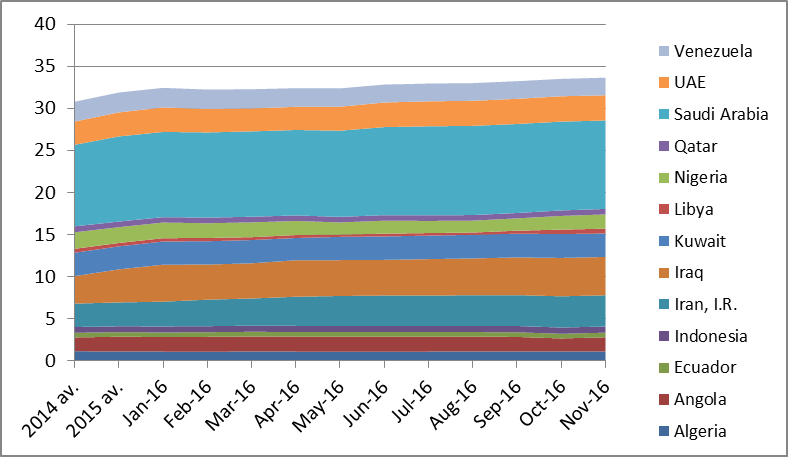


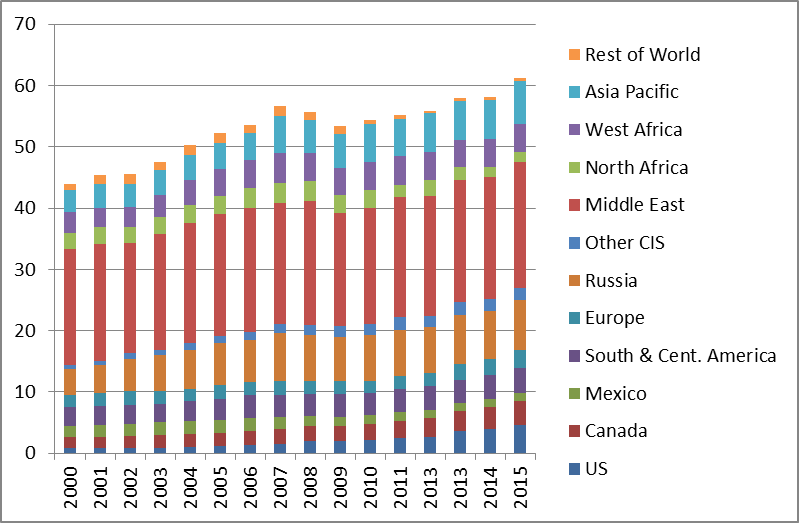
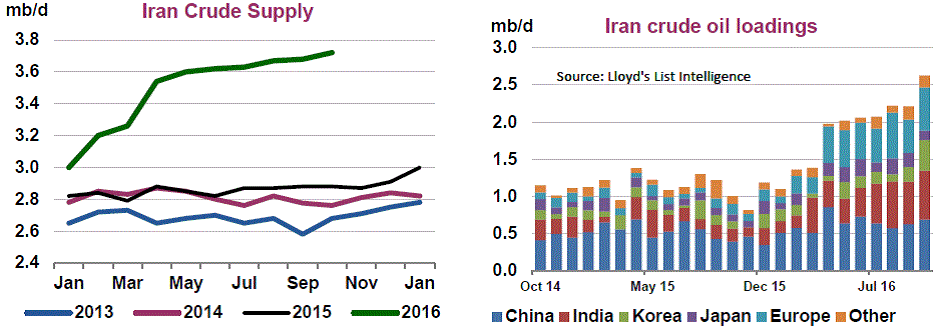
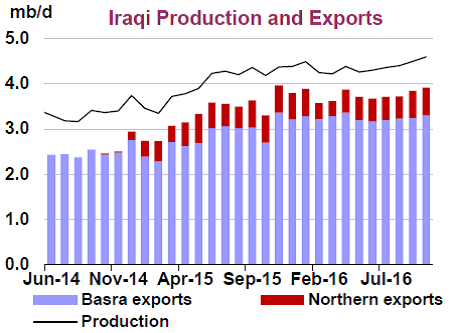

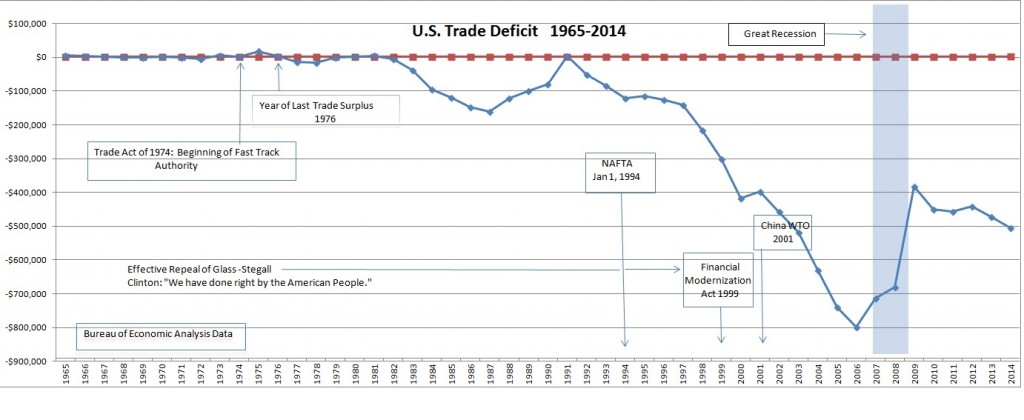
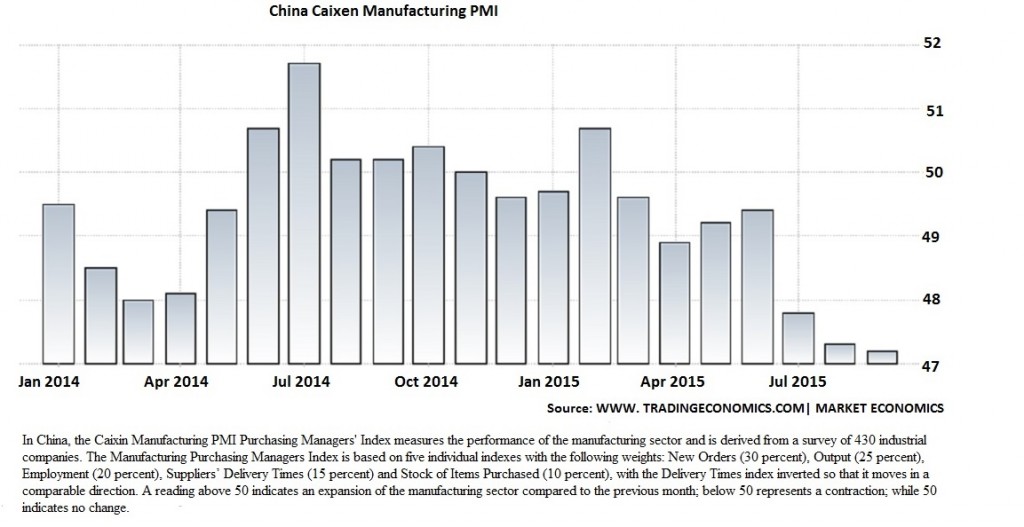


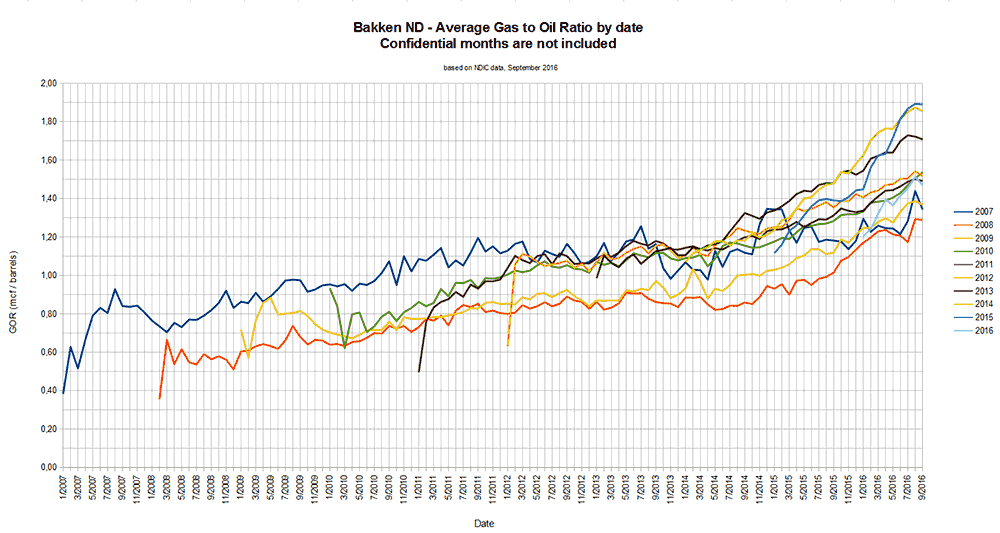
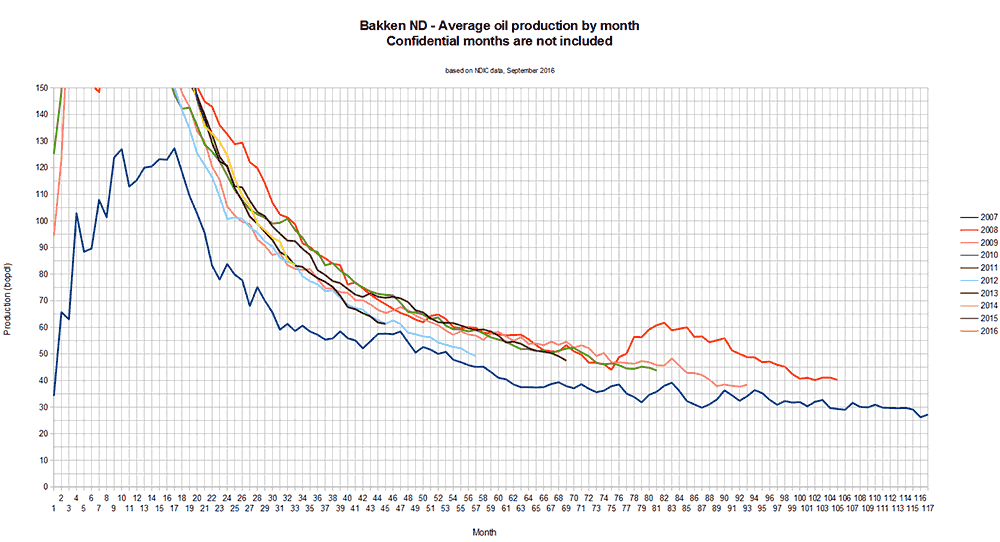

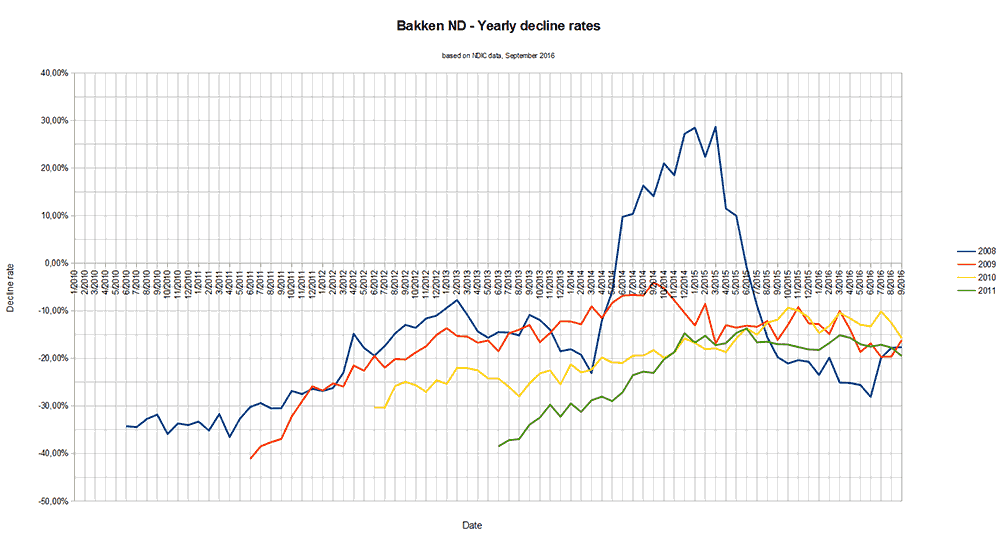
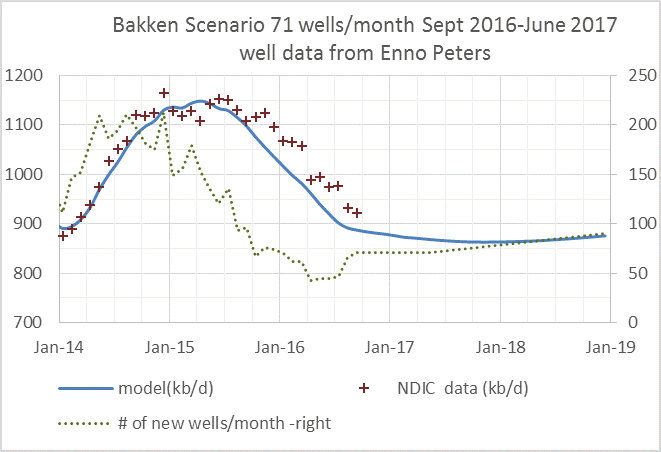
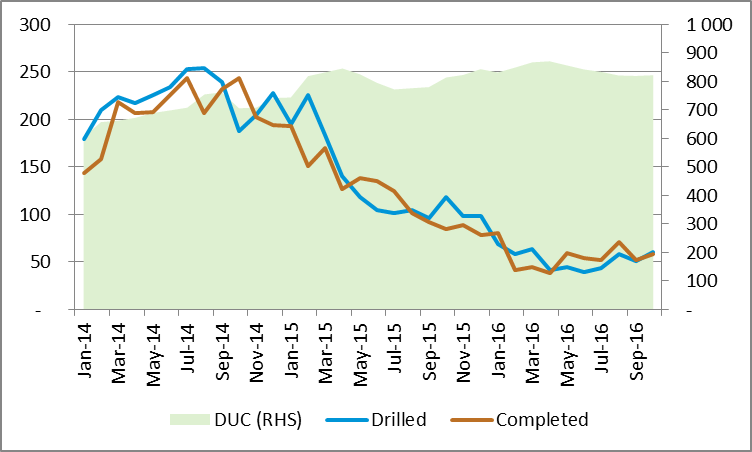
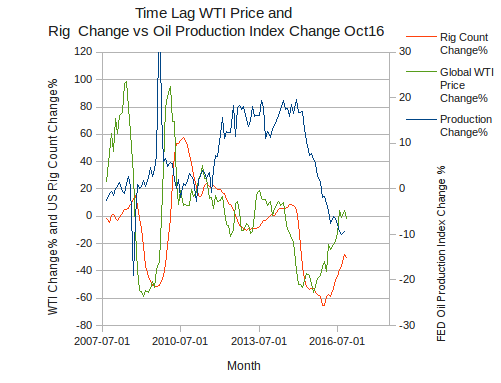
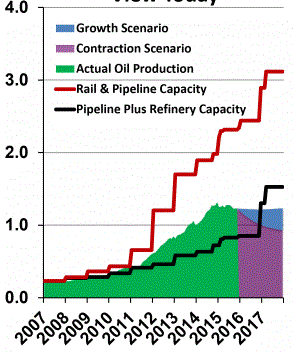

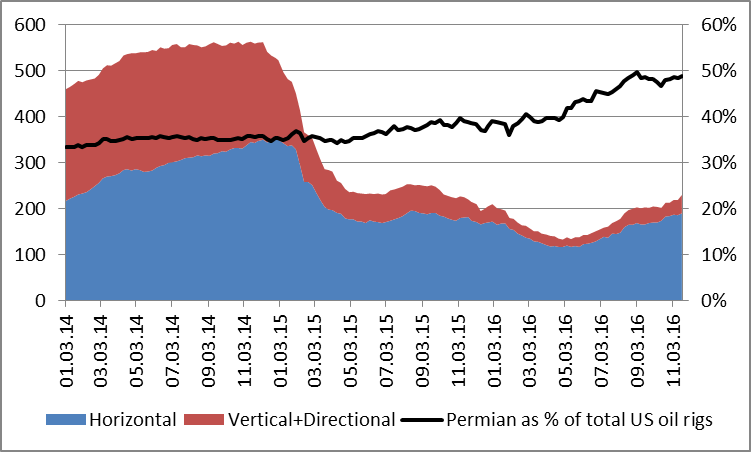

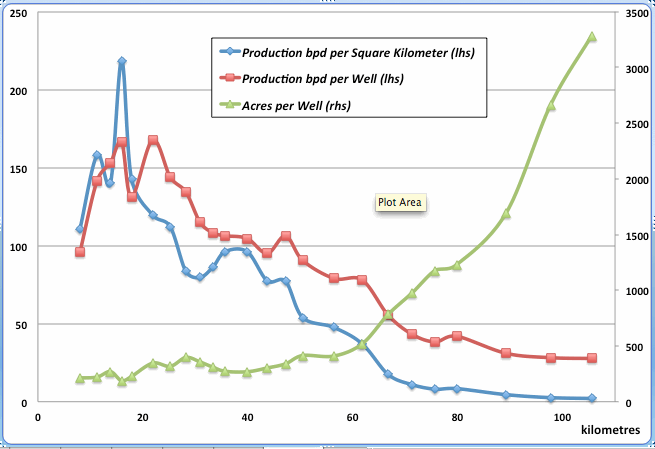
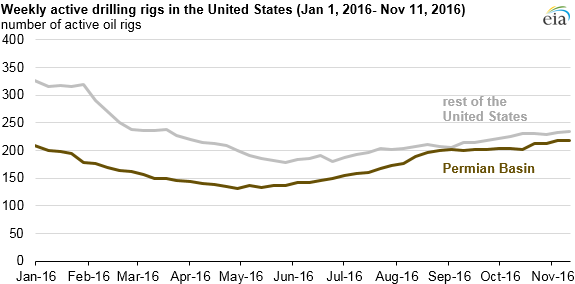
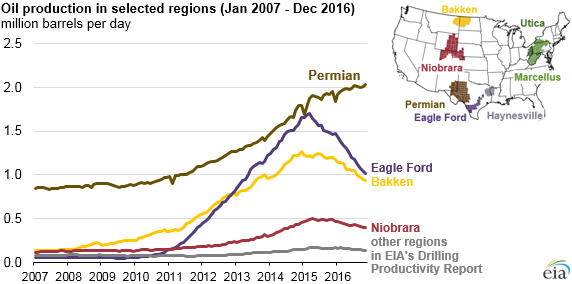
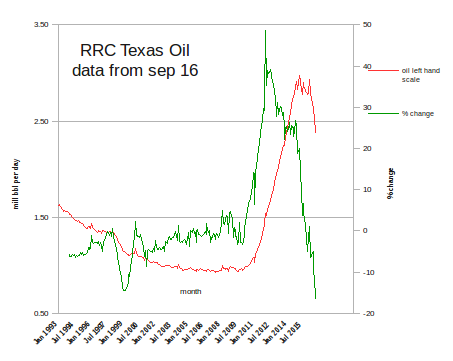
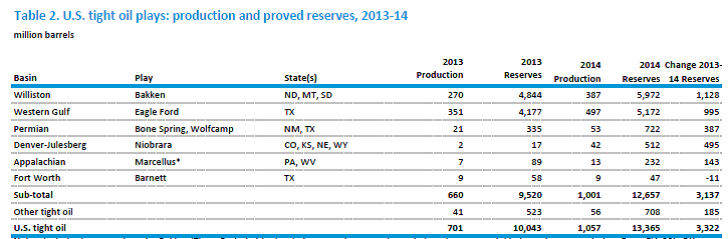
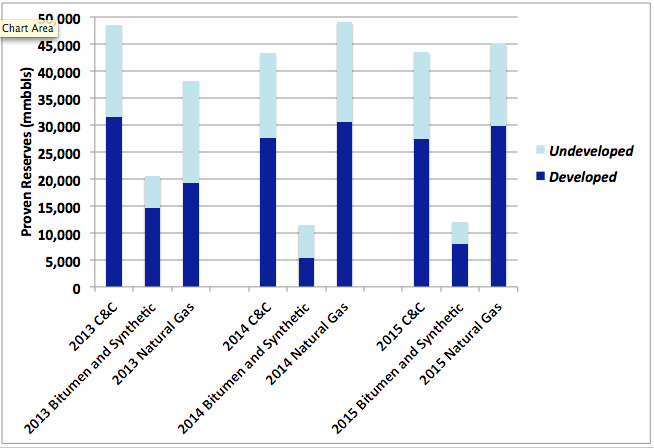
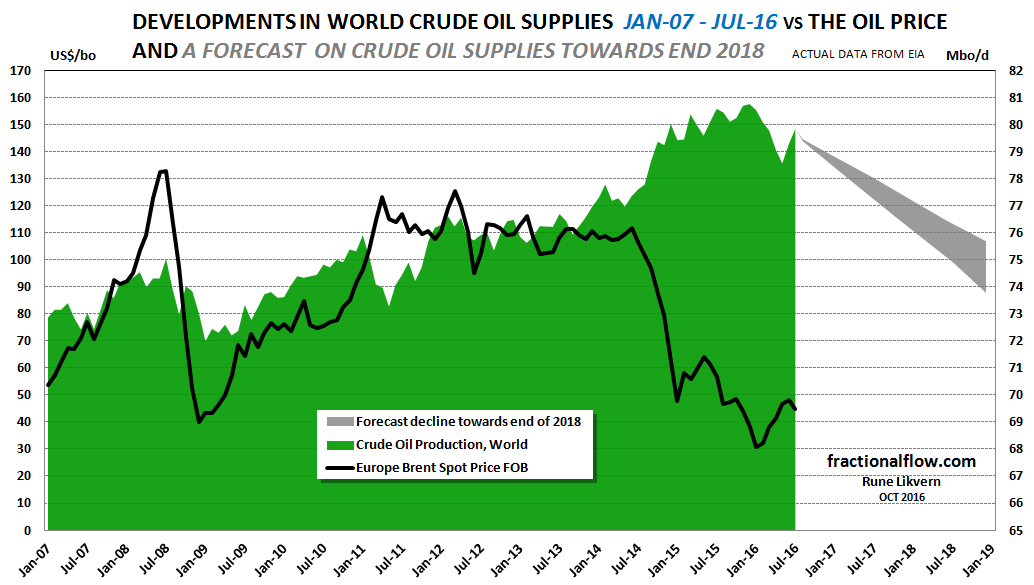
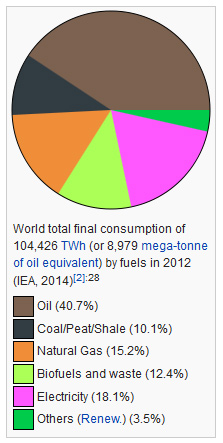


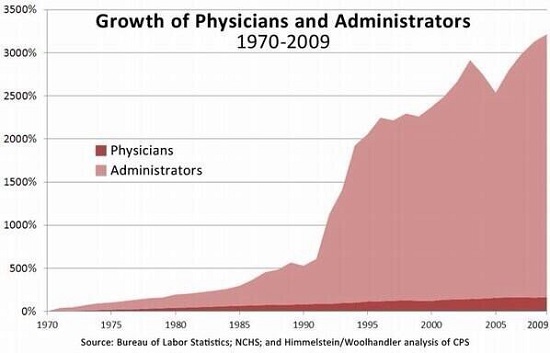
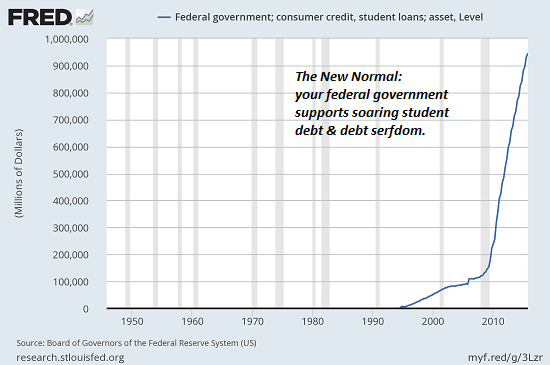

 no cost-of-living
adjustment to benefits had led some seniors to "distrust" government data, like the CPI-W?
Again, this hypothesis would be a lot better to test with a time series of data, comparing years
with benefit increases and without. But feeling shortchanged by the data may be understandable
no cost-of-living
adjustment to benefits had led some seniors to "distrust" government data, like the CPI-W?
Again, this hypothesis would be a lot better to test with a time series of data, comparing years
with benefit increases and without. But feeling shortchanged by the data may be understandable

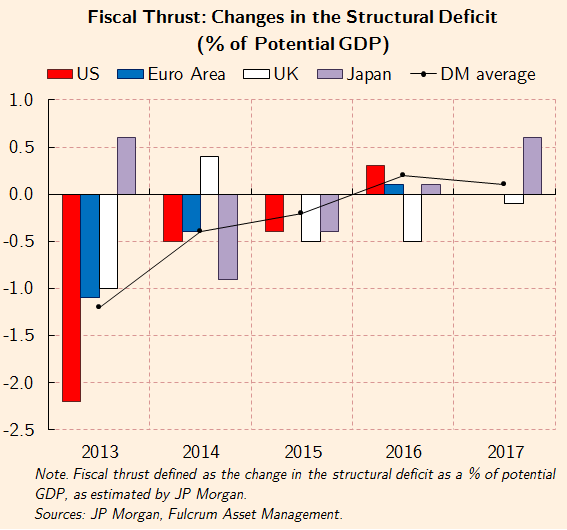


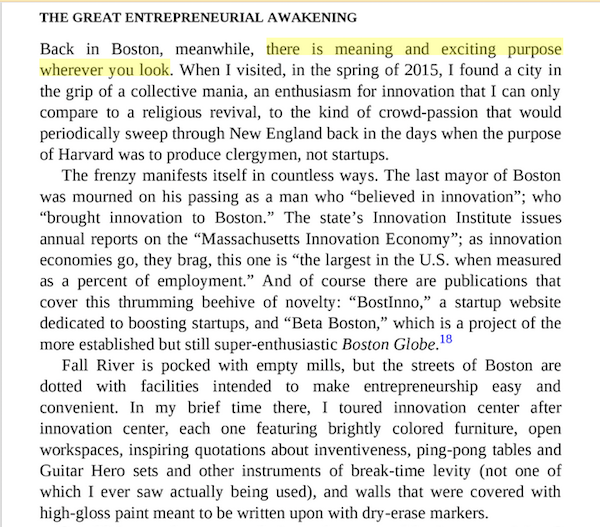
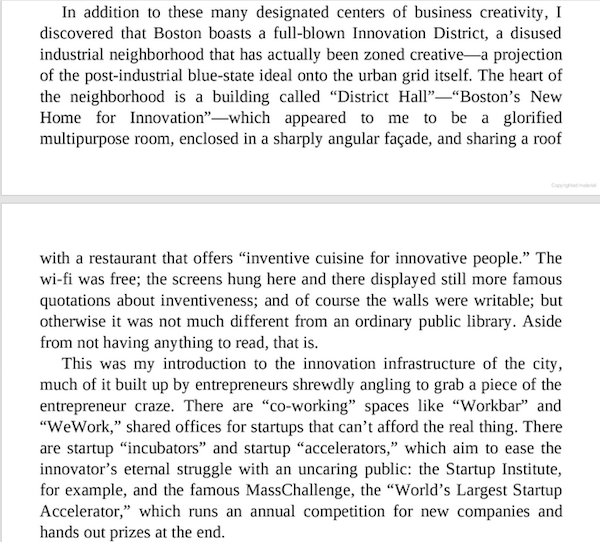
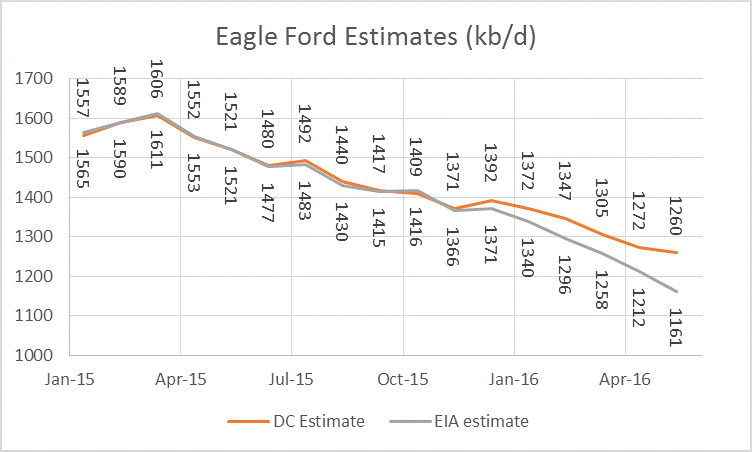


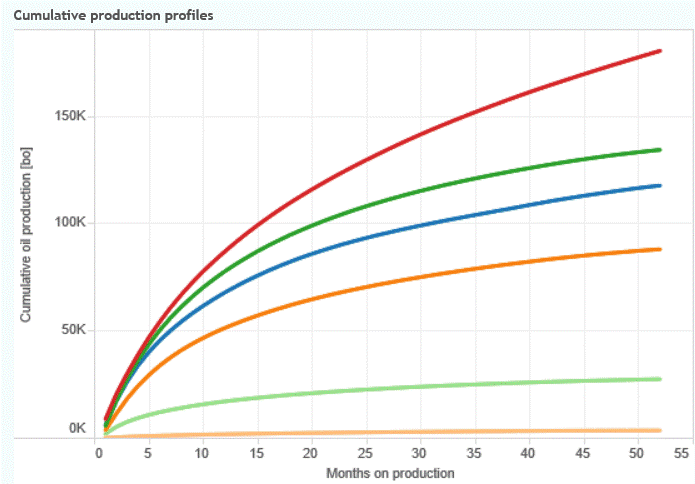
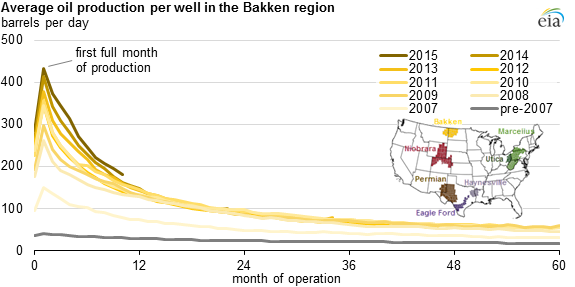


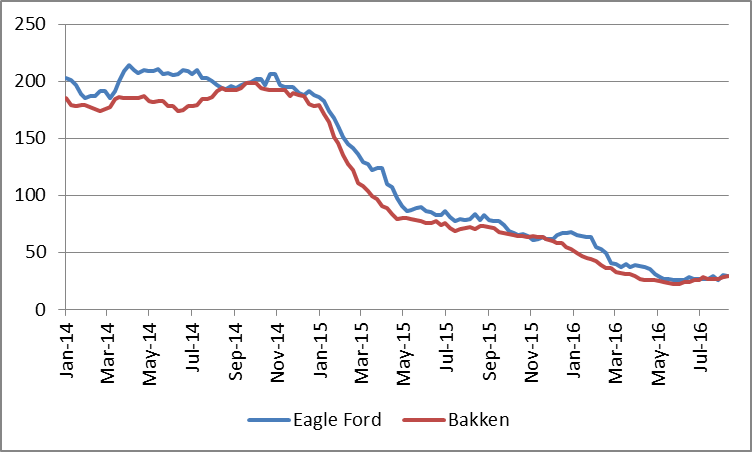
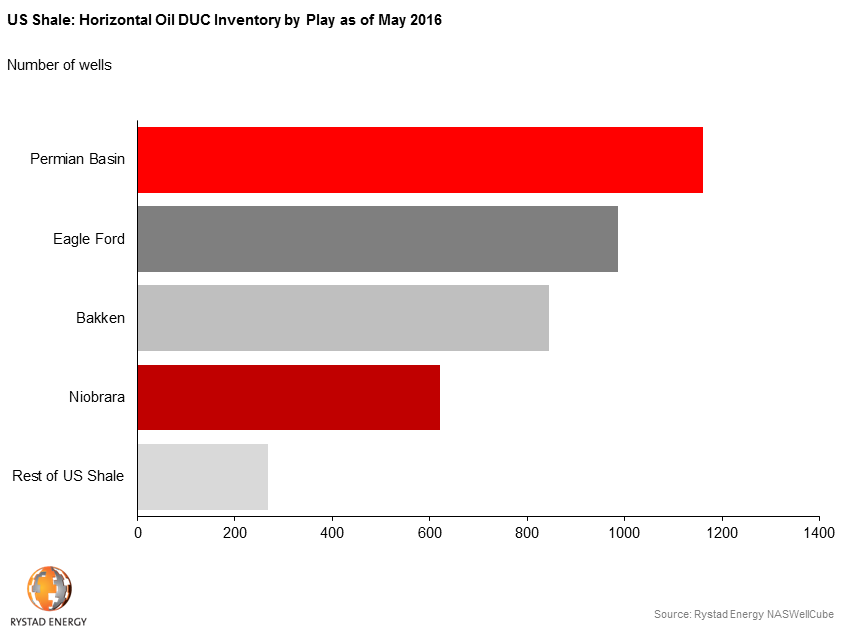
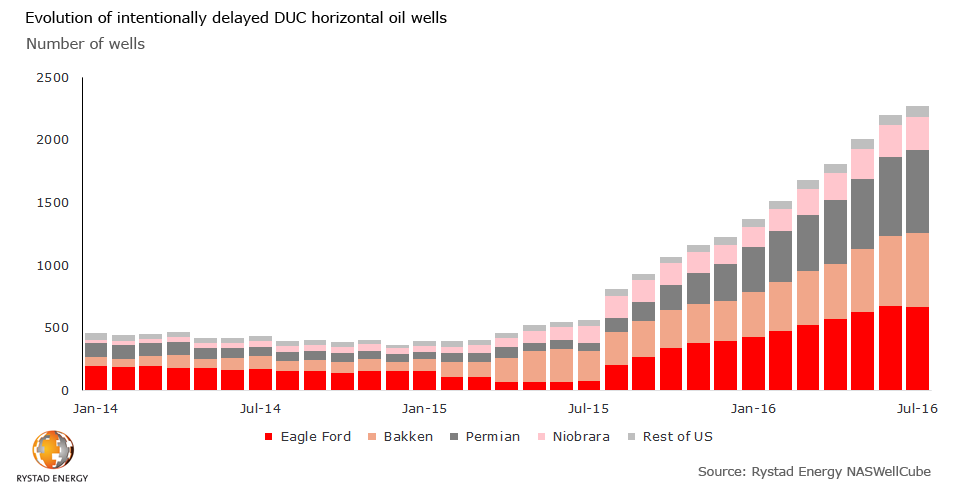
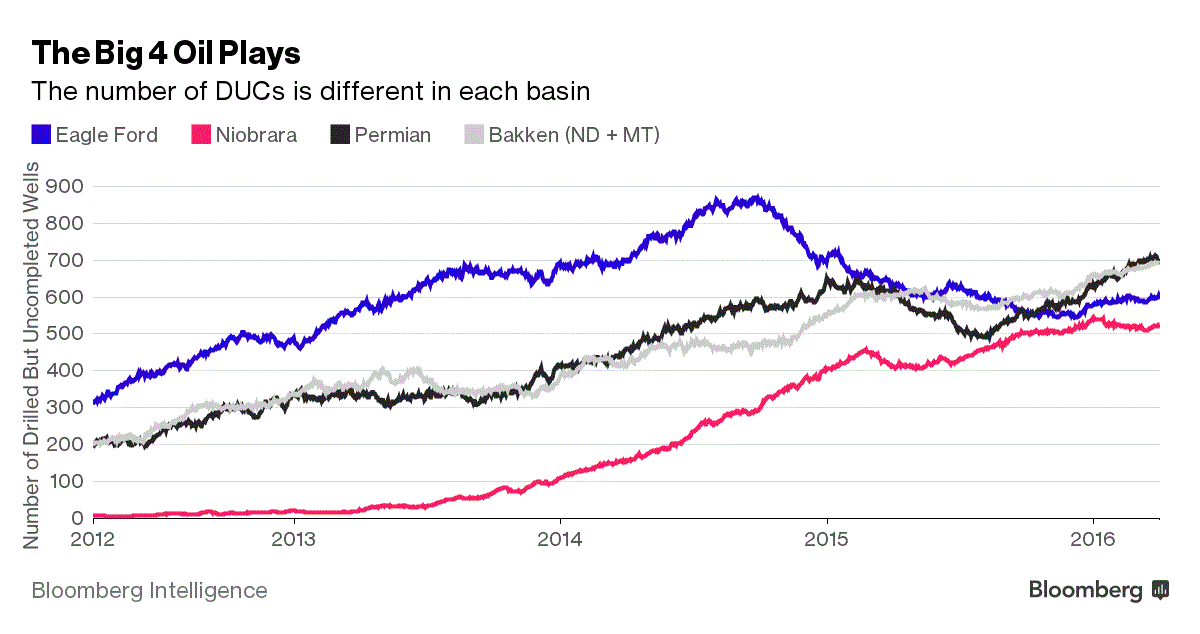

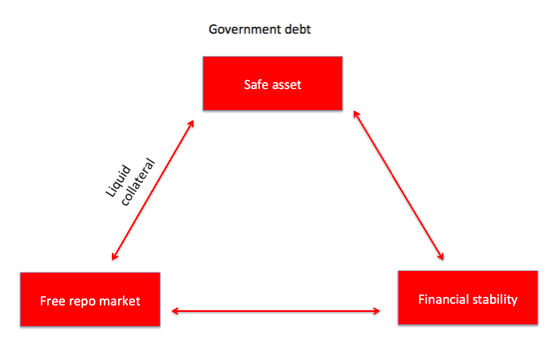
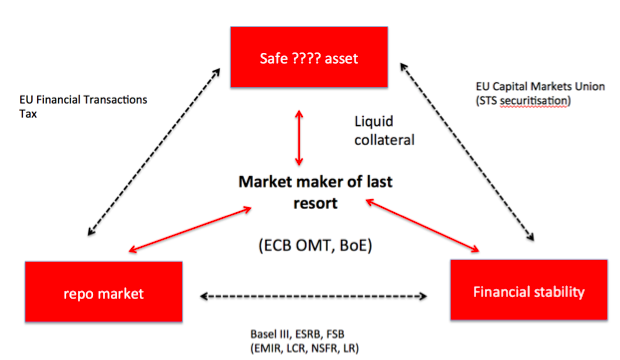
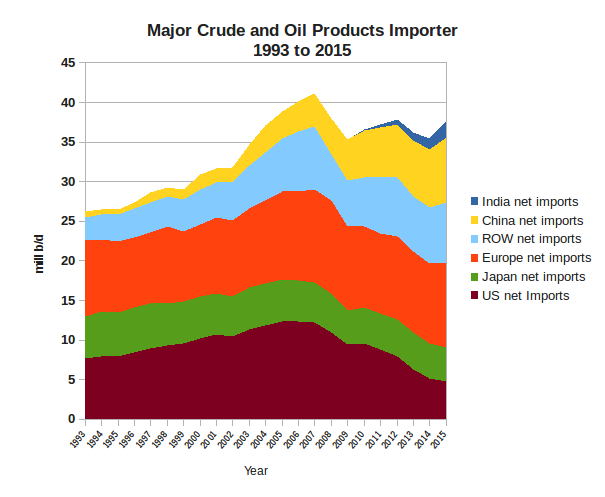

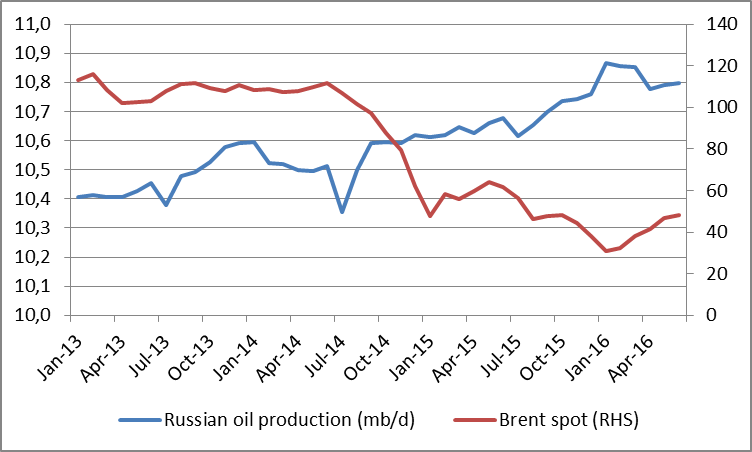

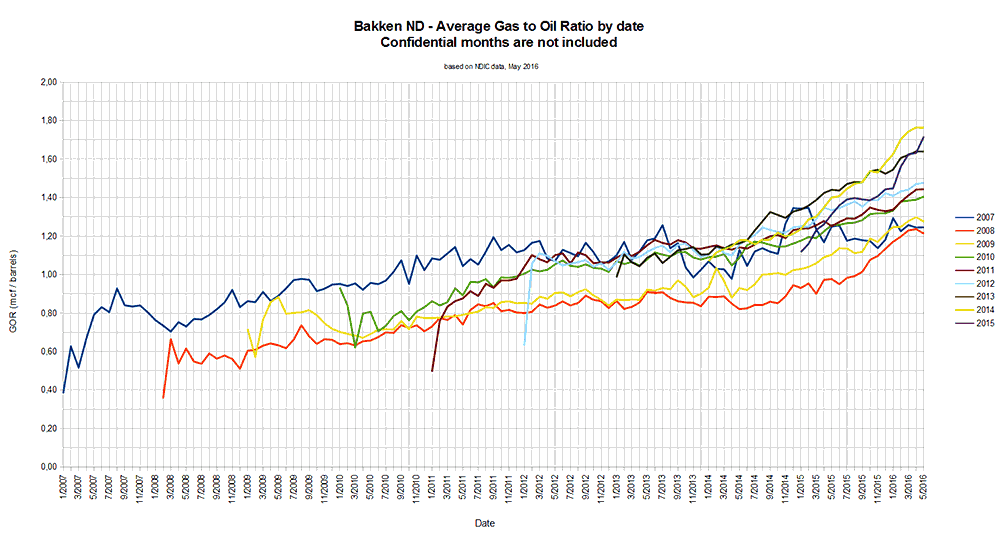
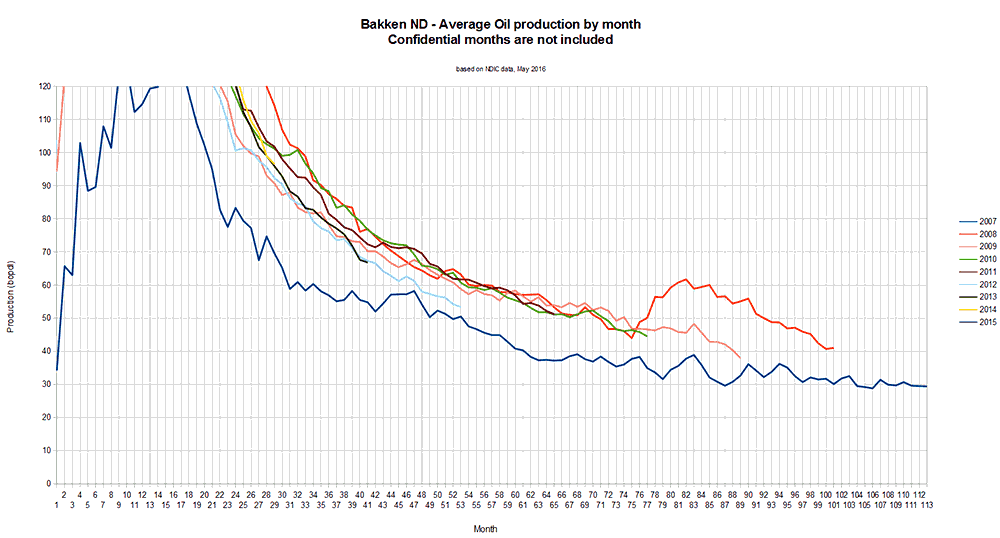
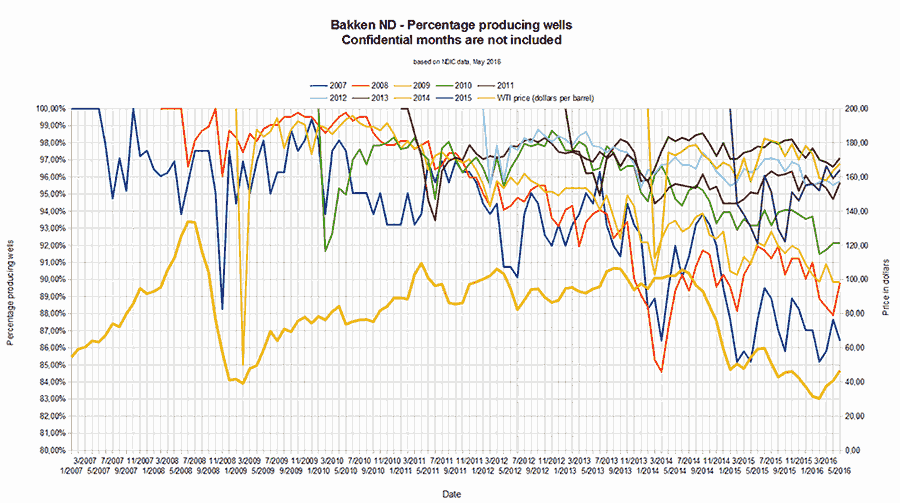


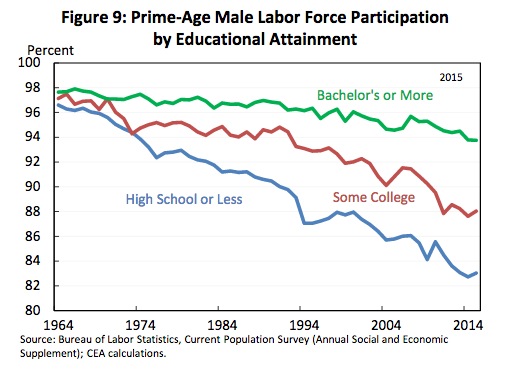
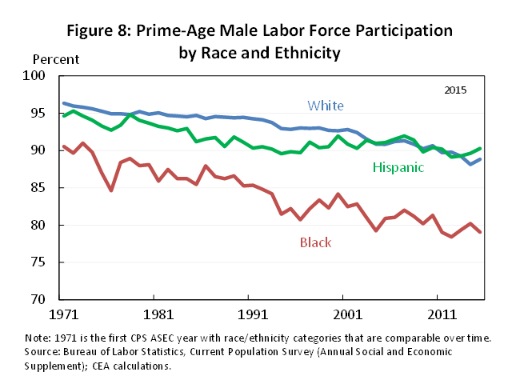
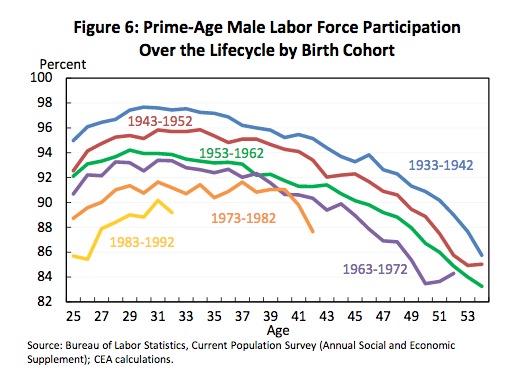





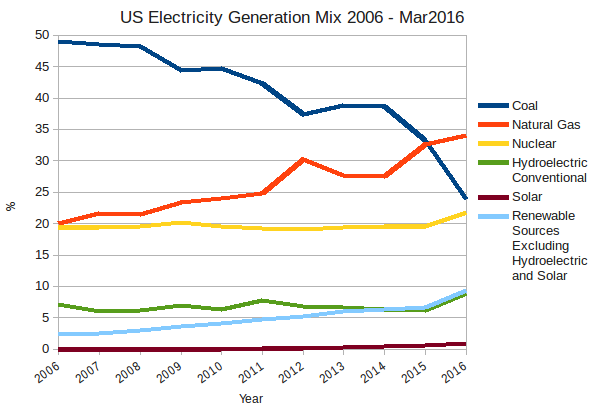


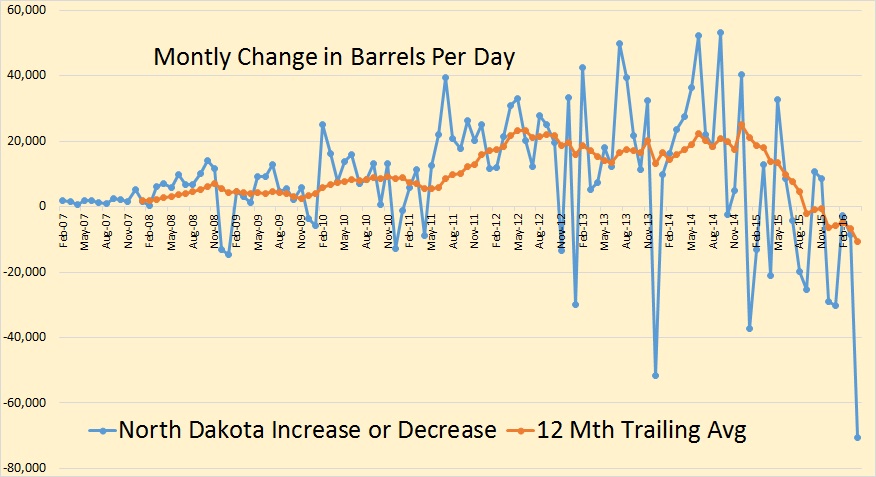
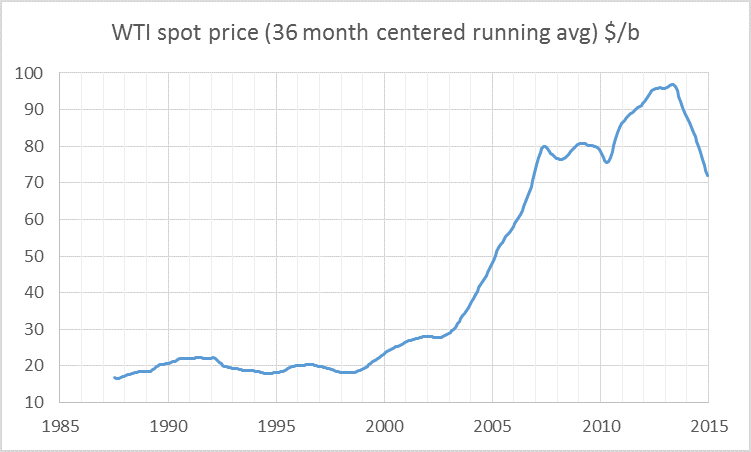


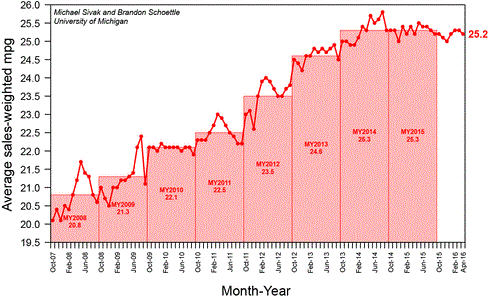
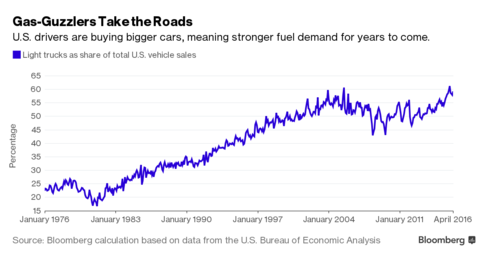


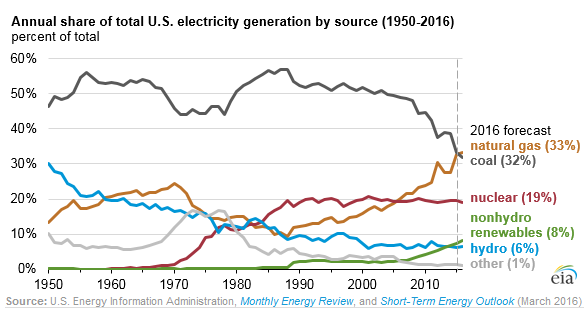
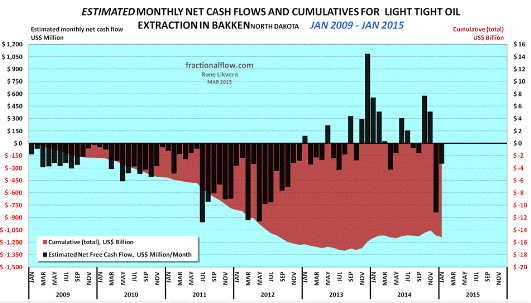

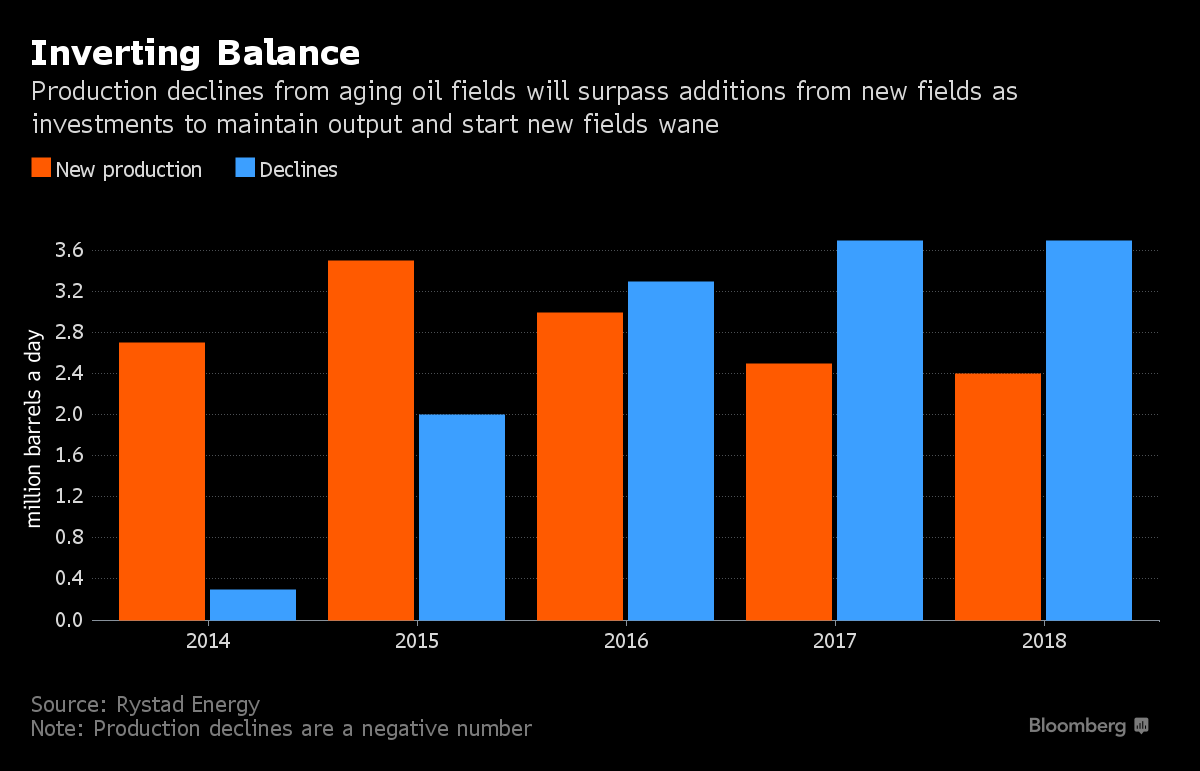



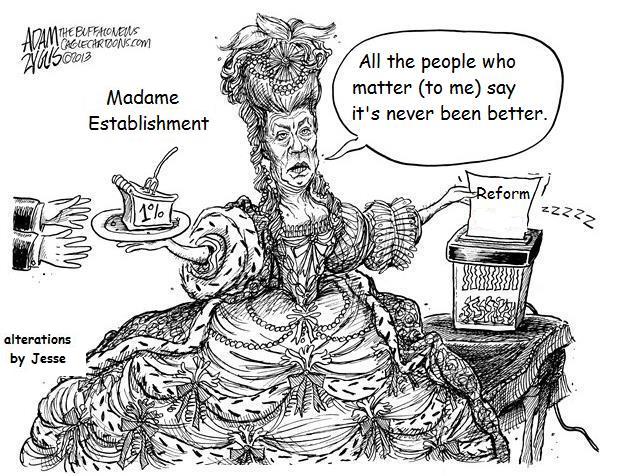

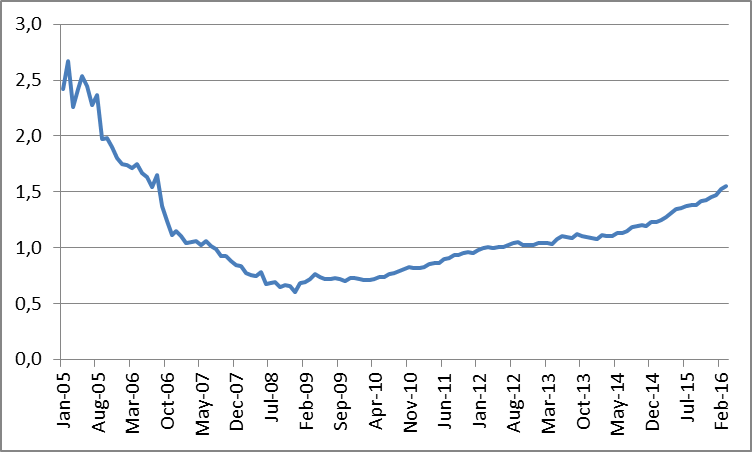


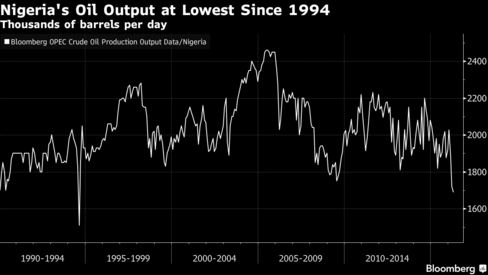
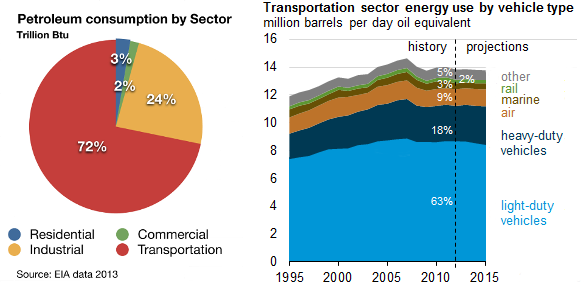


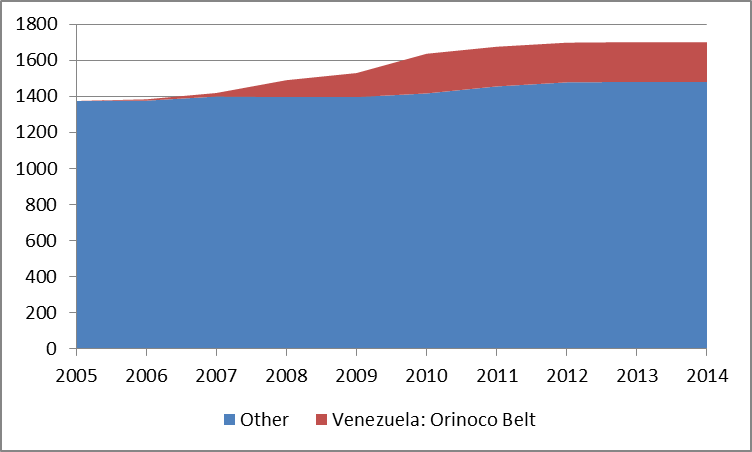


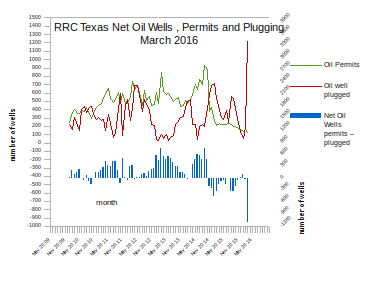
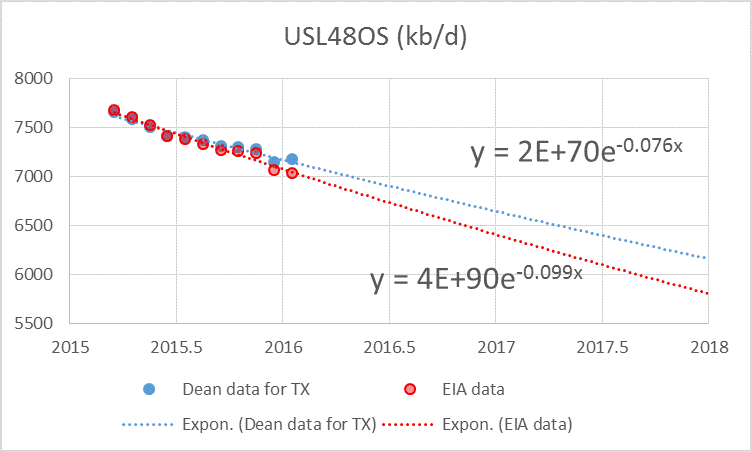
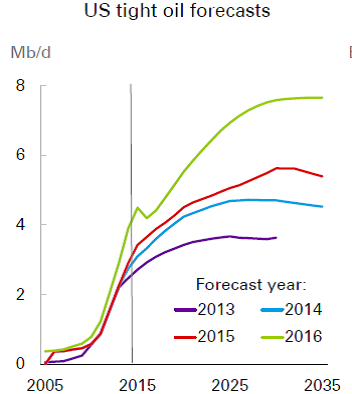


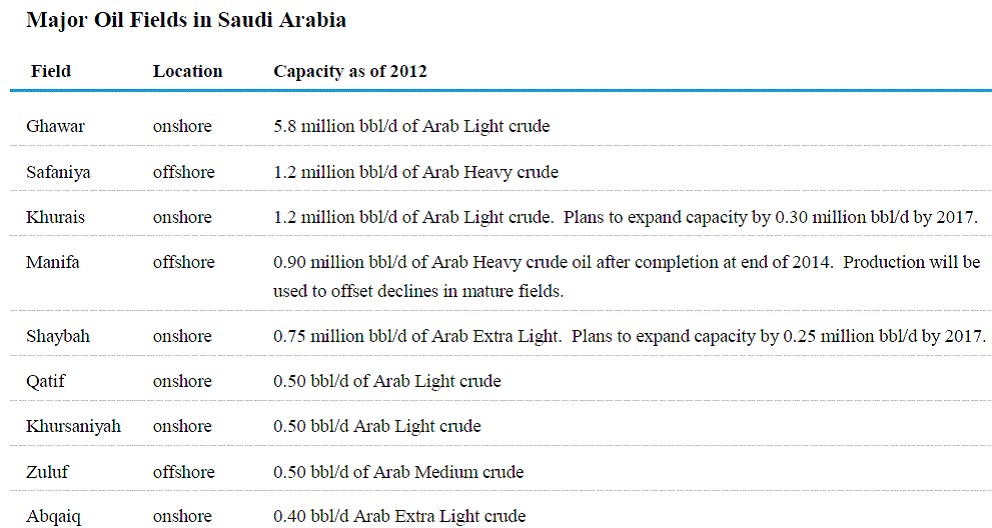

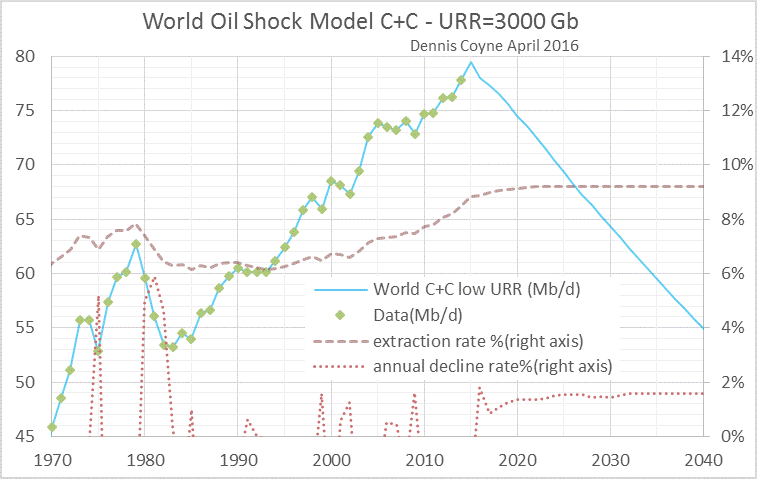
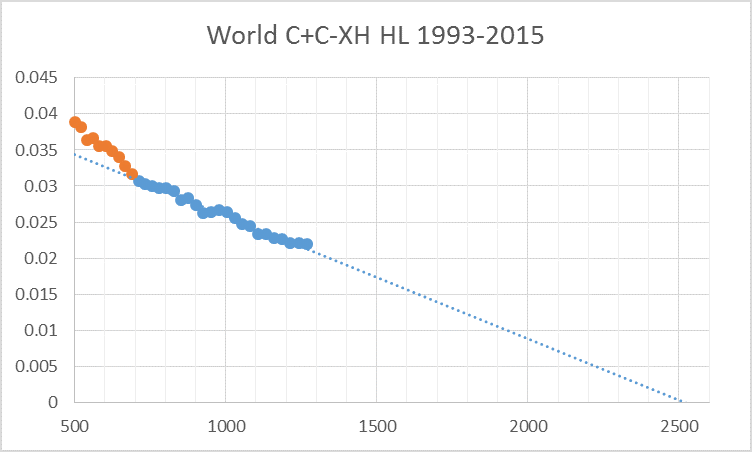
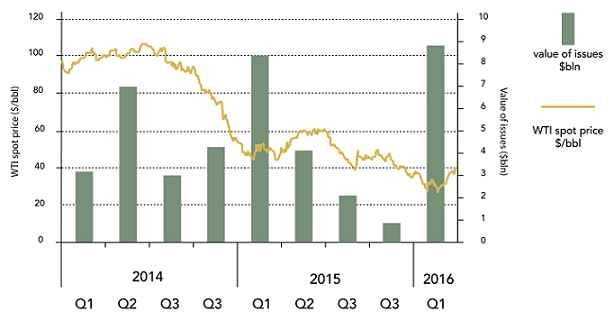









 15 ·
11 hrs
15 ·
11 hrs


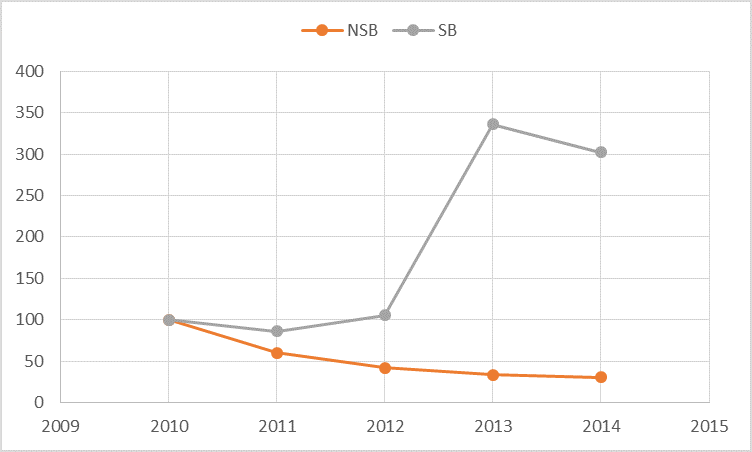
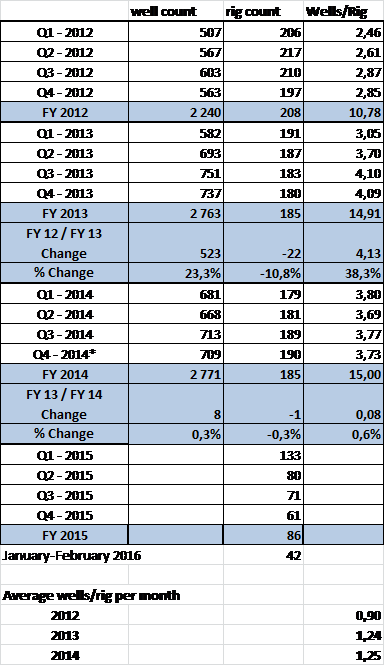
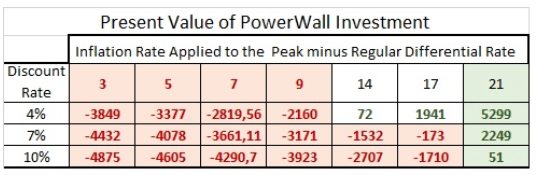

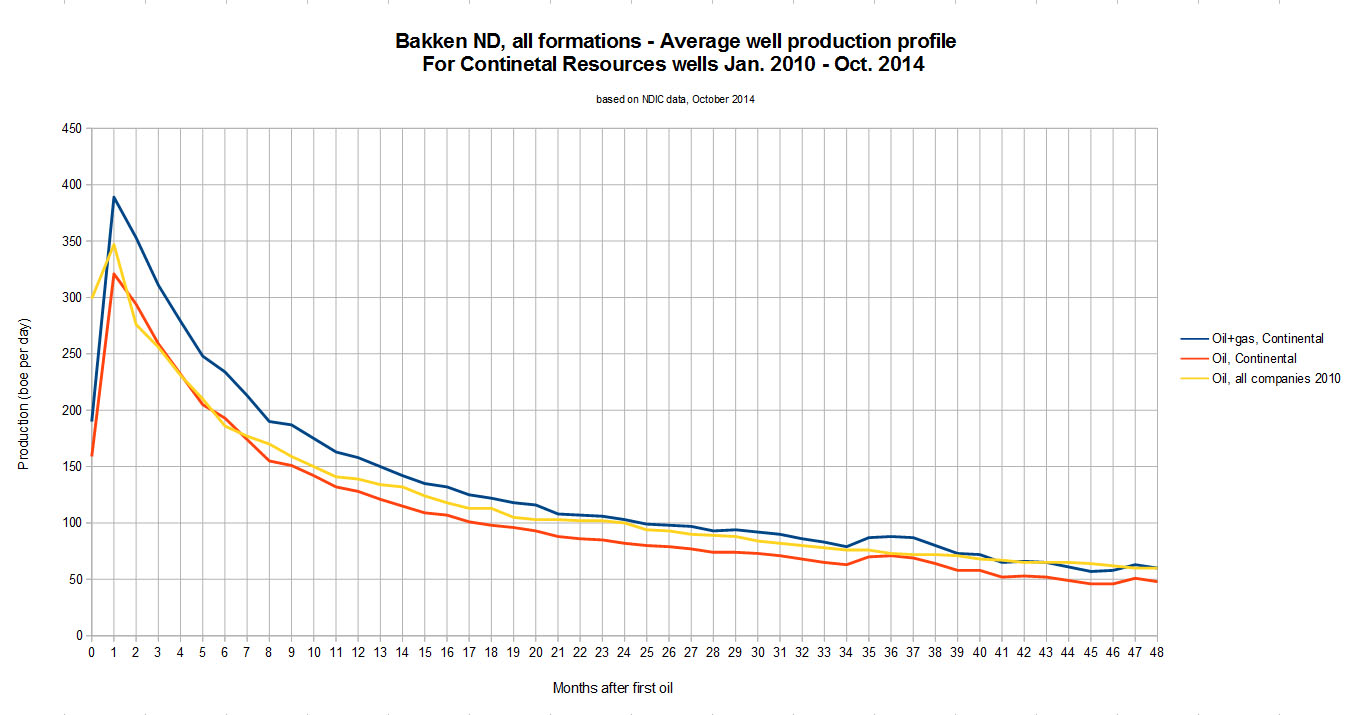
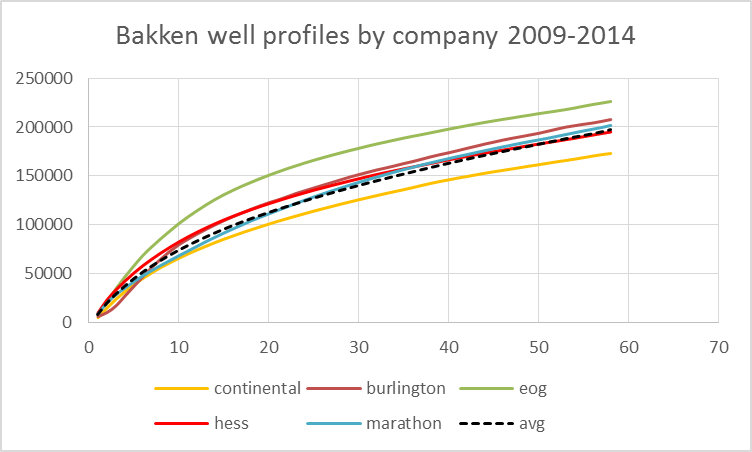
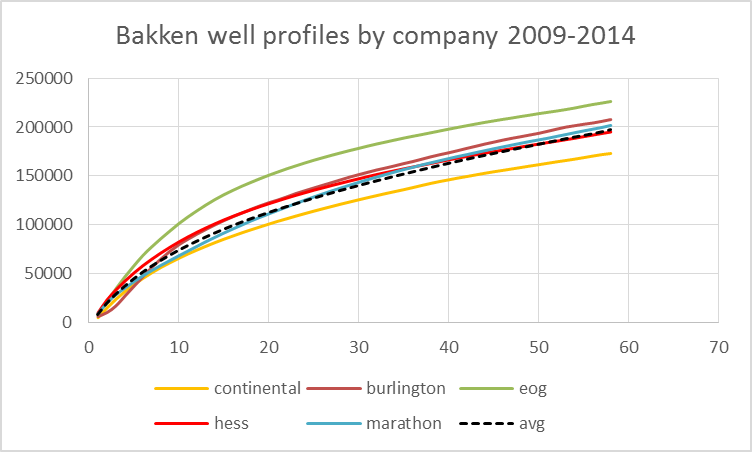
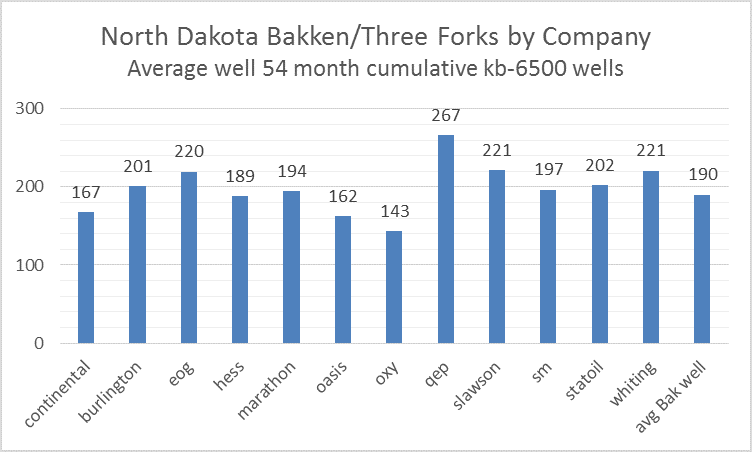
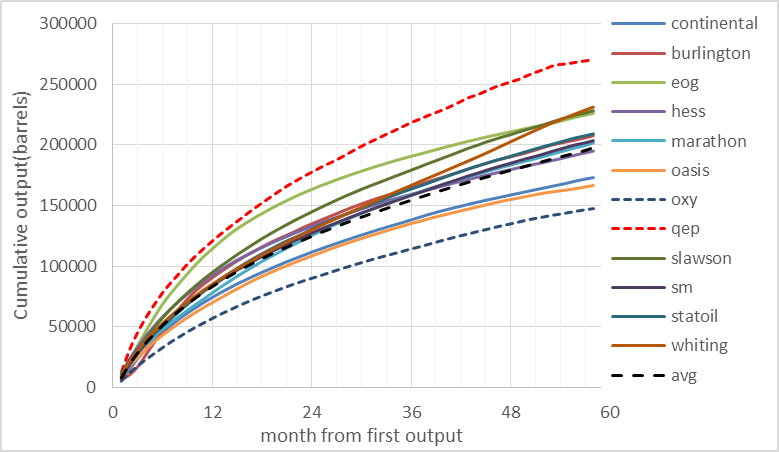


 ) –
perhaps there are lessons to be learned?
) –
perhaps there are lessons to be learned?



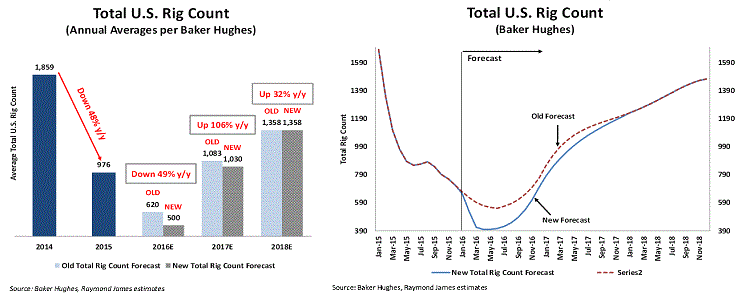 shallow sand ,
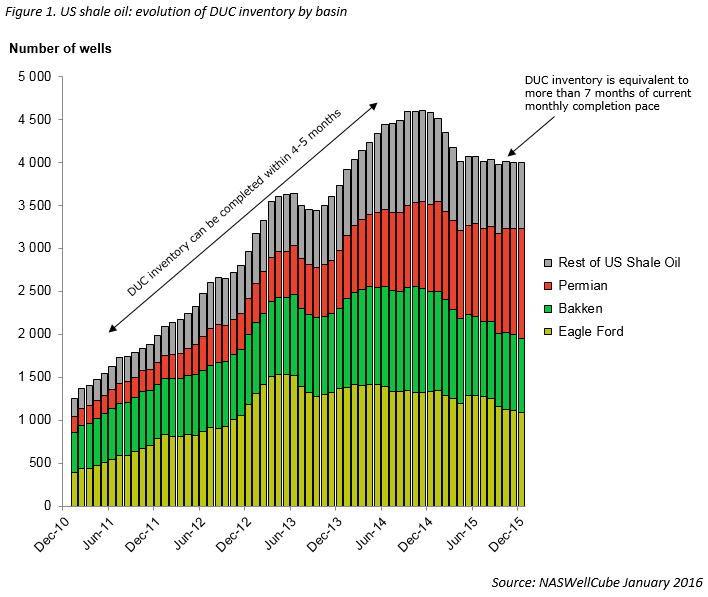


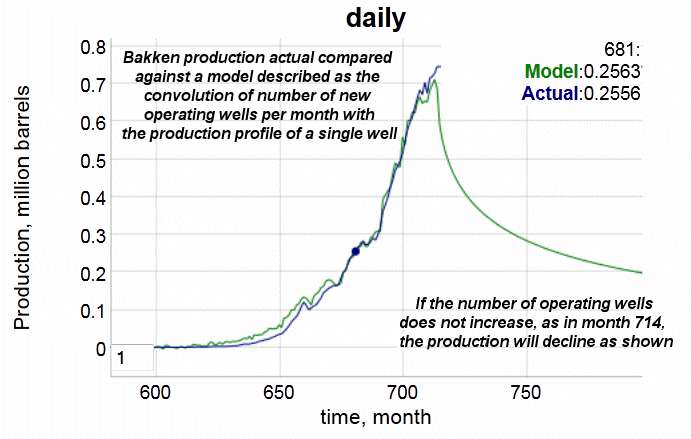
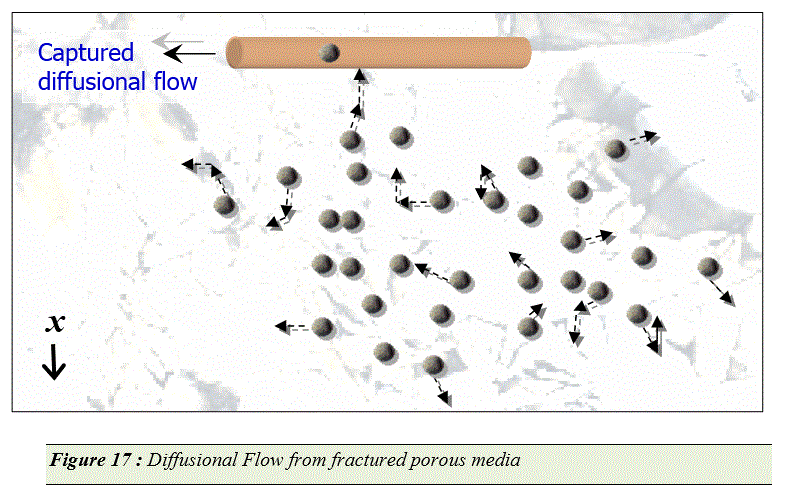
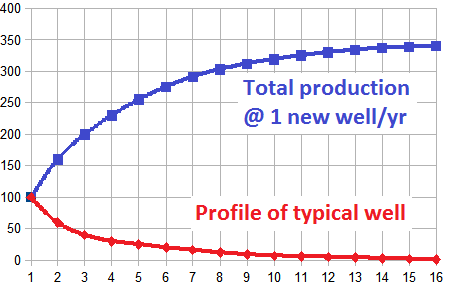


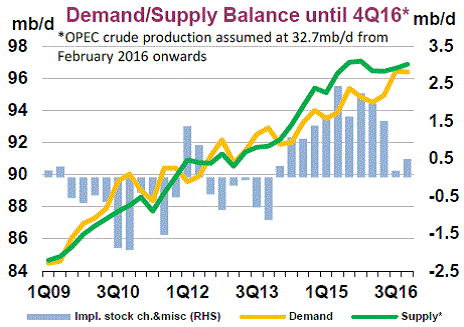
![[-]](http://www.theoildrum.com/images/thread_collapse.gif)


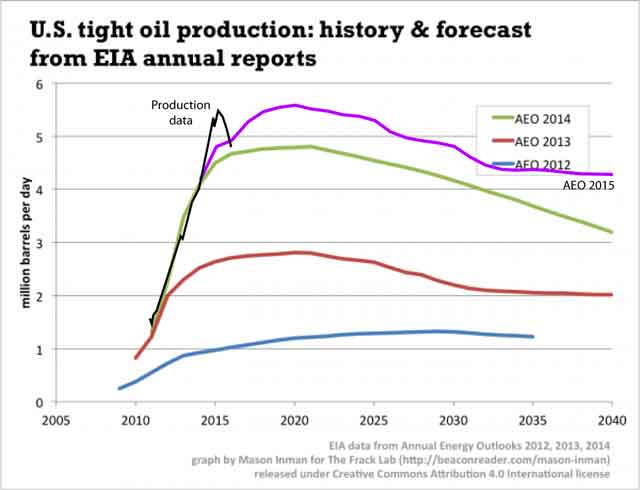
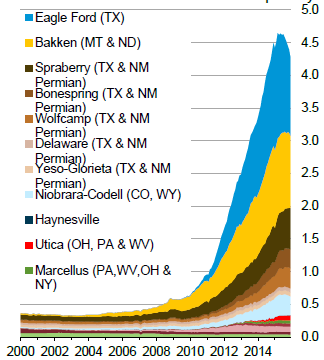
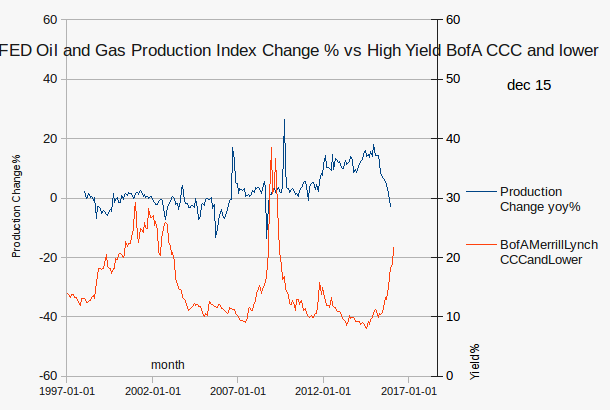

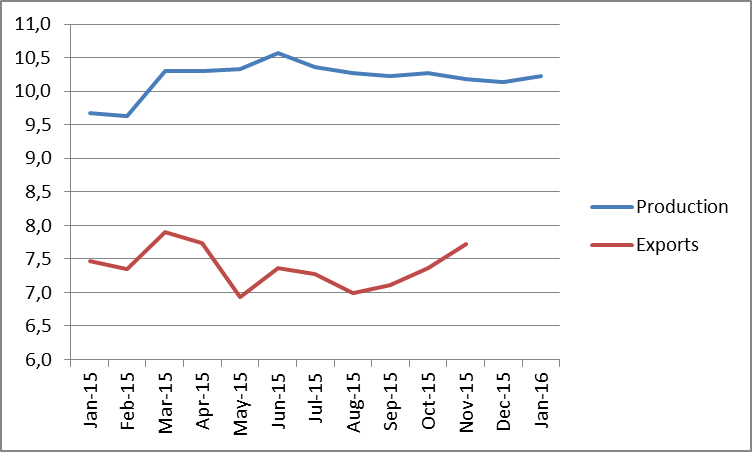

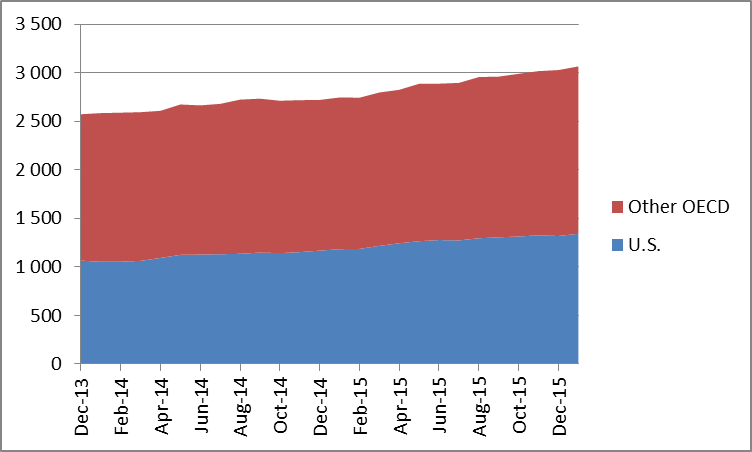


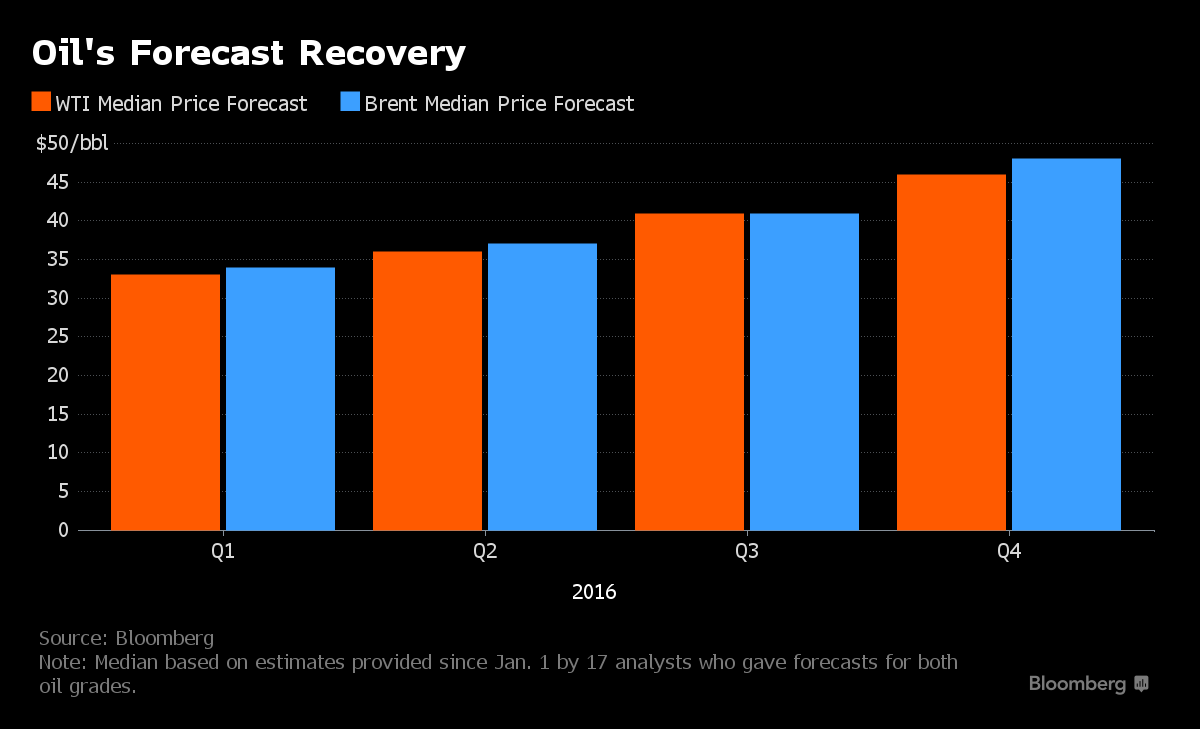
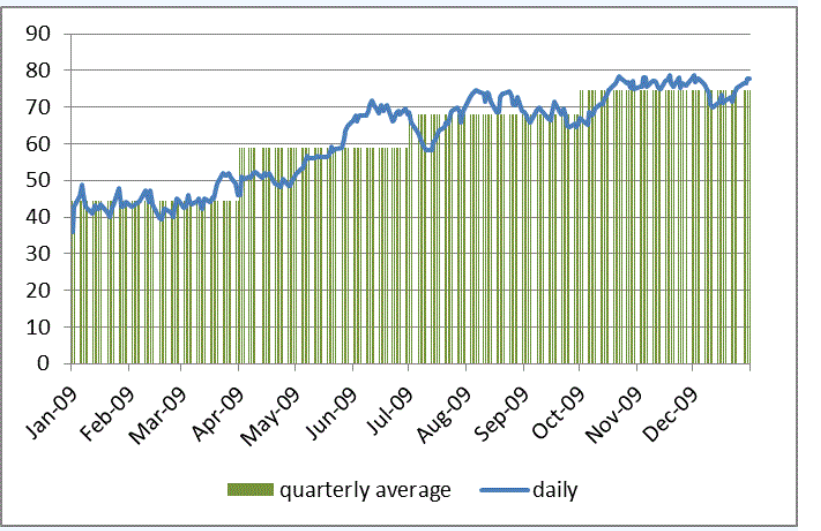
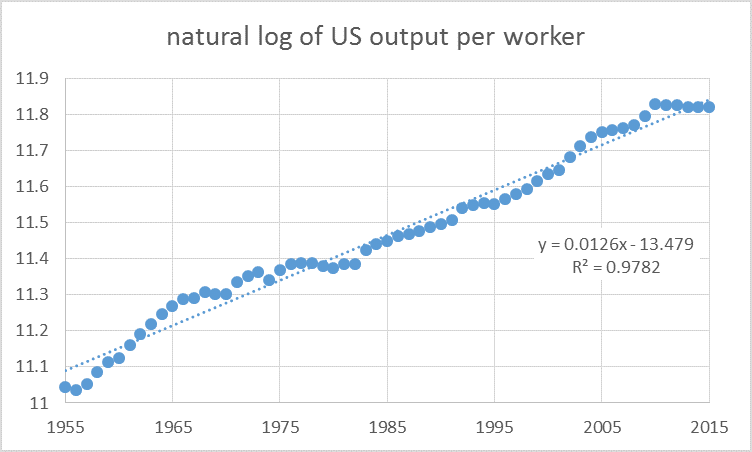
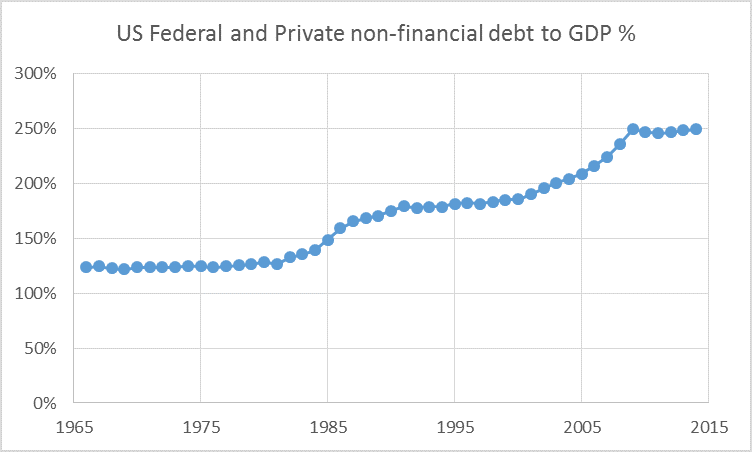


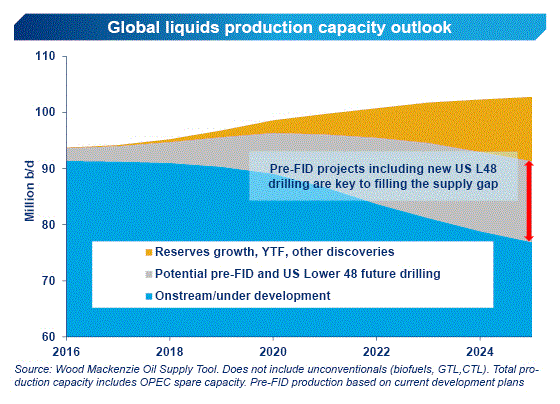
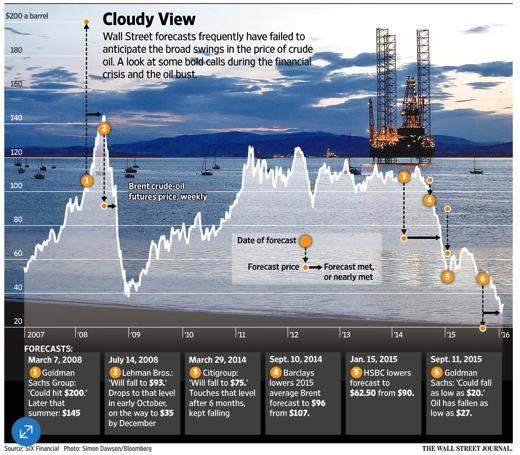
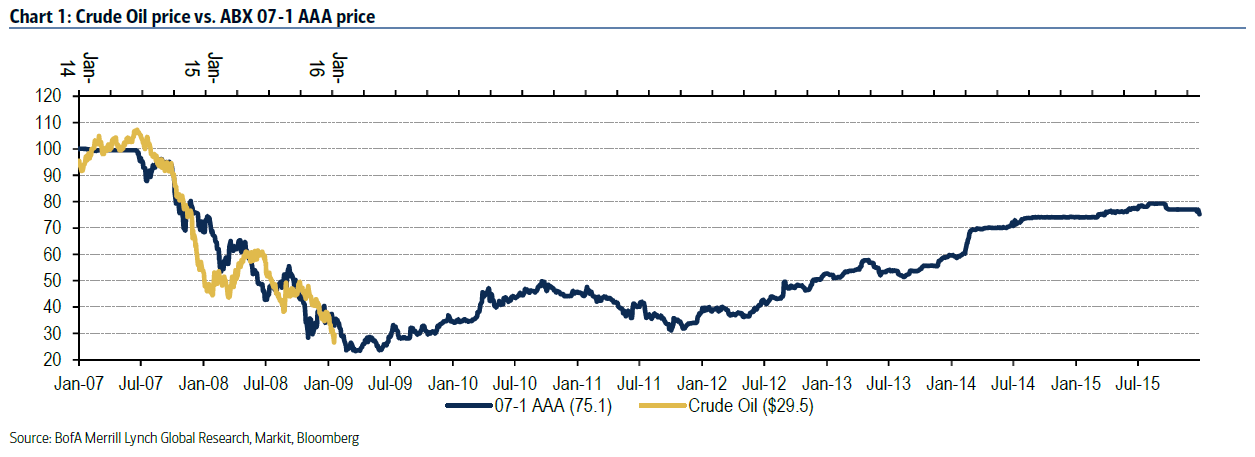 Source: BofAML